As filed with the Securities and Exchange Commission on September 29, 2025.
Registration No. 333-
UNITED STATES
SECURITIES AND EXCHANGE COMMISSION
Washington, D.C. 20549
FORM S-1
REGISTRATION STATEMENT
UNDER
THE SECURITIES ACT OF 1933
BETA Technologies, Inc.
(Exact name of registrant as specified in its charter)
| Delaware | 3721 | 83-1276474 | ||
| (State or other jurisdiction of incorporation or organization) |
(Primary Standard Industrial Classification Code Number) |
(IRS Employer Identification No.) |
1150 Airport Drive
South Burlington, Vermont 05403
(802) 281-3623
(Address, including zip code, and telephone number, including area code, of registrant’s principal executive offices)
Kyle Clark
Chief Executive Officer
1150 Airport Drive
South Burlington, Vermont 05403
(802) 281-3623
(Name, address, including zip code, and telephone number, including area code, of agent for service)
Copies to:
| Matthew R. Pacey, P.C. Kirkland & Ellis LLP 609 Main Street Houston, Texas 77002 (713) 836-3600 |
Jennifer Wu, P.C. Kirkland & Ellis LLP 401 Congress Avenue Austin, Texas 78701 (512) 678-9100 |
Roshni Banker Cariello 450 Lexington Avenue New York, New York 10017 (212) 450-4421 |
Approximate date of commencement of proposed sale to the public: As soon as practicable after the effective date of this Registration Statement.
If any of the securities being registered on this Form are to be offered on a delayed or continuous basis pursuant to Rule 415 under the Securities Act of 1933 check the following box: ☐
If this Form is filed to register additional securities for an offering pursuant to Rule 462(b) under the Securities Act, please check the following box and list the Securities Act registration statement number of the earlier effective registration statement for the same offering. ☐
If this Form is a post-effective amendment filed pursuant to Rule 462(c) under the Securities Act, check the following box and list the Securities Act registration statement number of the earlier effective registration statement for the same offering. ☐
If this Form is a post-effective amendment filed pursuant to Rule 462(d) under the Securities Act, check the following box and list the Securities Act registration statement number of the earlier effective registration statement for the same offering. ☐
Indicate by check mark whether the registrant is a large accelerated filer, an accelerated filer, a non-accelerated filer, smaller reporting company, or an emerging growth company. See the definitions of “large accelerated filer,” “accelerated filer,” “smaller reporting company,” and “emerging growth company” in Rule 12b-2 of the Exchange Act.
| Large accelerated filer ☐ |
Accelerated filer ☐ |
Non-accelerated filer ☒ |
Smaller reporting company ☐ | |||
| (Do not check if a smaller reporting company) | Emerging growth company ☒ | |||||
If an emerging growth company, indicate by check mark if the registrant has elected not to use the extended transition period for complying with any new or revised financial accounting standards provided pursuant to Section 7(a)(2)(B) of the Securities Act. ☐
The registrant hereby amends this Registration Statement on such date or dates as may be necessary to delay its effective date until the registrant shall file a further amendment which specifically states that this Registration Statement shall thereafter become effective in accordance with Section 8(a) of the Securities Act of 1933, as amended, or until this Registration Statement shall become effective on such date as the Securities and Exchange Commission, acting pursuant to said Section 8(a), may determine.
The information in this prospectus is not complete and may be changed. The securities described herein may not be sold until the registration statement filed with the Securities and Exchange Commission is effective. This prospectus is not an offer to sell these securities, and it is not soliciting an offer to buy these securities, in any jurisdiction where the offer or sale is not permitted.
Subject to completion, dated , 2025
Shares
BETA Technologies, Inc.
Class A Common Stock
This is the initial public offering of Class A common stock of BETA Technologies, Inc. We are offering shares of our Class A common stock, par value $0.0001 per share (the “Class A common stock”). Prior to this offering, there has been no public market for our Class A common stock.
The estimated initial public offering price of our Class A common stock is between $ and $ per share.
We have applied to list our Class A common stock on the New York Stock Exchange (“NYSE”) under the symbol “BETA.”
Following this offering, we will have two series of authorized common stock, Class A common stock and Class B common stock, par value $0.0001 per share (the “Class B common stock” and, together with the Class A common stock, the “common stock”). The rights of the holders of Class A common stock and Class B common stock are identical, except with respect to voting, conversion and transfer rights. Each share of Class A common stock is entitled to one vote per share. Each share of Class B common stock is entitled to 40 votes per share and is convertible at any time, subject to the satisfaction of certain conditions as described herein, into one share of Class A common stock. Immediately following the completion of this offering, all outstanding shares of Class B common stock will be beneficially owned by Kyle Clark (sometimes referred to herein as the “Class B Common Stockholder”), our founder, President and Chief Executive Officer and a member of our Board. Accordingly, Mr. Clark will own approximately % of our outstanding capital stock and control approximately % of the voting power of our outstanding capital stock (assuming no exercise of the underwriters’ option to purchase additional shares). As a result, Mr. Clark may have significant influence over the outcome of matters submitted to our stockholders for approval, including the election of our directors and the approval of any change of control transaction. We will be a “controlled company” within the meaning of the corporate governance standards of the NYSE, and therefore we are permitted to, and we intend to, elect not to comply with certain corporate governance requirements of the NYSE. Such corporate governance requirements include those that would otherwise require our board to establish a compensation committee and a nominating and corporate governance committee, each comprised entirely of independent directors. See “Management—Controlled Company Exception” and “Security Ownership of Certain Beneficial Owners and Management.”
We are an “emerging growth company” as that term is used in the Jumpstart Our Business Startups Act of 2012, and as such, we have elected to take advantage of certain reduced public company reporting requirements for this prospectus and future filings. See “Risk Factors” and “Prospectus Summary—The Offering—Emerging Growth Company.”
| Per share |
Total |
|||||||
| Initial public offering price |
$ | $ | ||||||
| Underwriting discounts and commissions(1) |
$ | $ | ||||||
| Proceeds to us, before expenses |
$ | $ | ||||||
| (1) | See “Underwriting” for additional information regarding underwriting compensation. |
We have granted the underwriters the option for a period of 30 days after the date of this prospectus to purchase up to additional shares of our Class A common stock on the same terms and conditions set forth above.
At our request, the underwriters have reserved up to shares of our Class A common stock, or % of the shares offered by this prospectus (excluding the additional shares that the underwriters have an option to purchase), for sale at the initial public offering price through a directed share program to our current employees, including management and other individuals and entities as determined by certain of our authorized officers. For more information on our directed share program, see the section titled “Underwriting—Directed Share Program.”
Investing in our Class A common stock involves risks. See “Risk Factors” beginning on page 29.
Neither the Securities and Exchange Commission nor any state securities commission has approved or disapproved of these securities or determined if this prospectus is truthful or complete. Any representation to the contrary is a criminal offense.
The underwriters expect to deliver the shares of Class A common stock on or about , 2025.
| Morgan Stanley | Goldman Sachs & Co. LLC |
| BofA Securities | Jefferies | TPG Capital BD, LLC | Citigroup |
| Cantor | BTIG | Needham & Company |
Prospectus dated , 2025
| Page | ||||
| 1 | ||||
| 29 | ||||
| 74 | ||||
| 76 | ||||
| 77 | ||||
| 78 | ||||
| 80 | ||||
| Management’s Discussion and Analysis of Financial Condition and Results of Operations |
82 | |||
| 99 | ||||
| 101 | ||||
| 130 | ||||
| 137 | ||||
| Page | ||||
| 146 | ||||
| Security Ownership of Certain Beneficial Owners and Management |
153 | |||
| 156 | ||||
| 162 | ||||
| 165 | ||||
| Material U.S. Federal Income Tax Considerations for Non-U.S. Holders |
167 | |||
| 172 | ||||
| 183 | ||||
| 183 | ||||
| 183 | ||||
| F-1 | ||||
Neither we nor the underwriters have authorized anyone to provide you with any information or to make any representations other than those contained in this prospectus, any amendment or supplement to this prospectus or in any free writing prospectus prepared by us or on our behalf. We and the underwriters take no responsibility for, and can provide no assurance as to the reliability of, any other information that others may provide you. You should not assume that the information contained in this prospectus is accurate as of any date other than the date on the cover page of this prospectus. Our business, financial condition, results of operations and prospects may have changed since such date. We are not, and the underwriters are not, making an offer to sell shares of our Class A common stock in any jurisdiction where an offer or sale is not permitted.
Through and including , 2025 (the 25th day after the date of this prospectus), all dealers effecting transactions in shares of our Class A common stock, whether or not participating in this offering, may be required to deliver a prospectus. This requirement is in addition to the dealers’ obligation to deliver a prospectus when acting as an underwriter and with respect to an unsold allotment or subscription.
This prospectus contains forward-looking statements that are subject to a number of risks and uncertainties, many of which are beyond our control. “Risk Factors” and “Cautionary Note Regarding Forward-Looking Statements” contain additional information regarding these risks.
i
COMMONLY USED DEFINED TERMS
As used in this prospectus, unless the context indicates or otherwise requires, references to “we,” “us,” “our,” “our business,” the “Company,” “BETA” and similar references refer to BETA Technologies, Inc. and, where appropriate, our consolidated subsidiaries. In addition, the terms below that are used frequently in this prospectus have the following meanings:
| • | “Amended and Restated Bylaws” means the Amended and Restated Bylaws of BETA, as in effect immediately prior to the completion of this offering. |
| • | “Amended and Restated Certificate of Incorporation” means the Amended and Restated Certificate of Incorporation of BETA, as in effect immediately prior to the completion of this offering. |
| • | “Amended and Restated Investors’ Rights Agreement” means our Amended and Restated Investors’ Rights Agreement, dated as of September 26, 2025, by and among BETA and the investors party thereto, as amended. |
| • | “BETA Plan” means the BETA Technologies, Inc. First Amended and Restated 2018 Equity Incentive Plan. |
| • | “Board” means the board of directors of BETA. |
| • | “Code” means the U.S. Internal Revenue Code of 1986, as amended. |
| • | “Common Stock” means the shares of Common Stock of BETA, $0.0001 par value per share prior to the Common Stock Reclassification (as defined in “Description of Capital Stock—General”). |
| • | “Credit Agreement” means the Credit Agreement, dated as of December 13, 2023, by and between the Company and Ex-Im, as amended, restated, amended and restated, supplemented, or otherwise modified from time to time. |
| • | “Exchange Act” means the Securities Exchange Act of 1934, as amended. |
| • | “Ex-Im” means the Export-Import Bank of the United States. |
| • | “Final Assembly Facility” means the production facility of our aircraft manufacturing campus located in South Burlington, Vermont. |
| • | “GAAP” means accounting principles generally accepted in the United States. |
| • | “IPO Recapitalization” has the meaning ascribed to it described in “Description of Capital Stock—General”. |
| • | “JOBS Act” means the Jumpstart our Business Startups Act of 2012. |
| • | “LTIP” means the BETA Technologies, Inc. 2025 Long-Term Incentive Plan. |
| • | “Preferred Stock” means, collectively, the shares of Series A preferred stock, Series A-1 preferred stock, Series A-2 preferred stock, Series A-3 preferred stock, Series B preferred stock, Series C preferred stock and Series C-1 preferred stock of BETA, $0.0001 par value per share, outstanding prior to the Preferred Stock Recapitalization (as defined in “Description of Capital Stock—General”). |
| • | “SEC” means the U.S. Securities and Exchange Commission. |
| • | “Securities Act” means the Securities Act of 1933, as amended. |
| • | “Second Amended and Restated Stockholders’ Agreement” means the Second Amended and Restated Stockholders’ Agreement, dated as of March 16, 2021, by and among BETA and the other parties thereto, as amended. |
| • | “Super Voting Common Stock” means the shares of Super Voting Common Stock of BETA, $0.0001 par value per share, outstanding prior to the Class B Stock Exchange (as defined in “Description of Capital Stock—General”). |
ii
INDUSTRY AND MARKET DATA
The market data and certain other statistical information included in this prospectus are based on a variety of sources, including independent industry publications, government publications and other published independent sources. Some data is also based on our good-faith estimates, which have been derived from management’s knowledge and experience in the industry in which we operate. Although we have not independently verified the accuracy or completeness of the third-party information included in this prospectus, based on management’s knowledge and experience, we believe that these third-party sources are reliable and that the third-party information included in this prospectus or in our estimates is accurate and complete. While we are not aware of any misstatements regarding the market, industry or similar data presented herein, such data involves risks and uncertainties and is subject to change based on various factors, including those discussed under the headings “Cautionary Note Regarding Forward-Looking Statements” and “Risk Factors” in this prospectus.
BASIS OF PRESENTATION
Unless otherwise indicated, the information presented in this prospectus, other than our historical financial statements (i) assumes that the underwriters’ option to purchase additional shares is not exercised and (ii) is adjusted to reflect our -for-1 forward split of our capital stock (the “Stock Split”), occurring subsequent to the effectiveness of the registration statement for this offering, which will be effective upon filing of our Amended and Restated Certificate of Incorporation prior to the completion of this offering. Certain numbers reflected in this prospectus represent approximations due to required rounding in connection with the anticipated Stock Split. The actual numbers will not differ materially from such approximations.
TRADEMARKS AND TRADE NAMES
This prospectus may also contain trademarks, service marks and trade names of third parties, which are the property of their respective owners. Our use or display of third parties’ trademarks, service marks, trade names or products in this prospectus is not intended to, and does not imply a relationship with, or endorsement or sponsorship by us. Solely for convenience, the trademarks, service marks and trade names referred to in this prospectus may appear without the ®, TM or SM symbols, but such references are not intended to indicate, in any way, that we will not assert, to the fullest extent under applicable law, our rights or the rights of the applicable licensor to these trademarks, service marks and trade names.
iii
GLOSSARY
The following are abbreviations and definitions of certain terms used in this prospectus, which are commonly used in the Company’s industry:
| • | “Backlog” refers to the aggregate number of Firm Orders and Options. |
| • | “CTOL” refers to a Conventional Take-Off and Landing aircraft that takes off and lands at speed along a runway. |
| • | “DSCA” refers to the Defense Security Cooperation Agency. |
| • | “DOT” refers to the U.S. Department of Transportation. |
| • | “EAR” refers to the Export Administration Regulations. |
| • | “Fixed Based Operator” refers to an entity granted the right by an airport to operate at the airport and provide services such as, but not limited to, fueling, hangaring and parking, along with other similar services. |
| • | “eCTOL” refers to electric Conventional Take-Off and Landing aircraft that takes off and lands at speed along a runway. |
| • | “Enabling Technologies” include motors, inverters, batteries, flight controls, charging systems and a nationwide electric charging network. |
| • | “eVTOL” refers to electric Vertical Take-Off and Landing aircraft. |
| • | “FAA” refers to the Federal Aviation Administration. |
| • | “FBW” refers to a fly-by-wire system that replaces manual flight controls with electrically signaled controls. |
| • | “FCC” refers to the BETA flight control computer. |
| • | “Firm Orders” refers to the number of aircraft under signed agreements with financial commitments. Unless otherwise specifically described, any reference to the number or value of Firm Orders in this prospectus is as of August 31, 2025. |
| • | “GSE” refers to Ground Support Equipment. |
| • | “ITAR” refers to the International Traffic in Arms Regulations. |
| • | “OEM” refers to an original equipment manufacturer. |
| • | “Options” refers to the number of aircraft that customers with Firm Orders have the right to purchase under signed agreements. Unless otherwise specifically described, any reference to the number or value of Options in this prospectus is as of August 31, 2025. |
| • | “VTOL” refers to a Vertical Take-Off and Landing aircraft that can take off and land vertically without the use of a runway (similar to a helicopter). |
| • | “zero-emission” as used herein with respect to our aircraft technology, refers to aircraft that produce no exhaust emissions during flight and does not refer to any emissions associated with manufacturing electricity used to power the planes or manufacturing or transporting the planes. |
iv
This summary provides a brief overview of information contained elsewhere in this prospectus. Because it is abbreviated, this summary does not contain all the information that you should consider before investing in our Class A common stock. References in this prospectus to “BETA,” the “Company,” “we,” “us,” “our” and like terms are to BETA Technologies, Inc., a Delaware corporation, and its wholly owned subsidiaries, unless the context otherwise requires or we otherwise state. Certain terms used in this prospectus are defined in the section titled “Commonly Used Defined Terms.” You should read the entire prospectus carefully before making an investment decision, including the information presented under the headings “Risk Factors,” “Cautionary Note Regarding Forward-Looking Statements” and “Management’s Discussion and Analysis of Financial Condition and Results of Operations” and the historical financial statements and related notes thereto included elsewhere in this prospectus.
Our Company
We are redefining the aerospace industry. We have developed an electric aircraft platform and propulsion systems that are positioned to transform the aviation industry forward into a new phase of growth. We design, manufacture and sell high-performance electric aircraft, advanced electric propulsion systems, charging systems and components. Further, we have invested in the underlying infrastructure of this breakthrough technology, which is critical to bringing electric aviation to life. We believe we have developed a differentiated presence in North America and are well positioned to expand globally.
Our company was purpose-built to capture the significant, untapped market opportunity in sustainable, reliable and efficient electric aviation.
Vertical integration allows us to innovate rapidly and capture meaningful economic value throughout an aircraft’s lifetime by providing batteries and aftermarket services for BETA aircraft and other customers. Our focus is on the Enabling Technologies essential to electric aviation, including batteries, motors, flight control systems and a nationwide network of electric charging and related equipment. With proprietary control over these core technologies, we offer customers a complete platform to support their adoption of electric aircraft to enable both existing and new missions. This multilayered approach provides us with recurring, high margin opportunities.
We have developed highly scalable technologies that can be tailored to, and deployed for cost-effective and safe missions across cargo and logistics, defense, passenger and medical end markets. Our simplified approach to designing electric aircraft allows us to service a variety of end markets and mission types leveraging the same core technologies. The portability of our technologies and systems across various aircraft also unlocks flexibility to innovate on future generations of aircraft.
We are pursuing a stepwise approach to growing our business in both certification and market entry. We believe this significantly derisks our business model and expands our addressable market. This approach creates a logical progression where each certification effort informs the next—streamlining documentation, building continuity with FAA personnel, and reducing risk across programs.
Our go-to-market strategy is also incremental over time. We intend to prioritize cargo and logistics, while also giving focus to military applications and medical industries, before delivering aircraft to passenger operators.
We believe our ALIA CTOL electric aircraft is at the forefront of the electric aviation industry. The ALIA CTOL has successfully flown thousands of flights, nearly 83,000 nautical miles, including operations in North America and Europe. This includes the world’s first, all-electric passenger flights into John F. Kennedy International Airport, which utilized approximately $7.00 in flight fuel costs, demonstrating electric aircraft’s integration into congested national airspace and approximately 95% in fuel cost savings when compared to a combustion aircraft based on internal estimates. Our ALIA CTOL also made its debut at the Paris Air Show in
1
June 2025 opening the show with an aerial ballet demonstrating the performance and agility of our electric aircraft. Further, our aircraft has been used by the U.S. Military in training missions and flown by the FAA, providing us with valuable data with respect to our aircraft and our certification strategy. We have also completed successful missions with the U.S. Military and cargo and logistics and medical partners and customers such as UPS and United Therapeutics Corporation (“United Therapeutics”).
We believe our aircraft represents a significant cost efficiency advantage, as total operating costs are 42% lower compared to new traditional conventional aircraft based on internal estimates. This reduction is primarily attributed to the substantially reduced maintenance requirements given our simplified aircraft design. Our aircraft’s design eliminates the need for complex components such as gear boxes, in-flight liquid cooling systems, and thrust vectoring mechanisms, further streamlining maintenance operations and contributing to lower operational costs. The operating savings are even higher when comparing our eVTOL variant relative to traditional helicopters—a 74% reduction based on internal estimates.
We believe we are the first electric aircraft OEM with a scale production facility, and we have room to grow. Our approximately 188,000 square foot Vermont production facility is designed to support production of more than 300 aircraft annually at maturity through optimized processes and manufacturing flows. We have site control and permits for expansion to over 355,000 square feet to accommodate significant future growth.
Key and Enabling Technologies employed on the BETA Aircraft.
2
Our business model contemplates four key revenue streams:
| (1) | selling aircraft to military and commercial customers such as UPS, Air New Zealand and United Therapeutics; |
| (2) | selling replacement batteries to operators in the aftermarket; |
| (3) | selling propulsion systems as a merchant supplier to other eVTOL manufacturers such as Textron eAviation; and |
| (4) | selling GSE, primarily chargers, to state governments, operators, Fixed Base Operators and other electric aviation companies. |
Our market-entry strategy for our aircraft is initially focused on selling to operators that specialize in cargo and logistics, military and medical operations, before expanding into delivery of aircraft to customers for passenger operations. That said, our financial opportunity is maximized over the entire lifetime of the aircraft. For example, if operated for 20 years, we estimate a typical electric aircraft will require 18 to 20 sets of replacement batteries, generating approximately $13 million in revenue assuming replacement of batteries for all customer use cases every year at current year pricing levels with a 2.5% annual escalation. We believe there are customers who will easily meet this utilization.
Further, our customers will also benefit from improving battery technology over the lifetime of the aircraft, as replacement batteries are expected to deliver superior aircraft performance due to improved energy density, which directly translates into longer range and higher speeds. We believe our ownership of the battery pack technology, protected by an extensive portfolio of intellectual property, will allow us to recognize substantial recurring revenue, even after the initial aircraft sale, contributing a majority of the lifetime revenue at attractive margins.
As a merchant supplier, we leverage our technical advantage in selling propulsion systems, core components and charging infrastructure to others in the aerospace and marine industries.
3
We are also developing a fully-integrated, digital platform, “BETA Operate,” with access to real-time data from our aircraft and GSE to optimize our customers’ operational capabilities. This system enables end-to-end visibility and control over their electric aircraft fleets, including real-time flight monitoring and charging infrastructure management, AI-powered predictive maintenance and network planning, and battery health and operating cost optimization. Our digital platform also drives regulatory compliance through automated maintenance record synchronization and offers seamless integration with existing aviation systems through universal API access.
We are developing BETA Operate in four modules: Maintenance, Control Center, Network and Data. The Maintenance module launched in July 2025 and is in active use to track maintenance on the four aircraft currently in the field, with Bristow and Air New Zealand expected to use it during operational trials. Development of the integrated Control Center module is underway, with limited functionality already in use, and an initial commercially viable version targeted by the first half of 2026. The Network and Data modules remain in planning, with availability expected prior to aircraft certification, currently targeted for late 2026.
Finally, our business model capitalizes on a fundamental element of electric mobility. Electric aircraft need electric charging. To this end, we have developed a series of charging infrastructure, including large charge cubes designed for stationary charging, mini cubes designed for more mobile applications and thermal management systems, which cool batteries during high-speed charging. Our charging products and infrastructure are designed to use the Combined Charging System (“CCS-1”) charging protocol, allowing for charging access for both electric aircraft and ground vehicles. Through a series of customer and government investments, we have built a charging infrastructure for all electric aircraft operators to use nationwide.
Our Products
We develop electric aircraft, their critical systems and components (such as motors and batteries) and GSE to charge them. We believe this enables our customers to complete all-electric, cargo and logistics, medical transport, and passenger missions at lower operating costs.
Aircraft
4
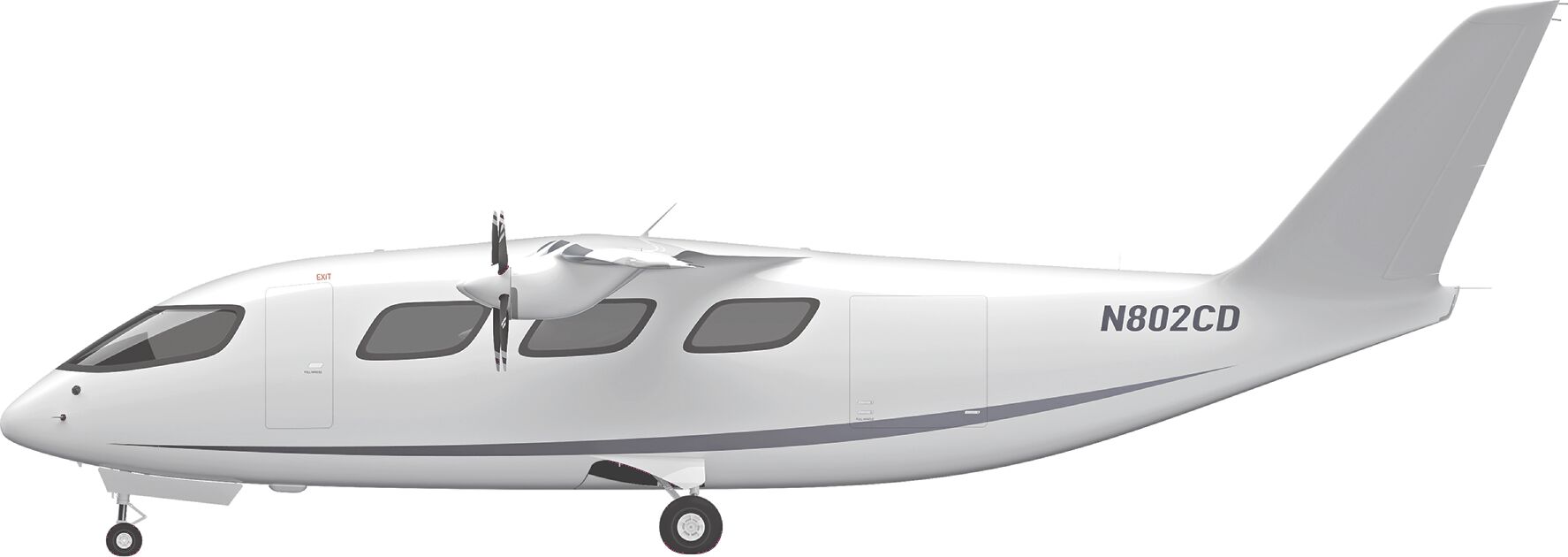
ALIA CTOL CX300 (Piloted, Electric)
ALIA CTOL (CX300) – Designed for all-weather deployment and reliability, our CTOL aircraft transports six people or 200 cubic feet of cargo plus two crew members on missions of up to approximately 215 nautical miles. This aircraft is intended to leverage existing airport infrastructure and fly in accordance with existing procedures to enable rapid adoption. We are targeting FAA Part 23 certification at the end of 2026 or early 2027. Our Backlog for the CTOL consists of 331 units, of which 131 units are for Firm Orders and 200 units are for Options. Examples of key CTOL launch customers include Air New Zealand and United Therapeutics, highlighting the versatility of the aircraft. We have not yet delivered any certified aircraft, and therefore, no associated revenue has been recognized.
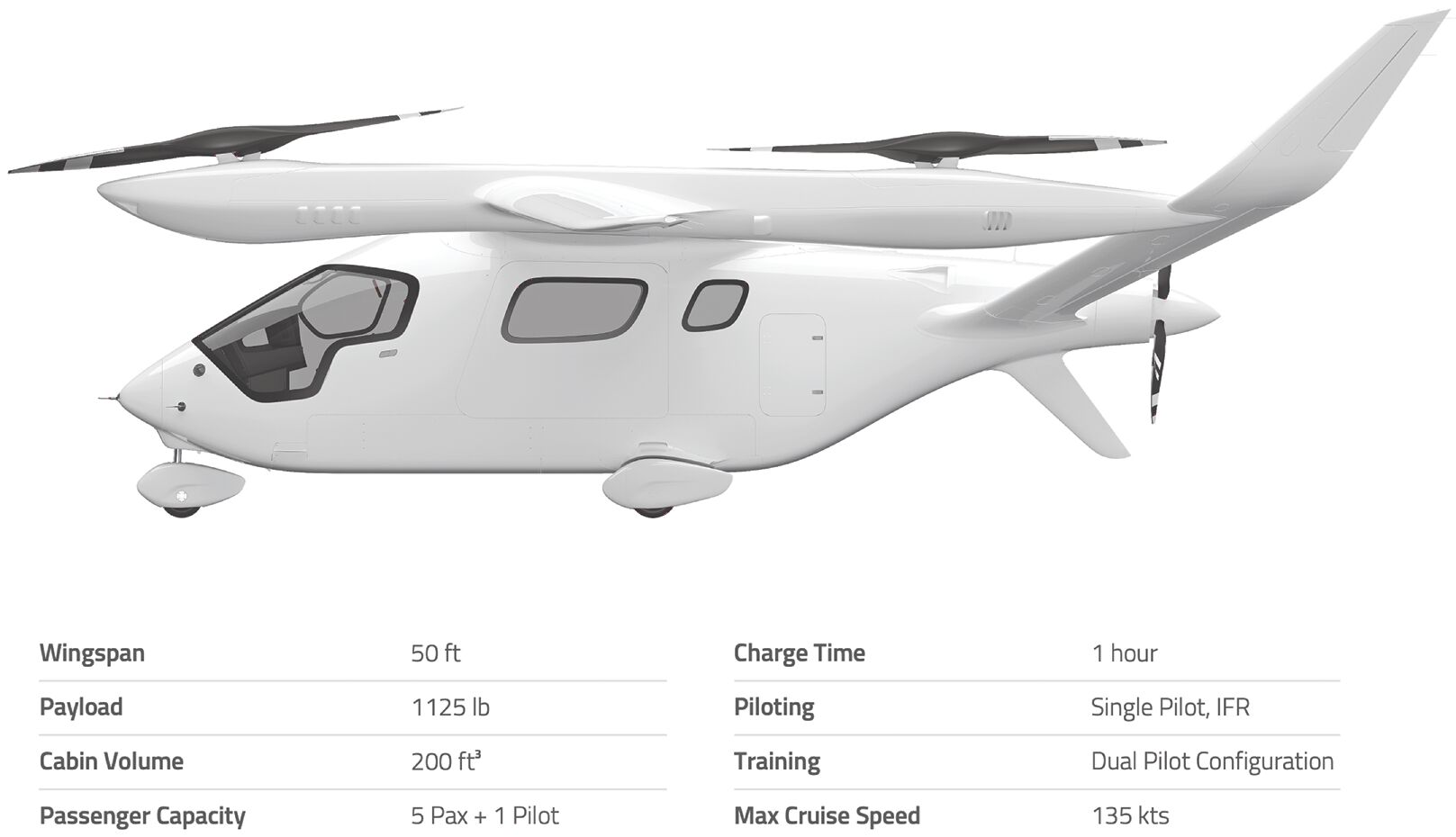
ALIA VTOL A250 (Piloted, Electric)
ALIA VTOL (A250) – The ALIA VTOL (A250) is a vertical takeoff and landing aircraft, allowing it to operate from locations with or without runway access. We believe our simple and efficient design differentiates us from others in the industry – enabling a clear path to certification, lower operating costs, high reliability and class-leading range and payload.
Our Backlog for the ALIA VTOL consists of 560 units, of which 158 units are for Firm Orders and 402 units are for Options, with a goal of achieving type certification (“Type Certification”) towards the end of 2027 or early 2028. Our order book highlights the broad capabilities of our aircraft across: cargo and logistics, including orders from UPS and Bristow; medical operations, including orders from Metro Aviation and New Zealand Air Ambulance; and passenger operations, including orders from FlyNYON. We have not yet delivered any certified aircraft, and therefore, no associated revenue has been recognized.
5
ALIA Defense VTOL MV250 (Autonomous, Hybrid)
ALIA Defense VTOL (MV250) – The MV250 is the military variant of our VTOL aircraft and draws heavily from the ALIA platform. The capability specifications from our cargo and logistics customers stack up closely with specifications from the U.S. Military for their next generation aircraft, including capabilities such as long range, low heat/noise signature operations and the potential to operate autonomously. The specifications from these customers, which we expect to be able to deliver, are for a vertical takeoff and landing aircraft that can carry up to one ton (approximately 2,000 pounds) 250 nautical miles, which is priced between $5-10 million, and has operating cost benefits over existing aircraft models.
We expect multiple military branches to use ALIA defense VTOLs in their operations. We remain a candidate for the USMC’s Aerial Logistic Connector program which seeks to fill the large size class contested logistics. Additionally, the Army established the Contested Logistics Cross-Functional Team under Army Futures Command to generate requirements that will drive future programs of record.
We are also partnering with General Electric Company, operating as GE Aerospace (“GE Aerospace”), to co-develop a hybrid electric turbogenerator, specifically designed for defense and civil applications. In conjunction with the partnership, GE Aerospace is making an equity investment of $300 million in BETA. This collaboration is poised to enhance our offerings by integrating hybrid electric capabilities, which are critical to modern defense applications. The new turbogenerator technology, we believe, can deliver multiple advantages, including longer range, higher speed, reduced operating costs, and increased payload capacity. Our joint efforts signify a strategic advancement in leveraging hybrid electric propulsion systems, meeting the stringent demands of both defense operations and commercial aviation. This partnership reflects our commitment to adopting cutting-edge technology for sustained growth and operational efficiency.
The certification process for defense aircraft is different from the FAA civil aircraft certification process in that standards of safety and performance are applied to aircraft based on the intended mission and level of safety required to perform the intended mission for the U.S. Military; in many cases offering reduced requirements than the FAA. Due to the variety of mission cases the MV250 has the potential to serve, the requirements for and timeframe in which it is approved for military service remains to be defined. Separately, the U.S. Military has the ability to operate the aircraft for a subset of test and demonstration missions prior to obtaining formal approval.
6
Larger Aircraft – We are in the development phase of a larger aircraft initially designed to carry up to 19 passengers. We are able to move rapidly by leveraging our existing technologies and experience from existing aircraft. We believe this product will further expand our market share by creating new opportunities for operators to realize the benefits of electric aviation in large aircraft. The timeline for obtaining civil certification of the larger commercial airplane has yet to be determined.
Motors
H500A Motor (L) and V600 Motor (R)
We believe the H500A motor leads the industry both in terms of maximum power output and power-to-weight ratio, weighing only 165 pounds while providing 573 horsepower based on internal testing. We believe this leadership position is achieved through a simple design that is free of heavy liquid cooling systems and complicated assemblies – allowing for 97.5% efficiency based on internal testing. The H500A features dual redundancy and significantly fewer parts than a comparable legacy aircraft engine. Our design philosophy of the H500A lends itself to easy adaptation into the more powerful H500B variant and V600A vertical lift motor, both currently in development.
7
We sell our motors to both established aerospace and defense OEMs, as well as new market entrants designing electric aircraft. Our electric motors have aerospace and marine applications that require high reliability with significant power in a small package. As an example, we have a subcontract with General Dynamics Applied Physical Sciences, manufacturing and delivering hardware and associated engineering services, in support of a Defense Advanced Research Projects Agency (“DARPA”) program focused on developing advanced propulsion technology for undersea vehicles. These opportunities represent both initial sales and long-term recurring revenue when motors require maintenance or replacement in the aftermarket.
In July 2025, the Hartzell Propeller received FAA Part 35 Type Certification, becoming the first propeller the FAA has certified for any electric aircraft. This milestone serves as a stepping stone for obtaining Type Certification by the FAA for the H500A under Part 33 given the parallels between FAA Part 35 Type Certification, which governs propeller certification, and FAA Part 33, which governs airworthiness standards for engines.
We are targeting Type Certification by the FAA for the H500A under Part 33 in late 2025 or early 2026. A Part 33 certification will enable easier integration of the H500A onto Part 23 aircraft.
Batteries
Batteries
Electric aircraft require batteries, and we are operating with today’s battery capabilities. We purchase battery cells and integrate them into a proprietary module and pack assembly designed with features to deliver safer energy across multiple aircraft and non-aircraft platforms. Our batteries contain redundant protections against unlikely thermal runaway events, communication issues or non-uniform discharges. The packs we deliver meet stringent industry-standard regulatory requirements. The frequency of replacement can depend on various usage conditions, but we estimate the majority of customers will need to replace batteries every 12-24 months.
8
GSE and Multi-Modal Charging Network
BETA’s Differentiated Footprint
We design and manufacture the mission-ready equipment needed to charge electric aircraft and supporting infrastructure. Our charge equipment uses the CCS-1 plug format adopted as the industry standard. Several electric aircraft operators have purchased our charging products for their facilities and vertiports. Our suite of products enables seamless reservations, billing and a zero-touch user experience. We believe this interoperability creates a strong network effect and further cements our leadership role in the industry.
Charge Cube – The Charge Cube is the central component of charging infrastructure. Its compact design, 50-foot charging radius and compliance with the CCS-1 standard allows compatibility with a broad range of emerging electric aircraft. Certified by Underwriters Laboratories, our Charge Cube offers differentiating features such as a touchless interface, automated cable management, reduced crew workload and enhanced safety.
Thermal Management System (TMS) Cube – The TMS Cube optimizes battery charging, performance and extends the lifespan of batteries. It pre-conditions and thermally manages aircraft batteries to enable efficient and reliable charging, especially in varying environmental conditions. Thermal management is vital to maximizing battery health and enabling fast charging. Other early-stage electric aircraft manufacturers are working to make their aircraft design compatible with our TMS product.
Mini Cube – The Mini Cube offers flexible, mobile fast charging for a variety of platforms including aircraft and ground vehicles. Its portability, integrated cable storage, and support for the CCS-1 protocol make it ideal for dynamic use in hangars and vertiports. The Mini Cube supports a clean and safe operational environment, while providing supplemental or backup charging capacity for diverse transportation assets.
9
Charging Products
As of August 31, 2025, we have commissioned 51 high-speed airport charging stations capable of recharging our ALIA CTOL or VTOL aircraft in as little as 20-40 minutes for average flights. This network has been funded almost entirely, by our customers and industry peers. Additionally, we have installed the first electric aircraft charger on a U.S. Military base at Duke Field, which is part of the broader Eglin Air Force Base complex.
Large, Untapped Market Opportunity
We define our market opportunity in terms of our total addressable market (“TAM”), which is calculated based on the potential for new aircraft sales for commercial and defense applications, in addition to the lifetime revenue of potential aftermarket components and services. The aftermarket components and sales include batteries, motors, other components, maintenance, training and charging solutions.
We estimate the TAM for electric/hybrid aircraft to consist of approximately 60,000 units with an assumed value of $250 billion, using an average selling price of approximately $4 million per unit, through 2035. This is based on internal calculations derived from publicly available information and an analysis conducted by a global third-party consulting firm, not commissioned by us, which focused on passenger use cases. In addition, we have included incremental cargo, medical, defense and passenger use cases based on our market analysis and experience. We have further excluded certain geographic and aircraft use cases that are outside the scope of our intended business model. In addition to initial aircraft sales, we believe that each aircraft represents an estimated three times in incremental aftermarket revenue opportunity throughout its life, for an approximate value of $750 billion. We have developed CTOL and VTOL aircraft which can serve both commercial and end markets, cargo and logistics and passenger applications, to maximize the potential TAM.
10
Total Product Lifecycle
We believe that each aircraft we sell presents a larger long-term service and aftermarket revenue opportunity for additional value capture over a 20-year period.
As our global aircraft fleet grows, replacement batteries and maintenance requirements are also expected to grow. To support growing fleets of electric aircraft, charging infrastructure will be required at airports and vertiports globally.
In aviation, most maintenance requirements are recurring and non-deferrable, even during periods of economic downturn or reduced demand for commercial air travel.
We primarily compete across four end markets within the aerospace industry: cargo and logistics, medical, defense and passenger.
Cargo and Logistics: We believe cargo and logistics represent a near-term, sizable and compelling opportunity for our aircraft and products. Based on the demand for timely supply chain solutions caused by the rise of e-commerce, large global parcel and e-commerce companies have tested and placed orders for electric aircraft and drones to address supply chain constraints. In 2024, e-commerce made up approximately 16% of total retail sales in the United States based on the U.S. Census Bureau, 2024 Annual Retail Trade Survey. In parallel, customers are increasingly demanding faster delivery times, pressuring traditional distribution networks. The introduction of electric aircraft in cargo and logistics, specifically in rural areas, received additional support in the June 2025 Executive Order entitled “Unleashing American Drone Dominance” (the “June 2025 Executive Order”). Customers including UPS and Bristow have placed Firm Orders.
Medical: Electric aviation, both CTOL and VTOL, are well-suited to meet the growing demand for fast, reliable and environmentally sustainable healthcare logistics. Our aircraft are uniquely suited for medical operations with their large and flexible interior spaces. Lower operating costs of electric aircraft make them
11
well-suited for Medical Cargo and Low-Acuity Patient Transfer missions. Customers including United Therapeutics, Metro Aviation and New Zealand Air Ambulance have placed Firm Orders.
Defense: Our ALIA platform is well suited for emerging necessities of modern warfare in both their low maintenance burden and their autonomy-ready designs. Current events and conflicts across the globe have resulted in increased defense and national security spending, both nationally and internationally. Existing defense logistics platforms, mainly helicopters, are poorly suited for imminent threats, including conflicts across wide expanses of ocean. In the United States, defense and national security spending benefits from strong bi-partisan support, which has resulted in a stable and growing investment over time. Our demand forecast consists of nearly 2,000 BETA aircraft for defense applications through 2035 based on U.S. Military estimates and internal opportunity sizing. We believe the increased focus on lower cost, attributable and, where possible, dual-use technology that can be rapidly produced, will benefit us and aligns with our key focus areas.
Passenger: We believe that the demand for urban and regional air mobility services will usher in a new wave of growth for the commercial aerospace market. Based on 2024 schedule data, 20% of flights globally are under 300 miles, demonstrating this trend. As traditional, ground-based transportation alternatives become increasingly expensive and population growth accelerates, their scalability is becoming highly questionable. At the same time, technological advances in battery energy density, propulsion, design and materials are enabling aircraft to serve shorter distances in a more cost-effective and environmentally sustainable manner. The convergence of these forces has led airlines, aircraft lessors and charter companies to place orders for over ten thousand aircraft worth over $80 billion. We expect these trends to continue and create new opportunities to convert terrestrial transportation demand to aircraft.
Our Competitive Strengths
Simple Design along with a Strategic, Stepwise Approach to Derisk the Certification Process
Our certification strategy is purpose-built to advance new technology through a staged roadmap that we believe aligns with the FAA’s safety mission of “building confidence instead of friction.” This strategy advances our guiding principle, “safety through simplicity.” For example, if a component, joint or moving piece is not needed for safety on the aircraft—it is not on the aircraft. This clarity and decisiveness saves us a significant amount of time and effort as we seek certification across our product suite. In July 2025, the Hartzell Propeller received FAA Part 35 Type Certification, becoming the first propeller the FAA has certified for any electric aircraft.
We are taking a pragmatic approach that aligns with FAA frameworks, de-risks certification timelines and lays a scalable foundation for broader market success. This stepwise approach creates a logical progression where each certification effort informs the next—streamlining documentation, building continuity with FAA personnel and reducing risk across programs. Our market entry strategy mirrors this discipline by beginning with cargo and logistics and medical applications—lower-risk, high-value missions that can enable early revenue, generate real-world safety data and foster public trust ahead of passenger operations.
We are leaders in shaping policy through FAA collaboration and contributions to the development of policy needed for innovative technologies. We believe that we have built a trusted, influential relationship with the agency across all levels, enabling us to help shape regulation and accelerate progress first for BETA and thereafter for the entire industry.
In July 2025, the FAA released Advisory Circular (AC 21.17-4), which covers type certification of powered-lift aircraft and sets out the requirements for airworthiness approval of eVTOL vehicles. Previously, eVTOL developers engaged with the FAA on an individual basis to agree on the G-1 certification basis for their aircraft, including a lengthy public comment process. In BETA’s case however, pursuant to AC 21.17-4, we were
12
able to adopt the AC requirements as our certification basis, accelerating our path to certification. In August 2025, we closed our G-1 certification basis following the submission of our Stage 3 response to the FAA. Due to negotiations with the FAA and our advocacy for streamlined requirements that are optimized for our aircraft configuration within the final Advisory Circular, we were able to secure favorable certification requirements that are closely aligned with the Special Federal Aviation Regulation (“SFAR”) adopted by the FAA in December 2024.
Certification Pathway
Vertically-Integrated Aerospace Company Developing the Core Technologies that Enable the Emerging Electric Aviation Ecosystem
We control and make proprietary batteries, motors, FBW systems and software for our aircraft. These core technologies are sought after by leading aerospace incumbents, further validating the demand for our products. These aircraft components are designed, manufactured and tested in our existing facilities.
Our vertical integration facilitates improved collaboration and communication across different stages, through our “approve then improve” strategy. We prioritize rigorous design, manufacturing, and testing protocols to ensure the highest quality products. This integration supports our ability to adapt swiftly to design and product changes, ensuring that we remain competitive and responsive to our customers’ needs.
Our vertical integration allows for rapid iteration in the design and manufacturing process of our aircraft. The physical proximity of our R&D, manufacturing and testing facilities allows for faster collaboration and
13
increased efficiency compared to a process reliant on many external suppliers. The capital investment in extensive manufacturing space enables us to scale to a rate of 300 aircraft per year at maturity, and we have site control for additional expansion. Further, our aircraft production lines are designed with the capability to produce both the ALIA CTOL and ALIA VTOL aircraft on the same tooling. Common part applications across our aircraft programs, such as engines, batteries, FBW controls, avionics and landing gears, enable streamlined manufacturing processes and maximize operational efficiency.
Cargo and Logistics First Approach to Provide Nearer Term Market Entry
Our cargo and logistics ALIA CTOL facilitates early market entry. The cargo and logistics ALIA CTOL relies on standing rules and infrastructure to tap into an existing and growing logistics market. The demand from cargo and logistics and medical logistics operators is demonstrated by existing Backlog orders. Our CTOL aircraft easily integrates into the nation’s airspace and procedural landscape. Electric charging systems are the only additional infrastructure required, which we have been building for several years. We believe certifying our cargo and logistics ALIA CTOL airplane under FAA’s Part 23 relies on established rules to unlock revenue through the sale of type certified aircraft.
We believe the benefits of our cargo and logistics first approach will flow through to support the rapid progression of the passenger ALIA CTOL, along with all our ALIA VTOL programs. We expect to collect valuable operational data and flight experience through the use of our cargo and logistics ALIA CTOL by logistics and medical customers. We believe this data and experience will support passenger variant entry into service with a track record of safety and operational successes. It further allows us to continue building the infrastructure necessary to support our passenger customers’ urban and regional operations.
Our strategy carries across both our ALIA CTOL and VTOL platforms. Each aircraft is expected to enter service under a Type Certification for cargo and logistics operations first, followed by a passenger configuration through an amended Type Certification process. The significant similarity across the ALIA platform will ease the FAA’s Type Certification amendment process. As the only electric aircraft manufacturer with a clear cargo and logistics go-to-market strategy, we believe that we are well positioned to benefit from the rural logistics-focus of the June 2025 Executive Order – particularly in its directive for the FAA to allow the commercial use of electric aircraft prior to Type Certification.
Aftermarket-focused Business Model that Targets Recurring Revenue over Full Aircraft Lifetime
Our business strategy centers around leveraging aircraft sales to generate extensive recurring revenue at attractive margins over the lifetime of each aircraft. We plan to provide essential support throughout the operational lifespan of our aircraft, seeking to ensure continuous performance, safety and reliability. Our strategy prioritizes establishing diversified and consistent recurring revenue streams, servicing batteries, charging, maintenance and parts, creating a compelling opportunity for long-term profitability.
Battery replacements alone are expected to exceed the initial revenue from selling individual aircraft and provide higher margins. In a dynamic unique to electric aviation, replacement battery packs have the opportunity to increase the range of existing aircraft – increasing their utility.
Beyond BETA-built aircraft, selling our motors, batteries and other aircraft components to others extends our ability to leverage aftermarket recurring revenue at attractive margins.
Deep Relationships with Partners and Customers Who Rely on Our Innovative Solutions
Our innovative technologies have allowed us to develop deep partnerships with world-class aerospace and defense OEMs, commercial passenger and cargo and logistics operators, airports across the globe and the U.S. Military.
14
We provide critical components to aerospace and defense OEMs. We have established strategic relationships with key commercial entities, many of whom we count as early investors, to enhance their logistics and transportation capabilities. Our partners and customers include UPS, with whom we collaborate on the efficient movement of cargo, and United Therapeutics for specialized organ transport. Similarly, we work with Air New Zealand and Bristow to manage the safe, efficient transportation of passengers. In addition, we believe our recently established partnership with GE Aerospace to co-develop hybrid electric turbogenerators will bring significant enhancements to range, payload, speed, and performance compared to existing aircrafts. We have also cultivated and maintained strong working relationships with key branches of the military, including the U.S. Air Force, Army and Marine Corps. Our collaborations with these branches exemplify our commitment to supporting the operational needs of the military through enhanced efficiency, reliability and technological integration. Through these efforts, we believe that we have been able to deliver solutions that meet the rigorous demands of military operations and contribute meaningfully to their critical missions and objectives. We have successfully completed several exercises with the U.S. Military over the past 24-36 months including a three-month deployment to Eglin Air Force base which included more than 200 flights with 100% up-time.
Extensive Intellectual Property Portfolio
Our focus is on Enabling Technologies essential to electric aviation, including batteries, motors, flight control systems and a nationwide network of electric charging and related equipment. Our business model leverages a broad suite of intellectual property protected by 447 patents as of August 31, 2025 to protect our ownership and control of such Enabling Technologies, the earliest expiration date of which is 2040 if all maintenance fees are paid. These patents underscore the portfolio’s strategic coverage and solidify our position as a leader in the aerospace sector. This broad suite of protected IP is not only designed to ensure our competitive edge but also facilitates ongoing innovation and application of our technologies.
Experienced Leadership and Team with Deep and Relevant Industry Expertise
Our leadership team, led by founder and Chief Executive Officer Kyle Clark, includes a group of seasoned executives, all of whom bring extensive experience in aerospace, engineering and operations. This diverse expertise allows us to navigate the complexities of developing an innovative solution to revolutionize the aviation industry.
Kyle is an experienced technical leader and multidisciplinary engineer. He holds a degree in Materials Science and Engineering from Harvard University, and has practiced and taught power electronics and controls engineering for more than 20 years. Kyle was the lead engineer on the Patriot Missile System electrification program and has published papers on high voltage design and test for proton accelerators. Kyle is also a certified flight instructor and commercial pilot with both helicopter and jet ratings and he flies a variety of aircraft nearly every day. Kyle is an experienced aircraft builder, machinist, welder and test pilot, which enables him to empathize and debate a wide variety of topics from primary manufacturing, to system test, to industrialization.
We also maintain a world-class Board, with deep rooted experience that includes multiple public company founders and CEOs, military experts, financial and operations experts, and five certified pilots. In addition, we maintain a Defense Advisory Board composed of three generals and two lieutenant generals, each possessing extensive experience in defense and strategic planning, and whose collective expertise is instrumental in providing insight and guidance on our defense strategies. Our Board and Defense Advisory Board play a critical role in shaping our approach to navigating complex environments, seeking to ensure that our solutions meet the rigorous demands of modern commercial and military operations.
Our team’s collective experience and strategic direction are foundational to our continued success and innovation.
15
Our Growth Strategy
We intend to pursue the following strategies to realize meaningful growth across our business.
Leverage Diverse Customer and Strategic Relationships for Expanded Market Aperture
Our leadership position in the technologies required for electric aviation is actively reinforced through strategic partnerships and/or orders from the strongest players in their respective industries including General Dynamics Applied Physical Sciences, Textron eAviation, United Therapeutics and UPS. We will continue to collaborate closely with our customers and partners, seeking to ensure that our technologies are suited for an expanding aperture of market demand and industry trends. Beyond the United States, we have line-of-sight to serving considerable international demand in both civil and defense sectors.
Built on both our expertise and the trust of established aircraft manufacturers, to date, we have secured nearly $60 million in both Firm Orders as well as sales orders of our Enabling Technologies – all of which are protected by our growing portfolio of 447 patents as of August 31, 2025, the earliest expiration date of which is 2040 if all maintenance fees are paid. We intend to further expand our network of customers by continuing to provide world-class technologies in the form of products that make safe, cost-effective electric aviation a reality.
Obtain FAA Type Certification in the U.S. and Then Seek Validation with EASA and Other Regulators
We are in the process of certifying our H500A electric motor (FAA Part 33), ALIA CTOL (CX300) airplane (FAA Part 23), and ALIA VTOL (A250) aircraft (FAA Part 21.17(b)). We also maintain relationships with all major civil aviation authorities to enable validation as our international footprint expands. Early engagement with EASA is currently underway to provide initial awareness of our platforms. After FAA certification is secured for each Type Certification program, we plan to pursue validation with Transport Canada and CAA New Zealand to support existing international customers. We believe we will be able to achieve applicable additional verifications post FAA certification. These efforts align with our commitment to meet global regulatory standards and deliver certified aircraft across key markets.
Distribute and Advance our Technology to Deepen Trusted Partnerships with the U.S. Military
In 2024, we obtained Facility Clearance (FCL) from the Defense Counterintelligence and Security Agency (DCSA). Our FCL supports our ability to generate and handle classified information and conduct classified work as prime and subcontractors for U.S. government contracts. Additionally, employees hold security clearance for the execution of classified contracts.
We also intend to continue to build on our successful collaboration with the U.S. Army through the Combat Capabilities Development Command (DEVCOM) to support developing requirements from the Contested Logistics CFT as well as with the U.S. Marine Corps with the Aerial Logistics Connector and Medium Aerial Resupply Vehicle—Expeditionary Logistics programs. We believe our environmentally sustainable, zero-emission electric propulsion, low heat signature technology is critical to achieving the U.S. Military’s requirements for reduced acoustic signatures for stealth, lower operating costs and enhanced energy resilience.
Given our track record of success, the U.S. Military is exploring further opportunities with our innovative aircraft including, but not limited to contested logistics, medevac, power delivery to field units and personnel and cargo transport.
With our flight proven aircraft and GSE delivering mission critical capabilities, we continue to enable equipment and supply pre-positioning, scalable logistics packages and access to forward operating sites in dispersal operations.
16
Grow Base of Recurring Revenue and Profit through OEM Aircraft Lifecycle Model and Control of Infrastructure
We believe our proprietary aftermarket solutions unlock multi-year recurring revenue streams. Given the battery replacement and light service for motors over the multi-year life of each aircraft sold, we expect that our recurring revenue at attractive margins will increase over time.
We believe our ownership and control of charging equipment technologies will allow us to continue to grow the U.S. network at airports and other locations. In addition, we intend to expand this charging network globally in advance of filling sales of ALIA to our international customers.
In the traditional aircraft business model, profit generation is compartmentalized among different entities: aircraft OEMs profit from the sale of aircraft, fuel providers and Fixed Base Operators (“FBOs”) from the sale of fuel, and engine OEMs from maintenance services. In contrast, our model represents a comprehensive integration of these segments. We develop and sell the aircraft while simultaneously owning and distributing the charging infrastructure. Furthermore, we conduct all necessary maintenance, enabling us to capture value across all traditional revenue streams by consolidating these operations under one roof. We believe this integrated approach not only diversifies our revenue but also allows us to offer streamlined, efficient service to our clients, enhancing the overall value proposition of our business model.
Expand Nationwide Charging Network
We believe we are a leader in electric ground support innovation and have built the only aviation-centric charging network in the world – one that will power not only our aircraft but the emerging industry. We intend to continue to expand this network through strategic partnerships with established FBOs, reducing the regulatory burden, capital and overhead required to effectively execute. Additionally, we intend to continue to work with customers and public institutions to expand our network with minimal capital requirements. We believe this model has been successfully demonstrated through infrastructure contracts funded by the U.S. Department of Health and Human Services (HHS) and United Therapeutics to date.
Achieve Economies of Scale and Manufacturing Efficiencies
Our current manufacturing facility in Vermont can support the manufacturing of up to 300 aircraft per year across multiple assembly lines at maturity. These lines are purpose-built to accommodate the production of all variants of our ALIA CTOL and VTOL platforms. We possess site control and the permits necessary to expand the manufacturing facility to 355,000 square feet from approximately 188,000 square feet to support higher throughput.
As aircraft production volumes increase, we expect labor utilization and operating leverage will improve. We anticipate leveraging automation for some routine tasks. Costs of inputs can be expected to improve as we purchase larger quantities of materials from suppliers to meet added throughput. We also expect to continue to innovate aircraft structure design to reduce the cost and number of components required to build each aircraft.
Develop the Next Generation of Technology to Further Disrupt the Aerospace Industry
We intend to continue stepwise research and development of our portfolio of differentiated technologies. Centralized, modular and interchangeable parts allow for application of our patented technologies in future projects, such as our Large eCTOL aircraft, which is currently in the design phase. Our team has built a strong base of research and development and test expertise through years of developing our Enabling Technologies and ALIA aircraft that we can leverage to develop new products. First, we will build small aircraft, then we will build larger ones.
Our collaboration with the U.S. Military offers valuable funding, expertise and test opportunities for future projects as well. For our ALIA X250 project, which will inform the final production of our MV250 military aircraft, we have received funding from the U.S. Air Force for deliverables relating to our hybrid propulsion development and
17
the U.S. Army is actively funding deliverables related to our autonomy development for the platform, including a build-up through remote piloting. The ALIA X250 aircraft is the prototype vehicle for the MV250 product and will serve as the test bed for the hybridization and autonomous control technology which will be leveraged on the production MV250. We are currently nearing the end of a process to down-select an autonomy provider and actively continuing development on hybrid propulsion systems.
Similarly, our partnership with GE Aerospace allows us to further develop next-generation technology by combining our extensive knowledge of generators with GE Aerospace’s established engine leadership. This collaboration not only leverages our collective strengths but also positions us at the forefront of innovation in electric engine solutions, underlining our commitment to advancing sustainable and efficient next gen technology.
We intend to leverage these research and development partnerships with the military to grow towards becoming a major supplier of such technologies to the U.S. Military.
We are continuously innovating, pushing forward the boundaries of electric aviation.
Organizational Structure
The following diagram depicts our simplified ownership structure immediately following this offering and the transactions related thereto (assuming that the underwriters’ option to purchase additional shares is not exercised):
Corporate Information
Our principal executive offices are located at 1150 Airport Drive, South Burlington, Vermont 05403, and our telephone number at that address is 802-281-3623. Our website is available at www.beta.team. We expect to make our periodic reports and other information filed with or furnished to the SEC available free of charge through our website as soon as reasonably practicable after those reports and other information are electronically filed with or furnished to the SEC. Information on our website or any other website is not incorporated by reference herein and does not constitute a part of this prospectus.
Recent Developments
GE Aerospace Strategic Collaboration Agreement and Joint Technology Development Agreement
On September 3, 2025, we and GE Aerospace entered into a Strategic Collaboration Agreement and a Joint Technology Development Agreement to accelerate the development of hybrid-electric aviation by combining
18
BETA’s rapid innovation approach with GE Aerospace’s global scale and experience. The Strategic Collaboration Agreement sets forth our responsibilities and GE Aerospace’s responsibilities regarding the research, development, manufacturing, testing, marketing, selling, fielding, and supporting turbogenerators for future sales to the commercial civilian aircraft market and government customers, and acts as the overarching framework for future joint technology development agreements (including the Joint Technology Development Agreement discussed below) and supply agreements. The Strategic Collaboration Agreement has a 10-year term and sets forth the framework under which GE Aerospace and BETA will collaborate in such activities, pursue regulatory approvals, allocate ownership of intellectual property developed in connection with the arrangement, and commercialize such technology going forward.
The Joint Technology Development Agreement sets forth the terms pursuant to which we will collaborate with GE Aerospace to perform joint research and development related to the development of propulsion technologies for hybrid-electric applications, including by collaborating on turbogenerators. See “Certain Relationships and Related Party Transactions—GE Aerospace Strategic Collaboration Agreement and Joint Technology Development Agreement.”
Sales of Series C-1 Preferred Stock
On September 26, 2025, we completed our sale and issuance of an aggregate of approximately 3,648,796 shares of our Series C-1 Preferred Stock for an aggregate approximate value of $417.7 million (our “Series C-1 Financing”). In connection with the Series C-1 Financing, GE Aerospace purchased an aggregate of 2,620,774 shares of Series C-1 Preferred Stock for a total approximate value of $300 million. As a result of GE Aerospace’s participation in our Series C-1 Financing, GE Aerospace received the right to designate one member to our Board and designated Amy Gowder, who joined our Board upon the closing of our Series C-1 Financing. In addition to GE Aerospace’s participation in our Series C-1 Financing, TPG Rise Belfry, L.P., an entity with which Mike Stone, one of our directors, had previously been affiliated, purchased an aggregate of approximately 104,724 shares of Series C-1 Preferred Stock for a total approximate value of $11.9 million. See “Certain Relationships and Related Party Transactions—Sales of Series C-1 Preferred Stock.”
Issuance of GE Aerospace Warrants
On September 26, 2025, we issued warrants to purchase 400,000 shares of Common Stock to GE Aerospace at an exercise price of $0.01 per share. Following this offering and the IPO Recapitalization, the warrants may become exercisable pursuant to their terms for up to shares of Class A common stock at an exercise price of $0.01 per share. The warrants are exercisable upon vesting, and vest subject to the satisfaction of certain milestones, with any shares that remain unvested on the third anniversary of September 3, 2025 vesting on such date if we and GE Aerospace are continuing to work together under the Strategic Collaboration Agreement and Joint Technology Development Agreement (or a similar arrangement) as of such date. See “Certain Relationships and Related Party Transactions—Issuance of GE Aerospace Warrants.”
Sales of Series C Preferred Stock
Since our October 2024 initial sale and issuance of our Series C Preferred Stock, through September 2025 we completed additional sales and issuances of 1,362,420 shares of Series C Preferred Stock for an aggregate approximate value of $155.9 million. See “Certain Relationships and Related Party Transactions—Sales of Series C Preferred Stock.”
Sale-Leaseback Transaction
On July 16, 2025, we entered into a sale-leaseback transaction for two of our buildings with an associated company of a member of the Board. We received $32.7 million in net proceeds from the sale with an initial leaseback term of 29 years. See “Certain Relationships and Related Party Transactions—Sale-Leaseback Transaction.”
19
The Offering
| Issuer |
BETA Technologies, Inc. |
| Class A common stock offered by us |
shares |
| Option to purchase additional shares of Class A common stock |
We have granted to the underwriters a 30-day option to purchase up to additional shares of our Class A common stock, solely to cover over-allotments, if any, from us at the initial public offering price less the underwriting discounts and commissions. |
| Class A common stock to be outstanding after this offering |
shares ( shares if the underwriters exercise in full their option to purchase additional shares of Class A common stock). |
| Class B common stock to be outstanding after this offering |
shares |
| Total Class A and Class B common stock to be outstanding after this offering |
shares |
| Use of proceeds |
We expect to receive net proceeds of approximately $ million based on an initial public offering price of $ per share, the midpoint of the price range set forth on the cover page of this prospectus, after deducting estimated underwriting discounts and commissions and estimated offering expenses payable by us. |
| We intend to use the net proceeds from this offering primarily for general corporate purposes. “Use of Proceeds” for more information. |
| Emerging growth company |
We qualify as an “emerging growth company” as that term is used in the JOBS Act and, as such, we have elected to take advantage of certain reduced public company reporting requirements for this prospectus. See “Risk Factors.” |
| Controlled company |
Upon completion of this offering, we will have two classes of common stock outstanding: Class A common stock and Class B common stock. The rights of the holders of our Class A common stock and Class B common stock are identical, except with respect to voting, conversion and transfer rights. Each share of our Class A common stock is entitled to one vote per share. Each share of our Class B common stock is entitled to 40 votes per share. Holders of shares of our Class A common stock and Class B common stock will generally vote together as a single class, unless otherwise required by law or pursuant to our Amended and Restated Certificate of Incorporation that will be filed after the effectiveness of the registration statement for this offering and become effective prior to the completion of this offering. Each share of our Class B common stock is convertible into one share of our Class A common stock at any time at the election of the holder and will convert automatically upon any transfer, except for permitted transfers, and upon the occurrence of certain of other events described in our Amended and |
20
| Restated Certificate of Incorporation. Immediately following the completion of this offering, and assuming no exercise of the underwriters’ option to purchase additional shares of Class A common stock to cover over-allotments, if any, and assuming the Class B Common Stockholder does not purchase any shares of Class A common stock pursuant to the directed share program the Class B Common Stockholder will control approximately % of the voting power of our outstanding capital stock. As a result, we will be a “controlled company” within the meaning of the corporate governance standards of the NYSE, and therefore we are permitted to, and we intend to, elect not to comply with certain corporate governance requirements of the NYSE. Such corporate governance requirements include those that would otherwise require our board to establish a compensation committee and a nominating and corporate governance committee, each comprised entirely of independent directors. We currently do not plan to establish a compensation committee or nominating and corporate governance committee composed entirely of independent directors as permitted by these exemptions. In addition, the Class B Common Stockholder will have significant influence over the outcome of matters submitted to our stockholders for approval, including the election of our directors and the approval of any change of control transaction. These risks are more fully described in the section titled “Risk Factors.” Additional information can be found in the sections titled “Management—Controlled Company Exception,” “Security Ownership of Certain Beneficial Owners and Management” and “Description of Capital Stock.” |
| Directed Share Program |
At our request, the underwriters have reserved up to % of the shares of our Class A common stock offered hereby (excluding the additional shares that the underwriters have an option to purchase), at the initial public offering price, to offer to our current employees, including management and other individuals and entities as determined by certain of our authorized officers. The sales will be made at our direction by Morgan Stanley & Co. LLC and its affiliates through a directed share program. The number of shares of our Class A common stock available for sale to the general public will be reduced to the extent these individuals purchase such reserved shares. Any reserved shares that are not so purchased will be offered by the underwriters to the general public on the same basis as the other shares offered by this prospectus. Except for any shares acquired by our directors and officers, shares purchased pursuant to the directed share program will not be subject to lock-up agreements with the underwriters. See the section titled “Underwriting—Directed Share Program” for additional information. |
| Dividend policy |
We currently do not anticipate paying any cash dividends after this offering and for the foreseeable future. Instead, we anticipate that all of our earnings in the foreseeable future will be used for working capital, to support our operations and to finance the growth and development of our business. Any future determination relating to |
21
| dividend policy will be made at the discretion of our Board and will depend on a number of factors, including restrictions in our future debt instruments, our future earnings, capital requirements, financial condition, prospects and applicable Delaware law, which provides that dividends are only payable out of surplus or current net profits. We have not adopted, and do not currently expect to adopt, a written dividend policy. See “Dividend Policy.” |
| Listing |
We have applied to list our Class A common stock on the NYSE under the symbol “BETA”. |
| Risk factors |
See “Risk Factors” beginning on page 29 and other information included in this prospectus for a discussion of factors you should carefully consider before deciding to invest in shares of our Class A common stock. |
Unless otherwise noted, the information in this prospectus:
| • | gives effect to the -for-1 Stock Split, occurring subsequent to the effectiveness of the registration statement of this offering, which will be effective upon filing of our Amended and Restated Certificate of Incorporation prior to the completion of this offering; |
| • | gives effect to the IPO Recapitalization described in “Description of Capital Stock—General”; |
| • | assumes the filing and effectiveness of our Amended and Restated Certificate of Incorporation and the effectiveness of our Amended and Restated Bylaws, each of which will occur prior to the completion of this offering; |
| • | assumes an initial public offering price of $ , the midpoint of the estimated price range set forth on the cover page of this prospectus; |
| • | assumes no exercise by the underwriters of their over-allotment option to purchase additional shares of our Class A common stock from us; |
| • | does not reflect shares of common stock to be issued upon the vesting and settlement of certain restricted stock issued in connection with an immaterial acquisition; and |
| • | does not reflect shares that are reserved for future grants under our new LTIP and under which we intend to issue shares of common stock upon the vesting and settlement of restricted stock units to be granted upon the closing of this offering to certain of our employees. |
22
Summary of Risk Factors
There are a number of risks related to our business, this offering, ownership of our Class A common stock and our capital structure that you should consider before you decide to participate in this offering. Some of the principal risks related to an investment in our company include the following:
| • | Our business plan requires a significant amount of capital. We expect to require additional future funding to support our operations and implementation of our growth plans and we may be unable to access the capital and credit markets or borrow on affordable terms. |
| • | We expect to be significantly dependent upon revenue generated from the sale of our electric aircraft, our batteries and our core technologies, along with the utilization of our charging infrastructure, and our future success will be dependent upon the continued development of the electric and hybrid electric aviation (including VTOL) industry and our ability to design and achieve market acceptance, adoption and utilization of these new technologies. |
| • | We may experience significant delays in the design, manufacture, certification and commercial rollout of our aircraft. |
| • | Our limited operating history makes evaluating our business and future prospects difficult and may increase the risk of your investment. |
| • | We have incurred significant losses since inception, we expect to incur losses in the future and we may not be able to achieve or maintain profitability. |
| • | Our long-term success and ability to significantly grow our revenue will depend, in part, on our ability to establish and expand our presence within international markets. |
| • | The aircraft market is highly competitive. |
| • | Crashes, accidents or incidents of electric and hybrid aircraft, as well as accidents or incidents involving battery solutions, such as lithium-ion batteries. |
| • | We are subject to many hazards and operational risks that can disrupt our business for which we may not be able to secure adequate insurance policies at reasonable prices or at all. |
| • | We are highly dependent on the continued service and leadership of Kyle Clark, and if we are unable to retain Mr. Clark, our ability to compete and overall performance could be harmed. |
| • | We expect to conduct a portion of our business pursuant to U.S. government contracts, which are subject to unique risks. |
| • | We may be subject to risks associated with our strategic relationships. |
| • | Our current collaboration with GE Aerospace and future strategic alliances could have an adverse effect on our financial condition and results of operations. |
| • | We enter into aerospace commercial contracts, which are subject to unique risks. |
| • | We may not realize all of the sales expected from our Backlog. |
| • | We are subject to customer concentration risks. |
| • | We depend on suppliers and service partners for raw materials and certain parts and components. |
| • | We may be unable to seek, obtain, maintain, protect or enforce our intellectual property rights, or to otherwise defend our intellectual property rights from unauthorized access or use by third parties. |
| • | Third parties may claim that we infringe, misappropriate or otherwise violate their intellectual property. |
| • | Interruption to, interference with, or failure of our complex information technology and communications systems could hurt our ability to effectively operate our business. |
23
| • | We, along with our third-party service providers, vendors and suppliers, are at risk for cybersecurity-related attacks and cyber-incidents, which may adversely affect our business. |
| • | Our use of artificial intelligence technologies involves risks. |
| • | We are subject to risks associated with global climate change, including physical and transitional risks. |
| • | If we are unable to maintain adequate facilities and infrastructure, we may be unable to offer our aircraft and other products or charging services in a way that is useful to customers. |
| • | Our ability to use net operating losses and other tax attributes to offset future taxable income may be subject to certain limitations. |
| • | The requirements of being a public company will cause us to incur increased costs and may strain other resources, divert management’s attention and affect our ability to attract and retain additional executive management and qualified board members. |
| • | We are required to comply with a wide variety of laws and regulations, and are subject to regulation by various federal, state and foreign agencies, and our failure to comply with existing and future regulatory requirements could adversely affect our business, results of operations, financial condition and prospects. |
| • | We may be unable to obtain relevant regulatory approvals for the commercialization of our aircraft, motors or subsystems, either in the United States or in foreign markets. |
| • | The covenants in our Credit Agreement may restrict our operations, and failure to comply with the covenants in our Credit Agreement could adversely impact our business. |
| • | There is no existing market for the Class A common stock, and a trading market that will provide stockholders with adequate liquidity may not develop. The price of the Class A common stock may fluctuate significantly, and stockholders could lose all or part of your investment. |
| • | We are controlled by Kyle Clark, our Chief Executive Officer and a member of our Board, whose interests in our business may conflict with ours or yours. Certain of other directors and members of management also may have interests that are different from, or in addition to, those of other stockholders. |
| • | Upon the listing of the Class A common stock on the NYSE, we will be a “controlled company” within the meaning of the NYSE rules and, as a result, will qualify for, and intend to rely on, exemptions from certain corporate governance requirements. |
| • | Management will have broad discretion over the use of our proceeds from this offering. |
| • | We do not intend to pay dividends after this offering and may never do so. |
| • | Investors in this offering will experience immediate and substantial dilution of $ per share. |
| • | Future sales of the Class A common stock in the public market, or the waiver or early release of lock-up agreements, could reduce the market price of the Class A common stock, and any additional capital raised by us through the sale of equity or convertible or exchangeable securities may dilute your ownership in us. |
These and other risks are more fully described in the section titled “Risk Factors” in this prospectus. If any of these risks actually occurs, our business, results of operations, financial condition or prospects could be materially and adversely affected. As a result, you could lose all or part of your investment in our Class A common stock.
24
Summary Financial and Operating Data
The following tables set forth our summary consolidated financial and other data. We have derived the summary consolidated statements of operations and cash flows data for the years ended December 31, 2024 and 2023 and the consolidated balance sheet data as of December 31, 2024 and 2023 from our audited consolidated financial statements included elsewhere in this prospectus. The summary consolidated statements of operations and cash flow data for the six months ended June 30, 2025 and 2024 and the consolidated balance sheet data as of June 30, 2025 have been derived from our unaudited condensed consolidated financial statements included elsewhere in this prospectus, which have been prepared on a basis consistent with our audited consolidated financial statements. In the opinion of management, the unaudited data reflects all adjustments, consisting only of normal recurring adjustments, necessary for a fair statement of the financial information in those statements. Our historical results are not necessarily indicative of our results to be expected in any future period. The summary of our consolidated financial data set forth below should be read together with our audited consolidated financial statements and the related notes, as well as the sections captioned “Management’s Discussion and Analysis of Financial Condition and Results of Operations,” appearing elsewhere in this prospectus.
The following table presents our summary consolidated statements of operations and comprehensive loss data for the years ended December 31, 2024 and 2023 and for the six months ended June 30, 2025 and 2024:
| For the Year Ended December 31, |
For the Six Months Ended June 30, |
|||||||||||||||
| 2024 | 2023 | 2025 | 2024 | |||||||||||||
| (in thousands, except share and per share amounts) | ||||||||||||||||
| Revenues: |
||||||||||||||||
| Product revenue(1) |
$ | 1,857 | $ | 206 | $ | 5,032 | $ | 596 | ||||||||
| Service revenue(1) |
13,235 | 15,151 | 10,533 | 6,993 | ||||||||||||
|
|
|
|
|
|
|
|
|
|||||||||
| 15,092 | 15,357 | 15,565 | 7,589 | |||||||||||||
| Costs of revenues: |
||||||||||||||||
| Product revenue |
1,521 | 214 | 595 | 589 | ||||||||||||
| Service revenue |
2,998 | 1,811 | 2,333 | 1,521 | ||||||||||||
|
|
|
|
|
|
|
|
|
|||||||||
| 4,519 | 2,025 | 2,928 | 2,110 | |||||||||||||
| Gross margin: |
||||||||||||||||
| Product revenue |
336 | (8 | ) | 4,437 | 7 | |||||||||||
| Service revenue |
10,237 | 13,340 | 8,200 | 5,472 | ||||||||||||
|
|
|
|
|
|
|
|
|
|||||||||
| 10,573 | 13,332 | 12,637 | 5,479 | |||||||||||||
| Operating expenses: |
||||||||||||||||
| Research and development |
206,910 | 138,273 | 115,899 | 92,105 | ||||||||||||
| General and administrative(2) |
75,883 | 61,629 | 54,075 | 36,567 | ||||||||||||
|
|
|
|
|
|
|
|
|
|||||||||
| Total operating expenses |
282,793 | 199,902 | 169,974 | 128,672 | ||||||||||||
|
|
|
|
|
|
|
|
|
|||||||||
| Loss from operations |
(272,220 | ) | (186,570 | ) | (157,337 | ) | (123,193 | ) | ||||||||
|
|
|
|
|
|
|
|
|
|||||||||
| Other (expense) income: |
||||||||||||||||
| Interest expense |
(11,427 | ) | (352 | ) | (5,750 | ) | (5,594 | ) | ||||||||
| Interest income |
8,516 | 12,389 | 4,720 | 4,705 | ||||||||||||
|
|
|
|
|
|
|
|
|
|||||||||
| Total other (expense) income |
(2,911 | ) | 12,037 | (1,030 | ) | (889 | ) | |||||||||
|
|
|
|
|
|
|
|
|
|||||||||
| Loss before income taxes |
(275,131 | ) | (174,533 | ) | (158,367 | ) | (124,082 | ) | ||||||||
| Income tax expense |
(514 | ) | (1,030 | ) | (327 | ) | (55 | ) | ||||||||
|
|
|
|
|
|
|
|
|
|||||||||
| Net loss |
(275,645 | ) | (175,563 | ) | (158,694 | ) | (124,137 | ) | ||||||||
| PIK dividend on Preferred Stock |
(30,701 | ) | (26,368 | ) | (24,540 | ) | (12,952 | ) | ||||||||
|
|
|
|
|
|
|
|
|
|||||||||
| Net loss attributable to common stockholders |
$ | (306,346 | ) | $ | (201,931 | ) | $ | (183,234 | ) | $ | (137,089 | ) | ||||
|
|
|
|
|
|
|
|
|
|||||||||
25
| For the Year Ended December 31, |
For the Six Months Ended June 30, |
|||||||||||||||
| 2024 | 2023 | 2025 | 2024 | |||||||||||||
| (in thousands, except share and per share amounts) | ||||||||||||||||
| Net loss per share attributable to common stockholders, basic and diluted |
$ | (43.21 | ) | $ | (28.70 | ) | $ | (25.57 | ) | $ | (19.38 | ) | ||||
|
|
|
|
|
|
|
|
|
|||||||||
| Weighted average common shares outstanding, basic and diluted |
7,089,302 | 7,036,685 | 7,167,070 | 7,072,532 | ||||||||||||
|
|
|
|
|
|
|
|
|
|||||||||
| As adjusted net loss per share attributable to common stockholders, basic and diluted(3)(4) |
$ | $ | ||||||||||||||
|
|
|
|
|
|
|
|
|
|||||||||
| As adjusted weighted average common shares outstanding, basic and diluted(3)(4) |
||||||||||||||||
|
|
|
|
|
|
|
|
|
|||||||||
| (1) | Includes related party amounts of $1,075 and $167 (product revenue) and $5,477 and $4,536 (service revenue) for the years ended December 31, 2024 and 2023, respectively, and $0 and $524 (product revenue) and $3,610 and $2,546 (service revenue) for the six months ended June 30, 2025 and 2024, respectively. See “Related Party Transactions” and Note 14 in the Notes to our historical audited consolidated financial statements and Note 14 in the Notes to our unaudited condensed consolidated financial statements included elsewhere in this prospectus. |
| (2) | Includes related party amounts of $(2,899) and $(1,441) (general and administrative) for the years ended December 31, 2024 and 2023, respectively, and $(140) and $(508) (general and administrative) for the six months ended June 30, 2025 and 2024, respectively. See “Related Party Transactions” and Note 14 in the Notes to our historical audited consolidated financial statements and Note 14 in the Notes to our unaudited condensed consolidated financial statements included elsewhere in this prospectus. |
| (3) | As adjusted basic and diluted net loss per share attributable to common stockholders has been prepared to give effect to adjustments to our capital structure arising in connection with the completion of this offering and is calculated by dividing the as adjusted net loss attributable to common stockholders by the as adjusted weighted-average common shares outstanding for the period. The as adjusted net loss attributable to common stockholders used in the calculation of as adjusted basic and diluted net loss per share attributable to common stockholders adjusts net loss attributable to common stockholders to remove the PIK dividend on preferred stock for the year ended December 31, 2024 and the six months ended June 30, 2025, respectively. As adjusted weighted-average common shares outstanding is computed by adjusting the weighted-average common shares outstanding to give as adjusted effect to (i) the automatic conversion of all shares of our preferred stock outstanding as of June 30, 2025 into shares of common stock as if such conversion had occurred on January 1, 2024, (ii) the filing and effectiveness of our Amended and Restated Certificate of Incorporation, upon which all outstanding shares of Common Stock will be reclassified into Class A common stock and a -for-1 forward split of our capital stock will be effective, and (iii) the exchange of an aggregate of shares of Super Voting Common Stock beneficially owned by the Class B Common Stockholder for an equivalent number of shares of our Class B common stock, each of which will occur after the effectiveness of the registration statement for this offering and become effective prior to the closing of this offering. As adjusted basic and diluted net loss per share attributable to common stockholders does not include the effect of the shares expected to be sold in this offering. |
| (4) | As adjusted basic and diluted net loss per share attributable to common stockholders has been prepared to give effect to the deemed dividend on the Series C and Series C-1 preferred stock issuances in the three months ended September 30, 2025. |
26
Stock based compensation expense was allocated in cost of revenues and operating expenses as follows:
| For the Year Ended December 31, |
For the Six Months Ended June 30, |
|||||||||||||||
| 2024 | 2023 | 2025 | 2024 | |||||||||||||
| (in thousands) | ||||||||||||||||
| Cost of product revenue |
$ | 24 | $ | 5 | $ | 30 | $ | — | ||||||||
| Cost of service revenue |
143 | 168 | 81 | 60 | ||||||||||||
| Research and development |
6,485 | 5,008 | 3,826 | 2,219 | ||||||||||||
| General and administrative |
5,453 | 3,780 | 7,677 | 2,324 | ||||||||||||
|
|
|
|
|
|
|
|
|
|||||||||
| Total |
$ | 12,105 | $ | 8,961 | $ | 11,614 | $ | 4,603 | ||||||||
|
|
|
|
|
|
|
|
|
|||||||||
The following table presents our summary consolidated balance sheet data, summary as adjusted and as further adjusted consolidated balance sheet data as of June 30, 2025:
| As of June 30, 2025 | ||||||||||||
| Actual | As Adjusted(1)(4) | As Further Adjusted(2) |
||||||||||
| (in thousands) | ||||||||||||
| Summary Consolidated Balance Sheet Data: |
||||||||||||
| Cash, cash equivalents, and restricted cash |
$ | 178,069 | $ | |||||||||
| Working capital(3) |
125,152 | |||||||||||
| Total assets |
537,499 | |||||||||||
| Total liabilities |
244,287 | |||||||||||
| Total convertible preferred stock and stockholders’ equity |
293,212 | |||||||||||
| (1) | The as adjusted balance sheet data gives effect to (i) the Stock Split, (ii) the IPO Recapitalization and (iii) the filing and effectiveness of our Amended and Restated Certificate of Incorporation, each of which will occur after the effectiveness of the registration statement for this offering and become effective prior to the completion of this offering. |
| (2) | The as further adjusted balance sheet data gives further effect to our issuance and sale of shares of our common stock in this offering at an assumed initial public offering price of $ per share, which is the midpoint of the price range set forth on the cover page of this prospectus, after deducting estimated underwriting discounts and commissions and estimated offering expenses payable by us. |
| (3) | We define working capital as current assets less current liabilities. |
| (4) | The as adjusted balance sheet data gives effect to the issuance of shares of Series C and Series C-1 preferred stock for $ during the three months ended September 30, 2025. In connection with these issuances, the Company recorded the preferred stock at its fair value of $ , with the difference between the cash proceeds received and the corresponding fair value of $ being recorded as a deemed dividend to retained earnings. |
The as further adjusted information discussed above is illustrative only and will change based on the actual initial public offering price and other terms of this offering determined at pricing. A $1.00 increase (decrease) in the assumed initial public offering price of $ per share, which is the midpoint of the price range set forth on the cover page of this prospectus, would increase (decrease) the as further adjusted amount of each of cash, cash equivalents, and restricted cash, working capital, total assets, total liabilities, and total stockholders’ equity by $ million, assuming that the number of shares offered by us, as set forth on the cover page of this prospectus, remains the same and after deducting estimated underwriting discounts and commissions and estimated offering expenses payable by us. An increase (decrease) of 1,000,000 shares in the number of shares offered by us, as set forth on the cover page of this prospectus, would increase (decrease) the as further adjusted amount of each cash, cash equivalents, and restricted cash, working capital, total assets, total liabilities, and total
27
stockholders’ equity by $ million, assuming that the number of shares offered by us, as set forth on the cover page of this prospectus, remains the same and after deducting estimated underwriting discounts and commissions and estimated offering expenses payable by us.
The following table presents our summary consolidated cash flow data for the years ended December 31, 2024 and 2023 and the six months ended June 30, 2025 and 2024:
| For the Year Ended December 31, |
For the Six Months Ended June 30, |
|||||||||||||||
| 2024 | 2023 | 2025 | 2024 | |||||||||||||
| (in thousands) | ||||||||||||||||
| Net cash used in operating activities |
$ | (222,661 | ) | $ | (158,015 | ) | $ | (114,541 | ) | $ | (101,609 | ) | ||||
| Net cash used in investing activities |
(68,806 | ) | (152,333 | ) | (11,776 | ) | (38,250 | ) | ||||||||
| Net cash provided by financing activities |
339,331 | 134,329 | 2,331 | 14,198 | ||||||||||||
| Effect of currency translation on cash, cash equivalents, and restricted cash |
25 | (141 | ) | 30 | (135 | ) | ||||||||||
|
|
|
|
|
|
|
|
|
|||||||||
| Net increase (decrease) in cash, cash equivalents, and restricted cash |
47,889 | (176,160 | ) | (123,956 | ) | (125,796 | ) | |||||||||
| Cash, cash equivalents, and restricted cash at the beginning of the year |
254,136 | 430,296 | 302,025 | 254,136 | ||||||||||||
|
|
|
|
|
|
|
|
|
|||||||||
| Cash, cash equivalents, and restricted cash at the end of the year |
$ | 302,025 | $ | 254,136 | $ | 178,069 | $ | 128,340 | ||||||||
|
|
|
|
|
|
|
|
|
|||||||||
28
An investment in our Class A common stock involves a high degree of risk. You should carefully consider the risks described below before making an investment decision. Our business, results of operations, financial condition or prospects could be harmed by any of these risks, as well as other risks not currently known to us or that we currently consider immaterial. The trading price of the Class A common stock could decline due to any of these risks, and, as a result, you may lose all or part of your investment.
Certain statements in this “Risk Factors” section are forward-looking statements. See “Cautionary Note Regarding Forward-Looking Statements.”
Risks Related to Our Business and Industry
Our business plan requires a significant amount of capital. We expect to require additional future funding to support our operations and implementation of our growth plans and we may be unable to access the capital and credit markets or borrow on affordable terms to obtain additional capital that we may require.
Our proposed operations and our business strategy contemplate significant manufacturing capacity and aircraft and infrastructure development, including additional vertiports where our aircraft can land, both within the United States and internationally. Construction of additional manufacturing and testing facilities, chargers and other facilities will require significant capital expenditures, as will future expansion of and improvements to our operations. Based on our recurring losses and management’s expectations that significant on-going operating expenditures will be necessary to successfully implement our business plan and develop our powerhouses, we expect to require additional funding to continue our operations through commercialization. Although we intend to partner with or pursue leasing or other arrangements with third parties in relation to certain of our facility needs, we cannot be assured that such partnership opportunities or other arrangements will be available on commercially reasonable terms, or at all.
In addition, as our facilities and aircraft mature, our business will require capital expenditures for the maintenance, renovation and improvement of such facilities to remain competitive. This creates an ongoing need for capital, and, to the extent we cannot fund capital expenditures from cash flows from operations, we will need to borrow or otherwise obtain funds.
We expect to fund our operations through equity offerings or debt financings, credit or loan facilities, potential other capital resources, or a combination of one or more of these funding sources. Such financings may not be available on acceptable terms, or at all, and our failure to raise capital when needed could harm our business.
Periods of instability in the capital and credit markets (both generally and those impacting the aerospace industry in particular), including as a result of global health crises or other events contributing to the disruption and volatility of global financial markets, could limit our ability to access these markets to raise debt or equity capital on affordable terms or to obtain additional financing. Among other things, our lenders may seek to increase interest rates, enact tighter lending standards, refuse to refinance existing debt at maturity on favorable terms or at all and may reduce or cease to provide funding to us. For example, increased interest rates in 2022 and 2023 led to a widespread slowdown in investment and funding opportunities, especially for pre-revenue companies. We may sell equity securities or debt securities in one or more transactions at prices and in a manner that may materially dilute our current investors. Any debt financing, if available, may involve restrictive covenants that could reduce our operational flexibility or profitability. Debt financing, if available, may result in a significant financial burden if interest rates remain high for a prolonged period or increase in the future. We expect that the net proceeds from this offering, together with our existing cash and cash equivalents, will enable us to fund our operating expenses and capital expenditure requirements for at least the next 12 months.
29
However, our operating plan may change as a result of factors currently unknown to us, and we may need to seek additional funding sooner than planned. If we cannot raise funds or otherwise enter into financing arrangements on acceptable terms, we may be forced to delay, reduce, or eliminate our research and product development programs or future commercialization effort, or we may not be able to grow our business or respond to competitive pressures, any of which may have an adverse impact on our business, results of operations, financial condition and prospects.
We expect to be significantly dependent upon revenue generated from the sale of our electric aircraft, our batteries and our core technologies, along with the utilization of our charging infrastructure, and our future success will be dependent upon our ability to design and achieve market acceptance, adoption and utilization of these new technologies.
We expect to generate a significant portion of our revenue from the sale of our electric aircraft and batteries and the commercialization of our infrastructure and critical charging and software systems. While we believe we are uniquely positioned to capture revenues across the full aircraft lifecycle, from new aircraft sales for commercial and military applications to revenues from sales of related products and services, including batteries, motors, components, maintenance, training and charging solutions, each of our aircraft requires significant investment prior to commercial introduction, and may never be successfully developed or commercially successful. There can be no assurance that we will be able to design future models of electric aircraft or infrastructure and charging technologies that will meet the expectations of our customers or that our future models will become commercially viable. In particular, it is common in our industry for the production aircraft to have a styling and design different from that of the concept aircraft, which may happen with our future aircraft. As technologies change in the future for aircraft in general and electric aircraft specifically, we will be expected to upgrade or adapt our aircraft and introduce new models in order to continue to provide aircraft with the latest technology. To date, we have limited experience simultaneously designing, testing, manufacturing and selling our electric aircraft.
We may experience significant delays in the design, manufacture, certification and commercial rollout of our aircraft, which could harm our business, brand, results of operations, financial condition and prospects.
Any significant delay in the commercialization of our aircraft could materially damage our business, brand, results of operations, financial condition and prospects. Aircraft manufacturers often experience delays in the design, manufacture, certification and commercial release of new aircraft models. We may experience such delays in launching our aircraft, and any such delays could be significant.
In addition, final designs for our eVTOL and large passenger electric aircraft are still in process, and various aspects of the aircraft component procurement and manufacturing plans have not yet been determined. We are continually evaluating, qualifying and selecting our suppliers for the planned production of our aircraft. However, we may not be able to engage suppliers for the remaining materials and components in a timely manner, at an acceptable price or in the necessary quantities. In addition, we will also need to do extensive testing to ensure that our aircraft are in compliance with applicable airworthiness regulations and other applicable requirements prior to beginning mass production and delivery of the aircraft. Our plan to begin commercial production of our aircraft is dependent upon the timely availability of funds, upon our finalizing the related design, engineering, component procurement, testing, certification, build out and manufacturing plans in a timely manner and upon our ability to execute these plans within the current timeline.
The markets for our offerings are still in development, and if such markets do not materialize, or grow more slowly than we expect or fail to grow as large as we expect, our business, results of operations, financial condition and prospects could be harmed.
The markets for electric aircraft (as well as for technologies and product and service offerings relating to same) are still in development, and our success in these markets is dependent upon our ability to effectively
30
design, develop, and certify electric aircraft and to market and gain traction in respect of electric aircraft utilization as a substitute for existing methods of transport, as well as the effectiveness of our other marketing and growth strategies. If our business customers, including, in the case of our defense program, government entities, do not perceive electric aircraft as beneficial or choose not to adopt electric aircraft as a result of concerns regarding safety, noise, affordability or for other reasons, then the market for our offerings may not materialize, may develop more slowly than we expect or may not achieve the growth potential we expect, any of which could harm our business, results of operations, financial condition and prospects.
Growth of our business will require significant investments in our infrastructure, technology and sales and marketing efforts, including significant expansion of our production facilities in the future. If our business does not have sufficient capital required to support these investments, our results of operations will be negatively affected. Further, our ability to effectively manage growth and expansion of our operations will also require us to enhance our operational systems, internal controls and infrastructure, human resources policies and reporting systems. These enhancements will require significant capital expenditures and allocation of valuable management and employee resources.
The electric and hybrid electric aviation (including VTOL) industry may not continue to develop, electric aircraft may not be adopted by the market, eVTOL aircraft may not be certified by government authorities or electric aircraft may not be an attractive alternative to existing modes of transportation, any of which could adversely affect our business, results of operations, financial condition and prospects.
Electric aircraft involve a complex set of technologies, which we must continue to further develop and rely on our commercial and defense program customers to adopt. However, as a prerequisite to commercializing our electric aircraft for sale to business customers or the U.S. government, we must receive requisite certifications and approvals from applicable governmental authorities. See “—Risks Related to Laws and Regulations” for a discussion of risks associated with such regulatory and related requirements. There are currently no electric aircraft certified by the FAA and operating commercially in the United States, and there can be no assurance that our design, development and certification efforts will result in our receiving FAA certification of our aircraft. In order to achieve FAA certification, the performance, reliability and safety of electric aircraft must be established, none of which can be assured. In particular, there is a risk that we will not obtain one or more certifications from the FAA that are required for ultimate commercial rollout and use of our aircraft, or that we will experience delays in receiving one or more of these certifications. Even if our electric aircraft receive Type Certification and airworthiness certificates and we receive Production Certification, aircraft operators must conform their operational authorizations to include electric aircraft, including eVTOL, which requires FAA approval of aircraft and operational procedures, and individual pilots also must be trained and ultimately approved by the FAA to fly such aircraft, which could contribute to delays in any widespread use of electric aircraft and potentially limit the number of electric aircraft operators available to purchase aircraft from or partner with us. Additional challenges to ensuring the demand for our aircraft, technologies and related services, all of which are outside of our control, include:
| • | market acceptance of electric aircraft, including CTOL and VTOL; |
| • | state, federal or municipal regulations for our electric aircraft and charging infrastructure; |
| • | necessary changes to existing airport or vertiport infrastructure to enable adoption, including installation of necessary charging, navigation, lighting and other equipment; |
| • | ability for customers to obtain all government approvals necessary to operate our aircraft between commercially desirable origins and destinations; |
| • | ability for customers to obtain access to economical insurance policies for operating eVTOL aircraft; and |
| • | public perception regarding the safety of eVTOL aircraft and the resulting demand for our business customers’ services. |
31
There are a number of existing laws, regulations and standards that may apply to eVTOL aircraft, including standards that were not originally intended to apply to electric aircraft. The promulgation of additional federal, state and local laws and regulations that address eVTOL aircraft more specifically, such as the operational regulations, or the Special Federal Aviation Regulation (“SFAR”) adopted by the FAA in December 2024, could delay our ability to launch commercial production of our eVTOL aircraft as well as our customers’ ability to launch commercial eVTOL operations which could impact our business plans and expectations with respect to revenue from both aircraft and aftermarket components. In addition, depending on the nature of any revised or new regulations, we may need to modify our approach to certification, and we may not be able to timely comply with such regulations. Further, we have designed our aircraft to be certified under the current FAA regulatory framework. If the applicable FAA regulations are substantially changed or new regulations are adopted, we may need to modify the design of our aircraft to comply with the new regulations, which could cause us to incur significant expenses and scheduling delays in developing and commercializing our aircraft production and may impact the performance or functionality of the certified aircraft adversely, which could adversely affect our business, results of operations, financial condition and prospects. See “—Risks Related to Laws and Regulations—Failure to comply with applicable laws and regulations relating to the aerospace business in general and electric aircraft testing, certification and production specifically, could adversely affect our business, results of operations, financial condition and prospects.”
There can be no assurance that the market will accept electric aircraft, that we will be able to execute on our business strategy or that our electric aircraft or customers of our aircraft or our related or other offerings will obtain the necessary government approvals or be successful in the applicable target market or markets. There may be heightened public skepticism of this nascent technology and its adopters. In particular, there could be negative public perception surrounding electric aircraft, including the overall safety and the potential for injuries or death occurring as a result of accidents involving electric aircraft, regardless of whether any such safety incidents occur involving us. Any of the foregoing risks and challenges could adversely affect our business, results of operations, financial condition and prospects.
Our limited operating history makes evaluating our business and future prospects difficult and may increase the risk of your investment.
We are an early-stage company with limited operating history. As such, we may encounter unforeseen expenses, difficulties, complications, delays, and other known and unknown factors as we seek to a transition to a company capable of supporting commercialization. If we do not successfully address these risks, our business, results of operations, financial condition and prospects will be materially and adversely harmed. We were formed and began designing our electric aircraft in 2018.
Our revenues were $15.4 million for the year ended December 31, 2023, $15.1 million for the year ended December 31, 2024 and $15.6 million for the six months ended June 30, 2025. We have a very limited operating history on which investors can base an evaluation of our business, results of operations, financial condition and prospects. We intend in the longer term to derive substantial revenues from the sales of our aircraft.
It is difficult to predict our future revenues and appropriately budget for our expenses, and we have limited insight into trends that may emerge and affect our business. In the event that actual results differ from our estimates or we adjust our estimates in future periods, our operating results and financial position could be materially affected.
We have incurred significant losses since inception, we expect to incur losses in the future and we may not be able to achieve or maintain profitability.
We incurred net losses of $175.6 million and $275.6 million for the years ended December 31, 2023 and 2024, respectively. We incurred net losses of $124.1 million and $158.7 million for the six months ended June 30, 2024 and 2025, respectively. It is difficult for us to predict our future operating results. As a result, our
32
losses may be larger than anticipated, and we may not achieve profitability when expected, or at all, and even if we do, we may not be able to maintain or increase profitability. While we expect that our existing cash and cash equivalents, together with anticipated net proceeds from this offering, will enable us to fund our current and planned operating expenses and capital expenditures for at least the next 12 months, until such time as we can generate significant revenue, if ever, the Company expects to fund its operations through public and private financing. There is no assurance that we will be successful in obtaining sufficient funding on terms acceptable to us to fund continuing operations, if at all. Such conditions, if they continue, may raise substantial doubt about the Company’s ability to continue as a going concern. The perception that we may be unable to continue as a going concern may make it more difficult to obtain financing for the continuation of our operations on terms that are favorable to us, or at all, and could result in the loss of confidence by investors.
We expect our operating expenses to increase over the next several years as we move towards commercial launch, continue to attempt to streamline our manufacturing process, increase our flight cadence, hire more employees and continue research and development efforts relating to new products and technologies. These efforts may be more costly than we expect and may not result in increased revenue or growth in our business. Any failure to increase our revenue sufficiently to keep pace with our investments and other expenses could prevent us from achieving or maintaining profitability or positive cash flow. Furthermore, if our future growth and operating performance fail to meet investor or analyst expectations, or if we have future negative cash flow or losses resulting from our investment in acquiring customers or expanding our operations, this could have a material adverse effect on our business, financial condition and results of operations.
We have in the past and will continue to invest significant resources in developing new product offerings and exploring the application of our Enabling Technologies for other uses and those opportunities may never materialize.
While our primary focus has been on the design, manufacture and operation of our electric aircraft, we have invested in the past and will continue to invest significant resources in developing new technologies, services, products or offerings, such as those relating to the innovation and development of electric propulsion systems, charging solutions, motors and controls. However, we may not realize the expected benefits of these investments.
Such research and development initiatives may also have a high degree of risk and involve unproven business strategies and technologies with which we have limited operating or development experience. They may involve claims and liabilities, expenses, regulatory challenges and other risks that we may not be able to anticipate. We may not be able to predict whether customer demand for such initiatives will exist or be sustained at the levels that we anticipate, or whether we will generate sufficient revenue to offset any expenses or liabilities associated with these investments. For example, we plan to continue to invest resources in developing, with an eye toward ultimate commercialization, of our large passenger electric aircraft. Any such research and development efforts could distract management from current operations and would divert capital and other resources from our more established technologies. Even if we are successful in developing new products, services, offerings or technologies, regulatory authorities may subject us to new rules or restrictions in response to our innovations that may increase our expenses or prevent us from successfully commercializing new products, services, offerings or technologies and have an adverse impact on our business, results of operations, financial condition and prospects.
Our long-term success and ability to significantly grow our revenue will depend, in part, on our ability to establish and expand our presence within international markets.
Our future results will depend, in part, on our ability to establish and expand our presence within international markets. Our ability to expand into new markets involves various risks, including, but not limited to, the need to invest significant resources in such expansion, and the possibility that returns on such investments will not be achieved in the near future or at all in these less familiar competitive environments. Our ability to expand internationally will depend upon our ability to, among other things, obtain the necessary government
33
approvals, adapt to international markets, understand the local customer base and address any unique local technological requirements. We may also choose to conduct our international business through joint ventures, minority investments or other partnerships with local companies as well as co-marketing with other established brands. If we are unable to identify partners or negotiate favorable terms, our international growth may be limited. In addition, we may incur significant expenses in advance of generating revenues, if any, as we attempt to establish our presence in particular international markets or market segments outside of aircraft sales, operating our charging network and our defense program.
Our growing charging network is subject to location-specific risks and regulatory uncertainties.
The footprint of our charging network is growing, which makes such part of our business susceptible to wide-ranging regulatory, economic, social, weather and other conditions and related uncertainties. Significant or repeated interruption or disruption in service in an airport or area where we have established charging infrastructure could have an adverse impact on our business, reputation, results of operations, financial condition and prospects. Disruption of operations at vertiports, whether caused by labor relations, utility or communications issues, power outages or changes in federal, state and local regulatory requirements could harm our business. Certain airports may regulate electric aircraft, including limiting the number of landings, banning operations or introducing new permitting requirements, which could significantly disrupt our charging operations and could, potentially, albeit indirectly, negatively impact customer demand for our aircraft.
Our competitors may commercialize their technology before us, or we may not be able to fully capture the first mover advantage that we anticipate.
While we believe we are well positioned to be the first manufacturer to achieve FAA Type Certification for an electric airplane, we expect the electric and hybrid electric aviation (including VTOL) industry to be increasingly competitive and our competitors could get to market with their eVTOL or eCTOL aircraft before or at the same time as us, either generally or in specific markets. Even if we are first to market, we may not fully realize the benefits we anticipate, and we may not receive any competitive advantage or may be overcome by other competitors. If new or existing companies launch competing solutions in the markets in which we intend to operate and obtain large scale capital investment, we may face increased competition. Additionally, our competitors may benefit from our efforts in developing customer and community acceptance of electric aircraft and its related infrastructure, making it easier for them to obtain the permits and authorizations required to certify and successfully commercialize their technology and operations.
If our current and potential competitors are larger and have substantially greater resources or are affiliated with larger companies that may allocate greater resources than we have and expect to have in the future, they may devote greater resources to the development, certification and marketing of their products and services or to offer lower prices. Our competitors may also establish strategic relationships amongst themselves or with third parties that may further enhance their resources and offerings. Some could have more experience in the electric and hybrid electric aviation (including VTOL) industry than we have, and any foreign competitors could benefit from subsidies or other protective measures offered by their home countries. If our competitors commercialize their technology before us, or if we do not capture the first mover advantage that we anticipate, it may harm our business, results of operations, financial condition and prospects.
Our future growth is dependent upon the market’s willingness to adopt electric aircraft and its supporting infrastructure, and the resulting impact of such market demand on our customers’ need for our aircraft and other offerings.
Our growth is highly dependent upon the adoption by customers of, and we are subject to an elevated risk of any reduced demand for, alternative fuel aircraft in general and electric aircraft in particular. If the market for electric aircraft and its supporting infrastructure does not develop as quickly or otherwise in the manner consistent with our expectations or those of our customers, our business, results of operations, financial condition
34
and prospects will be harmed. The market for alternative fuel aircraft is relatively new, rapidly evolving, characterized by rapidly changing technologies, price competition, additional competitors, evolving government regulation and industry standards, increasingly frequent new aircraft announcements and changing demands and behaviors of customers and other stakeholders. Factors that may influence the adoption of alternative fuel aircraft, and specifically electric aircraft, include:
| • | perceptions about electric aircraft quality, safety (in particular with respect to battery packs, including those utilizing lithium-ion cells), design, performance and cost, especially if adverse events or accidents occur that are linked to the quality or safety of electric aircraft; |
| • | perceptions about aircraft safety in general, in particular safety issues that may be attributed to the use of advanced technology, including aircraft electronics; |
| • | the limited range over which electric aircraft may be flown on a single battery charge; |
| • | the decline of an electric aircraft’s range resulting from deterioration over time of the battery’s ability to hold a charge; |
| • | concerns about electric grid capacity and reliability, which could derail our past and present efforts to promote electric aircraft as a practical solution to aircraft which require jet fuel or aviation gasoline; |
| • | the availability of alternative fuel aircraft, including plug-in hybrid electric aircraft; |
| • | improvements in the fuel economy of conventional internal combustion or turbine engines; |
| • | the availability of maintenance services for electric aircraft; |
| • | the importance of environmental considerations to customers and other stakeholders; |
| • | volatility in the cost of crude oil and, relatedly, aviation fuels; |
| • | customers’ and other stakeholders’ perceptions of the dependency of the United States on oil from unstable or hostile countries; |
| • | government regulations and economic incentives promoting fuel efficiency and alternate forms of energy; |
| • | access to chargers, standardization of electric aircraft charging systems and customers’ and other stakeholders’ perceptions about convenience and cost to charge an electric aircraft; |
| • | the availability of tax and other governmental incentives to purchase and operate electric aircraft or future regulation requiring increased use of nonpolluting aircraft; |
| • | perceptions about and the actual cost of alternative fuel; and |
| • | macroeconomic factors. |
Additionally, we may become subject to regulations that may require us to alter the design of our aircraft, which could negatively impact interest in our aircraft.
The influence of any of the factors described above may cause current or potential customers not to purchase our electric aircraft, which would materially adversely affect our business, results of operations, financial condition and prospects.
Our customers’ and others’ perception of us and our reputation may be impacted by the broader industry and customers may not differentiate us from our competitors.
Customers and other stakeholders may not differentiate between us and the broader aerospace industry or, more specifically, the electric and hybrid electric aviation (including VTOL) industry. If other participants in this market have problems related to matters such as safety, technology development, engagement with certification
35
authorities or other regulators, community engagement, security, data privacy, flight delays or customer service, such problems could impact the public perception of the entire electric and hybrid electric aviation (including VTOL) industry, including our business. We may fail to adequately differentiate our brand, our aircraft and other product offerings from others in the market which could impact our ability to attract customers or engage with other key stakeholders and have an adverse impact on our business, results of operations, financial condition and prospects.
If we are unable to keep up with advances in electric aircraft technology, we may suffer a decline in our competitive position.
It may be challenging to keep up with changes in electric aircraft technology. Any failure to keep up with advances in electric aircraft technology would result in a decline in our competitive position which could materially and adversely affect our business, results of operations, financial condition and prospects. Our research and development efforts may not be sufficient to adapt to changes in electric aircraft technology. As technologies evolve, we plan to upgrade or adapt our aircraft, charging systems and infrastructure and introduce new developments in order to continue to provide the latest technology, in particular battery cell technology. However, we may not compete effectively with our competitors if we are not able to source and integrate the latest technology into our aircraft and related components.
If we are unable to design, develop, market and sell new electric aircraft and services that address additional market opportunities, our business, results of operations, financial condition and prospects results will suffer.
We may not be able to successfully develop new electric aircraft and services, address new market segments or develop a significantly broader customer base. To date, we have focused our business on the design of high-performance electric aircraft and our Enabling Technologies that support our aircraft. We will need to address additional markets and expand our customer demographic in order to further grow our business. We have not completed the design, component sourcing or manufacturing process for our aircraft, so it is difficult to forecast their eventual cost, manufacturability or quality. Therefore, there can be no assurance that we will be able to deliver aircraft that is ultimately competitive in the electric aircraft market. Our failure to address additional market opportunities would harm our business, results of operations, financial condition and prospects.
The aircraft market is highly competitive, and we may not be successful in competing in this industry. We currently face competition from traditional aerospace companies and recent market entrants and expect to face competition from others in the future.
The worldwide aircraft market, particularly for alternative fuel aircraft, is highly competitive today and we expect it will become even more so in the future. With respect to our aircraft, we currently face strong competition from established electric aircraft manufacturers and recent market entrants who are also developing electric aircraft. Furthermore, electric aircraft have already been brought to market in China and may be brought to market in other foreign countries in the near-term.
Many of our current and potential competitors have significantly greater financial, manufacturing, marketing and other resources than we do and may be able to devote greater resources to the design, development, manufacturing, distribution, promotion, sale and support of their products. Our competitors may be in a stronger position to respond quickly to new technologies and may be able to design, develop, market and sell their products more effectively.
We expect competition in the electric and hybrid electric aviation (including VTOL) industry to intensify in the future in light of increased demand for alternative fuel aircraft, continuing globalization and consolidation in the worldwide aircraft industry. Factors affecting competition include product quality and features, innovation
36
and development time, pricing, reliability, safety, fuel economy, customer service and financing terms. Increased competition may lead to lower aircraft unit sales, which may adversely affect our business, results of operations, financial condition and prospects. Our ability to successfully compete in our industry will be fundamental to our future success in existing and new markets and our market share. There can be no assurances that we will be able to compete successfully in our markets.
Demand in the electric and hybrid electric aviation (including VTOL) industry is highly volatile.
Volatility of demand in the electric and hybrid electric aviation (including VTOL) industry may materially and adversely affect our business, results of operations, financial condition and prospects. The passenger, military and logistics end markets in which we primarily compete and plan to compete in the future have been subject to considerable volatility and unpredictability with respect to demand in recent periods. Demand for electric and hybrid electric (including VTOL) aircraft sales and related products, technologies and services depends to a large extent on general, economic, political and social conditions in a given market and the introduction of new aircraft and technologies. As a new aircraft manufacturer and low volume producer, we have fewer financial resources than more established aircraft manufacturers to withstand changes in the market and disruptions in demand. As our business grows, in addition to macroeconomic factors, economic conditions and trends in other countries and regions where we sell our aircraft will also impact our business, results of operations, financial condition and prospects. Demand for our electric aircraft may also be affected by factors directly impacting aircraft price or the cost of purchasing, operating, charging and maintaining aircraft (including the availability of financing and other incentives), prices of raw materials and parts and components, cost of fuel and governmental regulations, including tariffs, import regulation and other taxes. These effects may have a more pronounced impact on our business given our relatively smaller scale and financial resources as compared to many incumbents, and in particular, traditional, aircraft manufacturers.
Crashes, accidents or incidents of electric and hybrid aircraft, as well as accidents or incidents involving battery solutions, such as lithium-ion batteries, could have a material adverse effect on our business, results of operations, financial condition and prospects.
The operation of aircraft is subject to various risks, and demand for air transportation of persons as well as cargo, including in connection with our commercial offerings and defense program, has been, and may in the future be, impacted by accidents or other safety issues regardless of whether such accidents or issues involve any electric aircraft of ours. Air transportation hazards, such as adverse weather conditions, fire and mechanical failures and incidents caused by human error may result in death or injury to personnel and passengers or harm to property, which could impact customer or passenger confidence in a particular aircraft type or the air transportation services industry as a whole and could lead to a reduction in passenger or cargo volume. Safety statistics for air travel are reported by multiple parties, including the Department of Transportation and National Transportation Safety Board, and are often separated into categories of transportation. Because our commercial offerings and defense program may include a variety of transportation methods, fliers may have a hard time determining how safe electric aircraft and related products and services are and their confidence in electric aircraft and such products or services may be impacted by, among other things, the classification of accidents in ways that reflect poorly on electric aircraft and such products or services.
Test flying prototype aircraft is inherently risky, and crashes, accidents or incidents involving our aircraft, or other companies’ prototype aircraft that may utilize our products, are possible. Whether or not it involves our aircraft or our related technology, any such occurrence in the future could negatively impact our development, testing and certification efforts, and could result in re-design, certification delay and/or postponements or delays to our commercial launch.
We expect demand for our aircraft and other offerings (and, in some contexts, others’ services utilizing the same) to be impacted by accidents or other safety issues regardless of whether such accidents or issues involve
37
our aircraft. Such accidents or incidents could also have a material impact on our ability to obtain or maintain airworthiness authorization with regulators, including the FAA, for our aircraft and could impact confidence in our aircraft type or the electric industry as a whole, particularly if such accidents or incidents were due to a safety fault or oversight.
We believe that safety and reliability are two of the primary attributes our potential customers consider when selecting a provider of electric aircraft or related products or services. Any failure by us to maintain standards of safety and reliability that are satisfactory to our customers, their clients or other end users could adversely impact our ability to attract and retain customers. We believe that regulators and the general public are still forming their opinions about the safety and utility of aircraft that are highly reliant on lithium-ion batteries and advanced flight control software capabilities and that operate in and around urban areas, among other things. An accident or incident involving either our aircraft or a competitor’s aircraft while these opinions are being formed could have a disproportionate impact on the longer-term view of the emerging market for electric and hybrid electric (including VTOL) aircraft.
We are at risk of adverse publicity stemming from any public incident involving us, our people or our brand. Such an incident could involve the actual or alleged behavior of our employees, contractors or partners. Further, if our electric aircraft, whether operated by us or a third party, were to be involved in a public incident, accident, catastrophe or regulatory enforcement action, we could be exposed to significant reputational harm and potential legal liability. The insurance we carry may be inapplicable or inadequate to cover any such incident, accident, catastrophe or action. In the event that our insurance is inapplicable or inadequate, we may be forced to bear substantial losses from an incident or accident. Any such incident, accident, catastrophe or action involving our electric aircraft or electric aircraft generally could create an adverse public perception, which could harm our reputation, result in customers, passengers or other end users being reluctant to use our products or services, and adversely impact our business, results of operations, financial condition and prospects.
Additionally, the battery packs that we sell, and that are expected to power our electric aircraft, use battery (including lithium-ion) cells. On rare occasions, battery cells, including lithium-ion cells, can rapidly release the energy they contain by venting smoke and flames in a manner that can ignite nearby materials as well as other cells. It is possible that a field or testing failure of our aircraft could occur in the future, which could subject us to lawsuits, environmental, health and safety – (“EHS”) related liabilities, product recalls or redesign efforts, any of which would be time-consuming and expensive. Also, negative public perceptions regarding the suitability of battery (including lithium-ion) cells for aerospace applications or any future fire or other incident involving battery cells could seriously harm our business. Moreover, any such failure of or otherwise in relation to a competitor’s electric aircraft may cause indirect adverse publicity for us and our aircraft. Such adverse publicity could negatively affect our brand and harm our business, results of operations, financial condition and prospects.
We store batteries, including lithium-ion batteries, at our production and testing facilities. Such storage and the handling of batteries and battery materials in connection with our research and development and other business activities poses risks. For example, in August 2022, we experienced a thermal runaway fire event with respect to one of our battery packs awaiting testing, and while such incident did not have a significant impact on our business operations or certification timing, any occurrence in the future of a similar incident or other fire involving or relating to our batteries could negatively impact our development, testing and certification efforts and could result in re-design, certification delay and/or postponements or delays in respect of our commercialization timeline. In addition, our manufacturing partners and suppliers are expected to store a significant number of batteries, including lithium-ion batteries, at their facilities. Any unanticipated use, or use beyond the scope of recommended parameters, in the transport, testing, storage or other use of battery cells, including lithium-ion cells, may cause disruption to the operation of our facilities or our manufacturers’ operations. A safety issue or fire related to the cells could disrupt operations or cause manufacturing delays, and could lead to adverse publicity and, potentially, a safety recall, depending on the extent of any resultant damage or related injury.
38
We are subject to many hazards and operational risks that can disrupt our business, including interruptions or disruptions in service at our facilities, for which we may not be able to secure adequate insurance policies, or secure insurance policies at reasonable prices.
Our operations are subject to many hazards and operational risks, including general business risks, product liability, and damages to third parties, the environment, our infrastructure or properties that may be caused by natural or manmade disasters, power losses, telecommunications failures, terrorist attacks (including hijacking, use of the aircraft as a weapon, or use of the aircraft to disperse a chemical or biological agent), security related incidents, human errors or certain EHS risks and hazards to our employees or third parties associated with our manufacturing operations. See also “—We could incur significant costs in complying with EHS laws and regulations and could be adversely affected by liabilities or obligations imposed under such laws and regulations.”.
We maintain general liability insurance, aircraft liability coverage, directors and officers (“D&O”) insurance and other insurance policies. There can be no assurance that our insurance will be sufficient to cover all potential claims or that present levels of coverage will be available in the future at reasonable cost or at all. Further, we expect our insurance needs and costs to increase as we grow and enhance production facilities and capabilities, manufacture aircraft and other aircraft parts and related products, establish commercial operations and expand into new markets. It is too early to determine what impact, if any, the commercialization of electric aircraft will have on our insurance costs, which may have an adverse impact on our business, results of operations, financial condition and prospects.
We may become subject to product liability claims, which could harm our business, reputation, results of operations, liquidity, financial condition and prospects if we are not able to successfully defend or insure against such claims.
We may become subject to product liability claims, which could harm our business, brand, results of operations, liquidity, financial condition and prospects. The aircraft industry experiences significant product liability claims and we face inherent risk of exposure to claims in the event our aircraft do not perform as expected or malfunction resulting in personal injury or death. A successful product liability claim against us could require us to pay a substantial monetary award. Moreover, a product liability claim could generate substantial negative publicity about our industry, aircraft and business and inhibit or prevent commercialization of other future aircraft candidates which would have material adverse aircraft on our business, brand, results of operations, liquidity, financial condition and prospects. We maintain product liability insurance for our aircraft and our products on a claims made basis, but we cannot assure that our insurance will be sufficient to cover all potential product liability claims. Any lawsuit seeking significant monetary damages either in excess of our coverage, or outside of our coverage, may have a material adverse effect on our business, brand, results of operations, liquidity, financial condition and prospects. We may not be able to secure additional product liability insurance coverage on commercially acceptable terms or at reasonable costs when needed, particularly if we do face liability for our products and are forced to make a claim under our policy.
We are highly dependent on the continued service and leadership of our founder, President and Chief Executive Officer and a member of our Board, Kyle Clark, and if we are unable to retain Mr. Clark, our ability to compete and overall performance could be harmed.
Our future success depends substantially on the continued contributions of our founder, Kyle Clark, whose vision, strategic direction and deep understanding of our technology, industry, target markets and mission have been integral to our innovation and growth outlook to date. Mr. Clark routinely engages directly with regulators and peers with first-hand experience and expertise not only as our CEO and Board member, but also as chair of the General Aviation Manufacturers Association (GAMA) Electric Propulsion & Innovation Committee (EPIC). Mr. Clark is also a test pilot for our company. From engineering and product development to talent recruitment and long-term strategic planning, Mr. Clark plays a central role in virtually all aspects of our business, and while every member of our team is valuable, retaining the services and leadership of Mr. Clark is paramount.
39
We maintain, and we expect to continue to maintain, a key person life insurance policy with respect to Mr. Clark. If Mr. Clark were to discontinue his current role in the future or should he be unable to fulfill his duties for some reason, this could significantly disrupt our operations, impede the execution of our business strategy or otherwise have a material adverse effect on our ability to compete in an increasingly complex, evolving market. Although we have assembled a strong, capable leadership team, there is no guarantee that we could replace Mr. Clark with someone of comparable expertise and vision.
Our future success depends on the continuing efforts of our key personnel and on our ability to attract and retain highly skilled personnel and senior management.
Our future success depends, in part, on our ability to continue to attract and retain highly skilled personnel. In particular, we are highly dependent on the contributions of our senior management team and other key personnel. While our efforts to hire key personnel have generally been successful overall, the industry in which we operate is generally characterized by high levels of competition for skilled employees. Certain members of management, including our Chief Executive Officer, participate in various high-risk activities, such as recreational aviation, which carries the risk of serious injury and death. Relatedly, we support access to a flight program and use of aircraft by those of our personnel who elect to participate in our flight program. The loss of key personnel, including members of management as well as key engineering, product development, marketing and sales personnel, could disrupt our operations and make it more difficult to achieve our business plans.
Compensation packages for highly skilled personnel have increased over time and will likely continue to increase, and competition for highly skilled personnel is often intense, and we may incur significant costs to attract and retain our personnel. Although we have generally entered into employment offer letters with our key personnel, these letters have no specific duration and provide for at-will employment, which means our key personnel may terminate their employment relationship with us at any time. We may not be successful in attracting, integrating or retaining qualified personnel to fulfill our current or future needs. We have, from time to time, experienced, and we expect to continue to experience, difficulty or delay in hiring and retaining highly skilled personnel with appropriate qualifications. In addition, job candidates and existing personnel often consider the value of the equity awards they receive in connection with their service. If the perceived value of our equity or equity awards declines, it may adversely affect our ability to retain highly skilled personnel. If we fail to attract new personnel or fail to retain and motivate our current personnel, our business, results of operations, financial condition and future growth prospects could be harmed.
Our business may be adversely affected by labor and union activities.
Although none of our employees are currently represented by a labor union, unionized labor is common throughout the aerospace industry and can result in higher employee and benefit costs and increased risk of work stoppages, strikes and labor disputes. We may also directly and indirectly depend upon other companies with unionized work forces, such as parts suppliers and trucking and freight companies, and work stoppages or strikes organized by such unions could harm our business, results of operations, financial condition and prospects.
We expect to conduct a portion of our business pursuant to U.S. government contracts, which are subject to unique risks.
We may enter into contracts with governmental organizations in the future. Sales to governmental organizations are subject to a number of challenges and risks that may adversely affect our business and operating results, including the following risks:
| • | new regulations, or changes to existing regulations, could result in increased compliance costs, and we could be subject to withheld payments and/or reduced future business if we fail to comply with new or existing requirements in the future; |
| • | government demand and payment for our aircraft, motors, batteries and technologies may be impacted by public sector budgetary cycles and funding authorizations, with funding reductions or delays |
40
| adversely affecting public sector demand for our offerings, including as a result of sudden, unforeseen and disruptive events such as government shutdowns, governmental defaults on indebtedness, competing priorities of a new administration, war, regional geopolitical conflicts around the world, incidents of terrorism, natural or manmade disasters and public health concerns including epidemics or pandemics; |
| • | governments routinely investigate and audit government contractors’ administrative processes, and any unfavorable audit could result in the government refusing to continue buying our aircraft or other offerings, grants or other forms of government funding, which would adversely impact our revenue and operating results, or institute fines or civil or criminal liability if an investigation, audit or other review, were to uncover improper or illegal activities; |
| • | contracts with governments are subject to additional requirements such as protective statutes (e.g., the civil False Claims Act), suspension and debarment as well as other legal actions and proceedings that generally do not apply to purely commercial contracts; |
| • | governments may require certain products and technologies to be manufactured, developed, produced or offered solely in their country or in other relatively high-cost locations, and we may not manufacture, develop, produce or offer all products or technologies (or certain aspects thereof) in locations that meet these requirements, affecting our ability to sell these products or technologies to governmental agencies; |
| • | refusal to grant certain certifications or clearance by one government agency, or a decision by one government agency that our products or technologies do not meet certain standards, may cause reputational harm and cause concern with other government agencies; |
| • | certain types of contracts impact contractor profitability, intellectual property rights, and compliance requirements, increasing associated costs and risks; and |
| • | heightened physical and cybersecurity requirements associated with information and access to manufacturing facilities and secure locations. |
The occurrence of any of the foregoing could cause governmental organizations to delay or refrain from purchasing our aircraft or other offerings in the future or otherwise adversely affect our business and operating results.
The U.S. government may modify or terminate one or more of our existing or future contracts.
We have previously been awarded contracts with the U.S. Military and may enter into additional contracts with other U.S. governmental organizations in the future. However, such opportunities carry the risk of the U.S. government’s ability to modify or terminate one or more of such contracts without prior notice and at the U.S. government’s convenience. We believe that the U.S. Military may be shifting its priorities under the Agility Prime program towards hybrid aircraft and autonomous flight technology; however, any future contracts we secure with the U.S. government could be modified or terminated under standard U.S. government contract terms. Moreover, opportunities to pursue such contracts could be less than we currently anticipate. In addition, funding may be reduced or withheld as part of the annual U.S. Congressional appropriations process due to fiscal constraints, changing priorities, geopolitical or other reasons. Any loss or reduction of expected funding and/or modification or termination of one or more U.S. government contracts that may be awarded to us could have a material adverse effect on our access to government testing facilities and/or our ability to secure pre-certification operating experience and/or revenues, which could have an adverse impact on our business, results of operations, financial condition and prospects.
We may be unable to secure contracts or continue to grow our relationship with the U.S. government and the U.S. Military.
We are currently pursuing contracts with the U.S. government that may enable us to supply our aircraft, charging capabilities and other products and technologies, and/or services related to them, to the U.S. Military or
41
other U.S. government agencies both prior to receiving a Type Certification from the FAA and after. While we believe we are uniquely qualified to participate in future initiatives, particularly those related to autonomous flight and hybrid aircraft, there can be no guarantees of our ability to negotiate and secure additional contracts in these areas. The timing of securing additional contracts may also be impacted by several factors that depend on actions by U.S. government personnel and the possibility remains that the time to secure additional contracts may be extended in the event of a bid protest. Our market is growing increasingly competitive and will continue to draw interest by large defense contractors as technology advances. Failure to obtain these contracts could limit our ability to gain additional operational learnings about our aircraft and other offerings and secure meaningful revenue, which could have a material adverse effect on business, results of operations, financial condition and prospects.
Our ability to attract and retain a U.S. Military customer base and the related success of our defense program may be dependent upon our personnel obtaining and maintaining required security clearances for U.S. government classified work, as well as our ability to maintain our facility security clearance for the organization.
We maintain a Secret-level facility security clearance for the performance of classified U.S. Military contracts and subcontracts. We operate under Security Control Agreement, which currently requires that the U.S. Military approve one Director who is considered the Outside Director whose duties require that such director balance our business interests with U.S. national security interests in board-level decisions. In the future, one or more U.S. government contracts could require certain of our personnel to maintain various levels of security clearances in connection with our facility security clearance. The U.S. Military has strict security clearance requirements for personnel who work on classified programs. Obtaining and maintaining security clearances for personnel involves a lengthy process, and it is difficult to identify, recruit and retain personnel who already hold security clearances. If our employees or other personnel are unable to obtain security clearances in a timely manner, or at all, or if our employees who hold security clearances are unable to maintain the clearances or terminate employment with us, then a potential or then-existing customer requiring classified work could elect not to award us a contract, terminate its contract with us or decide not to renew a contract upon its expiration, as applicable. In addition, we expect that many of the contracts on which we will bid will require us to demonstrate our ability to employ personnel with specified types of security clearances in addition to maintaining the organization’s facility security clearance. To the extent we are not able to engage personnel with the required security clearances for a particular contract, we may not be able to bid on or win defense or other government contracts, or effectively rebid on future contracts.
The National Industrial Security Program requires that a company maintaining a facility security clearance be effectively insulated from foreign ownership, control or influence (“FOCI”). We are party to a Security Control Agreement, dated June 15, 2025, by and among the U.S. Military, QIA Industrials Holding LLC and BETA Technologies, Inc. (the “SCA”), as a suitable FOCI mitigation arrangement under the National Industrial Security Program Operating Manual Rule. Depending on changes to our ownership and governance composition, DCSA may determine, from time to time, that a different FOCI mitigation arrangement is appropriate.
We may be subject to risks associated with our strategic relationships.
We are or may be subject to risks associated with strategic relationships or other opportunities and may not be able to identify adequate strategic relationship opportunities, or form strategic relationships, in the future. We have entered into strategic relationships, and may in the future enter into additional strategic relationships or joint ventures or minority equity investments, in each case with various third parties for the production or operation of our aircraft as well as with other collaborators with capabilities on data and analytics and engineering.
We have also entered into agreements with potential partners in a number of international markets to establish operations in these markets. These alliances subject us to a number of risks, including risks associated with sharing proprietary information, non-performance by the third-party and increased expenses in establishing new strategic relationships, any of which may adversely affect our business. We may have limited ability to
42
monitor or control the actions of these third parties and, to the extent any of these strategic third parties suffer negative publicity or harm to their reputation from events relating to their business, we may also suffer negative publicity or harm to our reputation by virtue of our association with any such third party.
Strategic business relationships will be an important factor in the growth and success of our business. However, there can be no assurances that we will be able to continue to identify or secure suitable business relationship opportunities in the future or our competitors may capitalize on such opportunities before we do. Moreover, identifying such opportunities could require substantial management time and resources, and negotiating and financing relationships involves significant costs and uncertainties. If we are unable to successfully source and execute on strategic relationship opportunities in the future, our overall growth could be impaired, and our business, prospects, financial condition and operating results could be adversely affected. Even if we are able to successfully source, negotiate and execute on strategic relationship opportunities, there can be no assurances that the expected synergies contemplated by the strategic business relationship will materialize, advance our business strategy, meet the expected return-on-investment targets or prove successful or effective for our business See also “—Our current collaboration with GE Aerospace and future strategic alliances could have an adverse effect on our financial condition and results of operations.”
When appropriate opportunities arise, we may acquire or license additional assets, products, technologies or businesses that are complementary to our existing business. In addition to possible stockholder approval, we may need approvals and licenses from relevant government authorities for the acquisitions or licenses and to comply with any applicable laws and regulations, which could result in increased delay and costs, and may disrupt our business strategy if we fail to do so. Furthermore, acquisitions or licenses and the subsequent integration of new assets and businesses into our own would likely require significant attention from our management and could result in a diversion of resources from our existing business, which in turn could have an adverse effect on our operations. Acquired or licensed assets or businesses may not generate the financial results we expect. Acquisitions or licenses could result in the use of substantial amounts of cash, potentially dilutive issuances of equity securities, the occurrence of significant goodwill impairment charges, amortization expenses for other intangible assets and exposure to potential unknown liabilities of the acquired business. Moreover, the costs of identifying and consummating acquisitions may be significant.
If conflicts arise between our collaborators or strategic partners and us, the other party may act in a manner adverse to us which could limit our ability to implement our strategies.
Our collaborators or strategic partners may develop, either alone or with others, products in related fields that are competitive with our products. Specifically, conflicts with key collaborators may adversely impact our ability to manufacture aircraft or scale production or sales. Conflicts with foreign partners may adversely impact our ability to scale operations outside the U.S. effectively. If such conflicts arise it may adversely affect our business, results of operations, financial condition and prospects.
We enter into aerospace commercial contracts, which are subject to unique risks, particularly with respect to contracts for our electric aircraft.
Contracts in the aerospace industry, and particularly aircraft contracts, may include complex technical terms governing the sale of our electric aircraft and/or maintenance, repair and overhaul support requirements. Pursuant to such contracts, we may provide services on an integrated basis, and may be required to provide warranty service and international support and/or meet certain service level, hardware performance and/or timing requirements, which may require us to assume additional risks associated with cost over-runs, delays and project losses.
Providing services on an integrated basis may also require us to assume additional risks associated with operating cost inflation, labor availability and productivity, supplier pricing and performance and potential claims for liquidated damages and other financial and contractual remedies for nonperformance. Circumstances
43
out of our control, including disruptions in our supply chain, could delay our performance of such contracts. If the amount we are required to pay for these goods and services exceeds the amount we have estimated to be recognized as revenue, we could experience losses in the performance of these contracts. These delays and additional costs may be substantial, and we may be required to compensate customers for these delays, which may have an adverse impact on our business, results of operations, financial condition and prospects.
Our current collaboration with GE Aerospace and future strategic alliances could have an adverse effect on our financial condition and results of operations.
We may form strategic alliances or collaborations, such as our current collaboration with GE Aerospace, or create joint ventures with third parties that we believe will complement or augment our existing business. If we enter into strategic alliances or collaborations with promising technologies, we may not be able to realize the benefit of collaborating with such businesses if we are unable to successfully execute on the objectives of such strategic alliances or if exclusivity provisions prevent us from exploring alternative partnerships. In particular, our collaboration with GE Aerospace includes exclusive supply and right of first refusal (“ROFR”) provisions that may limit our ability to independently develop, source, or commercialize certain technologies, which could impact our flexibility and operational decision-making. We may encounter difficulties in developing, manufacturing and marketing any new technologies resulting from a strategic alliance or collaboration, including our current collaboration with GE Aerospace, that delay or prevent us from realizing their expected benefits or enhancing our business and may have an adverse effect on our results of operations. We cannot assure our stockholders that, following any such strategic alliance or collaboration, we will achieve the expected synergies to justify the transaction.
We may not realize all expected sales.
We cannot assure you that we will realize the revenue we expect to generate from our Backlog in the periods we expect to realize such revenue, or at all. Backlog represents the aggregate of our Firm Orders and Options. Agreements relating to our Backlog generally contain conditions with respect to the purchase of our aircraft or that require us to perform and provide certain deliverables ahead of completion of a purchase order. Certain of our contracts depend on certification of our aircraft by the FAA. Payment obligations arise after meeting certain manufacturing milestones. If the conditions to or performance of obligations under such agreements are not met, or if such agreements are otherwise canceled, modified or delayed, we may not generate the revenue we expect, which would materially and adversely affect our business, results of operations, financial condition and prospects. In addition, expected sales of our chargers, components and other offerings may not be realized.
A loss of one or more of our significant customers, their inability to perform under their contracts, or their default in payment, could negatively impact our revenues, results of operations and cash flows.
Historically, we have been dependent on a relatively small number of customers for our sales, and a small number of customers have accounted for a material portion of our revenue. For the year ended December 31, 2024, the U.S. government and United Therapeutics constituted 48% and 34% of total revenues, respectively. For the six months ended June 30, 2025, the U.S. government and United Therapeutics constituted 37% and 18% of total revenues, respectively. The loss of any one of our significant customers, their inability to perform under their contracts, or their default in payment, could have a materially adverse effect on our revenues, results of operations and cash flows.
We depend on suppliers and service partners for raw materials and certain parts and components.
Despite our high degree of vertical integration, we still rely on purchased materials and parts for our aircraft and all products and manufacturing equipment, which we source from suppliers globally, some of whom are currently single source suppliers, and certain of the components used in our aircraft that are custom made for us by third parties. To date, we have not qualified alternative sources for most of the single sourced components used in our aircraft and we generally do not maintain long-term agreements with our single source suppliers. For example,
44
while several sources of the lithium-ion cell we have selected for battery packs are available, we have fully qualified only one supplier for these lithium-ion cells. While we believe that we may be able to establish alternate supply relationships and can obtain or engineer replacement components for our single source components, we may be unable to do so in the short term or at all at prices or costs that are favorable to us. In particular, while we believe that we will be able to secure alternate sources of supply for almost all of our single sourced components on a relatively short time frame, qualifying alternate suppliers or developing our own replacements for certain highly customized components of our electric aircraft, such as avionics, sidesticks or servos which are supplied to us by Garmin, Sensata Technologies and Volz Servos, respectively, may be time consuming and costly.
We face risks relating to the availability of these materials, parts and components, including that we will be subject to demand shortages and supply chain challenges and generally may not have sufficient purchasing power to eliminate the risk of price increases for the raw materials and lines we need. To the extent that we are unable to enter into commercial agreements with any of our suppliers on beneficial terms, or any of our suppliers experience difficulties ramping up their supply to meet our requirements, the production of our batteries and aircraft will be delayed and we will not be able to meet our production timelines.
Separately, we may be subject to various supply chain requirements regarding, among other things, conflict minerals, hazardous substance management, environmental sustainability and labor practices. We may be required to incur substantial costs to comply with these and potential future requirements, which may include locating new suppliers to replace existing ones, and could also be subject to substantial costs or penalties in the event of non-compliance. We may not be able to find any new suppliers for certain raw materials or components required for our operations, or such suppliers may be unwilling or unable to provide what we require. While we believe that we may be able to establish alternate supply relationships and can obtain substitutes, we may be unable to do so in the short-term, or at all, at prices that are favorable to us.
We expect to incur significant costs related to procuring various materials required to manufacture and assemble our batteries, aircraft and other products, which will require us to negotiate purchase agreements and delivery lead-times on advantageous terms. We may not be able to control fluctuation in the prices for these materials or negotiate agreements with suppliers on terms that are beneficial to us. Substantial increases in the prices for our raw materials, or our inability to reduce our raw material costs as we scale, would negatively impact our prospects.
In addition, currency fluctuations, geopolitics, trade barriers, embargoes, tariffs or shortages and other general economic or political conditions may limit our ability to obtain key materials or components for our batteries and aircraft or significantly increase freight charges, raw material costs and other expenses associated with our business.
While we have not experienced material supply chain disruptions to date, we may experience material supply chain disruptions in the future. Any disruption in the supply of materials, parts, services or outsourced components could temporarily disrupt research and development activities or production of our batteries or aircraft and could impede our commercialization efforts. Changes in business conditions, unforeseen circumstances, governmental and regulatory changes, and other factors beyond our control or which we do not presently anticipate could also affect our suppliers’ ability to deliver to us on a timely basis. Any of the foregoing could materially and adversely affect our business, results of operations, financial condition and prospects.
We may be unable to seek, obtain, maintain, protect or enforce our intellectual property rights, or to otherwise defend our intellectual property rights from unauthorized access or use by third parties.
Our success depends, in part, on our ability to seek, obtain, maintain, protect, defend or enforce our intellectual property rights, including technologies deployed in our current or future aircraft or utilized in our aircraft components and related products and services. To date, we have relied primarily on patents, trade secrets,
45
trademarks, other intellectual property and contractual rights to protect our know-how, technology and proprietary information. Our software is also subject to certain protections under copyright law, though we have chosen to protect the software as a trade secret.
We routinely take steps to maintain, protect and enforce our intellectual property and proprietary technology. Although we seek to enter into agreements, including confidentiality, non-disclosure and intellectual property assignment agreements, with parties who have access to our intellectual property and proprietary technology, such as our employees, contractors, consultants, and other third parties, no assurance can be given that these agreements will be effective in controlling access to and distribution of our technology and proprietary information. In addition, such agreements may be breached, may not be self-executing or we may fail to enter into such agreements with all relevant individuals and entities. We may become subject to claims that current or former employees, contractors, consultants and other third parties engaged by us for development of intellectual property misappropriated intellectual property rights from their previous employers. Further, our employees are able to leave and may unintentionally take certain intellectual property with them to direct and indirect competitors. As such, we may also become subject to claims challenging the inventorship or ownership of our intellectual property, or claims that former employees, collaborators or other third parties have an ownership interest in our intellectual property. Accordingly, we cannot guarantee that the steps we have taken to protect our intellectual property will be adequate to prevent infringement of our rights or misappropriation of our technology, trade secrets or know-how that we have secured, or will be able to secure, appropriate permissions or protections for all of the intellectual property rights we use or claim rights to.
We also limit access to and restrict disclosure of our trade secrets and other proprietary or confidential information. For example, we rely on physical and electronic security measures to protect our proprietary information. However, we cannot provide assurance that these security measures will not be breached or will provide adequate protection for our proprietary or confidential information. We intend to continue to rely on the foregoing steps and other means in the future, but the steps we take to protect our intellectual property may be ineffective or inadequate to deter infringement, misappropriation, or other violations of our proprietary information or other intellectual property, and unauthorized parties may attempt to copy, reverse engineer or misappropriate aspects of our intellectual property or obtain and use information that we regard as proprietary. Additionally, it is possible that others will design around our intellectual property, independently develop the same, similar or superior technology or otherwise obtain access to our unpatented technology in a manner that does not violate our intellectual property rights, and in such cases we may have difficulty asserting trade secret rights against such parties or otherwise may not be able to successfully assert our intellectual property or other proprietary rights against them.
Costly and time-consuming litigation could be necessary to enforce and determine the scope of our intellectual property and related confidentiality and nondisclosure provisions. However, even if we initiate litigation against third parties such as suits alleging infringement, misappropriation, or other violations of our intellectual property, we may not prevail. Our efforts to enforce our intellectual property rights may be met with defenses, counterclaims, and countersuits attacking the validity and enforceability of our intellectual property rights. Moreover, third parties may challenge, invalidate, or circumvent our intellectual property and other proprietary rights, or otherwise assert rights therein or ownership thereof, including through administrative processes or litigation, and we may be unable to successfully resolve any such conflicts in our favor or to our satisfaction. Additionally, because of the substantial amount of discovery required in connection with intellectual property litigation, there is a risk that some of our confidential information could be compromised by disclosure during this type of litigation. An adverse determination of any litigation proceedings could put our intellectual property at risk of being invalidated, unenforceable or interpreted narrowly and could put any of our related intellectual property at risk of not issuing or being cancelled. There could also be public announcements of the results of hearings, motions, or other interim proceedings or developments. Moreover, adequate remedies may not be available in the event of an unauthorized use or disclosure of our trade secrets. Trade secrets can be difficult to protect. While we strive to undertake measures that protect and preserve our trade secrets, such measures can be breached and would require extensive litigation to be compensated appropriately. In addition,
46
our trade secrets may be independently discovered by competitors. Accordingly, if we fail to obtain or maintain our intellectual property, or if our competitors obtain our trade secrets or independently develop technology similar or superior to ours, our competitive market position could be materially adversely affected. Even if we obtain or maintain our intellectual property rights, we cannot guarantee that such rights will be valid, enforceable, sufficiently broad in scope or provide adequate protection of our intellectual property and any other proprietary rights.
Further, obtaining and maintaining patent, trademark, and copyright protection can be costly. We may choose not to, or may fail to, pursue or maintain such forms of protection for our technology in the United States or foreign jurisdictions, which could harm our ability to maintain our competitive advantage in such jurisdictions. It is also possible that we will fail to identify patentable aspects of our technology before it is too late to obtain patent protection, that we will be unable to devote the resources to file and prosecute all patent applications for such technology or that we will lose protection for failing to comply with all procedural, documentary, payment and other obligations during the patent prosecution process. Additionally, we do not know whether any of our pending patent applications will result in the issuance of patents or whether the examination process will require us to narrow our claims. Even if granted, there can be no assurance that the patent protections will not be narrowed or lost completely due to third party re-examination and other post-grant proceedings.
The laws of some countries do not protect proprietary rights to the same extent as the laws of the United States, and mechanisms for enforcement of intellectual property rights in some foreign countries may be inadequate to prevent other parties from infringing our proprietary technology. We may also fail to detect unauthorized access or use of our intellectual property, or to take appropriate steps to enforce our intellectual property rights, or we may be required to expend significant resources to monitor and protect our intellectual property rights, including engaging in litigation, which may be costly, time-consuming and divert the attention of management and resources, and may not ultimately be successful. If we fail to meaningfully establish, maintain, protect and enforce our intellectual property rights, our business, results of operations, financial condition and prospects could be adversely affected.
We have used certain of our intellectual property in performance of contracts with the U.S. government, and may do so more broadly in the future. The Federal Acquisition Regulation and Defense Federal Acquisition Regulation Supplement provide that the U.S. government may obtain certain rights in intellectual property, including patents, developed by us and our subcontractors and suppliers in performance of government contracts or with government funding. The U.S. government may use or authorize others (including our competitors) to use such patents and intellectual property for government and other purposes. The U.S. government is pursuing aggressive positions on the acquisition of broad data and software packages as well as the scope and applicability of these rights once acquired. The U.S. Military is also implementing an overarching intellectual property acquisition policy that will require a greater focus and planning as to intellectual property rights for its programs, with the potential impacts of this policy or any associated regulatory changes on future acquisitions yet to be determined. The U.S. Military’s efforts could affect our ability to protect and exploit our intellectual property. Governments may also challenge the sufficiency of intellectual property rights we have granted in government contracts and attempt to obtain greater rights, which could reduce our ability to protect our intellectual property rights and to compete. Relatedly, our ability to procure and perform government contracts requires us to obtain certain rights in the intellectual property of others through government grants. Governments may deny us the right to obtain such rights in the intellectual property of others, which may affect our ability to perform government contracts. Additionally, the U.S. government may choose to apply secrecy orders to various patent applications precluding their publication, foreign filing, and enforcement even if they become granted and issued patents.
Third parties may claim that we infringe, misappropriate or otherwise violate their intellectual property.
We have in the past been subject to, and could in the future be subject to, claims and legal proceedings regarding alleged infringement, misappropriation or other violation by us of the intellectual property rights of third parties. Such claims, whether or not meritorious, have in the past resulted in, and may in the future result in,
47
the expenditure of significant time and financial, managerial, and engineering resources. To resolve these claims, we may enter into royalty-bearing and cross-licensing agreements, which may be only available on terms that are less favorable than currently available, or not at all, or we may be required to modify, redesign, undertake workarounds or substantial reengineering, stop selling or otherwise limit our ability to use or offer affected technologies, products, services, and branding materials, or pay damages, including damages to satisfy indemnification commitments with our customers. Even if a license is available to us, it could be non-exclusive, thereby giving our competitors and other third parties access to the same technologies licensed to us, which could adversely affect our business, financial condition and results of operations. Adverse outcomes could also include monetary damages, including legal fees, settlement payments and other costs or damages, or injunctive relief that may limit or prevent importing, marketing, and selling our products or services that have infringing, misappropriating or otherwise violating technologies. These risks have been amplified by the increase in third parties whose sole or primary businesses are to assert such claims.
Intellectual property rights do not necessarily address all potential threats.
The degree of future protection afforded by our intellectual property and other proprietary rights is uncertain
because intellectual property rights have limitations and may not adequately protect our business or permit us to maintain our competitive advantage. For example:
| • | we might not have been the first to invent the inventions covered by our patent portfolio; |
| • | we might not have been the first to file the patent application covering our patent portfolio or future patents; |
| • | it is possible that any patent applications we may file in the future will not lead to issued patents; |
| • | others may have access to intellectual property rights which have been licensed to us on a non-exclusive basis; |
| • | our competitors might conduct R&D activities in countries where we do not have patent rights, or in countries where R&D safe harbor laws exist, and then use the information learned from such activities to develop competitive products for sale in our major commercial markets; |
| • | we may choose not to file a patent for certain inventions, instead choosing to rely on trade secret protection or know-how, and a third party may independently develop such invention and subsequently file a patent covering such invention; and |
| • | the patents of third parties or pending or future applications of third parties, if issued, may have an adverse effect on our business. |
Should any of these events occur, it could significantly harm our business, financial condition and results of operations.
Interruption to, interference with, or failure of our complex information technology and communications systems could hurt our ability to effectively operate our business.
We depend on our: (a) operational systems, including business, financial, accounting, product development, data processing or production processes, owned by us or our third-party vendors or suppliers; (b) facility security systems, owned by us or our third-party vendors or suppliers; (c) aircraft technology, including powertrain and avionics and flight control software, owned by us or our third-party vendors or suppliers; (d) integrated software in our aircraft and GSE; or (e) customer data that we process or our third-party vendors or suppliers process on our behalf. These systems could fail or be interrupted due to conditions beyond our control, including security incidents, cyber-attacks and agreement terminations with third-party service providers. A failure of or interruption to our systems could disrupt our business operations, result in loss of intellectual property, trade secrets or other proprietary or competitively sensitive information, compromise certain information of customers, employees, suppliers or others, jeopardize the security of our facilities or affect the performance of in-product technology and the integrated software in our aircraft and GSE.
48
We collect, store, transmit and otherwise process data from our aircraft and GSE, our employees and others as part of our business and operations, which may include personal, confidential or proprietary information. We also work with partners and third-party service providers or vendors that collect, store and otherwise process such data on our behalf and in connection with our aircraft and GSE.
We plan to use data connectivity software to monitor aircraft performance, enhance safety and enable cost-saving preventative maintenance. Our services depend on the availability, effectiveness and continued operation of information technology and communications systems and our ability to obtain and maintain satisfactory contracts with service providers. Our systems, or those of our third-party service providers, may be vulnerable to damage or interruption from physical theft, fire, terrorist attacks, natural or manmade disasters, power loss, actual or threatened acts of war, telecommunications failures, insider theft or misuse, human error and similar events. We and our third-party service providers are also vulnerable to cybersecurity-related incidents, including, among others, computer viruses, worms, trojan horses, bugs, distributed denial or degradation of service attacks, ransomware, malware, infiltration by unauthorized persons, malicious and destructive code, phishing attacks, social engineering schemes, or other attempts to harm our systems or those of our third-party service providers. We intend to log information about each aircraft’s use to aid in aircraft diagnostics and servicing. Our customers may object to the use of this data or place limitations that materially restrict its use, which may increase our aircraft maintenance costs and harm our business prospects.
There are inherent risks associated with developing, improving, expanding and updating our current systems, such as the disruption of our data management, procurement, production execution, finance, supply chain, sales and service processes. These risks may affect our ability to manage our data and inventory, to procure parts or supplies, to manufacture, deploy, deliver and service our aircraft and GSE, to adequately protect our intellectual property, or to achieve and maintain compliance with, or to realize available benefits under, applicable laws, regulations and contracts. We cannot be sure that these systems, including those of our third-party vendors or suppliers, will be effectively implemented, maintained or expanded as planned. If we do not successfully implement, maintain or expand these systems as planned, our operations may be disrupted and our ability to accurately and timely report our financial results could be impaired. Moreover, our proprietary information or intellectual property could be compromised or misappropriated, which could adversely affect our reputation. We may need to expend significant resources to make corrections or find alternative sources for these functions if such functions do not operate as intended.
We, along with our third-party service providers, vendors and suppliers, are at risk for cybersecurity-related attacks and cyber-incidents, which may adversely affect our business.
Cybersecurity risks and cyber-incidents may adversely affect our business by disrupting our operations or those of our third-party service providers, vendors and suppliers, compromising or corrupting our confidential information and/or damaging our business relationships, all of which could negatively impact our business, reputation, results of operations, financial condition and prospects. Although we have implemented a variety of security measures, our computer systems, networks and data, like those of other companies, could be subject to cyber-incidents, including intentional attacks or unauthorized access, use, alteration or destruction. Third parties, including activist, criminal, nation-state or terrorist actors, may attempt to fraudulently induce us or our personnel to disclose sensitive information (including passwords) in order to gain access to data, accounts, funds or other assets, or otherwise to inflict harm. In the event that we are subject to a successful cyber-attack or other cyber-incident, substantial losses may occur in the form of stolen, lost or corrupted: (i) data or payment information; (ii) financial information; (iii) software, contact lists or other databases; (iv) proprietary information or trade secrets; or (v) other items.
As our reliance on technology has increased, including internet or cloud-based programs, so have the risks posed to our internal and third-party information systems. Our aircraft contain complex information technology systems and built-in data connectivity to share aircraft data with ground operations infrastructure. We design, implement and test security measures intended to prevent unauthorized access to our information technology
49
networks, our aircraft and related systems but these measures do not guarantee that a cyber-attack or cyber-incident will not occur. Hackers may attempt to gain unauthorized access to modify, alter, or use such networks, aircraft and systems to gain control of or to change our aircraft’s functionality or performance characteristics, or to gain access to data stored in or generated by the aircraft. A significant breach of our third-party service providers’ or vendors’ or our own network security and systems could have serious negative consequences for our business and future prospects, including possible fines, penalties and damages, reduced customer demand for our aircraft and harm to our reputation and brand.
Cybersecurity threats are constantly evolving and are difficult to predict due to advances in the technological capabilities and methods of threat actors, including phishing, social engineering or other illicit acts. We cannot be sure that any security measures that we or our third-party service providers or vendors have implemented will be effective against current or future security threats. For example, we may have limited insight into the data privacy or cybersecurity practices of third-party service providers and vendors. Even if our own security measures remain intact, cyber-attacks, data breaches, security incidents, malicious internet-based activities or other incidents or failures at one of our third-party service providers or our vendors could compromise our systems and data. Further, in such a circumstance, we may not receive timely notice of, or sufficient information about, the breach or other incident or failure, or be able to exert any meaningful control of or influence over how and when the breach or other incident or failure is addressed. Any theft, loss, or misappropriation of, or access to, clients’ or other proprietary data, or other breach of our third-party service providers’ and vendors’ information technology systems, could disrupt our operations, damage our reputation, result in fines, legal claims, or proceedings, including regulatory investigations and actions, liability for failure to comply with privacy and information security laws, or otherwise result in loss of revenue, fraudulent transactions, loss of clients, transaction errors, processing inefficiencies, service reliability and increased costs, including costs to deploy additional personnel and protection technologies, train employees and engage third-party experts and consultants. Further, the costs of mitigating cybersecurity risks may be significant, including, but not limited to, retaining the services of cybersecurity providers; compliance costs arising out of existing and future cybersecurity, data protection and privacy laws and regulations; and costs related to maintaining redundant networks, data backups and other damage-mitigation measures. Moreover, the mere perception of a security breach involving us or any part of the broader aerospace industry, whether or not true, could also damage our business, operations or reputation.
Threat actors, nation-states and nation-state supported actors now engage, and are expected to continue to engage, in cyber-attacks, including for geopolitical reasons and in connection with military conflicts and operations. During times of war and other major conflicts, we and our third-party vendors or suppliers may be vulnerable to heightened risk of these attacks. Our systems, networks and physical facilities could be breached, or personal information could otherwise be compromised due to employee error or malfeasance, if, for example, third parties attempt to fraudulently induce our employees or our customers to disclose information or usernames and/or passwords. Third parties may also exploit vulnerabilities in, or obtain unauthorized access to, platforms, systems, networks and/or physical facilities utilized by our third-party service providers and vendors. If a compromise of data were to occur, we may become liable under our contracts with other parties and under applicable law for damages, incur penalties and be responsible for other costs to respond to such an incident.
In addition, we are subject to domestic and international cybersecurity-related laws and regulations, alongside government, customer and other cybersecurity requirements. The scope and breadth of these requirements have expanded our compliance obligations, and cybersecurity regulatory enforcement activity has grown. We expect regulatory and compliance requirements to continue to evolve. Staying apace with these regulatory changes could require us, our suppliers and our business partners to modify existing practices, increase operational and compliance expenditures and incur new or additional information technology and product development expenses. Given that compliance with regulatory changes can take time, it is possible that our practices may not at all times comply fully or partially with all applicable requirements. Additionally, a failure to comply with the National Institute of Standards and Technology Special Publication 800-171, 32 CFR Part 117 or other applicable U.S. government or U.S. Military cybersecurity requirements and guidelines,
50
including the Cybersecurity Material Model Certificate (“CMMC”), whether or not resulting in a security breach or disruption, could restrict our ability to bid for, be awarded and perform on U.S. Military contracts. U.S. Military requirements to comply with the CMMC and its obligations now and in the future may cause additional expense. We plan to implement cybersecurity policies and frameworks based on industry and governmental standards to align closely with U.S. Military requirements, instructions and guidance. Moreover, we continue to work with the U.S. Military on assessing cybersecurity risk and on policies and practices aimed at mitigating these risks.
We may be subject to increased compliance burdens by certain regulators and customers with respect to our aircraft and products, as well as additional costs to oversee and monitor security risks. Most jurisdictions have enacted laws mandating companies to inform individuals, stockholders, regulatory authorities and/or others of security breaches. In addition, some of our customer agreements may require us to promptly report security breaches on our systems. These mandatory disclosures can be costly, harm our reputation, erode customer trust and require significant resources to mitigate issues stemming from actual or perceived security breaches.
While we currently maintain cyber liability insurance, our insurance may be insufficient or may not cover all liabilities we could incur. A successful claim against us that exceeds our available cyber liability insurance coverage or results in changes to our insurance policies (including premium increases or the imposition of large deductible or co-insurance requirements) could adversely affect our business. In addition, we cannot be sure that our existing cyber liability insurance coverage will continue to be available on acceptable terms or that our insurers will not deny coverage as to any future claim.
We are subject to evolving Privacy Laws, which subjects us to a number of potential regulatory and reputational risks. We may face investigations, fines and sanctions as a result of our or our service providers’ actual or perceived failure to comply with the Privacy Laws and incur increased operational costs in order to ensure future compliance.
We currently do, and in the future expect to continue to, collect, store, transmit and otherwise process data from our aircraft and GSE, our customers, our employees and others as part of our business and operations, which may include personal, confidential or proprietary information. We also work with partners and third-party service providers or vendors that collect, store and process such data on our behalf and in connection with our aircraft and GSE. As such, we are subject to data protection, privacy, cybersecurity and/or information security laws, regulations, and industry standards in the jurisdictions in which we do business (collectively, the “Privacy Laws”). These Privacy Laws impose obligations in relation to the collection, use, and disclosure of personal information, including providing consumers with certain rights to access, correct, delete, and restrict the processing of their personal information.
The Privacy Laws are constantly evolving and can be subject to significant change. As a result, the application, interpretation, and enforcement of the Privacy Laws and regulations are often uncertain, particularly in the new and rapidly evolving industries in which we operate. These laws and regulations may be interpreted and applied inconsistently from jurisdiction to jurisdiction and inconsistently with our current policies and practices. For example, regulatory or legislative actions or litigation could adversely affect the manner in which we provide our products and services, or adversely affect our financial results, including by imposing significant fines that increasingly may be calculated based on global revenue. Compliance with applicable Privacy Laws may require adhering to stringent legal and operational obligations and necessitate dedicating substantial time and financial resources, which may increase over time.
Numerous jurisdictions, including other states in the United States, have either passed, proposed, adopted or are considering laws and regulations related to the collection, use or other processing of data. Given the rapidly evolving landscape of data privacy and security laws, we cannot yet determine the full impact these privacy, security, and data protection laws and regulations, or other such future privacy, security, and data protection laws and regulations, may have on our current or future business. Such laws and regulations are expected to vary from jurisdiction to jurisdiction, thus increasing costs, operational and legal burdens, and the potential for significant liability for regulated entities. Additionally, these laws and regulations, and any changes or new laws or
51
regulations, could impose significant limitations, require changes to our business, or restrict our use or storage of personal information, which may increase our compliance expenses and make our business more costly or less efficient to conduct. In addition, any such changes could compromise our ability to develop an adequate marketing strategy and pursue our growth strategy effectively, which, in turn, could adversely affect our business, results of operations, financial condition and prospects. Finally, any actual or perceived failure to comply with these laws could result in a costly investigation, enforcement actions, fines or litigation resulting in potentially significant liability or other costs and a material and adverse impact on our reputation and business.
Our use of artificial intelligence (“AI”) technologies may adversely impact our business, reputation, financial condition and results of operations.
We use AI technologies in connection with our business operations and intend to increase this use over time. Our use of AI technologies, particularly generative AI technologies, carries certain risks, including regarding the accuracy and quality of AI outputs, which may or may be perceived to be inaccurate, incomplete, biased, misleading, discriminatory or otherwise inappropriate for our needs, which could adversely affect our business and reputation. Our use of AI, particularly generative AI, may also create legal and financial exposure, including for claims and liabilities associated with AI outputs that may be alleged to infringe the intellectual property rights of third parties.
Furthermore, our use or any use by our contractors, consultants, vendors or service providers, of third-party AI providers to process our confidential or other sensitive information could put the confidentiality of such information at risk, including if any such third-party AI provider breaches its contractual obligations to us, suffers cyber-attacks or intentionally or inadvertently discloses, or misuses our confidential or sensitive information or otherwise incorporates the same into publicly available training sets. In such an instance, it is possible that our confidential or other sensitive information could become available to third parties, including our competitors. We or our employees may use AI technologies, inadvertently or otherwise, in a manner that puts our confidential information or intellectual property rights at risk. Any of the foregoing risks may result in diversion of management’s attention and resources, and may harm our business, reputation, results of operations, financial condition and prospects.
Further, any output created by us using AI technologies may not be subject to copyright protection, which may adversely affect our intellectual property rights in, or ability to commercialize or use, any such content. In the United States, a number of civil lawsuits have been initiated related to the foregoing and other concerns, any one of which may, among other things, require us to limit the ways in which we use AI technologies. To the extent that we do not have sufficient rights to use the data or other material or content used in or produced by the AI technologies we employ, or if we experience cybersecurity incidents in connection with our use of AI, it could adversely affect our reputation and expose us to legal liability or regulatory risk, including with respect to third-party intellectual property, privacy, data protection and cybersecurity, publicity, contractual or other rights. Further, our competitors or other third parties may incorporate AI into their products more quickly or more successfully than us, which could impair our ability to compete effectively.
Additionally, changes in AI technology could require us to make significant ongoing investments to maintain and upgrade our technological capabilities. We may not successfully implement these developments in a timely or cost-effective manner, or at all, and the AI technologies in which we invest may be less effective than expected, or become unavailable to us on favorable terms, or at all. We may also be impacted by risks related to evolving laws, regulations and standards regarding the development and use of AI technologies. Changes in laws, regulations or industry standards governing AI use could lead to increased costs and compliance requirement or restrict our ability to use certain AI technologies in our operations altogether.
As the use of AI becomes more prevalent, we anticipate that it will continue to present new or unanticipated ethical, reputational, technical, operational, legal, competitive and regulatory issues, among others. We expect that our incorporation of AI in our business will require additional resources, including the incurrence of additional costs, to develop and maintain our products and features to minimize potentially harmful or
52
unintended consequences, to comply with applicable and emerging laws and regulations, to maintain or extend our competitive position, and to address any ethical, reputational, technical, operational, legal, competitive or regulatory issues which may arise as a result of any of the foregoing.
Social media and mobile messaging platforms present risks and challenges to maintaining and enhancing our brand, and any damage to our reputation or information leakage could adversely impact our business.
The inappropriate and/or unauthorized use of certain social media and mobile messaging channels could cause brand damage or information leakage or could lead to legal implications, including from the improper collection and/or dissemination of personally identifiable information. In addition, negative or inaccurate posts or comments about our company, technologies or products on any social networking platforms could damage our reputation, brand image and goodwill. Further, the disclosure of non-public Company-sensitive information by our current or former personnel or others through external media channels could lead to information loss. Although we have internal communications, social media and mobile messaging protocols that guide our employees on appropriate personal and professional use of these platforms for communication about the Company, the processes in place may not completely secure and protect information. Identifying potential new points of unauthorized entry as new communication tools expand also presents new challenges.
Moreover, repairing our brand and reputation in the case of any adverse event may be difficult, time-consuming and expensive. Our failure to address, or the appearance of our failure to address, issues that give rise to reputational risk could significantly harm our brand and reputation. To the extent we fail to respond quickly and effectively to address corporate crises and other threats to our brand and reputation, the ensuing negative public reaction could significantly harm our brand and reputation, which could result in loss of trust from our consumers, third-party service providers and employees and could lead to an increase in litigation claims and asserted damages or subject us to regulatory actions or restrictions.
We are subject to risks associated with global climate change, including physical and transitional risks.
The potential physical effects of climate change, such as increased frequency and severity of high wind conditions, storms, floods, fires, fog, mist, freezing conditions, droughts, sea-level rise and other climate-related events, could affect our operations, assets, infrastructure, supply chain and financial results. Climate change risks could result in but are not limited to operational risk from the physical effect of climate events on our charging facilities, production facilities and other assets and we could incur significant costs to improve the climate resiliency of our aircraft or infrastructure and otherwise prepare for, respond to, and mitigate such physical effects of climate change. We may also be impacted by transitional risks related to climate change, including new or more stringent regulatory requirements, increased monitoring and disclosure requirements and potential effects on our reputation and/or changes in our business. Changes in climate change laws or regulations could lead to increased costs and compliance requirements or otherwise could negatively impact our business and/or competitive position. Further, there is an increased focus from a variety of stakeholders, including governments, investors, lenders and customers, on climate change matters, including increased pressure and regulatory requirements to expand disclosures related to the physical and transition risks related to climate change or to establish climate-related goals, such as the reduction of greenhouse gas emissions, which could expose us to market, operational and execution costs or risks. Our failure to comply with applicable requirements or establish such climate-related targets or targets that are perceived to be appropriate, as well as to achieve progress on those targets on a timely basis, or at all, could adversely affect the reputation of our brand and business and demand for our offerings. We are not able to accurately predict the materiality of any potential losses or costs associated with the physical effects of climate change.
Our aircraft utilization may be lower than expected due to weather and other factors.
Although we design our aircraft to maximize operational utilization, our aircraft may not be able to fly in poor weather conditions, including snowstorms, thunderstorms, high winds, lightning, hail, known icing
53
conditions and/or fog. Our inability to operate in these conditions will reduce our aircraft utilization and cause delays and disruptions. We intend to maintain a high daily aircraft utilization rate, which is the amount of time our aircraft spend in the air. This is achieved, in part, by reducing turnaround times at vertiports. Aircraft utilization is reduced by delays and cancellations from various factors, many of which are beyond our control, including adverse weather conditions, security requirements, air traffic congestion and unscheduled maintenance events. The success of our business is dependent, in part, on the utilization rate of our aircraft, and reductions in utilization would adversely impact our financial performance, cause customer dissatisfaction and could have an adverse impact on our business, results of operations, financial condition and prospects.
Our aircraft and chargers may require maintenance at frequencies or at costs which are unexpected.
Our aircraft and network of chargers will require regular maintenance and support. We are still developing our understanding of the long-term maintenance profile of these and certain of our other offerings. If useful lifetimes are shorter than expected, or if trained and qualified aircraft mechanics continue to be in short supply, this may lead to greater maintenance costs than we anticipate. If our aircraft and related equipment or our chargers require maintenance more frequently than anticipated or at costs that exceed our estimates, that could impact our commercialization efforts or, in the case of our charging network, could result in higher operating costs, or otherwise negatively impact customer satisfaction or demand with respect to our offerings. Any of these could have a material adverse effect on our business, results of operations, financial condition or prospects.
If we are unable to maintain adequate facilities and infrastructure, including securing access to key infrastructure, we may be unable to offer our aircraft and other products or charging services in a way that is useful to customers.
If we are unable to obtain and maintain adequate facilities and infrastructure, including access, on commercially viable terms, to key infrastructure such as airports where our chargers are then-located or proposed to be located, we may be unable to offer our aircraft and other products or charging services in a way that is useful to passengers. To operate and expand our current and planned business activities, we must secure or otherwise develop adequate manufacturing, testing, charging and maintenance infrastructure in fit-for-purpose and, in the case of our charging network, desirable locations.
There is also a complex patchwork of federal, regional and municipal regulatory considerations applicable to asset management and property development in general, and aviation assets and infrastructure in particular, including EHS regulations. See also “—We could incur significant costs in complying with EHS laws and regulations and could be adversely affected by liabilities or obligations imposed under such laws and regulations.” The nature and extent of any changes in these laws, rules, regulations and permits associated with these laws and regulations may be unpredictable and may have material effects on our business. Local community groups, some of which may be opposed to property development in general, and new aviation infrastructure in particular, can impact the application of these regulations or the development of new regulations.
Our facilities are subject to a risk of closure due to zoning, permitting and leasing issues. We may not be able to obtain necessary permits and approvals or to make necessary infrastructure changes to enable adoption of our aircraft, charging equipment or other offerings. Further, the destruction of or our inability to use any of our facilities for a prolonged period of time could materially impact our ability to meet our projected timelines. If we are unable to acquire, lease or otherwise maintain space and related facilities integral to our operations on terms and in locations that are favorable, this could prevent our aircraft and other offerings from being purchased or deemed desirable by our customers and, in turn, have a material adverse effect on our business, results of operations, financial condition and prospects.
54
Our ability to use net operating losses and other tax attributes to offset future taxable income may be subject to certain limitations.
As of December 31, 2024, we had federal and state net operating losses (“NOLs”) of approximately $364.7 million and $289.3 million, respectively, and as of June 30, 2025, we had federal and state NOLs of approximately $484.7 million and $345.1 million, respectively, which carryforward indefinitely for federal purposes and begin to expire for state purposes in 2030. We intend to file amended state and local tax returns for years 2021 and 2022 due to a recent analysis of state apportionment and have recorded the anticipated effects of the amended returns as of June 30, 2025. As of December 31, 2024, we had federal and state research and development tax credit carryforwards of approximately $19.0 million and $2.9 million net of federal benefit, respectively, and as of June 30, 2025, we had federal and state research and development tax credit carryforwards of approximately $21.2 million and $4.2 million, respectively, which begin to expire for federal and state purposes in 2039. Under the Tax Cuts and Jobs Act of 2017 (“TCJA”), federal NOLs generated in tax years through December 31, 2017 may be carried forward for 20 years and may fully offset taxable income in the year utilized and federal NOLs generated in tax years beginning after December 31, 2017 may be carried forward indefinitely but may only be used to offset 80% of taxable income annually. Further, under the TCJA, federal and state research and development tax credits may be carried forward for 20 years. Our U.S. federal and state NOLs and certain other tax credits (such as research and development tax credits) may be subject to limitation under Sections 382 and 383 of the Code, respectively, and similar provisions of state law. Under those sections of the Code, a corporation that undergoes an “ownership change,” generally defined as a greater than 50% change (by value) in its equity ownership over a three-year period, is subject to limitations on its ability to utilize its pre-change NOLs and other pre-change tax attributes, such as research and development tax credits, to offset post-ownership change taxable income or taxes. If we undergo an ownership change in connection with or after this offering, our ability to utilize NOLs and other tax attributes could be further limited by Sections 382 and 383 of the Code. In addition, future changes in our stock ownership, many of which are outside of our control, could result in an ownership change under Sections 382 and 383 of the Code. “Ownership changes” that have occurred in the past or that may occur in the future could result in the imposition of an annual limit on the amount of pre-ownership change NOLs and other tax attributes we can use to reduce taxable income, potentially increasing and accelerating our liability for income taxes.
Changes in financial accounting standards may cause adverse unexpected fluctuations and affect our reported results of operations.
A change in accounting standards or policies, and varying interpretations of existing or new accounting pronouncements, as well as significant costs incurred or that may be incurred to adopt and to comply with these new pronouncements, could have a significant effect on our reported financial results or the way we conduct our business. If we do not ensure that our systems and processes are aligned with the new standards, we could encounter difficulties generating quarterly and annual financial statements in a timely manner, which could have an adverse effect on our business, our ability to meet our reporting obligations and compliance with internal control requirements.
Management will continue to make judgments and assumptions based on our interpretation of new standards. If our circumstances change or if actual circumstances differ from our assumptions, our operating results may be adversely affected and could fall below our publicly announced guidance or the expectations of securities analysts and investors, resulting in a decline in the market price of the Class A common stock.
Increasing scrutiny, regulatory requirements and changing expectations from various stakeholders with respect to sustainability and other environmental, social and governance matters may impose additional costs on us or expose us to reputational or other risks.
Investors, customers and other stakeholders have focused increasingly on sustainability and environmental, social and governance practices of companies, including, among other things, practices with respect to human capital resources, emissions, climate change and environmental impact. Stakeholder expectations are not uniform
55
and support for and opposition to such matters have increasingly resulted in a range of activism and legal and regulatory developments. Expectations and requirements of our investors, customers and other third parties evolve rapidly, whether in support of or opposition to such matters, and are largely out of our control, and our initiatives and disclosures in response to such expectations and requirements may result in increased costs (including but not limited to increased costs related to compliance, stakeholder engagement, contracting and insurance), changes in demand for certain services, enhanced compliance or disclosure obligations or other adverse impacts to our business, financial condition and results of operations. While we have programs and initiatives in place related to our sustainability practices, there is no assurance that our stakeholders will agree with our sustainability-related strategies, and investors may decide to reallocate capital or to not commit capital as a result of their assessment of our services and practices. In addition, our customers, business partners and suppliers may be subject to similar expectations and may require that we implement certain additional procedures or standards to continue to do business with us, which may augment or create additional costs or risks, including costs or risks that may not be known to us. Relatedly, there is increasing focus by regulators, customers and other stakeholders on greenwashing issues and environmental marketing and sustainability-related claims. There can be no assurance that we will not be subject to greenwashing allegations or claims associated with the veracity of our environmental- and sustainability-related claims, including those related to the environmental sustainability and energy efficiency of our aircraft, our renewable energy usage or our battery recycling practices, among other things, which could expose us to liabilities or require us to incur additional costs to adequately prepare disclosures or improve internal controls. There is also increasing focus on environmental, social and governance and sustainability disclosure and regulation across various jurisdictions and exposure to any new regulatory and legal requirements may lead to increased operational costs and compliance burden for us. Any failure to comply with regulatory or legal requirements or adapt to investor, customer and other stakeholder expectations and standards, which are evolving and can conflict, or if we are perceived (whether validly or not) not to have responded effectively to their growing concerns around sustainability or environmental, social and governance issues, regardless of whether there is a legal requirement to do so, or to effectively respond to new or additional legal or regulatory requirements regarding such matters or potential regulatory/investor engagement or litigation, could cause or result in reputational harm to our business and could have a material adverse impact on our business, financial condition and results of operations.
We may in the future become subject to legal proceedings, which may be time-consuming and expensive and, if adversely determined, could delay, limit or prevent our ability to commercialize our aircraft or otherwise execute on our business plans.
Future legal proceedings against us or our employees, regardless of outcome or merit, could be time consuming and expensive to defend or resolve, result in substantial diversion of management and technical resources, delay, limit or prevent our ability to make, develop, commercialize or deploy our aircraft and deteriorate our reputation and our business relationships, any of which could make it more difficult or impossible for us to operate our business or otherwise execute on our business plan and significantly adversely affect our business, results of operations, financial condition or prospects. In the event of an adverse outcome of litigation, we may have to cease developing and/or using the asserted intellectual property, which could significantly adversely impact our business, results of operations, financial condition or prospects.
The requirements of being a public company will cause us to incur increased costs and may strain other resources, divert management’s attention and affect our ability to attract and retain additional executive management and qualified board members.
We will be subject to the reporting requirements of the Exchange Act, the Sarbanes-Oxley Act of 2002 (the “Sarbanes-Oxley Act”), the Dodd-Frank Wall Street Reform and Consumer Protection Act of 2010, the listing requirements of the NYSE and other applicable securities rules and regulations. Compliance with these rules and regulations will increase, and may continue to increase, our legal and financial compliance costs, make some activities more difficult, time-consuming, or costly, and increase demand on our systems and resources. The Exchange Act requires, among other things, that, once we are a public company, we file annual, quarterly and
56
current reports with respect to our business and operating results. The Sarbanes-Oxley Act requires, among other things, that, once we are a public company, we maintain effective disclosure controls and procedures and internal control over financial reporting. In order to maintain and improve our disclosure controls and procedures and internal control over financial reporting to meet this standard, significant resources and management oversight will be and may in the future be required. As a result, management’s attention may be diverted from other business concerns, which could adversely affect our business and operating results. Although we will hire additional employees to comply with these requirements, we may need to hire more employees in the future or engage outside consultants, which would increase our costs and expenses.
In the future, changes in laws or regulations governing our operations, changes in the interpretation thereof or newly enacted laws or regulations and any failure by us to comply with these laws or regulations, could have a materially adverse effect on our business. In addition, changing laws, regulations, and standards relating to corporate governance and public disclosure could create uncertainty for public companies, increase legal and financial compliance costs, and make some activities more time consuming. These laws, regulations and standards are subject to varying interpretations, in many cases due to their lack of specificity, and, as a result, their application in practice may evolve or otherwise change over time as new guidance is provided by regulatory and governing bodies. This could result in continuing uncertainty regarding compliance matters and higher costs necessitated by ongoing revisions to disclosure and governance practices. We intend to invest resources to comply with evolving laws, regulations and standards (or changing interpretations of them), and this investment may result in increased general and administrative expenses and a diversion of management’s time and attention from revenue-generating activities to compliance activities. If our efforts to comply with new laws, regulations and standards differ from the activities intended by regulatory or governing bodies due to ambiguities related to their application and practice, regulatory authorities may initiate legal proceedings against us, and our business may be adversely affected. As a public company, we will also have to incur increased expenses in order to obtain director and officer liability insurance, and we may be required to accept reduced coverage or incur substantially higher costs to maintain the same or similar coverage or obtain coverage in the future. These factors could also make it more difficult for us to attract and retain qualified members of our Board, particularly to serve on our audit committee, compensation committee and nominating and governance committee, and qualified executive officers.
As a result of disclosure of information in the filings required of a public company, our business and financial condition will be more visible, which may result in threatened or actual litigation, including by competitors. If such claims are successful, our business and operating results could be adversely affected, and even if the claims do not result in litigation or are resolved in our favor, these claims, and the time and resources necessary to resolve them, could divert the resources of our management and adversely affect our business and operating results. In addition, as a result of the disclosure obligations as a public company, we may have reduced flexibility and be under pressure to focus on short-term results, which may adversely affect our ability to achieve long-term profitability.
Our management team has limited experience managing a public company.
Some members of our management team have limited experience managing a publicly traded company, interacting with public company investors and regulators and complying with the increasingly complex laws pertaining to public companies. Our management team may not successfully or efficiently manage our transition to being a public company subject to significant regulatory oversight and reporting obligations under the federal securities laws and the continuous scrutiny of securities analysts and investors. These new obligations and constituents will require significant attention from our senior management and could divert their attention away from the day-to-day management of our business, which could adversely impact our business, results of operations, financial condition and prospects.
57
Risks Related to Laws and Regulations
Failure to comply with applicable laws and regulations relating to the aerospace business in general and electric aircraft testing, certification and production specifically, could adversely affect our business, results of operations, financial condition and prospects.
In order to commercialize our product offerings, we will need to obtain and maintain approvals from governmental authorities based on compliance with a variety of aerospace laws and regulations. If we are unable to obtain, experience delays in obtaining, or are unable to maintain such approvals, our business could be negatively impacted. Our electric aircraft, motors and subsystems will be subject to substantial regulation in the jurisdictions in which we intend our electric aircraft and other offerings to be sold and used. We expect to incur significant costs in complying with these regulations. Regulations related to eVTOL aircraft in particular, including aircraft certification, Production Certification, passenger operation, flight operation, including operations under experimental and special airworthiness certificates, airspace operation, security regulation and infrastructure regulation are currently evolving, and we face risks associated with the development, evolution and enforcement of these regulations. For example, in October 2024, the FAA published the SFAR for eVTOL aircraft. Any other regulatory changes or revisions could delay our ability to obtain Type Certification, and could delay our ability to execute on our business plans with respect to sale of aircraft and certain other offerings.
Rigorous testing and the use of approved materials and equipment are among the requirements for achieving certification. Our failure to obtain or maintain certification for our aircraft would have a material adverse effect on our business and operating results. In addition to obtaining and maintaining certification of our aircraft, we will need to obtain and maintain a production certificate necessary to manufacture type certified aircraft and motors. A transportation or aviation authority may determine that we cannot manufacture, provide, or otherwise engage in those product or service offerings as we have contemplated. The inability to commercialize our envisioned product offerings could materially and adversely affect our business, results of operations, financial condition and prospects.
To the extent the laws change, our aircraft and/or related or other offerings may not comply with those laws, which would have an adverse effect on our business. Complying with changing laws could be burdensome, time consuming and expensive. To the extent compliance with new laws is cost prohibitive, our business, results of operations, financial condition and prospects could be adversely affected.
Our aircraft must be certified with the FAA in the United States or other comparable regulatory agencies in international jurisdictions. If we expand beyond the United States, there will be additional laws and regulations we must comply with, and there may be laws and regulations in other jurisdictions we have not yet entered or laws we are unaware of in jurisdictions we have entered that may restrict our operations or business practices or that are difficult to interpret and change rapidly. See “—We may be unable to obtain relevant regulatory approvals for the commercialization of our aircraft, motors or subsystems, either in the United States or in foreign markets.”
Continued regulatory limitations and other obstacles interfering with our business operations could have a negative and material impact on our business, results of operations, financial condition and prospects.
We are required to comply with a wide variety of laws and regulations, and are subject to regulation by various federal, state and foreign agencies, and our failure to comply with existing and future regulatory requirements could adversely affect our business, results of operations, financial condition and prospects.
We expect to compete in markets in which we and our customers are subject to federal, state, local, international and transnational laws and regulations, including, but not limited to, laws and regulations relating to zoning and those imposing requirements with respect to business licenses and registrations. Any significant change in laws, regulations and standards could impact the manner in which we conduct business, as well as the
58
design, manufacture and operation of our electric aircraft and other offerings, delay our timeline or reduce demand for our products or increase our expenses. For example, business licenses and the approval to operate can vary by country, state and municipality.
We are also registered with the Directorate of Defense Trade Controls of the U.S. Department of State, as is required to manufacture and export goods controlled by the ITAR, and we are subject to strict export control and prior approval requirements related to these goods. Our failure to comply with the ITAR and other export control laws and regulations, as well as economic sanctions, could result in penalties, loss, or suspension of contracts or other consequences. Any of these could adversely affect our business, results of operations, financial condition and prospects. Failure by us or by our customers to meet one or more of these various regulatory obligations could have adverse consequences in the event of material non-compliance. Compliance with relevant sanctions and export control laws could restrict our access to, and increase the cost of obtaining, certain products and at times could interrupt our supply of imported inventory or our ability to service certain customers. Conversely, compliance with these regulatory obligations may require us to incur significant expenses.
In addition, certain of our facilities and products are or will be certified to industry standards such as ISO, AS9100 and/or UL. These standards are voluntary safety and quality management system standards, the maintenance of which indicates to customers certain quality and operational norms. Customers may rely on contractual assurances that we make with respect to such certifications to transact business. Failure to comply with these standards can lead to observations of non-compliance or even suspension of such certifications. If we were to fail to obtain or maintain such a certification it could result in breach of contracts or difficulty in obtaining new customer contracts, which could adversely affect our business.
We may be unable to obtain relevant regulatory approvals for the commercialization of our aircraft, motors or subsystems, either in the United States or in foreign markets.
We may be unable to obtain the regulatory approvals needed for the commercialization of our aircraft, motors or subsystems in accordance with our business plan. The commercialization of new aircraft requires certain regulatory authorizations and certifications, including Type Certification, Production Certification and FAA Airworthiness Certification. While we have received FAA special airworthiness certificates for certain ALIA CTOL aircraft, and while we anticipate being able to obtain the required authorizations and certifications with respect to our aircraft or motors, we may be unable to do so on the timeline we project or at all. Circumstances outside of our control could delay the receipt of our required certifications. For example, FAA staffing depends, in large part, on the annual appropriations process and the agency’s ability to retain and recruit sufficient resources with relevant experience and expertise. Failure to pass an annual appropriation bill has in the past resulted in temporary government shutdowns. A future shutdown, or a failure by Congress to pass an FAA reauthorization bill (or extension) could delay the rulemaking and certification process. Additionally, recent focus on reducing the size of the federal workforce could negatively impact the availability of resources within the FAA which could delay our progress towards certification.
We also plan to pursue regulatory approval of our aircraft, motors and other offerings in other countries. While many of these countries have established processes for validating a Type Certification issued by the FAA, others are developing new processes to leverage our work with the FAA and provide a path for approval of initial operations that could precede Type Certification in the United States. The regulatory agencies charged with granting approvals with respect to our aircraft and other offerings in other countries may be subject to many of the same funding, staffing and other risks that exist in the United States. Additionally, pursuing certification and operations outside the United States is subject to additional risks, including, but not limited to, other regulatory regimes being less familiar with or to us or having less experience in certifying and approving new and novel aircraft or technology. If we fail to obtain any of the required authorizations or certificates, or do so in a timely manner, or any of these authorizations or certificates are modified, suspended or revoked after we obtain them, we may be unable to launch our commercial rollout or do so on the timelines we project and there may be a resultant adverse impact on our business, results of operations, financial condition and prospects.
59
We are subject to stringent U.S. export and import control laws and regulations, which may change. We may be unable to comply with these laws and regulations or U.S. government licensing policies, or to secure required authorizations in a timely manner.
Certain aspects of our business are subject to stringent U.S. import and export control laws and regulations as well as economic sanctions laws and regulations. We are required to import and export our products, software, technical data, technology and services, and run our operations in the United States, in full compliance with such laws and regulations, which may include the EAR, the ITAR and the economic sanctions administered by the Treasury Department’s Office of Foreign Assets Control. Similar laws may impact our business in other jurisdictions. These trade controls prohibit, restrict or regulate our ability to, directly or indirectly, export or transfer certain hardware, software, technical data, technology, software or services to certain countries and territories, entities and individuals, and for certain end uses. In addition, the Treasury Department’s Committee on Foreign Investment in the U.S. (“CFIUS”) has the authority to review direct and indirect investments in U.S. businesses by foreign persons. Among other things, CFIUS is empowered to require certain foreign investors to make mandatory filings, charge filing fees related to such filings and self-initiate national security reviews of investments if the parties to that investment choose not to file voluntarily. In the case that CFIUS determines an investment to be a threat to national security, CFIUS has the power to place restrictions, conditions or limitations on or even prohibit, or require divestment of, the investment. If we are found to be in violation of these laws and regulations it could result in civil and criminal penalties, including the loss of export or import privileges, debarment and reputational harm.
Pursuant to these trade control laws and regulations, we are required, among other things, to (i) determine the proper licensing jurisdiction and export classification of products, software and technical data/technology, (ii) obtain licenses or other forms of authorization to conduct our business and (iii) manage physical access and security accordingly. These requirements include the need to get permission to release controlled technology to foreign person employees and other foreign persons in the United States. Changes in U.S. trade control laws and regulations, or reclassifications of our products or technologies, may restrict our operations. The inability to secure and maintain necessary licenses and other authorizations could negatively impact our ability to compete successfully or to operate our business as planned. Any changes in the export control regulations or U.S. licensing policy, such as those necessary to implement U.S. commitments to multilateral control regimes, may restrict our operations. Given the great discretion the government has in issuing or denying such authorizations, there can be no assurance we will be successful in our future efforts to secure and maintain necessary licenses, registrations or other regulatory approvals which may have an adverse impact on our business, results of operations, financial condition and prospects.
In addition, the global economy has recently seen a rise in tariffs and threats of tariffs. While tariffs have not had a material impact on our business, results of operations, financial condition or prospects to date, new tariffs could increase the costs of raw materials and other goods, both for us and our suppliers, which could impact our business, particularly as we begin to scale our manufacturing operations.
We could incur significant costs in complying with EHS laws and regulations and could be adversely affected by liabilities or obligations imposed under such laws and regulations.
We are subject to a variety of increasingly stringent foreign, federal, state and local EHS laws, regulations and ordinances relating to the protection of the environment, including those relating to emissions to air and other environmental media, discharges (including storm water) to surface and subsurface waters, safe drinking water, wildlife preservation, operational constraints like noise abatement, including relating to aircraft noise, and the use, management, disposal and release of, and exposure to, hazardous substances, oils and waste materials. We could incur significant costs, including fines, cleanup costs and third-party claims, as a result of violations of or liabilities under these laws and regulations, and may also incur significant costs to achieve or maintain compliance in the future. In addition, fines and penalties may be imposed for non-compliance with applicable EHS laws and regulations and the failure to have or to comply with the terms and conditions of required permits. From time to time, our operations may not be in full compliance with the terms and conditions of our permits or
60
licenses and we can provide no assurance that the cost of achieving and maintaining compliance with EHS laws and requirements will not become material in the future.
In addition, it is difficult to accurately predict the nature and extent of environmental liabilities and obligations that may result from laws or regulations adopted in the future and how existing or future laws and regulations will be administered or interpreted. For example, changes in EHS laws, including laws relating to energy consumption and aircraft noise, could require additional investments in manufacturing designs, which may be more expensive or difficult to manufacture, and could increase environmental compliance expenditures. The adoption of new EHS regulations could result in increased costs and have an adverse impact on our results of operations.
Governmental regulations and reporting regarding aircraft noise, including those adopted by the FAA, the International Civil Aviation Organization (“ICAO”) and other jurisdictions, apply based on where the relevant aircraft is registered and operated. These regulations, as well as the potential for new and more stringent regulations, could limit the economic life of our aircraft, reduce their value, limit our ability to sell non-compliant aircraft or, if aircraft modifications are permitted, require us to make significant additional investments in the aircraft to make them compliant.
We may also be subject to potential strict, joint and several liability for the investigation and remediation of contamination, including contamination caused by other parties, that may exist at properties we currently own, lease or operate and previously owned, leased or operated and at other properties where we or our predecessors have arranged for the disposal of hazardous substances. We may incur significant costs, including cleanup costs and other environmental liabilities, as a result of any environmental conditions that are existing or discovered or obligations that are imposed in the future. From time to time, we may be involved in administrative and judicial proceedings, investigation and remediation activities and other claims relating to these and other environmental matters. As a result, the aggregate amount of future cleanup costs and other environmental liabilities and obligations could have a material adverse effect on our business, financial condition, results of operations and cash flows.
We are and will be subject to rapidly changing and increasingly restrictive Privacy Laws and other obligations relating to privacy, data protection and data security, which may be costly and difficult to comply with.
We are and will be collecting, using, disclosing or otherwise processing the personal information of customers, employees and others in the course of operating our business. These activities are or may become regulated by a variety of domestic and foreign laws and regulations relating to privacy, data protection and data security, which are complex, rapidly evolving and increasingly restrictive. Several states in the United States and foreign countries have granted their respective residents expanded rights related to their personal information. For example, the California Consumer Privacy Act, as amended by the California Privacy Rights Act, grants California residents the right to access and request the deletion of their personal information and receive detailed reports of how their personal information is processed, and provides a private right of action for certain data breaches involving the loss of personal data. Such laws and any laws adopted in the future could have potentially conflicting requirements that would make compliance challenging. Despite our best efforts, we may not be successful in complying with the rapidly evolving privacy, data protection and data security requirements. The existence of comprehensive privacy laws in various jurisdictions will make our compliance obligations more complex and costly and may increase the likelihood that we may be subject to enforcement actions or otherwise incur liability for noncompliance. Any actual or perceived non-compliance could result in litigation and proceedings against us by governmental entities, customers or others, which could result in fines, civil or criminal penalties, limited ability or inability to operate our business, offer our products and services or market our technologies in certain jurisdictions, negative publicity and harm to our brand and reputation, which could have a material adverse effect on our business, results of operations, financial condition or prospects. See also “—Risks Related to Our Business and Industry—We are subject to evolving Privacy Laws, which subjects us to
61
a number of potential regulatory and reputational risks. We may face investigations, fines and sanctions as a result of our or our service providers’ actual or perceived failure to comply with the Privacy Laws and incur increased operational costs in order to ensure future compliance.”
We currently have subsidiaries located outside of the United States and plans for international operations in the future, which could subject us to political, operational and regulatory challenges.
While our primary operations are in the United States, we currently have a subsidiary in each of Canada, Ireland and the UAE, certain of which are engaged in limited test manufacturing, research and development and other activities, and we may eventually expand our international operations further. We also have established relationships with suppliers and potential partners in select international markets and have begun working with regulators in other countries to pursue commercialization opportunities in those markets. International operations are subject to a number of risks, including regulations that may differ from or be more stringent than analogous U.S. regulations, local political or economic instability, cross-border political tensions, import and export compliance, privacy, data protection, information security, labor and employment matters and exposure to potential liabilities under anti-corruption or anti-bribery laws and similar laws and regulations. If any of these risks materialize, it could adversely impact our business.
Changes in tax laws or regulations that are applied adversely to us may have a material adverse effect on our business, results of operations, cash flows or financial condition.
New income, sales, use or other tax laws, statutes, rules, regulations or ordinances could be enacted at any time, which could adversely affect our business operations and financial performance. Further, existing tax laws, statutes, rules, regulations or ordinances could be interpreted, changed, modified or applied adversely to us. Future changes in corporate tax rates, the realization of net deferred tax assets relating to our operations, the taxation of foreign earnings and the deductibility of expenses could have a material impact on the value of our deferred tax assets, could result in significant one-time charges, and could increase our future U.S. tax expense.
Risks Related to Our Indebtedness
The covenants in our Credit Agreement may restrict our operations, and failure to comply with the covenants in our Credit Agreement could adversely impact our business.
Our Credit Agreement and the other financing documentation entered into in connection therewith impose restrictive covenants that may limit our ability to operate our business, including, without limitation, covenants that limit our ability to create liens and dispose of assets. If we violate these or any other covenants set forth therein, any loans outstanding under the Credit Agreement could become due and payable prior to their stated maturity dates, and Ex-Im could proceed against the collateral granted in connection therewith by exercising its rights and remedies with respect to its first-priority liens on and security interests in our production facility and such other collateral. These restrictions may also limit our flexibility to plan for, or react to, changes in our business and industry and our ability to borrow additional funds and pursue other business opportunities or strategies that we would otherwise consider to be in our best interests.
We may not be able to generate sufficient cash to service all of our indebtedness or repay such indebtedness when due, and may be forced to take other actions to satisfy our obligations under our indebtedness, which may not be successful.
Our ability to make scheduled payments on or to refinance our indebtedness obligations depends on our financial condition and operating performance, which are subject to prevailing economic and competitive conditions and to financial, business, legislative, regulatory, and other factors, some of which are beyond our control. We cannot be sure that our business will generate sufficient cash flows from operating activities, or that future borrowings will be available, to permit us to pay the principal, premium, if any, and interest on our indebtedness.
62
If our cash flows and capital resources are insufficient to fund our debt service obligations, we could face substantial liquidity problems and could be forced to reduce or delay investments and capital expenditures or to dispose of material assets or operations, seek additional debt or equity capital, or restructure or refinance our indebtedness. The loans outstanding under our $170.1 million credit facility established pursuant to the Credit Agreement (the “Credit Facility”) mature in December 2038. We may not be able to implement any such alternative measures, if necessary, on commercially reasonable terms or at all and, even if successful, those alternative actions may be on less favorable terms, may occur under unfavorable market conditions, and/or may not allow us to meet our scheduled debt service obligations. The Credit Agreement restricts our ability to dispose of assets and use the proceeds from those dispositions and may also restrict our ability to raise debt or equity capital to be used to repay other indebtedness when it becomes due. We may not be able to consummate those dispositions or to obtain proceeds in an amount sufficient to meet any debt service obligations then due. See “Management’s Discussion and Analysis of Financial Condition and Results of Operations—Liquidity and Capital Resources—Credit Facility.”
Our inability to generate sufficient cash flows to satisfy our debt obligations, or to refinance our indebtedness on commercially reasonable terms or at all, would have a material adverse effect on our business, results of operations, financial condition and prospects.
If we cannot make scheduled payments on our indebtedness under our Credit Facility, we will be in default, and Ex-Im could cause any loans outstanding under our Credit Agreement to become due and payable prior to their stated maturity date and/or exercise its rights and remedies with respect to its first-priority liens on and security interests in our production facility and the other collateral granted in connection with our Credit Agreement, and as a result thereof, we could be forced into bankruptcy or liquidation.
Risks Related to This Offering, Ownership of Our Class A Common Stock and Our Capital Structure
There is no existing market for the Class A common stock, and a trading market that will provide stockholders with adequate liquidity may not develop. The price of the Class A common stock may fluctuate significantly, and stockholders could lose all or part of your investment.
We have applied to list the Class A common stock on the NYSE under the symbol “BETA.” However, there is currently no public trading market for the Class A common stock. We do not know the extent to which investor interest will lead to the development of an active trading market or how liquid that market might become. If an active trading market does not develop, you may have difficulty reselling shares of Class A common stock at or above the initial public offering price, or at all. Additionally, the lack of liquidity may result in wide bid-ask spreads, contribute to significant fluctuations in the market price of the Class A common stock and limit the number of investors who are able to buy the Class A common stock.
The initial public offering price for the Class A common stock offered hereby will be determined by discussions between us and the representatives of the underwriters and may not be indicative of the market price of the Class A common stock that will prevail in the trading market. Consequently, stockholders may not be able to sell shares of the Class A common stock at prices equal to or greater than the price paid by stockholders in this offering.
The following is a non-exhaustive list of factors that could affect the market price of the Class A common stock:
| • | our operating and financial performance; |
| • | quarterly variations in the rate of growth of our financial indicators, such as net income per share, net income and revenues; |
| • | the public reaction to our press releases, our other public announcements and our filings with the SEC; |
| • | strategic actions by our competitors; |
| • | our failure to meet revenue or earnings estimates by research analysts or other investors; |
63
| • | changes in revenue or earnings estimates, or changes in recommendations or withdrawal of research coverage, by equity research analysts; |
| • | speculation in the press or investment community; |
| • | the failure of research analysts to cover the Class A common stock; |
| • | sales of the Class A common stock by us or other stockholders, or the perception that such sales may occur; |
| • | changes in accounting principles, policies, guidance, interpretations or standards; |
| • | additions or departures of key management personnel; |
| • | actions by our stockholders; |
| • | general market conditions, including fluctuations in commodity prices; |
| • | domestic and international economic, legal and regulatory factors unrelated to our performance; and |
| • | the realization of any risks described under this “Risk Factors” section. |
The stock markets in general have experienced extreme volatility that has often been unrelated to the operating performance of companies. These broad market fluctuations may adversely affect the trading price of the Class A common stock. Securities class action litigation has often been instituted against companies following periods of volatility in the overall market and in the market price of a company’s securities. Such litigation, if instituted against us, could result in substantial costs, divert our management’s attention and resources and harm our business, results of operations, financial condition and prospects.
We are controlled by Kyle Clark, our Chief Executive Officer and a member of our Board, whose interests in our business may conflict with ours or yours.
The Class B common stock is beneficially owned by Kyle Clark, our Chief Executive Officer and a director of the Company, whose interests may differ from or conflict with the interests of our other stockholders. Each share of Class A common stock is entitled to one vote per share. Each share of our Class B common stock is entitled to 40 votes per share. Following this offering, Mr. Clark will beneficially own all of the issued and outstanding shares of Class B common stock and, accordingly, will own approximately % of our outstanding capital stock and control approximately % of the voting power of our outstanding capital stock (assuming (i) no exercise of the underwriters’ option to purchase additional shares and (ii) Mr. Clark does not purchase any shares of Class A common stock pursuant to the directed share program). As a result, Mr. Clark will have the ability to exercise control over our affairs, including control over the outcome of all matters submitted to our stockholders for approval, including the election of directors and significant corporate transactions. The directors so elected, including Mr. Clark for so long as he continues to stand for reelection and serve as our director, will have the authority, subject to the terms of our indebtedness and applicable rules and regulations, to issue additional stock, implement stock repurchase programs, declare dividends and make other decisions. Mr. Clark may have interests that differ from yours and may vote in a way with which you disagree and which may be adverse to your interests.
For example, Mr. Clark may have differing incentives from other stockholders that could influence his decisions regarding whether and when to cause us to dispose of assets, incur new or refinance existing indebtedness or take other actions. Additionally, Mr. Clark may cause us to make strategic decisions or pursue acquisitions that could involve risks to you or may not be aligned with your interests. This concentrated control may have the effect of delaying, preventing or deterring a change in control of the Company, could deprive our stockholders of an opportunity to receive a premium on their shares of Class A common stock as part of a sale of the Company and might ultimately affect the market price of the Class A common stock. Moreover, while stockholders would generally be entitled to dissenters’ rights of appraisal under applicable Delaware law, there are certain exceptions. As a result, Mr. Clark will be able to effectively control us.
64
Future transfers of Class B common stock will generally result in those shares converting into shares of Class A common stock, subject to limited exceptions described in our Amended and Restated Certificate of Incorporation, including transfers to family members, trusts (including grantor retained annuity trusts) for which Mr. Clark or his family members serve as trustee and partnerships, corporations and other entities exclusively owned by Mr. Clark or his family. In addition, each share of Class B common stock will convert automatically into one share of Class A common stock upon the death or disability of Mr. Clark or Mr. Clark’s ceasing to provide services to the Company as an officer, employee or director of the Company. See “Conversion” for additional information.
Certain of our directors and members of management may have interests that are different from, or in addition to, those of other stockholders.
We have from time to time entered into transactions, arrangements or relationships with our directors, members of management or their respective affiliates. These transactions have in the past included, and in the future could include, without limitation, the purchase, sale or leasing of real or other property, the provision or receipt of financing or other business dealings. There is a risk that such transactions may not be on terms as favorable to us as those that could be obtained from unrelated third parties. Even if such transactions are subject to approval by disinterested directors or are otherwise conducted in accordance with applicable laws and policies, the existence of these relationships may give rise to actual or perceived conflicts of interest. These conflicts could result in decisions that are not in our or your best interests, and could adversely affect our business, financial condition or prospects. See “Certain Relationships and Related Party Transactions.”
We expect that provisions in our Amended and Restated Certificate of Incorporation relating to certain relationships and transactions will address certain actual or potential conflicts of interest between us, on the one hand, and our directors, officers or employees, on the other hand. By becoming our stockholder, you will be deemed to have notice of, and consented to, these provisions.
Upon the listing of the Class A common stock on the NYSE, we will be a “controlled company” within the meaning of the NYSE rules and, as a result, will qualify for, and intend to rely on, exemptions from certain corporate governance requirements. You will not have the same protections afforded to stockholders of companies that are subject to such requirements.
After completion of this offering, Kyle Clark, our Chief Executive Officer and a member of our Board, will continue to control a majority of the combined voting power of all classes of our stock entitled to vote generally in the election of directors through his ownership of the Class B common stock. As a result, we will be a “controlled company” within the meaning of the NYSE corporate governance standards. Under these rules, a company of which more than 50% of the voting power in the election of directors is held by an individual, group or another company is a “controlled company” may elect not to comply with certain corporate governance requirements, including those which require, within one year of the date of the listing of the Class A common stock:
| • | a majority of our Board consist of independent directors; |
| • | our Board have a compensation committee that is comprised entirely of independent directors; and |
| • | our Board have a nominating and corporate governance committee that is comprised entirely of independent directors. |
We currently do not plan to establish a compensation committee or nominating and corporate governance committee composed entirely of independent directors as permitted by these exemptions. Accordingly, you will not have the same protections afforded to stockholders of companies that are subject to all of these corporate governance requirements. See “Management—Controlled Company Exception.”
65
Management will have broad discretion over the use of our proceeds from this offering.
The principal purposes of this offering include increasing our capitalization and financial flexibility, creating a public market for the Class A common stock, thereby enabling access to the public equity markets by our employees and stockholders, obtaining additional capital and increasing our visibility in the marketplace. We intend to use our net proceeds from this offering for general corporate purposes. See “Use of Proceeds.” We cannot specify with certainty the particular uses of our net proceeds to us from this offering. Accordingly, we will have broad discretion in using our proceeds and might not be able to obtain a significant return, if any, on investment of our net proceeds. Investors in this offering will need to rely upon the judgment of our management with respect to the use of our proceeds. If we do not use our net proceeds from this offering effectively, our business, results of operations, financial condition and prospects could be harmed.
Our issuance of additional capital stock or other equity-related securities in connection with financings, acquisitions, investments, our LTIP or otherwise could dilute each stockholder’s ownership interest or adversely affect the market price of the Class A common stock.
We may raise capital through equity financings in the future. As part of our business strategy, we may acquire or make investments in complementary companies, products or technologies and issue equity securities to pay for any such acquisition or investment. We expect to issue additional equity securities in the future in connection with one or more of these practices. We also utilize equity-based compensation as a key component of our compensation program. Any additional issuances of common stock would have the effect of diluting our earnings per share and our existing stockholders’ respective individual ownership percentages and lead to volatility in the market price of the Class A common stock. We cannot predict the effect that future issuances of shares of common stock or other equity-related securities would have on the market price of the Class A common stock.
We do not intend to pay dividends following the completion of this offering and may never pay dividends.
Following the completion of this offering, our Board may elect to declare cash dividends on the Class A common stock, subject to our compliance with applicable law. The declaration and amount of any future dividends is subject to the discretion of our Board, and we have no obligation to pay any dividends at any time. We do not intend to pay dividends following the completion of this offering and may never pay dividends. We have not adopted, and do not currently expect to adopt, a written dividend policy. Our future dividend policy will be based on the operating results and capital needs of our business, and any future earnings may be retained to finance our future expansion and for the implementation of our business plan.
The payment of dividends is dependent on, among other things, economic conditions, our financial condition, results of operations, projections, liquidity and earnings and legal requirements. Any financing arrangements or debt arrangements that we enter into in the future may also include restrictive covenants that limit our ability to pay dividends.
As an investor, you should take note of the fact that a lack of a dividend may affect the market value of the Class A common stock and could affect the value of any investment.
The multi-class structure of our common stock may adversely affect the trading market for the Class A common stock.
We cannot predict whether our multi-class structure will result in a lower or more volatile market price of the Class A common stock, adverse publicity or other adverse consequences. Certain stock index providers exclude or limit the ability of companies with multi-class share structures from being added to certain of their indices. In addition, several stockholder advisory firms and large institutional investors oppose the use of multiple class structures. As a result, the multi-class structure of our common stock may make us ineligible for
66
inclusion in certain indices and may discourage such indices from selecting us for inclusion may cause stockholder advisory firms to publish negative commentary about our corporate governance practices or otherwise seek to cause us to change our capital structure, and may result in large institutional investors not purchasing shares of the Class A common stock. Given the sustained flow of investment funds into passive strategies that seek to track certain indices, any exclusion from certain stock indices could result in less demand for the Class A common stock. Any actions or publications by stockholder advisory firms or institutional investors critical of our corporate governance practices or capital structure could also adversely affect the value of the Class A common stock.
Future sales of the Class A common stock in the public market could reduce the market price of the Class A common stock, and any additional capital raised by us through the sale of equity or convertible or exchangeable securities may dilute your ownership in us.
We may sell additional shares of Class A common stock in subsequent public offerings. We may also issue additional shares of Class A common stock or convertible or exchangeable securities. After the completion of this offering, we will have outstanding shares of the Class A common stock (or shares of Class A common stock if the underwriters exercise in full their option to purchase additional shares of Class A common stock), of which our directors and officers will own shares or approximately % (or % if the underwriters exercise in full their option to purchase additional shares of Class A common stock) of the total outstanding shares of Class A common stock, all of which will be restricted from immediate resale under the federal securities laws and subject to the lock-up agreements with the underwriters as described in “Underwriting” section of this prospectus, but which may be sold into the market in the future. See “Shares Eligible for Future Sale.” In addition, at our request, the underwriters have reserved up to shares of our Class A common stock, or % of the shares to be issued by us and offered by this prospectus (excluding the additional shares that the underwriters have an option to purchase) for sale, at the initial public offering price, to certain of our current employees, including management and other individuals and entities as determined by certain of our authorized officers, under the directed share program. Participants in the directed share program will not be subject to the terms of any lock-up agreement with respect to any shares purchased through the directed share program, except in the case of shares purchased by any of our directors or officers. Future sales of such shares may cause the price of our Class A Common Stock to be reduced or become more volatile. See “Underwriting—Directed Share Program.” After the completion of this offering, our Chief Executive Officer will own shares of the Class B common stock or approximately % of our total outstanding shares of common stock, all of which will be restricted from immediate resale under the federal securities laws and subject to the lock-up agreement with the underwriters described in the “Underwriting” section of this prospectus but may be sold into the market in the future. See “Shares Eligible for Future Sale.”
Furthermore, in connection with this offering, we intend to file a registration statement with the SEC on Form S-8 providing for the registration of shares of the Class A common stock issued or reserved for issuance under our LTIP. Subject to the satisfaction of vesting conditions, the expiration of lock-up agreements and the requirements of Rule 144 under the Securities Act (“Rule 144”), shares registered pursuant to the registration statement on Form S-8 will be available for resale immediately in the public market without restriction.
We cannot predict the size of future issuances of the Class A common stock or securities convertible into or exchangeable for Class A common stock or other securities of the Company, or the effect, if any, that future issuances and sales of shares of the Class A common stock will have on the market price of the Class A common stock. Sales of substantial amounts of our Class A common stock (including shares issued in connection with an acquisition), or the perception that such sales could occur, may adversely affect prevailing market prices of the Class A common stock.
The underwriters of this offering may waive or release parties to the lock-up agreements entered into in connection with this offering, which could adversely affect the price of the Class A common stock.
Prior to this offering, we, all of our directors and executive officers and , will enter into lock-up agreements with respect to their Class A common stock (including any Class A common stock into or for which
67
securities of the Company held by such parties are convertible or exchangeable), pursuant to which, subject to certain exceptions, they are subject to certain resale restrictions for a period of 180 days following the effectiveness date of the registration statement of which this prospectus forms a part. Morgan Stanley & Co. LLC and Goldman Sachs & Co. LLC may, at any time and without notice, release all or any portion of the Class A common stock subject to the foregoing lock-up agreements. If the restrictions under the lock-up agreements are waived, then Class A common stock will be available for sale into the public markets, subject to any applicable restrictions imposed by the federal securities laws, which could cause the market price of the Class A common stock to decline and impair our ability to raise capital. See “Underwriting.”
Terms of subsequent financings may adversely impact stockholder equity.
If we raise more equity capital from the sale of Class A common stock, such equity could be offered at a price more favorable than the then-current market price of the Class A common stock. If we issue debt securities, the holders of the debt will have a claim to our assets that would be senior to the rights of the holders of shares of Class A common stock until the debt is paid. Interest on these debt securities would increase costs and could negatively impact our operating results.
In accordance with Delaware law and the provisions of our Amended and Restated Certificate of Incorporation, we may issue one or more classes or series of preferred stock that ranks senior in right of dividends, liquidation or voting relative to the Class A common stock. Preferred stock may have such designations, preferences, limitations and relative rights, including preferences relative to the Class A common stock in respect of dividends and distributions, as our Board may determine, and the issuance of preferred stock would dilute the ownership of our existing stockholders. The terms of one or more classes or series of preferred stock could adversely impact the voting power or value of the Class A common stock. For example, we might grant holders of preferred stock the right to elect some number of our directors in all events or on the happening of specified events or the right to veto specified transactions. Similarly, the repurchase or redemption rights or liquidation preferences we might assign to holders of preferred stock could affect the residual value of our common stock. The terms of any series of preferred stock may also reduce or eliminate the amount of cash available for payment of dividends to holders of the Class A common stock or subordinate the claims of such holders to our assets in the event of our liquidation. The Class A common stock will not be subject to redemption or sinking fund provisions.
If securities analysts or industry analysts were to downgrade the Class A common stock, publish negative research or reports or fail to publish reports about our business, our competitive position could suffer, and the price and trading volume of the Class A common stock could decline.
The trading market for the Class A common stock will, to some extent, depend on the research and reports that securities or industry analysts publish about us or our business. We do not have any control over these analysts. If one or more of the analysts who cover us should downgrade the Class A common stock or publish negative research or reports, cease coverage of the Company or fail to regularly publish reports about our business, our competitive position could suffer, and the price and trading volume of the Class A common stock could decline.
As a public company, we will be obligated to develop and maintain proper and effective internal control over financial reporting. The requirements of being a public company, including compliance with the reporting requirements of the Exchange Act, and the requirements of the Sarbanes-Oxley Act, may strain our resources, increase our costs and distract management, and we may be unable to comply with these requirements in a timely or cost-effective manner, which could adversely affect investor confidence in our company and, as a result, the value of the Class A common stock.
As a public company, we will need to comply with new laws, regulations and requirements, certain corporate governance provisions of Sarbanes-Oxley Act, related regulations of the SEC and the requirements of
68
the NYSE, with which we were not required to comply as a private company. Complying with these statutes, regulations and requirements will occupy a significant amount of our time and will significantly increase our costs and expenses. We will need to:
| • | institute a more comprehensive compliance function to test and conclude on the sufficiency of our internal control over financial reporting; |
| • | comply with rules promulgated by the NYSE; |
| • | prepare and distribute periodic public reports; |
| • | establish new internal policies, such as those relating to insider trading; and |
| • | involve and retain to a greater degree outside professionals in the above activities. |
Furthermore, while we generally must comply with Section 404 of the Sarbanes-Oxley Act, we are not required to have our independent registered public accounting firm attest to the effectiveness of our internal controls until our first annual report subsequent to our ceasing to be an “emerging growth company.” We may not be required to have our independent registered public accounting firm attest to the effectiveness of our internal controls until as late as our annual report for the year ending December 31, 2030. At any time, we may conclude that our internal controls, once tested, are not operating as designed or that our system of internal controls does not address all relevant financial statement risks. Once required to attest to control effectiveness, our independent registered public accounting firm may issue a report that concludes it does not believe our internal control over financial reporting is effective. Compliance with Sarbanes-Oxley Act requirements may strain our resources, increase our costs and distract management, and we may be unable to comply with these requirements in a timely or cost-effective manner.
Taking advantage of the reduced disclosure requirements applicable to “emerging growth companies” may make the Class A common stock less attractive to investors.
We qualify as an “emerging growth company” as defined in the JOBS Act. An emerging growth company may take advantage of certain reduced reporting and other requirements that are otherwise applicable generally to public companies. Pursuant to these reduced disclosure requirements, emerging growth companies are not required to, among other things, comply with the auditor attestation requirements of Section 404 of the Sarbanes-Oxley Act, provide certain disclosures regarding executive compensation, holding stockholder advisory votes on executive compensation or obtain stockholder approval of any golden parachute payments not previously approved. In addition, emerging growth companies have longer phase-in periods for the adoption of new or revised financial accounting. We will cease to be an emerging growth company upon the earliest of (i) the last day of the fiscal year in which we have $1.235 billion or more in annual revenues; (ii) the date on which we become a “large accelerated filer” (the fiscal year-end on which the total market value of our common equity securities held by non-affiliates is $700 million or more as of June 30); (iii) the date on which we issue more than $1.0 billion of non-convertible debt securities over a three-year period; or (iv) the last day of the fiscal year following the fifth anniversary of this offering. We may take advantage of all of the reduced reporting requirements and exemptions until we are no longer an emerging growth company.
We have elected to take advantage of the extended transition period to comply with new or revised accounting standards under Section 107 of the JOBS Act. Electing to use the phase-in periods permitted by this election may make it difficult to compare our financial statements to those of non-emerging growth companies and other emerging growth companies that have opted out of the longer phase-in periods under Section 107 of the JOBS Act and who will comply with new or revised financial accounting standards. We cannot predict if investors will find our Class A common stock less attractive if we rely on these exemptions. If some investors find the Class A common stock less attractive as a result, there may be a less active trading market for the Class A common stock and the price of the Class A common stock may be more volatile. Under the JOBS Act, emerging growth companies can delay adopting new or revised accounting standards until such time as those standards apply to private companies.
69
Investors in this offering will experience immediate and substantial dilution of $ per share.
Based on an assumed initial public offering price of $ per share (the midpoint of the price range set forth on the cover of this prospectus), purchasers of the Class A common stock in this offering will experience an immediate and substantial dilution of $ per share in the net tangible book value per share of Class A common stock from the initial public offering price, and our historical and as adjusted net tangible book deficit as of , 2025 would be $ per share. See “Dilution.”
Provisions of our corporate governance documents could make an acquisition of us more difficult and may prevent attempts by our stockholders to replace or remove our current management or members of our Board, even if beneficial to our stockholders.
In addition to certain provisions of the Delaware General Corporation Law (as amended, the “DGCL”) that apply to us, our Amended and Restated Certificate of Incorporation and Amended and Restated Bylaws will contain provisions that could make it more difficult for a third party to acquire us, even if doing so might be beneficial to our stockholders. Among other things, these provisions:
| • | will allow our Board to authorize the issuance of undesignated preferred stock, the terms of which may be established and the shares of which may be issued without stockholder approval, and which may include supermajority voting, special approval, dividend or other rights or preferences superior to the rights of other stockholders; |
| • | provide for a classified Board with staggered three-year terms; |
| • | prohibiting stockholders from acting by written consent at any time when the outstanding shares of Class B common stock represent less than % in voting power of shares of common stock; |
| • | provide that, at any time when the Class B Common Stockholder controls, in the aggregate, less than % in voting power of shares of common stock entitled to vote generally in the election of directors, directors, other than the GE Director (as defined in our Amended and Restated Charter), may only be removed for cause and only by the affirmative vote of holders of at least % in voting power of all the then-outstanding shares of common stock entitled to vote thereon, voting together as a single class; |
| • | provide that, at any time when the Class B Common Stockholder controls, in the aggregate, less than % in voting power of shares of common stock, the affirmative vote of holders of at least % of the voting power of all of the then outstanding shares of common stock will be required to amend provisions of our Amended and Restated Charter relating to the management of our business, our board of directors, stockholder action by written consent, calling special meetings of stockholders, competition and corporate opportunities, Section 203 of the DGCL, forum selection and the liability of our directors, or to amend, alter, rescind or repeal our Amended and Restated Bylaws; and |
| • | establish advance notice requirements for nominations for elections to our Board or for proposing matters that can be acted upon by stockholders at stockholder meetings. |
These and other provisions of our corporate governance documents and Delaware law could make it more difficult for stockholders or potential acquirers to obtain control of our Board or initiate actions that are opposed by our then-current Board, including actions to delay or impede a merger, tender offer or proxy contest involving the Company. The existence of these provisions could negatively affect the price of the Class A common stock and limit opportunities for you to realize value in a corporate transaction.
We may be subject to securities litigation, activist investors and short-selling campaigns, which are expensive and could divert management attention.
Following the completion of this offering, the market price of the Class A common stock may be volatile. Companies that have experienced volatility in the market price of their stock have, in the past, been subject to
70
securities class action litigation, activist investor campaigns and short-selling. We may be the target of these types of activities in the future, any for which could result in substantial costs and divert management’s attention from other business concerns, which could seriously harm our business.
Our Amended and Restated Certificate of Incorporation will designate the Court of Chancery of the State of Delaware (the “Delaware Court of Chancery”) as the sole and exclusive forum for certain types of actions and proceedings that may be initiated by our stockholders, which could limit our stockholders’ ability to bring a claim in a different judicial forum for disputes with us or our directors, officers, employees or agents.
Our Amended and Restated Certificate of Incorporation will provide that, unless we consent in writing to the selection of an alternative forum, the sole and exclusive forum, to the fullest extent permitted by law, for (i) any derivative action or proceeding brought on our behalf, (ii) any action asserting a claim of breach of a duty (including any fiduciary duty) by, or other wrongdoing by, any of our current or former director, officer, employee, agent or stockholder to us or to our stockholders, (iii) any action asserting a claim against us or any of our current or former director, officer, employee, agent, or stockholder arising out of or relating to any provision of the DGCL, our Amended and Restated Certificate of Incorporation or our Amended and Restated Bylaws (as either may be amended and/or restated from time to time), (iv) any action to interpret, apply, enforce or determine the validity of our Amended and Restated Certificate of Incorporation or our Amended and Restated Bylaws, (v) any action asserting a claim against us or any of our current or former director, officer, employee, agent or stockholder governed by the internal affairs doctrine or (vi) any action asserting an “internal corporate claim” as that term is defined in Section 115 of the DGCL shall be the Delaware Court of Chancery (or, if and only if the Delaware Court of Chancery lacks subject matter jurisdiction, any state court located within the State of Delaware or, if and only if all such state courts lack subject matter jurisdiction, the federal district court for the District of Delaware) and any appellate court therefrom (the “Delaware Forum Provision”). Notwithstanding the foregoing, our Amended and Restated Certificate of Incorporation will provide that the Delaware Forum Provision will not apply to any action or proceeding asserting a claim under the Securities Act. Further, our Amended and Restated Certificate of Incorporation will provide that, unless we consent in writing to the selection of an alternative forum, to the fullest extent permitted by law, the federal district courts of the United States shall be the sole and exclusive forum for the resolution of any complaint asserting a cause of action arising under the Securities Act against us or any of our director, officer, employee or agent (the “Federal Forum Provision”).
The Delaware Forum Provision and the Federal Forum Provision may limit a stockholder’s ability to bring a claim in a judicial forum that it finds favorable for disputes with us or our directors, officers or other employees, which may discourage lawsuits against us and our directors, officers and other employees. Alternatively, if a court were to find the Delaware Forum Provision or the Federal Forum Provision to be inapplicable or unenforceable in an action, we may incur additional costs associated with resolving such action in other jurisdictions, which could adversely affect our business, financial condition or results of operations. Any person or entity purchasing or otherwise acquiring any interest in our shares of capital stock shall be deemed to have notice of and consented to the Delaware Forum Provision and the Federal Forum Provision, but will not be deemed to have waived our compliance with the federal securities laws and the rules and regulations thereunder.
There can be no assurance that we will be able to comply with the continued listing standards of the NYSE following the completion of this offering. If we are unable to comply with its continued listing requirements, the NYSE may delist the Class A common stock from trading on its exchange, which could limit investors’ ability to transact in the Class A common stock and subject us to additional trading restrictions.
We have applied to list the Class A common stock on the NYSE under the symbol “BETA.” However, we cannot assure you that the Class A common stock will continue to be listed on the NYSE following the completion of this offering. We will be required to demonstrate compliance with the NYSE’s continued listing
71
requirements in order to maintain the listing of the Class A common stock on the NYSE. If the NYSE delists the Class A common stock from trading on its exchange and we are not able to list the Class A common stock on another national securities exchange, the Class A common stock could be quoted on an over-the-counter market. If this were to occur, we could face significant adverse consequences, including:
| • | a limited availability of market quotations for our securities; |
| • | reduced liquidity for the Class A common stock; |
| • | a determination that the Class A common stock is a “penny stock,” which would require brokers trading in the Class A common stock to adhere to more stringent rules and possibly result in a reduced level of trading activity in the secondary trading market for the Class A common stock; |
| • | a limited amount of news and analyst coverage; and |
| • | a decreased ability to issue additional securities or obtain additional financing in the future. |
If we are deemed to be an investment company under the Investment Company Act of 1940, our results of operations could be harmed.
Under the Investment Company Act of 1940, as amended (the “Investment Company Act”), absent an applicable exemption, a company generally will be deemed to be an “investment company” if (a) it is in the business of investing, reinvesting, owning, holding or trading in securities and (b) it owns or proposes to acquire “investment securities” having a value exceeding 40% of its total assets (other than U.S. government securities and cash items) on an unconsolidated basis (such second prong, the “40% Test”). We do not believe that we or any of our subsidiaries are an “investment company” for purposes of the Investment Company Act, including in part, because neither we nor any of our subsidiaries are in the business of investing, reinvesting, owning, holding or trading in securities, as required under Section 3(a)(1)(C) of the Investment Company Act, and because we qualify for the safe harbor from “investment company” status provided in Rule 3a-8 under the Investment Company Act.
We are engaged primarily in developing an all-electric, conventional and vertical take-off and landing electric aircraft, and our historical development, the activity of our officers and directors, the nature of our present assets, the sources of our present income and the public perception of the nature of our business all support the conclusion that we are an operating company and not an investment company. Further, we qualify for the nonexclusive safe harbor from the definition of “investment company” provided in Rule 3a-8 under the Investment Company Act, which applies to certain research and development companies. We currently conduct, and intend to continue to conduct, our operations so that neither we, nor any of our subsidiaries, is required to register as an “investment company” under the Investment Company Act. If we were obligated to register as an “investment company,” we would have to comply with a variety of substantive requirements under the Investment Company Act that impose, among other things, limitations on capital structure, restrictions on specified investments, prohibitions on transactions with affiliates and compliance with reporting, record keeping, voting, proxy disclosure and other rules and regulations that would increase our operating and compliance costs, could make it impractical for us to continue our business as contemplated, and could have a material adverse effect on our business.
General Risk Factors
Our business may be adversely affected by the current global political and macroeconomic challenges, including the tariffs, effects of inflation, volatile interest rates or an economic downturn or recession.
Current global political and macroeconomic conditions and the effects thereof, including inflation, volatile interest rates, changes in trade agreements or regulations, tariffs, uncertainty with respect to the federal budget and federal debt ceiling and potential government shutdowns related thereto, actual or perceived instability in the
72
global banking sector, the war in Ukraine and conflicts in the Middle East, supply chain issues and any economic downturn or recession in certain regions or worldwide have, and may continue to, adversely affect our business, results of operations, financial condition and prospects. The existence of inflation in certain economies has resulted in, and may continue to result in, volatile interest rates and capital costs, supply shortages, increased costs of labor, certain components, manufacturing and shipping as well as weakening exchange rates and other similar effects. As a result, we may experience cost increases. Although we take measures to mitigate the effects of macroeconomic challenges, if these measures are not effective, our business, results of operations, liquidity, financial condition and prospects could be materially adversely affected. Even if such measures are effective, there could be a delay between the adverse effects of macroeconomic conditions and the timing of when those beneficial actions impact our business, results of operations, financial condition and/or prospects.
We have been, and may in the future be, adversely affected by public health threats, the duration and economic, governmental and social impact of which is difficult to predict, which could significantly harm our business, results of operations, financial condition and prospects.
We face various risks related to public health issues, including epidemics, pandemics and other outbreaks that could harm our operations and financial results. For example, COVID-19 created a disruption in the manufacturing, delivery and overall supply chain of aircraft manufacturers and suppliers. The extent to which the health epidemics or pandemics can impact our business, results of operations, financial condition and prospects will depend on future developments, which are highly uncertain and cannot be predicted, including, but not limited to, the duration and spread of such health epidemics or pandemics, their severity, the actions taken by governments and others in response to such health epidemics and pandemics and how quickly and to what extent normal economic and operating activities can resume. Even after health epidemics or pandemics have subsided, we may continue to experience an adverse impact to our business because of such public health threats, including ongoing supply chain shortages.
73
CAUTIONARY NOTE REGARDING FORWARD-LOOKING STATEMENTS
This prospectus contains forward-looking statements. Forward-looking statements are neither historical facts nor assurances of future performance. Instead, they are based only on our current beliefs, expectations and assumptions regarding the future of our business, future plans and strategies, projections, anticipated events and trends, the economy and other future conditions. Forward-looking statements can be identified by words such as: “anticipate,” “intend,” “plan,” “goal,” “seek,” “believe,” “project,” “estimate,” “expect,” “strategy,” “future,” “likely,” “may,” “should,” “will” and similar references to future periods. Examples of forward-looking statements include, among others, statements we make regarding:
| • | the consummation of and use of proceeds from this offering; |
| • | our expectations regarding our financial condition and results of operations, including, but not limited, to our expectations regarding revenue, cost of revenue, operating expenses and our ability to achieve and maintain future profitability; |
| • | our future sources of and needs for liquidity and capital resources; |
| • | our ability to obtain debt financing or refinance existing indebtedness on satisfactory terms, or otherwise raise financing in the future; |
| • | economic, industry and other trends relevant to our business; |
| • | the commercialization of our offerings, including with respect to the design, development, testing, certification, manufacture, performance, attributes and launch of our aircraft; |
| • | our business model and expectations and management of future growth, including expansion in international markets and expenditures associated with such growth; |
| • | our ability to expand and retain our customer base; |
| • | our ability to compete with existing and new competitors in existing and new markets; |
| • | our ability to maintain and enhance our brand or reputation; |
| • | our current collaboration with GE Aerospace and future strategic alliances, which could have an adverse effect on our financial condition and results of operations; |
| • | the increasing complexity of our operations; |
| • | our ability to obtain, maintain, protect and enhance our intellectual property; |
| • | our ability to attract and retain key personnel; |
| • | the liquidity and trading of our Class A common stock; |
| • | the increased expenses associated with being a public company; and |
| • | the impact of the regulatory environment and complexities with compliance related to such environment. |
Because forward-looking statements relate to the future, they are subject to inherent uncertainties, risks and changes in circumstances that are difficult to predict and many of which are outside of our control. Our actual results and financial condition may differ materially from those indicated in the forward-looking statements. Therefore, you should not rely on any of these forward-looking statements. Important factors that could cause our actual results and financial condition to differ materially from those indicated in the forward-looking statements include, among others, the following:
| • | our ability to design, manufacture and deliver our aircraft and other offerings to customers; |
| • | our ability to obtain all required certifications, licenses, approvals or authorizations from governmental authorities; |
| • | our ability to achieve our business milestones for the commercialization of our aircraft and other offerings in a timely manner, or at all; |
74
| • | the impact of competing products, services or technologies or technological changes that result in reduced demand for our aircraft or other offerings, or in other adverse effects on the electric and hybrid electric aviation (including VTOL) industry or our business; |
| • | our ability to access the capital and credit markets or borrow on affordable terms to obtain additional capital that we may require; |
| • | our ability to manage and grow our business effectively; |
| • | risks associated with our defense program and our ability to secure and comply with existing or future contracts or otherwise grow our relationship with the U.S. Military and other U.S. governmental organizations; |
| • | the potential for losses and adverse publicity stemming from any accidents or other incidents involving aircraft and, in particular, from accidents involving electric aircraft, or battery solutions, such as lithium-ion batteries; |
| • | natural disasters, outbreaks and pandemics, economic, social, weather, growth constraints and regulatory conditions; |
| • | our dependence on suppliers and service partners for raw materials and certain parts and components; |
| • | threats of cybersecurity-related attacks and other cyber-incidents; |
| • | our success in retaining or recruiting, or changes in, our officers or other key employees or our directors; |
| • | our ability to address a wide variety of extensive and evolving laws and regulations with which we are, or may in the future be, required to comply; |
| • | changes in tax laws or regulations that are applied adversely to us or challenges to our tax positions; |
| • | claims and litigation that could ultimately be resolved against us; |
| • | the cost of compliance with governmental regulations, evolving scrutiny and changing expectations from global regulators and our stakeholders regarding our environmental, social and governance practices and value proposition; |
| • | costs incurred in complying with, or liabilities or obligations imposed under, EHS laws and regulations; and |
| • | such other factors as discussed throughout the “Risk Factors” and “Management’s Discussion and Analysis of Financial Condition and Results of Operations” sections of this prospectus. |
Any forward-looking statement made by us in this prospectus is based only on information currently available to us and speaks only as of the date on which it is made. We undertake no obligation to publicly update any forward-looking statement whether as a result of new information, future developments or otherwise.
75
We will receive net proceeds of approximately $ million (or approximately $ million if the underwriters exercise in full their option to purchase additional shares of Class A common stock) from the sale of the Class A common stock by us in this offering, assuming an initial public offering price of $ per share (the midpoint of the price range set forth on the cover page of this prospectus) and after deducting estimated expenses and underwriting discounts and commissions payable by us.
We intend to use the net proceeds from this offering primarily for general corporate purposes. Each $1.00 increase or decrease in the assumed initial public offering price of $ per share would cause the net proceeds from this offering, after deducting the underwriting discounts and commissions and estimated offering expenses, received by us to increase or decrease, respectively, by approximately $ , assuming the number of shares offered by us, as set forth on the cover page of this prospectus, remains the same. Each 1,000,000 increase or decrease in the number of shares offered would cause the net proceeds from this offering, after deducting the underwriting discounts and commissions and estimated offering expenses, received by us to increase or decrease, respectively, by approximately $ million, assuming that the assumed initial public offering price per share for the offering remains at $ (the midpoint of the price range set forth on the cover page of this prospectus).
76
We do not anticipate declaring or paying any cash dividends to holders of our Class A common stock in the foreseeable future. We currently intend to retain future earnings, if any, to fund our operations and to develop and grow our business and research, development and production, including investing in aircraft production, building out our manufacturing facilities and expanding our charging network in the U.S. and abroad. Our future dividend policy is within the discretion of our Board and will depend upon various factors our Board deems relevant, including our results of operations, financial condition, capital requirements and investment opportunities.
77
The following table sets forth our cash and cash equivalents and capitalization as of June 30, 2025:
| • | on an actual basis as derived from our unaudited interim condensed consolidated financial statements included elsewhere in this prospectus; |
| • | on an as adjusted basis to give effect to the (i) Stock Split, (ii) IPO Recapitalization and (iii) filing and effectiveness of our Amended and Restated Certificate of Incorporation, each of which will occur after the effectiveness of the registration statement for this offering and become effective prior to the completion of this offering and; |
| • | on a further as adjusted basis to give effect to (i) the sale of shares of our Class A common stock in this offering at an assumed initial public offering price of $ per share, which is the midpoint of the price range set forth on the cover page of this prospectus, and the application of the net proceeds from this offering as described under “Use of Proceeds.” |
The as further adjusted information set forth in the table below is illustrative only and the as adjusted information will be further adjusted based on the actual initial public offering price and other final terms of this offering. You should read the following table in conjunction with “Use of Proceeds,” “Management’s Discussion and Analysis of Financial Condition and Results of Operations” and our historical consolidated financial statements and related notes thereto appearing elsewhere in this prospectus.
| As of June 30, 2025 | ||||||||||||
| Actual | As Adjusted | As Further Adjusted(1) |
||||||||||
| (in thousands, except shares and par value) | ||||||||||||
| Cash and cash equivalents |
$ | 174,531 | $ | 174,531 | $ | |||||||
|
|
|
|
|
|
|
|||||||
| Long-term debt: |
||||||||||||
| Credit Facility |
$ | 170,103 | $ | 170,103 | $ | |||||||
| Unamortized discount and debt issuances |
(16,963 | ) | (16,963 | ) | ||||||||
|
|
|
|
|
|
|
|||||||
| Total notes payable |
$ | 153,140 | $ | 153,140 | $ | |||||||
|
|
|
|
|
|
|
|||||||
| Stockholders’ equity(2): |
||||||||||||
| Series A preferred stock – $0.0001 par value per share; 5,020,952 shares authorized, issued and outstanding, actual; no shares issued and outstanding, as adjusted and as further adjusted |
352,614 | — | ||||||||||
| Series A-1 preferred stock – $0.0001 par value per share; 480,307 shares authorized, issued and outstanding, actual; no shares issued and outstanding, as adjusted and as further adjusted |
34,989 | — | ||||||||||
| Series A-2 preferred stock – $0.0001 par value per share; 1,584,493 shares authorized, issued and outstanding, actual; no shares issued and outstanding, as adjusted and as further adjusted |
115,375 | — | ||||||||||
| Series A-3 preferred stock – $0.0001 par value per share; 1,703,958 shares authorized, issued and outstanding, actual; no shares issued and outstanding, as adjusted and as further adjusted |
121,755 | — | ||||||||||
| Series B preferred stock – $0.0001 par value per share; 4,846,370 shares authorized; 3,982,998 shares issued and outstanding, actual; no shares issued and outstanding, as adjusted and as further adjusted |
484,494 | — | ||||||||||
78
| As of June 30, 2025 | ||||||||||||
| Actual | As Adjusted | As Further Adjusted(1) |
||||||||||
| (in thousands, except shares and par value) | ||||||||||||
| Series C Preferred Stock – $0.0001 par value per share; 3,480,442 shares authorized; 2,856,966 shares issued and outstanding, actual; no shares issued and outstanding, as adjusted and as further adjusted |
329,506 | — | ||||||||||
| Common Stock – $0.0001 par value per share, voting common stock; 35,000,000 shares authorized; 5,859,988 shares issued and outstanding, actual; no shares issued and outstanding, as adjusted and as further adjusted |
1 | — | ||||||||||
| Super Voting Common Stock – $0.0001 par value per share, super voting common stock; 1,332,277 shares authorized, issued and outstanding, actual; no shares issued and outstanding, as adjusted and as further adjusted |
— | — | ||||||||||
| Class A common stock – $0.0001 par value per share, voting common stock; no shares authorized and outstanding, actual; 35,000,000 shares authorized, 23,085,435 issued and outstanding, as adjusted; shares authorized, issued and outstanding, as further adjusted |
— | 2 | ||||||||||
| Class B common stock – $0.0001 par value per share, voting common stock; no shares authorized and outstanding, actual; 1,332,277 shares authorized and outstanding, as adjusted; shares issued and outstanding, as further adjusted |
— | 0 | ||||||||||
| Additional paid-in capital |
— | 1,438,732 | ||||||||||
| Treasury stock |
(5,888 | ) | (5,888 | ) | ||||||||
| Accumulated deficit |
(1,139,651) | (1,139,651 | ) | |||||||||
| Foreign currency translation adjustments |
17 | 17 | ||||||||||
| Total stockholders’ equity |
$ | 293,212 | $ | 293,212 | $ | |||||||
|
|
|
|
|
|
|
|||||||
| Total capitalization |
$ | 446,352 | $ | 446,352 | $ | |||||||
|
|
|
|
|
|
|
|||||||
| (1) | A $1.00 increase or decrease in the assumed initial public offering price of $ per share, which is the midpoint of the price range set forth on the cover page of this prospectus, would increase or decrease additional paid-in capital, total stockholders’ equity and total capitalization by approximately $ million, $ million and $ million, respectively, assuming that the number of shares offered by us, as set forth on the cover page of this prospectus, remains the same, after deducting the estimated underwriting discounts and commissions and estimated offering expenses payable by us. We may also increase or decrease the number of shares we are offering. An increase or decrease of one million shares offered by us at an assumed offering price of $ per share, which is the midpoint of the price range set forth on the cover page of this prospectus, would increase or decrease additional paid-in capital, total stockholders’ equity and total capitalization by approximately $ million, $ million and $ million, respectively, after deducting the estimated underwriting discounts and commissions and estimated offering expenses payable by us. |
| (2) | Preferred stock is presented net of issuance costs. |
79
Purchasers of our Class A common stock in this offering will experience immediate and substantial dilution in the net tangible book value per share of the Class A common stock for accounting purposes. Our historical net tangible book value as of June 30, 2025 was $291.3 million, or $49.72 per share of our common stock. Our historical net tangible book value represents the amount of our total tangible assets less our total liabilities. Historical net tangible book value per share represents historical net tangible book value divided by 5,859,988 shares of our common stock outstanding as of June 30, 2025. Our as adjusted net tangible book value as of June 30, 2025, was $291.3 million, or $12.62 per share of Class A common stock. As adjusted net tangible book value per share is determined by dividing our as adjusted tangible net worth (tangible assets less total liabilities) by the total number of outstanding shares of Class A common stock that will be outstanding prior to the closing of this offering after giving effect to (i) the Stock Split, (ii) the IPO Recapitalization and (iii) the filing and effectiveness of our Amended and Restated Certificate of Incorporation, each of which will occur after the effectiveness of the registration statement for this offering and become effective prior to the completion of this offering. Assuming an initial public offering price of $ per share (the midpoint of the price range set forth on the cover page of this prospectus), after giving effect to the receipt of the estimated net proceeds (after deducting estimated underwriting discounts and commissions and estimated offering expenses), our as further adjusted net tangible book value as of June 30, 2025 would have been approximately $ million, or $ per share. This represents an immediate increase in the as further adjusted net tangible book value of $ per share to our existing stockholders and an immediate dilution (i.e., the difference between the offering price and the as further adjusted net tangible book value after this offering) to new investors purchasing shares of Class A common stock in this offering of $ per share. The following table illustrates the per share dilution to new investors purchasing shares in this offering:
| Initial public offering price per share |
$ | |||||||
| Historical net tangible book value per common share as of June 30, 2025 |
$ | 49.72 | ||||||
| Increase (decrease) in as adjusted net tangible book value per share of Class A common stock prior to the closing of this offering |
(37.10 | ) | ||||||
|
|
|
|||||||
| As adjusted net tangible book value per share as of June 30, 2025 |
12.62 | |||||||
| Increase (decrease) in as adjusted net tangible book value per share of Class A common stock attributable to new investors in this offering |
||||||||
| As further adjusted net tangible book value per share of Class A common stock after this offering |
||||||||
|
|
|
|||||||
| Dilution in as further adjusted net tangible book value per share of Class A common stock to investors in this offering |
$ | |||||||
|
|
|
If the underwriters exercise in full their option to purchase additional shares of Class A common stock, the as further adjusted net tangible book value after the offering would be $ per share, the increase in as further adjusted net tangible book value per share to existing stockholders would be $ per share and the dilution to new investors would be $ per share.
A $1.00 increase (decrease) in the assumed initial public offering price of $ per share, which is the midpoint of the price range set forth on the cover page of this prospectus, would increase (decrease) our as further adjusted net tangible book value per share after the offering by $ per share and increase (decrease) the dilution to new investors in this offering by $ per share, assuming the number of shares offered by us, as set forth on the cover page of this prospectus, remains the same, after deducting the estimated underwriting discounts and commissions and estimated offering expenses payable by us.
80
The following table summarizes, on an as further adjusted basis as of June 30, 2025, the total number of shares of Class A common stock owned by existing stockholders and to be owned by new investors, the total consideration paid, and the average price per share paid by our existing stockholders and to be paid by new investors in this offering at our initial public offering price of $ per share, calculated before deduction of estimated underwriting discounts and commissions:
| Shares Acquired | Total Consideration | Average Price per Share |
||||||||||||||||||
| Number | Percent | Amount | Percent | |||||||||||||||||
| (in thousands) | ||||||||||||||||||||
| Existing stockholders |
% | $ | % | $ | ||||||||||||||||
| New Investors in this offering |
% | $ | % | $ | ||||||||||||||||
|
|
|
|
|
|
|
|
|
|
|
|||||||||||
| Total |
||||||||||||||||||||
|
|
|
|
|
|
|
|
|
|
|
|||||||||||
The above tables and discussion are based on the number of shares of our Class A common stock and Class B common stock to be outstanding as of the closing of this offering. If the underwriters’ option to purchase additional shares is exercised in full, the number of shares held by new investors will be increased to , or % of the total number of shares of Class A common stock.
81
MANAGEMENT’S DISCUSSION AND ANALYSIS OF FINANCIAL CONDITION AND RESULTS OF OPERATIONS
The following discussion and analysis should be read in conjunction with the “Prospectus Summary—Summary Financial Data” and the consolidated financial statements and related notes appearing elsewhere in this prospectus. This discussion contains “forward-looking statements” reflecting our current expectations, estimates and assumptions concerning events and financial trends that may affect our future operating results or financial position. Actual results and the timing of events may differ materially from those contained in these forward-looking statements due to a number of factors. Factors that could cause or contribute to such differences include, but are not limited to, capital expenditures, economic and competitive conditions, regulatory changes and other uncertainties, as well as those factors discussed below and elsewhere in this prospectus, particularly in “Risk Factors” and “Cautionary Note Regarding Forward-Looking Statements,” all of which are difficult to predict. In light of these risks, uncertainties and assumptions, the forward-looking events discussed may not occur. We assume no obligation to update any of these forward-looking statements. The information in this section does not give effect to the Stock Split.
Overview
We are redefining the aerospace industry. We have developed an electric aircraft platform and propulsion systems that are positioned to transform the aviation industry forward into a new phase of growth. We design, manufacture and sell high-performance electric aircraft, advanced electric propulsion systems, charging systems and components. Further, we have invested in the underlying infrastructure of this breakthrough technology, which is critical to bringing electric aviation to life. We believe we have developed a differentiated presence in North America and are well positioned to expand globally.
Our company was purpose-built to capture the significant, untapped market opportunity in sustainable, reliable and efficient electric aviation.
Vertical integration allows us to innovate rapidly and capture meaningful economic value throughout an aircraft’s lifetime, by providing batteries and aftermarket services for BETA aircraft and other customers. Our focus is on the Enabling Technologies essential to electric aviation, including batteries, motors, flight control systems and a nationwide network of electric charging and related equipment. With proprietary control over these core technologies, we offer customers a complete platform to support their adoption of electric aircraft to enable both existing and new missions. This multilayered approach provides us with recurring, high margin opportunities.
We are developing highly scalable technologies that can be tailored to and deployed for cost-effective and safe missions across cargo and logistics, medical, defense and passenger end markets. Our simplified approach to designing electric aircraft allows us to service a variety of end markets and mission types leveraging the same core technologies. The portability of our technologies and systems across various aircraft also unlocks flexibility to innovate on future generations of aircraft.
Industry Trends and Outlook
The emergence of electric aviation is ushering in a new era of aviation, with the potential to dramatically lower costs, reduce environmental impact, and open up entirely new markets. By leveraging electric propulsion technologies, aircraft can be made quieter, more efficient, and cheaper to operate than traditional fuel-based models. This shift is especially significant for short-haul and regional routes, where electric aircraft can enable point-to-point travel between smaller cities and underserved areas, bypassing the need for large airport infrastructure. This will be impactful for cargo and logistics, medical, defense, and passenger operations. As battery technology and regulatory frameworks evolve, electric aviation is set to further unlock a wave of innovation, which we believe we are at the forefront of.
82
Moreover, as global commercial aircraft fleets grow, replacement batteries and maintenance requirements are also expected to grow. These maintenance requirements are recurring and often times non-deferrable, even during periods of economic downturn or reduced demand for commercial air travel. In addition, to support growing fleets of electric aircraft, charging infrastructure will be required at airports and vertiports globally. We primarily compete across four end markets within the aerospace industry: cargo and logistics, medical, defense and passenger.
Cargo and Logistics: We believe cargo and logistics represent near-term, sizable and compelling opportunity for our aircraft and products. Based on the demand for timely supply chain solutions caused by the rise of e-commerce, large global parcel and e-commerce companies have tested and placed orders for electric aircraft and drones to address supply chain constraints. In 2024, e-commerce made up approximately 16% of total retail sales in the United States based on the U.S. Census Bureau, 2024 Annual Retail Trade Survey. In parallel, customers are increasingly demanding faster delivery times, pressuring traditional distribution networks. The introduction of electric aircraft in cargo and logistics, specifically in rural areas, received additional support in the June 2025 Executive Order entitled “Unleashing American Drone Dominance” (the “June 2025 Executive Order”). Customers including UPS and Bristow have placed Firm Orders.
Medical: Electric aviation, both CTOL and VTOL, are well-suited to meet the growing demand for fast, reliable and environmentally sustainable healthcare logistics. Our aircraft are uniquely suited for medical operations with their large and flexible interior spaces. Lower operating costs of electric aircraft make them well-suited for Medical Cargo and Low-Acuity Patient Transfer missions. Customers including United Therapeutics, Metro Aviation and New Zealand Air Ambulance have placed Firm Orders.
Defense: Our ALIA platform is well suited for emerging necessities of modern warfare in both their low maintenance burden and their autonomy-ready designs. Current events and conflicts across the globe have resulted in increased defense and national security spending, both nationally and internationally. Existing defense logistics platforms, mainly helicopters, are poorly suited for imminent threats, including conflicts across wide expanses of ocean. In the United States, defense and national security spending benefits from strong bi-partisan support, which has resulted in a stable and growing investment over time. Our demand forecast consists of nearly 2,000 BETA aircraft for defense applications through 2035 based on U.S. Military estimates and internal opportunity sizing. We believe the increased focus on lower cost, attributable, and, where possible, dual-use technology that can be rapidly produced, will benefit us and aligns with our key focus areas.
Passenger: We believe that the demand for Urban and Regional Air Mobility services will usher in a new wave of growth for the commercial aerospace market. To date, 20% of flights globally are under 300 miles, demonstrating this trend. As traditional, ground-based transportation alternatives become increasingly expensive and population growth accelerates, their scalability is becoming highly questionable. At the same time, technological advances in battery energy density, propulsion, design and materials are enabling aircraft to serve shorter distances in a more cost-effective and environmentally sustainable manner. The convergence of these forces has led airlines, aircraft lessors and charter companies to place orders for over ten thousand aircraft worth over $80 billion. We expect these trends to continue and create new opportunities to convert terrestrial transportation demand to aircraft.
Factors and Trends Affecting Our Business
Development of the Urban and Regional Air Mobility Markets
We expect to derive revenue from the continued development of aerial transportation for cargo and logistics, medical, defense and passenger applications globally. Our ALIA CTOL and ALIA VTOL aircraft are well positioned to serve the urban and regional air mobility markets. While we believe the global market for urban and regional aerial transportation will be large, it remains in the early stages of development and there is no guarantee of future demand.
83
Government Certification
In the U.S., new aircraft must undergo a rigorous FAA certification process to ensure the design, manufacturing, and individual aircraft meet all applicable safety and airworthiness standards. This begins with Type Certification, in which the FAA evaluates the aircraft design through extensive ground and flight testing to verify compliance with federal regulations. The Type Certification process is conducted in five phases. Each phase is a milestone that addresses product, builds regulatory trust, and unlocks commercial value. Stages one to three can be considered the “definition” phase, while stages four and five are the “implementation” phase. We began working with the FAA in 2020 and have made significant progress toward the certification of both our eCTOL aircraft and our eVTOL aircraft, as well as the certification of our engines for aircraft integration. We expect to be an early manufacturer to achieve Part 23 FAA Type Certification for an electric aircraft, which we believe will allow us to reach a large addressable market of cargo and logistics, medical, defense and passenger operators, while simultaneously building momentum for our VTOL and larger passenger aircraft variants. We target entering FAA-conforming production for our CTOL aircraft at the end of 2026 or early 2027. Our business will require continued focus leading up to certification of our aircraft, including, but not limited to, prototyping and testing, manufacturing, software development, certification, infrastructure and commercialization. If the FAA requires further modifications to our CTOL electric aircraft’s existing certification basis or if there are other regulatory changes or revisions, this could delay our ability to obtain Type Certification for our VTOL aircraft, and could delay our ability to commercialize our aircraft, GSE and enabling technology. We have not yet delivered any certified aircraft, and therefore, no associated revenue has been recognized. See also “Business—Certification.”
We expect the FAA Type Certificate will be reciprocated in certain global markets pursuant to bilateral agreements between the FAA and its counterpart civil aviation authorities. This reciprocal recognition provides the regulatory foundation for civil operation of our aircraft in non-U.S. markets. Following FAA Type Certification, we intend to pursue validation with Transport Canada and the Civil Aviation Authority of New Zealand, in support of firm orders from customers. We have also initiated discussions with EASA regarding validation of H500A and ALIA CTOL. We anticipate we will start the validation process on H500A with EASA immediately following FAA Type Certification or in 2026, which we believe can position us for efficient international expansion as we develop commercial operations around the world.
In addition to certifying our aircraft, we will also need to obtain authorizations and certifications related to the production of our electric aircraft, GSE and Enabling Technologies. While we expect to meet the applicable requirements, if we fail to obtain any of the required authorizations or certifications, or do so in a timely manner, or if any of these authorizations or certifications are modified, suspended or revoked after we obtain them, we may be unable to launch our commercial electric aviation or do so on the timelines we project, which would have adverse effects on our business, prospects, financial condition or results of operations.
Financing and Commercialization
Since inception, we have made investments across research and development, facilities, equipment, and tooling needed to move toward manufacturing of our aircraft and charging systems. Current and future programs will require significant research and development effort, including extensive testing and regulatory approval prior to commercialization. These efforts require significant amounts of additional capital, adequate personnel, and infrastructure. Near-term cash requirements include investing in our manufacturing facilities and equipment, supporting FAA certification, scaled manufacturing operations for commercialization and development and production of aircraft and charging systems. As a result of these anticipated expenditures, we will need additional financing to support our continuing operations and pursue our growth strategy. While we expect that our existing cash and cash equivalents, together with anticipated net proceeds from this offering, will enable us to fund our current and planned operating expenses and capital expenditures for at least the next 12 months, until such time as we generate significant revenue, if ever, we expect to fund our operations through equity offerings or debt financings, credit or loan facilities, potentially other capital resources, or a combination of one or more of these funding sources. There can be no assurances that the Company will be successful in obtaining sufficient funding
84
on terms acceptable to the Company to fund continuing operations, if at all. Failure to raise capital as and when needed could have a negative impact on our financial condition and ability to pursue our business strategies, and we may be required to delay, reduce or eliminate certain aircraft development programs or other strategic initiatives. See “—Liquidity and capital resources” and “Risk Factors—We have incurred significant losses since inception, we expect to incur losses in the future and we may not be able to achieve or maintain profitability.”
Public Company Costs
We expect to incur incremental, non-recurring costs related to our transition to a publicly traded corporation, including the costs of this initial public offering and the costs associated with the initial implementation of our Sarbanes-Oxley Section 404 internal control implementation and testing. We also expect to incur additional significant and recurring expenses as a publicly traded corporation, including costs associated with the employment of additional personnel, compliance under the Exchange Act, including filing of annual and quarterly reports, registrar and transfer agent fees, national stock exchange fees, audit fees, incremental director and officer liability insurance costs and director and officer compensation.
Components of Results of Operations
We use a variety of financial metrics to assess the performance of our operations, including: revenues; cost of revenues; research and development expenses; and general and administrative expenses.
Revenues
Our product revenue is primarily generated from the sale of tangible products such as GSE and Enabling Technologies, including motors. Our service revenue is primarily generated from engineering, consulting and other service arrangements for our customers. Service revenue also includes revenue associated with usage and priority access from our charge stations.
Costs of Revenues
Cost of product revenues and service revenues may include the direct cost of materials, labor, subcontractors, depreciation, and overhead costs (where allowable) depending on the nature of the agreement. Included within cost of product revenues are purchases made directly for contractual performance obligations primarily recognized over time, and as such no inventories are recorded in the consolidated balance sheet.
Research and Development Expenses
We have invested in research and development for our electric aircraft, electric propulsion systems and charging solutions and network. We have also invested in critical components of our enabling technology including batteries, motors and flight computers. We manage our expenses based on several factors, including industry conditions and expected demand for our services.
Research and development expenses consist primarily of personnel expenses, including salaries, benefits, and stock based compensation, costs of consulting, equipment and materials, temporary tooling, depreciation and amortization associated with long-lived assets, and certain overhead expenses, including rent, information technology costs and utilities. Research and development expenses are partially offset by tax credits for scientific research and development from Revenu Québec, a governmental agency of the Canadian province of Québec, which funds public services using tax monies collected, and payments we receive in the form of government grants.
General and Administrative Expenses
General and administrative expenses consist of personnel expenses, including salaries, benefits, and stock based compensation, related to executive management, finance, legal, and human resource functions and other general corporate expenses, including rent, depreciation and amortization associated with long-lived assets,
85
information technology costs, and utilities. General and administrative expenses are partially offset by payments we received in the form of government grants and other reimbursement agreements, including our agreement with the Advanced Regenerative Manufacturing Institute, Inc. (“ARMI”) in which we are reimbursed for certain expenses incurred.
Interest Expense
Interest expense consists primarily of interest on outstanding long-term debt under our Credit Facility and amortization of the associated deferred financing fees.
Interest Income
Interest income consists of interest earned on cash and cash equivalent balances.
Income Tax Expense
Our provision for income taxes consists of an estimate of federal, state, and foreign income taxes based on enacted federal, state, and foreign tax rates, as adjusted for allowable credits, deductions, uncertain tax positions, changes in deferred tax assets and liabilities, and changes in tax law. Due to the level of historical losses, we maintain a valuation allowance against U.S. federal and state deferred tax assets as it has been concluded it is more likely than not that these deferred tax assets will not be realized.
Results of Operations
Comparison of Results for the Six Months Ended June 30, 2025 and 2024
The following table presents selected financial information for the periods presented (dollars in thousands):
| Six Months Ended June 30, | Increase (Decrease) ($) |
Increase (Decrease) (%) |
||||||||||||||
| 2025 | 2024 | |||||||||||||||
| Revenues |
||||||||||||||||
| Product revenue |
$ | 5,032 | $ | 596 | 4,436 | * | ||||||||||
| Service revenue |
10,533 | 6,993 | 3,540 | 50.6 | % | |||||||||||
|
|
|
|
|
|
|
|||||||||||
| 15,565 | 7,589 | 7,976 | * | |||||||||||||
| Cost of revenues |
||||||||||||||||
| Product revenue |
595 | 589 | 6 | 1.0 | % | |||||||||||
| Service revenue |
2,333 | 1,521 | 812 | 53.4 | % | |||||||||||
|
|
|
|
|
|
|
|||||||||||
| 2,928 | 2,110 | 818 | 38.8 | % | ||||||||||||
| Gross margin |
||||||||||||||||
| Product revenue |
4,437 | 7 | 4,430 | * | ||||||||||||
| Service revenue |
8,200 | 5,472 | 2,728 | 49.9 | % | |||||||||||
|
|
|
|
|
|
|
|||||||||||
| 12,637 | 5,479 | 7,158 | * | |||||||||||||
| Operating expenses |
||||||||||||||||
| Research and development |
115,899 | 92,105 | 23,794 | 25.8 | % | |||||||||||
| General and administrative |
54,075 | 36,567 | 17,508 | 47.9 | % | |||||||||||
|
|
|
|
|
|
|
|||||||||||
| Total operating expenses |
169,974 | 128,672 | 41,302 | 32.1 | % | |||||||||||
|
|
|
|
|
|
|
|||||||||||
| Loss from operations |
(157,337 | ) | (123,193 | ) | 34,144 | 27.7 | % | |||||||||
|
|
|
|
|
|
|
|||||||||||
86
| Six Months Ended June 30, | Increase (Decrease) ($) |
Increase (Decrease) (%) |
||||||||||||||
| 2025 | 2024 | |||||||||||||||
| Other (expense) income |
||||||||||||||||
| Interest expense |
(5,750 | ) | (5,594 | ) | 156 | 2.8 | % | |||||||||
| Interest income |
4,720 | 4,705 | 15 | 0.3 | % | |||||||||||
|
|
|
|
|
|
|
|||||||||||
| Total other income (expense) |
(1,030 | ) | (889 | ) | 141 | 15.9 | % | |||||||||
|
|
|
|
|
|
|
|||||||||||
| Loss before income taxes |
(158,367 | ) | (124,082 | ) | 34,285 | 27.6 | % | |||||||||
|
|
|
|
|
|
|
|||||||||||
| Income tax expense |
(327 | ) | (55 | ) | 272 | * | ||||||||||
|
|
|
|
|
|
|
|||||||||||
| Net loss |
$ | (158,694 | ) | $ | (124,137 | ) | 34,557 | 27.8 | % | |||||||
|
|
|
|
|
|
|
|||||||||||
| * | Percentage increase (decrease) is not meaningful |
Revenues
Product revenues increased by $4.4 million during the six months ended June 30, 2025 compared to the six months ended June 30, 2024. The increase was primarily attributable to new contracts with commercial customers to deliver electric propulsion motors, batteries, and flight control systems totaling $4.9 million offset by a reduction in revenue of $0.5 million due to completion of the forward operating base (“FOB”) during 2024.
Service revenues increased by $3.5 million, or 50.6% during the six months ended June 30, 2025 compared to the six months ended June 30, 2024. The increase was primarily attributable to new contracts with commercial customers of $2.3 million related to engineering and consulting services to support our customers’ research and development activities, $0.6 million related to priority access to the Company’s charging stations, and a net increase of $0.6 million from U.S. government customers during 2025.
Cost of Revenues
Cost of product revenues increased by less than $0.1 million or 1.0%, during the six months ended June 30, 2025 compared to the six months ended June 30, 2024 due to the completion of certain higher cost contracts during 2024.
Cost of service revenues increased by $0.8 million, or 53.4%, during the six months ended June 30, 2025 compared to the six months ended June 30, 2024. The increase was primarily attributable to an increase of $1.4 million in labor and material costs to fulfill contracts with commercial customers, partially offset by a decrease in labor and material costs of $0.6 million to fulfill trade study and service agreements with the U.S. government during 2025.
Gross Margin
Product revenue gross margin increased by $4.4 million during the six months ended June 30, 2025 compared to the six months ended June 30, 2024. The increase was primarily attributable to increased product revenue of $4.4 million as well as a more favorable mix of customer contracts.
Service revenue gross margin increased by $2.7 million, or 49.9%, during the six months ended June 30, 2025 compared to the six months ended June 30, 2024. The increase was attributable to higher service revenue of $3.5 million, partially offset by an increase in cost of service revenue of $0.8 million. Service revenue gross margin as a percentage of service revenue increased due to a more favorable mix of customer contracts during 2025.
87
Research and Development Expenses
Research and development expenses increased $23.8 million, or 25.8%, for the six months ended June 30, 2025 compared to the six months ended June 30, 2024. The increase was primarily attributable to continued spend related to the development, testing, certification, and prototype production of our electric aircraft. As part of these efforts, we incurred increased expenses for parts and materials of $12.2 million, labor costs including stock based compensation of $6.3 million, depreciation and amortization of $3.0 million resulting from our investment in our production facility, and other expenses of $2.3 million.
General and Administrative Expenses
General and administrative expenses increased $17.5 million, or 47.9%, for the six months ended June 30, 2025 compared to the six months ended June 30, 2024. The increase was primarily attributable to increased stock based compensation expense of $5.4 million, salaries and benefits of $5.7 million due to increased headcount, bonus expense, and a certain stock modification (see Note 9 to the Company’s interim unaudited condensed consolidated financial statements included elsewhere in this prospectus), and $6.4 million of other professional fees and other administrative costs.
Interest Expense
Interest expense increased $0.2 million, or 2.8%, for the six months ended June 30, 2025 compared to the six months ended June 30, 2024. The increase was primarily attributable to the timing of the last borrowing under our Credit Facility which occurred during September 2024.
Interest Income
Interest income increased less than $0.1 million, or 0.3% for the six months ended June 30, 2025 compared to the six months ended June 30, 2024.
Income Tax Expense
Income tax expense increased $0.3 million for the six months ended June 30, 2025 compared to the six months ended June 30, 2024, primarily due to an increase in the foreign provision on foreign taxable earnings.
88
Results of Operations
Comparison of Results for the Years Ended December 31, 2024 and 2023
The following table presents selected financial information for the periods presented (dollars in thousands):
| Year Ended December 31, | Increase (Decrease) ($) |
Increase (Decrease) (%) |
||||||||||||||
| 2024 | 2023 | |||||||||||||||
| Revenues |
||||||||||||||||
| Product revenue |
$ | 1,857 | $ | 206 | $ | 1,651 | * | |||||||||
| Service revenue |
13,235 | 15,151 | (1,916 | ) | (12.6 | )% | ||||||||||
|
|
|
|
|
|
|
|||||||||||
| 15,092 | 15,357 | (265 | ) | (1.7 | )% | |||||||||||
| Cost of revenues |
||||||||||||||||
| Product revenue |
1,521 | 214 | 1,307 | * | ||||||||||||
| Service revenue |
2,998 | 1,811 | 1,187 | 65.5 | % | |||||||||||
|
|
|
|
|
|
|
|||||||||||
| 4,519 | 2,025 | 2,494 | * | |||||||||||||
| Gross margin |
||||||||||||||||
| Product revenue |
336 | (8 | ) | 344 | * | |||||||||||
| Service revenue |
10,237 | 13,340 | (3,103 | ) | (23.3 | )% | ||||||||||
|
|
|
|
|
|
|
|||||||||||
| 10,573 | 13,332 | (2,759 | ) | (20.7 | )% | |||||||||||
| Operating expenses |
||||||||||||||||
| Research and development |
206,910 | 138,273 | 68,637 | 49.6 | % | |||||||||||
| General and administrative |
75,883 | 61,629 | 14,254 | 23.1 | % | |||||||||||
|
|
|
|
|
|
|
|||||||||||
| Total operating expenses |
282,793 | 199,902 | 82,891 | 41.5 | % | |||||||||||
|
|
|
|
|
|
|
|||||||||||
| Loss from operations |
(272,220 | ) | (186,570 | ) | 85,650 | 45.9 | % | |||||||||
|
|
|
|
|
|
|
|||||||||||
| Other (expense) income |
||||||||||||||||
| Interest expense |
(11,427 | ) | (352 | ) | 11,075 | * | ||||||||||
| Interest income |
8,516 | 12,389 | (3,873 | ) | (31.3 | )% | ||||||||||
|
|
|
|
|
|
|
|||||||||||
| Total other income (expense) |
(2,911 | ) | 12,037 | 14,948 | * | |||||||||||
|
|
|
|
|
|
|
|||||||||||
| Loss before income taxes |
(275,131 | ) | (174,533 | ) | 100,598 | 57.7 | % | |||||||||
|
|
|
|
|
|
|
|||||||||||
| Income tax expense |
(514 | ) | (1,030 | ) | (516 | ) | (50.1 | )% | ||||||||
|
|
|
|
|
|
|
|||||||||||
| Net loss |
$ | (275,645 | ) | $ | (175,563 | ) | $ | 100,082 | 57.0 | % | ||||||
|
|
|
|
|
|
|
|||||||||||
| * | Percentage increase (decrease) is not meaningful |
Revenues
Product revenues increased by $1.7 million during the year ended December 31, 2024 compared to the year ended December 31, 2023. The increase was primarily attributable to progress towards completion of the FOB of $0.9 million and $0.7 million related to a new contract with a commercial customer to deliver electric propulsion motors.
Service revenues decreased by $1.9 million, or 12.6%, during the year ended December 31, 2024 compared to the year ended December 31, 2023. The decrease was primarily attributable to a reduction in service revenue recognized from certain U.S. government customers of $3.1 million resulting from the timing of deliverables and reduction in contracted services during 2024, partially offset by an increase of $1.2 million from commercial customers related to engineering and consulting services to support our customers’ research and development activities as well as priority access to our charging stations.
89
Cost of Revenues
Cost of product revenues increased by $1.3 million during the year ended December 31, 2024 compared to the year ended December 31, 2023. The increase was primarily attributable to an increase in labor and material costs to construct the FOB of $0.9 million and costs associated with new contracts with commercial customers of $0.4 million.
Cost of service revenues increased by $1.2 million, or 65.5%, during the year ended December 31, 2024 compared to the year ended December 31, 2023. The increase was primarily attributable to an increase in labor and material costs to fulfill trade study and service agreements with the U.S. government of $0.7 million and commercial customers of $0.5 million.
Gross Margin
Product revenue gross margin increased by $0.3 million during the year ended December 31, 2024 compared to the year ended December 31, 2023. The increase was attributable to increased product revenues of $1.6 million, partially offset by an increase in cost of product revenues of $1.3 million as described above. Product revenue gross margin as a percentage of product revenue increased year-over-year due to a more favorable mix of customer contracts.
Service revenue gross margin decreased by $3.1 million, or 23.3%, during the year ended December 31, 2024 compared to the year ended December 31, 2023. The decrease was attributable to decreased service revenues of $1.9 million and increased cost of service revenues of $1.2 million. Service revenue gross margin as a percentage of service revenue decreased year over year due to a less favorable mix of customer contracts.
Research and Development Expenses
Research and development expenses increased $68.6 million, or 49.6%, for the year ended December 31, 2024 compared to the year ended December 31, 2023. The increase was primarily attributable to continued spend related to the development, testing, certification, and prototype production of our electric aircraft. As part of these efforts, we incurred increased expenses for parts and materials of $31.9 million, labor costs including stock based compensation of $16.7 million, depreciation and amortization of $6.5 million resulting from our investment in our production facility, consulting and professional fees of $5.3 million, software of $2.6 million, tooling of $2.0 million, and other expenses of $3.6 million.
General and Administrative Expenses
General and administrative expenses increased $14.2 million, or 23.1%, for the year ended December 31, 2024 compared to the year ended December 31, 2023. The increase was primarily attributable to the growth of our business operations, including an increase in labor costs and stock based compensation expense totaling $15.2 million and $4.2 million of other administrative costs. This increase was partially offset by a reduction in consulting and professional services of $3.3 million primarily due to shifting internal legal costs and an increase in receipt of certain governmental grants and reimbursement agreements, such as our agreement with ARMI of $1.9 million.
Interest Expense
Interest expense increased $11.1 million for the year ended December 31, 2024 compared to the year ended December 31, 2023. The increase was primarily attributable to the timing of the initial borrowings under our Credit Facility occurring in the fourth quarter of the year ended December 31, 2023 and an increase in borrowings during the year ended December 31, 2024.
90
Interest Income
Interest income decreased $3.9 million, or 31.3%, for the year ended December 31, 2024 compared to the year ended December 31, 2023. The decrease was primarily due to market fluctuation and the associated decrease in interest earned, given our lower average cash and cash equivalent balances held in interest-earning accounts, comparatively.
Income Tax Expense
Income tax expense decreased $0.5 million, or 50.1%, for the year ended December 31, 2024 compared to the year ended December 31, 2023, primarily due to recognition of return-to-provision adjustments related to foreign research and development credits.
Liquidity and Capital Resources
We have incurred net losses and negative operating cash flows from operations since we were formed and began designing our electric aircraft in 2018, and we expect to continue to incur losses and negative operating cash flows for the foreseeable future until we successfully commence sustainable commercial operations. Historically, our primary sources of liquidity have been borrowings under our Credit Facility, equity financings, government funding and consideration from contracts with customers. To date, our primary use of capital has been for contractual obligations and the development of our electric aircraft, GSE and Enabling Technologies.
As of June 30, 2025, we had cash and cash equivalents of $174.5 million. Until we generate sufficient operating cash flow to fully cover our operating expenses, working capital needs and planned capital expenditures, or if circumstances evolve differently than anticipated, we expect to utilize a combination of equity and debt financings to fund any future remaining capital needs. If we raise funds by issuing equity securities, dilution to stockholders may result. Any equity securities issued may also provide for rights, preferences, or privileges senior to those of holders of Common Stock. If we raise funds by issuing debt securities, these debt securities may have rights, preferences, and privileges senior to those of preferred and common stockholders. The terms of debt securities or borrowings could impose significant restrictions on our operations. The capital markets have in the past, and may in the future, experience periods of volatility that could impact the availability and cost of equity and debt financing. We can give no assurances that we will be able to secure such additional sources of funds to support our operations, or, if such funds are available to us, that such additional financing will be sufficient to meet our needs. See Note 1 to the Company’s interim unaudited condensed consolidated financial statements, annual audited consolidated financial statements and “Risk factors—Our business plan requires a significant amount of capital. We expect to require additional future funding to support our operations and implementation of our growth plans and we may be unable to access the capital and credit markets or borrow on affordable terms to obtain additional capital that we may require.”
Our principal uses of cash in recent periods were to fund our research and development activities, personnel cost and support services, including our battery, motor and charging services. Near-term cash requirements will also include spending on research and development of emerging technologies, strategic growth initiatives, including obtaining certifications and manufacturing our aircraft, commercial and go-to market infrastructure. We do not have material cash requirements related to current contractual obligations. As such, our cash requirements are highly dependent upon management’s decisions about the pace and focus of both our short and long-term spending.
Cash requirements can fluctuate based on business decisions that could accelerate or defer spending, including the timing or pace of certification, investments, infrastructure and production of electric aircraft, GSE and Enabling Technologies. Our future capital requirements will depend on many factors, including our revenue growth rate, the timing and the amount of cash or grants received from our customers or governmental entities, respectively, the expansion of sales and marketing activities, and the timing and extent of spending to support development efforts.
91
Capital Expenditures
During the six months ended June 30, 2025 and 2024, we used $12.7 million and $38.6 million in cash, respectively, to fund capital expenditures. During the years ended December 31, 2024 and 2023, we used $73.5 million and $153.2 million in cash, respectively, to fund capital expenditures. We anticipate incurring additional capital expenditures during the remaining portion of the year ending December 31, 2025, primarily related to production tooling and facility improvements.
Sources of Cash
The following table sets forth our cash flows for the years indicated (in thousands):
| For the Year Ended December 31, |
For the Six Months Ended June 30, |
|||||||||||||||
| 2024 | 2023 | 2025 | 2024 | |||||||||||||
| Net cash (used in) provided by: |
||||||||||||||||
| Operating activities |
$ | (222,661 | ) | (158,015 | ) | $ | (114,541 | ) | (101,609 | ) | ||||||
| Investing activities |
(68,806 | ) | (152,333 | ) | (11,776 | ) | (38,250 | ) | ||||||||
| Financing activities |
339,331 | 134,329 | 2,331 | 14,198 | ||||||||||||
| Effect of currency translation on cash, cash equivalents and restricted cash |
25 | (141 | ) | 30 | (135 | ) | ||||||||||
|
|
|
|
|
|
|
|
|
|||||||||
| Net increase (decrease) in cash, cash equivalents, and restricted cash |
$ | 47,889 | (176,160 | ) | $ | (123,956 | ) | (125,796 | ) | |||||||
|
|
|
|
|
|
|
|
|
|||||||||
Operating Activities
We continue to experience negative cash flows from operations as we develop our electric aircraft, GSE and Enabling Technologies and prepare for the future commercialization of our products and services. Our cash flows from operating activities are significantly affected by our expenditures in research and development and overhead manufacturing related to the scaling of our operations. Our operating cash flows are also affected by our working capital needs to support growth, personnel related expenditures, accounts payable and other current assets and liabilities.
For the six months ended June 30, 2025, net cash used in operating activities was $114.5 million, primarily due to a net loss of $158.7 million, offset by non-cash charges including $10.5 million related to depreciation and amortization, $11.6 million related to stock based compensation, and $3.2 million of other non-cash charges, partially offset by $18.9 million of cash provided by changes in operating assets and liabilities. For the six months ended June 30, 2025, cash provided by changes in operating assets and liabilities of $18.9 million was primarily attributable to an increase in accounts payable, accrued expenses and current liabilities of $13.5 million, a decrease in prepaid expenses and other current assets of $4.5 million, and an increase in deferred revenue of $2.8 million, partially offset by an increase in accounts receivable of $1.5 million and a decrease in operating lease liabilities of $0.4 million.
For the six months ended June 30, 2024, net cash used in operating activities was $101.6 million, primarily due to a net loss of $124.1 million, partially offset by non-cash charges including $7.4 million related to depreciation and amortization, $4.6 million related to stock based compensation, and $1.5 million of other non-cash charges. For the six months ended June 30, 2024, net cash provided by changes in operating assets and liabilities of $9.0 million was primarily attributable to an increase in accounts payable, accrued expenses and current liabilities of $7.6 million and a decreases in prepaid expenses and other current assets of $1.6 million and operating lease liabilities of $0.2 million.
For the year ended December 31, 2024, net cash used in operating activities was $222.7 million, primarily due to a net loss of $275.6 million, offset by non-cash charges including $16.5 million related to depreciation and
92
amortization, $12.1 million related to stock based compensation, and $3.1 million of other non-cash charges, partially offset by $21.3 million of cash provided by changes in operating assets and liabilities. For the year ended December 31, 2024, cash provided by changes in operating assets and liabilities of $21.3 million was primarily attributable to an increase in deferred revenue of $8.6 million, an increase in accounts payable, accrued expenses and current liabilities of $6.2 million, and a decrease in prepaid expenses and other current assets of $4.4 million, which were generally driven by the growth in our business and the advancement of our research and development efforts.
For the year ended December 31, 2023, net cash used in operating activities was $158.0 million, primarily due to a net loss of $175.6 million, partially offset by non-cash charges including $8.6 million related to depreciation and amortization and $9.0 million related to stock based compensation. For the year ended December 31, 2023, net cash used by changes in operating assets and liabilities of $2.1 million was primarily attributable to an increase in prepaid expenses and other current assets of $9.8 million, partially offset by an increase in accounts payable, accrued expenses, and current liabilities of $5.7 million and a decrease in contract assets of $2.3 million which were generally driven by the growth in our business and the advancement of our research and development efforts.
Investing Activities
We continue to experience negative cash flows from investing activities as we build our infrastructure and purchase equipment to support the development and commercialization of our electric aircraft and charging network. Cash flows used in investing activities primarily relate to capital expenditures to support our growth in operations, including expenditures related to the construction and expansion of our charging and production facilities, acquisitions of machinery and equipment, tooling and technology infrastructure, partially offset by proceeds from sales of property and equipment, customer funding from GSE installation and governmental grants.
For the six months ended June 30, 2025, net cash used in investing activities was $11.8 million, primarily due to net purchases of property and equipment of $12.7 million, partially offset by proceeds from the sale of property and equipment of $0.9 million.
For the six months ended June 30, 2024, net cash used in investing activities was $38.3 million, primarily due to net purchases of property and equipment of $38.6 million, partially offset by proceeds from the sale of property and equipment of $0.4 million.
For the year ended December 31, 2024, net cash used in investing activities was $68.8 million, primarily due to net purchases of property and equipment of $73.5 million, partially offset by proceeds from the sale of property and equipment of $4.7 million.
For the year ended December 31, 2023, net cash used in investing activities was $152.3 million, primarily due to construction of our production facility and investment in production related tooling.
Financing Activities
For the six months ended June 30, 2025, net cash provided by financing activities was $2.3 million, primarily due to the proceeds received from issuances of our Series C Preferred Stock of $3.0 million and the proceeds received from the issuance of common stock of $1.2 million, partially offset by stock issuance costs of $1.7 million and the repayment of debt of $0.2 million.
For the six months ended June 30, 2024, net cash provided by financing activities was $14.2 million, primarily due to the proceeds from the issuance of our promissory note of $14.4 million, and the issuance of common stock of $1.0 million, partially offset by the repurchase of common stock and repayment of debt and debt issuance costs of $1.2 million.
93
For the year ended December 31, 2024, net cash provided by financing activities was $339.3 million, primarily due to the proceeds received from issuances of our Series C Preferred Stock of $324.0 million and the proceeds received from the issuance of our promissory note of $15.5 million.
For the year ended December 31, 2023, net cash provided by financing activities was $134.3 million, primarily due to the proceeds from the issuance of our promissory note of $135.7 million, and the issuance of Common Stock of $0.7 million, partially offset by the repayment of debt and debt issuance costs of $2.1 million.
Credit Facility
On December 13, 2023, we entered into our Credit Facility, which provided commitments in an aggregate amount equal to $170.1 million to, among other things, finance certain of our goods and services costs related to the design, planning, permitting, and construction of the Final Assembly Facility. Our Credit Facility matures on December 20, 2038. As of June 30, 2025, we have fully drawn down the Credit Facility in an aggregate principal amount equal to $151.2 million, net of exposure fees of $18.9 million.
The Company’s obligations under the Credit Agreement are secured by the “Collateral” (as defined in the Credit Agreement), which generally consists of the Final Assembly Facility.
The Company is no longer able to draw down further funds under our Credit Facility given that each of (a) the commitment availability period for drawing funds thereunder has expired in accordance with its terms and (b) the commitments under our Credit Facility have been fully drawn.
Each disbursement under our Credit Facility accrues interest at a fixed interest rate of 5.52% per annum, which per annum interest rate is subject to increase in accordance with the terms of the Credit Agreement upon the occurrence of a “Payment Default” and/or a “Trigger Event” (each such term as defined in the Credit Agreement). Inclusive of the timing of drawdowns, exposure fees, and debt issuance costs, the effective per annum interest rate on outstanding borrowings under our Credit Facility was 7.32%. Interest under our Credit Facility is payable quarterly in arrears on each March 20, June 20, September 20, and December 20 of each year.
The Company may, from time to time, prepay all or any part of the outstanding principal balance of the disbursements made pursuant to our Credit Facility, subject to a prepayment premium in an amount equal to: the amount by which (a) the amount of the prepaid principal is less than (b) the sum of the present values, discounted in accordance with the terms of the Credit Agreement, of (x) the installments of principal being prepaid, plus (y) the amounts of interest which would otherwise have accrued on such principal to the remaining interest payment dates.
The Credit Agreement provides for mandatory amortization payments with respect to the principal amount of funds disbursed pursuant to our Credit Facility, in the amounts and on the terms set forth in the Credit Agreement, such that such principal amount is repaid in fifty-four (54) succussive quarterly installments. Such amortization payments are required to be made by the Company on each March 20, June 20, September 20, and December 20 of each year, commencing on September 20, 2025. Furthermore, the Credit Agreement includes mandatory prepayments in connection with certain sanctions-related events, events of loss, and collateral destruction events.
Our Credit Facility documents contain affirmative and negative covenants, including among other things, delivery of annual audited financial statements and Make More in America Initiative annual reports, maintenance of certain governmental consents, licenses, permits, authorizations, and approvals, compliance with laws (including sanctions) and the “MMIA Compliance Plan” (as defined in the Credit Agreement), and maintenance of insurance, along with restrictions on the incurrence of liens, asset dispositions, acquisitions, changes in nature of business, mergers, consolidations, dissolutions, and sales, and other customary covenants, in each case, subject to customary exceptions. The Credit Agreement also includes events of default relating to customary matters (and customary notice and cure periods), including, among other things, nonpayment of principal, interest, or other
94
amounts, violation of covenants, incorrectness of representations and warranties in any material respect, cross-default with respect to material indebtedness and other Ex-Im indebtedness, bankruptcy, material judgments, and certain ERISA events.
Contractual Obligations and Commercial Commitments
The following table summarizes our contractual obligations and commercial commitments as of December 31, 2024 (dollars in thousands):
| Total | Less than 1 year |
1-3 years | 3-5 years | More than 5 years |
||||||||||||||||
| Credit Facility |
$ | 170,103 | (1) | $ | 2,835 | $ | 17,010 | $ | 22,680 | $ | 127,578 | |||||||||
| Operating lease liability |
55,370 | (2) | 3,211 | 7,071 | 7,011 | 38,077 | ||||||||||||||
| Other commitments and contingencies(3) |
913 | 685 | 228 | — | — | |||||||||||||||
|
|
|
|
|
|
|
|
|
|
|
|||||||||||
| Total |
$ | 226,386 | $ | 6,731 | $ | 24,309 | $ | 29,691 | $ | 165,655 | ||||||||||
| (1) | Excludes $18.0 million of unamortized discount and debt issuance costs. |
| (2) | Includes $36.9 million of imputed interest. |
| (3) | On May 25, 2021, we exercised our right to buy shares of our Common Stock from one of our former employees, which are to be paid for over a period of five years. |
Critical Accounting Estimates
Our consolidated financial statements are prepared in accordance with GAAP. In connection with preparing our consolidated financial statements and interim condensed consolidated financial statements, we are required to make assumptions and estimates about future events and apply judgments that affect the reported amounts of assets, liabilities, revenue, expense and the related disclosures. We base our assumptions, estimates and judgments on historical experience, current trends and other factors that management believes to be relevant at the time we prepare our consolidated financial statements. On a regular basis, management reviews the accounting policies, assumptions, estimates and judgments to ensure that our consolidated financial statements are presented fairly and in accordance with GAAP. However, because future events and their effects cannot be determined with certainty, actual results could differ materially from our assumptions and estimates.
Our significant accounting policies are discussed in Note 2, “Basis of Presentation and Accounting Policies” in the Notes to our annual consolidated financial statements included elsewhere in this prospectus. Management believes that the following accounting policies are critical to fully understanding and evaluating our reported financial results, and they require management to make estimates about the effect of matters that are inherently uncertain.
Stock Based Compensation
We measure all stock options and other stock based awards granted to employees, non-employees, and directors based on the fair value on the date of the grant. We recognize compensation expense over the requisite service period, which is generally the vesting period of the respective award. We generally issue stock options with only service-based vesting conditions and record the expense for such awards using the straight-line accounting method. We recognize forfeitures at the time forfeitures occur.
The fair value of each stock option grant is estimated on the date of grant using the Black-Scholes option-pricing model, which requires inputs based on certain subjective assumptions. These assumptions include:
| • | Fair value of Common Stock – see discussion below for our determination of the fair value of our Common Stock. |
95
| • | Expected volatility – We estimate our expected stock volatility based on the historical volatility of a publicly traded set of peer companies and expect to continue to do so until we have adequate historical data regarding the volatility of our own traded stock price. |
| • | Expected term – The expected term of our stock options has been determined utilizing the “simplified” method for awards that qualify as “plain-vanilla” options. The expected term of stock options is equal to the weighted average vesting term plus the contractual term divided by two. |
| • | Risk-free interest rate – The risk-free interest rate is determined by reference to the U.S. Treasury yield curve in effect at the time of grant of the award for time periods approximately equal to the expected term of the award. |
| • | Expected dividend yield – The expected dividend yield is zero because we have never paid cash dividends on Common Stock and do not expect to pay any cash dividends in the foreseeable future. |
As a privately held company, there has been no public market for our Common Stock to date. The estimated fair value of our Common Stock has been determined by our Board as of the date of each option grant, with input from management, considering the most recently available third-party valuations of our Common Stock and our Boards’ assessment of additional objective and subjective factors that it believed were relevant and which may have changed from the date of the most recent valuation through the date of the grant. These third-party valuations were performed in accordance with the guidance outlined in the American Institute of Certified Public Accountants’ Accounting and Valuation Guide, Valuation of Privately-Held-Company Equity Securities Issued as Compensation.
Our third-party valuations of Common Stock were prepared using the option-pricing method (“OPM”) or the hybrid method, both of which used a market approach to estimate our enterprise value. The October 2024 third-party valuation was prepared using the hybrid method, whereas all prior third-party valuations were prepared using the OPM. The OPM treats common stock and preferred stock as call options on the total equity value of a company, with exercise prices based on the value thresholds at which the allocation among the various holders of a company’s securities changes. Under this method, the common stock has value only if the funds available for distribution to stockholders exceeded the value of the preferred stock liquidation preferences at the time of the liquidity event, such as a strategic sale or a merger. The hybrid method is a probability-weighted expected return method (“PWERM”) where the equity value in one or more of the scenarios is calculated using an OPM. The PWERM is a scenario-based methodology that estimates the fair value of common stock based upon an analysis of future values for us, assuming various outcomes. The common stock value is based on the probability-weighted present value of expected future investment returns considering each of the possible outcomes available as well as the rights of each class of stock. The future value of the common stock under each outcome is discounted back to the valuation date at an appropriate risk-adjusted discount rate and probability weighted to arrive at an indication of value for the common stock. A discount for lack of marketability of the common stock is then applied to arrive at an indication of value for the common stock.
In addition to considering the results of these third-party valuations, our Board considered various objective and subjective factors to determine the fair value of our Common Stock as of each grant date, including:
| • | the prices at which we sold shares of Preferred Stock and the superior rights and preferences of the Preferred Stock relative to our Common Stock at the time of each grant; |
| • | the lack of an active public market, for our Common Stock and Preferred Stock; |
| • | the progress of our research and development efforts; |
| • | our stage of development and commercialization and our business strategy, and material risks to our business; |
| • | external market conditions affecting the aviation industry; |
96
| • | our financial position, including cash on hand, and our historical and forecasted performance and operating results; |
| • | the likelihood of achieving a liquidity event, such as an initial public offering or sale of our company in light of prevailing market conditions; and |
| • | the analysis of initial public offerings and the market performance of similar companies in the aviation industry. |
Following the IPO Recapitalization and once a public trading market for our Class A common stock has been established in connection with the completion of this offering, it will no longer be necessary for our Board to estimate the fair value of our Class A common stock in connection with our accounting for stock options and other such awards we may grant, as the fair value of our Class A common stock will be determined based on the quoted market price of our Class A common stock.
The following table summarizes by grant date the number of shares subject to options granted between January 1, 2023 and August 31, 2025, the per share exercise price of the options, the per share fair value of Common Stock underlying the options on each grant date, and the per share estimated fair value of the options:
| Grant Date |
Number of shares subject to options granted |
Per share exercise price of options |
Per share fair value of Common Stock(1) |
Average per share estimated fair value of options |
||||||||||||
| 3/27/2023 |
214,495 | $ | 37.15 | $ | 44.05 | $ | 27.69 | |||||||||
| 8/16/2023 |
149,546 | $ | 44.16 | $ | 47.86 | $ | 30.11 | |||||||||
| 11/22/2023 |
3,500 | $ | 44.16 | $ | 50.49 | $ | 29.01 | |||||||||
| 12/1/2023 |
164,051 | $ | 44.16 | $ | 50.73 | $ | 32.60 | |||||||||
| 12/1/2023 |
125,000 | $ | 110.00 | $ | 50.73 | $ | 20.96 | |||||||||
| 8/27/2024 |
413,625 | $ | 53.97 | $ | 54.67 | $ | 32.41 | |||||||||
| 2/18/2025 |
313,500 | $ | 54.94 | $ | 55.49 | $ | 35.44 | |||||||||
| 2/18/2025 |
125,000 | $ | 110.00 | $ | 55.49 | $ | 18.01 | |||||||||
| 6/22/2025 |
156,900 | $ | 54.94 | $ | 70.84 | $ | 48.48 | |||||||||
| 7/11/2025 |
45,625 | $ | 54.94 | $ | 70.84 | $ | 48.67 | |||||||||
| (1) | Per share fair value of Common Stock represents an interpolated value between valuation dates. |
Recently Issued Accounting Pronouncements
See Note 2 “Basis of Presentation and Accounting Policies” in the Notes to our audited historical consolidated financial statements and interim condensed consolidated financial statements included elsewhere in this prospectus, for a discussion of recent accounting pronouncements.
Emerging Growth Company Status
Under the JOBS Act, we expect that we will meet the definition of an “emerging growth company,” which would allow us to have an extended transition period for complying with new or revised accounting standards pursuant to Section 107(b) of the JOBS Act. Thus, an emerging growth company can delay the adoption of certain accounting standards until those standards would otherwise apply to private companies. We have elected to take advantage of the extended transition period to comply with new or revised accounting standards. Electing to use the phase-in periods permitted by this election may make it difficult to compare our financial statements to those of non-emerging growth companies and other emerging growth companies that have opted out of the longer phase-in periods under Section 107 of the JOBS Act and who will comply with new or revised financial accounting standards.
We will remain an emerging growth company until the earliest of (i) the last day of our first fiscal year in which we have total annual gross revenues of $1.235 billion or more, (ii) the last day of the first fiscal year in
97
which we become a “large accelerated filer” as defined in Rule 12b-2 under the Exchange Act, with at least $700 million of equity securities held by non-affiliates as of the end of the last business day of the second quarter of that fiscal year, (iii) the date on which we have issued, in any three-year period, more than $1.0 billion in non-convertible debt securities, or (iv) the last day of our fiscal year after the fifth anniversary of the date of the completion of this offering.
Quantitative and Qualitative Disclosure about Market Risks
Market risk is the risk of loss arising from adverse changes in market rates and prices. Currently, our market risks relate to potential changes in the fair value of our long-term debt due to fluctuations in applicable market interest rates. Going forward our market risk exposure generally will be limited to those risks that arise in the normal course of business, as we do not engage in speculative, non-operating transactions, nor do we utilize financial instruments or derivative instruments for trading purposes.
Interest Rate Risk
We had cash and cash equivalents totaling $174.5 million as of June 30, 2025. These amounts were invested in standard checking, demand deposit and money market funds. The cash and cash equivalents are held for working capital purposes. We do not enter into investments for trading or speculative purposes. We believe that we do not have any material exposure to changes in the fair value as a result of changes in interest rates due to the short term nature of our cash equivalents. Declines in interest rates, however, would reduce future interest income.
Credit Risk
Financial instruments that subject us to significant concentrations of credit risk consist primarily of cash and money-market cash equivalents. Our cash is held in accounts with multiple financial institutions that we believe are creditworthy. These amounts at times may exceed federally insured limits. We have not experienced any credit losses in such accounts and do not believe it is exposed to any significant credit risk on these funds.
Off-Balance Sheet Arrangements
We have no material off-balance sheet arrangements.
98
| Potential Investors and Aviators,
“For once you have tasted flight, you will forever walk the earth with your eyes turned skyward, for there you have been, and there you will always long to return,” - attributed to Leonardo di Vinci… and I would add, “and bring someone with you.”
I have been thinking about BETA for more than 25 years, going all the way back to my college thesis “BETA Air.” For me, flying is the ultimate freedom. Something I love to share. BETA combines my love for aviation and the mastery that flying demands with my lifelong pursuits of building and engineering. |

|
BETA is the embodiment of an unrelenting passion and mission. The technical art of designing, building and testing flying machines is an unforgiving pursuit of excellence that requires a multidisciplinary understanding of the physics of flight and psychology of how people relate to machines. The challenges are real, the opportunity is huge, and a group of passionate aviators are redefining how we use the z-dimension of our world. Now, launching BETA as a public company, I look forward to sharing with you the awesome potential electrifying aviation has in transforming an industry and aspects of the economy and society.
Electric aviation is inevitable. We believe it will lower the cost of flight, improve safety, expand aviation’s utility, and do so in balance with our environment. Electric aviation will drastically expand the number of flights by opening up new routes and feasible missions allowing cargo and people to fly more. BETA is starting this inevitable transition with our ALIA aircraft platform utilizing the proprietary core technologies we have designed and developed. The deployment of our technology through aircraft sales enables an exciting business proposition with resilient and recurring revenues through aftermarket sales for multiple decades, particularly with our proprietary batteries. The ALIA platform and the core technology we have developed only represent the starting point of our ambitions. I believe the benefits of our core technologies will prove to be disruptive. Advancements in our technologies can make increasingly larger passenger (19, 70, 250 seats) and cargo electric aircraft possible.
Engineering the future of aviation is a technologically unforgiving pursuit. Our standards are high. It is challenging and demanding, but the outcome is rewarding. Our company is rooted in first-principals engineering, where we design and build each component using the fundamental laws of physics. We fly what we build, we do more than we say and we respect the fact that we are in a highly regulated industry where safety is paramount. BETA’s foundation is in the design and engineering of the highly reliable and safe enabling technologies: motors, inverters, batteries, flight controls and a nationwide electric charging network.
“Perfection is achieved not when there is nothing left to add, but when there is nothing left to take away.”— Antoine de Saint-Exupéry. This quote welcomes people into our R&D facility. If airplanes don’t fly, they aren’t really airplanes. What most often keeps aircraft grounded are equipment failures due to unnecessarily complex design and weather. This compelled us to focus on simplicity and to question the need for complex tilting rotors (thrust vectoring), water pumps, variable pitch propellers, collectives, gear reductions, and state changes in software. These are all absent from our simple aircraft design, and as a result are absent from our certification requirements with the FAA and our bill of materials.
99
Our focus is on making a lightweight aircraft with low aerodynamic drag, designed to carry a high energy- density battery, and converting that precious energy into propulsion in the most efficient way possible. Our back-to-basics approach is working. Our longest electric airplane flight is 336 NM. We completed the first ever full-scale manned eVTOL transition. Our electric airplanes have been flying military and FAA piloted missions for several years, including by pilots from the FAA and U.S. Military starting in 2022, and are currently flying on multiple continents.
I challenge you to find another electric aerospace company doing more piloted flying than BETA. Every employee at BETA has access to our flight school. Flying creates an extremely close connection to what is important in aircraft design, along with production, sales and support. Aviators understand weather, instrument conditions, reserves, dispatch rates and failures. Aviators understand that the FAA does not give credit for merely making something work. The FAA gives you credit when you show that something doesn’t fail, and, if it does, it fails in a safe way. Design simplicity fits well with this FAA regulatory fact, and our aircraft embody the knowledge we gain by flying.
Vertical integration is at the core of our manufacturing philosophy. We design and make our own motors, inverters, battery packs, monitoring systems, computers, and the equipment used to build our charging network. The ability to move fast as we build an electric aviation ecosystem is a key competitive advantage. The early look at the potential benefits of this strategy is illustrated by the fact that today, we own the charging infrastructure at airports around the country and are supplying our core products to others in the budding electric aerospace industry.
BETA also differentiates itself from the competition by doing significantly more with less. Simplicity is again the key. We have built a nationwide charging network, launched multiple products, shown up for the military, flown our aircraft across the U.S. and Europe and demonstrated the most technically challenging corners of electric aviation. I’m proud of the respect we have earned by being humble, effective and honest. I have learned this from John Abele, Martine Rothblatt, Dean Kamen, Chuck Davis and my parents. I feel extremely lucky to be surrounded by capable, dedicated and hard-working mentors and colleagues.
I invite you to evaluate us for yourself; visit us, fly with us, get to know the team, and ultimately judge us on the exceptional products we have created. We are here because we love what we do. You will feel it. I look forward to getting to know you and welcoming you on this adventure as we build the future of aviation.
-Kyle Clark
Founder and Chief Executive Officer
100
Our Company
We are redefining the aerospace industry. We have developed an electric aircraft platform and propulsion systems that are positioned to transform the aviation industry forward into a new phase of growth. We design, manufacture and sell high-performance electric aircraft, advanced electric propulsion systems, charging systems and components. Further, we have invested in the underlying infrastructure of this breakthrough technology, which is critical to bringing electric aviation to life. We believe we have developed a differentiated presence in North America and are well positioned to expand globally.
Our company was purpose-built to capture the significant, untapped market opportunity in sustainable, reliable and efficient electric aviation.
Vertical integration allows us to innovate rapidly and capture meaningful economic value throughout an aircraft’s lifetime by providing batteries and aftermarket services for BETA aircraft and other customers. Our focus is on the Enabling Technologies essential to electric aviation, including batteries, motors, flight control systems and a nationwide network of electric charging and related equipment. With proprietary control over these core technologies, we offer customers a complete platform to support their adoption of electric aircraft to enable both existing and new missions. This multilayered approach provides us with recurring, high margin opportunities.
We have developed highly scalable technologies that can be tailored to, and deployed for cost-effective and safe missions across cargo and logistics, defense, passenger and medical end markets. Our simplified approach to designing electric aircraft allows us to service a variety of end markets and mission types leveraging the same core technologies. The portability of our technologies and systems across various aircraft also unlocks flexibility to innovate on future generations of aircraft.
We are pursuing a stepwise approach to growing our business in both certification and market entry. We believe this significantly derisks our business model and expands our addressable market. This approach creates a logical progression where each certification effort informs the next—streamlining documentation, building continuity with FAA personnel, and reducing risk across programs.
Our go-to-market strategy is also incremental over time. We intend to prioritize cargo and logistics, while also giving focus to military applications and medical industries, before delivering aircraft to passenger operators.
We believe our ALIA CTOL electric aircraft is at the forefront of the electric aviation industry. The ALIA CTOL has successfully flown thousands of flights, nearly 83,000 nautical miles, including operations in North America and Europe. This includes the world’s first, all-electric passenger flights into John F. Kennedy International Airport, which utilized approximately $7.00 in flight fuel costs, demonstrating electric aircraft’s integration into congested national airspace and approximately 95% in fuel cost savings when compared to a combustion aircraft based on internal estimates. Our ALIA CTOL also made its debut at the Paris Air Show in June 2025 opening the show with an aerial ballet demonstrating the performance and agility of our electric aircraft. Further, our aircraft has been used by the U.S. Military in training missions and flown by the FAA, providing us with valuable data with respect to our aircraft and our certification strategy. We have also completed successful missions with the U.S. Military and cargo and logistics and medical partners and customers such as UPS and United Therapeutics.
We believe our aircraft represents a significant cost efficiency advantage, as total operating costs are 42% lower compared to new traditional conventional aircraft based on internal estimates. This reduction is primarily attributed to the substantially reduced maintenance requirements given our simplified aircraft design. Our
101
aircraft’s design eliminates the need for complex components such as gear boxes, in-flight liquid cooling systems, and thrust vectoring mechanisms, further streamlining maintenance operations and contributing to lower operational costs. The operating savings are even higher when comparing our eVTOL variant relative to traditional helicopters—a 74% reduction based on internal estimates.
We believe we are the first electric aircraft OEM with a scale production facility, and we have room to grow. Our approximately 188,000 square foot Vermont production facility is designed to support production of more than 300 aircraft annually at maturity through optimized processes and manufacturing flows. We have site control and permits for expansion to over 355,000 square feet to accommodate significant future growth.
102
Key and Enabling Technologies employed on the BETA Aircraft.
Our business model contemplates four key revenue streams:
| (1) | selling aircraft to military and commercial customers such as UPS, Air New Zealand and United Therapeutics; |
| (2) | selling replacement batteries to operators in the aftermarket; |
| (3) | selling propulsion systems as a merchant supplier to other eVTOL manufacturers such as Textron eAviation; and |
| (4) | selling GSE, primarily chargers, to state governments, operators, Fixed Base Operators and other electric aviation companies. |
Our market-entry strategy for our aircraft is initially focused on selling to operators that specialize in cargo and logistics, military and medical operations, before expanding into delivery of aircraft to customers for passenger operations. That said, our financial opportunity is maximized over the entire lifetime of the aircraft. For example, if operated for 20 years, we estimate a typical electric aircraft will require 18 to 20 sets of replacement batteries, generating approximately $13 million in revenue assuming replacement of batteries for all customer use cases every year at current year pricing levels with a 2.5% annual escalation. We believe there are customers who will easily meet this utilization.
Further, our customers will also benefit from improving battery technology over the lifetime of the aircraft, as replacement batteries are expected to deliver superior aircraft performance due to improved energy density, which directly translates into longer range and higher speeds. We believe our ownership of the battery pack technology, protected by an extensive portfolio of intellectual property, will allow us to recognize substantial recurring revenue, even after the initial aircraft sale, contributing a majority of the lifetime revenue at attractive margins.
As a merchant supplier, we leverage our technical advantage in selling propulsion systems, core components and charging infrastructure to others in the aerospace and marine industries.
We are also developing a fully-integrated, digital platform, “BETA Operate,” with access to real-time data from our aircraft and GSE to optimize our customers’ operational capabilities. This system enables end-to-end visibility and control over their electric aircraft fleets, including real-time flight monitoring and charging infrastructure management, AI-powered predictive maintenance and network planning, and battery health and
103
operating cost optimization. Our digital platform also drives regulatory compliance through automated maintenance record synchronization and offers seamless integration with existing aviation systems through universal API access.
We are developing BETA Operate in four modules: Maintenance, Control Center, Network and Data. The Maintenance module launched in July 2025 and is in active use to track maintenance on the four aircraft currently in the field, with Bristow and Air New Zealand expected to use it during operational trials. Development of the integrated Control Center module is underway, with limited functionality already in use, and an initial commercially viable version targeted by the first half of 2026. The Network and Data modules remain in planning, with availability expected prior to aircraft certification, currently targeted for late 2026.
Finally, our business model capitalizes on a fundamental element of electric mobility. Electric aircraft need electric charging. To this end, we have developed a series of charging infrastructure, including large charge cubes designed for stationary charging, mini cubes designed for more mobile applications and thermal management systems, which cool batteries during high-speed charging. Our charging products and infrastructure are designed to use the CCS-1 charging protocol, allowing for charging access for both electric aircraft and ground vehicles. Through a series of customer and government investments, we have built a charging infrastructure for all electric aircraft operators to use nationwide.
Our Products
We develop electric aircraft, their critical systems and components (such as motors and batteries) and GSE to charge them. We believe this enables our customers to complete all-electric, cargo and logistics, medical transport, and passenger missions at lower operating costs.
Aircraft
ALIA CTOL CX300 (Piloted, Electric)
ALIA CTOL (CX300) – Designed for all-weather deployment and reliability, our CTOL aircraft transports six people or 200 cubic feet of cargo plus two crew members on missions of up to approximately 215 nautical miles. This aircraft is intended to leverage existing airport infrastructure and fly in accordance with existing procedures to enable rapid adoption. We are targeting FAA Part 23 certification at the end of 2026 or early 2027. Our Backlog for
104
the CTOL consists of 331 units, of which 131 units are for Firm Orders and 200 units are for Options. Examples of key CTOL launch customers include Air New Zealand and United Therapeutics, highlighting the versatility of the aircraft. We have not yet delivered any certified aircraft, and therefore, no associated revenue has been recognized.
ALIA VTOL A250 (Piloted, Electric)
ALIA VTOL (A250) – The ALIA VTOL (A250) is a vertical takeoff and landing aircraft, allowing it to operate from locations with or without runway access. We believe our simple and efficient design differentiates us from others in the industry – enabling a clear path to certification, lower operating costs, high reliability and class-leading range and payload.
Our Backlog for the ALIA VTOL consists of 560 units, of which 158 units are for Firm Orders and 402 units are for Options, with a goal of achieving Type Certification towards the end of 2027 or early 2028. Our order book highlights the broad capabilities of our aircraft across: cargo and logistics, including orders from UPS and Bristow; medical operations, including orders from Metro Aviation and New Zealand Air Ambulance; and passenger operations, including orders from FlyNYON. We have not yet delivered any certified aircraft, and therefore, no associated revenue has been recognized.
ALIA Defense VTOL MV250 (Autonomous, Hybrid)
ALIA Defense VTOL (MV250) – The MV250 is the military variant of our VTOL aircraft and draws heavily from the ALIA platform. The capability specifications from our cargo and logistics customers stack up
105
closely with specifications from the U.S. Military for their next generation aircraft, including capabilities such as long range, low heat/noise signature operations and the potential to operate autonomously. The specifications from these customers, which we expect to be able to deliver, are for a vertical takeoff and landing aircraft that can carry up to one ton (approximately 2,000 pounds) 250 nautical miles, which is priced between $5-10 million, and has operating cost benefits over existing aircraft models.
We expect multiple military branches to use ALIA defense VTOLs in their operations. We remain a candidate for the USMC’s Aerial Logistic Connector program which seeks to fill the large size class contested logistics. Additionally, the Army established the Contested Logistics Cross-Functional Team under Army Futures Command to generate requirements that will drive future programs of record.
We are also partnering with GE Aerospace to co-develop a hybrid electric turbogenerator, specifically designed for defense and civil applications. In conjunction with the partnership, GE Aerospace is making an equity investment of $300 million in BETA. This collaboration is poised to enhance our offerings by integrating hybrid electric capabilities, which are critical to modern defense applications. The new turbogenerator technology, we believe, can deliver multiple advantages, including longer range, higher speed, reduced operating costs, and increased payload capacity. Our joint efforts signify a strategic advancement in leveraging hybrid electric propulsion systems, meeting the stringent demands of both defense operations and commercial aviation. This partnership reflects our commitment to adopting cutting-edge technology for sustained growth and operational efficiency.
The certification process for defense aircraft is different from the FAA civil aircraft certification process in that standards of safety and performance are applied to aircraft based on the intended mission and level of safety required to perform the intended mission for the U.S. Military; in many cases offering reduced requirements than the FAA. Due to the variety of mission cases the MV250 has the potential to serve, the requirements for and timeframe in which it is approved for military service remains to be defined. Separately, the U.S. Military has the ability to operate the aircraft for a subset of test and demonstration missions prior to obtaining formal approval.
Larger Aircraft – We are in the development phase of a larger aircraft initially designed to carry up to 19 passengers. We are able to move rapidly by leveraging our existing technologies and experience from existing aircraft. We believe this product will further expand our market share by creating new opportunities for operators to realize the benefits of electric aviation in large aircraft. The timeline for obtaining civil certification of the larger commercial airplane has yet to be determined.
106
Motors
H500A Motor (L) and V600 Motor (R)
We believe the H500A motor leads the industry both in terms of maximum power output and power-to-weight ratio, weighing only 165 pounds while providing 573 horsepower based on internal testing. We believe this leadership position is achieved through a simple design that is free of heavy liquid cooling systems and complicated assemblies – allowing for 97.5% efficiency based on internal testing. The H500A features dual redundancy and significantly fewer parts than a comparable legacy aircraft engine. Our design philosophy of the H500A lends itself to easy adaptation into the more powerful H500B variant and V600A vertical lift motor, both currently in development.
We sell our motors to both established aerospace and defense OEMs, as well as new market entrants designing electric aircraft. Our electric motors have aerospace and marine applications that require high reliability with significant power in a small package. As an example, we have a subcontract with General Dynamics Applied Physical Sciences, manufacturing and delivering hardware and associated engineering services, in support of a DARPA program focused on developing advanced propulsion technology for undersea vehicles. These opportunities represent both initial sales and long-term recurring revenue when motors require maintenance or replacement in the aftermarket.
In July 2025, the Hartzell Propeller received FAA Part 35 Type Certification, becoming the first propeller the FAA has certified for any electric aircraft. This milestone serves as a stepping stone for obtaining Type Certification by the FAA for the H500A under Part 33 given the parallels between FAA Part 35 Type Certification, which governs propeller certification, and FAA Part 33, which governs airworthiness standards for engines.
We are targeting Type Certification by the FAA for the H500A under Part 33 in late 2025 or early 2026. A Part 33 certification will enable easier integration of the H500A onto Part 23 aircraft.
107
Batteries
Batteries
Electric aircraft require batteries, and we are operating with today’s battery capabilities. We purchase battery cells and integrate them into a proprietary module and pack assembly designed with features to deliver safer energy across multiple aircraft and non-aircraft platforms. Our batteries contain redundant protections against unlikely thermal runaway events, communication issues or non-uniform discharges. The packs we deliver meet stringent industry-standard regulatory requirements. The frequency of replacement can depend on various usage conditions, but we estimate the majority of customers will need to replace batteries every 12-24 months.
GSE and Multi-Modal Charging Network
108
BETA’s Differentiated Footprint
We design and manufacture the mission-ready equipment needed to charge electric aircraft and supporting infrastructure. Our charge equipment uses the CCS-1 plug format adopted as the industry standard. Several electric aircraft operators have purchased our charging products for their facilities and vertiports. Our suite of products enables seamless reservations, billing and a zero-touch user experience. We believe this interoperability creates a strong network effect and further cements our leadership role in the industry.
Charge Cube – The Charge Cube is the central component of charging infrastructure. Its compact design, 50-foot charging radius and compliance with the CCS-1 standard allows compatibility with a broad range of emerging electric aircraft. Certified by Underwriters Laboratories, our Charge Cube offers differentiating features such as a touchless interface, automated cable management, reduced crew workload and enhanced safety.
Thermal Management System (TMS) Cube – The TMS Cube optimizes battery charging, performance and extends the lifespan of batteries. It pre-conditions and thermally manages aircraft batteries to enable efficient and reliable charging, especially in varying environmental conditions. Thermal management is vital to maximizing battery health and enabling fast charging. Other early-stage electric aircraft manufacturers are working to make their aircraft design compatible with our TMS product.
Mini Cube – The Mini Cube offers flexible, mobile fast charging for a variety of platforms including aircraft and ground vehicles. Its portability, integrated cable storage, and support for the CCS-1 protocol make it ideal for dynamic use in hangars and vertiports. The Mini Cube supports a clean and safe operational environment, while providing supplemental or backup charging capacity for diverse transportation assets.
Charging Products
As of August 31, 2025, we have commissioned 51 high-speed airport charging stations capable of recharging our ALIA CTOL or VTOL aircraft in as little as 20-40 minutes for average flights. This network has been funded almost entirely, by our customers and industry peers. Additionally, we have installed the first electric aircraft charger on a U.S. Military base at Duke Field, which is part of the broader Eglin Air Force Base complex.
Large, Untapped Market Opportunity
We define our market opportunity in terms of our TAM, which is calculated based on the potential for new aircraft sales for commercial and defense applications, in addition to the lifetime revenue of potential aftermarket components and services. The aftermarket components and sales include batteries, motors, other components, maintenance, training and charging solutions.
We estimate the TAM for electric/hybrid aircraft to consist of approximately 60,000 units with an assumed value of $250 billion, using an average selling price of approximately $4 million per unit, through 2035. This is
109
based on internal calculations derived from publicly available information and an analysis conducted by a global third-party consulting firm, not commissioned by us, which focused on passenger use cases. In addition, we have included incremental cargo, medical, defense and passenger use cases based on our market analysis and experience. We have further excluded certain geographic and aircraft use cases that are outside the scope of our intended business model. In addition to initial aircraft sales, we believe that each aircraft represents an estimated three times in incremental aftermarket revenue opportunity throughout its life, for an approximate value of $750 billion. We have developed CTOL and VTOL aircraft which can serve both commercial and end markets, cargo and logistics and passenger applications, to maximize the potential TAM.
Total Product Lifecycle
We believe that each aircraft we sell presents a larger long-term service and aftermarket revenue opportunity for additional value capture over a 20-year period.
As our global aircraft fleet grows, replacement batteries and maintenance requirements are also expected to grow. To support growing fleets of electric aircraft, charging infrastructure will be required at airports and vertiports globally.
In aviation, most maintenance requirements are recurring and non-deferrable, even during periods of economic downturn or reduced demand for commercial air travel.
We primarily compete across four end markets within the aerospace industry: cargo and logistics, medical, defense and passenger.
Cargo and Logistics: We believe cargo and logistics represent a near-term, sizable and compelling opportunity for our aircraft and products. Based on the demand for timely supply chain solutions caused by the rise of e-commerce, large global parcel and e-commerce companies have tested and placed orders for electric aircraft and drones to address supply chain constraints. In 2024, e-commerce made up approximately 16% of total retail sales in the United States based on the U.S. Census Bureau, 2024 Annual Retail Trade Survey. In
110
parallel, customers are increasingly demanding faster delivery times, pressuring traditional distribution networks. The introduction of electric aircraft in cargo and logistics, specifically in rural areas, received additional support in the June 2025 Executive Order. Customers including UPS and Bristow have placed Firm Orders.
Medical: Electric aviation, both CTOL and VTOL, are well-suited to meet the growing demand for fast, reliable and environmentally sustainable healthcare logistics. Our aircraft are uniquely suited for medical operations with their large and flexible interior spaces. Lower operating costs of electric aircraft make them well-suited for Medical Cargo and Low-Acuity Patient Transfer missions. Customers including United Therapeutics, Metro Aviation and New Zealand Air Ambulance have placed Firm Orders.
Defense: Our ALIA platform is well suited for emerging necessities of modern warfare in both their low maintenance burden and their autonomy-ready designs. Current events and conflicts across the globe have resulted in increased defense and national security spending, both nationally and internationally. Existing defense logistics platforms, mainly helicopters, are poorly suited for imminent threats, including conflicts across wide expanses of ocean. In the United States, defense and national security spending benefits from strong bi-partisan support, which has resulted in a stable and growing investment over time. Our demand forecast consists of nearly 2,000 BETA aircraft for defense applications through 2035 based on U.S. Military estimates and internal opportunity sizing. We believe the increased focus on lower cost, attributable and, where possible, dual-use technology that can be rapidly produced, will benefit us and aligns with our key focus areas.
Passenger: We believe that the demand for urban and regional air mobility services will usher in a new wave of growth for the commercial aerospace market. Based on 2024 schedule data, 20% of flights globally are under 300 miles, demonstrating this trend. As traditional, ground-based transportation alternatives become increasingly expensive and population growth accelerates, their scalability is becoming highly questionable. At the same time, technological advances in battery energy density, propulsion, design and materials are enabling aircraft to serve shorter distances in a more cost-effective and environmentally sustainable manner. The convergence of these forces has led airlines, aircraft lessors and charter companies to place orders for over ten thousand aircraft worth over $80 billion. We expect these trends to continue and create new opportunities to convert terrestrial transportation demand to aircraft.
Our Competitive Strengths
Simple Design along with a Strategic, Stepwise Approach to Derisk the Certification Process
Our certification strategy is purpose-built to advance new technology through a staged roadmap that we believe aligns with the FAA’s safety mission of “building confidence instead of friction.” This strategy advances our guiding principle, “safety through simplicity.” For example, if a component, joint or moving piece is not needed for safety on the aircraft—it is not on the aircraft. This clarity and decisiveness saves us a significant amount of time and effort as we seek certification across our product suite. In July 2025, the Hartzell Propeller received FAA Part 35 Type Certification, becoming the first propeller the FAA has certified for any electric aircraft.
We are taking a pragmatic approach that aligns with FAA frameworks, de-risks certification timelines and lays a scalable foundation for broader market success. This stepwise approach creates a logical progression where each certification effort informs the next—streamlining documentation, building continuity with FAA personnel and reducing risk across programs. Our market entry strategy mirrors this discipline by beginning with cargo and logistics and medical applications—lower-risk, high-value missions that can enable early revenue, generate real-world safety data and foster public trust ahead of passenger operations.
We are leaders in shaping policy through FAA collaboration and contributions to the development of policy needed for innovative technologies. We believe that we have built a trusted, influential relationship with the agency across all levels, enabling us to help shape regulation and accelerate progress first for BETA and thereafter for the entire industry.
111
In July 2025, the FAA released Advisory Circular (AC 21.17-4), which covers type certification of powered-lift aircraft and sets out the requirements for airworthiness approval of eVTOL vehicles. Previously, eVTOL developers engaged with the FAA on an individual basis to agree on the G-1 certification basis for their aircraft, including a lengthy public comment process. In BETA’s case however, pursuant to AC 21.17-4, we were able to adopt the AC requirements as our certification basis, accelerating our path to certification. In August 2025, we closed our G-1 certification basis in under two weeks following the submission of our Stage 3 response to the FAA. Due to negotiations with the FAA and our advocacy for streamlined requirements that are optimized for our aircraft configuration within the final Advisory Circular, we were able to secure favorable certification requirements that are closely aligned with the SFAR adopted by the FAA in December 2024.
Certification Pathway
Vertically-Integrated Aerospace Company Developing the Core Technologies that Enable the Emerging Electric Aviation Ecosystem
We control and make proprietary batteries, motors, FBW systems and software for our aircraft. These core technologies are sought after by leading aerospace incumbents, further validating the demand for our products. These aircraft components are designed, manufactured and tested in our existing facilities.
Our vertical integration facilitates improve collaboration and communication across different stages, through our “approve then improve” strategy. We prioritize rigorous design, manufacturing, and testing protocols to ensure the highest quality products. This integration supports our ability to adapt swiftly to design and product changes, ensuring that we remain competitive and responsive to our customers’ needs.
112
Our vertical integration allows for rapid iteration in the design and manufacturing process of our aircraft. The physical proximity of our R&D, manufacturing and testing facilities allows for faster collaboration and increased efficiency compared to a process reliant on many external suppliers. The capital investment in extensive manufacturing space enables us to scale to a rate of 300 aircraft per year at maturity, and we have site control for additional expansion. Further, our aircraft production lines are designed with the capability to produce both the ALIA CTOL and ALIA VTOL aircraft on the same tooling. Common part applications across our aircraft programs, such as engines, batteries, FBW controls, avionics and landing gears, enable streamlined manufacturing processes and maximize operational efficiency.
Cargo and Logistics First Approach to Provide Nearer Term Market Entry
Our cargo and logistics ALIA CTOL facilitates early market entry. The cargo and logistics ALIA CTOL relies on standing rules and infrastructure to tap into an existing and growing logistics market. The demand from cargo and logistics and medical logistics operators is demonstrated by existing Backlog orders. Our CTOL aircraft easily integrates into the nation’s airspace and procedural landscape. Electric charging systems are the only additional infrastructure required, which we have been building for several years. We believe certifying our cargo and logistics ALIA CTOL airplane under FAA’s Part 23 relies on established rules to unlock revenue through the sale of type certified aircraft.
We believe the benefits of our cargo and logistics first approach will flow through to support the rapid progression of the passenger ALIA CTOL, along with all our ALIA VTOL programs. We expect to collect valuable operational data and flight experience through the use of our cargo and logistics ALIA CTOL by logistics and medical customers. We believe this data and experience will support passenger variant entry into service with a track record of safety and operational successes. It further allows us to continue building the infrastructure necessary to support our passenger customers’ urban and regional operations.
Our strategy carries across both our ALIA CTOL and VTOL platforms. Each aircraft is expected to enter service under a Type Certification for cargo and logistics operations first, followed by a passenger configuration through an amended Type Certification process. The significant similarity across the ALIA platform will ease the FAA’s Type Certification amendment process. As the only electric aircraft manufacturer with a clear cargo and logistics go-to-market strategy, we believe that we are well positioned to benefit from the rural logistics-focus of the June 2025 Executive Order – particularly in its directive for the FAA to allow the commercial use of electric aircraft prior to Type Certification.
Aftermarket-focused Business Model that Targets Recurring Revenue over Full Aircraft Lifetime
Our business strategy centers around leveraging aircraft sales to generate extensive recurring revenue at attractive margins over the lifetime of each aircraft. We plan to provide essential support throughout the operational lifespan of our aircraft, seeking to ensure continuous performance, safety and reliability. Our strategy prioritizes establishing diversified and consistent recurring revenue streams, servicing batteries, charging, maintenance and parts, creating a compelling opportunity for long-term profitability.
Battery replacements alone are expected to exceed the initial revenue from selling individual aircraft and provide higher margins. In a dynamic unique to electric aviation, replacement battery packs have the opportunity to increase the range of existing aircraft – increasing their utility.
Beyond BETA-built aircraft, selling our motors, batteries and other aircraft components to others extends our ability to leverage aftermarket recurring revenue at attractive margins.
Deep Relationships with Partners and Customers Who Rely on Our Innovative Solutions
Our innovative technologies have allowed us to develop deep partnerships with world-class aerospace and defense OEMs, commercial passenger and cargo and logistics operators, airports across the globe and the U.S. Military.
We provide critical components to aerospace and defense OEMs. We have established strategic relationships with key commercial entities, many of whom we count as early investors, to enhance their logistics and transportation capabilities. Our partners and customers include UPS, with whom we collaborate on the
113
efficient movement of cargo, and United Therapeutics for specialized organ transport. Similarly, we work with Air New Zealand and Bristow to manage the safe, efficient transportation of passengers. In addition, we believe our recently established partnership with GE Aerospace to co-develop hybrid electric turbogenerators will bring significant enhancements to range, payload, speed, and performance compared to existing aircrafts. We have also cultivated and maintained strong working relationships with key branches of the military, including the U.S. Air Force, Army and Marine Corps. Our collaborations with these branches exemplify our commitment to supporting the operational needs of the military through enhanced efficiency, reliability and technological integration. Through these efforts, we believe that we have been able to deliver solutions that meet the rigorous demands of military operations and contribute meaningfully to their critical missions and objectives. We have successfully completed several exercises with the U.S. Military over the past 24-36 months including a three-month deployment to Eglin Air Force base which included more than 200 flights with 100% up-time.
Extensive Intellectual Property Portfolio
Our focus is on Enabling Technologies essential to electric aviation, including batteries, motors, flight control systems and a nationwide network of electric charging and related equipment. Our business model leverages a broad suite of intellectual property protected by 447 patents as of August 31, 2025 to protect our ownership and control of such Enabling Technologies, the earliest expiration date of which is 2040 if all maintenance fees are paid. These patents underscore the portfolio’s strategic coverage and solidify our position as a leader in the aerospace sector. This broad suite of protected IP is not only designed to ensure our competitive edge but also facilitates ongoing innovation and application of our technologies.
Experienced Leadership and Team with Deep and Relevant Industry Expertise
Our leadership team, led by founder and Chief Executive Officer Kyle Clark, includes a group of seasoned executives, all of whom bring extensive experience in aerospace, engineering and operations. This diverse expertise allows us to navigate the complexities of developing an innovative solution to revolutionize the aviation industry.
Kyle is an experienced technical leader and multidisciplinary engineer. He holds a degree in Materials Science and Engineering from Harvard University, and has practiced and taught power electronics and controls engineering for more than 20 years. Kyle was the lead engineer on the Patriot Missile System electrification program and has published papers on high voltage design and test for proton accelerators. Kyle is also a certified flight instructor and commercial pilot with both helicopter and jet ratings and he flies a variety of aircraft nearly every day. Kyle is an experienced aircraft builder, machinist, welder and test pilot, which enables him to empathize and debate a wide variety of topics from primary manufacturing, to system test, to industrialization.
We also maintain a world-class Board, with deep rooted experience that includes multiple public company founders and CEOs, military experts, financial and operations experts, and five certified pilots. In addition, we maintain a Defense Advisory Board composed of three generals and two lieutenant generals, each possessing extensive experience in defense and strategic planning, and whose collective expertise is instrumental in providing insight and guidance on our defense strategies. Our Board and Defense Advisory Board play a critical role in shaping our approach to navigating complex environments, seeking to ensure that our solutions meet the rigorous demands of modern commercial and military operations.
Our team’s collective experience and strategic direction are foundational to our continued success and innovation.
Technologies
Our advantage is our technologies. We believe the core competency of our company and our core intellectual property are contained within our Enabling Technologies, which are fundamentally composed of four critical components:
| • | Batteries; |
| • | Motors; |
114
| • | Ground Support Equipment; and |
| • | Flight Control Systems. |
Together, these Enabling Technologies create a vertically-integrated ecosystem across our product line. We designed each of these critical components for our electric aircraft and plan to use this technology in our ALIA CTOL (CX300), ALIA VTOL (A250) and MV250 aircraft, significantly reducing our overall development expense and creating economies of scale for production. Additionally, our Enabling Technologies have centralized, modular and interchangeable designs, enabling future generations of electric aircraft to incorporate our patented technologies. We also design and manufacture a line of aviation-centric charging equipment that features compatibility with a broad range of emerging electric aircraft. Our technologies are thoughtfully designed to enhance their lifetime value and long-term utility. These systems have applications across customers, sectors and geographies, which positions us for continued growth.
From time to time, we intend to enter into development arrangements with other aerospace manufacturers and governmental organizations for development activities. In the fiscal years ended December 31, 2024 and 2023, our research and development expenses were $206.9 million and $138.3 million, respectively. Our research and development expenses were $115.9 million for the six months ended June 30, 2025. As of December 31, 2024, our principal revenue generating activities were comprised of activities pertaining to the development of our electric aircraft and the corresponding Enabling Technologies.
The following provides more information on the four critical components that make up our Enabling Technologies.
Motors
Electric propulsion systems differentiate our electric aviation category from conventional aircraft powered by combustion engines. We are positioned not only to design, manufacture and sell our motors, but integrate them across the entire electric value chain.
Our electric propulsion motors and inverters are based upon a simple design, free from heavy liquid cooling systems and gearboxes. Our flexible motor design allows them to be adapted into various configurations, including pusher, tractor and powerful vertical lift applications. We believe that we have made several important innovations in our motor designs that minimize mass while still providing high power and efficiency. For example, our H500 series of electric motors are on track to be the first electric motor certified by the FAA for integration into Part 23 aircraft and we believe leads the industry in both maximum power output and power-to-weight ratio, weighing only 164 pounds while providing 572 horsepower based on internal testing. Our motors have significantly fewer parts than a traditional aircraft engine. Our motor test activities have accumulated a large set of usage data, both on our aircraft in flight and on various test stands, demonstrating their airworthiness, performance and reliability across an array of environmental conditions.
Our motors leverage air cooling to enable them to operate in a wide range of environmental conditions including temperatures as low as –40°C. Liquid cooled motors require special fluids to tolerate these low temperatures, whereas our motors only get more efficient at low temperatures. Additional benefits of air-cooled motors include the lack of drag caused by bulky radiators and reduced system weight, together yielding higher available payload weight and higher aircraft range.
Our high torque lift motors, with quad-redundant and high-power density operation, enable aircraft to take off and land vertically in every element. Our pusher motors feature dual-redundant, high-efficiency designs that provide aircraft with climb and range flexibility.
We believe these capabilities have resulted in high demand for our motors by OEMs seeking to incorporate them into their programs that require light, quiet, highly-efficient and powerful electric motors. Every BETA propulsion system is designed, validated, conformed and customized to the operational requirements of our customers and their mission.
115
Currently, there is an entire industry ecosystem around manufacture and sales, financing, and services of conventional combustion engines for aircraft. A similar market opportunity is forming for electric propulsion systems. While still emerging, we believe we are positioned to lead in that evolving market and competitive landscape.
Batteries
We have developed and manufactured proprietary battery packs and energy storage systems in-house since 2019, with an emphasis on designing for long-range eVTOL and eCTOL applications. We demonstrated this with a proof-of-concept by flying our ALIA CTOL aircraft 336 nautical miles on one charge. The certification-intent CTOL aircraft, the ALIA CTOL, carries 225 kWh of onboard energy with our current battery technology. Our aircraft has been purposefully designed around the energy storage system, with mounting provisions and volume allocations that provide flexibility to incorporate future cell technology advancements, including changes in form factor. This architecture will allow us to integrate battery improvements over time, enabling an opportunity to improve aircraft performance of an airframe over its life. We strategically prioritize range as a key differentiator, allocating a high weight fraction for energy storage while utilizing commercially available cells from high-volume production environments to ensure reliability and supply chain stability.
Safety forms the cornerstone of our battery design philosophy, supported by our dedicated battery test facility in St. Albans, Vermont. This facility enables high-throughput, data-rich destructive testing that has directly informed our iterative design process for thermal runaway containment systems and other aviation-specific safety features. The design of energy storage systems for aviation safety represents a core BETA competency, with our in-house testing generating extensive validation data that will streamline the certification process while ensuring the highest safety standards.
Our innovative modular approach features five identical 45kWh battery packs, each containing eleven substantially identical subpack modules, creating significant advantages across certification, manufacturing and operations. This modularity greatly simplifies verification testing by eliminating redundant test requirements and enabling compliance demonstration at appropriate system levels rather than requiring complete system testing to satisfy every requirement. The architecture allows all motors to nominally draw power from all battery packs as needed, creating the opportunity to configure the design of the aircraft with four or five packs depending on range and payload targets, without requiring significant architectural design changes. Additionally, this standardization of the design reduces manufacturing complexity by minimizing component variations, enabling more efficient production scaling while maintaining an economical price point for end customers.
Ground Support Equipment
We have developed a comprehensive network of GSE designed to enable the safe, efficient and scalable operation of electric aircraft. Our ground support ecosystem is powered by our modular charging products, which includes high-power Charge Cubes and mobile Mini Cube chargers and tower-based solutions. These systems are capable of efficient charging across both aircraft and ground vehicles and the Charge Cubes are UL-certified. Our suite of ground support systems has been built and installed across dozens of airports and logistics hubs in North America – and this infrastructure is continuing to grow. Our GSE reflect our commitment to building the entire electric aviation ecosystem, which critically includes the infrastructure underpinning the category’s growth. Importantly, we believe this owned infrastructure will further grow our topline performance and diversify its revenue mix as the enterprise scales.
Flight Control Systems
The flight control computers are the heart of our FBW control architecture. Our aircraft have three FCCs each, providing triplex redundancy and ensuring continued safe operation, even in the event of a failure. The FCCs take in data from the pilot controls, systems status and critical sensors, such as airspeed and altitude, and
116
then send commands to the flight control surfaces and propulsion motors to carry out the pilot’s intent. The FBW system enhances the safety of every flight while saving the weight and complexity of a conventional mechanical control system. Additionally, the thoughtful design of our FCCs helps prepare each aircraft we build to be flown autonomously in the future. We provide our FCC technology to other aircraft manufacturers as a merchant supplier.
Aircraft Design and Engineering
In addition to the design and development of our Enabling Technologies, we have created significant in-house capabilities in the design and engineering of electric aircraft, electric aircraft components and airport charging systems. We design and engineer airframes, interiors, heating and cooling and low voltage electrical systems in-house and in conjunction with our suppliers, partners and customers, to ensure our products meet the requirements of our customers.
We have developed our substantially integrated, electric aircraft manufacturing Final Assembly Facility with the goal of obtaining Production Certification from the FAA. Our engineering and manufacturing teams work alongside one another in an effort to accelerate the development of our electric aircraft. We believe the co-location of our engineering and manufacturing teams will help accelerate the development of new products and allow for faster introduction of product changes.
Manufacturing
Aircraft Assembly & Quality Control
Our Final Assembly Facility is designed for flexibility and scalability, configured to meet our expected production rate needs through 2027 without significant additional investment, and we anticipate that the current approximately 188,000 square foot facility will support ALIA CTOL and ALIA VTOL production until 2029 without substantial additional floorspace requirements. The facility is vertically integrated, enabling us to build all wire harnesses, assemble flight control computers, inverters, electronic assemblies, manufacture our electric engines, assemble our battery packs, and perform aircraft structural assembly and final assembly in-house. This integration is further enhanced by our internal metallics machining and composites fabrication capabilities that support production operations. Our aircraft production lines are designed with the capability to produce both the ALIA CTOL and ALIA VTOL aircraft on the same tooling. Common part applications across our aircraft programs, such as engines, batteries, FBW controls, avionics and landing gears, enable streamlined manufacturing processes and maximize operational efficiency.
As our aircraft production volumes grow, we believe that we will be able to enhance production capacity through the improvement of labor utilization and operating leverage. Costs of materials can be expected to improve as we enter long-term agreements with suppliers targeting higher production volumes. Additionally, there is opportunity to leverage innovation in aircraft structure design to minimize the cost and the number of components required to build each aircraft, without compromising on safety. To support our continued growth in operations, we have developed internal training curriculum and programs and have engaged in local workforce development efforts, ensuring we will maintain a skilled, local workforce capable of meeting aerospace manufacturing standards.
Our centralized quality team is integrated throughout the entire aircraft manufacturing process. From supplier onboarding through procurement, incoming inspection and internal manufacturing of all components, systems and complete aircraft, our quality team verifies that our production is performing to the high standard of excellence we have set. These quality professionals ensure we have implemented processes to build conforming hardware that meets the design definition in our technical data package and then verify compliance, maintaining the high standards required for aerospace applications. Our manufacturing operations run off of an integrated Enterprise Resource Planning and Manufacturing Execution System that has been implemented at BETA for a
117
number of years, and We are continuing to roll out an internal Quality Management System that positions us for future Production Certification requirements, informed by CFR Part 21 Subpart G, establishing the foundation for scalable production that meets rigorous aerospace standards.
Suppliers
Suppliers are an important stakeholder group in the manufacturing of our aircraft. We purchase certain component systems, such as avionics, sidesticks, servos, and various forms of aircraft structures, from suppliers. Our supply base is located globally, with about 90% of our suppliers located in North America, 9% in Europe and the remaining 1% in Asia as of June 30, 2025. We have developed close relationships with several key suppliers particularly in the procurement of lithium-ion cells and certain electric propulsion components. See also “Risk Factors—Risks Related to Our Business and Industry—We depend on suppliers and service partners for raw materials and certain parts and components.”
We use various raw materials in our business including pre-impregnated carbon composites, aluminum, titanium and stainless steel. The prices for these raw materials fluctuate depending on market conditions and global demand for these materials. We believe that we have adequate supplies or sources of availability of the raw materials necessary to meet our manufacturing and supply requirements.
We have implemented enterprise resource planning and management software to automate our procurement and inventory processes and integrate them with our financial accounting. We plan additional investment in our management systems to support further growth in our operations.
Customers and Selected Relationships
We currently sell our aircraft components and GSE to civil aircraft operator, aerospace and defense (“A&D”) OEMs, and ground support operators.
Our aircraft components include but are not limited to electric motors, batteries, and flight control computers. Our GSE includes, but is not limited to, charge cubes, mobile Mini Cube chargers and thermal management systems.
Our customers span from airlines, logistics operators, medical providers, and aircraft lessors to defense contractors, and aerospace manufacturers. Further our vertical integration enables key customer groups to include cargo and logistics operators, vertiport operators and fixed base operators through ground support systems.
Our range of products have gained traction with defense customers within the U.S. Military, highlighting the capability of our technology across the private and public sectors.
Commercial Aircraft Customers
We have an existing civil aircraft Backlog of 671 aircraft worth $2.63 billion, of which 174 are for Firm Orders and 497 are for Options. Our current civil aircraft customers include UPS, United Therapeutics, Air New Zealand, Bristow and Metro Air Services. Additionally, we currently have a letter of intent with Republic Airways relating to the use of our aircraft to fulfill its missions. These customers highlight the diversity of civil uses for our aircraft ranging from cargo and logistics to medical to passenger missions. Importantly, in addition to selling aircraft, we also intend to sell a full suite of support products to these aircraft operators. Many of these products are similar to what is conventionally sold to aircraft operators from aircraft producers (e.g., flight training, aftermarket parts), but because we own the intellectual property and produce all key components onboard the aircraft, we can also sell key aftermarket replacements such as batteries through either direct replacement or the industry’s first ‘energy by the hour’ program.
118
Commercial Component Customers
The core Enabling Technologies outlined above have earned a strong, positive reputation among other A&D OEMs. We have already begun selectively selling these components to other customers within the aviation industry and beyond. Current customers in this category include established A&D OEMs and others.
Commercial GSE Customers
We produce the GSE required to enable not only our aircraft operations, but also the aircraft operations of other advanced air mobility (“AAM”) aircraft. Our CCS-1 standard chargers currently lead the industry and are installed in 49 locations in the United States with additional sites already under contract.
Current customers and partners include fixed base operators like Signature Aviation and Atlantic Aviation; aircraft customers like United Therapeutics; other AAM OEMs like Archer Aviation and Vertical Aviation; as well as government entities like State of Michigan and end customer U.S. Department of Health and Human Services. We also provide such customers a variety of value-added services throughout the lifecycle of certain pieces of equipment, like the charger. These services include a suite of connected technologies that provide streams of data, transaction services and insights to our customers.
Defense Customers
Defense applications for all of our products continue to highlight the utility of our products across the private and public sectors. Our products are built to meet the needs of both types of customer, which highlights their dual-use nature. Over the years, we have cultivated and maintained strong working relationships with key branches of the military, including the United States Air Force (since 2019) and Army (since 2021). For example, we have collaborated with the U.S. Air Force’s Agility Prime program, where we have explored the potential use of our electric aircraft to further certain logistical, medical evacuation and intelligence missions. Since our inception, we have collected approximately $50 million through U.S. Air Force and U.S. Army contracts on research and development areas such as VTOL, hybrid, and further development around future autonomous flight.
We plan to continue to expand our relationships with defense and government customers and advance our military capabilities with cutting-edge technology tailored to modern defense needs. See Note 3 of our consolidated financial statements included elsewhere in this prospectus for additional information about our arrangements with the U.S. Military.
Regulatory
We are subject to various government regulations and may in the future be subject to heightened U.S. government regulation as a contractor or subcontractor to one or more U.S. governmental organizations. Among the most significant U.S. government regulations that currently or may in the future affect our business are:
| • | the Federal Acquisition Regulation (the “FAR”) and supplemental agency procurement regulations, which comprehensively regulate the formation, administration and performance under government contracts; |
| • | the National Industrial Security Program Operating Manual Rule, which establishes the security guidelines for private companies participating in classified programs or accessing classified information in connection with a government contract and imposes certain foreign ownership, control or influence mitigation measures based on foreign involvement in such private companies; |
| • | the Committee on Foreign Investment in the United States, which is tasked with reviewing the national security implications of foreign acquisitions of and investments in U.S. businesses; |
119
| • | the False Claims Act, which imposes substantial damages and penalties in connection with a misrepresentation made in connection with a request for payment by the U.S. government, and the False Statements Act, which, imposes penalties on the basis of false statements to federal agencies, even if not made in connection with a payment; and |
| • | laws, regulations and executive orders restricting the use and dissemination of information classified for National Security purposes and the exportation of certain products and technical data. |
We view our aircraft and related services to qualify as commercial products and services as defined in the FAR as our aircraft and related services will be available for sale in the commercial marketplace. In some cases, we may make minor modifications to our aircraft for defense applications. Companies that provide commercial products and services to the U.S. government avoid certain regulatory compliance requirements that might otherwise apply including the need to make disclosures under the Truthful Cost or Pricing Data Statute (formerly the Truth in Negotiations Act) and technical government contract cost accounting rules (Cost Accounting Standards and Cost Principles). Should the U.S. government determine that our products and services do not qualify as commercial products and services under the FAR, we would be subject to such disclosure, cost accounting requirements among other compliance and audit requirements.
We also need to maintain our facility security clearance as an organization, and certain of our employees must maintain personnel security clearances to continue working on and advancing certain of our programs and contracts with the U.S. government (whether directly with the U.S. government, or indirectly through a subcontract with a prime contractor). To the extent we are involved in them, classified programs generally require that we comply with various Executive Orders, federal laws and regulations and customer security requirements designed to protect classified information that may include restrictions on how we develop, store, protect and share such information.
In addition, we are subject to industry-specific regulations due to the nature of the products and services we provide. For example, certain aspects of our business are subject to further regulation by additional U.S. government authorities, including (i) the Federal Aviation Administration, which regulates the design and production of aircraft in the U.S. and the airspace for all air vehicles in the National Airspace System, (ii) the National Telecommunications and Information Administration and the Federal Communications Commission, which regulate wireless communications in the United States and (iii) the Directorate of Defense Trade Controls of the U.S. Department of State that administers the ITAR, which regulate the temporary import, export, reexport and transfer of controlled technical data, defense articles and defense services, as discussed further in “—International Traffic in Arms Regulations and Export Controls.”
The nature of the work we do for the federal government and others may also limit the parties who may invest in or acquire us. Export laws may keep us from providing potential foreign investors with a review of the technical data pertaining to our technology, which would likely be central to such a potential investment. Moreover, investments, directly or indirectly, by investors may be subject to regulatory review and approval requirements, or ultimately prohibited, by governmental entities. See also “Risk Factors—Risks Related to Laws and Regulations—We are subject to stringent U.S. export and import control laws and regulations, which may change. We may be unable to comply with these laws and regulations or U.S. government licensing policies, or to secure required authorizations in a timely manner.”
In addition, the export from the United States of certain of our products may require the issuance of a license by the Bureau of Industry and Security of the U.S. Department of Commerce under the Export Control Reform Act of 2018 and the EAR. Some of our products may also require the issuance of a license by the Directorate of Defense Trade Controls of the U.S. Department of State under the Arms Export Control Act and its implementing regulations, the ITAR, which licenses are generally harder to obtain and take longer to obtain than do licenses under the EAR.
We are subject to laws that may limit the use or other processing of personal information gathered online and that require online services to establish privacy policies.
120
International Traffic in Arms Regulations and Export Controls
Our business is subject to, and we must comply with, stringent U.S. import and export control laws and regulations, including the ITAR and the EAR. The ITAR generally restrict the export of hardware, software, technical data and services that have defense or strategic applications. The EAR similarly regulate the export of hardware, software and technology that have commercial or “dual-use” applications (i.e., for both military and commercial applications) or that have less sensitive military or aerospace-related applications that are not subject to the ITAR. The regulations exist to advance the national security and foreign policy interests of the United States.
The U.S. government agencies responsible for administering the ITAR and the EAR have significant discretion in the enforcement of these regulations. The agencies also have significant discretion in approving, denying or conditioning authorizations to engage in controlled activities. Such decisions are influenced by the U.S. government’s commitments to multilateral export control regimes.
Many different types of internal controls and efforts are required to ensure compliance with such export control rules. In particular, we are required to maintain a registration under the ITAR; determine the proper licensing jurisdiction and classification of hardware, software, technical information and defense services; obtain licenses or other forms of U.S. government authorizations to engage in activities, including the performance of services for foreign persons, related to and that support our business; and manage physical access and security accordingly. Such regulations require authorization prior to the release of controlled technology to foreign persons, including employees, customers, suppliers and other foreign persons. See also “Risk Factors—Risks Related to Laws and Regulations—We are subject to stringent U.S. export and import control laws and regulations, which may change. We may be unable to comply with these laws and regulations or U.S. government licensing policies, or to secure required authorizations in a timely manner.”
Certification
Type Certification
In the U.S., new aircraft must undergo a rigorous FAA certification process to ensure the design, manufacturing, and individual aircraft meet all applicable safety and airworthiness standards. This begins with Type Certification, in which the FAA evaluates the aircraft design through extensive ground and flight testing to verify compliance with federal regulations. The production facility must obtain a Production Certificate, which confirms that the manufacturer’s facilities, quality systems, and procedures can reliably produce aircraft that conform to the approved type design. Once both the Type and Production Certificates have been issued to the OEM, each aircraft produced can receive a Standard Airworthiness Certificate, authorizing it to operate within the National Airspace System. We plan to initially certify our aircraft for cargo and logistics operations under Visual Flight Rules and Instrument Flight Rules, for flights during both day and night. Following initial certification, we intend to amend our type certificate which will allow us to modify the aircraft design to include approval for medical logistics, flight into known icing conditions and additionally passenger missions.
We began working with the FAA in 2020 and have made significant progress toward the certification of both our eCTOL airplane and our eVTOL aircraft, as well as the certification of our engines under Part 33 for integration in aircraft certified under FAA Part 23 and 14 CFR 21.17(b), as determined by the FAA. Following the first flight of our initial production-intent eCTOL airplane in 2024, we have built multiple production-intent airplanes and secured FAA Special Airworthiness Certificates to support continued flight testing and market survey operations. Our electric aircraft have collectively logged over 785 hours using electric propulsion alone, demonstrating both technical maturity and operational readiness as we advance toward Type Certification.
The Type Certification process can be thought of in five phases. Each phase is a milestone that reduces the risk of the product, builds regulatory trust, and unlocks commercial value. Progress in Type Certification is not
121
always linear, meaning it is possible to make simultaneous progress in different phases on different aircraft parts or systems, depending on their maturity. Effective certification is a partnership between applicant and regulator since this process involves close coordination in working to align on mutually accepted outcomes. Our projections are strengthened with each functional completion of a specific phase. Functional completion allows for some items to be kept open until the end of the project but allows for a state of maturity where we can move into the next phase and iterate as necessary.
| • | Phase 1 – Conceptual Design: The Company works with the FAA to define the scope of the Type Certification project and submit the certification plan. This initiates formal FAA oversight and the timeline towards Type Certification. |
| • | Phase 2 – Requirements Definition: The Company looks for alignment with the FAA on which safety and performance standards apply. This locks in the regulatory targets we’re certifying to. |
| • | Phase 3 – Compliance Planning: The Company and the FAA design the roadmap that defines how we will demonstrate the aircraft meets FAA standards. This stage aligns all parties on the path to approval. |
| • | Phase 4 – Implementation & Testing: The Company plans, documents and completes thousands of inspections, tests and analyses in accordance with the certification plans previously drawn up in the third stage to submit for FAA approval. This is the core phase of demonstrating compliance, safety and reliability. The results are verified by the FAA and a Type Certificate is issued. |
| • | Phase 5 – Post-Certification: This phase is intended for maintaining and scaling through fleet monitoring and in-service reporting, as well as validating with other countries and applying for amended Type Certification. This enables market expansion, global sales, and long-term safety. |
With a mature design informed by over 785 flight hours in our electric aircraft, we are making strong progress toward Type Certification. We are actively engaged with the FAA, progressing through the extensive testing and validation required to achieve FAA Type Certification.
Our product’s FAA Type Certification will be accepted or validated by certain international regulators through bilateral aviation safety agreements between the FAA and the foreign regulatory authority. Following FAA Type Certification, we intend to pursue validation with Transport Canada and the Civil Aviation Authority of New Zealand, in support of firm customer orders. We have also initiated discussions with the European Aviation Safety Agency (EASA) regarding validation of H500A and ALIA CTOL. We anticipate we will start the validation process on H500A with EASA immediately following FAA Type Certification or in 2026.
In June 2025, at a press event at the Paris Air Show, the DOT and FAA announced the recent work done by the National Aviation Authorities Network, unveiling a joint roadmap to harmonize global certification of AAM aircraft. This initiative enables participating regulators to adopt streamlined validation processes thus expediting validation and aligning on safety standards. These arrangements provide a means of efficient international expansion as we develop commercial operations around the world.
As a first mover in electric aviation, we are helping to shape the regulatory framework that will define the future of flight. Our path to certification leverages a large body of existing processes, procedures and standards. However, as one of the companies leading this next generation of the aviation industry, many of the rules necessary for electric aircraft and, in particular, eVTOL certification and operations, are still being finalized by the FAA and foreign regulatory authorities. As these frameworks continue to take shape, the existing rules and regulations may be revised, or we may see additional requirements imposed that would extend our timeline for certification. While this pioneering role brings some added complexity, it also positions us to set the standard for the industry.
Production Certification
We are developing the systems, procedures, and quality assurance processes required to obtain FAA Production Certification, which will authorize us to manufacture our electric aircraft with the FAA-approved
122
type design. We intend to obtain Production Certification for our approximately 188,000 square foot manufacturing facility after we receive Type Certification for the aircraft, and we have built our production facility and developed our processes and systems with the necessary requirements in mind. We build the motors, batteries, charge control, flight control and computers at our manufacturing facility, which will likely support our production rates for the next four years.
Other Certifications
We plan to deliver comprehensive factory training programs for both pilots and maintenance personnel operating the ALIA CTOL. These programs are designed to support Part 135 operators by preparing their initial cadre of pilots and maintainers, and by providing high-quality training materials that can be integrated into their FAA-approved initial and recurrent training programs.
In May 2022, the FAA indicated that it was revisiting the decision to certify all eVTOLs under Part 23 and would, instead, require certification under the “powered lift” classification. In October 2024, the FAA published a Special Federal Aviation Regulation that includes pilot certification and operational regulations for eVTOL aircraft. For the ALIA VTOL, we intend to establish a Part 142 training center, equipped with a certified Flight Simulation Training Device and in-aircraft instruction. This will enable the delivery of powered-lift Category Ratings, Instrument Ratings, A250 Type Ratings, and Part 135 initial training. In parallel, an enhanced factory training program for ALIA VTOL maintenance teams will ensure operators are equipped to support sustained, safe operations.
We plan to obtain a Part 145 Repair Station Certificate, which would authorize us to perform maintenance, repair and overhaul services for our electric aircraft engines and subsystems once they are certified and in commercial operation. This capability will enable us to support fleet reliability and long-term service readiness, following delivery to our commercial customers.
Our operations may become subject to additional federal, state and local requirements in the future.
Policy Engagements with Decision Makers & Communities
Our business requires collaboration with decision and policy makers at the local, state and federal level of government.
At the federal level, we have built trusted relationships, drawing support not just from our home states of Vermont and New York, but also from areas where our customers and suppliers are rooted. On the defense side, that has yielded funding for key U.S. Military programs, from operational deployments to work on hybrid systems and autonomy. On the civil side, we have helped shape major aviation policy. Our founder, President and Chief Executive Officer, Kyle Clark, testified before Congress as a witness during the FAA Reauthorization process, offering an industry voice on how to accelerate AAM certification and keep the U.S. ahead in the global aviation race. That effort led to a first-of-its-kind pilot program allowing FAA airport funds to be used for charging infrastructure, directly supporting infrastructure readiness. We also recently became the first electric aircraft manufacturer to host FAA Administrator Rocheleau.
We engage with state and local leaders to prepare for the arrival of Advanced Air Mobility. We have partnered with more than 30 states to share insights, identify infrastructure opportunities, and shape policies designed to ensure they are ready when AAM is certified. In New York, we recently demonstrated our technology at New York Airports in collaboration with the Port Authority of New York and New Jersey. The event drew state leaders, highlighting the growing momentum around AAM and our industry leadership. With a flight test base in Plattsburgh, New York, we have built deep relationships with county and state officials, which has resulted in state funding for growth and workforce development programs. In Utah, after visiting all three leading AAM OEMs, state officials selected BETA as their partner to help bring this new transportation mode to
123
their communities. In North Carolina, our engagement helped catalyze the state to issue its first request for information on electric aircraft. In Michigan, we have secured over $2 million for the deployment of charging infrastructure. Across the country, states are stepping up to lead on AAM, and they are the resource they are coming to as they look to build that vision.
In our home state of Vermont, we are recognized as a leading employer and a key contributor to the state’s future. We have built strong partnerships with state and local officials, regularly advising on public policy issues from infrastructure and housing to workforce development. We regularly host legislative tours to share insights on the innovation economy and what it takes to grow in Vermont.
Regulation – Battery Safety and Testing
Recent breakthroughs in battery technology are playing a pivotal role in the emergence of the AAM sector, which is set to revolutionize aviation with clean, efficient, electric-powered aircraft. Although battery applications in aviation come with specific technical hurdles, continuous progress in engineering, validation, and safety standards is driving the industry toward exceptional reliability. These innovations are shifting the focus from a pre-prescribed containment focused pathway to a standard systems safety approach that allows for typical aerospace techniques used to develop systems to a very high reliability standard, including prevention and layered mitigations, reducing the likelihood of critical failures to near-zero levels. This evolution positions AAM as an equivalent level of safety for air travel, and also a key enabler in the transition to a more sustainable and efficient transportation ecosystem.
Like other components of our aircraft, the batteries used for propulsion must be shown to satisfy regulatory requirements during the Type Certification process. Currently, the industry has limited in-service experience with use of lithium-ion batteries for aircraft propulsion, and existing regulations may not fully address all criteria such batteries will be required to satisfy in a particular application. Therefore, although industry standards exist with respect to some aspects of this technology, the airworthiness criteria applicable to a particular aircraft and means of demonstrating compliance are subject to determination by the FAA on a project-specific basis. We are actively engaged with the FAA over certification of the batteries, and anticipate that we will successfully demonstrate compliance to various operational and safety requirements during the Type Certification process. As the use of batteries for aircraft propulsion represents a cutting-edge use of technology, it is possible that FAA requirements may be revised, thereby potentially extending our timeline for certification.
Further, our batteries are subject to various U.S. and international regulations that govern transport of “dangerous goods,” defined to include lithium-ion batteries, which may present a risk in transportation. We conduct testing to demonstrate our compliance with such regulation.
The governing regulations, which are issued by the Pipeline and Hazardous Materials Safety Administration (“PHMSA”) are based on the UN Recommendations on the Safe Transport of Dangerous Goods Model Regulations and related UN Manual Tests and Criteria. The regulations vary by mode of transportation when these items are shipped such as by ocean vessel, rail, truck or by air. We are actively working with PHMSA to enable air cargo transport of our large lithium batteries and expect approval in the near future.
We have completed the applicable transportation tests for the battery packs we are currently producing, demonstrating our compliance with the UN Manual of Tests and Criteria, including:
| • | Altitude simulation – simulating air transport; |
| • | Thermal cycling – assessing cell and battery seal integrity; |
| • | Vibration – simulating vibration during transport; |
| • | Shock – simulating possible impacts during transport; |
| • | External short circuit – simulating an external short circuit; and |
| • | Overcharge – evaluating the ability of a rechargeable battery to withstand overcharging. |
124
The cells in our batteries are composed mainly of metal oxides. The cells do not contain any lead, mercury, cadmium or heavy metals. In addition, our batteries include packaging for the lithium-ion cells. This packaging includes trace amounts of various hazardous chemicals whose use, storage and disposal is regulated under federal law. We currently have an agreement with a certified third-party battery recycling company to recycle our battery packs. See also “Risk Factor—Risks Related to Our Business and Industry—Crashes, accidents or incidents of electric and hybrid aircraft, as well as accidents or incidents involving battery solutions, such as lithium-ion batteries, could have a material adverse effect on our business, results of operations, financial condition and prospects.”
Regulation – Charging Infrastructure
Our charging network is currently installed at airports across the country, and our Charge Cube is certified by Underwriters Laboratory. Our Mini Cube charger is compliant with Underwriters Laboratory standards but will require Underwriters Laboratories certification to be used broadly by the end-customer as a plug-in appliance. Furthermore, as noted above under “—Policy Engagements with Decision Makers & Communities,” we must successfully seek and obtain permits with the various municipalities that control the airports at which our charging infrastructure is and will be installed. These permits are required to install and maintain the installed Charge Cubes. FAA involvement will be required to secure ground leases for the land on which our charging equipment will be installed and operated at grant obligated airports. Installation of additional chargers could require obtaining approval from a public regulatory body, such as city council, airport commission or other governmental authority. In addition, our charging equipment may be subject to local taxes and fees and EHS and other laws and regulations.
Regulation – EHS
We are subject to a variety of increasingly stringent foreign, federal, state, and local EHS laws, regulations and ordinances relating to the protection of the environment, including those relating to emissions to air and other environmental media, discharges (including storm water) to surface and subsurface waters, safe drinking water, wildlife preservation, operational constraints like noise abatement, including relating to aircraft noise, and the use, management, disposal and release of, and exposure to, hazardous substances, oils and waste materials. Some of these laws and regulations require us to obtain permits, which contain terms and conditions that impose limitations on our ability to emit and discharge hazardous materials into the environment and may be periodically subject to modification, renewal and revocation by issuing authorities. We may also be subject to potential strict, joint and several liability for the investigation and remediation of contamination, including contamination caused by other parties, that may exist at properties we currently own, lease or operate and previously owned, leased or operated and at other properties where we or our predecessors have arranged for the disposal of hazardous substances. We are or may be subject to new or proposed laws and regulations that may have a direct effect (or indirect effect through our third-party relationships) on our operations. Any such existing, future, new or potential laws and regulations could have an adverse impact on our business, results of operations and financial condition. See also “Risk Factors—Risks Related to Laws and Regulations—We could incur significant costs in complying with EHS laws and regulations and could be adversely affected by liabilities or obligations imposed under such laws and regulations.”
Our operations are subject to several federal and state laws and regulations, including the federal Occupational Safety and Health Act (“OSHA”) and comparable state statutes, the purpose of which is to protect the health and safety of workers. The Occupational Safety and Health Administration is the principal federal regulator of safety in the workplace. OSHA governs safety requirements in our manufacturing and aircraft maintenance operations. For example, employees may be required to wear certain personal protective equipment when performing manufacturing or maintenance-related tasks. In addition, the OSHA hazard communication standard, the Environmental Protection Agency community right-to-know regulations under Title III of the federal Superfund Amendment and Reauthorization Act and comparable state statutes require that information be maintained concerning hazardous materials used or produced in operations and that this information be provided
125
to employees, state and local government authorities and citizens. Every employee is trained in the safety policies and procedures that are relevant to their role, and we encourage all employees to participate in company-wide safety initiatives, including participating in our non-punitive safety reporting program to identify hazards and reduce risks.
Competition
We believe that the primary sources of competition for offerings are conventional air transport solutions and manufacturers or other suppliers of other electric aircraft and related products and services, including batteries, motors, components, maintenance, training and charging solutions. We are not a commercial aircraft operator and do not intend to provide passenger or cargo and logistics services.
We believe the primary factors that will drive success in the electric and hybrid electric aviation (including VTOL) market include:
| • | the ability to certify the aircraft and commence commercial production in a timely manner; |
| • | the ability to produce and sustain products that meet the commercial and operational requirements of real-world operators; |
| • | the ability to manufacture efficiently at scale; |
| • | the ability to scale adequately to drive down product pricing; |
| • | the ability to capture first-mover advantage, if any; |
| • | the ability to develop or otherwise capture the benefits of next generation technologies; and |
| • | the ability to deliver products and services to a high-level of quality, reliability and safety. |
We believe that our aircraft and vertically-integrated approach offer the greatest long-term prospects to certify and produce the best aircraft to serve our customers and, in turn, monetize the full value chain from initial development through commercialization and ongoing operations. Others have differentiated products and approaches, but BETA is positioned to capture opportunity across the entire electric aviation ecosystem.
Seasonality
Seasonality does not have a material impact on our business. Our products and services are sold and delivered throughout the year, and demand patterns remain generally consistent across quarters. While we may experience timing variations in customer orders and deliveries due to factors such as project schedules or individual customer procurement cycles, these fluctuations are not driven by seasonal trends and have not had a material effect on our results of operations.
Intellectual Property
Our success is rooted in part, in our ability to safeguard our core technology and intellectual property. To establish and protect our intellectual property and other proprietary rights, we rely on patents, trademarks, copyrights, and trade secrets. We also enter into license agreements, confidentiality and non-disclosure agreements with third parties, employees and contractors to restrict third party access to and disclosure of our proprietary information. We rely on trade secrets to protect aspects of our business that are not amenable to, or that we do not consider appropriate for, patent protection and have measures in place designed to protect our proprietary information and other technological innovations.
As of August 31, 2025, we have over 447 issued patents worldwide (a majority of which are U.S. filings) and over 176 pending patent applications (of which over 124 are U.S. filings). The patent portfolio is primarily related to the technology supporting our electric aircraft, propulsion, control systems, GSE, Enabling Technologies and various charging systems. We regularly solicit disclosures and hold invention harvesting events in order to file patent applications on the latest solutions for our products.
126
As of August 31, 2025, we own 8 U.S. trademark registrations, 9 U.S. trademark applications, 11 foreign trademark registrations and 10 foreign trademark applications.
We have procedures in place to monitor for potential infringement, misappropriation or other violation of our intellectual property or proprietary rights, and it is our policy to take appropriate action to defend and enforce our intellectual property, taking into account the strength of our claim, likelihood of success, cost, and overall business priorities. However, the steps we take may not be adequate and could harm our reputation and could adversely affect our competitive position, financial condition or results of operations. See also “Risk Factors—Risks Related to Our Business and Industry—We may be unable to seek, obtain, maintain, protect or enforce our intellectual property rights, or to otherwise defend enforce our intellectual property rights from unauthorized access or use by third parties.”
Information Technology and Cybersecurity
Given the interconnected and collaborative nature of our operations, from initial aircraft design through certification, manufacturing, and aftermarket support, we rely on complex information technology systems and infrastructure to support our operations and business activities. Our business depends on a number of critical systems including (i) enterprise applications for business operations, financial management, supply chain management, production, design, and testing, (ii) network and cloud infrastructure supporting our research and development, testing, and manufacturing facilities, (iii) integrated software systems in our aircraft and GSE, (iv) data platforms that process operational and customer information and (v) cybersecurity measures protecting our data and systems. Additionally, we plan to provide software and data systems to our customers that utilize data connectivity and analysis to monitor aircraft performance, enhance safety, and optimize operations, which will require us to collect, store, and process proprietary data from our customers, aircraft, and GSE.
Sustainability
By developing an energy efficient, fully electric, zero-emissions aircraft, we believe we can help reduce the aviation industry’s environmental impact over time.
We are building a dedicated workforce to achieve this goal while aiming to adhere to best practices in risk assessment, mitigation and corporate governance. To oversee all considerations relating to sustainability, including environmental impact, building a safe and engaged working environment, and establishing strong corporate governance, we will establish the nominating and corporate governance committee of our Board, prior to the completion of this offering, in addition to our management team.
| • | In addition to developing and producing innovative aircraft that reduce environmental resource use and energy consumption compared to traditional aviation and other modes of transportation, we aim to be stewards of the environment by minimizing the impact of our own operations. Current initiatives include tracking energy consumption and material inputs and outputs of our operations, with impact reduction efforts for greenhouse gas emissions and waste. As our domestic manufacturing footprint grows, we strive to source renewable energy for all primary facilities in a cost-effective manner, to reduce greenhouse gas emissions associated with our manufacturing. Further, as our testing and production operations have scaled, we have continued to recycle our aircraft batteries and are actively evaluating other product life cycle impacts. |
We believe that this focus allows us to recognize cost savings through resource efficiency, build positive community relationships and more effectively manage environmental risks and opportunities.
| • | We believe that providing high quality jobs that are supportive of and welcoming to all can minimize employee turnover, build a resilient workforce and support positive community relationships. We underpin all of these activities with a core focus on health and safety. |
| • | We maintain our commitment to ethical business conduct, integrity and corporate responsibility by integrating strong governance and enterprise risk management oversight across all aspects of our business. |
127
Workforce EHS
Our workforce EHS program is dedicated to assessing and mitigating health risks to team members and communities, including physical safety, air pollution, and hazardous materials.
This team provides oversight, policy and procedure implementation and training for employees. Every employee is trained in the safety policies and procedures that are relevant to their role and we encourage all employees to participate in company-wide safety initiatives, including our non-punitive safety reporting program to identify hazards and reduce risks. Employees are reminded that everyone is part of the safety team, and we conduct regular audits with the goals of ensuring proper safety procedures are being used and that hazard identification and risk assessment information is being collected and acted on in a timely and appropriate manner. EHS initiatives also include proper handling and disposal of materials we use, including hazardous materials.
Employees
Our people are at the heart of everything we do at BETA. The pragmatic, dedicated and hardworking team members at BETA are the bedrock of our success. We refer to each other as team members, not employees, and our website is www.beta.team because we truly operate as one team, united in a singular vision and purpose. We strive to foster an ownership mindset, which is the basis for our decision to make all team members equity holders of the business following the offering. We believe that when people come first, we are able to push our mission further than previously imagined, together.
The skills, experience and ingenuity of our people have enabled us to attract the high-caliber talent we need. We are committed to being the destination of choice in aviation, especially as we lead the shift to electric mobility. That means people are core to our strategy: growing individuals, teams and leaders; attracting top talent from all backgrounds; and creating the kind of environment that engages people and inspires them to stay.
We invest in what matters to our team: a culture of caring the most, flying what we build, and challenging each other respectfully. We have an unwavering commitment to each team member’s (and their family’s) wellbeing and upholding uncompromising integrity. We are all connected by our deep passion for aviation, technology and environmental sustainability, and we all feel inspired and dedicated to our shared mission.
As of June 30, 2025, we had 902 team members: 828 full time, 12 part time, and 62 interns, up from a total of 590 team members at December 31, 2023 – equal parts a reflection of the enduring resonance of our mission and the strength of the relationships that power our team. Of the total, 341 are based at our manufacturing and assembly facility in South Burlington, Vermont. None of our team members are represented by labor unions or covered by collective bargaining agreements, and to date we have not experienced any work stoppages. We are proud of the strong relationships we have built together as a team.
Facilities
We are currently headquartered in South Burlington, Vermont, with additional facilities, offices, development, engineering and testing centers in New York, North Carolina, Ohio, Washington, D.C. and Quebec, Canada, some of which are leased. Our lease terms vary from month-to-month to multi-year commitments of up to 75 years, while our average commitment is approximately 18 years. We are an electric aircraft OEM with a scale production facility. We believe that our existing facilities are adequate for our current requirements. Our material facilities and the use and size of such facilities is summarized below.
| • | Production Facility, South Burlington, VT – approximately 188,000 square feet of manufacturing space for the assembly of aircraft, battery packs and electric motors and line-adjacent engineering offices, with a lease expiring in 2097. |
| • | Research & Development, Burlington International Airport, South Burlington, VT – approximately 65,000 square feet of office space, electronic and motor labs, with a lease expiring in 2054. |
128
| • | Maintenance and Training, Burlington International Airport, South Burlington, VT – approximately 25,000 square feet of hangar space to support flight training and operations, with a lease expiring in 2052. |
| • | Flight Test, Plattsburgh International Airport, Plattsburgh, NY – approximately 87,000 square feet of hangar space including aircraft painting operations, flight test, motor testing and storage, with a lease expiring in 2030. |
| • | Composite and Part Manufacturing, Williston, VT – approximately 61,000 square feet of manufacturing space, including composite, welding, machining and wood shops, additional paint facilities and industrial design labs, with a lease expiring in 2029. |
| • | Battery Test, St. Albans, VT – approximately 40,000 square feet of space for battery testing appliances and infrastructure, with a lease expiring in 2032. |
Legal Proceedings
We are party to various legal proceedings and claims in the ordinary course of our business. We believe these matters will not have a material adverse effect on our business, financial condition or results of operations. See Note 7 of our consolidated financial statements for additional information about these legal proceedings.
129
Directors and Executive Officers
Set forth below are the names, ages and positions of our directors and executive officers as of the date of this prospectus. All directors are elected for a term of three years or serve until their successors are elected and qualified or upon earlier of death, disability, resignation or removal. All executive officers hold office until their successors are elected and qualified or upon earlier of death, disability, resignation or removal. There are no family relationships among any of our directors or executive officers.
| Name |
Age |
Position | ||||
| Kyle Clark |
45 | Chief Executive Officer, President and Director | ||||
| Herman V. Cueto |
51 | Chief Financial Officer | ||||
| Dr. David Churchill |
62 | Chief Technology Officer and Director | ||||
| Brian Dunkiel |
56 | Chief Legal Officer, Vice President and Secretary | ||||
| Sean Donovan |
38 | Chief Operating Officer | ||||
| Charles Davis |
76 | Chair and Director | ||||
| John E. Abele |
88 | Director | ||||
| Dean L. Kamen |
74 | Director | ||||
| General (RET) James McConville |
66 | Director | ||||
| Dr. Martine A. Rothblatt |
70 | Director | ||||
| Mike Stone |
62 | Director | ||||
| John Slattery |
57 | Director | ||||
| Amy Gowder |
49 | Director | ||||
Kyle Clark is our President and Chief Executive Officer and leads all technical and strategic components of the business including design, test and certification strategy, and commercialization of the ALIA aircraft platform. Mr. Clark has served as our Chief Executive Officer since inception in June 2018. Mr. Clark is one of the test pilots of all of BETA’s experimental aircraft. Mr. Clark has founded companies in the areas of electrification, energy storage and collaboration software. He was previously the co-founder of iTherm Technologies and subsequently the Director of Engineering at Dynapower Company (now Sensata Technologies Holding PLC (NYSE: ST)), where he created and managed an engineering team that designed, manufactured, certified, and deployed power systems ranging from 100 kW to 36,000 kW. Mr. Clark holds patents in the areas of production of electrical aircraft and associated batteries or related technologies. Mr. Clark received an A.B. in Materials Sciences and Engineering from Harvard University School. Mr. Clark is also a pilot and certified flight instructor with over 4,000 hours in fixed wing and rotorcraft aircraft including a type rating in the Embraer Phenom 300, and has completed over 200 test flights in electric aircraft. Because of Mr. Clark’s extensive background, experience and passion in engineering and aerospace, we believe he is qualified to serve on our Board.
Herman V. Cueto is our Chief Financial Officer. Mr. Cueto has served as our Chief Financial Officer since April 1, 2025. Mr. Cueto brings over 30 years of global finance leadership across the medical technology and life sciences sectors. Prior to BETA, Mr. Cueto held senior executive roles including Interim CFO at Dentsply Sirona (Nasdaq: XRAY) from December 2024 to March 2025, EVP & CFO at Azenta Life Sciences (Nasdaq: AZTA) from October 2023 to December 2024, and various roles during his tenure at Becton Dickinson (NYSE: BDX) from June 2004 to October 2023, including as Deputy CFO beginning in October 2022. Mr. Cueto has deep expertise in financial strategy, mergers and acquisitions, operational efficiency and stakeholder engagement, and has helped companies navigate complex regulatory, market and restructuring environments while driving profitability, enhancing transparency, and supporting long-term value creation. He holds a Master of Business Administration in Finance from Seton Hall University and a Bachelor of Science in Accounting from Fairleigh Dickinson University and is a Certified Public Accountant licensed in the state of New Jersey.
130
David Churchill, Ph.D. is our Chief Technology Officer and leads the engineering team. Mr. Churchill has served as our Chief Technology Officer since June 2018. Before joining BETA, he was the VP of Engineering for the Sensing Systems business unit of LORD-Microstrain Corp since 2012. While there he led research and development efforts resulting in innovative new product lines including energy harvesting systems and inertial sensors for aerospace applications. He began his career carrying out R&D for the V-22 Osprey program at Boeing Helicopter Co. (NYSE: BA). He subsequently earned a Ph.D. in composite materials targeted for use in total hip and total knee replacement implants. He joined the faculty at the University of Vermont in the Orthopedics Department where his group carried out key research leading to highly successful knee replacement designs. Mr. Churchill holds a Master of Science and Ph.D. in Biomedical Engineering from the University of Pennsylvania and a Bachelor of Science and Master of Science in Mechanical Engineering from Bucknell University. Mr. Churchill earned his private pilot’s license while at BETA and has over 300 flight hours. Because of Mr. Churchill’s extensive background in engineering, aerospace and technology, we believe he is qualified to serve on our Board.
Brian Dunkiel serves as the Chief Legal Officer, Vice President and Secretary. Mr. Dunkiel has served as our Chief Legal Officer since January 2023. For almost three decades, Mr. Dunkiel has dedicated his legal practice to work with clients pursuing projects, products, services, and missions that are pioneering and often unusually challenging—demanding an innovative and creative approach to meeting their legal needs. Prior to joining the Company, Mr. Dunkiel co-founded the Burlington, Vermont law firm Dunkiel Saunders PLLC in 2001 (renamed SRHLaw in January 2023 after Mr. Dunkiel’s departure). At the firm, he served as a trusted legal advisor to some of Vermont’s leading institutional nonprofits, municipalities, and businesses developing ambitious renewable energy and transmission facilities, other large infrastructure projects, and affordable housing. In addition, for nearly two decades, Mr. Dunkiel served as outside general counsel to Seventh Generation, Inc., working with the business’ founders, four CEOs, and through its acquisition by Unilever in 2016. Mr. Dunkiel holds a Juris Doctor and Master of Studies in Law from Vermont Law School and a Bachelor of Science in Public Policy Analysis from Cornell University. Mr. Dunkiel is currently a student pilot.
Sean Donovan serves as the Chief Operating Officer. Mr. Donovan has served as our Chief Operating Officer since October 2024. Previously, Mr. Donovan served in various roles at BETA since March 2019, including Team Member and Battery Lead. For more than 15 years, Mr. Donovan has focused his engineering career on advancing innovative, high-impact technologies in the fields of aerospace, electric vehicles and sustainable energy systems. Prior to joining the Company, Mr. Donovan held key engineering and leadership roles at several prominent technology companies. Mr. Donovan began his career at an aerospace company specializing in robotic assembly systems for composite aircraft structures, including those used in the Boeing 787 Dreamliner and Airbus A-350. He subsequently joined Tesla, Inc. in Fremont, California, where he spent six years contributing to the company’s rapid manufacturing scale-up and the development of advanced automation for electric vehicle production. His experience at Tesla provided him with deep expertise in high-volume, high-tech manufacturing environments and reinforced his commitment to sustainable innovation. Mr. Donovan holds a Bachelor of Science in Mechanical Engineering from the University of Vermont.
Charles “Chuck” Davis serves as the Chair of our Board and has served as such since February 2021. Mr. Davis is a founder, the Chairman, and Co-Chief Executive Officer of Stone Point Capital, a financial services focused investment firm with over $65 billion in assets under management. Before joining Stone Point in 1998 he spent 23 years at Goldman Sachs & Co. LLC (NYSE: GS), where, among other positions, Mr. Davis served as head of Investment Banking Services worldwide, a member of the International Executive Committee, and a General Partner. Mr. Davis was an Independent Director of The Hershey Company (NYSE: HSY) between 2007 and 2021, where he was Chairman for his final three years of service. He has been an Independent Director of Progressive Corp. (NYSE: PGR) since October 1996, he served as a Director of Merchants Bancshares, Inc. (Nasdaq: MBVT) from 1985 to 2008, and he was a director at Marsh & McLennan Companies, Inc. (NYSE: MMC) from 2000 to 2004. He has also served as a director of AXIS Capital (NYSE: AXS) since 2001. Mr. Davis holds a Master of Business Administration from the Columbia Business School and a Bachelor of Arts in Physical Education from the University of Vermont. Mr. Davis also holds an Honorary Doctorate in Humane Letters from Middlebury College. Because of Mr. Davis’s distinguished career advising companies and his extensive knowledge of corporate finance, we believe he is qualified to serve on our Board. Mr. Davis is currently a student pilot.
131
John E. Abele serves as a director for BETA. Mr. Abele has served as a director on the Board since June 2023. He is the co-founder of Boston Scientific (NYSE: BSX), a global leader in medical devices, where he served as an officer and director from June 1979 to May 2011. During his time at Boston Scientific, Mr. Abele pioneered the development of medical devices that would allow for less invasive surgery, with a goal to benefit public health by providing more accessible, lower-cost and lower-trauma medical treatment options. Mr. Abele holds numerous patents and has published and lectured extensively on the technology of various medical devices and on the technical, social, economic and political trends and issues affecting healthcare. He is widely regarded as a pioneer in the field of minimally invasive medicine which has profoundly improved patient outcomes worldwide. His Wisconsin-based Argosy Foundation supports creative and entrepreneurial approaches that empower and inspire people to make a positive impact on their communities. Mr. Abele holds a Bachelor of Arts in Physics and a Bachelor of Arts in Philosophy from Amherst College. Because of Mr. Abele’s extensive experience, spanning over four decades, leading scientific, technological and business advancement, we believe he is qualified to serve on our Board.
Dr. Dean L. Kamen, Ph.D., serves as a director at BETA. Dr. Kamen has served as a director on the Board since February 2021. Dr. Kamen is an inventor, an entrepreneur, and an advocate for science and technology. As an inventor, he holds more than 1000 U.S. and foreign patents, many of them for innovative medical devices that have expanded the frontiers of health care worldwide, including founding Segway in 1999. In addition, Dr. Kamen founded DEKA Research & Development Corporation (“DEKA”) in 1982 and has acted as President since its inception to develop breakthrough inventions as well as to provide research and development for major corporate clients. In addition to DEKA, Dr. Kamen founded FIRST (For Inspiration and Recognition of Science and Technology), an organization dedicated to motivating the next generation to understand, use and enjoy science and technology. Dr. Kamen received the Heinz Award in Technology, Economy, and Employment in 1998, the National Medal of Technology in 2000, the Lemelson-MIT Prize in 2002, and was inducted into the National Inventors Hall of Fame in 2005. He is a helicopter and fixed wing pilot. Dr. Kamen holds a Honorary Doctorate of Engineering from Worcester Polytechnic Institute. Because of Dr. Kamen’s strives and extensive experience in technology and business, we believe he is qualified to serve on our Board.
General (RET) James McConville serves as a director of BETA. General McConville has served as a director on the Board since October 2024. He has been the Operating Partner for AE Industrial Partners, a National Security and Aerospace Private Equity firm since September 2023. General McConville was the 40th Chief of Staff of the United States Army from May 1981 to August 2023. General McConville led combat organizations from the platoon to the division level and was the longest serving commander of 101st Airborne Division. His leadership and modernization initiatives led the Army through significant transformational efforts and included the adoption of a new information age-focused talent management platform, as well as new weapon systems. He is a Senior Fellow at the Belfer Center at Harvard University and a member of the Georgia Tech Research Institute External Advisory Council. General McConville also serves as a member of the board of directors of All.Space since October 2025, and served as a member of the board of directors of Edge Autonomy (now Redwire Corporation (NYSE: RDW)) from October 2023 to June 2025 and REDLattice from October 2023 to January 2025. General McConville holds a Bachelor of Science degree from the United States Military Academy at West Point, New York, a Master of Science degree in Aerospace Engineering from Georgia Tech and was a 2002 National Security Fellow at Harvard University. He is a 2024 Distinguished Graduate of the United States Military Academy and a 2024 member of the Army Aviation Hall of Fame and qualified in the AH-64D Apache, OH-58D, AH-6, AH-1 and others. Because of General McConville’s extensive background and experience in the aerospace and defense industry, we believe he is qualified to serve on our Board.
Martine A. Rothblatt, Ph.D., J.D., M.B.A., serves as a director of BETA. She has served as a director of BETA since February 2021. Dr. Rothblatt founded United Therapeutics (Nasdaq: UTHR) in 1996 and has served as Chairperson and Chief Executive Officer since its inception. Previously, she created SiriusXM satellite radio (Nasdaq: SIRI), through which she was responsible for enhancing aviation safety by delivery of real-time weather information to aircraft in flight and for which, among her many other pioneering efforts in electric aviation, the National Business Aviation Association (NBAA) selected Dr. Rothblatt in 2021 for its highest honor, the Meritorious Service to Aviation Award. In 2019 she received the inaugural UP Leadership Award for
132
her advances in eVTOL technology, including her creation in 2016 and subsequent piloting to world-record distances of the world’s first electrically-powered full-size helicopter. Dr. Rothblatt has over 2000 hours piloting fixed wing and rotorcraft aircraft and served as the first flight engineer for the BETA ALIA. Through United Therapeutics, Dr. Rothblatt oversees hundreds of organ delivery flights per year from transplant donor hospitals to her company’s facilities for bioengineering services and then on to transplant recipient hospitals. She also implemented the world’s first lung transplant delivered by electric drone. Dr. Rothblatt earned her Doctor of Philosophy in Medical Ethics from the University of London after earning Juris Doctor and Master of Business Administration degrees from University of California, Los Angeles, which also recently awarded her the University of California, Los Angeles Medal, its highest honor. She is an inventor on ten U.S. patents with additional patents pending. Due to Dr. Rothblatt’s extensive experience in aviation, technology and business, we believe she is qualified to serve on our Board.
Mike Stone serves as a director of BETA. Mr. Stone has served as a director on our Board since April 2022. Mr. Stone is the Founder of FS Investors. Mr. Stone is a Senior Advisor to TPG (Nasdaq: TPG). Mr. Stone joined TPG in 2009 and served in various roles over the years, most recently as Chief Investment Officer of The Rise Funds and The Rise Climate Funds. He was also Co-Managing Partner of TPG Growth. Mike is a retired Senior Partner and past President of J.H. Whitney & Co, where he was employed from 1989 to 2009. He holds a Bachelor of Arts in Economics from Duke University and Master of Business Administration from Harvard Business School. He is a Trustee to Duke University and serves on the Board of Rady Children’s Hospital in San Diego, and the Board of Overseers for the Hoover Institution. He chairs the boards of Wilderness Holdings, a safari camp owner/operator, Anew Climate, Mendocino Farms, and Hybar Steel. Because of Mr. Stone’s experience in finance and private equity, we believe he is qualified to serve on our Board.
John Slattery serves as a director of BETA, and has served as a director on the Board since September 2025. Mr. Slattery has served as an Advisor of GE Aerospace since June 2024. Mr. Slattery previously served as the Executive Vice President and Chief Commercial Officer of GE Aviation (NYSE: GE) from June 2022 to June 2024. Previously, Mr. Slattery served as the President and Chief Executive Officer of GE Aviation (NYSE: GE) from September 2020 to June 2022. Prior to joining GE Aviation, Mr. Slattery served as the President and Chief Executive Officer of Embraer’s (NYSE: ERJ) Commercial Aviation Division from January 2016 to September 2020. Mr. Slattery has served on the board of directors of Heart Aerospace from June 2023 to May 2025. Mr. Slattery has served as chair of Forgital Group, a company in the aerospace supply chain, since July 2025. Mr. Slattery earned an Advanced Management Program certificate of completion from Harvard Business School, a Bachelor of Arts in Marketing from the University of Glamorgan and a Master of Business Administration from the University of Limerick. Because of Mr. Slattery’s extensive experience in business, corporate governance, risk management, regulatory engagement in highly regulated industries and the global aviation industry, we believe he is qualified to serve on our Board.
Amy Gowder serves as a director of BETA. She has served as a director on our Board since September 2025. Ms. Gowder is the President and Chief Executive Officer of GE Aerospace (NYSE: GE) Defense and Systems since May 2022, where she leads the development and manufacturing of advanced and next-generation engines and systems for military air combat, trainer, tanker, helicopter and marine applications as well as civil applications. Ms. Gowder has more than twenty years of leadership experience in the aerospace and technology industry. Prior to joining GE Aerospace, she served as the Chief Operating Officer for Aerojet Rocketdyne from May 2020 to April 2022, where she led the Engineering, Operations, Manufacturing, Supply Chain, Quality and Mission Assurance, Safety, Health and Environment and Information Technology organizations, and had oversight of eleven sites in nine states. Prior to joining Aerojet Rocketdyne, Ms. Gowder joined Lockheed Martin (NYSE: LMT) in 2005 and over her time there held several key executive positions beginning in 2006 through 2020, including president and general manager of Commercial Engine Solutions. Prior to Lockheed Martin, Ms. Gowder worked for Accenture (NYSE: ACN) and specialized in Supply Chain Management for the high-technology industry. Ms. Gowder has served on multiple advisory boards, committees and task forces in the states of Texas and Florida, advising on aerospace and defense as well as economic development topics. She holds a Bachelor of Science in Bioengineering from Arizona State University and a Master of Business Administration from the Massachusetts Institute of Technology Sloan Fellows Program. Because of Ms. Gowder’s extensive experience in business, aerospace and technology, we believe she is qualified to serve on our Board.
133
Board of Directors
The number of directors will be fixed from time to time exclusively pursuant to a resolution adopted by our Board; provided, however, that, at any time when the Class B Common Stockholder controls, in the aggregate, Class B common stock representing at least % in voting power of shares of common stock, the stockholders may also fix the number of directors by resolution adopted by the stockholders by written consent in lieu of a meeting.
We expect our Board will be comprised of ten persons upon consummation of this offering.
Additionally, upon consummation of this offering, our Board will be divided into three classes of directors, with each class as equal in number as possible, serving staggered three-year terms. Class I, Class II and Class III directors will serve until our annual meetings of stockholders in 2026, 2027 and 2028, respectively. John E. Abele, Dean L. Kamen, General (RET) James McConville and John Slattery will be assigned to Class I; David Churchill, Mike Stone and Amy Gowder will be assigned to Class II; and Kyle Clark, Charles Davis and Dr. Martine A. Rothblatt will be assigned to Class III. At each annual meeting of stockholders, directors will be elected to succeed the class of directors whose terms have expired. As a result, only one class of directors will be elected at each annual meeting of stockholders, with the other classes continuing for the remainder of their respective three-year terms. Each director’s term will continue until the election and qualification of his or her successor, and his or her earlier death, resignation, retirement, disqualification or removal.
This classification of our Board could have the effect of increasing the length of time necessary to change the composition of a majority of the Board. In general, at least two annual meetings of stockholders will be necessary for stockholders to effect a change in a majority of the members of the Board. Our directors are removable only for “cause.” See the section titled “Description of Capital Stock–Anti-Takeover Effects of Provisions of Our Charter, Our Bylaws and Delaware Law” for a discussion of other anti-takeover provisions that are included in our Amended and Restated Certificate of Incorporation that will become effective prior to the completion of this offering.
In evaluating director candidates, we will assess whether a candidate possesses the integrity, judgment, knowledge, experience, skills and expertise that are likely to enhance the Board’s ability to manage and direct our affairs and business, including, when applicable, to enhance the ability of the committees of the Board to fulfill their duties.
In connection with this offering, our Board has undertaken a review of the independence of each director. As a result of this review, our Board has determined that, with the exception of management directors, all other members of the Board are independent under NYSE listing standards.
Controlled Company Exception
After the completion of this offering, the Class B Common Stockholder will continue to beneficially own a majority of the voting power of our capital stock through his ownership of all of our outstanding shares of Class B common stock, which are entitled to 40 votes per share. As a result, we will be a “controlled company” within the meaning of the NYSE corporate governance standards, and therefore we are permitted to, and we intend to, elect not to comply with certain corporate governance requirements of the NYSE, including that: (1) a majority of our Board consist of independent directors, (2) our Board have a compensation committee that is comprised entirely of independent directors, (3) our Board have a nominating and corporate governance committee that is comprised entirely of independent directors and (4) our Board conduct an annual performance evaluation of the compensation committee and nominating and corporate governance committee. We currently do not plan to establish a compensation committee or nominating and corporate governance committee composed entirely of independent directors as permitted by these exemptions. Accordingly, you will not have the same protections afforded to stockholders of companies that are subject to all of these corporate governance requirements. See “Risk Factors—Upon the listing of the Class A common stock on the NYSE, we will be a
134
“controlled company” within the meaning of the NYSE rules and, as a result, will qualify for, and intend to rely on, exemptions from certain corporate governance requirements. You will not have the same protections afforded to stockholders of companies that are subject to such requirements.” In the event that we cease to be a “controlled company” and shares of our Class A common stock continue to be listed on NYSE, we will be required to comply with these provisions within the applicable transition periods.
Committees of the Board of Directors
Our Board intends to establish an audit committee, a nominating and corporate governance committee and a compensation committee prior to the completion of this offering, and we may have such other committees as the Board shall determine from time to time. We anticipate that each of the standing committees of the Board will have the composition and responsibilities described below.
Audit Committee
We will establish an audit committee prior to the completion of this offering. We anticipate that following completion of this offering, our audit committee will consist of Charles Davis, General (RET) James McConville and Mike Stone, each of whom will be independent under SEC rules and NYSE listing standards. Mike Stone is the chair of our audit committee. As required by the SEC rules and NYSE listing standards, the audit committee will consist solely of independent directors. SEC rules also require that a public company disclose whether its audit committee has an “audit committee financial expert” as a member. An “audit committee financial expert” is defined as a person who, based on his or her experience, possesses the attributes outlined in such rules. We anticipate that at least one of our independent directors will satisfy the definition of “audit committee financial expert.”
This committee will oversee, review, act on and report on various auditing and accounting matters to our Board, including the selection of our independent accountants, the scope of our annual audits, fees to be paid to the independent accountants, the performance of our independent accountants and our accounting practices. In addition, the audit committee will oversee our compliance programs relating to legal and regulatory requirements. We expect to adopt an audit committee charter defining the committee’s primary duties in a manner consistent with the rules of the SEC and the listing standards of the NYSE.
Nominating and Corporate Governance Committee
We will establish a nominating and corporate governance committee prior to the completion of this offering. We anticipate that the nominating and corporate governance committee will consist of John E. Abele, Kyle Clark and Charles Davis. Kyle Clark is the chair of our nominating and corporate governance committee. This committee will identify, evaluate and recommend qualified nominees to serve on our Board; develop and oversee our internal corporate governance processes; and maintain a management succession plan. We expect to adopt a nominating and corporate governance committee charter defining the committee’s primary duties in a manner consistent with the rules of the SEC and the listing standards of the NYSE.
Compensation Committee
We will establish a compensation committee prior to the completion of this offering. We anticipate that the compensation committee will consist of Charles Davis, Dean L. Kamen and Dr. Martine A. Rothblatt. Dr. Martine A. Rothblatt is the chair of our compensation committee. This committee will also establish salaries, incentives and other forms of compensation for officers and other employees and will administer our incentive compensation and benefit plans. We expect to adopt a compensation committee charter defining the committee’s primary duties in a manner consistent with the rules of the SEC and the listing standards of the NYSE.
135
Compensation Committee Interlocks and Insider Participation
None of our executive officers serve on the Board or compensation committee of a company that has an executive officer that serves on our Board or compensation committee. No member of our Board is an executive officer of a company in which one of our executive officers serves as a member of the board of directors or compensation committee of that company.
Executive Sessions of Our Board of Directors
Our independent directors are provided the opportunity to meet in executive session at each regularly scheduled meeting of our Board.
Risk Oversight
The Board is actively involved in oversight of risks that could affect us. This oversight function is conducted primarily through committees of our Board, but the full Board retains responsibility for general oversight of risks. The audit committee is charged with oversight of our system of internal controls and risks relating to financial reporting, legal, regulatory and accounting compliance. Our Board will continue to satisfy its oversight responsibility through full reports from the audit committee chair regarding the committee’s considerations and actions, as well as through regular reports directly from officers responsible for oversight of particular risks within our Company.
Code of Business Conduct and Ethics
Prior to the completion of this offering, our Board will adopt a code of business conduct and ethics applicable to our employees, directors and officers, in accordance with applicable U.S. federal securities laws and NYSE corporate governance standards. Any waiver of this code may be made only by our Board and will be promptly disclosed as required by applicable U.S. federal securities laws and NYSE corporate governance standards.
Corporate Governance Guidelines
Prior to the completion of this offering, our Board will adopt corporate governance guidelines in accordance with NYSE corporate governance standards.
136
We are an “emerging growth company,” as defined in the JOBS Act, for purposes of the SEC’s executive compensation disclosure rules. In accordance with such rules, we are required to provide a Summary Compensation Table and an Outstanding Equity Awards at Fiscal Year End Table, as well as limited narrative disclosures regarding executive compensation for our last completed fiscal year. Further, our reporting obligations extend only to our “named executive officers,” who are the individuals who served as our principal executive officer and our next two other most highly compensated officers at the end of fiscal year 2024. Accordingly, our “Named Executive Officers” or “NEOs” are:
| Name |
Principal Position | |
| Kyle Clark |
Chief Executive Officer, President and Director | |
| Sean Donovan |
Chief Operating Officer(1) | |
| Brian Dunkiel |
Chief Legal Officer, Vice President and Secretary |
| (1) | Mr. Donovan was promoted to the role of Chief Operating Officer effective as of September 9, 2024. |
Our compensation objectives have been to recruit and retain a talented team of employees to grow and develop our business, and to reward those employees for accomplishments related to our growth and development. Historically, our compensation committee determined the compensation for (i) our Chief Executive Officer based on such factors as it deemed relevant under the circumstances and (ii) the rest of our management team based on the recommendations of our Chief Executive Officer. In setting compensation, our Chief Executive Officer and our compensation committee did not seek to allocate long-term and current compensation, or cash and noncash compensation, in any particular percentage. Instead, they reviewed each element of compensation independently and determined the appropriate amount for each element, as discussed below. We believe that our historical compensation-setting processes have been effective for a privately held company, but we expect our compensation committee to reevaluate our compensation-setting processes following this offering.
Summary Compensation Table
The following table summarizes the compensation awarded to, earned by or paid to our NEOs for the fiscal year ending December 31, 2024.
| Name and Principal Position |
Fiscal Year |
Salary ($) |
Bonus ($)(1) |
Option Awards ($)(2) |
Total ($) |
|||||||||||||||
| Kyle Clark Chief Executive Officer & President |
2024 | 530,000 | 530,000 | — | 1,060,000 | |||||||||||||||
| Sean Donovan Chief Operating Officer |
2024 | 282,711 | 100,000 | 161,000 | 543,711 | |||||||||||||||
| Brian Dunkiel Chief Legal Officer, Vice President and Secretary |
2024 | 400,000 | 10,000 | — | 410,000 | |||||||||||||||
| (1) | The amounts in this column represent a discretionary cash incentive bonus awarded to each of our NEOs in respect of fiscal year 2024. |
| (2) | The amount reported reflects the grant date fair value of stock options granted in 2024 calculated in accordance with FASB ASC Topic 718. The assumptions used in calculating the grant date fair value of the stock options reported in this column are set forth in Note 9—“Stock Based Compensation” in the Notes to our historical audited consolidated financial statements included elsewhere in this prospectus. The amount reported in this column reflects the aggregate accounting cost for this award, and does not necessarily correspond to the actual economic value that may be received by Mr. Donovan from the stock options. |
137
Narrative Disclosure to Summary Compensation Table
Offer Letters
Each of Mr. Donovan and Mr. Dunkiel are party to an offer letter with the Company entered into October 24, 2018 and December 31, 2022, respectively. The offer letters provide for an initial base salary, eligibility to participate in the Company’s employee benefits and an initial grant of stock options under the Beta Technologies, Inc. First Amended and Restated 2018 Equity Incentive Plan (the “Option Plan”).
Base Salaries and Bonuses
Each of our NEOs receives a base salary. Base salary is a key, fixed element of each NEO’s compensation and is intended to recognize the NEO’s experience, skills, knowledge and responsibilities. Each NEO’s base salary for the fiscal year 2024 is set forth in the table below.
| Name |
Annual Base Salary ($) |
|||
| Kyle Clark |
530,000 | |||
| Sean Donovan |
350,000 | (1) | ||
| Brian Dunkiel |
400,000 | |||
| (1) | Mr. Donovan’s base salary was increased from $255,000 effective as of September 9, 2024 in connection with his promotion to the role of Chief Operating Officer. |
In addition, for fiscal year 2024, each of our NEOs was eligible to receive a discretionary cash bonus in such amount, if any, as determined in the sole discretion of (i) the compensation committee (with respect to any bonus paid to Mr. Clark) and (ii) Mr. Clark (with respect to any bonus paid to Mr. Donovan or Mr. Dunkiel). Actual bonus amounts received by our NEOs in respect of fiscal year 2024 are reported in the Summary Compensation Table.
Stock Option Awards
Each of our NEOs have been granted stock options under the Option Plan. The stock options granted to our NEOs vest as described under the heading entitled “Outstanding Equity Awards at Fiscal Year End Table.”
Other Benefits
We currently maintain a tax-qualified retirement savings plan intended to provide benefits under Section 401(k) of the Code. Each of the NEOs is eligible to participate in our 401(k) plan.
We do not maintain a defined benefit pension plan or nonqualified deferred compensation plan.
138
Outstanding Equity Awards at Fiscal Year End Table
The following table shows, for each of the NEOs, all stock options that were outstanding as of December 31, 2024.
| Name |
Grant Date | Vesting Commencement Date |
Number of securities underlying unexercised options (#) exercisable |
Number of securities underlying unexercised options (#) unexercisable |
Option exercise price ($)(4) |
Option expiration date(4) |
||||||||||||||||||
| Kyle Clark |
12/1/2023 | 12/15/2023 | 2,264 | 9,056 | (1) | $ | 110.00 | 12/1/2028 | ||||||||||||||||
| 12/1/2023 | 12/15/2023 | 11,368 | 102,312 | (2) | $ | 110.00 | 12/1/2033 | |||||||||||||||||
| Sean Donovan |
3/4/2019 | 3/4/2019 | 24,500 | 0 | $ | 6.00 | 3/3/2029 | |||||||||||||||||
| 7/16/2021 | 1/15/2021 | 2,000 | 0 | $ | 27.72 | 7/15/2031 | ||||||||||||||||||
| 8/27/2024 | 12/1/2023 | 1,667 | 3,333 | (3) | $ | 53.97 | 8/26/2034 | |||||||||||||||||
| Brian Dunkiel |
3/27/2023 | 1/27/2023 | 18,767 | 26,042 | (4) | $ | 37.15 | 3/26/2033 | ||||||||||||||||
| 12/1/2023 | 12/15/2023 | 8,333 | 16,667 | (5) | $ | 44.16 | 11/30/2033 | |||||||||||||||||
| (1) | Mr. Clark was granted 11,320 stock options on December 1, 2023, which stock options vest as to (i) 20% on each of the first four anniversaries of the vesting commencement date and (ii) the final 20% on June 15, 2028. |
| (2) | Mr. Clark was granted 113,680 stock options on December 1, 2023, which stock options vest as to (i) 10% on the first anniversary of the vesting commencement date, (ii) 20% on the second anniversary of the vesting commencement date; (iii) 30% on the third anniversary of the vesting commencement date and (iv) 40% on the fourth anniversary of the vesting commencement date. |
| (3) | Mr. Donovan was granted 5,000 stock options on August 27, 2024, which stock options vest in 36 monthly installments beginning on the vesting commencement date such that the grant will be fully vested on December 1, 2026. |
| (4) | Mr. Dunkiel was granted 50,000 stock options on March 27, 2023, which stock options vest over a four-year period, with 1/8th of the total number of stock options granted vesting on the six-month anniversary of the vesting commencement date and the remainder vesting on each monthly anniversary thereafter such that the grant will be fully vested on January 27, 2027. Mr. Dunkiel exercised his vested stock options as follows: 2,691 stock options on September 23, 2023 and 2,500 stock options on February 28, 2024. |
| (5) | Mr. Dunkiel was granted 25,000 stock options on December 1, 2023, which stock options vest in 36 monthly installments beginning on the vesting commencement date such that the grant will be fully vested on December 15, 2026. |
| Potential | Payments Upon Termination or Change in Control |
None of our NEOs are party to any arrangements which provide for any potential payments or benefits upon a termination of employment or change in control. The consummation of this offering will not constitute a change in control for purposes of the stock options.
139
Director Compensation
The following table presents the total compensation for each person who served as a non-employee member of our Board during the fiscal year ending December 31, 2024. Other than as set forth in the table, we did not pay any compensation, make any equity awards or non-equity awards to, or pay any other compensation to, any of the other non-employee members of the Board in fiscal year ending December 31, 2024. Messrs. Clark and Churchill receive no additional compensation for their service as directors and, consequently, are not included in this table. The compensation received by Mr. Clark as an employee of the Company is presented in the Summary Compensation Table. Dr. Rothblatt has waived for 2025, and going forward expects to waive, any right to compensation as a non-employee member of our Board.
| Name |
Fees Earned or Paid in Cash ($) |
Option Awards ($)(1) |
Total ($) |
|||||||||
| John Abele |
— | — | — | |||||||||
| Francesco Capretti |
— | — | — | |||||||||
| Charles Davis |
— | — | — | |||||||||
| Dean Kamen |
— | — | — | |||||||||
| General (RET) James Charles McConville |
— | — | — | |||||||||
| Martine Rothblatt |
— | — | — | |||||||||
| Mike Stone |
— | — | — | |||||||||
| William Roper(2) |
$ | 31,250 | — | $ | 31,250 | |||||||
| (1) | As of December 31, 2024, (i) Mr. Abele held 4,755 outstanding stock options; (ii) Mr. Churchill held 125,000 outstanding stock options; (iii) Mr. Davis held 17,500 outstanding stock options; (iv) Mr. Kamen held 17,500 outstanding stock options and (v) Mr. Roper held 17,500 outstanding stock options. |
| (2) | The amount reported for Mr. Roper represents the cash retainer paid in respect of his service for the first quarter of 2024. |
Actions Taken in Connection with this Offering
Employment Agreements
In connection with this offering, we expect to enter into employment agreements with each of our NEOs. Each employment agreement will provide for at-will employment and set forth each NEO’s annual base salary (for Mr. Clark, $815,000; Mr. Dunkiel, $412,000; and Mr. Donovan, $397,000) and opportunity to earn an annual cash incentive award, up to a maximum of 200% of the target bonus for each performance year. In addition, each of the employment agreements provides that, upon termination of the NEO’s employment by the Company for any reason other than for “cause,” or by the NEO for “good reason,” each as defined therein, subject to the NEO’s execution, delivery and non-revocation of a general release of all claims in favor of the Company, the NEO will be entitled to severance consisting of (in addition to accrued benefits): (i) six months of continued base salary payments and (ii) up to six months of continued COBRA premiums; provided that, if such termination occurs within the three months preceding or the 24 months following a “change in control” (as defined in the 2025 Plan), and if an NEO’s employment is terminated involuntarily without “cause” within three months prior to or twenty-four months following the change in control, the NEO’s severance entitlements shall consist of: (A) a lump sum cash payment equal to two times the sum of the respective NEO’s base salary and target bonus for the year in which termination occurs, (B) a lump sum cash payment equal to the prorated target bonus for the year in which termination occurs, (C) a lump sum cash payment equal to 18 months of the NEO’s monthly healthcare coverage premiums (or, if greater, the NEO’s monthly COBRA premiums) and (D) full accelerated vesting of any then-outstanding equity awards (with performance-vesting awards to be deemed vested at target). Each employment agreement also provides that upon termination of an NEO’s employment due to (x) death, all outstanding time-vesting equity awards will vest and (y) “disability” (as defined in the employment agreement), all outstanding time-vesting equity awards will vest as to additional 12 months following the date of termination.
140
The employment agreements also contain non-competition and non-solicitation restrictions applicable during the term of employment and for six months thereafter, as well as assignment of inventions covenants, perpetual mutual non-disparagement and confidentiality provisions.
2025 Omnibus Incentive Plan
In order to incentivize our employees and other service providers following the completion of this offering, we anticipate that our Board will adopt the 2025 Omnibus Incentive Plan (the “2025 Plan”) for eligible employees, consultants, and directors prior to the completion of this offering. Our NEOs will be eligible to participate in the 2025 Plan, which we expect will become effective upon the consummation of this offering. We anticipate that the 2025 Plan will provide for the grant of options, stock appreciation rights, restricted stock, restricted stock units, stock awards, dividend equivalents, other stock-based awards, cash awards, and substitute awards intended to align the interests of service providers, including our NEOs, with those of our shareholders.
Securities to be Offered
Subject to adjustment in the event of certain transactions or changes of capitalization in accordance with the 2025 Plan, a number of shares of common stock equal to % of the number of shares of common stock outstanding at the closing of this offering (on a fully diluted basis) (the “Share Reserve”) will be reserved for issuance pursuant to awards under the 2025 Plan. The total number of shares reserved for issuance under the 2025 Plan will be increased annually on January 1 of each calendar year beginning in 2026 and ending and including January 1, 2035, by the lesser of (i) % of the aggregate number of shares of common stock, outstanding on December 31 of the immediately preceding calendar year and (ii) the number of shares of common stock as is determined by our board of directors. Shares of common stock subject to an award that expires or is canceled, forfeited, exchanged, settled in cash or otherwise terminated without delivery of shares and shares withheld to pay the exercise price of, or to satisfy the withholding obligations with respect to, an award will again be available for delivery pursuant to other awards under the 2025 Plan.
Administration
The 2025 Plan will be administered by a committee of our board of directors (the “Committee”), except to the extent our board of directors does not duly authorize such Committee to administer the 2025 Plan and in which case our board of directors will serve as the administrator. The Committee has broad discretion to administer the 2025 Plan, including the power to determine the eligible individuals to whom awards will be granted, the number and type of awards to be granted and the terms and conditions of awards. The Committee may also accelerate the vesting or exercise of any award and make all other determinations and to take all other actions necessary or advisable for the administration of the 2025 Plan. To the extent the 2025 Plan administrator is not the Committee, our board of directors will retain the authority to take all actions permitted by the administrator under the 2025 Plan. Additionally, our board of directors retains the right to exercise the authority of the Committee to the extent consistent with applicable law.
Eligibility
Our employees, consultants and non-employee directors, and employees and consultants of our affiliates, will be eligible to receive awards under the 2025 Plan.
Non-Employee Director Compensation Limits
Under the 2025 Plan, in a single calendar year, a non-employee director may not be granted awards for such individual’s service on our board of directors having a value, taken together with any cash fees paid to such non-employee director, in excess of $750,000 (except that for any year in which a non-employee director (i) first commences service on our board of directors, (ii) serves on a special committee of our board of directors or (iii) serves
141
as lead director or non-executive chair of our board of directors, such limit will be increased to $1,000,000). Such limits will not be applied to awards or other compensation, if any, provided to a non-employee director during any period in which such individual was an employee of the Company or any Affiliate or was otherwise providing services to the Company or to any Affiliate other than in the capacity as a non-employee director.
Types of Awards
Stock Options. We may grant stock options to eligible persons, except that incentive stock options may only be granted to persons who are our employees or employees of one of our subsidiaries, in accordance with Section 422 of the Code. The exercise price of a stock option generally cannot be less than 100% of the fair market value of a share of common stock on the date on which the stock option is granted and the stock option must not be exercisable for longer than 10 years following the date of grant. In the case of an incentive stock option granted to an individual who owns (or is deemed to own) at least 10% of the total combined voting power of all classes of our equity securities, the exercise price of the option must be at least 110% of the fair market value of a share of common stock on the date of grant and the option must not be exercisable more than five years from the date of grant.
Stock Appreciation Rights. A stock appreciation right (“SAR”) is the right to receive an amount equal to the excess of the fair market value of one share of common stock on the date of exercise over the grant price of the SAR. The grant price of a SAR generally cannot be less than 100% of the fair market value of a share of common stock on the date on which the SAR is granted. The term of a SAR may not exceed 10 years. SARs may be granted in connection with, or independent of, other awards. The Committee has the discretion to determine other terms and conditions of a SAR award.
Restricted Stock Awards. A restricted stock award is a grant of shares of common stock subject to the restrictions on transferability and risk of forfeiture imposed by the Committee. Unless otherwise determined by the Committee and specified in the applicable award agreement, the holder of a restricted stock award has rights as a stockholder, including the right to vote the shares of common stock subject to the restricted stock award or to receive dividends on the shares of common stock subject to the restricted stock award during the restriction period. In the discretion of the Committee or as set forth in the applicable award agreement, dividends distributed prior to vesting may be subject to the same restrictions and risk of forfeiture as the restricted stock with respect to which the distribution was made.
Restricted Stock Units. A restricted stock unit is a right to receive cash, shares of common stock or a combination of cash and shares of common stock at the end of a specified period equal to the fair market value of one share of common stock on the date of vesting. Restricted stock units may be subject to the restrictions, including on transferability and forfeitability, imposed by the Committee. If the Committee so provides, a grant of restricted stock units may provide a participant with the right to receive dividend equivalents.
Performance Awards. A performance award is an award that vests and/or becomes exercisable or distributable subject to the achievement of certain performance goals during a specified performance period, as established by the Committee. Performance awards (which include performance stock units) may be granted alone or in addition to other awards under the 2025 Plan, and may be paid in cash, shares of common stock, other property or any combination thereof, in the sole discretion of the Committee.
Stock Awards. A stock award is a transfer of unrestricted shares of common stock on terms and conditions, if any, determined by the Committee.
Dividend Equivalents. Dividend equivalents entitle a participant to receive cash, shares of common stock, other awards or other property equal in value to dividends or other distributions paid with respect to a specified number of shares of common stock. Dividend equivalents may be granted on a free-standing basis or in connection with another award (other than stock options, SARs, restricted stock or stock awards).
142
Other Stock-Based Awards. Other stock-based awards are awards denominated or payable in, valued in whole or in part by reference to, or otherwise based on or related to, the value of our shares of common stock. Cash Awards. Cash awards may be granted on terms and conditions, including vesting conditions, and for consideration, including no consideration or minimum consideration as required by applicable law, as the Committee determines in its sole discretion.
Substitute Awards. In connection with an entity’s merger or consolidation with the Company or the Company’s acquisition of an entity’s property or stock, awards may be granted in substitution for any other award granted before the merger or consolidation by such entity or its affiliates.
Certain Transactions
If any change is made to our capitalization, such as a share split, share combination, share dividend, exchange of shares or other recapitalization, merger or otherwise, that results in an increase or decrease in the number of outstanding shares of common stock, appropriate adjustments will be made by the Committee in the shares subject to an award under the 2025 Plan. The Committee will also have the discretion to make certain adjustments to awards in the event of a change in control, such as accelerating the vesting or exercisability of awards, requiring the surrender of an award, with or without consideration, or making any other adjustment or modification to the award that the Committee determines is appropriate in light of such transaction.
Clawback
All awards granted under the 2025 Plan will be subject to clawback, cancellation, recoupment, rescission, payback, reduction, or other similar action in accordance with any Company clawback or similar policy or any applicable law related to such actions.
Plan Amendment and Termination
Our board of directors or the Committee may amend or terminate any award, award agreement or the 2025 Plan at any time; however, stockholder approval will be required for any amendment to the extent necessary to comply with applicable law. Stockholder approval will be required to make amendments that (i) increase the aggregate number of shares that may be issued under the 2025 Plan or (ii) change the classification of individuals eligible to receive awards under the 2025 Plan. The 2025 Plan will remain in effect for a period of 10 years (unless earlier terminated by our board of directors).
IPO Grants
In connection with this offering, we expect to grant time-vesting restricted stock units under the 2025 Plan to certain employees, including our NEOs (collectively, the “IPO Grants”), assuming an initial public offering price of $ per share, the midpoint of the estimated price range set forth on the cover page of this prospectus, with the actual number of restricted stock units to be determined at the pricing of this offering. Each IPO Grant will vest in four substantially equal installments on each of the first, second, third and fourth anniversaries of the applicable vesting commencement date, subject to continued employment through the applicable vesting date.
IPO Bonuses
We intend to pay certain employees, including our NEOs, cash bonuses in connection with a successful completion of this offering. The bonuses will be paid in cash using a portion of the net proceeds from this offering. We expect that the aggregate amount of such bonus payments will be approximately $10 million for all employees.
143
Employee Stock Purchase Plan
In order to incentivize employees of the Company, its designated affiliates and subsidiaries (the “Designated Subsidiaries”), we anticipate that our board of directors will adopt, and our shareholders will approve, the BETA Technologies, Inc. 2025 Employee Stock Purchase Plan (the “ESPP”), the material terms of which are summarized below, prior to the completion of this offering. The ESPP is comprised of two distinct components in order to provide increased flexibility to grant rights to purchase shares under the ESPP that are intended to qualify for favorable U.S. federal tax treatment under Section 423 of the Code (the “Section 423 Component”) and rights to purchase shares that are not intended to be tax-qualified under Section 423 of the Code. Although not yet adopted, we expect that the ESPP will have the features described below.
Shares Available for Awards; Administration
A total number of shares of common stock equal to % of the number of shares of common stock outstanding at the closing of this offering (on a fully diluted basis) will initially be reserved for issuance under the ESPP. In addition, the number of shares available for issuance under the ESPP will be increased annually on January 1 of each calendar year beginning in 2026 and ending and including January 1, 2035, by an amount equal to the lesser of (i) % of the shares outstanding on December 31 of the immediately preceding calendar year or (ii) such smaller number of shares as determined by our board of directors. Our compensation committee or other individuals to which authority has been delegated under the ESPP will administer and will have authority to interpret the terms of the ESPP and determine eligibility of participants. The entity that conducts the general administration of this ESPP (which is our compensation committee unless the board of directors assumes the authority for administration) is referred to herein as the “plan administrator.”
Eligibility
We expect that all of our employees and employees of any Designated Subsidiary will be eligible to participate in the ESPP, with certain exclusions as determined by the plan administrator. However, an employee may not be granted rights to purchase stock under the ESPP if the employee, immediately after the grant, would own (directly or through attribution) stock possessing 5% or more of the total combined voting power of all classes of our stock.
Grant of Rights
Under the ESPP, participants will be offered the right to purchase shares of our common stock at a discount during one or more offering periods, which may be successive or overlapping and will be selected by the plan administrator in its sole discretion with respect to which rights will be granted to participants. The plan administrator will designate the terms and conditions of each offering in writing, including the offering period, and may change the duration and timing of offering periods in its discretion. However, in no event may an offering period be longer than 27 months in length.
Unless otherwise set forth in the ESPP or in an offering document, a participant may participate in the ESPP only by means of payroll deductions of up to a specified percentage of their eligible compensation. In non-U.S. jurisdictions where participation in the ESPP through payroll deductions is prohibited, the plan administrator may provide that an eligible employee may elect to participate through contributions to the participant’s account under the ESPP in a form acceptable to the plan administrator in lieu of or in addition to payroll deductions. The plan administrator will establish a maximum number of shares that may be purchased by a participant during any purchase period or offering period (which, in the absence of a contrary designation by the administrator, will be shares). In addition, no employee will be permitted to accrue the right to purchase stock under the Section 423 Component at a rate in excess of $25,000 worth of shares during any calendar year during which such a purchase right is outstanding (based on the fair market value per share of our common stock as of the first day of the offering period).
144
On the first trading day of each offering period, each participant will automatically be granted the right to purchase shares of our common stock. The right will expire at the end of the applicable offering period and will be exercised on each applicable purchase date during an offering period to the extent of the payroll deductions accumulated during the applicable purchase period. Participants may voluntarily end their participation in the ESPP at any time during a specified period prior to the end of the applicable offering period and will be paid their accrued payroll deductions that have not yet been used to purchase shares of common stock.
A participant may not transfer rights granted under the ESPP other than by will or the laws of descent and distribution, and such rights are generally exercisable only by the participant.
Purchase Price
The purchase price will be designated by the plan administrator, but, with respect to the Section 423 Component, will not be less than 85% of the fair market value of a share of our common stock on the applicable enrollment date or the applicable exercise date, whichever is lower.
Certain Transactions
In the event of certain transactions or events affecting our common stock, the plan administrator will make equitable adjustments to the ESPP and outstanding rights. In the event of certain unusual or non-recurring transactions or events, the plan administrator may provide for (i) either the termination of outstanding rights in exchange for cash or the replacement of outstanding rights with other rights or property, (ii) the assumption or substitution of outstanding rights by the successor or survivor corporation, or a parent or subsidiary thereof, (iii) the adjustment in the number and type of shares of stock subject to outstanding rights, (iv) the use of participants’ accumulated payroll deductions to purchase stock on a new purchase date prior to the next scheduled purchase date and termination of any rights under ongoing offering periods, or (v) the termination of all outstanding rights.
ESPP Amendment and Termination
The plan administrator may amend, suspend or terminate the ESPP at any time. However, shareholder approval will be required for any amendment that (i) increases the aggregate number or changes the type of shares subject to the ESPP or (ii) changes the ESPP in any manner that would be considered the adoption of a new plan within the meaning of Treasury Regulation § 1.423-2(c)(4). In the event that the plan administrator determines that the ongoing operation of the ESPP may result in unfavorable financial accounting consequences, the administrator may modify or amend the ESPP to reduce or eliminate those consequences. Upon termination of the ESPP, the balance in each participant’s plan account will be refunded as soon as practicable.
145
CERTAIN RELATIONSHIPS AND RELATED PARTY TRANSACTIONS
We describe below transactions since January 1, 2022 to which we were a party or will be a party, in which (i) the amounts involved exceeded or will exceed $120,000; and (ii) any of our directors, executive officers, or holders of more than 5% of our capital stock, or any member of the immediate family of, or person sharing the household with, the foregoing persons, had or will have a direct or indirect material interest. Other than as described below, there have not been, or are there currently proposed, any such transactions other than compensation arrangements, which are described under “Executive Compensation.”
Sales of Series B Preferred Stock
On April 4, 2022, we completed our sale and issuance of an aggregate of approximately 3,634,292 shares of our Series B Preferred Stock for an aggregate approximate value of $374.9 million (our “Series B Financing”), 1,453,911 shares of which were sold to TPG Rise Belfry, L.P. (“TPG”). As a result of TPG’s participation in our Series B Financing, TPG received the right to designate one member to our Board and designated Mike Stone, who now serves as one of our directors. In addition to TPG’s participation in our Series B Financing, certain of our directors or their associated companies purchased an aggregate of approximately 638,050 shares of Series B Preferred Stock for a total approximate value of $65.8 million. In particular, the following directors or entities controlled by them made the following purchases: (i) Ellipse Holdings LLC, an entity affiliated with Charles Davis, one of our directors, purchased approximately 250,341 Series B Preferred Stock for an aggregate approximate purchase price of $25.8 million and (ii) Spritsail 4 LLC and North Point Partner LLC—each managed by entities owned by John E. Abele, one of our directors, and/or officers of his entities—purchased approximately 111,990 and 275,719 Series B Preferred Stock, respectively, for an aggregate approximate purchase price of $11.6 million and $28.4 million, respectively.
Aircraft Purchase
On January 1, 2023, pursuant to a Purchase Agreement, entered into by and between Dean Kamen and one of our subsidiaries, N116DK, LLC, we purchased an aircraft from Dean Kamen, who serves as one of our directors, in the amount of $7.250 million.
ARMI Agreements
On January 24, 2023, we entered into an agreement (“2023 Agreement”) with Advanced Regenerative Manufacturing Institute, Inc. (“ARMI”). ARMI is a nonprofit organization whose mission is to advance the bioeconomy of the United States. ARMI has an Other Transaction Authority Agreement (“OTAA”) with the Department of Health and Human Services (HHS) to support projects that enhance public health preparedness. The Executive Director of ARMI, Dean Kamen, is one of our directors.
In connection with the 2023 Agreement, we constructed and delivered one FOB. The FOB is a mobile control center and charge pad that can be transported and deployed quickly in remote or hard-to-access areas. Additionally, the 2023 Agreement provides that we will install 11 electric charging stations at various airports of ARMI’s choosing across the southeast United States. ARMI will not take ownership of the charging stations and will not be granted any additional rights or preferences associated with the charging stations. ARMI will reimburse us for all costs related to the installation of the charging stations and FOB, up to a total amount of $9.950 million, which includes a portion of reimbursement for general and administrative costs. The charging station grants are recorded as a reduction to the asset carrying value within property and equipment on the balance sheet, and as a reduction to the general and administrative expenses incurred on the consolidated statements of operations and comprehensive loss. The grant receivable is recorded as the project costs are incurred on the charging stations. The Company recorded $2.828 million and $3.224 million as a reduction to construction in progress and $1.119 million and $1.441 million as a reduction to general and administrative expenses during the years ended December 31, 2024 and 2023, respectively.
146
On May 7, 2024 we entered into a second agreement with ARMI (“2024 Agreement”). In connection with the 2024 Agreement, we contracted to perform support services related to the FOB, perform a trade study, and install an additional 11 electric charging stations at various airports at ARMI’s determination. Pursuant to the 2024 Agreement, ARMI will provide us up to $9.875 million of funding, which includes a portion of reimbursement for general and administrative costs. We recorded $5.417 million as a reduction to property and equipment and $1.780 million as a reduction to general and administrative expenses during the year ended December 31, 2024.
Lease Transactions
On March 20, 2024, we entered into that certain Lease Agreement, by and among us, Kyle Clark, who serves as our Chief Executive Officer and President and one of our directors and his spouse, Katie Clark (the “Lease Agreement”), pursuant to which we lease a residential property in Underhill, Vermont (the “Property”). The Property is then subleased from time to time as temporary housing to certain of our employees. The payments under the Lease Agreement are estimated to cover the Property’s mortgage payment, mortgage insurance payment and property taxes. The aggregate expenses total $133,000 for the year ended December 31, 2024.
The Company enters into certain transactions with members of management for the lease of aircraft and property for use within the business.
Sales of Series C Preferred Stock
On October 24, 2024, we completed our initial sale and issuance of an aggregate of approximately 2,781,842 shares of our Series C Preferred Stock for an aggregate approximate value of $318.4 million (together with our subsequent sales and issuances of Series C Preferred Stock, our “Series C Financing”), 873,591 shares of which were sold to QIA Industrials Holding LLC (“QIA”). As a result of QIA’s participation in our Series C Financing, QIA received the right to designate one member to our Board and designated Francesco Capretti, who previously served as one of our directors. Given QIA’s right to designate a director to our Board terminates automatically upon the consummation of this offering, Francesco Capretti transitioned off of our Board in connection with this offering. In addition to QIA’s participation in our Series C Financing, certain of our directors or their associated companies purchased an aggregate of approximately 1,040,870 shares of Series C Preferred Stock for a total approximate value of $119.1 million. In particular, the following directors or entities controlled by them made the following purchases: (i) United Therapeutics, an entity affiliated with Martine Rothblatt, one of our directors, purchased approximately 262,077 Series C Preferred Stock for an aggregate approximate purchase price of $30.0 million, (ii) Ellipse Holdings LLC, an entity affiliated with Charles Davis, one of our directors, purchased approximately 167,282 Series C Preferred Stock for an aggregate approximate purchase price of $19.1 million, (iii) TPG, an entity with which Mike Stone, one of our directors, had previously been affiliated, purchased approximately 305,756 Series C Preferred Stock for an aggregate approximate purchase price of $35.0 million, and (iv) Harmony Partner Group LLC, Spritsail 4A LLC, Spritsail 9 LLC, and North Point Partner LLC—each managed by entities owned by John E. Abele, one of our directors, and/or officers of his entities—purchased approximately 108,719, 36,130, 52,187, and 108,719 shares of Series C Preferred Stock, respectively, for aggregate approximate purchase prices of $12.4 million, $4.1 million, $6.0 million, and $12.4 million, respectively.
On April 17, 2025, we completed an additional sale and issuance of approximately 1,310 shares of Series C Preferred Stock to Leslie J. Halperin Trust Exempt Fund dated November 1, 2007, an entity affiliated with a family member of one of our officers, Brian Dunkiel, for an aggregate purchase price of approximately $0.15 million.
On August 11, 2025, we increased the Series C Preferred Stock available for sale in our Series C Financing and completed an additional sale and issuance of 403,174 shares of our Series C Preferred Stock for an aggregate approximate value of $46.1 million. In connection with such closing, certain of our directors or their associated
147
companies purchased an aggregate of approximately 399,227 shares of our Series C Preferred Stock for a total approximate value of $45.7 million. In particular, the following directors or entities controlled by them made the following purchases: (i) Ellipse Holdings LLC, an entity affiliated with Charles Davis, one of our directors, purchased approximately 192,190 shares of Series C Preferred Stock for an aggregate approximate purchase price of $22.0 million, (ii) Ptolemy Capital, LLC, and The Michael and Karen Stone Family Foundation, Inc., each managed by entities affiliated with Mike Stone, one of our directors, purchased approximately 17,471 and 4,367 shares of Series C Preferred Stock, respectively, for aggregate approximate purchase prices of $2.0 million and $0.5 million, respectively, and (iii) Harmony Partner Group LLC, Staysail 16A LLC, Spritsail 2A LLC, and Spritsail 10A LLC—each managed by entities affiliated with John E. Abele, one of our directors, and/or officers of his entities—purchased approximately 131,038, 13,103, 12,230, and 28,828 shares of Series C Preferred Stock, respectively, for aggregate approximate purchase prices of $15.0 million, $1.5 million, $1.4 million, and $3.3 million, respectively.
On August 14, 2025, we completed an additional sale and issuance of 783,807 shares of our Series C Preferred Stock for an aggregate approximate value of $89.7 million. In connection with such closing, certain of our directors, their associated companies, and certain members of management purchased an aggregate of approximately 572,805 shares of our Series C Preferred Stock for a total approximate value of $65.6 million. In particular, the following directors, entities controlled by them, or certain members of management made the following purchases: (i) United Therapeutics, an entity affiliated with Martine Rothblatt, one of our directors, purchased approximately 262,077 shares of Series C Preferred Stock for an aggregate approximate purchase price of $30.0 million, (ii) TPG, an entity with which Mike Stone, one of our directors, had previously been affiliated, purchased approximately 177,507 shares of Series C Preferred Stock for an aggregate approximate purchase price of $20.3 million, (iii) QIA Industrials Holding LLC, an entity affiliated with Francesco Capretti, one of our former directors, purchased approximately 131,038 shares of Series C Preferred Stock for an aggregate approximate purchase price of $15.0 million, and (iv) Herman Cueto, one of our officers, purchased approximately 2,183 shares of Series C Preferred Stock for an aggregate approximate purchase price of $0.2 million.
Second Amended and Restated Stockholders’ Agreement
In connection with the October 2024 closing of our Series C Financing, we also entered into that certain Second Amendment to Second Amended and Restated Stockholders’ Agreement, dated October 24, 2024, with certain of our stockholders, including (i) Kyle Clark, who serves as our Chief Executive Officer and President and one of our directors and (ii) Dr. David Churchill, who serves as our Chief Technology Officer and one of our directors. The Second Amended and Restated Stockholders’ Agreement contains certain lock-up restrictions, whereby, certain stockholders will not without the prior written consent of the managing underwriter, during the period ending 180 days after the date of this prospectus: (x) lend, offer, pledge, sell, contract to sell, sell any option or contract to purchase, purchase any option or contract to sell, grant any option, right, or warrant to purchase or otherwise transfer or dispose of, directly or indirectly, any shares of Common Stock held immediately before the effective date of the registration statement for this offering or (y) enter into any swap or other arrangement that transfers to another, in whole or in part, any of the economic consequences of ownership of such securities, subject to certain exceptions. The Second Amended and Restated Stockholders’ Agreement will be terminated in connection with the consummation of this offering.
Sale-Leaseback Transaction
On July 16, 2025, we entered into the Leasehold Sale-Subleaseback Agreement with 1150 Airport Drive Holdings LLC to provide for the sale-subleaseback of a leasehold interest in a 61,664 square foot hangar (the “North Hangar”) and a leasehold interest in a 24,272 square foot hangar (the “MxT Hangar”, and together with the North Hangar, the “Hangars”) for an aggregate purchase price of $32.7 million. Pursuant to the Leasehold Sale-Subleaseback Agreement, we sold North Hangar to 1150 Airport Drive Holdings LLC for a purchase price of $23.2 million, which the buyer subleased back to us for 29 years at a starting annual rent of $1.972 million. We also sold MxT Hangar to 1150 Airport Drive Holdings LLC for a purchase price of $9.8 million, which the
148
buyer subleased back to us for 29 years at a starting annual rent of $833,000. Charles Davis, one of our directors, serves as a manager on the board of managers and is a member of 1150 Airport Drive Holdings LLC, the buyer and sublessor of the Hangars.
GE Aerospace Strategic Collaboration Agreement and Joint Technology Development Agreement
On September 3, 2025, we and GE Aerospace entered into a Strategic Collaboration Agreement and a Joint Technology Development Agreement. The Strategic Collaboration Agreement sets forth our responsibilities and GE Aerospace’s responsibilities regarding the research, development, manufacturing, testing, marketing, selling, fielding, and supporting turbogenerators for future sales to the commercial civilian aircraft market and government customers, and acts as the overarching framework for future joint technology development agreements (including the Joint Technology Development Agreement discussed below) and supply agreements.
The Joint Technology Development Agreement sets forth the terms pursuant to which we will collaborate with GE Aerospace to perform joint research and development related to the development of propulsion technologies for hybrid-electric applications, including by collaborating on turbogenerators.
Sales of Series C-1 Preferred Stock
On September 26, 2025, we completed our sale and issuance of an aggregate of approximately 3,648,796 shares of our Series C-1 Preferred Stock for an aggregate approximate value of $417.7 million (our “Series C-1 Financing”). In connection with the Series C-1 Financing, GE Aerospace purchased an aggregate of 2,620,774 shares of Series C-1 Preferred Stock for a total approximate value of $300 million. As a result of GE Aerospace’s participation in our Series C-1 Financing, GE Aerospace received the right to designate one member to our Board and designated Amy Gowder, who joined our Board upon the closing of our Series C-1 Financing. In addition to GE Aerospace’s participation in our Series C-1 Financing, TPG, an entity with which Mike Stone, one of our directors, had previously been affiliated, purchased an aggregate of approximately 104,724 shares of Series C-1 Preferred Stock for a total approximate value of $11.9 million.
Letter Agreement with GE Aerospace
In connection with the closing of our Series C-1 Financing, we also entered into that certain Letter Agreement, dated September 26, 2025 (the “GE Aerospace Letter Agreement”) with GE Aerospace, which is an entity affiliated with Amy Gowder, one of our directors. The GE Aerospace Letter Agreement grants certain registration rights to GE Aerospace, whereby we have agreed to register the sale of shares of our Class A common stock held by GE Aerospace under certain circumstances, and to provide GE Aerospace with certain customary underwritten offering, block trade and piggyback registration rights. The GE Aerospace Letter Agreement also grants to GE Aerospace the right to designate one director to our Board. See “Description of Capital Stock—Director Designation Right.”
Issuance of GE Aerospace Warrants
On September 26, 2025, we issued warrants to purchase 400,000 shares of Common Stock to GE Aerospace, an entity affiliated with Amy Gowder, at an exercise price of $0.01 per share. Following this offering and the IPO Recapitalization, the warrants may become exercisable pursuant to their terms for up to of Class A common stock at an exercise price of $0.01 per share. The warrants are exercisable upon vesting, and vest subject to the satisfaction of certain milestones, with any shares that remain unvested on the third anniversary of September 3, 2025 vesting on such date if we and GE Aerospace are continuing to work together under the Strategic Collaboration Agreement and Joint Technology Development Agreement (or a similar arrangement) as of such date.
149
Voting Rights Letter Agreement
On September 26, 2025, in connection with the closing of the Series C-1 Financing, we entered into that certain letter agreement with Kyle Clark, our founder and Chief Executive Officer (the “Voting Agreement”), whereby Mr. Clark agreed to vote all his shares of the Company’s capital stock entitled to vote and held by him in favor of the director designated pursuant to the Director Designation Right (as defined below) at any meeting of the stockholders of the Company and in any written consent of stockholders and in favor of not removing such director. The Voting Agreement will stay in effect for so long as the Director Designation Right is in effect pursuant to our Amended and Restated Certificate of Incorporation. See “Description of Capital Stock—Director Designation Right” for additional information on GE Aerospace’s Director Designation Right.
Amended and Restated Investors’ Rights Agreement
In connection with the September 2025 closing of our Series C-1 Financing, we also amended that certain Amended and Restated Investors’ Rights Agreement, dated September 26, 2025, with certain holders of our Preferred Stock, including (i) United Therapeutics, an entity affiliated with Martine Rothblatt, one of our directors, (ii) Ellipse Holdings LLC, an entity affiliated with Charles Davis, one of our directors, (iii) QIA Industrials Holding LLC, an entity affiliated with Francesco Capretti, one of our former directors, (iv) TPG, an entity with which Mike Stone, one of our directors, had previously been affiliated, (v) Harmony Partner Group LLC, North Point Partner LLC, Spritsail 4 LLC, Spritsail 4A LLC, Spritsail 9 LLC, Spritsail 2A LLC, Spritsail 10A LLC, Staysail 11 LLC, Staysail 15 LLC and Staysail 16A LLC, each managed by entities owned by John E. Abele, one of our directors, and/or officers of his entities, and (vi) GE Aerospace, an entity affiliated with Amy Gowder, one of our directors. The Amended and Restated Investors’ Rights Agreement grants Mr. Clark and certain holders of our Preferred Stock registration rights, whereby, we will agree to register the sale of shares of our Class A common stock held by holders of our Preferred Stock under certain circumstances, and to provide such stockholders with certain customary underwritten offering, block trade and piggyback registration rights.
United Therapeutics Master Services Agreement
Under the Master Services Agreement with United Therapeutics, dated as of April 4, 2017 (as amended, the “Master Services Agreement”), we perform two Service Orders, one for aircraft development (the “Aircraft Development Order”) and one pursuant to which we install GSE (the “Charge Network Order”). Under the Aircraft Development Order we provide United Therapeutics with exclusive access to participate in a program to develop the electric aircraft. United Therapeutics provides input into the program and gains insight to help inform operational needs of their future organ distribution missions. The Aircraft Development Order provides for quarterly payments up to an aggregate annual amount of $5.0 million at United Therapeutics’ discretion based on progress of development and may be terminated at any time. Under the Charge Network Order we install and deploy GSE at certain U.S. airports and support priority access for United Therapeutics electric aircraft missions. The Chief Executive Officer of United Therapeutics, Martine Rothblatt, is one of our directors. During the year ended December 31, 2024, 2023 and 2022, we recorded revenue of $5.0 million, $4.5 million and $4.5 million, respectively, in connection with the Aircraft Development Order, and $0.1 million, $0, $1.6 million, respectively, in connection with the Charge Network Order. On April 12, 2023, we also entered into a term sheet for an aircraft purchase with United Therapeutics which we anticipate will result in a definitive agreement in the future to purchase four ALIA CTOL aircraft.
Indemnification Agreements with Our Directors and Officers
We intend to enter into indemnification agreements, to be effective upon the completion of this offering, with each of our directors and officers. The indemnification agreements and our governing documents will require us to indemnify our directors and officers to the fullest extent permitted by Delaware law. Subject to certain limitations, the indemnification agreements and our governing documents will also require us to advance expenses incurred by our directors and officers. For more information regarding these agreements, see “Description of Capital Stock—Limitation of Liability and Indemnification of Officers and Directors.”
150
Exchange Agreement
To facilitate the Class B Stock Exchange, we intend to enter into an exchange agreement with the Class B Common Stockholder, to be effective upon the filing and effectiveness of our Amended and Restated Certificate of Incorporation, whereby an aggregate of shares of our Super Voting Common Stock beneficially owned by the Class B Common Stockholder will automatically be exchanged for an equivalent number of shares of our Class B common stock.
Directed Share Program
At our request, the underwriters have reserved for sale, at the initial public offering price, up to shares of our Class A common stock, or % of the shares being offered pursuant to this prospectus, to our current employees, including management and other individuals and entities as determined by certain of our authorized officers. The directed share program will not limit the ability of our directors, officers and their family members, or holders of more than 5% of our capital stock, to purchase more than $120,000 in value of our Class A common stock. We do not currently know the extent to which these related persons will participate in our directed share program, if at all, or the extent to which they will purchase more than $120,000 in value of our Class A common stock. Participants in the directed share program will not be subject to the terms of any lock-up agreement with respect to any shares purchased through the directed share program, except in the case of shares purchased by any of our directors or officers. Morgan Stanley & Co. LLC will administer our directed share program. We have agreed to indemnify Morgan Stanley & Co. LLC in connection with the directed share program, including for the failure of any participant to pay for their shares. Other than the underwriting discount set forth on the cover page of this prospectus, the underwriters will not be entitled to any commission with respect to shares of our Class A Common Stock sold pursuant to the directed share program. See “Underwriting—Directed Share Program.”
Employment Arrangements
Katie Clark, an immediate family member of one of our executive officers, is employed by us as a Director of Culture. In 2024, Ms. Clark received total compensation, consisting of base salary, bonus and other compensation of approximately $174,412.24. In 2023, Ms. Clark received total compensation, consisting of base salary, bonus and other compensation of approximately $131,027.72 In 2022, Ms. Clark received total compensation, consisting of base salary, bonus and other compensation of approximately $102,510.66.
Procedures for Approval of Related Person Transactions
A “Related Party Transaction” is a transaction, arrangement or relationship, or any series of similar transactions, arrangements, or relationships, in which we or any of our subsidiaries was, is or will be a participant, the amount of which involved will or may be expected to exceed $120,000 in any fiscal year, and in which any related person had, has or will have a direct or indirect material interest. A “Related Person” means:
| • | any person who is, or at any time during the applicable period was, even if such person does not presently serve in that role, one of our executive officers, one of our directors, or one of our nominees for director; |
| • | any person who is known by us to be the beneficial owner of more than 5% of any class of our voting securities; |
| • | any immediate family member of any of the foregoing persons, which means any child, stepchild, parent, stepparent, spouse, sibling, mother-in-law, father-in-law, son-in-law, daughter-in-law, brother-in-law or sister-in-law of a director, director nominee, executive officer or a beneficial owner of more than 5% of any class of our voting securities, and any person (other than a tenant or an employee) sharing the household of such director, executive officer or beneficial owner of more than 5% of any class of our voting securities; and |
151
| • | any firm, corporation or other entity in which any of the foregoing persons is a director, general partner or principal or in a similar position or in which such person has a 10% or greater beneficial ownership interest. |
Our Board intends to adopt a written related party transactions policy prior to the completion of this offering. Pursuant to this policy, the audit committee expects to review all material facts of all Related Party Transactions and either approve or disapprove entry into the Related Party Transaction, subject to certain limited exceptions. In determining whether to approve or disapprove entry into a Related Party Transaction, the audit committee expects to take into account, among other factors, the following: (1) whether the Related Party Transaction is on terms no less favorable than terms generally available to an unaffiliated third-party under the same or similar circumstances and (2) the extent of the Related Person’s interest in the transaction. Further, the policy would require that all Related Party Transactions required to be disclosed in our filings with the SEC be so disclosed in accordance with applicable laws, rules and regulations.
152
SECURITY OWNERSHIP OF CERTAIN BENEFICIAL OWNERS AND MANAGEMENT
The following table sets forth information with respect to the beneficial ownership of our voting securities upon completion of this offering (after giving effect to the IPO Recapitalization and the filing and effectiveness of our Amended and Restated Certificate of Incorporation):
| • | each person or group known to us to beneficially own 5% or more of the shares of our voting securities; |
| • | each of our directors and Named Executive Officers; and |
| • | all of our directors and executive officers as a group. |
The following table does not reflect any shares of Class A common stock that may be purchased in this offering or pursuant to our directed share program described under “Underwriters—Directed Share Program.”
The SEC has defined “beneficial ownership” of a security to mean the possession, directly or indirectly, of voting power and/or investment power over such security. A stockholder is also deemed to be, as of any date, the beneficial owner of all securities that such stockholder has the right to acquire within 60 days after that date through the exercise or vesting of any right to acquire shares of Class A common stock and/or Class B common stock. Shares issuable pursuant to options are deemed to be outstanding for computing the beneficial ownership percentage of the person holding these options but are not deemed to be outstanding for computing the beneficial ownership percentage of any other person (except with respect to the calculation of the beneficial ownership of all directors and executive officers as a group, for which the percentage assumes that all directors and executive officers exercise all such options or other rights to acquire shares of Class A common stock and/or Class B common stock). Unless otherwise indicated in the footnotes to the following table, to our knowledge (i) all persons listed below have sole voting and investment power with respect to the shares of Class A common stock and/or Class B common stock beneficially owned by them, subject to applicable community property laws, and (ii) no person or entity listed below is a broker-dealer or an affiliate of a broker-dealer.
Except as otherwise indicated in the footnotes to the following table, the mailing address of each listed beneficial owner is c/o 1150 Airport Drive, South Burlington, Vermont 05403.
The underwriters have the option to purchase, exercisable within 30 days from the date of this prospectus, up to an additional shares of Class A common stock from us. The following table assumes that the underwriters do not exercise such option.
| Class A Common Stock Beneficially Owned |
Class B Common Stock Beneficially Owned |
Combined Voting Power |
||||||||||||||||||||||||||||||||||
| Before this Offering |
After Giving Effect to this Offering Assuming No Exercise of the Underwriter Option |
Before this Offering |
After Giving Effect to this Offering Assuming No Exercise of the Underwriter Option |
||||||||||||||||||||||||||||||||
| Name of Beneficial Owner |
Shares(1) | %(1) | Shares | % | Shares(1) | %(1) | Shares | % | %(1)(2) | |||||||||||||||||||||||||||
| 5% or more Stockholders: |
||||||||||||||||||||||||||||||||||||
| TPG Rise Belfry, LP(4) |
||||||||||||||||||||||||||||||||||||
| Entities affiliated with Charles Davis(5) |
||||||||||||||||||||||||||||||||||||
| Entities affiliated with John E. Abele(6) |
||||||||||||||||||||||||||||||||||||
| Entities affiliated with Kyle Clark(7) |
||||||||||||||||||||||||||||||||||||
| Amazon.com NV Investment Holdings LLC (d/b/a The Climate Pledge Fund)(8) |
||||||||||||||||||||||||||||||||||||
| General Electric Company(9) |
||||||||||||||||||||||||||||||||||||
| Austin Meyer(10) |
||||||||||||||||||||||||||||||||||||
153
| Class A Common Stock Beneficially Owned |
Class B Common Stock Beneficially Owned |
Combined Voting Power |
||||||||||||||||||||||||||||||||||
| Before this Offering |
After Giving Effect to this Offering Assuming No Exercise of the Underwriter Option |
Before this Offering |
After Giving Effect to this Offering Assuming No Exercise of the Underwriter Option |
||||||||||||||||||||||||||||||||
| Name of Beneficial Owner |
Shares(1) | %(1) | Shares | % | Shares(1) | %(1) | Shares | % | %(1)(2) | |||||||||||||||||||||||||||
| Directors and Named Executive Officers: |
||||||||||||||||||||||||||||||||||||
| Kyle Clark(7) |
||||||||||||||||||||||||||||||||||||
| Dr. David Churchill |
||||||||||||||||||||||||||||||||||||
| Brian Dunkiel |
||||||||||||||||||||||||||||||||||||
| Sean Donovan |
||||||||||||||||||||||||||||||||||||
| Charles Davis(5) |
||||||||||||||||||||||||||||||||||||
| John E. Abele(6) |
||||||||||||||||||||||||||||||||||||
| Dean L. Kamen |
||||||||||||||||||||||||||||||||||||
| General (RET) Jim McConville |
||||||||||||||||||||||||||||||||||||
| Dr. Martine A. Rothblatt |
||||||||||||||||||||||||||||||||||||
| Mike Stone(11) |
||||||||||||||||||||||||||||||||||||
| John Slattery |
||||||||||||||||||||||||||||||||||||
| Amy Gowder |
||||||||||||||||||||||||||||||||||||
| All directors and executive officers as a group (persons)(3) |
||||||||||||||||||||||||||||||||||||
| * | Indicates beneficial ownership of less than 1%. |
| (1) | Assumes shares of Class A common stock and shares of Class B common stock outstanding prior to the closing of this offering, after giving effect to the Stock Split and the IPO Recapitalization. |
| (2) | Represents the voting power with respect to all shares of our Class A common stock and Class B common stock, voting together as a single class on all matters (including the election of directors) submitted to a vote of stockholders, unless otherwise required by Delaware law or our Amended and Restated Certificate of Incorporation that becomes effective prior to the completion of this offering. Each of our Class A common stock is entitled to one vote per share. Each share of our Class B common stock is entitled to 40 votes per share. See “Description of Capital Stock.” |
| (3) | The Class A common stock holdings consist of an aggregate of (i) shares of Class A common stock held by the directors and executive officers, (ii) shares of restricted stock units subject to vesting requirements, and (iii) shares of Class A common stock issuable pursuant to outstanding stock options held by the directors and executive officers that are currently exercisable or would be exercisable within 60 days of , 2025. The percentage of total voting power shown assumes no conversion of the Class B common stock held by to Class A common stock. |
| (4) | Consists of shares of our Class A common stock directly held by TPG Rise Belfry, L.P., a Delaware limited partnership. The general partner of TPG Rise Belfry, L.P. is TPG Rise Climate SPV GP, LLC, a Delaware limited liability company, whose sole member is TPG Rise Climate GenPar, L.P., a Delaware limited partnership, whose general partner is TPG Rise Climate GenPar Advisors, LLC, a Delaware limited liability company, whose sole member is TPG Operating Group I, L.P., a Delaware limited partnership, whose general partner is TPG Holdings I-A, LLC, a Delaware limited liability company, whose sole member is TPG Operating Group II, L.P., a Delaware limited partnership, whose general partner is TPG Holdings II-A, LLC, a Delaware limited liability company, whose sole member is TPG GPCo, LLC, a Delaware limited liability company, whose sole member is TPG Inc., a Delaware corporation, whose shares of Class B common stock (which represent a majority of the combined voting power of the common stock) are collectively held by entities over which TPG GP A, LLC, a Delaware limited liability company, exercises direct or indirect control. TPG GP A, LLC is controlled by entities owned by James G. Coulter and Jon Winkelried. Because of the relationship of Messrs. Coulter and Winkelried to TPG GP A, LLC, each of Messrs. Coulter and Winkelried may be deemed to beneficially own the securities held by TPG Rise Belfry, L.P. Messrs. Coulter and Winkelried disclaim beneficial ownership of the securities held by TPG |
154
| Rise Belfry, L.P. except to the extent of their pecuniary interest therein, if any. The address of TPG GP A, LLC and each of Messrs. Coulter and Winkelried is c/o TPG Inc., 301 Commerce Street, Suite 3300, Fort Worth, TX 76102. |
| (5) | Consists of (i) shares of our Class A common stock directly held by Charles Davis; and (ii) shares of our Class A common stock directly held by Ellipse Holdings LLC (“Ellipse Holdings LLC”). Mr. Davis serves as President and CEO of Ellipse Holdings LLC and, therefore, may be deemed to exercise voting and investment discretion over securities held by Ellipse Holdings LLC. The principal business address of the entity identified in this footnote is 20 Horseneck Lane, 2nd Floor, Greenwich, CT 06830. |
| (6) | Consists of (i) shares of our Class A common stock directly held by John E. Abele; (ii) shares of our Class A common stock directly held by Spritsail 4 LLC; (iii) shares of our Class A common stock directly held by North Point Partner LLC; (iv) shares of our Class A common stock directly held by Harmony Partner Group LLC; (v) shares of our Class A common stock directly held by Spritsail 4A LLC; (vi) shares of our Class A common stock directly held by Spritsail 9 LLC (vii) shares of our Class A common stock directly held by Staysail 16A LLC; (viii) shares of our Class A common stock directly held by Spritsail 2A LLC; (ix) shares of our Class A common stock directly held by Spritsail 10A LLC; (x) shares of our Class A common stock directly held by Staysail 11 LLC; and (xi) shares of our Class A common stock directly held by Staysail 15 LLC. Mr. Abele and/or officers of his entities may be deemed to exercise voting and investment discretion over securities held by North Point Partner LLC, Harmony Partner Group LLC, Staysail 11 LLC, Staysail 15 LLC, Spritsail 4 LLC, Spritsail 4A LLC, Spritsail 9 LLC, Staysail 16A LLC, Spritsail 2A LLC, and Spritsail 10A LLC. The principal business address of the entities identified in this footnote is c/o The Bollard Group LLC, One Joy Street, Boston, MA 02108. |
| (7) | Consists of (i) shares of our Class A common stock directly held by Kyle Clark; (ii) shares of our Class B common stock directly held by Kyle Clark; (iii) shares of our Class A common stock directly held by The Kyle B. Clark Irrevocable Trust—2020 (the “Kyle B. Clark Irrevocable Trust”); and (iv) shares of our Class A common stock directly held by The Katie S. Clark Irrevocable Trust—2025 (the “Katie S. Clark Irrevocable Trust”). Mr. Clark disclaims beneficial ownership of the shares held by the Katie S. Clark Irrevocable Trust except to the extent of his pecuniary interest therein. Mr. Clark disclaims beneficial ownership of the shares held by the Kyle B. Clark Irrevocable Trust. The principal business address of the entity identified in this footnote is c/o McLane Middleton, 900 Elm Street, P.O. Box 326, Manchester, NH 03101. |
| (8) | Consists of shares of our Class A common stock directly held by Amazon.com NV Investment Holdings LLC (d/b/a The Climate Pledge Fund) (“NV Holdings”). NV Holdings is a wholly-owned subsidiary of Amazon.com, Inc., which has sole voting and investment power with respect to any securities held by NV Holdings. The principal business address of the entity identified in this footnote is c/o Amazon.com, Inc.,410 Terry Avenue North Seattle, WA 98109-5210. |
| (9) | Consists of shares of our Class A common stock directly held by General Electric Company, operating as GE Aerospace, a publicly traded company listed on the New York Stock Exchange. The principal business address of the entity identified in this footnote is 1 Neumann Way, Evendale, OH 45215. |
| (10) | Consists of (i) shares of our Class A common stock directly held by Austin Meyer; and (ii) shares of our Class A common stock directly held by The Ava Lane Meyer Foundation, Inc. (“Ava Lane Meyer Foundation”). Mr. Meyer serves as the President and sole director of the Ava Lane Meyer Foundation and may be deemed to exercise voting and investment discretion over securities held by the Ava Lane Meyer Foundation. The business address of Mr. Meyer is 500 N. Commercial St. Suite 502 Manchester, NH 03101. The business address of the Ava Lane Meyer Foundation 6650 Rivers Ave. Suite 100 Charleston, SC 29406. |
| (11) | Consists of (i) shares of our Class A common stock directly held by the Ptolemy Capital, LLC (“Ptolemy Capital, LLC”); and (ii) shares of our Class A common stock directly held by The Michael and Karen Stone Family Foundation, Inc (the “Stone Family Foundation”). Mr. Stone serves as Manager of Ptolemy Capital, LLC and may be deemed to exercise voting and investment discretion over securities held by the Ptolemy Capital, LLC. Mr. Stone serves as Director of the Stone Family Foundation and may be deemed to exercise voting and investment discretion over securities held by the Stone Family Foundation. The principal business address of Mr. Stone is 1250 Prospect Street, Suite 200, La Jolla, CA 92037. The principal business address of the Ptolemy Capital, LLC and the Stone Family Foundation is 1250 Prospect Street, Suite 200, La Jolla, CA 92037 and 501 Silverside Road Wilmington, DE 19809, respectively. |
155
General
We expect to file our Amended and Restated Certificate of Incorporation and adopt our Amended and Restated Bylaws, which, in each case, will occur after the effectiveness of the registration statement for this offering and become effective prior to the completion of this offering. Our Amended and Restated Certificate of Incorporation will authorize capital stock consisting of:
| • | shares of common stock, par value $0.0001 per share, of which shares will be designated as Class A common stock, $0.0001 par value per share, and shares will be designated as Class B common stock, $0.0001 par value per share; and |
| • | shares of preferred stock, par value $0.0001 per share. |
We are selling shares of our Class A common stock in this offering ( shares if the underwriters exercise their overallotment option to purchase additional shares of our Class A common stock in full).
After giving effect to (i) the conversion of all outstanding shares of our Preferred Stock into an aggregate shares of Common Stock and the subsequent cancellation of such shares of Preferred Stock, which, in each case, will occur prior to the completion of this offering (the “Preferred Stock Recapitalization”), (ii) the filing and effectiveness of our Amended and Restated Certificate of Incorporation, pursuant to which all outstanding shares of Common Stock will be reclassified into Class A common stock (the “Common Stock Reclassification”), (iii) the exchange of an aggregate of shares of Super Voting Common Stock beneficially owned by the Class B Common Stockholder for an equivalent number of shares of our Class B common stock, to be effective upon the filing and effectiveness of our Amended and Restated Certificate of Incorporation pursuant to the terms of an exchange agreement entered into with us (the “Class B Stock Exchange”) and (iv) a -for-1 forward split of our capital stock, to be effective upon the filing and effectiveness of our Amended and Restated Certificate of Incorporation (collectively with the Preferred Stock Recapitalization and the Common Stock Reclassification, the “IPO Recapitalization”), each of which will occur after the effectiveness of the registration statement for this offering and prior to the completion of this offering, as of , 2025, there were shares of our Class A common stock outstanding, held by stockholders of record, shares of our Class B common stock outstanding, held by one stockholder of record, and no shares of our preferred stock outstanding.
Below is a summary of the material terms and provisions of our Amended and Restated Certificate of Incorporation and Amended and Restated Bylaws, the Amended and Restated Investors’ Rights Agreement and relevant provisions of Delaware law affecting the rights of our stockholders. This summary does not purport to be complete and is qualified in its entirety by the provisions of our Amended and Restated Certificate of Incorporation and Amended and Restated Bylaws and the Amended and Restated Investors’ Rights Agreement, copies of which are filed as exhibits to the registration statement of which this prospectus forms a part, and to the applicable provisions of Delaware law.
Common Stock
Voting Rights
Holders of shares of our Class A common stock will be entitled to one vote for each share held of record on all matters submitted to a vote of stockholders. Holders of our Class B common stock are entitled to 40 votes per share on any matter submitted to our stockholders. Holders of shares of Class A common stock and Class B common stock will vote together as a single class on all matters (including the election of directors) submitted to a vote of stockholders, unless otherwise required by Delaware law or our Amended and Restated Certificate of Incorporation that becomes effective prior to the completion of this offering.
Under Delaware law, holders of our Class A common stock or Class B common stock would be entitled to vote as a separate class if a proposed amendment to our Amended and Restated Certificate of Incorporation
156
would increase or decrease the aggregate number of authorized shares of such class, increase or decrease the par value of the shares of such class, or alter or change the powers, preferences, or special rights of the shares of such class so as to affect them adversely. As a result, in these limited instances, the holders of a majority of the Class A common stock could defeat any amendment to our Amended and Restated Certificate of Incorporation. For example, if a proposed amendment of our Amended and Restated Certificate of Incorporation provided for the Class A common stock to rank junior to the Class B common stock with respect to (1) any dividend or distribution, (2) the distribution of proceeds were we to be acquired or (3) any other right, Delaware law would require the vote of the Class A common stock. In this instance, the holders of a majority of Class A common stock could defeat that amendment to our Amended and Restated Certificate of Incorporation.
Our Amended and Restated Certificate of Incorporation, which will come into effect prior to the closing of this offering, will not provide for cumulative voting for the election of directors.
Dividends
Holders of the shares of our Class A common stock and Class B common stock will be entitled to receive ratably those dividends, if any, as may be declared by our Board out of funds legally available therefor, subject to any statutory or contractual restrictions on the payment of dividends and to any restrictions on the payment of dividends imposed by the terms of any outstanding preferred stock.
Liquidation
In the event of our dissolution or liquidation, after payment in full of all amounts required to be paid to creditors and to the holders of preferred stock having liquidation preferences, if any, the holders of shares of our Class A common stock will be entitled to share ratably in the remaining assets legally available for distribution.
Holders of our Class A common stock and Class B common stock are not entitled to preemptive rights and are not subject to subscription, conversion, redemption or sinking fund provisions, except for the conversion provisions with respect to the Class B common stock described below. There will be no redemption or sinking fund provisions applicable to our Class A common stock or Class B common stock. The rights, preferences and privileges of the holders of our Class A common stock and Class B common stock will be subject to and may be adversely affected by the rights of the holders of shares of any series of our preferred stock that we may designate in the future.
Conversion
Each outstanding share of our Class B common stock is convertible at any time at the option of the holder into one share of our Class A common stock. In addition, each share of our Class B common stock will convert automatically into one share of our Class A common stock upon any transfer, whether or not for value, which occurs after the closing of this offering, except for certain permitted transfers described in our Amended and Restated Certificate of Incorporation, including transfers to spouse, child or other direct lineal descendant, trusts (including grantor retained annuity trusts) for which the Class B Common Stockholder or their family member serves as trustee and partnerships, corporations and other entities exclusively owned by the Class B Common Stockholder or his family. All of the outstanding shares of Class B common stock will convert automatically into shares of Class A common stock upon the earliest to occur following this offering: (i) the death or Disability (as defined in our Amended and Restated Certificate of Incorporation) of the Class B Common Stockholder or (ii) the Class B Common Stockholder ceasing to provide services to the Company as an officer, employee or director. Once converted into our Class A common stock, the Class B common stock will not be reissued.
157
Fully Paid and Nonassessable
All shares of our Class A common stock outstanding upon consummation of this offering will be fully paid and non-assessable.
Preferred Stock
Pursuant to the provisions of our certificate of incorporation, each currently outstanding share of our Preferred Stock will automatically be converted into one share of our Class A common stock. This conversion will occur as part of our IPO Recapitalization. Following this offering, no shares of preferred stock will be outstanding.
Following the completion of this offering, our Board will be authorized to direct us to issue shares of preferred stock in one or more series without shareholder approval. Our Board has the discretion to determine the rights, powers, preferences, privileges and restrictions, including voting rights, dividend rights, conversion rights, redemption privileges and liquidation preferences, of each series of preferred stock.
The purpose of authorizing our Board to issue preferred stock and determine its rights and preferences is to eliminate delays associated with a shareholder vote on specific issuances. The issuance of preferred stock, while providing flexibility in connection with possible acquisitions, future financings and other corporate purposes, could have the effect of making it more difficult for a third-party to acquire, or could discourage a third-party from seeking to acquire, a majority of our outstanding voting stock. Additionally, the issuance of preferred stock may adversely affect the holders of our Class A common stock by restricting dividends on the Class A common stock, diluting the voting power of the common stock or subordinating the liquidation rights of the common stock. As a result of these or other factors, the issuance of preferred stock could have an adverse impact on the market price of our Class A common stock.
Warrants
Following this offering, we will have one series of outstanding warrants. Following this offering and the IPO Recapitalization, the warrants will be exercisable for of Class A common stock at an exercise price of $0.01 per share.
The warrants are exercisable upon vesting, and vest subject to the satisfaction of certain milestones related to the Strategic Collaboration Agreement and Joint Technology Development Agreement with GE Aerospace, with any shares that remain unvested on the third anniversary of issuing the warrant vesting on such date if we and GE Aerospace are continuing to work together under such agreements (or a similar arrangement) as of such date.
Anti-Takeover Effects of Provisions of Our Charter, Our Bylaws and Delaware Law
Some provisions of Delaware law, our Amended and Restated Certificate of Incorporation and our Amended and Restated Bylaws could make certain change of control transactions more difficult, including acquisitions of us by means of a tender offer, a proxy contest or otherwise, as well as removal of our incumbent officers and directors. These provisions may also have the effect of preventing changes in our management. It is possible that these provisions could make it more difficult to accomplish or could deter transactions that stockholders may otherwise consider to be in their best interest or in our best interests, including transactions that might result in a premium over the market price for our shares. Therefore, these provisions could adversely affect the price of our common stock.
These provisions, summarized below, are intended to discourage coercive takeover practices and inadequate takeover bids. These provisions are also designed to encourage persons seeking to acquire control of us to first negotiate with our Board. We believe that the benefits of increased protection and our potential ability to negotiate with the proponent of an unsolicited proposal to acquire or restructure us outweigh the disadvantages of discouraging these proposals because, among other things, negotiation of these proposals could result in an improvement of their terms.
158
Our Charter and Bylaws
Among other things, our Amended and Restated Certificate of Incorporation and Amended and Restated Bylaws:
| • | establish advance notice procedures with regard to stockholder proposals relating to the nomination of candidates for election as directors or new business to be brought before meetings of our stockholders. These procedures provide that notice of stockholder proposals must be timely given in writing to our corporate secretary prior to the meeting at which the action is to be taken. Generally, to be timely, notice must be received at our principal executive offices not less than 90 days nor more than 120 days prior to the first anniversary date of the preceding year’s annual meeting. Our Amended and Restated Bylaws specify the requirements as to form and content of all stockholders’ notices. These requirements may deter stockholders from bringing matters before the stockholders at an annual or special meeting; |
| • | authorize our Board to issue undesignated preferred stock. This ability makes it possible for our Board to issue, without stockholder approval, preferred stock with voting or other rights or preferences that could impede the success of any attempt to change control of us. These and other provisions may have the effect of deferring hostile takeovers or delaying changes in control or management of our company; |
| • | provide that, subject to any rights of holders of preferred stock to elect additional directors under specified circumstances, the number of directors will be fixed from time to time exclusively pursuant to a resolution adopted by our Board; provided, however, that, at any time when the Class B Common Stockholder controls, in the aggregate, Class B common stock representing at least % in voting power of shares of common stock, the stockholders may also fix the number of directors by resolution adopted by the stockholders by written consent in lieu of a meeting; |
| • | provide that, subject to the rights granted to one or more series of preferred stock then outstanding, any newly created directorship on our Board that results from an increase in the number of directors and any vacancy occurring in our Board will be filled by a majority of the directors then in office, although less than a quorum, by a sole remaining director or by the stockholders; provided, however, that at any time when the Class B Common Stockholder controls, in the aggregate, less than % in voting power of shares of common stock, any newly created directorship on our Board that results from an increase in the number of directors and any vacancy occurring in our Board shall be filled only by a majority of the directors then in office, although less than a quorum, or by a sole remaining director (and not by stockholders other than GE Aerospace with respect to the GE Director); |
| • | provide that, except as otherwise required by law and subject to the rights of the holder of any series of our preferred stock, special meetings of our stockholders may be called by or at the direction of our Board or our chair; provided, however, that at any time when the Class B Common Stockholder controls, in the aggregate, less than % in voting power of shares of common stock, special meetings of our stockholders shall also be called by or at the direction of our Board or our chair at the request of the holders of at least a majority of Class B common stock; |
| • | provide that our Board be divided into three classes of directors, with each class as nearly equal in number as possible, serving staggered three-year terms, other than directors which may be elected by holders of preferred stock, if any. This system of electing and removing directors may tend to discourage a third party from making a tender offer or otherwise attempting to obtain control of us because it generally makes it more difficult for stockholders to replace a majority of the directors; |
| • | provide that, at any time when the Class B Common Stockholder controls, in the aggregate, less than % in voting power of shares of common stock, the affirmative vote of holders of at least % of the voting power of all of the then outstanding shares of common stock will be required to amend provisions of our Amended and Restated Charter relating to the management of our business, our board of directors, stockholder action by written consent, calling special meetings of stockholders, competition and corporate opportunities, Section 203 of the DGCL, forum selection and the liability of our directors, or to amend, alter, rescind or repeal our Amended and Restated Bylaws; and |
159
| • | provide that, at any time when the Class B Common Stockholder controls, in the aggregate, less than % in voting power of shares of common stock, directors, other than the GE Director, may only be removed for cause and only by the affirmative vote of holders of at least % in voting power of all the then-outstanding shares of common stock entitled to vote thereon, voting together as a single class. |
Forum Selection
Our Amended and Restated Certificate of Incorporation will provide that, unless we consent in writing to the selection of an alternative forum, the sole and exclusive forum, to the fullest extent permitted by law, for (i) any derivative action or proceeding brought on our behalf, (ii) any action asserting a claim of breach of a duty (including any fiduciary duty) by, or other wrongdoing by, any of our current or former director, officer, employee, agent or stockholder to us or to our stockholders, (iii) any action asserting a claim against us or any of our current or former director, officer, employee, agent, or stockholder arising out of or relating to any provision of the DGCL, our Amended and Restated Certificate of Incorporation or our Amended and Restated Bylaws (as either may be amended and/or restated from time to time), (iv) any action to interpret, apply, enforce or determine the validity of our Amended and Restated Certificate of Incorporation or our Amended and Restated Bylaws, (v) any action asserting a claim against us or any of our current or former director, officer, employee, agent or stockholder governed by the internal affairs doctrine or (vi) any action asserting an “internal corporate claim” as that term is defined in Section 115 of the DGCL shall be the Delaware Court of Chancery (or, if and only if the Delaware Court of Chancery lacks subject matter jurisdiction, any state court located within the State of Delaware or, if and only if all such state courts lack subject matter jurisdiction, the federal district court for the District of Delaware) and any appellate court therefrom. Notwithstanding the foregoing, our Amended and Restated Certificate of Incorporation will provide that the Delaware Forum Provision will not apply to any action or proceeding asserting a claim under the Securities Act. Any person or entity purchasing or otherwise acquiring any interest in our securities shall be deemed to have notice of and consented to this provision. Although we believe these provisions benefit us by providing increased consistency in the application of Delaware law for the specified types of actions and proceedings, the provisions may have the effect of discouraging lawsuits against us or any of our director, officer, employee or agent.
Additionally, our Amended and Restated Certificate of Incorporation will provide that, unless the Company consents in writing to the selection of an alternative forum, to the fullest extent permitted by law, the federal district courts of the U.S. shall be the sole and exclusive forum for the resolution of any complaint asserting a cause of action arising under the Securities Act against us or any of our director, officer, employee or agent. To the fullest extent permitted by law, any person or entity purchasing or otherwise acquiring or holding any interest in shares of capital stock of the Company (including, without limitation, shares of our common stock) shall be deemed to have notice of and to have consented to this provision. The Supreme Court of Delaware has held that this type of exclusive federal forum provision is enforceable. There may be uncertainty, however, as to whether courts of other jurisdictions would enforce such provision, if applicable.
Limitation of Liability and Indemnification of Officers and Directors
Our directors will not be personally liable to us or our stockholders for monetary damages for breach of fiduciary duty as a director, except, if required by Delaware law, for liability:
| • | for any breach of the duty of loyalty to us or our stockholders; |
| • | for acts or omissions not in good faith or involving intentional misconduct or a knowing violation of law; |
| • | for unlawful payment of a dividend or unlawful stock purchases or redemptions; or |
| • | for any transaction from which the director derived an improper personal benefit. |
160
As a result, neither we nor our stockholders have the right, through stockholders’ derivative suits on our behalf, to recover monetary damages against a director for breach of fiduciary duty as a director, including breaches resulting from grossly negligent behavior, except in the situations described above. We intend to enter into indemnification agreements with each of our current and future directors and officers.
Director Designation Right
Our Amended and Restated Certificate of Incorporation will provide GE Aerospace with the right to designate one individual for election to our Board (the “Director Designation Right”) for so long as either (i) GE Aerospace beneficially owns at least 864,856 shares of Class A common stock (which is equivalent to 33% of the Series C-1 Preferred Stock it beneficially owned as of September 26, 2025) or (ii) there is a Commercial Relationship (as defined in the GE Aerospace Letter Agreement). GE Aerospace held 2,620,774 shares of Series C-1 Preferred Stock at the time immediately prior to the IPO Recapitalization. At any time when GE Aerospace has neither the minimum ownership threshold nor the Commercial Relationship requirement, the Director Designation Right will terminate.
We will be required to take all necessary actions to include GE Aerospace nominee in the slate of director nominees recommended by our Board for election by our stockholders, to solicit proxies in favor of the election of such nominee in the same manner as for other Board-recommended nominees, and to fill any vacancies created by the departure of GE Aerospace’s nominee with a new nominee selected by GE Aerospace, subject to applicable law and stock exchange requirements. We will also refrain from amending our charter or bylaws in a manner that would materially and adversely affect these rights. Additionally, if the GE Aerospace-designated director is unable to attend a meeting of the Board, GE Aerospace may appoint a non-voting alternate to attend and observe the meeting.
In addition, pursuant to the Voting Agreement, Kyle Clark, our founder and Chief Executive Officer, has agreed to vote all his shares of the Company’s capital stock entitled to vote and held by him in favor of the director designated pursuant to GE Aerospace’s Director Designation Right at any meeting of the stockholders of the Company and in any written consent of stockholders and in favor of not removing such director without GE Aerospace’s affirmative consent. See “Certain Relationships and Related Party Transactions—Voting Rights Letter Agreement” for additional information related to such agreement.
Registration Rights
The GE Aerospace Letter Agreement and the Amended and Restated Investors’ Rights Agreement grant Mr. Clark and certain holders of our Class A common stock registration rights, whereby, we will agree to register the sale of shares of our Class A common stock held by holders of our Preferred Stock under certain circumstances, and to provide such stockholders with certain customary underwritten offering, block trade and piggyback rights. For additional information relating to our Class A common stock, please read “Certain Relationships and Related Party Transactions—Letter Agreement with GE Aerospace” and “Certain Relationships and Related Party Transactions—Amended and Restated Investors’ Rights Agreement.”
Transfer Agent and Registrar
The transfer agent and registrar for the common stock is Computershare Trust Company, N.A.
Listing; Public Market
We have applied, subject to official notice of issuance, to list our Class A common stock on the NYSE under the symbol “BETA.” There is no established market for our shares of Class A common stock. The development and maintenance of a public market for our Class A common stock, having the desirable characteristics of depth, liquidity and orderliness, depends on the existence of willing buyers and sellers, the presence of which is not within our control or that of any market maker. The number of active buyers and sellers of shares of our Class A common stock at any particular time may be limited, which may have an adverse effect on the price at which shares of our Class A common stock can be sold.
161
The following is a summary of certain considerations associated with the acquisition and holding of shares of Class A common stock by (a) employee benefit plans that are subject to Title I of the Employee Retirement Income Security Act of 1974, as amended (“ERISA”), (b) plans, individual retirement accounts and other arrangements that are subject to Section 4975 of the Code or provisions under other federal, state, local, non-U.S. or other laws or regulations that are similar to Title I of ERISA or Section 4975 of the Code (collectively, “Similar Laws”), and (c) entities whose underlying assets are considered to include “plan assets” of any such plan, account or arrangement (each, a “Plan”).
This summary is based on the provisions of ERISA and Section 4975 of the Code (and related regulations and administrative and judicial interpretations) as of the date of this registration statement. This summary does not purport to be complete, and no assurance can be given that future legislation, court decisions, regulations, rulings or pronouncements will not significantly modify the requirements summarized below. Any of these changes may be retroactive and may thereby apply to transactions entered into prior to the date of their enactment or release. This discussion is general in nature and is not intended to be all inclusive, nor should it be construed as investment or legal advice.
General Fiduciary Matters
ERISA and the Code impose certain duties on persons who are fiduciaries of a Plan subject to Title I of ERISA or Section 4975 of the Code (an “ERISA Plan”) and prohibit certain transactions involving the assets of an ERISA Plan and its fiduciaries or other interested parties. Under ERISA and Section 4975 of the Code, any person who exercises any discretionary authority or control over the administration of an ERISA Plan or the management or disposition of the assets of an ERISA Plan, or who renders investment advice for a fee or other compensation (direct or indirect) to an ERISA Plan, is generally considered to be a fiduciary of such ERISA Plan.
In considering an investment in shares of Class A common stock with the assets of any Plan, a fiduciary should consider the Plan’s particular circumstances and all of the facts and circumstances of the investment and determine whether the acquisition and holding of shares of Class A common stock is in accordance with the documents and instruments governing the Plan and the applicable provisions of ERISA, the Code, or any Similar Laws relating to the fiduciary’s duties to the Plan, including, without limitation:
| • | whether the investment is prudent under Section 404(a)(1)(B) of ERISA and any other applicable Similar Laws; |
| • | whether, in making the investment, the ERISA Plan will satisfy the diversification requirements of Section 404(a)(1)(C) of ERISA and any other applicable Similar Laws; |
| • | whether the investment is permitted under the terms of the applicable documents governing the Plan; |
| • | whether the acquisition or holding of the shares of Class A common stock will constitute a “prohibited transaction” under Section 406 of ERISA or Section 4975 of the Code (please see discussion under “—Prohibited Transaction Issues” below); and |
| • | whether the Plan will be considered to hold, as plan assets, (i) only shares of Class A common stock or (ii) an undivided interest in our underlying assets (please see the discussion under “—Plan Asset Issues” below). |
Prohibited Transaction Issues
Section 406 of ERISA and Section 4975 of the Code prohibit ERISA Plans from engaging in specified transactions involving plan assets with persons or entities who are “parties in interest,” within the meaning of
162
ERISA, or “disqualified persons,” within the meaning of Section 4975 of the Code, unless an exemption is available. A party in interest or disqualified person who engages in a non-exempt prohibited transaction may be subject to penalties and liabilities under ERISA and the Code. In addition, the fiduciary of the ERISA Plan that engages in such a non-exempt prohibited transaction may be subject to excise taxes, penalties and liabilities under ERISA and the Code. The acquisition and/or holding of shares of Class A common stock by an ERISA Plan with respect to which the issuer is considered a party in interest or a disqualified person may constitute or result in a direct or indirect prohibited transaction in violation Section 406 of ERISA and/or Section 4975 of the Code, unless the investment is acquired and is held in accordance with an applicable statutory, class or individual prohibited transaction exemption.
In this regard, the U.S. Department of Labor (the “DOL”) has issued prohibited transaction class exemptions (as may be amended from time to time), or “PTCEs,” that may apply to the purchase and holding of shares of Class A common stock. These class exemptions include, without limitation, PTCE 84-14 respecting transactions determined by independent qualified professional asset managers, PTCE 90-1 respecting insurance company pooled separate accounts, PTCE 91-38 respecting bank collective investment funds, PTCE 95-60 respecting insurance company general accounts and PTCE 96-23 respecting transactions determined by in-house asset managers. In addition, Section 408(b)(17) of ERISA and Section 4975(d)(20) of the Code provide a statutory exemption for certain transactions between an ERISA Plan and a person that is a party in interest and/or a disqualified person (other than a fiduciary or an affiliate that, directly or indirectly, has or exercises discretionary authority or control or renders investment advice with respect to the assets involved in the transaction) solely by reason of providing services to the ERISA Plan or by relationship to a service provider. Each of the above-noted exemptions contains conditions and limitations on its application. Fiduciaries of ERISA Plans considering purchasing and/or holding shares of Class A common stock in reliance of these or any other exemption should carefully review the exemption to assure it is applicable. There can be no assurance that all of the conditions of any exemption will be satisfied or that any such exemption would cover all potential prohibited transactions that may be involved in the purchase and holding of shares of Class A common stock.
U.S. governmental plans, while not subject to the fiduciary responsibility provisions of ERISA or the prohibited transaction provisions of ERISA or Section 4975 of the Code, may nevertheless be subject to Similar Laws. Fiduciaries of any such plans should consult with their counsel before purchasing the notes to determine the suitability of shares of Class A common stock for such plan and the availability, if necessary, of any exemptive relief under any such laws or regulations.
Because of the foregoing, shares of Class A common stock should not be acquired or held by any person investing “plan assets” of any Plan, unless such acquisition and holding will not constitute a non-exempt prohibited transaction under ERISA and the Code or a violation of any applicable Similar Laws.
Plan Asset Issues
Additionally, a fiduciary of an ERISA Plan should consider whether the ERISA Plan will, by investing in us, be deemed to own an undivided interest in our assets, with the result that we would become a fiduciary of the ERISA Plan and our operations would be subject to the regulatory restrictions of ERISA, including its prohibited transaction rules, as well as the prohibited transaction rules of the Code.
The DOL regulations issued at 29 C.F.R. Section 2510.3-101, as modified by Section 3(42) of ERISA (the “DOL Regulations”), provide guidance with respect to whether the assets of an entity in which ERISA Plans acquire equity interests would be deemed “plan assets” under some circumstances. Under these regulations, an entity’s assets generally would not be considered to be “plan assets” if, among other things:
| • | the equity interests acquired by ERISA Plans are “publicly offered securities” (as defined in the DOL Regulations)—i.e., the equity interests are part of a class of securities that is widely held by 100 or more investors independent of the issuer and each other, are freely transferable and are either registered under certain provisions of the federal securities laws or sold to the ERISA Plan as part of a public offering under certain conditions; |
163
| • | the entity is an “operating company” (as defined in the DOL Regulations)—i.e., it is primarily engaged in the production or sale of a product or service, other than the investment of capital, either directly or through a majority-owned subsidiary or subsidiaries; or |
| • | there is no significant investment by “benefit plan investors” (as defined in the DOL Regulations)—i.e., immediately after the most recent acquisition by an ERISA Plan of any equity interest in the entity, less than 25% of the total value of each class of equity interest (disregarding certain interests held by persons (other than benefit plan investors) with discretionary authority or control over the assets of the entity or who provide investment advice for a fee (direct or indirect) with respect to such assets, and any affiliates thereof) is held by ERISA Plans. |
Due to the complexity of these rules and the excise taxes, penalties and liabilities that may be imposed upon persons involved in non-exempt prohibited transactions or violations of Similar Law, it is particularly important that fiduciaries, or other persons considering acquiring and/or holding shares of our Class A common stock on behalf of, or with the assets of, any Plan, consult with their counsel regarding the potential applicability of ERISA, Section 4975 of the Code and any Similar Laws to such investment and whether an exemption would be applicable to the acquisition and holding of shares of Class A common stock. Purchasers of shares of Class A common stock have the exclusive responsibility for ensuring that their acquisition and holding of shares of Class A common stock complies with the fiduciary responsibility rules of ERISA and does not violate the prohibited transaction rules of ERISA, the Code or applicable Similar Laws. The sale of shares of Class A common stock to a Plan is in no respect a representation by us or any of our affiliates or representatives that such an investment meets all relevant legal requirements with respect to investments by any such Plan or that such investment is appropriate for any such Plan.
164
SHARES ELIGIBLE FOR FUTURE SALE
Prior to this offering, there has been no public market for our Class A common stock. Future sales of our Class A common stock in the public market, or the availability of such shares for sale in the public market, could adversely affect market prices prevailing from time to time. As described below, only a limited number of shares will be available for sale shortly after this offering due to contractual and legal restrictions on resale. Furthermore, the majority of shares outstanding prior to the consummation of this offering will be subject to the contractual and legal restrictions on resale described below. Nevertheless, sales of a substantial number of shares of our Class A common stock in the public market after such restrictions lapse, or the perception that those sales may occur, could adversely affect the prevailing market price at such time and our ability to raise equity-related capital at a time and price we deem appropriate.
Sales of Restricted Shares
Upon the closing of this offering, we will have outstanding an aggregate of shares of common stock, assuming no exercise of outstanding options and assuming that the underwriters have not exercised their option to purchase additional share. Of these shares, all of the shares of Class A common stock to be sold in this offering will be freely tradable without restriction or further registration under the Securities Act, unless the shares are held by any of our “affiliates” as such term is defined in Rule 144 of the Securities Act and other than certain shares sold pursuant to our directed share program that are subject to “lock-up” restrictions as described under “—Lock-up Agreements” below and “Underwriting—Directed Share Program”. All remaining shares of Class A common stock and Class B common stock held by existing stockholders will be deemed “restricted securities” as such term is defined under Rule 144, and the sale of those shares will be subject to the limitations and restrictions that are described below. The restricted securities were, or will be, issued and sold by us in private transactions and are eligible for public sale only if registered under the Securities Act or if they qualify for an exemption from registration under Rule 144 or Rule 701 under the Securities Act, which rules are summarized below. Shares of our Class A common stock that are not restricted securities and are purchased by our affiliates will be “control securities” under Rule 144. Control securities may be sold in the public market subject to the restrictions set forth in Rule 144, other than the holding period requirement.
Upon the expiration (or waiver) of the lock-up agreements described below and the lock-up provisions contained in our existing Amended and Restated Investors’ Rights Agreement and the provisions of Rule 144 and Rule 701 under the Securities Act, the shares of our Class A common stock (excluding the shares to be sold in this offering) that will be available for sale in the public market are as follows:
| • | shares will be eligible for sale upon the expiration of the lock-up agreements, beginning 180 days after the date of this prospectus and when permitted under Rule 144 or Rule 701; and |
| • | shares will be eligible for sale, upon exercise of vested options, upon the expiration of the lock-up agreements, beginning 180 days after the date of this prospectus. |
Lock-up Agreements
In connection with this offering, we and all directors and executive officers and the holders of substantially all of our outstanding stock and stock options have agreed that, without the prior written consent of Morgan Stanley & Co. LLC and Goldman Sachs & Co. LLC on behalf of the underwriters, we and they will not, and will not publicly disclose an intention to, dispose of or hedge any shares of our Class A common stock or securities convertible into or exchangeable for shares of our Class A common stock (including any shares purchased by any of our directors or officers pursuant to the directed share program) during the period ending 180 days after the date of this prospectus, subject to certain exceptions. This lock-up provision applies to Class A common stock and to securities convertible into or exchangeable or exercisable for or repayable with Class A common stock. It also applies to Class A common stock owned now or acquired later by the person executing the agreement or for which the person executing the agreement later acquires the power of disposition. See “Underwriting” for a description of these lock-up provisions.
165
Rule 144
In general, under Rule 144 as currently in effect, once we have been a reporting company subject to the reporting requirements of Section 13 or 15(d) of the Exchange Act for 90 days, a person (or persons whose shares are aggregated) who is not deemed to have been an affiliate of ours at any time during the three months preceding a sale, and who has beneficially owned restricted securities within the meaning of Rule 144 for at least six months (including any period of consecutive ownership of preceding non-affiliated holders), would be entitled to sell those shares, subject only to the availability of current public information about us. A non-affiliated person who has beneficially owned restricted securities within the meaning of Rule 144 for at least one year would be entitled to sell those shares without regard to the provisions of Rule 144.
Once we have been a reporting company subject to the reporting requirements of Section 13 or 15(d) of the Exchange Act for 90 days and have filed all required reporting during that time period, a person (or persons whose shares are aggregated) who is deemed to be an affiliate of ours and who has beneficially owned restricted securities within the meaning of Rule 144 for at least six months would be entitled to sell within any three-month period a number of shares that does not exceed the greater of (a) 1% of the then outstanding shares of our common stock or (b) the average weekly trading volume of our Class A common stock reported through the during the four calendar weeks preceding the filing of a notice on Form 144 with respect to that sale. Such sales are also subject to certain manner of sale provisions, notice requirements and the availability of current public information about us. An “affiliate” is a person that directly, or indirectly through one or more intermediaries, controls or is controlled by, or is under common control with an issuer.
Rule 701
In general, under Rule 701 as in effect on the date of this prospectus, any of our employees, directors, officers, consultants or advisors who purchases shares from us in connection with a compensatory stock or option plan or other written agreement pursuant to Rule 701 before the effective date of the registration statement for this offering, or who purchased shares from us after that date upon the exercise of options granted before that date, is entitled to sell such shares 180 days after the effective date of this offering in reliance on Rule 144. If such person is not an affiliate, such sale may be made subject only to the manner of sale provisions of Rule 144. If such a person is an affiliate, such sale may be made under Rule 144 without compliance with the holding period requirement, but subject to the other Rule 144 restrictions described above. However, substantially all Rule 701 shares are subject to lock-up agreements as described above and will become eligible for sale in compliance with Rule 144 only upon the expiration of the restrictions set forth in those agreements. The SEC has indicated that Rule 701 will apply to typical stock options granted by an issuer before it becomes subject to the reporting requirements of the Exchange Act, along with the shares acquired upon exercise of such options, including exercises after the date of this prospectus.
S-8 Registration Statement
We intend to file a registration statement on Form S-8 under the Securities Act covering shares of Class A common stock reserved for issuance under our LTIP (including shares issuable pursuant to equity award grants made under the BETA Plan prior to this offering, to the extent such awards remain outstanding after this offering). Such registration statement is expected to be filed as soon as practicable after the closing date of this offering. Shares of Class A common stock issued pursuant to equity awards after the effective date of the applicable Form S-8 registration statement will be eligible for resale in the public market without restriction, subject to Rule 144 limitations applicable to affiliates and the lock-up agreements described above.
Registration Rights
For a description of registration rights relating to our Class A common stock, please read “Certain Relationships and Related Party Transactions—Letter Agreement with GE Aerospace” and “Certain Relationships and Related Party Transactions—Amended and Restated Investors’ Rights Agreement.”
166
MATERIAL U.S. FEDERAL INCOME TAX CONSIDERATIONS FOR NON-U.S. HOLDERS
The following is a summary of the material U.S. federal income tax considerations related to the purchase, ownership and disposition of our Class A common stock by a non-U.S. holder (as defined below), that holds our Class A common stock as a “capital asset” (generally property held for investment), but does not purport to be a complete analysis of all the potential tax considerations relating thereto. This summary is based on the provisions of the Code, U.S. Treasury regulations, administrative rulings and judicial decisions, all as in effect on the date hereof, and all of which are subject to change, possibly with retroactive effect. We cannot assure you that a change in law will not significantly alter the tax considerations that we describe in this summary. We have not sought any ruling from the Internal Revenue Service (“IRS”) with respect to the statements made and the conclusions reached in the following summary, and there can be no assurance that the IRS or a court will agree with such statements and conclusions.
This summary does not address all aspects of U.S. federal income taxation that may be relevant to non-U.S. holders in light of their personal circumstances. In addition, this summary does not address the Medicare tax on certain investment income, U.S. federal estate or gift tax laws, any state, local or non-U.S. tax laws, the application or impact of any tax treaties or the base erosion and anti-abuse tax, or the requirements of Section 451 of the Code with respect to conforming the timing of income accruals to financial statements. This summary also does not address tax considerations applicable to investors that may be subject to special treatment under the U.S. federal income tax laws, such as:
| • | banks, insurance companies or other financial institutions; |
| • | tax-exempt or governmental organizations; |
| • | “controlled foreign corporations,” “passive foreign investment companies” and corporations that accumulate earnings to avoid U.S. federal income tax; |
| • | real estate investment trusts or regulated investment companies; |
| • | “qualified foreign pension funds” (within the meaning of Section 897(l)(2) of the Code) and entities all of the interests of which are held by qualified foreign pension funds; |
| • | brokers or dealers in securities or currencies; |
| • | traders in securities that use the mark-to-market method of accounting for U.S. federal income tax purposes; |
| • | tax-qualified retirement plans; |
| • | “qualified shareholders” (within the meaning of Section 897(k)(3) of the Code) or investors therein; |
| • | persons subject to the alternative minimum tax; |
| • | partnerships or other pass-through entities for U.S. federal income tax purposes or holders of interests therein; |
| • | persons that own, or are deemed to own, more than 5% of our capital stock (except to the extent specifically set forth below); |
| • | persons deemed to sell our Class A common stock under the constructive sale provisions of the Code; |
| • | persons that acquired our Class A common stock through the exercise of employee stock options or otherwise as compensation or through a tax-qualified retirement plan; |
| • | certain former citizens or long-term residents of the United States; and |
| • | persons that hold our Class A common stock as part of a straddle, appreciated financial position, synthetic security, hedge, conversion transaction or other integrated investment or risk reduction transaction. |
167
PROSPECTIVE INVESTORS ARE URGED TO CONSULT THEIR TAX ADVISORS WITH RESPECT TO THE APPLICATION OF THE U.S. FEDERAL INCOME TAX LAWS TO THEIR PARTICULAR SITUATION, AS WELL AS ANY TAX CONSEQUENCES OF THE PURCHASE, OWNERSHIP AND DISPOSITION OF OUR CLASS A COMMON STOCK ARISING UNDER THE U.S. FEDERAL ESTATE OR GIFT TAX LAWS OR UNDER THE LAWS OF ANY STATE, LOCAL, NON-U.S. OR OTHER TAXING JURISDICTION OR UNDER ANY APPLICABLE INCOME TAX TREATY.
Non-U.S. Holder Defined
For purposes of this discussion, a “non-U.S. holder” is a beneficial owner of our Class A common stock that is not for U.S. federal income tax purposes a partnership or any of the following:
| • | an individual who is a citizen or resident of the United States; |
| • | a corporation created or organized in or under the laws of the United States, any state thereof or the District of Columbia; |
| • | an estate the income of which is subject to U.S. federal income tax regardless of its source; or |
| • | a trust (i) the administration of which is subject to the primary supervision of a U.S. court and which has one or more “United States persons” (within the meaning of Section 7701(a)(30) of the Code) who have the authority to control all substantial decisions of the trust or (ii) which has made a valid election under applicable U.S. Treasury regulations to be treated as a United States person for U.S. federal income tax purposes. |
If a partnership (including an entity or arrangement treated as a partnership for U.S. federal income tax purposes) holds our Class A common stock, the tax treatment of a partner in the partnership generally will depend upon the status of the partner, the activities of the partnership and certain determinations made at the partner level. Accordingly, we urge partners in partnerships (including entities or arrangements treated as partnerships for U.S. federal income tax purposes) considering the purchase of our Class A common stock to consult their tax advisors regarding the U.S. federal income tax considerations of the purchase, ownership and disposition of our Class A common stock by such partnership.
Distributions
As discussed under “Dividend Policy” above, we do not currently expect to make any cash distributions on our Class A common stock. Distributions of cash or property on our Class A common stock, if any, will constitute dividends for U.S. federal income tax purposes to the extent paid from our current or accumulated earnings and profits, as determined under U.S. federal income tax principles. To the extent those distributions exceed our current and accumulated earnings and profits, the distributions will be treated as a non-taxable return of capital to the extent of the non-U.S. holder’s tax basis in our Class A common stock and thereafter as capital gain from the sale or exchange of such Class A common stock. See “—Gain on Disposition of Class A Common Stock” below.
Subject to the withholding requirements under Sections 1471 to 1474 of the Code (such Sections commonly referred to as the Foreign Account Tax Compliance Act (“FATCA”)) and with respect to effectively connected dividends, each of which is discussed below, dividends paid to a non-U.S. holder on our Class A common stock generally will be subject to U.S. withholding tax at a rate of 30% of the gross amount of the dividend unless an applicable income tax treaty provides for a lower rate. To receive the benefit of a reduced treaty rate, a non-U.S. holder must provide the applicable withholding agent with a properly executed IRS Form W-8BEN or IRS Form W-8BEN-E (or other applicable or successor form) certifying qualification for the reduced rate.
Dividends paid to a non-U.S. holder that are effectively connected with a trade or business conducted by the non-U.S. holder in the United States (and, if required by an applicable income tax treaty, are treated as
168
attributable to a permanent establishment maintained by the non-U.S. holder in the United States) generally will be taxed on a net income basis at the rates and in the manner generally applicable to United States persons (as defined under the Code). Such effectively connected dividends will not be subject to U.S. withholding tax if the non-U.S. holder satisfies certain certification requirements by providing the applicable withholding agent with a properly executed IRS Form W-8ECI certifying eligibility for exemption. If the non-U.S. holder is a corporation for U.S. federal income tax purposes, it may also be subject to a branch profits tax (at a 30% rate or such lower rate as specified by an applicable income tax treaty) on its effectively connected earnings and profits (as adjusted for certain items), which will include effectively connected dividends.
Gain on Disposition of Class A Common Stock
Subject to the discussions below under “—Backup Withholding and Information Reporting” and “—Additional Withholding Requirements under FATCA,” a non-U.S. holder generally will not be subject to U.S. federal income or withholding tax on any gain realized upon the sale or other disposition of our Class A common stock unless:
| • | the non-U.S. holder is an individual who is present in the United States for a period or periods aggregating 183 days or more during the calendar year in which the sale or disposition occurs and certain other conditions are met; |
| • | the gain is effectively connected with the non-U.S. holder’s conduct of a trade or business in the United States (and, if required by an applicable income tax treaty, is attributable to a permanent establishment maintained by the non-U.S. holder in the United States); or |
| • | our Class A common stock constitutes a United States real property interest by reason of our status as a United States real property holding corporation (“USRPHC”) for U.S. federal income tax purposes. |
A non-U.S. holder described in the first bullet point above will be subject to U.S. federal income tax at a rate of 30% (or such lower rate as specified by an applicable income tax treaty) on the amount of such gain, which generally may be offset by certain U.S. source capital losses recognized in the same taxable year (even though such non-U.S. holder is not considered a resident of the United States), provided that such non-U.S. holder has timely filed U.S. federal income tax returns with respect to such losses.
A non-U.S. holder whose gain is described in the second bullet point above or, subject to the exceptions described in the next paragraph, the third bullet point above, generally will be taxed on a net income basis at the rates and in the manner generally applicable to United States persons unless an applicable income tax treaty provides otherwise. If such non-U.S. holder is a corporation for U.S. federal income tax purposes whose gain is described in the second bullet point above, then such gain would also be included in its effectively connected earnings and profits (as adjusted for certain items), which may be subject to a branch profits tax (at a 30% rate or such lower rate as specified by an applicable income tax treaty).
We believe that we currently are not a USRPHC for U.S. federal income tax purposes, and we do not expect to become a USRPHC for the foreseeable future. Because the determination of whether we are a USRPHC depends, however, on the fair market value of our U.S. real property interests relative to the fair market value of our non-U.S. real property interests and our other business assets, there can be no assurance we currently are not a USRPHC or will not become one in the future. In the event that we become a USRPHC, as long as our Class A common stock is and continues to be “regularly traded on an established securities market” (within the meaning of the applicable U.S. Treasury Regulations), only a non-U.S. holder that actually or constructively owns, or owned at any time during the shorter of the five-year period ending on the date of the disposition or the non-U.S. holder’s holding period for the Class A common stock, more than 5% of our Class A common stock will be treated as disposing of a U.S. real property interest and will be taxable on gain realized on the disposition of our Class A common stock as a result of our status as a USRPHC. If we were to become a USRPHC and our Class A common stock were not considered to be regularly traded on an established securities market, such holder (regardless of the percentage of stock owned) would be treated as disposing of a U.S. real property interest and
169
would be subject to U.S. federal income tax on a taxable disposition of our Class A common stock (as described in the preceding paragraph), and a 15% withholding tax would apply to the gross proceeds from such disposition.
Non-U.S. holders are urged to consult their tax advisors with respect to the application of the foregoing rules to their ownership and disposition of our Class A common stock.
Backup Withholding and Information Reporting
Payments of dividends to a non-U.S. holder generally will not be subject to backup withholding if the non-U.S. holder establishes an exemption by properly certifying its non-U.S. status on an IRS Form W-8BEN, W-8BEN-E or W-8ECI (or other applicable or successor form). However, information returns are required to be filed with the IRS in connection with any distributions on our Class A common stock paid to you and the amount of any tax withheld with respect thereto, regardless of whether such distributions constitute dividends or whether any tax was actually withheld.
Payments of the proceeds from a sale or other disposition by a non-U.S. holder of our Class A common stock effected within the United States or through a U.S. office of a broker generally will be subject to information reporting and backup withholding (at the applicable rate) unless the non-U.S. holder establishes an exemption by properly certifying its non-U.S. status on an IRS Form W-8BEN, W-8BEN-E or W-8ECI (or other applicable or successor form) and certain other conditions are met. Information reporting and backup withholding generally will not apply to any payment of the proceeds from a sale or other disposition of our Class A common stock effected outside the United States by a non-U.S. office of a broker. However, unless such broker has documentary evidence in its records that the non-U.S. holder is not a United States person and certain other conditions are met, or the non-U.S. holder otherwise establishes an exemption, information reporting will apply to a payment of the proceeds of the disposition of our Class A common stock effected outside the United States by such a broker if it has certain relationships within the United States.
Backup withholding is not an additional tax. Rather, the U.S. federal income tax liability (if any) of persons subject to backup withholding will be reduced by the amount of tax withheld. If backup withholding results in an overpayment of taxes, a refund may be obtained, provided that the required information is timely furnished to the IRS.
Additional Withholding Tax on Payments Made to Foreign Accounts
Withholding taxes may be imposed under FATCA and other administrative guidance issued thereunder, on certain types of payments made to non-U.S. financial institutions and certain other non-U.S. entities. Specifically, a 30% withholding tax may be imposed on dividends on, or (subject to the discussion of certain proposed Treasury Regulations below) gross proceeds from the sale or other disposition of, our Class A common stock paid to a “foreign financial institution” or a “non-financial foreign entity” (each as defined in the Code) (including, in some cases, when such foreign financial institution or non-financial foreign entity is acting as an intermediary), unless (1) the foreign financial institution undertakes certain diligence and reporting obligations, (2) if the foreign entity is not a “foreign financial entity,” the non-financial foreign entity either certifies it does not have any “substantial United States owners” (as defined in the Code) or furnishes identifying information regarding each direct and indirect substantial United States owner, or (3) the foreign financial institution or non-financial foreign entity otherwise establishes that it qualifies for an exemption from these rules. If the payee is a foreign financial institution and is subject to the diligence and reporting requirements in (1) above, it must enter into an agreement with the U.S. Department of the Treasury requiring, among other things, that it undertake to identify accounts held by certain “specified United States persons” or “United States-owned foreign entities” (each as defined in the Code), annually report certain information about such accounts, and withhold 30% on certain payments to noncompliant foreign financial institutions and certain other account holders. Foreign financial institutions located in jurisdictions that have an intergovernmental agreement with the United States governing FATCA may be subject to different rules.
170
Under the Code, applicable Treasury Regulations, and administrative guidance, withholding under FATCA generally applies to payments of dividends on our Class A common stock. On December 13, 2018, the U.S. Department of the Treasury released proposed regulations (which may be relied upon by taxpayers until final regulations are issued), which eliminate FATCA withholding on the gross proceeds from a sale or other disposition of our Class A common stock. We will not pay additional amounts or “gross up” payments to non-U.S. holders as a result of any withholding or deduction for taxes imposed under FATCA. Under certain circumstances, certain non-U.S. holders might be eligible for refunds or credits of such taxes. Prospective investors should consult their tax advisors regarding the potential application of withholding under FATCA to their investment in our Class A common stock.
INVESTORS CONSIDERING THE PURCHASE OF OUR CLASS COMMON STOCK ARE URGED TO CONSULT THEIR OWN TAX ADVISORS REGARDING THE APPLICATION OF THE U.S. FEDERAL INCOME TAX LAWS (INCLUDING ANY RECENT CHANGES THERETO) TO THEIR PARTICULAR SITUATIONS AND THE APPLICABILITY AND EFFECT OF U.S. FEDERAL ESTATE AND GIFT TAX LAWS AND ANY STATE, LOCAL OR NON-U.S. TAX LAWS AND TAX TREATIES.
171
Under the terms and subject to the conditions in an underwriting agreement dated the date of this prospectus, the underwriters named below, for whom Morgan Stanley & Co. LLC and Goldman Sachs & Co. LLC are acting as representatives, have severally agreed to purchase, and we have agreed to sell to them, severally, the number of shares indicated below:
| Name |
Number of |
|||
| Morgan Stanley & Co. LLC |
||||
| Goldman Sachs & Co. LLC |
||||
| BofA Securities, Inc. |
||||
| Jefferies LLC |
||||
| TPG Capital BD, LLC |
||||
| Citigroup Global Markets Inc. |
||||
| Cantor Fitzgerald & Co. |
||||
| BTIG, LLC |
||||
| Needham & Company, LLC |
||||
|
|
|
|||
| Total: |
||||
|
|
|
|||
The underwriters and the representatives are collectively referred to as the “underwriters” and the “representatives,” respectively. The underwriters are offering the shares of Class A common stock subject to their acceptance of the shares from us and subject to prior sale. The underwriting agreement provides that the obligations of the several underwriters to pay for and accept delivery of the shares of Class A common stock offered by this prospectus are subject to the approval of certain legal matters by their counsel and to certain other conditions. The underwriters are obligated to take and pay for all of the shares of Class A common stock offered by this prospectus if any such shares are taken. However, the underwriters are not required to take or pay for the shares covered by the underwriters’ over-allotment option described below. The offering of the shares of Class A common stock by the underwriters is subject to receipt and acceptance and subject to the underwriters’ right to reject any order in whole or in part.
The underwriters initially propose to offer part of the shares of Class A common stock directly to the public at the offering price listed on the cover page of this prospectus and part to certain dealers at a price that represents a concession not in excess of $ per share under the public offering price. After the initial offering of the shares of Class A common stock, the offering price and other selling terms may from time to time be varied by the representative. Sales of Class A common stock made outside of the United States may be made by affiliates of the underwriters.
We have granted to the underwriters an option, exercisable for 30 days from the date of this prospectus, to purchase up to additional shares of Class A common stock at the public offering price listed on the cover page of this prospectus, less underwriting discounts and commissions. The underwriters may exercise this option solely for the purpose of covering over-allotments, if any, made in connection with the offering of the shares of Class A common stock offered by this prospectus. To the extent the over-allotment option is exercised, each underwriter will become obligated, subject to certain conditions, to purchase about the same percentage of the additional shares of Class A common stock as the number listed next to the underwriter’s name in the preceding table bears to the total number of shares of Class A common stock listed next to the names of all underwriters in the preceding table.
172
The following table shows the per share and total public offering price, underwriting discounts and commissions, and proceeds, before expenses, to us. These amounts are shown assuming both no exercise and full exercise of the underwriters’ option.
| Total | ||||||||||||
| Per Share |
No Exercise |
Full Exercise |
||||||||||
| Public offering price |
$ | $ | $ | |||||||||
| Underwriting discounts and commissions to be paid by us |
$ | $ | $ | |||||||||
| Proceeds, before expenses, to us |
$ | $ | $ | |||||||||
The estimated offering expenses payable by us, exclusive of the underwriting discounts and commissions, are approximately $ million. We have agreed to reimburse the underwriters for their expenses relating to clearance of this offering with the Financial Industry Regulatory Authority (“FINRA”) up to $60,000.
The underwriters have informed us that they do not intend sales to discretionary accounts to exceed 5% of the total number of shares of Class A common stock offered by them.
We have applied to list our Class A common stock on the NYSE under the trading symbol “BETA.”
We and each of our directors and executive officers and the holders of substantially all of our outstanding stock and stock options, have agreed, or will agree, pursuant to a lock-up agreement (the “Lock-Up Agreement”), that, without the prior written consent of Morgan Stanley & Co. LLC and Goldman Sachs & Co. LLC on behalf of the underwriters, we and they will not, during the period ending 180 days after the date of this prospectus (the “Restricted Period”):
| • | offer, pledge, sell, contract to sell, sell any option or contract to purchase, purchase any option or contract to sell, grant any option, right, or warrant to purchase, lend, or otherwise transfer or dispose of, directly or indirectly, any shares of Class A common stock or any securities convertible into or exercisable or exchangeable for shares of Class A common stock; |
| • | file any registration statement with the SEC relating to the offering of any shares of Class A common stock or any securities convertible into or exercisable or exchangeable for Class A common stock; or |
| • | enter into any swap or other arrangement that transfers to another, in whole or in part, any of the economic consequences of ownership of our Class A common stock, |
whether any such transaction described above is to be settled by delivery of Class A common stock or such other securities, in cash or otherwise. In addition, we and each such person have agreed or will agree that, without the prior written consent of Morgan Stanley & Co. LLC and Goldman Sachs & Co. LLC on behalf of the underwriters, we or such other person will not, during the Restricted Period, make any demand for, or exercise any right with respect to, the registration of any shares of Class A common stock or any security convertible into or exercisable or exchangeable for Class A common stock.
The restrictions on issuances by us during the Restricted Period are subject to certain exceptions, including with respect to:
| 1. | the sale of our Class A common stock to the underwriters pursuant to the underwriting agreement; |
| 2. | the issuance of shares of our Class A common stock upon the exercise (including any net exercise) of an option or warrant, the vesting and settlement (including any net settlement) of restricted stock units or the conversion of a security, in each case outstanding on the date of the underwriting agreement and described in this prospectus; |
| 3. | the grant or issuance or exercise or settlement (in cash, shares of Class A common stock or otherwise), of options, restricted stock awards, restricted stock units or any other type of equity award to our employees, |
173
| officers, directors, advisors or consultants pursuant to employee benefit plans described in this prospectus or the issuance of Class A common stock pursuant to an employee stock purchase plan described in this prospectus; |
| 4. | our filing of any registration statement on Form S-8 with respect to employee benefit plans described in this prospectus or any assumed benefit plan contemplated in paragraph (9) below; |
| 5. | the establishment or amendment of a trading plan on behalf of our shareholder, officer or director pursuant to Rule 10b5-1 under the Exchange Act for the transfer of shares of Class A common stock, provided that (i) such plan does not provide for the transfer of Class A common stock during the Restricted Period and (ii) to the extent a public announcement or filing under the Exchange Act, if any, is required of, or voluntarily made by us regarding the establishment or amendment of such plan, such announcement or filing shall include a statement to the effect that no transfer of Class A common stock may be made under such plan during the Restricted Period; |
| 6. | sales of Class A common stock on behalf of our employee to satisfy the withholding taxes payable upon the vesting, exercise or settlement of such employee’s equity awards pursuant to employee benefit plans described in this prospectus; |
| 7. | our confidential submission of a resale shelf draft registration statement on Form S-1 with the Commission to the extent consistent with the our obligations under the Amended and Restated Investors’ Rights Agreement and the GE Aerospace Letter Agreement; provided that (1) no public announcement of such confidential submission shall be made, (2) if any demand was made for, or any right exercised with respect to, such registration of shares or securities convertible, exercisable or exchangeable into shares, no public announcement of such demand or exercise of rights shall be made and (3) we will provide written notice at least three business days prior to such confidential submission to Morgan Stanley & Co. LLC and Goldman Sachs & Co. LLC; |
| 8. | shares of Class A common stock or other securities issued in connection with the Stock Split as described in this prospectus; or |
| 9. | the sale or issuance of, or entry into an agreement to sell or issue, Class A common stock or any securities convertible into or exercisable or exchangeable for Class A common stock in connection with our or any of our subsidiaries acquisition of one or more businesses, assets, products or technologies (whether by means of merger, stock or equity purchase, asset purchase or otherwise), including pursuant to an employee benefit plan assumed by us in connection with such acquisition, or in connection with joint ventures, commercial relationships or other strategic corporate transactions or alliances; provided that the aggregate number of shares of Class A common stock or any securities convertible into or exercisable or exchangeable for Class A common stock (on an as-converted, as-exercised or as-exchanged basis) that we may sell or issue or agree to sell or issue pursuant to this paragraph shall not exceed 10% of the total number of shares of common stock issued and outstanding immediately following the completion of this offering (as adjusted for stock splits, stock dividends and other similar events after the date hereof), and provided further that we will cause each such recipient to execute and deliver to the representatives of the underwriters, on or prior to the such issuance, a lock-up agreement substantially in the form of the Lock-Up Agreements with respect to the remaining portion of the Restricted Period. |
The restrictions imposed by the Lock-up Agreements with our directors, executive officers and record holders are subject to certain exceptions, including with respect to:
| 1. | transactions relating to shares of Class A common stock or other securities acquired in open market transactions after the completion of this offering, provided that no filing under Section 16(a) of the Exchange Act shall be required or shall be voluntarily made in connection with subsequent sales of Class A common stock or other securities acquired in such open market transactions during the Restricted Period; |
| 2. | transfers of shares of Class A common stock or any security convertible into or exercisable or exchangeable for Class A common stock (i) as a bona fide gift or for bona fide estate planning purposes, (ii) upon death or |
174
| by will, testamentary document, or intestate succession, (iii) to an immediate family member of the undersigned or to a trust for the direct or indirect benefit of the undersigned or one or more immediate family members of the undersigned, or (iv) if the undersigned is a trust, to any trustee or beneficiary of the undersigned or the estate of any such trustee or beneficiary; |
| 3. | transfers or distributions of shares of Class A common stock or any security convertible into or exercisable or exchangeable for Class A common stock by a stockholder that is a corporation, partnership, limited liability company, or other business entity (i) to another corporation, partnership, limited liability company, or other business entity that controls, is controlled by or managed by, or is under common control with such stockholder or (ii) as part of a transfer or distribution to a direct or indirect limited partner, general partner, member, stockholder, or holder of similar equity interests of the undersigned; |
| 4. | transfers of shares of Class A common stock or any security convertible into or exercisable or exchangeable for Class A common stock pursuant to a domestic relations order or divorce decree, provided that any filing under Section 16(a) of the Exchange Act or any other public filing or disclosure of such transfer by or on behalf of the undersigned that is required to be made during the Restricted Period as a result of such transfer shall include a statement that such transfer has occurred by operation of law; |
| 5. | the exercise by the undersigned of a stock option granted under a stock incentive plan or stock purchase plan described in this prospectus, and the receipt by the undersigned from us of shares of Class A common stock upon such exercise, insofar as such option is outstanding as of the date of this prospectus, provided that the underlying shares will continue to be subject to the restrictions on transfer set forth in the Lock-Up Agreement, and provided further that, if required, any public report or filing under Section 16 of the Exchange Act will clearly indicate in the footnotes thereto that the filing relates to the exercise of a stock option, that no shares were sold to the public by the reporting person, and that the shares received upon exercise of the stock option are subject to a lock-up agreement with the underwriters of this offering; |
| 6. | the disposition of shares of Class A common stock to us, or the withholding of shares of Class A common stock by us, in a transaction exempt from Section 16(b) of the Exchange Act, in each case on a “cashless” or “net exercise” basis solely in connection with the payment of taxes due with respect to the vesting or settlement of restricted stock or restricted stock units or the exercise of options, granted under a stock incentive plan, stock purchase plan, or pursuant to a contractual employment arrangement described in this prospectus, insofar as such restricted stock, restricted stock unit, or option is outstanding as of the date of this prospectus, provided that, if required, any public report or filing under Section 16 of the Exchange Act will clearly indicate in the footnotes thereto that such disposition to us or withholding by us of shares or securities was solely to us pursuant to the circumstances described herein; |
| 7. | transfers of shares of Class A common stock or any securities convertible into or exercisable or exchangeable for Class A common stock to us pursuant to arrangements under which we have the option or right to repurchase such shares; |
| 8. | transfers pursuant to a bona fide merger, consolidation, or other similar transaction involving a Change of Control and approved by our Board (for purposes of the Lock-Up Agreement, “Change of Control” means the transfer (whether by tender offer, merger, consolidation, or other similar transaction), in one transaction or a series of related transactions, to a person or group of affiliated persons (other than an underwriter pursuant to our proposed initial public offering), of our voting securities if, after such transfer, such person or group of affiliated persons would hold at least 50% of our outstanding voting securities (or the surviving entity)), provided that, in the event that such Change of Control transaction is not completed, this clause (i) will not be applicable and the undersigned’s shares will remain subject to the restrictions contained in the Lock-Up Agreement; |
| 9. | the establishment of a trading plan pursuant to Rule 10b5-1 under the Exchange Act for the transfer of shares of Class A common stock, provided that (i) such plan does not provide for the transfer of Class A common stock during the Restricted Period and (ii) to the extent a public announcement or filing under the Exchange Act, if any, is required of or voluntarily made by or on behalf of the undersigned or us regarding |
175
| the establishment of such plan, such announcement or filing shall include a statement to the effect that no transfer of Class A common stock may be made under such plan during the Restricted Period; |
| 10. | any transactions described under the heading “Conversion” herein, provided that any shares of Class A common stock or other securities received upon such conversion shall be subject to the terms of the Lock-up Agreement; or |
| 11. | any sales of shares of Class A common stock to the underwriters pursuant to the underwriting agreement. |
provided that in the case of any transfer or distribution pursuant to clauses (2), (3), and (4), each transferee, donee, or distributee shall sign and deliver a lock-up agreement substantially in the form of the Lock-Up Agreement; further provided that in the case of any sale, transfer, or distribution pursuant to clause (2) through (4) or (7), no filing under Section 16(a) of the Exchange Act reporting a reduction in beneficial ownership of shares of Class A common stock, other than a filing on a Form 5 made after the expiration of the Restricted Period or the due date thereof, shall be required or shall be voluntarily made during the Restricted Period.
Morgan Stanley & Co. LLC and Goldman Sachs & Co. LLC, in their sole discretion, may release our Class A common stock and other securities subject to the Lock-Up Agreements described above in whole or in part at any time.
In order to facilitate the offering of our Class A common stock, the underwriters may engage in transactions that stabilize, maintain, or otherwise affect the price of our Class A common stock. Specifically, the underwriters may sell more shares than they are obligated to purchase under the underwriting agreement, creating a short position. A short sale is covered if the short position is no greater than the number of shares available for purchase by the underwriters under the over-allotment option described above. The underwriters can close out a covered short sale by exercising the over-allotment option or purchasing shares in the open market. In determining the source of shares to close out a covered short sale, the underwriters will consider, among other things, the open market price of shares compared to the price available under the over-allotment option. The underwriters may also sell shares in excess of the over-allotment option, creating a naked short position. The underwriters must close out any naked short position by purchasing shares in the open market. A naked short position is more likely to be created if the underwriters are concerned that there may be downward pressure on the price of our Class A common stock in the open market after pricing that could adversely affect investors who purchase shares of Class A common stock in this offering. As an additional means of facilitating this offering, the underwriters may bid for, and purchase, shares of Class A common stock in the open market to stabilize the price of our Class A common stock. These activities may raise or maintain the market price of our Class A common stock above independent market levels or prevent or retard a decline in the market price of our Class A common stock. The underwriters are not required to engage in these activities and may end any of these activities at any time.
We and the underwriters have agreed to indemnify each other against certain liabilities, including liabilities under the Securities Act.
A prospectus in electronic format may be made available on websites maintained by one or more underwriters, or selling group members, if any, participating in this offering. The representative may agree to allocate a number of shares of Class A common stock to underwriters for sale to their online brokerage account holders. Internet distributions will be allocated by the representative to underwriters that may make Internet distributions on the same basis as other allocations.
The underwriters and their respective affiliates are full service financial institutions engaged in various activities, which may include securities trading, commercial and investment banking, financial advisory, investment management, investment research, principal investment, hedging, financing, and brokerage activities. Certain of the underwriters and their respective affiliates have, from time to time, performed, and may in the future perform, various financial advisory and investment banking services for us, for which they received or will receive customary fees and expenses.
176
In addition, in the ordinary course of their various business activities, the underwriters and their respective affiliates may make or hold a broad array of investments and actively trade debt and equity securities (or related derivative securities) and financial instruments (including bank loans) for their own account and for the accounts of their customers and may at any time hold long and short positions in such securities and instruments. Such investment and securities activities may involve our securities and instruments. The underwriters and their respective affiliates may also make investment recommendations or publish or express independent research views in respect of such securities or instruments and may at any time hold, or recommend to clients that they acquire, long or short positions in such securities and instruments.
In the ordinary course of business, we sold, and may in the future sell, solutions to one or more of the underwriters or their respective affiliates in arms-length transactions on market competitive terms.
In August 2025, certain entities acquired shares of our Series C Preferred Stock. of such shares, which will convert into shares of our common stock upon completion of this offering, are indirectly attributable to affiliates of TPG Capital BD, LLC, an underwriter in this offering. Accordingly, FINRA deems such shares to be underwriting compensation with an aggregate compensation value of approximately $ . Such shares may not be sold during the offering or sold, transferred, assigned, pledged or hypothecated or be the subject of any hedging, short sale, derivative, put or call transaction that would result in the effective economic disposition of such shares for a period of 180 days following the date of effectiveness of the offering.
Pricing of the Offering
Prior to this offering, there has been no public market for our Class A common stock. The initial public offering price will be determined by negotiations between us and the representative. Among the factors to be considered in determining the initial public offering price will be our future prospects and those of our industry in general, our sales, earnings, and certain other financial and operating information in recent periods, and the price-earnings ratios, price-sales ratios, market prices of securities, and certain financial and operating information of companies engaged in activities similar to ours.
Directed Share Program
At our request, the underwriters have reserved up to shares of our Class A common stock, or % of the shares to be issued by us and offered by this prospectus (excluding the additional shares that the underwriters have an option to purchase), for sale, at the initial public offering price, to certain of our current employees, including management, and other individuals and entities as determined by certain of our authorized officers. Eligible participants must reside in the United States and be at least 18 years of age. Management will provide the list of prospective participants to Morgan Stanley & Co. LLC, an underwriter in this offering, who will administer the directed share program. We cannot provide any assurance that any eligible participant will receive an invitation or will receive an allocation in the directed share program.
Prospective participants must submit required documentation to the program administrator. If the directed share program is oversubscribed, allocations will be made at the discretion of management to eligible participants that indicated an interest in purchasing. The program administrator will notify each participant of his or her respective share allocation, along with the total purchase price due upon confirmation of participation. The shares under the directed share program will be allocated following pricing and settle in the same manner as the shares sold to the general public.
Any shares sold in the directed share program to our directors or officers who have entered into lock-up agreements described above will be subject to the provisions of such lock-up agreements. The number of shares of our Class A common stock available for sale to the general public will be reduced to the extent such persons purchase such reserved shares. Any reserved shares that are not so purchased will be offered by the underwriters to the general public on the same basis as the other shares offered by this prospectus. We have agreed to
177
indemnify Morgan Stanley & Co. LLC against certain liabilities and expenses, including liabilities under the Securities Act, in connection with the directed share program.
Selling Restrictions
European Economic Area
In relation to each Member State of the European Economic Area (each, a “Member State”), no shares of our Class A common stock have been offered or will be offered pursuant to the offering to the public in that Member State prior to the publication of a prospectus in relation to our Class A common stock which has been approved by the competent authority in that Member State or, where appropriate, approved in another Member State and notified to the competent authority in that Member State, all in accordance with the Prospectus Regulation, except that offers of our Class A common stock may be made to the public in that Member State at any time under the following exemptions under the Prospectus Regulation:
| a. | to any legal entity which is a qualified investor as defined in the Prospectus Regulation; |
| b. | to fewer than 150 natural or legal persons (other than qualified investors as defined in the Prospectus Regulation), subject to obtaining the prior consent of the representatives; or |
| c. | in any other circumstances falling within Article 1(4) of the Prospectus Regulation, |
provided that no such offer of shares shall require us or any of the representatives to publish a prospectus pursuant to Article 3 of the Prospectus Regulation or supplement a prospectus pursuant to Article 23 of the Prospectus Regulation, and each person who initially acquires any shares or to whom any offer is made will be deemed to have represented, acknowledged, and agreed to and with each of the representatives and us that it is a “qualified investor” within the meaning of Article 2(e) in the Prospectus Regulation.
In the case of any shares being offered to a financial intermediary as that term is used in Article 5 of the Prospectus Regulation, each such financial intermediary will be deemed to have represented, acknowledged, and agreed that the shares acquired by it in the offer have not been acquired on a nondiscretionary basis on behalf of, nor have they been acquired with a view to their offer or resale to, persons in circumstances which may give rise to an offer of any shares to the public other than their offer or resale in a Member State to qualified investors as so defined or in circumstances in which the prior consent of the representatives has been obtained to each such proposed offer or resale.
For the purposes of this provision, the expression an “offer of shares to the public” in relation to any shares in any Member State means the communication in any form and by any means of sufficient information on the terms of the offer and the shares of our Class A common stock to be offered so as to enable an investor to decide to purchase or subscribe for any shares of our Class A common stock, the expression “Prospectus Regulation” means Regulation (EU) 2017/1129 (as amended).
United Kingdom
No shares of our Class A common stock have been offered or will be offered pursuant to the offering to the public in the UK prior to the publication of a prospectus in relation to the shares of Class A common stock which (i) has been approved by the Financial Conduct Authority or (ii) is to be treated as if it had been approved by the Financial Conduct Authority in accordance with the transitional provisions in Article 74 (transitional provisions) of the Prospectus Amendment etc. (EU Exit) Regulations 2019/1234, except that shares of our Class A common stock may be offered to the public in the UK at any time:
| a. | to any legal entity which is a qualified investor as defined under Article 2 of the UK Prospectus Regulation; |
| b. | to fewer than 150 natural or legal persons (other than qualified investors as defined under Article 2 of the UK Prospectus Regulation), subject to obtaining the prior consent of underwriters for any such offer; or |
178
| c. | in any other circumstances falling within Section 86 of the Financial Services and Markets Act 2000 (“FSMA”), |
provided that no such offer of shares of our Class A common stock shall require us or any underwriter to publish a prospectus pursuant to Section 85 of the FSMA or supplement a prospectus pursuant to Article 23 of the UK Prospectus Regulation. For the purposes of this provision, the expression an “offer to the public” in relation to the shares of our Class A common stock in the UK means the communication in any form and by any means of sufficient information on the terms of the offer and any shares of our Class A common stock to be offered so as to enable an investor to decide to purchase or subscribe for any shares of our Class A common stock and the expression “UK Prospectus Regulation” means Regulation (EU) 2017/1129 as it forms part of UK domestic law by virtue of the European Union (Withdrawal) Act 2018, as amended by the European Union (Withdrawal Agreement) Act 2020.
In addition, in the UK, this document is being distributed only to, and is directed only at, and any offer subsequently made may only be directed at persons who are “qualified investors” (as defined in the Prospectus Regulation) (i) who have professional experience in matters relating to investments falling within Article 19(5) of the FSMA (Financial Promotion) Order 2005, as amended (the “Order”) and/or (ii) who are high net worth companies (or persons to whom it may otherwise be lawfully communicated) falling within Article 49(2)(a) to (d) of the Order (all such persons together being referred to as “relevant persons”) or otherwise in circumstances which have not resulted and will not result in an offer to the public of the shares of our Class A common stock in the UK within the meaning of the FSMA.
Any person in the UK that is not a relevant person should not act or rely on the information included in this document or use it as basis for taking any action. In the UK, any investment or investment activity that this document relates to may be made or taken exclusively by relevant persons.
Japan
No registration pursuant to Article 4, paragraph 1 of the Financial Instruments and Exchange Law of Japan (Law No. 25 of 1948, as amended) (the “FIEL”) has been made or will be made with respect to the solicitation of the application for the acquisition of the shares of Class A common stock.
Accordingly, the shares of Class A common stock have not been, directly or indirectly, offered or sold and will not be, directly or indirectly, offered or sold in Japan or to, or for the benefit of, any resident of Japan (which term as used herein means any person resident in Japan, including any corporation or other entity organized under the laws of Japan) or to others for re-offering or re-sale, directly or indirectly, in Japan or to, or for the benefit of, any resident of Japan except pursuant to an exemption from the registration requirements, and otherwise in compliance with, the FIEL and the other applicable laws and regulations of Japan.
For Qualified Institutional Investors (“QII”)
Please note that the solicitation for newly-issued or secondary securities (each as described in Paragraph 2, Article 4 of the FIEL) in relation to the shares of Class A common stock constitutes either a “QII only private placement” or a “QII only secondary distribution” (each as described in Paragraph 1, Article 23-13 of the FIEL). Disclosure regarding any such solicitation, as is otherwise prescribed in Paragraph 1, Article 4 of the FIEL, has not been made in relation to the shares of Class A common stock. The shares of Class A common stock may only be transferred to QIIs.
For Non-QII Investors
Please note that the solicitation for newly-issued or secondary securities (each as described in Paragraph 2, Article 4 of the FIEL) in relation to the shares of Class A common stock constitutes either a “small number private placement” or a “small number private secondary distribution” (each as is described in Paragraph 4,
179
Article 23-13 of the FIEL). Disclosure regarding any such solicitation, as is otherwise prescribed in Paragraph 1, Article 4 of the FIEL, has not been made in relation to the shares of Class A common stock. The shares of Class A common stock may only be transferred en bloc without subdivision to a single investor.
Brazil
The offer and sale of our shares of Class A common stock has not been, and will not be, registered (or exempted from registration) with the Brazilian securities commission, Comissão de Valores Mobiliários (“CVM”), and, therefore, will not be carried out by any means that would constitute a public offering in Brazil under CVM resolution No. 160, dated July 13, 2022, as amended (“CVM Resolution 160”) or unauthorized distribution under Brazilian laws and regulations. The shares of our Class A common stock will be authorized for trading on organized non-Brazilian securities markets and may only be offered to Brazilian professional investors (as defined by applicable CVM regulation), who may only acquire our shares of Class A common stock through a non-Brazilian account, with settlement outside Brazil in non-Brazilian currency. The trading of these securities on regulated securities markets in Brazil is prohibited.
Switzerland
The shares of Class A common stock may not be publicly offered in Switzerland and will not be listed on the SIX Swiss Exchange (“SIX”) or on any other stock exchange or regulated trading facility in Switzerland.
This document does not constitute a prospectus within the meaning of, and has been prepared without regard to the disclosure standards for issuance prospectuses under, art. 652a or art. 1156 of the Swiss Code of Obligations or the disclosure standards for listing prospectuses under art. 27 ff. of the SIX Listing Rules or the listing rules of any other stock exchange or regulated trading facility in Switzerland. Neither this document nor any other offering or marketing material relating to the shares of our Class A common stock or the offering may be publicly distributed or otherwise made publicly available in Switzerland. Neither this document nor any other offering or marketing material relating to the offering, us, or the shares of our Class A common stock have been or will be filed with or approved by any Swiss regulatory authority. In particular, this document will not be filed with, and the offer of our Class A common stock will not be supervised by, the Swiss Financial Market Supervisory Authority FINMA (“FINMA”), and the offer of Class A common stock has not been and will not be authorized under the Swiss Federal Act on Collective Investment Schemes (“CISA”). The investor protection afforded to acquirers of interests in collective investment schemes under the CISA does not extend to acquirers of shares of our Class A common stock.
Canada
The shares of Class A common stock may be sold only to purchasers purchasing, or deemed to be purchasing, as principal that are accredited investors, as defined in National Instrument 45-106 Prospectus Exemptions or subsection 73.3(1) of the Securities Act (Ontario), and are permitted clients, as defined in National Instrument 31-103 Registration Requirements, Exemptions and Ongoing Registrant Obligations. Any resale of the shares of Class A common stock must be made in accordance with an exemption from, or in a transaction not subject to, the prospectus requirements of applicable securities laws.
Securities legislation in certain provinces or territories of Canada may provide a purchaser with remedies for rescission or damages if this prospectus (including any amendment thereto) contains a misrepresentation, provided that the remedies for rescission or damages are exercised by the purchaser within the time limit prescribed by the securities legislation of the purchaser’s province or territory. The purchaser should refer to any applicable provisions of the securities legislation of the purchaser’s province or territory for particulars of these rights or consult with a legal advisor.
Pursuant to section 3A.3 (or, in the case of securities issued or guaranteed by the government of a non-Canadian jurisdiction, section 3A.4) of National Instrument 33-105 Underwriting Conflicts (NI 33-105), the
180
underwriters are not required to comply with the disclosure requirements of NI 33-105 regarding underwriter conflicts of interest in connection with this offering.
Hong Kong
Shares of our Class A common stock may not be offered or sold by means of any document other than (i) in circumstances which do not constitute an offer to the public within the meaning of the Companies Ordinance (Cap. 32, Laws of Hong Kong), (ii) to “professional investors” within the meaning of the Securities and Futures Ordinance (Cap. 571, Laws of Hong Kong) and any rules made thereunder, or (iii) in other circumstances which do not result in the document being a “prospectus” within the meaning of the Companies Ordinance (Cap. 32, Laws of Hong Kong), and no advertisement, invitation, or document relating to shares of our Class A common stock may be issued or may be in the possession of any person for the purpose of issue (in each case whether in Hong Kong or elsewhere), which is directed at, or the contents of which are likely to be accessed or read by, the public in Hong Kong (except if permitted to do so under the laws of Hong Kong) other than with respect to shares of our Class A common stock which are or are intended to be disposed of only to persons outside Hong Kong or only to “professional investors” within the meaning of the Securities and Futures Ordinance (Cap. 571, Laws of Hong Kong) and any rules made thereunder.
Singapore
This prospectus has not been registered as a prospectus with the Monetary Authority of Singapore. Accordingly, this prospectus and any other document or material in connection with the offer or sale, or invitation for subscription or purchase, of shares of our Class A common stock may not be circulated or distributed, nor may the shares of Class A common stock be offered or sold, or be made the subject of an invitation for subscription or purchase, whether directly or indirectly, to persons in Singapore other than (i) to an institutional investor pursuant to Section 274 of the Securities and Futures Act, Chapter 289 of Singapore (the “SFA”), (ii) to a relevant person or any person pursuant to Section 275(1A) of the SFA, and in accordance with the conditions specified in Section 275 of the SFA, or (iii) otherwise pursuant to, and in accordance with the conditions of, any other applicable provision of the SFA.
Where shares of Class A common stock are subscribed or purchased under Section 275 by a relevant person which is:
| a. | a corporation (which is not an accredited investor (as defined in Section 4A of the SFA)) the sole business of which is to hold investments and the entire share capital of which is owned by one or more individuals, each of whom is an accredited investor; or |
| b. | a trust (where the trustee is not an accredited investor) whose sole purpose is to hold investments and each beneficiary of the trust is an individual who is an accredited investor, securities or securities based derivatives contracts (each as defined in Section 2(1) of the SFA) of that corporation or the beneficiaries’ rights and interest in that trust shall not be transferable within six months after that corporation or that trust has acquired shares of Class A common stock under Section 275 of the SFA except: |
| (1) | to an institutional investor or to a relevant person, or to any person pursuant to Section 275(1A), and in accordance with the conditions, specified in Section 275 of the SFA; |
| (2) | where no consideration is or will be given for the transfer; |
| (3) | where the transfer is by operation of law; |
| (4) | as specified in Section 276(7) of the SFA; or |
| (5) | as specified in Regulation 37A of the Securities and Futures (Offers of Investments) (Securities and Securities based Derivatives Contracts) Regulation 2018. |
181
Solely for purposes of the notification requirements under Section 309B(1)(c) of the SFA, we have determined, and hereby notify all relevant persons, that the shares are “prescribed capital markets products” (as defined in the Securities and Futures (Capital Markets Products) Regulations 2018) and Excluded Investment Products (as defined in MAS Notice SFA 04-N12: Notice on the Sale of Investment Products and MAS Notice FAA-N16: Notice on Recommendations on Investment Products).
Australia
No placement document, prospectus, product disclosure statement, or other disclosure document has been lodged with the Australian Securities and Investments Commission (“ASIC”) in relation to the offering. This prospectus does not constitute a prospectus, product disclosure statement, or other disclosure document under the Corporations Act 2001 (the “Corporations Act”) and does not purport to include the information required for a prospectus, product disclosure statement, or other disclosure document under the Corporations Act.
Any offer in Australia of the shares may only be made to persons (the “Exempt Investors”) who are “sophisticated investors” (within the meaning of section 708(8) of the Corporations Act), “professional investors” (within the meaning of section 708(11) of the Corporations Act), or otherwise pursuant to one or more exemptions contained in section 708 of the Corporations Act so that it is lawful to offer the shares without disclosure to investors under Chapter 6D of the Corporations Act.
The shares applied for by Exempt Investors in Australia must not be offered for sale in Australia in the period of 12 months after the date of allotment under the offering, except in circumstances where disclosure to investors under Chapter 6D of the Corporations Act would not be required pursuant to an exemption under section 708 of the Corporations Act or otherwise or where the offer is pursuant to a disclosure document which complies with Chapter 6D of the Corporations Act. Any person acquiring shares must observe such Australian on-sale restrictions.
This prospectus contains general information only and does not take into account the investment objectives, financial situation, or particular needs of any particular person. It does not contain any securities recommendations or financial product advice. Before making an investment decision, investors need to consider whether the information in this prospectus is appropriate for their needs, objectives, and circumstances and, if necessary, seek expert advice on those matters.
Dubai International Financial Centre
This prospectus relates to an Exempt Offer in accordance with the Offered Securities Rules of the Dubai Financial Services Authority (the “DFSA”). This prospectus is intended for distribution only to persons of a type specified in the Offered Securities Rules of the DFSA. It must not be delivered to, or relied on by, any other person. The DFSA has no responsibility for reviewing or verifying any documents in connection with Exempt Offers. The DFSA has not approved this prospectus nor taken steps to verify the information set forth herein and has no responsibility for the prospectus. The shares of Class A common stock to which this prospectus relates may be illiquid and/or subject to restrictions on their resale. Prospective purchasers of the shares offered should conduct their own due diligence on the shares. If you do not understand the contents of this prospectus, you should consult an authorized financial advisor.
182
The validity of our Class A common stock offered by this prospectus will be passed upon for us by Kirkland & Ellis LLP, Houston, Texas. Certain legal matters in connection with this offering will be passed upon for the underwriters by Davis Polk & Wardwell LLP, New York, New York.
The consolidated financial statements of BETA Technologies, Inc. as of December 31, 2024 and December 31, 2023, and for each of the two years in the period ended December 31, 2024, included in this prospectus, have been audited by Deloitte & Touche LLP, an independent registered public accounting firm, as stated in their report. Such consolidated financial statements are included in reliance upon the report of such firm given their authority as experts in accounting and auditing.
WHERE YOU CAN FIND MORE INFORMATION
We have filed with the SEC a registration statement on Form S-1 under the Securities Act with respect to the shares of our Class A common stock offered hereby. This prospectus, which constitutes a part of the registration statement, does not contain all of the information set forth in the registration statement, some items of which are contained in exhibits to the registration statement as permitted by the rules and regulations of the SEC. For further information with respect to us and shares of our Class A common stock, we refer you to the registration statement and its exhibits. Statements contained in this prospectus concerning the contents of any contract or any other document are not necessarily complete. If a contract or document has been filed as an exhibit to the registration statement, please see the copy of the contract or document that has been filed. Each statement in this prospectus relating to a contract or document filed as an exhibit is qualified in all respects by the filed exhibit. The exhibits to the registration statement should be reviewed for the complete contents of these contracts and documents. A copy of the registration statement and its exhibits may be obtained from the SEC upon the payment of fees prescribed by it. The SEC maintains a website at http://www.sec.gov that contains reports, proxy and information statements and other information regarding companies that file electronically with it.
Upon completion of this offering, we will become subject to the information and periodic and current reporting requirements of the Exchange Act, and in accordance therewith, will file periodic and current reports, proxy statements and other information with the SEC. The registration statement, such periodic and current reports and other information can be obtained electronically by means of the SEC’s website at http://www.sec.gov.
We also maintain a website at www.beta.team. Information contained in, or accessible through, our website is not a part of this prospectus, and the inclusion of our website address in this prospectus is only as an inactive textual reference.
183
| Pages | ||||
| Index to Consolidated Financial Statements |
||||
| F-2 | ||||
| Consolidated Balance Sheets for the Years Ended December 31, 2024 and 2023 |
F-3 | |||
| F-4 | ||||
| F-5 | ||||
| Consolidated Statements of Cash Flows for the Years Ended December 31, 2024 and 2023 |
F-6 | |||
| F-7 | ||||
| Unaudited Interim Condensed Consolidated Financial Statements |
||||
| Condensed Consolidated Balance Sheets as of June 30, 2025 and December 31, 2024 |
F-34 | |||
| F-35 | ||||
| F-36 | ||||
| Condensed Consolidated Statements of Cash Flows for the Six Months Ended June 30, 2025 and 2024 |
F-37 | |||
| F-38 |
F-1
REPORT OF INDEPENDENT REGISTERED PUBLIC ACCOUNTING FIRM
To the shareholders and the Board of Directors of Beta Technologies, Inc.
Opinion on the Financial Statements
We have audited the accompanying consolidated balance sheets of Beta Technologies, Inc. and subsidiaries (the “Company”) as of December 31, 2024 and 2023, the related consolidated statements of operations and comprehensive loss, convertible preferred stock and stockholders’ equity, and cash flows for each of the years then ended, and the related notes (collectively referred to as the “financial statements”). In our opinion, the financial statements present fairly, in all material respects, the financial position of the Company as of December 31, 2024 and 2023, and the results of its operations and its cash flows for the years then ended in conformity with accounting principles generally accepted in the United States of America.
Basis for Opinion
These financial statements are the responsibility of the Company’s management. Our responsibility is to express an opinion on the Company’s financial statements based on our audits. We are a public accounting firm registered with the Public Company Accounting Oversight Board (United States) (PCAOB) and are required to be independent with respect to the Company in accordance with the U.S. federal securities laws and the applicable rules and regulations of the Securities and Exchange Commission and the PCAOB.
We conducted our audits in accordance with the standards of the PCAOB. Those standards require that we plan and perform the audit to obtain reasonable assurance about whether the financial statements are free of material misstatement, whether due to error or fraud. The Company is not required to have, nor were we engaged to perform, an audit of its internal control over financial reporting. As part of our audits, we are required to obtain an understanding of internal control over financial reporting but not for the purpose of expressing an opinion on the effectiveness of the Company’s internal control over financial reporting. Accordingly, we express no such opinion.
Our audits included performing procedures to assess the risks of material misstatement of the financial statements, whether due to error or fraud, and performing procedures that respond to those risks. Such procedures included examining, on a test basis, evidence regarding the amounts and disclosures in the financial statements. Our audits also included evaluating the accounting principles used and significant estimates made by management, as well as evaluating the overall presentation of the financial statements. We believe that our audits provide a reasonable basis for our opinion.
/s/ Deloitte & Touche LLP
Boston, Massachusetts
July 14, 2025
We have served as the Company’s auditor since 2020.
F-2
BETA TECHNOLOGIES, INC.
(in thousands, except share and per share amounts)
| December 31, | ||||||||
| 2024 | 2023 | |||||||
| Assets |
||||||||
| Current assets: |
||||||||
| Cash and cash equivalents |
$ | 301,396 | $ | 253,545 | ||||
| Accounts receivable(1) |
2,152 | 2,186 | ||||||
| Contract assets |
106 | 2,141 | ||||||
| Prepaid expenses and other current assets(1) |
23,685 | 22,159 | ||||||
|
|
|
|
|
|||||
| Total current assets |
327,339 | 280,031 | ||||||
| Property and equipment, net |
319,588 | 276,338 | ||||||
| Operating lease right-of-use assets |
16,411 | 19,266 | ||||||
| Prepaid expenses and other non-current assets |
3,034 | 3,610 | ||||||
|
|
|
|
|
|||||
| Total assets |
$ | 666,372 | $ | 579,245 | ||||
|
|
|
|
|
|||||
| Liabilities, Convertible Preferred Stock and Stockholders’ Equity |
||||||||
| Current liabilities: |
||||||||
| Accounts payable |
$ | 16,232 | $ | 8,041 | ||||
| Deferred revenue, current |
6,401 | 1,149 | ||||||
| Operating lease liabilities, current |
1,741 | 1,565 | ||||||
| Notes payable, current |
2,835 | — | ||||||
| Accrued expenses and other current liabilities |
29,345 | 25,412 | ||||||
|
|
|
|
|
|||||
| Total current liabilities |
56,554 | 36,167 | ||||||
| Deferred revenue, non-current(2) |
6,360 | 2,037 | ||||||
| Operating lease liabilities, non-current |
16,683 | 19,078 | ||||||
| Notes payable, non-current |
149,231 | 134,627 | ||||||
| Other liabilities |
1,601 | 1,898 | ||||||
|
|
|
|
|
|||||
| Total liabilities |
$ | 230,429 | $ | 193,807 | ||||
|
|
|
|
|
|||||
| Commitments and contingencies (see Note 8) |
||||||||
| Convertible preferred stock and stockholders’ equity: |
||||||||
| Convertible Series A preferred stock, $0.0001 par value, 8,789,710 shares authorized, issued and outstanding as of December 31, 2024 and 2023; liquidation preference of $640,005 as of December 31, 2024 and 2023 |
624,733 | 624,733 | ||||||
| Convertible Series B preferred stock, $0.0001 par value, 4,846,370 shares authorized; 3,982,998 shares issued and outstanding as of December 31, 2024 and 2023; liquidation preference of $483,190 and $456,063 as of December 31, 2024 and 2023 |
469,889 | 442,762 | ||||||
| Convertible Series C preferred stock, $0.0001 par value, 3,480,442 shares authorized; 2,830,324 shares issued and outstanding as of December 31, 2024; liquidation preference of $327,561 as of December 31, 2024 |
316,691 | — | ||||||
| Common stock, $0.0001 par value, 35,000,000 shares authorized; 8,411,991 and 8,315,991 shares issued; and 5,804,680 and 5,726,318 shares outstanding as of December 31, 2024 and 2023 |
1 | 1 | ||||||
| Common stock, super voting, $0.0001 par value, 1,332,277 shares authorized, issued, and outstanding as of December 31, 2024 and 2023 |
— | — | ||||||
| Treasury stock |
(5,888 | ) | (5,358 | ) | ||||
| Additional paid-in capital |
— | — | ||||||
| Accumulated deficit |
(969,276 | ) | (676,687 | ) | ||||
| Foreign currency translation adjustments |
(207 | ) | (13 | ) | ||||
|
|
|
|
|
|||||
| Total convertible preferred stock and stockholders’ equity |
435,943 | 385,438 | ||||||
|
|
|
|
|
|||||
| Total liabilities, convertible preferred stock and stockholders’ equity |
$ | 666,372 | $ | 579,245 | ||||
|
|
|
|
|
|||||
| (1) | Includes related party amounts of $1,473 and $1,200 (accounts receivable) and $9,897 and $1,385 (prepaid expenses and other current assets) as of December 31, 2024 and 2023, respectively (see note 14) |
| (2) | Includes related party amounts of $400 (deferred revenue) and $3,497 (deferred revenue, non-current) as of December 31, 2024 (see note 14) |
See accompanying notes to consolidated financial statements.
F-3
BETA TECHNOLOGIES, INC.
CONSOLIDATED STATEMENTS OF OPERATIONS AND COMPREHENSIVE LOSS
(in thousands, except share and per share amounts)
| Year Ended December 31, | ||||||||
| 2024 | 2023 | |||||||
| Revenues: |
||||||||
| Product revenue(1) |
$ | 1,857 | $ | 206 | ||||
| Service revenue(1) |
13,235 | 15,151 | ||||||
|
|
|
|
|
|||||
| 15,092 | 15,357 | |||||||
| Cost of revenues: |
||||||||
| Product revenue |
1,521 | 214 | ||||||
| Service revenue |
2,998 | 1,811 | ||||||
|
|
|
|
|
|||||
| 4,519 | 2,025 | |||||||
| Gross margin: |
||||||||
| Product revenue |
336 | (8 | ) | |||||
| Service revenue |
10,237 | 13,340 | ||||||
|
|
|
|
|
|||||
| 10,573 | 13,332 | |||||||
| Operating expenses: |
||||||||
| Research and development |
206,910 | 138,273 | ||||||
| General and administrative(2) |
75,883 | 61,629 | ||||||
|
|
|
|
|
|||||
| Total operating expenses |
282,793 | 199,902 | ||||||
|
|
|
|
|
|||||
| Loss from operations |
(272,220 | ) | (186,570 | ) | ||||
|
|
|
|
|
|||||
| Other (expense) income: |
||||||||
| Interest expense |
(11,427 | ) | (352 | ) | ||||
| Interest income |
8,516 | 12,389 | ||||||
|
|
|
|
|
|||||
| Total other (expense) income |
(2,911 | ) | 12,037 | |||||
|
|
|
|
|
|||||
| Loss before income taxes |
(275,131 | ) | (174,533 | ) | ||||
| Income tax expense |
(514 | ) | (1,030 | ) | ||||
|
|
|
|
|
|||||
| Net loss |
(275,645 | ) | (175,563 | ) | ||||
| PIK dividend on Preferred Stock |
(30,701 | ) | (26,368 | ) | ||||
|
|
|
|
|
|||||
| Net loss attributable to common stockholders |
$ | (306,346 | ) | $ | (201,931 | ) | ||
|
|
|
|
|
|||||
| Net loss per share attributable to common stockholders, basic and diluted |
$ | (43.21 | ) | $ | (28.70 | ) | ||
|
|
|
|
|
|||||
| Weighted average common shares outstanding, basic and diluted |
7,089,302 | 7,036,685 | ||||||
|
|
|
|
|
|||||
| Comprehensive loss: |
||||||||
| Net loss |
$ | (275,645 | ) | $ | (175,563 | ) | ||
| Foreign currency translation adjustments |
(194 | ) | 37 | |||||
|
|
|
|
|
|||||
| Comprehensive loss |
$ | (275,839 | ) | $ | (175,526 | ) | ||
|
|
|
|
|
|||||
| (1) | Includes related party amounts of $1,075 and $167 (product revenue) and $5,477 and $4,536 (service revenue) as of December 31, 2024 and 2023, respectively (see note 14) |
| (2) | Includes related party amounts of $(2,899) and $(1,441) (general and administrative) as of December 31, 2024 and 2023, respectively (see note 14) |
See accompanying notes to consolidated financial statements.
F-4
BETA TECHNOLOGIES, INC.
CONSOLIDATED STATEMENTS OF CONVERTIBLE PREFERRED STOCK AND STOCKHOLDERS’ EQUITY
(in thousands, except share and per share amounts)
| Preferred Stock (Series A, B, and C) |
Common Stock, including Super Voting Common Stock |
Additional paid-in Capital |
Accumulated Deficit |
Foreign Currency Translation Adjustments |
Total Stockholders’ Equity |
|||||||||||||||||||||||||||
| Shares | Amount | Shares | Amount | |||||||||||||||||||||||||||||
| Balance as of December 31, 2022 |
12,772,708 | $ | 1,041,127 | 7,002,257 | $ | (5,357 | ) | $ | 10,716 | $ | (495,156 | ) | $ | (50 | ) | $ | 551,280 | |||||||||||||||
| Issuance of common stock for cash |
— | — | 56,338 | — | 723 | — | — | 723 | ||||||||||||||||||||||||
| Series B PIK dividend |
— | 26,368 | — | — | (20,400 | ) | (5,968 | ) | — | — | ||||||||||||||||||||||
| Stock based compensation |
— | — | — | — | 8,961 | — | — | 8,961 | ||||||||||||||||||||||||
| Foreign currency translation adjustments |
— | — | — | — | — | — | 37 | 37 | ||||||||||||||||||||||||
| Net Loss |
— | — | — | — | — | (175,563 | ) | — | (175,563 | ) | ||||||||||||||||||||||
|
|
|
|
|
|
|
|
|
|
|
|
|
|
|
|
|
|||||||||||||||||
| Balance as of December 31, 2023 |
12,772,708 | $ | 1,067,495 | 7,058,595 | $ | (5,357 | ) | $ | — | $ | (676,687 | ) | $ | (13 | ) | $ | 385,438 | |||||||||||||||
| Issuance of common stock for cash |
— | — | 96,000 | — | 1,652 | — | — | 1,652 | ||||||||||||||||||||||||
| Repurchase of common stock |
— | — | (17,638 | ) | (530 | ) | — | — | — | (530 | ) | |||||||||||||||||||||
| Issuance of series C preferred stock, net of issuance costs |
2,830,324 | 313,117 | — | — | — | — | — | 313,117 | ||||||||||||||||||||||||
| Preferred stock PIK dividend |
— | 30,701 | — | — | (13,757 | ) | (16,944 | ) | — | 0 | ||||||||||||||||||||||
| Stock based compensation |
— | — | — | — | 12,105 | — | — | 12,105 | ||||||||||||||||||||||||
| Foreign currency translation adjustments |
— | — | — | — | — | — | (194 | ) | (194 | ) | ||||||||||||||||||||||
| Net Loss |
— | — | — | — | — | (275,645 | ) | — | (275,645 | ) | ||||||||||||||||||||||
|
|
|
|
|
|
|
|
|
|
|
|
|
|
|
|
|
|||||||||||||||||
| Balance as of December 31, 2024 |
15,603,032 | $ | 1,411,313 | 7,136,957 | $ | (5,887 | ) | $ | — | $ | (969,276 | ) | $ | (207 | ) | $ | 435,943 | |||||||||||||||
|
|
|
|
|
|
|
|
|
|
|
|
|
|
|
|
|
|||||||||||||||||
See accompanying notes to consolidated financial statements.
F-5
BETA TECHNOLOGIES, INC.
CONSOLIDATED STATEMENTS OF CASH FLOWS
(in thousands)
| Year Ended December 31, |
||||||||
| 2024 | 2023 | |||||||
| Operating activities |
||||||||
| Net loss |
$ | (275,645 | ) | $ | (175,563 | ) | ||
| Adjustments to reconcile net loss to net cash used in operating activities: |
||||||||
| Depreciation and amortization |
16,464 | 8,618 | ||||||
| Loss on disposal of property and equipment |
365 | 1,657 | ||||||
| Stock based compensation |
12,105 | 8,961 | ||||||
| Non-cash interest expense |
2,161 | 239 | ||||||
| Non-cash lease expense |
544 | 718 | ||||||
| Gain on sales-type lease |
— | (515 | ) | |||||
| Changes in operating assets and liabilities: |
||||||||
| Accounts receivable |
34 | (968 | ) | |||||
| Contract assets |
2,035 | 2,299 | ||||||
| Prepaid expenses and other current assets |
4,363 | (9,830 | ) | |||||
| Other assets and liabilities |
(226 | ) | 990 | |||||
| Accounts payable, accrued expenses and current liabilities |
6,157 | 5,718 | ||||||
| Operating lease liabilities |
429 | (257 | ) | |||||
| Deferred revenue |
8,553 | (82 | ) | |||||
|
|
|
|
|
|||||
| Net cash used in operating activities |
(222,661 | ) | (158,015 | ) | ||||
|
|
|
|
|
|||||
| Investing Activities |
||||||||
| Purchases of property and equipment |
(73,509 | ) | (153,240 | ) | ||||
| Proceeds from sale of property and equipment |
4,703 | 907 | ||||||
|
|
|
|
|
|||||
| Net cash used in investing activities |
(68,806 | ) | (152,333 | ) | ||||
|
|
|
|
|
|||||
| Financing Activities |
||||||||
| Proceeds from convertible Series C preferred stock |
323,987 | — | ||||||
| Proceeds from the issuance of promissory note |
15,501 | 135,749 | ||||||
| Payment of debt issuance costs |
(191 | ) | (1,165 | ) | ||||
| Repayment of borrowings |
(913 | ) | (973 | ) | ||||
| Issuance of common stock |
1,652 | 722 | ||||||
| Principal payments on financing lease obligations |
(51 | ) | (4 | ) | ||||
| Stock issuance costs |
(124 | ) | — | |||||
| Repurchase of common stock |
(530 | ) | — | |||||
|
|
|
|
|
|||||
| Net cash provided by financing activities |
339,331 | 134,329 | ||||||
|
|
|
|
|
|||||
| Effect of currency translation on cash, cash equivalents and restricted cash |
25 | (141 | ) | |||||
|
|
|
|
|
|||||
| Increase (decrease) in cash, cash equivalents, and restricted cash |
47,889 | (176,160 | ) | |||||
|
|
|
|
|
|||||
| Cash, cash equivalents, and restricted cash at beginning of period |
254,136 | 430,296 | ||||||
|
|
|
|
|
|||||
| Cash, cash equivalents, and restricted cash at end of period |
$ | 302,025 | $ | 254,136 | ||||
|
|
|
|
|
|||||
| Supplemental disclosure of cash flow information: |
||||||||
| Cash paid for interest |
$ | 9,185 | $ | 112 | ||||
| Cash paid for taxes |
30 | 196 | ||||||
| Non-cash investing and financing activities |
||||||||
| Right-of-use assets recognized for new leases |
817 | 736 | ||||||
| Right-of-use assets modified for amendments |
(930 | ) | 342 | |||||
| Property and equipment recorded in accounts payable |
8,309 | 13,011 | ||||||
| Stock issuance costs recorded in accounts payable and accrued liabilities |
10,748 | — | ||||||
| Assets received in lieu of cash |
1,022 | — | ||||||
| Asset transferred to held for sale |
$ | 888 | $ | 425 | ||||
See accompanying notes to consolidated financial statements.
F-6
BETA TECHNOLOGIES, INC.
NOTES TO CONSOLIDATED FINANCIAL STATEMENTS
(in thousands, except share and per share amounts)
1. Nature of Business and Liquidity
Beta Technologies, Inc. (“Beta” or the “Company”) was incorporated in Delaware on June 21, 2018, and is headquartered in South Burlington, Vermont. The Company has wholly owned subsidiaries located in the United States to hold its interests in aircraft, intellectual and real property, as well as a wholly owned subsidiary in Canada.
The Company specializes in the design, development, and manufacturing of electric aircraft, including advanced flight control and electric propulsion systems, with a focus on clean aviation technology. The Company is in the process of testing its electric aircraft for commercial feasibility and Federal Aviation Administration (“FAA”) certification. Although the Company is still in the development phase for its aircraft, companies within the medical, military, personal transport, and logistics industries have shown interest in the application to their businesses. In addition, the Company manufactures and operates charge stations and infrastructure for charging electric aircraft. The charging systems provide the power needed to safely, quickly and efficiently charge electric aircraft. The Company also maintains and provides access to simulators for its customers and partners to understand the capabilities of the aircraft.
Since inception, the Company has devoted substantially all of its time and efforts to performing research and development activities, raising capital, recruiting management and technical staff to support these operations and designing manufacturing processes. During 2024, the Company has made investments across facilities, equipment, and tooling needed to move toward manufacturing of its aircraft and charging systems. The Company is subject to risks and uncertainties common to early-stage companies in the aerospace industry including, but not limited to, technical risks associated with the successful research, development, and certification from the FAA, development by competitors of new technological innovations, dependence on key personnel, protection of proprietary technology, compliance with government regulations, and the ability to secure additional capital to fund operations. Current and future programs will require significant research and development efforts, including extensive testing and regulatory approval prior to commercialization. These efforts require significant amounts of additional capital, adequate personnel, and infrastructure. Even if the Company’s aviation development efforts are successful, it is uncertain when, if ever, the Company will realize significant revenue from sales.
The Company is seeking to complete an initial public offering (“IPO”) of its common stock. Upon the completion of a qualified public offering on specified terms (Note 8), the Company’s outstanding convertible preferred stock will automatically convert into shares of common stock. In the event the Company does not complete an IPO, until such time as the Company can generate significant revenue, if ever, the Company expects to fund its operations through equity offerings or debt financings, credit or loan facilities, potentially other capital resources, or a combination of one or more of these funding sources. The terms of any financing may adversely affect the holdings or the rights of the Company’s stockholders. The Company’s failure to raise capital as and when needed could have a negative impact on its financial condition and its ability to pursue its business strategies. If adequate funds are not available to the Company, the Company may be required to delay, reduce or eliminate certain aircraft development programs or other strategic initiatives. There can be no assurances the Company will be able to obtain additional funding. Although management continues to pursue these plans, there is no assurance that the Company will be successful in obtaining sufficient funding on terms acceptable to the Company to fund continuing operations, if at all.
The accompanying consolidated financial statements are prepared in accordance with generally accepted accounting principles applicable to a going concern, which contemplates the realization of assets and the satisfaction of liabilities in the normal course of business. The Company has incurred net losses and negative operating cash flows from operations since inception, and it expects to continue to incur losses and negative
F-7
operating cash flows for the foreseeable future until successful sustainable commercial operations is achieved. Until the Company generates sufficient operating cash flow to fully cover our operating expenses, working capital needs and planned capital expenditures, or if circumstances evolve differently than anticipated, the Company expects to utilize a combination of equity and debt financing to fund any future remaining capital needs.
The Company’s principal uses of cash in recent periods were to fund our research and development activities, personnel cost and support services, including our battery, motor and charging services. Near-term cash requirements will also include spending on manufacturing facilities and equipment, supporting FAA certification, scaled manufacturing operations for commercialization and development and production of aircraft and charging systems. The Company does not have material cash requirements related to current contractual obligations. The Company’s cash requirements are highly dependent upon management’s decisions about the pace and focus of both our short and long-term spending. These conditions and events raise substantial doubt about the Company’s ability to continue as a going concern.
In order to fund its near-term cash requirements, a board member, through an associated company has agreed to fund equity commitments of up to $70,000 of additional Series C preferred stock at the option of the Company. When these funds are combined with the existing cash and cash equivalents of $174,531 on hand as of June 30, 2025, the Company has concluded that management’s plans are probable of being achieved to alleviate substantial doubt about the Company’s ability to continue as a going concern beyond twelve months from the date that the consolidated financial statements are issued.
2. Basis of Presentation and Accounting Policies
Basis of Presentation and Principles of Consolidation
The accompanying consolidated financial statements included have been prepared in accordance with generally accepted accounting principles in the United States of America (“GAAP”). Any reference in these notes to applicable guidance is meant to refer to the authoritative United States generally accepted accounting principles as found in the Accounting Standards Codification (“ASC”) and Accounting Standards Updates (“ASU”) of the Financial Accounting Standards Board (“FASB”). The Company’s consolidated financial statements include the accounts of the Company and its wholly owned subsidiaries. All intercompany balances and transactions have been eliminated in consolidation.
Use of Estimates
The preparation of financial statements in conformity with GAAP requires management to make judgments, assumptions, and estimates that affect the reported amounts of assets, liabilities, revenues, and expenses and the related disclosure of contingent assets and liabilities at the date of the consolidated financial statements. On an ongoing basis, the Company evaluates the estimates used to prepare its consolidated financial statements. Significant estimates and assumptions reflected within these consolidated financial statements include, but are not limited to, revenue recognition, the valuation of the Company’s common stock and stock based awards, income taxes, long-lived assets, and leases. The Company bases its estimates on historical experience and various other assumptions that are believed to be reasonable under the circumstances, the results of which form the basis for making judgments about the carrying values of assets and liabilities that are not readily apparent from other sources. Actual results could differ materially from those estimates.
Cash, Cash Equivalents and Restricted Cash
The Company’s cash and cash equivalents consists of cash maintained within standard checking, savings, demand deposit, and money market accounts. The Company considers all highly liquid investments with a maturity date of three months or less at the date of purchase to be cash equivalents. Restricted cash represents
F-8
cash held as collateral with financial institutions in support of a credit arrangement and to provide funds for certain construction activities. Restricted cash is included in prepaid expenses and other current assets for assets that are reasonably expected to be realized in cash or consumed within one year and is included in prepaid expenses and other non-current assets for assets that are reasonably expected to be realized in cash or consumed more than 1 year from the balance sheet date.
The following table provides a reconciliation of cash, cash equivalents and restricted cash reported in the consolidated balance sheet to the total of the amounts in the consolidated statements of cash flows (in thousands):
| As of December 31, | ||||||||
| 2024 | 2023 | |||||||
| Cash and cash equivalents |
$ | 301,396 | $ | 253,545 | ||||
| Restricted cash included in: |
||||||||
| Prepaid expenses and other current assets |
149 | 143 | ||||||
| Prepaid expenses and other non-current assets for assets |
480 | 448 | ||||||
|
|
|
|
|
|||||
| Total cash, cash equivalents, and restricted cash in the consolidated statements of cash flows |
$ | 302,025 | $ | 254,136 | ||||
|
|
|
|
|
|||||
Accounts Receivable
Accounts receivable represent contractual amounts due to the Company for products and services provided to customers. The Company provides for uncollectible amounts by estimating the expected credit losses over the life of the receivable. As of December 31, 2024 and December 31, 2023, the Company estimated the allowance for expected credit losses to be immaterial. If any accounts or portion thereof are deemed uncollectible, such amounts are expensed when that determination is made.
Concentration of Credit Risk
Financial instruments that subject the Company to significant concentrations of credit risk consist primarily of cash and money-market cash equivalents. The Company’s cash is held in accounts with multiple financial institutions that management believes are creditworthy. Certain account balances may periodically exceed the Federal Deposit Insurance Corporation insurance limits of $250 thousand per account. As a result, there is a concentration of credit risk related to amounts in excess of the insurance limits. The Company regularly monitors the financial stability of these financial institutions and believes that there is no exposure to any significant credit risk in cash and cash equivalents.
Specific customer receivable balances in excess of 10% of total accounts receivable as of December 31, 2024 and 2023 were as follows:
| As of December 31, | ||||||||
| 2024 | 2023 | |||||||
| Customer A |
25 | % | 45 | % | ||||
| Customer B |
56 | % | 53 | % | ||||
| Customer C |
13 | % | * | |||||
| * | Less than 10% |
F-9
Specific revenue from customers exceeding 10% of total revenues for the year ended December 31, 2024 and 2023 were as follows:
| Year Ended December 31, |
||||||||
| 2024 | 2023 | |||||||
| Customer A |
48 | % | 67 | % | ||||
| Customer B |
34 | % | 30 | % | ||||
Property Plant and Equipment
Property and equipment are stated at cost less accumulated depreciation. Depreciation expense is recognized using the straight-line method over the estimated useful life of each asset. The estimated useful lives are as follows:
| Estimated Useful Life | ||
| Computer equipment, furniture and fixtures and software |
3-7 years | |
| Machinery and equipment and tooling |
10 years | |
| Vehicles and aviation |
5 and 20 years | |
| Leasehold and land improvements |
Lesser of 15 years or remaining lease period | |
| Buildings and structures |
40 years | |
| Land |
Indefinite |
Upon retirement or sale, the cost of assets disposed of and the related accumulated depreciation are removed from the accounts and any resulting gain or loss is included in loss from operations. Expenditures for repairs and maintenance are charged to expense as incurred. Costs for capital assets not yet placed into service are capitalized as construction-in-progress and depreciated once placed into service.
Impairment of Long-Lived Assets
The Company reviews long-lived assets for impairment whenever events or changes in circumstances indicate the carrying amount of the asset may not be recoverable based upon estimated future cash flows. The estimated future cash flows are based upon, among other things, assumptions about expected future operating performance, and may differ from actual cash flows. If the sum of the projected undiscounted cash flows (excluding interest) is less than the carrying value of the assets, the assets will be written down to the estimated fair value in the period in which the determination is made.
Deferred Offering Costs
The Company capitalizes certain legal, professional accounting and other third-party fees that are directly associated with in-process equity financings as deferred offering costs until such financings are consummated. After consummation of the equity financing, these costs are recorded as a reduction of the proceeds from the offering, either as a reduction of the carrying value of the convertible preferred stock or in stockholders’ equity as a reduction of additional paid-in-capital generated as a result of the offering. Should the planned equity financing be abandoned, the deferred offering costs will be expensed immediately as a charge to operating expenses in the consolidated statements of operations and comprehensive loss. The Company did not have any deferred offering costs as of December 31, 2024 and 2023.
Fair Value Measurements
Fair value is defined as the price that the Company would receive to sell an asset or pay to transfer a liability in a timely transaction with an independent buyer in the principal market, or in the absence of a principal market,
F-10
the most advantageous market for the investment or liability. ASC 820, Fair Value Measurements (“ASC 820”), establishes a hierarchy of inputs used in measuring fair value that maximizes the use of observable inputs and minimizes the use of unobservable inputs by requiring that the observable inputs be used when available.
Observable inputs are inputs that market participants would use in pricing the asset or liability based on market data obtained from sources independent of the Company. Unobservable inputs are inputs that reflect the Company’s assumptions about the inputs that market participants would use in pricing the asset or liability and are developed based on the best information available in the circumstances. The fair value hierarchy applies only to the valuation inputs used in determining the reported fair value of investments and is not a measure of the investment credit quality. The hierarchy defines three levels of valuation inputs:
Level 1—Unadjusted quoted prices in active markets that are accessible at the measurement date for identical, unrestricted assets or liabilities;
Level 2—Quoted prices in markets that are not considered to be active or financial instrument valuations for which all significant inputs are observable, either directly or indirectly; and,
Level 3—Prices or valuations that require inputs that are both significant to the fair value measurement and unobservable.
Financial instruments are categorized in their entirety based on the lowest level of input that is significant to the fair value measurement. The assessment of the significance of a particular input to the fair value measurement requires judgment and considers factors specific to the investment.
The Company monitors the availability of inputs that are significant to the measurement of fair value to assess the appropriate categorization of financial instruments within the fair value hierarchy. Changes in economic conditions or model-based valuation techniques may require the transfer of financial instruments from one fair value level to another. In such instances, the Company’s policy is to recognize significant transfers between levels at the end of the reporting period. The significance of transfers between levels is evaluated based upon the nature of the financial instrument and size of the transfer relative to total net assets available for benefits. The Company’s cash equivalents of $190,223 and $49,891 as of December 31, 2024 and 2023, respectively, are determined to be Level 1 in the fair value hierarchy described above.
For the years ended December 31, 2024 and December 31, 2023, there were no transfers between Level 1, Level 2 and Level 3.
Leases
Under ASC 842, Leases (“ASC 842”), the Company determines if an arrangement is or contains a lease at inception. For leases with a term of 12 months or less, the Company does not recognize a right-of-use asset or lease liability. Lease expense for operating leases is recognized on a straight-line basis over the lease term and is included as a component of research and development and general and administrative expenses in the consolidated statements of operations and comprehensive loss based on the nature of the lease.
As the Company’s leases typically do not provide an implicit rate, it uses its incremental borrowing rate based on the information available at the commencement date in determining the present value of lease payments. Operating lease right-of-use assets also include the effect of any lease payments made and lease incentives received. The lease terms may include options to extend or terminate the lease when it is reasonably certain that the Company will exercise that option. The Company has elected, as a practical expedient, an accounting policy by class of underlying asset to not separate lease and non-lease components, and instead, accounted for them as a single lease component. As the Company enters into new leases, it will continue to evaluate this accounting policy for any new classes of underlying assets.
F-11
Right-of-use assets represent the Company’s right to use an underlying asset for the lease term and lease liabilities represent the Company’s obligation to make lease payments arising from the lease. Operating lease right-of-use assets and liabilities are recognized at the lease commencement date based on the present value of lease payments less applicable lease incentives over the lease term. Variable components of the lease payments such as fair market value adjustments, taxes, utilities, and maintenance costs are expensed as incurred and not included in determining the present value.
The Company classifies contractual lease arrangements where it is the lessor as a sales-type, direct financing or operating lease. The associate lease income is classified within Service Revenue on the consolidated statements of operations and comprehensive loss. For sales-type leases, the Company derecognizes the leased asset and recognizes the net investment in the lease on the balance sheet. The Company also sub-leases a portion of its R&D testing facilities and any associated rental income is recognized on a straight-line basis over the respective operating lease terms. Sub-lease income is presented as an offset to the related lease expense within the consolidated statements of operations and comprehensive loss.
Asset Retirement Obligations
The Company establishes an asset retirement obligation (“ARO”) based on the present value of contractually required estimated future costs to retire long-lived assets at the termination or expiration of a lease. The asset associated with the ARO is amortized over the corresponding lease term to operating expense and the ARO is accreted to the value of the obligation at the end of the lease term. As of December 31, 2024 and 2023, the Company had ARO liabilities of $444 and $214, respectively, recorded within other liabilities.
Preferred Stock
The Company’s Series A, Series B and Series C convertible preferred stock (together, the “Preferred Stock”) are classified in stockholders’ equity on the Company’s consolidated balance sheet. The Preferred Stock is redeemable for cash upon the occurrence of a Deemed Liquidation Event, which is defined to include a merger or consolidation of the Company with another entity for which the Company is a constituent party (or a subsidiary of the Company is a constituent party) and sale of all or substantially all of the assets of the Company. As the initiation and consummation of a Deemed Liquidation Event requires approval by the Board and such approval is solely within the control of the Company as the holders of Super Voting Stock, a Deemed Liquidation Event cannot be consummated outside of the control of the Company.
Additionally, the Preferred Stock is subject to paid in kind (PIK) dividends that may be settled in cash, upon the occurrence of a liquidation, dissolution, winding up of the Company, or a Deemed Liquidation Event, or in shares of the Company’s Common Stock in all other settlement scenarios. The PIK dividends only accrue over a two-year period starting on the Preferred Stock’s issuance date. Since the PIK dividends can only be settled in cash upon events that are within the Company’s control and have an implicit cap (i.e. due to the limited accrual period) on the number of shares issuable in share settlement scenarios, they do not cause the Preferred Stock to be classified outside stockholders’ equity on the Company’s consolidated balance sheet.
Revenue Recognition
The Company’s revenues from contracts with customers, including domestic commercial customers and the U.S. Government and its agencies, include the sale of products and provision of services related to the development of electric aircraft, operation of or access to corresponding charge stations and ground service equipment (“GSE”), and aircraft components. Revenues are generated from the following contract types: firm fixed price (“FFP”) where the Company is paid a predetermined price; cost-reimbursable (“CP”) where the Company is paid for reimbursable costs plus a fixed or variable fee, or time and materials (“T&M”) where the Company is paid a fixed hourly rate plus reimbursed for other associated costs. During the years ended December 31, 2024 and 2023, the Company’s revenues were predominantly derived from firm fixed price
F-12
contracts. The terms in the Company’s contracts generally require payment within 30 to 60 days of invoice issuance, which is typically based on a milestone basis or upon completion or delivery of goods or services, depending on the contract. The Company’s contracts do not contain significant financing components, as differences that arise between receipt of payment and delivery of goods or services is generally within a one-year period.
The Company categorized revenue and costs associated with tangible products as product revenue and revenue and costs associated with engineering, consulting or other services arrangements as service revenue. Service revenue also includes revenue and costs associated with usage and priority access from the Company’s charge stations and from operating and sales-type lease income. In cases where a singular performance obligation encompasses both elements of product revenue and service revenue, the Company classifies the associated revenues and costs based upon the predominant nature of the overall promise made to the customer.
The Company recognizes revenue when a customer obtains control of promised goods or services in accordance with ASC 606 Revenue from Contracts with Customers. The amount of revenue reflects the consideration that the Company expects to be entitled to receive in exchange for these goods or services. The Company applies the following five steps: (1) identify the contract with the customer, (2) identify the performance obligations in the contract, (3) determine the transaction price, (4) allocate the transaction price to performance obligations in the contract, and (5) recognize revenue when (or as) the Company satisfies a performance obligation.
Certain of the Company’s contracts permit its customers to unilaterally terminate or cancel the contract without substantive termination penalties incurred by the customer upon providing the Company notice of approximately 30-60 days in advance. In such cases, the Company limits the contract duration to the notice period.
A performance obligation is the unit of account in ASC 606 and represents a promise in a contract to transfer a distinct good or service, or a series of distinct goods or services. At contract inception, the Company assesses whether the goods or services promised within each contract are separate performance obligations. Goods and services that are determined not to be distinct are combined with other promised goods and services until a distinct bundle is identified. The Company’s product and service revenue includes single or multiple performance obligations as the underlying contracts specify discrete activities or deliverables in which the customer can benefit from use of each either on its own or with other readily available resources.
Contract modifications frequently occur in the performance of the Company’s contracts. In most instances, the nature of the modification determines whether or not the Company accounts for the modification as an adjustment to the existing contract, in the case of the original goods or services being modified, or as a new contract when the modification provides for additional goods and services that are distinct.
The transaction price is the amount of consideration that the Company would expect to be entitled to under a contract upon fulfillment of the performance obligations. The starting point for estimating the transaction price is the selling price stipulated in the order, however, the Company also includes an estimate of variable consideration to the extent it is probable that it will not result in a significant future reversal of revenue. Taxes collected from customers and remitted to government authorities are recorded on a net basis.
The Company recognizes revenue over time for a performance obligation when there is a continuous transfer of control to the customer, the Company’s performance on the contract creates or enhances an asset that the customer controls as the asset is created or enhanced, or the Company’s performance does not create an asset with an alternative use to the Company and there is an enforceable right to payment for performance completed to date. All other performance obligations are recognized at a point in time. The Company’s product revenues are either recognized over time, using the cost-to-cost input method, or at a point of time which is typically dependent upon whether or not an asset is created with an alternative use. In determining whether an asset is
F-13
created with an alternative use, the Company considers on a contract-by-contract basis the level of configuration required to meet customer demands and the overall customization of the product. The Company’s service revenue is typically recognized over time when there is a continuous transfer of control to the customer, using a cost-to-cost or time expended input method.
Contract Estimates
For performance obligations recognized over time using an input method, the Company estimates the total cost or time to be incurred, such as flight hours, to complete the performance obligation and recognizes revenue based on a percentage of the associated input in relation to the estimated total at period end. As a significant change in one or more of these estimates could affect the profitability of the Company’s contracts, the Company regularly reviews and updates its contract-related estimates. When changes in estimated total costs or time at completion or in estimated total transaction price are determined, the related impact is recognized on a cumulative basis through revenues. The Company’s contracts did not contain material contract estimates for the years ended December 31, 2024 and 2023.
Contract Balances
Contract assets primarily represent services performed by the Company for which revenue recognition precedes the billing of the services. Contract assets are classified as current assets on the consolidated balance sheets as of December 31, 2024, and 2023. Contract liabilities primarily relate to contracts where the Company received payments but has not yet satisfied the related performance obligations. At each reporting period, to the extent that customer contract billings exceed revenue recognized on such contracts, these contract liabilities are presented as deferred revenue, current or deferred revenue, noncurrent on the consolidated balance sheets as of December 31, 2024, and 2023.
Costs of Revenue
Cost of contracts includes the direct cost of materials, labor, subcontractors, depreciation, and overhead costs (where allowable) used in the production of charge pads, aircraft components, and services provided to customers. Cost of revenues associated with product sales is comprised of purchases made directly for contractual performance obligations primarily recognized overtime, where no inventories are held. Costs are expensed as incurred except for costs incurred to fulfill a contract. which are capitalized and amortized on a straight-line basis over the expected period of performance.
Remaining Performance Obligations
Remaining performance obligations represent the amount of contracted future revenue that has not yet been recognized. As of December 31, 2024, the Company’s remaining performance obligations were $17,997. The Company currently expects to recognize approximately $13,062 of the remaining performance obligations as revenue during the year ended December 31, 2025 and the remaining to be recognized thereafter.
Governmental Assistance
Governmental assistance is provided to the Company in different forms with varying structures and terms. Governmental assistance includes tax credits, cash grants, and project grants. Often, government assistance is provided to the Company for a particular purpose or to take specific actions. Because there is no specific guidance under U.S. GAAP that addresses the recognition and measurement of government assistance received by non-government entities, the Company accounts for government assistance by analogy to IAS 20, Accounting for Government Grants.
Under the Company’s accounting policy for government assistance, payments are recognized on a systematic basis over the period in which the grant is intended to compensate. For grants or components thereof
F-14
related to capital expenditures, the Company records payments received as a reduction to the carrying amount of the associated asset which reduces depreciation expense. For grants or components thereof related to income, the Company records a reduction in the related expense that the grant is intended to defray, such as research and development or general and administrative, as applicable in the period in which the corresponding cost is recognized.
Research and Development Costs
Research and development expenses include employee payroll, consulting, materials, tooling, rent and other corporate costs attributable to research and development activities and are expensed as incurred. Certain materials purchased by the Company are determined to have an alternative use to the Company through future research projects or manufacturing. The costs of materials with alternative use to the Company are included within other current assets and expensed within the relevant financial caption as the items are consumed.
Stock Based Compensation
The Company measures all stock options and other stock based awards granted to employees, non-employees, and directors based on the fair value on the date of the grant and recognizes compensation expense of those awards over the requisite service period, which is generally the vesting period of the respective award. Generally, the Company issues stock options with only service-based vesting conditions and records the expense for these awards using the straight-line method. The Company recognizes forfeitures at the time forfeitures occur.
The Company measures stock based awards granted to consultants and non-employees based on the fair value of the award on the grant date. Compensation expense is recognized over the period during which services are rendered by such consultants and non-employees.
The Company classifies stock based compensation expense in its consolidated statements of operations and comprehensive loss in the same manner in which the award recipient’s payroll costs are classified or in which the award recipient’s service payments are classified.
The fair value of each stock option grant is estimated on the date of grant using the Black-Scholes option-pricing model. The Company is a private company and lacks company-specific historical and implied volatility information. Therefore, it estimates its expected stock volatility based on the historical volatility of a publicly traded set of peer companies and expects to continue to do so until it has adequate historical data regarding the volatility of its own traded stock price. The expected term of the Company’s stock options has been determined utilizing the “simplified” method for awards that qualify as “plain-vanilla” options. The expected term of stock options is equal to the weighted average vesting term plus the contractual term divided by two. The risk-free interest rate is determined by reference to the U.S. Treasury yield curve in effect at the time of grant of the award for time periods approximately equal to the expected term of the award. The expected dividend yield is zero because the Company has never paid cash dividends on common stock and does not expect to pay any cash dividends in the foreseeable future.
Income Taxes
The Company accounts for income taxes using the asset and liability method, which requires the recognition of deferred tax assets and liabilities for the expected future tax consequences of events that have been recognized in the consolidated financial statements or in the Company’s tax returns. Deferred tax assets and liabilities are determined on the basis of the differences between the consolidated financial statements and tax basis of assets and liabilities using enacted tax rates in effect for the year in which the differences are expected to reverse. Changes in deferred tax assets and liabilities are recorded in the provision for income taxes. The Company assesses the likelihood that its deferred tax assets will be recovered from future taxable income and, to the extent
F-15
it believes, based upon the weight of available evidence, that it is more likely than not that all or a portion of the deferred tax assets will not be realized, a valuation allowance is established through a charge to income tax expense. Potential for recovery of deferred tax assets is evaluated by estimating the future taxable profits expected and considering prudent and feasible tax planning strategies.
The Company accounts for uncertainty in income taxes recognized in the consolidated financial statements by applying a two-step process to determine the amount of tax benefit to be recognized. First, the tax position must be evaluated to determine the likelihood that it will be sustained upon external examination by the taxing authorities. If the tax position is deemed more-likely-than-not to be sustained, the tax position is then assessed to determine the amount of benefit to recognize in the consolidated financial statements. The amount of the benefit that may be recognized is the largest amount that has a greater than 50% likelihood of being realized upon ultimate settlement. The provision for income taxes includes the effects of any resulting tax reserves, or unrecognized tax benefits, that are considered appropriate as well as the related net interest and penalties.
The Company recognizes deferred tax assets and liabilities for the expected future tax consequences of events that have been included in the Company’s consolidated financial statements.
The Company accounts for uncertainty in income taxes recognized in the consolidated financial statements by applying a two-step process to determine the amount of tax benefit to be recognized. First, the tax position must be evaluated to determine the likelihood that it will be sustained upon external examination by the taxing authorities. If the tax position is deemed more-likely-than-not to be sustained, the tax position is then assessed to determine the amount of benefit to recognize in the consolidated financial statements. The amount of the benefit that may be recognized is the largest amount that has a greater than 50% likelihood of being realized upon ultimate settlement. The provision for income taxes includes the effects of any resulting tax reserves, or unrecognized tax benefits, that are considered appropriate as well as the related net interest and penalties. The Company recognizes deferred tax assets and liabilities for the expected future tax consequences of events that have been included in the Company’s consolidated financial statements.
Debt Issuance Costs
Costs incurred in connection with the issuance of the Company’s long-term debt have been recorded as a direct reduction against the debt and amortized over the life of the associated debt as a component of interest expense using the effective interest method.
Foreign Currency
The Company’s reporting currency is the US dollar. The functional currency of the Company’s foreign subsidiary is the local currency (Canadian dollar), as it is the monetary unit of account of the principal economic environment in which the Company’s foreign subsidiary operates. All assets and liabilities of the foreign subsidiary are translated at the current exchange rate as of the end of the period, and expenses are translated at average exchange rates in effect during the period. The gain or loss resulting from the process of translating foreign currency consolidated financial statements into US dollars is reflected as a foreign currency cumulative translation adjustment and reported as a component of accumulated other comprehensive loss.
Comprehensive Loss
Comprehensive loss consists of two components, net loss and other comprehensive income (loss), net of tax. Other comprehensive income (loss), net of tax, refers to revenue, expenses, gains, and losses that under generally accepted accounting principles are recorded as an element of stockholders’ equity but are excluded from net loss. The Company’s other comprehensive income (loss), net of tax, consists of foreign currency translation adjustments that result from consolidation of its foreign entities.
F-16
Derivative Financial Instruments
The Company recognizes deferred tax assets and liabilities for the expected future tax consequences of events that have been included in the Company’s consolidated financial statements. The Company evaluates its contracts and financial instruments to determine if those contracts, or embedded components of those contracts, qualify as derivative financial instruments to be separately accounted for in accordance with ASC 815, Derivatives and Hedging (“ASC 815”). The accounting treatment of derivative financial instruments requires that the Company record embedded features and any related freestanding instruments at their fair values as of the inception date of the agreement and at fair value as of each subsequent balance sheet date. Any change in fair value is recorded as non-operating, non-cash income or expense for each reporting period at each balance sheet date. The Company’s notes payable contains a significant discount to be bifurcated from the host instrument, along with other bifurcated features related to events of default. Due to the low risk of default upon funding and through December 31, 2024, no value has been assigned to these features. Any changes in the value of these features in future periods would be recorded through the consolidated statements of operations and comprehensive loss. The Company reassesses the classification of its derivative instruments at each balance sheet date. If the classification changes as a result of events during the period, the contract is reclassified as of the date of the event that caused the reclassification.
Net Loss per Share
Prior to the amendment of the Company’s certificate of incorporation on October 23, 2024, the Company calculated basic and diluted net loss per share attributable to common stockholders in conformity with the two-class method required for companies with participating securities. Subsequent to the amendment, the Company calculates diluted net loss per share attributable to common stockholders in conformity with the if-converted method, as the Company’s convertible preferred stock is no longer a participating security. Basic net loss per share attributable to common stockholders is calculated by dividing the net loss attributable to common stockholders by the weighted-average number of shares of common stock outstanding during the period. Diluted net income (loss) per share attributable to common stockholders is computed by giving effect to all potentially dilutive securities outstanding for the period.
The Company has two classes of common stock that are identical except with respect to voting (Refer to Note 8 for additional detail). As a result, basic and diluted net income per share of Common Stock and Super Voting Common Stock are equivalent.
The Company has generated a net loss for each of the periods presented. Accordingly, basic and diluted net loss per share attributable to common stockholders are the same because the inclusion of the potentially dilutive securities would be anti-dilutive. The net loss per share is the same under both the two-class method and the if-converted method as the holders of the convertible preferred stock are not contractually obligated to participate in losses.
Recently Adopted Accounting Pronouncements
In November 2023, the Financial Accounting Standards Board (FASB) issued ASU 2023-07, Segment Reporting (Topic 280): Improvements to Reportable Segment Disclosures, which requires public entities to provide in interim periods all disclosures about a reportable segment’s profit or loss and assets that are currently required annually. The guidance also requires all public entities with a single reportable segment have to provide all the disclosures required by ASC 280, including the significant segment expense disclosures. The new standard is effective for fiscal years beginning after December 15, 2023, and for interim periods beginning after December 15, 2024. The Company adopted the ASU 2023-07 in 2024 (see note 12).
Recently Issued Accounting Pronouncements
In December 2023, the FASB issued ASU 2023-09, Improvements to Income Tax Disclosures. ASU 2023-09 requires disaggregated information about a reporting entity’s effective tax rate reconciliation as well as
F-17
information on income taxes paid. The new standard is effective for annual periods beginning after December 15, 2025, with early adoption permitted. The guidance will be applied on a prospective basis with the option to apply the standard retrospectively. The Company is still evaluating the effects of adopting this accounting standard on the consolidated financial statements.
In November 2024, the FASB issued ASU 2024-03, Income Statement—Reporting Comprehensive Income—Expense Disaggregation Disclosures (subtopic 220-40): Disaggregation of Income Statement Expenses, which requires public entities to disclose in the notes to the consolidated financial statements, of specified information about certain costs and expenses. The new standard is effective for annual periods beginning after December 15, 2026, and interim reporting periods beginning after December 15, 2027. The Company is still evaluating the effects of adopting this accounting standard on the consolidated financial statements.
3. Revenue Recognition
Disaggregated Revenue
The Company disaggregates revenue from contracts with customers by customer type, product or service type, and geographic location, as the Company believes these categories best depict how the nature, amount, timing and uncertainty of revenue and cash flows are affected by economic factors.
The Company’s revenues for customer type are as follows (in thousands):
| Year Ended December 31, |
||||||||
| 2024 | 2023 | |||||||
| U.S. Government |
$ | 8,636 | $ | 10,502 | ||||
| Commercial customers |
6,456 | 4,855 | ||||||
|
|
|
|
|
|||||
| Total |
$ | 15,092 | $ | 15,357 | ||||
|
|
|
|
|
|||||
The Company’s revenues for product or service type are as follows (in thousands):
| Year Ended December 31, |
||||||||
| 2024 | 2023 | |||||||
| Product Revenue |
$ | 1,857 | $ | 206 | ||||
| Service Revenue |
13,235 | 15,151 | ||||||
|
|
|
|
|
|||||
| Total |
$ | 15,092 | $ | 15,357 | ||||
|
|
|
|
|
|||||
All of the Company’s revenue was derived from sales to customers in the United States for the years ended December 31, 2024 and 2023.
Contract Balances
The following tables provide information about contract assets and contract liabilities from contracts with customers (in thousands):
| Year Ended December 31, |
||||||||
| 2024 | 2023 | |||||||
| Contract assets |
$ | 106 | $ | 2,141 | ||||
| Contract liabilities, current |
(6,401 | ) | (1,149 | ) | ||||
| Contract liabilities, non-current |
(6,360 | ) | (2,037 | ) | ||||
|
|
|
|
|
|||||
| Total |
$ | (12,655 | ) | $ | (1,045 | ) | ||
|
|
|
|
|
|||||
F-18
Contract assets decreased primarily due to billings related to the satisfaction or partial satisfaction of performance obligations during 2024 exceeding the revenue recognized. Contract liabilities increased during 2024, primarily due to payments received in excess of revenue recognized on these performance obligations. During 2024 and 2023 we recognized $895 and $955 of our contract liabilities as of December 31, 2023 and 2022, respectively, as revenue.
Other Arrangements
During the years ended December 31, 2024 and 2023, the Company also entered into agreements for aircraft sales post certification, with options for pre-certified aircraft that have not been executed. These agreements have no associated revenues or cost of sales for the years ended December 31, 2024 and 2023. As of December 31, 2024 and 2023, the Company has recorded these deposits of $1,285 and $1,375, respectively, within deferred revenue, non-current.
4. Property and Equipment, Net
Property and equipment, net consisted of the following (in thousands):
| As of December 31, | ||||||||
| 2024 | 2023 | |||||||
| Computer equipment and software |
12,194 | 10,862 | ||||||
| Furniture and fixtures |
1,615 | 1,564 | ||||||
| Machinery and equipment |
78,024 | 28,833 | ||||||
| Vehicles and aviation |
15,546 | 18,996 | ||||||
| Leasehold improvements |
25,888 | 30,648 | ||||||
| Buildings and structures |
194,103 | 166,713 | ||||||
| Land improvements |
1,239 | 58 | ||||||
| Land |
593 | 593 | ||||||
| Construction in progress |
22,914 | 35,062 | ||||||
|
|
|
|
|
|||||
| Total property and equipment |
352,116 | 293,329 | ||||||
| Less: accumulated depreciation |
(32,528 | ) | (16,991 | ) | ||||
|
|
|
|
|
|||||
| Property and equipment, net |
$ | 319,588 | $ | 276,338 | ||||
|
|
|
|
|
|||||
Depreciation expense for the years ended December 31, 2024 and 2023 was $16,464 and $8,618, respectively.
As of December 31, 2024 and 2023, the Company had assets held for sale of $852 and $425 included within prepaid expenses and other current assets. In the years ended December 31, 2024 and 2023, the Company disposed $5,068 and $3,189 of property and equipment, net.
5. Notes Payable
On December 13, 2023, Beta entered into a credit agreement with the Export-Import Bank of the United States (“Ex-Im”). The Ex-Im credit agreement provides a $170,103 direct loan facility which the Company drew $170,103 as of December 31, 2024 and $152,670 as of December 31, 2023. Of the $170,103 in principal amount of borrowings made under the Ex-Im credit agreement, $151,250 can be used to finance the costs of construction of the Company’s production facility, with the remaining $18,853, or 12.46% of borrowings, used to finance the total exposure fees incurred under the agreement. As of December 31, 2024 and 2023, respectively, the Company had received net borrowings of $151,250 and $135,749, and incurred exposure fees of $18,853 and $16,921.
Borrowings under the Ex-Im credit agreement bear interest at a fixed per annum rate of 5.52%, payable quarterly in arrears. The effective per annum interest rate on the Company’s outstanding borrowings under the
F-19
Ex-Im credit agreement, which takes into account timing and amount of borrowings and payments, exposure fees, and debt issuance costs, is 7.32%. Borrowings under the Ex-Im credit agreement are required to be repaid in 54 quarterly installments, commencing on September 20, 2025, with a maturity date of December 20, 2038. The Ex-Im credit agreement is secured by first-priority liens on the production facility valued at $139,500.
In addition, the Ex-Im credit agreement contains covenants that limit, among other things, the Company’s ability to sell assets, participate in mergers and acquisitions, and grant liens on certain assets.
Borrowings under the Ex-Im credit agreement are recorded as notes payable, current and notes payable, non-current net of unamortized discount and debt issuance costs, in the Company’s consolidated financial statements. The discount of $20,207 and $18,086 as of December 31, 2024 and 2023, respectively, consists of the initial exposure fee and debt issuance costs. As of December 31, 2024 and 2023, exposure fees were $18,853 and $16,921 and debt issuance costs were $1,354 and $1,165, respectively, which are amortized to interest expense on an effective interest rate basis over the term of the Ex-Im credit agreement.
Total notes payable consisted of the following (in thousands):
| As of December 31, | ||||||||
| 2024 | 2023 | |||||||
| Ex-Im credit agreement |
$ | 170,103 | $ | 152,670 | ||||
| Unamortized discount and debt issuance costs |
(18,037 | ) | (18,043 | ) | ||||
|
|
|
|
|
|||||
| Total notes payable |
$ | 152,066 | $ | 134,627 | ||||
| Less: notes payable, current |
(2,835 | ) | — | |||||
|
|
|
|
|
|||||
| Notes payable, non-current |
$ | 149,231 | $ | 134,627 | ||||
|
|
|
|
|
|||||
The estimated aggregate amounts and timing of payments on the Company’s notes payable for the next five fiscal years and thereafter are as follows (in thousands):
| As of December 31, 2024 |
||||
| 2025 |
$ | 2,835 | ||
| 2026 |
5,670 | |||
| 2027 |
11,340 | |||
| 2028 |
11,340 | |||
| 2029 |
11,340 | |||
| Thereafter |
127,578 | |||
|
|
|
|||
| Total principal payments |
170,103 | |||
| Unamortized discount and debt issuance costs |
(18,037 | ) | ||
|
|
|
|||
| Total |
$ | 152,066 | ||
|
|
|
|||
The Company’s long-term notes payable is recorded on an amortized cost basis and has a fair value of $157,043 and $134,584 as of December 31, 2024 and December 31, 2023, respectively. The fair value of the notes payable is based on quoted prices in similar markets, which is a Level 2 input within the fair value hierarchy.
6. Leases
The Company’s lease arrangements consist of facility, vehicle, aircraft, and equipment leases, as well as other short-term leases for storage and office space. The Company determines if an arrangement is a lease and identifies the classification of the lease as a financing lease or an operating lease at inception.
F-20
At the date of commencement, lease liabilities are recorded at the present value of the future minimum lease payments over the lease term. The lease term is equal to the initial term at commencement plus any renewal or extension options that the Company is reasonably certain will be exercised. ROU assets at the date of commencement are equal to the amount of the initial lease liability, the initial direct costs incurred by the Company, and any prepaid lease payments less any incentives received.
The Company’s lease terms generally allow for the extension or termination of its leases and the Company accounts for the extension and termination when it is reasonably certain that it will exercise the option or terminate the lease. Reassessment of the lease term occurs when there is a significant event or a significant change in circumstances that is within the control of the Company that directly affects whether the Company is reasonably certain to exercise or not exercise an option to extend or terminate the lease or to purchase the underlying asset.
The table below presents certain information related to the lease costs (in thousands):
| Year Ended December 31, | ||||||||
| 2024 | 2023 | |||||||
| Operating lease cost (excluding short-term leases) |
$ | 3,948 | $ | 4,058 | ||||
| Other Lease Costs |
||||||||
| Short-term lease cost |
977 | 815 | ||||||
| Variable lease cost |
1,008 | 866 | ||||||
|
|
|
|
|
|||||
| Total lease cost(1) |
$ | 5,933 | $ | 5,739 | ||||
|
|
|
|
|
|||||
| (1) | Consists primarily of common maintenance fees, insurance, utilities, and airport landing fees. |
Supplemental balance sheet information related to leases was as follows (in thousands, except lease term and discount rate):
Operating leases:
| As of December 31, | ||||||||
| 2024 | 2023 | |||||||
| Operating lease right-of-use assets, net |
$ | 15,627 | $ | 18,801 | ||||
| Operating lease liability, current |
1,741 | 1,565 | ||||||
| Operating lease liability, non-current |
16,683 | 19,078 | ||||||
|
|
|
|
|
|||||
| Total operating lease liabilities |
$ | 18,424 | $ | 20,643 | ||||
|
|
|
|
|
|||||
| Weighted-average remaining lease term |
8.76 years | 9.16 years | ||||||
| Weighted-average discount rate |
11.89 | % | 11.57 | % | ||||
Minimum lease payments under leases as of December 31, 2024, by fiscal year were as follows (in thousands):
| Operating Leases |
||||
| 2025 |
$ | 3,211 | ||
| 2026 |
3,549 | |||
| 2027 |
3,522 | |||
| 2028 |
3,552 | |||
| 2029 |
3,459 | |||
| Thereafter |
38,077 | |||
|
|
|
|||
| Total lease payments |
55,370 | |||
| Less imputed interest |
(36,946 | ) | ||
|
|
|
|||
| Present value of future lease payments |
$ | 18,424 | ||
|
|
|
|||
F-21
Certain lease agreements contain provisions which could require restoration of real estate to its original condition at the end of the lease term. The Company has recorded asset retirement obligations for which the liability was initially measured at fair value and subsequently adjusted for accretion expense and changes in the amount or timing of the estimated cash flows. The corresponding asset retirement costs are capitalized as part of the carrying amount of the related long-lived asset and depreciated over the asset’s remaining useful life. For the years ended December 31, 2024 and 2023, the Company had $444 and $214 of asset retirement obligations included within other liabilities.
7. Commitments and contingencies
Commitments
On May 25, 2021, the Company exercised its right to buy shares back from a former employee of the Company, to be paid over five years. In accordance with the fair value of the shares determined by the Company, as of December 31, 2024 and 2023, the Company’s remaining liability for the share buy-back was $913 and $1,827, respectively. As of December 31, 2024 and 2023 there were outstanding checks of $477 and $3,005, respectively, for principal and interest payments made to the former employee that remained uncashed.
Legal Proceedings
At each reporting date, the Company evaluates whether a potential loss amount or a potential range of loss is probable and reasonably estimable under the provisions of the authoritative guidance that addresses accounting for contingencies. The Company expenses as incurred the costs related to its legal proceedings.
On May 26, 2021, the Company was named a defendant in an action brought by Blue Force Technologies, Inc. (“Blue Force”) in the U.S. District Court for the Middle District of North Carolina. The complaint alleges that the Company breached the parties’ contract by improperly terminating their agreement and allegedly excluding Blue Force from subsequent participation in a Company program. Blue Force also alleges that the Company has improperly obtained and made use of proprietary Blue Force information. The Company filed a motion for summary judgment that it lawfully terminated the agreement, which was granted by the court in 2023. In 2023, Blue Force made a one-time settlement payment to the Company, which has been presented as an offset to the Company’s general and administrative expenses. As part of the settlement, Beta also secured assignment of ownership and/or a worldwide, irrevocable license in perpetuity for all intellectual property developed for it by Blue Force.
Indemnification Agreements
As permitted under Delaware law, the Company indemnifies its officers, directors, and employees for certain events or occurrences while the officer or director is, or was, serving at the Company’s request in such capacity. The term of the indemnification is for the officer’s or director’s lifetime. Further, in the ordinary course of business, the Company may provide indemnification of varying scope and terms to vendors, lessors, business partners and other parties with respect to certain matters including, but not limited to, losses arising out of breach of such agreements or from intellectual property infringement claims made by third parties. The maximum potential amount of future payments the Company could be required to make under these indemnification agreements is, in many cases, unlimited. To date however, the Company has not incurred any material costs as a result of such indemnifications nor experienced any losses related to them. As of December 31, 2024, the Company was not aware of any claims under indemnification arrangements and does not expect significant claims related to these indemnification obligations and, consequently, concluded that the fair value of these obligations is negligible; therefore, no related reserves were established.
F-22
8. Convertible Preferred Stock and Stockholders’ Equity
Common Stock
As of December 31, 2024, and 2023, the Company had 35,000,000 shares of common stock authorized, 8,411,991 and 8,315,991 shares of common stock issued and 5,804,680 and 5,726,318 shares of common stock outstanding, respectively. Each holder of the Company’s common stock is entitled to one vote for each share on all matters submitted to a vote of the stockholders, including the election of directors.
Super Voting Common Stock
During 2021, the Company authorized and issued 1,332,277 shares of super voting common stock, which remain outstanding as of December 31, 2024. The holder of the Company’s super voting common stock is entitled to forty votes for each share on all matters submitted to a vote of the stockholders, including the election of directors. Each share of super voting common stock is convertible into one share of common stock at any time.
The size of the board of directors cannot be changed without the consent of the individual owning the shares of super voting common stock. The individual also retains the right to designate a majority of the board. Two board members are designated by specific holders of the preferred stock. The election of the remaining minority board members is submitted to a vote of the stockholders.
Preferred Stock
The Company’s certificate of incorporation, as amended, designates and authorizes the Company to issue 17,116,522 shares of preferred stock, of which 5,020,952 shares are designated as Series A Preferred Stock, 480,307 shares are designated as Series A-1 Preferred Stock, 1,584,493 shares are designated as Series A-2 Preferred Stock, 1,703,958 shares are designated as Series A-3 Preferred Stock, 4,846,370 shares are designated as Series B Preferred Stock, and 3,480,442 shares are designated as Series C Preferred Stock.
Preferred Stock as of December 31, 2024 and 2023 consisted of the following (in thousands, except share and per share amounts):
| Series A as of December 31, 2024 and 2023 | ||||||||||||||||
| Shares Authorized |
Shares Issued and Outstanding |
Issuance Price Per Share |
Carrying Value | |||||||||||||
| Series A |
5,020,952 | 5,020,952 | $ | 73.27 | $ | 367,886 | ||||||||||
| Series A-1 |
480,307 | 480,307 | $ | 11.69 | 34,989 | |||||||||||
| Series A-2 |
1,584,493 | 1,584,493 | $ | 14.03 | 115,375 | |||||||||||
| Series A-3 |
1,703,958 | 1,703,958 | $ | 17.54 | 121,755 | |||||||||||
|
|
|
|
|
|
|
|||||||||||
| 8,789,710 | 8,789,710 | $ | 640,005 | |||||||||||||
|
|
|
|
|
|
|
|||||||||||
| Less stock issuance costs |
|
(15,272 | ) | |||||||||||||
|
|
|
|||||||||||||||
| Carrying value of Series A stock |
|
$ | 624,733 | |||||||||||||
|
|
|
|||||||||||||||
| Series B as of December 31, 2024 and 2023 | ||||||||||||||||||||
| Shares Authorized |
Shares Issued and Outstanding |
Issuance Price Per Share |
Carrying Value 2024 |
Carrying value 2023 |
||||||||||||||||
| Series B |
4,846,370 | 3,982,998 | $ | 103.17 | $ | 410,925 | $ | 410,925 | ||||||||||||
| Less stock issuance costs |
|
(13,301 | ) | (13,301 | ) | |||||||||||||||
| Series B PIK Dividend |
|
72,265 | 45,138 | |||||||||||||||||
|
|
|
|
|
|||||||||||||||||
| Carrying value of Series B stock |
|
$ | 469,889 | $ | 442,762 | |||||||||||||||
|
|
|
|
|
|||||||||||||||||
F-23
| Series C as of December 31, 2024 | ||||||||||||||||
| Shares Authorized |
Shares Issued and Outstanding |
Issuance Price Per Share |
Carrying Value | |||||||||||||
| Series C |
3,480,442 | 2,830,324 | $ | 114.47 | $ | 323,987 | ||||||||||
| Less stock issuance costs |
|
(10,870 | ) | |||||||||||||
| Series C PIK Dividend |
|
3,574 | ||||||||||||||
|
|
|
|||||||||||||||
| Carrying value of Series C stock |
|
$ | 316,691 | |||||||||||||
|
|
|
|||||||||||||||
The holders of Series A, Series A-1, Series A-2, Series A-3, Series B, and Series C Preferred Stock have various rights and preferences as follows:
| Series A, Series A-1,
Series A-2, and |
Series B |
Series C | ||||
| Voting |
Each share of convertible preferred stock has voting rights equal to an equivalent number of shares of common stock into which it is convertible and votes together as one class with the common stock super voting common stock, on all matters submitted to a vote of the stockholders, including the election of directors. | |||||
| Dividends |
The holders of Series A, Series A-1, Series A-2, and Series A-3 preferred stock shall be entitled to receive noncumulative dividends prior and in preference to any dividends paid on the common stock, at the rate of 8% of the purchase price per share per annum, when, and only if declared by the Board of Directors. No dividends have been declared or paid on the Company’s preferred stock. |
The holders of Series B preferred stock accrue dividends on each such share at a rate of 6% per annum on the value of the share. Dividends shall be cumulative and accrue, whether or not declared, in arrears on a quarterly basis until the second anniversary of the Series C Initial Closing Date. The dividends on a share of Series B preferred stock shall be paid in kind by adding the Series B dividend to the original issue price of such share (“Stated Value”). |
The holders of Series C preferred stock accrue dividends on each such share at a rate of 6% per annum on the value of the share. Dividends shall be cumulative and accrue, whether or not declared, in arrears on a quarterly basis until the second anniversary of the issuance date. The dividends on a share of Series C preferred stock shall be paid in kind by adding the Series C dividend to the Stated Value. | |||
| Liquidation Amount |
In the event of any voluntary or involuntary liquidation, dissolution or winding up of the Company, the holders of shares of Series C preferred stock then outstanding shall be entitled to be paid out of the assets of the Company available for distribution to its stockholders, and shall be entitled to be paid out of the consideration payable to stockholders, in either case before any payment shall be made to the holders of Series B preferred stock, Series A preferred stock, Series A sister stock, common stock or super voting stock by reason of their ownership thereof, an amount per share equal to the greater of (i) the Stated Value of such share plus any dividends accrued but unpaid and (ii) such amount per share as would have been payable had all shares of Series C preferred stock been converted into common stock immediately prior to such liquidation, dissolution, winding up or deemed liquidation event.
After the payment in full to the holders of shares of Series C preferred stock, the holders of shares of Series B preferred stock then outstanding shall be entitled to be paid out of the remaining available proceeds, before any payment shall be made to the holders of Series A preferred stock, Series A sister stock, common stock or super voting stock. | |||||
F-24
| Series A, Series A-1,
Series A-2, |
Series B |
Series C | ||||
|
After the payment in full of all Series C, Series B and Series A liquidation amounts required to be paid to the holders of shares of preferred, the remaining available proceeds shall be distributed among the holders of shares of common stock and super voting stock, pro rata based on the number of shares held by each such holder. | ||||||
| Redemption |
The Preferred Stock is redeemable for cash upon the occurrence of a Deemed Liquidation Event, which is defined to include a merger or consolidation of the Company with another entity for which the Company is a constituent party (or a subsidiary of the Company is a constituent party) and sale of all or substantially all of the assets of the Company. | |||||
| Voluntary Conversion |
Each share of preferred stock is convertible at the option of the holder into shares of Common Stock. The conversion price per share of Series A, Series A-1, Series A-2, and Series A-3 convertible preferred stock shall be $73.27, $11.69, $14.03, and $17.54 per share, respectively. |
Each share of preferred stock is convertible at the option of the holder into shares of Common Stock as by dividing the Stated Value of preferred stock plus all accrued but unpaid dividends by the conversion price in effect at the time of conversion for such series of preferred stock. Series B Preferred Stock shall initially be equal to $103.17 per share. |
Each share of preferred stock is convertible at the option of the holder into shares of Common Stock as by dividing the Stated Value of preferred stock plus all accrued but unpaid dividends by the conversion price in effect at the time of conversion for such series of preferred stock. Series C Preferred Stock shall initially be equal to $114.47 per share. | |||
| Mandatory Conversion |
Each share of preferred stock will automatically be converted into shares of common stock at the then-effective conversion rate of such shares upon the earlier of an underwritten public offering, a business combination transaction between the Company and a publicly-traded special purpose acquisition company (“SPAC”), or the initial listing of Common Stock on a national securities exchange. These events are subject to valuation and timing constraints for each class of preferred stock. | |||||
9. Stock Based Compensation
2018 Equity Incentive Plan
On August 1, 2018, the Company adopted the 2018 Equity Incentive Plan, as amended (the “2018 Plan”), which provides for the Company to grant qualified incentive stock options, nonqualified stock options, stock grants, and other stock based awards to employees and non-employees to purchase the Company’s common stock. The 2018 Plan is administered by the board of directors, or at the discretion of the board of directors, by a committee of the board.
As of December 31, 2024 and 2023, the total number of shares of common stock that may be issued under the 2018 Plan was 3,930,962, of which 720,584 and 1,119,599 remained available for future grant.
The exercise price for incentive options is determined at the discretion of the board of directors. All incentive options granted to any person possessing less than 10% of the total combined voting power of all classes of stock may not have an exercise price of less than 100% of the fair market value of the common stock on the grant date. All incentive options granted to any person possessing more than 10% of the total combined voting power of all classes of stock may not have an exercise price of less than 110% of the fair market value of the common stock on the grant date.
F-25
The option term for incentive awards may not be greater than ten years from the date of the grant. Incentive options granted to persons possessing more than 10% of the total combined voting power of all classes of stock may not have an option term of greater than five years from the date of the grant. The vesting period of equity-based awards is determined at the discretion of the board of directors, which is generally three years.
Shares that are expired, terminated, surrendered, or canceled under the 2018 Plan without having been fully exercised will be available for future awards.
The following table summarizes the Company’s stock option activity during the year ended December 31, 2024 (in thousands, except share and per share amounts):
| Number of Options |
Weighted Average Exercise Price |
Weighted Average Remaining Contractual Term (in years) |
Aggregate Intrinsic Value |
|||||||||||||
| Outstanding as of December 31, 2023 |
2,542,684 | $ | 27.06 | 7.34 | $ | 68,621 | ||||||||||
| Granted |
413,625 | 53.97 | ||||||||||||||
| Exercised |
(96,000 | ) | 17.21 | |||||||||||||
| Forfeited or cancelled |
(121,972 | ) | 32.89 | |||||||||||||
|
|
|
|||||||||||||||
| Outstanding as of December 31, 2024 |
2,738,337 | $ | 31.21 | 6.80 | $ | 71,168 | ||||||||||
| Options exercisable as of December 31, 2024 |
2,042,923 | 22.39 | 6.09 | $ | 66,707 | |||||||||||
| Vested and expected to vest as of December 31, 2024 |
2,738,337 | 31.21 | 6.80 | $ | 71,168 | |||||||||||
The aggregate intrinsic value is calculated as the difference between the exercise price of the underlying stock options and the estimated fair value of the Company’s common stock for those stock options that had exercise prices lower than the estimated fair value of the Company’s common stock. The aggregate intrinsic value of stock options exercised during the years ended December 31, 2024 and December 31, 2023 was $3,405 and $1,638, respectively.
The weighted-average grant date fair value of stock options granted during the years ended December 31, 2024 and December 31, 2023 was $32.43 and $28.72, respectively. As of December 31, 2024, there was $19,391 of unrecognized compensation cost related to unvested stock options. This amount is expected to be recognized over a weighted average period of 2.0 years.
The fair value of stock options granted during 2024 was estimated using the following assumptions:
| Year Ended December 31, | ||||||||
| 2024 | 2023 | |||||||
| Stock price |
$ | 54.67 | $ | 44.05 – 51.15 | ||||
| Exercise price |
$ | 53.97 | $ | 44.16 | ||||
| Risk-free interest rate |
3.7 | % | 3.6 – 4.4 | % | ||||
| Expected term (in years) |
5.0 – 6.6 | 4.0 – 6.5 | ||||||
| Dividend yield |
0 | % | 0 | % | ||||
| Expected volatility |
62.1 – 64.3 | % | 62.6 – 67.4 | % | ||||
F-26
Total Stock Based Compensation Expense
Total stock based compensation expense recorded under ASC 718 related to stock options and awards granted to employees and nonemployees and repurchases was allocated to costs of contracts, research and development, and general and administrative expense as follows (in thousands):
| Year Ended December 31, | ||||||||
| 2024 | 2023 | |||||||
| Cost of product revenue |
$ | 24 | $ | 5 | ||||
| Cost of service revenue |
143 | 168 | ||||||
| Research and development |
6,485 | 5,008 | ||||||
| General and administrative |
5,453 | 3,780 | ||||||
|
|
|
|
|
|||||
| Total stock based compensation |
$ | 12,105 | $ | 8,961 | ||||
|
|
|
|
|
|||||
Stock Purchases
During the year ended December 31, 2024 and 2023, the Company issued 96,000 and 56,338 shares of common stock in exchange for $1,652 and $723 in gross proceeds, respectively.
10. Income Taxes
During the year ended December 31, 2024 and 2023, the Company recorded $514 and $1,030 of tax expense, respectively, representing an effective tax rate of 0.2% and 0.6%, respectively. During the year ended December 31, 2024, the Company is generating state tax expense of $106 primarily related to current state tax expense and return to provision adjustments for the 2023 tax returns. The Company is also generating current foreign tax expense of $644 and deferred tax benefit of $236 as a result of their foreign subsidiary activity. During the year ended December 31, 2023, the Company recorded current U.S. federal tax expense of $29 related to interest accrued on the Company’s 2018 and 2019 amended returns and state tax expense of $63 primarily related to return to provision adjustments made for 2018 and 2019 amended state returns. The Company is generating current foreign tax expense of $305 and deferred tax expense of $638 in 2023 as a result of their foreign subsidiary activity. The Company has incurred recent losses over the past few years in the U.S., and therefore has provided a full valuation allowance against its U.S. deferred tax assets.
The following table summarizes the components of the Company’s provision for income taxes (in thousands):
| Year Ended December 31, | ||||||||
| 2024 | 2023 | |||||||
| Current: |
||||||||
| Federal |
$ | — | $ | 29 | ||||
| State |
106 | 63 | ||||||
| Foreign |
644 | 305 | ||||||
|
|
|
|
|
|||||
| Total current provision for income taxes |
$ | 750 | $ | 397 | ||||
|
|
|
|
|
|||||
| Deferred |
||||||||
| Federal |
$ | — | $ | — | ||||
| State |
— | — | ||||||
| Foreign |
(236 | ) | 633 | |||||
|
|
|
|
|
|||||
| Total deferred provision for income taxes |
$ | (236 | ) | $ | 633 | |||
|
|
|
|
|
|||||
| Total income tax (benefit) expense |
$ | 514 | $ | 1,030 | ||||
|
|
|
|
|
|||||
F-27
A reconciliation of the expected income tax computed using the federal statutory income tax rate to the Company’s effective income tax rate is as follows:
| Year Ended December 31, | ||||||||
| 2024 | 2023 | |||||||
| Income tax computed at federal statutory rate |
21.0 | % | 21.0 | % | ||||
| State taxes, net of federal benefit |
2.8 | % | 2.2 | % | ||||
| Permanent differences |
(1.1 | %) | (1.4 | %) | ||||
| Prior Year Credit True Up |
1.1 | % | (4.5 | %) | ||||
| Credits |
2.1 | % | 2.3 | % | ||||
| Change in valuation allowance |
(26.1 | %) | (20.2 | %) | ||||
|
|
|
|
|
|||||
| Effective income tax rate |
(0.2 | %) | (0.6 | %) | ||||
|
|
|
|
|
|||||
The Company’s deferred tax assets and liabilities consist of the following (in thousands):
| As of December 31, | ||||||||
| 2024 | 2023 | |||||||
| Deferred tax assets: |
||||||||
| Net operating losses |
$ | 90,330 | $ | 55,806 | ||||
| Tax credits |
22,046 | 13,567 | ||||||
| Equity based compensation |
2,046 | 1,513 | ||||||
| Lease liability |
8,294 | 9,695 | ||||||
| Reserves |
379 | 372 | ||||||
| Capitalized research and development expenses |
90,202 | 59,124 | ||||||
| Accruals and other temporary differences |
3,000 | 39 | ||||||
|
|
|
|
|
|||||
| Gross deferred tax assets |
216,297 | 140,116 | ||||||
| Depreciation |
(16,904 | ) | (10,878 | ) | ||||
| Right of use asset |
(7,476 | ) | (9,167 | ) | ||||
| Less valuation allowance |
(191,734 | ) | (120,116 | ) | ||||
|
|
|
|
|
|||||
| Net deferred tax assets (liabilities) |
$ | 183 | $ | (45) | ||||
|
|
|
|
|
|||||
Activity in the deferred tax assets valuation allowance is summarized as follows (in thousands):
| Deferred tax assets valuation allowance: |
||||
| As of December 31, 2022 |
$ | 84,873 | ||
| Additions |
$ | 35,243 | ||
| Reductions/Charges |
— | |||
|
|
|
|||
| Year ended December 31, 2023 |
$ | 120,116 | ||
| Additions |
$ | 71,618 | ||
| Reductions/Charges |
— | |||
|
|
|
|||
| As of December 31, 2024 |
$ | 191,734 | ||
|
|
|
The Tax Cuts and Jobs Act (the “Act”) was enacted on December 22, 2017. Under the Act, research and experimental expenditures incurred for tax years beginning after December 31, 2021 must be capitalized and amortized ratably over five or fifteen years for tax purposes, depending on where the research activities are conducted.
The Company evaluated the positive and negative evidence bearing upon its ability to realize the deferred tax assets as of December 31, 2024. Management considered the Company’s cumulative U.S. losses and concluded as of December 31, 2024, that it was more likely than not that the Company would not realize the
F-28
benefits of the U.S. deferred tax assets. Accordingly, a full valuation allowance was established against the U.S. net deferred tax assets as of the years ended December 31, 2024 and 2023. The valuation allowance increased by $71,618 for the year ended December 31, 2024, primarily as a result of operating losses generated with no corresponding financial statement benefit.
As of December 31, 2024, the Company had federal and state net operating loss carryforwards of approximately $364,723 and $289,303, respectively, which carryforward indefinitely for federal purposes and begin to expire in 2030 for state purposes. As of December 31, 2024 and 2023, the Company had federal research and development tax credit carryforwards of approximately $19,043 and $11,995, respectively, which begin to expire in 2039. As of December 31, 2024 and 2023, the Company had state research and development tax credit carryforwards of approximately $2,858 and $1,375, respectively, which begin to expire in 2032. As of December 31, 2024 and 2023, the Company had foreign federal research and development tax credit carryforwards of approximately $144 and $197 respectively, which begin to expire in 2043.
The Company’s ability to utilize the tax credit carryforwards in the future may be subject to substantial restrictions in the event of past or future ownership changes as defined in Section 382 of the Internal Revenue Code of 1986, as amended, and similar state tax law. The Company has not completed a full tax credit study through December 31, 2024.
The Company files federal and state tax returns in the United States as well as foreign tax returns in Canada. All tax years since incorporation remain open to examination by the major taxing jurisdictions (federal, state and foreign) to which the Company is subject, as carryforward attributes generated in years past may still be adjusted upon examination by the Internal Revenue Service (IRS) or other authorities if they have or will be used in a future period. The Company is not currently under examination by the IRS or any other jurisdictions for any tax year.
The evaluation of uncertain tax positions is based on factors that include, but are not limited to, changes in tax law, the measurement of tax positions taken or expected to be taken in tax returns, the effective settlement of matters subject to audit, new audit activity, and changes in facts or circumstances related to a tax position. The Company evaluates uncertain tax positions on an annual basis and adjusts the level of the liability to reflect any subsequent changes in the relevant facts surrounding the uncertain positions. As of December 31, 2024, the Company had no recorded liabilities for uncertain tax positions and had no accrued interest or penalties related to uncertain tax positions. The Company does not expect a material change in unrecognized tax benefits in the next twelve months.
The Company permanently reinvests the earnings of its foreign subsidiary, and therefore does not provide for taxes that could result from the distributions of those earnings to the U.S.
The Company provides reserves for potential payments of tax to various tax authorities related to uncertain tax positions. These reserves are based on a determination of whether and how much of a tax benefit taken by the Company in its tax filings or positions is more likely than not to be realized following resolution of any potential contingencies present related to the tax benefit. Potential interest and penalties associated with such uncertain tax positions are recorded as a component of income tax expense. The Company has recorded deferred tax assets of $183 in prepaid expenses and other non-current assets and deferred tax liabilities of $45 in other non-current liabilities as of December 31, 2024, and 2023, respectively.
F-29
11. Net Loss Per Share
Net loss per share basic and diluted net loss per share attributable to common stockholders was calculated as follows (in thousands, except share and per share amounts):
| Year Ended December 31, | ||||||||
| 2024 | 2023 | |||||||
| Numerator: |
||||||||
| Net loss |
$ | (275,645 | ) | $ | (175,563 | ) | ||
| PIK dividend on Preferred Stock |
(30,701 | ) | (26,368 | ) | ||||
|
|
|
|
|
|||||
| Net loss attributable to common stockholders |
(306,346 | ) | (201,931 | ) | ||||
|
|
|
|
|
|||||
| Denominator: |
||||||||
| Weighted average common shares outstanding, basic and diluted |
7,089,302 | 7,036,685 | ||||||
|
|
|
|
|
|||||
| Net loss per share, basic and diluted |
$ | (43.21 | ) | $ | (28.70 | ) | ||
|
|
|
|
|
|||||
The Company’s Series B and Series C Preferred Stockholders are entitled to cumulative dividends based on their stated value as described in Note 8. As such, the Company calculates its net loss attributable to common stockholders by adjusting its net loss for the aggregate cumulative dividends that had accrued since the original issuance dates in the period in which the Preferred Stockholders became legally entitled to such dividends.
The Company’s potentially dilutive securities, which include stock options to purchase common stock and Preferred Stock, have been excluded from the computation of diluted net loss per share as the effect would be anti-dilutive. Therefore, the weighted average number of common shares outstanding used to calculate both basic and diluted net loss per share attributable to common stockholders is the same. The following potentially dilutive securities have been excluded from the calculation of diluted net loss per share due to their anti-dilutive effect:
| Year Ended December 31, | ||||||||
| 2024 | 2023 | |||||||
| Convertible Series A preferred stock |
8,789,710 | 8,789,710 | ||||||
| Convertible Series B preferred stock |
3,982,998 | 3,982,998 | ||||||
| Convertible Series C preferred stock |
2,830,324 | — | ||||||
| Options to purchase common stock |
2,738,337 | 2,542,684 | ||||||
|
|
|
|
|
|||||
| 18,341,369 | 15,315,392 | |||||||
|
|
|
|
|
|||||
12. Segment Reporting
The Company has one operating and reportable segment – Development and Manufacturing Electric Aircrafts. The Company determined its reportable segment using the management approach based on how the chief operating decision maker (“CODM”) evaluates the business. Substantially all Company’s fixed assets are located in the United States and all of the Company’s revenue is generated in the United States. The company’s foreign operations consist of expenses associated with engineering and related supporting administrative services.
The Company’s CODM is its Chief Executive Officer. As the Company has a single reportable segment and is managed on a consolidated basis, the measure of segment profit or loss is consolidated net loss as reported in the consolidated statements of operations and comprehensive loss. The CODM reviews the financial information presented on a consolidated basis for purposes of making operating decisions, allocating resources, and evaluating financial performance. The CODM does not use any segment asset measures to assess performance and decide how to allocate resources. The Company does not have intra-entity sales or transfers.
F-30
The following table sets out the Company’s measure of profit or loss and significant segment expenses for the Development and Manufacturing Electric Aircrafts Segment (in thousands):
| Year Ended December 31, | ||||||||
| 2024 | 2023 | |||||||
| Revenues |
$ | 15,092 | 15,357 | |||||
| Cost of revenues |
(4,519 | ) | (2,025 | ) | ||||
| Operating (expenses) revenues: |
||||||||
| Research and development |
(206,910 | ) | (138,273 | ) | ||||
| General and administrative |
(75,883 | ) | (61,629 | ) | ||||
| Other Segment items(1) |
(3,425 | ) | 11,007 | |||||
|
|
|
|
|
|||||
| Net Loss |
$ | (275,645 | ) | (175,563 | ) | |||
|
|
|
|
|
|||||
| (1) | Other segment items are comprised of interest income/expense and income taxes. |
13. Government Assistance
On January 24, 2023, the Company entered into an agreement with ARMI (“2023 Agreement”). ARMI is a nonprofit organization whose mission is to advance the bioeconomy of the United States. ARMI has been granted authority under the Other Transaction Authority Agreement (“OTAA”) by the Department of Health and Human Services (“DHHS”) to support projects that enhance public health preparedness. The Company also executed an agreement with ARMI during 2024 (“2024 Agreement”).
In connection with the 2023 Agreement, the Company constructed and delivered one Rapid Response Forward Operating Base (“FOB”). The FOB is a mobile control center and charge pad that can be transported and deployed quickly in remote or hard-to-access areas. Additionally, the agreement provides that the Company will install 11 electric charging stations at various airports of ARMI’s choosing across the southeast United States. ARMI will not take ownership of the charging stations and will not be granted any additional rights or preferences associated with the charging stations.
ARMI will reimburse Beta for all costs related to the installation of the charging stations and FOB, up to a total amount of $9,950, which includes a portion of reimbursement for general and administrative costs. The FOB construction and delivery is considered a contract with a customer and revenue is recorded under ASC 606 (see Note 3). The charging station grants are recorded as a reduction to the asset carrying value within property and equipment on the balance sheet, and as a reduction to the general and administrative expenses incurred on the consolidated statements of operations and comprehensive loss. The grant receivable is recorded as the project costs are incurred on the charging stations. The Company recorded $2,828 and $3,224 as a reduction to construction in progress and $1,119 and $1,441 as a reduction to general and administrative expenses during the years ended December 31, 2024 and 2023, respectively.
In connection with the 2024 Agreement, the Company was contracted to perform support services related to the FOB, perform a trade study incorporating pathogen containment, and install an additional 11 electric charging stations at various airports of ARMI’s choosing to enhance e-aviation charging corridors and for proximity to hospitals. Pursuant to the 2024 Agreement, ARMI will provide up to $9,875 of funding to Beta, which includes a portion of reimbursement for general and administrative costs. The FOB support services and trade study is considered a contract with a customer and revenue is recorded under ASC 606. The charging station grants are recorded as a reduction to the asset carrying value within property and equipment on the balance sheet, and as a reduction to general and administrative expenses incurred on the consolidated statements of operations and comprehensive loss. The grant receivable is recorded as the project costs are incurred on the charging stations. The Company recorded $5,417 as a reduction to property and equipment and $1,780 as a reduction to general and administrative expenses during the year ended December 31, 2024.
On September 30, 2024, the Company entered into an agreement with Michigan Department of Transportation (“MDOT”). In connection with this agreement, the Company will construct and install up to four
F-31
charging stations across Michigan to create an intrastate aircraft charging network. MDOT will provide funding up to $2,601 of associated costs. MDOT will not take ownership of the charging stations and will not be granted any additional rights or preferences associated with the charging stations. The grant will be recorded as a reduction to the asset carrying value within property and equipment on the balance sheet, and will be recorded as the project costs are incurred on the charging stations.
The Company receives tax credits for scientific research and experimental development from Revenue Québec based on the salaries and wages related to certain activities performed in Canada. These credits are refundable in cash and the amounts are presented as a reduction of research and development expense. The Company recognized reductions to research and development in the consolidated statements of operations and comprehensive loss of $1,049 and $1,007 for the years ended December 31, 2024 and 2023, respectively.
14. Related Party Transactions
The Company generates revenue from transactions with related parties, primarily through the Company’s relationship with United Therapeutics Corporation and ARMI, who have executives that are also on the Company’s Board of Directors. Related party revenue was $6,552 and $4,703 for the years ended December 31, 2024 and December 31, 2023, respectively. The Company has recorded related party accounts receivable of $1,473 and $1,200 as of December 31, 2024 and December 31, 2023, respectively. The Company has deferred revenue (current) with related parties of $400 and $0 as of December 31, 2024 and December 31, 2023, respectively. The non-current portion of deferred revenue with related parties is $3,497 and $0 as of December 31, 2024 and December 31, 2023, respectively. The Company has prepaid expenses and other current assets with related parties of $9,897 and $1,385 as of December 31, 2024 and December 31, 2023, respectively.
In 2024, as part of the Series C financing, 1,040,870 shares of Series C preferred stock were purchased by board members or their associated companies.
The Company enters into certain transactions with members of management for the lease of aircraft and property for use within the business. The aggregate expenses total $133 and $97 for the years ended December 31, 2024 and 2023, respectively. These amounts are included with general and administrative expenses on the consolidated statements of operations and comprehensive loss for the years ended December 31, 2024 and December 31, 2023, respectively.
In 2023, the Company purchased an aircraft from a member of the board of directors in the amount of $7,250.
15. Prepaid Expenses and Other Current Assets
Prepaid expenses and other current assets consist of the following (in thousands):
| Year Ended December 31, | ||||||||
| 2024 | 2023 | |||||||
| Restricted cash |
$ | 149 | 143 | |||||
| Prepaid expenses |
6,408 | 7,257 | ||||||
| Grants receivable |
9,897 | 1,385 | ||||||
| Supplies and materials |
3,659 | 9,417 | ||||||
| Assets held for sale |
852 | 425 | ||||||
| Other |
2,720 | 3,532 | ||||||
|
|
|
|
|
|||||
| Prepaid expenses and other current assets |
$ | 23,685 | 22,159 | |||||
|
|
|
|
|
|||||
F-32
16. Accrued Expenses and Other Current Liabilities
Accrued expenses and other current liabilities consist of the following (in thousands):
| Year Ended December 31, | ||||||||
| 2024 | 2023 | |||||||
| Accrued expenses |
$ | 24,517 | 20,368 | |||||
| Share buy-back liabilities |
685 | 685 | ||||||
| Financing lease liabilities |
58 | 13 | ||||||
| Payroll liabilities |
2,044 | 3,850 | ||||||
| Other |
2,041 | 496 | ||||||
|
|
|
|
|
|||||
| Accrued expenses and other current liabilities |
29,345 | 25,412 | ||||||
|
|
|
|
|
|||||
17. Subsequent Events
The Company has evaluated subsequent events after December 31, 2024, through July 14, 2025, the date these financial statements were available to be issued. On July 11, 2025, a board member, through an associated company has agreed to fund equity commitments of up to $70,000 of additional Series C preferred stock at the option of the Company. We have concluded that no other subsequent events have occurred that require recognition or disclosure.
F-33
BETA TECHNOLOGIES, INC.
CONDENSED CONSOLIDATED BALANCE SHEETS
(in thousands, except share and per share amounts)
(Unaudited)
| June 30, 2025 |
December 31, 2024 |
|||||||
| Assets |
||||||||
| Current assets: |
||||||||
| Cash and cash equivalents |
$ | 174,531 | $ | 301,396 | ||||
| Accounts receivable(1) |
3,667 | 2,152 | ||||||
| Prepaid expenses and other current assets(1) |
15,051 | 23,791 | ||||||
|
|
|
|
|
|||||
| Total current assets |
193,249 | 327,339 | ||||||
| Property and equipment, net |
323,208 | 319,588 | ||||||
| Operating lease right-of-use assets |
17,113 | 16,411 | ||||||
| Other assets |
3,929 | 3,034 | ||||||
|
|
|
|
|
|||||
| Total assets |
$ | 537,499 | $ | 666,372 | ||||
|
|
|
|
|
|||||
| Liabilities, Convertible Preferred Stock and Stockholders’ Equity |
||||||||
| Current liabilities: |
||||||||
| Accounts payable |
$ | 15,705 | $ | 16,232 | ||||
| Deferred revenue, current |
5,945 | 6,401 | ||||||
| Operating lease liabilities, current |
1,523 | 1,741 | ||||||
| Notes payable, current |
5,670 | 2,835 | ||||||
| Accrued expenses and other current liabilities |
39,254 | 29,345 | ||||||
|
|
|
|
|
|||||
| Total current liabilities |
68,097 | 56,554 | ||||||
| Deferred revenue, non-current(2) |
9,645 | 6,360 | ||||||
| Operating lease liabilities, non-current |
17,500 | 16,683 | ||||||
| Notes payable, non-current |
147,470 | 149,231 | ||||||
| Other liabilities |
1,575 | 1,601 | ||||||
|
|
|
|
|
|||||
| Total liabilities |
$ | 244,287 | $ | 230,429 | ||||
|
|
|
|
|
|||||
| Commitments and contingencies (see Note 7) |
||||||||
| Convertible preferred stock and stockholders’ equity: |
||||||||
| Convertible Series A preferred stock, $0.0001 par value, 8,789,710 shares authorized, issued and outstanding as of June 30, 2025 and December 31, 2024; liquidation preference of $640,005 as of June 30, 2025 and December 31, 2024 |
624,733 | 624,733 | ||||||
| Convertible Series B preferred stock, $0.0001 par value, 4,846,370 shares authorized; 3,982,998 shares issued and outstanding as of June 30, 2025 and December 31, 2024; liquidation preference of $497,795 and $483,190 as of June 30, 2025 and December 31, 2024, respectively |
484,494 | 469,889 | ||||||
| Convertible Series C preferred stock, $0.0001 par value, 3,480,442 shares authorized; 2,856,966 and 2,830,324 shares issued and outstanding as of June 30, 2025 and December 31, 2024, respectively; liquidation preference of $340,546 and $327,561 as of June 30, 2025 and December 31, 2024, respectively |
329,506 | 316,691 | ||||||
| Common stock, $0.0001 par value, 35,000,000 shares authorized; 5,859,988 and 5,804,680 shares issued and outstanding as of June 30, 2025 and December 31, 2024, respectively |
1 | 1 | ||||||
| Common stock, super voting, $0.0001 par value, 1,332,277 shares authorized, issued, and outstanding as of June 30, 2025 and December 31, 2024 |
— | — | ||||||
| Treasury stock |
(5,888 | ) | (5,888 | ) | ||||
| Additional paid-in capital |
— | — | ||||||
| Accumulated deficit |
(1,139,651 | ) | (969,276 | ) | ||||
| Foreign currency translation adjustments |
17 | (207 | ) | |||||
|
|
|
|
|
|||||
| Total convertible preferred stock and stockholders’ equity |
293,212 | 435,943 | ||||||
|
|
|
|
|
|||||
| Total liabilities, convertible preferred stock and stockholders’ equity |
$ | 537,499 | $ | 666,372 | ||||
|
|
|
|
|
|||||
| (1) | Includes related party amounts of $1,243 and $1,473 (accounts receivable) and $0 and $9,897 (prepaid expenses and other current assets) as of June 30, 2025, and December 31, 2024, respectively (see note 14) |
| (2) | Includes related party amounts of $811 and $400 (deferred revenue) and $6,860 and $3,497 (deferred revenue, non-current) as of June 30, 2025, and December 31, 2024, respectively (see note 14) |
See accompanying notes to unaudited condensed consolidated financial statements
F-34
BETA TECHNOLOGIES, INC.
CONDENSED CONSOLIDATED STATEMENTS OF OPERATIONS AND COMPREHENSIVE LOSS
(in thousands, except share and per share amounts)
(Unaudited)
| For the Six Months Ended June 30, |
||||||||
| 2025 | 2024 | |||||||
| Revenues: |
||||||||
| Product revenue(1) |
$ | 5,032 | $ | 596 | ||||
| Service revenue(1) |
10,533 | 6,993 | ||||||
|
|
|
|
|
|||||
| 15,565 | 7,589 | |||||||
| Cost of revenues: |
||||||||
| Product revenue |
595 | 589 | ||||||
| Service revenue |
2,333 | 1,521 | ||||||
|
|
|
|
|
|||||
| 2,928 | 2,110 | |||||||
| Gross margin: |
||||||||
| Product revenue |
4,437 | 7 | ||||||
| Service revenue |
8,200 | 5,472 | ||||||
|
|
|
|
|
|||||
| 12,637 | 5,479 | |||||||
| Operating expenses: |
||||||||
| Research and development |
115,899 | 92,105 | ||||||
| General and administrative(2) |
54,075 | 36,567 | ||||||
|
|
|
|
|
|||||
| Total operating expenses |
169,974 | 128,672 | ||||||
|
|
|
|
|
|||||
| Loss from operations |
(157,337 | ) | (123,193 | ) | ||||
|
|
|
|
|
|||||
| Other expense: |
||||||||
| Interest expense |
(5,750 | ) | (5,594 | ) | ||||
| Interest income |
4,720 | 4,705 | ||||||
|
|
|
|
|
|||||
| Total other expense |
(1,030 | ) | (889 | ) | ||||
|
|
|
|
|
|||||
| Loss before income taxes |
(158,367 | ) | (124,082 | ) | ||||
| Income tax expense |
(327 | ) | (55 | ) | ||||
|
|
|
|
|
|||||
| Net loss |
(158,694 | ) | (124,137 | ) | ||||
| PIK dividend on Preferred Stock |
(24,540 | ) | (12,952 | ) | ||||
|
|
|
|
|
|||||
| Net loss attributable to common stockholders |
$ | (183,234 | ) | $ | (137,089 | ) | ||
|
|
|
|
|
|||||
| Net loss per share attributable to common stockholders, basic and diluted |
$ | (25.57 | ) | $ | (19.38 | ) | ||
|
|
|
|
|
|||||
| Weighted average common shares outstanding, basic and diluted |
7,167,070 | 7,072,532 | ||||||
|
|
|
|
|
|||||
| Comprehensive loss: |
||||||||
| Net loss |
$ | (158,694 | ) | $ | (124,137 | ) | ||
| Foreign currency translation adjustments |
224 | (70 | ) | |||||
|
|
|
|
|
|||||
| Comprehensive loss |
$ | (158,470 | ) | $ | (124,207 | ) | ||
|
|
|
|
|
|||||
| (1) | Includes related party amounts of $0 and $524 (product revenue) and $3,610 and $2,546 (service revenue) for the six months ended June 30, 2025 and 2024, respectively (see note 14) |
| (2) | Includes related party amounts of ($140) and ($508) (general and administrative) for the six months ended June 30, 2025 and 2024, respectively (see note 14) |
See accompanying notes to unaudited condensed consolidated financial statements
F-35
BETA TECHNOLOGIES, INC.
CONDENSED CONSOLIDATED STATEMENTS OF CONVERTIBLE PREFERRED STOCK AND STOCKHOLDERS’ EQUITY
(in thousands, except share and per share amounts)
(Unaudited)
| Preferred Stock (Series A, B, and C) |
Common Stock, including Super Voting Common Stock and Treasury Stock |
Additional paid-in Capital |
Accumulated Deficit |
Foreign Currency Translation Adjustments |
Total Convertible Preferred Stock and Stockholders’ Equity |
|||||||||||||||||||||||||||
| Shares | Amount | Shares | Amount | |||||||||||||||||||||||||||||
| Balance as of December 31, 2023 |
12,772,708 | $ | 1,067,495 | 7,058,595 | $ | (5,357 | ) | $ | — | $ | (676,687 | ) | $ | (13 | ) | $ | 385,438 | |||||||||||||||
| Issuance of common stock for cash |
— | — | 49,514 | — | 970 | — | — | 970 | ||||||||||||||||||||||||
| Repurchase of common stock |
— | — | (17,638 | ) | (530 | ) | — | — | — | (530 | ) | |||||||||||||||||||||
| Preferred stock PIK dividend |
— | 12,952 | — | — | (5,573 | ) | (7,379 | ) | — | — | ||||||||||||||||||||||
| Stock based compensation |
— | — | — | — | 4,603 | — | — | 4,603 | ||||||||||||||||||||||||
| Foreign currency translation adjustments |
— | — | — | — | — | — | (70 | ) | (70 | ) | ||||||||||||||||||||||
| Net Loss |
— | — | — | — | — | (124,137 | ) | — | (124,137 | ) | ||||||||||||||||||||||
|
|
|
|
|
|
|
|
|
|
|
|
|
|
|
|
|
|||||||||||||||||
| Balance as of June 30, 2024 |
12,772,708 | $ | 1,080,447 | 7,090,471 | $ | (5,887 | ) | $ | — | $ | (808,203 | ) | $ | (83 | ) | $ | 266,274 | |||||||||||||||
|
|
|
|
|
|
|
|
|
|
|
|
|
|
|
|
|
|||||||||||||||||
| Balance as of December 31, 2024 |
15,603,032 | $ | 1,411,313 | 7,136,957 | $ | (5,887 | ) | $ | — | $ | (969,276 | ) | $ | (207 | ) | $ | 435,943 | |||||||||||||||
| Issuance of common stock for cash |
— | — | 55,308 | — | 1,245 | — | — | 1,245 | ||||||||||||||||||||||||
| Issuance of series C preferred stock, net of issuance costs |
26,642 | 2,880 | — | — | — | — | — | 2,880 | ||||||||||||||||||||||||
| Preferred stock PIK dividend |
— | 24,540 | — | — | (12,859 | ) | (11,681 | ) | — | — | ||||||||||||||||||||||
| Stock based compensation |
— | — | — | — | 11,614 | — | — | 11,614 | ||||||||||||||||||||||||
| Foreign currency translation adjustments |
— | — | — | — | — | — | 224 | 224 | ||||||||||||||||||||||||
| Net Loss |
— | — | — | — | — | (158,694 | ) | — | (158,694 | ) | ||||||||||||||||||||||
|
|
|
|
|
|
|
|
|
|
|
|
|
|
|
|
|
|||||||||||||||||
| Balance as of June 30, 2025 |
15,629,674 | $ | 1,438,733 | 7,192,265 | $ | (5,887 | ) | $ | — | $ | (1,139,651 | ) | $ | 17 | $ | 293,212 | ||||||||||||||||
|
|
|
|
|
|
|
|
|
|
|
|
|
|
|
|
|
|||||||||||||||||
See accompanying notes to unaudited condensed consolidated financial statements
F-36
BETA TECHNOLOGIES, INC.
CONDENSED CONSOLIDATED STATEMENTS OF CASH FLOWS
(in thousands)
(Unaudited)
| For the Six Months Ended June 30, |
||||||||
| 2025 | 2024 | |||||||
| Operating activities |
||||||||
| Net loss |
$ | (158,694 | ) | $ | (124,137 | ) | ||
| Adjustments to reconcile net loss to net cash used in operating activities: |
||||||||
| Depreciation and amortization |
10,520 | 7,425 | ||||||
| Loss on disposal of property and equipment |
1,541 | 240 | ||||||
| Stock based compensation |
11,614 | 4,603 | ||||||
| Non-cash interest expense |
1,096 | 1,052 | ||||||
| Non-cash lease expense |
458 | 198 | ||||||
| Changes in operating assets and liabilities: |
||||||||
| Accounts receivable |
(1,515 | ) | (35 | ) | ||||
| Prepaid expenses and other current assets |
4,535 | 1,618 | ||||||
| Other assets and liabilities |
(1 | ) | 42 | |||||
| Accounts payable, accrued expenses and current liabilities |
13,503 | 7,587 | ||||||
| Operating lease liabilities |
(427 | ) | (218 | ) | ||||
| Deferred revenue |
2,829 | 16 | ||||||
|
|
|
|
|
|||||
| Net cash used in operating activities |
(114,541 | ) | (101,609 | ) | ||||
|
|
|
|
|
|||||
| Investing Activities |
||||||||
| Purchases of property and equipment |
(12,706 | ) | (38,629 | ) | ||||
| Proceeds from sale of property and equipment |
930 | 379 | ||||||
|
|
|
|
|
|||||
| Net cash used in investing activities |
(11,776 | ) | (38,250 | ) | ||||
| Financing Activities |
||||||||
| Proceeds from convertible Series C preferred stock |
3,049 | — | ||||||
| Proceeds from the issuance of promissory note |
— | 14,388 | ||||||
| Payment of debt issuance costs |
— | (150 | ) | |||||
| Repayment of borrowings |
(228 | ) | (457 | ) | ||||
| Issuance of common stock |
1,245 | 970 | ||||||
| Principal payments on finance lease obligations |
(30 | ) | (23 | ) | ||||
| Stock issuance costs |
(1,705 | ) | — | |||||
| Repurchase of common stock |
— | (530 | ) | |||||
|
|
|
|
|
|||||
| Net cash provided by financing activities |
2,331 | 14,198 | ||||||
|
|
|
|
|
|||||
| Effect of currency translation on cash, cash equivalents and restricted cash |
30 | (135 | ) | |||||
|
|
|
|
|
|||||
| Decrease in cash, cash equivalents, and restricted cash |
(123,956 | ) | (125,796 | ) | ||||
|
|
|
|
|
|||||
| Cash, cash equivalents, and restricted cash at beginning of period |
302,025 | 254,136 | ||||||
|
|
|
|
|
|||||
| Cash, cash equivalents, and restricted cash at end of period |
$ | 178,069 | $ | 128,340 | ||||
|
|
|
|
|
|||||
| Supplemental disclosure of cash flow information: |
||||||||
| Cash paid for interest |
$ | 4,700 | $ | 4,472 | ||||
| Cash paid for taxes |
109 | 34 | ||||||
| Non-cash investing and financing activities |
||||||||
| Right-of-use assets recognized for new leases |
1,249 | 796 | ||||||
| Right-of-use assets modified for amendments |
— | (1,138 | ) | |||||
| Property and equipment recorded in accounts payable |
3,227 | 7,324 | ||||||
| Deferred offering costs included in accounts payable and accrued expenses and other current liabilities |
1,877 | 1,138 | ||||||
The following table provides a reconciliation of cash, cash equivalents and restricted cash reported in the condensed consolidated balance sheets to the total of the amounts in the condensed consolidated statements of cash flows (in thousands):
| As of June 30, 2025 |
As of June 30, 2024 |
|||||||
| Cash and cash equivalents |
$ | 174,531 | $ | 127,745 | ||||
| Restricted cash included in: |
||||||||
| Prepaid expenses and other current assets |
3,060 | 147 | ||||||
| Other assets |
478 | 448 | ||||||
|
|
|
|
|
|||||
| Total cash, cash equivalents and restricted cash in the condensed consolidated statements of cash flows |
$ | 178,069 | $ | 128,340 | ||||
|
|
|
|
|
|||||
See accompanying notes to unaudited condensed consolidated financial statements
F-37
BETA TECHNOLOGIES, INC.
NOTES TO CONDENSED CONSOLIDATED FINANCIAL STATEMENTS
(in thousands, except share and per share amounts)
(Unaudited)
1. NATURE OF OPERATIONS AND LIQUIDITY
Beta Technologies, Inc. (“Beta” or the “Company”) designs, manufactures, and sells high-performance electric aircraft, advanced electric propulsion systems, charging systems and components. The Company has wholly owned subsidiaries located in the United States to hold its interests in aircraft, intellectual and real property, as well as a wholly owned subsidiary in Canada. The Company specializes in the design, development, and manufacturing of electric aircraft, including advanced flight control and electric propulsion systems, with a focus on clean aviation technology. The Company is in the process of testing its electric aircraft for commercial feasibility and Federal Aviation Administration (“FAA”) certification. Although the Company is still in the development phase for its aircraft, companies within the medical, military, personal transport, and logistics industries have shown interest in the application to their businesses. In addition, the Company manufactures and operates charge stations and infrastructure for charging electric aircraft. The charging systems provide the power needed to safely, quickly and efficiently charge electric aircraft. The Company also maintains and provides access to simulators for its customers and partners to understand the capabilities of the aircraft.
Since inception, the Company has devoted substantially all of its time and efforts to performing research and development activities, raising capital, recruiting management and technical staff to support these operations and designing manufacturing processes. To date, the Company has made investments across facilities, equipment, and tooling needed to move toward manufacturing of its aircraft and charging systems. The Company is subject to risks and uncertainties common to early-stage companies in the aerospace industry including, but not limited to, technical risks associated with the successful research, development, and certification from the FAA, development by competitors of new technological innovations, dependence on key personnel, protection of proprietary technology, compliance with government regulations, and the ability to secure additional capital to fund operations. Current and future programs will require significant research and development efforts, including extensive testing and regulatory approval prior to commercialization. These efforts require significant amounts of additional capital, adequate personnel, and infrastructure. Even if the Company’s aviation development efforts are successful, it is uncertain when, if ever, the Company will realize significant revenue from sales.
The Company is seeking to complete an initial public offering (“IPO”) of its common stock. Upon the completion of a qualified public offering on specified terms (Note 8), the Company’s outstanding convertible preferred stock will automatically convert into shares of common stock. In the event the Company does not complete an IPO, until such time as the Company can generate significant revenue, if ever, the Company expects to fund its operations through equity offerings or debt financings, credit or loan facilities, potentially other capital resources, or a combination of one or more of these funding sources. The terms of any financing may adversely affect the holdings or the rights of the Company’s stockholders. The Company’s failure to raise capital as and when needed could have a negative impact on its financial condition and its ability to pursue its business strategies. If adequate funds are not available to the Company, the Company may be required to delay, reduce or eliminate certain aircraft development programs or other strategic initiatives. There can be no assurances the Company will be able to obtain additional funding. Although management continues to pursue these plans, there is no assurance that the Company will be successful in obtaining sufficient funding on terms acceptable to the Company to fund continuing operations, if at all.
The accompanying condensed consolidated financial statements are prepared in accordance with generally accepted accounting principles in the United States of America (“US GAAP”) applicable to a going concern, which contemplates the realization of assets and the satisfaction of liabilities in the normal course of business. The Company has incurred net losses and negative operating cash flows from operations since inception, and it expects to continue to incur losses and negative operating cash flows for the foreseeable future until successful
F-38
sustainable commercial operations is achieved. Until the Company generates sufficient operating cash flow to fully cover our operating expenses, working capital needs and planned capital expenditures, or if circumstances evolve differently than anticipated, the Company expects to utilize a combination of equity and debt financing to fund any future remaining capital needs.
The Company’s principal uses of cash in recent periods were to fund research and development activities, personnel cost and support services, including battery, motor and charging services. Near-term cash requirements will also include spending on manufacturing facilities and equipment, supporting FAA certification, scaled manufacturing operations for commercialization and development and production of aircraft and charging systems. The Company does not have material cash requirements related to current contractual obligations. The Company’s cash requirements are highly dependent upon management’s decisions about the pace and focus of both short and long-term spending. These conditions and events raise substantial doubt about the Company’s ability to continue as a going concern.
In order to fund its near-term cash requirements, on July 16, 2025, the Company entered into a sale-leaseback transaction for two of its buildings with an associated company of a board member and received $32,658 in net proceeds from the sale with an initial leaseback term of 29 years. Through August 2025, the Company issued 623,476 shares of previously authorized Series C Preferred Stock and expanded the shares authorized and issued pursuant to the Series C Preferred Stock offering by 620,600 shares that provided aggregate net proceeds of $142,409. The participants of the Series C Preferred Stock offering included board members and their associated companies, and certain members of management.
When these funds are combined with the existing cash and cash equivalents of $174,531 on hand as of June 30, 2025, the Company has concluded that management’s plans are probable of being achieved to alleviate substantial doubt about the Company’s ability to continue as a going concern beyond twelve months from the date that the condensed consolidated financial statements are issued.
2. BASIS OF PRESENTATION AND ACCOUNTING POLICIES
Basis of Presentation and Principles of Consolidation
The accompanying unaudited interim condensed consolidated financial statements included have been prepared in accordance with US GAAP for interim financial reporting and as required by Regulation S-X, Rule 10-01. These interim condensed consolidated financial statements are unaudited and, in the opinion of management, reflect all normal recurring adjustments necessary to fairly present the financial position, results of operations, cash flows, and change in equity for the periods presented. Results for the periods presented are not necessarily indicative of the results that may be expected for any subsequent period. These unaudited interim condensed consolidated financial statements should be read in conjunction with the Company’s audited consolidated financial statements and notes as of and for the year ended December 31, 2024. The December 31, 2024 condensed consolidated balance sheet was derived from the audited consolidated financial statements as of that date. Any reference in these notes to applicable guidance is meant to refer to the authoritative United States generally accepted accounting principles as found in the Accounting Standards Codification (“ASC”) and Accounting Standards Updates (“ASU”) of the Financial Accounting Standards Board (“FASB”). The Company’s condensed consolidated financial statements include the accounts of the Company and its wholly owned subsidiaries. All intercompany balances and transactions have been eliminated in consolidation.
There have been no changes to the Company’s significant accounting policies described in Note 2 “Summary of Significant Accounting Policies” to the consolidated financial statements and notes as of and for the year ended December 31, 2024 included elsewhere in this registration statement, that have had a material impact on the condensed consolidated financial statements and related notes, other than those described below. Certain items in the prior year’s audited consolidated financial statements have been reclassified to conform to the current presentation.
F-39
Concentration of Credit Risk
Specific customer receivable balances in excess of 10% of total accounts receivable as of June 30, 2025 and December 31, 2024 were as follows:
| As of June 30, 2025 |
As of December 31, 2024 |
|||||||
| Customer A |
58 | % | 25 | % | ||||
| Customer B |
34 | % | 56 | % | ||||
| Customer C |
* | 13 | % | |||||
| * | Less than 10% |
Specific revenue from customers exceeding 10% of total revenues for the six months ended June 30, 2025 and 2024 were as follows:
| Six Months Ended June 30, |
||||||||
| 2025 | 2024 | |||||||
| Customer A |
30 | % | 51 | % | ||||
| Customer D |
21 | % | * | |||||
| Customer B |
18 | % | 34 | % | ||||
| Customer E |
15 | % | * | |||||
| * | Less than 10% |
Deferred Offering Costs
The Company capitalizes certain legal, professional accounting and other third-party fees that are directly associated with in-process equity financings as deferred offering costs until such financings are consummated. After consummation of the equity financing, these costs are recorded as a reduction of the proceeds from the offering, either as a reduction of the carrying value of the convertible preferred stock or in stockholders’ equity as a reduction of additional paid-in-capital generated as a result of the offering. Should the planned equity financing be abandoned, the deferred offering costs will be expensed immediately as a charge to operating expenses in the consolidated statements of operations and comprehensive loss. The Company recorded $1,877 of deferred offering costs as of June 30, 2025 and there were no deferred offering costs as of December 31, 2024.
Recently Issued Accounting Pronouncements
In December 2023, the FASB issued ASU 2023-09, Improvements to Income Tax Disclosures. ASU 2023-09 requires disaggregated information about a reporting entity’s effective tax rate reconciliation as well as information on income taxes paid. The new standard is effective for annual periods beginning after December 15, 2025, with early adoption permitted. The guidance will be applied on a prospective basis with the option to apply the standard retrospectively. The Company is still evaluating the effects of adopting this accounting standard on the condensed consolidated financial statements.
In November 2024, the FASB issued ASU 2024-03, Income Statement—Reporting Comprehensive Income—Expense Disaggregation Disclosures (subtopic 220-40): Disaggregation of Income Statement Expenses, which requires public entities to disclose in the notes to the consolidated financial statements, of specified information about certain costs and expenses. In January 2025, the FASB issued ASU 2025-01, Income Statement—Reporting Comprehensive Income—Expense Disaggregation Disclosures (subtopic 220-40): Disaggregation of Income Statement Expenses, Clarifying the Effective Date. ASU 2025-01 clarifies that the guidance in ASU 2024-03 is effective for annual periods beginning after December 15, 2026, and interim reporting periods beginning after December 15, 2027. The Company is still evaluating the effects of adopting this accounting standard on the condensed consolidated financial statements.
F-40
3. REVENUE RECOGNITION
Disaggregated Revenue
The Company disaggregates revenue from contracts with customers by customer type, product or service type, and geographic location, as the Company believes these categories best depict how the nature, amount, timing and uncertainty of revenue and cash flows are affected by economic factors.
The Company’s revenues for customer type are as follows (in thousands):
| Six Months Ended June 30, |
||||||||
| 2025 | 2024 | |||||||
| U.S. Government |
$ | 5,720 | $ | 4,903 | ||||
| Commercial customers |
9,845 | 2,686 | ||||||
|
|
|
|
|
|||||
| Total |
$ | 15,565 | $ | 7,589 | ||||
|
|
|
|
|
|||||
The Company’s revenues for product or service type are as follows (in thousands):
| Six Months Ended June 30, |
||||||||
| 2025 | 2024 | |||||||
| Product Revenue |
$ | 5,032 | $ | 596 | ||||
| Service Revenue |
10,533 | 6,993 | ||||||
|
|
|
|
|
|||||
| Total |
$ | 15,565 | $ | 7,589 | ||||
|
|
|
|
|
|||||
All of the Company’s revenue was derived from sales to customers in the United States for the six months ended June 30, 2025 and 2024.
Contract Balances
The following table provides information about contract assets and contract liabilities from contracts with customers (in thousands):
| As of | ||||||||
| June 30, 2025 |
December 31, 2024 |
|||||||
| Contract liabilities, current |
$ | (5,945 | ) | $ | (6,401 | ) | ||
| Contract liabilities, non-current |
(9,645 | ) | (6,360 | ) | ||||
|
|
|
|
|
|||||
| Total |
$ | (15,590 | ) | $ | (12,761 | ) | ||
|
|
|
|
|
|||||
Contract liabilities increased during the six months ended June 30, 2025, primarily due to payments received in excess of revenue recognized on performance obligations. During the six months ended June 30, 2025 and 2024, the Company recognized $5,454 and $284 of our contract liabilities as of December 31, 2024 and December 31, 2023, respectively, as revenue. Contract liabilities, current includes $1,000 of customer deposits as of June 30, 2025 and no customer deposits as of December 31, 2024. Contract liabilities, non-current includes $2,785 and $2,660 of customer deposits as of June 30, 2025 and December 31, 2024, respectively.
Other Arrangements
During the six months ended June 30, 2025 and 2024, the Company also entered into agreements for aircraft sales pre- and post-certification, with options for pre-certified aircraft that have not been executed. These agreements have no associated revenues or cost of sales for the six months ended June 30, 2025 and 2024.
F-41
Remaining Performance Obligations
Remaining performance obligations represent the amount of contracted future revenue that has not yet been recognized. As of June 30, 2025, the Company’s remaining performance obligations were $16,064. The Company currently expects to recognize approximately $9,204 of the remaining performance obligations as revenue over the next 12 months and the remaining to be recognized thereafter.
4. PROPERTY AND EQUIPMENT, NET
Property and equipment, net consisted of the following (in thousands):
| As of June 30, 2025 |
As of December 31, 2024 |
|||||||
| Computer equipment and software |
$ | 16,603 | $ | 12,194 | ||||
| Furniture and fixtures |
1,647 | 1,615 | ||||||
| Machinery and equipment |
87,060 | 78,024 | ||||||
| Vehicles and aviation |
17,370 | 15,546 | ||||||
| Leasehold improvements |
27,477 | 25,888 | ||||||
| Buildings and structures |
198,010 | 194,103 | ||||||
| Land improvements |
1,239 | 1,239 | ||||||
| Land |
593 | 593 | ||||||
| Construction in progress |
16,239 | 22,914 | ||||||
|
|
|
|
|
|||||
| Total property and equipment |
366,238 | 352,116 | ||||||
| Less: accumulated depreciation |
(43,030 | ) | (32,528 | ) | ||||
|
|
|
|
|
|||||
| Property and equipment, net |
$ | 323,208 | $ | 319,588 | ||||
|
|
|
|
|
|||||
Depreciation expense for the six months ended June 30, 2025 and 2024 was $10,520 and $7,425, respectively.
As of June 30, 2025 and December 31, 2024, the Company had assets held for sale of $433 and $852 included within prepaid expenses and other current assets, respectively. During the six months ended June 30, 2025 and 2024, the Company disposed $2,473 and $619 of property and equipment, net, respectively.
5. NOTES PAYABLE
On December 13, 2023, Beta entered into a credit agreement with the Export-Import Bank of the United States (“Ex-Im”). The Ex-Im credit agreement provides a $170,103 direct loan facility which the Company drew $170,103 as of June 30, 2025 and December 31, 2024. Of the $170,103 in principal amount of borrowings made under the Ex-Im credit agreement, $151,250 can be used to finance the costs of construction of the Company’s production facility, with the remaining $18,853, or 12.46% of borrowings, used to finance the total exposure fees incurred under the agreement. The discount of $20,207 as of December 31, 2024 consists of the initial exposure fee and debt issuance costs. As of June 30, 2025 and December 31, 2024, exposure fees were $18,853 and debt issuance costs were $1,354, which are amortized to interest expense on an effective interest rate basis over the term of the Ex-Im credit agreement.
Borrowings under the Ex-Im credit agreement bear interest at a fixed rate per annum of 5.52%, payable quarterly in arrears. The effective per annum interest rate on the Company’s outstanding borrowings under the Ex-Im credit agreement, which takes into account timing and amount of borrowings and payments, exposure fees, and debt issuance costs, is 7.32%. Borrowings under the Ex-Im credit agreement are required to be repaid in 54 quarterly installments, commencing on September 20, 2025, with a maturity date of December 20, 2038. The Ex-Im credit agreement is secured by first-priority liens on a certain production facility.
F-42
In addition, the Ex-Im credit agreement contains covenants that limit, among other things, the Company’s ability to sell assets, participate in mergers and acquisitions, and grant liens on certain assets.
Notes payable consisted of the following (in thousands):
| As of June 30, 2025 |
As of December 31, 2024 |
|||||||
| Ex-Im credit agreement |
$ | 170,103 | $ | 170,103 | ||||
| Unamortized discount and debt issuance costs |
(16,963 | ) | (18,037 | ) | ||||
|
|
|
|
|
|||||
| Total notes payable |
$ | 153,140 | $ | 152,066 | ||||
| Less: notes payable, current |
(5,670 | ) | (2,835 | ) | ||||
|
|
|
|
|
|||||
| Notes payable, non-current |
$ | 147,470 | $ | 149,231 | ||||
|
|
|
|
|
|||||
The Company’s long-term notes payable is recorded on an amortized cost basis and has a fair value of $157,641 and $157,043 as of June 30, 2025 and December 31, 2024, respectively. The fair value of the notes payable is based on quoted prices in similar markets, which is a Level 2 input within the fair value hierarchy.
6. LEASES
The Company’s lease arrangements consist of facility, vehicle, aircraft, and equipment leases, as well as other short-term leases for storage and office space. There have been no material changes to the Company’s leases during the six months ended June 30, 2025. For additional information, see Note 6, “Leases” in the audited consolidated annual financial statements for the years ended December 31, 2024 and 2023 included elsewhere in this registration statement.
7. COMMITMENTS AND CONTINGENCIES
Commitments
On May 25, 2021, the Company exercised its right to buy shares back from a former employee of the Company, to be paid over five years. In accordance with the fair value of the shares determined by the Company, as of June 30, 2025 and December 31, 2024, the Company’s remaining liability for the share buy-back was $691 and $913, respectively.
Legal Proceedings
At each reporting date, the Company evaluates whether a potential loss amount or a potential range of loss is probable and reasonably estimable under the provisions of the authoritative guidance that addresses accounting for contingencies. The Company expenses as incurred the costs related to its legal proceedings. As of June 30, 2025, the Company was not aware of any material existing, pending, or threatened legal actions against the Company.
Indemnification Agreements
As permitted under Delaware law, the Company indemnifies its officers, directors, and employees for certain events or occurrences while the officer or director is, or was, serving at the Company’s request in such capacity. The term of the indemnification is for the officer’s or director’s lifetime. Further, in the ordinary course of business, the Company may provide indemnification of varying scope and terms to vendors, lessors, business partners and other parties with respect to certain matters including, but not limited to, losses arising out of breach of such agreements or from intellectual property infringement claims made by third parties. The maximum potential amount of future payments the Company could be required to make under these indemnification
F-43
agreements is, in many cases, unlimited. To date however, the Company has not incurred any material costs as a result of such indemnifications nor experienced any losses related to them. As of June 30, 2025, the Company was not aware of any claims under indemnification arrangements and does not expect significant claims related to these indemnification obligations and, consequently, concluded that the fair value of these obligations is negligible; therefore, no related reserves were established.
8. CONVERTIBLE PREFERRED STOCK AND STOCKHOLDERS’ EQUITY
Common Stock
As of June 30, 2025 and December 31, 2024, the Company had 35,000,000 shares of common stock authorized and 5,859,988 and 5,804,680 shares of common stock issued and outstanding, respectively. Each holder of the Company’s common stock is entitled to one vote for each share on all matters submitted to a vote of the stockholders, including the election of directors.
Super Voting Common Stock
During 2021, the Company authorized and issued 1,332,277 shares of super voting common stock, which remain outstanding as of June 30, 2025. The holder of the Company’s super voting common stock is entitled to forty votes for each share on all matters submitted to a vote of the stockholders, including the election of directors. Each share of super voting common stock is convertible into one share of common stock at any time.
The size of the board of directors cannot be changed without the consent of the individual owning the shares of super voting common stock. The individual also retains the right to designate a majority of the board. Two board members are designated by specific holders of the preferred stock. The election of the remaining minority board members is submitted to a vote of the stockholders.
Preferred Stock
The Company’s certificate of incorporation, as amended, designates and authorizes the Company to issue 17,116,522 shares of preferred stock, of which 5,020,952 shares are designated as Series A Preferred Stock, 480,307 shares are designated as Series A-1 Preferred Stock, 1,584,493 shares are designated as Series A-2 Preferred Stock, 1,703,958 shares are designated as Series A-3 Preferred Stock, 4,846,370 shares are designated as Series B Preferred Stock, and 3,480,442 shares are designated as Series C Preferred Stock.
For the six months ended June 30, 2025, the Company declared PIK dividend for Series B and Series C Preferred Stock of $14,605 and $9,935 respectively. For the six months ended June 30, 2024, the Company declared PIK dividend for Series B of $12,952.
9. STOCK BASED COMPENSATION
2018 Equity Incentive Plan
The amounts of stock based compensation expense recorded in the Company’s condensed consolidated statements of operations and comprehensive loss were as follows (in thousands):
| Six Months Ended June 30, |
||||||||
| 2025 | 2024 | |||||||
| Cost of product revenue |
$ | 30 | — | |||||
| Cost of service revenue |
81 | 60 | ||||||
| Research and development |
3,826 | 2,219 | ||||||
| General and administrative |
7,677 | 2,324 | ||||||
|
|
|
|
|
|||||
| Total stock based compensation |
$ | 11,614 | 4,603 | |||||
|
|
|
|
|
|||||
F-44
During the six months ended June 30, 2025, the Company approved modifications to certain incentive stock option awards in connection with the termination of service of an employee. These modifications resulted in an extension of the post-termination exercise period for vested awards and a change of vesting conditions for unvested awards. As a result of these modifications, the Company recorded additional stock based compensation of $3,799 during the period.
As of June 30, 2025 and December 31, 2024, the total number of shares of common stock that may be issued under the 2018 Plan was 3,930,962, of which 215,289 and 720,584, respectively, remained available for future grant.
10. INCOME TAXES
During the six months ended June 30, 2025 and 2024, the Company recorded $327 and $55 of tax expense, respectively, representing an effective tax rate of 0.2% and 0.1%, respectively. For the six months ended June 30, 2025 and 2024, the provision for income taxes differed from the United States federal statutory rate primarily due to a foreign tax provision on foreign taxable earnings and existence of a valuation allowance against net deferred U.S. and state tax assets.
11. NET LOSS PER SHARE
Net loss per share basic and diluted net loss per share attributable to common stockholders was calculated as follows (in thousands, except share and per share amounts):
| Six Months Ended June 30, | ||||||||
| 2025 | 2024 | |||||||
| Numerator: |
||||||||
| Net loss |
$ | (158,694 | ) | (124,137 | ) | |||
| PIK dividend on Preferred Stock |
(24,540 | ) | (12,952 | ) | ||||
|
|
|
|
|
|||||
| Net loss attributable to common stockholders |
(183,234 | ) | (137,089 | ) | ||||
|
|
|
|
|
|||||
| Denominator: |
||||||||
| Weighted average common shares outstanding, basic and diluted |
7,167,070 | 7,072,532 | ||||||
|
|
|
|
|
|||||
| Net loss per share, basic and diluted |
$ | (25.57 | ) | (19.38 | ) | |||
|
|
|
|
|
|||||
The Company’s Series B and Series C Preferred Stockholders are entitled to cumulative dividends based on their stated value. As such, the Company calculates its net loss attributable to common stockholders by adjusting its net loss for the aggregate cumulative dividends that had accrued since the original issuance dates in the period in which the Preferred Stockholders became legally entitled to such dividends.
The Company’s potentially dilutive securities, which include stock options to purchase common stock and Preferred Stock, have been excluded from the computation of diluted net loss per share as the effect would be anti-dilutive. Therefore, the weighted average number of common shares outstanding used to calculate both basic and diluted net loss per share attributable to common stockholders is the same. The following potentially dilutive securities have been excluded from the calculation of diluted net loss per share due to their anti-dilutive effect:
| Six Months Ended June 30, | ||||||||
| 2025 | 2024 | |||||||
| Convertible Series A preferred stock |
8,789,710 | 8,789,710 | ||||||
| Convertible Series B preferred stock |
3,982,998 | 3,982,998 | ||||||
| Convertible Series C preferred stock |
2,856,966 | — | ||||||
| Options to purchase common stock |
3,188,324 | 2,438,923 | ||||||
|
|
|
|
|
|||||
| 18,817,998 | 15,211,631 | |||||||
|
|
|
|
|
|||||
F-45
12. SEGMENT REPORTING
The Company has one operating and reportable segment – Development and Manufacturing Electric Aircrafts. The Company determined its reportable segment using the management approach based on how the chief operating decision maker (“CODM”) evaluates the business. Substantially all Company’s fixed assets are located in the United States and all of the Company’s revenue is generated in the United States. The company’s foreign operations consist of expenses associated with engineering and related supporting administrative services.
The Company’s CODM is its Chief Executive Officer. As the Company has a single reportable segment and is managed on a consolidated basis, the measure of segment profit or loss is consolidated net loss as reported in the consolidated statements of operations and comprehensive loss. The CODM reviews the financial information presented on a consolidated basis for purposes of making operating decisions, allocating resources, and evaluating financial performance. The CODM does not use any segment asset measures to assess performance and decide how to allocate resources. The Company does not have intra-entity sales or transfers.
The Company’s reportable segment information was as follows (in thousands):
| Six Months Ended June 30, |
||||||||
| 2025 | 2024 | |||||||
| Revenues |
$ | 15,565 | 7,589 | |||||
| Cost of revenues |
2,928 | 2,110 | ||||||
| Operating (expenses) income: |
||||||||
| Research and development |
(115,899 | ) | (92,105 | ) | ||||
| General and administrative |
(54,075 | ) | (36,567 | ) | ||||
| Other segment items(1) |
(1,357 | ) | (944 | ) | ||||
|
|
|
|
|
|||||
| Net Loss |
$ | (158,694 | ) | (124,137 | ) | |||
|
|
|
|
|
|||||
| (1) | Other segment items are comprised of interest income/expense and income taxes. |
13. GOVERNMENT ASSISTANCE
As a result of government assistance received under the Company’s agreements with ARMI and Michigan Department of Transportation, incorporated by reference to “2023 Agreement,” “2024 Agreement,” and “MDOT” in the registration statement, the Company recorded reductions within the following accounts for proceeds received from government assistance programs (in thousands):
| Six Months Ended June 30, |
||||||||
| 2025 | 2024 | |||||||
| General and administrative expenses |
$ | 140 | $ | 508 | ||||
| Research and development expenses |
649 | 364 | ||||||
| Property and equipment |
698 | 1,118 | ||||||
14. RELATED PARTY TRANSACTIONS
The Company generates revenue from transactions with related parties, primarily through the Company’s relationship with United Therapeutics Corporation and ARMI, who have executives that are also on the Company’s Board of Directors. Related party revenue was $3,610 and $3,070 for the six months ended June 30, 2025 and 2024, respectively. The Company has recorded related party accounts receivable of $1,243 and $1,473 as of June 30, 2025 and December 31, 2024, respectively. The Company has deferred revenue (current) with related parties of $811 and $400 as of June 30, 2025 and December 31, 2024, respectively. The non-current
F-46
portion of deferred revenue with related parties is $6,860 and $3,497 as of June 30, 2025 and December 31, 2024, respectively. The Company has no prepaid expenses and other current assets with related parties as of June 30, 2025 and $9,897 as of December 31, 2024.
The Company enters into certain transactions with members of management for the lease of aircraft and property for use within the business. The aggregate expenses total $65 and $51 for the six months ended June 30, 2025 and 2024, respectively. These amounts are included with general and administrative expenses on the condensed consolidated statements of operations for the six months ended June 30, 2025 and 2024, respectively.
During the six months ended June 30, 2025, as part of the Series C financing, 1,310 shares of Series C preferred stock were purchased by a member of management.
15. PREPAID EXPENSES AND OTHER CURRENT ASSETS
Prepaid expenses and other current assets consist of the following (in thousands):
| As of June 30, 2025 |
As of December 31, 2024 |
|||||||
| Restricted cash |
$ | 3,060 | $ | 149 | ||||
| Prepaid expenses |
7,290 | 6,408 | ||||||
| U.S. Grants receivable |
— | 9,897 | ||||||
| Supplies and materials |
2,519 | 3,659 | ||||||
| Assets held for sale |
433 | 852 | ||||||
| Other |
1,749 | 2,826 | ||||||
|
|
|
|
|
|||||
| Prepaid expenses and other current assets |
$ | 15,051 | $ | 23,791 | ||||
|
|
|
|
|
|||||
16. ACCRUED EXPENSES AND OTHER CURRENT LIABILITIES
Accrued expenses and other current liabilities consist of the following (in thousands):
| As of June 30, 2025 |
As of December 31, 2024 |
|||||||
| Accrued expenses |
$ | 29,066 | $ | 24,517 | ||||
| Share buy-back liabilities |
457 | 685 | ||||||
| Payroll liabilities |
6,647 | 2,044 | ||||||
| Other |
3,084 | 2,099 | ||||||
|
|
|
|
|
|||||
| Accrued expenses and other current liabilities |
$ | 39,254 | $ | 29,345 | ||||
|
|
|
|
|
|||||
17. SUBSEQUENT EVENTS
The Company has evaluated subsequent events after June 30, 2025, through August 20, 2025, the date these financial statements were available to be issued and September 9, 2025 and September 29, 2025, the dates these financial statements were reissued.
On July 16, 2025, the Company entered into a sale-leaseback transaction for two of its buildings with an associated company of a board member. The Company received $32,658 in net proceeds from the sale with an initial leaseback term of 29 years.
Through September 2025, the Company issued 623,476 shares of previously authorized Series C preferred stock and expanded the shares authorized and issued pursuant to the Series C preferred stock offering by 663,820 shares that provided aggregate net proceeds of $147,356. The participants of the Series C preferred stock offering consisted of new and previous investors, including board members and their associated companies, and certain members of management.
F-47
In September 2025, the Company and GE Aerospace entered into a Strategic Collaboration Agreement and a Joint Technology Development Agreement to advance hybrid-electric propulsion for next-generation aircraft for a term of 10 years. In connection with these agreements, the Company issued warrants to GE Aerospace to purchase 400,000 shares of the Company’s common stock.
In September 2025, the Company entered into a Series C-1 Preferred Stock Agreement. The Company issued 2,620,774 shares of Series C-1 Preferred Stock to GE Aerospace for total proceeds of $300,000. The Company issued an additional 1,028,022 shares of Series C-1 Preferred Stock for aggregate net proceeds of $117,678 to new and previous investors, including board members and their associated companies. Additionally, GE Aerospace received the right to designate one member to the Company’s Board. The proceeds were received in September 2025.
F-48
Shares
Class A Common stock
Prospectus
Morgan Stanley
Goldman Sachs & Co. LLC
BofA Securities
Jefferies
TPG Capital BD, LLC
Citigroup
Cantor
BTIG
Needham & Company
PART II
INFORMATION NOT REQUIRED IN PROSPECTUS
Item 13. Other Expenses of Issuance and Distribution.
The following table sets forth an itemized statement of the amounts of all expenses (excluding underwriting discounts and commissions) payable by us in connection with the registration of the Class A common stock offered hereby. With the exception of the SEC Registration Fee, FINRA Filing Fee and NYSE listing fee, the amounts set forth below are estimates.
| SEC Registration Fee |
$ | |||
| FINRA Filing Fee |
||||
| NYSE listing fee |
||||
| Accountants’ fees and expenses |
||||
| Legal fees and expenses |
||||
| Printing and engraving expenses |
||||
| Transfer agent and registrar fees |
||||
| Miscellaneous |
||||
|
|
|
|||
| Total |
$ | |||
|
|
|
Item 14. Indemnification of Directors and Officers.
Section 145 of the DGCL provides that a corporation may indemnify directors and officers as well as other employees and individuals against expenses, including attorneys’ fees, judgments, fines and amounts paid in settlement in connection with specified actions, suits and proceedings, whether civil, criminal, administrative, or investigative, other than a derivative action by or in the right of the corporation, if they acted in good faith and in a manner they reasonably believed to be in or not opposed to the best interests of the corporation and, with respect to any criminal action or proceeding, had no reasonable cause to believe their conduct was unlawful. A similar standard is applicable in the case of derivative actions, except that indemnification extends only to expenses, including attorneys’ fees, incurred in connection with the defense or settlement of such action and the statute requires court approval before there can be any indemnification where the person seeking indemnification has been found liable to the corporation. The statute provides that it is not exclusive of other indemnification that may be granted by a corporation’s certificate of incorporation, bylaws, disinterested director vote, stockholder vote, agreement or otherwise.
Our Amended and Restated Certificate of Incorporation provides that a director will not be liable to the Company or its stockholders for monetary damages to the fullest extent permitted by the DGCL. Any amendment to, or repeal of, these provisions will not eliminate or reduce the effect of these provisions in respect of any act, omission or claim that occurred or arose prior to that amendment or repeal. In addition, if the DGCL is amended to authorize the further elimination or limitation of the liability of directors, then the liability of a director of the Company, will be limited to the fullest extent permitted by the amended DGCL. Our Amended and Restated Certificate of Incorporation and Amended and Restated Bylaws provide that the Company will indemnify, and advance expenses to, any officer or director to the fullest extent authorized by the DGCL.
We have obtained directors’ and officers’ insurance to cover our directors, officers and some of our employees for certain liabilities. In addition, we intend to enter into indemnification agreements with our current and future directors and officers containing provisions that are in some respects broader than the specific indemnification provisions contained in the DGCL. The indemnification agreements will require us, among other things, to indemnify our directors and officers against certain liabilities that may arise by reason of their status or service as directors or officers and to advance their expenses incurred as a result of any proceeding against them as to which they could be indemnified.
II-1
The Underwriting Agreement (Exhibit 1.1 hereto) provides for indemnification by the underwriters of the registrant and its executive officers and directors, and by the registrant of the underwriters, for certain liabilities, including liabilities arising under the Securities Act.
Insofar as indemnification for liabilities arising under the Securities Act may be permitted to directors, officers or persons controlling us pursuant to the foregoing provisions, we have been informed that, in the opinion of the SEC, such indemnification is against public policy as expressed in the Securities Act and is therefore unenforceable.
Item 15. Recent Sales of Unregistered Securities.
Set forth below is information regarding securities sold by us within the past three years that were not registered under the Securities Act. None of these transactions involved any underwriters, underwriting discounts or commissions or any public offering. Also included is the consideration, if any, received by us for such securities and information relating to the section of the Securities Act, or rule of the SEC, under which exemption from registration was claimed.
Since January 1, 2022 we have made sales of the following unregistered securities:
| • | In connection with the Series B Financing, on April 4, 2022, we completed our sale and issuance of an aggregate of approximately 3,634,292 shares of our Series B Preferred Stock for an aggregate value of approximately $374.9 million. |
| • | In connection with the Series C Financing, from October 24, 2024 through September 25, 2025, we have sold and issued an aggregate of approximately 4.1 million shares of our Series C Preferred Stock for an aggregate value of approximately $474.4 million. |
| • | In connection with the closing of the Series C-1 Financing, on September 26, 2025, we sold and issued an aggregate of approximately 3.6 million shares of our Series C-1 Preferred Stock for an aggregate value of approximately $417.7 million. |
| • | In connection with the closing of the Series C-1 Financing, on September 26, 2025, we issued warrants to purchase an aggregate of approximately 400,000 shares of our capital stock, with an aggregate exercise price of approximately $4,000. |
| • | On October , 2025, we and InspireHQ, LLC (d/b/a Alignd), a developer of project and talent management software, entered into an Asset Purchase Agreement pursuant to which, we will have sold and issued an aggregate of approximately shares of restricted stock, subject to certain vesting conditions, for an aggregate value of approximately $ . |
The offers and sales of the above securities were deemed to be exempt from registration under the Securities Act in reliance upon Section 4(a)(2) of the Securities Act, Regulation D or Regulation S promulgated thereunder, or Rule 701 promulgated under Section 3(b) of the Securities Act, as transactions by an issuer not involving any public offering or pursuant to benefit plans and contracts relating to compensation as provided under Rule 701. The recipients of the above securities represented their intentions to acquire the securities for investment only and not with a view to or for sale in connection with any distribution thereof. Appropriate legends were placed upon any stock certificates issued in these transactions.
Item 16. Exhibits and Financial Statement Schedules.
| (a) | Exhibits |
II-2
Exhibit Index
| Exhibit number |
Description | |
| 1.1* | Form of Underwriting Agreement. | |
| 3.1 | Fifth Amended and Restated Certificate of Incorporation of BETA Technologies, Inc. | |
| 3.2* | Form of Amended and Restated Certificate of Incorporation of BETA Technologies, Inc. | |
| 3.3 | ||
| 3.4* | Form of Amended and Restated Bylaws of BETA Technologies, Inc. | |
| 4.1* | Specimen Stock Certificate evidencing the shares of Class A common stock. | |
| 4.2# | ||
| 4.3* | Warrant Agreement, dated as of September 26, 2025 by and among BETA Technologies, Inc. and General Electric Company, operating as GE Aerospace. | |
| 5.1* | Opinion of Kirkland & Ellis LLP. | |
| 10.1# | ||
| 10.2 | ||
| 10.3* | First Amendment to Leasehold Mortgage, Security Agreement, Assignment of Leases and Rents, and Fixture Filings, dated as of 2025, by and between BETA Technologies, Inc. and Export-Import Bank of the United States. | |
| 10.4* | Security Control Agreement, dated as of June 15, 2025, by and between BETA Technologies, Inc. and QIA Industrials Holding, LLC. | |
| 10.5† | BETA Technologies, Inc. First Amended and Restated 2018 Equity Incentive Plan. | |
| 10.6† | ||
| 10.7† | ||
| 10.8† | ||
| 10.9†* | Form of BETA Technologies, Inc. 2025 Omnibus Incentive Plan. | |
| 10.10†* | Form of Employee Restricted Stock Unit Grant Notice and Unit Agreement pursuant to the Form of BETA Technologies, Inc. 2025 Omnibus Incentive Plan | |
| 10.11† | Form of BETA Technologies, Inc. 2025 Employee Stock Purchase Plan | |
| 10.12†# | Form of Employment Agreement, by and between BETA Technologies, Inc. and Kyle Clark. | |
| 10.13†# | Form of Employment Agreement, by and between BETA Technologies, Inc. and Sean Donovan. | |
| 10.14†# | Form of Employment Agreement, by and between BETA Technologies, Inc. and Brian Dunkiel. | |
| 10.15†# | Form of Employment Agreement, by and between BETA Technologies, Inc. and Herman Cueto. | |
II-3
| Exhibit number |
Description | |
| 10.16* | Form of Indemnification Agreement. | |
| 21.1* | List of Subsidiaries of BETA Technologies, Inc. | |
| 23.1 | ||
| 23.2* | Consent of Kirkland & Ellis LLP (contained in Exhibit 5.1). | |
| 24.1 | ||
| 107 | ||
| * | To be filed by amendment. |
| † | Management compensatory plan or contract. |
| # | Portions of this exhibit (indicated by “#”) have been omitted pursuant to Item 601(b)(10)(iv) of Regulation S-K as the registrant has determined that (i) the omitted information is not material and (ii) the omitted information is the type that the registrant treats as private or confidential. |
Item 17. Undertakings.
The undersigned registrant hereby undertakes to provide to the underwriters at the closing specified in the underwriting agreement certificates in such denominations and registered in such names as required by the underwriters to permit prompt delivery to each purchaser.
Insofar as indemnification for liabilities arising under the Securities Act may be permitted to directors, officers and controlling persons of the registrant pursuant to the foregoing provisions, or otherwise, the registrant has been advised that in the opinion of the Securities and Exchange Commission such indemnification is against public policy as expressed in the Securities Act and is, therefore, unenforceable. In the event that a claim for indemnification against such liabilities (other than the payment by the registrant of expenses incurred or paid by a director, officer or controlling person of the registrant in the successful defense of any action, suit or proceeding) is asserted by such director, officer or controlling person in connection with the securities being registered, the registrant will, unless in the opinion of its counsel the matter has been settled by controlling precedent, submit to a court of appropriate jurisdiction the question whether such indemnification by it is against public policy as expressed in the Securities Act and will be governed by the final adjudication of such issue.
The undersigned registrant hereby undertakes that:
| (1) | For purposes of determining any liability under the Securities Act, the information omitted from the form of prospectus filed as part of this registration statement in reliance upon Rule 430A and contained in a form of prospectus filed by the registrant pursuant to Rule 424(b)(1) or (4) or 497(h) under the Securities Act shall be deemed to be part of this registration statement as of the time it was declared effective. |
| (2) | For the purpose of determining any liability under the Securities Act, each post-effective amendment that contains a form of prospectus shall be deemed to be a new registration statement relating to the securities offered therein, and the offering of such securities at that time shall be deemed to be the initial bona fide offering thereof. |
II-4
Pursuant to the requirements of the Securities Act of 1933, the registrant has duly caused this Registration Statement to be signed on its behalf by the undersigned, thereunto duly authorized, in the City of South Burlington, State of Vermont, on September 29, 2025.
| BETA TECHNOLOGIES, INC. | ||
| By: | /s/ Kyle Clark | |
| Name: Kyle Clark | ||
| Title: President and Chief Executive Officer | ||
Each person whose signature appears below appoints Kyle Clark and Brian Dunkiel, and each of them, any of whom may act without the joinder of the other, as his true and lawful attorneys-in-fact and agents, with full power of substitution and resubstitution, for him and in his name, place and stead, in any and all capacities, to sign any and all amendments (including post-effective amendments) to this registration statement and any registration statement (including any amendment thereto) for this offering that is to be effective upon filing pursuant to Rule 462(b) under the Securities Act of 1933, as amended, and to file the same, with all exhibits thereto, and all other documents in connection therewith, with the Securities and Exchange Commission, granting unto said attorneys-in-fact and agents full power and authority to do and perform each and every act and thing requisite and necessary to be done, as fully to all intents and purposes as he might or would do in person, hereby ratifying and confirming all that said attorneys-in-fact and agents or any of them or their or his substitute or substitutes, may lawfully do or cause to be done by virtue hereof.
Pursuant to the requirements of the Securities Act of 1933, as amended, this Registration Statement has been signed below by the following persons in the capacities and the dates indicated.
| Signature |
Title |
Date | ||
| /s/ Kyle Clark Kyle Clark |
President, Chief Executive Officer and Director (Principal Executive Officer) |
September 29, 2025 | ||
| /s/ Herman Cueto Herman Cueto |
Chief Financial Officer (Principal Financial Officer) |
September 29, 2025 | ||
| /s/ Mark Hunter Mark Hunter |
Chief Accounting Officer (Principal Accounting Officer) |
September 29, 2025 | ||
| /s/ David Churchill David Churchill |
Chief Technology Officer and Director | September 29, 2025 | ||
| /s/ Charles Davis Charles Davis |
Chair and Director | September 29, 2025 | ||
| /s/ John E. Abele John E. Abele |
Director | September 29, 2025 | ||
| /s/ Dean L. Kamen Dean L. Kamen |
Director | September 29, 2025 | ||
II-5
| Signature |
Title |
Date | ||
| /s/ General (RET) James McConville General (RET) James McConville |
Director | September 29, 2025 | ||
| /s/ Dr. Martine A. Rothblatt Dr. Martine A. Rothblatt |
Director | September 29, 2025 | ||
| /s/ Mike Stone Mike Stone |
Director | September 29, 2025 | ||
| /s/ John Slattery John Slattery |
Director | September 29, 2025 | ||
| /s/ Amy Gowder Amy Gowder |
Director | September 29, 2025 | ||
II-6
Exhibit 3.1
BETA TECHNOLOGIES, INC.
FIFTH AMENDED AND RESTATED CERTIFICATE OF INCORPORATION
BETA Technologies, Inc., a corporation organized and existing under the laws of the State of Delaware (the “Corporation”), hereby certifies as follows:
A. The Corporation was originally incorporated pursuant to the General Corporation Law of the State of Delaware (the “DGCL”) on June 21, 2018.
B. On January 28, 2021, the Corporation duly adopted and approved an Amended and Restated Certificate of Incorporation, and filed the Amended and Restated Certificate of Incorporation with the Secretary of State for the State of Delaware.
C. On March 16, 2021, the Corporation duly adopted and approved a Second Amended and Restated Certificate of Incorporation, and filed the Second Amended and Restated Certificate of Incorporation with the Secretary of State for the State of Delaware.
D. On April 1, 2022, the Corporation duly adopted and approved a Third Amended and Restated Certificate of Incorporation, and filed the Third Amended and Restated Certificate of Incorporation with the Secretary of State for the State of Delaware.
E. On October 23, 2024, the Corporation duly adopted and approved a Fourth Amended and Restated Certificate of Incorporation, and filed the Fourth Amended and Restated Certificate of Incorporation with the Secretary of State for the State of Delaware.
F. On August 11, 2025, the Corporation duly adopted and approved a Certificate of Amendment of Fourth Amended and Restated Certificate of Incorporation, and filed the Certificate of Amendment of Fourth Amended and Restated Certificate of Incorporation with the Secretary of State for the State of Delaware.
G. This Fifth Amended and Restated Certificate of Incorporation was duly adopted in accordance with Sections 242 and 245 of the DGCL.
H. Effective as of September 26, 2025, the filing date of this Fifth Amended and Restated Certificate of Incorporation, the Fourth Amended and Restated Certificate of Incorporation of the Corporation, as amended, is hereby amended and restated in its entirety to read as follows:
ARTICLE I – NAME
The name of the Corporation is BETA Technologies, Inc.
ARTICLE II – ADDRESS
The address of the Corporation’s registered office in the State of Delaware is 800 North State Street, City of Dover, County of Kent, Delaware 19901. The name of its registered agent at such address is United Corporate Services Inc.
ARTICLE III – PURPOSE
The purpose of the Corporation is to engage in any lawful act or activity for which corporations may be organized under the DGCL.
ARTICLE IV – AUTHORIZED STOCK;
COMMON STOCK AND SUPER VOTING STOCK
Section 4.1 Classes of Stock. The total number of shares of capital stock that the Corporation shall have authority to issue is 61,067,297, consisting of the following: (a) 37,581,425 shares of Common Stock, par value $0.0001 per share (“Common Stock”); (b) 1,332,277 shares of Super Voting Common Stock, par value $0.0001 per share (“Super Voting Stock”); and (c) 22,153,595 shares of Preferred Stock, par value $0.0001 per share (“Preferred Stock”). The Common Stock and the Super Voting Stock shall be collectively referred to herein as “Common Equity.”
Section 4.2 Rights of Common Stock and Super Voting Stock. The relative powers, rights, qualifications, limitations and restrictions granted to or imposed on the shares of Common Stock and Super Voting Stock are as follows (subject, in each case, to the rights, qualifications, limitations and restrictions granted to or imposed on the shares of each series of Preferred Stock, as applicable):
(a) Voting Rights.
(i) General Right to Vote Together; Exception. Except as otherwise expressly provided herein or required by applicable law, the holders of Common Stock and Super Voting Stock shall vote together as one class on all matters submitted to a vote of the stockholders.
(ii) Votes Per Share. Except as otherwise expressly provided herein or required by applicable law, on any matter that is submitted to a vote of the stockholders, each holder of Common Stock shall be entitled to one (1) vote for each such share, and each holder of Super Voting Stock shall be entitled to forty (40) votes for each such share.
2
(b) Identical Rights. Except as otherwise expressly provided herein or required by applicable law, shares of Common Stock and Super Voting Stock shall have the same rights and privileges and rank equally, share ratably and be identical in all respects as to all matters, including, without limitation:
(i) Dividends. Whenever a dividend, other than a dividend that constitutes a Share Distribution (as defined below), is paid to the holders of shares of Common Stock or Super Voting Stock then outstanding, the Corporation will also pay to the holders of shares of the other class of Super Voting Stock or Common Stock, respectively, as the case may be, then outstanding an equal dividend per share, unless different treatment of the shares of each such class is approved by the affirmative vote of the holders of at least a majority of the outstanding shares of Common Stock entitled to vote thereon and by the affirmative vote of the holders of at least a majority of the outstanding shares of Super Voting Stock entitled to vote thereon, each voting separately as a class. Dividends will be payable only as and when declared from time to time by the Board of Directors of the Corporation (the “Board”) (other than Series C-1 Accruing Dividends which will accrue, with respect to each share of Series C-1 Preferred Stock, until the applicable Series C-1 Dividend Termination Date, Series C Accruing Dividends which will accrue, with respect to each share of Series C Preferred Stock, until the applicable Series C Dividend Termination Date and the applicable Series B Accruing Dividends which will accrue, with respect to each share of Series B Preferred Stock, until the Series B Dividend Termination Date, in each case whether or not declared by the Board in accordance with Section 5.2) out of assets of the Corporation legally available therefor, and in compliance with Section 5.2.
(ii) Share Distributions. If at any time a Share Distribution is to be made with respect to shares of Common Stock or Super Voting Stock then outstanding, the Corporation will also pay a Share Distribution to the holders of Super Voting Stock or Common Stock, respectively, as the case may be, then outstanding, and in all events, only as follows (unless different treatment of the shares of each such class is approved by the affirmative vote of the holders of at least a majority of the outstanding shares of Common Stock entitled to vote thereon and by the affirmative vote of the holders of at least a majority of the outstanding shares of Super Voting Stock entitled to vote thereon, each voting separately as a class). For purposes of this Section 4.2(b), a “Share Distribution” means a dividend or distribution (including a distribution made in connection with any stock combination, stock split, stock dividend, recapitalization, reorganization or other similar transaction, or dissolution, winding up or full or partial liquidation of the Corporation) payable in shares of any class or series of capital stock or other securities of the Corporation or any other person.
| (A) | a Share Distribution may be declared and paid on an equal per share basis among the shares of Common Stock and shares of Super Voting Stock consisting of (1) shares of Common Stock to holders of Common Stock and (2) shares of Super Voting Stock to holders of Super Voting Stock; or |
| (B) | a Share Distribution consisting of shares of any class or series of securities of the Corporation or any other person, other than shares of Common Stock or Super Voting Stock, may be declared and paid on the basis of a distribution of (1) identical securities, on an equal per share basis, to holders of shares of Common Stock and Super Voting Stock or (2) a separate class or series of securities to the holders of shares of Common Stock and a different class or series of securities to the holders of shares of Super Voting Stock, on an equal per share basis to such holders of the shares of Common Stock and Super Voting Stock; provided, that in |
3
| connection with a Share Distribution pursuant to clause (2), such separate classes or series of securities (and, if the distribution consists of Convertible Securities, the underlying securities) do not differ in any respect other than their relative voting rights (and any other differences between the Common Stock and Super Voting Stock set forth in this Fifth Amended and Restated Certificate of Incorporation, mutatis mutandis, and any other related differences in designation, conversion and share distribution provisions, as applicable), with holders of shares of Super Voting Stock receiving the class or series of securities having (or convertible into or exercisable or exchangeable for securities having) the highest relative voting rights and the holders of shares of Common Stock receiving securities of a class or series having (or convertible into or exercisable or exchangeable for securities having) lesser relative voting rights, provided, that the highest relative voting rights are no more than twenty times greater than the lesser relative voting rights. |
(iii) Subdivision or Combination. If the Corporation in any manner subdivides or combines the outstanding shares of Common Stock or Super Voting Stock, the outstanding shares of the other such class will be subdivided or combined in the same proportion and manner, unless different treatment of the shares of each such class is approved by the affirmative vote of the holders of at least a majority of the outstanding shares of Common Stock and by the affirmative vote of the holders of at least a majority of the outstanding shares of Super Voting Stock, each voting separately as a class.
(iv) Liquidation or Dissolution. Subject to Section 5.3(a), Section 5.3(b), and Section 5.3(c) in the event of the voluntary or involuntary liquidation, dissolution, winding up of the Corporation, or Deemed Liquidation Event (as defined below), holders of shares of Common Stock and Super Voting Stock shall be treated equally, identically and ratably, on a per share basis, and be entitled to receive an equal amount per share of all the assets of the Corporation of whatever kind available for distribution to holders of shares of Common Stock, after payment or provision for payment of the debts and liabilities of the Corporation and after payment in full of all Series C-1 Liquidation Amounts, all Series C Liquidation Amounts, all Series B Liquidation Amounts and all Series A and Series A Sister Stock Liquidation Amounts required to be paid to the holders of shares of Preferred Stock pursuant to Section 5.3(a), Section 5.3(b) and Section 5.3(c), unless different treatment of the shares of each such class is approved by the affirmative vote of the holders of at least a majority of the outstanding shares of Common Stock entitled to vote thereon and by the affirmative vote of the holders of at least a majority of the outstanding shares of Super Voting Stock entitled to vote thereon, each voting separately as a class.
4
(v) Equal Treatment in a Change of Control or any Merger Transaction. In connection with any Change of Control Transaction, including, for the avoidance of doubt, any Deemed Liquidation Event (as defined below), shares of Common Stock and Super Voting Stock shall be treated equally, identically and ratably, on a per share basis, with respect to any consideration into which such shares are converted or any consideration paid or otherwise distributed to holders of shares of Common Stock, after payment or provision for payment of the debts and liabilities of the Corporation and after payment in full of all Series C-1 Liquidation Amounts, all Series C Liquidation Amounts, all Series B Liquidation Amounts and all Series A and Series A Sister Stock Liquidation Amounts required to be paid to the holders of shares of Preferred Stock pursuant to Section 5.3(a), Section 5.3(b) and Section 5.3(c), unless different treatment of the shares of each such class is approved by the affirmative vote of the holders of a at least majority of the outstanding shares of Common Stock and by the affirmative vote of the holders of at least a majority of the outstanding shares of Super Voting Stock, each voting separately as a class. For purposes of this Section 4.2, a “Change of Control Transaction” means (i) the sale, lease, exclusive license, exchange, or other disposition (other than liens and encumbrances created in the ordinary course of business, including liens or encumbrances to secure indebtedness for borrowed money that are approved by the Board, so long as no foreclosure occurs in respect of any such lien or encumbrance) of all or substantially all of the Corporation’s property and assets (which shall for such purpose include the property and assets of any direct or indirect subsidiary of the Corporation), provided, that any sale, lease, exclusive license, exchange or other disposition of property or assets exclusively between or among the Corporation and any direct or indirect subsidiary or subsidiaries of the Corporation shall not be deemed a Change of Control Transaction; (ii) the merger, consolidation, business combination, or other similar transaction of the Corporation with any other entity, other than a merger, consolidation, business combination, or other similar transaction that would result in the voting securities of the Corporation outstanding immediately prior thereto continuing to represent (either by remaining outstanding or by being converted into voting securities of the surviving entity or its parent) more than fifty percent (50%) of the total voting power represented by the voting securities of the Corporation and more than fifty percent (50%) of the total number of outstanding shares of the Corporation’s capital stock, in each case as outstanding immediately after such merger, consolidation, business combination, or other similar transaction, and the stockholders of the Corporation immediately prior to the merger, consolidation, business combination, or other similar transaction own voting securities of the Corporation, the surviving entity or its parent immediately following the merger, consolidation, business combination, or other similar transaction in substantially the same proportions (vis-à -vis each other) as such stockholders owned the voting securities of the Corporation immediately prior to the transaction; or (iii) a recapitalization, liquidation, dissolution, or other similar transaction involving the Corporation, other than a recapitalization, liquidation, dissolution, or other similar transaction that would result in the voting securities of the Corporation outstanding immediately prior thereto continuing to represent (either by remaining outstanding or being converted into voting securities of the surviving entity or its parent) more than fifty percent (50%) of the total voting power represented by the voting securities of the Corporation and more than fifty percent (50%) of the total number of outstanding shares of the Corporation’s capital stock, in each case as outstanding immediately after such recapitalization, liquidation, dissolution or other similar transaction, and the stockholders of the Corporation immediately prior to the recapitalization, liquidation, dissolution or other similar transaction own voting securities of the Corporation, the surviving entity or its parent immediately following the recapitalization, liquidation, dissolution or other similar transaction in substantially the same proportions (vis-à-vis each other) as such stockholders owned the voting securities of the Corporation immediately prior to the transaction. For the avoidance of doubt, any conversion of the Super Voting Stock shall not be considered a “Change of Control” or be taken into account in any determination of whether a “Change of Control” has occurred.
5
(c) Conversion of Super Voting Stock.
(i) Voluntary Conversion. Each one (1) share of Super Voting Stock shall be convertible into one (1) share of Common Stock at the option of the holder thereof at any time upon written notice to the transfer agent of the Corporation.
(ii) Automatic Conversion. Shares of Super Voting Stock shall automatically, without any further action, convert into an equal number of shares of Common Stock upon (i) the death or Disability of the holder thereof or (ii) the holder thereof ceasing to provide services to the Corporation as an officer, employee or director. For purposes of this Section 4.2(c), “Disability” shall mean the inability of a holder of the Super Voting Stock to perform his or her duties to the Corporation as the result of his incapacity due to physical or mental illness, and such inability, continuing at least twenty-six (26) weeks or one hundred eighty (180) days in any consecutive twelve (12) month period, is determined to be total and permanent by a physician selected by the Corporation or its insurers and acceptable to such holder of the Super Voting Stock or his or her legal representative (such agreement as to acceptability not to be unreasonably withheld).
(iii) Final Conversion of Super Voting Stock. On the date of conversion of any share of Super Voting Stock pursuant to Section 4.2(c)(i) or Section 4.2(c)(ii) each one (1) outstanding share of Super Voting Stock shall automatically, without any further action, convert into one (1) share of Common Stock. Following such conversion, the reissuance of all shares of Super Voting Stock shall be prohibited, and such shares shall be retired and cancelled in accordance with Section 243 of the DGCL and the filing with the Secretary of State of the State of Delaware of a certificate amending this Fifth Amended and Restated Certificate of Incorporation required thereby, and upon such retirement and cancellation, all references to Super Voting Stock in this Fifth Amended and Restated Certificate of Incorporation shall be eliminated.
(iv) Reservation of Stock. The Corporation shall at all times reserve and keep available out of its authorized but unissued shares of Common Stock, solely for the purpose of effecting the conversion of the shares of Super Voting Stock, such number of its shares of Common Stock as shall from time to time be sufficient to effect the conversion of all outstanding shares of Super Voting Stock into shares of Common Stock.
(d) Non-Transferability. The initial holder of the Super Voting Stock may not Transfer such Super Voting Stock to any other holder. For purposes of this Section 4.2(d), a “Transfer” shall mean any sale, assignment, transfer, conveyance, hypothecation or other transfer or disposition of such share or any legal or beneficial interest in such share, whether or not for value and whether voluntary or involuntary or by operation of law. A Transfer shall also include, without limitation, (i) a transfer of a share of Super Voting Stock to a broker or other nominee (regardless of whether or not there is a corresponding change in beneficial ownership) or (ii) the transfer of, or entering into a binding agreement with respect to, voting control over a share of Super Voting Stock by proxy or otherwise, other than any voting agreement with respect to a director appointed pursuant to a designation right set forth in this Fifth Amended and Restated
6
Certificate of Incorporation; provided, however, that the following shall not be considered a Transfer: (a) the grant of a proxy to officers or directors of the Corporation at the request of the Board in connection with actions to be taken at an annual or special meeting of stockholders; (b) entering into a voting agreement that provides for the grant of a voting proxy to the Chief Executive Officer of the Corporation; (c) the pledge of shares of Super Voting Stock by the initial holder thereof that creates a mere security interest in such shares pursuant to a bona fide loan or indebtedness transaction so long as the initial holder thereof continues to exercise voting control over such pledged shares; provided, however, that a foreclosure on such shares of Super Voting Stock or other similar action by the pledge shall constitute a Transfer; (d) the fact that the spouse of the initial holder of the Super Voting Stock possesses or obtains an interest in such holder’s shares of Super Voting Stock arising solely by reason of the application of the community property laws of any jurisdiction, so long as no other event or circumstance shall exist or have occurred that constitutes a Transfer of such shares of Super Voting Stock; (e) a transfer of Super Voting Stock by the initial holder thereof made for bona fide estate planning purposes, either during his lifetime or on death by will or intestacy to his spouse, child (natural or adopted), or any other direct lineal descendant of the initial holder thereof (or his spouse) (all of the foregoing collectively referred to as “family members”), or any other relative or person approved by the Board, or any custodian or trustee of any trust, partnership or limited liability company for the benefit of, or the ownership interests of which are owned wholly by such initial holder or any such family members; or (f) entering into a support, voting, tender or similar agreement, arrangement or understanding (with or without granting a proxy) in connection with a Change of Control Transaction; provided, however, that such Change of Control Transaction was approved by at least a majority of the Board then in office.
(e) Amendments and Changes. As long as any shares of Super Voting Stock remain issued and outstanding, the Corporation shall not, without first obtaining the approval (by vote or written consent as provided by law) of the holders of at least a majority of the Super Voting Stock:
(i) amend, alter or repeal any provision of this Fifth Amended and Restated Certificate of Incorporation or Bylaws of the Corporation (including pursuant to a merger);
(ii) increase or decrease (other than a decrease resulting from conversion of shares of the Super Voting Stock) the authorized number of shares of Super Voting Stock;
(iii) authorize or create (by reclassification, merger, or otherwise), or issue or obligate itself to issue any new class or series of equity security (including any security convertible into or exercisable for any equity security) having rights, preferences, or privileges other than those granted to the Common Stock;
(iv) enter into any transaction or series of related transactions deemed to be a liquidation, dissolution or winding up of the Corporation, or otherwise voluntarily liquidate or dissolve the Corporation;
(v) increase or decrease the size of the Board; or
7
(vi) acquire a material amount of assets through a merger or purchase of all or substantially all of the assets or capital stock of another entity.
ARTICLE V – PREFERRED STOCK
Section 5.1 Designations of Preferred Stock. 5,020,952 shares of the Preferred Stock are hereby designated Series A Preferred Stock, 480,307 shares of the Preferred Stock are hereby designated Series A-1 Preferred Stock, 1,584,493 shares of the Preferred Stock are hereby designated Series A-2 Preferred Stock, 1,703,958 shares of the Preferred Stock are hereby designated Series A-3 Preferred Stock (the Series A-1 Preferred Stock, the Series A-2 Preferred Stock, and the Series A-3 Preferred Stock are collectively referred to herein as “Series A Sister Stock”), 4,846,370 shares of the Preferred Stock are hereby designated Series B Preferred Stock, 4,149,559 shares of the Preferred Stock are hereby designated Series C Preferred Stock, and 4,367,956 shares of the Preferred Stock are hereby designated Series C-1 Preferred Stock in each case, with the following rights, qualifications, limitations and restrictions as set forth in this Article V.
Section 5.2 Dividends.
(a) From and after the date of the issuance of each share of Series C-1 Preferred Stock until the second anniversary of the date of such issuance (for each share of Series C-1 Preferred Stock, its “Series C-1 Dividend Termination Date”), dividends shall accrue on each such share of Series C-1 Preferred Stock at a rate of six percent (6%) per annum on the Series C-1 Stated Value (as defined below) of such share of Series C-1 Preferred Stock (the “Series C-1 Accruing Dividends”). The Series C-1 Accruing Dividends shall be cumulative and accrue, whether or not declared, in arrears on a quarterly basis as of the last day of each calendar quarter (each, an “Accrual Date”), commencing on the last day of the calendar quarter in which such share of Series C-1 Preferred Stock was originally issued and ending on its Series C-1 Dividend Termination Date (it being understood that the Series C-1 Accruing Dividends that are accrued on each share of Series C-1 Preferred Stock during the calendar quarter in which the Series C-1 Dividend Termination Date occurs shall be added to the Series C-1 Stated Value of such share of Series C-1 Preferred Stock on the Accrual Date that is the last day of such calendar quarter). On each Accrual Date, the Series C-1 Accruing Dividends on a share of Series C-1 Preferred Stock shall be added to the Series C-1 Stated Value of such share of Series C-1 Preferred Stock. The Series C-1 Accruing Dividends shall not be paid in cash except as part of the Series C-1 Stated Value of each share of Series C-1 Preferred Stock in connection with a liquidation, dissolution or winding up of the Corporation or a Deemed Liquidation Event pursuant to Section 5.3. In the event that a liquidation, dissolution or winding up of the Corporation, a Deemed Liquidation Event pursuant to Section 5.3, or the Series C-1 Mandatory Conversion Time occurs prior to the applicable Series C-1 Dividend Termination Date for any share of Series C-1 Preferred Stock, the Series C-1 Accruing Dividends that would have accrued with respect to such share of Series C-1 Preferred Stock through its Series C-1 Dividend Termination Date on the applicable Accrual Date but have not yet accrued shall be accelerated and added to the Series C-1 Stated Value of such share of Series C-1 Preferred Stock, such that the Series C-1 Stated Value of such share of Series C-1 Preferred Stock as of such liquidation, dissolution or winding up of the Corporation, such Deemed Liquidation Event, or the Series C-1 Mandatory Conversion Time, as applicable, includes all Series C-1 Accruing Dividends that would have accrued with respect to such share of Series C-1 Preferred Stock through its Series C-1 Dividend Termination Date.
8
(b) From and after the date of the issuance of each share of Series C Preferred Stock until the second anniversary of the date of such issuance (for each share of Series C Preferred Stock, its “Series C Dividend Termination Date”), dividends shall accrue on each such share of Series C Preferred Stock at a rate of six percent (6%) per annum on the Series C Stated Value (as defined below) of such share of Series C Preferred Stock (the “Series C Accruing Dividends”). The Series C Accruing Dividends shall be cumulative and accrue, whether or not declared, in arrears on a quarterly basis as of the Accrual Date, commencing on the last day of the calendar quarter in which such share of Series C Preferred Stock was originally issued and ending on its Series C Dividend Termination Date (it being understood that the Series C Accruing Dividends that are accrued on each share of Series C Preferred Stock during the calendar quarter in which the Series C Dividend Termination Date occurs shall be added to the Series C Stated Value of such share of Series C Preferred Stock on the Accrual Date that is the last day of such calendar quarter). On each Accrual Date, the Series C Accruing Dividends on a share of Series C Preferred Stock shall be added to the Series C Stated Value of such share of Series C Preferred Stock. The Series C Accruing Dividends shall not be paid in cash except as part of the Series C Stated Value of each share of Series C Preferred Stock in connection with a liquidation, dissolution or winding up of the Corporation or a Deemed Liquidation Event pursuant to Section 5.3. In the event that a liquidation, dissolution or winding up of the Corporation, a Deemed Liquidation Event pursuant to Section 5.3, or the Series C Mandatory Conversion Time occurs prior to the applicable Series C Dividend Termination Date for any share of Series C Preferred Stock, the Series C Accruing Dividends that would have accrued with respect to such share of Series C Preferred Stock through its Series C Dividend Termination Date on the applicable Accrual Date but have not yet accrued shall be accelerated and added to the Series C Stated Value of such share of Series C Preferred Stock, such that the Series C Stated Value of such share of Series C Preferred Stock as of such liquidation, dissolution or winding up of the Corporation, such Deemed Liquidation Event, or the Series C Mandatory Conversion Time, as applicable, includes all Series C Accruing Dividends that would have accrued with respect to such share of Series C Preferred Stock through its Series C Dividend Termination Date.
(c) From and after the date of the issuance of any shares of Series B Preferred Stock until October 24, 2026 (the “Series B Dividend Termination Date”), dividends shall accrue on each such share of Series B Preferred Stock at a rate of six percent (6%) per annum on the Series B Stated Value (as defined below) of such share of Series B Preferred Stock (the “Series B Accruing Dividends”). The Series B Accruing Dividends shall be cumulative and accrue, whether or not declared, in arrears on a quarterly basis as of the Accrual Date, commencing on the last day of the calendar quarter in which such share of Series B Preferred Stock was originally issued and ending on the Series B Dividend Termination Date (it being understood that the Series B Accruing Dividends that are accrued on each share of Series B Preferred Stock during the calendar quarter in which the Series B Dividend Termination Date occurs shall be added to the Series B Stated Value of such share of Series B Preferred Stock on the Accrual Date that is the last day of such calendar quarter). On each Accrual Date, the Series B Accruing Dividends on a share of Series B Preferred Stock shall be added to the Series B Stated Value of such share of Series B Preferred Stock. The Series B Accruing Dividends shall not be paid in cash except as part of the Series B Stated Value of each share of Series B Preferred Stock in connection with a liquidation, dissolution
9
or winding up of the Corporation or a Deemed Liquidation Event pursuant to Section 5.3. In the event that a liquidation, dissolution or winding up of the Corporation, a Deemed Liquidation Event pursuant to Section 5.3, or the Series B Mandatory Conversion Time occurs prior to the Series B Dividend Termination Date, the Series B Accruing Dividends that would have accrued with respect to such share of Series B Preferred Stock through the Series B Dividend Termination Date on the applicable Accrual Date but have not yet accrued shall be accelerated and added to the Series B Stated Value of the Series B Preferred Stock, such that the Series B Stated Value of the Series B Preferred Stock as of such liquidation, dissolution or winding up of the Corporation, such Deemed Liquidation Event, or the Series B Mandatory Conversion Time, as applicable, includes all Series B Accruing Dividends that would have accrued through the Series B Dividend Termination Date.
(d) Following the payment in full of Series C-1 Accruing Dividends, Series C Accruing Dividends and Series B Accruing Dividends to the holders of the Series C-1 Preferred Stock, Series C Preferred Stock and Series B Preferred Stock as set forth in Section 5.2(a), Section 5.2(b), and Section 5.2(c), the holders of then outstanding shares of Series A Preferred Stock and Series A Sister Stock shall be entitled to receive, only when, as and if declared by the Board, out of any funds and assets legally available therefor, dividends at the rate of 8% of the applicable Original Issue Price (as defined below) for each share of Series A Preferred Stock and Series A Sister Stock, in each case, pari passu with each other and prior and in preference to any declaration or payment of any other dividend (other than the Series C-1 Accruing Dividends, Series C Accruing Dividends or Series B Accruing Dividends) (the “Series A Dividend”). For the avoidance of doubt, if the Board does not declare any dividend on any class of capital stock in any given year, the Board shall not be obligated to declare or pay any dividend pursuant to this Section 5.2(d). The right to receive dividends on shares of Series A Preferred Stock and Series A Sister Stock pursuant to the preceding sentence of this Section 5.2(d) shall not be cumulative, and no right to dividends shall accrue to holders of Series A Preferred Stock or Series A Sister Stock by reason of the fact that dividends on said shares are not declared.
(e) The Corporation shall not declare, pay or set aside any dividends on shares of any other class or series of capital stock of the Corporation (other than the Series C-1 Accruing Dividends paid solely on the Series C-1 Preferred Stock, the Series C Accruing Dividends paid solely on the Series C Preferred Stock, the Series B Accruing Dividends paid solely on the Series B Preferred Stock or the Series A Dividend paid solely on the Series A Preferred Stock, as applicable) except in connection with a liquidation, dissolution or winding up of the Corporation or a Deemed Liquidation Event, in which case the Available Proceeds (as defined below) shall be paid to the holders of capital stock of the Corporation in accordance with Section 5.3(a), Section 5.3(b), Section 5.3(c) and Section 5.3(d).
(f) The “Original Issue Price” shall mean $73.27 per share with respect to the Series A Preferred Stock, $11.69 per share with respect to the Series A-1 Preferred Stock, $14.03 per share with respect to the Series A-2 Preferred Stock, $17.54 per share with respect to the Series A-3 Preferred Stock, $103.17 per share with respect to the Series B Preferred Stock, $114.47 per share with respect to the Series C Preferred Stock, and $114.47 per share with respect to the Series C-1 Preferred Stock, in each case, subject to appropriate adjustment in the event of any stock dividend, stock split, combination or other similar recapitalization with respect to the applicable Preferred Stock. With respect to a share of Series C-1 Preferred Stock, the “Series C-1 Stated
10
Value” shall mean, the Original Issue Price of such share of Series C-1 Preferred Stock plus the amount of all Series C-1 Accruing Dividends added to the Series C-1 Stated Value pursuant to Section 5.2(a), subject to appropriate adjustment in the event of any stock dividend, stock split, combination or other similar recapitalization with respect to the Series C-1 Preferred Stock. With respect to a share of Series C Preferred Stock, the “Series C Stated Value” shall mean, the Original Issue Price of such share of Series C Preferred Stock plus the amount of all Series C Accruing Dividends added to the Series C Stated Value pursuant to Section 5.2(b), subject to appropriate adjustment in the event of any stock dividend, stock split, combination or other similar recapitalization with respect to the Series C Preferred Stock. With respect to a share of Series B Preferred Stock, the “Series B Stated Value” shall mean, the Original Issue Price of such share of Series B Preferred Stock plus the amount of all Series B Accruing Dividends added to the Series B Stated Value pursuant to Section 5.2(c), subject to appropriate adjustment in the event of any stock dividend, stock split, combination or other similar recapitalization with respect to the Series B Preferred Stock. The “Adjusted Series C-1 Issue Price” shall mean $101.62 per share with respect to the Series C-1 Preferred Stock (subject to appropriate adjustment in the event of any stock combination, stock split, stock dividend, recapitalization, reorganization or other similar transaction with respect to the Series C-1 Preferred Stock). The “Adjusted Series C Issue Price” shall mean $101.62 per share with respect to the Series C Preferred Stock (subject to appropriate adjustment in the event of any stock combination, stock split, stock dividend, recapitalization, reorganization or other similar transaction with respect to the Series C Preferred Stock).
Section 5.3 Liquidation, Dissolution or Winding Up.
(a) Preferential Payments to Holders of Series C-1 Preferred Stock and Series C Preferred Stock. In the event of any voluntary or involuntary liquidation, dissolution or winding up of the Corporation, the holders of shares of Series C-1 Preferred Stock and Series C Preferred Stock then outstanding shall be entitled to be paid, on a pari passu basis, out of the assets of the Corporation available for distribution to its stockholders, and in the event of a Deemed Liquidation Event, the holders of shares of Series C-1 Preferred Stock and Series C Preferred Stock then outstanding shall be entitled to be paid, on a pari passu basis, out of the consideration payable to stockholders in such Deemed Liquidation Event (together with any other assets of the Corporation available for distribution to its stockholders, the “Available Proceeds”), in either case before any payment shall be made to the holders of Series B Preferred Stock, Series A Preferred Stock, Series A Sister Stock, Common Stock or Super Voting Stock by reason of their ownership thereof, an amount per share equal to (A) for the holders of Series C-1 Preferred Stock, the greater of (i) the Series C-1 Stated Value of such share plus any Series C-1 Accruing Dividends accrued but unpaid thereon since the most recent Accrual Date and (ii) such amount per share as would have been payable had all shares of Series C-1 Preferred Stock (and all shares of all other series of Preferred Stock that would receive a larger distribution per share if such series of Preferred Stock were converted into Common Stock) been converted into Common Stock pursuant to Section 5.5 immediately prior to such liquidation, dissolution, winding up or Deemed Liquidation Event (the amount payable pursuant to this sentence is hereinafter referred to as the “Series C-1 Liquidation Amount”), and (B) for the holders of Series C Preferred Stock, the greater of (i) the Series C Stated Value of such share plus any Series C Accruing Dividends accrued but unpaid thereon since the most recent Accrual Date and (ii) such amount per share as would have been payable had all shares of Series C Preferred Stock (and all shares of all other series of Preferred Stock that would receive a larger distribution per share if such series of Preferred Stock were converted into Common Stock)
11
been converted into Common Stock pursuant to Section 5.5 immediately prior to such liquidation, dissolution, winding up or Deemed Liquidation Event (the amount payable pursuant to this sentence is hereinafter referred to as the “Series C Liquidation Amount”). If, upon any such liquidation, dissolution or winding up of the Corporation, or Deemed Liquidation Event, the Available Proceeds shall be insufficient to pay the holders of shares of Series C-1 Preferred Stock and Series C Preferred Stock the full amount to which they shall be entitled under this Section 5.3(a), then the holders of shares of Series C-1 Preferred Stock and Series C Preferred Stock shall share ratably in any Available Proceeds in proportion to the respective amounts which would otherwise be payable in respect of the shares held by them upon the occurrence thereof if all amounts payable on or with respect to such shares were paid in full.
(b) Preferential Payments to Holders of Series B Preferred Stock. In the event of any voluntary or involuntary liquidation, dissolution or winding up of the Corporation, or Deemed Liquidation Event, after the payment in full to the holders of shares of Series C-1 Preferred Stock and Series C Preferred Stock of all Series C-1 Liquidation Amounts and Series C Liquidation Amounts pursuant to Section 5.3(a), the holders of shares of Series B Preferred Stock then outstanding shall be entitled to be paid out of the remaining Available Proceeds, before any payment shall be made to the holders of Series A Preferred Stock, Series A Sister Stock, Common Stock or Super Voting Stock by reason of their ownership thereof, an amount per share equal to the greater of (i) the Series B Stated Value of such share plus any Series B Accruing Dividends accrued but unpaid thereon since the most recent Accrual Date and (ii) such amount per share as would have been payable had all shares of Series B Preferred Stock (and all shares of all other series of Preferred Stock that would receive a larger distribution per share if such series of Preferred Stock were converted into Common Stock) been converted into Common Stock pursuant to Section 5.5 immediately prior to such liquidation, dissolution, winding up or Deemed Liquidation Event (the amount payable pursuant to this sentence is hereinafter referred to as the “Series B Liquidation Amount”). If, upon any such liquidation, dissolution or winding up of the Corporation, or Deemed Liquidation Event, and after the payment of all Series C-1 Liquidation Amounts and Series C Liquidation Amounts, the remaining Available Proceeds shall be insufficient to pay the holders of shares of Series B Preferred Stock the full amount to which they shall be entitled under this Section 5.3(b), then the holders of shares of Series B Preferred Stock shall share ratably in any Available Proceeds in proportion to the respective amounts which would otherwise be payable in respect of the shares held by them upon the occurrence thereof if all amounts payable on or with respect to such shares were paid in full.
(c) Preferential Payments to Holders of Series A Preferred Stock and Series A Sister Stock. In the event of any voluntary or involuntary liquidation, dissolution or winding up of the Corporation, or Deemed Liquidation Event, after the payment in full to the holders of shares Series C-1 Preferred Stock and Series C Preferred Stock of all Series C-1 Liquidation Amounts and Series C Liquidation Amounts and to the holders of shares of Series B Preferred Stock of all Series B Liquidation Amounts pursuant to Section 5.3(a) and Section 5.3(b), respectively, the holders of shares of Series A Preferred Stock and Series A Sister Stock then outstanding shall be entitled to be paid out of the remaining Available Proceeds, before any payment shall be made to the holders of Common Stock or Super Voting Stock by reason of their ownership thereof, an amount per share equal to the greater of (i) the Original Issue Price of the Series A Preferred Stock or the Series A Sister Stock plus any dividends declared but unpaid thereon (if any) and (ii) such amount per share as would have been payable had all shares of Series A Preferred Stock and Series A
12
Sister Stock been converted into Common Stock pursuant to Section 5.5 immediately prior to such liquidation, dissolution or winding up of the Corporation, or Deemed Liquidation Event (the amount payable pursuant to this sentence is hereinafter referred to as the “Series A and Series A Sister Stock Liquidation Amount”). The Series A Preferred Stock, Series A-1 Preferred Stock, Series A-2 Preferred Stock and Series A-3 Preferred Stock shall rank pari passu with respect to the distribution of the Series A and Series A Sister Stock Liquidation Amounts. If, upon any such liquidation, dissolution or winding up of the Corporation, or Deemed Liquidation Event, and after the payment of all Series C-1 Liquidation Amounts, all Series C Liquidation Amounts and all Series B Liquidation Amounts, the remaining Available Proceeds shall be insufficient to pay the holders of shares of Series A Preferred Stock and Series A Sister Stock the full amount to which they shall be entitled under this Section 5.3(c), then the holders of shares of Series A Preferred Stock and Series A Sister Stock shall share ratably in any distribution of the remaining Available Proceeds in proportion to the respective amounts which would otherwise be payable in respect of the shares held by them upon such the occurrence thereof if all amounts payable on or with respect to such shares were paid in full.
(d) Payments to Holders of Common Stock and Super Voting Stock. In the event of any voluntary or involuntary liquidation, dissolution or winding up of the Corporation, or Deemed Liquidation Event, after the payment in full of all Series C-1 Liquidation Amounts, all Series C Liquidation Amounts, all Series B Liquidation Amounts, and all Series A and Series A Sister Stock Liquidation Amounts required to be paid to the holders of shares of Preferred Stock pursuant to Sections 5.3(a), 5.3(b), and 5.3(c), the remaining Available Proceeds shall be distributed among the holders of shares of Common Stock and Super Voting Stock, pro rata based on the number of shares held by each such holder in accordance with Section 4.2(b)(iv).
(e) Deemed Liquidation Events.
(i) Definition. Each of the following events shall be considered a “Deemed Liquidation Event” unless (i) the holders of at least a majority of the issued and outstanding shares of Series C-1 Preferred Stock (the “Series C-1 Requisite Holders”), (ii) the holders of at least seventy-nine percent (79%) of the issued and outstanding shares of Series C Preferred Stock (the “Series C Requisite Holders”), (iii) the holders of at least seventy-five percent (75%) of the issued and outstanding shares of Series B Preferred Stock (the “Series B Requisite Holders”), and (iv) the holders of at least a majority of the issued and outstanding shares of Series A Preferred Stock and Series A Sister Stock, voting together as a single class on an as-converted basis, which majority must include the holders of at least a majority of the issued and outstanding Series A Preferred Stock (collectively, the “Series A Requisite Holders”) elect otherwise by written notice sent to the Corporation prior to the effective date of any such event:
(A) a merger or consolidation in which
| i. | the Corporation is a constituent party; or |
| ii. | a subsidiary of the Corporation is a constituent party and the Corporation issues shares of its capital stock pursuant to such merger or consolidation, |
13
except any such merger or consolidation involving the Corporation or a subsidiary in which the shares of capital stock of the Corporation outstanding immediately prior to such merger or consolidation continue to represent, or are converted into or exchanged for shares of capital stock that represent, immediately following such merger or consolidation, at least a majority, by voting power, of the capital stock of (1) the surviving or resulting corporation; or (2) if the surviving or resulting corporation is a wholly owned subsidiary of another corporation immediately following such merger or consolidation, the parent corporation of such surviving or resulting corporation; or
(B) (1) the sale, lease, transfer, exclusive license or other disposition, in a single transaction or series of related transactions, by the Corporation or any subsidiary of the Corporation of all or substantially all the assets of the Corporation and its subsidiaries taken as a whole or (2) the sale or disposition (whether by merger, consolidation or otherwise, and whether in a single transaction or a series of related transactions) of one or more subsidiaries of the Corporation if substantially all of the assets of the Corporation and its subsidiaries taken as a whole are held by such subsidiary or subsidiaries, except where such sale, lease, transfer, exclusive license or other disposition is to a wholly owned or majority owned subsidiary of the Corporation. For the avoidance of doubt, a Deemed Liquidation Event will not be deemed to occur upon or in connection with any of the events set forth in Section 5.6(a) (Mandatory Conversion).
(ii) The Corporation shall not have the power to effect a Deemed Liquidation Event unless the applicable definitive documentation with respect to such Deemed Liquidation Event provides for the payment to the stockholders of the Corporation, whether directly or through a subsequent distribution by the Corporation, which payment shall be allocated to such stockholders in accordance with Section 5.3(a), Section 5.3(b), Section 5.3(c) and Section 5.3(d).
(iii) Amount Deemed Paid or Distributed. The amount deemed paid or distributed to the holders of capital stock of the Corporation upon any such merger, consolidation, sale, transfer, exclusive license, other disposition or redemption shall be the cash or the value of the property, rights or securities to be paid or distributed to such holders pursuant to such Deemed Liquidation Event. The value of such property or rights shall be the fair market value thereof as determined in good faith by the Board. Any securities shall be valued as follows; provided, that the following methods of valuing such securities shall, with the appropriate approval of the definitive documents governing such Deemed Liquidation Event, be superseded by the determination of such value set forth in such definitive documents:
| (A) | If traded on a securities exchange, the value shall be deemed to be the average of the closing prices of the securities on such exchange over the twenty (20) trading-day period ending three (3) trading days prior to the consummation of the Deemed Liquidation Event; |
14
| (B) | If actively traded over-the-counter, the value shall be deemed to be the average of the closing bid or sale prices (whichever is applicable) over the twenty (20) trading-day period ending three (3) trading days prior to the consummation of the Deemed Liquidation Event; and |
| (C) | If there is no active public market, the value shall be the fair market value thereof, as determined in good faith by the Board. |
(iv) Allocation of Escrow and Contingent Consideration. In the event of a Deemed Liquidation Event, if any portion of the consideration payable to the stockholders of the Corporation is payable only upon satisfaction of contingencies (the “Additional Consideration”), the applicable definitive documentation with respect to such Deemed Liquidation Event shall provide that (x) the portion of such consideration that is not Additional Consideration (such portion, the “Initial Consideration”) shall be allocated among the holders of capital stock of the Corporation in accordance with Section 5.3(a), Section 5.3(b), Section 5.3(c) and Section 5.3(d) as if the Initial Consideration were the only consideration payable in connection with such Deemed Liquidation Event; and (y) any Additional Consideration which becomes payable to the stockholders of the Corporation upon satisfaction of such contingencies shall be allocated among the holders of capital stock of the Corporation in accordance with Section 5.3(a), Section 5.3(b), Section 5.3(c) and Section 5.3(d) after taking into account the previous payment of the Initial Consideration as part of the same transaction. For the purposes of this Section 5.3(e)(iv), consideration placed into escrow or retained as a holdback to be available for satisfaction of indemnification or similar obligations in connection with such Deemed Liquidation Event shall be deemed to be Additional Consideration.
Section 5.4 Voting.
(a) General. On any matter presented to the stockholders of the Corporation for their action or consideration at any meeting of stockholders of the Corporation (or by written consent of stockholders in lieu of meeting), each holder of outstanding shares of Preferred Stock shall be entitled to cast the number of votes equal to the number of whole shares of Common Stock into which the shares of Preferred Stock held by such holder are convertible as of the record date for determining stockholders entitled to vote on such matter. Except as provided by law or by the other provisions of this Fifth Amended and Restated Certificate of Incorporation, holders of Preferred Stock shall vote together with the holders of Common Stock and Super Voting Stock as a single class and, with respect to the Preferred Stock, on an as-converted basis.
(b) Election of Directors. The holders of record of the shares of Preferred Stock shall be entitled to vote in any election of directors together with the holders of Common Stock and Super Voting Stock as a single class and, with respect to the Preferred Stock, on an as-converted basis in accordance with Section 7.1.
15
(c) Series C-1 Preferred Protective Provisions. At any time when shares of Series C-1 Preferred Stock representing at least twenty-five percent (25%) of the voting power represented by the shares of Series C-1 Preferred Stock purchased pursuant to that certain Series C-1 Preferred Stock Purchase Agreement entered into by the Corporation and certain purchasers of Series C-1 Preferred Stock on or about the date of this Fifth Amended and Restated Certificate of Incorporation (the “Original Issue Date”) (as the same may be amended, supplemented or otherwise modified from time to time in accordance with its terms, the “Series C-1 Stock Purchase Agreement”) are outstanding, the Corporation shall not, either directly or indirectly by amendment, merger, consolidation, recapitalization, domestication, transfer, continuance, statutory conversion or otherwise, do any of the following without (in addition to any other vote required by law or this Fifth Amended and Restated Certificate of Incorporation) the written consent or affirmative vote of the Series C-1 Requisite Holders, given in writing or by vote at a meeting, consenting or voting (as the case may be) separately as a class, and any such act or transaction entered into without such consent or vote shall be null and void ab initio, and of no force or effect:
(i) amend, alter, waive or repeal any provision of this Fifth Amended and Restated Certificate of Incorporation or the Bylaws of the Corporation in a manner that either (x) adversely affects the rights, preferences or privileges, or the duties, liabilities, or obligations of the Series C-1 Preferred Stock, it being understood that the creation, authorization or issuance of a new series of Preferred Stock in connection with future equity financings that are otherwise permitted by this Fifth Amended and Restated Certificate of Incorporation will not be deemed to adversely affect the rights, preferences or privileges, or the duties, liabilities, or obligations of the Series C-1 Preferred Stock, (y) increases the number of authorized shares of Super Voting Stock or (z) materially changes the terms of the Super Voting Stock;
(ii) purchase or redeem (or permit any subsidiary to purchase or redeem) any shares of capital stock of the Corporation other than:
| (A) | redemptions or repurchase of capital stock in connection with an offer made by the Corporation to stockholders of the Corporation on a pro rata basis in proportion to such stockholders’ ownership interest in the Corporation, in which the holders of the then issued and outstanding Series C-1 Preferred Stock are paid in such redemption or repurchase at least the Series C-1 Liquidation Amounts for each share of Series C-1 Preferred Stock; |
| (B) | redemptions of the Preferred Stock as expressly authorized herein; |
| (C) | redemptions or repurchases of capital stock from current or former employees, officers, directors or consultants of, or other persons who performed services for, the Corporation or any subsidiary thereof (each, a “Service Provider”) (and with respect to such Service Providers, only in connection with the cessation of such employment or engagement): (1) at no more than the lower of (x) then current fair market value or (y) the original purchase price for any such shares of capital stock held by such Service Providers, (2) pursuant |
16
| to the terms of any agreement with such Service Providers binding upon the Corporation prior to the Original Issue Date (including, but not limited to that certain Second Amended and Restated Stockholders’ Agreement of the Corporation, as the same may be amended from time to time (the “Stockholders’ Agreement”)), or (3) as otherwise approved in writing by the Board; |
| (D) | repurchases of capital stock from current or former Service Providers pursuant to a repurchase plan approved by the Board; or |
| (E) | repurchases of capital stock pursuant to that certain Amended and Restated Right of First Refusal and Co-Sale Agreement entered into by the Corporation and certain holders of capital stock of the Corporation on or about the Original Issue Date, as the same may be amended, supplemented, or otherwise modified in accordance with its terms (the “ROFR Agreement”); |
provided, however, that in no event shall the redemptions or repurchases under clauses (D) and (E) above, individually or in the aggregate, exceed $10,000,000 in any single calendar year or $20,000,000 in any three calendar year period;
(iii) increase or decrease the number of authorized shares of Series C-1 Preferred Stock, or issue any shares of Series C-1 Preferred Stock after the final Closing (as defined in the Series C-1 Stock Purchase Agreement);
(iv) enter into or amend any transaction with any officer or director of the Corporation or any subsidiary thereof or any holder of more than 10% of the capital stock of the Corporation (calculated on a fully diluted basis), in each case outside the ordinary course of business and consistent with past practice, with a value in excess of $500,000 in any calendar year; other than:
| (A) | customary compensation arrangements with any officer or director that are approved by the Board or any compensation committee of the Board; |
| (B) | expense reimbursements or indemnification payments pursuant to policies or agreements in effect as of the Initial Closing (as defined in the Series C-1 Stock Purchase Agreement); and |
| (C) | dividends, distributions and repurchases otherwise permitted hereunder; |
17
(v) authorize, grant or issue any new class or series of capital stock or any warrant, option, or other security or right convertible into or exercisable or exchangeable for capital stock of the Corporation, in each case, ranking senior to shares of the Series C-1 Preferred Stock in terms of liquidation preference, or dividends, provided, however, that the Corporation shall be entitled to authorize, grant and issue such securities without the written consent or affirmative vote of the Series C-1 Requisite Holders if such securities (x) are issued at a price per share equal to or greater than 1.5x the Adjusted Series C-1 Issue Price (subject to appropriate adjustment in the event of any stock combination, stock split, stock dividend, recapitalization, reorganization or other similar transaction with respect to the Series C-1 Preferred Stock), (y) have a per share liquidation preference amount of not greater than one (1) times the applicable original issue price of such securities, and (z) have rights to receive dividends or distributions, if any, that apply pro rata to the Series C-1 Preferred Stock;
(vi) prior to October 24, 2027, authorize, grant or issue any new class or series of capital stock or any warrant, option, or other security or right convertible into or exercisable or exchangeable for capital stock of the Corporation, in each case, ranking pari passu to shares of the Series C-1 Preferred Stock in terms of liquidation preference, or dividends, at a price per share less than the Adjusted Series C-1 Issue Price (subject to appropriate adjustment in the event of any stock combination, stock split, stock dividend, recapitalization, reorganization or other similar transaction with respect to the Series C-1 Preferred Stock);
(vii) liquidate, dissolve or wind-up the business and affairs of the Corporation or effect any Deemed Liquidation Event or any other Change of Control Transaction, in each case (x) on or prior to October 24, 2027 in which holders of the Series C-1 Preferred Stock receive proceeds less than 1.5x the Adjusted Series C-1 Issue Price per share of Series C-1 Preferred Stock, (y) after October 24, 2027 and on or prior to October 24, 2028 in which holders of the Series C-1 Preferred Stock receive consideration less than 1.3x the Adjusted Series C-1 Issue Price per share of Series C-1 Preferred Stock, and (z) after the October 24, 2028 and on or prior to October 24, 2029 in which holders of the Series C-1 Preferred Stock receive consideration less than 1.2x the Adjusted Series C-1 Issue Price per share of Series C-1 Preferred Stock (in each case, subject to appropriate adjustment in the event of any stock combination, stock split, stock dividend, recapitalization, reorganization or other similar transaction with respect to the Series C-1 Preferred Stock); or
(viii) consummate an initial public offering that is not a Qualified C-1 IPO.
If at any time shares of Series C-1 Preferred Stock representing at least twenty-five percent (25%) of the voting power represented by the shares of Series C-1 Preferred Stock purchased pursuant to the Series C-1 Stock Purchase Agreement are no longer outstanding, then this Section 5.4(c) shall immediately terminate and be of no further force or effect.
(d) Series C Preferred Protective Provisions. At any time when at least 1,035,902 shares of Series C Preferred Stock (subject to appropriate adjustment in the event of any stock dividend, stock split, combination or other similar recapitalization with respect to the Series C Preferred Stock) are outstanding, the Corporation shall not, either directly or indirectly by amendment, merger, consolidation, recapitalization, domestication, transfer, continuance, statutory conversion or otherwise, do any of the following without (in addition to any other vote required by law or this Fifth Amended and Restated Certificate of Incorporation) the written
18
consent or affirmative vote of the Series C Requisite Holders, given in writing or by vote at a meeting, consenting or voting (as the case may be) separately as a class, and any such act or transaction entered into without such consent or vote shall be null and void ab initio, and of no force or effect:
(i) amend, alter, waive or repeal any provision of this Fifth Amended and Restated Certificate of Incorporation or the Bylaws of the Corporation in a manner that either (x) adversely affects the rights, preferences or privileges, or the duties, liabilities, or obligations of the Series C Preferred Stock, it being understood that the creation, authorization or issuance of a new series of Preferred Stock in connection with future equity financings that are otherwise permitted by this Fifth Amended and Restated Certificate of Incorporation will not be deemed to adversely affect the rights, preferences or privileges, or the duties, liabilities, or obligations of the Series C Preferred Stock, (y) increases the number of authorized shares of Super Voting Stock or (z) materially changes the terms of the Super Voting Stock;
(ii) purchase or redeem (or permit any subsidiary to purchase or redeem) any shares of capital stock of the Corporation other than:
| (A) | redemptions or repurchase of capital stock in connection with an offer made by the Corporation to stockholders of the Corporation on a pro rata basis in proportion to such stockholders’ ownership interest in the Corporation, in which the holders of the then issued and outstanding Series C Preferred Stock are paid in such redemption or repurchase at least the Series C Liquidation Amounts for each share of Series C Preferred Stock; |
| (B) | redemptions of the Preferred Stock as expressly authorized herein; |
| (C) | redemptions or repurchases of capital stock from a Service Provider (and with respect to such Service Providers, only in connection with the cessation of such employment or engagement): (1) at no more than the lower of (x) then current fair market value or (y) the original purchase price for any such shares of capital stock held by such Service Providers, (2) pursuant to the terms of any agreement with such Service Providers binding upon the Corporation prior to the Original Issue Date (including, but not limited to the Stockholders’ Agreement) or (3) as otherwise approved in writing by the Board; |
| (D) | repurchases of capital stock from current or former Service Providers pursuant to a repurchase plan approved by the Board; or |
| (E) | repurchases of capital stock pursuant to the ROFR Agreement; |
19
provided, however, that in no event shall the redemptions or repurchases under clauses (D) and (E) above, individually or in the aggregate, exceed $10,000,000 in any single calendar year or $20,000,000 in any three calendar year period;
(iii) increase or decrease the number of authorized shares of Series C Preferred Stock;
(iv) enter into or amend any transaction with any officer or director of the Corporation or any subsidiary thereof or any holder of more than 10% of the capital stock of the Corporation (calculated on a fully diluted basis), in each case outside the ordinary course of business and consistent with past practice, with a value in excess of $500,000 in any calendar year; other than:
| (A) | customary compensation arrangements with any officer or director that are approved by the Board or any compensation committee of the Board; |
| (B) | expense reimbursements or indemnification payments pursuant to policies or agreements in effect as of October 24, 2024; and |
| (C) | dividends, distributions and repurchases otherwise permitted hereunder; |
(v) authorize, grant or issue any new class or series of capital stock or any warrant, option, or other security or right convertible into or exercisable or exchangeable for capital stock of the Corporation, in each case, ranking senior to shares of the Series C Preferred Stock in terms of liquidation preference, or dividends, provided, however, that the Corporation shall be entitled to authorize, grant and issue such securities without the written consent or affirmative vote of the Series C Requisite Holders if such securities (x) are issued at a price per share equal to or greater than 1.5x the Adjusted Series C Issue Price (subject to appropriate adjustment in the event of any stock combination, stock split, stock dividend, recapitalization, reorganization or other similar transaction with respect to the Series C Preferred Stock), (y) have a per share liquidation preference amount of not greater than one (1) times the applicable original issue price of such securities, and (z) have rights to receive dividends or distributions, if any, that apply pro rata to the Series C Preferred Stock; provided, further, that following October 24, 2027, the only Series C Preferred Stock vote or consent that shall be required under this Section 5.4(d)(v) for the Corporation to authorize, grant and issue such securities shall be the written consent or affirmative vote of the holders of a majority of the issued and outstanding shares of Series C Preferred Stock (the “Series C Preferred Majority”);
(vi) prior to October 24, 2027, authorize, grant or issue any new class or series of capital stock or any warrant, option, or other security or right convertible into or exercisable or exchangeable for capital stock of the Corporation, in each case, ranking pari passu to shares of the Series C Preferred Stock in terms of liquidation preference, or dividends, at a price per share less than the Adjusted Series C Issue Price (subject to appropriate adjustment in the event of any stock combination, stock split, stock dividend, recapitalization, reorganization or other similar transaction with respect to the Series C Preferred Stock);
20
(vii) liquidate, dissolve or wind-up the business and affairs of the Corporation or effect any Deemed Liquidation Event or any other Change of Control Transaction, in each case (x) on or prior October 24, 2027 in which holders of the Series C Preferred Stock receive proceeds less than 1.5x the Adjusted Series C Issue Price per share of Series C Preferred Stock, (y) after October 24, 2027 and on or prior to October 24, 2028 in which holders of the Series C Preferred Stock receive consideration less than 1.3x the Adjusted Series C Issue Price per share of Series C Preferred Stock, and (z) after October 24, 2028 and on or prior to October 24, 2029 in which holders of the Series C Preferred Stock receive consideration less than 1.2x the Adjusted Series C Issue Price per share of Series C Preferred Stock (in each case, subject to appropriate adjustment in the event of any stock combination, stock split, stock dividend, recapitalization, reorganization or other similar transaction with respect to the Series C Preferred Stock); provided, however, that the only Series C Preferred Stock vote or consent that shall be required for Subsections 5.4(d)(vii)(y) and 5.4(d)(vii)(z) shall be the written consent or affirmative vote of the Series C Preferred Majority; or
(viii) consummate an initial public offering that is not a Qualified IPO.
If, at any time, fewer than 1,035,902 shares of Series C Preferred Stock (subject to appropriate adjustment in the event of any stock dividend, stock split, combination or other similar recapitalization with respect to the Series C Preferred Stock) are outstanding, then this Section 5.4(d) shall immediately terminate and be of no further force or effect.
(e) Series B Preferred Protective Provisions. At any time when at least 995,750 shares of Series B Preferred Stock (subject to appropriate adjustment in the event of any stock dividend, stock split, combination or other similar recapitalization with respect to the Series B Preferred Stock) are outstanding, the Corporation shall not, either directly or indirectly by amendment, merger, consolidation, recapitalization, domestication, transfer, continuance, statutory conversion or otherwise, do any of the following without (in addition to any other vote required by law or this Fifth Amended and Restated Certificate of Incorporation) the written consent or affirmative vote of the Series B Requisite Holders, given in writing or by vote at a meeting, consenting or voting (as the case may be) separately as a class, and any such act or transaction entered into without such consent or vote shall be null and void ab initio, and of no force or effect:
(i) amend, alter, waive or repeal any provision of this Fifth Amended and Restated Certificate of Incorporation or the Bylaws of the Corporation in a manner that either (x) adversely affects the rights, preferences or privileges, or the duties, liabilities, or obligations of the Series B Preferred Stock, (y) increases the number of authorized shares of Super Voting Stock or (z) materially changes the terms of the Super Voting Stock;
(ii) purchase or redeem (or permit any subsidiary to purchase or redeem) any shares of capital stock of the Corporation other than:
| (A) | redemptions on the Preferred Stock as expressly authorized herein; |
21
| (B) | redemptions or repurchases of capital stock from Service Providers (and with respect to such Service Providers, only in connection with the cessation of such employment or engagement): (1) at no more than the lower of (x) then current fair market value or (y) the original purchase price for any such shares of capital stock held by such Service Providers, (2) pursuant to the terms of any agreement with such Service Providers binding upon the Corporation prior to the Original Issue Date (including, but not limited to the Stockholders’ Agreement), or (3) as otherwise approved in writing by the Board, including the affirmative vote or written consent of the TPG Director (as defined in that certain Amended and Restated Voting Agreement entered into by the Corporation and certain holders of capital stock of the Corporation dated on or about the Original Issue Date, as the same may be amended, supplemented, or otherwise modified in accordance with its terms (the “Voting Agreement”); |
| (C) | repurchases of capital stock from current or former Service Providers pursuant to a repurchase plan approved by the Board; or |
| (D) | repurchases of capital stock pursuant to the ROFR Agreement; |
provided, however, that in no event shall the redemptions or repurchases under clauses (C) and (D) above, individually or in the aggregate, exceed $10,000,000 in any single calendar year or $20,000,000 in any three calendar year period.
(iii) increase or decrease the number of authorized shares of Series B Preferred Stock;
(iv) enter into any transaction with any officer or director of the Corporation or any subsidiary thereof or any holder of more than 10% of the capital stock of the Corporation (calculated on a fully diluted basis), in each case outside the ordinary course of business and consistent with past practice, with a value in excess of $500,000 in any calendar year; or
(v) authorize, grant or issue any new class or series of capital stock or any warrant, option, or other security or right convertible into or exercisable or exchangeable for capital stock of the Corporation, in each case, ranking senior to shares of the Series B Preferred Stock in terms of liquidation preference, or dividends.
22
If, at any time, fewer than 995,750 shares of Series B Preferred Stock (subject to appropriate adjustment in the event of any stock dividend, stock split, combination or other similar recapitalization with respect to the Series B Preferred Stock) are outstanding, then this Section 5.4(e) shall immediately terminate and be of no further force or effect.
(f) Series A Preferred and Series A Sister Stock Protective Provisions. At any time when any shares of Series A Preferred Stock or Series A Sister Stock are outstanding, the Corporation shall not, either directly or indirectly by amendment, merger, consolidation, recapitalization, domestication, transfer, continuance, statutory conversion or otherwise, do any of the following without (in addition to any other vote required by law or this Fifth Amended and Restated Certificate of Incorporation) the written consent or affirmative vote of the Series A Requisite Holders, given in writing or by vote at a meeting, consenting or voting (as the case may be) separately as a class, and any such act or transaction entered into without such consent or vote shall be null and void ab initio, and of no force or effect:
(i) amend, alter, waive or repeal any provision of this Fifth Amended and Restated Certificate of Incorporation or the Bylaws of the Corporation in a manner that either (x) adversely affects the rights, preferences or privileges, or the duties, liabilities, or obligations, of the Series A Preferred Stock or the Series A Sister Stock, (y) increases the number of authorized shares of Super Voting Stock or (z) materially changes the terms of the Super Voting Stock;
(ii) purchase or redeem (or permit any subsidiary to purchase or redeem) any shares of capital stock of the Corporation other than:
| (A) | redemptions on the Preferred Stock as expressly authorized herein; |
| (B) | redemptions or repurchases of capital stock from current or former Service Providers (1) at no more than the lower of (x) then current fair market value or (y) the original purchase price for any such shares of capital stock held by such Service Providers, (2) pursuant to the terms of any agreement with such Service Providers binding upon the Corporation prior to the Original Issue Date (including but not limited to the Stockholders’ Agreement), or (3) as otherwise approved in writing by the Board, including the affirmative vote or written consent of the TPG Director; |
| (C) | repurchases of capital stock from current or former Service Providers pursuant to a repurchase plan approved by the Board; or |
| (D) | repurchases of capital stock pursuant to the ROFR Agreement; |
23
provided, however, that in no event shall the redemptions or repurchases under clauses (C) and (D) above, individually or in the aggregate, exceed $10,000,000 in any single calendar year or $20,000,000 in any three calendar year period.
(iii) increase or decrease the number of authorized shares of Series A Preferred Stock or Series A Sister Stock; or
(iv) issuances of shares of Series A Preferred Stock or Series A Sister Stock other than pursuant to that certain Stock Purchase Agreement dated March 16, 2021, as the same may be amended, supplemented or otherwise modified from time to time in accordance with its terms (or as contemplated by Section 1.3 of the confidential disclosure schedule delivered thereunder by the Corporation to the certain purchasers party thereto).
(g) Preferred Stock Protective Provisions. At any time when any shares of Preferred Stock are outstanding, the Corporation shall not, either directly or indirectly by amendment, merger, consolidation, recapitalization, domestication, transfer, continuance, statutory conversion or otherwise, do any of the following without (in addition to any other vote required by law or this Fifth Amended and Restated Certificate of Incorporation) the written consent or affirmative vote of the holders of a majority of the issued and outstanding shares of Preferred Stock, voting together as a single class on an as-converted basis, given in writing or by vote at a meeting, consenting or voting (as the case may be) separately as a class, and any such act or transaction entered into without such consent or vote shall be null and void ab initio, and of no force or effect: amend, alter, waive or repeal Section 5.2(e) or this Section 5.4(g) of this Fifth Amended and Restated Certificate of Incorporation; provided that no such amendment, alteration or waiver shall permit dividends (other than the Series C-1 Accruing Dividends paid solely on the Series C-1 Preferred Stock, the Series C Accruing Dividends paid solely on the Series C Preferred Stock, the Series B Accruing Dividends paid solely on the Series B Preferred Stock or the Series A Dividend paid solely on the Series A Preferred Stock, as applicable) to be paid other than on a pro rata basis to the holders of outstanding Common Stock and Preferred Stock on an as-converted basis, except in connection with a liquidation, dissolution or winding up of the Corporation or a Deemed Liquidation Event, in which case the Available Proceeds shall be paid to the holders of capital stock of the Corporation in accordance with Section 5.3(a), Section 5.3(b), Section 5.3(c) and Section 5.3(d).
Section 5.5 Optional Conversion. The holders of the Preferred Stock shall have conversion rights as follows (the “Conversion Rights”):
(a) Right to Convert.
(i) Conversion Ratio. Each share of Series A Preferred Stock and Series A Sister Stock shall be convertible, at the option of the holder thereof, at any time and from time to time, and without the payment of additional consideration by the holder thereof, into such number of fully paid and non-assessable shares of Common Stock as is determined by dividing the applicable Original Issue Price for such share of such series of Preferred Stock by the applicable Conversion Price (as defined below) for such share of such series of Preferred Stock in effect at the time of conversion. Each share of Series B Preferred Stock shall be convertible, at the option of the holder thereof, at any time and from time to time, and without the payment of additional
24
consideration by the holder thereof, into such number of fully paid and non-assessable shares of Common Stock as is determined by dividing (i) the Series B Stated Value for such share of Series B Preferred Stock plus all accrued but unpaid Series B Accruing Dividends since the most recent Accrual Date by (ii) the Conversion Price for such share of Series B Preferred Stock in effect at the time of conversion. Each share of Series C Preferred Stock shall be convertible, at the option of the holder thereof, at any time and from time to time, and without the payment of additional consideration by the holder thereof, into such number of fully paid and non-assessable shares of Common Stock as is determined by dividing (i) the Series C Stated Value for such share of Series C Preferred Stock plus all accrued but unpaid Series C Accruing Dividends since the most recent Accrual Date by (ii) the Conversion Price for such share of Series C Preferred Stock in effect at the time of conversion. Each share of Series C-1 Preferred Stock shall be convertible, at the option of the holder thereof, at any time and from time to time, and without the payment of additional consideration by the holder thereof, into such number of fully paid and non-assessable shares of Common Stock as is determined by dividing (i) the Series C-1 Stated Value for such share of Series C-1 Preferred Stock plus all accrued but unpaid Series C-1 Accruing Dividends since the most recent Accrual Date by (ii) the Conversion Price for such share of Series C-1 Preferred Stock in effect at the time of conversion. The “Conversion Price” applicable to (A) the Series A Preferred Stock shall initially be equal to $73.27, (B) the Series A-1 Preferred Stock shall initially be equal to $11.69, (C) the Series A-2 Preferred Stock shall initially be equal to $14.03, (D) the Series A-3 Preferred Stock shall initially be equal to $17.54, (E) the Series B Preferred Stock shall initially be equal to $103.17, (F) the Series C Preferred Stock shall initially be equal to $114.47, and (G) the Series C-1 Preferred Stock shall initially be equal to $114.47. Such initial Conversion Price, and the rate at which shares of Preferred Stock may be converted into shares of Common Stock, shall be subject to adjustment as provided below.
(ii) Termination of Conversion Rights. In the event of a liquidation, dissolution or winding up of the Corporation or a Deemed Liquidation Event, the Conversion Rights shall terminate at the close of business on the last full day preceding the date fixed for the payment of any such amounts distributable on such event to the holders of Preferred Stock; provided, that such termination of Conversion Rights shall not affect the amount(s) otherwise paid or payable in accordance with Section 5.3(a), Section 5.3(b), and Section 5.3(c) and to holders of Preferred Stock pursuant to such liquidation, dissolution or winding up of the Corporation or a Deemed Liquidation Event.
(b) Fractional Shares. No fractional shares of Common Stock shall be issued upon conversion of the Preferred Stock. In lieu of any fractional shares to which the holder would otherwise be entitled, the number of shares of Common Stock to be issued upon conversion of the Preferred Stock shall be rounded to the nearest whole share.
(c) Mechanics of Conversion.
(i) Notice of Conversion. In order for a holder of Preferred Stock to voluntarily convert shares of Preferred Stock into shares of Common Stock, such holder shall (a) provide written notice to the Corporation’s transfer agent at the office of the transfer agent for the Preferred Stock (or at the principal office of the Corporation if the Corporation serves as its own transfer agent) that such holder elects to convert all or any number of such holder’s shares of Preferred Stock and, if applicable, any event on which such conversion is contingent and (b), if
25
such holder’s shares are certificated, surrender the certificate or certificates for such shares of Preferred Stock (or, if such registered holder alleges that such certificate has been lost, stolen or destroyed, a lost certificate affidavit and agreement reasonably acceptable to the Corporation to indemnify the Corporation against any claim that may be made against the Corporation on account of the alleged loss, theft or destruction of such certificate), at the office of the transfer agent for the Preferred Stock (or at the principal office of the Corporation if the Corporation serves as its own transfer agent). Such notice shall state such holder’s name or the names of the nominees in which such holder wishes the shares of Common Stock to be issued. If required by the Corporation, any certificates surrendered for conversion shall be endorsed or accompanied by a written instrument or instruments of transfer, in form satisfactory to the Corporation, duly executed by the registered holder or his, her or its attorney duly authorized in writing. The close of business on the date of receipt by the transfer agent (or by the Corporation if the Corporation serves as its own transfer agent) of such notice and, if applicable, certificates (or lost certificate affidavit and agreement) shall be the time of conversion (the “Conversion Time”), and the shares of Common Stock issuable upon conversion of the specified shares shall be deemed to be outstanding of record as of such date. The Corporation shall, as soon as practicable after the Conversion Time (i) issue and deliver to such holder of Preferred Stock, or to his, her or its nominees, a certificate or certificates for the number of full shares of Common Stock issuable upon such conversion in accordance with the provisions hereof and a certificate for the number (if any) of the shares of Preferred Stock represented by the surrendered certificate that were not converted into Common Stock and (ii) pay all declared but unpaid dividends on the shares of Preferred Stock converted other than Series C-1 Accruing Dividends, Series C Accruing Dividends and Series B Accruing Dividends.
(ii) Reservation of Shares. The Corporation shall at all times when the Preferred Stock shall be outstanding, reserve and keep available out of its authorized but unissued capital stock, for the purpose of effecting the conversion of the Preferred Stock, such number of its duly authorized shares of Common Stock as shall from time to time be sufficient to effect the conversion of all outstanding Preferred Stock; and if at any time the number of authorized but unissued shares of Common Stock shall not be sufficient to effect the conversion of all then outstanding shares of the Preferred Stock, the Corporation shall take such corporate action as may be necessary to increase its authorized but unissued shares of Common Stock to such number of shares as shall be sufficient for such purposes, including, without limitation, engaging in best efforts to obtain the requisite stockholder approval of any necessary amendment to this Fifth Amended and Restated Certificate of Incorporation; provided, for the avoidance of doubt and notwithstanding anything to the contrary herein, that the consent of the Series C-1 Requisite Holders, the Series C Requisite Holders, the Series B Requisite Holders, or the Series A Requisite Holders shall not be required to take any such action. Before taking any action that would cause an adjustment reducing the Conversion Price below the then par value of the shares of Common Stock issuable upon conversion of the Preferred Stock, the Corporation will take any corporate action which may, in the opinion of its counsel, be reasonably necessary in order that the Corporation may validly and legally issue fully paid and non-assessable shares of Common Stock at such adjusted Conversion Price.
26
(iii) Effect of Conversion. All shares of Preferred Stock which shall have been surrendered for conversion as herein provided shall no longer be deemed to be outstanding and all rights with respect to such shares shall immediately cease and terminate at the Conversion Time, except only the right of the holders thereof to receive shares of Common Stock in exchange therefor and to receive payment of any dividends declared but unpaid thereon other than Series C-1 Accruing Dividends, Series C Accruing Dividends and Series B Accruing Dividends. Any shares of Preferred Stock so converted shall be retired and cancelled and may not be reissued as shares of such series, and the Corporation may thereafter take such appropriate action (without the need for stockholder action) as may be necessary to reduce the authorized number of shares of Preferred Stock accordingly.
(iv) No Further Adjustment. Upon any such conversion, no adjustment to the Conversion Price shall be made for any declared but unpaid dividends on the Preferred Stock surrendered for conversion or on the Common Stock delivered upon conversion.
(v) Taxes. The Corporation shall pay any and all issue and other similar taxes that may be payable in respect of any issuance or delivery of shares of Common Stock upon conversion of shares of Preferred Stock pursuant to this Section 5.5. The Corporation shall not, however, be required to pay any tax which may be payable in respect of any transfer involved in the issuance and delivery of shares of Common Stock in a name other than that in which the shares of Preferred Stock so converted were registered, and no such issuance or delivery shall be made unless and until the person or entity requesting such issuance has paid to the Corporation the amount of any such tax or has established, to the satisfaction of the Corporation, that such tax has been paid.
(d) Adjustments to Conversion Price for Diluting Issues.
(i) Special Definitions. For purposes of this Article V, the following definitions shall apply:
(A) “Additional Shares of Common Stock” shall mean all shares of Common Stock issued (or, pursuant to Section 5.5(d)(iii) below, deemed to be issued) by the Corporation after the Original Issue Date, other than (1) the following shares of Common Stock and (2) shares of Common Stock deemed issued pursuant to the following Options and Convertible Securities (clauses (1) and (2), collectively, “Exempted Securities”):
| i. | for the avoidance of doubt, any issuance of Common Stock, Options or Convertible Securities made prior to the Original Issue Date or otherwise pursuant to the transactions expressly contemplated by the Series C-1 Stock Purchase Agreement in compliance with the terms thereof; |
| ii. | as to any series of Preferred Stock, shares of Common Stock, Options or Convertible Securities issued as a dividend or distribution on such series of Preferred Stock; |
27
| iii. | shares of Common Stock, Options or Convertible Securities issued by reason of a stock combination, stock split, stock dividend, recapitalization, reorganization or other similar transaction with respect to shares of Common Equity that is covered by Section 5.5(e), Section 5.5(f), Section 5.5(g) or Section 5.5(h); |
| iv. | shares of Common Stock or Options issued to employees, officers, directors or consultants of, or other persons who perform services for, the Corporation or any of its subsidiaries pursuant to an equity incentive plan approved by the Board (and any agreements or arrangements pursuant to any such plan), including, without limitation, the Corporation’s 2018 Equity Incentive Plan, as amended, supplemented or otherwise modified in accordance with its terms; |
| v. | shares of Common Stock or Convertible Securities actually issued upon the exercise of Options or shares of Common Stock actually issued upon the conversion, exercise or exchange of Convertible Securities, in each case provided such issuance is pursuant to the terms of such Option or Convertible Security; |
| vi. | shares of Common Stock, Options or Convertible Securities issued as an “equity kicker” pursuant to a debt financing, equipment leasing or real property leasing transaction approved by the Board; |
| vii. | shares of Common Stock, Options or Convertible Securities issued to suppliers or third party service providers in connection with the provision of goods or services pursuant to transactions approved by the Board; |
| viii. | shares of Common Stock, Options or Convertible Securities issued as acquisition consideration pursuant to the acquisition of another corporation or other entity by the Corporation by merger, purchase of substantially all of the assets or other reorganization or to a joint venture agreement, provided, that such issuances are approved by the Board; or |
| ix. | shares of Common Stock, Options or Convertible Securities issued in connection with strategic partnerships approved by the Board. |
28
(B) “Convertible Securities” shall mean any evidences of indebtedness, shares or other securities directly or indirectly convertible into or exchangeable for Common Stock, but excluding Options.
(C) “Option” shall mean rights, options or warrants to subscribe for, purchase or otherwise acquire Common Stock or Convertible Securities.
(ii) No Adjustment of Conversion Price.
(A) No adjustment in the Conversion Price of the Series C-1 Preferred Stock shall be made as the result of the issuance or deemed issuance of Additional Shares of Common Stock if the Corporation receives written notice from the Series C-1 Requisite Holders agreeing that no such adjustment shall be made as the result of the issuance or deemed issuance of such Additional Shares of Common Stock.
(B) No adjustment in the Conversion Price of the Series C Preferred Stock shall be made as the result of the issuance or deemed issuance of Additional Shares of Common Stock if the Corporation receives written notice from the Series C Requisite Holders agreeing that no such adjustment shall be made as the result of the issuance or deemed issuance of such Additional Shares of Common Stock.
(C) No adjustment in the Conversion Price of the Series B Preferred Stock shall be made as the result of the issuance or deemed issuance of Additional Shares of Common Stock if the Corporation receives written notice from the Series B Requisite Holders agreeing that no such adjustment shall be made as the result of the issuance or deemed issuance of such Additional Shares of Common Stock.
(D) No adjustment in the applicable Conversion Price of the Series A Preferred Stock and Series A Sister Stock shall be made as the result of the issuance or deemed issuance of Additional Shares of Common Stock if the Corporation receives written notice from the Series A Requisite Holders agreeing that no such adjustment shall be made as the result of the issuance or deemed issuance of such Additional Shares of Common Stock.
29
(iii) Deemed Issue of Additional Shares of Common Stock.
(A) If the Corporation at any time or from time to time after the Original Issue Date shall issue any Options or Convertible Securities (excluding Options or Convertible Securities which are themselves Exempted Securities) or shall fix a record date for the determination of holders of any class of securities entitled to receive any such Options or Convertible Securities, then the maximum number of shares of Common Stock (as set forth in the instrument relating thereto, assuming the satisfaction of any conditions to exercisability, convertibility or exchangeability but without regard to any provision contained therein for a subsequent adjustment of such number) issuable upon the exercise of such Options or, in the case of Convertible Securities and Options therefor, the conversion or exchange of such Convertible Securities, shall be deemed to be Additional Shares of Common Stock issued as of the time of such issue or, in case such a record date shall have been fixed, as of the close of business on such record date.
(B) If the terms of any Option or Convertible Security, the issuance of which resulted in an adjustment to the Conversion Price pursuant to the terms of Section 5.5(d)(iv), are revised as a result of an amendment to such terms or any other adjustment pursuant to the provisions of such Option or Convertible Security (but excluding automatic adjustments to such terms pursuant to anti-dilution or similar provisions of such Option or Convertible Security) to provide for either (1) any increase or decrease in the number of shares of Common Stock issuable upon the exercise, conversion and/or exchange of any such Option or Convertible Security or (2) any increase or decrease in the consideration payable to the Corporation upon such exercise, conversion and/or exchange, then, effective upon such increase or decrease becoming effective, the Conversion Price computed upon the original issue of such Option or Convertible Security (or upon the occurrence of a record date with respect thereto) shall be readjusted to such Conversion Price as would have obtained had such revised terms been in effect upon the original date of issuance of such Option or Convertible Security. Notwithstanding the foregoing, no readjustment pursuant to this clause (B) shall have the effect of increasing the Conversion Price to an amount which exceeds the lower of (i) the Conversion Price in effect immediately prior to the original adjustment made as a result of the issuance of such Option or Convertible Security, or (ii) the Conversion Price that would have resulted from any issuances of Additional Shares of Common Stock (other than deemed issuances of Additional Shares of Common Stock as a result of the issuance of such Option or Convertible Security) between the original adjustment date and such readjustment date.
(C) If the terms of any Option or Convertible Security (excluding Options or Convertible Securities which are themselves Exempted Securities), the issuance of which did not result in an adjustment to the Conversion Price pursuant to the terms of Section 5.5(d)(iv) (either because the consideration per share (determined pursuant to Section 5.5(d)(v)) of the Additional Shares of Common Stock subject thereto was equal to or greater than the Conversion Price then in effect, or because such Option or Convertible Security was issued before the Original Issue Date), are revised after the Original Issue Date as a result of an amendment to such terms or any other adjustment pursuant to the provisions of such Option or Convertible Security (but excluding automatic adjustments to such terms pursuant to anti-dilution or similar provisions of such Option or
30
Convertible Security) to provide for either (1) any increase in the number of shares of Common Stock issuable upon the exercise, conversion or exchange of any such Option or Convertible Security or (2) any decrease in the consideration payable to the Corporation upon such exercise, conversion or exchange, then such Option or Convertible Security, as so amended or adjusted, and the Additional Shares of Common Stock subject thereto (determined in the manner provided in Section 5.5(d)(iii)(A)) shall be deemed to have been issued effective upon such increase or decrease becoming effective.
(D) Upon the expiration or termination of any unexercised Option or unconverted or unexchanged Convertible Security (or portion thereof) which resulted (either upon its original issuance or upon a revision of its terms) in an adjustment to the Conversion Price pursuant to the terms of Section 5.5(d)(iv), the Conversion Price shall be readjusted to such Conversion Price as would have obtained had such Option or Convertible Security (or portion thereof) never been issued.
(E) If the number of shares of Common Stock issuable upon the exercise, conversion and/or exchange of any Option or Convertible Security, or the consideration payable to the Corporation upon such exercise, conversion and/or exchange, is calculable at the time such Option or Convertible Security is issued or amended but is subject to adjustment based upon subsequent events, any adjustment to the Conversion Price provided for in this Section 5.5(d)(iii) shall be effected at the time of such issuance or amendment based on such number of shares or amount of consideration without regard to any provisions for subsequent adjustments (and any subsequent adjustments shall be treated as provided in clauses (B) and (C) of this Section 5.5(d)(iii)). If the number of shares of Common Stock issuable upon the exercise, conversion and/or exchange of any Option or Convertible Security, or the consideration payable to the Corporation upon such exercise, conversion and/or exchange, cannot be calculated at all at the time such Option or Convertible Security is issued or amended, any adjustment to the Conversion Price that would result under the terms of this Section 5.5(d)(iii) at the time of such issuance or amendment shall instead be effected at the time such number of shares and/or amount of consideration is first calculable (even if subject to subsequent adjustments), assuming for purposes of calculating such adjustment to the Conversion Price that such issuance or amendment took place at the time such calculation can first be made.
(iv) Adjustment of Conversion Price Upon Issuance of Additional Shares of Common Stock. In the event the Corporation shall at any time or from time to time after the Original Issue Date issue Additional Shares of Common Stock (including Additional Shares of Common Stock deemed to be issued pursuant to Section 5.5(d)(iii)), without consideration or for a consideration per share less than the applicable Conversion Price in effect immediately prior to such issuance or deemed issuance, then such Conversion Price shall be reduced, concurrently with such issue, to a price (calculated to the nearest one-hundredth of a cent) determined in accordance with the following formula:
CP2 = CP1* (A + B) ÷ (A + C).
For purposes of the foregoing formula, the following definitions shall apply:
1. “CP2” shall mean the applicable Conversion Price in effect immediately after such issuance or deemed issuance of Additional Shares of Common Stock;
31
2. “CP1” shall mean the applicable Conversion Price in effect immediately prior to such issuance or deemed issuance of Additional Shares of Common Stock;
3. “A” shall mean the number of shares of Common Stock outstanding immediately prior to such issuance or deemed issuance of Additional Shares of Common Stock (treating for this purpose as outstanding all shares of Common Stock issuable upon exercise of Options outstanding immediately prior to such issuance or deemed issuance or upon conversion or exchange of Convertible Securities (including the Preferred Stock) outstanding (assuming exercise of any outstanding Options therefor) immediately prior to such issue);
4. “B” shall mean the number of shares of Common Stock that would have been issued if such Additional Shares of Common Stock had been issued or deemed issued at a price per share equal to CP1 (determined by dividing the aggregate consideration received by the Corporation in respect of such issue by CP1); and
5. “C” shall mean the number of such Additional Shares of Common Stock issued in such transaction.
(v) Determination of Consideration. For purposes of this Section 5.5(d), the consideration received by the Corporation for the issuance or deemed issuance of any Additional Shares of Common Stock shall be computed as follows:
(A) Cash and Property. Such consideration shall:
| i. | insofar as it consists of cash, be computed at the aggregate amount of cash received by the Corporation, excluding amounts paid or payable for accrued interest; |
| ii. | insofar as it consists of property other than cash, be computed at the fair market value thereof at the time of such issue, as determined in good faith by the Board; and |
| iii. | in the event Additional Shares of Common Stock are issued together with other shares or securities or other assets of the Corporation for consideration which covers both, be the proportion of such consideration so received, computed as provided in clauses i and ii above, as determined in good faith by the Board. |
32
(B) Options and Convertible Securities. The consideration per share received by the Corporation for Additional Shares of Common Stock deemed to have been issued pursuant to Section 5.5(d)(iii), relating to Options and Convertible Securities, shall be determined by dividing:
| i. | The total amount, if any, received or receivable by the Corporation as consideration for the issue of such Options or Convertible Securities, plus the minimum aggregate amount of additional consideration (as set forth in the instruments relating thereto, without regard to any provision contained therein for a subsequent adjustment of such consideration) payable to the Corporation upon the exercise of such Options or the conversion or exchange of such Convertible Securities, or in the case of Options for Convertible Securities, the exercise of such Options for Convertible Securities and the conversion or exchange of such Convertible Securities, by |
| ii. | the maximum number of shares of Common Stock (as set forth in the instruments relating thereto, without regard to any provision contained therein for a subsequent adjustment of such number) issuable upon the exercise of such Options or the conversion or exchange of such Convertible Securities, or in the case of Options for Convertible Securities, the exercise of such Options for Convertible Securities and the conversion or exchange of such Convertible Securities. |
(vi) Multiple Closing Dates. In the event the Corporation shall issue on more than one date Additional Shares of Common Stock that are a part of one transaction or a series of related transactions and that would result in an adjustment to the Conversion Price pursuant to the terms of Section 5.5(d)(iv), and such issuance dates occur within a period of no more than ninety (90) days from the first such issuance to the final such issuance, then, upon the final such issuance, the Conversion Price shall be readjusted to give effect to all such issuances as if they occurred on the date of the first such issuance (and without giving effect to any additional adjustments as a result of any such subsequent issuances within such period).
(e) Adjustment for Stock Splits and Combinations. If the Corporation shall at any time or from time to time after the Original Issue Date effect a subdivision of outstanding Common Equity, the Conversion Price in effect immediately before that subdivision shall be proportionately decreased so that the number of shares of Common Stock issuable on conversion of each share of such series shall be increased in proportion to such increase in the aggregate number of shares of Common Equity outstanding. If the Corporation shall at any time or from time to time after the Original Issue Date combine outstanding shares of Common Equity, the Conversion Price in effect immediately before the combination shall be proportionately increased so that the number of shares of Common Stock issuable on conversion of each share of such series shall be decreased in proportion to such decrease in the aggregate number of shares of Common Equity outstanding. Any adjustment under this Section shall become effective at the close of business on the date the subdivision or combination becomes effective.
33
(f) Adjustment for Certain Dividends and Distributions. In the event the Corporation at any time or from time to time after the Original Issue Date shall make or issue, or fix a record date for the determination of holders of Common Equity entitled to receive, a dividend or other distribution payable on Common Equity in additional shares of Common Equity, then and in each such event the Conversion Price in effect immediately before such event shall be decreased as of the time of such issuance or, in the event such a record date shall have been fixed, as of the close of business on such record date, by multiplying the Conversion Price then in effect by a fraction:
(i) the numerator of which shall be the total number of shares of Common Equity issued and outstanding immediately prior to the time of such issuance or the close of business on such record date; and
(ii) the denominator of which shall be the total number of shares of Common Equity issued and outstanding immediately prior to the time of such issuance or the close of business on such record date plus the number of shares of Common Equity issuable in payment of such dividend or distribution.
Notwithstanding the foregoing, (a) if such record date shall have been fixed and such dividend is not fully paid or if such distribution is not fully made on the date fixed therefor, the Conversion Price shall be recomputed accordingly as of the close of business on such record date and thereafter the Conversion Price shall be adjusted pursuant to this Section as of the time of actual payment of such dividends or distributions; and (b) that no such adjustment shall be made if the holders of Preferred Stock simultaneously receive a dividend or other distribution of shares of Common Stock in a number equal to the number of shares of Common Stock as they would have received if all outstanding shares of Preferred Stock had been converted into Common Stock on the date of such event.
(g) Adjustments for Other Dividends and Distributions. In the event the Corporation at any time or from time to time after the Original Issue Date shall make or issue, or fix a record date for the determination of holders of Common Stock entitled to receive, a dividend or other distribution payable in securities of the Corporation (other than a distribution of shares of Common Stock in respect of outstanding shares of Common Stock) or in other property and the provisions of Section 5.2 do not apply to such dividend or distribution, then and in each such event the holders of Preferred Stock shall receive, simultaneously with the distribution to the holders of Common Stock, a dividend or other distribution of such securities or other property in an amount equal to the amount of such securities or other property as they would have received if all outstanding shares of Preferred Stock had been converted into Common Stock on the date of such event.
34
(h) Adjustment for Merger or Reorganization, etc. Subject to the provisions of Section 5.3, if there shall occur any reorganization, recapitalization, reclassification, consolidation or merger involving the Corporation in which the Common Stock (but not the Preferred Stock) is converted into or exchanged for securities, cash or other property (other than a transaction covered by Section 5.5(d), Section 5.5(f) or Section 5.5(g)), then, following any such reorganization, recapitalization, reclassification, consolidation or merger, each share of Preferred Stock shall thereafter be convertible in lieu of the Common Stock into which it was convertible prior to such event into the kind and amount of securities, cash or other property which a holder of the number of shares of Common Stock of the Corporation issuable upon conversion of one (1) share of Preferred Stock immediately prior to such reorganization, recapitalization, reclassification, consolidation or merger would have been entitled to receive pursuant to such transaction; and, in such case, appropriate adjustment (as determined in good faith by the Board of the Corporation) shall be made in the application of the provisions in this Section 5.5 with respect to the rights and interests thereafter of the holders of the Preferred Stock, to the end that the provisions set forth in this Section 5.5 (including provisions with respect to changes in and other adjustments of the Conversion Price) shall thereafter be applicable, as nearly as reasonably may be, in relation to any securities or other property thereafter deliverable upon the conversion of the Preferred Stock.
(i) Certificate as to Adjustments. Upon the occurrence of each adjustment or readjustment of the Conversion Price pursuant to this Section 5.5, the Corporation at its expense shall, as promptly as reasonably practicable but in any event not later than ten (10) days thereafter, compute such adjustment or readjustment in accordance with the terms hereof and furnish to each holder of Preferred Stock a certificate setting forth such adjustment or readjustment (including the kind and amount of securities, cash or other property into which the Preferred Stock is convertible) and showing in detail the facts upon which such adjustment or readjustment is based. The Corporation shall, as promptly as reasonably practicable after the written request at any time of any holder of Preferred Stock (but in any event not later than ten (10) days thereafter), furnish or cause to be furnished to such holder a certificate setting forth (i) the Conversion Price then in effect, and (ii) the number of shares of Common Stock and the amount, if any, of other securities, cash or property which then would be received upon the conversion of Preferred Stock.
(j) Notice of Record Date. In the event:
(i) the Corporation shall take a record of the holders of its Common Stock (or other capital stock or securities at the time issuable upon conversion of the Preferred Stock) for the purpose of entitling or enabling them to receive any dividend or other distribution, or to receive any right to subscribe for or purchase any shares of capital stock of any class or any other securities, or to receive any other security;
(ii) of any capital reorganization of the Corporation, any reclassification of the Common Stock of the Corporation, or any Deemed Liquidation Event; or
(iii) of the voluntary or involuntary dissolution, liquidation or winding-up of the Corporation,
35
then, and in each such case, the Corporation will send or cause to be sent to the holders of the Preferred Stock a notice specifying, as the case may be, (A) the record date for such dividend, distribution or right, and the amount and character of such dividend, distribution or right, or (B) the effective date on which such reorganization, reclassification, consolidation, merger, transfer, dissolution, liquidation or winding-up is proposed to take place, and the time, if any is to be fixed, as of which the holders of record of Common Stock (or such other capital stock or securities at the time issuable upon the conversion of the Preferred Stock) shall be entitled to exchange their shares of Common Stock (or such other capital stock or securities) for securities or other property deliverable upon such reorganization, reclassification, consolidation, merger, transfer, dissolution, liquidation or winding-up, and the amount per share and character of such exchange applicable to the Preferred Stock and the Common Stock. Such notice shall be sent at least ten (10) days prior to the record date or effective date for the event specified in such notice.
Section 5.6 Mandatory Conversion.
(a) Series C-1 Trigger Events. Upon either: (1) the consummation of the sale of shares of Common Stock in a firm-commitment underwritten public offering pursuant to an effective registration statement under the Securities Act of 1933, as amended (the “Securities Act”), resulting in gross proceeds to the Corporation of no less than $100,000,000, and, to the extent such sale is consummated on or prior to October 24, 2029, at a price per share not less than (A) $132.11 if such sale is consummated during the twenty-four (24) months period following October 24, 2024 (the “Initial C-1 Period”) unless waived by the Series C-1 Requisite Holders, (B) $121.94 if such sale is consummated during the twelve (12) months period following the Initial C-1 Period (the “Subsequent C-1 Period”) unless waived by the Series C-1 Requisite Holders, or (C) $101.62 if such sale is consummated during the two (2) year period following the Subsequent C-1 Period unless waived by the Series C-1 Requisite Holders (in each case, subject to appropriate adjustment in the event of any stock combination, stock split, stock dividend, recapitalization, reorganization or other similar transaction with respect to the Common Stock); (2) the consummation of a transaction or series of related transactions pursuant to which (A) the Corporation acquires, is acquired by, is merged into, or otherwise combines with, a special purpose acquisition company listed on a national securities exchange, or a subsidiary thereof, (B) the shares of capital stock of the Corporation outstanding immediately prior to such transaction or series of related transactions are converted into or exchanged for shares of capital stock that represent, immediately following such transaction or series of related transactions, at least a majority, by voting power, of the capital stock of a special purpose acquisition company newly-formed solely for the purpose of effecting any of the foregoing transactions with one or more businesses (a “SPAC”), which for the avoidance of doubt, is deemed to be a “blank check” company under applicable U.S. securities laws (a “SPAC Transaction”), (C) only to the extent such SPAC Transaction is consummated on or prior to October 24, 2029, the terms of the SPAC Transaction ascribe a pre-transaction equity value of the Common Stock equal to at least (x) $132.11 per share if such SPAC Transaction is consummated during the Initial C-1 Period unless waived by the Series C-1 Requisite Holders, (y) $121.94 per share if such SPAC Transaction is consummated during the Subsequent C-1 Period unless waived by the Series C-1 Requisite Holders, or (z) $101.62 per share if such SPAC Transaction is consummated during the two (2) year period following the Subsequent C-1 Period unless waived by the Series C-1 Requisite Holders, (in each case, subject to appropriate adjustment in the event of any stock combination, stock split, stock dividend, recapitalization, reorganization or other similar transaction with respect to the Common Stock), and (D) the SPAC Transaction results in proceeds to the Corporation, the SPAC or its successor entity in such transaction (through an equity financing transaction, including a “PIPE”
36
transaction, consummated in connection with the closing of the SPAC Transaction or from the cash held by the SPAC, after taking into account any redemptions from the SPAC’s trust account) of at least $100,000,000; (3) the initial listing of Common Stock on a national securities exchange by means of an effective registration statement under the Securities Act that registers existing Common Stock (including the shares of Common Stock issuable upon conversion of the Series C-1 Preferred Stock) for resale (other than in connection with a SPAC Transaction), and, to the extent such listing occurs on or prior to October 24, 2029, that the Board believes in good faith will result in a trading price for the Common Stock equal to or greater than (A) $132.11 per share if such initial listing occurs during the C-1 Initial Period unless waived by the Series C-1 Requisite Holders, (B) $121.94 per share if such initial listing occurs during the Subsequent C-1 Period unless waived by the Series C-1 Requisite Holders, or (C) $101.62 per share if such initial listing occurs during the two (2) year period following the Subsequent C-1 Period unless waived by the Series C-1 Requisite Holders (in each case, subject to appropriate adjustment in the event of any stock combination, stock split, stock dividend, recapitalization, reorganization or other similar transaction with respect to the Common Stock) (each of the events in Sections 5.6(a)(1), 5.6(a)(2), and 5.6(a)(3) is a “Qualified C-1 IPO”); or (4) the date and time, or the occurrence of an event, specified by vote or written consent of the Series C-1 Requisite Holders (the time of such closing or listing, as applicable, in the case of clauses (1), (2) and (3), or the date and time specified or the time of the event specified in such vote or written consent, in the case of clause (4) is referred to herein as the “Series C-1 Mandatory Conversion Time”), then (x) all outstanding shares of Series C-1 Preferred Stock shall automatically be converted into shares of Common Stock, at the then effective conversion rate as calculated pursuant to Section 5.5(a)(i) and (y) such shares may not be reissued by the Corporation. For purposes of clarity, any initial public offering, a SPAC Transaction, or a direct listing that does not constitute a Qualified C-1 IPO pursuant to this Section 5.6(a) may be deemed as such by the Series C-1 Requisite Holders in accordance with the above provisions, in which case such transaction shall be considered a “Qualified C-1 IPO” for all purposes hereof.
(b) Series C-1 Procedural Requirements. All holders of record of shares of Series C-1 Preferred Stock shall be sent written notice of the Series C-1 Mandatory Conversion Time and the place designated for mandatory conversion of all such shares of Series C-1 Preferred Stock pursuant to this Section 5.6. Such notice need not be sent in advance of the occurrence of the Series C-1 Mandatory Conversion Time. Upon receipt of such notice, each holder of shares of Series C-1 Preferred Stock in certificated form shall surrender his, her or its certificate or certificates for all such shares (or, if such holder alleges that such certificate has been lost, stolen or destroyed, a lost certificate affidavit and agreement reasonably acceptable to the Corporation to indemnify the Corporation against any claim that may be made against the Corporation on account of the alleged loss, theft or destruction of such certificate) to the Corporation at the place designated in such notice. If required by the Corporation, any certificates surrendered for conversion shall be endorsed or accompanied by written instrument or instruments of transfer, in form satisfactory to the Corporation, duly executed by the registered holder or by his, her or its attorney duly authorized in writing. All rights with respect to the Series C-1 Preferred Stock converted pursuant to this Section 5.6, including the rights, if any, to receive notices and vote (other than as a holder of Common Stock), will terminate at the Series C-1 Mandatory Conversion Time (notwithstanding the failure of the holder or holders thereof to surrender any certificates at or prior to such time), except only the rights of the holders thereof, upon surrender of any certificate or certificates of such holders (or lost certificate affidavit and agreement) therefor, to receive the
37
items provided for in the next sentence of this Section 5.6(b). As soon as practicable after the Series C-1 Mandatory Conversion Time and, if applicable, the surrender of any certificate or certificates (or lost certificate affidavit and agreement) for Series C-1 Preferred Stock, the Corporation shall (i) issue and deliver to such holder, or to his, her or its nominees, a certificate or certificates for the number of full shares of Common Stock issuable on such conversion in accordance with the provisions hereof and (ii) pay any declared but unpaid dividends on the shares of Series C-1 Preferred Stock converted other than Series C-1 Accruing Dividends on shares of Series C-1 Preferred Stock that have been added to the Series C-1 Stated Value in respect of such shares. Such converted Series C-1 Preferred Stock shall be retired and cancelled and may not be reissued as shares of such series, and the Corporation may thereafter take such appropriate action (without the need for stockholder action) as may be necessary to reduce the authorized number of shares of Series C-1 Preferred Stock accordingly.
(c) Series C Trigger Events. Upon either: (1) the consummation of the sale of shares of Common Stock in a firm-commitment underwritten public offering pursuant to an effective registration statement under the Securities Act, resulting in gross proceeds to the Corporation of no less than $100,000,000, and, to the extent such sale is consummated on or prior to October 24, 2029, at a price per share not less than (A) $132.11 if such sale is consummated during the twenty-four (24) months period following October 24, 2024 (the “Initial Period”) unless waived by the Series C Requisite Holders, (B) $121.94 if such sale is consummated during the twelve (12) months period following the Initial Period (the “Subsequent Period”) unless waived by the Series C Preferred Majority, or (C) $101.62 if such sale is consummated during the two (2) year period following the Subsequent Period unless waived by the Series C Preferred Majority (in each case, subject to appropriate adjustment in the event of any stock combination, stock split, stock dividend, recapitalization, reorganization or other similar transaction with respect to the Common Stock); (2) the consummation of a SPAC Transaction pursuant to which (A) only to the extent such SPAC transaction is consummated on or prior to October 24, 2029, the terms of the SPAC Transaction ascribe a pre-transaction equity value of the Common Stock equal to at least (x) $132.11 per share if such SPAC Transaction is consummated during the Initial Period unless waived by the Series C Requisite Holders, (y) $121.94 per share if such SPAC Transaction is consummated during the Subsequent Period unless waived by the Series C Preferred Majority, or (z) $101.62 per share if such SPAC Transaction is consummated during the two (2) year period following the Subsequent Period unless waived by the Series C Preferred Majority (in each case, subject to appropriate adjustment in the event of any stock combination, stock split, stock dividend, recapitalization, reorganization or other similar transaction with respect to the Common Stock), and (B) the SPAC Transaction results in proceeds to the Corporation, the SPAC or its successor entity in such transaction (through an equity financing transaction, including a “PIPE” transaction, consummated in connection with the closing of the SPAC Transaction or from the cash held by the SPAC, after taking into account any redemptions from the SPAC’s trust account) of at least $100,000,000; (3) the initial listing of Common Stock on a national securities exchange by means of an effective registration statement under the Securities Act that registers existing Common Stock (including the shares of Common Stock issuable upon conversion of the Series C Preferred Stock) for resale (other than in connection with a SPAC Transaction), and, to the extent such listing occurs on or prior to October 24, 2029, that the Board believes in good faith will result in a trading price for the Common Stock equal to or greater than (A) $132.11 per share if such initial listing occurs during the Initial Period unless waived by the Series C Requisite Holders, (B) $121.94 per share if such initial listing occurs during the Subsequent Period unless waived by the Series C
38
Preferred Majority, or (C) $101.62 per share if such initial listing occurs during the two (2) year period following the Subsequent Period unless waived by the Series C Preferred Majority (in each case, subject to appropriate adjustment in the event of any stock combination, stock split, stock dividend, recapitalization, reorganization or other similar transaction with respect to the Common Stock) (each of the events in Sections 5.6(c)(1), 5.6(c)(2), and 5.6(c)(3) is a “Qualified IPO”); or (4) the date and time, or the occurrence of an event, specified by vote or written consent of the Series C Requisite Holders (the time of such closing or listing, as applicable, in the case of clauses (1), (2) and (3), or the date and time specified or the time of the event specified in such vote or written consent, in the case of clause (4) is referred to herein as the “Series C Mandatory Conversion Time”), then (x) all outstanding shares of Series C Preferred Stock shall automatically be converted into shares of Common Stock, at the then effective conversion rate as calculated pursuant to Section 5.5(a)(i) and (y) such shares may not be reissued by the Corporation. For purposes of clarity, any initial public offering, a SPAC Transaction, or a direct listing that does not constitute a Qualified IPO pursuant to this Section 5.6(c) may be deemed as such by the Series C Requisite Holders or Series C Preferred Majority, as applicable in accordance with the above provisions, in which case such transaction shall be considered a “Qualified IPO” for all purposes hereof.
(d) Series C Procedural Requirements. All holders of record of shares of Series C Preferred Stock shall be sent written notice of the Series C Mandatory Conversion Time and the place designated for mandatory conversion of all such shares of Series C Preferred Stock pursuant to this Section 5.6. Such notice need not be sent in advance of the occurrence of the Series C Mandatory Conversion Time. Upon receipt of such notice, each holder of shares of Series C Preferred Stock in certificated form shall surrender his, her or its certificate or certificates for all such shares (or, if such holder alleges that such certificate has been lost, stolen or destroyed, a lost certificate affidavit and agreement reasonably acceptable to the Corporation to indemnify the Corporation against any claim that may be made against the Corporation on account of the alleged loss, theft or destruction of such certificate) to the Corporation at the place designated in such notice. If required by the Corporation, any certificates surrendered for conversion shall be endorsed or accompanied by written instrument or instruments of transfer, in form satisfactory to the Corporation, duly executed by the registered holder or by his, her or its attorney duly authorized in writing. All rights with respect to the Series C Preferred Stock converted pursuant to this Section 5.6, including the rights, if any, to receive notices and vote (other than as a holder of Common Stock), will terminate at the Series C Mandatory Conversion Time (notwithstanding the failure of the holder or holders thereof to surrender any certificates at or prior to such time), except only the rights of the holders thereof, upon surrender of any certificate or certificates of such holders (or lost certificate affidavit and agreement) therefor, to receive the items provided for in the next sentence of this Section 5.6(d). As soon as practicable after the Series C Mandatory Conversion Time and, if applicable, the surrender of any certificate or certificates (or lost certificate affidavit and agreement) for Series C Preferred Stock, the Corporation shall (i) issue and deliver to such holder, or to his, her or its nominees, a certificate or certificates for the number of full shares of Common Stock issuable on such conversion in accordance with the provisions hereof and (ii) pay any declared but unpaid dividends on the shares of Series C Preferred Stock converted other than Series C Accruing Dividends on shares of Series C Preferred Stock that have been added to the Series C Stated Value in respect of such shares. Such converted Series C Preferred Stock shall be retired and cancelled and may not be reissued as shares of such series, and the Corporation may thereafter take such appropriate action (without the need for stockholder action) as may be necessary to reduce the authorized number of shares of Series C Preferred Stock accordingly.
39
(e) Series B Trigger Events. Upon either: (1) the consummation of the sale of shares of Common Stock in a firm-commitment underwritten public offering pursuant to an effective registration statement under the Securities Act, resulting in gross proceeds to the Corporation of no less than $100,000,000 at a price per share not less than $103.17 (subject to appropriate adjustment in the event of any stock combination, stock split, stock dividend, recapitalization, reorganization or other similar transaction with respect to the Common Stock); (2) the consummation of a SPAC Transaction pursuant to which (A) the terms of the SPAC Transaction ascribe a pre-transaction equity value of the Common Stock of at least $103.17 per share (subject to appropriate adjustment in the event of any stock combination, stock split, stock dividend, recapitalization, reorganization or other similar transaction with respect to the Common Stock), and (B) the SPAC Transaction results in proceeds to the Corporation, the SPAC or its successor entity in such transaction (through an equity financing transaction, including a “PIPE” transaction, consummated in connection with the closing of the SPAC Transaction or from the cash held by the SPAC, after taking into account any redemptions from the SPAC’s trust account) of at least $100,000,000; (3) the initial listing of Common Stock on a national securities exchange by means of an effective registration statement under the Securities Act that registers existing Common Stock (including the shares of Common Stock issuable upon conversion of the Series B Preferred Stock) for resale (other than in connection with a SPAC Transaction) that the Board believes in good faith will result in a trading price for the Common Stock equal to or greater than $103.17 per share (subject to appropriate adjustment in the event of any stock combination, stock split, stock dividend, recapitalization, reorganization or other similar transaction with respect to the Common Stock); or (4) the date and time, or the occurrence of an event, specified by vote or written consent of the Series B Requisite Holders (the time of such closing or listing, as applicable, in the case of clauses (1), (2) and (3), or the date and time specified or the time of the event specified in such vote or written consent, in the case of clause (4) is referred to herein as the “Series B Mandatory Conversion Time”), then (x) all outstanding shares of Series B Preferred Stock shall automatically be converted into shares of Common Stock, at the then effective conversion rate as calculated pursuant to Section 5.5(a)(i) and (y) such shares may not be reissued by the Corporation.
(f) Series B Procedural Requirements. All holders of record of shares of Series B Preferred Stock shall be sent written notice of the Series B Mandatory Conversion Time and the place designated for mandatory conversion of all such shares of Series B Preferred Stock pursuant to this Section 5.6. Such notice need not be sent in advance of the occurrence of the Series B Mandatory Conversion Time. Upon receipt of such notice, each holder of shares of Series B Preferred Stock in certificated form shall surrender his, her or its certificate or certificates for all such shares (or, if such holder alleges that such certificate has been lost, stolen or destroyed, a lost certificate affidavit and agreement reasonably acceptable to the Corporation to indemnify the Corporation against any claim that may be made against the Corporation on account of the alleged loss, theft or destruction of such certificate) to the Corporation at the place designated in such notice. If required by the Corporation, any certificates surrendered for conversion shall be endorsed or accompanied by written instrument or instruments of transfer, in form satisfactory to the Corporation, duly executed by the registered holder or by his, her or its attorney duly authorized in writing. All rights with respect to the Series B Preferred Stock converted pursuant to this Section 5.6, including the rights, if any, to receive notices and vote (other than as a holder of
40
Common Stock), will terminate at the Series B Mandatory Conversion Time (notwithstanding the failure of the holder or holders thereof to surrender any certificates at or prior to such time), except only the rights of the holders thereof, upon surrender of any certificate or certificates of such holders (or lost certificate affidavit and agreement) therefor, to receive the items provided for in the next sentence of this Section 5.6(e). As soon as practicable after the Series B Mandatory Conversion Time and, if applicable, the surrender of any certificate or certificates (or lost certificate affidavit and agreement) for Series B Preferred Stock, the Corporation shall (i) issue and deliver to such holder, or to his, her or its nominees, a certificate or certificates for the number of full shares of Common Stock issuable on such conversion in accordance with the provisions hereof and (ii) pay any declared but unpaid dividends on the shares of Series B Preferred Stock converted other than Series B Accruing Dividends on shares of Series B Preferred Stock that have been added to the Series B Stated Value in respect of such shares. Such converted Series B Preferred Stock shall be retired and cancelled and may not be reissued as shares of such series, and the Corporation may thereafter take such appropriate action (without the need for stockholder action) as may be necessary to reduce the authorized number of shares of Series B Preferred Stock accordingly.
(g) Series A Trigger Events. Upon either: (1) the consummation of the sale of shares of Common Stock in a firm-commitment underwritten public offering pursuant to an effective registration statement under the Securities Act, resulting in gross proceeds to the Corporation of no less than $100,000,000 at a price per share not less than $73.27 (subject to appropriate adjustment in the event of any stock combination, stock split, stock dividend, recapitalization, reorganization or other similar transaction with respect to the Common Stock); (2) the consummation of a SPAC Transaction pursuant to which (A) the terms of the SPAC Transaction ascribe a pre-transaction equity value of the Common Stock of at least $73.27 per share (subject to appropriate adjustment in the event of any stock combination, stock split, stock dividend, recapitalization, reorganization or other similar transaction with respect to the Common Stock), and (B) the SPAC Transaction results in proceeds to the Corporation, the SPAC or its successor entity in such transaction (through an equity financing transaction, including a “PIPE” transaction, consummated in connection with the closing of the SPAC Transaction or from the cash held by the SPAC, after taking into account any redemptions from the SPAC’s trust account) of at least $100,000,000; (3) the initial listing of Common Stock on a national securities exchange by means of an effective registration statement under the Securities Act that registers existing Common Stock (including the shares of Common Stock issuable upon conversion of the Series A Preferred Stock and Series A Sister Stock) for resale (other than in connection with a SPAC Transaction) that the Board believes in good faith will result in a trading price for the Common Stock equal to or greater than $73.27 per share (subject to appropriate adjustment in the event of any stock combination, stock split, stock dividend, recapitalization, reorganization or other similar transaction with respect to the Common Stock); or (4) the date and time, or the occurrence of an event, specified by vote or written consent of the Series A Requisite Holders (the time of such closing or listing, as applicable, in the case of clauses (1), (2) and (3), or the date and time specified or the time of the event specified in such vote or written consent, in the case of clause (4) is referred to herein as the “Series A Mandatory Conversion Time”), then (x) all outstanding shares of Series A Preferred Stock and Series A Sister Stock shall automatically be converted into shares of Common Stock, at the then effective conversion rate as calculated pursuant to Section 5.5(a)(i) and (y) such shares may not be reissued by the Corporation.
41
(h) Series A Procedural Requirements. All holders of record of shares of Series A Preferred Stock and Series A Sister Stock shall be sent written notice of the Series A Mandatory Conversion Time and the place designated for mandatory conversion of all such shares of Series A Preferred Stock and Series A Sister Stock pursuant to this Section 5.6. Such notice need not be sent in advance of the occurrence of the Series A Mandatory Conversion Time. Upon receipt of such notice, each holder of shares of Series A Preferred Stock and Series A Sister Stock in certificated form shall surrender his, her or its certificate or certificates for all such shares (or, if such holder alleges that such certificate has been lost, stolen or destroyed, a lost certificate affidavit and agreement reasonably acceptable to the Corporation to indemnify the Corporation against any claim that may be made against the Corporation on account of the alleged loss, theft or destruction of such certificate) to the Corporation at the place designated in such notice. If required by the Corporation, any certificates surrendered for conversion shall be endorsed or accompanied by written instrument or instruments of transfer, in form satisfactory to the Corporation, duly executed by the registered holder or by his, her or its attorney duly authorized in writing. All rights with respect to the Series A Preferred Stock and Series A Sister Stock converted pursuant to this Section 5.6, including the rights, if any, to receive notices and vote (other than as a holder of Common Stock), will terminate at the Series A Mandatory Conversion Time (notwithstanding the failure of the holder or holders thereof to surrender any certificates at or prior to such time), except only the rights of the holders thereof, upon surrender of any certificate or certificates of such holders (or lost certificate affidavit and agreement) therefor, to receive the items provided for in the next sentence of this Section 5.6(h). As soon as practicable after the Series A Mandatory Conversion Time and, if applicable, the surrender of any certificate or certificates (or lost certificate affidavit and agreement) for Series A Preferred Stock and Series A Sister Stock, the Corporation shall (i) issue and deliver to such holder, or to his, her or its nominees, a certificate or certificates for the number of full shares of Common Stock issuable on such conversion in accordance with the provisions hereof and (ii) pay any declared but unpaid dividends on the shares of Series A Preferred Stock and Series A Sister Stock converted. Such converted Series A Preferred Stock and Series A Sister Stock shall be retired and cancelled and may not be reissued as shares of such series, and the Corporation may thereafter take such appropriate action (without the need for stockholder action) as may be necessary to reduce the authorized number of shares of Series A Preferred Stock and Series A Sister Stock accordingly.
Section 5.7 Redeemed or Otherwise Acquired Shares. Any shares of Preferred Stock that are redeemed, converted or otherwise acquired by the Corporation or any of its subsidiaries shall be automatically and immediately cancelled and retired and shall not be reissued, sold or transferred. Neither the Corporation nor any of its subsidiaries may exercise any voting or other rights granted to the holders of Preferred Stock following redemption, conversion or acquisition.
Section 5.8 Waiver.
(a) Except as otherwise set forth herein, any of the rights, powers, preferences and other terms of the Series C-1 Preferred Stock set forth herein may be waived on behalf of all holders of the Series C-1 Preferred Stock by the affirmative written consent or vote of the Series C-1 Requisite Holders.
42
(b) Except as otherwise set forth herein, any of the rights, powers, preferences and other terms of the Series C Preferred Stock set forth herein may be waived on behalf of all holders of the Series C Preferred Stock by the affirmative written consent or vote of the Series C Requisite Holders.
(c) Except as otherwise set forth herein, any of the rights, powers, preferences and other terms of the Series B Preferred Stock set forth herein may be waived on behalf of all holders of the Series B Preferred Stock by the affirmative written consent or vote of the Series B Requisite Holders.
(d) Except as otherwise set forth herein, any of the rights, powers, preferences and other terms of the Series A Preferred Stock and Series A Sister Stock set forth herein may be waived on behalf of all holders of the Series A Preferred Stock and Series A Sister Stock by the affirmative written consent or vote of the Series A Requisite Holders.
Section 5.9 Notices. Any notice required or permitted by the provisions of this Article V to be given to a holder of shares of Preferred Stock shall be mailed, postage prepaid, to the post office address last shown on the records of the Corporation, or given by electronic communication in compliance with the provisions of the General Corporation Law, and shall be deemed sent upon such mailing or electronic transmission.
ARTICLE VI – BOARD OF DIRECTORS
Section 6.1 General Powers. The business and affairs of the Corporation shall be managed by or under the direction of the Board.
Section 6.2 Number of Directors; Election. The number of directors that constitutes the entire Board shall be fixed solely by the stockholders or, if the Super Voting Common Stock ceases to be outstanding, solely by resolution of the Board. Each director of the Corporation shall hold office until the expiration of the term for which he or she is elected and until his or her successor has been duly elected and qualified or until his or her earlier resignation, death or removal.
ARTICLE VII – MISCELLANEOUS
Section 7.1 Written Ballot. Elections of directors need not be by written ballot unless the Bylaws of the Corporation (the “Bylaws”) shall so provide.
Section 7.2 Amendment of Bylaws. Subject to any additional vote required by this Fifth Amended and Restated Certificate of Incorporation or Bylaws, in furtherance and not in limitation of the powers conferred by statute, the Board is expressly authorized to adopt, amend or repeal the Bylaws.
Section 7.3 No Cumulative Voting. No stockholder will be permitted to cumulate votes at any election of directors.
43
ARTICLE VIII – INDEMNIFICATION
To the fullest extent permitted by the DGCL, as it presently exists or may hereafter be amended from time to time, a director of the Corporation shall not be personally liable to the Corporation or its stockholders for monetary damages for breach of any fiduciary duties as a director. If the DGCL is amended to authorize corporate action further eliminating or limiting the personal liability of directors, then the liability of a director of the Corporation shall be eliminated or limited to the fullest extent permitted by the DGCL, as so amended.
Neither any amendment nor repeal of this Article VIII, nor the adoption of any provision of this Fifth Amended and Restated Certificate of Incorporation inconsistent with this Article VIII, shall eliminate or reduce the effect of this Article VIII in respect of any matter occurring, or any cause of action, suit or proceeding accruing or arising or that, but for this Article VIII, would accrue or arise, prior to such amendment, repeal or adoption of an inconsistent provision.
ARTICLE IX – ADVANCEMENT OF EXPENSES
Subject to any provisions in the Bylaws of the Corporation related to indemnification of directors or officers of the Corporation, the Corporation shall indemnify, to the fullest extent permitted by applicable law, any director, officer, employee, or agent of the Corporation who was or is a party or is threatened to be made a party to any threatened, pending or completed action, suit or proceeding, whether civil, criminal, administrative or investigative (a “Proceeding”) by reason of the fact that he or she is or was a director, officer, employee or agent of the Corporation or is or was serving at the request of the Corporation as a director, officer, employee or agent of another corporation, partnership, joint venture, trust or other enterprise, including service with respect to employee benefit plans, against expenses (including attorneys’ fees), judgments, fines and amounts paid in settlement actually and reasonably incurred by such person in connection with any such Proceeding.
A right to indemnification or to advancement of expenses arising under a provision of this Fifth Amended and Restated Certificate of Incorporation or the Bylaws of the Corporation shall not be eliminated or impaired by an amendment to this Fifth Amended and Restated Certificate of Incorporation or the Bylaws after the occurrence of the act or omission that is the subject of the Proceeding for which indemnification or advancement of expenses is sought, unless the provision in effect at the time of such act or omission explicitly authorizes such elimination or impairment after such action or omission has occurred.
ARTICLE X – INVALIDITY
If any provision of this Fifth Amended and Restated Certificate of Incorporation becomes or is declared on any ground by a court of competent jurisdiction to be illegal, unenforceable or void, portions of such provision, or such provision in its entirety, to the extent necessary, shall be severed from this Fifth Amended and Restated Certificate of Incorporation, and the court will replace such illegal, void or unenforceable provision of this Fifth Amended and Restated Certificate of Incorporation with a valid and enforceable provision that most accurately reflects the Corporation’s intent, in order to achieve, to the maximum extent possible, the same economic, business and other purposes of the illegal, void or unenforceable provision. The balance of this Fifth Amended and Restated Certificate of Incorporation shall be enforceable in accordance with its terms.
44
ARTICLE XI – STOCKHOLDER MEETINGS;
CORPORATE BOOKS
Meetings of stockholders may be held within or without the State of Delaware, as the Bylaws may provide. The books of the Corporation may be kept (subject to any provision contained in the statutes) outside of the State of Delaware at such place or places as may be designated from time to time by the Board or in the Bylaws.
* * *
45
IN WITNESS WHEREOF, this Fifth Amended and Restated Certificate of Incorporation has been signed on behalf of the Corporation by its duly authorized officer effective this 26th day of September, 2025.
| BETA TECHNOLOGIES, INC. | ||
| By: | /s/ Kyle B. Clark | |
| Kyle B. Clark | ||
| Chief Executive Officer | ||
46
Exhibit 3.3
AMENDED AND RESTATED BYLAWS
OF
Beta Technologies, Inc.,
a Delaware corporation
ARTICLE I
OFFICES
Section 1. Registered Office The registered office shall be at the office of United Corporate Services, Inc., 874 Walker Road, Suite C, in the City of Dover, County of Kent, State of Delaware, 19904.
Section 2. Other Offices The corporation may also have offices at such other places both within and without the State of Delaware as the Board of Directors may from time to time determine or the business of the corporation may require.
ARTICLE II
MEETINGS OF STOCKHOLDERS
Section 1. Annual Meeting. An annual meeting of the stockholders for the election of directors shall be held at such place either within or without the State of Delaware as shall be designated on an annual basis by the Board of Directors and stated in the notice of the meeting. Meetings of stockholders for any other purpose may be held at such time and place, within or without the State of Delaware, as shall be stated in the notice of the meeting or in a duly executed waiver of notice thereof. Any other proper business may be transacted at the annual meeting.
Section 2. Notice of Annual Meeting. Written notice of the annual meeting stating the place, date and hour of the meeting shall be given to each stockholder entitled to vote at such meeting not less than ten nor more than sixty days before the date of the meeting.
Section 3. Voting List. The officer who has charge of the stock ledger of the corporation shall prepare and make, or cause a third party to prepare and make, at least ten days before every meeting of stockholders, a complete list of the stockholders entitled to vote at the meeting, arranged in alphabetical order, and showing the address of each stockholder and the number of shares registered in the name of each stockholder. Such list shall be open to the examination of any stockholder, for any purpose germane to the meeting, during ordinary business hours, for a period of at least ten days prior to the meeting, either at a place within the city where the meeting is to be held, which place shall be specified in the notice of the meeting, or, if not so specified, at the place where the meeting is to be held. The list shall also be produced and kept at the time and place of the meeting during the whole time thereof, and may be inspected by any stockholder who is present.
Section 4. Special Meetings. Special meetings of the stockholders of this corporation, for any purpose or purposes, unless otherwise prescribed by statute or by the Certificate of Incorporation, shall be called by the CEO, President or Secretary at the request, in writing, of a majority of the members of the Board of Directors or the holder(s) of at least 50% of the total voting power of all outstanding shares of stock of this corporation then entitled to vote, and may not be called absent such a request. Such request shall state the purpose or purposes of the proposed meeting.
1
Section 5. Notice of Special Meetings. As soon as reasonably practicable after receipt of a request as provided in Section 4 of this Article II, written notice of a special meeting, stating the place, date (which shall be not less than ten nor more than sixty days from the date of the notice) and hour of the special meeting and the purpose or purposes for which the special meeting is called, shall be given to each stockholder entitled to vote at such special meeting.
Section 6. Scope of Business at Special Meeting. Business transacted at any special meeting of stockholders shall be limited to the purposes stated in the notice.
Section 7. Quorum. The holders of a majority of the stock issued and outstanding and entitled to vote thereat, present in person or represented by proxy, shall constitute a quorum at all meetings of the stockholders for the transaction of business, except as otherwise provided by statute or by the Certificate of Incorporation. If, however, such quorum shall not be present or represented at any meeting of the stockholders, the chairman of the meeting or the stockholders entitled to vote thereat, present in person or represented by proxy, shall have power to adjourn the meeting from time to time, without notice other than announcement at the meeting, until a quorum shall be present or represented. At such adjourned meeting at which a quorum shall be present or represented, any business may be transacted which might have been transacted at the meeting as originally notified. If the adjournment is for more than thirty days, or if after the adjournment a new record date is fixed for the adjourned meeting, a notice of the adjourned meeting shall be given to each stockholder of record entitled to vote at the meeting as provided in Section 5 of this Article II.
Section 8. Qualifications to Vote. The stockholders of record on the books of the corporation at the close of business on the record date as determined by the Board of Directors and only such stockholders shall be entitled to vote at any meeting of stockholders or any adjournment thereof.
Section 9. Record Date. The Board of Directors may fix a record date for the determination of the stockholders entitled to notice of or to vote at any stockholders’ meeting and at any adjournment thereof, or to express consent to corporate action in writing without a meeting, or to receive payment of any dividend or other distribution or allotment of any rights, or entitled to exercise any rights in respect of any change, conversion or exchange of stock or for the purpose of any other lawful action. The record date shall not be more than sixty nor less than ten days before the date of such meeting, and not more than sixty days prior to any other action. If no record date is fixed by the Board of Directors, the record date for determining stockholders entitled to notice of or to vote at a meeting of stockholders shall be at the close of business on the day next preceding the day on which notice is given, or if notice is waived, at the close of business on the day next preceding the day on which the meeting is held. A determination of stockholders of record entitled to notice of or to vote at a meeting of stockholders shall apply to any adjournment of the meeting; provided, however, that the Board of Directors may fix a new record date for the adjourned meeting.
Section 10. Action at Meetings. When a quorum is present at any meeting, the vote of the holders of a majority of the shares of stock having voting power present in person or represented by proxy shall decide any question brought before such meeting, unless the question is one upon which by express provision of applicable law or of the Certificate of Incorporation, a different vote is required, in which case such express provision shall govern and control the decision of such question.
2
Section 11. Voting and Proxies. Unless otherwise provided in the Certificate of Incorporation, each stockholder shall at every meeting of the stockholders be entitled to one vote in person or by proxy for each share of the capital stock having voting power held by such stockholder, but no proxy shall be voted on after three years from its date, unless the proxy provides for a longer period. Each proxy shall be revocable unless expressly provided therein to be irrevocable and unless it is coupled with an interest sufficient in law to support an irrevocable power.
Section 12. Action by Stockholders Without a Meeting. Unless otherwise provided in the Certificate of Incorporation, any action required to be taken at any annual or special meeting of stockholders of the corporation, or any action which may be taken at any annual or special meeting of such stockholders, may be taken without a meeting, without prior notice and without a vote, if a consent or consents in writing, setting forth the action so taken, shall be signed by the holders of outstanding stock having not less than the minimum number of votes that would be necessary to authorize or take such action at a meeting at which all shares entitled to vote thereon were present and voted and shall be delivered to the corporation by delivery to its principal place of business, or to an officer or agent of the corporation having custody of the book in which proceedings of meetings of stockholders are recorded. Prompt notice of the taking of corporate action without a meeting by less than unanimous written consent shall be given to those stockholders who have not consented in writing and who, if the action had been taken at a meeting, would have been entitled to notice of the meeting if the record date for such meeting had been the date that written consents signed by a sufficient number of stockholders to take the action were delivered to the corporation by delivery to its principal place of business, or to an officer or agent of the corporation having custody of the book in which proceedings or meetings of stockholders are recorded.
ARTICLE III
DIRECTORS
Section 1. Powers. The business of the corporation shall be managed by or under the direction of its Board of Directors, which may exercise all such powers of the corporation and do all such lawful acts and things as are not by applicable law or by the Certificate of Incorporation or by these Bylaws directed or required to be exercised or done by the stockholders.
Section 2. Number; Election; Tenure and Qualification. Except as provided in the corporation’s Certificate of Incorporation, the number of directors which shall constitute the whole board shall be fixed from time to time by resolution of the Board of Directors. Except as provided in the corporation’s Certificate of Incorporation or in Section 3 of this Article III, the directors shall be elected by a plurality vote of the shares represented in person or by proxy and each director elected shall hold office until his successor is elected and qualified unless he shall resign, become disqualified, disabled, or otherwise removed. Directors need not be stockholders.
Section 3. Vacancies and Newly Created Directorships. Unless otherwise provided in the Certificate of Incorporation, vacancies and newly-created directorships resulting from any increase in the authorized number of directors may be filled by a majority of the directors then in office, though less than a quorum, or by a sole remaining director. The directors so chosen shall serve until the next annual election and until their successors are duly elected and shall qualify, unless sooner displaced. If there are no directors in office, then an election of directors may be held in the
3
manner provided by applicable law. If, at the time of filling any vacancy or any newly created directorship, the directors then in office shall constitute less than a majority of the whole board (as constituted immediately prior to any such increase), the Court of Chancery may, upon application of any stockholder or stockholders holding at least ten percent of the total number of shares at the time outstanding having the right to vote for such directors, summarily order an election to be held to fill any such vacancies or newly created directorships, or to replace the directors chosen by the directors then in office.
Section 4. Location of Meetings. The Board of Directors of the corporation may hold meetings, both regular and special, either within or without the State of Delaware.
Section 5. Meeting of Newly Elected Board of Directors. The first meeting of each newly elected Board of Directors shall be held immediately following the annual meeting of stockholders and no notice of such meeting shall be necessary to the newly elected directors in order legally to constitute the meeting, provided a quorum shall be present. In the event such meeting is not held at such time, the meeting may be held at such time and place as shall be specified in a notice given as hereinafter provided for special meetings of the Board of Directors, or as shall be specified in a written waiver signed by all of the directors.
Section 6. Regular Meetings. Regular meetings of the Board of Directors may be held without notice at such time and at such place as shall from time to time be determined by the Board of Directors.
Section 7. Special Meetings. Special meetings of the Board of Directors may be called by the CEO or the President on two days’ notice to each director by mail, overnight courier service or electronic mail with confirmation of receipt; special meetings shall be called by the CEO, President or Secretary in a like manner and on like notice on the written request of at least two directors unless the Board of Directors consists of only one director, in which case special meetings shall be called by the CEO, President or Secretary in a like manner and on like notice on the written request of the sole director. Notice may be waived in accordance with Section 229 of the General Corporation Law of the State of Delaware (the “DGCL”).
Section 8. Quorum and Action at Meetings. At all meetings of the Board of Directors, a majority of the directors then in office shall constitute a quorum for the transaction of business, and the act of a majority of the directors present at any meeting at which there is a quorum shall be the act of the Board of Directors, except as may be otherwise specifically provided by statute or by the Certificate of Incorporation. If a quorum shall not be present at any meeting of the Board of Directors, the directors present thereat may adjourn the meeting from time to time, without notice other than announcement at the meeting, until a quorum shall be present.
Section 9. Action Without a Meeting. Unless otherwise restricted by the Certificate of Incorporation or these Bylaws, any action required or permitted to be taken at any meeting of the Board of Directors or of any committee thereof may be taken without a meeting, if all members of the Board of Directors or committee, as the case may be, consent thereto in writing, and the writing or writings are filed with the minutes of proceedings of the Board of Directors or committee.
Section 10. Telephonic Meeting. Unless otherwise restricted by the Certificate of Incorporation or these Bylaws, members of the Board of Directors, or any committee designated by the Board of Directors, may participate in a meeting of the Board of Directors, or any committee, by means of conference telephone or similar communications equipment by means of which all persons participating in the meeting can hear each other, and such participation in a meeting shall constitute presence in person at the meeting.
4
Section 11. Committees. The Board of Directors may, by resolution passed by a majority of the whole board, designate one or more committees, each committee to consist of one or more of the directors of the corporation. The Board of Directors may designate one or more directors as alternate members of any committee, who may replace any absent or disqualified member at any meeting of the committee. In the absence or disqualification of a member of a committee, the member or members thereof present at any meeting and not disqualified from voting, whether or not such member or members constitute a quorum, may unanimously appoint another member of the Board of Directors to act at the meeting in the place of any such absent or disqualified member.
Section 12. Committee Authority. Any such committee, to the extent provided in the resolution of the Board of Directors, shall have and may exercise all the powers and authority of the Board of Directors in the management of the business and affairs of the corporation, and may authorize the seal of the corporation to be affixed to all papers which may require it; but no such committee shall have the power or authority in reference to (a) approving, adopting or recommending to the stockholders, any action or matter expressly required by the DGCL to be submitted to stockholders for approval, or (b) adopting, amending or repealing any Bylaw of the corporation. Such committee or committees shall have such name or names as may be determined from time to time by resolution adopted by the Board of Directors.
Section 13. Committee Minutes. Each committee shall keep regular minutes of its meetings and report the same to the Board of Directors when required to do so by the Board of Directors.
Section 14. Directors Compensation. Unless otherwise restricted by the Certificate of Incorporation or these Bylaws, the Board of Directors shall have the authority to fix the compensation of directors. The directors may be paid their expenses, if any, of attendance at each meeting of the Board of Directors and may be paid a fixed sum for attendance at each meeting of the Board of Directors or a stated salary as director. No such payment shall preclude any director from serving the corporation in any other capacity and receiving compensation therefor. Members of special or standing committees may be allowed like compensation for attending committee meetings.
Section 15. Resignation. Any director or officer of the corporation may resign at any time. Each such resignation shall be made in writing and shall take effect at the time specified therein, or, if no time is specified, at the time of its receipt by either the Board of Directors, the CEO, the President, or the Secretary. The acceptance of a resignation shall not be necessary to make it effective unless expressly so provided in the resignation.
Section 16. Removal. Unless otherwise restricted by the Certificate of Incorporation, these Bylaws or applicable law, any director or the entire Board of Directors may be removed, with or without cause, by the holders of a majority of shares entitled to vote at an election of directors.
5
ARTICLE IV
NOTICES
Section 1. Notice to Directors and Stockholders. Whenever, under the provisions of the statutes or of the Certificate of Incorporation or of these Bylaws, notice is required to be given to any director or stockholder, it shall not be construed to mean personal notice, but such notice may be given in writing, by mail or electronic mail (with electronic confirmation of receipt), addressed to such director or stockholder, at his address as it appears on the records of the corporation, with postage thereon prepaid if sent by mail, and such notice shall be deemed to be given two days after the same shall be deposited in the United States mail or on the same day if by electronic mail. An affidavit of the Secretary or an Assistant Secretary or of the transfer agent of the corporation that the notice has been given shall in the absence of fraud, be prima facie evidence of the facts stated therein. Notice to directors may also be given by telephone or electronic mail (with confirmation of receipt).
Section 2. Waiver. Whenever any notice is required to be given under the provisions of the statutes or of the Certificate of Incorporation or of these Bylaws, a waiver thereof in writing, signed by the person or persons entitled to said notice, whether before or after the time stated therein, shall be deemed equivalent thereto. The written waiver need not specify the business to be transacted at, nor the purpose of, any regular or special meeting of the stockholders, directors, or members of a committee of directors. Attendance of a person at a meeting shall constitute a waiver of notice of such meeting, except when the person attends a meeting for the express purpose of objecting at the beginning of the meeting, to the transaction of any business because the meeting is not lawfully called or convened. Attendance at the meeting is not a waiver of any right to object to the consideration of matters required by the DGCL to be included in the notice of the meeting but not so included, if such objection is expressly made at the meeting.
ARTICLE V
OFFICERS
Section 1. Enumeration. The officers of the corporation shall be chosen by the Board of Directors and shall include a Chief Executive Officer, President, a Secretary, a Treasurer or Chief Financial Officer, and such other officers with such other titles as the Board of Directors shall determine. The Board of Directors may elect from among its members a Chairman or Chairmen of the Board and a Vice Chairman of the Board. The Board of Directors may also choose one or more Vice-Presidents, Assistant Secretaries and Assistant Treasurers. Any number of offices may be held by the same person, unless the Certificate of Incorporation or these Bylaws otherwise provide.
Section 2. Election. The Board of Directors at its first meeting after each annual meeting of stockholders shall elect a CEO, a President, a Secretary, a Treasurer and such other officers with such other titles as the Board of Directors shall determine.
Section 3. Appointment of Other Agents. The Board of Directors may appoint such other officers and agents as it shall deem necessary, who shall hold their offices for such terms and shall exercise such powers and perform such duties as shall be determined from time to time by the Board of Directors.
6
Section 4. Compensation. The salaries of all officers of the corporation shall be fixed by the Board of Directors or a committee thereof. The salaries of agents of the corporation shall be fixed by the Board of Directors.
Section 5. Tenure. The officers of the corporation shall hold office until their successors are chosen and qualify. Any officer elected or appointed by the Board of Directors may be removed at any time by the affirmative vote of a majority of the directors of the Board of Directors. Any vacancy occurring in any office of the corporation shall be filled by the Board of Directors.
Section 6. Chairman of the Board and Vice-Chairman of the Board. The Chairman of the Board, if any, shall preside at all meetings of the Board of Directors and of the stockholders at which the Chairman shall be present. The Chairman shall have and may exercise such powers as are, from time to time, assigned to the Chairman by the Board of Directors and as may be provided by law. In the absence of the Chairman of the Board, the Vice Chairman of the Board, if any, shall preside at all meetings of the Board of Directors and of the stockholders at which the Vice Chairman shall be present. The Vice Chairman shall have and may exercise such powers as are, from time to time, assigned to such person by the Board of Directors and as may be provided by law.
Section 7. CEO. The Chief Executive Officer (the “CEO”) shall be the chief executive officer of the Corporation and, subject to the control of the Board of Directors, shall have general charge and control of all its business affairs and shall have all powers and shall perform all duties incident to the office of the CEO. He or she shall preside at all meetings of the stockholders and at all meetings of the Board of Directors and shall have such other powers and perform such other duties as may from time to time be assigned to him or her by these Bylaws or by the Board of Directors
Section 8. President. The President, subject to the control of the Board of Directors, shall have general charge and control of all its business affairs and shall have all powers and shall perform all duties incident to the office of President. He or she shall preside at all meetings of the stockholders in the absence of the CEO and at all meetings of the Board of Directors in the absence of the CEO, and shall have such other powers and perform such other duties as may from time to time be assigned to him or her by these Bylaws, by the Board of Directors, or by the CEO.
Section 9. Vice-President. In the absence of both the CEO and the President, or in the event of both of the CEO and the President’s respective inabilities or refusals to act, the Vice-President, if any (or in the event there be more than one Vice-President, the Vice-Presidents in the order designated by the Board of Directors, or in the absence of any designation, then in the order of their election) shall perform the duties of the CEO and the President, and when so acting shall have all the powers of and be subject to all the restrictions upon the CEO and the President. The Vice- President shall perform such other duties and have such other powers as the Board of Directors may from time to time prescribe.
Section 10. Secretary. The Secretary shall attend all meetings of the Board of Directors and all meetings of the stockholders and record all the proceedings of the meetings of the corporation and of the Board of Directors in a book to be kept for that purpose and shall perform like duties for the standing committees when required. The Secretary shall give, or cause to be given, notice of all meetings of the stockholders and special meetings of the Board of Directors, and shall perform such other duties as may be prescribed by the Board of Directors, the CEO, or the President, under whose supervision the Secretary shall be subject. The Secretary shall have custody of the corporate
7
seal of the corporation and the Secretary, or an Assistant Secretary, shall have authority to affix the same to any instrument requiring it and when so affixed, it may be attested by the Secretary’s signature or by the signature of such Assistant Secretary. The Board of Directors may give general authority to any other officer to affix the seal of the corporation and to attest the affixing by such officer’s signature.
Section 11. Assistant Secretary. The Assistant Secretary, or if there be more than one, the Assistant Secretaries in the order determined by the Board of Directors (or if there be no such determination, then in the order of their election) shall, in the absence of the Secretary or in the event of the Secretary’s inability or refusal to act, perform the duties and exercise the powers of the Secretary and shall perform such other duties and have such other powers as the Board of Directors may from time to time prescribe.
Section 12. Treasurer. The Treasurer shall have the custody of the corporate funds and securities and shall keep full and accurate accounts of receipts and disbursements in books belonging to the corporation and shall deposit all moneys and other valuable effects in the name and to the credit of the corporation in such depositories as may be designated by the Board of Directors. The Treasurer shall disburse the funds of the corporation as may be ordered by the Board of Directors, President or Chief Executive Officer, taking proper vouchers for such disbursements, and shall render to the President, Chief Executive Officer and the Board of Directors, at its regular meetings, or when the Board of Directors so requires, an account of all such transactions as Treasurer and of the financial condition of the corporation. If required by the Board of Directors, the Treasurer shall give the corporation a bond (which shall be renewed every six years) in such sum and with such surety or sureties as shall be satisfactory to the Board of Directors for the faithful performance of the duties of the Treasurer’s office and for the restoration to the corporation, in case of the Treasurer’s death, resignation, retirement or removal from office, of all books, papers, vouchers, money and other property of whatever kind in the possession or under the control of the Treasurer that belongs to the corporation.
Section 13. Assistant Treasurer. The Assistant Treasurer, or if there be more than one, the Assistant Treasurers in the order determined by the Board of Directors (or if there be no such determination, then in the order of their election) shall, in the absence of the Treasurer or in the event of the Treasurer’s inability or refusal to act, perform the duties and exercise the powers of the Treasurer and shall perform such other duties and have such other powers as the Board of Directors may from time to time prescribe.
ARTICLE VI
CAPITAL STOCK
Section 1. Certificates. Shares of stock of the Corporation may be certificated or uncertificated, as provided under the DGCL. Any stock certificates shall be signed by, or in the name of the corporation by, (a) the Chairman of the Board, the Vice-Chairman of the Board, the CEO, the President, or a Vice-President, and (b) the Treasurer or an Assistant Treasurer, or the Secretary or an Assistant Secretary, certifying the number of shares owned by such stockholder in the corporation. Certificates may be issued for partly paid shares and in such case upon the face or back of the certificates issued to represent any such partly paid shares, the total amount of the consideration to be paid therefor and the amount paid thereon shall be specified. A record shall be kept of the respective names of the persons, firms, or corporations owning the stock of the corporation, the number of shares held by such persons, firms or corporations, and the respective dates of issuance and/or cancellation.
8
Section 2. Class or Series. If the corporation shall be authorized to issue more than one class of stock or more than one series of any class, the powers, designations, preferences and relative, participating, optional or other special rights of each class of stock or series thereof and the qualifications, limitations or restrictions of such preferences and/or rights shall be set forth in full or summarized on the face or back of the certificate which the corporation shall issue to represent such class or series of stock, provided that, except as otherwise provided in Section 202 of the DGCL, in lieu of the foregoing requirements, there may be set forth on the face or back of the certificate which the corporation shall issue to represent such class or series of stock, a statement that the corporation will furnish without charge to each stockholder who so requests the powers, designations, preferences and relative, participating, optional or other special rights of each class of stock or series thereof and the qualifications, limitations or restrictions of such preferences and/or rights. Within a reasonable time after the issuance or transfer of uncertificated stock, the corporation shall send to the registered owner thereof a written notice containing the information required to be set forth or stated on certificates pursuant to Sections 151, 156, 202(a) or 218(a) of the DGCL or a statement that the corporation will furnish without charge, to each stockholder who so requests, the powers, designations, preferences and relative participating, optional or other special rights of each class of stock or series thereof and the qualifications, limitations or restrictions of such preferences and/or rights.
Section 3. Signature. Any of or all of the signatures on a certificate may be delivered via electronic mail (including pdf or any electronic signature complying with the U.S. federal ESIGN Act of 2000, e.g., www.docusign.com) or other transmission method and any counterpart so delivered shall be deemed to have been duly and validly delivered and be valid and effective for all purposes. In case any officer, transfer agent or registrar who has signed or whose electronic signature has been placed upon a certificate shall have ceased to be such officer, transfer agent or registrar before such certificate is issued, it may be issued by the corporation with the same effect as if such person were such officer, transfer agent or registrar at the date of issue.
Section 4. Lost Certificates. In the case of certificated shares, in the event such certificates are lost, stolen, or destroyed, the owner of such certificated shares shall notify the Board of Directors of the corporation, and the Board of Directors may direct a new certificate or certificates or uncertificated shares of stock to be issued in place of any certificate or certificates theretofore issued by the corporation alleged to have been lost, stolen or destroyed, upon the making of an affidavit of that fact by the person claiming the certificate of stock to be lost, stolen or destroyed. When authorizing such issue of a new certificate or certificates or uncertified shares, the Board of Directors may, in its discretion and as a condition precedent to the issuance thereof, require the owner of such lost, stolen or destroyed certificate or certificates, or such owner’s legal representative, to advertise the same in such manner as it shall require and/or to give the corporation a bond in such sum as it may direct as indemnity against any claim that may be made against the corporation with respect to the certificate alleged to have been lost, stolen or destroyed.
Section 5. Transfer of Stock. Upon surrender to the corporation or the transfer agent of the corporation of a certificate for shares duly endorsed or accompanied by proper evidence of succession, assignation or authority to transfer, it shall be the duty of the corporation to issue a new certificate to the person entitled thereto, cancel the old certificate and record the transaction upon its books. Upon receipt of proper transfer instructions from the registered owner of uncertificated shares such uncertificated shares, shall be canceled and issuance of new equivalent uncertificated shares or certificated shares shall be made to the person entitled thereto and the transaction shall be recorded upon the books of the corporation.
9
Section 6. Record Date. In order that the corporation may determine the stockholders entitled to notice of or to vote at any meeting of stockholder or any adjournment thereof, or to express consent to corporate action in writing without a meeting, or entitled to receive payment of any dividend or other distribution or allotment of any rights, or entitled to exercise any rights in respect of any change, conversion or exchange of stock or for the purpose of any other lawful action, the Board of Directors may fix, in advance, a record date, which shall not be more than sixty nor less than ten days before the date of such meeting, nor more than sixty days prior to any other action. A determination of stockholders of record entitled to notice of or to vote at a meeting of stockholders shall apply to any adjournment of the meeting; provided, however, that the Board of Directors may fix a new record date for the adjourned meeting.
Section 7. Registered Stockholders. The corporation shall be entitled to recognize the exclusive right of a person registered on its books as the owner of shares to receive dividends, and to vote as such owner, and to hold liable for calls and assessments a person registered on its books as the owner of shares, and shall not be bound to recognize any equitable or other claim to or interest in such share or shares on the part of any other person, whether or not it shall have express or other notice thereof, except as otherwise provided by the laws of Delaware.
ARTICLE VII
GENERAL PROVISIONS
Section 1. Dividends. Dividends upon the capital stock of the corporation, subject to the applicable provisions, if any, of the Certificate of Incorporation, may be declared by the Board of Directors at any regular or special meeting, pursuant to law. Dividends may be paid in cash, in property or in shares of capital stock, subject to the provisions of the Certificate of Incorporation. Before payment of any dividend, there may be set aside out of any funds of the corporation available for dividends such sum or sums as the Board of Directors from time to time, in their absolute discretion, think proper as a reserve or reserves to meet contingencies, or for equalizing dividends, or for repairing or maintaining any property of the corporation, or for such other purposes as the Board of Directors shall think conducive to the interest of the corporation, and the Board of Directors may modify or abolish any such reserve in the manner in which it was created.
Section 2. Checks. All checks or demands for money and notes of the corporation shall be signed by such officer or officers or such other person or persons as the Board of Directors may from time to time designate.
Section 3. Fiscal Year. The fiscal year of the corporation shall be fixed by resolution of the Board of Directors.
Section 4. Seal. The Board of Directors may adopt a corporate seal having inscribed thereon the name of the corporation, the year of its organization and the words “Corporate Seal, Delaware”. The seal may be used by causing it or a facsimile thereof to be impressed or affixed or reproduced or otherwise.
10
Section 5. Loans. The Board of Directors of this corporation may, without stockholder approval, authorize loans to, or guaranty obligations of, or otherwise assist, including, without limitation, the adoption of employee benefit plans under which loans and guarantees may be made, any officer or other employee of the corporation or of its subsidiary, including any officer or employee who is a director of the corporation or its subsidiary, whenever, in the judgment of the Board of Directors, such loan, guaranty or assistance may reasonably be expected to benefit the corporation. The loan, guaranty or other assistance may be with or without interest, and may be unsecured, or secured in such manner as the Board of Directors shall approve, including, without limitation, a pledge of shares of stock of the corporation.
ARTICLE VIII
INDEMNIFICATION
Section 1. Indemnification of Directors and Officers in Third-Party Proceedings. Subject to the other provisions of this Article VIII, the corporation shall indemnify, to the fullest extent permitted by the DGCL, as now or hereinafter in effect, any person who was or is a party or is threatened to be made a party to any threatened, pending or completed action, suit or proceeding, whether civil, criminal, administrative or investigative (a “Proceeding”) (other than an action by or in the right of the corporation) by reason of the fact that such person is or was a director, officer, employee, or agent of the corporation, or is or was a director, officer, employee, or agent of the corporation serving at the request of the corporation as a director, officer, employee or agent of another corporation, partnership, joint venture, trust or other enterprise, against expenses (including attorneys’ fees), judgments, fines and amounts paid in settlement actually and reasonably incurred by such person in connection with such Proceeding if such person acted in good faith and in a manner such person reasonably believed to be in or not opposed to the best interests of the corporation, and, with respect to any criminal action or proceeding, had no reasonable cause to believe such person’s conduct was unlawful. The termination of any Proceeding by judgment, order, settlement, conviction, or upon a plea of nolo contendere or its equivalent, shall not, of itself, create a presumption that the person did not act in good faith and in a manner which such person reasonably believed to be in or not opposed to the best interests of the corporation, and, with respect to any criminal action or proceeding, had reasonable cause to believe that such person’s conduct was unlawful.
Section 2. Indemnification of Directors and Officers in Actions by or in the Right of the Company. Subject to the other provisions of this Article VIII, the corporation shall indemnify, to the fullest extent permitted by the DGCL, as now or hereinafter in effect, any person who was or is a party or is threatened to be made a party to any threatened, pending or completed action or suit by or in the right of the corporation to procure a judgment in its favor by reason of the fact that such person is or was a director, officer, employee, or agent of the corporation, or is or was a director, officer, employee, or agent of the corporation serving at the request of the corporation as a director, officer, employee or agent of another corporation, partnership, joint venture, trust or other enterprise against expenses (including attorneys’ fees) actually and reasonably incurred by such person in connection with the defense or settlement of such action or suit if such person acted in good faith and in a manner such person reasonably believed to be in or not opposed to the best interests of the corporation; except that no indemnification shall be made in respect of any claim, issue or matter as to which such person shall have been adjudged to be liable to the corporation unless and only to the extent that the Court of Chancery or the court in which such action or suit was brought shall determine upon application that, despite the adjudication of liability but in view of all the circumstances of the case, such person is fairly and reasonably entitled to indemnity for such expenses which the Court of Chancery or such other court shall deem proper.
11
Section 3. Successful Defense. To the extent that a present or former director, officer, employee, or agent of the corporation has been successful on the merits or otherwise in defense of any action, suit or proceeding described in Section 1 or Section 2 of this Article VIII of these bylaws, or in defense of any claim, issue or matter therein, such person shall be indemnified against expenses (including attorneys’ fees) actually and reasonably incurred by such person in connection therewith.
Section 4. Advancing Expenses. Expenses (including attorneys’ fees) incurred by a present or former director, officer, employee, or agent of the corporation in defending a civil, criminal, administrative or investigative action, suit or proceeding by reason of the fact that such person is or was a director, officer, employee, or agent of the corporation (or is or was serving at the request of the corporation as a director, officer, employee, or agent of another corporation, partnership, joint venture, trust or other enterprise) shall be paid by the corporation in advance of the final disposition of such action, suit or proceeding upon receipt of an undertaking by or on behalf of such director, officer, employee, or agent to repay such amount if it shall ultimately be determined that such person is not entitled to be indemnified by the corporation as authorized by relevant provisions of the DGCL.
Section 5. Continuing Obligation. The provisions of this Article VIII shall be deemed to be a contract between the corporation and each director of the corporation who serves in such capacity at any time while this bylaw is in effect, and any repeal or modification thereof shall not affect any rights or obligations then existing with respect to any state of facts then or theretofore existing or any action, suit or proceeding theretofore or thereafter brought based in whole or in part upon any such state of facts.
Section 6. Nonexclusive. The indemnification and advancement of expenses provided for in this Article VIII shall (i) not be deemed exclusive of any other rights to which those indemnified may be entitled under any bylaw, agreement or vote of stockholders or disinterested directors or otherwise, both as to action in their official capacities and as to action in another capacity while holding such office, (ii) continue as to a person who has ceased to be a director, officer, employee, or agent, and (iii) inure to the benefit of the heirs, executors and administrators of such a person.
Section 7. Other Persons. In addition to the indemnification rights of directors, officers, employees, and agents of the corporation, the Board of Directors in its discretion shall have the power on behalf of the corporation to indemnify any other person made a party to any action, suit or proceeding who the corporation may indemnify under Section 145 of the DGCL.
Section 8. Determination; Claim. If a claim for indemnification under this Article VIII is not paid by the corporation or on its behalf within 60 days after receipt by the corporation of a written request therefor, or a claim for advancement of expenses under this Article VIII is not paid by the corporation or on its behalf within 20 days after receipt by the corporation of a written request therefor, the claimant shall be entitled to an adjudication by a court of competent jurisdiction of his or her entitlement to such indemnification, specific performance, or advancement of expenses. To the extent not prohibited by law, the corporation shall indemnify such person against all expenses actually and reasonably incurred by such person in connection with any action for indemnification or advancement of expenses from the corporation under this Article VIII, to the
12
extent such person is successful in such action, and, if requested by such person, shall advance such expenses to such person, subject to the provisions of Section 4 of Article 8 of these bylaws. In any such suit, the corporation shall, to the fullest extent not prohibited by law, have the burden of proving that the claimant is not entitled to the requested indemnification or advancement of expenses.
Section 9. Definitions. The phrases and terms set forth in this Article VIII shall be given the same meaning as the identical terms and phrases are given in Section 145 of the DGCL, as that Section may be amended and supplemented from time to time.
ARTICLE IX
AMENDMENTS
Except as otherwise provided in the Certificate of Incorporation and any agreements by and between the Company and the holders of a majority of the outstanding voting shares of stock of the Company, these Bylaws may be altered, amended or repealed, or new Bylaws may be adopted, by the holders of a majority of the outstanding voting shares or by the Board of Directors, when such power is conferred upon the Board of Directors by the Certificate of Incorporation, at any regular meeting of the stockholders or of the Board of Directors or at any special meeting of the stockholders or of the Board of Directors if notice of such alteration, amendment, repeal or adoption of new Bylaws be contained in the notice of such special meeting. If the power to adopt, amend or repeal Bylaws is conferred upon the Board of Directors by the Certificate of Incorporation, it shall not divest or limit the power of the stockholders to adopt, amend or repeal Bylaws.
13
Exhibit 4.2
Execution Version
AMENDED AND RESTATED INVESTORS’ RIGHTS AGREEMENT
entered into by and among
BETA TECHNOLOGIES, INC.,
THE SERIES A INVESTORS NAMED ON SCHEDULE I HERETO,
THE SERIES A SISTER STOCK INVESTORS NAMED ON SCHEDULE II HERETO,
THE SERIES B INVESTORS NAMED ON SCHEDULE III HERETO,
THE SERIES C INVESTORS NAMED ON SCHEDULE IV HERETO,
THE SERIES C-1 INVESTORS NAMED ON SCHEDULE V HERETO
AND
THE CLARK INVESTORS NAMED ON SCHEDULE VI HERETO
September 26, 2025
TABLE OF CONTENTS
| Page | ||||||
| ARTICLE I. Definitions |
2 | |||||
| ARTICLE II. Registration Rights |
7 | |||||
| Section 2.1 |
Demand Registration | 7 | ||||
| Section 2.2 |
Company Registration | 9 | ||||
| Section 2.3 |
Underwriting Requirements | 10 | ||||
| Section 2.4 |
Obligations of the Company | 11 | ||||
| Section 2.5 |
Furnish Information | 13 | ||||
| Section 2.6 |
Expenses of Registration | 13 | ||||
| Section 2.7 |
Delay of Registration | 13 | ||||
| Section 2.8 |
Indemnification | 14 | ||||
| Section 2.9 |
Limitations on Subsequent Registration Rights | 16 | ||||
| Section 2.10 |
Lock-Up | 17 | ||||
| Section 2.11 |
Termination of Registration Rights | 18 | ||||
| ARTICLE III. Information Rights |
18 | |||||
| Section 3.1 |
Delivery of Financial Statements | 18 | ||||
| Section 3.2 |
Tax Matters | 20 | ||||
| Section 3.3 |
Inspection | 20 | ||||
| Section 3.4 |
Observer Rights | 21 | ||||
| Section 3.5 |
Termination of Certain Rights | 21 | ||||
| Section 3.6 |
Confidentiality | 21 | ||||
| Section 3.7 |
Limitation on Foreign Person Investors | 22 | ||||
| ARTICLE IV. Rights to Future Stock Issuances |
22 | |||||
| Section 4.1 |
Right of First Offer | 22 | ||||
| Section 4.2 |
Termination | 23 | ||||
| ARTICLE V. Additional Covenants |
24 | |||||
| Section 5.1 |
Right to Conduct Activities | 24 | ||||
| Section 5.2 |
CFIUS and Foreign Person Limitations | 24 | ||||
| Section 5.3 |
Transfer Restrictions | 25 | ||||
| Section 5.4 |
Rule 144 Compliance | 27 | ||||
| Section 5.5 |
USRPHC Status | 27 | ||||
| Section 5.6 |
IPO Allocation | 27 | ||||
| Section 5.7 |
Termination of Covenants | 28 | ||||
| ARTICLE VI. Miscellaneous |
28 | |||||
| Section 6.1 |
Successors and Assigns | 28 | ||||
| Section 6.2 |
Counterparts | 28 | ||||
| Section 6.3 |
Interpretation | 29 | ||||
| Section 6.4 |
Notices | 30 | ||||
-i-
| Section 6.5 |
Amendments and Waivers | 31 | ||||
| Section 6.6 |
Delays or Omissions | 32 | ||||
| Section 6.7 |
Severability | 32 | ||||
| Section 6.8 |
Aggregation of Stock; Apportionment | 32 | ||||
| Section 6.9 |
Additional Investors | 33 | ||||
| Section 6.10 |
Entire Agreement | 33 | ||||
| Section 6.11 |
Governing Law and Venue; Submission to Jurisdiction; Selection of Forum; Waiver of Jury Trial | 33 | ||||
| Section 6.12 |
Massachusetts Business Trust | 34 |
| SCHEDULES | ||
| SCHEDULE I | Series A Investors | |
| SCHEDULE II | Series A Sister Stock Investors | |
| SCHEDULE III | Series B Investors | |
| SCHEDULE IV | Series C Investors | |
| SCHEDULE V | Series C-1 Investors | |
| SCHEDULE VI | Clark Investors | |
| SCHEDULE VII | Eligible Investors |
-ii-
AMENDED AND RESTATED INVESTORS’ RIGHTS AGREEMENT
This AMENDED AND RESTATED INVESTORS’ RIGHTS AGREEMENT (this “Agreement”) is being entered into as of September 26, 2025, by and among: (a) BETA Technologies, Inc., a Delaware corporation (the “Company”); (b) each of the investors listed on SCHEDULE I hereto, each of which is referred to in this Agreement as a “Series A Investor” and collectively as the “Series A Investors”; (c) each of the investors listed on SCHEDULE II hereto, each of which is referred to in this Agreement as a “Series A Sister Stock Investor” and collectively as the “Series A Sister Stock Investors”; (d) each of the investors listed on SCHEDULE III hereto, each of which is referred to in this Agreement as a “Series B Investor” and collectively as the “Series B Investors”; (e) each of the investors listed on SCHEDULE IV hereto, each of which is referred to in this Agreement as a “Series C Investor” and collectively as the “Series C Investors”); and (f) each of the investors listed on SCHEDULE V hereto, each of which is referred to in this Agreement as a “Series C-1 Investor” and collectively as the “Series C-1 Investors”); and (g) each of the investors listed on SCHEDULE VI hereto, each of which is referred to in this Agreement as a “Clark Investor” and, together with the Series A Investors, the Series A Sister Stock Investors, the Series B Investors, the Series C Investors and the Series C-1 Investors, the “Investors”. This Agreement amends, restates and supersedes that certain Amended and Restated Investors’ Rights Agreement among the Company, the Series A Investors, the Series A Sister Stock Investors the Series B Investors, and the Series C Investors dated as of August 11, 2025 (the “Prior Agreement”). The Company and the Investors are sometimes referred to herein individually as a “Party” and together as the “Parties”.
W I T N E S S E T H:
WHEREAS, the Company and the Series C-1 Investors are parties to that certain Series C-1 Preferred Stock Purchase Agreement, dated as of the date hereof (as it may be amended, supplemented or otherwise modified in accordance with its terms, the “Purchase Agreement”), pursuant to which, among other things, the Company shall issue, sell, assign, transfer, convey and deliver to such Series C-1 Investors, and such Series C-1 Investors shall purchase, acquire, accept and receive from the Company, the Series C-1 Preferred Stock; and
WHEREAS, in order to induce the Company to enter into the Purchase Agreement and to induce the Series C-1 Investors to purchase, acquire, accept and receive the Series C-1 Preferred Stock from the Company pursuant to the terms, and subject to the conditions, set forth in the Purchase Agreement, the undersigned Series A Investors, the Series A Sister Stock Investors, the Series B Investors and the Series C Investors constituting the holders of at least a majority of the Registrable Securities then outstanding, and the Company desire to amend and restate the Prior Agreement such that this Agreement shall govern certain rights of the Investors to: (a) cause the Company to register shares of Common Stock issuable to the Investors; (b) receive certain information from the Company; and (c) participate in certain future equity offerings by the Company.
NOW, THEREFORE, in consideration of the mutual agreements and covenants herein contained and for other good and valuable consideration, the receipt and sufficiency of which are hereby acknowledged, the parties hereto, intending to be legally bound, agree as follows:
1
ARTICLE I. DEFINITIONS.
For purposes of this Agreement all capitalized terms have the meaning set forth below, except as otherwise specifically provided herein:
“Affiliate” means, (i) with respect to any Person, any other Person directly or indirectly controlling, controlled by or under common control with such Person as of the date on which, or at any time during the period for which, the determination of affiliation is being made, and (ii) with respect to QIA and any other QIA Investors only, Qatar Investment Authority and legal entities which are majority-owned directly or indirectly by Qatar Investment Authority and are managed on a day to day basis by Qatar Investment Authority; provided, that, with respect to transfers by, or any other rights afforded to, a QIA Investor or any of its Affiliates, all references to “Affiliate” or “Affiliates” with respect to such QIA Investor shall mean (x) such QIA Investor and any individual, corporation, partnership, firm, joint venture, investment fund, association, trust, unincorporated association or organization, governmental body or other entity, which controls, is controlled by or is under common control with, such QIA Investor, and (y) government entities or instrumentalities of, or entities that are wholly-owned or controlled by, the State of Qatar, the Amiri Diwan of the State of Qatar or any entities that are wholly-owned or controlled by any one or more of the foregoing; provided, further, that, for the avoidance of doubt, the Company and its Representatives and Subsidiaries, on the one hand, shall not be deemed to be “Affiliates” of any Investor and its Representatives and Subsidiaries, on the other hand.
“Board” means the board of directors of the Company.
“Business Day” means any day other than a Friday, a Saturday, a Sunday or another day on which national banking associations in the State of New York or Doha, the State of Qatar are required or authorized to be closed.
“Chosen Court” means the Court of Chancery of the State of Delaware, or if such court finds it lacks subject matter jurisdiction, the Superior Court of the State of Delaware (Complex Commercial Division); provided, that if subject matter jurisdiction over the matter that is the subject of the applicable Proceeding is vested exclusively in the U.S. federal courts, such Proceeding shall be heard in the U.S. District Court for the District of Delaware.
“Clark Investors” means that group consisting of (i) Mr. Kyle Clark, (ii) Kyle Clark’s spouse, lineal descendants (whether by blood or adoption) and heirs (whether by will or intestacy), (iii) any trust, family partnership or family limited liability company, the beneficiaries, partners or members of which include Kyle Clark, Kyle Clark’s spouse or Kyle Clark’s lineal descendants (whether by blood or adoption) and heirs (whether by will or intestacy) and (iv) funds or partnerships managed or otherwise controlled by any person listed in clause (i) through (iii) (each of the above, a “Clark Investor”). The Parties acknowledge that Kyle Clark is the authorized representative of the Clark Investors for all purposes under this Agreement.
“Common Stock” means shares of the Company’s common stock (as may be adjusted from time to time for any stock split, stock dividend, combination, or other recapitalization or reclassification effected after the date hereof), par value $0.0001 per share.
2
“Company Competitor” means any company engaged in development, manufacturing or sale of: aircraft systems; electric aviation; aviation vehicles, systems or charging infrastructure; flight simulation or training; services relating to any of the foregoing; or any other products or services that compete with the products or services provided by the Company or its Subsidiaries as of any time of determination; provided, that, with respect to QIA and any other QIA Investor, Advanced Integration Technology (“AIT”) shall not be deemed a Company Competitor, and that none of the QIA Investors or their respective Affiliates shall be deemed a Company Competitor as a result of their interest in or control of AIT.
“Contract” means any legally binding agreement, lease, license, contract, note, mortgage, indenture, arrangement or other similar obligation.
“control” and the correlative meanings of the terms “controlled by” and “under common control with,” as used with respect to any Person, means the possession, direct or indirect, of the power to direct or cause the direction of the management and policies of such Person, whether through the ownership of voting securities, by Contract or otherwise.
“DCSA” means the United States Defense Counterintelligence and Security Agency of the United States Department of Defense, or any successor thereto.
“Derivative Securities” means any securities or rights convertible into, or exercisable or exchangeable for (in each case, directly or indirectly), Common Stock, including options and warrants.
“Direct Listing” means either (a) the initial listing of the Company’s existing capital stock on a national securities exchange by means of an effective registration statement under the Securities Act that registers the existing Common Stock (including the shares of Common Stock issuable upon conversion of the Preferred Stock) for resale; or (b) the consummation of a SPAC Transaction (as defined in the Fifth A&R Company Charter), provided that immediately following the consummation of such SPAC Transaction, the common stock of the SPAC (as defined in the Fifth A&R Company Charter) issued to the holders of Preferred Stock (or the Common Stock issuable upon conversion thereof) as a result of such SPAC Transaction is listed for trading on a national securities exchange.
“DPA” means Section 721 of the Defense Production Act, as amended, and all rules and regulations promulgated thereunder.
“DPA Triggering Rights” means (a) “control” (as defined in the DPA); (b) access to any “material non-public technical information” (as defined in the DPA) in the possession of the Company; (c) membership or observer rights on the Board or equivalent governing body of the Company or the right to nominate an individual to a position on the Board or equivalent governing body of the Company; (d) any involvement, other than through the voting of shares, in substantive decision-making of the Company regarding (i) the use, development, acquisition or release of any Company “critical technology” (as defined in the DPA); (ii) the use, development, acquisition, safekeeping, or release of “sensitive personal data” (as defined in the DPA) of U.S. citizens maintained or collected by the Company, or (iii) the management, operation, manufacture, or supply of “covered investment critical infrastructure” (as defined in the DPA).
“Eligible Investor” means each Major Investor (excluding the Clark Investors) and each Investor collectively set forth on SCHEDULE VII hereto, which schedule may be updated as applicable for Additional Closings or Extended Closings (as each term is defined in the Series C Purchase Agreement), closings pursuant to any other purchase agreement entered into pursuant to Section 1.3 of the Series C Purchase Agreement, or Additional Closings (as defined in the Purchase Agreement).
3
“Exchange Act” means the Securities Exchange Act of 1934, as amended.
“Excluded Registration” means (a) a registration relating to the sale or grant of securities to employees of the Company or a Subsidiary pursuant to a stock option, stock purchase, equity incentive or similar plan, (b) a registration relating to an SEC Rule 145 transaction, (c) a registration on any form that does not include substantially the same information as would be required to be included in a registration statement covering the sale of the Registrable Securities; or (d) a registration in which the only Common Stock being registered is Common Stock issuable upon conversion of debt securities that are also being registered.
“Fidelity” means Fidelity Management & Research Company LLC and any successor or affiliated registered investment advisor.
“Fidelity Investors” means the Investors that are advisory or sub-advisory clients of Fidelity.
“Foreign Person” means either (a) a Person or government that is a “foreign person” within the meaning of the DPA or (b) a Person through whose investment a “foreign person” within the meaning of the DPA would obtain any DPA Triggering Rights.
“Form S-1” means such form under the Securities Act as in effect on the date hereof or any successor registration form under the Securities Act subsequently adopted by the SEC.
“Form S-3” means such form under the Securities Act as in effect on the date hereof or any registration form under the Securities Act subsequently adopted by the SEC that permits forward incorporation of substantial information by reference to other documents filed by the Company with the SEC.
“Fifth A&R Company Charter” means the Company’s Fifth Amended and Restated Certificate of Incorporation, dated as of or around the date hereof and filed with the Secretary of State of the State of Delaware, as amended and/or restated from time to time in accordance with its terms.
“GAAP” means United States generally accepted accounting principles.
“GE” means General Electric Company, operating as GE Aerospace.
“GE Investors” means GE and its Affiliates.
“Governmental Authority” means any federal, state, local or foreign government, governmental, regulatory or administrative authority, agency or commission or any court, tribunal or judicial or arbitral body, in each case of competent jurisdiction.
“Holder” means any holder of Registrable Securities who is a party to this Agreement.
4
“Immediate Family Member” means, with respect to any Person, such Person’s (a) spouse, including any life partner or similar statutorily-recognized domestic partner, or (b) child, grandchild, parent, grandparent or sibling or any spouse, including any life partner or similar statutorily-recognized domestic partner of any individual described in this clause (b), including relationships by blood, marriage or domestic partnership, or adoption.
“Initiating Holders” means, collectively, Holders who properly initiate a registration request pursuant to this Agreement.
“IPO” means the consummation of the sale of shares of Common Stock in the Company’s first firm-commitment underwritten public offering pursuant to an effective registration statement under the Securities Act.
“Laws” means all applicable federal, state, local and foreign laws, statutes, ordinances and common law, and all rules, regulations, agency requirements, licenses and permits of any Governmental Authority and all applicable Orders.
“Major Investors” means (a) each Fidelity Investor for so long as it holds Registrable Securities, (b) each TPG Investor for so long as it holds Registrable Securities, (c) each QIA Investor, and any additional Investor, other than a QIA Investor, that, individually or together with such Investor’s Affiliates, acquires at least 436,796 shares of Series C Preferred Stock (as adjusted for any stock split, stock dividend, combination, or other recapitalization or reclassification effected after the date hereof) pursuant to the Series C Purchase Agreement, for so long as such Investor holds Registrable Securities, (d) each GE Investor and any additional Investor, other than a GE Investor, that, individually or together with such Investor’s Affiliates, acquires at least 436,796 shares of Series C-1 Preferred Stock (as adjusted for any stock split, stock dividend, combination, or other recapitalization or reclassification effected after the date hereof) pursuant to the Purchase Agreement, for so long as such Investor holds Registrable Securities, and (e) each Clark Investor for so long as it holds Registrable Securities (except for purposes of ARTICLE III (Information Rights) where the Clark Investors will not be deemed a “Major Investor”).
“New Securities” means, collectively, equity securities of the Company, whether or not currently authorized, as well as rights, options, or warrants to purchase such equity securities, or securities of any type whatsoever that are, or may become, convertible or exchangeable into or exercisable for such equity securities.
“NISPOM Rule” means the National Industrial Security Program Operating Manual Rule administered by DCSA as set forth in 32 C.F.R. § 117.
“Order” means any writ, judgment, decree, injunction or similar order of any Governmental Authority (in each case whether preliminary or final).
“Person” means any individual, corporation (including not-for-profit), general or limited partnership, limited liability company, joint venture, estate, trust, association, organization, Governmental Authority or other entity of any kind or nature.
“Proceeding” means any action, cause of action, claim, demand, litigation, suit, investigation by a Governmental Authority, review, grievance, citation, summons, subpoena, inquiry, audit, hearing, originating application to a tribunal, arbitration or other similar proceeding of any nature, civil, criminal, regulatory, administrative or otherwise, whether in equity or at law, in contract, in tort or otherwise.
5
“QIA” means QIA Industrials Holding LLC.
“QIA Investors” means QIA and its Affiliates.
“Registrable Securities” means (a) the Common Stock issuable or issued upon conversion of the Series C-1 Preferred Stock, Series C Preferred Stock, the Series B Preferred Stock, the Series A Preferred Stock, the Series A Sister Stock, or the Super Voting Stock, (b) any Common Stock, or any Common Stock issued or issuable (directly or indirectly) upon conversion and/or exercise of any other securities of the Company, acquired by the Investors after the date hereof and (c) any Common Stock issued as (or issuable upon the conversion or exercise of any warrant, right, or other security that is issued as) a dividend or other distribution with respect to, or in exchange for or in replacement of, the shares referenced in clauses (a) and (b) above; excluding in all cases, however, any Registrable Securities sold by a Person in a transaction in which the applicable rights under this Agreement are not assigned pursuant to Section 6.1, and excluding for purposes of ARTICLE II any shares for which registration rights have terminated pursuant to Section 2.11 of this Agreement.
“Registrable Securities then outstanding” means the number of shares determined by adding the number of shares of outstanding Common Stock that are Registrable Securities and the number of shares of Common Stock issuable (directly or indirectly) pursuant to then exercisable and/or convertible securities that are Registrable Securities.
“Representative” means, with respect to any Person, any director, principal, partner, manager, member (if such Person is a member-managed limited liability company or similar entity), employee (including any officer), consultant, investment banker, financial advisor, legal counsel, attorney-in-fact, accountant or other advisor, agent or other representative of such Person, in each case acting in their capacity as such.
“Restricted Securities” means the securities of the Company required to be notated with the legend set forth in Section 5.3.
“SEC” means the Securities and Exchange Commission.
“SEC Rule 144” means Rule 144 promulgated by the SEC under the Securities Act.
“SEC Rule 145” means Rule 145 promulgated by the SEC under the Securities Act.
“Securities Act” means the Securities Act of 1933, as amended.
“Selling Expenses” means all underwriting discounts, selling commissions, and stock transfer taxes applicable to the sale of Registrable Securities, and fees and expenses (including fees and disbursements of counsel) of any Holder in connection with a registration hereunder, except for the fees and disbursements of the Selling Holder Counsel borne and paid by the Company as provided in Section 2.6.
“Series A Preferred Stock” means the shares of the Company’s Series A Preferred Stock, par value $0.0001 per share.
“Series A Sister Stock” means the Series A-1 Preferred Stock, the Series A-2 Preferred Stock and the Series A-3 Preferred Stock.
6
“Series A-1 Preferred Stock” means the shares of the Company’s Series A-1 Preferred Stock, par value $0.0001 per share.
“Series A-2 Preferred Stock” means the shares of the Company’s Series A-2 Preferred Stock, par value $0.0001 per share.
“Series A-3 Preferred Stock” means the shares of the Company’s Series A-3 Preferred Stock, par value $0.0001 per share.
“Series B Preferred Stock” means the shares of the Company’s Series B Preferred Stock, par value $0.0001 per share.
“Series C Preferred Stock” means the shares of the Company’s Series C Preferred Stock, par value $0.0001 per share.
“Series C Purchase Agreement” means that certain Stock Purchase Agreement by and among the Company and the other parties thereto dated as of July 18, 2024 as subsequently amended on August 14, 2025.
“Series C-1 Preferred Stock” means the shares of the Company’s Series C-1 Preferred Stock, par value $0.0001 per share.
“Subsidiary” means, with respect to any Person, any other Person of which at least a majority of (a) the securities or ownership interests of such other Person having by their terms ordinary voting power to elect a majority of the board of directors or other Persons performing similar functions or (b) the equity or ownership interests of such other Person, in each case is directly or indirectly owned or controlled by such first Person and/or by one or more of its Subsidiaries.
“Super Voting Stock” means shares of the Company’s Super Voting Common Stock, par value $0.0001 per share.
“TPG” means TPG Global LLC and any successor or affiliated registered investment advisor.
“TPG Investors” means the Investors that are advisory or sub-advisory clients, managed funds or managed accounts of TPG.
ARTICLE II. REGISTRATION RIGHTS.
Section 2.1 Demand Registration.
(a) Form S-1 Demand. If at any time after six (6) months after the earlier of (x) the effective date of the registration statement for an IPO or (y) consummation of a Direct Listing, the Company receives a request from Holders of at least thirty percent (30%) of the Registrable Securities then outstanding that the Company file a Form S-1 registration statement with respect to outstanding Registrable Securities of such Holders having an anticipated aggregate offering price of at least $200 million, then the Company shall: (i) within ten (10) days after the date such request is given, give written notice thereof (the “Demand Notice”) to all Holders other than the Initiating Holders; and (ii) as soon as reasonably practicable, and in any event within sixty (60) days after the date such request is given by the Initiating Holders, file a Form S-1 registration
7
statement under the Securities Act covering all Registrable Securities that the Initiating Holders requested to be registered and any additional Registrable Securities requested to be included in such registration by any other Holders, as specified by notice given by each such Holder to the Company within twenty (20) days of the date the Demand Notice is given, and in each case, subject to the limitations of Section 2.1(c)(i) and Section 2.3; provided, however, that this right to request the filing of a Form S-1 registration statement shall in no event be made available to any Holder that is a Foreign Person.
(b) Form S-3 Demand and Block Trades. If at any time when it is eligible to use a Form S-3 registration statement, the Company receives a request from (i) Holders of at least thirty percent (30%) of the Registrable Securities then outstanding that the Company file a Form S-3 registration statement with respect to outstanding Registrable Securities of such Holders having an anticipated aggregate offering price, net of Selling Expenses, of at least $50 million, or (ii) any Major Investor that the Company file a Form S-3 registration statement with respect to all (but not less than all) outstanding Registrable Securities of such Major Investor and its Affiliates, then, in each case, the Company shall (A) within ten (10) days after the date such request is given, give a Demand Notice to all Holders other than the Initiating Holders; and (B) as soon as reasonably practicable, and in any event within forty-five (45) days after the date such request is given by the Initiating Holders, file a Form S-3 registration statement under the Securities Act covering all Registrable Securities requested to be included in such registration by any other Holders, as specified by notice given by each such Holder to the Company within twenty (20) days of the date the Demand Notice is given, and in each case, subject to the limitations of Section 2.1(c)(i) and Section 2.3. Notwithstanding the foregoing, at any time and from time to time when a Form S-3 registration statement with respect to outstanding Registrable Securities is on file with the SEC and is effective, if a Holder wishes to engage in an underwritten or other coordinated registered offering not involving a “roadshow,” an offer commonly known as a “block trade” which does not require a new registration statement for the Registrable Securities (a “Block Trade”), then notwithstanding the time periods provided for above in this Section 2.1(b), such Holder need only to notify the Company of the Block Trade at least fifteen (15) days prior to the day such offering is to commence and the Company shall use commercially reasonable efforts to facilitate such Block Trade beginning as of the date requested by the Holder; provided that such Holder(s) wishing to engage in the Block Trade shall use commercially reasonable efforts to work with the Company and any underwriters prior to making such request in order to facilitate preparation of the registration statement, prospectus and other offering documentation related to the Block Trade.
(c) Limitations on Demand Registrations.
(i) Notwithstanding the foregoing obligations, if the Company furnishes to Holders requesting a registration pursuant to this Section 2.1 a certificate signed by the Company’s chief executive officer stating that in the good faith judgment of the Board it would be materially detrimental to the Company and its stockholders for such registration statement to either become effective or remain effective for as long as such registration statement otherwise would be required to remain effective, because such action would (A) materially interfere or be materially adverse to any pending negotiation or plan of the Company to effect a merger, acquisition, disposition, financing, reorganization, recapitalization or other similar transaction involving the Company; (B) require disclosure of material information the disclosure of which
8
would have a material adverse impact on the business and operations of the Company if not preserved as confidential; or (C) render the Company unable to comply with the requirements under the Securities Act, Exchange Act or other applicable Law (including the rules of a national securities exchange), then the Company shall have the right to defer taking action with respect to such filing; provided, however, that the Company may not invoke this right more than twice in any twelve (12) month period.
(ii) The Company shall not be obligated to effect, or to take any action to effect, any registration pursuant to Section 2.1(a): (A) during the period that is sixty (60) days before the Company’s good faith estimate of the date of filing of, and ending on a date that is one hundred eighty (180) days after the effective date of, a Company-initiated registration; provided, that the Company is actively employing in good faith commercially reasonable efforts to cause such registration statement to become effective; (B) after the Company has effected one (1) registration pursuant to Section 2.1(a); or (C) if the Initiating Holders propose to dispose of shares of Registrable Securities that may be immediately registered on Form S-3 pursuant to a request made pursuant to Section 2.1(b). The Company shall not be obligated to effect, or to take any action to effect, any registration pursuant to Section 2.1(b), (x) during the period that is thirty (30) days before the Company’s good faith estimate of the date of filing of, and ending on a date that is ninety (90) days after the effective date of, a Company-initiated registration; provided, that the Company is actively employing in good faith commercially reasonable efforts to cause such registration statement to become effective; or (y) if the Company has effected two (2) registration statements pursuant to Section 2.1(b) within the twelve (12) month period immediately preceding the date of such request or three (3) Block Trades within the twenty-four (24) month period immediately preceding the date of such request. A registration shall not be counted as “effected” for purposes of this Section 2.1(c) until such time as the applicable registration statement has been declared effective by the SEC, unless the Initiating Holders withdraw their request for such registration, elect not to pay the registration expenses therefor, and forfeit their right to one (1) demand registration statement pursuant to Section 2.6, in which case such withdrawn registration statement shall be counted as “effected” for purposes of this Section 2.1(c); provided, that if such withdrawal is during a period the Company has deferred taking action pursuant to this Section 2.1(c), then the Initiating Holders may withdraw their request for registration and such registration will not be counted as “effected” for purposes of this Section 2.1(c).
Section 2.2 Company Registration. If the Company proposes to register (including for this purpose a registration effected by the Company for stockholders other than the Holders) any of its securities under the Securities Act in connection with the public offering of such securities solely for cash (without prejudice to Section 2.1 and other than in an Excluded Registration, an IPO or a SPAC Transaction), the Company shall, at such time, promptly give each Holder notice of such registration. Upon the request of each Holder given within twenty (20) days after such notice is given by the Company, the Company shall, subject to the provisions of Section 2.3, cause to be registered all of the Registrable Securities that each such Holder has requested to be included in such registration. The Company shall have the right to terminate or withdraw any registration initiated by it under this Section 2.2 before the effective date of such registration, whether or not any Holder has elected to include Registrable Securities in such registration. The expenses (other than Selling Expenses) of such withdrawn registration shall be borne by the Company in accordance with Section 2.6.
9
Section 2.3 Underwriting Requirements.
(a) If, pursuant to Section 2.1, the Initiating Holders intend to distribute the Registrable Securities covered by their request by means of an underwriting, they shall so advise the Company as a part of their request made pursuant to Section 2.1, and the Company shall include such information in the Demand Notice. The underwriter(s) will be selected by the mutual agreement of the Board and the Initiating Holders. In such event, the right of any Holder to include such Holder’s Registrable Securities in such registration shall be conditioned upon such Holder’s participation in such underwriting and the inclusion of such Holder’s Registrable Securities in the underwriting to the extent provided herein. All Holders proposing to distribute their securities through such underwriting shall (together with the Company as provided in Section 2.4(e)) enter into an underwriting agreement in customary form with the underwriter(s) selected for such underwriting; provided, however, that no Holder (or any of their assignees) shall be required to make any representations, warranties or indemnities except as they relate to such Holder’s ownership of shares and authority to enter into the underwriting agreement and to such Holder’s intended method of distribution, and the liability of such Holder shall be several and not joint, and limited to an amount equal to the net proceeds from the offering received by such Holder. Notwithstanding any other provision of this Section 2.3, if the managing underwriter(s) advise(s) the Initiating Holders in writing that marketing factors require a limitation on the number of shares to be underwritten, then the Initiating Holders shall so advise all Holders of Registrable Securities that otherwise would be underwritten pursuant hereto, and the number of Registrable Securities that may be included in the underwriting shall be allocated among such Holders of Registrable Securities, including the Initiating Holders, in proportion (as nearly as practicable) to the number of Registrable Securities owned by each Holder or in such other proportion as shall mutually be agreed to by all such selling Holders; provided, however, that the number of Registrable Securities held by the Holders to be included in such underwriting shall not be reduced unless all other securities are first entirely excluded from the underwriting. To facilitate the allocation of shares in accordance with the above provisions, the Company or the underwriters may round the number of shares allocated to any Holder to the nearest one hundred (100) shares.
(b) In connection with any offering involving an underwriting of shares of the Company’s securities pursuant to Section 2.2, the Company shall not be required to include any of the Holders’ Registrable Securities in such underwriting unless the Holders accept the terms of the underwriting as agreed upon between the Company and its underwriters, and then only in such quantity as the underwriters in their sole discretion determine will not jeopardize the success of the offering by the Company. If the total number of securities, including Registrable Securities, requested by stockholders to be included in such offering exceeds the number of securities to be sold (other than by the Company) that the underwriters in their reasonable discretion determine is compatible with the success of the offering, then the Company shall be required to include in the offering only that number of such securities, including Registrable Securities, which the underwriters and the Company in their sole discretion determine will not jeopardize the success of the offering. If the underwriters determine that less than all of the Registrable Securities requested to be registered can be included in such offering, then the Registrable Securities that are included in such offering shall be allocated among the selling Holders in proportion (as nearly as practicable) to the number of Registrable Securities owned by each selling Holder or in such other proportions as shall mutually be agreed to by all such selling Holders. To facilitate the allocation of shares in accordance with the above provisions, the Company or the underwriters may round
10
the number of shares allocated to any Holder to the nearest one hundred (100) shares. Notwithstanding the foregoing, in no event shall (i) the number of Registrable Securities included in the offering be reduced unless all other securities (other than securities to be sold by the Company) are first entirely excluded from the offering, or (ii) the number of Registrable Securities included in the offering be reduced below thirty percent (30%) of the total number of securities included in such offering, unless such offering is an IPO, in which case the selling Holders may be excluded further if the underwriters make the determination described above and no other stockholder’s securities are included in such offering. For purposes of the provision in this Section 2.3(b) concerning apportionment, for any selling Holder that is a partnership, limited liability company, or corporation, the partners, members, retired partners, retired members, stockholders, and Affiliates of such Holder, or the estates and Immediate Family Members of any such partners, retired partners, members, and retired members and any trusts for the benefit of any of the foregoing Persons, shall be deemed to be a single “selling Holder,” and any pro rata reduction with respect to such “selling Holder” shall be based upon the aggregate number of Registrable Securities owned by all Persons included in such “selling Holder,” as defined in this sentence.
(c) For purposes of Section 2.1, a registration shall not be counted as “effected” if, as a result of an exercise of the underwriter’s cutback provisions in Section 2.3(a), fewer than fifty percent (50%) of the total number of Registrable Securities that Holders have requested to be included in such registration statement are actually included.
Section 2.4 Obligations of the Company. Whenever required under this ARTICLE II to effect the registration of any Registrable Securities, the Company shall, as expeditiously as reasonably practicable:
(a) prepare and file with the SEC a registration statement with respect to such Registrable Securities and use commercially reasonable efforts to cause such registration statement to become effective and, upon the request of the Holders of at least a majority of the Registrable Securities registered thereunder, keep such registration statement effective for a period of up to one hundred twenty (120) days or, if earlier, until the distribution contemplated in the registration statement has been completed; provided, however, that (i) such one hundred twenty (120) day period shall be extended for a period of time equal to the period the Holder refrains, at the request of an underwriter of Common Stock (or other securities) of the Company, from selling any securities included in such registration and (ii) in the case of any registration of Registrable Securities on Form S-3 that are intended to be offered on a continuous or delayed basis, subject to compliance with applicable SEC rules, such one hundred twenty (120) day period shall be extended for a period of time equal to the period the Holder refrains, at the request of an underwriter of Common Stock (or other securities) of the Company, from selling any securities included in such registration, if necessary, to keep the registration statement effective until all such Registrable Securities are sold;
(b) prepare and file with the SEC such amendments, supplements and post-effective amendments to such registration statement, and the prospectus used in connection with such registration statement, as may be necessary to comply with the Securities Act in order to enable the disposition of all securities covered by such registration statement;
11
(c) furnish to the selling Holders such numbers of copies of a prospectus, including a preliminary prospectus, as required by the Securities Act, and such other documents as the Holders may reasonably request in order to facilitate their disposition of their Registrable Securities;
(d) use commercially reasonable efforts to register and qualify the securities covered by such registration statement under such other securities or blue-sky laws of such jurisdictions as shall be reasonably requested by the selling Holders; provided, that the Company shall not be required to qualify to do business or to file a general consent to service of process in any such states or jurisdictions, unless the Company is already subject to service in such jurisdiction and except as may be required by the Securities Act;
(e) in the event of any underwritten public offering, enter into and perform its obligations under an underwriting agreement, in usual and customary form, with the underwriter(s) of such offering;
(f) use commercially reasonable efforts to cause all such Registrable Securities covered by such registration statement to be listed (after notice of issuance) by the date of the first sale of securities pursuant to such registration statement, on any national securities exchange, quotation system or other market on which the securities of the Company are then listed or proposed to be listed by the Company;
(g) provide a CUSIP number for all Registrable Securities no later than the effective date of the registration and provide the applicable transfer agent and registrar for all such Registrable Securities with printed certificates representing the Registrable Securities that are in a form eligible for book-entry ownership not later than the effective date of the registration statement;
(h) promptly make available for inspection by the selling Holders, any underwriter(s) participating in any disposition pursuant to such registration statement, and any attorney or accountant or other agent retained by any such underwriter or selected by the selling Holders, all financial and other records, pertinent corporate documents, and properties of the Company, and cause the Company’s officers, directors, employees, and independent accountants to supply all information reasonably requested by any such seller, underwriter, attorney, accountant, or agent, in each case, as necessary or advisable to verify the accuracy of the information in such registration statement and to conduct appropriate due diligence in connection therewith. Records that the Company determines in good faith to be confidential and which it notifies the selling Holders are confidential shall not be disclosed unless: (i) the disclosure of such records is necessary, based upon the advice of external legal counsel of such selling Holder, to avoid or correct a misstatement or omission in such registration statement; (ii) the release of such records is ordered pursuant to a subpoena or other order from a court of competent jurisdiction; or (iii) the information in such records was known to the selling Holder on a non-confidential basis prior to its disclosure by the Company or has been made generally available to the public. Each Holder selling Registrable Securities agrees that it shall, upon learning that disclosure of such records is sought in a court of competent jurisdiction, give notice to the Company and allow the Company, at the Holder’s expense, to undertake appropriate action to prevent disclosure of the records deemed confidential;
12
(i) notify each selling Holder, promptly after the Company receives notice thereof, of the time when such registration statement has been declared effective or a supplement to any prospectus forming a part of such registration statement has been filed; and
(j) after such registration statement becomes effective, notify each selling Holder of any request by the SEC that the Company amend or supplement such registration statement or prospectus.
In addition, the Company shall ensure that, at all times after any registration statement covering a public offering of securities of the Company under the Securities Act shall have become effective, its insider trading policy shall provide that the Company’s directors may implement a trading program under Rule 10b5-1 of the Exchange Act.
Section 2.5 Furnish Information. It shall be a condition precedent to the obligations of the Company to take any action pursuant to this ARTICLE II with respect to the Registrable Securities of any selling Holder that such Holder shall furnish to the Company such information regarding itself, the Registrable Securities held by it, and the intended method of disposition of such securities as is reasonably required to effect the registration of such Holder’s Registrable Securities.
Section 2.6 Expenses of Registration. All expenses (other than Selling Expenses) incurred in connection with registrations, filings, or qualifications pursuant to this ARTICLE II, including all registration, filing, and qualification fees; printers’ and accounting fees; fees and disbursements of counsel for the Company; and the reasonable fees and disbursements, not to exceed $50,000 per registration, of one counsel for the selling Holders selected by Holders of at least a majority of the Registrable Securities to be registered (“Selling Holder Counsel”), shall be borne and paid by the Company; provided, however, that the Company shall not be required to pay for any expenses of any registration proceeding begun pursuant to Section 2.1 if the registration request is subsequently withdrawn at the request of the Holders of at least a majority of the Registrable Securities to be registered (in which case all selling Holders shall bear such expenses pro rata based upon the number of Registrable Securities that were to be included in the withdrawn registration), unless the Holders of at least a majority of the Registrable Securities agree to forfeit their right to one registration pursuant to Section 2.1(a) or Section 2.1(b), as the case may be; provided further that if, at the time of such withdrawal, the Holders shall have learned of a material adverse change in the condition, business, or prospects of the Company from that known to the Holders at the time of their request and have withdrawn the request with reasonable promptness after learning of such information then the Holders shall not be required to pay any of such expenses and shall not forfeit their right to one registration pursuant to Section 2.1(a) or Section 2.1(b). All Selling Expenses relating to Registrable Securities registered pursuant to this ARTICLE II (other than fees and disbursements of counsel to any Holder, other than the Selling Holder Counsel, which shall be borne solely by the Holder engaging such counsel) shall be borne and paid by the Holders pro rata on the basis of the number of Registrable Securities registered on their behalf.
Section 2.7 Delay of Registration. No Holder shall have any right to obtain or seek an injunction restraining or otherwise delaying any registration pursuant to this Agreement as the result of any controversy that might arise with respect to the interpretation or implementation of this ARTICLE II.
13
Section 2.8 Indemnification. Solely in connection with the transactions contemplated by this ARTICLE II:
(a) Indemnification by the Company. To the fullest extent permitted by applicable Law, the Company agrees to indemnify and hold harmless each Holder selling Registrable Securities, the underwriters selling such Holder’s Registrable Securities, if any, and their respective officers, directors, partners, trustees, equity holders, advisors, employees, Affiliates and agents and each Person who controls (within the meaning of the Securities Act or the Exchange Act) any of them, including, without limitation any general partner or manager of any thereof (each a “Company Indemnitee”), against all losses, claims, damages, liabilities and expenses (including reasonable out-of-pocket counsel fees and disbursements), joint or several, to which any Company Indemnitee may become subject under applicable securities Laws or otherwise, insofar as such losses, claims, damages, liabilities or expenses (i) arise out of or are based upon any untrue or alleged untrue statement of a material fact contained in any registration statement, prospectus, related summary prospectus or preliminary prospectus, or any amendment thereof or supplement thereto, or other disclosure document pursuant to which such Holder sells its Registrable Securities, or in any document incorporated by reference therein, or any omission or alleged omission to state therein a material fact required to be stated therein or necessary to make the statements therein (in the case of the prospectus or any preliminary prospectus, in the light of the circumstances under which they were made) not misleading, except insofar as the same are made in reliance on and in conformity with any information with respect to such Holder furnished in writing to the Company by such Holder expressly for use therein or (ii) arising out of or are based upon any violation or alleged violation by the Company or any of its Subsidiaries of any federal, state, foreign or common law rule or regulation applicable to the Company and relating to action or inaction required of the Company in connection with any such registration or disclosure document. The Company will reimburse each such Company Indemnitee for any and all reasonable and documented legal or other expenses reasonably incurred by them in connection with investigating or defending any such loss, claim, damage, liability, action or other Proceeding; provided, however, that the indemnity agreement contained in this Section 2.8(a) shall not apply to amounts paid in settlement of any such loss, claim, damage, liability, action or other Proceeding if such settlement is effected without the consent of the Company, which consent shall not be unreasonably withheld, nor shall the Company be liable to any Holder, underwriter or control Person for any such loss, claim, damage, liability, action or other Proceeding to the extent that it arises out of or is based upon an untrue statement or omission made in connection with such registration statement, preliminary prospectus, final prospectus, summary prospectus or any amendments or supplements thereto, incorporated document or other disclosure document in reliance upon and in conformity with written information furnished expressly for use in connection with such registration by such Company Indemnitee. Such indemnity shall remain in full force and effect regardless of any investigation made by or on behalf of such Company Indemnitee and shall survive the transfer of such securities by such Holder.
14
(b) Indemnification by the Holders. To the fullest extent permitted by applicable Law, in connection with any registration statement pursuant to which a Holder is selling Registrable Securities, each such Holder agrees to indemnify and hold harmless the Company, its directors, officers and each Person who controls (within the meaning of the Securities Act or the Exchange Act) the Company, each agent and any underwriter for the Company and any Person who controls any such agent or underwriter and each other Holder and any Person who controls such Holder, against any losses, claims, damages, liabilities and expenses (or actions or other Proceedings, whether commenced or threatened in respect thereto), arising under the Securities Act or arising out of or based upon any untrue statement of a material fact or any omission to state a material fact required to be stated therein or necessary to make the statements in the registration statement, prospectus, related summary prospectus or preliminary prospectus (in the case of the prospectus or preliminary prospectus, in light of the circumstances under which they were made) or other disclosure document not misleading, to the extent, but only to the extent, that such untrue statement or omission is made in reliance on and in conformity with the information with respect to such Holder so furnished in writing by such Holder expressly for use in the registration statement or prospectus; provided, however, that the obligation to indemnify shall be several, not joint and several, among such Holders and the liability of each such Holder shall be in proportion to and limited to the net proceeds received by such Holder from the sale of Registrable Securities pursuant to such registration statement in accordance with the terms of this Agreement. The indemnity agreement contained in this Section 2.8(b) shall not apply to amounts paid in settlement of any such loss, claim, damage, liability, action or other Proceeding if such settlement is effected without the consent of such Holder, which consent shall not be unreasonably withheld.
(c) Conduct of Indemnification Proceedings. Any Person entitled to indemnification under this Section 2.8(c) shall (i) give prompt written notice to the indemnifying party of any claim with respect to which it seeks indemnification and (ii) unless in such indemnified party’s reasonable judgment a conflict of interest may exist between such indemnified and indemnifying parties with respect to such claim, permit such indemnifying party to assume the defense of such claim with counsel reasonably satisfactory to the indemnified party. The failure to so notify the indemnifying party shall not relieve the indemnifying party from any liability hereunder with respect to the action, except to the extent that such indemnifying party is materially prejudiced by the failure to give such notice; provided, however, that any such failure shall not relieve the indemnifying party from any other liability which it may have to any other party or to such indemnified party other than pursuant to this Section 2.8. No indemnifying party in the defense of any such claim or litigation shall, except with the consent of such indemnified party, consent to entry of any judgment or enter into any settlement which does not include as an unconditional term thereof the giving by the claimant or plaintiff to such indemnified party of a release from all liability in respect of such claim or litigation. An indemnifying party who is not entitled to, or elects not to, assume the defense of a claim will not be obligated to pay the fees and expenses of more than one counsel (plus one local counsel in each relevant jurisdiction) for all parties indemnified by such indemnifying party with respect to such claim, unless in the reasonable judgment of any indemnified party there may be one or more legal or equitable defenses available to such indemnified party which are in addition to or may conflict with those available to any other of such indemnified parties with respect to such claim, in which event the indemnifying party shall be obligated to pay the reasonable fees and expenses of such additional counsel or counsels. The indemnified party shall in all events be entitled to participate in such defense at its expense through its own counsel. If such defense is not assumed by the indemnifying party, the indemnifying party will not be subject to any liability for any settlement made without its consent (such consent not to be unreasonably withheld, delayed or conditioned).
15
(d) Contribution. If for any reason the indemnification provided for in Sections 2.8(a) and (b) is unavailable to, or unenforceable by, an indemnified party or is insufficient to hold such indemnified party harmless, then the indemnifying party shall contribute to the amount paid or payable by the indemnified party as a result of such loss, claim, damage or liability (i) in such proportion as is appropriate to reflect the relative benefits received by the indemnified party and the indemnifying party or (ii) if the allocation provided by the preceding clause (i) is not permitted by applicable Law, in such proportion as is appropriate to reflect not only the relative benefits referred to in the preceding clause (i) but also the relative fault of the indemnified party and the indemnifying party, as well as any other relevant equitable considerations. The relative fault of the Company, on the one hand, and of the sellers of Registrable Securities and any other sellers participating in the registration statement, on the other hand, shall be determined by reference to, inter alia, whether the untrue or alleged untrue statement of a material fact or omission or alleged omission to state a material fact relates to information supplied by the Company or by the sellers of Registrable Securities or other sellers participating in the registration statement and the parties’ relative intent, knowledge, access to information and opportunity to correct or prevent such statement or omission. In no event shall the liability of any such Holder be greater in amount than the amount of net proceeds received by such Holder upon such sale or the amount for which such indemnifying party would have been obligated to pay by way of indemnification if the indemnification provided in Section 2.8(b) had been available.
(e) Notwithstanding the foregoing, to the extent that the provisions on indemnification and contribution contained in any underwriting agreement entered into in connection with the underwritten public offering are in conflict with the foregoing provisions, the provisions in the underwriting agreement shall control; provided, however, that any matter expressly provided for or addressed by the foregoing provisions that is not expressly provided for or addressed by the underwriting agreement shall be controlled by the foregoing provisions.
(f) Unless otherwise superseded by an underwriting agreement entered into in connection with an underwritten public offering, the obligations of the Company and Holders under this Section 2.8 shall survive the completion of any offering of Registrable Securities in a registration under this ARTICLE II, and otherwise shall survive the termination of this Agreement or any provision of this Agreement.
Section 2.9 Limitations on Subsequent Registration Rights. From and after the date of this Agreement, the Company shall not, without the prior written consent of the Holders of at least a majority of the Registrable Securities then outstanding, enter into any agreement with any holder or prospective holder of any securities of the Company that would allow such holder or prospective holder (a) to include such securities in any registration unless, under the terms of such agreement, such holder or prospective holder may include such securities in any such registration only to the extent that the inclusion of such securities will not reduce the number of the Registrable Securities of the Holders that are included; or (b) allow such holder or prospective holder to initiate a demand for registration of any securities held by such holder or prospective holder; provided, that this limitation shall not apply to Registrable Securities acquired by any additional Investor that becomes a party to this Agreement in accordance with Section 6.9.
16
Section 2.10 Lock-Up.
(a) Each Holder hereby agrees that it will not, without the prior written consent of the managing underwriter (in connection with the IPO) or the SPAC (in connection with a SPAC Transaction), during the period commencing on the date of (i) the final prospectus relating to the IPO or (ii) the closing of the SPAC Transaction, and ending on the date specified by the Company and the managing underwriter (for the IPO) or the Company and the SPAC (for a SPAC Transaction) (such period not to exceed one hundred eighty (180) days or such other shorter period as may be determined to be applicable by the underwriters for the IPO) (x) lend, offer, pledge, sell, contract to sell, sell any option or contract to purchase, purchase any option or contract to sell, grant any option, right, or warrant to purchase or otherwise transfer or dispose of, directly or indirectly, any shares of Common Stock or any securities convertible into or exercisable or exchangeable (directly or indirectly) for Common Stock (or, in the case of a SPAC Transaction, any shares of the common stock or other share capital of the SPAC) held immediately before the effective date of the registration statement for such offering or (y) enter into any swap or other arrangement that transfers to another, in whole or in part, any of the economic consequences of ownership of such securities, whether any such transaction described in foregoing clauses (x) or (y) is to be settled by delivery of Common Stock, the common stock or share capital of the SPAC, as applicable, or other securities, in cash, or otherwise. The foregoing provisions of this Section 2.10(a) (A) shall apply only to an IPO or the SPAC Transaction, as applicable, (B) shall not apply to the sale of any shares to an underwriter pursuant to an underwriting agreement or to the establishment of a trading plan pursuant to Rule 10b5-1, provided, that such plan does not permit transfers during the restricted period, or the transfer of any shares to any trust for the direct or indirect benefit of the Holder or the immediate family of the Holder, provided, that the trustee of the trust agrees to be bound in writing by the restrictions set forth herein, and provided further that any such transfer shall not involve a disposition for value, and (C) shall be applicable to the Holders only if all officers, directors and stockholders individually owning more than one percent (1%) of the Company’s outstanding Common Stock (after giving effect to conversion into Common Stock of all outstanding Series A Preferred Stock, Series A Sister Stock, Series B Preferred Stock, Series C Preferred Stock, and Series C-1 Preferred Stock) are subject to the same restrictions. The underwriters in connection with the IPO, and the SPAC in connection with a SPAC Transaction, are intended third-party beneficiaries of this Section 2.10 and shall have the right, power and authority to enforce the provisions hereof as though they were a party hereto. Each Holder further agrees to execute such agreements as may be reasonably requested by the underwriters (in connection with the IPO) and the Company or the SPAC (in connection with a SPAC Transaction) that are consistent with this Section 2.10 or that are necessary to give further effect thereto. In the event that the Company or the managing underwriter (in connection with the IPO) or the SPAC (in connection with a SPAC Transaction) waives or terminates any of the restrictions contained in this Section 2.10 or in a lock-up agreement with respect to the securities of any Holder, officer, director or greater than one-percent stockholder of the Company (in any such case, the “Released Securities”), the restrictions contained in this Section 2.10 and in any lock-up agreements executed by the Major Investors shall be waived or terminated, as applicable, to the same extent and with respect to the same percentage of securities of each Major Investor as the percentage of Released Securities represent with respect to the securities held by the applicable Holder, officer, director or greater than one-percent stockholder.
17
(b) In the event that the Company and/or its underwriters and/or the SPAC in connection with the IPO or the SPAC Transaction, as applicable, agree to allow any Company security holder to hold its securities of the Company subject to lock-up restrictions which are more favorable to such securityholder than the lock-up restrictions applicable to the Company securities held by a Fidelity Investor or a TPG Investor, the lock-up restrictions applicable to such Company securities held by the Fidelity Investors and the TPG Investors will be automatically amended to conform to the more favorable lock-up restrictions applicable to the Company securities held by such securityholder.
Section 2.11 Termination of Registration Rights. The right of any Holder to request registration or inclusion of Registrable Securities in any registration pursuant to Section 2.1 or Section 2.2 shall terminate upon the earliest to occur of:
(a) the closing of a Deemed Liquidation Event (as such term is defined in the Fifth A&R Company Charter) in which the consideration received by the Investors in such Deemed Liquidation Event is in the form of cash and/or publicly traded securities, or if the Investors receive registration rights from the acquiring company or other successor to the Company reasonably comparable to those set forth in this ARTICLE II;
(b) such time after consummation of an IPO or Direct Listing as SEC Rule 144 or another similar exemption under the Securities Act is available for the sale of all of such Holder’s shares without limitation, during a three (3) month period without registration; and
(c) the third (3rd) anniversary of an IPO or Direct Listing.
ARTICLE III. INFORMATION RIGHTS.
Section 3.1 Delivery of Financial Statements.
(a) The Company shall deliver to each Major Investor, provided that, for Major Investors other than the TPG Investors, the Fidelity Investors, the QIA Investors, and the GE Investors, the Board has not reasonably determined that such Major Investor is a Company Competitor:
(i) as soon as practicable, but in any event within one hundred twenty (120) days after the end of each fiscal year of the Company (A) a balance sheet as of the end of such fiscal year, (B) statements of income and of cash flows for such fiscal year and (C) a statement of stockholders’ equity as of the end of such fiscal year, all such financial statements to be prepared in accordance with GAAP and audited and certified by an independent public accountant selected by the Company;
(ii) as soon as practicable, but in any event within forty-five (45) days after the end of each quarter of each fiscal year of the Company (A) unaudited statements of income and cash flows for such fiscal quarter, (B) an unaudited balance sheet as of the end of such fiscal quarter, all prepared in accordance with GAAP (except that such financial statements may (x) be subject to normal year-end audit adjustments and (y) not contain all notes thereto that may be required in accordance with GAAP); and (C) a detailed capitalization table of the Company as of the end of such fiscal quarter;
18
(iii) as soon as practicable before the end of each fiscal year, but in any event within five (5) Business Days after providing any such information to the Board, a final forecast and business plan for the next fiscal year in the form provided to the Board and prepared by the Company; and
(iv) such other information (excluding financial statements) relating to the financial condition, business, prospects, or corporate affairs of the Company as any Major Investor may from time to time reasonably request; provided, however, that the Company shall not be obligated under this Section 3.1(a)(iv) to provide information: (A) that constitutes a trade secret under the Uniform Trade Secrets Act or that the Company reasonably determines in good faith would result in a violation of applicable Law; or (B) the disclosure of which would adversely affect the attorney-client privilege between the Company and its counsel; provided, that in each case, the Company shall use commercially reasonable efforts to provide such information to such Major Investor in an alternative manner that does not result in any such violation or adverse effect.
(b) If, for any period, the Company has any Subsidiary whose accounts are consolidated with those of the Company, then in respect of such period the financial statements delivered pursuant to the foregoing sections shall be the consolidated financial statements of the Company and all such consolidated Subsidiaries.
(c) Notwithstanding anything else in this Section 3.1 to the contrary, the Company may cease providing the information set forth in this Section 3.1 during the period starting with the date sixty (60) days before the Company’s good-faith estimate of the date of filing of a registration statement if it reasonably concludes it must do so to comply with the SEC rules applicable to such registration statement and related offering; provided that the Company’s covenants under this Section 3.1 shall be reinstated at such time as the Company is no longer actively employing its commercially reasonable efforts to cause such registration statement to become effective and no longer reasonably concludes it must do so to comply with the SEC rules applicable to such registration statement and related offering.
(d) Requests for Information.
(i) So long as any Major Investor holds any securities of the Company (or any successor thereto), the Company shall promptly and accurately respond, and shall use its best efforts to cause its transfer agent to promptly respond, to requests for information made on behalf of any Major Investor relating to (i) accounting or securities law matters required in connection with its audit or (ii) the actual holdings of such Major Investor, including in relation to the total outstanding shares; provided, however, that the Company shall not be obligated to provide any such information that would result in a violation of applicable Law (including the rules of a national securities exchange) or breach a confidentiality obligation of the Company.
(ii) Inquiries with respect to audit inquiries and holdings confirmation requests for the Major Investors should be directed to a representative or representatives of the Company (the “Inquiry Contacts”), who shall initially be Kyle Clark ([***]) and Brian Dunkiel ([***]); provided, that if the specified Inquiry Contacts are no longer the appropriate persons for such inquiries, the Company shall promptly provide the Major Investors in writing (including by e-mail) with the contact information for a new Inquiry Contact.
19
Section 3.2 Tax Matters.
(a) The Company shall, from time to time upon the request of any Investor, confirm to such Investor that it is not a “United States real property holding corporation” (“USRPHC”) within the meaning of Section 897(c)(2) of the Internal Revenue Code of 1986, as amended (the “Code”). If at any time in the future the Company should become a USRPHC, then the Company shall, as promptly as possible, notify each Investor of such change in status.
(b) The Company shall (1) if it is legally able to do so, provide to any Investor, promptly upon such Investor’s written request, a certification that the shares of Series C-1 Preferred Stock, Series C Preferred Stock and/or Series B Preferred Stock held by such Investor do not constitute a United States real property interest, in accordance with Section 1.897-2(h)(1) of the Treasury regulations promulgated under the Code (“Treasury Regulations”), and (2) in connection with the provision of any certification pursuant to the preceding clause (1), comply with the notice provisions set forth in Treasury Regulations Section 1.897-2(h).
(c) The Company shall provide any information reasonably requested by the Investors to enable the Investors to comply with their tax reporting obligations with respect to the Series C-1 Preferred Stock, Series C Preferred Stock and/or the Series B Preferred Stock, including, but not limited to, an estimate or determination of the amount of the Company’s current and accumulated earnings and profits in any taxable year in which such estimate or determination is reasonably necessary to determining the amount (if any) of any distribution received by the Investors from the Company that is properly treated as a dividend for U.S. federal income tax purposes.
(d) The Company and the Investors agree that the Series C-1 Preferred Stock, Series C Preferred Stock and the Series B Preferred Stock shall not be treated as “preferred stock” for purposes of Section 305 of the Code and the Treasury Regulation promulgated thereunder (and applicable state, county, local or foreign Law). The Company, the Series C Investors and the Series B Investors shall not take any positions inconsistent with the treatment described under this Section 3.2(d), unless otherwise required by a final “determination” within the meaning of Section 13.13(a) of the Code.
Section 3.3 Inspection. So long as any GE Investor, QIA Investor, Fidelity Investor or TPG Investor holds any equity or equity equivalent securities of the Company, the Company shall permit each GE Investor, each QIA Investor, each Fidelity Investor or each TPG Investor, as applicable, at such Investor’s expense and with reasonable advance notice, to visit and inspect the Company’s properties, examine its books of account and records and discuss the Company’s affairs, finances, and accounts with its officers, in each case during normal business hours of the Company as may be reasonably requested by such GE Investor, QIA Investor, Fidelity Investor or TPG Investor, as applicable; provided, however, that the Company shall not be obligated pursuant to this Section 3.3 to provide access to any properties, information or personnel that it reasonably determines in good faith the disclosure of which would adversely affect the attorney-client privilege between the Company and its counsel, constitutes a trade secret under the Uniform Trade Secrets Act, or would result in a violation of applicable Law.
20
Section 3.4 Observer Rights.
(a) For so long as the TPG Investors collectively own not less than 363,478 shares of Series B Preferred Stock (including any Common Stock converted therefrom), the Company shall invite a representative of TPG (which representative shall be an employee of TPG or its controlled Affiliates), on behalf of the TPG Investors, to attend all meetings of its Board and committees thereof in a nonvoting observer capacity and, in this respect, shall give such representative (or if no such representative has been designated, the Company shall provide to TPG) copies of all notices, minutes, consents, and other materials that it provides to its directors at the same time and in the same manner as provided to such directors; provided, however, that all information so provided shall be subject to Section 3.6; and provided, further, that the Company reserves the right to withhold any information and to exclude such representative from any meeting or portion thereof if access to such information or attendance at such meeting would adversely affect the attorney-client privilege between the Company and its counsel or result in disclosure of trade secrets or a conflict of interest. If at any time the TPG Investors no longer collectively own at least 363,478 shares of Series B Preferred Stock (including any Common Stock converted therefrom), then this Section 3.4(a) shall immediately terminate and be of no further force and effect.
Section 3.5 Termination of Certain Rights. The covenants set forth in Section 3.1, Section 3.2, Section 3.3, and Section 3.4, or any successor covenants, shall terminate and be of no further force or effect upon the earliest of: (a) upon the consummation of an IPO or Direct Listing; (b) when the Company first becomes subject to the periodic reporting requirements of Section 12(g) or 15(d) of the Exchange Act; or (c) upon the closing of a Deemed Liquidation Event (as defined in the Fifth A&R Company Charter); provided, however, that in the event the covenants set forth in Section 3.1 terminate upon a Deemed Liquidation Event, if the consideration to be received by any of the Major Investors in such Deemed Liquidation Event is not solely in the form of cash and/or publicly traded securities, the Company will use commercially reasonable efforts to ensure that such Major Investors receive financial information from the acquiring company or other successor to the Company comparable to those set forth in Section 3.1.
Section 3.6 Confidentiality. Each Investor agrees that such Investor will keep confidential and will not disclose, divulge, or use for any purpose (other than to monitor or make decisions with respect to its investment in the Company) any confidential information obtained from, or on behalf of, the Company (including notice of the Company’s intention to file a registration statement), unless such confidential information: (a) is known or becomes known to the public in general (other than as a result of a breach of this Section 3.6 by such Investor); (b) is or has been independently developed or conceived by such Investor without use of the Company’s confidential information; or (c) is or has been made known or disclosed to such Investor by a third party without a breach of any obligation of confidentiality such third party may have to the Company; provided, however, that an Investor may disclose confidential information: (i) to its attorneys, accountants, consultants, and other professional advisors, representatives and agents to the extent reasonably necessary to obtain their services in connection with its investment in the Company; (ii) to any prospective purchaser, pledgee or transferee of any Registrable Securities from such Investor, or any prospective investor in, or debt or equity financing source to, Investor, if such Person agrees to be bound by confidentiality obligations substantially comparable to the provisions of this Section 3.6; provided, that such Person is not a Company Competitor and does
21
not control a Company Competitor; (iii) to any of its directors, managers, officers or employees or any of its Affiliates, partners, members, stockholders or other equityholders of any directors, managers, officers or employees of the foregoing in the ordinary course of business; provided, that such Investor informs such Persons that such information is confidential and directs such Persons to maintain the confidentiality of such information, and provided, further that such Person is not a Company Competitor and does not control a Company Competitor; (iv) as may otherwise be required by Law, regulation, rule, court order or subpoena; provided, that such Investor promptly notifies the Company of such disclosure and takes reasonable steps to minimize the extent of any such required disclosure to that which is required given the facts and circumstances. Notwithstanding the foregoing or anything herein to the contrary, each Major Investor may identify its investment in the Company and the value of such Major Investor’s security holdings in the Company in accordance with applicable investment reporting and disclosure obligations or bona fide internal policies and respond to examinations, demands, requests or reporting requirements of a regulatory or quasi-regulatory authority without prior notice to or consent from the Company; provided, that such examination, demand, request or reporting requirement is not specifically targeted at the Company, the Company’s confidential information or the Major Investor’s investment in the Company (in which case, the process set forth in clause (iv) of the preceding sentence must be complied with); or (v) to any other Person with the prior written consent of the Company.
Section 3.7 Limitation on Foreign Person Investors. Notwithstanding the covenants set forth in Section 3.1 and Section 3.3, the Company shall not provide any Investor that is a Foreign Person access to any “material non-public technical information” within the meaning of the DPA.
ARTICLE IV. RIGHTS TO FUTURE STOCK ISSUANCES.
Section 4.1 Right of First Offer. Subject to the terms and conditions of this Section 4.1 and applicable securities laws, if the Company proposes to offer or sell any New Securities, the Company shall first offer such New Securities to each Eligible Investor. An Eligible Investor shall be entitled to apportion the right of first offer hereby granted to it in such proportions as it deems appropriate (within the bounds of the right of first offer granted to it in this Agreement), among (i) itself and (ii) its Affiliates.
(a) The Company shall give notice (the “Offer Notice”) to each Eligible Investor, stating (i) its bona fide intention to offer such New Securities, (ii) the number of such New Securities to be offered and (iii) the price and terms, if any, upon which it proposes to offer such New Securities, including its anticipated date for the consummation thereof.
(b) By notification to the Company within twenty (20) days after the Offer Notice is given, each Eligible Investor may elect to purchase or otherwise acquire, at the price and on the terms specified in the Offer Notice, up to that portion of such New Securities which equals the proportion that the Common Stock then held by such Eligible Investor (including all shares of Common Stock then issuable (directly or indirectly) upon conversion and/or exercise, as applicable, of the Series A Preferred Stock, each series of Series A Sister Stock, the Series B Preferred Stock, the Series C Preferred Stock, and the Series C-1 Preferred Stock bears to the total Common Stock then outstanding (assuming full conversion and/or exercise, as applicable, of all
22
Series A Preferred Stock, Series A Sister Stock, Series B Preferred Stock, Series C Preferred Stock, Series C-1 Preferred Stock and any other Derivative Securities then outstanding, and taking into account the Super Voting Stock). At the expiration of such twenty (20) day period, the Company shall promptly notify each Eligible Investor that elects to purchase or acquire all the shares available to it (each, a “Fully Exercising Investor”) of any other Eligible Investor’s failure to do likewise. During the ten (10) day period commencing after the Company has given such notice, each Fully Exercising Investor may, by giving notice to the Company, elect to purchase or acquire, in addition to the number of shares specified above, up to that portion of the New Securities for which Eligible Investors were entitled to subscribe but that were not subscribed for by the Eligible Investors which is equal to the proportion that the Common Stock issued and held, or issuable (directly or indirectly) upon conversion and/or exercise, as applicable, of Series A Preferred Stock, Series A Sister Stock, Series B Preferred Stock, Series C Preferred Stock, Series C-1 Preferred Stock and any other Derivative Securities then held, by such Fully Exercising Investor bears to the Common Stock issued and held, or issuable (directly or indirectly) upon conversion and/or exercise, as applicable, of the Series A Preferred Stock, Series A Sister Stock, Series B Preferred Stock, Series C Preferred Stock, Series C-1 Preferred Stock and any other Derivative Securities then held, by all Fully Exercising Investors who wish to purchase such unsubscribed shares. The closing of any sale pursuant to this Section 4.1(b) shall occur within the later of ninety (90) days of the date that the Offer Notice is given and the date of initial sale of New Securities pursuant to Section 4.1(c).
(c) If all New Securities referred to in the Offer Notice are not elected to be purchased or acquired as provided in Section 4.1(b), the Company may, during the ninety (90) day period following the expiration of the periods provided in Section 4.1(b), offer and sell the remaining unsubscribed portion of such New Securities to any Person or Persons at a price not less than, and upon terms no more favorable to the offeree than, those specified in the Offer Notice. If the Company does not enter into an agreement for the sale of the New Securities within such period, or if such agreement is not consummated within thirty (30) days of the execution thereof, the right provided hereunder shall be deemed to be revived, and such New Securities shall not be offered unless first reoffered to the Eligible Investors in accordance with this Section 4.1.
(d) The right of first offer in this Section 4.1 shall not be applicable to (i) Exempted Securities (as defined in the Fifth A&R Company Charter); and (ii) shares of Common Stock or other capital stock of the Company or its affiliates issued in connection with an IPO or a Direct Listing.
Section 4.2 Termination. The covenants set forth in Section 4.1 shall terminate and be of no further force or effect (a) upon the consummation of an IPO or a Direct Listing, or (b) upon the closing of a Deemed Liquidation Event, as such term is defined in the Fifth A&R Company Charter, in which the consideration received by the Investors in such Deemed Liquidation Event is in the form of cash and/or publicly traded securities, or if the Investors receive participation rights from the acquiring company or other successor to the Company reasonably comparable to those set forth in this Section 4.2 whichever event occurs.
23
ARTICLE V. ADDITIONAL COVENANTS.
Section 5.1 Right to Conduct Activities. The Company hereby agrees and acknowledges that each of the TPG Investors (together with its Affiliates), the Fidelity Investors (together with its Affiliates), and the QIA Investors (together with its Affiliates) (together with the TPG Investors and the Fidelity Investors, the “Lead Investors”) is a professional investment organization, and as such reviews the business plans and related proprietary information of, and invests in numerous companies, some of which may compete directly or indirectly with the Company’s business (as currently conducted or as currently propose to be conducted) (“Other Companies”). The Company hereby agrees that, to the extent permitted under applicable Law, no Lead Investor (or its Affiliates) shall be liable to the Company for any claim arising out of, or based upon, (a) the investment by any Lead Investor (or its Affiliates) in any entity competitive with the Company, or (b) actions taken by any partner, officer, employee or other representative of any Lead Investor (or its Affiliates) to assist any such competitive company, whether or not such action was taken as a member of the board of directors of such competitive company or otherwise, and whether or not such action has a detrimental effect on the Company; provided, however, that the foregoing shall not relieve (i) any Lead Investor from liability associated with the unauthorized disclosure of the Company’s confidential information obtained pursuant to this Agreement or (ii) any director or officer of the Company from any liability associated with his or her fiduciary duties to the Company. The Company acknowledges that the execution of this Agreement and the access to the Company’s confidential information shall in no way be construed to prohibit or restrict any Lead Investor, its manager or advisor and its manager’s or advisor’s other investment advisory or sub-advisory clients or managed or sub-managed accounts from maintaining, making or considering investments in Other Companies, or from otherwise operating in the ordinary course of business, in each case, so long as such Persons do not disclose or otherwise provide the Company’s confidential information in connection therewith.
Section 5.2 CFIUS and Foreign Person Limitations.
(a) Unless otherwise approved by the Board in writing, the Company will not provide to any Foreign Person any DPA Triggering Rights. Except for any QIA Investor or Foreign Person that has obtained CFIUS Approval, no Investor who is a Foreign Person shall be permitted to obtain any DPA Triggering Rights or a voting equity interest in the Company that exceeds nine and nine-tenths percent (9.9%) of the Company’s total voting securities pursuant to the Purchase Agreement, ARTICLE IV of this Agreement or otherwise, including by way of any secondary transaction(s), without the prior written approval of the Board.
(b) Each Investor covenants that it will notify the Company in advance of permitting any Foreign Person affiliated with Investor, whether affiliated as a limited partner or otherwise, to obtain through Investor any DPA Triggering Rights and that all will be done in compliance with the DPA.
(c) Each Investor acknowledges and agrees that the Company is authorized, without the consent of any Person, including any Investor, to take any action as it determines, in its reasonable and good faith discretion, to be necessary or advisable to comply with the DPA or NISPOM Rule or as otherwise requested by CFIUS or required by DCSA for purposes of obtaining or retaining a facility security clearance at the least restrictive level of mitigation possible,
24
including taking such action as is required to appoint an “outside director” (as such term is defined in the NISPOM Rule) that is nominated by the Company, provided, that the Company shall use reasonable best efforts to cause such “outside director” to be appointed as one of the two At-Large Directors appointed under Section 1.2(b) of the Amended and Restated Voting Agreement, dated as of the date hereof, by and among the Company and the other parties thereto.
Section 5.3 Transfer Restrictions.
(a) The Series A Preferred Stock, each series of Series A Sister Stock, the Series B Preferred Stock, the Series C Preferred Stock, the Series C-1 Preferred Stock and the Registrable Securities shall not be sold, pledged or otherwise transferred, and the Company shall not recognize and shall issue stop-transfer instructions to its transfer agent with respect to any such sale, pledge or transfer, except upon the conditions specified in this Agreement, which conditions are, among other things, intended to ensure compliance with the provisions of the Securities Act. A transferring Holder will cause any proposed purchaser, pledgee or transferee of the Series A Preferred Stock, each series of Series A Sister Stock, the Series B Preferred Stock, the Series C Preferred Stock, the Series C-1 Preferred Stock and the Registrable Securities held by such Holder to agree to take and hold such securities subject to the provisions and upon the conditions specified in this Agreement. Notwithstanding the foregoing, the Company shall not require any transferee of shares pursuant to an effective registration statement or, following the IPO, SEC Rule 144 to be bound by the terms of this Agreement. Furthermore, no Investor may sell, pledge or otherwise transfer the Series A Preferred Stock, Series A Sister Stock, Series B Preferred Stock, Series C Preferred Stock, Series C-1 Preferred Stock or Common Stock converted therefrom without the prior written consent of the Company; provided, however, that an Investor may sell, pledge or transfer the Series A Preferred Stock, Series A Sister Stock, Series B Preferred Stock, Series C Preferred Stock, Series C-1 Preferred Stock or Common Stock converted therefrom without the prior written consent of the Company if such sale, pledge or transfer is to, (a) in the case of an Investor that is an entity, its Affiliates, stockholders, members, partners or other equity holders (in each case, that are not Company Competitors and do not control Company Competitors); (b) in the case of an Investor that is a natural person, upon a transfer of stock by such Investor made for bona fide estate planning purposes, either during his or her lifetime or on death by will or intestacy to his or her Immediate Family Members, or any custodian or trustee of any trust, partnership or limited liability company for the benefit of, or the ownership interests of which are owned wholly by such Investor or any such Immediate Family Members that, in each case, are not Company Competitors and do not control Company Competitors; (c) any other Investors or other holders of capital stock of the Company (without giving effect to such proposed sale, pledge or transfer); or (d) any other investment funds that do not control Company Competitors (each of clauses (a) through (d), a “Permitted Transferee”).
(b) Each certificate, instrument, or book entry representing (i) the Series A Preferred Stock, (ii) any series of Series A Sister Stock, (iii) the Series B Preferred Stock, (iv) the Series C Preferred Stock, (v) the Series C-1 Preferred Stock, (vi) the Registrable Securities, and (vii) any other securities issued in respect of the securities referenced in the foregoing clauses (i) through (vi) upon any stock combination, stock split, stock dividend, recapitalization, reorganization or other similar transaction, shall (unless otherwise permitted by the provisions of Section 5.3(c)) be notated with legends substantially in the following form:
25
THE SECURITIES REPRESENTED HEREBY HAVE BEEN ACQUIRED FOR INVESTMENT AND HAVE NOT BEEN REGISTERED UNDER THE SECURITIES ACT OF 1933. SUCH SHARES MAY NOT BE SOLD, PLEDGED, OR TRANSFERRED IN THE ABSENCE OF SUCH REGISTRATION OR A VALID EXEMPTION FROM THE REGISTRATION AND PROSPECTUS DELIVERY REQUIREMENTS OF SAID ACT.
THE SECURITIES REPRESENTED HEREBY MAY BE TRANSFERRED ONLY IN ACCORDANCE WITH THE TERMS OF AN INVESTORS’ RIGHTS AGREEMENT BETWEEN THE COMPANY AND THE STOCKHOLDER, A COPY OF WHICH IS ON FILE WITH THE SECRETARY OF THE COMPANY.
The Company, by its execution of this Agreement, agrees that it will cause the certificates instruments, or book entry evidencing (i) the Series A Preferred Stock, (ii) any series of Series A Sister Stock, (iii) the Series B Preferred Stock, (iv) the Series C Preferred Stock, (v) the Series C-1 Preferred Stock, (vi) the applicable Registrable Securities, and (vii) any other securities issued in respect of the securities referenced in the foregoing clauses (i) through (vi) upon any stock combination, stock split, stock dividend, recapitalization, reorganization or other similar transaction, in each case, issued after the date hereof to be notated with the legend required by this Section 5.3(b), and it shall supply, free of charge, a copy of this Agreement to any holder of such securities upon written request from such holder to the Company at its principal office. The parties to this Agreement do hereby agree that the failure to cause the certificates, instruments, or book entry evidencing the securities to be notated with the legend required by this Section 5.3(b) herein and/or the failure of the Company to supply, free of charge, a copy of this Agreement as provided hereunder shall not affect the validity or enforcement of this Agreement.
The Holders consent to the Company making a notation in its records and giving instructions to any transfer agent of the Restricted Securities in order to implement the restrictions on transfer set forth in this Section 5.3(b).
(c) The holder of such Restricted Securities, by acceptance of ownership thereof, agrees to comply in all respects with the provisions of this Section 5.3(c). Before any proposed sale, pledge or transfer of any Restricted Securities, unless there is in effect a registration statement under the Securities Act covering the proposed transaction or following an IPO or Direct Listing, the transfer is made pursuant to SEC Rule 144, the Holder thereof shall give notice to the Company of such Holder’s intention to effect such sale, pledge or transfer; provided, that no such notice shall be required in connection if the intended sale, pledge or transfer complies with SEC Rule 144. Each such notice shall describe the manner and circumstances of the proposed sale, pledge or transfer in sufficient detail and, if reasonably requested by the Company, shall be accompanied at such Holder’s expense by either: (i) a written opinion of legal counsel who shall, and whose legal opinion shall, be reasonably satisfactory to the Company, addressed to the Company, to the effect that the proposed transaction may be effected without registration under the Securities Act; (ii) a “no action” letter from the SEC to the effect that the proposed sale, pledge or transfer of such Restricted Securities without registration will not result in a recommendation by the staff of the SEC that action be taken with respect thereto; or (iii) any other evidence reasonably satisfactory to counsel to the Company to the effect that the proposed sale, pledge, or transfer of the Restricted Securities may be effected without registration under the Securities Act,
26
whereupon the Holder of such Restricted Securities shall be entitled to sell, pledge, or transfer such Restricted Securities in accordance with the terms of the notice given by the Holder to the Company. The Company will not require such a notice, legal opinion or “no action” letter (x) in any transaction in compliance with SEC Rule 144; or (y) in any transaction in which such Holder distributes Restricted Securities to an Affiliate of such Holder for no consideration; provided, that, other than in connection with a transaction in compliance with SEC Rule 144 following the IPO, each transferee agrees in writing to be subject to the terms of this Section 5.3(c). Each certificate, instrument, or book entry representing the Restricted Securities transferred as above provided shall be notated with, except if such transfer is made pursuant to SEC Rule 144 or pursuant to an effective registration statement, the appropriate restrictive legend set forth in Section 5.3(b), except that such certificate instrument, or book entry shall not be notated with such restrictive legend if, in the opinion of counsel for such Holder and the Company, such legend is not required in order to establish compliance with any provisions of the Securities Act.
Section 5.4 Rule 144 Compliance. The Company covenants that if it becomes subject to the reporting requirements of the Exchange Act: (a) it will use commercially reasonable efforts to file in a timely manner the reports required to be filed by it under the Securities Act and the Exchange Act and the rules and regulations adopted by the SEC thereunder; and (b) it will take such further action as any Holder may reasonably request to make available adequate current public information with respect to the Company meeting the current public information requirements of SEC Rule 144 under the Securities Act, to the extent required to enable such Holder to sell Registrable Securities without registration under the Securities Act within the limitation of the exemptions provided by SEC Rule 144 under the Securities Act or any similar rule or regulation hereafter adopted by the SEC.
Section 5.5 USRPHC Status. The Company covenants that it will operate in a manner such that it will not become a USRPHC.
Section 5.6 IPO Allocation.
(a) Subject to the requirements of and compliance with applicable securities laws and regulations, in connection with the IPO, in the event Fidelity indicates a desire to have funds and accounts advised or sub-advised by Fidelity purchase shares in the IPO, the Company shall use its reasonable best efforts, subject to the approval of its managing underwriter or underwriters, to cause such managing underwriter or underwriters for the IPO to allocate to Fidelity and funds and accounts advised or sub-advised by Fidelity (including the Fidelity Investors) the right (but not the obligation) to purchase up to a number of shares of Common Stock, priced at the same price at which they are being offered to the public in the IPO and on terms at least as favorable as those granted to any other purchaser in the IPO, equal to 15% of the aggregate shares offered to the public in the IPO (the “IPO Share Allocation”).
(b) In the case of an IPO in which the full IPO Share Allocation is otherwise not available or not provided to Fidelity or funds and accounts advised or sub-advised by Fidelity due to compliance with applicable securities laws and regulations, subject to the requirements of and compliance with applicable securities laws and regulations, the Company shall allow Fidelity and funds and accounts advised or sub-advised by Fidelity (including the Fidelity Investors) to purchase (but neither Fidelity nor such funds and accounts shall have an obligation to purchase), in a private placement that is substantially concurrent with the IPO, a number of shares of Common Stock equal to 15% of the aggregate shares offered to the public in the IPO, priced at the same price at which the shares of Common Stock are being offered to the public in the IPO (the “Concurrent Private Placement Right”).
27
(c) Fidelity shall be entitled to apportion the IPO Share Allocation or Concurrent Private Placement Right, as applicable, as it deems appropriate among itself and funds and accounts advised or sub-advised by Fidelity (including the Fidelity Investors).
Section 5.7 Termination of Covenants. The covenants set forth in this ARTICLE V shall terminate and be of no further force or effect upon the earlier of (a) upon the consummation of an IPO or Direct Listing or (b) upon a Deemed Liquidation Event (as defined in the Fifth A&R Company Charter); provided that Section 5.6 shall not terminate in connection with an IPO.
ARTICLE VI. MISCELLANEOUS.
Section 6.1 Successors and Assigns. The rights under this Agreement shall be assigned (but only with all related obligations) by a Holder with respect to all or any portion of its Registrable Securities to a Permitted Transferee thereof pursuant to Section 5.3; provided, however, that (i) the Company is, promptly after such transfer, furnished with written notice of the name and address of such Permitted Transferee and the Registrable Securities with respect to which such rights are being transferred; and (ii) such Permitted Transferee agrees in a written instrument delivered to the Company to be bound by and subject to the terms and conditions of this Agreement, including the provisions of Section 2.10. For the purposes of determining the number of shares of Registrable Securities held by a Holder, the holdings of each Affiliate, Immediate Family Member, and trust, partnership or limited liability company for the benefit of, or the ownership interests of which are owned wholly by such Holder or any such Immediate Family Member shall be aggregated together and with those of such Holder; provided further that all transferees who would not qualify individually to exercise rights hereunder shall, as a condition to the applicable transfer, establish a single attorney-in-fact for the purpose of exercising any rights, receiving notices, or taking any action under this Agreement; provided, further, that the rights set forth in ARTICLE III (Information Rights) are transferable by a Major Investor only to (i) an Affiliate of the transferring Major Investor that is not a Company Competitor and does not control a Company Competitor or (ii) with the prior written consent of the Company (which consent shall not be unreasonably withheld, conditioned or delayed) an investment fund that does not control a Company Competitor. The terms and conditions of this Agreement inure to the benefit of and are binding upon the respective successors, legal representatives and permitted assignees of the parties hereto. Nothing in this Agreement, express or implied, is intended to confer upon any party other than the parties hereto or their respective successors, legal representatives and permitted assignees any rights, remedies, obligations or liabilities under or by reason of this Agreement, except as expressly provided herein.
Section 6.2 Counterparts. This Agreement may be executed in one or more counterparts, all of which shall be considered one and the same agreement and shall become effective when one or more counterparts have been signed by each of the parties hereto and delivered to the other parties hereto, it being understood that all parties hereto need not sign the same counterpart. Any signature page delivered electronically (including transmission by Portable Document Format or other fixed image form) shall be binding to the same extent as an original signature page.
28
Section 6.3 Interpretation. The Article and Section headings contained in this Agreement are solely for the purpose of reference, are not part of the agreement of the Parties and shall not in any way affect the meaning or interpretation of this Agreement.
(a) Unless otherwise specified in this Agreement or the context otherwise requires: (i) the words “hereof,” “herein,” and “hereunder” and words of similar import, when used in this Agreement, refer to this Agreement as a whole and not to any particular provision of this Agreement; (ii) any reference to the masculine, feminine or neuter gender includes all genders, the plural includes the singular, and the singular includes the plural; (iii) all Preamble, Recital, Article, Section, clause and Schedule references used in this Agreement are to the preamble, recitals, articles, sections, clauses and schedules to this Agreement; (iv) wherever the word “include,” “includes” or “including” is used in this Agreement, it shall be deemed to be followed by the words “without limitation;” (v) the word “or” is inclusive and not exclusive (for example, the phrase “A or B” means “A or B or both,” not “either A or B but not both”), unless used in conjunction with “either” or the like; (vi) the term “date hereof” means the date first written above; (vii) with respect to the determination of any period of time, the word “from” means “from and including” and the words “to” and “until” each means “to but excluding”; (viii) (A) any reference to “days” means calendar days unless Business Days are expressly specified and (B) any reference to “months” or “years” means calendar months or calendar years, respectively, in each case unless otherwise expressly specified; (ix) the word “extent” in the phrase “to the extent” means the degree to which a subject or other thing extends and such phrase does not mean simply “if”; and (x) each accounting term not otherwise defined in this Agreement has the meaning commonly applied to it in accordance with GAAP.
(b) Unless otherwise specified in this Agreement, any deadline or time period set forth in this Agreement that by its terms ends on a day that is not a Business Day shall be automatically extended to the next succeeding Business Day.
(c) Unless otherwise specified in this Agreement or the context otherwise requires, all references to any (i) statute in this Agreement include the rules and regulations promulgated thereunder and all applicable guidance, guidelines, bulletins or policies issued or made in connection therewith by a Governmental Authority, and (ii) Law in this Agreement shall be a reference to such Law as amended, re-enacted, consolidated or replaced as of the applicable date or during the applicable period of time.
(d) Unless otherwise specified in this Agreement, all references in this Agreement to (i) any Contract, other agreement, document or instrument (excluding this Agreement) mean such Contract, other agreement, document or instrument as amended or otherwise modified from time to time in accordance with the terms thereof and, unless otherwise specified therein, include all schedules, annexes, addendums, exhibits and any other documents attached thereto or incorporated therein by reference, and (ii) to this Agreement mean this Agreement as amended or otherwise modified from time to time in accordance with Section 6.5.
29
(e) With regard to each and every term and condition of this Agreement, the Parties understand and agree that the same have or has been mutually negotiated, prepared and drafted, and that if at any time the Parties desire or are required to interpret or construe any such term or condition or any agreement or instrument subject thereto, no consideration shall be given to the issue of which Party actually prepared, drafted or requested any term or condition of this Agreement.
(f) The Parties agree that they have been represented by counsel during the negotiation and execution of this Agreement and, therefore, waive the application of any Law, holding or rule of construction providing that ambiguities in an agreement or other document shall be construed against the party drafting such agreement or document.
Section 6.4 Notices. Any notice, consent, demand or communication required or permitted to be given by any provision of this Agreement shall be in writing and shall be (a) delivered personally to the Person or to an officer of the Person (as designated by such Person to receive any such notice or, in the absence of such designation, any officer of such Person) to whom the same is directed, (b) sent by nationally recognized overnight courier service (with tracking capability) or (c) via e-mail at the following addresses; provided, that any e-mail transmission shall be deemed delivered when sent (without any “bounce back” or similar error message), if sent by e-mail during normal business hours of the recipient and, if not sent during normal business hours, shall be deemed delivered on the next Business Day:
(a) If to any Investor, at the address set forth opposite such Investor’s name on SCHEDULE I, SCHEDULE II, SCHEDULE III, SCHEDULE IV, SCHEDULE V, or SCHEDULE VI, hereto, as applicable.
(b) If to the Company, to:
BETA Technologies, Inc.
1150 Airport Drive,
South Burlington, Vermont 05403
Attention: Kyle Clark and Brian Dunkiel
E-mail: [***]
with a copy (which shall not constitute notice) to:
Kirkland & Ellis LLP
3330 Hillview Ave
Palo Alto, California 94304
Attention: Adam Phillips, P.C.
E-mail: aphillips@kirkland.com
and
Kirkland & Ellis LLP
601 Lexington Avenue
New York, New York 10022
Attention: Ravi Agarwal, P.C. and Christopher Burwell
E-mail: ravi.agarwal@kirkland.com and
christopher.burwell@kirkland.com
30
Section 6.5 Amendments and Waivers. Any term of this Agreement may be amended, modified or terminated and the observance of any term of this Agreement may be waived (either generally or in a particular instance, and either retroactively or prospectively) only with the written consent of the Company and the holders of at least a majority of the Registrable Securities then outstanding; provided, that the Company may in its sole discretion waive compliance with Section 5.3(c) (and the Company’s failure to object in writing within five (5) business days after notification of a proposed assignment allegedly in violation of Section 5.3(c) shall be deemed to be a waiver); and provided further that any provision hereof may be waived in writing by any waiving party on such party’s own behalf (other than the Company), without the consent of any other party. Notwithstanding the foregoing, (a) this Agreement may not be amended, modified or terminated and the observance of any term hereof may not be waived with respect to any Investor without the written consent of such Investor, unless such amendment, modification, termination, or waiver applies to all Investors in the same fashion (it being agreed that a waiver of the provisions of ARTICLE IV with respect to a particular transaction shall be deemed to apply to all Investors in the same fashion if such waiver does so by its terms, notwithstanding the fact that certain Investors may nonetheless, by agreement with the Company, purchase securities in such transaction); (b) ARTICLE IV (Rights to Future Stock Issuances) may not be amended, modified, terminated, or waived without the written consent of the Company and the holders of at least a majority of the Registrable Securities held by the Eligible Investors, (c) Section 2.10 (Lock-Up), ARTICLE III (Information Rights), ARTICLE IV (Rights to Future Stock Issuances) and Section 5.1 (Right to Conduct Activities), or any successor provisions thereto, and any other section of this Agreement applicable to the Major Investors (including this clause (c) of this Section 6.5) may not be amended, modified, terminated or waived without the written consent of the Company and the Major Investors holding at least a majority of the Registrable Securities held by the Major Investors (and, so long as any Fidelity Investor owns any Registrable Securities, shall require the written consent of the Fidelity Investors holding at least a majority of the Registrable Securities held by the Fidelity Investors and, so long as any TPG Investor owns any Registrable Securities, shall require the written consent of the TPG Investors holding at least a majority of the Registrable Securities held by the TPG Investors and, so long as the QIA Investors own any Registrable Securities, shall require the written consent of the QIA Investors); (d) so long as any Fidelity Investor holds any Registrable Securities, any section of this Agreement specifically naming the Fidelity Investors (including, for such purposes, this clause (d) of this Section 6.5) may not be amended, modified, terminated or waived without the written consent of the Company and the Fidelity Investors holding at least a majority of the Registrable Securities held by the Fidelity Investors; (e) so long as any TPG Investor holds any Registrable Securities, any section of this Agreement specifically naming the TPG Investors (including, for such purposes, this clause (e) of this Section 6.5) may not be amended, modified, terminated or waived without the written consent of the Company and the TPG Investors holding at least a majority of the Registrable Securities held by the TPG Investors; (f) so long as the QIA Investors hold any Registrable Securities, any section of this Agreement specifically naming the QIA Investors (including, for such purposes, this clause (f) of this Section 6.5) may not be amended, modified, terminated or waived without the written consent of the Company and QIA; (g) so long as any GE Investor holds any Registrable Securities, any section of this Agreement specifically naming the GE Investors (including, for such purposes, this clause (g) of this Section 6.5) may not be amended, modified, terminated or waived
31
without the written consent of the Company and the GE Investors holding at least a majority of the Registrable Securities held by the GE Investors; and (h) so long as any Clark Investor holds any Registrable Securities, any section of this Agreement specifically naming the Clark Investors (including, for such purposes, this clause (h) of this Section 6.5) may not be amended, modified, terminated or waived without the written consent of the Company and the Clark Investors holding at least a majority of the Registrable Securities held by the Clark Investors. Notwithstanding the foregoing, SCHEDULE I, SCHEDULE II, SCHEDULE III, SCHEDULE IV, SCHEDULE V, SCHEDULE VI and SCHEDULE VII hereto may be amended by the Company from time to time to add transferees of any Registrable Securities in compliance with the terms of this Agreement without the consent of the other parties hereto; and SCHEDULE I, SCHEDULE II, SCHEDULE III, SCHEDULE IV, SCHEDULE V, SCHEDULE VI and SCHEDULE VII hereto may also be amended by the Company after the date of this Agreement without the consent of the other parties hereto to add information regarding any additional Investor who becomes a party to this Agreement in accordance with Section 6.9. The Company shall give reasonably prompt notice of any amendment, modification or termination hereof or waiver hereunder to any party hereto that did not consent in writing to such amendment, modification, termination, or waiver. Any amendment, modification, termination, or waiver effected in accordance with this Section 6.5 shall be binding on all parties hereto, regardless of whether any such party has consented thereto. No waivers of or exceptions to any term, condition, or provision of this Agreement, in any one (1) or more instances, shall be deemed to be or construed as a further or continuing waiver of any such term, condition, or provision.
Section 6.6 Delays or Omissions. No delay or omission to exercise any right, power or remedy accruing to any Party upon any breach or default of any other Party shall impair any such right, power or remedy of such non-breaching or non-defaulting party nor shall it be construed to be a waiver of any such breach or default, or an acquiescence therein, or of or in any similar breach or default thereafter occurring; nor shall any waiver of any single breach or default be deemed a waiver of any other breach or default previously or thereafter occurring. Any waiver of any kind or character on the part of any Party of any breach or default under this Agreement, or any waiver on the part of any Party of any provisions or conditions of this Agreement, must be in writing and shall be effective only to the extent specifically set forth in such writing. All remedies, either under this Agreement or by Law or otherwise afforded to any Party, shall be cumulative and not alternative.
Section 6.7 Severability. The provisions of this Agreement shall be deemed severable and the illegality, invalidity or unenforceability of any provision shall not affect the legality, validity or enforceability of the other provisions of this Agreement. If any provision of this Agreement or the application thereof to any Person or any circumstance, is illegal, invalid or unenforceable, the remainder of this Agreement shall continue in full force and effect and the application of such provision to other Persons or circumstances shall be interpreted so as reasonably to effect the intent of the parties hereto. The parties hereto further agree to replace such void or unenforceable provision of this Agreement with a valid and enforceable provision that shall achieve, to the extent possible, the economic, business and other purposes of such void or unenforceable provision.
Section 6.8 Aggregation of Stock; Apportionment. All shares of Registrable Securities held or acquired by Affiliates shall be aggregated together for the purpose of determining the availability of any rights under this Agreement and such Affiliated Persons may apportion such rights as among themselves in any manner they deem appropriate.
32
Section 6.9 Additional Investors. Notwithstanding anything to the contrary contained herein, if the Company issues additional shares of Preferred Stock after the date hereof then as a condition to the issuance of such shares, the Company shall require that any purchaser of such shares become a party to this Agreement by executing and delivering an additional counterpart signature page to this Agreement agreeing to become bound by and subject to the terms of this Agreement as an “Investor” and/or an “Eligible Investor” (if applicable), and thereafter shall be deemed a “Holder”, an “Investor”, and/or “Eligible Investor” (if applicable) for all purposes hereunder. No action or consent by the Holders shall be required for such joinder to this Agreement by such additional Investor, so long as such additional Investor has agreed in writing to be bound by all of the obligations as a “Holder”, an “Investor”, and/or “Eligible Investor” (if applicable) and hereunder; provided that Schedules I, II, III, IV, V, VI, and/or VII hereto shall be updated as required to reflect the addition of any new Investors under this Agreement.
Section 6.10 Entire Agreement. This Agreement (including any Schedules and Exhibits hereto), the Purchase Agreement and the Ancillary Agreements (as defined in the Purchase Agreement) constitute the entire agreement, and supersedes the Prior Agreement and all other prior and contemporaneous agreements and understandings, both written and oral, among the Parties with respect to the subject matter of this Agreement.
Section 6.11 Governing Law and Venue; Submission to Jurisdiction; Selection of Forum; Waiver of Jury Trial.
(a) This Agreement shall be deemed to be made in and in all respects shall be interpreted, construed and governed by and in accordance with the Laws of the State of Delaware without regard to the conflicts of laws provisions, rules or principles thereof (or any other jurisdiction) to the extent that such provisions, rules or principles would direct a matter to another jurisdiction.
(b) Each of the Parties agrees that: (i) it shall bring any Proceeding against any other Party in connection with, arising out of or otherwise relating to this Agreement, any instrument or other document delivered pursuant to this Agreement or the transactions contemplated hereby exclusively in the Chosen Courts; and (ii) solely in connection with such Proceedings, (A) irrevocably and unconditionally submits to the exclusive jurisdiction of the Chosen Courts, (B) irrevocably waives any objection to the laying of venue in any such Proceeding in the Chosen Courts, (C) irrevocably waives any objection that the Chosen Courts are an inconvenient forum or do not have jurisdiction over any Party, (D) agrees that mailing of process or other papers in connection with any such Proceeding in the manner provided in Section 6.4 or in such other manner as may be permitted by applicable Law shall be valid and sufficient service thereof and (E) it shall not assert as a defense any matter or claim waived by the foregoing clauses (A) through (D) of this Section 6.11(b) or that any Order issued by the Chosen Courts may not be enforced in or by the Chosen Courts.
33
(c) Each Party acknowledges and agrees that any Proceeding against any other Party which may be connected with, arise out of or otherwise relate to this Agreement, any instrument or other document delivered pursuant to this Agreement or the transactions contemplated hereby is expected to involve complicated and difficult issues, and therefore each Party irrevocably and unconditionally waives to the fullest extent permitted by applicable Law any right it may have to a trial by jury with respect to any such Proceeding. Each Party hereby acknowledges and certifies that (i) no Representative of the other Parties has represented, expressly or otherwise, that such other Parties would not, in the event of any Proceeding, seek to enforce the foregoing waiver, (ii) it understands and has considered the implications of this waiver, (iii) it makes this waiver voluntarily and (iv) it has been induced to enter into this Agreement, the instruments or other documents delivered pursuant to this Agreement and the transactions contemplated hereby by, among other things, the mutual waivers, acknowledgments and certifications set forth in this Section 6.11(c).
Section 6.12 Massachusetts Business Trust. Once the Fidelity Investors are party to this Agreement, a copy of the Agreement and Declaration of Trust of Fidelity Investor or any Affiliate thereof will be on file with the Secretary of State of the Commonwealth of Massachusetts and notice is hereby given that, once executed by the Fidelity Investors, this Agreement will have been executed on behalf of the trustees of such Fidelity Investor or any Affiliate thereof as trustees and not individually and that the obligations of this Agreement will not be binding on any of the trustees, officers or stockholders of such Fidelity Investor or any Affiliate thereof individually but are binding only upon such Fidelity Investor or any Affiliate thereof and its assets and property.
[Signature Page Follows]
34
IN WITNESS WHEREOF, the parties hereto have or have caused this Agreement to be executed and delivered by their respective officers thereunto duly authorized, all as of the date first written above.
| BETA TECHNOLOGIES, INC.
| ||
| By: | /s/ Kyle B. Clark | |
| Name: Kyle B. Clark | ||
| Title: Chief Executive Officer | ||
[Signature Page to Amended and Restated Investors’ Rights Agreement]
IN WITNESS WHEREOF, the parties hereto have or have caused this Agreement to be executed and delivered by their respective officers thereunto duly authorized, all as of the date first written above.
| INVESTOR
|
| /s/ Kyle B. Clark |
| Kyle B. Clark |
[Signature Page to Amended and Restated Investors’ Rights Agreement]
IN WITNESS WHEREOF, the parties hereto have or have caused this Agreement to be executed and delivered by their respective officers thereunto duly authorized, all as of the date first written above.
| INVESTOR:
| ||
| GENERAL ELECTRIC COMPANY, | ||
| operating as GE Aerospace
| ||
| By: | /s/ Chris Pereira | |
| Name of Signatory: Chris Pereira | ||
| Title: ACS – CEO | ||
[Signature Page to Amended and Restated Investors’ Rights Agreement]
IN WITNESS WHEREOF, the parties hereto have or have caused this Agreement to be executed and delivered by their respective officers thereunto duly authorized, all as of the date first written above.
| DECARBONIZATION PARTNERS I MASTER SCSP | ||||
| By: | Acting by BlackRock Financial Management, Inc., | |||
| its Investment Manager | ||||
| By: | /s/ B. Kojo Ako-Asare | |||
| Name: | Kojo Ako-Asare | |||
| Title: | Authorized Signature/Managing Director | |||
| Address for notices: | ||||
| c/o Decarbonization Partners I Master SCSp | ||||
| [***] | ||||
| with a copy (which shall not constitute notice) to: | ||||
| c/o BlackRock, Inc. | ||||
| [***] | ||||
| and a copy (which shall not constitute notice) to: | ||||
| Weil, Gotshal & Manges LLP | ||||
| 201 Redwood Shores Parkway | ||||
| Redwood Shores, CA 94065 | ||||
| Attn: Matt Stewart | ||||
| Email: matt.stewart@weil.com | ||||
[Signature Page to Amended and Restated Investors’ Rights Agreement]
IN WITNESS WHEREOF, the parties hereto have or have caused this Agreement to be executed and delivered by their respective officers thereunto duly authorized, all as of the date first written above.
| INVESTOR | ||
| ELLIPSE HOLDINGS LLC | ||
| By: | /s/ Chris Timchak | |
| Name: | Chris Timchak | |
| Title: | Vice President | |
[Signature Page to Amended and Restated Investors’ Rights Agreement]
IN WITNESS WHEREOF, the parties hereto have or have caused this Agreement to be executed and delivered by their respective officers thereunto duly authorized, all as of the date first written above.
| INVESTOR | ||
| HARMONY PARTNER GROUP LLC | ||
| By: | /s/ Anastasios Parafestas | |
| Name: | Anastasios Parafestas | |
| Title: | President of AMANT Corp., Manager | |
[Signature Page to Amended and Restated Investors’ Rights Agreement]
IN WITNESS WHEREOF, the parties hereto have or have caused this Agreement to be executed and delivered by their respective officers thereunto duly authorized, all as of the date first written above.
| INVESTOR | ||
| NORTH POINT PARTNER LLC | ||
| By: | /s/ Anastasios Parafestas | |
| Name: | Anastasios Parafestas | |
| Title: | President of AMANT Corp., Manager | |
[Signature Page to Amended and Restated Investors’ Rights Agreement]
IN WITNESS WHEREOF, the parties hereto have or have caused this Agreement to be executed and delivered by their respective officers thereunto duly authorized, all as of the date first written above.
| INVESTOR | ||
| SPRITSAIL 2A LLC | ||
| By: | /s/ Anastasios Parafestas | |
| Name: | Anastasios Parafestas | |
| Title: | Manager of the Managing Member | |
[Signature Page to Amended and Restated Investors’ Rights Agreement]
IN WITNESS WHEREOF, the parties hereto have or have caused this Agreement to be executed and delivered by their respective officers thereunto duly authorized, all as of the date first written above.
| INVESTOR | ||
| SPRITSAIL 4A LLC | ||
| By: | /s/ Anastasios Parafestas | |
| Name: | Anastasios Parafestas | |
| Title: | Manager of the Managing Member | |
[Signature Page to Amended and Restated Investors’ Rights Agreement]
IN WITNESS WHEREOF, the parties hereto have or have caused this Agreement to be executed and delivered by their respective officers thereunto duly authorized, all as of the date first written above.
| INVESTOR | ||
| SPRITSAIL 9 LLC | ||
| By: | /s/ Anastasios Parafestas | |
| Name: | Anastasios Parafestas | |
| Title: | Manager of the Managing Member | |
[Signature Page to Amended and Restated Investors’ Rights Agreement]
IN WITNESS WHEREOF, the parties hereto have or have caused this Agreement to be executed and delivered by their respective officers thereunto duly authorized, all as of the date first written above.
| INVESTOR | ||
| SPRITSAIL 10A LLC | ||
| By: | /s/ Anastasios Parafestas | |
| Name: | Anastasios Parafestas | |
| Title: | Manager of the Managing Member | |
[Signature Page to Amended and Restated Investors’ Rights Agreement]
IN WITNESS WHEREOF, the parties hereto have or have caused this Agreement to be executed and delivered by their respective officers thereunto duly authorized, all as of the date first written above.
| INVESTOR | ||
| STAYSAIL 16A LLC | ||
| By: | /s/ Anastasios Parafestas | |
| Name: | Anastasios Parafestas | |
| Title: | Manager of the Managing Member | |
[Signature Page to Amended and Restated Investors’ Rights Agreement]
IN WITNESS WHEREOF, the parties hereto have or have caused this Agreement to be executed and delivered by their respective officers thereunto duly authorized, all as of the date first written above.
| INVESTOR | ||
| SPRITSAIL 4 LLC | ||
| By: | /s/ Anastasios Parafestas | |
| Name: | Anastasios Parafestas | |
| Title: | Manager of the Managing Member | |
[Signature Page to Amended and Restated Investors’ Rights Agreement]
IN WITNESS WHEREOF, the parties hereto have or have caused this Agreement to be executed and delivered by their respective officers thereunto duly authorized, all as of the date first written above.
| INVESTOR | ||
| STAYSAIL 11 LLC | ||
| By: | /s/ Anastasios Parafestas | |
| Name: | Anastasios Parafestas | |
| Title: | Manager of the Managing Member | |
[Signature Page to Amended and Restated Investors’ Rights Agreement]
IN WITNESS WHEREOF, the parties hereto have or have caused this Agreement to be executed and delivered by their respective officers thereunto duly authorized, all as of the date first written above.
| INVESTOR | ||
| STAYSAIL 15 LLC | ||
| By: | /s/ Anastasios Parafestas | |
| Name: | Anastasios Parafestas | |
| Title: | Manager of the Managing Member | |
[Signature Page to Amended and Restated Investors’ Rights Agreement]
IN WITNESS WHEREOF, the parties hereto have or have caused this Agreement to be executed and delivered by their respective officers thereunto duly authorized, all as of the date first written above.
| INVESTOR | ||
| QIA INDUSTRIALS HOLDING LLC | ||
| By: | /s/ Khaled Al-Rabban | |
| Name: | Khaled Al-Rabban | |
| Title: | Director | |
[Signature Page to Amended and Restated Investors’ Rights Agreement]
IN WITNESS WHEREOF, the parties hereto have or have caused this Agreement to be executed and delivered by their respective officers thereunto duly authorized, all as of the date first written above.
| INVESTOR | ||||
| TPG RISE BELFRY, L.P. | ||||
| By: TPG RISE CLIMATE SPV GP, LLC | ||||
| Its: GENERAL PARTNER | ||||
| By: | /s/ Martin Davidson | |||
| Name: | Martin Davidson | |||
| Title: | Chief Accounting Officer | |||
[Signature Page to Amended and Restated Investors’ Rights Agreement]
IN WITNESS WHEREOF, the parties hereto have or have caused this Agreement to be executed and delivered by their respective officers thereunto duly authorized, all as of the date first written above.
| INVESTOR | ||
| Amazon.com NV Investment Holdings LLC (d/b/a | ||
| The Climate Pledge Fund) | ||
| By: | /s/ Matt Peterson | |
| Name: | Matt Peterson | |
| Title: | Authorized Representative | |
[Signature Page to Amended and Restated Investors’ Rights Agreement]
IN WITNESS WHEREOF, the parties hereto have or have caused this Agreement to be executed and delivered by their respective officers thereunto duly authorized, all as of the date first written above.
| INVESTOR | ||
| FIDELITY U.S. ALL CAP FUND: | ||
| By its manager Fidelity Investments Canada ULC | ||
| By: | /s/ Chris Maher | |
| Name: | Chris Maher | |
| Title: | Authorized Signatory | |
[Signature Page to Amended and Restated Investors’ Rights Agreement]
IN WITNESS WHEREOF, the parties hereto have or have caused this Agreement to be executed and delivered by their respective officers thereunto duly authorized, all as of the date first written above.
| INVESTOR | ||
| FIDELITY MT. VERNON STREET TRUST: | ||
| FIDELITY SERIES GROWTH COMPANY FUND | ||
| By: | /s/ Chris Maher | |
| Name: | Chris Maher | |
| Title: | Authorized Signatory | |
[Signature Page to Amended and Restated Investors’ Rights Agreement]
IN WITNESS WHEREOF, the parties hereto have or have caused this Agreement to be executed and delivered by their respective officers thereunto duly authorized, all as of the date first written above.
| INVESTOR | ||
| FIDELITY MT. VERNON STREET TRUST: | ||
| FIDELITY GROWTH COMPANY FUND | ||
| By: | /s/ Chris Maher | |
| Name: | Chris Maher | |
| Title: | Authorized Signatory | |
[Signature Page to Amended and Restated Investors’ Rights Agreement]
IN WITNESS WHEREOF, the parties hereto have or have caused this Agreement to be executed and delivered by their respective officers thereunto duly authorized, all as of the date first written above.
| INVESTOR | ||
| FIDELITY GROWTH COMPANY | ||
| COMMINGLED POOL | ||
| By: Fidelity Management Trust Company, as Trustee | ||
| By: | /s/ Chris Maher | |
| Name: | Chris Maher | |
| Title: | Authorized Signatory | |
[Signature Page to Amended and Restated Investors’ Rights Agreement]
IN WITNESS WHEREOF, the parties hereto have or have caused this Agreement to be executed and delivered by their respective officers thereunto duly authorized, all as of the date first written above.
| INVESTOR | ||
| FIDELITY MT. VERNON STREET TRUST: | ||
| FIDELITY GROWTH COMPANY K6 FUND | ||
| By: | /s/ Chris Maher | |
| Name: | Chris Maher | |
| Title: | Authorized Signatory | |
[Signature Page to Amended and Restated Investors’ Rights Agreement]
IN WITNESS WHEREOF, the parties hereto have or have caused this Agreement to be executed and delivered by their respective officers thereunto duly authorized, all as of the date first written above.
| INVESTOR | ||
| FIDELITY CONTRAFUND: | ||
| FIDELITY ADVISOR NEW INSIGHTS | ||
| FUND - SUB A | ||
| By: | /s/ Chris Maher | |
| Name: | Chris Maher | |
| Title: | Authorized Signatory | |
[Signature Page to Amended and Restated Investors’ Rights Agreement]
IN WITNESS WHEREOF, the parties hereto have or have caused this Agreement to be executed and delivered by their respective officers thereunto duly authorized, all as of the date first written above.
| INVESTOR | ||
| FIDELITY GLOBAL GROWTH AND VALUE INVESTMENT TRUST - SUB A | ||
| By its manager Fidelity Investments Canada ULC | ||
| By: | /s/ Chris Maher | |
| Name: | Chris Maher | |
| Title: | Authorized Signatory | |
[Signature Page to Amended and Restated Investors’ Rights Agreement]
IN WITNESS WHEREOF, the parties hereto have or have caused this Agreement to be executed and delivered by their respective officers thereunto duly authorized, all as of the date first written above.
| INVESTOR | ||
| VARIABLE INSURANCE PRODUCTS FUND III: VIP GROWTH OPPORTUNTITES PORTFOLIO | ||
| By: | /s/ Chris Maher | |
| Name: | Chris Maher | |
| Title: | Authorized Signatory | |
[Signature Page to Amended and Restated Investors’ Rights Agreement]
IN WITNESS WHEREOF, the parties hereto have or have caused this Agreement to be executed and delivered by their respective officers thereunto duly authorized, all as of the date first written above.
| INVESTOR | ||
| VARIABLE INSURANCE PRODUCTS FUND III: VIP BALANCED PORTFOLIO – INFORMATION TECHNOLOGY SUB | ||
| By: | /s/ Chris Maher | |
| Name: | Chris Maher | |
| Title: | Authorized Signatory | |
[Signature Page to Amended and Restated Investors’ Rights Agreement]
IN WITNESS WHEREOF, the parties hereto have or have caused this Agreement to be executed and delivered by their respective officers thereunto duly authorized, all as of the date first written above.
| INVESTOR | ||
| FIDELITY SECURITIES FUND: | ||
| FIDELITY BLUE CHIP GROWTH FUND | ||
| By: | /s/ Chris Maher | |
| Name: | Chris Maher | |
| Title: | Authorized Signatory | |
[Signature Page to Amended and Restated Investors’ Rights Agreement]
IN WITNESS WHEREOF, the parties hereto have or have caused this Agreement to be executed and delivered by their respective officers thereunto duly authorized, all as of the date first written above.
| INVESTOR | ||
| FIDELITY BLUE CHIP GROWTH COMMINGLED POOL | ||
| By: Fidelity Management Trust Company, as Trustee | ||
| By: | /s/ Chris Maher | |
| Name: | Chris Maher | |
| Title: | Authorized Signatory | |
[Signature Page to Amended and Restated Investors’ Rights Agreement]
IN WITNESS WHEREOF, the parties hereto have or have caused this Agreement to be executed and delivered by their respective officers thereunto duly authorized, all as of the date first written above.
| INVESTOR | ||
| FMR CAPITAL, INC. – FLEX PILOT PORTFOLIO | ||
| By: Fidelity Management & Research Company LLC, as investment advisor | ||
| By: | /s/ Chris Maher | |
| Name: | Chris Maher | |
| Title: | Authorized Signatory | |
[Signature Page to Amended and Restated Investors’ Rights Agreement]
IN WITNESS WHEREOF, the parties hereto have or have caused this Agreement to be executed and delivered by their respective officers thereunto duly authorized, all as of the date first written above.
| INVESTOR | ||
| FIDELITY SECURITIES FUND: | ||
| FIDELITY BLUE CHIP GROWTH K6 FUND | ||
| By: | /s/ Chris Maher | |
| Name: | Chris Maher | |
| Title: | Authorized Signatory | |
[Signature Page to Amended and Restated Investors’ Rights Agreement]
IN WITNESS WHEREOF, the parties hereto have or have caused this Agreement to be executed and delivered by their respective officers thereunto duly authorized, all as of the date first written above.
| INVESTOR | ||
| FIDELITY ADVISOR SERIES I: | ||
| FIDELITY ADVISOR BALANCE FUND – INFORMATION TECHNOLOGY SUB | ||
| By: | /s/ Chris Maher | |
| Name: | Chris Maher | |
| Title: | Authorized Signatory | |
[Signature Page to Amended and Restated Investors’ Rights Agreement]
IN WITNESS WHEREOF, the parties hereto have or have caused this Agreement to be executed and delivered by their respective officers thereunto duly authorized, all as of the date first written above.
| INVESTOR | ||
| FIDELITY ADVISOR SERIES I: | ||
| FIDELITY ADVISOR SERIES GROWTH OPPORTUNITIES FUND | ||
| By: | /s/ Chris Maher | |
| Name: | Chris Maher | |
| Title: | Authorized Signatory | |
[Signature Page to Amended and Restated Investors’ Rights Agreement]
IN WITNESS WHEREOF, the parties hereto have or have caused this Agreement to be executed and delivered by their respective officers thereunto duly authorized, all as of the date first written above.
| INVESTOR | ||
| FIDELITY PURITAN TRUST: | ||
| FIDELITY BALANCED K6 FUND – INFORMATION TECHNOLOGY SUB-PORTFOLIO | ||
| By: | /s/ Chris Maher | |
| Name: | Chris Maher | |
| Title: | Authorized Signatory | |
[Signature Page to Amended and Restated Investors’ Rights Agreement]
IN WITNESS WHEREOF, the parties hereto have or have caused this Agreement to be executed and delivered by their respective officers thereunto duly authorized, all as of the date first written above.
| INVESTOR | ||
| FIDELITY ADVISOR SERIES I: | ||
| FIDELITY ADVISOR GROWTH OPPORTUNITIES FUND | ||
| By: | /s/ Chris Maher | |
| Name: | Chris Maher | |
| Title: | Authorized Signatory | |
[Signature Page to Amended and Restated Investors’ Rights Agreement]
IN WITNESS WHEREOF, the parties hereto have or have caused this Agreement to be executed and delivered by their respective officers thereunto duly authorized, all as of the date first written above.
| INVESTOR | ||
| FIDELITY U.S. GROWTH OPPORTUNITIES INVESTMENT TRUST | ||
| by its manager Fidelity Investments Canada ULC | ||
| By: | /s/ Chris Maher | |
| Name: | Chris Maher | |
| Title: | Authorized Signatory | |
[Signature Page to Amended and Restated Investors’ Rights Agreement]
IN WITNESS WHEREOF, the parties hereto have or have caused this Agreement to be executed and delivered by their respective officers thereunto duly authorized, all as of the date first written above.
| INVESTOR | ||
| FIDELITY BLUE CHIP GROWTH INSTITUTIONAL TRUST | ||
| by its manager Fidelity Investments Canada ULC | ||
| By: | /s/ Chris Maher | |
| Name: | Chris Maher | |
| Title: | Authorized Signatory | |
[Signature Page to Amended and Restated Investors’ Rights Agreement]
IN WITNESS WHEREOF, the parties hereto have or have caused this Agreement to be executed and delivered by their respective officers thereunto duly authorized, all as of the date first written above.
| INVESTOR | ||
| FIDELITY NORTHSTAR FUND – SUB D | ||
| By its manager Fidelity Investments Canada ULC | ||
| By: | /s/ Chris Maher | |
| Name: | Chris Maher | |
| Title: | Authorized Signatory | |
[Signature Page to Amended and Restated Investors’ Rights Agreement]
IN WITNESS WHEREOF, the parties hereto have or have caused this Agreement to be executed and delivered by their respective officers thereunto duly authorized, all as of the date first written above.
| INVESTOR | ||
| FIDELITY SECURITIES FUND: | ||
| FIDELITY SERIES BLUE CHIP GROWTH FUND | ||
| By: | /s/ Chris Maher | |
| Name: | Chris Maher | |
| Title: | Authorized Signatory | |
[Signature Page to Amended and Restated Investors’ Rights Agreement]
IN WITNESS WHEREOF, the parties hereto have or have caused this Agreement to be executed and delivered by their respective officers thereunto duly authorized, all as of the date first written above.
| INVESTOR | ||
| FIAM TARGET DATE BLUE CHIP GROWTH COMMINGLED POOL | ||
| By: Fidelity Institutional Asset Management Trust Company as Trustee | ||
| By: | /s/ Chris Maher | |
| Name: | Chris Maher | |
| Title: | Authorized Signatory | |
[Signature Page to Amended and Restated Investors’ Rights Agreement]
IN WITNESS WHEREOF, the parties hereto have or have caused this Agreement to be executed and delivered by their respective officers thereunto duly authorized, all as of the date first written above.
| INVESTOR | ||
| FIDELITY SELECT PORTFOLIOS: | ||
| SELECT TECHNOLOGY PORTFOLIO | ||
| By: | /s/ Chris Maher | |
| Name: | Chris Maher | |
| Title: | Authorized Signatory | |
[Signature Page to Amended and Restated Investors’ Rights Agreement]
IN WITNESS WHEREOF, the parties hereto have or have caused this Agreement to be executed and delivered by their respective officers thereunto duly authorized, all as of the date first written above.
| INVESTOR | ||
| FIDELITY PURITAN TRUST: | ||
| FIDELITY BALANCED FUND – INFORMATION TECHNOLOGY SUB | ||
| By: | /s/ Chris Maher | |
| Name: | Chris Maher | |
| Title: | Authorized Signatory | |
[Signature Page to Amended and Restated Investors’ Rights Agreement]
IN WITNESS WHEREOF, the parties hereto have or have caused this Agreement to be executed and delivered by their respective officers thereunto duly authorized, all as of the date first written above.
| INVESTOR | ||
| FIDELITY BLUE CHIP GROWTH MULTI-ASSET BASE FUND | ||
| BY ITS MANAGER FIDELITY INVESTMENTS CANADA ULC | ||
| By: | /s/ Chris Maher | |
| Name: | Chris Maher | |
| Title: | Authorized Signatory | |
[Signature Page to Amended and Restated Investors’ Rights Agreement]
IN WITNESS WHEREOF, the parties hereto have or have caused this Agreement to be executed and delivered by their respective officers thereunto duly authorized, all as of the date first written above.
| INVESTOR | ||
| FIDELITY SECURITIES FUND: | ||
| FIDELITY SMALL CAP GROWTH K6 FUND | ||
| By: | /s/ Chris Maher | |
| Name: | Chris Maher | |
| Title: | Authorized Signatory | |
[Signature Page to Amended and Restated Investors’ Rights Agreement]
IN WITNESS WHEREOF, the parties hereto have or have caused this Agreement to be executed and delivered by their respective officers thereunto duly authorized, all as of the date first written above.
| INVESTOR | ||
| FIDELITY SECURITIES FUND: | ||
| FIDELITY SMALL CAP GROWTH FUND | ||
| By: | /s/ Chris Maher | |
| Name: | Chris Maher | |
| Title: | Authorized Signatory | |
[Signature Page to Amended and Restated Investors’ Rights Agreement]
IN WITNESS WHEREOF, the parties hereto have or have caused this Agreement to be executed and delivered by their respective officers thereunto duly authorized, all as of the date first written above.
| INVESTOR | ||
| FIDELITY PURITAN TRUST: | ||
| FIDELITY PURITAN FUND – EQUITY SUB B | ||
| By: | /s/ Chris Maher | |
| Name: | Chris Maher | |
| Title: | Authorized Signatory | |
[Signature Page to Amended and Restated Investors’ Rights Agreement]
IN WITNESS WHEREOF, the parties hereto have or have caused this Agreement to be executed and delivered by their respective officers thereunto duly authorized, all as of the date first written above.
| INVESTOR | ||
| FIDELITY VENTURE CAPITAL FUND LLP | ||
| By: Fidelity Diversifying Solutions LLC as Investment Manager | ||
| By: | /s/ Chris Maher | |
| Name: | Chris Maher | |
| Title: | Authorized Signatory | |
[Signature Page to Amended and Restated Investors’ Rights Agreement]
IN WITNESS WHEREOF, the parties hereto have or have caused this Agreement to be executed and delivered by their respective officers thereunto duly authorized, all as of the date first written above.
| INVESTOR | ||
| FIDELITY CONTRAFUND: | ||
| FIDELITY ADVISOR NEW INSIGHTS | ||
| FUND - SUB B | ||
| By: | /s/ Chris Maher | |
| Name: | Chris Maher | |
| Title: | Authorized Signatory | |
[Signature Page to Amended and Restated Investors’ Rights Agreement]
IN WITNESS WHEREOF, the parties hereto have or have caused this Agreement to be executed and delivered by their respective officers thereunto duly authorized, all as of the date first written above.
| INVESTOR | ||
| FIDELITY GLOBAL GROWTH AND VALUE INVESTMENT TRUST - SUB B | ||
| By its manager Fidelity Investment Canada ULC | ||
| By: | /s/ Chris Maher | |
| Name: | Chris Maher | |
| Title: | Authorized Signatory | |
[Signature Page to Amended and Restated Investors’ Rights Agreement]
IN WITNESS WHEREOF, the parties hereto have or have caused this Agreement to be executed and delivered by their respective officers thereunto duly authorized, all as of the date first written above.
| INVESTOR | ||
| FIDELITY INSIGHTS INVESTMENT TRUST | ||
| By its manager Fidelity Investments Canada ULC | ||
| By: | /s/ Chris Maher | |
| Name: | Chris Maher | |
| Title: | Authorized Signatory | |
[Signature Page to Amended and Restated Investors’ Rights Agreement]
IN WITNESS WHEREOF, the parties hereto have or have caused this Agreement to be executed and delivered by their respective officers thereunto duly authorized, all as of the date first written above.
| INVESTOR | ||
| FIDELITY CONTRAFUND: FIDELITY SERIES OPPORTUNISTIC INSIGHTS FUND | ||
| By: | /s/ Chris Maher | |
| Name: | Chris Maher | |
| Title: | Authorized Signatory | |
[Signature Page to Amended and Restated Investors’ Rights Agreement]
IN WITNESS WHEREOF, the parties hereto have or have caused this Agreement to be executed and delivered by their respective officers thereunto duly authorized, all as of the date first written above.
| INVESTOR | ||
| VARIABLE INSURANCE PRODUCTS FUND II: VIP CONTRAFUND PORTFOLIO – SUBPORTFOLIO C | ||
| By: | /s/ Chris Maher | |
| Name: | Chris Maher | |
| Title: | Authorized Signatory | |
[Signature Page to Amended and Restated Investors’ Rights Agreement]
IN WITNESS WHEREOF, the parties hereto have or have caused this Agreement to be executed and delivered by their respective officers thereunto duly authorized, all as of the date first written above.
| INVESTOR | ||
| FIDELITY CONTRAFUND COMMINGLED POOL | ||
| By: Fidelity Management Trust Company, as Trustee | ||
| By: | /s/ Chris Maher | |
| Name: | Chris Maher | |
| Title: | Authorized Signatory | |
[Signature Page to Amended and Restated Investors’ Rights Agreement]
IN WITNESS WHEREOF, the parties hereto have or have caused this Agreement to be executed and delivered by their respective officers thereunto duly authorized, all as of the date first written above.
| INVESTOR | ||
| FIDELITY CONTRAFUND: | ||
| FIDELITY CONTRAFUND K6 | ||
| By: | /s/ Chris Maher | |
| Name: | Chris Maher | |
| Title: | Authorized Signatory | |
[Signature Page to Amended and Restated Investors’ Rights Agreement]
IN WITNESS WHEREOF, the parties hereto have or have caused this Agreement to be executed and delivered by their respective officers thereunto duly authorized, all as of the date first written above.
| INVESTOR | ||
| FIDELITY CONTRAFUND: | ||
| FIDELITY CONTRAFUND | ||
| By: | /s/ Chris Maher | |
| Name: | Chris Maher | |
| Title: | Authorized Signatory | |
[Signature Page to Amended and Restated Investors’ Rights Agreement]
IN WITNESS WHEREOF, the parties hereto have or have caused this Agreement to be executed and delivered by their respective officers thereunto duly authorized, all as of the date first written above.
| INVESTOR | ||
| FIDELITY CONCORD STREET TRUST: | ||
| FIDELITY MID-CAP STOCK FUND | ||
| By: | /s/ Chris Maher | |
| Name: | Chris Maher | |
| Title: | Authorized Signatory | |
[Signature Page to Amended and Restated Investors’ Rights Agreement]
IN WITNESS WHEREOF, the parties hereto have or have caused this Agreement to be executed and delivered by their respective officers thereunto duly authorized, all as of the date first written above.
| INVESTOR | ||
| FIDELITY MID-CAP STOCK COMMINGLED POOL | ||
| By: Fidelity Management Trust Company, as Trustee | ||
| By: | /s/ Chris Maher | |
| Name: | Chris Maher | |
| Title: |
Authorized Signatory | |
[Signature Page to Amended and Restated Investors’ Rights Agreement]
IN WITNESS WHEREOF, the parties hereto have or have caused this Agreement to be executed and delivered by their respective officers thereunto duly authorized, all as of the date first written above.
| INVESTOR | ||
| FIDELITY CONCORD STREET TRUST | ||
| FIDELITY MID-CAP STOCK K6 FUND | ||
| By: | /s/ Chris Maher | |
| Name: | Chris Maher | |
| Title: | Authorized Signatory | |
[Signature Page to Amended and Restated Investors’ Rights Agreement]
IN WITNESS WHEREOF, the parties hereto have or have caused this Agreement to be executed and delivered by their respective officers thereunto duly authorized, all as of the date first written above.
| INVESTOR | ||
| FIDELITY MT. VERNON STREET TRUST: | ||
| FIDELITY NEW MILLENNIUM FUND | ||
| By: | /s/ Chris Maher | |
| Name: | Chris Maher | |
| Title: | Authorized Signatory | |
[Signature Page to Amended and Restated Investors’ Rights Agreement]
IN WITNESS WHEREOF, the parties hereto have or have caused this Agreement to be executed and delivered by their respective officers thereunto duly authorized, all as of the date first written above.
| INVESTOR | ||
| VARIABLE INSURANCE PRODUCTS FUND II: | ||
| VIP CONTRAFUND PORTFOLIO – SUBPORTFOLIO A | ||
| By: | /s/ Chris Maher | |
| Name: | Chris Maher | |
| Title: | Authorized Signatory | |
[Signature Page to Amended and Restated Investors’ Rights Agreement]
SCHEDULE I
SERIES A INVESTORS
Name and Address
Julian Stiller Irrevocable Trust
[***]
Local VT Holdings LLC
[***]
Christian Stiller Irrevocable Trust
[***]
235 ViaV PB LLC
[***]
Stephen and Emily Magowan, Joint Tenants with Rights of Survivorship
[***]
Joenathan Cedrick Reynolds
[***]
Ellipse Holdings LLC
[***]
North Point Partner LLC
[***]
Staysail 15 LLC
[***]
Staysail 11 LLC
[***]
Blasket Investment Group LLC
[***]
James Chin Revocable Trust
[***]
DesLauriers Family Trust, dated April 13, 2010
[***]
Ronald W. Stotz
[***]
John Schweizer Revocable Trust
[***]
Hirshberg Family Trust
[***]
The Ava Lane Meyer Foundation, Inc.
[***]
The Fund at Hula LP
[***]
The James Marc Leas Trust
[***]
Bradley Amoils
[***]
Adam Grosser
[***]
RB B Aviation LLC
[***]
SharesPost 100 Fund
[***]
Wisteria Holdings LLC
[***]
Rakesh Gangwal
[***]
The Chinkerpoo Family Trust
[***]
GMP EA
[***]
Adam Alpert
[***]
Bella Boyce LLC
[***]
Major Tom Private Capital LLC
[***]
Preston-Werner Ventures Holdings
[***]
SLI Ventures LLC
[***]
La Union S.A.R.L. SPF
[***]
Somerston Group Treasury Limited
[***]
Copycat Holdings Inc.
[***]
RAC Advisors, LLC.
[***]
Felton Asset Management LLC
[***]
Fidelity Mt. Vernon Street Trust: Fidelity Series Growth Company Fund
[***]
Fidelity Mt. Vernon Street Trust: Fidelity Growth Company Fund
[***]
Fidelity Growth Company Commingled Pool Mag & Co.
[***]
Fidelity Mt. Vernon Street Trust: Fidelity Growth Company K6 Fund
[***]
Variable Insurance Products Fund III: VIP Growth Opportunities Portfolio
[***]
Fidelity Advisor Series I: Fidelity Advisor Growth Opportunities Fund
[***]
Fidelity Advisor Series I: Fidelity Advisor Series Growth Opportunities Fund
[***]
Fidelity Advisor Series Growth Opportunities Fund
[***]
Fidelity U.S. Growth Opportunities Investment Trust State Street Bank & Trust
[***]
Fidelity NorthStar Fund - Sub D
[***]
Fidelity Securities Fund: Fidelity Blue Chip Growth Fund
[***]
Fidelity Blue Chip Growth Commingled Pool
[***]
Fidelity Securities Fund: Fidelity Flex Large Cap Growth Fund
[***]
Fidelity Securities Fund: Fidelity Blue Chip Growth K6 Fund
[***]
Fidelity Blue Chip Growth Institutional Trust
[***]
Fidelity Securities Fund: Fidelity Series Blue Chip Growth Fund
[***]
FIAM Target Date Blue Chip Growth Commingled Pool
[***]
Variable Insurance Products Fund III: VIP Balanced Portfolio – Information Technology Sub
[***]
Fidelity Advisor Series I: Fidelity Advisor Balanced Fund – Information Technology Sub
[***]
Fidelity Puritan Trust: Fidelity Balanced Fund – Information Technology Sub
[***]
Fidelity Select Portfolios: Select Technology Portfolio
[***]
Fidelity Puritan Trust: Fidelity Balanced K6 Fund – Information Technology Sub-portfolio
[***]
Fidelity Puritan Trust: Fidelity Balanced K6 Fund – Information Technology Subportfolio
[***]
Fidelity Securities Fund: Fidelity Small Cap Growth Fund
[***]
Fidelity Securities Fund: Fidelity Small Cap Growth K6 Fund BNY Mellon
[***]
3615 West Gulf Drive Acquisition Co., LLC 3557
[***]
Amazon.com NV Investment Holdings LLC (d/b/a The Climate Pledge Fund)
[***]
SCHEDULE II
SERIES A SISTER STOCK INVESTORS
Name and Address
235 ViavV PB LLC
[***]
Adam Alpert
[***]
AJL Investments LLC
[***]
Alan Schwartz
[***]
Blasket Investment Group LLC
[***]
Christian Stiller Irrevocable Trust
[***]
Dean Kamen, Trustee of the Dean Kamen Revocable Trust
[***]
Ellipse Holdings LLC
[***]
Eric Hirshberg
[***]
G5, LLC
[***]
JHCapital, LLC
[***]
Julian Stiller Irrevocable Trust
[***]
Lintilhac LL
[***]
Local VT Holdings LLC
[***]
Madison Trust Company FBO William Holden M20043703
[***]
Merrill Family Investments F LLC
[***]
Millennium Trust Co. LLC
[***]
MRS Trust
[***]
North Point Partner LLC
[***]
Ptolemy Capital, LLC
[***]
Ronald W. Stotz
[***]
Rosenfield Family Investors Jukka LLC
[***]
SLW Capital, LLC
[***]
Spartacus Prime, LLC
[***]
Spartacus Prime 2, LLC
[***]
Staysail 11 LLC
[***]
SWARMS R&D, LLC
[***]
The Fund at Hula, LP
[***]
The Michael and Karen Stone Family Foundation, Inc.
[***]
UP Ventures I, L.P.
[***]
SCHEDULE III
SERIES B INVESTORS
Fidelity U.S. All Cap Fund
[***]
Fidelity Concord Street Trust: Fidelity Mid-Cap Stock Fund
[***]
Fidelity Mid-Cap Stock Commingled Pool
[***]
Fidelity Concord Street Trust: Fidelity Mid-Cap Stock K6 Fund
[***]
Fidelity Mt. Vernon Street Trust: Fidelity New Millennium Fund
[***]
Fidelity Mt. Vernon Street Trust: Fidelity Series Growth Company Fund
[***]
Fidelity Mt. Vernon Street Trust: Fidelity Growth Company Fund
[***]
Fidelity Growth Company Commingled Pool By: Fidelity Management Trust Company, as Trustee
[***]
Fidelity Mt. Vernon Street Trust: Fidelity Growth Company K6 Fund
[***]
Fidelity Contrafund: Fidelity Contrafund
[***]
Fidelity Contrafund Commingled Pool By: Fidelity Management Trust Company, as Trustee
[***]
Fidelity Contrafund: Fidelity Contrafund K6
[***]
Fidelity Contrafund: Fidelity Advisor New Insights Fund – Sub A
[***]
Fidelity Insights Investment Trust By its manager Fidelity Investments Canada ULC
[***]
Fidelity Contrafund: Fidelity Series Opportunistic Insights Fund
[***]
Variable Insurance Products Fund II: VIP Contrafund Portfolio – Subportfolio A
[***]
Fidelity Global Growth and Value Investment Trust – Sub A By its manager Fidelity [***]
Fidelity Contrafund: Fidelity Advisor New Insights Fund – Sub B
[***]
Fidelity Securities Fund: Fidelity Small Cap Growth Fund
[***]
Fidelity Securities Fund: Fidelity Small Cap Growth K6 Fund
[***]
TPG Rise Belfry, L.P.
[***]
North Point Partner LLC
[***]
Spritsail 4 LLC
[***]
Ellipse Holdings LLC
[***]
Wheelhouse Venture Capital, LLC
[***]
RB B Aviation LLC
[***]
NLV Financial Corporation
[***]
The Private Shares Fund
[***]
Bella Boyce LLC
[***]
Gaingels Beta LLC
[***]
GAINGELS 10X CAPITAL DIVERSITY FUND I, LP
[***]
Preston-Werner Ventures Holdings LLC
[***]
Madison Trust Company, Custodian FBO Brian Klinka M21058379
[***]
Thomas Dudley
[***]
SWARMS R&D, LLC
[***]
3615 West Gulf Drive Acquisition Co., LLC
[***]
Ronald W. Stotz
[***]
Beth Schiller
[***]
Jane Watson Stetson Revocable Trust
[***]
Somerston Group Treasury Limited (SGT)
[***]
Copycat Holdings Inc.
[***]
Tobey Clark
[***]
SCHEDULE IV
SERIES C INVESTORS
QIA Industrials Holding LLC
[***]
TPG Rise Belfry, L.P.
[***]
Ellipse Holdings LLC
[***]
North Point Partner LLC
[***]
Harmony Partner Group LLC
[***]
Spiritsail 4A LLC
[***]
Spiritsail 9 LLC
[***]
Fidelity Concord Street Trust: Fidelity Mid-Cap Stock K6 Fund
[***]
Fidelity Mid-Cap Stock Commingled Pool
[***]
Fidelity Mt. Vernon Street Trust: Fidelity New Millennium Fund
[***]
Fidelity Securities Fund: Fidelity Small Cap Growth K6 Fund
[***]
Variable Insurance Products Fund III: VIP Growth Opportunities Portfolio
[***]
Fidelity Advisor Series I: Fidelity Advisor Growth Opportunities Fund
[***]
Fidelity Advisor Series I: Fidelity Advisor Series Growth Opportunities Fund
[***]
Fidelity U.S. Growth Opportunities Investment Trust
by its manager Fidelity Investments Canada ULC
State Street Bank & Trust
[***]
Fidelity NorthStar Fund - Sub D
[***]
Fidelity Mt. Vernon Street Trust: Fidelity Series Growth Company Fund
[***]
Fidelity Mt. Vernon Street Trust: Fidelity Growth Company Fund
[***]
Fidelity Growth Company Commingled Pool
[***]
Fidelity Mt. Vernon Street Trust: Fidelity Growth Company K6 Fund
[***]
Fidelity Contrafund: Fidelity Contrafund
[***]
Fidelity Contrafund Commingled Pool
[***]
Fidelity Contrafund: Fidelity Contrafund K6
[***]
Fidelity Global Growth and Value Investment Trust - Sub A
[***]
Fidelity Insights Investment Trust
[***]
Fidelity Contrafund: Fidelity Series Opportunistic Insights Fund
[***]
Variable Insurance Products Fund II: VIP Contrafund Portfolio – Subportfolio A
[***]
Fidelity Securities Fund: Fidelity Blue Chip Growth Fund
[***]
Fidelity Blue Chip Growth Commingled Pool
[***]
Fidelity Blue Chip Growth Multi-Asset Base Fund
[***]
Fidelity Securities Fund: Fidelity Blue Chip Growth K6 Fund
[***]
Fidelity Blue Chip Growth Institutional Trust
[***]
Fidelity Securities Fund: Fidelity Series Blue Chip Growth Fund
[***]
FIAM Target Date Blue Chip Growth Commingled Pool
[***]
United Therapeutics Corporation
[***]
DFTJV, LLC
[***]
TGI Holdings LLC
[***]
Canyon Echo Capital, LLC
[***]
Bella Boyce LLC
[***]
GAM LSA Private Shares (Cayman) Master Fund
[***]
Somerston Innovation Limited.
[***]
Mendocino, LLC
[***]
Graham C Goldsmith
[***]
Gaingels Beta 2024 LLC
[***]
Gaingels 10X Capital Diversity Fund I, LP
[***]
Andrea G. Bergstein Revocable Trust – Dated February 15, 2001, as amended and restated on January 27, 2006, as amended and restated on August 18, 2017, and on August 2, 2024
[***]
Randolph Street Ventures, L.P – 2024-138
[***]
RJH Investment Partners, L.P.
[***]
Hurst Family Foundation
[***]
Adair Ventures, LLC
[***]
BKE 2012 Trust
[***]
Amazon.com NV Investment Holdings LLC (d/b/a The Climate Pledge Fund)
[***]
John S. Slattery
[***]
Standish Spring Investments Series A
[***]
Aline Kokis Slattery
[***]
Leslie J. Halperin Trust Exempt Fund dated 11/1/2007
[***]
Cai von Rumohr Revocable Trust
[***]
Gary’s Exempt Trust
[***]
The Ava Lane Meyer Foundation, Inc.
[***]
3615 West Gulf Drive Acquisition Co., LLC
[***]
Staysail 16A LLC
[***]
Spiritsail 2A LLC
[***]
Spiritsail 10A LLC
[***]
Beth Schiller
[***]
Devon Rothman
[***]
Julian Stiller Irrevocable Trust
[***]
Phillip Camp
[***]
GAM Alternatives UCI Part II SICV – GAM LSA Private Shares (Lux)
[***]
Amended and Restated Revocable Trust of Page McConnell
[***]
Fidelity Venture Capital Fund I LP
[***]
Herman Cueto
[***]
Mark Hunter
[***]
John Tobey Clark
[***]
SCHEDULE V
SERIES C-1 INVESTORS
General Electric Company, operating as GE Aerospace
[***]
TPG Rise Belfry, L.P.
[***]
Fidelity Concord Street Trust: Fidelity Mid-Cap Stock Fund
[***]
Fidelity Mid-Cap Stock Commingled Pool
[***]
Fidelity Concord Street Trust: Fidelity Mid-Cap Stock K6 Fund
[***]
Fidelity Mt. Vernon Street Trust: Fidelity New Millennium Fund
[***]
Fidelity Contrafund: Fidelity Contrafund
[***]
Fidelity Contrafund Commingled Pool
[***]
Fidelity Contrafund: Fidelity Contrafund K6
[***]
Fidelity Insights Investment Trust
[***]
Fidelity Contrafund: Fidelity Series Opportunistic Insights Fund
[***]
Fidelity Contrafund: Fidelity Advisor New Insights Fund – Sub B
[***]
Fidelity Securities Fund: Fidelity Small Cap Growth Fund
[***]
Fidelity Securities Fund: Fidelity Small Cap Growth K6 Fund
[***]
Fidelity Venture Capital Fund I LP
[***]
Fidelity Puritan Trust: Fidelity Puritan Fund - Equity Sub B
[***]
Fidelity Global Growth and Value Investment Trust - Sub B
[***]
Variable Insurance Products Fund II: VIP Contrafund Portfolio - Subportfolio C
[***]
Decarbonization Partners I Master SCSp
[***]
SCHEDULE VI
CLARK INVESTORS
| Kyle B. Clark [***] |
| Kyle B. Clark Irrevocable Trust – 2020 [***] |
| Katie S. Clark [***] |
| Katie S. Clark Irrevocable Trust – 2025 [***] |
SCHEDULE VII
ELIGIBLE INVESTORS
| 1. | Local VT Holdings LLC |
| 2. | Christian Stiller Irrevocable Trust |
| 3. | 235 ViaV PB LLC |
| 4. | Ellipse Holdings, LLC |
| 5. | North Point Partner LLC |
| 6. | Staysail 15 LLC |
| 7. | Staysail 11 LLC |
| 8. | Spritsail 4 LLC |
| 9. | The Fidelity Investors |
| 10. | RB B Aviation LLC |
| 11. | Wisteria Holdings LLC |
| 12. | Rakesh Gangwal |
| 13. | The Chinkerpoo Family Trust |
| 14. | Bella Boyce LLC |
| 15. | GMP – EA |
| 16. | Major Tom Private Capital LLC |
| 17. | Preston-Werner Ventures Holdings LLC |
| 18. | SLI Ventures LLC |
| 19. | Amazon.com NV Investment Holdings LLC (d/b/a The Climate Pledge Fund) |
| 20. | The TPG Investors |
| 21. | The QIA Investors |
| 22. | Harmony Partner Group LLC |
| 23. | Spiritsail 4A LLC |
| 24. | Spiritsail 9 LLC |
| 25. | The GE Investors |
Exhibit 10.1
EXECUTION COPY
CREDIT AGREEMENT
dated as of December 13, 2023
between
BETA TECHNOLOGIES, INC.,
as Borrower
and
|
EXPORT-IMPORT BANK OF THE UNITED STATES |
EXIM Bank Transaction No. [***]
Term Sheet
| 1. | Borrower: | Beta Technologies, Inc. | ||
| 2. | Borrower’s Country: | United States of America | ||
| 3. | Financed Portion Amount: | U.S.$ 151,250,000 | ||
| 4. | (a) Exposure Fee Percentage (applied to the Financed Portion Amount): |
12.4648% | ||
| (b) Exposure Fee Amount: |
U.S.$ 18,853,010 | |||
| ☒ financed |
☐ not financed | |||
| ☒ as disbursed |
☐ up front | |||
| 5. | Total Commitment Amount: | U.S.$ 170,103,010 | ||
| 6. | Applicable Interest Rate: | CIRR, determined on the Business Day which is five (5) Business Days prior to the first Disbursement Date. | ||
| 7. | Commitment Fee: One-half of one percent (0.50%) per annum on the uncancelled and undisbursed amount of the Commitment, accruing from January 15, 2024 to the Final Disbursement Date, and payable on March 20th, June 20th, September 20th and December 30th of each year, beginning on March 20, 2024. | |||
| 8. | Principal Repayment: Fifty-Four (54) quarterly installments, due and payable on March 20th, June 20th, September 20th and December 20th of each year, beginning on September 20, 2025, until all the principal owed under the Credit Agreement is repaid in full. | |||
TS-1
| 9. | Payment Instructions: The following instructions are to be used for the remittance of any payments made to EXIM Bank using the Federal Reserve Wire Network (FedWire): |
| Fedwire Field Tag |
Fedwire Field Name |
Required Information | ||
| {1510} | Type/Subtype | 1000 | ||
| {2000} | Amount | (enter payment amount) | ||
| {3400} | Receiver ABA routing number * | 021030004 | ||
| {3400} | Receiver ABA short name | TREAS NYC | ||
| {3600} | Business Function Code | CTR (or CTP) | ||
| {4200} | Beneficiary Identifier (account number) | [***] | ||
| {4200} | Beneficiary Name | EXPORT IMPORT BANK | ||
| {5000} | Originator | (enter the name of the originator of the payment) | ||
| {6000} | Originator to Beneficiary Information – Line 1 | ([***]; [enter nature of payment**].) |
| * | The financial institution address for the U.S. Department of the Treasury’s ABA routing number is 33 Liberty Street, New York, NY 10045 |
| ** | For example, Commitment Fee, Exposure Fee, Principal, Interest, etc. |
| 10. | Note required at first Utilization: | |
| ☒ Yes ☐ No | ||
TS-2
| 11. Except as otherwise provided in the Agreement, all notices shall be directed to the respective parties in accordance with the following: |
| To the Borrower | ||
| Address: | BETA Technologies, Inc. | |
| 1150 Airport Drive | ||
| South Burlington, VT 05403 | ||
| Attention: | CEO & COO | |
| Telephone: | [***] | |
| E-mail: | [***] & [***] | |
| With a copy to (which shall not constitute notice): | ||
| Address: | BETA Technologies, Inc. | |
| 1150 Airport Drive | ||
| South Burlington, VT 05403 | ||
| Attention: | General Counsel | |
| Telephone: | [***] | |
| E-mail: | [***] | |
| To EXIM Bank | ||
| Address: | Export-Import Bank of the United States 811 Vermont Avenue, N.W. Washington, D.C. 20571 | |
| Attention: | Vice President – Asset Management Division | |
| Telephone: | [***] (Asset Management Division) | |
| E-mail: | [***] | |
TS-3
TABLE OF CONTENTS
| SECTION 1. DEFINITIONS AND PRINCIPLES OF CONSTRUCTION |
1 | |||||
| 1.01 |
Defined Terms | 1 | ||||
| 1.02 |
Principles of Construction | 13 | ||||
| SECTION 2. THE CREDIT FACILITY |
14 | |||||
| 2.01 |
Amount | 14 | ||||
| 2.02 |
Availability | 14 | ||||
| 2.03 |
Deemed Date for Certain Costs | 14 | ||||
| SECTION 3. UTILIZATIONS AND DISBURSEMENTS |
14 | |||||
| 3.01 |
General Requirements | 14 | ||||
| 3.02 |
Limitation on Disbursements | 15 | ||||
| 3.03 |
Reimbursements | 15 | ||||
| SECTION 4. FINANCING ELIGIBILITY REQUIREMENTS AND COVERAGE |
15 | |||||
| 4.01 |
Eligibility for Financing | 15 | ||||
| 4.02 |
Coverage of the Credit Facility | 16 | ||||
| SECTION 5. TERMS OF THE CREDIT FACILITY |
16 | |||||
| 5.01 |
Principal Repayment | 16 | ||||
| 5.02 |
Interest Payment. | 16 | ||||
| 5.03 |
Prepayment | 17 | ||||
| 5.04 |
Evidence of Debt | 19 | ||||
| SECTION 6. CONDITIONS PRECEDENT |
20 | |||||
| 6.01 |
Conditions Precedent to First Utilization | 20 | ||||
| 6.02 |
Conditions Precedent to Each Utilization | 23 | ||||
| SECTION 7. FEES AND EXPENSES |
24 | |||||
| 7.01 |
Fees | 24 | ||||
| 7.02 |
Taxes | 25 | ||||
| 7.03 |
Expenses | 25 | ||||
| 7.04 |
Additional or Increased Costs | 25 | ||||
| 7.05 |
Indemnification | 26 | ||||
| SECTION 8. PAYMENTS |
27 | |||||
| 8.01 |
Method of Payment | 27 | ||||
| 8.02 |
Application of Payments | 27 | ||||
| 8.03 |
Application of Proceeds from Collateral and Other Amounts following an Event of Default | 27 | ||||
-i-
TABLE OF CONTENTS
(continued)
| Page | ||||||
| SECTION 9. REPRESENTATIONS, WARRANTIES, AND COVENANTS |
28 | |||||
| 9.01 |
Representations and Warranties of the Borrower | 28 | ||||
| 9.02 |
Affirmative Covenants of the Borrower | 36 | ||||
| 9.03 |
Negative Covenants of the Borrower | 43 | ||||
| SECTION 10. CANCELLATION, SUSPENSION, AND EVENTS OF DEFAULT |
44 | |||||
| 10.01 |
Cancellation by the Borrower | 44 | ||||
| 10.02 |
Suspension and Cancellation by EXIM Bank | 44 | ||||
| 10.03 |
Events of Default and Remedies | 45 | ||||
| SECTION 11. GOVERNING LAW AND JURISDICTION |
47 | |||||
| 11.01 |
Governing Law | 47 | ||||
| 11.02 |
Submission to Jurisdiction | 47 | ||||
| 11.03 |
Service of Process | 48 | ||||
| 11.04 |
Waiver of Immunity | 48 | ||||
| 11.05 |
Waiver of Security Requirements | 48 | ||||
| 11.06 |
No Limitation | 48 | ||||
| SECTION 12. MISCELLANEOUS |
48 | |||||
| 12.01 |
Computations | 48 | ||||
| 12.02 |
Notices | 48 | ||||
| 12.03 |
Disposition of Indebtedness | 49 | ||||
| 12.04 |
Benefit of Agreement | 49 | ||||
| 12.05 |
Disclaimer | 49 | ||||
| 12.06 |
No Waiver; Remedies Cumulative | 49 | ||||
| 12.07 |
Entire Agreement | 49 | ||||
| 12.08 |
Amendment or Waiver | 49 | ||||
| 12.09 |
Counterparts | 49 | ||||
| 12.10 |
Judgment Currency | 50 | ||||
| 12.11 |
English Language | 50 | ||||
| 12.12 |
Severability | 50 | ||||
| 12.13 |
Waiver of Jury Trial | 50 | ||||
| 12.14 |
Survival | 51 | ||||
| 12.15 |
Waiver of Consequential Damages, Etc. | 51 | ||||
| 12.16 |
PATRIOT Act | 51 | ||||
| 12.17 |
No Advisory or Fiduciary Relationship | 51 | ||||
-ii-
TABLE OF CONTENTS
(continued)
SCHEDULE, ANNEXES AND EXHIBITS
| Schedule 1 |
- | Principal Repayment Schedule | ||
| Annex A |
- | Form of Note | ||
| Schedule 1 |
- | Applicable Interest Rate | ||
| Schedule 2 |
- | Principal Repayment Schedule | ||
| Annex B-1 |
- | Utilization Procedures for Direct Credits | ||
| Exhibit 1 |
- | Form of Request for Reimbursement to Borrower’s Account | ||
| Annex C-1 |
- | MMIA Compliance Plan | ||
| Annex C-2 |
- | Form of MMIA Annual Report | ||
| Annex D |
- | Form of Notice of Borrowing |
-iii-
This CREDIT AGREEMENT, dated as of December 13, 2023, is made between BETA TECHNOLOGIES, INC., a Delaware corporation with a place of business in Burlington, Vermont (the “Borrower”) and the EXPORT-IMPORT BANK OF THE UNITED STATES, an agency of the United States of America (“EXIM Bank”). Capitalized terms used herein shall be defined as provided in Section 1.
BACKGROUND
WHEREAS:
(A) by this Agreement, EXIM Bank has established a credit facility to facilitate exports, not to exceed the Total Commitment Amount, pursuant to which EXIM Bank shall extend financing to the Borrower to: (i) refinance the cost of (x) the goods and services related to the design, planning, permitting and construction of the final assembly facility of its aircraft manufacturing campus located at Burlington International Airport (the “Project” or the “Final Assembly Facility”), (y) certain interior improvements to the Final Assembly Facility and (z) certain land and infrastructure development work related to the construction of the Final Assembly Facility, and (ii) finance the payment of the Exposure Fee and certain Ancillary Services (such facility, the “Credit Facility”);
(B) the establishment of the Credit Facility will facilitate exports from the United States; and
(C) the Credit Facility may be utilized by the Borrower in accordance with the terms and conditions of this Agreement.
NOW, THEREFORE, in consideration of the premises and the mutual covenants herein contained, the parties hereto agree as follows:
SECTION 1. DEFINITIONS AND PRINCIPLES OF CONSTRUCTION
1.01 Defined Terms. Unless otherwise defined herein, the following terms shall have the meanings specified below.
“Acquisition List” shall mean the list of Eligible Goods and Services in a form specified by EXIM Bank approved for financing under the Credit Facility and submitted pursuant to Section 6.01(f), as it may be amended or otherwise modified from time to time (with the prior written consent of EXIM Bank).
“ACSM” shall mean the American Congress of Surveying and Mapping.
“Agreement” shall mean this credit agreement, including any annex, exhibit, schedule, Term Sheet and other attachment thereto, in each case, as amended or otherwise modified from time to time.
“ALTA” shall mean the American Land Title Association.
1
“Ancillary Services” shall mean:
(a) financial advisory services of a financial intermediary, financial institution or advisor, provided that such Person has been retained by the Borrower or EXIM Bank, and such services relate to assisting the Borrower in obtaining, structuring and/or meeting the financial requirements of the Credit Facility, or assisting EXIM Bank in its analysis of the Credit Facility and/or any underlying project and/or the business of the Borrower;
(b) legal services of attorneys engaged by the Borrower or EXIM Bank, where such services are provided in connection with the Credit Facility; and/or
(c) technical consultant services of an advisor or a consultant with respect to technical matters (including engineering consultants, FAA certification consultants, yield consultants, reserve consultants, marketing consultants, independent auditors and insurance advisors) where: (i) EXIM Bank has required that such a consultant be retained in order to assist EXIM Bank in its analysis of the Credit Facility, of the Final Assembly Facility and/or of the business operations of the Borrower, (ii) the services of such consultant relate to the Credit Facility, and (iii) the experience, expertise and overall competence of such consultant are satisfactory to EXIM Bank (in its sole discretion).
“Ancillary Services Provider” shall mean a Person who provides Ancillary Services.
“Anti-Lobbying Certificate” shall mean a certificate of the Borrower, a Supplier or an Ancillary Services Provider, as the case may be, in the form of “Anti-Lobbying Declaration Certification for Contracts, Grants, Loans and Cooperative Agreements (including EXIM Bank Direct Loans)” set forth at http://www.exim.gov/doc025 (or as otherwise specified by EXIM Bank).
“Applicable Interest Rate” shall mean the rate set forth as such in the Term Sheet.
“Applicable Law” shall mean all applicable laws, ordinances, judgments, decrees, injunctions, writs, rules, regulations, orders, licenses, permits and orders of any court, arbitrator, Governmental Authority, or any directive, guideline, requirement or other governmental restriction, in each case whether or not having the force of law, and any determination by, or interpretation of any of the foregoing by, any judicial authority, binding on a given Person whether in effect as of the date hereof or as of any date thereafter, including without limitation, the Clean Water Act, the Clean Air Act and CERCLA.
“Approved Sublease” shall mean (i) the Roof Sublease dated as of November 15, 2023 between the Borrower, as sublessor and Solar Communities, Inc., as sublessee and (ii) any other sublease relating to the Project or all or any portion of the Collateral (or any component thereof) which sublease shall be (x) permitted under the Ground Lease, (y) subject and subordinate to the Security Agreement and (z) consented to in writing by EXIM Bank in its sole discretion.
“Asset Management Division” shall mean the Asset Management Division of EXIM Bank or any other division of EXIM Bank designated by EXIM Bank to perform the relevant functions of such division.
2
“Authorized Officer” shall mean, with respect to any Person, any officer or representative of such Person (a) who is duly authorized by such Person’s organizational instruments and/or Applicable Law to act on behalf of such Person with respect to the document(s) being executed, and (b) in the case of the Borrower, whose name, position and specimen signature appears on a certificate of incumbency delivered pursuant to Section 6.01 of this Agreement, as such certificate of incumbency may be amended from time to time, to identify names of the individuals then holding such offices or the names of such representatives (and who are authorized to act under such Person’s charter documents and/or Applicable Law) and the capacity in which they are acting.
“Award” shall have the meaning set for the term “award” in the SAM Regulations.
“Borrower” shall have the meaning set forth in the preamble to this Agreement.
“Borrower’s Country” shall mean the United States of America.
“Borrower Financial Statements” shall mean the audited financial statements of the Borrower for its fiscal year end dated December 31, 2022, which the Borrower has furnished to EXIM Bank prior to the date of this Agreement.
“Business Day” shall mean any day on which the Federal Reserve Bank of New York is open for business.
“CIRR” shall mean the “Commercial Interest Reference Rate,” as published by EXIM Bank at http://www.exim.gov/tools-for-exporters/commercial-interest-reference-rates (or as otherwise specified by EXIM Bank), for the applicable repayment term, or to the extent that the CIRR is not ascertainable pursuant to the foregoing, then the rate determined by EXIM Bank, which rate, absent manifest error, shall be final, conclusive and binding on the Borrower.
“Code” means the Internal Revenue Code of 1986, as amended from time to time.
“Collateral” shall mean the “Property” as such term is defined in the Security Agreement.
“Commitment” shall mean, at any time, the Total Commitment Amount, as prepaid or cancelled in accordance with this Agreement, as the case may be.
“Commitment Fee” shall have the meaning set forth in Section 7.01(a).
“Commitment Fee Payment Date” shall mean March 20th, June 20th, September 20th and December 20th of each year, beginning on March 20, 2024.
“Contract Goods” shall mean goods (a) purchased under a Supply Contract, and (b) listed on the Acquisition List; provided that EXIM Bank shall determine what does and does not constitute Contract Goods, and such determination, in the absence of manifest error, shall be conclusive and binding for all purposes.
“Contract Goods and Services” shall mean Contract Goods and Contract Services.
“Contract Services” shall mean services (including Ancillary Services) (a) performed by a Supplier or an Ancillary Services Provider under a Supply Contract, and (b) listed in the Acquisition List; provided, that EXIM Bank shall determine what does and does not constitute Contract Services, and such determination, in the absence of manifest error, shall be conclusive and binding for all purposes.
3
“Covered Transaction” shall have the meaning set forth in the Debarment Regulations.
“Cumulative Export Percentage” shall mean the aggregate of all Exported Amounts divided by the aggregate of all Output Amounts for the current and all prior Reportable Periods, expressed as a percentage.
“Credit Administration Division” shall mean the Credit Administration and Claims Processing Division of EXIM Bank or any other division of EXIM Bank designated by EXIM Bank to perform the relevant functions of such division, which can be contacted via email at [***].
“Credit Agreement Required Documents” shall mean those documents, other than the Utilization Documents, required to be delivered by Section 6 of this Agreement for the relevant Disbursement or Utilization, as the case may be.
“Credit Facility” shall have the meaning set forth in recital (A) to this Agreement.
“Davis-Bacon Act” shall mean Subchapter IV of Chapter 31 of Part A of Subtitle II of Title 40 of the United States Code, including and as implemented by the regulations set forth in Parts 1, 3 and 5 of title 29 of the Code of Federal Regulations.
“Debarment Regulations” shall mean EXIM Bank Nonprocurement Debarment and Suspension Regulations, 2 C.F.R. pt. 3513 and the OMB Guidelines to Agencies on Governmentwide Debarment and Suspension (Nonprocurement), 2 C.F.R. pt. 180.
“Disbursement” shall mean a Reimbursement, together with any Exposure Fee payment made in connection therewith.
“Disbursement Date” shall mean, in relation to any Disbursement, the Business Day on which such Disbursement is made by EXIM Bank.
“Disbursement Portal” shall mean the portal for electronic submission of documents related to a Utilization found at https://eximonline.exim.gov/apps/bap (or if not available at this link, then as provided by EXIM Bank upon request).
“Disposition” or “Dispose” means the sale, transfer, lease, sublease or other disposition of any property by the Borrower.
“Disposition of Indebtedness” shall have the meaning set forth in Section 12.03(a).
“Disqualified” shall have the meaning set forth in the Debarment Regulations.
“Documentation Agent” shall mean JP Morgan Chase Bank, N.A.
“Eligible Goods” shall mean Contract Goods.
4
“Eligible Goods and Services” shall mean Eligible Goods and Eligible Services.
“Eligible Services” shall mean Contract Services.
“Environment” shall mean ambient air, surface water and groundwater (including potable water, navigable water and wetlands), the land surface or subsurface strata, natural resources such as flora and fauna and other living organisms, the workplace, or as otherwise defined in any Environmental Law.
“Environmental Indemnity Agreement” shall mean the Environmental Indemnity Agreement, dated on or about the date hereof, by the Borrower in favor of EXIM Bank.
“Environmental Law” shall have the meaning set forth in the Environmental Indemnity Agreement.
“Environmental Liability” shall mean any liability, contingent or otherwise (including any liability for damages, costs of environmental remediation, fines, penalties or indemnities), of the Borrower directly or indirectly resulting from or based upon (a) violation of or liability under any Environmental Law, (b) the generation, use, handling, transportation, storage, treatment or disposal (or arrangement for the disposal) of any Hazardous Substances, (c) exposure to any Hazardous Substances, (d) the Release or threatened Release of any Hazardous Substances into the Environment or (e) any contract, agreement or other arrangement pursuant to which liability is assumed or imposed with respect to any of the foregoing.
“ERISA” shall mean the Employee Retirement Income Security Act of 1974, as amended from time to time, and the rules regulations promulgated thereunder.
“ERISA Affiliate” shall mean any corporation or trade or business (whether or not incorporated) that is under common control with Borrower within the meaning of Section 414(b), (c), (m) or (o) of the Code or Section 4001(b) of ERISA.
“ERISA Event” shall mean (a) a Reportable Event with respect to a Pension Plan; (b) the failure by the Borrower or any ERISA Affiliate to meet all applicable requirements under the Pension Funding Rules or the filing of an application for the waiver of the minimum funding standards under the Pension Funding Rules; (c) the incurrence by the Borrower or any ERISA Affiliate of any liability pursuant to Section 4063 or 4064 of ERISA or a cessation of operations with respect to a Pension Plan within the meaning of Section 4062(e) of ERISA; (d) a complete or partial withdrawal by the Borrower or any ERISA Affiliate from a Multiemployer Plan or notification that a Multiemployer Plan is insolvent (within the meaning of Title IV of ERISA); (e) the filing of a notice of intent to terminate a Pension Plan under, or the treatment of a Pension Plan amendment as a termination under, Section 4041 of ERISA; (f) the institution by the PBGC of proceedings to terminate a Pension Plan; (g) any event or condition that constitutes grounds under Section 4042 of ERISA for the termination of, or the appointment of a trustee to administer, any Pension Plan; (h) the determination that any Pension Plan is in at-risk status (within the meaning of Section 430 of the Code or Section 303 of ERISA) or that a Multiemployer Plan is in endangered or critical status (within the meaning of Section 432 of the Code or Section 305 of ERISA); (i) the imposition or incurrence of any liability under Title IV of ERISA, other than for PBGC premiums due but not delinquent under Section 4007 of ERISA, upon the Borrower or any ERISA Affiliate;
5
(j) the engagement by the Borrower or any ERISA Affiliate in a transaction that could be subject to Section 4069 or Section 4212(c) of ERISA; (k) the imposition of a lien upon the Borrower pursuant to Section 430(k) of the Code or Section 303(k) of ERISA; or (l) the making of an amendment to a Pension Plan that could result in the posting of bond or security under Section 436(f)(1) of the Code.
“Event of Default” shall have the meaning set forth in Section 10.03(a).
“Event of Loss” shall mean the occurrence of any of the following events: (i) the actual or constructive total loss of all or substantially all of the Final Assembly Facility or the agreed or compromised total loss of the Final Assembly Facility; or (ii) damage to all or substantially all of the Final Assembly Facility which, as determined by the Borrower, makes repair thereof uneconomical or renders all or substantially all of the Final Assembly Facility permanently unfit for its intended use.
“Excluded” shall have the meanings set forth in the Debarment Regulations.
“EXIM Bank” shall have the meaning set forth in the preamble to this Agreement.
“Exported Amount” shall mean, with respect to a Reportable Period, the total amount of revenues attributable to exports from the Project or the total amount of units produced and exported from the Project, in each case, during such Reportable Period.
“Exposure Fee” shall mean a fee equal to (a) the product of (i) the Exposure Fee Percentage and (ii) the Financed Portion Amount, as such product may be reduced by (b) the amount of any refund made in accordance with Section 7.01(b).
“Exposure Fee Amount” shall mean the amount set forth in the Term Sheet.
“Exposure Fee Percentage” shall mean the percentage set forth in the Term Sheet.
“FAA” shall mean Federal Aviation Authority.
“Final Disbursement Date” shall mean the earliest of (a) June 30, 2024 , (b) the date on which the full remaining undisbursed balance of the Commitment is cancelled by either (i) the Borrower in accordance with Section 10.01 or (ii) EXIM Bank in accordance with Section 10.02, or (c) the date on which all of the Commitment is fully drawn; provided that, if the Final Disbursement Date would otherwise occur on a day that is not a Business Day, the Final Disbursement Date shall be the immediately preceding Business Day.
“Final Maturity Date” shall mean December 20, 2038.
“Finance Documents” shall mean this Agreement, the Note, the Security Documents and all other documents and instruments to be executed and delivered by the Borrower under this Agreement.
“Financed Portion” shall mean the portion of the Net Contract Price of the total Contract Goods and Services that may be covered under the Credit Facility, as approved by EXIM Bank.
6
“Financed Portion Amount” shall mean the amount set forth as such in the Term Sheet.
“Foreign Plan” shall mean any employee pension benefit plan, program, policy, arrangement or agreement maintained or contributed to by the Borrower or any subsidiary with respect to employees employed outside the United States (other than any governmental arrangement).
“GAAP” shall mean United States generally accepted accounting principles as in effect as of the date of determination thereof.
“Goods Subject to U.S. Flag Shipping” shall mean any Contract Goods identified under the header “USD Value of Goods Imported by Vessel” in the Acquisition List.
“Governmental Authority” shall mean any government or any political subdivision of a government, any nation, kingdom, state, agency, department, ministry or any other administrative authority or instrumentality thereof, including any state or local or other governmental agency or other authority, or any international, multi-national, supranational or other organization, agency, authority, body or entity exercising executive, legislative, tax, judicial, regulatory or administrative functions of or pertaining to government, including any central bank, securities exchange or self- regulatory organization.
“Hazardous Substances” shall have the meaning set forth in the Environmental Indemnity Agreement.
“Indemnified Liabilities” shall have the meaning set forth in Section 7.05.
“Indemnified Person” shall have the meaning set forth in Section 7.05.
“Initial Eligibility Date” shall mean March 1, 2021.
“Interest Payment Date” shall mean March 20th, June 20th, September 20th and December 20th of each year, beginning on March 20, 2024.
“Investment Company Act” shall mean the U.S. Investment Company Act of 1940, as amended, together with the regulations adopted thereunder.
“Iran Activities Certification” shall mean the form of “Iran Sanctions Certification as to Activities” available at http://www.exim.gov/doc026 (or as otherwise specified by EXIM Bank).
“Itemized Statement of Payments” shall mean the itemized statement of payments entitled “Itemized Statement of Payments” in Form EIB 18-04 set forth at https://img.exim.gov/s3fs-public/documents/eib18-04_itemized_statement_of_payments- us_costs_form_-_final.xlsx?VersionId=uXLAK_m8jkhtmM2qYokzsJ95MiTU8u0d (or as otherwise specified by EXIM Bank).
“Lien” shall mean any mortgage, deed of trust, pledge, hypothecation, assignment, encumbrance, lien (statutory or otherwise), charge or other security interest or preferential arrangement in the nature of a security interest of any kind or nature whatsoever.
7
“MARAD” shall have the meaning set forth in Section 4.01(b).
“Material Adverse Effect” shall mean (a) a material adverse change in, or a material adverse effect on, the operations, business, properties, liabilities (actual or contingent), or prospects of the Borrower and its subsidiaries taken as a whole; or (b) a material adverse effect on (i) the ability of the Borrower to perform its obligations under the Finance Documents, (ii) the legality, validity, binding effect or enforceability against the Borrower of any Finance Document to which it is a party or (iii) the rights, remedies and benefits available to, or conferred upon, EXIM Bank under any Finance Document.
“Maturity Period” shall mean the period between the date of prepayment and the scheduled Repayment Date of the final installment of the principal under the Credit Facility that is prepaid.
“Minimum Export Percentage” shall mean fifteen percent (15%).
“MMIA” shall mean the Make More in America Initiative.
“MMIA Annual Report” shall mean an annual report with respect to MMIA Financings substantially in the form of Annex C-2 which shall be signed and certified by an Authorized Officer of the Borrower.
“MMIA Compliance Plan” shall mean the compliance plan with respect to MMIA Financings specified in Annex C-1.
“MMIA Financing” shall mean EXIM Bank’s domestic financing facility under the MMIA.
“Multiemployer Plan” shall mean a multiemployer plan defined as such in Section 3(37) of ERISA to which contributions have been, or were required to have been, made by Borrower or any ERISA Affiliate and that is covered by Title IV of ERISA.
“National Historic Preservation Act” shall mean the National Historic Preservation Act of 1966.
“NEPA” shall mean the National Environmental Policy Act of 1969 of the United States, as amended and the regulations promulgated, and any publicly available rulings issued, thereunder.
“Net Contract Price” shall mean, with respect to a Supply Contract, the costs paid to such Supplier under such Supply Contract; provided that EXIM Bank shall determine the Net Contract Price under a Supply Contract, and such determination, in the absence of manifest error, shall be conclusive and binding for all purposes.
“New Party” shall have the meaning set forth in Section 12.03(a).
“Note” shall have the meaning set forth in Section 5.04(a).
8
“Notice of Borrowing” shall mean a notice of borrowing substantially in the form of Annex D, with any required attachments.
“OFAC” shall mean the Office of Foreign Assets Control, of the U.S. Department of the Treasury.
“OFAC Regulations” shall mean the regulations of OFAC, 31 C.F.R. Chapter V.
“Operative” shall mean that EXIM Bank has determined, in its sole discretion, that all conditions to the first Utilization of the Credit Facility, as set forth in Section 6 of this Agreement have been fulfilled or waived by EXIM Bank and the Credit Facility is available for Utilization and Disbursement in accordance with this Agreement.
“Operative Notice” shall mean a written confirmation from EXIM Bank stating that the Credit Facility has been declared Operative.
“Other EXIM Bank Debt” shall have the meaning set forth in Section 10.03(a)(xiii).
“Output Amount” shall mean, with respect to a Reportable Period, the total amount of revenues from the Project or the total amount of units produced at the Project, in each case, during such Reportable Period.
“PATRIOT Act” shall mean the USA PATRIOT Act (Title III of Pub. L. 107-56 (signed into law October 26, 2001)).
“Payment Default” shall mean any failure to pay in full when due, whether at stated maturity, by acceleration or otherwise, all or any part of the principal, accrued interest, fees or other amounts owing by the Borrower under this Agreement or the Note or any other Finance Document.
“Payment Default Date” shall mean the date due, whether at stated maturity, by acceleration or otherwise, of any principal, accrued interest, fees or other amounts owing by the Borrower under this Agreement or the Note or any other Finance Document that is the subject of a Payment Default.
“PBGC” shall mean the Pension Benefit Guaranty Corporation.
“Pension Funding Rules” shall mean the rules of the Code and ERISA regarding minimum funding standards and minimum required contributions (including any installment payment thereof) to Pension Plans and Multiemployer Plans and set forth in Sections 412, 430, 431, 432 and 436 of the Code and Sections 302, 303, 304 and 305 of ERISA.
“Pension Plan” shall mean any employee pension benefit plan (excluding a Multiemployer Plan) that is maintained or is contributed to by the Borrower or any ERISA Affiliate and is either covered by Title IV of ERISA or is subject to the minimum funding standards under Section 412 of the Code.
9
“Permitted Disposition” shall mean (a) Dispositions any portion of the Collateral, whether now owned or hereafter acquired, in the ordinary course of the Borrower’s business in accordance with Section 15(d) of the Security Agreement and (b) any other Disposition approved by EXIM Bank.
“Permitted Lien” each, shall mean:
(a) Liens for Taxes, assessments or governmental charges or levies if the same shall not at the time be delinquent or thereafter can be paid without penalty, or are being contested in good faith and by appropriate proceedings;
(b) Liens imposed by law, such as carriers’, warehousemen’s, materialmen’s, repairmen’s and mechanics’ liens and other similar liens arising in the ordinary course of business which secure payment of obligations not more than thirty (30) days past due or which are being contested in good faith by appropriate proceedings and for which adequate reserves shall have been set aside on its books;
(c) Liens imposed by law for building code laws and zoning regulations;
(d) Liens relating to an Approved Sublease;
(e) Liens relating to encumbrances referred to in Schedule B of EXIM Bank’s title insurance policy insuring the Security Agreement; and
(f) Liens granted under the Security Documents.
“Person” shall mean an individual, corporation, partnership, trust, unincorporated organization or any other enterprise, or a Governmental Authority, or other entity.
“Plan” shall mean an employee benefit plan within the meaning of Section 3(3) of ERISA established or maintained by the Borrower or any subsidiary or to which the Borrower or any subsidiary makes, is obligated to make or has been required to make contributions on behalf of any of its employees or with respect to which the Borrower or any subsidiary has any liability.
“Plan Assets” shall have the meaning set forth in 29 CFR § 2510.3-101, as modified by Section 3(42) of ERISA.
“Potential Default” shall mean an event that with the lapse of time or the giving of notice, or both, would become an Event of Default.
“Principals” shall have the meaning set forth in the Debarment Regulations.
“Project” shall have the meaning set forth in recital (A) to this Agreement.
“Recipient” shall have the meaning set forth in the SAM Regulations.
10
“Regulatory Change” shall mean, after the date of this Agreement, the introduction of or change in the laws or regulations at the national or any other level of government of any country, or in the interpretation or administration thereof, or the adoption or making after such date of any directives or requests (whether or not having the force of law) by any national, state, or municipal court or monetary authority of any Governmental Authority.
“Reimbursement” shall mean an advance from EXIM Bank to the Borrower reimbursing the Borrower for payments to a Supplier or an Ancillary Services Provider in accordance with this Agreement.
“Reimbursement Documents” shall have the meaning set forth in Part II of Annex B-1.
“Reimbursement Procedures” shall mean the “Reimbursement Procedures” set forth in Annex B-1.
“Release” shall have the meaning set forth in the Environmental Indemnity Agreement.
“Repayment Date” shall mean March 20th, June 20th, September 20th and December 20th of each year, beginning on September 20, 2025.
“Reportable Event” shall mean any of the events set forth in Section 4043(c) of ERISA, other than events for which the 30-day notice period has been waived.
“Reportable Period” shall have the meaning set forth in the MMIA Annual Report.
“Request for Reimbursement” or “Request for Reimbursement to Borrower’s Account” shall mean a request substantially in the form of Exhibit 1 to Annex B-1.
“Requested Utilization Date” shall mean the Business Day specified in a Notice of Borrowing on which the Borrower has requested that EXIM Bank make a Disbursement in accordance with this Agreement.
“SAM” shall have the meaning set forth in the SAM Regulations.
“SAM Regulations” shall mean the Universal Identifier and System for Award Management Regulations, 2 C.F.R. 25, as amended and in effect during the term of this Agreement.
“Sanctioned Country” shall mean any country or territory that is targeted by comprehensive country-wide Sanctions or comprehensive territory-wide Sanctions, as the case may be.
“Sanctioned Person” shall mean a Person (a) that appears on the List of Specially Designated Nationals and Blocked Persons as administered by OFAC or any other list or public designation of Sanctions targets issued or published by any Government Authority; (b) that is located, resident, domiciled, or organized in a Sanctioned Country; (c) that is owned by one or more persons covered by (a) or (b); (d) that is the government of any Sanctioned Country or owned or controlled by the government of any Sanctioned Country; or (e) that is otherwise the subject or target of Sanctions.
11
“Sanctions” shall mean any economic or financial sanctions, embargoes, export controls, or other restrictive measures issued, administered, or enforced by the United States and any department, division, agency, or instrumentality thereof, including OFAC, or any Governmental Authority.
“Security Agreement” shall mean the Leasehold Mortgage, Security Agreement, Assignment of Rents and Fixture Filing by the Borrower granting in favor of EXIM Bank a first- priority Lien on the Collateral, subject to Permitted Liens.
“Security Documents” shall have the meaning set forth in the Security Agreement.
“Step-Up Interest Rate” shall mean an interest rate per annum equal to the sum of (x) the Applicable Interest Rate and (y) the Step-Up Margin.
“Step-Up Margin” shall mean five (5) basis points.
“Submit” shall mean the act of clicking on the “Submit” button in the Disbursement Portal, after which no changes to such documentation may be made without EXIM Bank approval (“Submission”, “Submitted” and “Submittal” shall be construed accordingly).
“Supplier” shall mean a Person identified as such on the Acquisition List as approved by EXIM Bank and/or otherwise approved by EXIM Bank.
“Supplier’s Certificate” shall mean a certificate of a Supplier in a form specified by EXIM Bank.
“Supply Contract” shall mean the executed contract(s) (or, if no contract is executed, any other document(s) satisfactory to EXIM Bank) for the purchase of Eligible Goods and Services entered into between the Borrower and (a) a Supplier, or (b) an Ancillary Services Provider, as the case may be; provided that, in each case, multiple contracts among the same parties with respect to the Credit Facility will only be considered a single “Supply Contract” for all purposes under this Agreement.
“Taxes” shall mean any taxes, fees, levies, imposts, duties or charges of whatsoever nature (whether imposed by withholding or deduction or otherwise) imposed by any Governmental Authority (including any taxing authority) or by any jurisdiction from or through which payments required hereunder or under the Note are made.
“Term Sheet” shall mean the term sheet immediately preceding the table of contents and preamble to this Agreement.
“Total Commitment Amount” shall be the amount set forth in the Term Sheet.
“Transaction Number” shall mean the “EXIM Bank Transaction No.” specified in the Term Sheet.
“Trigger Event” shall mean EXIM Bank has made a determination that the Borrower has failed to comply with its obligations under the MMIA Compliance Plan.
12
“U.S.” or “United States” shall mean the United States of America.
“U.S. Dollars” or “U.S.$” shall mean the lawful currency of the United States of America.
“U.S. Federal Government Authority” shall mean the federal government of the United States, including any agency, department or other administrative authority or instrumentality thereof.
“Unique Entity Identifier” shall have the meaning set forth in the SAM Regulations.
“Upload” shall mean the act of uploading documents to the Disbursement Portal EXIM Bank review (“Uploaded” and “Uploading” shall be construed accordingly).
“Utilization” shall mean the making of a Reimbursement.
“Utilization Documents” shall mean Reimbursement Documents.
“Utilization Procedures” shall mean the Reimbursement Procedures.
1.02 Principles of Construction.
(a) The meanings set forth for defined terms in Section 1.01 or elsewhere in this Agreement shall be equally applicable to both the singular and plural forms of the terms defined.
(b) Unless otherwise specified, all references in this Agreement to Sections, Term Sheets, Annexes, Exhibits, and Schedules are to Sections, Term Sheets, Annexes, Exhibits, and Schedules in or to this Agreement.
(c) The headings of the Sections in this Agreement are included for convenience only and shall not in any way affect the meaning or construction of any provision of this Agreement.
(d) In the event of any discrepancy between the provisions of Sections 1 through 12 of this Agreement and the provisions of the Term Sheet forming a part of this Agreement, the applicable provisions of Sections 1 through 12 shall control.
(e) The term “including” shall be construed as meaning “including without limitation”.
(f) Unless specified as a Business Day, any reference to “day” shall be deemed to refer to a calendar day.
(g) Acknowledging that the parties hereto have participated jointly in the negotiation and drafting of this Agreement, if any ambiguity or question of intent or interpretation arises as to any aspect of this Agreement, then this Agreement will be construed as if drafted jointly by each of the parties hereto and no presumption or burden of proof will arise favoring or disfavoring any party by virtue of the authorship of any provision of this Agreement.
13
SECTION 2. THE CREDIT FACILITY
2.01 Amount. EXIM Bank hereby establishes the Credit Facility, upon the terms and conditions set forth in this Agreement, in favor of the Borrower. The Total Commitment Amount is the maximum amount that EXIM Bank is committed to make available under the Credit Facility. The Credit Facility is for the purpose of enabling the Borrower to finance:
(a) in an aggregate amount not to exceed the Financed Portion Amount, the Financed Portion of the costs incurred on or after the Initial Eligibility Date by the Borrower for the purchase of Contract Goods and/or Contract Services; and
(b) in an aggregate amount not to exceed the Exposure Fee Amount, the Exposure Fee payable on the Financed Portion Amount.
2.02 Availability. Subject to the terms and conditions provided herein, including the conditions set forth in Section 6, Disbursements under the Credit Facility may be made up to and including the Final Disbursement Date.
2.03 Deemed Date for Certain Costs. For the purpose of determining whether costs are incurred on or after the Initial Eligibility Date, (a) costs with respect to Eligible Services shall be deemed to have been incurred on the date such Eligible Services were performed or provided as evidenced by the date of the invoices of the provider of such Eligible Services, and (b) costs with respect to Contract Goods shall be deemed to have been incurred on the date when either the Contract Goods were purchased in the United States or shipped to the United States as evidenced by the date of the relevant bill of lading.
SECTION 3. UTILIZATIONS AND DISBURSEMENTS
3.01 General Requirements.
(a) General. Upon satisfaction of the conditions set forth in Section 6 hereof, the Credit Facility may be utilized and disbursed in the manner described in, and subject to the conditions of, this Section 3 and the Utilization Procedures.
(b) Types of Disbursements. Disbursements may be made: (i) through Reimbursements; and/or (ii) if financed, by book entry disbursements to fund payment of the Exposure Fee to EXIM Bank.
(c) Ancillary Services. Ancillary Services relating to the Credit Facility shall be treated in the same manner as any other Contract Services (including the requirements set forth in Section 4 of this Agreement).
(d) Requested Utilization Date. If the Requested Utilization Date is not a Business Day, the Disbursement will be made on the earlier of (A) the next Business Day or (B) the Final Disbursement Date.
14
3.02 Limitation on Disbursements.
(a) If EXIM Bank receives a request to disburse funds in an amount that would result in the aggregate amount of all Disbursements to exceed its Commitment, EXIM Bank shall only be required to disburse funds in an amount equal to the amount then remaining under its Commitment.
(b) No more than one Notice of Borrowing may be funded in any calendar month.
3.03 Reimbursements.
(a) Requirements for Notice of Borrowing. At least twenty (20) Business Days prior to the Requested Utilization Date, the Borrower may request a Reimbursement by electronically delivering a duly completed Notice of Borrowing to EXIM Bank with (i) all Credit Agreement Required Documents and (ii) all Reimbursement Documents (attached or Uploaded).
(b) Making a Reimbursement. If the Credit Administration Division is satisfied with the documentation delivered in connection with the requested Reimbursement, then on or before the Requested Utilization Date unless EXIM Bank has received a notice from the Borrower withdrawing the Notice of Borrowing for the requested Disbursement, then EXIM Bank shall (i) make available for deposit into the Borrower’s following account: Bank: [***], ABA No.: [***], Account Name: [***], Account No.: [***], in immediately available funds, the relevant Reimbursement requested to be made on the Requested Utilization Date in the corresponding Notice of Borrowing (excluding the amount of such Disbursement to be used for the payment of the related Exposure Fee) and (ii) simultaneously therewith, make a book entry disbursement with respect to the Exposure Fee related to such Reimbursement.
(c) Amended Documentation. If the Credit Administration Division is not satisfied with the documentation delivered in connection with the requested Reimbursement then it shall advise the Borrower of this non-satisfaction, and the Borrower shall then be entitled to deliver such documentation and/or provide EXIM Bank amended documentation for such Reimbursement. Re- submittal of any required documentation may alter the date of a Reimbursement by EXIM Bank.
SECTION 4. FINANCING ELIGIBILITY REQUIREMENTS AND COVERAGE
4.01 Eligibility for Financing. In order to be eligible for financing under the Credit Facility, all Goods Subject to U.S. Flag Shipping (x) that are to be imported by ocean vessel to the Borrower’s Country must be transported to the United States in vessels of U.S. registry and (y) that were previously imported by ocean vessel to the Borrower’s Country must have been transported to the United States in vessels of U.S. registry, in each case pursuant to 46 U.S.C. §55304 (Public Resolution No. 17 of the 73rd Congress of the United States, as amended), except to the extent that either a (i) “Certification of Vessel Non-Availability” or (ii) “Determination for Use in EXIM Bank Financing Evaluation Process” is obtained from the U.S. Maritime Administration (“MARAD”). If any Goods Subject to U.S. Flag Shipping are shipped on vessels of non-U.S. registry without such a MARAD certification or determination or contrary to the provisions of such MARAD certification or determination, such Contract Goods will not be eligible for financing under the Credit Facility.
15
In addition, goods used in the provision of Contract Services, if shipped by ocean vessel to the United States, may be required to be transported to the United States in vessels of U.S. registry pursuant to 46 U.S.C. §55304 (Public Resolution No. 17 of the 73rd Congress of the United States, as amended).
4.02 Coverage of the Credit Facility. Subject to the terms and conditions of this Agreement, EXIM Bank shall finance each Disbursement with respect to any Supply Contract up to the following maximum amount (provided that the aggregate amount of all Disbursements shall not exceed the Commitment):
(a) an amount equal to the U.S. Dollar invoice value of the Contract Goods and Services included in the invoice(s) presented to EXIM Bank in connection with such Disbursement; plus
(b) an amount equal to one-hundred percent (100%) of the Exposure Fee on the amounts disbursed pursuant to (a).
SECTION 5. TERMS OF THE CREDIT FACILITY
5.01 Principal Repayment. The Borrower shall repay the portion of the principal that is actually disbursed under the Credit Facility in fifty-four (54) successive quarterly installments, with each such installment to be payable on a Repayment Date. The amount of principal repayable on each Repayment Date is the amount set out opposite that Repayment Date in Schedule 1, which has been determined in accordance with the following formula: (i) after the initial eighteen (18) month interest-only period, then 50% of the principal that would have been due if the principal were amortizing on a straight-line basis, for the next six (6) quarters, (ii) then 100% of the principal that would have been due if the principal were amortizing on a straight-line basis, for the next thirty (30) quarters, and (iii) then 150% of the principal that would have been due if the principal were amortizing on a straight-line basis, for the next eighteen (18) quarters; provided that, on the Final Maturity Date, the Borrower shall repay in full the balance of the principal then outstanding; provided further, if the aggregate amount of Disbursements made up to and including the Final Disbursement Date is less than the Commitment, then each amount of principal set forth on Schedule 1 shall be ratably reduced in proportion to such amount.
5.02 Interest Payment.
(a) Subject to Section 5.02(c), on each Interest Payment Date and on the date of any prepayment of the Commitment, the Borrower shall pay to EXIM Bank interest in arrears on all amounts disbursed and outstanding from time to time under the Credit Facility. Any such interest payment shall be calculated at an interest rate per annum equal to the Applicable Interest Rate; provided, however, that in the event that any Disbursement is made within forty-five (45) days prior to an Interest Payment Date, the first payment of accrued interest with respect to such Disbursement under this Section 5.02(a) shall not be due and payable until the next succeeding Interest Payment Date.
16
(b) If any Payment Default shall occur, the Borrower shall pay to EXIM Bank, automatically and without demand, interest in arrears on such unpaid amount (to the extent permitted by Applicable Law) for the period from (and including) the Payment Default Date to (but excluding) the date such amount shall have been paid in full, at an interest rate per annum equal to the higher of: (i) the rate specified in Section 5.02(a) above plus one percent (1.00%) per annum; or (ii) the applicable rate of interest specified in the Federal Reserve Statistical Release H.15 (519) as the average monthly rate for the month immediately preceding the date of the relevant Payment Default Date, available at http://www.federalreserve.gov/releases/H15/data.htm under the heading of “U.S. government securities” and the subheading of “Treasury constant maturities”, for a maturity closest to the duration of the Payment Default plus one percent (1.00%)(or if such applicable rate of interest is not ascertainable pursuant to the foregoing, then as ascertained using any alternative method designated by EXIM Bank).
(c) If on any Interest Payment Date a Trigger Event shall have occurred and be continuing, then if requested by EXIM Bank (in its sole discretion) the Applicable Interest Rate may be replaced with the Step-Up Interest Rate for purposes of calculating the interest payable under Section 5.01(a) for the period during which such Trigger Event is continuing.
5.03 Prepayment.
(a) Voluntary Prepayments.
(i) The Borrower may, from time to time, prepay, without premium or penalty (other than as specified in clause (D) below) all or any part of the outstanding principal amount of the Commitment, on any Interest Payment Date, provided that:
(A) any partial prepayment shall be in a minimum principal amount of the lesser of U.S.$1,000,000 or the then outstanding principal amount of the Commitment;
(B) the Borrower shall give EXIM Bank ten (10) Business Days’ prior written notice of the proposed amount and the date of prepayment;
(C) the Borrower shall pay in full all amounts due under the Credit Facility as of the date of such prepayment, including all interest which has accrued to the date of prepayment on the principal prepaid, together with all other amounts then due under this Agreement or the Note as of the date of such prepayment; and
(D) on the date of such prepayment, the Borrower shall pay to EXIM Bank a prepayment premium which shall be equal to: the amount by which (a) the amount of the prepaid principal is less than (b) the sum of the present values, discounted from the remaining Repayment Dates to the date of such prepayment, of (x) the installments of principal being prepaid, plus (y) the amounts of interest which would otherwise have accrued on such principal to the remaining Interest Payment Dates.
(ii) The annual discount rate used to calculate the present value amount in clause (a)(i)(D) of this Section 5.03 shall be that rate of interest specified as the current CIRR for the Business Day which is five (5) Business Days prior to the date of prepayment for a period equal to the applicable Maturity Period.
17
(b) Mandatory Prepayments.
(i) Prepayment Upon Imposition of Sanctions.
(A) If at any time the Borrower or any director, officer, or employee of the Borrower shall be or become a Sanctioned Person, then EXIM Bank, in its sole discretion, may immediately (or at any time thereafter) suspend and/or cancel (in whole or in part) the Credit Facility and so notify the Borrower of such suspension and/or cancellation. Notwithstanding the preceding sentence, with regard to an employee (other than a director or officer) becoming a Sanctioned Person, EXIM Bank shall not suspend or cancel the Credit Facility if the Borrower promptly takes, to EXIM Bank’s satisfaction, all permissible and reasonable steps to terminate the employee’s relationship with the Borrower. If the Credit Facility is suspended, EXIM Bank shall retain the right to cancel (in whole or in part) the Credit Facility at any time thereafter. If the Credit Facility is cancelled, in whole or in part, then immediately upon EXIM Bank’s notice of cancellation, the Borrower shall prepay to EXIM Bank the principal amount subject to such cancellation then outstanding, together with all accrued and unpaid interest thereon to the date of prepayment and all other amounts then due and payable under this Agreement.
(B) If at any time the Borrower fails to perform or comply with the covenants set forth in Section 9.03(d) (Sanctions), then EXIM Bank, in its sole discretion, may immediately (or at any time thereafter) suspend or cancel (in whole or in part) the Credit Facility and so notify the Borrower of such suspension or cancellation. If the Credit Facility is suspended, EXIM Bank shall retain the right to cancel the Credit Facility (in whole or in part) at any time thereafter. If the Credit Facility is cancelled, then immediately upon EXIM Bank’s notice of cancellation, the Borrower shall prepay to EXIM Bank the principal amount subject to such cancellation then outstanding, together with all accrued and unpaid interest thereon to the date of prepayment and all other amounts then due and payable under this Agreement.
(ii) Prepayment Upon the Event of Loss or Destruction of Collateral. Within sixty (60) days of (x) the occurrence of an Event of Loss or (y) a determination by EXIM Bank pursuant to Section 6(a)(iii) of the Security Agreement to require a prepayment of the Credit Facility, the Borrower shall prepay to EXIM Bank the entire principal amount of the Credit Facility then outstanding, together with all accrued and unpaid interest thereon to the date of the prepayment and all other amounts then due and payable under this Agreement.
(c) Prepayment and Premium Irrevocable.
(i) Any prepayment by the Borrower of any portion of the principal amount disbursed in accordance with this Section 5.03 shall be irrevocable and final when paid, and the Borrower shall not be entitled to subsequently borrow or redraw any part of such prepaid principal amount.
18
(ii) Any prepayment premium under this Section 5.03 shall be owing and payable notwithstanding acceleration of the Credit Facility.
(d) Prepayment Application.
Prepayments shall be applied to the installments of the outstanding principal amount of the Commitment in the inverse order of their maturity and, in cases where more than one Note is outstanding, pro rata to each Note.
5.04 Evidence of Debt.
(a) If requested by EXIM Bank (i) as indicated in the Term Sheet or (ii) at some later date, the Borrower agrees that to evidence further its obligation to repay all amounts disbursed under the Credit Facility, with interest accrued thereon, it shall issue and deliver to EXIM Bank, in accordance with the written instructions of EXIM Bank, one or more promissory notes (each such promissory note and any replacement thereof, issued pursuant to Section 5.04(b), hereinafter referred to as a “Note”). Each Note shall be in the form of Annex A, or as otherwise directed by EXIM Bank, and shall be valid and enforceable as to its principal amount at any time only to the extent of the aggregate amounts then disbursed and outstanding under the Credit Facility, and, as to interest, only to the extent of the interest accrued thereon. Any notations by EXIM Bank on the Note regarding payments made on account of the principal thereof, in the absence of manifest error, shall be conclusive and binding. Upon the irrevocable payment in full of the Note, EXIM Bank shall cancel and surrender such Note to the Borrower upon the Borrower’s request.
(b) If requested by EXIM Bank, within ten (10) days after the Final Disbursement Date, the Borrower shall issue and deliver to EXIM Bank a new Note in exchange for each Note previously issued and delivered in accordance with this Agreement, whereupon EXIM Bank shall cancel and surrender each such previously issued Note to the Borrower. The principal amount of each such new Note shall equal the principal amount then disbursed and outstanding.
(c) If the Note is mutilated, lost, stolen or destroyed, the Borrower shall issue and deliver a new Note of the same date, maturity and denomination as the Note so mutilated, lost, stolen or destroyed; provided that, in the case of any mutilated Note, such mutilated Note shall be returned to the Borrower after examination by EXIM Bank; and, in the case of any lost, stolen or destroyed Note, the Borrower shall have first received evidence of such loss, theft or destruction as shall reasonably be considered satisfactory to it. In the event that any lost or stolen Note is subsequently found, EXIM Bank shall cancel such Note and deliver such canceled Note to the Borrower; provided, that the Borrower shall have already delivered a substitute Note to EXIM Bank.
(d) All replacement Notes issued in connection with this Agreement shall be signed by an Authorized Officer of the Borrower.
(e) Upon any assignment or transfer by EXIM Bank of all or a portion of the Credit Facility in accordance with Section 12.03, the Borrower shall, at the request of EXIM Bank, execute and deliver to EXIM Bank and any such assignee(s) or transferee(s) new duly authorized and executed Notes substantially in the form of Annex A (or such other form as may be agreed between EXIM Bank and assignee(s) or transferee(s)) in the amounts equal to the aggregate amounts of principal respectively held by EXIM Bank and such assignee(s) or transferee(s) after giving effect to such assignment or transfer.
19
SECTION 6. CONDITIONS PRECEDENT
6.01 Conditions Precedent to First Utilization. The obligation of EXIM Bank to permit the first Utilization under the Credit Facility shall be subject to the delivery to EXIM Bank of the documents indicated below (each, in form and substance satisfactory to EXIM Bank) and to the fulfillment, as of the date of such Utilization, in a manner satisfactory to EXIM Bank of the conditions set forth below:
(a) This Agreement and the Security Documents. This Agreement and the Security Documents, each fully executed by the parties thereto and in full force and effect.
(b) Note. The Note fully executed by the Borrower.
(c) No Restrictions. No law, regulation, ruling or other action of any Governmental Authority shall be in effect or shall have occurred, the effect of which would be to prevent any party to this Agreement from fulfilling its obligations under the Finance Documents.
(d) Representation and Warranties. The representations and warranties made by the Borrower in this Agreement and in the other Finance Documents shall be true and accurate on and as of the date of the first Utilization (except for any representations and warranties which are expressly stated to be given solely as of an earlier date, in which case such representation or warranty shall be true and correct in all respects on and as of such earlier date).
(e) Utilization Documents. Delivery of each of the Utilization Documents for the initial Utilization and satisfaction of the requirements of Section 3 with respect to such Utilization.
(f) Acquisition List. The Acquisition List for the first Utilization in the form approved by EXIM Bank.
(g) Supply Contract. A copy of each Supply Contract, which, in EXIM Bank’s judgment, must be reasonable and consistent with industry and financial standards and must otherwise be in form and substance satisfactory to EXIM Bank.
(h) Existence. Evidence that the Borrower is duly organized, validly existing and in good standing under the laws of the State of Delaware and is qualified to do business in the State of Vermont.
(i) Authority of the Borrower. Evidence of (i) the authority of the Borrower to execute, deliver, perform and observe the terms and conditions of this Agreement, the Note, and any other Finance Documents and (ii) the authority (including specimen signatures) for each Person who, on behalf of the Borrower, signed this Agreement, will sign the Note and/or signed or will sign any other Finance Documents.
20
(j) Government Authorizations. Copies, certified as true copies by an Authorized Officer of the Borrower of each consent, license, authorization or approval of, and exemption by, any Governmental Authority, which are necessary or advisable: (i) for the execution, delivery, performance, and observance by the Borrower of the Finance Documents; and (ii) for the validity, binding effect, and enforceability of the Finance Documents.
(k) Legal Opinions. Opinions of the Borrower’s legal counsel in the State of New York and the State of Vermont in form and scope acceptable to EXIM Bank, and, if requested by EXIM Bank, an opinion from independent legal counsel selected by EXIM Bank as to such matters relating to this Agreement or the transaction contemplated hereby or the Final Assembly Facility as specified by EXIM Bank.
(l) Documentation Agent. A copy of a fully executed agreement among EXIM Bank, the Borrower and the Documentation Agent.
(m) Security Interests. The Borrower shall grant to EXIM Bank a first priority security interest and mortgage in the Collateral pursuant to the Security Agreement. The security interest shall be perfected in such manner as required by all Applicable Laws, shall be in form and substance satisfactory to EXIM and all conditions to the grant and perfection of such security specified in the Security Agreement and the other Security Documents shall be satisfied.
(n) Title Insurance. Borrower shall, or shall cause the title insurer to, deliver to EXIM Bank a loan title policy, which shall (i) contain affirmative coverage providing substantially the same benefits to EXIM Bank as would be provided by an ALTA Form 9 Endorsement or similar comprehensive endorsement; (ii) specifically insure Lender that the surveys described below describe the same real estate as is covered by the loan title policy; and (iii) contain such other endorsements and affirmative insurance as EXIM Bank reasonably may require. EXIM Bank shall have received and approved all underlying documents and instruments referred to in the loan title policy or in any preliminary title report or commitment obtained from the recorder’s office or other appropriate source.
(o) ALTA/ACSM Survey. Borrower shall deliver, or shall cause to be delivered to EXIM Bank, an ALTA/ACSM survey of the Project made by a registered or certified land surveyor of the state in which the Project is located. Said survey shall be currently dated and shall be prepared in accordance with the standards of an As-Built Survey, in form and substance acceptable to EXIM Bank (“Survey”). The Survey shall show, among other things, (1) no encroachments by improvements located on adjoining property onto the Project; and (2) such additional information as reasonably may be required by EXIM Bank and/or the title insurer.
(p) Approved Sublease. Copies of the executed Approved Sublease between the Borrower and Solarcommunites, Inc. together with an executed Subordination, Non-Disturbance and Attornment Agreement among the Borrower, Solarcommunities, Inc. and EXIM Bank.
(q) Utilities; Licenses; Permits. Evidence reasonably satisfactory to EXIM Bank that: (i) all utility and municipal services required for the occupancy and operation of the Project are available for use and tap on at the Project; (ii) all permits, licenses and governmental approvals (“Permits”) required to be issued by the applicable Governmental Authority to authorize the construction and the legal use and occupancy of the Project have been issued, are in full force and all fees therefor have been fully paid; (iii) the storm and sanitary sewage disposal system, the water
21
system and all mechanical systems serving the Project are in good working order and comply with all Applicable Laws, ordinances, rules and regulations; and (iv) all utility, parking, access (including curb cuts and public street access), recreational and other easements and Permits required or, in EXIM Bank’s reasonable judgment, necessary for the use of the Project have been granted or issued.
(r) Real Estate Taxes. Evidence satisfactory to Lender that real estate taxes due and payable with respect to the Project, if any, have been paid in full. Copies of the most recent real estate tax bills for the Project.
(s) Insurance. EXIM Bank shall have received certificates of insurance pertaining to the Final Assembly Facility, which shall be in full compliance with the requirements specified in Section 9.02(v) of this Agreement.
(t) Environmental Site Assessment. An environmental assessment for the Project site (i) upon which each of the Borrower and EXIM Bank are authorized to rely by the terms of such assessment, or (ii) which is accompanied by a reliance letter in form and substance satisfactory to EXIM Bank.
(u) Compliance with NEPA. Completion by EXIM Bank of its review under NEPA and the regulations and any publicly available rulings promulgated thereunder whereby EXIM Bank has (a) either issued or adopted an Environmental assessment and issued a Finding of No Significant Impact pursuant to 40 CFR 1508, or (b) issued or adopted an Environmental impact statement and issued a record of decision pursuant to 40 CFR 1505.2, or (c) or made a determination that the project is eligible for a Categorical Exclusion (as defined in 40 CFR 1508); and has received evidence of satisfaction of any additional environmental requirements (including required mitigations, environmental permits, and satisfactory completion of any environmental consultations) in accordance with applicable Environmental Law.
(v) Compliance with the National Historic Preservation Act. All necessary consultations and other requirements under Section 106 of the National Historic Preservation Act have been satisfied.
(w) Outside Counsel Fees. Evidence of the payment in full of the reasonable fees and out-of-pocket expenses due and payable to Vedder Price P.C. and Gravel & Shea PC, as legal counsel to EXIM Bank, and to Bradley & Parker, as insurance advisor to EXIM Bank.
(x) Anti Lobbying Certificate. Delivery of an Anti-Lobbying Certificate executed by an Authorized Officer of the Borrower, each Supplier and each Ancillary Services Provider.
(y) Iran Activities Certification. The Borrower shall have delivered an Iran Activities Certification.
(z) Tax Basis Certificate. A certificate of the Borrower acknowledging and agreeing that any loan made by EXIM Bank pursuant to this Agreement and any determination by EXIM Bank as to whether any Contract Goods and Services are Eligible Goods and Services shall not prejudice or otherwise have any binding effect with regard to any determination by the IRS, the U.S. Department of Treasury or a court of law as to the tax basis of the Project or any part thereof under the Code.
22
(aa) No Material Adverse Change. No event or circumstance shall have occurred which, in the judgment of EXIM Bank, is likely to materially and adversely affect the ability of the Borrower to perform all or any of its obligations under this Agreement, the Note or any Finance Document.
(bb) Operative Notice. EXIM Bank has delivered an Operative Notice to the Borrower.
(cc) Other Documents. Any other documents, certificates, instruments or information relating to this Agreement or the Note or the transactions contemplated hereby as EXIM Bank may have reasonably requested.
(dd) No Event of Default. No Event of Default and no Potential Default exists at the time all the foregoing conditions of this Section 6.01 have been satisfied or waived by EXIM Bank.
6.02 Conditions Precedent to Each Utilization. The obligation of EXIM Bank to permit any Utilization shall be subject to the delivery to EXIM Bank of the documents indicated below (each in form and substance satisfactory to EXIM Bank) and to the fulfillment, as of the date of such Utilization, in a manner satisfactory to EXIM Bank of the conditions set forth below:
(a) This Agreement and the Security Documents. This Agreement and the Security Documents shall each continue to be in full force and effect.
(b) Note. The Note fully executed by the Borrower.
(c) No Restrictions. No law, regulation, ruling or other action of any Governmental Authority shall be in effect or shall have occurred, the effect of which would be to prevent any party to this Agreement from fulfilling its obligations under the Finance Documents.
(d) Representation and Warranties. The representations and warranties made by the Borrower in this Agreement and in the other Finance Documents shall be true and accurate on and as of the date of such Utilization (except for any representations and warranties which are expressly stated to be given solely as of an earlier date, in which case such representation or warranty shall be true and correct in all respects on and as of such earlier date).
(e) Utilization Documents. Delivery of each of the Utilization Documents for such Utilization and satisfaction of the requirements of Section 3 with respect to such Utilization.
(f) Acquisition List. The Acquisition List for such Utilization in the form approved by EXIM Bank.
(g) No Material Adverse Change. No event or circumstance shall have occurred which, in the judgment of EXIM Bank, is likely to materially and adversely affect the ability of the Borrower to perform all or any of its obligations under this Agreement, the Note or any Finance Document.
23
(h) Other Documents. Any other documents, certificates, instruments or information relating to this Agreement or the Note or the transactions contemplated hereby as EXIM Bank may have reasonably requested.
(i) No Event of Default. No Event of Default and no Potential Default exists or will exist after giving effect to the requested Utilization.
SECTION 7. FEES AND EXPENSES
7.01 Fees.
(a) The Borrower shall pay or cause to be paid to EXIM Bank the following fees:
(i) Commitment Fee: a loan commitment fee (“Commitment Fee”) of one-half of one percent (0.50%) per annum on the uncancelled and undisbursed balance from time to time of the Commitment, accruing from January 15, 2024 to and including the Final Disbursement Date, and payable on each Commitment Fee Payment Date (in the event that any Disbursement is made within forty-five (45) days prior to a Commitment Fee Payment Date, the calculation of the uncancelled and undisbursed balance of the Commitment in respect of such payment date shall exclude such Disbursement, provided, however, that any Commitment Fee due on the next Commitment Fee Payment Date shall be reduced by the amount equal to one-half of one percent (0.50%) per annum of such Disbursement, such amount calculated based on the number of days elapsed from the date of such Disbursement until the date of the Commitment Fee Payment Date immediately succeeding the date of such Disbursement); and
(ii) Exposure Fee: no later than each Disbursement Date, the Exposure Fee with respect to the related Disbursement.
The parties hereto acknowledge and agree that the Commitment Fee shall continue to accrue on the uncancelled and undisbursed balance from time to time of the Commitment and become due and payable as described above during any period in which Utilizations are suspended as described in Section 10.02(a).
(b) If, subsequent to the payment of the Exposure Fee under Section 7.01(a)(ii), a portion of the Commitment has been cancelled pursuant to Section 10.01 (such portion, a “Cancelled Credit”), or a portion of the Commitment is not disbursed by the Final Disbursement Date, EXIM Bank shall refund the Exposure Fee applicable to such cancelled or undisbursed amount of the Commitment, provided that:
(i) EXIM Bank determines that the Exposure Fee applicable to such cancelled or undisbursed amount exceeds U.S.$1,000; and
(ii) the Borrower has given EXIM Bank a written request for an Exposure Fee refund within one hundred eighty (180) days after the Final Disbursement Date; provided, that such written request shall include wire payment instructions to or through a bank in the United States; provided further that such notice is not required in the case of a Cancelled Credit.
24
EXIM Bank shall pay any refund due to the Borrower on the next Interest Payment Date that is at least thirty (30) days after either (i) in the case of a Cancelled Credit, the Final Disbursement Date, or (ii) in the event that the entire Commitment was not fully disbursed before the Final Disbursement Date, EXIM Bank’s receipt of the Borrower’s refund request. The Exposure Fee refund shall be applied to the principal installments of the Credit Facility in the inverse order of their maturity, and, in cases where more than one Note is outstanding, pro rata to each Note. Notwithstanding the above, (i) for so long as there exists an Event of Default or Potential Default, EXIM Bank shall not be obligated to pay any Exposure Fee refund until the next Interest Payment Date after the date such event no longer exists, and (ii) EXIM Bank is authorized to set-off and apply any Exposure Fee refund against any obligations of the Borrower to EXIM Bank.
7.02 Taxes.
(a) The Borrower agrees to pay all amounts owing by it under this Agreement or the Note free and clear of and without deduction or withholding for or on account of any Taxes.
(b) The Borrower agrees to pay when due all property or other Taxes imposed on or in respect of the Final Assembly Facility by any Governmental Authority.
(c) Notwithstanding anything to the contrary contained herein, the agreements in this Section 7.02 shall survive the termination of this Agreement and the payment of the Note and all other amounts due hereunder.
7.03 Expenses.
(a) The Borrower agrees, whether or not the transactions hereby contemplated shall be consummated, promptly upon demand to pay or reimburse (i) the reasonable and duly documented fees, costs and expenses (including out-of-pocket expenses in respect of telecommunications, mail or courier service, travel and the like) of (A) EXIM Bank, (B) counsel for EXIM Bank, and (C) any other consultant or advisor engaged by or for the benefit of EXIM Bank, in each case arising in connection with the preparation, printing, execution, delivery, registration, implementation, monitoring, amendment or enforcement of, waiver or consent under, or the protection or preservation of any right or claim of EXIM Bank arising out of, the Finance Documents, as well as the cost of preparing an operative memorandum and an operations and monitoring memorandum for internal EXIM Bank use, (ii) all registration and filing fees required under the Finance Documents, and (iii) all Taxes (including interest and penalties, if any) that may be payable in respect of the Finance Documents.
(b) All amounts payable by the Borrower pursuant to this Section 7.03 shall be paid by the Borrower in the currency in which the same has been incurred and is payable to EXIM Bank.
7.04 Additional or Increased Costs.
(a) If, due to any Regulatory Change that: (i) changes the basis of taxation of any amounts payable to EXIM Bank (other than taxes imposed on the overall net income of EXIM Bank); (ii) imposes or modifies any reserve, special deposit, deposit insurance or assessment affecting EXIM Bank; or (iii) imposes any other condition affecting this Agreement or the Note, there shall be any increase in the cost to EXIM Bank of agreeing to make or making, funding or maintaining EXIM Bank’s participation in any Utilization, then the Borrower shall from time to time, upon demand by EXIM Bank, pay to EXIM Bank additional amounts sufficient to compensate EXIM Bank for such increased cost.
25
(b) Each demand for payment by EXIM Bank under this Section 7.04 shall be accompanied by a certificate showing in reasonable detail the basis for the calculation of the amounts demanded, which certificate, in the absence of manifest error, shall be conclusive and binding for all purposes.
7.05 Indemnification. The Borrower agrees, without duplication of any amounts payable by the Borrower under the indemnity provisions in the Security Agreement and/or the Environmental Indemnity Agreement, to pay, indemnify and hold EXIM Bank and each of its affiliates and each of its respective directors, officers, employees, agents, advisers and representatives directly included in the transactions contemplated by the Finance Documents (each an “Indemnified Person”) harmless from and against any and all liabilities, obligations, losses, damages, penalties, actions (whether actual or prospective claims, litigations, investigations or proceedings relating to the foregoing, whether sounding in contract, in tort or on any other ground and regardless of whether the Indemnified Person is party thereto), judgments, suits, reasonable and duly documented costs, expenses or disbursements of any kind or nature whatsoever and any other related reasonable and duly documented expenses, including the reasonable and duly documented fees, charges and disbursements of any counsel for any Indemnified Person, incurred by or asserted against the Indemnified Person arising out of, in connection with, or as a result of (a) the execution, delivery, registration, filing, recording, enforcement, performance or administration of, or in any other way arising out of or relating to, the Finance Documents or any action taken or omitted to be taken by EXIM Bank with respect to any of the foregoing, (b) the Eligible Goods or any related properties of the Borrower, (c) any actual or alleged violation of Environmental Law or any Environmental Liability related in any way to the Borrower, or (d) any action or inaction of the Borrower in connection with the Finance Documents or the transactions contemplated thereby (all the foregoing, collectively, the “Indemnified Liabilities”); provided, that the Borrower shall have no obligation hereunder to an Indemnified Person with respect to Indemnified Liabilities (i) to the extent arising solely from the gross negligence, willful misconduct or fraud of such Indemnified Person, (ii) to the extent attributable to the breach by such Indemnified Person of its representations, warranties and/or obligations under any Finance Document, (iii) for any Indemnified Person (other than EXIM Bank) that consist of any cost, expense, liability or obligation of such Indemnified Person that is expressly stated to be without right to reimbursement or indemnity from the Borrower, (iv) for any Indemnified Person (other than EXIM Bank) to the extent such Indemnified Liabilities would not have been imposed if such Indemnified Person had not engaged in transactions unrelated to those contemplated by this Agreement and the other Finance Documents, (v) consisting of administrative or overhead costs or expenses, or (vi) that would not have been incurred in the absence of an amendment or supplement to any Finance Document (other than an amendment or supplement (A) requested by or consented to in writing by the Borrower, (B) required by Applicable Law, or (C) made during the continuance of an Event of Default). Without prejudice to the survival of any other provision hereof, the terms of this Section 7.05 shall survive the termination of this Agreement, the other Finance Documents and the repayment of Credit Facility and all other amounts payable hereunder.
26
SECTION 8. PAYMENTS
8.01 Method of Payment.
(a) All payments to be made by the Borrower under this Agreement and the Note shall be received without set-off or counterclaim in U.S. Dollars in immediately available and freely transferable funds no later than 11:00 a.m. (New York City time) on the date on which due (as applicable) to EXIM Bank at the Federal Reserve Bank of New York for credit to EXIM Bank via the Federal Reserve Wire Network (FedWire) in accordance with the instructions set forth in the Term Sheet under the heading “Payment Instructions”.
(b) Except as otherwise provided herein, whenever any payment would otherwise fall due on a day which is not a Business Day, the due date for payment shall be the immediately succeeding Business Day and interest and fees shall be computed in accordance with Section 12.01.
8.02 Application of Payments. Subject to Section 8.03, EXIM Bank shall apply payments received by it under this Agreement or the Note in the following order of priorities: first, in or towards payment of all accrued interest due and owing pursuant to Section 5.02(a); second, in or towards payment of all Commitment Fees and all other amounts due and owing to EXIM Bank under this Agreement or any other Finance Document which is not otherwise provided for under clauses “first” or “third” of this Section 8.02; third, in or towards payment of all accrued interest due and owing pursuant to Section 5.02(b); and fourth, in or towards payment of all amounts of principal due and owing under Sections 5.01 or 5.03 (as applicable).
8.03 Application of Proceeds from Collateral and Other Amounts following an Event of Default. Following an Event of Default which is continuing, EXIM Bank shall apply all proceeds in respect of the Final Assembly Facility and all other amounts received by EXIM Bank under any Finance Document in the following order of priorities: first, in or towards payment or reimbursement of all fees, costs and expenses paid by or on behalf of EXIM Bank in connection with its entering upon, taking possession of, holding, operating, managing, selling or otherwise disposing of the Final Assembly Facility or any portion thereof, any and all Taxes, assessments or other charges of any kind imposed on EXIM Bank, and any other amounts payable to EXIM Bank hereunder or under any other Security Document in respect of any indemnities; second, in or towards payment of all accrued interest then due and owing to EXIM Bank pursuant to Section 5.02(b); third, in or towards payment of all accrued interest then due and owing to EXIM Bank pursuant to Section 5.02(a); fourth, in or towards payment of all amounts of principal then due and owing to EXIM Bank hereunder or the Note; fifth, in or towards payment of all other amounts then due and owing to EXIM Bank hereunder or under any other Finance Document; and sixth, the balance, if any, thereof thereafter remaining to the Borrower.
27
SECTION 9. REPRESENTATIONS, WARRANTIES, AND COVENANTS
9.01 Representations and Warranties of the Borrower.
(a) General Representations and Warranties. As of the date hereof, the date of each Notice of Borrowing, and the date of each Utilization, the Borrower makes the following representations and warranties to EXIM Bank:
(i) Existence and Authority. The Borrower is duly organized, validly existing and in good standing under the laws of the State of Delaware and is qualified to do business in the State of Vermont, with full power, authority and legal right to own its property and carry on its business as now conducted, and has taken all actions necessary or advisable to authorize it to execute, deliver, perform, and observe the terms and conditions of the Finance Documents.
(ii) Government Authorizations Regarding Finance Documents. All consents, licenses, authorizations and approvals of, and exemptions by, any Governmental Authority that are necessary or advisable: (A) for the execution, delivery, performance and observance by the Borrower of the Finance Documents; (B) for the validity, binding effect and enforceability of the Finance Documents; have, in each case, been obtained and are in full force and effect.
(iii) Recordation. To ensure the legality, validity, enforceability, priority or admissibility in evidence in the Borrower’s Country of any of the Finance Documents, it is not necessary that any of the Finance Documents be registered, recorded, enrolled or otherwise filed with any court or any Governmental Authority, or notarized; or that any documentary, stamp or other similar tax, imposition or charge of any kind be paid on or in respect of any of the Finance Documents other than recordation of certain Security Documents with the City of South Burlington Land Records and the filing of UCC-1 financing statement with the Delaware Secretary of State.
(iv) Restrictions. The execution, delivery and performance or observance by the Borrower of the terms of, and consummation by the Borrower of the transactions contemplated by, each of the Finance Documents does not and will not conflict with or result in a breach or violation of: (A) the charter, by-laws or similar documents of the Borrower; (B) any law of the Borrower’s Country or any other ordinance, decree, constitutional provision, regulation or other requirement of any Governmental Authority; or (C) any order, writ, injunction, judgment, decree or award of any court or other tribunal. Further, the Borrower’s execution and delivery of the Finance Documents, the performance and observance of its obligations thereunder, and the consummation of the transactions contemplated by the Finance Documents do not conflict with or result in a breach of any agreement or instrument to which the Borrower is a party or to which it or any of its revenues, properties or assets may be subject, or result in the creation or imposition of any Lien upon any of the revenues, properties or assets of the Borrower pursuant to any such agreement or instrument other than the Lien upon the Collateral created under the Security Documents.
(v) Binding Effect. The Borrower has duly executed and delivered this Agreement and the other Finance Documents on or before the date hereof. Each of the Finance Documents that has been executed and delivered constitutes a direct, general, and unconditional obligation of the Borrower that is legal, valid, and binding upon the Borrower and enforceable against the Borrower in accordance with its respective terms, except as such enforceability may be limited by applicable insolvency, reorganization, liquidation, moratorium, readjustment of debt or other similar laws affecting the enforcement of creditors’ rights generally, and by the application of general principles of equity, regardless of whether such enforceability is considered in a proceeding at law or in equity. The
28
Borrower’s payment obligations under this Agreement rank, and under the Note when issued will rank, in all respects, at least pari passu in priority of payment and in right of security with all other unsecured debt of the Borrower, except for obligations mandatorily preferred by operation of Applicable Law.
(vi) Compliance with Applicable Laws. The Borrower is in compliance in all material respects with all Applicable Laws. The Project subject to the Credit Facility is not a “public works project” within the meaning of the Davis-Bacon Act or any other Applicable Law.
(vii) Commercial Activity. The Finance Documents and the transactions contemplated thereby constitute commercial activities (rather than governmental or public activities) of the Borrower, and the Borrower is subject to private commercial law with respect thereto. Neither the Borrower nor any of its property, assets, or revenue enjoys, under the laws of the Borrower’s Country, any right of immunity from suit, court jurisdiction, attachment prior to judgment, attachment in aid of execution, set-off, execution, or from any other legal process with respect to any of the obligations under this Agreement, the Note, or any of the other Finance Documents.
(viii) Legal Proceedings. No legal proceedings are pending or, to the best of the Borrower’s knowledge and belief after due inquiry, threatened before any court, or any Governmental Authority that might: (A) materially and adversely affect the Borrower’s financial condition, business or operations; (B) restrain or enjoin or have the effect of restraining or enjoining the performance or observance of the terms and conditions of any of the Finance Documents; or (C) in any other manner question the validity, binding effect or enforceability of any of the Finance Documents.
(ix) Borrower Financial Statements. The Borrower Financial Statements present fairly the financial condition of the Borrower at the date of such statements and the results of the operations of the Borrower for such fiscal year. The Borrower Financial Statements have been prepared in accordance with generally accepted accounting principles in the Borrower’s Country consistently applied. Except as fully reflected in the Borrower Financial Statements, there are no liabilities or obligations with respect to the Borrower of any nature whatsoever (whether absolute, accrued, contingent or otherwise, and whether or not due) for the period to which the Borrower Financial Statements relate that, either individually or in the aggregate, would be material to the Borrower. Since the date of the Borrower Financial Statements, there has been no material adverse change in the financial condition, business, prospects or operations of the Borrower.
(x) Security Agreement. The Security Agreement will create and perfect in favor of EXIM Bank a legal, valid and enforceable first-priority security interest in the Collateral. Other than the Lien created by the Security Agreement, no Liens exist over or with respect to the Collateral other than Permitted Liens.
29
(xi) Compliance with Environmental Laws. The Borrower has not (i) failed to comply with any Environmental Law or to obtain, maintain or comply with any permit, license or other approval required under any Environmental Law, (ii) incurred, assumed, provided an indemnity with respect to, or otherwise become subject to any Environmental Liability (other than any indemnities set forth herein or in the Ground Lease, the Security Agreement, the Environmental Indemnity Agreement or any other Finance Document), or (iii) received any notice, report, order, directive or other information regarding any actual or alleged violation of Environmental Laws or any claim with respect to any Environmental Liability, other than as disclosed in the initial and updated Phase I environmental reports for the Project dated April 15, 2021, March 15, 2022, June 30, 2022 and November 29, 2023 and in the Phase II environmental reports for the Project dated June 30, 2021 and March 16, 2022 (collectively, the “Environmental Reports”). The Borrower does not have knowledge of any basis for any Environmental Liability, other than as disclosed in the Environmental Reports. The Borrower has never treated, stored, released, discharged, disposed of, arranged for or permitted the disposal of, transported, handled, manufactured, distributed, or exposed any person to, or owned or operated any property or facility which is or has been contaminated by, any Hazardous Substances, so as to give rise to any current or future Environmental Liability.
(xii) Litigation. There are no actions, suits, proceedings, claims, disputes or investigations pending or, to the knowledge of the Borrower, threatened, at law, in equity, in arbitration or before any Governmental Authority, by or against the Borrower or against any of its properties or revenues that (i) either individually or in the aggregate could reasonably be expected to have a Material Adverse Effect or (ii) purport to affect or pertain to this Agreement or any other Finance Document or any of the transactions contemplated hereby.
(xiii) Supply Contracts. No Applicable Law is or will be violated by any Supply Contract or the performance by the Borrower of its obligations thereunder.
(xiv) Use of Eligible Goods and Services. The Borrower has used the Eligible Goods and Services only for lawful purposes, in a lawful manner and in accordance with Applicable Law. The Eligible Goods and Services have been used primarily for civilian applications.
(xv) No Delinquency on Amounts Due to the United States. The Borrower is not delinquent on any amounts of money, funds or property due and owing to EXIM Bank or any other U.S. Federal Government Authority.
(xvi) No Corrupt Practices.
(A) Neither the Borrower nor any director, officer, employee, agent or representative acting on the Borrower’s behalf, is currently under charge or under formal investigation by any Governmental Authority, or has been, within the past five (5) years, convicted in any court of any country, or subject to equivalent measures such as deferred prosecution agreements, non-prosecution agreements or publicly-available arbitral awards, in any country, for bribery, payoffs, kickbacks or laundering money.
30
(B) Neither the Borrower nor any of its directors, officers or employees, agents or representatives has (directly or indirectly) paid, offered or promised to pay, or authorized the payment of any commission, bribe, pay-off or kickback or similar payment that violates any Applicable Law or entered into any agreement or arrangement under which any such payment will at any time be made. Neither the Borrower nor any of its directors, officers or employees, agents or representatives and, to the best of the Borrower’s knowledge and belief, no Supplier or Ancillary Services Provider have, agreed to make or arrange for (directly or indirectly) any payment, discount, allowance, rebate, commission, fee or other payment in connection with the procurement of the Eligible Goods and Services under any Supply Contract without the express written consent of EXIM Bank, except for:
(1) payment of manufacturing costs or for the purchase of the Eligible Goods and Services;
(2) the regular remuneration of regular full-time directors, officers and employees of such party;
(3) commissions or fees, if any, to regular sales agents, brokers or representatives, which are (aa) on arm’s length terms for fair market value for the services rendered; (bb) paid in the ordinary course of business; (cc) readily identifiable on the party’s books and records as to amount, purpose, and recipient; (dd) in an amount customary for the services rendered, or to be rendered, with respect to each counterparty’s country; and (ee) not intended to be used for any illicit or corrupt purpose;
(4) any discounts, allowance, or rebates to the Borrower that are disclosed in invoices from a Supplier or an Ancillary Services Provider, as the case may be, submitted for payment in connection with a Disbursement; or
(5) any fees paid to commercial banks or any payments made to EXIM Bank in connection with the Credit Facility.
Furthermore, no monies (including cash, check, wire transfer or other similar funds) representing any portion of the payment of any invoice in connection with the Eligible Goods and Services has been returned or transferred to the Borrower or to any third party at the direction or on behalf of the Borrower without the express written consent of EXIM Bank.
(xvii) Suspension and Debarment.
(A) The Borrower and each of its Principals individually (1) is not Excluded or Disqualified from participating in a Covered Transaction, (2) is not formally proposed for debarment by any U.S. Federal Government Authority, with a final determination still pending; (3) is not, and within the past three (3) years has not been, indicted, convicted or had a civil judgment rendered against it for any conduct or offense described at 2 C.F.R. § 180.800(a) in the Debarment Regulations; and (4) have not had one or more public transactions (Federal, State, or local) terminated within the preceding three years for cause or default.
31
(B) The Borrower has not made, and to the best of the Borrower’s knowledge and belief, none of the Suppliers or Ancillary Services Providers has made, any payment in connection with the Credit Facility or any Supply Contract to any Person who is Excluded or Disqualified from participating in a Covered Transaction.
(C) None of the Borrower nor any of its Principals individually are listed on any of the publicly available debarment lists of the World Bank Group, the African Development Bank, the Asian Development Bank, the European Bank for Reconstruction and Development and the Inter-American Development Bank.
(D) The Borrower has not been found by a court of the United States to be in violation of any of the following statutes or regulations within the preceding 12 months: (i) the Foreign Corrupt Practices Act of 1977; (ii) the Arms Export Control Act; (iii) the International Emergency Economic Powers Act; (iv) the Export Administration Act of 1979; or (v) the regulations issued by the OFAC.
(xviii) Sanctions.
(A) None of the Borrower or its directors, officers and employees:
(1) is a Sanctioned Person; or
(2) to the best of the Borrower’s knowledge and belief after due inquiry, has, directly or indirectly, entered into any sales, leasing or financing agreements, or any other transactions with any Sanctioned Person (in the case of any employee, in such Person’s capacity as an employee of the Borrower).
(B) No action, claim, lawsuit, enforcement action, proceeding, investigation, or written inquiry with respect to Borrower’s compliance with Sanctions is pending or, to the best of Borrower’s knowledge and belief, after due inquiry, threatened.
(xix) Compliance Systems. The Borrower has implemented and enforces policies and procedures reasonably designed to ensure Borrower’s, and Borrower’s directors’, officers’, and employees’, compliance with:
(A) Sanctions;
(B) all Applicable Laws prohibiting bribery, payoffs, kickbacks or money laundering money; and
(C) all Applicable Laws relating to material or financial support for terrorism, illegal narcotics trafficking, human trafficking, or violations of human rights.
32
(xx) No Taxes. There is no Tax imposed on or in connection with: (A) the execution, delivery or performance of any of the Finance Documents; (B) the enforcement of any of the Finance Documents; (C) on any payment to be made to EXIM Bank under any of the Finance Documents; or (D) the grant by the Borrower of the Liens created under the Security Documents. The Borrower has filed all U.S. and non-US. federal, state and other tax returns and reports required to be filed, and has paid all U.S. and non-U.S. federal, state and other Taxes, assessments, fees and other governmental charges levied or imposed upon them or their properties, income or assets otherwise due and payable, except for any Taxes that are being contested in good faith by appropriate proceedings diligently conducted and for which adequate reserves are being maintained in accordance with GAAP.
(xxi) Intellectual Property. The Borrower owns, licenses or possesses the right to use all of the trademarks, tradenames, service marks, trade names, copyrights, patents, franchises, licenses and other intellectual property rights that are necessary for the operation of its business as currently conducted, and the use thereof by the Borrower does not conflict with the rights of any other Person. The conduct of the business of the Borrower as currently conducted or as contemplated to be conducted does not infringe upon or violate any intellectual property rights held by any other Person. No claim or litigation regarding any of the foregoing is pending or, to the knowledge of the Borrower, threatened that could reasonably be expected to be adversely determined, and, if so determined, could reasonably be expected to have a Material Adverse Effect.
(xxii) ERISA Compliance.
(A) Neither Borrower nor any ERISA Affiliate (a) sponsors or maintains any Pension Plans or Multiemployer Plans or (b) makes any contributions to or has any liabilities or obligations (direct or contingent) with respect to any Pension Plans or Multiemployer Plans.
(B) Each Plan is in compliance with the applicable provisions of ERISA, the Code and other federal or state Laws, and each Plan that is intended to be a qualified plan under Section 401(a) of the Code has received a favorable determination letter from the IRS to the effect that the form of such Plan is qualified under Section 401(a) of the Code and the trust related thereto has been determined by the IRS to be exempt from federal income tax under Section 501(a) of the Code, or an application for such a letter is currently being processed by the IRS, and, to the knowledge of the Borrower, nothing has occurred that would prevent or cause the loss of such tax-qualified status.
(C) There are no pending or, to the knowledge of the Borrower, threatened or contemplated claims, actions or lawsuits, or action by any Governmental Authority, with respect to any Plan that, either individually or in the aggregate, could reasonably be expected to have a Material Adverse Effect. There has been no prohibited transaction or violation of the fiduciary responsibility rules with respect to any Plan that, either individually or in the aggregate, has had or could reasonably be expected to have a Material Adverse Effect.
33
(D) No ERISA Event has occurred, and neither the Borrower nor any ERISA Affiliate is aware of any fact, event or circumstance that, either individually or in the aggregate, could reasonably be expected to constitute or result in an ERISA Event.
(E) The present value of all accrued benefits under each Pension Plan (based on those assumptions used to fund such Pension Plan) did not, as of the last annual valuation date prior to the date on which this representation is made or deemed made, exceed the value of the assets of such Pension Plan allocable to such accrued benefits by a material amount. As of the most recent valuation date for each Multiemployer Plan, the potential liability of the Borrower or any ERISA Affiliate for a complete withdrawal from such Multiemployer Plan (within the meaning of Section 4203 or Section 4205 of ERISA), when aggregated with such potential liability for a complete withdrawal from all Multiemployer Plans, is zero.
(F) To the extent applicable, each Foreign Plan has been maintained in compliance with its terms and with the requirements of any and all Applicable Law and has been maintained, where required, in good standing with applicable regulatory authorities. The Borrower has not incurred any material obligation in connection with the termination of or withdrawal from any Foreign Plan. The present value of the accrued benefit liabilities (whether or not vested) under each Foreign Plan that is funded, determined as of the end of the most recently ended fiscal year of the Borrower on the basis of actuarial assumptions, each of which is reasonable, did not exceed the current value of the property of such Foreign Plan by a material amount, and for each Foreign Plan that is not funded, the obligations of such Foreign Plan are properly accrued.
(G) Borrower does not, and would not be deemed to, hold Plan Assets, and the consummation of the transactions contemplated by this Agreement or any of the Finance Documents will not constitute or result in any non-exempt prohibited transaction under Section 406 of ERISA, Section 4975 of the Code or substantially similar provisions under any other federal, state or local laws, rules or regulations that could reasonably be expected to subject EXIM Bank to any tax or penalty on prohibited transactions imposed under Section 4975 of the Code, Section 501(i) of ERISA or substantially similar provisions under any other federal, state or local laws, rules or regulations.
(xxiii) Investment Company Act. The Borrower is not an “investment company” as defined in the Investment Company Act.
(xxiv) Title to the Project; Survey. The Borrower has a valid leasehold interest in the Leasehold Estate (as defined in the Security Agreement), and as of the date hereof the Borrower has good and insurable title to the Improvements (as defined in the Security Agreement), subject only to Permitted Liens. Except for the current, nondelinquent taxes, there are no taxes, assessments or liens pending or, to Borrower’s knowledge, threatened against the Project for any present or past due taxes or for paving, sidewalk, curbing, sewer or any other street improvements of any kind. No portion of the Project is now damaged or
34
injured as the result of any fire, explosion, accident, flood or other casualty, nor is any part of the Project subject to any pending or, to Borrower’s knowledge, threatened eminent domain or condemnation proceeding. Except as disclosed by the Survey, the Project does not presently encroach upon any building line, set back line, side yard line, or any recorded or visible easement (or other easement of which Borrower is aware or has reason to believe may exist) which exists with respect to the Project.
(xxv) Utility Services. All utility and municipal services required for the occupancy and operation of the Project, including, but not limited to, water supply, storm and sanitary sewage disposal systems, cable services, electric and telephone facilities are presently available for use at the Project. The storm and sanitary sewage disposal system, water system, drainage system and all mechanical systems of the Project are all in good working order and comply with all Applicable Laws, statutes, ordinances, rules and regulations.
(xxvi) Ground Lease. (i) The Ground Lease by and between the City of Burlington, as ground lessor, and Borrower, as ground lessee, dated July 28, 2022 (the “Ground Lease”), is in full force and effect; (ii) there are no defaults on the part of the Borrower under the Ground Lease, and no event has occurred which, with the giving of notice or passage of time, or both, would constitute such a default; (iii) to the Borrower’s best knowledge, there is no present default by the ground lessor under the Ground Lease, and no events or circumstances exist which, with the passage of time or the giving of notice, or both, would constitute a default under the Ground Lease; and (iv) the Borrower is the sole owner of the entire lessee’s interest in the Ground Lease. Neither the Ground Lease nor the rents to be paid thereunder have been assigned or pledged except to EXIM Bank, and no other Person has any interest therein except the tenants thereunder.
(xxvii) Streets, Easements, Utilities and Other Services. (i) All streets, easements, utilities and related services required by the Governmental Authority for the construction of the Project and the operation thereof for their intended purpose (including potable water, storm and sanitary sewer, electric and telephone facilities and garbage removal) have been completed and paid for in full and are available at the Project, (ii) all governmental approvals, if any, which are necessary to tie into and use all such services have been obtained and all fees paid therefor, and (iii) all streets referred to in clause (i) have been (to the extent any applicable Governmental Authority requires them to be) dedicated to and accepted for maintenance and public use by all appropriate governmental agencies.
(xxviii) Zoning. The Project is duly and validly zoned for the development of the Project. Said zoning is unconditional and in full force and effect, and no attacks or challenges are pending or, to Borrower’s knowledge, threatened with respect thereto. Said zoning permits the construction and installation of the Project on the land in accordance with the building plans and specifications.
(xxix) ADA Compliance. To Borrower’s knowledge, the Project has been designed and shall be constructed, completed and (regardless of Borrower’s knowledge) thereafter maintained during the period of Borrower’s ownership thereof in strict accordance and full compliance with all of the requirements of the ADA and any similar state or local law, to the extent same are applicable. Borrower shall be responsible for all related compliance costs.
35
(xxx) Flood Plain and Wetlands. No portion of the land on which any portion of the Project is located (i) in an area designated by the Federal Emergency Management Agency as a “Special Flood Hazard Area,” (ii) in an area classified as “wetlands” or (iii) in an area designated by any federal, state or local governmental or quasi-governmental agency as a “floodway,” special flood hazard area or flood plain.
(xxxi) No Event of Default. No Event of Default, and no Potential Default, has occurred and is continuing.
(b) Special Representations and Warranties.
(i) Governmental Authorizations Regarding Supply Contracts. As at the date of Notice of Borrowing and the date of each Utilization, the Borrower represents and warrants to EXIM Bank that all consents, licenses, authorizations and approvals of, and exemptions by, any Governmental Authority that are necessary or advisable have been obtained and are in full force and effect for the (A) execution, delivery, performance and observance of any Supply Contract, (B) importation of the Contract Goods and Services, and (C) use, in the Borrower’s Country, of the Eligible Goods and Services under the Supply Contract, in each case, to which the relevant Utilization relates.
(ii) Due Diligence. As at the date of Notice of Borrowing and the date of each Utilization, the Borrower represents and warrants to EXIM Bank that the Borrower has conducted reasonable due diligence in connection with this transaction, including checking: (i) the SAM (https://www.sam.gov/SAM/) to determine if any direct suppliers, subcontractors and/or vendors from whom it procures goods and services related to this transaction are excluded from U.S. Government transactions and (ii) the Sanctions List Search of OFAC (https://sanctionssearch.ofac.treas.gov/).
(iii) SAM Regulations. As of the date hereof, the Borrower has complied with the requirements described in the SAM Regulations to provide a valid Unique Entity Identifier. The Borrower maintains an active SAM registration with current information including information on the Borrower’s immediate and highest level owner and subsidiaries, as well as on all predecessors that have been awarded a Federal Award within the last three years, if applicable, at all times during which it has an active Federal Award or an application or plan under consideration by a Federal Awarding agency (in each case, as such terms are defined in the SAM Regulations and other than any requirement that is not applicable because the Borrower is exempted under the SAM Regulations).
9.02 Affirmative Covenants of the Borrower. The Borrower covenants and agrees that until all amounts owing under this Agreement and each Note have been paid in full, unless EXIM Bank shall have consented otherwise in writing:
(a) Notice of Defaults. The Borrower shall promptly but in no event later than ten (10) days after the occurrence of an Event of Default or of any Potential Default, notify EXIM Bank of the particulars of such occurrence, the corrective action proposed to be taken by the Borrower with respect thereto and the proposed timeframe for taking such actions.
36
(b) Financial Reports. Beginning with the fiscal year in which this Agreement is executed and continuing until all amounts owing under this Agreement and each Note have been paid in full, the Borrower shall furnish to EXIM Bank (attn: Asset Management Division), within one hundred twenty (120) days after the end of its fiscal year, a copy of its annual consolidated financial statements, including its balance sheet, statement of income, and statement of cash-flow for that fiscal year, all of which shall have been audited by Deloitte or another independent accounting firm acceptable to EXIM Bank. All financial reports to be submitted to EXIM Bank shall be prepared in accordance with generally accepted accounting principles in the Borrower’s Country consistently applied, shall be in the English language (or accompanied by an accurate English translation), shall include the auditor’s opinion and any accompanying notes, and shall fairly present the financial condition of the Borrower and the results of its operations for the periods covered. The Borrower agrees to submit to EXIM Bank such additional financial reports and other data and information regarding its financial condition, business, and operations as EXIM Bank may reasonably request; provided, however, that if EXIM Bank requests a quarterly balance sheet or other fiscal quarter reports, Borrower shall not be required to deliver any such report until sixty (60) days after the end of the applicable fiscal quarter.
(c) MMIA Annual Reports. Beginning with the Borrower’s 2025 fiscal year and continuing until all amounts owing under this Agreement and each Note have been paid in full, the Borrower shall furnish to EXIM Bank (attn: Asset Management Division) an MMIA Annual Report within ninety (90) days after the end of each fiscal year.
(d) Appraisal. Within one hundred twenty (120) days of the date hereof, the Borrower shall furnish to EXIM Bank (attn: Asset Management Division) a copy of a final appraisal of the Final Assembly Facility. The appraisal shall addressed to EXIM Bank, shall be consistent with the Uniform Standards of Professional Appraisal Practice promulgated by the Appraisal Standards Board of the Appraisal Foundation and in form and substance acceptable to EXIM Bank and shall be prepared by a state licensed or certified appraiser acceptable to EXIM Bank.
(e) Notice of Disputes. The Borrower shall promptly give written notice to EXIM Bank of any material dispute that may exist between the Borrower and any Governmental Authority, and, if requested by EXIM Bank, any additional information regarding such disputes and in any event within five (5) Business Days after (i) the receipt of any notice in writing alleging any violation of any Environmental Law by the Borrower or any other actual or alleged Environmental Liability, (ii) obtaining knowledge of the existence of any condition that could reasonably be expected to result in violations of any Environmental Law or in Environmental Liability, or (iii) the filing of any Lien to secure any Environmental Liabilities of Borrower; in each case of (i), (ii) or (iii) that could reasonably be expected to have a Material Adverse Effect.
(f) Government Authorizations. The Borrower shall promptly obtain and maintain all consents, licenses, permits, authorizations and approvals of, and exemptions by, any Governmental Authority that are necessary or advisable: (i) for the execution, delivery, performance, and observance by the Borrower of the Finance Documents, and (ii) for the validity, binding effect and enforceability of the Finance Documents. Upon request from EXIM Bank, the Borrower shall promptly deliver a certified copy of any such authorization, permit or license.
37
(g) Pari Passu. The Borrower shall ensure that its payment obligations under this Agreement and the Note will at all times constitute the direct, general and unconditional obligations of the Borrower and rank in all respects at least pari passu in priority of payment and in right of security with all other unsecured and unsubordinated debt of the Borrower, except for obligations mandatorily preferred by operation of Applicable Law.
(h) Environmental Compliance. With respect to the Project, the Borrower shall (i) comply in all material respects with all applicable Environmental Laws, regulations and permits, (ii) notify EXIM Bank in writing of any adverse events or failures to comply with any such environmental and social laws, regulations and permits, and (iii) comply with all requirements specified by any Governmental Authority responsible for monitoring compliance with such environmental and social laws, regulations and permits.
(i) Compliance with Applicable Laws. The Borrower shall comply with the requirements of all Applicable Laws and all orders, writs, injunctions and decrees applicable to it or to its business or property.
(j) Environmental Matters. The Borrower shall (i) comply with all Environmental Laws, (ii) obtain, maintain in full force and effect and comply with any permits, licenses or approvals required for the facilities or operations of the Borrower and (iii) conduct and complete any investigation, study, sampling or testing, and undertake any corrective, cleanup, removal, response, remedial or other action necessary to identify, report, remove and clean up all Hazardous Substances present or released at, on, in, under or from any of the facilities or real properties of the Borrower, in each case to the extent required by any Governmental Authority or any Environmental Law. Further, the Borrower shall (iv) comply with the Borrower’s environmental and social management plan during the construction and operation of the Project in all material respects; (v) provide annual reports that (x) document compliance with the Borrower’s environmental and social management plan and (y) provide representations of compliance with relevant local, state and U.S. environmental and social laws, regulations and permits, and (vi) decommission the facilities, where applicable and appropriate, in accordance with an agreed decommissioning plans.
(k) Inspections.
(i) The Borrower shall permit representatives of EXIM Bank to make reasonable inspections of the Project and the Borrower’s books and records in connection with this Agreement, the other Finance Documents, and the transactions contemplated hereby and thereby (including records regarding the use of the Eligible Goods and Services) at such times during normal business hours as reasonably requested; provided, however, that unless an Event of Default has occurred and is continuing, there shall be no more than one such inspection during any calendar year. Any such inspection shall be at the cost and expense of the Borrower.
(ii) The Borrower shall cause the officers and employees of the Borrower to give full cooperation and assistance in connection with such inspections.
38
(l) Government Authorizations Regarding Supply Contract. The Borrower shall promptly obtain and maintain all consents, licenses, permits, authorizations and approvals of, and exemptions by, any Governmental Authority that are necessary or advisable for the execution, delivery, and performance of any Supply Contract and the use the Eligible Goods and Services in the Borrower’s Country. In addition, the Borrower shall promptly deliver certified copies of such consents, licenses, permits, authorizations and approvals to EXIM Bank upon written request.
(m) Notice of Suspension or Debarment; Sanctions. The Borrower shall provide immediate written notice to EXIM Bank if at any time it learns that:
(i) the Borrower or any of its Principals individually, (A) is Excluded or Disqualified from participating in a Covered Transaction, (B) is formally proposed for debarment by any U.S. Federal Government Authority, with a final determination still pending, (C) is or, within the past three (3) years, has been indicted, convicted or has a civil judgment rendered against it for any conduct or offenses described at 2 C.F.R. § 180.800(a) in the Debarment Regulations or (D) have had one or more public transactions (Federal, State, or local) terminated within the preceding three years for cause or default;
(ii) the Borrower or to the best of the Borrower’s knowledge and belief, any Supplier or Ancillary Services Provider, has made any payment described in the first sentence of Section 9.01(a)(xvii)(B);
(iii) the Borrower or any of its Principals individually, is listed on any of the publicly available debarment lists described in Section 9.01(a)(xvii)(C); or
(iv) the Borrower or any director, officer or employee of the Borrower, becomes a Sanctioned Person, or the Borrower or any director, officer or employee of the Borrower enters into any agreement described in Section 9.01(a)(xviii)(A); or
(v) an action, claim, lawsuit, enforcement action, proceeding, investigation, or written inquiry with respect to the Borrower’s compliance with Sanctions is pending or threatened.
(n) Compliance Systems. The Borrower shall maintain and enforce policies and procedures reasonably designed to ensure Borrower’s, and its directors’, officers’ and employees’, compliance with (i) Sanctions; (ii) all Applicable Laws prohibiting bribery, payoffs, kickbacks or laundering money; and (iii) all Applicable Laws relating to material or financial support for terrorism, illegal narcotics trafficking, human trafficking, or violations of human rights.
(o) Acquisition List. The Borrower shall obtain the prior written consent of EXIM Bank to any alteration of the Acquisition List.
(p) Supply Contracts. The Borrower shall obtain the prior written consent of EXIM Bank to any assignment of the Borrower’s rights or obligations under any Supply Contract or to any material modification to, or cancellation of, any Supply Contract.
39
(q) Use of Funds. The Credit Facility shall only be used by the Borrower to: (i) refinance the cost of (x) the goods and services related to the design, planning, permitting and construction of the Final Assembly Facility, (y) certain interior improvements to the Final Assembly Facility and (z) certain land and infrastructure development work related to the construction of the Final Assembly Facility, and (ii) finance the payment of the Exposure Fee and certain Ancillary Services.
(r) Use of U.S. Registered Vessels for Ocean Transport. The Borrower shall cause all Goods Subject to U.S. Flag Shipping that are to be imported to the Borrower’s Country by ocean vessel to be transported to the United States in vessels of U.S. registry pursuant to 46 U.S.C. §55304 (Public Resolution No. 17 of the 73rd Congress of the United States, as amended), except to the extent that either a (i) “Certification of Vessel Non-Availability” or (ii) “Determination for Use in EXIM Bank Financing Evaluation Process” is obtained from MARAD.
(s) Use of Eligible Goods and Services. The Eligible Goods and Services shall be used only for lawful purposes, in a lawful manner, and in accordance with Applicable Laws.
(t) Disclosure of Environmental and Social Reports. The Borrower acknowledges and agrees that EXIM Bank may, from time to time, publicly disclose (including posting on the EXIM Bank website), without the prior consent of the Borrower, environmental and social documents delivered (or to be delivered) by the Borrower to EXIM Bank. The Borrower shall advise EXIM Bank if it believes that such environmental and social documents contain any confidential, proprietary or otherwise protected information and identify such information.
(u) Unique Entity Identifier.
(i) Unless the Borrower is exempted from this requirement under the SAM Regulations, the Borrower as the Recipient acknowledges and agrees that it must maintain current information in SAM, including information on the Borrower’s immediate and highest level owner and subsidiaries, as well as on all of the Borrower’s predecessors that have been Awarded a Federal contract or Federal financial assistance within the last three (3) years, if applicable, until the Borrower receives the final payment under the Credit Facility. This requires that the Borrower review and update the information in SAM at least annually after the initial registration, and more frequently if required by changes in the Borrower’s information or another Federal Award term.
(ii) The Borrower expressly acknowledges and agrees that, pursuant to the SAM Regulations, EXIM Bank may not consent to any financial modification to this Agreement until the Borrower has complied with the requirements described in the SAM Regulations to provide a valid Unique Entity Identifier and maintain an active SAM registration with current information (other than any requirement that is not applicable because the Borrower is exempted under the SAM Regulations).
(v) Insurance.
(i) The Borrower agrees, at its own cost and expense, to keep the Collateral insured by an insurance company or insurance companies which (x) are reasonably satisfactory to EXIM Bank and (y) have an AM Best rating of A or better and an AM Best size of XII or better. The Borrower will insure the Collateral through a property insurance policy on a “special” basis for its full replacement cost with no coinsurance applicable in
40
an amount not less than $150,000,000 and with deductibles no higher than $250,000. All property insurance policies shall include (a) coverage for terrorism, wind/hail, earth movement and flood with customary limits (not to exceed $10,000,000) and deductibles, (b) customary ordinance or law coverage, (c) a customary waiver of subrogation provision, and (d) general equipment breakdown coverage with a limit of $10,000,000 (but subject to a lesser limit of $1,000,000 for breakdown coverage for (x) perishable goods, (y) water damage and (z) contamination).
(ii) Property insurance policy or policies shall follow industry standards, stating that loss thereunder is to be payable to EXIM Bank (as loss payee and mortgagee) and the Borrower (as the named insured). Each property insurance policy shall provide for coverage to EXIM Bank regardless of a breach by the Borrower. Each property insurance policy may provide for cancellation if the Borrower fails to pay premiums then due within ten (10) days of written notice to EXIM Bank. EXIM Bank may (but is not obliged to) make payment of the premiums to keep the insurance policies valid and if such premiums are paid by EXIM Bank, the Borrower shall immediately reimburse EXIM Bank for such payment. Subject to the foregoing, all insurance policies shall provide for not less than thirty (30) days’ notice to EXIM Bank prior to cancellation. The Borrower shall cause to be provided to EXIM Bank on or prior to the initial Utilization Date and thereafter, no later than fifteen (15) days after the annual renewal of such policy or policies, a certificate of insurance evidencing the existence of such policy or policies that complies with the provisions of this Section 9.02(v).
(iii) The Borrower shall maintain liability insurance with respect to the Project that insures against liability for bodily injuries, death and property damage in an amount equal to at least $25,000,000 total liability per occurrence, $25,000,000 unlimited general aggregate with an additional $25,000,000 products/completed operations aggregate. All liability insurance policies shall (a) follow industry standards, (b) state that EXIM Bank is an additional insured by endorsement, using ISO form # CG2026 or an equivalent, and (c) include customary primary/non-contributory and waiver of subrogation provisions. Such policy may provide for cancellation if the Borrower fails to pay premiums then due within ten (10) days of written notice to EXIM Bank. Subject to the foregoing, all insurance policies shall provide for not less than thirty (30) days’ notice to EXIM Bank prior to cancellation. The Borrower shall cause to be provided to EXIM Bank on or prior to the initial Disbursement Date and thereafter, no later than fifteen (15) days after the annual renewal of such policy or policies, a certificate of insurance evidencing the existence of such policy or policies that complies with the provisions of this Section 9.02(v). The liability insurance coverage required hereby may be satisfied by a layering of commercial general liability, umbrella liability, and excess liability policies.
(iv) The Borrower shall maintain an umbrella policy that insures against liabilities in excess over its commercial general liability limits in an amount equal to at least $5,000,000. The umbrella policy shall follow industry standards.
(v) If the Borrower fails to procure the purchase or maintenance of any insurance required by this Section 9.02(v) in relation to the Collateral or the Project, EXIM Bank may (but shall not be obliged to) purchase such insurance as may be necessary to remedy any such failure, and the Borrower shall indemnify EXIM Bank on demand against any costs or expenses incurred by it in purchasing any such insurance.
41
(w) MMIA Specific Matters. The Borrower hereby covenants and agrees to the following obligations under the MMIA:
(i) MMIA Compliance Plan. Beginning with the Borrower’s 2025 fiscal year and continuing until all amounts owing under this Agreement and each Note have been paid in full, the Borrower agrees to comply with the MMIA Compliance Plan.
(ii) MMIA Annual Report. The Borrower shall detail and certify in each MMIA Annual Report delivered by the Borrower pursuant to Section 9.02(c) its compliance with the MMIA Compliance Plan. In the event that either (i) the Borrower fails to deliver a MMIA Annual Report or (ii) either (x) the Borrower fails to certify its compliance with its obligations under the MMIA Compliance Plan in a MMIA Annual Report or (y) EXIM Bank determines that the Borrower has not complied with its obligations under the MMIA Compliance Plan, in each case over a rolling three (3) year period, then EXIM Bank may, in its sole discretion, require the Borrower to comply with the additional requirements specified in Section 3 of the MMIA Compliance Plan and/or notify the Borrower that a Trigger Event has occurred.
(x) ERISA Matters. Neither the Borrower nor any of its ERISA Affiliates shall engage in any transaction that would cause any obligation or action taken or to be taken hereunder (or the exercise by EXIM Bank of any of its rights under this Agreement and the other Finance Documents) to be a non-exempt prohibited transaction under Section 406 of ERISA, Section 4975 of the Code or any substantially similar provision under any other federal, state or local laws, rules or regulations that could reasonably be expected to subject EXIM Bank to any tax or penalty on prohibited transactions imposed under Section 4975 of the Code, Section 502(i) or ERISA or substantially similar provisions under any other federal, state or local laws, rules or regulations. Neither Borrower nor any of its ERISA Affiliates shall sponsor or maintain any Pension Plans or Multiemployer Plans or make any contributions to or have any liability or obligation (direct or contingent) with respect to any Pension Plan or Multiemployer Plan and shall not permit any ERISA Affiliate to sponsor or maintain any Pension Plans or Multiemployer Plans or make any contributions to or have any liability or obligation (direct or contingent) with respect to any Pension Plan or Multiemployer Plan. Borrower shall not and shall not permit any of its ERISA Affiliates to, cause or allow to exist any ERISA Event.
(y) Certificate of Occupancy. Within one hundred eighty (180) days of the date hereof, the Borrower shall furnish to EXIM Bank (attn: Asset Management Division) a copy of the final certificate of occupancy for the Final Assembly Facility.
(z) SMAC Letter. Within one hundred eighty (180) days of the date hereof, the Borrower shall furnish to EXIM Bank (attn: Asset Management Division) a copy of an executed letter from the Vermont Department of Environmental Conservation (“VTDEC”) finding that: (i) VTDEC is assigning Site # 20225085 a Site Management Activities Complete (SMAC) designation; and (ii) finding that VTDEC is not requesting any additional work related to Site Number 20225085.
42
(aa) UCC Financing Statements. The Borrower hereby authorizes EXIM Bank’s outside counsel, Vedder Price P.C., to file the UCC-1 financing statements (and any required continuations thereof) contemplated by this Agreement that may be necessary or advisable in order to establish, maintain, perfect and protect the rights and remedies of EXIM Bank under the Security Documents.
(bb) Other Acts. From time to time, the Borrower shall do and perform any and all acts and execute any and all documents as may be necessary or as reasonably requested by EXIM Bank in order to effect the purposes of this Agreement and the other Finance Documents and to protect the interests of EXIM Bank in the Note.
9.03 Negative Covenants of the Borrower. The Borrower covenants and agrees that without the prior written consent of EXIM Bank:
(a) Liens on Eligible Goods and Services. The Borrower shall not create, assume, permit, or suffer to exist any Liens on the Collateral other than Permitted Liens.
(b) Sale, Lease or Transfer of the Project or Eligible Goods. The Borrower shall not sell, lease, sublease or otherwise transfer, or agree to sell, lease, sublease or otherwise transfer, the Project or all or any portion of the Collateral (or any component thereof) to any Person; provided that so long as no Event of Default has occurred and is then continuing, the Borrower may enter into an Approved Sublease and/or make a Permitted Disposition.
(c) No Corrupt Practices. The Borrower shall not, and shall not authorize any of its, directors, officers or employees, agents, representatives or any other person to, (i) take any of the actions described in Section 9.01(a)(v)(B), or (ii) direct or authorize any portion of the payment of any invoice in connection with the Eligible Goods and Services to be returned or transferred to the Borrower or to any third party without the express written consent of EXIM Bank.
(d) Sanctions. The Borrower shall not, and shall not authorize any of its directors, officers, or employees, agents, representatives, or any other Person to, (i) use or otherwise make available, directly or (to the best of the Borrower’s knowledge after due inquiry) indirectly, the proceeds of the Credit Facility, to fund or facilitate any activities with or for the benefit of any Sanctioned Person or in any Sanctioned Country; (ii) make any payments to EXIM Bank in connection with the Credit Facility, this Agreement or any other Finance Document, including to discharge any debt, with proceeds from activities involving, directly or (to the best of the Borrower’s knowledge after due inquiry) indirectly, any Sanctioned Person or Sanctioned Country; (iii) enter, directly or (to the best of the Borrower’s knowledge after due inquiry) indirectly, into any sales, leasing or financing agreements, or any other transactions with any Sanctioned Person; or (iv) engage in any other activity that is reasonably likely to cause any Person, including EXIM Bank, to violate Sanctions.
(e) Change in Business. The Borrower shall not make any substantial change in the scope or nature of its business or operations; provided that the Borrower may engage in any businesses or operations that are ancillary, complementary, or incidental to such business or operations.
43
(f) Merger, Consolidation, Dissolution, and Sale. The Borrower shall not merge or consolidate with any other entity; dissolve or terminate its legal existence; sell, lease, transfer or otherwise dispose of all or substantially all of its properties essential to the conduct of its business or operations; or enter into any agreement to do any of the foregoing, provided that, the Borrower may merge into or consolidate with any other Person, or permit any other Person to merge into or consolidate with it, subject to the following conditions: (i) the Borrower is the surviving successor entity, (ii) immediately after such merger or consolidation, the Borrower is solvent and has a net worth at least equal to the net worth of the Borrower immediately prior to such merger or consolidation, (iii) the first-priority Lien of the Security Agreement over the Collateral remains unaffected, (iv) no Event of Default has occurred and is continuing or would occur as a result of such merger or consolidation, (v) EXIM Bank determines that such merger or consolidation does not result in a Material Adverse Effect in relation to the Borrower, and (vi) and (v) EXIM Bank approves, in its sole discretion, the Person with whom the Borrower proposes to merge or consolidate.
SECTION 10. CANCELLATION, SUSPENSION, AND EVENTS OF DEFAULT
10.01 Cancellation by the Borrower. The Borrower may cancel at any time all or any part of the undisbursed and uncancelled amount of the Commitment, provided that thirty (30) days’ irrevocable prior written notice is given to EXIM Bank. In the event of a cancellation of all or part of the Credit Facility by the Borrower, the Borrower shall pay to EXIM Bank on or before the proposed date of cancellation, all Commitment Fees accrued and unpaid under Section 7.01(a) and all other amounts due and payable under this Agreement and the Finance Documents as of the proposed date of cancellation.
10.02 Suspension and Cancellation by EXIM Bank.
(a) If an Event of Default occurs and is continuing, EXIM Bank, by written notice to the Borrower, may: (i) suspend further Utilizations of the Credit Facility until EXIM Bank is satisfied that the cause of such suspension has been removed; or (ii) cancel the unutilized and uncancelled Commitment.
(b) In the event of a cancellation of all or part of the Credit Facility by EXIM Bank, the Borrower shall pay (i) to EXIM Bank all Commitment Fees accrued and unpaid in respect of such cancelled portion under Section 7.01(a)(i) as of the date of cancellation and (ii) to EXIM Bank all other amounts due and payable under this Agreement and the Finance Documents.
(c) If the Final Disbursement Date has elapsed, EXIM Bank, in its sole discretion, may cancel any unutilized and uncancelled amount of the Commitment by written notice to the Borrower.
(d) The terms of this Section 10.02 shall be in addition to and not in limitation of any other rights of EXIM Bank under this Agreement or any other Finance Document.
44
10.03 Events of Default and Remedies.
(a) Events of Default. Each of the following events or conditions shall be an “Event of Default” under this Agreement:
(i) any failure by the Borrower to pay when due any amount owing under Section 5.01 or 5.02 of this Agreement or under the Note;
(ii) any failure by the Borrower to pay when due any other amount (including Taxes) owing under this Agreement or under any other Finance Document, and such failure remains uncured for a period of five (5) days after (x) EXIM Bank has received notice thereof from the Borrower or (y) EXIM Bank has given written notice thereof to the Borrower;
(iii) any representation or warranty made or deemed made by the Borrower in this Agreement or in any other Finance Document or in any document or certificate furnished by the Borrower to EXIM Bank in connection therewith or pursuant thereto has proven to have been false or misleading in any material respect when made;
(iv) any failure by the Borrower to comply with its obligations under Section 9.02(a) (Notice of Defaults) or Section 9.02(d) (Notice of Suspension or Debarment; Sanctions) or Section 9.02(v) (Insurance) or Section 9.02(y) (Certificate of Occupancy) or Section 9.03(b) (Sale, Lease or Transfer of Eligible Goods);
(v) any failure by the Borrower to perform or comply with any of the covenants or provisions set forth in this Agreement or the Finance Documents (excluding (A) any events specified as an Event of Default in any other subsection of this Section 10.03(a) and (B) any failure by the Borrower to perform or comply with the covenants set forth in Section 9.03(d)), which failure, if capable of being cured, remains uncured for a period of thirty (30) days after (x) EXIM Bank has received notice thereof from the Borrower or (y) EXIM Bank has given written notice thereof to the Borrower;
(vi) any failure by the Borrower to pay when due, after giving effect to any period of grace provided to the Borrower with respect thereto, any amounts payable under any other agreement or instrument (other than a Finance Document) providing for the payment by the Borrower of borrowed money or for the deferred purchase price of property or services received having an aggregate principal amount of more than $15,000,000, or any such amount has, prior to the stated maturity thereof, become due, or any event specified in any such agreement or instrument shall occur, the effect of which event is to cause or (with the giving of notice or lapse of time or both) to permit any Person to cause such amounts to become due or to be repaid in full, prior to their stated maturity;
(vii) the Borrower shall (A) be unable to pay its debts as they fall due or shall admit in writing its inability to pay its debts as they fall due or shall become insolvent; or the Borrower shall apply for or consent to the appointment of any liquidator, receiver, trustee or administrator for all or a substantial part of its business, properties, assets or revenues; or a liquidator, receiver, trustee or administrator shall be appointed for the Borrower and such appointment shall continue undismissed, undischarged or unstayed for a period of sixty (60) days; (B) the Borrower shall institute (by petition, application, answer, consent or otherwise) any bankruptcy, arrangement, readjustment of debt, dissolution, liquidation or similar executory or judicial proceeding; or a bankruptcy, arrangement, readjustment of debt, dissolution, liquidation or similar executory or judicial proceeding shall be instituted against the Borrower and shall remain undismissed, undischarged or unstayed for a period of sixty
45
(60) days; (C) take any action seeking to take advantage of any other law relating to bankruptcy, insolvency, liquidation, termination, dissolution, winding up, or composition or readjustment of debts; or (D) take any corporate or similar action for the purpose of effecting any of the foregoing;
(viii) any Lien other than Permitted Liens shall have been created upon the property of the Borrower in an amount, the required payment of which by the Borrower would, in the judgment of EXIM Bank, materially and adversely affect the ability of the Borrower to pay its indebtedness under this Agreement or the Note; and such Lien has not been removed or discharged for a period of thirty (30) days from the date of its creation;
(ix) any final judgment against the Borrower in an amount more than $15,000,000 shall have been entered on a claim not covered by insurance in an amount, the required payment of which by the Borrower would, in the judgment of EXIM Bank, materially and adversely affect the ability of the Borrower to pay its indebtedness under this Agreement or the Note; and such judgment has not been removed, stayed or discharged for a period of thirty (30) days from the date of its final entry;
(x) any Governmental Authority shall have (A) condemned, seized or expropriated all or substantially all of the property of the Borrower or (B) taken any action that, in the judgment of EXIM Bank, would affect materially and adversely the ability of the Borrower to pay its indebtedness under this Agreement or the Note;
(xi) any authorization, approval, consent, license, exemption, filing, registration, notarization or other requirement of any governmental, judicial or public body or authority necessary to enable the Borrower to comply with its obligations hereunder or under the Note shall have been revoked, rescinded, suspended, held invalid or otherwise limited in effect in a manner that would affect materially and adversely the Borrower’s ability to perform its obligations hereunder or under the Note; or any law, rule or regulation, decree or directive of any competent authority shall be enacted or issued that shall impair materially and adversely the ability or the right of the Borrower to perform such obligations; or it shall become unlawful for the Borrower to perform any such obligations;
(xii) the Borrower repudiates this Agreement or does or causes to be done any act or thing evidencing an intention to repudiate this Agreement or any other Finance Document;
(xiii) any event of default under any indebtedness now or hereafter arising that is directly or indirectly owing (A) by the Borrower, or any of its affiliates to (B) EXIM Bank, any security trustee or agent acting for EXIM Bank, or any Person who is the beneficiary, directly or indirectly, of any guarantee by EXIM Bank (but only to the extent such indebtedness is guaranteed by EXIM Bank) (collectively, “Other EXIM Bank Debt”); provided that such event of default would, in the judgment of EXIM Bank, immediately or with the passage of time, materially and adversely affect the ability of the Borrower or any of its affiliates, as the case may be, to either pay its indebtedness or perform its obligations under such Other EXIM Bank Debt;
46
(xiv) an ERISA Event occurs with respect to a Pension Plan or Multiemployer Plan that has resulted or could reasonably be expected to result in liability of the Borrower under Title IV of ERISA to the Pension Plan, Multiemployer Plan or the PBGC;
(xv) the occurrence of any event that would cause any obligation or action taken or to be taken hereunder to be a non-exempt prohibited transaction under Section 406 of ERISA, Section 4975 of the Code or any substantially similar provision under any other federal, state or local laws, rules or regulations; or
(xvi) any Supply Contract, or the performance by any party thereto of such party’s obligations under any Supply Contract, in the judgment of EXIM Bank, contravenes any Applicable Law.
(b) Remedies.
(i) Upon the occurrence of any Event of Default, and at any time thereafter, if such event is continuing, EXIM Bank, by written notice to the Borrower may declare immediately due and payable (A) all or any portion of the principal amount (including the Note) then outstanding, (B) accrued interest thereon to the date of payment, and (C) all other amounts owing under this Agreement. Except as expressly provided in Section 10.03(a), presentment, demand, protest and all other notices of any kind are hereby expressly waived.
(ii) The rights under this Section 10.03(b) are in addition to and not a substitute for any other rights and remedies available to EXIM Bank under this Agreement, the Note, any Security Document and any other Finance Document and under Applicable Law.
SECTION 11. GOVERNING LAW AND JURISDICTION
11.01 Governing Law. THIS AGREEMENT SHALL BE GOVERNED BY, AND CONSTRUED IN ACCORDANCE WITH, THE LAW OF THE STATE OF NEW YORK, U.S.A., WITHOUT REFERENCE TO PRINCIPLES OF CONFLICTS OF LAWS OTHER THAN SECTIONS 5-1401 AND 5-1402 OF THE NEW YORK GENERAL OBLIGATIONS LAW.
11.02 Submission to Jurisdiction. The Borrower hereby irrevocably agrees that any legal suit, action or proceeding arising out of or relating to any of the Finance Documents or any of the transactions contemplated thereby may be instituted by the other parties hereto or by any party to any Finance Document in the courts of the State of New York or the federal courts sitting in the Borough of Manhattan, City of New York, State of New York. The Borrower hereby, with respect to itself, its revenues, and its properties, irrevocably waives, to the fullest extent permitted by law, any objection that the Borrower may have now or hereafter to the laying of the venue or any objection based on forum non conveniens or based on the grounds of jurisdiction with respect to any such legal suit, action or proceeding; and the Borrower irrevocably submits generally and unconditionally to the jurisdiction of any such court in any such suit, action or proceeding. The Borrower agrees that a judgment in any such action or proceeding shall be conclusive and binding upon the Borrower and may be enforced in any other jurisdiction, including the Borrower’s Country by suit upon such judgment, a certified copy of which shall be conclusive evidence of the judgment.
47
11.03 Service of Process. The Borrower irrevocably agrees to the service of process of any of the aforementioned courts in any suit, action or proceeding by the mailing of copies thereof by certified mail, postage prepaid, return receipt requested, to the Borrower at the address referenced in Section 12.02. such service to be effective upon the date indicated on the postal receipt returned from the Borrower.
11.04 Waiver of Immunity. The Borrower hereby irrevocably agrees that, to the extent that the Borrower or any of its assets has or may hereafter acquire any right of immunity, whether characterized as sovereign immunity or otherwise, from any legal proceedings, whether in the United States, the Borrower’s Country or elsewhere, to enforce or collect upon the Credit Facility or the Note or any other liability or obligation of the Borrower related to or arising from the transactions contemplated by any of the Finance Documents, including immunity from service of process, immunity from jurisdiction or judgment of any court or tribunal, immunity from discovery or disclosure of evidence including disclosing and producing documents and other evidence and producing witnesses to testify at a deposition, hearing or similar proceeding in accordance with Applicable Law, immunity from execution of a judgment, and immunity of any of its property from attachment prior to any entry of judgment, or from attachment in aid of execution upon a judgment, the Borrower hereby expressly, unconditionally and irrevocably waives any and all such immunity and expressly, unconditionally and irrevocably agrees not to assert any such right or claim in any such proceeding, whether in the United States, the Borrower’s Country or elsewhere.
11.05 Waiver of Security Requirements. To the extent the Borrower may, in any action or proceeding arising out of or relating to any of the Finance Documents brought in the Borrower’s Country or elsewhere, be entitled under Applicable Law to require or claim that EXIM Bank post security for costs or take similar action, the Borrower hereby irrevocably waives and agrees not to claim the benefit of such entitlement.
11.06 No Limitation. Nothing in this Section 11 shall affect the right of EXIM Bank to serve process in any other manner permitted by law or to commence legal proceedings or otherwise proceed against the Borrower in the Borrower’s Country or in any other jurisdiction.
SECTION 12. MISCELLANEOUS
12.01 Computations. Each determination of an interest rate or fee by EXIM Bank pursuant to any provision of this Agreement or the Note, in the absence of manifest error, shall be conclusive and binding on the Borrower. All computations of interest and fees hereunder and under the Note shall be made on the basis of a year of 365 days and actual days elapsed, including for each relevant period, the first day but excluding the last.
12.02 Notices. Except as otherwise specified, all notices given hereunder shall be in writing in the English language, shall include the applicable Transaction Number and shall be given by mail, courier, electronic transmission (including email and portable document format) or personal delivery, and shall be deemed to be given for the purposes of this Agreement on the day that such notice is received by the intended recipient thereof, except for notices given by EXIM Bank, which shall be deemed given on the day such notice is deposited in the mail or sent by courier, electronic transmission (including email and portable document format) or personal delivery. Unless otherwise specified in this Agreement, including Section 3, all notices shall be delivered to the parties hereto at their respective addresses indicated in the Term Sheet.
48
12.03 Disposition of Indebtedness.
(a) EXIM Bank may sell, assign, transfer, pledge, negotiate, grant participations in or otherwise dispose of all or any part of its interest in all or any part of the Borrower’s indebtedness under this Agreement and the Note (collectively, a “Disposition of Indebtedness”) to any party (“New Party”) and any such party shall enjoy all the rights and privileges of EXIM Bank under this Agreement and each Note that is the subject of such Disposition of Indebtedness.
(b) The Borrower shall, at the request of EXIM Bank, execute and deliver to any party that EXIM Bank may designate, any such further instruments as may be necessary or desirable to give full force and effect to a Disposition of Indebtedness by EXIM Bank. Notwithstanding anything to the contrary contained herein, the Borrower may not assign or otherwise transfer any of its debts or obligations under this Agreement or the Note without the prior written consent of EXIM Bank.
12.04 Benefit of Agreement. This Agreement shall be binding upon and inure to the benefit of and be enforceable by the respective successors and assigns of the parties hereto.
12.05 Disclaimer. EXIM Bank shall not be responsible in any way for the performance of any Supply Contract, and no claim against a Supplier or any other Person with respect to the performance of any Supply Contract will affect the obligations of the Borrower under any of the Finance Documents.
12.06 No Waiver; Remedies Cumulative. No failure or delay on the part of EXIM Bank in exercising any right, power or privilege under this Agreement or the Note and no course of dealing between or among the Borrower and EXIM Bank shall operate as a waiver of such right, power or privilege; nor shall any single or partial exercise of any right, power or privilege hereunder or under the Note preclude any other right, power or privilege hereunder or thereunder. The rights and remedies expressly provided herein are cumulative and not exclusive of any rights or remedies that EXIM Bank would otherwise have. No notice to or demand on the Borrower in any case shall entitle the Borrower to any other or further notice or demand in similar or other circumstances or constitute a waiver of the rights of EXIM Bank to take any other or further action in any circumstances without notice or demand.
12.07 Entire Agreement. This Agreement and the other Finance Documents contain the entire agreement among the parties hereto regarding the Credit Facility.
12.08 Amendment or Waiver. This Agreement may not be changed, discharged or terminated without the written consent of the parties hereto.
12.09 Counterparts. This Agreement may be signed in separate counterparts, each of which shall be deemed to be an original, and all of which together shall constitute one and the same instrument. Delivery of an executed counterpart signature page by e-mail (PDF) shall be effective as delivery of a manually executed counterpart of this Agreement. The words “execution,” “signed,” “signature,” “delivery,” and words of like import in or relating to any
49
document to be signed in connection with this Agreement and the transactions contemplated hereby and thereby shall be deemed to include electronic signatures, deliveries or the keeping of records in electronic form, each of which shall be of the same legal effect, validity or enforceability as a manually executed signature, physical delivery thereof or the use of a paper-based recordkeeping system, as the case may be, to the extent and as provided for in any applicable law, including the Federal Electronic Signatures in Global and National Commerce Act, the New York State Electronic Signatures and Records Act, or any other similar state laws based on the Uniform Electronic Transactions Act.
12.10 Judgment Currency. Except as provided for in Section 7.03(b), all payments of principal, interest, fees or other amounts due hereunder and under the Note shall be made in U.S. Dollars, regardless of any law, rule, regulation or statute, whether now or hereafter in existence or in effect in any jurisdiction, which affects or purports to affect such obligations. The obligation of the Borrower in respect of any amount due under this Agreement or the Note, notwithstanding any payment in any other currency (whether pursuant to a judgment or otherwise), shall be discharged only to the extent of the amount in U.S. Dollars that the Person entitled to receive that payment may, in accordance with normal banking procedures, purchase with the sum paid in that other currency (after any premium and costs of exchange) on the Business Day immediately succeeding the day on which that Person receives that payment. If the amount in U.S. Dollars that may be so purchased for any reason falls short of the amount originally due, the Borrower shall pay such additional amounts, in U.S. Dollars, to compensate for the shortfall. Any obligation of the Borrower not discharged by that payment shall continue to be due as a separate and independent obligation and shall accrue interest in accordance with Section 5.02 until discharged as provided herein.
12.11 English Language. Except as provided for in the Utilization Procedures, all documents to be delivered by any party hereto pursuant to the terms hereof shall be in the English language or, if originally written in another language, shall be accompanied by an accurate English translation, upon which the other parties hereto shall have the right to rely for all purposes under this Agreement and the Note. If this Agreement or any Finance Document (or any provision of this Agreement or any other Finance Document) is translated into any language other than English, the version which is in English shall prevail in case of any discrepancy with any version in any other language.
12.12 Severability. To the extent permitted by Applicable Law, the illegality or unenforceability of any provision of this Agreement shall not in any way affect or impair the legality or enforceability of the remaining provisions of this Agreement.
12.13 Waiver of Jury Trial. FOR THE PURPOSES OF THIS AGREEMENT AND EACH OTHER FINANCE DOCUMENT, EACH OF THE BORROWER AND EXIM BANK HEREBY KNOWINGLY, VOLUNTARILY, INTENTIONALLY UNCONDITIONALLY AND IRREVOCABLY WAIVES ANY RIGHTS IT MAY HAVE TO A TRIAL BY JURY WITH RESPECT TO ANY CIVIL ACTION ARISING UNDER THIS AGREEMENT. THIS PROVISION IS A MATERIAL INDUCEMENT FOR EXIM BANK TO ENTER INTO THIS AGREEMENT.
50
12.14 Survival. The expiration or termination of this Agreement does not terminate or affect any obligation hereunder that either expressly or by its nature survives the expiration or termination of this Agreement.
12.15 Waiver of Consequential Damages, Etc. To the fullest extent permitted by Applicable Law, the Borrower shall not assert, and hereby waives, any claim against EXIM Bank, on any theory of liability, for special, indirect, consequential or punitive damages (as opposed to direct or actual damages) arising out of, in connection with, or as a result of, this Agreement, any other Finance Document or any agreement or instrument contemplated hereby, the transactions contemplated hereby or thereby, or the use of the proceeds thereof. EXIM Bank shall not be liable for any damages arising from the use by unintended recipients of any information or other materials distributed by it through telecommunications, electronic or other information transmission systems in connection with this Agreement or the other Finance Documents or the transactions contemplated hereby or thereby.
12.16 PATRIOT Act. In the event that EXIM Bank is subject to the PATRIOT Act, EXIM Bank hereby notifies the Borrower that, pursuant to the requirements of the PATRIOT Act, it may be required to obtain, verify and record information that identifies the Borrower, which information includes the name and address of the Borrower and other information that will allow EXIM Bank to identify the Borrower in accordance with the PATRIOT Act.
12.17 No Advisory or Fiduciary Relationship. In connection with all aspects of each transaction contemplated hereby (including in connection with any amendment, waiver or other modification hereof or of any other Finance Document), the Borrower acknowledges and agrees that (a) no fiduciary, advisory or agency relationship between the Borrower and EXIM Bank is intended to be or has been created in respect of the transactions contemplated hereby or by the other Finance Documents, irrespective of whether EXIM Bank has advised or is advising the Borrower on other matters, (b) the Borrower has consulted its own legal, accounting, regulatory and tax advisors to the extent that it has deemed appropriate and (c) the Borrower is capable of evaluating, and understands and accepts, the terms, risks and conditions of the transactions contemplated hereby and by the other Finance Documents. To the fullest extent permitted by Applicable Law, the Borrower hereby waives and releases any claims that it may have against EXIM Bank with respect to any breach or alleged breach of agency or fiduciary duty in connection with any aspect of any transaction contemplated hereby.
51
IN WITNESS WHEREOF, each of the parties hereto has caused this Credit Agreement to be duly executed and delivered as of the date first above written.
| BETA TECHNOLOGIES, INC. | ||
| By: | /s/ Edward C. Eppler | |
| Name: | Edward C. Eppler | |
| Title: | Chief Financial Officer | |
| EXPORT-IMPORT BANK OF THE UNITED STATES | ||
| By: | /s/ David R. Fiore | |
| Name: | David R. Fiore | |
| Title: | Vice President – Transportation Division | |
EXIM Bank Transaction No. [***]
SCHEDULE 1
PRINCIPAL REPAYMENT SCHEDULE
| (1) Repayment Date |
(2) Installment Repayment Amount |
|||
| 9/20/2025 |
$ | 1,417,525.08 | ||
| 12/20/2025 |
$ | 1,417,525.08 | ||
| 3/20/2026 |
$ | 1,417,525.08 | ||
| 6/20/2026 |
$ | 1,417,525.08 | ||
| 9/20/2026 |
$ | 1,417,525.08 | ||
| 12/20/2026 |
$ | 1,417,525.08 | ||
| 3/20/2027 |
$ | 2,835,050.17 | ||
| 6/20/2027 |
$ | 2,835,050.17 | ||
| 9/20/2027 |
$ | 2,835,050.17 | ||
| 12/20/2027 |
$ | 2,835,050.17 | ||
| 3/20/2028 |
$ | 2,835,050.17 | ||
| 6/20/2028 |
$ | 2,835,050.17 | ||
| 9/20/2028 |
$ | 2,835,050.17 | ||
| 12/20/2028 |
$ | 2,835,050.17 | ||
| 3/20/2029 |
$ | 2,835,050.17 | ||
| 6/20/2029 |
$ | 2,835,050.17 | ||
| 9/20/2029 |
2,835,050.17 | |||
| 12/20/2029 |
$ | 2,835,050.17 | ||
| 3/20/2030 |
$ | 2,835,050.17 | ||
| 6/20/2030 |
$ | 2,835,050.17 | ||
| 9/20/2030 |
$ | 2,835,050.17 | ||
| 12/20/2030 |
$ | 2,835,050.17 | ||
| 3/20/2031 |
$ | 2,835,050.17 | ||
| 6/20/2031 |
$ | 2,835,050.17 | ||
| 9/20/2031 |
$ | 2,835,050.17 | ||
| 12/20/2031 |
$ | 2,835,050.17 | ||
| 3/20/2032 |
$ | 2,835,050.17 | ||
| 6/20/2032 |
$ | 2,835,050.17 | ||
| 9/20/2032 |
$ | 2,835,050.17 | ||
| 12/20/2032 |
$ | 2,835,050.17 | ||
| 3/20/2033 |
$ | 2,835,050.17 | ||
| 6/20/2033 |
$ | 2,835,050.17 | ||
| 9/20/2033 |
$ | 2,835,050.17 | ||
| 12/20/2033 |
$ | 2,835,050.17 | ||
| 3/20/2034 |
$ | 2,835,050.17 | ||
| 6/20/2034 |
$ | 2,835,050.17 | ||
| 9/20/2034 |
$ | 4,252,575.25 | ||
| 12/20/2034 |
$ | 4,252,575.25 | ||
| 3/20/2035 |
$ | 4,252,575.25 | ||
| 6/20/2035 |
$ | 4,252,575.25 | ||
| 9/20/2035 |
$ | 4,252,575.25 | ||
| 12/20/2035 |
$ | 4,252,575.25 | ||
| 3/20/2036 |
$ | 4,252,575.25 | ||
| 6/20/2036 |
$ | 4,252,575.25 | ||
| 9/20/2036 |
$ | 4,252,575.25 | ||
| 12/20/2036 |
$ | 4,252,575.25 | ||
| 3/20/2037 |
$ | 4,252,575.25 | ||
| 6/20/2037 |
$ | 4,252,575.25 | ||
| 9/20/2037 |
$ | 4,252,575.25 | ||
| 12/20/2037 |
$ | 4,252,575.25 | ||
| 3/20/2038 |
$ | 4,252,575.25 | ||
| 6/20/2038 |
$ | 4,252,575.25 | ||
| 9/20/2038 |
$ | 4,252,575.25 | ||
| 12/20/2038 |
$ | 4,252,575.25 |
Addendum Page 2
| FORM OF NOTE | Annex A |
BETA TECHNOLOGIES, INC.
PROMISSORY NOTE
| U.S.$,___________________________________ | ________________, 20_ |
FOR VALUE RECEIVED, BETA Technologies, Inc., a Delaware corporation, having its place of business at 1150 Airport Drive, South Burlington, VT 05403 (the “Maker”), by this promissory note (this “Note”) hereby unconditionally promises to pay to the order of the Export- Import Bank of the United States (“EXIM Bank”) at the Federal Reserve Bank of New York, the principal sum of ___________________________ U.S. Dollars (U.S.$__________________) or such lesser amount as shall be advanced by EXIM Bank to the Maker, in installments as hereinafter provided and to pay interest on the principal balance hereof from time to time outstanding, as hereinafter provided, at the Applicable Interest Rate or the Step-Up Interest Rate (as applicable), as set forth in Schedule 1 to this Note. All capitalized terms not defined herein have the meanings assigned to them in the Credit Agreement (as hereinafter defined).
The principal hereof shall be paid in ____________________ (___) successive quarterly installments, the first of which shall be due and payable on ___________________, 20__. The remaining installments shall each be due and payable quarterly thereafter on _____________, ________________, ____________________ and _________________ of each year (each, a “Repayment Date”). The installment payable on any Repayment Date will be of a principal amount equal to the amount indicated on the relevant Repayment Date as set forth in Schedule 2 to this Note; provided that, on the last Repayment Date, the Maker shall repay in full the principal amount hereof then outstanding; provided further, Interest on the outstanding principal amount of this Note is payable on each Interest Payment Date, beginning on ______________, 20__. Interest will be calculated on the basis of the actual number of days elapsed (including the first day, but excluding the last day) over a year of 365 days.
If any amount of the principal of or accrued interest on this Note is not paid in full when due (whether at stated maturity, by acceleration, or otherwise), the Maker shall pay to EXIM Bank on demand interest on such unpaid amount (to the extent permitted by Applicable Law) for the period from the date such amount was due (“Payment Default Date”) until such amount shall have been paid in full, at an interest rate per annum equal to the higher of: (i) the rate specified in the first paragraph hereof plus one percent (1.00%) per annum; or (ii) the applicable rate of interest specified in the Federal Reserve Statistical Release H.15 (519) as the average monthly rate for the month immediately preceding the date of the relevant Payment Default Date, available at http://www.federalreserve.gov/releases/H15/data.htm under the heading of “U.S. government securities” and the subheading of “Treasury constant maturities,” for a maturity closest to the duration of the Payment Default plus one percent (1.00%).
This is one of the Note(s) referenced in Section 5.04 of the Credit Agreement, dated as of December , 2023 (the “Credit Agreement”) by and between the Maker and the Export-Import Bank of the United States. This Note is entitled to the benefits of, and is governed in all respects by, the terms of the Credit Agreement, which Credit Agreement, among other things, contains provisions for the payment of principal and interest (including default interest) hereon without set-off, counterclaim, deduction, withholding on account of taxes levied or imposed under the laws of the government of the Borrower’s Country (or any other jurisdiction from which payments required hereunder are made), restrictions and conditions of whatever nature, and for acceleration of the maturity hereof upon the happening of certain stated events. The principal amount hereof may be prepaid in accordance with the terms of the Credit Agreement. All payments received hereunder shall be applied in accordance with the order of priority set forth in Section 8.02 of the Credit Agreement.
Any notations by EXIM Bank on this Note regarding payments made on account of the principal thereof, in the absence of manifest error, shall be conclusive and binding. Upon the irrevocable payment in full of this Note, EXIM Bank shall promptly cancel this Note, and surrender it to the Maker upon the Maker’s request.
The Maker hereby waives demand, diligence, presentment, protest and notice of every kind, and warrants to the holder that all actions and approvals required for the execution and delivery hereof as a legal, valid, and binding obligation of the undersigned, enforceable in accordance with the terms hereof, have been duly taken and obtained.
THIS NOTE SHALL BE GOVERNED BY, AND CONSTRUED IN ACCORDANCE WITH, THE LAW OF THE STATE OF NEW YORK, U.S.A. WITHOUT REFERENCE TO PRINCIPLES OF CONFLICTS OF LAW OTHER THAN SECTIONS 5-1401 AND 5-1402 OF THE NEW YORK GENERAL OBLIGATIONS LAW.
| BETA TECHNOLOGIES, INC. | ||
| By: | /s/ Edward C. Eppler | |
| Name: | Edward C. Eppler | |
| Title: | Chief Financial Officer | |
[***]
Promissory Note
Annex A
- Page 2 -
SCHEDULE 1 TO THE PROMISSORY NOTE
[***]
The Applicable Interest Rate is equal to ____________________ percent (__ %) per annum, which is determined on the Business Day that is five (5) Business Days prior to the first Disbursement Date. The Step-Up Interest Rate is equal to the sum of (x) the Applicable Interest Rate and (y) the Step-Up Margin.
Annex A
- Page 3 -
SCHEDULE 2 TO THE PROMISSORY NOTE
PRINCIPAL REPAYMENT SCHEDULE
[***]
Promissory Note
| Repayment Date |
Installment Repayment Amount | |
Annex A
- Page 4 -
| UTILIZATION PROCEDURES FOR DIRECT CREDITS | Annex B-1 |
| I. | Introduction |
Funds shall be disbursed under the Credit Facility to finance Eligible Goods and Services in accordance with the “Reimbursement Procedure.” No other disbursement methods are permitted to finance Eligible Goods and Services. Capitalized terms used but not defined herein shall have the meanings assigned thereto in the Credit Agreement. References to “Exhibit” herein are references to the exhibit attached to this Annex B-1.
Copies of all documents are acceptable. Certain commercial documents, such as invoices, advices of payment and bills of lading, may be delivered in their original language; provided that a translation to English may be required if EXIM Bank requests such translation.
| II. | Reimbursement Procedure |
The Borrower may from time to time request that EXIM Bank make Disbursements to the Borrower’s account at or through a commercial bank in the United States selected by the Borrower and acceptable to EXIM Bank to: (i) reimburse the Borrower for the EXIM Bank-approved portion of any payments made by the Borrower to a Supplier or Ancillary Services Provider and (ii) charge the Borrower for the related Exposure Fee due to EXIM Bank (if financed).
A. To make Utilizations and obtain Disbursements under the Reimbursement Procedure, the Borrower must deliver a Notice of Borrowing in accordance with Section 3.03, together with the following documents, which must be satisfactory in form and substance to EXIM Bank (the following listed documents, the “Reimbursement Documents”):
1. A duly executed and complete Request for Reimbursement to Borrower’s Account, in the form of Exhibit 1, signed by the Authorized Officer(s) of the Borrower, and accompanied by an Itemized Statement of Payments for each Supplier or Ancillary Services Provider in a form provided by EXIM Bank.
2. Copies of the invoice(s) for the Eligible Goods and Services to be financed under the requested Disbursement, (i) bearing a U.S. address (unless otherwise agreed by EXIM Bank) and (ii) bearing or accompanied by evidence that the Supplier(s) or Ancillary Services Provider(s), as the case may be (the “Payee”), has been paid. Evidence of payment may be any of the following: (a) a “paid” stamp signed by the Payee on the invoice; (b) a copy of a commercial bank’s “Advice of Payment” to the Payee; (c) a copy of both sides of a cancelled check made payable to the Payee; (d) a letter from the Payee acknowledging payment or (e) other evidence of payment acceptable to EXIM Bank.
3. Unless previously provided in connection to a prior Utilization, a duly executed and complete Supplier’s Certificate in a form provided by EXIM Bank, signed by an Authorized Officer of the Supplier or Ancillary Services Provider (with attachments, if required).
Annex B-1
- Page 1-
4. A duly executed and complete Anti-Lobbying Certificate, a copy of which is available at https://www.exim.gov/doc025 (or if not available at this link, then as provided by EXIM Bank to the Borrower or relevant Person upon its request), signed by an Authorized Officer of the Supplier or Ancillary Services Provider, as the case may be, unless an Anti-Lobbying Certificate has been previously provided by such Supplier or Ancillary Services Provider, as the case may be; provided, however, that no such certificate is required if the relevant Supply Contract has an aggregate value of U.S. $100,000 or less.
5. With respect to Goods Subject to U.S. Flag Shipping, ocean bills of lading (or other transport document acceptable to EXIM Bank) signed by the carrier, freight forwarder or shipping agent and evidencing shipment of the Goods to the United States. Ocean bills of lading must either show shipment on vessels of U.S. registry or be accompanied by an appropriate “Certification of Vessel Non-Availability” or “Determination for Use in EXIM Bank Financing Evaluation Process” issued by the U.S. Maritime Administration (as described in Section 4.01).
6. Such other documents, statements, certificates, information and evidence as EXIM Bank may from time to time reasonably request.
B. Upon satisfaction (at EXIM Bank’s sole discretion) of the requirements set out in Section 3.03 and pursuant to such section (i) EXIM Bank will reimburse the Borrower for the EXIM Bank-approved portion of the Eligible Goods and Services, and (ii) if the Exposure Fee is financed under the Credit Facility, EXIM Bank will simultaneously retain for EXIM Bank’s account an amount equal to such Exposure Fee. The sum of the amounts so reimbursed to the Borrower or retained by EXIM Bank shall constitute a Disbursement and Utilization under the Credit Facility.
Annex B-1
- Page 2 -
Exhibit 1 to Annex B-1: Form of Request for Reimbursement to Borrower’s Account
The following is included for informational purposes only, and is not part of the Agreement:
1 The Borrower is encouraged to Upload Reimbursement Documents via the Disbursement Portal at EXIM Online at https://eximonline.exim.gov/apps/bap. The Borrower should deliver all Notices of Borrowing electronically to EXIM Bank. Please refer to https://www.exim.gov/resources/credit-administration-and-disbursements for more information regarding the Disbursement Portal and the disbursement process in general.
2 Because the Supplier(s) and Ancillary Services Provider (if any) are not parties to the Agreement, the Borrower will need to take the following steps to ensure that the Credit Facility is utilized and disbursed in a timely fashion:
a The Borrower should advise the Supplier(s) (and any Ancillary Services Provider) of the provisions of this Agreement that will require its cooperation, including, without limitation, the requirement that each entity’s Anti-Lobbying Certificate and the Supplier’s Certificate be completed and submitted prior to the first Utilization.
3 Ocean Transportation – MARAD Certifications and Determinations
Please refer to Section 4.01 of the Agreement setting forth the requirements relating to use of vessels of U.S. registry for transportation of Goods Subject to U.S. Flag Shipping. The U.S. Maritime Administration (“MARAD”) provides facilitation services to assist Supplier(s) and the Borrower with obtaining suitable shipping arrangements on U.S.-flag vessels. MARAD may (as part of the facilitation process) work with shippers and U.S.-flag carriers to identify any flexibility in schedules, rates, routes and capacity that would facilitate U.S.-flag vessel availability. In particular, EXIM Bank and MARAD encourage the use of advance shipping plans, booking subject to completion and service contracts; please refer to a description of these options at https://www.maritime.dot.gov/cargo-preference/civilian-agencies/shipping-guidance-cargo- financed-ex-im-bank.
With respect to Goods Subject to U.S. Flag Shipping, EXIM Bank strongly encourages Supplier(s) and the Borrower who anticipate receiving a financing commitment from EXIM Bank to contact U.S. flag carriers as early as possible to obtain bids for transporting their ocean-bound cargos in order to obtain the most favorable rates and shipping schedule, and to request MARAD facilitation and assistance in identifying available U.S.-flag carriage. EXIM Bank may approve financing of goods shipped on foreign-flag vessels pursuant to a MARAD “Certification of Vessel Non-Availability” or MARAD “Determination for Use in EXIM Bank Financing Evaluation Process”. Shippers should submit requests for such a certification or determination to MARAD pursuant to the criteria and procedures set forth at https://www.maritime.dot.gov/cargo-preference/civilian-agencies/shipping-guidance-cargo-financed-ex-im-bank. Each application for a MARAD certification or determination must be submitted to MARAD sufficiently in advance of the intended shipping date in order to allow MARAD adequate opportunity to process the application. If any of the Goods Subject to U.S. Flag Shipping are shipped on ocean vessels of non-U.S. registry without a MARAD certification or determination, or contrary to the provisions of a MARAD certification or determination, such Goods will not be eligible for financing under the Credit Facility.
Annex B-1
- Page -
Special Disbursement Rules Applicable to Reachback Determinations. In the event that MARAD issues a “Determination for Use in EXIM Bank Financing Evaluation Process” under MARAD’s reachback criteria (“Reachback Determination”), EXIM Bank may approve a Reimbursement Disbursement for no more than eighty percent (80%) of the amount ordinarily allowed as a Reimbursement (e.g., 80% of the Reimbursement amount applicable to the same cargo shipped on a U.S. flag vessel). Note that generally Reachback Determinations are not issued for more than ten percent (10%) of the U.S. ocean-going cargo proposed to be financed by EXIM Bank.
Annex B-1
- Page 4 -
| FORM OF REQUEST FOR REIMBURSEMENT | Annex B-1 | |
| TO BORROWER’S ACCOUNT | Exhibit 1 |
[Letterhead of Borrower]
, 20
| Export-Import Bank of the United States | ||
| 811 Vermont Avenue, N.W. | ||
| Washington, D.C. 20571 U.S.A. | ||
| Attention: | Credit Administration and Claims Processing Division | |
| Subject: | EXIM Bank Transaction No. [***] | |
| BETA Technologies, Inc. (the “Borrower”) | ||
| Request for Disbursement No. __ | ||
| Requested Utilization Date: ______ | ||
Ladies and Gentlemen:
In accordance with the terms and conditions of the Credit Agreement (as amended, modified and supplemented and in effect from time to time, the “Credit Agreement”), dated as of December 13, 2023 by and between the Borrower and the Export-Import Bank of the United States (“EXIM Bank”), we hereby request EXIM Bank to make a Disbursement under the Credit Facility thereby established in the amount set forth below, with the Reimbursement amount thereof being paid to the account of the Borrower, as set forth below, and with the Exposure Fee amount thereof being retained by EXIM Bank.
| Reimbursement amount |
U.S.$ | |||
| Exposure Fee amount |
U.S.$ | |||
| TOTAL DISBURSEMENT |
U.S.$ |
Borrower’s Account Information:
Name of US Bank:
ABA Number of US Bank:
Account Name of Borrower at US Bank:
Account Number of Borrower at US Bank:
We hereby notify you that the relevant Itemized Statement(s) of Payments have been Uploaded or delivered to the EXIM Bank.
We hereby certify with respect to the payments made by us for the Contract Goods and Services specified in the Itemized Statement(s) of Payments that:
1 All such payments were made exclusively for the purchase in the United States of Eligible Goods and Services, and such Eligible Goods and Services will be used for lawful purposes and in a lawful manner, in each case, in accordance with Applicable Law and the terms of the Credit Agreement.
Annex B-1 (Exhibit 1)
- Page 1 -
2 We have not previously requested Disbursements on account of these payments.
3 We have Uploaded or delivered to the EXIM Bank copies of relevant invoices and bills of lading (accompanied by evidence that each Supplier or Ancillary Services Provider, as the case may be, has been paid) and other Reimbursement Documents relating to the Eligible Goods and Services.
4 All of those goods that have been or will be transported to the Borrower’s Country on ocean vessels have been or will be shipped on vessels of U.S. registry, except to the extent that the U.S. Maritime Administration has issued with respect to such shipment a (i) “Certification of Vessel Non-Availability” or (ii) “Determination for Use in EXIM Bank Financing Evaluation Process”.
5 The Eligible Goods and Services covered by the invoices referred to in Paragraph 3 above consist of services performed for, or goods accepted by, the Borrower.
6 The Eligible Goods and Services covered by the invoices referred to in Paragraph 3 above are on the Acquisition List approved by EXIM Bank.
We further certify that:
(i) we have paid, or caused to be paid, the exact amounts set forth in the relevant Itemized Statement of Payments for the Eligible Goods and Services specified therein;
(ii) we have not, and to the best of the Borrower’s knowledge and belief, each Supplier and Ancillary Services Provider has not, agreed to make or arrange for (directly or indirectly) any payment, discount, allowance, rebate, commission, fee or other payment in connection with the procurement of the Eligible Goods and Services under any Supply Contract without the express written consent of EXIM Bank, except for (i) payment of manufacturing costs or for the purchase of the Eligible Goods and Services; (ii) the regular remuneration of regular full-time directors, officers and employees of such party; (iii) commissions or fees, if any, to regular sales agents, brokers or representatives, which are (A) on arm’s length terms for fair market value for the services rendered, (B) paid in the ordinary course of business, (C) readily identifiable on the party’s books and records as to amount, purpose, and recipient, (D) in an amount customary for the services rendered, or to be rendered, with respect to each counterparty’s country and (E) not intended to be used for any illicit or corrupt purpose; (iv) any discounts, allowance, or rebates to the Borrower that are disclosed in invoices from the Supplier or Ancillary Services Provider, as the case may be, submitted for payment in connection with a Disbursement; or (v) any letter of credit or other fees paid to commercial banks or any payments made to EXIM Bank in connection with the Credit Facility. Furthermore, no portion of the payment of any invoice in connection with the Eligible Goods and Services has been returned or transferred to the Borrower or to any third party at the direction or on behalf of the Borrower without the express written consent of EXIM Bank;
Annex B-1 (Exhibit 1)
- Page 2 -
(iii) we have not made, and to the best of our knowledge and belief, each Supplier and Ancillary Services Provider has not made and will not make, any payment in connection with the Credit Facility to any Person who is Excluded or Disqualified from participating in a Covered Transaction;
(iv) in respect of each Supply Contract to which the Utilization relates, each consent, license, authorization or approval of, and exemption by, any Governmental Authority, which is necessary or advisable for the execution, delivery and performance of such Supply Contract, the importation of the Eligible Goods and Services, and the use of the Eligible Goods and Services in the Borrower’s Country has been obtained and are in full effect;
(v) as of the date of this request, no Potential Default or Event of Default has occurred and is continuing (or shall result from the making of the requested Disbursement); and
(vi) as of the date of this request, the representations and warranties made by us in the Credit Agreement are true.
Capitalized terms used but not otherwise defined herein shall have the meanings assigned thereto in the Credit Agreement.
Annex B-1 (Exhibit 1)
- Page 3 -
| Very truly yours, | ||
| BETA TECHNOLOGIES, INC. | ||
| By: |
| |
| (Signature) | ||
| Name: |
| |
| (Print) | ||
| Title: |
| |
| (Print) | ||
Annex B-1 (Exhibit 1)
- Page 4 -
| FORM OF MMIA COMPLIANCE PLAN |
Annex C-1 |
MMIA Compliance Plan
| 1. | Timing. Beginning with the Borrower’s 2025 fiscal year and continuing until all amounts owing under this Agreement and each Note have been paid in full, the Borrower shall submit to EXIM Bank a MMIA Annual Report for such fiscal year, (“Reportable Period”) at the same time it provides the annual consolidated financial statements to EXIM Bank in accordance with Section 9.02(b). |
| 2. | Annual Report Requirements |
| a. | For each Reportable Period, the Borrower shall: |
| i. | report the total full-time employment equivalent (“FTE”) at the EXIM Financed Project for each Reportable Period; |
| ii. | identify any changes in the total number of FTEs or composition of such FTEs during the Reportable Period; and |
| iii. | provide a comparison of the amount and composition of type of FTEs compared to those provided as of [insert date]. |
Further, the Borrower shall provide a written explanation as to the reasons for the changes provided for in Section 2(a) (ii) and (iii) above.
| b. | In the first Annual Report after the first Repayment Date, and each Annual Report thereafter, the Borrower shall provide the Exported Amounts from the EXIM Financed Project, expressed as a percentage of the total Output Amount of the EXIM Financed Project for the Reportable Period (such percentage, the “Export Percentage”). The Export Percentage may be reported as a percentage of revenues or units of production of the EXIM Financed Project, provided, however, the Borrower shall use the same metric selected for reporting in the first Annual Report for all remaining required Annual Reports. |
| 3. | Remedies |
| a. | If the Export Percentage in an Annual Report and/or the Cumulative Export Percentage is less than the Minimum Export Percentage (each, an “Export Nexus Deficiency”): |
| i. | the Borrower shall include a written explanation on reasons for the Export Nexus Deficiency in the Annual Report; and/or |
| ii. | EXIM may immediately, or at any time thereafter, exclude the Borrower from further MMIA Financings. |
| b. | Each time the Borrower has an Export Nexus Deficiency for two or more consecutive Reportable Periods, EXIM may require within sixty (60) days of the Annual Report a written plan to increase exports, including steps to utilize United States Government trade promotion resources. |
Annex C-1
- Page 1 -
| c. | Each time the Borrower has an Export Nexus Deficiency for three or more consecutive Reportable Periods, EXIM may impose a penalty interest surcharge, increasing the Applicable Interest Rate by 5 basis points. EXIM may add an additional 5 basis points to the Applicable Interest Rate for each additional consecutive Reportable Period for which the Borrower is in an Export Nexus Deficiency. |
| d. | For the avoidance of doubt, EXIM shall have the right to pursue one or more of these remedies and any single or partial exercise of these remedies shall not preclude EXIM from pursuing any other right, power or privilege under this Agreement, including this Schedule. |
| 4. | Additional Information. Upon request from EXIM, the Borrower shall promptly provide supporting documentation of export and employment claims, including samples of bills of lading and export invoices, information regarding indirect exports, payroll information, FTE data (including details on the nature of reported jobs), and filings or reports to federal or state agencies. |
Annex C-1
- Page 2 -
| FORM OF MMIA ANNUAL REPORT |
Annex C-2 |
Form of MMIA Annual Report
Current Reportable Period: , 20 to , 20
EXIM Loan Number: [***] Required Export Nexus: 15%
EXIM Financed Project: Final Assembly Facility for BETA Technologies, Inc.
PART 1
Job Information
For the EXIM Financed Project during the current Reportable Period, please provide:
| Total number of FTEs | ||
| Number of FTEs receiving hourly wages | ||
| Average hourly wage of hourly wage FTEs: |
||
| Number of salaried FTEs | ||
| Average annual salary wage of salaried FTEs: |
Describe changes to the number of hourly and salaried FTEs during the Reportable Period.
PART 21
Export Nexus: Current Reportable Period
| Exported Amount in Current Reportable Period2= |
||||
| Output Amount in Current Reportable Period3 = |
||||
| Export Percentage of Current Reportable Period4 = |
| 1 | Note to Borrower: Leave Part 2 blank prior to the first Repayment Date. For the first Annual Report due after the first Repayment Date, complete Part 2. |
| 2 | Note to Borrower The current reportable period consists of the previous three years. |
| 3 | Note to Borrower: The current reportable period consists of the previous three years. |
| 4 | Note to Borrower: See Defined Terms for definitions of each of these cells. The Export Percentage inserted here should be the result of the number inserted for Exported Amount divided by the number Output Amount, expressed as a percentage. |
Annex C-2
- Page 1 -
Export Nexus: All Reportable Periods, Including Current Reportable Period
| Exported Amount in All Reportable Periods = |
||||
| Output Amount in All Reportable Periods = |
||||
| Cumulative Export Percentage5 = |
| 6Above information is reported as: | ☐ Units of production | |||
| ☐ Revenue |
Export Nexus Deficiency
From and after the Borrower’s 2025 fiscal year end, if the Export Percentage in the current Reportable Period and/or the Cumulative Export Percentage is less than the Minimum Export Percentage:
I, [insert name], am an Authorized Officer of the Borrower and I hereby certify that the information set forth above is true and correct to the best of my knowledge, after due inquiry.
|
|
| [Name] |
|
|
| [Title] |
|
|
| [signature] |
| 5 | Note to Borrower: The Cumulative Export Percentage inserted here should be the result of the aggregate of all Exported Amounts divided by the aggregate of all Output Amounts for the current and all prior Reportable Periods, expressed as a percentage. |
| 6 | Note to Borrower: Exported Amounts and Output Amount data must be provided in the same format on each Annual Report. In other words, if on the first Annual Report, the amounts are provided as a share of units of production, check the relevant box and use that same metric in all other Annual Reports. |
Annex C-2
- Page 2 -
| FORM OF NOTICE OF BORROWING |
Annex D |
[Letterhead of the Borrower]
20
Export-Import Bank of the United States
811 Vermont Avenue, N.W.
Washington, D.C. 20571
| Re: | EXIM Bank Transaction No. [***] |
BETA Technologies, Inc. (the “Borrower”)
Notice of Borrowing
Requested Utilization Date: 20
Ladies and Gentlemen:
1 This Notice of Borrowing is delivered to you pursuant to Section 3.03(a)(Reimbursements) of the Credit Agreement dated as of December 13, 2023 (as amended, restated, supplemented or otherwise modified from time to time, the “Credit Agreement”), by and between the Borrower and the Export-Import Bank of the United States (“EXIM Bank”). Unless otherwise defined herein, all capitalized terms used in this Notice of Borrowing shall have the respective meanings specified in the Credit Agreement.
2 This Notice of Borrowing constitutes a request for a Disbursement of U.S.$ .
3 On the Requested Utilization Date, the aggregate outstanding balance of all Disbursements outstanding under the Credit Agreement is U.S.$ , after giving effect to the Disbursement requested hereby, of which U.S.$ is for Eligible Goods and Services.
4 The requested Disbursement shall be as follows:
| Amount | ||||
| Total Reimbursement: |
U.S.$ | |||
| U.S.$1 | ||||
| Exposure Fee: |
U.S.$ |
| 1 | Note: Enter amount of Contract Goods and Services. |
Annex D
- Page 1 -
5 The Borrower has complied with the procedures, conditions and requirements specified in the Credit Agreement (including the Utilization Procedures) and has:
☐ Uploaded all Reimbursement Documents; or
☐ electronically delivered all Reimbursement Documents;
and
☐ electronically delivered all Credit Agreement Required Documents hereto [specify which Credit Agreement Required Documents are attached],
in connection with the Disbursement requested hereunder.
6 The Borrower hereby certifies that the following statements are true on the date hereof to the best of its knowledge and belief:
(a) the representations and warranties contained in Section 9 of the Credit Agreement are correct in all material respects, before and after giving effect to the proposed Disbursement and to the application of the proceeds therefrom, as though made on and as of such date; and
(b) no Potential Default has occurred, and no event would result from the proposed Disbursement or from the application of the proceeds therefrom, which constitutes, or but for the requirement of giving notice or lapse of time, or both, would constitute, an Event of Default under the provisions of the Credit Agreement.
7 The Borrower confirms the satisfaction of each of the applicable conditions precedent of the Credit Agreement.
Annex D
- Page 2 -
IN WITNESS WHEREOF, the undersigned has executed this Notice of Borrowing as of the date hereof.
| BETA TECHNOLOGIES, INC. | ||
| By: |
| |
| Name: |
| |
| Title: |
| |
Annex D
- Page 3 -
ATTACHMENTS TO NOTICE OF BORROWING
[List Credit Agreement Required Documents for each type of Disbursement and any required Utilization Documents that are not uploaded]
Annex D
- Page 4 -
Exhibit 10.2
| This instrument was prepared by and
Vedder Price, P.C. 1633 Broadway, 31st Floor New York, New York 10019 ATTN: Jeffrey T. Veber, Esq. |
||
| SPACE ABOVE THIS LINE FOR RECORDER’S USE. |
LEASEHOLD MORTGAGE, SECURITY AGREEMENT
ASSIGNMENT OF LEASES AND RENTS, AND FIXTURE FILING
NOTICE: THE CREDIT AGREEMENT AND CREDIT FACILITY SECURED BY THIS INSTRUMENT CONTAIN PROVISIONS ALLOWING FOR CHANGES IN THE INTEREST RATE, ALL OF WHICH ARE INCORPORATED HEREIN BY THIS REFERENCE.
THIS DOCUMENT IS ALSO A FIXTURE FILING IN ACCORDANCE WITH THE UNIFORM COMMERCIAL CODE.
LEASEHOLD MORTGAGE, SECURITY AGREEMENT, ASSIGNMENT OF LEASES
AND RENTS AND FIXTURE FILING
THIS LEASEHOLD MORTGAGE, SECURITY AGREEMENT, ASSIGNMENT OF LEASES AND RENTS AND FIXTURE FILING (this “Instrument”) is made as of this 21st day of December, 2023, by BETA TECHNOLOGIES INC., a Delaware corporation (“Mortgagor”), whose address is 1150 Airport Drive, South Burlington, Vermont 05403, in favor of the EXPORT-IMPORT BANK OF THE UNITED STATES, an agency of the United States of America (“Mortgagee”), whose address is 811 Vermont Avenue N.W., Washington, D.C. 20571.
RECITALS
R-l. Pursuant to a certain Credit Agreement dated as of December 13, 2023 (as the same may be amended, modified, increased, renewed or restated from time to time, the “Credit Agreement”; capitalized terms used herein and not otherwise defined herein shall have the meanings set forth in the Credit Agreement), Mortgagee has agreed to make available to Mortgagor a credit loan facility in the maximum principal amount of ONE HUNDRED SEVENTY MILLION ONE HUNDRED THREE THOUSAND TEN AND 00/100 ($170,103,010.00) DOLLARS (the “Credit Facility”). Mortgagor has executed and delivered a promissory note evidencing the indebtedness incurred by Mortgagor under the Credit Agreement (as the same may be amended, modified, increased, renewed or restated from time to time, and together with all renewal notes issued in respect thereof, collectively the “Note”). The Note matures on December 20, 2038. The terms and provisions of the Credit Agreement and Note are hereby incorporated by reference in this Instrument. The term “Security Documents” shall mean this Instrument, the Ground Lessor’s Consent, Nondisturbance, Attornment and Estoppel Agreement, the Assignment of Leases and Rents, the Environmental Indemnity Agreement, the Assignment of Permits and any other documents securing the Credit Agreement. This Instrument, the other Security Documents, the Credit Agreement, the Note and all of the other documents evidencing, securing and/or governing or executed in connection with the Credit Agreement, as the same may be amended, modified, increased, renewed or restated from time to time, are herein referred to collectively as the “Finance Documents.”
R-2. The term “Obligations” as used herein means (a) the principal of, and interest on, the Credit Facility and all other sums, fees, charges and expenses due or payable under this Instrument, the Credit Agreement, Note or any other Finance Documents, (b) all agreements and covenants with and obligations to Mortgagee arising under, out of, or as a result of or in connection with the Finance Documents, (c) all amounts advanced by Mortgagee to preserve, protect, defend, and enforce its rights under this Instrument and the other Finance Documents or in the collateral encumbered by the Finance Documents, and all expenses incurred by Mortgagee in connection therewith, and (d) any and all other present and future indebtedness, liabilities and obligations of every kind and nature whatsoever of the Mortgagor to the Mortgagee, howsoever created, arising or evidenced, whether direct or indirect, absolute or contingent, joint or several, both now and hereafter existing, or due or to become due, whether as Mortgagor, guarantor, surety, indemnitor, assignor, pledgor or otherwise and as otherwise stated in or arising under the Credit Agreement. The term “Event of Default” shall have the meaning given it in Section 10.03(a) of the Credit Agreement. The term “Default Rate” shall mean the highest rate of interest applicable under the Credit Agreement following the occurrence of any default under the Credit Agreement, Note or any other Finance Documents.
R-3. Mortgagee wishes to secure the full and punctual payment when due (whether at stated maturity, upon acceleration or otherwise) and the due and punctual performance of the Obligations.
R-4. Mortgagor is the Tenant under that certain Ground Lease, dated July 28, 2022 by and between CITY OF BURLINGTON, a Vermont municipal corporation, and Mortgagor as Tenant, covering the hereafter described Property (as amended from time to time, the “Lease”).
NOW, THEREFORE, for Ten Dollars ($10.00) and other good and valuable consideration, the receipt and sufficiency of which are hereby acknowledged, to secure the payment and performance of the Obligations, Mortgagor has executed this Instrument and does hereby irrevocably mortgage, grant, warrant, bargain, sell, alienate, remise, convey, and confirm unto Mortgagee, with the power of sale (to the extent permitted by applicable law), and the right of entry and possession, under and subject to the terms and conditions hereof, for the benefit and security of Mortgagee, as agent, and with mortgage covenants, all of Mortgagor’s right, title and interest in and to all of the following described property and all proceeds thereof, whether now owned or hereafter acquired (which property and proceeds are hereinafter sometimes collectively referred to as the “Property”), for the benefit of Mortgagee and grants to Mortgagee a mortgage in and to the Property:
A. The real estate described on Exhibit “A” attached hereto (the “Land”);
B. All of the following (collectively, the “Improvements”): all buildings and improvements and those Fixtures expressly identified on Schedule “A” attached hereto and made a part hereof (the “Leasehold Fixtures”), as now in effect or as may be revised or amended from time to time; to the extent not owned by subtenants of the Property; and all substitutions and replacements to any of the foregoing;
C. All of the right, title, interest and privileges of Mortgagor in, to, under and otherwise to the Land and Improvements by virtue of the Lease more particularly described in Exhibit “B” attached hereto and made a part hereof, and the leasehold estate created hereby (“Leasehold Estate”).
D. To the extent assignable, all plans, specifications, architectural renderings, drawings, soil test reports, other reports of examination or analysis of the Land or the Improvements;
E. All easements, rights-of-way, water courses, mineral rights, water rights, air rights and appurtenances in any way belonging, relating or appertaining to any of the Land or Improvements, or which hereafter shall in any way belong, relate or be appurtenant thereto (“Appurtenances”);
3
F. All Subleases, licenses and other agreements affecting the use, enjoyment or occupancy of the Land and/or Improvements, including without limitation, service agreements which include an occupancy agreement, now or hereafter entered into (the “Subleases”) and all rents, prepayments, security deposits, termination payments, royalties, profits, issues and revenues from the Land and/or Improvements from time to time accruing under the Lease (the “Rents”), reserving to Mortgagor, however, so long as no Event of Default has occurred hereunder, a revocable license to receive and apply the Rents in accordance with the terms and conditions of Section 10 of this Instrument;
G. All claims, demands, judgments, insurance proceeds, tax refunds, reserves, deposits, rights of action, awards of damages, compensation, settlements and other rights to the payment of money hereafter made resulting from or relating to (i) the taking of the Land or the Improvements or any part thereof under the power of eminent domain, (ii) any damage (whether caused by such taking, by casualty or otherwise) to the Land, Improvements or Appurtenances or any part thereof, or (iii) the ownership or operation of the Property;
H. To the extent assignable, all management contracts, permits, certificates, licenses, approvals, contracts, options, development rights, entitlements and authorizations, however characterized, issued or in any way furnished for the acquisition, construction, development, operation and use of the Land, Improvements and/or Subleases, including building permits, environmental certificates, licenses, certificates of operation, warranties and guaranties;
I. Intentionally omitted;
J. Any monies on deposit with or for the benefit of Mortgagee, including deposits for the payment of real estate taxes, insurance premiums and any cash collateral account;
K. All refunds, rebates, reimbursements, reserves, deferred payments, deposits, cost savings, governmental subsidy payments, governmentally-registered credits (such as emissions reduction credits), other credits, waivers and payments, whether in cash or in kind, due from or payable by (i) any Governmental Authority or (ii) any insurance or utility company expressly and solely relating to any or all of the Property or arising out of the satisfaction of any conditions imposed upon or the obtaining of any approvals for the development or rehabilitation of the Property, and in any case to the extent not owned by subtenants of the Property; and
L. All refunds, rebates, reimbursements, credits and payments of any kind due from or payable by any Governmental Authority for any taxes, special taxes, assessments, or similar governmental or quasi-governmental charges or levies imposed upon Mortgagor with respect to the Property or upon any or all of the Property or arising out of the satisfaction of any conditions imposed upon or the obtaining of any approvals for the development or rehabilitation of the Property, and
M. All proceeds, replacements, additions, substitutions, renewals and accessions of and to the Land, Improvements or Appurtenances.
TO HAVE AND TO HOLD the Property and all parts thereof, together with the rents, issues, profits and proceeds thereof, onto Mortgagee, its successors and assigns, forever, and Mortgagor, for Mortgagor and Mortgagor’s successors and assigns, hereby covenants that Mortgagor has good and marketable leasehold title and has the right to grant and convey the Property, that the Property is unencumbered, subject only to the Permitted Liens listed on Exhibit “C” attached hereto (to the extent that the same are valid, subsisting and affect the Property), and Mortgagor will warrant and defend the title to the Property against all claims and demands whatsoever, except as otherwise expressly provided in this Instrument.
4
PROVIDED, that if Mortgagor shall pay or cause to be irrevocably paid to Mortgagee the Obligations in full at the time and in the manner stated in this Instrument and other Finance Documents at any time before the sale hereinafter provided for, and shall well and truly perform, comply with and observe each and every covenant, agreement, term and condition of this Instrument and of the other Finance Documents, then these presents and the estate granted hereby shall cease, determine and become void, and Mortgagee shall (at the expense of Mortgagor), release and discharge this Instrument.
Mortgagor covenants and agrees with Mortgagee as follows:
1. Payment and Performance of Obligations.
Mortgagor shall promptly pay when due and shall promptly perform all Obligations, time being of the essence. All items required to be furnished under this Instrument shall be furnished without cost to Mortgagee.
2. Taxes and Other Obligations.
Mortgagor shall pay, when due, and before any interest, collection fees or penalties shall accrue, all taxes, assessments, fines, impositions and other charges and obligations, which may become a lien on or charge against the Property (collectively, the “Charges”). Mortgagor shall have the right to contest, in good faith by appropriate proceedings, the amount or validity of any such Charges to the extent expressly permitted under the other Finance Documents. Should Mortgagor fail to make any of such payments, Mortgagee may, at its option and at the expense of Mortgagor, pay the amounts due for the account of Mortgagor. Upon the request of Mortgagee, Mortgagor shall immediately furnish to Mortgagee all notices of amounts due and receipts evidencing payment. Mortgagor shall promptly notify Mortgagee of any lien on all or any part of the Property and shall promptly discharge any unpermitted lien or encumbrance.
3. Payment of Lease Rent.
Mortgagor will pay or cause to be paid, when due and payable, all base rent and additional rent and other charges (collectively, the “Lease Rent”) under the Lease.
4. Reserves for Taxes and Insurance.
Notwithstanding anything to the contrary in the Finance Documents, following and during the continuance an Event of Default under the Credit Agreement, at Mortgagee’s option, Mortgagor shall pay to Mortgagee (or to such Mortgagee representative or account as Mortgagor shall choose) an initial cash reserve in an amount adequate to pay all Charges for the ensuing tax fiscal year and shall thereafter continue to deposit with Mortgagee, in monthly installments, an amount equal to one-twelfth (1/12) of one hundred ten percent (110%) of the sum of the annual Charges reasonably estimated by Mortgagee, for the purpose of paying the installment of Charges next due on the Property (funds deposited for this purpose shall hereinafter be referred to as “Impounds”). In such event Mortgagor further agrees to cause all bills, statements or other
5
documents relating to Charges to be sent or mailed directly to Mortgagee. Upon receipt of such bills, statements or other documents, and providing Mortgagor has deposited sufficient Impounds with Mortgagee pursuant to this Section 4, Mortgagee shall timely pay such amounts as may be due thereunder out of the Impounds so deposited with Mortgagee. If at any time and for any reason the Impounds deposited with Mortgagee are or will be insufficient to pay such amounts as may then or subsequently be due, Mortgagee may notify Mortgagor and within three (3) days of such notice Mortgagor shall deposit an amount equal to such deficiency with Mortgagee. Notwithstanding the foregoing, nothing contained herein shall cause Mortgagee to be deemed a trustee of said funds or to be obligated to pay any amounts in excess of the amount of funds deposited with Mortgagee pursuant to this Section 4. Mortgagee may commingle Impounds with its own funds and shall not be obligated to pay or allow any interest on any Impounds held by Mortgagee pending disbursement or application hereunder. Mortgagee may reserve for future payment of Charges such portion of the Impounds as Mortgagee may in its absolute discretion deem proper. Upon an Event of Default under any of the Finance Documents, Mortgagee may apply the balance of the Impounds upon any indebtedness or obligation secured hereby in such order as Mortgagee may determine notwithstanding that said indebtedness or the performance of said obligation may not yet be due according to the terms thereof. Should Mortgagor fail to deposit with Mortgagee (exclusive of that portion of said payments which has been applied by Mortgagee upon any indebtedness or obligation secured hereby) sums sufficient to fully pay such Charges before delinquency thereof, Mortgagee may, at Mortgagee’s election, but without any obligation to do so advance any amounts required to make up the deficiency, which advances, if any, shall be secured hereby and shall be repayable to Mortgagee as herein elsewhere provided, or at the option of Mortgagee the latter may, without making any advance whatever, apply any Impounds held by it upon any indebtedness or obligation secured hereby in such order as Mortgagee may determine, notwithstanding that said indebtedness or the performance of said obligation may not yet be due according to the terms thereof. Should any Event of Default occur and be continuing on the part of the Mortgagor in the payment or performance of any of Mortgagor’s obligations under the terms of the Finance Documents, Mortgagee may, at any time at Mortgagee’s option, apply any sums or amounts in its hands received pursuant to this Section 4 hereof, or as rents or income of the Property or otherwise, to any indebtedness or obligation of Mortgagor secured hereby in such manner and order as Mortgagee may elect, notwithstanding said indebtedness or the performance of said obligation may not yet be due according to the terms thereof. The receipt, use or application of any such Impounds paid by Mortgagor to Mortgagee hereunder shall not be construed to affect the maturity of any indebtedness secured by this Instrument or any of the rights or powers of Mortgagee under the terms of the Finance Documents or any of the obligations of Mortgagor or any guarantor under the Finance Documents.
5. Use of Property.
Unless required by applicable law, Mortgagor shall not permit changes in the use of any part of the Property from the use existing at the time this Instrument was executed. Mortgagor shall not initiate or acquiesce in a change in the zoning classification of the Property without the prior written consent of Mortgagee, which consent Mortgagee may withhold in its sole and absolute discretion. Mortgagor shall not grant easements burdening the Property (other than customary utility easements necessary for the use of the Property) without Mortgagee’s prior written consent, which consent shall not be unreasonably withheld.
6
6. Insurance and Condemnation.
(a) Insurance.
(i) Mortgagor shall keep the Improvements insured, and shall maintain casualty coverage, general liability coverage, business interruption coverage and such other coverages as required under Section 9.02(v) of the Credit Agreement or as otherwise requested by Mortgagee, by carrier(s), in amounts and in form at all times as required under Section 9.02(v) of the Credit Agreement, which carrier(s), amounts and form shall not be changed without the prior written consent of Mortgagee.
(ii) In case of loss or damage by fire or other casualty, Mortgagor shall give prompt written notice thereof to the insurance carrier(s) and to Mortgagee. Mortgagee is authorized and empowered, and Mortgagor hereby irrevocably appoints Mortgagee as its attorney-in-fact (such appointment is coupled with an interest), at its option, to make or file proofs of loss or damage and to settle and adjust any claim under insurance policies which insure against such risks, or to direct Mortgagor, in writing, to agree with the insurance carrier(s) on the amount to be paid in regard to such loss.
(iii) Provided no Event of Default then exists and Mortgagor certifies as to same, the net insurance proceeds (after deduction of Mortgagee’s reasonable costs and expenses, if any, in collecting the same) shall be made available for the restoration or repair of the Property if, in Mortgagee’s reasonable judgment: (a) restoration or repair and the continued operation of the Property is economically feasible; (b) the value of Mortgagee’s security is not reduced following any contemplated restoration; (c) the casualty loss is less than seventy-five percent (75%) of the replacement cost of the entirety of the Improvements at the time of occurrence of the applicable casualty; (d) an Event of Loss (as defined in the Credit Agreement) has not occurred; (e) the loss does not occur in the six (6) month period preceding the earliest stated maturity date of the Obligations and Mortgagee’s independent consultant certifies that the restoration of the Property can be completed at least sixty (60) days prior to the earliest stated maturity date of the Note and Obligations secured hereby; and (f) Mortgagor deposits with Mortgagee or its delegee or agent from time-to-time an amount, in cash, which Mortgagee, in its sole discretion, determines is necessary, in addition to the net insurance proceeds to pay in full the cost of the restoration or repair (Mortgagor’s deposit shall be disbursed prior to any disbursement of insurance proceeds held by Mortgagee). Any excess proceeds remaining after completion of such repair shall be distributed to Mortgagor. Notwithstanding the foregoing, it shall be a condition precedent to any disbursement of insurance proceeds held by Mortgagee hereunder that Mortgagee shall have approved (x) all plans and specifications for any proposed repair or restoration, (y) the construction schedule and (z) the architect’s and general contractor’s contract for all restoration. Mortgagee may establish other conditions it deems reasonably necessary to assure the work is fully completed in a good and workmanlike manner free of all liens or claims by reason thereof, and in compliance with all applicable laws, rules and regulations. At Mortgagee’s option and at Mortgagor’s sole cost and expense, the net insurance proceeds shall be disbursed pursuant to a construction escrow acceptable to Mortgagee. If an Event of Default then exists, or any of the conditions set forth in clauses (a) through (f) of this Section 6(a)(iii) have not been met or satisfied, the net insurance proceeds shall be applied to the Obligations in such order and manner as Mortgagee may elect, whether or not due and payable, with any excess paid to Mortgagor.
7
(iv) In the event Mortgagor fails to provide Mortgagee with evidence of the insurance coverage and/or any renewals thereof as required by the Credit Agreement and this Instrument, Mortgagee may, at its option, but shall be under no obligation to do so, effect such insurance and pay the premium therefor, and the Mortgagor shall promptly repay to the Mortgagee any premiums so paid, with interest thereon at the Default Rate. Any amount so expended by the Mortgagee, with interest thereon at the Default Rate, shall be secured by this Instrument.
(b) Condemnation.
(i) Mortgagor shall within three (3) business days of its receipt of notice thereof, notify Mortgagee of any action or proceeding relating to any condemnation or other taking, whether direct or indirect, of the Property, or part thereof, and Mortgagor shall, after consultation with and subject to Mortgagee’s approval, appear in and prosecute any such action or proceeding. Upon Mortgagor’s failure to act in accordance with Mortgagee’s prior approval, Mortgagor authorizes Mortgagee, at Mortgagee’s option, as attorney-in-fact for Mortgagor (such appointment as attorney-in-fact is coupled with an interest), to commence, appear in and prosecute, in Mortgagee’s or Mortgagor’s name, any action or proceeding relating to any condemnation or other taking of the Property, and to settle or compromise any claim in connection with such condemnation or other taking. The proceeds of any award, payment or claim for damages, direct or consequential, in connection with any condemnation or other taking of the Property, or part thereof, or for conveyances in lieu of condemnation, are hereby assigned to and shall be paid to Mortgagee and in accordance with the provisions of Section 6(b)(ii) below. Mortgagee is authorized (but is under no obligation) to collect any such proceeds.
(ii) Mortgagee may, in its sole discretion, elect to (A) apply the net proceeds of any condemnation award (after deduction of Mortgagee’s reasonable costs and expenses, if any, in collecting the same) in reduction of the Obligations in such order and manner as Mortgagee may elect, whether due or not or (B) make the proceeds available to Mortgagor for the restoration or repair of the Property. Any implied covenant in this Instrument restricting the right of Mortgagee to make such an election is waived by Mortgagor. In addition, Mortgagor hereby waives the provisions of any law prohibiting Mortgagee from making such an election. If the net proceeds of the condemnation award are made available to Mortgagor for restoration or repair, the net proceeds of the condemnation award shall be disbursed upon satisfaction of and in accordance with the terms and conditions set forth in Section 6(a)(iii) above. Mortgagee (or its designee) is authorized (but is under no obligation) to collect any such proceeds.
7. Preservation and Maintenance of Property; Hazardous Materials.
(a) Mortgagor (1) shall not commit waste or permit impairment or deterioration of the Property; (2) shall not abandon the Property (it being understood that Mortgagor may suspend business operations as the result of any governmental emergency, public health crisis or act of God; provided, that (i) the time period for any such suspension of business operations shall be equal to the time frame of such emergency and/or crisis as aforesaid; and (ii)
8
the Property shall otherwise be preserved, protected and maintained in accordance with the terms of this Section 7); (3) shall keep the Property in good repair and restore or repair promptly, in a good and workmanlike manner, all or any part of the Property to the equivalent of its original condition, ordinary wear and tear excepted, or such other condition as Mortgagee may approve in writing, upon any damage or loss thereto in accordance with the terms of Section 5; (4) shall comply with all Applicable Law (as such term is defined in the Credit Agreement) applicable to the Property; (5) shall provide for management of the Property by Mortgagor or by a property manager satisfactory to Mortgagee pursuant to a contract in form and substance satisfactory to Mortgagee, in its sole and absolute discretion; (6) will do or cause to be done any and all things or acts, all in a timely and proper manner, which, from the character and/or use of the Property, may be reasonably necessary to protect and preserve the Property; (7) will comply with all terms, covenants and conditions of all agreements and instruments, recorded and unrecorded, affecting the Property; (8) will not use the Property or any part thereof or allow the same to be used or occupied for any purpose other than as commercial manufacturing and office buildings fully in compliance with all zoning ordinances; (9) will pay all costs of operation, maintenance and ownership of the Property as they come due; (10) will not undertake or permit the execution of any renovation or other construction program which will cause the Property or any portion thereof to become unoccupied or vacant; (11) will continuously operate the Property and use commercially reasonable efforts to continuously open for business; and (12) shall give notice in writing to Mortgagee of and, unless otherwise directed in writing by Mortgagee, appear in and defend any action or proceeding purporting to affect the Property, the security granted by the Finance Documents or the rights or powers of Mortgagee. Neither Mortgagor nor any tenant or other person shall remove, demolish or alter any Improvement or any fixture, equipment, machinery or appliance in or on the Property and owned or leased by Mortgagor except when incident to the replacement of fixtures, equipment, machinery and appliances with items of like kind.
(b) The Mortgagor covenants and agrees: that the Improvements have been, and all future improvements will be, constructed strictly in accordance with the requirements of all Applicable Law, regulatory authorities having jurisdiction, all approved site plan(s), all approved development plan(s) and all restrictive covenants affecting the Property or any part thereof; that the Improvements have been, and all future improvements will be, constructed and installed entirely within the bounds of the Land and do not encroach upon any easement or right-of-way or upon the land of others, except for such minor encroachments, above or below ground, onto or upon public space as may be consented to and permitted by the jurisdiction in which the Property is located; and that the Improvements are, and all future improvements will be, wholly within all building restriction lines however established, and do not and will not violate use and other restrictions contained in prior conveyances, zoning ordinances, building codes, health and safety codes, fire protection agreements, subdivision ordinances or restrictions, and are situate on a single subdivided lot of record. The Mortgagor covenants: (1) to diligently prosecute to completion and to complete all improvements to the Property required to be made under the terms of the Finance Documents; and (2) to diligently prosecute to completion and to complete all improvements for which construction was commenced by Mortgagor (regardless of whether such construction was required under the terms of the Finance Documents).
9
(c) Mortgagor acknowledges that simultaneously with the execution of this Instrument, Mortgagor has entered into an environmental indemnity agreement, which, among other things, provides for the indemnity of Mortgagee for all costs, losses and liabilities (subject to certain limitations set forth in the environmental indemnity agreement) incurred by the indemnitee for any matter relating to industrial hygiene, hazardous materials, environmental or unsafe conditions and/or the protection, preservation, conservation or regulation of the environment, as the same pertain to the Property, including, but not limited to, any matter relating to the presence of asbestos at the Property. All sums advanced by Mortgagee and any and all loss, costs and expenses incurred by Mortgagee or due or payable to Mortgagee (whether contingent or otherwise) in connection with such environmental indemnity agreement shall be secured by this Instrument as part of the Obligations. All terms, covenants and conditions of the environmental indemnity agreement are incorporated herein by this reference and made a part hereof with the same force and effect as if set forth herein in full. Mortgagor acknowledges that pursuant to the environmental indemnity agreement, Mortgagor has assigned to Mortgagee all of the Mortgagor’s rights and benefits under any right of indemnification or right to contribution to which Mortgagor may be entitled with respect to any environmental condition or matter at or affecting the Property.
8. Protection of Mortgagee’s Security.
If (a) Mortgagor fails to pay or perform the Obligations, (b) any action or proceeding is commenced which affects or could affect the Property or Mortgagee’s interest therein, including any loss, damage, cost, expense or liability incurred by Mortgagee with respect to (i) any environmental matters relating to the Property or (ii) the preparation of the commencement or defense of any action or proceeding or any threatened action or proceeding affecting the Finance Documents or the Property, then Mortgagee, at its option, may make such appearances, disburse such sums and take such action as Mortgagee deems necessary, in its sole discretion, to protect the Property or Mortgagee’s interest therein, including entry upon the Property to take such actions Mortgagee determines appropriate to preserve, protect or restore the Property. Any amounts disbursed by Mortgagee pursuant to this Section 8 (including attorneys’ fees, costs and expenses), together with interest thereon at the Default Rate from the date of disbursement, shall become additional Obligations secured of this Instrument and the other Finance Documents and shall be due and payable on demand. Nothing contained in this Section 8 shall require Mortgagee to incur any expense or take any action hereunder.
9. Actions.
Mortgagor shall warrant title and appear in and defend any claim or any action or other proceeding purporting to affect title or other interests relating to any part of the Property, the security of this Instrument or any other Security Documents or the rights of Mortgagee, and give Mortgagee prompt written notice of any such claim, action or proceeding. Mortgagee may, at the expense of Mortgagor, appear in and defend any such claim, action or proceeding and any claim, action or other proceeding asserted or brought against Mortgagee in connection with or relating to any part of the Property, this Instrument or any other Security Documents.
10. Subleases; Assignment of Subleases and Rents.
(a) Mortgagor has hereby assigned to Mortgagee all right, title and interest of Mortgagor in and to the Subleases and Rents as further security for the payment and performance of the Obligations. Promptly upon request by Mortgagee, Mortgagor agrees to execute and deliver such further assignments as Mortgagee may from time to time require.
10
(b) So long as there shall not have occurred an Event of Default, Mortgagor shall have a license to collect all Rents, and shall hold the same, in trust, to be applied first to the payment of all impositions, levies, taxes, assessments and other charges upon the Property, second to maintenance of insurance policies upon the Property required hereby, third to the expenses of Property operations, including maintenance and repairs required hereby, fourth to the payment of that portion of the Obligations then due and payable, and fifth, the balance, if any, to or as directed by Mortgagor. If an Event of Default has occurred, Mortgagor’s license to collect and secure the Rents shall cease and Mortgagee shall have the sole right, with or without taking possession of the Property to collect all Rents.
(c) Mortgagor shall comply with and observe Mortgagor’s obligations under all Subleases, including Mortgagor’s obligations pertaining to the maintenance and disposition of tenant security deposits, if any.
(d) If Mortgagee enters the Property, Mortgagee shall be liable to account only to Mortgagor and only for those Rents actually received. Mortgagee shall not be liable to Mortgagor, anyone claiming under or through Mortgagor or anyone having an interest in the Property, by reason of any act or omission of Mortgagee, and Mortgagor hereby releases and discharges Mortgagee from any such liability to the fullest extent permitted by law.
(e) Mortgagor acknowledges and agrees that, other than as approved in writing by Mortgagee, all Subleases shall be subordinate to this Instrument, as this Instrument may be amended from time to time, unless Mortgagee shall specify otherwise at any time during the term of this Instrument, and Mortgagor, if required by Mortgagee shall, at Mortgagor’s expense, cause the tenant under each of such Subleases to enter into a subordination, non-disturbance and attornment agreement with Mortgagee (and Mortgagor, if Mortgagee requires that Mortgagor be a party to such agreement) which is in form and substance satisfactory to Mortgagee, or cause such Subleases to be made superior to this Instrument in a manner satisfactory to Mortgagee. Each Sublease executed subsequent to the recording of this Instrument shall contain a provision permitting Mortgagee to notify the tenant at any time that the Sublease will be prior to the Instrument. Mortgagee shall be a third party beneficiary of all attornment provisions contained in all Subleases executed subsequent to this Instrument. All tenants who execute leases or lease amendments subsequent to the date of recording of this Instrument shall be bound by the terms of this provision.
(f) Mortgagor hereby irrevocably appoints Mortgagee its true and lawful attorney-in- fact, with full power of substitution and with full power for Mortgagee in its own name and capacity or in the name and capacity of Mortgagor to demand and collect any and all Rents and to file any claim or take any other action or proceeding and make any settlement regarding the Subleases. All tenants are hereby expressly authorized and directed to pay to Mortgagee, or to such nominee as Mortgagee may designate in a writing delivered to such tenants, all amounts due Mortgagor pursuant to the Subleases. All tenants are expressly relieved of all duty, liability or obligation to Mortgagor in respect of all payments so made to Mortgagee or such nominee.
11
(g) Mortgagor hereby agrees to indemnify Mortgagee and to hold Mortgagee harmless from any liability, loss or damage including, without limitation, reasonable attorneys’ fees, costs and expenses which may or might be incurred by Mortgagee under the Subleases or by reason of this Instrument, and from any and all claims and demands which may be asserted against Mortgagee by reason of any term, covenant or agreement contained in any of the Subleases; provided, that the Mortgagor shall have no obligation to indemnify Mortgagee hereunder with respect to obligations, liabilities, losses, costs, expenses, fines, penalties or damages (including reasonable attorneys’ fees) (i) to the extent arising solely from the gross negligence, willful misconduct or fraud of Mortgagee, (ii) to the extent attributable to the breach by Mortgagee of its representations, warranties and/or obligations under any Finance Document, or (iii) that would not have been incurred in the absence of an amendment or supplement to any Finance Document (other than an amendment or supplement (A) requested by or consented to in writing by the Mortgagor, (B) required by Applicable Law, or (C) made during the continuance of an Event of Default).
(h) Mortgagee may, at its option, upon prior notice to Mortgagor (except in the event of an emergency) perform any Sublease covenant for and on behalf of Mortgagor, and all monies expended in so doing shall be chargeable to Mortgagor and added to the Obligations and shall be immediately due and payable.
(i) This Instrument shall not be deemed to impose upon Mortgagee any of the obligations or duties of the landlord or Mortgagor provided in any Sublease. Mortgagor hereby acknowledges and agrees: (i) Mortgagor is and will remain liable under any Subleases to the same extent as though this Instrument had not been made; and (ii) Mortgagee has not by this Instrument assumed any of the obligations of Mortgagor under any Subleases, except as to such obligations which arise after such time as Mortgagee shall have assumed full ownership or control of the Property. This Instrument shall not make Mortgagee responsible for the control, care, management, or repair of the Property or any personal property or for the carrying out of any of the terms of any Subleases. Mortgagee shall not be liable in any way for any injury or damage to person or property sustained by any person or persons, firm, or corporation in or about the Property.
(j) Mortgagor shall not cancel, terminate, surrender, modify or amend or in any way alter or permit the alteration of any of the provisions of any Sublease or agree to any termination, amendment, modification or surrender of any Sublease without Mortgagee’s prior written consent in each instance.
11. Estoppel Certificate.
Mortgagor shall within ten (10) days after Mortgagee’s request, furnish Mortgagee with a written statement, duly acknowledged, setting forth the sums, according to Mortgagor’s books and records, secured by the Finance Documents and any right of set-off, counterclaim or other defense which exists against such sums and the Obligations.
12
12. Transfers of the Property or Interests in Mortgagor or Beneficial Owners.
(a) Except as expressly provided otherwise in the Credit Agreement, without the prior written consent of the Mortgagee (which consent may be given or withheld in Mortgagee’s sole and absolute discretion), Mortgagor shall not execute, participate in, facilitate, consent to or suffer or permit to occur any “Transfer Event” (as defined below). Except as expressly provided otherwise in the Credit Agreement, the occurrence of a Transfer Event without Mortgagee’s prior written consent shall constitute an Event of Default hereunder and under the Credit Agreement, regardless of whether Mortgagor had the power or capacity to prevent such occurrence.
(b) The term “Beneficial Owner” as used herein shall mean any person or entity that either directly or indirectly through one or more entities owns or controls a legal or beneficial ownership or voting interest in the Mortgagor. The term “Transfer Event” shall mean any or all of the following facts, events or circumstances, whether voluntary or involuntary and whether occurring as a single transaction or as a series of transactions: (1) the sale, transfer, grant, conveyance, assignment or other disposition or alienation of all or any part of the Property or any interest therein (including, but not limited to, any sublease, any purchase option and any interest in the profits, losses or cash distributions in any way relating to or arising out of the Property, but not including customary utility easements necessary for the use of the Property following Mortgagee’s approval of same in writing); (2) the creation of any new ownership interest in Mortgagor or any Beneficial Owner; (3) the sale, transfer, grant, conveyance, assignment or other disposition or alienation of any ownership or voting interest in Mortgagor or any Beneficial Owner (including, but not limited to, any interest in the profits, losses or cash distributions in any way relating to or arising out of the Mortgagor or any Beneficial Owner); (4) without limiting the generality of the foregoing, any circumstance under which the Mortgagor is divested of title to the Property or any part thereof or any legal or beneficial interest therein; (5) without limiting the generality of the foregoing, any circumstance under which the Mortgagor or any Beneficial Owner shall merge or consolidate with or into any other entity; (6) the creation, levy or execution of any judgment or other non-consensual lien, against the Property or any part thereof or interest therein or any ownership interest in Mortgagor or any Beneficial Owner; (7) the mortgage, pledge, hypothecation, assignment or grant of any security interest in or lien upon any ownership interest in, voting interest in or interest in the profits or distributions from the Mortgagor or any Beneficial Owner; (8) the Mortgagor or any Beneficial Owner shall liquidate, wind-up or dissolve itself (or suffer any liquidation or dissolution); (9) the sale, transfer, grant, conveyance, assignment or other disposition or alienation of any of Mortgagor’s assets, or the capital stock of any subsidiary of Mortgagor, whether now owned or hereafter acquired; (10) the Mortgagor’s acquisition by purchase or otherwise of all or any substantial part of the business or assets of, or stock or other evidence of beneficial ownership of, any other person or entity; or (11) any other fact, event or circumstance that effectuates a Transfer Event. All persons who have or may acquire an interest in the Property shall be deemed to have notice of and shall be bound by the terms of the Credit Agreement, the Note, this Instrument and the other Finance Documents.
(c) The Mortgagor shall continuously maintain its existence, qualification and right to do business and own property in the jurisdiction in which it is organized and in the jurisdiction where the Property is located (including reformation and continuance of the Mortgagor in the event of any termination thereof as a result of any event which by law terminates a partnership, corporation or limited liability company) and shall give Mortgagee written prior notice and copies of any amendments to Mortgagor’s governing documents. The by-laws, partnership agreement, articles of incorporation, articles of organization, operating agreement and all other documents governing the affairs of the Mortgagor must be satisfactory at all times to Mortgagee.
13
(d) Mortgagor has advised Mortgagee that it intends to subdivide the Land, Improvements and Appurtenances thereto such that the constructed final assembly facility (identified on Exhibit “D” to this Instrument) and its appurtenances together with all rights and interests granted to Mortgagee herewith and applicable thereto (collectively, the “Assembly Facility”) is separated under both Applicable Law and the Lease whether by (x) a leasehold condominium structure for the Property, which condominium units will be owned by Mortgagor and any and all tenants, subtenants, licensees or occupants of said units shall be subject to the prior written consent of Mortgagee determined in its sole and absolute discretion or (y) splitting of the Lease into multiple ground leases on terms substantially similar to the terms set forth in the Lease (either of the events described in subsections (x) or (y) being referred to herein as an “Assembly Facility Subdivision”). Mortgagee agrees that Mortgagor may effectuate an Assembly Facility Subdivision subject to the following terms and conditions: (i) the Assembly Facility can be separately mortgaged to Mortgagee as security for the Obligations; (ii) the title company (insuring this Instrument, or another title company acceptable to Mortgagee in its sole and absolute discretion) is willing to insure (by a new loan policy or an amendment to the existing loan policy) that Mortgagee has a first priority mortgage on the Assembly Facility; and (iii) Mortgagor has provided documentation for the Assembly Facility Subdivision (the “Assembly Facility Subdivision Documentation”) and such Assembly Facility Subdivision Documentation, including the terms and conditions and approvals specified therein, are acceptable to Mortgagee in its reasonable determination (together, the “Assembly Facility Subdivision Threshold”). Provided that no Event of Default exists and is continuing under any of the Finance Documents and/or the Lease and Mortgagor satisfies the Assembly Facility Subdivision Threshold, including, without limitation, satisfaction of all conditions to the Assembly Facility Subdivision set forth in the Assembly Subdivision Documentation, then Mortgagee agrees to execute and deliver all documents necessary to effectuate the Assembly Facility Subdivision and to amend or otherwise modify the legal description of the Property by entering into an amendment to this Instrument and any of the other requisite Financing Documents in each case in form and substance acceptable to Mortgagee in its reasonable determination (collectively, the “Amendment”) to amend or modify the description of the Property to include only the Assembly Facility (the “Modified Property”), in which case this Instrument, as amended by the Amendment, shall remain in full force and effect with respect to the Modified Property only and Mortgagee shall execute and deliver a partial release of this Instrument only with respect to the portion of the Property that does not constitute the Modified Property. Mortgagor will pay to Mortgagee, upon demand, all third-party costs and expenses incurred by Mortgagee in reviewing the Assembly Facility Subdivision and the Assembly Facility Subdivision Documentation, including, without limitation, attorney fees and that of any and all advisors and consultants retained by Mortgagee for same, and all such expenses and costs shall, until paid, become part of the Obligations and shall be secured by this Instrument.
(e) The covenants of this Section 12 shall survive any foreclosure and sale of the Property and any conveyance thereof by deed in lieu of foreclosure with respect to any such liens in existence as of the date of transfer of title.
14
13. No Additional Liens or Encumbrances.
Except as expressly permitted in the Credit Agreement, Mortgagor covenants not to execute any mortgage, deed of trust, deed to secure debt, pledge, hypothecation, security agreement, assignment of leases and rents or other agreement granting a lien (except the liens granted to Mortgagee by the Finance Documents) against or encumbrance on the Property (except customary utility easements necessary for the use of the Property following Mortgagee’s approval of same in writing) or take or fail to take any other action which would result in a lien against the Property or the interest of Mortgagor in the Property without the prior written consent of Mortgagee.
14. Mortgagor and Lien Not Released.
Without affecting the liability of Mortgagor or any other person liable for the payment of the Obligations, and without affecting the charge of this Instrument as security for the payment of the Obligations, Mortgagee may from time to time and without notice to any junior lien holder or holder of any right or other interest in and to the Property: (a) release any person so liable; (b) waive or modify any provision of this Instrument or the other Finance Documents or grant other indulgences; (c) release all or any part of the Property; (d) take additional security for any obligation herein mentioned; (e) subordinate the charge of this Instrument; (f) consent to the granting of any easement; or (g) consent to any map or plan of the Property.
15. Security Agreement.
(a) This Instrument shall constitute a security agreement pursuant to the Uniform Commercial Code (“UCC”) for the Leasehold Fixtures, and Mortgagor hereby grants to Mortgagee a security interest in the Leasehold Fixtures. Any reproduction of this Instrument or of any other security agreement or financing statement shall be sufficient as a financing statement. In addition, Mortgagee shall have all of the rights and remedies of a secured party under the UCC as well as other rights and remedies available at law or in equity.
(b) Mortgagor agrees to execute and deliver to Mortgagee any financing statements, as well as extensions, renewals and amendments thereof, and reproductions of this Instrument in such form as Mortgagee may require to perfect a security interest with respect to the Leasehold Fixtures. In addition, Mortgagee is hereby authorized to file financing statements naming itself as secured party, and Mortgagor as debtor, with respect to the Leasehold Fixtures. Mortgagor hereby authorizes and empowers Mortgagee and irrevocably appoints Mortgagee its agent and attorney-in-fact to execute and file, on Mortgagor’s behalf, all financing statements and refilings and continuations thereof as Mortgagee deems necessary or advisable to create, preserve and protect such lien. Mortgagor shall pay all costs (including, without limitation, legal fees) of filing such financing statements and any extensions, renewals, amendments and releases thereof, and shall pay all reasonable costs and expenses of any record searches for financing statements as Mortgagee may reasonably require. Without limitation of the foregoing, if an Event of Default occurs, Mortgagee shall be entitled immediately to exercise all remedies available to it under the UCC, in addition to all remedies provided herein or existing under applicable law. In exercising its remedies, Mortgagee may exercise its remedies against the Leasehold Fixtures separately or together and in any order, without in any way affecting the availability of Mortgagee’s other remedies hereunder and/or under applicable law.
15
(c) Any party to any contract subject to the security interest granted herein shall be entitled to rely on the rights of Mortgagee without the necessity of any further notice or action by Mortgagor. Mortgagee shall not by reason of this Instrument or the exercise of any right granted hereby be obligated to perform any obligation of Mortgagor with respect to any portion of the Leasehold Fixtures nor shall Mortgagee be responsible for any act committed by Mortgagor, or any breach or failure to perform by Mortgagor with respect to any portion of the Leasehold Fixtures.
(d) Mortgagor shall not, without the prior written consent of Mortgagee, sell, assign, transfer, encumber, remove or permit to be removed from the Property any of the Leasehold Fixtures. So long as no Event of Default exists, Mortgagor may sell or otherwise dispose of the Leasehold Fixtures when obsolete, worn out, inadequate or unserviceable, but only upon replacing the same with other Leasehold Fixtures at least equal in value and utility to the disposed Leasehold Fixtures. Any replacement or substituted Leasehold Fixtures shall be subject to the security interest granted herein.
(e) To the extent permitted by law, Mortgagor and Mortgagee agree that with respect to all items of Leasehold Fixtures which are or will become fixtures on the Land, this Instrument, upon recording or registration in the real estate records of the proper office, shall constitute a “fixture filing” within the meaning of the UCC.
16. Events of Default; Acceleration of Indebtedness.
Upon the occurrence of an Event of Default, at the option of Mortgagee, the Obligations shall become immediately due and payable without notice to Mortgagor and Mortgagee shall be entitled to all of the rights and remedies provided in the Finance Documents or at law or in equity. Each remedy provided in the Finance Documents is distinct and cumulative to all other rights or remedies under the Finance Documents or afforded by law or equity, and may be exercised concurrently, independently, or successively, in any order whatsoever.
If any right or privilege of the Mortgagor herein, or any consent of Mortgagee herein, is conditioned upon the absence of an Event of Default, such right, privilege or consent shall be construed as being conditioned upon the absence of an Event of Default as well as the absence of any fact, event or circumstance that, with the passage of time, or the giving of notice, or both, could constitute an Event of Default.
17. Appointment of Receiver or Mortgagee in Possession.
If an Event of Default is continuing or if Mortgagee shall have accelerated the Obligations, Mortgagee, upon application to a court of competent jurisdiction, shall be entitled as a matter of strict right, without notice, and without regard to the occupancy or value of any security for the Obligations or the insolvency of any party bound for its payment, to the appointment, at its option, of itself as mortgagee in possession, or of a receiver to take possession of and to operate the Property, and to collect and apply the Rents.
16
18. Entry; Foreclosure.
(a) Surrender Possession. Upon the occurrence of an Event of Default, Mortgagor, upon demand of Mortgagee shall forthwith surrender to Mortgagee the actual possession of the Property, or to the extent permitted by law, Mortgagee, or Mortgagee’s officers or agents or a receiver appointed by a court of competent jurisdiction, may enter and take possession of all or any part of the Property, and may exclude Mortgagor and its agents and employees wholly therefrom, and may have joint access with Mortgagor to the books, papers and accounts of Mortgagor. If Mortgagor shall for any reason fail to surrender or deliver the Property or any part thereof after such demand by Mortgagee, Mortgagee or such receiver may obtain a judgment or decree conferring on Mortgagee or such receiver the right to immediate possession of the Property or requiring the delivery of the Property to Mortgagee or such receiver, and Mortgagor specifically consents to the entry of such judgment or decree. Mortgagor will pay to Mortgagee, upon demand, all expenses of obtaining such judgment or decree, including costs and expense incurred by Mortgagee, its attorneys and agents, and all such expenses and costs shall, until paid, become part of the Obligations and shall be secured by this Instrument. Upon every such entering upon or taking of possession, Mortgagee or such receiver may hold, store, use, operate, manage and control the Property and conduct the business thereof, and Mortgagee or such receiver may take any action required by applicable law or which Mortgagee or such receiver believes necessary to enforce compliance with the environmental provisions contained herein or in the other Finance Documents, and negotiate with governmental authorities with respect to the Property’s environmental compliance and remedial measures in connection therewith. Mortgagee and such receiver and their representatives shall have no liability for any loss, damage, injury, cost or expense resulting from any action or omission which was taken or omitted in good faith. Upon the occurrence of an Event of Default, Mortgagee may, at its sole option, pay, perform or observe the same, and all payments made or costs or expenses incurred by Mortgagee in connection therewith, with interest thereon at the Default Rate or at the maximum rate from time to time allowed by applicable law, whichever is less, shall be secured hereby and shall be, without demand, immediately repaid by Mortgagor to Mortgagee. Notwithstanding anything to the contrary herein, Mortgagee shall have no obligation, explicit or implied to pay, perform, or observe any term, covenant, or condition.
(b) Pursue Remedies. When the Obligations or any part thereof shall become due, whether by acceleration or otherwise, Mortgagee may, either with or without entry or taking possession as herein provided or otherwise, proceed by suit or suits at law or in equity or by any other appropriate proceeding or remedy to: (i) enforce payment of the Note or the performance of any term, covenant, condition or agreement of Mortgagor under any of the Finance Documents; (ii) foreclose on the Obligations or any part thereof and sell the Property as an entirety or otherwise, as Mortgagee may determine; (iii) exercise its rights under Section 15 with respect to all or any portion of the Leasehold Fixtures in accordance with the provisions of the UCC; and/or (iv) pursue any other right or remedy available to it under or by the law and decisions of the State in which the Land is located, Mortgagee specifically hereby granting Mortgagor a power of sale under 12 V.S.A. Section 4961 et. seq., and accordingly, Mortgagee shall have all of the rights and powers granted by Vermont law to the holder of a mortgage containing a power of sale, including the right, to the extent permitted by Vermont law, to foreclose Mortgagor’s equity of redemption upon a default under this Instrument, by exercising the power of sale, without first commencing a foreclosure action or obtaining a foreclosure
17
decree, and to give such notices and to do all other acts, including the giving of a foreclosure deed upon completion of the foreclosure sale, as are permitted or required by 12 V.S.A. Sections 4961-4970 to foreclose a mortgage without judicial action. In addition, Mortgagee shall have all other remedies provided by applicable law, including, without limitation, the right to pursue a judicial sale of the Property or any portion thereof or to pursue strict foreclosure or to take a deed in lieu of foreclosure or an assignment. Notwithstanding any statute or rule of law to the contrary, the failure to join any tenant or tenants of the Property as party defendant or defendants in any foreclosure action or the failure of any such order or judgment to foreclose their rights shall not be asserted by Mortgagor as a defense in any civil action instituted to collect (A) the Obligations, or any part thereof or (B) any deficiency remaining unpaid after foreclosure and sale of the Property. Upon any foreclosure sale, Mortgagee may bid for and purchase the Property and shall be entitled to apply all or any part of the Obligations as a credit to the purchase price.
(c) Mixed Collateral. Upon the occurrence of an Event of Default under this Instrument, Mortgagee, pursuant to the appropriate provisions of the UCC, shall have an option to proceed with respect to both the real property portion of the Property and the Leasehold Fixtures in accordance with its rights, powers and remedies with respect to such real property, in which event the default provisions of the UCC shall not apply. Such option shall be revocable by Mortgagee as to all or any portion of the Leasehold Fixtures at any time prior to the sale of the remainder of the Property. In such event Mortgagee shall cause the sale of the Leasehold Fixtures to be conducted in combination with the sale of the remainder of the Property. Should Mortgagee elect to sell the Leasehold Fixtures or any part thereof which is real property or which Mortgagee has elected to treat as real property or which may be sold together with the real property as provided above, Mortgagee shall give such notice of default and election to sell as may then be required by law. The parties agree that if Mortgagee shall elect to proceed with respect to any portion of the Leasehold Fixtures separately from such real property, five (5) days’ notice of the sale of the Leasehold Fixtures shall be reasonable notice. The expenses of retaking, holding, preparing for sale, selling and the like incurred by Mortgagee shall include, but not be limited to, attorneys’ fees, costs and expenses, and other expenses incurred by Mortgagee.
(d) Rescission of Notice of Sale. Mortgagee may from time to time rescind any notice of default or notice of sale before any foreclosure sale as provided above in accordance with the laws of the State in which the Land is located. The exercise by Mortgagee of such right of rescission shall not constitute a waiver of any breach or default then existing or subsequently occurring, or impair the right of Mortgagee to execute other declarations or notices of default to satisfy the obligations of this Instrument, or otherwise affect any provision, covenant or condition of any Finance Document or any of the rights, obligations or remedies of Mortgagee hereunder or thereunder.
(e) Rights and Remedies Cumulative. Mortgagee shall have all powers, rights and remedies under applicable law whether or not specifically or generally granted or described in this Instrument, including but not limited to a power of sale under 12 V.S.A. Section 4961 et seq.. Nothing contained herein shall be construed to impair or to restrict such powers, rights and remedies or to preclude any procedures or process otherwise available to secured parties or beneficiaries under deeds to secure debt, mortgages or deeds of trust in the State in which the Land is located. Mortgagee shall be entitled to enforce the payment and performance of the Obligations and to exercise all rights and powers under this Instrument or under any other
18
Finance Document or other agreement of any laws now or hereafter in force, notwithstanding the fact that some or all of the Obligations may now or hereafter be otherwise secured, whether by deed to secure debt, deed of trust, mortgage, pledge, lien, assignment or otherwise. Neither the acceptance of this Instrument nor its enforcement, whether by court action or pursuant to the power of sale or other powers contained herein, shall prejudice or in any manner affect Mortgagee’s right to realize upon or enforce any other rights or security now or hereafter held by Mortgagee. Mortgagee shall be entitled to enforce this Instrument and any other rights or security now or hereafter held by Mortgagee in such order and manner as it may in its absolute discretion determine. No remedy herein conferred upon or reserved to Mortgagee is intended to be exclusive of any other remedy contained herein or by law provided or permitted, but each shall to the extent permitted by law be cumulative and in addition to every other remedy given hereunder or now or hereafter existing at law or in equity. Every power or remedy given by any of the Finance Documents to Mortgagee or to which Mortgagee may be otherwise entitled, may be exercised, concurrently or independently, from time to time and as often as may be deemed expedient by Mortgagee, and Mortgagee may pursue inconsistent remedies. By exercising or by failing to exercise any right, option or election hereunder, Mortgagee shall not be deemed to have waived any provision hereof or to have released Mortgagor from any of the obligations secured hereby unless such waiver or release is in writing and signed by Mortgagee. The waiver by Mortgagee of Mortgagor’s failure to perform or observe any term, covenant or condition referred to or contained herein to be perform or observed by Mortgagor shall not be deemed to be a waiver of such term, covenant or condition or of any subsequent failure of Mortgagor to perform or observe the same or any other such term, covenant or condition referred to or contained herein, and no custom or practice which may develop between Mortgagor and Mortgagee during the term hereof shall be deemed a waiver of or in any way affect the right of Mortgagee to insist upon the performance by Mortgagor of the obligations secured hereby in strict accordance with the terms hereof or of any other Finance Document.
19. Expenditures and Expenses.
In any action to foreclose hereunder or otherwise enforce Mortgagee’s rights and remedies hereunder, there shall be allowed and included as additional Obligations all costs which may be paid or incurred by or on behalf of Mortgagee, including, without limitation, all costs, expenses and fees as may be incurred by Mortgagee in the protection of the Property and the maintenance of this Instrument, including, attorneys’ fees and costs in any litigation or proceeding affecting this Instrument, the Note, the other Finance Documents, the Property or the Leasehold Fixtures, including probate, appellate, and bankruptcy proceedings and any post-judgment proceedings to collect or enforce any judgment or order relating to this Instrument or the other Finance Documents or in preparation for the commencement or defense of any action or proceeding, shall be immediately due and payable to Mortgagee, with interest thereon at the Default Rate, and shall be secured by this Instrument. This provision is separate and several and shall survive the merger of this provision into any judgment.
20. Application of Proceeds of Foreclosure Sale.
After deducting all costs, fees and expenses of Mortgagee and of this Instrument, including, without limitation, costs of evidence of title and actual and customary attorneys’ fees, costs and expenses of Mortgagee in connection with a sale as provided in Section 18 above the, proceeds of any foreclosure sale of the Property shall be distributed and applied in the order of priority set forth in the Finance Documents with the remainder, if any, to be distributed to the person or persons legally entitled thereto as their rights may appear.
19
21. Future Advances.
This Instrument is given to secure not only the existing Obligations, but also future advances (whether such advances are obligatory or are made at the option of Mortgagee, or otherwise) made by Mortgagee under the Credit Agreement or this Instrument, to the same extent as if such future advances were made on the date of the execution of this Instrument. The total amount of indebtedness that may be so secured may decrease or increase from time to time, but all Obligations secured hereby shall in no event exceed five (5) times the aggregate face amount of the Note.
22. Waiver of Statute of Limitations.
Mortgagor hereby waives the right to assert any statute of limitations as a bar to the enforcement of the lien created by any of the Finance Documents or to any action brought to enforce the Credit Agreement, Note or any other obligation secured by any of the Finance Documents.
23. Waiver of Homestead and Redemption.
Mortgagor agrees, to the fullest extent permitted by law, that in an Event of Default, neither Mortgagor nor anyone claiming through or under Mortgagor will set up, claim, or seek to take advantage of any moratorium, reinstatement, marshalling, forbearance, appraisement, valuation, stay, homestead, extension, exemption or redemption laws now or hereafter in force, in order to prevent or hinder the enforcement or foreclosure of this Instrument, or the sale of the Property, or the delivery of possession thereof immediately after such sale to the purchaser at such sale, and Mortgagor, for itself and all who may at any time claim through or under it, hereby waives to the full extent that it may lawfully do so, the benefit of all such laws, and any and all rights to have the assets subject to the security interest of this Instrument marshalled upon any foreclosure or sale under the power granted herein.
24. Governing Law; Severability.
THIS INSTRUMENT SHALL BE GOVERNED, INTERPRETED AND CONSTRUED IN ACCORDANCE WITH THE INTERNAL LAWS OF THE STATE OF NEW YORK; PROVIDED, HOWEVER, THAT TO THE EXTENT THE MANDATORY PROVISIONS OF THE LAWS OF ANOTHER JURISDICTION RELATING TO (I) THE PERFECTION OR THE EFFECT OF PERFECTION OR NON-PERFECTION OF THE SECURITY INTERESTS IN ANY OF THE PROPERTY, (II) THE SECURITY TITLE, ENCUMBRANCE OR OTHER INTEREST IN THE PROPERTY GRANTED OR CONVEYED BY THIS INSTRUMENT, OR (III) THE AVAILABILITY OF AND PROCEDURES RELATING TO ANY REMEDY HEREUNDER OR RELATED TO THIS INSTRUMENT ARE REQUIRED TO BE GOVERNED BY SUCH OTHER JURISDICTION’S LAWS, SUCH OTHER LAWS SHALL BE DEEMED TO GOVERN AND CONTROL. THE INVALIDITY, ILLEGALITY OR UNENFORCEABILITY OF ANY PROVISION OF THIS INSTRUMENT SHALL NOT AFFECT OR IMPAIR THE VALIDITY, LEGALITY OR ENFORCEABILITY OF THE REMAINDER OF THIS INSTRUMENT, AND TO THIS END, THE PROVISIONS OF THIS INSTRUMENT ARE DECLARED TO BE SEVERABLE.
20
25. Notice.
Notices shall be given under this Instrument in conformity with the terms and conditions of the Credit Agreement and in conformity with applicable law.
26. Successors and Assigns Bound; Joint and Several Liability; Agents; Captions.
The covenants and agreements contained in the Finance Documents shall bind, and the rights thereunder shall inure to, the respective successors and assigns of Mortgagee and Mortgagor, subject to the provisions of Section 12 hereof. All covenants and agreements of Mortgagor shall be joint and several. In exercising any rights under the Finance Documents or taking any actions provided for therein, Mortgagee may act through its employees, agents or independent contractors as authorized by Mortgagee. The captions and headings of the paragraphs and the page footers of this Instrument are for convenience only and are not and are not to be used to interpret or define the provisions hereof.
27. Release.
Upon irrevocable payment of all sums secured by this Instrument, Mortgagee shall release this Instrument and the Finance Documents. Mortgagor shall pay Mortgagee’s reasonable costs incurred in releasing this Instrument, any financing statements related hereto and/or any other security interest created by the other Security Documents.
28. Forbearance by Mortgagee Not a Waiver.
Any forbearance by Mortgagee in exercising any right or remedy under any of the Finance Documents, or otherwise afforded by applicable law, shall not be a waiver of or preclude the exercise of any right or remedy. Mortgagee’s acceptance of payment of any sum secured by any of the Finance Documents after the due date of such payment shall not be a waiver of Mortgagee’s right to either require prompt payment when due of all other sums so secured or to declare a default for failure to make prompt payment. The procurement of insurance or the payment of taxes or other liens or charges by Mortgagee shall not be a waiver of Mortgagee’s right to accelerate the maturity of the Obligations, nor shall Mortgagee’s receipt of any awards, proceeds or damages under Section 6 hereof operate to cure or waive Mortgagor’s default in payment or sums secured by any of the Finance Documents. With respect to all Finance Documents, only waivers made in writing by Mortgagee shall be effective against Mortgagee.
21
29. Jury Trial Waiver.
TO THE EXTENT PERMITTED BY APPLICABLE STATE LAW, MORTGAGOR AND MORTGAGEE, BY ITS ACCEPTANCE OF THIS INSTRUMENT, HEREBY WAIVE THEIR RESPECTIVE RIGHTS TO A JURY TRIAL OF ANY CIVIL ACTION BASED UPON, OR ARISING OUT OF THIS INSTRUMENT AND THE OTHER FINANCE DOCUMENTS. MORTGAGOR AND MORTGAGEE ACKNOWLEDGE THAT THIS WAIVER IS A MATERIAL INDUCEMENT TO ENTER INTO A BUSINESS RELATIONSHIP, THAT EACH OF THEM HAS RELIED ON THIS WAIVER IN ENTERING INTO THIS INSTRUMENT AND THE OTHER FINANCE DOCUMENTS AND THAT EACH OF THEM WILL CONTINUE TO RELY ON THIS WAIVER IN THEIR RELATED FUTURE DEALINGS. MORTGAGOR AND MORTGAGEE REPRESENT AND WARRANT THAT EACH HAS HAD THE OPPORTUNITY TO REVIEW THIS JURY WAIVER WITH ITS LEGAL COUNSEL, AND THAT EACH KNOWINGLY AND VOLUNTARILY WAIVES ITS JURY TRIAL RIGHTS.
30. Terms.
As used in the Finance Documents, (i) “business day” means any day excluding Saturday, Sunday and any day that is a legal holiday under the laws of the State of New York or is a day on which banking institutions located in New York are closed; and (ii) the words “include” and “including” shall mean “including but not limited to” unless specifically set forth to the contrary.
31. Stamp or Tax.
Should any stamp tax, intangible tax, intangible recording tax or other tax (excluding income, franchise, gross receipts or similar taxes with respect to Mortgagee), now or hereafter become payable with respect to this Instrument or any of the other Finance Documents executed in connection herewith or their execution or delivery, Mortgagor will pay the tax before its due date and hold Mortgagee harmless from the cost of the tax.
32. Subrogation.
To the extent that proceeds of the Credit Facility are used to pay any outstanding lien, charge or encumbrance affecting the Property, such proceeds have been advanced by Mortgagee at Mortgagor’s request, and Mortgagee shall be subrogated to all rights, interest and liens owned or held by any owner or holder of such outstanding liens, charges and encumbrances, irrespective of whether such liens, charges or encumbrances are released of record. The terms and provisions hereof shall govern the rights and remedies of Mortgagee and shall supersede the terms, provisions, rights, and remedies under the lien or liens to which Mortgagee is subrogated hereunder.
33. Indemnification.
Mortgagor hereby indemnifies and agrees to defend (with legal counsel acceptable to and approved by Mortgagee) and hold Mortgagee harmless from and against all obligations, liabilities, losses, costs, expenses, fines, penalties or damages (including reasonable attorneys’ fees) which Mortgagee may incur by reason of this Instrument or with regard to the Property; provided, that the Mortgagor shall have no obligation to Mortgagee hereunder with respect to obligations, liabilities, losses, costs, expenses, fines, penalties or damages (including reasonable attorneys’ fees) (i) to the extent arising solely from the gross negligence, willful misconduct or fraud of Mortgagee, (ii) to the extent attributable to the breach by Mortgagee of its
22
representations, warranties and/or obligations under any Finance Document, or (iii) that would not have been incurred in the absence of an amendment or supplement to any Finance Document (other than an amendment or supplement (A) requested by or consented to in writing by the Mortgagor, (B) required by Applicable Law, or (C) made during the continuance of an Event of Default). Except as provided in the preceding sentence, Mortgagor shall defend Mortgagee against any claim or litigation involving Mortgagee for the same with counsel approved and instructed by Mortgagee in its sole and absolute discretion, and should Mortgagee incur such obligation, liability, loss, cost, expense, fine, penalty or damage, then Mortgagor shall reimburse Mortgagee upon demand. Any amount owed to Mortgagee under this provision shall bear interest at the Default Rate from the date the funds are expended by Mortgagee until Mortgagee has been reimbursed in full by Mortgagor and shall be secured hereby.
34. Withdrawal or Continuance of Proceedings.
In case Mortgagee shall have proceeded to enforce any right, power or remedy under this Instrument by foreclosure, entry or otherwise or in the event Mortgagee shall have commenced advertising the intended exercise of the right of foreclosure provided hereunder, and such proceeding or advertisement shall have been withdrawn, discontinued or abandoned for any reason, or shall have been determined adversely to Mortgagee, then in every such case (i) Mortgagor and Mortgagee shall be restored to their former positions and rights, (ii) all rights, powers and remedies of Mortgagee shall continue as if no such proceeding had been taken, (iii) each and every Event of Default declared or occurring prior or subsequent to such withdrawal, discontinuance or abandonment shall and shall be deemed to be a continuing Event of Default, and this Instrument and the Obligations secured by this Instrument, or any other instrument concerned therewith, shall not be and shall not be deemed to have been reinstated or otherwise affected by such withdrawal, discontinuance or abandonment, and Mortgagor hereby expressly waives the benefit of any statute or rule of law now provided, or which may hereafter be provided, which would produce a result contrary to or in conflict with the above.
35. Advances.
All advances made by Mortgagee hereunder, whether to protect the mortgage granted pursuant to this Instrument or for any other purpose permitted hereunder, shall be deemed part of the Obligations secured hereby and shall bear interest, from the date of disbursement, at the Default Rate and shall be payable upon demand.
36. Notice of Election of Options.
Except where specifically provided herein to the contrary, notice of the exercise of any option granted to the Mortgagee herein shall not be required to be given, and the Mortgagor hereby waives any notice of the election by the Mortgagee to exercise any such option.
37. Leasehold Mortgage Provisions.
(a) Mortgagor hereby covenants, warrants and represents as follows:
(i) the Lease is in full force and effect, unmodified by any writing or otherwise;
23
(ii) all rent, additional rent and/or other charges reserved in or payable under the Lease have been paid to the extent that they are due and payable as of the date hereof and have not been contested, disputed or set-off, in accordance with the terms of the Lease;
(iii) Mortgagor enjoys the quiet and peaceful possession of the Leasehold Estate;
(iv) Mortgagor has not delivered or received any notices of default which is continuing under the Lease and is not in default under any of the terms of the Lease and there are no circumstances which, with the passage of time or the giving of notice or both, would constitute a default under the Lease;
(v) the lessor under the Lease is not in default under any of the terms of the Lease on its part to be observed or performed;
(vi) Mortgagor has delivered to Mortgagee a true, accurate and complete copy of the Lease;
(vii) Mortgagor promptly shall pay the Lease Rent and all other sums and charges mentioned in, and payable under, the Lease in accordance with the terms and provisions thereof;
(viii) Mortgagor promptly shall perform and observe all of the terms, covenants and conditions required to be performed and observed by the lessee under the Lease, the breach of which could permit any party to the Lease to validly terminate the Lease (including, but without limiting the generality of the foregoing, any payment obligations), shall do all things necessary to preserve and to keep unimpaired its rights under the Lease, shall not waive, excuse or discharge any of the obligations of the lessor under the Lease without Mortgagee’s prior written consent in each instance and shall diligently and continuously enforce the obligations of the lessor under the Lease;
(ix) Mortgagor shall not do, permit or suffer any event or omission as a result of which there could occur a default under the Lease or any event which, with the giving of notice or the passage of time, or both, would constitute a default under the Lease which could permit any party to the Lease to validly terminate the Lease (including, but without limiting the generality of the foregoing, a default in any payment obligation);
(x) Mortgagor shall not cancel, terminate, surrender, modify or amend or in any way alter or permit the alteration of any of the provisions of the Lease or agree to any termination, amendment, modification or surrender of the Lease without Mortgagee’s prior written consent in each instance;
(xi) Mortgagor shall deliver to Mortgagee copies of any notice of default by any party under the Lease, or of any notice from the lessor under the Lease of its intention to terminate the Lease or to re-enter and take possession of the Property, promptly upon delivery or receipt of such notice, as the case may be;
24
(xii) Mortgagor shall promptly furnish to Mortgagee copies of such information and evidence as Mortgagee may request concerning Mortgagor’s due observance, performance and compliance with the terms, covenants and conditions of the Lease;
(xiii) Mortgagor shall not consent to the subordination of the Lease to any mortgage of the fee interest in the Property without Mortgagee’s prior written consent in each instance;
(xiv) any default under the Lease or any failure by Mortgagor to perform its obligations under the Lease following the giving of any notices required thereunder, and the expiration of any applicable grace or cure periods provided under the Lease shall constitute a default hereunder;
(xv) Mortgagor, at its sole cost and expense, shall execute and deliver to Mortgagee, within five (5) days after request, such documents, instruments or agreements as may be required to permit Mortgagee to cure any default under the Lease which continues beyond the expiration of any applicable grace or cure period;
(xvi) In the event of a proceeding under the Bankruptcy Code with respect to the lessor under the Lease, Mortgagor shall exercise all rights of a tenant to remain in possession of the Property pursuant to Section 365(h) of the Bankruptcy Code (11 U.S.C. § 365(h)), and Mortgagor shall not elect to treat the Lease as terminated under Section 365(h)(1) of the Bankruptcy Code (11 U.S.C. § 365(h)(1)). Any such election shall be void and of no force or effect;
(xvii) Mortgagor hereby unconditionally assigns, transfers and sets over to Mortgagee all of Mortgagor’s claims and rights to the payment of damages arising from any rejection by the lessor of the Lease under the Bankruptcy Code. Mortgagee shall have the right to proceed in its own name or in the name of Mortgagor in respect of any claim, suit, action or proceeding relating to the rejection of the Lease, including, without limitation, the right to file and prosecute, to the exclusion of Mortgagor, any proofs of claim, complaints, motions, applications, notices and other documents, in any case in respect of the lessor under the Bankruptcy Code. This assignment constitutes a present, irrevocable and unconditional assignment of the foregoing claims, rights and remedies, and shall continue in effect until all of the Obligations shall have been irrevocably satisfied and discharged in full and Mortgagee’s commitment to lend shall have terminated. Any amounts received by Mortgagee as damages arising out of the rejection of the Lease as aforesaid shall be applied first to all costs and expenses of Mortgagee (including, without limitation, reasonable attorneys’ fees and disbursements) incurred in connection with the exercise of any of its rights or remedies under this Section 37;
(xviii) This Instrument shall attach to all of Mortgagor’s rights and remedies at any time arising under or pursuant to Section 365(h) of the Bankruptcy Code (11 U.S.C. § 365(h)), including, but not limited to, all of Mortgagor’s rights to remain in possession of the Property;
25
(xix) If, pursuant to Section 365(h)(2) of the Bankruptcy Code (11 U.S.C. § 365(h)(2)), Mortgagor seeks to offset against the rent reserved in the Lease the amount of any damages caused by the non-performance by the lessor under the Lease of any of such lessor’s obligations under the Lease after the rejection by such lessor of the Lease pursuant to the Bankruptcy Code, Mortgagor, prior to making such offset, shall notify Mortgagee of Mortgagor’s intent to do so, setting forth the amounts proposed to be offset and the basis for such offset. Mortgagee shall have the right to object to all or any part of such offset, and, in the event of such objection, Mortgagor shall not offset any of the amounts objected to by Mortgagee. If Mortgagee has failed to object to Mortgagor’s proposed offset within ten (10) days after notice from Mortgagor in accordance with the first sentence of this paragraph, Mortgagor may proceed to offset all or any part of the amounts set forth in Mortgagor’s notice. Neither Mortgagee’s failure to object to Mortgagor’s proposed offset, nor any objection or other communication between Mortgagee and Mortgagor relating to such offset shall constitute an approval of any such offset by Mortgagor. Mortgagor shall defend and hereby indemnifies and holds Mortgagee harmless from and against any and all claims, demands, actions, suits, proceedings, damages, losses, costs, and expenses of every nature whatsoever (including, but not limited to, legal fees and disbursements) arising from or relating to any offset by Mortgagor against the rent reserved in the Lease;
(xx) In the event any action, proceeding, motion, or notice shall be commenced or filed with respect to the Lease or the Property in connection with any case under the Bankruptcy Code, Mortgagee shall have the option, to the exclusion of the Mortgagor, to conduct and control any such litigation with counsel of Mortgagee’s choice. Mortgagee may proceed in its own name or in the name of Mortgagor in connection with any such litigation, and Mortgagor shall execute any and all powers, authorizations, consents, and other documents required by Mortgagee in connection therewith. Upon demand, Mortgagor shall pay to Mortgagee all costs and expenses (including, but not limited to, reasonable legal fees and disbursements) paid or incurred by Mortgagee in connection with the prosecution or conduct of any such litigation. Any such costs or expenses not paid by Mortgagor upon demand shall be added to the Obligations secured by this Instrument, shall bear interest until repaid by Mortgagor to Mortgagee at the Default Rate and shall be secured by this Instrument. Mortgagor shall not commence any action, suit, proceeding, or case, or file any application or make any motion, with respect to the Lease or any Sublease in any such case under the Bankruptcy Code without the prior written consent of the Mortgagee; and
(xxi) Mortgagor promptly shall notify, and provide a copy to, the Mortgagee of any information Mortgagor receives about any filing by or against the lessor under the Lease of a petition under the Bankruptcy Code. Mortgagor shall provide all information available to Mortgagor as of the date of such filing, including, but not limited to, the court in which such petition was filed and the relief sought therein. Mortgagor promptly shall deliver to Mortgagee copies of any and all notices, summons, pleadings, applications, any other documents received by Mortgagor in connection with any such petition and any proceedings relating to such petition.
The generality of the provisions of this Paragraph (a) of Section 37 relating to the Lease shall not be limited by other provisions of this Instrument setting forth particular obligations of Mortgagor which are also required of Mortgagor as tenant under the Lease.
26
(b) In the event of default by Mortgagor in the performance of any of its obligations under the Lease, including, but without limiting the generality of the foregoing, any default in the payment of any sums payable thereunder, following the giving of all required notices and expiration of any applicable grace and cure periods then, in each and every case, Mortgagee may, at its option, cause the default or defaults to be remedied and otherwise exercise any and all of the rights of Mortgagor thereunder in the name of and on behalf of Mortgagor. Mortgagor shall, on demand, reimburse Mortgagee for all advances made and expenses incurred by Mortgagee in curing any such default (including, without limiting the generality of the foregoing, reasonable attorneys’ fees and disbursements), together with interest thereon computed at the Default Rate from the date that such advance is made, to and including the date the same is paid to Mortgagee. The curing of any such default or defaults by Mortgagee shall not in any way cure a default or defaults and Mortgagee may enforce all rights and remedies provided hereunder.
(c) Mortgagor shall give Mortgagee notice of its intention to exercise each and every option, if any, to extend the term of the Lease, at least thirty (30) days prior to the expiration of the time to exercise such option under the terms thereof. If Mortgagor intends to extend the term of the Lease, it shall deliver to Mortgagee, with the notice of such decision, a copy of the notice of extension delivered to the lessor thereunder, together with the terms and conditions of such extension.
(d) Mortgagor shall use its best efforts to obtain and deliver to Mortgagee within twenty (20) days after written demand by Mortgagee, an estoppel certificate from the lessor under the Lease setting forth (i) the name of the lessee and the lessor thereunder, (ii) that the Lease is in full force and effect and has not been modified or, if it has been modified, the date of each modification (together with copies of each such modification), (iii) the basic rent payable under the Lease, (iv) the date to which all rental charges have been paid by the lessee under the Lease, (v) whether a notice of default has been received by the lessor under the Lease which has not been cured, and if such notice has been received, the date it was received and the nature of the default, and (vii) whether there are any alleged defaults of the lessee under the Lease and, if there are, setting forth the nature thereof in reasonable detail, and (vii) if the lessee under the Lease shall be in default, the default.
(e) Anything contained herein to the contrary notwithstanding, this Instrument shall not constitute an assignment of the Lease within the meaning of any provision thereof prohibiting its assignment and Mortgagee shall have no liability or obligation thereunder by reason of its acceptance of this Instrument. Mortgagee shall be liable for the obligations of the lessee arising under the Lease for only that period of time which Mortgagee is in possession of the Property or has acquired, by foreclosure or otherwise, and is holding all of Mortgagor’s right, title and interest therein.
27
(f) It is hereby agreed that the fee title and Leasehold Estate shall not merge but shall always be kept separate and distinct, notwithstanding the union of said estates in either the lessor under the Lease, Mortgagor or a third party, whether by purchase or otherwise. If Mortgagor shall acquire fee title to the Land, or any other estate, title or interest in the Land demised under the Lease, or any portion thereof, then, immediately upon Mortgagor’s acquisition thereof, this Instrument automatically shall spread to cover Mortgagor’s interest in such leased property on the same terms, covenants and conditions as set forth herein. Upon such acquisition, Mortgagor, at its sole cost and expense, shall deliver to Mortgagee an ALTA Form B Mortgage Title Insurance Policy issued by First American Title Insurance Company, insuring that this Instrument, as so spread to cover Mortgagor’s interest in such leased property, is a valid first mortgage on Mortgagor’s interest therein. It is the intention of Mortgagor and Mortgagee that no documents, instruments or agreements shall be necessary to confirm the foregoing spread of this Instrument to cover Mortgagor’s interest in such leased property, as aforesaid, and that such spreader shall occur automatically upon the consummation of Mortgagor’s acquisition of such estate, title or interest to such leased property. Notwithstanding the foregoing, Mortgagor shall make, execute, acknowledge and deliver to Mortgagee or so cause to be made, executed, acknowledged and delivered to Mortgagee, in form satisfactory to Mortgagee, all such further or other documents, instruments, agreements or assurances as may be required by Mortgagee to confirm the foregoing spread of this Instrument to cover Mortgagor’s interest in such leased property. Mortgagor shall pay all expenses incurred by Mortgagee in connection with the preparation, execution, acknowledgment, delivery and/or recording of any such documents, including but without limiting the generality of the foregoing, all filing, registration and recording fees and charges, documentary stamps, mortgage taxes, intangible taxes, and attorneys’ fees, costs and disbursements.
(g) If the Lease shall be terminated prior to the natural expiration of its term due to default thereunder, and if, pursuant to the provision of the Lease, Mortgagee or its designee shall acquire from the lessor under the Lease a new lease of the Property, Mortgagor shall have no right, title or interest in or to such new lease or the leasehold estate created thereby, or renewal privileges therein contained.
(h) Simultaneously with the establishment of the Capital Reserve Account (as such term is defined in the Lease) pursuant to and in accordance with the Lease, Mortgagor shall pledge and assign to Mortgagee, and grant to Mortgagee, a first priority security interest in and to all of Mortgagor’s right, title and interest to (i) the Capital Reserve Account, (ii) any and all balances, cash, credits, deposits in the Capital Reserve Account, (iii) all income thereon, including interest, whether now accrued or hereafter accruing, and (iv) any and all proceeds thereof, by entering into a pledge agreement in favor of Mortgagee (the “Pledge Agreement”) and delivering to Mortgagee a deposit account control agreement or similar agreement (“DACA”), by and between Mortgagor, Mortgagee and the depository bank maintaining the Capital Reserve Account and the Pledge Agreement and DACA shall in all cases be in form and substance reasonably acceptable to Mortgagor and Mortgagee. Mortgagor agrees to execute and deliver to Mortgagee any and all financing statements as Mortgagee may require to perfect a security interest with respect to the Capital Reserve Account. In addition, Mortgagee is hereby authorized to file said financing statements naming itself as secured party, and Mortgagor as debtor, with respect to the Capital Reserve Account. Mortgagor will pay to Mortgagee, upon demand, all third-party costs and expenses incurred by Mortgagee in preparing, negotiating and filing the Pledge Agreement, DACA and any and all financing statements, including, without limitation, attorney fees, and all such expenses and costs shall, until paid, become part of the Obligations and shall be secured by this Instrument.
28
38. Commercial Loans. Mortgagor hereby stipulates and warrants that the loans secured hereby are commercial loans, and that all of the proceeds of such loans will be used to finance in whole or part income producing business or activity.
[SIGNATURES BEGIN ON NEXT PAGE]
29
[Mortgage Signature Page]
Mortgagor has executed this Instrument or has caused the same to be executed by its duly authorized representatives as of the date first above written.
| MORTGAGOR: | ||
| BETA TECHNOLOGIES, INC., a Delaware corporation | ||
| By: | /s/ Edward Eppler | |
| Name: | Edward Eppler | |
| Title: | Chief Financial Officer | |
S-1
STATE OF Vermont
) SS:
COUNTY OF Chittenden
I, the undersigned, a Notary Public in and for the County and State aforesaid, DO HEREBY CERTIFY that Edward Eppler the Chief Financial Officer of BETA TECHNOLOGIES INC., personally known to me to be the same person whose name is subscribed to the foregoing instrument, appeared before me in person and acknowledged that he signed and delivered the same instrument as his own free and voluntary act and as free and voluntary act of BETA TECHNOLOGIES INC., for the uses and purposes therein set forth.
GIVEN under my hand and official seal this 11th day of December, 2023.
| /s/ Lindsay E. Staples |
| Notary Public |
Sch. A-1
EXHIBIT A
Legal Description for Land
Being all of the land and premises, together with the property interests appurtenant thereto, as described in, and subject to the terms and conditions of. that certain Ground Lease between the City of Burlington, as Lessor, and Beta Technologies, Inc. as Lessee, elated July 28, 2022, a Memorandum of which was recorded on August 5, 2022 in Book 1669, Page 60 (reference to First Amendment to Memorandum of Ground Lease recorded November 9, 2023, in Book 1714 at Page 271 of the South Burlington Land Records and all as depicted on the plan prepared by Vermont Survey and Engineering, Inc.. entitled “ALTA/NSPS Land Title Survey Showing Areas to be Leased by BETA Technologies, Inc. on Lands of City of Burlington,” recorded August 5, 2022, in Map Slide 652.1. 652.2, and 652.3 of the South Burlington Land Records.
The Ground Lease describes the following parcels:
LEASE AREA A BOUNDARY DESCRIPTION
Beginning at an unmonumented point located at Northing 715896.39 Easting 1473130.37;
Thence South 48 degrees 42 minutes 45 seconds East a distance of 76.22 feet to an unmonumented point further described as being located at Northing 715846.10, Easting 1473187.65;
Thence South 48 degrees 42 minutes 45 seconds East a distance of 474.73 feet to an unmonumented point;
Thence South 48 degrees 42 minutes 45 seconds East a distance of 43.31 feet to an unmonumented point;
Thence South 11 degrees 29 minutes 39 seconds East a distance of 86.50 feet to an unmonumented point;
Thence South 04 degrees 03 minutes 21 seconds West a distance of 34.80 feet to an unmonumented point;
Thence South 57 degrees 49 minutes 23 seconds West a distance of 327.80 feet to an unmonumented point;
Thence South 41 degrees 12 minutes 21 seconds West a distance of 156.59 feet to an unmonumented point;
Thence North 48 degrees 47 minutes 10 seconds West a distance of 113.76 feet to an unmonumented point;
Thence South 56 degrees 44 minutes 55 seconds ‘\Vest a distance of 59.60 feet to an unmonumented point;
A-1
Thence along a curve with a radius of 212.16 feet a distance of 49.79 feet to an unmonumented point. said curve having a chord bearing of North 36 degrees 23 minutes 24 seconds West and a chord distance of 49.68 feet;
Thence along a curve with a radius of 197.86 feet a distance of 3 7.70 feet to an unmonumented point, said curve having a chord bearing of North 47 degrees 30 minutes 38 seconds West and a chord distance of 37.64 feet;
Thence North 67 degrees 59 minutes 04 seconds East a distance of 70.95 feet to an unmonumented point;
Thence North 27 degrees 17 minutes 42 seconds East a distance of 19.88 feet to an unmonumented point;
Thence North 49 degrees 02 minutes 50 seconds West a distance of 76.36 feet to an unmonumented point;
Thence South 41 degrees 12 minutes 31 seconds West a distance of 43.96 feet to an unmonumented point;
Thence North 48 degrees 47 minutes 29 seconds \Vest a distance of 87.99 feet to an unmonumented point;
Thence North 40 degrees 57 minutes 10 seconds East a distance of 43.57 feet to an unmonumented point;
Thence North 49 degrees 02 minutes 50 seconds West a distance of 117.36 feet to an unmonumented point;
Thence South 41 degrees 12 minutes 59 seconds West a distance of 15.00 feet to an unmonumented point;
Thence North 48 degrees 47 minutes 01 seconds West a distance of 94.83 feet to an unmonumented point;
Thence North 41 degrees 12 minutes 59 seconds East a distance of 14.56 feet to an unmonumented point;
Thence North 49 degrees 02 minutes 50 seconds West a distance of 166.33 feet to an unmonumented point;
Thence North 40 degrees 44 minutes 33 seconds East a distance of 152.59 feet to an unmonumented point;
Thence South 48 degrees 55 minutes 00 seconds East a distance of 136.57 feet to an unmonumented point;
A-2
Thence North 41 degrees 12 minutes 31 seconds East a distance of 5.35 feet to an unmonumented point;
Thence South 48 degrees 47 minutes 29 seconds East a distance of 5.98 feet to an unmonumented point;
Thence North 41 degrees 13 minutes 07 seconds East a distance of 359.12 feet to the point of beginning;
LEASE AREA B BOUNDARY DESCRIPTION
Beginning at an unmonumented point located at Northing 715422.94 Easting 1472689.30:
Thence South 30 degrees 14 minutes 45 seconds East a distance of 81.61 feet to an unmonumented point further described as being located at Northing 715352.45, Easting 1472730.41;
Thence along a curve with a radius of 144.05 feet a distance of 49.84 feet to an unmonumented point, said curve having a chord bearing of South 41 degrees 06 minutes 14 seconds West and a chord distance of 49.59 feet;
Thence along a curve with a radius of 144.05 feet a distance of 94.65 feet to an unmonumented point, said curve having a chord bearing of South 12 degrees 22 minutes 07 seconds West and a chord distance of 92.96 feet;
Thence South 87 degrees 22 minutes 29 seconds East a distance of 70.56 feet to an unmonumented point;
Thence along a curve with a radius of 296.53 feet a distance of 145.93 feet to an unmonumented point, said curve having a chord bearing of South 72 degrees 16 minutes 51 seconds East and a chord distance of 144.46 feet;
Thence along a curve with a radius of 293.36 feet a distance of 73.70 feet to an unmonumented point, said curve having a chord bearing of South 50 degrees 49 minutes 46 seconds East and a chord distance of 73.51 feet;
Thence along a curve with a radius of 289.97 feet a distance of 67.62 feet to an unmonumented point, said curve having a chord bearing of South 37 degrees 02 minutes 03 seconds East and a chord distance of 67.47 feet;
Thence along a curve with a radius of 295.20 feet a distance of 72.23 feet to an unmonumented point, said curve having a chord bearing of South 23 degrees 19 minutes 22 seconds East and a chord distance of 72.05 feet;
Thence along a curve with a radius of 295.79 feet a distance of 68.87 feet to an unmonumented point, said curve having a chord bearing of South 09 degrees 32 minutes 12 seconds East and a chord distance of 68.71 feet;
A-3
Thence along a curve with a radius of 406.82 feet a distance of 133.73 feet to an unmonumented point, said curve having a chord bearing of South 09 degrees 41 minutes 32 seconds West and a chord distance of 133.13;
Thence along a curve with a radius of 1520.03 feet a distance of 133.38 feet to an unmonumented point. said curve having a chord bearing of South 14 degrees 38 minutes 35 seconds West and a chord distance of 133.33 feet;
Thence along a curve with a radius of 1460.87 feet a distance of 52.93 feet to an unmonumented point. said curve having a chord bearing of South 11 degrees 05 minutes 53 seconds West and a chord distance of 52.92 feet:
Thence North 85 degrees 35 minutes 41 seconds \Vest a distance of 156.00 feet to an unmonumented point
Thence along a curve with a radius of 1153.13 feet a distance of 147.63 feet to an unmonumented point, said curve having a chord bearing of North 11 degrees 36 minutes 15 seconds East and a chord distance of 147.53 feet:
Thence along a curve with a radius of 1153.13 feet a distance of 27.35 feet to an unmonumented point, said curve having a chord bearing of North 15 degrees 57 minutes 05 seconds East and a chord distance of 27.35 feet:
Thence along a curve with a radius of 1150.59 feet a distance of 37.86 feet to an unmonumented point, said curve having a chord bearing of North 17 degrees 34 minutes 17 seconds East and a chord distance of 37.86 feet:
Thence along a curve with a radius of 160.16 feet a distance of 11.68 feet to an unmonumented point, said curve having a chord bearing of North 15 degrees 53 minutes 13 seconds East and a chord distance of 11.67 feet;
Thence North 09 degrees 55 minutes 55 seconds East a distance of 21.60 feet to an unmonumented point:
Thence along a curve with a radius of 160.17 feet a distance of 111.85 feet to an unmonumented point, said curve having a chord bearing of North 13 degrees 56 minutes 20 seconds \Vest and a chord distance of 109.59 feet:
Thence along a curve with a radius of 160.17 feet a distance of 76.68 feet to an unmonumented point, said curve having a chord bearing of North 47 degrees 39 minutes 36 seconds West and a chord distance of 75.95 feet;
Thence North 85 degrees 30 minutes 14 seconds West a distance of 6.04 feet to an unmonumented point;
Thence North 85 degrees 30 minutes 14 seconds West a distance of 31.62 feet to an unmonumented point;
A-4
Thence North 03 degrees 02 minutes 17 seconds East a distance of 76.89 feet to an unmonumented point:
Thence North 85 degrees 40 minutes 03 seconds West a distance of 127.83 feet to an unmonumented point;
Thence North 02 degrees 15 minutes 50 seconds East a distance of 217.29 feet to an iron rod;
Thence along a curve with a radius of 225.06 feet a distance of 102.81 feet to the point of beginning, said curve having a chord bearing of North 41 degrees 05 minutes 09 seconds East and a chord distance of 101.92 feet
LEASE AREA C BOUNDARY DESCRIPTION
Beginning at an unmonumented point located at Northing 715084.54 Easting 1473236.08;
Thence South 48 degrees 49 minutes 57 seconds East a distance of 20.95 feet to an iron rod further described as being located at Northing 715070. 75, Easting 1473251.85;
Thence South 03 degrees 16 minutes 52 seconds West a distance of 579.73 feet to an iron rod on the northerly right of way limit of Williston Road/US Route 2;
Thence westerly along the northerly right of way limit of US Route 2/Williston Road 215 feet more or less to an unmonumented point, said course further described with a tie with a bearing of North 85 degrees 42 minutes 39 seconds West a distance of 214.96 feet;
Thence along a curve with a radius of 634.9 l feet a distance of 228.05 feet to an unmonumented point, said curve having a chord bearing of North 14 degrees 12 minutes 47 seconds East and a chord distance of 226.83 feet;
Thence along a curve with a radius of 223.10 feet a distance of 75.43 feet to an unmonumented point, said curve having a chord bearing of North 35 degrees 26 minutes 58 seconds East and a chord distance of 75.08 feet;
Thence along a curve with a radius of 207.32 feet a distance of 69.37 feet to an unmonumented point. said curve having a chord bearing of North 32 degrees 24 minutes 20 seconds East and a chord distance of 69.05 feet;
Thence along a curve with a radius of 1453.07 feet a distance of 177.00 feet to an unmonumented point. said curve having a chord bearing of North 19 degrees 30 minutes 43 seconds East and a chord distance of 176.89 feet;
Thence along a curve with a radius of 201.65 feet a distance of 79.82 feet to the point of beginning said curve having a chord bearing of North 27 degrees 21 minutes 45 seconds East and a chord distance of 79.30 feet.
A-5
LEASE AREA D BOUNDARY DESCRIPTION
Beginning at an iron rod located at Northing 715129.00 Easting 1472613.74:
Thence South 85 degrees 40 minutes 03 seconds East a distance of 127.83 feet to an unmonumented point further described as being located at Northing 715119.35. Easting 1472741.20;
Thence South 03 degrees 02 minutes 17 seconds West a distance of 76.89 feet to an unmonumented point Thence South 85 degrees 30 minutes 14 seconds East a distance of 31.62 feet to an unmonumented point:
Thence South 01 degrees 01 minutes 44 seconds West a distance of 250.92 feet to an unmonumented point:
Thence South 88 degrees 17 minutes 40 seconds East a distance of 67.23 feet to an unmonumented point;
Thence along a curve with a radius of 1153.13 feet a distance of 147.63 feet to an unmonumented point, said curve having a chord bearing of South 11 degrees 36 minutes 15 seconds West and a chord distance of 147.53 feet;
Thence South 85 degrees 35 minutes 41 seconds East a distance of 156.00 feet to an unmonumented point;
Thence South 07 degrees 42 minutes 51 seconds West a distance of 97.36 feet to an unmonumented point:
Thence along a curve with a radius of 24.16 feet a distance of 27.89 feet to an unmonumented point on the northerly right of way limit of Williston Road/US Route 2, said curve having a chord bearing of South 39 degrees 15 minutes 06 seconds West and a chord distance of 26.37 feet
Thence westerly along the northerly right of way limit of US Route 2/Williston Road 188 feet more or less to an iron rod. said course further described with a tie with a bearing of North 85 degrees 42 minutes 39 seconds West a distance of 188.29 feet:
Thence westerly along the northerly right of way limit of US Route 2/Williston Road 151 feet more or less to an iron rod, said course further described with a tie with a bearing of North 85 degrees 42 minutes 41 seconds West a distance of 150.93 feet:
Thence North 02 degrees 34 minutes 30 seconds East a distance of 228.03 feet to an iron pipe:
Thence North 02 degrees 15 minutes 50 seconds East a distance of 362.31 feet to the point of beginning.
A-6
LEASE AREA E BOUNDARY DESCRIPTION
Beginning at an unmonumented point located at Northing 715984.64 Easting 1473308.64:
Thence South 48 degrees 45 minutes 52 seconds East a distance of 474.59 feet to an unmonumented point further described as being located at Northing 715671.82, Easting 1473665.53:
Thence South 41 degrees 05 minutes 05 seconds West a distance of 184.37 feet to an unmonumented point;
Thence North 48 degrees 42 minutes 45 seconds West a distance of 474.73 feet to an unmonumented point;
Thence North 41 degrees 07 minutes 49 seconds East a distance of 183.94 feet to the point of beginning.
A-7
EXHIBIT B
Lease
That certain ground lease (“Ground Lease”) dated July 28, 2022 by and between the CITY OF BURLINGTON, a Vermont municipal corporation (the “Ground Lessor”), and BETA TECHNOLOGIES INC., a Delaware corporation (“Ground Lessee”) pursuant to which Ground Lessor has leased to Ground Lessee the real estate described on Exhibit “A” to this Instrument and as more particularly described in the Ground Lease.
B-1
EXHIBIT C
Permitted Liens
(a) Liens for real estate Taxes, assessments or governmental charges or levies if the same shall not at the time be delinquent or thereafter can be paid without penalty, or are being contested in good faith and by appropriate proceedings;
(b) Liens imposed by law, such as carriers’, warehousemen’s, materialmen’s, repairmen’s and mechanics’ liens and other similar liens arising in the ordinary course of business which secure payment of obligations not more than thirty (30) days past due or which are being contested in good faith by appropriate proceedings and for which adequate reserves shall have been set aside on its books;
(c) Liens imposed by law for building code laws and zoning regulations;
(d) Liens relating to an Approved Sublease (as such term is defined in the Credit Agreement);
(e) Liens relating to encumbrances referred to 111 Schedule B of Mortgagee’s title insurance policy insuring this Instrument; and
(f) Liens granted under the Security Documents.
C-1
EXHIBIT D
Assembly Facility
D-1
SCHEDULE A
Leasehold Fixtures
| Area | Room Name | Room Number | Equipment | |||
| General | All spaces | N/A | Light fixtures - ceiling-mounted, pendant, and or recessed - and associated controls (manual, automatic, or programmable)
General purpose electrical/data/ communication devices
Life safety devices - pull stations, horns, strobes | |||
| Site | Electrical Service Yard - Primary | Front Elevation | Incoming primary service equipment and associated appurtenances | |||
| Rainwater Harvesting – Greywater | Front Elevation | Collection tanks, booster pumps, electrical disconnects, hatches, distribution piping, and associated appurtenances to provide site irrigation and building greywater | ||||
| Rainwater Harvesting - Wetlands | Front Elevation | Collection tanks, sand filters, hatches, distribution piping, and associated appurtenances to treat roadway, parking area, and sidewalk rainwater prior to sending to adjacent wetlands | ||||
| Electrical Service Yard – Secondary | West Elevation | Transformers, panelboards, and associated appurtenances to support mechanical systems equipment | ||||
| Sewer Pump Station | Loading Dock | Pump station and associated appurtenances | ||||
| Level 1 | Final Assembly Area | 100 | Ductwork, diffusers, destratification fans, control devices, and associated appurtenances to provide conditioned air to the space (Note: Associated air handlers, pumps, etc. are located on the Mezzanine Catwalk; see below)
Electrical panels, transformers, communication panels, wireless access points, and associated appurtenances to provide distributed electrical and communication service to the assembly cells
Ceiling-mounted light fixtures and associated controls
Eye-wash station with instantaneous hot water heater
Electric watercooler and bottle filler | |||
Sch. A-1
| Area | Room Name | Room Number | Equipment | |||
| Main Electrical Room | 101 | Electrical switchgear, transformers, panelboards and associated appurtenances to distribute power throughout the facility
Fan coil unit and associated controls and appurtenances | ||||
| Inverter Room | 102 | Building line-side electrical panels and meters for PV array interconnection | ||||
| UPS | 103 | Ceiling-mounted light fixtures and associated controls
Exhaust fan and associated controls and appurtenances | ||||
| Restroom – South | 104 | Sinks, water closets, recessed lighting, and wall-mounted toilet accessories
Fan coil unit and associated controls and appurtenances | ||||
| Janitor Closet | 105 | Electric water heater, re-circulating pump, and associated appurtenances | ||||
| War Room (Conference Rm) | 107 | Fan coil unit and associated controls and appurtenances | ||||
| Forklift Charging | 108 | Electrical panels and associated breakers to serve future electrical forklift charging | ||||
| Compressed Air | 109 | Air compressor, pump, refrigerant dryer,
Fan coil unit and associated controls and appurtenances | ||||
| Elevator No. 1 | EL-1 | Elevator-related equipment, sump pump, and associated appurtenances | ||||
| Elevator No. 1 – Machine Room | 110 | Electrical panels, lights, and elevator-related equipment and associated appurtenances | ||||
| Water Service Room | 111 | Flood control valve | ||||
| Shipping & Receiving | 112 | Dock levelers, overhead crane, trash compactor, cardboard bailer
Hydronic unit heaters and fan coil units and associated controls and appurtenances | ||||
Sch. A-2
| Area | Room Name | Room Number | Equipment | |||
| S&R Office | 113 | N/A | ||||
| S&R Toilet | 114 | Sink, water closet, and wall-mounted toilet accessories | ||||
| Quality Control/Tooling | 115 | Overhead door and associated appurtenances
Fan coil unit and associated controls and appurtenances | ||||
| Non-Conforming Material | 115A | Light fixtures and associated controls | ||||
| Inventory | 116 | Overhead door and associated appurtenances
Fan coil unit and associated controls and appurtenances | ||||
| Elevator No. 2 | EL-2 | Elevator-related equipment, sump pump, and associated appurtenances | ||||
| Elevator No. 2 - Machine Room | 117 | Electrical panels, lights, and elevator-related equipment and associated appurtenances | ||||
| Badging Area | 118 | Ceiling-mounted light fixtures and associated controls
Fan coil unit and associated controls and appurtenances | ||||
| Badging Area Vestibule | 119 | Fan coil unit and associated controls and appurtenances | ||||
| Maintenance Shop | 120 | Fan coil unit and associated controls and appurtenances | ||||
| Electrical Room | 121 | Fan coil unit and associated controls and appurtenances | ||||
| Inverter Room | 122 | Building line-side electrical panels and meters for PV array interconnection
Fan coil unit and associated controls and appurtenances | ||||
| Main Water Service Room | 123 | Water filtration skid and associated controls and appurtenances
Electric water heater and associated controls and appurtenances
Fan coil unit and associated controls and appurtenances | ||||
Sch. A-3
| Area | Room Name | Room Number | Equipment | |||
| Mechanical Room | 124 | Fan coil unit and associated controls and appurtenances | ||||
| Tel / Data Room | 125 | Fan coil unit and associated controls and appurtenances | ||||
| Toilet Room | 126 | Sink, water closet, and wall-mounted toilet accessories
Fan coil unit and associated controls and appurtenances | ||||
| Restroom - North | 127 | Sinks, water closets, recessed lighting, and wall-mounted toilet accessories
Fan coil unit and associated controls and appurtenances | ||||
| Restroom - North Vestibule | 127A | N/A | ||||
| Inventory Office | 128 | N/A | ||||
| Stair 1 (South) | ST-1 | Pull stations, standpipes and sprinklers, badge readers and associated appurtenances to support life safety and egress requirements
Fan coil unit and associated controls and appurtenances | ||||
| Stair 2 (North) | ST-2 | Cabinet unit heater, lights, pull stations, standpipes and sprinklers, badge readers and associated appurtenances to support life safety and egress requirements
Fan coil unit and associated controls and appurtenances | ||||
| Stair 3 (FAL Temp) | ST-3 | N/A | ||||
| Stair 4 (Badging) | ST-4 | Pull stations, standpipes and sprinklers, badge readers and associated appurtenances to support life safety and egress requirements | ||||
| Level 2 | Mezzanine Catwalk | 200 | Air handling units, energy wheel, ductwork, diffusers, destratification fans, pumps, piping, control devices, and associated appurtenances to provide conditioned air to the space
Electrical panels, transformers, wireless access points, and associated appurtenances to provide power and communication to the air handling equipment | |||
Sch. A-4
| Area | Room Name | Room Number | Equipment | |||
| Vestibule | 201 | Fan coil unit and associated controls and appurtenances | ||||
| Lobby | 202 | Fan coil units and associated controls and appurtenances | ||||
| Consult Room | 203 | N/A | ||||
| Warming Kitchen | 204 | Mobile heating cabinet, ventless dish machine, heat lamps, toaster, coffee brewer
Roof mounted exhaust fan, fan coil units, and associated controls and appurtenances | ||||
| Conference Room | 205 | |||||
| Dining Area | 206 | Fan coil units and associated controls and appurtenances | ||||
| Phone Booth | 207 | N/A | ||||
| Phone Booth | 208 | N/A | ||||
| IDF & AV Closet | 209 | Fan coil unit and associated controls and appurtenances | ||||
| Women’s Wellness | 210 | Light fixtures and associated controls | ||||
| Women’s Wellness Toilet | 211 | Sink, water closet, and wall-mounted toilet accessories
Baby changing table and associated appurtenances | ||||
| Restroom - South | 212 | Sinks, water closets, recessed lighting, and wall-mounted toilet accessories | ||||
| Janitor Closet | 213 | Fan coil unit and associated controls and | ||||
| Electrical Room - Center | 214 | Fan coil unit and associated controls and | ||||
| Phone Booth | 218 | N/A | ||||
| Phone Booth | 220 | N/A | ||||
| Stair 4 Vestibule | 221 | N/A | ||||
| Storage | 222 | Fan coil unit and associated controls and | ||||
Sch. A-5
| Area | Room Name | Room Number | Equipment | |||
| Open Office | 223 | Light fixtures - ceiling-mounted, pendant, recessed - and associated controls
Fan coils unit and associated controls and appurtenances | ||||
| Electrical Room - North | 224 | Fan coil unit and associated controls and | ||||
| Restroom - North | 225 | Sinks, water closets, recessed lighting, and wall-mounted toilet accessories
Fan coil unit and associated controls and appurtenances | ||||
| IDF Room | 226 | Fan coil unit and associated controls and appurtenances | ||||
| Stair 1 (South) | ST-1 | Pull stations, standpipes and sprinklers, badge readers and associated appurtenances to support life safety and egress requirements | ||||
| Stair 2 (North) | ST-2 | Pull stations, standpipes and sprinklers, badge readers and associated appurtenances to support life safety and egress requirements | ||||
| Stair 3 (FAL Temp) | ST-3 | N/A | ||||
| Stair 4 (Center Core) | ST-4 | Pull stations, standpipes and sprinklers, badge readers and associated appurtenances to support life safety and egress requirements | ||||
| Level 3 | Not Used | 300 | N/A | |||
| Lobby | 301 | |||||
| Multipurpose Room | 302 | Fan coil units and associated controls and appurtenances | ||||
| TBD | 303 | N/A | ||||
| Shower-ADA | 304 | N/A | ||||
| Shower | 305 | N/A | ||||
| Shower | 306 | N/A | ||||
| Shower | 307 | N/A | ||||
| Not Used | 308 | N/A | ||||
| Not Used | 309 | N/A | ||||
Sch. A-6
| Area | Room Name | Room Number | Equipment | |||
| Not Used | 310 | N/A | ||||
| Not Used | 311 | N/A | ||||
| Not Used | 312 | N/A | ||||
| Large Office | 313 | Fan coil unit and associated controls and appurtenances | ||||
| Restroom - South | 314 | Sinks, water closets, recessed lighting, and all-mounted toilet accessories | ||||
| Not Used | 315 | N/A | ||||
| Not Used | 316 | N/A | ||||
| Not Used | 317 | N/A | ||||
| Not Used | 318 | N/A | ||||
| Not Used | 319 | N/A | ||||
| Not Used | 320 | N/A | ||||
| Janitor Closet | 321 | Electric water heater, re-circulating pump, and associated appurtenances | ||||
| TBD | 322 | Fan coil unit and associated controls and appurtenances | ||||
| Not Used | 323 | N/A | ||||
| Water Heater Room | 324 | Recirculating pumps, water heater, and associated appurtenances
Fan coil unit and associated controls and appurtenances | ||||
| Mechanical Room | 325 | Air handling units, energy wheel, ductwork, diffusers, destratification fans, pumps, piping, control devices, and associated appurtenances to provide conditioned air to the space
Electrical panels, transformers, wireless access points, and associated appurtenances to provide power and communication to the air handling equipment
Life safety devices - pull stations, horns, strobes | ||||
| MDF Room | 326 | Computer room air conditioning (CRAC) unit and associated appurtenances | ||||
Sch. A-7
| Area | Room Name | Room Number | Equipment | |||
| Electrical Room | 327 | Fan coil unit and associated controls and appurtenances | ||||
| Inventory | 328 | Fan coil units and associated controls and appurtenances | ||||
| Storage | 328B | N/A | ||||
| Motor Manufacturing Area | Retractable power cord reels and associated appurtenances
Exhaust hoods, fans, and associated appurtenances | |||||
| Wire Harness Assembly | Retractable power cord reels and associated | |||||
| Not Used | 330 | N/A | ||||
| IDF Room | 331 | Fan coil unit and associated controls and appurtenances | ||||
| Electrical Room | 332 | Fan coil unit and associated controls and appurtenances | ||||
| Restroom - North | 333 | Fan coil unit and associated controls and appurtenances | ||||
| Storage Room | 334 | Fan coil unit and associated controls and appurtenances | ||||
| Janitor Closet | 335 | Electric water heater, re-circulating pump, and associated appurtenances | ||||
| VPI Room | 336 | Exhaust hoods, fans, and associated appurtenances
Floor-mounted gantry crane | ||||
| Stair 1 (South) | ST-1 | N/A | ||||
| Stair 2 (North) | ST-2 | N/A | ||||
| Stair 4 (Inventory) | ST-4 | N/A | ||||
| Roof | Low Roof | Loading Dock | Exhaust fan and associated appurtenances | |||
Sch. A-8
Exhibit 10.5
BETA TECHNOLOGIES, INC.
FIRST AMENDED AND RESTATED 2018 EQUITY INCENTIVE PLAN
1. Purpose. This FIRST AMENDED AND RESTATED 2018 EQUITY INCENTIVE PLAN (the “Plan”), amends and restates in its entirety that certain 2018 Equity Incentive Plan of Beta Technologies, Inc., a Delaware corporation (the “Company”). The Plan gives incentives to the eligible officers and other employees and directors of and consultants and advisors to the Company, its parent (if any) and any present or future subsidiaries of the Company (collectively, “Related Corporations”) by providing opportunities to acquire stock in the Company. As used herein, the terms “parent” and “subsidiary” mean “parent corporation” and “subsidiary corporation”, respectively, as those terms are defined in Sections 424(e) and 424(f) or successor provisions of the Internal Revenue Code of 1986 as amended from time to time (the “Code”).
2. Structure of the Plan. The Plan permits the following separate types of grant:
A. Options may be granted hereunder to purchase shares of common stock of the Company, par value $0.0001 per share (the “Common Stock”). These options may meet the requirements of Section 422 of the Code (“Incentive Stock Options” or “ISOs”); or, they may not qualify as ISOs (“Non-Qualified Options”). Both ISOs and Non-Qualified Options are sometimes referred to hereinafter as “Options”.
B. Awards of Common Stock in the Company (“Awards”) may be granted.
C. Opportunities to make direct purchases of the Company’s Common Stock (“Purchases”) may be authorized.
Options, Awards and authorizations to make Purchases are sometimes referred to hereinafter as “Stock Rights”.
3. Administration of the Plan.
A. The Plan shall be administered by the Board of Directors of the Company (the “Board”). The Board may in its sole discretion grant Options, authorize Purchases and grant Awards, as provided in the Plan. The Board shall have full power and authority, subject to the express provisions of the Plan, to construe and interpret the Plan and all Option agreements, Purchase authorizations and Award grants thereunder, to establish, amend and rescind such rules and regulations as it may deem appropriate for the proper administration of the Plan, to determine in each case the terms and provisions which shall apply to a particular Option agreement, Purchase authorization, or Award grant, and to make all other determinations which are, in the Board’s judgment, necessary or desirable for the proper administration of the Plan. The Board may correct any defect, supply any omission or reconcile any inconsistency in the Plan or in any Option agreement, Purchase authorization or Award grant in the manner and to the extent it shall, in its sole discretion, consider expedient. Decisions of the Board shall be final and binding on all parties who have an interest in the Plan or any Option, Purchase, Award, or stock issuance thereunder. No director or person acting pursuant to authority delegated by the Board shall be liable for any action or determination under the Plan made in good faith.
B. The Board may, to the full extent permitted by and consistent with applicable law and the Company’s Bylaws, and subject to Subparagraph D herein below, delegate any or all of its powers with respect to the administration of the Plan to a committee (the “Committee”) appointed by the Board, which Committee may consist solely of the President to the extent a member of the Board. If a Committee has been appointed, all references in this Plan to the Board shall mean and relate to that Committee. The Committee may select one of its members as its chairman, and shall hold meetings at such time and places as it may determine. Acts by a majority of the Committee, or acts reduced to or approved in writing by a majority of the members of the Committee, shall be the valid acts of the Committee. From time to time the Board may increase the size of the Committee and appoint additional members thereof, remove members (with or without cause) and appoint new members in substitution therefor, fill vacancies however caused, or remove all members of the Committee and thereafter directly administer the Plan.
C. Those provisions of this Plan which make express reference to Rule 16b-3 under the Securities Exchange Act of 1934, as amended (the “Exchange Act”), or any successor rule (“Rule 16b-3”), or which are required in order for certain option transactions to qualify for exemption under Rule 16b-3, shall apply only to those persons required to file reports under Section 16(a) of the Exchange Act (a “Reporting Person”).
D. If the Company registers any class of equity security under Section 12 of the Exchange Act, the selection of a director or an officer (as the terms “director” and “officer” are defined for purposes of Rule 16b-3) as a recipient of an option, the timing of the option grant, the exercise price of the option and the number of shares subject to the option shall be determined either (i) by the Board, if all of the Board members are disinterested persons within the meaning of Rule 16(b)(3), or (ii) by two or more directors having full authority to act in the matter, each of whom shall be such a disinterested person; provided that, in any event, members of the Board who are either (a) eligible for options, Purchase authorizations or grants of Awards pursuant to the Plan or (b) have been granted options, authorized Purchases or granted Awards, may vote on any matters affecting the administration of the Plan or the grant of any options authorizations of Purchase, or grant any Awards, pursuant to the Plan, except that no such member shall act upon the granting to himself of options, the authorization of Purchases, or of Awards, but any such member may be counted in determining the existence of a quorum at any meeting of the Board during which any such action is taken with respect to any such grant or authorization.
E. The Board may, without amending the Plan, modify Stock Rights granted to participants who are foreign nationals or employed outside the United States to recognize differences in laws, rules, regulations or customs of such foreign jurisdictions with respect to tax, securities, currency, employee benefit or other matters.
F. It is the intention of the Company that Options be administrated and awarded in a manner that causes them to be exempt from the requirements imposed by Code Section 409A.
4. Eligible Employees and Others. ISOs may be granted to any employee of the Company or of any Related Corporation. No person who is not such an employee may be granted an ISO. Non-Qualified Options, Awards, and authorizations to make Purchases may be granted to any employee, officer or director of, or consultant or advisor to the Company or any Related Corporation. The granting of any Stock Right to any individual or entity shall neither entitle that individual or entity to, nor disqualify him from, participation in any other grant of Stock Rights.
2
5. Stock. The stock subject to Options, Awards and Purchases shall be authorized but unissued shares of Common Stock , or shares of Common Stock reacquired by the Company in any manner. The aggregate number of shares which may be issued under the Plan is 2,813,422 shares of Common Stock, subject to adjustment as provided in Paragraph 14. If any Option granted under the Plan shall expire or terminate for any reason without having been exercised in full or shall cease for any reason to be exercisable in whole or in part, or if the Company shall reacquire any shares issued pursuant to Awards or Purchases, the unpurchased shares subject to such Option, or such shares so reacquired shall again be available for grants of Stock Rights under the Plan.
6. Option Agreements. As a condition to the grant of an Option, each recipient of an Option shall execute an option agreement in such form not inconsistent with the Plan as the Board shall approve. These option agreements may differ among recipients. Each option agreement with respect to an ISO shall be subject to the provisions of the Plan applicable to ISOs. The Board may, in its sole discretion, include additional provisions in option agreements, including without limitation restrictions on transfer, repurchase rights, commitments to pay cash bonuses, to make, arrange for or guarantee loans or to transfer other property to optionees upon exercise of options, or such other provisions as shall be determined by the Board; provided, however, that such additional provisions shall not be inconsistent with any provision of the Plan and such additional provisions shall not cause any ISO granted under the Plan to fail to qualify as an incentive stock option within the meaning of Section 422 of the Code.
7. Option Exercise Price. Subject to Subparagraph 3D of this Plan, the price for Options issued hereunder shall not be less than 100% of the fair market value of Common Stock, as determined by the Board, at the time of grant of such option, or less than 110% of such fair market value in the case of an ISO granted to the owner of stock possessing more than 10% of the total combined voting power of all classes of stock of the Company or any Related Corporation (after taking into account the attribution of stock ownership rules of Section 424(d) of the Code) (a “10% Stockholder”).
8. Cancellation and New Grant of Options Amendments, Etc. The Board shall have the authority to effect, at any time and from time to time, with the consent of the affected optionees, (i) the cancellation of any or all outstanding Options and the grant in substitution therefor of new Options covering the same or different shares of Common Stock and having an exercise price per share which may be lower or higher than the exercise price per share of the canceled Options, or (ii) unless doing so would have the effect of causing an ISO to be treated as a Non-Qualified Option, the amendment of the terms of any and all outstanding Options to provide an exercise price per share which is higher or lower than the then-current exercise price per share of such outstanding Options.
3
9. Exercise of Options.
A. Each Option granted under the Plan shall be exercisable either in full or in installments at such time or times and during such period as shall be set forth in the agreement evidencing the Option, subject to the provisions of the Plan. Unless doing so would have the effect of causing an ISO to be treated as a Non-Qualified Option, the Board may, in its sole discretion, (i) accelerate the date or dates on which all or any particular Option or Options granted under the Plan may be exercised or (ii) extend the dates during which all, or any particular, Option or Options granted under the Plan may be exercised.
B. Options granted under the Plan may provide for payment of the exercise price by delivery of cash or a check payable to the order of the Company, or, to the extent (if at all) provided in the option agreement: (i) by delivery to the Company of shares of Common Stock of the Company already owned by the optionee having a fair market value determined by the Board to be equal in amount to the exercise price of the Options being exercised, or (ii) by delivery of a recourse promissory note of the optionee bearing interest payable not less than annually at the applicable Federal rate as defined in Section 1274(d) of the Code and otherwise payable on such terms as are specified by the Board, or (iii) by requesting that the Company withhold shares of Common Stock of the Company issuable upon exercise of the Options having a fair market value determined by the Board to be equal in amount to the exercise price of the Options being exercised, (iv) in the event the Company is subject to the reporting requirements of Section 13 or 15(d) of the Exchange Act, through a special sale and remittance procedure pursuant to which any person exercising Options shall concurrently provide irrevocable instructions to a brokerage firm to effect the immediate sale of the purchased shares and remit to the Company, out of the sale proceeds sufficient funds to cover the aggregate exercise price and any tax withholding obligations, or (v) by any combination of the above methods of payment.
10. Option Period. Subject to earlier termination under other provisions of this Plan, each Option and all rights thereunder shall expire on such date as shall be set forth in the applicable option agreement, except that, in the case of an ISO, such expiration date (the “Expiration Date”) shall not be later than ten years after the date on which the ISO is granted and, in the case of an ISO granted to a 10% Stockholder as defined in Paragraph 7 of this Plan, such expiration date shall not be later than five years after the date on which the ISO is granted.
11. Nontransferability of Options. ISOs shall not be assignable or transferable by the optionee, either voluntarily or by operation of law, except by will or the laws of descent and distribution, and, during the life of the optionee, shall be exercisable only by the optionee. Non-Qualified Options will not be transferrable or assignable unless expressly provided for in the agreement evidencing such option; provided, however, that if transferability is permitted it shall be limited to the extent expressly permitted by Rule 701 promulgated under the Securities Act of 1933, as amended. Prior to the date the Company first becomes subject to the reporting requirements of Section 13 or 15(d) of the Exchange Act, no Options, nor any of the underlying unexercised shares of Common Stock subject to such Options, shall be the subject of any short position, put equivalent position (as such term is defined in Rule 16a-1(h) under the Exchange Act) or call equivalent position (as such term is defined Rule 16a-1(b) of the Exchange Act).
12. Effect of Termination of Employment or Other Relationship. Except as otherwise provided in Paragraph 10 and Subparagraph 13C with respect to ISOs, and subject to all other provisions of the Plan, the Board shall determine the period of time during which an optionee may exercise an Option following (i) the termination of the optionee’s employment or other relationship with the Company or a Related Corporation or (ii) the death or disability of the optionee. Such periods shall be set forth in the agreement evidencing the Option.
4
13. Additional ISO Requirements. ISOs granted under the Plan are subject to the minimum exercise price rules set forth in Paragraph 7 hereof, the option period rules of Paragraph 10 hereof, and various other restrictions set forth elsewhere in this Plan. In addition, ISOs granted under the Plan are subject to the following:
A. Each ISO granted under the Plan shall, at the time of grant, be specifically designated as such in the option agreement evidencing such Option.
B. In no event shall the aggregate fair market value (determined at the time an ISO is granted) of Common Stock for which ISOs granted to any employee are exercisable for the first time by such employee during any calendar year (under all stock option plans of the Company and any Related Corporation) exceed One Hundred Thousand Dollars ($100,000); provided, however, that this Subparagraph B shall have no force or effect if its inclusion in the Plan is not necessary for Options issued as ISOs to qualify as incentive stock options within the meaning of Section 422 of the Code. Any Option which would, but for its failure to satisfy the foregoing restriction, qualify as an ISO shall nevertheless be a valid Option, but to the extent of such failure it shall be deemed to be a Non-Qualified Option.
C. No ISO may be exercised unless, at the time of such exercise, the optionee is, and has been continuously since the date of grant of the ISO, employed by the Company or a Related Corporation, except that:
(i) An ISO may be exercised within the period of three (3) months after the date the optionee ceases to be an employee of the Company and any Related Corporation (or within such lesser period as may be specified in the option agreement); provided, however, that the option agreement may designate a longer exercise period, in which case the exercise after such three-month period shall be treated as the exercise of a Non-Qualified Option.
(ii) If the optionee dies while in the employ of the Company or a Related Corporation, or within three (3) months after the optionee ceases to be such an employee of the Company or a Related Corporation, the ISO may be exercised by the person to whom it is transferred by will or the laws of descent and distribution within the period of one (1) year after the date of death (or within such lesser period as may be specified in the option agreement).
(iii) If the optionee becomes disabled (within the meaning of Section 22(e)(3) of the Code) while in the employ of the Company or a Related Corporation, the ISO may be exercised within the period of one (1) year after the date the optionee’s employment ceases because of such disability (or within such lesser period as may be specified in the option agreement).
For all purposes of the Plan and any agreement evidencing an Option, “employment” shall be defined in accordance with the provisions of Treasury Regulation Section 1.421-7(h) under the Code (or any successor regulations). Notwithstanding the foregoing provisions, no ISO may be exercised after its Expiration Date.
5
14. Adjustments.
A. If, through or as a result of any merger, consolidation, reorganization, recapitalization, reclassification, stock dividend, stock split, reverse stock split, spin-off, extraordinary distribution (whether in cash, securities or other property) or other similar transaction (i) the outstanding shares of Common Stock are increased, decreased or exchanged for a different number or kind of shares or other securities of the Company, or (ii) additional shares or new or different shares or other securities of the Company or other non-cash assets are distributed with respect to such shares of Common Stock or other securities, and the Company receives no consideration in connection with any such transaction, or in the event of a substantial reduction to the value of the outstanding shares of Common Stock as a result of a spin-off transaction or an extraordinary distribution, then an appropriate and proportionate adjustment shall be made in (a) the maximum number and kind of shares reserved for issuance under the Plan, (b) the number and kind of shares or other securities subject to any then outstanding Options under the Plan, and (c) the price for each share subject to any then outstanding Options under the Plan, without changing the aggregate purchase price as to which such Options remain exercisable. No fractional shares shall be issued under the Plan on account of any such adjustments. Notwithstanding the foregoing provisions of this Subparagraph A, no adjustment shall be made pursuant to this Paragraph 14 if such adjustment would cause any ISO granted under the Plan to fail to qualify as an incentive stock option within the meaning of Section 422 of the Code.
B. Any adjustments under this Paragraph 14 shall be made by the Board of Directors, whose determination as to the adjustments to be made in accordance with the foregoing shall be final, binding and conclusive.
15. Rights as a Stockholder. The holder of an Option shall have no rights as a Stockholder with respect to any shares covered by the option (including, without limitation, any voting rights, the right to inspect or receive the Company’s balance sheets or financial statements or any rights to receive dividends or non-cash distributions with respect to such shares) until the date of issue of a stock certificate for such shares. No adjustment shall be made for dividends or other rights for which the record date is prior to the date such stock certificate is issued.
16. Merger, Consolidation, Asset Sale, Liquidation, Etc.
A. Except as may otherwise be provided in the applicable option agreement, in the event of a Change of Control (as defined below), the Board, or the board of directors of any corporation assuming the obligations of the Company, may, in its discretion, take any one or more of the following actions, as to outstanding Options: (i) provide that such Options shall be assumed, or equivalent options shall be substituted, by the acquiring or succeeding corporation (or an affiliate thereof), provided, however, that any such Options substituted for ISOs shall meet the requirements of Section 424(a) of the Code; (ii) provide that any and all outstanding Options shall become exercisable in full (to the extent not otherwise so exercisable) as of a specified date or time (“Accelerated Vesting Date”) prior to the consummation of such transaction, and that all unexercised Options shall terminate as of a specified date or time (“Accelerated Expiration Date”) following the Accelerated Vesting Date unless exercised by the optionee prior to the Accelerated Expiration Date; provided, however, that any such acceleration and/or exercise of Options may be conditioned upon the consummation of the Change of Control; (iii) in the event of a merger under
6
the terms of which holders of the Common Stock of the Company will receive upon consummation thereof a cash payment for each share surrendered in the merger (the “Merger Price”), terminate each outstanding Option in exchange for a payment, made or provided for by the Company, equal in amount to the excess, if any, of the Merger Price over the per-share exercise price of each such Option, times the number of shares of Common Stock subject to such Option; (iv) terminate each outstanding Option in exchange for a cash payment equal in amount to the product of the excess, if any, of the fair market value of a share of Common Stock over the per-share exercise price of each such Option, times the number of shares subject to such Option; (v) cancel or arrange for the cancellation of the Options, to the extent not vested or not exercised prior to the effective time of the corporate transaction, in exchange for such cash consideration, if any, as the Board, in its sole discretion, may consider appropriate; or (vi) make a payment, in such form as may be determined by the Board equal to the excess, if any, of (A) the value of the property the Option holder would have received upon the exercise of the Option, to the extent vested immediately prior to the effective time of the corporate transaction, over (B) any exercise price payable by such holder in connection with such exercise (payments under this provision may be delayed to the same extent that payment of consideration to the holders of the Company’s Common Stock in connection with the Change of Control is delayed as a result of escrows, earn outs, holdbacks or any other contingencies); or (vii) replace each outstanding Option with a cash retention program of the successor corporation which preserves the spread existing on any unvested outstanding Options at the time of the Change of Control (the excess of the fair market value of a share of Common Stock over the exercise price payable for such shares) and provides for subsequent payout of that spread in accordance with the vesting schedules applicable to such unvested Options. Notwithstanding the foregoing, no such cash retention program shall be established for any Options to the extent such program would otherwise be deemed to constitute a deferred compensation arrangement subject to the requirements of Code Section 409A and the Treasury Regulations thereunder. The Board shall determine the fair market value of a share of Common Stock for purposes of the foregoing, and the Board’s determination of such fair market value shall be final, binding and conclusive. If Options are assumed in connection with a Change of Control or otherwise continued in effect, then Options may be appropriately adjusted, immediately after such Change of Control, to apply to the number and class of securities which would have been issuable in consummation of such Change of Control had the Options been exercised immediately prior to such Change of Control, and appropriate adjustments shall also be made to the per share exercise price, provided the aggregate Option exercise price shall remain the same. To the extent that the actual holders of the Company’s outstanding Common Stock receive cash consideration for their Common Stock in consummation of the Change of Control, the successor corporation may, in connection with the assumption or continuation of Options, substitute one or more shares of its own common stock with a fair market value equivalent to the cash consideration paid per share of Common Stock in such Change of Control. The Board need not take the same action or actions with respect to all Options or portions thereof or with respect to all holders thereof. The Board may take different actions with respect to the vested and unvested portions of an Option.
For purposes of this Section, and except as otherwise provided in the applicable option agreement, a “Change of Control” shall mean and include a change of ownership or control of the Company effected through any of the following transactions:
(i) a merger, consolidation or other reorganization approved by the Company’s stockholders, unless securities representing more than fifty percent (50%) of the total combined voting power of the voting securities of the successor corporation are immediately thereafter beneficially owned, directly or indirectly and in substantially the same proportion, by the persons who beneficially owned the Company’s outstanding voting securities immediately prior to such transaction, or
7
(ii) a stockholder-approved sale, transfer or other disposition of all or substantially all of the Company’s assets in liquidation or dissolution of the Company, or
(iii) the acquisition, directly or indirectly by any person or related group of persons (other than the Company or a person that directly or indirectly controls, is controlled by, or is under common control with, the Company), of beneficial ownership (within the meaning of Rule 13d-3 of the Exchange Act) of securities possessing more than fifty percent (50%) of the total combined voting power of the Company’s outstanding securities pursuant to a tender or exchange offer made directly to the Company’s stockholders.
In no event shall any public offering of the Company’s securities be deemed to constitute a Change of Control.
B. The Company may grant Options under the Plan in substitution for Options held by employees of another corporation who become employees of the Company or a Related Corporation as the result of a merger or consolidation of the employing corporation with the Company or a Related Corporation, or as a result of the acquisition by the Company or a Related Corporation of property or stock of the employing corporation. The Company may direct that substitute Options be granted on such terms and conditions as the Board considers appropriate in the circumstances.
17. Stock Restriction Agreement. As a condition to the grant of an Award or a Purchase authorization under the Plan, the recipient of the Award or Purchase authorization shall execute an agreement (“Stock Restriction Agreement”) in such form not inconsistent with the Plan as may be approved by the Board. Stock Restriction Agreements may differ among recipients. Stock Restriction Agreements may include any provisions the Board determines should be included and that are not inconsistent with any provision of the Plan.
18. No Special Employment Rights. Nothing contained in the Plan or in any option agreement or other agreement or instrument executed pursuant to the provisions of the Plan shall confer upon any optionee any right with respect to the continuation of his or her employment by the Company or any Related Corporation or interfere in any way with the right of the Company or a Related Corporation at any time to terminate such employment or to increase or decrease the compensation of the optionee.
19. Other Employee Benefits. Except as to plans which by their terms include such amounts as compensation, no amount of compensation deemed to be received by an employee as a result of the grant or exercise of an Option or the sale of shares received upon such exercise, or as a result of the grant of an Award or the authorization or making of a Purchase will constitute compensation with respect to which any other employee benefits of such employee are determined, including, without limitation, benefits under any bonus, pension, profit-sharing, life insurance or salary continuation plan, except as otherwise specifically determined by the Board.
8
20. Amendment of the Plan.
A. The Board may at any time, and from time to time, modify or amend the Plan in any respect, except as otherwise expressly provided in this Plan; provided, however, that if at any time the approval of the Stockholders of the Company is required under the Code with respect to ISOs, or is required under Rule 16b-3, the Board may not effect such modification or amendment without such approval.
B. The termination or any modification or amendment of the Plan shall not, without the consent of an optionee, affect the optionee’s rights under an Option previously granted. With the consent of the optionee affected, the Board may amend outstanding option agreements in a manner not inconsistent with the Plan. The Board shall have the right to amend or modify (i) the terms and provisions of the Plan and of any outstanding ISO granted under the Plan to the extent necessary to qualify any or all such Options for such favorable federal income tax treatment (including deferral of taxation upon exercise) as may be afforded incentive stock options within the meaning of Section 422 of the Code, and (ii) the terms and provisions of the Plan and of any outstanding Option to the extent necessary to ensure the qualification of the Plan under Rule 16b-3.
21. Investment Representations. The Board may require any person to whom an Option is granted, as a condition of exercising such Option, and any person to whom an Award is granted or a Purchase is authorized, as a condition thereof, to give written assurances in substance and form satisfactory to the Board to the effect that such person is acquiring the Common Stock subject to the Option, Award or Purchase for such person’s own account for investment and not with any present intention of selling or otherwise distributing the same, and to such other effects as the Company deems necessary or appropriate in order to comply with federal and applicable state securities laws, or with covenants or representations made by the Company in connection with any public offering of its Common Stock.
22. Compliance With Securities Laws. Each Option shall be subject to the requirement that if, at any time, counsel to the Company shall determine that the listing, registration or qualification of the shares subject to such Option upon any securities exchange or under any state or federal law, or the consent or approval of any governmental or regulatory body, or that the disclosure of non-public information or the satisfaction of any other condition is necessary as a condition of, or in connection with, the issuance or purchase of shares thereunder, such Option may not be exercised, in whole or in part, unless such listing, registration, qualification, consent or approval, or satisfaction of such condition shall have been effected or obtained on conditions acceptable to the Board. Nothing herein shall be deemed to require the Company to apply for or to obtain such listing, registration or qualification, or to satisfy such condition.
23. Withholding. The Company shall have the right to deduct from payments of any kind otherwise due to the optionee any federal, state or local taxes of any kind required by law to be withheld with respect to any shares issued upon exercise of Options under the Plan or upon the grant of an Award, the making of a Purchase of Common Stock for less than its fair market value,
9
the making of a Disqualifying Disposition (as defined in Paragraph 24), or the vesting of restricted Common Stock acquired pursuant to a Stock Right. The Board in its sole discretion may condition the exercise of an Option, the grant of an Award, the making of a Purchase, or the vesting of restricted shares acquired by exercising a Stock Right on the grantee’s payment of such additional withholding taxes.
24. Notice to Company of Disqualifying Disposition. Each employee who receives an ISO must agree to notify the Company in writing immediately after the employee makes a Disqualifying Disposition, as hereinafter defined, of any Common Stock acquired pursuant to the exercise of an ISO. A “Disqualifying Disposition” is any disposition (including any sale) of such Common Stock before the later of (a) two (2) years after the date the employee was granted the ISO or (b) one (1) year after the date the employee acquired Common Stock by exercising the ISO. If the employee has died before such stock is sold, these holding period requirements do not apply and no Disqualifying Disposition can occur thereafter.
25. Effective Date and Duration of the Plan.
A. The Plan shall become effective when adopted by the Board, but no Stock Right granted under the Plan shall become exercisable unless and until the Plan shall have been approved by the Company’s Stockholders. If such Stockholder approval is not obtained within twelve months after the date of the Board’s adoption of the Plan, Stock Rights previously granted under the Plan shall not vest and shall terminate and shall be null and void and no Stock Rights shall be granted thereafter under the Plan. Amendments to the Plan not requiring Stockholder approval shall become effective when adopted by the Board; amendments requiring Stockholder approval shall become effective when adopted by the Board, but no stock Right granted after the date of such amendment shall become exercisable (to the extent that such amendment to the Plan was required to enable the Company to grant such stock Right to a particular person) unless and until such amendment shall have been approved by the Company’s Stockholders. If such Stockholder approval is not obtained within twelve months of the Board’s adoption of such amendment, any Stock Rights granted on or after the date of such amendment shall terminate and become null and void to the extent that such amendment was required to enable the Company to grant such Stock Rights to a particular person. Subject to this limitation, Stock Rights may be granted under the Plan at any time after the effective date and before the termination date of the Plan.
B. Unless sooner terminated a as provided elsewhere in this Plan, this Plan shall terminate upon the close of business on the day next preceding the tenth anniversary of the date on which the Board first adopted the original 2018 Equity Incentive Plan. Stock Rights outstanding on such date shall continue to have force and effect in accordance with the provisions of the instruments evidencing such Stock Rights.
26. Stockholder Agreements; Legends. In connection with and as a condition to the issuance of any Award hereunder of shares of Common Stock, or shares of Common Stock upon the exercise of Options, the Company may condition the issuance of such shares upon the prospective holder executing and becoming bound by, as a holder of Common Stock, any voting, stockholders’ or transfer restriction agreements that may exist, and be in effect at the time of such prospective issuance, between the Company and the holders of at least 75% of the Company’s then outstanding Common Stock, including without limitation that certain Second Amended and
10
Restated Stockholders’ Agreement dated on or about March 12, 2021, as the same may be amended and/or restated, Any certificates evidencing shares of capital stock issued hereunder or upon the exercise of Options may contain a suitable legend restricting the transferability of such shares as provided for herein under applicable securities laws and any other legends specifically required by a Stockholder Agreement.
This Amended and Restated 2018 Equity Incentive Plan has been approved and adopted by the Board of Directors on March 16, 2021
This Amended and Restated 2018 Equity Incentive Plan has been approved and adopted by the Stockholders on March 16, 2021.
11
Exhibit 10.6
BETA TECHNOLOGIES, INC.
Incentive Stock Option Agreement
Beta Technologies, Inc., a Delaware corporation (the “Company”), hereby grants this ___ day of __________ 2018 (the “Grant Date”), to ________________ (the “Employee”), an option to purchase a maximum of _____________ shares (the “Option Shares”) of the Company’s Common Stock, $0.0001 par value per share (the “Common Stock”), at the price of $ _______ per share, on the following terms and conditions:
1. Grant Under the 2018 Equity Incentive Plan. This option is granted pursuant to and is governed by and subject to the Company’s 2018 Equity Incentive Plan, as the same may be amended from time to time (the “Plan”), the terms and conditions of which are incorporated herein by this reference. Unless the context otherwise requires, terms used herein shall have the same meaning as in the Plan. Determinations made pursuant to the Plan in connection with this option shall be governed by the Plan as it exists on the date of this option agreement (“Agreement”). This option is granted to the Employee in connection with the Employee’s engagement as an employee of the Company, which commenced on ______________.
2. Grant as Incentive Stock Option, Other Options. This option is intended to qualify as an incentive stock option (“ISO”) within the meaning of Section 422 of the Internal Revenue Code of 1986 (the “Code”). This option is in addition to any other options heretofore or hereafter granted to the Employee by the Company. A duplicate original of this instrument shall not affect the grant of another option.
3. Exercise of Option and Provisions for Termination.
(a) Vesting Schedule. Except as otherwise provided in this Agreement, and subject to all other terms and conditions of this Agreement, if the Employee has continued to be employed by the Company through any applicable date in the table below, this option may be exercised prior to the tenth anniversary of the Grant Date (hereinafter the “Expiration Date”) in installments for not more than the number of Option Shares set forth opposite such applicable date:
(See Carta)
The right of exercise shall be cumulative so that if the option is not exercised to the maximum extent permissible as of an applicable date, it shall be exercisable, in whole or in part, with respect to all Option Shares not so purchased at any time prior to the Expiration Date or the earlier termination of this option. Notwithstanding any other provision of this Agreement or the Plan, this option may not be exercised at any time on or after the Expiration Date.
(b) Method of Exercise. Subject to the terms and conditions set forth in this Agreement, this option shall be exercised by the Employee’s delivery of written notice of exercise to the Company, specifying the number of Option Shares to be purchased and the purchase price to be paid therefor and accompanied by payment in full in accordance with Section 4 hereof. Such exercise shall be effective upon receipt by the Company of such written notice together with the required payment. Payment will be received subject to collection. The Employee may purchase fewer than the number of Option Shares covered hereby, provided that no partial exercise of this option may be for any fractional share.
1
(c) Continuous Employment Required. Except as otherwise provided in this Section 3, this option may not be exercised unless the Employee, at the time he or she exercises this option, is, and has been at all times since the Grant Date, an employee of the Company. For all purposes of this Agreement, (i) “employee” and “employment” shall be defined in accordance with the provisions of Treasury Regulation Section 1.421-7(h) under the Code, or any successor regulations, (ii) employment by a parent or subsidiary corporation of the Company shall be deemed to be employment by the Company, and (iii) if this option shall be assumed or a new option substituted therefor in a transaction to which Section 424(a) of the Code applies, employment by such assuming or substituting corporation (hereinafter a “Successor Corporation”) shall be considered for all purposes of this option to be employment by the Company. As used herein, the terms “parent” and “subsidiary” mean “parent corporation” and “subsidiary corporation,” respectively, as those terms are defined in Sections 424(e) and 424(f), respectively, or successor provisions of the Code.
(d) Exercise Period Upon Termination of Employment. If the Employee ceases to be employed by the Company for any reason, then, except as provided in paragraphs (e) and (f) below, the right to exercise this option shall terminate on the date which is three (3) months after the date of cessation of employment; provided, however, that this option shall be exercisable only to the extent that the Employee was entitled to exercise this option on the date of such cessation. Notwithstanding the foregoing, if, in the judgment of the Company, the Employee, prior to the Expiration Date, materially violates the non-competition or confidentiality provisions of any employment contract, consulting contract, confidentiality and nondisclosure agreement or other agreement between the Employee and the Company, the right to exercise this option shall terminate immediately upon written notice to the Employee from the Company describing such violation.
(e) Exercise Period Upon Death or Disability. If the Employee dies or becomes disabled (within the meaning of Section 22(e)(3) of the Code) prior to the Expiration Date while he or she is an employee of the Company or, if the Employee dies within three (3) months after the date on which the Employee ceases to be an employee of the Company, this option shall be exercisable within the period of six (6) months following the date of death or disability of the Employee (but in no event after the Expiration Date), by the Employee or by the person to whom this option is transferred by will or the laws of descent and distribution; provided, however, that this option shall be exercisable only to the extent that this option was exercisable by the Employee on the date of his or her death or disability. Except as otherwise indicated by the context, the term “Employee,” as used in this Agreement, shall include the estate of the Employee, the Employee’s personal representative, or any other person who acquires the right to exercise this option by bequest or inheritance or otherwise by reason of the death of the Employee or by reason of the Employee’s incapacity.
2
(f) Discharge for Cause. If the Employee, prior to the Expiration Date, is discharged by the Company for Cause (as defined below), the right to exercise this option shall terminate immediately upon such discharge. The Employee shall be considered to have been discharged for Cause if the Company determines, within thirty (30) days after the Employee’s resignation or other termination of employment, that termination of employment for Cause was warranted. For purposes of this Agreement, “Cause” shall mean and include:
(A) the Employee has been convicted of, or has pled guilty or nolo contendere to, any felony or a crime involving moral turpitude or dishonesty;
(B) the Employee has committed any fraud, embezzlement, breach of fiduciary duty or misappropriation of funds against the Company or act of dishonesty or other intentional misconduct detrimental to the Company;
(C) the Employee has continued to fail or refused to perform the reasonable and lawful duties assigned to him by the Company in good faith in a timely manner after written notice thereof from the Company describing the failure or refusal in reasonable detail, which failure or refusal continues after receipt of such written notice from the Company;
(D) the Employee abuses alcohol or illegal drugs, interfering with the performance of the Employee’s obligations under this Agreement, continuing after written warning by the Company to the Employee;
(E) the Employee has engaged in misconduct which would cause the Company to violate any state or federal law relating to sexual harassment or race, age, sex or other prohibited discrimination, or any intentional violation of any written policy of the Company;
(F) the Employee has engaged in conduct which the Employee knows or should have known would cause the Company to violate any state or federal law; or
(G) the Employee has breached any material term, provision or condition of any agreement with the Company, if such breach is not cured (if curable) within thirty (30) days after written notice thereof by the Company to the Employee.
4. Payment of Purchase Price. Payment of the purchase price for Option Shares purchased upon exercise of this option shall, at the Employee’s election, be made in any of the following ways: (i) by delivery to the Company of cash or wire transfer or a check payable to the order of the Company in an amount equal to the purchase price per Option Share as hereinabove set forth times the number of Option Shares so purchased (the “Exercise Price”); (ii) by delivery to the Company of shares of Common Stock of the Company already owned by the Employee having a fair market value determined by the Board of Directors of the Company (the “Board”) to be equal in amount to the Exercise Price; provided, however, that such Option Shares have been held by the Employee for more than six (6) months if they were acquired under the Plan; (iii) if permitted at the sole discretion of the Company, by requesting that the Company withhold shares of Common Stock of the Company issuable upon exercise of the option having a fair market value determined by the Board to be equal in amount to the Exercise Price of the option being exercised; or (iv) by any combination of the above methods of payment.
3
5. Delivery of Shares.
(a) General. The Company shall, upon payment of the Exercise Price for the number of Option Shares purchased and paid for, make prompt delivery of such Option Shares to the Employee; provided, however, that if any law or regulation requires the Company to take any action with respect to such Option Shares before the issuance thereof, then the date of delivery of such Option Shares shall be extended for the period necessary to complete such action.
(b) Listing, Registration, Qualification, Etc. This option shall be subject to the requirement that if, at any time, counsel to the Company shall determine that the listing, registration or qualification of the Option Shares subject hereto upon any securities exchange or under any state or federal law, or the consent or approval of any governmental or regulatory body, or that the disclosure of non-public information or the satisfaction of any other condition is necessary as a condition of, or in connection with, the issuance or purchase of Option Shares hereunder, this option may not be exercised, in whole or in part, unless such listing, registration, qualification, consent or approval, disclosure or satisfaction of such other condition shall have been effected or obtained on terms acceptable to the Board. Nothing herein shall be deemed to require the Company to apply for, effect or obtain such listing, registration, qualification, or disclosure, or to satisfy such other condition.
6. Nontransferability of Option. Except as provided in Paragraph (e) of Section 3 hereof, this option is personal and no rights granted hereunder may be transferred, assigned, pledged or hypothecated in any way (whether by operation of law or otherwise) nor shall any such rights be subject to execution, attachment or similar process. Upon any attempt to transfer, assign, pledge, hypothecate or otherwise dispose of this option or of such rights contrary to the provisions hereof, or upon the levy of any attachment or similar process upon this option or such rights, this option and such rights shall, at the election of the Company, become null and void.
7. No Special Employment Rights. Nothing contained in the Plan or this Agreement shall be construed or deemed by any person under any circumstances to obligate the Company to continue the employment of the Employee for any period.
8. Rights as a Stockholder. The Employee shall have no rights as a stockholder with respect to any Option Shares that may be purchased by exercise of this option (including, without limitation, any rights to vote or to receive dividends or other distributions with respect to such Option Shares) unless and until a certificate representing such Option Shares is duly issued and delivered to the Employee. No adjustment shall be made for dividends or other rights for which the record date is prior to the date such stock certificate is issued.
9. Adjustment Provisions.
(a) General. If through, or as a result of, any merger, consolidation, sale of all or substantially all of the assets of the Company, reorganization, recapitalization, reclassification, stock dividend, stock split, reverse stock split or other similar transaction, (i) the outstanding shares of Common Stock are increased or decreased or are exchanged for a different number or kind of shares or other securities of the Company, or (ii) additional shares or new or different shares or other securities of the Company or other non-cash assets are distributed with respect to such shares of Common Stock or other securities, the Employee shall, with respect to this option or any unexercised portion hereof, be entitled to the rights and benefits, and be subject to the limitations set forth in Paragraph 14 of the Plan.
4
(b) Board Authority to Make Adjustments. Any adjustments under this Section 9 shall be made by the Board, whose determination as to what adjustments, if any, will be made and the extent thereof will be final, binding and conclusive. No fractional shares will be issued with respect to this option on account of any such adjustments.
(c) Limits on Adjustments. No adjustment shall be made under this Section 9 which would, for purposes of any applicable provision of the Code, constitute a modification, extension or renewal of this option or a grant of additional benefits to the Employee.
10. Merger, Liquidation, Sale. In the event of a consolidation or merger or sale of all or substantially all of the assets of the Company in which outstanding shares of Common Stock are exchanged for securities, cash or other property of any other corporation or business entity, or in the event of the liquidation of the Company, prior to the Expiration Date or other termination of this option, the Employee shall, with respect to this option or any unexercised portion hereof, be entitled to the rights and benefits, and be subject to the limitations, set forth in Paragraph 16 of the Plan.
11. Withholding of Taxes. The Company’s obligation to deliver Option Shares upon the exercise of this option shall be subject to the Employee’s satisfaction of all applicable federal, state and local income and employment tax withholding requirements as described in Paragraph 23 of the Plan. Without limiting the generality of the foregoing, if the Company in its discretion determines that it is obligated to withhold tax with respect to a Disqualifying Disposition (as defined in Section 12 hereof), the Employee agrees that the Company may withhold from the Employee’s wages the appropriate amount of federal, state and local withholding taxes attributable to such Disqualifying Disposition. If any portion of this option is treated as a Non-Qualified Option, the Employee agrees that the Company may withhold from the Employee’s wages the appropriate amount of federal, state and local withholding taxes attributable the to grant or to the Employee’s exercise of such Non-Qualified Option. At the Company’s discretion, the amount required to be withheld may be withheld in cash from such wages, or otherwise as may be permitted under the Plan. The Employee further agrees that, if the Company does not withhold an amount from the Employee’s wages sufficient to satisfy the Company’s withholding obligation or if such obligation is not otherwise satisfied, as determined by the Company, the Employee will reimburse the Company on demand, in cash, for the amount underwithheld.
12. Holding Period Requirements for Incentive Stock Option Shares. It is understood and intended that this option shall qualify as an “incentive stock option” as defined in Section 422 of the Code (an “ISO”). Accordingly, the Employee understands that in order to obtain the beneficial tax treatment accorded an ISO, no sale or other disposition may be made of any Option Shares acquired upon exercise of the option within one (1) year after the day of the transfer of such Option Shares to the Employee, nor within two (2) years after the Grant Date. If the Employee intends to dispose, or does dispose (whether by sale, exchange, gift, transfer or otherwise), of any such Option Shares within either of said periods, he or she will notify the Company in writing within ten (10) days after such disposition (a “Disqualifying Dispositions”).
5
13. Investment Representations, Warranties and Covenants; Legends.
(a) Representations. The Employee represents, warrants and covenants that:
(i) Any Option Shares purchased upon exercise of this option shall be acquired for the Employee’s account for investment only and not with a view to, or for sale in connection with, any distribution of the Option Shares in violation of the Securities Act of 1933 (the “Securities Act”) or any rule or regulation under the Securities Act.
(ii) The Employee has had such opportunity as he or she has deemed adequate to obtain from representatives of the Company such information as is necessary to permit the Employee to evaluate the merits and risks of his or her investment in the Company.
(iii) The Employee is able to bear the economic risk of holding Option Shares acquired pursuant to the exercise of this option for an indefinite period.
(iv) The Employee understands that (A) the Option Shares acquired pursuant to the exercise of this option will not be registered under the Securities Act and are “restricted securities” within the meaning of Rule 144 under the Securities Act; (B) such Option Shares cannot be sold, transferred or otherwise disposed of unless they are subsequently registered under the Securities Act or an exemption from registration is then available; (C) in any event, an exemption from registration under Rule 144 or otherwise under the Securities Act may not be available for at least two (2) years and even then will not be available unless a public market then exists for the Common Stock, adequate information concerning the Company is then available to the public and other terms and conditions of Rule 144 are complied with; and (D) there is now no registration statement on file with the Securities and Exchange Commission with respect to any stock of the Company and the Company has no obligation or current intention to register any Option Shares acquired pursuant to the exercise of this option under the Securities Act.
(v) The Employee agrees that, if the Company offers for the first time any of its Common Stock for sale pursuant to a registration statement under the Securities Act, the Employee will not, without the prior written consent of the Company, publicly offer, sell, contract to sell or otherwise dispose of, directly or indirectly, any Option Shares purchased upon exercise of this option for a period of ninety (90) days, or such longer period as the Company may reasonably require, after the effective date of such registration statement.
(vi) The Employee’s principal residence is at the address set forth below on the signature page. The Employee shall promptly notify the Company of any change in the Employee’s principal residence.
By making payment upon any exercise of this option, in whole or in part, the Employee shall be deemed to have reaffirmed, as of the date of such payment, the representations made in this Section 13.
6
(b) Legends on Stock Certificates. All stock certificates representing shares of Common Stock issued to the Employee upon exercise of this option shall have affixed thereto legends substantially in the following forms, in addition to any other legends required by applicable state law:
“THE SHARES EVIDENCED BY THIS CERTIFICATE WERE ISSUED BY THE CORPORATION TO THE REGISTERED HOLDER UPON EXERCISE OF AN INCENTIVE STOCK OPTION AS DEFINED IN SECTION 422 OF THE INTERNAL REVENUE CODE OF 1986, AS AMENDED (“ISO”). IN ORDER TO OBTAIN THE PREFERENTIAL TAX TREATMENT AFFORDED TO ISOs, THE SHARES SHOULD NOT BE TRANSFERRED PRIOR TO [INSERT DISQUALIFYING DISPOSITION DATE HERE]. SHOULD THE REGISTERED HOLDER ELECT TO TRANSFER ANY OF THE SHARES PRIOR TO THIS DATE AND FOREGO ISO TAX TREATMENT, THE TRANSFER AGENT FOR THE SHARES SHALL NOTIFY THE CORPORATION IMMEDIATELY. THE REGISTERED HOLDER SHALL HOLD ALL SHARES PURCHASED UNDER THE ISO IN THE REGISTERED HOLDER’S NAME (AND NOT IN THE NAME OF ANY NOMINEE) PRIOR TO THIS DATE OR UNTIL TRANSFERRED AS DESCRIBED ABOVE.”
14. Lock-up Agreement. The Employee hereby agrees that in the event of any underwritten public offering of stock, including an initial public offering of stock, made by the Company pursuant to an effective registration statement filed under the Securities Act, the Employee shall not offer, sell, contract to sell, pledge, hypothecate, grant any option to purchase or make any short sale of, or otherwise dispose of any shares of Common Stock or any rights to acquire shares of Common Stock for such period of time from and after the effective date of such registration statement as may be established by the underwriter for such public offering; provided, however, that such period of time shall not exceed one hundred eighty (180) days from the effective date of the registration statement to be field in connection with such public offering. The foregoing limitation shall not apply to shares of Common Stock registered in the public offering under the Securities Act. The Employee hereby agrees to enter into any agreement reasonably required by the underwriters to implement the foregoing within a reasonable timeframe if so requested by the Company.
15. Certain Restrictive Agreements. As a condition to and simultaneously with any exercise of the options granted herein, the Company may require that the Employee execute and deliver to the Company a signature counterpart to any stockholder agreements or other similar types of agreements executed by at least the holders of a majority of the Company’s outstanding Common Stock and the Company, including, without limitation, that certain Stockholders’ Agreement dated as of August 1, 2018, as the same may be amended from time to time, and all shares of Common Stock issued to the Employee hereunder shall be subject to and bound by the terms, conditions and restrictions contained in such agreements. To the extent Shares are subject to any such agreements, certificates evidencing such Shares may contain restrictive legends as provided for therein.
16. Miscellaneous.
(a) Except as otherwise expressly provided herein, this Agreement may not be amended or otherwise modified unless evidenced in writing and signed by the Company and the Employee.
7
(b) All notices under this Agreement shall be delivered by hand, sent by commercial overnight courier service or sent by registered or certified mail, return receipt requested, and first-class postage prepaid, to the parties at their respective addresses set forth beneath their names below or at such other address as may be designated in a notice by either party to the other. Notwithstanding the foregoing, any notice sent to such an address in a country other than that from which the notice is sent may be sent by telefax, telegram or commercial air courier.
(c) Any reference in this Agreement to a Section of the Code shall refer to that Section as it reads as of the date of this Agreement and as it may be amended from time to time, and to any successor provision.
(d) Each provision of this Agreement shall be considered separable. The invalidity or unenforceability of any provision shall not affect the other provision, and this Agreement shall be construed in all respects as if such invalid or unenforceable provision were omitted.
(e) Sections 11, 12, 13, 14, 15 and 16 hereof shall survive any termination of this Agreement.
(f) This Agreement shall be governed by and construed in accordance with the laws of the State of Delaware. The parties hereto hereby agree that the State and Federal courts located in the State of Vermont shall have exclusive venue over any dispute relating to this Agreement or the Employee’s ownership of the shares of the Company’s Common Stock.
(g) The failure of the Company or the Employee to insist upon strict performance of any provision hereunder, irrespective of the length of time for which such failure continues, shall not be deemed a waiver of such party’s right to demand strict performance at any time in the future. No consent or waiver, express or implied, to or of any breach or default in the performance of any obligation or provision hereunder shall constitute a consent or waiver to or of any other breach or default in the performance of the same or any other obligation hereunder.
[SIGNATURE PAGE FOLLOWS]
8
IN WITNESS WHEREOF, the Company has granted to the Employee an option to purchase the Option Shares as of the Grant Date.
| BETA TECHNOLOGIES, INC. | ||
| By: |
| |
| Name: | Kyle Clark | |
| Title: | President | |
Employee’s Acceptance
The undersigned hereby accepts the foregoing option and agrees to the terms and conditions of this Agreement. The undersigned hereby acknowledges receipt of a copy of the Company’s 2018 Equity Incentive Plan.
|
|
| Name: |
|
|
|
|
| Address: |
9
Exhibit 10.7
BETA TECHNOLOGIES, INC.
Non-Qualified Stock Option Agreement
Beta Technologies, Inc., a Delaware corporation (the “Company”), hereby grants on the date reflected on the Carta Platform (“Carta”) as the “Issue Date” of this option (the “Grant Date”), to ____ (the “Recipient”), an option to purchase a maximum of shares as is reflected on Carta (the “Option Shares”) of the Company’s Common Stock, $0.0001 par value per share (the “Common Stock”), at the price per share reflected on Carta (the “Exercise Price”), on the following terms and conditions:
1. Grant Under 2018 Equity Incentive Plan. This option is granted pursuant to and is governed by and subject to the Company’s 2018 Equity Incentive Plan, as amended (the “Plan”), the terms and conditions of which are incorporated herein by this reference. Unless the context otherwise requires, terms used herein shall have the same meaning as in the Plan. Determinations made pursuant to the Plan in connection with this option shall be governed by the Plan as it exists on the date of this option agreement (“Agreement”). This option is being issued in connection with the Recipient’s employment with the Company (the “Service Relationship”).
2. Grant as Non-Qualified Option; Other Options. This option is intended to be a Non-Qualified Option; it is not intended to qualify as an incentive stock option within the meaning of Section 422 of the Internal Revenue Code of 1986 (the “Code”). This option is in addition to any other options heretofore or hereafter granted to the Recipient by the Company, but a duplicate original of this instrument shall not effect the grant of another option.
3. Exercise of Option and Provisions for Termination.
(a) Vesting Schedule. Except as otherwise provided in this Agreement, and subject to all other terms and conditions of this Agreement, if the Recipient has continued to be engaged in the Service Relationship with the Company, the Option Shares shall vest as follows:
[SEE CARTA]
All vesting of the Option Shares shall immediately terminate upon termination of the Recipient’s Service Relationship with the Company, whether such termination is by the Company, with or without cause, or by the Recipient.
This option may be exercised prior to the tenth anniversary of the Grant Date (hereinafter the “Expiration Date”) in installments for not more than the percentage of Option Shares that have vested. Notwithstanding any other provision of this Agreement or the Plan, this option may not be exercised at any time on or after the Expiration Date.
(b) Method of Exercise. Subject to the terms and conditions set forth in this Agreement, this option shall be exercised by the Recipient’s delivery of written notice of exercise to the Company, specifying the number of Option Shares to be purchased and the purchase price to be paid therefor and accompanied by payment in full in accordance with Section 4 hereof. Such exercise shall be effective upon receipt by the Company of such written notice together with the required payment. The Recipient may purchase less than the number of Option Shares covered hereby, provided that no partial exercise of this option may be for any fractional share or for fewer than 1,000 whole shares (except to the extent that fewer than 1,000 shares remain subject to purchase hereunder).
1
4. Payment of Purchase Price. Payment of the purchase price for Option Shares purchased upon exercise of this option shall be made in any of the following ways: (i) by delivery to the Company of cash or wire transfer or a check payable to the order of the Company in an amount equal to the Exercise Price times the number of shares so purchased (the “Aggregate Exercise Price”); (ii) if permitted at the sole discretion of the Company, by requesting that the Company withhold shares of Common Stock of the Company issuable upon exercise of the option having a fair market value determined by the Board of Directors of the Company to be equal in amount to the Aggregate Exercise Price; or (iii) by any combination of the above methods of payment.
5. Delivery of Shares.
(a) General. The Company shall, upon payment of the Exercise Price for the number of Option Shares purchased and paid for, make prompt delivery of such shares to the Recipient; provided, however, that if any law or regulation requires the Company to take any action with respect to such shares before the issuance thereof, then the date of delivery of such shares shall be extended for the period necessary to complete such action.
(b) Listing, Registration, Qualification, Etc. This option shall be subject to the requirement that if, at any time, counsel to the Company shall determine that the listing, registration or qualification of the shares subject hereto upon any securities exchange or under any state or federal law, or the consent or approval of any governmental or regulatory body, or that the disclosure of non-public information or the satisfaction of any other condition is necessary as a condition of, or in connection with, the issuance or purchase of shares hereunder, this option may not be exercised, in whole or in part, unless such listing, registration, qualification, consent or approval, disclosure or satisfaction of such other condition shall have been effected or obtained on terms acceptable to the Board of Directors of the Company. Nothing herein shall be deemed to require the Company to apply for, effect or obtain such listing, registration, qualification, or disclosure, or to satisfy such other condition.
(c) Transferability of Option. Except for an involuntary transfer by operation of law or a transfer to the estate of the Recipient, the Recipient’s personal representative, or any other person who acquires the right to exercise this option by bequest or inheritance or otherwise by reason of the death of the Recipient or by reason of the Recipient’s incapacity or disability, this option and the rights granted hereunder may not be transferred, assigned, pledged or hypothecated in any way.
(d) Rights as a Stockholder. The Recipient shall have no rights as a stockholder with respect to any shares that may be purchased by exercise of this option (including, without limitation, any rights to vote or to receive dividends or other distributions with respect to such shares) unless and until a certificate representing such shares is duly issued and delivered to the Recipient. No adjustment shall be made for dividends or other rights for which the record date is prior to the date such stock certificate is issued.
2
6. Adjustment Provisions.
(a) General. If through, or as a result of, any merger, consolidation, sale of all or substantially all of the assets of the Company, reorganization, recapitalization, reclassification, stock dividend, stock split, reverse stock split or other similar transaction, (i) the outstanding shares of Common Stock are increased or decreased or are exchanged for a different number or kind of shares or other securities of the Company, or (ii) additional shares or new or different shares or other securities of the Company or other non-cash assets are distributed with respect to such shares of Common Stock or other securities, the Recipient shall, with respect to this option or any unexercised portion hereof, be entitled to the rights and benefits, and be subject to the limitations, set forth in Paragraph 14 of the Plan.
(b) Board Authority to Make Adjustments. Any adjustments under this Section 6 shall be made by the Board of Directors of the Company, whose determination as to what adjustments, if any, will be made and the extent thereof will be final, binding and conclusive. No fractional shares will be issued with respect to this option on account of any such adjustments.
7. Mergers, Consolidations, Asset Sales, Liquidations, Etc. In the event of a consolidation or merger or sale of all or substantially all of the assets of the Company in which outstanding shares of Common Stock are exchanged for securities, cash or other property of any other corporation or business entity, or in the event of the liquidation of the Company, prior to the Expiration Date or other termination of this option, the Recipient shall, with respect to this option or any unexercised portion hereof, be entitled to the rights and benefits, and be subject to the limitations, set forth in Paragraph 16 of the Plan.
8. Withholding of Taxes. The Company’s obligation to deliver shares upon the exercise of this option shall be subject to the Recipient’s satisfaction of all applicable federal, state and local income and employment tax withholding requirements as described in Paragraph 23 of the Plan. The Recipient hereby acknowledges and agrees the Recipient will have tax liability on the amount, if any, by which the fair market value of the Option Shares on the Grant Date exceeds the Exercise Price for the Option Shares. The Company makes no representation or warranty regarding the fair market value of the Option Shares and the Recipient expressly understands the tax treatment associated with this option grant and has discussed such tax treatment and the associated tax liability with the Recipient’s tax advisors.
9. Investment Representations, Warranties and Covenants; Legends.
(a) Representations. The Recipient represents, warrants and covenants that:
(i) Any shares purchased upon exercise of this option shall be acquired for the Recipient’s account for investment only and not with a view to, or for sale in connection with, any distribution of the shares in violation of the Securities Act of 1933 (the “Securities Act”) or any rule or regulation under the Securities Act.
(ii) The Recipient has had such opportunity as he or she has deemed adequate to obtain from representatives of the Company such information as is necessary to permit the Recipient to evaluate the merits and risks of his or her investment in the Company.
3
(iii) The Recipient is able to bear the economic risk of holding shares acquired pursuant to the exercise of this option for an indefinite period.
(iv) The Recipient understands that (A) the shares acquired pursuant to the exercise of this option will not be registered under the Securities Act and are “restricted securities” within the meaning of Rule 144 under the Securities Act; (B) such shares cannot be sold, transferred or otherwise disposed of unless they are subsequently registered under the Securities Act or an exemption from registration is then available; (C) in any event, an exemption from registration under Rule 144 or otherwise under the Securities Act may not be available for at least two years and even then will not be available unless a public market then exists for the Common Stock, adequate information concerning the Company is then available to the public and other terms and conditions of Rule 144 are complied with; and (D) there is now no registration statement on file with the Securities and Exchange Commission with respect to any stock of the Company and the Company has no obligation or current intention to register any shares acquired pursuant to the exercise of this option under the Securities Act.
(v) The Recipient agrees that, if the Company offers for the first time any of its Common Stock for sale pursuant to a registration statement under the Securities Act, the Recipient will not, without the prior written consent of the Company, publicly offer, sell, contract to sell or otherwise dispose of, directly or indirectly, any shares purchased upon exercise of this option for a period of one hundred and eighty (180) days, or such longer period as the Company may reasonably require, after the effective date of such registration statement.
(vi) The undersigned is aware that there can be no assurance regarding the tax consequences of receiving this Option or purchasing Option Shares. Pursuant to Section 409A of the Code, non-qualified stock options that are issued with an exercise price below fair market value are subject to immediate taxation and penalties. The Company’s determination of the Exercise Price has not been performed by an independent business valuation expert and may not be accepted by applicable taxing authorities as the fair market value in accordance with Section 409A. Before accepting this Option, you should carefully review the potential tax liabilities that you may be subject to in connection with this Option. The Company expressly makes no representations or warranties regarding the fair market value of the Exercise Price or the applicability of Section 409A of the Code to the issuance of this Option and shall have no liability whatsoever to the Recipient for any taxes or related interest or penalties that may be due in connection with the issuance of this Option or its subsequent exercise.
By making payment upon any exercise of this option in accordance with Section 5, in whole or in part, the Recipient shall be deemed to have reaffirmed, as of the date of such payment, the representations made in this Section 10.
4
(b) Legends on Stock Certificates. All notices of issuances of stock or certificates representing shares of Common Stock issued to the Recipient upon exercise of this option shall have affixed thereto legends substantially in the following forms, in addition to any other legends required by applicable state law:
“THE SECURITIES REFERENCED HEREIN HAVE NOT BEEN REGISTERED UNDER THE SECURITIES ACT OF 1933, AND HAVE BEEN ACQUIRED FOR INVESTMENT AND NOT WITH A VIEW TO, OR IN CONNECTION WITH, THE SALE OR DISTRIBUTION THEREOF. NO SUCH SALE OR DISTRIBUTION MAY BE EFFECTED WITHOUT AN EFFECTIVE REGISTRATION STATEMENT RELATED THERETO OR AN OPINION OF COUNSEL IN A FORM SATISFACTORY TO THE COMPANY THAT SUCH REGISTRATION IS NOT REQUIRED UNDER THE SECURITIES ACT OF 1933.
THE SECURITIES REPRESENTED BY THIS CERTIFICATE ARE SUBJECT TO RESTRICTIONS ON TRANSFER PURSUANT TO A STOCKHOLDERS’ AGREEMENT BY AND AMONG THE COMPANY AND ITS STOCKHOLDERS. COPIES OF SUCH STOCKHOLDERS’ AGREEMENT MAY BE OBTAINED FROM THE COMPANY WITHOUT CHARGE UPON WRITTEN REQUEST.”
10. Stockholders’ Agreement. In connection with and as condition precedent to exercising any portion of the options granted hereunder, the Recipient hereby agrees to execute and become bound as a holder of Common Stock, any voting, stockholders’ or transfer restriction agreements that may exist, and be in effect at the time of exercise, between the Company and the holders of at least 75% of the Company’s then outstanding Common Stock (“Stockholder Agreements”), including, without limitation, that certain Second Amended and Restated Stockholders’ Agreement dated as of March 16, 2021, as the same may be amended from time-to-time (the “Existing Stockholder Agreement”). The Recipient expressly acknowledges and agrees that the Stockholder Agreements may, and the Existing Stockholder Agreement does, contain restrictions on the transfer of the Company’s Common Stock by the Recipient.
11. Miscellaneous.
(a) Except as otherwise expressly provided herein, this Agreement may not be amended or otherwise modified unless evidenced in writing and signed by the Company and the Recipient.
(b) All notices under this Agreement shall be delivered by hand, sent by commercial overnight courier service or sent by registered or certified mail, return receipt requested, and first-class postage prepaid, to the parties at their respective addresses set forth beneath their names below or at such other address as may be designated in a notice by either party to the other. Notwithstanding the foregoing, any notice sent to such an address in a country other than that from which the notice is sent may be sent by electronic mail or commercial air courier.
(c) Any reference in this Agreement to a Section of the Code shall refer to that Section as it reads as of the date of this Agreement and as it may be amended from time to time, and to any successor provision.
(d) Each provision of this Agreement shall be considered separable. The invalidity or unenforceability of any provision shall not affect the other provisions, and this Agreement shall be construed in all respects as if such invalid or unenforceable provision were omitted.
5
(e) Sections 8, 9 and 10 hereof shall survive any termination of this Agreement.
(f) This Agreement shall be governed by and construed in accordance with the laws of the State of Delaware. The parties hereto hereby agree that the State and Federal courts located in the State of Vermont shall have exclusive venue over any dispute relating to this Agreement or the Recipient’s ownership of the shares of the Company’s Common Stock.
(g) The failure of the Company or the Recipient to insist upon strict performance of any provision hereunder, irrespective of the length of time for which such failure continues, shall not be deemed a waiver of such party’s right to demand strict performance at any time in the future. No consent or waiver, express or implied, to or of any breach or default in the performance of any obligation or provision hereunder shall constitute a consent or waiver to or of any other breach or default in the performance of the same or any other obligation hereunder.
[REMAINDER OF PAGE INTENTIONALLY LEFT BLANK]
6
IN WITNESS WHEREOF, the parties hereto have entered into this Agreement effective as of the Grant Date. Through the Recipient’s acceptance of the foregoing option on Carta, the Recipient accepts the foregoing option and agrees to the terms and conditions thereof. The Recipient hereby acknowledges receipt of a copy of the Company’s 2018 Equity Incentive Plan, as amended.
7
Exhibit 10.8
BETA TECHNOLOGIES, INC.
Non-Qualified Stock Option Agreement
Beta Technologies, Inc., a Delaware corporation (the “Company”), grants on the date reflected on the Carta Platform (“Carta”) as the “Issue Date” of this option (the “Grant Date”), to the recipient of this option, as reflected on Carta (the “Recipient”), an option to purchase a maximum of that number of shares reflected on Carta (the “Option Shares”) of the Company’s Common Stock, $0.0001 par value per share (the “Common Stock”), at the price of $ per share (the “Exercise Price”), on the following terms and conditions:
1. Grant Under 2018 Equity Incentive Plan. This option is granted pursuant to and is governed by and subject to the Company’s 2018 Equity Incentive Plan, as amended (the “Plan”), the terms and conditions of which are incorporated herein by this reference. Unless the context otherwise requires, terms used herein shall have the same meaning as in the Plan. Determinations made pursuant to the Plan in connection with this option shall be governed by the Plan as it exists on the date of this option agreement (“Agreement”). This option is being issued in connection with the Recipient serving as a member of the Company’s Board of Directors.
2. Grant as Non-Qualified Option; Other Options. This option is intended to be a Non-Qualified Option; it is not intended to qualify as an incentive stock option within the meaning of Section 422 of the Internal Revenue Code of 1986 (the “Code”). This option is in addition to any other options heretofore or hereafter granted to the Recipient by the Company, but a duplicate original of this instrument shall not effect the grant of another option.
3. Exercise of Option and Provisions for Termination.
(a) Vesting Schedule. Except as otherwise provided in this Agreement, and subject to all other terms and conditions of this Agreement, if the Recipient has continued to serve as a member of the Board of Directors of the Company pursuant to the Board Member Agreement dated as of the date hereof, the Option Shares shall vest as follows:
(see Carta)
All vesting of the Option Shares shall immediately terminate upon the Recipient ceasing to be a member of the Company’s Board of Directors, whether such termination is by the Company, with or without cause, or by the Recipient.
This option may be exercised prior to the tenth anniversary of the Grant Date (hereinafter the “Expiration Date”) in installments for not more than the percentage of Option Shares that have vested. Notwithstanding any other provision of this Agreement or the Plan, this option may not be exercised at any time on or after the Expiration Date.
(b) Method of Exercise. Subject to the terms and conditions set forth in this Agreement, this option shall be exercised by the Recipient’s delivery of written notice of exercise to the Company, specifying the number of Option Shares to be purchased and the purchase price to be paid therefor and accompanied by payment in full in accordance with Section 4 hereof. Such exercise shall be effective upon receipt by the Company of such written notice together with the required payment. The Recipient may purchase less than the number of Option Shares covered hereby, provided that no partial exercise of this option may be for any fractional share or for fewer than 1,000 whole shares (except to the extent that fewer than 1,000 shares remain subject to purchase hereunder).
1
4. Payment of Purchase Price. Payment of the purchase price for Option Shares purchased upon exercise of this option shall be made in any of the following ways: (i) by delivery to the Company of cash or wire transfer or a check payable to the order of the Company in an amount equal to the Exercise Price times the number of shares so purchased (the “Aggregate Exercise Price”); (ii) if permitted at the sole discretion of the Company, by requesting that the Company withhold shares of Common Stock of the Company issuable upon exercise of the option having a fair market value determined by the Board of Directors of the Company to be equal in amount to the Aggregate Exercise Price; or (iii) by any combination of the above methods of payment.
5. Delivery of Shares.
(a) General. The Company shall, upon payment of the exercise price for the number of Option Shares purchased and paid for, make prompt delivery of such shares to the Recipient; provided, however, that if any law or regulation requires the Company to take any action with respect to such shares before the issuance thereof, then the date of delivery of such shares shall be extended for the period necessary to complete such action.
(b) Listing, Registration, Qualification, Etc. This option shall be subject to the requirement that if, at any time, counsel to the Company shall determine that the listing, registration or qualification of the shares subject hereto upon any securities exchange or under any state or federal law, or the consent or approval of any governmental or regulatory body, or that the disclosure of non-public information or the satisfaction of any other condition is necessary as a condition of, or in connection with, the issuance or purchase of shares hereunder, this option may not be exercised, in whole or in part, unless such listing, registration, qualification, consent or approval, disclosure or satisfaction of such other condition shall have been effected or obtained on terms acceptable to the Board of Directors of the Company. Nothing herein shall be deemed to require the Company to apply for, effect or obtain such listing, registration, qualification, or disclosure, or to satisfy such other condition.
(c) Transferability of Option. Except for an involuntary transfer by operation of law or a transfer to the estate of the Recipient, the Recipient’s personal representative, or any other person who acquires the right to exercise this option by bequest or inheritance or otherwise by reason of the death of the Recipient or by reason of the Recipient’s incapacity or disability, this option and the rights granted hereunder may not be transferred, assigned, pledged or hypothecated in any way.
(d) Rights as a Stockholder. The Recipient shall have no rights as a stockholder with respect to any shares that may be purchased by exercise of this option (including, without limitation, any rights to vote or to receive dividends or other distributions with respect to such shares) unless and until a certificate representing such shares is duly issued and delivered to the Recipient. No adjustment shall be made for dividends or other rights for which the record date is prior to the date such stock certificate is issued.
2
6. Adjustment Provisions.
(a) General. If through, or as a result of, any merger, consolidation, sale of all or substantially all of the assets of the Company, reorganization, recapitalization, reclassification, stock dividend, stock split, reverse stock split or other similar transaction, (i) the outstanding shares of Common Stock are increased or decreased or are exchanged for a different number or kind of shares or other securities of the Company, or (ii) additional shares or new or different shares or other securities of the Company or other non-cash assets are distributed with respect to such shares of Common Stock or other securities, the Recipient shall, with respect to this option or any unexercised portion hereof, be entitled to the rights and benefits, and be subject to the limitations, set forth in Paragraph 14 of the Plan.
(b) Board Authority to Make Adjustments. Any adjustments under this Section 6 shall be made by the Board of Directors of the Company, whose determination as to what adjustments, if any, will be made and the extent thereof will be final, binding and conclusive. No fractional shares will be issued with respect to this option on account of any such adjustments.
7. Mergers, Consolidations, Asset Sales, Liquidations, Etc.
(a) Treatment Under the Plan. In the event of a consolidation or merger or sale of all or substantially all of the assets of the Company in which outstanding shares of Common Stock are exchanged for securities, cash or other property of any other corporation or business entity, or in the event of the liquidation of the Company, prior to the Expiration Date or other termination of this option, the Recipient shall, with respect to this option or any unexercised portion hereof, be entitled to the rights and benefits, and be subject to the limitations, set forth in Paragraph 16 of the Plan.
(b) Acceleration of Vesting. Notwithstanding anything to the contrary contained in Section 16 of the Plan, upon the sale of all or substantially all of the outstanding shares of capital stock, assets or business of the Company, by merger, consolidation, sale of assets or otherwise (other than a merger or consolidation in which all or substantially all of the individuals and entities who were beneficial owners of the Company’s voting securities immediately prior to such transaction beneficially own, directly or indirectly, more than 50% (determined on an as-converted basis) of the outstanding securities entitled to vote generally in the election of directors of the resulting, surviving or acquiring corporation in such transaction), this Agreement shall, with respect to any un-exercisable portion hereof (i.e. any unvested portion), become exercisable as to one-hundred percent (100%) of such un-exercisable portion effective immediately prior to such transaction, provided that the Recipient has continued to serve a member of the Board of Directors of the Company through the date immediately preceding the consummation of such transaction.
8. Withholding of Taxes. The Company’s obligation to deliver shares upon the exercise of this option shall be subject to the Recipient’s satisfaction of all applicable federal, state and local income and employment tax withholding requirements as described in Paragraph 23 of the Plan. The Recipient hereby acknowledges and agrees the Recipient will have tax liability on the amount, if any, by which the fair market value of the Option Shares on the Grant Date exceeds the exercise price for the Option Shares. The Company makes no representation or warranty regarding the fair market value of the Option Shares and the Recipient expressly understands the tax treatment associated with this option grant and has discussed such tax treatment and the associated tax liability with the Recipient’s tax advisors.
3
9. Investment Representations, Warranties and Covenants; Legends.
(a) Representations. The Recipient represents, warrants and covenants that:
(i) Any shares purchased upon exercise of this option shall be acquired for the Recipient’s account for investment only and not with a view to, or for sale in connection with, any distribution of the shares in violation of the Securities Act of 1933 (the “Securities Act”) or any rule or regulation under the Securities Act.
(ii) The Recipient has had such opportunity as he or she has deemed adequate to obtain from representatives of the Company such information as is necessary to permit the Recipient to evaluate the merits and risks of his or her investment in the Company.
(iii) The Recipient is able to bear the economic risk of holding shares acquired pursuant to the exercise of this option for an indefinite period.
(iv) The Recipient understands that (A) the shares acquired pursuant to the exercise of this option will not be registered under the Securities Act and are “restricted securities” within the meaning of Rule 144 under the Securities Act; (B) such shares cannot be sold, transferred or otherwise disposed of unless they are subsequently registered under the Securities Act or an exemption from registration is then available; (C) in any event, an exemption from registration under Rule 144 or otherwise under the Securities Act may not be available for at least two years and even then will not be available unless a public market then exists for the Common Stock, adequate information concerning the Company is then available to the public and other terms and conditions of Rule 144 are complied with; and (D) there is now no registration statement on file with the Securities and Exchange Commission with respect to any stock of the Company and the Company has no obligation or current intention to register any shares acquired pursuant to the exercise of this option under the Securities Act.
(v) The Recipient agrees that, if the Company offers for the first time any of its Common Stock for sale pursuant to a registration statement under the Securities Act, the Recipient will not, without the prior written consent of the Company, publicly offer, sell, contract to sell or otherwise dispose of, directly or indirectly, any shares purchased upon exercise of this option for a period of one hundred and eighty (180) days, or such longer period as the Company may reasonably require, after the effective date of such registration statement.
(vi) The undersigned is aware that there can be no assurance regarding the tax consequences of receiving this Agreement or purchasing Option Shares. Pursuant to Section 409A of the Code, non-qualified stock options that are issued with an exercise price below fair market value are subject to immediate taxation and penalties. The Company’s determination of the Exercise Price has not been performed by an independent business valuation expert and may not be accepted by applicable taxing authorities as the fair market value in accordance with Section 409A. Before accepting this Agreement, you should carefully review the potential tax liabilities that you may be subject to in connection with this Agreement. The Company expressly makes no representations or warranties regarding the fair market value of the Exercise Price or the applicability of Section 409A of the Code to the issuance of this Agreement and shall have no liability whatsoever to the Recipient for any taxes or related interest or penalties that may be due in connection with the issuance of this Agreement or its subsequent exercise.
4
By making payment upon any exercise of this option in accordance with Section 5, in whole or in part, the Recipient shall be deemed to have reaffirmed, as of the date of such payment, the representations made in this Section 9.
(b) Legends on Stock Certificates. All notices of issuances of stock or certificates representing shares of Common Stock issued to the Recipient upon exercise of this option shall have affixed thereto legends substantially in the following forms, in addition to any other legends required by applicable state law:
“THE SECURITIES REFERENCED HEREIN HAVE NOT BEEN REGISTERED UNDER THE SECURITIES ACT OF 1933, AND HAVE BEEN ACQUIRED FOR INVESTMENT AND NOT WITH A VIEW TO, OR IN CONNECTION WITH, THE SALE OR DISTRIBUTION THEREOF. NO SUCH SALE OR DISTRIBUTION MAY BE EFFECTED WITHOUT AN EFFECTIVE REGISTRATION STATEMENT RELATED THERETO OR AN OPINION OF COUNSEL IN A FORM SATISFACTORY TO THE COMPANY THAT SUCH REGISTRATION IS NOT REQUIRED UNDER THE SECURITIES ACT OF 1933.
THE SECURITIES REPRESENTED BY THIS CERTIFICATE ARE SUBJECT TO RESTRICTIONS ON TRANSFER PURSUANT TO A STOCKHOLDERS’ AGREEMENT BY AND AMONG THE COMPANY AND ITS STOCKHOLDERS. COPIES OF SUCH STOCKHOLDERS’ AGREEMENT MAY BE OBTAINED FROM THE COMPANY WITHOUT CHARGE UPON WRITTEN REQUEST.”
10. Stockholders’ Agreement. In connection with and as condition precedent to exercising any portion of the options granted hereunder, the Recipient hereby agrees to execute and become bound as a holder of Common Stock, any voting, stockholders’ or transfer restriction agreements that may exist, and be in effect at the time of exercise, between the Company and the holders of at least 75% of the Company’s then outstanding Common Stock (“Stockholder Agreements”), including, without limitation, that certain Stockholders’ Agreement dated as of August 1, 2018, as the same may be amended from time-to-time (the “Existing Stockholder Agreement”). The Recipient expressly acknowledges and agrees that the Stockholder Agreements may, and the Existing Stockholder Agreement does, contain restrictions on the transfer of the Company’s Common Stock by the Recipient.
11. Miscellaneous.
(a) Except as otherwise expressly provided herein, this Agreement may not be amended or otherwise modified unless evidenced in writing and signed by the Company and the Recipient.
5
(b) All notices under this Agreement shall be delivered by hand, sent by commercial overnight courier service or sent by registered or certified mail, return receipt requested, and first-class postage prepaid, to the parties at their respective addresses set forth beneath their names below or at such other address as may be designated in a notice by either party to the other. Notwithstanding the foregoing, any notice sent to such an address in a country other than that from which the notice is sent may be sent by electronic mail or commercial air courier.
(c) Any reference in this Agreement to a Section of the Code shall refer to that Section as it reads as of the date of this Agreement and as it may be amended from time to time, and to any successor provision.
(d) Each provision of this Agreement shall be considered separable. The invalidity or unenforceability of any provision shall not affect the other provisions, and this Agreement shall be construed in all respects as if such invalid or unenforceable provision were omitted.
(e) Sections 8, 9 and 10 hereof shall survive any termination of this Agreement.
(f) This Agreement shall be governed by and construed in accordance with the laws of the State of Delaware. The parties hereto hereby agree that the State and Federal courts located in the State of Vermont shall have exclusive venue over any dispute relating to this Agreement or the Recipient’s ownership of the shares of the Company’s Common Stock.
(g) The failure of the Company or the Recipient to insist upon strict performance of any provision hereunder, irrespective of the length of time for which such failure continues, shall not be deemed a waiver of such party’s right to demand strict performance at any time in the future. No consent or waiver, express or implied, to or of any breach or default in the performance of any obligation or provision hereunder shall constitute a consent or waiver to or of any other breach or default in the performance of the same or any other obligation hereunder.
[REMAINDER OF PAGE INTENTIONALLY LEFT BLANK]
6
IN WITNESS WHEREOF, the parties hereto have entered into this Agreement effective as of the Grant Date. Through the Recipient’s acceptance of the foregoing option on Carta, the Recipient accepts the foregoing option and agrees to the terms and conditions thereof. The Recipient hereby acknowledges receipt of a copy of the Company’s 2018 Equity Incentive Plan, as amended.
7
Exhibit 10.11
BETA TECHNOLOGIES, INC.
2025 EMPLOYEE STOCK PURCHASE PLAN
ARTICLE I.
PURPOSE
The purpose of this BETA Technologies, Inc. 2025 Employee Stock Purchase Plan (as it may be amended or restated from time to time, this “Plan”) is to assist Eligible Employees of BETA Technologies, Inc., a Delaware corporation (the “Company”) and its Designated Subsidiaries in acquiring a stock ownership interest in the Company. This Plan consists of two components: (i) the Section 423 Component and (ii) the Non-Section 423 Component. The Section 423 Component is intended to qualify as an “employee stock purchase plan” under Section 423 of the Code and shall be administered, interpreted and construed in a manner consistent with the requirements of Section 423 of the Code. The Non-Section 423 Component authorizes the grant of rights which need not qualify as rights granted pursuant to an “employee stock purchase plan” under Section 423 of the Code. Rights granted under the Non-Section 423 Component shall be granted pursuant to separate Offerings containing such sub-plans, appendices, rules or procedures as may be adopted by the Administrator and designed to achieve tax, securities laws or other objectives for Eligible Employees and Designated Subsidiaries, but shall not be intended to qualify as an “employee stock purchase plan” under Section 423 of the Code.
ARTICLE II.
DEFINITIONS AND CONSTRUCTION
Wherever the following terms are used in this Plan they shall have the meanings specified below, unless the context clearly indicates otherwise.
2.1 “Administrator” means the entity that conducts the general administration of this Plan as provided in Article XI. The term “Administrator” shall refer to the Committee unless the Board has assumed the authority for administration of this Plan as provided in Article XI.
2.2 “Applicable Law” means the requirements relating to the administration of equity incentive plans under U.S. federal and state securities, tax and other applicable laws, rules and regulations, the applicable rules of any stock exchange or quotation system on which the Common Stock is listed or quoted, and the applicable laws and rules of any foreign country or other jurisdiction where rights under this Plan are granted.
2.3 “Board” means the Board of Directors of the Company.
2.4 “Code” means the U.S. Internal Revenue Code of 1986, as amended from time to time. Any reference to any section of the Code shall also be a reference to any successor provision and any guidance and treasury regulation promulgated thereunder.
2.5 “Common Stock” means the common stock, $0.0001 par value per share, of the Company.
2.6 “Compensation” of an Eligible Employee means the gross cash compensation received by such Eligible Employee as compensation for services to the Company or any Designated Subsidiary, including prior week adjustment and overtime payments, but excluding any commissions and periodic bonuses, vacation pay, holiday pay, jury duty pay, funeral leave pay, military leave pay, one-time bonuses (e.g., retention or sign on bonuses), education or tuition reimbursements, travel expenses, business and moving reimbursements, income received in connection with any stock options, stock appreciation rights, restricted stock, restricted stock units or other compensatory equity awards, fringe benefits, other special payments and all contributions made by the Company or any Designated Subsidiary for the Employee’s benefit under any employee benefit plan now or hereafter established.
2.7 “Designated Subsidiary” means any Subsidiary designated by the Administrator in accordance with Section 11.2(b).
2.8 “Effective Date” means the date this Plan is adopted by the Board.
2.9 “Eligible Employee” means:
(a) an Employee who does not, immediately after any rights under this Plan are granted, own (directly or through attribution) stock possessing 5% or more of the total combined voting power or value of all classes of Shares and other securities of the Company, a Parent or a Subsidiary (as determined under Section 423(b)(3) of the Code). For purposes of the foregoing, the rules of Section 424(d) of the Code with regard to the attribution of stock ownership shall apply in determining the stock ownership of an individual, and stock that an Employee may purchase under outstanding options shall be treated as stock owned by the Employee.
(b) Notwithstanding the foregoing, the Administrator may provide in an Offering Document that an Employee shall not be eligible to participate in an Offering Period under the Section 423 Component if: (i) such Employee is a highly compensated employee within the meaning of Section 423(b)(4)(D) of the Code; (ii) such Employee has not met a service requirement designated by the Administrator pursuant to Section 423(b)(4)(A) of the Code (which service requirement may not exceed two years); (iii) such Employee’s customary employment is for 20 hours per week or less; (iv) such Employee’s customary employment is for less than five months in any calendar year; and/or (v) such Employee is a citizen or resident of a foreign jurisdiction and the grant of a right to purchase Shares under this Plan to such Employee would be prohibited under the laws of such foreign jurisdiction or the grant of a right to purchase Shares under this Plan to such Employee in compliance with the laws of such foreign jurisdiction would cause this Plan to violate the requirements of Section 423 of the Code, as determined by the Administrator in its sole discretion. Any exclusion in clauses (i), (ii), (iii), (iv) or (v) of this Section 2.9(b) shall be applied in an identical manner under each Offering Period to all Employees, in accordance with Treasury Regulation § 1.423-2(e).
2
(c) Further notwithstanding the foregoing, with respect to the Non-Section 423 Component, the first sentence in this definition shall apply in determining who is an “Eligible Employee,” except (i) the Administrator may limit eligibility further within the Company or a Designated Subsidiary so as to only designate some Employees of the Company or a Designated Subsidiary as Eligible Employees, and (ii) to the extent the restrictions in the first sentence in this definition are not consistent with applicable local laws, the applicable local laws shall control.
2.10 “Employee” means, (a) with respect to the Non-Section 423 Component, any individual who renders services to the Company or any Designated Subsidiary in the status of an employee, and (b) with respect to the Section 423 Component, a person who is an employee within the meaning of Section 3401(c) of the Code. For purposes of an individual’s participation in, or other rights under this Plan, all determinations by the Company shall be final, binding, and conclusive, notwithstanding that any court of law or governmental agency subsequently makes a contrary determination. For purposes of this Plan, the employment relationship shall be treated as continuing intact while the individual is on sick leave or other leave of absence approved by the Company or Designated Subsidiary and meeting the requirements of Treasury Regulations § 1.421-1(h)(2). Where the period of leave exceeds three months and the individual’s right to reemployment is not guaranteed either by statute or by contract, the employment relationship shall be deemed to have terminated on the first day immediately following such three-month period.
2.11 “Enrollment Date” means the first Trading Day of each Offering Period, unless otherwise specified in the Offering Document.
2.12 “Exchange Act” means the U.S. Securities Exchange Act of 1934, as amended from time to time. Reference to a specific section of the Exchange Act or regulation thereunder shall include such section or regulation, any valid regulation or interpretation promulgated under such section, and any comparable provision of any future legislation or regulation amending, supplementing, or superseding such section or regulation.
2.13 “Fair Market Value” means, as of any date, the value of a Share determined as follows: (a) if the Common Stock is listed on any established stock exchange, its Fair Market Value will be the closing sales price for such Common Stock as quoted on such exchange for such date, or if no sale occurred on such date, the last day preceding such date during which a sale occurred, as reported in The Wall Street Journal or another source the Administrator deems reliable; (b) if the Common Stock is not traded on a stock exchange but is quoted on a national market or other quotation system, the closing sales price on such date, or if no sales occurred on such date, then on the last date preceding such date during which a sale occurred, as reported in The Wall Street Journal or another source the Administrator deems reliable; or (c) without an established market for the Common Stock, the Administrator will determine the Fair Market Value in good faith in its sole discretion.
2.14 “Non-Section 423 Component” means those Offerings under this Plan, together with the sub-plans, appendices, rules or procedures, if any, adopted by the Administrator as a part of this Plan, in each case, pursuant to which rights to purchase Shares during an Offering Period may be granted to Eligible Employees that need not satisfy the requirements for rights to purchase Shares granted pursuant to an “employee stock purchase plan” that are set forth under Section 423 of the Code.
3
2.15 “Offering” means an offer under this Plan of a right to purchase Shares that may be exercised during an Offering Period as further described in Article IV. Unless otherwise specified by the Administrator, each Offering to the Eligible Employees of the Company or a Designated Subsidiary shall be deemed a separate Offering, even if the dates and other terms of the applicable Offering Periods of each such Offering are identical, and the provisions of this Plan will separately apply to each Offering. To the extent permitted by Treasury Regulations § 1.423-2(a)(1), the terms of each separate Offering under the Section 423 Component need not be identical, provided that the terms of the Section 423 Component and an Offering thereunder together satisfy Treasury Regulations § 1.423-2(a)(2) and (a)(3).
2.16 “Offering Document” has the meaning given to such term in Section 4.1.
2.17 “Offering Period” has the meaning given to such term in Section 4.1.
2.18 “Parent” means any corporation, other than the Company, in an unbroken chain of corporations ending with the Company if, at the time of the determination, each of the corporations other than the Company owns stock possessing 50% or more of the total combined voting power of all classes of stock in one of the other corporations in such chain.
2.19 “Participant” means any Eligible Employee who has executed a subscription agreement and been granted rights to purchase Common Stock pursuant to this Plan.
2.20 “Purchase Date” means the last Trading Day of each Purchase Period, unless otherwise specified in the Offering Document.
2.21 “Purchase Period” means one or more periods within an Offering Period, as designated in the applicable Offering Document; provided, however, that, in the event no Purchase Period is designated by the Administrator in the applicable Offering Document, the Purchase Period for each Offering Period covered by such Offering Document shall be the same as the applicable Offering Period.
2.22 “Purchase Price” means the purchase price designated by the Administrator in the applicable Offering Document (which purchase price, for purposes of the Section 423 Component, shall not be less than 85% of the Fair Market Value of a Share on the Enrollment Date or on the Purchase Date, whichever is lower);provided, however, that, in the event no purchase price is designated by the Administrator in the applicable Offering Document, the purchase price for the Offering Periods covered by such Offering Document shall be 85% of the Fair Market Value of a Share on the Enrollment Date or on the Purchase Date, whichever is lower; and provided, further, that the Purchase Price may be adjusted by the Administrator pursuant to Article VIII and shall not be less than the par value of a Share.
2.23 “Section 409A” means the nonqualified deferred compensation rules under Section 409A of the Code and any applicable Treasury Regulations and other official guidance thereunder.
4
2.24 “Section 423 Component” means those Offerings under this Plan, together with the sub-plans, appendices, rules, or procedures, if any, adopted by the Administrator as a part of this Plan, in each case, pursuant to which rights to purchase Shares during an Offering Period may be granted to Eligible Employees that are intended to satisfy the requirements for rights to purchase Shares granted pursuant to an “employee stock purchase plan” that are set forth under Section 423 of the Code.
2.25 “Share” means a share of Common Stock.
2.26 “Subsidiary” means any corporation, other than the Company, in an unbroken chain of corporations beginning with the Company if, at the time of the determination, each of the corporations other than the last corporation in an unbroken chain owns stock possessing 50% or more of the total combined voting power of all classes of stock in one of the other corporations in such chain; provided, however, that a limited liability company or partnership may be treated as a Subsidiary to the extent either (a) such entity is treated as a disregarded entity under Treasury Regulations § 301.7701-3(a) by reason of the Company or any other Subsidiary that is a corporation being the sole owner of such entity, or (b) such entity elects to be classified as a corporation under Treasury Regulations § 301.7701-3(a) and such entity would otherwise qualify as a Subsidiary. In addition, with respect to the Non-Section 423 Component, Subsidiary shall include any corporate or non-corporate entity in which the Company has a direct or indirect equity interest or significant business relationship.
2.27 “Trading Day” means a day on which national stock exchanges in the United States are open for trading.
ARTICLE III.
SHARES SUBJECT TO THIS PLAN
3.1 Number of Shares. Subject to Article VIII, the aggregate number of Shares that may be issued pursuant to rights granted under this Plan shall be [•]1Shares. In addition to the foregoing, subject to Article VIII, on the first day of each calendar year beginning on and including January 1, 2026 and ending on and including January 1, 2035, the number of Shares available for issuance under this Plan shall be increased by the number of Shares equal to the lesser of (a) 1% of the number of Shares outstanding on the final day of the immediately preceding calendar year, (b) such smaller number of Shares as determined by the Board.; provided, however, that no more than [•]2 Shares may be issued in the aggregate under the Section 423 Component of the Plan. If any right granted under this Plan shall for any reason terminate without having been exercised, the Shares not purchased under such right shall again become available for issuance under this Plan.
3.2 Stock Distributed. Any Common Stock distributed pursuant to this Plan may consist, in whole or in part, of authorized and unissued Common Stock, treasury stock or Common Stock purchased on the open market.
| 1 | Note to Draft: To be equal to 1% of the number of shares of common stock outstanding |
| 2 | Note to Draft: To be equal to approximately 11% of the number of shares of common stock outstanding (to take into account the pool plus the annual increases). |
5
ARTICLE IV.
OFFERING PERIODS; OFFERING DOCUMENTS; PURCHASE DATES
4.1 Offering Periods. The Administrator may from time to time grant, or provide for the grant of, rights to purchase Shares under this Plan to Eligible Employees during one or more periods (each, an “Offering Period”) selected by the Administrator. The terms and conditions applicable to each Offering Period shall be set forth in an “Offering Document” adopted by the Administrator, which Offering Document shall be in such form and shall contain such terms and conditions as the Administrator shall deem appropriate in its sole discretion. The Administrator shall establish in each Offering Document one or more Purchase Periods during such Offering Period during which rights granted under this Plan shall be exercised and purchases of Shares carried out during such Offering Period shall be made in accordance with such Offering Document and this Plan. Except as otherwise determined by the Administrator or provided herein, the Non-Section 423 Component will operate and be administered in the same manner as the Section 423 Component. Offerings intended to be made under the Non-Section 423 Component will be designated as such by the Administrator at or prior to the time of such Offering. Notwithstanding the foregoing, the terms of separate Offering Periods under this Plan need not be identical. Solely by way of example and without limiting the foregoing, the Company could, but shall not be required to, provide for simultaneous Offerings under the Section 423 Component and the Non-Section 423 Component of this Plan. Additionally, the Offering Document may provide that an Offering is structured so that if the Fair Market Value of a share of Common Stock on the first Trading Day of a new Purchase Period within that Offering is less than or equal to the Fair Market Value of a share of Common Stock on the first day of the Offering Period for such Offering, then (a) such Offering will terminate immediately as of that first Trading Day, and (b) the Participants in such terminated Offering will be automatically enrolled in a new Offering beginning on the first Trading Day of such new Purchase Period.
4.2 Offering Documents. Each Offering Document with respect to an Offering Period shall specify (through incorporation of the provisions of this Plan by reference or otherwise):
(a) the length of the Offering Period, which period shall not exceed 27 months;
(b) the length of the Purchase Period(s) within the Offering Period, if applicable;
(c) the maximum number of Shares that may be purchased by any Eligible Employee during such Purchase Period (which, in the absence of a contrary designation by the Administrator, shall be 1,000 Shares); and
(d) such other provisions as the Administrator determines are appropriate, subject to this Plan.
ARTICLE V.
ELIGIBILITY AND PARTICIPATION
5.1 Eligibility. Any Eligible Employee who shall be employed by the Company or a Designated Subsidiary on a given Enrollment Date for an Offering Period shall be eligible to participate in this Plan during such Offering Period, subject to the requirements of this Article V and, for the Section 423 Component, the limitations imposed by Section 423(b) of the Code.
6
5.2 Enrollment in Plan.
(a) Except as otherwise set forth herein, in an Offering Document or as determined by the Administrator, an Eligible Employee may become a Participant in this Plan for an Offering Period by delivering a subscription agreement to the Company by such time prior to the Enrollment Date for such Offering Period (or such other date specified in the Offering Document) designated by the Administrator and in such form as the Company provides.
(b) Each such subscription agreement shall designate a whole number percentage of such Eligible Employee’s Compensation to be withheld by the Company or the Designated Subsidiary employing such Eligible Employee on each eligible payday during the Offering Period as payroll deductions under this Plan. Such payroll deductions may not be less than the minimum amount specified by the Administrator in the applicable Offering Document (which shall be 1% in the absence of any such designation) and may not be greater than the maximum amount specified by the Administrator in the applicable Offering Document (which shall be 15% in the absence of any such designation). The payroll deductions made for each Participant shall be credited to an account for such Participant under this Plan and shall be deposited with the general funds of the Company.
(c) Unless otherwise provided in the applicable Offering Document, a Participant may decrease or increase the percentage of Compensation designated in the Participant’s subscription agreement (to as low as zero), subject to the limits of this Section 5.2, at any time during an Offering Period; provided, however, that the Administrator may limit the number of times a Participant may decrease or increase the Participant’s payroll deduction elections during each Offering Period in the applicable Offering Document (and in the absence of any specific designation by the Administrator, a Participant shall be allowed one decrease or increases to the Participant’s payroll deduction elections during each Offering Period with respect to such Offering Period). Any such change of payroll deductions shall be effective as soon as practicable after the Company’s receipt of the new subscription agreement (or such shorter or longer period as may be specified by the Administrator in the applicable Offering Document). If a Participant decreases the Participant’s payroll deductions to zero, such Participant’s cumulative payroll deductions prior to such decrease shall remain in the Participant’s account and shall be applied to the purchase of Shares on the next occurring Purchase Date and shall not be paid to such Participant unless the Participant withdraws from participation in this Plan pursuant to Article VII.
(d) Except as otherwise set forth in an Offering Document, or as determined by the Administrator, a Participant may participate in this Plan only by means of payroll deduction and may not make contributions by lump sum payment for any Offering Period. Notwithstanding any other provisions of this Plan to the contrary, in non-U.S. jurisdictions where participation in this Plan through payroll deductions is prohibited, the Administrator may provide that an Eligible Employee may elect to participate through contributions to the Participant’s account under this Plan in a form acceptable to the Administrator in lieu of or in addition to payroll deductions or as provided in the applicable Offering Document; provided, however, that, for any Offering under the Section 423 Component, any such alternative method of contribution must comply with the requirements of Section 423 of the Code.
7
5.3 Payroll Deductions. Except as otherwise set forth in an Offering Document, or as determined by the Administrator, payroll deductions for a Participant shall commence as soon as practicable on or following the Enrollment Date and shall end as soon as reasonably practicable following the end of the Offering Period to which the Participant’s authorization is applicable, unless sooner terminated by the Participant as provided in Article VII or suspended by the Participant or the Administrator as provided in Sections 5.2 and 5.6, respectively.
5.4 Effect of Enrollment. A Participant’s completion of a subscription agreement will automatically enroll such Participant in this Plan for each subsequent Offering Period on the terms contained therein until the Participant either submits a new subscription agreement, withdraws from participation under this Plan as provided in Article VII or otherwise becomes ineligible to participate in this Plan.
5.5 Limitation on Purchase of Common Stock. An Eligible Employee may be granted rights under the Section 423 Component of this Plan only if such rights, together with any other rights granted to such Eligible Employee under any “employee stock purchase plans” of the Company, any Parent, or any Subsidiary, as specified by Section 423(b)(8) of the Code, do not permit such Eligible Employee’s rights to purchase stock of the Company or any Parent or Subsidiary to accrue at a rate that exceeds $25,000 of the Fair Market Value of such stock (determined as of the first day of the Offering Period during which such rights are granted) for each calendar year in which such rights are outstanding at any time. This limitation shall be applied in accordance with Section 423(b)(8) of the Code.
5.6 Suspension of Payroll Deductions. Notwithstanding the foregoing, with respect to the Section 423 Component, to the extent necessary to comply with Section 423(b)(8) of the Code, Section 5.5 or the other limitations set forth in this Plan, a Participant’s payroll deductions may be suspended by the Administrator at any time during an Offering Period. The balance of the amount credited to the account of each Participant that has not been applied to the purchase of Shares by reason of Section 423(b)(8) of the Code, Section 5.5 or the other limitations set forth in this Plan shall be paid to such Participant, without interest, in one lump sum in cash as soon as reasonably practicable after the Purchase Date.
5.7 Foreign Employees. To facilitate participation in this Plan, the Administrator may provide for such special terms applicable to Participants who are citizens or residents of a foreign jurisdiction or who are employed by a Designated Subsidiary outside of the United States, as the Administrator may consider necessary or appropriate to accommodate differences in local law, tax policy or custom. With respect to the Section 423 Component, such special terms may not be more favorable than the terms of rights granted under this Plan to Eligible Employees who are residents of the United States, and must satisfy the requirements for rights to purchase Shares granted pursuant to an “employee stock purchase plan” that are set forth under Section 423 of the Code. Moreover, the Administrator may approve such supplements to, or amendments, restatements, or alternative versions of, this Plan as it may consider necessary or appropriate for such purposes without thereby affecting the terms of this Plan as in effect for any other purpose. Notwithstanding the foregoing, no such special terms, supplements, amendments or restatements shall include any provisions that are inconsistent with the terms of this Plan as then in effect unless this Plan could have been amended to eliminate such inconsistency without further approval by the stockholders of the Company. Without limiting the foregoing, the Administrator is specifically authorized to adopt rules and procedures, with respect to Participants who are foreign nationals or employed in
8
non-U.S. jurisdictions, regarding the exclusion of particular Subsidiaries from participation in the Plan, eligibility to participate, the definition of Compensation, handling of payroll deductions or other contributions by Participants, payment of interest, conversion of local currency, data privacy security, payroll tax, withholding procedures, and/or establishment of bank or trust accounts to hold payroll deductions or contributions.
ARTICLE VI.
GRANT AND EXERCISE OF RIGHTS
6.1 Grant of Rights. On the Enrollment Date of each Offering Period, each Eligible Employee participating in such Offering Period pursuant to the terms of the Plan shall be granted a right to purchase, subject to the maximum number of Shares specified under Section 4.2 and the limits in Section 5.5, on each Purchase Date during such Offering Period (at the applicable Purchase Price), a number of Shares determined by dividing (a) such Participant’s payroll deductions accumulated prior to such Purchase Date and retained in the Participant’s account as of the Purchase Date, by (b) the applicable Purchase Price (rounded down to the nearest Share if pursuant to the Offering Document, no fractional Shares are to be issued). Such right shall expire on the earliest of: (i) the last Purchase Date of the Offering Period, (ii) the last day of the Offering Period, and (iii) the date on which the Participant withdraws from participation in the Plan in accordance with Section 7.1 or 7.3.
6.2 Exercise of Rights. On each Purchase Date, each Participant’s accumulated payroll deductions and any other additional payments specifically provided for in the applicable Offering Document will be applied to the purchase of Shares pursuant to Section 6.1, up to the maximum number of Shares permitted pursuant to the terms of this Plan and the applicable Offering Document, at the Purchase Price. No fractional Shares shall be issued upon the exercise of rights granted under this Plan, unless the Offering Document specifically provides otherwise. Any cash in lieu of fractional Shares remaining after the purchase of Shares upon exercise of a purchase right will be refunded to the Participant. Shares issued pursuant to this Plan may be evidenced in such manner as the Administrator may determine and may be issued in certificated form or issued pursuant to book-entry procedures.
6.3 Pro Rata Allocation of Shares. If the Administrator determines that, on a given Purchase Date, the number of Shares with respect to which rights are to be exercised may exceed (a) the number of Shares that were available for issuance under this Plan on the Enrollment Date of the applicable Offering Period, or (b) the number of Shares available for issuance under this Plan on such Purchase Date, the Administrator may in its sole discretion provide that the Company shall make a pro rata allocation of the Shares available for purchase on such Enrollment Date or Purchase Date, as applicable, in as uniform a manner as shall be practicable and as it shall determine in its sole discretion to be equitable among all Participants for whom rights to purchase Shares are to be exercised pursuant to this Article VI on such Purchase Date, and shall either (i) continue all Offering Periods then in effect or (ii) terminate any or all Offering Periods then in effect pursuant to Article IX. The Company may make a pro rata allocation of the Shares available on the Enrollment Date of any applicable Offering Period pursuant to the preceding sentence, notwithstanding any authorization of additional Shares for issuance under this Plan by the Company’s stockholders subsequent to such Enrollment Date. The balance of the amount credited to the account of each Participant that has not been applied to the purchase of Shares shall be paid to such Participant, without interest, in one lump sum in cash as soon as reasonably practicable after the Purchase Date or such earlier date as determined by the Administrator.
9
6.4 Withholding. At the time a Participant’s rights under this Plan are exercised, in whole or in part, or at the time some or all of the Shares issued under this Plan are disposed of, the Participant must make adequate provision for the Company’s federal, state, or other tax withholding obligations, if any, that arise upon the exercise of the right or the disposition of the Shares. At any time, the Company may, but shall not be obligated to, withhold from the Participant’s compensation the amount necessary for the Company to meet applicable withholding obligations (including through any method as may be required by Applicable Law, a Participant’s applicable Offering Document or by Section 5.7), including, without limitation, any withholding required to make available to the Company any tax deductions or benefits attributable to sale or early disposition of Shares by the Participant.
6.5 Conditions to Issuance of Shares. The Company shall not be required to issue or deliver any certificate or certificates for, or make any book entries evidencing, Shares purchased upon the exercise of rights under this Plan prior to fulfillment of all of the following conditions:
(a) The admission of such Shares to listing on all stock exchanges, if any, on which the Common Stock is then listed;
(b) The completion of any registration or other qualification of such Shares under any state or federal law or under the rulings or regulations of the Securities and Exchange Commission or any other governmental regulatory body, that the Administrator shall, in its absolute discretion, deem necessary or advisable;
(c) The obtaining of any approval or other clearance from any state or federal governmental agency that the Administrator shall, in its absolute discretion, determine to be necessary or advisable;
(d) The payment to the Company of all amounts that it is required to withhold under federal, state or local law upon exercise of the rights, if any; and
(e) The lapse of such reasonable period of time following the exercise of the rights as the Administrator may from time to time establish for reasons of administrative convenience.
ARTICLE VII.
WITHDRAWAL; CESSATION OF ELIGIBILITY
7.1 Withdrawal. A Participant may withdraw during an Offering Period all, but not less than all, of the payroll deductions credited to the Participant’s account and not yet used to exercise the Participant’s rights under this Plan by delivering written notice to the Company in a form acceptable to the Company and at such time prior to the Purchase Date for such Offering Period as may be established by the Administrator in the applicable Offering Document (and in the absence of any specific designation by the Administrator, no later than two weeks prior to the Purchase Date for such Offering Period). All of the Participant’s payroll deductions credited to the Participant’s account during such Offering Period not yet used to exercise the Participant’s rights under this Plan shall be paid to such Participant as soon as reasonably practicable after receipt of
10
notice of withdrawal, without interest, and such Participant’s rights for such Offering Period shall be automatically terminated, and no further payroll deductions for the purchase of Shares shall be made for such Offering Period. If a Participant withdraws from an Offering Period, payroll deductions shall not resume at the beginning of the immediately subsequent Offering Period unless the Participant timely delivers to the Company a new subscription agreement pursuant to Section 5.2.
7.2 Future Participation. A Participant’s withdrawal from an Offering Period shall not have any effect upon a Participant’s eligibility to participate in any similar plan that may hereafter be adopted by the Company or a Designated Subsidiary, or in any subsequent Offering Periods that commence after the termination of the Offering Period from which the Participant withdraws.
7.3 Cessation of Eligibility. Upon a Participant’s ceasing to be an Eligible Employee for any reason, such Participant shall be deemed to have elected to withdraw from this Plan pursuant to this Article VII, and the payroll deductions credited to such Participant’s account during the Offering Period shall be paid, without interest, to such Participant or, in the case of the Participant’s death, to the person or persons entitled thereto under Section 12.4, as soon as reasonably practicable, and such Participant’s rights for the Offering Period shall be automatically terminated. If a Participant transfers employment from the Company or any Designated Subsidiary participating in the Section 423 Component to any Designated Subsidiary participating in the Non-Section 423 Component, such transfer shall not be treated as a termination of employment, but the Participant shall immediately cease to participate in the Section 423 Component; any contributions made for the Offering Period in which such transfer occurs shall be transferred to the Non-Section 423 Component, and such Participant shall immediately join the then-current Offering under the Non-Section 423 Component upon the same terms and conditions in effect for the Participant’s participation in the Section 423 Component, except for such modifications otherwise applicable for Participants in such Offering. A Participant who transfers employment from any Designated Subsidiary participating in the Non-Section 423 Component to the Company or any Designated Subsidiary participating in the Section 423 Component shall not be treated as terminating the Participant’s employment and shall remain a Participant in the Non-Section 423 Component until the earlier of (a) the end of the current Offering Period under the Non-Section 423 Component and (b) the Enrollment Date of the first Offering Period in which the Participant is eligible to participate following such transfer. Notwithstanding the foregoing, the Administrator may establish different rules to govern transfers of employment between entities participating in the Section 423 Component and the Non-Section 423 Component, consistent with the applicable requirements of Section 423 of the Code.
ARTICLE VIII.
ADJUSTMENTS UPON CHANGES IN STOCK
8.1 Changes in Capitalization. Subject to Section 8.3, if the Administrator determines that any dividend or other distribution (whether in the form of cash, Common Stock, other securities, or other property), change in control, reorganization, merger, amalgamation, consolidation, combination, repurchase, recapitalization, liquidation, dissolution, or sale, transfer, exchange or other disposition of all or substantially all of the assets of the Company, or sale or exchange of Common Stock or other securities of the Company, issuance of warrants or other rights to purchase Common Stock or other securities of the Company, or other similar corporate
11
transaction or event, as determined by the Administrator, affects the Common Stock such that an adjustment is determined by the Administrator to be appropriate to prevent dilution or enlargement of the benefits or potential benefits intended by the Company to be made available under this Plan or with respect to any outstanding purchase rights under this Plan, the Administrator shall make equitable adjustments, if any, to reflect such change with respect to (a) the aggregate number and type of Shares (or other securities or property) that may be issued under this Plan (including, but not limited to, adjustments of the limitations in Section 3.1 and the limitations established pursuant to Section 4.2 (as may be modified by the Offering Document) on the maximum number of Shares that may be purchased); (b) the class(es) and number of Shares and price per Share subject to outstanding rights; and (c) the Purchase Price with respect to any outstanding rights.
8.2 Other Adjustments. Subject to Section 8.3, in the event of any transaction or event described in Section 8.1 or any unusual or nonrecurring transactions or events affecting the Company, any affiliate of the Company, or the financial statements of the Company or any affiliate, or of changes in Applicable Law or accounting principles, the Administrator, in its discretion, and on such terms and conditions as it deems appropriate, is hereby authorized to take any one or more of the following actions whenever the Administrator determines that such action is appropriate to prevent the dilution or enlargement of the benefits or potential benefits intended to be made available under this Plan or with respect to any right under this Plan, to facilitate such transactions or events or to give effect to such changes in laws, regulations or principles:
(a) To provide for either (i) the termination of any outstanding right to purchase Shares granted under this Plan in exchange for an amount of cash, if any, equal to the amount that would have been obtained upon the exercise of such right had such right been currently exercisable or (ii) the replacement of such outstanding right with other rights or property selected by the Administrator in its sole discretion;
(b) To provide that the outstanding rights to purchase Shares granted under this Plan shall be assumed by the successor or survivor corporation, or a parent or subsidiary thereof, or shall be substituted for by similar rights covering the stock of the successor or survivor corporation, or a parent or subsidiary thereof, with appropriate adjustments as to the number and kind of shares and prices;
(c) To make adjustments in the number and type of Shares (or other securities or property) subject to outstanding rights to purchase Shares granted under this Plan and/or in the terms and conditions of outstanding rights and rights that may be granted under this Plan in the future;
(d) To provide that Participants’ accumulated payroll deductions may be used to purchase Shares prior to the next occurring Purchase Date on such date as the Administrator determines in its sole discretion, and the Participants’ rights under the ongoing Offering Period(s) shall be terminated as of such prior purchase date; and/or
(e) To provide that all outstanding rights to purchase Shares granted under this Plan shall terminate without being exercised.
12
8.3 No Adjustment Under Certain Circumstances. No adjustment or action described in this Article VIII or in any other provision of this Plan shall be authorized to the extent that such adjustment or action would cause the Section 423 Component of this Plan to fail to satisfy the requirements of Section 423 of the Code.
8.4 No Other Rights. Except as expressly provided in this Plan, no Participant shall have any rights by reason of any subdivision or consolidation of shares of stock of any class, the payment of any dividend, any increase or decrease in the number of shares of stock of any class or any dissolution, liquidation, merger, or consolidation of the Company or any other corporation. Except as expressly provided in this Plan or pursuant to action of the Administrator under this Plan, no issuance by the Company of shares of stock of any class, or securities convertible into shares of stock of any class, shall affect, and no adjustment by reason thereof shall be made with respect to, the number of Shares subject to outstanding rights under this Plan or the Purchase Price with respect to any outstanding rights.
ARTICLE IX.
AMENDMENT, MODIFICATION, AND TERMINATION
9.1 Amendment, Modification, and Termination. The Administrator may amend, suspend, or terminate this Plan at any time and from time to time; provided, however, that approval of the Company’s stockholders shall be required to amend this Plan to: (a) increase the aggregate number, or change the type, of Shares that may be sold pursuant to rights granted under this Plan under Section 3.1 (other than an adjustment as provided by Article VIII); or (b) change this Plan in any manner that would be considered the adoption of a new plan within the meaning of Treasury Regulations § 1.423-2(c)(4).
9.2 Certain Changes to Plan. Without stockholder consent and without regard to whether any Participant rights may be considered to have been adversely affected, subject to Section 9.1 and, solely with respect to the Section 423 Component of this Plan, to the extent permitted by Section 423 of the Code, the Administrator shall be entitled to change or terminate the Offering Periods, limit the frequency and/or number of changes in the amount withheld from Compensation during an Offering Period, establish the exchange ratio applicable to amounts withheld in a currency other than U.S. dollars, permit payroll withholding in excess of the amount designated by a Participant to adjust for delays or mistakes in the Company’s processing of payroll withholding elections, establish reasonable waiting and adjustment periods and/or accounting and crediting procedures to ensure that amounts applied toward the purchase of Common Stock for each Participant properly correspond with amounts withheld from the Participant’s Compensation, and establish such other limitations or procedures as the Administrator determines in its sole discretion to be advisable that are consistent with this Plan.
9.3 Actions In the Event of Unfavorable Financial Accounting Consequences. If the Administrator determines that the ongoing operation of this Plan may result in unfavorable financial accounting consequences, the Administrator may, in its sole discretion and, to the extent necessary or desirable, modify or amend this Plan to reduce or eliminate such accounting consequence including, but not limited to:
13
(a) altering the Purchase Price for any Offering Period, including an Offering Period underway at the time of the change in Purchase Price;
(b) shortening any Offering Period so that the Offering Period ends on a new Purchase Date, including an Offering Period underway at the time of the Administrator action; and
(c) allocating Shares.
Such modifications or amendments shall not require stockholder approval or the consent of any Participant.
9.4 Termination of Plan. Upon termination of this Plan, the balance in each Participant’s Plan account shall be refunded as soon as practicable after such termination, without any interest thereon. Additionally, the Administrator may, in its discretion, shorten the current Offering Period such that the Purchase Date for such Offering Period occurs prior to the termination of the Plan.
ARTICLE X.
TERM OF PLAN
This Plan shall be effective on the Effective Date, subject to approval of this Plan by the stockholders of the Company prior to or on the Effective Date. No rights may be granted under this Plan prior to stockholder approval of this Plan. No rights may be granted under this Plan during any period of suspension of this Plan or after termination of this Plan. No rights may be granted under this Plan at any time following the 10th anniversary of the Effective Date.
ARTICLE XI.
ADMINISTRATION
11.1 Administrator. Unless otherwise determined by the Board, the Administrator of this Plan shall be the Compensation Committee of the Board (or another committee or a subcommittee of the Board to which the Board delegates administration of this Plan) (such committee, the “Committee”). The Board may at any time vest in the Board any authority or duties for administration of this Plan. The Administrator may delegate administrative tasks under this Plan to the services of a brokerage firm, bank, or other financial institution or Employees to assist in the administration of this Plan, including establishing and maintaining an individual securities account under this Plan for each Participant.
11.2 Authority of Administrator. The Administrator shall have the power, subject to, and within the limitations of, the express provisions of this Plan:
(a) To determine when and how rights to purchase Shares shall be granted and the provisions of each offering of such rights (which need not be identical);
(b) To designate from time to time which Subsidiaries of the Company shall be Designated Subsidiaries, which designation may be made without the approval of the stockholders of the Company and which such designation shall specify whether the participation is in the Section 423 Component or the Non-Section 423 Component;
14
(c) To impose a mandatory holding period pursuant to which Employees may not dispose of or transfer Shares purchased under this Plan for a period of time determined by the Administrator in its discretion;
(d) To construe and interpret this Plan and any rights granted under it, and to establish, amend, and revoke rules and regulations for its administration, and the Administrator, in the exercise of this power, may correct any defect, omission, or inconsistency in this Plan or any Offering in a manner and to the extent it shall deem necessary or expedient to administer the Plan, subject to Section 423 of the Code for the Section 423 Component;
(e) To amend, suspend, or terminate this Plan as provided in Article IX; and
(f) Generally, to exercise such powers and to perform such acts as the Administrator deems necessary or expedient to promote the best interests of the Company and its Designated Subsidiaries and to carry out the intent that the Section 423 Component of this Plan be treated as an “employee stock purchase plan” within the meaning of Section 423 of the Code.
11.3 Decisions Binding. The Administrator’s interpretation of this Plan, any rights granted pursuant to this Plan, any subscription agreement and all decisions and determinations by the Administrator with respect to this Plan are final, binding, and conclusive on all parties.
ARTICLE XII.
MISCELLANEOUS
12.1 Restriction upon Assignment. A right granted under this Plan shall not be transferable other than by will or the Applicable Laws of descent and distribution, and is exercisable during the Participant’s lifetime only by the Participant. Except as provided in Section 12.4, a right under this Plan may not be exercised to any extent except by the Participant. The Company shall not recognize and shall be under no duty to recognize any assignment or alienation of the Participant’s interest in this Plan, the Participant’s rights under this Plan, or any rights thereunder.
12.2 Rights as a Stockholder. With respect to Shares subject to a right granted under this Plan, a Participant shall not be deemed to be a stockholder of the Company, and the Participant shall not have any of the rights or privileges of a stockholder, until such Shares have been issued to the Participant or the Participant’s nominee following exercise of the Participant’s rights under this Plan. No adjustments shall be made for dividends (ordinary or extraordinary, whether in cash securities, or other property) or distribution or other rights for which the record date occurs prior to the date of such issuance, except as otherwise expressly provided herein or as determined by the Administrator.
12.3 Interest. No interest shall accrue on the payroll deductions or contributions of a Participant under this Plan.
15
12.4 Designation of Beneficiary.
(a) A Participant may, in the manner determined by the Administrator, file a written designation of a beneficiary who is to receive any Shares and/or cash, if any, from the Participant’s account under this Plan in the event of such Participant’s death subsequent to a Purchase Date on which the Participant’s rights are exercised but prior to delivery to such Participant of such Shares and cash. In addition, a Participant may file a written designation of a beneficiary who is to receive any cash from the Participant’s account under this Plan in the event of such Participant’s death prior to exercise of the Participant’s rights under this Plan. If the Participant is married and resides in a community property state, a designation of a person other than the Participant’s spouse as the Participant’s beneficiary shall not be effective without the prior written consent of the Participant’s spouse.
(b) Such designation of beneficiary may be changed by the Participant at any time by written notice to the Company. In the event of the death of a Participant and in the absence of a beneficiary validly designated under this Plan who is living at the time of such Participant’s death, the Company shall deliver such Shares and/or cash to the executor or administrator of the estate of the Participant, or if no such executor or administrator has been appointed (to the knowledge of the Company), the Company, in its discretion, may deliver such Shares and/or cash to the spouse or to any one or more dependents or relatives of the Participant, or if no spouse, dependent or relative is known to the Company, then to such other person as the Company may designate.
12.5 Notices. All notices or other communications by a Participant to the Company under or in connection with this Plan shall be deemed to have been duly given when received in the form specified by the Company at the location, or by the person, designated by the Company for the receipt thereof.
12.6 Equal Rights and Privileges. Subject to Section 5.7, all Eligible Employees will have equal rights and privileges under the Section 423 Component of this Plan so that the Section 423 Component of this Plan qualifies as an “employee stock purchase plan” within the meaning of Section 423 of the Code. Subject to Section 5.7, any provision of the Section 423 Component of this Plan that is inconsistent with Section 423 of the Code will, without further act or amendment by the Company, the Board or the Administrator, be reformed to comply with the equal rights and privileges requirement of Section 423 of the Code. Eligible Employees participating in the Non-Section 423 Component need not have the same rights and privileges as other Eligible Employees participating in the Non-Section 423 Component or as Eligible Employees participating in the Section 423 Component.
12.7 Use of Funds. All payroll deductions received or held by the Company under this Plan may be used by the Company for any corporate purpose, and the Company shall not be obligated to segregate such payroll deductions.
12.8 Reports. Statements of account shall be given to Participants at least annually if a Participant exercises his or her rights to purchase Shares under this Plan for the applicable year, which statements shall set forth the amounts of payroll deductions, the Purchase Price, the number of Shares purchased, and the remaining cash balance, if any.
12.9 No Employment Rights. Nothing in this Plan shall be construed to give any person (including any Eligible Employee or Participant) the right to employment with (or to remain in the employ of) the Company or any Parent or Subsidiary thereof or affect the right of the Company or any Parent or Subsidiary thereof to terminate the employment of any person (including any Eligible Employee or Participant) at any time, with or without cause.
16
12.10. Conformity to Securities Laws. Notwithstanding any other provision of the Plan, the Plan and the participation in the Plan by any individual who is then subject to Section 16 of the Exchange Act shall be subject to any additional limitations set forth in any applicable exemption rule under Section 16 of the Exchange Act (including any amendment to Rule 16b-3 of the Exchange Act) that are requirements for the application of such exemptive rule. To the extent permitted by Applicable Law, the Plan shall be deemed amended to the extent necessary to conform to such applicable exemptive rule.
12.11 Section 409A. The Section 423 Component of the Plan and the rights to purchase Shares granted pursuant to Offerings thereunder are intended to be exempt from the application of Section 409A. Neither the Non-Section 423 Component nor any rights to purchase Shares granted pursuant to an Offering thereunder are intended to constitute or provide for “nonqualified deferred compensation” within the meaning of Section 409A. Notwithstanding any provision of the Plan to the contrary, if the Administrator determines that any right to purchase Shares granted under the Plan may be or become subject to Section 409A or that any provision of the Plan may cause a right to purchase Shares granted under the Plan to be or become subject to Section 409A, the Administrator may adopt such amendments to the Plan and/or adopt other policies and procedures (including amendments, policies and procedures with retroactive effect), or take any other actions as the Administrator determines are necessary or appropriate to avoid the imposition of taxes under Section 409A, either through compliance with the requirements of Section 409A or with an available exemption therefrom.
12.12 Notice of Disposition of Shares. Each Participant shall give prompt notice to the Company of any disposition or other transfer of any Shares purchased upon exercise of a right under the Section 423 Component of this Plan if such disposition or transfer is made: (a) within two years following the Enrollment Date of the Offering Period in which the Shares were purchased or (b) within one year after the Purchase Date on which such Shares were purchased. Such notice shall specify the date of such disposition or other transfer and the amount realized, in cash, other property, assumption of indebtedness or other consideration, by the Participant in such disposition or other transfer.
12.13 Governing Law. This Plan and actions taken in connection herewith shall be governed and construed in accordance with the laws of the State of Delaware, without reference to principles of conflict of laws.
12.14 Electronic Forms. To the extent permitted by Applicable Law and in the discretion of the Administrator, an Eligible Employee may submit any form or notice as set forth herein by means of an electronic form approved by the Administrator. Before the commencement of an Offering Period, the Administrator shall prescribe the time limits within which any such electronic form shall be submitted to the Administrator with respect to such Offering Period to be a valid election.
* * * * *
17
Exhibit 10.12
BETA TECHNOLOGIES, INC.
EMPLOYMENT AGREEMENT
This EMPLOYMENT AGREEMENT (this “Agreement”) is entered into effective as of [____] (the “Effective Date”), between BETA Technologies, Inc. (the “Company”) and Kyle Clark (“Executive”).
W I T N E S S E T H
WHEREAS, Executive is currently serving as the Chief Executive Officer and President of the Company;
WHEREAS, the Company desires to continue to employ Executive, and Executive desires to continue to be so employed; and
WHEREAS, the parties hereto desire to enter into this Agreement to supersede, effective as of the Effective Date, any and all prior agreements, whether written or oral, between the parties hereto, and to set out the terms of Executive’s continued employment with the Company following the Effective Date.
NOW, THEREFORE, in consideration of the mutual covenants and obligations contained herein and other good and valuable consideration, the receipt and sufficiency of which are hereby acknowledged, the parties hereto agree as follows:
1. EMPLOYMENT TERM. Executive’s employment hereunder shall be effective as of the Effective Date, and shall continue until terminated in accordance with Section 7. The Company and Executive agree that Executive is an “at-will” employee, and that Executive’s employment hereunder may be terminated at any time for any reason or nor reason in accordance with the terms of Section 6. The period during which Executive is employed by the Company hereunder is hereinafter referred to as the “Employment Term.” Notwithstanding the foregoing, the obligations contained in Section 9 will survive the termination or expiration of the Employment Term for any reason and will be fully enforceable thereafter.
2. POSITION AND DUTIES.
(a) During the Employment Term, Executive will continue to serve as the Chief Executive Officer and President of the Company, reporting to the Board of Directors of the Company (the “Board”). In this capacity, Executive will have the duties, authorities and responsibilities as are consistent with Executive’s position. In addition to serving as the CEO, Executive will be appointed to serve as a member of the Board as of the Effective Date.
(b) During the Employment Term, Executive’s principal place of employment will continue to be at the Company’s headquarters, provided that Executive may be required to travel from time to time on Company business during the Employment Term.
(c) During the Employment Term, Executive will devote all of Executive’s business time, energy, business judgment, knowledge, skill and best efforts to the performance of Executive’s duties to the Company, provided that the foregoing will not prevent Executive from (i) serving on the boards of directors of or holding any other offices or positions in non-profit organizations or the organizations listed on Schedule 1; (ii) participating in charitable, civic, educational, professional, community or industry affairs; (iii) managing Executive’s personal investments and (iv), so long as, in each case, such activities do not (x) individually, or in the aggregate, interfere or conflict with the performance of Executive’s duties and responsibilities hereunder, (y) create a business or fiduciary conflict, or (z) violate any written policy of the Company or any of its affiliates applicable to Executive or violate any covenants applicable to Executive hereunder or under any other document, agreement or instrument between Executive and the Company or any of its affiliates.
3. BASE SALARY. During the Employment Term, the Company will pay Executive a base salary (the “Base Salary”) at an annual rate of $815,000, in accordance with the Company’s regular payroll practices.
4. ANNUAL BONUS. During the Employment Term, Executive will be eligible to receive an annual bonus (the “Annual Bonus”) based on a target bonus opportunity (the “Target Bonus”). In respect of fiscal year 2025, any Annual Bonus for such year shall be discretionary and determined in the sole discretion of the Board (or a committee thereof). Beginning in fiscal year 2026, Target Bonus will be as determined by the Board (or a committee thereof), and any Annual Bonus for such year shall be subject to the Company’s annual bonus plan for such year and earned based on achievement of one or more performance goals established by the Board (or a committee thereof) prior to the end of January of the relevant performance year, up to a maximum amount equal to 200% of the Target Bonus for such year. Any Annual Bonus will be earned and paid to Executive at the same time as annual bonuses are generally payable to other similarly situated executives of the Company, subject to Executive’s continuous employment through the applicable payment date (except as provided below).
5. EMPLOYEE BENEFITS.
(a) Benefit Plans. Executive shall be eligible to participate in all employee benefit plans, practices, and programs maintained by the Company, as in effect from time to time (collectively, “Employee Benefit Plans”), to the extent consistent with applicable law and subject to the terms and eligibility requirements of the applicable Employee Benefit Plans. The Company has the right to amend or cancel any Employee Benefit Plans at any time in its sole discretion, subject to the terms of the Employee Benefit Plan and applicable law. Notwithstanding anything in this Section 5(a) to the contrary, Executive shall not be entitled to receive any payments or benefits under this Section 5(a) that, if received, will result in a duplication of payments or benefits for the same applicable period of time pursuant to any other plan, program or arrangement.
(b) Vacations. During the Employment Term, Executive will be eligible for paid time off to the extent provided under, and in accordance with, the Company policies in effect from time to time.
2
(c) Business Expenses. The Company will reimburse Executive for all reasonable and necessary out-of-pocket business, travel and entertainment expenses incurred by Executive in connection with the performance of Executive’s duties hereunder in accordance with the Company’s expense reimbursement policy, it being understood that travel expense reimbursement and other business expense reimbursement shall be provided in a manner consistent with the Company’s practices as in effect prior to the Effective Date. In order that the Company reimburse Executive for such allowable expenses, Executive shall furnish to the Company, in a timely fashion, the appropriate documentation required under the Company’s reimbursement policy and such other documentation as the Company may reasonably request from time to time.
(d) Equity Awards. During the Employment Term, the Executive will be eligible to receive equity awards under the BETA Technologies, Inc. 2025 Omnibus Incentive Plan.
6. TERMINATION. The Employment Term may be terminated by either the Company or Executive at any time and for any reason or for no reason, subject to any notice requirements set forth herein. Upon termination of the Employment Term, Executive is entitled to the compensation and benefits described in Section 7 and has no further rights to any compensation or any other benefits from the Company or any of its affiliates. The Employment Term may terminate:
(a) Death. Automatically upon Executive’s death.
(b) Disability. Automatically upon Executive’s Disability. For purposes of this Agreement, “Disability” means Executive’s inability, due to physical or mental incapacity, to perform the essential functions of the job, with or without reasonable accommodation, for one hundred eighty (180) days out of any three hundred sixty-five (365) day period or ninety (90) consecutive days, as determined in writing by a medical physician who specializes in the field related to such Disability and selected in good faith by the Company. The date of such writing shall be the date of determination for purposes of this Section 6(b).
(c) Cause. Immediately upon written notice by the Company to Executive of a termination for Cause. “Cause” means Executive’s:
(i) misconduct or gross negligence in the performance of Executive’s duties to the Company which has a material adverse effect on the Company (economically or its reputation);
(ii) continued failure to perform Executive’s duties (other than as a result of death or Disability) to the Company or material breach of any fiduciary duty owed to the Company;
(iii) Executive’s material and repeated failure to comply with any lawful directive of the Board;
(iv) conviction of, or pleading guilty or nolo contendere to, a felony (or state law equivalent) or any crime involving moral turpitude;
(v) embezzlement, misappropriation, or fraud, with regard to the Company or in connection with Executive’s duties; or
3
(vi) material breach of this Agreement or any other agreement with the Company, or any non-compete or non-solicitation covenant that Executive is bound, or may become bound, in respect of the Company; or
(vii) material violation of the Company’s code of conduct or other written policy as in effect from time to time that has been provided in writing to Executive.
Any determination of Cause by the Company will be made by a resolution approved by a majority of the members of the Board, provided that no such determination may be made unless and until Executive has been given written notice detailing the specific Cause event within ninety (90) days of the Board becoming aware of such event, an opportunity, on at least five (5) days’ advance written notice, to appear (with legal counsel) before the full Board to discuss the specific circumstances alleged to constitute a Cause event and a period of thirty (30) days following receipt of such notice to cure such event (if susceptible to cure) to the satisfaction of the Board. Notwithstanding anything to the contrary contained herein, Executive’s right to cure as set forth in the preceding sentence will not apply if there are habitual or repeated breaches by Executive, which have been determined to constitute Cause under this Agreement.
(d) Without Cause. Immediately upon written notice by the Company to Executive of an involuntary termination without Cause (other than for death or Disability).
(e) Good Reason. Upon written notice by Executive to the Company of a termination for Good Reason. “Good Reason” means the occurrence of any of the following events during the Employment Term without the written consent of Executive, unless such events are corrected in all respects by the Company within thirty (30) days following Executive’s written notification to the Company of the occurrence of any such event(s):
(i) material reduction in Base Salary other than a general reduction in Base Salary affecting all similarly situated executives in substantially the same proportions;
(ii) relocation of Executive’s primary work location by more than fifty (50) miles from its then current location provided that, a relocation shall not include: (A) Executive’s travel for business in the course of performing Executive’s duties for the Company or any of its subsidiaries or affiliates, (B) Executive working remotely or (C) the Company or any of its subsidiaries or affiliates requiring Executive to report to the office within Executive’s principal place of employment (instead of working remotely);
(iii) material diminution in the Executive’s duties, authorities, responsibilities, reporting or title as in effect at any time;
(iv) a material breach by the Company of the terms of this Agreement.
Executive will provide the Company with a written notice detailing the specific circumstances alleged to constitute Good Reason within ninety (90) days after the first occurrence of such circumstances and actually terminate employment within thirty (30) days following the expiration of the Company’s thirty (30)-day cure period described above if the applicable condition has not been cured. Otherwise, any claim of such circumstances as Good Reason will be deemed irrevocably waived by Executive.
4
(f) Without Good Reason. Upon sixty (60) days’ prior written notice by Executive to the Company of Executive’s resignation without Good Reason (which the Company may, in its sole discretion, make effective earlier than any date provided in such notice).
7. CONSEQUENCES OF TERMINATION.
(a) Termination by the Company for Cause, Due to Death or Disability or by Executive without Good Reason. If Executive’s employment terminates (i) by the Company for Cause, (ii) due to Executive’s death or Disability or (iii) by Executive without Good Reason, in each case, Executive shall be entitled to receive:
(i) any accrued but unpaid Base Salary through the date of termination (“Termination Date”), payable within thirty (30) days following such Termination Date (or such earlier date as may be required by applicable law);
(ii) reimbursement for unreimbursed business expenses properly incurred by Executive under Section 5(c), payable in accordance with the Company’s expense reimbursement policy; but no later than thirty (30) days following such Termination Date;
(iii) except in the event Executive’s employment is terminated by the Company for Cause, any Annual Bonus unpaid and earned (notwithstanding any requirement that the Executive remain employed through the applicable payment date) with respect to the performance year ending on or preceding the date of termination, payable on the otherwise applicable payment date; provided that with respect to any Annual Bonus in respect of fiscal year 2025, any earned Annual Bonus shall be determined at the discretion of the Board (or a committee thereof); and
(iv) all other payments, benefits or fringe benefits to which Executive is entitled under the terms of any applicable compensation arrangement or benefit, equity or fringe benefit plan or program or grant, provided that in no event will Executive be entitled to any severance or termination payments except as specifically provided in this Agreement (collectively, payments in Section 7(a)(i) through 7(a)(iv) hereof, the “Accrued Benefits”).
(v) In addition, solely in the event of a termination of Executive’s employment due to Executive’s death, any equity-based awards that vest solely based on time (“Time-Vesting Equity Awards”) that remain outstanding and unvested as of the Termination Date shall accelerate in full upon such termination, subject to the delivery and non-revocation of a general release of claims in favor of the Company substantially in the form attached hereto as Exhibit A (the “General Release”) by Executive’s estate.
(vi) Solely in the event of a termination of Executive’s employment due to Executive’s Disability, upon such termination, a pro rata portion of the Time-Vesting Equity Awards that remain outstanding and unvested as of the Termination Date shall vest, calculated in each case based on (x) the total number of units or shares, as applicable, subject to such Time-Vesting Equity Award, multiplied by (y) a fraction, the numerator of which is the sum of three hundred sixty-five (365) and the number of calendar days from the applicable vesting commencement date of each Time-Vesting Equity Award to the Termination Date, and the denominator of which is the total number of calendar days in the vesting period applicable to such Time-Vesting Equity Award, subject to the delivery and non-revocation of the General Release by Executive.
5
(b) Termination by the Company without Cause or by Executive for Good Reason Prior to a Change in Control. In the event of a termination (x) by the Company without Cause or (y) by Executive for Good Reason, in each case prior to a Change in Control, subject to Executive’s satisfaction of the requirements under Section 8 and Executive’s continued compliance with the obligations under Section 9, in addition to the Accrued Benefits, Executive shall be entitled to receive the following (the provisions under this Section 7(b), the “Severance Benefits”):
(i) a severance payment equal to six (6) months of Executive’s Base Salary, to be paid in substantially equal installments during the six (6)-month period following the Termination Date (the “Severance Period”), provided that the first payment shall be made on the first payroll date following the Release Effective Date (as defined below) and shall include all amounts that otherwise would have been due prior thereto had such payments commenced immediately upon the Termination Date; and
(ii) if Executive is eligible to and timely elects continuation coverage under the Consolidated Omnibus Budget Reconciliation Act of 1985, as amended (“COBRA”), then the Company shall pay or reimburse Executive’s COBRA premiums during the Severance Period (or if earlier, until the Executive obtains other employment that offers group health benefits); provided, that such payments shall not be made in the event an excise tax under Section 4980D of the Internal Revenue Code of 1986, as amended (the “Code”) would be imposed on the Company as a result, and instead the Company will pay Executive an amount in cash equal to the amount of such COBRA premiums.
(c) Termination by the Company without Cause or by Executive for Good Reason in Connection with a Change in Control. If at any time during the Change in Control Protection Period, Executive’s employment is terminated (x) by the Company without Cause or (y) by Executive for Good Reason, subject to Executive’s satisfaction of the requirements under Section 8 and Executive’s continued compliance with the obligations under Section 9, in addition to the Accrued Benefits, Executive shall be entitled to receive the provisions under this Section 7(c), the “Enhanced Severance Benefits”) (which Enhanced Severance Benefits, for the avoidance of doubt, are in lieu of, and not in addition to, the Severance Benefits provided in Section 7(b)):
(i) a severance payment equal to two (2) multiplied by the sum of Executive’s Base Salary and Target Bonus, to be paid in cash in a single lump no later than sixty (60) days following such Termination Date;
(ii) a payment equal to Target Bonus for the fiscal year in which the Termination Date occurs, prorated for the number of days Executive was employed hereunder during such fiscal year, and payable in a single lump no later than sixty (60) days following such Termination Date;
6
(iii) an amount equal to eighteen (18) multiplied by the excess of the monthly applicable premium, as of the Termination Date, for health care coverage Executive (and Executive’s eligible dependents, if any) had from the Company pursuant to Section 5(a) immediately prior to the Termination Date (or, if greater, the monthly applicable premium for equivalent continuation coverage pursuant to COBRA) over the monthly dollar amount Executive would have paid to the Company for such health care coverage if Executive remained employed following the Termination Date, such amount to be paid in a lump sum within sixty (60) days following the Termination Date;
(iv) full accelerated vesting of any outstanding equity-based awards, provided, that, for purposes of this Section 7(c)(iv), with respect to any outstanding equity-based award (or portion thereof) that vests based on the achievement of performance conditions, such award (or portion thereof) shall be deemed vested at the target.
(v) For purposes of this Section 7(c), in respect of any such termination occurring prior to December 31, 2025, references to “Target Bonus” shall mean an amount equal to $815,000.
(d) Section 280G. To the extent that any amount payable to Executive hereunder, as well as any other “parachute payment” as such term is defined under Section 280G (collectively with the regulations promulgated thereunder, “Section 280G”) of the Code, payable to Executive (the “Covered Payments”), exceeds the limitations of Section 280G such that an excise tax will be imposed under Section 4999 of the Code (the “Excise Tax”), then, before making the Covered Payments, a calculation will be made comparing (i) the Net Benefit (as defined below) to Executive of the Covered Payments after payment of the Excise Tax to (ii) the Net Benefit to Executive if the Covered Payments are limited to the extent necessary to avoid being subject to the Excise Tax. Only if the amount calculated under (i) above is less than the amount under (ii) above will the Covered Payments be reduced to the minimum extent necessary to ensure that no portion of the Covered Payments is subject to the Excise Tax. “Net Benefit” will mean the present value of the Covered Payments net of all federal, state, local, foreign income, employment and excise taxes. Any such reduction will be made by the Company in its sole discretion consistent with the requirements of Section 409A of the Code. If two economically equivalent amounts are subject to reduction but are payable at different times, the amounts will be reduced (but not below zero) on a pro rata basis.
(e) Resignation from all other Positions. Upon any termination of the Employment Term, Executive will not be deemed to have automatically resigned from any position that Executive holds as a member of the Board, officer, director or fiduciary of the Company or any of its affiliates.
(f) Exclusive Remedy. The amounts payable to Executive following termination pursuant to Section 7 will be in full and complete satisfaction of Executive’s rights under this Agreement and any other claims that Executive may have in respect of employment with the Company or any of its affiliates, and Executive acknowledges that such amounts are fair and reasonable, and are Executive’s sole and exclusive remedy, in lieu of all other remedies at law or in equity, with respect to the termination of the Employment Term or any breach of this Agreement by the Company.
7
(g) Defined Terms.
(i) “Change in Control” shall have the meaning ascribed to such term in BETA Technologies, Inc. 2025 Omnibus Incentive Plan.
(ii) “Change in Control Protection Period” shall mean the period beginning on and including three (3) months prior to the date on which a Change in Control is consummated and ending on and including the twenty-four (24)-month anniversary of the date on which a Change in Control is consummated.
8. RELEASE; CLAWBACK. The Severance Benefits or Enhanced Severance Benefits will only be payable if, within sixty days following the Termination Date, Executive executes and delivers to the Company and does not revoke the General Release. The first such payment of the Severance Benefits or Enhanced Severance Benefits will include all amounts that otherwise would have been due prior thereto under the terms of this Agreement had such payments commenced immediately upon the effective date of the Executive’s termination of employment. Any delay in the payment of the Severance Benefits or Enhanced Severance Benefits will not extend the period of time that the Severance Benefits or Enhanced Severance Benefits are payable pursuant to Section 7. To the extent the Severance Benefits or Enhanced Severance Benefits constitute “nonqualified deferred compensation” within the meaning of Section 409A (as defined below), such amounts shall not be paid until the sixtieth (60) day following such termination to the extent necessary to avoid adverse tax consequences under Section 409A, and, if such payments are required to be so deferred, the first payment shall be in an amount equal to the total amount to which Executive would otherwise have been entitled during the period following the Termination Date if such deferral had not been required. During such time that Executive is receiving the Severance Benefits or Enhanced Severance Benefits, if (A) the Company discovers grounds constituting Cause existed before the Executive’s termination or (B) Executive breaches any of the covenants set forth in Section 9, the Executive’s right to receive the Severance Benefits or Enhanced Severance Benefits will immediately cease and be forfeited, and the pre-tax value of any Severance Benefits or Enhanced Severance Benefits previously paid to the Executive will be immediately repaid by the Executive.
9. RESTRICTIVE COVENANTS.
(a) Confidentiality. During the course of the Employment Term, Executive will have access to Confidential Information. For purposes of this Agreement, “Confidential Information” means all data, information, ideas, concepts, discoveries, trade secrets, inventions (whether or not patentable or reduced to practice), innovations, improvements, know-how, developments, techniques, methods, processes, treatments, drawings, sketches, specifications, designs, patterns, models, plans and strategies, and all other confidential or proprietary information or trade secrets in any form or medium (whether merely remembered or embodied in a tangible or intangible form or medium) whether now or hereafter existing, relating to or arising from the past, current or potential business, activities and/or operations of the Company or any of its affiliates, including, without limitation, any such information relating to or concerning finances, sales, marketing, advertising, transition, promotions, pricing, personnel, customers, suppliers, vendors, partners and/or competitors. Subject to Section 9(e)(iv) and Section 11, Executive agrees that
8
Executive will not, directly or indirectly, use, make available, sell, disclose or otherwise communicate to any person, other than in the course of Executive’s assigned duties and for the benefit of the Company, either during the Employment Term or at any time thereafter, any Confidential Information or other confidential or proprietary information received from third parties subject to a duty on the Company’s and its subsidiaries’ and affiliates’ part to maintain the confidentiality of such information, and to use such information only for certain limited purposes, in each case, which is obtained by Executive during the Employment Term or otherwise during employment by the Company (or any predecessor). The foregoing will not apply to information that (i) was known to the public before its disclosure to Executive; (ii) becomes generally known to the public subsequent to disclosure to Executive through no wrongful act of Executive or any representative of Executive; or (iii) Executive is required to disclose by applicable law, regulation or legal process. Subject to Section 9(e)(iv) and Section 11, the terms of this Agreement will remain strictly confidential, and Executive hereby agrees not to disclose the terms hereof to any person or entity other than immediate family members, legal advisors, personal tax or financial advisors, or prospective future employers, solely for the purpose of disclosing the limitations on Executive’s conduct imposed by the provisions of this Section 9, who, in each case, agree to keep such information confidential, or as required by applicable law, regulation or legal process.
(b) Noncompetition. Executive acknowledges that (i) Executive performs services of a unique nature for the Company that are irreplaceable and that Executive’s performance of such services to a competing business will result in irreparable harm to the Company and its subsidiaries; (ii) Executive has had and will continue to have access to Confidential Information, which, if disclosed, would unfairly and inappropriately assist in competition against the Company and its subsidiaries; (iii) in the course of employment by a competitor, Executive would inevitably use or disclose such Confidential Information; (iv) the Company and its subsidiaries have substantial relationships with their customers and Executive has had and will continue to have access to these customers; (v) Executive has received and will receive specialized training from the Company and its affiliates; and (vi) Executive has generated and will continue to generate goodwill for the Company and its subsidiaries in the course of employment. Accordingly, during the Employment Term and for a period of six (6) months thereafter (the “Restricted Period”), Executive agrees that Executive will not, and will not prepare to, directly or indirectly, own, manage, operate, control, lend one’s name or assistance to, be employed or engaged by (whether as an employee, consultant, independent contractor or otherwise, and whether or not for compensation) or render services to any person, firm, corporation or other entity, in whatever form, engaged in or preparing to engage in competition with the Company or any of its subsidiaries or in any other material business in which the Company or any of its subsidiaries is engaged or in which they have planned to be engaged in any state, county, municipality, city, or other locale of the United States or any other country or jurisdiction in which the Company or any subsidiary conducts or has material plans to conduct business in each case, during the Employment Term. Notwithstanding the foregoing, nothing herein prohibits Executive from being a passive owner of not more than 1% of the equity securities of a publicly traded corporation engaged in a business that is in competition with the Company or any of its subsidiaries or affiliates, so long as Executive has no active participation in the business of such corporation.
9
(c) Nonsolicitation; Noninterference.
(i) During the Restricted Period, Executive agrees that Executive will not, except in the furtherance of Executive’s duties hereunder, use any Confidential Information or Company trade secrets to directly or indirectly, individually or on behalf of any other person, firm, corporation or other entity, solicit, aid or induce any customer of the Company or any of its subsidiaries with whom Executive had business contact during the Employment Term or about whom Executive obtained Confidential Information to purchase goods or services then sold by the Company or any of its subsidiaries from another person, firm, corporation or other entity or assist or aid any other persons or entity in identifying or soliciting any such customer.
(ii) During the Restricted Period, Executive agrees that Executive will not, except in the furtherance of Executive’s duties hereunder, use any Confidential Information or Company trade secrets to directly or indirectly, individually or on behalf of any other person, firm, corporation or other entity, (A) solicit, aid or induce any employee, individual service provider, representative or agent of the Company or any of its subsidiaries or affiliates to leave such employment or retention or to accept employment with or render services to or with any other person, firm, corporation or other entity unaffiliated with the Company or hire or retain any such employee, representative or agent, or take any action to materially assist or aid any other person, firm, corporation or other entity in identifying, hiring or soliciting any such employee, individual service provider, representative or agent; or (B) interfere, or aid or induce any other person or entity in interfering, with the relationship between the Company or any of its subsidiaries and any of their respective vendors, joint venturers, licensors or business relations. An employee, representative or agent is deemed covered by this Section 9(c)(ii) while so employed or retained and for a period of six (6) months thereafter.
(iii) Notwithstanding the foregoing, the provisions of this Section 9(c) will not be violated by (A) general advertising or solicitation not specifically targeted at Company-related persons or entities or (B) Executive serving as a reference, upon request, for any employee of the Company or any of its subsidiaries so long as such reference is not for an entity that is employing or retaining Executive.
(d) Nondisparagement. Subject to Section 9(e)(iv) and Section 11, Executive agrees not to make negative comments or otherwise disparage the Company or its affiliates, or their officers, directors, employees, shareholders, agents, businesses, services, investments or products other than in the good-faith performance of Executive’s duties to the Company. Around the time of Executive’s termination, the Company agrees to instruct its officers and directors, while employed or providing services to the Company, not to disparage the Executive. The foregoing will not be violated by truthful statements in response to legal process, required governmental testimony or filings, or administrative or arbitral proceedings (including, without limitation, depositions in connection with such proceedings).
(e) Inventions.
(i) Executive acknowledges and agrees that all ideas, methods, inventions, discoveries, improvements, work products, developments, software, know-how, processes, techniques, works of authorship and other work product, whether patentable or unpatentable, (A) that are reduced to practice, created, invented, designed, developed, contributed to, or improved with the use of any Company resources and/or within the scope of Executive’s duties to the
10
Company or that relate to the business, operations or actual or demonstrably anticipated research or development of the Company, and that are made or conceived by Executive, solely or jointly with others, during the Employment Term; or (B) suggested by any work that Executive performs in connection with the Company, either while performing Executive’s duties with the Company or on Executive’s own time, will belong exclusively to the Company (or its designee), whether or not patent or other applications for Intellectual Property protection are filed thereon (the “Inventions”). Executive will keep full and complete written records (the “Records”), in the manner prescribed by the Company, of all Inventions, and will promptly disclose all Inventions completely and in writing to the Company. The Records are the sole and exclusive property of the Company, and Executive will surrender them upon termination of employment, or upon the Company’s request. Executive irrevocably conveys, transfers and assigns to the Company the Inventions and all Intellectual Property related thereto or that may issue thereon in any and all countries, whether during or subsequent to the Employment Term, together with the right to file, in Executive’s name or in the name of the Company (or its designee), applications for Intellectual Property (the “Applications”). Executive will, at any time during and subsequent to the Employment Term, make such applications, sign such papers, take all rightful oaths, and perform all other acts as may be requested from time to time by the Company to perfect, record, enforce, protect, patent or register the Company’s rights in the Inventions and all Intellectual Property related thereto, all without additional compensation to Executive from the Company. Executive will also execute assignments to the Company (or its designee) of the Applications, and give the Company and its attorneys all reasonable assistance (including the giving of testimony) to obtain the Inventions for the Company’s benefit. “Intellectual Property” means any and all of the following in any jurisdiction throughout the world: (i) patents, patent applications and patent disclosures and improvements thereto together with all reissuances, continuations, continuations-in-part, divisionals, revisions, extensions, and reexaminations thereof; (ii) trademarks, service marks, brand names, certification marks, trade dress, trade names, slogans, product designations, logos, and corporate names, and any other indicia of source or origin (including “look and feel”), together with all translations, adaptations, derivations, abbreviations, acronyms, and combinations thereof, all applications, registrations, and renewals in connection therewith, and all goodwill associated with each of the foregoing; (iii) copyrights and works of authorship, moral rights and all applications, registrations and renewals in connection therewith, and including sui generis rights in databases; (iv) trade secrets; (v) usernames, keywords, tags, and other social media identifiers and accounts (including for all third-party social media sites) and Internet domain names; (vi) all other intellectual property or proprietary rights; and (vii) any other registrations and applications for registrations of, or rights with respect to, any item referenced in any of the foregoing clauses (i) through (vi).
(ii) In addition, the Inventions and all Intellectual Property related thereto are deemed Work for Hire, as such term is defined under the copyright laws of the United States, on behalf of the Company, and Executive agrees that the Company is the sole owner of the Inventions and all Intellectual Property related thereto and all underlying rights therein, in all media now known or hereinafter devised, throughout the universe and in perpetuity without any further obligations to Executive. If the Inventions or Intellectual Property related thereto, or any portion thereof, are deemed not to be Work for Hire, or the rights in such Inventions or Intellectual Property related thereto do not otherwise automatically vest in the Company, Executive hereby irrevocably conveys, transfers and assigns to the Company all rights, in all media now known or hereinafter devised, throughout the universe and in perpetuity, in and to the
11
Inventions and such Intellectual Property, including, without limitation, all of Executive’s right, title and interest in the copyrights (and all renewals, revivals and extensions thereof) to the Inventions, including, without limitation, all rights of any kind or any nature now or hereafter recognized, including, without limitation, the unrestricted right to make modifications, adaptations and revisions to the Inventions and all Intellectual Property related thereto, to exploit and allow others to exploit the Inventions and all Intellectual Property related thereto and all rights to sue at law or in equity for any infringement, or other unauthorized use or conduct in derogation of the Inventions and all Intellectual Property related thereto, known or unknown, before the date hereof, including, without limitation, the right to receive all proceeds and damages therefrom. In addition, Executive hereby waives any so-called “moral rights” with respect to the Inventions and all Intellectual Property related thereto. To the extent that Executive has any rights in the results and proceeds of Executive’s service to the Company that cannot be assigned in the manner described herein, Executive agrees to unconditionally waive the enforcement of such rights. Executive hereby waives any and all currently existing and future monetary rights in and to the Inventions and all Intellectual Property related thereto and all patents and other registrations for Intellectual Property that may issue thereon, including, without limitation, any rights that would otherwise accrue to Executive’s benefit by virtue of Executive being an employee of or other service provider to the Company.
(iii) Notwithstanding anything to the contrary contained in the Agreement, Inventions will not include any invention developed entirely on Executive’s own time without using any equipment, supplies, facilities, or trade secrets of the Company or any of its subsidiaries, unless such invention (A) relates at the time of conception or reduction to practice to the business of the Company or any of its subsidiaries or any actual or demonstrably anticipated research or development of the Company or any of its subsidiaries; or (B) results from any work performed by Executive for the Company or any of its subsidiaries.
(iv) Prior Intellectual Property.
(1) Executive irrevocably conveys, transfers and assigns to the Company any Inventions and Intellectual Property, if any, patented or unpatented, which Executive has, alone or jointly with others, conceived, developed or reduced to practice or caused to be conceived, developed or reduced to practice prior to date of this Agreement and that relate to the business of the Company or any of its subsidiaries or any actual or demonstrably anticipated research or development of the Company or any of its subsidiaries (“Assigned Prior IP”). Executive will, at any time during and subsequent to the Employment Term, make such applications, sign such papers, take all rightful oaths, and perform all other acts as may be requested from time to time by the Company to perfect, record, enforce, protect, patent or register the Company’s rights in the Assigned Prior IP, all without additional compensation to Executive from the Company. Executive will also execute assignments to the Company (or its designee) of the Assigned Prior IP, and give the Company and its attorneys all reasonable assistance (including the giving of testimony) to obtain the Assigned Prior IP for the Company’s benefit.
12
(2) All Intellectual Property that Executive has, alone or jointly with others, conceived, developed or reduced to practice or caused to be conceived, developed or reduced to practice prior to the date of this Agreement that does not constitute Assigned Prior IP (“Background IP”) is excluded from the scope of this Agreement. If, in the course of Executive’s employment with the Company, Executive incorporates any Background IP into any product, process, software, machine, Invention, or Confidential Information, or otherwise utilizes or exploits in connection with such employment any Background IP, Executive hereby grants and shall grant to the Company a nonexclusive, fully paid-up, royalty-free, irrevocable, perpetual, transferable, worldwide license (with rights to sublicense through one or multiple tiers of sublicenses) in, to, and under such Background IP, including to make, have made, import, use, sell, and offer to sell any product or service and to use, copy, display, perform, modify, make derivative works of, distribute, or other exploit such Background IP. Notwithstanding the foregoing, Executive agrees that Executive will not incorporate, or permit to be incorporated any Background IP in any product, process, software, machine, Invention, or Confidential Information, or otherwise utilize or exploit in connection with Executive’s employment with the Company any Background IP, in each case without the Company’s prior written consent.
(v) 18 U.S.C. § 1833(b) provides: “An individual shall not be held criminally or civilly liable under any federal or state trade secret law for the disclosure of a trade secret that—(A) is made (i) in confidence to a federal, state, or local government official, either directly or indirectly, or to an attorney; and (ii) solely for the purpose of reporting or investigating a suspected violation of law; or (B) is made in a complaint or other document filed in a lawsuit or other proceeding, if such filing is made under seal.” Nothing in this Agreement is intended to conflict with 18 U.S.C. § 1833(b) or create liability for disclosures of trade secrets that are expressly allowed by 18 U.S.C. § 1833(b). Accordingly, the parties to this Agreement have the right to disclose in confidence trade secrets to federal, state, and local government officials, or to an attorney, for the sole purpose of reporting or investigating a suspected violation of law. The parties also have the right to disclose trade secrets in a document filed in a lawsuit or other proceeding, but only if the filing is made under seal and protected from public disclosure.
(f) Return of Company Property. Upon termination of the Employment Term for any reason (or at any time prior thereto at the Company’s request), Executive will promptly return all property belonging to the Company or its affiliates (including, but not limited to, all Confidential Information and any Company-provided laptops, computers, cell phones, or other equipment, documents and other property belonging to the Company).
(g) Reasonableness. In signing this Agreement, Executive gives the Company assurance that Executive has carefully read and considered all of the terms of this Agreement, including the restraints imposed under this Section 9. Executive agrees that these restraints are necessary for the reasonable and proper protection of the Company and its affiliates and their Confidential Information and that each and every one of the restraints is reasonable in respect to subject matter, length of time and geographic area, and that these restraints, individually or in the aggregate, will not prevent Executive from obtaining other suitable employment during the period in which Executive is bound by the restraints. Executive agrees that, before providing services, whether as an employee or consultant, to any entity during the period of time that Executive is subject to the constraints in Section 9(b), Executive will provide a copy of this Agreement to such entity, and such entity will acknowledge to the Company in writing that it has read this Agreement. Executive acknowledges that each of these covenants has a unique,
13
substantial and immeasurable value to the Company and its affiliates and that Executive has sufficient assets and skills to provide a livelihood while such covenants remain in force. Executive further agrees that Executive will not challenge the reasonableness or enforceability of any of the covenants set forth in this Section 9, and that Executive will reimburse the Company and its affiliates for all costs (including reasonable attorneys’ fees) incurred in connection with any action to enforce any of the provisions of this Section 9 if either the Company and/or its affiliates prevails on any material issue involved in such dispute or if Executive challenges the reasonableness or enforceability of any of the provisions of this Section 9. It is also agreed that each of the Company’s affiliates will have the right to enforce all of Executive’s obligations to that affiliate under this Agreement, including, without limitation, pursuant to this Section 9.
(h) Reformation. If it is determined by a an arbitrator or court of competent jurisdiction in any state that any restriction in this Section 9 is excessive in duration or scope or is unreasonable, invalid or unenforceable under applicable law, it is the intention of the parties that such restriction may be modified or amended by the court or arbitrator to render it enforceable while maintaining the parties’ original intent as reflected herein to the maximum extent permitted by applicable law.
(i) Tolling. To the extent permitted by applicable laws, the running of the Restricted Period set forth herein with respect to Executive shall be tolled during the period of any breach by such Executive of any violation of the provisions of this Section 9.
(j) Survival of Provisions. The obligations contained in Section 9 and Section 10 hereof will survive the termination or expiration of the Employment Term and employment hereunder and are fully enforceable thereafter.
10. COOPERATION. Certain matters in which Executive will be involved during the Employment Term may necessitate Executive’s cooperation in the future. Accordingly, following the termination of Executive’s employment for any reason, to the extent reasonably requested by the Company, Executive shall cooperate with the Company in connection with matters arising out of Executive’s service to the Company; provided that the Company shall reimburse Executive for Executive’s reasonable costs and expenses and such cooperation shall not unreasonably burden Executive or unreasonably interfere with any subsequent employment that Executive may undertake.
11. WHISTLEBLOWER PROTECTION. Notwithstanding anything to the contrary contained herein, no provision of this Agreement or any other agreement or Company policy will be interpreted so as to impede Executive (or any other individual) from (i) making any disclosure of relevant and necessary information or documents in any action, investigation, or proceeding relating to this Agreement, or as required by law or legal process, including with respect to possible violations of law, (ii) participating, cooperating, or testifying in any action, investigation, or proceeding with, or providing information to, any governmental agency, legislative body or any self-regulatory organization, including, but not limited to, the Department of Justice, the Securities and Exchange Commission, Congress, and any agency Inspector General, (iii) seeking or accepting any U.S. Securities and Exchange Commission awards or other relief in connection with protected whistleblower activity, or (iv) making other disclosures under the whistleblower provisions of federal law or regulation. In addition, nothing in this
14
Agreement or any other agreement or Company policy prohibits or restricts the Executive from (i) initiating communications with, or responding to any inquiry from, any administrative, governmental, regulatory or supervisory authority regarding any good faith concerns about possible violations of law or regulation, (ii) disclosing or discussing discrimination (including harassment occurring between employees or between an employer and an employee) in the workplace, at work-related events coordinated by or through the Company, or off the employment premises, (iii) opposing, disclosing, reporting, or participating in an investigation of sexual harassment, or (iv) speaking with law enforcement, the Equal Employment Opportunity Commission, the state division of human rights, a local commission on human rights or an attorney retained by the Executive. The Executive does not need the prior authorization of the Company to make any such reports or disclosures and the Executive will not be required to notify the Company that such reports or disclosures have been made.
12. EQUITABLE RELIEF AND OTHER REMEDIES. Executive agrees that the Company’s remedies at law for a breach or threatened breach of any of the provisions of Section 9 or Section 10 would be inadequate, and in recognition of this fact, Executive agrees that, in the event of such a breach or threatened breach, in addition to any remedies at law, the Company, without posting any bond or other security or providing monetary damages, is entitled to obtain equitable relief in the form of specific performance, a temporary restraining order, a temporary or permanent injunction or any other equitable remedy that may then be available, without the necessity of showing actual monetary damages.
13. NO ASSIGNMENTS. This Agreement is personal to Executive and shall not be assigned by Executive. Any purported assignment by Executive shall be null and void from the initial date of the purported assignment. The Company may only assign this Agreement to any successor or assignee (whether direct or indirect, by purchase, merger, consolidation or otherwise) to all or substantially all of the business or assets of the Company or any of its wholly owned subsidiaries. This Agreement shall inure to the benefit of the Company and permitted successors and assigns.
14. SET-OFF. The Company’s obligation to pay Executive the amounts provided and to make the arrangements provided hereunder will be subject to set-off, counterclaim, or recoupment of amounts owed by Executive to the Company or any of its affiliates.
15. NOTICE. Any notice provided for in this Agreement will be in writing and will be either personally delivered, sent by reputable overnight courier service, mailed by first class mail, return receipt requested, or, for Executive only, electronic mail (with hard copy to follow by regular mail) to the recipient at the address below indicated:
| To the Company: | BETA Technologies, Inc. | |
| 1150 Airport Drive | ||
| South Burlington, Vermont 05403 | ||
| Attn: Chief Legal Officer | ||
| [***] | ||
| To Executive: | To the last address in the Company’s records | |
15
or such other address or to the attention of such other person as the recipient party will have specified by prior written notice to the sending party. Any notice under this Agreement will be deemed to have been given when so delivered, sent or mailed.
16. SECTION HEADINGS; INCONSISTENCY. The section headings used in this Agreement are included solely for convenience and will not affect, or be used in connection with, the interpretation of this Agreement. In the event of any inconsistency between the terms of this Agreement and any form, award, plan or policy of the Company, the terms of this Agreement will govern and control.
17. SEVERABILITY. The provisions of this Agreement are deemed severable. The invalidity or unenforceability of any provision of this Agreement in any jurisdiction will not affect the validity, legality or enforceability of the remainder of this Agreement in such jurisdiction or the validity, legality or enforceability of any provision of this Agreement in any other jurisdiction, it being intended that all rights and obligations of the parties hereunder are enforceable to the fullest extent permitted by applicable law.
18. COUNTERPARTS. This Agreement may be executed in several counterparts, each of which is deemed to be an original but all of which together will constitute one and the same instrument. Electronic copies shall have the same force and effect as the originals.
19. ARBITRATION. Executive voluntarily agrees (and not as a condition of employment) that any controversy between Executive and the Company involving the construction or application of any of the terms, covenants, or conditions of this Agreement or Executive’s employment hereunder or the termination of such employment shall be subject to arbitration to be held in Vermont in accordance with the Employment Arbitration Rules and Procedures (“JAMS Rules”) of Judicial Arbitration and Mediation Services, Inc. (“JAMS”) then in effect. A copy of the current version of the JAMS Rules will be made available to Executive upon request. The JAMS Rules may be amended from time to time and are also available online at https://www.jamsadr.com/rules-employment-arbitration. The dispute will be decided by a single neutral arbitrator to be mutually agreed upon by the parties from JAMS’ panel of arbitrators. All controversies covered by this Section 19 shall be arbitrated on an individual basis, and each party hereto hereby foregoes and waives any right to arbitrate any such controversy as a class action or collective action or on a consolidated basis or in a representative capacity on behalf of other persons or entities who are claimed to be similarly situated, or to participate as a class member in such a proceeding. The arbitrator may grant injunctions or other relief in the dispute or controversy. The decision of the arbitrator shall be made in writing and will be final, conclusive and binding on the parties to the arbitration. The prevailing party in the arbitration proceeding shall be entitled to recover reasonable costs, including attorney’s fees, as allowed by law and determined by the arbitrator, although the Company will pay for all arbitration fees other than the initial filing fee, which will equal the amount for the filing had a complaint been filed in court. Judgment may be entered on the arbitrator’s decision in any court having jurisdiction. The parties hereto waive, to the fullest extent permitted by law, any rights to appeal to, or to seek review of such award by, any court. This provision is governed by the
16
Federal Arbitration Act. For the avoidance of doubt and notwithstanding anything in this Section 19 to the contrary, in accordance with Section 12, the Company shall be entitled to injunctive relief from any court of competent jurisdiction related to any violation or claimed violation of the restrictions and obligations in respect of any of the restrictive covenants in Section 9 or otherwise as set forth in this Agreement. Nothing in this Section 19 precludes Executive from filing a charge or complaint with a federal, state or other governmental administrative agency.
20. APPLICABLE LAW; CHOICE OF VENUE AND CONSENT TO JURISDICTION; SERVICE OF PROCESS; WAIVER OF JURY TRIAL.
(a) This Agreement, and all claims or causes of action (whether in contract, tort or statute) that may be based upon, arise out of or relate to this Agreement, or the negotiation, execution or performance of this Agreement (including any claim or cause of action based upon, arising out of or related to any representation or warranty made in or in connection with this Agreement or as an inducement to enter into this Agreement), shall be governed by, and enforced exclusively in accordance with, the laws of the State of Vermont, including its statutes of limitations.
(b) For purposes of resolving any dispute that arises directly or indirectly from the relationship of the parties evidenced by this Agreement, the parties hereby submit to and consent to the exclusive jurisdiction of the State of Vermont and further agree that any related litigation will be conducted solely in the courts of Vermont or the federal courts for the United States for the District of Vermont, where this Agreement is made and/or to be performed, and no other courts.
(c) Each party may be served with process in any manner permitted under Vermont law, or by United States registered or certified mail, return receipt requested.
(d) BY EXECUTION OF THIS AGREEMENT, THE PARTIES ARE WAIVING ANY RIGHT TO TRIAL BY JURY IN CONNECTION WITH ANY SUIT, ACTION OR PROCEEDING ARISING OUT OF OR BASED ON THIS AGREEMENT.
21. INDEMNIFICATION. During the Employment Term, Executive shall be afforded the indemnification rights and directors and officer insurance coverage afforded to similarly situated employees of the Company from time to time in accordance with the Company’s governing documents.
22. MISCELLANEOUS. No provision of this Agreement may be amended, modified, waived or discharged unless such waiver, modification or discharge is agreed to in writing and signed by Executive and such officer or director as may be designated by the Board. No waiver by either party hereto at any time of any breach by the other party hereto of, or compliance with, any condition or provision of this Agreement to be performed by such other party will be deemed a waiver of similar or dissimilar provisions or conditions at the same or at any prior or subsequent time. This Agreement, together with any exhibits hereto, sets forth the entire agreement of the parties in respect of the subject matter contained herein and supersedes any and all prior agreements or understandings between Executive and the Company with respect to the subject matter contained herein. No agreements or representations, oral or otherwise, express or implied, with respect to the subject matter contained herein have been made by either party that are not expressly set forth in this Agreement.
17
23. REPRESENTATIONS. Executive represents and warrants to the Company that (a) Executive has the legal right to enter into this Agreement and to perform all of the obligations on Executive’s part to be performed hereunder in accordance with its terms, and (b) Executive is not a party to any agreement or understanding, written or oral, and is not subject to any non-competition, non-solicitation, non-disclosure, restrictive covenant or other agreement, obligation or restriction, that, in either case, could prevent Executive from entering into this Agreement or performing, or impairing the ability to perform, all of Executive’s duties hereunder. The Company may terminate Executive’s employment immediately, and the Company will have no further obligations to Executive, including any obligations contained in Section 7, if the representation made by Executive under this Section 23 is false.
24. TAX MATTERS.
(a) Withholding. The Company shall have the right to withhold from any amount payable hereunder any Federal, state, and local taxes in order for the Company to satisfy any withholding tax obligation it may have under any applicable law or regulation.
(b) Section 409A Compliance.
(i) General Compliance. This Agreement is intended to comply with, or be exempt from, Section 409A of the Internal Revenue Code of 1986, as amended, and the regulations and guidance promulgated thereunder (collectively, “Section 409A”), and, accordingly, to the maximum extent permitted, this agreement shall be interpreted to be in compliance therewith or exempt therefrom. For purposes of Section 409A, each installment payment provided under this Agreement shall be treated as a separate payment. Whenever a payment under this Agreement specifies a payment period with reference to a number of days, the actual date of payment within the specified period is within the sole discretion of the Company. Notwithstanding the foregoing, the Company makes no representations that the payments and benefits provided under this Agreement comply with Section 409A, and in no event shall the Company or any of their respective affiliates be liable for all or any portion of any taxes, penalties, interest, or other expenses that may be incurred by Executive on account of non-compliance with Section 409A.
(ii) Termination Pay. A termination of employment shall not be deemed to have occurred for purposes of any provision of this Agreement providing for the payment of any amount or benefit that constitutes “nonqualified deferred compensation” upon or following a termination of employment, unless such termination is also a “separation from service” within the meaning of Section 409A, and, for purposes of any such provision of this Agreement, references to a “termination,” “termination of employment” or like terms shall mean “separation from service.” Notwithstanding anything to the contrary in this Agreement, if Executive is deemed on the Termination Date to be a “specified employee” within the meaning of that term under Code Section 409A(a)(2)(B), then with regard to any payment or the provision of any benefit that is considered “nonqualified deferred compensation” under Code Section 409A
18
payable on account of a “separation from service,” such payment or benefit shall not be made or provided until the date which is the earlier of (A) the expiration of the six (6)-month period measured from the date of such “separation from service” of Executive and (B) the date of Executive’s death, solely to the extent required under Section 409A. Upon the expiration of the foregoing delay period, all payments and benefits delayed pursuant to this Section 24(b) (whether they would have otherwise been payable in a single sum or in installments in the absence of such delay) shall be paid or reimbursed to Executive in a lump sum, and all remaining payments and benefits due under this Agreement shall be paid or provided in accordance with the normal payment dates specified for them herein.
(iii) To the extent required by Section 409A, each reimbursement or in-kind benefit provided under this Agreement shall be provided in accordance with the following: (a)the amount of expenses eligible for reimbursement, or in-kind benefits provided, during each calendar year cannot affect the expenses eligible for reimbursement, or in-kind benefits to be provided, in any other calendar year; (b) any reimbursement of an eligible expense shall be paid to Executive on or before the last day of the calendar year following the calendar year in which the expense was incurred; and (c) any right to reimbursements or in-kind benefits under this Agreement shall not be subject to liquidation or exchange for another benefit.
(iv) Notwithstanding any provision of this Agreement to the contrary, in no event will any payment under this Agreement that constitutes “nonqualified deferred compensation” for purposes of Section 409A be subject to offset by any other amount unless otherwise permitted by Section 409A.
[REMAINDER OF PAGE INTENTIONALLY LEFT BLANK]
19
IN WITNESS WHEREOF, the parties hereto have executed this Agreement as of the date first written above.
| COMPANY | ||
| By: |
| |
| Name: |
| |
| Title: | ||
| EXECUTIVE | ||
| Name: |
| |
| Kyle Clark | ||
Schedule 1
Vermont Community Heritage Corporation
CRAFT VT LLC
Exhibit A
General Release
This general release of claims (this “General Release”) is made and entered into by [NAME] (“Executive”) and BETA Technologies, Inc. (the “Company” and, together with Executive, the “Parties” and each, a “Party”) as a condition precedent to Executive receiving the [Severance Benefits]1 (as defined in the Employment Agreement by and between the Company and the Executive dated [•] (the “Employment Agreement”). In consideration of the promises and mutual covenants and agreements contained herein, and for other good and valuable consideration, the sufficiency of which is hereby acknowledged, the Parties, intending to be legally bound, agree as follows:
Acknowledgment of Payments and Benefits. The Parties acknowledge and agree that Executive’s employment with the Company terminated effective as of [•] (the “Separation Date”). Following the Separation Date, Executive shall not be, or represent that Executive is an employee, agent, or representative of the Company or any of the other Releasees (as defined below); to the extent applicable, any and all positions Executive holds with any of the Company or any of the other Releasees shall terminate; and Executive agrees to execute any documents or take any actions requested by the Company to effectuate the foregoing. Executive acknowledges and agrees that the Severance Benefits (as defined in the Employment Agreement) (a) is in full discharge of all liabilities and obligations any of the Releasees (as defined below) have or owe to Executive, monetarily or otherwise, with respect to Executive’s employment or otherwise; (b) exceed any payment, benefit, or other thing of value to which Executive might otherwise be entitled; and (c) represents, in part, consideration for signing this General Release. Executive specifically acknowledges and agrees that other than with respect to any unpaid portion of the Separation Benefits or the Accrued Benefits, the Company and the other Releasees have paid to Executive all of the wages, commissions, overtime, premiums, vacation, notice pay, severance pay, separation pay, sick pay, holiday pay, equity, phantom equity, interests, units, carried interest, distributions, allocations, royalties, bonuses, transaction fees, deferred compensation, and other forms of compensation, benefits, perquisites, or payments of any kind or nature whatsoever to which Executive was or may have been entitled (collectively, “Compensation”), and that the Company and the other Releasees do not owe Executive any other Compensation, other than as explicitly provided in this General Release. Executive understands and agrees that any payments or benefits paid or granted to Executive under Section 7 of the Employment Agreement represent, in part, consideration for signing this General Release and are not salary, wages or benefits to which Executive was already entitled.
Release.
General Release. Executive, on behalf of Executive and all of Executive’s spouse, heirs, executors, administrators, successors, and assigns (collectively, “Releasors”), hereby, voluntarily and knowingly, releases and forever waives and discharges any and all claims, demands, contracts, promises, agreements, obligations, causes of action, suits, controversies, actions, crossclaims, counterclaims, demands, debts, compensatory damages, liquidated damages, punitive or exemplary damages, any other damages, claims for costs and attorneys’ fees, losses or liabilities of any nature whatsoever in law and in equity and any other liabilities, known or unknown, suspected or unsuspected of any nature whatsoever (collectively, “Claims”) that Executive or any of the other Releasors ever had, now has, might have, or might hereafter claim to have, against the Company and/or its respective current, former, and future affiliates, subsidiaries, parents, related companies, together with each of their respective shareholders, owners, divisions, directors, members, trustees, officers, employees, agents, attorneys, successors,
| 1 | NTD: To be replaced (global) with the term “Enhanced Severance Benefits” if the release is executed in connection with a Change in Control. |
assigns, representatives, insurers, together with each of their respective current, former, and future directors, members, trustees, controlling shareholders, owners, subsidiaries, affiliates, related companies, divisions, officers, employees, agents, insurers, representatives, and attorneys, in each of their official and individual capacities (collectively, the “Releasees” and each a “Releasee”), arising at any time prior to and including the date Executive executes this Agreement, whether such Claims are known to Executive or unknown to Executive, whether such Claims are accrued or contingent, including, but not limited to, any and all Claims (i) arising out of, or that might be considered to arise out of or to be connected in any way with, or relate in any way to, Executive’s employment or other relationship with the Company or any of the other Releasees, or the termination of such employment or other relationship; (ii) under any contract, agreement, or understanding that Executive may have with the Company or any of the other Releasees, whether written or oral, whether express or implied (including, but not limited to, under the Employment Agreement); (iii) arising from or in any way related to any awards, policies, plans, programs or practices of the Company or any of the other Releasees that may apply to Executive or in which Executive may participate or may have participated; (iv) for any bonus, incentive payment, severance or other Compensation; (v) for any equity, interest, carried interest distributions or other carry rights; (vi) arising under any federal, state, foreign, or local law, rule, ordinance, or public policy, including, without limitation, (A) arising under the [Age Discrimination in Employment Act, the Older Workers Benefit Protection Act,]2 Title VII of the Civil Rights Act of 1964, the Civil Rights Act of 1866, 42 U.S.C. § 1981, the Civil Rights Act of 1991, the Americans With Disabilities Act, the Family and Medical Leave Act, the Employee Retirement Income Security Act of 1974, the Vietnam Era Veterans Readjustment Act of 1974, the Immigration Reform and Control Act of 1986, the Equal Pay Act, the Labor Management Relations Act, the National Labor Relations Act, the Consolidated Omnibus Budget Reconciliation Act of 1985, the Occupational Safety and Health Act, the Genetic Information Nondiscrimination Act of 2008, the Rehabilitation Act of 1973, the Uniformed Services Employment and Reemployment Rights Act, the Worker Adjustment and Retraining Notification Act of 1988, the Internal Revenue Code of 1986, the Sarbanes-Oxley Act of 2002, the Dodd-Frank Act, and the Internal Revenue Code of 1986 as all such laws have been amended from time to time, or any other federal, state, foreign, or local labor law, wage and hour law, worker safety law, employee relations or fair employment practices law, or public policy, (B) arising in tort, including, but not limited to, Claims for misrepresentation, defamation, libel, slander, invasion of privacy, conversion, replevin, false light, tortious interference with contract or economic advantage, negligence, fraud, fraudulent inducement, quantum meruit, promissory estoppel, prima facie tort, restitution, or the like, and (C) for Compensation, attorneys’ or experts’ fees or costs, forum fees or costs, or any tangible or intangible property of Executive’s that remains with any of the Releasees; and (vii) arising under any other applicable law, regulation, rule, policy, practice, promise, understanding, or legal or equitable theory whatsoever; provided, however, that Executive does not release any Claims that cannot be waived or released as a matter of law. Executive specifically intends this release of Claims to be the broadest possible release permitted by law.
Limitations. Nothing herein shall release or impair (i) any Claim or right that may arise after the date Executive executes this General Release; (ii) any vested benefits under a 401(k) plan on or prior to the Separation Date; (iii) any Claim or right Executive may have pursuant to indemnification, advancement, defense, or reimbursement pursuant to any applicable D&O policies; (iv) any Claim with respect to Executive’s right to receive the Accrued Benefits (as defined in the Employment Agreement) or the Severance Benefits, and (v) any Claim which by law cannot be waived. Nothing in this General Release is intended to prohibit or restrict Executive’s right to file a charge with, or participate in a charge by, the Equal Employment Opportunity Commission or similar state agency (collectively, the “EEOC”) or any other government agency, participating in any EEOC investigation or reporting any information to appropriate government agencies; or from disclosing or discussing discrimination (including harassment
| 2 | NTD: To be included if Employee is 40 or older at the time of termination. |
2
occurring between employees or between an employer and an employee) in the workplace, at work-related events coordinated by or through the Company, or off the employment premises or opposing, disclosing, reporting, or participating in an investigation of sexual harassment; provided that, to the fullest extent permitted by law, Executive may not receive any relief (including, but not limited to, Compensation, reinstatement, back pay, front pay, damages, attorneys’ or experts’ fees, costs, and/or disbursements) as a consequence of any charge filed with the EEOC and/or any litigation arising out of an EEOC charge and; provided, further, that nothing in this General Release shall prohibit Executive from receiving any monetary award to which Executive becomes entitled pursuant to Section 922 of the Dodd-Frank Wall Street Reform and Consumer Protection Act.
1. No Assignment. Executive represents that Executive has made no assignment or transfer of any right or Claim covered by this General Release and that Executive further agrees that Executive is not aware of any such right or Claim covered by this General Release.
2. No Admission of Liability. The Parties agree that neither this General Release, nor the furnishing of the consideration for this General Release, shall be deemed or construed at any time to be an admission by the Company, any other Releasee or Executive of any improper or unlawful conduct. Rather, this General Release expresses the intention of the Parties to resolve all issues and other Claims related to or arising out of the Executive’s employment by and termination of employment with the Company and/or any other Releasee.
3. Later Discovered Claims. Executive understands that Executive may later discover claims or facts that may be different than, or in addition to, those which Executive now knows or believes to exist with regards to the subject matter of this General Release and which, if known at the time of executing this General Release, may have materially affected this General Release or Executive’s decision to enter into it. Except as set forth in this General Release, Executive hereby waives any right or claim that might arise as a result of such different or additional claims or facts.
4. Continuing Obligations. Executive acknowledges that Executive will continue to be bound by any and all other obligations and restrictive covenants that Executive owes to the Company or any of the other Releasees, including, without limitation, pursuant to the Employment Agreement. Executive hereby affirms such obligations as if specifically set forth herein.
5. Company Property. Executive acknowledges and agrees that Executive has returned to the Company all company information, property and materials and non-public, confidential, proprietary and/or trade secret information in Executive’s custody, possession or control, in any form whatsoever. If Executive discovers any Company Property or non-public, confidential, proprietary and/or trade secret information in Executive’s possession after the executing this General Release, Executive shall promptly return such property to the Company or, at the instruction of the Company, destroy such property or information.
6. Voluntary Agreement; Consideration; Revocation.
Voluntary Agreement. Executive has carefully read and fully understands all of the provisions of this General Release. Executive is entering into this General Release knowingly, freely and voluntarily in exchange for good and valuable consideration to which Executive would not be entitled in the absence of executing and not revoking this General Release. The Company has advised Executive to consult with an attorney prior to executing this General Release.
3
Consideration Period. Executive acknowledges that Executive has [twenty-one (21) calendar]3 days to consider this General Release (the “Consideration Period”). Executive agrees that changes to this General Release, material or immaterial, will not restart the Consideration Period. Executive understands that Executive may, at Executive’s own election, execute this General Release prior to the end of the Consideration Period, provided, however, that Executive may not execute this General Release prior to the Separation Date. [Executive has seven (7) calendar days after the date on which Executive first executes this General Release to revoke Executive’s consent to the General Release. Such revocation must be in writing and must be e-mailed to [NAME] at [EMAIL]. Notice of such revocation must be received within the seven (7) calendar days referenced above. In the event of such revocation by Executive, this General Release shall be null and void in its entirety and Executive will have no entitlement to the Severance Benefits (as defined in the Employment Agreement). Provided that Executive does not revoke Executive’s execution of this General Release within such seven (7) day period, this General Release shall become effective on the eighth calendar day after the date on which Executive executes it.]4
7. Third Party Beneficiary. The Releasees are intended to be third-party beneficiaries of this General Release, and this General Release may be enforced by each of them in accordance with the terms hereof in respect of the rights granted to such Releasees hereunder.
8. No Cooperation with Non-Governmental Third Parties. Executive agrees that, to the maximum extent permitted by law, Executive will not encourage or voluntarily assist or aid in any way any non-governmental attorneys or their clients or individuals acting on their own behalf in making or filing any lawsuits, complaints, or other proceedings against the Company or any other Releasees and represents that Executive has not previously engaged in any such conduct.
9. No Impact on Whistleblowing Rights. The Parties understand that nothing contained in this General Release shall be construed to limit, restrict or in any other way affect either Party’s right to communicate with any governmental agency or entity, including but not limited to the Department of Justice, the Securities and Exchange Commission, the Congress, and any agency Inspector General, or make other disclosures under the whistleblower provisions of federal law or regulation.
10. Headings. The headings in this General Release are included for convenience of reference only and shall not affect the interpretation of this General Release.
11. Severability/Modification. Whenever possible, each provision of this General Release shall be interpreted in such manner as to be effective and valid under applicable law, but if any provision of this General Release is held to be invalid, illegal or unenforceable in any respect under any applicable law or rule in any jurisdiction, such invalidity, illegality or unenforceability shall not affect any other provision or its validity and enforceability in any other jurisdiction, but this General Release shall be reformed, construed and enforced in such jurisdiction as if such invalid, illegal or unenforceable provision had never been contained herein.
12. Governing Law/Forum. This General Release will be governed, construed and interpreted under the laws of the State of Vermont, without regard to the application of any choice-of-law rules that would result in the application of another state’s laws. The Parties hereby consent to exclusive jurisdiction and venue for any disputes under this General Release in the federal, state, and local courts located in the State of Vermont, as well as any courts having appellate jurisdiction over such courts.
| 3 | NTD: Only required for employees who are 40 or older. Employees under 40 are entitled to a “reasonable” amount of time to review. We typically recommend one week. The 21-day period is increased to 45 days in the event of a group layoff of employees 40 or older. |
| 4 | NTD: The 7 day revocation period is only for employees who are 40 or older. |
4
13. Entire Agreement; No Oral Modifications; Counterparts. This General Release sets forth the Parties’ entire agreement with respect to the subject matter and shall supersede all prior and contemporaneous communications, agreements and understandings, written or oral, with respect hereto and thereto. Notwithstanding the foregoing, Executive acknowledges and agree that the restrictions and obligations contained in this General Release are in addition to, and do not supersede, or in any way modify or nullify any other restrictions or obligations which Executive owes to the Company or any of its affiliates through the Employment Agreement or any other agreement, arrangement, promise, document or policy. This General Release may not be modified or amended unless mutually agreed to in writing by the Parties. This General Release may be executed in two or more counterparts, each of which will be an original and all of which together will constitute one and the same instrument. A faxed, .pdf-ed or electronic signature shall operate the same as an original signature.
NOT TO BE SIGNED PRIOR TO SEPARATION DATE
| [•] | ||
| By: | ||
| [NAME] | ||
| EXECUTIVE |
|
|
| [NAME] |
| Dated: __________________ |
5
Exhibit 10.13
BETA TECHNOLOGIES, INC.
EMPLOYMENT AGREEMENT
This EMPLOYMENT AGREEMENT (this “Agreement”) is entered into effective as of [____] (the “Effective Date”), between BETA Technologies, Inc. (the “Company”) and Sean Donovan (“Executive”).
W I T N E S S E T H
WHEREAS, Executive is currently serving as the Chief Operating Officer of the Company pursuant to that certain Offer Letter, by and between the Company and Executive, dated October 24, 2018 (the “Prior Agreement”);
WHEREAS, the Company desires to continue to employ Executive, and Executive desires to continue to be so employed; and
WHEREAS, the parties hereto desire to enter into this Agreement to supersede, effective as of the Effective Date, the Prior Agreement any and all prior agreements, whether written or oral, between the parties hereto, and to set out the terms of Executive’s continued employment with the Company following the Effective Date.
NOW, THEREFORE, in consideration of the mutual covenants and obligations contained herein and other good and valuable consideration, the receipt and sufficiency of which are hereby acknowledged, the parties hereto agree as follows:
1. EMPLOYMENT TERM. Executive’s employment hereunder shall be effective as of the Effective Date, and shall continue until terminated in accordance with Section 7. The Company and Executive agree that Executive is an “at-will” employee, and that Executive’s employment hereunder may be terminated at any time for any reason or nor reason in accordance with the terms of Section 6. The period during which Executive is employed by the Company hereunder is hereinafter referred to as the “Employment Term.” Notwithstanding the foregoing, the obligations contained in Section 9 will survive the termination or expiration of the Employment Term for any reason and will be fully enforceable thereafter.
2. POSITION AND DUTIES.
(a) During the Employment Term, Executive will continue to serve as the Chief Operating Officer of the Company, reporting to the Chief Executive Officer of the Company (the “CEO)”. In this capacity, Executive will have the duties, authorities and responsibilities as are consistent with Executive’s position.
(b) During the Employment Term, Executive’s principal place of employment will continue to be at the Company’s headquarters, provided that Executive may be required to travel from time to time on Company business during the Employment Term.
(c) During the Employment Term, Executive will devote all of Executive’s business time, energy, business judgment, knowledge, skill and best efforts to the performance of Executive’s duties to the Company, provided that the foregoing will not prevent Executive from (i) serving on the boards of directors of or holding any other offices or positions in non-profit organizations; (ii) participating in charitable, civic, educational, professional, community or industry affairs; (iii) managing Executive’s personal investments and (iv), so long as, in each case, such activities do not (x) individually, or in the aggregate, interfere or conflict with the performance of Executive’s duties and responsibilities hereunder, (y) create a business or fiduciary conflict, or (z) violate any written policy of the Company or any of its affiliates applicable to Executive or violate any covenants applicable to Executive hereunder or under any other document, agreement or instrument between Executive and the Company or any of its affiliates.
3. BASE SALARY. During the Employment Term, the Company will pay Executive a base salary (the “Base Salary”) at an annual rate of $397,000, in accordance with the Company’s regular payroll practices.
4. ANNUAL BONUS. During the Employment Term, Executive will be eligible to receive an annual bonus (the “Annual Bonus”) based on a target bonus opportunity (the “Target Bonus”). In respect of fiscal year 2025, any Annual Bonus for such year shall be discretionary and determined in the sole discretion of the CEO. Beginning in fiscal year 2026, Target Bonus will be as determined by the CEO, and any Annual Bonus for such year shall be subject to the Company’s annual bonus plan for such year and earned based on achievement of one or more performance goals established by the CEO prior to the end of January of the relevant performance year, up to a maximum amount equal to 200% of the Target Bonus for such year. Any Annual Bonus will be earned and paid to Executive at the same time as annual bonuses are generally payable to other similarly situated executives of the Company, subject to Executive’s continuous employment through the applicable payment date (except as provided below).
5. EMPLOYEE BENEFITS.
(a) Benefit Plans. Executive shall be eligible to participate in all employee benefit plans, practices, and programs maintained by the Company, as in effect from time to time (collectively, “Employee Benefit Plans”), to the extent consistent with applicable law and subject to the terms and eligibility requirements of the applicable Employee Benefit Plans. The Company has the right to amend or cancel any Employee Benefit Plans at any time in its sole discretion, subject to the terms of the Employee Benefit Plan and applicable law. Notwithstanding anything in this Section 5(a) to the contrary, Executive shall not be entitled to receive any payments or benefits under this Section 5(a) that, if received, will result in a duplication of payments or benefits for the same applicable period of time pursuant to any other plan, program or arrangement.
(b) Vacations. During the Employment Term, Executive will be eligible for paid time off to the extent provided under, and in accordance with, the Company policies in effect from time to time.
2
(c) Business Expenses. The Company will reimburse Executive for all reasonable and necessary out-of-pocket business, travel and entertainment expenses incurred by Executive in connection with the performance of Executive’s duties hereunder in accordance with the Company’s expense reimbursement policy, it being understood that travel expense reimbursement and other business expense reimbursement shall be provided in a manner consistent with the Company’s practices as in effect prior to the Effective Date. In order that the Company reimburse Executive for such allowable expenses, Executive shall furnish to the Company, in a timely fashion, the appropriate documentation required under the Company’s reimbursement policy and such other documentation as the Company may reasonably request from time to time.
(d) Equity Awards. During the Employment Term, the Executive will be eligible to receive equity awards under the BETA Technologies, Inc. 2025 Omnibus Incentive Plan.
6. TERMINATION. The Employment Term may be terminated by either the Company or Executive at any time and for any reason or for no reason, subject to any notice requirements set forth herein. Upon termination of the Employment Term, Executive is entitled to the compensation and benefits described in Section 7 and has no further rights to any compensation or any other benefits from the Company or any of its affiliates. The Employment Term may terminate:
(a) Death. Automatically upon Executive’s death.
(b) Disability. Automatically upon Executive’s Disability. For purposes of this Agreement, “Disability” means Executive’s inability, due to physical or mental incapacity, to perform the essential functions of the job, with or without reasonable accommodation, for one hundred eighty (180) days out of any three hundred sixty-five (365) day period or ninety (90) consecutive days, as determined in writing by a medical physician who specializes in the field related to such Disability and selected in good faith by the Company. The date of such writing shall be the date of determination for purposes of this Section 6(b).
(c) Cause. Immediately upon written notice by the Company to Executive of a termination for Cause. “Cause” means Executive’s:
(i) misconduct or gross negligence in the performance of Executive’s duties to the Company which has a material adverse effect on the Company (economically or its reputation);
(ii) continued failure to perform Executive’s duties (other than as a result of death or Disability) to the Company or material breach of any fiduciary duty owed to the Company;
(iii) Executive’s material and repeated failure to comply with any lawful directive of the CEO;
(iv) conviction of, or pleading guilty or nolo contendere to, a felony (or state law equivalent) or any crime involving moral turpitude;
(v) embezzlement, misappropriation, or fraud, with regard to the Company or in connection with Executive’s duties; or
3
(vi) material breach of this Agreement or any other agreement with the Company, or any non-compete or non-solicitation covenant that Executive is bound, or may become bound, in respect of the Company; or
(vii) material violation of the Company’s code of conduct or other written policy as in effect from time to time that has been provided in writing to Executive.
Any determination of Cause by the Company will be made by the CEO, provided that no such determination may be made unless and until Executive has been given written notice detailing the specific Cause event within ninety (90) days of the CEO becoming aware of such event and a period of thirty (30) days following receipt of such notice to cure such event (if susceptible to cure) to the satisfaction of the CEO. Notwithstanding anything to the contrary contained herein, Executive’s right to cure as set forth in the preceding sentence will not apply if there are habitual or repeated breaches by Executive, which have been determined to constitute Cause under this Agreement.
(d) Without Cause. Immediately upon written notice by the Company to Executive of an involuntary termination without Cause (other than for death or Disability).
(e) Good Reason. Upon written notice by Executive to the Company of a termination for Good Reason. “Good Reason” means the occurrence of any of the following events during the Employment Term without the written consent of Executive, unless such events are corrected in all respects by the Company within thirty (30) days following Executive’s written notification to the Company of the occurrence of any such event(s):
(i) material reduction in Base Salary other than a general reduction in Base Salary affecting all similarly situated executives in substantially the same proportions;
(ii) relocation of Executive’s primary work location by more than fifty (50) miles from its then current location provided that, a relocation shall not include: (A) Executive’s travel for business in the course of performing Executive’s duties for the Company or any of its subsidiaries or affiliates, (B) Executive working remotely or (C) the Company or any of its subsidiaries or affiliates requiring Executive to report to the office within Executive’s principal place of employment (instead of working remotely);
(iii) material diminution in the Executive’s duties, authorities, responsibilities, reporting or title as in effect at any time;
(iv) a material breach by the Company of the terms of this Agreement.
Executive will provide the Company with a written notice detailing the specific circumstances alleged to constitute Good Reason within ninety (90) days after the first occurrence of such circumstances and actually terminate employment within thirty (30) days following the expiration of the Company’s thirty (30)-day cure period described above if the applicable condition has not been cured. Otherwise, any claim of such circumstances as Good Reason will be deemed irrevocably waived by Executive.
4
(f) Without Good Reason. Upon sixty (60) days’ prior written notice by Executive to the Company of Executive’s resignation without Good Reason (which the Company may, in its sole discretion, make effective earlier than any date provided in such notice).
7. CONSEQUENCES OF TERMINATION.
(a) Termination by the Company for Cause, Due to Death or Disability or by Executive without Good Reason. If Executive’s employment terminates (i) by the Company for Cause, (ii) due to Executive’s death or Disability or (iii) by Executive without Good Reason, in each case, Executive shall be entitled to receive:
(i) any accrued but unpaid Base Salary through the date of termination (“Termination Date”), payable within thirty (30) days following such Termination Date (or such earlier date as may be required by applicable law);
(ii) reimbursement for unreimbursed business expenses properly incurred by Executive under Section 5(c), payable in accordance with the Company’s expense reimbursement policy; but no later than thirty (30) days following such Termination Date;
(iii) except in the event Executive’s employment is terminated by the Company for Cause, any Annual Bonus unpaid and earned (notwithstanding any requirement that the Executive remain employed through the applicable payment date) with respect to the performance year ending on or preceding the date of termination, payable on the otherwise applicable payment date; provided that with respect to any Annual Bonus in respect of fiscal year 2025, any earned Annual Bonus shall be determined at the discretion of the CEO; and
(iv) all other payments, benefits or fringe benefits to which Executive is entitled under the terms of any applicable compensation arrangement or benefit, equity or fringe benefit plan or program or grant, provided that in no event will Executive be entitled to any severance or termination payments except as specifically provided in this Agreement (collectively, payments in Section 7(a)(i) through 7(a)(iv) hereof, the “Accrued Benefits”).
(v) In addition, solely in the event of a termination of Executive’s employment due to Executive’s death, any equity-based awards that vest solely based on time (“Time-Vesting Equity Awards”) that remain outstanding and unvested as of the Termination Date shall accelerate in full upon such termination, subject to the delivery and non-revocation of a general release of claims in favor of the Company substantially in the form attached hereto as Exhibit A (the “General Release”) by Executive’s estate.
(vi) Solely in the event of a termination of Executive’s employment due to Executive’s Disability, upon such termination, a pro rata portion of the Time-Vesting Equity Awards that remain outstanding and unvested as of the Termination Date shall vest, calculated in each case based on (x) the total number of units or shares, as applicable, subject to such Time-Vesting Equity Award, multiplied by (y) a fraction, the numerator of which is the sum of three hundred sixty-five (365) and the number of calendar days from the applicable vesting commencement date of each Time-Vesting Equity Award to the Termination Date, and the denominator of which is the total number of calendar days in the vesting period applicable to such Time-Vesting Equity Award, subject to the delivery and non-revocation of the General Release by Executive.
5
(b) Termination by the Company without Cause or by Executive for Good Reason Prior to a Change in Control. In the event of a termination (x) by the Company without Cause or (y) by Executive for Good Reason, in each case prior to a Change in Control, subject to Executive’s satisfaction of the requirements under Section 8 and Executive’s continued compliance with the obligations under Section 9, in addition to the Accrued Benefits, Executive shall be entitled to receive the following (the provisions under this Section 7(b), the “Severance Benefits”):
(i) a severance payment equal to six (6) months of Executive’s Base Salary, to be paid in substantially equal installments during the six (6)-month period following the Termination Date (the “Severance Period”), provided that the first payment shall be made on the first payroll date following the Release Effective Date (as defined below) and shall include all amounts that otherwise would have been due prior thereto had such payments commenced immediately upon the Termination Date; and
(ii) if Executive is eligible to and timely elects continuation coverage under the Consolidated Omnibus Budget Reconciliation Act of 1985, as amended (“COBRA”), then the Company shall pay or reimburse Executive’s COBRA premiums during the Severance Period (or if earlier, until the Executive obtains other employment that offers group health benefits); provided, that such payments shall not be made in the event an excise tax under Section 4980D of the Internal Revenue Code of 1986, as amended (the “Code”) would be imposed on the Company as a result, and instead the Company will pay Executive an amount in cash equal to the amount of such COBRA premiums.
(c) Termination by the Company without Cause or by Executive for Good Reason in Connection with a Change in Control. If at any time during the Change in Control Protection Period, Executive’s employment is terminated (x) by the Company without Cause or (y) by Executive for Good Reason, subject to Executive’s satisfaction of the requirements under Section 8 and Executive’s continued compliance with the obligations under Section 9, in addition to the Accrued Benefits, Executive shall be entitled to receive the provisions under this Section 7(c), the “Enhanced Severance Benefits”) (which Enhanced Severance Benefits, for the avoidance of doubt, are in lieu of, and not in addition to, the Severance Benefits provided in Section 7(b)):
(i) a severance payment equal to two (2) multiplied by the sum of Executive’s Base Salary and Target Bonus, to be paid in cash in a single lump no later than sixty (60) days following such Termination Date;
(ii) a payment equal to Target Bonus for the fiscal year in which the Termination Date occurs, prorated for the number of days Executive was employed hereunder during such fiscal year, and payable in a single lump no later than sixty (60) days following such Termination Date;
6
(iii) an amount equal to eighteen (18) multiplied by the excess of the monthly applicable premium, as of the Termination Date, for health care coverage Executive (and Executive’s eligible dependents, if any) had from the Company pursuant to Section 5(a) immediately prior to the Termination Date (or, if greater, the monthly applicable premium for equivalent continuation coverage pursuant to COBRA) over the monthly dollar amount Executive would have paid to the Company for such health care coverage if Executive remained employed following the Termination Date, such amount to be paid in a lump sum within sixty (60) days following the Termination Date;
(iv) full accelerated vesting of any outstanding equity-based awards, provided, that, for purposes of this Section 7(c)(iv), with respect to any outstanding equity-based award (or portion thereof) that vests based on the achievement of performance conditions, such award (or portion thereof) shall be deemed vested at the target.
(v) For purposes of this Section 7(c), in respect of any such termination occurring prior to December 31, 2025, references to “Target Bonus” shall mean an amount equal to $277,900.
(d) Section 280G. To the extent that any amount payable to Executive hereunder, as well as any other “parachute payment” as such term is defined under Section 280G (collectively with the regulations promulgated thereunder, “Section 280G”) of the Code, payable to Executive (the “Covered Payments”), exceeds the limitations of Section 280G such that an excise tax will be imposed under Section 4999 of the Code (the “Excise Tax”), then, before making the Covered Payments, a calculation will be made comparing (i) the Net Benefit (as defined below) to Executive of the Covered Payments after payment of the Excise Tax to (ii) the Net Benefit to Executive if the Covered Payments are limited to the extent necessary to avoid being subject to the Excise Tax. Only if the amount calculated under (i) above is less than the amount under (ii) above will the Covered Payments be reduced to the minimum extent necessary to ensure that no portion of the Covered Payments is subject to the Excise Tax. “Net Benefit” will mean the present value of the Covered Payments net of all federal, state, local, foreign income, employment and excise taxes. Any such reduction will be made by the Company in its sole discretion consistent with the requirements of Section 409A of the Code. If two economically equivalent amounts are subject to reduction but are payable at different times, the amounts will be reduced (but not below zero) on a pro rata basis.
(e) Resignation from all other Positions. Upon any termination of the Employment Term, Executive will promptly resign, and will be deemed to have automatically resigned, from all positions that Executive holds as an officer of the Company or any of its affiliates. Executive will take all actions reasonably requested by the Company to give effect to this provision.
(f) Exclusive Remedy. The amounts payable to Executive following termination pursuant to Section 7 will be in full and complete satisfaction of Executive’s rights under this Agreement and any other claims that Executive may have in respect of employment with the Company or any of its affiliates, and Executive acknowledges that such amounts are fair and reasonable, and are Executive’s sole and exclusive remedy, in lieu of all other remedies at law or in equity, with respect to the termination of the Employment Term or any breach of this Agreement by the Company.
7
(g) Defined Terms.
(i) “Change in Control” shall have the meaning ascribed to such term in BETA Technologies, Inc. 2025 Omnibus Incentive Plan.
(ii) “Change in Control Protection Period” shall mean the period beginning on and including three (3) months prior to the date on which a Change in Control is consummated and ending on and including the twenty-four (24)-month anniversary of the date on which a Change in Control is consummated.
8. RELEASE; CLAWBACK. The Severance Benefits or Enhanced Severance Benefits will only be payable if, within sixty days following the Termination Date, Executive executes and delivers to the Company and does not revoke the General Release. The first such payment of the Severance Benefits or Enhanced Severance Benefits will include all amounts that otherwise would have been due prior thereto under the terms of this Agreement had such payments commenced immediately upon the effective date of the Executive’s termination of employment. Any delay in the payment of the Severance Benefits or Enhanced Severance Benefits will not extend the period of time that the Severance Benefits or Enhanced Severance Benefits are payable pursuant to Section 7. To the extent the Severance Benefits or Enhanced Severance Benefits constitute “nonqualified deferred compensation” within the meaning of Section 409A (as defined below), such amounts shall not be paid until the sixtieth (60) day following such termination to the extent necessary to avoid adverse tax consequences under Section 409A, and, if such payments are required to be so deferred, the first payment shall be in an amount equal to the total amount to which Executive would otherwise have been entitled during the period following the Termination Date if such deferral had not been required. During such time that Executive is receiving the Severance Benefits or Enhanced Severance Benefits, if (A) the Company discovers grounds constituting Cause existed before the Executive’s termination or (B) Executive breaches any of the covenants set forth in Section 9, the Executive’s right to receive the Severance Benefits or Enhanced Severance Benefits will immediately cease and be forfeited, and the pre-tax value of any Severance Benefits or Enhanced Severance Benefits previously paid to the Executive will be immediately repaid by the Executive.
9. RESTRICTIVE COVENANTS.
(a) Confidentiality. During the course of the Employment Term, Executive will have access to Confidential Information. For purposes of this Agreement, “Confidential Information” means all data, information, ideas, concepts, discoveries, trade secrets, inventions (whether or not patentable or reduced to practice), innovations, improvements, know-how, developments, techniques, methods, processes, treatments, drawings, sketches, specifications, designs, patterns, models, plans and strategies, and all other confidential or proprietary information or trade secrets in any form or medium (whether merely remembered or embodied in a tangible or intangible form or medium) whether now or hereafter existing, relating to or arising from the past, current or potential business, activities and/or operations of the Company or any of its affiliates, including, without limitation, any such information relating to or concerning finances, sales, marketing, advertising, transition, promotions, pricing, personnel, customers, suppliers, vendors, partners and/or competitors. Subject to Section 9(e)(iv) and Section 11, Executive agrees that
8
Executive will not, directly or indirectly, use, make available, sell, disclose or otherwise communicate to any person, other than in the course of Executive’s assigned duties and for the benefit of the Company, either during the Employment Term or at any time thereafter, any Confidential Information or other confidential or proprietary information received from third parties subject to a duty on the Company’s and its subsidiaries’ and affiliates’ part to maintain the confidentiality of such information, and to use such information only for certain limited purposes, in each case, which is obtained by Executive during the Employment Term or otherwise during employment by the Company (or any predecessor). The foregoing will not apply to information that (i) was known to the public before its disclosure to Executive; (ii) becomes generally known to the public subsequent to disclosure to Executive through no wrongful act of Executive or any representative of Executive; or (iii) Executive is required to disclose by applicable law, regulation or legal process. Subject to Section 9(e)(iv) and Section 11, the terms of this Agreement will remain strictly confidential, and Executive hereby agrees not to disclose the terms hereof to any person or entity other than immediate family members, legal advisors, personal tax or financial advisors, or prospective future employers, solely for the purpose of disclosing the limitations on Executive’s conduct imposed by the provisions of this Section 9, who, in each case, agree to keep such information confidential, or as required by applicable law, regulation or legal process.
(b) Noncompetition. Executive acknowledges that (i) Executive performs services of a unique nature for the Company that are irreplaceable and that Executive’s performance of such services to a competing business will result in irreparable harm to the Company and its subsidiaries; (ii) Executive has had and will continue to have access to Confidential Information, which, if disclosed, would unfairly and inappropriately assist in competition against the Company and its subsidiaries; (iii) in the course of employment by a competitor, Executive would inevitably use or disclose such Confidential Information; (iv) the Company and its subsidiaries have substantial relationships with their customers and Executive has had and will continue to have access to these customers; (v) Executive has received and will receive specialized training from the Company and its affiliates; and (vi) Executive has generated and will continue to generate goodwill for the Company and its subsidiaries in the course of employment. Accordingly, during the Employment Term and for a period of six (6) months thereafter (the “Restricted Period”), Executive agrees that Executive will not, and will not prepare to, directly or indirectly, own, manage, operate, control, lend one’s name or assistance to, be employed or engaged by (whether as an employee, consultant, independent contractor or otherwise, and whether or not for compensation) or render services to any person, firm, corporation or other entity, in whatever form, engaged in or preparing to engage in competition with the Company or any of its subsidiaries or in any other material business in which the Company or any of its subsidiaries is engaged or in which they have planned to be engaged in any state, county, municipality, city, or other locale of the United States or any other country or jurisdiction in which the Company or any subsidiary conducts or has material plans to conduct business in each case, during the Employment Term. Notwithstanding the foregoing, nothing herein prohibits Executive from being a passive owner of not more than 1% of the equity securities of a publicly traded corporation engaged in a business that is in competition with the Company or any of its subsidiaries or affiliates, so long as Executive has no active participation in the business of such corporation.
9
(c) Nonsolicitation; Noninterference.
(i) During the Restricted Period, Executive agrees that Executive will not, except in the furtherance of Executive’s duties hereunder, use any Confidential Information or Company trade secrets to directly or indirectly, individually or on behalf of any other person, firm, corporation or other entity, solicit, aid or induce any customer of the Company or any of its subsidiaries with whom Executive had business contact during the Employment Term or about whom Executive obtained Confidential Information to purchase goods or services then sold by the Company or any of its subsidiaries from another person, firm, corporation or other entity or assist or aid any other persons or entity in identifying or soliciting any such customer.
(ii) During the Restricted Period, Executive agrees that Executive will not, except in the furtherance of Executive’s duties hereunder, use any Confidential Information or Company trade secrets to directly or indirectly, individually or on behalf of any other person, firm, corporation or other entity, (A) solicit, aid or induce any employee, individual service provider, representative or agent of the Company or any of its subsidiaries or affiliates to leave such employment or retention or to accept employment with or render services to or with any other person, firm, corporation or other entity unaffiliated with the Company or hire or retain any such employee, representative or agent, or take any action to materially assist or aid any other person, firm, corporation or other entity in identifying, hiring or soliciting any such employee, individual service provider, representative or agent; or (B) interfere, or aid or induce any other person or entity in interfering, with the relationship between the Company or any of its subsidiaries and any of their respective vendors, joint venturers, licensors or business relations. An employee, representative or agent is deemed covered by this Section 9(c)(ii) while so employed or retained and for a period of six (6) months thereafter.
(iii) Notwithstanding the foregoing, the provisions of this Section 9(c) will not be violated by (A) general advertising or solicitation not specifically targeted at Company-related persons or entities or (B) Executive serving as a reference, upon request, for any employee of the Company or any of its subsidiaries so long as such reference is not for an entity that is employing or retaining Executive.
(d) Nondisparagement. Subject to Section 9(e)(iv) and Section 11, Executive agrees not to make negative comments or otherwise disparage the Company or its affiliates, or their officers, directors, employees, shareholders, agents, businesses, services, investments or products other than in the good-faith performance of Executive’s duties to the Company. Around the time of Executive’s termination, the Company agrees to instruct its officers and directors, while employed or providing services to the Company, not to disparage the Executive. The foregoing will not be violated by truthful statements in response to legal process, required governmental testimony or filings, or administrative or arbitral proceedings (including, without limitation, depositions in connection with such proceedings).
(e) Inventions.
(i) Executive acknowledges and agrees that all ideas, methods, inventions, discoveries, improvements, work products, developments, software, know-how, processes, techniques, works of authorship and other work product, whether patentable or unpatentable, (A) that are reduced to practice, created, invented, designed, developed, contributed to, or improved with the use of any Company resources and/or within the scope of Executive’s duties to the
10
Company or that relate to the business, operations or actual or demonstrably anticipated research or development of the Company, and that are made or conceived by Executive, solely or jointly with others, during the Employment Term; or (B) suggested by any work that Executive performs in connection with the Company, either while performing Executive’s duties with the Company or on Executive’s own time, will belong exclusively to the Company (or its designee), whether or not patent or other applications for Intellectual Property protection are filed thereon (the “Inventions”). Executive will keep full and complete written records (the “Records”), in the manner prescribed by the Company, of all Inventions, and will promptly disclose all Inventions completely and in writing to the Company. The Records are the sole and exclusive property of the Company, and Executive will surrender them upon termination of employment, or upon the Company’s request. Executive irrevocably conveys, transfers and assigns to the Company the Inventions and all Intellectual Property related thereto or that may issue thereon in any and all countries, whether during or subsequent to the Employment Term, together with the right to file, in Executive’s name or in the name of the Company (or its designee), applications for Intellectual Property (the “Applications”). Executive will, at any time during and subsequent to the Employment Term, make such applications, sign such papers, take all rightful oaths, and perform all other acts as may be requested from time to time by the Company to perfect, record, enforce, protect, patent or register the Company’s rights in the Inventions and all Intellectual Property related thereto, all without additional compensation to Executive from the Company. Executive will also execute assignments to the Company (or its designee) of the Applications, and give the Company and its attorneys all reasonable assistance (including the giving of testimony) to obtain the Inventions for the Company’s benefit. “Intellectual Property” means any and all of the following in any jurisdiction throughout the world: (i) patents, patent applications and patent disclosures and improvements thereto together with all reissuances, continuations, continuations-in-part, divisionals, revisions, extensions, and reexaminations thereof; (ii) trademarks, service marks, brand names, certification marks, trade dress, trade names, slogans, product designations, logos, and corporate names, and any other indicia of source or origin (including “look and feel”), together with all translations, adaptations, derivations, abbreviations, acronyms, and combinations thereof, all applications, registrations, and renewals in connection therewith, and all goodwill associated with each of the foregoing; (iii) copyrights and works of authorship, moral rights and all applications, registrations and renewals in connection therewith, and including sui generis rights in databases; (iv) trade secrets; (v) usernames, keywords, tags, and other social media identifiers and accounts (including for all third-party social media sites) and Internet domain names; (vi) all other intellectual property or proprietary rights; and (vii) any other registrations and applications for registrations of, or rights with respect to, any item referenced in any of the foregoing clauses (i) through (vi).
(ii) In addition, the Inventions and all Intellectual Property related thereto are deemed Work for Hire, as such term is defined under the copyright laws of the United States, on behalf of the Company, and Executive agrees that the Company is the sole owner of the Inventions and all Intellectual Property related thereto and all underlying rights therein, in all media now known or hereinafter devised, throughout the universe and in perpetuity without any further obligations to Executive. If the Inventions or Intellectual Property related thereto, or any portion thereof, are deemed not to be Work for Hire, or the rights in such Inventions or Intellectual Property related thereto do not otherwise automatically vest in the Company, Executive hereby irrevocably conveys, transfers and assigns to the Company all rights, in all media now known or hereinafter devised, throughout the universe and in perpetuity, in and to the
11
Inventions and such Intellectual Property, including, without limitation, all of Executive’s right, title and interest in the copyrights (and all renewals, revivals and extensions thereof) to the Inventions, including, without limitation, all rights of any kind or any nature now or hereafter recognized, including, without limitation, the unrestricted right to make modifications, adaptations and revisions to the Inventions and all Intellectual Property related thereto, to exploit and allow others to exploit the Inventions and all Intellectual Property related thereto and all rights to sue at law or in equity for any infringement, or other unauthorized use or conduct in derogation of the Inventions and all Intellectual Property related thereto, known or unknown, before the date hereof, including, without limitation, the right to receive all proceeds and damages therefrom. In addition, Executive hereby waives any so-called “moral rights” with respect to the Inventions and all Intellectual Property related thereto. To the extent that Executive has any rights in the results and proceeds of Executive’s service to the Company that cannot be assigned in the manner described herein, Executive agrees to unconditionally waive the enforcement of such rights. Executive hereby waives any and all currently existing and future monetary rights in and to the Inventions and all Intellectual Property related thereto and all patents and other registrations for Intellectual Property that may issue thereon, including, without limitation, any rights that would otherwise accrue to Executive’s benefit by virtue of Executive being an employee of or other service provider to the Company.
(iii) Notwithstanding anything to the contrary contained in the Agreement, Inventions will not include any invention developed entirely on Executive’s own time without using any equipment, supplies, facilities, or trade secrets of the Company or any of its subsidiaries, unless such invention (A) relates at the time of conception or reduction to practice to the business of the Company or any of its subsidiaries or any actual or demonstrably anticipated research or development of the Company or any of its subsidiaries; or (B) results from any work performed by Executive for the Company or any of its subsidiaries.
(iv) Prior Intellectual Property.
(1) Executive irrevocably conveys, transfers and assigns to the Company any Inventions and Intellectual Property, if any, patented or unpatented, which Executive has, alone or jointly with others, conceived, developed or reduced to practice or caused to be conceived, developed or reduced to practice prior to date of this Agreement and that relate to the business of the Company or any of its subsidiaries or any actual or demonstrably anticipated research or development of the Company or any of its subsidiaries (“Assigned Prior IP”). Executive will, at any time during and subsequent to the Employment Term, make such applications, sign such papers, take all rightful oaths, and perform all other acts as may be requested from time to time by the Company to perfect, record, enforce, protect, patent or register the Company’s rights in the Assigned Prior IP, all without additional compensation to Executive from the Company. Executive will also execute assignments to the Company (or its designee) of the Assigned Prior IP, and give the Company and its attorneys all reasonable assistance (including the giving of testimony) to obtain the Assigned Prior IP for the Company’s benefit.
12
(2) All Intellectual Property that Executive has, alone or jointly with others, conceived, developed or reduced to practice or caused to be conceived, developed or reduced to practice prior to the date of this Agreement that does not constitute Assigned Prior IP (“Background IP”) is excluded from the scope of this Agreement. If, in the course of Executive’s employment with the Company, Executive incorporates any Background IP into any product, process, software, machine, Invention, or Confidential Information, or otherwise utilizes or exploits in connection with such employment any Background IP, Executive hereby grants and shall grant to the Company a nonexclusive, fully paid-up, royalty-free, irrevocable, perpetual, transferable, worldwide license (with rights to sublicense through one or multiple tiers of sublicenses) in, to, and under such Background IP, including to make, have made, import, use, sell, and offer to sell any product or service and to use, copy, display, perform, modify, make derivative works of, distribute, or other exploit such Background IP. Notwithstanding the foregoing, Executive agrees that Executive will not incorporate, or permit to be incorporated any Background IP in any product, process, software, machine, Invention, or Confidential Information, or otherwise utilize or exploit in connection with Executive’s employment with the Company any Background IP, in each case without the Company’s prior written consent.
(v) 18 U.S.C. § 1833(b) provides: “An individual shall not be held criminally or civilly liable under any federal or state trade secret law for the disclosure of a trade secret that—(A) is made (i) in confidence to a federal, state, or local government official, either directly or indirectly, or to an attorney; and (ii) solely for the purpose of reporting or investigating a suspected violation of law; or (B) is made in a complaint or other document filed in a lawsuit or other proceeding, if such filing is made under seal.” Nothing in this Agreement is intended to conflict with 18 U.S.C. § 1833(b) or create liability for disclosures of trade secrets that are expressly allowed by 18 U.S.C. § 1833(b). Accordingly, the parties to this Agreement have the right to disclose in confidence trade secrets to federal, state, and local government officials, or to an attorney, for the sole purpose of reporting or investigating a suspected violation of law. The parties also have the right to disclose trade secrets in a document filed in a lawsuit or other proceeding, but only if the filing is made under seal and protected from public disclosure.
(f) Return of Company Property. Upon termination of the Employment Term for any reason (or at any time prior thereto at the Company’s request), Executive will promptly return all property belonging to the Company or its affiliates (including, but not limited to, all Confidential Information and any Company-provided laptops, computers, cell phones, or other equipment, documents and other property belonging to the Company).
(g) Reasonableness. In signing this Agreement, Executive gives the Company assurance that Executive has carefully read and considered all of the terms of this Agreement, including the restraints imposed under this Section 9. Executive agrees that these restraints are necessary for the reasonable and proper protection of the Company and its affiliates and their Confidential Information and that each and every one of the restraints is reasonable in respect to subject matter, length of time and geographic area, and that these restraints, individually or in the aggregate, will not prevent Executive from obtaining other suitable employment during the period in which Executive is bound by the restraints. Executive agrees that, before providing services, whether as an employee or consultant, to any entity during the period of time that Executive is subject to the constraints in Section 9(b), Executive will provide a copy of this Agreement to such entity, and such entity will acknowledge to the Company in writing that it has read this Agreement. Executive acknowledges that each of these covenants has a unique,
13
substantial and immeasurable value to the Company and its affiliates and that Executive has sufficient assets and skills to provide a livelihood while such covenants remain in force. Executive further agrees that Executive will not challenge the reasonableness or enforceability of any of the covenants set forth in this Section 9, and that Executive will reimburse the Company and its affiliates for all costs (including reasonable attorneys’ fees) incurred in connection with any action to enforce any of the provisions of this Section 9 if either the Company and/or its affiliates prevails on any material issue involved in such dispute or if Executive challenges the reasonableness or enforceability of any of the provisions of this Section 9. It is also agreed that each of the Company’s affiliates will have the right to enforce all of Executive’s obligations to that affiliate under this Agreement, including, without limitation, pursuant to this Section 9.
(h) Reformation. If it is determined by a an arbitrator or court of competent jurisdiction in any state that any restriction in this Section 9 is excessive in duration or scope or is unreasonable, invalid or unenforceable under applicable law, it is the intention of the parties that such restriction may be modified or amended by the court or arbitrator to render it enforceable while maintaining the parties’ original intent as reflected herein to the maximum extent permitted by applicable law.
(i) Tolling. To the extent permitted by applicable laws, the running of the Restricted Period set forth herein with respect to Executive shall be tolled during the period of any breach by such Executive of any violation of the provisions of this Section 9.
(j) Survival of Provisions. The obligations contained in Section 9 and Section 10 hereof will survive the termination or expiration of the Employment Term and employment hereunder and are fully enforceable thereafter.
10. COOPERATION. Certain matters in which Executive will be involved during the Employment Term may necessitate Executive’s cooperation in the future. Accordingly, following the termination of Executive’s employment for any reason, to the extent reasonably requested by the Company, Executive shall cooperate with the Company in connection with matters arising out of Executive’s service to the Company; provided that the Company shall reimburse Executive for Executive’s reasonable costs and expenses and such cooperation shall not unreasonably burden Executive or unreasonably interfere with any subsequent employment that Executive may undertake.
11. WHISTLEBLOWER PROTECTION. Notwithstanding anything to the contrary contained herein, no provision of this Agreement or any other agreement or Company policy will be interpreted so as to impede Executive (or any other individual) from (i) making any disclosure of relevant and necessary information or documents in any action, investigation, or proceeding relating to this Agreement, or as required by law or legal process, including with respect to possible violations of law, (ii) participating, cooperating, or testifying in any action, investigation, or proceeding with, or providing information to, any governmental agency, legislative body or any self-regulatory organization, including, but not limited to, the Department of Justice, the Securities and Exchange Commission, Congress, and any agency Inspector General, (iii) seeking or accepting any U.S. Securities and Exchange Commission awards or other relief in connection with protected whistleblower activity, or (iv) making other disclosures under the whistleblower provisions of federal law or regulation. In addition, nothing in this
14
Agreement or any other agreement or Company policy prohibits or restricts the Executive from (i) initiating communications with, or responding to any inquiry from, any administrative, governmental, regulatory or supervisory authority regarding any good faith concerns about possible violations of law or regulation, (ii) disclosing or discussing discrimination (including harassment occurring between employees or between an employer and an employee) in the workplace, at work-related events coordinated by or through the Company, or off the employment premises, (iii) opposing, disclosing, reporting, or participating in an investigation of sexual harassment, or (iv) speaking with law enforcement, the Equal Employment Opportunity Commission, the state division of human rights, a local commission on human rights or an attorney retained by the Executive. The Executive does not need the prior authorization of the Company to make any such reports or disclosures and the Executive will not be required to notify the Company that such reports or disclosures have been made.
12. EQUITABLE RELIEF AND OTHER REMEDIES. Executive agrees that the Company’s remedies at law for a breach or threatened breach of any of the provisions of Section 9 or Section 10 would be inadequate, and in recognition of this fact, Executive agrees that, in the event of such a breach or threatened breach, in addition to any remedies at law, the Company, without posting any bond or other security or providing monetary damages, is entitled to obtain equitable relief in the form of specific performance, a temporary restraining order, a temporary or permanent injunction or any other equitable remedy that may then be available, without the necessity of showing actual monetary damages.
13. NO ASSIGNMENTS. This Agreement is personal to Executive and shall not be assigned by Executive. Any purported assignment by Executive shall be null and void from the initial date of the purported assignment. The Company may only assign this Agreement to any successor or assignee (whether direct or indirect, by purchase, merger, consolidation or otherwise) to all or substantially all of the business or assets of the Company or any of its wholly owned subsidiaries. This Agreement shall inure to the benefit of the Company and permitted successors and assigns.
14. SET-OFF. The Company’s obligation to pay Executive the amounts provided and to make the arrangements provided hereunder will be subject to set-off, counterclaim, or recoupment of amounts owed by Executive to the Company or any of its affiliates.
15. NOTICE. Any notice provided for in this Agreement will be in writing and will be either personally delivered, sent by reputable overnight courier service, mailed by first class mail, return receipt requested, or, for Executive only, electronic mail (with hard copy to follow by regular mail) to the recipient at the address below indicated:
| To the Company: | BETA Technologies, Inc. | |
| 1150 Airport Drive | ||
| South Burlington, Vermont 05403 | ||
| Attn: Chief Legal Officer | ||
| [***] | ||
| To Executive: | To the last address in the Company’s records | |
15
or such other address or to the attention of such other person as the recipient party will have specified by prior written notice to the sending party. Any notice under this Agreement will be deemed to have been given when so delivered, sent or mailed.
16. SECTION HEADINGS; INCONSISTENCY. The section headings used in this Agreement are included solely for convenience and will not affect, or be used in connection with, the interpretation of this Agreement. In the event of any inconsistency between the terms of this Agreement and any form, award, plan or policy of the Company, the terms of this Agreement will govern and control.
17. SEVERABILITY. The provisions of this Agreement are deemed severable. The invalidity or unenforceability of any provision of this Agreement in any jurisdiction will not affect the validity, legality or enforceability of the remainder of this Agreement in such jurisdiction or the validity, legality or enforceability of any provision of this Agreement in any other jurisdiction, it being intended that all rights and obligations of the parties hereunder are enforceable to the fullest extent permitted by applicable law.
18. COUNTERPARTS. This Agreement may be executed in several counterparts, each of which is deemed to be an original but all of which together will constitute one and the same instrument. Electronic copies shall have the same force and effect as the originals.
19. ARBITRATION. Executive voluntarily agrees (and not as a condition of employment) that any controversy between Executive and the Company involving the construction or application of any of the terms, covenants, or conditions of this Agreement or Executive’s employment hereunder or the termination of such employment shall be subject to arbitration to be held in Vermont in accordance with the Employment Arbitration Rules and Procedures (“JAMS Rules”) of Judicial Arbitration and Mediation Services, Inc. (“JAMS”) then in effect. A copy of the current version of the JAMS Rules will be made available to Executive upon request. The JAMS Rules may be amended from time to time and are also available online at https://www.jamsadr.com/rules-employment-arbitration. The dispute will be decided by a single neutral arbitrator to be mutually agreed upon by the parties from JAMS’ panel of arbitrators. All controversies covered by this Section 19 shall be arbitrated on an individual basis, and each party hereto hereby foregoes and waives any right to arbitrate any such controversy as a class action or collective action or on a consolidated basis or in a representative capacity on behalf of other persons or entities who are claimed to be similarly situated, or to participate as a class member in such a proceeding. The arbitrator may grant injunctions or other relief in the dispute or controversy. The decision of the arbitrator shall be made in writing and will be final, conclusive and binding on the parties to the arbitration. The prevailing party in the arbitration proceeding shall be entitled to recover reasonable costs, including attorney’s fees, as allowed by law and determined by the arbitrator, although the Company will pay for all arbitration fees other than the initial filing fee, which will equal the amount for the filing had a complaint been filed in court. Judgment may be entered on the arbitrator’s decision in any court having jurisdiction. The parties hereto waive, to the fullest extent permitted by law, any rights to appeal to, or to seek review of such award by, any court. This provision is governed by the
16
Federal Arbitration Act. For the avoidance of doubt and notwithstanding anything in this Section 19 to the contrary, in accordance with Section 12, the Company shall be entitled to injunctive relief from any court of competent jurisdiction related to any violation or claimed violation of the restrictions and obligations in respect of any of the restrictive covenants in Section 9 or otherwise as set forth in this Agreement. Nothing in this Section 19 precludes Executive from filing a charge or complaint with a federal, state or other governmental administrative agency.
20. APPLICABLE LAW; CHOICE OF VENUE AND CONSENT TO JURISDICTION; SERVICE OF PROCESS; WAIVER OF JURY TRIAL.
(a) This Agreement, and all claims or causes of action (whether in contract, tort or statute) that may be based upon, arise out of or relate to this Agreement, or the negotiation, execution or performance of this Agreement (including any claim or cause of action based upon, arising out of or related to any representation or warranty made in or in connection with this Agreement or as an inducement to enter into this Agreement), shall be governed by, and enforced exclusively in accordance with, the laws of the State of Vermont, including its statutes of limitations.
(b) For purposes of resolving any dispute that arises directly or indirectly from the relationship of the parties evidenced by this Agreement, the parties hereby submit to and consent to the exclusive jurisdiction of the State of Vermont and further agree that any related litigation will be conducted solely in the courts of Vermont or the federal courts for the United States for the District of Vermont, where this Agreement is made and/or to be performed, and no other courts.
(c) Each party may be served with process in any manner permitted under Vermont law, or by United States registered or certified mail, return receipt requested.
(d) BY EXECUTION OF THIS AGREEMENT, THE PARTIES ARE WAIVING ANY RIGHT TO TRIAL BY JURY IN CONNECTION WITH ANY SUIT, ACTION OR PROCEEDING ARISING OUT OF OR BASED ON THIS AGREEMENT.
21. INDEMNIFICATION. During the Employment Term, Executive shall be afforded the indemnification rights and directors and officer insurance coverage afforded to similarly situated employees of the Company from time to time in accordance with the Company’s governing documents.
22. MISCELLANEOUS. No provision of this Agreement may be amended, modified, waived or discharged unless such waiver, modification or discharge is agreed to in writing and signed by Executive and such officer or director as may be designated by the Board. No waiver by either party hereto at any time of any breach by the other party hereto of, or compliance with, any condition or provision of this Agreement to be performed by such other party will be deemed a waiver of similar or dissimilar provisions or conditions at the same or at any prior or subsequent time. This Agreement, together with any exhibits hereto, sets forth the entire agreement of the parties in respect of the subject matter contained herein and supersedes any and all prior agreements or understandings between Executive and the Company with respect to the subject matter contained herein. No agreements or representations, oral or otherwise, express or implied, with respect to the subject matter contained herein have been made by either party that are not expressly set forth in this Agreement.
17
23. REPRESENTATIONS. Executive represents and warrants to the Company that (a) Executive has the legal right to enter into this Agreement and to perform all of the obligations on Executive’s part to be performed hereunder in accordance with its terms, and (b) Executive is not a party to any agreement or understanding, written or oral, and is not subject to any non-competition, non-solicitation, non-disclosure, restrictive covenant or other agreement, obligation or restriction, that, in either case, could prevent Executive from entering into this Agreement or performing, or impairing the ability to perform, all of Executive’s duties hereunder. The Company may terminate Executive’s employment immediately, and the Company will have no further obligations to Executive, including any obligations contained in Section 7, if the representation made by Executive under this Section 23 is false.
24. TAX MATTERS.
(a) Withholding. The Company shall have the right to withhold from any amount payable hereunder any Federal, state, and local taxes in order for the Company to satisfy any withholding tax obligation it may have under any applicable law or regulation.
(b) Section 409A Compliance.
(i) General Compliance. This Agreement is intended to comply with, or be exempt from, Section 409A of the Internal Revenue Code of 1986, as amended, and the regulations and guidance promulgated thereunder (collectively, “Section 409A”), and, accordingly, to the maximum extent permitted, this agreement shall be interpreted to be in compliance therewith or exempt therefrom. For purposes of Section 409A, each installment payment provided under this Agreement shall be treated as a separate payment. Whenever a payment under this Agreement specifies a payment period with reference to a number of days, the actual date of payment within the specified period is within the sole discretion of the Company. Notwithstanding the foregoing, the Company makes no representations that the payments and benefits provided under this Agreement comply with Section 409A, and in no event shall the Company or any of their respective affiliates be liable for all or any portion of any taxes, penalties, interest, or other expenses that may be incurred by Executive on account of non-compliance with Section 409A.
(ii) Termination Pay. A termination of employment shall not be deemed to have occurred for purposes of any provision of this Agreement providing for the payment of any amount or benefit that constitutes “nonqualified deferred compensation” upon or following a termination of employment, unless such termination is also a “separation from service” within the meaning of Section 409A, and, for purposes of any such provision of this Agreement, references to a “termination,” “termination of employment” or like terms shall mean “separation from service.” Notwithstanding anything to the contrary in this Agreement, if Executive is deemed on the Termination Date to be a “specified employee” within the meaning of that term under Code Section 409A(a)(2)(B), then with regard to any payment or the provision of any benefit that is considered “nonqualified deferred compensation” under Code Section 409A
18
payable on account of a “separation from service,” such payment or benefit shall not be made or provided until the date which is the earlier of (A) the expiration of the six (6)-month period measured from the date of such “separation from service” of Executive and (B) the date of Executive’s death, solely to the extent required under Section 409A. Upon the expiration of the foregoing delay period, all payments and benefits delayed pursuant to this Section 24(b) (whether they would have otherwise been payable in a single sum or in installments in the absence of such delay) shall be paid or reimbursed to Executive in a lump sum, and all remaining payments and benefits due under this Agreement shall be paid or provided in accordance with the normal payment dates specified for them herein.
(iii) To the extent required by Section 409A, each reimbursement or in-kind benefit provided under this Agreement shall be provided in accordance with the following: (a)the amount of expenses eligible for reimbursement, or in-kind benefits provided, during each calendar year cannot affect the expenses eligible for reimbursement, or in-kind benefits to be provided, in any other calendar year; (b) any reimbursement of an eligible expense shall be paid to Executive on or before the last day of the calendar year following the calendar year in which the expense was incurred; and (c) any right to reimbursements or in-kind benefits under this Agreement shall not be subject to liquidation or exchange for another benefit.
(iv) Notwithstanding any provision of this Agreement to the contrary, in no event will any payment under this Agreement that constitutes “nonqualified deferred compensation” for purposes of Section 409A be subject to offset by any other amount unless otherwise permitted by Section 409A.
[REMAINDER OF PAGE INTENTIONALLY LEFT BLANK]
19
IN WITNESS WHEREOF, the parties hereto have executed this Agreement as of the date first written above.
| COMPANY | ||
| By: | ||
| Name: |
| |
| Title: | ||
| EXECUTIVE | ||
| Name: |
| |
| Sean Donovan | ||
Exhibit A
General Release
This general release of claims (this “General Release”) is made and entered into by [NAME] (“Executive”) and BETA Technologies, Inc. (the “Company” and, together with Executive, the “Parties” and each, a “Party”) as a condition precedent to Executive receiving the [Severance Benefits]1 (as defined in the Employment Agreement by and between the Company and the Executive dated [•] (the “Employment Agreement”). In consideration of the promises and mutual covenants and agreements contained herein, and for other good and valuable consideration, the sufficiency of which is hereby acknowledged, the Parties, intending to be legally bound, agree as follows:
Acknowledgment of Payments and Benefits. The Parties acknowledge and agree that Executive’s employment with the Company terminated effective as of [•] (the “Separation Date”). Following the Separation Date, Executive shall not be, or represent that Executive is an employee, agent, or representative of the Company or any of the other Releasees (as defined below); to the extent applicable, any and all positions Executive holds with any of the Company or any of the other Releasees shall terminate; and Executive agrees to execute any documents or take any actions requested by the Company to effectuate the foregoing. Executive acknowledges and agrees that the Severance Benefits (as defined in the Employment Agreement) (a) is in full discharge of all liabilities and obligations any of the Releasees (as defined below) have or owe to Executive, monetarily or otherwise, with respect to Executive’s employment or otherwise; (b) exceed any payment, benefit, or other thing of value to which Executive might otherwise be entitled; and (c) represents, in part, consideration for signing this General Release. Executive specifically acknowledges and agrees that other than with respect to any unpaid portion of the Separation Benefits or the Accrued Benefits, the Company and the other Releasees have paid to Executive all of the wages, commissions, overtime, premiums, vacation, notice pay, severance pay, separation pay, sick pay, holiday pay, equity, phantom equity, interests, units, carried interest, distributions, allocations, royalties, bonuses, transaction fees, deferred compensation, and other forms of compensation, benefits, perquisites, or payments of any kind or nature whatsoever to which Executive was or may have been entitled (collectively, “Compensation”), and that the Company and the other Releasees do not owe Executive any other Compensation, other than as explicitly provided in this General Release. Executive understands and agrees that any payments or benefits paid or granted to Executive under Section 7 of the Employment Agreement represent, in part, consideration for signing this General Release and are not salary, wages or benefits to which Executive was already entitled.
Release.
General Release. Executive, on behalf of Executive and all of Executive’s spouse, heirs, executors, administrators, successors, and assigns (collectively, “Releasors”), hereby, voluntarily and knowingly, releases and forever waives and discharges any and all claims, demands, contracts, promises, agreements, obligations, causes of action, suits, controversies, actions, crossclaims, counterclaims, demands, debts, compensatory damages, liquidated damages, punitive or exemplary damages, any other damages, claims for costs and attorneys’ fees, losses or liabilities of any nature whatsoever in law and in equity and any other liabilities, known or unknown, suspected or unsuspected of any nature whatsoever (collectively, “Claims”) that Executive or any of the other Releasors ever had, now has, might have, or might hereafter claim to have, against the Company and/or its respective current, former, and future affiliates, subsidiaries, parents, related companies, together with each of their respective shareholders, owners, divisions, directors, members, trustees, officers, employees, agents, attorneys, successors,
| 1 | NTD: To be replaced (global) with the term “Enhanced Severance Benefits” if the release is executed in connection with a Change in Control. |
assigns, representatives, insurers, together with each of their respective current, former, and future directors, members, trustees, controlling shareholders, owners, subsidiaries, affiliates, related companies, divisions, officers, employees, agents, insurers, representatives, and attorneys, in each of their official and individual capacities (collectively, the “Releasees” and each a “Releasee”), arising at any time prior to and including the date Executive executes this Agreement, whether such Claims are known to Executive or unknown to Executive, whether such Claims are accrued or contingent, including, but not limited to, any and all Claims (i) arising out of, or that might be considered to arise out of or to be connected in any way with, or relate in any way to, Executive’s employment or other relationship with the Company or any of the other Releasees, or the termination of such employment or other relationship; (ii) under any contract, agreement, or understanding that Executive may have with the Company or any of the other Releasees, whether written or oral, whether express or implied (including, but not limited to, under the Employment Agreement); (iii) arising from or in any way related to any awards, policies, plans, programs or practices of the Company or any of the other Releasees that may apply to Executive or in which Executive may participate or may have participated; (iv) for any bonus, incentive payment, severance or other Compensation; (v) for any equity, interest, carried interest distributions or other carry rights; (vi) arising under any federal, state, foreign, or local law, rule, ordinance, or public policy, including, without limitation, (A) arising under the [Age Discrimination in Employment Act, the Older Workers Benefit Protection Act,]2 Title VII of the Civil Rights Act of 1964, the Civil Rights Act of 1866, 42 U.S.C. § 1981, the Civil Rights Act of 1991, the Americans With Disabilities Act, the Family and Medical Leave Act, the Employee Retirement Income Security Act of 1974, the Vietnam Era Veterans Readjustment Act of 1974, the Immigration Reform and Control Act of 1986, the Equal Pay Act, the Labor Management Relations Act, the National Labor Relations Act, the Consolidated Omnibus Budget Reconciliation Act of 1985, the Occupational Safety and Health Act, the Genetic Information Nondiscrimination Act of 2008, the Rehabilitation Act of 1973, the Uniformed Services Employment and Reemployment Rights Act, the Worker Adjustment and Retraining Notification Act of 1988, the Internal Revenue Code of 1986, the Sarbanes-Oxley Act of 2002, the Dodd-Frank Act, and the Internal Revenue Code of 1986 as all such laws have been amended from time to time, or any other federal, state, foreign, or local labor law, wage and hour law, worker safety law, employee relations or fair employment practices law, or public policy, (B) arising in tort, including, but not limited to, Claims for misrepresentation, defamation, libel, slander, invasion of privacy, conversion, replevin, false light, tortious interference with contract or economic advantage, negligence, fraud, fraudulent inducement, quantum meruit, promissory estoppel, prima facie tort, restitution, or the like, and (C) for Compensation, attorneys’ or experts’ fees or costs, forum fees or costs, or any tangible or intangible property of Executive’s that remains with any of the Releasees; and (vii) arising under any other applicable law, regulation, rule, policy, practice, promise, understanding, or legal or equitable theory whatsoever; provided, however, that Executive does not release any Claims that cannot be waived or released as a matter of law. Executive specifically intends this release of Claims to be the broadest possible release permitted by law.
Limitations. Nothing herein shall release or impair (i) any Claim or right that may arise after the date Executive executes this General Release; (ii) any vested benefits under a 401(k) plan on or prior to the Separation Date; (iii) any Claim or right Executive may have pursuant to indemnification, advancement, defense, or reimbursement pursuant to any applicable D&O policies; (iv) any Claim with respect to Executive’s right to receive the Accrued Benefits (as defined in the Employment Agreement) or the Severance Benefits, and (v) any Claim which by law cannot be waived. Nothing in this General Release is intended to prohibit or restrict Executive’s right to file a charge with, or participate in a charge by, the Equal Employment Opportunity Commission or similar state agency (collectively, the “EEOC”) or any other government agency, participating in any EEOC investigation or reporting any information to appropriate government agencies; or from disclosing or discussing discrimination (including harassment
| 2 | NTD: To be included if Employee is 40 or older at the time of termination. |
2
occurring between employees or between an employer and an employee) in the workplace, at work-related events coordinated by or through the Company, or off the employment premises or opposing, disclosing, reporting, or participating in an investigation of sexual harassment; provided that, to the fullest extent permitted by law, Executive may not receive any relief (including, but not limited to, Compensation, reinstatement, back pay, front pay, damages, attorneys’ or experts’ fees, costs, and/or disbursements) as a consequence of any charge filed with the EEOC and/or any litigation arising out of an EEOC charge and; provided, further, that nothing in this General Release shall prohibit Executive from receiving any monetary award to which Executive becomes entitled pursuant to Section 922 of the Dodd-Frank Wall Street Reform and Consumer Protection Act.
1. No Assignment. Executive represents that Executive has made no assignment or transfer of any right or Claim covered by this General Release and that Executive further agrees that Executive is not aware of any such right or Claim covered by this General Release.
2. No Admission of Liability. The Parties agree that neither this General Release, nor the furnishing of the consideration for this General Release, shall be deemed or construed at any time to be an admission by the Company, any other Releasee or Executive of any improper or unlawful conduct. Rather, this General Release expresses the intention of the Parties to resolve all issues and other Claims related to or arising out of the Executive’s employment by and termination of employment with the Company and/or any other Releasee.
3. Later Discovered Claims. Executive understands that Executive may later discover claims or facts that may be different than, or in addition to, those which Executive now knows or believes to exist with regards to the subject matter of this General Release and which, if known at the time of executing this General Release, may have materially affected this General Release or Executive’s decision to enter into it. Except as set forth in this General Release, Executive hereby waives any right or claim that might arise as a result of such different or additional claims or facts.
4. Continuing Obligations. Executive acknowledges that Executive will continue to be bound by any and all other obligations and restrictive covenants that Executive owes to the Company or any of the other Releasees, including, without limitation, pursuant to the Employment Agreement. Executive hereby affirms such obligations as if specifically set forth herein.
5. Company Property. Executive acknowledges and agrees that Executive has returned to the Company all company information, property and materials and non-public, confidential, proprietary and/or trade secret information in Executive’s custody, possession or control, in any form whatsoever. If Executive discovers any Company Property or non-public, confidential, proprietary and/or trade secret information in Executive’s possession after the executing this General Release, Executive shall promptly return such property to the Company or, at the instruction of the Company, destroy such property or information.
6. Voluntary Agreement; Consideration; Revocation.
Voluntary Agreement. Executive has carefully read and fully understands all of the provisions of this General Release. Executive is entering into this General Release knowingly, freely and voluntarily in exchange for good and valuable consideration to which Executive would not be entitled in the absence of executing and not revoking this General Release. The Company has advised Executive to consult with an attorney prior to executing this General Release.
3
Consideration Period. Executive acknowledges that Executive has [twenty-one (21) calendar]3 days to consider this General Release (the “Consideration Period”). Executive agrees that changes to this General Release, material or immaterial, will not restart the Consideration Period. Executive understands that Executive may, at Executive’s own election, execute this General Release prior to the end of the Consideration Period, provided, however, that Executive may not execute this General Release prior to the Separation Date. [Executive has seven (7) calendar days after the date on which Executive first executes this General Release to revoke Executive’s consent to the General Release. Such revocation must be in writing and must be e-mailed to [NAME] at [EMAIL]. Notice of such revocation must be received within the seven (7) calendar days referenced above. In the event of such revocation by Executive, this General Release shall be null and void in its entirety and Executive will have no entitlement to the Severance Benefits (as defined in the Employment Agreement). Provided that Executive does not revoke Executive’s execution of this General Release within such seven (7) day period, this General Release shall become effective on the eighth calendar day after the date on which Executive executes it.]4
7. Third Party Beneficiary. The Releasees are intended to be third-party beneficiaries of this General Release, and this General Release may be enforced by each of them in accordance with the terms hereof in respect of the rights granted to such Releasees hereunder.
8. No Cooperation with Non-Governmental Third Parties. Executive agrees that, to the maximum extent permitted by law, Executive will not encourage or voluntarily assist or aid in any way any non-governmental attorneys or their clients or individuals acting on their own behalf in making or filing any lawsuits, complaints, or other proceedings against the Company or any other Releasees and represents that Executive has not previously engaged in any such conduct.
9. No Impact on Whistleblowing Rights. The Parties understand that nothing contained in this General Release shall be construed to limit, restrict or in any other way affect either Party’s right to communicate with any governmental agency or entity, including but not limited to the Department of Justice, the Securities and Exchange Commission, the Congress, and any agency Inspector General, or make other disclosures under the whistleblower provisions of federal law or regulation.
10. Headings. The headings in this General Release are included for convenience of reference only and shall not affect the interpretation of this General Release.
11. Severability/Modification. Whenever possible, each provision of this General Release shall be interpreted in such manner as to be effective and valid under applicable law, but if any provision of this General Release is held to be invalid, illegal or unenforceable in any respect under any applicable law or rule in any jurisdiction, such invalidity, illegality or unenforceability shall not affect any other provision or its validity and enforceability in any other jurisdiction, but this General Release shall be reformed, construed and enforced in such jurisdiction as if such invalid, illegal or unenforceable provision had never been contained herein.
12. Governing Law/Forum. This General Release will be governed, construed and interpreted under the laws of the State of Vermont, without regard to the application of any choice-of-law rules that would result in the application of another state’s laws. The Parties hereby consent to exclusive jurisdiction and venue for any disputes under this General Release in the federal, state, and local courts located in the State of Vermont, as well as any courts having appellate jurisdiction over such courts.
| 3 | NTD: Only required for employees who are 40 or older. Employees under 40 are entitled to a “reasonable” amount of time to review. We typically recommend one week. The 21-day period is increased to 45 days in the event of a group layoff of employees 40 or older. |
| 4 | NTD: The 7 day revocation period is only for employees who are 40 or older. |
4
13. Entire Agreement; No Oral Modifications; Counterparts. This General Release sets forth the Parties’ entire agreement with respect to the subject matter and shall supersede all prior and contemporaneous communications, agreements and understandings, written or oral, with respect hereto and thereto. Notwithstanding the foregoing, Executive acknowledges and agree that the restrictions and obligations contained in this General Release are in addition to, and do not supersede, or in any way modify or nullify any other restrictions or obligations which Executive owes to the Company or any of its affiliates through the Employment Agreement or any other agreement, arrangement, promise, document or policy. This General Release may not be modified or amended unless mutually agreed to in writing by the Parties. This General Release may be executed in two or more counterparts, each of which will be an original and all of which together will constitute one and the same instrument. A faxed, .pdf-ed or electronic signature shall operate the same as an original signature.
| NOT TO BE SIGNED PRIOR TO SEPARATION DATE | ||
| [●] | ||
| By: | ||
| [NAME] | ||
EXECUTIVE
_____________________________________
[NAME]
Dated:________________________
5
Exhibit 10.14
BETA TECHNOLOGIES, INC.
EMPLOYMENT AGREEMENT
This EMPLOYMENT AGREEMENT (this “Agreement”) is entered into effective as of [____] (the “Effective Date”), between BETA Technologies, Inc. (the “Company”) and Brian Dunkiel (“Executive”).
W I T N E S S E T H
WHEREAS, Executive is currently serving as the Chief Legal Officer, Vice President and Secretary of the Company pursuant to that certain Offer Letter, by and between BETA Air, LLC and Executive, dated December 31, 2022 (the “Prior Agreement”);
WHEREAS, the Company desires to continue to employ Executive, and Executive desires to continue to be so employed; and
WHEREAS, the parties hereto desire to enter into this Agreement to supersede, effective as of the Effective Date, the Prior Agreement any and all prior agreements, whether written or oral, between the parties hereto, and to set out the terms of Executive’s continued employment with the Company following the Effective Date.
NOW, THEREFORE, in consideration of the mutual covenants and obligations contained herein and other good and valuable consideration, the receipt and sufficiency of which are hereby acknowledged, the parties hereto agree as follows:
1. EMPLOYMENT TERM. Executive’s employment hereunder shall be effective as of the Effective Date, and shall continue until terminated in accordance with Section 7. The Company and Executive agree that Executive is an “at-will” employee, and that Executive’s employment hereunder may be terminated at any time for any reason or nor reason in accordance with the terms of Section 6. The period during which Executive is employed by the Company hereunder is hereinafter referred to as the “Employment Term.” Notwithstanding the foregoing, the obligations contained in Section 9 will survive the termination or expiration of the Employment Term for any reason and will be fully enforceable thereafter.
2. POSITION AND DUTIES.
(a) During the Employment Term, Executive will continue to serve as the Chief Legal Officer, Vice President and Secretary of the Company, reporting to the Chief Executive Officer of the Company (the “CEO)”. In this capacity, Executive will have the duties, authorities and responsibilities as are consistent with Executive’s position.
(b) During the Employment Term, Executive’s principal place of employment will continue to be at the Company’s headquarters, provided that Executive may be required to travel from time to time on Company business during the Employment Term.
(c) During the Employment Term, Executive will devote all of Executive’s business time, energy, business judgment, knowledge, skill and best efforts to the performance of Executive’s duties to the Company, provided that the foregoing will not prevent Executive from (i) serving on the boards of directors of or holding any other offices or positions in non-profit organizations; (ii) participating in charitable, civic, educational, professional, community or industry affairs; (iii) managing Executive’s personal investments and (iv), so long as, in each case, such activities do not (x) individually, or in the aggregate, interfere or conflict with the performance of Executive’s duties and responsibilities hereunder, (y) create a business or fiduciary conflict, or (z) violate any written policy of the Company or any of its affiliates applicable to Executive or violate any covenants applicable to Executive hereunder or under any other document, agreement or instrument between Executive and the Company or any of its affiliates.
3. BASE SALARY. During the Employment Term, the Company will pay Executive a base salary (the “Base Salary”) at an annual rate of $412,000, in accordance with the Company’s regular payroll practices.
4. ANNUAL BONUS. During the Employment Term, Executive will be eligible to receive an annual bonus (the “Annual Bonus”) based on a target bonus opportunity (the “Target Bonus”). In respect of fiscal year 2025, any Annual Bonus for such year shall be discretionary and determined in the sole discretion of the CEO. Beginning in fiscal year 2026, Target Bonus will be as determined by the CEO, and any Annual Bonus for such year shall be subject to the Company’s annual bonus plan for such year and earned based on achievement of one or more performance goals established by the CEO prior to the end of January of the relevant performance year, up to a maximum amount equal to 200% of the Target Bonus for such year. Any Annual Bonus will be earned and paid to Executive at the same time as annual bonuses are generally payable to other similarly situated executives of the Company, subject to Executive’s continuous employment through the applicable payment date (except as provided below).
5. EMPLOYEE BENEFITS.
(a) Benefit Plans. Executive shall be eligible to participate in all employee benefit plans, practices, and programs maintained by the Company, as in effect from time to time (collectively, “Employee Benefit Plans”), to the extent consistent with applicable law and subject to the terms and eligibility requirements of the applicable Employee Benefit Plans. The Company has the right to amend or cancel any Employee Benefit Plans at any time in its sole discretion, subject to the terms of the Employee Benefit Plan and applicable law. Notwithstanding anything in this Section 5(a) to the contrary, Executive shall not be entitled to receive any payments or benefits under this Section 5(a) that, if received, will result in a duplication of payments or benefits for the same applicable period of time pursuant to any other plan, program or arrangement.
(b) Vacations. During the Employment Term, Executive will be eligible for paid time off to the extent provided under, and in accordance with, the Company policies in effect from time to time.
2
(c) Business Expenses. The Company will reimburse Executive for all reasonable and necessary out-of-pocket business, travel and entertainment expenses incurred by Executive in connection with the performance of Executive’s duties hereunder in accordance with the Company’s expense reimbursement policy, it being understood that travel expense reimbursement and other business expense reimbursement shall be provided in a manner consistent with the Company’s practices as in effect prior to the Effective Date. In addition, the Company will reimburse Executive for fees incurred in respect of continuing legal education and professional development, up to a maximum of $20,000 per year. In order that the Company reimburse Executive for such allowable expenses, Executive shall furnish to the Company, in a timely fashion, the appropriate documentation required under the Company’s reimbursement policy and such other documentation as the Company may reasonably request from time to time.
(d) Equity Awards. During the Employment Term, the Executive will be eligible to receive equity awards under the BETA Technologies, Inc. 2025 Omnibus Incentive Plan.
6. TERMINATION. The Employment Term may be terminated by either the Company or Executive at any time and for any reason or for no reason, subject to any notice requirements set forth herein. Upon termination of the Employment Term, Executive is entitled to the compensation and benefits described in Section 7 and has no further rights to any compensation or any other benefits from the Company or any of its affiliates. The Employment Term may terminate:
(a) Death. Automatically upon Executive’s death.
(b) Disability. Automatically upon Executive’s Disability. For purposes of this Agreement, “Disability” means Executive’s inability, due to physical or mental incapacity, to perform the essential functions of the job, with or without reasonable accommodation, for one hundred eighty (180) days out of any three hundred sixty-five (365) day period or ninety (90) consecutive days, as determined in writing by a medical physician who specializes in the field related to such Disability and selected in good faith by the Company. The date of such writing shall be the date of determination for purposes of this Section 6(b).
(c) Cause. Immediately upon written notice by the Company to Executive of a termination for Cause. “Cause” means Executive’s:
(i) misconduct or gross negligence in the performance of Executive’s duties to the Company which has a material adverse effect on the Company (economically or its reputation);
(ii) continued failure to perform Executive’s duties (other than as a result of death or Disability) to the Company or material breach of any fiduciary duty owed to the Company;
(iii) Executive’s material and repeated failure to comply with any lawful directive of the CEO;
(iv) conviction of, or pleading guilty or nolo contendere to, a felony (or state law equivalent) or any crime involving moral turpitude;
(v) embezzlement, misappropriation, or fraud, with regard to the Company or in connection with Executive’s duties; or
3
(vi) material breach of this Agreement or any other agreement with the Company, or any non-compete or non-solicitation covenant that Executive is bound, or may become bound, in respect of the Company; or
(vii) material violation of the Company’s code of conduct or other written policy as in effect from time to time that has been provided in writing to Executive.
Any determination of Cause by the Company will be made by the CEO, provided that no such determination may be made unless and until Executive has been given written notice detailing the specific Cause event within ninety (90) days of the CEO becoming aware of such event and a period of thirty (30) days following receipt of such notice to cure such event (if susceptible to cure) to the satisfaction of the CEO. Notwithstanding anything to the contrary contained herein, Executive’s right to cure as set forth in the preceding sentence will not apply if there are habitual or repeated breaches by Executive, which have been determined to constitute Cause under this Agreement.
(d) Without Cause. Immediately upon written notice by the Company to Executive of an involuntary termination without Cause (other than for death or Disability).
(e) Good Reason. Upon written notice by Executive to the Company of a termination for Good Reason. “Good Reason” means the occurrence of any of the following events during the Employment Term without the written consent of Executive, unless such events are corrected in all respects by the Company within thirty (30) days following Executive’s written notification to the Company of the occurrence of any such event(s):
(i) material reduction in Base Salary other than a general reduction in Base Salary affecting all similarly situated executives in substantially the same proportions;
(ii) relocation of Executive’s primary work location by more than fifty (50) miles from its then current location provided that, a relocation shall not include: (A) Executive’s travel for business in the course of performing Executive’s duties for the Company or any of its subsidiaries or affiliates, (B) Executive working remotely or (C) the Company or any of its subsidiaries or affiliates requiring Executive to report to the office within Executive’s principal place of employment (instead of working remotely);
(iii) material diminution in the Executive’s duties, authorities, responsibilities, reporting or title as in effect at any time;
(iv) a material breach by the Company of the terms of this Agreement.
Executive will provide the Company with a written notice detailing the specific circumstances alleged to constitute Good Reason within ninety (90) days after the first occurrence of such circumstances and actually terminate employment within thirty (30) days following the expiration of the Company’s thirty (30)-day cure period described above if the applicable condition has not been cured. Otherwise, any claim of such circumstances as Good Reason will be deemed irrevocably waived by Executive.
4
(f) Without Good Reason. Upon sixty (60) days’ prior written notice by Executive to the Company of Executive’s resignation without Good Reason (which the Company may, in its sole discretion, make effective earlier than any date provided in such notice).
7. CONSEQUENCES OF TERMINATION.
(a) Termination by the Company for Cause, Due to Death or Disability or by Executive without Good Reason. If Executive’s employment terminates (i) by the Company for Cause, (ii) due to Executive’s death or Disability or (iii) by Executive without Good Reason, in each case, Executive shall be entitled to receive:
(i) any accrued but unpaid Base Salary through the date of termination (“Termination Date”), payable within thirty (30) days following such Termination Date (or such earlier date as may be required by applicable law);
(ii) reimbursement for unreimbursed business expenses properly incurred by Executive under Section 5(c), payable in accordance with the Company’s expense reimbursement policy; but no later than thirty (30) days following such Termination Date;
(iii) except in the event Executive’s employment is terminated by the Company for Cause, any Annual Bonus unpaid and earned (notwithstanding any requirement that the Executive remain employed through the applicable payment date) with respect to the performance year ending on or preceding the date of termination, payable on the otherwise applicable payment date; provided that with respect to any Annual Bonus in respect of fiscal year 2025, any earned Annual Bonus shall be determined at the discretion of the CEO; and
(iv) all other payments, benefits or fringe benefits to which Executive is entitled under the terms of any applicable compensation arrangement or benefit, equity or fringe benefit plan or program or grant, provided that in no event will Executive be entitled to any severance or termination payments except as specifically provided in this Agreement (collectively, payments in Section 7(a)(i) through 7(a)(iv) hereof, the “Accrued Benefits”).
(v) In addition, solely in the event of a termination of Executive’s employment due to Executive’s death, any equity-based awards that vest solely based on time (“Time-Vesting Equity Awards”) that remain outstanding and unvested as of the Termination Date shall accelerate in full upon such termination, subject to the delivery and non-revocation of a general release of claims in favor of the Company substantially in the form attached hereto as Exhibit A (the “General Release”) by Executive’s estate.
(vi) Solely in the event of a termination of Executive’s employment due to Executive’s Disability, upon such termination, a pro rata portion of the Time-Vesting Equity Awards that remain outstanding and unvested as of the Termination Date shall vest, calculated in each case based on (x) the total number of units or shares, as applicable, subject to such Time-Vesting Equity Award, multiplied by (y) a fraction, the numerator of which is the sum of three hundred sixty-five (365) and the number of calendar days from the applicable vesting commencement date of each Time-Vesting Equity Award to the Termination Date, and the denominator of which is the total number of calendar days in the vesting period applicable to such Time-Vesting Equity Award, subject to the delivery and non-revocation of the General Release by Executive.
5
(b) Termination by the Company without Cause or by Executive for Good Reason Prior to a Change in Control. In the event of a termination (x) by the Company without Cause or (y) by Executive for Good Reason, in each case prior to a Change in Control, subject to Executive’s satisfaction of the requirements under Section 8 and Executive’s continued compliance with the obligations under Section 9, in addition to the Accrued Benefits, Executive shall be entitled to receive the following (the provisions under this Section 7(b), the “Severance Benefits”):
(i) a severance payment equal to six (6) months of Executive’s Base Salary, to be paid in substantially equal installments during the six (6)-month period following the Termination Date (the “Severance Period”), provided that the first payment shall be made on the first payroll date following the Release Effective Date (as defined below) and shall include all amounts that otherwise would have been due prior thereto had such payments commenced immediately upon the Termination Date; and
(ii) if Executive is eligible to and timely elects continuation coverage under the Consolidated Omnibus Budget Reconciliation Act of 1985, as amended (“COBRA”), then the Company shall pay or reimburse Executive’s COBRA premiums during the Severance Period (or if earlier, until the Executive obtains other employment that offers group health benefits); provided, that such payments shall not be made in the event an excise tax under Section 4980D of the Internal Revenue Code of 1986, as amended (the “Code”) would be imposed on the Company as a result, and instead the Company will pay Executive an amount in cash equal to the amount of such COBRA premiums.
(c) Termination by the Company without Cause or by Executive for Good Reason in Connection with a Change in Control. If at any time during the Change in Control Protection Period, Executive’s employment is terminated (x) by the Company without Cause or (y) by Executive for Good Reason, subject to Executive’s satisfaction of the requirements under Section 8 and Executive’s continued compliance with the obligations under Section 9, in addition to the Accrued Benefits, Executive shall be entitled to receive the provisions under this Section 7(c), the “Enhanced Severance Benefits”) (which Enhanced Severance Benefits, for the avoidance of doubt, are in lieu of, and not in addition to, the Severance Benefits provided in Section 7(b)):
(i) a severance payment equal to two (2) multiplied by the sum of Executive’s Base Salary and Target Bonus, to be paid in cash in a single lump no later than sixty (60) days following such Termination Date;
(ii) a payment equal to Target Bonus for the fiscal year in which the Termination Date occurs, prorated for the number of days Executive was employed hereunder during such fiscal year, and payable in a single lump no later than sixty (60) days following such Termination Date;
6
(iii) an amount equal to eighteen (18) multiplied by the excess of the monthly applicable premium, as of the Termination Date, for health care coverage Executive (and Executive’s eligible dependents, if any) had from the Company pursuant to Section 5(a) immediately prior to the Termination Date (or, if greater, the monthly applicable premium for equivalent continuation coverage pursuant to COBRA) over the monthly dollar amount Executive would have paid to the Company for such health care coverage if Executive remained employed following the Termination Date, such amount to be paid in a lump sum within sixty (60) days following the Termination Date;
(iv) full accelerated vesting of any outstanding equity-based awards, provided, that, for purposes of this Section 7(c)(iv), with respect to any outstanding equity-based award (or portion thereof) that vests based on the achievement of performance conditions, such award (or portion thereof) shall be deemed vested at the target.
(v) For purposes of this Section 7(c), in respect of any such termination occurring prior to December 31, 2025, references to “Target Bonus” shall mean an amount equal to $206,000.
(d) Section 280G. To the extent that any amount payable to Executive hereunder, as well as any other “parachute payment” as such term is defined under Section 280G (collectively with the regulations promulgated thereunder, “Section 280G”) of the Code, payable to Executive (the “Covered Payments”), exceeds the limitations of Section 280G such that an excise tax will be imposed under Section 4999 of the Code (the “Excise Tax”), then, before making the Covered Payments, a calculation will be made comparing (i) the Net Benefit (as defined below) to Executive of the Covered Payments after payment of the Excise Tax to (ii) the Net Benefit to Executive if the Covered Payments are limited to the extent necessary to avoid being subject to the Excise Tax. Only if the amount calculated under (i) above is less than the amount under (ii) above will the Covered Payments be reduced to the minimum extent necessary to ensure that no portion of the Covered Payments is subject to the Excise Tax. “Net Benefit” will mean the present value of the Covered Payments net of all federal, state, local, foreign income, employment and excise taxes. Any such reduction will be made by the Company in its sole discretion consistent with the requirements of Section 409A of the Code. If two economically equivalent amounts are subject to reduction but are payable at different times, the amounts will be reduced (but not below zero) on a pro rata basis.
(e) Resignation from all other Positions. Upon any termination of the Employment Term, Executive will promptly resign, and will be deemed to have automatically resigned, from all positions that Executive holds as an officer of the Company or any of its affiliates. Executive will take all actions reasonably requested by the Company to give effect to this provision.
(f) Exclusive Remedy. The amounts payable to Executive following termination pursuant to Section 7 will be in full and complete satisfaction of Executive’s rights under this Agreement and any other claims that Executive may have in respect of employment with the Company or any of its affiliates, and Executive acknowledges that such amounts are fair and reasonable, and are Executive’s sole and exclusive remedy, in lieu of all other remedies at law or in equity, with respect to the termination of the Employment Term or any breach of this Agreement by the Company.
7
(g) Defined Terms.
(i) “Change in Control” shall have the meaning ascribed to such term in BETA Technologies, Inc. 2025 Omnibus Incentive Plan.
(ii) “Change in Control Protection Period” shall mean the period beginning on and including three (3) months prior to the date on which a Change in Control is consummated and ending on and including the twenty-four (24)-month anniversary of the date on which a Change in Control is consummated.
8. RELEASE; CLAWBACK. The Severance Benefits or Enhanced Severance Benefits will only be payable if, within sixty days following the Termination Date, Executive executes and delivers to the Company and does not revoke the General Release. The first such payment of the Severance Benefits or Enhanced Severance Benefits will include all amounts that otherwise would have been due prior thereto under the terms of this Agreement had such payments commenced immediately upon the effective date of the Executive’s termination of employment. Any delay in the payment of the Severance Benefits or Enhanced Severance Benefits will not extend the period of time that the Severance Benefits or Enhanced Severance Benefits are payable pursuant to Section 7. To the extent the Severance Benefits or Enhanced Severance Benefits constitute “nonqualified deferred compensation” within the meaning of Section 409A (as defined below), such amounts shall not be paid until the sixtieth (60) day following such termination to the extent necessary to avoid adverse tax consequences under Section 409A, and, if such payments are required to be so deferred, the first payment shall be in an amount equal to the total amount to which Executive would otherwise have been entitled during the period following the Termination Date if such deferral had not been required. During such time that Executive is receiving the Severance Benefits or Enhanced Severance Benefits, if (A) the Company discovers grounds constituting Cause existed before the Executive’s termination or (B) Executive breaches any of the covenants set forth in Section 9, the Executive’s right to receive the Severance Benefits or Enhanced Severance Benefits will immediately cease and be forfeited, and the pre-tax value of any Severance Benefits or Enhanced Severance Benefits previously paid to the Executive will be immediately repaid by the Executive.
9. RESTRICTIVE COVENANTS.
(a) Confidentiality. During the course of the Employment Term, Executive will have access to Confidential Information. For purposes of this Agreement, “Confidential Information” means all data, information, ideas, concepts, discoveries, trade secrets, inventions (whether or not patentable or reduced to practice), innovations, improvements, know-how, developments, techniques, methods, processes, treatments, drawings, sketches, specifications, designs, patterns, models, plans and strategies, and all other confidential or proprietary information or trade secrets in any form or medium (whether merely remembered or embodied in a tangible or intangible form or medium) whether now or hereafter existing, relating to or arising from the past, current or potential business, activities and/or operations of the Company or any of its affiliates, including, without limitation, any such information relating to or concerning finances, sales, marketing, advertising, transition, promotions, pricing, personnel, customers, suppliers, vendors, partners and/or competitors. Subject to Section 9(e)(iv) and Section 11, Executive agrees that
8
Executive will not, directly or indirectly, use, make available, sell, disclose or otherwise communicate to any person, other than in the course of Executive’s assigned duties and for the benefit of the Company, either during the Employment Term or at any time thereafter, any Confidential Information or other confidential or proprietary information received from third parties subject to a duty on the Company’s and its subsidiaries’ and affiliates’ part to maintain the confidentiality of such information, and to use such information only for certain limited purposes, in each case, which is obtained by Executive during the Employment Term or otherwise during employment by the Company (or any predecessor). The foregoing will not apply to information that (i) was known to the public before its disclosure to Executive; (ii) becomes generally known to the public subsequent to disclosure to Executive through no wrongful act of Executive or any representative of Executive; or (iii) Executive is required to disclose by applicable law, regulation or legal process. Subject to Section 9(e)(iv) and Section 11, the terms of this Agreement will remain strictly confidential, and Executive hereby agrees not to disclose the terms hereof to any person or entity other than immediate family members, legal advisors, personal tax or financial advisors, or prospective future employers, solely for the purpose of disclosing the limitations on Executive’s conduct imposed by the provisions of this Section 9, who, in each case, agree to keep such information confidential, or as required by applicable law, regulation or legal process.
(b) Noncompetition. Executive acknowledges that (i) Executive performs services of a unique nature for the Company that are irreplaceable and that Executive’s performance of such services to a competing business will result in irreparable harm to the Company and its subsidiaries; (ii) Executive has had and will continue to have access to Confidential Information, which, if disclosed, would unfairly and inappropriately assist in competition against the Company and its subsidiaries; (iii) in the course of employment by a competitor, Executive would inevitably use or disclose such Confidential Information; (iv) the Company and its subsidiaries have substantial relationships with their customers and Executive has had and will continue to have access to these customers; (v) Executive has received and will receive specialized training from the Company and its affiliates; and (vi) Executive has generated and will continue to generate goodwill for the Company and its subsidiaries in the course of employment. Accordingly, during the Employment Term and for a period of six (6) months thereafter (the “Restricted Period”), Executive agrees that Executive will not, and will not prepare to, directly or indirectly, own, manage, operate, control, lend one’s name or assistance to, be employed or engaged by (whether as an employee, consultant, independent contractor or otherwise, and whether or not for compensation) or render services to any person, firm, corporation or other entity, in whatever form, engaged in or preparing to engage in competition with the Company or any of its subsidiaries or in any other material business in which the Company or any of its subsidiaries is engaged or in which they have planned to be engaged in any state, county, municipality, city, or other locale of the United States or any other country or jurisdiction in which the Company or any subsidiary conducts or has material plans to conduct business in each case, during the Employment Term. Notwithstanding the foregoing, nothing herein prohibits Executive from being a passive owner of not more than 1% of the equity securities of a publicly traded corporation engaged in a business that is in competition with the Company or any of its subsidiaries or affiliates, so long as Executive has no active participation in the business of such corporation. Nothing under this Section 9(b) shall prohibit Executive from practicing as an attorney to the extent that prohibiting such practice would result in a violation of a rule of professional responsibility prohibiting restrictions on the right for such Executive to practice as an attorney or to the extent it would violate any ethical duties Executive’s subject to as a lawyer.
9
(c) Nonsolicitation; Noninterference.
(i) During the Restricted Period, Executive agrees that Executive will not, except in the furtherance of Executive’s duties hereunder, use any Confidential Information or Company trade secrets to directly or indirectly, individually or on behalf of any other person, firm, corporation or other entity, solicit, aid or induce any customer of the Company or any of its subsidiaries with whom Executive had business contact during the Employment Term or about whom Executive obtained Confidential Information to purchase goods or services then sold by the Company or any of its subsidiaries from another person, firm, corporation or other entity or assist or aid any other persons or entity in identifying or soliciting any such customer.
(ii) During the Restricted Period, Executive agrees that Executive will not, except in the furtherance of Executive’s duties hereunder, use any Confidential Information or Company trade secrets to directly or indirectly, individually or on behalf of any other person, firm, corporation or other entity, (A) solicit, aid or induce any employee, individual service provider, representative or agent of the Company or any of its subsidiaries or affiliates to leave such employment or retention or to accept employment with or render services to or with any other person, firm, corporation or other entity unaffiliated with the Company or hire or retain any such employee, representative or agent, or take any action to materially assist or aid any other person, firm, corporation or other entity in identifying, hiring or soliciting any such employee, individual service provider, representative or agent; or (B) interfere, or aid or induce any other person or entity in interfering, with the relationship between the Company or any of its subsidiaries and any of their respective vendors, joint venturers, licensors or business relations. An employee, representative or agent is deemed covered by this Section 9(c)(ii) while so employed or retained and for a period of six (6) months thereafter.
(iii) Notwithstanding the foregoing, the provisions of this Section 9(c) will not be violated by (A) general advertising or solicitation not specifically targeted at Company-related persons or entities or (B) Executive serving as a reference, upon request, for any employee of the Company or any of its subsidiaries so long as such reference is not for an entity that is employing or retaining Executive.
(d) Nondisparagement. Subject to Section 9(e)(iv) and Section 11, Executive agrees not to make negative comments or otherwise disparage the Company or its affiliates, or their officers, directors, employees, shareholders, agents, businesses, services, investments or products other than in the good-faith performance of Executive’s duties to the Company. Around the time of Executive’s termination, the Company agrees to instruct its officers and directors, while employed or providing services to the Company, not to disparage the Executive. The foregoing will not be violated by truthful statements in response to legal process, required governmental testimony or filings, or administrative or arbitral proceedings (including, without limitation, depositions in connection with such proceedings).
10
(e) Inventions.
(i) Executive acknowledges and agrees that all ideas, methods, inventions, discoveries, improvements, work products, developments, software, know-how, processes, techniques, works of authorship and other work product, whether patentable or unpatentable, (A) that are reduced to practice, created, invented, designed, developed, contributed to, or improved with the use of any Company resources and/or within the scope of Executive’s duties to the Company or that relate to the business, operations or actual or demonstrably anticipated research or development of the Company, and that are made or conceived by Executive, solely or jointly with others, during the Employment Term; or (B) suggested by any work that Executive performs in connection with the Company, either while performing Executive’s duties with the Company or on Executive’s own time, will belong exclusively to the Company (or its designee), whether or not patent or other applications for Intellectual Property protection are filed thereon (the “Inventions”). Executive will keep full and complete written records (the “Records”), in the manner prescribed by the Company, of all Inventions, and will promptly disclose all Inventions completely and in writing to the Company. The Records are the sole and exclusive property of the Company, and Executive will surrender them upon termination of employment, or upon the Company’s request. Executive irrevocably conveys, transfers and assigns to the Company the Inventions and all Intellectual Property related thereto or that may issue thereon in any and all countries, whether during or subsequent to the Employment Term, together with the right to file, in Executive’s name or in the name of the Company (or its designee), applications for Intellectual Property (the “Applications”). Executive will, at any time during and subsequent to the Employment Term, make such applications, sign such papers, take all rightful oaths, and perform all other acts as may be requested from time to time by the Company to perfect, record, enforce, protect, patent or register the Company’s rights in the Inventions and all Intellectual Property related thereto, all without additional compensation to Executive from the Company. Executive will also execute assignments to the Company (or its designee) of the Applications, and give the Company and its attorneys all reasonable assistance (including the giving of testimony) to obtain the Inventions for the Company’s benefit. “Intellectual Property” means any and all of the following in any jurisdiction throughout the world: (i) patents, patent applications and patent disclosures and improvements thereto together with all reissuances, continuations, continuations-in-part, divisionals, revisions, extensions, and reexaminations thereof; (ii) trademarks, service marks, brand names, certification marks, trade dress, trade names, slogans, product designations, logos, and corporate names, and any other indicia of source or origin (including “look and feel”), together with all translations, adaptations, derivations, abbreviations, acronyms, and combinations thereof, all applications, registrations, and renewals in connection therewith, and all goodwill associated with each of the foregoing; (iii) copyrights and works of authorship, moral rights and all applications, registrations and renewals in connection therewith, and including sui generis rights in databases; (iv) trade secrets; (v) usernames, keywords, tags, and other social media identifiers and accounts (including for all third-party social media sites) and Internet domain names; (vi) all other intellectual property or proprietary rights; and (vii) any other registrations and applications for registrations of, or rights with respect to, any item referenced in any of the foregoing clauses (i) through (vi).
(ii) In addition, the Inventions and all Intellectual Property related thereto are deemed Work for Hire, as such term is defined under the copyright laws of the United States, on behalf of the Company, and Executive agrees that the Company is the sole owner of the Inventions and all Intellectual Property related thereto and all underlying rights therein, in all media now known or hereinafter devised, throughout the universe and in perpetuity without any
11
further obligations to Executive. If the Inventions or Intellectual Property related thereto, or any portion thereof, are deemed not to be Work for Hire, or the rights in such Inventions or Intellectual Property related thereto do not otherwise automatically vest in the Company, Executive hereby irrevocably conveys, transfers and assigns to the Company all rights, in all media now known or hereinafter devised, throughout the universe and in perpetuity, in and to the Inventions and such Intellectual Property, including, without limitation, all of Executive’s right, title and interest in the copyrights (and all renewals, revivals and extensions thereof) to the Inventions, including, without limitation, all rights of any kind or any nature now or hereafter recognized, including, without limitation, the unrestricted right to make modifications, adaptations and revisions to the Inventions and all Intellectual Property related thereto, to exploit and allow others to exploit the Inventions and all Intellectual Property related thereto and all rights to sue at law or in equity for any infringement, or other unauthorized use or conduct in derogation of the Inventions and all Intellectual Property related thereto, known or unknown, before the date hereof, including, without limitation, the right to receive all proceeds and damages therefrom. In addition, Executive hereby waives any so-called “moral rights” with respect to the Inventions and all Intellectual Property related thereto. To the extent that Executive has any rights in the results and proceeds of Executive’s service to the Company that cannot be assigned in the manner described herein, Executive agrees to unconditionally waive the enforcement of such rights. Executive hereby waives any and all currently existing and future monetary rights in and to the Inventions and all Intellectual Property related thereto and all patents and other registrations for Intellectual Property that may issue thereon, including, without limitation, any rights that would otherwise accrue to Executive’s benefit by virtue of Executive being an employee of or other service provider to the Company.
(iii) Notwithstanding anything to the contrary contained in the Agreement, Inventions will not include any invention developed entirely on Executive’s own time without using any equipment, supplies, facilities, or trade secrets of the Company or any of its subsidiaries, unless such invention (A) relates at the time of conception or reduction to practice to the business of the Company or any of its subsidiaries or any actual or demonstrably anticipated research or development of the Company or any of its subsidiaries; or (B) results from any work performed by Executive for the Company or any of its subsidiaries.
(iv) Prior Intellectual Property.
(1) Executive irrevocably conveys, transfers and assigns to the Company any Inventions and Intellectual Property, if any, patented or unpatented, which Executive has, alone or jointly with others, conceived, developed or reduced to practice or caused to be conceived, developed or reduced to practice prior to date of this Agreement and that relate to the business of the Company or any of its subsidiaries or any actual or demonstrably anticipated research or development of the Company or any of its subsidiaries (“Assigned Prior IP”). Executive will, at any time during and subsequent to the Employment Term, make such applications, sign such papers, take all rightful oaths, and perform all other acts as may be requested from time to time by the Company to perfect, record, enforce, protect, patent or register the Company’s rights in the Assigned Prior IP, all without additional compensation to Executive from the Company. Executive will also execute assignments to the Company (or its designee) of the Assigned Prior IP, and give the Company and its attorneys all reasonable assistance (including the giving of testimony) to obtain the Assigned Prior IP for the Company’s benefit.
12
(2) All Intellectual Property that Executive has, alone or jointly with others, conceived, developed or reduced to practice or caused to be conceived, developed or reduced to practice prior to the date of this Agreement that does not constitute Assigned Prior IP (“Background IP”) is excluded from the scope of this Agreement. If, in the course of Executive’s employment with the Company, Executive incorporates any Background IP into any product, process, software, machine, Invention, or Confidential Information, or otherwise utilizes or exploits in connection with such employment any Background IP, Executive hereby grants and shall grant to the Company a nonexclusive, fully paid-up, royalty-free, irrevocable, perpetual, transferable, worldwide license (with rights to sublicense through one or multiple tiers of sublicenses) in, to, and under such Background IP, including to make, have made, import, use, sell, and offer to sell any product or service and to use, copy, display, perform, modify, make derivative works of, distribute, or other exploit such Background IP. Notwithstanding the foregoing, Executive agrees that Executive will not incorporate, or permit to be incorporated any Background IP in any product, process, software, machine, Invention, or Confidential Information, or otherwise utilize or exploit in connection with Executive’s employment with the Company any Background IP, in each case without the Company’s prior written consent.
(v) 18 U.S.C. § 1833(b) provides: “An individual shall not be held criminally or civilly liable under any federal or state trade secret law for the disclosure of a trade secret that—(A) is made (i) in confidence to a federal, state, or local government official, either directly or indirectly, or to an attorney; and (ii) solely for the purpose of reporting or investigating a suspected violation of law; or (B) is made in a complaint or other document filed in a lawsuit or other proceeding, if such filing is made under seal.” Nothing in this Agreement is intended to conflict with 18 U.S.C. § 1833(b) or create liability for disclosures of trade secrets that are expressly allowed by 18 U.S.C. § 1833(b). Accordingly, the parties to this Agreement have the right to disclose in confidence trade secrets to federal, state, and local government officials, or to an attorney, for the sole purpose of reporting or investigating a suspected violation of law. The parties also have the right to disclose trade secrets in a document filed in a lawsuit or other proceeding, but only if the filing is made under seal and protected from public disclosure.
(f) Return of Company Property. Upon termination of the Employment Term for any reason (or at any time prior thereto at the Company’s request), Executive will promptly return all property belonging to the Company or its affiliates (including, but not limited to, all Confidential Information and any Company-provided laptops, computers, cell phones, or other equipment, documents and other property belonging to the Company).
(g) Reasonableness. In signing this Agreement, Executive gives the Company assurance that Executive has carefully read and considered all of the terms of this Agreement, including the restraints imposed under this Section 9. Executive agrees that these restraints are necessary for the reasonable and proper protection of the Company and its affiliates and their Confidential Information and that each and every one of the restraints is reasonable in respect to subject matter, length of time and geographic area, and that these restraints, individually or in the
13
aggregate, will not prevent Executive from obtaining other suitable employment during the period in which Executive is bound by the restraints. Executive agrees that, before providing services, whether as an employee or consultant, to any entity during the period of time that Executive is subject to the constraints in Section 9(b), Executive will provide a copy of this Agreement to such entity, and such entity will acknowledge to the Company in writing that it has read this Agreement. Executive acknowledges that each of these covenants has a unique, substantial and immeasurable value to the Company and its affiliates and that Executive has sufficient assets and skills to provide a livelihood while such covenants remain in force. Executive further agrees that Executive will not challenge the reasonableness or enforceability of any of the covenants set forth in this Section 9, and that Executive will reimburse the Company and its affiliates for all costs (including reasonable attorneys’ fees) incurred in connection with any action to enforce any of the provisions of this Section 9 if either the Company and/or its affiliates prevails on any material issue involved in such dispute or if Executive challenges the reasonableness or enforceability of any of the provisions of this Section 9. It is also agreed that each of the Company’s affiliates will have the right to enforce all of Executive’s obligations to that affiliate under this Agreement, including, without limitation, pursuant to this Section 9.
(h) Reformation. If it is determined by a an arbitrator or court of competent jurisdiction in any state that any restriction in this Section 9 is excessive in duration or scope or is unreasonable, invalid or unenforceable under applicable law, it is the intention of the parties that such restriction may be modified or amended by the court or arbitrator to render it enforceable while maintaining the parties’ original intent as reflected herein to the maximum extent permitted by applicable law.
(i) Tolling. To the extent permitted by applicable laws, the running of the Restricted Period set forth herein with respect to Executive shall be tolled during the period of any breach by such Executive of any violation of the provisions of this Section 9.
(j) Survival of Provisions. The obligations contained in Section 9 and Section 10 hereof will survive the termination or expiration of the Employment Term and employment hereunder and are fully enforceable thereafter.
10. COOPERATION. Certain matters in which Executive will be involved during the Employment Term may necessitate Executive’s cooperation in the future. Accordingly, following the termination of Executive’s employment for any reason, to the extent reasonably requested by the Company, Executive shall cooperate with the Company in connection with matters arising out of Executive’s service to the Company; provided that the Company shall reimburse Executive for Executive’s reasonable costs and expenses and such cooperation shall not unreasonably burden Executive or unreasonably interfere with any subsequent employment that Executive may undertake.
11. WHISTLEBLOWER PROTECTION. Notwithstanding anything to the contrary contained herein, no provision of this Agreement or any other agreement or Company policy will be interpreted so as to impede Executive (or any other individual) from (i) making any disclosure of relevant and necessary information or documents in any action, investigation, or proceeding relating to this Agreement, or as required by law or legal process, including with respect to possible violations of law, (ii) participating, cooperating, or testifying in any action,
14
investigation, or proceeding with, or providing information to, any governmental agency, legislative body or any self-regulatory organization, including, but not limited to, the Department of Justice, the Securities and Exchange Commission, Congress, and any agency Inspector General, (iii) seeking or accepting any U.S. Securities and Exchange Commission awards or other relief in connection with protected whistleblower activity, or (iv) making other disclosures under the whistleblower provisions of federal law or regulation. In addition, nothing in this Agreement or any other agreement or Company policy prohibits or restricts the Executive from (i) initiating communications with, or responding to any inquiry from, any administrative, governmental, regulatory or supervisory authority regarding any good faith concerns about possible violations of law or regulation, (ii) disclosing or discussing discrimination (including harassment occurring between employees or between an employer and an employee) in the workplace, at work-related events coordinated by or through the Company, or off the employment premises, (iii) opposing, disclosing, reporting, or participating in an investigation of sexual harassment, or (iv) speaking with law enforcement, the Equal Employment Opportunity Commission, the state division of human rights, a local commission on human rights or an attorney retained by the Executive. The Executive does not need the prior authorization of the Company to make any such reports or disclosures and the Executive will not be required to notify the Company that such reports or disclosures have been made.
12. EQUITABLE RELIEF AND OTHER REMEDIES. Executive agrees that the Company’s remedies at law for a breach or threatened breach of any of the provisions of Section 9 or Section 10 would be inadequate, and in recognition of this fact, Executive agrees that, in the event of such a breach or threatened breach, in addition to any remedies at law, the Company, without posting any bond or other security or providing monetary damages, is entitled to obtain equitable relief in the form of specific performance, a temporary restraining order, a temporary or permanent injunction or any other equitable remedy that may then be available, without the necessity of showing actual monetary damages.
13. NO ASSIGNMENTS. This Agreement is personal to Executive and shall not be assigned by Executive. Any purported assignment by Executive shall be null and void from the initial date of the purported assignment. The Company may only assign this Agreement to any successor or assignee (whether direct or indirect, by purchase, merger, consolidation or otherwise) to all or substantially all of the business or assets of the Company or any of its wholly owned subsidiaries. This Agreement shall inure to the benefit of the Company and permitted successors and assigns.
14. SET-OFF. The Company’s obligation to pay Executive the amounts provided and to make the arrangements provided hereunder will be subject to set-off, counterclaim, or recoupment of amounts owed by Executive to the Company or any of its affiliates.
15. NOTICE. Any notice provided for in this Agreement will be in writing and will be either personally delivered, sent by reputable overnight courier service, mailed by first class mail, return receipt requested, or, for Executive only, electronic mail (with hard copy to follow by regular mail) to the recipient at the address below indicated:
| To the Company: | BETA Technologies, Inc. | |
| 1150 Airport Drive South Burlington, Vermont 05403 | ||
| Attn: Chief Legal Officer | ||
| [***] | ||
| To Executive: | To the last address in the Company’s records | |
15
or such other address or to the attention of such other person as the recipient party will have specified by prior written notice to the sending party. Any notice under this Agreement will be deemed to have been given when so delivered, sent or mailed.
16. SECTION HEADINGS; INCONSISTENCY. The section headings used in this Agreement are included solely for convenience and will not affect, or be used in connection with, the interpretation of this Agreement. In the event of any inconsistency between the terms of this Agreement and any form, award, plan or policy of the Company, the terms of this Agreement will govern and control.
17. SEVERABILITY. The provisions of this Agreement are deemed severable. The invalidity or unenforceability of any provision of this Agreement in any jurisdiction will not affect the validity, legality or enforceability of the remainder of this Agreement in such jurisdiction or the validity, legality or enforceability of any provision of this Agreement in any other jurisdiction, it being intended that all rights and obligations of the parties hereunder are enforceable to the fullest extent permitted by applicable law.
18. COUNTERPARTS. This Agreement may be executed in several counterparts, each of which is deemed to be an original but all of which together will constitute one and the same instrument. Electronic copies shall have the same force and effect as the originals.
19. ARBITRATION. Executive voluntarily agrees (and not as a condition of employment) that any controversy between Executive and the Company involving the construction or application of any of the terms, covenants, or conditions of this Agreement or Executive’s employment hereunder or the termination of such employment shall be subject to arbitration to be held in Vermont in accordance with the Employment Arbitration Rules and Procedures (“JAMS Rules”) of Judicial Arbitration and Mediation Services, Inc. (“JAMS”) then in effect. A copy of the current version of the JAMS Rules will be made available to Executive upon request. The JAMS Rules may be amended from time to time and are also available online at https://www.jamsadr.com/rules-employment-arbitration. The dispute will be decided by a single neutral arbitrator to be mutually agreed upon by the parties from JAMS’ panel of arbitrators. All controversies covered by this Section 19 shall be arbitrated on an individual basis, and each party hereto hereby foregoes and waives any right to arbitrate any such controversy as a class action or collective action or on a consolidated basis or in a representative capacity on behalf of other persons or entities who are claimed to be similarly situated, or to participate as a class member in such a proceeding. The arbitrator may grant injunctions or other relief in the dispute or controversy. The decision of the arbitrator shall be made in writing and will be final, conclusive and binding on the parties to the arbitration. The prevailing party in the arbitration proceeding shall be entitled to recover reasonable costs, including attorney’s fees, as
16
allowed by law and determined by the arbitrator, although the Company will pay for all arbitration fees other than the initial filing fee, which will equal the amount for the filing had a complaint been filed in court. Judgment may be entered on the arbitrator’s decision in any court having jurisdiction. The parties hereto waive, to the fullest extent permitted by law, any rights to appeal to, or to seek review of such award by, any court. This provision is governed by the Federal Arbitration Act. For the avoidance of doubt and notwithstanding anything in this Section 19 to the contrary, in accordance with Section 12, the Company shall be entitled to injunctive relief from any court of competent jurisdiction related to any violation or claimed violation of the restrictions and obligations in respect of any of the restrictive covenants in Section 9 or otherwise as set forth in this Agreement. Nothing in this Section 19 precludes Executive from filing a charge or complaint with a federal, state or other governmental administrative agency.
20. APPLICABLE LAW; CHOICE OF VENUE AND CONSENT TO JURISDICTION; SERVICE OF PROCESS; WAIVER OF JURY TRIAL.
(a) This Agreement, and all claims or causes of action (whether in contract, tort or statute) that may be based upon, arise out of or relate to this Agreement, or the negotiation, execution or performance of this Agreement (including any claim or cause of action based upon, arising out of or related to any representation or warranty made in or in connection with this Agreement or as an inducement to enter into this Agreement), shall be governed by, and enforced exclusively in accordance with, the laws of the State of Vermont, including its statutes of limitations.
(b) For purposes of resolving any dispute that arises directly or indirectly from the relationship of the parties evidenced by this Agreement, the parties hereby submit to and consent to the exclusive jurisdiction of the State of Vermont and further agree that any related litigation will be conducted solely in the courts of Vermont or the federal courts for the United States for the District of Vermont, where this Agreement is made and/or to be performed, and no other courts.
(c) Each party may be served with process in any manner permitted under Vermont law, or by United States registered or certified mail, return receipt requested.
(d) BY EXECUTION OF THIS AGREEMENT, THE PARTIES ARE WAIVING ANY RIGHT TO TRIAL BY JURY IN CONNECTION WITH ANY SUIT, ACTION OR PROCEEDING ARISING OUT OF OR BASED ON THIS AGREEMENT.
21. INDEMNIFICATION. During the Employment Term, Executive shall be afforded the indemnification rights and directors and officer insurance coverage afforded to similarly situated employees of the Company from time to time in accordance with the Company’s governing documents.
17
22. MISCELLANEOUS. No provision of this Agreement may be amended, modified, waived or discharged unless such waiver, modification or discharge is agreed to in writing and signed by Executive and such officer or director as may be designated by the Board. No waiver by either party hereto at any time of any breach by the other party hereto of, or compliance with, any condition or provision of this Agreement to be performed by such other party will be deemed a waiver of similar or dissimilar provisions or conditions at the same or at any prior or subsequent time. This Agreement, together with any exhibits hereto, sets forth the entire agreement of the parties in respect of the subject matter contained herein and supersedes any and all prior agreements or understandings between Executive and the Company with respect to the subject matter contained herein. No agreements or representations, oral or otherwise, express or implied, with respect to the subject matter contained herein have been made by either party that are not expressly set forth in this Agreement.
23. REPRESENTATIONS. Executive represents and warrants to the Company that (a) Executive has the legal right to enter into this Agreement and to perform all of the obligations on Executive’s part to be performed hereunder in accordance with its terms, and (b) Executive is not a party to any agreement or understanding, written or oral, and is not subject to any non-competition, non-solicitation, non-disclosure, restrictive covenant or other agreement, obligation or restriction, that, in either case, could prevent Executive from entering into this Agreement or performing, or impairing the ability to perform, all of Executive’s duties hereunder. The Company may terminate Executive’s employment immediately, and the Company will have no further obligations to Executive, including any obligations contained in Section 7, if the representation made by Executive under this Section 23 is false.
24. TAX MATTERS.
(a) Withholding. The Company shall have the right to withhold from any amount payable hereunder any Federal, state, and local taxes in order for the Company to satisfy any withholding tax obligation it may have under any applicable law or regulation.
(b) Section 409A Compliance.
(i) General Compliance. This Agreement is intended to comply with, or be exempt from, Section 409A of the Internal Revenue Code of 1986, as amended, and the regulations and guidance promulgated thereunder (collectively, “Section 409A”), and, accordingly, to the maximum extent permitted, this agreement shall be interpreted to be in compliance therewith or exempt therefrom. For purposes of Section 409A, each installment payment provided under this Agreement shall be treated as a separate payment. Whenever a payment under this Agreement specifies a payment period with reference to a number of days, the actual date of payment within the specified period is within the sole discretion of the Company. Notwithstanding the foregoing, the Company makes no representations that the payments and benefits provided under this Agreement comply with Section 409A, and in no event shall the Company or any of their respective affiliates be liable for all or any portion of any taxes, penalties, interest, or other expenses that may be incurred by Executive on account of non-compliance with Section 409A.
(ii) Termination Pay. A termination of employment shall not be deemed to have occurred for purposes of any provision of this Agreement providing for the payment of any amount or benefit that constitutes “nonqualified deferred compensation” upon or following a termination of employment, unless such termination is also a “separation from service” within the meaning of Section 409A, and, for purposes of any such provision of this Agreement,
18
references to a “termination,” “termination of employment” or like terms shall mean “separation from service.” Notwithstanding anything to the contrary in this Agreement, if Executive is deemed on the Termination Date to be a “specified employee” within the meaning of that term under Code Section 409A(a)(2)(B), then with regard to any payment or the provision of any benefit that is considered “nonqualified deferred compensation” under Code Section 409A payable on account of a “separation from service,” such payment or benefit shall not be made or provided until the date which is the earlier of (A) the expiration of the six (6)-month period measured from the date of such “separation from service” of Executive and (B) the date of Executive’s death, solely to the extent required under Section 409A. Upon the expiration of the foregoing delay period, all payments and benefits delayed pursuant to this Section 24(b) (whether they would have otherwise been payable in a single sum or in installments in the absence of such delay) shall be paid or reimbursed to Executive in a lump sum, and all remaining payments and benefits due under this Agreement shall be paid or provided in accordance with the normal payment dates specified for them herein.
(iii) To the extent required by Section 409A, each reimbursement or in-kind benefit provided under this Agreement shall be provided in accordance with the following: (a)the amount of expenses eligible for reimbursement, or in-kind benefits provided, during each calendar year cannot affect the expenses eligible for reimbursement, or in-kind benefits to be provided, in any other calendar year; (b) any reimbursement of an eligible expense shall be paid to Executive on or before the last day of the calendar year following the calendar year in which the expense was incurred; and (c) any right to reimbursements or in-kind benefits under this Agreement shall not be subject to liquidation or exchange for another benefit.
(iv) Notwithstanding any provision of this Agreement to the contrary, in no event will any payment under this Agreement that constitutes “nonqualified deferred compensation” for purposes of Section 409A be subject to offset by any other amount unless otherwise permitted by Section 409A.
[REMAINDER OF PAGE INTENTIONALLY LEFT BLANK]
19
IN WITNESS WHEREOF, the parties hereto have executed this Agreement as of the date first written above.
| COMPANY | ||
| By: |
| |
| Name: |
| |
| Title: | ||
| EXECUTIVE | ||
| Name: |
| |
| Brian Dunkiel | ||
Exhibit A
General Release
This general release of claims (this “General Release”) is made and entered into by [NAME] (“Executive”) and BETA Technologies, Inc. (the “Company” and, together with Executive, the “Parties” and each, a “Party”) as a condition precedent to Executive receiving the [Severance Benefits]1 (as defined in the Employment Agreement by and between the Company and the Executive dated [•] (the “Employment Agreement”). In consideration of the promises and mutual covenants and agreements contained herein, and for other good and valuable consideration, the sufficiency of which is hereby acknowledged, the Parties, intending to be legally bound, agree as follows:
Acknowledgment of Payments and Benefits. The Parties acknowledge and agree that Executive’s employment with the Company terminated effective as of [•] (the “Separation Date”). Following the Separation Date, Executive shall not be, or represent that Executive is an employee, agent, or representative of the Company or any of the other Releasees (as defined below); to the extent applicable, any and all positions Executive holds with any of the Company or any of the other Releasees shall terminate; and Executive agrees to execute any documents or take any actions requested by the Company to effectuate the foregoing. Executive acknowledges and agrees that the Severance Benefits (as defined in the Employment Agreement) (a) is in full discharge of all liabilities and obligations any of the Releasees (as defined below) have or owe to Executive, monetarily or otherwise, with respect to Executive’s employment or otherwise; (b) exceed any payment, benefit, or other thing of value to which Executive might otherwise be entitled; and (c) represents, in part, consideration for signing this General Release. Executive specifically acknowledges and agrees that other than with respect to any unpaid portion of the Separation Benefits or the Accrued Benefits, the Company and the other Releasees have paid to Executive all of the wages, commissions, overtime, premiums, vacation, notice pay, severance pay, separation pay, sick pay, holiday pay, equity, phantom equity, interests, units, carried interest, distributions, allocations, royalties, bonuses, transaction fees, deferred compensation, and other forms of compensation, benefits, perquisites, or payments of any kind or nature whatsoever to which Executive was or may have been entitled (collectively, “Compensation”), and that the Company and the other Releasees do not owe Executive any other Compensation, other than as explicitly provided in this General Release. Executive understands and agrees that any payments or benefits paid or granted to Executive under Section 7 of the Employment Agreement represent, in part, consideration for signing this General Release and are not salary, wages or benefits to which Executive was already entitled.
Release.
General Release. Executive, on behalf of Executive and all of Executive’s spouse, heirs, executors, administrators, successors, and assigns (collectively, “Releasors”), hereby, voluntarily and knowingly, releases and forever waives and discharges any and all claims, demands, contracts, promises, agreements, obligations, causes of action, suits, controversies, actions, crossclaims, counterclaims, demands, debts, compensatory damages, liquidated damages, punitive or exemplary damages, any other damages, claims for costs and attorneys’ fees, losses or liabilities of any nature whatsoever in law and in equity and any other liabilities, known or unknown, suspected or unsuspected of any nature whatsoever (collectively, “Claims”) that Executive or any of the other Releasors ever had, now has, might have, or might hereafter claim to have, against the Company and/or its respective current, former, and future affiliates, subsidiaries, parents, related companies, together with each of their respective shareholders, owners, divisions, directors, members, trustees, officers, employees, agents, attorneys, successors,
| 1 | NTD: To be replaced (global) with the term “Enhanced Severance Benefits” if the release is executed in connection with a Change in Control. |
assigns, representatives, insurers, together with each of their respective current, former, and future directors, members, trustees, controlling shareholders, owners, subsidiaries, affiliates, related companies, divisions, officers, employees, agents, insurers, representatives, and attorneys, in each of their official and individual capacities (collectively, the “Releasees” and each a “Releasee”), arising at any time prior to and including the date Executive executes this Agreement, whether such Claims are known to Executive or unknown to Executive, whether such Claims are accrued or contingent, including, but not limited to, any and all Claims (i) arising out of, or that might be considered to arise out of or to be connected in any way with, or relate in any way to, Executive’s employment or other relationship with the Company or any of the other Releasees, or the termination of such employment or other relationship; (ii) under any contract, agreement, or understanding that Executive may have with the Company or any of the other Releasees, whether written or oral, whether express or implied (including, but not limited to, under the Employment Agreement); (iii) arising from or in any way related to any awards, policies, plans, programs or practices of the Company or any of the other Releasees that may apply to Executive or in which Executive may participate or may have participated; (iv) for any bonus, incentive payment, severance or other Compensation; (v) for any equity, interest, carried interest distributions or other carry rights; (vi) arising under any federal, state, foreign, or local law, rule, ordinance, or public policy, including, without limitation, (A) arising under the [Age Discrimination in Employment Act, the Older Workers Benefit Protection Act,]2 Title VII of the Civil Rights Act of 1964, the Civil Rights Act of 1866, 42 U.S.C. § 1981, the Civil Rights Act of 1991, the Americans With Disabilities Act, the Family and Medical Leave Act, the Employee Retirement Income Security Act of 1974, the Vietnam Era Veterans Readjustment Act of 1974, the Immigration Reform and Control Act of 1986, the Equal Pay Act, the Labor Management Relations Act, the National Labor Relations Act, the Consolidated Omnibus Budget Reconciliation Act of 1985, the Occupational Safety and Health Act, the Genetic Information Nondiscrimination Act of 2008, the Rehabilitation Act of 1973, the Uniformed Services Employment and Reemployment Rights Act, the Worker Adjustment and Retraining Notification Act of 1988, the Internal Revenue Code of 1986, the Sarbanes-Oxley Act of 2002, the Dodd-Frank Act, and the Internal Revenue Code of 1986 as all such laws have been amended from time to time, or any other federal, state, foreign, or local labor law, wage and hour law, worker safety law, employee relations or fair employment practices law, or public policy, (B) arising in tort, including, but not limited to, Claims for misrepresentation, defamation, libel, slander, invasion of privacy, conversion, replevin, false light, tortious interference with contract or economic advantage, negligence, fraud, fraudulent inducement, quantum meruit, promissory estoppel, prima facie tort, restitution, or the like, and (C) for Compensation, attorneys’ or experts’ fees or costs, forum fees or costs, or any tangible or intangible property of Executive’s that remains with any of the Releasees; and (vii) arising under any other applicable law, regulation, rule, policy, practice, promise, understanding, or legal or equitable theory whatsoever; provided, however, that Executive does not release any Claims that cannot be waived or released as a matter of law. Executive specifically intends this release of Claims to be the broadest possible release permitted by law.
Limitations. Nothing herein shall release or impair (i) any Claim or right that may arise after the date Executive executes this General Release; (ii) any vested benefits under a 401(k) plan on or prior to the Separation Date; (iii) any Claim or right Executive may have pursuant to indemnification, advancement, defense, or reimbursement pursuant to any applicable D&O policies; (iv) any Claim with respect to Executive’s right to receive the Accrued Benefits (as defined in the Employment Agreement) or the Severance Benefits, and (v) any Claim which by law cannot be waived. Nothing in this General Release is intended to prohibit or restrict Executive’s right to file a charge with, or participate in a charge by, the Equal Employment Opportunity Commission or similar state agency (collectively, the “EEOC”) or any other government agency, participating in any EEOC investigation or reporting any information to appropriate government agencies; or from disclosing or discussing discrimination (including harassment
| 2 | NTD: To be included if Employee is 40 or older at the time of termination. |
2
occurring between employees or between an employer and an employee) in the workplace, at work-related events coordinated by or through the Company, or off the employment premises or opposing, disclosing, reporting, or participating in an investigation of sexual harassment; provided that, to the fullest extent permitted by law, Executive may not receive any relief (including, but not limited to, Compensation, reinstatement, back pay, front pay, damages, attorneys’ or experts’ fees, costs, and/or disbursements) as a consequence of any charge filed with the EEOC and/or any litigation arising out of an EEOC charge and; provided, further, that nothing in this General Release shall prohibit Executive from receiving any monetary award to which Executive becomes entitled pursuant to Section 922 of the Dodd-Frank Wall Street Reform and Consumer Protection Act.
1. No Assignment. Executive represents that Executive has made no assignment or transfer of any right or Claim covered by this General Release and that Executive further agrees that Executive is not aware of any such right or Claim covered by this General Release.
2. No Admission of Liability. The Parties agree that neither this General Release, nor the furnishing of the consideration for this General Release, shall be deemed or construed at any time to be an admission by the Company, any other Releasee or Executive of any improper or unlawful conduct. Rather, this General Release expresses the intention of the Parties to resolve all issues and other Claims related to or arising out of the Executive’s employment by and termination of employment with the Company and/or any other Releasee.
3. Later Discovered Claims. Executive understands that Executive may later discover claims or facts that may be different than, or in addition to, those which Executive now knows or believes to exist with regards to the subject matter of this General Release and which, if known at the time of executing this General Release, may have materially affected this General Release or Executive’s decision to enter into it. Except as set forth in this General Release, Executive hereby waives any right or claim that might arise as a result of such different or additional claims or facts.
4. Continuing Obligations. Executive acknowledges that Executive will continue to be bound by any and all other obligations and restrictive covenants that Executive owes to the Company or any of the other Releasees, including, without limitation, pursuant to the Employment Agreement. Executive hereby affirms such obligations as if specifically set forth herein.
5. Company Property. Executive acknowledges and agrees that Executive has returned to the Company all company information, property and materials and non-public, confidential, proprietary and/or trade secret information in Executive’s custody, possession or control, in any form whatsoever. If Executive discovers any Company Property or non-public, confidential, proprietary and/or trade secret information in Executive’s possession after the executing this General Release, Executive shall promptly return such property to the Company or, at the instruction of the Company, destroy such property or information.
6. Voluntary Agreement; Consideration; Revocation.
Voluntary Agreement. Executive has carefully read and fully understands all of the provisions of this General Release. Executive is entering into this General Release knowingly, freely and voluntarily in exchange for good and valuable consideration to which Executive would not be entitled in the absence of executing and not revoking this General Release. The Company has advised Executive to consult with an attorney prior to executing this General Release.
3
Consideration Period. Executive acknowledges that Executive has [twenty-one (21) calendar]3 days to consider this General Release (the “Consideration Period”). Executive agrees that changes to this General Release, material or immaterial, will not restart the Consideration Period. Executive understands that Executive may, at Executive’s own election, execute this General Release prior to the end of the Consideration Period, provided, however, that Executive may not execute this General Release prior to the Separation Date. [Executive has seven (7) calendar days after the date on which Executive first executes this General Release to revoke Executive’s consent to the General Release. Such revocation must be in writing and must be e-mailed to [NAME] at [EMAIL]. Notice of such revocation must be received within the seven (7) calendar days referenced above. In the event of such revocation by Executive, this General Release shall be null and void in its entirety and Executive will have no entitlement to the Severance Benefits (as defined in the Employment Agreement). Provided that Executive does not revoke Executive’s execution of this General Release within such seven (7) day period, this General Release shall become effective on the eighth calendar day after the date on which Executive executes it.]4
7. Third Party Beneficiary. The Releasees are intended to be third-party beneficiaries of this General Release, and this General Release may be enforced by each of them in accordance with the terms hereof in respect of the rights granted to such Releasees hereunder.
8. No Cooperation with Non-Governmental Third Parties. Executive agrees that, to the maximum extent permitted by law, Executive will not encourage or voluntarily assist or aid in any way any non-governmental attorneys or their clients or individuals acting on their own behalf in making or filing any lawsuits, complaints, or other proceedings against the Company or any other Releasees and represents that Executive has not previously engaged in any such conduct.
9. No Impact on Whistleblowing Rights. The Parties understand that nothing contained in this General Release shall be construed to limit, restrict or in any other way affect either Party’s right to communicate with any governmental agency or entity, including but not limited to the Department of Justice, the Securities and Exchange Commission, the Congress, and any agency Inspector General, or make other disclosures under the whistleblower provisions of federal law or regulation.
10. Headings. The headings in this General Release are included for convenience of reference only and shall not affect the interpretation of this General Release.
11. Severability/Modification. Whenever possible, each provision of this General Release shall be interpreted in such manner as to be effective and valid under applicable law, but if any provision of this General Release is held to be invalid, illegal or unenforceable in any respect under any applicable law or rule in any jurisdiction, such invalidity, illegality or unenforceability shall not affect any other provision or its validity and enforceability in any other jurisdiction, but this General Release shall be reformed, construed and enforced in such jurisdiction as if such invalid, illegal or unenforceable provision had never been contained herein.
12. Governing Law/Forum. This General Release will be governed, construed and interpreted under the laws of the State of Vermont, without regard to the application of any choice-of-law rules that would result in the application of another state’s laws. The Parties hereby consent to exclusive jurisdiction and venue for any disputes under this General Release in the federal, state, and local courts located in the State of Vermont, as well as any courts having appellate jurisdiction over such courts.
| 3 | NTD: Only required for employees who are 40 or older. Employees under 40 are entitled to a “reasonable” amount of time to review. We typically recommend one week. The 21-day period is increased to 45 days in the event of a group layoff of employees 40 or older. |
| 4 | NTD: The 7 day revocation period is only for employees who are 40 or older. |
4
13. Entire Agreement; No Oral Modifications; Counterparts. This General Release sets forth the Parties’ entire agreement with respect to the subject matter and shall supersede all prior and contemporaneous communications, agreements and understandings, written or oral, with respect hereto and thereto. Notwithstanding the foregoing, Executive acknowledges and agree that the restrictions and obligations contained in this General Release are in addition to, and do not supersede, or in any way modify or nullify any other restrictions or obligations which Executive owes to the Company or any of its affiliates through the Employment Agreement or any other agreement, arrangement, promise, document or policy. This General Release may not be modified or amended unless mutually agreed to in writing by the Parties. This General Release may be executed in two or more counterparts, each of which will be an original and all of which together will constitute one and the same instrument. A faxed, .pdf-ed or electronic signature shall operate the same as an original signature.
NOT TO BE SIGNED PRIOR TO SEPARATION DATE
| [•] | ||
| By: |
| |
| [NAME] | ||
| EXECUTIVE |
|
|
| [NAME] |
| Dated:________________________ |
5
Exhibit 10.15
BETA TECHNOLOGIES, INC.
EMPLOYMENT AGREEMENT
This EMPLOYMENT AGREEMENT (this “Agreement”) is entered into effective as of [____] (the “Effective Date”), between BETA Technologies, Inc. (the “Company”) and Herman Cueto (“Executive”).
W I T N E S S E T H
WHEREAS, Executive is currently serving as the Chief Financial Officer of the Company pursuant to that certain Offer Letter, by and between the Company and Executive, dated March 10, 2025 (the “Prior Agreement”);
WHEREAS, the Company desires to continue to employ Executive, and Executive desires to continue to be so employed; and
WHEREAS, the parties hereto desire to enter into this Agreement to supersede, effective as of the Effective Date, the Prior Agreement any and all prior agreements, whether written or oral, between the parties hereto, and to set out the terms of Executive’s continued employment with the Company following the Effective Date.
NOW, THEREFORE, in consideration of the mutual covenants and obligations contained herein and other good and valuable consideration, the receipt and sufficiency of which are hereby acknowledged, the parties hereto agree as follows:
1. EMPLOYMENT TERM. Executive’s employment hereunder shall be effective as of the Effective Date, and shall continue until terminated in accordance with Section 7. The Company and Executive agree that Executive is an “at-will” employee, and that Executive’s employment hereunder may be terminated at any time for any reason or nor reason in accordance with the terms of Section 6. The period during which Executive is employed by the Company hereunder is hereinafter referred to as the “Employment Term.” Notwithstanding the foregoing, the obligations contained in Section 9 will survive the termination or expiration of the Employment Term for any reason and will be fully enforceable thereafter.
2. POSITION AND DUTIES.
(a) During the Employment Term, Executive will continue to serve as the Chief Financial Officer of the Company, reporting to the Chief Executive Officer of the Company (the “CEO)”. In this capacity, Executive will have the duties, authorities and responsibilities as are consistent with Executive’s position.
(b) During the Employment Term, Executive’s principal place of employment will continue to be at the Company’s headquarters, provided that Executive may be required to travel from time to time on Company business during the Employment Term.
(c) During the Employment Term, Executive will devote all of Executive’s business time, energy, business judgment, knowledge, skill and best efforts to the performance of Executive’s duties to the Company, provided that the foregoing will not prevent Executive from (i) serving on the boards of directors of or holding any other offices or positions in non-profit organizations; (ii) participating in charitable, civic, educational, professional, community or industry affairs; (iii) managing Executive’s personal investments and (iv), so long as, in each case, such activities do not (x) individually, or in the aggregate, interfere or conflict with the performance of Executive’s duties and responsibilities hereunder, (y) create a business or fiduciary conflict, or (z) violate any written policy of the Company or any of its affiliates applicable to Executive or violate any covenants applicable to Executive hereunder or under any other document, agreement or instrument between Executive and the Company or any of its affiliates.
3. BASE SALARY. During the Employment Term, the Company will pay Executive a base salary (the “Base Salary”) at an annual rate of $500,000, in accordance with the Company’s regular payroll practices.
4. ANNUAL BONUS. During the Employment Term, Executive will be eligible to receive an annual bonus (the “Annual Bonus”) based on a target bonus opportunity (the “Target Bonus”). In respect of fiscal year 2025, any Annual Bonus for such year shall be discretionary and determined in the sole discretion of the CEO. Beginning in fiscal year 2026, Target Bonus will be as determined by the CEO, and any Annual Bonus for such year shall be subject to the Company’s annual bonus plan for such year and earned based on achievement of one or more performance goals established by the CEO prior to the end of January of the relevant performance year, up to a maximum amount equal to 200% of the Target Bonus for such year. Any Annual Bonus will be earned and paid to Executive at the same time as annual bonuses are generally payable to other similarly situated executives of the Company, subject to Executive’s continuous employment through the applicable payment date (except as provided below).
5. EMPLOYEE BENEFITS.
(a) Benefit Plans. Executive shall be eligible to participate in all employee benefit plans, practices, and programs maintained by the Company, as in effect from time to time (collectively, “Employee Benefit Plans”), to the extent consistent with applicable law and subject to the terms and eligibility requirements of the applicable Employee Benefit Plans. The Company has the right to amend or cancel any Employee Benefit Plans at any time in its sole discretion, subject to the terms of the Employee Benefit Plan and applicable law. Notwithstanding anything in this Section 5(a) to the contrary, Executive shall not be entitled to receive any payments or benefits under this Section 5(a) that, if received, will result in a duplication of payments or benefits for the same applicable period of time pursuant to any other plan, program or arrangement.
(b) Vacations. During the Employment Term, Executive will be eligible for paid time off to the extent provided under, and in accordance with, the Company policies in effect from time to time.
2
(c) Business Expenses. The Company will reimburse Executive for all reasonable and necessary out-of-pocket business, travel and entertainment expenses incurred by Executive in connection with the performance of Executive’s duties hereunder in accordance with the Company’s expense reimbursement policy, it being understood that travel expense reimbursement and other business expense reimbursement shall be provided in a manner consistent with the Company’s practices as in effect prior to the Effective Date. In order that the Company reimburse Executive for such allowable expenses, Executive shall furnish to the Company, in a timely fashion, the appropriate documentation required under the Company’s reimbursement policy and such other documentation as the Company may reasonably request from time to time.
(d) Equity Awards. During the Employment Term, the Executive will be eligible to receive equity awards under the BETA Technologies, Inc. 2025 Omnibus Incentive Plan.
6. TERMINATION. The Employment Term may be terminated by either the Company or Executive at any time and for any reason or for no reason, subject to any notice requirements set forth herein. Upon termination of the Employment Term, Executive is entitled to the compensation and benefits described in Section 7 and has no further rights to any compensation or any other benefits from the Company or any of its affiliates. The Employment Term may terminate:
(a) Death. Automatically upon Executive’s death.
(b) Disability. Automatically upon Executive’s Disability. For purposes of this Agreement, “Disability” means Executive’s inability, due to physical or mental incapacity, to perform the essential functions of the job, with or without reasonable accommodation, for one hundred eighty (180) days out of any three hundred sixty-five (365) day period or ninety (90) consecutive days, as determined in writing by a medical physician who specializes in the field related to such Disability and selected in good faith by the Company. The date of such writing shall be the date of determination for purposes of this Section 6(b).
(c) Cause. Immediately upon written notice by the Company to Executive of a termination for Cause. “Cause” means Executive’s:
(i) misconduct or gross negligence in the performance of Executive’s duties to the Company which has a material adverse effect on the Company (economically or its reputation);
(ii) continued failure to perform Executive’s duties (other than as a result of death or Disability) to the Company or material breach of any fiduciary duty owed to the Company;
(iii) Executive’s material and repeated failure to comply with any lawful directive of the CEO;
(iv) conviction of, or pleading guilty or nolo contendere to, a felony (or state law equivalent) or any crime involving moral turpitude;
(v) embezzlement, misappropriation, or fraud, with regard to the Company or in connection with Executive’s duties; or
3
(vi) material breach of this Agreement or any other agreement with the Company, or any non-compete or non-solicitation covenant that Executive is bound, or may become bound, in respect of the Company; or
(vii) material violation of the Company’s code of conduct or other written policy as in effect from time to time that has been provided in writing to Executive.
Any determination of Cause by the Company will be made by the CEO, provided that no such determination may be made unless and until Executive has been given written notice detailing the specific Cause event within ninety (90) days of the CEO becoming aware of such event and a period of thirty (30) days following receipt of such notice to cure such event (if susceptible to cure) to the satisfaction of the CEO. Notwithstanding anything to the contrary contained herein, Executive’s right to cure as set forth in the preceding sentence will not apply if there are habitual or repeated breaches by Executive, which have been determined to constitute Cause under this Agreement.
(d) Without Cause. Immediately upon written notice by the Company to Executive of an involuntary termination without Cause (other than for death or Disability).
(e) Good Reason. Upon written notice by Executive to the Company of a termination for Good Reason. “Good Reason” means the occurrence of any of the following events during the Employment Term without the written consent of Executive, unless such events are corrected in all respects by the Company within thirty (30) days following Executive’s written notification to the Company of the occurrence of any such event(s):
(i) material reduction in Base Salary other than a general reduction in Base Salary affecting all similarly situated executives in substantially the same proportions;
(ii) relocation of Executive’s primary work location by more than fifty (50) miles from its then current location provided that, a relocation shall not include: (A) Executive’s travel for business in the course of performing Executive’s duties for the Company or any of its subsidiaries or affiliates, (B) Executive working remotely or (C) the Company or any of its subsidiaries or affiliates requiring Executive to report to the office within Executive’s principal place of employment (instead of working remotely);
(iii) material diminution in the Executive’s duties, authorities, responsibilities, reporting or title as in effect at any time;
(iv) a material breach by the Company of the terms of this Agreement.
Executive will provide the Company with a written notice detailing the specific circumstances alleged to constitute Good Reason within ninety (90) days after the first occurrence of such circumstances and actually terminate employment within thirty (30) days following the expiration of the Company’s thirty (30)-day cure period described above if the applicable condition has not been cured. Otherwise, any claim of such circumstances as Good Reason will be deemed irrevocably waived by Executive.
4
(f) Without Good Reason. Upon sixty (60) days’ prior written notice by Executive to the Company of Executive’s resignation without Good Reason (which the Company may, in its sole discretion, make effective earlier than any date provided in such notice).
7. CONSEQUENCES OF TERMINATION.
(a) Termination by the Company for Cause, Due to Death or Disability or by Executive without Good Reason. If Executive’s employment terminates (i) by the Company for Cause, (ii) due to Executive’s death or Disability or (iii) by Executive without Good Reason, in each case, Executive shall be entitled to receive:
(i) any accrued but unpaid Base Salary through the date of termination (“Termination Date”), payable within thirty (30) days following such Termination Date (or such earlier date as may be required by applicable law);
(ii) reimbursement for unreimbursed business expenses properly incurred by Executive under Section 5(c), payable in accordance with the Company’s expense reimbursement policy; but no later than thirty (30) days following such Termination Date;
(iii) except in the event Executive’s employment is terminated by the Company for Cause, any Annual Bonus unpaid and earned (notwithstanding any requirement that the Executive remain employed through the applicable payment date) with respect to the performance year ending on or preceding the date of termination, payable on the otherwise applicable payment date; provided that with respect to any Annual Bonus in respect of fiscal year 2025, any earned Annual Bonus shall be determined at the discretion of the CEO; and
(iv) all other payments, benefits or fringe benefits to which Executive is entitled under the terms of any applicable compensation arrangement or benefit, equity or fringe benefit plan or program or grant, provided that in no event will Executive be entitled to any severance or termination payments except as specifically provided in this Agreement (collectively, payments in Section 7(a)(i) through 7(a)(iv) hereof, the “Accrued Benefits”).
(v) In addition, solely in the event of a termination of Executive’s employment due to Executive’s death, any equity-based awards that vest solely based on time (“Time-Vesting Equity Awards”) that remain outstanding and unvested as of the Termination Date shall accelerate in full upon such termination, subject to the delivery and non-revocation of a general release of claims in favor of the Company substantially in the form attached hereto as Exhibit A (the “General Release”) by Executive’s estate.
(vi) Solely in the event of a termination of Executive’s employment due to Executive’s Disability, upon such termination, a pro rata portion of the Time-Vesting Equity Awards that remain outstanding and unvested as of the Termination Date shall vest, calculated in each case based on (x) the total number of units or shares, as applicable, subject to such Time-Vesting Equity Award, multiplied by (y) a fraction, the numerator of which is the sum of three hundred sixty-five (365) and the number of calendar days from the applicable vesting commencement date of each Time-Vesting Equity Award to the Termination Date, and the denominator of which is the total number of calendar days in the vesting period applicable to such Time-Vesting Equity Award, subject to the delivery and non-revocation of the General Release by Executive.
5
(b) Termination by the Company without Cause or by Executive for Good Reason Prior to a Change in Control. In the event of a termination (x) by the Company without Cause or (y) by Executive for Good Reason, in each case prior to a Change in Control, subject to Executive’s satisfaction of the requirements under Section 8 and Executive’s continued compliance with the obligations under Section 9, in addition to the Accrued Benefits, Executive shall be entitled to receive the following (the provisions under this Section 7(b), the “Severance Benefits”):
(i) a severance payment equal to six (6) months of Executive’s Base Salary, to be paid in substantially equal installments during the six (6)-month period following the Termination Date (the “Severance Period”), provided that the first payment shall be made on the first payroll date following the Release Effective Date (as defined below) and shall include all amounts that otherwise would have been due prior thereto had such payments commenced immediately upon the Termination Date; and
(ii) if Executive is eligible to and timely elects continuation coverage under the Consolidated Omnibus Budget Reconciliation Act of 1985, as amended (“COBRA”), then the Company shall pay or reimburse Executive’s COBRA premiums during the Severance Period (or if earlier, until the Executive obtains other employment that offers group health benefits); provided, that such payments shall not be made in the event an excise tax under Section 4980D of the Internal Revenue Code of 1986, as amended (the “Code”) would be imposed on the Company as a result, and instead the Company will pay Executive an amount in cash equal to the amount of such COBRA premiums.
(c) Termination by the Company without Cause or by Executive for Good Reason in Connection with a Change in Control. If at any time during the Change in Control Protection Period, Executive’s employment is terminated (x) by the Company without Cause or (y) by Executive for Good Reason, subject to Executive’s satisfaction of the requirements under Section 8 and Executive’s continued compliance with the obligations under Section 9, in addition to the Accrued Benefits, Executive shall be entitled to receive the provisions under this Section 7(c), the “Enhanced Severance Benefits”) (which Enhanced Severance Benefits, for the avoidance of doubt, are in lieu of, and not in addition to, the Severance Benefits provided in Section 7(b)):
(i) a severance payment equal to two (2) multiplied by the sum of Executive’s Base Salary and Target Bonus, to be paid in cash in a single lump no later than sixty (60) days following such Termination Date;
(ii) a payment equal to Target Bonus for the fiscal year in which the Termination Date occurs, prorated for the number of days Executive was employed hereunder during such fiscal year, and payable in a single lump no later than sixty (60) days following such Termination Date;
6
(iii) an amount equal to eighteen (18) multiplied by the excess of the monthly applicable premium, as of the Termination Date, for health care coverage Executive (and Executive’s eligible dependents, if any) had from the Company pursuant to Section 5(a) immediately prior to the Termination Date (or, if greater, the monthly applicable premium for equivalent continuation coverage pursuant to COBRA) over the monthly dollar amount Executive would have paid to the Company for such health care coverage if Executive remained employed following the Termination Date, such amount to be paid in a lump sum within sixty (60) days following the Termination Date;
(iv) full accelerated vesting of any outstanding equity-based awards, provided, that, for purposes of this Section 7(c)(iv), with respect to any outstanding equity-based award (or portion thereof) that vests based on the achievement of performance conditions, such award (or portion thereof) shall be deemed vested at the target.
(v) For purposes of this Section 7(c), in respect of any such termination occurring prior to December 31, 2025, references to “Target Bonus” shall mean an amount equal to $500,000.
(d) Section 280G. To the extent that any amount payable to Executive hereunder, as well as any other “parachute payment” as such term is defined under Section 280G (collectively with the regulations promulgated thereunder, “Section 280G”) of the Code, payable to Executive (the “Covered Payments”), exceeds the limitations of Section 280G such that an excise tax will be imposed under Section 4999 of the Code (the “Excise Tax”), then, before making the Covered Payments, a calculation will be made comparing (i) the Net Benefit (as defined below) to Executive of the Covered Payments after payment of the Excise Tax to (ii) the Net Benefit to Executive if the Covered Payments are limited to the extent necessary to avoid being subject to the Excise Tax. Only if the amount calculated under (i) above is less than the amount under (ii) above will the Covered Payments be reduced to the minimum extent necessary to ensure that no portion of the Covered Payments is subject to the Excise Tax. “Net Benefit” will mean the present value of the Covered Payments net of all federal, state, local, foreign income, employment and excise taxes. Any such reduction will be made by the Company in its sole discretion consistent with the requirements of Section 409A of the Code. If two economically equivalent amounts are subject to reduction but are payable at different times, the amounts will be reduced (but not below zero) on a pro rata basis.
(e) Resignation from all other Positions. Upon any termination of the Employment Term, Executive will promptly resign, and will be deemed to have automatically resigned, from all positions that Executive holds as an officer of the Company or any of its affiliates. Executive will take all actions reasonably requested by the Company to give effect to this provision.
(f) Exclusive Remedy. The amounts payable to Executive following termination pursuant to Section 7 will be in full and complete satisfaction of Executive’s rights under this Agreement and any other claims that Executive may have in respect of employment with the Company or any of its affiliates, and Executive acknowledges that such amounts are fair and reasonable, and are Executive’s sole and exclusive remedy, in lieu of all other remedies at law or in equity, with respect to the termination of the Employment Term or any breach of this Agreement by the Company.
7
(g) Defined Terms.
(i) “Change in Control” shall have the meaning ascribed to such term in BETA Technologies, Inc. 2025 Omnibus Incentive Plan.
(ii) “Change in Control Protection Period” shall mean the period beginning on and including three (3) months prior to the date on which a Change in Control is consummated and ending on and including the twenty-four (24)-month anniversary of the date on which a Change in Control is consummated.
8. RELEASE; CLAWBACK. The Severance Benefits or Enhanced Severance Benefits will only be payable if, within sixty days following the Termination Date, Executive executes and delivers to the Company and does not revoke the General Release. The first such payment of the Severance Benefits or Enhanced Severance Benefits will include all amounts that otherwise would have been due prior thereto under the terms of this Agreement had such payments commenced immediately upon the effective date of the Executive’s termination of employment. Any delay in the payment of the Severance Benefits or Enhanced Severance Benefits will not extend the period of time that the Severance Benefits or Enhanced Severance Benefits are payable pursuant to Section 7. To the extent the Severance Benefits or Enhanced Severance Benefits constitute “nonqualified deferred compensation” within the meaning of Section 409A (as defined below), such amounts shall not be paid until the sixtieth (60) day following such termination to the extent necessary to avoid adverse tax consequences under Section 409A, and, if such payments are required to be so deferred, the first payment shall be in an amount equal to the total amount to which Executive would otherwise have been entitled during the period following the Termination Date if such deferral had not been required. During such time that Executive is receiving the Severance Benefits or Enhanced Severance Benefits, if (A) the Company discovers grounds constituting Cause existed before the Executive’s termination or (B) Executive breaches any of the covenants set forth in Section 9, the Executive’s right to receive the Severance Benefits or Enhanced Severance Benefits will immediately cease and be forfeited, and the pre-tax value of any Severance Benefits or Enhanced Severance Benefits previously paid to the Executive will be immediately repaid by the Executive.
9. RESTRICTIVE COVENANTS.
(a) Confidentiality. During the course of the Employment Term, Executive will have access to Confidential Information. For purposes of this Agreement, “Confidential Information” means all data, information, ideas, concepts, discoveries, trade secrets, inventions (whether or not patentable or reduced to practice), innovations, improvements, know-how, developments, techniques, methods, processes, treatments, drawings, sketches, specifications, designs, patterns, models, plans and strategies, and all other confidential or proprietary information or trade secrets in any form or medium (whether merely remembered or embodied in a tangible or intangible form or medium) whether now or hereafter existing, relating to or arising from the past, current or potential business, activities and/or operations of the Company or any of its affiliates, including, without limitation, any such information relating to or concerning finances, sales, marketing, advertising, transition, promotions, pricing, personnel, customers, suppliers, vendors, partners and/or competitors. Subject to Section 9(e)(iv) and Section 11, Executive agrees that
8
Executive will not, directly or indirectly, use, make available, sell, disclose or otherwise communicate to any person, other than in the course of Executive’s assigned duties and for the benefit of the Company, either during the Employment Term or at any time thereafter, any Confidential Information or other confidential or proprietary information received from third parties subject to a duty on the Company’s and its subsidiaries’ and affiliates’ part to maintain the confidentiality of such information, and to use such information only for certain limited purposes, in each case, which is obtained by Executive during the Employment Term or otherwise during employment by the Company (or any predecessor). The foregoing will not apply to information that (i) was known to the public before its disclosure to Executive; (ii) becomes generally known to the public subsequent to disclosure to Executive through no wrongful act of Executive or any representative of Executive; or (iii) Executive is required to disclose by applicable law, regulation or legal process. Subject to Section 9(e)(iv) and Section 11, the terms of this Agreement will remain strictly confidential, and Executive hereby agrees not to disclose the terms hereof to any person or entity other than immediate family members, legal advisors, personal tax or financial advisors, or prospective future employers, solely for the purpose of disclosing the limitations on Executive’s conduct imposed by the provisions of this Section 9, who, in each case, agree to keep such information confidential, or as required by applicable law, regulation or legal process.
(b) Noncompetition. Executive acknowledges that (i) Executive performs services of a unique nature for the Company that are irreplaceable and that Executive’s performance of such services to a competing business will result in irreparable harm to the Company and its subsidiaries; (ii) Executive has had and will continue to have access to Confidential Information, which, if disclosed, would unfairly and inappropriately assist in competition against the Company and its subsidiaries; (iii) in the course of employment by a competitor, Executive would inevitably use or disclose such Confidential Information; (iv) the Company and its subsidiaries have substantial relationships with their customers and Executive has had and will continue to have access to these customers; (v) Executive has received and will receive specialized training from the Company and its affiliates; and (vi) Executive has generated and will continue to generate goodwill for the Company and its subsidiaries in the course of employment. Accordingly, during the Employment Term and for a period of six (6) months thereafter (the “Restricted Period”), Executive agrees that Executive will not, and will not prepare to, directly or indirectly, own, manage, operate, control, lend one’s name or assistance to, be employed or engaged by (whether as an employee, consultant, independent contractor or otherwise, and whether or not for compensation) or render services to any person, firm, corporation or other entity, in whatever form, engaged in or preparing to engage in competition with the Company or any of its subsidiaries or in any other material business in which the Company or any of its subsidiaries is engaged or in which they have planned to be engaged in any state, county, municipality, city, or other locale of the United States or any other country or jurisdiction in which the Company or any subsidiary conducts or has material plans to conduct business in each case, during the Employment Term. Notwithstanding the foregoing, nothing herein prohibits Executive from being a passive owner of not more than 1% of the equity securities of a publicly traded corporation engaged in a business that is in competition with the Company or any of its subsidiaries or affiliates, so long as Executive has no active participation in the business of such corporation.
9
(c) Nonsolicitation; Noninterference.
(i) During the Restricted Period, Executive agrees that Executive will not, except in the furtherance of Executive’s duties hereunder, use any Confidential Information or Company trade secrets to directly or indirectly, individually or on behalf of any other person, firm, corporation or other entity, solicit, aid or induce any customer of the Company or any of its subsidiaries with whom Executive had business contact during the Employment Term or about whom Executive obtained Confidential Information to purchase goods or services then sold by the Company or any of its subsidiaries from another person, firm, corporation or other entity or assist or aid any other persons or entity in identifying or soliciting any such customer.
(ii) During the Restricted Period, Executive agrees that Executive will not, except in the furtherance of Executive’s duties hereunder, use any Confidential Information or Company trade secrets to directly or indirectly, individually or on behalf of any other person, firm, corporation or other entity, (A) solicit, aid or induce any employee, individual service provider, representative or agent of the Company or any of its subsidiaries or affiliates to leave such employment or retention or to accept employment with or render services to or with any other person, firm, corporation or other entity unaffiliated with the Company or hire or retain any such employee, representative or agent, or take any action to materially assist or aid any other person, firm, corporation or other entity in identifying, hiring or soliciting any such employee, individual service provider, representative or agent; or (B) interfere, or aid or induce any other person or entity in interfering, with the relationship between the Company or any of its subsidiaries and any of their respective vendors, joint venturers, licensors or business relations. An employee, representative or agent is deemed covered by this Section 9(c)(ii) while so employed or retained and for a period of six (6) months thereafter.
(iii) Notwithstanding the foregoing, the provisions of this Section 9(c) will not be violated by (A) general advertising or solicitation not specifically targeted at Company-related persons or entities or (B) Executive serving as a reference, upon request, for any employee of the Company or any of its subsidiaries so long as such reference is not for an entity that is employing or retaining Executive.
(d) Nondisparagement. Subject to Section 9(e)(iv) and Section 11, Executive agrees not to make negative comments or otherwise disparage the Company or its affiliates, or their officers, directors, employees, shareholders, agents, businesses, services, investments or products other than in the good-faith performance of Executive’s duties to the Company. Around the time of Executive’s termination, the Company agrees to instruct its officers and directors, while employed or providing services to the Company, not to disparage the Executive. The foregoing will not be violated by truthful statements in response to legal process, required governmental testimony or filings, or administrative or arbitral proceedings (including, without limitation, depositions in connection with such proceedings).
(e) Inventions.
(i) Executive acknowledges and agrees that all ideas, methods, inventions, discoveries, improvements, work products, developments, software, know-how, processes, techniques, works of authorship and other work product, whether patentable or unpatentable, (A) that are reduced to practice, created, invented, designed, developed, contributed to, or improved with the use of any Company resources and/or within the scope of Executive’s duties to the
10
Company or that relate to the business, operations or actual or demonstrably anticipated research or development of the Company, and that are made or conceived by Executive, solely or jointly with others, during the Employment Term; or (B) suggested by any work that Executive performs in connection with the Company, either while performing Executive’s duties with the Company or on Executive’s own time, will belong exclusively to the Company (or its designee), whether or not patent or other applications for Intellectual Property protection are filed thereon (the “Inventions”). Executive will keep full and complete written records (the “Records”), in the manner prescribed by the Company, of all Inventions, and will promptly disclose all Inventions completely and in writing to the Company. The Records are the sole and exclusive property of the Company, and Executive will surrender them upon termination of employment, or upon the Company’s request. Executive irrevocably conveys, transfers and assigns to the Company the Inventions and all Intellectual Property related thereto or that may issue thereon in any and all countries, whether during or subsequent to the Employment Term, together with the right to file, in Executive’s name or in the name of the Company (or its designee), applications for Intellectual Property (the “Applications”). Executive will, at any time during and subsequent to the Employment Term, make such applications, sign such papers, take all rightful oaths, and perform all other acts as may be requested from time to time by the Company to perfect, record, enforce, protect, patent or register the Company’s rights in the Inventions and all Intellectual Property related thereto, all without additional compensation to Executive from the Company. Executive will also execute assignments to the Company (or its designee) of the Applications, and give the Company and its attorneys all reasonable assistance (including the giving of testimony) to obtain the Inventions for the Company’s benefit. “Intellectual Property” means any and all of the following in any jurisdiction throughout the world: (i) patents, patent applications and patent disclosures and improvements thereto together with all reissuances, continuations, continuations-in-part, divisionals, revisions, extensions, and reexaminations thereof; (ii) trademarks, service marks, brand names, certification marks, trade dress, trade names, slogans, product designations, logos, and corporate names, and any other indicia of source or origin (including “look and feel”), together with all translations, adaptations, derivations, abbreviations, acronyms, and combinations thereof, all applications, registrations, and renewals in connection therewith, and all goodwill associated with each of the foregoing; (iii) copyrights and works of authorship, moral rights and all applications, registrations and renewals in connection therewith, and including sui generis rights in databases; (iv) trade secrets; (v) usernames, keywords, tags, and other social media identifiers and accounts (including for all third-party social media sites) and Internet domain names; (vi) all other intellectual property or proprietary rights; and (vii) any other registrations and applications for registrations of, or rights with respect to, any item referenced in any of the foregoing clauses (i) through (vi).
(ii) In addition, the Inventions and all Intellectual Property related thereto are deemed Work for Hire, as such term is defined under the copyright laws of the United States, on behalf of the Company, and Executive agrees that the Company is the sole owner of the Inventions and all Intellectual Property related thereto and all underlying rights therein, in all media now known or hereinafter devised, throughout the universe and in perpetuity without any further obligations to Executive. If the Inventions or Intellectual Property related thereto, or any portion thereof, are deemed not to be Work for Hire, or the rights in such Inventions or Intellectual Property related thereto do not otherwise automatically vest in the Company, Executive hereby irrevocably conveys, transfers and assigns to the Company all rights, in all media now known or hereinafter devised, throughout the universe and in perpetuity, in and to the
11
Inventions and such Intellectual Property, including, without limitation, all of Executive’s right, title and interest in the copyrights (and all renewals, revivals and extensions thereof) to the Inventions, including, without limitation, all rights of any kind or any nature now or hereafter recognized, including, without limitation, the unrestricted right to make modifications, adaptations and revisions to the Inventions and all Intellectual Property related thereto, to exploit and allow others to exploit the Inventions and all Intellectual Property related thereto and all rights to sue at law or in equity for any infringement, or other unauthorized use or conduct in derogation of the Inventions and all Intellectual Property related thereto, known or unknown, before the date hereof, including, without limitation, the right to receive all proceeds and damages therefrom. In addition, Executive hereby waives any so-called “moral rights” with respect to the Inventions and all Intellectual Property related thereto. To the extent that Executive has any rights in the results and proceeds of Executive’s service to the Company that cannot be assigned in the manner described herein, Executive agrees to unconditionally waive the enforcement of such rights. Executive hereby waives any and all currently existing and future monetary rights in and to the Inventions and all Intellectual Property related thereto and all patents and other registrations for Intellectual Property that may issue thereon, including, without limitation, any rights that would otherwise accrue to Executive’s benefit by virtue of Executive being an employee of or other service provider to the Company.
(iii) Notwithstanding anything to the contrary contained in the Agreement, Inventions will not include any invention developed entirely on Executive’s own time without using any equipment, supplies, facilities, or trade secrets of the Company or any of its subsidiaries, unless such invention (A) relates at the time of conception or reduction to practice to the business of the Company or any of its subsidiaries or any actual or demonstrably anticipated research or development of the Company or any of its subsidiaries; or (B) results from any work performed by Executive for the Company or any of its subsidiaries.
(iv) Prior Intellectual Property.
(1) Executive irrevocably conveys, transfers and assigns to the Company any Inventions and Intellectual Property, if any, patented or unpatented, which Executive has, alone or jointly with others, conceived, developed or reduced to practice or caused to be conceived, developed or reduced to practice prior to date of this Agreement and that relate to the business of the Company or any of its subsidiaries or any actual or demonstrably anticipated research or development of the Company or any of its subsidiaries (“Assigned Prior IP”). Executive will, at any time during and subsequent to the Employment Term, make such applications, sign such papers, take all rightful oaths, and perform all other acts as may be requested from time to time by the Company to perfect, record, enforce, protect, patent or register the Company’s rights in the Assigned Prior IP, all without additional compensation to Executive from the Company. Executive will also execute assignments to the Company (or its designee) of the Assigned Prior IP, and give the Company and its attorneys all reasonable assistance (including the giving of testimony) to obtain the Assigned Prior IP for the Company’s benefit.
12
(2) All Intellectual Property that Executive has, alone or jointly with others, conceived, developed or reduced to practice or caused to be conceived, developed or reduced to practice prior to the date of this Agreement that does not constitute Assigned Prior IP (“Background IP”) is excluded from the scope of this Agreement. If, in the course of Executive’s employment with the Company, Executive incorporates any Background IP into any product, process, software, machine, Invention, or Confidential Information, or otherwise utilizes or exploits in connection with such employment any Background IP, Executive hereby grants and shall grant to the Company a nonexclusive, fully paid-up, royalty-free, irrevocable, perpetual, transferable, worldwide license (with rights to sublicense through one or multiple tiers of sublicenses) in, to, and under such Background IP, including to make, have made, import, use, sell, and offer to sell any product or service and to use, copy, display, perform, modify, make derivative works of, distribute, or other exploit such Background IP. Notwithstanding the foregoing, Executive agrees that Executive will not incorporate, or permit to be incorporated any Background IP in any product, process, software, machine, Invention, or Confidential Information, or otherwise utilize or exploit in connection with Executive’s employment with the Company any Background IP, in each case without the Company’s prior written consent.
(v) 18 U.S.C. § 1833(b) provides: “An individual shall not be held criminally or civilly liable under any federal or state trade secret law for the disclosure of a trade secret that—(A) is made (i) in confidence to a federal, state, or local government official, either directly or indirectly, or to an attorney; and (ii) solely for the purpose of reporting or investigating a suspected violation of law; or (B) is made in a complaint or other document filed in a lawsuit or other proceeding, if such filing is made under seal.” Nothing in this Agreement is intended to conflict with 18 U.S.C. § 1833(b) or create liability for disclosures of trade secrets that are expressly allowed by 18 U.S.C. § 1833(b). Accordingly, the parties to this Agreement have the right to disclose in confidence trade secrets to federal, state, and local government officials, or to an attorney, for the sole purpose of reporting or investigating a suspected violation of law. The parties also have the right to disclose trade secrets in a document filed in a lawsuit or other proceeding, but only if the filing is made under seal and protected from public disclosure.
(f) Return of Company Property. Upon termination of the Employment Term for any reason (or at any time prior thereto at the Company’s request), Executive will promptly return all property belonging to the Company or its affiliates (including, but not limited to, all Confidential Information and any Company-provided laptops, computers, cell phones, or other equipment, documents and other property belonging to the Company).
(g) Reasonableness. In signing this Agreement, Executive gives the Company assurance that Executive has carefully read and considered all of the terms of this Agreement, including the restraints imposed under this Section 9. Executive agrees that these restraints are necessary for the reasonable and proper protection of the Company and its affiliates and their Confidential Information and that each and every one of the restraints is reasonable in respect to subject matter, length of time and geographic area, and that these restraints, individually or in the aggregate, will not prevent Executive from obtaining other suitable employment during the period in which Executive is bound by the restraints. Executive agrees that, before providing services, whether as an employee or consultant, to any entity during the period of time that Executive is subject to the constraints in Section 9(b), Executive will provide a copy of this Agreement to such entity, and such entity will acknowledge to the Company in writing that it has read this Agreement. Executive acknowledges that each of these covenants has a unique,
13
substantial and immeasurable value to the Company and its affiliates and that Executive has sufficient assets and skills to provide a livelihood while such covenants remain in force. Executive further agrees that Executive will not challenge the reasonableness or enforceability of any of the covenants set forth in this Section 9, and that Executive will reimburse the Company and its affiliates for all costs (including reasonable attorneys’ fees) incurred in connection with any action to enforce any of the provisions of this Section 9 if either the Company and/or its affiliates prevails on any material issue involved in such dispute or if Executive challenges the reasonableness or enforceability of any of the provisions of this Section 9. It is also agreed that each of the Company’s affiliates will have the right to enforce all of Executive’s obligations to that affiliate under this Agreement, including, without limitation, pursuant to this Section 9.
(h) Reformation. If it is determined by a an arbitrator or court of competent jurisdiction in any state that any restriction in this Section 9 is excessive in duration or scope or is unreasonable, invalid or unenforceable under applicable law, it is the intention of the parties that such restriction may be modified or amended by the court or arbitrator to render it enforceable while maintaining the parties’ original intent as reflected herein to the maximum extent permitted by applicable law.
(i) Tolling. To the extent permitted by applicable laws, the running of the Restricted Period set forth herein with respect to Executive shall be tolled during the period of any breach by such Executive of any violation of the provisions of this Section 9.
(j) Survival of Provisions. The obligations contained in Section 9 and Section 10 hereof will survive the termination or expiration of the Employment Term and employment hereunder and are fully enforceable thereafter.
10. COOPERATION. Certain matters in which Executive will be involved during the Employment Term may necessitate Executive’s cooperation in the future. Accordingly, following the termination of Executive’s employment for any reason, to the extent reasonably requested by the Company, Executive shall cooperate with the Company in connection with matters arising out of Executive’s service to the Company; provided that the Company shall reimburse Executive for Executive’s reasonable costs and expenses and such cooperation shall not unreasonably burden Executive or unreasonably interfere with any subsequent employment that Executive may undertake.
11. WHISTLEBLOWER PROTECTION. Notwithstanding anything to the contrary contained herein, no provision of this Agreement or any other agreement or Company policy will be interpreted so as to impede Executive (or any other individual) from (i) making any disclosure of relevant and necessary information or documents in any action, investigation, or proceeding relating to this Agreement, or as required by law or legal process, including with respect to possible violations of law, (ii) participating, cooperating, or testifying in any action, investigation, or proceeding with, or providing information to, any governmental agency, legislative body or any self-regulatory organization, including, but not limited to, the Department of Justice, the Securities and Exchange Commission, Congress, and any agency Inspector General, (iii) seeking or accepting any U.S. Securities and Exchange Commission awards or other relief in connection with protected whistleblower activity, or (iv) making other disclosures under the whistleblower provisions of federal law or regulation. In addition, nothing in this
14
Agreement or any other agreement or Company policy prohibits or restricts the Executive from (i) initiating communications with, or responding to any inquiry from, any administrative, governmental, regulatory or supervisory authority regarding any good faith concerns about possible violations of law or regulation, (ii) disclosing or discussing discrimination (including harassment occurring between employees or between an employer and an employee) in the workplace, at work-related events coordinated by or through the Company, or off the employment premises, (iii) opposing, disclosing, reporting, or participating in an investigation of sexual harassment, or (iv) speaking with law enforcement, the Equal Employment Opportunity Commission, the state division of human rights, a local commission on human rights or an attorney retained by the Executive. The Executive does not need the prior authorization of the Company to make any such reports or disclosures and the Executive will not be required to notify the Company that such reports or disclosures have been made.
12. EQUITABLE RELIEF AND OTHER REMEDIES. Executive agrees that the Company’s remedies at law for a breach or threatened breach of any of the provisions of Section 9 or Section 10 would be inadequate, and in recognition of this fact, Executive agrees that, in the event of such a breach or threatened breach, in addition to any remedies at law, the Company, without posting any bond or other security or providing monetary damages, is entitled to obtain equitable relief in the form of specific performance, a temporary restraining order, a temporary or permanent injunction or any other equitable remedy that may then be available, without the necessity of showing actual monetary damages.
13. NO ASSIGNMENTS. This Agreement is personal to Executive and shall not be assigned by Executive. Any purported assignment by Executive shall be null and void from the initial date of the purported assignment. The Company may only assign this Agreement to any successor or assignee (whether direct or indirect, by purchase, merger, consolidation or otherwise) to all or substantially all of the business or assets of the Company or any of its wholly owned subsidiaries. This Agreement shall inure to the benefit of the Company and permitted successors and assigns.
14. SET-OFF. The Company’s obligation to pay Executive the amounts provided and to make the arrangements provided hereunder will be subject to set-off, counterclaim, or recoupment of amounts owed by Executive to the Company or any of its affiliates.
15. NOTICE. Any notice provided for in this Agreement will be in writing and will be either personally delivered, sent by reputable overnight courier service, mailed by first class mail, return receipt requested, or, for Executive only, electronic mail (with hard copy to follow by regular mail) to the recipient at the address below indicated:
| To the Company: | BETA Technologies, Inc. | |
| 1150 Airport Drive | ||
| South Burlington, Vermont 05403 | ||
| Attn: Chief Legal Officer | ||
| [***] | ||
| To Executive: | To the last address in the Company’s records | |
15
or such other address or to the attention of such other person as the recipient party will have specified by prior written notice to the sending party. Any notice under this Agreement will be deemed to have been given when so delivered, sent or mailed.
16. SECTION HEADINGS; INCONSISTENCY. The section headings used in this Agreement are included solely for convenience and will not affect, or be used in connection with, the interpretation of this Agreement. In the event of any inconsistency between the terms of this Agreement and any form, award, plan or policy of the Company, the terms of this Agreement will govern and control.
17. SEVERABILITY. The provisions of this Agreement are deemed severable. The invalidity or unenforceability of any provision of this Agreement in any jurisdiction will not affect the validity, legality or enforceability of the remainder of this Agreement in such jurisdiction or the validity, legality or enforceability of any provision of this Agreement in any other jurisdiction, it being intended that all rights and obligations of the parties hereunder are enforceable to the fullest extent permitted by applicable law.
18. COUNTERPARTS. This Agreement may be executed in several counterparts, each of which is deemed to be an original but all of which together will constitute one and the same instrument. Electronic copies shall have the same force and effect as the originals.
19. ARBITRATION. Executive voluntarily agrees (and not as a condition of employment) that any controversy between Executive and the Company involving the construction or application of any of the terms, covenants, or conditions of this Agreement or Executive’s employment hereunder or the termination of such employment shall be subject to arbitration to be held in Vermont in accordance with the Employment Arbitration Rules and Procedures (“JAMS Rules”) of Judicial Arbitration and Mediation Services, Inc. (“JAMS”) then in effect. A copy of the current version of the JAMS Rules will be made available to Executive upon request. The JAMS Rules may be amended from time to time and are also available online at https://www.jamsadr.com/rules-employment-arbitration. The dispute will be decided by a single neutral arbitrator to be mutually agreed upon by the parties from JAMS’ panel of arbitrators. All controversies covered by this Section 19 shall be arbitrated on an individual basis, and each party hereto hereby foregoes and waives any right to arbitrate any such controversy as a class action or collective action or on a consolidated basis or in a representative capacity on behalf of other persons or entities who are claimed to be similarly situated, or to participate as a class member in such a proceeding. The arbitrator may grant injunctions or other relief in the dispute or controversy. The decision of the arbitrator shall be made in writing and will be final, conclusive and binding on the parties to the arbitration. The prevailing party in the arbitration proceeding shall be entitled to recover reasonable costs, including attorney’s fees, as allowed by law and determined by the arbitrator, although the Company will pay for all arbitration fees other than the initial filing fee, which will equal the amount for the filing had a complaint been filed in court. Judgment may be entered on the arbitrator’s decision in any court having jurisdiction. The parties hereto waive, to the fullest extent permitted by law, any rights to appeal to, or to seek review of such award by, any court. This provision is governed by the
16
Federal Arbitration Act. For the avoidance of doubt and notwithstanding anything in this Section 19 to the contrary, in accordance with Section 12, the Company shall be entitled to injunctive relief from any court of competent jurisdiction related to any violation or claimed violation of the restrictions and obligations in respect of any of the restrictive covenants in Section 9 or otherwise as set forth in this Agreement. Nothing in this Section 19 precludes Executive from filing a charge or complaint with a federal, state or other governmental administrative agency.
20. APPLICABLE LAW; CHOICE OF VENUE AND CONSENT TO JURISDICTION; SERVICE OF PROCESS; WAIVER OF JURY TRIAL.
(a) This Agreement, and all claims or causes of action (whether in contract, tort or statute) that may be based upon, arise out of or relate to this Agreement, or the negotiation, execution or performance of this Agreement (including any claim or cause of action based upon, arising out of or related to any representation or warranty made in or in connection with this Agreement or as an inducement to enter into this Agreement), shall be governed by, and enforced exclusively in accordance with, the laws of the State of Vermont, including its statutes of limitations.
(b) For purposes of resolving any dispute that arises directly or indirectly from the relationship of the parties evidenced by this Agreement, the parties hereby submit to and consent to the exclusive jurisdiction of the State of Vermont and further agree that any related litigation will be conducted solely in the courts of Vermont or the federal courts for the United States for the District of Vermont, where this Agreement is made and/or to be performed, and no other courts.
(c) Each party may be served with process in any manner permitted under Vermont law, or by United States registered or certified mail, return receipt requested.
(d) BY EXECUTION OF THIS AGREEMENT, THE PARTIES ARE WAIVING ANY RIGHT TO TRIAL BY JURY IN CONNECTION WITH ANY SUIT, ACTION OR PROCEEDING ARISING OUT OF OR BASED ON THIS AGREEMENT.
21. INDEMNIFICATION. During the Employment Term, Executive shall be afforded the indemnification rights and directors and officer insurance coverage afforded to similarly situated employees of the Company from time to time in accordance with the Company’s governing documents.
22. MISCELLANEOUS. No provision of this Agreement may be amended, modified, waived or discharged unless such waiver, modification or discharge is agreed to in writing and signed by Executive and such officer or director as may be designated by the Board. No waiver by either party hereto at any time of any breach by the other party hereto of, or compliance with, any condition or provision of this Agreement to be performed by such other party will be deemed a waiver of similar or dissimilar provisions or conditions at the same or at any prior or subsequent time. This Agreement, together with any exhibits hereto, sets forth the entire agreement of the parties in respect of the subject matter contained herein and supersedes any and all prior agreements or understandings between Executive and the Company with respect to the subject matter contained herein. No agreements or representations, oral or otherwise, express or implied, with respect to the subject matter contained herein have been made by either party that are not expressly set forth in this Agreement.
17
23. REPRESENTATIONS. Executive represents and warrants to the Company that (a) Executive has the legal right to enter into this Agreement and to perform all of the obligations on Executive’s part to be performed hereunder in accordance with its terms, and (b) Executive is not a party to any agreement or understanding, written or oral, and is not subject to any non-competition, non-solicitation, non-disclosure, restrictive covenant or other agreement, obligation or restriction, that, in either case, could prevent Executive from entering into this Agreement or performing, or impairing the ability to perform, all of Executive’s duties hereunder. The Company may terminate Executive’s employment immediately, and the Company will have no further obligations to Executive, including any obligations contained in Section 7, if the representation made by Executive under this Section 23 is false.
24. TAX MATTERS.
(a) Withholding. The Company shall have the right to withhold from any amount payable hereunder any Federal, state, and local taxes in order for the Company to satisfy any withholding tax obligation it may have under any applicable law or regulation.
(b) Section 409A Compliance.
(i) General Compliance. This Agreement is intended to comply with, or be exempt from, Section 409A of the Internal Revenue Code of 1986, as amended, and the regulations and guidance promulgated thereunder (collectively, “Section 409A”), and, accordingly, to the maximum extent permitted, this agreement shall be interpreted to be in compliance therewith or exempt therefrom. For purposes of Section 409A, each installment payment provided under this Agreement shall be treated as a separate payment. Whenever a payment under this Agreement specifies a payment period with reference to a number of days, the actual date of payment within the specified period is within the sole discretion of the Company. Notwithstanding the foregoing, the Company makes no representations that the payments and benefits provided under this Agreement comply with Section 409A, and in no event shall the Company or any of their respective affiliates be liable for all or any portion of any taxes, penalties, interest, or other expenses that may be incurred by Executive on account of non-compliance with Section 409A.
(ii) Termination Pay. A termination of employment shall not be deemed to have occurred for purposes of any provision of this Agreement providing for the payment of any amount or benefit that constitutes “nonqualified deferred compensation” upon or following a termination of employment, unless such termination is also a “separation from service” within the meaning of Section 409A, and, for purposes of any such provision of this Agreement, references to a “termination,” “termination of employment” or like terms shall mean “separation from service.” Notwithstanding anything to the contrary in this Agreement, if Executive is deemed on the Termination Date to be a “specified employee” within the meaning of that term under Code Section 409A(a)(2)(B), then with regard to any payment or the provision of any benefit that is considered “nonqualified deferred compensation” under Code Section 409A
18
payable on account of a “separation from service,” such payment or benefit shall not be made or provided until the date which is the earlier of (A) the expiration of the six (6)-month period measured from the date of such “separation from service” of Executive and (B) the date of Executive’s death, solely to the extent required under Section 409A. Upon the expiration of the foregoing delay period, all payments and benefits delayed pursuant to this Section 24(b) (whether they would have otherwise been payable in a single sum or in installments in the absence of such delay) shall be paid or reimbursed to Executive in a lump sum, and all remaining payments and benefits due under this Agreement shall be paid or provided in accordance with the normal payment dates specified for them herein.
(iii) To the extent required by Section 409A, each reimbursement or in-kind benefit provided under this Agreement shall be provided in accordance with the following: (a)the amount of expenses eligible for reimbursement, or in-kind benefits provided, during each calendar year cannot affect the expenses eligible for reimbursement, or in-kind benefits to be provided, in any other calendar year; (b) any reimbursement of an eligible expense shall be paid to Executive on or before the last day of the calendar year following the calendar year in which the expense was incurred; and (c) any right to reimbursements or in-kind benefits under this Agreement shall not be subject to liquidation or exchange for another benefit.
(iv) Notwithstanding any provision of this Agreement to the contrary, in no event will any payment under this Agreement that constitutes “nonqualified deferred compensation” for purposes of Section 409A be subject to offset by any other amount unless otherwise permitted by Section 409A.
[REMAINDER OF PAGE INTENTIONALLY LEFT BLANK]
19
IN WITNESS WHEREOF, the parties hereto have executed this Agreement as of the date first written above.
| COMPANY | ||
| By: |
| |
| Name: |
| |
| Title: | ||
| EXECUTIVE | ||
| Name: |
| |
| Herman Cueto | ||
Exhibit A
General Release
This general release of claims (this “General Release”) is made and entered into by [NAME] (“Executive”) and BETA Technologies, Inc. (the “Company” and, together with Executive, the “Parties” and each, a “Party”) as a condition precedent to Executive receiving the [Severance Benefits]1 (as defined in the Employment Agreement by and between the Company and the Executive dated [•] (the “Employment Agreement”). In consideration of the promises and mutual covenants and agreements contained herein, and for other good and valuable consideration, the sufficiency of which is hereby acknowledged, the Parties, intending to be legally bound, agree as follows:
Acknowledgment of Payments and Benefits. The Parties acknowledge and agree that Executive’s employment with the Company terminated effective as of [•] (the “Separation Date”). Following the Separation Date, Executive shall not be, or represent that Executive is an employee, agent, or representative of the Company or any of the other Releasees (as defined below); to the extent applicable, any and all positions Executive holds with any of the Company or any of the other Releasees shall terminate; and Executive agrees to execute any documents or take any actions requested by the Company to effectuate the foregoing. Executive acknowledges and agrees that the Severance Benefits (as defined in the Employment Agreement) (a) is in full discharge of all liabilities and obligations any of the Releasees (as defined below) have or owe to Executive, monetarily or otherwise, with respect to Executive’s employment or otherwise; (b) exceed any payment, benefit, or other thing of value to which Executive might otherwise be entitled; and (c) represents, in part, consideration for signing this General Release. Executive specifically acknowledges and agrees that other than with respect to any unpaid portion of the Separation Benefits or the Accrued Benefits, the Company and the other Releasees have paid to Executive all of the wages, commissions, overtime, premiums, vacation, notice pay, severance pay, separation pay, sick pay, holiday pay, equity, phantom equity, interests, units, carried interest, distributions, allocations, royalties, bonuses, transaction fees, deferred compensation, and other forms of compensation, benefits, perquisites, or payments of any kind or nature whatsoever to which Executive was or may have been entitled (collectively, “Compensation”), and that the Company and the other Releasees do not owe Executive any other Compensation, other than as explicitly provided in this General Release. Executive understands and agrees that any payments or benefits paid or granted to Executive under Section 7 of the Employment Agreement represent, in part, consideration for signing this General Release and are not salary, wages or benefits to which Executive was already entitled.
Release.
General Release. Executive, on behalf of Executive and all of Executive’s spouse, heirs, executors, administrators, successors, and assigns (collectively, “Releasors”), hereby, voluntarily and knowingly, releases and forever waives and discharges any and all claims, demands, contracts, promises, agreements, obligations, causes of action, suits, controversies, actions, crossclaims, counterclaims, demands, debts, compensatory damages, liquidated damages, punitive or exemplary damages, any other damages, claims for costs and attorneys’ fees, losses or liabilities of any nature whatsoever in law and in equity and any other liabilities, known or unknown, suspected or unsuspected of any nature whatsoever (collectively, “Claims”) that Executive or any of the other Releasors ever had, now has, might have, or might hereafter claim to have, against the Company and/or its respective current, former, and future affiliates, subsidiaries, parents, related companies, together with each of their respective shareholders, owners, divisions, directors, members, trustees, officers, employees, agents, attorneys, successors,
| 1 | NTD: To be replaced (global) with the term “Enhanced Severance Benefits” if the release is executed in connection with a Change in Control. |
assigns, representatives, insurers, together with each of their respective current, former, and future directors, members, trustees, controlling shareholders, owners, subsidiaries, affiliates, related companies, divisions, officers, employees, agents, insurers, representatives, and attorneys, in each of their official and individual capacities (collectively, the “Releasees” and each a “Releasee”), arising at any time prior to and including the date Executive executes this Agreement, whether such Claims are known to Executive or unknown to Executive, whether such Claims are accrued or contingent, including, but not limited to, any and all Claims (i) arising out of, or that might be considered to arise out of or to be connected in any way with, or relate in any way to, Executive’s employment or other relationship with the Company or any of the other Releasees, or the termination of such employment or other relationship; (ii) under any contract, agreement, or understanding that Executive may have with the Company or any of the other Releasees, whether written or oral, whether express or implied (including, but not limited to, under the Employment Agreement); (iii) arising from or in any way related to any awards, policies, plans, programs or practices of the Company or any of the other Releasees that may apply to Executive or in which Executive may participate or may have participated; (iv) for any bonus, incentive payment, severance or other Compensation; (v) for any equity, interest, carried interest distributions or other carry rights; (vi) arising under any federal, state, foreign, or local law, rule, ordinance, or public policy, including, without limitation, (A) arising under the [Age Discrimination in Employment Act, the Older Workers Benefit Protection Act,]2 Title VII of the Civil Rights Act of 1964, the Civil Rights Act of 1866, 42 U.S.C. § 1981, the Civil Rights Act of 1991, the Americans With Disabilities Act, the Family and Medical Leave Act, the Employee Retirement Income Security Act of 1974, the Vietnam Era Veterans Readjustment Act of 1974, the Immigration Reform and Control Act of 1986, the Equal Pay Act, the Labor Management Relations Act, the National Labor Relations Act, the Consolidated Omnibus Budget Reconciliation Act of 1985, the Occupational Safety and Health Act, the Genetic Information Nondiscrimination Act of 2008, the Rehabilitation Act of 1973, the Uniformed Services Employment and Reemployment Rights Act, the Worker Adjustment and Retraining Notification Act of 1988, the Internal Revenue Code of 1986, the Sarbanes-Oxley Act of 2002, the Dodd-Frank Act, and the Internal Revenue Code of 1986 as all such laws have been amended from time to time, or any other federal, state, foreign, or local labor law, wage and hour law, worker safety law, employee relations or fair employment practices law, or public policy, (B) arising in tort, including, but not limited to, Claims for misrepresentation, defamation, libel, slander, invasion of privacy, conversion, replevin, false light, tortious interference with contract or economic advantage, negligence, fraud, fraudulent inducement, quantum meruit, promissory estoppel, prima facie tort, restitution, or the like, and (C) for Compensation, attorneys’ or experts’ fees or costs, forum fees or costs, or any tangible or intangible property of Executive’s that remains with any of the Releasees; and (vii) arising under any other applicable law, regulation, rule, policy, practice, promise, understanding, or legal or equitable theory whatsoever; provided, however, that Executive does not release any Claims that cannot be waived or released as a matter of law. Executive specifically intends this release of Claims to be the broadest possible release permitted by law.
Limitations. Nothing herein shall release or impair (i) any Claim or right that may arise after the date Executive executes this General Release; (ii) any vested benefits under a 401(k) plan on or prior to the Separation Date; (iii) any Claim or right Executive may have pursuant to indemnification, advancement, defense, or reimbursement pursuant to any applicable D&O policies; (iv) any Claim with respect to Executive’s right to receive the Accrued Benefits (as defined in the Employment Agreement) or the Severance Benefits, and (v) any Claim which by law cannot be waived. Nothing in this General Release is intended to prohibit or restrict Executive’s right to file a charge with, or participate in a charge by, the Equal Employment Opportunity Commission or similar state agency (collectively, the “EEOC”) or any other government agency, participating in any EEOC investigation or reporting any information to appropriate government agencies; or from disclosing or discussing discrimination (including harassment
| 2 | NTD: To be included if Employee is 40 or older at the time of termination. |
2
occurring between employees or between an employer and an employee) in the workplace, at work-related events coordinated by or through the Company, or off the employment premises or opposing, disclosing, reporting, or participating in an investigation of sexual harassment; provided that, to the fullest extent permitted by law, Executive may not receive any relief (including, but not limited to, Compensation, reinstatement, back pay, front pay, damages, attorneys’ or experts’ fees, costs, and/or disbursements) as a consequence of any charge filed with the EEOC and/or any litigation arising out of an EEOC charge and; provided, further, that nothing in this General Release shall prohibit Executive from receiving any monetary award to which Executive becomes entitled pursuant to Section 922 of the Dodd-Frank Wall Street Reform and Consumer Protection Act.
1. No Assignment. Executive represents that Executive has made no assignment or transfer of any right or Claim covered by this General Release and that Executive further agrees that Executive is not aware of any such right or Claim covered by this General Release.
2. No Admission of Liability. The Parties agree that neither this General Release, nor the furnishing of the consideration for this General Release, shall be deemed or construed at any time to be an admission by the Company, any other Releasee or Executive of any improper or unlawful conduct. Rather, this General Release expresses the intention of the Parties to resolve all issues and other Claims related to or arising out of the Executive’s employment by and termination of employment with the Company and/or any other Releasee.
3. Later Discovered Claims. Executive understands that Executive may later discover claims or facts that may be different than, or in addition to, those which Executive now knows or believes to exist with regards to the subject matter of this General Release and which, if known at the time of executing this General Release, may have materially affected this General Release or Executive’s decision to enter into it. Except as set forth in this General Release, Executive hereby waives any right or claim that might arise as a result of such different or additional claims or facts.
4. Continuing Obligations. Executive acknowledges that Executive will continue to be bound by any and all other obligations and restrictive covenants that Executive owes to the Company or any of the other Releasees, including, without limitation, pursuant to the Employment Agreement. Executive hereby affirms such obligations as if specifically set forth herein.
5. Company Property. Executive acknowledges and agrees that Executive has returned to the Company all company information, property and materials and non-public, confidential, proprietary and/or trade secret information in Executive’s custody, possession or control, in any form whatsoever. If Executive discovers any Company Property or non-public, confidential, proprietary and/or trade secret information in Executive’s possession after the executing this General Release, Executive shall promptly return such property to the Company or, at the instruction of the Company, destroy such property or information.
6. Voluntary Agreement; Consideration; Revocation.
Voluntary Agreement. Executive has carefully read and fully understands all of the provisions of this General Release. Executive is entering into this General Release knowingly, freely and voluntarily in exchange for good and valuable consideration to which Executive would not be entitled in the absence of executing and not revoking this General Release. The Company has advised Executive to consult with an attorney prior to executing this General Release.
3
Consideration Period. Executive acknowledges that Executive has [twenty-one (21) calendar]3 days to consider this General Release (the “Consideration Period”). Executive agrees that changes to this General Release, material or immaterial, will not restart the Consideration Period. Executive understands that Executive may, at Executive’s own election, execute this General Release prior to the end of the Consideration Period, provided, however, that Executive may not execute this General Release prior to the Separation Date. [Executive has seven (7) calendar days after the date on which Executive first executes this General Release to revoke Executive’s consent to the General Release. Such revocation must be in writing and must be e-mailed to [NAME] at [EMAIL]. Notice of such revocation must be received within the seven (7) calendar days referenced above. In the event of such revocation by Executive, this General Release shall be null and void in its entirety and Executive will have no entitlement to the Severance Benefits (as defined in the Employment Agreement). Provided that Executive does not revoke Executive’s execution of this General Release within such seven (7) day period, this General Release shall become effective on the eighth calendar day after the date on which Executive executes it.]4
7. Third Party Beneficiary. The Releasees are intended to be third-party beneficiaries of this General Release, and this General Release may be enforced by each of them in accordance with the terms hereof in respect of the rights granted to such Releasees hereunder.
8. No Cooperation with Non-Governmental Third Parties. Executive agrees that, to the maximum extent permitted by law, Executive will not encourage or voluntarily assist or aid in any way any non-governmental attorneys or their clients or individuals acting on their own behalf in making or filing any lawsuits, complaints, or other proceedings against the Company or any other Releasees and represents that Executive has not previously engaged in any such conduct.
9. No Impact on Whistleblowing Rights. The Parties understand that nothing contained in this General Release shall be construed to limit, restrict or in any other way affect either Party’s right to communicate with any governmental agency or entity, including but not limited to the Department of Justice, the Securities and Exchange Commission, the Congress, and any agency Inspector General, or make other disclosures under the whistleblower provisions of federal law or regulation.
10. Headings. The headings in this General Release are included for convenience of reference only and shall not affect the interpretation of this General Release.
11. Severability/Modification. Whenever possible, each provision of this General Release shall be interpreted in such manner as to be effective and valid under applicable law, but if any provision of this General Release is held to be invalid, illegal or unenforceable in any respect under any applicable law or rule in any jurisdiction, such invalidity, illegality or unenforceability shall not affect any other provision or its validity and enforceability in any other jurisdiction, but this General Release shall be reformed, construed and enforced in such jurisdiction as if such invalid, illegal or unenforceable provision had never been contained herein.
12. Governing Law/Forum. This General Release will be governed, construed and interpreted under the laws of the State of Vermont, without regard to the application of any choice-of-law rules that would result in the application of another state’s laws. The Parties hereby consent to exclusive jurisdiction and venue for any disputes under this General Release in the federal, state, and local courts located in the State of Vermont, as well as any courts having appellate jurisdiction over such courts.
| 3 | NTD: Only required for employees who are 40 or older. Employees under 40 are entitled to a “reasonable” amount of time to review. We typically recommend one week. The 21-day period is increased to 45 days in the event of a group layoff of employees 40 or older. |
| 4 | NTD: The 7 day revocation period is only for employees who are 40 or older. |
4
13. Entire Agreement; No Oral Modifications; Counterparts. This General Release sets forth the Parties’ entire agreement with respect to the subject matter and shall supersede all prior and contemporaneous communications, agreements and understandings, written or oral, with respect hereto and thereto. Notwithstanding the foregoing, Executive acknowledges and agree that the restrictions and obligations contained in this General Release are in addition to, and do not supersede, or in any way modify or nullify any other restrictions or obligations which Executive owes to the Company or any of its affiliates through the Employment Agreement or any other agreement, arrangement, promise, document or policy. This General Release may not be modified or amended unless mutually agreed to in writing by the Parties. This General Release may be executed in two or more counterparts, each of which will be an original and all of which together will constitute one and the same instrument. A faxed, .pdf-ed or electronic signature shall operate the same as an original signature.
NOT TO BE SIGNED PRIOR TO SEPARATION DATE
| [•] | ||
| By: | ||
| [NAME] | ||
| EXECUTIVE |
|
|
| [NAME] |
| Dated: _____________________ |
5
Exhibit 23.1
CONSENT OF INDEPENDENT REGISTERED PUBLIC ACCOUNTING FIRM
We consent to the use in this Registration Statement on Form S-1 of our report dated July 14, 2025, relating to the financial statements of Beta Technologies, Inc. We also consent to the reference to us under the heading “Experts” in such Registration Statement.
/s/ Deloitte & Touche LLP
Boston, MA
September 29, 2025