0001580149
false
0001580149
2022-12-05
2022-12-05
iso4217:USD
xbrli:shares
iso4217:USD
xbrli:shares
UNITED
STATES
SECURITIES AND EXCHANGE COMMISSION
WASHINGTON, D.C. 20549
FORM
8-K
CURRENT
REPORT PURSUANT
TO SECTION 13 OR 15(d) OF
THE SECURITIES EXCHANGE ACT OF 1934
Date
of Report (Date of earliest event reported) December 5, 2022
BioVie
Inc.
(Exact Name of Registrant as Specified in Its Charter)
| Nevada |
|
001-39015 |
|
46-2510769 |
(State
or Other Jurisdiction
of Incorporation) |
|
(Commission
File Number) |
|
(I.R.S.
Employer
Identification No.) |
680
W Nye Lane Suite 201
Carson
City, NV |
|
89703 |
| (Address of Principal
Executive Offices) |
|
(Zip Code) |
(775)
888-3162
(Registrant’s Telephone Number, Including Area Code)
(Former
Name or Former Address, if Changed Since Last Report)
Securities
registered pursuant to Section 12(b) of the Act:
| Title
of each class |
Trading
Symbol(s) |
Name
of each exchange on which registered |
| Class
A Common Stock, par value $0.0001 per share |
BIVI |
The
Nasdaq Stock Market, LLC |
Check
the appropriate box below if the Form 8-K filing is intended to simultaneously satisfy the filing obligation of the registrant
under any of the following provisions (see General Instruction A.2. below):
| ☐ |
Written communications
pursuant to Rule 425 under the Securities Act (17 CFR 230.425) |
| ☐ |
Soliciting material
pursuant to Rule 14a-12 under the Exchange Act (17 CFR 240.14a-12) |
| ☐ |
Pre-commencement
communications pursuant to Rule 14d-2(b) under the Exchange Act (17 CFR 240.14d-2(b)) |
| ☐ |
Pre-commencement
communications pursuant to Rule 13e-4(c) under the Exchange Act (17 CFR 240.13e-4(c)) |
Indicate by check mark whether the registrant
is an emerging growth company as defined in as defined in Rule 405 of the Securities Act of 1933 (§230.405 of this chapter) or Rule
12b-2 of the Securities Exchange Act of 1934 (§240.12b-2 of this chapter).
Emerging
growth company ☐
If
an emerging growth company, indicate by check mark if the registrant has elected not to use the extended transition period for
complying with any new or revised financial accounting standards provided pursuant to Section 13(a) of the Exchange Act. ☐
| Item 7.01 |
Regulation FD Disclosure. |
On
December 5, 2022, BioVie Inc. (the “Company”) issued a press release (the “First Press Release”) announcing positive
outcomes from two Phase 2 trials of NE3107 for treatment of Alzheimer’s Disease (“AD”) and Parkinson’s Disease
(“PD”). The full text of the press release is attached as Exhibit 99.1 to this Current Report on Form 8-K and is incorporated
herein by reference.
On
December 6, 2022, the Company issued a press release (the “Second Press Release”) announcing additional findings from the
Phase 2 trial of NE3107 for AD. A copy of the Second Press Release is furnished as Exhibit 99.2 to this Current Report on Form 8-K and
is incorporated herein by reference.
The
information presented in Item 7.01 of this Current Report on Form 8-K and Exhibits 99.1 and 99.2 shall not be deemed to be “filed”
for purposes of Section 18 of the Securities Exchange Act of 1934, as amended (the “Exchange Act”), or otherwise subject
to the liabilities of that section, unless the Company specifically states that the information is to be considered “filed”
under the Exchange Act or specifically incorporates it by reference into a filing under the Securities Act of 1933, as amended, or the
Exchange Act.
| Item
8.01 |
Other Information. |
On
December 5, 2022, the Company issued the First Press Release announcing positive results
from the investigator-sponsored exploratory Phase 2 trial of NE3107 to study of the interactions between NE3107 and levodopa (the “PD
Trial”) as well as positive results from the investigator-sponsored exploratory biomarker and imaging Phase 2 trial of NE3107 for
treatment of AD (the “AD Trial”). On December 6, 2022, the Company issued the Second Press Release announcing additional findings
from the AD Trial.
PD Trial
The NM201 study (NCT05083260) is a double-blind, placebo-controlled,
safety, tolerability, and pharmacokinetics study in Parkinson's disease (PD) participants treated with carbidopa/levodopa and NE3107.
45 patients with a defined L-dopa “off state” were randomized 1:1 to placebo:NE3107 20 mg twice daily for 28 days. This trial
was launched with two design objectives: 1) the primary objectives are safety and a drug-drug interaction study as requested by the FDA
to demonstrate the absence of adverse interactions of NE3107 with levodopa; and 2) the secondary objective is to determine if preclinical
indications of pro-motoric activity and apparent enhancement of levodopa activity can be seen in humans.
The results of the PD Trial showed:
| · | Patients treated with the combination of NE3107 and levodopa
saw improvements in their UPDRS Part 3 (motor) score that is 3+ points superior to patients treated with levodopa alone. This level of
superiority is considered to be clinically meaningful by Parkinson’s experts. |
| · | Patients under 70 years of age treated with NE3107/levodopa
experienced roughly 6 points superiority compared to those treated with levodopa alone, suggesting that younger patients with less advanced
disease progression may experience greater impact from treatment with NE3107. |
| · | 88.9% of patients <70 years old treated with NE3107 and
levodopa experienced greater than 30% part 3 score improvements from baseline at the 2-hour mark compared to 63.6% of patients treated
with levodopa alone. |
| · | The study met both of its objectives. |
Full details from this trial will be presented at
the upcoming AD/PD™ 2023 International Conference on Alzheimer’s and Parkinson’s Diseases to be held March 28-April
1, 2023 in Gothenburg, Sweden.
AD
Trial
The
AD Trial— A Phase II Open-Label Study for the Use of Anti-Inflammatory, Insulin-Sensitizing NE3107 for Treatment of Cognitive Decline
Due to Degenerative Dementias (NCT05227820) — was an exploratory biomarker study conducted by Dr. Sheldon Jordan, who served as
principal investigator for the trial. The trial explored NE3107’s potential role in real-world clinical practice as an exploratory
precursor informing the design of subsequent placebo-controlled blinded studies.
The
trial enrolled a total of 23 patients – 18 patients with Mini-Mental State Examination (MMSE) scores greater than or equal to 20
(i.e., mild cognitive impairment (MCI) to mild AD) and 5 patients with MMSE <20 (i.e., moderate AD) – in an open-label, single
arm study. The trial measured changes in cognition through verbal and visual test procedures, changes in biomarkers of Alzheimer’s
disease and inflammation that can be measured in cerebral spinal fluid (CSF) and serum samples, and with functional magnetic resonance
imaging techniques in patients, before and after treatment with 20 mg of NE3107 twice daily for 3 months.
The
results of the AD Trial showed:
| · | Patients treated with NE3107
experienced enhanced cognition as measured by multiple assessment tools, including a 2.1 points improvement on the modified ADAS-Cog12
scale (p=0.0173) among MCI and mild Alzheimer’s Disease (AD) patients. |
| · | NE3107 reduces CSF phospho-tau
levels by -1.66 pg/mL (p=0.0343) and the ratio of p-tau to Ab42 by -0.0024 (p=0.0401). |
| · | 18 of 22 patients with abnormal
baseline scans showed improvement in one or more brain regions as seen from advanced functional MRI studies. |
| · | No drug-related adverse events
were observed. |
The December 6, 2022 press release discussed the additional findings from
the Phase 2 trial of NE3107 for AD that the blood samples taken from the patients who participated in the Alzheimer’s Phase 2 trial
before and after 3 months of treatment with NE3107, were analyzed to assess NE3107’s potential to reduce inflammation and alter
DNA methylation associated with epigenetic biological clocks. The resulting data for patients treated with NE3107 for three months showed
a reduction of 3.3 years (p=0.0021) on the Horvath DNA methylation SkinBlood clock. Furthermore, 19 out of the 22 patients experienced
this reduction in the SkinBlood clock score. The finding that NE3107 affects the SkinBlood clock provides an impetus for the Company to
explore further the relationship between NE3107 decreasing epigenetic age and improving neurodegeneration and other inflammation-driven
diseases.
Forward-Looking
Statements
This
Current Report on Form 8-K contains forward-looking statements, which may be identified by words such as “expect,” “look
forward to,” “anticipate” “intend,” “plan,” “believe,” “seek,” “estimate,”
“will,” “project” or words of similar meaning. In this report, forward-looking statements include, but are not
limited to, statements relating to the timing of the completion of enrollment of its clinical trials and timing of date readouts with
respect thereto. Although BioVie Inc. believes such forward-looking statements are based on reasonable assumptions, it can give no assurance
that its expectations will be attained. Actual results may vary materially from those expressed or implied by the statements herein due
to the Company’s ability to successfully raise sufficient capital on reasonable terms or at all, available cash on hand and contractual
and statutory limitations that could impair our ability to pay future dividends, our ability to complete our pre-clinical or clinical
studies and to obtain approval for our product candidates, to successfully defend potential future litigation, changes in local
or national economic conditions as well as various additional risks, many of which are now unknown and generally out of
the Company’s control, and which are detailed from time to time in reports filed by the Company with the SEC, including quarterly
reports on Form 10-Q, reports on Form 8-K and annual reports on Form 10-K. BioVie Inc. does not undertake any duty to update any statements
contained herein (including any forward-looking statements), except as required by law.
| Item
9.01 |
Financial Statements
and Exhibits. |
(d)
Exhibits.
EXHIBIT
INDEX
SIGNATURE
Pursuant
to the requirements of the Securities Exchange Act of 1934, the registrant has duly caused this report to be signed on its behalf by
the undersigned hereunto duly authorized.
| |
BIOVIE INC. |
| |
|
|
| |
By: |
/s/
Joanne Wendy Kim |
| |
Name: |
Joanne Wendy Kim |
| |
Title: |
Chief
Financial Officer |
Date:
December 6, 2022
Exhibit 99.1
BioVie
Announces Positive Results for NE3107 in Parkinson’s and Alzheimer’s
Phase 2 Trials
NE3107-treated
patients experienced greater motor control in Parkinson’s trial
| ● | Patients
treated with the combination of NE3107 and levodopa saw improvements in their UPDRS Part
3 (motor) score that is 3+ points superior to patients treated with levodopa alone. This
level of superiority is considered to be clinically meaningful by Parkinson’s experts.
|
| ● | Patients
under 70 years of age treated with NE3107/levodopa experienced roughly 6 points superiority
compared to those treated with levodopa alone, suggesting that younger patients with less
advanced disease progression may experience greater impact from treatment with NE3107. |
| ● | 88.9%
of patients <70 years old treated with NE3107 and levodopa experienced greater than 30%
part 3 score improvements from baseline at the 2-hour mark compared to 63.6% of patients
treated with levodopa alone. |
| ● | The
study met both of its objectives. |
NE3107-treated
patients experienced improved cognition and biomarker levels in Alzheimer’s trial
| ● | Patients
treated with NE3107 experienced enhanced cognition as measured by multiple assessment tools,
including a 2.1 points improvement on the modified ADAS-Cog12 scale (p=0.0173) among MCI
and mild Alzheimer’s Disease (AD) patients |
| ● | NE3107
reduces CSF phospho-tau levels by -1.66 pg/mL (p=0.0343) and the ratio of p-tau to Aβ42 by -0.0024 (p=0.0401) |
| ● | 18
of 22 patients with abnormal baseline scans showed improvement in one or more brain regions
as seen from advanced functional MRI studies |
| ● | No
drug-related adverse events were observed |
Carson
City, NV, December 5, 2022 – BioVie Inc., (NASDAQ: BIVI) (“BioVie” or the “Company”) a clinical-stage
company developing innovative drug therapies for the treatment of neurological and neurodegenerative disorders and advanced liver
disease, today announced positive results from two Phase 2 trials assessing NE3107’s potential in Parkinson’s Disease
(PD) and Alzheimer’s Disease (AD).
Enhanced
motor control shown in Parkinson’s trial
The
NM201 study (NCT05083260) is a double-blind, placebo-controlled, safety, tolerability, and pharmacokinetics study in Parkinson’s
disease (PD) participants treated with carbidopa/levodopa and NE3107. 45 patients with a defined L-dopa “off state” were
randomized 1:1 to placebo:NE3107 20 mg twice daily for 28 days. This trial was launched with two design objectives: 1) the primary objectives
are safety and a drug-drug interaction study as requested by the FDA to demonstrate the absence of adverse interactions of NE3107 with
levodopa; and 2) the secondary objective is to determine if preclinical indications of promotoric activity and apparent enhancement of
levodopa activity can be seen in humans. Both objectives were met.
“NE3107
shows promise, and if the current findings are confirmed, it may represent one of the most significant advances in Parkinson’s
treatment in decades,” commented Joseph Palumbo, BioVie’s Chief Medical Officer. “The NE3107-levodopa combination’s
ability to provide 3+ points improvement on the part 3 score compared to levodopa-alone is a very meaningful clinical benefit according
to PD experts. It may be more beneficial for patients whose disease is less advanced as seen from the 6+ point superiority on the part
3 score for patients <70 years old.”
Before
study commencement and at multiple points throughout the 28-day trial, patients who did not receive PD medications for at least 8 hours
overnight were observed using the Unified Parkinson’s Disease Rating Scale (UPDRS) first thing in morning (hour 0). Patients were
then given medication and observed again using UPDRS at 1, 2, 3, 4, and 8 hours after drug administration. Part 3 of the UPDRS instrument
assessed motor control.
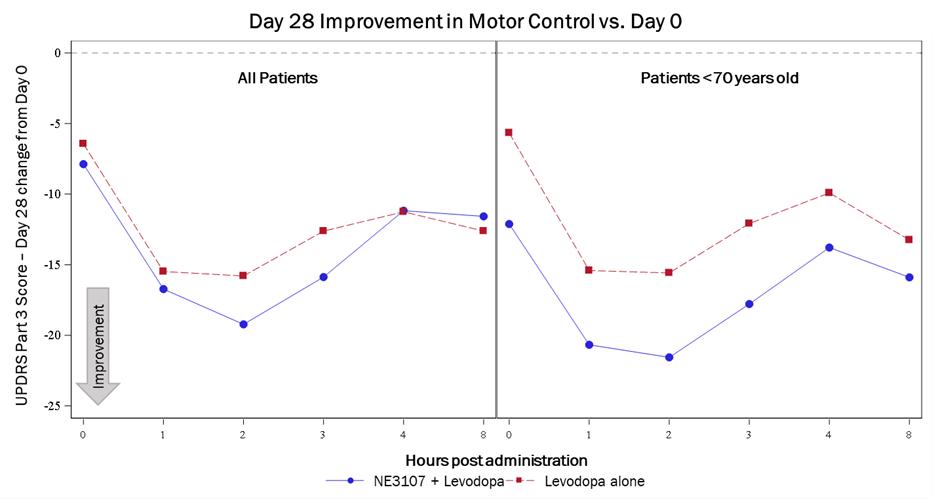
| ● | Patients
treated with NE3107 and levodopa saw improvements of part 3 score on Day 28 compared to Day
0 that is 3+ points better than those treated with levodopa alone at the 2- and 3-hour marks.
This level of superiority is considered by PD experts to be clinically meaningful.1 |
| ● | Patients
younger than 70 years old treated with NE3107 and levodopa experienced improvements that
are roughly 6 points better than levodopa-treated alone. Patients younger than 70 years old
represented roughly one-half of study participants. |
| 1 | Horvath
K. doi.org/10.1016/j.parkreldis.2015.10.006 |
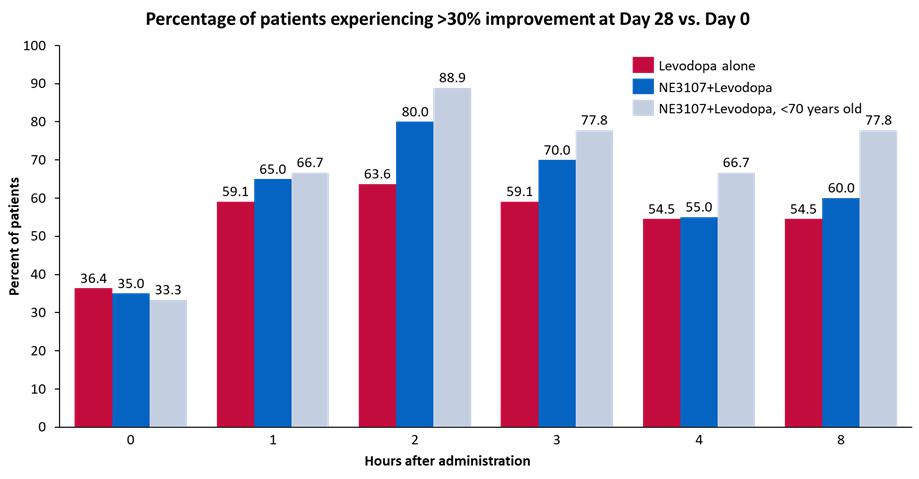
| ● | After
28 days of treatment, 63.6% of patients treated with levodopa alone experienced >30% improvement
from Day 0 at the two-hour mark compared to 80% for NE3107+levodopa-treated patients and
88.9% of NE3107+levodopa patients under 70 years old. This pattern is also observed for other
time periods. |
| ● | There
were no drug-related adverse events |
Full
details from this trial will be presented at the upcoming AD/PD™ 2023 International Conference on Alzheimer’s and Parkinson’s
Diseases to be held March 28-April 1, 2023 in Gothenburg, Sweden.
“This
trial is primarily a safety and drug-drug interaction study that we expanded in hopes of finding an efficacy signal,” explained
Cuong Do, BioVie’s President and CEO. “The fact that this small trial showed this magnitude of therapeutic impact for NE3107
allows us to proceed with planning the Phase 3 program for discussion with the FDA.”
“My
review of the BioVie study of NE3107 in Parkinson’s Disease suggests that there is a probable signal of clinical efficacy in the
treatment of motor symptoms,” stated Dr. Douglas Felter a former executive at Pfizer, AbbVie, and AveXis experienced in developing
PD treatments who was not associated with the NM201 trial. “This signal should be pursued in a larger, focused, confirmatory study.”
Additional
Positive Alzheimer’s Data Presented at CTAD
The
Phase 2 trial (NCT05227820) enrolled a total of 23 patients – 18 patients with Mini-Mental State Examination (MMSE) scores greater
than or equal to 20 (i.e., mild cognitive impairment [MCI] to mild AD) and 5 patients with MMSE <20 (i.e., moderate AD) – in
an open-label, single arm study. The trial measured changes in cognition through verbal and visual test procedures, changes in biomarkers
of Alzheimer’s disease and inflammation that can be measured in both cerebral spinal fluid (CSF) and serum samples, and changes
in functional magnetic resonance imaging in patients before and after treatment with 20 mg of NE3107 twice daily for 3 months.
Topline
results were released on September 7, 2022, and Dr. Sheldon Jordan (the Principal Investigator) and his team presented additional data
through a platform presentation at the Clinical Trial in Alzheimer’s Disease (CTAD) annual conference, held in San Francisco, CA
November 29 to December 2, 2022. These data showed the following among patients with MMSE>=20 (i.e., mild cognitive impairment and
mild AD):
| ● | Patients
demonstrated enhanced cognition after three months of treatment with NE3107 compared to baseline
as measured using multiple rating scales |
| ○ | Improvement
of 2.2 point on the modified ADAS-Cog12 scale (p=0.0173), equating to 21.1% (p=0.0079) change
compared to baseline. Among only responders, the improvement was 3.7 points (p=0.0003) equating
to 36.2% (p<0.0001) compared to baseline |
| ○ | Improvement
of 0.11 (p=0.0416) on the Clinical Dementia Rating scale (CDR), equating to 19.4% (p=0.0416)
change from baseline |
| ○ | Improvement
of 0.07 points (p=0.0094) on Alzheimer’s Disease Composite Score (ADCOMS) |
| ● | Patients
improved in daily function as evidenced by an increase in the Global Rating of Change scale2:
+2.67 (p<0.0001) as observed by clinicians; +2.08 (p=0.0012) as reported by the patients;
and +1.69 (p=0.0011) as reported by study partner. |
| ● | Improvements
in inflammation (reduction in TNFα) correlated with improvements in cognition (R=0.59, p=0.0259) |
| ● | Patients
experienced a reduction of CSF phospho-tau levels of -1.66 pg/mL (p=0.0343) and the ratio
of p-tau to Aβ42 by -0.0024 (p=0.0401). Among responders, the reduction in p=tau
was -3.22 pg/mL (p=0.0027) and the ratio of p-tau to Aβ42 was 0.0040 (p=0.0144) |
| ● | 18
of 22 patients with abnormal baseline scans showed improvement in one or more brain regions
as seen from advanced functional MRI studies |
| ● | MCI
and mild AD subjects with abnormal scans that improved after 3 months treatment also saw
a -0.068 points improvement in their ADCOMS scores (p=0.0258) |
“Through
our work, we are seeking to deepen our understanding of brain degeneration and ultimately identify promising treatments that have the
potential to counteract the degenerative process. Results from this trial provide encouraging signals that NE3107 may offer significant
potential to reduce neuroinflammation and potentially improve metabolic parameters such as glutathione in the brain, and warrant further
study in this patient population,” said Dr. Jordan. “I was surprised to see imaging data changes and how so many patients
had increased Global Rating of Change scores, indicating overall improvement of the disease.”
Commenting
on the data, Cuong Do, President and CEO of BioVie said, “AD drug development at BioVie is based on the evidence that AD pathology
is multifactorial in nature. While Aβ and p-tau are important factors, decades of research on dozens of agents have not conclusively
correlated improvements on these individual factors to improvements in cognition. We believe additional factors such as inflammation,
insulin resistance, metabolic dyshomeostasis, apoptosis, oxidative stress, and glucose utilization also play critical roles in AD etiology.
Data show that NE3107’s ability to reduce TNFα (the major regulator of inflammation) is highly correlated to improvements in cognition.
We are pleased that the Principal Investigator observed these changes in 23 patients in only 3 months. We hypothesize that the modulation
of TNFα levels and its inflammatory activation via TNFR1 lead to a multitude of changes among the many factors downstream from this master
regulator, which collectively lead to improvements in neuronal health and cognition.”
| 2 | The
Global Rating of Change scale ranges from +5 to indicate significant improvement to -5 to indicate significant worsening |
About
Inflammation and NE3107’s Mechanism of Action
Neuroinflammation,
insulin resistance, and oxidative stress are common features in the major neurodegenerative diseases, including Alzheimer’s Disease
(AD), Parkinson’s Disease (PD), frontotemporal lobar dementia, and ALS. NE3107 is an oral small molecule, blood-brain permeable,
compound with potential anti-inflammatory, insulin sensitizing, and ERK-binding properties that may allow it to selectively inhibit ERK-,
NFκB- and TNF-stimulated inflammation. NE3107’s potential to inhibit neuroinflammation and insulin resistance forms the basis
for the Company’s work testing the molecule in AD and PD patients.
Remarkable
parallels exist between AD and PD, among them activated microglia driving inflammation, involvement of TNFα, oxidative stress,
protein misfolding, mitochondrial dysfunction, and insulin resistance. In preclinical and clinical studies, NE3107 reduced inflammation
and enhanced insulin sensitivity, both of which are important to PD pathology. Preclinical studies in marmoset monkeys have shown NE3107
administered alone to be as pro-motoric as levodopa, underscoring the apparently critical role of inflammation in expression of PD dysmobility.
When NE3107 was administered with levodopa, the combination improved motor control better than either drug alone. Furthermore, in the
marmoset study, NE3107 reduced the severity of levodopa induced dyskinesia (LID) concurrent with pro-motoric benefit and decreased neurodegeneration,
preserving twice as many dopaminergic neurons compared to control.
About
BioVie
BioVie
Inc. (NASDAQ: BIVI) is a clinical-stage company developing innovative therapies to overcome unmet medical needs in chronic debilitating
conditions. In neurodegenerative disease, the Company’s drug candidate NE3107 inhibits inflammatory activation of ERK and NFkB
(e.g., TNF signaling) that leads to neuroinflammation and insulin resistance, but not their homeostatic functions (e.g., insulin signaling
and neuron growth and survival). Both are drivers of Alzheimer’s and Parkinson’s diseases. The Company is conducting a potentially
pivotal Phase 3 randomized, double blind, placebo controlled, parallel group, multicenter study to evaluate NE3107 in patients who have
mild to moderate Alzheimer’s disease (NCT04669028) and is targeting primary completion in mid-2023. An estimated six million Americans
suffer from Alzheimer’s. A Phase 2 study of NE3107 in Parkinson’s disease (NCT05083260) completed in December 2022 and is
in the process of releasing findings. In liver disease, the Company’s Orphan drug candidate BIV201 (continuous infusion terlipressin),
with FDA Fast Track status, is being evaluated in a US Phase 2b study for the treatment of refractory ascites due to liver cirrhosis
with top-line results anticipated in mid-2023. BIV201 is administered as a patent-pending liquid formulation. For more information, visit http://www.bioviepharma.com/.
Forward-Looking
Statements
This
press release contains forward-looking statements, which may be identified by words such as “expect,” “look forward
to,” “anticipate” “intend,” “plan,” “believe,” “seek,” “estimate,”
“will,” “project” or words of similar meaning. Although BioVie Inc. believes such forward-looking statements
are based on reasonable assumptions, it can give no assurance that its expectations will be attained. Actual results may vary materially
from those expressed or implied by the statements herein due to the Company’s ability to successfully raise sufficient capital
on reasonable terms or at all, available cash on hand and contractual and statutory limitations that could impair our ability to pay
future dividends, our ability to complete our pre-clinical or clinical studies and to obtain approval for our product candidates,
to successfully defend potential future litigation, changes in local or national economic conditions as well as various
additional risks, many of which are now unknown and generally out of the Company’s control, and which are detailed from time to
time in reports filed by the Company with the SEC, including quarterly reports on Form 10-Q, reports on Form 8-K and annual reports on
Form 10-K. BioVie Inc. does not undertake any duty to update any statements contained herein (including any forward-looking statements),
except as required by law.
For
Public/Press Relations Inquiries:
Dennis
Consorte
(201) 344-9648
[email protected]
For
Investor Relations Inquiries:
Bruce
Mackle
Managing Director
LifeSci Advisors, LLC
[email protected] |
|
Exhibit 99.2
BioVie Announces Additional Findings
from Phase 2 Alzheimer’s Disease Trial:
NE3107 Appears to Impact Biomarkers of Aging-Related Disease States
in Addition to Observed Reversal of Cognitive Decline in Dementia
Initial Data shows NE3107 may Reduce Horvath DNA
Methylation SkinBlood Clock by 3.3 years
after 3 months of treatment
Carson City, NV, December 6, 2022 –
BioVie Inc., (NASDAQ: BIVI) (“BioVie” or the “Company”) a clinical-stage company developing innovative drug therapies
for the treatment of neurological and neurodegenerative disorders and advanced liver disease, today announced encouraging data
suggesting that NE3107 has an impact on improving patients’ DNA methylation profiles, potentially impacting biomakers of aging-related
disease states.
The Phase 2 Investigator-Sponsored Trial
(NCT05227820) enrolled a total of 23 patients with an average age of 71.1 years in an open-label, single arm study to measure changes
in cognition through verbal and visual test procedures and changes in biomarkers of Alzheimer’s Disease (AD) and inflammation that
can be measured in cerebral spinal fluid, blood samples, and functional magnetic resonance imaging in patients before and after treatment
with 20 mg of NE3107 twice daily for 3 months.
Dr. Sheldon Jordan (the Principal Investigator)
and his team presented detailed data through posters and a platform presentation at the Clinical Trial in Alzheimer’s Disease (CTAD)
annual conference, held in San Francisco, CA that ended December 2, 2022. These data showed the following among patients with MMSE>=20
(i.e., mild cognitive impairment and mild AD):
| · | NE3107 showed the potential to enhance cognition as measured by multiple assessment tools, including a 2.2 point improvement (p=0.0173)
on the modified ADAS-Cog12 scale equating to a 21.1% (p=0.0079) change compared to baseline, a 0.11 point improvement (p=0.0416) on the
Clinical Dementia Rating scale (CDR), equating to 19.4% (p=0.0416) change from baseline, and a 0.07 point improvement in the ADCOMS scale,
equating to 27.4% improvement (p=0.009). |
| · | NE3107 reduced CSF phospho-tau levels by -1.66 pg/mL (p=0.0343) and the ratio of p-tau to Ab42
by -0.0024 (p=0.0401) |
| · | 18 of 22 patients with abnormal baseline scans showed improvement in one or more brain regions as seen
from advanced functional MRI studies |
| · | No drug-related adverse events were observed |
NE3107’s Potential Impact on
Biomakers of Aging-related Disease States
Blood samples were taken from the patients
who participated in the Alzheimer’s Phase 2 trial before and after 3 months of treatment with NE3107, and these samples were analyzed
to assess NE3107’s potential to reduce inflammation and alter DNA methylation associated with epigenetic biological clocks.
The resulting data for patients treated
with NE3107 for three months showed a reduction of 3.3 years (p=0.0021) on the Horvath DNA methylation SkinBlood clock. Furthermore, 19
out of the 22 patients experienced this reduction in the SkinBlood clock score.
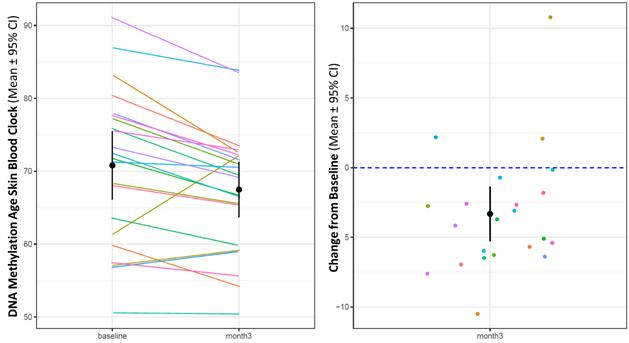
The finding that NE3107 affects the SkinBlood
clock provides an impetus to explore further the relationship between NE3107 improving neurodegeneration and other inflammation-driven
diseases.
“This additional finding from study
of NE3107 in the treatment of dementia reflects a hypothesis-driven effort to investigate the effect of epigenetic change associated with
an anti-inflammatory compound, as inflammation is hypothesized to drive both neurodegeneration and aging,” explained Dr. Sheldon
Jordan, the trial’s Principal Investigator. “The study was designed to decrease inflammation and measure the effect
using the epigenetic clocks. I am collaborating with Dr. Horvath’s team on this effort since they are the recognized leaders
in the field.”
“We are very excited by this initial
finding and recognize that there is still much more to learn about NE3107’s impact on the biomarkers of aging-related disease states
and how this may affect disease progression,” commented Cuong Do, BioVie’s President and CEO. “We look forward to working
with collaborators to answer questions such as whether the reversal will accumulate with longer treatment duration, the durability of
the effect, and whether this translates to a reduced risk in diseases associated with aging.”
Epigenetics is the study of how behavior
(e.g., diet, exercise) and environment affect the way our genes work in addition to the genetic code itself, and there’s an increasing
body of evidence that signs of aging are epigenetic in nature.[1,2]
Perhaps the most studied area of epigenetics involves DNA methylation, which is the process of how methyl groups are added
or removed from DNA and thus regulate the expression of various genes in our bodies.[3]
Many studies have shown that genes become over- or under-methylated as we age,[4,5,6]thereby suggesting that the modulation of DNA methylation could enable the up- or down-regulation of specific genes and
thus modulate the aging process. Dr. Steven Horvath, Professor of Human Genetics at the UCLA David Geffen School of Medicine and Professor
of Human Genetics & Biostatistics at the UCLA Field School of Public Health, is a leading authority on the study of DNA methylation,
and his research publications have been cited nearly 90,000 times in peer-reviewed articles. Dr. Horvath studied a large number of datasets
comprised of most tissue and cell types to create the first epigenetic clock (or “biological clock” to measure “biological
age”) to measure the cumulative methylation of selected sites in the genome and how this could differ from a person’s “chronological
age.”
This finding that NE3107 may affect DNA
methylation would be consistent with the understanding of its mechanism of action. NE3107 has been shown to modulate the expression of
TNFa, which is considered to be the master regulator of inflammation.[7]
Inflammation has been shown to be associated with hypermethylation of DNA,[8]
which in turn has been shown to impact a wide range of diseases, including various forms of cancers,[9]
age-related cognitive impairment and dementia,[10]
Parkinson’s disease,[11]
cardiovascular disease,[10,12]
COPD and respiratory disease,[13]
chronic kidney disease,[14]
inflammatory bowel disease,[15]
sepsis,[16] and many others.
Contributory Explanation for Alzheimer’s
and Parkinson’s Findings
Patients treated with NE3107 demonstrated
enhanced cognition as evidenced by improvements on multiple assessment scales in this Phase 2 study, and the Company’s confirmatory
double-blind, randomized controlled study involving subjects who have mild to moderate Alzheimer’s
disease is expected to read out in 3Q2023. Patients also saw improvements in their inflammation (i.e., reduction in TNFa)
in a manner that is correlated with improvements in cognition, reduction of CSF phospho-tau levels and the ratio of p-tau to Ab42,
and improvements in neuronal health as seen from functional MRI studies.
“One limitation of the AD Phase
2 trial is that its open label design limits its ability to isolate placebo effects,” commented Joseph Palumbo, BioVie’s Chief
Medical Officer. “The observation that 19 out of 22 patients saw a reversal of their biological clock would suggest that there could
be more going on than just a placebo effect, which provides greater confidence that the improvement in cognition is indeed based on NE3107’s
impact. The biomarker and imaging improvements is also consistent with the improvements in cognition observed. We await readout from the
Phase 3 trial next year to confirm these findings”
The Company announced topline results
from its NM201 double-blind, placebo-controlled, proof of concept study (NCT05083260) in Parkinson's disease (PD) on December 5, 2022
showing that symptomatic patients treated with NE3107 in addition to their stable dose of levodopa (and other Parkinson’s therapies)
showed superior motor control compared to levodopa alone (trend level). Patients treated with NE3107/levodopa saw improvements of UPDRS
part 3 (motor) score on Day 28 compared to Day 0 that is 3+ points better than those treated with levodopa alone at the 2 and 3 hour marks.
Furthermore, patients under 70 years of age treated with NE3107/levodopa scored roughly 6 points superiority compared to levodopa alone.
This level of improvement is considered by PD experts to be clinically meaningful.
“I believe this encouraging finding
that NE3107 may affect the biological makers associated with aging helps explain the results we have seen from our Alzheimer’s and
Parkinson’s trials,” commented Cuong Do. “NE3107 has shown the ability to modulate inflammation and insulin resistance
by reducing TNFa, which leads to improvements in a series of downstream factors such as metabolic
dyshomeostasis, apoptosis, oxidative stress, among others. NE3107’s impact on DNA methylation helps explain the magnitude and rapid
pace of impact we see in the AD and PD trials.”
About Inflammation and NE3107’s Mechanism of Action
Neuroinflammation, insulin resistance,
and oxidative stress are common features in the major neurodegenerative diseases, including Alzheimer’s Disease (AD), Parkinson’s
Disease (PD), frontotemporal lobar dementia, and ALS. NE3107 is an oral small molecule, blood-brain permeable, compound with potential
anti-inflammatory, insulin sensitizing, and ERK-binding properties that may allow it to selectively inhibit ERK-, NFκB- and TNF-stimulated
inflammation. NE3107’s potential to inhibit neuroinflammation and insulin resistance forms the basis for the Company’s work
testing the molecule in AD and PD patients.
Remarkable parallels exist between AD
and PD, among them activated microglia driving inflammation, involvement of TNFα, oxidative stress, mitochondrial dysfunction, and
insulin resistance. In preclinical and clinical studies, NE3107 reduced inflammation and enhanced insulin sensitivity, both of which
are important to PD pathology. Preclinical studies in marmoset monkeys have shown NE3107 administered alone to be as pro-motoric as levodopa,
underscoring the apparently critical role of inflammation in expression of PD dysmobility. When NE3107 was administered with levodopa,
the combination improved motor control better than either drug alone. Furthermore, in the marmoset study, NE3107 reduced the severity
of levodopa induced dyskinesia (LID) concurrent with pro-motoric benefit and decreased neurodegeneration, preserving twice as many dopaminergic
neurons compared to control.
About BioVie
BioVie Inc. (NASDAQ: BIVI) is a clinical-stage
company developing innovative therapies to overcome unmet medical needs in chronic debilitating conditions. In neurodegenerative disease,
the Company’s drug candidate NE3107 inhibits inflammatory activation of ERK and NFkB (e.g., TNF signaling) that leads to neuroinflammation
and insulin resistance, but not their homeostatic functions (e.g., insulin signaling and neuron growth and survival). Both are drivers
of Alzheimer’s and Parkinson’s diseases. The Company is conducting a potentially pivotal Phase 3 randomized, double blind,
placebo controlled, parallel group, multicenter study to evaluate NE3107 in patients who have mild to moderate Alzheimer's disease (NCT04669028)
and is targeting primary completion in mid-2023. An estimated six million Americans suffer from Alzheimer’s. A Phase 2 study of
NE3107 in Parkinson’s disease (NCT05083260) has completed and provided its topline data readout in December 2022. In liver disease,
the Company’s Orphan drug candidate BIV201 (continuous infusion terlipressin), with FDA Fast Track status, is being evaluated in
a US Phase 2b study for the treatment of refractory ascites due to liver cirrhosis with top-line results anticipated in mid-2023. BIV201
is administered as a patent-pending liquid formulation. The active agent is approved in the U.S. and in about 40 countries for related
complications of advanced liver cirrhosis. For more information, visit http://www.bioviepharma.com/.
Forward-Looking Statements
This press release contains forward-looking
statements, which may be identified by words such as "expect," "look forward to," "anticipate" "intend,"
"plan," "believe," "seek," "estimate," "will," "project" or words of similar
meaning. Although BioVie Inc. believes such forward-looking statements are based on reasonable assumptions, it can give no assurance
that its expectations will be attained. Actual results may vary materially from those expressed or implied by the statements herein due
to the Company's ability to successfully raise sufficient capital on reasonable terms or at all, available cash on hand and contractual
and statutory limitations that could impair our ability to pay future dividends, our ability to complete our pre-clinical or clinical
studies and to obtain approval for our product candidates, to successfully defend potential future litigation, changes in local
or national economic conditions as well as various additional risks, many of which are now unknown and generally out of the Company's
control, and which are detailed from time to time in reports filed by the Company with the SEC, including quarterly reports on Form 10-Q,
reports on Form 8-K and annual reports on Form 10-K. BioVie Inc. does not undertake any duty to update any statements contained herein
(including any forward-looking statements), except as required by law.
For Public/Press Relations Inquiries:
Dennis Consorte
(201) 344-9648
[email protected]
For Investor Relations Inquiries:
Bruce Mackle
Managing Director
LifeSci Advisors, LLC
[email protected]
| [1] | Oberdoerffer P Nat Rev Mol Cell Biol 2007, 8:692–702. |
| [2] | Campisi J Gerontol A Biol Sci Med Sci 2009, 64A:175–178. |
| [3] | Moore L Neuropsychopharmacology vol 38, pages23–38 (2013) |
| [4] | Fraga MF Ann N Y Acad Sci 2007, 1100:60–74. |
| [5] | Christensen BC PLoS Genet 2009, 5:e1000602 |
| [6] | Horvath S Genome Biol 2012, 13:R97 |
| [7] | Jang et al. Int J Mol Sci. 2021 Mar; 22(5): 2719 |
| [8] | Stenvinkel P doi: 10.1111/j.1365-2796.2007.01777.x |
| [9] | Wang Z Nucleic Acids Research, 2020, Vol. 48, No. 5 |
| [10] | Sugden K Neurology 2022;99:e1402-e1413 |
| [11] | Tang X DOI: 10.1002/mds.29157 |
| [12] | Tabaeia S Artificial Cells, Nanomedicine, and Biotechnology, 47:1, 2031-2041 |
| [13] | Qiu W Am J Respir Crit Care Med Vol 185, Iss. 4, pp 373–381, Feb 15, 2012 |
| [14] | Rysz C Int. J. Mol. Sci. 2022, 23(13), 7108 |
| [15] | Kraiczy J Mucosal Immunology volume 9, pages 647–658 (2016) |
| [16] | Rump K Sci Rep 9, 18511 (2019) |