Exhibit 99.1
Corbus Pharmaceuticals Reports Updated CRB-701 Phase 1/2 Clinical Data Demonstrating Robust Activity in 2L Oropharyngeal and Cervical Cancers
·Data affirms Corbus strategy of targeting tumor types with elevated Nectin-4 expression and clear unmet medical needs while providing an attractive commercial path forward
oConfirmed ORR of 42.9% observed in 2L oropharyngeal squamous cell carcinoma (OPSCC) at 3.6 mg/kg with median DOR of 6.3 months and PFS of 5.6 months (ongoing)
oConfirmed ORR of 34.4% observed in 2L cervical cancer at 3.6 mg/kg with median DOR of 8.0 months and PFS of 4.3 months (ongoing)
oCRB-701 was generally safe and well tolerated with discontinuation rates below 3%
•About 50% of 2L head and neck cancer cases in the U.S. are HPV-driven OPSCC and receive minimal to no benefit from EGFR-targeted therapies
•Registrational study of CRB-701 in 2L OPSCC (“TEMPO-1”) on track to initiate in summer 2026
•Company to host a conference call and live webcast today, Tuesday, May 26 at 8:00 a.m. EDT, to review the data and a KOL event on Monday, June 1 at ASCO to discuss CRB-701 development in OPSCC
Norwood, MA, May 26, 2026 (GLOBE NEWSWIRE) Corbus Pharmaceuticals Holdings, Inc. (NASDAQ: CRBP) (“Corbus” or the “Company”) today reported updated data from its Phase 1/2 clinical study (NCT06265727)[i] of CRB-701 (SYS6002), a next-generation Nectin-4 targeted antibody drug conjugate (ADC). The new data demonstrate robust activity in the second line (2L) setting of two solid tumor types that express high levels of Nectin-4 and are primarily driven by human papilloma virus (HPV): oropharyngeal squamous cell carcinoma (OPSCC) and cervical cancer. These findings will be presented at the upcoming 2026 American Society for Clinical Oncology (ASCO) Annual Meeting being held May 29 – June 2, 2026, in Chicago.
The ongoing multi-center Phase 1/2 study is being conducted in the U.S. and Europe. The data reported today derives from an April 1, 2026 data cut of the Phase 1/2 study with a total safety population of 317 patients encompassing all tumor types and all doses. A total of 75 patients with HNSCC were enrolled at the 2.7 mg/kg and 3.6 mg/kg doses, of whom 71 were efficacy evaluable while 4 did not have post-baseline scans. A total of 72 patients with cervical cancer were enrolled at the 2.7 mg/kg and 3.6 mg/kg doses, of whom 70 were efficacy evaluable while 2 did not have post-baseline scans.
Safety (n=317)
CRB-701 continued to be safe and well tolerated, consistent with findings reported at the ESMO 2025 data cut. The most common treatment-related adverse events (TRAEs) occurring in more than 20% of participants were keratitis (49.2%), alopecia (25.6%), fatigue (22.4%), and dysgeusia (19.9%). Grade 3 adverse events (AEs) were reported in 19.2% of patients, and Grade 4 AEs were reported in 0.9% of patients. There were no Grade 5 events reported. The incidence of peripheral neuropathy remained low at 7.3%, with all events limited to Grade 1 or 2 severity. Skin-related AEs, excluding alopecia, were at 24%. There was only one Grade 3 event (0.3%) reported. There were no skin Grade 4 or 5 events, and no reported cases of Stevens-Johnson Syndrome (SJS) or toxic epidermal necrolysis (TEN). Overall, treatment discontinuations related to CRB-701 remained low at 2.8%. Ocular toxicities, a well-established side effect in multiple approved ADCs, continued to be manageable through prophylactic eye care interventions and dose reductions/interruptions. Ocular AEs were reported in 66.2% of participants, with the vast majority being transient in nature. Grade 3 events were reported in 12.6% of participants and only one Grade 4 event (0.3%) was reported involving exacerbation of pre-existing punctate keratitis and microcysts that resolved to baseline within six weeks. Discontinuations due to ocular AEs remained markedly low at 1.9%.
Efficacy in Patients with HNSCC Dosed with CRB-701 at 2.7 mg/kg or 3.6 mg/kg (total n=71)
|
|
|
Dose |
2.7 mg/kg (n=20) |
3.6 mg/kg (n=21) |
cORR* |
20.0% (4/20) |
42.9% (9/21) |
DCR** |
90.0% (18/20) |
85.7% (18/21) |
DoR (months) ongoing |
4.8 |
6.3 |
PFS (months) ongoing |
4.2 |
5.6 |
Non-Oropharyngeal HNSCC (n=30) |
Dose |
2.7 mg/kg (n=14) |
3.6 mg/kg (n=16) |
cORR* |
7.1% (1/14) |
0.0% (0/16) |
DCR** |
57.1% (8/14) |
62.5% (10/16) |
DoR (months) |
4.4 |
NA |
PFS (months) |
2.3 |
2.7 |
HNSCC Biomarkers |
•HPV status was determined for 97.3% of the HNSCC participants in the 2.7 mg/kg and 3.6 mg/kg cohorts. •In line with published epidemiology, 57.3% of enrolled HNSCC patients were HPV+, with 85.4% of oropharyngeal patients being HPV+. •8 of the 9 patients who achieved PR in the OPSCC cohort were HPV+. In contrast, no confirmed PRs were observed in non-OPSCC HNSCC at the corresponding dose. •In-line with published literature, higher Nectin-4 levels were associated with HPV+ HNSCC. •In-depth biomarker analysis will be presented at a future conference. |
*Confirmed objective response rate (cORR) calculated using patients’ confirmed best overall response (BOR) per RECISTv1.1**Disease control rate (DCR) calculated by summing numbers of response-evaluable patients who achieve a BOR of complete response (CR), partial response (PR) or stable disease (SD).
Efficacy in Patients with Cervical Cancer Dosed with CRB-701 at 2.7 mg/kg and 3.6 mg/kg
|
|
|
Cervical Cancer (n=70) |
Dose |
2.7 mg/kg (n=38) |
3.6 mg/kg (n=32) |
cORR* |
18.4% (7/38) including 1 CR |
34.4% (11/32) including 2 CRs |
DCR** |
55.3% (21/38) |
75.0% (24/32) |
DoR (months) ongoing |
6.8 |
8.0 |
PFS (months) ongoing |
2.8 |
4.3 |
*Confirmed objective response rate (cORR) calculated using patients’ confirmed best overall response (BOR) per RECISTv1.1**Disease control rate (DCR) calculated by summing numbers of response-evaluable patients who achieve a BOR of complete response (CR), partial response (PR) or stable disease (SD).
“These data provide important clarity on the clinical and commercial path for CRB-701 in 2L oropharyngeal and 2L cervical cancers, indications that are associated with HPV infection and high expression of Nectin-4, and for which approved and other investigational drugs have shown limited efficacy,” said Yuval Cohen, Ph.D., Chief Executive Officer of Corbus. “In addition, these findings further validate our clinical development strategy aimed at targeting solid tumors outside of metastatic urothelial cancer. We look forward to advancing these programs into registrational trials starting with TEMPO-1, our upcoming OPSCC study initiating this summer.”
“OPSCC, which now represents a growing majority of HNSCC cases treated in the U.S., continues to rise in incidence. Largely driven by HPV, OPSCC primarily affects men in their 50s and 60s with little or no history of smoking or heavy alcohol use. Approximately 40-50% of HNSCC patients that reach 2L have OPSCC with persistent, recurrent, or metastatic disease that remains incurable with current treatment options, representing a growing unmet need,” said Glenn J. Hanna, M.D., Director of the Center for Cancer Therapeutic Innovation at Dana-Farber Cancer Institute. “A targeted therapy for this patient population—particularly one directed against the validated target Nectin-4—could represent a significant advance in care. I look forward to seeing how CRB-701 performs in a late-stage clinical study involving this underserved patient population.”
Corbus is on track to initiate a registrational study of CRB-701 in 2L OPSCC (“TEMPO-1”) in the summer of 2026. Broad alignment was reached with the U.S. Food and Drug Administration (FDA) on the trial design for a randomized controlled study (n=250), which will explore the efficacy and safety of CRB-701 compared to investigator’s choice of monotherapy with overall response rate (ORR) as the primary endpoint for potential accelerated approval and potential full approval based on overall survival (OS) benefit. Similarly, broad alignment was reached with the FDA regarding the trial design for a randomized controlled study of CRB-701 in 2L cervical cancer.
CRB-701 2026 ASCO Data Presentation Details
The oral presentation titled, “A phase 1/2 study of the next-generation Nectin-4-targeting antibody drug conjugate CRB-701 (SYS6002) in patients with recurrent or metastatic cervical cancer,” will be presented by Professor Yohann Loriot, Gustave Roussy (Paris) on Friday, May 29 at 4:57 p.m. CDT (Abstract #5508).
The poster presentation titled, “A phase 1/2 study of the next-generation Nectin-4-targeting antibody drug conjugate CRB-701 (SYS6002) in patients with recurrent or metastatic head and neck squamous cell carcinoma,” will be presented by Charlene Mantia, M.D., Dana-Farber Cancer Institute (Boston) on Saturday, May 30 at 4:30 p.m. CDT (Abstract #6062/Poster #519).
Pre-2026 ASCO Conference Call and Webcast Registration Details
Corbus will host a live conference call and webcast today, Tuesday, May 26, 2026, at 8:00 a.m. EDT to review the data. To register for the webcast: click here[ii].
Investors Dial 1-877-704-4453
Int’l Investors Dial 1-201-389-0920
Conference ID 13760531
CallMeTM: click here[iii]
2026 ASCO HNSCC KOL Event
Corbus will host an in-person and virtual KOL event during ASCO 2026 to discuss CRB-701 development in OPSCC. The event will be held at Marriott Marquis Chicago starting at 6:30 a.m. CDT on Monday, June 1, 2026.
|
|
Date: |
Monday, June 1, 2026 |
Time: |
6:30 a.m. CDT |
Location: |
Marriott Marquis Chicago |
Participants: |
Corbus Management Team, joined by leading HNSCC Experts:
Ari Rosenberg, M.D., University of Chicago
Glenn Hanna, M.D., Dana-Farber Cancer Institute
Cesar Augusto Perez Batista, M.D., Sarah Cannon Research Institute |
A live question-and-answer session will follow the formal presentation. To register for the KOL event, click here[iv]. A replay of the event will also be available on the Corbus website.
About CRB-701
CRB-701 (SYS6002) is a next-generation antibody drug conjugate (ADC) targeting Nectin-4, that contains a site-specific, cleavable linker and a homogenous drug antibody ratio of 2, using MMAE as the payload. Nectin-4 is a clinically validated, tumor-associated antigen in urothelial cancer and highly expressed in other tumor types such as cervical and HNSCC. The FDA has granted two Fast Track designations to CRB-701 in HNSCC and cervical cancer.
About Corbus
Corbus Pharmaceuticals Holdings, Inc. is a clinical-stage company focused on developing promising new therapies in oncology and obesity and is committed to helping people defeat serious illness by bringing innovative scientific approaches to well-understood biological pathways. Corbus’ pipeline includes CRB-701, a next-generation antibody drug conjugate for the treatment of Nectin-4-expressing tumors, and CRB-913, an orally delivered highly peripherally restricted CB1 inverse agonist for the treatment of obesity. Corbus is headquartered in Norwood, Massachusetts. For more information on Corbus, visit corbuspharma.com. Connect with us on X, LinkedIn and Facebook.
Forward-Looking Statements
This press release contains certain forward-looking statements within the meaning of Section 27A of the Securities Act of 1933 and Section 21E of the Securities Exchange Act of 1934 and Private Securities Litigation Reform Act of 1995, as amended, including those relating to the Company's trial results, product development, clinical and regulatory timelines, including timing for completion of trials and presentation of data, anticipated timing for initiation of clinical trials, anticipated regulatory interactions and outcomes, including alignment with FDA on trial design, market opportunity, competitive position, possible or assumed future results of operations, business strategies, potential growth opportunities, sufficiency of cash runway and other statement that are predictive in nature. These forward-looking statements are based on current expectations, estimates, forecasts and projections about the industry and markets in which we operate and management's current beliefs and assumptions.
These statements may be identified by the use of forward-looking expressions, including, but not limited to, "expect," "anticipate," "intend," "plan," "believe," "estimate," "potential,” "predict," "project," "should," "would" and similar expressions and the negatives of those terms. These statements relate to future events or our financial performance and involve known and unknown risks, uncertainties, and other factors on our operations, clinical development plans and timelines, which may cause actual results, performance or achievements to be materially different from any future results, performance or achievements expressed or implied by the forward-looking statements. Such factors include those set forth in the Company's filings with the Securities and Exchange Commission including those described in our Annual Report on Form 10-K for the year ended December 31, 2025. Prospective investors are cautioned not to place undue reliance on such forward-looking statements, which speak only as of the date of this press release. The Company undertakes no obligation to publicly update any forward-looking statement, whether as a result of new information, future events or otherwise, except as required by law.
All product names, logos, brands and company names are trademarks or registered trademarks of their respective owners. Their use does not imply affiliation or endorsement by these companies.
INVESTOR CONTACTS:
Sean Moran
Chief Financial Officer
Corbus Pharmaceuticals
[email protected]
Dan Ferry
Managing Director
LifeSci Advisors, LLC
[email protected]
MEDIA CONTACT:
Liz Melone
Founder & Principal
Melone Communications, LLC
[email protected]
__________________________________
Links to websites:
[i] https://clinicaltrials.gov/study/NCT06265727?term=CRB-701&viewType=Card&rank=1
[ii] https://viavid.webcasts.com/starthere.jsp?ei=1762900&tp_key=67cfa9c1bb
[iii] https://callme.viavid.com/viavid/?$Y2FsbG1lPXRydWUmcGFzc2NvZGU9MTM3NjA1MzEmaD10cnVlJmluZm89Y29tcGFueS1lbWFpbCZyPXRydWUmQj02
[iv] https://lifescievents.com/event/rk0t83lp/

Connecting Innovation �to Purpose Corporate Presentation May 26, 2026 Exhibit 99.2
This presentation contains certain forward-looking statements within the meaning of Section 27A of the Securities Act of 1933 and Section 21E of the Securities Exchange Act of 1934 and Private Securities Litigation Reform Act of 1995, as amended, including those relating to the Company’s trial results, product development, clinical and regulatory timelines, including timing for completion of trials and presentation of data, market opportunity, competitive position, possible or assumed future results of operations, business strategies, potential growth opportunities, sufficiency of cash runway and other statements that are predictive in nature. These forward-looking statements are based on current expectations, estimates, forecasts and projections about the industry and markets in which we operate and management’s current beliefs and assumptions. These statements may be identified by the use of forward-looking expressions, including, but not limited to, “expect,” “anticipate,” “intend,” “plan,” “believe,” “estimate,” “potential,” “predict,” “project,” “should,” “would” and similar expressions and the negatives of those terms. These statements relate to future events or our financial performance and involve known and unknown risks, uncertainties, and other factors, on our operations, clinical development plans and timelines, which may cause actual results, performance or achievements to be materially different from any future results, performance or achievements expressed or implied by the forward-looking statements. Such factors include those set forth in the Company’s filings with the Securities and Exchange Commission, including those described in our Annual Report on Form 10-K for the year ended December 31, 2025. Prospective investors are cautioned not to place undue reliance on such forward-looking statements, which speak only as of the date of this presentation. The Company undertakes no obligation to publicly update any forward-looking statement, whether as a result of new information, future events or otherwise, except as required by law. This presentation includes limited observations derived from separate clinical settings that are not, and should not be interpreted as, direct or indirect head‑to‑head comparisons of CRB‑701 or CRB‑913 with any other product. The observations described herein are subject to change as additional data become available, and future clinical trials of CRB‑701 or CRB‑913 may not reproduce, validate, or otherwise confirm these observations. All product names, logos, brands and company names are trademarks or registered trademarks of their respective owners. Their use does not imply affiliation or endorsement by these companies. Forward-Looking Statements
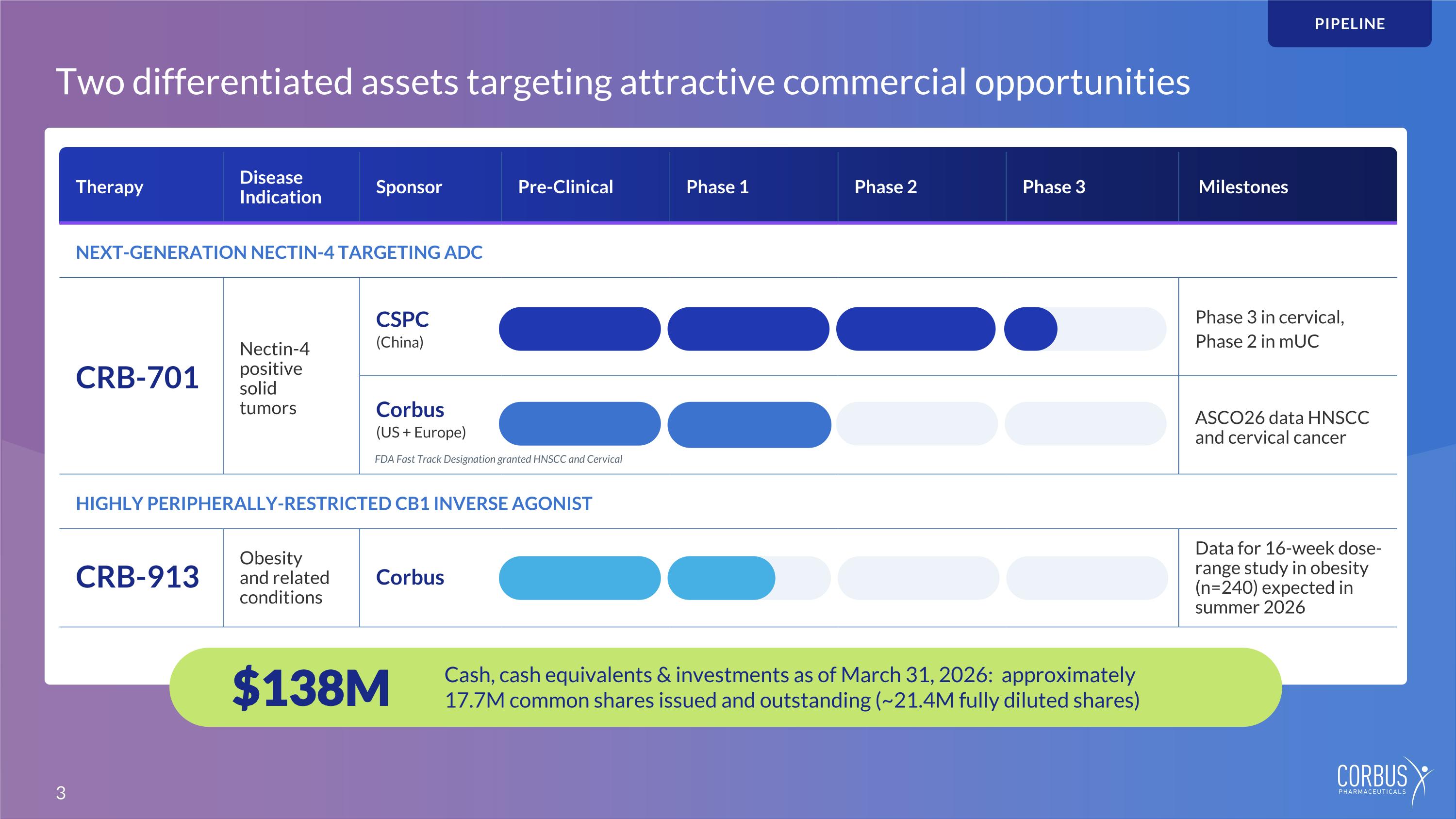
Two differentiated assets targeting attractive commercial opportunities Therapy Disease�Indication Sponsor Pre-Clinical Phase 1 Phase 2 Phase 3 Milestones NEXT-GENERATION NECTIN-4 TARGETING ADC CRB-701 Nectin-4 positive�solid�tumors CSPC (China) Phase 3 in cervical, Phase 2 in mUC Corbus (US + Europe) ASCO26 data HNSCC�and cervical cancer HIGHLY PERIPHERALLY-RESTRICTED CB1 INVERSE AGONIST CRB-913 Obesity�and related conditions Corbus Data for 16-week dose-range study in obesity (n=240) expected in summer 2026 FDA Fast Track Designation granted HNSCC and Cervical $138M Cash, cash equivalents & investments as of March 31, 2026: approximately 17.7M common shares issued and outstanding (~21.4M fully diluted shares) PIPELINE

CRB-701 Next-Generation Nectin-4 ADC targeting oropharyngeal (OPSCC) and cervical cancers
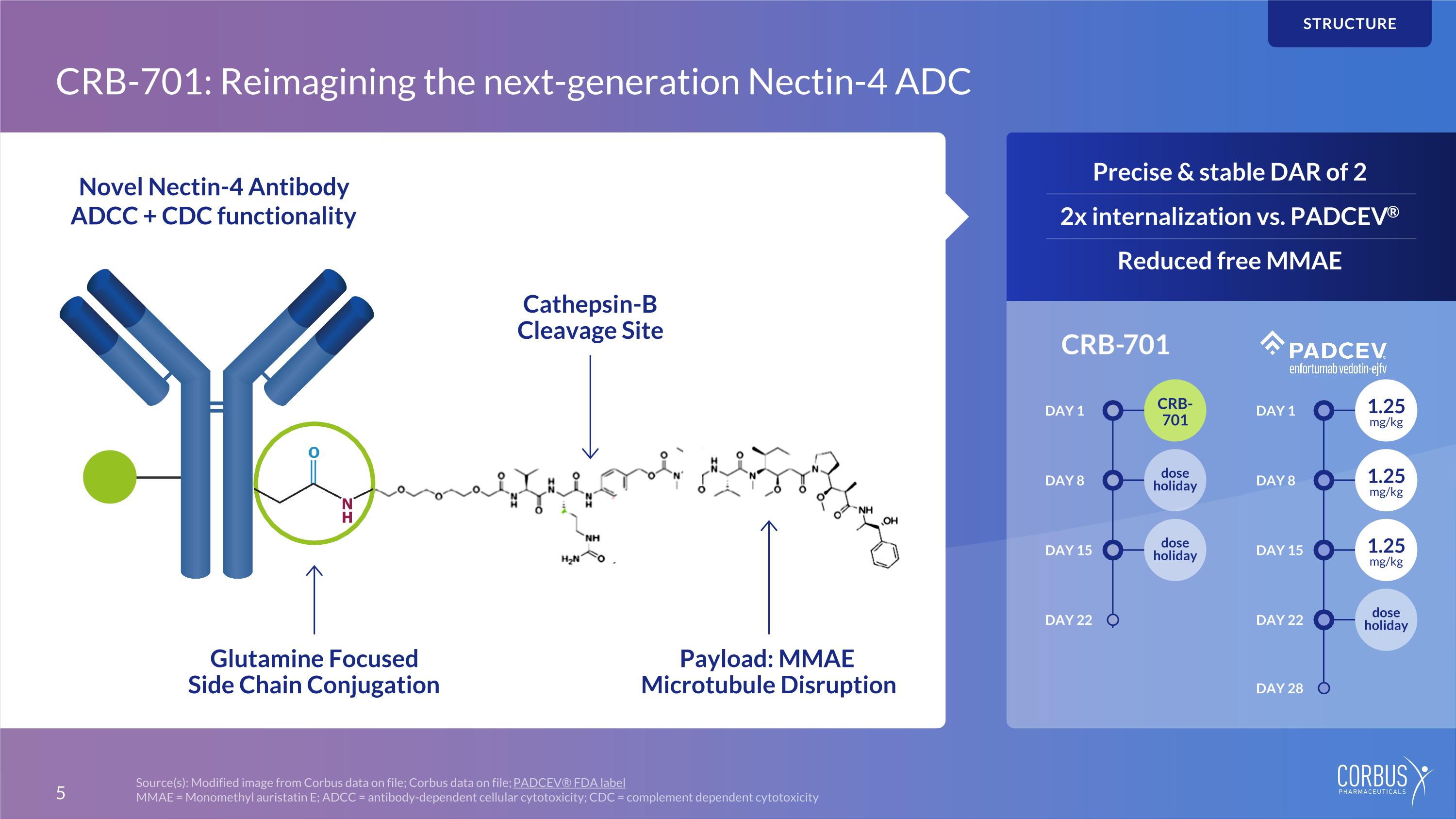
CRB-701 DAY 1 1.25�mg/kg DAY 8 1.25�mg/kg DAY 15 1.25�mg/kg DAY 22 dose holiday DAY 28 DAY 1 CRB-701 DAY 8 dose holiday DAY 15 dose holiday DAY 22 CRB-701: Reimagining the next-generation Nectin-4 ADC Source(s): Modified image from Corbus data on file; Corbus data on file; PADCEV® FDA label MMAE = Monomethyl auristatin E; ADCC = antibody-dependent cellular cytotoxicity; CDC = complement dependent cytotoxicity Novel Nectin-4 Antibody ADCC + CDC functionality Glutamine Focused Side Chain Conjugation Payload: MMAE Microtubule Disruption Cathepsin-B Cleavage Site Precise & stable DAR of 2 2x internalization vs. PADCEV® Reduced free MMAE STRUCTURE
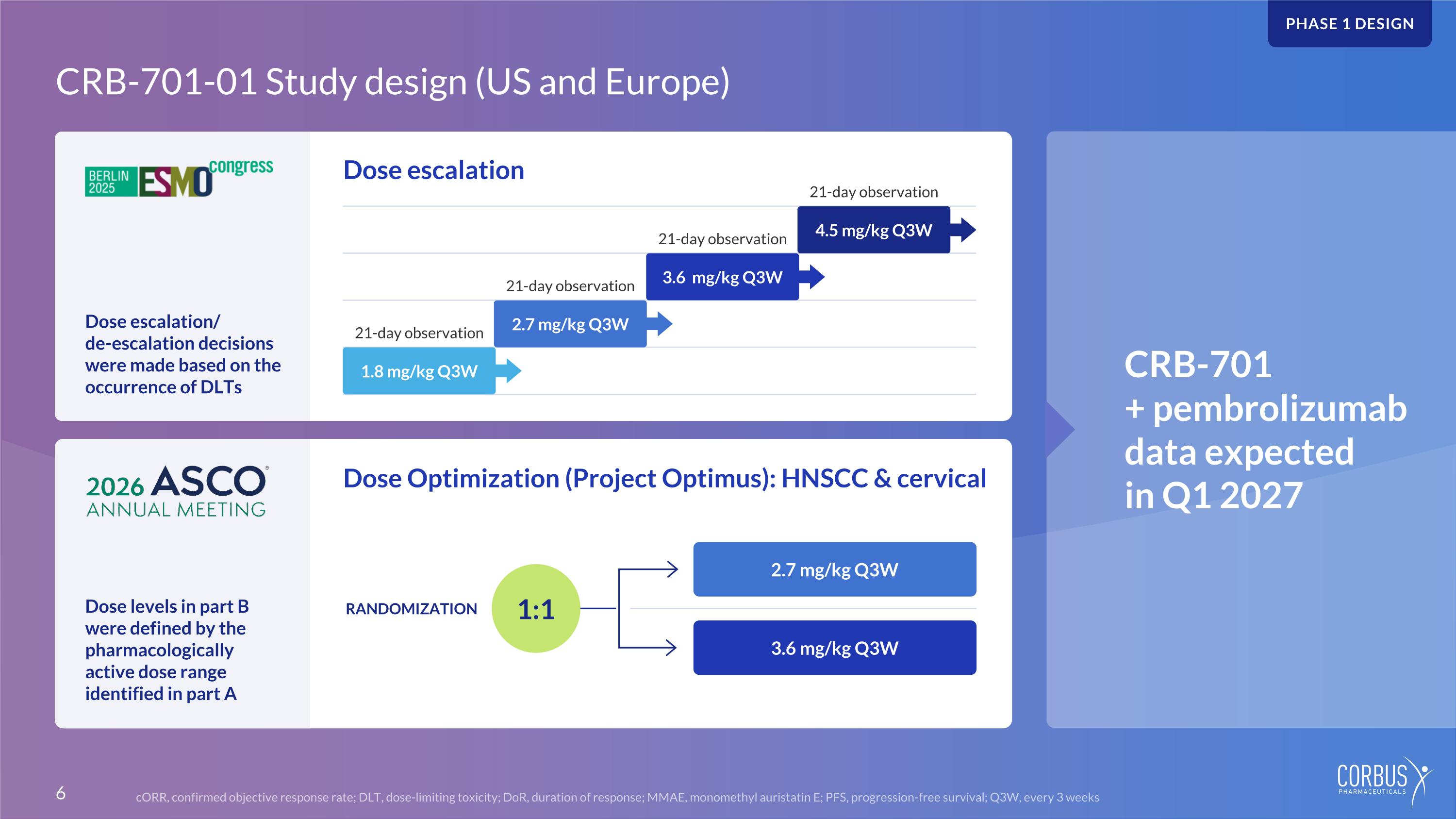
CRB-701-01 Study design (US and Europe) cORR, confirmed objective response rate; DLT, dose-limiting toxicity; DoR, duration of response; MMAE, monomethyl auristatin E; PFS, progression-free survival; Q3W, every 3 weeks Dose Optimization (Project Optimus): HNSCC & cervical Dose escalation Dose escalation/�de-escalation decisions were made based on the occurrence of DLTs CRB-701�+ pembrolizumab�data expected�in Q1 2027 Dose levels in part B were defined by the pharmacologically active dose range identified in part A 1.8 mg/kg Q3W 21-day observation 2.7 mg/kg Q3W 21-day observation 3.6 mg/kg Q3W 21-day observation 4.5 mg/kg Q3W 21-day observation RANDOMIZATION 2.7 mg/kg Q3W 3.6 mg/kg Q3W 1:1 PHASE 1 DESIGN
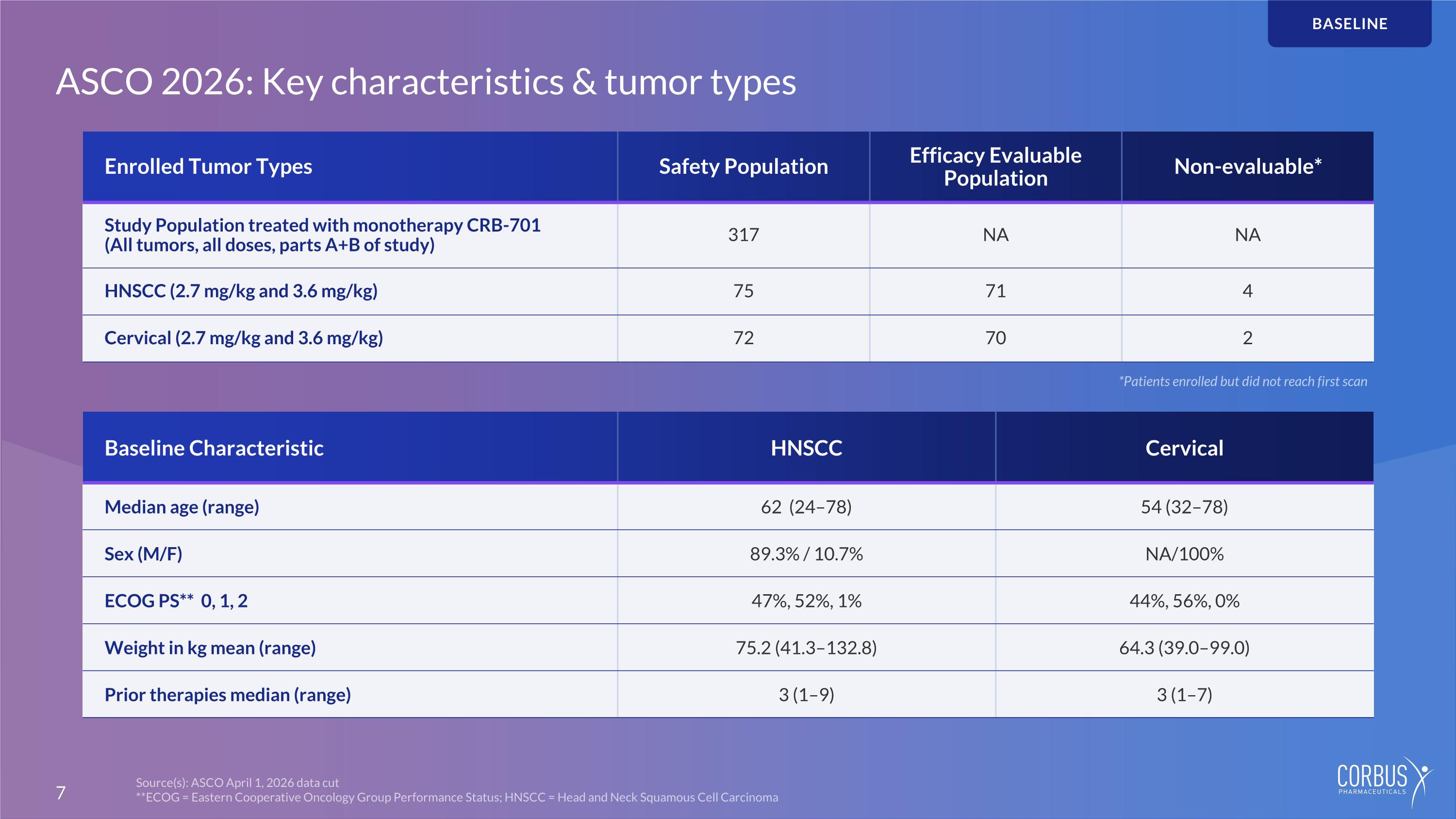
Baseline Characteristic HNSCC Cervical Median age (range) 62 (24–78) 54 (32–78) Sex (M/F) 89.3% / 10.7% NA/100% ECOG PS** 0, 1, 2 47%, 52%, 1% 44%, 56%, 0% Weight in kg mean (range) 75.2 (41.3–132.8) 64.3 (39.0–99.0) Prior therapies median (range) 3 (1–9) 3 (1–7) Enrolled Tumor Types Safety Population Efficacy Evaluable Population Non-evaluable* Study Population treated with monotherapy CRB-701�(All tumors, all doses, parts A+B of study) 317 NA NA HNSCC (2.7 mg/kg and 3.6 mg/kg) 75 71 4 Cervical (2.7 mg/kg and 3.6 mg/kg) 72 70 2 ASCO 2026: Key characteristics & tumor types Source(s): ASCO April 1, 2026 data cut **ECOG = Eastern Cooperative Oncology Group Performance Status; HNSCC = Head and Neck Squamous Cell Carcinoma *Patients enrolled but did not reach first scan BASELINE
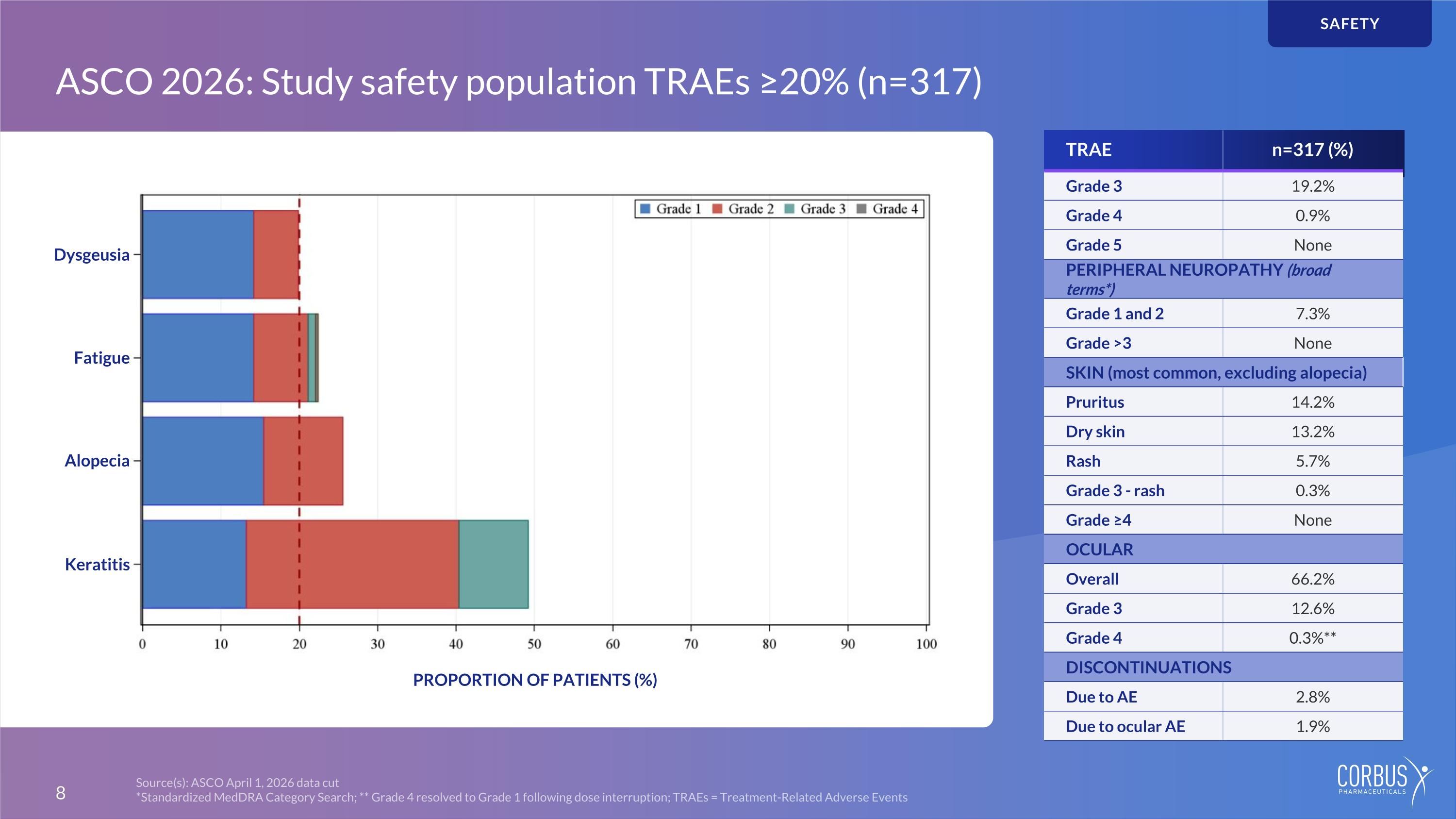
TRAE n=317 (%) Grade 3 19.2% Grade 4 0.9% Grade 5 None PERIPHERAL NEUROPATHY (broad terms*) Grade 1 and 2 7.3% Grade >3 None SKIN (most common, excluding alopecia) Pruritus 14.2% Dry skin 13.2% Rash 5.7% Grade 3 - rash 0.3% Grade ≥4 None OCULAR Overall 66.2% Grade 3 12.6% Grade 4 0.3%** DISCONTINUATIONS Due to AE 2.8% Due to ocular AE 1.9% ASCO 2026: Study safety population TRAEs ≥20% (n=317) Source(s): ASCO April 1, 2026 data cut *Standardized MedDRA Category Search; ** Grade 4 resolved to Grade 1 following dose interruption; TRAEs = Treatment-Related Adverse Events Fatigue PROPORTION OF PATIENTS (%) Dysgeusia Alopecia Keratitis SAFETY
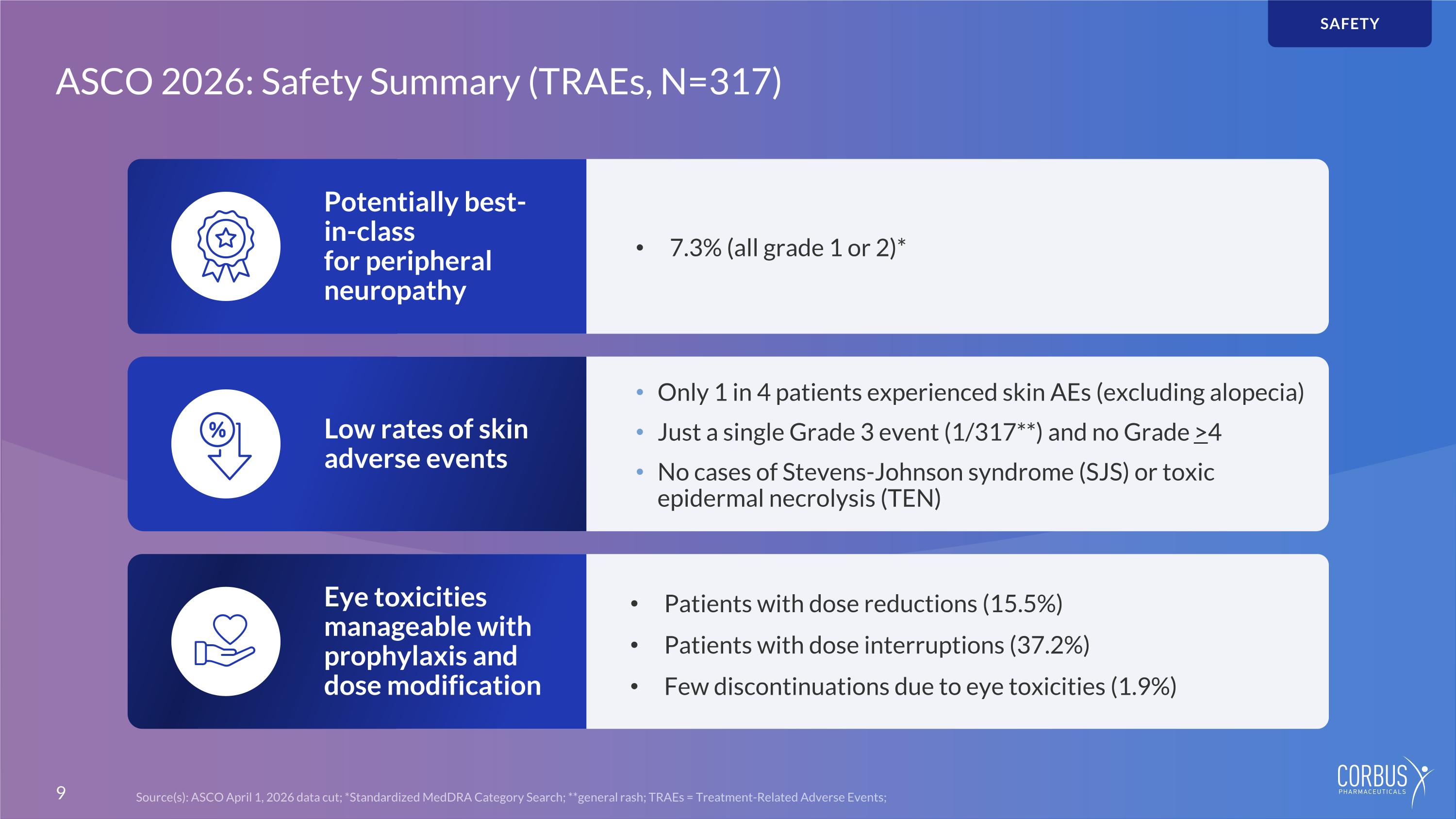
ASCO 2026: Safety Summary (TRAEs, N=317) Source(s): ASCO April 1, 2026 data cut; *Standardized MedDRA Category Search; **general rash; TRAEs = Treatment-Related Adverse Events; Only 1 in 4 patients experienced skin AEs (excluding alopecia) Just a single Grade 3 event (1/317**) and no Grade >4 No cases of Stevens-Johnson syndrome (SJS) or toxic epidermal necrolysis (TEN) Low rates of skin�adverse events Patients with dose reductions (15.5%) Patients with dose interruptions (37.2%) Few discontinuations due to eye toxicities (1.9%) Eye toxicities manageable with prophylaxis and dose modification 7.3% (all grade 1 or 2)* Potentially best-in-class�for peripheral neuropathy SAFETY

CRB-701 in 2L+ Oropharyngeal Head and Neck Cancer (OPSCC)
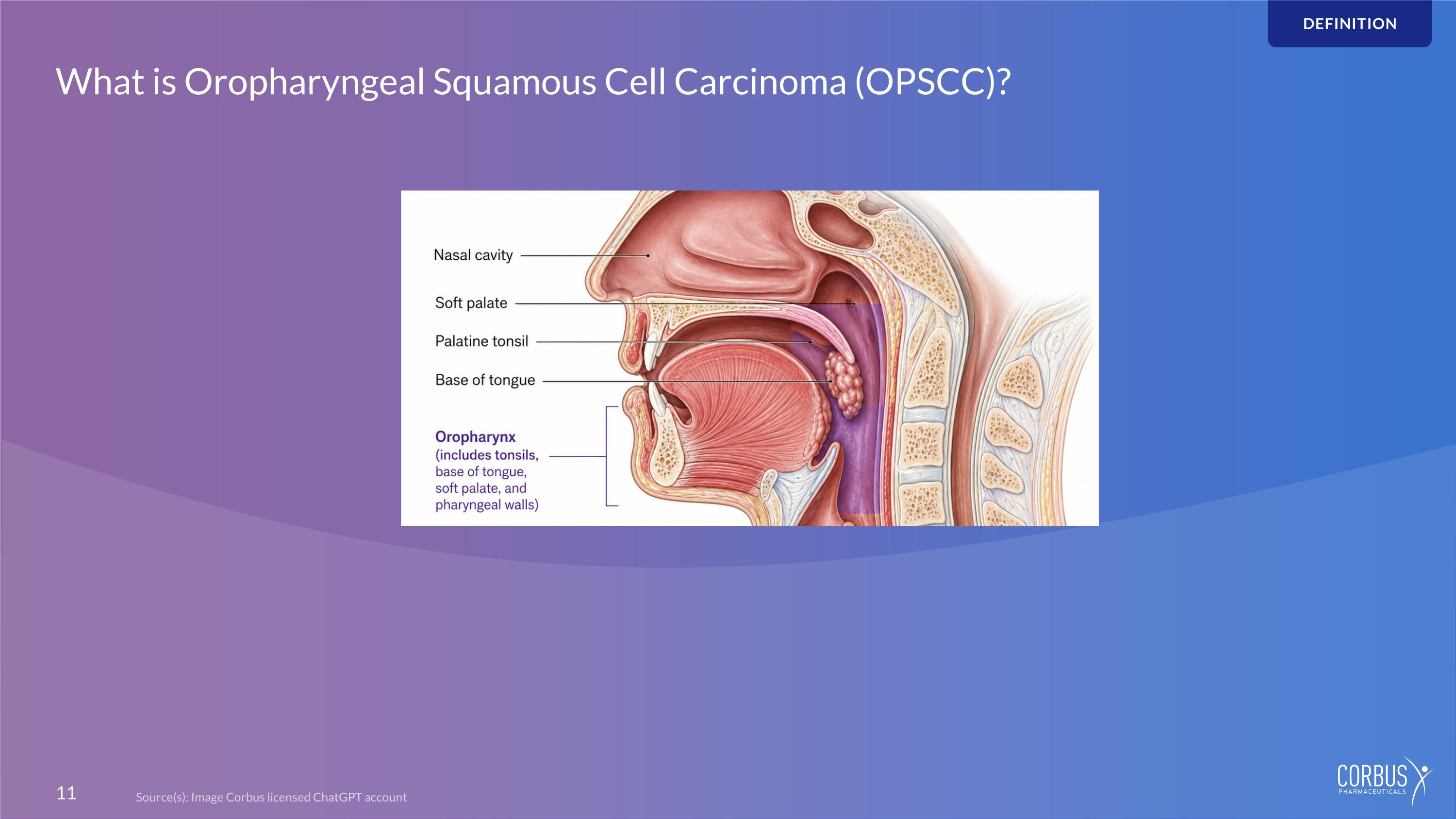
What is Oropharyngeal Squamous Cell Carcinoma (OPSCC)? Source(s): Image Corbus licensed ChatGPT account DEFINITION
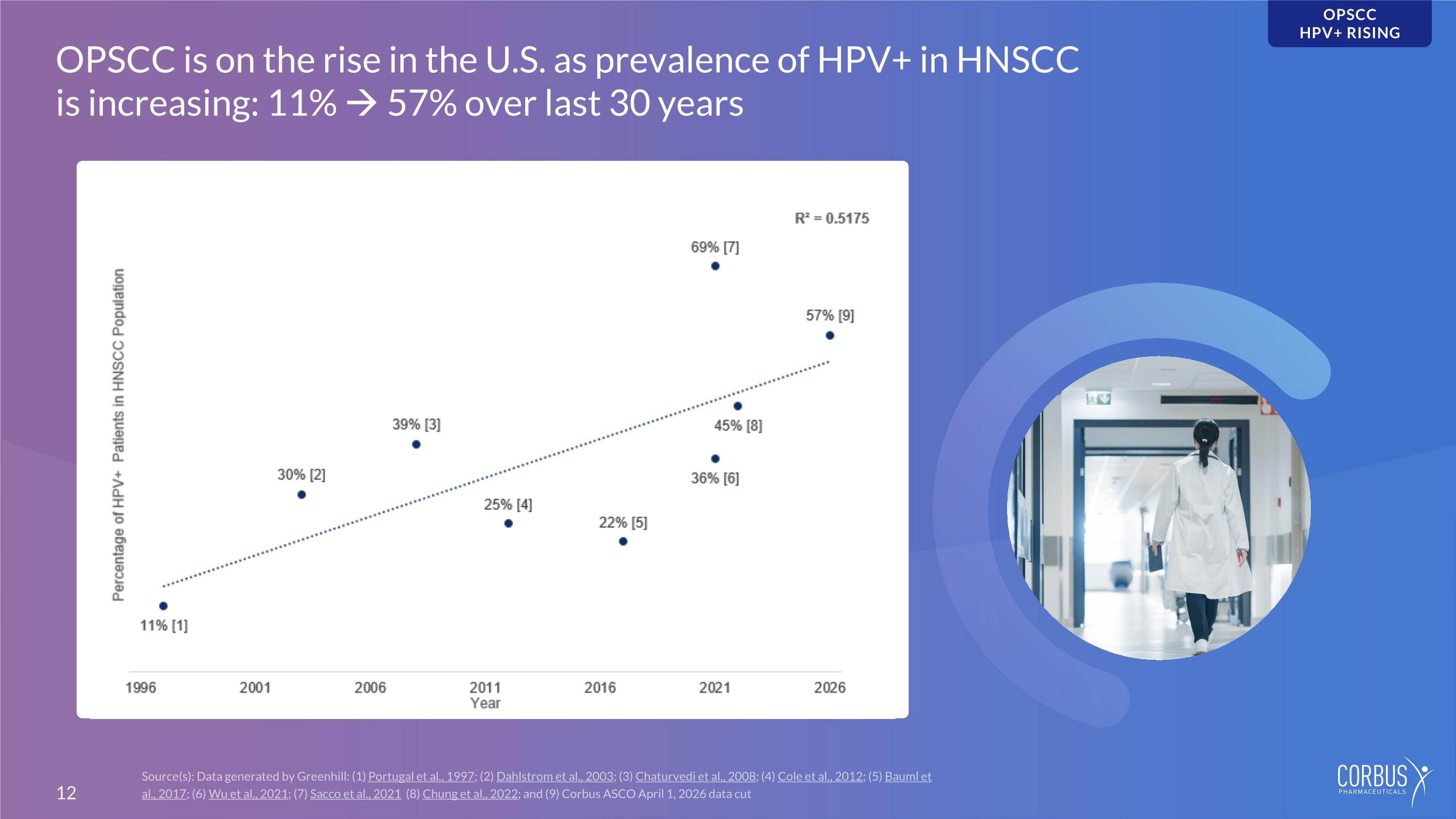
OPSCC is on the rise in the U.S. as prevalence of HPV+ in HNSCC �is increasing: 11% 57% over last 30 years Source(s): Data generated by Greenhill: (1) Portugal et al., 1997; (2) Dahlstrom et al., 2003; (3) Chaturvedi et al., 2008; (4) Cole et al., 2012; (5) Bauml et al., 2017; (6) Wu et al., 2021; (7) Sacco et al., 2021 (8) Chung et al., 2022; and (9) Corbus ASCO April 1, 2026 data cut OPSCC HPV+ RISING
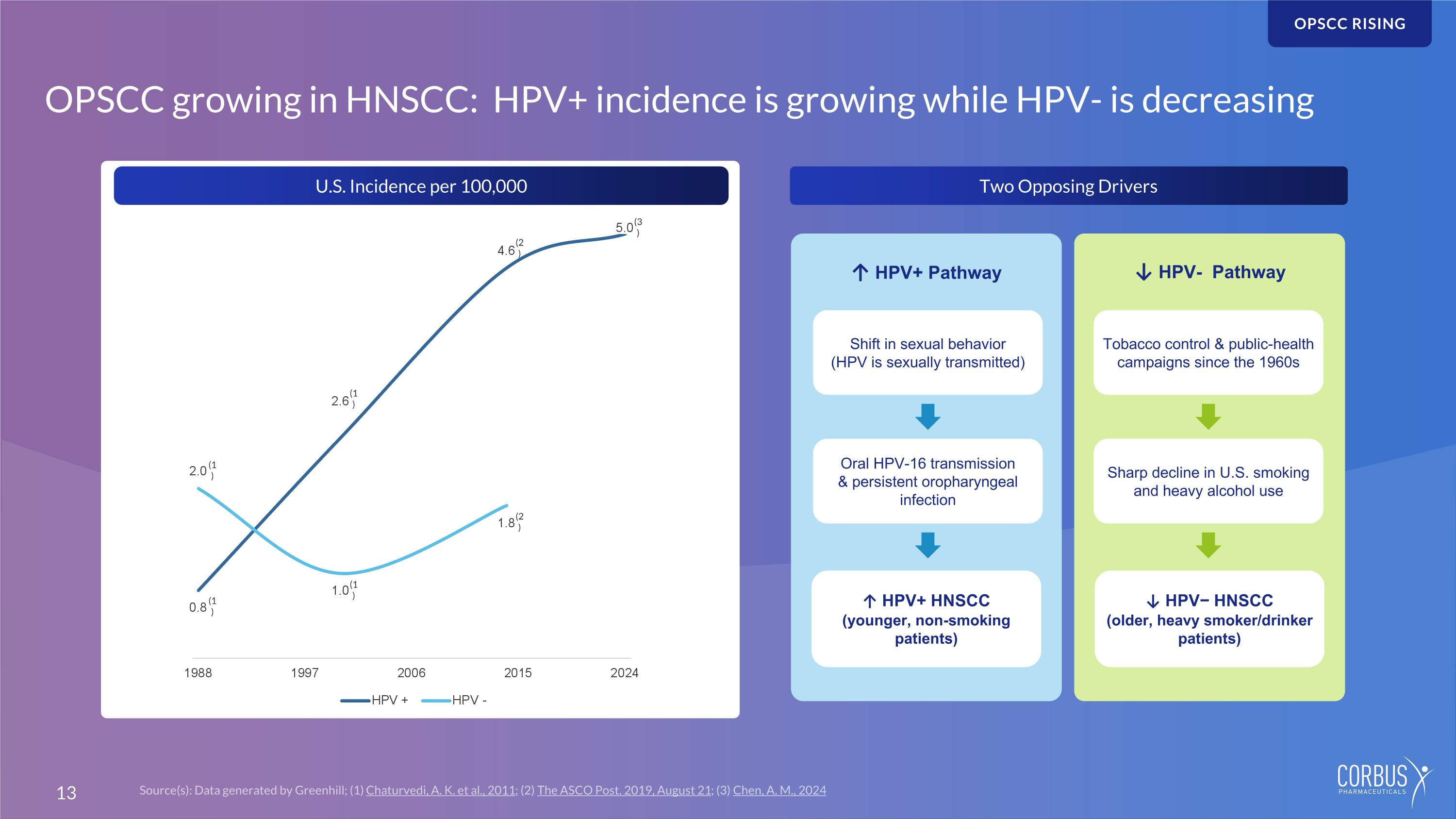
↑ HPV+ Pathway ↓ HPV- Pathway Two Opposing Drivers ↑ HPV+ HNSCC (younger, non-smoking patients) ↓ HPV− HNSCC (older, heavy smoker/drinker patients) OPSCC growing in HNSCC: HPV+ incidence is growing while HPV- is decreasing Source(s): Data generated by Greenhill; (1) Chaturvedi, A. K. et al., 2011; (2) The ASCO Post. 2019, August 21; (3) Chen, A. M., 2024 Shift in sexual behavior (HPV is sexually transmitted) Tobacco control & public-health campaigns since the 1960s Oral HPV-16 transmission & persistent oropharyngeal infection Sharp decline in U.S. smoking and heavy alcohol use (1) (1) (1) (1) (2) (2) (3) U.S. Incidence per 100,000 OPSCC RISING
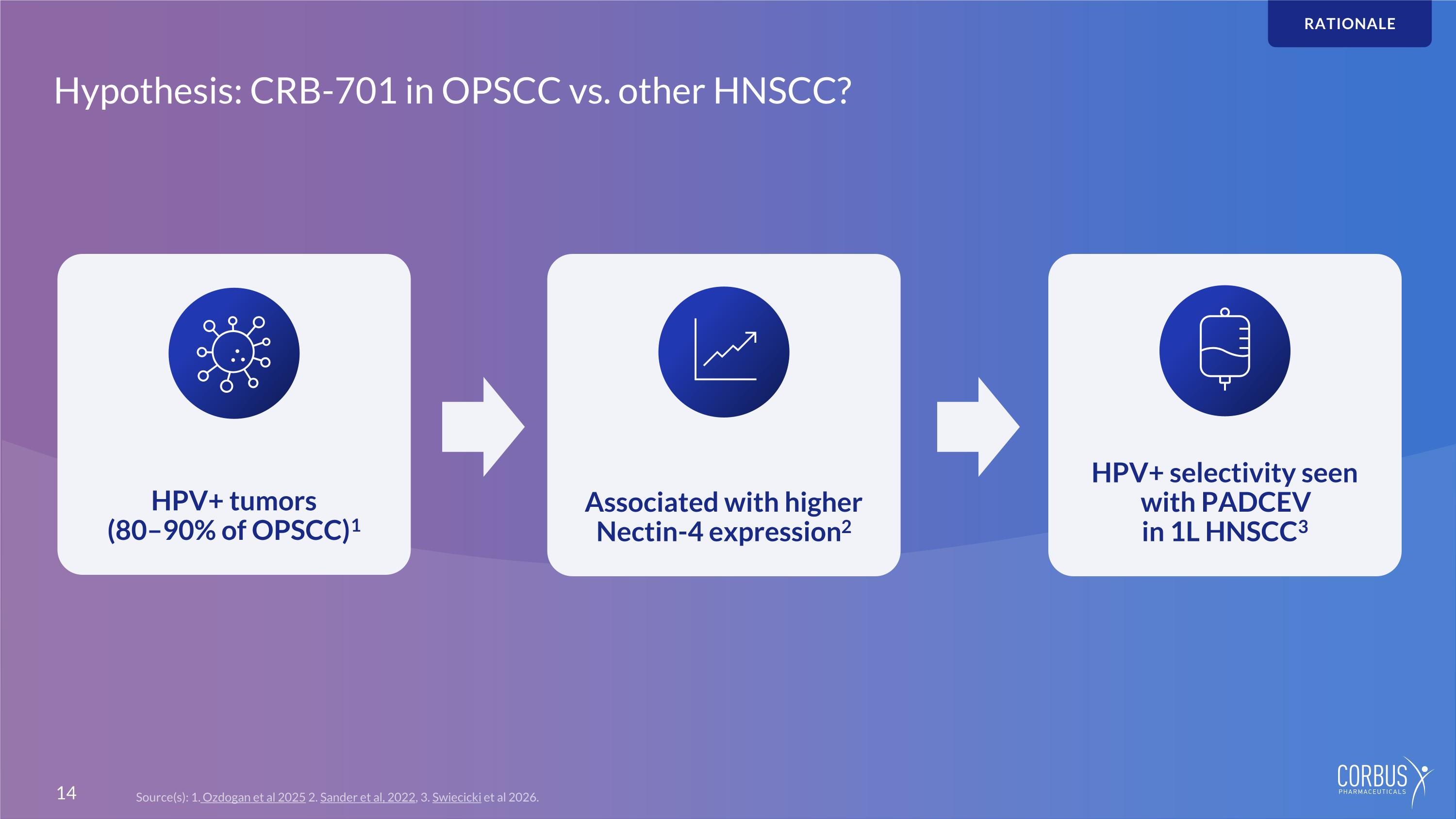
Hypothesis: CRB-701 in OPSCC vs. other HNSCC? Source(s): 1. Ozdogan et al 2025 2. Sander et al, 2022, 3. Swiecicki et al 2026. HPV+ tumors�(80–90% of OPSCC)1 Associated with higher�Nectin-4 expression2 HPV+ selectivity seen with PADCEV �in 1L HNSCC3 RATIONALE
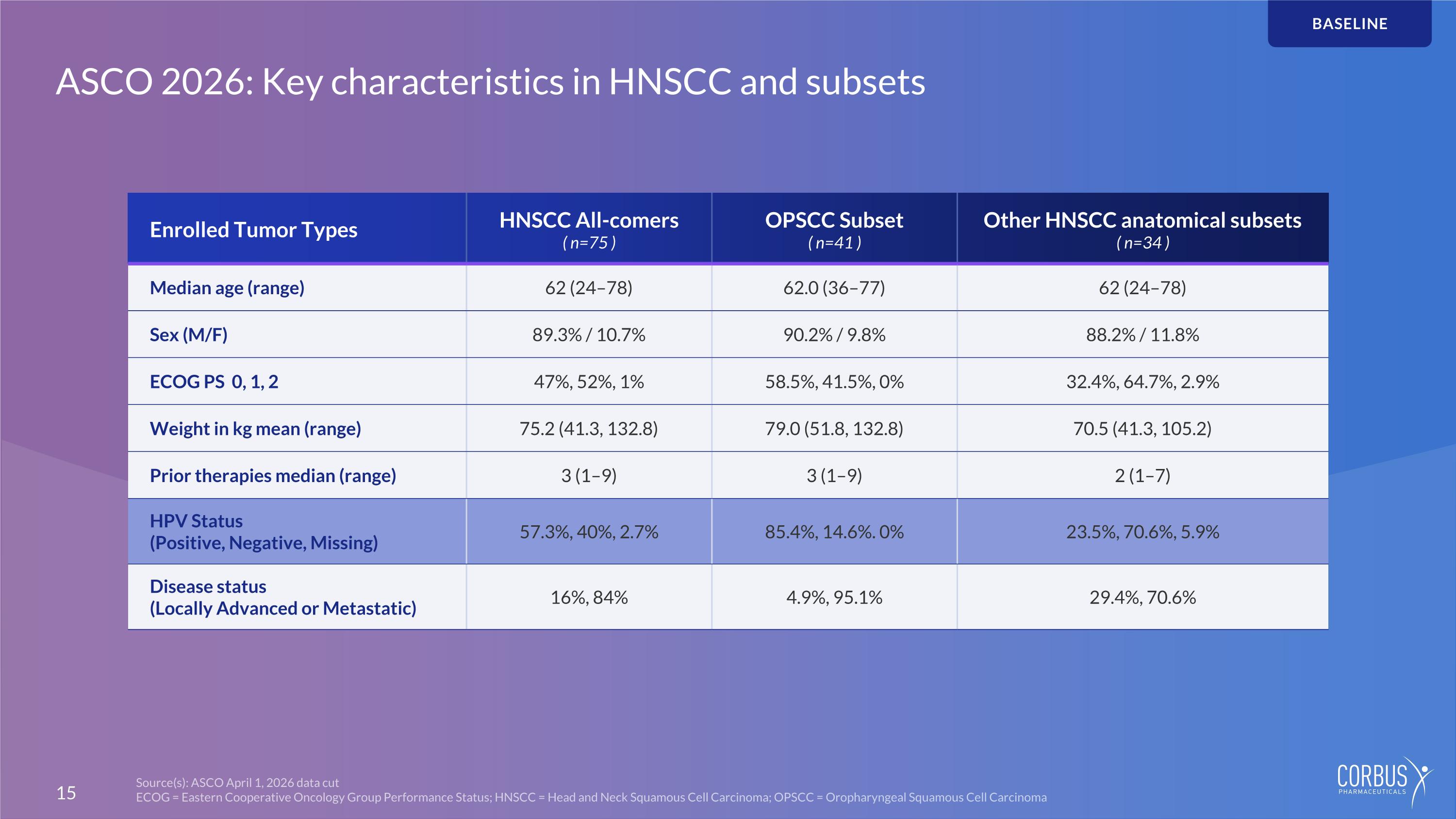
Enrolled Tumor Types HNSCC All-comers ( n=75 ) OPSCC Subset ( n=41 ) Other HNSCC anatomical subsets ( n=34 ) Median age (range) 62 (24–78) 62.0 (36–77) 62 (24–78) Sex (M/F) 89.3% / 10.7% 90.2% / 9.8% 88.2% / 11.8% ECOG PS 0, 1, 2 47%, 52%, 1% 58.5%, 41.5%, 0% 32.4%, 64.7%, 2.9% Weight in kg mean (range) 75.2 (41.3, 132.8) 79.0 (51.8, 132.8) 70.5 (41.3, 105.2) Prior therapies median (range) 3 (1–9) 3 (1–9) 2 (1–7) HPV Status�(Positive, Negative, Missing) 57.3%, 40%, 2.7% 85.4%, 14.6%. 0% 23.5%, 70.6%, 5.9% Disease status�(Locally Advanced or Metastatic) 16%, 84% 4.9%, 95.1% 29.4%, 70.6% ASCO 2026: Key characteristics in HNSCC and subsets Source(s): ASCO April 1, 2026 data cut ECOG = Eastern Cooperative Oncology Group Performance Status; HNSCC = Head and Neck Squamous Cell Carcinoma; OPSCC = Oropharyngeal Squamous Cell Carcinoma BASELINE
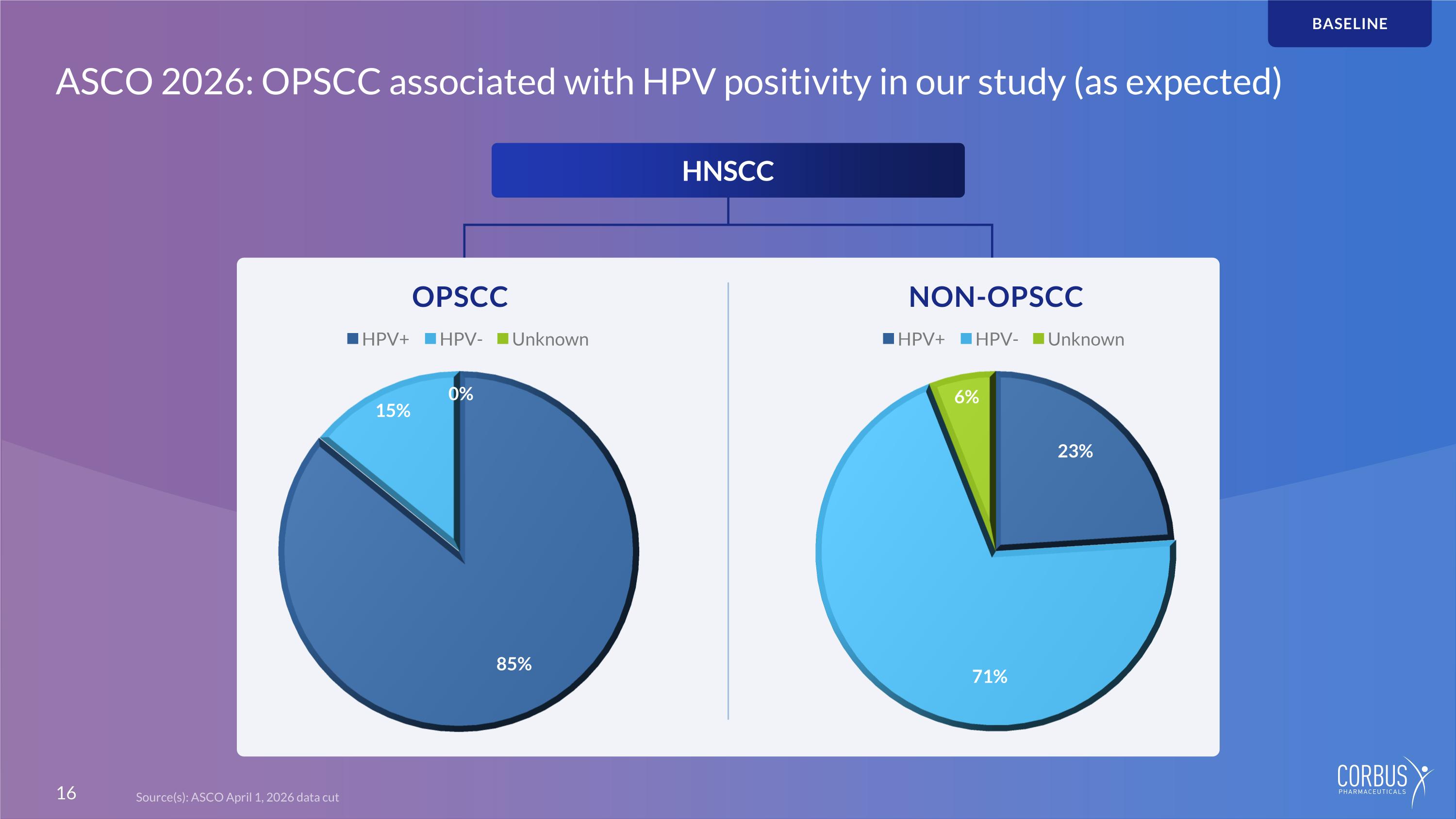
HNSCC ASCO 2026: OPSCC associated with HPV positivity in our study (as expected) Source(s): ASCO April 1, 2026 data cut BASELINE
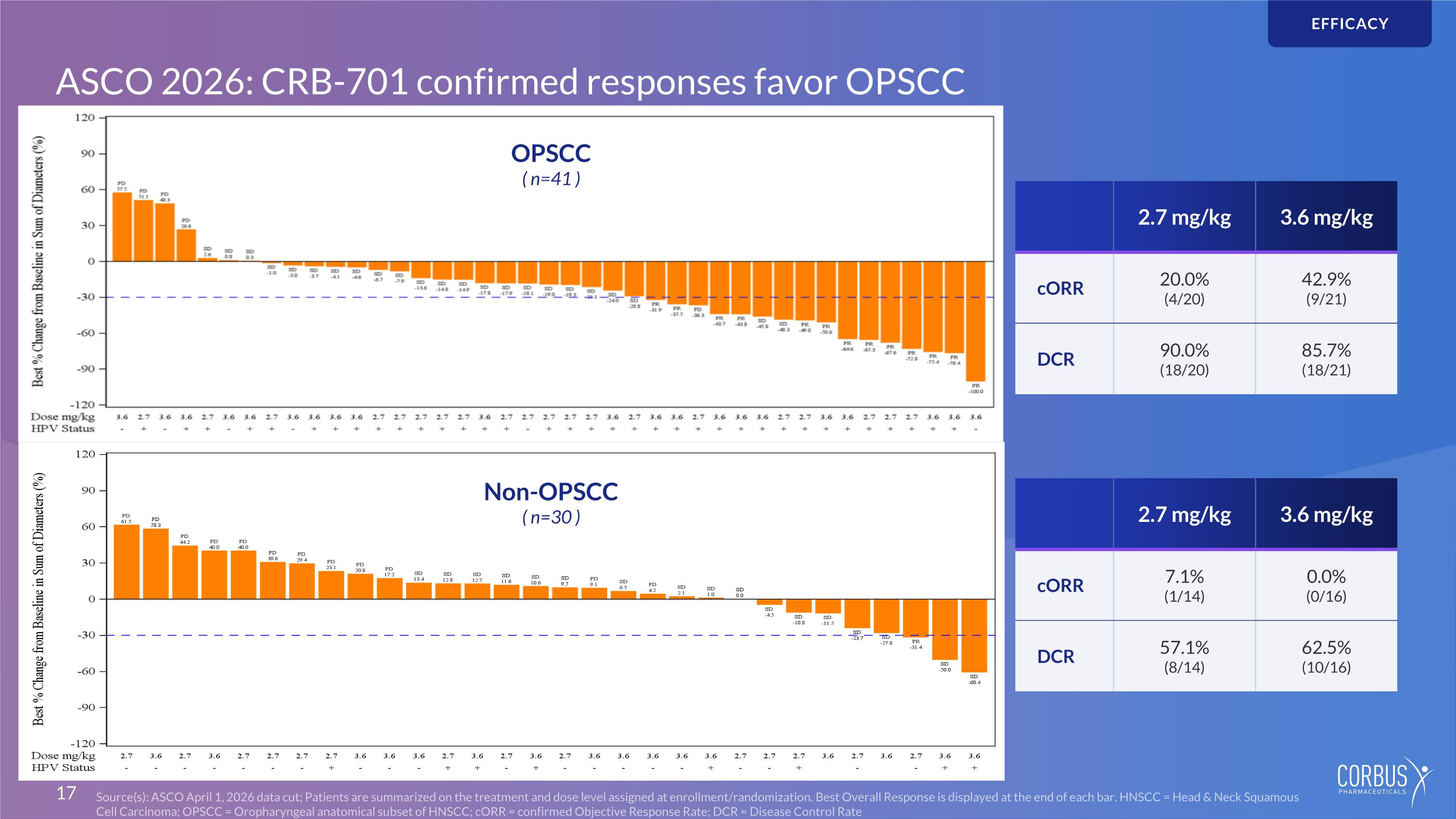
2.7 mg/kg 3.6 mg/kg cORR 20.0% (4/20) 42.9% (9/21) DCR 90.0% (18/20) 85.7% (18/21) 2.7 mg/kg 3.6 mg/kg cORR 7.1% (1/14) 0.0% (0/16) DCR 57.1% (8/14) 62.5% (10/16) ASCO 2026: CRB-701 confirmed responses favor OPSCC Source(s): ASCO April 1, 2026 data cut; Patients are summarized on the treatment and dose level assigned at enrollment/randomization. Best Overall Response is displayed at the end of each bar. HNSCC = Head & Neck Squamous Cell Carcinoma; OPSCC = Oropharyngeal anatomical subset of HNSCC; cORR = confirmed Objective Response Rate; DCR = Disease Control Rate OPSCC ( n=41 ) EFFICACY Non-OPSCC ( n=30 )
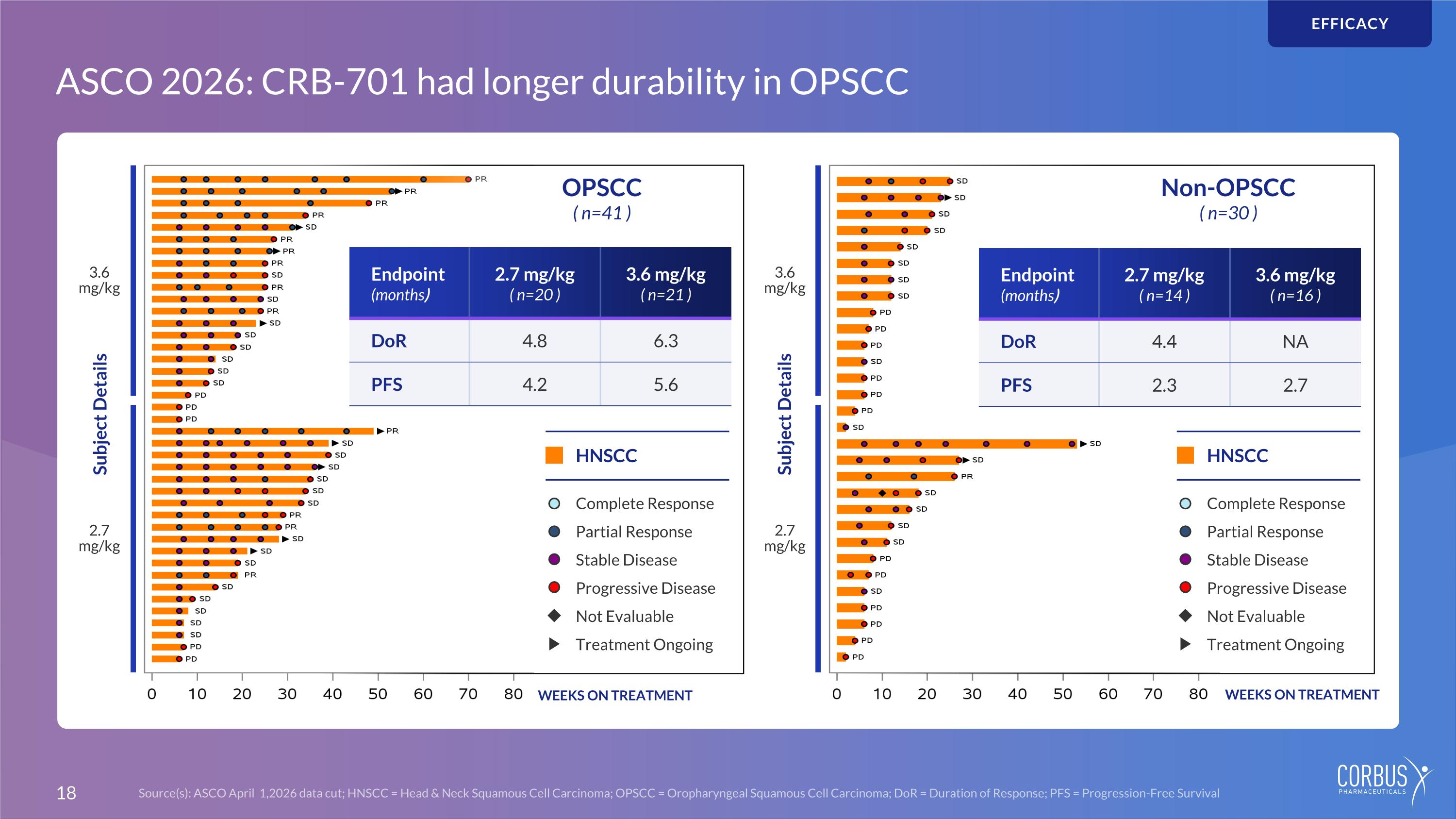
Subject Details WEEKS ON TREATMENT 3.6�mg/kg 2.7�mg/kg ASCO 2026: CRB-701 had longer durability in OPSCC Source(s): ASCO April 1,2026 data cut; HNSCC = Head & Neck Squamous Cell Carcinoma; OPSCC = Oropharyngeal Squamous Cell Carcinoma; DoR = Duration of Response; PFS = Progression-Free Survival HNSCC Complete Response Partial Response Stable Disease Progressive Disease Not Evaluable Treatment Ongoing Subject Details WEEKS ON TREATMENT 3.6�mg/kg 2.7�mg/kg HNSCC Complete Response Partial Response Stable Disease Progressive Disease Not Evaluable Treatment Ongoing OPSCC ( n=41 ) Non-OPSCC ( n=30 ) EFFICACY Endpoint (months) 2.7 mg/kg ( n=14 ) 3.6 mg/kg ( n=16 ) DoR 4.4 NA PFS 2.3 2.7 Endpoint (months) 2.7 mg/kg ( n=20 ) 3.6 mg/kg ( n=21 ) DoR 4.8 6.3 PFS 4.2 5.6
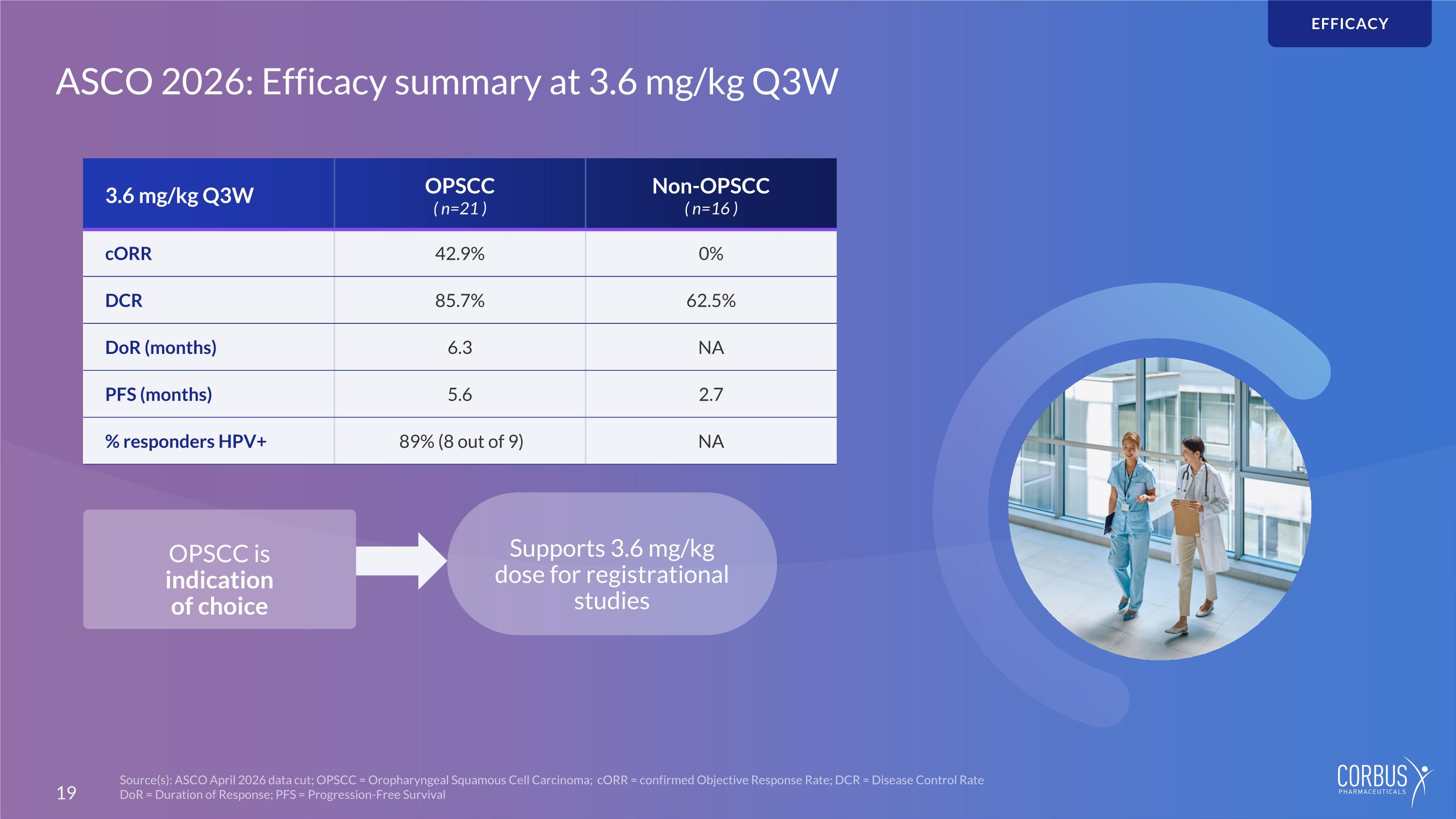
3.6 mg/kg Q3W OPSCC ( n=21 ) Non-OPSCC ( n=16 ) cORR 42.9% 0% DCR 85.7% 62.5% DoR (months) 6.3 NA PFS (months) 5.6 2.7 % responders HPV+ 89% (8 out of 9) NA ASCO 2026: Efficacy summary at 3.6 mg/kg Q3W OPSCC is �indication�of choice EFFICACY Source(s): ASCO April 2026 data cut; OPSCC = Oropharyngeal Squamous Cell Carcinoma; cORR = confirmed Objective Response Rate; DCR = Disease Control Rate DoR = Duration of Response; PFS = Progression-Free Survival Supports 3.6 mg/kg dose for registrational studies
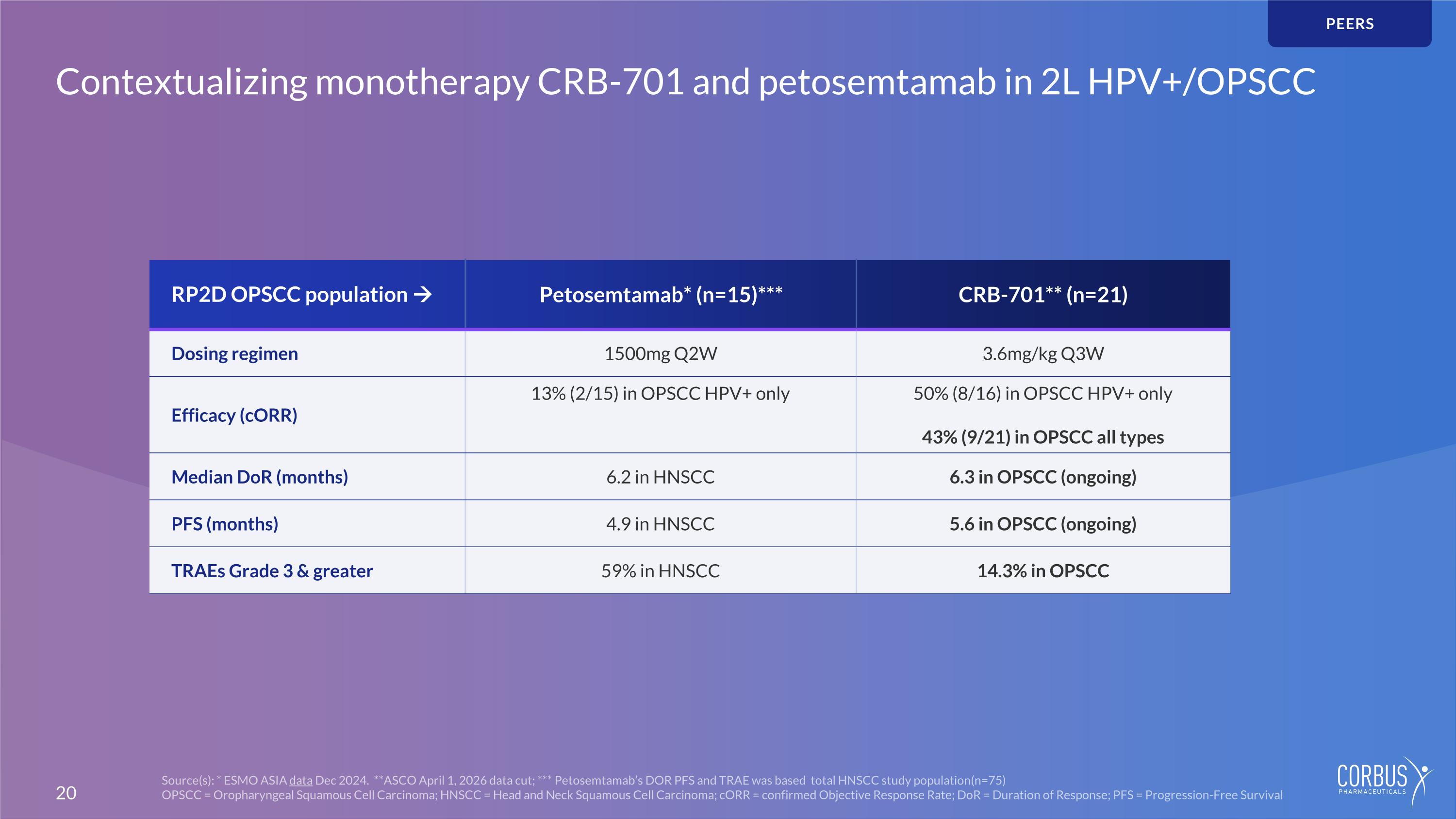
RP2D OPSCC population Petosemtamab* (n=15)*** CRB-701** (n=21) Dosing regimen 1500mg Q2W 3.6mg/kg Q3W Efficacy (cORR) 13% (2/15) in OPSCC HPV+ only 50% (8/16) in OPSCC HPV+ only 43% (9/21) in OPSCC all types Median DoR (months) 6.2 in HNSCC 6.3 in OPSCC (ongoing) PFS (months) 4.9 in HNSCC 5.6 in OPSCC (ongoing) TRAEs Grade 3 & greater 59% in HNSCC 14.3% in OPSCC Contextualizing monotherapy CRB-701 and petosemtamab in 2L HPV+/OPSCC Source(s): * ESMO ASIA data Dec 2024. **ASCO April 1, 2026 data cut; *** Petosemtamab’s DOR PFS and TRAE was based total HNSCC study population(n=75) OPSCC = Oropharyngeal Squamous Cell Carcinoma; HNSCC = Head and Neck Squamous Cell Carcinoma; cORR = confirmed Objective Response Rate; DoR = Duration of Response; PFS = Progression-Free Survival PEERS
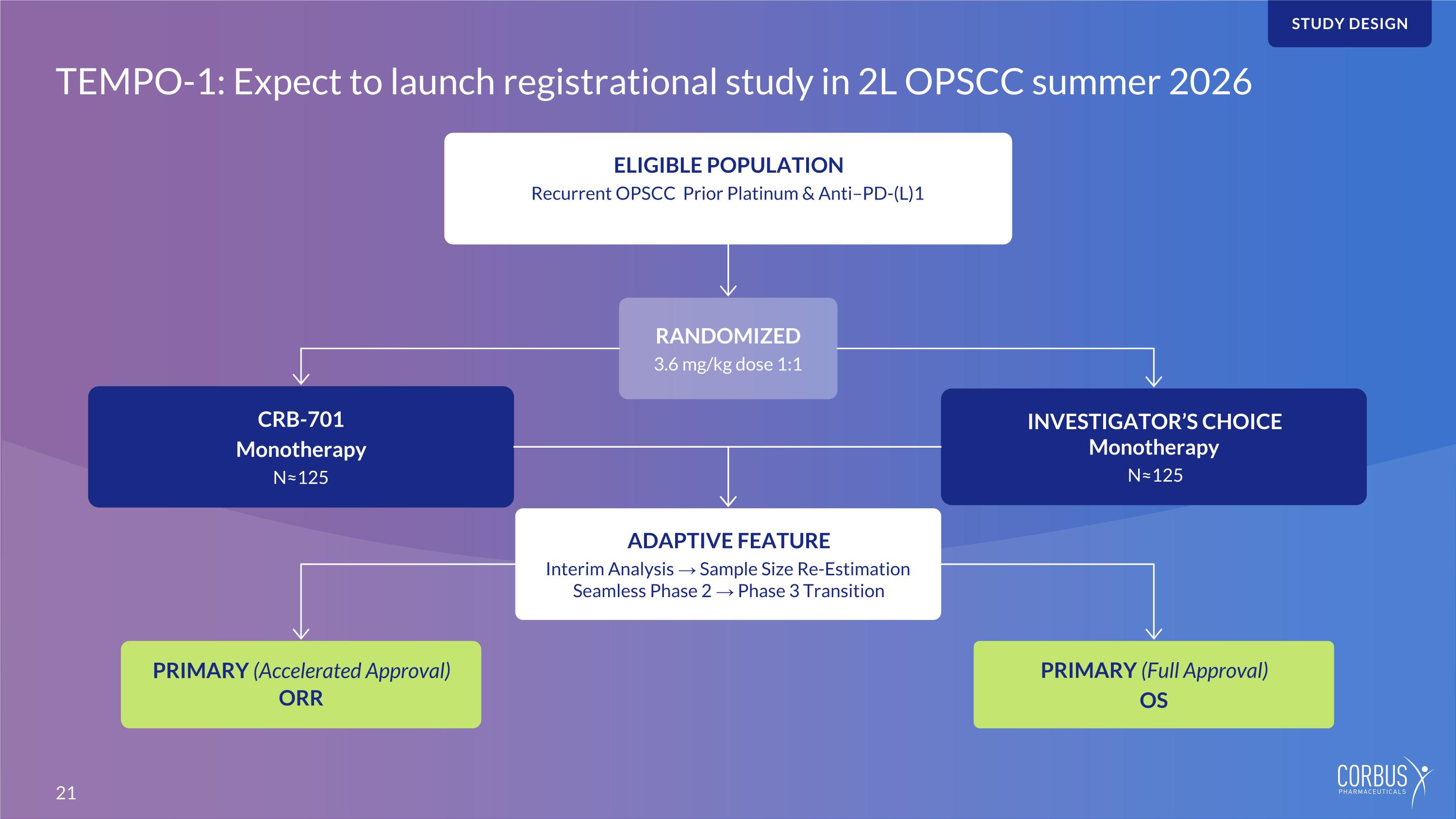
TEMPO-1: Expect to launch registrational study in 2L OPSCC summer 2026 ELIGIBLE POPULATION Recurrent OPSCC Prior Platinum & Anti–PD-(L)1 RANDOMIZED 3.6 mg/kg dose 1:1 CRB-701
Monotherapy N≈125 INVESTIGATOR’S CHOICE Monotherapy
N≈125 ADAPTIVE FEATURE
Interim Analysis → Sample Size Re-Estimation�Seamless Phase 2 → Phase 3 Transition PRIMARY (Accelerated Approval) ORR PRIMARY (Full Approval) OS STUDY DESIGN
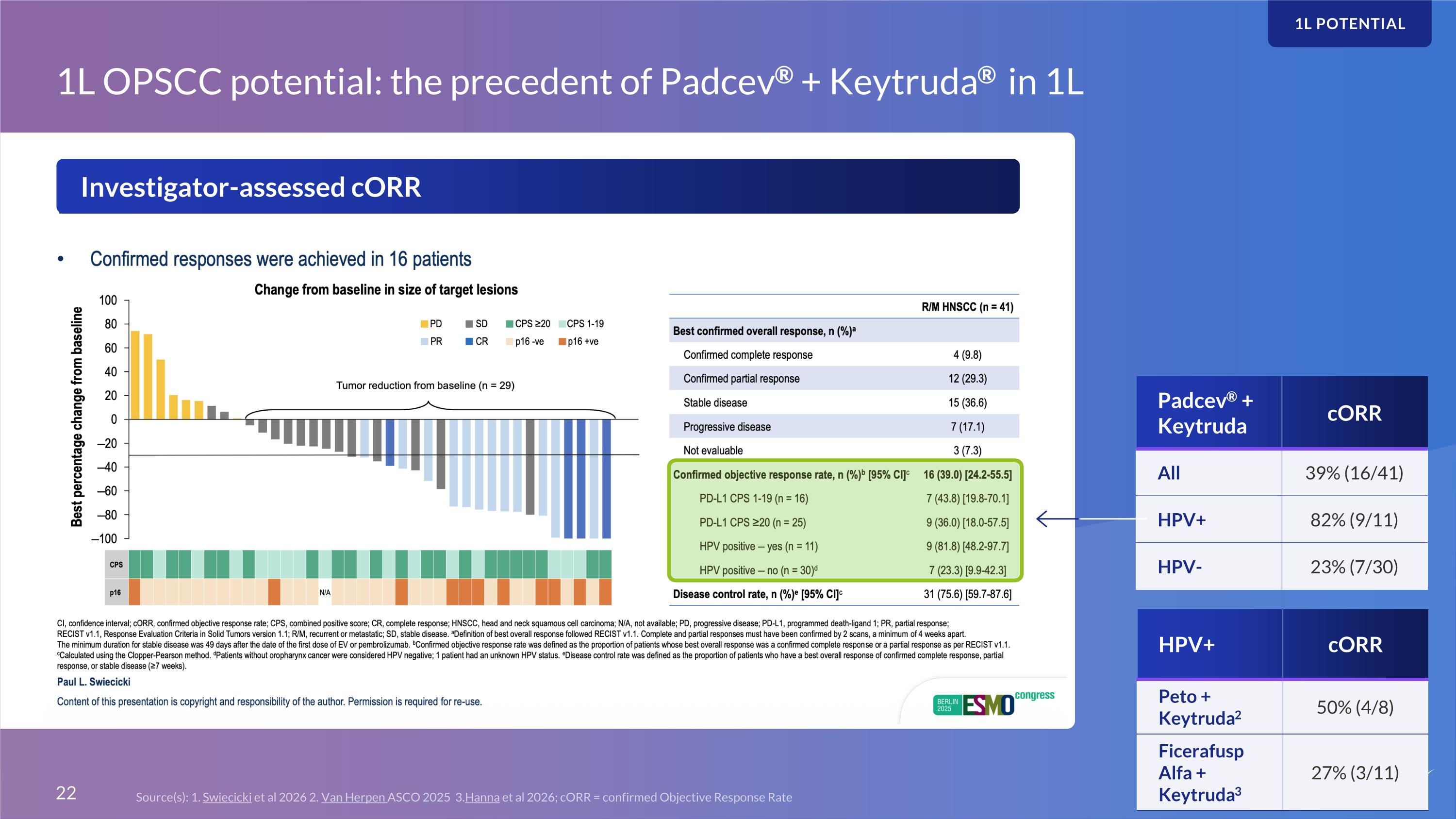
Padcev® + Keytruda cORR All 39% (16/41) HPV+ 82% (9/11) HPV- 23% (7/30) 1L OPSCC potential: the precedent of Padcev® + Keytruda® in 1L Source(s): 1. Swiecicki et al 2026 2. Van Herpen ASCO 2025 3.Hanna et al 2026; cORR = confirmed Objective Response Rate Investigator-assessed cORR HPV+ cORR Peto + Keytruda2 50% (4/8) Ficerafusp Alfa + Keytruda3 27% (3/11) 1L POTENTIAL
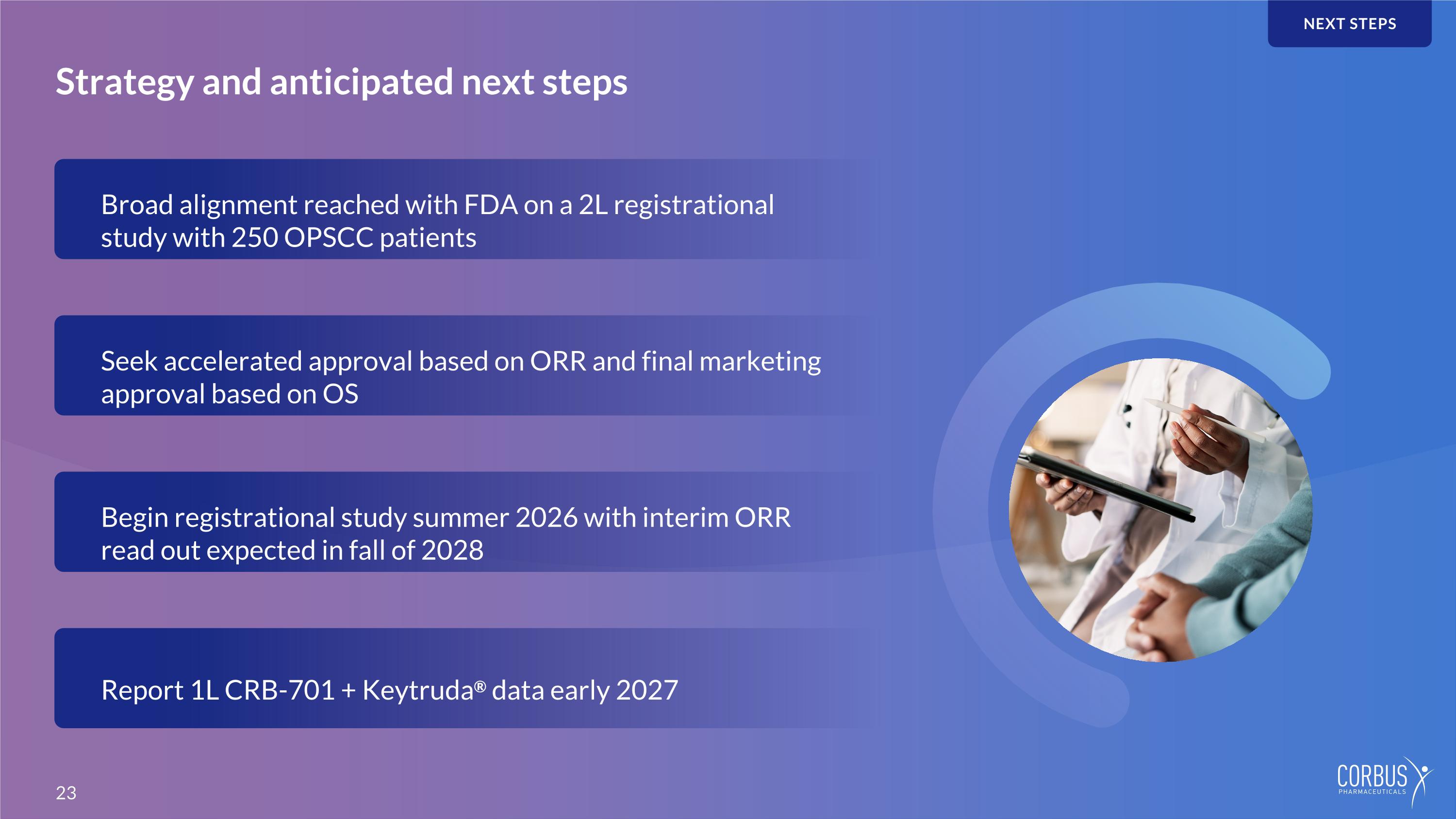
Strategy and anticipated next steps Broad alignment reached with FDA on a 2L registrational study with 250 OPSCC patients Report 1L CRB-701 + Keytruda® data early 2027 Seek accelerated approval based on ORR and final marketing approval based on OS Begin registrational study summer 2026 with interim ORR read out expected in fall of 2028 NEXT STEPS

Cervical Cancer Acute unmet need in 2L in�poorly addressed market
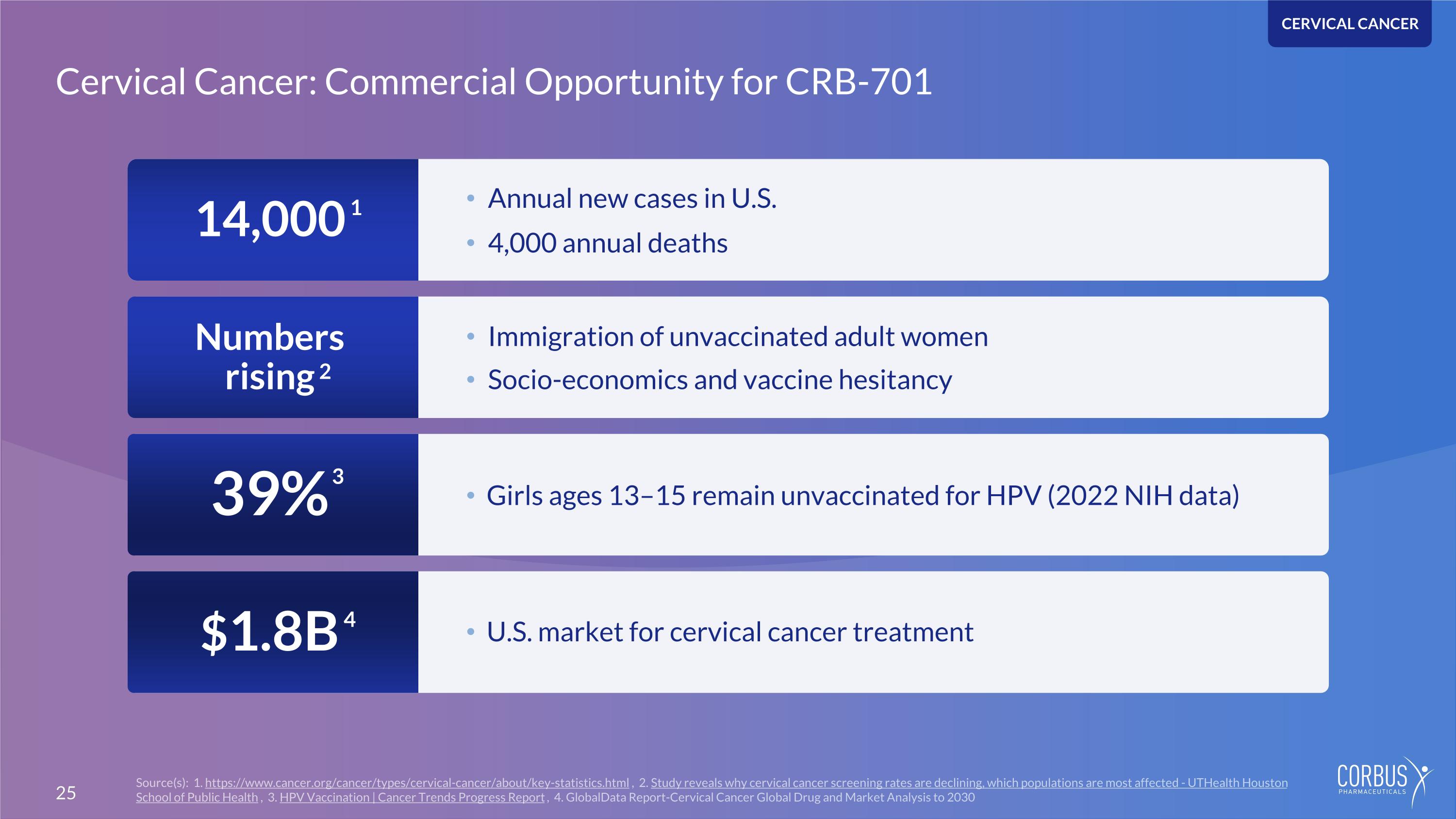
Cervical Cancer: Commercial Opportunity for CRB-701 Source(s): 1. https://www.cancer.org/cancer/types/cervical-cancer/about/key-statistics.html , 2. Study reveals why cervical cancer screening rates are declining, which populations are most affected - UTHealth Houston School of Public Health , 3. HPV Vaccination | Cancer Trends Progress Report , 4. GlobalData Report-Cervical Cancer Global Drug and Market Analysis to 2030 Immigration of unvaccinated adult women Socio-economics and vaccine hesitancy Numbers�rising Girls ages 13–15 remain unvaccinated for HPV (2022 NIH data) Annual new cases in U.S. 4,000 annual deaths U.S. market for cervical cancer treatment 14,000 1 39% 3 $1.8B 4 2 CERVICAL CANCER
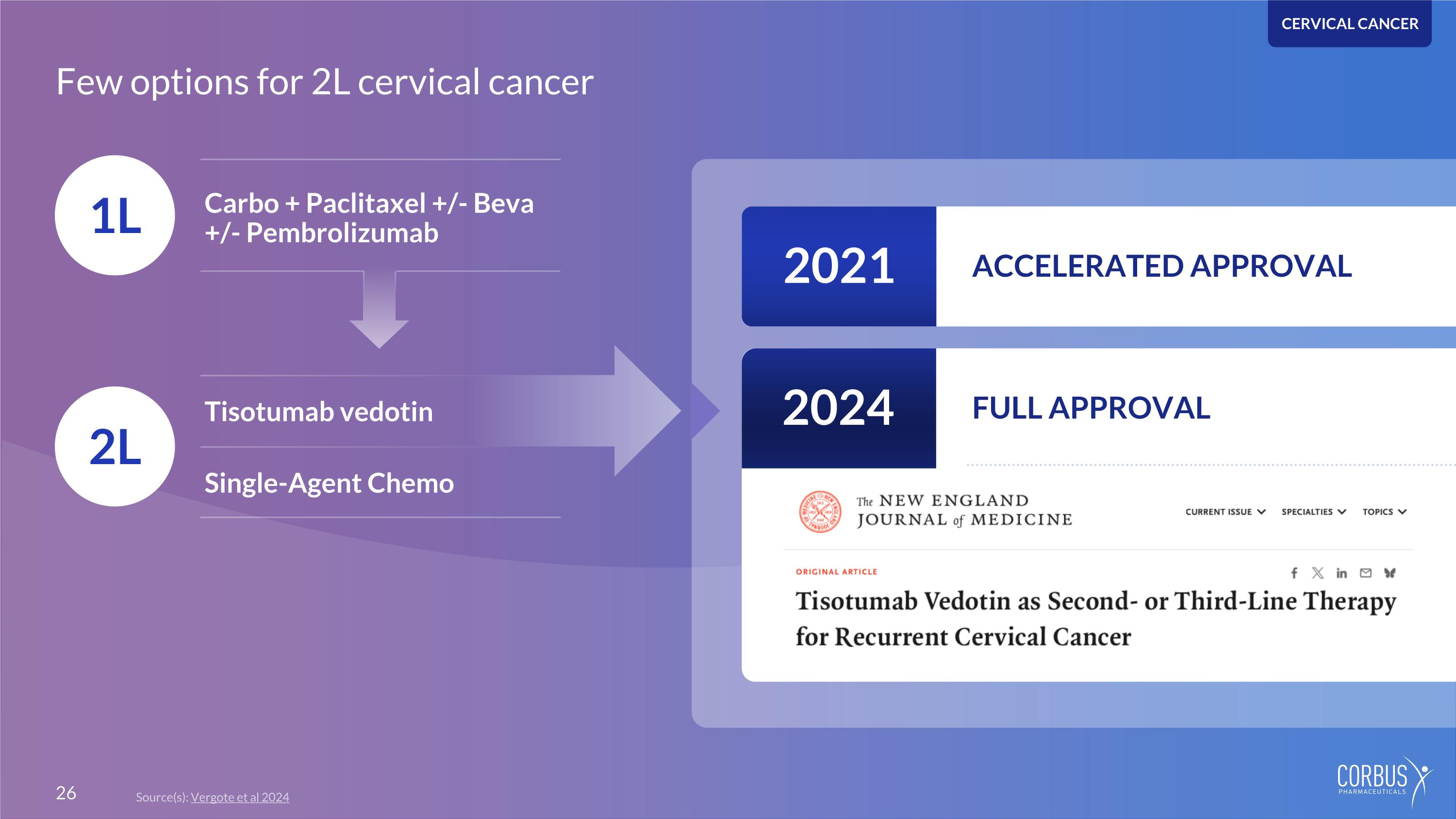
FULL APPROVAL Few options for 2L cervical cancer Source(s): Vergote et al 2024 1L 2L Tisotumab vedotin Single-Agent Chemo Carbo + Paclitaxel +/- Beva +/- Pembrolizumab ACCELERATED APPROVAL 2021 2024 CERVICAL CANCER
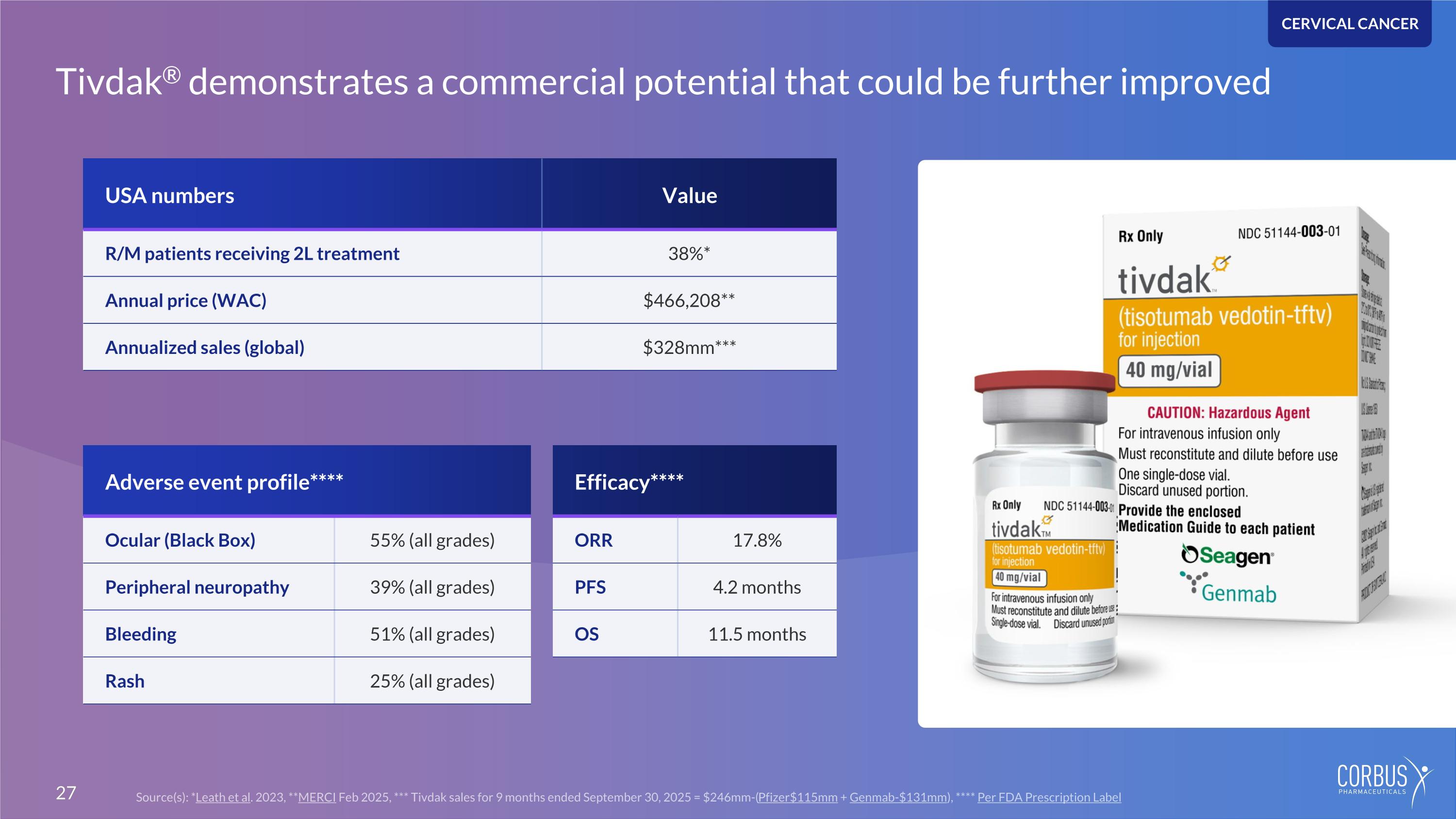
Efficacy**** ORR 17.8% PFS 4.2 months OS 11.5 months Adverse event profile**** Ocular (Black Box) 55% (all grades) Peripheral neuropathy 39% (all grades) Bleeding 51% (all grades) Rash 25% (all grades) USA numbers Value R/M patients receiving 2L treatment 38%* Annual price (WAC) $466,208** Annualized sales (global) $328mm*** Tivdak® demonstrates a commercial potential that could be further improved Source(s): *Leath et al. 2023, **MERCI Feb 2025, *** Tivdak sales for 9 months ended September 30, 2025 = $246mm-(Pfizer$115mm + Genmab-$131mm), **** Per FDA Prescription Label CERVICAL CANCER
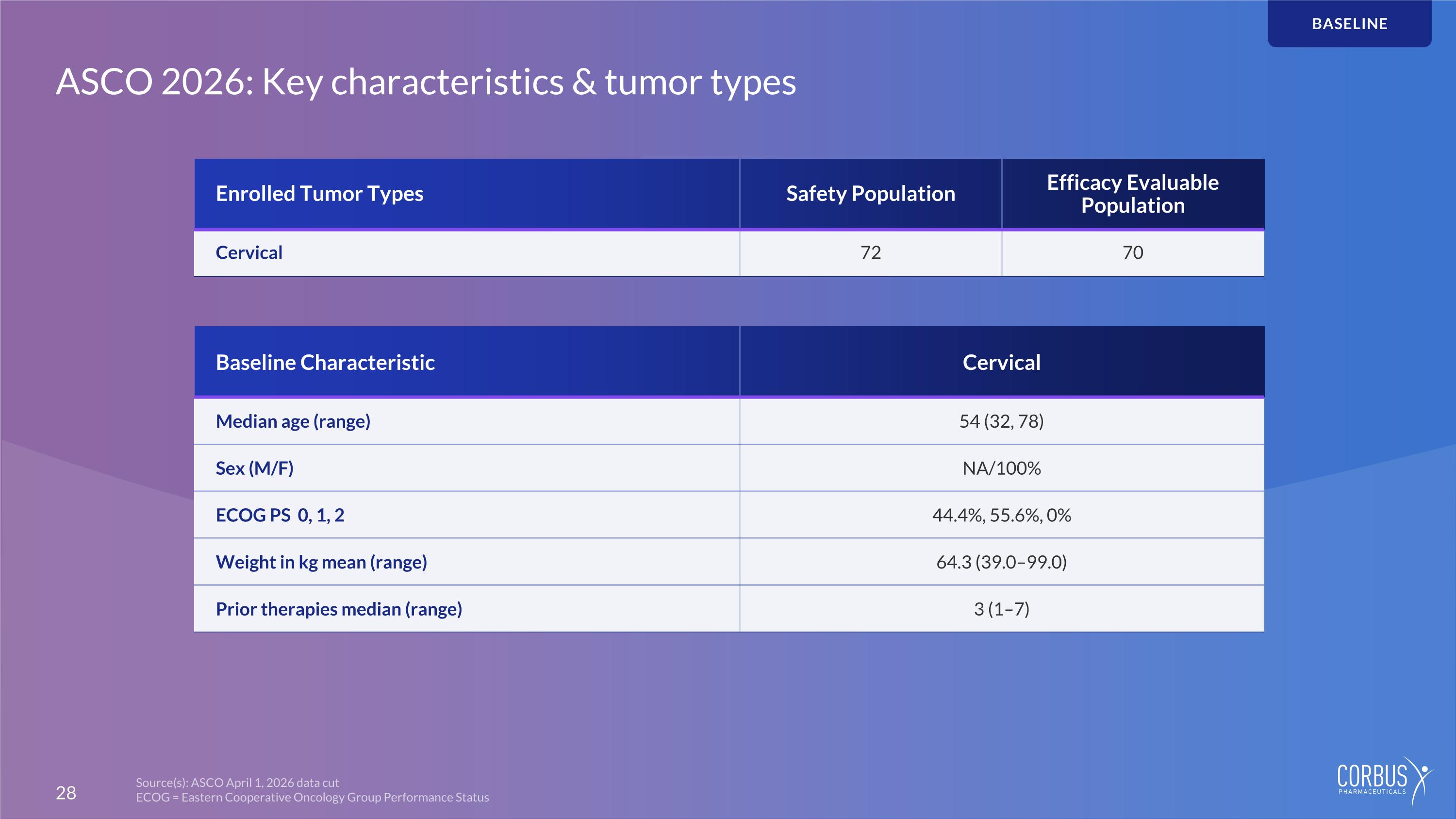
Enrolled Tumor Types Safety Population Efficacy Evaluable Population Cervical 72 70 Baseline Characteristic Cervical Median age (range) 54 (32, 78) Sex (M/F) NA/100% ECOG PS 0, 1, 2 44.4%, 55.6%, 0% Weight in kg mean (range) 64.3 (39.0–99.0) Prior therapies median (range) 3 (1–7) ASCO 2026: Key characteristics & tumor types Source(s): ASCO April 1, 2026 data cut ECOG = Eastern Cooperative Oncology Group Performance Status BASELINE
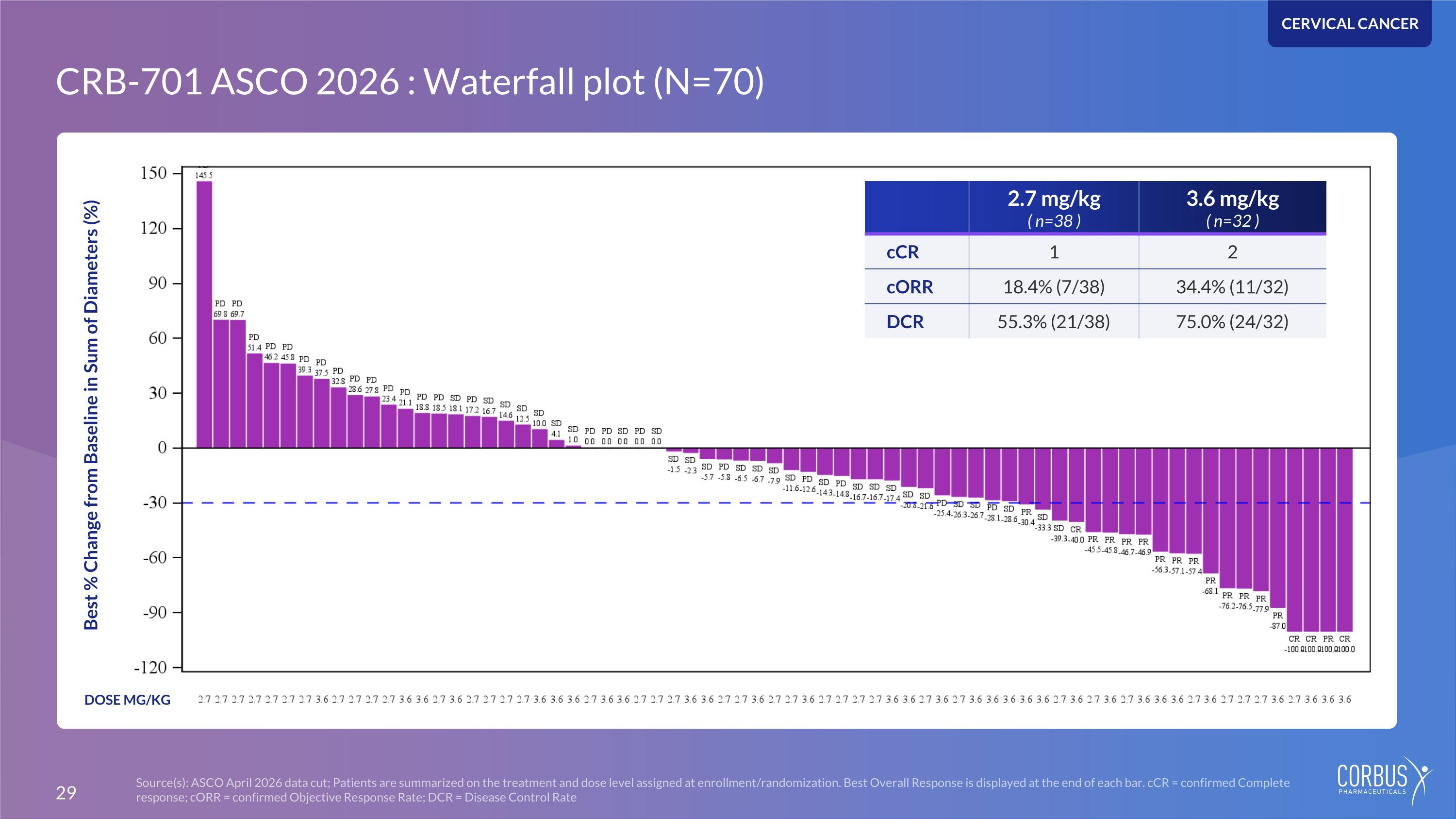
CRB-701 ASCO 2026 : Waterfall plot (N=70) Source(s): ASCO April 2026 data cut; Patients are summarized on the treatment and dose level assigned at enrollment/randomization. Best Overall Response is displayed at the end of each bar. cCR = confirmed Complete response; cORR = confirmed Objective Response Rate; DCR = Disease Control Rate Best % Change from Baseline in Sum of Diameters (%) DOSE MG/KG 2.7 mg/kg ( n=38 ) 3.6 mg/kg ( n=32 ) cCR 1 2 cORR 18.4% (7/38) 34.4% (11/32) DCR 55.3% (21/38) 75.0% (24/32) CERVICAL CANCER
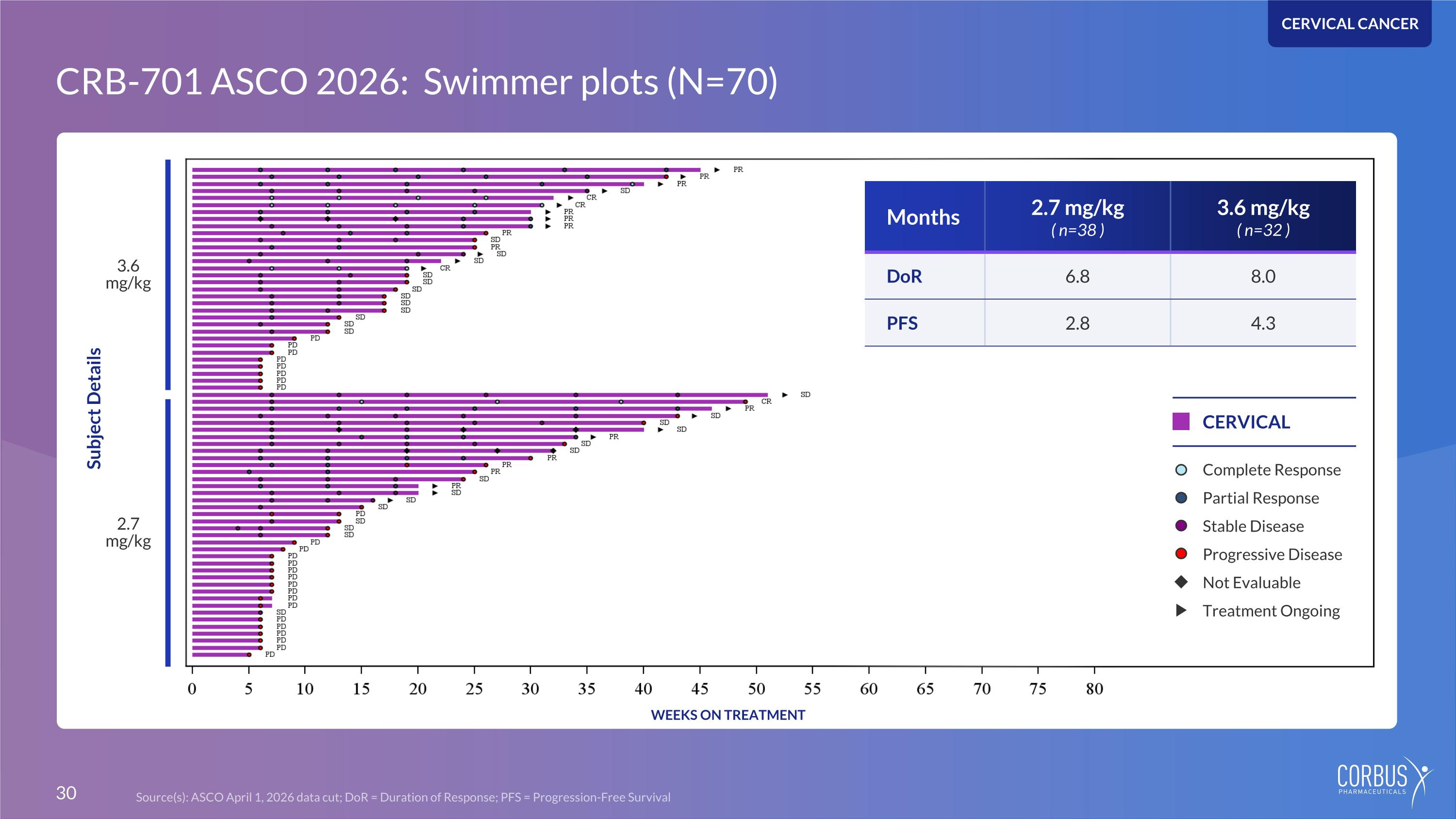
Subject Details WEEKS ON TREATMENT 3.6�mg/kg 2.7�mg/kg CRB-701 ASCO 2026: Swimmer plots (N=70) Source(s): ASCO April 1, 2026 data cut; DoR = Duration of Response; PFS = Progression-Free Survival Months 2.7 mg/kg ( n=38 ) 3.6 mg/kg ( n=32 ) DoR 6.8 8.0 PFS 2.8 4.3 CERVICAL Complete Response Partial Response Stable Disease Progressive Disease Not Evaluable Treatment Ongoing CERVICAL CANCER
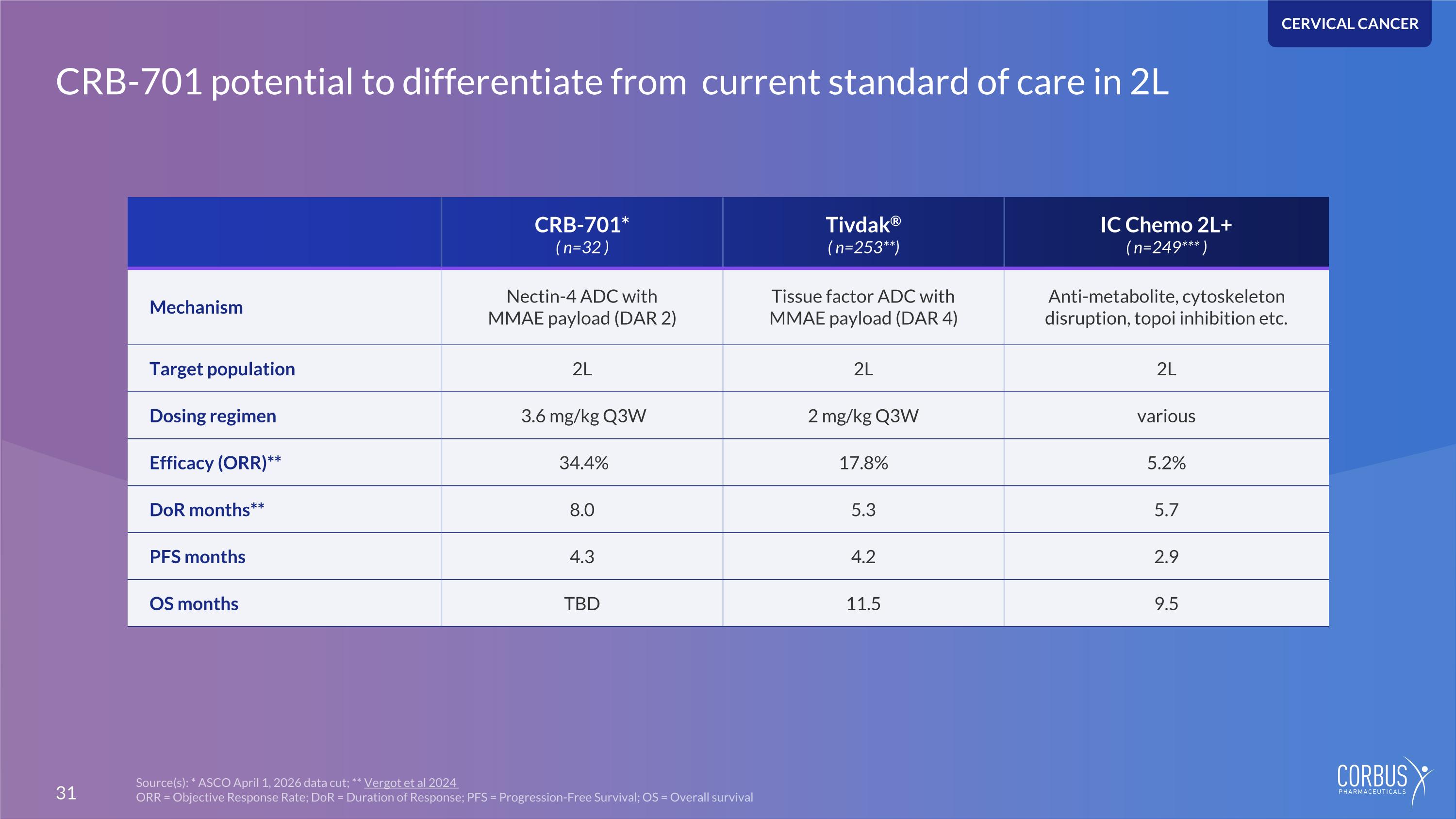
CRB-701* ( n=32 ) Tivdak® ( n=253**) IC Chemo 2L+ ( n=249*** ) Mechanism Nectin-4 ADC with�MMAE payload (DAR 2) Tissue factor ADC with�MMAE payload (DAR 4) Anti-metabolite, cytoskeleton disruption, topoi inhibition etc. Target population 2L 2L 2L Dosing regimen 3.6 mg/kg Q3W 2 mg/kg Q3W various Efficacy (ORR)** 34.4% 17.8% 5.2% DoR months** 8.0 5.3 5.7 PFS months 4.3 4.2 2.9 OS months TBD 11.5 9.5 CRB-701 potential to differentiate from current standard of care in 2L Source(s): * ASCO April 1, 2026 data cut; ** Vergot et al 2024 ORR = Objective Response Rate; DoR = Duration of Response; PFS = Progression-Free Survival; OS = Overall survival CERVICAL CANCER
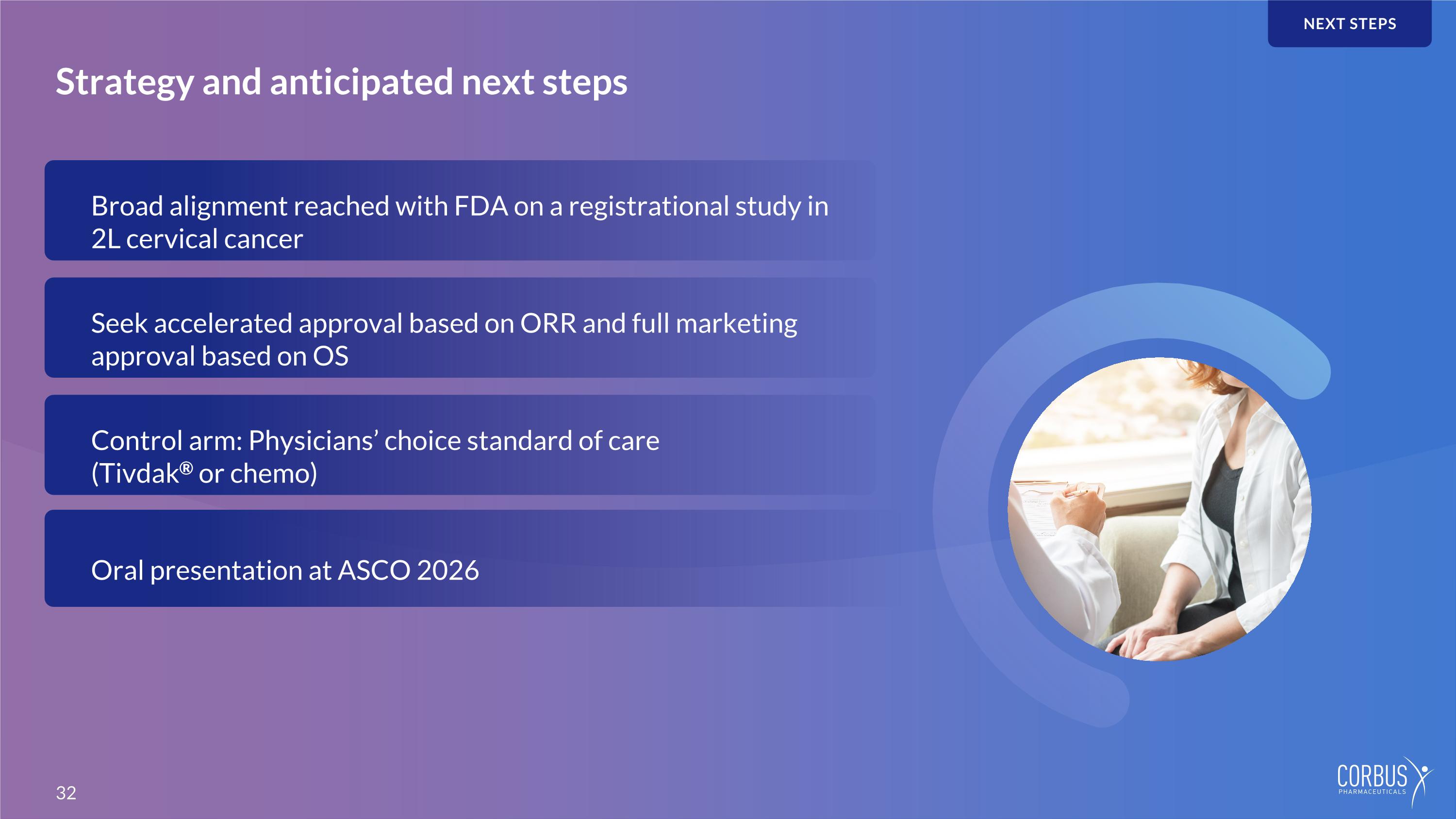
Strategy and anticipated next steps Broad alignment reached with FDA on a registrational study in 2L cervical cancer Oral presentation at ASCO 2026 Seek accelerated approval based on ORR and full marketing approval based on OS Control arm: Physicians’ choice standard of care�(Tivdak® or chemo) NEXT STEPS
CRB-913 Daily oral small molecule targeting chronic obesity management Data from Phase 1a SAD/MAD study
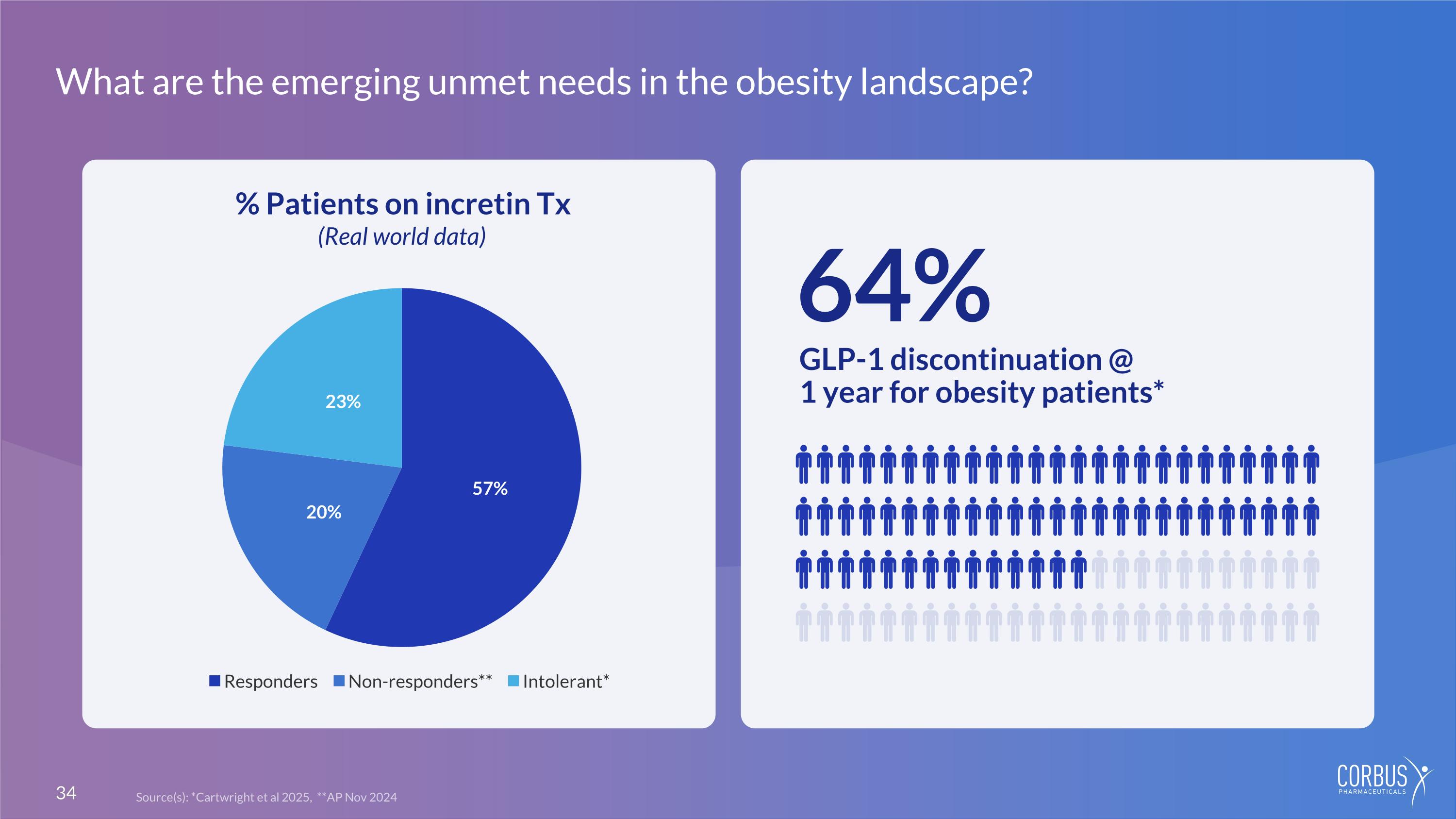
% Patients on incretin Tx (Real world data) What are the emerging unmet needs in the obesity landscape? Source(s): *Cartwright et al 2025, **AP Nov 2024 GLP-1 discontinuation @�1 year for obesity patients* 64%
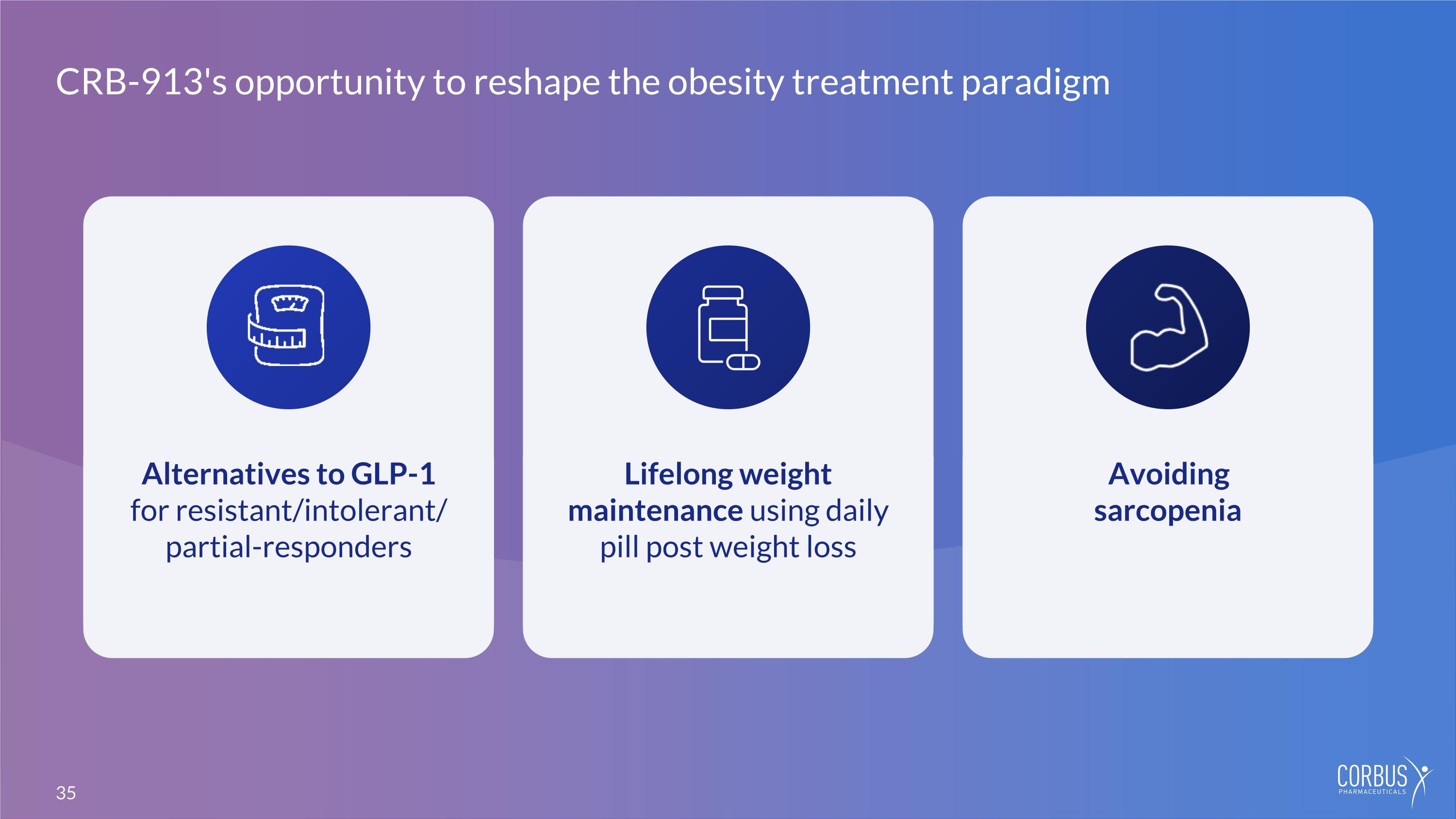
Alternatives to GLP-1�for resistant/intolerant/�partial-responders Lifelong weight maintenance using daily�pill post weight loss Avoiding�sarcopenia CRB-913's opportunity to reshape the obesity treatment paradigm
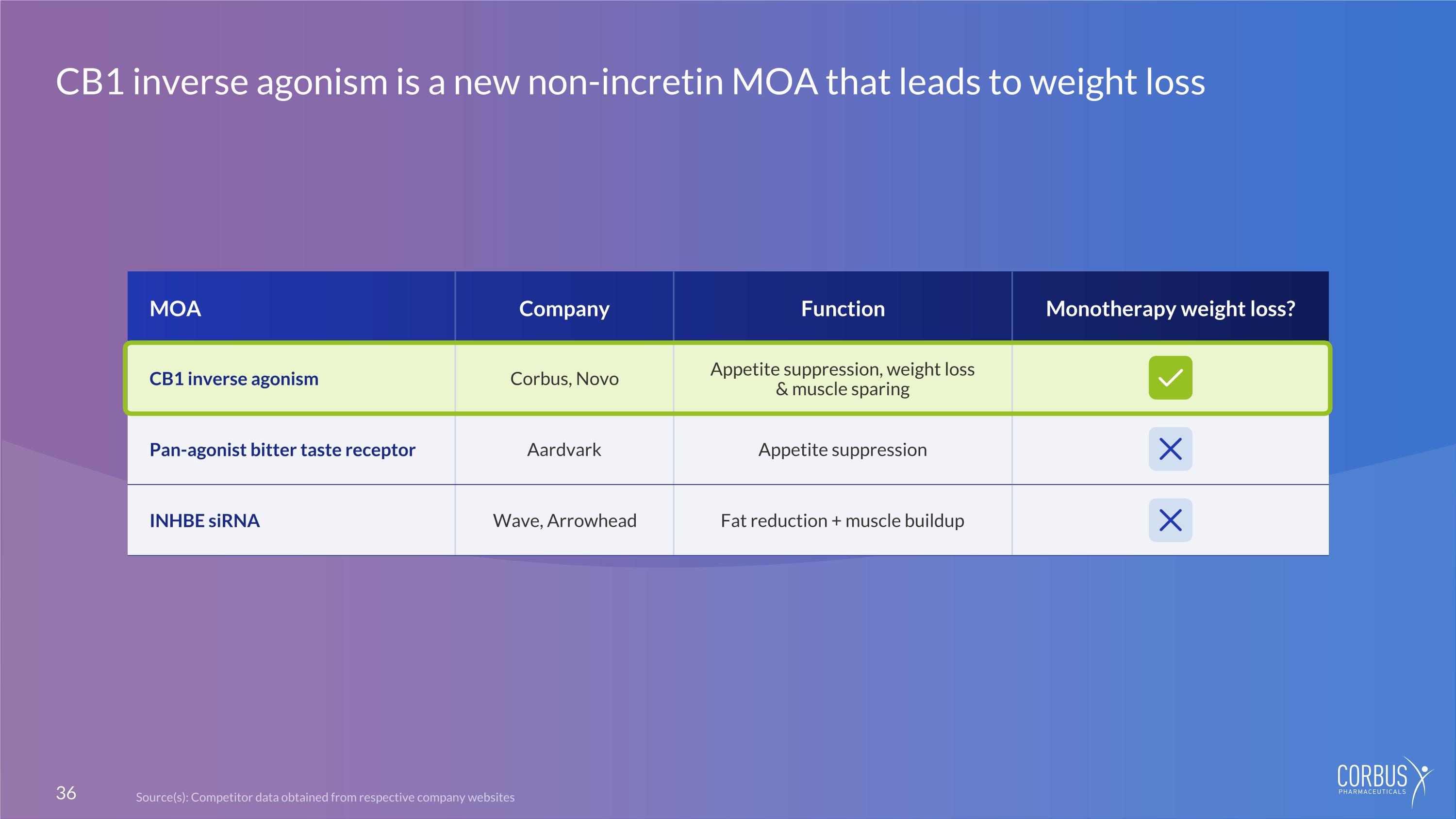
MOA Company Function Monotherapy weight loss? CB1 inverse agonism Corbus, Novo Appetite suppression, weight loss�& muscle sparing Yes Pan-agonist bitter taste receptor Aardvark Appetite suppression No INHBE siRNA Wave, Arrowhead Fat reduction + muscle buildup No CB1 inverse agonism is a new non-incretin MOA that leads to weight loss Source(s): Competitor data obtained from respective company websites
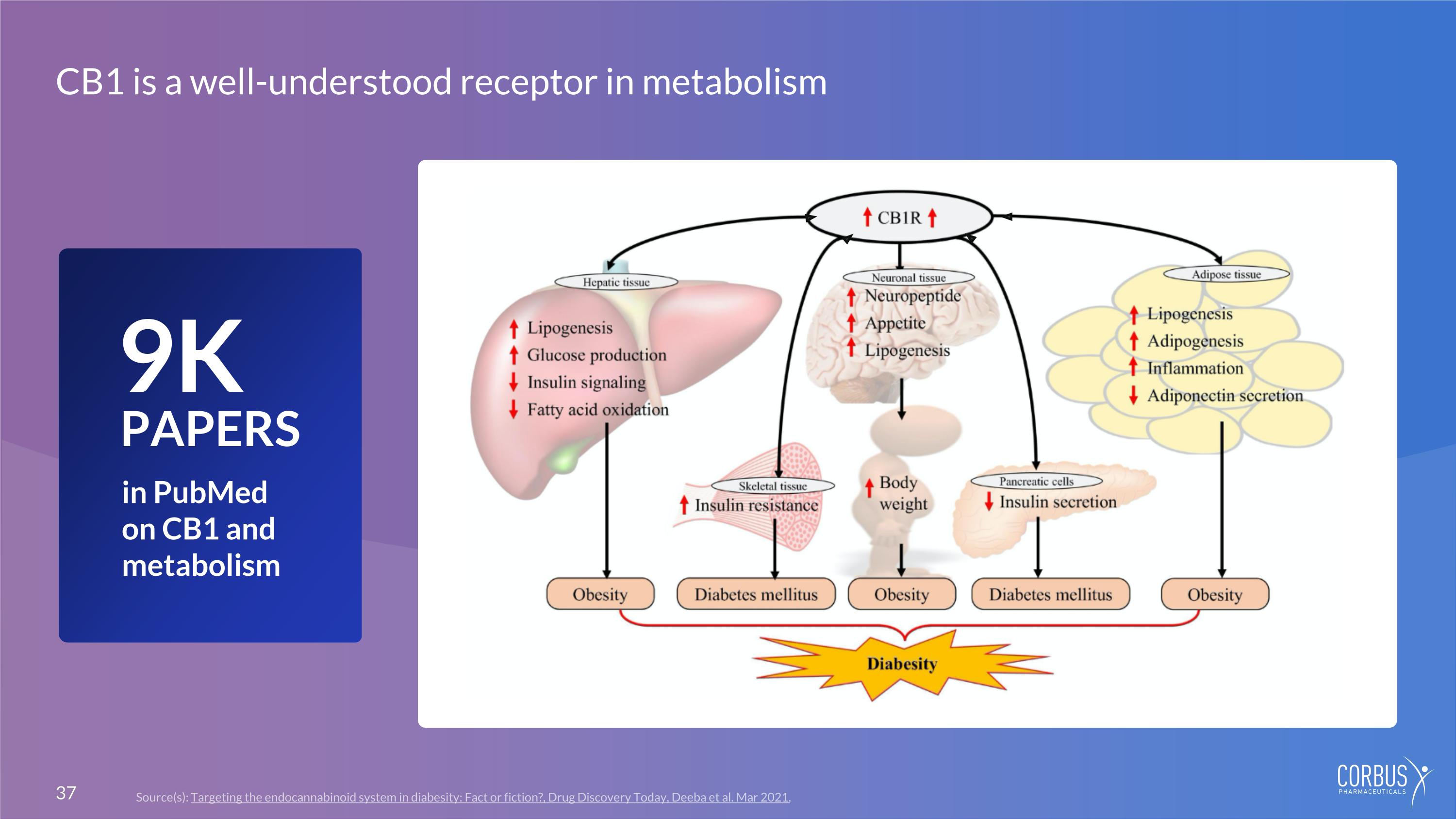
CB1 is a well-understood receptor in metabolism Source(s): Targeting the endocannabinoid system in diabesity: Fact or fiction?, Drug Discovery Today, Deeba et al. Mar 2021. PAPERS 9K in PubMed on CB1 and metabolism
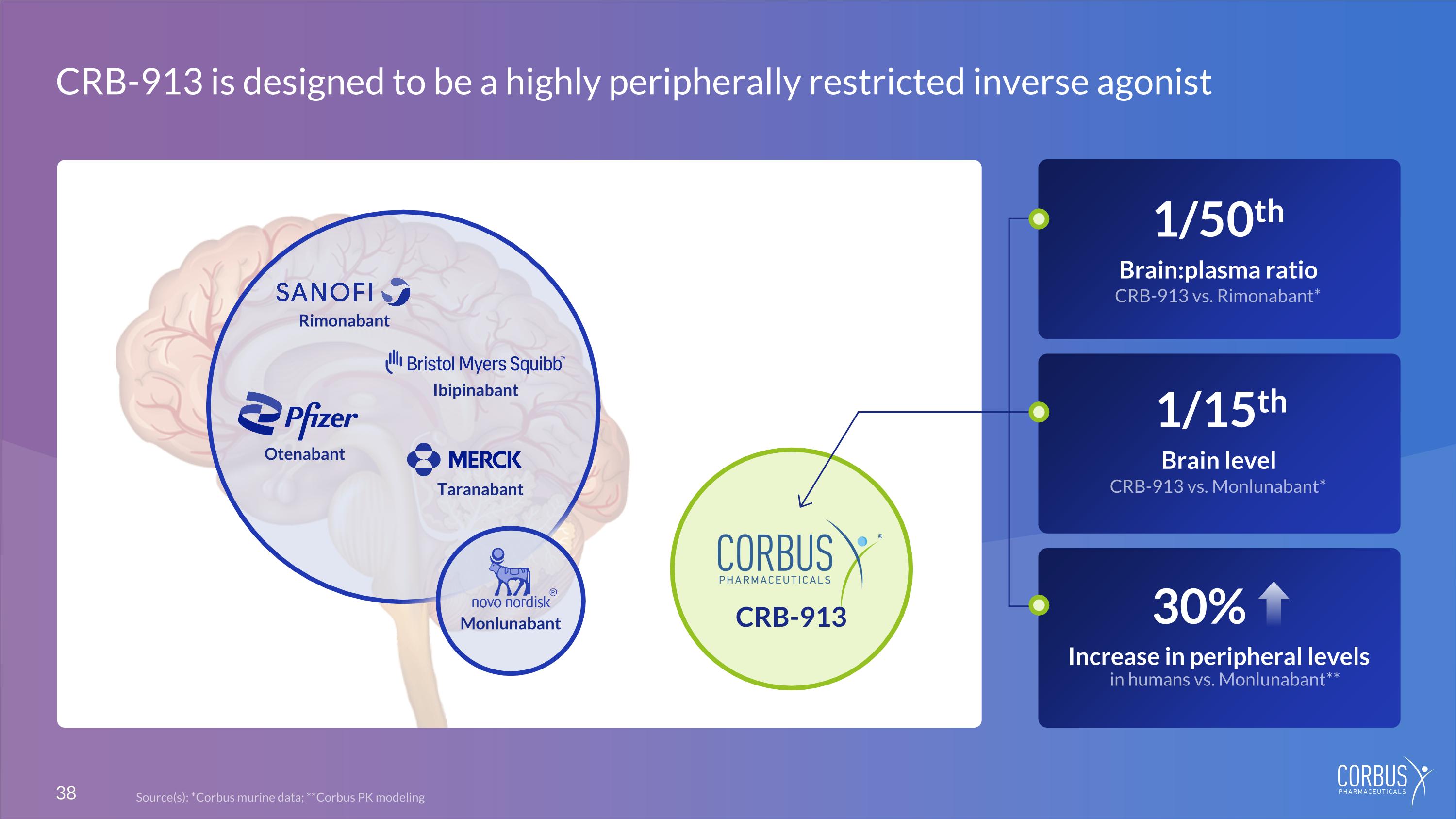
CRB-913 is designed to be a highly peripherally restricted inverse agonist Source(s): *Corbus murine data; **Corbus PK modeling CRB-913 1/50th Brain:plasma ratio CRB-913 vs. Rimonabant* 1/15th Brain level CRB-913 vs. Monlunabant* Rimonabant Otenabant Ibipinabant Taranabant Monlunabant 30% Increase in peripheral levels�in humans vs. Monlunabant**
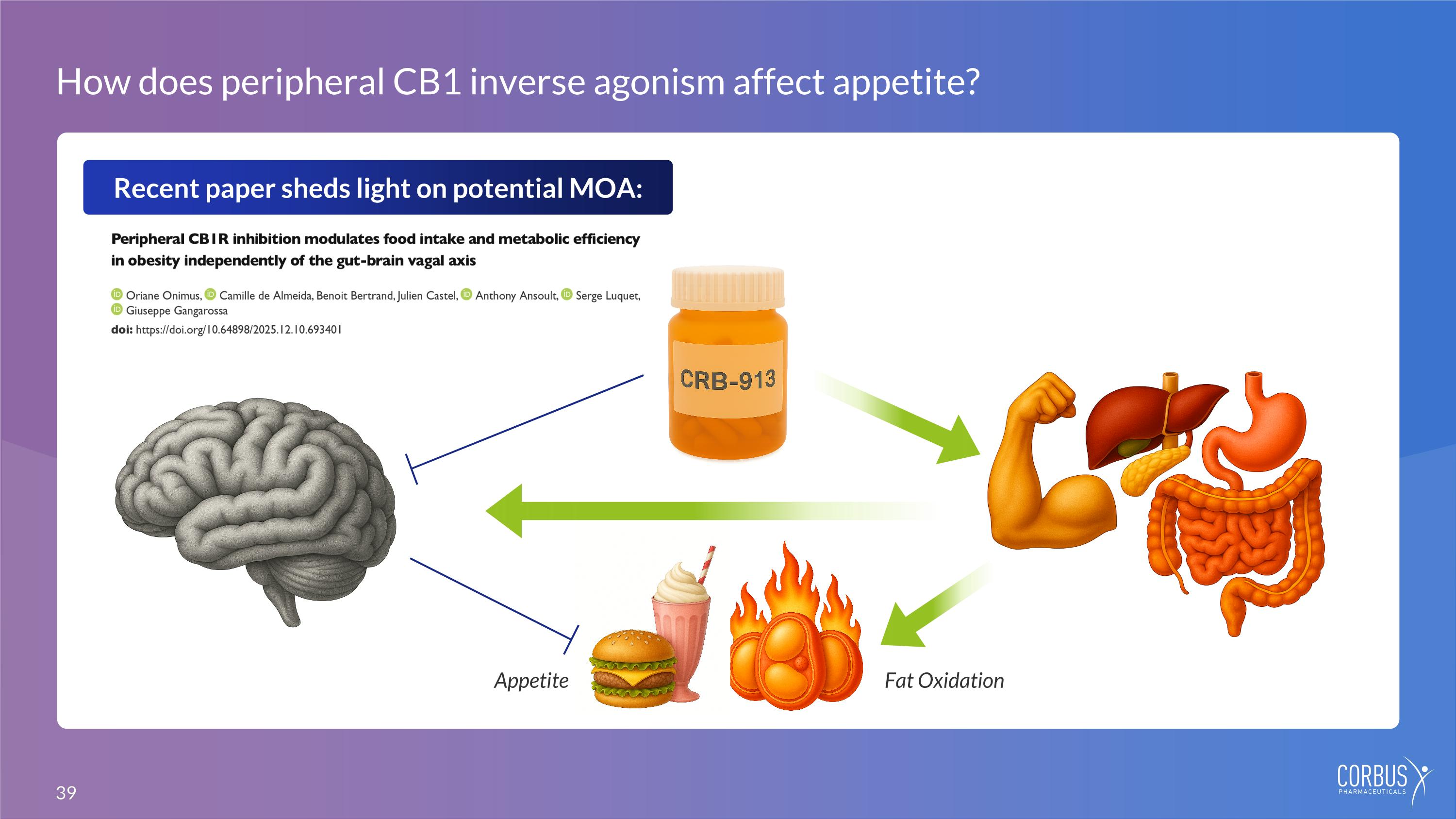
How does peripheral CB1 inverse agonism affect appetite? Appetite Fat Oxidation Recent paper sheds light on potential MOA:
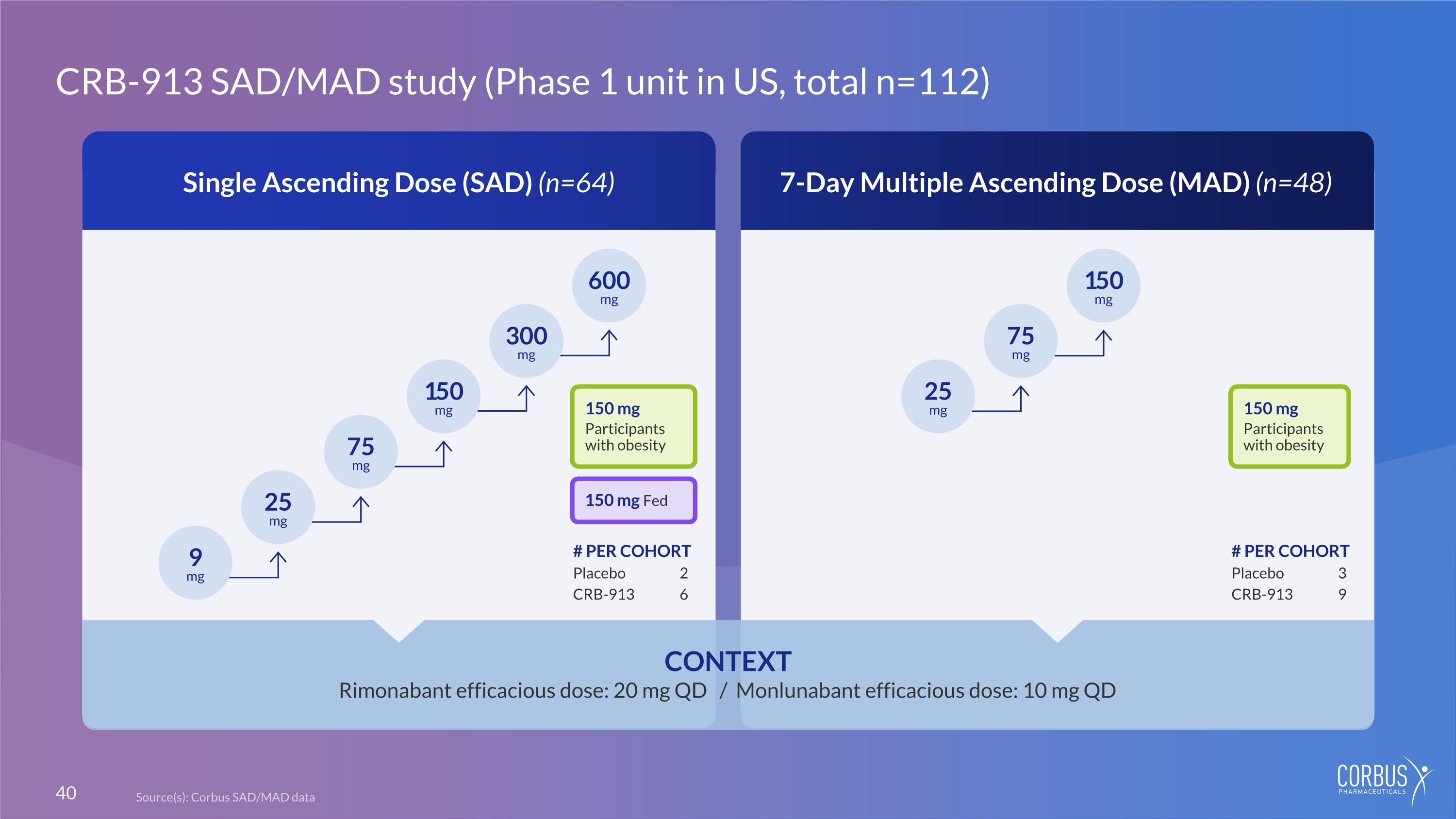
25 �mg 75�mg 150�mg 300�mg CRB-913 SAD/MAD study (Phase 1 unit in US, total n=112) Source(s): Corbus SAD/MAD data 150 mg Participants�with obesity # PER COHORT Placebo 2 CRB-913 6 150 mg Fed Single Ascending Dose (SAD) (n=64) CONTEXT Rimonabant efficacious dose: 20 mg QD / Monlunabant efficacious dose: 10 mg QD 7-Day Multiple Ascending Dose (MAD) (n=48) 600�mg # PER COHORT Placebo 3 CRB-913 9 9 �mg 150 mg Participants�with obesity 25 �mg 75�mg 150�mg
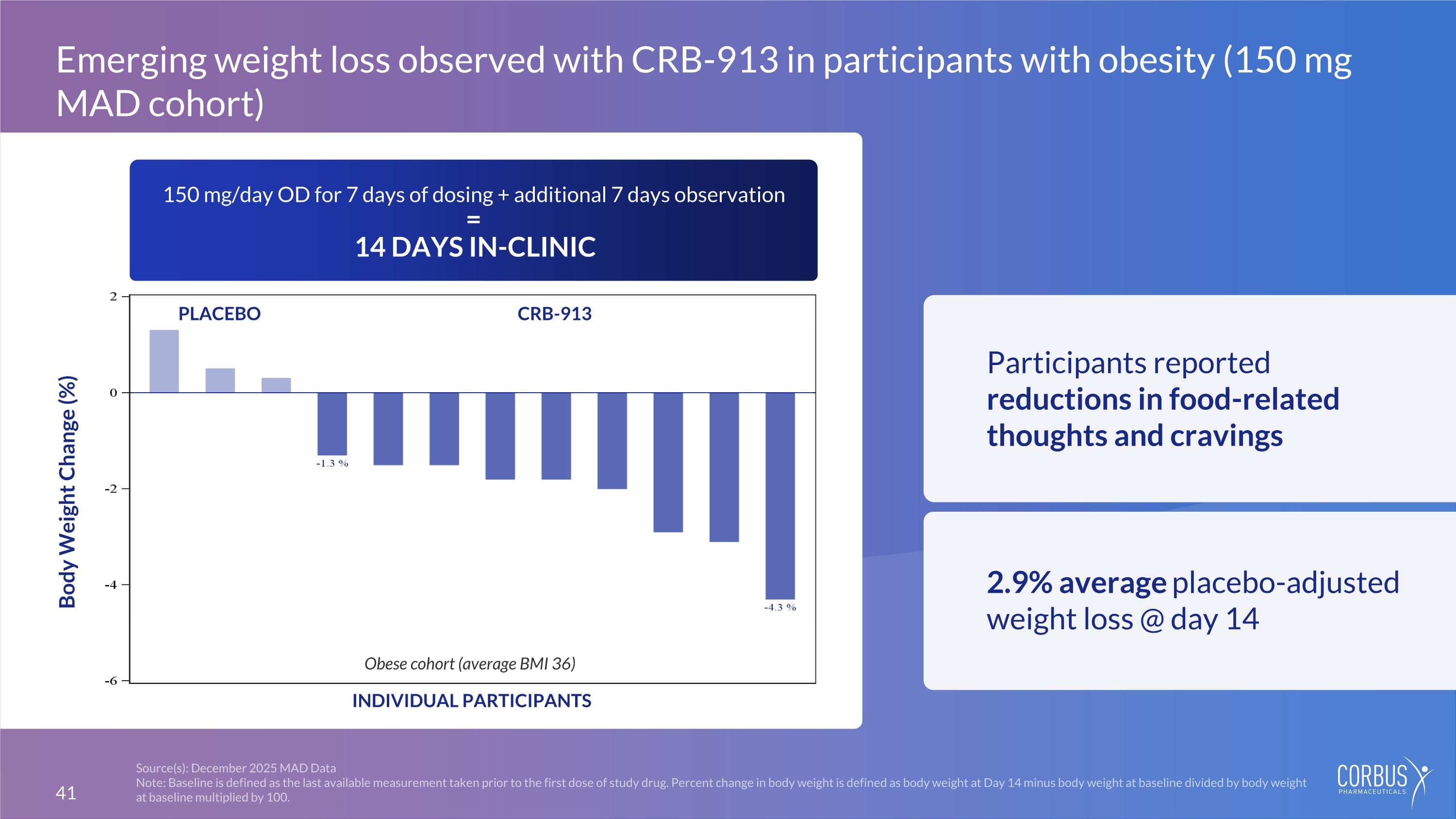
Emerging weight loss observed with CRB-913 in participants with obesity (150 mg MAD cohort) Source(s): December 2025 MAD Data Note: Baseline is defined as the last available measurement taken prior to the first dose of study drug. Percent change in body weight is defined as body weight at Day 14 minus body weight at baseline divided by body weight at baseline multiplied by 100. INDIVIDUAL PARTICIPANTS Obese cohort (average BMI 36) PLACEBO CRB-913 Body Weight Change (%) 150 mg/day OD for 7 days of dosing + additional 7 days observation�=�14 DAYS IN-CLINIC Participants reported reductions in food-related thoughts and cravings 2.9% average placebo-adjusted weight loss @ day 14
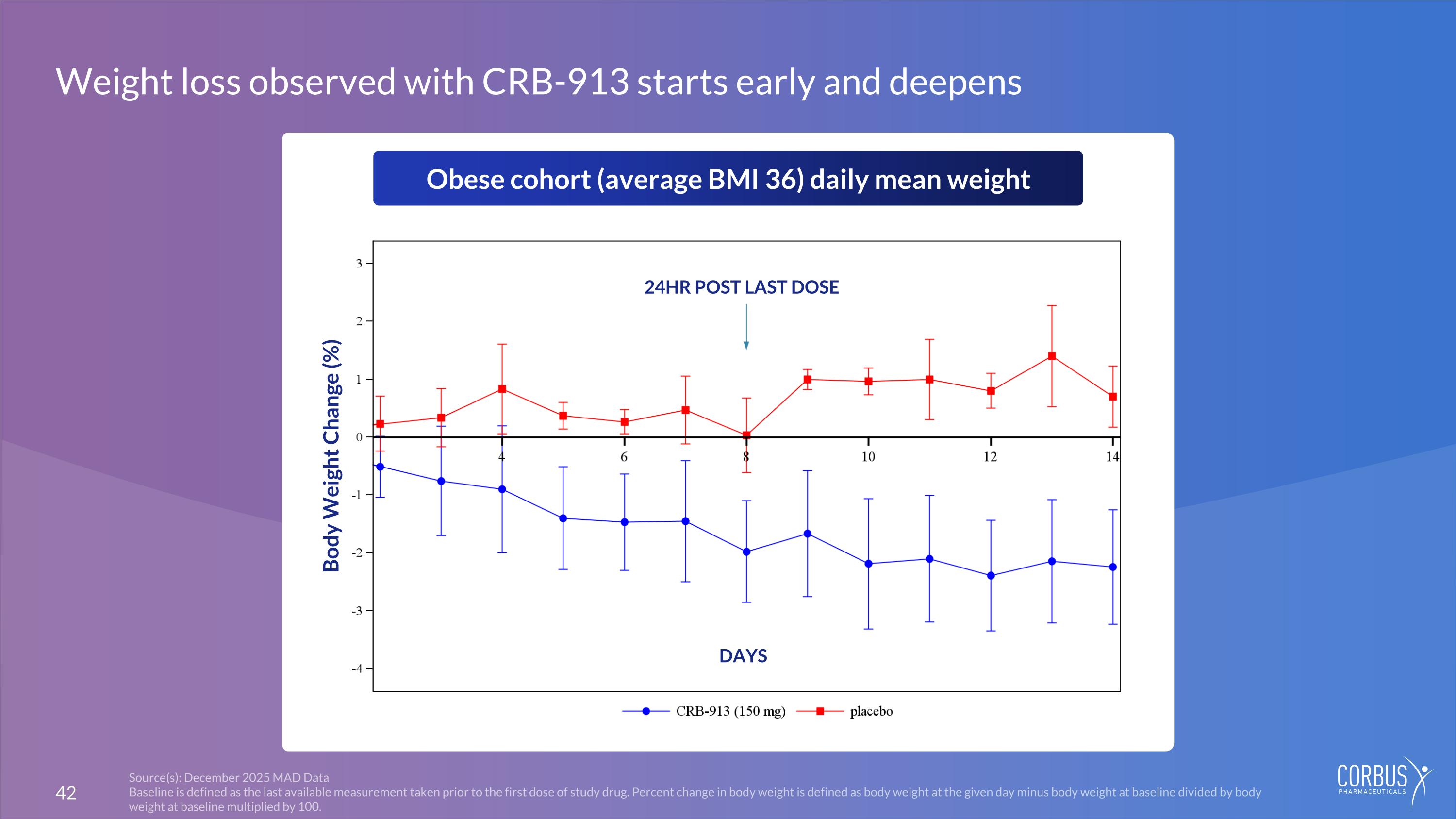
Weight loss observed with CRB-913 starts early and deepens Source(s): December 2025 MAD Data Baseline is defined as the last available measurement taken prior to the first dose of study drug. Percent change in body weight is defined as body weight at the given day minus body weight at baseline divided by body weight at baseline multiplied by 100. Body Weight Change (%) DAYS 24HR POST LAST DOSE Obese cohort (average BMI 36) daily mean weight
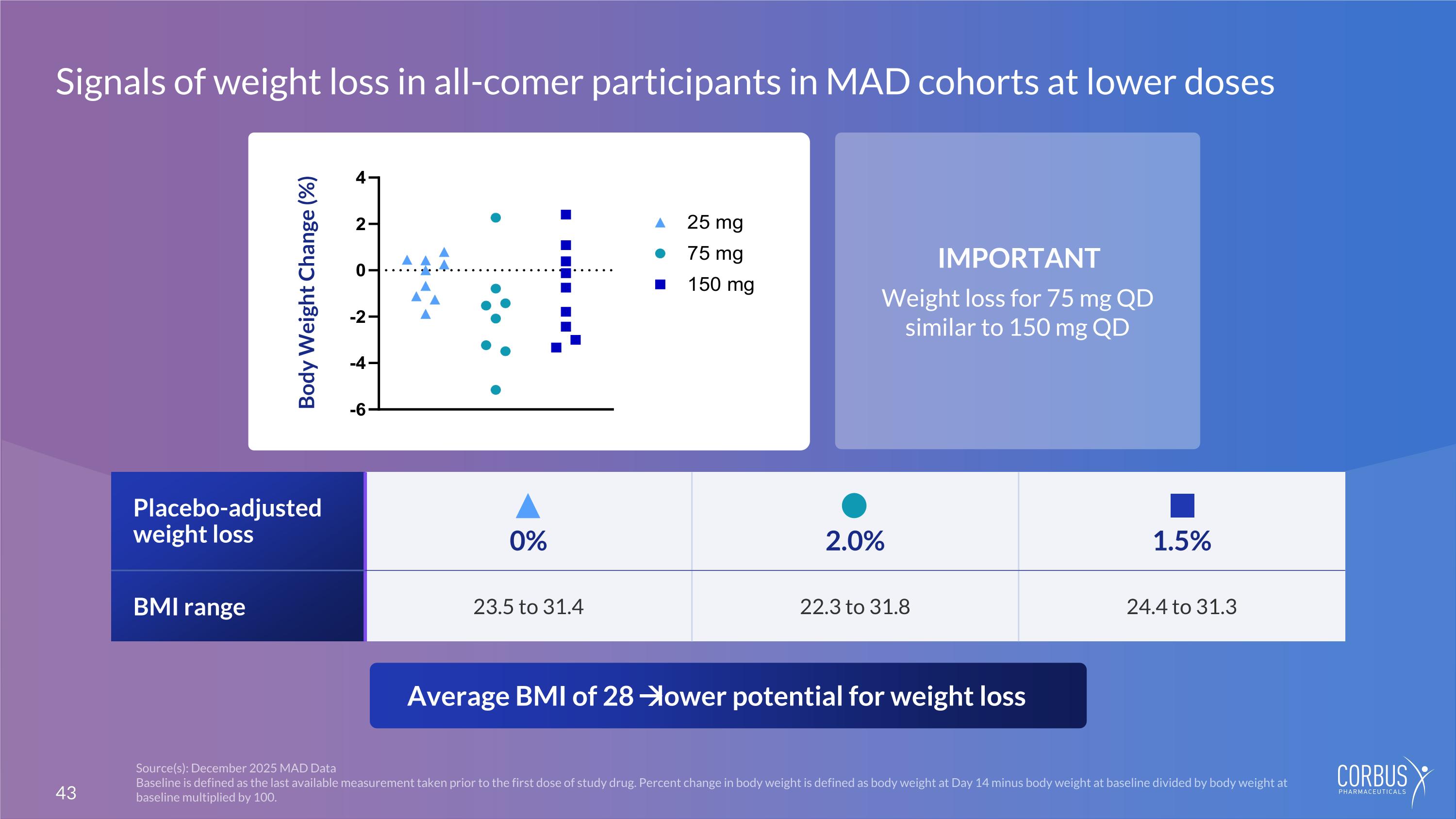
Placebo-adjusted�weight loss 0% 2.0% 1.5% BMI range 23.5 to 31.4 22.3 to 31.8 24.4 to 31.3 Signals of weight loss in all-comer participants in MAD cohorts at lower doses Source(s): December 2025 MAD Data Baseline is defined as the last available measurement taken prior to the first dose of study drug. Percent change in body weight is defined as body weight at Day 14 minus body weight at baseline divided by body weight at baseline multiplied by 100. Average BMI of 28 lower potential for weight loss IMPORTANT Weight loss for 75 mg QD similar to 150 mg QD Body Weight Change (%)
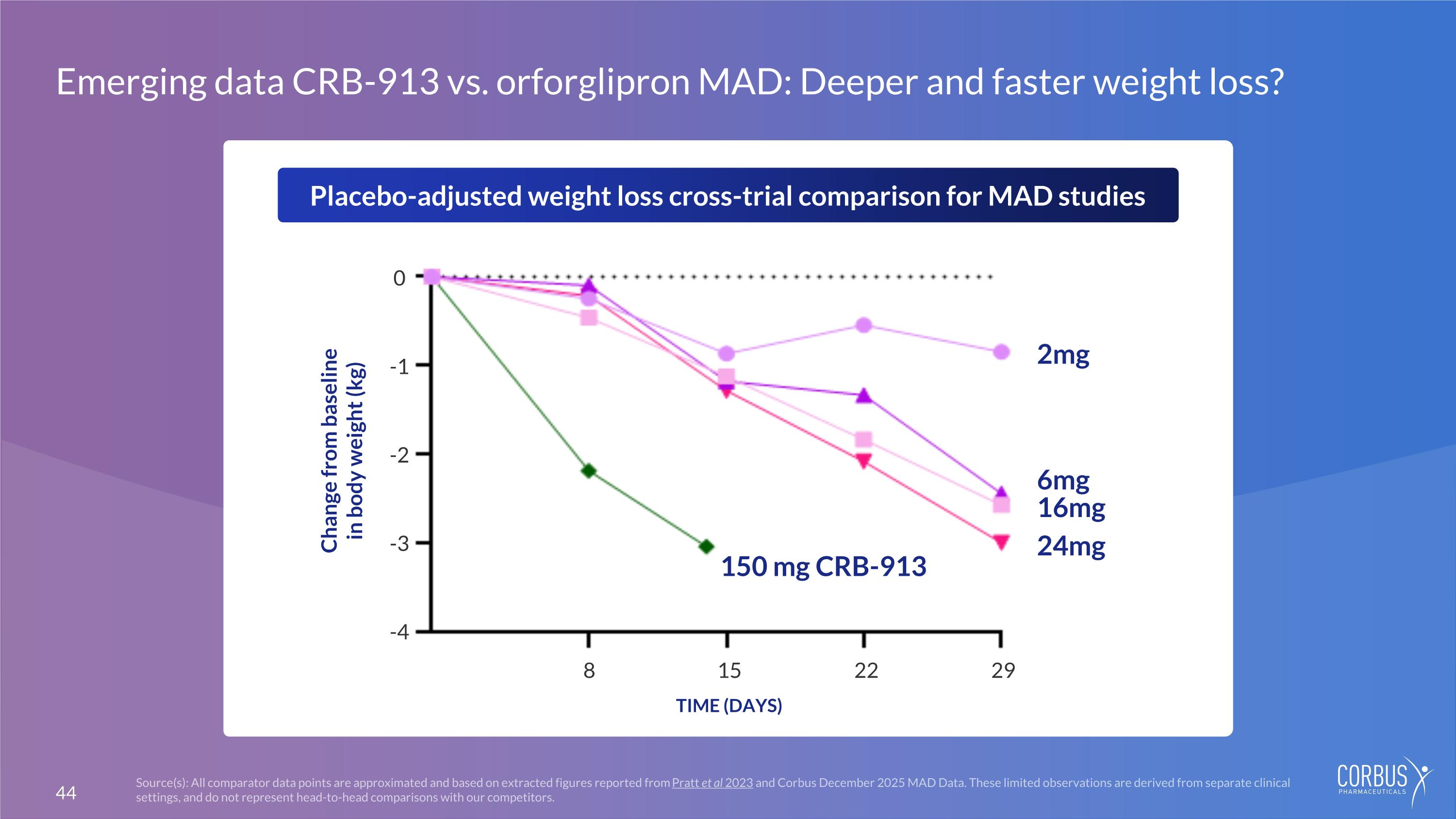
Placebo-adjusted weight loss cross-trial comparison for MAD studies 2mg 6mg 16mg 24mg 150 mg CRB-913 0 -1 -2 -3 -4 8 15 22 29 Emerging data CRB-913 vs. orforglipron MAD: Deeper and faster weight loss? Source(s): All comparator data points are approximated and based on extracted figures reported from Pratt et al 2023 and Corbus December 2025 MAD Data. These limited observations are derived from separate clinical settings, and do not represent head-to-head comparisons with our competitors. Change from baseline�in body weight (kg) TIME (DAYS)
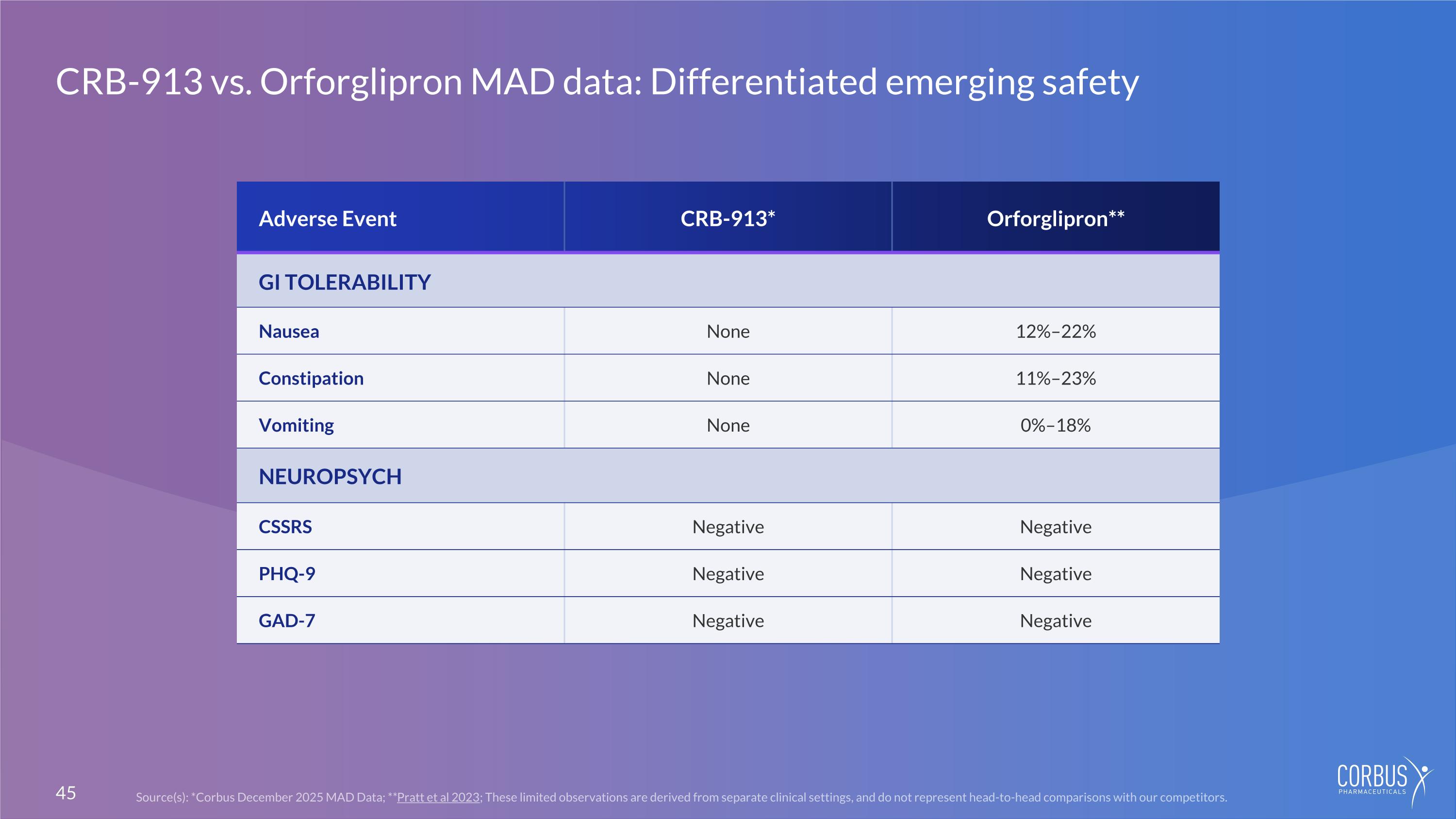
Adverse Event CRB-913* Orforglipron** GI TOLERABILITY Nausea None 12%–22% Constipation None 11%–23% Vomiting None 0%–18% NEUROPSYCH CSSRS Negative Negative PHQ-9 Negative Negative GAD-7 Negative Negative CRB-913 vs. Orforglipron MAD data: Differentiated emerging safety Source(s): *Corbus December 2025 MAD Data; **Pratt et al 2023; These limited observations are derived from separate clinical settings, and do not represent head-to-head comparisons with our competitors.
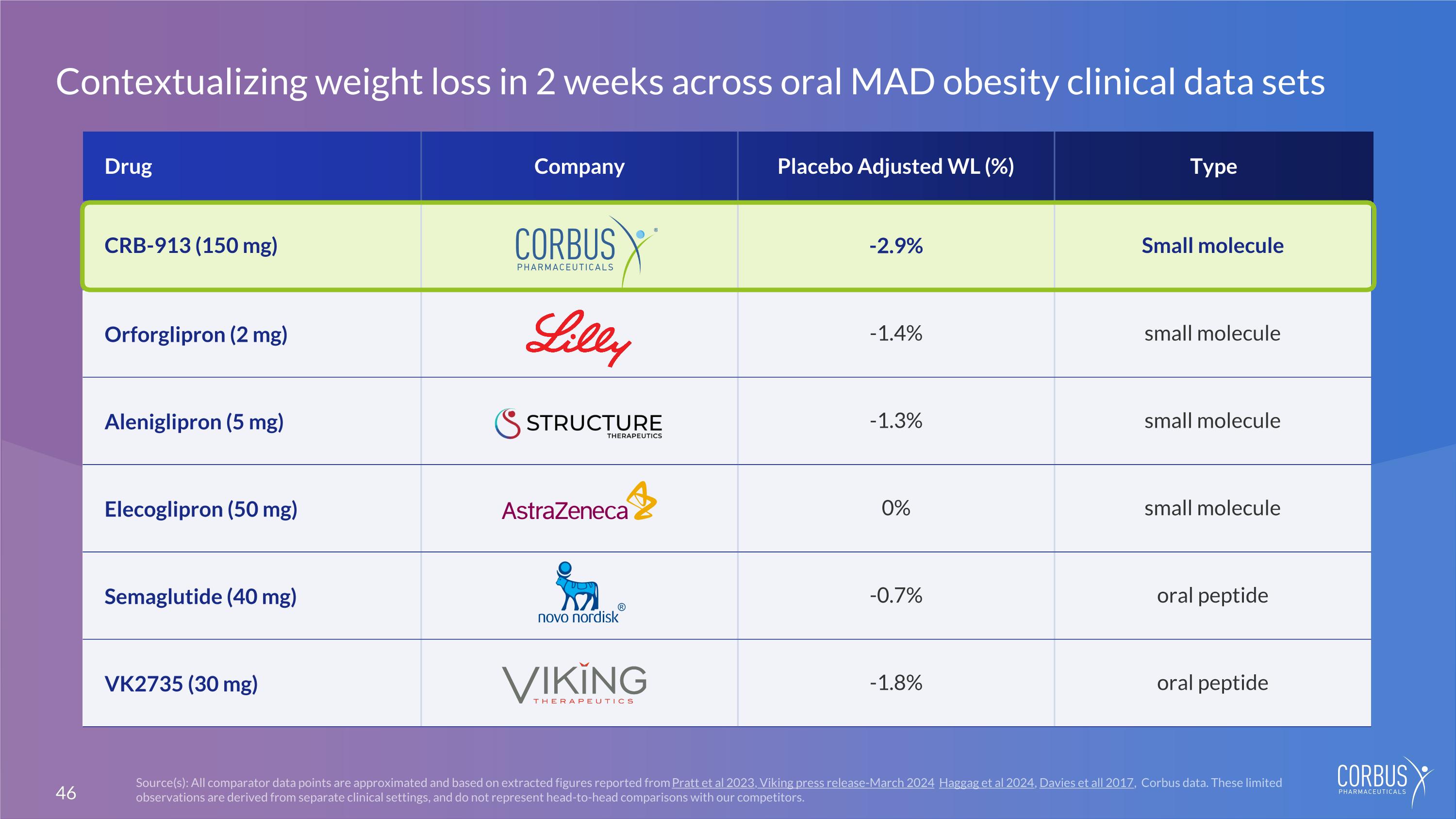
Drug Company Placebo Adjusted WL (%) Type CRB-913 (150 mg) -2.9% Small molecule Orforglipron (2 mg) -1.4% small molecule Aleniglipron (5 mg) -1.3% small molecule Elecoglipron (50 mg) 0% small molecule Semaglutide (40 mg) -0.7% oral peptide VK2735 (30 mg) -1.8% oral peptide Contextualizing weight loss in 2 weeks across oral MAD obesity clinical data sets Source(s): All comparator data points are approximated and based on extracted figures reported from Pratt et al 2023, Viking press release-March 2024 Haggag et al 2024, Davies et all 2017, Corbus data. These limited observations are derived from separate clinical settings, and do not represent head-to-head comparisons with our competitors.
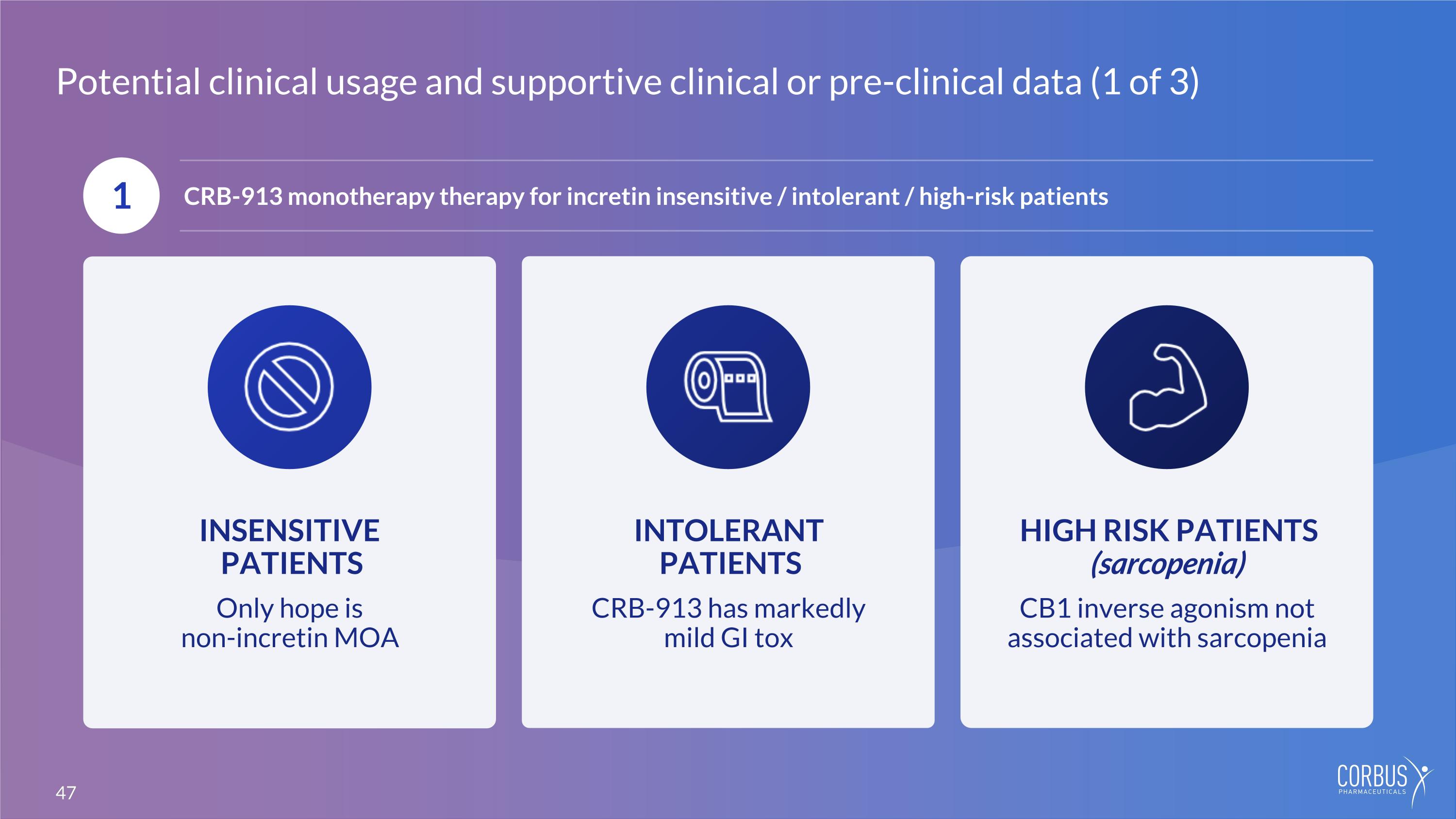
Potential clinical usage and supportive clinical or pre-clinical data (1 of 3) INSENSITIVE�PATIENTS Only hope is�non-incretin MOA INTOLERANT�PATIENTS CRB-913 has markedly�mild GI tox HIGH RISK PATIENTS (sarcopenia) CB1 inverse agonism not associated with sarcopenia 1 CRB-913 monotherapy therapy for incretin insensitive / intolerant / high-risk patients
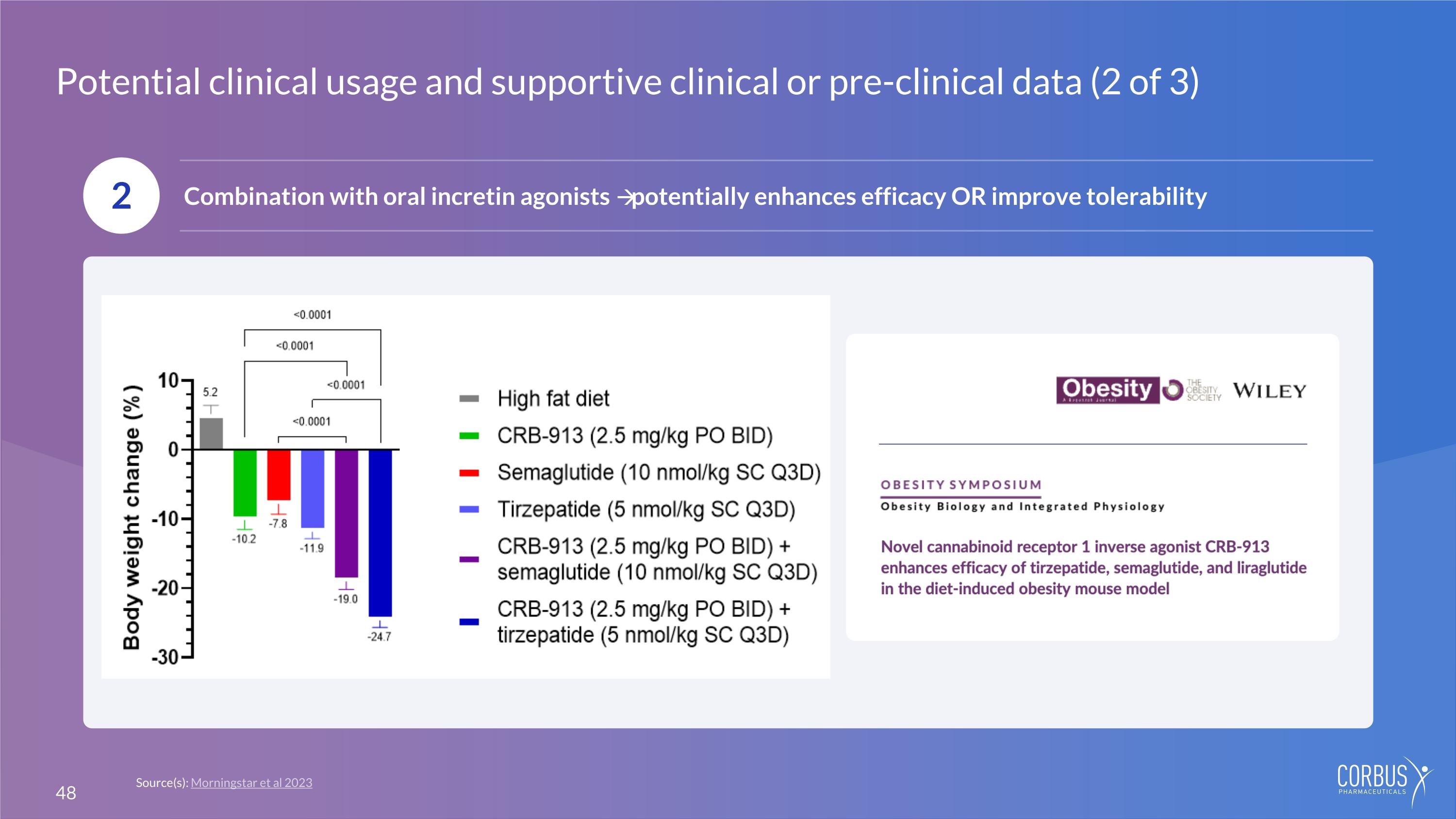
Potential clinical usage and supportive clinical or pre-clinical data (2 of 3) Source(s): Morningstar et al 2023 2 Combination with oral incretin agonists potentially enhances efficacy OR improve tolerability
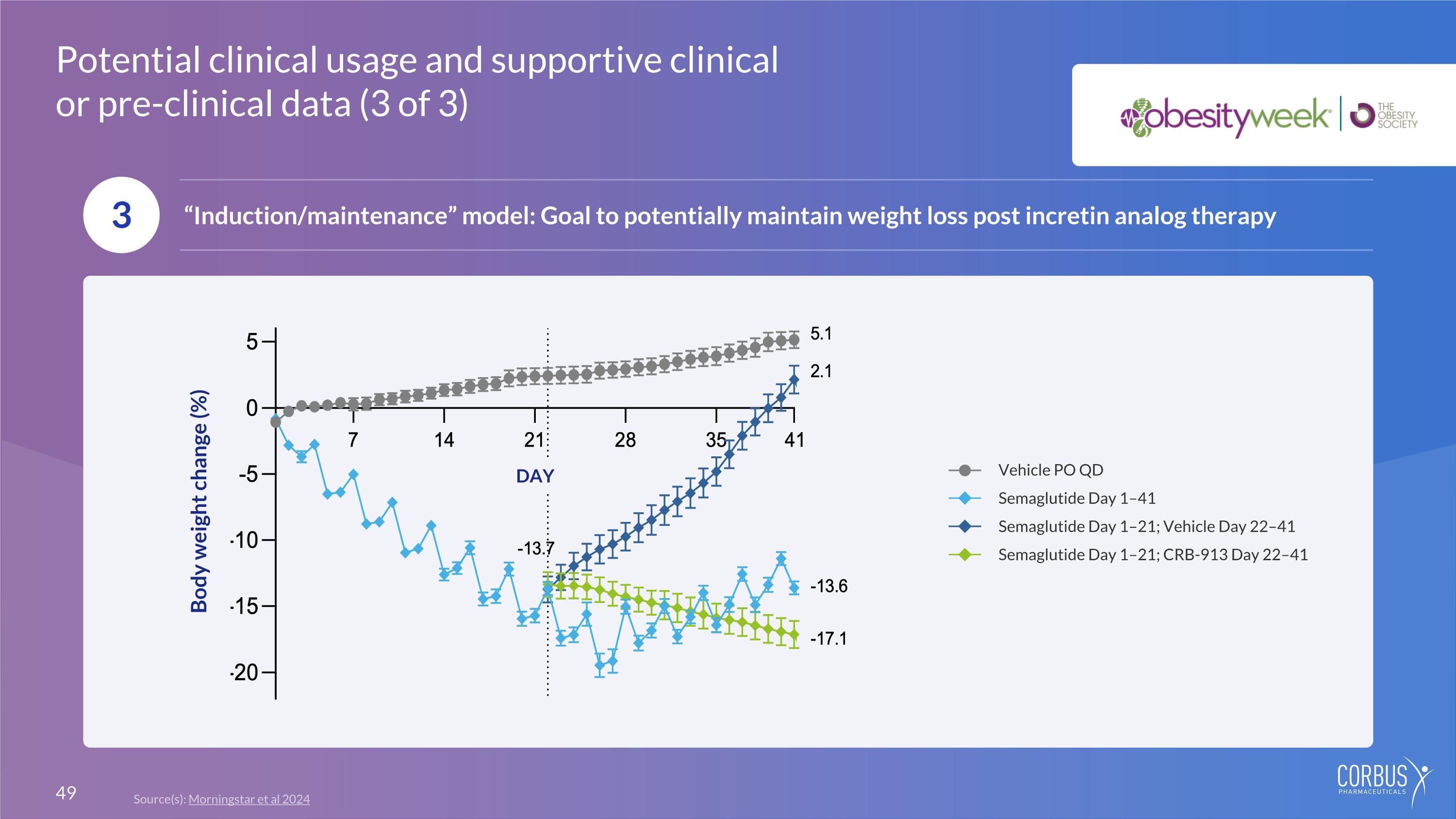
Potential clinical usage and supportive clinical�or pre-clinical data (3 of 3) Source(s): Morningstar et al 2024 3 “Induction/maintenance” model: Goal to potentially maintain weight loss post incretin analog therapy Vehicle PO QD Semaglutide Day 1–41 Semaglutide Day 1–21; Vehicle Day 22–41 Semaglutide Day 1–21; CRB-913 Day 22–41 DAY Body weight change (%)
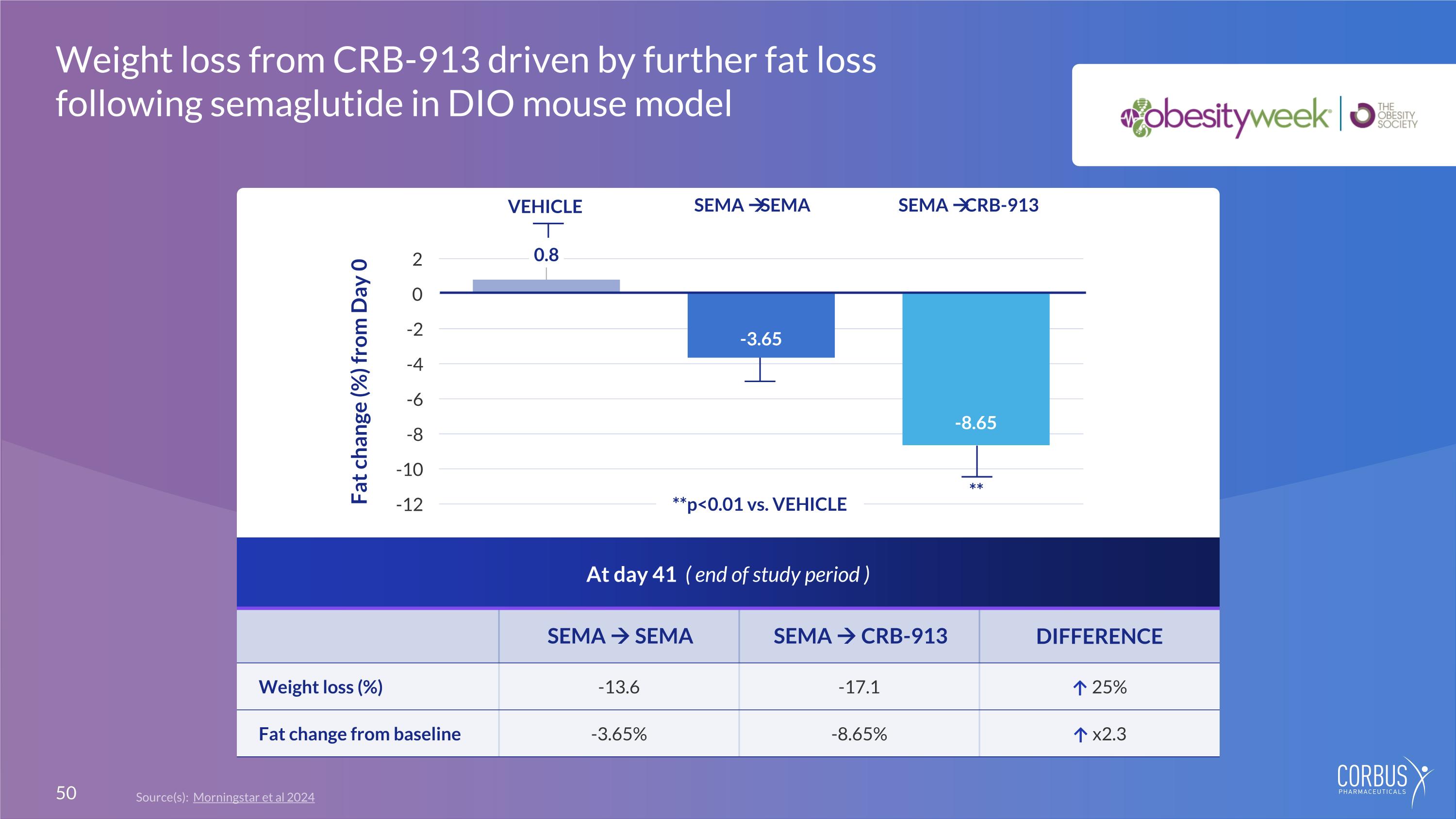
At day 41 ( end of study period ) SEMA SEMA SEMA CRB-913 DIFFERENCE Weight loss (%) -13.6 -17.1 ↑ 25% Fat change from baseline -3.65% -8.65% ↑ x2.3 Weight loss from CRB-913 driven by further fat loss�following semaglutide in DIO mouse model Source(s): Morningstar et al 2024 ** SEMA SEMA SEMA CRB-913 VEHICLE Fat change (%) from Day 0 **p<0.01 vs. VEHICLE
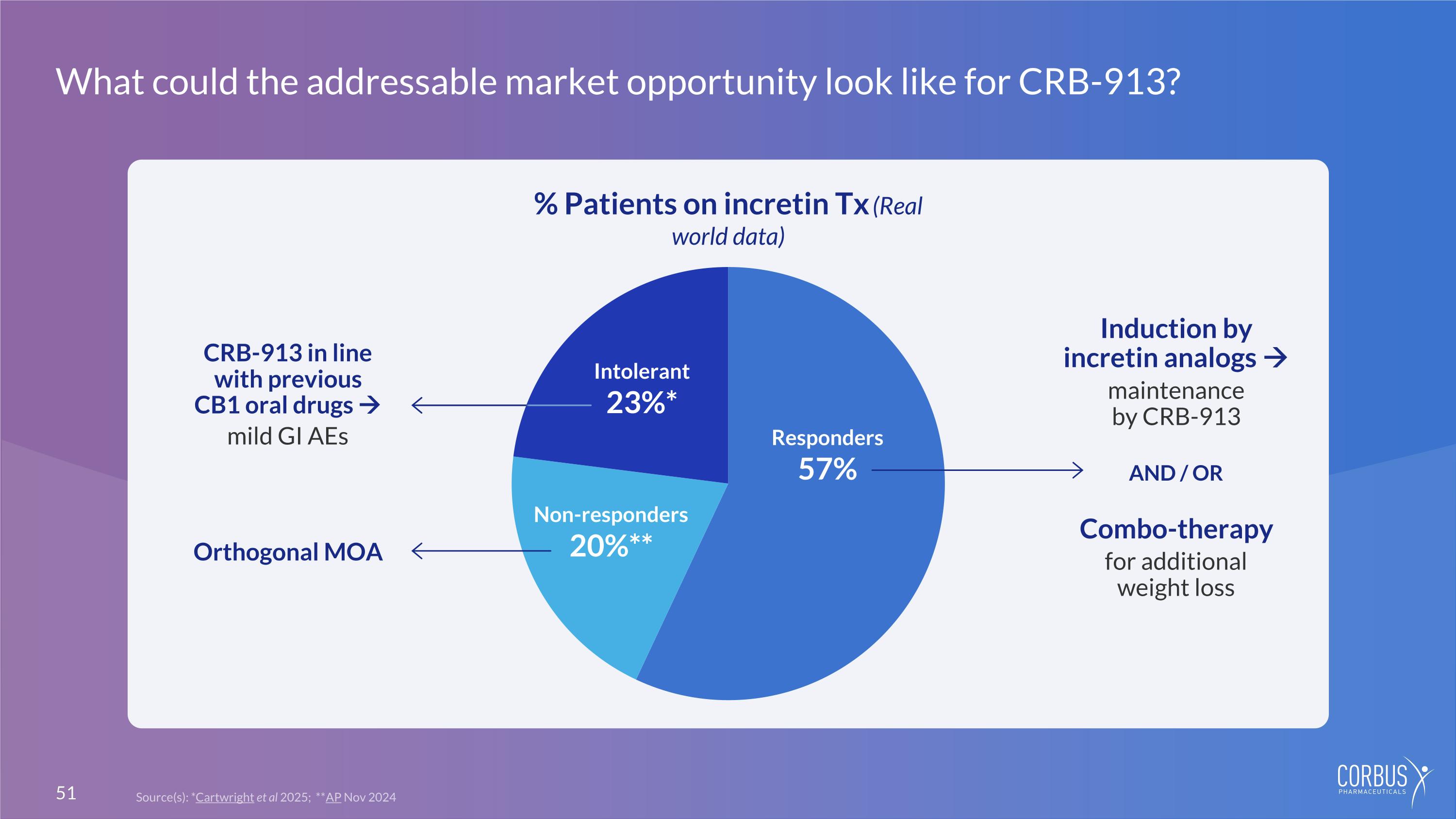
What could the addressable market opportunity look like for CRB-913? Source(s): *Cartwright et al 2025; **AP Nov 2024 % Patients on incretin Tx (Real world data) Induction by�incretin analogs maintenance�by CRB-913 AND / OR Combo-therapy for additional�weight loss Orthogonal MOA CRB-913 in line�with previous�CB1 oral drugs mild GI AEs
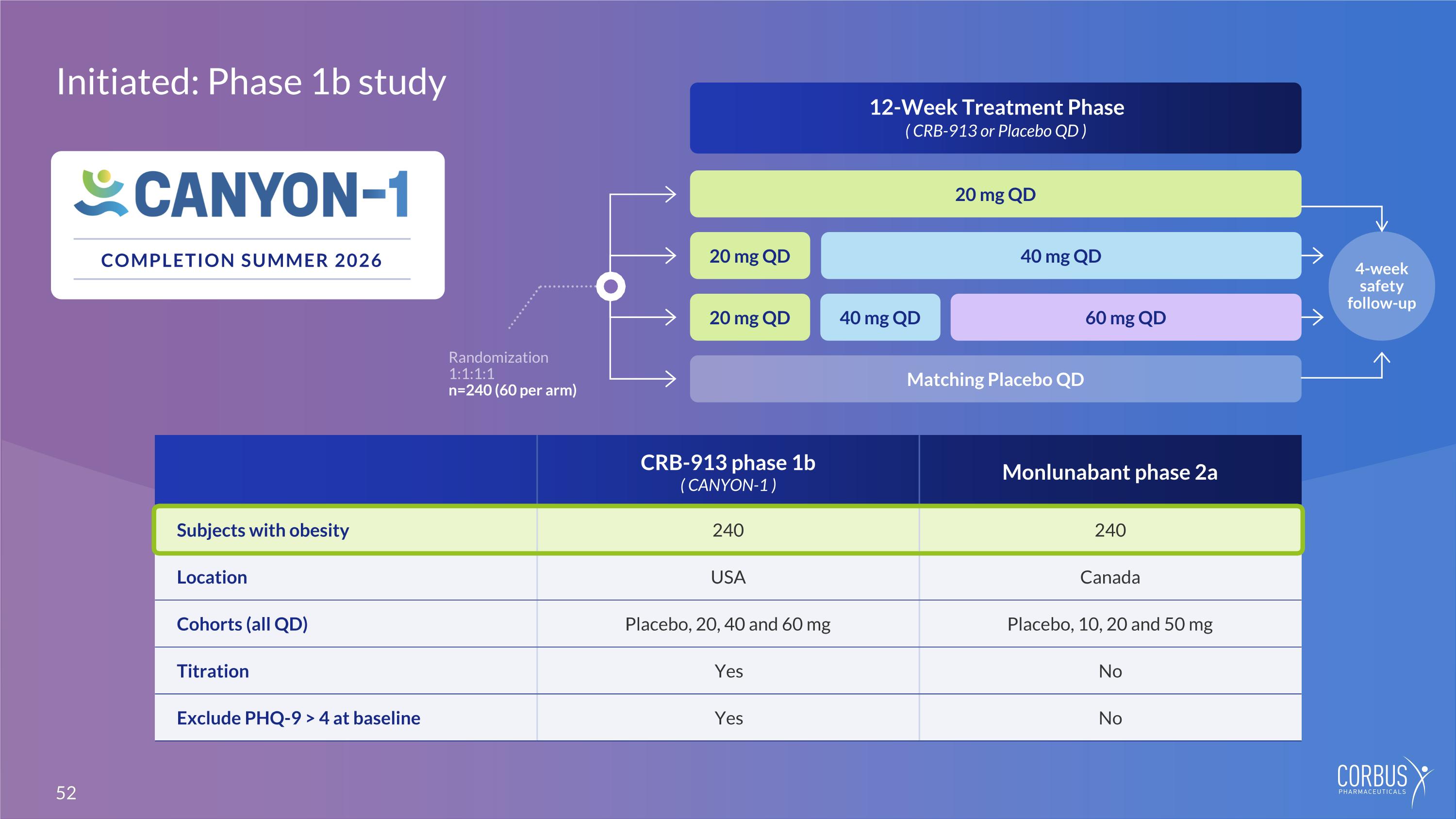
Initiated: Phase 1b study COMPLETION SUMMER 2026 CRB-913 phase 1b ( CANYON-1 ) Monlunabant phase 2a Subjects with obesity 240 240 Location USA Canada Cohorts (all QD) Placebo, 20, 40 and 60 mg Placebo, 10, 20 and 50 mg Titration Yes No Exclude PHQ-9 > 4 at baseline Yes No Matching Placebo QD 12-Week Treatment Phase ( CRB-913 or Placebo QD ) 20 mg QD 20 mg QD 40 mg QD 20 mg QD 40 mg QD 60 mg QD 4-week safety follow-up Randomization 1:1:1:1 n=240 (60 per arm)
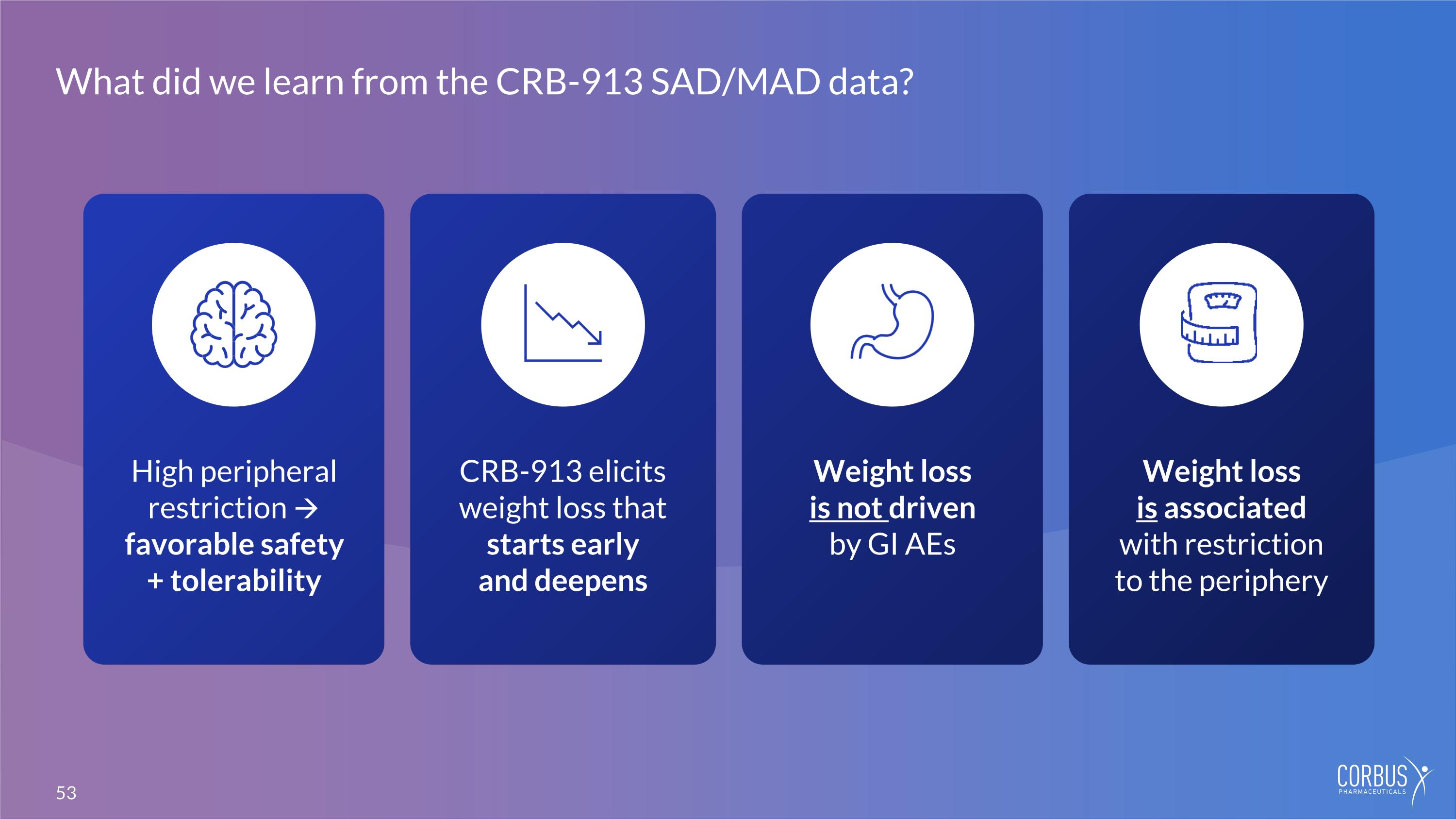
What did we learn from the CRB-913 SAD/MAD data? High peripheral restriction favorable safety�+ tolerability CRB-913 elicits�weight loss that�starts early�and deepens Weight loss�is not driven�by GI AEs Weight loss�is associated�with restriction�to the periphery

Leadership�Upcoming Catalysts

Management Team Yuval Cohen, PhD Chief Executive Officer, Director Corbus co-founder and Chief Executive Officer since 2014. Previously the President�and co-founder of Celsus Therapeutics from 2005. Sean Moran, CPA, MBA Chief Financial Officer Corbus co-founder and Chief Financial Officer since 2014. Prior senior financial management experience�in emerging biotech and medical device companies. Ian Hodgson, PhD Chief Operating Officer Dr. Hodgson joined Corbus in 2022. Previously he held senior leadership positions in biotech�and contract research organizations. Most recently served as V.P., Head of Clinical Services at TMC Pharma. Christina Bertsch, M.A. Head of Human Resources Accomplished senior human resource executive providing strategic HR consulting services to both large and small businesses across�a variety of industries. Nishant Saxena, MBA Chief Business Officer Mr. Saxena joined Corbus in May 2026. Most recently he was CFO at Jeune Aesthetics, Inc. and previously was a healthcare investment banker at Evercore.
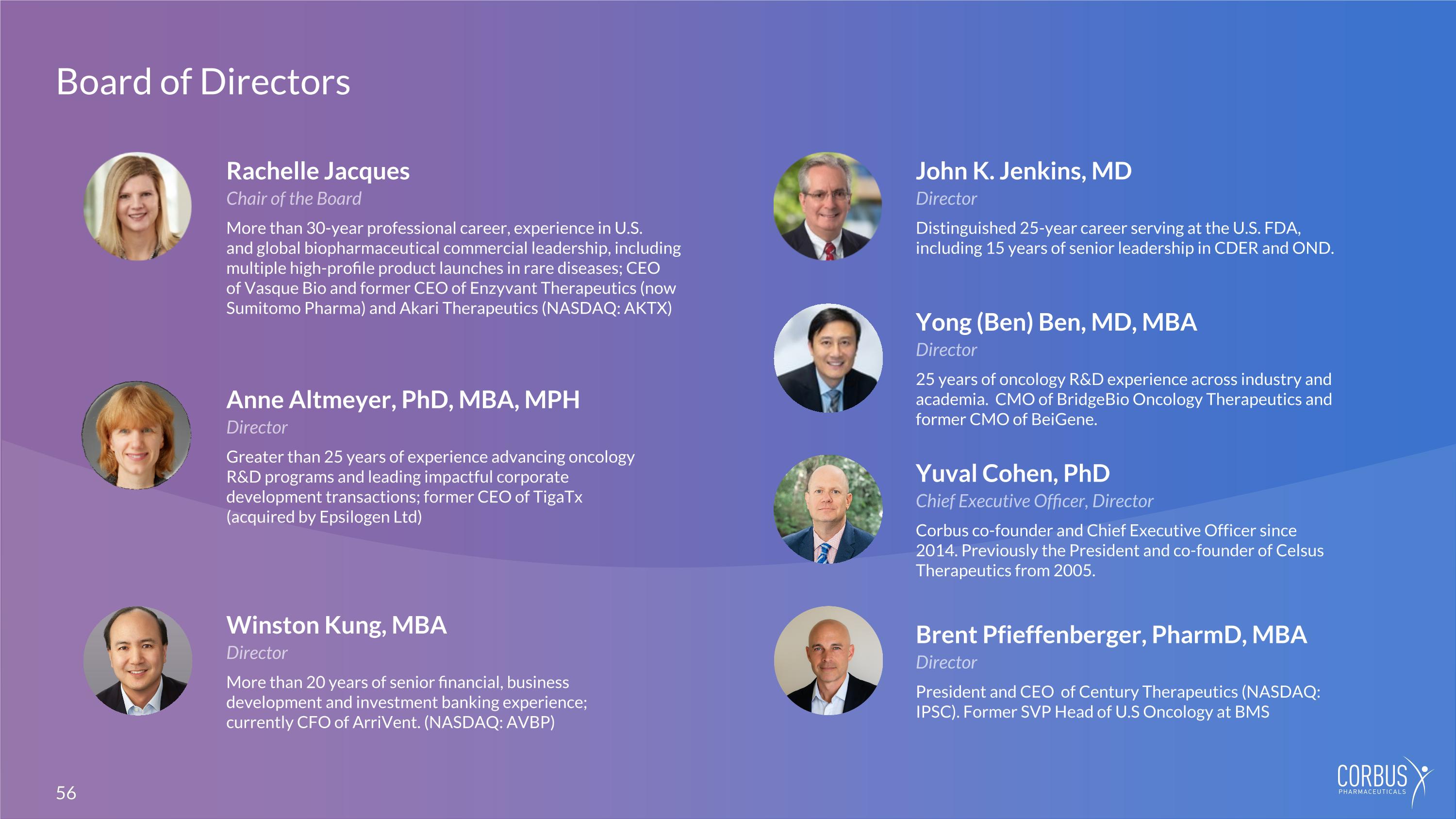
Board of Directors Winston Kung, MBA Director More than 20 years of senior financial, business development and investment banking experience; currently CFO of ArriVent. (NASDAQ: AVBP) Yuval Cohen, PhD Chief Executive Officer, Director Corbus co-founder and Chief Executive Officer since 2014. Previously the President and co-founder of Celsus Therapeutics from 2005. Anne Altmeyer, PhD, MBA, MPH Director Greater than 25 years of experience advancing oncology R&D programs and leading impactful corporate development transactions; former CEO of TigaTx (acquired by Epsilogen Ltd) Yong (Ben) Ben, MD, MBA Director 25 years of oncology R&D experience across industry and academia. CMO of BridgeBio Oncology Therapeutics and former CMO of BeiGene. John K. Jenkins, MD Director Distinguished 25-year career serving at the U.S. FDA, including 15 years of senior leadership in CDER and OND. Rachelle Jacques Chair of the Board More than 30-year professional career, experience in U.S.�and global biopharmaceutical commercial leadership, including multiple high-profile product launches in rare diseases; CEO of Vasque Bio and former CEO of Enzyvant Therapeutics (now Sumitomo Pharma) and Akari Therapeutics (NASDAQ: AKTX) Brent Pfieffenberger, PharmD, MBA Director President and CEO of Century Therapeutics (NASDAQ: IPSC). Former SVP Head of U.S Oncology at BMS
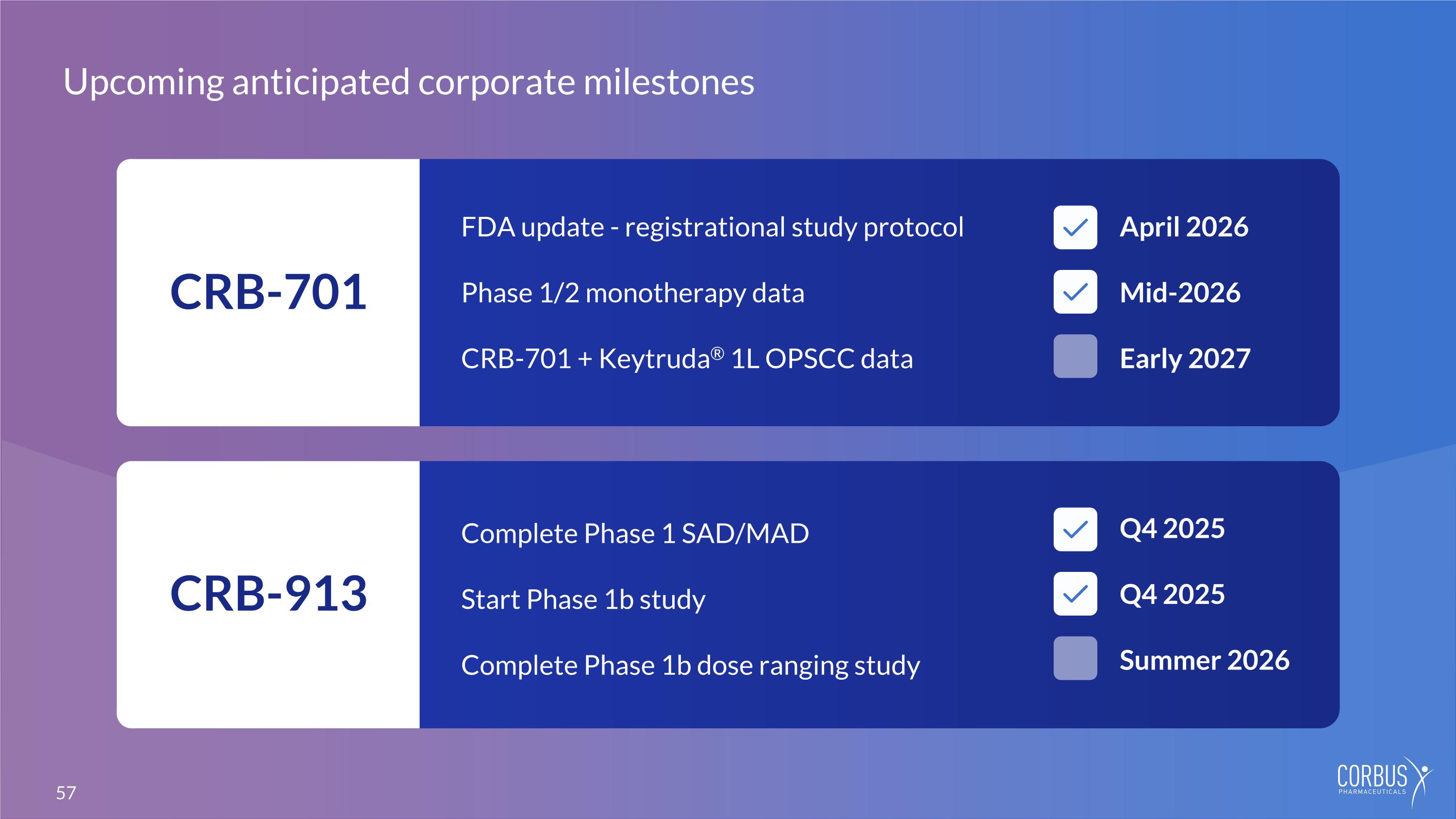
Upcoming anticipated corporate milestones FDA update - registrational study protocol Phase 1/2 monotherapy data CRB-701 + Keytruda® 1L OPSCC data April 2026 Mid-2026 Early 2027 CRB-701 Complete Phase 1 SAD/MAD Start Phase 1b study Complete Phase 1b dose ranging study Q4 2025 Q4 2025 Summer 2026 CRB-913