cstl-20220509
0001447362FALSE00014473622022-05-092022-05-09

UNITED STATES
SECURITIES AND EXCHANGE COMMISSION
Washington, D.C. 20549

FORM 8-K
CURRENT REPORT
Pursuant to Section 13 or 15(d)
of the Securities Exchange Act of 1934

Date of Report (Date of earliest event reported): May 9, 2022

Castle Biosciences, Inc.
(Exact name of registrant as specified in its charter)
     
Delaware 001-38984 77-0701774
(state or other jurisdiction
of incorporation)
 (Commission
File Number)
 (I.R.S. Employer
Identification No.)
505 S. Friendswood Drive, Suite 401
Friendswood, Texas
77546
(Address of principal executive offices)(Zip Code)

Registrant’s telephone number, including area code: (866) 788-9007

(Former name or former address, if changed since last report.)

Check the appropriate box below if the Form 8-K filing is intended to simultaneously satisfy the filing obligation of the registrant under any of the following provisions: 

    Written communications pursuant to Rule 425 under the Securities Act (17 CFR 230.425)
    Soliciting material pursuant to Rule 14a-12 under the Exchange Act (17 CFR 240.14a-12) 
    Pre-commencement communications pursuant to Rule 14d-2(b) under the Exchange Act (17 CFR 240.14d-2(b)) 
    Pre-commencement communications pursuant to Rule 13e-4(c) under the Exchange Act (17 CFR 240.13e-4(c)) 
 
Securities registered pursuant to Section 12(b) of the Act:
Title of each classTrading Symbol(s) Name of each exchange on which registered
Common Stock, $0.001 par value per shareCSTL The Nasdaq Global Market

Indicate by check mark whether the registrant is an emerging growth company as defined in as defined in Rule 405 of the Securities Act of 1933 (§ 230.405 of this chapter) or Rule 12b–2 of the Securities Exchange Act of 1934 (§ 240.12b–2 of this chapter).
Emerging growth company  
If an emerging growth company, indicate by check mark if the registrant has elected not to use the extended transition period for complying with any new or revised financial accounting standards provided pursuant to Section 13(a) of the Exchange Act. ☐ 


Item 2.02    Results of Operations and Financial Condition.

On May 9, 2022, Castle Biosciences, Inc. (the “Company”) issued a press release announcing its financial results for the first quarter ended March 31, 2022. A copy of the press release is attached hereto as Exhibit 99.1 and incorporated herein by reference.

The information contained or incorporated in this Current Report on Form 8-K, including Exhibit 99.1, shall not be deemed “filed” for purposes of Section 18 of the Securities Exchange Act of 1934, as amended (the “Exchange Act”), or otherwise subject to the liabilities of that section, nor shall it be deemed to be incorporated by reference into any filing under the Exchange Act or the Securities Act of 1933, as amended (the “Securities Act”), except as expressly set forth by specific reference in such filing to this Current Report on Form 8-K.

Item 7.01    Regulation FD Disclosure.

On May 9, 2022, the Company made available the slide presentation attached hereto as Exhibit 99.2. Information from this slide presentation may also be used by the management of the Company in future meetings regarding the Company.

The information contained or incorporated in this Item 7.01 of this Current Report on Form 8-K, including Exhibit 99.2, shall not be deemed “filed” for purposes of Section 18 of the Exchange Act or otherwise subject to the liabilities of that section, nor shall it be deemed to be incorporated by reference into any filing under the Exchange Act or the Securities Act except as expressly set forth by specific reference in such filing to this Current Report on Form 8-K.

Item 9.01    Financial Statements and Exhibits.
(d) Exhibits.
Exhibit
NumberDescription
99.1
99.2
104Inline XBRL for the cover page of this Current Report on Form 8-K.


SIGNATURES
Pursuant to the requirements of the Securities Exchange Act of 1934, the registrant has caused this report to be signed on its behalf by the undersigned hereunto duly authorized.
CASTLE BIOSCIENCES, INC.
By:/s/ Frank Stokes
Frank Stokes
Chief Financial Officer
Date: May 9, 2022


Exhibit 99.1


Castle Biosciences Reports First Quarter 2022 Results

Q1 2022 revenue increased 18% over Q1 2021 to $26.9 million
Q1 2022 adjusted revenue increased 50% over Q1 2021 to $26.3 million
Delivered 8,627 total test reports in Q1 2022, an increase of 68% compared to Q1 2021
DecisionDx-Melanoma test report volume increased 48% over Q1 2021
Conference call and webcast today at 4:30 p.m. ET

FRIENDSWOOD, Texas- May 9, 2022--Castle Biosciences, Inc. (Nasdaq: CSTL), a company improving health through innovative tests that guide patient care, today announced its financial results for the first quarter ended March 31, 2022.
“We saw significant progress and execution on our growth initiatives in the first quarter, with record test report volume,” said Derek Maetzold, president and chief executive officer of Castle Biosciences. “We remain laser-focused on the execution of our three operational growth pillars — our strong core dermatology business, pipeline initiatives and strategic opportunities — and are pleased with our results.
“In 2021, we made commercial investments, including a significant sales team expansion, in our proprietary skin cancer test business to further our position of strength in 2022 and beyond. We believe these investments, coupled with the demonstrated utility of our tests, are the drivers behind the nearly 70% increase in total test volume during the first quarter.
“We reported initial proof of concept data on our sample collection method for our pipeline test for inflammatory skin diseases, and we remain on track to launch this test in 2025, which would add an additional $1.9 billion to our estimated U.S. total addressable market (TAM), if successful.
“We are encouraged with the initial progress on our gastroenterology franchise and TissueCypher® Barrett’s Esophagus (BE) test. We successfully hired and trained our commercial team for this test, who were in the field in February 2022, and received new Advanced Diagnostic Laboratory Test (ADLT) status from the Centers for Medicare & Medicaid Services (CMS) in March 2022. Further, the recent acquisition of AltheaDx and the IDgenetix® pharmacogenomic test (PGx), in alignment with our M&A strategy to diversify our portfolio and create near- and long-term revenue growth opportunity, adds approximately $5.0 billion to our estimated U.S. TAM. IDgenetix now has expanded Medicare coverage, from depression only to seven additional mental health conditions. We are entering the remainder of 2022 with an estimated in-market U.S. TAM of just under $8 billion, for all our franchises combined.

“We believe our progress is only possible through the dedication of our Castle team, who allows us to execute at a high level, further our impact on patient care and position ourselves for continued value creation.”
First Quarter Ended March 31, 2022, Financial and Operational Highlights
Revenues were $26.9 million, an 18% increase compared to $22.8 million during the same period in 2021. Included in revenue for the current year was $0.6 million related to tests delivered in prior periods. Revenue for the same quarter last year included $5.3 million related to tests delivered in prior periods.
Adjusted revenues, which exclude the effects of revenue adjustments related to tests delivered in prior periods, were $26.3 million, an 50% increase, compared to $17.5 million for the same period in 2021.
Delivered 8,627 total test reports in the first quarter of 2022, an increase of 68% compared to 5,142 in the same period of 2021:
DecisionDx®-Melanoma test reports delivered in the quarter were 6,023, compared to 4,060 in the first quarter of 2021, an increase of 48%.
DecisionDx®-SCC test reports delivered in the quarter were 1,142, compared to 527 in the first quarter of 2021, an increase of 117%.


myPath® Melanoma and DecisionDx® DiffDx®-Melanoma (Castle’s comprehensive diagnostic offering) aggregate test reports delivered in the quarter were 950, compared to 218 in the first quarter of 2021, an increase of 336%.
DecisionDx®-UM test reports delivered in the quarter were 456, compared to 337 in the first quarter of 2021, an increase of 35%.
TissueCypher® Barrett’s Esophagus test reports delivered in the quarter were 56.
Gross margin for the quarter ended March 31, 2022, was 72%, and adjusted gross margin was 77%.
Operating cash flow was $(21.4) million, compared to $(3.6) million for the same period in 2021, and adjusted operating cash flow was $(21.4) million, compared to $(5.5) million for the same period in 2021.
Net loss for the first quarter, inclusive of non-cash stock-based compensation expense of $8.4 million, was $(24.6) million, compared to $(4.3) million for the same period in 2021.
Adjusted EBITDA for the first quarter was $(11.4) million, compared to $0.9 million for the same period in 2021.

Cash and Cash Equivalents
As of March 31, 2022, the Company’s cash and cash equivalents totaled $309 million.

2022 Revenue Guidance
Castle Biosciences is increasing its previously issued guidance for anticipated total revenue in 2022. The Company now anticipates generating $118-123 million in total revenue in 2022, compared to the previously provided guidance of $115-120 million. This includes expected revenue from the TissueCypher Barrett’s Esophagus test, acquired in December 2021, and the IDgenetix pharmacogenomics test for mental health conditions, acquired in April 2022.

First Quarter and Recent Accomplishments and Highlights
Dermatology
In April, the Company announced new real-world data from its ongoing collaborative study with the National Cancer Institute (NCI).This new data showed that patients who received DecisionDx-Melanoma test results in addition to traditional clinicopathologic factors, as part of their clinical care, had improved survival compared to patients who were not tested (that is, their clinician could only rely upon available traditional clinicopathologic factors), with a 27% (hazard ratio (HR)=0.73, p=0.028) and 21% (HR=0.79, p=0.006) MSS (melanoma-specific survival) and OS (overall survival) survival benefit compared to matched patients who were not tested, respectively. The data was shared in a poster presentation at the 18th European Association of Dermato-Oncology (EADO) Congress. See the Company’s news release from April 21, 2022, for more information.
Castle’s U.S. Federal Supply Schedule (FSS) contract with the Veterans Health Administration (VHA) was expanded to include coverage for the Company’s entire skin cancer test portfolio, effective April 15, 2022. Castle’s expanded U.S. FSS contract now includes DecisionDx-SCC, DecisionDx DiffDx-Melanoma, myPath Melanoma and DecisionDx®-CMSeq, in addition to DecisionDx®-Melanoma. Castle was awarded its first U.S. FSS contract in August 2021 for DecisionDx®-Melanoma. See the Company’s news release from April 29, 2022, for more information.
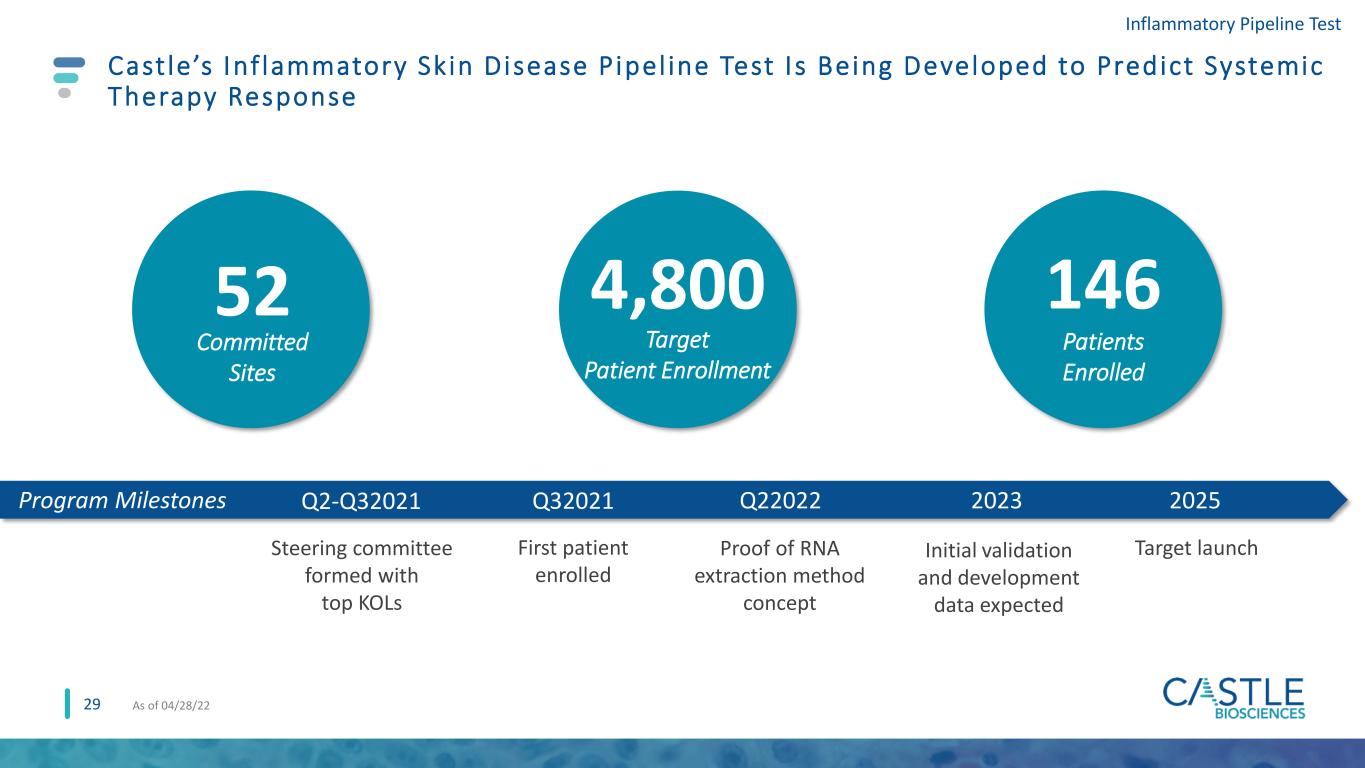
In April, the Company gave a poster presentation highlighting data and concluding that its non-invasive skin scraping technique produces sufficient ribonucleic acid (RNA) to assess reproducible gene expression for its inflammatory skin disease pipeline test. The poster was presented at the 4th Annual Revolutionizing Atopic Dermatitis Conference. The Company expects to launch this pipeline test by the end of 2025. See the Company’s news release from April 18, 2022, for more information.
In March, the Company announced new data further demonstrating the performance of DecisionDx-Melanoma and i31-SLNB to provide improved risk prediction of sentinel lymph node (SLN) positivity, compared to using T-stage factors alone, in patients with cutaneous melanoma. In the study, the DecisionDx-Melanoma test outperformed T-stage in identifying patients with low-risk tumors who could forgo SLN biopsy, with an Area Under the Curve of 0.89 versus 0.78 for T-stage in patients with T1-T2 tumors, indicating that DecisionDx-Melanoma provides improved predictions compared to those of the T-stage system. See the Company’s news release from March 11, 2022, for more information.
Uveal Melanoma


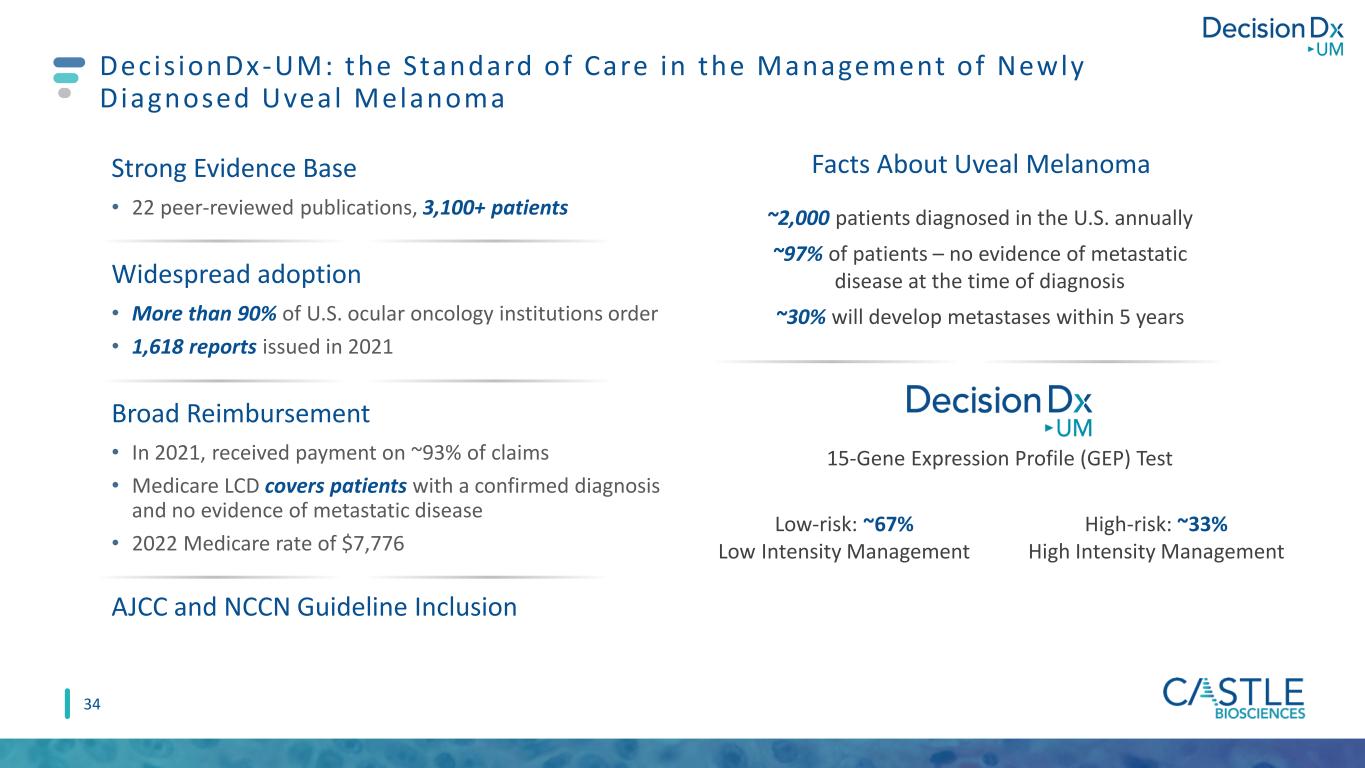
In January, the Company announced the publication of a study in Ocular Oncology and Pathology demonstrating that the combined application of DecisionDx-UM, DecisionDx®-PRAME and DecisionDx®-UMSeq allows for highly accurate analysis of RNA and DNA from a single biopsy sample for patients with uveal melanoma (UM). DecisionDx-UMSeq is Castle’s 7-gene test that uses next-generation sequencing to identify somatic mutations relevant to UM. This information, together with results from the DecisionDx-UM gene expression profile test, is designed to help build a comprehensive genomic profile of an individual UM tumor from a single biopsy, which can then be used to inform patient care. See the Company’s news release from Jan. 12, 2022, for more information.
Gastroenterology
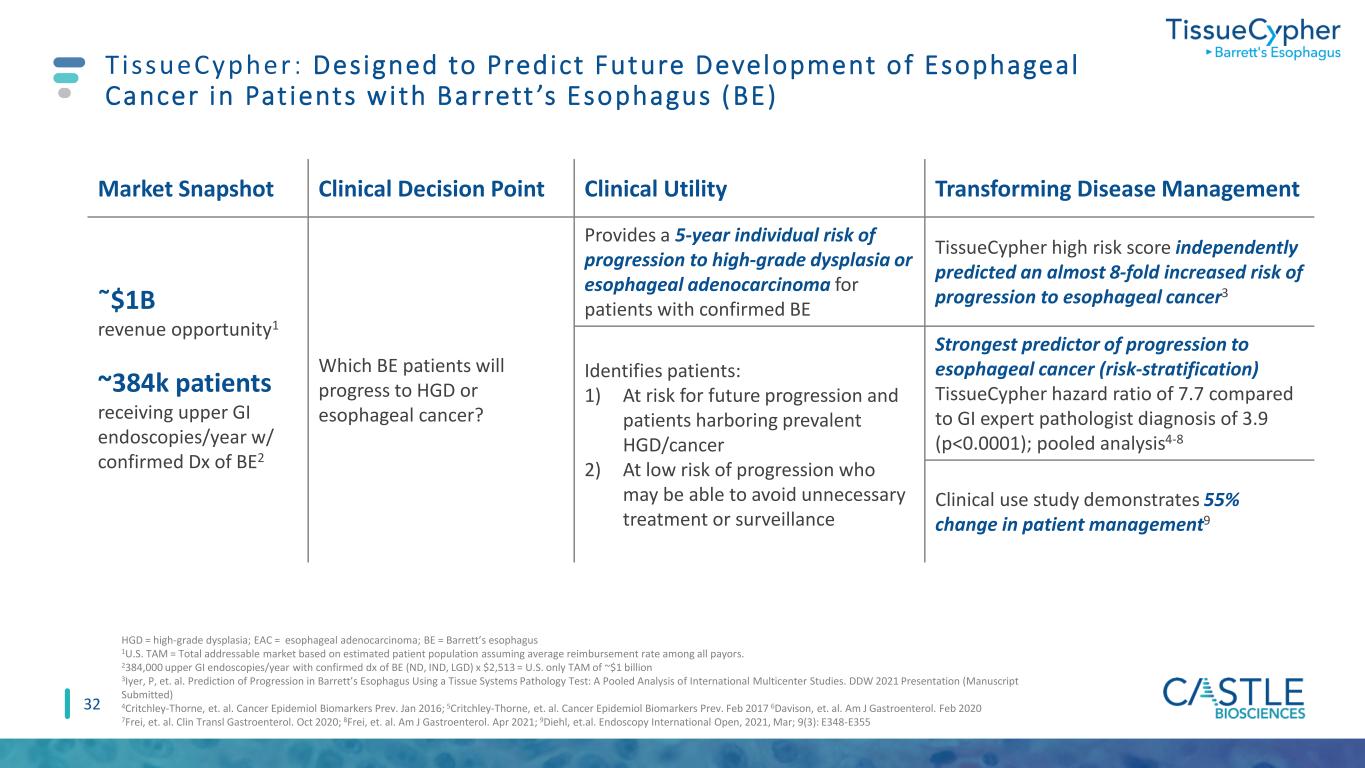
In March, the Company announced that CMS granted ADLT status for the TissueCypher Barrett’s Esophagus test, effective March 24, 2022. TissueCypher is Castle’s prognostic test designed to predict future development of high-grade dysplasia and/or esophageal cancer in patients with BE. ADLT status requires that a clinical diagnostic laboratory test provide new clinical diagnostic information that cannot be obtained from any other test or combination of tests, among other criteria.1 The announcement of ADLT status for TissueCypher confirms that the test meets these criteria established by CMS for laboratory tests under the Protecting Access to Medicare Act of 2014 (PAMA). See the Company’s news release from March 29, 2022, for more information.
In April, the company announced an independent, peer-reviewed article published in Clinical Gastroenterology and Hepatology. The study reinforces the ability of TissueCypher to significantly improve predictions of progression to esophageal cancer in patients with BE, compared to predictions based on traditional clinicopathologic variables alone, allowing for more informed disease management decisions. See the Company’s news release from April 27, 2022, for more information.
Mental Health
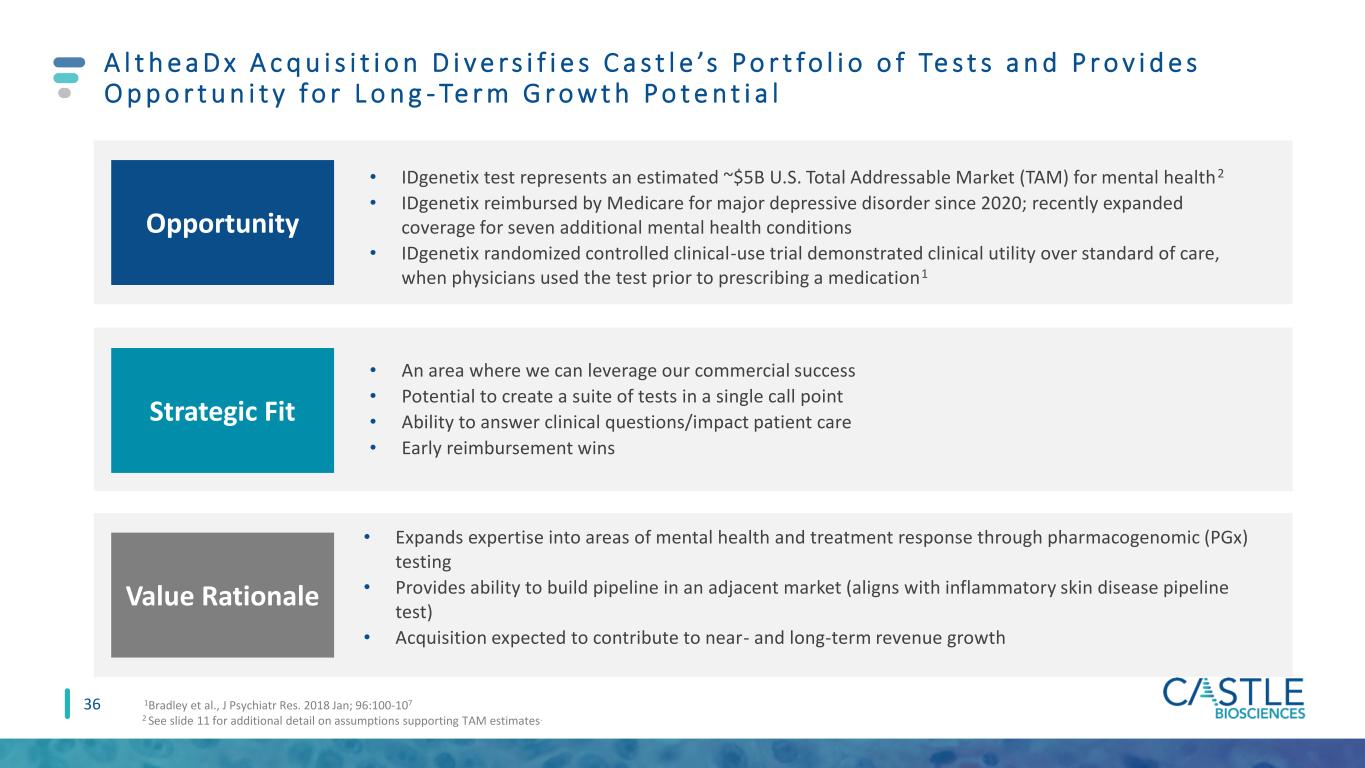
In April, the Company diversified and expanded its portfolio into the mental health market with the acquisition of AltheaDx and the IDgenetix PGx test for mental health conditions. IDgenetix has been reimbursed by Medicare for depression since the fall of 2020, and in a randomized, controlled clinical-use trial demonstrated clinical utility over standard of care, when physicians used the test prior to prescribing a medication. The acquisition adds approximately $5.0 billion to the Company’s estimated U.S. TAM. See the Company’s news release from April 26, 2022, for more information.
In May, the Company announced a collaboration with Camille Schrier, Miss America 2020, as part of Mental Health Awareness Month, to promote the potential of genetic testing and the IDgenetix test to help improve treatment for mental health conditions. See the Company’s news release from May 6, 2022, for more information.
Conference Call and Webcast Details
Castle Biosciences will hold a conference call on Monday, May 9, 2022, at 4:30 p.m. Eastern time to discuss its first quarter 2022 results and provide a corporate update.

A live webcast of the conference call can be accessed here: or via the webcast link on the Investor Relations page of the Company’s website, https://ir.castlebiosciences.com/overview/default.aspx. Please access the webcast at least 10 minutes before the conference call start time. An archive of the webcast will be available on the Company’s website until May 30, 2022.

To access the live conference call via phone, please dial 844 200 6205 from the United States, or +1 929 526 1599 internationally, at least 10 minutes prior to the start of the call, using the conference ID 355837.

There will be a brief Question & Answer session following management commentary.

Use of Non-GAAP Financial Measures (UNAUDITED)
In this release, we use the metrics of Adjusted Revenue, Adjusted Gross Margin, Adjusted Operating Cash Flow and Adjusted EBITDA, which are non-GAAP financial measures and are not calculated in accordance with generally accepted accounting principles in the United States (GAAP). Adjusted Revenue and Adjusted Gross Margin reflect adjustments to net revenues to exclude changes in variable consideration related to test reports delivered in previous periods. Adjusted Gross Margin further excludes acquisition-related intangible


asset amortization. Adjusted Operating Cash Flow excludes the effects of repayments to Medicare of COVID-19 government relief advancements to healthcare providers. Adjusted EBITDA excludes from net loss interest expense, depreciation and amortization expense, income tax expense, stock compensation expense, and change in fair value of contingent consideration.

We use Adjusted Revenue, Adjusted Gross Margin, Adjusted Operating Cash Flow and Adjusted EBTIDA internally because we believe these metrics provide useful supplemental information in assessing our revenue and cash flow performance reported in accordance with GAAP, respectively. We believe Adjusted Revenue and Adjusted Gross Margin are also useful to investors because they provide additional information on current-period performance by removing the effects of revenue adjustments related to tests delivered in previous periods and acquisition-related intangible asset amortization, which we believe may facilitate revenue and gross margin comparisons to historical periods. We believe Adjusted Operating Cash Flow is also useful to investors as a supplement to GAAP measures in the assessment of our cash flow performance by removing the effects of COVID-19 government relief payments, which we believe are not indicative of our ongoing operations. We believe Adjusted EBITDA may enhance an evaluation of our operating performance based on recent revenue generation and product/overhead cost control because it excludes the impact of prior decisions made about capital investment, financing and other expenses. However, these non-GAAP financial measures may be different from non-GAAP financial measures used by other companies, even when the same or similarly titled terms are used to identify such measures, limiting their usefulness for comparative purposes.

These non-GAAP financial measures are not meant to be considered in isolation or used as substitutes for net revenues, gross margin, net cash (used in) provided by operating activities or net loss reported in accordance with GAAP; should be considered in conjunction with our financial information presented on GAAP basis; have no standardized meaning prescribed by GAAP; and are not prepared under any comprehensive set of accounting rules or principles. In addition, from time to time in the future, there may be other items that we may exclude for purposes of these non-GAAP financial measures, and we may in the future cease to exclude items that we have historically excluded for purposes of these non-GAAP financial measures. Likewise, we may determine to modify the nature of adjustments to arrive at these non-GAAP financial measures. Because of the non-standardized definitions of non-GAAP financial measures, the non-GAAP financial measure as used by us in this press release and the accompanying reconciliation tables have limits in their usefulness to investors and may be calculated differently from, and therefore may not be directly comparable to, similarly titled measures used by other companies. Accordingly, investors should not place undue reliance on non-GAAP financial measures. Reconciliations of these non-GAAP financial measures to the most directly comparable GAAP financial measures are presented in the tables at the end of this release.

1Centers for Medicare & Medicaid Services: https://www.cms.gov/Medicare/Medicare-Fee-for-Service-Payment/ClinicalLabFeeSched/Downloads/Guidance-for-Laboratories-on-ADLTs.pdf


About Castle Biosciences

Castle Biosciences (Nasdaq: CSTL) is a leading diagnostics company improving health through innovative tests that guide patient care. The Company aims to transform disease management by keeping people first: patients, clinicians, employees and investors.

Castle’s current portfolio consists of tests for skin cancers, uveal melanoma, Barrett’s esophagus and mental health conditions. Additionally, the Company has active research and development programs for tests in other diseases with high clinical need, including its test in development to predict systemic therapy response in patients with moderate-to-severe psoriasis, atopic dermatitis and related conditions. To learn more, please visit www.CastleBiosciences.com and connect with us on LinkedIn, Facebook, Twitter and Instagram.

DecisionDx-Melanoma, DecisionDx-CMSeq, DecisionDx-SCC, myPath Melanoma, DecisionDx DiffDx-Melanoma, DecisionDx-UM, DecisionDx-PRAME, DecisionDx-UMSeq, TissueCypher and IDgenetix are trademarks of Castle Biosciences, Inc.

Forward-Looking Statements


This press release contains forward-looking statements within the meaning of Section 27A of the Securities Act of 1933, as amended, and Section 21E of the Securities Exchange Act of 1934, as amended, which are subject to the “safe harbor” created by those sections. These forward-looking statements include, but are not limited to, statements concerning: the ability of our tests to provide valuable, clinically actionable information to clinicians and patients to guide and improve the management of a patient’s disease; our revenue outlook for the fiscal year ending December 31, 2022 and the expected contribution of AltheaDx to this revenue outlook; our estimated U.S. TAM; the impact of our commercial investments in 2021 contributing to our financial position in 2022 and increased test volume; our ability to launch our pipeline test for inflammatory skin diseases in 2025; the potential for a strong survival benefit or improved patient survival in patients whose melanoma management plans include personalized test results provided by DecisionDx-Melanoma; the ability of DecisionDx-Melanoma to help patients and clinicians in informing disease management and treatment plans that have the potential to improve patient survival; the ability of DecisionDx-Melanoma to aid in providing more risk-aligned treatment plans for improved patient outcomes; our contract with the VHA providing expanded access to our skin cancer tests for veterans and their families; the potential of the skin scraping technique discussed in this press release to obtain sufficient RNA for use in our pipeline GEP test; the potential for our pipeline GEP test to improve care for patients by using their unique biology to guide selection of an effective medication for their disease; our expectation of receiving initial validation and development data for our pipeline GEP test in 2023 and launching our pipeline GEP test by the end of 2025; the potential of personalized guidance for therapy selection and anticipated efficacy to improve patient health outcomes by assisting clinicians to select the best medication for their patients’ specific skin disease; the ability of DecisionDx-Melanoma to more accurately stratify risk for melanoma patients and guide risk-aligned discussions with patients regarding the SLNB procedure; the overall ability of DecisionDx-Melanoma to allow for more precise and personalized management of melanoma patients and improve patient selection for the SLNB surgical procedure; DecisionDx-UMSeq’s ability to identify somatic mutations relevant to UM; DecisionDx-UM’s ability to predict individual risk of metastasis; the potential of the TissueCypher® BE test to help prevent esophageal cancer by helping physicians and patients make more informed disease management decisions based on the unique biology of an individual patient’s esophageal biopsy; our estimated in-market U.S. TAM for IDgenetix following our acquisition of AltheaDx; the potential improvements in the care of patients suffering from mental health conditions through personalized, genetic-based treatment plans incorporating IDgenetix and PGx testing; our sales team’s ability to achieve optimal productivity; and our ability to integrate our recent acquisitions into our existing business and the ability of such acquisitions to complement our existing business. The words “anticipates,” “believes,” “estimates,” “expects,” “may,” “plans,” “would” and similar expressions are intended to identify forward-looking statements, although not all forward-looking statements contain these identifying words. We may not actually achieve the plans, intentions, or expectations disclosed in our forward-looking statements and you should not place undue reliance on our forward-looking statements. Actual results or events could differ materially from the plans, intentions and expectations disclosed in the forward-looking statements that we make. These forward-looking statements involve risks and uncertainties that could cause our actual results to differ materially from those in the forward-looking statements, including, without limitation, the effects of the COVID-19 pandemic on our business and our efforts to address its impact on our business, subsequent study results and findings may contradict earlier study results and findings, including with respect to the diagnostic and prognostic tests discussed in this press release, actual application of our tests may not provide the aforementioned benefits to patients, and the risks set forth under the heading “Risk Factors” in our Quarterly Report on Form 10-Q for the three months ended March 31, 2022, and in our other filings with the SEC. The forward-looking statements are applicable only as of the date on which they are made, and we do not assume any obligation to update any forward-looking statements, except as may be required by law.

The COVID-19 situation continues to evolve and brings along with it a high level of uncertainty surrounding potential future impacts. Therefore, trends in revenues and test report volumes are not necessarily indicative of the Company’s results of operations that can be expected for future interim periods or for the year ending December 31, 2022.

Investor and Media Contact:
Camilla Zuckero
VP, Investor Relations & Corporate Affairs
[email protected]


CASTLE BIOSCIENCES, INC.
CONDENSED CONSOLIDATED STATEMENTS OF OPERATIONS AND COMPREHENSIVE LOSS
(UNAUDITED)
(in thousands, except per share data)
Three Months Ended
March 31,
20222021
NET REVENUES$26,852 $22,813 
OPERATING EXPENSES
Cost of sales (exclusive of amortization of acquired intangible assets)5,944 3,028 
Research and development10,761 5,908 
Selling, general and administrative30,453 18,161 
Amortization of acquired intangible assets1,648 — 
Change in fair value of contingent consideration2,562 — 
Total operating expenses51,368 27,097 
Operating loss(24,516)(4,284)
Interest income30 
Interest expense(3)— 
Loss before income taxes(24,489)(4,280)
Income tax expense134 — 
Net loss and comprehensive loss$(24,623)$(4,280)
Loss per share, basic and diluted$(0.97)$(0.17)
Weighted-average shares outstanding, basic and diluted25,424 24,912 


Stock-Based Compensation Expense
Stock-based compensation expense is included in the condensed consolidated statements of operations and comprehensive loss as follows (in thousands):
Three Months Ended March 31,
20222021
Cost of sales (exclusive of amortization of acquired intangible assets)$853 $510 
Research and development1,828 1,058 
Selling, general and administrative5,738 3,345 
Total stock-based compensation expense$8,419 $4,913 


CASTLE BIOSCIENCES, INC.
CONDENSED CONSOLIDATED BALANCE SHEETS
(in thousands)
March 31, 2022December 31, 2021
ASSETS(unaudited)
Current Assets
Cash and cash equivalents$309,017 $329,633 
Accounts receivable, net19,910 17,282 
Inventory2,350 2,021 
Prepaid expenses and other current assets5,164 4,807 
Total current assets336,441 353,743 
Long-term accounts receivable, net1,406 1,308 
Property and equipment, net9,385 9,501 
Operating lease assets7,219 7,383 
Intangible assets, net87,275 88,922 
Other assets – long-term2,699 1,715 
Total assets$444,425 $462,572 
LIABILITIES AND STOCKHOLDERS’ EQUITY
Current Liabilities
Accounts payable$3,314 $2,546 
Accrued compensation8,566 15,483 
Contingent consideration20,849 — 
Operating lease liabilities1,199 1,179 
Other accrued and current liabilities5,593 5,678 
Total current liabilities39,521 24,886 
Noncurrent portion of contingent consideration— 18,287 
Noncurrent operating lease liabilities6,711 6,900 
Deferred tax liability757 635 
Other liabilities100 124 
Total liabilities47,089 50,832 
Stockholders’ Equity
Common stock
25 25 
Additional paid-in capital515,701 505,482 
Accumulated deficit(118,390)(93,767)
Total stockholders’ equity397,336 411,740 
Total liabilities and stockholders’ equity$444,425 $462,572 


CASTLE BIOSCIENCES, INC.
CONDENSED CONSOLIDATED STATEMENTS OF CASH FLOWS
(UNAUDITED)
(in thousands)
Three Months Ended
March 31,
20222021
OPERATING ACTIVITIES
Net loss$(24,623)$(4,280)
Adjustments to reconcile net loss to net cash used in operating activities:
Depreciation and amortization2,151 233 
Stock-based compensation expense8,419 4,913 
Change in fair value of contingent consideration2,562 — 
Deferred income taxes123 — 
Other12 33 
Change in operating assets and liabilities:
Accounts receivable(2,725)(1,558)
Prepaid expenses and other current assets(357)1,679 
Inventory(329)(93)
Operating lease assets222 231 
Other assets42 (225)
Accounts payable187 (40)
Operating lease liabilities(226)(295)
Accrued compensation(6,917)(3,899)
Other accrued liabilities29 (330)
Net cash used in operating activities(21,430)(3,631)
INVESTING ACTIVITIES
Purchases of property and equipment(402)(750)
Net cash used in investing activities(402)(750)
FINANCING ACTIVITIES
Payment of common stock offering costs— (336)
Proceeds from exercise of common stock options399 991 
Payment of employees’ taxes on vested restricted stock units(56)— 
Proceeds from contributions to the employee stock purchase plan897 855 
Repayment of principal portion of finance lease liabilities(24)— 
Net cash provided by financing activities1,216 1,510 
NET CHANGE IN CASH AND CASH EQUIVALENTS(20,616)(2,871)
Beginning of period329,633 409,852 
End of period$309,017 $406,981 


CASTLE BIOSCIENCES, INC.
Reconciliation of Non-GAAP Financial Measures (UNAUDITED)
The table below presents the reconciliation of adjusted revenue and adjusted gross margin, which are non-GAAP measures. See "Use of Non-GAAP Financial Measures (UNAUDITED)" above for further information regarding the Company's use of non-GAAP financial measures.
Three Months Ended
March 31,
20222021
(in thousands)
Adjusted revenue
Net revenues (GAAP)$26,852 $22,813 
Revenue associated with test reports delivered in prior periods(602)(5,335)
Adjusted revenue (Non-GAAP)$26,250 $17,478 
Adjusted gross margin
Gross margin (GAAP)1
$19,260 $19,785 
Amortization of acquired intangible assets1,648 — 
Revenue associated with test reports delivered in prior periods(602)(5,335)
Adjusted gross margin (Non-GAAP)$20,306 $14,450 
Gross margin percentage (GAAP)2
71.7 %86.7 %
Adjusted gross margin percentage (Non-GAAP)3
77.4 %82.7 %
________________________
1.Calculated as net revenues (GAAP) less the sum of cost of sales (exclusive of amortization of acquired intangible assets) and amortization of acquired intangible assets.
2.Calculated as gross margin (GAAP) divided by net revenues (GAAP).
3.Calculated as adjusted gross margin (Non-GAAP) divided by adjusted revenue (Non-GAAP).

The table below presents the reconciliation of adjusted operating cash flow, which is a non-GAAP measure. See "Use of Non-GAAP Financial Measures (UNAUDITED)" above for further information regarding the Company's use of non-GAAP financial measures.
Three Months Ended
March 31,
20222021
(in thousands)
Adjusted operating cash flow
Net cash used in by operating activities (GAAP)$(21,430)$(3,631)
HHS provider relief funds1
— (1,882)
Adjusted operating cash flow (Non-GAAP)$(21,430)$(5,513)
________________________
1.We received a one-time payment of $1.9 million in relief funds automatically allocated to Medicare providers under the Coronavirus Aid, Relief and Economic Security Act (CARES Act) from the U.S. Department of Health and Human Services (HHS).


The table below presents the reconciliation of adjusted EBITDA, which is a non-GAAP measure. See "Use of Non-GAAP Financial Measures (UNAUDITED)" above for further information regarding the Company's use of non-GAAP financial measures.
Three Months Ended
March 31,
20222021
(in thousands)
Adjusted EBITDA
Net loss$(24,623)$(4,280)
Interest expense— 
Depreciation and amortization expense2,151 233 
Income tax expense134 — 
Stock compensation expense8,419 4,913 
Change in fair value of contingent consideration2,562 — 
Adjusted EBITDA (Non-GAAP)$(11,354)$866 

M ay 9 , 2 0 2 2 Tra n s fo r m i n g D i s e a s e M a n a ge m e nt


D i s c l a i m e rs F O R W A R D - L O O K I N G S T A T E M E N T S This presentation contains forward-looking statements within the meaning of Section 27A of the Securities Act of 1933, as amended, and Section 21E of the Securities Exchange Act of 1934, as amended, which are subject to the “safe harbor” created by those sections. These forward-looking statements include, but are not limited to, statements concerning: estimated sizes of the total addressable markets of our current and future commercial and pipeline products within our dermatologic, GI and mental health franchises; our revised revenue outlook for the 2022 fiscal year, including additional financial or operational metrics or related expectations with respect to future performance; the impact, accuracy and effectiveness of our commercial and pipeline tests on physicians, patients and their treatment plans, and their individual or collective impact on our prospects and plans, including any objectives of management related thereto; the ability of our tests to provide valuable, clinically actionable information to clinicians and patients, improve health and guide patient care; expected expansion of outside sales territories; our progress roadmaps for our tests; expected launch dates for tests in our pipeline expansion and estimates regarding their total addressable markets or future success; expectations regarding LCD effective timeframes and reimbursement capabilities; our ability to utilize existing relationships and build a suite of complementary tests in a single call point; increases in headcount in furtherance of our pipeline tests, clinical research and development and other expected drivers of growth, as well as efficiencies and synergies from capital expenditures related to expansion of lab facilities contributing to our growth; our ability to develop clinical evidence and publish peer-reviewed reports and studies that increase adoption among providers and commercial payors; estimated healthcare cost savings provided by our tests; the ability of our risk stratification tests to classify risk of metastasis in ways that better support risk-appropriate treatment than reliance on traditional clinicopathologic risk factors alone; program milestones for our pipeline test designed to predict systemic therapy response and the potential of systemic therapy guidance tools to streamline therapeutic interventions for patients and avoid ineffective, expensive medication courses; integration timelines, growth expectations and strategic opportunities for our TissueCypher test and GI franchise, and our IDgenetix test and our mental health franchise; and our ability to integrate our recent acquisitions into our existing business and the ability of such acquisitions to complement our existing business. The words “anticipates,” “believes,” “estimates,” “expects,” “intends,” “may,” “plans,” “will” and similar expressions are intended to identify forward-looking statements, although not all forward-looking statements contain these identifying words. We may not actually achieve the plans, intentions, or expectations disclosed in our forward-looking statements and you should not place undue reliance on our forward-looking statements. Actual results or events could differ materially from the plans, intentions and expectations disclosed in the forward-looking statements that we make. These forward-looking statements involve risks and uncertainties that could cause our actual results to differ materially from those in the forward-looking statements, including, without limitation, the effects of the COVID-19 pandemic on our business and our efforts to address its impact on our business, subsequent study results and findings may contradict earlier study results and findings, including with respect to the diagnostic and prognostic tests discussed in this presentation, actual application of our tests may not provide the aforementioned benefits to patients, and the risks set forth under the heading “Risk Factors” in our Quarterly Report on Form 10-Q for the three months ended March 31, 2022, and in our other filings with the SEC. The forward-looking statements are applicable only as of the date on which they are made, and we do not assume any obligation to update any forward-looking statements, except as may be required by law. 2


3 MISSION: VISION: VALUES: Improving health through innovative tests that guide patient care To transform disease management by keeping people first: patients, clinicians, employees and investors ExCIITE: Excitement, Collaboration, Integrity, Innovation Trust and Excellence


4 Cast le Remains Focused on Transforming Disease Management Strate g ic p r in c ip le s th at c re ate va lu e for cu stome rs , p at ie nts an d stockh o ld e rs Address areas with unmet clinical need Leverage advanced technologies for innovative tests Accelerate test adoption through commercial excellence Provide robust data to support the clinical value of our tests


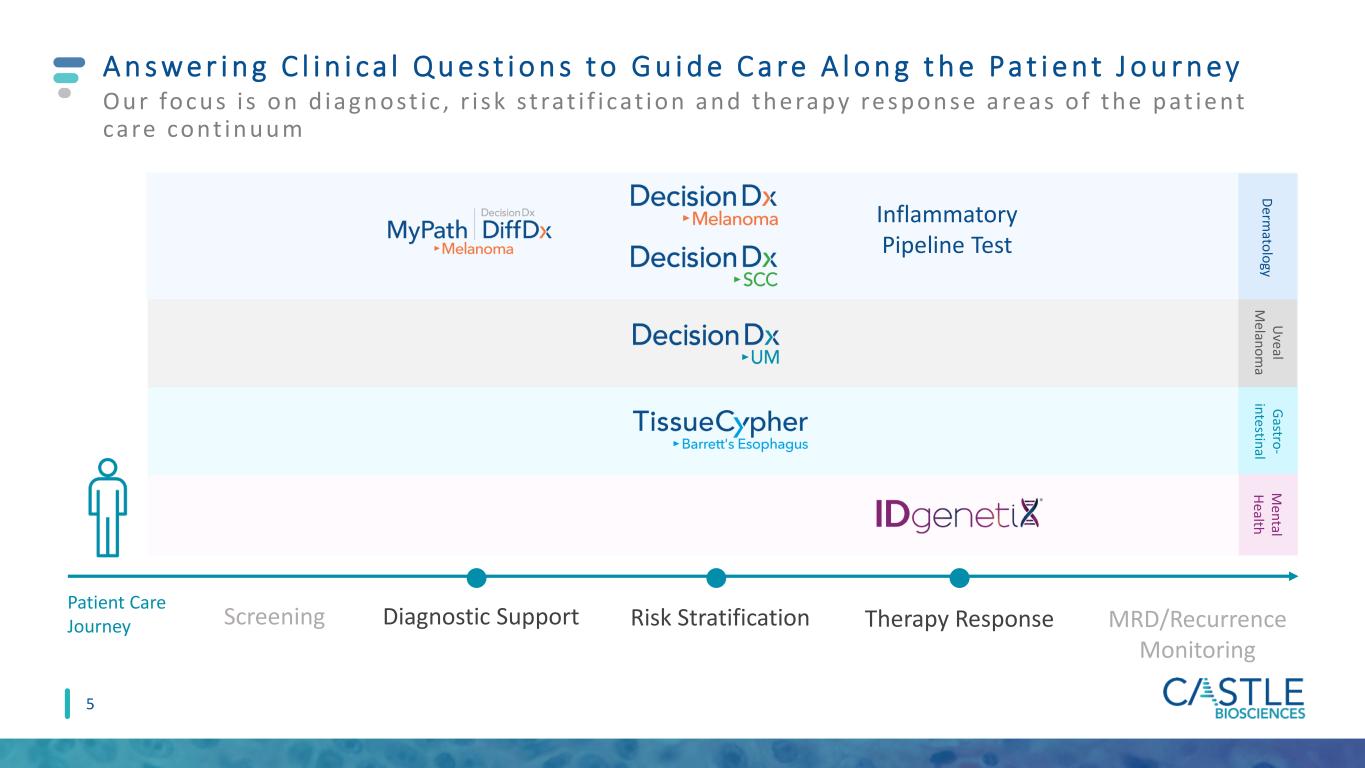
4 55 Screening Diagnostic Support Risk Stratification Therapy Response MRD/Recurrence Monitoring A n s w e r i n g C l i n i c a l Q u e s t i o n s t o G u i d e C a re A l o n g t h e Pa t i e n t J o u r n e y Ou r focu s i s on d iag n ost ic , r i s k st rat i f i cat ion an d th e rapy re s p on s e are as o f th e p at ie nt care cont in u u m Inflammatory Pipeline Test Patient Care Journey D erm ato lo gy U ve al M elan o m a G astro - in testin al M en tal H e alth


F i n a n c i a l Pe r fo r m a n c e S u m m a r y Q 1 2 0 2 2 1Q22 1Q21 Revenue $26.9M $22.8M Adj. Revenue1 $26.3M $17.5M Total test reports 8,627 5,142 Total Derm test reports 8,115 4,805 Operating Cash Flow $(21.4)M $(3.6)M Adj. Operating Cash Flow1 $(21.4)M $(5.5)M Gross Margin 71.7% 86.7% Adj. Gross Margin1 77.4% 82.7% Cash & Cash Equivalents $309M as of 03/31/2022 $407M as of 03/31/2021 1See Non-GAAP reconciliations at the end of this presentation. 6


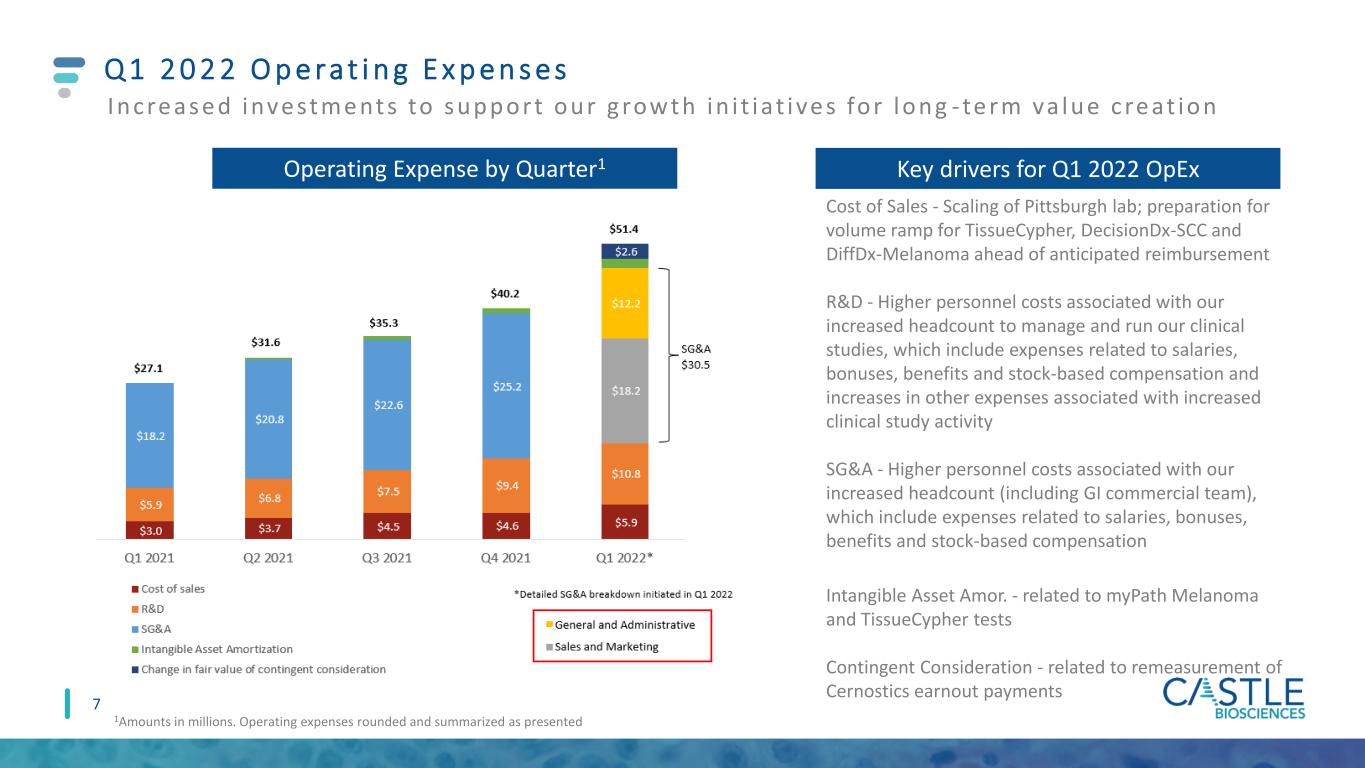
Q 1 2 0 2 2 O p e ra t i n g E x p e n s e s 7 Operating Expense by Quarter1 1Amounts in millions. Operating expenses rounded and summarized as presented I n cre as e d inve stme nts to s u p p ort ou r g rowth in i t iat ive s for lon g - te rm va lu e cre at ion Cost of Sales - Scaling of Pittsburgh lab; preparation for volume ramp for TissueCypher, DecisionDx-SCC and DiffDx-Melanoma ahead of anticipated reimbursement R&D - Higher personnel costs associated with our increased headcount to manage and run our clinical studies, which include expenses related to salaries, bonuses, benefits and stock-based compensation and increases in other expenses associated with increased clinical study activity SG&A - Higher personnel costs associated with our increased headcount (including GI commercial team), which include expenses related to salaries, bonuses, benefits and stock-based compensation Intangible Asset Amor. - related to myPath Melanoma and TissueCypher tests Contingent Consideration - related to remeasurement of Cernostics earnout payments Key drivers for Q1 2022 OpEx


F u l l - Ye a r 2 0 2 2 G u i d a n c e 8 As of Feb. 28, 20221 As of May 9, 20222 (all include incremental of AltheaDx acquisition) Key Drivers Revenue $115 - $120 million $118 - $123 million Further consistent execution on our growth plans and in particular the AltheaDx acquisition Cost of Sales (exclusive of amortization of acquired intangible assets) 65%-75% growth 75%-85% Scaling of Pittsburgh lab; preparation for volume ramp for TissueCypher, DecisionDx-SCC and DiffDx-Melanoma ahead of anticipated reimbursement, market adjustments for compensation R&D Expense 50%-60% growth 55%-65% Continued acceleration in R&D to support our derm, GI and pipeline tests, including increase in clinical research and additional headcount SG&A Expense 30%-35% growth 40%-50% Addition of gastroenterology team and continued build in dermatology, market adjustments for compensation, accelerated G&A staff expansions to support growth Stock Based Comp $35-40 million $40-45 million Primarily due to increase in headcount to support growth, with pace of additional employees increasing in recent years and 2022 1Guidance given on February 28, 2022. Percentage increases compared to the year ended 12/31/21; Cost of sales, R&D and SG&A expense growth includes stock-based comp. 2Percentage increases compared to the year ended 12/31/21; Cost of sales, R&D and SG&A expense growth includes stock-based comp.


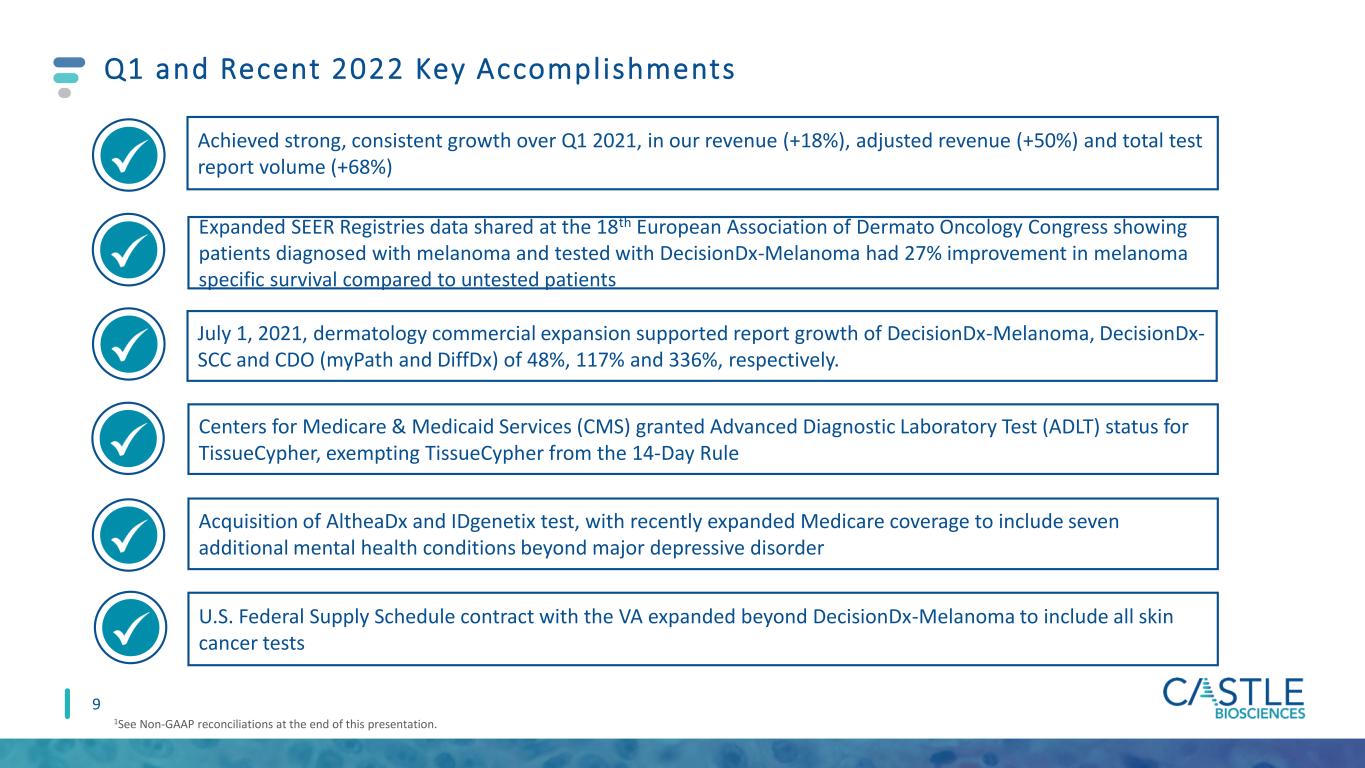
U.S. Federal Supply Schedule contract with the VA expanded beyond DecisionDx-Melanoma to include all skin cancer tests Achieved strong, consistent growth over Q1 2021, in our revenue (+18%), adjusted revenue (+50%) and total test report volume (+68%) Expanded SEER Registries data shared at the 18th European Association of Dermato Oncology Congress showing patients diagnosed with melanoma and tested with DecisionDx-Melanoma had 27% improvement in melanoma specific survival compared to untested patients Centers for Medicare & Medicaid Services (CMS) granted Advanced Diagnostic Laboratory Test (ADLT) status for TissueCypher, exempting TissueCypher from the 14-Day Rule Acquisition of AltheaDx and IDgenetix test, with recently expanded Medicare coverage to include seven additional mental health conditions beyond major depressive disorder 9 Q1 and Recent 2022 Key Accomplishments 1See Non-GAAP reconciliations at the end of this presentation. July 1, 2021, dermatology commercial expansion supported report growth of DecisionDx-Melanoma, DecisionDx- SCC and CDO (myPath and DiffDx) of 48%, 117% and 336%, respectively.


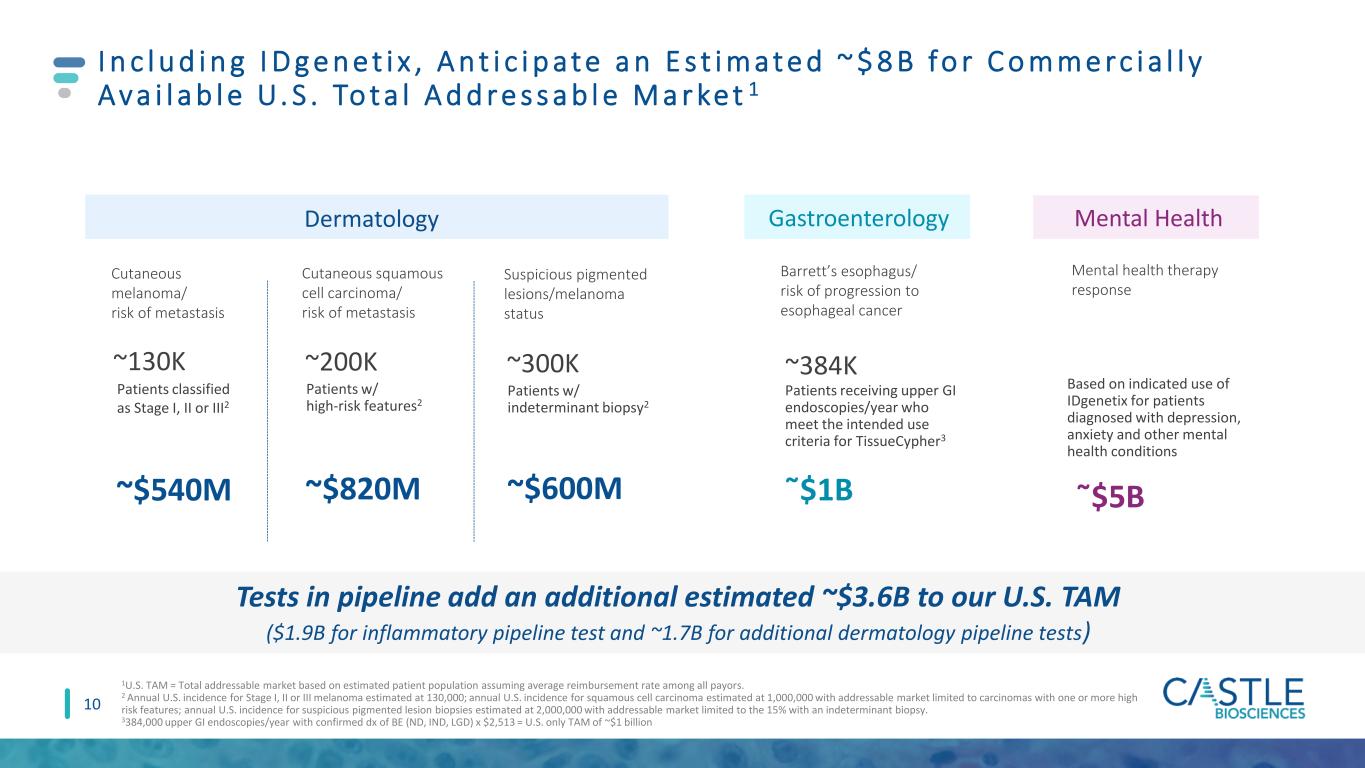
Barrett’s esophagus/ risk of progression to esophageal cancer Patients receiving upper GI endoscopies/year who meet the intended use criteria for TissueCypher3 ῀$1B ~384K I n c l u d i n g I D g e n e t i x , A n t i c i p at e a n E s t i m a t e d ~ $ 8 B f o r C o m m e rc i a l l y Av a i l a b l e U. S . To t a l A d d r e s s a b l e M a r ke t 1 1U.S. TAM = Total addressable market based on estimated patient population assuming average reimbursement rate among all payors. 2 Annual U.S. incidence for Stage I, II or III melanoma estimated at 130,000; annual U.S. incidence for squamous cell carcinoma estimated at 1,000,000 with addressable market limited to carcinomas with one or more high risk features; annual U.S. incidence for suspicious pigmented lesion biopsies estimated at 2,000,000 with addressable market limited to the 15% with an indeterminant biopsy. 3384,000 upper GI endoscopies/year with confirmed dx of BE (ND, IND, LGD) x $2,513 = U.S. only TAM of ~$1 billion 10 Cutaneous melanoma/ risk of metastasis Cutaneous squamous cell carcinoma/ risk of metastasis Suspicious pigmented lesions/melanoma status ~130K ~200K ~300K ~$540M ~$820M ~$600M Patients classified as Stage I, II or III2 Patients w/ high-risk features2 Patients w/ indeterminant biopsy2 Gastroenterology Mental health therapy response Based on indicated use of IDgenetix for patients diagnosed with depression, anxiety and other mental health conditions ῀$5B Mental HealthDermatology Tests in pipeline add an additional estimated ~$3.6B to our U.S. TAM ($1.9B for inflammatory pipeline test and ~1.7B for additional dermatology pipeline tests)


D r i v i n g L o n g - Te r m G r o w t h t h r o u g h o u r F o u n d a t i o n a l S t r a t e g y : S t r o n g C o r e D e r m B u s i n e s s , P i p e l i n e I n i t i a t i v e s a n d S t r a t e g i c O p p o r t u n i t i e s 11 Near-to Mid-term Growth Mid-to Long-term Growth (Expected launches ~2025) 2022-2023 2024 and beyond Gastrointestinal Strategic Opps Mental Health Dermatology Gastrointestinal Dermatology Gastrointestinal Mental Health Strategic Opportunities Dermatology Gastrointestinal Mental Health Strategic Opportunities Pipeline Expansion


Operational Growth Pi l lars 12 Cons iste nt exe cut ion fur the rs our le ad ing pos i t ion in de rmato logy and in the Dx s pace Strong Core Derm Business Pipeline Initiatives Strategic Opportunities • Continuing provider education • Optimizing commercial team • Evolving our go-to-market strategy (EMA, VA) • NCI/SEER collaboration • Ability to answer clinical questions/impact patient care • Utilizing our areas of expertise (genomics, spatialomics, AI) to develop innovative tests • Focusing on complementary/ adjacent disease states • Areas where we can utilize our commercial success • Potential to create a suite of tests in a single call point • Ability to answer clinical questions/impact patient care • Early reimbursement wins + +


13 Accelerat ing Investments in C l inical Development G e n e rat in g d ata th at s u p p orts th e c l in ica l va lu e o f ou r te sts an d s u p p orts p rov id e r an d p aye r ad opt ion 117 Committed sites ~1,700 Patients enrolled 4 Ongoing studies 127 ~3,350 5 Committed sites Patients enrolled Ongoing studies 25 ~3,250 3 Committed sites Patients enrolled Ongoing studies 12 ~690 3 Committed sites Subjects1 enrolled Ongoing studies Upcoming Q2-Q3 Data Presentations SID Annual Meeting Fall Clinical NP/PA SDPA ASCO 2022 ACMS Fall Clinical NP/PA SDPA DDW 2022 1Subjects includes patients and physicians 3 ~30 1 Committed sites Patients enrolled Ongoing study ISDP SDPA SBS 2022 ISOO 2022


Dermatology


S t ro n g C o r e D e r m B u s i n e s s P i l l a r o f G ro w t h 15 Continuing provider education Optimizing commercial team Driving our penetration (EMA, VA) NCI/SEER collaboration Robust conference attendance, data presentations/posters, peer-reviewed publications and peer-to-peer programs Doubled dermatology-facing commercial team in 2021; assessing further expansion by end of 2022 Interface with leading dermatology electronic medical records system, EMA, live in 2021; expansion of U.S. Federal Supply Schedule contract with the VA to include all derm tests Expanded NCI / SEER study shows patients diagnosed with melanoma and tested with DecisionDx-Melanoma (n=3,261) had a 27% improvement in melanoma-specific survival compared to untested patients


16 First -to-Market Dermatologic Franchise, Addit ional Growth Opportunit ies Diagnostic Support Risk-Stratification Therapy Response1 1Target launch anticipated by the end of 2025 . Inflammatory Pipeline


17 Decis ionDx-Melanoma : Prec is ion R isk Strat i f icat ion Based on Tumor Biology Informs Treatment P lans Market Snapshot Clinical Questions (post-melanoma diagnosis) Clinical Utility Transforming Disease Management ~$540M revenue opportunity1 ~130k patients classified as Stage I, II or III2 Is the risk of SLN-positivity high enough to warrant referral for the SLNB surgery? Accurately identifies those at low and high risk for a positive SLN3 DecisionDx-Melanoma could result in 74% fewer SLNB surgeries7, potentially saving the U.S. healthcare system $250M4,5 Why? More precise risk prediction – DecisionDx-Melanoma identified 27.7% of patients as low risk (<5%) of SLN positivity, compared to only 8.5% using T-Stage3 What is the individual risk of recurrence? Provides personalized risk of recurrence to give guidance for patient follow-up and treatment intensity decisions 4 consecutive clinical impact studies show a 47-53% change in management decisions (i.e., imaging and labs, SLNB guidance, clinical visit frequency, referrals) based on DecisionDx-Melanoma results6 SLN = sentinel lymph node; SLNB = sentinel lymph node biopsy. Source: NCCN Guidelines for Cutaneous Melanoma v3.2020 1U.S. TAM = Total addressable market based on estimated patient population assuming average reimbursement rate among all payors. 2 Annual U.S. incidence for Stage I, II or III melanoma estimated at 130,000. 3Whitman et al. JCO Precision Oncology 2021 4Vetto et al. Future Oncol 2019. 5Clearview health economic model, data on file 6Four consecutive clinical impact studies showed 47-53% change in risk-of-recurrence-based management based on results of testing with DecisionDx-Melanoma: Berger, et al. 2016 Curr Med Res Opin; Dillon et al. 2018 Skin; Farberg et al. 2017 Jrnl Drugs Derm; Schuitevoerder, et al. 2018 Jrnl Drugs Derm. 7 For patients with melanomas of less than or equal to 2.0 mm thick


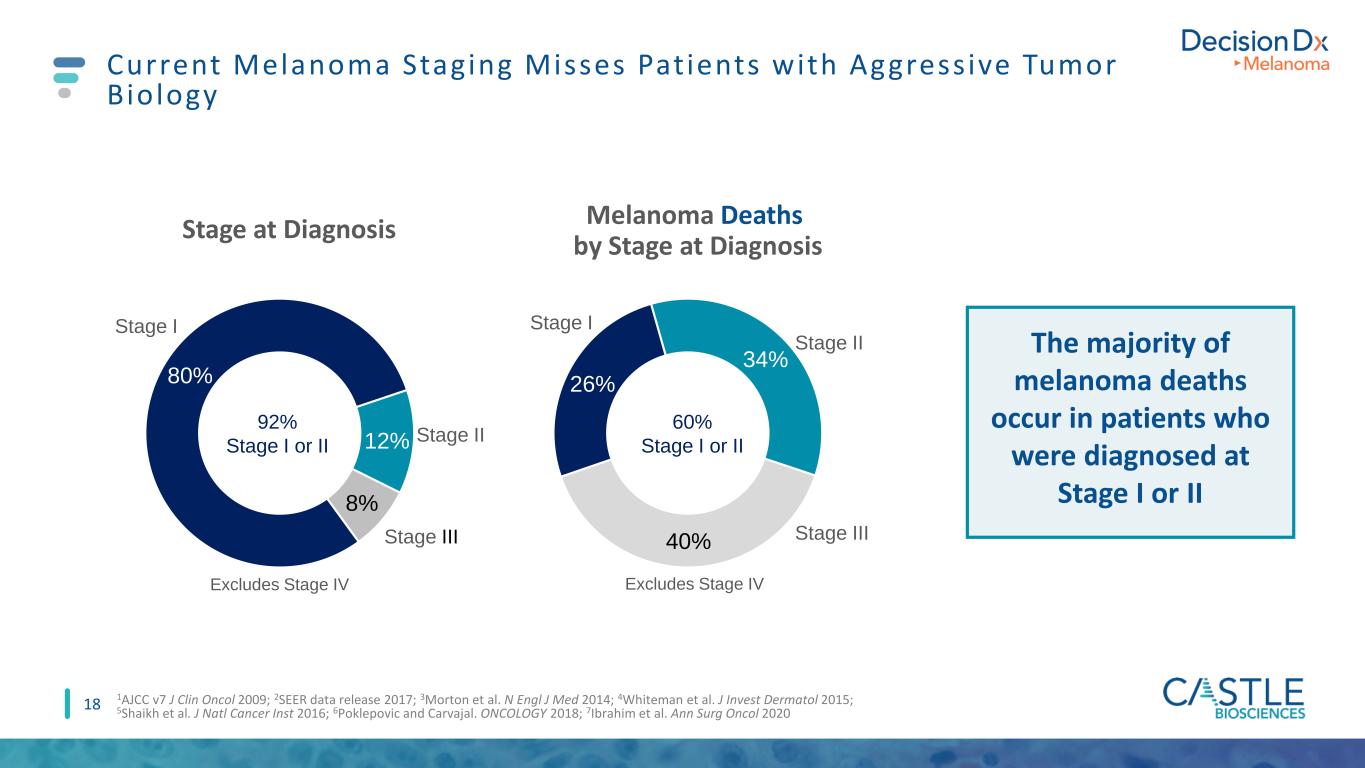
18 Current Melanoma Staging Misses Patients with Aggressive Tumor Biology 80% 12% 8% Stage at Diagnosis Stage II Stage III Stage I Excludes Stage IV 26% 34% 40% Melanoma Deaths by Stage at Diagnosis Stage II Stage III Stage I Excludes Stage IV 92% Stage I or II 60% Stage I or II The majority of melanoma deaths occur in patients who were diagnosed at Stage I or II 1AJCC v7 J Clin Oncol 2009; 2SEER data release 2017; 3Morton et al. N Engl J Med 2014; 4Whiteman et al. J Invest Dermatol 2015; 5Shaikh et al. J Natl Cancer Inst 2016; 6Poklepovic and Carvajal. ONCOLOGY 2018; 7Ibrahim et al. Ann Surg Oncol 2020


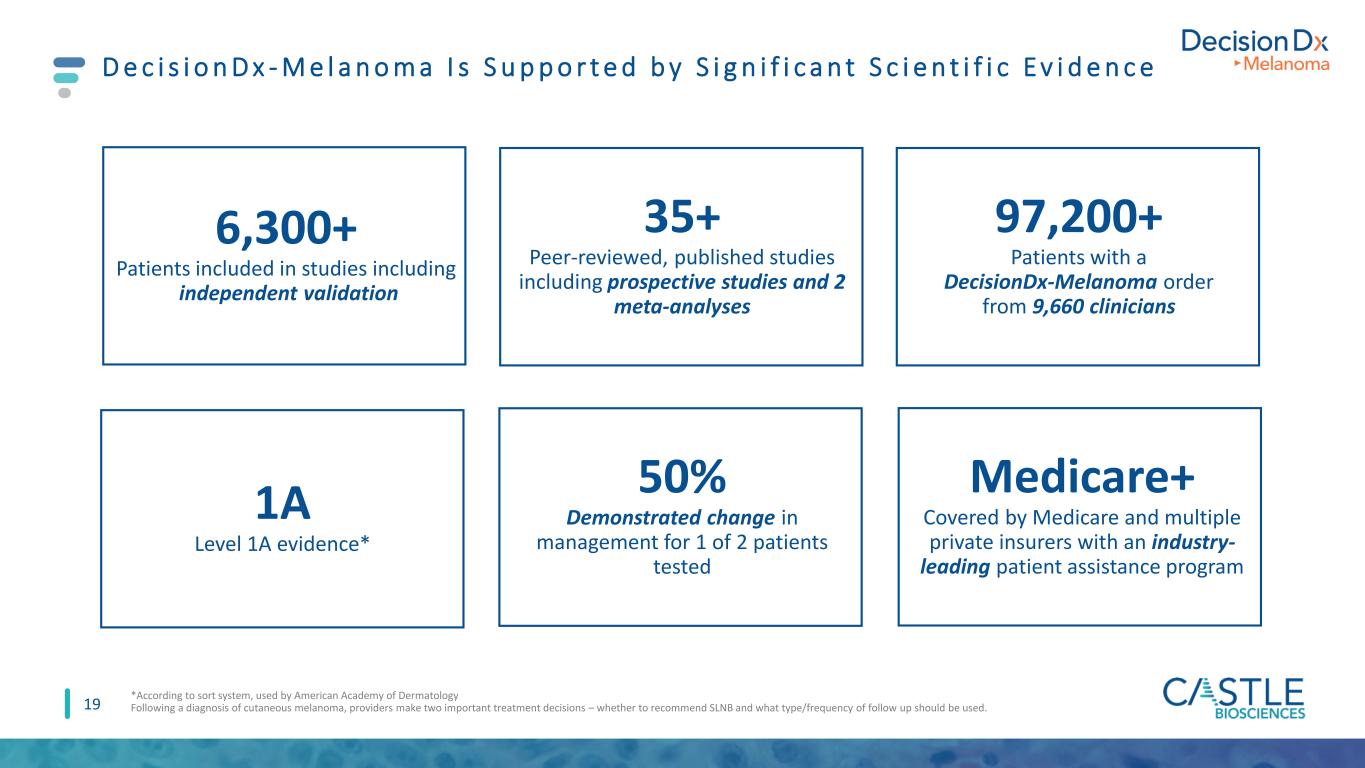
D e c i s i o n D x - M e l a n o m a I s S u p p o r t e d b y S i g n i f i c a n t S c i e n t i f i c E v i d e n c e 19 6,300+ Patients included in studies including independent validation 97,200+ Patients with a DecisionDx-Melanoma order from 9,660 clinicians 35+ Peer-reviewed, published studies including prospective studies and 2 meta-analyses 1A Level 1A evidence* Medicare+ Covered by Medicare and multiple private insurers with an industry- leading patient assistance program 50% Demonstrated change in management for 1 of 2 patients tested *According to sort system, used by American Academy of Dermatology Following a diagnosis of cutaneous melanoma, providers make two important treatment decisions – whether to recommend SLNB and what type/frequency of follow up should be used.


NCI/SEER Data L inked with DecisionDx -Melanoma Test Results Data an a lys i s o f a coh ort o f re a l - wor ld , u n s e le cte d , p ros p e ct ive ly te sted p at ie nts wi th cu tan e ou s me lan oma 20 Data provide direct evidence that patients tested with DecisionDx-Melanoma have better survival rates than untested patients Suggests that testing can aid in risk-aligned treatment plans for improved patient outcomes and survival rates 3-year MSS (95% CI) Deaths, % (n/N) 31-GEP Tested 97.7% (97.0-98.4%) 1.6% (58/3621) Matched Untested 96.6% (96.2-97.1%) 2.2% (238/10863) Hazard ratio‡ 0.73 (0.54-0.97) P=0.03 27% Benefit in MSS in patients that were tested at 3 years over those that were not tested 21% Benefit in OS in patients that were tested at 3 years over those that were not tested 3-year OS (95% CI) Deaths, % (n/N) 31-GEP Tested 93.1% (92.0-94.2%) 4.8% (174/3621) Matched Untested 91.2% (90.4-91.9%) 6.1% (658/10863) Hazard ratio‡ 0.79 (0.67-0.93) P=0.006 ‡Hazard ratio (HR) was computed using the untested patients as reference for 31-GEP tested cohort. An HR less than 1.0 demonstrates improved survival in 31-GEP tested patients. Diagnosis date 2016 and onward Kurley et al. European Association of Dermato Oncology (EADO) conference in Seville, Spain; April 21-23, 2022


21 Decis ionDx-SCC : Predicts Metastat ic R isk for SCC Pat ients with One or More Risk Factors Market Snapshot Clinical Question (post-SCC diagnosis) Clinical Utility Transforming Disease Management ~$820M revenue opportunity1 ~200k patients with high-risk features2 Who is really at low risk or high risk for metastasis? Predicts metastatic risk for individual SCC patients with one or more risk factors Improved accuracy of metastasis risk predictions compared to BWH and AJCC8 staging Significantly greater specificity (Class 2B=96.9%) and sensitivity (Class 2-77.8%) compared to metrics for high-stage BWH and AJCC8 Incorporation of DecisionDx- SCC can improve management decisions within established guidelines Enhances revised NCCN risk stratification Class 2A results showed hazard ratios of >1.25x NCCN very high risk while class 2B results showed hazard ratios of >4.5x NCCN very high risk Proven significant and independent prognostic value for stratifying risk of metastasis in high-risk SCC patients DecisionDx-SCC Class 2B results have a higher positive predictive value (60%) than BWH (35.1%) and AJCC8 (32.8%) Current SCC staging fails to identify >35% of cases that will go on to metastasize and over-stages >75% that will not SCC = squamous cell carcinoma; NCCN = National Comprehensive Cancer Network (NCCN); BWH = Brigham and Women's Hospital; AJCC8 = American Joint Committee on Cancer Eighth Edition 1U.S. TAM = Total addressable market based on estimated patient population assuming average reimbursement rate among all payors. 2Annual U.S. incidence for squamous cell carcinoma estimated at 1,000,000 with addressable market limited to carcinomas with one or more high risk features. Wysong et al. JAAD 2020; Ibrahim et al. Future Oncology 2021; Data on file, Castle Biosciences NCCN Guidelines for Squamous Cell Skin Cancer v1 2022, Likhacheva et al. Pract Radiat Oncol 2020, Farberg et al. CMRO 2020, Litchman et al. CMRO 2020, Teplitz et al. JDD 2019, Alam et al. JAAD 2018


~20% of SCC patients (200,000 annually) have one or more clinical or pathological risk factors, and a subset will develop metastasis They suffer the majority of SCC mortality These factors alone are often not specific enough to determine risk-appropriate treatment and further management Decis ionDx-SCC Addresses the Unmet Need in High -Risk SCC Pat ients Wh o i s re a l ly at low r i s k or h ig h r i s k for metastas i s? NCCN=National Comprehensive Cancer Network; BWH = Brigham and Women’s Hospital; AJCC = American Joint Committee on Cancer SCC treatment plans are guided by risk of metastasis Risk-appropriate SCC management is limited by classification systems (NCCN, BWH, AJCC) with low positive predictive value (PPV) Deaths from SCC are now estimated to exceed those from melanoma 22


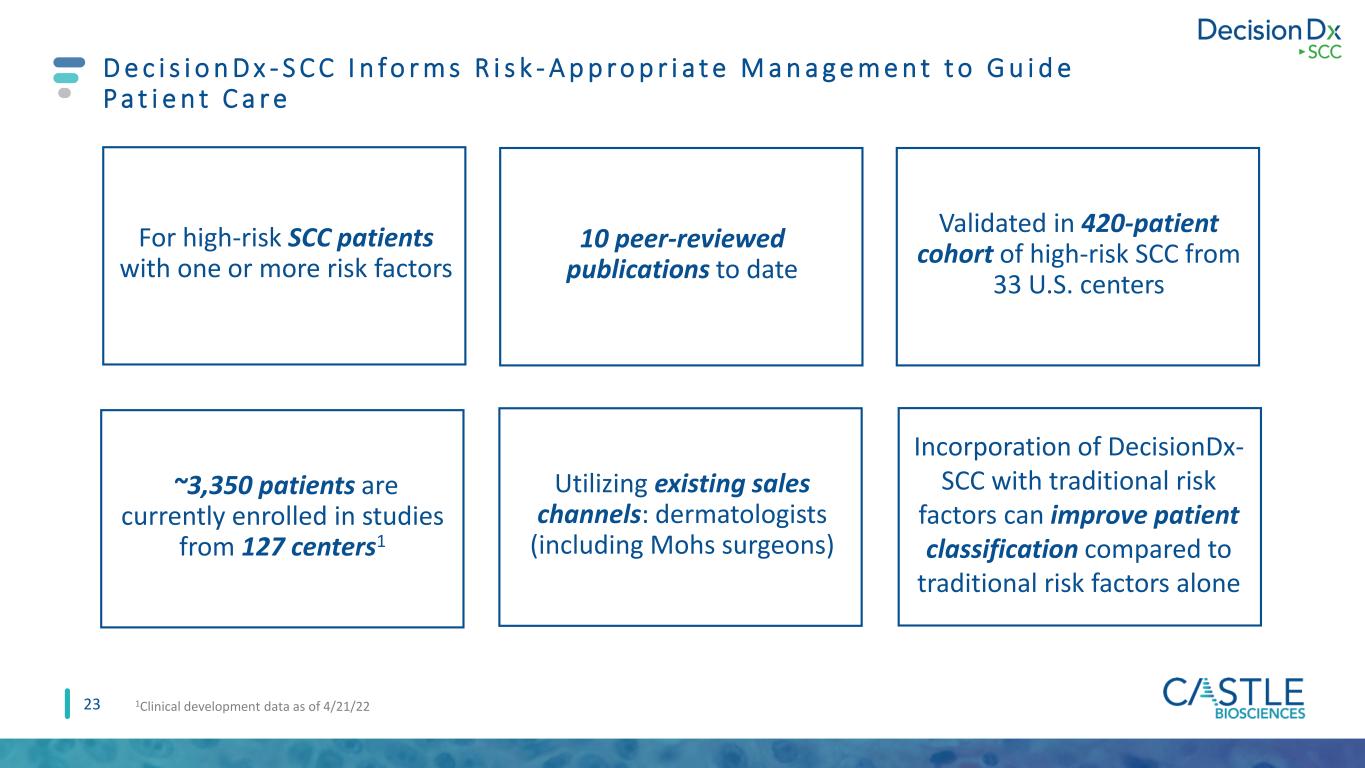
D e c i s i o n D x - S C C I n f o r m s R i s k - A p p r o p r i a t e M a n a g e m e n t t o G u i d e P a t i e n t C a r e 23 For high-risk SCC patients with one or more risk factors Validated in 420-patient cohort of high-risk SCC from 33 U.S. centers 10 peer-reviewed publications to date ~3,350 patients are currently enrolled in studies from 127 centers1 Utilizing existing sales channels: dermatologists (including Mohs surgeons) Incorporation of DecisionDx- SCC with traditional risk factors can improve patient classification compared to traditional risk factors alone 1Clinical development data as of 4/21/22


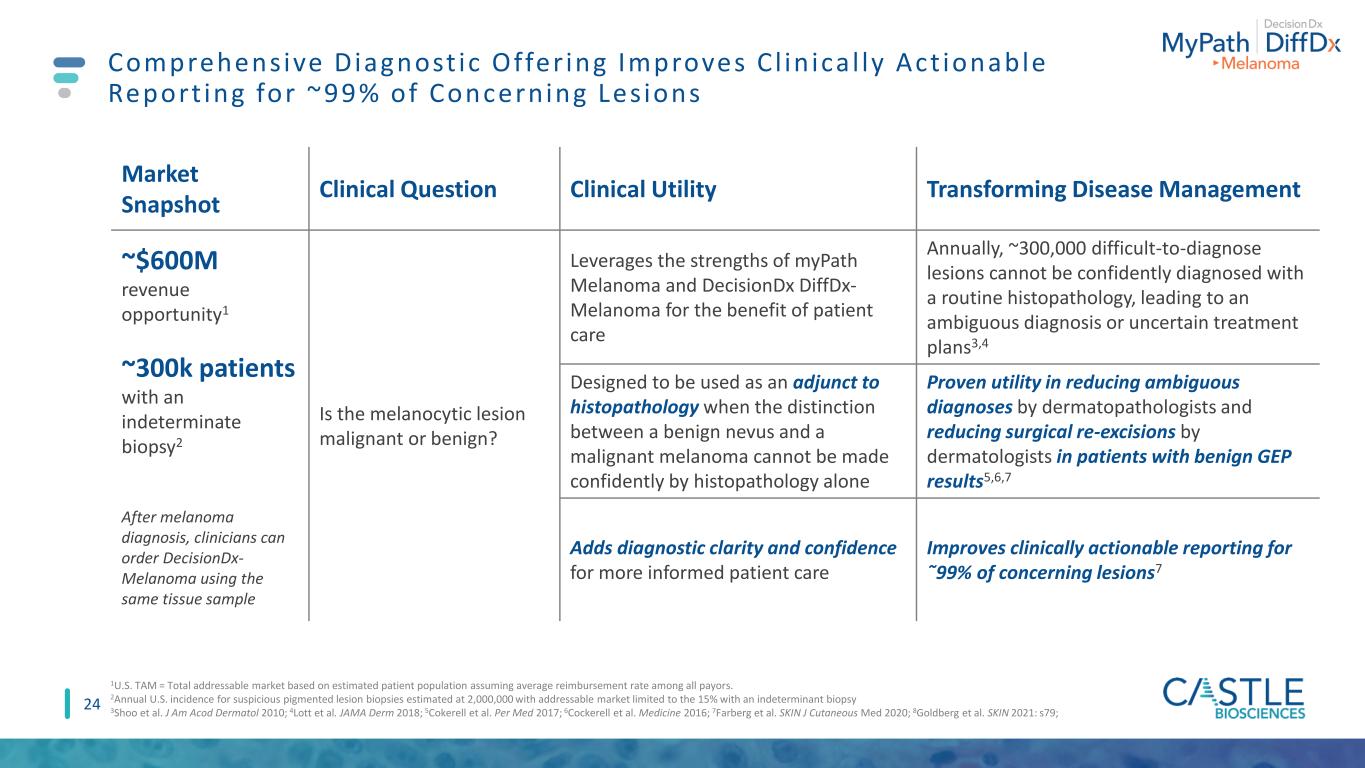
24 Comprehensive Diagnost ic Offer ing Improves C l in ica l ly Act ionable Report ing for ~99% of Concerning Les ions Market Snapshot Clinical Question Clinical Utility Transforming Disease Management ~$600M revenue opportunity1 ~300k patients with an indeterminate biopsy2 After melanoma diagnosis, clinicians can order DecisionDx- Melanoma using the same tissue sample Is the melanocytic lesion malignant or benign? Leverages the strengths of myPath Melanoma and DecisionDx DiffDx- Melanoma for the benefit of patient care Annually, ~300,000 difficult-to-diagnose lesions cannot be confidently diagnosed with a routine histopathology, leading to an ambiguous diagnosis or uncertain treatment plans3,4 Designed to be used as an adjunct to histopathology when the distinction between a benign nevus and a malignant melanoma cannot be made confidently by histopathology alone Proven utility in reducing ambiguous diagnoses by dermatopathologists and reducing surgical re-excisions by dermatologists in patients with benign GEP results5,6,7 Adds diagnostic clarity and confidence for more informed patient care Improves clinically actionable reporting for ῀99% of concerning lesions7 1U.S. TAM = Total addressable market based on estimated patient population assuming average reimbursement rate among all payors. 2Annual U.S. incidence for suspicious pigmented lesion biopsies estimated at 2,000,000 with addressable market limited to the 15% with an indeterminant biopsy 3Shoo et al. J Am Acod Dermatol 2010; 4Lott et al. JAMA Derm 2018; 5Cokerell et al. Per Med 2017; 6Cockerell et al. Medicine 2016; 7Farberg et al. SKIN J Cutaneous Med 2020; 8Goldberg et al. SKIN 2021: s79;


D i a g n o s i n g M e l a n o m a , t h e C l i n i c a l I s s u e : U n c e r t a i n t y C r e a t e s a n O v e r - o r U n d e r - Tr e a t m e n t D i l e m m a Definitive melanoma diagnoses (invasive or in situ) Definitive benign diagnoses SLNB Imaging Increased Follow-up No additional treatment Routine follow-up Clinically evaluated suspicious pigmented lesions Wide Local Excision ~2 million melanocytic skin biopsies Uncertain malignant potential Primary treatment Staging, surveillance, and follow-up options Histopathologic evaluation 25


Pipel ine In it iat ives 26


C o n t i n u e d E xe c u t i o n o n P i p e l i n e I n i t i a t i v e s a s a P i l l a r o f G ro w t h 27 Ability to answer clinical questions/impact patient care Utilizing our areas of expertise (genomics, spatialomics, AI, pharmacogenomics) to develop innovative tests Leveraging our commercial investments by expanding franchises Inflammatory skin disease pipeline test designed to answer a clinical question for patients with inflammatory skin conditions: which systemic therapy is best for each patient? Cernostics and AltheaDx acquisitions provided pipeline opportunities to build suites of tests in GI and mental health utilizing new areas of expertise (spatialomics and pharmacogenomics) Expect to launch 3-5 new tests by end of 2025, in complementary disease states, including inflammatory skin disease pipeline test


Targeting the Unmet Need in Moderate -to-Severe Psorias is and Atopic Dermatit is Common s k in d i s e as es wi th s ig n i f i cant pat ie nt impacts and costs to he a l th care syste m Treatments are significantly different for PSO and AD and can be costly (e.g., Humira for PSO ~$68k/year; Dupixent for AD is ~$38k/year) Systemic therapy guidance tools have the potential to streamline therapeutic interventions for patients and avoid ineffective, expensive medication courses Psoriasis (PSO) and Atopic Dermatitis (AD) are among the most frequently seen skin rashes 28 Cutaneous T Cell Lymphoma (CTCL) can mimic clinical presentation of AD and PSO ~20-30% of patients with PSO will go on to develop psoriatic arthritis, which can produce irreversible joint damage and significant patient morbidity Inflammatory Pipeline Test


29 Cast le’s Inf lammatory Sk in Disease Pipel ine Test I s Being Developed to Predict Systemic Therapy Response 50 Total Target Sites Program Milestones Q32021 Steering committee formed with top KOLs 2025 Target launch 52 Committed Sites Target Enrolled Patients As of 04/28/22 First patient enrolled Proof of RNA extraction method concept Q22022Q2-Q32021 5 Enrolled Patients Inflammatory Pipeline Test Target Patient Enrollment 4,800 Patients Enrolled 146 2023 Initial validation and development data expected


Gastrointest inal


GI/TissueCypher Integration Progress Roadmap: Pittsburgh Q4 2021 Q1 2022 31 Oct. 2021 Announced acquisition of Cernostics Dec. 2021 Announced close of Cernostics acquisition Feb. 2022 GI commercial team hired, trained and in field Ongoing 2022 Increased efficiencies realized through lab floorplan and workflow reconfigurations Ongoing 2022+ Leveraging GI knowledge to identify potential pipeline opportunities March 2022 Advanced Diagnostic Laboratory Test (ADLT) approval (exemption of 14-day rule) April 2022 Entered into a lease agreement in Pittsburgh as part of our planned investment to expand lab space and headcount 1Iyer et al. 2022 Clinical Gastroenterology and Hepatology Q2 2022 Fu e l in g mid - an d lon g - te rm g rowth wi th T i s s u e Cyp h er ® p lat form an d G I f ran ch is e Ongoing 2022 Laboratory expansion efforts expected to provide support for future tests as well as processing DecisionDx-SCC and Castle’s other GEP tests April 2022 Publication of independent pooled analysis supporting clinical value of TissueCypher (9th publication) Q3 2022+ Q2 2022 Podium presentations at ESGE Days 2022 and DDW 2022


32 TissueCypher : Designed to Predict Future Development of Esophageal Cancer in Pat ients with Barrett ’s Esophagus (BE) Market Snapshot Clinical Decision Point Clinical Utility Transforming Disease Management ῀$1B revenue opportunity1 ~384k patients receiving upper GI endoscopies/year w/ confirmed Dx of BE2 Which BE patients will progress to HGD or esophageal cancer? Provides a 5-year individual risk of progression to high-grade dysplasia or esophageal adenocarcinoma for patients with confirmed BE TissueCypher high risk score independently predicted an almost 8-fold increased risk of progression to esophageal cancer3 Identifies patients: 1) At risk for future progression and patients harboring prevalent HGD/cancer 2) At low risk of progression who may be able to avoid unnecessary treatment or surveillance Strongest predictor of progression to esophageal cancer (risk-stratification) TissueCypher hazard ratio of 7.7 compared to GI expert pathologist diagnosis of 3.9 (p<0.0001); pooled analysis4-8 Clinical use study demonstrates 55% change in patient management9 HGD = high-grade dysplasia; EAC = esophageal adenocarcinoma; BE = Barrett’s esophagus 1U.S. TAM = Total addressable market based on estimated patient population assuming average reimbursement rate among all payors. 2384,000 upper GI endoscopies/year with confirmed dx of BE (ND, IND, LGD) x $2,513 = U.S. only TAM of ~$1 billion 3Iyer, P, et. al. Prediction of Progression in Barrett’s Esophagus Using a Tissue Systems Pathology Test: A​ Pooled Analysis of International Multicenter Studies. DDW 2021 Presentation (Manuscript Submitted) 4Critchley-Thorne, et. al. Cancer Epidemiol Biomarkers Prev. Jan 2016; 5Critchley-Thorne, et. al. Cancer Epidemiol Biomarkers Prev. Feb 2017 6Davison, et. al. Am J Gastroenterol. Feb 2020 7Frei, et. al. Clin Transl Gastroenterol. Oct 2020; 8Frei, et. al. Am J Gastroenterol. Apr 2021; 9Diehl, et.al. Endoscopy International Open, 2021, Mar; 9(3): E348-E355


Uveal Melanoma


Decis ionDx-UM: the Standard of Care in the Management of Newly Diagnosed Uveal Melanoma ~2,000 patients diagnosed in the U.S. annually ~97% of patients – no evidence of metastatic disease at the time of diagnosis ~30% will develop metastases within 5 years Low-risk: ~67% Low Intensity Management High-risk: ~33% High Intensity Management Strong Evidence Base • 22 peer-reviewed publications, 3,100+ patients Widespread adoption • More than 90% of U.S. ocular oncology institutions order • 1,618 reports issued in 2021 Broad Reimbursement • In 2021, received payment on ~93% of claims • Medicare LCD covers patients with a confirmed diagnosis and no evidence of metastatic disease • 2022 Medicare rate of $7,776 AJCC and NCCN Guideline Inclusion Uveal Melanoma – A Rare Eye Cancer 15-Gene Expression Profile (GEP) Test 34 Facts About Uveal Melanoma


Mental Health


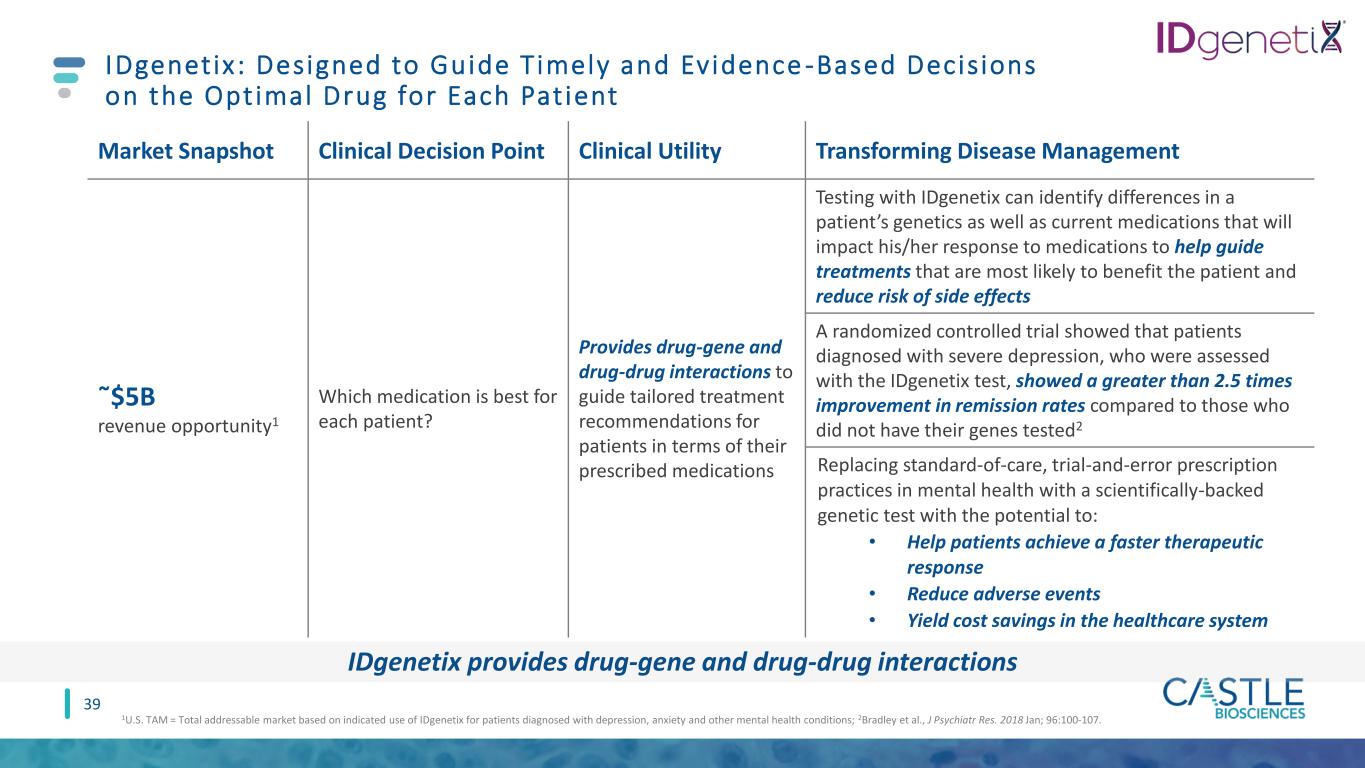
A l t h e a D x A c q u i s i t i o n D i v e r s i f i e s C a s t l e ’s P o r t f o l i o o f Te s t s a n d P r o v i d e s O p p o r t u n i t y f o r L o n g - Te r m G r o w t h P o t e n t i a l 36 Opportunity Strategic Fit Value Rationale • IDgenetix test represents an estimated ~$5B U.S. Total Addressable Market (TAM) for mental health2 • IDgenetix reimbursed by Medicare for major depressive disorder since 2020; recently expanded coverage for seven additional mental health conditions • IDgenetix randomized controlled clinical-use trial demonstrated clinical utility over standard of care, when physicians used the test prior to prescribing a medication1 • Expands expertise into areas of mental health and treatment response through pharmacogenomic (PGx) testing • Provides ability to build pipeline in an adjacent market (aligns with inflammatory skin disease pipeline test) • Acquisition expected to contribute to near- and long-term revenue growth • An area where we can leverage our commercial success • Potential to create a suite of tests in a single call point • Ability to answer clinical questions/impact patient care • Early reimbursement wins 1Bradley et al., J Psychiatr Res. 2018 Jan; 96:100-107 2 See slide 11 for additional detail on assumptions supporting TAM estimates.


A c q u i s i t i o n o f A l t h e a D x A l i g n s w i t h C a s t l e ’s M & A S t ra t e g y 37 Areas where we can leverage our commercial success Potential to create a suite of tests in a single call point Ability to answer clinical questions/impact patient care Early reimbursement wins Targeting high-prescribing providers complements our go-to-market strategy for Derm Our capital allocation priorities include strategic acquisitions with potential for mid- to long-term value creation and revenue and earnings growth Potential application of technology across mental health market Which medication is best for a patient based on his/her genetics? IDgenetix is covered by Medicare1 and United Healthcare 1The Medicare reimbursement rate is currently ~$1,500 for IDgenetix multi-gene testing for eight mental health conditions: major depressive disorder, schizophrenia, bipolar disorder, anxiety disorders, panic disorder, obsessive-compulsive personality disorder, post-traumatic stress disorder and attention deficit hyperactivity disorder.


Mental Health/IDgenetix Integration Progress Roadmap Q2 2022 Q3 2022 38 April 4, 2022 Announced acquisition of AltheaDx Q2 2022 Announced expanded Medicare coverage for IDgenetix (seven additional mental health conditions beyond major depressive disorder) April 26, 2022 Announced close of AltheaDx acquisition Q2 2022 Announced a collaboration with Camille Schrier, Miss America 2020, as part of Mental Health Awareness Month, to promote the potential of genetic testing and the IDgenetix® test to help improve treatment for mental health conditions Q2 2022 Relaunch IDgenetix website Q2 2022+ Aligning mental health commercial team with Castle’s proven commercial playbook 2022+ Identify additional potential pipeline opportunities Q2-Q3 2022 Consolidation of internal functions (e.g., Finance, Marketing, Reimbursement) Q4 2022


39 IDgenet ix : Designed to Guide T imely and Evidence -Based Decis ions on the Opt imal Drug for Each Pat ient Market Snapshot Clinical Decision Point Clinical Utility Transforming Disease Management ῀$5B revenue opportunity1 Which medication is best for each patient? Provides drug-gene and drug-drug interactions to guide tailored treatment recommendations for patients in terms of their prescribed medications Testing with IDgenetix can identify differences in a patient’s genetics as well as current medications that will impact his/her response to medications to help guide treatments that are most likely to benefit the patient and reduce risk of side effects A randomized controlled trial showed that patients diagnosed with severe depression, who were assessed with the IDgenetix test, showed a greater than 2.5 times improvement in remission rates compared to those who did not have their genes tested2 Replacing standard-of-care, trial-and-error prescription practices in mental health with a scientifically-backed genetic test with the potential to: • Help patients achieve a faster therapeutic response • Reduce adverse events • Yield cost savings in the healthcare system 1U.S. TAM = Total addressable market based on indicated use of IDgenetix for patients diagnosed with depression, anxiety and other mental health conditions; 2Bradley et al., J Psychiatr Res. 2018 Jan; 96:100-107. IDgenetix provides drug-gene and drug-drug interactions


Clinical Trial Design • Randomized Controlled Trial (RCT) • Peer-reviewed and published in the Journal of Psychiatric Research • 685 participants, Depression and Anxiety • Double-blinded • Treated by a broader group of medical professionals, beyond psychiatrists • 20 independent clinical sites • 4, 8 and 12-week efficacy using HAM-A scale E n h a n c e d T h e ra p e u t i c Ef f i c a c y v s . S t a n d a r d o f C a r e 28% 36% 55% By T3 (Week 8) By T4 (Week 12) Response Rate ≥ 50% Reduction from Baseline p-value 0.01 0.001 73% 9% 13% 25% 35% By T3 (Week 8) By T4 (Week 12) Remission Rate Back to Normal p-value 0.05 0.02 Control IDgenetix 40 Bradley et al. J Psychiatr Res. 2018 Jan; 96:100-107.


I D g e n e t i x Te s t i n g P ro c e s s C o n s i s t s o f T h r e e I m p o r ta n t S t e p s 41 Drug Metabolism Genotyping Drug Response Genotyping Algorithmic Screening Analyzes patient-specific genetic variants that influence the function of drug metabolizing enzymes Influences how much of a drug is active in the body to produce therapeutic or toxic effects P R O C ES S IM P O R TA N C E Analyzes patient-specific genetic variants involved in the way medications work at the biologic site of action Influences the likelihood of a therapeutic or adverse drug response Screens for metabolic interactions caused by concomitant prescription, OTC and herbal medications that may significantly alter the metabolism of approved medications Identifies CYP450-mediated interactions that can alter which medications are optimal for each patient IM P O R TA N C E IM P O R TA N C E P R O C ES S P R O C ES S 1 2 3 IDgenetix testing is designed to provide tailored treatment recommendations for each patient by utilizing a bioinformatic algorithm to integrate patient-specific health information with comprehensive genetic results Drug-Gene Interactions Drug-Drug Interactions


Env i ronmental , Soc ia l and Governance (ESG)


43 E S G F o c u s A r e a s f o r 2 0 2 2 a n d B e y o n d Environmental policy Environmental metrics DEI mission statement DEI metrics DEI action plan/roadmap Vendor code of conduct/supplier standard 43 In 2022, Castle Biosciences received a rating of AA (on a scale of AAA-CCC) in the MSCI ESG Ratings assessment.


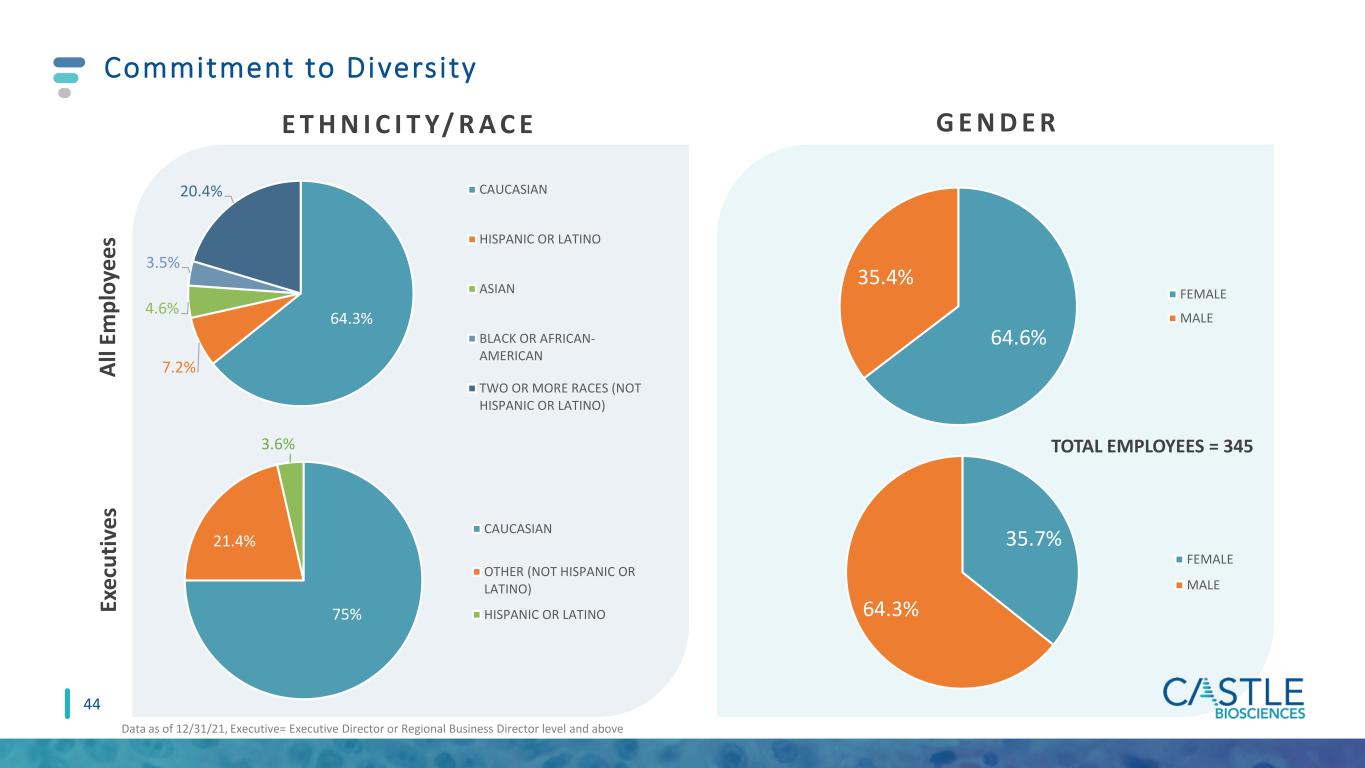
35.7% 64.3% FEMALE MALE Commitment to Diversity 44 A ll Em p lo ye es Ex ec u ti ve s E T H N I C I T Y/ R A C E G E N D E R Data as of 12/31/21, Executive= Executive Director or Regional Business Director level and above 64.6% 35.4% FEMALE MALE TOTAL EMPLOYEES = 345 75% 21.4% 3.6% CAUCASIAN OTHER (NOT HISPANIC OR LATINO) HISPANIC OR LATINO 64.3% 7.2% 4.6% 3.5% 20.4% CAUCASIAN HISPANIC OR LATINO ASIAN BLACK OR AFRICAN- AMERICAN TWO OR MORE RACES (NOT HISPANIC OR LATINO)


THANK YOU


U s e O f N o n - G A A P F i n a n c i a l M e a s u re s ( U n a u d i t e d ) 46 In this presentation, we use the metrics of Adjusted Revenue, Adjusted Gross Margin and Adjusted Operating Cash Flow, which are non-GAAP financial measures and are not calculated in accordance with generally accepted accounting principles in the United States (GAAP). Adjusted Revenue and Adjusted Gross Margin reflect adjustments to net revenues to exclude changes in variable consideration related to test reports delivered in previous periods. Adjusted Gross Margin further excludes acquisition-related intangible asset amortization. Adjusted Operating Cash Flow excludes the effects of repayments to Medicare of COVID-19 government relief advancements to healthcare providers. We use Adjusted Revenue, Adjusted Gross Margin and Adjusted Operating Cash Flow internally because we believe these metrics provide useful supplemental information in assessing our revenue and cash flow performance reported in accordance with GAAP, respectively. We believe Adjusted Revenue and Adjusted Gross Margin are also useful to investors because they provide additional information on current-period performance by removing the effects of revenue adjustments related to tests delivered in previous periods and acquisition-related intangible asset amortization, which we believe may facilitate revenue and gross margin comparisons to historical periods. We believe Adjusted Operating Cash Flow is also useful to investors as a supplement to GAAP measures in the assessment of our cash flow performance by removing the effects of COVID-19 government relief payments, which we believe are not indicative of our ongoing operations. However, these non-GAAP financial measures may be different from non-GAAP financial measures used by other companies, even when the same or similarly titled terms are used to identify such measures, limiting their usefulness for comparative purposes. These non-GAAP financial measures are not meant to be considered in isolation or used as substitutes for net revenues, gross margin or net cash (used in) provided by operating activities reported in accordance with GAAP and should be considered in conjunction with our financial information presented on GAAP basis and language from earnings press release. Accordingly, investors should not place undue reliance on non-GAAP financial measures. Reconciliations of these non-GAAP financial measures to the most directly comparable GAAP financial measures are presented in the slides that follow.


Re c o n c i l i a t i o n o f N o n - G A A P F i n a n c i a l M e a s u r e s ( U n a u d i t e d ) The table below presents the reconciliation of adjusted revenue and adjusted gross margin, which are non-GAAP measures. See "Use of Non-GAAP Financial Measures (UNAUDITED)" on the previous slide for further information regarding the Company's use of non-GAAP financial measures. 47


Re c o n c i l i a t i o n o f N o n - G A A P F i n a n c i a l M e a s u r e s ( U n a u d i t e d ) The table below presents the reconciliation of adjusted operating cash flow, which is a non-GAAP measure. See "Use of Non-GAAP Financial Measures (UNAUDITED)" on the previous slide for further information regarding the Company's use of non-GAAP financial measures. 48


APPENDIX


C a s t l e B i o s c i e n c e s I s I m p ro v i n g H e a l t h t h ro u g h I n n o va t i v e Te s t s T h a t G u i d e Pa t i e n t C a r e 50 Dermatology Gastroenterology Mental HealthUveal Melanoma Portfolio of innovative tests designed to guide patient care


Improving Health through Innovative Tests that Guide Patient Care 51 A Diagnostic Leader Robust Data Supporting our TestsCastle Team 400 Total employees 79 Laboratory testing operations team members 77 35+ Peer-reviewed publications Strong financial position, driven by investments in our growth pillars and commercial excellence Diversified portfolio of tests that answer clinical questions and provide actionable information Data driven with a robust R&D and clinical research engine that address areas of unmet clinical need Culture of teamwork and innovation, built on a patient-centric mindset 10 12 9 22 Research & development team members Data as of 03/31/22; total employee count also includes 113 general & administrative team members 131 Sales & marketing team members


L e a d e r s h i p Te a m O v e r v i e w Dan Bradbury Derek Maetzold Mara Aspinall Brad Cole Miles D. Harrison 52 Stuart Pharmaceuticals Robert Cook, PhD Senior Vice President, Research & Development Derek Maetzold Founder, Director, President and CEO Frank Stokes Chief Financial Officer Toby Juvenal Chief Commercial Officer Kristen Oelschlager, RN, CHC Chief Operating Officer Matthew Goldberg, MD Medical Director Tiffany Olson Kimberlee Caple Ellen Goldberg B O A R D O F D I R E C T O R S Alice Izzo Senior Vice President, Marketing M A N A G E M E N T T EA M B OA R D O F D I R EC TO R S


Committed to cu lt ivat ing a cu lture of innovat ion, cont inuous growth and advancement Award-Winning Company 53 2019 Technology Innovation in Melanoma Award Winner