cstl-20210510
0001447362FALSE00014473622021-05-102021-05-10

UNITED STATES
SECURITIES AND EXCHANGE COMMISSION
Washington, D.C. 20549

FORM 8-K
CURRENT REPORT
Pursuant to Section 13 or 15(d)
of the Securities Exchange Act of 1934

Date of Report (Date of earliest event reported): May 10, 2021

Castle Biosciences, Inc.
(Exact name of registrant as specified in its charter)
     
Delaware 001-38984 77-0701774
(state or other jurisdiction
of incorporation)
 (Commission
File Number)
 (I.R.S. Employer
Identification No.)
505 S. Friendswood Drive, Suite 401
Friendswood, Texas
77546
(Address of principal executive offices)(Zip Code)

Registrant’s telephone number, including area code: (866) 788-9007

(Former name or former address, if changed since last report.)

Check the appropriate box below if the Form 8-K filing is intended to simultaneously satisfy the filing obligation of the registrant under any of the following provisions: 

    Written communications pursuant to Rule 425 under the Securities Act (17 CFR 230.425)
    Soliciting material pursuant to Rule 14a-12 under the Exchange Act (17 CFR 240.14a-12) 
    Pre-commencement communications pursuant to Rule 14d-2(b) under the Exchange Act (17 CFR 240.14d-2(b)) 
    Pre-commencement communications pursuant to Rule 13e-4(c) under the Exchange Act (17 CFR 240.13e-4(c)) 
 
Securities registered pursuant to Section 12(b) of the Act:
Title of each classTrading Symbol(s) Name of each exchange on which registered
Common Stock, $0.001 par value per shareCSTL The Nasdaq Global Market

Indicate by check mark whether the registrant is an emerging growth company as defined in as defined in Rule 405 of the Securities Act of 1933 (§ 230.405 of this chapter) or Rule 12b–2 of the Securities Exchange Act of 1934 (§ 240.12b–2 of this chapter).
Emerging growth company 
If an emerging growth company, indicate by check mark if the registrant has elected not to use the extended transition period for complying with any new or revised financial accounting standards provided pursuant to Section 13(a) of the Exchange Act.  


Item 2.02    Results of Operations and Financial Condition.

On May 10, 2021, Castle Biosciences, Inc. (the “Company”) issued a press release announcing its financial results for the quarter ended March 31, 2021. A copy of the press release is attached hereto as Exhibit 99.1 and incorporated herein by reference.

The information contained or incorporated in this Current Report on Form 8-K, including Exhibit 99.1, shall not be deemed “filed” for purposes of Section 18 of the Securities Exchange Act of 1934, as amended (the “Exchange Act”), or otherwise subject to the liabilities of that section, nor shall it be deemed to be incorporated by reference into any filing under the Exchange Act or the Securities Act of 1933, as amended (the “Securities Act”), except as expressly set forth by specific reference in such filing to this Current Report on Form 8-K.

Item 7.01    Regulation FD Disclosure.

On May 10, 2021, the Company made available the slide presentation attached hereto as Exhibit 99.2. Information from this slide presentation may also be used by the management of the Company in future meetings regarding the Company.

The information contained or incorporated in this Item 7.01 of this Current Report on Form 8-K, including Exhibit 99.2, shall not be deemed “filed” for purposes of Section 18 of the Exchange Act or otherwise subject to the liabilities of that section, nor shall it be deemed to be incorporated by reference into any filing under the Exchange Act or the Securities Act except as expressly set forth by specific reference in such filing to this Current Report on Form 8-K.

Item 9.01    Financial Statements and Exhibits.
(d) Exhibits.
Exhibit
NumberDescription
99.1
99.2
104Inline XBRL for the cover page of this Current Report on Form 8-K.


SIGNATURES
Pursuant to the requirements of the Securities Exchange Act of 1934, the registrant has caused this report to be signed on its behalf by the undersigned hereunto duly authorized.
CASTLE BIOSCIENCES, INC.
By:/s/ Frank Stokes
Frank Stokes
Chief Financial Officer
Date: May 10, 2021


Exhibit 99.1
cstllogo011.jpg


Castle Biosciences Announces First Quarter 2021 Results

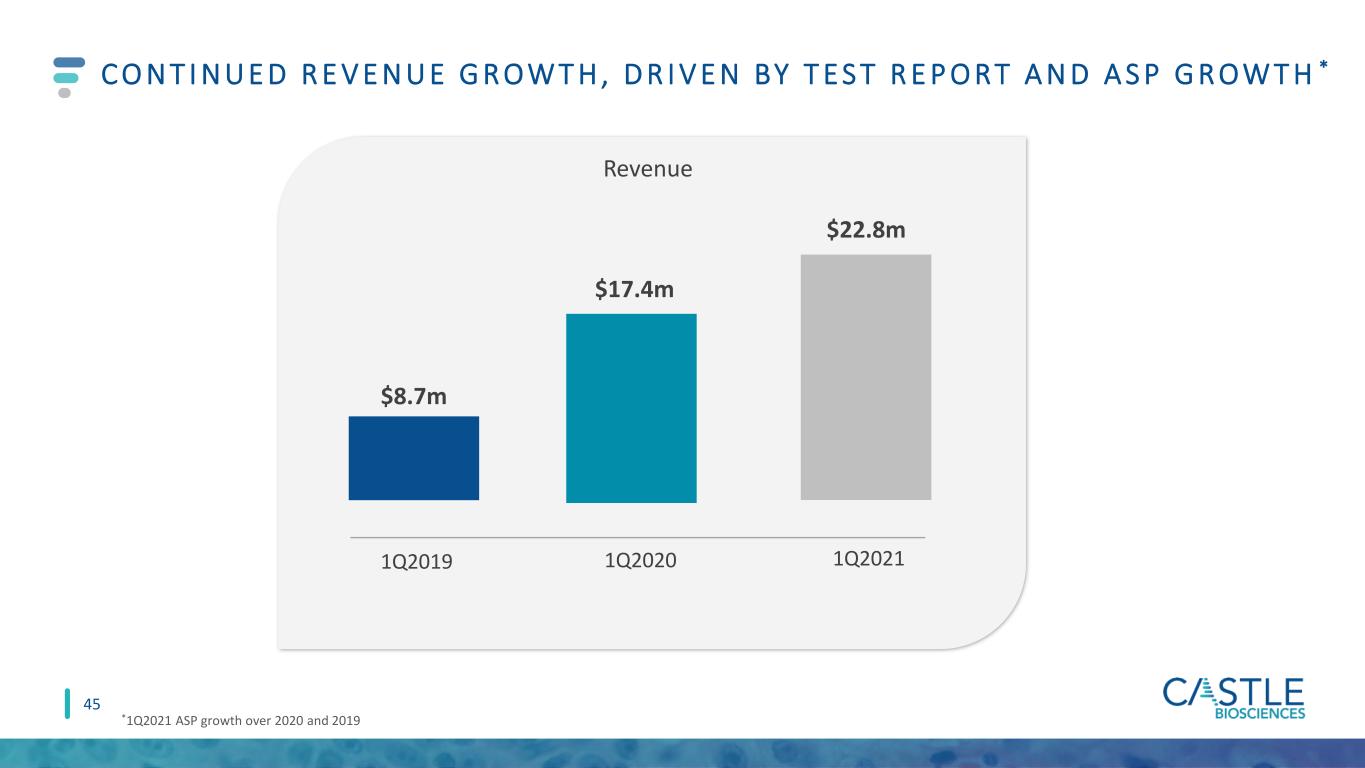
Q1 2021 revenues of $22.8 million, compared to $17.4 million in Q1 2020
Q1 2021 total dermatology test report volume of 4,805
Initiates 2021 Revenue Guidance of $80-83 million
Q1 2021 gross margin of 87%
Conference call and webcast today at 4:30 p.m. ET

FRIENDSWOOD, Texas- May 10, 2021--Castle Biosciences, Inc. (Nasdaq: CSTL), a dermatologic diagnostics company providing personalized genomic information to improve treatment decisions, today announced its financial results for the first quarter ended March 31, 2021.
“We are pleased with our strong execution in the first quarter, with revenue increasing by 31% over the first quarter of 2020,” said Derek Maetzold, president and chief executive officer of Castle Biosciences. “In-line with our expectations, January and February were impacted, we believe, by COVID-19 and weather interruptions. However, we are encouraged by the positive trends that we are seeing. Specifically, we saw order volume for our DecisionDx®-Melanoma test increase by approximately 30% in March 2021, compared to January 2021, with March orders being the highest March since DecisionDx-Melanoma became commercially available. This positive trend continued in April, with April orders exceeding those of March. Additionally, we saw continued positive trends for our recently launched DecisionDx®-SCC and DecisionDx® DiffDx™-Melanoma tests. While there is continued uncertainty related to the impact of COVID-19 with regard to the timing of the return to historical levels of skin cancer diagnoses, we feel confident in providing 2021 revenue guidance of $80-83 million.
“We continue to make progress on our growth initiatives and remain focused on helping physicians answer clinical questions with high unmet need with the personalized, precise results our genomic tests are designed to provide. We believe our recent announcement of signing a definitive agreement to acquire Myriad’s myPath Melanoma laboratory, and the resulting addition of myPath® Melanoma test to our skin cancer test services, furthers our position as the leader in dermatologic diagnostics. And we believe will enable us to provide the most comprehensive offerings for patients with skin cancer and difficult-to-diagnose melanocytic lesions. Additionally, our pipeline initiative to develop an innovative test that can predict therapy response and guide treatment selection of systemic therapies in patients diagnosed with moderate to severe psoriasis, atopic dermatitis and related conditions has the potential to expand our reach into non-skin cancer, medical dermatology diseases and is expected to provide enhanced value to our clinical customers and their patients. These tests, along with our other pipeline products, have the potential to increase our estimated U.S. total addressable market to slightly more than $5.5 billion.
“Finally, I am pleased to announce that we completed our commercial team expansion ahead of schedule, with all new outside territories filled, doubling our total dermatology customer facing positions to approximately 60-65. Training is ongoing, and by July 1, we expect our expanded commercial team will be able to utilize our existing, dermatologic sales channels to offer clinicians and their patients four innovative, actionable gene expression profile tests designed to improve patient care.”
First Quarter Ended March 31, 2021, Selected Results
Revenues were $22.8 million, a 31% increase compared to $17.4 million during the same period in 2020. Included in revenue for the period were positive revenue adjustments related to tests delivered in prior periods. These positive prior period revenue adjustments for the three months ended March 31, 2021, were $5.3 million, compared to $3.2 million for the same period in 2020. Prior period revenues for the first quarter of 2021 includes favorable adjustments related to settlement of certain groups of receivables from prior years, in addition to other positive prior period revenue adjustments.
Adjusted revenues were $17.5 million, a 22% increase, excluding the effects of revenue adjustments related to tests delivered in prior periods, compared to $14.3 million for the same period in 2020.
Total gene expression profile test reports delivered in the first quarter of 2021 were 5,142, compared to 4,935 in the same period of 2020:


DecisionDx-Melanoma test reports delivered in the first quarter of 2021 were 4,060, compared to 4,574, in the first quarter of 2020.
DecisionDx-SCC test reports delivered in the first quarter of 2021 were 527.
DecisionDx DiffDx-Melanoma test reports delivered in the first quarter of 2021 were 218.
DecisionDx-UM test reports delivered in the first quarter of 2021 were 337, compared to 361 in the first quarter of 2020. Order volume for DecisionDx-UM increased by approximately 58% in March 2021, compared to January 2021.
Gross margin for the three months ended March 31, 2021, was 87%.
Adjusted gross margin for the three months ended March 31, 2021, was 83%.
Operating cash flow was $(3.6) million, compared to $(0.3) million for the same period in 2020.
Adjusted operating cash flow was $(5.5) million, compared to $(0.3) million for the same period in 2020.

Cash and Cash Equivalents
As of March 31, 2021, the Company’s cash and cash equivalents totaled $407 million.
2020 Revenue Guidance
Castle Biosciences anticipates generating $80-83 million in total revenue in 2021.

First Quarter and Recent Business and Clinical Evidence Highlights
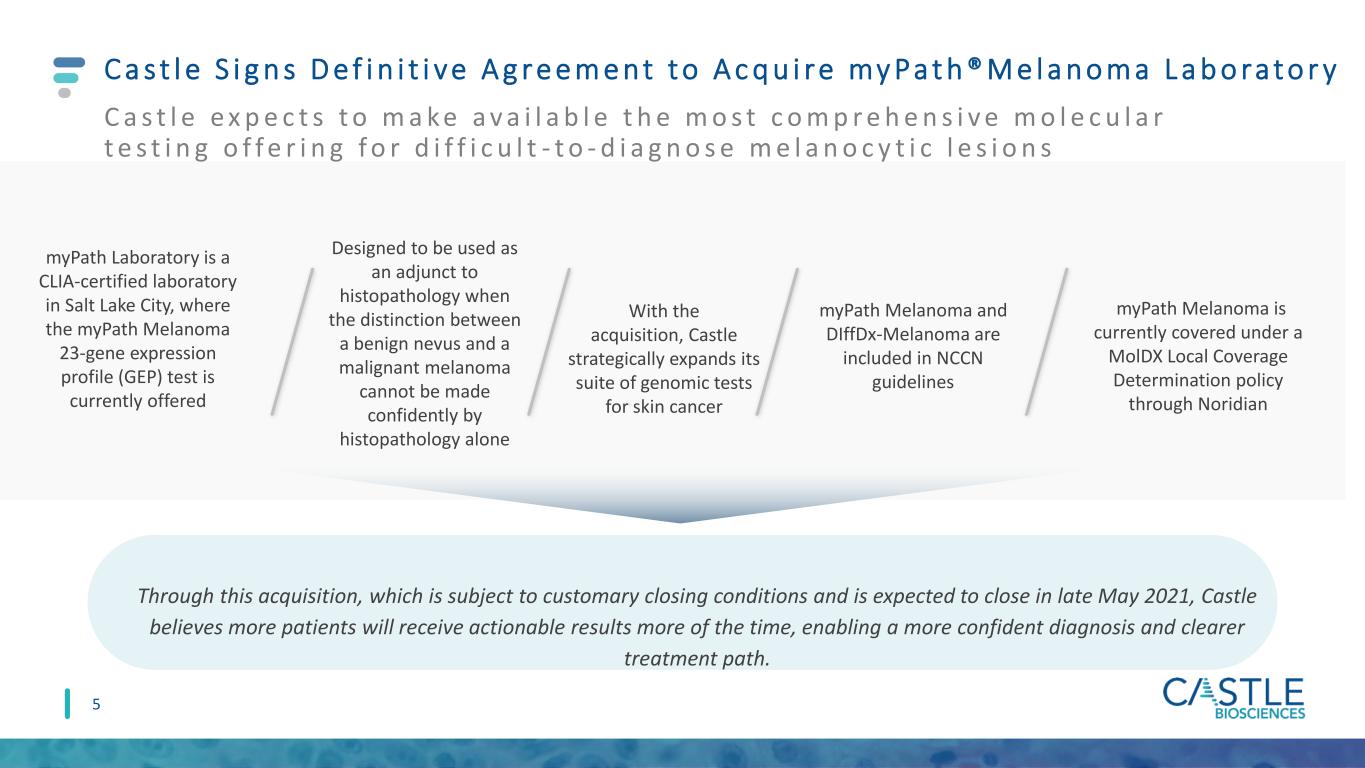
On April 27, the Company announced it signed a definitive agreement to acquire all of the equity of Myriad myPath, LLC (Myriad myPath Laboratory), from Myriad Genetics. Myriad myPath Laboratory is a CLIA-certified laboratory in Salt Lake City, where the myPath Melanoma 23-gene expression profile (GEP) test is currently offered. With the acquisition, which is subject to customary closing conditions and is expected to close in late May 2021, Castle expects to make available the most comprehensive molecular testing offering for difficult-to-diagnose melanocytic lesions. See the Company’s news release from April 27, 2021, for more information.
On May 10, the Company announced the launch of its innovative pipeline initiative to develop a genomic test aimed at predicting systemic therapy response in patients with moderate to severe psoriasis, atopic dermatitis and related conditions. See the Company’s news release from earlier today for more information.
In April, at the 10th World Congress of Melanoma, the Company presented data on three of its skin cancer tests, including from an independent validation study demonstrating the i31-GEP artificial intelligence algorithm improves precision of sentinel lymph node positivity prediction in cutaneous melanoma. The poster, titled “Integration of the 31-gene expression profile test with clinicopathologic features (i31-GEP) to assess sentinel lymph node positivity risk in patients with cutaneous melanoma,” highlights the i31-GEP validation study data and demonstrates that the algorithm provides a more precise, personalized likelihood of sentinel lymph node positivity. The poster can be accessed here.
Study methods and findings:
The study reviewed the development and validation of the i31-GEP, which deploys a neural network algorithm to integrate the continuous DecisionDx-Melanoma score as well as other histologic and clinical features on a development cohort of 1,398 patients. The i31-GEP algorithm was locked using these 1,398 patients and was then independently validated on an independent, U.S. based cohort of 1,674 patients.
The development phase identified that the DecisionDx-Melanoma score was the most important variable in predicting SLN positivity under both the variable importance assessment function (DecisionDx-Melanoma score = 100, Breslow thickness = 56, Mitotic rate = 25, ulceration = 83 and Age = 0; with 100 being the highest possible value) and log-likelihood value (DecisionDx-Melanoma score = 91.3, Breslow thickness = 53.5, Mitotic rate = 20.7, ulceration = 19.1 and Age = 10.5; with 100 being the highest possible value).
The independent validation phase showed that the i31-GEP provides a highly concordant prediction of SLN positivity rate compared to observed rates (linear regression slope of 0.999, with 1.0 representing complete concordance).


Of patients originally classified with 5-10% SLN positivity risk, i31-GEP reclassified 63% of those patients, whose actual risk of SLN positivity was outside that range in either direction (less than 5% or greater than 10%).
i31-GEP had a high negative predictive value of 98% in patients with T1-T4 tumors.
Information about the additional data presentations can be found here on the Company’s news release from April 16, 2021.
Data from an independent, prospective study was published in the American Journal of Surgery, demonstrating DecisionDx-Melanoma’s utility for prediction of outcomes in patients with cutaneous melanoma. The publication, titled “Utility of a 31-gene expression profile for predicting outcomes in patients with primary cutaneous melanoma referred for sentinel node biopsy,” describes a study comparing tumor features, sentinel node biopsy (SLNB) results, and patient outcomes from a prospective database of 383 patients with cutaneous melanoma who both underwent SLNB and had their primary tumor assayed with DecisionDx-Melanoma. The study’s results demonstrated that a Class 2 (high-risk) DecisionDx-Melanoma result was significantly associated with higher rates of SLNB positivity compared to Class 1 (low risk). With respect to risk prognoses, patients who received a Class 2B DecisionDx-Melanoma result and were SLNB-positive experienced the highest recurrence rates (38%), compared to only a 2% recurrence rate for patients who were Class 1A and SLNB-negative. DecisionDx-Melanoma Class 2 results were significantly associated with poorer RFS and DMFS rates compared to Class 1 results, both in the entire cohort of 383 cases and in patients staged as “low risk” (IA-IIA) according to American Joint Committee on Cancer (AJCC) staging criteria. See the Company’s news release from April 14, 2021, for more information.
Publication of prospective, multi-center long-term outcomes data in cutaneous melanoma appeared in the peer-reviewed journal, JCO® Precision Oncology, and was titled “Long-term outcomes in a multicenter, prospective cohort evaluating the prognostic 31-gene expression profile for cutaneous melanoma.” The study’s key objective was to demonstrate the prognostic value of DecisionDx-Melanoma with long-term follow-up that extends the assessment time period for a previously studied cohort. The study achieved its primary objective and expanded upon prior results to show the ability of the test to accurately identifying recurrence risk of patients with American Joint Committee on Cancer (AJCC) 8th Edition staging system early stage I-IIA disease. See the Company’s news release from April 13, 2021, for more information.
Publication of a cross-sectional study of dermatologists that found its respondents are increasingly incorporating DecisionDx®-Melanoma into the management of their patients with melanoma was published in SKIN: The Journal of Cutaneous Medicine and was titled, “Assessment of the 31-Gene Expression Profile Test by Dermatologists: A Cross-Sectional Survey from National Dermatology Conferences.” The cross-sectional study was offered to attendees of two national, virtual dermatology conferences during the end of 2020 and beginning of 2021 to assess the professional understanding, opinions and clinical usage of DecisionDx-Melanoma by dermatologists. Participants were asked questions regarding practice demographics, factors considered prior to ordering DecisionDx-Melanoma, their integration of the test’s results into clinical management and their opinions on the usefulness of the test. Participants who use DecisionDx-Melanoma indicated that they use the results to impact follow-up schedules, referrals, surveillance imaging, sentinel lymph node biopsy procedure recommendations and other treatment decisions. These uses largely follow published appropriate-use criteria for the test. Participants responded that patients gain various benefits from DecisionDx-Melanoma test results, including increased knowledge and understanding (70%), personalized treatment options (58%) and eased uncertainty about the future (59%). Even regarding test results indicating the lowest risk of recurrence (i.e., Class 1A), 66% of participants reported potential benefits for ameliorating patients’ anxiety and 46% reported increasing confidence in their management. See the Company’s news release from March 25, 2021, for more information.
In March 2021, the Company announced clinical availability of an artificial intelligence-based integrated DecisionDx-Melanoma test result. The Company validated the integration of clinicopathologic features with the tumor biology insights provided by the DecisionDx-Melanoma test. The integrated test result (ITR) is designed to provide a more precise risk prediction to further improve the clinical actionability by


clinicians and their patients in helping to guide cancer management decisions. For more information, see the Company’s news release from March 8, 2021.
In February 2021, the Company presented data on DecisionDx-Melanoma at the 19th Annual South Beach Symposium:
The first poster was entitled, “31-Gene expression profiling improves risk stratification in patients with T1 cutaneous melanoma.” Univariate analysis of the study data showed DecisionDx-Melanoma to be a stronger predictor of recurrence-free survival (RFS) than SLN status. Additionally, multivariable analysis showed DecisionDx-Melanoma to be a strong, independent predictor of RFS. With Class 2B RFS status similar to SLN positive status, Class 2B patients warrant follow-up strategies similar to SLN positive patients.
The second DecisionDx-Melanoma poster was entitled, “The clinical and financial impact of the 31-gene expression profile testing on sentinel lymph node biopsy patients selection in patients with T1b cutaneous melanoma.” The authors analyzed all clinical DecisionDx-Melanoma tests that were reported from Jan. 3, 2019 through Sept. 4, 2020. The data showed that 75% of eligible patients with T1b tumors had a Class 1A result and could potentially forego sentinel lymph node biopsy (SLNB). The authors estimate that foregoing SLNB in these patients could reduce healthcare expenditures by up to $120 million in SLNB-related costs. For more information, see the Company’s news release from Feb. 4, 2021.
In January 2021, the Company presented data on DecisionDx-Melanoma and DecisionDx DiffDx-Melanoma at the 18th Annual Winter Clinical Dermatology Conference:
The virtual poster for DecisionDx-Melanoma was entitled, “Identifying predictors of sentinel lymph node metastasis in cutaneous melanoma patients using molecular and clinicopathologic high-risk features.” For 3,093 patients with T1-T4 cutaneous melanoma, authors used decision tree analysis to determine which molecular and clinicopathologic features best stratify sentinel lymph node (SLN) positivity risk and demonstrated that DecisionDx-Melanoma was the most important feature in distinguishing between high and low SLN-positivity rates (p<0.001).
The virtual poster for DecisionDx DiffDx-Melanoma was entitled, “Performance of a 35-gene expression profile test in suspicious pigmented lesions of the head and neck.” The study evaluated DecisionDx DiffDx-Melanoma’s accuracy in classifying pigmented lesions on the head and neck. The data demonstrated that DecisionDx DiffDx-Melanoma has the ability to be an effective tool for refining melanoma diagnoses on the head and neck and therefore improving downstream management decisions, as indicated by its high sensitivity and specificity in the study. For more information, see the Company’s news release from Jan. 20, 2021.
Also in January 2021, the Company presented data at the Maui Derm for Dermatologists 2021 conference:
The virtual poster for DecisionDx-SCC was entitled, “Clinical utility of the 40-gene expression profile (40-GEP) for improved patient management decisions and disease related outcomes when combined with current clinicopathological risk factors for cutaneous squamous cell carcinoma (cSCC): Case Series.” Two SCC cases were presented that highlight DecisionDx-SCC’s utility in stratifying risk in SCC. The cases had very similar risk of metastasis at diagnosis as both presented with a history of immunosuppression and had identical staging (T2a per Brigham and Women’s Hospital staging; T1 per American Joint Committee on Cancer staging), but had divergent outcomes:
Case 1 did not recur, despite incomplete resection. This case had a low-risk (Class 1) DecisionDx-SCC result, consistent with the clinical outcome of no clinical progression.
Case 2 developed local recurrence and regional metastasis, and eventually died from SCC, despite clear surgical margins. This case had a highest-risk (Class 2B) DecisionDx-SCC result, consistent with clinical progression. The study authors concluded that incorporating DecisionDx-SCC as a prognostic factor with traditional clinicopathologic risk factors can improve stratification of high-risk SCC patients with at least one risk factor, thereby informing risk-appropriate management strategies.


Conference Call and Webcast Details
Castle Biosciences will hold a conference call on Monday, May 10, 2021, at 4:30 p.m. Eastern time to discuss its first quarter 2021 results and provide a corporate update.

A live webcast of the conference call can be accessed here: https://edge.media-server.com/mmc/p/p5gxkbjh
or via the webcast link on the Investor Relations page of the Company’s website (www.castlebiosciences.com). Please access the webcast at least 10 minutes before the conference call start time. An archive of the webcast will be available on the Company’s website until June 1, 2021.

To access the live conference call via phone, please dial 877-282-2581 from the United States and Canada, or +1 470-495-9479 internationally, at least 10 minutes prior to the start of the call, using the conference ID 6526639.

There will be a brief Question & Answer session following management commentary.

Use of Non-GAAP Financial Measures (UNAUDITED)
In this release, we use the metrics of Adjusted Revenue, Adjusted Gross Margin and Adjusted Operating Cash Flow, which are non-GAAP financial measures and are not calculated in accordance with generally accepted accounting principles in the United States (GAAP). Adjusted Revenue and Adjusted Gross Margin reflect adjustments to net revenues to exclude changes in variable consideration related to test reports delivered in previous periods. Adjusted Operating Cash Flow excludes the effects of cash activity associated with COVID-19 government relief payments to healthcare providers.

We use Adjusted Revenue, Adjusted Gross Margin and Adjusted Operating Cash Flow internally because we believe these metrics provide useful supplemental information in assessing our revenue and cash flow performance, respectively. We believe Adjusted Revenue and Adjusted Gross Margin are also useful to investors because they provide additional information on current-period performance by removing the effects of revenue adjustments related to tests delivered in previous periods, which we believe may facilitate revenue and gross margin comparisons to historical periods. We believe Adjusted Operating Cash Flow is also useful to investors as a supplement to GAAP measures in the assessment of our cash flow performance by removing the effects of COVID-19 government relief payments, which we believe are not indicative of our ongoing operations. However, these non-GAAP financial measures may be different from non-GAAP financial measures used by other companies, even when the same or similarly titled terms are used to identify such measures, limiting their usefulness for comparative purposes. These non-GAAP financial measures are not meant to be substitutes for net revenues or net cash (used in) provided by operating activities reported in accordance with GAAP and should be considered in conjunction with our financial information presented on GAAP basis. Accordingly, investors should not place undue reliance on non-GAAP financial measures. Reconciliations of these non-GAAP financial measures to the most directly comparable GAAP financial measures are presented in the tables at the end of this press release.

About Castle Biosciences

Castle Biosciences (Nasdaq: CSTL) is a commercial-stage dermatologic diagnostics company focused on providing physicians and their patients with personalized, clinically actionable genomic information to make more accurate treatment decisions. The Company currently offers tests for patients with cutaneous melanoma (DecisionDx®-Melanoma, DecisionDx®-CMSeq), cutaneous squamous cell carcinoma (DecisionDx®-SCC), suspicious pigmented lesions (DecisionDx® DiffDx™-Melanoma) and uveal melanoma (DecisionDx®-UM, DecisionDx®-PRAME and DecisionDx®-UMSeq). For more information about Castle’s gene expression profile tests, visit www.CastleTestInfo.com. Castle also has active research and development programs for tests in other dermatologic diseases with high clinical need, including its test in development to predict systemic therapy response in patients with moderate to severe psoriasis, atopic dermatitis and related conditions. Castle Biosciences is based in Friendswood, Texas (Houston), and has laboratory operations in Phoenix, Arizona. For more information, visit www.CastleBiosciences.com.


DecisionDx-Melanoma, DecisionDx-CMSeq, DecisionDx-SCC, DecisionDx DiffDx-Melanoma, DecisionDx-UM, DecisionDx-PRAME and DecisionDx-UMSeq and are trademarks of Castle Biosciences, Inc.

Forward-Looking Statements
The information in this press release contains forward-looking statements and information within the meaning of Section 27A of the Securities Act of 1933, as amended, and Section 21E of the Securities Exchange Act of 1934, as amended, which are subject to the “safe harbor” created by those sections. These forward-looking statements include, but are not limited to, statements concerning the effects of the COVID-19 pandemic on our business and our efforts to address its impact on our business, statements concerning the estimated size of our total addressable market or our existing and pipeline products, the impact, accuracy and effectiveness of our tests, including DecisionDx-Melanoma, DecisionDx-SCC and DecisionDx DiffDx-Melanoma, on physicians, patients and their treatment plans, our prospects and plans and the objectives of management and statements concerning the expectation that Castle will complete the acquisition of Myriad myPath Laboratory and the expected timing of the consummation of the transaction, Castle’s ability to integrate the myPath Melanoma test into its commercial offerings and deliver the most comprehensive molecular testing offering for difficult-to-diagnose melanocytic lesions. The words “anticipates,” “believes,” “estimates,” “expects,” “intends,” “may,” “plans,” “projects,” “will,” “would” and similar expressions are intended to identify forward-looking statements, although not all forward-looking statements contain these identifying words. We may not actually achieve the plans, intentions, or expectations disclosed in our forward-looking statements and you should not place undue reliance on our forward-looking statements. Actual results or events could differ materially from the plans, intentions and expectations disclosed in the forward-looking statements that we make. These forward-looking statements involve risks and uncertainties that could cause our actual results to differ materially from those in the forward-looking statements, including, without limitation, the effects of the COVID-19 pandemic on our business and our efforts to address its impact on our business, subsequent study results and findings that contradict earlier study results and findings our tests’, including DecisionDx-Melanoma, DecisionDx-SCC and DecisionDx DiffDx-Melanoma, ability to provide the aforementioned benefits to patients, the conditions to closing the myPath Melanoma acquisition may not be satisfied and the transaction may be delayed or not close at all, and the risks set forth in our Quarterly Report on Form 10-Q for the quarter ended March 31, 2021, and in our other filings with the SEC. The forward-looking statements are applicable only as of the date on which they are made, and we do not assume any obligation to update any forward-looking statements, except as may be required by law.

The COVID-19 situation continues to evolve and brings along with it a high level of uncertainty surrounding potential future impacts. Therefore, trends in test report volumes, order data and new ordering clinician data is not necessarily indicative of the Company’s results of operations that can be expected for future interim periods or for the year ending December 31, 2021.

Investor and Media Contact:
Camilla Zuckero
+1 832-835-5158
[email protected]


CASTLE BIOSCIENCES, INC.
CONDENSED STATEMENTS OF OPERATIONS AND COMPREHENSIVE (LOSS) INCOME
(UNAUDITED)
(in thousands, except per share data)
Three Months Ended
March 31,
20212020
NET REVENUES$22,813 $17,418 
COST OF SALES3,028 2,391 
Gross margin19,785 15,027 
OPERATING EXPENSES
Research and development5,908 2,913 
Selling, general and administrative18,161 11,078 
Total operating expenses24,069 13,991 
Operating (loss) income(4,284)1,036 
Interest income298 
Interest expense— (764)
(Loss) income before income taxes(4,280)570 
Income tax expense— — 
Net (loss) income and comprehensive (loss) income$(4,280)$570 
(Loss) earnings per share:
Basic$(0.17)$0.03 
Diluted$(0.17)$0.03 
Weighted-average shares outstanding:
Basic24,912 17,372 
Diluted24,912 18,734 


CASTLE BIOSCIENCES, INC.
CONDENSED BALANCE SHEETS
(in thousands)
March 31, 2021December 31, 2020
(unaudited)
ASSETS  
Current Assets  
Cash and cash equivalents$406,981 $409,852 
Accounts receivable, net14,292 12,759 
Inventory2,310 2,217 
Prepaid expenses and other current assets3,087 4,766 
Total current assets426,670 429,594 
Long-term accounts receivable, net1,121 1,096 
Property and equipment, net7,780 7,102 
Other assets – long-term1,761 1,536 
Total assets$437,332 $439,328 
LIABILITIES AND STOCKHOLDERS’ EQUITY
Current Liabilities
Accounts payable$2,172 $2,098 
Accrued compensation5,208 9,108 
Medicare advance payment8,178 6,615 
Other accrued liabilities2,020 3,055 
Total current liabilities17,578 20,876 
Noncurrent portion of Medicare advance payment172 1,735 
Deferred rent and other liabilities995 1,026 
Total liabilities18,745 23,637 
Stockholders’ Equity
Common stock
25 25 
Additional paid-in capital485,338 478,162 
Accumulated deficit(66,776)(62,496)
Total stockholders’ equity418,587 415,691 
Total liabilities and stockholders’ equity$437,332 $439,328 


CASTLE BIOSCIENCES, INC.
CONDENSED STATEMENTS OF CASH FLOWS
(UNAUDITED)
(in thousands)
Three Months Ended
March 31,
20212020
OPERATING ACTIVITIES
Net (loss) income$(4,280)$570 
Adjustments to reconcile net (loss) income to net cash used in operating activities:
Depreciation233 91 
Stock compensation expense4,913 1,577 
Amortization of debt discounts and issuance costs— 224 
Other33 — 
Change in operating assets and liabilities:
Accounts receivable(1,558)161 
Prepaid expenses and other current assets1,679 (129)
Inventory(93)19 
Other assets(225)(77)
Accounts payable(40)56 
Accrued compensation(3,899)(2,645)
Other accrued liabilities(330)(96)
Deferred rent and other liabilities(64)(2)
Net cash used in operating activities(3,631)(251)
INVESTING ACTIVITIES
Purchases of property and equipment(750)(500)
Net cash used in investing activities(750)(500)
FINANCING ACTIVITIES
Payment of common stock offering costs(336)— 
Proceeds from exercise of common stock options991 71 
Proceeds from contributions to the employee stock purchase plan855 488 
Net cash provided by financing activities1,510 559 
NET CHANGE IN CASH AND CASH EQUIVALENTS(2,871)(192)
Beginning of period409,852 98,845 
End of period$406,981 $98,653 


CASTLE BIOSCIENCES, INC.
Reconciliation of Non-GAAP Financial Measures (UNAUDITED)
The table below presents the reconciliation of adjusted revenue and adjusted gross margin, which are non-GAAP measures. See "Use of Non-GAAP Financial Measures (UNAUDITED)" above for further information regarding the Company's use of non-GAAP financial measures.
Three Months Ended
March 31,
20212020
(in thousands)
Adjusted revenue
Net revenues (GAAP)$22,813 $17,418 
Revenue associated with test reports delivered prior periods(5,335)(3,160)
Adjusted revenue (Non-GAAP)$17,478 $14,258 
Adjusted gross margin ($)
Gross margin (GAAP)$19,785 $15,027 
Revenue associated with test reports delivered prior periods(5,335)(3,160)
Adjusted gross margin (Non-GAAP)$14,450 $11,867 
Adjusted gross margin (%)
Gross margin (GAAP)86.7 %86.3 %
Revenue associated with test reports delivered prior periods(4.0)%(3.1)%
Adjusted gross margin (Non-GAAP)1
82.7 %83.2 %
________________________
1.Calculated by dividing adjusted gross margin by adjusted revenue.


The table below presents the reconciliation of adjusted operating cash flow, which is a non-GAAP measure. See "Use of Non-GAAP Financial Measures (UNAUDITED)" above for further information regarding the Company's use of non-GAAP financial measures.
Three Months Ended
March 31,
20212020
(in thousands)
Adjusted operating cash flow
Net cash used in operating activities (GAAP)$(3,631)$(251)
HHS provider relief funds1
(1,882)— 
Adjusted operating cash flow (Non-GAAP)$(5,513)$(251)
________________________
1.Reflects cash activity in the three months ended March 31, 2021 associated with the HHS provider relief funds.

M ay 1 0 , 2 0 2 1 Tr a n s f o r m i n g t h e m a n a g e m e n t o f d e r m a t o l o g i c c a n c e r s a n d o t h e r d e r m a t o l o g i c d i s e a s e s w i t h h i g h u n m e t n e e d


D I S C L A I M E RS F O R W A R D - L O O K I N G S T A T E M E N T S The information in this press release contains forward-looking statements and information within the meaning of Section 27A of the Securities Act of 1933, as amended, and Section 21E of the Securities Exchange Act of 1934, as amended, which are subject to the “safe harbor” created by those sections. These forward-looking statements include, but are not limited to, statements concerning the effects of the COVID-19 pandemic on our business and our efforts to address its impact on our business, statements concerning the estimated size of our total addressable market or our existing and pipeline products, the impact, accuracy and effectiveness of our tests, including DecisionDx-Melanoma, DecisionDx-SCC and DecisionDx DiffDx- Melanoma, on physicians, patients and their treatment plans, our prospects and plans and the objectives of management and statements concerning the expectation that Castle will complete the acquisition of Myriad myPath Laboratory and the expected timing of the consummation of the transaction, Castle's ability to integrate the myPath Melanoma test into its commercial offerings and deliver the most comprehensive molecular testing offering for difficult-to-diagnose melanocytic lesions. The words “anticipates,” “believes,” “estimates,” “expects,” “intends,” “may,” “plans,” “projects,” “will,” “would” and similar expressions are intended to identify forward-looking statements, although not all forward-looking statements contain these identifying words. We may not actually achieve the plans, intentions, or expectations disclosed in our forward-looking statements and you should not place undue reliance on our forward-looking statements. Actual results or events could differ materially from the plans, intentions and expectations disclosed in the forward-looking statements that we make. These forward-looking statements involve risks and uncertainties that could cause our actual results to differ materially from those in the forward-looking statements, including, without limitation, the effects of the COVID-19 pandemic on our business and our efforts to address its impact on our business, subsequent study results and findings that contradict earlier study results and findings, our tests', including DecisionDx-Melanoma, DecisionDx-SCC and DecisionDx DiffDx-Melanoma, ability to provide the aforementioned benefits to patients, the conditions to closing the myPath Melanoma acquisition may not be satisfied and the transaction may be delayed or not close at all, and the risks set forth in our Quarterly Report on Form 10-Q for the quarter ended March 31, 2021, and in our other filings with the SEC. The forward-looking statements are applicable only as of the date on which they are made, and we do not assume any obligation to update any forward-looking statements, except as may be required by law. 2


 
TRANSFORMING THE MANAGEMENT OF SKIN CANCER AND OTHER DERMATOLOGIC DISEASES WITH HIGH UNMET CLINICAL NEED EXPANSIVE BODY OF EVIDENCE SUITE OF DERMATOLOGIC PROGNOSTIC AND DIAGNOSTIC TESTS STRONG FINANCIAL POSITION ROBUST PIPELINE L E A D I N G D E R M ATO LO G I C D I A G N O S T I C S C O M PA N Y 3 CULTURE OF INNOVATION


F I N A N C I A L S U M M A RY 1 Q 2 0 2 1 1Q21 1Q20 Revenue $22.8M $17.4M Adj. Revenue 1 $17.5M $14.3 Total GEP test reports 2 5,142 4,935 Total Derm test reports 2 4,805 4,574 Operating Cash Flow $(3.6)M $(0.3)M Adj. Operating Cash Flow 1 $(5.5)M $(0.3)M Gross Margin 87% 86% Adj. Gross Margin 1 83% 83% Cash & Cash Equivalents 3 $407M $99M 1See Non-GAAP reconciliations at the end of this presentation. 2Castle had two commercially available GEP tests in 2019. 3 As of 3/31/2021 4


Through this acquisition, which is subject to customary closing conditions and is expected to close in late May 2021, Castle believes more patients will receive actionable results more of the time, enabling a more confident diagnosis and clearer treatment path. myPath Laboratory is a CLIA-certified laboratory in Salt Lake City, where the myPath Melanoma 23-gene expression profile (GEP) test is currently offered Designed to be used as an adjunct to histopathology when the distinction between a benign nevus and a malignant melanoma cannot be made confidently by histopathology alone With the acquisition, Castle strategically expands its suite of genomic tests for skin cancer myPath Melanoma and DIffDx-Melanoma are included in NCCN guidelines myPath Melanoma is currently covered under a MolDX Local Coverage Determination policy through Noridian 5 C a s t l e S i g n s D e f i n i t i v e A g r e e m e n t t o A c q u i re my Pa t h ® M e l a n o m a L a b o ra t o r y C a s t l e e x p e c t s t o m a k e a v a i l a b l e t h e m o s t c o m p r e h e n s i v e m o l e c u l a r t e s t i n g o f f e r i n g f o r d i f f i c u l t - t o - d i a g n o s e m e l a n o c y t i c l e s i o n s


Factors Defining Success Committed to dermatology and informing clinical management decisions Robust development pipeline and proven track record of AI informed GEP algorithms Steering committee with world- class KOLs Large study investment for development and validation E X PA N D I N G C A S T L E ’ S G E N O M I C T E S T S TO N O N - S K I N C A N C E R M E D I C A L D E R M ATO LO GY 6 I n n o v a t i v e p i p e l i n e t e s t f o r p r e d i c t i n g s y s t e m i c t h e r a p y r e s p o n s e Psoriasis Atopic Dermatitis Related Conditions Psoriasis Atopic Dermatitis Gender 49% Female 53% Female Age at Diagnosis (average) Early fifties Mid thirties Severity ~30% moderate to severe >50% moderate to severe


PAT I E N T J O U R N E Y F O R P S O R I A S I S , AT O P I C D E R M AT I T I S A N D R E L AT E D C O N D I T I O N S E x p a n d s o u r r e a c h i n t o n o n - s k i n c a n c e r, m e d i c a l d e r m a t o l o g i c d i s e a s e s 7 Patient presents with skin signs and symptoms to PCP or dermatologist Clinical diagnosis of psoriasis, atopic dermatitis or related condition is made Patient achieves faster treatment response time resulting in improved patient outcomes and QoL Personalized therapy guidance leads to reduced medication switches and health care savings Management plan determined, based on individual biological profile Typically, topical treatment is initiated, while some proceed directly to systemic therapy based on disease severity Depending on initial treatment efficacy or disease severity, systemic treatment is considered Clinician orders innovative test to support decision making


P R O B L E M : T H E U N M E T N E E D I N M O D E R AT E T O S E V E R E P S O R I A S I S A N D AT O P I C D E R M AT I T I S C O M M O N S K I N D I S E A S E S W I T H S I G N I F I C A N T PAT I E N T I M PA C T S A N D C O S T S T O H E A LT H C A R E S Y S T E M Treatments are significantly different for PSO and AD. Previously, treatments for AD were inexpensive (e.g., topical steroids), but are now costly (e.g., Dupixent for ~$38k/year). Costly therapies for moderate/severe psoriasis are common (e.g., Humira for ~$68k/year). Systemic therapy guidance tools have the potential to streamline therapeutic interventions for patients and avoid ineffective, expensive medication courses. Psoriasis (PSO) and Atopic Dermatitis (AD) are among the most frequently seen skin rashes, and their diagnosis is most often made clinically by the treating clinician. 8 Cutaneous T Cell Lymphoma (CTCL) can mimic clinical presentation of AD and PSO. A subset of patients with PSO (approximately 20-30% of affected individuals) will go on to develop psoriatic arthritis, which can produce irreversible joint damage and significant patient morbidity.


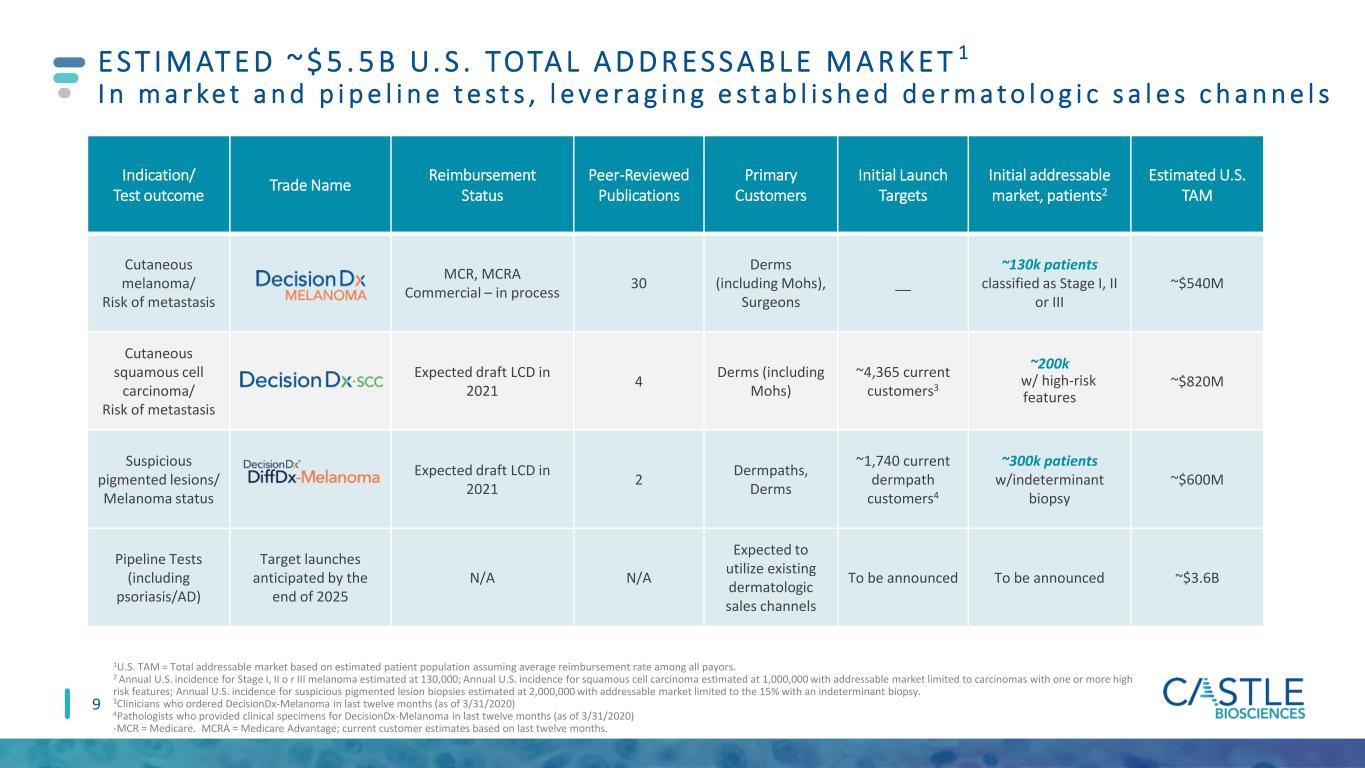
Indication/ Test outcome Trade Name Reimbursement Status Peer-Reviewed Publications Primary Customers Initial Launch Targets Initial addressable market, patients2 Estimated U.S. TAM Cutaneous melanoma/ Risk of metastasis MCR, MCRA Commercial – in process 30 Derms (including Mohs), Surgeons __ ~130k patients classified as Stage I, II or III ~$540M Cutaneous squamous cell carcinoma/ Risk of metastasis Expected draft LCD in 2021 4 Derms (including Mohs) ~4,365 current customers3 ~200k w/ high-risk features ~$820M Suspicious pigmented lesions/ Melanoma status Expected draft LCD in 2021 2 Dermpaths, Derms ~1,740 current dermpath customers4 ~300k patients w/indeterminant biopsy ~$600M Pipeline Tests (including psoriasis/AD) Target launches anticipated by the end of 2025 N/A N/A Expected to utilize existing dermatologic sales channels To be announced To be announced ~$3.6B E S T I M AT E D ~ $ 5 . 5 B U. S . TOTA L A D D R E S S A B L E M A R K E T 1 I n m a r ke t a n d p i p e l i n e t e s t s , l e v e r a g i n g e s t a b l i s h e d d e r m a t o l o g i c s a l e s c h a n n e l s 1U.S. TAM = Total addressable market based on estimated patient population assuming average reimbursement rate among all payors. 2 Annual U.S. incidence for Stage I, II o r III melanoma estimated at 130,000; Annual U.S. incidence for squamous cell carcinoma estimated at 1,000,000 with addressable market limited to carcinomas with one or more high risk features; Annual U.S. incidence for suspicious pigmented lesion biopsies estimated at 2,000,000 with addressable market limited to the 15% with an indeterminant biopsy. 3Clinicians who ordered DecisionDx-Melanoma in last twelve months (as of 3/31/2020) 4Pathologists who provided clinical specimens for DecisionDx-Melanoma in last twelve months (as of 3/31/2020) -MCR = Medicare. MCRA = Medicare Advantage; current customer estimates based on last twelve months. 9


Pipeline Expansion 2022 C A S T L E ’ S L O N G - T E R M R E V E N U E G R O W T H P OT E N T I A L 10 CUTANEOUS MELANOMA 2021 SQUAMOUS CELL CARCINOMA CUTANEOUS MELANOMA ADDITIONAL TESTS FOR DERMATOLOGIC DISEASES 2025 (Expanded LCD effective Dec 2020) (Potential LCDs effective in 2022) (Expected launches ~2025)


T H E C A S T L E A P P R O A C H CAP-accredited, CLIA- certified commercial labs Identify dermatologic diseases with high unmet medical need, where genomic information has the potential to improve management decisions Suite of skin cancer tests designed to provide clinicians with precise, personalized information, enabling more accurate treatment plan decisions Leveraging artificial intelligence, tests are designed to provide actionable information based on tumor gene expression patterns Test results inform management decisions within nationally accepted treatment guidelines 11


Informing clinical decision making for patients with invasive melanoma


If melanoma, clinician orders to answer SLNB and/or management questions: • Is the risk of SLN-positivity high enough to warrant referral for the SLNB surgery? • What is the individual risk of recurrence? D E C I S I O N D X - M E L A N O M A : A F T E R D I A G N O S I S O F C A N C E R 13 Patient presents with mole to PCP or dermatologist Physician may order biopsy Biopsy results received: • Positive for melanoma • Negative • Uncertain malignant potential Physician may order SLNB, if warranted per clinicopathological features and Management plan determined, based on personalized risk


Gerami et al. Clin Cancer Res 2015; Gerami et al. JAAD 2015; Zager et al. BMC Cancer 2018; Gastman et al. JAAD 2019 D E C I S I O N D X - M E L A N O M A : A F T E R D I A G N O S I S F O R M O R E A C C U R AT E R I S K A S S E S S M E N T S qPCR: open array card, 31-gene expression profile CM tumor tissue RNA isolation RT-PCR: cDNA generation and amplification, RT-PCR GEP analysis with a proprietary algorithm to predict class Stage I – III melanoma diagnosis Class 1A Lowest risk of recurrence and/or metastasis within 5 years Class 2B Highest risk of recurrence and/or metastasis within 5 years 14 Class 1B/2A Increased risk of recurrence and/or metastasis within 5 years


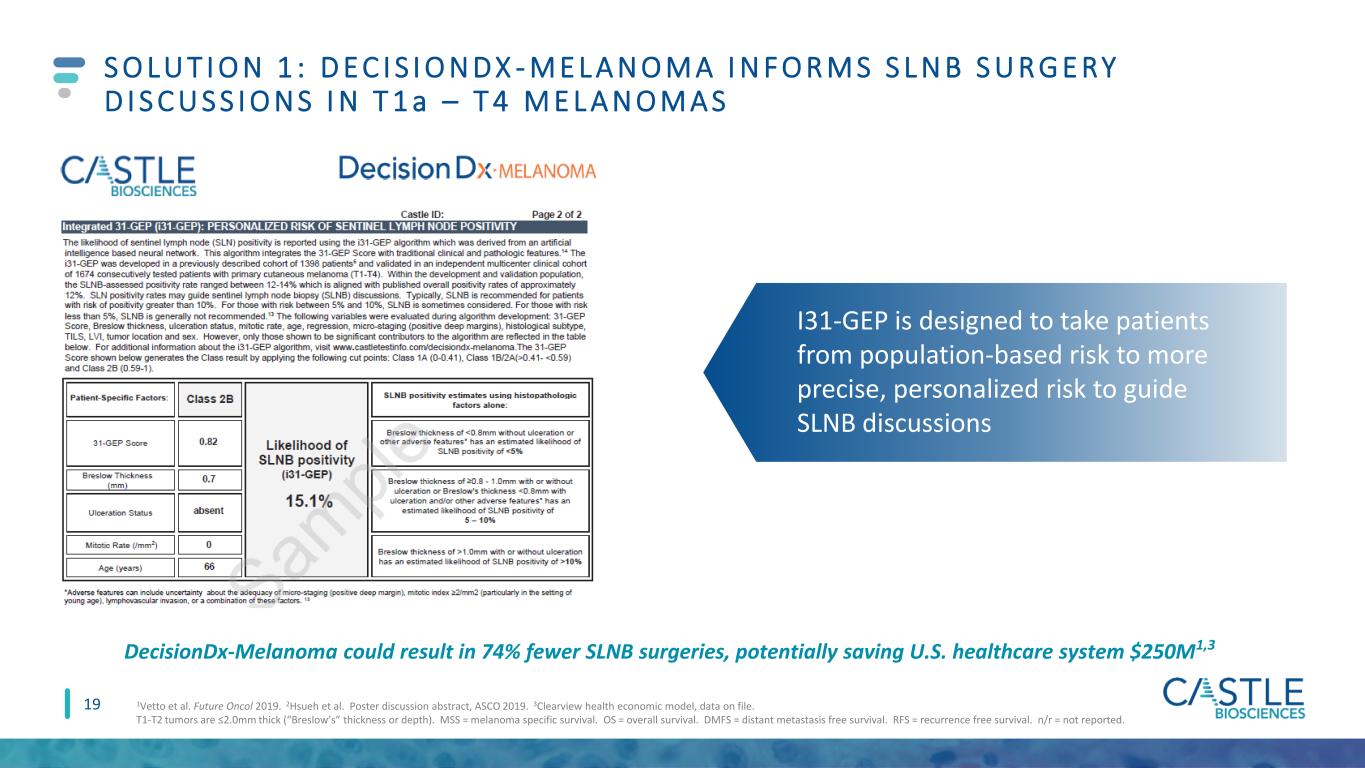
I N T E G R AT E D T E S T R E S U LT i 3 1 - G E P u t i l i z e s a r t i f i c i a l i n t e l l i g e n c e d e s i g n e d t o p r o v i d e a m o r e p r e c i s e p r e d i c t i o n o f S L N p o s i t i v i t y r i s k 15 The new Integrated Test Result incorporates traditional clinicopathologic factors with the DecisionDx-Melanoma continuous score designed to provide a precise, personalized likelihood of sentinel lymph node positivity


Cutaneous melanoma diagnosis A F T E R D I A G N O S I S , T W O C L I N I C A L Q U E S T I O N S H E L P G U I D E M E L A N O M A M A N A G E M E N T C H O O S I N G R I S K - A P P R O P R I AT E L E V E L O F M A N A G E M E N T I S K E Y SLN = sentinel lymph node; SLNB = sentinel lymph node biopsy. Source: NCCN Guidelines for Cutaneous Melanoma v3.2020 What is the individual risk of recurrence? Higher RiskLower Risk 16 Traditionally estimated with tumor thickness, ulceration and SLN status Traditionally estimated with tumor thickness and age Is the risk of SLN-positivity high enough to warrant referral for the SLNB surgery? Potential Sentinel lymph node biopsy surgical procedure


D E C I S I O N D X - M E L A N O M A I N F O R M S B OT H R I S K A S S E S S M E N T S , N O W W I T H i 3 1 - G E P TO P R E D I C T S L N P O S I T I V I T Y R I S K Vetto et al. Future Oncol 2019; Marks et al SKIN J Cutaneous Med 2019 NEW i31-GEP algorithm Risk of existing metastasis to SLN For SLNB eligible patients with: DecisionDx-Melanoma informs management (clinical follow- up, referrals, imaging, adjuvant therapy) Risk of recurrence • T ≥0.3 mm • T1a with adverse features • T1b-T4 DecisionDx-Melanoma informs use of SLNB 17 For patients with: 31-GEP continuous score + Breslow Thickness Ulceration Mitotic rate Age i31-GEP algorithm integrates test score with clinicopathologic factors for precise and personalized risk Class 1A: lowest risk Class 1B/2A: increased risk Class 2B: highest risk


D E C I S I O N D X - M E L A N O M A S T R AT I F I ES R I S K O F P O S I T I V E S L N TO I N F O R M D I S C U S S I O N S Objective: right treatment, right patient, right time Text sources: 1Systematic review of 21 articles representing 9,047 patients (Moody Eur J Sur Onc 2016); 2Morton NEJM 2014; 3False negative rate definition limited to metastasis to the regional lymphatics, not to distant metastasis or death. Median false negative rate = 17.6%; 3Sondak & Zager Ann Surg Oncol 2010 Graph sources: • SLN = sentinel lymph node; SLNB = sentinel lymph node biopsy. MCR=Medicare Cost Report. • Source: AJCC v7 J Clin Oncol 2009; SEER data release 2017; Morton et al. N Engl J Med 2014; Whiteman et al. J Invest Dermatol 2015; Shaikh et al. J Natl Cancer Inst 2016; Poklepovic and Carvajal. Oncology 2018; Sondak and Zager. Ann Surg Oncol 2010. Moody et al. Euro Jrnl Surg Onc 2017. LIMITATIONS OF CURRENT STAGING TO INFORM SLNB SURGERY 12% 11% 18% $20-24k SLNB Positivity Average Complication Rate Median Regional False Negative Rate Average Reimbursed Cost SLNB: risky, poor prognostic tool • 88% SLNB recipients negative • Anesthesia risks, surgical complications: 11% 1 • False negative: 5% - 21%3 • No survival benefit, low sensitivity: • 2/3 of melanoma deaths were SLN-negative 2 18


S O LU T I O N 1 : D E C I S I O N D X - M E L A N O M A I N F O R M S S L N B S U R G E RY D I S C U S S I O N S I N T 1 a – T 4 M E L A N O M A S I31-GEP is designed to take patients from population-based risk to more precise, personalized risk to guide SLNB discussions DecisionDx-Melanoma could result in 74% fewer SLNB surgeries, potentially saving U.S. healthcare system $250M1,3 1Vetto et al. Future Oncol 2019. 2Hsueh et al. Poster discussion abstract, ASCO 2019. 3Clearview health economic model, data on file. T1-T2 tumors are ≤2.0mm thick (“Breslow’s” thickness or depth). MSS = melanoma specific survival. OS = overall survival. DMFS = distant metastasis free survival. RFS = recurrence free survival. n/r = not reported. Outcomes confirmed in prospective, multi-center study2 19


Text sources:1Poklepovic and Carvajal. ONCOLOGY 2018; 2Ribas et al. JAMA 2016; 3Schadendorf et al. Eur J Can 2017; 4Robert et al. J Clin Oncol 2017; 5Joseph et al. Clin Cancer Res 2018; 6SEER data release 2017; 7Whiteman et al. J Invest Dermatol 2015; 8Shaikh et al. J Natl Cancer Inst 2016 Graph sources: AJCC v7 J Clin Oncol 2009; SEER data release 2017; Morton et al. N Engl J Med 2014; Whiteman et al. J Invest Dermatol 2015; Shaikh et al. J Natl Cancer Inst 2016; Poklepovic and Carvajal. Oncology 2018; Sondak and Zager. Ann Surg Oncol 2010. Moody et al. Euro Jrnl Surg Onc 2017. P R O B L E M 2 : U N D E R - M A N A G E M E N T E V I D E N T I N M E L A N O M A C U R R E N T R I S K A S S E S S M E N T S M I S S PAT I E N T S W I T H A G G R E S S I V E T U M O R B I O L O G Y 34% 66% “High-risk” patients “Low-risk” patients DEATHS FROM MELANOMAEarly detection, lower tumor burden associated with better therapy responses, survival outcomes1-5 Appropriate surveillance, including imaging of high-risk patients, is critical1-5 AJCC clinicopathologic factors are helpful clinically, but majority of deaths occur in patients diagnosed with early-stage disease6-8 Prognostic accuracy must improve to determine the most appropriate melanoma management strategy for each patient 20


0 1 2 3 4 5 6 7 8 9 10 Archival, Multi-center1 Disease-Free Survival Stage I-II AJCC high risk DecisionDx-Melanoma Class 2 0 5 10 15 20 25 30 Prospective, Multi-center4 Recurrence-Free Survival Stage I-II 0 1 2 3 4 5 6 7 8 9 10 Archival, Multi-center2 Melanoma Specific Survival Stage I-III 0 1 2 3 4 5 6 7 8 9 10 Prospective, Multi-center3 Recurrence-Free Survival Stage I-III H a za rd R a ti o ( m u lt iv a ri a te )* H a za rd R a ti o ( m u lt iv a ri a te )* ** ** ** ** ** ** ** ** ** ** S O LU T I O N 2 : D E C I S I O N D X - M E L A N O M A I S A S I G N I F I C A N T, I N D E P E N D E N T P R E D I C TO R O F O U TC O M E S *Hazard ratio is continuous for thickness, categorical for other endpoints; **Statistically significant Data shown are from the first and most recent publications for archival and prospective studies 1Gerami et al. Clin Cancer Res 2015. 2Gastman et al. Jrnl Amer Acad Dermatol 2019. 3Hsueh et al. Jrnl Hematol Oncol 2017. 4Podlipnik et al. Jrnl Eur Asso Veneral and Derm 2019. AJCC high risk Age DecisionDx-Melanoma Class 2 Thickness Mitotic rate Ulceration SLN+ DecisionDx-Melanoma Class 2 Thickness Mitotic rate Ulceration SLN+ DecisionDx-Melanoma Class 2 21


Low Risk Stage I-IIA High Risk Stage IIB-III NCCN Risk Category Prado et al. SKIN J Cutan Med 2018:suppl 2. n=690 D E C I S I O N D X - M E L A N O M A F U R T H E R S T R AT I F I ES R I S K O F R E C U R R E N C E B E YO N D A J C C ( 8 T H E d . ) S TA G I N G 22 STAGE M e la n o m a -S p e ci fi c S u rv iv a l (M S S ) (% ) 100% 90% 80% 70% 60% I 99.6% ≈AJCC IA 89.5% ≈AJCC IIIA 98% II >99% ≈AJCC IA 84.7% ≈AJCC IIIB 90% III 94.8% ≈AJCC IIA 61.2% ≈AJCC IIIC+ 77% Castle Class 1A MSS Castle Class 2B MSS AJCC MSS


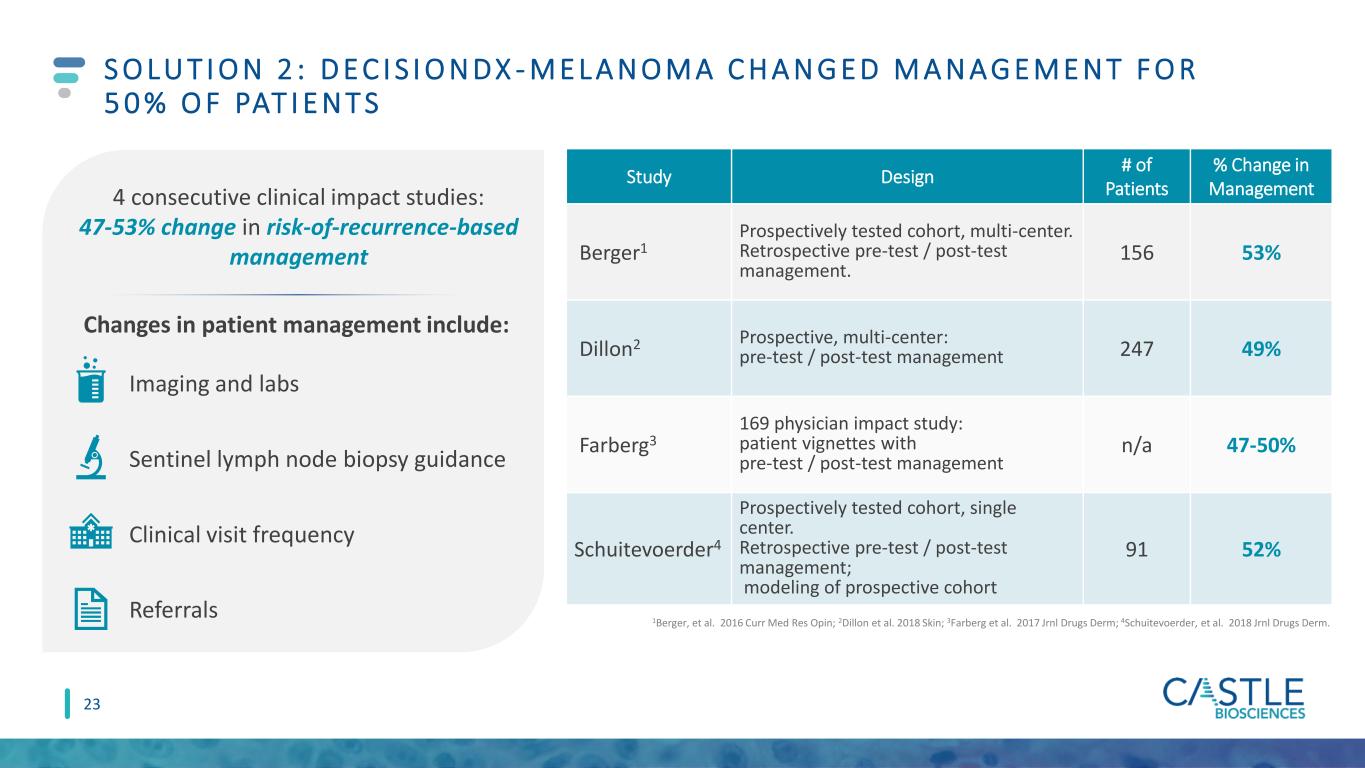
S O LU T I O N 2 : D E C I S I O N D X - M E L A N O M A C H A N G E D M A N A G E M E N T F O R 5 0 % O F PAT I E N T S 1Berger, et al. 2016 Curr Med Res Opin; 2Dillon et al. 2018 Skin; 3Farberg et al. 2017 Jrnl Drugs Derm; 4Schuitevoerder, et al. 2018 Jrnl Drugs Derm. Changes in patient management include: Imaging and labs Sentinel lymph node biopsy guidance Clinical visit frequency Referrals Study Design # of Patients % Change in Management Berger1 Prospectively tested cohort, multi-center. Retrospective pre-test / post-test management. 156 53% Dillon2 Prospective, multi-center: pre-test / post-test management 247 49% Farberg3 169 physician impact study: patient vignettes with pre-test / post-test management n/a 47-50% Schuitevoerder4 Prospectively tested cohort, single center. Retrospective pre-test / post-test management; modeling of prospective cohort 91 52% 4 consecutive clinical impact studies: 47-53% change in risk-of-recurrence-based management 23


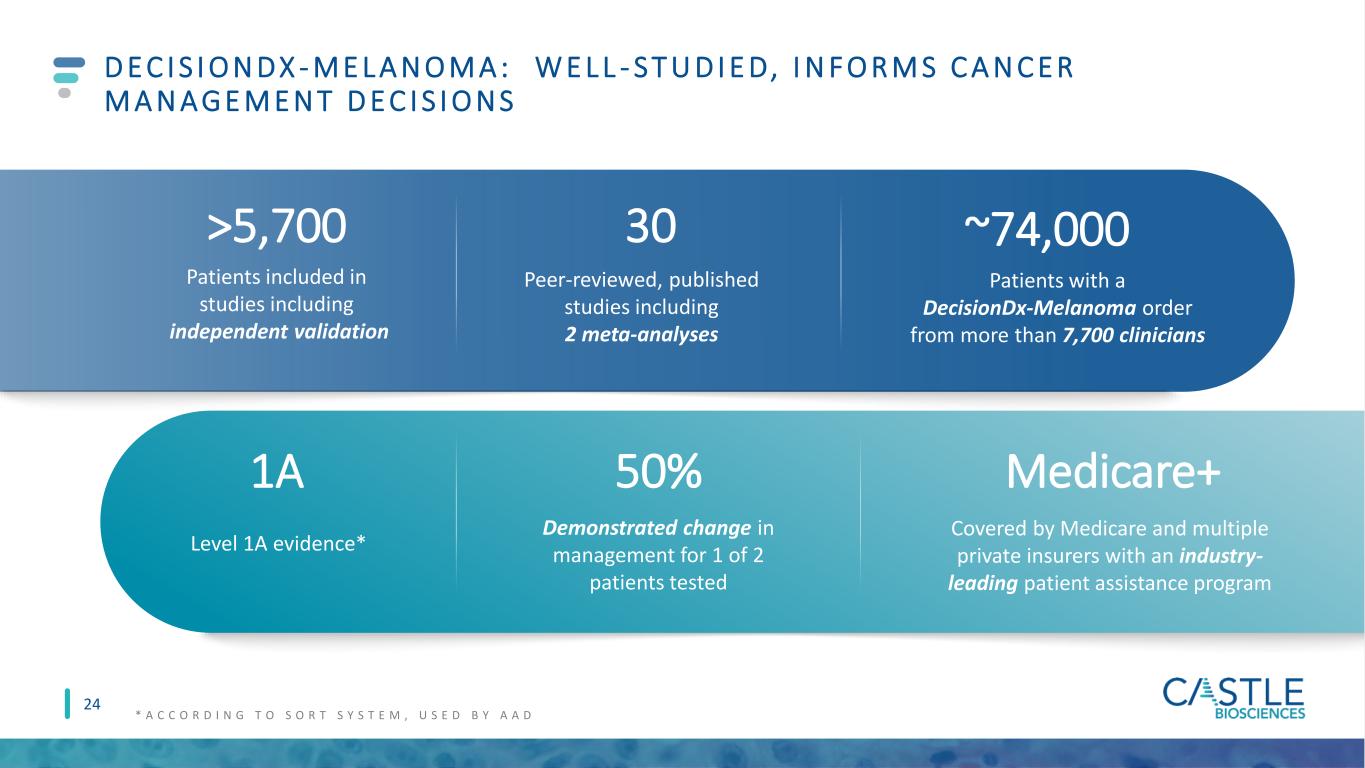
D E C I S I O N D X - M E L A N O M A : W E L L - S T U D I E D, I N F O R M S C A N C E R M A N A G E M E N T D E C I S I O N S * A C C O R D I N G T O S O R T S Y S T E M , U S E D B Y A A D Patients included in studies including independent validation >5,700 Peer-reviewed, published studies including 2 meta-analyses 30 Demonstrated change in management for 1 of 2 patients tested 50% Level 1A evidence* 1A Patients with a DecisionDx-Melanoma order from more than 7,700 clinicians ~74,000 Covered by Medicare and multiple private insurers with an industry- leading patient assistance program Medicare+ 24


Identifying the risk of metastasis in patients with cutaneous squamous cell carcinoma with one or more risk factors


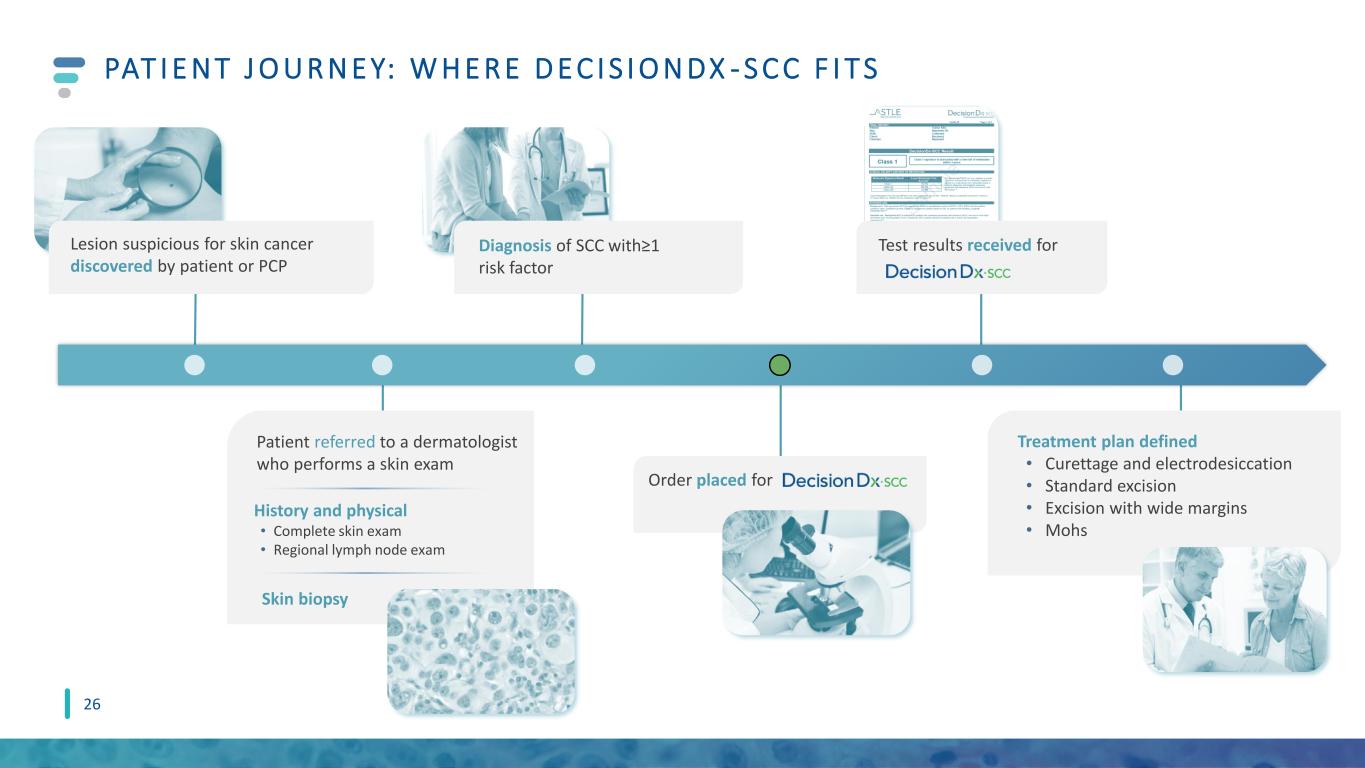
PAT I E N T J O U R N E Y: W H E R E D E C I S I O N DX - S C C F I T S 26 Patient referred to a dermatologist who performs a skin exam History and physical • Complete skin exam • Regional lymph node exam Skin biopsy Lesion suspicious for skin cancer discovered by patient or PCP Diagnosis of SCC with≥1 risk factor Order placed for Test results received for Treatment plan defined • Curettage and electrodesiccation • Standard excision • Excision with wide margins • Mohs


P R O B L E M : T H E U N M E T N E E D I N H I G H - R I S K S C C PAT I E N T S : W H O I S R E A L LY AT L O W R I S K O R H I G H R I S K F O R M E TA S TA S I S ? NCCN=National Comprehensive Cancer Network; BWH = Brigham and Women’s Hospital; AJCC = American Joint Committee on Cancer ~20% of SCC patients (200,000 annually) have one or more clinical or pathological risk factors, and a subset will develop metastasis. They suffer the majority of SCC mortality. These factors alone are often not specific enough to determine risk-appropriate treatment and further management. SCC treatment plans are guided by risk of metastasis. Risk-appropriate SCC management is currently limited by classification systems (NCCN, BWH, AJCC) with low positive predictive value (PPV). Deaths from SCC are now estimated to exceed those from melanoma. 27


200,000 high-risk patients annually; $820M U.S TAM1 Validated in 420- patient cohort of high- risk SCC from 33 U.S. centers 4 peer-reviewed publications to date; Over 1,400 patients enrolled in studies to date from 92 centers D E S I G N E D TO P R E D I C T I N D I V I D UA L M E TA S TAT I C R I S K TO I N F O R M R I S K - A P P R O P R I AT E M A N A G E M E N T 1 based on Castle estimates Incorporation of DecisionDx-SCC with traditional risk factors can improve patient classification compared to traditional risk factors alone For high-risk SCC patients with one or more risk factors Utilizing existing sales channels: dermatologists (including Mohs surgeons) 28


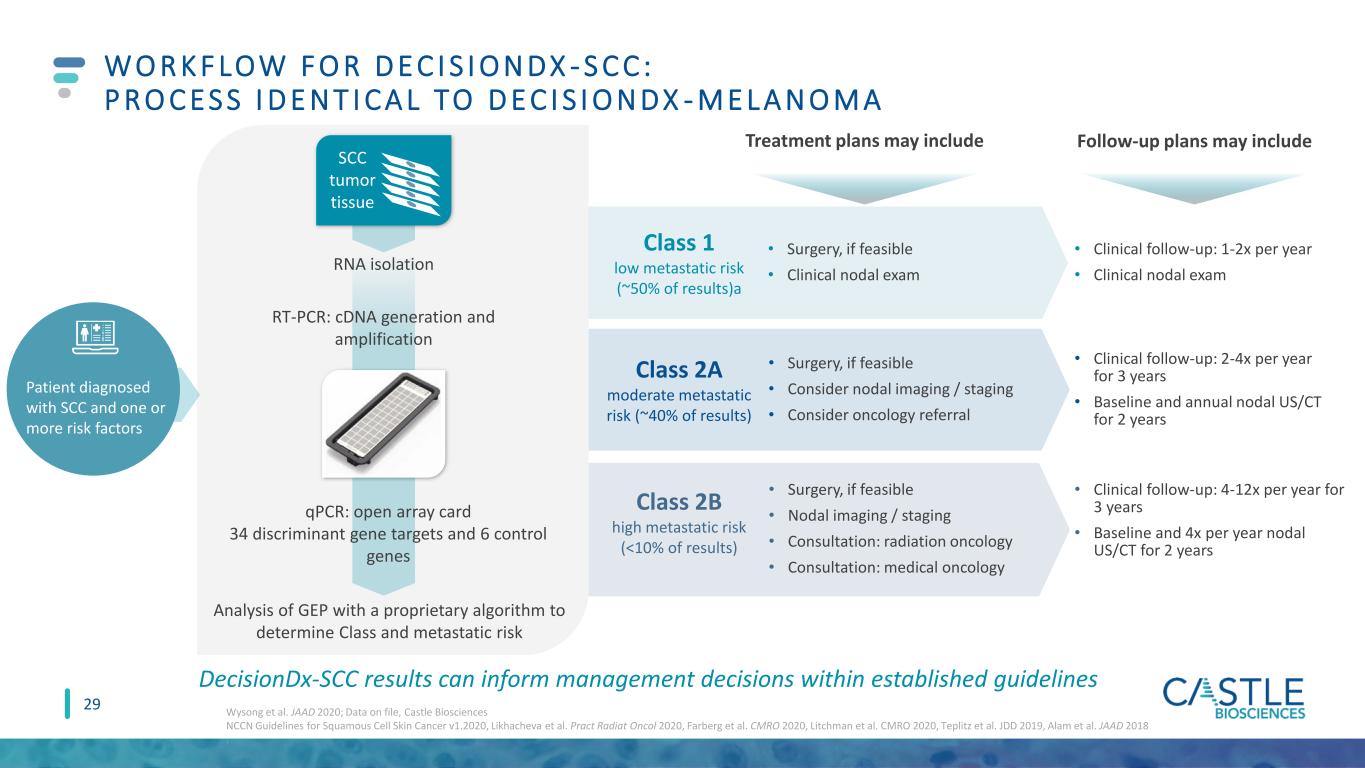
W O R K F LOW F O R D E C I S I O N D X - S C C : P R O C E S S I D E N T I C A L TO D E C I S I O N D X - M E L A N O M A qPCR: open array card 34 discriminant gene targets and 6 control genes Class 1 low metastatic risk (~50% of results)a Class 2A moderate metastatic risk (~40% of results) Class 2B high metastatic risk (<10% of results) SCC tumor tissue RNA isolation RT-PCR: cDNA generation and amplification Analysis of GEP with a proprietary algorithm to determine Class and metastatic risk Wysong et al. JAAD 2020; Data on file, Castle Biosciences NCCN Guidelines for Squamous Cell Skin Cancer v1.2020, Likhacheva et al. Pract Radiat Oncol 2020, Farberg et al. CMRO 2020, Litchman et al. CMRO 2020, Teplitz et al. JDD 2019, Alam et al. JAAD 2018 . DecisionDx-SCC results can inform management decisions within established guidelines • Surgery, if feasible • Consider nodal imaging / staging • Consider oncology referral • Surgery, if feasible • Nodal imaging / staging • Consultation: radiation oncology • Consultation: medical oncology Treatment plans may include • Surgery, if feasible • Clinical nodal exam Follow-up plans may include • Clinical follow-up: 1-2x per year • Clinical nodal exam • Clinical follow-up: 2-4x per year for 3 years • Baseline and annual nodal US/CT for 2 years • Clinical follow-up: 4-12x per year for 3 years • Baseline and 4x per year nodal US/CT for 2 years Patient diagnosed with SCC and one or more risk factors 29


M e ta st a si s- fr e e s u rv iv a l (M FS ) Years Kaplan-Meier Estimated MFS n = 420 p < 0.0001 D E C I S I O N D X - S C C I S VA L I D AT E D TO P R E D I C T M E TA S TAT I C R I S K F O R I N D I V I D UA L S C C PAT I E N T S W I T H O N E O R M O R E R I S K FA C TO R S Wysong et al. JAAD 2020; Ibrahim et al. submitted; Data on file, Castle Biosciences. Class 1 – Low Biological Risk Less than half the general study population risk Class 2A – Moderate Biological Risk Similar to the strongest traditional factors Class 2B – High Biological Risk ≥50% risk of metastasis 30


C L A S S 2 A A N D C L A S S 2 B A R E I N D E P E N D E N T P R E D I C TO RS O F M E TA S TA S I S Deep invasion: beyond subcutaneous fat, depth >6mm, or Clark level V. Wysong et al. JAAD 2020; Ibrahim et al. submitted; Data on file, Castle Biosciences. W h a t i s t h e i m p a c t o f D e c i s i o n D x - S C C ? Immunosuppression Tumor diameter (per cm) Perineural invasion Deep invasion Poor differentiation Class 2A Class 2B Univariate Analysis Multivariate Analysis NA 1.1 (ns) 1.2 (ns) 2.1 (p<0.001) 2.3 (p<0.001) 2.3 (p<0.001) 6.9 (p<0.001) 1.5 (ns) 1.2 (p<0.001) 3.3 (p<0.001) 3.1 (p<0.001) 3.9 (p<0.001) 3.2 (p<0.001) 11.6 (p<0.001) Hazard Ratio (HR) Hazard Ratio (HR) 0 5 10 Hazard Ratio 0 5 10 azard Ratio An SCC with deep invasion is 2.1x more likely to metastasize than without. Adding a Class 2A results shifts that to 4.8x more likely to metastasize. Adding a Class 2B result shifts that to 14.5x more likely to metastasize. 31


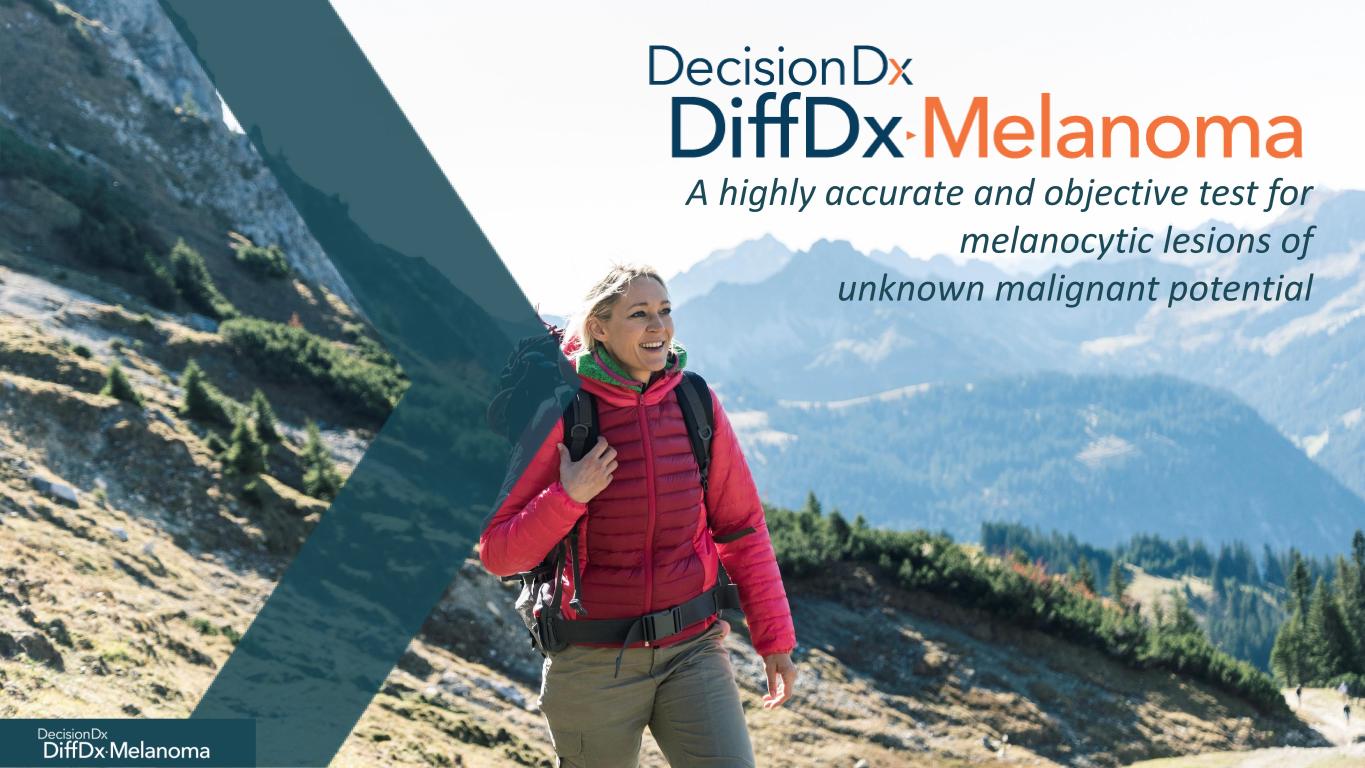
A highly accurate and objective test for melanocytic lesions of unknown malignant potential


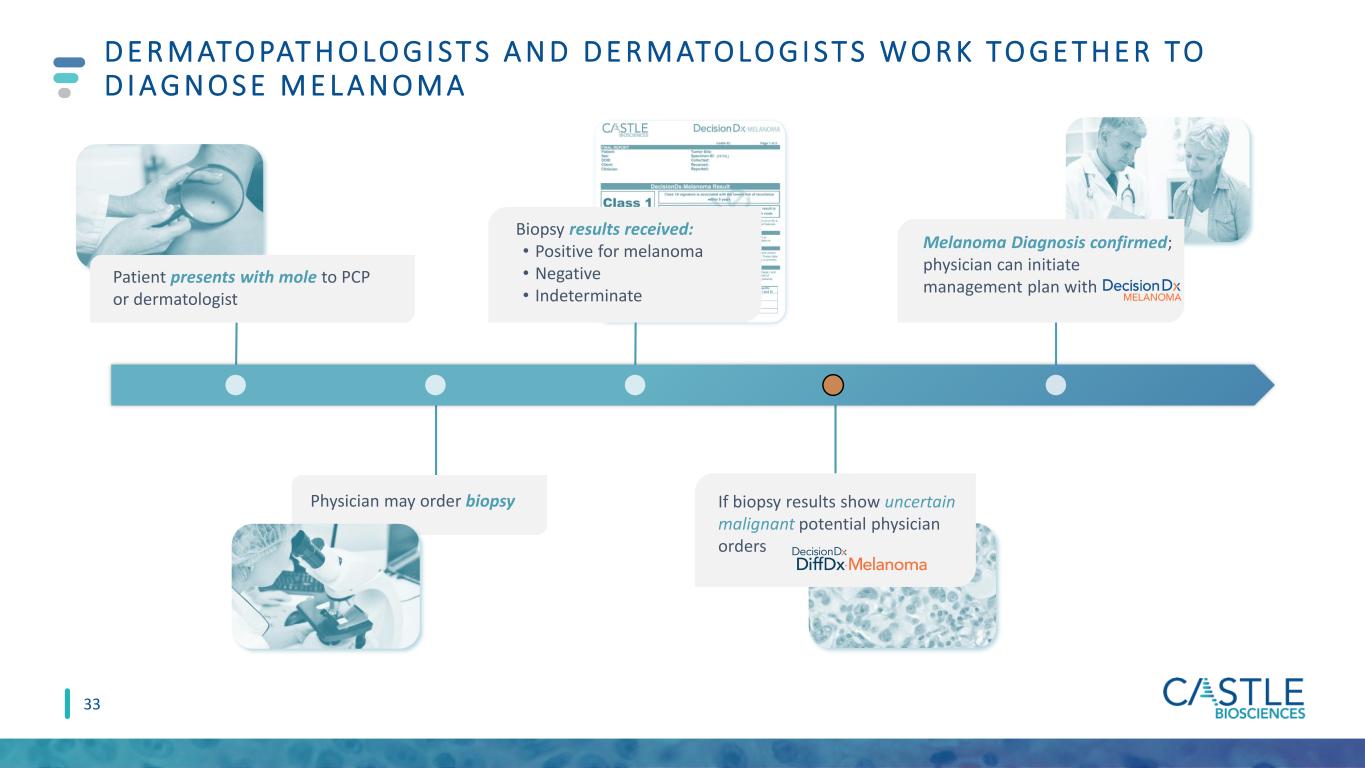
D E R M ATO PAT H O LO G I S T S A N D D E R M ATO LO G I S T S W O R K TO G E T H E R TO D I A G N O S E M E L A N O M A 33 Patient presents with mole to PCP or dermatologist Biopsy results received: • Positive for melanoma • Negative • Indeterminate If biopsy results show uncertain malignant potential physician orders Melanoma Diagnosis confirmed; physician can initiate management plan with Physician may order biopsy


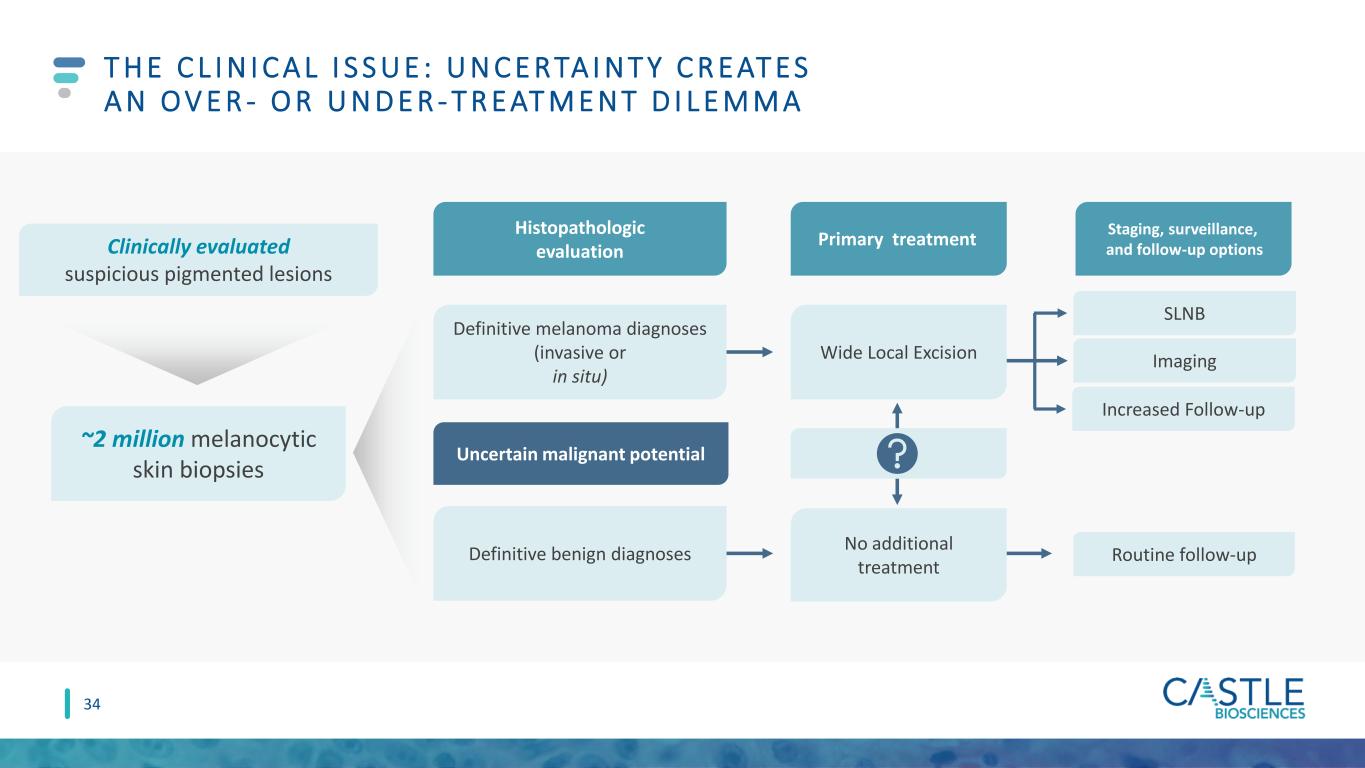
T H E C L I N I C A L I S S U E : U N C E R TA I N T Y C R E AT E S A N O V E R - O R U N D E R - T R E AT M E N T D I L E M M A Definitive melanoma diagnoses (invasive or in situ) Definitive benign diagnoses SLNB Imaging Increased Follow-up No additional treatment Routine follow-up Clinically evaluated suspicious pigmented lesions Wide Local Excision ~2 million melanocytic skin biopsies Uncertain malignant potential Primary treatment Staging, surveillance, and follow-up options Histopathologic evaluation 34


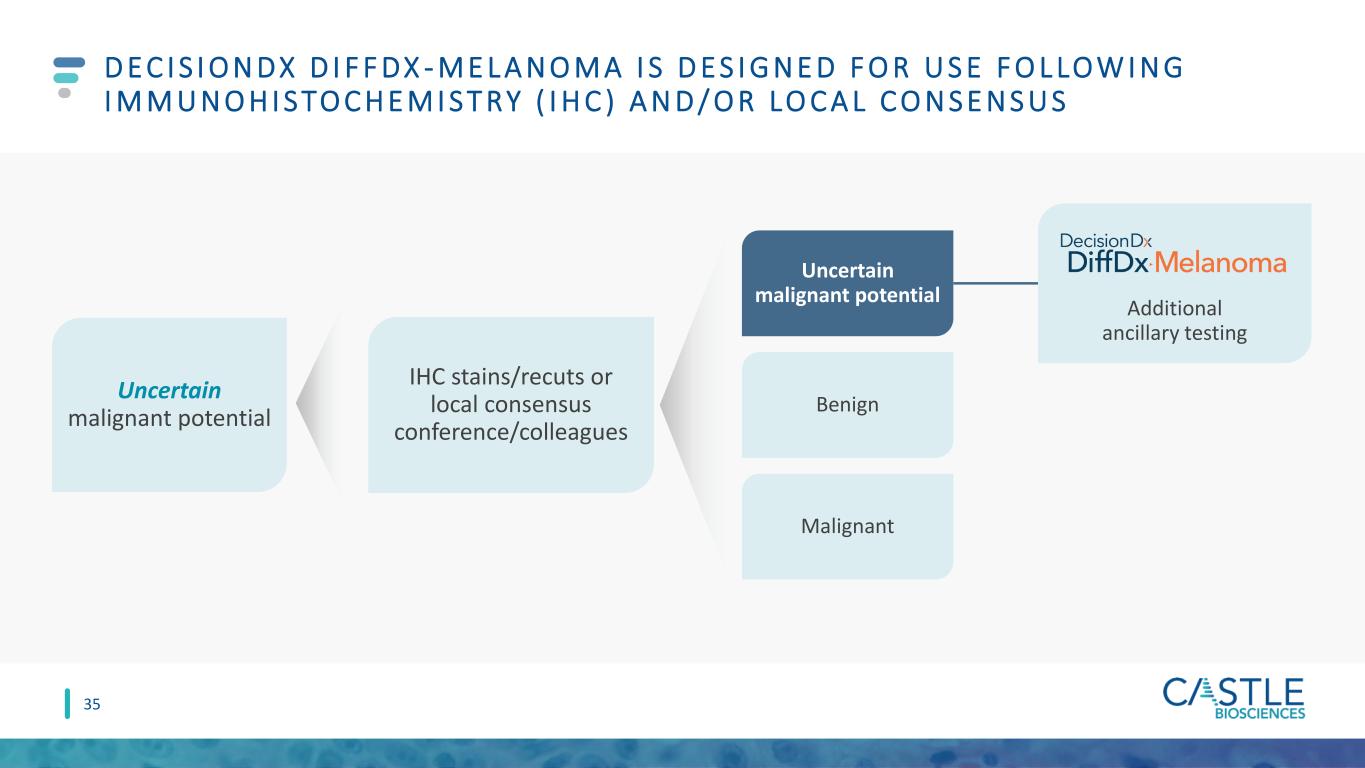
D E C I S I O N D X D I F F DX - M E L A N O M A I S D E S I G N E D F O R U S E F O L LO W I N G I M M U N O H I S TO C H E M I S T R Y ( I H C ) A N D / O R LO C A L C O N S E N S U S Uncertain malignant potential IHC stains/recuts or local consensus conference/colleagues Uncertain malignant potential Benign Malignant Additional ancillary testing 35


RNA isolation cDNA generation and amplification • Open array card 32 discriminant gene targets and 3 control genes Analysis of GEP with a proprietary AI algorithm to determine risk Benign Suggestive of benign neoplasm Intermediate-Risk Cannot exclude malignancy Malignant Suggestive of melanoma FFPE tissue RT qPCR Dermatopathologist OR Dermatology clinician orders W O R K F LOW F O R D E C I S I O N D X D I F F D X - M E L A N O M A : P R O C E S S I D E N T I C A L T O D E C I S I O N D X - M E L A N O M A Diagnostically challenging pigmented (melanocytic) lesion 36


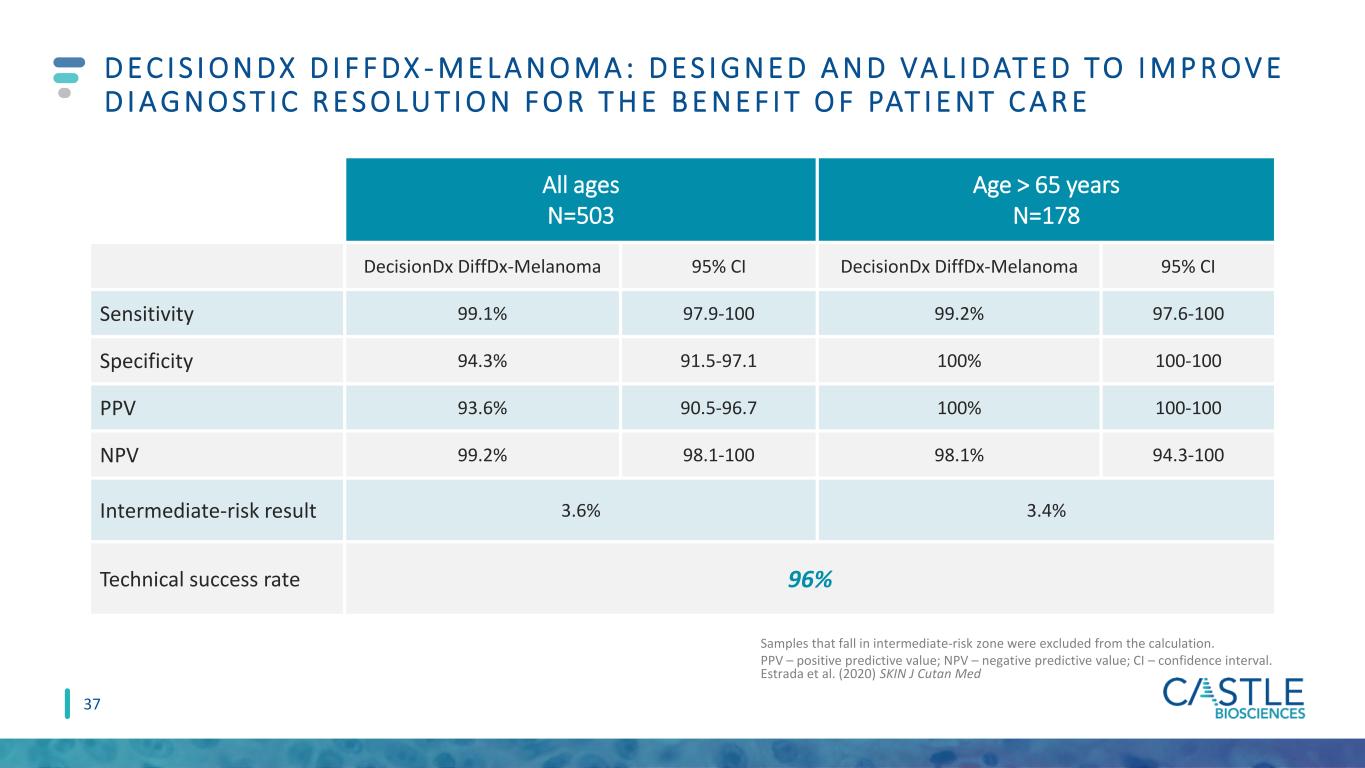
D E C I S I O N D X D I F F DX - M E L A N O M A : D E S I G N E D A N D VA L I DAT E D TO I M P R O V E D I A G N O S T I C R E S O LU T I O N F O R T H E B E N E F I T O F PAT I E N T C A R E All ages N=503 Age > 65 years N=178 DecisionDx DiffDx-Melanoma 95% CI DecisionDx DiffDx-Melanoma 95% CI Sensitivity 99.1% 97.9-100 99.2% 97.6-100 Specificity 94.3% 91.5-97.1 100% 100-100 PPV 93.6% 90.5-96.7 100% 100-100 NPV 99.2% 98.1-100 98.1% 94.3-100 Intermediate-risk result 3.6% 3.4% Technical success rate 96% Samples that fall in intermediate-risk zone were excluded from the calculation. PPV – positive predictive value; NPV – negative predictive value; CI – confidence interval. Estrada et al. (2020) SKIN J Cutan Med 37


I M P R O V I N G D I A G N O S T I C R E S O LU T I O N F O R T H E B E N E F I T O F PAT I E N T C A R E Interpreted in the context of other clinical, laboratory and histopathologic information, DecisionDx DiffDx-Melanoma is designed to add diagnostic clarity and confidence for dermatopathologists, while helping dermatologists better understand the clinical implications for more informed patient care Estrada et al. (2020) J Cut Med SKIN A definitive result from DecisionDx- DiffDx-Melanoma in ≥96% of lesions submitted for testing Includes multiple subtypes of lesions with uncertain malignant potential Technical success rate of 96% 5-7 day turn around time/ similar to other ancillary tests After melanoma diagnosis, clinicians can order DecisionDx- Melanoma; uses same tissue block 38


The Standard of Care for Evaluating Metastatic Risk in Uveal Melanoma


z : S TA N D A R D O F C A R E ~2,000 patients diagnosed in the U.S. annually ~97% of patients – no evidence of metastatic disease at the time of diagnosis ~30% will develop metastases within 3 years Low-risk: ~67% Low Intensity Management High-risk: ~33% High Intensity Management (Uveal Melanoma) Strong Evidence Base • 17 peer-reviewed publications, 2,000+ patients Widespread adoption • 85-90%+ of U.S. ocular oncology institutions order • 1,395 reports issued in 2020 Broad Coverage • 156+ million total lives covered • Medicare LCD covers patients with a confirmed diagnosis and no evidence of metastatic disease • “Existing ADLT” status effective May 2019 • 2021 Medicare rate of ~$7700 AJCC and NCCN Guideline Inclusion Uveal Melanoma – A Rare Eye Cancer 15-Gene Expression Profile (GEP) Test 40


MARKET AND FINANCIAL OVERVIEW


Indication/ Test outcome Trade Name Reimbursement Status Peer-Reviewed Publications Primary Customers Initial Launch Targets Initial addressable market, patients2 Estimated U.S. TAM Cutaneous melanoma/ Risk of metastasis MCR, MCRA Commercial – in process 30 Derms (including Mohs), Surgeons __ ~130k patients classified as Stage I, II or III ~$540M Cutaneous squamous cell carcinoma/ Risk of metastasis Expected draft LCD in 2021 4 Derms (including Mohs) ~4,365 current customers3 ~200k w/ high-risk features ~$820M Suspicious pigmented lesions/ Melanoma status Expected draft LCD in 2021 2 Dermpaths, Derms ~1,740 current dermpath customers4 ~300k patients w/indeterminant biopsy ~$600M Pipeline Tests (including psoriasis/AD) Target launches anticipated by the end of 2025 N/A N/A Expected to utilize existing dermatologic sales channels To be announced To be announced ~$3.6B E S T I M AT E D ~ $ 5 . 5 B U. S . TOTA L A D D R E S S A B L E M A R K E T 1 I n m a r ke t a n d p i p e l i n e t e s t s , l e v e r a g i n g e s t a b l i s h e d d e r m a t o l o g i c s a l e s c h a n n e l s 1U.S. TAM = Total addressable market based on estimated patient population assuming average reimbursement rate among all payors. 2 Annual U.S. incidence for Stage I, II o r III melanoma estimated at 130,000; Annual U.S. incidence for squamous cell carcinoma estimated at 1,000,000 with addressable market limited to carcinomas with one or more high risk features; Annual U.S. incidence for suspicious pigmented lesion biopsies estimated at 2,000,000 with addressable market limited to the 15% with an indeterminant biopsy. 3Clinicians who ordered DecisionDx-Melanoma in last twelve months (as of 3/31/2020) 4Pathologists who provided clinical specimens for DecisionDx-Melanoma in last twelve months (as of 3/31/2020) -MCR = Medicare. MCRA = Medicare Advantage; current customer estimates based on last twelve months. 42


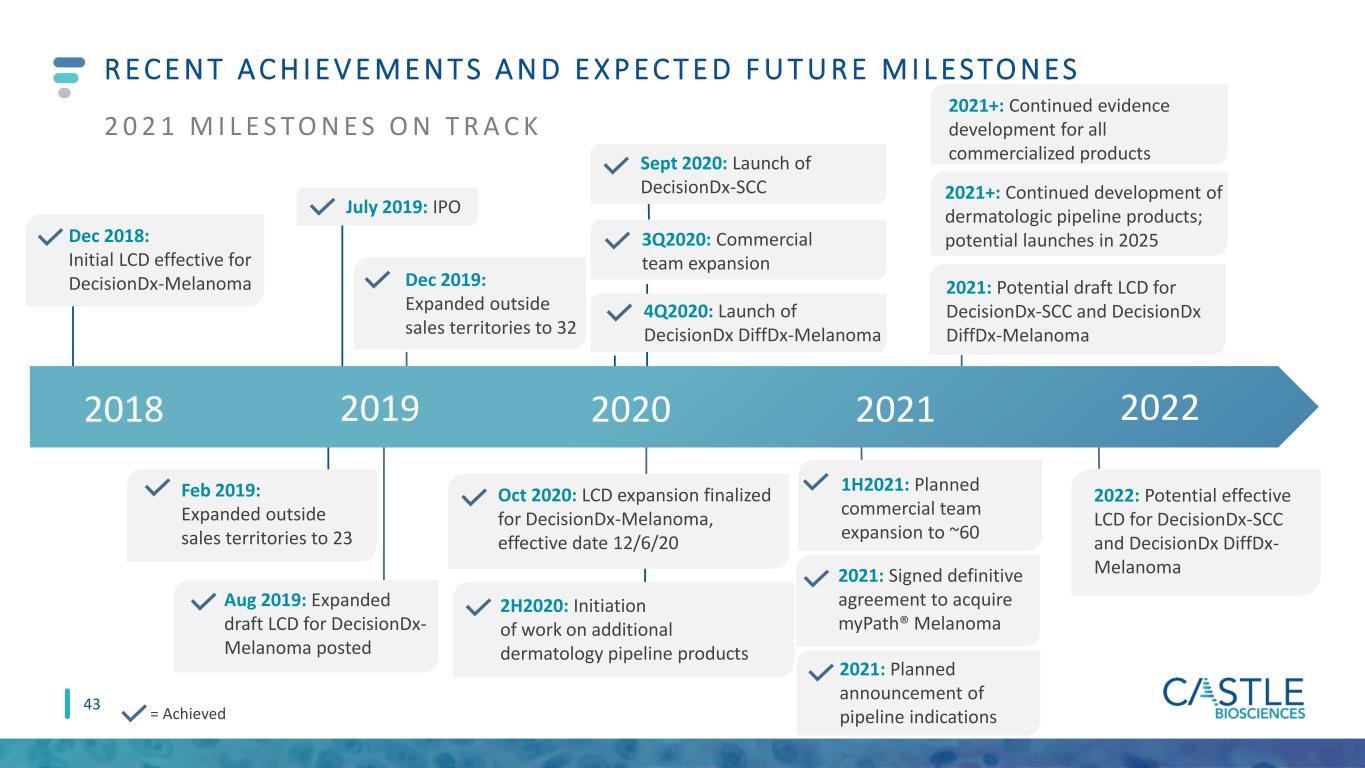
R E C E N T A C H I E V E M E N T S A N D E X P E C T E D F U T U R E M I L E S TO N ES 2 0 2 1 M I L E S T O N E S O N T R A C K Oct 2020: LCD expansion finalized for DecisionDx-Melanoma, effective date 12/6/20 2021: Potential draft LCD for DecisionDx-SCC and DecisionDx DiffDx-Melanoma 2020 2021 2019 2022 2H2020: Initiation of work on additional dermatology pipeline products 4Q2020: Launch of DecisionDx DiffDx-Melanoma 2022: Potential effective LCD for DecisionDx-SCC and DecisionDx DiffDx- Melanoma 3Q2020: Commercial team expansion Sept 2020: Launch of DecisionDx-SCC July 2019: IPO Dec 2019: Expanded outside sales territories to 32 = Achieved Feb 2019: Expanded outside sales territories to 23 Aug 2019: Expanded draft LCD for DecisionDx- Melanoma posted 43 1H2021: Planned commercial team expansion to ~60 2018 Dec 2018: Initial LCD effective for DecisionDx-Melanoma 2021+: Continued evidence development for all commercialized products 2021+: Continued development of dermatologic pipeline products; potential launches in 2025 2021: Signed definitive agreement to acquire myPath® Melanoma 2021: Planned announcement of pipeline indications


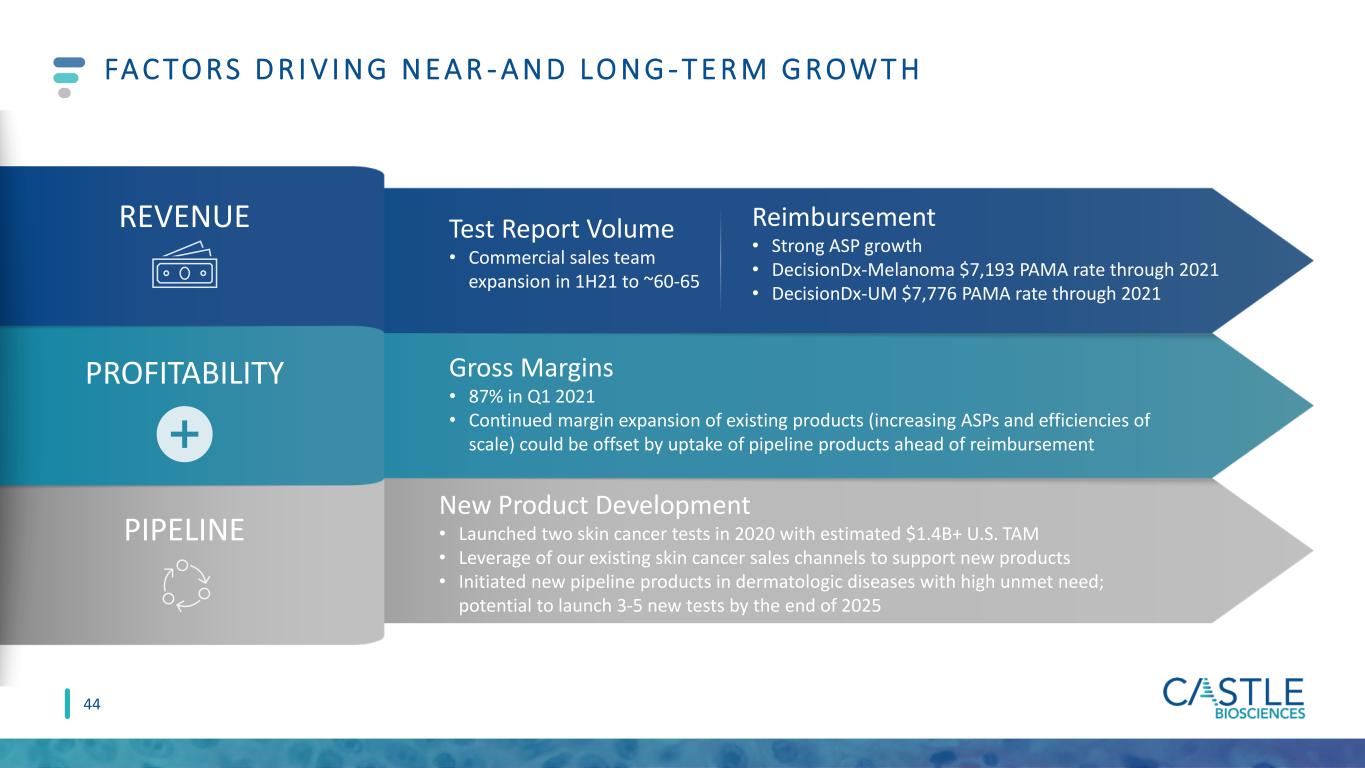
FA C TO RS D R I V I N G N E A R - A N D LO N G - T E R M G R O W T H REVENUE PROFITABILITY PIPELINE Gross Margins • 87% in Q1 2021 • Continued margin expansion of existing products (increasing ASPs and efficiencies of scale) could be offset by uptake of pipeline products ahead of reimbursement New Product Development • Launched two skin cancer tests in 2020 with estimated $1.4B+ U.S. TAM • Leverage of our existing skin cancer sales channels to support new products • Initiated new pipeline products in dermatologic diseases with high unmet need; potential to launch 3-5 new tests by the end of 2025 Test Report Volume • Commercial sales team expansion in 1H21 to ~60-65 Reimbursement • Strong ASP growth • DecisionDx-Melanoma $7,193 PAMA rate through 2021 • DecisionDx-UM $7,776 PAMA rate through 2021 44


C O N T I N U E D R E V E N U E G R O W T H , D R I V E N BY T E S T R E P O R T A N D A S P G R O W T H * 1Q2019 1Q2020 1Q2021 Revenue *1Q2021 ASP growth over 2020 and 2019 $22.8m $17.4m $8.7m 45


Asian Black or African American Hispanic or Latino Two or more races (not Hispanic or Latino) White Othe (n t Hispanic r Latino) Female Male Female Male C O M M I T M E N T TO D I V E RS I T Y 46 37.3% 62.7% 68.2% 31.8% 79.1% 5% 9.5 4.9% 1.5% A ll E m p lo y e e s E xe cu ti v e s E T H N I C I T Y/ R A C E G E N D E R Data as of 12/31/20, Executive= Executive Director or Regional Business Director level and above American Indian or Alaska Native Two or more races (not Hispanic or Latino) White Hispanic or Latino 86.36% 4.55% 4.55% 4.55%


TRANSFORMING THE MANAGEMENT OF SKIN CANCER AND OTHER DERMATOLOGIC DISEASES WITH HIGH UNMET CLINICAL NEED EXPANSIVE BODY OF EVIDENCE SUITE OF SKIN CANCER PROGNOSTIC AND DIAGNOSTIC TESTS STRONG FINANCIAL POSITION ROBUST PIPELINE L E A D I N G D E R M ATO LO G I C D I A G N O S T I C S C O M PA N Y 47 CULTURE OF INNOVATION


THANK YOU


U S E O F N O N - G A A P F I N A N C I A L M E A S U R ES ( U N A U D I T E D ) 49 • In this presentation, we use the metrics of Adjusted Revenue, Adjusted Gross Margin and Adjusted Operating Cash Flow, which are non-GAAP financial measures and are not calculated in accordance with generally accepted accounting principles in the United States (GAAP). Adjusted Revenue and Adjusted Gross Margin reflect adjustments to net revenues to exclude changes in variable consideration related to test reports delivered in previous periods. Adjusted Operating Cash Flow excludes the effects of cash activity associated with COVID-19 government relief payments to healthcare providers. • We use Adjusted Revenue, Adjusted Gross Margin and Adjusted Operating Cash Flow internally because we believe these metrics provide useful supplemental information in assessing our revenue and cash flow performance, respectively. We believe Adjusted Revenue and Adjusted Gross Margin are also useful to investors because they provide additional information on current-period performance by removing the effects of revenue adjustments related to tests delivered in previous periods, which we believe may facilitate revenue and gross margin comparisons to historical periods. We believe Adjusted Operating Cash Flow is also useful to investors as a supplement to GAAP measures in the assessment of our cash flow performance by removing the effects of COVID-19 government relief payments, which we believe are not indicative of our ongoing operations. However, these non-GAAP financial measures may be different from non-GAAP financial measures used by other companies, even when the same or similarly titled terms are used to identify such measures, limiting their usefulness for comparative purposes. These non-GAAP financial measures are not meant to be substitutes for net revenues or net cash (used in) provided by operating activities reported in accordance with GAAP and should be considered in conjunction with our financial information presented on GAAP basis. Accordingly, investors should not place undue reliance on non-GAAP financial measures. Reconciliations of these non-GAAP financial measures to the most directly comparable GAAP financial measures are presented in the next slide.


R E C O N C I L I AT I O N O F N O N - G A A P F I N A N C I A L M E A S U R ES ( U N A U D I T E D ) Reconciliation of Non-GAAP Financial Measures (UNAUDITED) The table below presents the reconciliation of adjusted revenue and adjusted gross margin, which are non-GAAP measures. See "Use of Non-GAAP Financial Measures (UNAUDITED)" above for further information regarding the Company's use of non-GAAP financial measures. 50


R E C O N C I L I AT I O N O F N O N - G A A P F I N A N C I A L M E A S U R ES ( U N A U D I T E D ) The table below presents the reconciliation of adjusted operating cash flow, which is a non-GAAP measure. See "Use of Non-GAAP Financial Measures (UNAUDITED)" above for further information regarding the Company's use of non- GAAP financial measures 51


APPENDIX


Stuart Pharmaceuticals Robert Cook, PhD Senior Vice President, Research & Development L E A D E RS H I P T E A M O V E RV I E W B O A R D O F D I R E C T O R S M A N A G E M E N T T E A M Derek Maetzold Founder, Director, President and CEO Frank Stokes Chief Financial Officer Bernhard Spiess Chief Business Officer Toby Juvenal Chief Commercial Officer Kristen Oelschlager, RN, CHC Chief Operating Officer Dan Bradbury Derek Maetzold Mara Aspinall Brad Cole Miles D. Harrison David Kabakoff 53 Matthew Goldberg, MD Medical Director Tiffany Olson