cstl-20221102
0001447362FALSE00014473622022-11-022022-11-02

UNITED STATES
SECURITIES AND EXCHANGE COMMISSION
Washington, D.C. 20549

FORM 8-K
CURRENT REPORT
Pursuant to Section 13 or 15(d)
of the Securities Exchange Act of 1934

Date of Report (Date of earliest event reported): November 2, 2022

Castle Biosciences, Inc.
(Exact name of registrant as specified in its charter)
     
Delaware 001-38984 77-0701774
(state or other jurisdiction
of incorporation)
 (Commission
File Number)
 (I.R.S. Employer
Identification No.)
505 S. Friendswood Drive, Suite 401
Friendswood, Texas
77546
(Address of principal executive offices)(Zip Code)

Registrant’s telephone number, including area code: (866) 788-9007

(Former name or former address, if changed since last report.)

Check the appropriate box below if the Form 8-K filing is intended to simultaneously satisfy the filing obligation of the registrant under any of the following provisions: 

☐    Written communications pursuant to Rule 425 under the Securities Act (17 CFR 230.425)
☐    Soliciting material pursuant to Rule 14a-12 under the Exchange Act (17 CFR 240.14a-12) 
☐    Pre-commencement communications pursuant to Rule 14d-2(b) under the Exchange Act (17 CFR 240.14d-2(b)) 
☐    Pre-commencement communications pursuant to Rule 13e-4(c) under the Exchange Act (17 CFR 240.13e-4(c)) 
 
Securities registered pursuant to Section 12(b) of the Act:
Title of each classTrading Symbol(s) Name of each exchange on which registered
Common Stock, $0.001 par value per shareCSTL The Nasdaq Global Market

Indicate by check mark whether the registrant is an emerging growth company as defined in Rule 405 of the Securities Act of 1933 (§ 230.405 of this chapter) or Rule 12b–2 of the Securities Exchange Act of 1934 (§ 240.12b–2 of this chapter).
Emerging growth company ☐ 
If an emerging growth company, indicate by check mark if the registrant has elected not to use the extended transition period for complying with any new or revised financial accounting standards provided pursuant to Section 13(a) of the Exchange Act. ☐ 


Item 2.02    Results of Operations and Financial Condition.

On November 2, 2022, Castle Biosciences, Inc. (the “Company”) issued a press release announcing its financial results for the third quarter and nine months ended September 30, 2022. A copy of the press release is attached hereto as Exhibit 99.1 and incorporated herein by reference.

The information contained or incorporated in this Current Report on Form 8-K, including Exhibit 99.1, shall not be deemed “filed” for purposes of Section 18 of the Securities Exchange Act of 1934, as amended (the “Exchange Act”), or otherwise subject to the liabilities of that section, nor shall it be deemed to be incorporated by reference into any filing under the Exchange Act or the Securities Act of 1933, as amended (the “Securities Act”), except as expressly set forth by specific reference in such filing to this Current Report on Form 8-K.

Item 7.01    Regulation FD Disclosure.

On November 2, 2022, the Company made available the slide presentation attached hereto as Exhibit 99.2. Information from this slide presentation may also be used by the management of the Company in future meetings regarding the Company.

The information contained or incorporated in this Item 7.01 of this Current Report on Form 8-K, including Exhibit 99.2, shall not be deemed “filed” for purposes of Section 18 of the Exchange Act or otherwise subject to the liabilities of that section, nor shall it be deemed to be incorporated by reference into any filing under the Exchange Act or the Securities Act except as expressly set forth by specific reference in such filing to this Current Report on Form 8-K.

Item 9.01    Financial Statements and Exhibits.
(d) Exhibits.
Exhibit
NumberDescription
99.1
99.2
104Inline XBRL for the cover page of this Current Report on Form 8-K.


SIGNATURES
Pursuant to the requirements of the Securities Exchange Act of 1934, the registrant has caused this report to be signed on its behalf by the undersigned hereunto duly authorized.
CASTLE BIOSCIENCES, INC.
By:/s/ Frank Stokes
Frank Stokes
Chief Financial Officer
Date: November 2, 2022


cstllogo01a.jpg


Castle Biosciences Announces Third Quarter 2022 Results

Q3 2022 revenue grew by 58% over Q3 2021 to $37.0 million
Delivered 12,114 total test reports in Q3 2022, an increase of 57% compared to Q3 2021
Foundational guideposts and three-year financial targets presented at Investor Day in September
Further increasing 2022 revenue guidance to $132-137 million from $130-135 million

Conference call and webcast today at 4:30 p.m. ET

FRIENDSWOOD, Texas- Nov. 2, 2022--Castle Biosciences, Inc. (Nasdaq: CSTL), a company improving health through innovative tests that guide patient care, today announced its financial results for the third quarter and nine months ended Sept. 30, 2022.
“We achieved strong top-line growth and a new record in total quarterly test report volume, which we believe was due to continued strong execution from the Castle team, despite typical seasonality,” said Derek Maetzold, president and chief executive officer of Castle Biosciences. “We believe that our portfolio of innovative tests brings substantial added value to clinicians and their patients. Further, we believe our tests enable shared and informed treatment decisions that improve patient outcomes, and we expect they will continue to prove their clinical utility in the marketplace and build momentum.
“Our strategic growth initiatives, specifically the acquisitions and integrations of TissueCypher® and IDgenetix®, are progressing as expected. We are pleased with the results from these franchises to date. The addition of these two tests was intended to provide material revenue in 2024 and beyond. We believe the expected growth from these acquisitions, coupled with our expectation for continued strong organic revenue, should position us well for long-term value creation for stockholders.
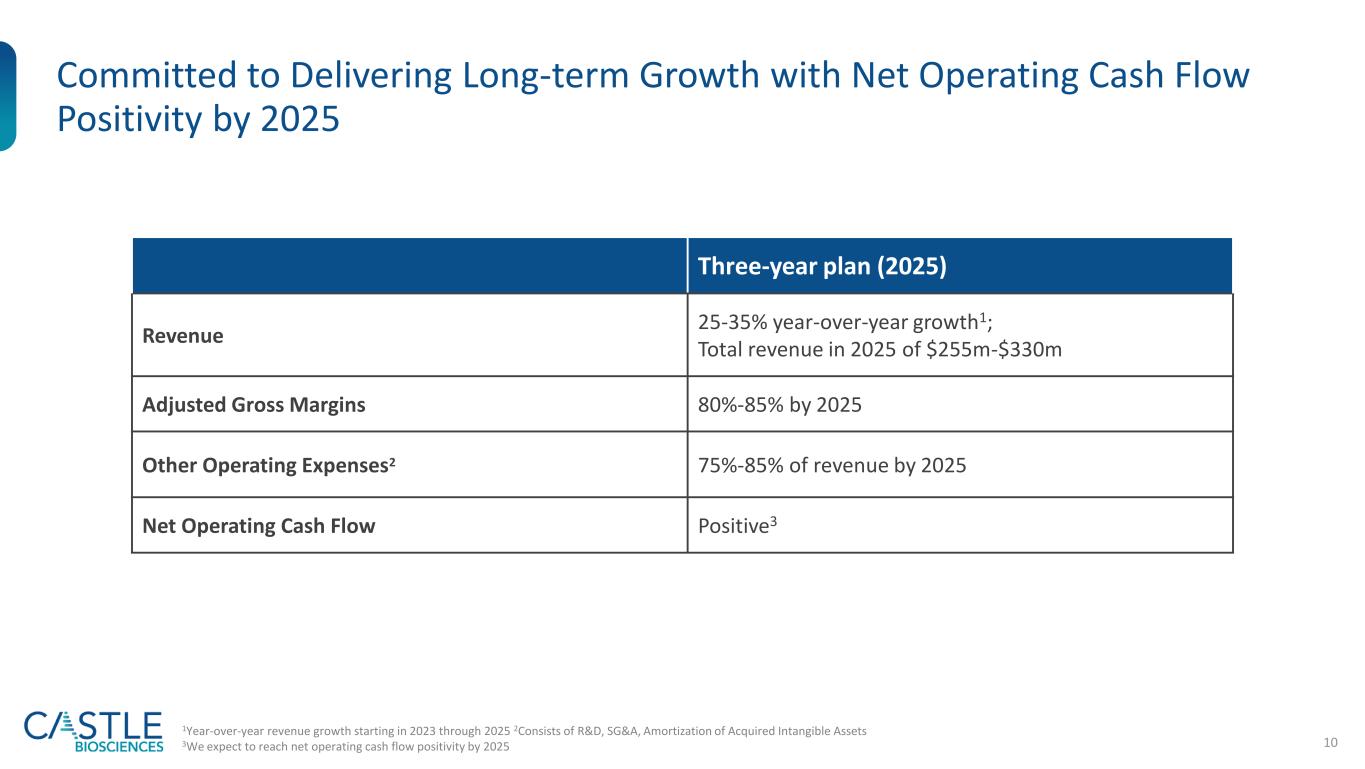
“During our Investor Day in September, we presented our foundational guideposts and three-year financial targets for the year-ending December 31, 2025. These guideposts-- exceptional employees, continuous evolution and improvement, and customer and solution centric-- are grounded in Castle’s mission, vision and values and are foundational to how we operate our business. Also, our three-year financial targets reflect our belief in Castle’s business model and the merits of our tests. Specifically, we anticipate achieving total revenue in the range of $255 million to $330 million for the year-ending December 31, 2025. We expect, by combining strong top-line growth and gross margins with a continued disciplined approach to capital allocation, our net operating cash flow to be positive by 2025.
“Once again, our continued progress is directly attributable to the tireless efforts and continued commitment of our exceptional team of professionals. Our success depends on their daily dedication to the patients and healthcare providers we serve.”
Third Quarter Ended Sept. 30, 2022, Selected Results
•Revenues were $37.0 million, a 58% increase compared to $23.5 million during the same period in 2021. Included in revenue for the current year was $(0.3) million related to tests delivered in prior periods. Revenue for the same quarter last year included $(0.1) million related to tests delivered in prior periods.
•Adjusted revenues, which exclude the effects of revenue adjustments related to tests delivered in prior periods, were $37.3 million, a 58% increase compared to $23.6 million for the same period in 2021.
•Delivered 12,114 total test reports in the third quarter of 2022, an increase of 57% compared to 7,727 in the same period of 2021:
◦DecisionDx®-Melanoma test reports delivered in the quarter were 7,354, compared to 5,505 in the third quarter of 2021.
◦DecisionDx®-SCC test reports delivered in the quarter were 1,636, compared to 934 in the third quarter of 2021.


◦MyPath® Melanoma and DiffDx®-Melanoma diagnostic gene expression profile (GEP) aggregate test reports delivered in the quarter were 834, compared to 913 in the third quarter of 2021.
◦DecisionDx®-UM test reports delivered in the quarter were 392, compared to 375 in the third quarter of 2021.
◦TissueCypher Barrett’s Esophagus test reports delivered in the quarter were 690. No test reports were delivered by Castle in the third quarter of 2021.
◦IDgenetix test reports delivered in the quarter were 1,208. No test reports were delivered by Castle in the third quarter of 2021.
•Gross margin for the quarter ended September 30, 2022, was 70%, and adjusted gross margin was 76%.
•Operating cash flow was $(5.2) million, compared to $(6.1) million for the same period in 2021, and adjusted operating cash flow was $(5.2) million, compared to $(3.0) million for the same period in 2021.
•Net loss for the third quarter was $(20.2) million, compared to $(11.8) million for the same period in 2021.
•Adjusted EBITDA for the third quarter was $(8.3) million, compared to $(5.5) million for the same period in 2021.
Nine Months Ended Sept. 30, 2022, Selected Results
•Revenues were $98.7 million, a 43% increase compared to $69.0 million during the same period in 2021. Included in revenue for the period was $(1.9) million related to tests delivered in prior periods. Revenue for the same period last year included $4.1 million related to tests delivered in prior periods.
•Adjusted revenues, which exclude the effects of revenue adjustments related to tests delivered in prior periods, were $100.6 million, a 55% increase, compared to $64.9 million for the same period in 2021.
•Total test reports delivered in the nine months ended September 30, 2022, were 31,775, an increase of 60% compared to 19,876 in the same period of 2021:
◦DecisionDx-Melanoma test reports delivered in the nine months ended September 30, 2022, were 20,502, compared to 14,693 during the same period of 2021.
◦DecisionDx-SCC test reports delivered in the nine months ended September 30, 2022, were 4,122, compared to 2,245 during the same period in 2021.
◦MyPath Melanoma and DiffDx-Melanoma aggregate diagnostic GEP test reports delivered in the nine months ended September 30, 2022, were 2,739, compared to 1,758 during the same period in 2021.
◦DecisionDx-UM test reports delivered in the nine months ended September 30, 2022, were 1,279, compared to 1,180 during the same period in 2021.
◦TissueCypher Barrett’s Esophagus test reports delivered in the nine months ended September 30, 2022, were 1,098.
◦IDgenetix test reports delivered in the nine months ended September 30, 2022, were 2,035 (April 26, 2022–September 30, 2022).
•Gross margin for the nine months ended September 30, 2022, was 71%, and adjusted gross margin was 78%.
•Operating cash flow was $(35.7) million, compared to $(16.2) million for the same period in 2021.
•Adjusted operating cash flow was $(35.7) million, compared to $(12.7) million for the same period in 2021.
•Net loss for the nine months ended September 30, 2022, was $(46.5) million, compared to $(24.9) million for the same period in 2021.
•Adjusted EBITDA for the nine months ended September 30, 2022, was $(30.5) million, compared to $(8.0) million for the same period in 2021.

Cash, Cash Equivalents and Marketable Investment Securities

As of Sept. 30, 2022, the Company’s cash and cash equivalents totaled $134.2 million. Additionally, the Company held $131.8 million in short-term investments.


2022 Revenue Guidance

Castle Biosciences is further increasing its guidance for anticipated total revenue in 2022. The Company now anticipates generating $132-137 million in total revenue in 2022, compared to the previously provided guidance of $130-135 million.

Third Quarter Accomplishments and Highlights
Dermatology
•In July, a presentation on DecisionDx®-Melanoma was given at the 2022 American Academy of Dermatology (AAD) Innovation Academy. The presentation, titled The 31-Gene Expression Profile Test for Cutaneous Melanoma, provided an overview of the test as well as data highlights that demonstrate how incorporating DecisionDx-Melanoma test results into decision-making between a patient and his/her clinician can help guide cutaneous melanoma management decisions and improve patient outcomes. See the Company’s news release from July 20, 2022, for more information.
•In July, the Company announced the achievement of a significant milestone for its DecisionDx-Melanoma test, surpassing 100,000 tests ordered. From the test’s launch through June 30, 2022, DecisionDx-Melanoma had been ordered more than 105,000 times by more than 10,200 providers for patients diagnosed with cutaneous melanoma. See the Company’s news release from July 25, 2022, for more information.
•In September, the Company announced the publication of a study in the Journal of the American Academy of Dermatology demonstrating that DecisionDx-Melanoma’s integrated algorithms, which combine the 31-GEP score with a patient’s clinicopathologic factors, provide personalized and accurate survival prognoses which can help guide risk-aligned patient management. Further, the study showed that using DecisionDx-Melanoma test results in conjunction with current staging guidelines can help refine patient risk, reduce unnecessary procedures and ultimately improve patient care. As the National Comprehensive Cancer Network (NCCN) guidelines recommend risk-aligned decisions for individual patients, the use of DecisionDx-Melanoma test results could aid in identifying patients with more or less aggressive cases of melanoma to align treatment decisions more accurately with patient risk and help ensure a more appropriate allocation of healthcare resources. See the Company’s news release from September 23, 2022, for more information.
Gastroenterology
•In August, the Company announced the American Gastroenterological Association (AGA) published a best practice advice article stating the TissueCypher Barrett’s esophagus test may be beneficial for risk-stratification of patients with non-dysplastic Barrett’s esophagus. The best practice advice article from the AGA, titled “AGA Clinical Practice Update on New Technology and Innovation for Surveillance and Screening in Barrett’s Esophagus: Expert Review,” was recently published online in Clinical Gastroenterology and Hepatology and can be viewed here. See the Company's news release from Aug. 4, 2022, for more information.
Corporate
•In September, the Company announced it had received an AZBio Fast Lane Award from the Arizona Bioindustry Association (AZBio). The award recognizes companies that have achieved outstanding milestones in the last 18 months, measured by clinical results, regulatory approvals, certifications, collaborations, funding awards, product launches, job growth or product sales milestones. Highlights of Castle’s performance over the past year and a half include: more than doubling its workforce, expanding from 201 employees to more than 480 between Dec. 31, 2020, and June 30, 2022; expanding the Company’s innovative portfolio of tests in areas of unmet clinical need (gastroenterology and mental health) through two strategic acquisitions (Cernostics, with the TissueCypher Barrett’s Esophagus test, and AltheaDx, with the IDgenetix test); expanding data that demonstrates the potential value of Castle’s tests to guide patient care and transform disease management through the publication of 22 peer-reviewed papers and close to 100 posters and/or oral presentations; and initiating a collaboration with the National Cancer Institute (NCI) to link DecisionDx-Melanoma testing data with data from the Surveillance, Epidemiology and End Results (SEER) Program’s registries on cutaneous melanoma (CM) cases that resulted in a study analysis showing patients diagnosed with melanoma and tested with DecisionDx-Melanoma had improved survival (27% improvement in melanoma-specific


survival) compared to untested patients. See the Company’s news release from September 13, 2022, for more information.
•In September, the Company hosted an Investor Day, where the Company’s foundational guideposts as well as three-year financial targets were presented. See the Company’s news release from September 20, 2022, for more information.

Conference Call and Webcast Details
Castle Biosciences will hold a conference call on Wednesday, Nov. 2, 2022, at 4:30 p.m. Eastern time to discuss its third quarter 2022 results and provide a corporate update.

A live webcast of the conference call can be accessed here:
https://events.q4inc.com/attendee/748805907 or via the webcast link on the Investor Relations page of the Company’s website, https://ir.castlebiosciences.com/overview/default.aspx. Please access the webcast at least 10 minutes before the conference call start time. An archive of the webcast will be available on the Company’s website until Nov. 30, 2022.

To access the live conference call via phone, please dial 844 200 6205 from the United States, or +1 929 526 1599 internationally, at least 10 minutes prior to the start of the call, using the conference ID 723381.

There will be a brief Question & Answer session following management commentary.

Use of Non-GAAP Financial Measures (UNAUDITED)
In this release, we use the metrics of Adjusted Revenue, Adjusted Gross Margin, Adjusted Operating Cash Flow and Adjusted EBITDA, which are non-GAAP financial measures and are not calculated in accordance with generally accepted accounting principles in the United States (GAAP). Adjusted Revenue and Adjusted Gross Margin reflect adjustments to net revenues to exclude changes in variable consideration related to test reports delivered in previous periods. Adjusted Gross Margin further excludes acquisition-related intangible asset amortization. Adjusted Operating Cash Flow excludes the effects of repayments to Medicare of COVID-19 government relief advancements to healthcare providers. Adjusted EBITDA excludes from net loss interest expense, depreciation and amortization expense, income tax (benefit) expense, stock-based compensation expense, and change in fair value of contingent consideration, and acquisition-related transaction costs.

We use Adjusted Revenue, Adjusted Gross Margin, Adjusted Operating Cash Flow and Adjusted EBITDA internally because we believe these metrics provide useful supplemental information in assessing our revenue and cash flow performance reported in accordance with GAAP, respectively. We believe Adjusted Revenue and Adjusted Gross Margin are also useful to investors because they provide additional information on current-period performance by removing the effects of revenue adjustments related to tests delivered in previous periods and, with respect to Adjusted Gross Margin, acquisition-related intangible asset amortization, which we believe may facilitate revenue and gross margin comparisons to historical periods. We believe Adjusted Operating Cash Flow is also useful to investors as a supplement to GAAP measures in the assessment of our cash flow performance by removing the effects of COVID-19 government relief payments, which we believe are not indicative of our ongoing operations. We believe Adjusted EBITDA may enhance an evaluation of our operating performance based on recent revenue generation and product/overhead cost control because it excludes the impact of prior decisions made about capital investment, financing and other expenses. However, these non-GAAP financial measures may be different from non-GAAP financial measures used by other companies, even when the same or similarly titled terms are used to identify such measures, limiting their usefulness for comparative purposes.

These non-GAAP financial measures are not meant to be considered in isolation or used as substitutes for net revenues, gross margin, net cash (used in) provided by operating activities or net loss reported in accordance with GAAP; should be considered in conjunction with our financial information presented in accordance with GAAP; have no standardized meaning prescribed by GAAP; and are not prepared under any comprehensive set of accounting rules or principles. In addition, from time to time in the future, there may be other items that we may exclude for purposes of these non-GAAP financial measures, and we may in the future cease to exclude items that we have historically excluded for purposes of these non-GAAP financial measures.


Likewise, we may determine to modify the nature of adjustments to arrive at these non-GAAP financial measures. Because of the non-standardized definitions of non-GAAP financial measures, the non-GAAP financial measure as used by us in this press release and the accompanying reconciliation tables have limits in their usefulness to investors and may be calculated differently from, and therefore may not be directly comparable to, similarly titled measures used by other companies. Accordingly, investors should not place undue reliance on non-GAAP financial measures. Reconciliations of these non-GAAP financial measures to the most directly comparable GAAP financial measures are presented in the tables at the end of this release.

About Castle Biosciences

Castle Biosciences (Nasdaq: CSTL) is a leading diagnostics company improving health through innovative tests that guide patient care. The Company aims to transform disease management by keeping people first: patients, clinicians, employees and investors.

Castle’s current portfolio consists of tests for skin cancers, uveal melanoma, Barrett’s esophagus and mental health conditions. Additionally, the Company has active research and development programs for tests in other diseases with high clinical need, including its test in development to predict systemic therapy response in patients with moderate-to-severe psoriasis, atopic dermatitis and related conditions. To learn more, please visit www.CastleBiosciences.com and connect with us on LinkedIn, Facebook, Twitter and Instagram.

DecisionDx-Melanoma, DecisionDx-CMSeq, DecisionDx-SCC, myPath Melanoma, DecisionDx DiffDx-Melanoma, DecisionDx-UM, DecisionDx-PRAME, DecisionDx-UMSeq, TissueCypher and IDgenetix are trademarks of Castle Biosciences, Inc.

Forward-Looking Statements
This press release contains forward-looking statements within the meaning of Section 27A of the Securities Act of 1933, as amended, and Section 21E of the Securities Exchange Act of 1934, as amended, which are subject to the “safe harbor” created by those sections. These forward-looking statements include, but are not limited to, statements concerning: the ability of our tests to improve patient outcomes by enabling clinicians and their patients to make shared and informed treatment decisions; our expectations that (i) our tests will continue to prove their clinical utility in the marketplace and build momentum, (ii) expected growth from recent acquisitions and expected future revenues should position us to create long-term value for stockholders, (iii) we will achieve total revenue in the range of $255 million to $330 million for the year ending December 31, 2025, (iv) our net operating cash flow will be positive by 2025, (v) we will meet our total revenue guidance for 2022, and (vi) the potential of (a) DecisionDx-Melanoma test results to help guide risk-aligned cutaneous melanoma management decisions and refine patient risk, reduce unnecessary procedures and help ensure a more appropriate allocation of healthcare resources, and ultimately improve patient outcomes and patient care; (b) our TissueCypher test to provide beneficial risk-stratification of patients with non-dysplastic BE; and (c) our tests to guide patient care and transform disease management. The words “anticipates,” “believes,” “can,” “could,” “expect,” “may,” “potential,” “will” and similar expressions are intended to identify forward-looking statements, although not all forward-looking statements contain these identifying words. We may not actually achieve the plans, intentions, or expectations disclosed in our forward-looking statements and you should not place undue reliance on our forward-looking statements. Actual results or events could differ materially from the plans, intentions and expectations disclosed in the forward-looking statements that we make. These forward-looking statements involve risks and uncertainties that could cause our actual results to differ materially from those in the forward-looking statements, including, without limitation: the accuracy of our assumptions and expectations underlying our three-year revenue and other financial targets (including, without limitation, our assumptions or expectations regarding continued reimbursement for our DecisionDx-SCC test at the current rate and reimbursement for our other products and subsequent coverage decisions, our estimated total addressable markets for our products and product candidates and the related expenses, capital requirements and potential needs for additional financing, the anticipated cost, timing and success of our product candidates, and our plans to research, develop and commercialize new tests and our ability to successfully integrate new businesses, assets, products or technologies acquired through acquisitions), the effects of macroeconomic events and conditions, including inflation, the COVID-19 pandemic and geopolitical events, among others, on our business and our efforts to address its impact on our business; subsequent study or trial results and findings may contradict earlier study or trial results and findings or may not support the results discussed in this press release, including with respect to the diagnostic and prognostic tests discussed


in this press release; actual application of our tests may not provide the aforementioned benefits to patients; and the risks set forth under the heading “Risk Factors” in our Quarterly Report on Form 10-Q for the three months ended September 30, 2022, and in our other filings with the SEC. The forward-looking statements are applicable only as of the date on which they are made, and we do not assume any obligation to update any forward-looking statements, except as may be required by law.

The COVID-19 situation continues to evolve and brings along with it a high level of uncertainty surrounding potential future impacts. Therefore, trends in revenues and test report volumes are not necessarily indicative of the Company’s results of operations that can be expected for future interim periods or for the year ending December 31, 2022.

Investor and Media Contact:
Camilla Zuckero
+1 832-835-5158
[email protected]


CASTLE BIOSCIENCES, INC.
CONDENSED CONSOLIDATED STATEMENTS OF OPERATIONS
(UNAUDITED)
(in thousands, except per share data)
Three Months Ended
September 30,
Nine Months Ended
September 30,
2022202120222021
NET REVENUES$37,011 $23,475 $98,701 $69,046 
OPERATING EXPENSES AND OTHER OPERATING INCOME
Cost of sales (exclusive of amortization of acquired intangible assets)8,859 4,500 22,489 11,225 
Research and development10,907 7,500 33,594 20,201 
Selling, general and administrative36,626 22,595 104,577 61,578 
Amortization of acquired intangible assets2,306 694 6,051 950 
Change in fair value of contingent consideration(151)— (17,987)— 
Total operating expenses, net58,547 35,289 148,724 93,954 
Operating loss(21,536)(11,814)(50,023)(24,908)
Interest income1,293 23 1,693 51 
Interest expense(6)— (13)— 
Loss before income taxes(20,249)(11,791)(48,343)(24,857)
Income tax (benefit) expense— — (1,823)5 
Net loss$(20,249)$(11,791)$(46,520)$(24,862)
Loss per share, basic and diluted$(0.77)$(0.47)$(1.79)$(0.99)
Weighted-average shares outstanding, basic and diluted26,316 25,287 25,938 25,072 


Stock-Based Compensation Expense
Stock-based compensation expense is included in the condensed consolidated statements of operations as follows (in thousands):
Three Months Ended
September 30,
Nine Months Ended
September 30,
2022202120222021
Cost of sales (exclusive of amortization of acquired intangible assets)$975 $555 $2,725 $1,480 
Research and development1,948 1,135 5,607 3,266 
Selling, general and administrative6,273 3,520 18,066 10,143 
Total stock-based compensation expense$9,196 $5,210 $26,398 $14,889 


CASTLE BIOSCIENCES, INC.
CONDENSED CONSOLIDATED STATEMENTS OF COMPREHENSIVE LOSS
(UNAUDITED)
(in thousands)

Three Months Ended
September 30,
Nine Months Ended
September 30,
2022202120222021
Net loss$(20,249)$(11,791)$(46,520)$(24,862)
Other comprehensive loss:
Net unrealized loss on available-for-sale securities(189)— (189)— 
Comprehensive loss$(20,438)$(11,791)$(46,709)$(24,862)


CASTLE BIOSCIENCES, INC.
CONDENSED CONSOLIDATED BALANCE SHEETS
(in thousands)
September 30, 2022December 31, 2021
ASSETS(unaudited)
Current Assets
Cash and cash equivalents$134,180 $329,633 
Marketable investment securities131,802 — 
Accounts receivable, net22,835 17,282 
Inventory3,802 2,021 
Prepaid expenses and other current assets6,795 4,807 
Total current assets299,414 353,743 
Long-term accounts receivable, net1,187 1,308 
Property and equipment, net13,054 9,501 
Operating lease assets12,604 7,383 
Goodwill and other intangible assets, net130,357 88,922 
Other assets – long-term1,195 1,715 
Total assets$457,811 $462,572 
LIABILITIES AND STOCKHOLDERS’ EQUITY
Current Liabilities
Accounts payable$5,768 $2,546 
Accrued compensation19,532 15,483 
Operating lease liabilities1,535 1,179 
Other accrued and current liabilities5,107 5,678 
Total current liabilities31,942 24,886 
Noncurrent portion of contingent consideration1,798 18,287 
Noncurrent operating lease liabilities11,900 6,900 
Deferred tax liability614 635 
Other liabilities124 124 
Total liabilities46,378 50,832 
Stockholders’ Equity
Common stock
26 25 
Additional paid-in capital551,883 505,482 
Accumulated deficit(140,287)(93,767)
Accumulated other comprehensive loss(189)— 
Total stockholders’ equity411,433 411,740 
Total liabilities and stockholders’ equity$457,811 $462,572 


CASTLE BIOSCIENCES, INC.
CONDENSED CONSOLIDATED STATEMENTS OF CASH FLOWS
(UNAUDITED)
(in thousands)
Nine Months Ended
September 30,
20222021
OPERATING ACTIVITIES
Net loss$(46,520)$(24,862)
Adjustments to reconcile net loss to net cash used in operating activities:
Depreciation and amortization7,702 1,956 
Stock-based compensation expense26,398 14,889 
Change in fair value of contingent consideration(17,987)— 
Deferred income taxes(1,839)— 
Accretion of discounts on marketable investment securities(184)— 
Other186 (99)
Change in operating assets and liabilities:
Accounts receivable(5,678)(6,087)
Prepaid expenses and other current assets(1,870)(734)
Inventory(1,502)(28)
Operating lease assets694 641 
Other assets533 (193)
Accounts payable2,155 673 
Operating lease liabilities(559)(638)
Accrued compensation3,669 3,012 
Medicare advance payment— (5,351)
Other accrued liabilities(853)619 
Net cash used in operating activities(35,655)(16,202)
INVESTING ACTIVITIES
Purchases of property and equipment(3,845)(2,590)
Asset acquisition547 (33,184)
Acquisition of business, net of cash and cash equivalents acquired(26,966)— 
Proceeds from sale of property and equipment9 6 
Purchases of marketable investment securities(131,808)— 
Net cash used in investing activities(162,063)(35,768)
FINANCING ACTIVITIES
Payment of common stock offering costs— (336)
Proceeds from exercise of common stock options675 3,868 
Payment of employees’ taxes on vested restricted stock units(134)— 
Proceeds from contributions to the employee stock purchase plan1,812 1,763 
Repayment of principal portion of finance lease liabilities(88)— 
Net cash provided by financing activities2,265 5,295 
NET CHANGE IN CASH AND CASH EQUIVALENTS(195,453)(46,675)
Beginning of period329,633 409,852 
End of period$134,180 $363,177 


CASTLE BIOSCIENCES, INC.
Reconciliation of Non-GAAP Financial Measures (UNAUDITED)
The table below presents the reconciliation of adjusted revenue and adjusted gross margin, which are non-GAAP financial measures. See "Use of Non-GAAP Financial Measures (UNAUDITED)" above for further information regarding the Company's use of non-GAAP financial measures.
Three Months Ended
September 30,
Nine Months Ended
September 30,
2022202120222021
(in thousands)
Adjusted revenue
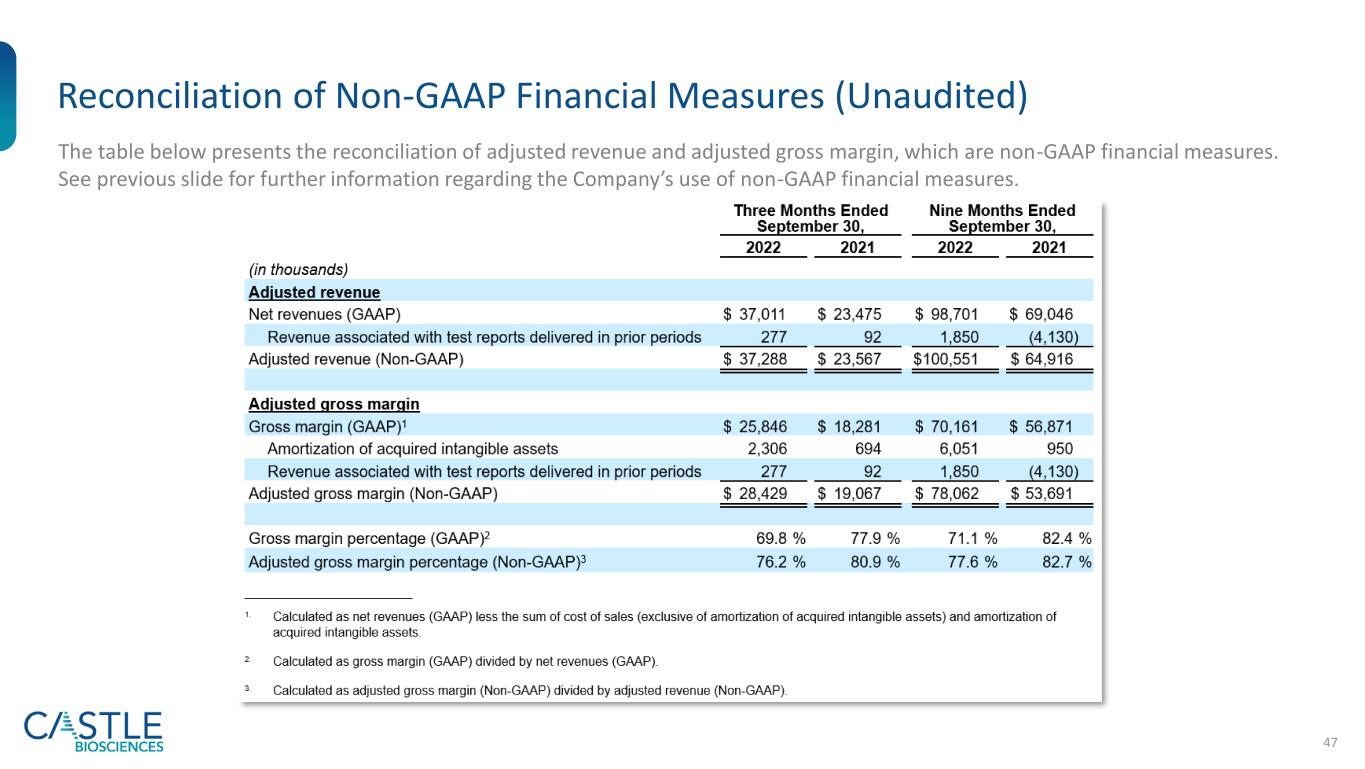
Net revenues (GAAP)$37,011 $23,475 $98,701 $69,046 
Revenue associated with test reports delivered in prior periods277 92 1,850 (4,130)
Adjusted revenue (Non-GAAP)$37,288 $23,567 $100,551 $64,916 
Adjusted gross margin
Gross margin (GAAP)1
$25,846 $18,281 $70,161 $56,871 
Amortization of acquired intangible assets2,306 694 6,051 950 
Revenue associated with test reports delivered in prior periods277 92 1,850 (4,130)
Adjusted gross margin (Non-GAAP)$28,429 $19,067 $78,062 $53,691 
Gross margin percentage (GAAP)2
69.8 %77.9 %71.1 %82.4 %
Adjusted gross margin percentage (Non-GAAP)3
76.2 %80.9 %77.6 %82.7 %
________________________
1.Calculated as net revenues (GAAP) less the sum of cost of sales (exclusive of amortization of acquired intangible assets) and amortization of acquired intangible assets.
2.Calculated as gross margin (GAAP) divided by net revenues (GAAP).
3.Calculated as adjusted gross margin (Non-GAAP) divided by adjusted revenue (Non-GAAP).

The table below presents the reconciliation of adjusted operating cash flow, which is a non-GAAP financial measure. See "Use of Non-GAAP Financial Measures (UNAUDITED)" above for further information regarding the Company's use of non-GAAP financial measures.
Three Months Ended
September 30,
Nine Months Ended
September 30,
2022202120222021
(in thousands)
Adjusted operating cash flow
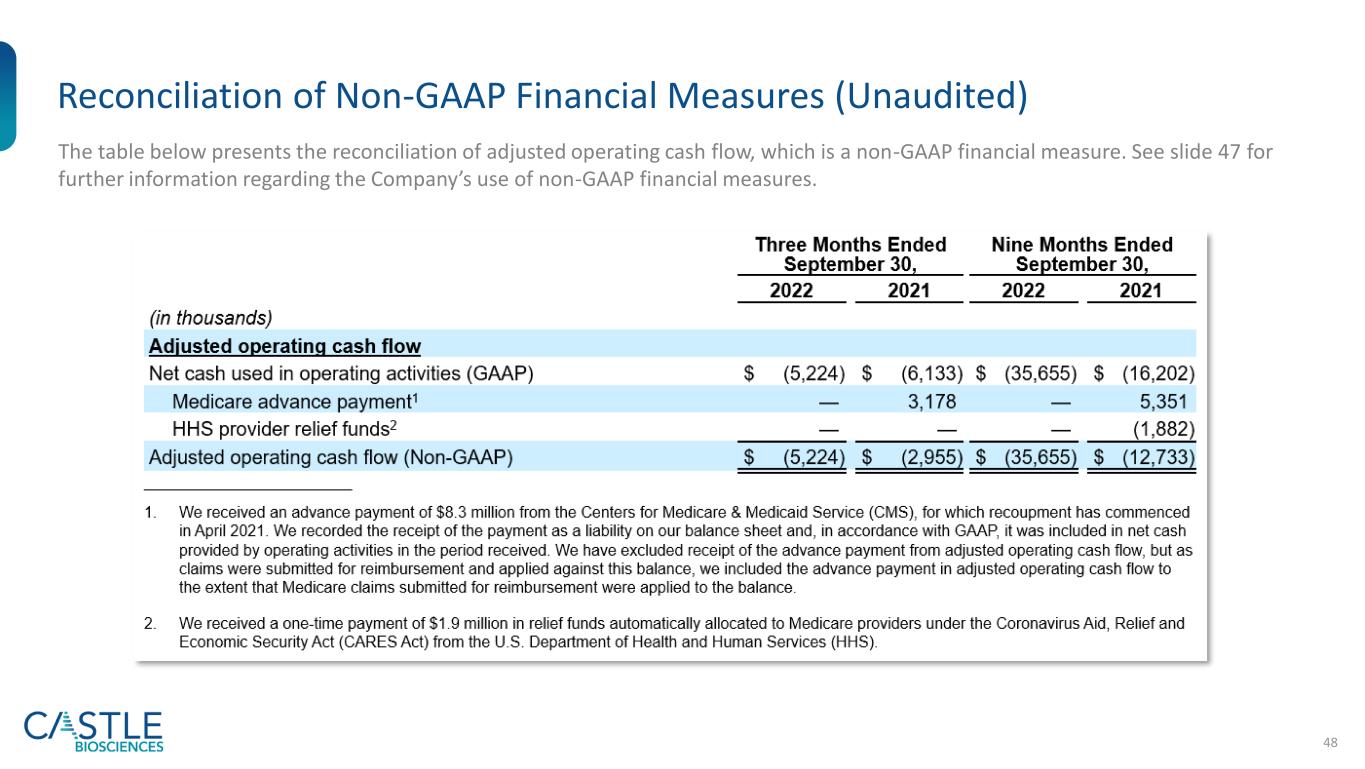
Net cash used in operating activities (GAAP)$(5,224)$(6,133)$(35,655)$(16,202)
Medicare advance payment1
— 3,178 — 5,351 
HHS provider relief funds2
— — — (1,882)
Adjusted operating cash flow (Non-GAAP)$(5,224)$(2,955)$(35,655)$(12,733)
________________________
1.We received an advance payment of $8.3 million from the Centers for Medicare & Medicaid Service (CMS), for which recoupment has commenced in April 2021. We recorded the receipt of the payment as a liability on our balance sheet and, in accordance with GAAP, it was included in net cash provided by operating activities in the period received. We have excluded receipt of the advance payment from adjusted operating cash flow, but as claims were submitted for reimbursement and applied against this balance, we included the advance payment in adjusted operating cash flow to the extent that Medicare claims submitted for reimbursement were applied to the balance.
2.We received a one-time payment of $1.9 million in relief funds automatically allocated to Medicare providers under the Coronavirus Aid, Relief and Economic Security Act (CARES Act) from the U.S. Department of Health and Human Services (HHS).


The table below presents the reconciliation of adjusted EBITDA, which is a non-GAAP financial measure. See "Use of Non-GAAP Financial Measures (UNAUDITED)" above for further information regarding the Company's use of non-GAAP financial measures.
Three Months Ended
September 30,
Nine Months Ended
September 30,
2022202120222021
(in thousands)
Adjusted EBITDA
Net loss$(20,249)$(11,791)$(46,520)$(24,862)
Interest expense6 — 13 — 
Depreciation and amortization expense2,923 1,089 7,702 1,956 
Income tax (benefit) expense— — (1,823)5 
Stock-based compensation expense9,196 5,210 26,398 14,889 
Change in fair value of contingent consideration(151)— (17,987)— 
Acquisition related transaction costs— — 1,711 — 
Adjusted EBITDA (Non-GAAP)$(8,275)$(5,492)$(30,506)$(8,012)

November 2, 2022 Transforming Disease Management


2 Disclaimers This presentation contains forward-looking statements within the meaning of Section 27A of the Securities Act of 1933, as amended, and Section 21E of the Securities Exchange Act of 1934, as amended, which are subject to the “safe harbor” created by those sections. These forward-looking statements include, but are not limited to, statements concerning: estimated sizes of the total addressable markets of our current and future commercial and pipeline products within our dermatologic, gastrointestinal and mental health franchises, and our anticipated actions to further the growth of these franchises and products in 2023 and beyond, and any resulting financial or operational metrics or related expectations with respect to future performance; our expectations regarding timelines and milestones for our dermatologic, gastrointestinal and mental health franchises; our three-year projections for revenue, adjusted gross margins, other operating expenses and net operating cash flow; the potential of DecisionDx-Melanoma to aid in risk-aligned treatment plans for improved patient outcomes and survival rates; the potential of TissueCypher testing to change clinical practice when incorporated into patient management plans; our expectation that we will achieve net operating cash flow positivity by 2025; our expectation that our focused growth investments will contribute to long-term profitability; our milestone expectations regarding the Palmetto/MolDx draft LCD for DecisionDx-SCC, finalization of a Palmetto/Noridian LCD for DiffDx-Melanoma by the end of Q2 2023, publication of a collaborative NCI study showing higher melanoma specific survival for patients tested with DecisionDx-Melanoma, new GI and MyPath/DiffDx commercial team expansion reaching optimal productivity in Q2 2023, expected closure of our San Diego lab by the end of 2022; components and drivers of our near-to mid-term growth and mid-to long-term growth; the impact, accuracy and effectiveness of our commercial and pipeline tests on physicians, patients and their treatment plans, and their individual or collective impact on our prospects and plans, including any objectives of management related thereto; the ability of our tests to provide valuable, clinically actionable information to clinicians and patients, improve health and guide patient care; expected expansion of outside sales territories; our progress roadmaps for our tests; expected launch dates for tests in our pipeline expansion and estimates regarding their total addressable markets or future success; expectations regarding LCD effective timeframes and reimbursement capabilities; the ability of our risk stratification tests to classify risk of metastasis in ways that better support risk-appropriate treatment than reliance on traditional clinicopathologic risk factors alone; integration timelines, growth expectations and strategic opportunities for our TissueCypher test and GI franchise, and our IDgenetix test and our mental health franchise; and our ability to integrate our recent acquisitions into our existing business and the ability of such acquisitions to complement our existing business. The words “anticipates,” “believes,” “can,” “estimates,” “expects,” “plans,” “potential,” “will” and similar expressions are intended to identify forward-looking statements, although not all forward-looking statements contain these identifying words. We may not actually achieve the plans, intentions, or expectations disclosed in our forward-looking statements and you should not place undue reliance on our forward-looking statements. Actual results or events could differ materially from the plans, intentions and expectations disclosed in the forward-looking statements that we make. These forward-looking statements involve risks and uncertainties that could cause our actual results to differ materially from those in the forward-looking statements, including, without limitation, the accuracy of our assumptions and expectations underlying our three-year revenue and other financial targets (including, without limitation, our assumptions or expectations regarding: (i) continued reimbursement for our DecisionDx-SCC test at the current rate and reimbursement for our other products and subsequent coverage decisions, (ii) our estimated total addressable markets for our products and product candidates and the related expenses, capital requirements and potential needs for additional financing, (iii) the anticipated cost, timing and success of our product candidates, and our plans to research, develop and commercialize new tests and (iv) our ability to successfully integrate new businesses, assets, products or technologies acquired through previously completed acquisitions), the effects of the COVID- 19 pandemic on our business and our efforts to address its impact on our business, subsequent study or trial results and findings may contradict earlier study or trial results and findings or may not support the results discussed in this presentation, including with respect to the diagnostic and prognostic tests discussed in this presentation, actual application of our tests may not provide the aforementioned benefits to patients, and the risks set forth under the heading “Risk Factors” in our Quarterly Report on Form 10-Q for the three months ended September 30, 2022, and in our other filings with the SEC. The forward-looking statements are applicable only as of the date on which they are made, and we do not assume any obligation to update any forward-looking statements, except as may be required by law. Forward-Looking Statements


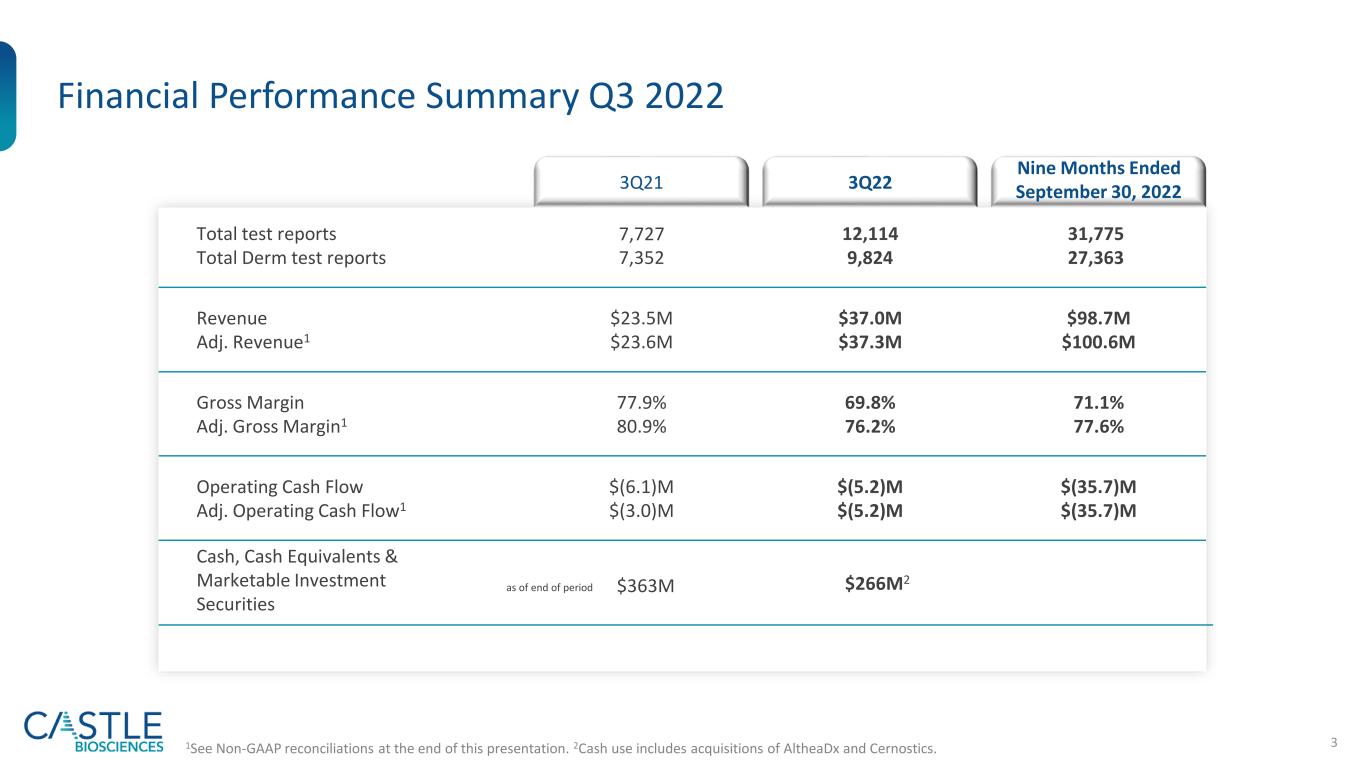
3 Financial Performance Summary Q3 2022 7,727 7,352 12,114 9,824 31,775 27,363 Total test reports Total Derm test reports 3Q21 3Q22 Nine Months Ended September 30, 2022 1See Non-GAAP reconciliations at the end of this presentation. 2Cash use includes acquisitions of AltheaDx and Cernostics. $23.5M $23.6M $37.0M $37.3M $98.7M $100.6M Revenue Adj. Revenue1 77.9% 80.9% 69.8% 76.2% 71.1% 77.6% Gross Margin Adj. Gross Margin1 $(6.1)M $(3.0)M $(5.2)M $(5.2)M $(35.7)M $(35.7)M Operating Cash Flow Adj. Operating Cash Flow1 $363M $266M2 Cash, Cash Equivalents & Marketable Investment Securities as of end of period


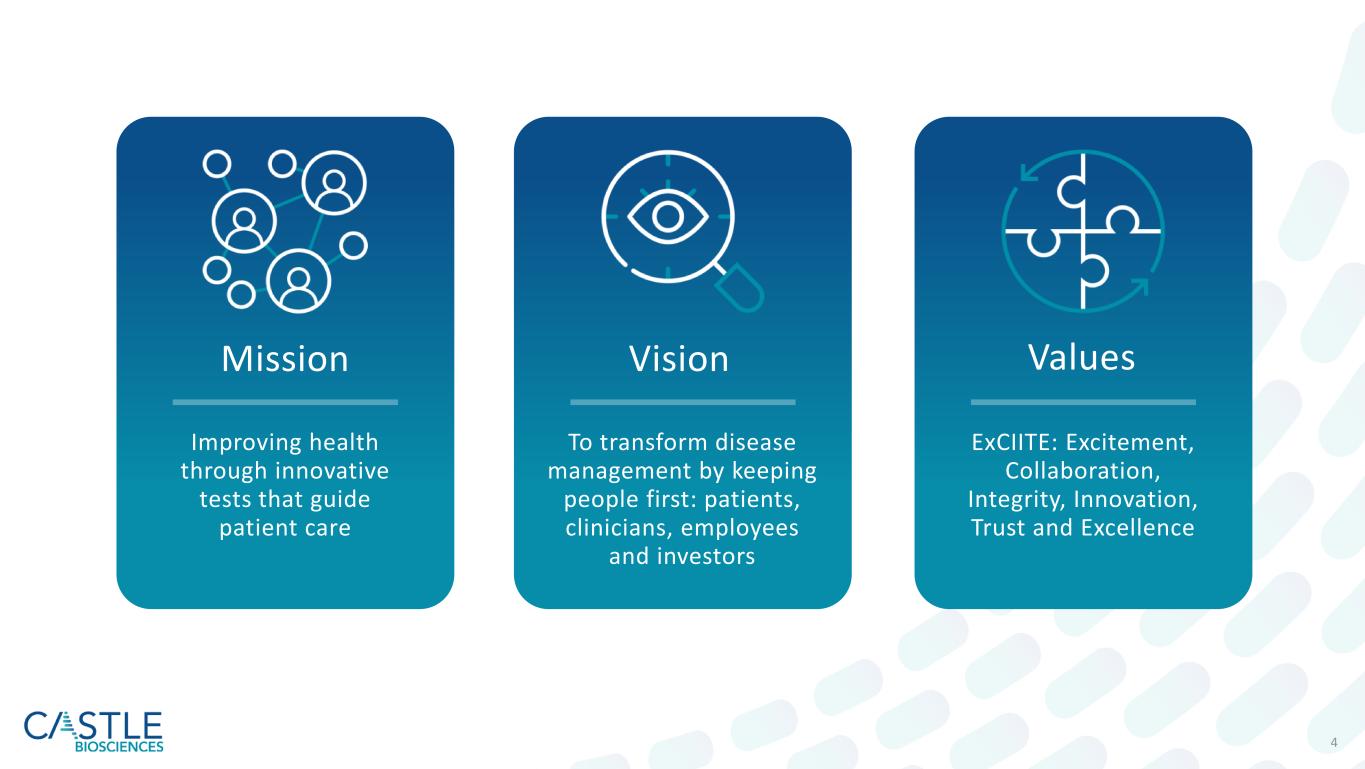
4 Mission Improving health through innovative tests that guide patient care Vision To transform disease management by keeping people first: patients, clinicians, employees and investors Values ExCIITE: Excitement, Collaboration, Integrity, Innovation, Trust and Excellence


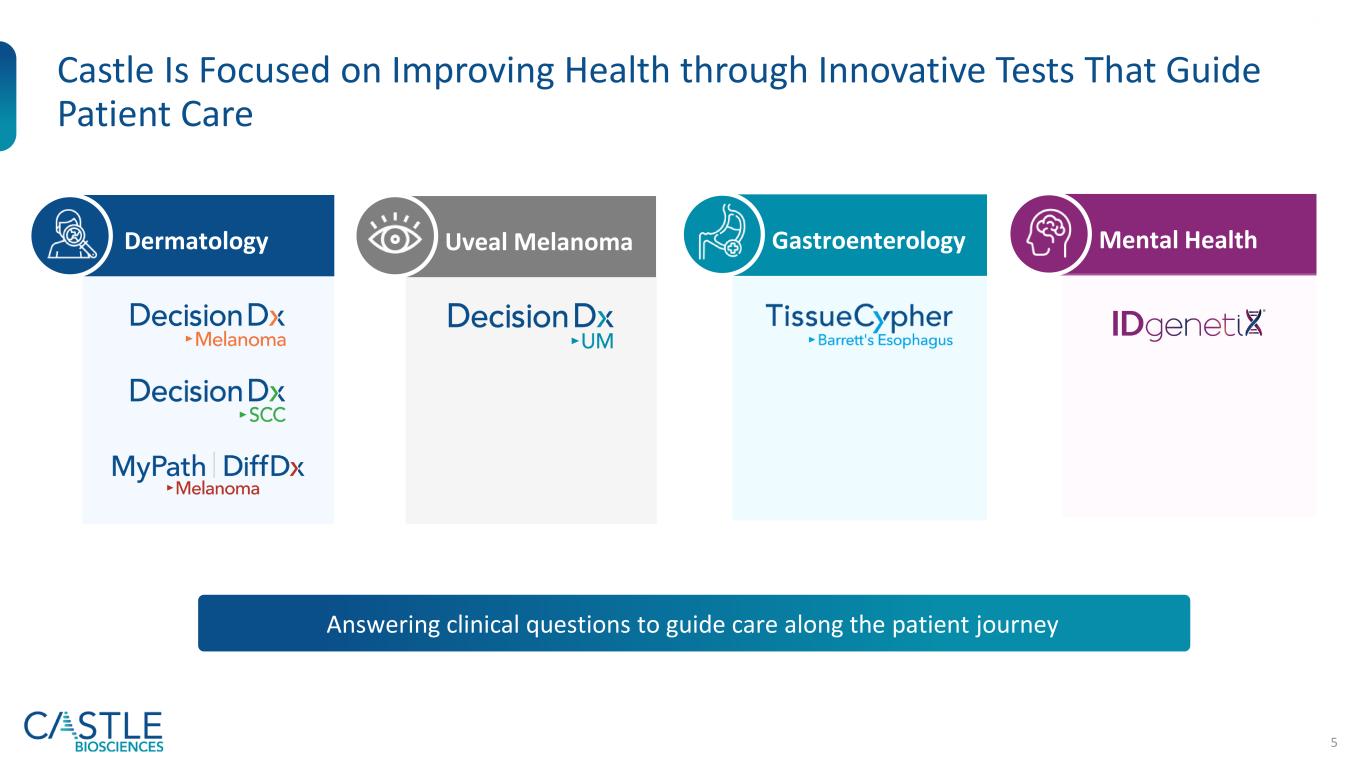
5 Castle Is Focused on Improving Health through Innovative Tests That Guide Patient Care Gastroenterology Mental HealthUveal MelanomaDermatology Answering clinical questions to guide care along the patient journey


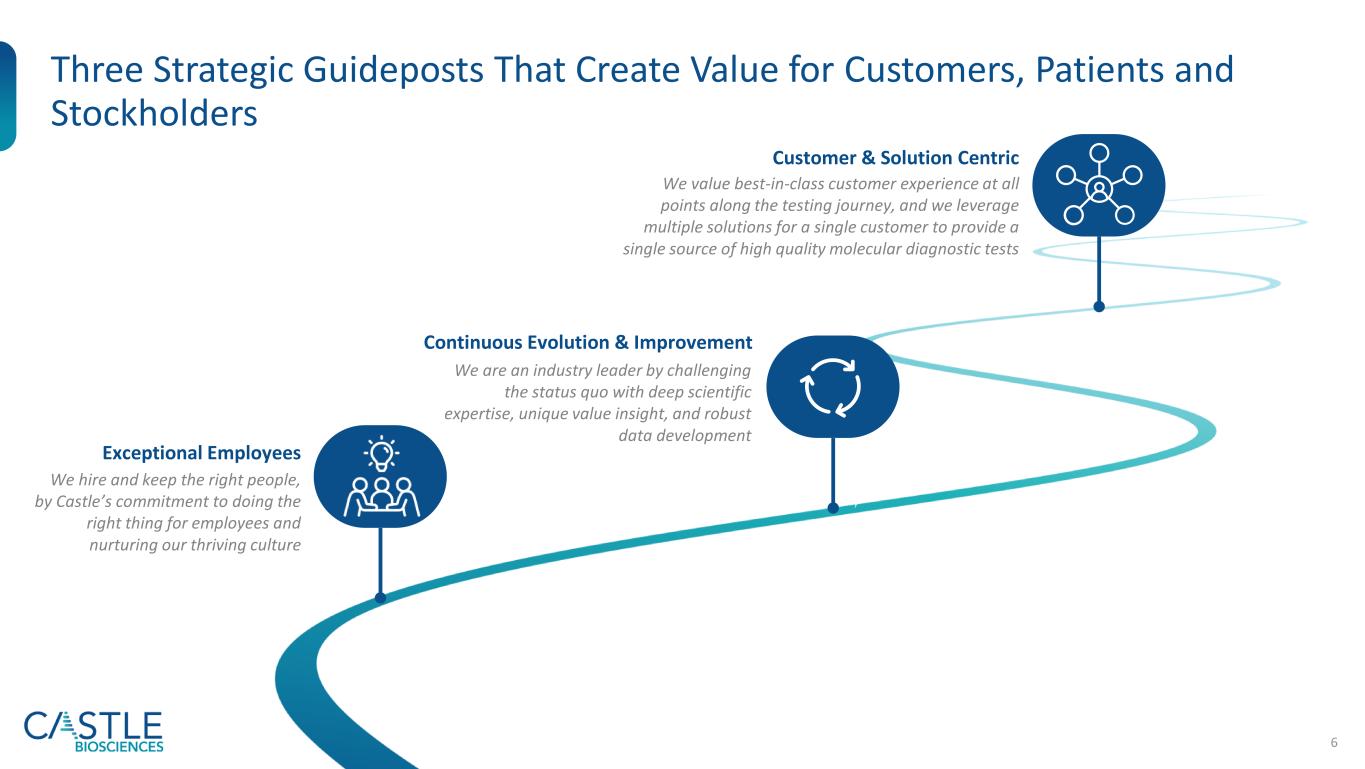
6 Three Strategic Guideposts That Create Value for Customers, Patients and Stockholders Continuous Evolution & Improvement Exceptional Employees Customer & Solution Centric We hire and keep the right people, by Castle’s commitment to doing the right thing for employees and nurturing our thriving culture We are an industry leader by challenging the status quo with deep scientific expertise, unique value insight, and robust data development We value best-in-class customer experience at all points along the testing journey, and we leverage multiple solutions for a single customer to provide a single source of high quality molecular diagnostic tests


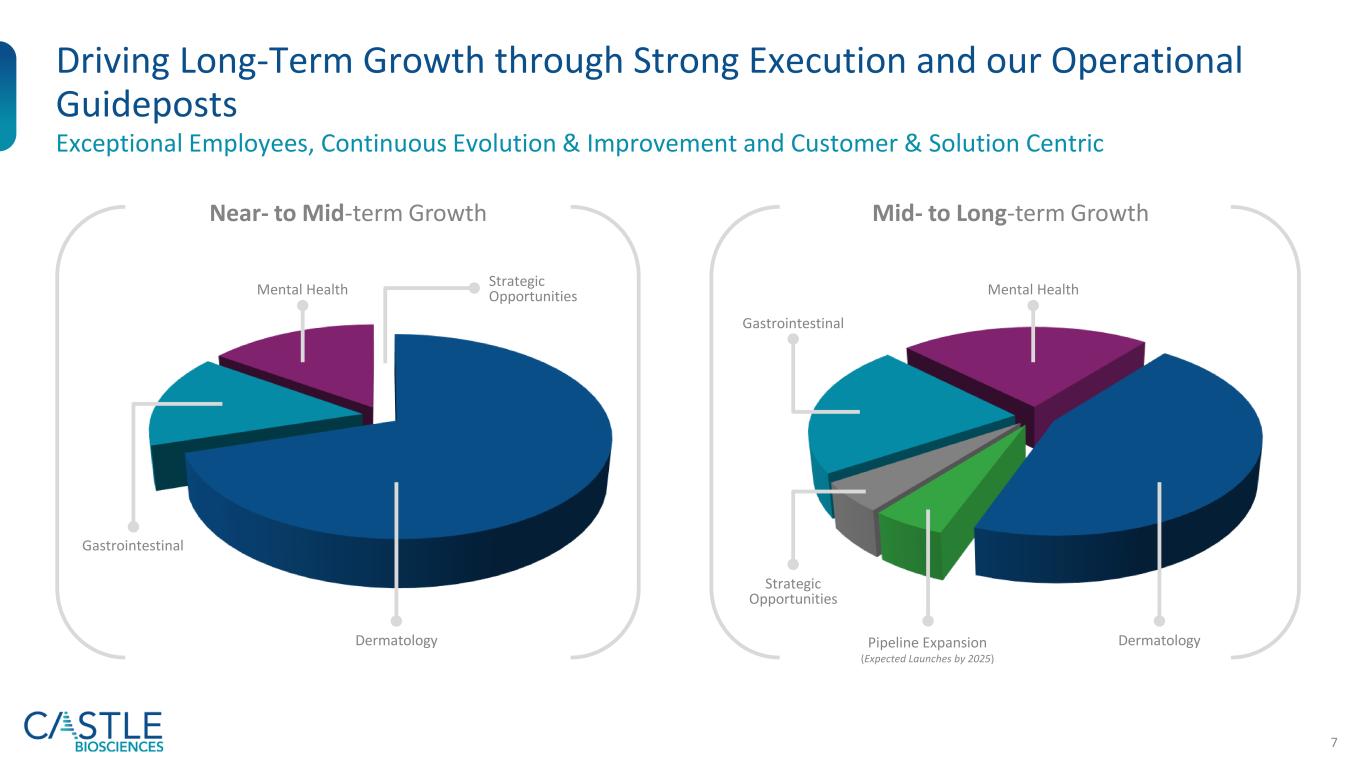
7 Driving Long-Term Growth through Strong Execution and our Operational Guideposts Dermatology Mental Health Gastrointestinal Strategic Opportunities Pipeline Expansion (Expected Launches by 2025) Mental Health Gastrointestinal Strategic Opportunities Near- to Mid-term Growth Mid- to Long-term Growth Dermatology Exceptional Employees, Continuous Evolution & Improvement and Customer & Solution Centric


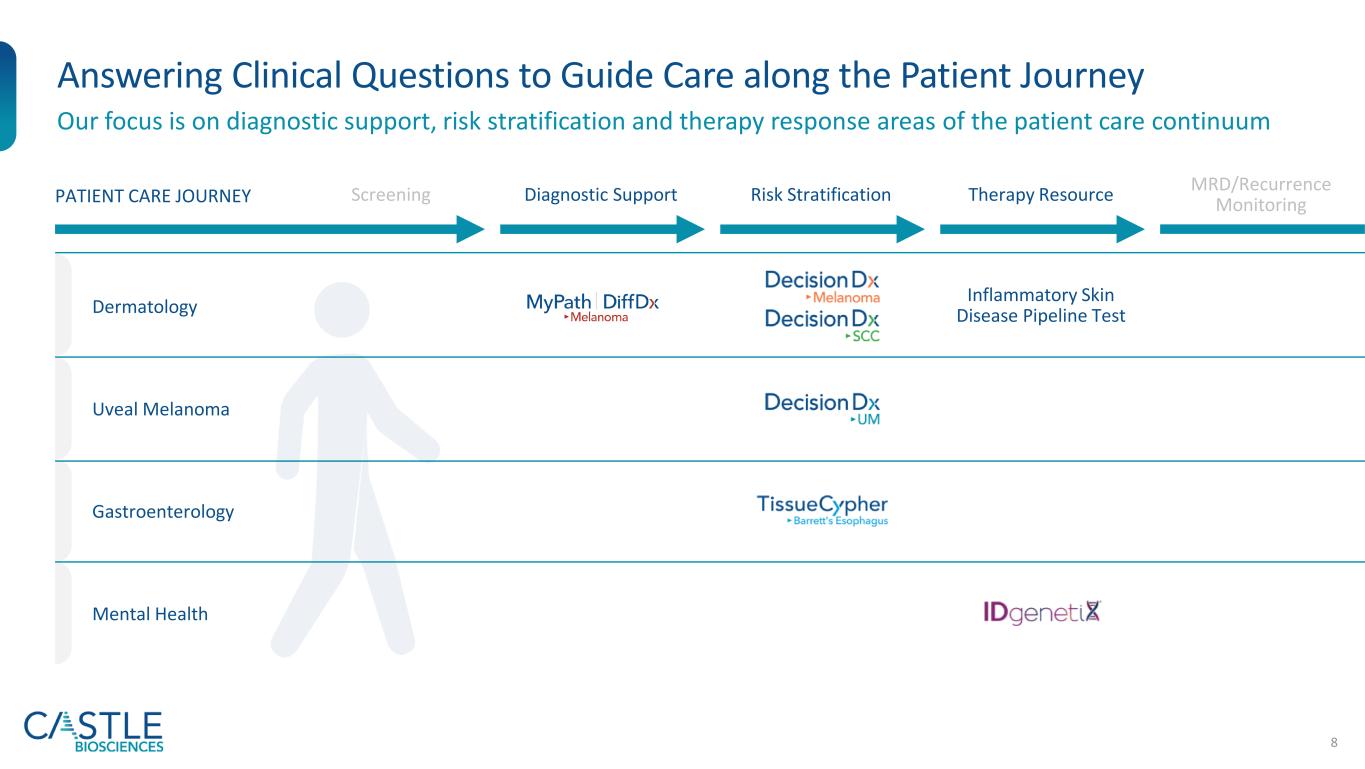
8 Answering Clinical Questions to Guide Care along the Patient Journey Our focus is on diagnostic support, risk stratification and therapy response areas of the patient care continuum Dermatology Uveal Melanoma Gastroenterology Mental Health Screening Diagnostic Support Risk Stratification Therapy Resource MRD/Recurrence MonitoringPATIENT CARE JOURNEY Inflammatory Skin Disease Pipeline Test


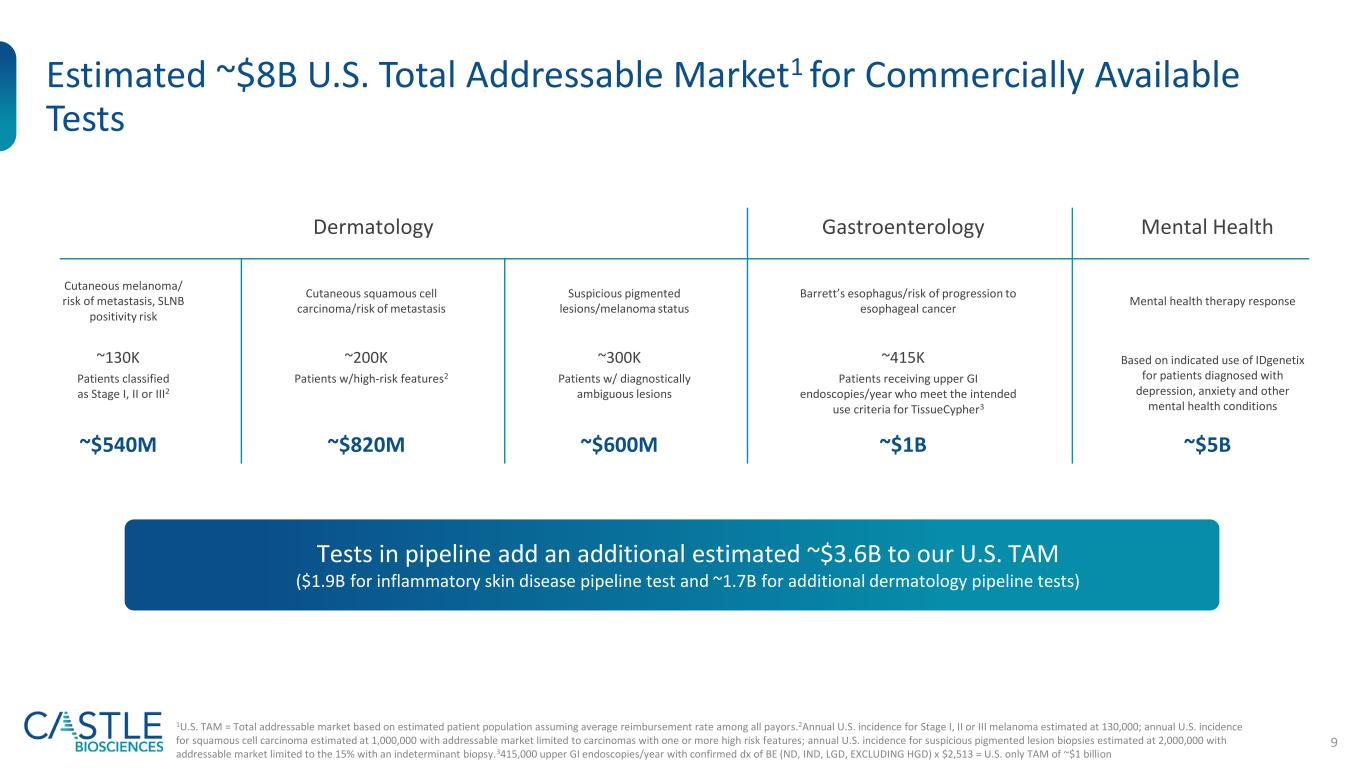
9 Estimated ~$8B U.S. Total Addressable Market1 for Commercially Available Tests Dermatology Gastroenterology Mental Health Cutaneous melanoma/ risk of metastasis, SLNB positivity risk Patients classified as Stage I, II or III2 ~$540M ~130K Cutaneous squamous cell carcinoma/risk of metastasis Patients w/high-risk features2 ~$820M ~200K Suspicious pigmented lesions/melanoma status Patients w/ diagnostically ambiguous lesions ~$600M ~300K Barrett’s esophagus/risk of progression to esophageal cancer Patients receiving upper GI endoscopies/year who meet the intended use criteria for TissueCypher3 ~$1B ~415K Mental health therapy response Based on indicated use of IDgenetix for patients diagnosed with depression, anxiety and other mental health conditions ~$5B Tests in pipeline add an additional estimated ~$3.6B to our U.S. TAM ($1.9B for inflammatory skin disease pipeline test and ~1.7B for additional dermatology pipeline tests) 1U.S. TAM = Total addressable market based on estimated patient population assuming average reimbursement rate among all payors.2Annual U.S. incidence for Stage I, II or III melanoma estimated at 130,000; annual U.S. incidence for squamous cell carcinoma estimated at 1,000,000 with addressable market limited to carcinomas with one or more high risk features; annual U.S. incidence for suspicious pigmented lesion biopsies estimated at 2,000,000 with addressable market limited to the 15% with an indeterminant biopsy.3415,000 upper GI endoscopies/year with confirmed dx of BE (ND, IND, LGD, EXCLUDING HGD) x $2,513 = U.S. only TAM of ~$1 billion


10 Committed to Delivering Long-term Growth with Net Operating Cash Flow Positivity by 2025 Three-year plan (2025) Revenue 25-35% year-over-year growth1; Total revenue in 2025 of $255m-$330m Adjusted Gross Margins 80%-85% by 2025 Other Operating Expenses2 75%-85% of revenue by 2025 Net Operating Cash Flow Positive3 1Year-over-year revenue growth starting in 2023 through 2025 2Consists of R&D, SG&A, Amortization of Acquired Intangible Assets 3We expect to reach net operating cash flow positivity by 2025


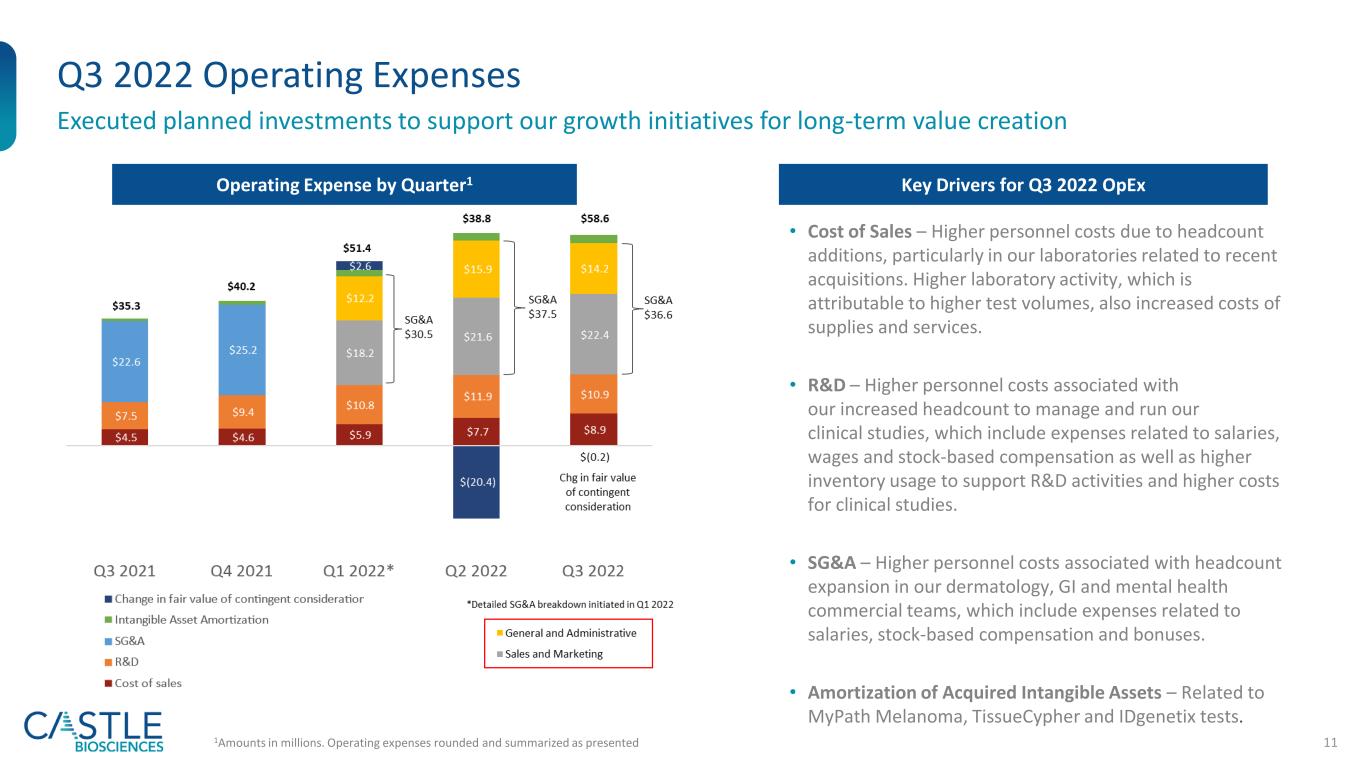
11 Q3 2022 Operating Expenses Executed planned investments to support our growth initiatives for long-term value creation Operating Expense by Quarter1 1Amounts in millions. Operating expenses rounded and summarized as presented Key Drivers for Q3 2022 OpEx • Cost of Sales – Higher personnel costs due to headcount additions, particularly in our laboratories related to recent acquisitions. Higher laboratory activity, which is attributable to higher test volumes, also increased costs of supplies and services. • R&D – Higher personnel costs associated with our increased headcount to manage and run our clinical studies, which include expenses related to salaries, wages and stock-based compensation as well as higher inventory usage to support R&D activities and higher costs for clinical studies. • SG&A – Higher personnel costs associated with headcount expansion in our dermatology, GI and mental health commercial teams, which include expenses related to salaries, stock-based compensation and bonuses. • Amortization of Acquired Intangible Assets – Related to MyPath Melanoma, TissueCypher and IDgenetix tests.


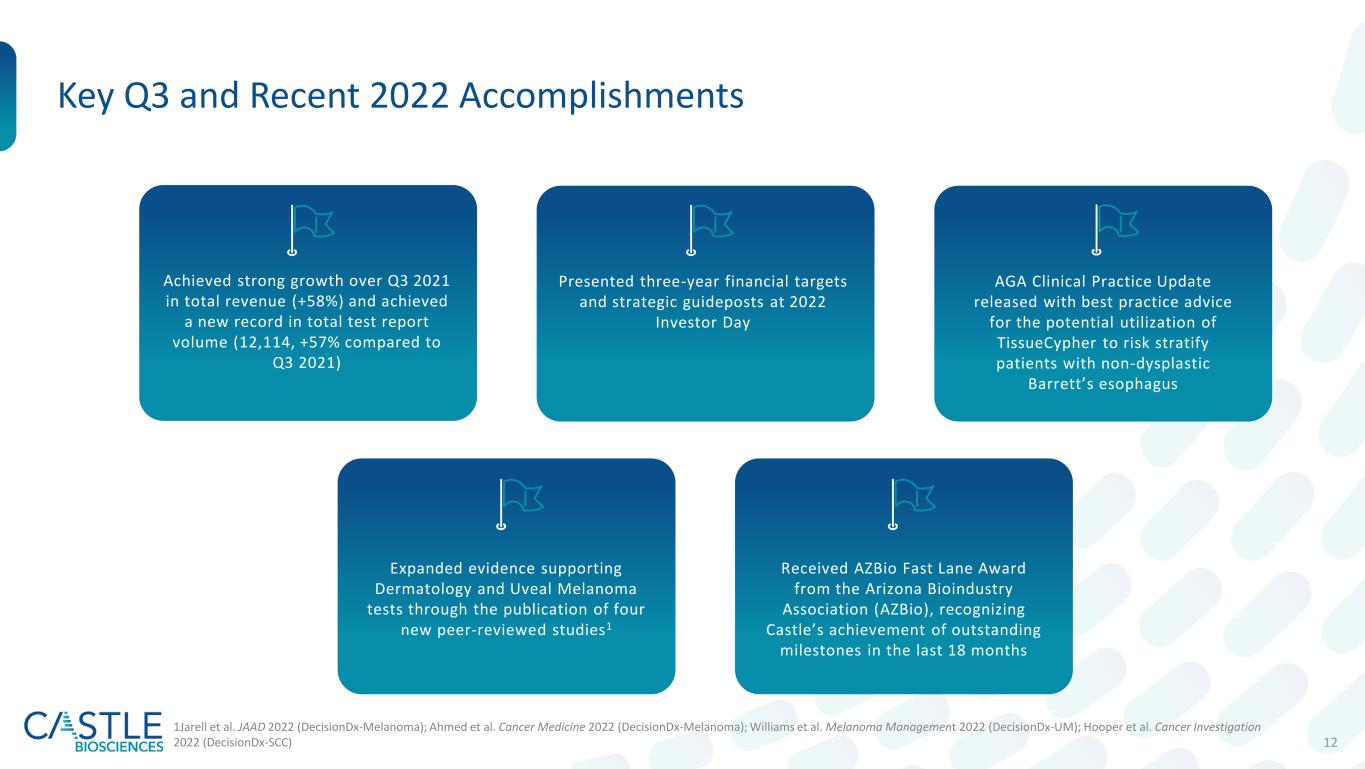
12 Presented three-year financial targets and strategic guideposts at 2022 Investor Day AGA Clinical Practice Update released with best practice advice for the potential utilization of TissueCypher to risk stratify patients with non-dysplastic Barrett’s esophagus Key Q3 and Recent 2022 Accomplishments Received AZBio Fast Lane Award from the Arizona Bioindustry Association (AZBio), recognizing Castle’s achievement of outstanding milestones in the last 18 months Expanded evidence supporting Dermatology and Uveal Melanoma tests through the publication of four new peer-reviewed studies1 Achieved strong growth over Q3 2021 in total revenue (+58%) and achieved a new record in total test report volume (12,114, +57% compared to Q3 2021) 1Jarell et al. JAAD 2022 (DecisionDx-Melanoma); Ahmed et al. Cancer Medicine 2022 (DecisionDx-Melanoma); Williams et al. Melanoma Management 2022 (DecisionDx-UM); Hooper et al. Cancer Investigation 2022 (DecisionDx-SCC)


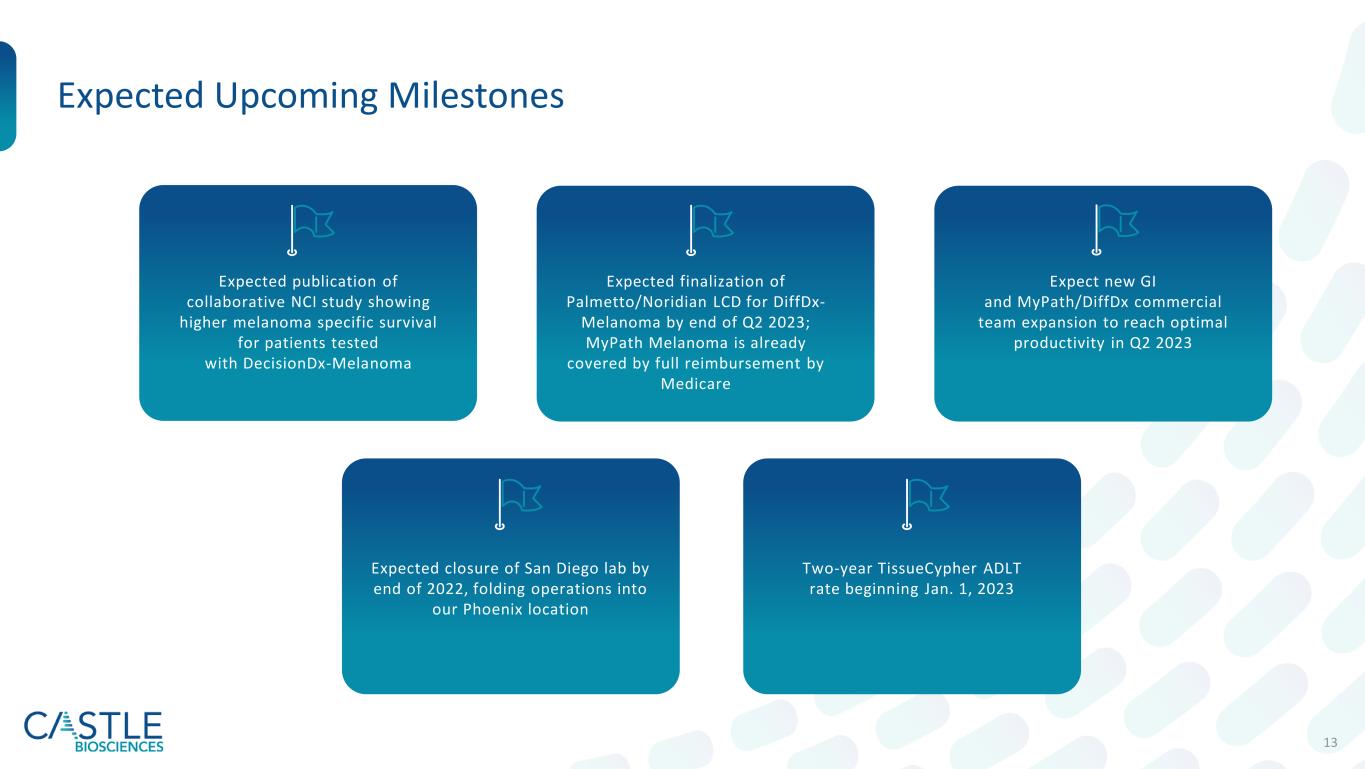
13 Expected publication of collaborative NCI study showing higher melanoma specific survival for patients tested with DecisionDx-Melanoma Expected finalization of Palmetto/Noridian LCD for DiffDx- Melanoma by end of Q2 2023; MyPath Melanoma is already covered by full reimbursement by Medicare Expect new GI and MyPath/DiffDx commercial team expansion to reach optimal productivity in Q2 2023 Expected closure of San Diego lab by end of 2022, folding operations into our Phoenix location Two-year TissueCypher ADLT rate beginning Jan. 1, 2023 Expected Upcoming Milestones


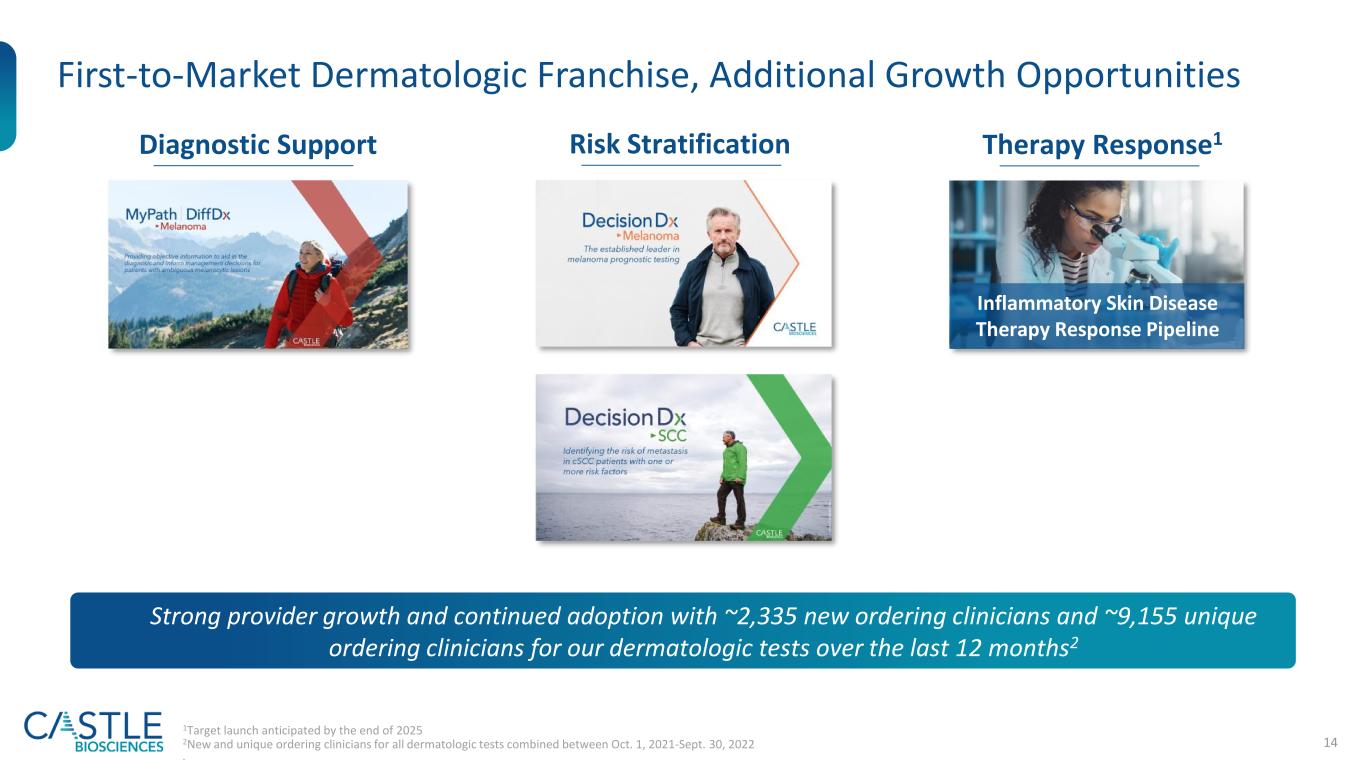
14 First-to-Market Dermatologic Franchise, Additional Growth Opportunities Diagnostic Support Risk Stratification Therapy Response1 1Target launch anticipated by the end of 2025 2New and unique ordering clinicians for all dermatologic tests combined between Oct. 1, 2021-Sept. 30, 2022 . Inflammatory Skin Disease Therapy Response Pipeline Strong provider growth and continued adoption with ~2,335 new ordering clinicians and ~9,155 unique ordering clinicians for our dermatologic tests over the last 12 months2


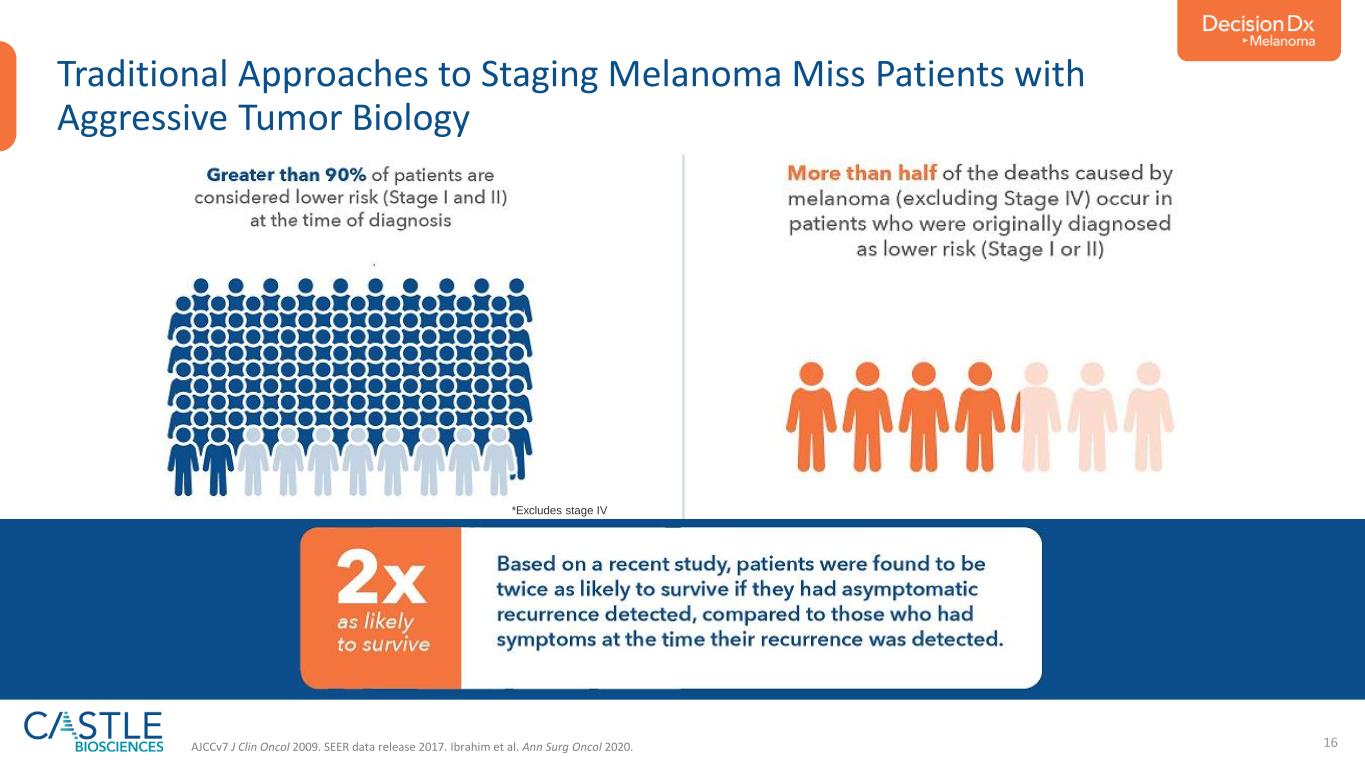
16 Traditional Approaches to Staging Melanoma Miss Patients with Aggressive Tumor Biology *Excludes stage IV AJCCv7 J Clin Oncol 2009. SEER data release 2017. Ibrahim et al. Ann Surg Oncol 2020.


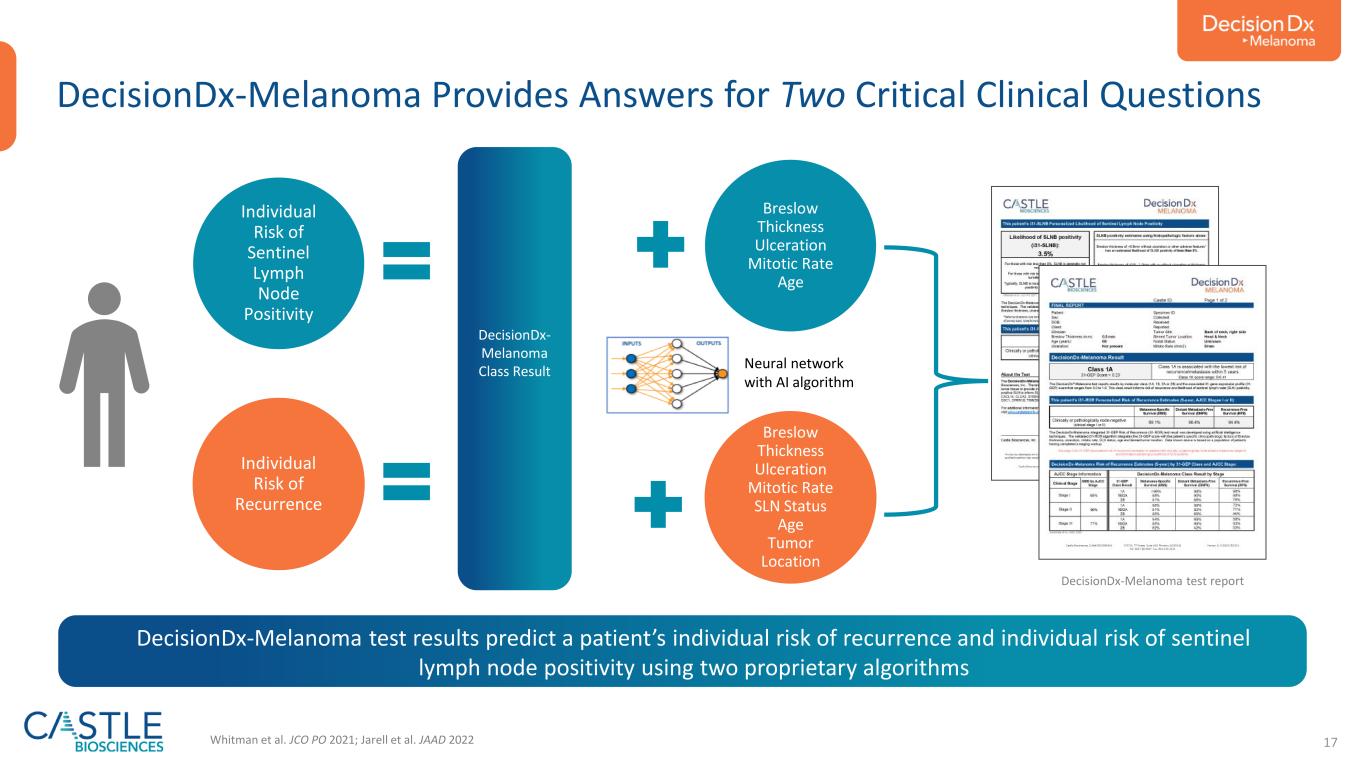
17 DecisionDx- Melanoma Class Result Breslow Thickness Ulceration Mitotic Rate Age Breslow Thickness Ulceration Mitotic Rate SLN Status Age Tumor Location Individual Risk of Sentinel Lymph Node Positivity Individual Risk of Recurrence Whitman et al. JCO PO 2021; Jarell et al. JAAD 2022 Neural network with AI algorithm DecisionDx-Melanoma Provides Answers for Two Critical Clinical Questions DecisionDx-Melanoma test report DecisionDx-Melanoma test results predict a patient’s individual risk of recurrence and individual risk of sentinel lymph node positivity using two proprietary algorithms


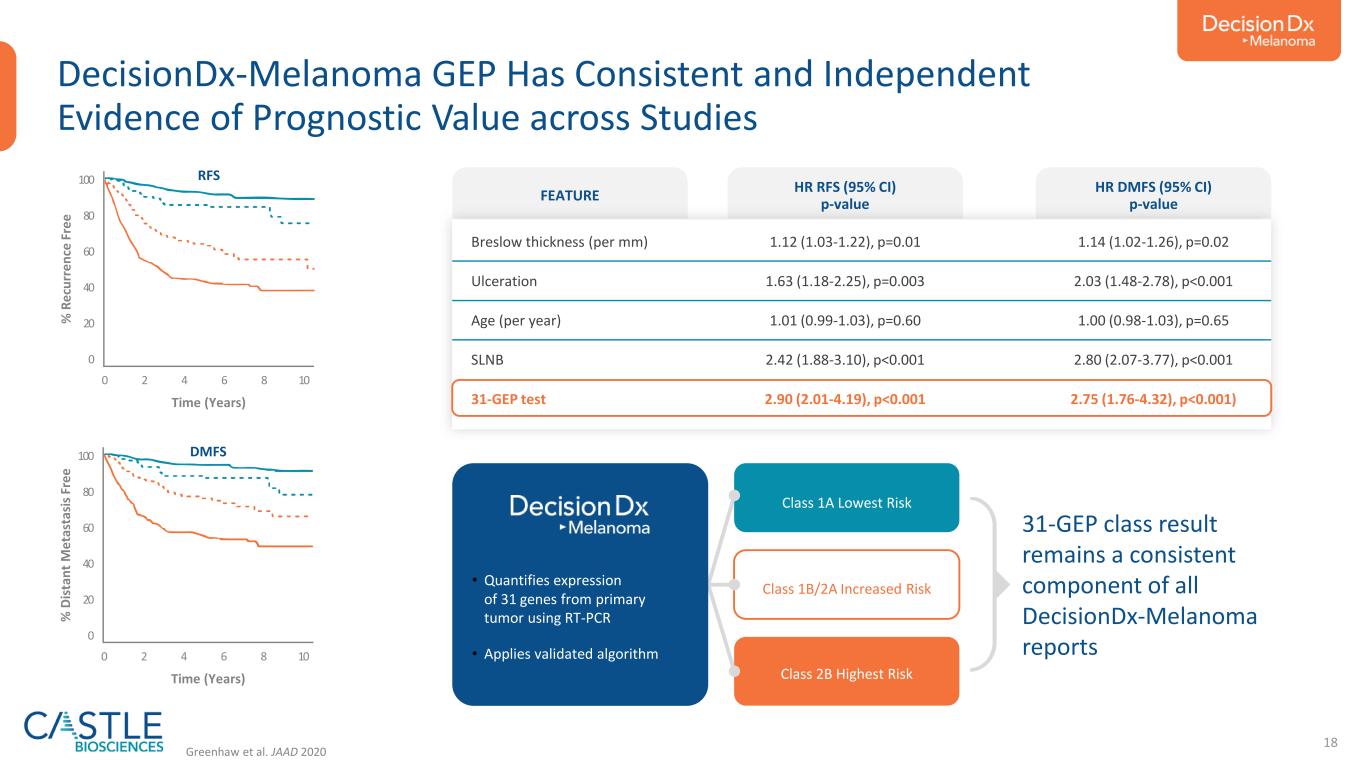
18 DecisionDx-Melanoma GEP Has Consistent and Independent Evidence of Prognostic Value across Studies Greenhaw et al. JAAD 2020 1086420 100 80 60 40 20 0 Time (Years) % R e cu rr e n ce F re e 1086420 100 80 60 40 20 0 Time (Years) % D is ta n t M e ta st as is F re e RFS DMFS Breslow thickness (per mm) 1.12 (1.03-1.22), p=0.01 1.14 (1.02-1.26), p=0.02 Ulceration 1.63 (1.18-2.25), p=0.003 2.03 (1.48-2.78), p<0.001 Age (per year) 1.01 (0.99-1.03), p=0.60 1.00 (0.98-1.03), p=0.65 SLNB 2.42 (1.88-3.10), p<0.001 2.80 (2.07-3.77), p<0.001 31-GEP test 2.90 (2.01-4.19), p<0.001 2.75 (1.76-4.32), p<0.001) FEATURE HR RFS (95% CI) p-value HR DMFS (95% CI) p-value Class 1A Lowest Risk Class 1B/2A Increased Risk Class 2B Highest Risk • Quantifies expression of 31 genes from primary tumor using RT-PCR • Applies validated algorithm 31-GEP class result remains a consistent component of all DecisionDx-Melanoma reports


Collaboration with the National Cancer Institute Linking DecisionDx-Melanoma clinical testing with patients captured in the NCI-SEER Registry


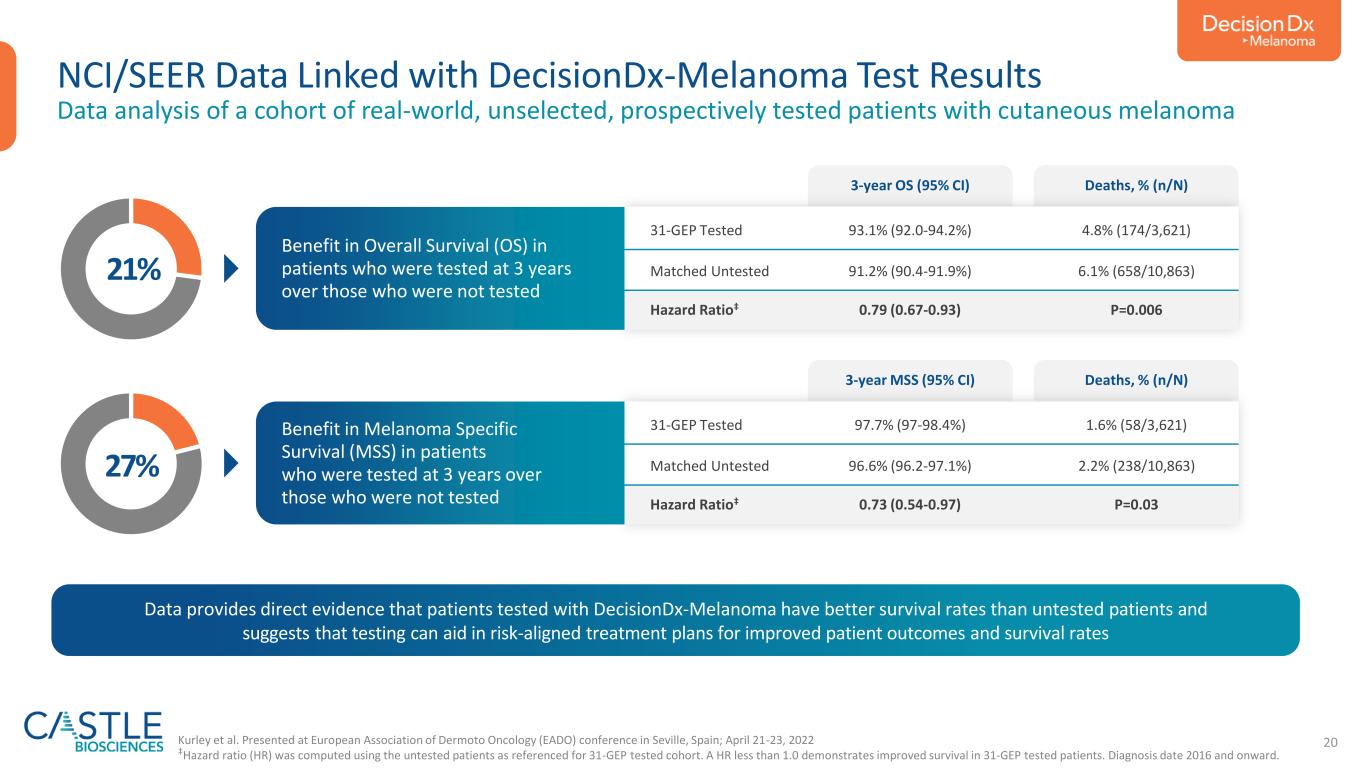
20 NCI/SEER Data Linked with DecisionDx-Melanoma Test Results Data analysis of a cohort of real-world, unselected, prospectively tested patients with cutaneous melanoma 31-GEP Tested 93.1% (92.0-94.2%) 4.8% (174/3,621) Matched Untested 91.2% (90.4-91.9%) 6.1% (658/10,863) Hazard Ratio‡ 0.79 (0.67-0.93) P=0.006 3-year OS (95% CI) Deaths, % (n/N) Benefit in Overall Survival (OS) in patients who were tested at 3 years over those who were not tested 31-GEP Tested 97.7% (97-98.4%) 1.6% (58/3,621) Matched Untested 96.6% (96.2-97.1%) 2.2% (238/10,863) Hazard Ratio‡ 0.73 (0.54-0.97) P=0.03 3-year MSS (95% CI) Deaths, % (n/N) Benefit in Melanoma Specific Survival (MSS) in patients who were tested at 3 years over those who were not tested 21% 27% Kurley et al. Presented at European Association of Dermoto Oncology (EADO) conference in Seville, Spain; April 21-23, 2022 ‡Hazard ratio (HR) was computed using the untested patients as referenced for 31-GEP tested cohort. A HR less than 1.0 demonstrates improved survival in 31-GEP tested patients. Diagnosis date 2016 and onward. Data provides direct evidence that patients tested with DecisionDx-Melanoma have better survival rates than untested patients and suggests that testing can aid in risk-aligned treatment plans for improved patient outcomes and survival rates


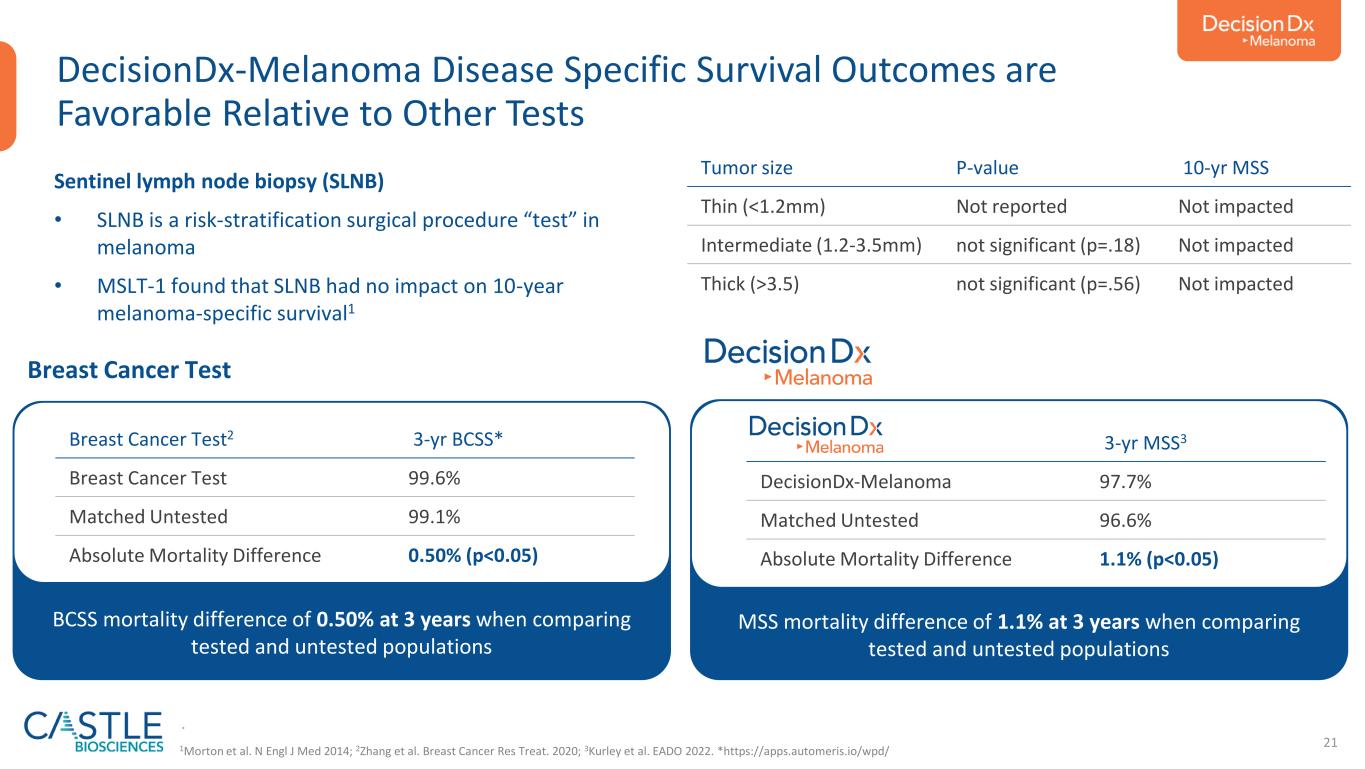
21 DecisionDx-Melanoma Disease Specific Survival Outcomes are Favorable Relative to Other Tests MSS mortality difference of 1.1% at 3 years when comparing tested and untested populations Sentinel lymph node biopsy (SLNB) • SLNB is a risk-stratification surgical procedure “test” in melanoma • MSLT-1 found that SLNB had no impact on 10-year melanoma-specific survival1 Tumor size P-value 10-yr MSS Thin (<1.2mm) Not reported Not impacted Intermediate (1.2-3.5mm) not significant (p=.18) Not impacted Thick (>3.5) not significant (p=.56) Not impacted BCSS mortality difference of 0.50% at 3 years when comparing tested and untested populations Breast Cancer Test2 3-yr BCSS* Breast Cancer Test 99.6% Matched Untested 99.1% Absolute Mortality Difference 0.50% (p<0.05) . 3-yr MSS3 DecisionDx-Melanoma 97.7% Matched Untested 96.6% Absolute Mortality Difference 1.1% (p<0.05) Breast Cancer Test 1Morton et al. N Engl J Med 2014; 2Zhang et al. Breast Cancer Res Treat. 2020; 3Kurley et al. EADO 2022. *https://apps.automeris.io/wpd/


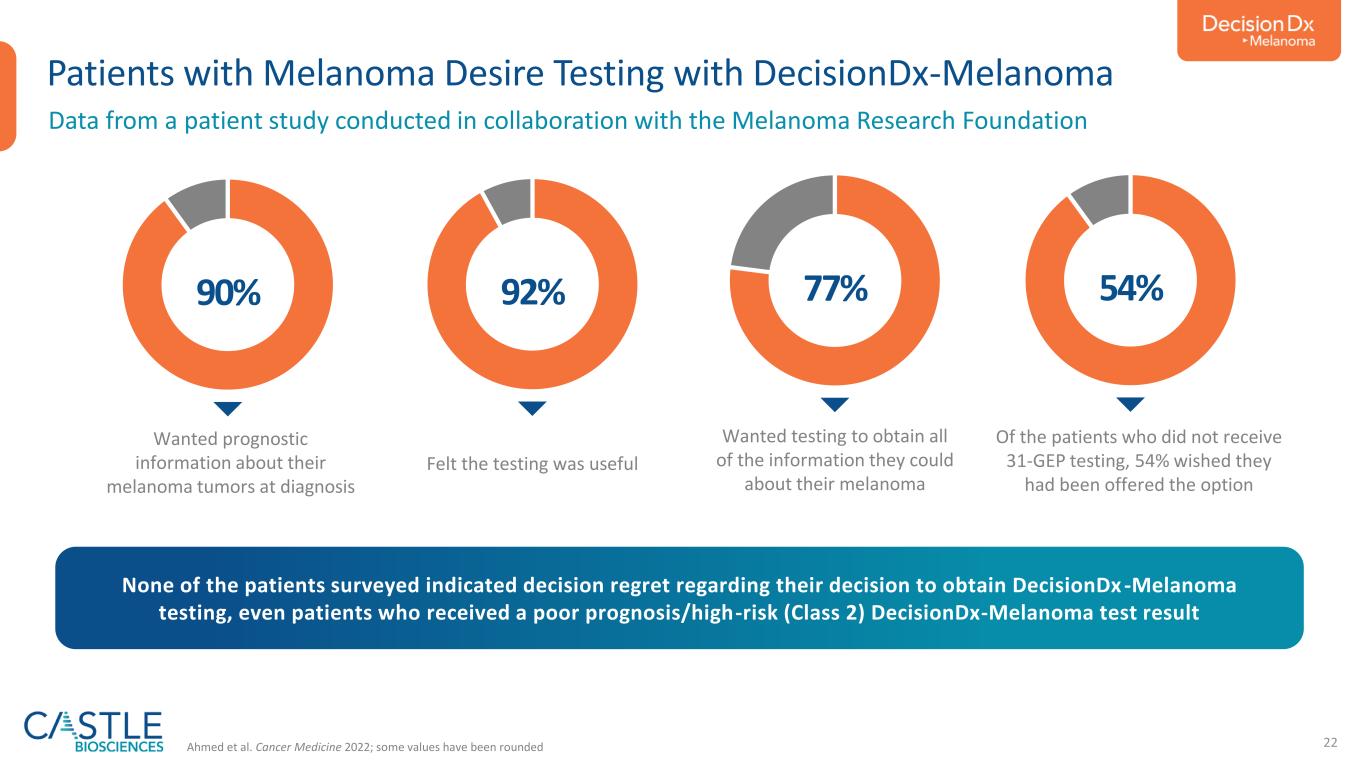
22 Patients with Melanoma Desire Testing with DecisionDx-Melanoma 90% Ahmed et al. Cancer Medicine 2022; some values have been rounded None of the patients surveyed indicated decision regret regarding their decision to obtain DecisionDx -Melanoma testing, even patients who received a poor prognosis/high-risk (Class 2) DecisionDx-Melanoma test result Wanted prognostic information about their melanoma tumors at diagnosis 92% Felt the testing was useful 77% Wanted testing to obtain all of the information they could about their melanoma 54% Of the patients who did not receive 31-GEP testing, 54% wished they had been offered the option Data from a patient study conducted in collaboration with the Melanoma Research Foundation


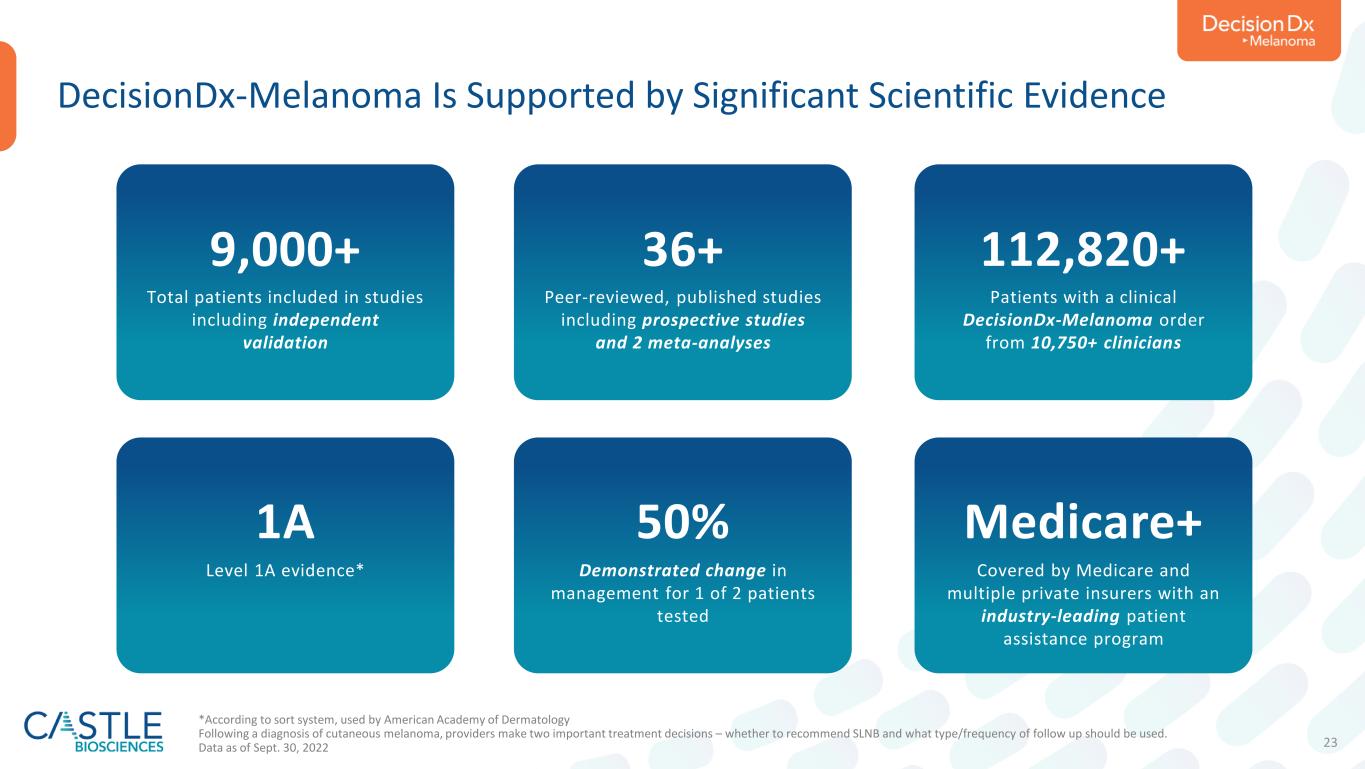
23 DecisionDx-Melanoma Is Supported by Significant Scientific Evidence 9,000+ Total patients included in studies including independent validation 36+ Peer-reviewed, published studies including prospective studies and 2 meta-analyses 112,820+ Patients with a clinical DecisionDx-Melanoma order from 10,750+ clinicians 1A Level 1A evidence* 50% Demonstrated change in management for 1 of 2 patients tested Medicare+ Covered by Medicare and multiple private insurers with an industry-leading patient assistance program *According to sort system, used by American Academy of Dermatology Following a diagnosis of cutaneous melanoma, providers make two important treatment decisions – whether to recommend SLNB and what type/frequency of follow up should be used. Data as of Sept. 30, 2022


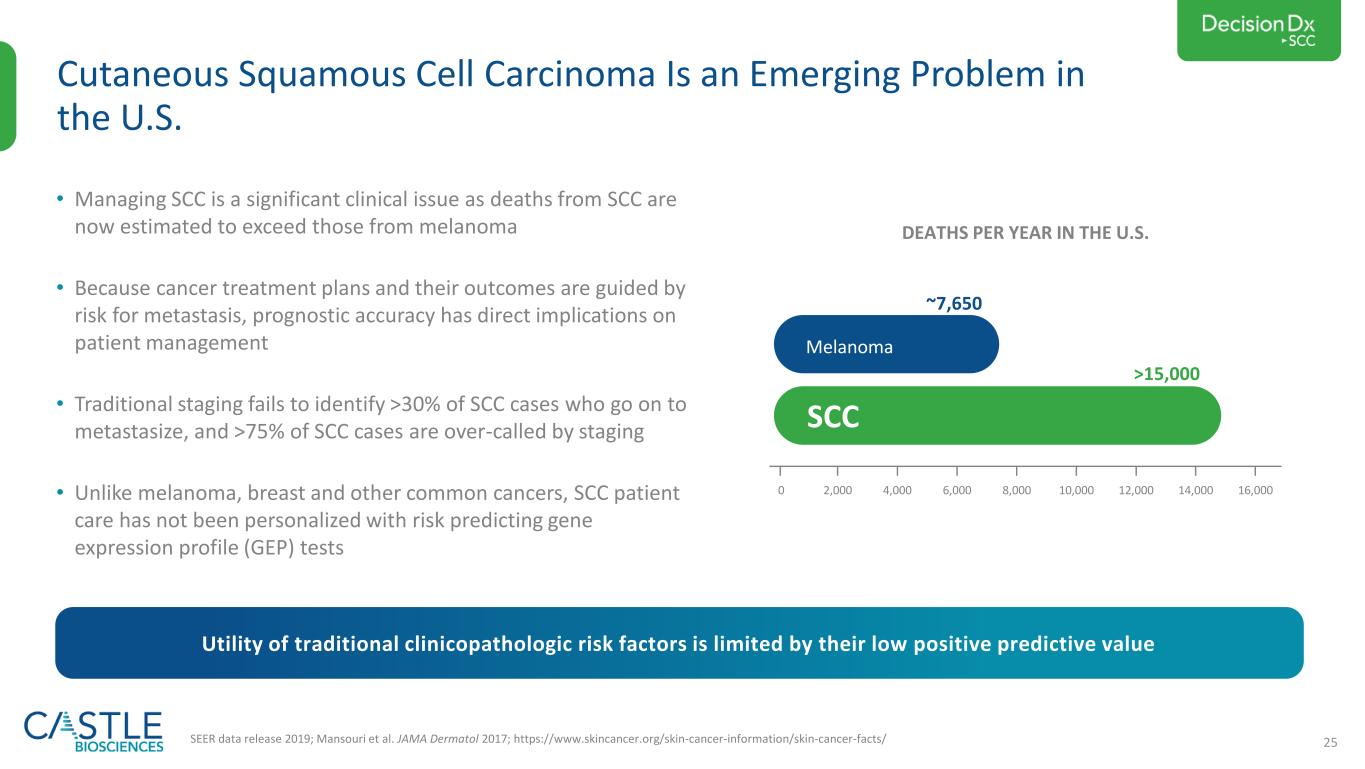
25 Cutaneous Squamous Cell Carcinoma Is an Emerging Problem in the U.S. • Managing SCC is a significant clinical issue as deaths from SCC are now estimated to exceed those from melanoma • Because cancer treatment plans and their outcomes are guided by risk for metastasis, prognostic accuracy has direct implications on patient management • Traditional staging fails to identify >30% of SCC cases who go on to metastasize, and >75% of SCC cases are over-called by staging • Unlike melanoma, breast and other common cancers, SCC patient care has not been personalized with risk predicting gene expression profile (GEP) tests SEER data release 2019; Mansouri et al. JAMA Dermatol 2017; https://www.skincancer.org/skin-cancer-information/skin-cancer-facts/ Utility of traditional clinicopathologic risk factors is limited by their low positive predictive value 2,0000 ~7,650 DEATHS PER YEAR IN THE U.S. 4,000 6,000 8,000 10,000 12,000 14,000 16,000 >15,000 Melanoma SCC


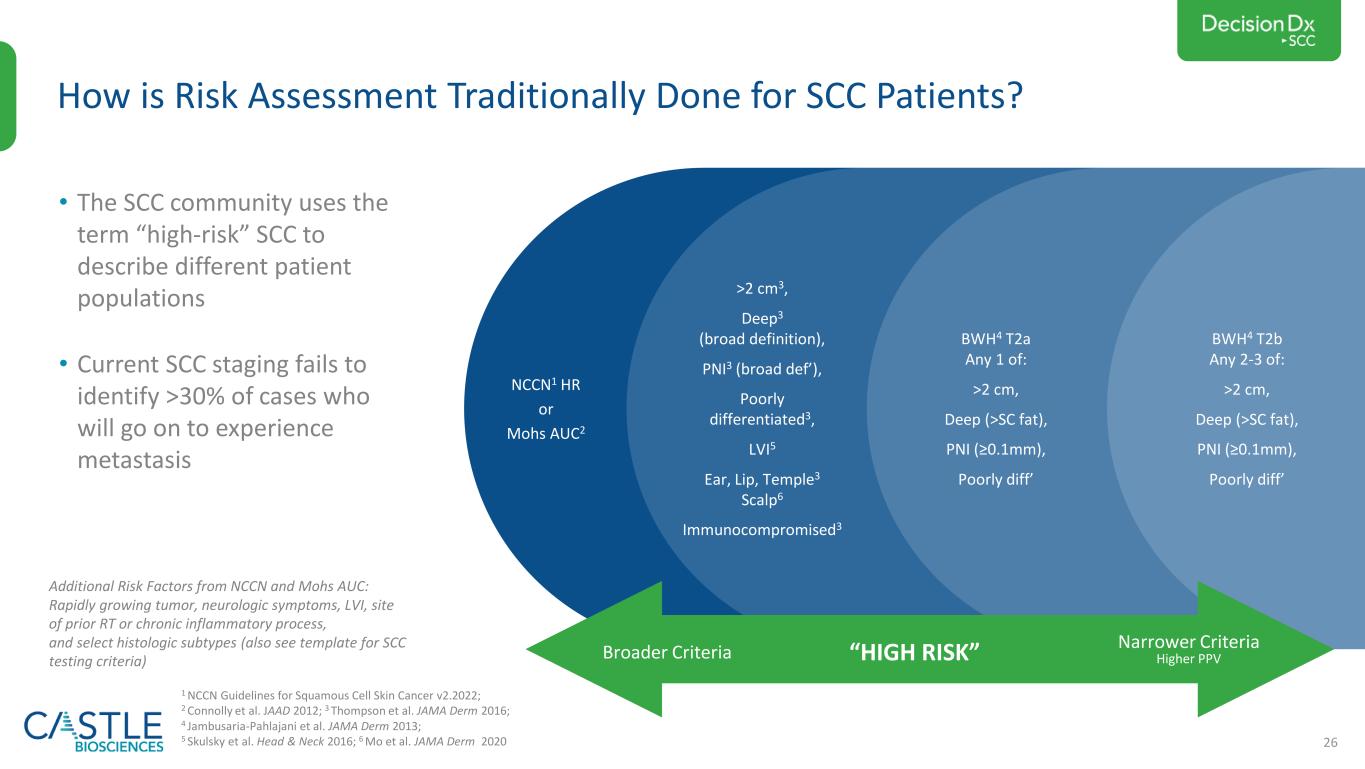
26 How is Risk Assessment Traditionally Done for SCC Patients? • The SCC community uses the term “high-risk” SCC to describe different patient populations • Current SCC staging fails to identify >30% of cases who will go on to experience metastasis Additional Risk Factors from NCCN and Mohs AUC: Rapidly growing tumor, neurologic symptoms, LVI, site of prior RT or chronic inflammatory process, and select histologic subtypes (also see template for SCC testing criteria) NCCN1 HR or Mohs AUC2 >2 cm3, Deep3 (broad definition), PNI3 (broad def’), Poorly differentiated3, LVI5 Ear, Lip, Temple3 Scalp6 Immunocompromised3 BWH4 T2a Any 1 of: >2 cm, Deep (>SC fat), PNI (≥0.1mm), Poorly diff’ BWH4 T2b Any 2-3 of: >2 cm, Deep (>SC fat), PNI (≥0.1mm), Poorly diff’ “HIGH RISK”Broader Criteria Narrower Criteria Higher PPV 1 NCCN Guidelines for Squamous Cell Skin Cancer v2.2022; 2 Connolly et al. JAAD 2012; 3 Thompson et al. JAMA Derm 2016; 4 Jambusaria-Pahlajani et al. JAMA Derm 2013; 5 Skulsky et al. Head & Neck 2016; 6 Mo et al. JAMA Derm 2020


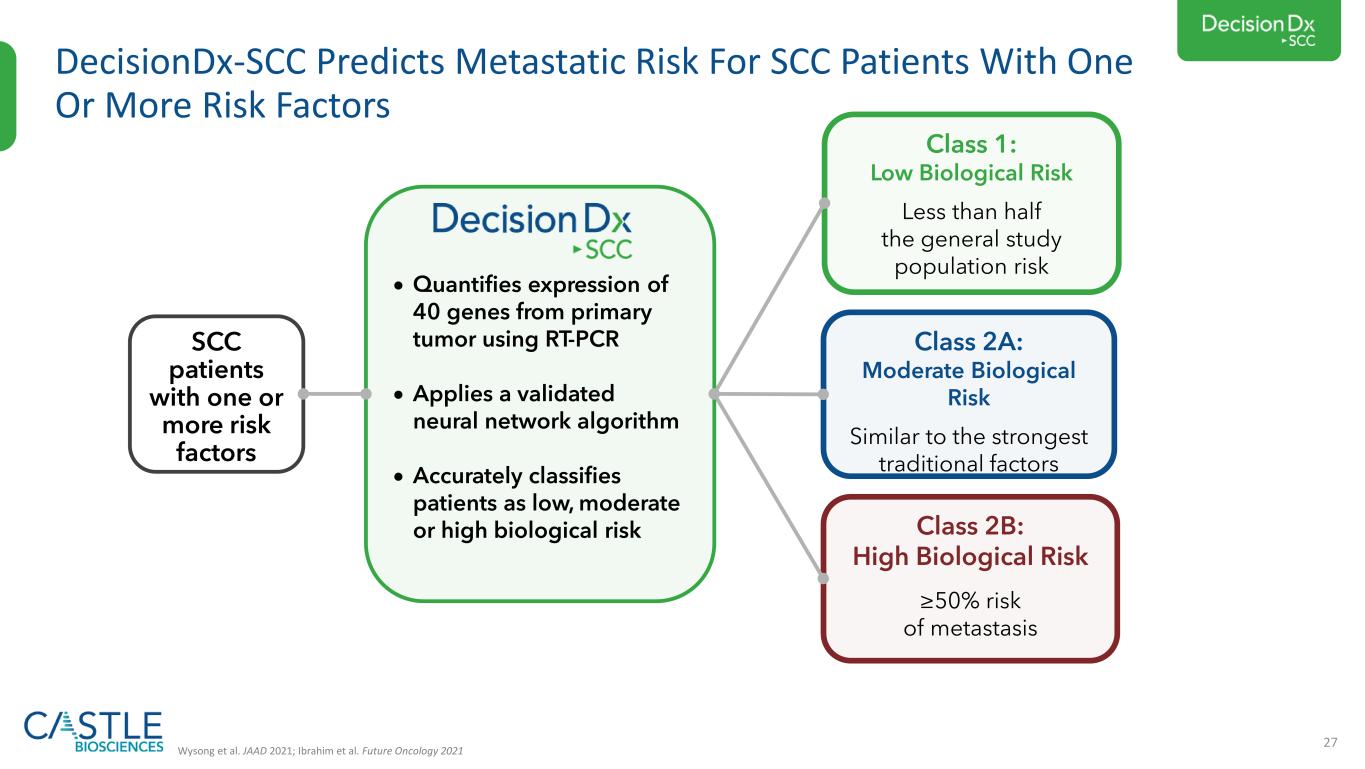
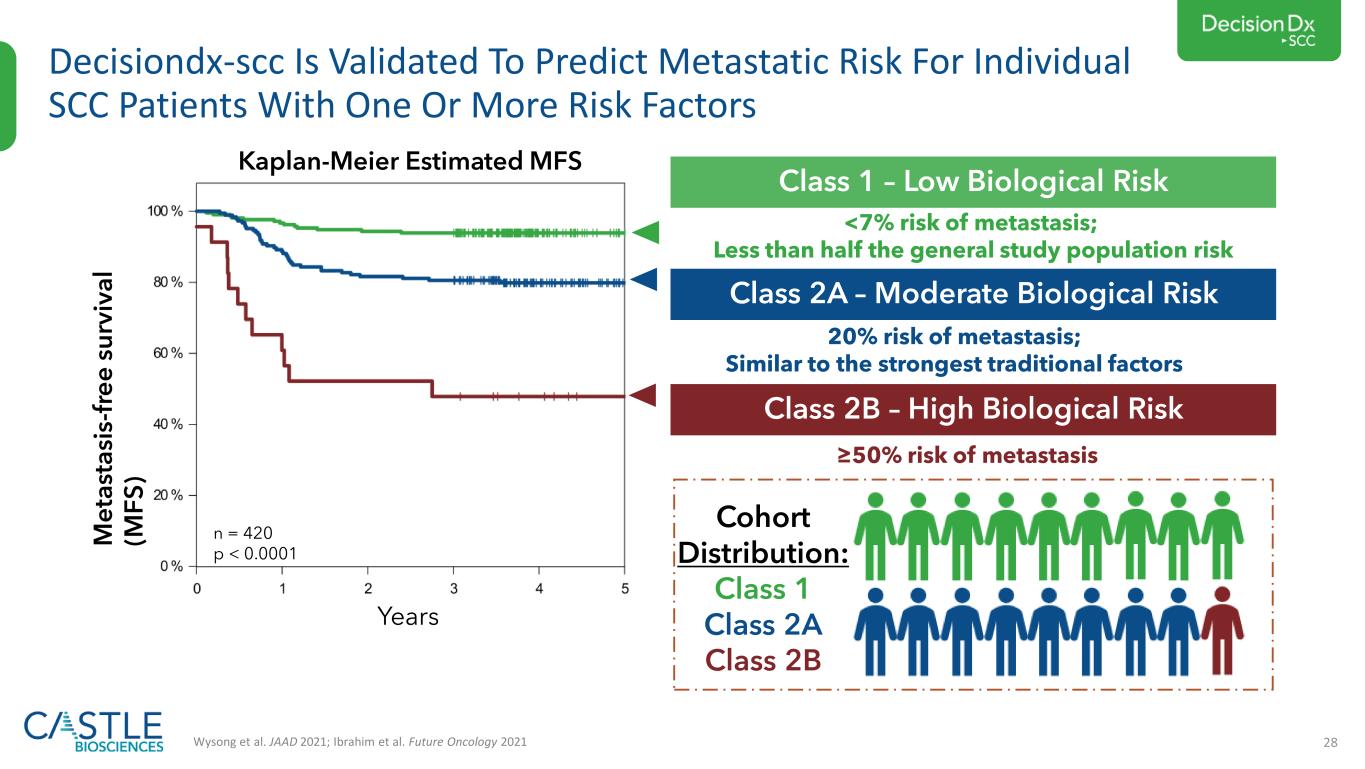
27 DecisionDx-SCC Predicts Metastatic Risk For SCC Patients With One Or More Risk Factors Wysong et al. JAAD 2021; Ibrahim et al. Future Oncology 2021 Class 1: Low Biological Risk Less than half the general study population risk • Quantifies expression of 40 genes from primary tumor using RT-PCR • Applies a validated neural network algorithm • Accurately classifies patients as low, moderate or high biological risk Class 2A: Moderate Biological Risk Similar to the strongest traditional factors SCC patients with one or more risk factors Class 2B: High Biological Risk ≥50% risk of metastasis


28 Decisiondx-scc Is Validated To Predict Metastatic Risk For Individual SCC Patients With One Or More Risk Factors Wysong et al. JAAD 2021; Ibrahim et al. Future Oncology 2021 M e ta st a si s- fr e e s u rv iv a l (M F S ) Years n = 420 p < 0.0001 Cohort Distribution: Class 1 Class 2A Class 2B Kaplan-Meier Estimated MFS Class 1 – Low Biological Risk <7% risk of metastasis; Less than half the general study population risk Class 2A – Moderate Biological Risk 20% risk of metastasis; Similar to the strongest traditional factors Class 2B – High Biological Risk ≥50% risk of metastasis


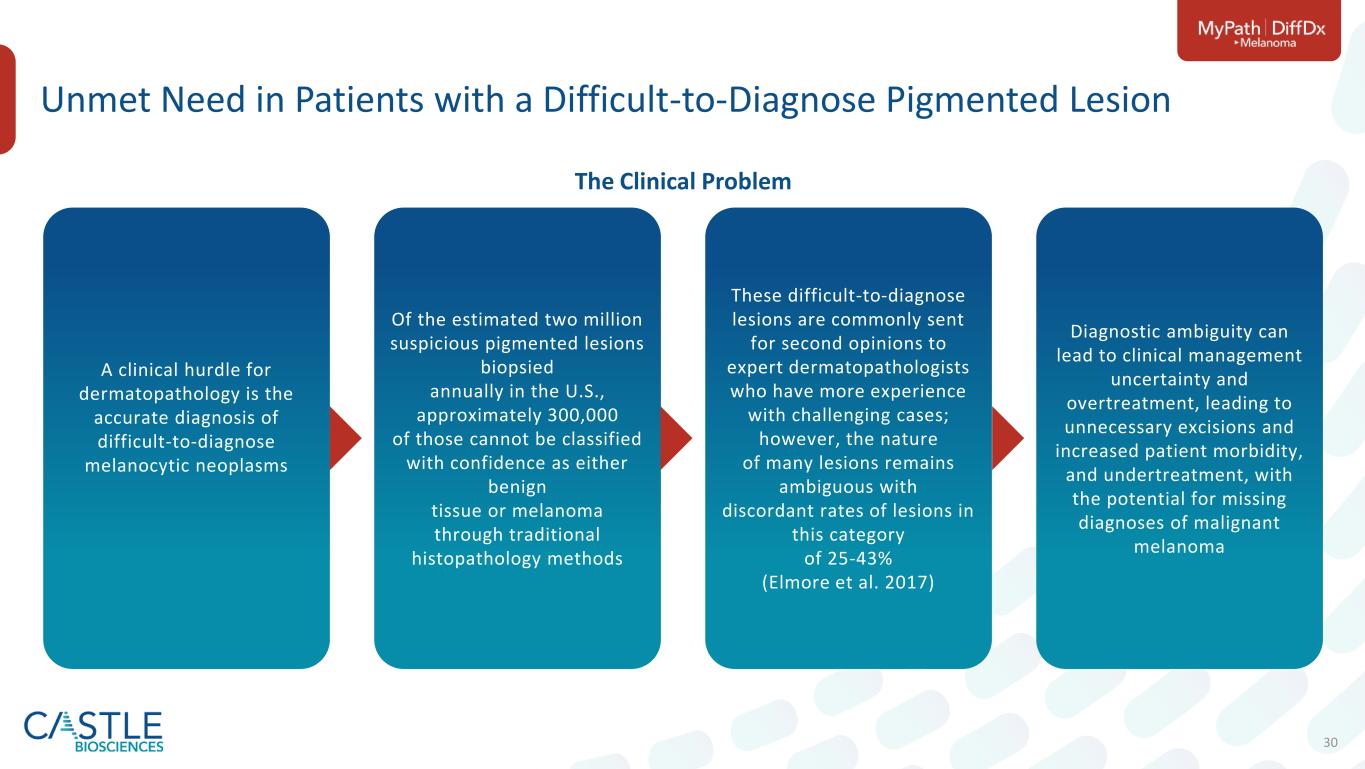
30 A clinical hurdle for dermatopathology is the accurate diagnosis of difficult-to-diagnose melanocytic neoplasms Unmet Need in Patients with a Difficult-to-Diagnose Pigmented Lesion Of the estimated two million suspicious pigmented lesions biopsied annually in the U.S., approximately 300,000 of those cannot be classified with confidence as either benign tissue or melanoma through traditional histopathology methods These difficult-to-diagnose lesions are commonly sent for second opinions to expert dermatopathologists who have more experience with challenging cases; however, the nature of many lesions remains ambiguous with discordant rates of lesions in this category of 25-43% (Elmore et al. 2017) Diagnostic ambiguity can lead to clinical management uncertainty and overtreatment, leading to unnecessary excisions and increased patient morbidity, and undertreatment, with the potential for missing diagnoses of malignant melanoma The Clinical Problem


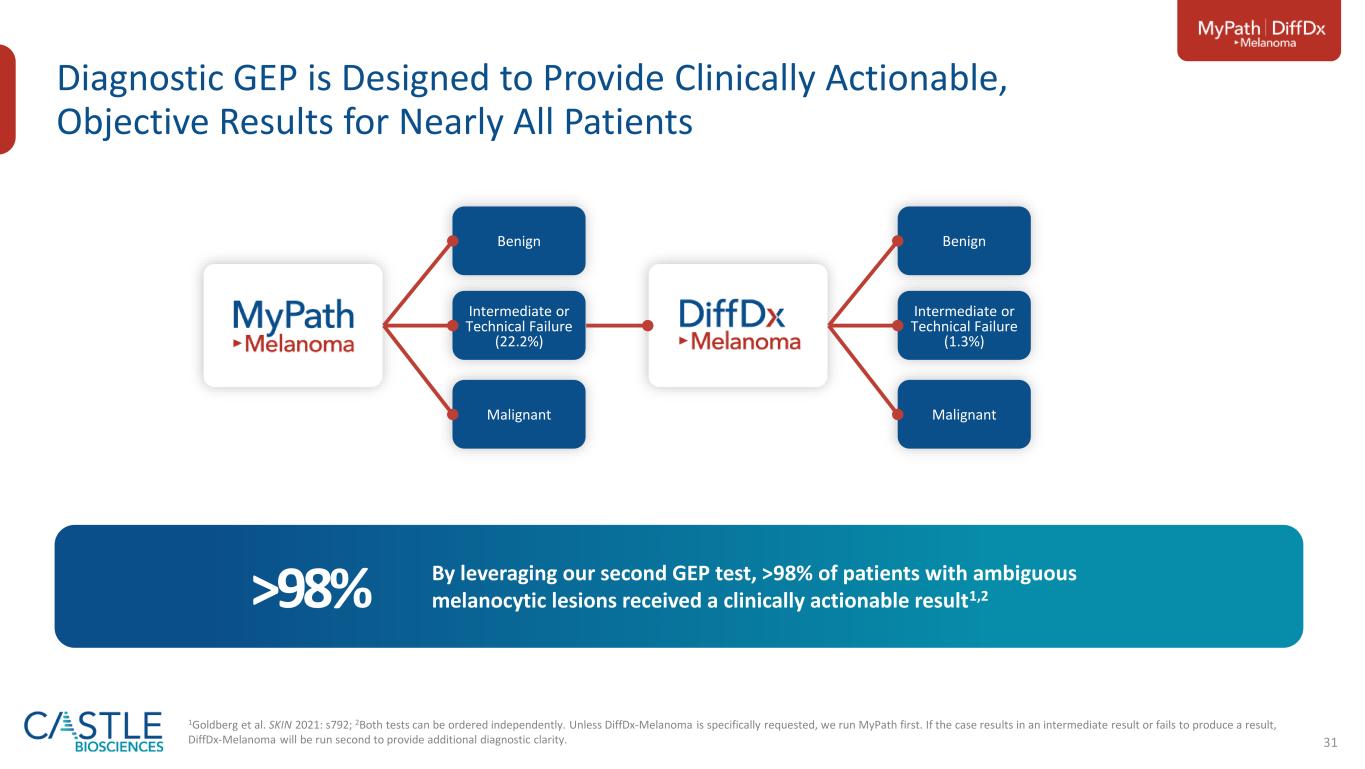
31 Diagnostic GEP is Designed to Provide Clinically Actionable, Objective Results for Nearly All Patients Benign Intermediate or Technical Failure (1.3%) Malignant Benign Intermediate or Technical Failure (22.2%) Malignant By leveraging our second GEP test, >98% of patients with ambiguous melanocytic lesions received a clinically actionable result1,2>98% 1Goldberg et al. SKIN 2021: s792; 2Both tests can be ordered independently. Unless DiffDx-Melanoma is specifically requested, we run MyPath first. If the case results in an intermediate result or fails to produce a result, DiffDx-Melanoma will be run second to provide additional diagnostic clarity.


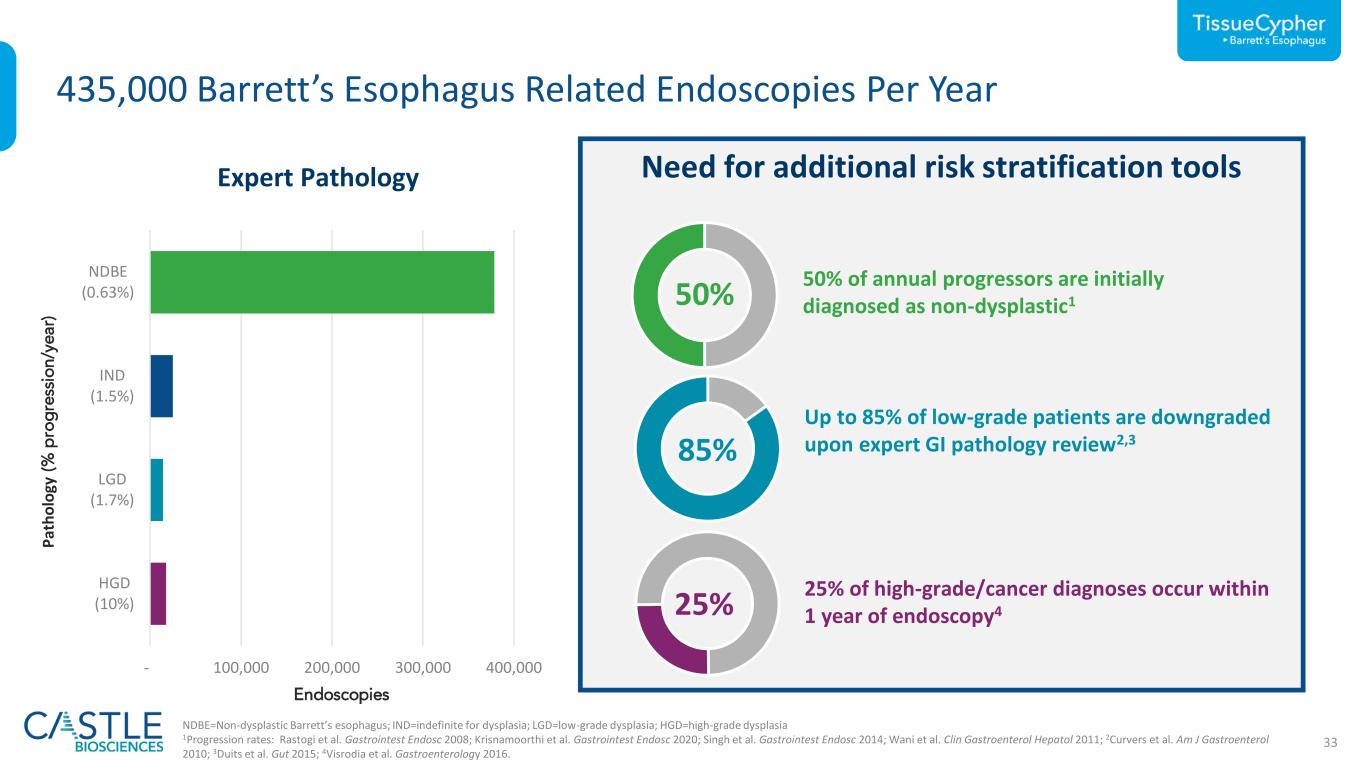
33 - 100,000 200,000 300,000 400,000 HGD (10%) LGD (0.26%) IND (1.5%) NDBE (0.80%) LGD (1.7 63 Need for additional risk stratification tools 435,000 Barrett’s Esophagus Related Endoscopies Per Year Expert Pathology NDBE=Non-dysplastic Barrett’s esophagus; IND=indefinite for dysplasia; LGD=low-grade dysplasia; HGD=high-grade dysplasia 1Progression rates: Rastogi et al. Gastrointest Endosc 2008; Krisnamoorthi et al. Gastrointest Endosc 2020; ​Singh et al. Gastrointest Endosc 2014; Wani et al. Clin Gastroenterol Hepatol 2011; 2Curvers et al. Am J Gastroenterol 2010; 3Duits et al. Gut 2015; 4Visrodia et al. Gastroenterology 2016. ​ 50% 50% of annual progressors are initially diagnosed as non-dysplastic1 85% Up to 85% of low-grade patients are downgraded upon expert GI pathology review2,3 25% 25% of high-grade/cancer diagnoses occur within 1 year of endoscopy4 P at h o lo gy (% p ro g re ss io n /y e a r) Endoscopies


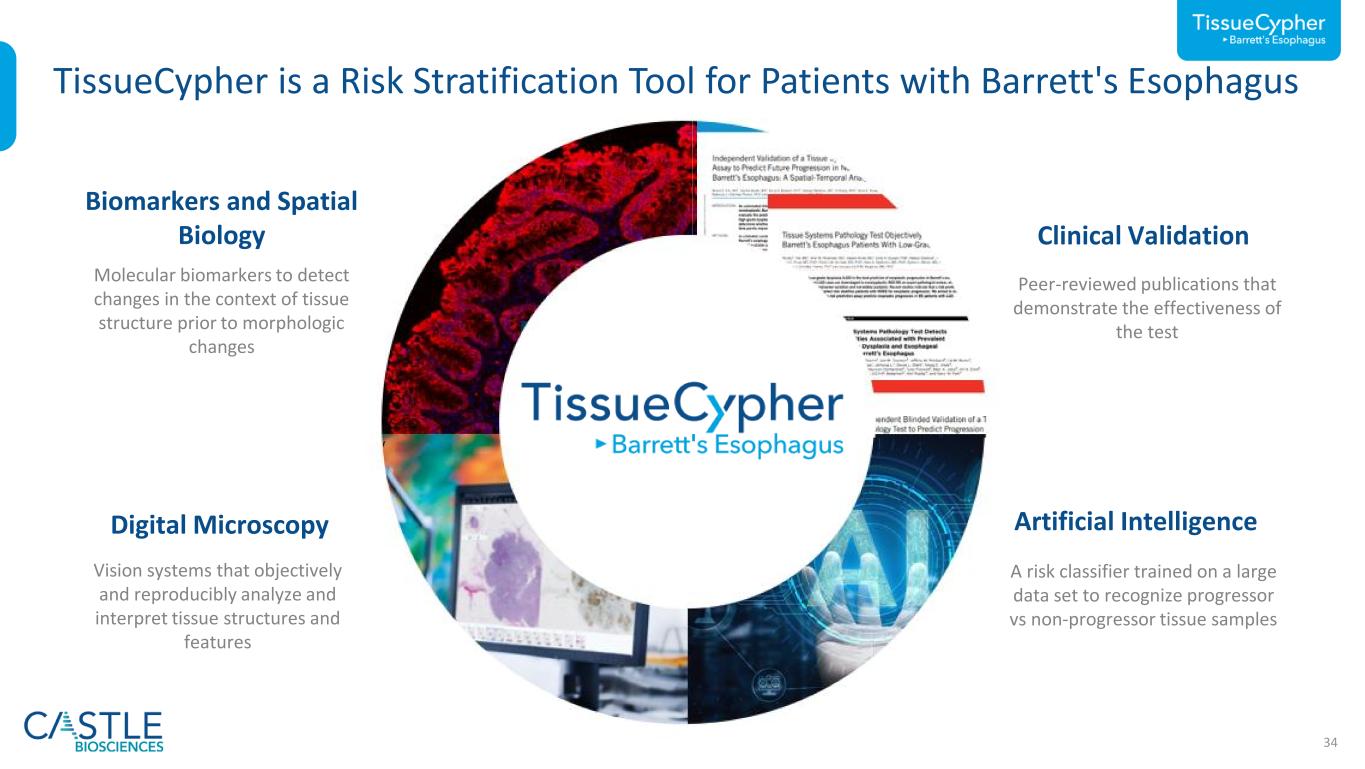
34 Molecular biomarkers to detect changes in the context of tissue structure prior to morphologic changes Biomarkers and Spatial Biology Vision systems that objectively and reproducibly analyze and interpret tissue structures and features Digital Microscopy Peer-reviewed publications that demonstrate the effectiveness of the test Clinical Validation A risk classifier trained on a large data set to recognize progressor vs non-progressor tissue samples Artificial Intelligence TissueCypher is a Risk Stratification Tool for Patients with Barrett's Esophagus


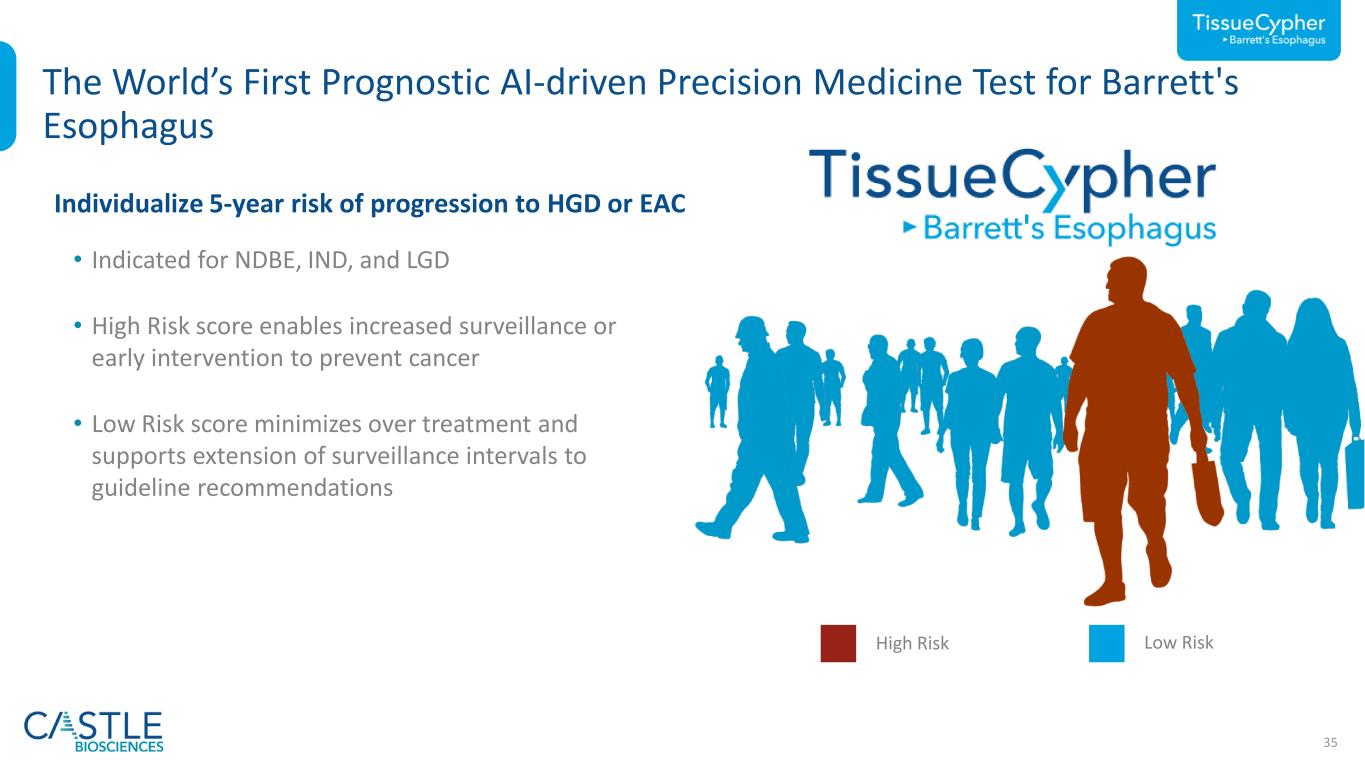
35 The World’s First Prognostic AI-driven Precision Medicine Test for Barrett's Esophagus Low RiskHigh Risk • Indicated for NDBE, IND, and LGD • High Risk score enables increased surveillance or early intervention to prevent cancer • Low Risk score minimizes over treatment and supports extension of surveillance intervals to guideline recommendations Individualize 5-year risk of progression to HGD or EAC


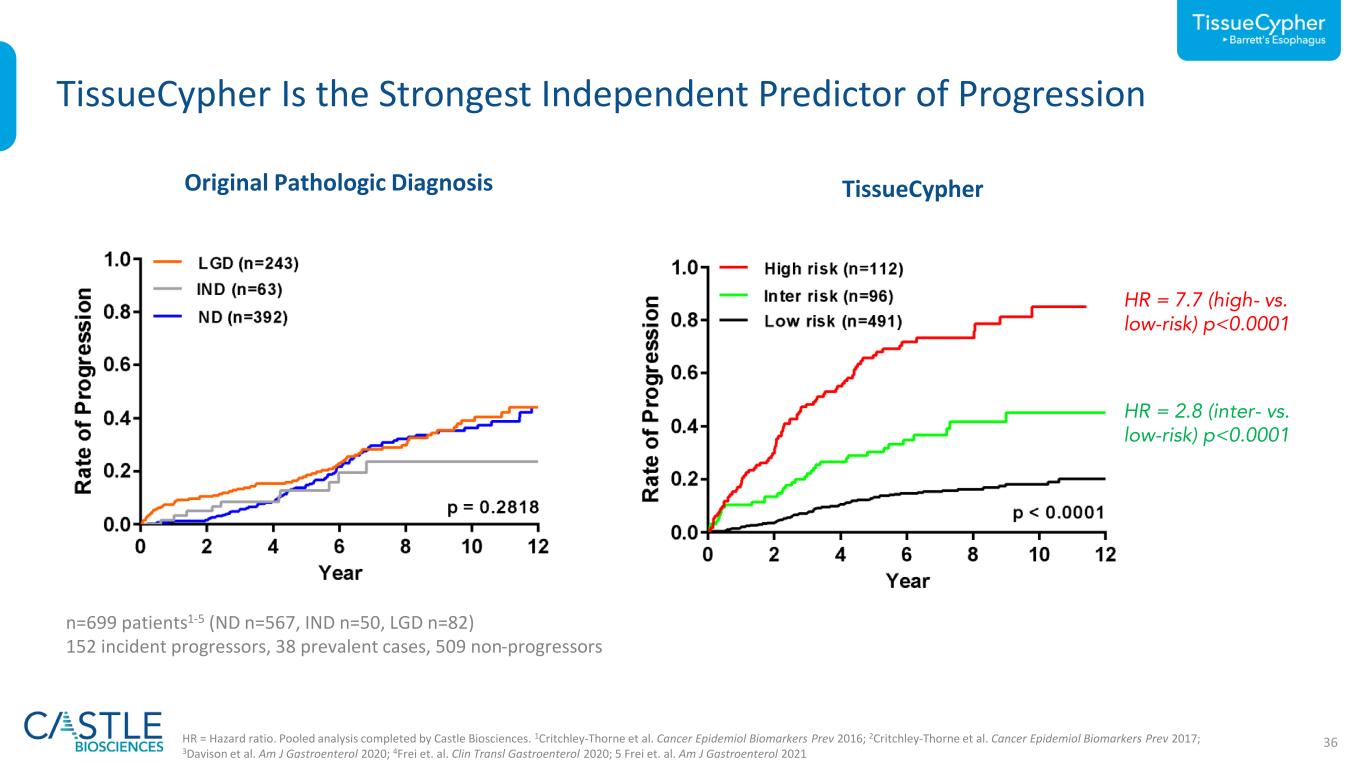
36 TissueCypher Is the Strongest Independent Predictor of Progression HR = Hazard ratio. Pooled analysis completed by Castle Biosciences. 1Critchley-Thorne et al. Cancer Epidemiol Biomarkers Prev 2016; 2Critchley-Thorne et al. Cancer Epidemiol Biomarkers Prev 2017; 3Davison et al. Am J Gastroenterol 2020; 4Frei et. al. Clin Transl Gastroenterol 2020; 5 Frei et. al. Am J Gastroenterol 2021 n=699 patients1-5 (ND n=567, IND n=50, LGD n=82) 152 incident progressors, 38 prevalent cases, 509 non-progressors Original Pathologic Diagnosis HR = 7.7 (high- vs. low-risk) p<0.0001 HR = 2.8 (inter- vs. low-risk) p<0.0001 TissueCypher


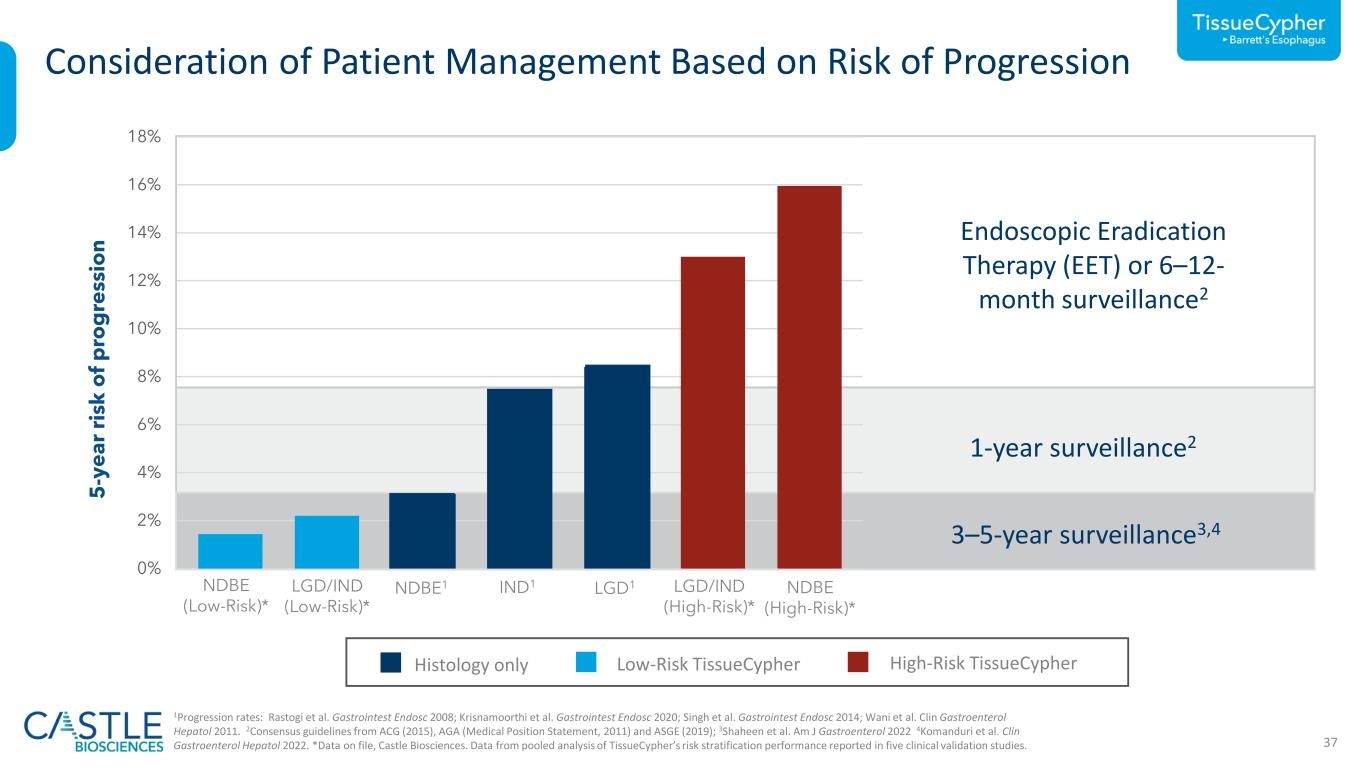
3–5-year surveillance3,4 1-year surveillance2 Endoscopic Eradication Therapy (EET) or 6–12- month surveillance2 0% 2% 4% 6% 8% 10% 12% 14% 16% 18% Consideration of Patient Management Based on Risk of Progression 1Progression rates: Rastogi et al. Gastrointest Endosc 2008; Krisnamoorthi et al. Gastrointest Endosc 2020; Singh et al. Gastrointest Endosc 2014; Wani et al. Clin Gastroenterol Hepatol 2011. 2Consensus guidelines from ACG (2015), AGA (Medical Position Statement, 2011) and ASGE (2019); 3Shaheen et al. Am J Gastroenterol 2022 4Komanduri et al. Clin Gastroenterol Hepatol 2022. *Data on file, Castle Biosciences. Data from pooled analysis of TissueCypher’s risk stratification performance reported in five clinical validation studies. 5 -y e a r ri sk o f p ro g re ss io n Histology only NDBE1 IND1 LGD1NDBE (Low-Risk)* NDBE (High-Risk)* LGD/IND (High-Risk)* LGD/IND (Low-Risk)* High-Risk TissueCypherLow-Risk TissueCypher 37


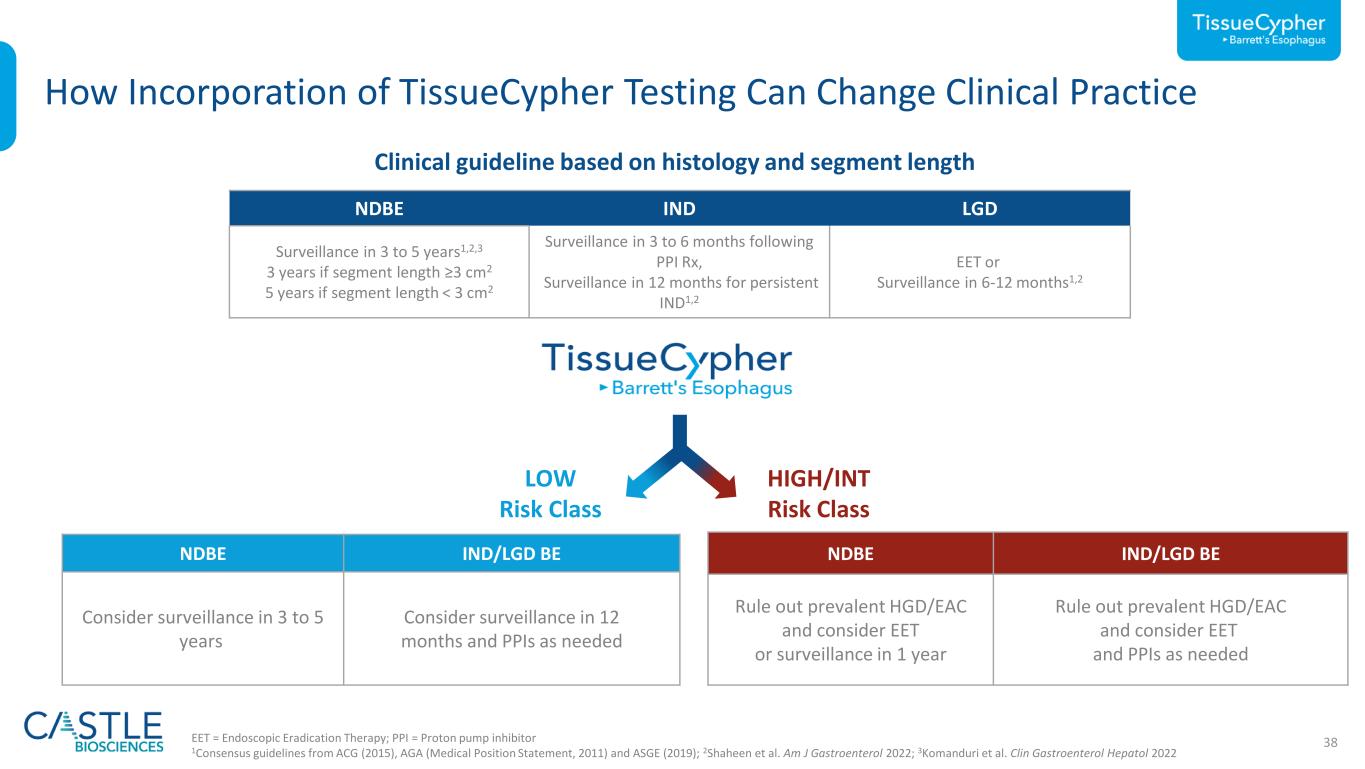
38EET = Endoscopic Eradication Therapy; PPI = Proton pump inhibitor 1Consensus guidelines from ACG (2015), AGA (Medical Position Statement, 2011) and ASGE (2019); 2Shaheen et al. Am J Gastroenterol 2022; 3Komanduri et al. Clin Gastroenterol Hepatol 2022 How Incorporation of TissueCypher Testing Can Change Clinical Practice NDBE IND LGD Surveillance in 3 to 5 years1,2,3 3 years if segment length ≥3 cm2 5 years if segment length < 3 cm2 Surveillance in 3 to 6 months following PPI Rx, Surveillance in 12 months for persistent IND1,2 EET or Surveillance in 6-12 months1,2 Clinical guideline based on histology and segment length NDBE IND/LGD BE Consider surveillance in 3 to 5 years Consider surveillance in 12 months and PPIs as needed LOW Risk Class NDBE IND/LGD BE Rule out prevalent HGD/EAC and consider EET or surveillance in 1 year Rule out prevalent HGD/EAC and consider EET and PPIs as needed HIGH/INT Risk Class


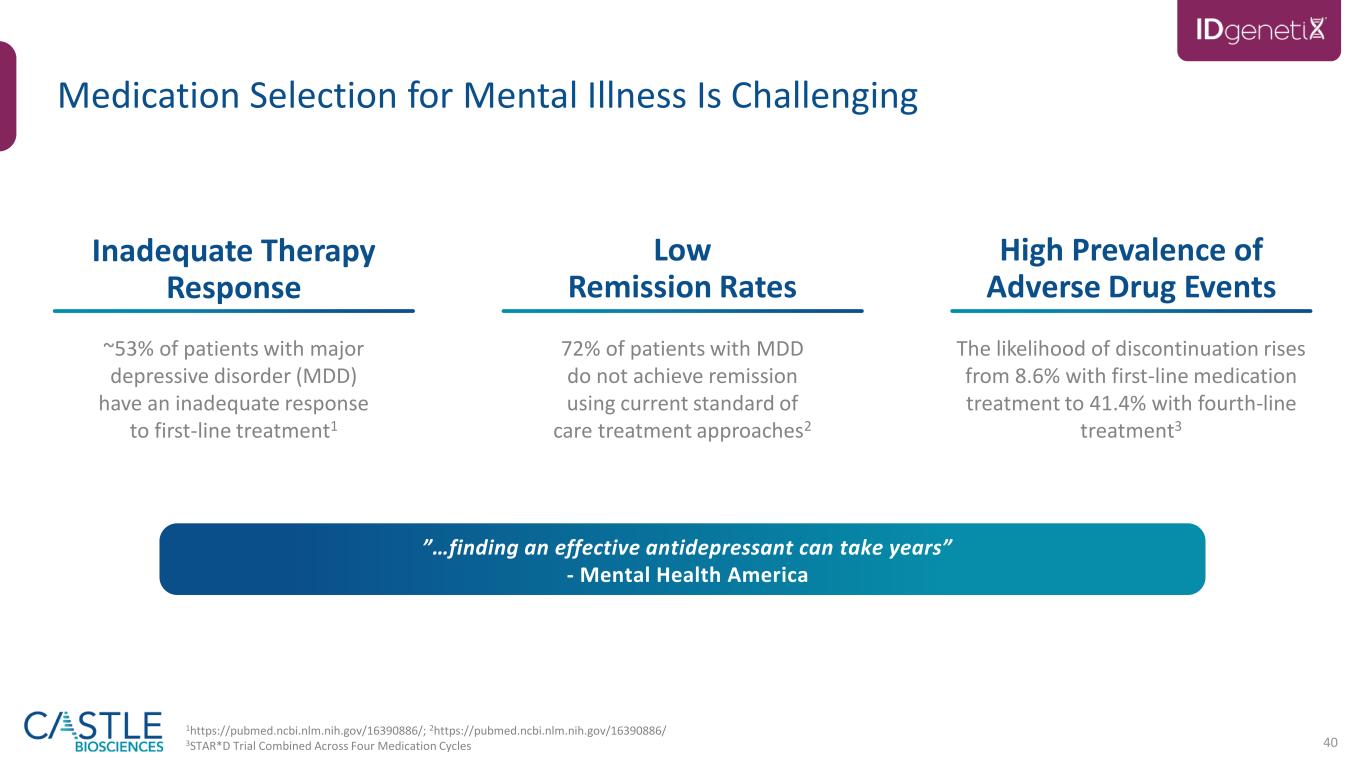
40 Medication Selection for Mental Illness Is Challenging ~53% of patients with major depressive disorder (MDD) have an inadequate response to first-line treatment1 Inadequate Therapy Response 72% of patients with MDD do not achieve remission using current standard of care treatment approaches2 Low Remission Rates The likelihood of discontinuation rises from 8.6% with first-line medication treatment to 41.4% with fourth-line treatment3 High Prevalence of Adverse Drug Events 1https://pubmed.ncbi.nlm.nih.gov/16390886/; 2https://pubmed.ncbi.nlm.nih.gov/16390886/ 3STAR*D Trial Combined Across Four Medication Cycles ”…finding an effective antidepressant can take years” - Mental Health America


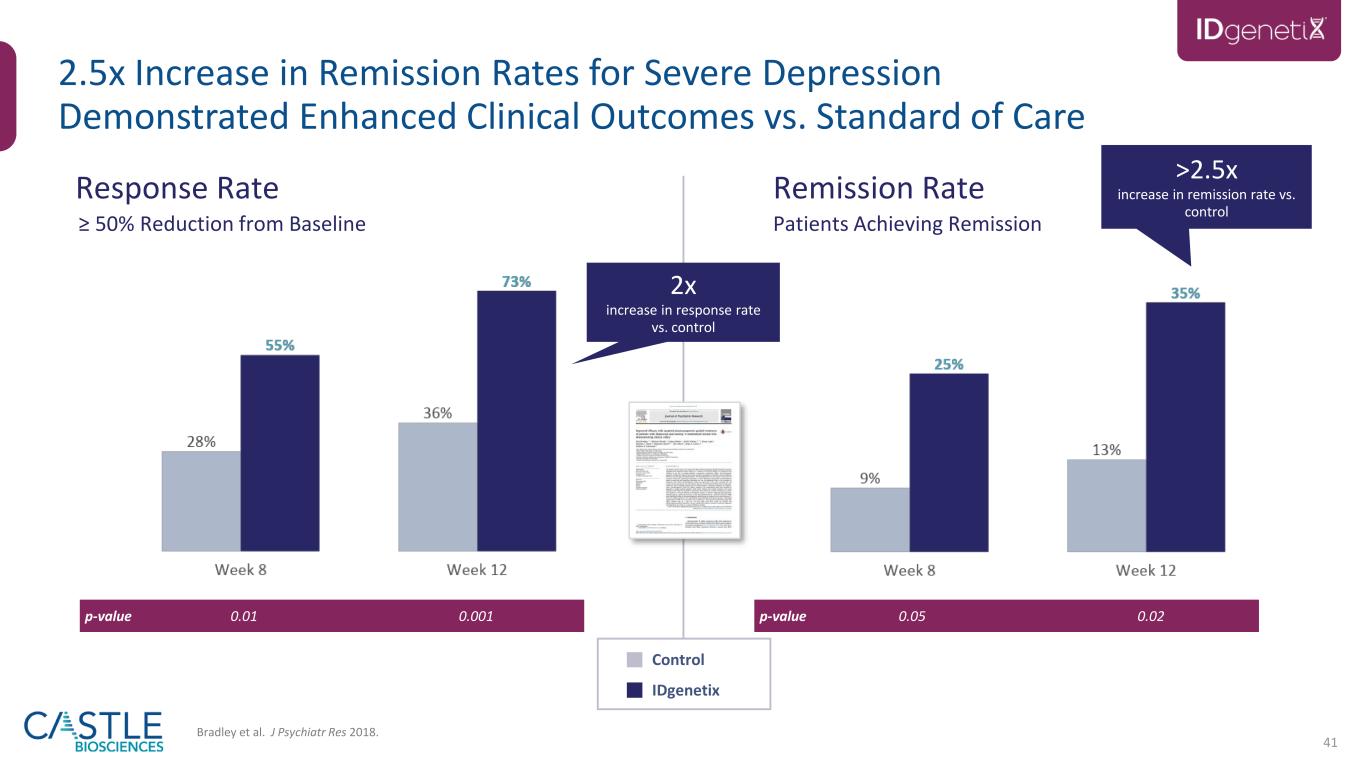
41 2.5x Increase in Remission Rates for Severe Depression Demonstrated Enhanced Clinical Outcomes vs. Standard of Care Control IDgenetix Response Rate ≥ 50% Reduction from Baseline Remission Rate Patients Achieving Remission p-value 0.05 0.02p-value 0.01 0.001 >2.5x increase in remission rate vs. control 2x increase in response rate vs. control Bradley et al. J Psychiatr Res 2018.


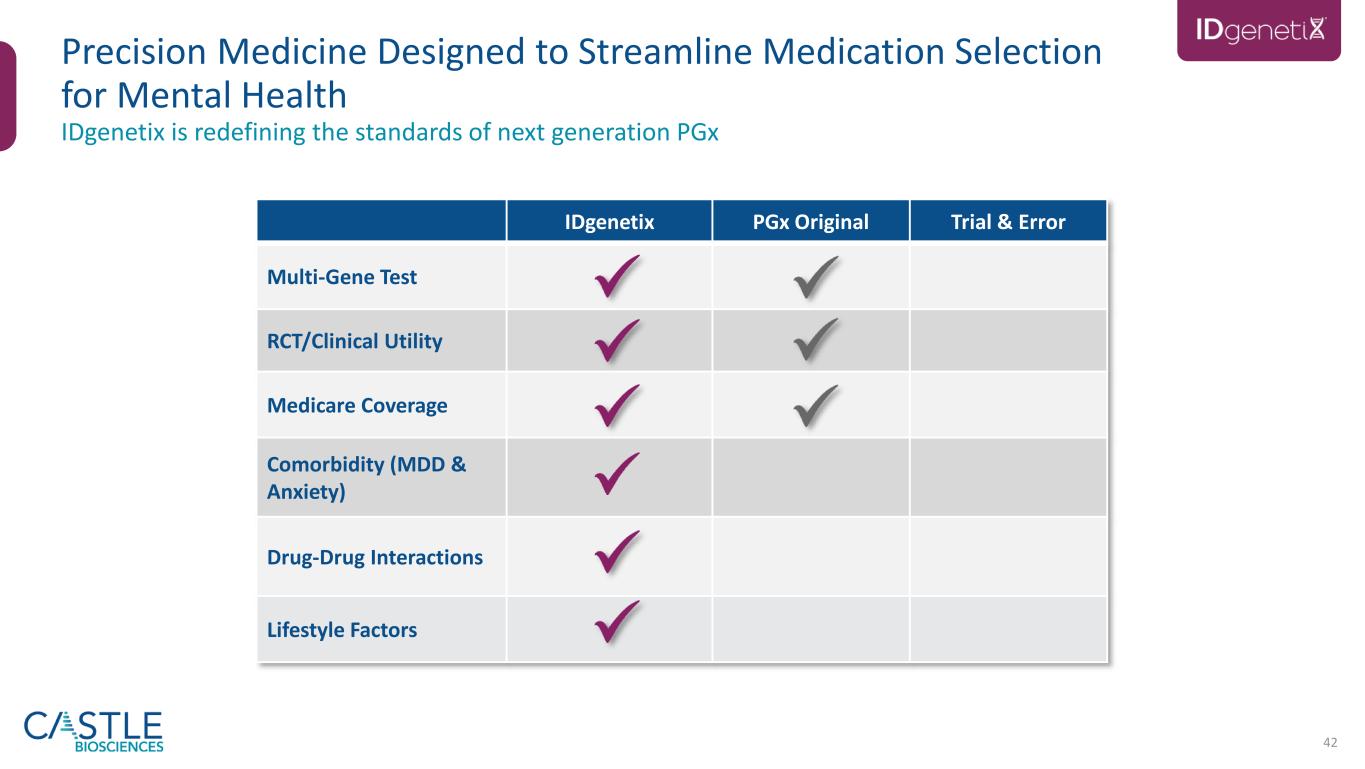
42 IDgenetix PGx Original Trial & Error Multi-Gene Test RCT/Clinical Utility Medicare Coverage Comorbidity (MDD & Anxiety) Drug-Drug Interactions Lifestyle Factors IDgenetix is redefining the standards of next generation PGx Precision Medicine Designed to Streamline Medication Selection for Mental Health


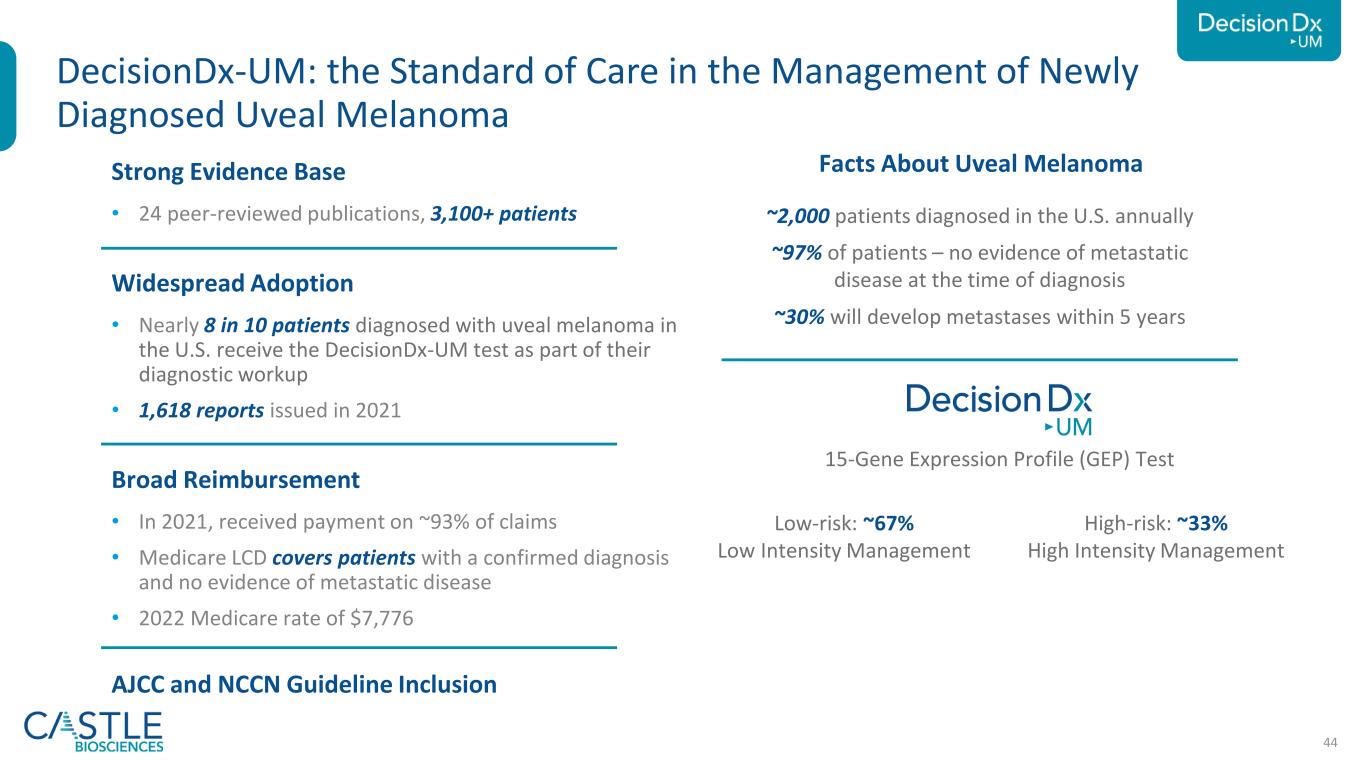
44 Strong Evidence Base • 24 peer-reviewed publications, 3,100+ patients Widespread Adoption • Nearly 8 in 10 patients diagnosed with uveal melanoma in the U.S. receive the DecisionDx-UM test as part of their diagnostic workup • 1,618 reports issued in 2021 Broad Reimbursement • In 2021, received payment on ~93% of claims • Medicare LCD covers patients with a confirmed diagnosis and no evidence of metastatic disease • 2022 Medicare rate of $7,776 AJCC and NCCN Guideline Inclusion DecisionDx-UM: the Standard of Care in the Management of Newly Diagnosed Uveal Melanoma ~2,000 patients diagnosed in the U.S. annually ~97% of patients – no evidence of metastatic disease at the time of diagnosis ~30% will develop metastases within 5 years Low-risk: ~67% Low Intensity Management High-risk: ~33% High Intensity Management Uveal Melanoma – A Rare Eye Cancer 15-Gene Expression Profile (GEP) Test Facts About Uveal Melanoma


Thank you


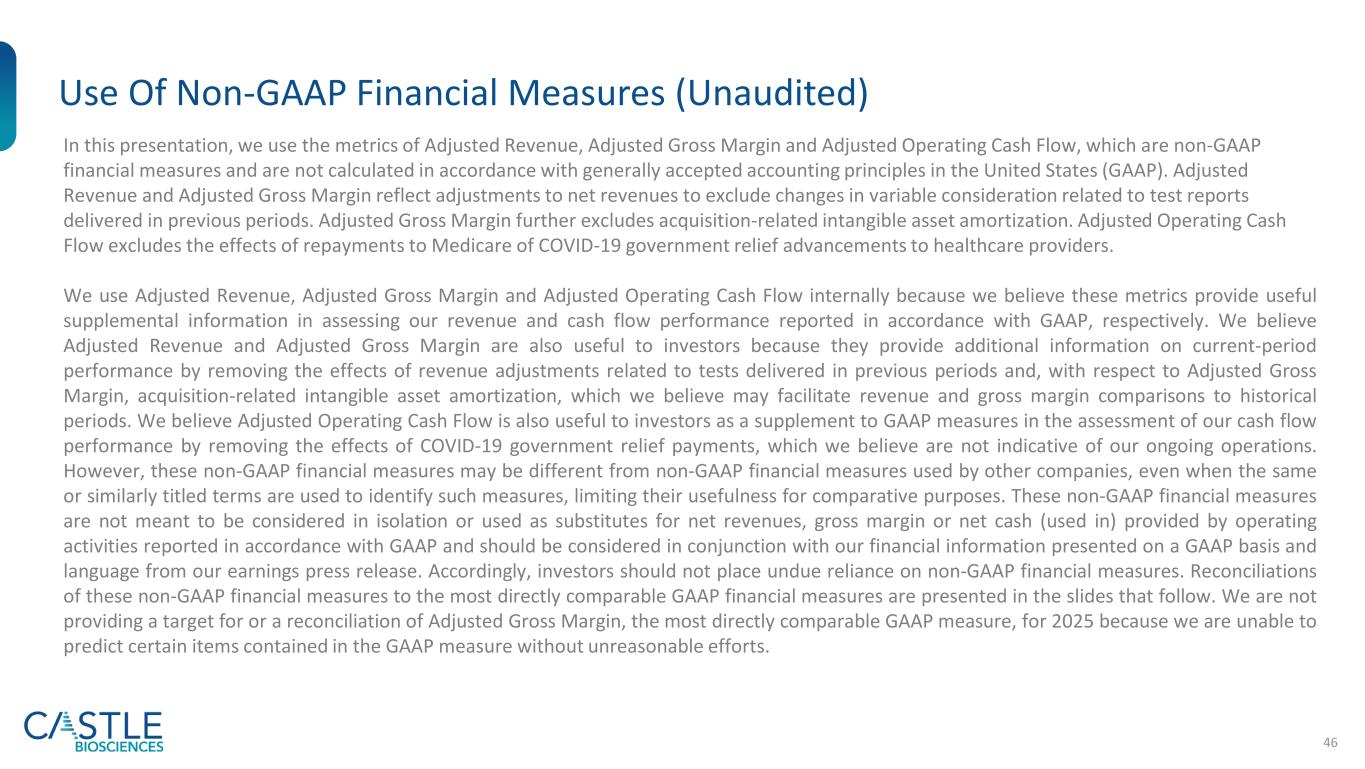
46 Use Of Non-GAAP Financial Measures (Unaudited) In this presentation, we use the metrics of Adjusted Revenue, Adjusted Gross Margin and Adjusted Operating Cash Flow, which are non-GAAP financial measures and are not calculated in accordance with generally accepted accounting principles in the United States (GAAP). Adjusted Revenue and Adjusted Gross Margin reflect adjustments to net revenues to exclude changes in variable consideration related to test reports delivered in previous periods. Adjusted Gross Margin further excludes acquisition-related intangible asset amortization. Adjusted Operating Cash Flow excludes the effects of repayments to Medicare of COVID-19 government relief advancements to healthcare providers. We use Adjusted Revenue, Adjusted Gross Margin and Adjusted Operating Cash Flow internally because we believe these metrics provide useful supplemental information in assessing our revenue and cash flow performance reported in accordance with GAAP, respectively. We believe Adjusted Revenue and Adjusted Gross Margin are also useful to investors because they provide additional information on current-period performance by removing the effects of revenue adjustments related to tests delivered in previous periods and, with respect to Adjusted Gross Margin, acquisition-related intangible asset amortization, which we believe may facilitate revenue and gross margin comparisons to historical periods. We believe Adjusted Operating Cash Flow is also useful to investors as a supplement to GAAP measures in the assessment of our cash flow performance by removing the effects of COVID-19 government relief payments, which we believe are not indicative of our ongoing operations. However, these non-GAAP financial measures may be different from non-GAAP financial measures used by other companies, even when the same or similarly titled terms are used to identify such measures, limiting their usefulness for comparative purposes. These non-GAAP financial measures are not meant to be considered in isolation or used as substitutes for net revenues, gross margin or net cash (used in) provided by operating activities reported in accordance with GAAP and should be considered in conjunction with our financial information presented on a GAAP basis and language from our earnings press release. Accordingly, investors should not place undue reliance on non-GAAP financial measures. Reconciliations of these non-GAAP financial measures to the most directly comparable GAAP financial measures are presented in the slides that follow. We are not providing a target for or a reconciliation of Adjusted Gross Margin, the most directly comparable GAAP measure, for 2025 because we are unable to predict certain items contained in the GAAP measure without unreasonable efforts.


47 Reconciliation of Non-GAAP Financial Measures (Unaudited) The table below presents the reconciliation of adjusted revenue and adjusted gross margin, which are non-GAAP financial measures. See previous slide for further information regarding the Company’s use of non-GAAP financial measures.


48 Reconciliation of Non-GAAP Financial Measures (Unaudited) The table below presents the reconciliation of adjusted operating cash flow, which is a non-GAAP financial measure. See slide 47 for further information regarding the Company’s use of non-GAAP financial measures.


Appendix


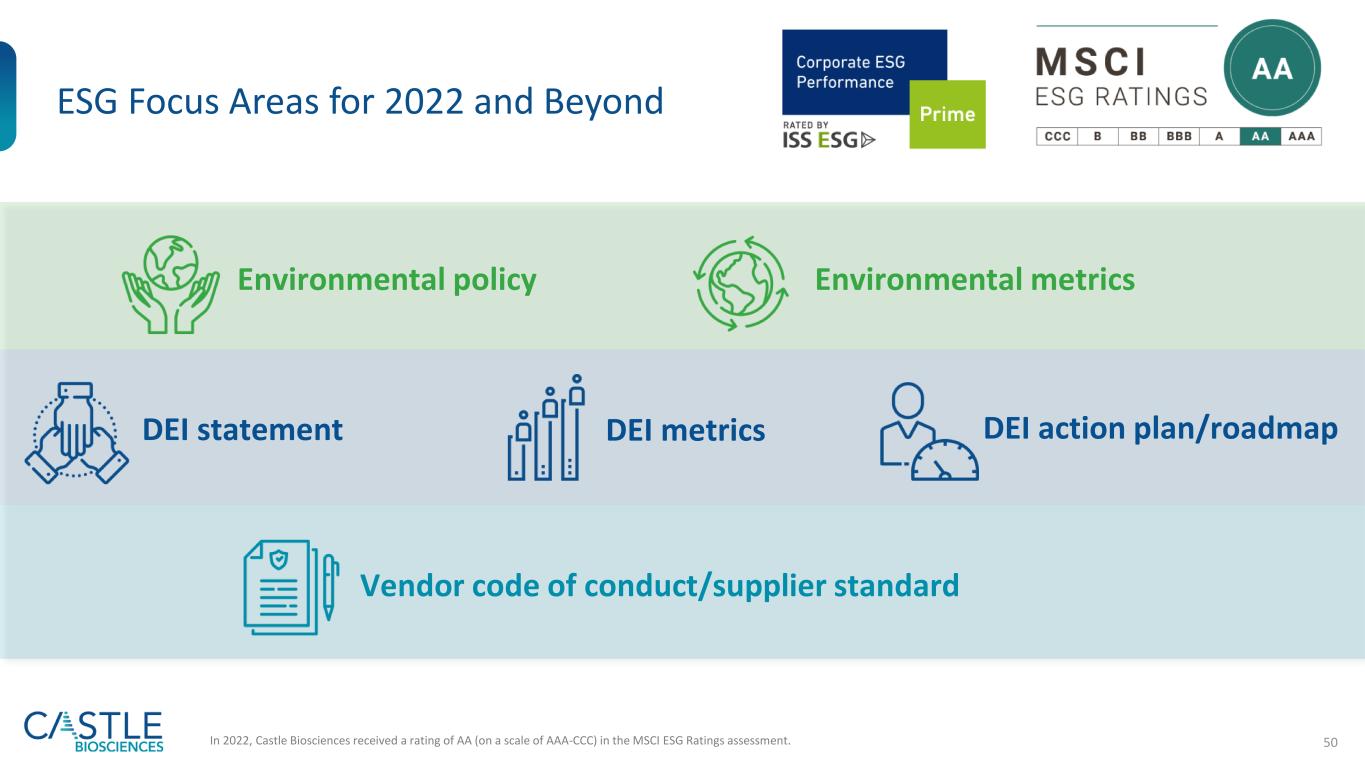
50 ESG Focus Areas for 2022 and Beyond Environmental policy Environmental metrics DEI statement DEI metrics DEI action plan/roadmap Vendor code of conduct/supplier standard In 2022, Castle Biosciences received a rating of AA (on a scale of AAA-CCC) in the MSCI ESG Ratings assessment.


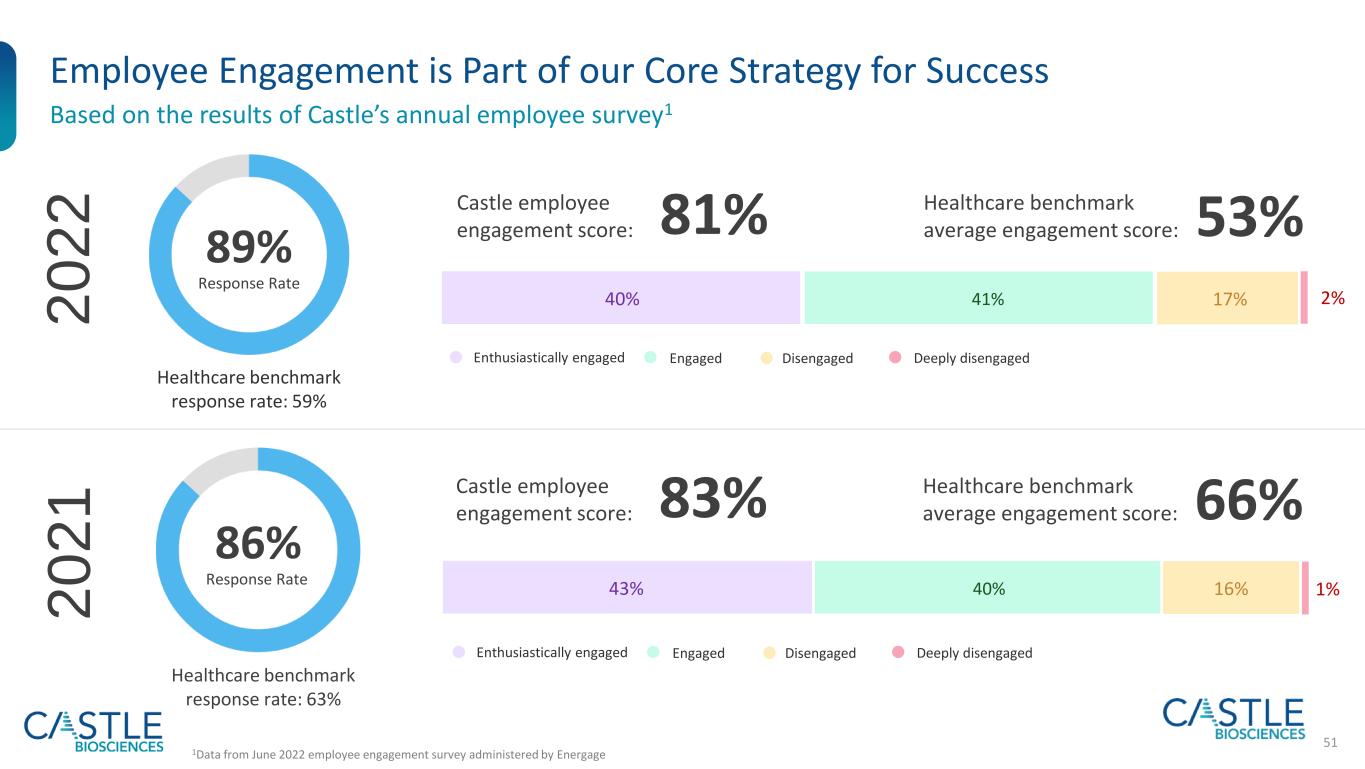
51 Employee Engagement is Part of our Core Strategy for Success Based on the results of Castle’s annual employee survey1 Castle employee engagement score: 81% Healthcare benchmark average engagement score: 53% Response Rate 89% 1Data from June 2022 employee engagement survey administered by Energage 43% 40% 16% 1% Enthusiastically engaged Engaged Disengaged Deeply disengaged 40% 41% 17% 2% Enthusiastically engaged Engaged Disengaged Deeply disengaged Response Rate 86% 2 0 2 2 Healthcare benchmark response rate: 63% Castle employee engagement score: 83% Healthcare benchmark average engagement score: 66% 2 0 2 1 Healthcare benchmark response rate: 59%


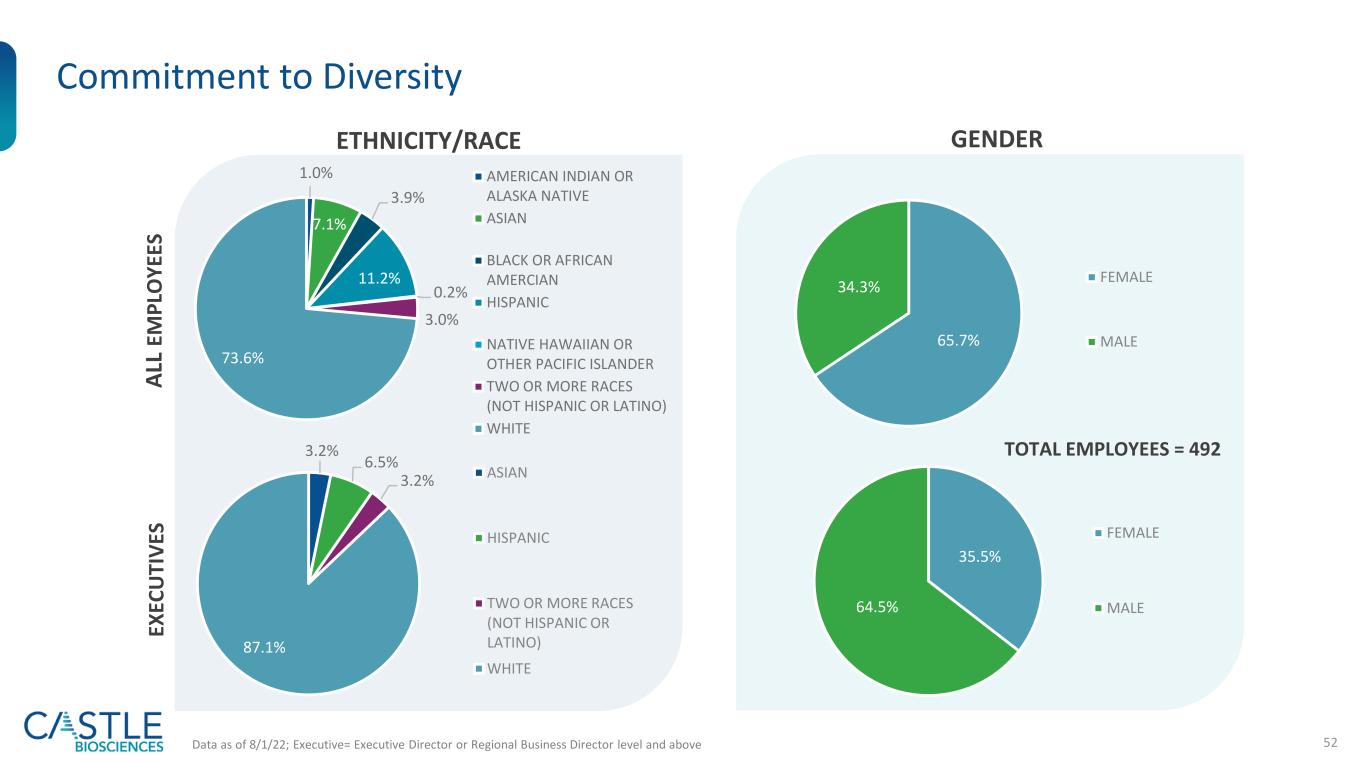
52 Commitment to Diversity ETHNICITY/RACE GENDER Data as of 8/1/22; Executive= Executive Director or Regional Business Director level and above TOTAL EMPLOYEES = 492 1.0% 7.1% 3.9% 11.2% 0.2% 3.0% 73.6% AMERICAN INDIAN OR ALASKA NATIVE ASIAN BLACK OR AFRICAN AMERCIAN HISPANIC NATIVE HAWAIIAN OR OTHER PACIFIC ISLANDER TWO OR MORE RACES (NOT HISPANIC OR LATINO) WHITE 3.2% 6.5% 3.2% 87.1% ASIAN HISPANIC TWO OR MORE RACES (NOT HISPANIC OR LATINO) WHITE 65.7% 34.3% FEMALE MALE EX EC U TI V ES A LL E M P LO Y EE S 35.5% 64.5% FEMALE MALE


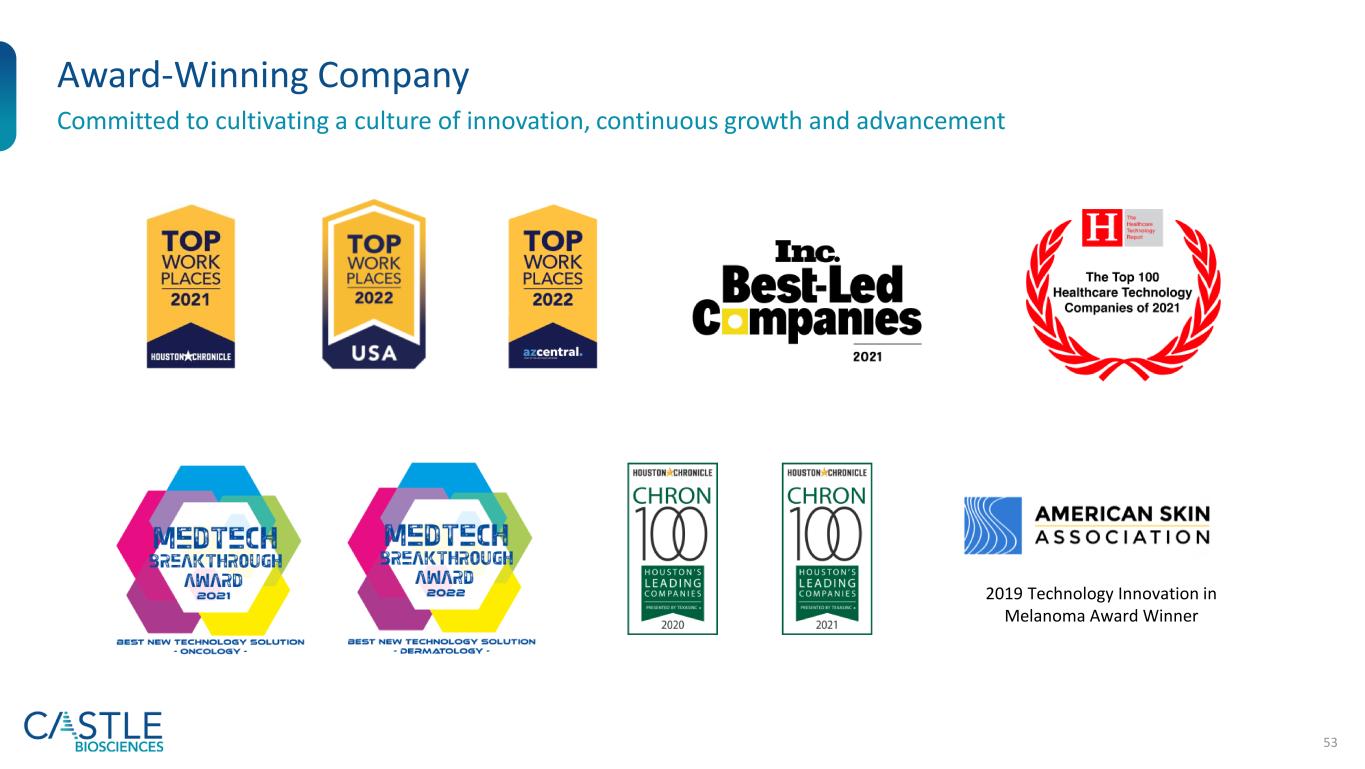
53 Award-Winning Company Committed to cultivating a culture of innovation, continuous growth and advancement 2019 Technology Innovation in Melanoma Award Winner


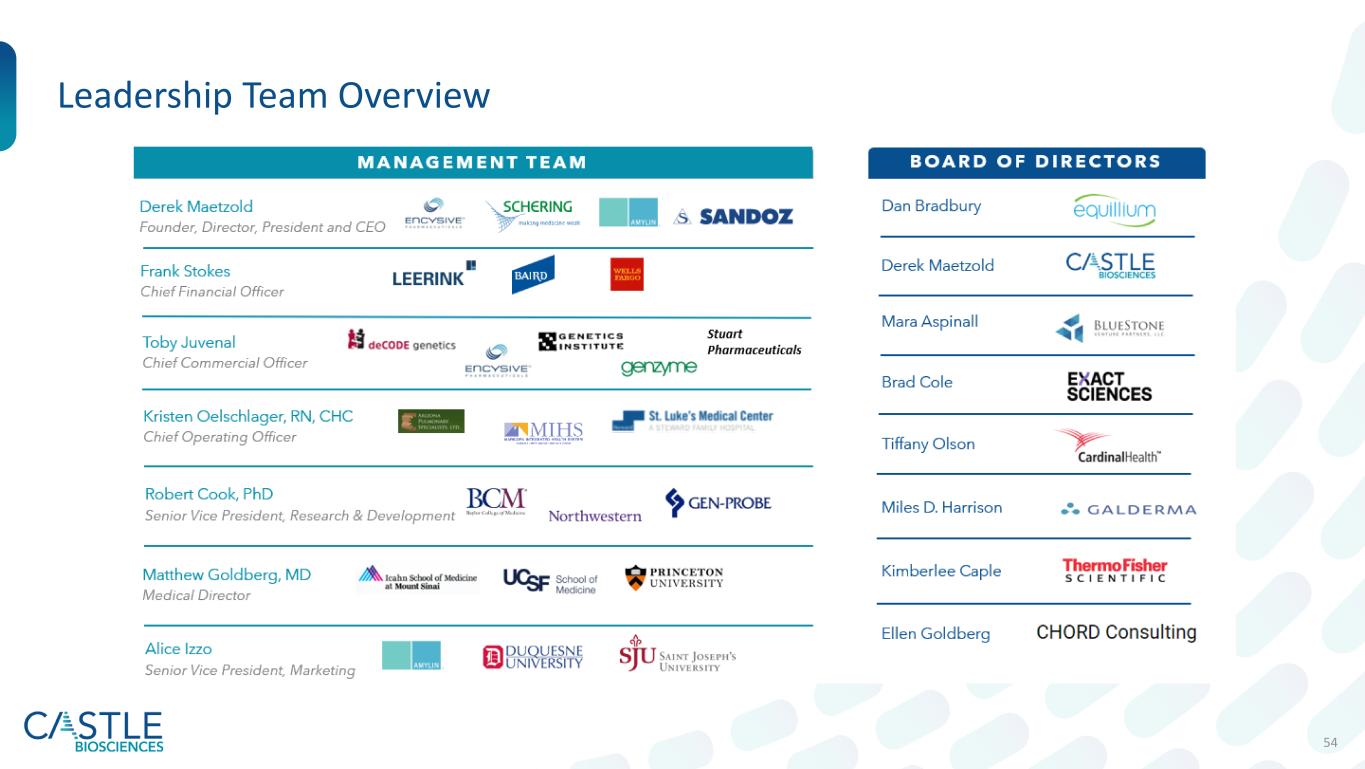
54 Leadership Team Overview