Ex 99.2: Shareholder Letter Q3 2021, dated November 11, 2021
Third Quarter 2021 Highlights
|
|
|
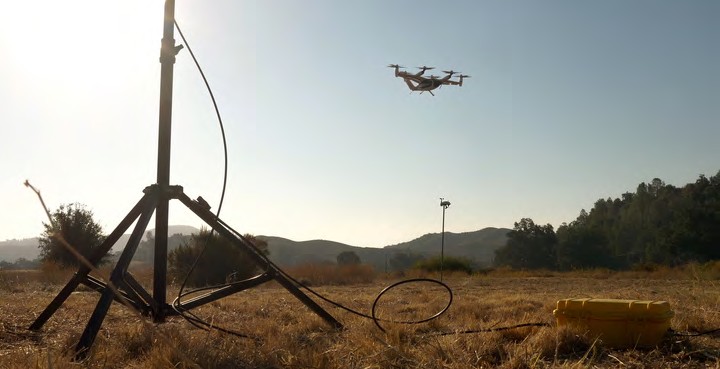
Acoustic Testing with NASA We became the first company to fly an electric aircraft as part of NASA’s National Campaign, providing a key opportunity for the agency to analyze our aircraft’s low noise profile. |
|
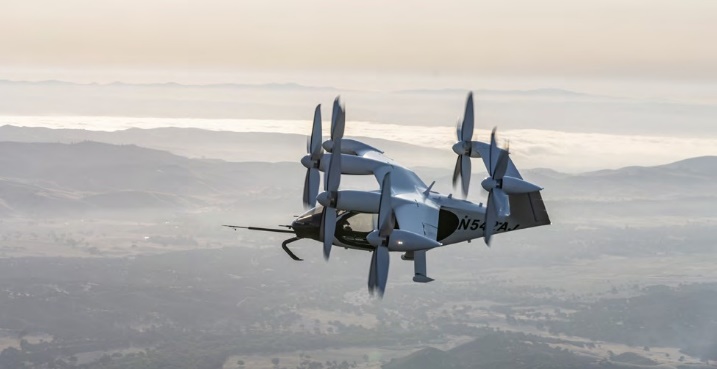
154 Mile Flight We completed what we believe to be the longest ever eVTOL flight on a single charge, as part of our ongoing flight test campaign. |
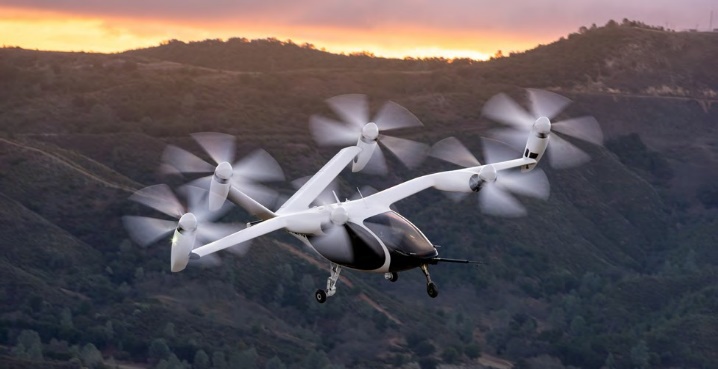
First Steps to Commercial Service We began the process to receive a Part 135 Air Carrier Certificate, which is required to commence revenue-generating passenger flights. |
|
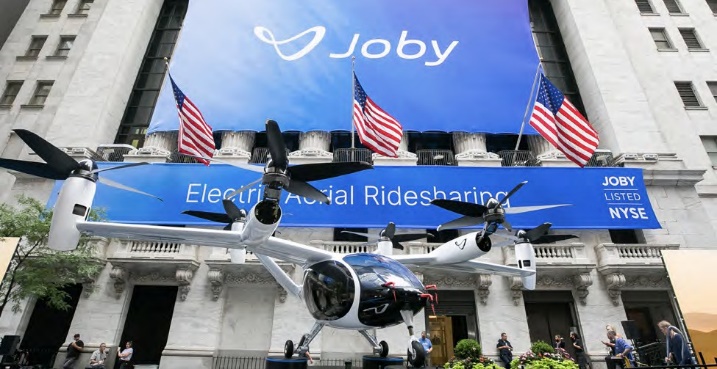
Completion of SPAC Merger We began trading on the New York Stock Exchange through our merger with Reinvent Technology Partners (“RTP”). |
Strong Financial Foundation
At the end of the third quarter, we had $1.4 billion in cash and short-term investments to support our operations.
Net Loss
Third quarter net loss of $78.9 million reflected growth in engineering, certification and early manufacturing activities as well as the revaluation of SPAC-related warrants and earn-out shares.
Adjusted EBITDA
Adjusted EBITDA loss of $55.9 million primarily reflected employee cost, as Joby grew to nearly 1,000 employees to support business objectives.
1

Progress on Our Long-Term Plan
With more than 10 years of aircraft design, iteration and testing behind us, our focus has now shifted to three long-term goals, each of which is central to executing our business plan:
•Scaling Our Manufacturing
•Preparing for Commercial Operations
All of our activities support one or more of these goals and we intend to provide regular updates on our progress in each area.
Our team continued to grow through the third quarter and now totals nearly 1,000 employees, with approximately 80% of our team members directly supporting near-term engineering, certification and manufacturing goals.
We also opened a Washington, D.C. office and expanded our world-class Board of Directors, whose members have a diverse set of experiences to support each stage of Joby’s growth.
2
Certifying our Aircraft
We made important progress on our flight testing program during the third quarter, with regular software releases from our Software and Controls team supporting the continued expansion of our flight envelope. In July, we celebrated completing a 154-mile flight on a single charge, including a vertical take-off and landing.
We also began in-house testing of individual parts and systems for our production aircraft, including tail spar load testing, battery drop testing, lightning strike and canopy bird-strike testing. Additionally, we began construction of our “Integrated Test Lab,” a lab-based recreation of all aircraft software and hardware designed for integrated systems testing.
Our Human Factors team completed an initial pilot evaluation campaign of our production cockpit design, while our flight control computer passed an in-house, “high-risk electronic environment test” as defined by the FAA in RTCA DO-160 (Environmental Conditions and Test Procedures for Airborne Equipment).
Scaling our Manufacturing
During the third quarter, we continued to make rapid progress towards establishing initial production at our facilities in California. We established a powertrain manufacturing line at our site in San Carlos, CA, successfully delivering the first Electric Propulsion Unit (“EPU”) for our production- intent, test aircraft. At our site in Marina, CA, we installed our second Automated Fiber Placement (“AFP”) system as well as a rotating positioner for our carbon fiber layup process, enabling us to deliver increasingly complex parts and produce production aircraft components. With the installation of the second AFP machine, we believe we have sufficient capability to support our initial plant capacity.
Preparing for Commercial Operations
Our testing campaign with NASA saw the agency capture detailed records of the acoustic footprint of our aircraft which, once analyzed, will provide independent data that we believe will support the public acceptance of our technology. The two-week testing program also captured data on the operation of the aircraft that will be used in the simulation of future airspace concepts and to help identify any gaps in current FAA regulations and policies. We also published four films that demonstrate the noise profile in action (https://www.youtube.com/playlist?list=PLLDX6ltaOA6NhufjKFIDbaTps2uIg9LH0).
By beginning the process to receive a Part 135 Air Carrier Certificate from the FAA, we took our first step towards becoming a company authorized to fly passengers for revenue across the United States. We have since entered the second of five stages toward achieving that certification.
Finally, we were pleased to announce that we are working with JetBlue Airways and Signature Flight Support to establish net-zero emissions in the aviation industry by ensuring the carbon markets for aviation include credits for flights powered by green electric and hydrogen propulsion technologies.
3
Third Quarter 2021 Financial Summary
In the third quarter 2021, we incurred a net loss of $78.9 million, reflecting continued growth in our operations. Net loss was $50.8 million higher than in the third quarter 2020. Research and Development cost, totaling $52.1 million, reflects continued aircraft development and certification activities, including early manufacturing operations. Selling, General & Administrative expenses were $15.6 million for the quarter. Other cost of $11.2 million reflected the change in fair market valuation of derivative liabilities and merger-related transaction expenses, partly offset by income from equity-method investments.
Adjusted EBITDA in the third quarter 2021 was a loss of $55.9 million, primarily reflecting employee costs associated with the development and certification of the aircraft. Adjusted EBITDA loss was $23.6 million higher than in the third quarter 2020.
Higher expenses in the third quarter of 2021 compared with 2020 for both net loss and Adjusted EBITDA primarily reflect growth in personnel to support our development and certification activities, early manufacturing operations, initial investments in commercialization, and administrative costs to support scaling as a public company. Net loss also includes an increase in cost from stock- based compensation, depreciation and amortization expenses.
One-time costs, excluded from third quarter 2021 Adjusted EBITDA, include transaction expenses from our merger with RTP of $9.0 million and the $11.5 million revaluation of our liabilities associated with outstanding warrants and earn-out shares. Stock-based compensation expense of $7.6 million and income from equity-method investments of $10.3 million are also excluded. Please see the section titled “Non-GAAP Financial Measures” for a reconciliation of Net Loss to Adjusted EBITDA.
Our balance sheet provides a strong financial foundation to support our long-term goals. We ended the third quarter 2021 with $1.4 billion in cash, cash equivalents, restricted cash, and investments in marketable securities. Gross proceeds from the merger with RTP, including Uber’s investment (received in the first quarter of 2021), were approximately $1.2 billion. We expect these funds to support us through to initial commercial operations.
Net increase in cash through the first nine months of 2021 totaled $939 million, which reflected the successful closure of our merger with RTP and cash received from Uber’s investment, partially offset by cash used in our operations, capital expenditure and acquisitions.

4
JOBY AVIATION, INC. AND SUBSIDIARIES
Condensed Consolidated Statements of Operations
Unaudited (in thousands, except share and per share data)
|
|
|
|
|
|
Three Months Ended September 30 |
Nine Months Ended September 30 |
|
2021 |
2020 |
2021 |
2020 |
Operating expenses: |
|
|
|
|
Research and development (including related party |
$52,092 |
$30,713 |
$140,310 |
$76,940 |
purchases of $547 and $345 for the three months ended September 30, 2021 and 2020, respectively, $1,523 and $969 for the nine months ended September 30, 2021 and 2020, respectively) |
|
|
|
|
|
|
|
|
|
Selling, general and administrative (including related party |
15,607 |
5,515 |
41,587 |
15,112 |
purchases of $154 and $97 for the three months ended |
|
|
|
|
September 30, 2021 and 2020, respectively, $390 and |
|
|
|
|
$247 for the nine months ended September 30, 2021 and 2020, respectively) |
|
|
|
|
|
|
|
|
|
Total operating expenses |
67,699 |
36,228 |
181,897 |
92,052 |
Loss from operations |
(67,699) |
(36,228) |
(181,897) |
(92,052) |
Interest and other income, net |
163 |
1,081 |
872 |
4,813 |
Interest expense |
(484) |
(65) |
(2,388) |
(193) |
Income from equity method investment |
10,331 |
286 |
19,222 |
286 |
Gain on disposal of subsidiary |
— |
6,904 |
— |
6,904 |
Transaction expenses related to merger |
(9,015) |
— |
(9,015) |
— |
Loss from changes in fair value of derivative liability |
(11,489) |
— |
(11,489) |
— |
Convertible notes extinguishment loss |
(665) |
— |
(665) |
— |
Total other income (loss) |
(11,159) |
8,206 |
(3,463) |
11,810 |
Loss before income taxes |
(78,858) |
(28,022) |
(185,360) |
(80,242) |
Income tax expense |
— |
6 |
9 |
23 |
Net loss |
$(78,858) |
$(28,028) |
$(185,369) |
$ (80,265) |
Net loss per share, basic and diluted |
$(0.20) |
$(0.27) |
$(0.91) |
$(0.79) |
Weighted-average common stock outstanding, basic |
385,560,732 |
104,760,660 |
203,536,351 |
102,103,326 |
and diluted
5
|
|
|
|
JOBY AVIATION, INC. AND SUBSIDIARIES |
|
|
|
Condensed Consolidated Balance Sheets |
|
|
Unaudited (in thousands, except share and per share data) |
|
|
|
September 30, 2021 |
December 31, 2020 |
Assets |
|
|
|
Current assets: |
|
|
|
Cash and cash equivalents |
$1,016,496 |
$77,337 |
|
Short-term investments |
345,991 |
368,587 |
|
Other receivables |
2,419 |
2,227 |
|
Prepaid expenses and other current assets |
17,588 |
3,032 |
|
Total current assets |
1,382,494 |
451,183 |
|
Property and equipment, net |
43,977 |
34,126 |
|
Restricted cash |
762 |
693 |
|
Equity method investment |
20,177 |
10,990 |
|
Intangible assets |
13,818 |
— |
|
Goodwill |
4,880 |
— |
|
Other non-current assets |
65,861 |
262 |
|
Total assets |
$1,531,969 |
$497,254 |
|
Liabilities, redeemable convertible preferred stock, and stockholders’ equity (deficit) |
|
|
|
Current liabilities: |
|
|
|
Accounts payable |
$3,558 |
$4,928 |
|
Tenant improvements loan, current portion |
259 |
244 |
|
Capital lease, current portion |
1,006 |
792 |
|
Deferred rent, current portion |
362 |
295 |
|
Accrued expenses and other current liabilities |
2,418 |
1,746 |
|
Total current liabilities |
7,603 |
8,005 |
|
Tenant improvements loan, net of current portion |
750 |
946 |
|
Capital lease, net of current portion |
741 |
661 |
|
Deferred rent, net of current portion |
1,044 |
1,321 |
|
Warrant Liability |
64,765 |
— |
|
Earnout Shares Liability |
151,323 |
— |
|
Stock repurchase liability |
1,072 |
1,177 |
|
Total liabilities |
227,298 |
12,110 |
|
Commitments and contingencies |
|
|
|
Redeemable convertible preferred stock: $0.0001 par value - 100,000,000 and 364,736,031 shares authorized at September 30, 2021 and December 31, 2020, no shares and 332,764,215 shares issued and outstanding at September 30, 2021 and December 31, 2020, respectively (Cumulative liquidation preference nil and $769,679 at September 30, 2021 and December 31, 2020, respectively) |
— |
768,312 |
|
Stockholders’ deficit: |
|
|
|
Common stock: $0.0001 par value - 1,400,000,000 shares and 517,865,383 authorized at September 30, 2021 and December 31, 2020, 604,335,426 and 122,058,940 shares issued and outstanding at September 30, 2021 and December 31, 2020, respectively |
60 |
— |
|
Additional paid-in capital |
1,786,118 |
12,591 |
|
Accumulated deficit |
(481,655) |
(296,286) |
|
Accumulated other comprehensive income |
148 |
527 |
|
Total stockholders’ equity (deficit) |
1,304,671 |
(283,168) |
|
Total liabilities, redeemable convertible preferred stock, and stockholders’ equity (deficit) |
$1,531,969 |
$497,254 |
|
|
|
|
6 |
JOBY AVIATION, INC. AND SUBSIDIARIES
Consolidated Statements of Cash Flows
|
|
|
|
Unaudited (in thousands) |
Nine Months Ended September 30 |
|
|
2021 |
2020 |
|
Cash flows from operating activities |
|
|
|
Net loss |
$(185,369) |
$(80,265) |
|
Reconciliation of net loss to net cash used in operating activities: |
|
|
|
Depreciation and amortization expense |
11,467 |
5,157 |
|
Non-cash interest expense, and amortization of debt discount and issuance costs |
2,227 |
— |
|
Stock-based compensation expense |
19,418 |
4,639 |
|
Other non-cash compensation expense |
5,775 |
— |
|
Convertible note extinguishment loss |
665 |
— |
|
Loss from change in value of warrants and earnout shares |
11,578 |
— |
|
Loss from transaction costs related to merger |
9,015 |
— |
|
Write-off of in-process research and development project |
5,030 |
— |
|
Net change in equity method investment and gain on deconsolidation of subsidiary |
(9,187) |
(7,190) |
|
Net accretion and amortization of investments in marketable securities |
3,893 |
432 |
|
Changes in operating assets and liabilities |
|
|
|
Other receivables and prepaid expenses and other current assets |
(11,227) |
(4,531) |
|
Other non-current assets |
(9,856) |
(220) |
|
Accounts payable and accrued and other liabilities |
(435) |
6,404 |
|
Net cash used in operating activities |
(147,006) |
(75,574) |
|
Cash flows from investing activities |
|
|
|
Purchase of marketable securities |
(336,914) |
(583,244) |
|
Proceeds from sales of marketable securities |
47,139 |
11,100 |
|
Proceeds from maturities of marketable securities |
308,141 |
154,325 |
|
Purchases of property and equipment |
(20,694) |
(17,742) |
|
Asset acquisition and deconsolidations |
(4,981) |
(407) |
|
Net cash used in investing activities |
(7,309) |
(435,968) |
|
Cash flows from financing activities |
|
|
|
Proceeds from issuance of Series C redeemable convertible preferred stock, net |
— |
69,860 |
|
Proceeds from merger |
1,067,922 |
— |
|
Payments for offering costs |
(49,717) |
— |
|
Proceeds from issuance of convertible notes payable |
74,972 |
— |
|
Proceeds from exercise of stock options and stock purchase rights |
998 |
77 |
|
Repayments of tenant improvement loan and capital lease obligation |
(813) |
(842) |
|
Proceeds from issuance common stock warrants |
181 |
— |
|
Net cash provided by financing activities |
1,093,543 |
69,095 |
|
Net change in cash, cash equivalents and restricted cash |
939,228 |
(442,447) |
|
Cash, cash equivalents and restricted cash, at the beginning of the period |
78,030 |
507,869 |
|
Cash, cash equivalents and restricted cash, at the end of the period |
$1,017,258 |
$65,422 |
|
Reconciliation of cash, cash equivalents and restricted cash to consolidated balance sheets |
|
|
|
Cash and cash equivalents |
$1,016,496 |
$64,729 |
|
Restricted cash |
762 |
693 |
|
Cash, cash equivalents and restricted cash in consolidated balance sheets |
$1,017,258 |
$65,422 |
|
Non-cash investing and financing activities |
|
|
|
Unpaid property and equipment purchases |
$621 |
$861 |
|
Property and equipment purchased through capital leases |
$926 |
$ — |
|
Uber Elevate acquisition in exchange for Series C redeemable convertible preferred stock |
$77,619 |
$ — |
|
Conversion of Uber note payable to Series C redeemable |
$77,399 |
$ — |
|
Conversion of pre-merger warrants |
$691 |
$ — |
|
Unpaid offering costs |
$470 |
$ — |
|
Conversion of preferred stock |
$845,931 |
$ — |
|
Net non-cash assets acquired in merger |
$1,119 |
$ — |
7 |
JOBY AVIATION, INC. AND SUBSIDIARIES
Non-GAAP Financial Measures
Unaudited (in thousands)
Adjusted EBITDA is a non-GAAP measure of operating performance that is included to communicate the financial performance of activities associated with core operations that support the development, manufacturing and commercialization of the Joby aircraft.
Adjusted EBITDA is defined as net income (loss) before interest income (expense), depreciation and amortization expense, stock-based compensation expense, income from equity-method investments unrelated to core operations, impact from revaluation of non-operating derivative liabilities, and other income or costs which are not directly related to ongoing core operations. Adjusted EBITDA excludes, among other things, transaction expenses related to our merger with RTP, consummated on August 10, 2021, and related activities. We believe Adjusted EBITDA, when read in conjunction with our GAAP financials, provides investors and management with a useful measure for the evaluation of our operating results and a basis for comparing our core, ongoing operations from period to period.
Because Adjusted EBITDA is not a measure of performance or liquidity calculated in accordance with GAAP, it should not be considered more meaningful than or as a substitute for net income (loss) as an indicator of our operating performance. Adjusted EBITDA may not be directly comparable to similarly titled measures provided by other companies due to potential differences in methods of calculation. From time to time, we may modify the nature of the adjustments we make to arrive at Adjusted EBITDA.
A reconciliation of Adjusted EBITDA to net loss is as follows:
|
|
|
|
|
|
Three Months Ended September 30 |
Nine Months Ended September 30 |
|
2021 |
2020 |
2021 |
2020 |
Net loss |
$(78,858) |
$(28,028) |
$(185,369) |
$(80,265) |
Income tax expense |
— |
6 |
9 |
23 |
Loss before income taxes |
(78,858) |
(28,022) |
(185,360) |
(80,242) |
Interest and other income, net |
(163) |
(1,081) |
(872) |
(4,813) |
Interest expense |
484 |
65 |
2,388 |
193 |
Income from equity method investment |
(10,331) |
(286) |
(19,222) |
(286) |
Gain on disposal of subsidiary |
— |
(6,904) |
— |
(6,904) |
Transaction expenses related to merger |
9,015 |
— |
9,015 |
— |
Loss from changes in fair value of derivative liability |
11,489 |
— |
11,489 |
— |
Convertible notes extinguishment loss |
665 |
— |
665 |
— |
Loss from operations |
(67,699) |
(36,228) |
(181,897) |
(92,052) |
Stock-based compensation expense |
7,619 |
1,974 |
19,418 |
4,639 |
Depreciation and amortization expense |
4,172 |
1,902 |
11,467 |
5,157 |
Adjusted EBITDA |
$(55,908) |
$(32,352) |
$(151,012) |
$(82,256) |
8
JOBY IN FOCUS : CERTIFICATION
|
|
|
|
|
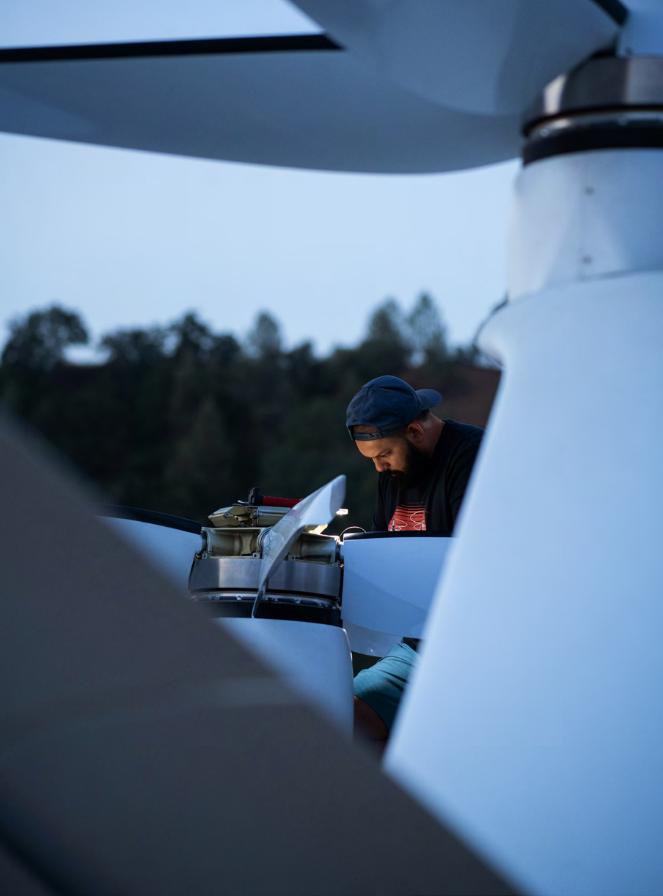
An aircraft designed to be certified The consistently high levels of safety we’ve come to expect from air travel are the result of rigorous certification processes that have been developed and matured over many decades. At Joby, we have intentionally designed an aircraft that maximizes use of these existing safety regulations, only using rules unique to our aircraft where necessary to address new technologies. Our approach was confirmed in May 2020, when the FAA granted Joby a signed G-1 Certification Basis, which sets out a clear path to certifying the Joby aircraft as a normal category airplane. This approach also means we’ll be able to use existing rules regarding pilot certification and infrastructure use. As we look beyond the U.S. market, we’ll also have an easier path to validating our aircraft’s type certificate with regulators in other countries. |
Looking ahead
As we move beyond defining our certification approach, our focus will shift toward the testing of every system, sub-system and component of the aircraft. In addition to our ongoing flight test program, we recently began construction of our Integrated Test Lab — a lab-based assembly of all aircraft hardware and software designed for integrated systems testing.
The team to deliver
Joby has a dedicated team of more than 100 aerospace certification professionals with more than 1,400 years of combined experience in certifying and developing aircraft. Greg Bowles, who chaired the FAA Rulemaking Committee that rewrote more than 800 Part 23 regulations, leads our government and regulatory affairs, while Didier Papadopoulos leads our systems engineering and aircraft certification program. Previously, Didier led the team that certified the revolutionary “Autoland” feature at Garmin, winning the team the Collier Trophy which is presented annually for the “greatest achievement in aeronautics in America.”
|
|
Meet Lina Spross Production Certification, Quality and Supply Chain Lead With more than 25 years of experience in the aerospace sector, Lina is currently leading the company-wide effort to produce the first FAA-conforming part for our aircraft — a simple composite panel with properties that are representative of the entire airframe structure. Delivering it according to the required standards will mark an important milestone towards design and production maturity — and will be another step toward the receipt of both a type certificate and production certificate from the FAA. |

|
9
|
|
Webcast Details Joby will host a webcast at 2:30pm PT (5:30pm ET) on November 11, 2021. To access the webcast live please visit ir.jobyaviation.com , or to listen by phone, please dial 1-877-407-3982 or 1-201-493-6780. A replay of the call will be available until midnight, Thursday, November 25, 2021, by dialing 1-844-512-2921 or 1-412-317-6671 and entering passcode 13723635.
Upcoming Events
Executives from Joby will also be participating in the following upcoming events: Piper Sandler Battery Summit Tuesday, November 16th – Wednesday, November 17th, 2021 MKM Virtual Best Ideas Conference Wednesday, November 17th, 2021 Barclays Global Automotive and Mobility Tech Conference Thursday, November 18th, 2021 Bernstein EV Revolution Series Monday, December 6th, 2021 About Joby Joby Aviation, Inc. (NYSE:JOBY) is a California-headquartered transportation company developing an all-electric vertical take-off and landing aircraft which it intends to operate as part of a fast, quiet, and convenient air taxi service beginning in 2024. The aircraft, which has a maximum range of 150 miles on a single charge, can transport a pilot and four passengers at speeds of up to 200 mph. It is designed to help reduce urban congestion and accelerate the shift to sustainable modes of transit. Founded in 2009, Joby employs around 1,000 people, with offices in Santa Cruz, San Carlos, and Marina, California, as well as Washington D.C. and Munich, Germany. To learn more, visit jobyaviation.com. |
|
10
Forward Looking Statements
This press release contains “forward-looking statements” within the meaning of the “safe harbor” provisions of the Private Securities Litigation Reform Act of 1995, including but not limited to, statements regarding the development and performance of our aircraft including our initial plant capacity and regulatory outlook; our business plan, objectives, goals and market opportunity; and our current expectations relating to our business, financial condition, results of operations, prospects and capital needs. You can identify forward-looking statements by the fact that they do not relate strictly to historical or current facts. These statements may include words such as “anticipate”, “estimate”, “expect”, “project”, “plan”, “intend”, “believe”, “may”, “will”, “should”, “can have”, “likely” and other words and terms of similar meaning in connection with any discussion of the timing or nature of future operating or financial performance or other events. All forward- looking statements are subject to risks and uncertainties that may cause actual results to differ materially, including: our limited operating history and history of losses; our ability to launch our aerial ridesharing service and the growth of the urban air mobility market generally; our plans to operate a commercial passenger service beginning in 2024; the competitive environment in which we operate; our future capital needs; our ability to adequately protect and enforce our intellectual property rights; our ability to effectively respond to evolving regulations and standards relating to our aircraft; our reliance on a third-party suppliers and service partners; uncertainties related to our estimates of the size of the market for its aircraft and future revenue opportunities; and other important factors discussed in the section titled “Risk Factors” in our Registration Statement on Form S-1 (File No. 333-260608), filed with the Securities and Exchange Commission on October 29, 2021, and in other reports we file with or furnish to the Securities and Exchange Commission. Any such forward-looking statements represent management’s estimates and beliefs as of the date of this press release. While Joby may elect to update such forward-looking statements at some point in the future, it disclaims any obligation to do so, even if subsequent events cause its views to change.
Contacts
Investors
[email protected]
+1-831-201-6006
Media
[email protected]
11
Ex 99.3: Transcript of Joby's November 11, 2021, conference call
C O R P O R A T E P A R T I C I P A N T S
JoeBen Bevirt, Founder and Chief Executive Officer
Paul Sciarra, Executive Chairman
Matt Field, Chief Financial Officer
C O N F E R E N C E C A L L P A R T I C I P A N T S
Kristine Liwag, Morgan Stanley
Edison Yu, Deutsche Bank
David Zazula, Barclays
Ron Epstein, Bank of America Merrill Lynch
P R E S E N T A T I O N
Operator
Welcome to Joby Aviation’s Third Quarter 2021 Conference Call.
At this time, all participants are in a listen-only mode. As a reminder, today’s call is being recorded, and a reply of the call will be available on the Investor Relations section of the Company’s website.
Please note that some of the Company’s discussion today will include statements regarding future events and financial performance and statements of belief, expectations and intent. These forward-looking statements are based on Management’s current expectations and involve risks and uncertainties that could cause actual results to differ materially from those expressed or implied. For more a more detailed discussion of these risks and uncertainties, please refer to the Company’s filings with the SEC and the Safe Harbor disclaimer contained in today’s Shareholder Letter. The forward-looking statements included in this call are made only as of the date of this call, and the Company does not assume any obligation to update or revise them.
This call will also include references to the Company’s Adjusted EBITDA, which is a non-GAAP financial measure. A reconciliation of this non-GAAP financial measure to the most directly comparable GAAP measure is included in today’s Shareholder Letter, which is posted on the Company’s website at ir.jobyaviation.com.
On the call from Management today are JoeBen Bevirt, Founder and Chief Executive Officer, Paul Sciarra, Executive Chairman, and Matt Field, Chief Financial Officer. After the prepared remarks, we will open the call up to analysts for questions.
I will now hand the call over to Mr. Bevirt. Mr. Bevirt, you may proceed.
JoeBen Bevirt
Thank you operator. Good afternoon everyone and thank you for joining us for Joby’s first quarterly call as a public company. As today is US Veterans Day, I’d like to start by acknowledging the contributions of the men and women that strive for global peace and prosperity and specifically I’d like to recognize those members of the Joby team who have contributed to that cause.
I’m incredibly proud of what the entire team at Joby has achieved over the last decade and I’m excited to have this opportunity to speak with you for the first time as a listed company and to share our progress on our journey to bring safe, efficient and sustainable air transportation to the world.
Growing up in the redwood forests of California, I developed a deep sense of commitment and responsibility to our planet and I founded Joby, more than ten years ago, with the belief that electric propulsion would - one day - play a significant role in helping to protect our planet.
Today, aviation accounts for 3% of the world’s carbon emissions, but the sector’s total impact is almost three times that figure.
What I saw back in 2009, was a number of technologies that, combined, had the potential to make a zero-emissions electric vertical take off and landing vehicles come to life.
With that vision in mind, we brought together an incredible team of engineers and built a vertically-integrated company to develop all of the core technologies we would need to make this dream a reality.
As in the early days of ground EV, there just wasn't - and still isn’t - an existing supply chain for most of the critical components. We had to build these ourselves. Things like motors and actuators, inverters and battery packs, sensors and our low noise propellers.
This approach was harder and it took longer, but the result is a more highly-integrated aircraft built with technology that makes it more performant and more capable than other designs.
Taking this approach also allowed us to iterate rapidly on our aircraft design until we landed on what we believe is the very best configuration for this new market - combining safety, speed, a low noise signature and affordable operating economics. And we’ve been flying that aircraft, at full-scale, since 2017.
At Joby, we believe in taking on challenges that others shy away from. We approach them without any preconceived ideas and we work hard and fast to solve them. This management philosophy has helped us to position ourselves at the leading edge of this new industry.
In the last 12 months alone, we passed our 1,000th flight test, and became the first eVTOL company to have the FAA sign our G-1 certification basis, and became the first eVTOL company to be granted a US Air Force Airworthiness Status.
This momentum was maintained in the third quarter of this year and I’d like to share a couple of examples.
First, we became the first company to fly an electric aircraft as part of NASA’s Advanced Air Mobility National Campaign. We’ve had the opportunity to work really closely with the team at NASA on a range of electric propulsion projects over the last decade, but this was the first opportunity to let them see, and hear, our full scale aircraft in action.
The two-week testing program saw NASA bring its mobile acoustics testing lab to our remote flight base in order to measure the low-noise footprint of our aircraft. Their independent analysis will play an important part in supporting public acceptance of our new technology.
Delivering an aircraft with a low noise footprint is fundamental to bringing our service closer to where customers want it. And so we also became the first company to publish in-depth examples of our low noise footprint in action, releasing four separate films that let people hear what our aircraft actually sounds like - something that Joby is really leading the way on.
Second, during the quarter we flew what we believe to be the longest flight of an eVTOL aircraft to date, covering 154 miles on a single charge. The 1 hour 17 minute flight validated our technology and design - proving yet again that Joby can accomplish things many thought impossible.
On that note, I’d like to say a few thank yous. First, thank you to our incredible team for their passion and for reaching these remarkable goals.
Next, thank you to our partners, Toyota and Uber who are really leaning in on the manufacturing and commercialization of our service, and thank you, to all of you - our investors - who have joined us on this journey to bring about a new mode of transportation and change our lives on a daily basis.
As I mentioned at the outset, we’re committed to bringing this revolution to life as sustainably as possible and so - with the COP26 meeting going on in Glasgow, I’m pleased to say that we’ve committed to sourcing renewable energy for all Joby facilities, including Joby-operated skyports.
And, as Governments really start to lean in on sustainability, we’re pleased to see the President recently sign the bipartisan Infrastructure Framework into law and to see the House passing the Advanced Air Mobility Coordination and Leadership Act - both of which help to lay the groundwork for success in our sector.
With that, I’ll hand over to Paul to talk about our progress in greater detail.
Paul Sciarra
Thanks, JB.
As JB said we now have more than 1,000 test flights behind us across a wide range of prototype aircraft and so our focus as a company is now shifting beyond engineering and initial testing, to certification and commercialization.
It’s worth drawing a contrast from the outset that we believe the right way to commercialize the aircraft isn't to sell them, but instead to operate them ourselves — delivering the service directly to our own customers. This approach allows us to better control the passenger experience and the safety of our launch. It builds a flywheel where our experience operating the aircraft can drive improvements in the vehicle over time. Just as with engineering, this is a harder path — but one that ultimately delivers a better experience for riders and a better and more valuable business for us.
As we look ahead from here, we have identified three, long-term goals that will frame our work across the coming years.
These goals are:
First, certifying our aircraft.
Second, scaling our manufacturing.
And third, preparing for commercial operations.
These are the three key ingredients required to execute on our business plan.
On certification, in addition to proving out the capabilities of our aircraft as JB just described, we also began testing individual parts and systems for our production aircraft, including tail spar load testing, battery drop testing, lightning strike and cabin bird-strike testing. We also began construction of our “Integrated Test Lab,” a lab-based re-creation of all of our aircraft systems designed for integrated system testing.
We completed an initial pilot evaluation campaign of our production cockpit design, and our flight control computer passed the high-risk electronic environment testing defined by the FAA - all important steps toward the eventual type certification of our aircraft.
And - in breaking news – were on track to start our first conformity inspections this week with an FAA designee on site. The focus of the inspection is a simple composite panel, but its properties are representative of the entire airframe structure and delivering it according to the required standards - which is what the FAA is checking as part of this inspection – this marks a really important step towards design and production maturity for Joby and is another goal delivered on schedule.
On manufacturing - our second key goal - we continued to make rapid progress towards establishing initial production at our facilities in California.
We established our first powertrain manufacturing line at our site in San Carlos and saw it successfully deliver the first EPU, or Electric Propulsion Unit.
Progress was similarly made at our site in Marina, where we installed a second AFP, or Automated Fiber Placement machine. We also built a rotating positioner that allows us to deliver increasingly complex parts from our carbon fiber layup process, as well as producing representative components for our production aircraft. With the installation of our second AFP machine, we now believe we have sufficient capacity to support pilot plant volumes for our aircraft.
On our third key goal, in addition to the acoustic work with NASA, we also took the first step toward achieving our Part 135 certification.
The Part 135 Air Carrier Certification is issued by the FAA and is required to fly passengers for revenue, across the US.
It’s a five stage process, since submitting the application and entering stage one in July, we’ve recently entered the second stage of that process. We expect that we’ll have the full certification in place by the end of 2022.
And to complement what JB said earlier on sustainability, I’m very pleased with the important work we’ve kicked off with both JetBlue Airways and Signature Flight Support to ensure that the carbon markets for aviation include credits for flights powered by green electric and hydrogen propulsion technologies.
There’s obviously a lot more depth and hard work behind each of these key highlights, but every quarter we intend to share the most important accomplishments and milestones that we've achieved, using these three key goals as our framework.
As a private company we purposefully worked with partners and investors who understood and supported our long term vision and we chose to take Joby public with Reinvent Technology Partners for the same reason. They, along with Toyota, Intel, Uber, Capricorn, 8VC, myself and JB, have all agreed to subject our shares to extended lock-up agreements, lasting up to five years, as part of the merger process. We think that’s a demonstrable sign of the long term approach we are taking to build Joby’s success over the long term.
I’ll now hand it over to Matt, to discuss our financials.
Matt Field
Thank you Paul, and good afternoon everyone.
Our Third Quarter results reflect progress in each key area of our business: engineering and certification, manufacturing and commercialization. The successful conclusion of our merger with RTP in August is also reflected in our quarterly results and has provided us with a strong financial foundation to support each of these efforts.
In the third quarter, we posted a net loss of $78.9 million dollars, or $0.20 cents per share. Our quarterly results included a $9 million dollar charge related to transaction expenses from our merger with RTP and an $11.5 million dollar expense reflecting the revaluation of our derivative liabilities -- namely, Earn-out Shares and Public and Private Warrants. For our ongoing reporting of operating performance we will also reference Adjusted EBITDA which is a non-GAAP measure that excludes these one-time costs, as well as stock-based compensation accruals (which totaled $7.6 million in the Third Quarter) and other costs unrelated to ongoing, core operations including equity-method accounting for our SummerBio investment.
Adjusted EBITDA for the Third Quarter was negative $55.9 million. The higher Net Loss and lower Adjusted EBITDA compared with the same period last year primarily reflect the growth in personnel supporting development and certification activities, early manufacturing operations, initial investments in commercialization as well as administrative cost to support scaling as a public company. Our total staffing of nearly 1,000 employees at the end of the Third Quarter reflects our commitment to resource Joby sufficiently to maintain our leadership position in bringing an affordable, sustainable air taxi service to market. Around 80% of these employees are directly involved in the development, certification and building of our aircraft.
Cash flow for the first nine months of the year was positive $939 million, reflecting the successful conclusion of our merger with RTP in August, partly offset by cash used in our operations, capital expenditures and acquisitions. Aggregate gross proceeds from the merger totaled $1.2 billion, including UBER’s investment received in the First Quarter. Transaction and other costs related to the merger totaled about $80 million dollars, including approximately $30 million dollars paid by RTP.
Our cash and marketable securities at the end of the Third Quarter totaled $1.4 billion which we believe is sufficient to support us through to initial commercial operations.
This concludes our prepared remarks and we will now move into the Question and Answer session.
Operator, would you please instruct participants on how to ask questions?
Operator
Thank you, Matt. At this time, we will be conducting a question-and-answer session. [Operator instructions] One moment, please, while we poll for questions.
Our first question comes from the line of Kristine Liwag with Morgan Stanley. You may proceed with your question.
Kristine Liwag
Hi, good afternoon, guys, and congratulations on your successful De-SPAC.
JoeBen Bevirt
Thanks, Kristine.
Kristine Liwag
Now that you guys have about $1.3 billion of cash and short-term investments on the balance sheet, what actions can you take to ensure that you meet your timeline on aircraft development with the FAA certification by 2023, or even, potentially, accelerate that timeline?
Paul Sciarra
Thanks for the question, Kristine. I think that the progress, even today, that I announced at the outset of the call, with the beginnings of the FAA confirmatory testing beginning this week, that’s a really important milestone for our certification effort, and I think really demonstrates the work that we’ve done to date, to sort of prepare ourselves for the sort of rigorous certification process.
One of the things that we’re very—have been very focused on as a company is controlling more of the design and development of the components that go into the aircraft, and one of the reasons why that’s important is not just that it allows us, we think, to create a more performant aircraft than might be possible with off-the-shelf components, but also because we’re not reliant upon suppliers for parts to show up at the right time and to spec for the certification process. So, by controlling more of that, both design and manufacturing in-house, we think that gives us greater confidence that we’re going to be able to really program manage the certification process successfully and drive to certification in the timeframes that we outlined.
Kristine Liwag
Thanks, Paul.
Paul Sciarra
In addition, we feel really good about the team that we’ve developed on the certification side. As Matt mentioned, we have more than 1,000 folks that are on the team now, almost 80% of those are directly related to the work that we’re doing on certification and development. Fundamentally, the certification process is a lot of hard work, both hard work on engineering, hard work on tests and hard on documentation, and this is the team that we think is well positioned to execute across the work plan that’s necessary.
Kristine Liwag
Thanks, Paul. We’ve seen you add Garmin G1000 avionics to the aircraft. Are there other opportunities that you think would be important to “aerofy” and partner with some of these experienced suppliers, so that you could de-risk certification, versus, you know, what do you plan to keep in-house and maintain that control, as you mentioned?
Paul Sciarra
Thanks again. I think that our bias will probably continue to do more work in-house versus sort of using big component suppliers, for some of the reasons that I already outlined. We’re obviously very excited with partnering in Garmin, that we’re going to be working with on the avionics for the aircraft. We’ve also announced Toray as a partner, to supply the carbon fiber that’s going to into the carbon fiber structure of the aircraft, and they’re also helping do some of the validation work that’s going to be necessary to get that carbon fiber and that resin system certified with the FAA.
Now, certainly, as we think about manufacturing, it’s likely that there’ll be a set of aerospace suppliers that we go to, to actually manufacture and deliver on time the components that we’ve designed, but I think our bias is going to be to really maintain more control over the initial design and initial manufacturing, instead of going to other folks to do that.
Kristine Liwag
Great, very helpful. Then, you’ve already provided some milestones you’ve accomplished in the quarter. So, going forward, what key milestones should we track or follow, so that we can track your progress with FAA certification?
Paul Sciarra
On the certification side, we’re actually holding a briefing on just this topic on the 16th of this month. Greg Bowles, who leads our Policy Team, and Didier Papadopoulos, who runs our program, are going to be walking through both the high level of the certification process and where Joby sits in it. I’d certainly encourage you and the other folks that are on the line to join that event. I think it’ll be a helpful framing of the process and where we are.
But, as we think about what it looks like over the next, you know, call it year, it’s really about careful work with the FAA on the means of compliance that really undergird the G-2. That means working with the FAA really closely to define what is the right set of specifications for each of these components, what are the right tests to prove those, and getting that sort of progressive sign-off across all of the components and subcomponents of the aircraft. We’ve made really progress on that effort already and we’ll be sort of wrapping up that sort of broad means of compliance, call it in the second half of next year.
Then, obviously, we’re going to be doing some of the testing that I already described at the front end, the verification testing, beginning that work, to essentially begin to march down the testing and verification process as part of the certification effort.
Kristine Liwag
Great, and if I could ask one last question before getting back into queue. Can you discuss your noise profile partnership with NASA? What do both sides expect to learn from this and how meaningful is this partnership and study?
JoeBen Bevirt
Thank you, Kristine. As we’ve talked about before, our success will really hinge on our ability to take our customers where they want to go and building an aircraft that is both quiet, quantitatively and qualitatively, has been a key focus of ours since day one. We’ve released a series of videos to demonstrate the acoustics of our aircraft, both in hover and in overflight, over the past quarter. We’re incredibly grateful to the amazing Acoustics Team at NASA for spending a few weeks with us at our flight test base. The testing work that we’ve done with them is a key step and a foundation for the skyport permitting that we’re doing with cities across the country. We look forward to each of you having the opportunity to both see and hear our aircraft in person soon. It’s a huge point of pride both of mine and our whole company, the progress we’ve made on acoustics, and, again, thank you so much to the team at NASA for supporting our work and supporting this new industry.
Kristine Liwag
Well, great. Thank you very much, guys.
JoeBen Bevirt
Thanks, Kristine.
Operator
Our next question comes from the line of Edison Yu with Deutsche Bank. You may proceed with your question.
Edison Yu
Thank you for taking our questions. I have two. Just following up on the vertical integration, I’m just curious, from a supply chain perspective, I would imagine that the supply chain now just looks very different than it did 10 years ago, or even five years ago, some better and some worse. Is there any potential, I guess, looking forward, to maybe leverage some of the scale that maybe better electric vehicles on the ground have provided? Obviously, it’s not apples-to-applies, but that seems to be something that has changed quite a bit. Then, I guess, conversely, right now there’s a lot of bottlenecks. Is the vertical integration, do you think, may be a competitive advantage that would help you, but hinder others that are more reliant on the kind of very fragile supply chains.
Second question. On the go-to-market, you’ve been very vocal about running the network, being the network operator. I’m curious, outside of the U.S., and maybe Europe, there seems to be quite a few markets that are maybe just easier to just sell the vehicles directly in. Is that something that you’ve considered or been approached to do by some of these maybe outside the kind of core market areas? Thanks.
Paul Sciarro
Thanks a lot for the question, Edison. It sounds like really two pieces, one on vertical integration and supply chain and then a second on how we’re thinking about building out the service, particularly in ex-U.S. geographies. Why don’t I take the second one first?
It's really important for us, we think, to maintain as tight a relationship with the end customer as possible. That’s where our bias, especially when we think about commercialization in the U.S., is to focus on delivering the service directly to end customers. That said, there are already customers that we’ve been talking to, say like our customers with the DOD, where we’re not going to be delivering that service in the same way. Instead, we’re going to be operating those aircraft, basically, on their behalf in a contractor-owned, contractor-operated model. So, I think as we think about commercializing the service outside of the U.S., there may be different flavors of that vertical integration, or maybe we’re not delivering the service directly to end customers, but we’re delivering it indirectly and someone else is sort of acting as the front end for the service.
We don’t have any announcements to make on that front, but I think we’re going to be very strategic as we think about what is the right way to commercialize this, in which geography and with whom. Obviously, here in the U.S., we feel great about our partnership with Uber, we think that’s going to be a great demand generation front end for the service, but outside of the U.S. there may be other partners that look a little bit different, therefore, the flavor of the way that we actually commercialize in those markets may look really different.
JoeBen Bevirt
On your question around vertical integration and the notion of can we pull in some of the incredible work that’s been done on automotive electric vehicles, we—one of the really important areas of our aircraft and our service, and the economics of our service, is battery life, and we’re so pleased with the progress that’s been made over the past decade on battery life. As we’ve talked about, we’ve been able to demonstrate more than 10,000 flight cycles in the lab for our battery cells. These are very high-quality, automotive grade battery cells, and that quality is also a critical aspect for the safety and reliability of our battery packs. We’ve also talked about our Battery Team is really incredibly experienced and has been working on high-performant electric vehicle battery packs for more than a decade now, and so we’re just—we feel really strong about the batteries and we’re very grateful for the supply chain, the battery supply chain that has delivered the really substantial improvements on battery-specific energy over the past decade.
The second area that you asked about was the way that our vertical integration drives our ability to optimize the aircraft and optimize the components for our aircraft in a way that’s not possible when you’re using off-the-shelf components. This results in an aircraft which is substantially more performant across a whole bunch of different dimensions. It’s one of the areas that’s allowed us to build a really unprecedented low acoustic signature, as I talked about before, both qualitatively and quantitatively, something that’s less whop-whop, and more like the wind in the trees. It also drives the performance across other really important dimensions that drive the operating economics of our service, range, speed and payload.
We believe that the hard work we’re doing is going to just pay massive dividends, as Paul talked about, as we begin to scale the service. We’re not making revenue for every aircraft that rolls out the door, but rather every aircraft in our fleet, and that is a compounding advantage year-on-year as our fleet grows. So, we feel really strong about the choices we’ve made and where we stand, and we’re so excited about the future.
Edison Yu
Thanks, appreciate the insights.
Operator
Our next question comes from the line of David Zazula with Barclays. You may proceed with your question.
David Zazula
Hey, thanks for taking my questions. I guess, first, it was really impressive to see your flight video last time. I guess, can you to speak to any design changes you’ve made or updates you’ve made to the aircraft since then, and the plan for any changes you might make or things that you might be flexible on as you go through the G-2 process?
JoeBen Bevirt
Yes, thank you. We’re incredibly pleased with the way the aircraft is performing and we—the improvements that we’re making are substantially around design for manufacturability, and so we’re really focused on the certification and manufacturing, scaling up for scale manufacturing, and that’s our—those are the areas we’re making adjustments at the moment. We’re very, very pleased with the performance.
David Zazula
Great, and then, not to keep harping on the vertical integration piece, but I guess, to the lay analyst, the partnership with Toyota, obviously, has some incredible capabilities. It does seem to have some risk in it. Such a large organization would have a lot of priorities. So, maybe clarify a little bit that relationship and why you think there’s no risk that you get shoved on the back burner at some point when you kind of need that engineering and design support from Toyota?
JoeBen Bevirt
We actually love the vertical integration questions. We think it’s one of our huge, massive strong suits. We also love the question around Toyota. Toyota is just a spectacular partner for us. They’re leaning in more and more as the program progresses. Their contribution across all the areas of our manufacturing operations have been far more incredible than we imagined at the outset.
Toyota is known around the world for building very complex systems with amazing quality and reliability, and as we look to operate our service, we need our aircraft to—the operating economics look better and better as we improve the reliability. So, we see them as the best partner in the world and they are certainly demonstrating that day in and day out.
David Zazula
If I could just squeeze one more in for Matt. It seems like the operating expenses accelerated a little bit. I’m assuming, and I’m guess from reading, that is due, in large part, to building out the staff, is that a trend you expect to continue, and maybe talk a little bit about how fluid your expenses are through the certification process?
Matt Field
Yes, hi, David, and thanks for the question. We are committed to maintaining our leading position in the industry and we’re a very prudent company. I have to say, I’m humbled to work with such frugal people, because it makes my job as a finance person fairly easy. But, the higher expenses you’re seeing do reflect our strong progress to grow the team to deliver certification in engineering. As we grow into manufacturing and commercialization, you can expect those to change as we ramp up headcount on the hourly side. Then, you’re also seeing in our present results, you’re seeing kind of advanced investment where we think it’s prudent. Bringing on the Uber Elevate team, for example, is a great statement of the team thinking ahead to what’s needed in the next phases, and they’ve added tremendous value, even earlier than we probably would have invested in commercialization otherwise.
David Zazula
Again, congrats on the first quarter.
JoeBen Bevirt
Thanks, David.
Operator
Our next question comes from the line of Ron Epstein with Bank of America. You may proceed with your question.
Ron Epstein
Yes, good evening, guys, and thanks for the question. Just quickly, I mean, I don’t mean to sort of like beat a dead horse here on the vertical integration, but vertical integration and aerospace has never worked, I mean, really, ever. I mean, I can’t think of a case where anybody building aircraft has been successfully vertically integrated. I mean, if you can help me think through why you’re different.
Paul Sciarra
Sure, Ron. First of all, thanks for the question and I appreciate you joining the call. Our view is that in a brand new category of vehicle, vertical integration makes a lot of sense, because just as in the early days of ground EV, there wasn’t five or 10 years ago, and there isn’t now, an existing supply chain for many of these components, so we had to invest the time and the energy to figure out how to build and design them ourselves. Now, the end of result of that is a far better-performing aircraft than might be possible if you were trying to sort of cobble together things that came from off-the-shelf, but we actually think that it delivers a very important competitive advantage over the long term. Because, instead, of anyone being able to go out and find some more components from a supplier base, we basically have a lot of that know-how and that IP inside of the Company.
Look, Tesla’s examples are really tricky, particularly for electric vehicle companies, but here, I think, it’s an analogy that’s super-apt. In the early days, there wasn’t anyone to go to for battery packs for an automotive application, there wasn’t anyone to go to for sufficiently—Kirkland’s electric motors for the application, so they had to design and build it themselves, and we’ve had to do something similar. I think, as you saw it play out in sort of EV, the ability for other folks to sort of catch up has been far slower than I might have expected. It’s now only 12 years after the launch of the Model S that you’re finally seeing the large automotive companies begin to deliver performance parity vehicles into the market. So, we think it’s the right strategy for both the short term and the longer term of the Company.
Just to get to your question around, you know, it’s never been possible, I mean, in the very early days of aviation there was, I think, a really tight coupling between aircraft designers and component designers, but at later stages of maturity, as basically these pieces became largely commoditized, then you were able to have a supplier focus just on, say, the turbine and just on the avionic set. Here, we’re talking about a brand new aircraft with lots of components that are brand new, that have to be integrated together. Vertical integration is, we think, the only way to really deliver on a rightly spec-ed product and to be able to scale that effectively over time.
Ron Epstein
Got it, got it, thank you for that, and then, if I may, just one last follow-up. (Inaudible) flight controls for your transition from vertical flight to horizontal flight? I mean, historically, that’s been a tricky regime for any aircraft. I was just wondering how you guys are handling that, particularly on a vehicle that’s going to carry—you know, the actual vehicle that goes into service.
JoeBen Bevirt
Thank you, Ron. This is one of the areas we’re very, very proud of, is that we have an aircraft which is very performant in hover, it’s incredibly efficient in cruise, and it’s also very robust through the entire transition envelop, and it’s—yes, it’s kind of inherent in the design of the aircraft. We’ve built both a lot of controls know-how and a lot of IP around our aircraft configuration, which we feel very, very strong about.
Ron Epstein
Okay, thank you.
Operator
At this time, we have reached the end of the question-and-answer session and I would now like to turn the call back over to JoeBen for any closing remarks.
JoeBen Bevirt
Thank you so much, really appreciate all of you joining us today. We’re so pleased with our progress this quarter across all the different areas of our business, especially on certification, and as Paul mentioned, we hope that you’ll be able to join us next Tuesday, November 16, at 2:00 p.m. Eastern Standard Time for our certification briefing. We’re so grateful for all of the support and interest in this really exciting new market, and we hope all of you have a fantastic evening. Thanks so much.
Operator
Thank you for joining today’s call. As a reminder, you can find today’s release on Joby’s Investor website, ir.jobyaviation.com.