Manchester United plc_30 June 2026
0001549107--06-302026FYfalsetrue00Manchester United plc0.00050.66678800000166000001080000020400000417000003280000051000000402000000001549107manu:ClassAordinarySharesMember2024-07-012025-06-300001549107country:USmanu:SalaryNotPaidWithTwoMonthsAndFifteenDaysOfYearEndMember2026-06-300001549107country:USmanu:ResearchAndDevelopmentMember2026-06-300001549107country:USmanu:GeneralAccrualsNotPaidWithin8.5MonthsOfYearEndMember2026-06-300001549107country:USifrs-full:OtherTemporaryDifferencesMember2026-06-300001549107country:US2026-06-300001549107country:US2025-06-300001549107ifrs-full:LaterThanOneYearMember2026-06-300001549107ifrs-full:LaterThanOneYearMember2025-06-300001549107manu:AdidasMember2023-07-012023-07-310001549107ifrs-full:OtherPriceRiskMember2026-06-300001549107ifrs-full:OtherPriceRiskMember2025-06-300001549107ifrs-full:CurrencyRiskMember2025-06-300001549107ifrs-full:OtherPriceRiskMember2024-06-300001549107ifrs-full:CurrencyRiskMember2024-06-300001549107ifrs-full:OtherPriceRiskMember2023-06-300001549107ifrs-full:InterestRateRiskMember2023-06-300001549107ifrs-full:CurrencyRiskMember2023-06-300001549107manu:InovynChlorvinylsLtdIneosMember2025-07-012026-06-300001549107manu:IneosSalesUkLtdIneosMember2025-07-012026-06-300001549107manu:IneosAcetylsUkLtdMember2025-07-012026-06-300001549107ifrs-full:BottomOfRangeMember2026-06-300001549107manu:TrustsAndOtherEntitiesControlledByDescendantsOfMalcolmGlazerMember2026-06-300001549107manu:IneosLimitedMember2026-06-300001549107ifrs-full:InterestRateRiskMember2025-07-012026-06-300001549107ifrs-full:InterestRateRiskMember2024-07-012025-06-300001549107manu:TrustsAndOtherEntitiesControlledByDescendantsOfMalcolmGlazerMembermanu:ClassBOrdinarySharesMember2026-06-300001549107manu:TrustsAndOtherEntitiesControlledByDescendantsOfMalcolmGlazerMembermanu:ClassAordinarySharesMember2026-06-300001549107manu:IneosLimitedMembermanu:ClassBOrdinarySharesMember2026-06-300001549107manu:IneosLimitedMembermanu:ClassAordinarySharesMember2026-06-300001549107manu:SeniorSecuredNotesMemberifrs-full:TopOfRangeMember2025-07-012026-06-300001549107manu:SeniorSecuredNotesMemberifrs-full:BottomOfRangeMember2025-07-012026-06-300001549107ifrs-full:MultiemployerDefinedBenefitPlansMemberifrs-full:NotLaterThanOneYearMember2026-06-300001549107ifrs-full:MultiemployerDefinedBenefitPlansMember2026-06-300001549107ifrs-full:MultiemployerDefinedBenefitPlansMemberifrs-full:NotLaterThanOneYearMember2025-06-300001549107ifrs-full:MultiemployerDefinedBenefitPlansMember2025-06-300001549107manu:ClassBOrdinarySharesMember2025-07-012026-06-300001549107manu:FcLausanneSportMember2025-07-012026-06-300001549107ifrs-full:LongtermBorrowingsMember2024-07-012025-06-300001549107manu:IfrsCashAndCashEquivalentsMember2025-07-012026-06-300001549107ifrs-full:ShorttermBorrowingsMember2025-07-012026-06-300001549107ifrs-full:LongtermBorrowingsMember2025-07-012026-06-300001549107manu:IfrsCashAndCashEquivalentsMember2024-07-012025-06-300001549107ifrs-full:ShorttermBorrowingsMember2024-07-012025-06-300001549107manu:AdidasMember2015-08-010001549107manu:NonCurrentContractAssetsAndContractLiabilitiesMember2025-07-012026-06-300001549107manu:NonCurrentContractAssetsAndContractLiabilitiesMember2024-07-012025-06-300001549107ifrs-full:CurrencyRiskMembercurrency:USD2025-07-012026-06-300001549107ifrs-full:CurrencyRiskMembercurrency:EUR2025-07-012026-06-300001549107ifrs-full:CurrencyRiskMembercurrency:USD2024-07-012025-06-300001549107ifrs-full:CurrencyRiskMembercurrency:EUR2024-07-012025-06-300001549107ifrs-full:CurrencyRiskMembercurrency:USD2026-06-300001549107ifrs-full:CurrencyRiskMembercurrency:EUR2026-06-300001549107ifrs-full:CurrencyRiskMembercurrency:USD2025-06-300001549107ifrs-full:CurrencyRiskMembercurrency:EUR2025-06-300001549107manu:AdidasMember2025-07-012026-06-300001549107ifrs-full:OtherPriceRiskMember2025-07-012026-06-300001549107ifrs-full:CurrencyRiskMember2025-07-012026-06-300001549107ifrs-full:CurrencyRiskMember2024-07-012025-06-300001549107ifrs-full:OtherPriceRiskMember2023-07-012024-06-300001549107ifrs-full:CurrencyRiskMember2023-07-012024-06-300001549107ifrs-full:MultiemployerDefinedBenefitPlansMember2024-07-012025-06-300001549107ifrs-full:MultiemployerDefinedBenefitPlansMember2023-07-012024-06-300001549107ifrs-full:OtherPriceRiskMember2024-07-012025-06-300001549107ifrs-full:InterestRateRiskMember2023-07-012024-06-300001549107manu:RedFootballLimitedMember2025-07-012026-06-300001549107ifrs-full:TopOfRangeMember2025-07-012026-06-300001549107ifrs-full:BottomOfRangeMember2025-07-012026-06-300001549107ifrs-full:MultiemployerDefinedBenefitPlansMember2025-07-012026-06-300001549107manu:OthersMember2026-06-300001549107manu:MufcAppearancesTeamSuccessNewContractMember2026-06-300001549107manu:InternationalAppearancesMember2026-06-300001549107manu:AwardsAndFutureTransfersMember2026-06-300001549107manu:OthersMember2025-06-300001549107manu:MufcAppearancesTeamSuccessNewContractMember2025-06-300001549107manu:InternationalAppearancesMember2025-06-300001549107manu:AwardsAndFutureTransfersMember2025-06-300001549107manu:AdidasMember2024-07-012025-06-300001549107manu:AdidasMember2023-07-310001549107manu:ClassBOrdinarySharesMember2025-07-012026-06-300001549107manu:ClassAordinarySharesMember2025-07-012026-06-300001549107ifrs-full:TreasurySharesMember2025-07-012026-06-300001549107manu:ClassBOrdinarySharesMember2024-07-012025-06-300001549107manu:ClassAordinarySharesMember2024-07-012025-06-300001549107ifrs-full:TreasurySharesMember2024-07-012025-06-300001549107manu:ClassBOrdinarySharesMember2023-07-012024-06-300001549107manu:ClassAordinarySharesMember2023-07-012024-06-300001549107ifrs-full:TreasurySharesMember2023-07-012024-06-300001549107manu:PlantAndMachineryMemberifrs-full:TopOfRangeMember2025-07-012026-06-300001549107manu:PlantAndMachineryMemberifrs-full:BottomOfRangeMember2025-07-012026-06-300001549107manu:FreeholdPropertyAcquiredAfter1August1999Member2025-07-012026-06-300001549107manu:ComputerEquipmentAndSoftwareMember2025-07-012026-06-300001549107ifrs-full:ComputerSoftwareMember2025-07-012026-06-300001549107ifrs-full:BrandNamesMember2025-07-012026-06-300001549107ifrs-full:LaterThanOneYearAndNotLaterThanFiveYearsMember2026-06-300001549107ifrs-full:LaterThanOneYearAndNotLaterThanFiveYearsMember2025-06-300001549107ifrs-full:AccumulatedImpairmentMember2026-06-300001549107ifrs-full:AccumulatedImpairmentMember2025-06-300001549107ifrs-full:MultiemployerDefinedBenefitPlansMember2023-08-310001549107manu:IneosAutomotiveLimitedMember2024-07-012025-06-300001549107manu:PlantAndMachineryMember2026-06-300001549107ifrs-full:LandAndBuildingsMember2026-06-300001549107manu:PlantAndMachineryMember2025-06-300001549107ifrs-full:LandAndBuildingsMember2025-06-300001549107manu:IneosAutomotiveLimitedMember2025-07-012026-06-300001549107manu:SponsorshipMember2025-07-012026-06-300001549107manu:RetailMerchandisingApparelAndProductsLicensingMember2025-07-012026-06-300001549107manu:MatchdayMember2025-07-012026-06-300001549107manu:CustomerBMember2025-07-012026-06-300001549107manu:CustomeraMember2025-07-012026-06-300001549107manu:CommercialMember2025-07-012026-06-300001549107manu:BroadcastingOtherMember2025-07-012026-06-300001549107manu:BroadcastingMember2025-07-012026-06-300001549107manu:BroadcastingEuropeanCompetitionsMember2025-07-012026-06-300001549107manu:BroadcastingDomesticCompetitionsMember2025-07-012026-06-300001549107currency:USD2025-07-012026-06-300001549107currency:EUR2025-07-012026-06-300001549107manu:SponsorshipMember2024-07-012025-06-300001549107manu:RetailMerchandisingApparelAndProductsLicensingMember2024-07-012025-06-300001549107manu:MatchdayMember2024-07-012025-06-300001549107manu:CustomerBMember2024-07-012025-06-300001549107manu:CustomeraMember2024-07-012025-06-300001549107manu:CommercialMember2024-07-012025-06-300001549107manu:BroadcastingOtherMember2024-07-012025-06-300001549107manu:BroadcastingMember2024-07-012025-06-300001549107manu:BroadcastingEuropeanCompetitionsMember2024-07-012025-06-300001549107manu:BroadcastingDomesticCompetitionsMember2024-07-012025-06-300001549107currency:USD2024-07-012025-06-300001549107currency:EUR2024-07-012025-06-300001549107manu:SponsorshipMember2023-07-012024-06-300001549107manu:RetailMerchandisingApparelAndProductsLicensingMember2023-07-012024-06-300001549107manu:MatchdayMember2023-07-012024-06-300001549107manu:CustomerBMember2023-07-012024-06-300001549107manu:CustomeraMember2023-07-012024-06-300001549107manu:CommercialMember2023-07-012024-06-300001549107manu:BroadcastingOtherMember2023-07-012024-06-300001549107manu:BroadcastingMember2023-07-012024-06-300001549107manu:BroadcastingEuropeanCompetitionsMember2023-07-012024-06-300001549107manu:BroadcastingDomesticCompetitionsMember2023-07-012024-06-300001549107currency:USD2023-07-012024-06-300001549107currency:EUR2023-07-012024-06-300001549107manu:RevolvingFacilityMembermanu:RevolvingFacilitiesRepaymentMember2026-09-212026-09-210001549107manu:RedFootballShareholderLimitedMember2026-06-302026-06-300001549107manu:RedFootballLimitedMember2026-06-302026-06-300001549107manu:RedFootballJuniorLimitedMember2026-06-302026-06-300001549107manu:RedFootballJointVentureLimitedMember2026-06-302026-06-300001549107manu:RedFootballHoldingsLimitedMember2026-06-302026-06-300001549107manu:RedFootballFinanceLimitedMember2026-06-302026-06-300001549107manu:RamlUsaLlcMember2026-06-302026-06-300001549107manu:MutvLimitedMember2026-06-302026-06-300001549107manu:MuRamlLimitedMember2026-06-302026-06-300001549107manu:MuFinancePlcMember2026-06-302026-06-300001549107manu:MuCommercialHoldingsLimitedMember2026-06-302026-06-300001549107manu:MuCommercialHoldingsJuniorLimitedMember2026-06-302026-06-300001549107manu:Mu099LimitedMember2026-06-302026-06-300001549107manu:ManchesterUnitedWomenSFootballClubLimitedMember2026-06-302026-06-300001549107manu:ManchesterUnitedLimitedMember2026-06-302026-06-300001549107manu:ManchesterUnitedInteractiveLimitedMember2026-06-302026-06-300001549107manu:ManchesterUnitedFootballClubLimitedMember2026-06-302026-06-300001549107manu:AlderleyUrbanInvestmentsLimitedMember2026-06-302026-06-300001549107manu:AlderleyUrbanInvestmentsIiLimitedMember2026-06-302026-06-300001549107ifrs-full:GrossCarryingAmountMembermanu:PlantAndMachineryMember2026-06-300001549107ifrs-full:GrossCarryingAmountMemberifrs-full:LandAndBuildingsMember2026-06-300001549107ifrs-full:GrossCarryingAmountMemberifrs-full:FixturesAndFittingsMember2026-06-300001549107ifrs-full:AccumulatedDepreciationAmortisationAndImpairmentMembermanu:PlantAndMachineryMember2026-06-300001549107ifrs-full:AccumulatedDepreciationAmortisationAndImpairmentMemberifrs-full:LandAndBuildingsMember2026-06-300001549107ifrs-full:AccumulatedDepreciationAmortisationAndImpairmentMemberifrs-full:FixturesAndFittingsMember2026-06-300001549107manu:PlantAndMachineryMember2026-06-300001549107ifrs-full:LandAndBuildingsMember2026-06-300001549107ifrs-full:FixturesAndFittingsMember2026-06-300001549107ifrs-full:GrossCarryingAmountMembermanu:PlantAndMachineryMember2025-06-300001549107ifrs-full:GrossCarryingAmountMemberifrs-full:LandAndBuildingsMember2025-06-300001549107ifrs-full:GrossCarryingAmountMemberifrs-full:FixturesAndFittingsMember2025-06-300001549107ifrs-full:GrossCarryingAmountMemberifrs-full:ConstructionInProgressMember2025-06-300001549107ifrs-full:AccumulatedDepreciationAmortisationAndImpairmentMembermanu:PlantAndMachineryMember2025-06-300001549107ifrs-full:AccumulatedDepreciationAmortisationAndImpairmentMemberifrs-full:LandAndBuildingsMember2025-06-300001549107ifrs-full:AccumulatedDepreciationAmortisationAndImpairmentMemberifrs-full:FixturesAndFittingsMember2025-06-300001549107manu:PlantAndMachineryMember2025-06-300001549107ifrs-full:LandAndBuildingsMember2025-06-300001549107ifrs-full:FixturesAndFittingsMember2025-06-300001549107ifrs-full:ConstructionInProgressMember2025-06-300001549107ifrs-full:GrossCarryingAmountMembermanu:PlantAndMachineryMember2024-06-300001549107ifrs-full:GrossCarryingAmountMemberifrs-full:LandAndBuildingsMember2024-06-300001549107ifrs-full:GrossCarryingAmountMemberifrs-full:FixturesAndFittingsMember2024-06-300001549107ifrs-full:AccumulatedDepreciationAmortisationAndImpairmentMembermanu:PlantAndMachineryMember2024-06-300001549107ifrs-full:AccumulatedDepreciationAmortisationAndImpairmentMemberifrs-full:LandAndBuildingsMember2024-06-300001549107ifrs-full:AccumulatedDepreciationAmortisationAndImpairmentMemberifrs-full:FixturesAndFittingsMember2024-06-300001549107manu:PlantAndMachineryMember2024-06-300001549107ifrs-full:LandAndBuildingsMember2024-06-300001549107ifrs-full:FixturesAndFittingsMember2024-06-300001549107manu:RevolvingFacilityMembermanu:RevolvingFacilitiesDrawdownsMember2026-08-282026-08-280001549107manu:RevolvingFacilityMembermanu:RevolvingFacilitiesDrawdownsMember2026-07-312026-07-310001549107manu:RevolvingFacilityMembermanu:RevolvingFacilitiesDrawdownsMember2026-07-292026-07-290001549107ifrs-full:ProvisionForTaxesOtherThanIncomeTaxMember2026-06-300001549107ifrs-full:MiscellaneousOtherProvisionsMember2026-06-300001549107ifrs-full:ProvisionForTaxesOtherThanIncomeTaxMember2025-06-300001549107ifrs-full:MiscellaneousOtherProvisionsMember2025-06-300001549107ifrs-full:ProvisionForTaxesOtherThanIncomeTaxMember2024-06-300001549107ifrs-full:MiscellaneousOtherProvisionsMember2024-06-300001549107manu:ClassBOrdinarySharesMember2025-06-300001549107manu:GrossShareBasedPaymentAwardsMembermanu:ClassAordinarySharesMember2026-06-300001549107manu:GrossShareBasedPaymentAwardsMembermanu:ClassAordinarySharesMember2025-06-300001549107manu:ClassAordinarySharesMember2025-06-300001549107manu:GrossShareBasedPaymentAwardsMembermanu:ClassAordinarySharesMember2025-07-012026-06-300001549107manu:ClassAordinarySharesMember2025-07-012026-06-300001549107manu:SecuredTermLoanFacilityAndSeniorSecuredNotesMember2026-06-300001549107manu:SeniorSecuredNotesMember2026-05-310001549107manu:SecuredTermLoanFacilityAndSeniorSecuredNotesMember2025-06-300001549107manu:TradeAndOtherPayablesExcludingSocialSecurityAndOtherTaxesMemberifrs-full:NotLaterThanOneYearMember2026-06-300001549107manu:TradeAndOtherPayablesExcludingSocialSecurityAndOtherTaxesMemberifrs-full:LaterThanTwoYearsAndNotLaterThanFiveYearsMember2026-06-300001549107manu:TradeAndOtherPayablesExcludingSocialSecurityAndOtherTaxesMemberifrs-full:LaterThanOneYearAndNotLaterThanTwoYearsMember2026-06-300001549107manu:IfrsBorrowingsMemberifrs-full:NotLaterThanOneYearMember2026-06-300001549107manu:IfrsBorrowingsMemberifrs-full:LaterThanTwoYearsAndNotLaterThanFiveYearsMember2026-06-300001549107manu:IfrsBorrowingsMemberifrs-full:LaterThanOneYearAndNotLaterThanTwoYearsMember2026-06-300001549107ifrs-full:LeaseLiabilitiesMemberifrs-full:NotLaterThanOneYearMember2026-06-300001549107ifrs-full:LeaseLiabilitiesMemberifrs-full:LaterThanTwoYearsAndNotLaterThanFiveYearsMember2026-06-300001549107ifrs-full:LeaseLiabilitiesMemberifrs-full:LaterThanOneYearAndNotLaterThanTwoYearsMember2026-06-300001549107ifrs-full:LeaseLiabilitiesMemberifrs-full:LaterThanFiveYearsMember2026-06-300001549107ifrs-full:NotLaterThanOneYearMember2026-06-300001549107ifrs-full:LaterThanTwoYearsAndNotLaterThanFiveYearsMember2026-06-300001549107ifrs-full:LaterThanOneYearAndNotLaterThanTwoYearsMember2026-06-300001549107ifrs-full:LaterThanFiveYearsMember2026-06-300001549107manu:TradeAndOtherPayablesExcludingSocialSecurityAndOtherTaxesMemberifrs-full:NotLaterThanOneYearMember2025-06-300001549107manu:TradeAndOtherPayablesExcludingSocialSecurityAndOtherTaxesMemberifrs-full:LaterThanTwoYearsAndNotLaterThanFiveYearsMember2025-06-300001549107manu:TradeAndOtherPayablesExcludingSocialSecurityAndOtherTaxesMemberifrs-full:LaterThanOneYearAndNotLaterThanTwoYearsMember2025-06-300001549107manu:IfrsBorrowingsMemberifrs-full:NotLaterThanOneYearMember2025-06-300001549107manu:IfrsBorrowingsMemberifrs-full:LaterThanTwoYearsAndNotLaterThanFiveYearsMember2025-06-300001549107manu:IfrsBorrowingsMemberifrs-full:LaterThanOneYearAndNotLaterThanTwoYearsMember2025-06-300001549107ifrs-full:LeaseLiabilitiesMemberifrs-full:NotLaterThanOneYearMember2025-06-300001549107ifrs-full:LeaseLiabilitiesMemberifrs-full:LaterThanTwoYearsAndNotLaterThanFiveYearsMember2025-06-300001549107ifrs-full:LeaseLiabilitiesMemberifrs-full:LaterThanOneYearAndNotLaterThanTwoYearsMember2025-06-300001549107ifrs-full:LeaseLiabilitiesMemberifrs-full:LaterThanFiveYearsMember2025-06-300001549107ifrs-full:NotLaterThanOneYearMember2025-06-300001549107ifrs-full:LaterThanTwoYearsAndNotLaterThanFiveYearsMember2025-06-300001549107ifrs-full:LaterThanOneYearAndNotLaterThanTwoYearsMember2025-06-300001549107ifrs-full:LaterThanFiveYearsMember2025-06-300001549107manu:IfrsCashAndCashEquivalentsMembercurrency:USD2026-06-300001549107manu:IfrsBorrowingsMembercurrency:USD2026-06-300001549107manu:IfrsCashAndCashEquivalentsMember2026-06-300001549107ifrs-full:ShorttermBorrowingsMember2026-06-300001549107ifrs-full:LongtermBorrowingsMember2026-06-300001549107manu:IfrsCashAndCashEquivalentsMembercurrency:USD2025-06-300001549107manu:IfrsBorrowingsMembercurrency:USD2025-06-300001549107manu:IfrsCashAndCashEquivalentsMember2025-06-300001549107ifrs-full:ShorttermBorrowingsMember2025-06-300001549107ifrs-full:LongtermBorrowingsMember2025-06-300001549107manu:IfrsCashAndCashEquivalentsMember2024-06-300001549107ifrs-full:ShorttermBorrowingsMember2024-06-300001549107ifrs-full:LongtermBorrowingsMember2024-06-300001549107manu:TrawlersLimitedInvestmentMember2024-12-182024-12-180001549107ifrs-full:SharePremiumMemberifrs-full:SeparateMember2024-07-012025-06-300001549107ifrs-full:IssuedCapitalMemberifrs-full:SeparateMember2024-07-012025-06-300001549107ifrs-full:SharePremiumMember2024-07-012025-06-300001549107ifrs-full:IssuedCapitalMember2024-07-012025-06-300001549107manu:TrawlersLimitedInvestmentMember2024-02-012024-02-290001549107ifrs-full:SharePremiumMemberifrs-full:SeparateMember2023-07-012024-06-300001549107ifrs-full:IssuedCapitalMemberifrs-full:SeparateMember2023-07-012024-06-300001549107ifrs-full:SharePremiumMember2023-07-012024-06-300001549107ifrs-full:IssuedCapitalMember2023-07-012024-06-300001549107ifrs-full:OrdinarySharesMember2026-06-300001549107ifrs-full:OrdinarySharesMember2025-06-300001549107ifrs-full:OrdinarySharesMember2024-06-300001549107ifrs-full:GrossCarryingAmountMemberifrs-full:OtherIntangibleAssetsMemberifrs-full:InternallyGeneratedMember2026-06-300001549107ifrs-full:AccumulatedDepreciationAmortisationAndImpairmentMemberifrs-full:OtherIntangibleAssetsMemberifrs-full:InternallyGeneratedMember2026-06-300001549107manu:RegistrationsMemberifrs-full:NotLaterThanOneYearMember2026-06-300001549107ifrs-full:GrossCarryingAmountMembermanu:RegistrationsMember2026-06-300001549107ifrs-full:GrossCarryingAmountMemberifrs-full:OtherIntangibleAssetsMember2026-06-300001549107ifrs-full:GrossCarryingAmountMemberifrs-full:GoodwillMember2026-06-300001549107ifrs-full:AccumulatedDepreciationAmortisationAndImpairmentMembermanu:RegistrationsMember2026-06-300001549107ifrs-full:AccumulatedDepreciationAmortisationAndImpairmentMemberifrs-full:OtherIntangibleAssetsMember2026-06-300001549107manu:RegistrationsMember2026-06-300001549107ifrs-full:OtherIntangibleAssetsMember2026-06-300001549107ifrs-full:GrossCarryingAmountMember2026-06-300001549107ifrs-full:AccumulatedDepreciationAmortisationAndImpairmentMember2026-06-300001549107ifrs-full:GrossCarryingAmountMemberifrs-full:OtherIntangibleAssetsMemberifrs-full:InternallyGeneratedMember2025-06-300001549107ifrs-full:AccumulatedDepreciationAmortisationAndImpairmentMemberifrs-full:OtherIntangibleAssetsMemberifrs-full:InternallyGeneratedMember2025-06-300001549107manu:RegistrationsMemberifrs-full:NotLaterThanOneYearMember2025-06-300001549107ifrs-full:GrossCarryingAmountMembermanu:RegistrationsMember2025-06-300001549107ifrs-full:GrossCarryingAmountMemberifrs-full:OtherIntangibleAssetsMember2025-06-300001549107ifrs-full:GrossCarryingAmountMemberifrs-full:GoodwillMember2025-06-300001549107ifrs-full:AccumulatedDepreciationAmortisationAndImpairmentMembermanu:RegistrationsMember2025-06-300001549107ifrs-full:AccumulatedDepreciationAmortisationAndImpairmentMemberifrs-full:OtherIntangibleAssetsMember2025-06-300001549107manu:RegistrationsMember2025-06-300001549107ifrs-full:OtherIntangibleAssetsMember2025-06-300001549107ifrs-full:GrossCarryingAmountMember2025-06-300001549107ifrs-full:AccumulatedDepreciationAmortisationAndImpairmentMember2025-06-300001549107ifrs-full:GrossCarryingAmountMembermanu:RegistrationsMember2024-06-300001549107ifrs-full:GrossCarryingAmountMemberifrs-full:OtherIntangibleAssetsMember2024-06-300001549107ifrs-full:GrossCarryingAmountMemberifrs-full:GoodwillMember2024-06-300001549107ifrs-full:AccumulatedDepreciationAmortisationAndImpairmentMembermanu:RegistrationsMember2024-06-300001549107ifrs-full:AccumulatedDepreciationAmortisationAndImpairmentMemberifrs-full:OtherIntangibleAssetsMember2024-06-300001549107manu:RegistrationsMember2024-06-300001549107ifrs-full:OtherIntangibleAssetsMember2024-06-300001549107ifrs-full:GrossCarryingAmountMember2024-06-300001549107ifrs-full:GoodwillMember2024-06-300001549107ifrs-full:AccumulatedDepreciationAmortisationAndImpairmentMember2024-06-300001549107ifrs-full:OrdinarySharesMembermanu:EmployeeShareBasedCompensationAwardsMember2025-07-012026-06-300001549107manu:ClassBOrdinarySharesMembermanu:TrawlersLimitedInvestmentMember2024-12-182024-12-180001549107manu:ClassAordinarySharesMembermanu:TrawlersLimitedInvestmentMember2024-12-182024-12-180001549107ifrs-full:OrdinarySharesMembermanu:IneosLimitedInvestmentMember2024-07-012025-06-300001549107ifrs-full:OrdinarySharesMembermanu:EmployeeShareBasedCompensationAwardsMember2024-07-012025-06-300001549107manu:ClassBOrdinarySharesMembermanu:TrawlersLimitedInvestmentMember2024-02-012024-02-290001549107manu:ClassAordinarySharesMembermanu:TrawlersLimitedInvestmentMember2024-02-012024-02-290001549107ifrs-full:GoodwillMember2025-07-012026-06-300001549107ifrs-full:GrossCarryingAmountMemberifrs-full:TradeReceivablesMemberifrs-full:FinancialInstrumentsNotCreditimpairedMembermanu:PastDueMember2026-06-300001549107ifrs-full:GrossCarryingAmountMemberifrs-full:TradeReceivablesMemberifrs-full:FinancialInstrumentsNotCreditimpairedMemberifrs-full:CurrentMember2026-06-300001549107ifrs-full:GrossCarryingAmountMemberifrs-full:TradeReceivablesMemberifrs-full:FinancialInstrumentsCreditimpairedMembermanu:PastDueMember2026-06-300001549107ifrs-full:GrossCarryingAmountMemberifrs-full:TradeReceivablesMemberifrs-full:FinancialInstrumentsCreditimpairedMemberifrs-full:CurrentMember2026-06-300001549107ifrs-full:GrossCarryingAmountMemberifrs-full:TradeReceivablesMember2026-06-300001549107ifrs-full:AccumulatedImpairmentMemberifrs-full:TradeReceivablesMember2026-06-300001549107ifrs-full:GrossCarryingAmountMemberifrs-full:TradeReceivablesMemberifrs-full:FinancialInstrumentsNotCreditimpairedMembermanu:PastDueMember2025-06-300001549107ifrs-full:GrossCarryingAmountMemberifrs-full:TradeReceivablesMemberifrs-full:FinancialInstrumentsNotCreditimpairedMemberifrs-full:CurrentMember2025-06-300001549107ifrs-full:GrossCarryingAmountMemberifrs-full:TradeReceivablesMemberifrs-full:FinancialInstrumentsCreditimpairedMembermanu:PastDueMember2025-06-300001549107ifrs-full:GrossCarryingAmountMemberifrs-full:TradeReceivablesMember2025-06-300001549107ifrs-full:AccumulatedImpairmentMemberifrs-full:TradeReceivablesMember2025-06-300001549107ifrs-full:AccumulatedImpairmentMemberifrs-full:TradeReceivablesMember2024-06-300001549107ifrs-full:TreasurySharesMemberifrs-full:SeparateMember2026-06-300001549107ifrs-full:SharePremiumMemberifrs-full:SeparateMember2026-06-300001549107ifrs-full:RetainedEarningsMemberifrs-full:SeparateMember2026-06-300001549107ifrs-full:IssuedCapitalMemberifrs-full:SeparateMember2026-06-300001549107manu:ReserveOfCashFlowHedgesAndChangeInValueOfForwardElementsOfForwardContractsMember2026-06-300001549107ifrs-full:TreasurySharesMember2026-06-300001549107ifrs-full:SharePremiumMember2026-06-300001549107ifrs-full:RetainedEarningsMember2026-06-300001549107ifrs-full:MergerReserveMember2026-06-300001549107ifrs-full:IssuedCapitalMember2026-06-300001549107ifrs-full:TreasurySharesMemberifrs-full:SeparateMember2025-06-300001549107ifrs-full:SharePremiumMemberifrs-full:SeparateMember2025-06-300001549107ifrs-full:RetainedEarningsMemberifrs-full:SeparateMember2025-06-300001549107ifrs-full:IssuedCapitalMemberifrs-full:SeparateMember2025-06-300001549107manu:ReserveOfCashFlowHedgesAndChangeInValueOfForwardElementsOfForwardContractsMember2025-06-300001549107ifrs-full:TreasurySharesMember2025-06-300001549107ifrs-full:SharePremiumMember2025-06-300001549107ifrs-full:RetainedEarningsMember2025-06-300001549107ifrs-full:MergerReserveMember2025-06-300001549107ifrs-full:IssuedCapitalMember2025-06-300001549107ifrs-full:TreasurySharesMemberifrs-full:SeparateMember2024-06-300001549107ifrs-full:SharePremiumMemberifrs-full:SeparateMember2024-06-300001549107ifrs-full:RetainedEarningsMemberifrs-full:SeparateMember2024-06-300001549107ifrs-full:IssuedCapitalMemberifrs-full:SeparateMember2024-06-300001549107manu:ReserveOfCashFlowHedgesAndChangeInValueOfForwardElementsOfForwardContractsMember2024-06-300001549107ifrs-full:TreasurySharesMember2024-06-300001549107ifrs-full:SharePremiumMember2024-06-300001549107ifrs-full:RetainedEarningsMember2024-06-300001549107ifrs-full:MergerReserveMember2024-06-300001549107ifrs-full:IssuedCapitalMember2024-06-300001549107ifrs-full:TreasurySharesMemberifrs-full:SeparateMember2023-06-300001549107ifrs-full:SharePremiumMemberifrs-full:SeparateMember2023-06-300001549107ifrs-full:RetainedEarningsMemberifrs-full:SeparateMember2023-06-300001549107ifrs-full:IssuedCapitalMemberifrs-full:SeparateMember2023-06-300001549107manu:ReserveOfCashFlowHedgesAndChangeInValueOfForwardElementsOfForwardContractsMember2023-06-300001549107ifrs-full:TreasurySharesMember2023-06-300001549107ifrs-full:SharePremiumMember2023-06-300001549107ifrs-full:RetainedEarningsMember2023-06-300001549107ifrs-full:MergerReserveMember2023-06-300001549107ifrs-full:IssuedCapitalMember2023-06-300001549107manu:RegistrationsMemberifrs-full:OtherDisposalsOfAssetsMember2026-07-012026-09-240001549107country:US2025-07-012026-06-300001549107ifrs-full:GoodwillMember2026-06-300001549107ifrs-full:GoodwillMember2025-06-300001549107manu:DerivativesCashOutflowMemberifrs-full:NotLaterThanOneYearMember2026-06-300001549107manu:DerivativesCashOutflowMemberifrs-full:LaterThanOneYearAndNotLaterThanTwoYearsMember2026-06-300001549107manu:DerivativesCashOutflowMemberifrs-full:NotLaterThanOneYearMember2025-06-300001549107manu:DerivativesCashOutflowMemberifrs-full:LaterThanTwoYearsAndNotLaterThanFiveYearsMember2025-06-300001549107manu:DerivativesCashOutflowMemberifrs-full:LaterThanOneYearAndNotLaterThanTwoYearsMember2025-06-300001549107manu:DerivativeFinancialLiabilitiesHeldForHedgingMemberifrs-full:ForwardContractMember2026-06-300001549107ifrs-full:ForwardContractMembermanu:BuyEuroMember2026-06-300001549107manu:DerivativeFinancialLiabilitiesHeldForHedgingMemberifrs-full:ForwardContractMember2025-06-300001549107ifrs-full:ForwardContractMembermanu:BuyEuroMember2025-06-300001549107ifrs-full:FinancialLiabilitiesAtFairValueThroughProfitOrLossCategoryMembermanu:EmbeddedForeignExchangeDerivativesMember2025-06-300001549107manu:EmbeddedForeignExchangeDerivativesMember2026-06-300001549107manu:DerivativeFinancialAssetsHeldForHedgingMemberifrs-full:ForwardContractMember2025-06-300001549107manu:EmbeddedForeignExchangeDerivativesMember2025-06-300001549107manu:PlantAndMachineryMember2025-07-012026-06-300001549107ifrs-full:LandAndBuildingsMember2025-07-012026-06-300001549107manu:PlantAndMachineryMember2024-07-012025-06-300001549107ifrs-full:LandAndBuildingsMember2024-07-012025-06-300001549107manu:PlantAndMachineryMember2023-07-012024-06-300001549107ifrs-full:LandAndBuildingsMember2023-07-012024-06-300001549107manu:FreeholdPropertyAcquiredBefore1August1999Member2025-07-012026-06-300001549107ifrs-full:LandAndBuildingsMember2024-07-012025-06-300001549107country:USmanu:NetOperatingLossesAndInterestRestrictionMember2026-06-300001549107country:USifrs-full:UnusedTaxCreditsMember2026-06-300001549107country:USifrs-full:PropertyPlantAndEquipmentMember2026-06-300001549107country:GBmanu:PropertyFairValueAdjustmentMember2026-06-300001549107country:GBmanu:NonQualifyingPropertyMember2026-06-300001549107country:GBifrs-full:UnusedTaxLossesMember2026-06-300001549107country:GBifrs-full:OtherTemporaryDifferencesMember2026-06-300001549107country:GBifrs-full:LaterThanOneYearMember2026-06-300001549107country:GBifrs-full:IntangibleAssetsOtherThanGoodwillMember2026-06-300001549107country:GBifrs-full:AccumulatedDepreciationAndAmortisationMember2026-06-300001549107country:GB2026-06-300001549107country:USmanu:NetOperatingLossesAndInterestRestrictionMember2025-06-300001549107country:USifrs-full:UnusedTaxCreditsMember2025-06-300001549107country:USifrs-full:PropertyPlantAndEquipmentMember2025-06-300001549107country:GBmanu:PropertyFairValueAdjustmentMember2025-06-300001549107country:GBmanu:NonQualifyingPropertyMember2025-06-300001549107country:GBifrs-full:UnusedTaxLossesMember2025-06-300001549107country:GBifrs-full:OtherTemporaryDifferencesMember2025-06-300001549107country:GBifrs-full:IntangibleAssetsOtherThanGoodwillMember2025-06-300001549107country:GBifrs-full:AccumulatedDepreciationAndAmortisationMember2025-06-300001549107country:GB2025-06-300001549107country:USmanu:NetOperatingLossesAndInterestRestrictionMember2024-06-300001549107country:USifrs-full:PropertyPlantAndEquipmentMember2024-06-300001549107country:GBmanu:PropertyFairValueAdjustmentMember2024-06-300001549107country:GBmanu:NonQualifyingPropertyMember2024-06-300001549107country:GBifrs-full:UnusedTaxLossesMember2024-06-300001549107country:GBifrs-full:OtherTemporaryDifferencesMember2024-06-300001549107country:GBifrs-full:IntangibleAssetsOtherThanGoodwillMember2024-06-300001549107country:GBifrs-full:AccumulatedDepreciationAndAmortisationMember2024-06-300001549107country:GB2024-06-300001549107country:USmanu:NetOperatingLossesAndInterestRestrictionMember2025-07-012026-06-300001549107country:USifrs-full:UnusedTaxCreditsMember2025-07-012026-06-300001549107country:USifrs-full:PropertyPlantAndEquipmentMember2025-07-012026-06-300001549107country:GBmanu:PropertyFairValueAdjustmentMember2025-07-012026-06-300001549107country:GBmanu:NonQualifyingPropertyMember2025-07-012026-06-300001549107country:GBifrs-full:UnusedTaxLossesMember2025-07-012026-06-300001549107country:GBifrs-full:OtherTemporaryDifferencesMember2025-07-012026-06-300001549107country:GBifrs-full:IntangibleAssetsOtherThanGoodwillMember2025-07-012026-06-300001549107country:GBifrs-full:AccumulatedDepreciationAndAmortisationMember2025-07-012026-06-300001549107country:USmanu:NetOperatingLossesAndInterestRestrictionMember2024-07-012025-06-300001549107country:USifrs-full:UnusedTaxCreditsMember2024-07-012025-06-300001549107country:USifrs-full:PropertyPlantAndEquipmentMember2024-07-012025-06-300001549107country:GBmanu:PropertyFairValueAdjustmentMember2024-07-012025-06-300001549107country:GBmanu:NonQualifyingPropertyMember2024-07-012025-06-300001549107country:GBifrs-full:UnusedTaxLossesMember2024-07-012025-06-300001549107country:GBifrs-full:OtherTemporaryDifferencesMember2024-07-012025-06-300001549107country:GBifrs-full:IntangibleAssetsOtherThanGoodwillMember2024-07-012025-06-300001549107country:GBifrs-full:AccumulatedDepreciationAndAmortisationMember2024-07-012025-06-300001549107ifrs-full:AccumulatedImpairmentMemberifrs-full:TradeReceivablesMember2025-07-012026-06-300001549107ifrs-full:AccumulatedImpairmentMemberifrs-full:TradeReceivablesMember2024-07-012025-06-300001549107manu:CurrentContractAssetsAndContractLiabilitiesMember2025-07-012026-06-300001549107manu:CurrentContractAssetsAndContractLiabilitiesMember2024-07-012025-06-300001549107manu:OtherThanUKAndUSMember2025-07-012026-06-300001549107manu:OtherThanUKAndUSMember2024-07-012025-06-300001549107manu:OtherThanUKAndUSMember2023-07-012024-06-300001549107manu:NonCurrentContractAssetsAndContractLiabilitiesMember2026-06-300001549107manu:NonCurrentContractAssetsAndContractLiabilitiesMember2025-06-300001549107manu:NonCurrentContractAssetsAndContractLiabilitiesMember2024-06-300001549107manu:CurrentContractAssetsAndContractLiabilitiesMember2026-06-300001549107manu:CurrentContractAssetsAndContractLiabilitiesMember2025-06-300001549107manu:CurrentContractAssetsAndContractLiabilitiesMember2024-06-300001549107ifrs-full:RetainedEarningsMemberifrs-full:SeparateMember2025-07-012026-06-300001549107manu:ReserveOfCashFlowHedgesAndChangeInValueOfForwardElementsOfForwardContractsMember2025-07-012026-06-300001549107ifrs-full:RetainedEarningsMember2025-07-012026-06-300001549107ifrs-full:RetainedEarningsMemberifrs-full:SeparateMember2024-07-012025-06-300001549107manu:ReserveOfCashFlowHedgesAndChangeInValueOfForwardElementsOfForwardContractsMember2024-07-012025-06-300001549107ifrs-full:RetainedEarningsMember2024-07-012025-06-300001549107ifrs-full:RetainedEarningsMemberifrs-full:SeparateMember2023-07-012024-06-300001549107manu:ReserveOfCashFlowHedgesAndChangeInValueOfForwardElementsOfForwardContractsMember2023-07-012024-06-300001549107ifrs-full:RetainedEarningsMember2023-07-012024-06-300001549107ifrs-full:ProvisionForTaxesOtherThanIncomeTaxMember2025-07-012026-06-300001549107ifrs-full:MiscellaneousOtherProvisionsMember2025-07-012026-06-300001549107ifrs-full:ProvisionForTaxesOtherThanIncomeTaxMember2024-07-012025-06-300001549107ifrs-full:MiscellaneousOtherProvisionsMember2024-07-012025-06-300001549107currency:EUR2026-06-300001549107currency:EUR2025-06-300001549107ifrs-full:SeparateMember2024-06-3000015491072024-06-300001549107ifrs-full:SeparateMember2023-06-3000015491072023-06-300001549107ifrs-full:PropertyPlantAndEquipmentMember2026-06-300001549107ifrs-full:OtherIntangibleAssetsMember2026-06-300001549107ifrs-full:PropertyPlantAndEquipmentMember2025-06-300001549107ifrs-full:OtherIntangibleAssetsMember2025-06-300001549107manu:SecuredTermLoanFacilityMemberifrs-full:FloatingInterestRateMember2025-07-012026-06-300001549107manu:SeniorSecuredNotesMemberifrs-full:FixedInterestRateMember2026-06-300001549107manu:SecuredTermLoanFacilityMemberifrs-full:TopOfRangeMemberifrs-full:FloatingInterestRateMember2026-06-300001549107manu:SecuredTermLoanFacilityMemberifrs-full:BottomOfRangeMemberifrs-full:FloatingInterestRateMember2026-06-300001549107manu:RevolvingFacilityMembermanu:RevolvingFacilitiesRepaymentMember2026-09-210001549107manu:RevolvingFacilityMembermanu:RevolvingFacilitiesDrawdownsMember2026-08-280001549107manu:RevolvingFacilityMembermanu:RevolvingFacilitiesDrawdownsMember2026-07-310001549107manu:RevolvingFacilityMembermanu:RevolvingFacilitiesDrawdownsMember2026-07-290001549107manu:SeniorSecuredNotesMember2026-06-300001549107manu:SecuredTermLoanFacilityMember2026-06-300001549107manu:RevolvingFacilityMember2026-06-300001549107manu:AccruedInterestMember2026-06-300001549107currency:USD2026-06-300001549107manu:SeniorSecuredNotesMember2025-06-300001549107manu:SecuredTermLoanFacilityMember2025-06-300001549107manu:RevolvingFacilityMember2025-06-300001549107manu:AccruedInterestMember2025-06-300001549107currency:USD2025-06-300001549107manu:MarketingAndAdvertisingDepartmentMember2025-07-012026-06-300001549107manu:FootballTechnicalAndCoachingMember2025-07-012026-06-300001549107manu:FootballPlayersMember2025-07-012026-06-300001549107manu:CommercialMember2025-07-012026-06-300001549107manu:AdministrationAndOtherDepartmentsMember2025-07-012026-06-300001549107manu:MarketingAndAdvertisingDepartmentMember2024-07-012025-06-300001549107manu:FootballTechnicalAndCoachingMember2024-07-012025-06-300001549107manu:FootballPlayersMember2024-07-012025-06-300001549107manu:CommercialMember2024-07-012025-06-300001549107manu:AdministrationAndOtherDepartmentsMember2024-07-012025-06-300001549107manu:MarketingAndAdvertisingDepartmentMember2023-07-012024-06-300001549107manu:FootballTechnicalAndCoachingMember2023-07-012024-06-300001549107manu:FootballPlayersMember2023-07-012024-06-300001549107manu:CommercialMember2023-07-012024-06-300001549107manu:AdministrationAndOtherDepartmentsMember2023-07-012024-06-300001549107ifrs-full:ForwardContractMembermanu:BuyEuroMember2025-07-012026-06-300001549107ifrs-full:ForwardContractMembermanu:BuyEuroMember2024-07-012025-06-300001549107ifrs-full:SeparateMember2026-06-300001549107ifrs-full:SeparateMember2025-06-300001549107ifrs-full:SeparateMember2025-07-012026-06-300001549107ifrs-full:SeparateMember2024-07-012025-06-300001549107country:GB2025-07-012026-06-300001549107country:GB2024-07-012025-06-300001549107country:GB2023-07-012024-06-300001549107ifrs-full:SeparateMember2023-07-012024-06-300001549107manu:UKAndUSMember2025-07-012026-06-300001549107manu:UKAndUSMember2024-07-012025-06-300001549107manu:UKAndUSMember2023-07-012024-06-3000015491072023-07-012024-06-300001549107manu:PlantAndMachineryMember2025-07-012026-06-300001549107ifrs-full:LandAndBuildingsMember2025-07-012026-06-300001549107ifrs-full:FixturesAndFittingsMember2025-07-012026-06-300001549107ifrs-full:ConstructionInProgressMember2025-07-012026-06-300001549107manu:PlantAndMachineryMember2024-07-012025-06-300001549107ifrs-full:FixturesAndFittingsMember2024-07-012025-06-300001549107ifrs-full:ConstructionInProgressMember2024-07-012025-06-300001549107manu:RegistrationsMemberifrs-full:MajorPurchasesOfAssetsMember2026-07-012026-09-240001549107manu:RegistrationsMember2025-07-012026-06-300001549107ifrs-full:OtherIntangibleAssetsMember2025-07-012026-06-300001549107manu:RegistrationsMember2024-07-012025-06-300001549107ifrs-full:OtherIntangibleAssetsMember2024-07-012025-06-3000015491072024-07-012025-06-3000015491072026-06-3000015491072025-06-300001549107manu:ClassBOrdinarySharesMember2026-06-300001549107manu:ClassAordinarySharesMember2026-06-300001549107dei:BusinessContactMember2025-07-012026-06-3000015491072025-07-012026-06-30iso4217:EURmanu:EquityInstrumentsmanu:segmentmanu:itemmanu:componentmanu:Votexbrli:sharesiso4217:GBPxbrli:pureiso4217:EURiso4217:GBPiso4217:USDiso4217:GBPmanu:employeeiso4217:GBPxbrli:sharesiso4217:USDxbrli:sharesiso4217:USD

Table of Contents

​

​

UNITED STATES

SECURITIES AND EXCHANGE COMMISSION

Washington, D.C. 20549

FORM 20-F

​

(Mark One)

​

☐

REGISTRATION STATEMENT PURSUANT TO SECTION 12(b) OR (g) OF THE SECURITIES EXCHANGE ACT OF 1934

OR

☒

ANNUAL REPORT PURSUANT TO SECTION 13 OR 15(d) OF THE SECURITIES EXCHANGE ACT OF 1934

For the fiscal year ended 30 June 2026

OR

☐

TRANSITION REPORT PURSUANT TO SECTION 13 OR 15(d) OF THE SECURITIES EXCHANGE ACT OF 1934

OR

☐

SHELL COMPANY REPORT PURSUANT TO SECTION 13 OR 15(d) OF THE SECURITIES EXCHANGE ACT OF 1934

​

Date of event requiring this shell company report ________________

For the transition period from __________ to ___________

Commission file number 001-35627

MANCHESTER UNITED plc

(Exact name of Registrant as specified in its charter)

Not Applicable

(Translation of Registrant’s name into English)

Cayman Islands

(Jurisdiction of incorporation or organization)

Sir Matt Busby Way, Old Trafford,

Manchester, England, M16 0RA

(Address of principal executive offices)

Omar Berrada

Chief Executive Officer

Sir Matt Busby Way, Old Trafford,

Manchester, England, M16 0RA Telephone No. 011 44 (0) 161 676 7770

E-mail: [email protected]

(Name, Telephone, E-mail and/or Facsimile number and Address of Company Contact Person)

Securities registered or to be registered pursuant to Section 12(b) of the Act:

Title of each class

  ​ ​ ​

Trading Symbol(s)

  ​ ​ ​

Name of each exchange on which registered 

Class A ordinary shares, par value $0.0005 per share

​

MANU

​

New York Stock Exchange

​

Securities registered or to be registered pursuant to Section 12(g) of the Act.

None

Securities for which there is a reporting obligation pursuant to Section 15(d) of the Act.

None

Indicate the number of outstanding shares of each of the issuer’s classes of capital or common stock as of the close of the period covered by the annual report.

56,143,220 Class A ordinary shares

116,348,173 Class B ordinary shares

Indicate by check mark if the registrant is a well-known seasoned issuer, as defined in Rule 405 of the Securities Act. Yes ☐ No ☒

If this report is an annual or transition report, indicate by check mark if the registrant is not required to file reports pursuant to Section 13 or 15(d) of the Securities Exchange Act of 1934. Yes ☐  No ☒

Note—Checking the box above will not relieve any registrant required to file reports pursuant to Section 13 or 15(d) of the Securities Exchange Act of 1934 from their obligations under those Sections.

Indicate by check mark whether the registrant (1) has filed all reports required to be filed by Section 13 or 15(d) of the Securities Exchange Act of 1934 during the preceding 12 months (or for such shorter period that the registrant was required to file such reports), and (2) has been subject to such filing requirements for the past 90 days. Yes ☒  No ☐

Indicate by check mark whether the registrant has submitted electronically every Interactive Data File required to be submitted pursuant to Rule 405 of Regulation S-T (§232.405 of this chapter) during the preceding 12 months (or for such shorter period that the registrant was required to submit such files). Yes ☒  No ☐

Indicate by check mark whether the registrant is a large accelerated filer, an accelerated filer, a non-accelerated filer or an emerging growth company. See definition of “large accelerated filer”, “accelerated filer”, and “emerging growth company” in Rule 12b-2 of the Exchange Act.

Large accelerated filer ☐

Accelerated filer ☒

Non-accelerated filer ☐

​

​

Emerging growth company ☐

​

If an emerging growth company that prepares its financial statements in accordance with U.S. GAAP, indicate by check mark if the registrant has elected not to use the extended transition period for complying with any new or revised financial accounting standards† provided pursuant to Section 13(a) of the Exchange Act.   ☐

Table of Contents

† The term “new or revised financial accounting standard” refers to any update issued by the Financial Accounting Standards Board to its Accounting Standards Codification after April 5, 2012.

Indicate by check mark whether the registrant has filed a report on and attestation to its management’s assessment of the effectiveness of its internal control over financial reporting under Section 404(b) of the Sarbanes-Oxley Act (15 U.S.C. 7262(b)) by the registered public accounting firm that prepared or issued its audit report. ☒

If securities are registered pursuant to Section 12(b) of the Act, indicate by check mark whether the financial statements of the registrant included in the filing reflect the correction of an error to previously issued financial statements. ☐

Indicate by check mark whether any of those error corrections are restatements that required a recovery analysis of incentive- based compensation received by any of the registrant’s executive officers during the relevant recovery period pursuant to §240.10D-1(b). ☐

Indicate by check mark which basis of accounting the registrant has used to prepare the financial statements included in this filing:

U.S. GAAP ☐

International Financial Reporting Standards as issued
by the International Accounting Standards Board ☒

Other ☐

​

If “Other” has been checked in response to the previous question, indicate by check mark which financial statement item the registrant has elected to follow.

Item 17 ☐  Item 18 ☐

If this is an annual report, indicate by check mark whether the registrant is a shell company (as defined in Rule 12b-2 of the Exchange Act). Yes ☐  No ☒

​

​

​

Table of Contents

TABLE OF CONTENTS

​

​

​

Page

GENERAL INFORMATION

ii

PRESENTATION OF FINANCIAL AND OTHER DATA

iii

FORWARD-LOOKING STATEMENTS

iii

RISK FACTOR SUMMARY

1

PART I

​

​

ITEM 1.

IDENTITY OF DIRECTORS, SENIOR MANAGEMENT AND ADVISERS

3

ITEM 2.

OFFER STATISTICS AND EXPECTED TIMETABLE

3

ITEM 3.

KEY INFORMATION

3

ITEM 4.

INFORMATION ON THE COMPANY

27

ITEM 4A.

UNRESOLVED STAFF COMMENTS

47

ITEM 5.

OPERATING AND FINANCIAL REVIEW AND PROSPECTS

47

ITEM 6.

DIRECTORS, SENIOR MANAGEMENT AND EMPLOYEES

62

ITEM 7.

MAJOR SHAREHOLDERS AND RELATED PARTY TRANSACTIONS

71

ITEM 8.

FINANCIAL INFORMATION

74

ITEM 9.

THE OFFER AND LISTING

75

ITEM 10.

ADDITIONAL INFORMATION

75

ITEM 11.

QUANTITATIVE AND QUALITATIVE DISCLOSURES ABOUT MARKET RISK

81

ITEM 12.

DESCRIPTION OF SECURITIES OTHER THAN EQUITY SECURITIES

82

PART II

​

​

ITEM 13.

DEFAULTS, DIVIDEND ARREARAGES AND DELINQUENCIES

83

ITEM 14.

MATERIAL MODIFICATIONS TO THE RIGHTS OF SECURITY HOLDERS AND USE OF PROCEEDS

83

ITEM 15.

CONTROLS AND PROCEDURES

83

ITEM 16.

[RESERVED]

84

ITEM 16A.

AUDIT COMMITTEE FINANCIAL EXPERT

84

ITEM 16B.

CODE OF ETHICS

84

ITEM 16C.

PRINCIPAL ACCOUNTANT FEES AND SERVICES

84

ITEM 16D.

EXEMPTIONS FROM THE LISTING STANDARDS FOR AUDIT COMMITTEES

85

ITEM 16E.

PURCHASES OF EQUITY SECURITIES BY THE ISSUER AND AFFILIATED PURCHASERS

85

ITEM 16F.

CHANGE IN REGISTRANT’S CERTIFYING ACCOUNTANT

85

ITEM 16G.

CORPORATE GOVERNANCE

86

ITEM 16H.

MINE SAFETY DISCLOSURE

86

ITEM 16I.

DISCLOSURE REGARDING FOREIGN JURISDICTIONS THAT PREVENT INSPECTIONS

86

ITEM 16J.

INSIDER TRADING POLICIES

86

ITEM 16K.

CYBERSECURITY

87

PART III

​

​

ITEM 17.

FINANCIAL STATEMENTS

88

ITEM 18.

FINANCIAL STATEMENTS

88

ITEM 19.

EXHIBITS

88

​

​

​

​

i

Table of Contents

GENERAL INFORMATION

In this annual report on Form 20-F (“Annual Report”), references to “Manchester United,” “the Company,” “our Company,” “our business,” “we,” “us” and “our” are, as the context requires, to Manchester United plc together with its consolidated subsidiaries as a consolidated entity.

Throughout this Annual Report, we refer to the following football leagues and cups:

●the English Premier League (the “Premier League”);
●the Emirates FA Cup (the “FA Cup”);
●the English Football League Cup (the “EFL Cup”);
●the Union of European Football Associations Champions League (the “Champions League”);
●the Union of European Football Associations Europa League (the “Europa League”); and
●the Union of European Football Associations Conference League (the “Conference League”)

The term “Matchday” refers to all domestic and European football match day activities from Manchester United men’s games at Old Trafford, the Manchester United football stadium, along with receipts for domestic cup (such as the EFL Cup and the FA Cup) games not played at Old Trafford plus receipts from Manchester United women’s home games. Fees for arranging other events at the stadium are also included as Matchday revenue.

Trawlers Transaction

As previously announced, on 24 December 2023, we entered into a transaction agreement with Trawlers Limited (“Trawlers”), an entity solely owned by James A. Ratcliffe (together with Trawlers, the “Offerors”), and the holders of our Class B ordinary shares identified therein (the “Sellers”). Pursuant to the transaction agreement, and upon the terms and subject to the conditions thereof, the Offerors commenced a tender offer (the “Offer”) to purchase up to 13,237,834 of our Class A ordinary shares, at a price of $33.00 per share (the “Offer Price”). Pursuant to the transaction agreement, Trawlers also agreed to (i) purchase 25.0% of our issued and outstanding Class B ordinary shares from the Sellers at the Offer Price (the “Seller Shares”), and (ii) subscribe for (a) an additional 1,966,899 Class A ordinary shares and 4,093,707 Class B ordinary shares, at the Offer Price, for an aggregate subscription price of $200 million, on the business day immediately following the expiration time of the Offer (the “Closing”) (the “Closing Subscription Shares”), and (b) an additional 983,450 Class A ordinary shares and 2,046,854 Class B ordinary shares (the “Subsequent Subscription Shares”), at the Offer Price, for an aggregate subscription price of $100 million, on or prior to 31 December 2024 (the “Subsequent Subscription”).

On 20 February 2024, Trawlers accepted for payment the full number of Class A ordinary shares subject to the Offer and completed the purchase of the Seller Shares and the Closing Subscription Shares.

In this Annual Report, we refer to the transaction agreement described above as the “Trawlers Transaction Agreement,” and the foregoing transactions, together with the Assignment (as defined below), as applicable, collectively as the “Trawlers Transaction.”

On 18 December 2024, Trawlers entered into a certain assignment and assumption agreement (the “Assignment Agreement”) with INEOS Limited, a company limited by shares incorporated under the laws of the Isle of Man. Pursuant to the Assignment Agreement, Trawlers assigned (the “Assignment”) all its rights and obligations under the Trawlers Transaction Agreement, Governance Agreement and Registration Rights Agreement (as defined below) including the obligation to make the Subsequent Subscription, to INEOS. Subsequently on 18 December 2024, INEOS pursuant to its rights under the Assignment Agreement to the Subsequent Subscription, subscribed for 983,449.531 Class A ordinary shares and 2,046,853.499 Class B ordinary shares for an aggregate subscription price of $100 million. Additionally, on 18 December 2024, Trawlers transferred its ordinary shares to INEOS for consideration of $1,546,061,321 (the “Transfer”). As a result of the Transfer, Trawlers ceased to be the record and beneficial owner of the shares and INEOS became the sole record and beneficial owner of the Class A ordinary shares. INEOS is co-owned by Chairman James A. Ratcliffe, Andrew Currie and John Reece. On 23 June 2026, INEOS Limited was renamed INEOS Services Limited (referred to as “INEOS” throughout this Annual Report).

​

ii

Table of Contents

PRESENTATION OF FINANCIAL AND OTHER DATA

We report under International Financial Reporting Standards (“IFRS”), as issued by the International Accounting Standards Board (the “IASB”), and IFRS Interpretations Committee interpretations. None of the financial statements were prepared in accordance with generally accepted accounting principles in the United States.

All references in this Annual Report to (i) “pounds sterling,” or “£” are to the currency of the United Kingdom, (ii) “US dollar,” “USD” or “$” are to the currency of the United States, and (iii) “Euro” or “€” are to the currency introduced at the start of the third stage of European economic and monetary union pursuant to the treaty establishing the European Community, as amended.

Information contained in this Annual Report concerning our industry and the markets in which we operate is based on our management’s estimates and research, as well as industry and general publications and research, surveys and studies conducted by third parties. While we believe the information from these third-party publications, research, surveys and studies included in this Annual Report is reliable, we do not guarantee the accuracy or completeness of such information, and we have not independently verified this information. Management’s estimates are derived from publicly available information, their knowledge of our industry and their assumptions based on such information and knowledge, which we believe to be reasonable. This data involves a number of assumptions and limitations which are necessarily subject to a high degree of uncertainty and risk due to a variety of factors, including those described in this Annual Report under “Forward-Looking Statements” and “Risk Factors.” These and other factors could cause our future performance and market expectations to differ materially from our assumptions and estimates.

​

FORWARD-LOOKING STATEMENTS

This Annual Report contains estimates and forward-looking statements within the meaning of the Private Securities Litigation Reform Act of 1995. We intend such forward-looking statements to be covered by the safe harbor provisions for forward-looking statements contained in Section 27A of the Securities Act of 1933, as amended (the “Securities Act”), and Section 21E of the Securities Exchange Act of 1934, as amended (the “Exchange Act”). Our estimates and forward-looking statements are mainly based on our current expectations and estimates of future events and trends, which affect or may affect our businesses and operations. Although we believe that these estimates and forward-looking statements are based upon reasonable assumptions, they are subject to numerous risks and uncertainties and are made in light of information currently available to us. Many important factors, in addition to the factors described in this Annual Report, may adversely affect our results as indicated in forward-looking statements. You should read this Annual Report completely and with the understanding that our actual future results may be materially different and worse from what we expect.

All statements other than statements of historical fact are forward-looking statements, including, without limitation, statements regarding our business strategy and plans, including, without limitation, expectations regarding a new stadium, and anticipated financial and operational performance. The words “may,” “might,” “will,” “could,” “would,” “should,” “expect,” “plan,” “goal,” “ambition,” “anticipate,” “intend,” “seek,” “believe,” “estimate,” “predict,” “potential,” “continue,” “contemplate,” “possible” “target,” “will” and similar words are intended to identify estimates and forward-looking statements, though not all forward-looking statements use these words or expressions.

Our estimates and forward-looking statements may be adversely impacted by various factors, including, without limitation, those described under the sections of this Annual Report entitled “Risk Factor Summary” and “Item 3. Key Information — D. Risk Factors.” Moreover, we operate in an evolving environment. New risk factors and uncertainties emerge from time to time, and it is not possible for our management to predict all risk factors and uncertainties, nor can we assess the impact of all factors on our business or the extent to which any factor, or combination of factors, may cause actual results to differ materially from those contained in any forward-looking statements. Therefore, you are cautioned not to place undue reliance on these forward-looking statements. We qualify all of our forward-looking statements by these cautionary statements. Except as required by law, we undertake no obligation to update or revise publicly any forward-looking statements contained in this Annual Report, whether as a result of new information, future events or otherwise, after the date on which the statements are made or to reflect the occurrence of unanticipated events.

​

​

​

iii

Table of Contents

RISK FACTOR SUMMARY

Our business is subject to numerous risks and uncertainties, including those described in “Item 3. Key Information — D. Risk Factors.” included elsewhere in this Annual Report. You should carefully consider these risks and uncertainties when investing in our ordinary shares. Principal risks and uncertainties affecting our business include the following:

●We are dependent upon the performance and popularity of our first teams.
●If we are unable to maintain and enhance our brand and reputation, particularly in new markets, or if events occur that damage our brand and reputation, our ability to expand our follower base, sponsors, and commercial partners or to sell significant quantities of our products may be impaired.
●Our ability to attract and retain key personnel, including players.
●It may not be possible to renew or replace key commercial agreements on similar or better terms, or attract new sponsors.
●Negotiation, pricing and terms of key media and broadcasting contracts are outside of our control and those contracts may change in the future.
●European competitions cannot be relied upon as a source of income.
●Our business depends in part on relationships with certain third parties.
●We are exposed to credit related losses in the event of non-performance by counterparties to Premier League and UEFA media contracts as well as our key commercial and transfer contracts.
●Matchday revenue from our supporters is a significant portion of overall revenue.
●The markets in which we operate are highly competitive, within the United Kingdom, Europe and internationally, and increased competition could cause our profitability to decline.
●A cyber-attack on, or disruption to, our IT Systems (as defined below) or other systems utilized in our operations could compromise our operations, adversely impact our reputation and subject us to liability.
●We are subject to special rules and regulations regarding insolvency and bankruptcy.
●Premier League voting rules may allow other clubs to take action contrary to our interests.
●Serious injuries to or losses of playing staff may affect our performance, and therefore our results of operations and financial condition.
●Inability to renew our insurance policies could expose us to significant losses.
●Fluctuations in exchange rates have in the past and may in the future adversely affect our results of operations.
●We are subject to governmental regulation and other legal obligations related to privacy, data protection, data security and safeguarding and our actual or perceived failure to comply with such obligations could harm our business.
●The development and integration of artificial intelligence into our business may present regulatory, legal, business, and financial risks, and result in reputational harm, liability, or other adverse consequences to our operations.
●Piracy and illegal live streaming may adversely affect our Broadcasting revenue.
●We are subject to tax in multiple jurisdictions, and changes in tax laws (or in the interpretations thereof) in the United States, United Kingdom or in other jurisdictions could have an adverse effect on us.
●We establish tax provisions, where appropriate, on the basis of amounts expected to be paid to (and recovered from) tax authorities and, as a result, changes in tax laws (or in the interpretations thereof) could have an adverse effect on us.
●Business interruptions due to natural disasters, terrorist incidents and other events, such as a pandemic, epidemic or outbreak of an infectious disease, have adversely affected, and could in the future adversely affect us, and Old Trafford.
●We are subject to risks relating to weather and climate change.
●If we fail to properly manage our operational needs, our business could suffer.
●Non-compliance with health and safety legislation could lead to physical harm.
●An economic downturn or other adverse economic conditions may harm our business.
●An increase in the relative size of salaries or transfer costs could adversely affect our business.
●UEFA, Premier League and FIFA (as defined below) regulations could negatively affect our business.
●We could be negatively affected by future changes to Premier League, FA, UEFA, FIFA or other regulations, such as those imposed by the Football Governance Act.
●Our indebtedness could adversely affect our financial health and competitive position.
●To service our indebtedness, we require cash, and our ability to generate cash is subject to many factors beyond our control.
●Our indebtedness may restrict our ability to pursue our business strategies.
●Our variable rate indebtedness subjects us to interest rate risk, which could cause our debt service obligations to increase significantly.

​

1

Table of Contents

●Because of their increased voting rights, and the terms of the Governance Agreement, the holders of our Class B ordinary shares will be able to exert control over us and our significant corporate decisions.
●As a foreign private issuer within the meaning of the New York Stock Exchange’s corporate governance rules, we are permitted to, and we do, rely on exemptions from certain of the New York Stock Exchange corporate governance standards and shareholder approval requirements. Our reliance on such exemptions may afford less protection to holders of our Class A ordinary shares.
●The obligations associated with being a public company require significant resources and management attention.
●We may lose our foreign private issuer status in the future, which could result in significant additional costs and expenses.
●Anti-takeover provisions in our organizational documents and Cayman Islands law may discourage or prevent a change of control, even if an acquisition would be beneficial to our shareholders, which could depress the price of our Class A ordinary shares and prevent attempts by our shareholders to replace or remove our current management.
●The price of our Class A ordinary shares might fluctuate significantly, and you could lose all or part of your investment.
●Future sales of our Class A ordinary shares, or the perception in the public markets that these sales may occur, may depress our stock price.
●The rules of the Premier League, UEFA and our amended and restated memorandum and articles of association impose certain limitations on shareholders’ ability to invest in more than one football club.
●We report as a US domestic corporation for US federal corporate income tax purposes.
●If securities or industry analysts do not publish research or reports or publish unfavorable research about our business, our stock price and trading volume could decline.
●It may be difficult to enforce a US judgment against us, our directors and officers and certain experts named in this Annual Report outside the United States, or to assert US securities law claims outside of the United States.

​

​

​

2

Table of Contents

PART I

ITEM 1. IDENTITY OF DIRECTORS, SENIOR MANAGEMENT AND ADVISERS

Not applicable.

ITEM 2. OFFER STATISTICS AND EXPECTED TIMETABLE

Not applicable.

ITEM 3. KEY INFORMATION

A.

RESERVED

B.

CAPITALIZATION AND INDEBTEDNESS

Not applicable.

C.

REASONS FOR THE OFFER AND USE OF PROCEEDS

Not applicable.

D.

RISK FACTORS

Investment in our Class A ordinary shares involves a high degree of risk. We may be exposed to some or all of the risks described below in our future operations. Any of the risk factors described below could affect our business operations and have a material adverse effect on our business, results of operations, financial condition, cash flow and prospects and cause the value of our shares to decline. Moreover, if and to the extent that any of the risks described below materialize, they may occur in combination with other risks which would compound the adverse effect of such risks on our business, results of operations, financial condition, cash flow and prospects.

Risks Related to Our Business

We are dependent upon the performance and popularity of our first teams.

Our revenue streams are driven by the performance and popularity of our first teams. Significant sources of our revenue are the result of historically strong performances in English domestic and European competitions, specifically the Premier League, the FA Cup, the EFL Cup, the Champions League and the Europa League. Our revenue varies significantly depending on our men’s first team’s participation and performance in these competitions. Our men’s and women’s first team’s performance can affect all four of our revenue streams:

●Sponsorship revenue through sponsorship relationships;
●Retail, merchandising, apparel & product licensing revenue through product sales;
●Broadcasting revenue through the frequency of appearances, performance-based share of league broadcasting revenue, Champions League/Europa League/Conference League distributions and MUTV distribution through linear and digital platforms; and
●Matchday revenue through ticket sales and concessions.

Our men’s first team currently plays in the Premier League, the top football league in England. Our performance in the Premier League directly affects, and a weak performance in the Premier League has in the past adversely affected, and could in the future adversely affect, our business, results of operations, financial condition and cash flow. For example, our revenue from the sale of products, media rights, tickets and hospitality would fall considerably if our men’s first team were relegated from, or otherwise ceased to play in, the Premier League, the Champions League, the Europa League or the Conference League. For example, due to performance during the 2024/25 season, our men’s first team did not participate in any European competitions in the 2025/26 season.

3

Table of Contents

We cannot ensure that our men’s first team will be successful in the Premier League or in the other leagues and tournaments in which it plays. Relegation from the Premier League or a general decline in the success of our men’s first team, particularly in consecutive seasons, may negatively affect our ability to attract or retain talented players and coaching staff, as well as supporters, sponsors and other commercial partners, which would have a material adverse effect on our business, results of operations, financial condition and cash flow.

If we are unable to maintain and enhance our brand and reputation, particularly in new markets, or if events occur that damage our brand and reputation, our ability to expand our follower base, sponsors, and commercial partners or to sell significant quantities of our products may be impaired.

The success of our business depends on the value and strength of our brand and reputation. Our brand and reputation are also integral to the implementation of our strategies for expanding our follower base, sponsors and commercial partners. To be successful in the future we believe we must preserve, grow and leverage the value of our brand across all of our revenue streams. For instance, we have in the past experienced, and we expect that in the future we will continue to receive, a high degree of media coverage. Unfavorable publicity regarding our men’s first team’s performance in league and cup competitions or their behavior off the field, our ability to attract and retain certain players and coaching staff or actions by or changes in our ownership, could negatively affect our brand and reputation. Failure to respond effectively to negative publicity could also further erode our brand and reputation. In addition, events in the football industry, even if unrelated to us, may negatively affect our brand or reputation. As a result, the size, engagement and loyalty of our follower base and the demand for our products may decline. Damage to our brand or reputation or loss of our followers’ commitment for any of these reasons could impair our ability to expand our follower base, sponsors and commercial partners or our ability to sell significant quantities of our products, which would result in decreased revenue across our revenue streams and have a material adverse effect on our business, results of operations, financial condition and cash flow, as well as require us to expend additional resources to rebuild our brand and reputation.

Further, maintaining and enhancing our brand and reputation relies on the success of our digital media strategy, aimed at retaining engagement with our current follower base and attracting new fans and followers through the digital platforms we use and content we create. If our digital media strategy is not successful, this could affect our overall business, financial condition, results of operations and future prospects.

In addition, maintaining and enhancing our brand and reputation may require us to make substantial investments. We cannot assure you that such investments will be successful. Failure to successfully maintain and enhance the Manchester United brand or our reputation or excessive or unsuccessful expenses in connection with this effort could have a material adverse effect on our business, results of operations, financial condition and cash flow.

Our business is dependent upon our ability to attract and retain key personnel, including players.

We are highly dependent on members of our management, coaching staff and our players. Competition for talented players and staff is, and will continue to be, intense. Our ability to attract and retain the highest quality players for our men’s first team, women’s first team and youth academy, as well as coaching staff, is critical to our men’s and women’s first team’s success in league and cup competitions, increasing popularity and, consequently, critical to our business, results of operations, financial condition and cash flow. Our success and many achievements over the last twenty years does not necessarily mean that we will continue to be successful in the future, whether as a result of changes in player personnel, coaching staff or otherwise. A downturn in the performance of either our men’s or women’s first team could adversely affect our ability to attract and retain coaches and players. In addition, our popularity in certain countries or regions may depend, at least in part, on fielding certain players from those countries or regions. While we enter into employment contracts with each of our key personnel with the aim of securing their services for the term of the contract, the retention of their services for the full term of the contract cannot be guaranteed due to possible contract disputes or approaches by other clubs. Our failure to attract and retain key personnel could have a negative impact on our ability to effectively manage and grow our business.

It may not be possible to renew or replace key commercial agreements on similar or better terms, or attract new sponsors.

Our Commercial revenue for each of the years ended 30 June 2026, 2025 and 2024 represented 46.8%, 50.0% and 45.8% of our total revenue, respectively. The substantial majority of our Commercial revenue is generated from commercial agreements with our sponsors, and these agreements have finite terms. When these contracts expire, in the past we have not, and in the future we may not be able to renew or replace them with contracts on similar or better terms or at all. Our most important commercial contracts include contracts with global, regional and supplier sponsors representing industries including sportswear, digital telecommunications, betting, soft drinks, travel and financial services, which typically have contract terms of two to five years.

4

Table of Contents

If we fail to renew or replace these key commercial agreements on similar or better terms, we could experience a material reduction in our Commercial revenue. Such a reduction could have a material adverse effect on our overall revenue and cash flows and our ability to continue to compete with the top football clubs in England and Europe.

As part of our business plan, we intend to continue to grow our commercial portfolio by developing and expanding our product categorized approach, which will include partnering with additional sponsors. We may not be able to successfully execute our business plan in promoting our brand to attract new sponsors. We cannot assure you that we will be successful in implementing our business plan or that our Commercial revenue will continue to grow at the same rate as it has in the past or at all. Any of these events could negatively affect our ability to achieve our development and commercialization goals, which could have a material adverse effect on our business, results of operations, financial condition and cash flow.

Negotiation, pricing and terms of key media and broadcasting contracts are outside of our control and those contracts may change in the future.

For each of the years ended 30 June 2026, 2025 and 2024, 94.3%, 78.7% and 72.9% of our Broadcasting revenue, respectively, was generated from the media rights for matches played in the Premier League, the FA Cup and the EFL cup, and 2.9%, 18.0% and 24.3% of our Broadcasting revenue, respectively, was generated from the media rights for UEFA competitions. Contracts for these media rights and certain other revenues for those competitions (both domestically and internationally) are negotiated collectively by the Premier League, The FA, the EFL and UEFA respectively. We are not a party to the contracts negotiated by these third parties. Further, we do not participate in and therefore do not have any direct influence on the outcome of contract negotiations. As a result, we may be subject to media rights contracts with media distributors with whom we may not otherwise contract or media rights contracts that are not as favorable to us as we might otherwise be able to negotiate individually with media distributors. Furthermore, the limited number of media distributors bidding for Premier League and UEFA club competition media rights may result in reduced prices paid for those rights and, as a result, a decline in revenue received from media contracts.

In addition, although an agreement has been reached for the sale of Premier League domestic broadcasting rights through the end of the 2028/29 football season and for the sale of UEFA club competition broadcasting rights through the end of the 2026/27 football season, future agreements may not maintain our current level of Broadcasting revenue.

Future intervention by the European Commission (“EC”), the Court of Justice of the European Union (“CJEU”), UK authorities, or other competent authorities and courts having jurisdiction may also have a negative effect on our revenue from media rights in the European Economic Area (“EEA”). Enforcement of competition laws and changes to intellectual property regimes may require changes to sales models that could negatively affect the amount which rights holders, such as the Premier League, are able to derive from the exploitation of rights within the EU. As a result, our Broadcasting revenue from the sale of those rights could decrease.

European competitions cannot be relied upon as a source of income.

Qualification for the Champions League is largely dependent upon our men’s first team’s performance in the Premier League and, in some circumstances, the Champions League or Europa League in the previous season. Qualification for the Champions League cannot, therefore, be guaranteed. Failure to qualify for the Champions League would result in a material reduction in revenue for each season in which our men’s first team did not participate. To help mitigate this impact the majority of playing contracts for our men’s first team include step-ups in remuneration which are contingent on participation in the league stage of the Champions League. Inclusive of Broadcasting revenue, prize money and Matchday revenue, our combined Broadcasting and Matchday revenue related to European competitions was £6.5 million, £43.7 million and £53.8 million for each of the years ended 30 June 2026, 2025 and 2024, respectively. Our men’s first team did not participate in any European competitions in 2025/26.

In addition, our participation in the Champions League, Europa League or Conference League may be influenced by other factors beyond our control. For example, the number of places in each European competition available to the clubs of each national football association in Europe can vary from year to year based on a ranking system. If the performance of English clubs in Europe declines, the number of places in each European competition available to English clubs may decline and it may be more difficult for our men’s first team to qualify for European competition in future seasons. Further, the rules governing qualification for European competitions (whether at the European or national level) may change and make it more difficult for our men’s first team to qualify for European competition in future seasons.

5

Table of Contents

We are a founder member of the European Football Clubs association (“EFC”), an independent organization set up to work with football governing bodies to protect and promote the interests of football clubs at the European level. In addition, UC3 was established by UEFA to advise and make recommendations to UEFA on strategic business matters and opportunities concerning club competitions. Half of the administration board is appointed by UEFA and the other half by the EFC.

The current format of the Champions League, which was adopted for the first time in the 2024/25 season, is structured so that the top four clubs from the four top-ranked UEFA national associations (of which England is currently one) qualify automatically for the league stage of the Champions League. An additional two places are awarded to the associations with the best collective performance by their clubs in the previous season, which is based on the total number of club coefficient points obtained by each club from an association divided by the number of participating clubs from that association. For the 2025/26 and 2026/27 seasons, one of these places was awarded to the English Football Association. With respect to the financial distribution methodology, there is a three pillar system being starting fee, performance fees and a value pillar, the latter being a combination of the previously defined market pool and individual club coefficient pillars. The value pillar is split between the European part which is based on each country’s domestic broadcaster’s contribution to the overall media revenue of that cycle, and the non-European part which is based on each club’s coefficient ranking over the previous 10 seasons. The European part is approximately 75% of the total value pillar, while the non-European part is approximately 25%.

In addition to the Champions League, UEFA host the Europa League and the Conference League. The Conference League, was introduced in 2021/22, and all three competitions are currently held with 36 teams competing. The winner of the Conference League is entitled to enter the following season’s Europa League league stage, while the winner of the Europa League is entitled to enter the following season’s Champions League. The team finishing in fifth position in the Premier League and the FA Cup winners qualify for the Europa League league stage, unless the FA Cup winners finish in positions one to five in the Premier League, in which case the team finishing in sixth position typically also qualifies for the Europa League league stage. The EFL Cup winners qualify for the Conference League play-offs unless they have already qualified for the Champions League or Europa League, in which case the team finishing in sixth position (or seventh position if the sixth has already qualified for the Champions League or Europa League) take their place. The current format from 2024/25 provides scope for one more place for an English club in the competition dependent on the collective performance of clubs from that nation in the previous season. Two places in the competition will be allocated in this manner, one to each nation that performed best collectively in the preceding season. If England were to be allocated one of these places, the above criteria from fifth place onwards would all shift down one in the English Premier League table.

Moreover, because of the prestige associated with participating in the European competitions, particularly the Champions League, failure to qualify for any European competition has affected and could continue to negatively affect our ability to attract and retain talented players and coaching staff, as well as supporters, sponsors and other commercial partners. In July 2023, we signed an extension to our agreement with adidas under which a £10 million deduction from the minimum annual guarantee is made for each season of non-Champions League qualification from 2025/26 to 2034/35, as was the case for the 2025/26 season. Any one or more of these events could have a material adverse effect on our business, results of operation, financial condition and cash flow.

Our business depends in part on relationships with certain third parties.

We consider the development of our commercial assets to be central to our ongoing business plan and a driver of future growth. For example, our current contract with adidas that began with the 2015/16 season and runs until the end of the 2034/35 season, provides them with certain global technical sponsorship and dual-branded licensing rights. While we expect to be able to continue to execute our business plan in the future with the support of adidas, we remain subject to these contractual provisions and our business plan could be negatively impacted by non-compliance or poor execution of our strategy by adidas. Further, any interruption in our ability to obtain the services of adidas or other third parties or deterioration in their performance could negatively impact this portion of our operations. In addition, if our arrangement with adidas is terminated or modified against our interest, we may not be able to find alternative solutions for this portion of our business on a timely basis or on terms favorable to us or at all.

In the future, we may enter into additional arrangements permitting third parties to use our brand and trademarks. The steps we take to carefully select our partners may not lead to successful arrangements. Our partners may fail to fulfill their obligations under their agreements or have interests that differ from or conflict with our own. For example, we are dependent on our sponsors and commercial partners to effectively implement quality controls over products using our brand and/or trademarks. The inability of such sponsors and commercial partners to meet our quality standards could negatively affect consumer confidence in the quality and value of our brand, which could result in lower product sales. Any one or more of these events could have a material adverse effect on our business, results of operations, financial condition and cash flow.

6

Table of Contents

We are exposed to credit - related losses in the event of non-performance by counterparties to Premier League and UEFA media contracts as well as our key commercial and transfer contracts.

We derive the substantial majority of our Broadcasting revenue from media contracts negotiated by the Premier League and UEFA with media distributors, and although the Premier League generally obtains guarantees to support certain of its media contracts, typically in the form of letters of credit issued by commercial banks, it remains our single largest credit exposure. We derive our Commercial and sponsorship revenue from certain corporate sponsors, including global, regional and supplier sponsors (which includes new businesses operating in emerging markets) in respect of which we may manage our credit risk by seeking advance payments, installments and/or bank guarantees where appropriate. The substantial majority of this revenue is derived from a limited number of sources. We are also exposed to other football clubs globally for the payment of transfer fees on players. Depending on the transaction, some of these fees are paid to us in installments. We try to manage our credit risk with respect to those clubs by requiring payments upon completion of the transaction. However, we cannot ensure these efforts will eliminate our credit exposure to other clubs. A change in credit quality at one of the media broadcasters for the Premier League or UEFA, one of our sponsors or a club to whom we have sold a player can increase the risk that such counterparty is unable or unwilling to pay amounts owed to us. The failure of a major television broadcaster for the Premier League or UEFA club competitions to pay outstanding amounts owed to its respective league or the failure of one of our key sponsors or a club to pay outstanding amounts owed to us could have a material adverse effect on our business, results of operations, financial condition and cash flow.

Matchday revenue from our supporters is a significant portion of overall revenue.

A significant amount of our revenue derives from ticket sales and other Matchday revenue for our men’s first team matches at Old Trafford and our share of gate receipts from domestic cup matches. In particular, the revenue generated from ticket sales and other Matchday revenue at Old Trafford will be highly dependent on the continued attendance at matches of our individual and corporate supporters as well as the number of home matches we play each season. During each of the 2025/26, 2024/25 and 2023/24 seasons, we played 20, 30 and 25 home matches respectively, and our Matchday revenue was £153.5 million, £160.3 million and £137.1 million for the years ended 30 June 2026, 2025 and 2024, respectively. Match attendance is influenced by a number of factors, some of which are partly or wholly outside of our control. These factors include the success of our men’s first team, broadcasting coverage and general economic conditions in the United Kingdom, which affect personal disposable income and corporate marketing and hospitality budgets. A reduction in Matchday attendance has in the past, in connection with the COVID-19 pandemic, and could in the future have a material adverse effect on our Matchday revenue and our overall business, results of operations, financial condition and cash flow.

The markets in which we operate are highly competitive, within the United Kingdom, Europe and internationally, and increased competition could cause our profitability to decline.

We face competition from other football clubs in England and Europe. In the Premier League, investment from wealthy team owners has led to teams with deep financial backing that are able to acquire top players and coaching staff, which could result in improved performance from those teams in domestic and European competitions. As the Premier League continues to grow in popularity, the interest of wealthy potential owners may increase, leading to additional clubs substantially improving their financial position. Competition from European clubs also remains strong. Despite the adoption of the UEFA Financial Sustainability Regulations, a set of financial monitoring rules on clubs participating in the Champions League, Europa League and Conference League and the Premier League Profitability and Sustainability Rules (replaced from the 2026/27 season by the Squad Cost Rule and Sustainability and Systemic Resilience rules), a similar set of rules monitoring Premier League clubs, European and Premier League football clubs are spending substantial sums on transfer fees and player salaries. Competition from inside and outside the Premier League has led to higher salaries for our players as well as increased competition on the field. The increase in competition could result in our men’s first team finishing lower in the Premier League than we have in the past and jeopardizing our qualification for or results in European competitions. Competition within England could also cause our men’s first team to fail to advance in the FA Cup and EFL Cup.

7

Table of Contents

In addition, from a commercial perspective, we actively compete across many different industries and within many different markets. We believe our primary sources of competition, both in Europe and internationally, include, but are not limited to:

●other businesses seeking corporate sponsorships and commercial partners such as sports teams, other entertainment events and television and digital media outlets;
●providers of sports apparel and equipment seeking retail, merchandising, apparel & product licensing opportunities;
●digital content providers seeking consumer attention and leisure time, advertiser income and consumer e-commerce activity;
●other types of television programming seeking access to broadcasters and advertiser income; and
●alternative forms of corporate hospitality and live entertainment for the sale of Matchday tickets such as other live sports events, concerts, festivals, theater and similar events.

All of the above forms of competition could have a material adverse effect on any of our four revenue streams and our overall business, results of operations, financial condition and cash flow.

A cyber-attack on, or disruption to, our IT Systems or other systems utilized in our operations could compromise our operations, adversely impact our reputation and subject us to liability.

We rely on computer systems, hardware, software, technology infrastructure and online sites and networks for both internal and external operations that are critical to our business (collectively, “IT Systems”). We own and manage some of these IT Systems but also rely on third parties for a range of IT Systems and related products and services, including but not limited to cloud computing services. We and certain of our third-party providers collect, maintain and process data about customers, employees, business partners and others, including personally identifiable information, as well as proprietary information belonging to our business such as trade secrets (collectively, “Confidential Information”).

We face evolving cybersecurity risks that threaten the confidentiality, integrity, and availability of our IT Systems and Confidential Information, including from diverse threat actors, such as state-sponsored organizations, opportunistic hackers and hacktivists, as well as through diverse attack vectors, such as social engineering/phishing, malware (including ransomware), malfeasance by insiders, human or technological error, and as a result of bugs, misconfigurations or exploited vulnerabilities in software or hardware. Because we make use of third-party service providers, such as various SaaS/cloud platforms that support our operations, cyberattacks that substantially disrupt or compromise third party IT Systems could materially impact our business and financial results. We cannot guarantee that patches or mitigating measures for scanning tools used in our IT environment designed to regularly identify and track known security vulnerabilities in software will be applied before such vulnerabilities are exploited by an actor. Cyberattacks are expected to accelerate on a global basis in frequency and magnitude as threat actors are becoming increasingly sophisticated in using techniques and tools – including artificial intelligence (“AI”), machine learning, and automated decision-making technologies, including proprietary AI and machine learning algorithms and models (collectively, “AI Technologies”) – that circumvent security controls, evade detection and remove forensic evidence. AI tools can provide threat actors with greater scale, efficiency and effectiveness than is possible through human action alone. Such tools are used to produce highly customized phishing campaigns through generative AI, polymorphic malware that adapts real-time to IT environments during deployment, and automated vulnerability identification and exploitation, among other things. As a result, we may be unable to detect, investigate, remediate or recover from future attacks or incidents, or to avoid a material adverse impact to our IT Systems, Confidential Information or business.

8

Table of Contents

As a high-profile brand we are susceptible to the risk of a cyber-attack on our IT Systems or other third-party systems utilized in our operations. In the past, we have experienced cyber-attacks and other security incidents of varying degrees from time to time. Our controls and other preventative actions we have undertaken to strengthen our IT Systems may not prevent against such attacks and we cannot assure you that such measures will provide absolute security, that we will be able to react in a timely manner, or that our remediation efforts following any past or future attacks will be successful. Further, there can also be no assurance that our cybersecurity risk management program and processes, including our policies, controls or procedures, will be fully implemented or complied with. A cyber-attack could disable the IT Systems we use or depend on to operate our business and give rise to the loss of significant amounts of Confidential Information, potentially subjecting us to criminal or civil sanctions or other liability. See “We are subject to governmental regulation and other legal obligations related to privacy, data protection, data security and safeguarding. Our actual or perceived failure to comply with such obligations could harm our business.” Similarly, any disruption to or failures in our IT Systems or other third-party systems utilized in our operations could have an adverse impact on our ability to operate our business and lead to reputational damage. Any of these events could have a material adverse effect on our business, results of operations, financial condition and cash flow. Further, any incident could result in significant incident response, system restoration or remediation and future compliance costs, as well as regulatory investigations and litigation. We cannot guarantee that any costs and liabilities incurred in relation to an attack or incident will be covered by our existing insurance policies or that applicable insurance will be available to us in the future on economically reasonable terms or at all. As attempted attacks continue to evolve in scope and sophistication, we may incur significant costs in modifying or enhancing our IT security systems and processes in an attempt to defend against such attacks. There can be no assurance, however, that any security systems or processes we, or third-party providers on which we rely, currently have in place or that may be implemented in the future will be successful in preventing or mitigating the harm from such attacks.

We are subject to special rules and regulations regarding insolvency and bankruptcy.

We are subject to, among other things, special insolvency or bankruptcy-related rules of the Premier League and the Football Association (the “FA”). Those rules empower the Premier League board to direct certain payments otherwise due to us to the FA and its members, associate members and affiliates, certain other football leagues and certain other people and entities if it is reasonably satisfied that we have failed to pay certain creditors including other football clubs, the Premier League and the Football League.

If we experience financial difficulty, we could also face sanctions under the Premier League rules, including suspension from the Premier League, European competitions, the FA Cup and certain other competitions, the deduction of league points in the Premier League or Football League and loss of control of player registrations. For example, the Premier League could prevent us from playing, thereby cutting off our income from ticket sales and putting many of our other sources of revenue at risk. Any of these events could have a material adverse effect on our business, results of operation, financial condition, or cash flow, as well as our ability to meet our financial obligations.

Premier League voting rules may allow other clubs to take action contrary to our interests.

The Premier League is governed by its 20 club shareholders with most rule changes requiring the support of a minimum of 14 of the clubs. This allows a minority of clubs to block changes they view as unfavorable to their interests. In addition, it allows a concerted majority of the clubs to pass rules that may be disadvantageous to the remaining six clubs. Our interests may not always align with the majority of clubs and it may be difficult for us to effect changes that are advantageous to us. At the same time, it is possible that other clubs may take action that we view as contrary to our interests. If the Premier League clubs pass rules that limit our ability to operate our business as we have planned or otherwise affect the payments made to us, we may be unable to achieve our goals and strategies or increase our revenue.

Serious injuries to or losses of playing staff may affect our performance, and therefore our results of operations and financial condition.

Injuries to members of the playing staff, particularly if career-threatening or career-ending, could have a detrimental effect on our business. Such injuries could have a negative effect upon our men’s first team’s performance and may also result in a loss of the income that would otherwise have resulted from a transfer of that player’s registration. In addition, depending on the circumstances, we may write down the carrying value of a player on our balance sheet and record an impairment charge in our operating expenses to reflect any losses resulting from career-threatening or career-ending injuries to that player. Such injury may affect the performance of our men’s first team, and therefore our business, results of operations, financial condition and cash flow.

9

Table of Contents

Inability to renew our insurance policies could expose us to significant losses.

We insure against the accidental death (including death by natural causes) or permanent disablement (resulting in an inability to continue their playing career with Manchester United and/or any other club in one of the top five European leagues) of certain members of our men’s first team, although typically not at such player’s full market value. Such insurance also excludes incidents which occur while playing matches or training. We also have catastrophe coverage in the event of an incident (such as travel or terrorist related incidents) that results in the accidental death or permanent disablement of multiple members of our men’s first team playing squad. We also carry non-player related insurance typical for our business (including combined liability, property damage, business interruption, terrorism, cyber and directors and officers insurance). When any of our insurance policies expire, it may not be possible to renew them on the same terms, or at all. In such circumstances, some of our business activities and/or assets may be uninsured. If any of these uninsured business activities or assets were to suffer damage, we could suffer a financial loss. Our most valuable tangible asset is the Old Trafford stadium. An inability to renew insurance policies covering our players, Old Trafford, the Carrington training ground (“Carrington”) or other valuable assets could expose us to significant losses.

In addition to the above, the Fédération Internationale de Football Association (“FIFA”) currently provides insurance coverage for loss of wages (temporary disablement), subject to a maximum period of 365 days (excluding the first 28 days) and a cap of €7.5 million per claim per player, paid by the club to our players subsequent to an injury incurred while playing for their senior national team in a match played under the FIFA international match calendar. The maximum daily compensation is limited to €20,548 per claim. The maximum capacity (“aggregate limit”) of the FIFA Club Protection Programme is €80,000,000 per annum. Neither FIFA nor national football associations are obliged to provide accidental death or permanent disablement insurance coverage for players while on international duty. These terms are subject to review when the policy is due for renewal in December 2026.

Our international expansion and operations in foreign markets expose us to risks associated with international sales and operations.

We intend to continue to expand internationally and operate in various foreign markets. Managing a global organization is difficult, time consuming and expensive. Any future international expansion efforts that we may undertake may not be successful. In addition, conducting international operations subjects us to risks such as the lack of familiarity with and unexpected changes in foreign regulatory requirements; difficulties in managing and staffing international operations; fluctuations in foreign exchange rates; potentially adverse tax consequences, including foreign value added tax systems, and restrictions on repatriation of earnings; the burdens of complying with a wide variety of foreign laws and legal standards; increased financial accounting and reporting burdens and complexities; the lack of strong intellectual property regimes and political, social and economic instability abroad. Operating in international markets also requires significant management attention and financial resources. The investment and additional resources required to establish operations and manage growth in other countries may not produce desired levels of revenue or profitability.

In many foreign countries, particularly in certain developing economies, it is not uncommon to encounter business practices that are prohibited by certain regulations, such as the UK Bribery Act 2010, the US Foreign Corrupt Practices Act and similar laws. Our and our subsidiaries’ efforts undertaken to comply with respect to these laws may not prevent our employees, contractors and agents, as well as those companies to which we outsource certain of our business operations from taking actions in violation of such policies and procedures. Any such violation, even if prohibited by our or our subsidiaries’ policies and procedures or the law, could have a material adverse effect on our reputation, results of operations, financial condition and the price of our Class A ordinary shares.

Fluctuations in exchange rates have in the past and may in the future adversely affect our results of operations.

Our functional and reporting currency is pounds sterling and substantially all of our costs are denominated in pounds sterling. However, Broadcasting revenue from our participation in UEFA club competitions, as well as certain other revenue, is generated in Euros. We also occasionally enter into transfer agreements, commercial partner agreements and other contracts which are payable in Euros. In addition, we have US dollar foreign exchange exposure relating to our secured term loan facility and senior secured notes as well as Commercial revenue from certain sponsors. We hedge the foreign exchange risk on our future US dollar revenues using a portion of our US dollar denominated secured term loan facility and senior secured notes as the hedging instrument. We incurred foreign exchange losses in our statement of profit or loss on our unhedged US dollar denominated secured term loan facility and senior secured notes of £10.0 million in the year ended 30 June 2026, as well as £2.8 million in the year ended 30 June 2024. In the year ended 30 June 2025, we recorded a gain of £22.9 million. For the years ended 30 June 2026, 2025 and 2024 approximately 0.9%, 4.7% and 8.1% of our total revenue was generated in Euros, respectively, and approximately 11.1%, 12.1% and 11.2% of our total revenue was generated in US dollars, respectively. We may also enter into foreign exchange contracts to hedge a portion of this transactional exposure. We offset the value of our non-sterling revenue and the value of the corresponding hedge before including such amounts in our overall revenue. Our results of operations have in the past and will in the future fluctuate due to movements in exchange rates.

10

Table of Contents

Failure to adequately protect our intellectual property and to curb the sale of counterfeit merchandise could affect our brand.

Like other popular brands, we are susceptible to instances of brand infringement (such as counterfeiting and other unauthorized uses of our intellectual property rights). We seek to protect our brand assets by ensuring that we own and control certain intellectual property rights in and to those assets and, where appropriate, by enforcing those intellectual property rights. For example, we own the copyright in our logo, and our logo and trade name are registered as trademarks (or are the subject of applications for registration) in a number of jurisdictions in Europe, Asia Pacific, Africa, North America and South America. However, we have not registered these intellectual property rights in every jurisdiction, and regardless it is not possible to detect all instances of brand infringement. Additionally, where instances of brand infringement are detected, we cannot guarantee that we will be able to successfully enforce our intellectual property rights to counter the infringement, as there may be legal or factual circumstances which give rise to uncertainty as to the validity, scope and enforceability of our intellectual property rights in the brand assets. Furthermore, the laws of certain countries in which we license our brand and conduct operations, particularly those in Asia, may not offer the same level of protection to intellectual property rights holders as those in the United Kingdom, the rest of Europe and the United States. It may also take significantly more time to enforce our intellectual property rights under these legal regimes, and thus, even if we are successful in asserting our intellectual property rights in these countries, any recovery could be delayed. For example, the unauthorized use of intellectual property is common and widespread in Asia and enforcement of intellectual property rights by local regulatory agencies is inconsistent. If we were to fail or be unable to secure, protect, maintain and/or enforce the intellectual property rights which vest in our brand assets, then we could lose our exclusive right to exploit such brand assets. Infringement of our trademark, copyright and other intellectual property rights could have an adverse effect on our business. We also license our intellectual property rights to third parties. In an effort to protect our brand, we enter into licensing agreements with these third parties which govern the use of our intellectual property and which require our licensees to abide by quality control standards with respect to such use. We cannot assure you that our efforts to police our licensees’ use of our intellectual property will be sufficient to ensure their compliance. The failure of our licensees to comply with the terms of their licenses could have a material adverse effect on our business, results of operations, financial condition and cash flow.

We are subject to governmental regulation and other legal obligations related to privacy, data protection, data security and safeguarding. Our actual or perceived failure to comply with such obligations could harm our business.

We are subject to diverse and evolving laws and regulations relating to data privacy and security globally, including the United Kingdom data protection regime consisting primarily of the UK General Data Protection Regulation, the UK Data Protection Act 2018 and, in the EEA, Regulation 2016/679, known as the EEA General Data Protection Regulation, and the Data Protection Act (as amended) of the Cayman Islands. In key jurisdictions where we operate, including the United States, China, Singapore, Thailand and the Cayman Islands, new privacy rules are being enacted and existing ones are being updated and strengthened. Further, there has been a substantial increase globally in legislative activity and regulatory focus on data privacy and security, including in relation to cybersecurity incidents. We are likely to be required to expend significant capital and other resources to provide ongoing compliance with these laws and regulations. Claims that we have violated individuals’ privacy rights or breached our data protection obligations, even if we are not found liable, could be expensive and time-consuming to defend and could result in adverse publicity that could harm our business.

We collect and process personal data from our followers, customers, members, suppliers, business contacts and employees as part of the operation of our business (including online merchandising), and therefore we must comply with a variety of data protection and privacy laws globally, including in the United Kingdom, EEA and other jurisdictions where we operate or where our followers reside. These laws impose stringent obligations in relation to our collection, control, processing, sharing, disclosure and other use of data relating to an identifiable living individual. In particular, the UK General Data Protection Regulation and EEA General Data Protection Regulation require us to provide detailed disclosures about how personal data is collected and processed, ensure that appropriate legal bases are in place to justify data processing activities, particularly when processing sensitive personal data, obtain consent for certain data processing activities (such as marketing and other follower engagement), facilitate rights for data subjects in respect of their personal data, notify data protection regulators (and in certain cases, affected individuals) of certain personal data breaches, retain personal data for only as long as necessary for the purposes it is being processed for, include certain obligations in contracts with third-party processors in connection with the processing of personal data, and comply with the principle of accountability and demonstrate compliance through policies, procedures, trainings and audit procedures. Additionally, in relation to cross-border transfers, case law from the Court of Justice of the European Union states that reliance on the standard contractual clauses - a standard form of contract approved by the European Commission as a personal data transfer mechanism - alone may not necessarily be sufficient in all circumstances and that transfers must be assessed on a case-by-case basis, creating complexity and uncertainty regarding certain transfers.

11

Table of Contents

As the regulatory guidance and enforcement landscape in relation to the processing of personal data continue to develop, we could suffer additional costs, complaints and/or regulatory investigations or fines; we may have to stop using certain tools and vendors and make other operational changes; we may have to implement alternative data transfer mechanisms or take additional compliance and operational measures; and/or it could affect the manner in which we provide our services and could adversely affect our business, operations and financial condition. In addition, we are exposed to the risk that the personal data we control could be wrongfully accessed and/or used, whether by employees, followers or other third parties, or otherwise lost or disclosed or processed in breach of data protection regulations. If we or any of the third-party service providers on which we rely fail to process such personal data in a lawful or secure manner or if any theft or loss of personal data were to occur, we could face liability under data protection laws, and we may be subject to litigation, regulatory investigations, enforcement notices requiring us to change the way we use personal data under multiple legal regimes and/or fines of up to £17.5 million (under the UK GDPR)/20 million Euros (under the EEA GDPR) or up to 4% of the total worldwide annual turnover of the preceding financial year, whichever is higher (and we may be fined under the UK and EEA regimes independently in respect of the same breach). In addition to statutory enforcement and other administrative penalties, a personal data breach or other unlawful processing of personal data can lead to compensation claims by affected individuals, negative publicity and a potential loss of business.

In recent years, US and European lawmakers and regulators have expressed concern over electronic marketing and the use of cookies, web beacons and similar technology for online behavioral advertising. In the United Kingdom and EEA, marketing is defined broadly to include any promotional material and the rules on electronic marketing are currently set out in the ePrivacy Directive in the EEA and the Privacy and Electronic Communications Regulations in the United Kingdom. These laws require free and informed consent for the placement of a non-essential cookie or similar technologies on a user’s device and for certain direct electronic marketing. The regime also imposes conditions on obtaining valid consent, such as a prohibition on pre-checked consents and a requirement to ensure separate consents are sought for each type of cookie or similar technology, and non-compliance with marketing and cookies laws could lead to litigation, regulatory investigations, enforcement notices or monetary penalties. Recent European court and regulator decisions are driving increased attention to cookies and tracking technologies. If the trend of increasing enforcement by regulators of the strict approach to opt-in consent for all but essential use cases, as seen in recent guidance and decisions continues, or if there is further regulation, and/or if there is any decline of cookies or similar online tracking technologies as a means to identify and potentially target users, this may lead to broader restrictions on our online activities, including our efforts to understand followers’ internet usage and promote ourselves to them, which may lead to additional costs, require significant system changes, limit the effectiveness of our marketing activities, divert the attention of our technology personnel, adversely affect our margins and subject us to additional liabilities. In light of the complex and evolving nature of laws on cookies and tracking technologies, there can be no assurances that we will be successful in our efforts to comply with such laws; violations of such laws could result in regulatory investigations, fines, orders to cease/ change our use of such technologies, as well as civil claims including class actions, and reputational damage.

We are also subject to legislation associated with child protection, adult protection, safeguarding and the rights of children. We aim to operate in compliance with the guiding principles of the United Nations Convention on the Rights of the Child (“UNCRC”) which sets out the civil, political, economic, social and cultural rights of every child, regardless of their race, religion or abilities.

Both in the United Kingdom and internationally there have been increases in disclosures of institutional sexual abuse, most notably by the Football Association (England), US Gymnastics (USA) and Oxfam (Haiti/ United Kingdom), where the outcome has been significant fines, reductions in funding and sponsorship, and substantial media reputational damage along with a lack of trust in those organizations. We are required to demonstrate to government and regulatory bodies our processes and systems to demonstrate what proactive steps we take to provide for the safety and well-being of children and adults at risk in our duty of care, as well as managing any civil liability or other claims by individuals against historical abuse disclosures.

We collect, process and retain personal data associated with safeguarding cases and criminal records in order to take steps to safeguard children and adults at risk, and create a safer culture for them to thrive and for staff/volunteers to work within, in accordance with legal and regulatory requirements. Safeguarding legislation is in flux with the key focus that the welfare of the child and/or adult at risk is paramount. Failure to maintain compliance with these changes could harm our business.

12

Table of Contents

The development and integration of AI into our business may present regulatory, legal, business, and financial risks, and result in reputational harm, liability, or other adverse consequences to our operations.

We use both internally and third-party developed AI Technologies in our business, and are constantly working on expanding our AI capabilities, including through improvements to our existing AI Technologies, as well as through development of new products and features. The regulatory framework around the development and use of emerging AI Technologies is rapidly evolving, and many federal, state and foreign government bodies and agencies have introduced, and are currently considering, additional laws and regulations related to the development and integration of AI Technologies and other emerging data technologies, including those designed to mitigate or control for bias and discrimination in the context of AI and machine learning.

In Europe, the European Union’s Artificial Intelligence Act (the “EU AI Act”) entered into force in August 2024, establishing a comprehensive, legal framework for the regulation of artificial intelligence systems across the EU. A number of its provisions have come into effect, with other provisions to be phased into effect over the next two years. Once fully applicable, the EU AI Act will have a material impact on the way artificial intelligence is regulated in the EU, including requirements around transparency, conformity assessments and monitoring, risk assessments, human oversight, security, accuracy, general purpose artificial intelligence and foundation models, and significant fines for non-compliance of up to 7% of worldwide annual turnover. Globally, legal frameworks on AI Technologies are ever-changing and inconsistent across jurisdictions, and we may incur additional expenses and costs associated with complying with such laws and regulations, as well as face heightened potential liability if we are unable to comply with these laws and regulations.

Moreover, a number of aspects of intellectual property protection in the field of AI and machine learning are currently under development, and there is uncertainty and ongoing litigation in different jurisdictions as to the degree and extent of protection warranted for AI and machine learning systems and relevant system input and outputs. The law is also uncertain across jurisdictions regarding the copyright ownership of content that is produced in whole or in part by generative AI tools. As a result of this uncertainty, the creation and use of AI-generated content or use of content to generate AI outputs or train AI models may impact our or our users’ ability to commercialize such content and may expose us to litigation. We also have no assurance that our use of AI, including through third-parties, will not limit our ability to benefit from regulatory safe harbors.

Any or all of such or other regulatory developments could affect our use of AI and our ability to procure or utilize third-party AI Technologies, provide, improve or commercialize our services, require changes to our operations and processes, and materially adversely affect our business, results of operations, and financial condition. Further, any failure or perceived failure by us to comply with existing or newly enacted laws, regulations and other requirements relating to AI Technologies could result in legal claims or proceedings, regulatory investigations or enforcement actions.

In addition to the regulatory and legal uncertainties around the development and deployment of such technologies, there are other risks, challenges and possible unintended consequences, which could require extensive investment of resources to develop, test and maintain our services, including by developing appropriate protections and safeguards in order to minimize or remediate harmful impacts on our business and data privacy safeguards. The creation of content by the AI Technologies we use may carry various risks, including content which might be factually inaccurate, incorrect or flawed, and might include bias, misrepresentations, offensive language and inappropriate statements. AI also presents emerging ethical and social concerns, and if we offer solutions that draw scrutiny or controversy due to their perceived or actual impact on customers or on society as a whole, we may experience harm to our brand, competitive harm and legal liability. Additionally, if any of our employees, contractors, vendors, or service providers use any third-party AI-powered software in connection with our business or the service they provide to us, it may lead to the inadvertent disclosure of our Confidential Information into publicly available third-party training sets, which may impact our ability to realize the benefit of, or adequately maintain, protect and enforce our intellectual property or our Confidential Information, harming our competitive position and business. It is not possible to predict all of the risks related to the use of AI, and changes in laws, rules, directives and regulations governing AI may adversely affect our development, adoption, use, deployment and maintenance of AI or subject us to legal liability, regulatory action or brand and reputational harm.

13

Table of Contents

Piracy and illegal live streaming may adversely impact our Broadcasting revenue.

For each of the years ended 30 June 2026, 2025 and 2024, Broadcasting revenue constituted 30.5%, 25.9% and 33.5%, respectively, of our total revenue. Our Broadcasting revenue is principally generated by the broadcasting of our matches on pay and free-to-air television channels as well as content delivered over the internet and through our own television channel, MUTV. In recent years, piracy and illegal live streaming of subscription content over the internet has caused, and is continuing to cause, lost revenue to media distributors showing our matches. For example, the Premier League previously initiated litigation against Google, YouTube & Flawless for facilitating piracy and illegal streaming of subscription content. While this litigation matter has been settled, there can be no guarantee that this or similar actions will prevent or limit future piracy or illegal streaming of subscription content. If these trends increase or continue unabated, they could pose a risk to subscription television services. The result could be a reduction in the value of our share of football broadcasting rights and of our online and MUTV services, which could have a material adverse effect on our business, results of operations, financial condition and cash flow.

Changes in consumer viewing habits and the emergence of new content distribution platforms could adversely affect our business.

The manner in which consumers view televised sporting events continues to change rapidly with the emergence of alternative distribution platforms and content providers are continuing to improve technologies, content offerings, user interface, and software. Such developments may impact the profitability or effectiveness of our existing media contracts and strategy, including our television channel, MUTV. If we are unsuccessful in adapting our licensing practices and/or media platforms as consumer viewing habits change, our viewership levels (whether on traditional or new platforms), our Broadcasting revenue and/or the value of our advertising and sponsorship contracts may decrease, which could have a material adverse effect our business, results of operations and financial condition.

In addition, even if we are able to successfully adapt, we will be subject to risks associated with these alternative distribution platforms. Delivery of video programming over the internet is done through a series of carriers, and any point of failure in this distribution chain may disrupt or degrade the quality of our services. Service disruption or degradation for any reason, including as a result of a cyber-attack, natural disaster or other failure in our or a third-party’s IT Systems, could diminish the overall attractiveness of our services to subscribers, causing us to lose subscribers and/or credit subscribers affected by such disruption, which could have a material adverse effect on our business, results of operations and financial condition.

Our operating results may fluctuate due to seasonality.

Our operating results are subject to seasonal variation, limiting the overall comparability and predictability of interim financial periods. The seasonality of our operating results is primarily attributable to the number of games played in each financial period and therefore Matchday and Broadcasting revenue recognized. Similarly, certain of our costs derive from hosting games at Old Trafford, and these costs will also vary based on the number of games played in the period. We have historically generated higher revenue in the second and third quarters of our fiscal year. Our business might be affected by our men’s first team reaching the later stages of European and domestic competitions, which would generally generate significant additional Broadcasting and Matchday revenue during the fourth quarter of our fiscal years. Our cash flows may also vary among interim periods due to the timing of significant payments from major commercial and player transfer agreements. As a result, our interim results and any quarterly financial information that we publish should not be viewed as an indicator of our performance for the fiscal year.

We are subject to tax in multiple jurisdictions, and changes in tax laws (or in the interpretations thereof) in the United States, United Kingdom or in other jurisdictions could have an adverse effect on us.

Although we are incorporated as a Cayman Islands exempted company, we report as a US domestic corporation for US federal income tax purposes and we are subject to US federal corporate income tax (at a statutory rate of 21% as of the filing of this Annual Report) on our worldwide income. As the majority of the Group is UK tax resident, we are also subject to UK corporation tax (currently at a statutory rate of 25%). Subject to applicable limitations, we may utilize a credit for, or deduct, UK taxes paid for purposes of computing our US federal corporate income tax liability in order to mitigate or eliminate the double taxation.

In addition, we are subject to income and other taxes in various other jurisdictions. The amount of tax we pay is subject to our interpretation and application of tax laws in jurisdictions in which we operate. Changes in current or future laws or regulations, or the imposition of new or changed tax laws or regulations or new related interpretations by taxing authorities in the US, UK or foreign jurisdictions, could adversely affect our business, results of operations, financial condition and cash flow. For example, The Internal Revenue Service or other tax authorities may issue regulations or other guidance in the future that could modify how taxes will be applied. In addition, other changes to the US federal tax law have also been proposed from time to time; however, it is not yet clear if or what additional changes will be made or when, or what impact any such changes will have on us.

14

Table of Contents

We establish tax provisions, where appropriate, on the basis of amounts expected to be paid to (and recovered from) tax authorities and, as a result, changes in tax laws (or in the interpretations thereof) could have an adverse effect on us.

Tax is calculated on the basis of the tax laws enacted or substantively enacted at the reporting date in the countries where we operate and generate taxable income. We establish provisions where appropriate on the basis of amounts expected to be paid to (or recovered from) the tax authorities. From time to time we are involved in discussions with tax authorities in relation to ongoing tax matters and, where appropriate, provisions are made based on our assessment of each case. We are currently in active discussions with UK tax authorities over a number of tax areas in relation to arrangements with players and players’ representatives. It is possible that in the future, as a result of these discussions, as well as discussions that UK tax authorities are holding with other stakeholders within the football industry, interpretations of applicable rules will be challenged, which could result in liabilities in relation to these matters. The future tax provision expense or credit may be higher or lower than estimates made when we determined whether it was appropriate to record a provision and the amount to be recorded. Furthermore, changes in the legislative framework or applicable tax case law (or in the interpretation thereof) could adversely affect our business, results of operations, financial condition and cash flow.

Business interruptions due to natural disasters, terrorist incidents and other events, such as a pandemic, epidemic or outbreak of an infectious disease, could adversely affect us and Old Trafford.

Our operations can be subject to natural disasters, terrorist incidents and other events beyond our control, such as earthquakes, fires, power failures, telecommunication losses, acts of war and pandemics, epidemics or any other outbreak of an infectious disease or other health crises. For example, our business was significantly affected by the COVID-19 pandemic which resulted in matches being played behind closed doors and the closure of our Museum, Stadium Tours and Megastore operations. Such events, whether natural or manmade, could cause severe destruction or interruption to our operations, and as a result, our business could suffer serious harm. Our men’s first team regularly tours the world for promotional matches, visiting various countries with a history of terrorism and civil or geopolitical unrest, and as a result, we and our players could be potential targets of terrorism when visiting such countries. In addition, any prolonged business interruption at Old Trafford could cause a decline in Matchday revenue. Our business interruption insurance only covers some, but not all, of these potential events, and even for those events that are covered, it may not be sufficient to compensate us fully for losses or damages that may occur as a result of such events, including, for example, loss of market share and diminution of our brand, reputation and client loyalty. Any one or more of these events could have a material adverse effect on our business, results of operation, financial condition and cash flow.

We are subject to risks relating to weather and climate change.

Extreme weather conditions may cause property damage or interrupt our Matchday operations both at Old Trafford and at other away match locations, which could harm our business and results of operations or incur additional costs. Climate change may affect the frequency or severity of these conditions. Our property and business interruption insurance coverage for certain conditions is subject to deductibles and limits on maximum benefits, including limitation on the coverage period for business interruption, and we cannot assure you that we will be able to fully insure such losses or fully collect, if at all, on claims resulting from such conditions.

If we fail to properly manage our operational needs, our business could suffer.

Fluctuations in the needs of our commercial operations may place a significant strain on our management and on our operational and financial resources and systems. To manage these changes effectively, we need to maintain a system of management controls and attract and retain qualified personnel, as well as develop, train and manage management-level and other employees. Failure to manage our operational needs effectively could cause us to over-invest or under-invest in infrastructure, and result in losses or weaknesses in our infrastructure, which could have a material adverse effect on our business, results of operations, financial condition and cash flow. Any failure by us to manage our operational needs effectively could have a negative effect on our ability to achieve our business goals and strategies.

15

Table of Contents

Non-compliance with health and safety legislation could lead to physical harm.

The safety, health, and well-being of all our employees and customers is fundamental to delivering sustainable and positive economic performance. We are obligated to comply with various rules and conditions imposed by government and regulatory bodies, including but not limited to those set out by the Sports Ground Safety Authority (SGSA), ISO 45001:2018 certification (Health & Safety Management Standard) and fire safety measures. Any incident involving non-compliance with respect to health and safety could potentially not only affect staff but also others at the stadium including contractors, fans and visitors. Depending on the severity of the non-compliance and the impact on those affected parties, this could lead to possible accident or injury claims, fines, damage to the brand and reputation, closure or capacity reductions of our facilities and prosecution, any of which could materially and adversely affect our business, results of operations, financial condition and cash flow. In an effort to mitigate these risks, we have dedicated significant resources to establishing health and safety operational policies and procedures, ongoing employee training protocols, and both monthly/ annual compliance and affirmation reporting obligations. Incidents involving non-compliance may still occur despite our efforts, and it is possible that these and any similar actions we may take in the future to mitigate these risks may divert resources away from our revenue-generating activities without yielding a corresponding benefit.

Risks Related to Our Industry

An economic downturn or other adverse economic conditions may harm our business.

Economic downturns and other adverse conditions in the United Kingdom and markets globally, interest rates, inflation rates and other economic pressures, have in the past negatively affected, and may in the future negatively affect, our operations. Our Matchday and Broadcasting revenues in part depend on personal disposable income and corporate marketing and hospitality budgets. Further, our Commercial revenue is contingent upon the expenditures of businesses across a wide range of industries. Any economic downturn or other deterioration in economic conditions, such as inflation, slower growth, unemployment levels, credit availability, fuel prices, interest rates, tax rates, trade relations and regulations, or other factors, whether resulting from geopolitical issues and uncertainty, the impact of pandemics, epidemics or other outbreaks of infectious disease, or any number of other conditions or events outside of our control, are likely to have a negative impact on consumer and corporate discretionary spending and otherwise lead companies in affected industries to cut costs in response to these changed circumstances. As a result, any economic downturn or other weakening in economic conditions could cause a reduction in our Commercial revenue, as well as our Broadcasting and Matchday revenues, each of which could have a material adverse effect on our business, results of operations, financial condition and cash flow.

An increase in the relative size of salaries or transfer costs could adversely affect our business.

Our success depends on our ability to attract and retain the highest quality players and coaching staff. As a result, we are obliged to pay salaries generally comparable to our main competitors in England and Europe. Any increase in salaries may adversely affect our business, results of operations, financial condition and cash flow.

Other factors that affect player salaries, such as significant investment in players by non-European leagues, changes in personal tax rates, changes to the treatment of income or other changes to taxation in the United Kingdom and the relative strength of pounds sterling, may make it more difficult to attract top players and coaching staff from Europe or elsewhere or require us to pay higher salaries to compensate for higher taxes or less favorable exchange rates. In addition, if our revenue falls and salaries remain stable (for example, as a result of fixed player or coaching staff salaries over a long period) or increase, our results of operations would be materially adversely affected.

An increase in transfer fees would require us to pay more than expected for the acquisition of players’ registrations in the future. In addition, certain players’ transfer values may diminish after we acquire them, and we may sell those players for transfer fees below their net book value, resulting in a loss on disposal of players’ registrations. Net transfer costs could also increase if levies imposed by FIFA, the Premier League or any other organization in respect of the transfer of players’ registrations were to increase.

We remain committed to attracting and retaining the highest quality players and key football management staff for our men’s first team. Our average annual net registrations cash outflow over the last five years has been £146.1 million and we continue to expect it to vary significantly from period to period. We may explore new player acquisitions in connection with future transfer periods that may materially increase the amount of our net capital expenditure on intangible assets. As part of any material increase in net capital expenditure on intangible assets, we may also experience a material increase in our expenditure for player salaries. The actual amount of cash we use on player acquisitions will also depend, in part, on the amount of any cash we receive as a result of the sale of any players. Any increase in net capital expenditure on intangible assets compared to historic levels will also result in an increase in amortization expenses in future periods.

16

Table of Contents

UEFA, Premier League and FIFA regulations could negatively affect our business.

As the primary governing body of European football, UEFA continually evaluates the dynamics in the football industry and considers changes to the regulatory framework governing European football clubs. Clubs participating in UEFA club competitions are subject to the UEFA Club Licensing and Financial Sustainability Regulations (“FSR”). Breaches in the rules may result in, among other things, fines, withholding of prize money, bans on registering new players for UEFA club competitions and ultimately disqualification from UEFA club competitions. Amongst other things, these rules are intended to discourage clubs from continually operating at a loss and to ensure that clubs settle their football, staff and tax creditors on time.

The FSR came into effect on 1 July 2022, replacing Financial Fair Play.

The FSR includes a “Football Earnings” test which assesses the rolling three-year result before tax, and has an allowable loss limit of €60 million over three years (based on certain criteria being achieved, including positive equity and/or owner contribution), or up to €90 million if certain good financial health criteria are met. If none of either set of criteria are achieved, the allowable loss is €5 million.

The second test is a Squad Cost Rule (“SCR”), which limits spending on player and coach wages, transfers, and agent fees to 70% of club revenues in a calendar year.

Revenue under the SCR test includes operating revenue and an average of the previous 36 months of player trading result.

The third test includes overdue payables reporting under which clubs must have no overdue payables in respect of other football clubs, social & tax authorities and employees. Overdue payables reporting is tested three times a year and can be on up to four occasions if a club has overdue payables at one of the reporting periods.

The final test is a positive net equity test as of the 31 December each year preceding each deadline. For those clubs with negative equity, an improvement of 10% must be shown year-on-year.

The Premier League has also historically operated under regulations to promote sustainability through profitability, however these are being replaced from Season 2026/27. The Premier League Profitability and Sustainability Rules centered upon a break-even test, similar to that in UEFA’s regulations but with an allowable loss limit of £15 million, or up to £105 million dependent on the ability of the club to meet its liabilities. Our most recent submission was based on the fiscal years ended 30 June 2025, 2024 and 2023 and was compliant. Wide-ranging sanctions, including significant fines, player transfer restrictions and Premier League points deduction, may be imposed by the Premier League for a breach of these regulations. The season ending 2025/26 is the final testing period under these regulations.

From Season 2026/27, the Premier League is replacing this test with a Squad Cost Rule (“SCR”) and Sustainability and Systemic Resilience rules (“SSR”).

The SCR is similar in principle to UEFA but with some key differences. The Premier League will test on a seasonal basis and will operate a green threshold of 85%, below which clubs are compliant, and a red test threshold of 115% which clubs can spend up to. Between 85% and 115% would result in a levy and a reduction of the following season’s red test threshold limit. For example, if a club is at 115%, they would incur a levy and the following season their maximum threshold would be reduced by 15% to 100%, whereas if a club is above 115%, sporting sanctions are applied. Clubs will submit information in October for monitoring of the test and will be tested in March so that any sporting sanctions can be applied in-season.

The SSR submission occurs annually in July and includes future financial information, which is composed of three tests. The first is a working capital test which tests clubs’ ability to meet its’ operational obligations. The second is a liquidity test which assesses whether clubs have adequate cash and funding to manage financial shocks and ongoing commitments. The third is a positive equity test, which allows club to adjust for a percentage of the market value of players. Collectively, these tests aim to ensure clubs remain financially sustainable, resilient and solvent over the short, medium and long term. If we fail to satisfy any or all of the three tests, we may be subject to sporting and/or financial sanctions.

There is a risk that application of the UEFA and Premier League Regulations could have a material adverse effect on the performance of our men’s first team and our business, results of operations, financial condition and cash flow.

17

Table of Contents

The club is also bound by FIFA and Premier League regulations in respect of the status and transfer of players’ registrations across all age groups internationally and domestically. Sanctions for significant non-compliance or breaches could include restrictions on incoming player transfers and monetary fines, which could have a material adverse effect on the performance of our men’s first team and our business, results of operations, financial condition and cash flow.

We could be negatively affected by future changes to Premier League, FA, UEFA, FIFA or other regulations, such as those imposed by the Football Governance Act.

Future changes to the Premier League, FA, UEFA, FIFA regulations may adversely affect our results of operations. These regulations could cover various aspects of our business, such as the format of competitions, the eligibility of players, the operation of the transfer market and the distribution of Broadcasting revenue. FIFA is currently going through a process of reforming the regulations which govern the transfer of player registrations, including the activities and remuneration of football agents with respect to player transfers, although the proposed new regulations in respect of agents have been challenged in multiple jurisdictions and are largely not yet effective. It is possible that this regulatory reform will impact our ability to acquire players and/or increase our costs with respect to the recruitment and retention of players. In addition, changes are being considered to address the financial sustainability of clubs such as more robust ownership rules and tests in relation to board directors and significant shareholders. In particular, changes to football regulations designed to promote competition could have a significant impact on our business. Such changes could include changes to the distribution of broadcasting income and changes to the relegation structure of English football. In addition, rules designed to promote the development of local players, such as the Home-Grown Player Rule, which requires each Premier League club to include at least eight “home grown” (i.e., players that have been registered for at least three seasons at an English or Welsh club between the ages of 16 and 21) players in their squads, could limit our ability to select players. Any of these changes could make it more difficult for us to acquire top quality players and, therefore, adversely affect the performance of our men’s first team.

Changes in the format of the league and cup competitions in which our men’s first team plays, or might in the future play, could have a negative impact on our results of operations. In addition, in the event that new competitions are introduced to replace existing competitions (for example, a European league), our results of operations may be negatively affected.

Changes in the wider regulatory framework for English football could impact our business. In July 2024, the UK Government reintroduced the Football Governance Act which had previously failed to pass through parliament in March 2024. The bill received Royal Assent in July 2025 and grants powers to a body that is independent from government and football authorities to oversee clubs in England’s top five tiers, with the aim of strengthening the governance and financial resilience of football clubs and the relationship between clubs and their fans. Following this, the Independent Football Regulator (“IFR”) was created in September 2025 and requires us to obtain an operating license from the 2027/28 season onwards, in order to participate in the Premier League and England’s other professional divisions.

The Club may not always be successful in its engagement with the Independent Regulator and its creation could result in new restrictions and requirements for our business. These could include cost controls, minimum governance standards and revised tests for owners and directors.

There could be a decline in our popularity or the popularity of football.

There can be no assurance that football will retain its popularity as a sport around the world and its status in the United Kingdom as the so-called “national game,” together with the associated levels of media coverage. In addition, we could suffer a decline in popularity. Any decline in popularity could result in lower ticket sales, Broadcasting revenue, sponsorship revenue, a reduction in the value of our players or our brand, or a decline in the value of our securities, including our Class A ordinary shares. Any one of these events or a combination of such events could have a material adverse effect on our business, results of operations, financial condition and cash flow.

Risks Related to Our Indebtedness

Our indebtedness could adversely affect our financial health and competitive position.

As of 30 June 2026, we had total indebtedness of £689.0 million. Our indebtedness increases the risk that we may be unable to generate cash sufficient to pay amounts due in respect of such indebtedness. It could also have negative effects on our business. For example, it could:

●limit our ability to pay dividends;

18

Table of Contents

●increase our vulnerability to general adverse economic and industry conditions;
●require us to dedicate a material portion of our cash flow from operations to make payments on our indebtedness, thereby reducing the availability of our cash flow to fund the hiring and retention of players and coaching staff, working capital, capital expenditures and other general corporate purposes;
●limit our flexibility in planning for, or reacting to, changes in our business and the football industry; and
●limit our ability to borrow additional funds.

In addition, our revolving facility, our secured term loan facility and the note purchase agreement governing the senior secured notes contain, and any agreements evidencing or governing other future indebtedness may contain, certain restrictive covenants that will limit our ability to engage in certain activities that are in our long-term best interests. See “— Our indebtedness may restrict our ability to pursue our business strategies.” Our failure to comply with those covenants could result in an event of default which, if not cured or waived, could result in the acceleration of all of our indebtedness.

To service our indebtedness, we require cash, and our ability to generate cash is subject to many factors beyond our control.

Our ability to make payments on and to refinance our indebtedness and to fund planned capital expenditures depends on our ability to generate cash in the future. This, to a certain extent, is subject to the performance and popularity of our men’s first team as well as general economic, financial, competitive, regulatory and other factors that are beyond our control.

We cannot assure you that our business will generate sufficient cash flow from operations or that future borrowings will be available to us in amounts sufficient to enable us to pay our indebtedness or to fund our other liquidity needs. We may need to refinance all or a portion of our indebtedness on or before maturity. We cannot assure you that we will be able to refinance any of our indebtedness on commercially reasonable terms or at all. Failure to refinance our indebtedness on terms we believe to be acceptable could have a material adverse effect on our business, financial condition, results of operations and cash flow.

Our indebtedness may restrict our ability to pursue our business strategies.

Our revolving facility, our secured term loan facility and the note purchase agreement governing the senior secured notes limit our ability, among other things, to:

●incur additional indebtedness;
●pay dividends or make other distributions or repurchase or redeem our shares;
●make investments;
●sell assets, including capital stock of restricted subsidiaries;
●enter into agreements restricting our subsidiaries’ ability to pay dividends;
●consolidate, merge, sell or otherwise dispose of all or substantially all of our assets;
●enter into sale and leaseback transactions;
●enter into transactions with our affiliates; and
●incur liens.

Our ability to comply with these covenants and restrictions may be affected by events beyond our control. If we breach any of these covenants or restrictions, we could be in default under our revolving facility, our secured term loan facility and the note purchase agreement governing the senior secured notes. This would permit the lending banks under our revolving facility and our secured term loan facility to take certain actions, including declaring all amounts that we have borrowed under our revolving facility, secured term loan facility and other indebtedness to be due and payable, together with accrued and unpaid interest. This would also result in an event of default under the note purchase agreement governing the senior secured notes. Furthermore, lending banks could refuse to extend further credit under the revolving facility. If the debt under our revolving facility, our secured term loan facility, the note purchase agreement governing the senior secured notes or any other material financing arrangement that we enter into were to be accelerated, our assets, in particular liquid assets, may be insufficient to repay our indebtedness. The occurrence of any of these events could have a material adverse effect on our business, financial condition and results of operations.

19

Table of Contents

Our variable rate indebtedness subjects us to interest rate risk, which could cause our debt service obligations to increase significantly.

We are subject to interest rate risk in connection with borrowings under our revolving facility and our secured term loan facility, which bear interest at variable rates. Interest rate changes could impact the amount of our interest payments, and accordingly, our future earnings and cash flow, assuming other factors are held constant. Historically, we have entered into hedging arrangements to mitigate this risk but currently there are no such arrangements in place. We cannot assure you that any hedging activities entered into by us in future will be effective in fully mitigating our interest rate risk from our variable rate indebtedness.

Risks Related to Ownership of Our Class A Ordinary Shares

Because of their increased voting rights, and the terms of their Governance Agreement, the holders of our Class B ordinary shares will be able to exert control over us and our significant corporate decisions.

Trusts and other entities controlled by six lineal descendants of Mr. Malcolm Glazer collectively own 3.03% of our issued and outstanding Class A ordinary shares and 71.06% of our issued and outstanding Class B ordinary shares, representing 67.91% of the voting power of our outstanding shares. INEOS Services Limited owns 28.83% of our issued and outstanding Class A ordinary shares and 28.96% of our issued and outstanding Class B ordinary shares, representing 28.95% of the voting power of our outstanding shares. See “Item 7. Major Shareholders and Related Party Transactions – A. Major Shareholders.”. Each Class A ordinary share is entitled to one vote per share and is not convertible into any other class of shares. Each Class B ordinary share is entitled to 10 votes per share and is convertible into one Class A ordinary share at any time. In addition, our Class B ordinary shares will automatically convert into Class A ordinary shares upon certain transfers and other events, including upon the date when holders of all Class B ordinary shares cease to hold Class B ordinary shares representing at least 10% of the total number of Class A and Class B ordinary shares outstanding. For special resolutions, which require the affirmative vote of no less than two-thirds of the votes cast, at any time that Class B ordinary shares remain outstanding, the voting power permitted to be exercised by the holders of the Class B ordinary shares will be weighted such that the Class B ordinary shares shall represent, in the aggregate, 67% of the voting power of all shareholders. As a result, the holders of our Class B ordinary shares will be able to exert a significant degree of influence or actual control over our management and affairs and control all matters submitted to our shareholders for approval, including the election and removal of directors and any merger, consolidation, or sale of all or substantially all of our assets. The interests of the holders of our Class B ordinary shares might not coincide with the interests of the other shareholders. This concentration of voting power in our Class B ordinary shares may harm the value of our Class A ordinary shares, among other things:

●delaying, deferring or preventing a change in control of our Company;
●impeding a merger, consolidation, takeover or other business combination involving our Company; or
●causing us to enter into transactions or agreements that are not in the best interests of all shareholders.

In addition, pursuant to the terms of the Governance Agreement (as defined under “Item 7.B. Related Party Transactions”), for so long as at least 15% of the total number of Class A ordinary shares and Class B ordinary shares issued and outstanding are held by either the Glazer Parties or the Trawlers (later INEOS) Parties (each as defined therein), in their capacity as the Minority Holder under the Governance Agreement, we agreed that we will refrain from taking and cause each of our subsidiaries to refrain from taking, and each of the Glazer Parties and the Trawlers (later INEOS) Parties agreed that they will refrain from, and will procure that the respective directors appointed by them (subject to any fiduciary duty obligations under applicable law) cause us and each of our subsidiaries to refrain from, taking certain actions or entering into any agreement, arrangement or understanding to take certain actions, without the approval of such Minority Holder, including:

●any amendment to our memorandum and articles of association or that of any of our subsidiaries, save for amendments (1) reflecting changes in applicable law, (2) in connection with a full sale of the Company, (3) following 20 February 2027, facilitating the issuance by us of any equity security with preference over any of our ordinary shares in respect of liquidation, sale or merger preferences, redemption or dividend rights only, and which may be subject to customary negative control rights or class voting rights, provided, in each case, that such rights do not (A) prevent or interfere in any way with (x) the Majority Holder’s compliance with its obligations or (y) the Minority Holder’s rights, in each case, as set out in the Governance Agreement, or (B) include voting powers that permit such securities to vote with the holders of our ordinary shares in a manner superior to that of our Class A ordinary shares and (4) amendments which do not disproportionately prejudice a Minority Holder in their capacity as a holder of our ordinary shares relative to the Majority Holder or, where there is no Majority Holder, the Minority Holder(s) (including in respect of the rights of our Class A ordinary shares relative to our Class B ordinary shares);
●any resolution for the winding up of our company;

20

Table of Contents

●any filing of a petition for winding up by us, and any application for an administration order or for the appointment of a receiver or administrator;
●any change to our jurisdiction of incorporation that would have an adverse impact on a Minority Holder that is not immaterial;
●any change to our tax residence that would have an adverse impact on a Minority Holder that is not immaterial;
●any decision to discontinue our business as a professional football club;
●certain issuances of shares or securities by us or our subsidiaries;
●prior to 20 February 2027, the payment, making or declaration of any dividend or other distribution or return of capital or value in respect of our Class B ordinary shares;
●the payment, making or declaration of any dividend or other distribution or return of capital or value in respect of our profits, assets or reserves, on any basis other than pro rata to the number of our ordinary shares (except for, prior to 20 February 2027, any dividend or other distribution in respect of our Class A ordinary shares only);
●other than (1) the exercise of certain pre-emptive rights as contemplated in the Governance Agreement, (2) in connection with a change of control transaction, (3) in connection with the enforcement of the Governance Agreement or any other agreement contemplated in the Trawlers Transaction Agreement or (4) seeking indemnification or insurance as one of our directors, officers or employees, entry into any material related party transaction between us or any of our subsidiaries, on the one hand, and the Majority Holder (if any), on the other hand, other than on arm’s length terms (by reference to terms that could reasonably be expected for an equivalent transaction with a third party) and provided such details of such arm’s length terms (to the extent requested by a Minority Holder) are first disclosed in writing to such Minority Holder;
●prior to 20 February 2027, excluding (1) any trading of playing staff or players, (2) transactions between us and/or our wholly owned subsidiaries or (3) in connection with a change of control transaction, any (a) sale, transfer or disposal (howsoever structured) of an operating business or (b) purchase or acquisition (howsoever structured) of an operating business, in each case (i) whether by a single transaction or series of connected transactions and (ii) where such sale, transfer, disposal, purchase or acquisition (as relevant) is for a gross price (in the case of any asset) or enterprise value (in the case of any business or undertaking) in excess of $250 million;
●prior to 20 February 2027, except among us and/or our wholly owned subsidiaries, any transaction that has the effect of both (x) fundamentally changing the manner in which our revenue streams operate and (y) transferring the economic benefit of, or control over, any of our material intellectual property or material revenue streams;
●prior to 20 February 2027, any purchase or acquisition (howsoever structured) of any other professional football team, whether by a single transaction or series of connected transactions; and
●any delisting of our Class A ordinary shares, save (1) as required by applicable law, (2) where such delisting forms part of a transaction otherwise permitted or contemplated by the Governance Agreement or (3) any full sale of the Company.

As a foreign private issuer within the meaning of the New York Stock Exchange’s corporate governance rules, we are permitted to, and we do, rely on exemptions from certain of the New York Stock Exchange corporate governance standards and shareholder approval requirements. Our reliance on such exemptions may afford less protection to holders of our Class A ordinary shares.

The New York Stock Exchange’s corporate governance rules require listed companies to have, among other things, a majority of independent board members and independent director oversight of executive compensation, nomination of directors and corporate governance matters. Additionally, the New York Stock Exchange’s rules require that a listed company obtain, in specified circumstances, (1) shareholder approval to adopt and materially revise equity compensation plans, as well as (2) shareholder approval prior to an issuance (a) of more than 1% of its common stock (including derivative securities thereof) in either number or voting power to related parties, (b) of more than 20% of its outstanding common stock (including derivative securities thereof) in either number or voting power or (c) that would result in a change of control. As a foreign private issuer, we are permitted to, and we do, follow home country practice in lieu of the foregoing requirements. As long as we rely on the foreign private issuer exemptions under the rules of the New York Stock Exchange, among other exemptions: a majority of the directors on our board of directors are not required to qualify as “independent directors” as defined under the rules of the New York Stock Exchange; our remuneration committee is not required to be comprised entirely of “independent directors”; our audit committee is not required to have at least three members, each of whom qualifies as an “independent director”; we are not required to have a nominating and corporate governance committee and, if we have such committee, it is not required to be comprised entirely of “independent directors”; and shareholder approval is neither required for equity compensation plans and material revisions to those plans nor the issuance of more than 1% of our outstanding ordinary shares (including derivative securities thereof) in either number or voting power, the issuance of 20% or more of our outstanding ordinary shares (including derivative securities thereof) in either number or voting power or an issuance that would result in a change of control. Therefore, our board of directors’ approach to governance and securities issuances may be different from that of a board of directors consisting of a majority of independent directors, and, as a result, the management oversight of our Company may be more limited than if we were subject to all of the New York Stock Exchange corporate governance standards and shareholder approval requirements.

21

Table of Contents

Accordingly, our shareholders do not have the same protection afforded to shareholders of companies that are subject to all of the New York Stock Exchange corporate governance standards and shareholder approval requirements, and the ability of our independent directors to influence our business policies and affairs may be reduced.

The obligations associated with being a public company require significant resources and management attention.

As a public company in the United States, we incur legal, accounting and other expenses that we did not previously incur as a private company. We are subject to the reporting requirements of the Exchange Act and the Sarbanes-Oxley Act of 2002 (the “Sarbanes-Oxley Act”), the listing requirements of the New York Stock Exchange and other applicable securities rules and regulations. Compliance with these rules and regulations increases our legal and financial compliance costs, makes some activities more difficult, time-consuming or costly and increases demand on our systems and resources. The Exchange Act requires that we file annual and current reports with respect to our business, financial condition and results of operations. The Sarbanes-Oxley Act requires, among other things, that we establish and maintain effective internal control over financial reporting and requires our independent registered public accounting firm to attest to the effectiveness of such internal control. Even if our management concludes that our internal controls over financial reporting are effective, our independent registered public accounting firm may decline to attest to our management’s assessment or may issue a report that is qualified if it is not satisfied with our internal controls or the level at which such controls are documented, designed, operated or reviewed, or if it interprets the relevant requirements differently from us. Failure to comply with Section 404 could subject us to regulatory scrutiny and sanctions, impair our ability to generate revenue, cause investors to lose confidence in the accuracy and completeness of our financial reports and negatively affect our share price.

Furthermore, the demands of being a public company may divert management’s attention from implementing our growth strategy, which could prevent us from improving our business, financial condition and results of operations. We have made, and will continue to make, changes to our internal controls and procedures for financial reporting and accounting systems to continue to meet our reporting obligations as a public company. However, the measures we have taken, and will continue to take, may not be sufficient to satisfy our obligations as a public company. In addition, these rules and regulations increase our legal and financial compliance costs and make some activities more time-consuming and costly. For example, these rules and regulations make it more difficult and more expensive for us to obtain director and officer liability insurance, and we may be required to incur substantial costs to maintain the same or similar coverage. These additional obligations could have a material adverse effect on our business, financial condition, results of operations and cash flow.

In addition, changing laws, regulations and standards relating to corporate governance and public disclosure are creating uncertainty for public companies, increasing legal and financial compliance costs and making some activities more time consuming. These laws, regulations and standards are subject to varying interpretations, in many cases due to their lack of specificity, and, as a result, their application in practice may evolve over time as new guidance is provided by regulatory and governing bodies. This could result in continuing uncertainty regarding compliance matters and higher costs necessitated by ongoing revisions to disclosure and governance practices. We intend to continue to invest resources to comply with evolving laws, regulations and standards, and this investment may result in increased general and administrative expenses and a diversion of management’s time and attention from revenue-generating activities to compliance activities. If our efforts to comply with new laws, regulations and standards differ from the activities intended by regulatory or governing bodies due to ambiguities related to their application and practice, regulatory authorities may initiate legal proceedings against us and our business, financial condition, results of operations and cash flow could be adversely affected.

We may lose our foreign private issuer status in the future, which could result in significant additional costs and expenses.

We are a “foreign private issuer,” as such term is defined in Rule 405 under the Securities Act, and therefore, we are not required to comply with all the periodic disclosure and current reporting requirements of the Exchange Act and related rules and regulations. Under Rule 405, the determination of foreign private issuer status is made annually on the last business day of an issuer’s most recently completed second fiscal quarter and, accordingly, the next determination will be made with respect to us on 31 December 2026.

​

22

Table of Contents

In the future, we would lose our foreign private issuer status if a majority of our shareholders, directors or management are US citizens or residents or if we otherwise failed to meet applicable requirements necessary to maintain our foreign private issuer status. Although we have elected to comply with certain US regulatory provisions, our loss of foreign private issuer status would make such provisions mandatory. The regulatory and compliance costs to us under US securities laws as a US domestic issuer may be significantly higher. If we are not a foreign private issuer, we will be required to file with the US Securities and Exchange Commission (the “SEC”) periodic reports and registration statements on US domestic issuer forms, with financial statements prepared under US GAAP, which forms are more detailed and extensive than the forms available to a foreign private issuer. For example, the annual report on Form 10-K requires domestic issuers to disclose executive compensation information on an individual basis with specific disclosure regarding the domestic compensation philosophy, objectives, annual total compensation (base salary, bonus, equity compensation) and potential payments in connection with change in control, retirement, death or disability, while the annual report on Form 20-F permits foreign private issuers to disclose compensation information on an aggregate basis. We will also have to mandatorily comply with US federal proxy requirements, and our officers, directors and principal shareholders will become subject to the short - swing profit disclosure and recovery provisions of Section 16 of the Exchange Act. We may also be required to modify certain of our policies to comply with good governance practices associated with US domestic issuers. Such conversion and modifications will involve additional costs. In addition, we may lose our ability to rely upon exemptions from certain corporate governance requirements on US stock exchanges that are available to foreign private issuers.

Anti-takeover provisions in our organizational documents and Cayman Islands law may discourage or prevent a change of control, even if an acquisition would be beneficial to our shareholders, which could depress the price of our Class A ordinary shares and prevent attempts by our shareholders to replace or remove our current management.

Our amended and restated memorandum and articles of association contain provisions that may discourage unsolicited takeover proposals that shareholders may consider to be in their best interests. In particular, our amended and restated memorandum and articles of association permit our board of directors to issue preference shares from time to time, with such rights and preferences as they consider appropriate. Our board of directors could also authorize the issuance of preference shares with terms and conditions and under circumstances that could have an effect of discouraging a takeover or other transaction. We are also subject to certain provisions under Cayman Islands law which could delay or prevent a change of control. In particular, any merger, consolidation or amalgamation of the Company would require the active consent of our board of directors. Our board of directors may be appointed or removed by the holders of the majority of the voting power of our ordinary shares (which is controlled by the holders of our Class B ordinary shares). Together these provisions may make more difficult the removal of management and may discourage transactions that otherwise could involve payment of a premium over prevailing market prices for our Class A ordinary shares. In addition, pursuant to the terms of the Governance Agreement, for so long as a Minority Holder continues to hold at least 15% of the total number of ordinary shares issued and outstanding, the consent of such Minority Holder will be required in order for us to enter into any definitive agreement for or consummate any full sale of the Company. See “--Because of their increased voting rights and the terms of the Governance Agreement, the holders of our Class B ordinary shares will be able to exert control over us and our significant corporate decisions.”

The price of our Class A ordinary shares might fluctuate significantly, and you could lose all or part of your investment.

Volatility in the market price of our Class A ordinary shares may prevent investors from being able to sell their Class A ordinary shares at or above the price they paid for such shares. The trading price of our Class A ordinary shares may be volatile and subject to wide price fluctuations in response to various factors, including, without limitation:

●performance of our men’s first team;
●the overall performance of the equity markets;
●industry related regulatory developments;
●issuance of new or changed securities analysts’ reports or recommendations;
●additions or departures of key personnel;
●investor perceptions of us and the football industry, changes in accounting standards, policies, guidance, interpretations or principles;
●sale of our Class A ordinary shares by us, our principal shareholders or members of our management;
●general economic conditions;
●market impacts from geopolitical instability;
●changes in interest rates; and
●availability of capital.

​

23

Table of Contents

These and other factors might cause the market price of our Class A ordinary shares to fluctuate substantially, which might limit or prevent investors from readily selling their Class A ordinary shares and may otherwise negatively affect the liquidity of our Class A ordinary shares. In addition, in recent years, the stock market has experienced significant price and volume fluctuations. This volatility has had a significant impact on the market price of securities issued by many companies across many industries. The changes frequently appear to occur without regard to the operating performance of the affected companies. Accordingly, the price of our Class A ordinary shares could fluctuate based upon factors that have little or nothing to do with our Company, and these fluctuations could materially reduce our share price. Securities class action litigation has often been instituted against companies following periods of volatility in the overall market and in the market price of a company’s securities. This litigation, if instituted against us, could result in substantial costs, divert our management’s attention and resources, and harm our business, operating results and financial condition.

Future sales of our Class A ordinary shares, or the perception in the public markets that these sales may occur, may depress our stock price.

Sales of substantial amounts of our Class A ordinary shares, or the perception that these sales could occur, could adversely affect the price of our Class A ordinary shares and could impair our ability to raise capital through the sale of additional shares. As of 1 September 2026, we had 56,143,220 Class A ordinary shares outstanding. The Class A ordinary shares are freely tradable without restriction under the Securities Act, except for any of our Class A ordinary shares that may be held or acquired by our directors, executive officers and other affiliates, as that term is defined in the Securities Act, which will be restricted securities under the Securities Act. Restricted securities may not be sold in the public market unless the sale is registered under the Securities Act or an exemption from registration is available.

All of our Class A ordinary shares outstanding as of the date of this Annual Report may be sold in the public market by existing shareholders, subject to applicable Rule 144 volume limitations and other limitations imposed under federal securities laws and, in the case of the Class A ordinary shares held by INEOS, its permitted holders and transferees and certain related parties thereof, additional limitations contained in the Governance Agreement (as defined under “Item 7.B. Related Party Transactions”).

In the future, we may also issue our securities if we need to raise capital in connection with a capital raise or acquisition. The amount of our Class A ordinary shares issued in connection with a capital raise or acquisition could constitute a material portion of our then-outstanding Class A ordinary shares.

24

Table of Contents

Our ability to pay regular dividends is subject to restrictions in our revolving facility, our secured term loan facility, the note purchase agreement governing the senior secured notes, the Governance Agreement, results of operations, distributable reserves and solvency requirements; our Class A ordinary shares have no guaranteed dividends and holders of our Class A ordinary shares have no recourse if dividends are not declared.

No dividend was paid for fiscal year 2026. The declaration and payment of any future dividends will be at the sole discretion of our board of directors or a committee thereof and will depend upon our results of operations, financial condition, distributable reserves, contractual restrictions, restrictions imposed by applicable law, capital requirements and other factors our board of directors (or such committee thereof) deems relevant. Furthermore, neither our Class A ordinary shares nor our Class B ordinary shares have any guaranteed dividends and holders of our Class A ordinary shares and holders of our Class B ordinary shares have no recourse if dividends are not declared. Our ability to pay dividends on the Class A ordinary shares and Class B ordinary shares is limited by our revolving facility, our secured term loan facility and the note purchase agreement governing the senior secured notes, which contain restricted payment covenants. The restricted payment covenants allow dividends in certain circumstances, including to the extent dividends do not exceed 50% of the cumulative consolidated net income of Red Football Limited and its restricted subsidiaries, provided there is no event of default and Red Football Limited is able to meet the principal and interest payments on its debt under a fixed charge coverage test. Our ability to pay dividends may be further restricted by the terms of any of our future debt or preferred securities. In addition, pursuant to the terms of the Governance Agreement, for so long as a Minority Holder holds at least 15% of the total number of Class A ordinary shares and Class B ordinary shares issued and outstanding, the approval of such Minority Holder will be required in order for us to pay, make or declare any dividend or other distribution (x) in respect of our Class B ordinary shares prior to 20 February 2027, or (y) on any basis other than pro rata to the number of ordinary shares issued and outstanding (except for, prior to 20 February 2027, any dividend or other distribution in respect of the Class A ordinary shares only). Additionally, because we are a holding company, our ability to pay dividends on our Class A ordinary shares and Class B ordinary shares is limited by restrictions on the ability of our subsidiaries to pay dividends or make distributions to us, including restrictions under the terms of the agreements governing our indebtedness. As a consequence of these limitations and restrictions, we may not be able to make, or may have to reduce or eliminate, the payment of dividends on our Class A ordinary shares. Accordingly, you may have to sell some or all of your Class A ordinary shares after price appreciation in order to generate cash flow from your investment. You may not receive a gain on your investment when you sell your Class A ordinary shares and you may lose the entire amount of the investment. Additionally, any change in the level of our dividends or the suspension of the payment thereof could adversely affect the market price of our Class A ordinary shares. See “Item 8. Financial Information – A. Consolidated Financial Statements and Other Financial Information – Dividend Policy.”

The rules of the Premier League, UEFA and our amended and restated memorandum and articles of association impose certain limitations on shareholders’ ability to invest in more than one football club.

The rules of the Premier League prohibit any person who holds an interest of 10% or more of the total voting rights exercisable in a Premier League or English Football League (“EFL”) football club from holding an interest in voting rights exercisable in any other Premier League football club or EFL football club. As a result, our amended and restated memorandum and articles of association prohibit the acquisition of (i) 10% or more of our Class A ordinary shares if they hold any interest in voting rights exercisable in another Premier League football club and (ii) any Class A ordinary shares if they hold an interest of 10% or more of the total voting rights exercisable in another Premier League football club. In limited circumstances, as set forth in our amended and restated memorandum and articles of association, we have the right to repurchase shares from such person or direct that shareholder to transfer those shares to another person. Further, UEFA regulations prevent clubs under common ownership from taking part in the same competition unless appropriate measures are put in place, which may limit our shareholders’ ability to invest in other football clubs.

Exchange rate fluctuations may adversely affect the foreign exchange value of the Class A ordinary shares and any dividends.

Our Class A ordinary shares are quoted in US dollars on the New York Stock Exchange. Our financial statements are prepared in pounds sterling. Fluctuations in the exchange rate between the pounds sterling and the US dollar will affect, among other matters, the US dollar value of the Class A ordinary shares and of any dividends.

25

Table of Contents

The rights afforded to shareholders are governed by the laws of the Cayman Islands.

Our corporate affairs and the rights afforded to shareholders are governed by our amended and restated memorandum and articles of association and by the Companies Act (as amended) of the Cayman Islands (the “Companies Act”) and common law of the Cayman Islands, and these rights differ in certain respects from the rights of shareholders in typical US corporations. In particular, the laws of the Cayman Islands relating to the protection of the interests of minority shareholders differ in some respects from those established under statutes or judicial precedent in existence in the United States. The laws of the Cayman Islands provide only limited circumstances under which shareholders of companies may bring derivative actions and (except in limited circumstances) do not afford appraisal rights to dissenting shareholders in the form typically available to shareholders of a US corporation other than in limited circumstances in relation to certain mergers. A summary of Cayman Islands law on the protection of minority shareholders is set out in “Item 10. Additional Information — B. Memorandum and Articles of Association.”

We report as a US domestic corporation for US federal corporate income tax purposes.

As discussed more fully under “Item 10. Additional Information – E. Taxation,” due to the circumstances of our formation and the application of Section 7874 of the Internal Revenue Code (the “Code”), we report as a US domestic corporation for all purposes of the Code. As a result, we are subject to US federal income tax on our worldwide income. In addition, if we pay dividends to a Non-US Holder, as defined in the discussion “Item 10. Additional Information — E. Taxation,” we will be required to withhold US federal income tax at the rate of 30%, or such lower rate as may be provided in an applicable income tax treaty. Each investor should consult its own tax adviser regarding the US federal income tax position of the Company and the tax consequences of holding the Class A ordinary shares.

Withholding under the Foreign Account Tax Compliance Act may apply to our dividends.

Under the Foreign Account Tax Compliance Act (“FATCA”), a 30% withholding tax may apply to certain payments, including US source dividends paid to “foreign financial institutions” (as defined under FATCA) and certain other non-US entities, unless these institutions or entities comply with the FATCA requirements. As we report as a US domestic corporation for all purposes of the Code, dividends from our Class A ordinary shares paid to foreign financial institutions or other non-US entities may be subject to withholding under FATCA. Proposed regulations have eliminated FATCA withholding on gross proceeds from the sale or other disposition of stock. Taxpayers may rely on these proposed Treasury Regulations until final Treasury Regulations are issued.

If securities or industry analysts do not publish research or reports or publish unfavorable or inaccurate research about our business, our stock price and trading volume could decline.

The trading market for our Class A ordinary shares depends in part on the research and reports that securities or industry analysts publish about us, our business or our industry. If one or more of the analysts who covers us downgrades our stock, our share price will likely decline. If one or more of these analysts ceases to cover us, fails to publish regular reports on us, or fails to report accurately on us, interest in the purchase of our Class A ordinary shares could decrease, which could cause our stock price or trading volume to decline.

It may be difficult to enforce a US judgment against us, our directors and officers and certain experts named in this Annual Report outside the United States, or to assert US securities law claims outside of the United States.

The majority of our directors and executive officers are not residents of the United States, and the majority of our assets and the assets of these persons are located outside the United States. As a result, it may be difficult or impossible for investors to effect service of process upon us within the United States or other jurisdictions, including judgments predicated upon the civil liability provisions of the federal securities laws of the United States. Additionally, it may be difficult to assert US securities law claims in actions originally instituted outside of the United States. Foreign courts may refuse to hear a US securities law claim because foreign courts may not be the most appropriate forums in which to bring such a claim. Even if a foreign court agrees to hear a claim, it may determine that the law of the jurisdiction in which the foreign court resides, and not US law, is applicable to the claim. Further, if US law is found to be applicable, the content of applicable US law must be proved as a fact, which can be a time-consuming and costly process, and certain matters of procedure would still be governed by the law of the jurisdiction in which the foreign court resides.

26

Table of Contents

The courts of the Cayman Islands are unlikely (i) to recognize or enforce against us judgments of courts of the United States predicated upon the civil liability provisions of the federal securities laws of the United States or any state; and (ii) in original actions brought in the Cayman Islands, to impose liabilities against us predicated upon the civil liability provisions of the federal securities laws of the United States or any state, so far as the liabilities imposed by those provisions are penal in nature. In those circumstances, although there is no statutory enforcement in the Cayman Islands of judgments obtained in the United States, the courts of the Cayman Islands will recognize and enforce a foreign money judgment of a foreign court of competent jurisdiction without retrial on the merits based on the principle that a judgment of a competent foreign court imposes upon the judgment debtor an obligation to pay the sum for which judgment has been given provided certain conditions are met. For a foreign judgment to be enforced in the Cayman Islands, such judgment must be final and conclusive and for a liquidated sum, and must not be in respect of taxes or a fine or penalty, inconsistent with a Cayman Islands judgment in respect of the same matter, impeachable on the grounds of fraud or obtained in a manner, and or be of a kind the enforcement of which is, contrary to natural justice or the public policy of the Cayman Islands (awards of punitive or multiple damages may well be held to be contrary to public policy). A Cayman Islands Court may stay enforcement proceedings if concurrent proceedings are being brought elsewhere.

​

ITEM 4. INFORMATION ON THE COMPANY

Our Company — Manchester United

Manchester United Ltd., an exempted company with limited liability incorporated under the Companies Act (as amended) of the Cayman Islands, was incorporated on 30 April 2012. On 8 August 2012, Manchester United Ltd. changed its legal name to Manchester United plc. The principal executive office address is Sir Matt Busby Way, Old Trafford, Manchester M16 0RA, United Kingdom, and our telephone number is 011 44 (0) 161 676 7770.

The SEC maintains an Internet website that contains reports, proxy statements and other information about issuers, like us, that file electronically with the SEC. The address of that site is www.sec.gov. We also make available on our website, free of charge, our annual reports on Form 20-F and the text of our reports on Form 6-K, including any amendments to these reports, as well as certain other SEC filings, as soon as reasonably practicable after they are electronically filed with or furnished to the SEC. Our website address is https://ir.manutd.com/. The information contained on, or accessible through, our website, or any other website referred to herein, is not incorporated by reference in this Annual Report.

We are one of the most popular and successful sports teams in the world, playing one of the most popular spectator sports on Earth. Through our 148-year heritage we have won 69 trophies, including a record 20 English league titles, enabling us to develop what we believe is one of the world’s leading sports brands. Our large, passionate community provides us with a worldwide platform to generate significant revenue from multiple sources, including sponsorship, merchandising, product licensing, broadcasting and matchdays. We attract leading global companies such as adidas and Qualcomm that want access and exposure to our community of followers and association with our brand.

Our Business Model and Revenue Drivers

We operate and manage our business as a single reporting segment – the operation of professional sports teams. However, we review our revenue through three principal sectors – Commercial, Broadcasting and Matchday.

●Commercial: Within the Commercial revenue sector, we commercialize our global brand via two revenue streams: Sponsorship and Retail, Merchandising, Apparel & Product Licensing.
●Sponsorship: We commercialize the value of our global brand and community of followers through marketing and sponsorship relationships with leading international and regional companies around the globe. Our sponsorship revenue was £160.5 million, £188.4 million and £177.8 million, for each of the years ended 30 June 2026, 2025 and 2024, respectively.
●Retail, Merchandising, Apparel & Product Licensing: We market and sell sports apparel, training and leisure wear and other clothing featuring the Manchester United brand on a global basis. In addition, we also sell other licensed products, from coffee mugs to home accessories, featuring the Manchester United brand and trademarks. These products are distributed through Manchester United branded retail centers and e-commerce platforms, as well as our partners’ wholesale distribution channels. Our retail, merchandising, apparel & product licensing revenue was £156.8 million, £144.9 million and £125.1 million for each of the years ended 30 June 2026, 2025 and 2024, respectively.

Our Commercial revenue was £317.3 million, £333.3 million and £302.9 million for each of the years ended 30 June 2026, 2025 and 2024, respectively.

27

Table of Contents

●Broadcasting: We benefit from the distribution of live football content directly from the revenue we receive and indirectly through increased global exposure for our commercial partners. Broadcasting revenue is derived from the global television rights relating to the Premier League, UEFA club competitions and other competitions. In addition, our global television channel, MUTV, delivers Manchester United programming to territories around the world. Broadcasting revenue including, in some cases, prize money received by us in respect of various competitions, will vary from year to year as a result of variability in the amount of available prize money and the performance of our men’s first team in such competitions. Our Broadcasting revenue was £206.8 million, £172.9 million and £221.8 million for each of the years ended 30 June 2026, 2025 and 2024, respectively.
●Matchday: We believe Old Trafford is one of the world’s iconic sports venues. It seats 74,500 inclusive of accessible platforms accommodating 556 disabled supporters, and is the largest football club stadium in the United Kingdom. We have averaged over 99% of attendance capacity for our Premier League matches played in front of a crowd in each of the last 28 years. Matchday revenue will vary from year to year as a result of the number of home games played and the performance of our men’s first team in various competitions. Our Matchday revenue was £153.5 million, £160.3 million and £137.1 million for each of the years ended 30 June 2026, 2025 and 2024, respectively.

Total revenue for the years ended 30 June 2026, 2025 and 2024 was £677.6 million, £666.5 million and £661.8 million, respectively.

Customers

See “Item 3.D. Risk Factors — Risks Related to Our Business — We are exposed to credit-related losses in the event of non-performance by counterparties to Premier League and UEFA media contracts as well as our key commercial and transfer contracts.” Our top customer was the Premier League, which represented 30.1%, 21.2% and 24.3% of our total revenue in each of the years ended 30 June 2026, 2025 and 2024, respectively. Our second largest customer was adidas, which represented 12.7%, 13.2% and 13.6% of our total revenue in each of the years ended 30 June 2026, 2025 and 2024, respectively.

Our Revenue Sectors in Detail

Commercial

Within the Commercial revenue sector, we commercialize our brand via two revenue streams: sponsorship; and retail, merchandising, apparel & product licensing. The primary source of revenue in this sector comes from sponsorship, which allows highly diverse and global companies to partner with Manchester United, regionally or internationally, in order to realize sponsorship benefits and associate themselves with our brand.

Sponsorship

Our sponsorship agreements are negotiated directly by our commercial team. Our sponsors are granted various rights, which can include:

●rights in respect of our brand, logo and other intellectual property;
●rights in respect of our player and manager imagery;
●exposure on our television platform, MUTV;
●exposure on our website and mobile application;
●exposure in our Megastore and e-commerce operations;
●exposure on our club branded social media channels;
●exposure on digital perimeter advertising boards at Old Trafford;
●exposure on interview backdrops; and
●the right to administer promotions targeted at customers whose details are stored on our CRM database.

Any use of our intellectual property rights by sponsors is under license. However, we retain the ownership rights to our intellectual property.

28

Table of Contents

Sponsorship development and strategy

We pursue our sponsorship deals through an established infrastructure for commercial activities and focus on developing commercial opportunities and sourcing new sponsors by identifying potential sponsors that we believe will benefit from association with our brand and have the necessary financial resources to support an integrated marketing relationship. By cultivating strong relationships with our sponsors, we can generate significant revenue and leverage our sponsors’ co-branded marketing strategies to further grow our brand. We are successful in executing a geographic and product category approach to selling our sponsorship rights, offering exclusivity within particular industries and geographies.

We believe that certain key sectors play an active role in sports sponsorship. We have sponsors in a number of these sectors and we believe that there is significant potential to expand this platform by selectively targeting companies within the remaining sectors and by growing revenue in existing sectors through additional sponsorship arrangements. High growth markets such as the United States of America and Asia, which we expect to be a key focus for many of our prospective sponsors, are an important element of our sponsorship efforts.

Our sponsors

The following graph shows our annual sponsorship revenue for each of the last five fiscal years:

Sponsorship Revenue
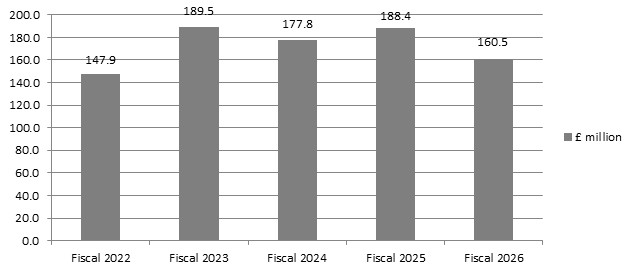
Graphic

Note: Sponsorship revenue does not include revenue generated from our agreement with adidas.

​

29

Table of Contents

The table below highlights some of our global and regional sponsors as of 8 September 2026:

​

Sponsor

  ​ ​ ​

Type of sponsorship

  ​ ​ ​

Product category

Adidas

​

Global Sponsor (Apparel)

​

Sportswear

Qualcomm (Snapdragon)

​

Global Sponsor (Shirt)

​

Technology

Betway

​

Global Sponsor (Training Kit)

​

Betting

SumUp

​

Global Sponsor (Sleeve)

​

Payment technology

Mlily

​

Global Sponsor

​

Mattresses and Pillows

Elevate

​

Global Sponsor

​

Sports Hospitality

Travel Connection

​

Global Sponsor

​

Travel Management

Champions Travel

​

Global Sponsor

​

Travel Management

Konami Digital Entertainment

​

Global Sponsor

​

Football Computer Games

Statsports

​

Global Sponsor

​

Sports Technology

Sokin

​

Global Sponsor

​

Payment Solutions

Doo Group

​

Global Sponsor

​

Online Financial Trading

Apollo Tyres

​

Global Sponsor

​

Tyres

Heineken

​

Global Sponsor

​

Beer

Canon Medical Systems

​

Global Sponsor

​

Medical Scanners

Coca Cola

​

Global Sponsor

​

Soft Drinks

Malaysia Airlines

​

Global Sponsor

​

Airline

DHL

​

Global Sponsor

​

Logistics

Malta Tourism Authority

​

Global Sponsor

​

Destination Partner

Extreme Networks

​

Global Sponsor

​

Wi-Fi

Concha Y Toro

​

Global Sponsor

​

Wine

Paul Smith

​

Global Sponsor

​

Fashion and Formal Wear

Hong Kong Jockey Club

​

Regional Sponsor

​

Racecourses and Private Members Clubs

Maybank (Malaysia)

​

Regional Sponsor

​

Financial Services

Invex (Mexico)

​

Regional Sponsor

​

Financial Services

​

Exhibition games and promotional tours

We conduct exhibition games and promotional tours on a global basis. Our promotional tours enable us to engage with our followers, support the marketing objectives of our sponsors and extend the reach of our brand in strategic markets. The tour matches are broadcast and/or streamed live to subscribers of MUTV. These promotional tours are in addition to our competitive matches and take place during the summer months or during gaps in the football season. Over recent years we have taken part in numerous matches across Asia, the United States of America and Scandinavia.

Commercial income from the Premier League

In addition to revenue from contracts that we negotiate ourselves, we receive revenue from commercial arrangements negotiated collectively by the Premier League on behalf of its member teams. Income from these commercial contracts negotiated by the Premier League is shared equally between the clubs that are to be in the Premier League for the season to which the income relates. Our pro rata income received from the other commercial contracts negotiated by the Premier League is not material to the Company’s results of operations.

Retail, Merchandising, Apparel & Product Licensing

Unlike American teams in the NFL, MLB and NHL, Manchester United retains full control of the use and monetization of its intellectual property rights worldwide in the areas of retail, merchandising, apparel & product licensing.

Our retail, merchandising, apparel & product licensing business includes the sale of sports apparel, training and leisure wear and other clothing featuring Manchester United brands as well as other licensed products. These products are distributed on a global basis through Manchester United branded retail stores and e-commerce platform, as well as through our partners’ wholesale distribution channels.

30

Table of Contents

At the start of the 2023/24 season, we signed a 10-year extension to our agreement with adidas which began on 1 August 2015 and now terminates on 30 June 2035. The minimum guarantee payable over the term of this extended agreement is £750 million per the original term and an additional £900 million due under the extension, resulting in a total of £1,650 million, subject to certain adjustments. Payments due in a particular year may increase dependent on performance in league, domestic and continental competitions, with the maximum possible increase being £4.4 million per annum. The extended contract includes a clause stating that a £10 million deduction will be applied for each year of non-participation in the UEFA Champions League, commencing from the 2025/26 season.

The minimum guarantee from adidas does not include mono-branded licensing rights or the right to create and operate Manchester United branded soccer schools, physical retail channels and e-commerce retail channels, which rights may generate additional revenue for the club. We may also benefit from additional royalty payments upon exceeding a threshold of sales.

The agreement with adidas is subject to reciprocal termination provisions in respect of material breach and insolvency. Adidas may reduce the applicable payments for a year by 50% if the men’s first team is not participating in the English Premier League during that year. In addition, adidas may terminate the agreement by giving one full-season’s notice if the men’s first team is relegated from the English Premier League or if it is otherwise determined that the men’s first team shall not be participating in the Premier League or the top English league.

The Manchester United match jersey and training wear collections are completely redesigned for each season by adidas. The annual launch of the new jerseys is always a much-anticipated day for our global community of followers. The result is a robust adidas collection apparel business.

In addition to our adidas collection, we have a number of premium brands utilizing Manchester United intellectual property for the creation of dual-branded merchandise, where we receive a royalty payment and a sponsorship fee from the partner.

Retail

We operate our flagship retail store at the Old Trafford stadium, which ordinarily trades year-round, and not just on Matchdays. In addition to the Old Trafford store, we have a Manchester United branded retail location in Macau (which is operated under franchise by a third-party licensee).

Merchandising & product licensing

We grant product licenses across a wide range of Manchester United products which are highly sought after by our followers around the world. Under our product licensing agreements, we receive royalties from the sales of specific Manchester United branded products. Under some product licensing agreements, we receive a minimum guaranteed payment from the licensee. The majority of licenses are granted on a non-exclusive rights basis for specific product categories, within a specific country or geographic region.

E-commerce

In October 2024, we launched our new in-house e-commerce platform, in partnership with SCAYLE, aimed at revamping the consumer experience and delivering a best-in-class user experience to our fans. The in-house direct-to-consumer platform provides us with greater control over our branding and merchandise and enhances our ability to further leverage the strength of our global brand. The 2025/26 season was our first full year of trading under this model.

Broadcasting

Central Media

The Premier League and UEFA negotiate their own media rights contracts independently of the participating clubs. In respect of the Premier League, media agreements are typically three or four years in duration and revenue for each season is typically shared between the clubs that are to be in the Premier League for that season and a part-share for the clubs that were relegated from the Premier League in the previous three seasons. After certain deductions approved by the Premier League (for example, donations to “grass roots” football development), the income from the sale of the domestic broadcasting rights is allocated to the current and relegated clubs according to a formula based on, among other things, finishing position in the league and the number of live television appearances. Premier League domestic broadcasting rights entered into a new cycle from the 2025/26 season for a four-year period, increasing the amounts allocated to each club, representing the largest sports media rights deal ever completed in the UK.

31

Table of Contents

In the Champions League, Europa League and Conference League, media agreements are typically three years in duration and are collectively negotiated and entered into by UEFA on behalf of the participating clubs. Each club receives a fixed amount for qualifying for the league stage plus bonuses based on performance. Further fixed amounts are received for participation in the knock-out rounds; knockout play off, round of 16, quarter-final, and semi-final. The runner-up and winner of the competition also earn additional amounts.

For the current 3-year agreement (which commenced in the 2024/25 season) amounts are distributed to each club as follows:

​

​

​

​

​

​

​

​

​

​

​

​

​

Champions League

​

Europa League


Conference League

​

  ​ ​ ​

(“UCL”)

  ​ ​ ​

(“UEL”)

  ​ ​ ​

(“CL”)

​

​

€’million

​

€’million


€’million

Bonus for league stage participation

​

€

18.61

​

€

4.31


€

3.17

Bonus for each league stage win (maximum 8 in UCL and UEL, maximum 6 in UECL)

​

€

2.10

​

€

0.45

​

€

0.40

Bonus for each league stage draw(1)

​

€

0.70

​

€

0.15

​

€

0.13

Bonus share for each position in league stage (maximum 36 i.e. 1st place receives 36 shares)

​

€

0.28

​

€

0.08

​

€

0.03

Bonus for finishing in places 1 to 8

​

€

2.00

​

€

0.60

​

€

0.40

Bonus for finishing in places 9 to 16

​

€

1.00

​

€

0.30

​

€

0.20

Bonus for knockout round play offs participation

​

€

1.00

​

€

0.30

​

€

0.20

Bonus for round of 16 participation

​

€

11.00

​

€

1.75

​

€

0.80

Bonus for quarter-final participation

​

€

12.50

​

€

2.50

​

€

1.30

Bonus for semi-final participation

​

€

15.00

​

€

4.20

​

€

2.50

Runner-up bonus

​

€

18.50

​

€

7.00

​

€

4.00

Winner bonus

​

€

25.00

​

€

13.00

​

€

7.00

Maximum total of the above

​

€

110.99

​

€

32.84

​

€

18.65

(1)In the event of a draw, the non-distributed balance will be aggregated and split among the clubs that won matches at the group stage in proportion to the number of matches won.

In August of each season, the previous season’s Champions League winner and Europa League winner will play in the UEFA Super Cup where each team can expect to receive a further €4.0 million participation fee, with the winner receiving an additional €1.0 million.

Total fixed distribution amounts are €2.437 billion for the Champions League, €565 million for the Europa League and €285 million for the Conference League. Total starting fees, split equally between each of the 36 clubs in the league stage are €670 million for the Champions League, €155 million for the Europa League and €114 million for the Conference League. Total performance fees, as outlined in the table above, are €914 million for the Champions League, €212 million for the Europa League and €114 million for the Conference League.

In addition to the starting fee and performance fee, the 2024/25 competitions saw the introduction of a new Value pillar for the first time. The amounts to be distributed through the value pillar are €853 million for the Champions League, €198 million for the Europa League and €57 million for the Conference League. The value pillar comprises two parts and is calculated as follows:

32

Table of Contents

European part

The participating clubs’ countries are ranked based on their domestic broadcasters’ contribution to the overall media revenue for the whole cycle in that competition. In the individual ranking, the clubs occupy the positions guaranteed by their country ranking. For example, if the country ranked number 1 in the media market value ranking has four clubs in the competition, the clubs of that country will be ranked from 1 to 4 in the club market value ranking. The positions of these four clubs from 1 to 4 will be based on their participation in UEFA club competitions over the previous five seasons. If the country ranked number 2 in the UCL media market ranking has three clubs in the competition, that country’s clubs will be ranked from 5 to 7 in the club market value ranking, and so on. The same procedure will apply to all countries and their clubs down to position 36. A separate participating clubs ranking from 1 to 36 is drawn up on the basis of the five-year UEFA coefficient ranking applicable at the start of the season. The overall ranking of the European part is determined by the average number of ranking points totaled by each club in the two rankings (the lower the points, the higher the rank). For example, the club 4th in the club market value ranking and 6th in the club coefficient ranking would have an average of five points in the cumulative ranking and will be ranked accordingly. The total amount available for the European part of the value pillar is divided into 666 shares (1+2+3+…+35+36). The lowest-ranked team receives one share (e.g. €960k if the European part is 75%). One share is added to every rank, with the highest-ranked team receiving 36 shares.

Non-European part

The non-European part is distributed in each competition based on the ten-year UEFA coefficient ranking of the 36 participating clubs. This ranking does not include bonus points for the titles in past UEFA club competitions (as applied in the 2021–24 cycle). The total amount available for the non-European part of the value pillar is divided into 666 shares (1+2+3+…+35+36). The lowest-ranked team receives one share (e.g. €320k if the non-European part is 25%). One share is added to every rank with the highest-ranked team receiving 36 shares.

Broadcasting revenue including, in some cases, prize money received by us in respect of various competitions, will vary from year to year as a result of variability in the amount of available prize money and the performance of our men’s first team in such competitions.

MUTV

MUTV is our wholly owned global television channel and is broadcast in numerous countries. MUTV broadcasts a wide variety of content which is compelling to our global community of followers, including live first team football from our Men’s and Women’s pre-season fixtures, club news, game highlights, and exclusive “behind the scenes” coverage of our club. Depending on the market, we may offer MUTV as a single product to television distributors for distribution to our fans on a linear television basis or directly to our fans on a D2C basis which allows them to subscribe directly to the club. MUTV is currently available in over 200 markets globally.

Matchday

Our stadium, which we fully own, is called Old Trafford. We believe Old Trafford is one of the most famous and historic stadiums in the world. Football followers travel from all over the world to attend a match at Old Trafford, which is the largest football club stadium in the United Kingdom, with a capacity of 74,500. The stadium has approximately 10,000 executive club seats, including over 120 luxury boxes and 14 suites, providing both pre and post-match hospitality.

We have one of the highest capacity utilizations among English clubs, with an average attendance for our home Premier League matches played in front of a crowd of over 99% for each season since the 1997/98 season. The substantial majority of our tickets are sold to both general admission and executive season ticket holders, the majority of whom pay for all their tickets in advance of the first game of the season.

Other Matchday revenue includes match day catering, event parking, program sales as well as membership, Manchester United Museum revenue and a share of the ticket revenue from away matches in domestic cup competitions. Matchday revenue also includes revenue from other events hosted at Old Trafford, including other sporting events (such as the charity event Soccer Aid and the annual Rugby Super League Grand Final) and entertainment events.

We operate a membership program for our supporters. Individuals who become official members have the opportunity to apply for tickets to all home matches. Adult Official Members pay £37.50 per season to join our Standard Membership or £70 to join the Premium membership scheme.

33

Table of Contents

The Manchester United Museum is located within Old Trafford. It chronicles Manchester United’s 148-year history and houses the club’s most precious artifacts and trophies.

We aim to maximize ticket revenue by enhancing the mix of experiences available at each game and by providing a range of options from general admission tickets to multi-seat facilities and hospitality suites. In particular, we have recently increased overall Matchday revenue by restructuring the composition of our stadium, with an emphasis on developing hospitality facilities which sell at a higher price and improve our margins. As part of this effort, we have invested in new and refurbished multi-seat hospitality suites as well as improvements to our single-seat facilities. We expect our enhancements to our hospitality facilities to continue to be a key driver of our profit from Matchday revenues in future periods.

Our Footballing History

Our men’s team was founded in 1878 as Newton Heath L&YR Football Club and has operated for over 148 years. The team first entered the English First Division, then the highest league in English football, for the start of the 1892/93 season. Our club name changed to Manchester United Football Club in 1902, and we won the first of our 20 English League titles in 1908. In 1910, we moved to Old Trafford, our current stadium.

In the late 1940s, we returned to on-field success, winning the FA Cup in 1948 and finishing within the top four league positions during each of the first five seasons immediately following the Second World War. During the 1950s, we continued our on-field success under the leadership of manager Sir Matt Busby, who built a popular and famous team based on youth players known as the “Busby Babes.”

In February 1958, an airplane crash resulted in the death of eight of our men’s first team players. Global support and tributes followed this disaster as Busby galvanized the team around such popular players as George Best, Bobby Charlton and Denis Law. Rebuilding of the club culminated with a victory in the 1968 European Cup final, becoming the first English club to win this title.

This storied history preceded the highly successful modern era of Manchester United which began in earnest in 1986 when the club appointed Sir Alex Ferguson as manager, and in 1990 we won the FA Cup and began a long period of sustained success winning the Premier League title a record 13 times. In total, we have won a joint-record 20 English League titles, 13 FA Cups, 6 EFL Cups, 3 European/Champions League Cups, 1 Europa League Cup, and 1 FIFA Club World Cup, making us one of the most successful clubs in England.

Since the inception of the Premier League in 1992, our club has enjoyed consistent success and growth with popular players such as Bryan Robson, Ryan Giggs, Eric Cantona, David Beckham, Paul Scholes, Wayne Rooney, Cristiano Ronaldo and Bruno Fernandes. The popularity of these players, our distinguished tradition and history, and the on-field success of our men’s first team have allowed us to expand the club into a global brand with an international follower base.

In 2018, the current iteration of our Women’s team formed, as the Club’s first ever professional Women’s side, and joined the FA Women’s Championship for the 2018-19 season, clinching the title in their first season and securing promotion to the Women’s Super League for the 2019/20 season. The team has contributed key players in the success of the England Lionesses, with three players in the England Women’s squads for both their Euro 2022 and Euro 2025 successes.

In 2024, our Women’s team won their first major trophy, the Women’s FA Cup, defeating Tottenham 4-0 in front of over 75,000 fans at England’s national stadium, Wembley. During the 2025/26 season, we participated in the UEFA Women’s Champions League for the first time, reaching the quarter-final stage.

Our Old Trafford stadium was originally opened on 19 February 1910 with a capacity of approximately 80,000. During the Second World War, Old Trafford was used by the military as a depot, and on 11 March 1941 was heavily damaged by a German bombing raid. The stadium was rebuilt following the war and re-opened on 24 August 1949. The addition of floodlighting, permitting evening matches, was completed in 1957 and a project to cover the stands with roofs was completed in 1959. After a series of additions during the 1960s, 1970s and early 1980s, capacity at Old Trafford reached 56,385 in 1985. The conversion of the stadium to an all-seater reduced capacity to approximately 44,000 by 1992, the lowest in its history. Thereafter, we began to expand capacity throughout the stadium, bringing capacity to approximately 58,000 by 1996, approximately 68,000 by 2000, and over 74,000 in 2006. Currently, Old Trafford seats 74,500 supporters.

34

Table of Contents

The following chart shows the historical success of our men’s and women’s first team by trophies won:

TROPHIES WON

​

​

​

​

​

​

​

​

​

​

​

​

​

​

​

Premier League/Football League

  ​ ​ ​

​

​

​

​

​

​

​

Division One

​

FA Charity/Community Shield

1908

  ​ ​ ​

1965

  ​ ​ ​

1997

  ​ ​ ​

2007

​

1908

  ​ ​ ​

1967

  ​ ​ ​

1996

  ​ ​ ​

2011

1911


1967


1999


2008


1911

​

1977

​

1997

​

2013

1952


1993


2000


2009


1952

​

1983

​

2003

​

2016

1956


1994


2001


2011


1956

​

1990

​

2007

​

​

1957


1996


2003


2013


1957

​

1993

​

2008

​

​

​

​

​

​

​

​

​


1965

​

1994

​

2010

​

​

FA Cup


EFL/Football League Cup

1909


1977


1990


1999

​

​

​

1992

​

2010

​

​

1948


1983


1994


2004

​

​

​

2006

​

2017

​

​

1963


1985


1996


2016

​

​

​

2009

​

2023

​

​

2024

​

​

​

​

​

​

​

​

​

​

​

​

​

​

European Cup/Champions League


Europa League

1968


1999


2008

​

​


2017

FIFA Club World Cup


UEFA Super Cup

2008


1991

European Cup Winners’ Cup


Intercontinental Cup

1991


1999

Women’s FA Cup

​

​

2024

​

​

​

Our Football Operations

Our football operations are primarily comprised of the following activities: our men’s first team, our women’s team, our youth academy, our global scouting networks and other operations such as our sport science, medical and fitness operations at Carrington.

Men’s first team

Our men’s first team plays professional football in the Premier League, domestic cup competitions in England including the FA Cup and EFL Cup and, subject to qualifying, international cup competitions, including the Champions League.

Our men’s first team is led by our Director of Football Jason Wilcox and Head Coach Michael Carrick. They are all supported by a team of over 150 individuals, including coaches and scouts for our men’s first team and youth academy, medical and physiotherapy staff, sports science and performance and match analysis staff.

We currently have 29 professional players in our men’s first team squad and 3 players on loan at other professional football clubs. A further 65 professionally contracted players make up part of our youth academy teams.

Domestic transfers of players between football clubs are governed by the Premier League Rules and the FA Rules, which allow a professional player to enter into a contract with and be registered to play for any club, and to receive a signing-on fee in connection with such contract. Players are permitted to move to another club during the term of their contract if both clubs agree on such transfer. In such circumstances a compensation fee may be payable by the transferee club. FIFA Regulations on the Status and Transfer of Players (the “FIFA Regulations”) govern international transfers of players between clubs and may require the transferee club to distribute 5% of any compensation fee to the clubs that trained the relevant player. In addition, a 4% levy on any such compensation fee would also be payable to the Premier League. The transferor club in an international transfer may also be entitled to receive payment of “training compensation” under the FIFA Regulations when certain conditions are met. If an out-of-contract player (i.e. a player whose contract with a club has expired or has been terminated) wishes to play for another club, the player’s former club will be entitled to a compensation fee if certain conditions are satisfied. For a domestic transfer, these include conditions regarding the player’s age and requiring the former club to offer the player a new contract on terms which are no less favorable than his current contract. For an international transfer, these include conditions regarding the player’s age only. Subject to limited exceptions, transfers of professional players may only take place during one of the “transfer windows,” which for the Premier League is ordinarily a mid-season winter transfer window during the month of January, and a post-season summer transfer window spanning a maximum of twelve weeks throughout June and August. The summer 2026 transfer window began on 15 June 2026 and ran through until 1 September 2026.

35

Table of Contents

Our players enter into contracts with us that follow a prescribed model based on FA and Premier League rules. Players on our men’s first team typically also enter into an image rights agreement with us, which grants us enhanced rights and protections with respect to use of their image. Our men’s first team players generally enter into contracts of between two and five years’ duration, often including a conditional option of a sixth year.

As of 14 September 2026, our men’s first team(1) was comprised of the following players:

Player

  ​ ​ ​

Position

  ​ ​ ​

Nationality

  ​ ​ ​

Age

  ​ ​ ​

Apps(2)

  ​ ​ ​

Caps(3)

Altay Bayindir(4)

​

Goalkeeper

​

Turkish

​

28

​

17

​

12

Karl Darlow

​

Goalkeeper

​

Welsh

​

35

​

—

​

15

Thomas Heaton

​

Goalkeeper

​

English

​

40

​

3

​

3

Senne Lammens

​

Goalkeeper

​

Belgian

​

24

​

38

​

3

Dermot Mee

​

Goalkeeper

​

English

​

23

​

—

​

—

Andre Onana(4)

​

Goalkeeper

​

Cameroonian

​

30

​

102

​

53

Harry Amass

​

Defender

​

English

​

19

​

8

​

—

Diogo Dalot

​

Defender

​

Portuguese

​

27

​

250

​

37

Matthijs de Ligt

​

Defender

​

Dutch

​

27

​

56

​

52

Patrick Dorgu

​

Defender

​

Danish

​

21

​

53

​

14

Ayden Heaven

​

Defender

​

English

​

19

​

25

​

—

Harry Maguire

​

Defender

​

English

​

33

​

275

​

66

Lisandro Martinez

​

Defender

​

Argentinian

​

28

​

114

​

35

Noussair Mazraoui

​

Defender

​

Moroccan

​

28

​

81

​

51

Luke Shaw

​

Defender

​

English

​

31

​

328

​

34

Leny Yoro

​

Defender

​

French

​

20

​

69

​

1

Carlos Baleba

​

Midfielder

​

Cameroonian

​

22

​

—

​

16

Bruno Fernandes

​

Midfielder

​

Portuguese

​

31

​

332

​

94

Jack Fletcher

​

Midfielder

​

English

​

19

​

3

​

—

Tyler Fletcher

​

Midfielder

​

Scottish

​

19

​

2

​

2

Kobbie Mainoo

​

Midfielder

​

English

​

21

​

107

​

14

Mason Mount

​

Midfielder

​

English

​

27

​

73

​

36

Andrey Santos

​

Midfielder

​

Brazilian

​

22

​

4

​

6

Youri Tielemans

​

Midfielder

​

Belgian

​

29

​

5

​

90

Manuel Ugarte

​

Midfielder

​

Uruguayan

​

25

​

69

​

38

Matheus Cunha

​

Forward

​

Brazilian

​

27

​

40

​

28

Amad Diallo

​

Forward

​

Ivorian

​

24

​

97

​

23

Shea Lacey

​

Forward

​

English

​

19

​

6

​

—

Bryan Mbeumo

​

Forward

​

Cameroonian

​

26

​

39

​

32

Marcus Rashford

​

Forward

​

English

​

28

​

430

​

78

Benjamin Sesko

​

Forward

​

Slovenian

​

23

​

37

​

45

Joshua Zirkzee

​

Forward

​

Dutch

​

25

​

77

​

6

(1)The table includes all men’s first team players as of 14 September 2026.
(2)Apps means appearances for our men’s first team through 14 September 2026.
(3)Caps means appearances for senior national football team through 14 September 2026.
(4)Player currently contracted and out on loan for the remainder of the 2026/27 season.

36

Table of Contents

As of 14 September 2026, our women’s first team(1) was comprised of the following players:

Player

  ​ ​ ​

Position

  ​ ​ ​

Nationality

  ​ ​ ​

Age

  ​ ​ ​

Apps(2)

  ​ ​ ​

Caps(3)

Janina Leitzig

​

Goalkeeper

​

German

​

27

​

—

​

—

Safia Middleton-Patel(4)

​

Goalkeeper

​

Welsh

​

21

​

4

​

12

Kayla Rendell(4)

​

Goalkeeper

​

English

​

25

​

—

​

—

Phallon Tullis-Joyce

​

Goalkeeper

​

American

​

29

​

74

​

7

Rebeca Bernal

​

Defender

​

Mexican

​

29

​

1

​

80

Scarlett Hill

​

Defender

​

Welsh

​

18

​

—

​

2

Dominique Janssen

​

Defender

​

Dutch

​

31

​

65

​

136

Maya Le Tissier

​

Defender

​

English

​

24

​

138

​

14

Hanna Lundkvist

​

Defender

​

Swedish

​

24

​

20

​

32

Andrea Medina

​

Defender

​

Spanish

​

22

​

2

​

—

Lucy Newell

​

Defender

​

English

​

19

​

—

​

—

Jayde Riviere

​

Defender

​

Canadian

​

25

​

78

​

56

Fridolina Rolfo

​

Defender

​

Swedish

​

32

​

30

​

108

Anna Sandberg

​

Defender

​

Swedish

​

23

​

55

​

10

Jessica Simpson

​

Defender

​

English

​

21

​

1

​

—

Jessica Anderson

​

Midfielder

​

English

​

18

​

2

​

—

Simi Awujo

​

Midfielder

​

Canadian

​

22

​

44

​

35

Hinata Miyazawa

​

Midfielder

​

Japanese

​

26

​

85

​

62

Ella Toone

​

Midfielder

​

English

​

27

​

206

​

69

Emma Watson

​

Midfielder

​

Scottish

​

20

​

3

​

12

Julia Zigiotti Olme

​

Midfielder

​

Swedish

​

28

​

41

​

58

Celin Bizet Donnum

​

Forward

​

Norwegian

​

24

​

37

​

31

Layla Drury

​

Forward

​

English

​

17

​

7

​

—

Mared Griffiths

​

Forward

​

Welsh

​

19

​

1

​

10

Monica Jusu Bah

​

Forward

​

Swedish

​

23

​

2

​

11

Jess Park

​

Forward

​

English

​

24

​

40

​

26

Lea Schuller

​

Forward

​

German

​

28

​

20

​

87

Elisabeth Terland

​

Forward

​

Norwegian

​

25

​

61

​

50

Ellen Wangerheim

​

Forward

​

Swedish

​

22

​

14

​

5

(1)

This table includes all women’s first team players as of 14 September 2026.

(2)

Apps means appearances for our women’s first team through 14 September 2026.

(3)

Caps means appearances for senior national football team through 14 September 2026.

(4)

Player currently contracted and out on loan.

​

Youth academy

The aim of our youth academy is to create a flow of talent from the youth teams up to our men’s first team and we are proud to have included a home grown player in every matchday squad for the last eighty-six years. Developing academy players is embedded as part of the history and culture of our club, and also means that we can avoid the expense of purchasing players in those positions from the transfer market. As part of their development plan for reaching our first team, our academy players may be loaned to other clubs such that they gain first team experience elsewhere. This also enables these players to enhance their standing and value within the game, and those who do not make it into our men’s first team frequently achieve places at other professional football clubs, often generating income for the club through transfer fees as a result.

Our youth academy program consists of 10 junior teams ranging from under 9s to under 23s. Each team consists of 15 to 30 players, each of whom takes part in an age specific elite player development and games program during the season.

Scouting network

Together with our youth academy, our scouting system is another source of our football talent. Through our scouting system, we recruit players for both our men’s and women’s first teams, as well as for our youth academy. Our scouting system consists of a professional network of staff who scout in general and for specific positions and age groups.

37

Table of Contents

As well as being an established domestic network that allows us to identify and attract the best talent within Manchester and England, we have an enhanced scouting infrastructure, with a presence in all major footballing nations. We believe this will enhance our ability to identify and recruit the best players for our academy and first teams for many years to come.

Training facilities

We have invested significant resources into developing a performance center which contains advanced sports and science equipment. We have highly experienced training staff working at the performance center, where we provide physiotherapy, bio-mechanical analysis and nutritional guidance to our players as part of our drive to create an environment in which each player is able to achieve peak physical condition. We believe the quality of our performance center differentiates our club from many of our competitors. Ahead of the 2025/26 season, we opened a new, state-of-the-art training facility for our men’s first team at our Carrington training centre.

Industry Overview

Football is one of the most popular spectator sports on Earth and global follower interest has enabled the sport to commercialize its activities through sponsorship, retail, merchandising, apparel & product licensing, broadcasting, and Matchday.

Football’s growth and increasing popularity is primarily a product of consumer demand for and interest in live sports, whether viewed in person at the venue or through television and digital media. The sport’s revenue growth has been driven by the appetite among consumers, advertisers and media distributors for access to and association with these live sports events, in particular those featuring globally recognized teams.

The major football leagues and clubs in England, Germany, Spain, Italy and France have established themselves as the leading global entities due to their history as well as their highly developed television and advertising markets. The combination of historical success and media development in the core European markets has helped to drive revenue, which in turn enables those leagues to attract the best players in the world, further strengthening their appeal to followers.

League Structure

Manchester United is a member of the English Premier League, the top league in the United Kingdom, which has been, for a long time, and continues to be, one of the elite leagues in the world.

The Premier League is a private company wholly-owned by its 20 member clubs, with responsibility for the competition, its Rule Book, the centralized broadcasting rights and other commercial rights. The Premier League works proactively with the member clubs and other football authorities domestically and internationally including the Football Association, UEFA and FIFA. Each member club is an independent shareholder of the Premier League and works within the rules of football defined by the various governing bodies.

Governing Bodies

Manchester United operates under three different levels of governing bodies, ranging from worldwide to continental to national jurisdiction.

FIFA is the international governing body of football around the world. Headquartered in Zurich, Switzerland, FIFA is responsible for the regulation, promotion and development of football worldwide and its flagship club competition, the FIFA Club World Cup. All football played at any level must abide by the Laws of the Game, as set forth by FIFA. FIFA’s rules and regulations are decided by the International Football Association Board (“IFAB”) and reviewed on an annual basis. FIFA also sets the international fixture calendar which, along with European and domestic cup dates, takes precedence over the domestic football league.

UEFA is a competition organizer and is responsible for the organization and regulation of cross-border football in Europe. UEFA is primarily known for its European club competitions, the Champions League, the Europa League, and the Conference League. Currently, each year, as reward for league finishing position, the Premier League gets four teams into the Champions League, two into the Europa League and one into the Conference League. An additional two places are awarded to the associations with the best collective performance by their clubs in the previous season, which is based on the total number of club coefficient points obtained by each club from an association divided by the number of participating clubs from that association. For the 2025/26 and 2026/27 seasons, one of these places was awarded to the English Football Association. The representative structures for UEFA are primarily national association-based with the FA representing English football on numerous committees.

38

Table of Contents

The FA is the national governing body for football in England and is responsible for sanctioning competition Rule Books, including the Premier League’s, and regulating on-field matters. The FA also organizes the FA Cup competition, in which the 20 Premier League member clubs participate. The FA is a special shareholder of the Premier League that has the ability to exercise a vote on certain specific issues, but has no role in the day-to-day running of the league. Each year the Premier League submits its rules to the FA for approval and sanction. For the Premier League, the FA ensures that throughout the season the Laws of the Game are applied on the field by officials, clubs and players including on- and off-field discipline. The FA is also involved in refereeing, youth development and the United Kingdom’s largest sports charity, the Football Foundation.

UEFA Club Licensing and Financial Sustainability Regulations

UEFA oversees the Club Licensing and Financial Sustainability Regulations, which are intended to ensure the financial self-sufficiency and sustainability of football clubs by discouraging them from continually operating at a loss, introduce more discipline and rationality on club finances, ensure that clubs settle their liabilities on a timely basis and encouraging long term investment in youth development and sporting infrastructure.

UEFA implemented an updated set of regulations from 1 July 2022 ahead of the commencement of a new cycle and competition format in 2024/25. The “break-even” rule from the previous regulations remains, aimed at encouraging football clubs to operate on the basis of their own revenue with some amendments. Owner investments of equity are allowed only within the acceptable deviation thresholds, as described below. In addition, the regulations provide that football clubs who are granted a UEFA license by their national association, based largely on physical infrastructure and personnel criteria set out by UEFA, and who then qualify for a UEFA club competition based on sporting grounds, will then be required to comply with a “monitoring” process. The monitoring process involves the submission of certain financial information (a break-even test and payables analysis) to the Club Financial Control Body (“CFCB”). The CFCB is part of UEFA’s Organs for the Administration of Justice and comprises a team of independent financial and legal experts. The CFCB will review financial submissions and decide what sanctions, if any, to apply to non-compliant clubs. Any appeal must be made directly to the Court of Arbitration for Sport. Potential sanctions for non-compliance with the FSR regulations include a reprimand/warning, withholding of prize money, fines, prohibition on registering new players for UEFA club competitions and ultimately exclusion from UEFA club competitions.

With respect to the updated break-even assessment, or as it is now known, the “Football Earnings” test, a club must continue to demonstrate that its relevant “football” income is equal to or exceeds its “football” expenses. The permitted level of deficit is limited over the three-year assessment period to €5 million, although a larger deficit of up to €60 million permitted provided the deficit is reduced to the €5 million acceptable deviation by equity contributions from equity participants and/or related parties or the club has existing positive equity in excess of the loss. Any club which exceeds the €60 million limit will automatically be in breach of the break-even rule. Depreciation of tangible fixed assets, youth development, women’s team and community expenditure can be excluded from the break-even test. However, clubs must either have positive equity to the value of the expenditure to be able to exclude them from the calculation or they must be covered by equity contributions from equity participants and/or related parties (in addition to any allowable deficit contributions).

The larger deficit of up to €60 million over the three-year period can be increased to €90 million based on specific financial criteria being met, aimed at benefitting clubs that are financially sustainable.

UEFA’s Financial Sustainability Regulations also see clubs subject to a squad cost rule that restricts spending on player and coach wages, transfers, and agent fees to 70% of club revenues. The rule is a calendar year test which is tested during the season and allows UEFA to identify breaches as they occur. This requirement provides a direct measure between squad costs and income to encourage more performance-related costs and to limit the market inflation of wages and transfer costs of players.

We support the Financial Sustainability Regulations, and do not believe it will adversely impact our ability to continue to attract some of the best players in the coming years as a result of having one of the largest revenues in European football.

Premier League Profitability and Sustainability Rules

The Premier League Profitability and Sustainability Rules were effective from the start of 2013/14 season and first tested during the 2015/16 season, with a break-even rule similar to the break-even test of the UEFA Regulations and aimed at encouraging Premier League clubs to operate within their means. Potential sanctions for non-compliance with the profitability and sustainability regulations include significant fines, player transfer restrictions and Premier League points deductions.

39

Table of Contents

Our most recent break-even assessment under the Premier League Profitability and Sustainability Rules was submitted in March 2026, based on our forecast fiscal year 2026, and our 2025 and 2024 audited financial statements. Our previous assessment was based on fiscal year 2025, 2024 and 2023 audited financial statements. Our submissions demonstrated that we are in compliance with Premier League Profitability and Sustainability Rules. The break-even test is based on a club’s audited pre-tax earnings. If the break-even test results are positive, no further action is required until the next break-even test. If the initial test is negative, a club is re-tested, using the UEFA definition of “adjusted earnings before tax,” which allows credit for depreciation of tangible fixed assets and expenditure on youth development and community programs. If these second test results are negative by £15 million or less, the Premier League board will determine whether the club will be able to pay its liabilities due to other football clubs and in respect of employees. If a club’s losses exceed £15 million but are not more than £105 million, the club’s ownership must provide evidence of sufficient funding to meet its liabilities as they fall due. If these results are negative by more than £105 million, regardless of secured funding, Premier League sanctions will apply. The season ending 2025/26 is the final testing period under these regulations.

From Season 2026/27, the Premier League is replacing this test with a Squad Cost Rule (“SCR”) and Sustainability and Systemic Resilience rules (“SSR”).

The SCR is similar in principle to UEFA but with some key differences. The Premier League will test on a seasonal basis and will operate a green threshold of 85%, below which clubs are compliant, and a red test threshold of 115% which clubs can spend up to. Between 85% and 115% would result in a levy and a reduction of the following season’s red test threshold limit for example if a club is at 100%, they would incur a levy and the following season their maximum threshold would be reduced by 15% to 100%. If a club is above 115%, sporting sanctions are applied. Clubs will submit information in October for monitoring of the test, and will be tested in March so that any sporting sanctions can be applied in-season.

The SSR submission occurs annually in July and includes future financial information. It comprises three tests. The first is a working capital test which tests clubs ability to meet its’ operational obligations. The second is a liquidity test which assesses whether clubs have adequate cash and funding to manage financial shocks and ongoing commitments. The third is a positive equity test, which allows club to adjust for a percentage of the market value of players. Collectively, these tests aim to ensure clubs remain financially sustainable, resilient and solvent over the short, medium and long term.

Independent Football Regulator

The IFR was established in July 2025 by the UK Government and made effective from November 2025. The IFR was given authority to oversee clubs in England’s top five tiers, with the objective of promoting the sustainability of English football, for the benefit of fans and the local communities that football clubs serve. From the 2027/28 season, we will be required to obtain an operating license from the IFR in order to participate in the Premier League and England’s other professional divisions. This operating license contains four standard mandatory license conditions:

-

Financial Plans: Submission of a board approved financial plan;

-

Corporate Governance: Publishing of a board approved Corporate Governance Statement;

-

Fan Consultation: Submission of an annual fan consultation report, outlining how the club has consulted with fans and intends to do so in the coming year; and

-

Annual Declaration: Submission of an annual declaration confirming any matters notified to the IFR over the previous 12 months, or a statement confirming there were no such matters.

Initially, the club is required, and expects, to apply for a provisional license by February 2027 and has up to three years to obtain a full license. The earliest point at which a full license can be obtained is June 2028.

40

Table of Contents

Our Strategy

We aim to build a strong and talented football structure and a world-leading leadership team, to ensure that we are focused on long-term success. Fiscal year 2025 saw significant changes to our management team with the appointment of Omar Berrada as our Chief Executive Officer and Jason Wilcox as Director of Football. These appointments, as well as a number of other changes to our executive leadership and ownership structure, are designed to enable us to enact the following key elements of our football and commercial strategy:

●Transform operational structures and improve efficiency: Across fiscal years 2026, 2025 and 2024, we have implemented plans to transform our corporate structure to create a more lean, agile and financially sustainable football club, while continuing to provide a world class service and product to our valuable commercial partners and global fanbase. The focus of this plan was and continues to be improving the club’s financial sustainability and enhancing the operational efficiency of the business. We believe that this plan provides a platform for Manchester United to remain one of the most popular and successful teams in world sport.
●Continue to invest in our team, facilities and other brand enhancing initiatives: Dating back to our first league championship in 1908 through present day, where we have earned a record number of English League titles, we have enjoyed a rich tradition of football excellence. We believe our many years of on field success coupled with an iconic stadium and high level of fan engagement has driven our leading global brand. Our brand begins with strong on-field performance, and we remain committed to attracting and retaining the highest quality players for our first teams and coaching staff. We remain committed to investing in our facilities and other initiatives to continue our many years of success and enhance our brand globally. We expect these initiatives will continue to be key drivers of our sales, profit and leading brand recognition going forward.
●Expansion and renewal of sponsors: We believe we are well-positioned to continue to secure sponsorships with leading brands and further develop our relationships with existing sponsors. We have historically implemented a proactive approach to identifying, securing and supporting sponsors, focusing on improving our analytical capabilities and effectiveness. We continue to place great emphasis on working with our existing sponsors and maintaining a strong renewals base.
●Further develop our retail, merchandising, apparel & product licensing business: In July 2023, we extended our agreement with adidas with respect to our global technical sponsorship and dual-branded licensing rights, which began on 1 August 2015 and now terminates on 30 June 2035. The agreement with adidas does not include the rights with respect to mono-branded licensing rights or the right to create and operate Manchester United branded soccer schools, physical retail channels and e-commerce retail channels. In the future, we plan to invest to expand our portfolio of product licensees to enhance the range of product offerings available to our followers. Additionally, we may also seek to refine how we segment the different elements of this business. We may also increase our focus on developing these rights more proactively, alone or with other partners.

Fiscal year 2025 saw the launch of our new e-commerce platform, in partnership with SCAYLE. This collaboration spearheads the club’s revamped e-commerce experience and aligns with our ambition to deliver a top-tier direct-to-consumer experience for our global fanbase.

●Exploit digital media opportunities: The rapid shift of media consumption towards digital, mobile and social media platforms has presented us, and continues to present us, with multiple growth opportunities and new revenue streams. Our digital media platforms, applications and social media channels are one of the primary methods by which we engage and transact with our fans around the world and have presented us, and continue to present us, with multiple growth opportunities and new revenue streams. We publish content on a daily basis on to the club’s website and mobile application. Our website provides commercial benefits for our business with greater e-commerce opportunities and more digital inventory for our commercial partners to benefit from.

41

Table of Contents

●Enhance the reach and distribution of our broadcasting rights: We are well-positioned to benefit from any increased value and related growth in club distributions associated with the Premier League, the Champions League and other competitions. Season 2025/26 was the first in a new four-year cycle of Premier League domestic broadcasting rights, in a deal worth a total value of £6.7 billion, a 4% increase in live rights value compared to the previous cycle. This is the largest sports media deal ever completed in the UK. The value of the Premier League’s international broadcasting rights for the three-year period from 2025/26 to 2027/28 represents a 27% uplift on the previous three seasons and across the big five European football leagues, the Premier League’s share of the global rights market is up to 48%, from 40% in the 2019/20 season, demonstrating the continued growth and appeal of the league.

The UEFA club competitions’ latest three-year media rights agreement, which commenced in the 2024/25 season, is worth €4.4 billion per season, compared to €3.5 billion per season under the previous agreement, an increase of 26%.

We believe these contracts underline the continuing demand for, and popularity of, live sports content and football in particular. Unlike other television programming, the unpredictable outcomes of live sports mean that individuals consume sports programming in real time and in full, resulting in higher audiences and increased interest from television broadcasters and advertisers.

Our Competitive Strengths

We believe our key competitive strengths are:

●One of the most successful sports teams in the world: Founded in 1878, Manchester United is one of the most successful sports teams in the world — playing one of the world’s most popular spectator sports. We have won 69 trophies in nine different leagues, competitions and cups since 1908. Our ongoing success is supported by our highly developed football infrastructure and global scouting network.
●A globally recognized brand with a large, worldwide following: Our 148-year history, our success and the global popularity of our sport have enabled us to become, we believe, one of the world’s most recognizable brands and we enjoy the support of our worldwide community of fans and followers. The composition of our follower base is far reaching and diverse, transcending cultures, geographies, languages and socio-demographic groups, and we believe the strength of our brand goes beyond the world of sports.
●Ability to successfully commercialize our brand: The popularity and quality of our globally recognized brand make us an attractive marketing partner for companies around the world. Our community of followers is strong in more emerging markets which enables us to deliver media exposure and growth to our partners in these markets.
●Well established marketing infrastructure driving Commercial revenue growth: We have a large global team dedicated to the development and monetization of our brand and to the sourcing of new revenue opportunities. The team has considerable experience and expertise in sponsorship sales, customer relationship management, marketing execution, advertising support and brand development. In addition, we have developed an increasing range of case studies, covering multiple sponsorship categories and geographies, which in combination with our many years’ experience enables us to demonstrate and deliver an effective set of marketing capabilities to our partners on a global and regional basis. Our team is dedicated to the development and monetization of our brand and to the sourcing of new revenue opportunities.
●Sought-after content capitalizing on the proliferation of digital and social media: We produce content that is followed year-round by our global community of fans and followers. Our content distribution channels are international and diverse, and we actively adopt new media channels to enhance the accessibility and reach of our content. We believe our ability to generate proprietary and exclusive content, which we distribute on our own global platforms as well as via popular third-party social media platforms such as Facebook, Instagram, X, YouTube, TikTok, Sina Weibo and others, constitute an ongoing growth opportunity. We continue to grow our dominant presence on social media and we continue to be the most-followed Premier League club on Instagram, Facebook and X.

Competition

From a business perspective, we compete across a wide variety of industries and within many different markets. We believe our primary sources of competition include, but are not limited to:

●Football clubs: We compete against other football clubs in the Premier League for match attendance and Matchday revenue. We compete against football clubs around Europe and the rest of the world to attract the best players and coaches in the global transfer and football staff markets.

42

Table of Contents

●Television media: We receive media income primarily from the Premier League and UEFA media contracts, each of which is collectively negotiated. Further details of such arrangements are set out in the section headed “— Revenue Sectors — Broadcasting.” On a collective level, and in respect of those media rights we retain, we compete against other types of television programming for broadcaster attention and advertiser income both domestically and in other markets around the world.
●Digital media: We compete against other digital content providers for consumer attention and leisure time, advertiser income and consumer e-commerce activity.
●Merchandise and apparel: We compete against other providers of sports apparel and equipment.
●Sponsorship: As a result of the international recognition and quality of our brand, we compete against many different outlets for corporate sponsorship and advertising income, including other sports and other sports teams, other entertainment and events, television and other traditional and digital media outlets.
●Live entertainment: We compete against alternative forms of live entertainment for the sale of Matchday tickets, including other live sports, concerts, festivals, theatre and similar events.

As a result, we do not believe there is any single market for which we have a well-defined group of competitors.

Seasonality

We experience seasonality in our revenue and cash flow, limiting the overall comparability and predictability of interim financial periods. In any given interim period, our total revenue can vary based on the number of games played in that period, which affects the amount of Matchday and Broadcasting revenue recognized. Similarly, certain of our costs derive from hosting games at Old Trafford, and these costs will also vary based on the number of games played in the period. We historically recognize the most revenue in our second and third fiscal quarters due to the scheduling of matches. However, a strong performance by our men’s first team in UEFA club competitions and domestic cups could result in significant additional Broadcasting and Matchday revenue, and consequently we may also recognize the most revenue in our fourth fiscal quarter in those years. Our cash flow may also vary among interim periods due to the timing of significant payments from major commercial agreements. As such, though we report interim results of operations for our first, second and third fiscal quarters, in managing our business, setting goals and assessing performance we focus primarily on our full-year results of operations rather than our interim results of operations.

Our Fan Engagement Strategy

Our fans are at the centre of the success of our club and brand, and we make this commitment to our fans, aligning with the Premier League’s Fan Engagement Standard:

United with you on and off the pitch; we want you to feel connected to your team, club and community, no matter where you are in the world. We’ll listen to you, improve your experience and reward your loyalty.

We engage with our global community of followers in a variety of ways:

●Premier League games at our home stadium, Old Trafford, played in front of a crowd, have been virtually sold out since the 1997/98 season.
●We undertake exhibition games and promotional tours on a global basis, enabling our worldwide followers to see our team play. These games are in addition to our competitive matches and take place during the summer months or during gaps in the football season. Over recent years we have taken part in numerous matches across Asia, the United States of America and Scandinavia.
●We continue to grow our global network of Official Supporters’ Clubs and now have over 360 clubs across 92 countries.
●We work closely with our Fan Advisory Board and Fan Forum with quarterly meetings taking place and continue to liaise regularly with the independent Manchester United Supporters Trust (“MUST”).

43

Table of Contents

●As of 30 June 2026, we also had more than 297.7 million total social connections. Last year we reported a year-end figure as of 30 June 2025 of 270.6 million total social connections (a 10.0% increase). The following are some examples of our total social connections:
oWe have a very popular brand page on Facebook with approximately 86.9 million connections as of 30 June 2026. In comparison, the New York Yankees had just over 9.2 million connections and the Dallas Cowboys had approximately 8.3 million connections as of 30 June 2026.
oAs of 30 June 2026, our X accounts had more than 43.5 million followers, continuing as the most-followed Premier League club on X.
oWe have over 65.7 million followers on Instagram as of 30 June 2026, a 2.2% increase compared to 30 June 2025.
oAs of 30 June 2026, our YouTube channel had over 11.2 million subscribers, an increase of 10.9% from 30 June 2025.
oWe also have a significant presence on TikTok, with our channel reaching 33.2 million followers as of 30 June 2026, an increase of 12.5% from 30 June 2025.
oWe also have a significant presence on Chinese social media. We continue to be the most-followed football club on Sina Weibo, with 11.3 million followers as of 30 June 2026.
●Our Women’s team’s social media pages are also popular, with 1.7 million Facebook connections, 2.2 million Instagram followers and 1.6 million TikTok followers as of 30 June 2026.
●Our wholly owned, in-house, global television network, MUTV, enables our fans to watch our men’s first-team tour matches live and our Academy teams matches live, as well as exclusively produced original productions and interviews with players and our team manager and the manager’s weekly press conference.

Social Responsibility

Manchester United Foundation

We are committed to a wide-ranging corporate social responsibility program through Manchester United Foundation (the “Foundation”). The associated charity of Manchester United, the Foundation’s vision focuses on a future where all young people are empowered to achieve their goals. The ongoing commitment to young people is so that, despite uncertainty in the world around them, those with whom the Foundation works on a daily basis continue to feel supported, inspired, and positive about their future.

The Foundation’s objectives are to provide young people with access to community and educational outreach programs to help them make positive choices in their lives and develop in the following areas:

-Physical and mental wellbeing (living a happier, healthier life)
-Social wellbeing (bringing a sense of belonging to people and their communities)
-Employability (improving educational and employment outcomes)

The Foundation worked with over 34,000 young people in the 2025/26 season and operates in the areas of highest social deprivation across Greater Manchester, with the aim of ensuring the benefits of these programs are felt by those who need it most. With more than 29,000 sessions delivered last season – culminating in almost 430,000 attendances – the charity’s presence remains strong and visible across local communities.

The Foundation engaged with 72 primary, secondary, and special educational needs schools during the 2025/26 season. It also delivers a further education program in sport alongside the Salford City College Group, and a collaborative degree in Sport and Youth Leadership alongside Manchester Metropolitan University. Working predominantly across all ten boroughs of Greater Manchester, its work also spans to Carlisle, Derbyshire, London, Northern Ireland and most recently the Republic of Ireland. Full-time coaches are based in high schools to work with pupils, feeder primary schools and within the local community to build lasting relationships. Other initiatives, such as Street Reds evening football sessions, girls’ development provision, and a disability and inclusion program, provide free football, alternative activities, qualifications and work experience opportunities for young people across all areas of delivery.

The Foundation fulfils all charitable activity for Manchester United, including managing partnerships with the Sir Bobby Charlton Foundation and the Michael Carrick Foundation and supporting external charities by providing signed items for their own fundraising purposes.

44

Table of Contents

Equality, Diversity and Inclusion

The Club is dedicated to promoting equality, diversity, and inclusion, as reflected in its All Red All Equal initiative, which has led to numerous impactful initiatives and achievements. All Red All Equal represents Manchester United’s dedication to creating a more equitable, sustainable, healthier world. We are deeply committed to embracing diversity, accepting people for who they are, valuing their differences, and promoting a safe and welcoming environment. We take decisive action to protect all participants and maintain zero tolerance for abuse and discrimination.

Our Equality, Diversity and Inclusion (“ED&I”) strategy aims to integrate ED&I across four main areas: Leaders, People, Fans, and Partners. Our ED&I strategy is used to guide our decision-making. We are dedicated to meeting specific diversity goals for gender, race, disability, and LGBTQ+ representation in accordance with the UEFA sustainability goals and applicable law.

We are committed to increasing diversity in our workforce and improving our recruitment practices and executive appointments. We work with a third party firm for our overall recruitment delivery and with organizations such as UA92, the Adidas MerkyFC Project, The FA Leadership Code, the Premier League Coach Diversity Index, Women in Football, Stonewall, the Armed Forces Covenant, Disability Confident scheme, and several Inclusive Executive Search Agencies. These collaborations help us attract talented individuals from underrepresented groups and backgrounds, creating a more inclusive environment. We provide diverse opportunities for aspiring leaders through entry-level apprenticeships, internships, work placements, and work experience programs. We have developed specific development programs club-wide, including for our senior and executive leaders. We are dedicated to creating a truly diverse and inclusive workplace and intend to continue to work tirelessly to make this a reality.

The club has achieved the PLEDIS Advance Level award through the Premier League, highlighting a collective effort to embed ED&I across the organization. The club was commended for its accessibility provisions and overall approach to ED&I. Additionally, the club has signed the Football Leadership Diversity Code to diversify our leadership and coaching teams.

Sustainability

We continue to recognize the importance of reducing our environmental impact and embedding sustainability considerations into decision-making across the Club. Through our Reds Go Green program, the Club has established a long-term framework to coordinate sustainability activities, engage colleagues and stakeholders, and support continuous environmental improvement across operations, products, matchdays, travel and fan engagement.

The annual measurement and assessment of our carbon footprint enables us to develop action plans to reduce emissions, supported by cross-functional governance and collaboration across the Club. This includes taking steps to reduce the amount of waste we generate and divert operational waste from landfill.

We also support the Premier League Environmental Sustainability Commitment and continue to work collaboratively with the League, other clubs, partners, suppliers and industry stakeholders to share best practices and drive positive environmental outcomes across football.

Intellectual Property

We consider intellectual property to be important to the operation of our business and critical to driving growth in our Commercial revenue, particularly with respect to sponsorship revenue. Certain of our commercial partners have rights to use our intellectual property. In order to protect our brand, we generally have contractual rights to approve uses of our intellectual property by our commercial partners.

We consider our brand to be a key business asset and therefore have a portfolio of Manchester United related registered trademarks and trademark applications. The historic emphasis has been on seeking and maintaining trademark registrations for the words “Manchester United” and the club crest, but that emphasis was then extended to cover the devil device and the words “MUTV” and “Man Utd”. We also actively procure copyright protection and copyright ownership of materials such as literary works, logos, photographic images and audio-visual footage.

45

Table of Contents

Enforcement of our trademark rights is important in maintaining the value of the Manchester United brand. There are numerous instances of third parties infringing our trademarks, for example, through the manufacture and sale of counterfeit products. While it would be cost-prohibitive to take action in all instances, our aim is to consistently reduce the number of Manchester United related trademark infringements by carrying out coordinated, cost-effective enforcement action on a global basis following investigation of suspected trademark infringements. Enforcement action takes a variety of forms. In the United Kingdom, we work with enforcement authorities such as trading standards and customs authorities to seize counterfeit goods and to stop the activities of unauthorized sellers. Overseas enforcement action is taken by approved lawyers and investigators. Those lawyers and investigators are instructed to work with, where feasible, representatives of other football clubs and brands that are experiencing similar issues within the relevant country in order that our enforcement action costs can be minimized as far as possible. We also work with the Premier League in respect of infringements that affect multiple Premier League clubs, in particular in Asia. We also take direct legal action against infringers, for example, by issuing cease and desist letters or seeking compensation when we consider that it is appropriate to do so.

In relation to materials for which copyright protection is available (such as literary works, logos, photographic images and audio-visual footage), our current practice is generally to secure copyright ownership where possible and appropriate. For example, where we are working with third parties and copyright protected materials are being created, we generally try to secure an assignment of the relevant copyright as part of the commercial contract. However, it is not always possible to secure copyright ownership. For example, in the case of audio-visual footage relating to football competitions, copyright will generally vest in the competition organizer and any exploitation by Manchester United Football Club of such footage will be the subject of a license from the competition organizer.

As part of our ongoing investment in intellectual property, we have implemented a program to detect intellectual property infringement in a digital environment and which facilitates taking action against infringers.

Real Property

We own or lease property dedicated to our football and other operations. The most significant of our real properties is Old Trafford. The following table sets out our key owned and leased properties. In connection with our revolving facilities, our secured term loan facility and the senior secured notes, several of our owned properties, including Old Trafford are encumbered with land charges as security for all obligations under those agreements, although the Manchester International Freight Terminal and the Carrington training ground are not encumbered.

​

​

​

​

​

​

​

Key properties and locations

  ​ ​ ​

Primary function

  ​ ​ ​

Owned/leased

  ​ ​ ​

Area

​

​

​

​

​

​

(approx. m2)

Old Trafford Football Stadium, Manchester


Football stadium


Owned (freehold)


205,000

Carrington training ground, Carrington, Trafford


Football training facility


Owned (freehold)


440,000

Littleton Road Training Ground, Salford


Football training facility


Owned (freehold)


84,000

The Cliff, Lower Broughton Road, Salford


Football training facility


Owned (freehold)


28,000

Manchester International Freight Terminal, Westinghouse Road Trafford Park, Manchester


Investment properties


Leased (through March 2071)


107,000

Land and buildings at Wharfside, Trafford Park, Manchester


Investment properties


Owned (freehold)


27,100

Land and buildings on the southwest side of Trafford Wharf Road, Manchester


Offices and Car Parking


Owned (freehold)


23,000

Land and buildings at Canalside, Trafford Park, Manchester


Investment properties


Owned (freehold)


10,800

Land and buildings at Castlemore Retail Park, Trafford Park, Manchester


Investment properties


Owned (freehold)


3,969

Land and buildings off John Gilbert Way, Trafford Park, Manchester

​

Owned land and buildings

​

Owned (freehold)

​

106,000

Office space, London


Offices


Leased (through September 2029)


2,828

Office space, Maryland, United States


Offices


Leased (through November 2026)


653

​

The above properties are owned or leased by Manchester United Football Club Limited, apart from Castlemore Retail Park and Manchester International Freight Terminal which are owned or leased by Alderley Urban Investments Limited and the land and buildings off John Gilbert Way that are owned by Alderley Urban Investments II Limited.

In the year ended 30 June 2026, the Group acquired land and buildings off John Gilbert Way, Manchester, for £64.0 million. These acquisitions are held as Freehold Property and were made in conjunction with the Group’s intention to build a proposed new stadium and, until these plans are progressed further, continue to generate rental income.

46

Table of Contents

Legal Proceedings

We are involved in various routine legal proceedings incident to the ordinary course of our business. The outcome of any such claims or proceedings, regardless of the merits, is inherently uncertain. We believe that the outcome of all pending legal proceedings, in the aggregate, will not have a material adverse effect on our business, financial condition or operating results. Further, we believe that the probability of any material losses arising from these legal proceedings is remote.

Subsidiaries

Our directly or indirectly wholly - owned principal subsidiaries are: Red Football Finance Limited, Red Football Holdings Limited, Red Football Shareholder Limited, Red Football Joint Venture Limited, Red Football Limited, Red Football Junior Limited, Manchester United Limited, Alderley Urban Investments Limited, Alderley Urban Investments II Limited, Manchester United Football Club Limited, Manchester United Women’s Football Club Limited, Manchester United Interactive Limited, MU Commercial Holdings Limited, MU Commercial Holdings Junior Limited, MU Finance Limited, MU 099 Limited, MU RAML Limited, MUTV Limited and RAML USA LLC. All of the above are incorporated and operate in England and Wales, with the exception of Red Football Finance Limited which is incorporated in the Cayman Islands and RAML USA LLC which is incorporated in the state of Delaware in the United States.

​

ITEM 4A. UNRESOLVED STAFF COMMENTS

None.

ITEM 5. OPERATING AND FINANCIAL REVIEW AND PROSPECTS

The following discussion should be read in conjunction with our consolidated financial statements and notes included elsewhere in this Annual Report.

Overview

We are one of the most popular and successful sports teams in the world, playing one of the most popular spectator sports on Earth. Through our 148-year heritage we have won 69 trophies, including a joint-record 20 English league titles, enabling us to develop what we believe is one of the world’s leading sports brands and a global community of fans and followers. Our large, passionate community provides Manchester United with a worldwide platform to generate significant revenue from multiple sources, including sponsorship, merchandising, product licensing, broadcasting and matchday. We attract leading global companies such as adidas, Qualcomm and Betway that want access and exposure to our community of followers and association with our brand.

How We Generate Revenue

We operate and manage our business as a single reporting segment — the operation of professional sports teams. We review our revenue through three principal sectors — Commercial, Broadcasting and Matchday — and within the Commercial revenue sector, we have two revenue streams which commercialize our global brand: sponsorship revenue; and retail, merchandising, apparel & product licensing revenue.

Revenue Drivers

Commercial

Commercial revenue is derived from sponsors, commercial partners and retail, merchandising, apparel and licensing. We generate our Commercial revenue with low fixed costs and small incremental costs for each additional sponsor, making our commercial operations a relatively high margin and scalable part of our business and a driver of growth for our overall profitability. Total Commercial revenue for the year ended 30 June 2026 was £317.3 million.

Sponsorship

We commercialize the value of our global brand and community of followers through sponsorship relationships with leading international and regional companies around the globe. To better capitalize on the strength of our brand, we have developed a segmentation sponsorship strategy. See “Item 4. Information on the Company — Revenue Sectors — Commercial – Sponsorship – Our Sponsors” for some of our global and regional sponsors as at 8 September 2026.

47

Table of Contents

A partnership with Manchester United provides corporations with the ability to associate themselves with the highly popular Manchester United brand and a global marketing platform to quickly and effectively amplify their brand and message to their potential customers.

For the 2025/26 season, our shirt sponsor was Qualcomm via their Snapdragon brand and this will continue for the 2026/27 season. Total sponsorship revenue for the year ended 30 June 2026 was £160.5 million.

Retail, Merchandising, Apparel & Product Licensing

Our retail, merchandising, apparel & product licensing business includes the sale of sports apparel, training and leisure wear and other clothing featuring the Manchester United brand as well as other licensed products. These products are distributed on a global basis through Manchester United branded retail stores and e-commerce platform, as well as through our partners’ wholesale distribution channels.

On 21 July 2023, we signed a 10-year extension to our agreement with adidas in respect of global technical sponsorship and dual-branded licensing rights, which began on 1 August 2015 and now terminates on 30 June 2035. See “Item 4. Information on the Company — Revenue Sectors — Commercial – Retail, Merchandising, Apparel & Product Licensing” for additional information regarding our agreement with adidas.

Total retail, merchandising, apparel & product licensing revenue for the year ended 30 June 2026 was £156.8 million.

Broadcasting

We benefit from the distribution of live football content directly from the revenue we receive and indirectly through increased global exposure for our commercial partners. Broadcasting revenue is derived from our share of the global broadcasting rights relating to the Premier League, Champions League and other competitions. The growing popularity of the Premier League and Champions League in international markets and the associated increases in media rights values have been major drivers of the increase in our overall Broadcasting revenue in recent years.

Season 2025/26 was the first in a new four-year cycle of Premier League domestic broadcasting rights, in a deal worth a total value of £6.7 billion, a 4% increase in live rights value compared to the previous cycle. This is the largest sports media deal ever completed in the UK. The value of the Premier League’s international broadcasting rights for the three-year period from 2025/26 to 2027/28 represents a 27% uplift on the previous three seasons and across the big five European football leagues, the Premier League’s share of the global rights market is up to 48%, from 40% in the 2019/20 season, demonstrating the continued growth and appeal of the league.

The UEFA club competitions’ latest three-year media rights agreement which commenced in the 2024/25 season, is worth €4.4 billion per season, compared to €3.5 billion per season under the previous agreement, an increase of 26%.

Our participation in the Premier League and Champions League, Europa League or Conference League (and consequently, our receipt of the revenue generated by these broadcasting contracts) is predicated on the success of our men’s first team, and if our men’s first team fails to qualify for these UEFA club competitions or is relegated from the Premier League in any given season, our Broadcasting revenue for that and subsequent fiscal years will be adversely impacted, partially offset by lower operating expenses. Our men’s first team did not participate in UEFA competitions in the 2025/26 season, but as a result of performance in the Premier League across the 2025/26 season, will compete in the 2026/27 UEFA Champions League.

In addition, MUTV delivers Manchester United programming and other content to territories around the world. MUTV generated total revenue of £5.7 million, £5.8 million and £6.2 million for each of the years ended 30 June 2026, 2025 and 2024, respectively. Total Broadcasting revenue for the year ended 30 June 2026 was £206.8 million.

48

Table of Contents

Matchday

Matchday revenue is a function of the number of games played in front of a crowd at Old Trafford, the size and seating composition of Old Trafford, attendance at our matches and the prices of tickets and hospitality sales. A significant driver of Matchday revenue is the number of home games we play at Old Trafford in front of a crowd, which is ordinarily based on 19 Premier League matches and any additional matches resulting from the success of our men’s first team in the FA Cup, EFL Cup and UEFA club competitions. Our participation in the Premier League and UEFA club competitions (and consequently, our receipt of the revenue generated by these matches) is predicated on the success of our men’s first team, and if our men’s first team fails to qualify for UEFA club competitions or is relegated from the Premier League in any given season, our Matchday revenue for that and subsequent fiscal years will be adversely impacted, partially offset by lower resulting expenses. Average attendance for our home Premier League matches played in front of a crowd has been over 99% for each season since the 1997/98 season, with strong attendance for UEFA club competitions, FA Cup and EFL Cup matches. Total Matchday revenue for the year ended 30 June 2026 was £153.5 million.

Other Factors That Affect Our Financial Performance

Employee benefit expenses

Player and staff compensation comprise the majority of our operating costs. Of our total operating costs, player costs, which include salaries, bonuses, benefits and national insurance contributions are the primary component. Compensation to non-player staff, which includes our manager, coaching staff and key football management, also accounts for a significant portion. Competition from top clubs in the Premier League and Europe has resulted in increases in player and manager salaries, forcing clubs to spend an increasing amount on player and staff compensation, and we expect this trend to continue.

Other operating expenses

Our other operating expenses generally include certain variable costs such as Matchday catering, policing, security stewarding and cleaning at Old Trafford, visitor gateshare for domestic cups, and costs related to the delivery on media and commercial sponsorship contracts. Other operating expenses also include certain fixed costs, such as property costs, maintenance, human resources, training and developments costs, and professional fees. Our other operating expenses are subject to inflationary pressures and as such, can increase over time.

Amortization, depreciation and impairment

We amortize the capitalized costs associated with the acquisition of players’ and key football management staff registrations. These costs are amortized over the period of the employment contract agreed with a player/key football management staff. If a player or key football management staff extends their contract prior to the end of the pre-existing period of employment, the remaining unamortized portion of the acquisition cost is amortized over the period of the new contract. Changes in amortization of the costs of players’ and key football management staff registrations from year to year and period to period reflect additional fees paid for the acquisition of players and key football management staff, the impact of contract extensions and the disposal of registrations. As such, increased players’ and key football management staff registration costs in any period could cause higher amortization in that period and in future periods and have a negative impact on our results of operations. Moreover, to the extent that the player and key football management staff registration costs vary from period to period, this may drive variability in our results of operations. We also amortize the capitalized costs associated with the acquisition of other intangible assets over their estimated useful lives, which is typically between 3 and 10 years.

Depreciation primarily reflects a straight-line depreciation on investments made in property, plant and equipment. Depreciation over the periods under review results primarily from the depreciation of Old Trafford, including incremental improvements made to Old Trafford each season.

Impairment charges arise when an asset’s carrying amount exceeds its recoverable amount. Assets are tested for impairment whenever events or changes in circumstance indicate that the carrying amount may not be recoverable, other than goodwill which is tested for impairment annually.

49

Table of Contents

Exceptional items

Exceptional items are those items that in management’s judgment need to be separately disclosed by virtue of their size, nature or incidence in order to provide a proper understanding of our results of operations and financial condition. Exceptional items are disclosed in Note 6 to the financial statements.

Profit on disposal of intangible assets

We recognize profits or losses on the disposal of intangible assets (primarily players’ registrations) in our statement of profit or loss. Acquisitions and disposals of players are discretionary and we make transfer decisions based upon the requirements of our first teams and the overall availability of players. These requirements and the availability of players, and resulting profits or losses on disposals, may vary from period to period, contributing to variability in our results of operations between periods.

Finance (costs)/income

A key component of our expenses during each of the past three fiscal years has been interest costs and retranslations of our USD borrowings. We expect finance costs to continue to be a significant component of our expenses. See “Item 5.B. Liquidity and Capital Resources — Indebtedness.” Finance costs also include the unwind of the discount recognized on amounts payable or receivable under transfer agreements as appropriate which can vary, depending on transfer activity and interest rates, amongst other factors.

Taxes

During each of the three years ended 30 June 2026, 2025 and 2024, our principal operating subsidiaries were tax residents in the United Kingdom. We were subject to a UK statutory tax rate of 25.0% in the years ended 30 June 2026, 30 June 2025 and 30 June 2024.

Although we are organized as a Cayman Islands exempted company, we report as a US domestic corporation for US federal income tax purposes. As a result, our worldwide income is also subject to US taxes at the US statutory rate (currently 21%).

The current statutory tax rate in the UK is 25% and as a result we expect to utilize UK taxes paid in the calculation of our US tax liability and therefore we do not expect to be double taxed on our income. We expect our future cash tax rate to continue to align more closely to the UK statutory tax rate of 25% now that this rate has taken effect.

We may also be subject to US state and local income (franchise) taxes based generally upon where we are doing business. These tax rates vary by jurisdiction and the tax base. Generally, state and local taxes are deductible for US federal income tax purposes. Furthermore, because most of our subsidiaries are disregarded from their owner for US federal income tax purposes, we are not able to control the timing of much of our US federal income tax exposure. In calculating our liability for US federal income tax, however, certain of our deductible expenses are higher than the amount of those same expenses under UK corporation tax rules, owing to differences in the relevant rules of the two jurisdictions and the related difference in the opening book versus tax basis of our assets and liabilities. Finally, our UK tax liability can be credited against our US federal income tax liabilities, subject to US rules and limitations.

50

Table of Contents

A.

OPERATING RESULTS

The following table shows selected audited consolidated statement of profit or loss data for the years ended 30 June 2026 and 2025. For a discussion of our results of operations for the year ended 30 June 2024, including a year-to-year comparison between the years ended 30 June 2025 and 2024, refer to Part I, Item 5, “Operating and Financial Review and Prospects” in our Annual Report Form 20-F for the year ended 30 June 2025.

​

​

​

​

​

​

​

​

​

​

  ​ ​ ​

Year ended 30 June

​

​

  ​ ​ ​

2026

  ​ ​ ​

2025

  ​ ​ ​

% change

​

Statement of profit or loss data

​

(£’000)

​

(£’000)

​

​

​

Revenue

​

677,649


666,514


1.7

%

Analyzed as:

​

​


​


​

​

Commercial revenue

​

317,329


333,274


(4.8)

%

Broadcasting revenue

​

206,765


172,977


19.5

%

Matchday revenue

​

153,555


160,263


(4.2)

%

Operating expenses

​

(701,895)


(733,686)


4.3

%

Analyzed as:

​

​


​


​

​

Employee benefit expenses

​

(302,025)


(313,256)


3.6

%

Other operating expenses

​

(159,217)


(170,429)


6.6

%

Depreciation and impairment

​

(20,631)


(17,002)


(21.3)

%

Amortization

​

(211,813)


(196,373)


(7.9)

%

Exceptional items

​

(8,209)


(36,626)


77.6

%

Operating loss before profit on disposal of intangible assets

​

(24,246)


(67,172)


63.9

%

Profit on disposal of intangible assets

​

46,881


48,742


(3.8)

%

Operating profit/(loss)

​

22,635


(18,430)


—

​

Finance costs

​

(77,657)


(58,988)


(31.6)

%

Finance income

​

8,037


37,754


(78.7)

%

Net finance costs

​

(69,620)


(21,234)


(227.9)

%

Loss before income tax

​

(46,985)


(39,664)


(18.5)

%

Income tax credit

​

4,031


6,641


(39.3)

%

Loss for the year

​

(42,954)


(33,023)


(30.1)

%

​

Revenue

Total revenue for the year ended 30 June 2026 was £677.6 million, an increase of £11.1 million, or 1.7%, compared to the year ended 30 June 2025, as a result of an increase in revenue in our Broadcasting revenue sector, partially offset by a decrease in our Commercial and Matchday revenue sectors, as described below.

Commercial revenue

Commercial revenue for the year ended 30 June 2026 was £317.3 million, a decrease of £16.0 million, or 4.8%, over the year ended 30 June 2025.

●Sponsorship revenue for the year ended 30 June 2026 was £160.5 million, a decrease of £27.9 million, or 14.8%, over the year ended 30 June 2025, primarily due to the Club’s training kit sponsorship agreement with Tezos in the prior year, which ended before the start of the 2025/26 season; and
●Retail, merchandising, apparel & product licensing revenue for the year ended 30 June 2026 was £156.8 million, an increase of £11.9 million, or 8.2%, over the year ended 30 June 2025, due to the current year including a full year of our in-house e-commerce model in partnership with SCAYLE, compared to only ten months in the prior year, combined with a one-off credit during the year ended 30 June 2026 relating to amended terms of this model.

51

Table of Contents

Broadcasting revenue

Broadcasting revenue for the year ended 30 June 2026 was £206.8 million, an increase of £33.9 million, or 19.6%, over the year ended 30 June 2025, primarily due to the men’s first team finishing 3rd in the Premier League, compared to 15th in the prior year, partially offset by the men’s first team not participating in UEFA competition in the current year, compared to reaching the UEFA Europa League final in the prior year.

Matchday revenue

Matchday revenue for the year ended 30 June 2026 was £153.5 million, a decrease of £6.8 million, or 4.2%, over the year ended 30 June 2025, due to the men’s first team playing ten fewer home matches in the current year compared to the prior year, partially offset by strong demand for our general admission and hospitality offerings.

Total operating expenses

Total operating expenses (defined as employee benefit expenses, other operating expenses, depreciation and impairment, amortization and exceptional items) for the year ended 30 June 2026 were £701.9 million, a decrease of £31.8 million, or 4.3%, over the year ended 30 June 2025. This decrease is explained by category below.

Employee benefit expenses

Employee benefit expenses for the year ended 30 June 2026 were £302.0 million, a decrease of £11.2 million, or 3.6%, over the year ended 30 June 2025. This is primarily due to changes in the make-up of the men’s first team squad, combined with savings associated with headcount reduction programs implemented in the prior two fiscal years.

Other operating expenses

Other operating expenses for the year ended 30 June 2026 were £159.2 million, a decrease of £11.2 million, or 6.6%, over the year ended 30 June 2025. This is primarily due to savings associated with the club’s drive to improve operating efficiency, combined with reduced matchday costs as a result of hosting ten fewer home matches in the current season compared to the prior year.

Depreciation and impairment

Depreciation and impairment for the year ended 30 June 2026 amounted to £20.6 million, an increase of £3.6 million, or 21.3%, over the year ended 30 June 2025.

Amortization

Amortization, primarily of registrations, for the year ended 30 June 2026 was £211.8 million, an increase of £15.4 million, or 7.9%, over the year ended 30 June 2025, primarily due to continued investment in the first team playing squad. The unamortized balance of registrations as of 30 June 2026 was £452.3 million, of which £156.1 million is expected to be amortized in the year ending 30 June 2027. The remaining balance is expected to be amortized over the four years ending 30 June 2031. This does not take into account player acquisitions after 30 June 2026, which would have the effect of increasing the amortization expense in future periods, nor does it consider player departures subsequent to 30 June 2026, which would have the effect of decreasing future amortization charges. Furthermore, any contract renegotiations would also impact future charges.

Exceptional items

Exceptional items for the year were a cost of £8.2 million, comprising costs associated with the departure of former men’s first team head coach Ruben Amorim, along with final costs in relation to the Club’s restructuring programs. The charge also includes additional contributions we expect to pay towards the Football League pension scheme deficit.

Exceptional items for the year ended 30 June 2025 were a cost of £36.6 million, as a result of compensation for loss of office costs incurred in relation to the restructuring of the club’s operations, as well as costs associated with the departure of former men’s first team head coach Erik ten Hag and various members of football staff.

52

Table of Contents

Profit on disposal of intangible assets

Profit on disposal of intangible assets for the year ended 30 June 2026 was £46.9 million, compared to a profit of £48.7 million for the year ended 30 June 2025. The profit on disposal of intangible assets for the year ended 30 June 2026 primarily related to the disposals of Garnacho (Chelsea) and Hojlund (Napoli), combined with additional fees associated with disposals made in previous years. The profit on disposal of intangible assets for the year ended 30 June 2025 primarily related to the disposal of McTominay (Napoli), Wan-Bissaka (West Ham), Greenwood (Olympique Marseille) and Hannibal (Burnley).

Net finance costs

Net finance costs for the year ended 30 June 2026 were £69.6 million, compared to net finance costs of £21.2 million for the year ended 30 June 2025. This is primarily due to a large unrealized foreign exchange loss on unhedged USD borrowings of £10.0 million in the current year, compared to a large unrealized foreign exchange gain of £22.9 million in the prior year.

Income tax

The income tax credit for the year ended 30 June 2026 was £4.0 million, compared to £6.6 million for the year ended 30 June 2025. In both years the credit arose primarily as a result of deferred tax assets recognized in respect of losses arising in the respective year.

Safe Harbor

See the Section entitled “Forward-Looking Statements” at the beginning of this Annual Report.

B.

LIQUIDITY AND CAPITAL RESOURCES

Our primary cash requirements stem from the payment of transfer fees for the acquisition of players’ registrations, capital expenditure for the improvement of facilities at Old Trafford and Carrington, payment of interest on our borrowings, employee benefit expenses, other operating expenses and, for certain periods, dividends on our Class A ordinary shares and Class B ordinary shares. Historically, we have met these cash requirements through a combination of operating cash flow, proceeds from transfer fees from the sale of players’ registrations, drawdowns on our revolving facility and through the sale of our Class A and Class B ordinary shares. Our existing borrowings primarily consist of our secured term loan facility, our senior secured notes and outstanding drawdowns under our revolving facility. We have US dollar revenues that we use to hedge our US dollar borrowing exposure. We continue to evaluate our financing options and may, from time to time, take advantage of opportunities to repurchase or refinance all or a portion of our existing indebtedness to the extent such opportunities arise.

Our business ordinarily generates a significant amount of cash from our Matchday revenues and commercial contractual arrangements at or near the beginning of our fiscal year, with a steady flow of other cash received throughout the fiscal year. In addition, we ordinarily generate a significant amount of our cash through advance receipts, including season tickets (which include general admission season tickets and seasonal hospitality tickets), most of which are received prior to the end of June for the following season. Our Broadcasting revenues from the Premier League and UEFA are paid periodically throughout the season, with primary payments made in late summer, December, January and the end of the football season. Our sponsorship and other commercial revenue tends to be paid either quarterly or annually in advance. However, while we typically have a high cash balance at the beginning of each fiscal year, this is largely attributable to deferred revenue, the majority of which falls under current liabilities in the consolidated balance sheet, and this deferred revenue is unwound through the statement of profit or loss over the course of the fiscal year. Over the course of a year, we use our cash on hand to pay employee benefit expenses, other operating expenses, interest payments and other liabilities as they become due. This typically results in negative working capital movement at certain times during the year. In the event it ever became necessary to access additional operating cash, we also have access to cash through our revolving facility. As of 30 June 2026, we had £110 million of outstanding loans under our revolving facility.

Pursuant to our contract with adidas, which began in August 2015 and was extended in July 2023, the minimum guarantee payable by adidas over the life of the extended agreement to June 2035 is £1,650 million, being £750 million per the original term, plus £900 million per the extension, subject to certain adjustments. See “Item 4. Information on the Company — Revenue Sectors — Commercial – Retail, Merchandising, Apparel & Product Licensing” for additional information regarding our agreement with adidas.

We also maintain a mixture of long-term debt and capacity under our revolving facility so that we have sufficient funds available for short-term working capital requirements and for investment in the playing squad and other capital projects, including those related to our ambition to build a proposed new stadium.

53

Table of Contents

Our cost base is more evenly spread throughout the fiscal year than our cash inflows. Employee benefit expenses and fixed costs constitute the majority of our cash outflows and are generally paid evenly throughout the 12 months of the fiscal year.

In addition, transfer windows for acquiring and disposing of registrations occur in January and the summer. During these periods, we may require additional cash to meet our acquisition needs for new players and we may generate additional cash through the sale of existing registrations. Depending on the terms of the agreement, transfer fees may be paid or received by us in multiple installments, resulting in deferred cash paid or received. If we seek to acquire players with values substantially in excess of the values of players we seek to sell, we may be required to utilize cash available from our revolving facility to meet our cash needs.

Acquisition and disposal of registrations also affects our trade receivables and payables, which affects our overall working capital. Our trade receivables include accrued revenue from sponsors as well as transfer fees receivable from other football clubs, whereas our trade payables include transfer fees and other associated costs in relation to the acquisition of registrations.

Capital expenditures at Old Trafford

Our stadium, Old Trafford, remains one of our key assets and a significant part of the overall experience we provide to our followers. Old Trafford has been our home stadium since 1910 and has undergone significant changes over the years. To maintain the quality of service, enhance the fan experience and increase Matchday revenue, we continually invest in the refurbishment and regeneration of Old Trafford. Following a substantial development prior to the 2006/07 season, we expanded seating capacity at Old Trafford from approximately 68,000 to 74,240. The current capacity of Old Trafford is 74,500. In addition, we have continued to invest in improving hospitality suites and office and catering facilities through refurbishment programs.

We record these investments as capital expenditures. Capital expenditure at Old Trafford was £7.7 million, £13.1 million and £8.2 million for the years ended 30 June 2026, 2025 and 2024, respectively.

In addition, we spent approximately £14.7 million, £42.7 million and £4.8 million for the years ended 30 June 2026, 2025 and 2024 respectively, at Carrington, our training facility. The significant increase in the year ended 30 June 2025 is due to the investment in our new, world-class men’s first team facility, which opened in August 2025.

The year ended 30 June 2026 also includes capital expenditure of £63.5 million for freehold property related to our ambition to build a proposed new stadium, with no comparative expenditure in the years ended 30 June 2025 and 30 June 2024.

Digital media capital expenditure

We intend to continue investing in our digital media assets, including our website, mobile application and digital media capabilities.

54

Table of Contents

Net intangible asset – registrations capital expenditure

Our average net intangible asset – registrations capital expenditure over the last 5 years has been a cash outflow of £146.1 million per fiscal year. However, net intangible asset – registrations capital expenditure has varied significantly from period to period, as shown in the table below, and while we expect that trend to continue, competition for talented players may force clubs to spend increasing amounts on player registration fees. We may explore new player acquisitions in connection with future transfer periods that may materially increase the amount of our net intangible asset – registrations capital expenditure. Actual cash used or generated from net intangible asset – registrations capital expenditure is recorded on our statement of cash flow under net cash outflow or inflow from investing activities.

Last 5 Years Net Intangible Asset – Registrations Capital Expenditure(1)
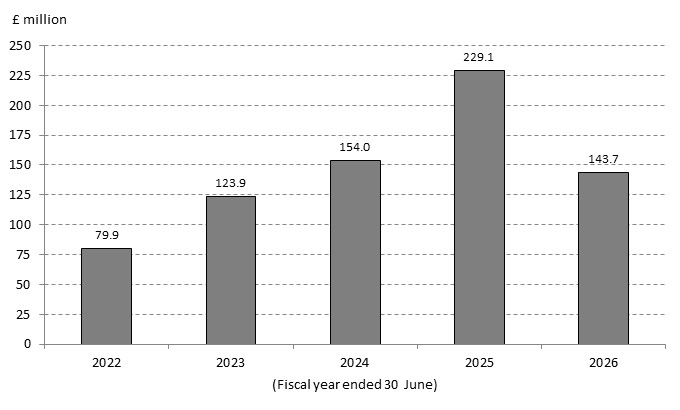
Graphic

(1)

The net intangible asset – registrations capital expenditure data presented is the sum of all cash used for purchases of intangible assets – registrations and all cash generated from sales of intangible assets – registrations.

Working Capital

Our directors confirmed that, as of the date of this Annual Report, after taking into account our current cash and cash equivalents and our anticipated cash flow from operating and financing activities, we believe that we have sufficient working capital for our present requirements for at least the next 12 months.

Commitments

As of 30 June 2026, the Group had contracted capital expenditure relating to property, plant and equipment amounting to £0.5 million and to other intangible assets amounting to £nil. These amounts are not recognized as liabilities.

​

55

Table of Contents

Cash Flow

The following table summarizes our cash flows for the years ended 30 June 2026 and 2025:

​

​

​

​

​

​

​

  ​ ​ ​

2026

  ​ ​ ​

2025

​

​

(in £ millions)

Cash flow from operating activities

​

  ​


  ​

Cash generated from operations


216.2


107.5

Interest paid


(38.9)


(37.2)

Interest received


2.1


3.4

Tax paid


(0.7)


(1.0)

Net cash inflow from operating activities


178.7


72.7

Cash flow from investing activities


​


​

Payments for property, plant & equipment


(85.9)


(44.7)

Payments for intangible assets


(292.3)


(278.8)

Proceeds from sale of intangible assets


148.6


48.8

Net cash outflow from investing activities


(229.6)


(274.7)

Cash flow from financing activities


​


​

Proceeds from revolving facility


225.0


230.0

Repayment of revolving facility

​

(275.0)

​

(100.0)

Proceeds from refinanced senior secured notes

​

414.4

​

—

Repayment of refinanced senior secured notes

​

(320.2)

​

—

Proceeds from issue of shares

​

—

​

80.0

Principal elements of lease payments


(1.7)


(0.4)

Debt issue costs paid

​

(7.2)

​

—

Net cash inflow from financing activities


35.3


209.6

Net (decrease)/increase in cash and cash equivalents(1)


(15.6)


7.6

(1)

Excluding the effects of exchange rate ranges on cash and cash equivalents

​

Net cash inflow from operating activities

Cash generated from operations represents our operating results and net movements in our working capital. Our working capital is generally impacted by the timing of cash received from the sale of tickets and hospitality and other matchday revenues, broadcasting revenue from the Premier League and UEFA and commercial revenue. Cash generated from operations for the year ended 30 June 2026 was £216.2 million, an increase of £108.7 million from £107.5 million for the year ended 30 June 2025.

Additional changes in net cash inflow from operating activities generally reflect our finance costs. We currently pay fixed rates of interest on our senior secured notes and variable rates of interest on our secured term loan facility and revolving facility. Interest paid was £38.9 million for the year ended 30 June 2026, broadly in line with the year ended 30 June 2025. Interest on our senior secured notes is normally paid semi-annually, in June and December.

Net cash inflow from operating activities was £178.7 million for the year ended 30 June 2026, an increase of £106.0 million compared to a net cash inflow of £72.7 million for the year ended 30 June 2025.

Net cash outflow from investing activities

Capital expenditure for the acquisition of intangible assets as well as for improvements to property, principally at Old Trafford and Carrington, are funded through cash flow generated from operations, proceeds from the sale of intangible assets and, if necessary, from our revolving facility. Capital expenditure on the acquisition, disposal and trading of intangible assets tends to vary significantly from year to year depending on the requirements of our men’s first team, overall availability of players, our assessment of their relative value and competitive demand for players from other clubs. By contrast, capital expenditure on the purchase of property, plant and equipment tends to remain relatively stable as we continue to make improvements at Old Trafford and Carrington. The year ended 30 June 2025 saw unusually high capital expenditure, as part of our investment in a new, world class, men’s first team facility at our Carrington training centre.

56

Table of Contents

Net cash outflow from investing activities for the year ended 30 June 2026 was £229.6 million, a decrease of £45.1 million from £274.7 million for the year ended 30 June 2025. This decrease was primarily due to cash received from transfer receivable financing transactions implemented in the year ended 30 June 2026, combined with stronger contractual transfer receivable cash flows received, partly offset by expenditure in relation to the acquisition of land in conjunction with our ambition to build a proposed new 100,000 seater stadium.

Net cash inflow from financing activities

Net cash inflow from financing activities for the year ended 30 June 2026 was £35.3 million compared to net cash inflow of £209.6 million for the year ended 30 June 2025. This is due to net proceeds, including issue costs, of £89.5 million arising from the refinancing of our Senior Secured Notes, partially offset by net repayments on our revolving facility of £50.0 million.

During the year ended 30 June 2025, we received £80.0 million of proceeds from the issuance of Class A and Class B ordinary shares in connection with the Trawlers Transaction, in addition to a net drawdown on our revolving facility of £130.0 million.

Indebtedness

Our primary sources of indebtedness consist of our senior secured notes, our secured term loan facility and our revolving facility. As part of the security for our senior secured notes, our secured term loan facility and our revolving facility, substantially all of our assets are subject to liens and mortgages.

Description of principal indebtedness

Senior secured notes

On 10 June 2026, our wholly-owned subsidiary, Manchester United Football Club Limited, issued $550.0 million in aggregate principal amount of 5.36% senior secured notes (which we refer to throughout this Annual Report as the “senior secured notes”). As of 30 June 2026, the sterling equivalent of £409.0 million (net of unamortized issue costs of £5.5 million) was outstanding. The outstanding principal amount was $550.0 million. The senior secured notes mature on 10 June 2031.

The senior secured notes are guaranteed by Red Football Limited, Red Football Junior Limited, Manchester United Limited and MU Finance Limited and secured against substantially all of the assets of those entities and Manchester United Football Club Limited. These entities are wholly-owned subsidiaries of Manchester United plc.

The note purchase agreement governing the senior secured notes contains a financial maintenance covenant requiring us to maintain consolidated profit for the period before depreciation, amortization of, and profit/(loss) on disposal of, intangible assets, exceptional items, net finance costs, and tax (“EBITDA”) of not less than £125 million for each 12 month testing period. We are able to claim certain dispensations from complying with the consolidated EBITDA floor including up to twice (in non-consecutive financial years) during the life of the senior secured notes if we fail to qualify for the first round group stages (or its equivalent from time to time) of the Champions League. The impact of IFRS 16 is excluded for the purpose of covenant compliance testing. The covenant is tested on a quarterly basis and we were in compliance with the covenant for each quarter throughout the financial year.

The note purchase agreement governing the senior secured notes contains events of default typical for securities of this type, as well as customary covenants and restrictions on the activities of Red Football Limited and each of Red Football Limited’s subsidiaries, including, but not limited to, the incurrence of additional indebtedness; dividends or distributions in respect of capital stock or certain other restricted payments or investments; entering into agreements that restrict distributions from restricted subsidiaries; the sale or disposal of assets, including capital stock of restricted subsidiaries; transactions with affiliates; the incurrence of liens; and mergers, consolidations or the sale of substantially all of Red Football Limited’s assets. The covenants in the note purchase agreement governing the senior secured notes are subject to certain thresholds and exceptions described in the note purchase agreement governing the senior secured notes.

The senior secured notes may be redeemed in part, in an amount not less than 5% of the aggregate principal amount of the senior secured notes then outstanding, or in full, at any time at 100% of the principal amount plus a “make-whole” premium of an amount equal to the discounted value (based on the US Treasury rate) of the remaining interest payments due on the senior secured notes up to 10 June 2031. There is no “make-whole” premium payable if the senior secured notes are redeemed after 10 June 2029, subject to certain conditions being met.

57

Table of Contents

The senior secured notes were refinanced in June 2026, increasing the principal amount from $425.0 million to $550.0 million and extending the maturity date from 25 June 2027 to 10 June 2031. As part of this transaction, proceeds were received in relation to the new senior secured notes on 10 June 2026 and the previous senior secured notes were repaid in full on 12 June 2026. We did not incur any early repayment charges or make-whole payments. Further detail is provided in the Consolidated Statement of Cash Flows, included in this annual report.

Secured term loan facility

Our wholly-owned subsidiary, Manchester United Football Club Limited, has a secured term loan facility with Bank of America Europe Designated Activity Company as lender. As of 30 June 2026, the sterling equivalent of £168.6 million (net of unamortized issue costs of £0.9 million) was outstanding. The outstanding principal amount was $225.0 million. The remaining balance of the secured term loan facility is repayable on 10 June 2031, although the Group has the option to repay the secured term loan facility at any time before then. On 10 June 2026, the maturity of the secured term loan facility was extended from 6 August 2029 to 10 June 2031, consistent with the senior secured notes.

Loans under the secured term loan facility bear interest at a rate per annum equal to the US dollar Secured Overnight Financing Rate (“SOFR”) plus a credit adjustment spread (provided that if the rate is less than zero, SOFR shall be deemed to be zero) plus the applicable margin. The applicable margin, if no event of default has occurred and is continuing, means the following:

​

​

​

​

​

  ​ ​ ​

Margin %

Total net leverage ratio (as defined in the secured term loan facility agreement)

  ​ ​ ​

(per annum)

Greater than 3.5


1.75

Greater than 2.0 but less than or equal to 3.5


1.50

Less than or equal to 2.0


1.25

​

While any event of default is continuing, the applicable margin shall be the highest level set forth above.

Our secured term loan facility is guaranteed by Red Football Limited, Red Football Junior Limited, Manchester United Limited, MU Finance Limited and Manchester United Football Club Limited and secured against substantially all of the assets of those entities. These entities are wholly-owned subsidiaries of Manchester United plc.

The secured term loan facility contains a financial maintenance covenant consistent with the senior secured notes as detailed above.

Our secured term loan facility contains events of default typical in facilities of this type, as well as typical covenants including restrictions on incurring additional indebtedness, paying dividends or making other distributions or repurchasing or redeeming our stock, selling assets, including capital stock of restricted subsidiaries, entering into agreements restricting our subsidiaries’ ability to pay dividends, consolidating, merging, selling or otherwise disposing of all or substantially all of our assets, entering into sale and leaseback transactions, entering into transactions with our affiliates and incurring liens. Certain events of default and covenants in the secured term loan facility are subject to certain thresholds and exceptions described in the agreement governing the secured term loan facility.

Revolving facility

In July 2025, we amended our revolving facilities by consolidating all revolving facilities into a single syndicate, provided by our existing lenders, Bank of America, NatWest and Santander, alongside HSBC as a new entrant (the “new revolving facility”). The new revolving facility expires on 31 December 2029, with maximum capacity of £400.0 million, following a further upsize of £50.0 million in February 2026. As of the date of this report, we had £200.0 million in outstanding loans and £200.0 million in borrowing capacity under our new revolving facility.

58

Table of Contents

Loans under the new revolving facility attract interest at a rate per annum equal to SONIA plus a credit adjustment spread (or in relation to a loan in Euros, EURIBOR, or in relation to a loan in USD, SOFR plus a credit adjustment spread) (provided that if that rate is less than zero, SONIA or, as the case may be, EURIBOR or SOFR (as applicable) shall be deemed to be zero) plus the applicable margin. The applicable margin, if no event of default has occurred and is continuing, means the following:

​

​

​

​

  ​ ​ ​

Margin %

Total net leverage ratio (as defined in the new revolving facility agreement)

​

(per annum)

Greater than 3.5


1.75

Greater than 2.0 but less than or equal to 3.5


1.50

Less than or equal to 2.0


1.25

​

While any event of default is continuing, the applicable margin shall be the highest level set forth above.

A commitment fee is payable on the available but undrawn amount of the new revolving facility, at a rate equal to 35% per annum of the applicable margin.

Our new revolving facility is guaranteed by Red Football Limited, Red Football Junior Limited, Manchester United Limited, MU Finance Limited and Manchester United Football Club Limited and secured against substantially all of the assets of those entities. These entities are wholly-owned subsidiaries of Manchester United plc.

In addition to the general covenants described below, the new revolving facility contains a financial maintenance covenant consistent with the senior secured notes as detailed above.

Our new revolving facility contains events of default typical in facilities of this type, as well as typical covenants including restrictions on incurring additional indebtedness, paying dividends or making other distributions or repurchasing or redeeming our stock, making investments, selling assets, including capital stock of restricted subsidiaries, entering into agreements restricting our subsidiaries’ ability to pay dividends, consolidating, merging, selling or otherwise disposing of all or substantially all of our assets, entering into sale and leaseback transactions, entering into transactions with our affiliates and incurring liens. Certain events of default and covenants in the new revolving facility are subject to certain thresholds and exceptions described in the agreement governing the new revolving facility.

As of 30 June 2026, we were in compliance with all covenants under our debt facilities.

Off balance sheet arrangements

Transfer fees payable

Under the terms of certain contracts with other football clubs in respect of player transfers, additional amounts would be payable by us if certain specific performance conditions are met. As noted above, we estimate the value of any contingent consideration at the date of acquisition based on the probability of conditions being met and monitor this on an ongoing basis. The maximum additional amount that could be payable as of 30 June 2026 is £122.8 million.

Transfer fees receivable

Similarly, under the terms of contracts with other football clubs for player transfers, additional amounts would be payable to us if certain specific performance conditions are met. In accordance with the recognition criteria for contingent assets, such amounts are only disclosed by the Company when probable and recognized when virtually certain. As of 30 June 2026, we believe receipt of £nil to be probable.

Other commitments

In the ordinary course of business, we enter into capital commitments. These transactions are recognized in the consolidated financial statements in accordance with IFRS, as issued by the IASB, and are more fully disclosed therein.

As of 30 June 2026, we had not entered into any other off-balance sheet transactions.

59

Table of Contents

C.

RESEARCH AND DEVELOPMENT, PATENTS AND LICENSES, ETC.

We do not currently have, and have not had during the past three years, any research and development policies in place. See “Item 4. Information on the Company – Intellectual Property” for information about our intellectual property and licenses.

D.

TREND INFORMATION

Other than as disclosed elsewhere in this Annual Report, we are not aware of any trends, uncertainties, demands, commitments or events since 30 June 2026 that are reasonably likely to have a material adverse effect on our revenues, income, profitability, liquidity or capital resources, or that would cause the disclosed financial information to be not necessarily indicative of future operating results or financial conditions.

E.

CRITICAL ACCOUNTING ESTIMATES

The preparation of our financial information requires management to make estimates, judgments and assumptions concerning the future. Estimates, judgments and assumptions are continually evaluated and are based on historical experience and other factors, including expectations of future events that are believed to be reasonable under the circumstances. The resulting accounting estimates will, by definition, seldom equal the related actual results.

For a summary of all of our significant accounting policies, see Note 2 to our audited consolidated financial statements as of 30 June 2026 and 30 June 2025 and for the years ended 30 June 2026, 2025 and 2024 included elsewhere in this Annual Report.

We believe that the following accounting policies reflect the most critical estimates and assumptions and are significant to the consolidated financial statements.

We do not consider there to be any significant judgments in the preparation of the consolidated financial statements.

Recognition of revenue

Commercial

Commercial revenue (whether settled in cash or value in kind) comprises revenue receivable from the exploitation of the Manchester United brand through sponsorship and other commercial agreements, including minimum guaranteed revenue, revenue receivable from retailing Manchester United branded merchandise in the United Kingdom and licensing the manufacture, distribution and sale of such goods globally, and fees for the Manchester United men’s first team undertaking tours.

A number of our commercial contracts contain significant estimates in relation to our allocation and recognition of revenue in line with performance obligations. Minimum guaranteed revenue is recognized over the term of the commercial agreement in line with the performance obligations included within the contract and based on the sponsorship benefits enjoyed by the individual sponsor. In instances where the sponsorship rights remain the same over the duration of the contract, revenue is recognized as performance obligations are satisfied evenly over time (i.e. on a straight-line basis).

In July 2023, we signed a 10-year extension to our agreement with adidas which began in August 2015 and now terminates in June 2035. The minimum guarantee payable over the term of this extended agreement is £750 million per the original term and an additional £900 million due under the extension, resulting in a total of £1,650 million, subject to certain adjustments. Payments due in a particular year may increase if the club’s men’s or women’s first teams win the Premier League or Women’s Super League, respectively, FA Cup or continental competitions with the maximum possible increase being £4.4 million per annum. Payments may decrease if the men’s first team fails to participate in the UEFA Champions League. Under the extended term, the agreement contains a clause to state that a £10 million deduction will be applied for each year of non-participation in the UEFA Champions League, commencing from the 2025/26 season. Our men’s first team did not qualify to participate in the 2025/26 UEFA Champions League resulting in a £10 million deduction to the contract price. Participation in the UEFA Champions League is typically secured via a top 4 finish in the Premier League or winning the UEFA Europa League, and revenue is recognized based on management’s estimate of how many non-participation events will occur over the life of the contract. In line with IFRS 15, this estimate is considered at each reporting date. The total revenue of this contract, including the impact of any estimated deduction in respect of the Champions League clause, is recognized evenly over the life of the contract and the impact of changing the estimated deduction by one year on revenue recognized in any one financial year is £0.8 million.

60

Table of Contents

Broadcasting and Matchday

For our accounting policies relating to Broadcasting revenue and Matchday revenue, which management does not consider to involve critical estimates and judgments, see Notes 4.3(ii) and (iii) to our audited consolidated financial statements as of 30 June 2026 and 2025 and for the years ended 30 June 2026, 2025 and 2024 included elsewhere in this Annual Report.

Value of intangible assets — registrations

The costs associated with the acquisition of players’ and key football management staff registrations are capitalized as intangible assets at the value of the consideration payable, including an estimate of the value of any contingent consideration based on probability of payment being made at the balance sheet date. Subsequent reassessments of the amount of contingent consideration payable are also included in the cost of the individual’s registration. The estimate of the value of the contingent consideration payable requires management to assess the likelihood of specific performance conditions being met which would trigger the payment of the contingent consideration such as the number of player appearances. This assessment is carried out on an individual basis. Costs associated with the acquisition of players’ and key football management staff registrations include transfer fees, Premier League levy fees, agents’ fees and other directly attributable costs. These costs are amortized over the period covered by the individual’s contract. To the extent that an individual’s contract is extended, the remaining book value is amortized over the remaining revised contract life. See “B. Liquidity and Capital Resources – Off Balance Sheet Arrangements”.

Recognition of deferred tax assets

We recognize deferred tax effects of temporary differences between the financial statement carrying amounts and the tax basis of our assets and liabilities.

Deferred tax assets are recognized only to the extent that it is probable that the associated deductions will be available for use against future profits and that there will be sufficient future taxable profit available against which the temporary differences can be utilized, provided the asset can be reliably quantified. In estimating future taxable profit, management use “base case” approved forecasts which incorporate a number of assumptions, including a prudent level of future uncontracted revenue in the forecast period. In arriving at a judgment in relation to the recognition of deferred tax assets, management considers the regulations applicable to tax and advice on their interpretation. Future taxable income may be higher or lower than estimates made when determining whether it is appropriate to record a tax asset and the amount to be recorded. Furthermore, changes in the legislative framework or applicable tax case law may result in management reassessing the recognition of deferred tax assets in future periods.

Recognition of tax related provisions

The Group is subject to a number of ongoing player related tax enquiries with HMRC, and management regularly estimates the expected amounts payable as a result of these enquiries. Provisions are recognized based on management’s best estimate at the end of the reporting period of the probable future cash flows required to settle future liabilities which by their nature are uncertain. Management considers both the facts and evidence of each case on an individual basis, combined with our knowledge and experience in similar matters in estimating the value of these provisions. These provisions may change over time as a result of developments in the enquiries, additional evidence, or changes in precedent from other similar cases in the industry. The timing of these expected outflows is also by its nature uncertain and are therefore recognized based on management’s best estimate.

​

61

Table of Contents

ITEM 6. DIRECTORS, SENIOR MANAGEMENT AND EMPLOYEES

A.

DIRECTORS AND SENIOR MANAGEMENT

The following table lists each of our current executive officers and directors and their respective ages and positions as of the date of this Annual Report.

​

Name

  ​ ​ ​

Age

  ​ ​ ​

Position

  ​ ​ ​

Position Held Since


Avram Glazer

​

65

​

Executive Co-Chairman and Director

​

May 2012

​

Joel Glazer

​

59

​

Executive Co-Chairman and Director

​

May 2012

​

Omar Berrada

​

48

​

Chief Executive Officer and Director

​

July 2024

​

Roger Bell

​

63

​

Chief Financial Officer and Director

​

May 2024

​

Kevin Glazer

​

64

​

Director

​

August 2012

​

Bryan Glazer

​

61

​

Director

​

August 2012

​

Darcie Glazer Kassewitz

​

58

​

Director

​

September 2012

​

Edward Glazer

​

56

​

Director

​

November 2012

​

John Reece

​

69

​

Director

​

February 2024

​

Rob Nevin

​

68

​

Director

​

February 2024

​

Robert Leitão

​

63

​

Independent Director

​

August 2012

​

John Hooks

​

70

​

Independent Director

​

November 2012

​

​

The following is a brief biography of each of our executive officers and directors:

Avram Glazer, aged 65, is Executive Co-Chairman and a Director of the Company. He is currently a director of Red Football Limited and Co-Chairman of Manchester United Limited. Mr. Glazer currently serves as Chairman of the Board of Directors of Innovate Corp. Mr. Glazer previously served as President and Chief Executive Officer of Zapata Corporation, a US public company from March 1995 to July 2009 and Chairman of the board of Zapata Corporation from March 2002 to July 2009. Mr. Glazer received a business degree from Washington University in St. Louis in 1982. He received a law degree from American University, Washington College of Law in 1985.

Joel Glazer, aged 59, is Executive Co-Chairman and a Director of the Company. He is currently a director of Red Football Limited and Co-Chairman of Manchester United Limited. Mr. Glazer is Co-Chairman of the Tampa Bay Buccaneers, Chairman of the NFL International Committee, as well as a member of the Finance, Media, Legalized Sports Betting Committees, and the NFL Management Council Executive Committee. Mr. Glazer graduated from American University in Washington, D.C., in 1989 with a bachelor’s degree.

Omar Berrada, aged 48, is Chief Executive Officer and a Director of the Company. He joined Manchester United in July 2024 and oversees all aspects of the club’s business and football operations. Prior to joining Manchester United, he was Chief Football Operations Officer at City Football Group, managing several departments. He has also held a range of other roles within City Football Group, including the role of Manchester City’s Chief Operating Officer, and at FC Barcelona, where he was Head of Sponsorship. Alongside club roles, Omar has been a representative on multiple football governing bodies, including the European Clubs’ Association and as a member of the FA Women’s Super League Board.

Roger Bell, aged 63, is Chief Financial Officer and a Director of the Company. He was appointed Chief Financial Officer of Manchester United plc in May 2024, having previously held the position of CFO at various INEOS businesses from January 2001. First headquartered in the United Kingdom and the United States, he moved permanently to INEOS’ Swiss headquarters in December 2010 and returned to the UK in 2020 before retiring from INEOS in January 2024.

Kevin Glazer, aged 64, is a Director of the Company. He is currently a director of Red Football Limited and a director of Manchester United Limited. He is currently the Chairman of Glazer Properties. Mr. Glazer graduated from Ithaca College in 1984 with a Bachelor of Arts degree.

Bryan Glazer, aged 61, is a Director of the Company. He is currently a director of Red Football Limited and Manchester United Limited. He is the Co-Chairman of the Tampa Bay Buccaneers and serves on the NFL’s O&O Committee. Mr. Glazer serves on the board of directors of the Glazer Children’s Museum and the Pro Football Hall of Fame. He received a bachelor’s degree from the American University in Washington, D.C., in 1986 and received his law degree from Whittier College School of Law in 1989.

62

Table of Contents

Darcie Glazer Kassewitz, aged 58, is a Director of the Company. She is currently a director of Red Football Limited. Ms. Glazer Kassewitz is an Owner of the Tampa Bay Buccaneers and Chairman of the Tampa Bay Buccaneers Foundation, Chairman of the Glazer Vision Foundation and Chairman of the Glazer Family Foundation. Ms. Glazer Kassewitz is a member of the NFL Diversity, Equity and Inclusion Committee and also the NFL Future of Football Committee. She graduated cum laude from the American University in 1990 and received a law degree in 1993 from Suffolk Law School.

Edward Glazer, aged 56, is a Director of the Company. He is currently a director of Red Football Limited. He is Co-Chairman of the Tampa Bay Buccaneers and Chairman of US Property Trust and US Auto Trust. Mr. Glazer received a bachelor’s degree from Ithaca College in 1992.

John Reece, aged 69, is a Director of the Company. He is a co-owner of INEOS. He joined INEOS as CFO in 2000. Prior to joining INEOS, he was a partner with PricewaterhouseCoopers, where he advised companies in the chemicals industry.

Rob Nevin, aged 68, is a Director of the Company. Rob joined INEOS from BP in 2005 where he held a number senior engineering, commercial and general management roles. He has subsequently held various Chairman and CEO roles across the INEOS Group. Rob is Chairman of INEOS Sport with oversight of the INEOS sports portfolio.

Robert Leitão, aged 63, is an Independent Director of the Company. Mr. Leitão is Managing Partner of Rothschild & Co Gestion, the top holding company of the Rothschild & Co Group, and Co-Chairman of the Rothschild & Co Group Executive Committee. He is also Head of Rothschild & Co’s Global Advisory business, worldwide, and Chief Executive of NM Rothschild & Sons. During his 30-year career as a senior Mergers & Acquisitions banker and capital markets expert, Mr. Leitão has advised clients on more than 200 transactions around the world. Prior to joining Rothschild & Co in 1998, Mr. Leitão was a Director and Head of UK M&A at Morgan Grenfell & Co. Limited. He graduated with a degree in Engineering from Imperial College, London, and qualified as a Chartered Accountant with Peat Marwick Mitchell & Co (KPMG). Mr. Leitão also serves as a Member of the Advisory Board of Lowy Family Partners, the private investment business and family office of the Lowy family; Chairman of the not-for-profit digital charity box, Pennies Foundation; and a Member of the Advisory Board of the charity, Centre of Entrepreneurs.

John Hooks, aged 70, is an Independent Director of the Company. He has been in the luxury fashion industry for over 40 years. A graduate of Oxford University, he joined Gruppo Finanziario Tessile (GFT) in 1979 and was commercial director for the prêt-à-porter collection of Valentino Garavani. From 1988 to 1994, based in Asia, he was responsible for the establishment of GFT’s regional subsidiaries in Japan, South Korea, Taiwan, Hong Kong, Australia as well as in mainland China (in 1988, the first major foreign fashion company to establish a direct presence in that country). From 1995 to 2000 he was Commercial and Retail Director of Jil Sander in Hamburg, Germany. In 2000, Mr. Hooks joined Giorgio Armani as Group Commercial and Marketing Director and later became Deputy Chairman of the Giorgio Armani Group. From 2011 to 2014 he was Group President of Ralph Lauren Europe and the Middle East. He was a senior adviser at McKinsey & Company from 2016 to 2021. Currently, he is an independent consultant specializing in organization, marketing, brand strategies and distribution in the apparel, luxury, fashion and accessories sectors.

Family Relationships

Our Executive Co-Chairmen and directors Avram Glazer and Joel Glazer, and directors Bryan Glazer, Kevin Glazer, Darcie Glazer Kassewitz and Edward Glazer are siblings.

Arrangements or Understandings

In connection with the Trawlers Transaction, we entered into the Governance Agreement (as defined under “Item 7.B. Related Party Transactions”) which, among other things, provides the parties thereto with certain rights to nominate individuals for election to our board of directors based on their status as either the Minority Holder or the Majority Holder under the terms of such agreement. Pursuant to the Governance Agreement, (A) for so long as the Minority Holder holds at least 15% of the total number of our ordinary shares issued and outstanding, such Minority Holder has the right to nominate for election up to two members of our board of directors (as well as the right to appoint two members of the board of directors of each of our subsidiaries), and (B) for so long as the Minority Holder holds less than 15% but at least 10% of the total number of our ordinary shares issued and outstanding, such Minority Holder has the right to nominate for election up to one member of our board of directors (as well as the right to appoint one member of the board of directors of each of our subsidiaries). The Majority Holder, in turn, has the right to nominate for election the remaining members of our board of directors (as well as the right to appoint the remaining members of the board of directors of each of our subsidiaries) and to determine the size of our board of directors (as well as the size of the board of directors of each of our subsidiaries).

63

Table of Contents

In accordance with the terms of the Governance Agreement, as subsequently assigned, INEOS, in its capacity as the Minority Holder thereunder, nominated each of John Reece and Rob Nevin for election to our board of directors at our 2025 shareholder meeting, and the Glazer Parties, in their capacity as the Majority Holder, nominated the remaining individuals elected to our board of directors at our 2025 shareholder meeting.

For additional information regarding the Governance Agreement, see “Item 7.B. Related Party Transactions.”

Except as described above, none of our executive officers or directors have any arrangement or understanding with our principal shareholders, customers, suppliers or other persons pursuant to which such executive officer or director was selected as an executive officer or director.

B.

COMPENSATION

We set out below the amount of compensation paid and benefits in kind provided by us or our subsidiaries to our directors and members of the executive management for services in all capacities to our Company or our subsidiaries for the 2026 fiscal year, as well as the amount contributed by our Company or our subsidiaries to retirement benefit plans for our directors and members of the executive management board.

Directors and Executive Management Compensation

The compensation for each member of our executive management is comprised of the following elements: base salary, bonus, contractual benefits and pension contributions. The total amount of compensation (including share-based payments) paid or payable and benefits in kind provided to the members of our board of directors and our executive management employees for the fiscal year 2026 was £5,620,000. We do not currently maintain any bonus or profit - sharing plan for the benefit of the members of our executive management; however, certain members of our executive management are eligible to receive annual bonuses (including share-based awards) pursuant to the terms of their service agreements. The total amount set aside or accrued by us to provide pension, retirement or similar benefits to our directors and our executive management employees with respect to the fiscal year 2026 was £nil.

Employment or Service Agreements

We have entered into written employment or service agreements with each of the members of our executive management, which agreements provide, among other things, for benefits upon a termination of employment. In order to align the interests of our executive management with our shareholders, members of our executive management are eligible to receive annual share-based awards (or cash and share-based awards) pursuant to our 2012 Equity Incentive Award Plan (the “Equity Plan”). The amount of the awards will generally be subject to the discretion of our board of directors and our remuneration committee. In order to encourage retention, the awards are eligible to become vested over a multi-year period following the date of grant. In connection with their receipt of the awards, each member of our executive management will agree to hold a minimum of that number of Class A ordinary shares with a value equal to such member’s annual salary for so long as such member is employed by us.

We have not entered into written employment or service agreements with our outside directors, including any member of the Glazer family. However, we may in the future enter into employment or services agreements with such individuals, the terms of which may provide for, among other things, cash or equity based compensation and benefits.

Share-Based Compensation Awards

We currently have one share-based compensation award plan, namely the 2012 Equity Incentive Award Plan, established in 2012 (the “Equity Plan”).

The Equity Plan

The principal purpose of the Equity Plan is to attract, retain and motivate selected employees, consultants and non-employee directors through the granting of share-based and cash-based compensation awards. The principal features of the Equity Plan are summarized below.

64

Table of Contents

During the year ended 30 June 2026, certain directors, members of executive management and selected employees were awarded Class A ordinary shares, pursuant to the Equity Plan. These shares are subject to varying vesting schedules over a multi-year period. The fair value of these shares was the quoted market price on the date of award. Details of the share awards outstanding and therefore potentially issuable as new shares are as follows:

​

​

​

​

​

​

Number of Class A 

​

  ​ ​ ​

ordinary shares

Outstanding at beginning of the year


121,536

Awarded during the year


53,020

Vested during the year


(62,534)

Outstanding at the end of the year


112,022

​

The fair value of shares awarded during the year was $22.93 (£17.28) per share. Awards made as of 30 June 2026 were approved by the Remuneration Committee subsequent to the year-end date.

Share reserve

Under the Equity Plan, 16,000,000 Class A ordinary shares are reserved for issuance pursuant to a variety of share-based compensation awards, including share options, share appreciation rights, or SARs, restricted share awards, restricted share unit awards, deferred share awards, deferred share unit awards, dividend equivalent awards, share payment awards and other share-based awards. Of these reserved shares, assuming the above outstanding share awards fully vest, 14, 641,866 shares remain available for issuance as of 15 August 2026.

Administration

The remuneration committee of our board of directors (or other committee as our board of directors may appoint) administers the Equity Plan unless our board of directors assumes authority for administration. Subject to the terms and conditions of the Equity Plan, the administrator has the authority to select the persons to whom awards are to be made, determines the types of awards to be granted, the number of shares to be subject to awards and the terms and conditions of awards, and makes all other determinations and can take all other actions necessary or advisable for the administration of the Equity Plan. The administrator is also authorized to adopt, amend or rescind rules relating to the administration of the Equity Plan. Our board of directors has the authority at all times to remove the remuneration committee (or other applicable committee) as the administrator and reinstate itself as the authority to administer the Equity Plan.

Eligibility

The Equity Plan provides that share options, share appreciation rights (“SARs”), restricted shares and all other awards may be granted to individuals who will then be our non-employee directors, officers, employees or consultants or the non-employee directors, officers, employees or consultants of certain of our subsidiaries.

Awards

The Equity Plan provides that the administrator may grant or issue share options, SARs, restricted shares, restricted share units, deferred shares, deferred share units, dividend equivalents, share payments and other share-based awards, or any combination thereof. Each award will be set forth in a separate agreement with the person receiving the award and will indicate the type, terms and conditions of the award.

●Share Options provide for the right to purchase Class A ordinary shares at a specified price, and usually will become exercisable (at the discretion of the administrator) in one or more installments after the grant date, subject to the participant’s continued employment or service with us and/or subject to the satisfaction of corporate performance targets and/or individual performance targets established by the administrator.

65

Table of Contents

●Restricted Shares may be granted to any eligible individual selected by the administrator and are made subject to such restrictions as may be determined by the administrator. Restricted shares, typically, are forfeited for no consideration or repurchased by us at the original purchase price (if applicable) if the conditions or restrictions on vesting are not met. The Equity Plan provides that restricted shares generally may not be sold or otherwise transferred until the applicable restrictions are removed or expire. Recipients of restricted shares, unlike recipients of share options, have voting rights and have the right to receive dividends, if any, prior to the time when the restrictions lapse; however, extraordinary dividends will generally be placed in escrow, and will not be released until the restrictions are removed or expire.
●Restricted Share Units may be awarded to any eligible individual selected by the administrator, typically without payment of consideration, but subject to vesting conditions based on continued employment or service or on performance criteria established by the administrator. The Equity Plan provides that, like restricted shares, restricted share units may not be sold, or otherwise transferred or hypothecated, until vesting conditions are removed or expire. Unlike restricted shares, Class A ordinary shares underlying restricted share units are not issued until the restricted share units have vested, and recipients of restricted share units generally have no voting or dividend rights prior to the time when vesting conditions are satisfied and the Class A ordinary shares are issued.
●Deferred Share Awards represent the right to receive Class A ordinary shares on a future date. The Equity Plan provides that deferred shares may not be sold or otherwise hypothecated or transferred until issued. Deferred shares are not issued until the deferred share award has vested, and recipients of deferred shares generally have no voting or dividend rights prior to the time when the vesting conditions are satisfied and the Class A ordinary shares are issued. Deferred share awards generally will be forfeited, and the underlying Class A ordinary shares of deferred shares will not be issued, if the applicable vesting conditions and other restrictions are not met.
●Deferred Share Unit Awards may be awarded to any eligible individual selected by the administrator, typically without payment of consideration, but subject to vesting conditions based on continued employment or service or on performance criteria established by the administrator. Each deferred share unit award entitles the holder thereof to receive one share of our Class A ordinary shares on the date the deferred share unit becomes vested or upon a specified settlement date thereafter. The Equity Plan provides that, like deferred shares, deferred share units may not be sold or otherwise hypothecated or transferred until vesting conditions are removed or expire. Unlike deferred shares, deferred share units may provide that Class A ordinary shares in respect of underlying deferred share units will not be issued until a specified date or event following the vesting date. Recipients of deferred share units generally have no voting or dividend rights prior to the time when the vesting conditions are satisfied and the Class A ordinary shares underlying the award have been issued to the holder.
●Share Appreciation Rights, or SARs, may be granted in the administrator’s discretion separately or in connection with share options or other awards. SARs granted in connection with share options or other awards typically provide for payments to the holder based upon increases in the price of our Class A ordinary shares over a set exercise price. There are no restrictions specified in the Equity Plan on the exercise of SARs or the amount of gain realizable therefrom, although the Equity Plan provides that restrictions may be imposed by the administrator in the SAR agreements. SARs under the Equity Plan may be settled in cash or Class A ordinary shares, or in a combination of both, at the election of the administrator.
●Dividend Equivalents represent the value of the dividends, if any, per Class A ordinary share paid by us, calculated with reference to the number of Class A ordinary shares covered by the award. The Equity Plan provides that dividend equivalents may be settled in cash or Class A ordinary shares and at such times as determined by the administrator.
●Share Payments are payments made to employees, consultants or non-employee directors in the form of Class A ordinary shares or an option or other right to purchase Class A ordinary shares. Share payments may be made as part of a bonus, deferred compensation or other arrangement and may be subject to a vesting schedule, including vesting upon the attainment of performance criteria, in which case the share payment will not be made until the vesting criteria have been satisfied. Share payments may be made in lieu of cash compensation that would otherwise be payable to the employee, consultant or non-employee director or share payments may be made as a bonus payment in addition to compensation otherwise payable to such individuals.

66

Table of Contents

Change in control

The Equity Plan provides that the administrator may, in its discretion, provide that awards issued under the Equity Plan are subject to acceleration, cash-out, termination, assumption, substitution or conversion of such awards in the event of a change in control or certain other unusual or nonrecurring events or transactions. In addition, the administrator also has complete discretion to structure one or more awards under the Equity Plan to provide that such awards become vested and exercisable or payable on an accelerated basis in the event such awards are assumed or replaced with equivalent awards but the individual’s service with us or the acquiring entity is subsequently terminated within a designated period following the change in control event. A change in control event under the Equity Plan is generally defined as a merger, consolidation, reorganization or business combination in which we are involved, directly or indirectly (other than a merger, consolidation, reorganization or business combination which results in our outstanding voting securities immediately before the transaction continuing to represent a majority of the voting power of the acquiring company’s outstanding voting securities) after which a person or group (other than our existing equity-holders) beneficially owns more than 50% of the outstanding voting securities of the surviving entity immediately after the transaction, or the sale, exchange or transfer of all or substantially all of our assets.

Adjustments of awards

In the event of any stock dividend, stock split, combination or exchange of shares, merger, consolidation, spin-off, recapitalization, distribution of our assets to shareholders (other than normal cash dividends) or any other corporate event affecting the number of outstanding Class A ordinary shares in our capital or the share price of our Class A ordinary shares that would require adjustments to the Equity Plan or any awards under the Equity Plan in order to prevent the dilution or enlargement of the potential benefits intended to be made available thereunder, the Equity Plan provides that the administrator may make equitable adjustments, as determined in its discretion, to the aggregate number and type of shares subject to the Equity Plan, the number and kind of shares subject to outstanding awards and the terms and conditions of outstanding awards (including, without limitation, any applicable performance targets or criteria with respect to such awards), and the grant or exercise price per share of any outstanding awards under the Equity Plan.

Amendment and termination

The Equity Plan provides that our board of directors or the remuneration committee (with the approval of the board of directors) may terminate, amend or modify the Equity Plan at any time and from time to time. However, the Equity Plan generally requires us to obtain shareholder approval to the extent required by applicable law, rule or regulation (including any applicable stock exchange law), including in connection with any amendments to increase the number of shares available under the Equity Plan (other than in connection with certain corporate events, as described above).

Securities laws

The Equity Plan is designed to comply with all applicable provisions of the Securities Act and the Exchange Act and, to the extent applicable, any and all regulations and rules promulgated by the SEC thereunder. The Equity Plan is administered, and stock options will be granted and may be exercised, only in such a manner as to conform to such laws, rules and regulations. On 13 August 2012, we filed with the SEC a registration statement on Form S-8 covering Class A ordinary shares issuable under the Equity Plan.

UK Subplan

Our board of directors approved the 2012 UK Company Share Option UK Sub-Plan on 10 September 2013. This is a sub-plan to the Equity Plan which allows for the grant of stock options in a tax efficient manner to employees who are UK residents. It derives its powers and authority from the Equity Plan and does not create any enhanced or additional rights. This sub-plan does not increase the share reserve under the Equity Plan.

67

Table of Contents

C.

BOARD PRACTICES

Board of directors

We currently have 12 directors on our board of directors, two of whom have been determined by the board of directors to qualify as an “independent director” pursuant to rules of the New York Stock Exchange. Any director on our board may be removed by way of an ordinary resolution of shareholders or by our shareholders holding a majority of the voting power of our outstanding ordinary shares by notice in writing to the Company. Our amended and restated memorandum and articles of association provide that each director elected at a general meeting shall be elected to hold office for a one-year term and until the election of their respective successors in office or their earlier death, resignation or removal. Any vacancies on our board of directors or additions to the existing board of directors can be filled by the board of directors or by our shareholders holding a majority of the voting power of our outstanding ordinary shares by notice in writing to the Company. For more information on the length of time each director has served, see “Item 6.A. Directors and Senior Management.”

We have entered into written employment or service agreements with certain of the members of our board of directors, which agreements provide, amongst other things, for benefits upon termination of employment. We have not entered into written employment or service agreements with our outside directors, including any member of the Glazer family.

Committees of the Board of directors and Corporate Governance

Our board of directors has established an audit committee and a remuneration committee. The composition and responsibilities of each committee are described below. Members serve on these committees until their resignation or until otherwise determined by our board of directors. In the future, our board of directors may establish other committees, as it deems appropriate, to assist with its responsibilities.

Audit committee

Our audit committee consists of Messrs. John Hooks and Robert Leitão. Our board of directors determined that each of Messrs. John Hooks and Robert Leitão is financially literate and satisfies the “independence” requirements set forth in Rule 10A-3 under the Exchange Act. Mr. Robert Leitão acts as chairman of our audit committee and has been determined by the board of directors to qualify as an audit committee financial expert as set forth under the applicable rules of the Exchange Act. A copy of our audit committee charter is available on our website at https://ir.manutd.com/. The information contained on or through our website, or any other website referred to herein, is not incorporated by reference in this Annual Report. The audit committee oversees our accounting and financial reporting processes and the audits of our financial statements. The audit committee is responsible for, among other things:

●retaining and terminating our independent registered public accounting firm;
●pre-approving all auditing and non-auditing services permitted to be performed by our independent registered public accounting firm;
●reviewing with our independent registered public accounting firm any audit issues or difficulties and management’s response;
●discussing the annual audited financial statements with management and our independent registered public accounting firm;
●reviewing major issues as to the adequacy of our internal controls and any special audit steps adopted in light of significant control deficiencies;
●discussing with management our policies with respect to risk assessment and risk management, including with respect to financial risks;
●reviewing with management, our general counsel, and/or external counsel, as deemed necessary, legal and regulatory matters that could have a material impact on the financial statements;
●annually reviewing and reassessing the adequacy of our audit committee charter;
●meeting separately and periodically with management, our internal auditors and our independent registered public accounting firm;
●establishing procedures for the receipt, retention and treatment of complaints received by us regarding accounting, internal accounting controls or reports which raise material issues regarding our financial statements or accounting policies and anonymous submissions by employees;
●reviewing and approving related party transactions in accordance with our Related Party Transaction Policy and Procedures; and
●such other matters that are specifically delegated to our audit committee by our board of directors from time to time.

68

Table of Contents

Remuneration committee

Our remuneration committee consists of Messrs. Joel Glazer, Avram Glazer and Robert Leitão. Mr. Joel Glazer is the chairman of our remuneration committee. A copy of our remuneration committee charter is available on our website at https://ir.manutd.com/. The information contained on or through our website, or any other website referred to herein, is not incorporated by reference in this Annual Report. The remuneration committee is responsible for, among other things:

●determining the levels of remuneration for each of our executive officers and directors; however, no member of the remuneration committee will participate in decisions relating to his or her remuneration;
●establishing and reviewing the objectives of our management compensation programs and compensation policies;
●reviewing and approving corporate goals and objectives relevant to the remuneration of senior management, including annual and long-term performance goals and objectives;
●assisting management in complying with its annual report disclosure requirements;
●certifying that any and all performance targets used for any performance-based equity remuneration plans have been met before payment, remuneration, or exercise of any bonus to any executive officer;
●evaluating the performance of members of senior management and recommending and monitoring the remuneration of members of senior management;
●reviewing, approving and recommending the adoption of any equity-based or non-equity based compensation plan for our employees or consultants and administering such plan; and
●administering our compensation recovery policy.

We have availed ourselves of certain exemptions afforded to foreign private issuers under the New York Stock Exchange rules, which exempt us from the requirement that we have a remuneration committee composed entirely of independent directors.

D.

EMPLOYEES

Employees

The average monthly number of employees during the years ended 30 June 2026, 2025 and 2024, respectively, including directors, was as follows:

​

​

​

​

​

​

​

​

​

​

2026

​

2025

​

2024

​

  ​ ​ ​

Number

  ​ ​ ​

Number

  ​ ​ ​

Number

Average number of employees:


  ​


  ​


  ​

Football – men’s and women’s players


150


133


136

Football - technical and coaching


133


164


193

Commercial


95


129


170

Media


61


82


111

Administration and other


369


424


530

Average monthly number of employees


808


932


1,140

​

The table below sets out the average monthly number of employees during the years ended 30 June 2026, 2025 and 2024, respectively, including directors, by geography:

​

​

​

​

​

​

​

​

​

​

2026

​

2025

​

2024

​

  ​ ​ ​

Number

  ​ ​ ​

Number

  ​ ​ ​

Number

United Kingdom


798


908


1,112

Hong Kong


3


5


5

United States


—


2


2

Rest of World


7


17


21

Average monthly number of employees


808


932


1,140

​

As of 30 June 2026, we had 805 employees compared with 886 employees as at 30 June 2025 and 1,127 employees as at 30 June 2024, representing a reduction of approximately 9.1% between 30 June 2026 and 30 June 2025 and 21.4% between 30 June 2025 and 30 June 2024. These decreases primarily relate to headcount reduction and operating efficiency measures implemented previously.

69

Table of Contents

We are not a signatory to any binding labor union collective bargaining agreement. We also engaged approximately 2,614 temporary employees on average in fiscal year 2026, on a regular basis to perform, among other things, catering, security, ticketing, hospitality and marketing services during Matchdays at Old Trafford.

E.

SHARE OWNERSHIP

The following table shows the number of shares beneficially owned by our directors and members of our executive management as of 1 September 2026:

​

​

​

​

​

​

​

​

​

​

​

​

​

​

  ​ ​ ​

Class A

  ​ ​ ​

​

​

Class B

​

​

​

% of Total


​

​

Ordinary

​

​

​

Ordinary 

​

​

​

Voting


​

  ​ ​ ​

Shares

  ​ ​ ​

%

  ​ ​ ​

Shares

  ​ ​ ​

%

  ​ ​ ​

Power(1)


Avram Glazer(2)


—


—

​

12,014,995

​

10.33

%  

9.85

%

Joel Glazer(3)


1,260,093


2.24

%  

17,307,383

​

14.88

%  

14.29

%

Omar Berrada


—


—

​

—

​

—

​

—

​

Roger Bell


19,811


0.04

%  

—

​

—

​

—

​

Kevin Glazer(4)


—


—

​

11,307,382

​

9.72

%  

9.27

%

Bryan Glazer(5)

​

—


—

​

15,307,381

​

13.16

%  

12.55

%

Darcie Glazer Kassewitz(6)


445,564


0.79

%  

16,307,381

​

14.02

%  

13.41

%

Edward Glazer(7)


—


—

​

10,411,188

​

8.95

%  

8.54

%

Rob Nevin

​

—

​

—

​

—

​

—

​

—

​

John Reece

​

—

​

—

​

—

​

—

​

—

​

Robert Leitão


—


—

​

—

​

—

​

—

​

John Hooks


—


—

​

—

​

—

​

—

​

(1)

Percentage of total voting power represents voting power with respect to all of our Class A and Class B ordinary shares, as a single class. The holders of our Class B ordinary shares are entitled to 10 votes per share, and holders of our Class A ordinary shares are entitled to one vote per share.

(2)

Shares owned by Avram Glazer Irrevocable Exempt Trust, of which Avram Glazer is the sole trustee, and Hamilton TFC LLC, of which Avram Glazer Irrevocable Exempt Trust is the sole member.

(3)

Shares owned by Joel M. Glazer Irrevocable Exempt Trust, of which Joel Glazer is the sole trustee, and RECO Holdings LLC, of which Joel M. Glazer Irrevocable Exempt Trust is the sole member.

(4)

Shares owned by Kevin Glazer Irrevocable Exempt Family Trust, of which Kevin Glazer is the sole trustee, and KEGT Holdings LLC, of which Kevin Glazer Irrevocable Exempt Family Trust is the sole member.

(5)

Shares owned by Bryan G. Glazer Irrevocable Exempt Trust, of which Bryan Glazer is the sole trustee, BGGT Holdings LLC, of which Bryan G. Glazer Irrevocable Exempt Trust is the sole member, and SCG Global Investment Holdings LLC, of which Bryan G. Glazer Irrevocable Exempt Trust is the sole member.

(6)

Shares owned by Darcie S. Glazer Irrevocable Exempt Trust, of which Darcie Glazer Kassewitz is the sole trustee.

(7)

Shares owned by Edward S. Glazer Irrevocable Exempt Trust, of which Edward Glazer is the sole trustee, and ESGT Holdings LLC, of which Edward S. Glazer Irrevocable Exempt Trust is the sole member.

F.

DISCLOSURE OF A REGISTRANT’S ACTION TO RECOVER ERRONEOUSLY AWARDED COMPENSATION

None.

​

70

Table of Contents

ITEM 7. MAJOR SHAREHOLDERS AND RELATED PARTY TRANSACTIONS

A.

MAJOR SHAREHOLDERS

The following table shows our major shareholders (shareholders that are beneficial owners of 5% or more of each class of the Company’s voting shares) as of 15 August 2026, based on notifications made to the Company or public filings and based on 56,143,220 Class A ordinary shares and 116,348,173 Class B shares outstanding as of such date:

​

​

​

​

​

​

​

​

​

​

​

​

​

​

Class A

​

​

​

Class B

​

​

​

% of Total


​

​

Ordinary

​

​

​

Ordinary 

​

​

​

Voting

​

​

  ​ ​ ​

Shares

  ​ ​ ​

%

  ​ ​ ​

Shares

  ​ ​ ​

%

  ​ ​ ​ ​

Power(1)


Ariel Investments, LLC (2)


9,024,434


16.07

%

—


—


0.74

%

Lindsell Train Limited(3)


3,596,500


6.41

%

—


—


0.29

%

Boldhaven Management LLP(4)

​

3,113,537

​

5.55

%

—

​

—

​

0.26

%

Leon G. Cooperman(5)

​

2,932,076

​

5.22

%

—

​

—

​

0.24

%

INEOS Services Limited(6)


16,188,183


28.83

%

33,692,463


28.96

%  

28.95

%

Avram Glazer(7)


—


—

​

12,014,995


10.33

%  

9.85

%

Joel M. Glazer(8)


1,260,093


2.24

%

17,307,383


14.88

%  

14.29

%

Kevin Glazer(9)


—


—

​

11,307,382


9.72

%  

9.27

%

Bryan G. Glazer(10)

​

—

​

—

​

15,307,381

​

13.16

%  

12.55

%

Darcie S. Glazer(11)

​

445,564

​

0.79

%

16,307,381

​

14.02

%  

13.41

%

Edward S. Glazer(12)


—


—

​

10,411,188


8.95

%  

8.54

%

​

Each of our Class B ordinary shares is convertible into one of our Class A ordinary shares at any time at the option of the holder. In this table, beneficial ownership of our Class A ordinary shares reflects only the Class A ordinary shares held of record by the named holder and does not include any Class A ordinary shares into which any Class B ordinary shares held of record by such holder may be converted.

(1)Percentage of total voting power represents voting power with respect to all of our Class A and Class B ordinary shares, as a single class. The holders of our Class B ordinary shares are entitled to 10 votes per share, and holders of our Class A ordinary shares are entitled to one vote per share.
(2)Based solely on information reported on a Schedule 13G/A filed on 12 August 2024 and otherwise known to the Company, Ariel Investments, LLC (“AIL”) has voting and dispositive power over 9,024,434 of our Class A ordinary shares. The business address of AIL is 200 E. Randolph Street, Suite 2900, Chicago, IL 60601.
(3)Based solely on information reported on a Schedule 13G/A filed on 1 January 2026, each of Lindsell Train Limited (“LTL”), Michael James Lindsell and Nicholas John Train had shared voting and dispositive power over 3,596,500 shares of our Class A ordinary shares. Each of Messrs. Lindsell and Train owns a significant membership interest in LTL and as such may be deemed to control shares held by LTL by virtue of their respective interests therein. The business address of LTL, Mr. Lindsell and Mr. Train is 66 Buckingham Gate, London SWIE 6AU, United Kingdom.
(4)Based solely on information reported on a Schedule 13G filed on 21 July 2026, Boldhaven Management LLP has sole voting and dispositive power over 3,113,537 of our Class A ordinary shares. The business address of Boldhaven Management LLP is 100 Wigmore Street, London, W1U 3RN, United Kingdom.
(5)Based solely on information reported on a Schedule 13G/A filed on May 13, 2026, Leon G. Cooperman has sole voting and dispositive power over 2,932,076 of our Class A ordinary shares. Mr. Cooperman’s business address is St. Andrews Country Club, 7118 Melrose Castle Lane, Boca Raton, FL 33496.
(6)Based solely on information reported on a Schedule 13D/A filed on 29 June 2026, INEOS Services Limited has shared voting and dispositive power over an aggregate of 49,880,646 of our ordinary shares, underlying our Class A ordinary shares and Class B ordinary shares. The business address of INEOS Services Limited is Fort Anne, Douglas, IM1 5PD, Isle of Man.
(7)Shares owned by Avram Glazer Irrevocable Exempt Trust, of which Avram Glazer is the sole trustee, and Hamilton TFC LLC, of which Avram Glazer Irrevocable Exempt Trust is the sole member.
(8)Shares owned by Joel M. Glazer Irrevocable Exempt Trust, of which Joel Glazer is the sole trustee, and RECO Holdings LLC, of which Joel M. Glazer Irrevocable Exempt Trust is the sole member.
(9)Shares owned by Kevin Glazer Irrevocable Exempt Family Trust, of which Kevin Glazer is the sole trustee, and KEGT Holdings LLC, of which Kevin Glazer Irrevocable Exempt Family Trust is the sole member.
(10)Shares owned by Bryan G. Glazer Irrevocable Exempt Trust, of which Bryan Glazer is the sole trustee, BGGT Holdings LLC, of which Bryan G. Glazer Irrevocable Exempt Trust is the sole member, and SCG Global Investment Holdings LLC, of which Bryan G. Glazer Irrevocable Exempt Trust is the sole member.

71

Table of Contents

(11)Shares owned by Darcie S. Glazer Irrevocable Exempt Trust, of which Darcie Glazer Kassewitz is the sole trustee.
(12)Shares owned by Edward S. Glazer Irrevocable Exempt Trust, of which Edward Glazer is the sole trustee.

Since 1 September 2023 until 1 September 2026, the only significant changes of which we have been notified in the percentage ownership of our shares by our major shareholders described above were that:

●On 13 November 2023, Ariel Investments LLC made a public filing that it beneficially owned 5,066,124 of our Class A ordinary shares, representing 0.44% of total voting power.
●On 7 February 2024, Lindsell Train Limited made a public filing that it beneficially owned 11,099,176 of our Class A ordinary shares, representing 0.96% of total voting power.
●On 9 February 2024, Massachusetts Financial Services Company made a public filing that it held zero shares of our Class A ordinary shares, representing no voting power.
●On 14 February 2024, Eminence Capital, LP made a public filing that it beneficially owned 4,870,944 of our Class A ordinary shares, representing 0.42% of total voting power.
●On 14 February 2024, Ariel Investments, LLC made a public filing that it beneficially owned 5,629,579 of our Class A ordinary shares, representing 0.49% of total voting power.
●On 14 February 2024, Pentwater Capital Management LP made a public filing that it beneficially owned 4,300,000 of our Class A ordinary shares, representing 0.37% of total voting power.
●On 15 February 2024, Ariel Investments, LLC made a public filing that it beneficially owned 5,666,008 of our Class A ordinary shares, representing 0.49% of total voting power.
●On 12 August 2024, Ariel Investments LLC made a public filing that it beneficially owned 8,300,085 of our Class A ordinary shares, representing 0.69% of total voting power.
●On 17 October 2024, Lindsell Train Limited made a public filing that it beneficially owned 6,371,000 of our Class A ordinary shares, representing 0.53% of total voting power.
●On 14 November 2024, Pentwater Capital Management LP made a public filing that it ceased to own any of our Class A ordinary shares.
●On 14 November 2024, Eminence Capital, LP made a public filing that it ceased to own any of our Class A ordinary shares.
●On 19 December 2024, INEOS Limited made a public filing that it beneficially owned an aggregate of 49,880,646 of our ordinary shares, underlying Class A and Class B ordinary shares, representing 28.96% of total voting power.
●On 13 January 2025, Lindsell Train Limited made a public filing that it beneficially owned 5,776,015 of our Class A ordinary shares, representing 0.47% of total voting power.
●On 4 April 2025, Lindsell Train Limited made a public filing that it beneficially owned 5,053,000 of our Class A ordinary shares, representing 0.41% of total voting power.
●On 6 October 2025, Lindsell Train Limited made a public filing that it beneficially owned 4,376,500 of our Class A ordinary shares, representing 0.36% of total voting power.
●On 15 October 2025, Leon G. Cooperman made a public filing that he beneficially owned 2,857,877 of our Class A ordinary shares, representing 0.23% of total voting power.
●On 6 January 2026, Lindsell Train Limited made a public filing that it beneficially owned 3,596,500 of our Class A ordinary shares, representing 0.29% of total voting power.
●On 17 February 2026, Leon G. Cooperman made a public filing that he beneficially owned 2,922,076 of our Class A ordinary shares, representing 0.24% of total voting power.
●On 13 May 2026, Leon G. Cooperman made a public filing that he beneficially owned 2,932,076 of our Class A ordinary shares, representing 0.24% of total voting power.
●On 29 June 2026, INEOS Limited (“INEOS”) made a public filing that it beneficially owned an aggregate of 49,880,646 of our ordinary shares, underlying Class A and Class B ordinary shares, representing 28.96% of total voting power. This public filing was made to amend a public filing jointly made by James A. Ratcliffe, Trawlers and INEOS Services Limited, formerly known as INEOS Limited, solely to add INEOS as a reporting company.
●On 21 July 2026, Boldhaven Management LLP made a public filing that it beneficially owned 3,113,537 of our Class A ordinary shares, representing 0.26% of total voting power.

US Resident Shareholders of Record

As a number of our shares are held in book-entry form, we are not aware of the identity of all our shareholders. As of 15 August 2026, we had 39,624,000 Class A ordinary shares held by 3,238 US resident shareholders of record, representing approximately 3.25% of total voting power and 82,655,710 Class B ordinary shares held by 10 US resident shareholders of record, representing approximately 67.77% of total voting power.

72

Table of Contents

Shareholders’ Arrangements

As of 1 September 2026, the Company was not aware of any shareholders’ arrangements which may result in a change of control of the Company.

B.

RELATED PARTY TRANSACTIONS

We have entered into employment or service agreements with members of executive management. Information regarding these agreements may be found in this Annual Report under Item 6. “Directors, Senior Management and Employees—B. Compensation” and is incorporated herein by reference. In addition, members of management have received equity compensation. See also Note 7.2 to our audited consolidated financial statements included elsewhere in this Annual Report for information about compensation paid or payable to key management for services, which is incorporated herein by reference.

In connection with the Trawlers Transaction, we entered into a governance agreement, dated as of 24 December 2023 (the “Governance Agreement”), with Trawlers (together with its permitted holders and transferees and certain related parties thereof, the “Trawlers Parties”) and the members of the Glazer family and their affiliates listed in Schedule A thereto (together with their permitted transferees and other permitted holders, the “Glazer Parties”), which became effective upon the closing of such transaction. Pursuant to the Governance Agreement, among other things and subject to certain exceptions and other limitations set forth therein, the parties thereto agreed: (i) for so long as the Glazer Parties are the Majority Holder, to provide us with a right to drag the Trawlers Parties into a full sale of the Company beginning 18 months following the Closing, subject to certain requirements, (ii) to provide the Trawlers Parties and the Glazer Parties with customary preemptive rights, (iii) to provide the Trawlers Parties with customary tag-along rights, and (iv) to provide either the Trawlers Parties or the Glazer Parties, in their capacity as the Minority Holder under the Governance Agreement, with consent rights over certain actions by us for so long as such Minority Holder holds at least 15% of the total number of Class A ordinary shares and Class B ordinary shares issued and outstanding, including but not limited to, the payment or declaration of any dividend in respect of the Class B Ordinary Shares for three years following the Closing. The Governance Agreement further provides that with respect to any full sale of the Company that is consummated (or with respect to which a definitive agreement is entered into) prior to the third anniversary of the Closing, the Trawlers Parties must receive consideration in cash equal to at least $33.00 per share in connection with such transaction. The Governance Agreement also provides the parties thereto with certain rights to nominate individuals for election to our board of directors and to appoint members of our subsidiaries’ boards of directors as described under “Item 6. Directors, Senior Management and Employees—A. Directors and Senior Management—Arrangements or Understandings.” In addition, for so long as a Minority Holder has the right to nominate at least one individual for election to our board of directors, such Minority Holder has the right, subject to applicable law, to have each committee of our board of directors (other than the audit committee), and each committee of any of our subsidiaries’ boards of directors, include at least one designee of such Minority Holder.

For additional information regarding the material terms of the Governance Agreement, see Section 13 — “Summary of the Transaction Agreement and Certain Other Agreements — Certain Other Agreements — Governance Agreement” of the Offer to Purchase, dated January 17, 2024, included as Exhibit (a)(1)(A) to the Tender Offer Statement on Schedule TO, filed by Trawlers and James A. Ratcliffe with the SEC on January 17, 2024, which is incorporated by reference into this Annual Report.

In connection with the Trawlers Transaction, we also entered into a registration rights agreement, dated as of 20 February 2024 (the “Registration Rights Agreement”), with Trawlers and the Glazer Parties. The Registration Rights Agreement grants the parties thereto (each, a “Holder”) certain demand registration rights, whereby the Holders have the right to require us to file registration statements registering the Class A ordinary shares beneficially owned by or otherwise issuable to such Holders from time to time, including, without limitation, Class A ordinary shares issuable upon the conversion of Class B ordinary shares beneficially owned by such Holders (such Class A ordinary shares, collectively, “registrable securities”). In addition, Holders have the right to request one or more underwritten offerings of registrable securities. The Registration Rights Agreement also provides for customary piggyback registration rights. The registration rights provided for in the Registration Rights Agreement are subject to certain customary conditions and limitations. We are required to pay all registration expenses incurred in connection with any registration or offering of registrable securities conducted pursuant to the Registration Rights Agreement, including the reasonable fees and disbursements of one firm of legal counsel representing the Holders.

During the year ended 30 June 2025, the Trawlers Transaction Agreement, Governance Agreement and Registration Rights Agreement were assigned to INEOS pursuant to the Assignment. See “General Information — Trawlers Transaction” above for further details.

73

Table of Contents

During the year ended 30 June 2026, the Group provided sponsorship services to INEOS Automotive Limited of £600,000, temporarily transferred the registration of two academy players to FC Lausanne-Sport for nil consideration and incurred recharged costs of £223,000 from Inovyn Chlorvinyls Ltd (INEOS), £170,000 from INEOS Acetyls UK Ltd and £379,000 from INEOS Sales UK Ltd (INEOS). Subsequent to 30 June 2026, the Group permanently transferred the registration of a player to FC Lausanne-Sport for nil fixed consideration and temporarily transferred the registration of an academy player to FC Lausanne-Sport for nil fixed consideration.

Except as described above, there have been no other related party transactions since the beginning of our last full fiscal year that began on 1 July 2025 through the date of this Annual Report.

​

ITEM 8. FINANCIAL INFORMATION

A.

CONSOLIDATED FINANCIAL STATEMENTS AND OTHER FINANCIAL INFORMATION

Consolidated Financial Statements

See “Item 18. Financial Statements.”

Legal and Arbitration Proceedings

There have been no governmental, judicial or arbitration proceedings, including those relating to bankruptcy, receivership or similar proceedings and those involving any third party, (including any such proceedings which are pending or threatened of which we are aware) during the period between 1 July 2025 and the date of this Annual Report which may have, or have had in the recent past, significant effects on our financial position and profitability.

Dividend Policy

No dividends were paid for fiscal year 2026. The declaration and payment of any future dividends will be at the sole discretion of our board of directors or a committee thereof based on its consideration of numerous factors, including our operating results, financial condition and anticipated capital requirements, in addition to the various other considerations discussed below.

If we do pay a cash dividend on our Class A ordinary shares and Class B ordinary shares in the future, we will pay such dividend out of our profits or share premium (subject to solvency requirements) as permitted under Cayman Islands law. Our board of directors has complete discretion regarding the declaration and payment of dividends, and the holders of our Class B ordinary shares, as a result of their representation on our board of directors, will be able to influence our dividend policy.

The decision by our board of directors (or a committee thereof) to declare and pay dividends in the future and the amount of any future dividend payments we may make will depend on, among other factors, our strategy, future earnings, financial condition, cash flow, working capital requirements, capital expenditures and applicable provisions of our amended and restated memorandum and articles of association. Any profits or share premium we declare as dividends will not be available to be reinvested in our operations. Moreover, we are a holding company that does not conduct any business operations of our own. As a result, we are dependent upon cash dividends, distributions and other transfers from our subsidiaries to make dividend payments, and the terms of our subsidiaries’ debt and other agreements restrict the ability of our subsidiaries to make dividends or other distributions to us. Specifically, pursuant to our revolving facility, our secured term loan facility and the note purchase agreement governing our senior secured notes, there are restrictions on our subsidiaries’ ability to distribute dividends to us, and dividend distributions by our subsidiaries are the principal means by which we would have the necessary funds to pay dividends on our Class A ordinary shares and Class B ordinary shares for the foreseeable future. See “Item 5. Operating and Financial Review and Prospects - B. Liquidity and Capital Resources — Indebtedness.” As a consequence of these limitations and restrictions, we may not be able to make, or may have to reduce or eliminate, the payment of dividends on our Class A ordinary shares and Class B ordinary shares. In addition, pursuant to the terms of the Governance Agreement, for so long as a Minority Holder holds at least 15% of the total number of Class A ordinary shares and Class B ordinary shares issued and outstanding, the approval of such Minority Holder will be required in order for us to pay, make or declare any dividend or other distribution (x) in respect of our Class B ordinary shares prior to 20 February 2027, or (y) on any basis other than pro rata to the number of ordinary shares issued and outstanding (except for, prior to 20 February 2027, any dividend or other distribution in respect of the Class A ordinary shares only).

74

Table of Contents

Any dividends we declare in the future on our ordinary shares will be in respect of both our Class A ordinary shares and Class B ordinary shares, and will be distributed such that a holder of one of our Class B ordinary shares will receive the same amount of the dividends that are received by a holder of one of our Class A ordinary shares. We will not declare any dividend with respect to the Class A ordinary shares without declaring a dividend on the Class B ordinary shares, and vice versa.

B.

SIGNIFICANT CHANGES

Registrations

The playing registrations of certain footballers have been disposed of subsequent to 30 June 2026, for total proceeds, net of associated costs, of £9,780,000. The associated net book value was £692,000. Also subsequent to 30 June 2026, solidarity contributions, training compensation, sell-on fees and contingent consideration totalling £11,235,000, became receivable in respect of previous playing registration disposals.

Subsequent to 30 June 2026, the registrations of certain players and football management staff were acquired or extended for a total consideration, including associated costs, of £191,731,000. Payments are due within the next 5 years. Also, subsequent to 30 June 2026, sell-on fees and contingent consideration totalling £1,160,000 became payable in respect of previous playing registration acquisitions.

Revolving facility drawdowns

On 29 July 2026, a drawdown under our revolving facility of £30.0 million was made. This took the total drawdown on our revolving facility to £140.0 million from a total available facility of £400.0 million.

On 31 July 2026, a drawdown under our revolving facility of £70.0 million was made. This took the total drawdown on our revolving facility to £210.0 million from a total available facility of £400.0 million.

On 28 August 2026, a drawdown under our revolving facility of £20.0 million was made. This took the total drawdown on our revolving facility to £230.0 million from a total available facility of £400.0 million.

On 21 September 2026, a repayment under our revolving facility of £30.0 million was made. This took the total drawdown on our revolving facility to £200.0 million from a total available facility of £400.0 million.

​

ITEM 9. THE OFFER AND LISTING

A.

OFFER AND LISTING DETAILS

Our Class A ordinary shares are listed on the New York Stock Exchange under the symbol “MANU.” Our Class B ordinary shares are not listed to trade on any securities market. As of 15 August 2026, we had 56,143,220 Class A ordinary shares listed.

C.

MARKETS

See “Item 9. The Offer and Listing - A. Offer and Listing Details” above.

ITEM 10. ADDITIONAL INFORMATION

A.SHARE CAPITAL

Not applicable.

B.MEMORANDUM AND ARTICLES OF ASSOCIATION

A copy of our amended and restated memorandum and articles of association is attached as Exhibit 1.1 to this Annual Report. The information called for by this Item is set forth in Exhibit 2.2 to this Annual Report and is incorporated herein by reference.

75

Table of Contents

C.MATERIAL CONTRACTS

The following is a summary of each material contract, other than material contracts entered into in the ordinary course of business, to which we are or have been a party, for the two years immediately preceding the date of this Annual Report:

●Seventh amendment and restatement agreement relating to the term facility agreement, dated 10 June 2026, among Red Football Limited and Bank of America Europe Designated Activity Company, as Agent and Lender. A copy of the agreement is included as Exhibit 4.1 to this Annual Report.
●Amendment letter relating to the revolving facilities agreement, dated 28 June 2024, among Bank of America Europe Designated Activity Company as Agent, Bank of America Europe Designated Activity Company as Security Trustee, Red Football Limited as Company, Manchester United Football Club Limited as Borrower and Guarantor, each of MU Finance Limited, Manchester United Limited and Red Football Junior Limited as Guarantors and the lenders party thereto. A copy of the agreement is included as Exhibit 4.2 to this Annual Report.
●Amendment letter relating to the revolving facilities agreement, dated 9 July 2025, among Bank of America Europe Designated Activity Company as Agent, Bank of America Europe Designated Activity Company as Security Trustee, Red Football Limited as Company, Manchester United Football Club Limited as Borrower and Guarantor, each of MU Finance Limited, Manchester United Limited and Red Football Junior Limited as Guarantors and the lenders party thereto. A copy of the agreement is included as Exhibit 4.3 to this Annual Report.
●Amendment letter relating to the revolving facilities agreement, dated 10 February 2026, among Bank of America Europe Designated Activity Company as Agent, Bank of America Europe Designated Activity Company as Security Trustee, Red Football Limited as Company, Manchester United Football Club Limited as Borrower and Guarantor, each of MU Finance Limited, Manchester United Limited and Red Football Junior Limited as Guarantors and the lenders party thereto. A copy of the agreement is included as Exhibit 4.4 to this Annual Report.
●Fourth amendment and restatement agreement relating to the revolving facilities agreement, dated 10 June 2026, among Red Football Limited and Bank of America Europe Designated Activity Company, as Agent. A copy of the agreement is included as Exhibit 4.5 to this Annual Report.
●Note purchase agreement, dated 10 June 2026, among Manchester United Football Club Limited, the guarantors party thereto, the purchasers listed therein and the Bank of New York Mellon, as Paying Agent. A copy of the agreement is included as Exhibit 4.6 to this Annual Report.
●Transaction Agreement, dated 24 December 2023, by and among Manchester United plc, Trawlers Limited, and the sellers listed in Schedule B thereto. A copy of the agreement is included as Exhibit 4.8 to this Annual Report.
●Governance Agreement, dated 24 December 2023, by and among Manchester United plc, Trawlers Limited and the parties listed in Schedule A thereto. A copy of the agreement is included as Exhibit 4.9 to this Annual Report.
●Registration Rights Agreement, dated 20 February 2024, by and among Manchester United plc and the investors party thereto. A copy of the agreement is included as Exhibit 4.10 to this Annual Report.
●2012 Equity Incentive Award Plan. A copy of the Plan is included as Exhibit 4.12 to this Annual Report.
●Premier League Handbook, Season 2025/26. As a member of the Football Association Premier League, we are subject to the terms of the Premier League Handbook, Season 2025/26. A copy of the Handbook is included as Exhibit 4.13 to this Annual Report.
●Premier League Handbook, Season 2026/27. As a member of the Football Association Premier League, we are subject to the terms of the Premier League Handbook, Season 2026/27. A copy of the Handbook is included as Exhibit 4.14 to this Annual Report.

D.

EXCHANGE CONTROLS

There are no Cayman Islands exchange control regulations that would affect the import or export of capital or the remittance of dividends, interest or other payments to non-resident holders of our shares.

76

Table of Contents

E.

TAXATION

The following is a summary of material US federal income tax consequences relevant to US Holders and Non-US Holders (each as defined below) acquiring, holding and disposing of the Company’s Class A ordinary shares. This summary is based on the Code, final, temporary and proposed US Treasury Regulations and administrative and judicial interpretations in effect as of the date hereof, all of which are subject to change, possibly with retroactive effect. Furthermore, we can provide no assurance that the tax consequences contained in this summary will not be challenged by the Internal Revenue Service (the “IRS”) or will be sustained by a court if challenged.

This summary does not discuss all aspects of US federal income taxation that may be relevant to investors in light of their particular circumstances, such as investors subject to special tax rules, including without limitation the following, all of whom may be subject to tax rules that differ significantly from those summarized below:

●financial institutions;
●insurance companies;
●dealers in stocks, securities, or currencies or notional principal contracts;
●regulated investment companies;
●real estate investment trusts;
●tax-exempt organizations;
●partnerships and other pass-through entities, or persons that hold Class A ordinary shares through pass-through entities;
●investors that hold Class A ordinary shares as part of a straddle, conversion, constructive sale or other integrated transaction for US federal income tax purposes;
●US holders that have a functional currency other than the US dollar;
●US expatriates and former long-term residents of the United States;
●“qualified foreign pension funds” as defined in Section 897(l)(2) of the Code and entities all of the interests of which are held by qualified foreign pension funds; and
●persons subject to special tax accounting rules as a result of any item of income relating to our Class A ordinary shares being taken into account in an applicable financial statement.

This summary does not address alternative minimum tax consequences or non-income tax consequences, such as estate or gift tax consequences, and does not address state, local or non-US tax consequences. This summary only addresses investors that hold our Class A ordinary shares and not Class B ordinary shares, and it assumes that investors hold their Class A ordinary shares as capital assets (generally, property held for investment).

For purposes of this summary, a “US Holder” is a beneficial owner of the Company’s Class A ordinary shares that is, for US federal income tax purposes:

●an individual who is a citizen or resident of the United States,
●a corporation created in, or organized under the laws of, the United States, any state thereof or the District of Columbia,
●an estate the income of which is includible in gross income for US federal income tax purposes regardless of its source, or
●a trust that (i) is subject to the primary supervision of a US court and the control of one or more US persons or (ii) has a valid election in effect under applicable Treasury Regulations to be treated as a US person.

A “Non-US Holder” is a beneficial owner of the Company’s Class A ordinary shares that is not a US Holder.

If an entity or other arrangement treated as a partnership for US federal income tax purposes holds the Company’s Class A ordinary shares, the tax treatment of a partner in the partnership generally will depend upon the status of the partner and the activities of the partnership. Partners of partnerships considering an investment in the Class A ordinary shares are encouraged to consult their tax advisors regarding the tax consequences of the ownership and disposition of Class A ordinary shares.

77

Table of Contents

Treatment of the Company as a Domestic Corporation for US Federal Income Tax Purposes

Even though the Company is organized as a Cayman Islands exempted company, due to the circumstances of its formation and the application of Section 7874 of the Code, the Company reports as a domestic corporation for US federal income tax purposes. This has implications for all shareholders; the Company is subject to US federal income tax as if it were a US corporation, and distributions made by the Company are generally treated as US-source dividends as described below and generally subject to US dividend withholding tax.

US Holders

Distributions

Distributions made by the Company in respect of its Class A ordinary shares will be treated as US-source dividends includible in the gross income of a US Holder as ordinary income to the extent of the Company’s current and accumulated earnings and profits, as determined under US federal income tax principles. To the extent the amount of a distribution exceeds the Company’s current and accumulated earnings and profits, the distribution will be treated first as a non-taxable return of capital to the extent of a US Holder’s adjusted tax basis in the Class A ordinary shares and thereafter as gain from the sale of such shares. Subject to applicable limitations and requirements, dividends received on the Class A ordinary shares generally should be eligible for the “dividends received deduction” available to corporate shareholders. A dividend paid by the Company to a non-corporate US Holder generally will be eligible for preferential rates if certain holding period requirements are met.

The US dollar value of any distribution made by the Company in foreign currency will be calculated by reference to the exchange rate in effect on the date of the US Holder’s actual or constructive receipt of such distribution, regardless of whether the foreign currency is in fact converted into US dollars. If the foreign currency is converted into US dollars on such date of receipt, the US Holder generally will not recognize foreign currency gain or loss on such conversion. If the foreign currency is not converted into US dollars on the date of receipt, such US Holder will have a basis in the foreign currency equal to its US dollar value on the date of receipt. Any gain or loss on a subsequent conversion or other taxable disposition of the foreign currency generally will be US-source ordinary income or loss to such US Holder.

Sale or other disposition

A US Holder will recognize gain or loss for US federal income tax purposes upon a sale or other taxable disposition of its Class A ordinary shares in an amount equal to the difference between the amount realized from such sale or disposition and the US Holder’s adjusted tax basis in the Class A ordinary shares. A US Holder’s adjusted tax basis in the Class A ordinary shares generally will be the US Holder’s cost for the shares. Any such gain or loss generally will be US-source capital gain or loss and will be long-term capital gain or loss if, on the date of sale or disposition, such US Holder held the Class A ordinary shares for more than one year. Long-term capital gains derived by non-corporate US Holders are eligible for taxation at reduced rates. The deductibility of capital losses is subject to significant limitations.

Information reporting and backup withholding

Payments of distributions on or proceeds arising from the sale or other taxable disposition of Class A ordinary shares generally will be subject to information reporting, and they may be subject to backup withholding if a US Holder (i) fails to furnish such US Holder’s correct US taxpayer identification number (generally on IRS Form W-9), (ii) furnishes an incorrect US taxpayer identification number, (iii) is notified by the IRS that such US Holder has previously failed to properly report items subject to backup withholding, or (iv) fails to certify under penalty of perjury that such US Holder has furnished its correct US taxpayer identification number and that the IRS has not notified such US Holder that it is subject to backup withholding.

Backup withholding is not an additional tax. Any amounts withheld under the backup withholding rules generally will be allowed as a credit against a US Holder’s US federal income tax liability or will be refunded, if the US Holder furnishes the required information to the IRS in a timely manner.

78

Table of Contents

Non-US Holders

Distributions

Subject to the discussion under “ — Foreign Account Tax Compliance Act” below, distributions treated as dividends (see “ — US Holders — Distributions”) by the Company to Non-US Holders will be subject to US federal withholding tax at a 30% rate, except as may be provided by an applicable income tax treaty. To obtain a reduced rate of US federal withholding under an applicable income tax treaty, a Non-US Holder will be required to certify its entitlement to benefits under the treaty, including eligibility under the Limitation on Benefits provision in a given treaty (for non-individuals), generally on a properly completed IRS Form W-8BEN or W-8BEN-E, as applicable.

However, dividends that are effectively connected with a Non-US Holder’s conduct of a trade or business within the United States and, where required by an income tax treaty, are attributable to a permanent establishment or fixed base of the Non-US Holder, are not subject to the withholding tax described in the previous paragraph, but instead are subject to US federal net income tax at graduated rates, provided the Non-US Holder complies with applicable certification and disclosure requirements, generally by providing a properly completed IRS Form W-8ECI. Non-US Holders that are corporations may also be subject to an additional branch profits tax at a 30% rate, except as may be provided by an applicable income tax treaty.

Sale or other disposition

Subject to the discussion under “ — Foreign Account Tax Compliance Act” below, a Non-US Holder will not be subject to US federal income tax in respect of any gain on a sale or other disposition of the Class A ordinary shares unless:

●the gain is effectively connected with the Non-US Holder’s conduct of a trade or business within the United States and, where required by an income tax treaty, is attributable to a permanent establishment or fixed base of the Non-US Holder;
●the Non-US Holder is an individual who is present in the United States for 183 days or more in the taxable year of the sale or other disposition and certain other conditions are met; or
●the Company is or has been a “US real property holding corporation” during the shorter of the five-year period preceding the disposition and the Non-US Holder’s holding period for the Class A ordinary shares.

Non-US Holders described in the first bullet point above will be subject to tax on the net gain derived from the sale under regular graduated US federal income tax rates and, if they are foreign corporations, may be subject to an additional “branch profits tax” at a 30% rate or such lower rate as may be specified by an applicable income tax treaty. Non-US Holders described in the second bullet point above will be subject to a flat 30% tax on any gain derived on the sale or other taxable disposition, which gain may be offset by certain US-source capital losses. The Company believes it is not, and does not currently anticipate becoming, a “US real property holding corporation” for US federal income tax purposes.

Information reporting and backup withholding

Generally, the Company must report annually to the IRS and to Non-US Holders the amount of distributions made to Non-US Holders and the amount of any tax withheld with respect to those payments, regardless of whether such distributions constitute dividends or whether any tax was actually withheld. Copies of the information returns reporting such distributions and withholding may also be made available to the tax authorities in the country in which a Non-US Holder resides under the provisions of an applicable income tax treaty or tax information exchange agreement.

A Non-US Holder will generally not be subject to backup withholding with respect to payments of dividends, provided the Company receives a properly completed statement to the effect that the Non-US Holder is not a US person and the Company does not have actual knowledge or reason to know that the holder is a US person. The requirements for the statement will be met if the Non-US Holder provides its name and address and certifies, under penalties of perjury, that it is not a US person (which certification may generally be made on IRS Form W-8BEN or W-8BEN-E) or if a financial institution holding the Class A ordinary shares on behalf of the Non-US Holder certifies, under penalties of perjury, that such statement has been received by it and furnishes the Company or its paying agent with a copy of the statement.

79

Table of Contents

Except as described below under “ — Foreign Account Tax Compliance Act”, the payment of proceeds from a disposition of Class A ordinary shares to or through a non-US office of a non-US broker will not be subject to information reporting or backup withholding unless the non-US broker has certain types of relationships with the United States. In the case of a payment of proceeds from the disposition of Class A ordinary shares to or through a non-US office of a broker that is either a US person or such a US-related person, US Treasury Regulations require information reporting (but not backup withholding) on the payment unless the broker has documentary evidence in its files that the Non-US Holder is not a US person and the broker has no knowledge to the contrary.

Backup withholding is not an additional tax. Any amounts withheld under the backup withholding rules may be allowed as a refund or a credit against a Non-US Holder’s US federal income tax liability, provided the required information is timely furnished to the IRS.

Foreign Account Tax Compliance Act

Pursuant to the Foreign Account Tax Compliance Act (“FATCA”), withholding taxes may apply to certain types of payments made to “foreign financial institutions” (as defined under those rules) and certain other non-US entities. The failure to comply with the specified requirements could result in a 30% withholding tax being imposed on payments of dividends and (subject to the proposed Treasury Regulations discussed below) sales proceeds to certain Non-US Holders. A 30% withholding tax may be imposed on dividends on, or (subject to the proposed Treasury Regulations discussed below) gross proceeds from the sale or other disposition of, our Class A ordinary shares paid to a foreign financial institution or to a non-financial foreign entity, unless (i) the foreign financial institution undertakes certain diligence and reporting obligations, (ii) the non-financial foreign entity that is a passive non-financial foreign entity either certifies it does not have any substantial US owners or furnishes identifying information regarding each substantial US owner, or (iii) the foreign financial institution or non-financial foreign entity otherwise qualifies for an exemption from these rules. If the payee is a foreign financial institution and is subject to the diligence and reporting requirements in clause (i) above, it generally must enter into an agreement with the US Treasury requiring, among other things, that it undertake to identify accounts held by certain US persons or US-owned foreign entities, annually report certain information about such accounts and withhold 30% on payments to non-compliant foreign financial institutions and certain other account holders. Foreign financial institutions located in jurisdictions that have an intergovernmental agreement with the United States concerning FATCA may be subject to different rules.

Under the applicable Treasury Regulations and administrative guidance, withholding under FATCA generally applies to payments of dividends on our Class A ordinary shares (unless one of the conditions described above applies). While withholding under FATCA would have applied also to payments of gross proceeds from the sale or other disposition of stock on or after 1 January 2019, proposed Treasury Regulations eliminate FATCA withholding on payments of gross proceeds entirely. Taxpayers generally may rely on these proposed Treasury Regulations until final Treasury Regulations are issued.

Prospective investors are encouraged to consult their tax advisors regarding the potential application of withholding under FATCA to an investment in our Class A ordinary shares.

Material Cayman Islands Tax Considerations

There is, at present, no direct taxation in the Cayman Islands and interest, dividends and gains payable to the Company will be received free of all Cayman Islands taxes. The Company has received an undertaking from the Government of the Cayman Islands to the effect that, for a period of twenty years from the date of such undertaking, no law that thereafter is enacted in the Cayman Islands imposing any tax or duty to be levied on profits, income or on gains or appreciation, or any tax in the nature of estate duty or inheritance tax, will apply to any property comprised in or any income arising under the Company, or to the shareholders thereof, in respect of any such property or income.

The Cayman Islands has enacted the International Tax Cooperation (Economic Substance) Act, as amended (the “Economic Substance Act”) in response to the work of the Organization for Economic Co-operation and Development (“OECD”) and the EU on fair taxation, and generally requires geographically mobile activities to have substance regardless of whether the activities are conducted in a no or nominal tax jurisdiction. The Economic Substance Act requires relevant entities to notify the Cayman Islands tax authorities and meet an economic substance test. Under the Economic Substance Act, as amended by the International Tax Co-Operation (Economic Substance) (Amendment of Schedule) Regulations (as amended), the term “relevant entity” in principle includes a company incorporated in the Cayman Islands but does not include “an entity that is tax resident outside the Islands.” On the basis that the Company is treated as a domestic corporation for US federal income tax purposes and treated as if it were a US tax resident, the Company is not a “relevant entity” for the purposes of the Economic Substance Act and therefore is not required to satisfy an economic substance test in the Cayman Islands. The Company is required to file an annual economic substance notification with the Cayman Islands tax authorities, together with supporting evidence to claim the exemption from being a “relevant entity” by virtue of being tax resident in another jurisdiction.

80

Table of Contents

F.

DIVIDENDS AND PAYING AGENTS

Not applicable.

G.

STATEMENTS BY EXPERTS

Not applicable.

H.

DOCUMENTS ON DISPLAY

The SEC maintains an Internet website that contains reports, proxy statements and other information about issuers, like us, that file electronically with the SEC. The address of that site is www.sec.gov.

We also make available on our website, free of charge, our annual reports on Form 20-F and the text of our reports on Form 6-K, including any amendments to these reports, as well as certain other SEC filings, as soon as reasonably practicable after they are electronically filed with or furnished to the SEC. Our website address is https://ir.manutd.com/. The information contained on or through our website, or any website referred to herein, is not incorporated by reference in this Annual Report.

I.

SUBSIDIARY INFORMATION

Not applicable.

J.

ANNUAL REPORT TO SECURITY HOLDERS

Not applicable.

​

ITEM 11. QUANTITATIVE AND QUALITATIVE DISCLOSURES ABOUT MARKET RISK

Market Risk

Our operations are exposed to a variety of financial risks that include foreign exchange risk, and cash flow and fair value interest rate risk. We review and agree policies for managing these risks, which are then implemented by our finance department. Please refer to Note 30 to our audited consolidated financial statements as of 30 June 2026 and 2025 and for the years ended 30 June 2026, 2025 and 2024 included elsewhere in this Annual Report for a fuller quantitative and qualitative discussion on the market risks to which we are subject and our policies with respect to managing those risks. The policies are summarized below:

Foreign exchange risk

We are exposed to both translational and transactional risk of fluctuations in foreign exchange rates. A significant foreign exchange risk we face relates to player transfer fees payable in Euros and the revenue received in Euros as a result of participation in UEFA club competitions. We ordinarily seek to hedge economically the majority of the foreign exchange risk of this revenue either by using contracted future foreign exchange expenses (including player transfer fee commitments) or by placing forward contracts at the point at which it becomes reasonably certain that we will receive the revenue.

We also receive a significant amount of sponsorship revenue denominated in US dollars. We seek to hedge the foreign exchange risk on future US dollar revenues whenever possible using our US dollar net borrowings as the hedging instrument. The foreign exchange gains or losses arising on retranslation of our US dollar net borrowings used in the hedge are initially recognized in other comprehensive income, rather than being recognized in the statement of profit or loss immediately. Amounts previously recognized in other comprehensive income and accumulated in a hedging reserve are subsequently reclassified into the statement of profit or loss in the same accounting period, and within the same statement of profit or loss line (i.e. commercial revenue), as the underlying future US dollar revenues. The foreign exchange gains or losses arising on re-translation of our unhedged US dollar borrowings are recognized in the statement of profit or loss immediately.

As of 30 June 2026, the amount accumulated in the hedging reserve relating to the above hedge was £nil, compared to a credit of £1.0 million at 30 June 2025 (these amounts are stated gross before deducting related tax).

Based on exchange rates as of 30 June 2026, a 10% appreciation of pounds sterling compared to the US dollar would have resulted in a credit to the hedging reserve in respect of the above hedge of approximately £11.4 million for the year ended 30 June 2026. Conversely, a 10% depreciation of pounds sterling compared to the US dollar would have resulted in a debit to the hedging reserve in respect of the above hedge of approximately £13.9 million for the year ended 30 June 2026.

81

Table of Contents

Payment and receipts of transfer fees may also give rise to foreign exchange exposures. Due to the nature of player transfers we may not always be able to predict such cash flow until the transfer has taken place. Where possible and depending on the payment profile of transfer fees payable and receivable we will seek to economically hedge future payments and receipts at the point it becomes reasonably certain that the payments will be made or the revenue will be received. When hedging revenue to be received, we also take account of the credit risk of the counterparty.

Further, we are exposed to cash flow risk on fluctuations in foreign exchange rates. Foreign exchange gains or losses arising on re-translation of our unhedged US dollar borrowings are recognized in the statement of profit or loss immediately and are subject to UK Corporation tax. From time to time, we may use foreign currency options to manage the unfavourable impact foreign exchange volatility may have on our cash flows.

Cash flow and fair value interest rate risk

Our cash flow and fair value interest rate risk relates to changes in interest rates for borrowings. Borrowings issued at variable interest rates expose us to cash flow interest rate risk. Borrowings issued at fixed rates expose us to fair value interest rate risk. Our borrowings under our revolving facility and our secured term loan facility bear interest at variable rates. As of 30 June 2026, we had the sterling equivalent £168.6 million of variable rate indebtedness outstanding under our secured term loan facility and £110.0 million of variable rate indebtedness outstanding under our revolving facility.

Derivative Financial Instruments

Foreign exchange forward contracts

We typically enter into foreign exchange forward contracts, as considered appropriate, to purchase and sell foreign currency in order to minimize the impact of foreign exchange movements on our financial performance primarily for our exposure to Broadcasting revenue received in Euros for our participation in UEFA club competitions, for transfer fees payable and receivable in foreign currency, and for operating expenses payable in foreign currency. As of 30 June 2026, the fair value of outstanding foreign exchange forward contracts was a net liability of £5.1 million.

Embedded foreign exchange derivatives

From time to time we have embedded foreign exchange derivatives in our host Commercial revenue contracts. When they arise, these are separately recognized in the financial statements at fair value since they are not closely related to the host contract. As of 30 June 2026, we had no such derivatives and at 30 June 2025 the fair value of such derivatives was an asset of £nil and a liability of £0.1 million.

ITEM 12. DESCRIPTION OF SECURITIES OTHER THAN EQUITY SECURITIES

A.

DEBT SECURITIES

Not applicable.

B.

WARRANTS AND RIGHTS

Not applicable.

C.

OTHER SECURITIES

Not applicable.

D.

AMERICAN DEPOSITARY SHARES

Not applicable.

​

82

Table of Contents

PART II

ITEM 13. DEFAULTS, DIVIDEND ARREARAGES AND DELINQUENCIES

None.

ITEM 14. MATERIAL MODIFICATIONS TO THE RIGHTS OF SECURITY HOLDERS AND USE OF PROCEEDS

None.

ITEM 15. CONTROLS AND PROCEDURES

We have carried out an evaluation of the effectiveness of the design and operation of our disclosure controls and procedures (as such term is defined in Rules 13a-15(e) and 15d-15(e) under the Exchange Act) under the supervision and the participation of the executive board of management, which is responsible for the management of the internal controls, and which includes the Principal Executive Officer and the Principal Financial Officer. There are inherent limitations to the effectiveness of any system of disclosure controls and procedures, including the possibility of human error and the circumvention or overriding of the controls and procedures. Accordingly, even effective disclosure controls and procedures can only provide reasonable assurance of achieving their control objectives. Based upon our evaluation as of 30 June 2026, the Principal Executive Officer and Principal Financial Officer have concluded that the disclosure controls and procedures (i) were effective at a reasonable level of assurance as of the end of the period covered by this Annual Report in ensuring that information required to be recorded, processed, summarized and reported in the reports that are filed or submitted under the Exchange Act, is recorded, processed, summarized and reported within the time periods specified in the SEC’s rules and forms and (ii) were effective at a reasonable level of assurance as of the end of the period covered by this Annual Report in ensuring that information to be disclosed in the reports that are filed or submitted under the Exchange Act is accumulated and communicated to the management of the Company, including the Principal Executive Officer and the Principal Financial Officer, to allow timely decisions regarding required disclosure.

Management’s Annual Report on Internal Control over Financial Reporting

Our executive board of management is responsible for establishing and maintaining adequate internal control over financial reporting (as such term is defined in Rules 13a-15(f) and 15d-15(f) under the Exchange Act). Our internal control over financial reporting is a process designed, under the supervision of the Principal Executive Officer and the Principal Financial Officer, to provide reasonable assurance regarding the reliability of financial reporting and the preparation of our financial statements for external reporting purposes in accordance with generally accepted accounting principles.

Our internal control over financial reporting includes policies and procedures that pertain to the maintenance of records that, in reasonable detail, accurately and fairly, reflect transactions and dispositions of assets, provide reasonable assurance that transactions are recorded in the manner necessary to permit the preparation of financial statements in accordance with generally accepted accounting principles, and that receipts and expenditures are only carried out in accordance with the authorization of our executive board of management and directors, and provide reasonable assurance regarding the prevention or timely detection of any unauthorized acquisition, use or disposition of our assets and that could have a material effect on our financial statements.

Because of its inherent limitations, internal control over financial reporting may not prevent or detect all misstatements. Moreover, projections of any evaluation of the effectiveness of internal control to future periods are subject to a risk that controls may become inadequate because of changes in conditions and that the degree of compliance with the policies or procedures may deteriorate.

Our executive board of management has assessed the effectiveness of internal control over financial reporting based on the Internal Control – Integrated Framework issued by the Committee of Sponsoring Organizations of the Treadway Commission (COSO) 2013. Based on this assessment, our executive board of management has concluded that our internal control over financial reporting as of 30 June 2026 was effective.

Our internal control over financial reporting as of 30 June 2026 has been audited by PricewaterhouseCoopers LLP, an independent registered public accounting firm, as stated in their report on pages F-2 to F-5 of this Annual Report.

Changes in Internal Control over Financial Reporting

During the period covered by this Annual Report, we have not made any changes to our internal control over financial reporting that have materially affected, or are reasonably likely to materially affect, our internal control over financial reporting.

83

Table of Contents

​

ITEM 16. [RESERVED]

​

ITEM 16A. AUDIT COMMITTEE FINANCIAL EXPERT

Our board of directors has determined that Mr. Robert Leitão satisfies the “independence” requirements set forth in Rule 10A-3 under the Exchange Act. Our board of directors has also determined that Mr. Robert Leitão qualifies as an “audit committee financial expert” as defined in Item 16A of Form 20-F under the Exchange Act.

ITEM 16B. CODE OF ETHICS

We have adopted a Code of Business Conduct and Ethics that applies to all our employees, officers and directors, including our principal executive, principal financial and principal accounting officers. Our code of Business Conduct and Ethics addresses, among other things, competition and fair dealing, conflicts of interest, financial matters and external reporting, company funds and assets, confidentiality and corporate opportunity requirements and the process for reporting violations of the Code of Business Conduct and Ethics, employee misconduct, conflicts of interest or other violations. Our Code of Business Conduct and Ethics is intended to meet the definition of “code of ethics” under Item 16B of 20-F under the Exchange Act.

We intend to disclose on our website any amendment to, or waiver from, a provision of our Code of Conduct that applies to our directors or executive officers to the extent required under the rules of the SEC or the NYSE. Our Code of Business Conduct and Ethics is available on our website at https://ir.manutd.com/. The information contained on or through our website, or any other website referred to herein, is not incorporated by reference in this Annual Report.

ITEM 16C. PRINCIPAL ACCOUNTANT FEES AND SERVICES

PricewaterhouseCoopers LLP (“PwC”) acted as our independent auditor for the fiscal years ended 30 June 2026 and 2025. The table below sets out the total amount billed to us by PwC, for services performed in the years ended 30 June 2026 and 2025, and breaks down these amounts by category of service:

​

​

​

​

​

​

​

​

2026

​

2025

​

  ​ ​ ​

£’000

  ​ ​ ​

£’000

Audit Fees


734


732

Audit-Related Fees


37


45

Tax Fees


—


6

Total


771


783

​

Audit Fees

Audit fees for the years ended 30 June 2026 and 2025 were related to the audit of our consolidated and subsidiary financial statements and other audit or interim review services provided in connection with statutory and regulatory filings or engagements, including comfort letter work.

Audit-Related Fees

Audit-related fees for the year ended 30 June 2026 comprised costs related to the audit of the Group pension scheme financial statements and costs associated with the Group’s submissions to UEFA. Audit-related fees for the year ended 30 June 2025 comprised costs related to the audit of the Group pension scheme financial statements and costs incurred in relation to the Group’s filing of a Registration Statement on Form F-3 during the year ended 30 June 2025.

Tax Fees

Tax fees for the year ended 30 June 2025 were related to tax compliance and tax advice services.

84

Table of Contents

Pre-Approval Policies and Procedures

The advance approval of the Audit Committee or members thereof, to whom approval authority has been delegated, is required for all audit and non-audit services provided by our auditors.

All services provided by our auditors are approved in advance by either the Audit Committee or members thereof, to whom authority has been delegated, in accordance with the Audit Committee’s pre-approval policy.

​

ITEM 16D. EXEMPTIONS FROM THE LISTING STANDARDS FOR AUDIT COMMITTEES

Not applicable.

​

ITEM 16E. PURCHASES OF EQUITY SECURITIES BY THE ISSUER AND AFFILIATED PURCHASERS

No repurchases of our Class A ordinary shares were made during the fiscal year ended 30 June 2026.

On 12 March 2020, we announced that our board of directors authorized a share repurchase program for up to $35 million (approximately £27.7 million based on the exchange rate reported by NatWest Markets on such date) of our Class A ordinary shares, effective immediately. Pursuant to this share repurchase program, we may purchase our Class A ordinary shares from time to time in the open market, in privately negotiated transactions or otherwise, including under applicable U.S. federal securities laws such as Rule 10b5-1 trading plans and under Rule 10b-18 of the Exchange Act. The timing and the actual number of shares repurchased will depend on a variety of factors, including, among others, legal requirements, price and economic and market conditions. In May 2020, we suspended our repurchase program due to the impact of the COVID-19 pandemic. We are currently unable to estimate when, or if, the program will be restarted. In addition, in connection with the Trawlers Transaction, we amended our amended and restated memorandum and articles of association such that repurchases of our Class A ordinary shares other than on a pro rata basis will require the approval of a majority of our Non-Affiliated Directors (defined as those members of our board of directors other than any person that (a) owns 5% or more of our voting or economic interests, (b) is an employee, director, officer or equity or interest holder of a person described in clause (a), (c) is an immediate family member of a person described in clauses (a) or (b), or (d) is an officer or employee of the Company or our subsidiaries). Our board of directors may modify, extend or terminate the share repurchase program at any time, and the share repurchase program has no expiration date. We will not purchase any shares from members of the Glazer family as part of this program.

As of 30 June 2026, a total of 1,682,896 shares have been repurchased. The average price paid per share was £12.66 and the approximate value of shares that may yet be purchased under the program is £6.0 million. Share repurchases made on the New York Stock Exchange have been translated into pounds sterling from U.S. dollars at the opening exchange rate reported by NatWest Markets for the week in which the respective transaction date occurred.

All of the shares reported above were repurchased under this share repurchase program.

ITEM 16F. CHANGE IN REGISTRANT’S CERTIFYING ACCOUNTANT

None.

85

Table of Contents

ITEM 16G. CORPORATE GOVERNANCE

We are a “foreign private issuer” (as such term is defined in Rule 3b–4 under the Exchange Act), and our Class A ordinary shares are listed on the New York Stock Exchange. We believe the following to be the significant differences between our corporate governance practices and those applicable to US companies under the New York Stock Exchange listing standards.

In general, under the rules of the New York Stock Exchange, foreign private issuers, as defined under the Exchange Act, are permitted to follow home country corporate governance practices instead of the corporate governance practices of the New York Stock Exchange. Accordingly, we follow certain corporate governance practices of our home country, the Cayman Islands, in lieu of certain of the corporate governance requirements of the New York Stock Exchange. Specifically, we do not have a board of directors composed of a majority of directors who qualify as an “independent director” (as defined under rules of the New York Stock Exchange), a remuneration committee or nominating and corporate governance committee each composed entirely of “independent directors,” or an audit committee composed of at least three directors. The rules of the New York Stock Exchange also require that a listed company obtain, in specified circumstances, (1) shareholder approval to adopt and materially revise equity compensation plans, as well as (2) shareholder approval prior to an issuance (a) of more than 1% of its common stock (including derivative securities thereof) in either number or voting power to related parties, (b) of more than 20% of its outstanding common stock (including derivative securities thereof) in either number or voting power or (c) that would result in a change of control, none of which require shareholder approval under the Cayman Islands law. We also follow our home country laws in determining whether shareholder approval is required.

The foreign private issuer exemption does not modify the independence requirements for members of the audit committee as provided under the Exchange Act. We comply with these independence requirements, and each member of our audit committee qualifies as independent under Rule 10A-3 of the Exchange Act. In addition, each member of our audit committee qualifies as an “independent director” under the rules of the New York Stock Exchange.

If at any time we cease to be a “foreign private issuer” under the rules of the New York Stock Exchange and the Exchange Act, as applicable, our board of directors will take all action necessary to comply with applicable New York Stock Exchange corporate governance rules and shareholder approval requirements.

Due to our status as a foreign private issuer and our intent to follow certain home country corporate governance practices, our shareholders do not have the same protections afforded to shareholders of companies that are subject to all the New York Stock Exchange corporate governance standards and shareholder approval requirements.

ITEM 16H. MINE SAFETY DISCLOSURE

Not applicable.

ITEM 16I. DISCLOSURE REGARDING FOREIGN JURISDICTIONS THAT PREVENT INSPECTIONS.

Not applicable.

ITEM 16J. INSIDER TRADING POLICIES.

Our Statement of Insider Trading Policy governs purchases, sales and other dispositions of our securities by our directors, executive officers and employees, including those of our subsidiaries. We believe our Statement of Insider Trading Policy is reasonably designed to promote compliance with applicable insider trading laws, rules and regulations, and the NYSE listing standards applicable to us. Our Statement of Insider Trading Policy prohibits purchases, sales and other dispositions of our securities while in possession of material nonpublic information about us and from disclosing such information to others, and it prohibits trading on material nonpublic information of other companies obtained during the course of providing service to us. It also imposes additional restrictions on and preclearance and trading requirements for trading in our securities by directors, executive officers and other specified employees. The foregoing summary does not purport to be complete and is qualified in its entirety by our Statement of Insider Trading Policy, a copy of which is filed as Exhibit 11.1 to this Annual Report.

​

​

86

Table of Contents

ITEM 16K. CYBERSECURITY.

Risk Management and Strategy

Cyber security encompasses a key component of Manchester United’s overall enterprise risk management program. Our cyber security program includes, but is not limited to, the following technologies, controls and mitigations:

●Monitoring – We have 24/7 security monitoring of our network, systems and data with procedures to respond to cyber security alerts and incidents.
●Testing – We utilize third-party consultancies and penetration testers who perform independent security testing as well as provide advice and guidance on the implementation of new technologies within the business. We conduct annual cyber security maturity assessments to assess the posture of our cyber security program and identify improvements and risks.
●Security systems – We have implemented several protective and detective cyber security tools in our IT systems, aligned with best practice.
●Authentication and authorization – We have policies which define the scenarios by which users, administrators and 3rd parties are granted access to our network, systems and data and monitor compliance to those standards via defined procedures.
●Training and awareness – We have implemented a robust cyber security training and awareness program for our employees.
●Governance – We have implemented an information security policy framework which define the policies and procedures around the governance, implementation and ongoing management of our security controls.
●Third-party risk management – We have implemented a program to manage risks associated with 3rd parties which includes a due diligence and onboarding process depending on the third party’s operational criticality and risk profile.
●Incident response policy and procedures – We have an incident response policy and procedures to respond to cyber security incidents and alerts in a timely manner.

Within the last 12 months, we have not identified risks from known cybersecurity threats, including as a result of any prior cyber security incident which has materially affected us, including our ability to deliver our business strategy, finance and operations. Manchester United recognizes the impact that a cyber security incident could have to our brand reputation, operations, finance and compliance to regulatory bodies. Manchester United recognizes the significance that cyber security threats can affect our business and strategy which is outlined in our annual report under our key risk factor A cyber-attack on, or disruption to, our IT Systems or other systems utilized in our operations could compromise our operations, adversely impact our reputation and subject us to liability.

Cybersecurity Governance

Our Board of Directors oversees risks from cybersecurity threats as part of its broader oversight of enterprise risk management and has delegated to the Information Security Committee (“the Committee”) oversight of cybersecurity risks, including oversight of management’s implementation of our cybersecurity risk management program. The Committee is comprised of our Executive Leadership Team (“ELT”) and the Head of Information Security provides regular updates to the Committee on cybersecurity risks, the status of key security initiatives, material findings from assessments and testing, and any significant cybersecurity incidents, along with proposed risk mitigation strategies and action plans.

Our Interim Chief Information Officer and Head of Information Security are principally responsible for overseeing our cyber security program, and report regularly to our Chief Financial Officer and Chief Executive Officer. The Interim Chief Information Officer’s experience includes leading major technology and security initiatives involving multiple business functions, with responsibility for governance, risk management and delivery outcomes. This is designed to provide the Group with strong oversight of cyber security matters and facilitate alignment across the business, in furtherance of mitigating risk. The Head of Information Security’s experience includes various roles across consultancy, specializing in security strategy, risk management, governance and data privacy, combined with having achieved various qualifications including CISSP (Certified Information Systems Security Professional).

87

Table of Contents

PART III

ITEM 17. FINANCIAL STATEMENTS

Not applicable.

ITEM 18. FINANCIAL STATEMENTS

The audited consolidated financial statements as required under Item 18 are attached hereto starting on page F-1 of this Annual Report. The audit report of PricewaterhouseCoopers LLP, independent registered public accounting firm, is included herein preceding the audited consolidated financial statements.

ITEM 19. EXHIBITS

The following exhibits are filed as part of this Annual Report, except as otherwise noted:

1.1

  ​ ​ ​

Amended and Restated Memorandum and Articles of Association of Manchester United plc dated as of 5 February 2024 (incorporated by reference to Exhibit 99.1 to our report on Form 6-K (File No.001 -35627), filed with the SEC on 21 February 2024).

​

​

​

2.1

​

Specimen Ordinary Share Certificate of Manchester United plc (incorporated by reference to Exhibit 4.1 to our Registration Statement on Form F-1/A (File No. 333-182535), filed with the SEC on 30 July 2012, as amended).

​

​

​

2.2

​

Description of Share Capital of Manchester United plc (incorporated by reference to Exhibit 2.2 to our Annual Report on Form 20-F (File No. 001-35627), filed with the SEC on 18 September 2025).

​

​

​

4.1

​

Seventh Amendment and Restatement Agreement relating to the secured term facility agreement, dated 10 June 2026, among Red Football Limited and Bank of America Europe Designated Activity Company, as Agent and Lender. *

​

​

​

4.2

​

Amendment letter relating to the revolving facilities agreement, dated 28 June 2024, among Bank of America Europe Designated Activity Company as Agent, Bank of America Europe Designated Activity Company as Security Trustee, Red Football Limited as Company, Manchester United Football Club Limited as Borrower and Guarantor, each of MU Finance Limited, Manchester United Limited and Red Football Junior Limited as Guarantors and the lenders party thereto, (incorporated by reference to Exhibit 4.8 to our Annual Report on Form 20-F (File No. 001-35627), filed with the SEC on 13 September 2024).

​

​

​

4.3

​

Amendment letter relating to the revolving facilities agreement, dated 9 July 2025, among Bank of America Europe Designated Activity Company as Agent, Bank of America Europe Designated Activity Company as Security Trustee, Red Football Limited as Company, Manchester United Football Club Limited as Borrower and Guarantor, each of MU Finance Limited, Manchester United Limited and Red Football Junior Limited as Guarantors and the lenders party thereto, (incorporated by reference to Exhibit 4.17 to our Annual Report on Form 20-F (File No. 001-35627), filed with the SEC on 18 September 2025).

​

​

​

4.4

​

Amendment letter relating to the revolving facilities agreement, dated 10 February 2026, among Bank of America Europe Designated Activity Company as Agent, Bank of America Europe Designated Activity Company as Security Trustee, Red Football Limited as Company, Manchester United Football Club Limited as Borrower and Guarantor, each of MU Finance Limited, Manchester United Limited and Red Football Junior Limited as Guarantors and the lenders party thereto. *

​

​

​

4.5

​

Fourth amendment and restatement agreement relating to the revolving facilities agreement, dated 10 June 2026, among Red Football Limited and Bank of America Europe Designated Activity Company, as Agent. *

​

​

​

4.6

​

Note purchase agreement, dated 10 June 2026, among Manchester United Football Club Limited, the guarantors party thereto, the purchasers listed therein and the Bank of New York Mellon, as Paying Agent. *

​

​

​

4.7

​

Form of 5.36% guaranteed senior secured note due 10 June 2031 (included as Exhibit 1 to Exhibit 4.6).

​

88

Table of Contents

4.8

​

Transaction Agreement, dated 24 December 2023, by and among Manchester United plc, Trawlers Limited, and the sellers listed in Schedule B thereto (incorporated by reference to Exhibit 99.1 to our report on Form 6-K (File No. 001-35627), filed with the SEC on 26 December 2023).

​

​

​

4.9

​

Governance Agreement, dated 24 December 2023, by and among Manchester United plc, Trawlers Limited and the parties listed in Schedule A thereto (incorporated by reference to Exhibit 99.2 to our report on Form 6-K (File No. 001-35627), filed with the SEC on 26 December 2023).

​

​

​

4.10

​

Registration Rights Agreement, dated 20 February 2024, by and among Manchester United plc and the investors party thereto (incorporated by reference to Exhibit 99.2 to our report on Form 6-K (File No. 001-35627), filed with the SEC on 21 February 2024).

​

​

​

4.11

​

Assignment and Assumption Agreement, dated December 18, 2024, by and between Trawlers Limited and INEOS Limited (incorporated by reference to Exhibit 99.J to Schedule 13D/A (File No. 005-86956), filed with the SEC by INEOS Limited on 19 December 2024).

​

​

​

4.12

​

2012 Equity Incentive Award Plan (incorporated by reference to Exhibit 4.2 to our Registration Statement on Form S-8 (File No. 333-183277), filed with the SEC on 13 August 2012).

​

​

​

4.13

​

Premier League Handbook, Season 2025/26 (incorporated by reference to Exhibit 4.24 to our Annual Report on Form 20-F (File No. 001-35627), filed with the SEC on 18 September 2025).

​

​

​

4.14

​

Premier League Handbook, Season 2026/27 *

​

​

​

8.1

​

List of significant subsidiaries (included in Note 35 to our audited consolidated financial statements included elsewhere in this Annual Report).

​

​

​

11.1

​

Statement of Insider Trading Policy, dated 7 August 2012 (incorporated by reference to Exhibit 11.1 to our Annual Report on Form 20-F (File No. 001-35627), filed with the SEC on 13 September 2024).

​

​

​

12.1

​

Rule 13a-14(a)/15d-14(a) Certification of Principal Executive Officer.*

​

​

​

12.2

​

Rule 13a-14(a)/15d-14(a) Certification of Principal Financial Officer.*

​

​

​

13.1

​

Certification of Principal Executive Officer pursuant to 18 U.S.C. Section 1350, as adopted pursuant to Section 906 of the Sarbanes-Oxley Act of 2002.**

​

​

​

13.2

​

Certification of Chief Financial Officer pursuant to 18 U.S.C. Section 1350, as adopted pursuant to Section 906 of the Sarbanes-Oxley Act of 2002.**

​

​

​

15.1

​

Consent of PricewaterhouseCoopers LLP, dated 24 September 2026.*

​

​

​

97

​

Manchester United plc Policy for Recovery of Erroneously Awarded Compensation (incorporated by reference to Exhibit 97 to our Annual Report on Form 20-F (File No. 001-35627), filed with the SEC on 13 September 2024).

​

​

89

Table of Contents

101.INS

​

Inline XBRL Instance Document - the instance document does not appear in the Interactive Data file because its XBRL tags are embedded within the Inline XBRL document.

​

​

​

101.SCH

​

Inline XBRL Taxonomy Extension Schema Document.

​

​

​

101.CAL

​

Inline XBRL Taxonomy Extension Calculation Linkbase Document.

​

​

​

101.DEF

​

Inline XBRL Taxonomy Extension Definition Linkbase Document.

​

​

​

101.LAB

​

Inline XBRL Taxonomy Extension Label Linkbase Document.

​

​

​

101.PRE

​

Inline XBRL Taxonomy Extension Presentation Linkbase Document.

​

​

​

104

​

Cover Page Interactive Data File (embedded within the Inline XBRL document).

*

Filed herewith

**

Furnished herewith

​

​

90

Table of Contents

Index to Consolidated financial statements

Report of Independent Registered Public Accounting Firm

F-3

Consolidated statement of profit or loss for the years ended 30 June 2026, 2025 and 2024

F-6

Consolidated statement of comprehensive income for the years ended 30 June 2026, 2025 and 2024

F-7

Consolidated balance sheet as of 30 June 2026 and 2025

F-8

Consolidated statement of changes in equity for the years ended 30 June 2026, 2025 and 2024

F-10

Consolidated statement of cash flows for the years ended 30 June 2026, 2025 and 2024

F-11

Notes to the consolidated financial statements

F-12

​

​

​

F-1

Table of Contents

Auditor name:PricewaterhouseCoopers LLP

Auditor firm ID:876

Auditor location:Manchester, United Kingdom

​

F-2

Table of Contents

Report of Independent Registered Public Accounting Firm

To the Board of Directors and Shareholders of Manchester United plc

Opinions on the Financial Statements and Internal Control over Financial Reporting

We have audited the accompanying consolidated balance sheets of Manchester United plc and its subsidiaries (the “Company”) as of 30 June 2026 and 2025, and the related consolidated statements of profit or loss, comprehensive income, changes in equity and cash flows for each of the three years in the period ended 30 June 2026, including the related notes (collectively referred to as the “consolidated financial statements”). We also have audited the Company’s internal control over financial reporting as of 30 June 2026, based on criteria established in Internal Control - Integrated Framework (2013) issued by the Committee of Sponsoring Organizations of the Treadway Commission (COSO).

In our opinion, the consolidated financial statements referred to above present fairly, in all material respects, the financial position of the Company as of 30 June 2026 and 2025, and the results of its operations and its cash flows for each of the three years in the period ended 30 June 2026 in conformity with International Financial Reporting Standards as issued by the International Accounting Standards Board. Also in our opinion, the Company maintained, in all material respects, effective internal control over financial reporting as of 30 June 2026, based on criteria established in Internal Control - Integrated Framework (2013) issued by the COSO.

Basis for Opinions

The Company’s management is responsible for these consolidated financial statements, for maintaining effective internal control over financial reporting, and for its assessment of the effectiveness of internal control over financial reporting, included in the accompanying Management’s Annual Report on Internal Control over Financial Reporting appearing under Item 15. Our responsibility is to express opinions on the Company’s consolidated financial statements and on the Company’s internal control over financial reporting based on our audits. We are a public accounting firm registered with the Public Company Accounting Oversight Board (United States) (PCAOB) and are required to be independent with respect to the Company in accordance with the U.S. federal securities laws and the applicable rules and regulations of the Securities and Exchange Commission and the PCAOB.

We conducted our audits in accordance with the standards of the PCAOB. Those standards require that we plan and perform the audits to obtain reasonable assurance about whether the consolidated financial statements are free of material misstatement, whether due to error or fraud, and whether effective internal control over financial reporting was maintained in all material respects.

Our audits of the consolidated financial statements included performing procedures to assess the risks of material misstatement of the consolidated financial statements, whether due to error or fraud, and performing procedures that respond to those risks. Such procedures included examining, on a test basis, evidence regarding the amounts and disclosures in the consolidated financial statements. Our audits also included evaluating the accounting principles used and significant estimates made by management, as well as evaluating the overall presentation of the consolidated financial statements. Our audit of internal control over financial reporting included obtaining an understanding of internal control over financial reporting, assessing the risk that a material weakness exists, and testing and evaluating the design and operating effectiveness of internal control based on the assessed risk. Our audits also included performing such other procedures as we considered necessary in the circumstances. We believe that our audits provide a reasonable basis for our opinions.

​

F-3

Table of Contents

Report of Independent Registered Public Accounting Firm (continued)

Definition and Limitations of Internal Control over Financial Reporting

A company’s internal control over financial reporting is a process designed to provide reasonable assurance regarding the reliability of financial reporting and the preparation of financial statements for external purposes in accordance with generally accepted accounting principles. A company’s internal control over financial reporting includes those policies and procedures that (i) pertain to the maintenance of records that, in reasonable detail, accurately and fairly reflect the transactions and dispositions of the assets of the company; (ii) provide reasonable assurance that transactions are recorded as necessary to permit preparation of financial statements in accordance with generally accepted accounting principles, and that receipts and expenditures of the company are being made only in accordance with authorizations of management and directors of the company; and (iii) provide reasonable assurance regarding prevention or timely detection of unauthorized acquisition, use, or disposition of the company’s assets that could have a material effect on the financial statements.

Because of its inherent limitations, internal control over financial reporting may not prevent or detect misstatements. Also, projections of any evaluation of effectiveness to future periods are subject to the risk that controls may become inadequate because of changes in conditions, or that the degree of compliance with the policies or procedures may deteriorate.

Critical Audit Matters

The critical audit matters communicated below are matters arising from the current period audit of the consolidated financial statements that were communicated or required to be communicated to the audit committee and that (i) relate to accounts or disclosures that are material to the consolidated financial statements and (ii) involved our especially challenging, subjective, or complex judgments. The communication of critical audit matters does not alter in any way our opinion on the consolidated financial statements, taken as a whole, and we are not, by communicating the critical audit matters below, providing separate opinions on the critical audit matters or on the accounts or disclosures to which they relate.

Recognition of commercial revenue

As described in Note 4 to the consolidated financial statements, the Company’s consolidated revenue recognized for the year ended 30 June 2026 was £677,649 thousand, of which £317,329 thousand relates to commercial revenue. Revenue is recognized over the term of the commercial agreement in line with the performance obligations included within the contract and based on the sponsorship rights enjoyed by the individual sponsor. In instances where the sponsorship rights remain the same over the duration of the contract, revenue is recognized as performance obligations are satisfied evenly over time. A number of commercial contracts contain significant estimates in relation to the allocation and recognition of revenue in line with performance obligations.

The principal consideration for our determination that performing procedures relating to commercial revenue is a critical audit matter is the significant assumptions made by management to allocate and recognize revenue across performance obligations. This, in turn led to a high degree of auditor judgment, subjectivity and effort in performing procedures to evaluate management’s allocation and recognition of revenue for each performance obligation satisfied in the period.

Addressing the matter involved performing procedures and evaluating audit evidence in connection with forming our overall opinion on the consolidated financial statements. These procedures included testing the effectiveness of controls relating to commercial revenue recognition, including controls over the allocation and recognition of revenue for satisfying performance obligations. These procedures also included, among others, testing management’s process for allocating and recognizing revenue in line with the satisfaction of performance obligations, including evaluating the appropriateness of the methodology applied and testing the completeness and accuracy of data used in the allocation and recognition of commercial revenue. Evaluating the reasonableness of the allocation of revenue to performance obligations involved obtaining the related contracts and assessing the reasonableness of assumptions utilized by management associated with the allocation and recognition of revenue to the contract terms.

​

F-4

Table of Contents

Report of Independent Registered Public Accounting Firm (continued)

Critical Audit Matters (continued)

Value of intangible assets – registrations

As described in Note 16 to the consolidated financial statements, the Company’s consolidated intangible assets relating to registrations for the year ended 30 June 2026 was £452,292 thousand. The costs associated with the acquisition of players’ and key football management staff registrations are capitalized as intangible assets at the value of the consideration payable, including the estimated value of any contingent consideration. As disclosed by management, the estimate of the value of the contingent consideration payable requires management to assess the likelihood of specific performance conditions being met which would trigger the payment of the contingent consideration. This assessment is carried out on an individual basis. Management’s estimate over the probability of contingent consideration payable could impact the net book value of registrations and amortization recognized in the consolidated statement of profit or loss.

The principal consideration for our determination that performing procedures relating to value of intangible assets - registrations is a critical audit matter is the significant estimation by management when developing the estimate of the contingent consideration payable, including assessing the likelihood of specific performance conditions being met. This, in turn, led to a high degree of auditor judgment, effort and subjectivity in performing procedures to evaluate management’s significant estimates over the likelihood of specific performance conditions being met which would trigger the payment of the contingent consideration, including the number of player appearances.

Addressing the matter involved performing procedures and evaluating audit evidence in connection with forming our overall opinion on the consolidated financial statements. These procedures included testing the effectiveness of controls relating to intangible assets – registrations, including controls over the review and approval of management assumptions over the likelihood of specific performance conditions being met. These procedures also included, among others, testing management’s process for estimating the value of the contingent consideration, including (i) evaluating the model; (ii) testing the completeness and accuracy of data; and (iii) evaluating the reasonableness of the significant assumptions utilized in determining the probability of future contingent consideration payments at the balance sheet date.

/s/ PricewaterhouseCoopers LLP

Manchester, United Kingdom

24 September 2026

We have served as the Company’s or its predecessors’ auditor since 2001.

​

F-5

Table of Contents

Consolidated statement of profit or loss

​

​

​

​

​

​

​

​

​

​

​

​

​

​

Year ended 30 June

​

​

​

​

2026

​

2025

​

2024

​

  ​ ​ ​

Note

  ​ ​ ​

£’000

  ​ ​ ​

£’000

  ​ ​ ​

£’000

Revenue from contracts with customers

​

4

  ​ ​ ​

677,649

  ​ ​ ​

666,514

  ​ ​ ​

661,755

Operating expenses


5


(701,895)


(733,686)


(768,530)

Profit on disposal of intangible assets


8


46,881


48,742


37,422

Operating profit/(loss)


  ​


22,635


(18,430)


(69,353)

Finance costs


  ​


(77,657)


(58,988)


(63,867)

Finance income


  ​


8,037


37,754


2,496

Net finance costs


9


(69,620)


(21,234)


(61,371)

Loss before income tax


  ​


(46,985)


(39,664)


(130,724)

Income tax credit


10


4,031


6,641


17,565

Loss for the year


  ​


(42,954)


(33,023)


(113,159)

​

​

​

​

​

​

​

​

​

Loss per share during the year


  ​


​


​


​

Basic loss per share (pence)


11


(24.91)


(19.32)


(68.44)

Diluted loss per share (pence)(1)


11


(24.91)


(19.32)


(68.44)

(1)For the years ended 30 June 2026, 2025 and 2024, potential ordinary shares are anti-dilutive, as their inclusion in the diluted loss per share calculation would reduce the loss per share, and hence have been excluded.

The above consolidated statement of profit or loss should be read in conjunction with the accompanying notes.

​

F-6

Table of Contents

Consolidated statement of comprehensive income

​

​

​

​

​

​

​

​

​

​

​

​

​

​

Year ended 30 June

​

​

​

​

2026

​

2025

​

2024

​

  ​ ​ ​

Note

  ​ ​ ​

£’000

  ​ ​ ​

£’000

  ​ ​ ​

£’000

Loss for the year

​

​

​

(42,954)

  ​ ​ ​

(33,023)

  ​ ​ ​

(113,159)

Other comprehensive income/(loss):

​

​


​


​


​

Items that may be subsequently reclassified to profit or loss

​

​


​


​


​

Movements on hedges

​

30.2


(1,148)


1,631


(6,669)

Income tax credit/(expense) relating to movements on hedges

​

30.2


289


(408)


1,667

Other comprehensive (loss)/income for the year, net of income tax

​

​


(859)


1,223


(5,002)

Total comprehensive loss for the year

​

​


(43,813)


(31,800)


(118,161)

​

The above consolidated statement of comprehensive income should be read in conjunction with the accompanying notes.

​

F-7

Table of Contents

Consolidated balance sheet

​

​

​

​

​

​

​

​

​

​

​

​

As of 30 June

​

​

​

​

2026

​

2025

​

  ​ ​ ​

Note

  ​ ​ ​

£’000

  ​ ​ ​

£’000

ASSETS

  ​ ​ ​

  ​

  ​ ​ ​

  ​

  ​ ​ ​

  ​

Non-current assets


  ​


  ​


  ​

Property, plant and equipment


13


357,294


292,334

Right-of-use assets

​

14

​

2,903

​

7,145

Investment properties


15


19,154


19,433

Intangible assets


16


881,267


966,457

Deferred tax assets


17


29,997


24,927

Trade receivables


19


42,913


43,419

​


  ​


1,333,528


1,353,715

Current assets


  ​


​


​

Inventories


18


12,221


13,053

Prepayments

​

​

​

18,342

​

17,438

Contract assets – accrued revenue

​

4.2

​

27,163

​

19,528

Trade receivables

​

19

​

89,284

​

133,728

Other receivables


​


1,117


13,694

Derivative financial instruments

​

20

​

—

​

472

Cash and cash equivalents


21


67,246


86,105

​


  ​


215,373


284,018

Total assets


  ​


1,548,901


1,637,733

​

The above consolidated balance sheet should be read in conjunction with the accompanying notes.

​

F-8

Table of Contents

Consolidated balance sheet (continued)

​

​

​

​

​

​

​

​

​

​

​

​

As of 30 June

​

​

​

​

2026

​

2025

​

  ​ ​ ​

Note

  ​ ​ ​

£’000

  ​ ​ ​

£’000

EQUITY AND LIABILITIES

​

  ​

​

  ​

​

  ​

Equity


  ​


  ​


  ​

Share capital


22


56


56

Share premium


  ​


307,345


307,345

Treasury shares

​

23

​

(21,305)

​

(21,305)

Merger reserve


  ​


249,030


249,030

Hedging reserve


30.2


(636)


223

Retained deficit


  ​


(384,127)


(341,616)

​


  ​


150,363


193,733

Non-current liabilities


  ​


​


​

Contract liabilities - deferred revenue


4.2


2,679


5,915

Trade and other payables


24


156,664


205,359

Borrowings


25


577,554


471,855

Lease liabilities

​

14

​

2,805

​

7,899

Derivative financial instruments


20


938


2,599

​


  ​


740,640


693,627

Current liabilities


  ​


​


​

Contract liabilities - deferred revenue


4.2


210,814


205,490

Trade and other payables


24


317,312


359,246

Income tax payable


​


407


566

Borrowings


25


111,400


165,119

Lease liabilities

​

14

​

465

​

572

Derivative financial instruments


20


4,131


3,403

Provisions

​

26

​

13,369

​

15,977

​


  ​


657,898


750,373

Total equity and liabilities


  ​


1,548,901


1,637,733

​

The above consolidated balance sheet should be read in conjunction with the accompanying notes.

​

F-9

Table of Contents

Consolidated statement of changes in equity

​

​

​

​

​

​

​

​

​

​

​

​

​

​

​

​

​

​

​

​

​

​

​

​

​

​

​

​

Retained

​

​

​

  ​ ​ ​

Share

  ​ ​ ​

Share

  ​ ​ ​

Treasury

  ​ ​ ​

Merger

  ​ ​ ​

Hedging

  ​ ​ ​

(deficit)/

  ​ ​ ​

Total

​

​

capital

​

premium

​

shares

​

reserve

​

reserve

​

earnings

​

equity

​

  ​ ​ ​

£’000

  ​ ​ ​

£’000

  ​ ​ ​

£’000

  ​ ​ ​

£’000

  ​ ​ ​

£’000

  ​ ​ ​

£’000

  ​ ​ ​

£’000

Balance at 1 July 2023


53


68,822

​

(21,305)


249,030


4,002


(196,652)


103,950

Loss for the year

​

—

​

—

​

—

​

—

​

—

​

(113,159)

​

(113,159)

Movements on hedges

​

—

​

—

​

—

​

—

​

(6,669)

​

—

​

(6,669)

Tax credit relating to movements on hedges

​

—

​

—

​

—

​

—

​

1,667

​

—

​

1,667

Total comprehensive loss for the year

​

—

​

—

​

—

​

—

​

(5,002)

​

(113,159)

​

(118,161)

Proceeds from issue of shares

​

2

​

158,539

​

—

​

—

​

—

​

—

​

158,541

Equity-settled share-based payments (Note 28)

​

—

​

—

​

—

​

—

​

—

​

875

​

875

Deferred tax expense relating to share-based payments (Note 17)

​

—

​

—

​

—

​

—

​

—

​

(315)

​

(315)

Balance at 30 June 2024

​

55

​

227,361

​

(21,305)

​

249,030

​

(1,000)

​

(309,251)

​

144,890

Loss for the year

​

—

​

—

​

—

​

—

​

—

​

(33,023)

​

(33,023)

Movements on hedges

​

—

​

—

​

—

​

—

​

1,631

​

—

​

1,631

Tax expense relating to movements on hedges

​

—

​

—

​

—

​

—

​

(408)

​

—

​

(408)

Total comprehensive loss for the year

​

—

​

—

​

—

​

—

​

1,223

​

(33,023)

​

(31,800)

Proceeds from issue of shares

​

1

​

79,984

​

—

​

—

​

—

​

—

​

79,985

Equity-settled share-based payments (Note 28)

​

—

​

—

​

—

​

—

​

—

​

658

​

658

Balance at 30 June 2025

​

56

​

307,345

​

(21,305)

​

249,030

​

223

​

(341,616)

​

193,733

Loss for the year

​

—

​

—

​

—

​

—

​

—

​

(42,954)

​

(42,954)

Movements on hedges

​

—

​

—

​

—

​

—

​

(1,148)

​

—

​

(1,148)

Tax credit relating to movements on hedges

​

—

​

—

​

—

​

—

​

289

​

—

​

289

Total comprehensive loss for the year

​

—

​

—

​

—

​

—

​

(859)

​

(42,954)

​

(43,813)

Equity-settled share-based payments (Note 28)

​

—

​

—

​

—

​

—

​

—

​

243

​

243

Deferred tax credit relating to share-based payments (Note 17)

​

—

​

—

​

—

​

—

​

—

​

200

​

200

Balance at 30 June 2026

​

56

​

307,345

​

(21,305)

​

249,030

​

(636)

​

(384,127)

​

150,363

​

The above consolidated statement of changes in equity should be read in conjunction with the accompanying notes.

​

F-10

Table of Contents

Consolidated statement of cash flows

​

​

​

​

​

​

​

​

​

​

​

​

​

​

Year ended 30 June

​

​

​

​

2026

​

2025

​

2024

​

  ​ ​ ​

Note

  ​ ​ ​

£’000

  ​ ​ ​

£’000

  ​ ​ ​

£’000

Cash flows from operating activities

  ​ ​ ​

  ​

  ​ ​ ​

  ​

  ​ ​ ​

  ​

  ​ ​ ​

  ​

Cash generated from operations


27.1


216,184


107,498


117,461

Interest paid


  ​


(38,845)


(37,198)


(37,225)

Interest received


  ​


2,084


3,350


1,686

Tax paid


  ​


(708)


(948)


3,749

Net cash inflow from operating activities


  ​


178,715


72,702


85,671

Cash flows from investing activities


  ​


​


​


​

Payments for property, plant and equipment


  ​


(85,919)


(44,721)


(17,511)

Payments for intangible assets(1)


  ​


(292,267)


(278,746)


(190,721)

Proceeds from sale of intangible assets(1)


  ​


148,612


48,792


37,028

Net cash outflow from investing activities


  ​


(229,574)


(274,675)


(171,204)

Cash flows from financing activities


  ​


  ​


  ​


  ​

Proceeds from revolving facility

​

​

​

225,000

​

230,000

​

160,000

Repayment of revolving facility


  ​


(275,000)


(100,000)


(230,000)

Proceeds from refinanced senior secured notes

​

​

​

414,406

​

—

​

—

Repayment of refinanced senior secured notes

​

​

​

(320,223)

​

—

​

—

Proceeds from issue of shares

​

​

​

—

​

79,985

​

158,542

Principal elements of lease payments

​

​

​

(1,714)

​

(403)

​

(976)

Debt issue costs paid


  ​


(7,161)


—


(1,335)

Net cash inflow from financing activities


  ​


35,308


209,582


86,231

Effect of exchange rate changes on cash and cash equivalents

​

​

​

(3,308)

​

4,947

​

(3,168)

Net (decrease)/increase in cash and cash equivalents


  ​


(18,859)


12,556


(2,470)

Cash and cash equivalents at beginning of year


  ​


86,105


73,549


76,019

Cash and cash equivalents at end of year


21


67,246


86,105


73,549

(1)Payments and proceeds for intangible assets primarily relate to player and key football management staff registrations. When acquiring or selling players’ and key football management staff registrations it is normal industry practice for payment terms to spread over more than one year. Details of registrations additions and disposals are provided in Note 16. Trade payables in relation to the acquisition of registrations at the reporting date are provided in Note 24. Trade receivables in relation to the disposal of registrations at the reporting date are provided in Note 19.

The above consolidated statement of cash flows should be read in conjunction with the accompanying notes.

​

​

F-11

Table of Contents

Notes to the consolidated financial statements

1

General information

Manchester United plc (the “Company”) and its subsidiaries (together the “Group”) is a men’s and women’s professional football club together with related and ancillary activities. The Company is incorporated under the Companies Act (as amended) of the Cayman Islands. The address of its principal executive office is Sir Matt Busby Way, Old Trafford, Manchester M16 0RA, United Kingdom. The Company’s shares are listed on the New York Stock Exchange.

These financial statements are presented in pounds sterling and all values are rounded to the nearest thousand (£’000) except when otherwise indicated.

These financial statements were approved by the board of directors on 24 September 2026.

​

2

Summary of significant accounting policies

This note provides a list of the significant accounting policies adopted in the preparation of these consolidated financial statements to the extent they have not been disclosed in the other notes below. The policies have been consistently applied to all the years presented, unless otherwise stated. The financial statements are for the Group consisting of Manchester United plc and its subsidiaries.

2.1

Basis of preparation

(i)

Compliance with IFRS

The consolidated financial statements of Manchester United plc have been prepared on a going concern basis and in accordance with International Financial Reporting Standards (“IFRS”) and interpretations issued by the IFRS Interpretations Committee (“IFRS IC”) applicable to companies reporting under IFRS. The financial statements comply with IFRS as issued by the International Accounting Standards Board (“IASB”).

Going concern

The Group has cash resources as of 30 June 2026 of £67.2 million, with all funds held as cash and cash equivalents and therefore available on demand. As of 30 June 2026, the Group also has access to an undrawn revolving facility of £290.0 million.

The Group’s debt facilities include the $550.0 million senior secured notes and the $225.0 million secured term loan facility, the majority of which attract fixed interest rates. As of 30 June 2026, the Group also had £110.0 million of outstanding loans under our revolving facility, which had a maximum capacity of £400.0 million, expiring in December 2029.

The Group’s senior secured notes and secured term loan facility mature in June 2031. As of 30 June 2026, the Group was in compliance with all covenants.

As a result of a detailed assessment, including prudent assumptions around the men’s first team’s performance, and with reference to the Group’s balance sheet, existing committed facilities, but also acknowledging the inherent uncertainty of the current economic outlook, Management has concluded that the Group is able to meet its obligations when they fall due for a period of at least 12 months after the date of this report. For this reason, the Group continues to adopt the going concern basis for preparing the annual financial statements.

​

F-12

Table of Contents

Notes to the consolidated financial statements (continued)

2

Summary of significant accounting policies (continued)

2.1

Basis of preparation (continued)

(ii)

Historical cost convention

The consolidated financial statements have been prepared on a historical cost basis, as modified by the revaluation of certain financial assets and liabilities (including derivative financial instruments) which are recognized at fair value through profit and loss, unless hedge accounting applies.

(iii)

New and amended standards and interpretations adopted by the Group

The following amendment to standards has been adopted by the Group for the first time for the year ended 30 June 2026:

●Lack of Exchangeability (Amendments to IAS 21)

The adoption of this amendment has not had a material effect on the Group’s financial statements.

New and amended standards and interpretations issued but not yet adopted

The following amendments to IFRS that have been issued by the IASB will become effective in a subsequent accounting period:

●Presentation and Disclosure in Financial Statements (IFRS 18); and
●Classification and Measurement of Financial Instruments (Amendments to IFRS 9 and IFRS 7)

These changes are not expected to have a material effect on the Group’s results however the disclosure changes will impact key statements including the Consolidated Statement of Profit or Loss and the Consolidated Statement of Cash Flows as defined in IFRS 18, and management’s Adjusted EBITDA measure, which will be disclosed as a management - defined performance measure.

2.2

Principles of consolidation

Subsidiaries are all entities over which the Group has control. The Group controls an entity when the Group is exposed to, or has rights to, variable returns from its involvement with the entity and has the ability to affect those returns through its power to direct the activities of the entity. Subsidiaries are fully consolidated from the date on which control is transferred to the Group. They are deconsolidated from the date that control ceases.

The acquisition method of accounting is used to account for business combinations by the Group. The consideration transferred for the acquisition of a subsidiary comprises the:

●fair values of the assets transferred;
●liabilities incurred to the former owners of the acquired business;
●equity interests issued by the Group;
●fair value of any asset or liability resulting from a contingent consideration arrangement; and
●fair value of any pre-existing equity interest in the subsidiary.

​

F-13

Table of Contents

Notes to the consolidated financial statements (continued)

2

Summary of significant accounting policies (continued)

2.2

Principles of consolidation (continued)

Identifiable assets acquired and liabilities and contingent liabilities assumed in a business combination are, with limited exceptions, measured initially at their fair values at the acquisition date. The Group recognizes any non-controlling interest in the acquired entity on an acquisition-by-acquisition basis either at fair value or at the non-controlling interest’s proportionate share of the acquired entity’s net identifiable assets.

Acquisition-related costs are expensed as incurred.

The excess of the:

●consideration transferred; and
●acquisition date fair value of any previous interest in the acquired entity over the fair value of the net identifiable assets acquired is recorded as goodwill. If those amounts are less than the fair value of the net identifiable assets of the business acquired, the difference is recognized directly in profit or loss as a bargain purchase.

Inter-company transactions, balances and unrealized gains on transactions between Group companies are eliminated. Unrealized losses are also eliminated unless the transaction provides evidence of an impairment of the transferred asset. Accounting policies of subsidiaries have been changed where necessary to ensure consistency with the policies adopted by the Group.

2.3

Segment reporting

The Group has one reportable segment, being the operation of a men’s and women’s professional football club. The chief operating decision maker (being the board of directors and executive officers of Manchester United plc), who is responsible for allocating resources and assessing performance obtains financial information, being the consolidated statement of profit or loss, consolidated balance sheet and consolidated statement of cash flows, and the analysis of changes in net debt, about the Group as a whole. The Group has investment properties, however, this is not considered to be a material business segment and is therefore not reported as such.

2.4

Foreign currency translation

(i)

Functional and presentation currency

Items included in the financial statements of each of the Group’s entities are measured using the currency of the primary economic environment in which the entity operates (the “functional currency”). The consolidated financial statements are presented in pounds sterling, which is the Group’s functional and presentation currency.

(ii)

Transactions and balances

Foreign currency transactions are translated into the functional currency using the exchange rates at the dates of the transactions. Foreign exchange gains and losses resulting from the settlement of such transactions and from the translation of monetary assets and liabilities denominated in foreign currencies at year-end exchange rates are generally recognized in profit or loss. They are deferred in other comprehensive income if they relate to qualifying cash flow hedges. Foreign exchange gains and losses that relate to unhedged borrowings are presented in the statement of profit or loss, within finance costs or finance income. Foreign exchange gains and losses that relate to transfer fees receivable from other football clubs are presented in the statement of profit or loss on a net basis within profit on disposal of intangible assets. All other foreign exchange gains and losses are presented in the statement of profit or loss on a net basis within operating expenses.

​

F-14

Table of Contents

Notes to the consolidated financial statements (continued)

2

Summary of significant accounting policies (continued)

2.4

Foreign currency translation (continued)

(iii)

Exchange rates

The most important exchange rates per £1.00 that have been used in preparing the financial statements are:

​

​

​

​

​

​

​

​

​

​

​

​

​

​

​

​

Closing rate

​

Average rate

​

  ​ ​ ​

2026

  ​ ​ ​

2025

  ​ ​ ​

2024

  ​ ​ ​

2026

  ​ ​ ​

2025

  ​ ​ ​

2024

Euro

​

1.1615

​

1.1667

​

1.1799

​

1.1510

​

1.1908

​

1.1652

US Dollar


1.3272


1.3709


1.2643


1.3421


1.2972


1.2605

​

2.5

Revenue recognition

The Group’s accounting policies for revenue from contracts with customers are disclosed in Note 4.

2.6

Employee benefits

(i)

Short-term obligations

Liabilities for wages and salaries, including non-monetary benefits and annual leave that are expected to be settled wholly within 12 months after the end of the period in which the employees render the related service, are recognized in respect of employees’ services up to the end of the reporting period and are measured at the amounts expected to be paid when the liabilities are settled. The liabilities are presented as accruals and classified as current liabilities in the balance sheet.

(ii)

Football staff remuneration

Remuneration is charged to operating expenses on a straight-line basis over the contract periods based on the amount payable to players and key football management staff for that period. Any performance bonuses are recognized when the Company considers that it is probable that the condition related to the payment will be achieved.

Signing-on fees are typically paid to players and key football management staff in equal annual installments over the term of the contract. Installments are paid at or near the beginning of each financial year and recognized as prepayments. They are subsequently charged to profit or loss (as employee benefit expenses) on a straight-line basis over the financial year. Signing-on fees paid form part of cash flows from operating activities.

Loyalty fees are bonuses which are paid to players and key football management staff either at the beginning of a renewed contract or in installments over the term of their contract in recognition for either past or future performance. Loyalty bonuses for past service are typically paid in a lump sum amount upon renewal of a contract. These loyalty bonuses require no future service and are not subject to any claw-back provisions were the individual to subsequently leave the club during their new contract term. They are expensed once the Company has a present legal or constructive obligation to make the payment. Loyalty bonuses for ongoing service are typically paid in arrears in equal annual installments over the term of the contract. These bonuses are paid at the beginning of the next financial year and the related charge is recognized within employee benefit expenses in profit or loss on a straight-line basis over the current financial year.

​

F-15

Table of Contents

Notes to the consolidated financial statements (continued)

2

Summary of significant accounting policies (continued)

2.6

Employee benefits (continued)

(iii)

Post-employment pension obligations

The Group is one of a number of participating employers in The Football League Limited Pension and Life Assurance Scheme (‘the scheme’ — see Note 29.1). The Group is unable to identify its share of the assets and liabilities of the scheme and therefore accounts for its contributions as if they were paid to a defined contribution scheme. The Group’s contributions into this scheme are reflected within the statement of profit or loss when they fall due. Full provision has been made for the additional contributions that the Group has been requested to pay to help fund the scheme deficit.

The Group also operates a defined contribution scheme. The assets of the scheme are held separately from those of the Group in an independently administered fund. The Group’s contributions into this scheme are recognized as employee benefit expenses when they are due.

(iv)

Share-based payments

The Group operates a share-based compensation plan under which the entity receives services from employees as consideration for equity instruments of the Group.

Equity-settled share-based payments to employees are measured at the fair value of the equity instruments at the grant date. The fair value excludes the effect of non-market based vesting conditions. The fair value determined at the grant date of the equity-settled share-based payments is expensed on a straight-line basis over the vesting period, based on the Group’s estimate of equity instruments that will eventually vest. At each reporting date, the Group revises its estimate of the number of equity instruments expected to vest as a result of the effect of non-market based vesting conditions. The impact of the revision of the original estimates, if any, is recognized in profit or loss such that the cumulative expense reflects the revised estimate, with a corresponding adjustment to equity.

For cash-settled share-based payments to employees, a liability is recognized for the services acquired, measured initially at the fair value of the liability. At each reporting date until the liability is settled, and at the date of settlement, the fair value of the liability is re-measured, with any changes in fair value recognized in profit or loss for the year. Details regarding the determination of the fair value of share-based transactions are set out in Note 28.

2.7

Exceptional items

The Group’s accounting policies for exceptional items are disclosed in Note 6.

​

F-16

Table of Contents

Notes to the consolidated financial statements (continued)

2

Summary of significant accounting policies (continued)

2.8

Income tax

The income tax expense or credit for the period is the tax payable on the current period’s taxable income based on the applicable income tax rate for each jurisdiction adjusted by changes in deferred tax assets and liabilities attributable to temporary differences and to unused tax losses.

The current income tax expense or credit is calculated on the basis of the tax laws enacted or substantively enacted at the end of the reporting period in the countries where the Company and its subsidiaries operate and generate taxable income. Although the Company is organized as a Cayman Islands exempted company, it reports as a US domestic corporation for US federal corporate income tax purposes and is subject to US federal corporate income tax on the Group’s worldwide income. In addition, the Group is subject to income and other taxes in various other jurisdictions, including the United Kingdom. Management periodically evaluates positions taken in tax returns with respect to situations in which applicable tax regulation is subject to interpretation. It establishes provisions where appropriate on the basis of amounts expected to be paid to (or recovered from) the tax authorities.

Deferred income tax is provided in full, using the liability method, on temporary differences arising between the tax bases of assets and liabilities and their carrying amounts in the consolidated financial statements. Deferred income tax is determined using tax rates (and laws) that have been enacted or substantively enacted by the end of the reporting period and are expected to apply when the related deferred income tax asset is realised or the deferred income tax liability is settled.

Deferred tax assets are recognized only if it is probable that future taxable profit will be available to utilize those temporary differences and losses.

Deferred tax assets and liabilities are offset when there is a legally enforceable right to offset current tax assets and liabilities and when the deferred tax balances relate to the same taxation authority.

Current and deferred tax is recognized in profit or loss, except to the extent that it relates to items recognized in other comprehensive income, in which case the tax is also recognized in other comprehensive income.

2.9

Dividend distribution

Dividend distributions to the Company’s shareholders are recognized when they become legally payable. In the case of interim dividends, this is when they are paid.

​

F-17

Table of Contents

Notes to the consolidated financial statements (continued)

2

Summary of significant accounting policies (continued)

2.10

 Impairment of assets

Goodwill is not subject to amortization and is tested annually for impairment as of 31 March each year, or more frequently if events or changes in circumstances indicate it might be impaired. Other assets are tested for impairment whenever events or changes in circumstances indicate that the carrying amount may not be recoverable. An impairment loss is recognized in profit or loss for the amount by which the asset’s carrying amount exceeds its recoverable amount. The recoverable amount is the higher of an asset’s fair value less costs of disposal and value in use, and is calculated with reference to future discounted cash flows that the asset is expected to generate when considered as part of a cash-generating unit. Assets other than goodwill that suffered an impairment are reviewed for possible reversal of the impairment at the end of each reporting period. If an impairment subsequently reverses, the carrying amount of the asset is increased to the revised estimate of its recoverable amount, but so that the increased carrying amount does not exceed the carrying amount that would have been determined had no impairment charge been recognized for the asset in prior years.

Management does not consider that it is possible to determine the value in use of an individual player or key football management staff in isolation as that individual (unless via a sale or insurance recovery) cannot generate cash flows on their own. While management does not consider that any individual player can be separated from the single cash generating unit (“CGU”), being the operations of the Group as a whole, there may be certain circumstances where an individual is taken out of the CGU, when it becomes clear that they will not participate with the club’s men’s first team again, for example, a player sustaining a career threatening injury or is permanently removed from the men’s first team playing squad for another reason. If such circumstances were to arise, the carrying value of the individual would be assessed against the Group’s best estimate of the individual’s fair value less any costs to sell and an impairment charge made in operating expenses reflecting any loss arising.

2.11 Property, plant and equipment

Property, plant and equipment is initially measured at cost (comprising the purchase price, after deducting discounts and rebates, and any directly attributable costs) and is subsequently carried at cost less accumulated depreciation and any provision for impairment.

Subsequent costs, for example, capital improvements and refurbishment, are included in the asset’s carrying amount or recognized as a separate asset, as appropriate, only when it is probable that future economic benefits associated with the item will flow to the Group and the cost of the item can be measured reliably. The carrying amount of any component accounted for as a separate asset is derecognized when replaced. All other repairs and maintenance are charged to profit or loss during the reporting period in which they are incurred.

The depreciation methods and periods used by the Group are disclosed in Note 13.

The assets’ residual values and useful lives are reviewed, and adjusted if appropriate, at the end of each reporting period.

Gains and losses on disposals are determined by comparing proceeds with carrying amount. These are included in profit or loss.

2.12 Leases

The Group’s accounting policy for leases is disclosed in Note 14.

2.13 Investment properties

The Group’s accounting policy for investment properties is disclosed in Note 15.

​

F-18

Table of Contents

Notes to the consolidated financial statements (continued)

2

Summary of significant accounting policies (continued)

2.14 Intangible assets

The cost of and amortization methods and periods used by the Group for goodwill, registrations and other intangible assets are disclosed in Note 16.

The assets’ useful lives are reviewed, and adjusted if appropriate, at the end of each reporting period.

Assets available for sale (principally players’ registrations) are classified as assets held for sale when their carrying value is expected to be recovered principally through a sale transaction and a sale is considered to be highly probable. Highly probable is defined as being actively marketed by the club, with unconditional offers having been received prior to the end of a reporting period. These assets would be stated at the lower of the carrying amount and fair value less costs to sell.

Gains and losses on disposal of players’ and key football management staff registrations are determined by comparing the value of the consideration receivable, net of any transaction costs, with the carrying amount and are recognized separately in profit or loss within profit on disposal of intangible assets. Where a part of the consideration receivable is contingent on specified performance conditions, this amount is recognized in profit or loss when receipt is virtually certain.

Loan income on players temporarily loaned to other football clubs is recognized separately in profit or loss within profit on disposal of intangible assets.

2.15 Inventories

The Group’s accounting policy for inventories is disclosed in Note 18.

2.16 Trade receivables

The Group’s accounting policy for trade receivables is disclosed in Note 19.

​

F-19

Table of Contents

Notes to the consolidated financial statements (continued)

2

Summary of significant accounting policies (continued)

2.17 Derivatives and hedging activities

Derivatives are initially recognized at fair value on the date a derivative contract is entered into and are subsequently re-measured to their fair value at the end of each reporting period. The accounting for subsequent changes in fair value depends on whether the derivative is designated as a hedging instrument, and if so, the nature of the item being hedged. The Group designates certain derivatives as hedges of a particular risk associated with the cash flows of recognized assets and liabilities and highly probable forecast transactions (cash flow hedges).

At inception of the hedge relationship, the Group documents the economic relationship between hedging instruments and hedged items, including whether changes in the cash flows of the hedging instruments are expected to offset changes in the cash flows of hedged items. The Group documents its risk management objective and strategy for undertaking its hedge transactions.

The fair values of derivative financial instruments are disclosed in Note 20. Movements in the hedging reserve are shown in the statement of changes in equity. The full fair value of a derivative is classified as a non-current asset or liability when the remaining maturity of the item is more than 12 months, it is classified as a current asset or liability when the remaining maturity of the item is less than 12 months.

(i)

Cash flow hedges that qualify for hedge accounting

The effective portion of changes in the fair value of derivatives that are designated and qualify as cash flow hedges is recognized in other comprehensive loss. The gain or loss relating to any ineffective portion is recognized immediately in profit or loss.

The Group hedges the foreign exchange risk on a portion of contracted, and hence highly probable, future US dollar revenues whenever possible using a portion of the Group’s US dollar net borrowings as the hedging instrument. Foreign exchange gains or losses arising on re-translation of the Group’s US dollar net borrowings used in the hedge are initially recognized in other comprehensive loss, rather than being recognized in profit or loss immediately. The foreign exchange gains or losses arising on re-translation of the Group’s unhedged US dollar borrowings are recognized in profit or loss immediately.

The Group also hedges the foreign exchange risk on a number of euro denominated transfer payables, when considered appropriate, through the use of forward contracts. The effective portion of changes in the fair value of these contracts is initially recognized in other comprehensive loss, rather than being recognized in profit or loss immediately. The gain or loss relating to any ineffective portion is recognized in profit or loss immediately.

Amounts previously recognized in other comprehensive loss and accumulated in the hedging reserve within equity are reclassified to profit or loss in the periods when the hedged item affects profit or loss (for example, when the forecast transaction that is hedged takes place).

When a hedging instrument expires or is sold or terminated, or when a hedge no longer meets the criteria for hedge accounting, any cumulative deferred gain or loss existing in equity at that time remains in equity and is reclassified when the forecast transaction is ultimately recognized in profit or loss. When the forecast transaction is no longer expected to occur, the cumulative gain or loss that was reported in equity is immediately reclassified to profit or loss.

(ii)

Derivatives that do not qualify for hedge accounting

Certain derivative instruments are not designated as hedging instruments and consequently do not qualify for hedge accounting. Changes in the fair value of any derivative instrument that does not qualify for hedge accounting are recognized immediately in profit or loss.

​

F-20

Table of Contents

Notes to the consolidated financial statements (continued)

2

Summary of significant accounting policies (continued)

2.18 Cash and cash equivalents

For the purposes of presentation in the consolidated balance sheet and the consolidated statement of cash flows, cash and cash equivalents includes cash in hand, deposits held at call with financial institutions, and, if applicable, other short-term highly liquid investments with original maturities of three months or less.

2.19 Share capital and reserves

Ordinary shares are classified as equity. Incremental costs directly attributable to the issue of new shares are shown in equity as a deduction from the proceeds of the issue.

Where any Group company purchases the Company’s equity instruments, for example as the result of a share buy-back, the consideration paid, including any directly attributable incremental costs (net of income taxes), is deducted from equity attributable to the owners of Manchester United plc as treasury shares until the shares are cancelled or reissued.

The merger reserve arose as a result of reorganization transactions and represents the difference between the equity of the acquired company (Red Football Shareholder Limited) and the investment by the acquiring company (Manchester United plc).

The hedging reserve is used to reflect the effective portion of changes in the fair value of derivatives that are designated and qualify as cash flow hedges.

2.20 Trade and other payables

The Group’s accounting policy for trade and other payables is disclosed in Note 24.

2.21 Borrowings

Borrowings are initially recognized at fair value, net of transaction costs incurred. Borrowings are subsequently measured at amortized cost. Any difference between the proceeds (net of transaction costs) and the redemption amount is recognized in profit or loss over the period of the borrowings using the effective interest rate method. Fees paid on the establishment of loan facilities are recognized as transaction costs of the loan to the extent that it is probable that some or all of the facility will be drawn down. In this case the fee is deferred until draw-down occurs. To the extent there is no evidence that it is probable that some or all of the facility will be drawn down, the fee is capitalized as a prepayment for liquidity services and amortized over the period of the facility to which it relates.

Borrowings are classified as current liabilities unless the Group has an unconditional right to defer settlement of the liability for at least 12 months after the end of the reporting period.

2.22 Provisions

Provisions are recognized when the group has a present legal or constructive obligation as a result of past events, it is probable that an outflow of resources will be required to settle the obligation, and the amount can be reliably estimated. Provisions are not recognized for future operating losses.

Provisions are measured at the present value of management’s best estimate of the expenditure required to settle the present obligation at the end of the reporting period. The discount rate used to determine the present value is the pre-tax rate that reflects current market assessments of the time value of money and the risks specific to the liability. The increase in the provision due to the passage of time is recognized as an interest expense.

​

F-21

Table of Contents

Notes to the consolidated financial statements (continued)

3

Critical estimates and judgments

The preparation of financial statements requires the use of accounting estimates which, by definition, will seldom equal the actual results. Management also needs to exercise judgment in applying the Group’s accounting policies.

This note provides an overview of the areas that involved a higher degree of judgment or complexity, and of items which are more likely to be materially adjusted due to estimates and assumptions turning out to be wrong. Detailed information about each of these estimates and judgments is included in other notes together with information about the basis of calculation for each affected line item in the financial statements.

3.1

Significant estimates and assumptions

The areas involving significant estimates are:

●Estimate of minimum guarantee revenue recognition – see Note 4.3(i);
●Estimate of value of registrations – see Note 16;
●Recognition of deferred tax assets – see Note 17; and
●Recognition of tax related provisions – see Note 26

Management does not consider there to be any significant judgments in the preparation of the financial statements.

Estimates and judgments are continually evaluated. They are based on historical experience and other factors, including expectations of future events that may have a financial impact on the Group and that are believed to be reasonable under the circumstances.

​

4

Revenue from contracts with customers

4.1

Disaggregation of revenue from contracts with customers

The principal activity of the Group is the operation of men’s and women’s professional football clubs. All of the activities of the Group support the operation of the football clubs and the success of the men’s first team in particular is critical to the ongoing development of the Group. Consequently the chief operating decision maker regards the Group as operating in one material segment, being the operation of professional football clubs.

All revenue derives from the Group’s principal activity in the United Kingdom. Revenue can be analysed into its three main components as follows:

​

​

​

​

​

​

​

​

​

  ​ ​ ​

2026

  ​ ​ ​

2025

  ​ ​ ​

2024

​

  ​ ​ ​

£’000

  ​ ​ ​

£’000

  ​ ​ ​

£’000

Sponsorship

​

160,520

​

188,421

​

177,770

Retail, merchandising, apparel & products licensing revenue

​

156,809

​

144,853

​

125,106

Commercial


317,329


333,274


302,876

Domestic competitions

​

195,025

​

136,115

​

161,713

European competitions

​

6,078

​

31,084

​

53,812

Other

​

5,662

​

5,778

​

6,220

Broadcasting


206,765


172,977


221,745

Matchday


153,555


160,263


137,134

​


677,649


666,514


661,755

​

​

F-22

Table of Contents

Notes to the consolidated financial statements (continued)

4

Revenue from contracts with customers (continued)

4.1

Disaggregation of revenue from contracts with customers (continued)

Revenue derived from entities accounting for more than 10% of revenue in either 2026, 2025 or 2024 were as follows:

​

​

​

​

​

​

​

​

​

  ​ ​ ​

2026

  ​ ​ ​

2025

  ​ ​ ​

2024

​

  ​ ​ ​

£’000

  ​ ​ ​

£’000

  ​ ​ ​

£’000

Customer A


204,260


141,095


161,098

Customer B


86,218


87,877


90,051

​

All non-current assets are held within the United Kingdom.

4.2

Assets and liabilities related to contracts with customers

Details of movements on assets related to contracts with customers are as follows:

​

​

​

​

​

​

Current

​

​

contract assets –

​

​

accrued revenue

​

  ​ ​ ​

£’000

At 1 July 2024

​

39,778

Recognized in revenue during the year

​

19,528

Cash received/amounts invoiced during the year

​

(39,778)

At 30 June 2025

​

19,528

Recognized in revenue during the year

​

26,446

Cash received/amounts invoiced during the year

​

(18,811)

At 30 June 2026

​

27,163

​

A contract asset (accrued revenue) is recognized if Commercial, Broadcasting or Matchday revenue performance obligations are satisfied prior to unconditional consideration being due under the contract.

Details of movements on liabilities related to contracts with customers are as follows:

​

​

​

​

​

​

​

​

​

  ​ ​ ​

Current

  ​ ​ ​

Non-current

  ​ ​ ​

​

​

​

contract

​

contract

​

Total contract

​

​

liabilities –

​

liabilities –

​

liabilities –

​

​

deferred

​

deferred

​

deferred

​

​

revenue

​

revenue

​

revenue

​

  ​ ​ ​

£’000

  ​ ​ ​

£’000

  ​ ​ ​

£’000

At 1 July 2024


(198,628)

​

(5,347)

​

(203,975)

Recognized in revenue during the year


198,628

​

—

​

198,628

Cash received/amounts invoiced during the year


(206,058)

​

—

​

(206,058)

Reclassified during the year


568

​

(568)

​

—

At 30 June 2025


(205,490)

​

(5,915)

​

(211,405)

Recognized in revenue during the year


205,490

​

—

​

205,490

Cash received/amounts invoiced during the year


(207,578)

​

—

​

(207,578)

Reclassified during the year


(3,236)

​

3,236

​

—

At 30 June 2026


(210,814)

​

(2,679)

​

(213,493)

​

Commercial, Broadcasting and Matchday consideration which is received in advance of the performance obligation being satisfied is treated as a contract liability (deferred revenue). The deferred revenue is then recognized as revenue when the performance obligation is satisfied. The Group receives substantial amounts of deferred revenue prior to the previous financial year end which is then recognized as revenue throughout the current and, where applicable, future financial years.

​

F-23

Table of Contents

Notes to the consolidated financial statements (continued)

4

Revenue from contracts with customers (continued)

4.3

Accounting policies and significant judgments

Revenue is measured at the fair value of consideration received or receivable from the Group’s principal activities excluding transfer fees and value added tax. The Group’s principal revenue streams are Commercial, Broadcasting and Matchday. The Group recognizes revenue when the transaction price can be determined; when it is probable that it will collect the consideration to which it is entitled; and when specific performance obligations have been met for each of the Group’s activities as described below.

In instances where the transaction price contains an element of variable or contingent consideration, revenue is recognized based on the most likely amount expected to be received, but only to the extent that it is highly probable that a significant reversal of cumulative revenue recognized will not occur when the uncertainty associated with the variable or contingent consideration is subsequently resolved.

(i)

Commercial

Commercial revenue (whether settled in cash or value in kind) comprises revenue receivable from the exploitation of the Manchester United brand through sponsorship and other commercial agreements, including minimum guaranteed revenue, revenue receivable from retailing Manchester United branded merchandise in the United Kingdom and licensing the manufacture, distribution and sale of such goods globally, and fees for the Manchester United men’s first team undertaking tours.

Revenue is recognized over the term of the commercial agreement in line with the performance obligations included within the contract and based on the sponsorship rights enjoyed by the individual sponsor. In instances where the sponsorship rights remain the same over the duration of the contract, revenue is recognized as performance obligations are satisfied evenly over time (i.e. on a straight-line basis).

Retail revenue is recognized when control of the products has transferred, being at the point of sale to the customer. License revenue in respect of right to access licences is recognized in line with the performance obligations included within the contract, in instances where these remain the same over the duration of the contract, revenue is recognized evenly on a time elapsed (i.e. straight-line) basis. Sales-based royalty revenue is recognized only when the subsequent sale is made.

Significant estimates - Commercial

A number of commercial contracts contain significant estimates in relation to the allocation and recognition of revenue in line with performance obligations. Minimum guaranteed revenue is recognized over the term of the commercial agreement in line with the performance obligations included within the contract and based on the sponsorship benefits enjoyed by the individual sponsor. In instances where the sponsorship rights remain the same over the duration of the contract, revenue is recognized as performance obligations are satisfied evenly over time (i.e. on a straight-line basis).

In July 2023, we signed a 10-year extension to our agreement with adidas which began in August 2015 and now terminates in June 2035. The minimum guarantee payable over the term of this extended agreement is £750 million per the original term and an additional £900 million due under the extension, resulting in a total of £1,650 million, subject to certain adjustments. Payments due in a particular year may increase if the club’s men’s or women’s first teams win the Premier League or Women’s Super League, respectively, FA Cup or continental competitions with the maximum possible increase being £4.4 million per annum. Payments may decrease if the men’s first team fails to participate in the UEFA Champions League. Under the extended term, the agreement contains a clause to state that a £10 million deduction will be applied for each year of non-participation in the UEFA Champions League, commencing from the 2025/26 season. Our men’s first team did not qualify to participate in the 2025/26 UEFA Champions League resulting in a £10 million deduction to the contract price. Participation in the UEFA Champions League is typically secured via a top 4 finish in the Premier League or winning the UEFA Europa League, and revenue is recognized based on management’s estimate of how many non-participation events will occur over the life of the contract.

In line with IFRS 15, this estimate is considered at each reporting date. The total revenue of this contract including the impact of any estimated deduction in respect of the Champions League clause is recognized evenly over the life of the contract and the impact of changing the estimated deduction by one year on revenue recognized in any one financial year is £0.8 million.

​

​

F-24

Table of Contents

Notes to the consolidated financial statements (continued)

4

Revenue from contracts with customers (continued)

4.3

Accounting policies and significant judgments (continued)

(ii)

Broadcasting

Broadcasting revenue represents revenue receivable from all UK and overseas broadcasting contracts, including contracts negotiated centrally by the Premier League and UEFA.

Distributions from the Premier League comprise a fixed element (which is recognized evenly as each performance obligation is satisfied, i.e. as each Premier League match is played), facility fees for live coverage and highlights of domestic home and away matches (which are recognized when the respective performance obligation is satisfied, i.e. the respective match is played), and merit awards (which, being variable consideration, are recognized when each performance obligation is satisfied i.e. as each Premier League match is played, based on management’s estimate of where the men’s first team will finish at the end of the football season i.e. the most likely outcome and to the extent that it is deemed highly probable that no revenue recognized will be reversed). In line with the usual end of the Premier League season in May of each year, any estimation uncertainty is removed by the end of each financial year as the team’s finishing position is confirmed.

Distributions from UEFA relating to participation in European competitions comprise starting fee payments (which are recognized over the matches played in the competition), fixed amounts for participation in individual matches (which are recognized when the matches are played) and value pillar payments (which are recognized over the league stage matches).

(iii)

Matchday

Matchday revenue is recognized based on matches played throughout the year with revenue from each match (including season ticket allocated amounts) only being recognized when the performance obligation is satisfied i.e. the match has been played. Revenue from related activities such as Conference and Events or the Museum is recognized as the event or service is provided or the facility is used.

Matchday revenue includes revenue receivable from all domestic and European match day activities from Manchester United games at Old Trafford, together with the Group’s share of gate receipts from domestic cup matches not played at Old Trafford, and fees for arranging other events at the Old Trafford stadium. As the Group acts as the principal in the sale of match tickets, the share of gate receipts payable to the other participating club and competition organizer for domestic cup matches played at Old Trafford is treated as an operating expense.

​

​

F-25

Table of Contents

Notes to the consolidated financial statements (continued)

5

Operating expenses

​

​

​

​

​

​

​

​

​

  ​ ​ ​

2026

  ​ ​ ​

2025

  ​ ​ ​

2024

​

  ​ ​ ​

£’000

  ​ ​ ​

£’000

  ​ ​ ​

£’000

Employee benefit expenses (Note 7)


(302,025)


(313,256)


(364,719)

Short-term and low value leases


(185)


(236)


(258)

Auditors’ remuneration: audit of parent company and consolidated financial statements


(617)


(615)


(670)

Auditors’ remuneration: audit of the Company’s subsidiaries


(117)


(117)


(190)

Auditors’ remuneration: audit-related services

​

(37)

​

(45)

​

(20)

Auditors’ remuneration: tax compliance and tax advice services


—


(6)


(12)

Foreign exchange losses on operating activities


(3,638)


(3,594)


(2,041)

Depreciation - property, plant and equipment (Note 13)


(19,544)


(15,676)


(14,998)

Depreciation – right-of-use assets (Note 14)

​

(808)

​

(1,046)

​

(1,248)

Depreciation - investment properties (Note 15)


(279)


(280)


(280)

Amortization – intangible assets (Note 16)


(211,813)


(196,373)


(190,123)

Sponsorship, other commercial and broadcasting costs


(13,958)


(14,459)


(16,645)

Retail, merchandising and e-commerce costs

​

(44,189)

​

(36,571)

​

(11,518)

External Matchday costs


(26,125)


(33,953)


(29,940)

Travel and entertaining costs

​

(6,400)

​

(8,811)

​

(13,708)

Legal, professional and consultancy costs

​

(10,010)

​

(12,567)

​

(15,697)

Property and utility costs


(32,201)


(31,120)


(33,666)

Other operating expenses (individually less than £10,000,000)


(21,740)


(28,335)


(25,019)

Exceptional items (Note 6)


(8,209)


(36,626)


(47,778)

​


(701,895)


(733,686)


(768,530)

​

​

6

Exceptional items

​

​

​

​

​

​

​

​

​

  ​ ​ ​

2026

  ​ ​ ​

2025

  ​ ​ ​

2024

​

  ​ ​ ​

£’000

  ​ ​ ​

£’000

  ​ ​ ​

£’000

Club restructuring and redundancy costs

​

(2,542)

​

(19,731)

​

—

Costs associated with loss of office

​

(5,158)

​

(16,895)

​

(12,334)

Costs related to strategic review and share sale agreement with Trawlers Limited


—


—


(34,574)

Football League pension scheme deficit (Note 29)


(509)


—


(870)

​


(8,209)


(36,626)


(47,778)

​

Exceptional items for the year ended 30 June 2026 comprise costs associated with the departure of former men’s first team head coach Ruben Amorim, final costs in relation to the Club’s restructuring programs and a charge representing additional contributions we expect to pay towards The Football League Pension scheme deficit.

Exceptional items for the year ended 30 June 2025 comprise costs related to the club’s operational transformation plan, including two redundancy programs, as well as costs associated with the departure of former men’s first team manager Erik ten Hag and various members of football and staff.

Exceptional items for the year ended 30 June 2024 comprises costs related to the Trawlers Transaction and compensation for loss of office charges for changes in management as a result of the transaction. Additionally, exceptional items for the year ended 30 June 2024 include a charge in relation to the revised deficit of The Football League Pension scheme pursuant to the latest triennial actuarial valuation.

(i)Accounting policy

Exceptional items are disclosed separately in the financial statements where necessary to provide further understanding of the financial performance of the Group and their inclusion would not be indicative of the ordinary trading performance of the business. They are material items of income or expense that have been shown separately due to the significance of their nature or amount.

​

F-26

Table of Contents

Notes to the consolidated financial statements (continued)

7

Employee benefit expenses

7.1Employee benefit expenses and average number of people employed

​

​

​

​

​

​

​

​

​

​

2026

​

2025

​

2024

​

  ​ ​ ​

£’000

  ​ ​ ​

£’000

  ​ ​ ​

£’000

Wages and salaries (including bonuses)


(263,653)


(271,568)


(316,341)

Social security costs


(32,772)


(35,755)


(41,435)

Share-based payments (Note 28)

​

(1,773)

​

(1,581)

​

(1,969)

Pension costs – defined contribution schemes (Note 29.2)

​

(3,827)

​

(4,352)

​

(4,974)

​


(302,025)


(313,256)


(364,719)

Termination benefits recognised in exceptional items (included in Note 6)


(5,588)


(34,579)


(12,334)

Total employee benefit expenses including exceptional items


(307,613)


(347,835)


(377,053)

​

Details of the pension arrangements offered by the Company and the Group are disclosed in Note 29.

The average number of employees during the year, including directors, was as follows:

​

​

​

​

​

​

​

​

​

  ​ ​ ​

2026

  ​ ​ ​

2025

  ​ ​ ​

2024

​

  ​ ​ ​

Number

  ​ ​ ​

Number

  ​ ​ ​

Number

By activity:


​


  ​


  ​

Football – men’s and women’s players


150


133


136

Football - technical and coaching


133


164


193

Commercial


95


129


170

Media


61


82


111

Administration and other


369


424


530

Average number of employees


808


932


1,140

​

The Group also employs approximately 2,614 temporary staff to perform, among other things, catering, security, ticketing, hospitality and marketing services during Matchdays at Old Trafford (2025: 2,238; 2024: 2,875), the costs of which are included in the employee benefit expense above.

7.2Key management compensation

Key management includes directors (executive and non-executive) of the Company. The compensation paid or payable to key management for employee services, which is included in the employee benefit expense table above, is shown below:

​

​

​

​

​

​

​

​

​

  ​ ​ ​

2026

  ​ ​ ​

2025

  ​ ​ ​

2024

​

  ​ ​ ​

£’000

  ​ ​ ​

£’000

  ​ ​ ​

£’000

Short-term employee benefits


(4,510)


(6,709)


(2,938)

Share-based payments


(1,110)


(1,206)


(2,341)

Termination benefits

​

—

​

—

​

(5,725)

Post-employment benefits


—


—


(26)

​


(5,620)


(7,915)


(11,030)

​

​

​

F-27

Table of Contents

Notes to the consolidated financial statements (continued)

8

Profit on disposal of intangible assets

​

​

​

​

​

​

​

​

​

  ​ ​ ​

2026

  ​ ​ ​

2025

  ​ ​ ​

2024

​

  ​ ​ ​

£’000

  ​ ​ ​

£’000

  ​ ​ ​

£’000

Profit on disposal of registrations


46,881


48,742


36,516

Player loan income


—


—


906

​


46,881


48,742


37,422

​

​

9

Net finance costs

​

​

​

​

​

​

​

​

​

  ​ ​ ​

2026

  ​ ​ ​

2025

  ​ ​ ​

2024

​

  ​ ​ ​

£’000

  ​ ​ ​

£’000

  ​ ​ ​

£’000

Interest payable on bank loans and overdrafts


(775)


(1,331)


(1,247)

Interest payable on secured term loan facility, senior secured notes and revolving facilities


(35,585)


(35,730)


(35,298)

Interest payable on lease liabilities (Note 14)

​

(300)

​

(638)

​

(681)

Amortization of issue costs on secured term loan facility, senior secured notes and revolving facilities


(2,530)


(1,938)


(1,551)

Foreign exchange losses on retranslation of unhedged US dollar borrowings(1)


(9,963)


—


(2,755)

Unwinding of discount relating to registrations


(18,864)


(16,712)


(15,593)

Transfer receivable transactions

​

(4,820)

​

—

​

—

Interest on provisions

​

(374)

​

—

​

—

Hedge ineffectiveness on cash flow hedges

​

(4,388)

​

—

​

—

Fair value movements on derivative financial instruments:


​


​


​

Embedded foreign exchange derivatives


(58)


(2,639)


(6,742)

Total finance costs


(77,657)


(58,988)


(63,867)

Interest receivable on short-term bank deposits

​

2,088

​

3,350

​

1,686

Release of discounts related to transfer receivable transactions

​

5,949

​

—

​

—

Foreign exchange gains on retranslation of unhedged US dollar borrowings(2)

​

—

​

22,931

​

—

Interest on release of provisions

​

—

​

73

​

26

Hedge ineffectiveness on cash flow hedges


—


11,400


784

Total finance income

​

8,037

​

37,754

​

2,496

Net finance costs


(69,620)


(21,234)


(61,371)

(1)Unrealized foreign exchange losses on unhedged USD borrowings due to an unfavorable swing in foreign exchange rates.
(2)Unrealized foreign exchange gains on unhedged USD borrowings due to a favorable swing in foreign exchange rates.

​

10

Income tax credit

​

​

​

​

​

​

​

​

​

  ​ ​ ​

2026

  ​ ​ ​

2025

  ​ ​ ​

2024

​

​

£’000

​

£’000

​

£’000

Current tax:


  ​


  ​


  ​

Current tax on loss for the year


(195)


(230)


(270)

Adjustment in respect of previous years


44


54


23

Foreign tax


(399)


(911)


(1,747)

Total current tax expense


(550)


(1,087)


(1,994)

Deferred tax:


​


​


​

UK deferred tax:


​


​


​

Origination and reversal of temporary differences


4,591


8,066


19,663

Adjustment in respect of previous years


(10)


(338)


(104)

Total UK deferred tax credit (Note 17)


4,581


7,728


19,559

Total income tax credit


4,031


6,641


17,565

​

F-28

Table of Contents

Notes to the consolidated financial statements (continued)

10Income tax credit (continued)

A reconciliation of the total income tax credit is as follows:

​

​

​

​

​

​

​

​

​

​

2026

​

2025

​

2024

​

  ​ ​ ​

£’000

  ​ ​ ​

£’000

  ​ ​ ​

£’000

Loss before income tax


(46,985)


(39,664)


(130,724)

Loss before tax multiplied by UK corporation tax rate of 25.0% (2025 and 2024: 25.0% - UK corporation tax rate)


11,746


9,916


32,681

Tax effects of:


​


​


​

Adjustment in respect of previous years


34


(284)


(82)

Expenses not deductible for tax purposes(1)


(1,362)


(2,080)


(13,287)

Irrecoverable foreign tax credits

​

(399)

​

(911)

​

(1,747)

Deferred tax asset arising in the year not recognized(2)

​

(5,988)

​

—

​

—

Total income tax credit


4,031


6,641


17,565

(1)The tax effect of expenses not deductible for tax purposes amounted to £13,287,000 in the fiscal year ending 30 June 2024. The significant increase in the year ending 30 June 2024 was due to strategic review costs which were recognised in Manchester United plc. As Manchester United Plc is not in the UK tax net these costs were not tax deductible.
(2)During the year ended 30 June 2026, the Group generated tax losses that would give rise to a deferred tax asset of £26,117,000. Of this amount, £5,988,000 has not been recognised because there is insufficient evidence that future taxable profits will be available against which the asset can be utilized. The unrecognised deferred tax asset will be reviewed at each reporting date and recognized when recovery is deemed probable.

In addition to the amount recognized in the statement of profit or loss, the following amounts relating to tax have been recognized directly in other comprehensive (loss)/income:

​

​

​

​

​

​

​

​

​

​

2026

​

2025

​

2024

​

  ​ ​ ​

£’000

  ​ ​ ​

£’000

  ​ ​ ​

£’000

UK deferred tax (Note 17)


289


(408)


1,667

Total income tax credit/(expense) recognized in other comprehensive (loss)/income


289


(408)


1,667

​

Pillar Two legislation has been enacted or substantively enacted in jurisdictions the Group operates in. The legislation was effective from 1 July 2024. The Group is in scope of the enacted or substantively enacted legislation and has performed an assessment of potential exposure to Pillar Two income taxes. This assessment is based on the most recent tax filings and forecasts, and based on this assessment, the Pillar Two effective tax rates in the jurisdictions in which the Group operates are above 15% or the transitional safe harbor relief applies, therefore no top-up tax is due.

Manchester United Plc became subject to the OECD Pillar Two global minimum tax rules effective its fiscal year June 30, 2026. Under IAS 12 amendments, the Company applied the temporary exception and did not recognize deferred tax liabilities or assets related to these rules. The impact on the consolidated financial statements was not material.

​

​

F-29

Table of Contents

Notes to the consolidated financial statements (continued)

11

Loss per share

​

​

​

​

​

​

​

​

​

  ​ ​ ​

2026

  ​ ​ ​

2025

  ​ ​ ​

2024

Loss for the year (£’000)

​

(42,954)

​

(33,023)

​

(113,159)

Basic loss per share (pence)


(24.91)


(19.32)


(68.44)

Diluted loss per share (pence)(1)


(24.91)


(19.32)


(68.44)

​

(i)

Basic loss per share

Basic loss per share is calculated by dividing the loss for the year by the weighted average number of ordinary shares in issue during the financial year.

(ii)

Diluted loss per share

Diluted loss per share is calculated by adjusting the weighted average number of ordinary shares in issue during the year to assume conversion of all dilutive potential ordinary shares. The Company has one category of dilutive potential ordinary shares: share awards pursuant to the 2012 Equity Incentive Plan (the “Equity Plan”). Share awards pursuant to the Equity Plan are assumed to have been converted into ordinary shares at the beginning of the financial year, or, if later, the date of issue of the potential ordinary shares.

(iii)

Weighted average number of shares used as the denominator

​

​

​

​

​

​

​

​

​

  ​ ​ ​

2026

​

2025

​

2024

​

​

Number

​

Number

​

Number

​

  ​ ​ ​

‘000

  ​ ​ ​

‘000

  ​ ​ ​

‘000

Class A ordinary shares (2)


57,768


57,225


56,091

Class B ordinary shares (2)


116,348


115,389


110,937

Treasury shares

​

(1,683)

​

(1,683)

​

(1,683)

Weighted average number of ordinary shares used as the denominator in calculating basic loss per share


172,433


170,931


165,345

Adjustment for calculation of diluted loss per share assumed conversion into Class A ordinary shares(1)


—


—


—

Weighted average number of ordinary shares and potential ordinary shares used as the denominator in calculating diluted loss per share(1)


172,433


170,931


165,345

(1)For the years ended 30 June 2026, 30 June 2025 and 30 June 2024, potential ordinary shares are anti-dilutive, as their inclusion in the diluted loss per share calculation would reduce the loss per share, and hence have been excluded.
(2)The increase in Class A and Class B ordinary shares in 2026 and 2025 is a result of the transaction agreement with INEOS. See Note 22 for further detail.

​

12

Dividends

No dividends were paid in the years ended 30 June 2026, 30 June 2025 and 30 June 2024.

​

F-30

Table of Contents

Notes to the consolidated financial statements (continued)

13

Property, plant and equipment

​

​

​

​

​

​

​

​

​

​

​

​

​

​

Freehold

​

Plant and

​

Fixtures

​

Assets under

​

​

​

​

property

​

machinery

​

and fittings

​

construction

​

Total

​

  ​ ​ ​

£’000

  ​ ​ ​

£’000

  ​ ​ ​

£’000

  ​ ​ ​

£’000

  ​ ​ ​

£’000

At 1 July 2024


​


​


​

​

​


​

Cost


289,943


45,809


78,889

​

—


414,641

Accumulated depreciation


(69,910)


(34,395)


(54,218)

​

—


(158,523)

Net book amount


220,033


11,414


24,671

​

—


256,118

Year ended 30 June 2025


​


​


​

​

​


​

Opening net book amount


220,033


11,414


24,671

​

—


256,118

Additions


—


2,649


7,236

​

42,007


51,892

Depreciation charge


(3,479)


(5,427)


(6,770)

​

—


(15,676)

Closing net book amount


216,554


8,636


25,137

​

42,007


292,334

At 30 June 2025


​


​


​

​

​


​

Cost


289,943


43,560


84,079

​

42,007


459,589

Accumulated depreciation


(73,389)


(34,924)


(58,942)

​

—


(167,255)

Net book amount


216,554


8,636


25,137

​

42,007


292,334

Year ended 30 June 2026


​


​


​

​

​


​

Opening net book amount


216,554


8,636


25,137

​

42,007


292,334

Additions


64,799


6,502


2,768

​

10,435


84,504

Transfers


35,430


5,457


11,555

​

(52,442)


—

Depreciation charge


(4,734)


(7,186)


(7,624)

​

—


(19,544)

Closing net book amount


312,049


13,409


31,836

​

—


357,294

At 30 June 2026


​


​


​

​

​


​

Cost


390,172


55,519


98,402

​

—


544,093

Accumulated depreciation


(78,123)


(42,110)


(66,566)

​

—


(186,799)

Net book amount


312,049


13,409


31,836

​

—


357,294

​

(i)

Assets pledged as security

Property, plant and equipment with a net book amount of £204,945,000 (2025: £211,132,000) has been pledged to secure the revolving facility, the secured term loan facility and senior secured notes borrowings of the Group (see Note 25).

(ii)

Depreciation methods and useful lives

Land and assets under construction are not depreciated. With the exception of freehold property acquired before 1 August 1999, depreciation is calculated using the straight-line method to allocate cost, net of residual values, over the estimated useful lives as follows:

​

​

​

​

Freehold property

  ​ ​ ​

75 years

Computer equipment and software (included within Plant and machinery)


3 years

Plant and machinery


4-5 years

Fixtures and fittings


7 years

​

Freehold property acquired before 1 August 1999 is depreciated on a reducing balance basis at an annual rate of 1.33%.

See Note 2.11 for the other accounting policies relevant to property, plant and equipment, and Note 2.10 for the Group’s policy regarding impairments.

​

(iii)

Capital commitments

See Note 32.1 for disclosure of capital commitments relating to property, plant and equipment.

​

​

F-31

Table of Contents

Notes to the consolidated financial statements (continued)

14

Leases

(i)

Amounts recognized in the consolidated balance sheet

The balance sheet shows the following amounts relating to leases:

Right-of-use assets:

​

​

​

​

​

​

​

​

2026

​

2025

​

  ​ ​ ​

£’000

  ​ ​ ​

£’000

Property


2,881


6,879

Plant and machinery


22


266

Total


2,903


7,145

​

Additions to right-of-use assets in the year amounted £792,000 (2025: £81,000).

Lease liabilities:

​

​

​

​

​

​

​

​

2026

​

2025

​

  ​ ​ ​

£’000

  ​ ​ ​

£’000

Current


465


572

Non-current


2,805


7,899

Total lease liabilities


3,270


8,471

​

The following table provides an analysis of the movements in lease liabilities:

​

​

​

​

​

  ​ ​ ​

£’000

As at 1 July 2024


8,641

Cash flows


(889)

Additions

​

81

Accretion expense

​

638

As at 30 June 2025

​

8,471

Cash flows

​

(1,973)

Additions

​

792

Disposals

​

(4,320)

Accretion expense

​

300

As at 30 June 2026


3,270

​

​

F-32

Table of Contents

Notes to the consolidated financial statements (continued)

14

Leases (continued)

(ii)

Amounts recognized in the consolidated statement of profit or loss:

​

​

​

​

​

​

​

​

​

​

2026

​

2025

  ​ ​ ​

2024

​

  ​ ​ ​

£’000

  ​ ​ ​

£’000

  ​ ​ ​

£’000

Depreciation charge of right-of-use assets


  ​

​

​


  ​

Property


(564)

​

(776)

​

(847)

Plant and machinery


(244)

​

(270)

​

(401)

​


(808)

​

(1,046)

​

(1,248)

Interest expense (included in finance cost)


(300)

​

(638)

​

(681)

Expense relating to short-term leases (included in operating expenses)


(185)

​

(236)

​

(258)

​

(iii)

The group’s leasing activities and how these are accounted for

The Group leases various offices and equipment. All leases with a term of more than 12 months, unless the underlying asset is of low value, are recognized as a right-of-use asset, with a corresponding lease liability, at the date at which the leased asset is available for use by the Group.

The lease agreements do not impose any covenants other than the security interests in the right-of-use assets that are held by the lessor. Right-of-use assets may not be used as security for borrowing purposes.

Lease liabilities are initially measured on a present value basis. Lease liabilities include the net present value of lease payments, less any lease incentives receivable. The lease payments are discounted using the interest rate implicit in the lease. If that rate cannot be determined, which is generally the case for leases of the Group, the Group’s incremental borrowing rate is used, being the rate that the Group would have to pay to borrow the funds necessary to obtain an asset of similar value to the right-of-use asset in a similar economic environment with similar terms, security and conditions.

Lease payments are allocated between principal and finance cost. The finance cost is charged to profit or loss over the lease period so as to produce a constant periodic rate of interest on the remaining balance of the liability for each period.

Right-of-use assets are initially measured at cost comprising the following:

●the amount of the initial measurement of the lease liability;
●any lease payments made at or before the commencement date less any lease incentives received;
●any initial direct costs; and
●restoration costs.

Right-of-use assets are depreciated over the shorter of the asset’s useful life and the lease term on a straight-line basis.

Payments associated with short-term leases of property, plant and equipment and all leases of low-value assets are recognized on a straight-line basis as an expense in profit or loss. Short-term leases are leases with a lease term of 12 months or less.

​

F-33

Table of Contents

Notes to the consolidated financial statements (continued)

​

15

Investment properties

​

​

​

​

​

  ​ ​ ​

£’000

At 1 July 2024


​

Cost


32,193

Accumulated depreciation and impairment


(12,480)

Net book amount


19,713

Year ended 30 June 2025


​

Opening net book amount


19,713

Depreciation charge


(280)

Closing net book amount


19,433

At 30 June 2025


​

Cost


32,193

Accumulated depreciation and impairment


(12,760)

Net book amount


19,433

Year ended 30 June 2026


​

Opening net book amount


19,433

Depreciation charge


(279)

Closing net book amount


19,154

At 30 June 2026


​

Cost


32,193

Accumulated depreciation and impairment


(13,039)

Net book amount


19,154

​

(i)Other amounts recognized in profit or loss for investment properties

​

​

​

​

​

​

​

  ​ ​ ​

2026

  ​ ​ ​

2025

​

​

£’000

​

£’000

Rental revenue


4,146


2,137

Direct operating expenses from properties, all of which generated rental revenue


(1,279)


(742)

​

The future minimum rentals receivable under non-cancellable operating leases are disclosed in Note 32.2.

(ii)Carrying value of investment properties

​

Investment properties are held for long-term rental yields or for capital appreciation or both, and are not occupied by the Group. Investment properties are initially measured at cost (comprising the purchase price, after deducting discounts and rebates, and any directly attributable costs) and are subsequently carried at cost less accumulated depreciation and any provision for impairment. Investment properties are depreciated using the straight-line method over 50 years. Investment properties were externally valued as of 30 June 2026 in accordance with the Royal Institution of Chartered Surveyors (“RICS”) Valuation - Global Standards 2017 on the basis of Fair Value (as defined in the Standards). The fair value of investment properties as of 30 June 2026 was £38,785,000 (2025: £40,855,000). The fair value of investment properties is determined using inputs that are not based on observable market data, consequently the asset is categorized as Level 3.

(iii)

Contractual commitments

The Group had no material contractual commitments to purchase, construct or develop investment properties or for repairs, maintenance or enhancements (2025: not material).

​

F-34

Table of Contents

Notes to the consolidated financial statements (continued)

16

Intangible assets

​

​

​

​

​

​

​

​

​

​

​

​

​

​

​

​

Other intangible

​

​

​

  ​ ​ ​

Goodwill

  ​ ​ ​

Registrations

  ​ ​ ​

assets

  ​ ​ ​

Total

​

  ​ ​ ​

£’000

​

£’000

​

£’000

​

£’000

At 1 July 2024


​


​


​


​

Cost


421,453


943,896


26,781


1,392,130

Accumulated amortization


—


(535,317)


(19,249)


(554,566)

Net book amount


421,453


408,579


7,532


837,564

Year ended 30 June 2025


​


​


​


​

Opening net book amount


421,453


408,579


7,532


837,564

Additions


—


342,960


3,388


346,348

Disposals


—


(21,082)


—


(21,082)

Amortization charge


—


(193,109)


(3,264)


(196,373)

Closing book amount


421,453


537,348


7,656


966,457

At 30 June 2025


​


​


​


​

Cost


421,453


1,102,880


30,169


1,554,502

Accumulated amortization


—


(565,532)


(22,513)


(588,045)

Net book amount


421,453


537,348


7,656


966,457

Year ended 30 June 2026


​


​


​


​

Opening net book amount


421,453


537,348


7,656


966,457

Additions


—


191,149


3,256


194,405

Disposals


—


(67,782)


—


(67,782)

Amortization charge


—


(208,423)


(3,390)


(211,813)

Closing book amount


421,453


452,292


7,522


881,267

At 30 June 2026


​


​


​


​

Cost


421,453


962,353


33,425


1,417,231

Accumulated amortization


—


(510,061)


(25,903)


(535,964)

Net book amount


421,453


452,292


7,522


881,267

​

(i)

Cost of and amortization methods and useful lives

Goodwill arose largely in relation to the Group’s acquisition of Manchester United Limited in 2005 and represents the excess of the cost of the acquisition over the fair value of the Group’s share of the net identifiable assets of the acquired subsidiary at the date of acquisition. Goodwill is not amortized but it is tested annually for impairment or more frequently if events or changes in circumstances indicate it might be impaired. Goodwill is carried at cost less accumulated impairment losses.

When goodwill is tested for impairment, the recoverable amount of the cash-generating unit is determined based on a value-in-use calculation. This calculation requires the use of estimates, both in arriving at the expected future cash flows and the application of a suitable discount rate in order to calculate the present value of these cash flows. These calculations have been carried out in accordance with the assumptions set out below.

The value-in-use calculations have used pre-tax cash flow projections based on the financial budgets approved by management covering a five-year period. The budgets are based on past experience in respect of revenues, variable and fixed costs, registrations and other capital expenditure and working capital assumptions. For each accounting period, cash flows beyond the five-year period are extrapolated using a terminal growth rate of 2.0% (2025: 2.0%), which does not exceed the long term average growth rate for the UK economy in which the cash generating unit operates.

Management considers there to be one material cash generating unit for the purposes of the annual impairment review, being the operation of professional football clubs.

The other key assumptions used in the value in use calculations for each period are the pre-tax discount rate, which has been determined at 10.1% (2025: 11.3%) for each period and certain assumptions around progression in and qualification for domestic and European cup competitions, notably the Champions League.

F-35

Table of Contents

Notes to the consolidated financial statements (continued)

16Intangible assets (continued)

(i)Cost of and amortization methods and useful lives (continued)

Management determined budgeted revenue growth based on historical performance and its expectations of market development. The discount rates are pre-tax and reflect the specific risks relating to the business.

The following sensitivity analysis was performed:

●increased discount rate;
●more prudent assumptions around qualification for European competitions;
●increased future capital expenditure; and
●combinations of the above sensitivities.

In each of these scenarios the estimated recoverable amount substantially exceeds the carrying value for the cash generating unit and accordingly no impairment was identified.

Having assessed the future anticipated cash flows, management believes that any reasonably possible changes in key assumptions would not result in an impairment of goodwill.

The costs associated with the acquisition of players’ and key football management staff registrations are capitalized at the value of the consideration payable, being the discounted value of cashflows payable under the relevant agreements. This discount is then unwound through finance costs over the life of each contract. Costs include transfer fees, Premier League levy fees, agents’ fees incurred by the club and other directly attributable costs. Costs also include the estimated value of any consideration, which is primarily payable to the player’s former club (with associated levy fees payable to the Premier League), once payment becomes probable. Subsequent reassessments of the amount of contingent consideration payable are also included in the cost of the player’s and key football management staff registration.

Registration costs are fully amortized using the straight-line method over the period covered by the player’s and key football management staff contract. Where a contract is extended, any costs associated with securing the extension are added to the unamortized balance (at the date of the amendment) and the revised book value is amortized over the remaining revised contract life.

The Group will perform an impairment review on intangible assets, including player and key football management staff registrations, if adverse events indicate that the amortized carrying value of the asset may not be recoverable. While no individual can be separated from the single cash generating unit (“CGU”), being the operations of the Group as a whole, there may be certain circumstances where an individual is taken out of the CGU, when it becomes clear that they will not participate with the club’s first team again, for example, a player sustaining a career threatening injury or is permanently removed from the first team squad for another reason. If such circumstances were to arise, the carrying value of the individual would be assessed against the Group’s best estimate of the individual’s fair value less any costs to sell.

Other intangible assets comprise website, mobile applications, software and trademark registration costs and are initially measured at cost and are subsequently carried at cost less accumulated amortization and any provision for impairment. Amortization is calculated using the straight-line method to write-down assets to their residual value over the estimated useful lives as follows:

​

​

​

​

Website, mobile applications and software

  ​ ​ ​

3 years

Trademark registrations


10 years

​

See Note 2.14 for the other accounting policies relevant to intangible assets and Note 2.10 for the Group’s policy regarding impairments.

F-36

Table of Contents

Notes to the consolidated financial statements (continued)

16Intangible assets (continued)

(i)Cost of and amortization methods and useful lives (continued)

Significant estimates — value of registrations

The costs associated with the acquisition of players’ and key football management staff registrations include an estimate of any contingent consideration that is probable at the balance sheet date. The estimate of the probable contingent consideration payable requires management to assess the likelihood of specific performance conditions being met which would trigger the payment of the contingent consideration. This assessment is carried out on an individual basis. The maximum additional amount that could be payable as of 30 June 2026 is disclosed in Note 31.1. The estimate over the probability of contingent consideration payable could impact the net book value of registrations and amortization recognized in the statement of profit or loss.

The unamortized balance of existing registrations as of 30 June 2026 was £452.3 million (2025: £537.3 million), of which £156.1 million (2025: £194.9 million) is expected to be amortized in the year ending 30 June 2027 (2025: year ending 30 June 2026). The remaining balance is expected to be amortized over the four years to 30 June 2031 (2025: four years to 30 June 2030). This does not take into account player additions following the end of the reporting period, which would have the effect of increasing the amortization expense in future periods, nor does it consider disposals subsequent to the end of the reporting period, which would have the effect of decreasing future amortization charges. Furthermore, any contract renegotiations would also impact future charges.

(ii)

Capital commitments

See Note 32.1 for disclosure of capital commitments relating to other intangible assets.

(iii)

Internally generated other intangible assets

Other intangible assets include internally generated assets whose cost and accumulated amortization as of 30 June 2026 was £2,103,000 and £2,103,000 respectively (2025: £2,103,000 and £2,103,000 respectively).

​

17

Deferred tax

Deferred tax assets and deferred tax liabilities are offset where the Group has a legally enforceable right to do so. The following is the analysis of the deferred tax balances (after allowable offset):

​

​

​

​

​

​

​

  ​ ​ ​

2026

  ​ ​ ​

2025

​

​

£’000

​

£’000

UK deferred tax assets


29,997


24,927

​

The movement in deferred tax assets and deferred tax liabilities during the year is as follows:

​

​

​

​

​

​

​

  ​ ​ ​

2026

  ​ ​ ​

2025

​

​

£’000

​

£’000

At 1 July


24,927


17,607

Credited to statement of profit or loss (Note 10)


4,581


7,728

Credited/(expensed) to other comprehensive income (Note 10)


289


(408)

Credit relating to share-based payments(1)

​

200

​

—

At 30 June


29,997


24,927

(1)Credits relating to share-based payments arise on the movement in the share price on equity-settled awards between the grant date and the reporting date – see consolidated statement of changes in equity above.

​

F-37

Table of Contents

Notes to the consolidated financial statements (continued)

17

Deferred tax (continued)

The movement in US net deferred tax assets are as follows:

​

​

​

​

​

​

​

​

​

​

​

​

Net operating

​

​

​

​

​

​

​

​

losses and interest

​

Property, plant

​

Foreign tax

​

​

​

​

restriction

​

and equipment

​

credits

​

Total

​

  ​ ​ ​

£’000

  ​ ​ ​

£’000

  ​ ​ ​

£’000

  ​ ​ ​

£’000

At 1 July 2024


(4,277)


4,277

​

—

​

—

(Credited)/expensed to statement of profit or loss


(15,144)


(65)

​

15,209

​

—

At 30 June 2025


(19,421)


4,212

​

15,209

​

—

(Credited)/expensed to statement of profit or loss


(15,061)


(325)

​

15,386

​

—

At 30 June 2026


(34,482)


3,887

​

30,595

​

—

​

The movement in UK net deferred tax assets/(liabilities) are as follows:

​

​

​

​

​

​

​

​

​

​

​

​

​

​

​

​

​

  ​ ​ ​

Accelerated

  ​ ​ ​

​

  ​ ​ ​

Non

  ​ ​ ​

Property

  ​ ​ ​

Net

  ​ ​ ​

​

  ​ ​ ​

​

​

  ​ ​ ​

tax

​

​

​

qualifying

​

fair value

​

operating

​

​

​

​

​

​

depreciation

​

Intangibles

​

property

​

adjustment

​

losses

​

Other(1)

​

Total(2)

​

​

£’000

​

£’000

​

£’000

​

£’000

​

£’000

​

£’000

​

£’000

At 1 July 2024


(3,459)


(22,582)


(17,467)


(15,549)


71,882


4,782


17,607

(Expensed)/credited to statement of profit or loss (Note 10)


(1,676)


(4,677)


5


631


15,287


(1,842)


7,728

Expensed to other comprehensive income (Note 10)

​

—

​

—

​

—

​

—

​

(132)

​

(276)

​

(408)

At 30 June 2025


(5,135)


(27,259)


(17,462)


(14,918)


87,037


2,664


24,927

(Expensed)/credited to statement of profit or loss (Note 10)


(4,461)


(11,302)


4


631


20,021


(312)


4,581

Credited to other comprehensive income (Note 10)


—


—


—


—


132


157


289

Credit relating to share based payments (Note 10)

​

—

​

—

​

—

​

—

​

—

​

200

​

200

At 30 June 2026


(9,596)


(38,561)


(17,458)


(14,287)


107,190


2,709


29,997

(1)The “Other” deferred tax asset balance primarily comprises foreign exchange differences; fair value movements recognized in the hedging reserve; pensions not paid in the year and salaries not paid before 31 March 2027.
(2)Of the total deferred tax assets, £29,997,000 is expected to be settled after more than one year.

F-38

Table of Contents

Notes to the consolidated financial statements (continued)

17Deferred tax (continued)

Significant estimates – recognition of deferred tax assets

Deferred tax assets are recognized only to the extent that it is probable that the associated deductions will be available for use against future profits and that there will be sufficient future taxable profit available against which the temporary differences can be utilized, provided the asset can be reliably quantified. In estimating future taxable profit, management use “base case” approved forecasts which incorporate a number of assumptions, particularly around the performance of our Commercial revenue sector, including a prudent level of future uncontracted revenues in the forecast period, Broadcasting revenue assumptions around improved performance in domestic and UEFA club competitions, notably the Premier League and the UEFA Champions League, and Matchday revenue assumptions, notably attendances and matchday hospitality sales. These forecasts also take into account various cost-saving initiatives instigated by management in the years ended 30 June 2025 and 30 June 2024. As these are forecast numbers, estimation uncertainty is inherent and management make prudent assessments in arriving at our estimate. For example, prolonged under performance of the men’s first team compared to forecast could result in insufficient future taxable profits, resulting in a longer timeframe over which our deferred tax assets are recognizable or a limitation on the amount of deferred tax assets that are recoverable.

We also consider the regulations applicable to tax and advice on their interpretation and potential future business planning. Future taxable income may be higher or lower than estimates made when determining whether it is appropriate to record a tax asset and the amount to be recorded. Furthermore, changes in the legislative framework or applicable tax case law may result in management reassessing the recognition of deferred tax assets in future periods.

At 30 June 2026 there is an unrecognized US deferred tax asset of £94,271,000 which is detailed below (2025: £97,278,000):

​

​

​

​

​

​

​

​

​

​

​

​

​

​

​

​

​

​

​

​

​

​

General

​

​

​

​

​

​

​

​

​

​

​

​

Net operating

​

accruals not

​

Salary not

​

​

​

​

​

​

​

​

​

​

losses and

​

paid within

​

paid within

​

​

​

​

​

​

​

​

Foreign tax

​

interest

​

8.5 months

​

2.5 months

​

Research and

​

​

​

​

​

​

credits

​

restriction

​

of year end

​

of year end

​

development

​

Other

​

Total

​

  ​ ​ ​

£’000

  ​ ​ ​

£’000

  ​ ​ ​

£’000

  ​ ​ ​

£’000

  ​ ​ ​

£’000

  ​ ​ ​

£’000

  ​ ​ ​

£’000

Unrecognized US deferred tax asset

​

7,780

​

76,111

​

3,751

​

1,743

​

3,341

​

1,545

​

94,271

​

At 30 June 2026, the Group has unrecognized UK deferred tax assets of £5,988,000 (2025: £nil) in respect of operating losses because there is insufficient evidence that future taxable profits will be available against which the asset can be utilized. The unrecognized deferred tax asset will be reviewed at each reporting date and recognised when recovery is deemed probable.

​

18

Inventories

​

​

​

​

​

​

​

  ​ ​ ​

2026

  ​ ​ ​

2025

​

​

£’000

​

£’000

Finished goods


12,221


13,053

​

(i)

Accounting policy

Inventories are stated at the lower of cost and net realizable value. Cost is determined using the first-in, first-out (FIFO) method. The cost of finished goods comprises cost of purchase and, where appropriate, other directly attributable costs. It excludes borrowing costs. Net realizable value is the estimated selling price in the ordinary course of business less estimated costs necessary to make the sale.

(ii)

Amounts recognized in profit or loss

Inventories recognized as an expense during the year ended 30 June 2026 amounted to £44,189,000 (2025: £38,726,000; 2024: £13,043,000). These were included in operating expenses.

Write down of inventories to net realizable value amounted to £1,008,000 (2025: £264,000; 2024: £466,000). These were recognized as an expense during the year and included in operating expenses.

Reversal of previous inventory write-down amounted to £264,000 (2025: £466,000; 2024: £244,000). These were recognized as a credit during the year and included in operating expenses.

F-39

Table of Contents

Notes to the consolidated financial statements (continued)

19

Trade receivables

​

​

​

​

​

​

​

  ​ ​ ​

2026

  ​ ​ ​

2025

​

​

£’000

​

£’000

Trade receivables


137,590


197,532

Less: provision for impairment of trade receivables


(5,393)


(20,385)

Net trade receivables


132,197


177,147

Less: non-current portion


​


​

Trade receivables


42,913


43,419

Current trade receivables


89,284


133,728

​

(i)

Accounting policy

Trade receivables are amounts due from customers for goods sold or services performed in the ordinary course of business. Trade receivables are recognized initially at fair value. The Group holds trade receivables with the objective to collect the contractual cash flows and therefore measures them subsequently at amortized cost using the effective interest method, less provision for impairment. Details about the Group’s impairment policies and the calculation of the provision for impairment are provided in Note 30.1(b). If collection is expected in one year or less, they are classified as current assets. If not, they are presented as non-current assets.

(ii)

Amounts included in trade receivables

Net trade receivables include transfer fees receivable from other football clubs of £67,935,000 (2025: £102,614,000) of which £42,913,000 (2025: £43,419,000) is receivable after more than one year. Net trade receivables also include £20,569,000 (2025: £47,270,000) of deferred revenue that is contractually payable to the Group, but recorded in advance of the earnings process, with corresponding amounts recorded as contract liabilities — deferred revenue.

(iii)

Fair value of trade receivables

Gross contractual trade receivables pre discounting as at 30 June 2026 were £138,550,000 (2025: £184,522,000).

(iv)

Impairment and risk exposure

Information about the impairment of trade receivables, their credit quality and the Group’s exposure to foreign exchange risk, interest rate risk and credit risk can be found in Note 30.

​

F-40

Table of Contents

Notes to the consolidated financial statements (continued)

20

Derivative financial instruments

The Group has the following derivative financial instruments:

​

​

​

​

​

​

​

​

​

​

​

​

2026

​

2025

​

​

Assets

​

Liabilities

​

Assets

​

Liabilities

​

  ​ ​ ​

£’000

  ​ ​ ​

£’000

  ​ ​ ​

£’000

  ​ ​ ​

£’000

Used for hedging:

  ​ ​ ​

​

​

  ​

  ​ ​ ​

​

​

  ​

Forward foreign exchange contracts


—

​

(5,069)


472

​

(5,875)

At fair value through profit or loss:


​

​

​


​

​

​

Embedded foreign exchange derivatives


—

​

—


—

​

(127)

​


—

​

(5,069)


472

​

(6,002)

Less non-current portion:


​

​

​


​

​

​

Used for hedging:


​

​

​


​

​

​

Forward foreign exchange contracts

​

—

​

(938)

​

—

​

(2,599)

Non-current derivative financial instruments


—

​

(938)


—

​

(2,599)

Current derivative financial instruments


—

​

(4,131)


472

​

(3,403)

​

(i)

Fair value hierarchy

Derivative financial instruments are carried at fair value. The different levels used in measuring fair value have been defined in accounting standards as follows:

●Level 1 – the fair value of financial instruments traded in active markets is based on quoted market prices at the end of the reporting period.
●Level 2 – the fair value of financial instruments that are not traded in an active market is determined using valuation techniques which maximize the use of observable market data and as little as possible on entity-specific estimates. If all significant inputs required to fair value an instrument are observable, the instrument is included in Level 2.
●Level 3 – if one or more of the significant inputs is not based on observable market data, the instrument is included in Level 3.

(ii)

Valuation techniques used to determine fair value

All of the financial instruments detailed above are included in Level 2. Specific valuation techniques used to value financial instruments include:

●The fair value of forward foreign exchange contracts is determined using forward exchange rates at the end of the reporting period, with the resulting value discounted back to present value;
●The fair value of embedded foreign exchange derivatives is determined as the change in the fair value of the embedded derivative at the contract inception date and the fair value of the embedded derivative at the end of the reporting period; the fair value of the embedded derivative is determined using forward exchange rates with the resulting value discounted to present value; and
●The fair value of interest rate swaps is calculated as the present value of the estimated future cash flows based on observable yield curves.

​

F-41

Table of Contents

Notes to the consolidated financial statements (continued)

21

Cash and cash equivalents

​

​

​

​

​

​

​

​

2026

​

2025

​

  ​ ​ ​

£’000

  ​ ​ ​

£’000

Cash at bank and in hand


67,246


86,105

​

Cash and cash equivalents for the purposes of the consolidated statement of cash flows are as above.

​

22

Share capital

​

​

​

​

​

​

​

​

Number of shares

​

Ordinary shares

​

  ​ ​ ​

(thousands)

  ​ ​ ​

£’000

At 30 June 2024


171,001


55

INEOS Limited(1) investment – issue of shares

​

3,030

​

1

Employee share-based compensation awards — issue of shares


81


—

At 30 June 2025


174,112


56

Employee share-based compensation awards — issue of shares


62


—

At 30 June 2026


174,174


56

(1)Now INEOS Services Limited.

​

The Company has two classes of ordinary shares outstanding: Class A ordinary shares and Class B ordinary shares, each with a par value of $0.0005 per share. The rights of the holders of Class A ordinary shares and Class B ordinary shares are identical, except with respect to voting and conversion. Each Class A ordinary share is entitled to one vote per share and is not convertible into any other shares. Each Class B ordinary share is entitled to 10 votes per share and is convertible into one Class A ordinary share at any time. In addition, Class B ordinary shares will automatically convert into Class A ordinary shares upon certain transfers and other events, including upon the date when holders of all Class B ordinary shares cease to hold Class B ordinary shares representing, in the aggregate, at least 10% of the total number of Class A and Class B ordinary shares outstanding. For special resolutions (which are required for certain important matters including mergers and changes to the Company’s governing documents), which require the affirmative vote of no less than two-thirds of the votes cast, at any time that Class B ordinary shares remain outstanding, the voting power permitted to be exercised by the holders of the Class B ordinary shares will be weighted such that the Class B ordinary shares shall represent, in the aggregate, 67% of the voting power of all shareholders. All shares issued by the Company are fully paid.

In connection with the Trawlers Transaction, the Company issued 983,450 Class A ordinary shares and 2,046,854 Class B ordinary shares on 18 December 2024 for an aggregate subscription price of $100 million. This is in addition to the 1,966,899 Class A ordinary shares and 4,093,707 Class B ordinary shares issued to Trawlers Limited for an aggregate subscription price of $200 million in February 2024. On 18 December 2024, Trawlers Limited transferred its entire shareholding to INEOS Limited (the “Transfer”). As a result of the Transfer, Trawlers ceased to be the record and beneficial owner of the shares and INEOS became the sole record and beneficial owner of the Class A ordinary shares. INEOS is co-owned by Chairman James A. Ratcliffe, Andrew Currie and John Reece, who each hold voting and investment power over the ordinary shares held by INEOS. On 23 June 2026, INEOS Limited was renamed INEOS Services Limited.

As of 30 June 2026, the Company’s issued share capital comprised 57,826,116 (2025: 57,763,582) Class A ordinary shares and 116,348,173 (2025: 116,348,173) Class B ordinary shares.

1,682,896 Class A ordinary shares are currently held in treasury. Distributable reserves have been reduced by £21,305,000, being the consideration paid for these shares. See Note 23.

23

Treasury shares

​

​

​

​

​

​

​

​

Number of

​

​

​

​

shares

​

​

​

  ​ ​ ​

(thousands)

  ​ ​ ​

£’000

At 30 June 2026 and 30 June 2025


1,683


21,305

​

​

F-42

Table of Contents

Notes to the consolidated financial statements (continued)

24

Trade and other payables

​

​

​

​

​

​

​

​

2026

​

2025

​

  ​ ​ ​

£’000

  ​ ​ ​

£’000

Trade payables


381,667


474,322

Other payables


4,518


12,660

Accrued expenses


59,182


57,204

Social security and other taxes


28,609


20,419

​


473,976


564,605

Less: non-current portion


​


​

Trade payables


156,664


205,163

Other payables


—


196

Non-current trade and other payables


156,664


205,359

Current trade and other payables


317,312


359,246

​

(i)

Accounting policy

Trade and other payables are liabilities for goods and services provided to the Group prior to the end of the financial year which are unpaid. They are recognized initially at their fair value and subsequently measured at amortized cost using the effective interest method. They are classified as current liabilities if payment is due within one year or less. If not they are presented as non-current liabilities.

(ii)

Amounts included in trade payables

Trade payables include transfer fees and other associated costs in relation to the acquisition of registrations of £375,033,000 (2025: £447,131,000) of which £156,664,000 (2025: £205,163,000) is due after more than one year. Of the amount due after more than one year, £104,784,000 (2025: £140,093,000) is expected to be paid between 1 and 2 years, and the balance of £51,880,000 (2025: £65,070,000) is expected to be paid between 2 and 5 years.

(iii)

Amounts included in accrued expenses

Accrued expenses include £536,000 (2025: £923,000) related to share-based payment transactions expected to be cash-settled.

(iv)

Fair value of trade payables

Gross contractual trade payables pre discounting as at 30 June 2026 were £400,157,000 (2025: £501,195,000). The fair value of other payables is not materially different to their carrying amount.

​

F-43

Table of Contents

Notes to the consolidated financial statements (continued)

25

Borrowings

​

​

​

​

​

​

​

​

2026

​

2025

​

  ​ ​ ​

£’000

  ​ ​ ​

£’000

Senior secured notes


408,942


308,914

Secured term loan facility


168,612


162,941

Revolving facility


110,000


160,000

Accrued interest on senior secured notes and revolving facility


1,400


5,119

​


688,954


636,974

Less: non-current portion


​


​

Senior secured notes


408,942


308,914

Secured term loan facility


168,612


162,941

Non-current borrowings


577,554


471,855

Current borrowings


111,400


165,119

​

(i)

Secured borrowings and assets pledged as security

The senior secured notes of £408,942,000 (2025: £308,914,000) are stated net of unamortized issue costs amounting to £5,454,000 (2025: £1,098,000). The outstanding principal amount of the senior secured notes is $550,000,000 (2025: $425,000,000). The senior secured notes have a fixed coupon rate of 5.36% per annum and interest is paid semi-annually. The senior secured notes mature on 10 June 2031. The carrying value of the Group’s senior secured notes is considered to be a reasonable approximation of their fair value.

The Group has the option to redeem the senior secured notes in part, in an amount not less than 5% of the aggregate principal amount of the senior secured notes then outstanding, or in full, at any time at 100% of the principal amount plus a “make-whole” premium of an amount equal to the discounted value (based on the US Treasury rate) of the remaining interest payments due on the senior secured notes up to 10 June 2031. There is no “make-whole” premium payable if the senior secured notes are redeemed after 10 June 2029, subject to certain conditions being met.

The senior secured notes were issued by our wholly-owned subsidiary, Manchester United Football Club Limited, and are guaranteed by Red Football Limited, Red Football Junior Limited, Manchester United Limited and MU Finance Limited and are secured against substantially all of the assets of those entities and Manchester United Football Club Limited. These entities are all wholly-owned subsidiaries of Manchester United plc.

The senior secured notes were refinanced in June 2026, increasing the principal amount from $425.0 million to $550.0 million and extending the maturity date from 25 June 2027 to 10 June 2031. As part of this transaction, proceeds were received in relation to the new senior secured notes on 10 June 2026 and the old senior secured notes were repaid in full on 12 June 2026. We did not incur any early repayment charges or make-whole payments. Further detail is provided in the Consolidated Statement of Cash Flows, included in this annual report.

This refinancing was accounted for as an extinguishment of the existing senior secured notes and recognition of a new financial liability, both in accordance with IFRS 9.

The secured term loan facility of £168,612,000 (2025: £162,941,000) is stated net of unamortized issue costs amounting to £918,000 (2025: £1,186,000). The outstanding principal amount of the secured term loan facility is $225,000,000 (2025: $225,000,000). The secured term loan facility attracts interest of the SOFR plus an applicable margin of between 1.25% and 1.75% per annum (subject to the applicable total net leverage ratio) and interest is paid monthly. The remaining balance of the secured term loan facility is repayable on 10 June 2031, having been amended on 10 June 2026 to extend the maturity date from 6 August 2029 to 10 June 2031, consistent with the senior secured notes. The Group has the option to repay the secured term loan facility at any time before then.

The secured term loan facility was provided to our wholly-owned subsidiary, Manchester United Football Club Limited, and is guaranteed by Red Football Limited, Red Football Junior Limited, Manchester United Limited, MU Finance Limited and Manchester United Football Club Limited and is secured against substantially all of the assets of each of those entities. These entities are all wholly-owned subsidiaries of Manchester United plc.

As of 30 June 2026, the Group also had £110,000,000 (2025: £160,000,000) in outstanding loans and £290,000,000 (2025: £140,000,000) in borrowing capacity under our revolving facility. This facility expires on 31 December 2029 and has a maximum capacity of £400,000,000.

F-44

Table of Contents

Notes to the consolidated financial statements (continued)

25Borrowings (continued)

(i)Secured borrowings and assets pledged as security (continued)

The revolving facility is guaranteed by Red Football Limited, Red Football Junior Limited, Manchester United Limited, MU Finance Limited and Manchester United Football Club Limited and secured against substantially all of the assets of those entities. These entities are wholly-owned subsidiaries of Manchester United plc.

The Group’s revolving facility, the secured term loan facility and the note purchase agreement governing the senior secured notes each contain certain covenants, including a financial maintenance covenant that requires the Group to maintain a consolidated profit/loss for the period before depreciation, amortization of, and profit on disposal of, registrations, exceptional items, net finance costs and tax (“Consolidated Adjusted EBITDA”) of not less than £125 million for each 12 month testing period, as well as customary covenants, including (but not limited to) restrictions on incurring additional indebtedness; paying dividends or making other distributions, repurchasing or redeeming our capital stock or making other restricted payments; selling assets, including capital stock of restricted subsidiaries; entering into agreements that restrict distributions of restricted subsidiaries; consolidating, merging, selling or otherwise disposing of all or substantially all assets; entering into sale and leaseback transactions; entering into transactions with affiliates; and incurring liens.

(ii)Compliance with covenants

The Group has complied with all covenants under its revolving facility, the secured term loan facility and the note purchase agreement governing the senior secured notes during the 2026 and 2025 reporting periods.

​

26Provisions

​

​

​

​

​

​

​

​

​

​

Tax(1)

​

Other(2)

​

Total

​

  ​ ​ ​

£’000

  ​ ​ ​

£’000

  ​ ​ ​

£’000

At 1 July 2024


7,335


460


7,795

Movement in provisions

​

2,821

​

5,361

​

8,182

At 30 June 2025


10,156

​

5,821

​

15,977

Movement in provisions

​

(2,594)

​

(14)

​

(2,608)

At 30 June 2026

​

7,562

​

5,807

​

13,369

Less: non-current portion

​

​

​

​

​

​

Provisions

​

—

​

—

​

—

Current provisions

​

7,562

​

5,807

​

13,369

(1) Tax provision

Provision in respect of player related tax matters. The timing of cash outflows is by its nature uncertain but it is management’s best estimate that these will be made within the next 12 months.

(2) Other provision

Other provisions comprises management’s best estimates of a number of individually immaterial future liabilities. The amounts and timing of cash outflows are by their nature uncertain.

​

F-45

Table of Contents

Notes to the consolidated financial statements (continued)

27

Cash flow information

27.1 Cash generated from operations

​

​

​

​

​

​

​

​

​

​

​

​

​

​

2026

​

2025

​

2024

​

  ​ ​ ​

Note

  ​ ​ ​

£’000

  ​ ​ ​

£’000

  ​ ​ ​

£’000

Loss before income tax


  ​


(46,985)


(39,664)


(130,724)

Adjustments for:


  ​


​


​


​

Depreciation


13, 14, 15


20,631


17,002


16,526

Amortization


16


211,813


196,373


190,123

Profit on disposal of intangible assets


8


(46,881)


(48,742)


(37,422)

Net finance costs


9


69,620


21,234


61,371

Non-cash employee benefit expense - equity-settled share-based payments


28


243


658


875

Foreign exchange losses on operating activities

​

​

​

3,638

​

3,594

​

2,041

Reclassified from hedging reserve

​

​

​

(159)

​

(1,322)

​

—

Changes in working capital:

​

​

​

​

​

​

​

​

Inventories

​

​

​

832

​

(9,510)

​

(378)

Prepayments


  ​


509


113


(1,726)

Contract assets – accrued revenue


  ​


(7,635)


20,250


3,554

Trade receivables(1)


  ​


25,278


(86,244)


2,358

Other receivables


  ​


12,577


(10,959)


7,193

Contract liabilities – deferred revenue


  ​


2,088


7,430


27,692

Trade and other payables(1)


  ​


(26,403)


28,995


(18,904)

Provisions

​

​

​

(2,982)

​

8,290

​

(5,118)

Cash generated from operations


  ​


216,184


107,498


117,461

(1)These amounts exclude non-cash movements and movements in respect of items reported elsewhere in the consolidated statement of cash flows, primarily in investing activities (where the timing of acquisitions and disposals and related cash flows can differ), resulting in:
●a decrease in changes to trade receivables of £19,672,000 (2025: increase of £25,974,000; 2024: increase of £13,817,000); and
●a decrease in changes to trade and other payables of £64,226,000 (2025: increase of £110,686,000; 2024: increase of £46,215,000).

27.2

 Net debt reconciliation

Net debt is defined as non-current and current borrowings minus cash and cash equivalents. Net debt is a financial performance indicator that is used by the Group’s management to monitor liquidity risk. The Group believes that net debt is meaningful for investors as it provides a clear overview of the net indebtedness position of the Group and is used by the chief operating decision maker in managing the business.

​

F-46

Table of Contents

Notes to the consolidated financial statements (continued)

27Cash flow information (continued)

27.2

 Net debt reconciliation (continued)

The following table provides an analysis of net debt and the movements in net debt for each of the periods presented.

​

​

​

​

​

​

​

​

​

​

​

​

Non-current

​

Current

​

Cash and cash

​

​

​

​

borrowings

​

borrowings

​

equivalents

​

Total

​

    ​

£’000

  ​ ​ ​

£’000

  ​ ​ ​

£’000

  ​ ​ ​

£’000

Net debt at 1 July 2024


511,047


35,574


(73,549)


473,072

Net cash flows


—

​

93,921

​

(7,609)

​

86,312

Other changes


(39,192)

​

35,624

​

(4,947)

​

(8,515)

Net debt at 30 June 2025

​

471,855


165,119


(86,105)


550,869

Net cash flows

​

89,477

​

(88,385)

​

15,551

​

16,643

Other changes

​

16,222

​

34,666

​

3,308

​

54,196

Net debt at 30 June 2026


577,554


111,400


(67,246)


621,708

​

Other changes in non-current borrowings primarily relate to the refinancing of our senior secured notes as explained further in Note 25 and foreign exchange gains or losses arising on re-translation of the US dollar denominated secured term loan facility and senior secured notes, and the incurrence and amortization of debt issue costs.

Other changes in current borrowings primarily relate to interest incurred on the Group’s borrowings, with the payments in relation to this accrued interest shown in the cash flows column. We have noted no material changes in respect of lease liabilities.

​

28

Share-based payments

The Company operates a share-based award plan, the 2012 Equity Incentive Award Plan (the “Equity Plan”), established in 2012. Under the Equity Plan, 16,000,000 Class A ordinary shares have initially been reserved for issuance pursuant to a variety of share-based awards, including share options, share appreciation rights, or SARs, restricted share awards, restricted share unit awards, deferred share awards, deferred share unit awards, dividend equivalent awards, share payment awards and other share-based awards. Of these reserved shares, 14,641,866 remain available for issuance.

Certain directors, members of executive management and selected employees have been awarded Class A ordinary shares, pursuant to the Equity Plan. These shares are subject to varying vesting schedules over multi-year periods. Employees are not entitled to dividends until the awards vest. The fair value of these shares was the quoted market price on the date of award, adjusted where applicable for expected dividends i.e. the fair value of the awards was reduced. Assumptions around the payment of future dividends do not have a material impact on the scheme charge. The Company may choose whether to settle the awards wholly in shares or reduce the number of shares awarded by a value equal to the recipient’s liability to any income tax and social security contributions that would arise if all the shares due to vest had vested. Accordingly, the awards may be either equity-settled or cash-settled.

Movements in the number of share awards outstanding and therefore potentially issuable as new shares are as follows:

​

​

​

​

​

​

​

​

Number of Class A ordinary shares

​

​

​

​

Net settlement

​

  ​ ​ ​

Gross award

  ​ ​ ​

(post tax)

At 1 July 2025


229,301

​

121,536

Awarded


100,045

​

53,020

Vested


(117,992)

​

(62,534)

At 30 June 2026


211,354

​

112,022

​

The fair value of the shares awarded during the year was $22.93 (£17.28) (2025: $17.81 (£12.99)) per share. Awards made as of 30 June 2026 were approved by the Remuneration Committee subsequent to the year-end date.

For the year ended 30 June 2026, the Group recognized total expenses related to share-based payments of £1,773,000 (2025: £1,581,000; 2024: £1,969,000). Shares vesting in the year are net settled, resulting in total expenses related to equity-settled share-based payment transactions of £243,000 (2025: £658,000; 2024: £875,000) and total expenses related to cash-settled share-based payment transactions of £1,530,000 (2025: £923,000; 2024: £1,094,000).

​

F-47

Table of Contents

Notes to the consolidated financial statements (continued)

29

Pension arrangements

29.1 Defined benefit scheme

The Group participates in the Football League Pension and Life Assurance Scheme (‘the Scheme’). The Scheme is a funded multi-employer defined benefit scheme where members may have periods of service attributable to several participating employers. The Group is unable to identify its share of the assets and liabilities of the Scheme and therefore accounts for its contributions as if they were paid to a defined contribution scheme. The Group has received confirmation that the assets and liabilities of the Scheme cannot be split between the participating employers. The Group is advised only of the additional contributions it is required to pay to settle the deficit. These contributions could increase in the future if one or more of the participating employers exits the Scheme.

The latest finalized actuarial valuation of the Scheme was carried out at 31 August 2023 where the total deficit on the ongoing valuation basis was £20.6 million. The accrual of benefits ceased within the Scheme on 31 August 1999, therefore there are no contributions relating to the current accrual. The Group pays monthly contributions based on a notional split of the total expenses and deficit contributions of the Scheme.

An actuarial valuation as of 31 August 2026 is expected to be received in Summer 2027. The Group is required to make additional contributions of £57,000 per month up until this point and as such, has recognised a charge to the statement of profit or loss during the year ended 30 June 2026 of £509,000.

A charge of £870,000 was made to the statement of profit or loss during the year ended 30 June 2024, representing the present value of additional contributions the Group is expected to pay to remedy the revised deficit of the Scheme. No such charge was made in the year ended 30 June 2025.

As of 30 June 2026, the present value of the Group’s outstanding contributions (i.e. its future liability) is £706,000 (2025: £782,000). Of this balance, £649,000 (2025: £586,000) is expected to be settled within one year.

The funding objective of the Trustees of the Scheme is to have sufficient assets to meet the Technical Provisions of the Scheme. In order to remove the deficit revealed at the previous actuarial valuation (dated 31 August 2023), deficit contributions are payable by all participating clubs. Payments are made in accordance with a pension contribution schedule. As the Scheme is closed to accrual, there are no additional costs associated with the accruing of members’ future benefits. In the case of a club being relegated from the Football League and being unable to settle its debt then the remaining clubs may, in exceptional circumstances, have to share the deficit.

Upon the wind-up of the Scheme with a surplus, any surplus will be used to augment benefits. Under the more likely scenario of there being a deficit, this will be split amongst the clubs in line with their contribution schedule. Should an individual club choose to leave the Scheme, they would be required to pay their share of the deficit based on a proxy buyout basis (i.e. valuing the benefits on a basis consistent with buying out the benefits with an insurance company).

29.2 Defined contribution schemes

Contributions made to defined contribution pension arrangements are charged to the statement of profit or loss in the period in which they become payable and for the year ended 30 June 2026 amounted to £3,827,000 (2025: £4,352,000; 2024: £4,974,000). As at 30 June 2026, contributions of £547,000 (2025: £617,000) due in respect of the current reporting period had not been paid over to the pension schemes.

The assets of all pension schemes to which the Group contributes are held separately from the Group in independently administered funds.

​

F-48

Table of Contents

Notes to the consolidated financial statements (continued)

30

Financial risk management

30.1 Financial risk factors

This note explains the Group’s exposure to financial risks and how those risks could affect the Group’s future financial performance. The Group’s overall risk management program focuses on the unpredictability of financial markets and seeks to minimise potential adverse effects on the Group’s financial performance. The Group uses derivative financial instruments to hedge certain risk exposures.

The policy for each financial risk is described in more detail below.

a)Market risk

(i)Foreign exchange risk

The Group is exposed to the following foreign exchange risks:

●Significant revenue received in Euros primarily as a result of participation in UEFA club competitions. During the year ended 30 June 2026 the Group recognized a total of €7.4 million of revenue denominated in Euros (2025: €37.4 million; 2024: €63.0 million). The Group ordinarily seeks to hedge the majority of the foreign exchange risk of this revenue either by using contracted future foreign exchange expenses (including player transfer fee commitments) or by placing forward contracts, at the point at which it becomes reasonably certain that it will receive the revenue.
●Significant amount of commercial revenue denominated in US dollars. During the year ended 30 June 2026 the Group recognized a total of $101.0 million of revenue denominated in US dollars (2025: $104.7 million; 2024: $93.7 million). The foreign exchange risk on these US dollar revenues is hedged to the extent possible (see Note 30.2 below).
●Risks arising from the US dollar denominated secured term loan facility and senior secured notes (see Note 25). At 30 June 2026 the secured term loan facility and senior secured notes included principal amounts of $775.0 million (2025: $650.0 million) denominated in US dollars. The foreign exchange risk on these US dollar borrowings (net of the Group’s US dollar cash balances) is hedged to the extent possible (see Note 30.2 below). Interest is paid on these borrowings in US dollars. Foreign exchange gains or losses arising on re-translation of our unhedged US dollar borrowings are recognized in the statement of profit or loss immediately and are subject to UK Corporation tax. From time to time, we may use foreign currency options to manage the unfavorable impact that foreign exchange volatility may have on our cash flows.
●Payments and receipts of transfer fees may also give rise to foreign exchange exposures. Due to the nature of player transfers the Group may not always be able to predict such cash flows until the transfer has taken place. Where possible and depending on the payment profile of transfer fees payable and receivable the Group will seek to hedge future payments and receipts at the point it becomes reasonably certain that the payments will be made or the income will be received. When hedging income to be received, the Group also takes account of the credit risk of the counterparty.
●Payments of operating expenses may also give rise to foreign exchange exposures. We seek to hedge future payments either by using future foreign exchange revenue or by placing forward contracts.

It is the policy of the Group to enter into forward foreign exchange contracts to cover specific foreign exchange payments and receipts. The following table details the forward foreign exchange contracts outstanding at the reporting date:

​

​

​

​

​

​

​

​

​

​

​

​

​

​

​

​

​

​

​

​

2026

​

2025

​

​

Average

​

​

​

​

​

​

​

Average

​

​

​

​

​

​

​

​

exchange

​

Foreign

​

Notional

​

Fair

​

exchange

​

Foreign

​

Notional

​

Fair

​

​

rate

​

currency

​

value

​

value

​

rate

​

currency

​

value

​

value

​

  ​ ​ ​

​

  ​ ​ ​

€’000

  ​ ​ ​

£’000

  ​ ​ ​

£’000

  ​ ​ ​

​

  ​ ​ ​

€’000

  ​ ​ ​

£’000

  ​ ​ ​

£’000

Buy Euro

  ​ ​ ​

1.117

  ​ ​ ​

(128,126)

  ​ ​ ​

(116,143)

  ​ ​ ​

(5,069)

  ​ ​ ​

1.111

  ​ ​ ​

(163,419)

  ​ ​ ​

(147,584)

  ​ ​ ​

(5,830)

​

F-49

Table of Contents

Notes to the consolidated financial statements (continued)

30Financial risk management (continued)

30.1 Financial risk factors (continued)

a)Market risk (continued)

(i)Foreign exchange risk (continued)

From time to time, the Group also has a number of embedded foreign exchange derivatives in host Commercial revenue contracts. These are recognized separately in the financial statements at fair value since they are not closely related to the host contract. As of 30 June 2026, the fair value of such derivatives was an asset of £nil and a liability of £nil (2025: asset of £nil and liability of £127,000).

Further, we are exposed to cash flow risk on fluctuations in foreign exchange rates. Foreign exchange gains or losses arising on retranslation of our unhedged US dollar borrowings are recognized in the statement of profit or loss immediately and are subject to UK Corporation tax. From time to time, we may use foreign currency options to manage the unfavorable impact foreign exchange volatility may have on our cash flows.

The Group’s exposure to material foreign currency risk at the end of the reporting period, expressed in pounds sterling, was as follows:

​

​

​

​

​

​

​

​

​

​

​

​

2026

​

2025

​

​

Euro

​

US Dollar

​

Euro

​

US Dollar

​

  ​ ​ ​

£’000

  ​ ​ ​

£’000

  ​ ​ ​

£’000

  ​ ​ ​

£’000

Contract assets – accrued revenue

  ​ ​ ​

1,954

  ​ ​ ​

469

  ​ ​ ​

1,205

  ​ ​ ​

469

Trade receivables

​

64,562

​

1,341

​

67,152

​

6,244

Cash and cash equivalents

​

13,070

​

7,987

​

24,415

​

22,611

Trade and other payables

​

(200,016)

​

(174)

​

(319,649)

​

(432)

Borrowings


—


(578,799)


—


(476,948)

​


(120,430)


(569,176)


(226,877)


(448,056)

​

Sensitivity

As shown in the table above, the Group is primarily exposed to changes in Euro/GBP and USD/GBP exchange rates. The sensitivity (excluding the impact of any hedging instruments) of equity and post-tax profit as at 30 June 2026 was as follows:

●if pounds sterling had strengthened by 10% against the Euro, with all other variables held constant, equity and post-tax profit for the year would have been £8.8 million higher (2025: £16.6 million higher).
●if pounds sterling had weakened by 10% against the Euro, with all other variables held constant, equity and post-tax profit for the year would have been £10.8 million lower (2025: £20.4 million lower).
●if pounds sterling had strengthened by 10% against the US dollar, with all other variables held constant, equity and post-tax profit for the year would have been £41.7 million higher (2025: £32.8 million higher).
●if pounds sterling had weakened by 10% against the US dollar, with all other variables held constant, equity and post-tax profit for the year would have been £51.0 million lower (2025: £40.2 million lower).

​

(ii)

Cash flow and fair value interest rate risk

The Group has no significant interest bearing assets other than cash on deposit which generally attracts interest at a small margin above currency denominated base rates.

The Group’s interest rate risk arises from its borrowings. Borrowings issued at variable interest rates expose the Group to cash flow interest rate risk. Borrowings issued at fixed rates expose the Group to fair value interest rate risk. The Group’s borrowings are denominated in US dollars and pounds sterling. Full details of the Group’s borrowings and associated interest rates can be found in Note 25.

F-50

Table of Contents

Notes to the consolidated financial statements (continued)

30Financial risk management (continued)

30.1 Financial risk factors (continued)

a)Market risk (continued)

(ii)Cash flow and fair value interest rate risk (continued)

In the past, the Group has managed its cash flow interest rate risk where considered appropriate using interest rate swaps. Such interest rate swaps have the economic effect of converting a portion of variable rate borrowings from floating rates to fixed rates. The impact on equity and post-tax profit of a 1.0% shift in interest rates would not be material to any periods presented. As of 30 June 2026, the Group does not have any interest rate swaps in place.

b)Credit risk

Credit risk is managed on a Group basis and arises from contract assets, trade receivables, other receivables, favorable derivative financial instruments, and cash and cash equivalents.

The Group applies the IFRS 9 simplified approach to measuring expected credit losses which uses a lifetime expected provision for impairment for all trade receivables, other receivables and contract assets. To measure the expected credit losses, trade receivables, other receivables and contract assets have been grouped based on shared risk characteristics and the days past due. Contract assets relate to unbilled revenue and have substantially the same risk characteristics as the trade receivables for the same types of contracts.

Gross trade receivables can be analysed by due date and whether or not impaired as follows:

​

​

​

​

​

​

​

​

2026

​

2025

​

  ​ ​ ​

£’000

  ​ ​ ​

£’000

Neither past due nor impaired


123,334


157,747

Past due, not impaired

​

8,863

​

19,400

Not past due, impaired

​

325

​

—

Past due, impaired


5,068


20,385

Gross trade receivables


137,590


197,532

​

A substantial majority of the Group’s Broadcasting revenue is derived from media contracts negotiated by the Premier League and UEFA with media distributors, and although the Premier League obtains guarantees to support certain of its media contracts, typically in the form of letters of credit issued by commercial banks, it remains the Group’s single largest credit exposure. The Group derives commercial and sponsorship revenue from certain corporate sponsors, including global, regional, mobile, media and supplier sponsors in respect of which the Group may manage its credit risk by seeking advance payments, instalments and/or bank guarantees where appropriate. The substantial majority of this revenue is derived from a limited number of sources. The Group is also exposed to other football clubs globally for the payment of transfer fees on players. Depending on the transaction, some of these fees are paid to the Group in instalments. The Group tries to manage its credit risk with respect to those clubs by requiring payments upon completion of the transaction. However, the Group cannot ensure these efforts will eliminate its credit exposure to other clubs. A change in credit quality at one of the media broadcasters for the Premier League or UEFA, one of the Group’s sponsors or a club to whom the Group has sold a player can increase the risk that such counterparty is unable or unwilling to pay amounts owed to the Group. Derivative financial instruments and cash and cash equivalents are placed with counterparties with an investment grade Moody’s rating.

​

F-51

Table of Contents

Notes to the consolidated financial statements (continued)

30Financial risk management (continued)

30.1 Financial risk factors (continued)

b)Credit risk (continued)

Credit terms offered by the Group vary depending on the type of sale. For seasonal match day facilities and sponsorship contracts, payment is usually required in advance of the season to which the sale relates. For other sales the credit terms typically range from 14 - 30 days, although specific agreements may be negotiated in individual contracts with terms beyond 30 days. For player transfer activities, credit terms are determined on a contract by contract basis. Of the net total trade receivable balance of £132,197,000 (2025: £177,147,000), £67,935,000 (2025: £102,614,000) relates to amounts receivable from various other football clubs in relation to player trading.

Management considers that, based on historical information about default rates, the current strength of relationships (a number of which are recurring long term relationships), and forward-looking information, the credit quality of trade receivables and other receivables that are neither past due nor impaired, and for contract assets, is good. Trade receivables that are past due but not impaired relate to independent customers for whom there is no recent history of default. Accordingly, the identified provision for impairment for these receivables was immaterial. The identified provision for impairment of trade receivables that are past due and impaired is 100%.

The closing provision for impairment of trade receivables as of 30 June 2026 reconciles to the opening provision for impairment as follows:

​

​

​

​

​

​

​

  ​ ​ ​

2026

  ​ ​ ​

2025

​

  ​ ​ ​

£’000

  ​ ​ ​

£’000

Provision as of 1 July


20,385


10,985

Increase in provision recognized in profit or loss during the year


1,711


519

Unused amount reversed – cash received

​

(2,829)

​

(81)

Receivables written off during the year as uncollectible(1)


(13,874)


(584)

Receivables offset against contract liabilities - deferred revenue


—


9,546

Provision as of 30 June


5,393


20,385

(1)

This balance includes receivables immediately written off as part of a contract variation signed with a commercial partner.

Trade receivables and contract assets are written off when there is no reasonable expectation of recovery. The creation and release of provision for impaired receivables have been included in ‘other operating expenses’ in the statement of profit or loss.

While other receivables, favorable derivative financial instruments, and cash and cash equivalents are also subject to the impairment requirements of IFRS 9, the identified provision for impairment on these items was immaterial.

c)Liquidity risk

The Group’s policy is to maintain a balance of continuity of funding and flexibility through the use of secured term loan facilities, senior secured notes and our revolving facility as applicable. The annual cash flow is cyclical in nature with a significant portion of cash inflows ordinarily being received prior to the start of the playing season. Ultimate responsibility for liquidity risk management rests with the executive directors of Manchester United plc. The directors use management information tools including budgets and cash flow forecasts to constantly monitor and manage current and future liquidity.

​

F-52

Table of Contents

Notes to the consolidated financial statements (continued)

30Financial risk management (continued)

30.1 Financial risk factors (continued)

c)Liquidity risk (continued)

Cash flow forecasting is performed on a regular basis which includes rolling forecasts of the Group’s liquidity requirements to ensure that the Group has sufficient cash to meet operational needs while maintaining sufficient headroom on its undrawn committed borrowing facilities at all times so that the Group does not breach borrowing limits or covenants on any of its borrowing facilities. The Group’s borrowing facilities are described in Note 25. Financing facilities have been agreed at appropriate levels having regard to the Group’s operating cash flows and future development plans.

Surplus cash held by the operating entities over and above that required for working capital management is invested by Group finance in interest bearing current accounts or money market deposits. As of 30 June 2026, the Group held cash and cash equivalents of £67,246,000 (2025: £86,105,000).

The table below analyses the Group’s non-derivative financial liabilities into relevant maturity groupings based on the remaining period at the reporting date to the contractual maturity date. The amounts disclosed in the table are the contractual undiscounted cash flows including interest and therefore differs from the carrying amounts in the consolidated balance sheet.

​

​

​

​

​

​

​

​

​

​

​

  ​ ​ ​

Less than 1

  ​ ​ ​

Between 1

  ​ ​ ​

Between 2

  ​ ​ ​

​

​

​

year

​

and 2 years

​

and 5 years

​

Over 5 years

​

  ​ ​ ​

£’000

  ​ ​ ​

£’000

  ​ ​ ​

£’000

  ​ ​ ​

£’000

Trade and other payables excluding social security and other taxes(1)


281,624

​

112,566

​

68,985

​

—

Borrowings

​

148,008

​

38,019

​

688,720

​

—

Lease liabilities


465

​

377

​

561

​

3,202

​


430,097

​

150,962

​

758,266

​

3,202

Non-trading derivative financial instruments(2):


​


​


​


​

Cash outflow


4,131

​

938

​

—

​

—

At 30 June 2026

​

434,228

​

151,900

​

758,266

​

3,202

​

​

​

​

​

​

​

​

​

Trade and other payables excluding social security and other taxes(1)


340,948


152,573


76,286


—

Borrowings


191,890

​

341,904

​

209,416

​

—

Lease liabilities

​

971


1,223


3,366


6,198

​


533,809


495,700


289,068


6,198

Non-trading derivative financial instruments(2):


​


​


​


​

Cash outflow

​

2,833


2,208


789


—

At 30 June 2025


536,642


497,908


289,857


6,198

(1)Social security and other taxes are excluded from trade and other payables balance, as this analysis is required only for financial instruments.
(2)Non-trading derivatives are included at their fair value at the reporting date.

​

F-53

Table of Contents

Notes to the consolidated financial statements (continued)

30

Financial risk management (continued)

30.2 Hedging activities

The Group uses derivative financial instruments to hedge certain exposures, and has designated certain derivatives as hedges of cash flows (cash flow hedge).

The Group hedges the foreign exchange risk on contracted future US dollar revenues whenever possible using the Group’s US dollar net borrowings as the hedging instrument. The foreign exchange gains or losses arising on re-translation of the Group’s US dollar net borrowings used in the hedge are initially recognized in other comprehensive income, rather than being recognized in the statement of profit or loss immediately. Amounts previously recognized in other comprehensive income and accumulated in the hedging reserve are subsequently reclassified into the statement of profit or loss in the same accounting period, and within the same statement of profit or loss line (i.e. commercial revenue), as the underlying future US dollar revenues, which given the varying lengths of the commercial revenue contracts will be between July 2026 to June 2029. The foreign exchange gains or losses arising on re-translation of the Group’s unhedged US dollar borrowings are recognized in the statement of profit or loss immediately (within net finance income/costs). The table below details the net borrowings being hedged at the reporting date:

​

​

​

​

​

​

​

​

2026

​

2025

​

  ​ ​ ​

$’000

  ​ ​ ​

$’000

USD borrowings


775,000


650,000

Hedged USD cash


(11,200)


(32,500)

Net USD debt


763,800


617,500

Hedged future USD revenues


(166,000)


(250,000)

Unhedged USD borrowings


597,800


367,500

Closing exchange rate


1.3272


1.3709

​

The Group also ordinarily seeks to hedge the majority of the foreign exchange risk on revenue arising as a result of participation in UEFA club competitions, either by using contracted future foreign exchange expenses (including player transfer fee commitments) or by placing forward foreign exchange contracts, at the point at which it becomes reasonably certain that it will receive the revenue. The Group also seeks to hedge the foreign exchange risk on other contracted future foreign exchange expenses using available foreign exchange cash balances and forward foreign exchange contracts.

F-54

Table of Contents

Notes to the consolidated financial statements (continued)

30

Financial risk management (continued)

30.2 Hedging activities (continued)

Details of movements on the hedging reserve are as follows:

​

​

​

​

​

​

​

​

​

​

​

​

​

​

​

  ​ ​ ​

Future US 

  ​ ​ ​

​

  ​ ​ ​

​

  ​ ​ ​

​

  ​ ​ ​

​

  ​ ​ ​

​

​

​

dollar

​

Interest

​

​

​

Total,

​

​

​

Total,

​

​

revenues

​

rate swap

​

Other

​

before tax

​

Tax

​

after tax

​

  ​ ​ ​

£’000

  ​ ​ ​

£’000

  ​ ​ ​

£’000

  ​ ​ ​

£’000

  ​ ​ ​

£’000

  ​ ​ ​

£’000

Balance at 1 July 2023


128


4,173


8,584


12,885


(8,883)


4,002

Exchange differences on hedged foreign exchange risks


(880)

​

—

​

(3,602)

​

(4,482)

​

—

​

(4,482)

Reclassified to profit or loss


332

​

—

​

1,654

​

1,986

​

—

​

1,986

Change in fair value


—

​

(4,173)

​

—

​

(4,173)

​

—

​

(4,173)

Tax relating to above

​

—

​

—

​

—

​

—

​

1,667

​

1,667

Movement recognized in other comprehensive income


(548)

​

(4,173)

​

(1,948)

​

(6,669)

​

1,667

​

(5,002)

Balance at 30 June 2024


(420)

​

—

​

6,636

​

6,216

​

(7,216)

​

(1,000)

Exchange differences on hedged foreign exchange risks

​

1,069

​

—

​

(487)

​

582

​

—

​

582

Reclassified to profit or loss

​

347

​

—

​

702

​

1,049

​

—

​

1,049

Tax relating to above

​

—

​

—

​

—

​

—

​

(408)

​

(408)

Movement recognized in other comprehensive income

​

1,416

​

—

​

215

​

1,631

​

(408)

​

1,223

Reclassified

​

—

​

—

​

(7,525)

​

(7,525)

​

7,525

​

—

Balance at 30 June 2025

​

996

​

—

​

(674)

​

322

​

(99)

​

223

Exchange differences on hedged foreign exchange risks

​

(1,181)

​

—

​

192

​

(989)

​

—

​

(989)

Reclassified to profit or loss

​

185

​

—

​

(344)

​

(159)

​

—

​

(159)

Tax relating to above

​

—

​

—

​

—

​

—

​

289

​

289

Movement recognized in other comprehensive income

​

(996)

​

—

​

(152)

​

(1,148)

​

289

​

(859)

Balance at 30 June 2026

​

—

​

—

​

(826)

​

(826)

​

190

​

(636)

​

Summary of hedging reserve

The Group’s hedging reserve comprises of two separate hedging reserves, the cash flow hedge reserve and the cost of hedging reserve. Details of balances in each reserve (net of tax) are shown below.

​

​

​

​

​

​

​

  ​ ​ ​

At 30 June 2026

  ​ ​ ​

At 30 June 2025

​

​

£’000

​

£’000

Cash flow hedge reserve


—


723

Cost of hedging reserve


(636)


(500)

Total hedging reserve


(636)


223

​

F-55

Table of Contents

Notes to the consolidated financial statements (continued)

30

Financial risk management (continued)

30.3 Capital risk management

The Group manages its capital to ensure that entities in the Group will be able to continue as going concerns while maximising the return to shareholders through the optimisation of the debt and equity balance. Capital is calculated as “equity” as shown in the balance sheet plus net debt. Net debt is calculated as total borrowings (including current and non-current borrowings as shown in the balance sheet) less cash and cash equivalents and is used by management in monitoring the net indebtedness of the Group. A reconciliation of net debt is shown in Note 27.2.

As of 30 June 2026, the Group had total borrowings of £689.0 million (2025: £637.0 million). As described in Note 25 above, the Group’s revolving facility, the secured term loan facility and the note purchase agreement governing the senior secured notes each contain certain covenants that restrict the activities of Red Football Limited and its subsidiaries. As of 30 June 2026, the Group was in compliance with all covenants under its revolving facility, the secured term loan facility and the note purchase agreement governing the senior secured notes.

​

31

Contingent liabilities and contingent assets

31.1 Contingent liabilities

The Group had contingent liabilities at 30 June 2026 in respect of:

(i)

Transfer fees

Under the terms of certain contracts with other football clubs and agents in respect of player transfers, additional amounts, in excess of the amounts included in the cost of registrations, would be payable by the Group if certain substantive performance conditions are met. These excess amounts are only recognized within the cost of registrations when the Group considers that it is probable that the condition related to the payment will be achieved. The maximum additional amounts that could be payable is £122,843,000 (2025: £135,761,000). No material adjustment was required to the amounts included in the cost of registrations during the year (2025: no material adjustments) and consequently there was no material impact on the amortization of registration charges in the statement of profit or loss (2025: no material impact). As of 30 June 2026, the maximum amount payable by type of condition and category of player was:

​

​

​

​

​

​

​

​

​

​

First team squads

​

Other

​

Total

​

  ​ ​ ​

£’000

  ​ ​ ​

£’000

  ​ ​ ​

£’000

Type of condition:


  ​


  ​


​

MUFC/MUWFC appearances/team success/new contract


65,003


38,967


103,970

International appearances


1,647


2,245


3,892

Awards and future transfers

​

13,702

​

—

​

13,702

Other

​

1,219

​

60

​

1,279

​


81,571


41,272


122,843

​

As of 30 June 2025, the potential amount payable by type of condition and category of player was:

​

​

​

​

​

​

​

​

​

​

First team squad

​

Other

​

Total

​

  ​ ​ ​

£’000

  ​ ​ ​

£’000

  ​ ​ ​

£’000

Type of condition:


  ​


  ​


  ​

MUFC/MUWFC appearances/team success/new contract

​

79,523


37,706


117,229

International appearances


1,431


2,285


3,716

Awards and future transfers

​

13,641

​

—

​

13,641

Other

​

1,115

​

60

​

1,175

​


95,710


40,051


135,761

​

F-56

Table of Contents

Notes to the consolidated financial statements (continued)

31

Contingent liabilities and contingent assets (continued)

31.1 Contingent liabilities (continued)

(ii)

Tax matters

We are currently in active discussions with UK tax authorities over a number of tax areas in relation to arrangements with players and players’ representatives. It is possible that in the future, as a result of discussions between the Group and UK tax authorities, as well as discussions UK tax authorities are holding with other stakeholders within the football industry, interpretations of applicable rules will be challenged, which could result in liabilities in relation to these matters. The information usually required by IAS 37 ‘Provisions, Contingent Liabilities and Contingent Assets’, is not disclosed on the grounds that it is not practicable to be disclosed.

(iii)

Legal matters

While we are involved from time to time in various claims and lawsuits arising in the normal course of business, there are no pending claims or legal proceedings to which the Group is a party which we expect to have a material effect on the Group’s financial position, results of operations or cash flows.

31.2

 Contingent assets

(i)

Transfer fees

Under the terms of certain contracts with other football clubs in respect of player transfers, additional amounts would be payable to the Group if certain specific performance conditions are met. In accordance with the recognition criteria for contingent assets, such amounts are only disclosed by the Group when probable and recognized when virtually certain. As of 30 June 2026, the amount of such receipt considered to be probable was £nil (2025: £nil).

​

32

Commitments

32.1 Capital commitments

As of 30 June 2026, the Group had contracted capital expenditure relating to property, plant and equipment amounting to £454,000 (2025: £13,262,000) and to other intangible assets amounting to £nil (2025: £nil). These amounts are not recognized as liabilities.

32.2

 Non-cancellable operating leases

(i)

The group as lessor

The Group leases out its investment properties. The minimum rentals in relation to non-cancellable operating leases are receivable as follows:

​

​

​

​

​

​

​

  ​ ​ ​

2026

  ​ ​ ​

2025

​

​

£’000

​

£’000

Within 1 year


3,365


3,037

Later than 1 year but not later than 5 years


7,456


8,738

Later than 5 years


12,327


11,597

​


23,148


23,372

​

​

F-57

Table of Contents

Notes to the consolidated financial statements (continued)

33

Events occurring after the reporting period

33.1 Registrations

The playing registrations of certain footballers have been disposed of subsequent to 30 June 2026, for total proceeds, net of associated costs, of £9,780,000. The associated net book value was £692,000. Also subsequent to 30 June 2026, solidarity contributions, training compensation, sell-on fees and contingent consideration totalling £11,235,000, became receivable in respect of previous playing registration disposals.

Subsequent to 30 June 2026, the registrations of certain players and football management staff were acquired or extended for a total consideration, including associated costs, of £191,731,000. Payments are due within the next 5 years. Also, subsequent to 30 June 2026, sell-on fees and contingent consideration totalling £1,160,000 became payable in respect of previous playing registration acquisitions.

33.2 Revolving facility drawdowns

On 29 July 2026, a drawdown under our revolving facility of £30.0 million was made. This took the total drawdown on our revolving facility to £140.0 million from a total available facility of £400.0 million.

On 31 July 2026, a drawdown under our revolving facility of £70.0 million was made. This took the total drawdown on our revolving facility to £210.0 million from a total available facility of £400.0 million.

On 28 August 2026, a drawdown under our revolving facility of £20.0 million was made. This took the total drawdown on our revolving facility to £230.0 million from a total available facility of £400.0 million.

On 21 September 2026, a repayment under our revolving facility of £30.0 million was made. This took the total drawdown on our revolving facility to £200.0 million from a total available facility of £400.0 million.

34

Related party transactions

Trusts and other entities controlled by six lineal descendants of Mr. Malcolm Glazer collectively own 3.03% of our issued and outstanding Class A ordinary shares and 71.06% of our issued and outstanding Class B ordinary shares, representing 67.91% of the voting power of our outstanding capital stock. INEOS Services Limited owns 28.83% of our issued and outstanding Class A ordinary shares and 28.96% of our issued and outstanding Class B ordinary shares, representing 28.95% of the voting power of our outstanding capital stock.

During the year ended 30 June 2026, the Group provided sponsorship services to INEOS Automotive Limited of £600,000, temporarily transferred the registration of two academy players to FC Lausanne-Sport for nil consideration and incurred recharged costs of £223,000 from Inovyn Chlorvinyls Ltd (INEOS), £170,000 from INEOS Acetyls UK Ltd and £379,000 from INEOS Sales UK Ltd (INEOS).

During the year ended 30 June 2025, the Group received services to the value of £4,700 for nil consideration from INEOS Automotive Limited. No amounts were outstanding with related parties at 30 June 2026 or 30 June 2025.

​

​

F-58

Table of Contents

Notes to the consolidated financial statements (continued)

35

Subsidiaries

The Group’s subsidiaries at 30 June 2026 are set out below. The proportion of ownership interest held equals the voting rights held by the Group.

​

​

​

​

​

​

​

​

​

​

% of ownership

Name of entity

  ​ ​ ​

Principal activity

  ​ ​ ​

interest

Red Football Finance Limited*


Dormant company

​

100

Red Football Holdings Limited*


Holding company

​

100

Red Football Shareholder Limited


Holding company

​

100

Red Football Joint Venture Limited


Holding company

​

100

Red Football Limited


Holding company

​

100

Red Football Junior Limited


Holding company

​

100

Manchester United Limited


Holding company

​

100

Alderley Urban Investments Limited


Property investment company

​

100

Alderley Urban Investments II Limited


Property investment company

​

100

Manchester United Football Club Limited


Professional football club

​

100

Manchester United Women’s Football Club Limited

​

Professional football club

​

100

Manchester United Interactive Limited


Dormant company

​

100

MU 099 Limited


Dormant company

​

100

MU Commercial Holdings Limited


Non-trading company

​

100

MU Commercial Holdings Junior Limited


Non-trading company

​

100

MU Finance Limited


Non-trading company

​

100

MU RAML Limited


Retail and licensing company

​

100

MUTV Limited


Media company

​

100

RAML USA LLC


Dormant company

​

100

*

Direct investment of Manchester United plc, others are held by subsidiary undertakings.

All of the above are incorporated and operate in England and Wales, with the exception of Red Football Finance Limited which is incorporated in the Cayman Islands and RAML USA LLC which is incorporated in the state of Delaware in the United States. The registered office or principal executive office of all the above, with the exception of RAML USA LLC, is Sir Matt Busby Way, Old Trafford, Manchester, M16 0RA, United Kingdom. The registered office of RAML USA LLC is Corporation Trust Centre, 1209 Orange Street, Wilmington, New Castle County, Delaware 19801, USA.

​

F-59

Table of Contents

Notes to the consolidated financial statements (continued)

36

Additional information – Financial Statement Schedule I

Schedule I has been provided pursuant to the requirements of Securities and Exchange Commission (“SEC”) Regulation S-X Rule 12-04(a), which require condensed financial information as to financial position, cash flows and results of operations of a parent company as of the same dates and for the same periods for which audited consolidated financial statements have been presented, as the restricted net assets of Manchester United plc’s consolidated subsidiaries as of 30 June 2026 exceeded the 25% threshold.

As of 30 June 2026, the Group had total borrowings of £689.0 million (2025: £637.0 million). As described in Note 25 above, the Group’s revolving facility, the secured term loan facility and the note purchase agreement governing the senior secured notes each contain certain covenants that restrict the activities of Red Football Limited and its subsidiaries, including restricted payment covenants. The restricted payment covenants allow dividends in certain circumstances, including to the extent dividends do not exceed 50% of the cumulative consolidated net income of Red Football Limited and its restricted subsidiaries, provided there is no event of default and Red Football Limited is able to meet the principal and interest payments on its debt under a fixed charge coverage test. As of 30 June 2026, the Group was in compliance with the restricted payment covenants and all other covenants under its revolving facility, the secured term loan facility and the note purchase agreement governing the senior secured notes.

Certain information and footnote disclosures normally included in financial statements prepared in accordance with International Financial Reporting Standards have been condensed or omitted. The footnote disclosures contain supplemental information only and, as such, these statements should be read in conjunction with the notes to the accompanying consolidated financial statements.

The condensed financial information has been prepared using the same accounting policies as set out in the consolidated financial statements, except that investments in subsidiaries are included at cost less any provision for impairment in value.

As of 30 June 2026, 2025 and 2024 there were no material contingencies, significant provisions of long-term obligations, mandatory dividend or redemption requirements of redeemable stocks or guarantees of the Company, except for those which have been separately disclosed in the consolidated financial statements, if any.

During the years ended 30 June 2026, 2025 & 2024, no cash dividends were declared or paid.

Condensed statement of profit or loss of the Company

​

​

​

​

​

​

​

​

​

​

Year ended 30 June

​

​

2026

​

2025

​

2024

​

  ​ ​ ​

£’000

  ​ ​ ​

£’000

  ​ ​ ​

£’000

Operating expenses excluding exceptional items


(6,448)


(7,816)


(10,866)

Exceptional items


306


(55)


(43,324)

Finance income

​

6,992

​

6,973

​

2,509

Profit/(loss) before income tax


850


(898)


(51,681)

Income tax expense


(2)


(1)


—

Profit/(loss) for the year


848


(899)


(51,681)

​

There were no items of other comprehensive loss or income in the years ended 30 June 2026, 2025 or 2024 and therefore no statement of comprehensive income/(loss) has been presented.

F-60

Table of Contents

Notes to the consolidated financial statements (continued)

36

Additional information – Financial Statement Schedule I (continued)

Condensed balance sheet of the Company

​

​

​

​

​

​

​

​

As of 30 June

​

​

2026

​

2025

​

  ​ ​ ​

£’000

  ​ ​ ​

£’000

ASSETS

  ​ ​ ​

  ​

  ​ ​ ​

  ​

Non-current assets


  ​


  ​

Investment in subsidiaries


319,265


319,265

​


319,265


319,265

Current assets


​


​

Amounts owed by subsidiaries

​

229,470

​

222,642

Other receivables


91
 

91
Cash and cash equivalents


83


74

​


229,644


222,807

Total assets


548,909


542,072

​

​

​

​

​

EQUITY AND LIABILITIES


​


​

Equity


​


​

Share capital


56


56

Share premium


307,345


307,345

Treasury shares

​

(21,305)

​

(21,305)

Retained earnings


196,232


195,141
​


482,328


481,237

Current liabilities


​


​

Amounts owed to subsidiaries

​

64,795

​

59,416

Other payables


1,786


1,419

​


66,581


60,835

Total equity and liabilities


548,909


542,072

​

All amounts owed to and from subsidiaries of the Manchester United group are repayable on demand.

​

F-61

Table of Contents

Notes to the consolidated financial statements (continued)

36

Additional information – Financial Statement Schedule I (continued)

Condensed statement of changes in equity of the Company

​

​

​

​

​

​

​

​

​

​

​

​

​

  ​ ​ ​

Share

  ​ ​ ​

Share

  ​ ​ ​

Treasury

  ​ ​ ​

Retained

  ​ ​ ​

​

​

​

capital

​

premium

​

shares

​

earnings

​

Total equity

​

​

£’000

​

£’000

​

£’000

​

£’000

​

£’000

Balance at 1 July 2023


53


68,822


(21,305)

​

246,187


293,757

Loss for the year


—


—


—

​

(51,681)


(51,681)

Total comprehensive loss for the year


—


—


—

​

(51,681)


(51,681)

Proceeds from issue of shares

​

2

​

158,539

​

—

​

—

​

158,541

Equity-settled share-based payments


—

​

—

​

—

​

876

​

876

Balance at 30 June 2024


55


227,361


(21,305)

​

195,382


401,493

Loss for the year


—


—


—

​

(899)


(899)

Total comprehensive loss for the year


—


—


—

​

(899)


(899)

Proceeds from issue of shares

​

1

​

79,984

​

—

​

—

​

79,985

Equity-settled share-based payments

​

—

​

—

​

—

​

658

​

658

Balance at 30 June 2025


56


307,345


(21,305)

​

195,141


481,237

Profit for the year


—


—


—

​

848


848

Total comprehensive profit for the year


—


—


—

​

848


848

Equity-settled share-based payments

​

—

​

—

​

—

​

243

​

243

Balance at 30 June 2026


56


307,345


(21,305)

​

196,232


482,328

​

Condensed statement of cash flows of the Company

​

​

​

​

​

​

​

​

​

​

Year ended 30 June

​

​

2026

​

2025

​

2024

​

  ​ ​ ​

£’000

  ​ ​ ​

£’000

  ​ ​ ​

£’000

Cash flows from operating activities

  ​ ​ ​

  ​

  ​ ​ ​

  ​

  ​ ​ ​

  ​

Profit/(loss) before income tax


850


(898)


(51,681)

Adjustments for:


​


​


​

Non-cash employee benefit expense - equity-settled share-based payments


243


658


875

Foreign exchange (gains)/losses on operating activities


(4)


18


1

Changes in working capital:


​


​


​

Other receivables


—


—


(1)

Amounts owed by subsidiaries

​

(6,828)

​

(6,111)

​

(3,371)

Other payables


365


(6,433)


3,216

Amounts due to subsidiaries

​

5,379

​

12,486

​

25,253

Net cash inflow/(outflow) from operating activities


5


(280)


(25,708)

Cash flows from financing activities


​


​


​

Proceeds from issue of shares

​

—

​

79,985

​

158,541

Net cash inflow from financing activities

​

—

​

79,985

​

158,541

Cash flows from investing activities

​

​

​

​

​

​

Loans advanced to subsidiaries

​

—

​

(79,985)

​

(133,175)

Net cash outflow from investing activities


—


(79,985)


(133,175)

Effect of exchange rate changes on cash and cash equivalents


4


(18)


(1)

Net increase/(decrease) in cash and cash equivalents


9


(298)


(343)

Cash and cash equivalents at beginning of year


74


372


715

Cash and cash equivalents at end of year


83


74


372

​

F-62

Table of Contents

Notes to the consolidated financial statements (continued)

36

Additional information – Financial Statement Schedule I (continued)

The following reconciliations are provided as additional information to satisfy the Schedule I SEC requirements for parent-only financial information.

​

​

​

​

​

​

​

​

​

  ​ ​ ​

2026

  ​ ​ ​

2025

  ​ ​ ​

2024

​

​

£’000

​

£’000

​

£’000

IFRS profit/(loss) reconciliation:


  ​


  ​


  ​

Parent only – IFRS profit/(loss) for the year


848


(899)


(51,681)

Additional loss if subsidiaries had been accounted for on the equity method of accounting as opposed to cost


(43,802)


(32,124)


(61,478)

Consolidated IFRS loss for the year


(42,954)


(33,023)


(113,159)

​


​


​


​

IFRS equity reconciliation:


​


​


​

Parent only – IFRS equity


482,328


481,237


401,493

Additional loss if subsidiaries had been accounted for on the equity method of accounting as opposed to cost


(331,965)


(287,504)


(256,603)

Consolidated – IFRS equity


150,363


193,733


144,890

​

​

​

​

F-63

Table of Contents

SIGNATURES

The registrant hereby certifies that it meets all of the requirements for filing on Form 20-F and that it has duly caused and authorized the undersigned to sign this annual report on its behalf.

​

​

Manchester United plc

​

(Registrant)

​

​

Date: 24 September 2026

By:

/s/ Omar Berrada

​

Name:

Omar Berrada

​

Title:

Chief Executive Officer

​

​

91
Exhibit 4.1

EXECUTION VERSION

SEVENTH AMENDMENT AND RESTATEMENT AGREEMENT

DATED                    10 June                    2026


relating to a

TERM FACILITY AGREEMENT

dated 20 May 2013 as amended and restated pursuant to amendment and restatement agreements dated 11 August 2014 and 15 May 2015, amendment letters dated 26 June 2015 and 11 September 2015, amendment and restatement agreements dated 14 June 2018, 5 August 2019 and 4 March 2021, amendment letters dated 10 December 2021 and 4 November 2022 and an amendment and restatement agreement dated 1 June 2023

between

RED FOOTBALL LIMITED

as Company

BANK OF AMERICA EUROPE DESIGNATED ACTIVITY COMPANY

as Agent

and

BANK OF AMERICA EUROPE DESIGNATED ACTIVITY COMPANY

as Lender

Graphic

​


TABLE OF CONTENTS

Clause No.

Page No.

​

​

​

1

DEFINITIONS AND INTERPRETATION

2

​

​

​

2

AMENDMENTS TO AND RESTATEMENT OF THE FACILITY AGREEMENT

3

​

​

​

3

REPRESENTATIONS AND WARRANTIES

3

​

​

​

4

EFFECTIVE DATE

4

​

​

​

5

FEES AND EXPENSES

4

​

​

​

6

CONSENT OF THE GUARANTORS

4

​

​

​

7

MISCELLANEOUS

4

​

​

​

8

THIRD PARTY RIGHTS

5

​

​

​

9

GOVERNING LAW

5

​

​

​

SCHEDULE 1 - Conditions Precedent to the Effective Date

6

​

​

​

SCHEDULE 2 – Amended and Restated Facility Agreement

8

​

​

​


This SEVENTH AMENDMENT AND RESTATEMENT AGREEMENT (“Seventh Amendment and Restatement Agreement”) is made the                    10 June                    2026 among:


(1)

RED FOOTBALL LIMITED (registration number 5370076) (the “Company”);

(2)

BANK OF AMERICA EUROPE DESIGNATED ACTIVITY COMPANY (formerly known as Bank of America Merrill Lynch International Designated Activity Company) (the “Agent”); and

(3)

BANK OF AMERICA EUROPE DESIGNATED ACTIVITY COMPANY (formerly known as Bank of America Merrill Lynch International Designated Activity Company) (the “Lender”).

BACKGROUND:

(A)

By a term facility agreement dated 20 May 2013 between the Company, the Original Agent and Bank of America, N.A. as the Original Lender, the Original Lender agreed to make available a term facility to MU Finance Limited (formerly known as MU Finance plc), as Original Borrower, on the terms and conditions set out in the Original Facility Agreement as amended and/or restated pursuant to amendment and restatement agreements dated 11 August 2014 and 15 May 2015, amendment letters dated 26 June 2015 and 11 September 2015, amendment and restatement agreements dated 14 June 2018, 5 August 2019 and 4 March 2021, amendment letters dated 10 December 2021 and 4 November 2022 and an amendment and restatement agreement dated 1 June 2023 (the “Original Facility Agreement”).

(B)

Pursuant to Clause 2.3 (Obligors’ Agent) of the Original Facility Agreement, each Obligor (other than the Company) irrevocably appointed the Company to act on its behalf as its agent in relation to the Finance Documents and irrevocably authorised the Company to effect amendments, supplements and variations to the Finance Documents notwithstanding that they may affect an Obligor, without further reference to or the consent of that Obligor.

(C)

The Company has informed the Finance Parties that it is intended that the Notes and the Note Purchase Agreement (as defined in the Original Facility Agreement) be terminated and prepaid (the “Prepayment”) with the proceeds of the $550,000,000 5.36% guaranteed senior secured notes due 10 June 2031 to be issued by MUFC (the “New Notes”) pursuant to a note purchase agreement dated on or about the date of this Seventh Amendment and Restatement Agreement (the “New Note Purchase Agreement”).

(D)

The parties to this Seventh Amendment and Restatement Agreement wish to further amend and restate the Original Facility Agreement to reflect certain changes agreed between them in connection with the Prepayment and MUFC’s issuance of the New Notes.

​

​


(E)

Pursuant to (x) clause 43.2 (Required consents) of the Original Facility Agreement, the Agent has been irrevocably authorised and instructed by the Majority Lenders and (y) clause 43.3(d) (Exceptions) of the Original Facility Agreement, the Agent has been irrevocably authorised and instructed by Lenders whose Commitments aggregate 80 per cent. or more of the Total Commitments (or, if the Total Commitments have been reduced to zero, aggregate 80 per cent. or more of the Total Commitments immediately prior to that reduction) to enter into the amendments contemplated by this Seventh Amendment and Restatement Agreement to document the consents obtained and the amendments agreed.

IT IS AGREED as follows:

1.

DEFINITIONS AND INTERPRETATION

1.1

Definitions

In this Seventh Amendment and Restatement Agreement:

1.1.1

Unless defined in this Seventh Amendment and Restatement Agreement, a term defined in the Original Facility Agreement has the same meaning in this Seventh Amendment and Restatement Agreement.

1.1.2

“Effective Date” means the later of (a) date on which the Agent provides the confirmation pursuant to Clause 4 (Effective Date) below and (b) the date specified in writing by the Company pursuant to paragraph 5(b)(ii) of Schedule 1 (Conditions Precedent to the Effective Date) as the issue date of the New Notes.

1.1.3

“Original Facility Agreement” has the meaning given to the term in the Background hereto.

1.1.4

“Restated Facility Agreement” means the Original Facility Agreement as amended and restated in the form set out in Schedule 2 (Amended and Restated Facility Agreement).

1.1.5

“Up-Front Fee Letter” has the meaning given in clause 5.1 hereto.

References in the Original Facility Agreement to “this Agreement”, “hereof”, “hereunder” and expressions of similar import shall be deemed to be references to the Restated Facility Agreement and to this Seventh Amendment and Restatement Agreement.

1.2

Interpretation

1.2.1

Unless otherwise expressly stated herein, in this Seventh Amendment and Restatement Agreement a reference to a “Clause” or a “Schedule” is a reference to a Clause or a

​

​


Schedule, as the case may be, in or of this Seventh Amendment and Restatement Agreement. Headings are for convenience only and shall not affect the construction of this Seventh Amendment and Restatement Agreement.

1.2.2

Clause 1.2 (Construction) of the Original Facility Agreement will be deemed to be set out in full in Seventh Amendment and Restatement Agreement, mutatis mutandis, but as if references in that clause to the Original Facility Agreement were references to this Seventh Amendment and Restatement Agreement.

1.2.3

It is agreed that this Seventh Amendment and Restatement Agreement will constitute a Finance Document for the purposes of the Original Facility Agreement and a Debt Document under and as defined in the Intercreditor Agreement.

2.

AMENDMENTS TO AND RESTATEMENT OF THE FACILITY AGREEMENT

2.1

With effect on and from the Effective Date, the Original Facility Agreement shall be amended and restated in the form set out in Schedule 2 (Amended and Restated Facility Agreement) (subject to any further amendments and changes made after the date of this Seventh Amendment and Restatement Agreement in accordance with clause 43 (Amendments and Waivers) of the Original Facility Agreement) so that the rights and obligations of the parties to this Seventh Amendment and Restatement Agreement relating to their performance on and after the Effective Date under the Original Facility Agreement shall be governed by, and construed in accordance with, the terms of the Restated Facility Agreement.

2.2

The Original Facility Agreement is amended only to the extent set out in the Restated Facility Agreement. Except as expressly set out in this Seventh Amendment and Restatement Agreement, the terms of the Finance Documents remain in full force and effect in all other respects.

2.3

The Company (for itself and as Obligors’ Agent on behalf of the other Obligors) and the Agent (for itself and on behalf of each other Finance Party) agree that, with effect on and from the Effective Date, they shall have the rights and take on the obligations ascribed to them under the Restated Facility Agreement.

3.

REPRESENTATIONS AND WARRANTIES

The Company (for itself and as Obligors’ Agent on behalf of the other Obligors) represents and warrants to the Agent that the Repeating Representations are true and accurate in all respects (or, in the case of such Repeating Representations which are not otherwise subject to a materiality threshold or qualification in accordance with their terms, are correct in all material respects) as at the date of this Seventh Amendment and Restatement Agreement and as at the Effective Date.

​

​


4.

EFFECTIVE DATE

The provisions of Clause 2 (Amendments to and Restatement of the Facility Agreement) of this Seventh Amendment and Restatement Agreement shall come into effect on the Effective Date when the Agent has confirmed in writing to the Company that (i) it has received or (ii) it has waived the requirement to receive, unless stated otherwise in form and substance satisfactory to the Agent (acting reasonably), all of the documents and evidence referred to in Schedule 1 (Conditions Precedent to the Effective Date) to this Seventh Amendment and Restatement Agreement. The Agent shall provide such confirmation to the Company and the Lenders promptly upon being so satisfied.

5.

FEES AND EXPENSES

The Company shall:

5.1

pay to the Agent for the account of the Lender an upfront fee in the amount, manner and at the times agreed in a fee letter dated on or about the date of this Seventh Amendment and Restatement Agreement (the “Up-Front Fee Letter”); and

5.2

pursuant to clause 24.2 (Amendment Costs) of the Original Facility Agreement, within three Business Days of receipt of the corresponding invoice, reimburse the Agent for the amount of all costs and expenses (including reasonable legal fees) reasonably incurred by the Agent in connection with this Seventh Amendment and Restatement Agreement, the Original Facility Agreement and the arrangements contemplated thereby, whether or not the Effective Date occurs.

6.

CONSENT OF THE GUARANTORS

The Company on behalf of itself and on behalf of the other Guarantors hereby consents, acknowledges and agrees to the amendments and other matters set forth in this Seventh Amendment and Restatement Agreement and hereby confirms and ratifies in all respects the guarantee in Clause 25 (Guarantee and Indemnity) in the Original Facility Agreement (including without limitation the continuation of each Guarantor’s payment and performance obligations thereunder upon and after the effectiveness of this Seventh Amendment and Restatement Agreement) and the enforceability of such guarantee against such Guarantor in accordance with its terms.

7.

MISCELLANEOUS

7.1

The provisions of Clause 39 (Notices), Clause 41 (Partial Invalidity), Clause 42 (Remedies and Waivers), Clause 48.1(a) and (b) (Jurisdiction of English courts) and clause 48.2 (Contractual

​

​


recognition of bail-in) of the Original Facility Agreement shall apply to this Seventh Amendment and Restatement Agreement as if set out in this Seventh Amendment and Restatement Agreement, mutatis mutandis, but as if references in those Clauses to the Original Facility Agreement were references to this Seventh Amendment and Restatement Agreement.

7.2

This Seventh Amendment and Restatement Agreement may be executed in any number of counterparts, each of which when executed and delivered shall be an original, but all of which when taken together shall constitute a single instrument, and which counterparts may be delivered by electronic means (including .pdf format).

7.3

The parties hereto intend this Seventh Amendment and Restatement Agreement shall take effect as a deed, notwithstanding that a party to it may only execute it under hand.

8.

THIRD PARTY RIGHTS

8.1

Unless expressly provided to the contrary in this Seventh Amendment and Restatement Agreement, a person who is not a party has no right under the Contracts (Rights of Third Parties) Act 1999 (or any analogous provision under any applicable law) to enforce or enjoy the benefit of any term of this Seventh Amendment and Restatement Agreement.

8.2

Notwithstanding any term of this Seventh Amendment and Restatement Agreement, the consent of any person who is not a party is not required to amend, rescind or otherwise vary this Seventh Amendment and Restatement Agreement at any time.

9.

GOVERNING LAW

This Seventh Amendment and Restatement Agreement and any non-contractual obligations arising out of or in connection with it is governed by English law.

IN WITNESS WHEREOF this Seventh Amendment and Restatement Agreement has been duly executed as a deed and has been delivered by each of the parties on the date first above written.

​

​


SCHEDULE 1

Conditions Precedent to the Effective Date

1.

Original Obligors

(a)

A resolution of the board of directors (or, if applicable, a committee of the board) of each Original Obligor:

(i)

approving the terms of, and the transactions contemplated by the Finance Documents to which it is a party and resolving that it execute, deliver and perform the Finance Documents to which it is a party;

(ii)

authorising a specified person or persons to execute the Finance Documents to which it is a party on its behalf; and

(iii)

authorising a specified person or persons, on its behalf, to sign and/or despatch all documents and notices to be signed and/or despatched by it under or in connection with the Finance Documents to which it is a party.

(b)

If applicable, a copy of a resolution of the board of directors of the Original Obligor, establishing the committee referred to in paragraph (a) above.

(c)

A specimen of the signature of each person authorised by the resolution referred to in paragraph (a) above and who have signed the applicable Finance Documents and related documents to which that Original Obligor is party.

(d)

A copy of a resolution signed by all the holders of the issued shares in each Original Obligor, approving the terms of, and the transactions contemplated by, the Finance Documents to which the Original Obligor is a party.

(e)

A copy of a resolution of the board of directors of each corporate shareholder that is an Original Obligor of each Original Obligor approving the terms of the resolution referred to in paragraph (d) above.

(f)

A certificate of an authorised signatory of each Original Obligor confirming that borrowing or guaranteeing or securing, as appropriate, the Total Commitments would not cause any borrowing, guarantee, security or similar limit binding on any Original Obligor to be exceeded.

(g)

A certificate of an authorised signatory of each Original Obligor certifying that its constitutional documents as previously delivered to the Agent (or attaching a copy of its constitutional documents) and each copy document relating to it specified in this Schedule 1 is correct, complete and in full force and effect and has not been amended or superseded as at a date no earlier than the date of this Seventh Amendment and Restatement Agreement.

2.

Note Documents

An executed copy of the New Note Purchase Agreement (which will not have to be in form and substance satisfactory to the Agent or any of the Lenders).

3.

Finance Documents

(a)

This Seventh Amendment and Restatement Agreement executed by the Company.

​

​


(b)

The Up-Front Fee Letter executed by the Company.

(c)

An English law supplemental debenture executed by the Original Obligors party thereto.

(d)

An English law governed supplemental security agreement (charge over registered shares) executed by MUL.

(e)

An English law governed supplemental mortgage executed by MUFC.

4.

Legal Opinions

A legal opinion of McGuireWoods London LLP as to English law an addressed to the Agent, the Security Trustee and the Original Lenders.

5.

Other documents and evidence

(a)

An updated Champions League Adjustment Spreadsheet.

(b)

A certificate of an authorised signatory of the Company confirming (i) that as of the Effective Date, the New Notes in an aggregate principal amount of $550,000,000 (or its equivalent) have been or will be issued, (ii) the Notes will be prepaid in full on a date no later than three Business Days after the Effective Date and (iii) the issue date of the New Notes.

(c)

Evidence that the fees, costs and expenses (other than legal fees, which shall be paid in full within 3 Business Days after receipt of a written invoice by the Company) then due pursuant to Clause 5 (Fees and Expenses) have been paid or will be paid by the Effective Date.

​

​


SCHEDULE 2

Amended and Restated Facility Agreement

​

​

​


EXECUTION VERSION

​

​

​

​

​

​

​

DATED 20 MAY 2013 AS AMENDED AND RESTATED PURSUANT TO
AMENDMENT AND RESTATEMENT AGREEMENTS DATED 11 AUGUST 2014
AND 15 MAY 2015, AMENDMENT LETTERS DATED 26 JUNE 2015 AND 11
SEPTEMBER 2015, AMENDMENT AND RESTATEMENT AGREEMENTS
DATED 14 JUNE 2018, 5 AUGUST 2019 AND 4 MARCH 2021 AND AMENDMENT
LETTERS DATED 10 DECEMBER 2021 AND 4 NOVEMBER 2022, AS FURTHER
AMENDED AND RESTATED PURSUANT TO AN AMENDMENT AND
RESTATEMENT AGREEMENT DATED 1 JUNE 2023 AND AS FURTHER
AMENDED AND RESTATED PURSUANT TO AN AMENDMENT AND
RESTATEMENT AGREEMENT DATED 10 JUNE 2026

​

BETWEEN

​

MANCHESTER UNITED FOOTBALL CLUB LIMITED
AS ORIGINAL BORROWER

​

THE LENDERS PARTY HERETO

​

AND

​

BANK OF AMERICA EUROPE DESIGNATED ACTIVITY COMPANY
AS AGENT

​

​

​

​

​

​

​

​

TERM FACILITY AGREEMENT

​

​

​

​

​


TABLE OF CONTENTS

​

​

​

​

​

Page

SECTION 1 INTERPRETATION

1

1.

Definitions and Interpretation

1

SECTION 2 THE FACILITY

40

2.

The Facility

40

3.

Purpose

41

4.

Conditions of Utilisation

41

SECTION 3 UTILISATION

43

5.

Utilisation

43

6.

[INTENTIONALLY LEFT BLANK]

44

7.

[INTENTIONALLY LEFT BLANK]

44

8.

[INTENTIONALLY LEFT BLANK]

44

9.

[INTENTIONALLY LEFT BLANK]

44

10.

[INTENTIONALLY LEFT BLANK]

44

11.

[INTENTIONALLY LEFT BLANK]

44

SECTION 4 REPAYMENT, PREPAYMENT AND CANCELLATION

45

12.

Repayment

45

13.

Illegality, Voluntary Prepayment and Cancellation

45

14.

Mandatory Prepayment

46

15.

Restrictions

49

SECTION 5 COSTS OF UTILISATION

51

16.

Interest

51

17.

Interest Periods

52

18.

Changes to the Calculation of Interest

53

19.

Fees

55

SECTION 6 ADDITIONAL PAYMENT OBLIGATIONS

56

20.

Tax Gross-Up and Indemnities

56

21.

Increased Costs

67

22.

Other Indemnities

70

23.

Mitigation by the Lenders

72

24.

Costs and Expenses

72

SECTION 7 GUARANTEE

74

25.

Guarantee and Indemnity

74

SECTION 8 REPRESENTATIONS, UNDERTAKINGS AND EVENTS OF DEFAULT

78

​

​

-i-


TABLE OF CONTENTS

(continued)

​

​

Page

26.

Representations

78

27.

Information Undertakings

86

28.

Financial Covenant

91
29.

General Undertakings

97

30.

Events of Default

104

SECTION 9 CHANGES TO PARTIES

108

31.

Changes to the Lenders

108

32.

[INTENTIONALLY LEFT BLANK]

113

33.

Changes to the Obligors

113

SECTION 10 THE FINANCE PARTIES

118

34.

Role of the Agent

118

35.

Conduct of Business by the Finance Parties

128

36.

Sharing among the Finance Parties

129

SECTION 11 ADMINISTRATION
131

37.

Payment Mechanics

131

38.

Set-Off

135

39.

Notices

135

40.

Calculations and Certificates

138

41.

Partial Invalidity

139

42.

Remedies and Waivers

139

43.

Amendments and Waivers

139

44.

Confidentiality

146

45.

Confidentiality of Funding Rates

150

46.

Counterparts

151

SECTION 12 GOVERNING LAW AND ENFORCEMENT

152

47.

Governing Law

152

48.

Enforcement

152

49.

USA PATRIOT ACT

153

SCHEDULE 1 THE ORIGINAL PARTIES

154

PART 1 THE ORIGINAL OBLIGORS

154

PART II THE LENDERS

155

SCHEDULE 2 CONDITIONS PRECEDENT

156

PART I CONDITIONS PRECEDENT TO INITIAL UTILISATION

156

​

​

-ii-


TABLE OF CONTENTS

(continued)

​

Page

PART II CONDITIONS PRECEDENT REQUIRED TO BE DELIVERED BY AN ADDITIONAL OBLIGOR

159

SCHEDULE 3 REQUESTS

161

PART I UTILISATION REQUEST

161

PART II SELECTION NOTICE

163

SCHEDULE 4 WIRING INFORMATION

164

SCHEDULE 5 FORM OF TRANSFER CERTIFICATE

165

SCHEDULE 6 FORM OF ASSIGNMENT AGREEMENT

169

SCHEDULE 7 FORM OF ACCESSION DEED

173

SCHEDULE 8 AGREED SECURITY PRINCIPLES

177

SCHEDULE 9 FORM OF COMPLIANCE CERTIFICATE

183

SCHEDULE 10 FORM OF RESIGNATION LETTER

187

SCHEDULE 11 [INTENTIONALLY LEFT BLANK]

190

SCHEDULE 12 [INTENTIONALLY LEFT BLANK]

191

SCHEDULE 13 [RESERVED]

192

SCHEDULE 14 [INTENTIONALLY LEFT BLANK]

193

SCHEDULE 15 [INTENTIONALLY LEFT BLANK]

194

SCHEDULE 16 TABLE OF VALUES FOR X

195

SCHEDULE 17 RESTRICTIVE COVENANTS

196

SCHEDULE 18 [INTENTIONALLY LEFT BLANK]

247

SCHEDULE 19 RFR TERMS

248

SCHEDULE 20 DAILY NON-CUMULATIVE COMPOUNDED RFR RATE

252

​

​

​

-iii-


THIS AGREEMENT is dated 20 May 2013 as amended and restated pursuant to amendment and restatement agreements dated 11 August 2014 and 15 May 2015, amendment letters dated 26 June 2015 and 11 September 2015, amendment and restatement agreements dated 14 June 2018, 5 August 2019 and 4 March 2021, amendment letters dated 10 December 2021 and 4 November 2022, as further amended and restated pursuant to an amendment and restatement agreement dated 1 June 2023 and as further amended and restated pursuant to an amendment and restatement agreement dated 10 June 2026 and made between:

(1)

RED FOOTBALL LIMITED (registration number 5370076) (the “Company”);

(2)

MANCHESTER UNITED FOOTBALL CLUB LIMITED (registration number 00095489) (the “Original Borrower”);

(4)

THE SUBSIDIARIES of the Company listed in Part I of Schedule 1 (The Original Parties) (together with the Company, the “Original Guarantors”);

(5)

BANK OF AMERICA EUROPE DESIGNATED ACTIVITY COMPANY as lender (the “Original Lender”); and

(6)

BANK OF AMERICA EUROPE DESIGNATED ACTIVITY COMPANY as agent of the other Finance Parties (the “Agent”).

IT IS AGREED as follows:

SECTION 1

INTERPRETATION

1.

DEFINITIONS AND INTERPRETATION

1.1

Definitions

In this Agreement:

“2017 Existing Note Indenture” means the indenture governing the Existing Notes dated on or about 20 May 2013, and made between, among others, the Security Trustee, MU Finance Limited (formerly known as MU Finance plc) and the senior note guarantors.

“2017 Existing Notes” means the senior secured notes due 2017 issued by MU Finance Limited (formerly known as MU Finance plc) under the 2017 Existing Note Indenture.

“2021 Amendment Letter” means the amendment letter from the Company to the Agent dated 10 December 2021.

“2022 Amendment Letter” means the amendment letter from the Agent to the Company dated 4 November 2022.

“Acceleration Event” means, following the occurrence of an Event of Default which is then continuing the Agent:

​

​

​


(a)

giving a notice of acceleration pursuant to, and in accordance with, paragraph (b) or (d) (but only if such notice relates to the enforcement of Transaction Security) of Clause 30.13 (Acceleration); or

(b)

having previously placed any part of a Facility on demand pursuant to, and in accordance with, paragraph (a) or (c) of Clause 30.13 (Acceleration), making a demand for payment as referred to therein,

which notice or demand has not been withdrawn, cancelled or otherwise ceased to have effect.

“Acceptable Bank” means:

(a)

a bank or financial institution which has a rating for its unsecured and non credit-enhanced debt obligations of A-1 or higher by Standard & Poor’s Rating Services, F-1 or higher by Fitch Ratings Ltd or P-1 or higher by Moody’s Investor Services Limited or a comparable rating from an internationally recognised credit rating agency; or

(b)

any other bank or financial institution approved by the Agent.

“Accession Deed” means a document substantially in the form set out in Schedule 7 (Form of Accession Deed).

“Accounting Reference Date” means 30 June.

“Additional Borrower” means a company which becomes an Additional Borrower in accordance with Clause 33 (Changes to the Obligors).

“Additional Business Day” means any day specified as such in the applicable RFR Terms.

“Additional Guarantor” means a company which becomes an Additional Guarantor in accordance with Clause 33 (Changes to the Obligors).

“Additional Loan” means a Loan in the aggregate amount of $7,892,500 that the Lenders made available to the Original Borrower on the First Amendment Effective Date.

“Additional Obligor” means an Additional Borrower or an Additional Guarantor.

“Additional Shareholder Funding” means the net cash proceeds received by the Company of:

(a)

any subscription for shares in the capital of the Company or capital contribution to the Company that does not result in the occurrence of a Change of Control; and/or

(b)

any debt advanced to the Company by any direct or indirect Holding Company of the Company or any Investor Affiliate provided after the Closing Date and subordinated on the terms of the Intercreditor Agreement as Subordinated

​

​

2


Liabilities (as defined therein) or on other terms acceptable to the Agent (acting reasonably).

“Adjustments” means “Adjustments” as defined in Schedule 16 (Table of values for X).

“Affiliate” means, in relation to any person, a Subsidiary of that person or a Holding Company of that person or any other Subsidiary of that Holding Company.

“Agent’s Spot Rate of Exchange” means the Agent’s spot rate of exchange for the purchase of the relevant currency with the Base Currency in the London foreign exchange market at or about 11:00 a.m. on a particular day.

“Agreed Security Principles” means the agreed security principles set out in Schedule 8 (Agreed Security Principles).

“Agreement” means this Agreement, as amended by the First Amendment and Restatement Agreement, the Second Amendment and Restatement Agreement, the Third Amendment and Restatement Agreement, the Fourth Amendment and Restatement Agreement, the Fifth Amendment and Restatement Agreement, the Sixth Amendment and Restatement Agreement, the Seventh Amendment and Restatement Agreement and as further amended and/or amended and restated from time to time.

“Amendment Effective Date Lender” means Bank of America Europe Designated Activity Company.

“Annual Financial Statements” has the meaning ascribed to such term in Clause 27 (Information Undertakings).

“Anti-Corruption Laws” means all laws, rules, and regulations of any jurisdiction applicable to each Borrower or its Subsidiaries from time to time concerning or relating to bribery or corruption.

“Anti-Money Laundering Laws” means all applicable financial record keeping and reporting requirements and money laundering statutes in all jurisdictions in which the Company and its subsidiaries conduct business, the rules and regulations thereunder and any related or similar rules, regulations or guidelines, issued, administered or enforced by any governmental agency.

“Article 55 BRRD” means Article 55 of Directive 2014/59/EU establishing a framework for the recovery and resolution of credit institutions and investment firms.

“Assigned Account” means any Mandatory Prepayment Account (as defined in any Debt Document (as defined in the Intercreditor Agreement)) and any other account that may from time to time be identified in writing as an Assigned Account by the Security Trustee and the Company in accordance with the terms of the applicable Transaction Security Documents, including any renewal or redesignation of such accounts.

“Assignment Agreement” means an agreement substantially in the form set out in Schedule 6 (Form of Assignment Agreement) or any other form (including electronic documentation generated by MarkitClear or another electronic platform) agreed between the relevant assignor and assignee provided that if that other form does not

​

3


contain the undertaking set out in the form set out in Schedule 6 (Form of Assignment Agreement) it shall not be a Creditor/Creditor Representative Accession Undertaking as defined in, and for the purposes of, the Intercreditor Agreement.

“Auditors” means an accounting firm of international standing appointed by the Company (which shall include, for the avoidance of doubt, the auditors of the Group as of the Seventh Amendment Effective Date).

“Authorisation” means an authorisation, consent, approval, resolution, licence, exemption, filing, notarisation or registration.

“Availability Period” means: (a) the period from and including the date of this Agreement to and including the earlier of (i) the date falling 90 days thereafter and (ii) the first Utilisation Date to occur after the date of this Agreement; and (b) in relation to an Additional Loan, the date falling two Business Days after (but not including) the First Amendment Effective Date.

“Available Facility” means the aggregate for the time being of each Lender’s Commitment during the Availability Period or on the First Amendment Effective Date, as applicable.

“Bail-In Action” means the exercise of any Write-down and Conversion Powers. “Bail-In Legislation” means:

(a)

in relation to an EEA Member Country which has implemented, or which at any time implements, Article 55 BRRD, the relevant implementing law or regulation as described in the EU Bail-In Legislation Schedule from time to time;

(b)

in relation to the United Kingdom, the UK Bail-In Legislation; and

(c)

in relation to any state other than such an EEA Member Country or the United Kingdom, any analogous law or regulation from time to time which requires contractual recognition of any Write-down and Conversion Powers contained in that law or regulation.

“Base Case Model” means the financial model including profit and loss, balance sheet and cashflow projections in agreed form relating to the Restricted Group.

“Base Currency” means U.S. Dollars.

“Borrowers” means the Original Borrower or an Additional Borrower unless it has ceased to be a Borrower in accordance with Clause 33 (Changes to the Obligors).

“Borrowings” has the meaning given to that term in Clause 28.1 (Financial definitions).

“Break Costs” means, in respect of any RFR Loan, any amount specified as such in the applicable RFR Terms.

​

4


“Budget” means any budget delivered by the Company to the Agent in respect of that period pursuant to Clause 27.4 (Budget).

“Business Day” means a day (other than a Saturday or Sunday) on which banks are open for general business in London and New York:

(a)

(in relation to any date for payment or purchase of a currency) the principal financial centre of the country of that currency; or

(b)

(in relation to:

(i)

any date for payment or purchase of a RFR Currency; or

(ii)

the determination of the first day or the last day of an Interest Period for a RFR Loan, or otherwise in relation to the determination of the length of such an Interest Period),

which is an Additional Business Day relating to that currency or that Loan.

“Capital Expenditure” has the meaning given to such term in Clause 28.1 (Financial definitions).

“Cash” means cash in hand and credit balances or amounts on deposit in an account in the name of a member of the Restricted Group with an Acceptable Bank which are freely transferable and freely convertible and accessible by a member of the Restricted Group within 30 days so long as repayment of that cash is not contingent on the prior discharge of any other indebtedness of any person or on the satisfaction of any other condition (other than the making of a withdrawal request by a member of the Restricted Group where that member of the Restricted Group is freely able to make such a request at its discretion and without any restriction) and that cash is not subject to any Security (other than Transaction Security) and, for the avoidance of doubt, excluding any amount standing to the credit of any Mandatory Prepayment Account.

“Cash Equivalent Investments” means at any time:

(a)

certificates of deposit maturing within one year after the relevant date of calculation and issued by an Acceptable Bank;

(b)

any investment in marketable debt obligations issued or guaranteed by the government of the United States of America, the United Kingdom, any member state of the European Economic Area or any Participating Member State or by an instrumentality or agency of any of them having an equivalent credit rating which:

(i)

matures within one year after the relevant date of calculation; and

(ii)

is not convertible or exchangeable to any other security,

provided that the relevant issuer or guarantor is rated at least A-1 by Standard & Poor’s Rating Services, F-1 by Fitch Ratings or P-1 by Moody’s Investor Services Limited;

​

5


(c)

open market commercial paper not convertible or exchangeable to any other security:

(i)

for which a recognised trading market exists;

(ii)

issued by an issuer incorporated in the United States of America, the United Kingdom, any member state of the European Economic Area or any Participating Member State;

(iii)

which matures within one year after the relevant date of calculation; and

(iv)

which has a credit rating of either A-1 or higher by Standard & Poor’s Rating Services, F-1 or higher by Fitch Ratings or P-1 or higher by Moody’s Investor Services Limited, or, if no rating is available in respect of the commercial paper, the issuer of which has, in respect of its unsecured and non credit enhanced debt obligations, an equivalent rating;

(d)

sterling bills of exchange issued eligible for rediscount at the Bank of England and accepted by an Acceptable Bank (or any dematerialised equivalent);

(e)

investments accessible within 30 days in money market funds which:

(i)

have a credit rating of either A-1 or higher by Standard & Poor’s Rating Services, F-1 or higher by Fitch Ratings or P-1 or higher by Moody’s Investor Services Limited; and

(ii)

invest substantially all their assets in securities of the types described in paragraphs (a) to (e) above; or

(f)

any other debt security approved by the Majority Lenders,

in each case, to which any member of the Restricted Group is beneficially entitled at that time and which is not issued or guaranteed by any member of the Restricted Group or subject to any Security (other than the Transaction Security Documents).

“Cashflow” has the meaning given to such term in Clause 28.1 (Financial definitions)

“Certain Funds Default” means a Default arising under or in connection with one of the following Clauses:

(a)

Clause 30.1 (Non-payment);

(b)

Clause 30.3 (Other obligations) as it relates to:

(i)

Clause 3 (Incurrence of Indebtedness and Issuance of Preferred Stock) of Schedule 17 (Restrictive Covenants); and

(ii)

Clause 4 (Liens) of Schedule 17 (Restrictive Covenants).

(c)

Clause 30.4 (Misrepresentation) as it relates to Clause 26.1 (Status), Clause 26.2 (Binding obligations), Clause 26.3 (Non-conflict with other obligations),

​

6


Clause 26.4 (Power and authority), and Clause 26.7 (Governing law and enforcement);

(d)

Clause 30.6 (Insolvency);

(e)

Clause 30.7 (Insolvency proceedings);

(f)

Clause 30.8 (Creditors’ process);

(g)

Clause 30.9 (Unlawfulness and invalidity); and

(h)

Clause 30.11 (Repudiation).

“Central Bank Rate” has the meaning given to that term in the applicable RFR Terms.

“Central Bank Rate Adjustment” has the meaning given to that term in the applicable RFR Terms.

“CFC” means a “controlled foreign corporation” (as defined in section 957(a) of the Code) for U.S. federal income tax purposes.

“CFC Obligor” means an Obligor that is a CFC.

“Champions League” means the UEFA Champions League and any successor or replacement competition.

“Champions League Adjustment Spreadsheet” means:

(a)

prior to the Seventh Amendment Effective Date, the spreadsheet delivered pursuant to Schedule 1 (Conditions Precedent to the Effective Date) of the Second Amendment and Restatement Agreement; and

(b)

on and from the Seventh Amendment Effective Date, the spreadsheet delivered pursuant to Schedule 1 (Conditions Precedent to the Effective Date) of the Seventh Amendment and Restatement Agreement.

“Champions League Non Qualification Event” means the failure by the first team of Manchester United Football Club to qualify (in any season) for the first round group stages (or its equivalent from time to time) of the Champions League.

“Change of Control” means a “Change of Control” as defined in Schedule 17 (Restrictive Covenants).

“Charged Property” means all of the assets of the Obligors which from time to time are, or are expressed to be, the subject of the Transaction Security.

“Closing Date” means the date on which the Agent gives the Company and the Lenders the notification required under Clause 4.1 (Initial conditions precedent).

“Code” means the United States Internal Revenue Code of 1986 as amended.

“Commitment” means:

​

7


(a)

in relation to an Original Lender, the amount in the Base Currency set opposite its name under the heading “Original Commitment” in Part II of Schedule 1 (The Lenders) and the amount of any other Commitment transferred to it under this Agreement;

(b)

in relation to the Amendment Effective Date Lender, the amount in the Base Currency set opposite its name under the heading “Additional Commitment” in Part II of Schedule 1 (The Lenders) and the amount of any other Commitment transferred to it under this Agreement; and

(c)

in relation to any other Lender, the amount in the Base Currency of any Commitment transferred to it under this Agreement,

to the extent not cancelled, reduced or transferred by it under this Agreement.

“Compliance Certificate” means a certificate substantially in the form set out in Schedule 9 (Form of Compliance Certificate).

“Compounded Reference Rate” means, in relation to any RFR Banking Day during the Interest Period of a RFR Loan, the percentage rate per annum which is the aggregate of the applicable:

(a)

Daily Non-Cumulative Compounded RFR Rate for that RFR Banking Day; and

(b)

Credit Adjustment Spread, if any.

“Compounding Methodology Supplement” means, in relation to the Daily Non-Cumulative Compounded RFR Rate, a document which:

(a)

is agreed in writing by the Company, the Agent (in its own capacity) and the Agent (acting on the instructions of the Majority Lenders);

(b)

specifies a calculation methodology for that rate; and

(c)

has been made available to the Company and each Finance Party.

“Confidential Information” means all information relating to the Company, any Obligor, the Group, the Finance Documents or the Facility of which a Finance Party becomes aware in its capacity as, or for the purpose of becoming, a Finance Party or which is received by a Finance Party in relation to, or for the purpose of becoming a Finance Party under, the Finance Documents from either:

(a)

any member of the Group or any of their advisers; or

(b)

another Finance Party, if the information was obtained by that Finance Party directly or indirectly from any member of the Group or any of their advisers,

(c)

in whatever form, and includes information given orally and any document, electronic file or any other way of representing or recording information which contains or is derived or copied from such information but excludes:

(i)

information that:

​

8


(A)

is or becomes public information other than as a direct or indirect result of any breach by that Finance Party of Clause 44 (Confidentiality); or

(B)

is identified in writing at the time of delivery as non-confidential by any member of the Group or any of their advisers; or

(C)

is known by that Finance Party before the date the information is disclosed to it in accordance with paragraphs (a) or (b) above or is lawfully obtained by that Finance Party after that date, from a source which is, as far as that Finance Party is aware, unconnected with the Group or their advisers and which, in either case, as far as that Finance Party is aware, has not been obtained in breach of, and is not otherwise subject to, any obligation of confidentiality; and

(ii)

any Funding Rate.

“Confidentiality Undertaking” means a confidentiality undertaking substantially in the recommended form of the LMA at the relevant time or in any other form agreed between the Company and the Agent.

“Consolidated EBITDA” has the meaning given to such term in Clause 28.1 (Financial definitions).

“Credit Adjustment Spread” means, in respect of any RFR Loan, any rate specified as such in the applicable RFR Terms.

“Consolidated Net Finance Charges” has the meaning given to such term in Clause 28.1 (Financial definitions).

“CTA” means the Corporation Tax Act 2009.

“Current Assets” has the meaning given to such term in Clause 28.1 (Financial definitions).

“Current Liabilities” has the meaning given to such term in Clause 28.1 (Financial definitions).

“Daily Non-Cumulative Compounded RFR Rate” means, in relation to any RFR Banking Day during an Interest Period for a RFR Loan, the percentage rate per annum determined by the Agent (or by any other Finance Party which agrees to determine that rate in place of the Agent) in accordance with the methodology set out in Schedule 19 (Daily Non-Cumulative Compounded RFR Rate) or in any relevant Compounding Methodology Supplement.

“Daily Rate” means the rate specified as such in the applicable RFR Terms. “Debt Document” has the meaning given to it in the Intercreditor Agreement.

“Default” means an Event of Default or any event or circumstance specified in Clause 30 (Events of Default) which would (with the expiry of a grace period, the giving

​

9


of notice, the making of any determination under the Finance Documents or any combination of any of the foregoing) be an Event of Default provided that any such event which is subject to a qualification as to materiality or requires a determination to be made shall not constitute a Default unless such qualification is satisfied or such determination is made, as the case may be.

“Delegate” means any delegate, agent, attorney or co-trustee appointed by the Security Trustee.

“Disruption Event” means either or both of:

(a)

a material disruption to those payment or communications systems or to those financial markets which are, in each case, required to operate in order for payments to be made in connection with the Facility (or otherwise in order for the transactions contemplated by the Finance Documents to be carried out) which disruption is not caused by, and is beyond the control of, any of the Parties; or

(b)

the occurrence of any other event which results in a disruption (of a technical or systems-related nature) to the treasury or payments operations of a Party preventing that, or any other Party:

(i)

from performing its payment obligations under the Finance Documents; or

(ii)

from communicating with other Parties in accordance with the terms of the Finance Documents,

and which (in either such case) is not caused by, and is beyond the control of, the Party whose operations are disrupted.

“Dormant Subsidiary” means a member of the Restricted Group which does not trade (for itself or as agent for any person) and does not own, legally or beneficially, assets which (excluding loans made to other members of the Restricted Group) in aggregate have a value of £2,500,000 or more or its equivalent in other currencies or, in the case of loans made to other members of the Restricted Group, which in aggregate have a value of £2,500,000 or more or its equivalent in other currencies.

“EEA Member Country” means any member state of the European Union, Iceland, Liechtenstein and Norway and any other country that becomes a member of the European Economic Area on or after the Fourth Amendment Effective Date.

“Environment” means humans, animals, plants and all other living organisms including the ecological systems of which they form part and the following media:

(a)

air (including, without limitation, air within natural or man-made structures, whether above or below ground);

(b)

water (including, without limitation, territorial, coastal and inland waters, water under or within land and water in drains and sewers); and

(c)

land (including, without limitation, land under water).

​

10


“Environmental Claim” means any claim, proceeding or investigation by any person in respect of any Environmental Law.

“Environmental Law” means any applicable law or regulation which relates to:

(a)

the pollution or protection of the Environment;

(b)

the conditions of the workplace; or

(c)

the generation, handling, storage, use, release or spillage of any substance which, alone or in combination with any other, is capable of causing harm to the Environment, including, without limitation, any waste.

“Environmental Permits” means any permit and other Authorisation and the filing of any notification, report or assessment required under any Environmental Law for the operation of the business of any member of the Restricted Group conducted on or from the properties owned or used by any member of the Restricted Group.

“EU Bail-In Legislation Schedule” means the document described as such and published by the LMA (or any successor person) from time to time.

“Event of Default” means any event or circumstance specified as such in Clause 30 (Events of Default).

“Exceptional Items” has the meaning given to such term in Clause 28.1 (Financial definitions).

“Excluded Subsidiary” means:

(a)

MUTV;

(b)

Alderley Urban Investments Limited (a company incorporated in England and Wales with registered number 03132053);

(c)

each member of the New Holdco Group;

(d)

prior to the New Stadium Designation Date (and, for avoidance of doubt, not on or after the New Stadium Designation Date), the New Stadium Group (unless the Company elects in its sole and absolute discretion in writing to the Agent that the New Stadium Group will no longer be an Excluded Subsidiary);

(e)

provided that such Restricted Subsidiary has been designated by the Company by written notice to the Agent as an Excluded Subsidiary, a Restricted Subsidiary formed solely for the purpose of holding one or more assets or properties that are to be financed, in whole or in part, with Indebtedness (as defined in Schedule 17 (Restrictive Covenants)) incurred pursuant to paragraph (e) or (o) of Clause 3.2 (Incurrence of Indebtedness and Issuance of Preferred Stock) of Schedule 17 (Restrictive Covenants) if the only assets and properties (other than assets that are de minimis in value) owned by such Restricted Subsidiary are financed, in whole or in part, with Indebtedness incurred pursuant to paragraphs (e) or (o) of Clause 3.2 (Incurrence of Indebtedness and Issuance of Preferred Stock) of Schedule 17 (Restrictive

​

11


Covenants) for so long as any such Indebtedness remains outstanding and an obligation of such Restricted Subsidiary (it being understood that promptly upon the retirement or repayment of such Indebtedness or the assumption of such Indebtedness by a Person other than such Restricted Subsidiary, such Restricted Subsidiary shall cease to be an Excluded Subsidiary and shall, subject to the Agreed Security Principles, become an Additional Guarantor (to the extent it would otherwise be required to do so)); and

(f)

provided that such Restricted Subsidiary has been designated by the Company by written notice to the Agent as an Excluded Subsidiary, any Person that becomes a Restricted Subsidiary after the Seventh Amendment Effective Date as a result of the acquisition of such Person by a Restricted Subsidiary of the Company (other than Red Football Junior Limited) where such Person will have outstanding, following the consummation of such acquisition, Indebtedness as defined in Schedule 17 (Restrictive Covenants) permitted to be incurred pursuant to paragraph (m) of Clause 3.2 (Incurrence of Indebtedness and Issuance of Preferred Stock) of Schedule 17 (Restrictive Covenants) and such Person would be required to obtain the consent of the holders of such Indebtedness to become an Additional Guarantor or grant Transaction Security, for so long as any such Indebtedness remains outstanding and an obligation of such Person (it being understood that promptly upon the retirement or repayment of such Indebtedness or the assumption of such Indebtedness by a Person other than such Person, such Person shall cease to be an Excluded Subsidiary and shall, subject to the Agreed Security Principles, become an Additional Guarantor (to the extent it would otherwise be required to do so)).

“Existing Notes” has the meaning given to such term in Schedule 17 (Restrictive Covenants).

“Existing Note Purchase Agreement” has the meaning given to such term in Schedule 17 (Restrictive Covenants).

“Existing Security Documents” means:

(a)

the English law debenture dated 29 January 2010 between the Company, Red Football Junior Limited, MUL, MUFC and MU Finance Limited (formerly known as MU Finance plc) and J.P. Morgan Europe Limited (the “Existing Debenture”);

(b)

the English law mortgage dated 29 January 2010 between MUL and J.P. Morgan Europe Limited;

(c)

the English law mortgage dated 29 January 2010 between MUFC and J.P.

Morgan Europe Limited; and

(d)

the English law mortgage dated 23 April 2010 between MUL and J.P. Morgan Europe Limited.

“Existing Stadium” means the football stadium at Old Trafford Stadium, Sir Matt Busby Way, Manchester M16 0RA, England owned by MUFC.

​

12


“Existing RCF Facilities Agreement” means the revolving facilities agreement dated 29 January 2010 (as amended and/or restated from time to time) between, amongst others, the Company, J.P. Morgan Europe Limited as agent and security trustee, JPMorgan Chase Bank, N.A. as alternative L/C fronting bank, and the lenders listed therein.

“Facility” means the term loan facilities made available under this Agreement as described in Clause 2 (The Facility).

“Facility Office” means the office or offices notified by a Lender to the Agent in writing on or before the date it becomes a Lender (or, following that date, by not less than five Business Days’ written notice) as the office or offices through which it will perform its obligations under this Agreement.

“Fallback Interest Period” means one Month. “FATCA” means:

(a)

sections 1471 to 1474 of the Code or any associated regulations;

(b)

any treaty, law or regulation of any other jurisdiction, or relating to an intergovernmental agreement between the U.S. and any other jurisdiction, which (in either case) facilitates the implementation of any law or regulation referred to in paragraph (a) above; or

(c)

any agreement pursuant to the implementation of any treaty, law or regulation referred to in paragraphs (a) or (b) above with the U.S. Internal Revenue Service, the U.S. government or any governmental or taxation authority in any other jurisdiction.

“FATCA Application Date” means:

(a)

in relation to a “withholdable payment” described in section 1473(1)(A)(i) of the Code (which relates to payments of interest and certain other payments from sources within the US), 1 July 2014; or

(b)

in relation to a “passthru payment” described in section 1471(d)(7) of the Code not falling within paragraph (a) above, the first date from which such payment may become subject to a deduction or withholding required by FATCA.

“FATCA Deduction” means a deduction or withholding from a payment under a Finance Document required by FATCA.

“FATCA Exempt Party” means a Party that is entitled to receive payments free from any FATCA Deduction.

“Fee Letter” means (a) any letter or letters dated on or about the date of this Agreement between the Original Agent and the Company and/or the Original Lender and the Company setting out any of the fees referred to in Clause 19 (Fees); and (b) any letter or letters dated on or about the date of the Seventh Amendment and Restatement Agreement including between the Arranger and the Company and/or the Original

​

13


Lenders and the Company and/or the Agent and the Company and/or the Security Trustee and the Company.

“Fifth Amendment and Restatement Agreement” means the Fifth Amendment and Restatement Agreement relating to this Agreement dated 4 March 2021 and made between the Company, the Agent and Bank of America Europe Designated Activity Company as Lender.

“Finance Document” means this Agreement, any Accession Deed, any Compliance Certificate, any Fee Letter, the Second Amendment Letter, the Intercreditor Agreement, any Resignation Letter, any Transaction Security Document, any Utilisation Request, the First Amendment and Restatement Agreement, the Second Amendment and Restatement Agreement, the Third Amendment and Restatement Agreement, the Fourth Amendment and Restatement Agreement, the Fifth Amendment and Restatement Agreement, the 2021 Amendment Letter, the 2022 Amendment Letter, the Sixth Amendment and Restatement Agreement, the Seventh Amendment and Restatement Agreement, any RFR Supplement, any Compounding Methodology Supplement and any other document designated as a “Finance Document” by the Agent and the Company.

“Finance Lease” has the meaning given to such term in Clause 28.1 (Financial definitions).

“Finance Party” means the Agent or a Lender.

“Financial Indebtedness” means any indebtedness for or in respect of, and without double counting:

(a)

monies borrowed or raised (other than Subordinated Shareholder Funding provided by the Original Investors);

(b)

any amount raised by acceptance under any acceptance credit facility or by a bill discounting or factoring credit facility;

(c)

any amount raised pursuant to any note purchase facility or the issue of bonds, notes, debentures, loan stock or any similar instrument;

(d)

the amount of any liability in respect of any lease or hire purchase contract or other agreement which would, in accordance with GAAP, be treated as a finance or capital lease;

(e)

receivables sold or discounted (other than any receivables to the extent they are sold on a non-recourse basis);

(f)

any derivative transaction entered into in connection with protection against or benefit from fluctuation in any rate or price (and, when calculating the value of any derivative transaction, only the marked to market value shall be taken into account, together with the effect of any applicable netting arrangement);

(g)

any counter-indemnity obligation in respect of a guarantee, indemnity, bond, standby or documentary letter of credit or any other instrument issued by a bank or financial institution;

​

14


(h)

any amount raised by the issue of shares in the Company or any other member of the Restricted Group which is not held by another member of the Restricted Group which by their terms are redeemable (mandatorily or at the holder’s option);

(i)

any amount of any liability under an advance or deferred purchase agreement in respect of a fixed asset if such agreement was demonstrably entered into primarily as a method of raising finance;

(j)

any amount raised under any other transaction (including any forward sale or purchase agreement but not in relation to deferred payments for players) having the commercial effect of a borrowing; and

(k)

the amount of any liability in respect of any guarantee or indemnity or similar assurance against financial loss for any of the items referred to in the preceding paragraphs of this definition.

“Financial Quarter” has the meaning given to that term in Clause 28.1 (Financial definitions).

“Financial Stability Board” means the Financial Stability Board (or any successor or replacement organisation from time to time).

“Financial Year” has the meaning given to that term in Clause 28.1 (Financial definitions).

“First Amendment and Restatement Agreement” means the Amendment and Restatement Agreement relating to this Agreement dated 11 August 2014, and made between the Company, the Agent and the Original Lender.

“First Amendment Effective Date” means 11 August 2014.

“Fixed Charge Coverage Ratio” has the meaning given to such term in Schedule 17 (Restrictive Covenants).

“Football Creditors” has the meaning given to such term (or the equivalent concept thereof) in the Premier League Handbook.

“Fourth Amendment and Restatement Agreement” means the Fourth Amendment and Restatement Agreement relating to this Agreement dated 5 August 2019 and made between, inter alia, the Company, the Agent and the Amendment Effective Date Lender.

“Fourth Amendment Effective Date” means the “Effective Date” as defined in the Fourth Amendment and Restatement Agreement.

“Funding Rate” means any individual rate notified by a Lender to the Agent pursuant to paragraph (a)(ii) of Clause 18.3 (Cost of Funds).

“Funds Flow Statement” means a funds flow statement in agreed form.

​

15


“GAAP” means generally accepted accounting principles applicable in the United Kingdom, as in effect on the date of any calculation or determination required hereunder. Without limiting the foregoing, leases shall continue to be classified and accounted for on a basis consistent with that reflected in the audited financial statements for its Financial Year ended 30 June 2012 for all purposes of this Agreement, notwithstanding any change in GAAP relating thereto, unless the parties hereto shall enter into a mutually acceptable amendment addressing such changes, as provided for above. At any time after the date of the Facility Agreement, the Company may elect to apply IFRS for all purposes of this Schedule, in lieu of GAAP, and, upon any such election, references herein to GAAP will thereafter be construed to mean IFRS, as in effect as of the date of such election; provided that (i) any such election once made will be irrevocable, (ii) in addition to (and without prejudice to) any other reporting requirements in the Finance Documents, all financial statements and reports required to be provided, after such election, pursuant to the Finance Documents will be prepared on the basis of IFRS, as in effect from time to time (including that, upon first reporting its fiscal year results under IFRS, the Company will restate its financial statements on the basis of IFRS, for the fiscal year ending immediately prior to the first fiscal year for which financial statements have been prepared on the basis of IFRS) and (iii) after such election, all ratios, computations and other determinations based on GAAP contained in this Schedule will be computed in conformity with IFRS. For the avoidance of doubt, the making of an election referred to in this definition will not be treated as resulting in an incurrence of Indebtedness.

“Group” means the Company and each of its Subsidiaries for the time being.

“Group Structure Chart” means the group structure chart showing the Group in the agreed form.

“Guarantor” means an Original Guarantor or an Additional Guarantor, unless it has ceased to be a Guarantor in accordance with Clause 33 (Changes to the Obligors).

“Holding Company” means, in relation to a company or corporation, any other company or corporation in respect of which it is a Subsidiary.

“IFRS” has the meaning given to such term in Schedule 17 (Restrictive Covenants). “Impaired Agent” means the Agent at any time when:

(a)

it has failed to make (or has notified a Party that it will not make) a payment required to be made by it under the Finance Documents by the due date for payment;

(b)

the Agent otherwise rescinds or repudiates a Finance Document; or

(c)

an Insolvency Event has occurred and is continuing with respect to the Agent, unless, in the case of paragraph (a) above:

(i)

its failure to pay is caused by:

(A)

administrative or technical error; or

​

16


(B)

a Disruption Event; and

payment is made within 3 Business Days of its due date; or

(ii)

the Agent is disputing in good faith whether it is contractually obliged to make the payment in question and the Agent has notified the Company and the Lenders that this is the case.

“INEOS” has the meaning given to such term in Schedule 17 (Restrictive Covenants).

“Insolvency Event” in relation to a Finance Party means that the Finance Party:

(a)

is dissolved (other than pursuant to a consolidation, amalgamation or merger);

(b)

becomes insolvent or is unable to pay its debts or fails or admits in writing its inability generally to pay its debts as they become due;

(c)

makes a general assignment, arrangement or composition with or for the benefit of its creditors;

(d)

institutes or has instituted against it, by a regulator, supervisor or any similar official with primary insolvency, rehabilitative or regulatory jurisdiction over it in the jurisdiction of its incorporation or organisation or the jurisdiction of its head or home office, a proceeding seeking a judgment of insolvency or bankruptcy or any other relief under any bankruptcy or insolvency law or other similar law affecting creditors’ rights, or a petition is presented for its winding-up or liquidation by it or such regulator, supervisor or similar official;

(e)

has instituted against it a proceeding seeking a judgment of insolvency or bankruptcy or any other relief under any bankruptcy or insolvency law or other similar law affecting creditors’ rights, or a petition is presented for its winding-up or liquidation, and, in the case of any such proceeding or petition instituted or presented against it, such proceeding or petition is instituted or presented by a person or entity not described in paragraph (d) above and:

(i)

results in a judgment of insolvency or bankruptcy or the entry of an order for relief or the making of an order for its winding-up or liquidation; or

(ii)

is not dismissed, discharged, stayed or restrained in each case within 30 days of the institution or presentation thereof;

(f)

has exercised in respect of it one or more of the stabilisation powers pursuant to Part 1 of the Banking Act 2009 and/or has instituted against it a bank insolvency proceeding pursuant to Part 2 of the Banking Act 2009 or a bank administration proceeding pursuant to Part 3 of the Banking Act 2009;

(g)

has a resolution passed for its winding-up, official management or liquidation (other than pursuant to a consolidation, amalgamation or merger);

(h)

seeks or becomes subject to the appointment of an administrator, provisional liquidator, conservator, receiver, trustee, custodian or other similar official for it or for all or substantially all its assets;

​

17


(i)

has a secured party take possession of all or substantially all its assets or has a distress, execution, attachment, sequestration or other legal process levied, enforced or sued on or against all or substantially all its assets and such secured party maintains possession, or any such process is not dismissed, discharged, stayed or restrained, in each case within 30 days thereafter;

(j)

causes or is subject to any event with respect to it which, under the applicable laws of any jurisdiction, has an analogous effect to any of the events specified in paragraphs (a) to (i) above; or

(k)

takes any action in furtherance of, or indicating its consent to, approval of, or acquiescence in, any of the foregoing acts.

“Intellectual Property” means:

(a)

any patents, trade marks, service marks, designs, business names, copyrights, database rights, design rights, domain names, inventions, knowhow and other intellectual property rights and interests (which may on or after the date of this Agreement subsist), whether registered or unregistered; and

(b)

the benefit of all applications and rights to use such assets of each member of the Restricted Group (which may on or after the date of this Agreement subsist).

“Intercreditor Agreement” means the intercreditor agreement dated 29 January 2010, as amended and restated on or about the Second Amendment Effective Date and amended on 4 April 2019 (as may be further amended and/or restated from time to time) and made between, among others, the Company, the Debtors, the Security Trustee (as Security Trustee), the Agent (as a Creditor Representative), the Hedge Counterparties and the Intra-Group Lenders (as each term is defined therein).

“Interest Period” means, in relation to a Loan, each period determined in accordance with Clause 17 (Interest Periods) and, in relation to an Unpaid Sum, each period determined in accordance with Clause 16.3 (Default interest).

“ITA” means the Income Tax Act 2007.

“Investor Affiliate” means each Original Investor, each “Affiliate” (as defined in Schedule 17 (Restrictive Covenants)) of an Original Investor, any trust of which an Original Investor or any of its Affiliates is a trustee, any partnership of which an Original Investor or any of its Affiliates is a partner and any trust, fund or other entity which is managed by, or is under the control of, an Original Investor or any of its Affiliates provided that any such trust, fund or other entity which has been established for at least six Months solely for the purpose of making, purchasing or investing in loans or debt securities and which is managed or controlled independently from all other trusts, funds or other entities managed or controlled by an Original Investor or any of its Affiliates which have been established for the primary or main purpose of investing in the share capital of companies shall not constitute an Investor Affiliate.

“Lease” means any present or future lease, underlease, sub-lease, licence, tenancy or right to occupy all or any part of the Real Property and any agreement for the grant of any of the foregoing.

​

18


“Legal Opinion” means any legal opinion delivered to the Agent under Clause 4.1 (Initial conditions precedent) or Clause 33 (Changes to the Obligors).

“Legal Reservations” means:

(a)

the principle that equitable remedies may be granted or refused at the discretion of a court and the limitation of enforcement by laws relating to insolvency, reorganisation and other laws generally affecting the rights of creditors;

(b)

the time barring of claims under the Limitation Acts, the possibility that an undertaking to assume liability for or indemnify a person against non-payment of UK stamp duty may be void and defences of set-off or counterclaim;

(c)

similar principles, rights and defences under the laws of any Relevant Jurisdiction; and

(d)

any other matters which are set out as qualifications or reservations as to matters of law of general application in the Legal Opinions.

“Lender” means:

(a)

any Original Lender;

(b)

the Amendment Effective Date Lender; and

(c)

any bank, financial institution, trust, fund or other entity which has become a Party as a Lender in accordance with Clause 31 (Changes to the Lenders);

which in each case has not ceased to be a Lender in accordance with the terms of this Agreement.

“Limitation Acts” means the Limitation Act 1980 and the Foreign Limitation Periods Act 1984.

“LMA” means the Loan Market Association.

“Loan” means a loan made or to be made under the Facility or the principal amount outstanding for the time being of that loan, which shall include, without limitation, the Additional Loan.

“Lookback Period” means the number of days specified as such in the applicable RFR Terms.

“Major Event of Default” means:

(a)

an Event of Default set out in Clause 30.1 (Non-payment);

(b)

an Event of Default set out in Clause 30.2 (Breach of Certain Obligations);

(c)

an Event of Default set out in Clause 30.3 (Other Obligations), only with regards to a failure to deliver financial statements under Clause 27.1 (Financial Statements) or a failure to deliver a Compliance Certificate under paragraph (a)

​

19


of Clause 27.2 (Provision and Contents of Compliance Certificate), in each case in compliance with Clause 27.2 (Provision and Contents of Compliance Certificate) (in the case of non-compliance with paragraph (b), excluding any non-compliance resulting from minor or typographical errors contained in a Compliance Certificate);

(d)

an Event of Default set out in Clause 30.6 (Insolvency);

(e)

an Event of Default set out in Clause 30.7 (Insolvency Proceedings) that has not been remedied or waived within 10 days of becoming an Event of Default;

(f)

an Event of Default set out in Clause 30.8 (Creditors’ Process) that has not been remedied or waived within 10 days of becoming an Event of Default;

(g)

an Event of Default set out in Clause 30.9 (Unlawfulness and Invalidity) that has not been remedied or waived within 30 days of becoming an Event of Default;

(h)

an Event of Default set out in Clause 30.10 (Intercreditor Agreement); and

(i)

an Event of Default set out in Clause 30.11 (Repudiation).

“Majority Lenders” means:

(a)

(for the purposes of paragraph (a) of Clause 43.2 (Required Consents) in the context of a waiver in relation to a proposed Utilisation of the condition in Clause 4.2 (Further Conditions Precedent)), a Lender or Lenders whose Commitments aggregate 662/3 per cent. or more of the Total Commitments; and

(b)

(in any other case), a Lender or Lenders whose Commitments aggregate 662/3 per cent. or more of the Total Commitments (or, if the Total Commitments have been reduced to zero, aggregated 662/3 per cent. or more of the Total Commitments immediately prior to that reduction).

“Mandatory Prepayment Account” means an interest-bearing account:

(a)

held in England by the Borrowers with the Agent;

(b)

identified in a letter between the Company and the Agent as a Mandatory Prepayment Account;

(c)

subject to Security in favour of the Agent which Security is in form and substance satisfactory to the Agent; and

(d)

from which no withdrawals may be made by any members of the Group except as contemplated by this Agreement,

as the same may be redesignated, substituted or replaced from time to time.

“Margin” means, in relation to any Loan, the following percentages per annum, based upon the Total Net Leverage Ratio as set forth below in the column opposite that range:

​

20


​

​

​

​

​

Level

  ​ ​ ​

Total Net Leverage Ratio

  ​ ​ ​

% per annum

​

​

​

​

​

1

​

Greater than 3.50:1

​

1.75%

​

​

​

​

​

2

​

Greater than 2.00:1 but less than or equal to 3.50:1

​

1.50%

​

​

​

​

​

3

​

Less than or equal to 2.00:1

​

1.25%

​

However:

(i)

any increase or decrease in the Margin for a Loan shall take effect on the date which is the date of delivery to the Agent of the Compliance Certificate for that Relevant Period pursuant to Clause 27.2 (Provision and contents of Compliance Certificate);

(ii)

if, following receipt by the Agent of the annual audited financial statements of the Restricted Group and related Compliance Certificate, those statements and Compliance Certificate do not confirm the basis for a reduced Margin, then the provisions of Clause 16.1 (Payment of interest) shall apply and the Margin for that Loan shall be the percentage per annum determined using the table above and the revised Total Net Leverage Ratio calculated using the figures in the Compliance Certificate;

(iii)

while an Event of Default is continuing, the Margin shall be determined at Level 1; and

(iv)

for the purpose of determining the Margin, the Total Net Leverage Ratio and Relevant Period shall be determined in accordance with Clause 28.1 (Financial definitions).

Notwithstanding anything to the contrary contained in this definition, the determination of the Margin for the period from the Second Amendment Effective Date through and including the first Business Day immediately following the date a Compliance Certificate is delivered to the Agent for the Relevant Period ending 30 June 2015 shall be Level 2.

“Market Disruption Rate” means the rate (if any) specified as such in the applicable RFR Terms.

“Material Adverse Effect” means an event or circumstance:

(a)

which has or is reasonably likely to have a material adverse effect on the business, assets of the Restricted Group (taken as a whole) or financial condition of the Restricted Group (taken as a whole); or

​

21


(b)

which has or is reasonably likely to have a material adverse effect on the ability of the Restricted Group (taken as a whole) to perform its payment or financial covenant obligations under the Finance Documents; or

(c)

affecting the validity or enforceability of any of the Finance Documents in a manner which is reasonably likely to materially adversely affect the interests of the Finance Parties.

“Material Company” means, at any time:

(a)

the Company;

(b)

each Obligor; and

(c)

any member of the Restricted Group (other than an Excluded Subsidiary) which:

(i)

has earnings before interest, tax, depreciation and amortisation (calculated on the same basis as Consolidated EBITDA) representing 5 per cent. or more of Consolidated EBITDA (but excluding the earnings before interest, tax, depreciation and amortisation of Excluded Subsidiaries); or

(ii)

has gross assets (excluding intra-Restricted Group items) representing 5 per cent. or more of the gross assets of the Restricted Group (excluding the gross assets of the Excluded Subsidiaries),

in each case calculated on a consolidated basis.

Compliance with the conditions set out in sub-paragraphs (c)(i) and (ii) shall be determined by reference to the latest audited financial statements to be delivered pursuant to paragraph (a) of Clause 27.1 (Financial Statements).

However if a Subsidiary (that is not an Excluded Subsidiary or an Unrestricted Subsidiary) or business has been acquired since the date as at which the latest audited consolidated financial statements of the Company were prepared, the financial statements shall be adjusted in order to take into account the acquisition of that Subsidiary or business (that adjustment being certified by a director of the Company as representing an accurate reflection of the revised Consolidated EBITDA or gross assets of the Restricted Group (not including any Excluded Subsidiaries)).

A report by the Auditors of the Company that a Restricted Subsidiary is or is not a Material Company shall, in the absence of manifest error, be conclusive and binding on all Parties.

“Material Disposal” means any disposal in respect of which the disposal proceeds exceed £5,000,000 (or its equivalent).

“Month” means a period starting on one day in a calendar month and ending on the numerically corresponding day in the next calendar month, except that:

​

22


(a)

other than where paragraph (b) below applies:

(i)

(subject to paragraph (iii) below) if the numerically corresponding day is not a Business Day, that period shall end on the next Business Day in that calendar month in which that period is to end if there is one, or if there is not, on the immediately preceding Business Day;

(ii)

if there is no numerically corresponding day in the calendar month in which that period is to end, that period shall end on the last Business Day in that calendar month; and

(iii)

if an Interest Period begins on the last Business Day of a calendar month, that Interest Period shall end on the last Business Day in the calendar month in which that Interest Period is to end; and

(b)

in relation to an Interest Period for any Loan (or any other period for the accrual of commission or fees) in a RFR Currency for which there are rules specified as “Business Day Conventions” in respect of that currency in the applicable RFR Terms those rules shall apply.

The above rules will only apply to the last Month of any period.

“MUFC” means Manchester United Football Club Limited (registration number 00095489), a company incorporated in England and Wales with limited liability.

“MU Interactive” means Manchester United Interactive Limited (registration number 04365059), a company incorporated in England and Wales with limited liability.

“MUL” means Manchester United Limited (registration number 02570509), a company incorporated in England and Wales with limited liability.

“MUTV” means MUTV Limited (registration number 03418853), a company incorporated in England and Wales with limited liability.

“New Holdco” means MU Commercial Holdings Limited, a Restricted Subsidiary formed as a direct Subsidiary of MUL and that is the (direct or indirect) Holding Company of the New Holdco Subsidiaries.

“New Holdco Business” means:

(a)

the retail, merchandising, apparel, intellectual property licensing and soccer school business (excluding, for the avoidance of doubt, any ticket sales (including season tickets), and match day concessions, parking or hospitality);

(b)

any sponsorship contracts and/or arrangements entered into after the date of this Agreement or any other similar business; and/or

(c)

the digital, media and mobile or any other similar business (excluding, for the avoidance of doubt, (i) any centrally negotiated broadcasting rights with the Premier League (in relation to domestic and international television and radio broadcasting rights) and UEFA (in relation to European club competition

​

23


television and radio broadcasting rights) and (ii) any centrally negotiated domestic cup television and radio broadcasting rights),

in each case, of or in relation to the Group (which, for the purposes of this definition, shall include any Unrestricted Subsidiaries) and/or the first team of MUFC.

“New Holdco Group” means New Holdco and each New Holdco Subsidiary.

“New Holdco Subsidiary” means any Subsidiary (including without limitation, as of the Seventh Amendment Effective Date, Manchester United Commercial Holdings Junior Limited, MUTV, MU Interactive, MU RAML Limited and RAML USA LLC) that is formed as a direct or indirect Subsidiary of New Holdco primarily for the purpose of undertaking any New Holdco Business or acting as a direct or indirect Holding Company of another member of the New Holdco Group, including holding any assets or properties in relation thereto.

“New Stadium” means the football stadium (other than the Existing Stadium) that is intended to be (and on and from the New Stadium Designation Date shall be) the ground at which the first team of MUFC customarily plays its home matches.

“New Stadium Designation Date” means the date elected by the Company (in its sole and absolute discretion) under the New Stadium Designation Notice as the date from which the New Stadium will be the ground at which the first team of MUFC customarily plays its home matches provided that such date shall not be prior to the date (a) the UK Sports Ground Safety Authority (or any successor thereof) has issued a license to admit spectators to the New Stadium; (b) written consent to move to the New Stadium has been provided pursuant to Rules K.5 and K.6 (or, in each case, any equivalent provision) in the Premier League Handbook; (c) to the extent required, The Independent Football Regulator (or any successor thereof) has granted approval in accordance with section 46 of the UK Football Governance Act 2025 (or any successor provision thereof); and (d) the New Stadium is owned by MUFC or a Restricted Subsidiary that is a Guarantor and is subject to Transaction Security.

“New Stadium Designation Notice” means the written notice from the Company to the Security Trustee and the Agent specifying the postal address of the New Stadium and the New Stadium Designation Date.

“New Stadium Group” means New Stadium Holdco and each New Stadium Holdco Subsidiary.

“New Stadium Holdco” means a Restricted Subsidiary that is formed as a direct or indirect Subsidiary of MUL and that is the direct Holding Company of the New Stadium Subsidiaries.

“New Stadium Subsidiary” means any Subsidiary that is formed as a direct or indirect Subsidiary of New Stadium Holdco for the purpose of acquiring the freehold of the New Stadium and grounds and any Real Property related thereto or acting as a direct or indirect Holding Company of another member of the New Stadium Group that acquires such freehold and grounds and any Real Property related thereto.

“Note Documents” has the meaning given to such term in Schedule 17 (Restrictive Covenants).

​

24


“Note Purchase Agreement” has the meaning given to such term in Schedule 17 (Restrictive Covenants).

“Notes” has the meaning given to such term in Schedule 17 (Restrictive Covenants). “Obligor” means a Borrower or a Guarantor.

“Obligors’ Agent” means the Company, appointed to act on behalf of each Obligor in relation to the Finance Documents pursuant to Clause 2.3 (Obligors’ Agent).

“Original Agent” means Bank of America, N.A.

“Original Financial Statements” means:

(a)

in relation to the Company, its consolidated audited financial statements for its Financial Year ended 30 June 2012;

(b)

in relation to MUL, its consolidated audited financial statements for its Financial Year ended 30 June 2012;

(c)

in relation to MUFC, its audited financial statements for its Financial Year ended 30 June 2012; and

(d)

in relation to any other Obligor, its audited financial statements (if any) delivered to the Agent as required by Clause 33 (Changes to the Obligors).

“Original Investors” means collectively:

(a)

any Principal (as defined in Schedule 17 (Restrictive Covenants); and

(b)

any Related Party (as defined in Schedule 17 (Restrictive Covenants) of any Principal.

“Original Obligor” means the Original Borrower or an Original Guarantor.

“Party” means a party to this Agreement.

“Pari Passu Debt” has the meaning given to it in the Intercreditor Agreement.

“Participating Member State” means any member state of the European Union that has the euro as its lawful currency in accordance with legislation of the European Union relating to Economic and Monetary Union.

“Permitted Change of Borrower” means an arrangement approved by all the Lenders (such approval not to be unreasonably withheld or delayed) and permitted as Pari Passu Debt whereby the Loan is transferred to a Holding Company of the Company (such entity, the “New Borrower”) whereby the New Borrower shall become a Borrower under the Facility, provided that following such permitted reorganisation the Indebtedness under the Facility shall continue to be secured by a Lien and have the benefit of Guarantees on the same basis as the Obligors’ other senior secured creditors.

“Permitted Refinancing Indebtedness” has the meaning given to such term in Schedule 17 (Restrictive Covenants).

​

25


“Permitted Reorganisation” means:

(a)

an amalgamation, merger, demerger, voluntary liquidation, consolidation, reorganisation, winding up or corporate restructuring or reconstruction of a member of the Restricted Group or involving the business, operations, assets or shares of (or other interests in) any member of the Restricted Group or any other transfer or disposition of the business, operations, assets or shares of (or other interests in) any member of the Restricted Group (a “Reorganisation”), in each case, on a solvent basis, where:

(i)

all of the assets of that member remain within the Restricted Group and the value or percentage of any minority interest in any member of the Restricted Group held by any person which is not a member of the Restricted Group is not increased; and

(ii)

if its assets or the shares in it were subject to security in favour of the Lenders immediately prior to such Reorganisation, the Company certifies that the Lenders (taken as a whole) will, subject to the Agreed Security Principles, enjoy the same or substantially equivalent guarantees from such member of the Restricted Group (or its successor, if any) and the same or substantially equivalent security over the same assets (except the shares in the entity that is not the successor entity, provided that the shares in the successor entity (if any) are subject to equivalent security) and over the shares in it (or in each case its successor, if any) after such Reorganisation (ignoring for the purpose of assessing such equivalency any limitations in Clause 25 (Guarantee and Indemnity) and/or required in accordance with the Agreed Security Principles and any new or restarted hardening periods) provided that, for avoidance of doubt, the surviving entity following such Reorganisation, if not an Obligor, shall assume all the obligations of such Obligor under the Finance Documents to which that Obligors is a party;

(b)

any Reorganisation and/or any other step, action and/or event undertaken by any member of the Restricted Group to enable, facilitate and/or implement any of the following:

(i)

the establishment, formation and/or organisation of any member of the New Holdco Group;

(ii)

the transfer, assignment or novation by MUL and/or any other member of the Restricted Group of all or any portion of the New Holdco Business and/or any related arrangements or assets (including goodwill) to any member of the New Holdco Group, including the transfer of employees and/or relevant partner or supplier contracts; and/or

(iii)

the transfer, assignment or novation of MUTV and/or MU Interactive (including its assets) or all or any portion of the business of MUTV and/or MU Interactive and/or any related arrangements or assets (including goodwill) to any member of the New Holdco Group, including the transfer of employees and/or relevant partner or supplier contracts,

​

26


provided that, in each case under this paragraph (b):

(A)

(1) New Holdco shall, at all times, remain the direct or indirect Holding Company of the New Holdco Subsidiaries; and (2) subject to the Agreed Security Principles, within the later of 30 Business Days (or such longer period agreed between the Agent (acting reasonably) and the Company) of (x) the date of it becoming a member of the Restricted Group and (y) the Second Amendment Effective Date (unless an existing Transaction Security Document is effective to create Security over such shares), Security shall be granted over 65% of New Holdco’s shares (measured by the total combined voting power of the issued and outstanding voting shares);

(B)

New Holdco and Sponsorship Newco shall, at all times, remain Restricted Subsidiaries;

(C)

any direct or indirect Holding Company of Sponsorship Newco that is also a Subsidiary of New Holdco, shall, at all times, remain a Restricted Subsidiary;

(D)

any Subsidiary that is formed as a Subsidiary of Sponsorship Newco primarily for the purpose of undertaking any sponsorship contracts and/or arrangements of the Group (which, for the purposes of this sub-paragraph, shall include any Unrestricted Subsidiaries) and/or the first team of MUFC, shall, at all times, remain a Restricted Subsidiary (a “Sponsorship Subsidiary”);

(E)

any member of the Restricted Group and any member of the New Holdco Group that enters into or, as the case may be, has transferred, assigned or novated to it any sponsorship contracts and/or arrangements, shall, at all times, remain a Restricted Subsidiary;

(F)

there shall be no transfer, assignment, novation, amendment, modification, restatement, extension or replacement (prior to the expiration of their respective terms) of the Specified Contracts or any other sponsorship contracts and/or arrangements entered into by any member of the Restricted Group prior to the date of this Agreement that results in any member of the New Holdco Group becoming a party to or entitled to compensation, rights or benefits under any such Specified Contract or other such sponsorship contract and/or arrangement; and

(G)

to the extent there is any transfer, assignment or novation of any sponsorship contracts and/or arrangements entered into by any member of the Restricted Group on or after the date of this Agreement to the New Holdco Group, such sponsorship contracts and/or arrangements shall be transferred, assigned or novated (as applicable) to a member of the Restricted Group, Sponsorship Newco and/or a Sponsorship Subsidiary only (for

​

27


the avoidance of doubt, any member of the Restricted Group may enter into sponsorship contracts and/or arrangements from time to time);

(c)

any action or reorganisation permitted by Clause 7 (Merger, Consolidation, Etc.) of Schedule 17 (Restrictive Covenants); or

(d)

any other reorganisation of one or more members of the Restricted Group approved by the Agent acting on the instructions of the Majority Lenders (acting reasonably),

in each case not in breach of any applicable law and provided that the surviving entity is an entity that is incorporated in a Permitted Jurisdiction (as defined in Schedule 17 (Restrictive Covenants)).

“Permitted Senior Unsecured Issuer Activities” means activities, assets and liabilities:

(a)

incurred for or in connection with Taxes and administrative activities desirable to maintain Tax status in its jurisdiction of incorporation;

(b)

in connection with making claims (and the receipt of any related proceeds) for rebates or indemnification in respect of Taxes;

(c)

in connection with any litigation or court or other proceedings that are, in each case, being contested in good faith;

(d)

arising under the issue of fully paid shares at par to its shareholders in an amount not exceeding £1,000,000 (or its equivalent) in aggregate at any time;

(e)

arising from the payment of fees, costs and expenses, stamp, registration, land and other Taxes incurred in connection with the Transaction Documents;

(f)

arising from entering into and performing any rights or obligations in respect of (i) agreements with rating agencies and (ii) engagement letters and reliance letters in respect of legal, accounting and other advice or reports received or commissioned by it, in each case, in relation to transactions which are not prohibited by this Agreement;

(g)

incurred as a result of operation of law; or

(h)

permitted by the Agent (acting on the instructions of the Majority Lenders (acting reasonably)).

“Premier League” means The Premier League (and any successor and/or any replacement league).

“Premier League Handbook” means the Premier League Handbook (as updated and/or amended from time to time) published by The Football Association Premier League Limited or any successor or replacement organisation thereof (or any other equivalent rules of any other league or governing body to which MUFC is subject from time to time).

​

28


“Qualifying Lender” has the meaning given to that term in Clause 20 (Tax gross-up and indemnities).

“Quarter Date” means the last day of a Financial Quarter.

“Quotation Day” means, in relation to any period for which an interest rate is to be determined:

(a)

(if the currency is sterling) the first day of that period; or

(b)

(for any other currency) two Business Days before the first day of that period,

unless market practice differs in the Relevant Interbank Market for a currency, in which case the Quotation Day for that currency will be determined by the Agent in accordance with market practice in the Relevant Interbank Market (and if quotations would normally be given by leading banks in the Relevant Interbank Market on more than one day, the Quotation Day will be the last of those days).

“RCF Facilities” has the meaning given to it in the Intercreditor Agreement.

“RCF Facilities Agreement” has the meaning given to it in the Intercreditor Agreement.

“Real Property” means:

(a)

any freehold, leasehold or immovable property, (including the freehold and leasehold property in England and Wales specified in the Transaction Security Documents); and

(b)

any buildings, fixtures, fittings, fixed plant or machinery from time to time situated on or forming part of that freehold, leasehold or immovable property.

“Receiver” means a receiver or receiver and manager or administrative receiver of the whole or any part of the Charged Property.

“Redemption Notes” means the 2017 Existing Notes to be redeemed out of the proceeds of this Facility, as such 2017 Existing Notes are more particularly described in the Officers’ Certificate (as defined in the 2017 Existing Note Indenture and the notice of redemption related thereto.

“Related Fund” in relation to a fund (the “first fund”), means a fund or account which is administered, managed or advised by the same investment manager or investment adviser as the first fund or, if it is managed by a different investment manager or investment adviser, a fund whose investment manager or investment adviser is an Affiliate of the investment manager or investment adviser of the first fund.

“Relevant Equity” means new equity or Subordinated Shareholder Funding invested into the Restricted Group by any Principal or any Related Party or their respective Affiliates and applied within one Business Day of the date of such investment (provided that the Company shall use its reasonable endeavours to procure that it is applied on the same day) in prepayment, purchase, defeasance or redemption of the Notes, any Replacement Debt or the Facility).

​

29


“Relevant Interbank Market” means:

(a)

subject to paragraph (b) below:

(i)

in relation to euro, the European interbank market; and

(ii)

in relation to any other currency, the London interbank market; and

(b)

in relation to a RFR Currency, the market specified as such in the applicable RFR Terms.

“Relevant Jurisdiction” means, in relation to an Obligor:

(a)

its jurisdiction of incorporation;

(b)

any jurisdiction where any asset subject to or intended to be subject to the Transaction Security to be created by it is situated;

(c)

any jurisdiction where it conducts a material part of its business; and

(d)

the jurisdiction whose laws govern the perfection of any of the Transaction Security Documents entered into by it.

“Relevant Nominating Body” means any applicable central bank, regulator or other supervisory authority or a group of them, or any working group or committee sponsored or chaired by, or constituted at the request of, any of them or the Financial Stability Board.

“Relevant Period” has the meaning given to that term in Clause 28.1 (Financial definitions).

“Repeating Representations” means each of the representations set out in Clauses 26.1 (Status) to Clause 26.4 (Power and authority), Clause 26.7 (Governing law and enforcement), Clause 26.12 (No misleading information), paragraph (c) of Clause 26.13 (Financial statements), Clause 26.19 (Ranking), 26.23 (Shares), Clause 26.29 (Centre of main interests and establishments), and 26.32 (Anti-Corruption Laws and Sanctions).

“Replacement Debt” means Permitted Refinancing Indebtedness where the proceeds are applied within one Business Day of incurrence of such Permitted Refinancing Indebtedness (provided that the Company shall use its reasonable endeavors to procure that it is applied on the same day) in prepayment, purchase, defeasance or redemption of (a) the Notes, the Existing Notes or the Facility; or (b) any Permitted Refinancing Indebtedness.

“Reporting Day” means the day specified as such in the applicable RFR Terms.

“Reporting Time” means the relevant time (if any) specified as such in the applicable RFR Terms.

​

30


“Representative” means, with respect to any person, such person’s Affiliates and the partners, directors, officers, employees, agents, trustees, administrators, managers, advisors and representatives of such person and of such person’s Affiliates.

“Resignation Letter” means a letter substantially in the form set out in Schedule 10 (Form of Resignation Letter).

“Resolution Authority” means any body which has authority to exercise any Write-down and Conversion Powers.

“Restricted Group” means the Company and the Restricted Subsidiaries.

“Restricted Subsidiary” means a Subsidiary of the Company other than an Unrestricted Subsidiary.

“RFR” means the rate specified as such in the applicable RFR Terms.

“RFR Banking Day” means any day specified as such in the applicable RFR Terms.

“RFR Currency” means any currency for which there are RFR Terms.

“RFR Interest Payment” means the aggregate amount of interest that:

(a)

is, or is scheduled to become, payable under any Finance Document; and

(b)

relates to a RFR Loan.

“RFR Loan” means any Loan or, if applicable, Unpaid Sum in a RFR Currency.

“RFR Reference Rate” means, in relation to any RFR Banking Day during the Interest Period of a RFR Loan, the percentage rate per annum which is the aggregate of:

(a)

the Daily Non-Cumulative Compounded RFR Rate for that RFR Banking Day; and

(b)

the applicable Credit Adjustment Spread.

“RFR Supplement” means, in relation to any currency, a document which:

(a)

is agreed in writing by the Company and the Agent (acting on the instructions of the Majority Lenders);

(b)

specifies for that currency the relevant terms which are expressed in this Agreement to be determined by reference to RFR Terms; and

(c)

has been made available to the Company and each Finance Party.

“RFR Terms” means in relation to:

(a)

a currency;

(b)

a Loan or an Unpaid Sum in that currency;

​

31


(c)

an Interest Period for such a Loan or Unpaid Sum (or other period for the accrual of commission or fees in respect of that currency): and

(d)any term of this Agreement relating to the determination of a rate of interest in relation to such a Loan or Unpaid Sum,

the terms set out for that currency in Schedule 19 (RFR Terms) or in any RFR Supplement.

“Sanctioned Country” means, at any time, a country or territory which is itself the subject or target of any Sanctions.

“Sanctioned Person” means, at any time:

(a)

any Person listed in any Sanctions-related list of designated Persons maintained by the Office of Foreign Assets Control of the U.S. Department of the Treasury or the U.S. Department of State, or by the United Nations Security Council, the European Union or any EU member state or any other relevant sanction authority of any jurisdiction in which a member of the Group conducts its business;

(b)

any Person located, operating, organized or resident in a Sanctioned Country; or

(c)

any Person owned or controlled by any such Person or Persons.

“Sanctions” means economic or financial sanctions or trade embargoes imposed, administered or enforced from time to time by the U.S. government, including those administered by the Office of Foreign Assets Control of the U.S. Department of the Treasury or the U.S. Department of State, the United Nations Security Council, the European Union or H.M. Treasury of the United Kingdom or any other relevant sanctions authority of any jurisdiction in which a member of the Group conducts its business.

“Second Amendment and Restatement Agreement” means the Second Amendment and Restatement Agreement relating to this Agreement dated on or about 13 May 2015 and made between the Company, the Original Agent, the Agent and the Effective Date Lender.

“Second Amendment Effective Date” means on or about 26 June 2015, the date on which the Second Amendment and Restatement Agreement became effective.

“Second Amendment Letter” means amendment letter relating to this Agreement (including, among other things, the payment of certain fees detailed therein) dated 6 May 2015 and made between the Company and the Original Agent.

“Secured Parties” has the meaning given to it in the Intercreditor Agreement.

“Security” means a mortgage, charge, pledge, lien or other security interest securing any obligation of any person or any other agreement or arrangement having a similar effect.

​

32


“Security Trustee” has the meaning given to it in the Intercreditor Agreement.

“Selection Notice” means a notice substantially in the form set out in Part II of Schedule 3 (Requests) given in accordance with Clause 17 (Interest Periods).

“Senior Management” means the group managing director, the chief operating officer, the chief financial officer or the executive vice chairman of the Restricted Group (or any person holding an equivalent management position) from time to time.

“Senior Unsecured Note Issuer” means a special purpose entity incorporated for the purpose of issuing or borrowing Senior Unsecured Notes (as defined in the Intercreditor Agreement) which is wholly owned, directly or indirectly, by the Company and which has, on or prior to issue date (howsoever described) of the relevant Senior Unsecured Notes, become party to the Intercreditor Agreement as a Senior Unsecured Note Issuer.

“Sixth Amendment and Restatement Agreement” means the Sixth Amendment and Restatement Agreement relating to this Agreement dated 1 June 2023 and made between the Company, the Agent and Bank of America Europe Designated Activity Company as Lender.

“Sixth Amendment Effective Date” means the “Effective Date” as defined in the Sixth Amendment and Restatement Agreement.

“Seventh Amendment and Restatement Agreement” means the Seventh Amendment and Restatement Agreement relating to this Agreement dated 10 June 2026 and made between the Company, the Agent and Bank of America Europe Designated Activity Company as Lender.

“Seventh Amendment Effective Date” means the “Effective Date” as defined in the Seventh Amendment and Restatement Agreement.

“Specified Contract” means:

(a)

the extension and amendment agreement between adidas International Marketing B.V. and MUFC dated 21 July 2023 (as may be amended and/or restated, novated, modified or supplemented from time to time) or any replacement or successor contract thereof; and

(b)

the principal sponsor agreement between MUFC and Qualcomm Technologies, Inc. dated 3 September 2023 as supplemented by the variation to the principal sponsor agreement dated 24 July 2024 between MUFC and Qualcomm Technologies, Inc. (as may be amended and/or restated, novated, modified or supplemented from time to time) or any replacement or successor contract thereof.

“Specified Time” means approximately 11:00 a.m., London time, on the Quotation Day prior to the commencement of any utilisation or Interest Period (as applicable) of a Loan.

“Sponsorship Newco” means a Restricted Subsidiary that is formed as a Subsidiary of New Holdco primarily for the purpose of undertaking any sponsorship contracts and/or arrangements entered into after the date of this Agreement or any other similar business

​

33


of the Group (which, for the purpose of this definition, shall include any Unrestricted Subsidiaries) and/or the first team of MUFC.

“Subordinated Shareholder Funding” has the meaning ascribed to such term in Schedule 17 (Restrictive Covenants).

“Subsidiary” means a subsidiary undertaking within the meaning of section 1162 of the Companies Act 2006.

“Super Majority Lenders” means a Lender or Lenders whose Commitments aggregate 90 per cent. or more of the Total Commitments (or, if the Total Commitments have been reduced to zero, aggregated 90 per cent. or more of the Total Commitments immediately prior to that reduction).

“Tax” means any tax, levy, impost, duty or other charge or withholding of a similar nature (including any penalty or interest payable in connection with any failure to pay or any delay in paying any of the same).

“Term Debt” means, on any date, Financial Indebtedness with a scheduled maturity date 12 Months or more from the date on which such Financial Indebtedness was incurred (and for the avoidance of doubt excludes the Facility and the RCF Facilities).

“Termination Date” means 10 June 2031.

“Third Amendment and Restatement Agreement” means the Third Amendment and Restatement Agreement relating to this Agreement dated on or about 14 June 2018 and made between, inter alia, the Company, the Agent and the Effective Date Lender.

“Total Commitments” means the aggregate of the Commitments, being as at the Sixth Amendment Effective Date, $225,000,000.

“Total Net Leverage Ratio” has the meaning given to such term in Clause 28.1 (Financial definitions).

“Transaction Documents” means the Finance Documents, the Senior Note Documents, each Hedging Agreement (as defined in the Intercreditor Agreement) and each other Debt Document.

“Transaction Security” means the security created or expressed to be created in favour of the Security Trustee pursuant to the Transaction Security Documents.

“Transaction Security Documents” has the meaning given to it in the Intercreditor Agreement.

“Transfer Certificate” means a certificate substantially in the form set out in Schedule 5 (Form of Transfer Certificate) or any other form agreed between the Agent and the Company.

“Transfer Date” means, in relation to an assignment or a transfer, the later of:

(a)

the proposed Transfer Date specified in the relevant Assignment Agreement or Transfer Certificate; and

​

34


(b)

the date on which the Agent executes the relevant Assignment Agreement or Transfer Certificate.

“UEFA” means the Union of European Football Associations and any successor or replacement organisation thereof.

“UK Bail-In Legislation” means Part I of the United Kingdom Banking Act 2009 and any other law or regulation applicable in the United Kingdom relating to the resolution of unsound or failing banks, investment firms or other financial institutions or their affiliates (otherwise than through liquidation, administration or other insolvency proceedings).

“Unpaid Sum” means any sum due and payable but unpaid by an Obligor under the Finance Documents.

“Unrestricted Subsidiaries” has the meaning given to such term in Schedule 17 (Restrictive Covenants).

“U.S. Obligor” means an Obligor that is a U.S. Person.

“U.S. Person” means a “United States Person” as defined in section 7701(a)(30) of the Code and includes an entity whose sole owner is a U.S. Person if the entity is disregarded as being an entity separate from such owner for US federal tax purposes. Each of the Original Guarantors is treated as a U.S. Person.

“U.S. Tax Obligor” means:

(a)

a Borrower which is resident for tax purposes in the U.S. or otherwise treated as a United States person (or a disregarded entity whose owner is a United States person) for U.S. federal income tax purposes; or

(b)

an Obligor some or all of whose payments under the Finance Documents are from sources within the U.S. for U.S. federal income tax purposes.

“USA PATRIOT Act” means the Uniting and Strengthening America by Providing Appropriate Tools Required to Intercept and Obstruct Terrorism Act of 2001 (Title III of Pub. L. No. 107-56 (signed into law October 26, 2001)).

“Utilisation” means a utilisation of the Facility.

“Utilisation Date” means the date of a Utilisation, being the date on which the relevant Loan is to be made.

“Utilisation Request” means a notice substantially in the relevant form set out in Schedule 3 (Requests and Notices).

“VAT” means value added tax as provided for in the Value Added Tax Act 1994 and any other tax of a similar nature.

“Working Capital” has the meaning given to such term in Clause 28.1 (Financial definitions).

​

35


“Write-down and Conversion Powers” means:

(a)

in relation to any Bail-In Legislation described in the EU Bail-In Legislation Schedule from time to time, the powers described as such in relation to that Bail-In Legislation in the EU Bail-In Legislation Schedule;

(b)

in relation to any other applicable Bail-In Legislation:

(i)

any powers under that Bail-In Legislation to cancel, transfer or dilute shares issued by a person that is a bank or investment firm or other financial institution or affiliate of a bank, investment firm or other financial institution, to cancel, reduce, modify or change the form of a liability of such a person or any contract or instrument under which that liability arises, to convert all or part of that liability into shares, securities or obligations of that person or any other person, to provide that any such contract or instrument is to have effect as if a right had been exercised under it or to suspend any obligation in respect of that liability or any of the powers under that Bail-In Legislation that are related to or ancillary to any of those powers; and

(ii)

any similar or analogous powers under that Bail-In Legislation; and

(c)

in relation to any UK Bail-In Legislation:

(i)

any powers under that UK Bail-In Legislation to cancel, transfer or dilute shares issued by a person that is a bank or investment firm or other financial institution or affiliate of a bank, investment firm or other financial institution, to cancel, reduce, modify or change the form of a liability of such a person or any contract or instrument under which that liability arises, to convert all or part of that liability into shares, securities or obligations of that person or any other person, to provide that any such contract or instrument is to have effect as if a right had been exercised under it or to suspend any obligation in respect of that liability or any of the powers under that UK Bail-In Legislation that are related to or ancillary to any of those powers; and

(ii)

any similar or analogous powers under that UK Bail-In Legislation.

1.2

Construction

(a)

Unless a contrary indication appears, a reference in any Finance Document to:

(i)

the “Agent”, any “Finance Party”, any “Lender”, any “Obligor”, any “Party”, any “Secured Party”, the “Security Trustee” or any other person shall be construed so as to include its successors in title, permitted assigns and permitted transferees and, in the case of the Security Trustee, any person for the time being appointed as Security Trustee or Security Trustees in accordance with the Finance Documents;

(ii)

a document in “agreed form” is a document which is previously agreed in writing by or on behalf of the Company and the Agent or, if not so agreed, is in the form specified by the Agent;

​

36


(iii)

“assets” includes present and future properties, revenues and rights of every description;

(iv)

a “Finance Document” or a “Transaction Document” or any other agreement or instrument is a reference to that Finance Document or Transaction Document or other agreement or instrument as amended, novated, supplemented, extended or restated;

(v)

“guarantee” means (other than in Clause 25 (Guarantee and Indemnity)) any guarantee, letter of credit, bond, indemnity or similar assurance against loss, or any obligation, direct or indirect, actual or contingent, to purchase or assume any indebtedness of any person or to make an investment in or loan to any person or to purchase assets of any person where, in each case, such obligation is assumed in order to maintain or assist the ability of such person to meet its indebtedness;

(vi)

“indebtedness” includes any obligation (whether incurred as principal or as surety) for the payment or repayment of money, whether present or future, actual or contingent;

(vii)

a “person” includes any individual, firm, company, corporation, government, state or agency of a state or any association, trust, consortium or partnership (whether or not having separate legal personality);

(viii)

a “regulation” includes any regulation, rule, official directive, request or guideline (whether or not having the force of law) of any governmental, intergovernmental or supranational body, agency, department or of any regulatory, self-regulatory or other authority or organisation;

(ix)

the “date of this Agreement” (as referred to herein only) means 20 May 2013;

(x)

a provision of law is a reference to that provision as amended or re-enacted; and

(xi)

a time of day is a reference to London time.

(b)

Section, Clause and Schedule headings are for ease of reference only.

(c)

Unless a contrary indication appears, a term used in any other Finance Document or in any notice given under or in connection with any Finance Document has the same meaning in that Finance Document or notice as in this Agreement.

(d)

A Default and an Event of Default (other than a Major Event of Default) is “continuing” if it has not been remedied or waived.

(e)

A Major Event of Default is “continuing” if it has not been waived.

​

37


(f)

This Clause 1.2 (Construction) shall not apply to the provisions of Schedule 17 (Restrictive Covenants).

(g)

A reference in this Agreement to a Central Bank Rate shall include any successor rate to, or replacement rate for, that rate.

(h)

Any RFR Supplement relating to a currency overrides anything relating to that currency in:

(i)

Schedule 19 (RFR Terms); or

(ii)

any earlier RFR Supplement.

(i)

A Compounding Methodology Supplement relating to the Daily Non-Cumulative Compounded RFR Rate or the Cumulative Compounded RFR Rate overrides anything relating to that rate in:

(i)

Schedule 20 (Daily Non-Cumulative Compounded RFR Rate); or

(ii)

any earlier Compounding Methodology Supplement.

(j)

The determination of the extent to which a rate is “for a period equal in length” to an Interest Period shall disregard any inconsistency arising from the last day of that Interest Period being determined pursuant to the terms of this Agreement.

1.3

Currency Symbols and Definitions

“£” and “sterling” denotes lawful currency of the United Kingdom and “$” and “dollars” denote lawful currency of the United States of America.

1.4

Terms defined in the Restrictive Covenants Schedule

Unless a contrary intention appears, capitalised terms used in this Agreement which are not defined in Clause 1.1 (Definitions) have the meaning given to them in Schedule 17 (Restrictive Covenants).

1.5

Third party rights

(a)

Unless expressly provided to the contrary in a Finance Document a person who is not a Party has no right under the Contracts (Rights of Third Parties) Act 1999 (the “Third Parties Act”) to enforce or enjoy the benefit of any term of this Agreement.

(b)

Notwithstanding any term of any Finance Document, the consent of any person who is not a Party is not required to rescind or vary this Agreement at any time.

1.6

Acknowledgement Regarding Any Supported QFCs

To the extent that the Finance Documents provide support, through a guarantee or otherwise, for any hedging agreement or any other agreement or instrument that is a QFC (such support, “QFC Credit Support”, and each such QFC, a “Supported QFC”), the parties acknowledge and agree as follows with respect to the resolution

​

38


power of the Federal Deposit Insurance Corporation under the Federal Deposit Insurance Act and Title II of the Dodd-Frank Wall Street Reform and Consumer Protection Act (together with the regulations promulgated thereunder, the “U.S. Special Resolution Regimes”) in respect of such Supported QFC and QFC Credit Support:

(a)

In the event a Covered Entity that is party to a Supported QFC (each, a “Covered Party”) becomes subject to a proceeding under a U.S. Special Resolution Regime, the transfer of such Supported QFC and the benefit of such QFC Credit Support (and any interest and obligation in or under such Supported QFC and such QFC Credit Support, and any rights in property securing such Supported QFC or such QFC Credit Support) from such Covered Party will be effective to the same extent as the transfer would be effective under the U.S. Special Resolution Regime if the Supported QFC and such QFC Credit Support (and any such interest, obligation and rights in property) were governed by the laws of the United States or a state of the United States. In the event a Covered Party or a BHC Act Affiliate of a Covered Party becomes subject to a proceeding under a U.S. Special Resolution Regime, Default Rights under the Finance Documents that might otherwise apply to such Supported QFC or any QFC Credit Support that may be exercised against such Covered Party are permitted to be exercised to no greater extent than such Default Rights could be exercised under the U.S. Special Resolution Regime if the Supported QFC and the Finance Documents were governed by the laws of the United States or a state of the United States. Without limitation of the foregoing, it is understood and agreed that rights and remedies of the parties with respect to a Defaulting Lender shall in no event affect the rights of any Covered Party with respect to a Supported QFC or any QFC Credit Support.

(i)

As used in this Clause 1.6, the following terms have the following meanings:

(ii)

“BHC Act Affiliate” of a party means an “affiliate” (as such term is defined under, and interpreted in accordance with, 12 U.S.C. 1841(k)) of such party.

(iii)

“Covered Entity” means any of the following: (i) a “covered entity” as that term is defined in, and interpreted in accordance with, 12 C.F.R.

§ 252.82(b); (ii) a “covered bank” as that term is defined in, and interpreted in accordance with, 12 C.F.R. § 47.3(b); or (iii) a “covered FSI” as that term is defined in, and interpreted in accordance with, 12

C.F.R. § 382.2(b).

(iv)

“Default Right” has the meaning assigned to that term in, and shall be interpreted in accordance with, 12 C.F.R. §§ 252.81, 47.2 or 382.1, as applicable.

(v)

“QFC” has the meaning assigned to the term “qualified financial contract” in, and shall be interpreted in accordance with, 12 U.S.C. 5390(c)(8)(D).

​

39


SECTION 2

THE FACILITY

2.

THE FACILITY

2.1

The Facility

Subject to the terms of this Agreement and the Third Amendment and Restatement Agreement, the Lenders shall make available to the Borrowers a term loan facility in an aggregate amount equal to the Total Commitments.

2.2

Finance Parties’ rights and obligations

(a)

The obligations of each Finance Party under the Finance Documents are several. Failure by a Finance Party to perform its obligations under the Finance Documents does not affect the obligations of any other Party under the Finance Documents. No Finance Party is responsible for the obligations of any other Finance Party under the Finance Documents.

(b)

The rights of each Finance Party under or in connection with the Finance Documents are separate and independent rights and any debt arising under the Finance Documents to a Finance Party from an Obligor shall be a separate and independent debt.

(c)

A Finance Party may, except as otherwise stated in the Finance Documents, separately enforce its rights under the Finance Documents.

2.3

Obligors’ Agent

(a)

Each Obligor (other than the Company) by its execution of this Agreement or an Accession Deed irrevocably appoints the Company to act on its behalf as its agent in relation to the Finance Documents and irrevocably authorises:

(i)

the Company on its behalf to supply all information concerning itself contemplated by this Agreement to the Finance Parties and to give all notices and instructions (including, in the case of a Borrower, Utilisation Requests), to execute on its behalf any Accession Deed, to make such agreements and to effect the relevant amendments, supplements and variations capable of being given, made or effected by any Obligor notwithstanding that they may affect the Obligor, without further reference to or the consent of that Obligor; and

(ii)

each Finance Party to give any notice, demand or other communication to that Obligor pursuant to the Finance Documents to the Company,

and in each case the Obligor shall be bound as though the Obligor itself had given the notices and instructions (including, without limitation, any Utilisation Requests) or executed or made the agreements or effected the amendments, supplements or variations, or received the relevant notice, demand or other communication.

​

40


(b)

Every act, omission, agreement, undertaking, settlement, waiver, amendment, supplement, variation, notice or other communication given or made by the Obligors’ Agent or given to the Obligors’ Agent under any Finance Document on behalf of another Obligor or in connection with any Finance Document (whether or not known to any other Obligor and whether occurring before or after such other Obligor became an Obligor under any Finance Document) shall be binding for all purposes on that Obligor as if that Obligor had expressly made, given or concurred with it. In the event of any conflict between any notices or other communications of the Obligors’ Agent and any other Obligor, those of the Obligors’ Agent shall prevail.

3.

PURPOSE

3.1

Purpose

Each Borrower shall apply all amounts borrowed by it in or towards the general corporate purposes of the Group.

3.2

Monitoring

No Finance Party is bound to monitor or verify the application of any amount borrowed pursuant to this Agreement.

4.

CONDITIONS OF UTILISATION

4.1

Initial conditions precedent

A Borrower may not deliver a Utilisation Request unless the Agent has received all of the documents and other evidence:

(a)

with respect to the initial Utilisation only, listed in Part I of Schedule 2 (Conditions Precedent) hereof; or

(b)

with respect to the Utilisation on the First Amendment Effective Date only, listed in Schedule 1 (Conditions Precedent to the Effective Date) of the First Amendment and Restatement Agreement,

in each case in form and substance satisfactory to the Agent (acting reasonably). The Agent shall notify the Company and the Lenders promptly upon being so satisfied.

4.2

Further conditions precedent

Subject to Clause 4.1 (Initial Conditions Precedent) and Clause 4.3 (Certain Funds), the Lenders will only be obliged to comply with Clause 5.4 (Lenders’ Participation) in relation to a Utilisation if on the date of the Utilisation Request and on the proposed Utilisation Date:

(a)

no Default is continuing or would result from the proposed Utilisation; and

(b)

the Repeating Representations to be made by each Obligor are true and accurate by reference to the facts then subsisting and will remain true and accurate immediately after the making of the Utilisation.

​

41


4.3

Certain Funds

During the Availability Period, unless a Certain Funds Default is continuing or would result from the proposed Loan, neither the Agent nor any of the Lenders shall:

(a)

invoke any condition set out in Clause 4.2 (Further Conditions Precedent) as a ground for refusing to make the Loan available;

(b)

exercise any right, power or discretion to terminate or cancel the obligation to make the Loan, other than under Clause 13.1 (Illegality); or

(c)

take any step under Clause 30.13 (Acceleration).

However, as soon as the Availability Period ends, all those rights, remedies and entitlements shall be available even though they have not been exercised or available during the Availability Period.

​

42


SECTION 3

UTILISATION

5.

UTILISATION

5.1

Delivery of a Utilisation Request

A Borrower (or the Company on its behalf) may utilise the Facility by delivery to the Agent of a duly completed Utilisation Request not later than the Specified Time.

5.2

Completion of a Utilisation Request

(a)

Such Utilisation Request is irrevocable and will not be regarded as having been duly completed unless:

(i)

it identifies the Borrower of the Loan;

(ii)

in the case of:

(A)

the initial Utilisation, the proposed Utilisation Date is a Business Day within the Availability Period; or

(B)

the Utilisation on the First Amendment Effective Date, the First Amendment Effective Date itself is a Business Day, as applicable;

(iii)

it identifies the currency of the Utilisation, and the currency and amount of the Utilisation comply with Clause 5.3 (Currency and amount); and

(iv)

the proposed Interest Period complies with Clause 17 (Interest Periods).

(b)

Only one Utilisation may be requested by a Borrower during the Availability Period referred to in paragraph (a) of the definition thereof, and only one Utilisation may be requested by a Borrower on the First Amendment Effective Date.

5.3

Currency and amount

(a)

The currency specified in a Utilisation Request must be a Base Currency.

(b)

The aggregate amount for the Borrowers of the proposed Utilisation shall be equal to the Available Facility.

5.4

Lenders’ participation

(a)

If the conditions set out in this Agreement have been met, each Lender shall make its participation in each Loan available by the Utilisation Date through its Facility Office.

(b)

The amount of each Lender’s participation in each Loan will be equal to the proportion borne by its Commitment under the Facility to the Available Facility immediately prior to making the Loan.

​

43


6.

[INTENTIONALLY LEFT BLANK]

7.

[INTENTIONALLY LEFT BLANK]

8.

[INTENTIONALLY LEFT BLANK]

9.

[INTENTIONALLY LEFT BLANK]

10.

[INTENTIONALLY LEFT BLANK]

11.

[INTENTIONALLY LEFT BLANK]

​

44


SECTION 4

REPAYMENT, PREPAYMENT AND CANCELLATION

12.

REPAYMENT

12.1

Repayment of Loans

Each Borrower shall repay all outstanding Loans on the Termination Date.

13.

ILLEGALITY, VOLUNTARY PREPAYMENT AND CANCELLATION

13.1

Illegality

If, at any time, it is or will become unlawful in any applicable jurisdiction for a Lender to perform any of its obligations as contemplated by this Agreement or to fund, issue or maintain its participation in any Utilisation:

(a)

that Lender shall promptly notify the Agent upon becoming aware of that event;

(b)

upon the Agent notifying the Company, the Commitment of that Lender will be immediately cancelled; and

(c)

each Borrower shall repay that Lender’s participation in the Utilisations on the last day of the Interest Period for each Utilisation occurring after the Agent has notified the Company or, if earlier, the date specified by the Lender in the notice delivered to the Agent (being no earlier than the last day of any applicable grace period permitted by law).

13.2

Voluntary cancellation

The Company may, if it gives the Agent not less than 3 Business Days’ (or such shorter period as the Majority Lenders may agree) prior notice, cancel the whole or any part (but if in part, being a minimum amount of $1,000,000) of the Available Facility. Any cancellation under this Clause 13 shall reduce the Commitments of the Lenders rateably.

13.3

Voluntary prepayment of Utilisations

(a)

In the case of a RFR Loan, a Borrower may, if it or the Company gives the Agent not less than five RFR Banking Days’ (or such shorter period of at least three RFR Banking Days as the Majority Lenders may agree) prior notice prepay the whole or any part of the Utilisation (but if in part, being an amount that reduces the Utilisation by a minimum amount of $1,000,000) provided that such prepayment is made at the same time as an equivalent amount of the Facility being permanently reduced, and is made in the order set out in Clause 14.3 (Application of mandatory prepayments) (assuming for this purpose that the prepayment was required by Clause 14.2 (Insurance Proceeds) and that no Lender has declined the prepayment), as applicable.

(b)

A Loan may only be prepaid after the last day of the Availability Period (or, if earlier, the day on which the applicable Available Facility is zero).

​

45


(c)

In any twelve-month period, a Borrower may make only six voluntary prepayments, in accordance with this Clause 13.3, to prepay the whole or part of any RFR Loan unless such prepayment is made (i) the last day of an Interest Period, (ii) the Termination Date and/or (iii) the date the Facility is repaid and cancelled in full.

13.4Right of cancellation and repayment in relation to a single Lender

(a)

If:

(i)

any sum payable to any Lender by an Obligor is required to be increased under paragraph (c) of Clause 20.2 (Tax gross-up);

(ii)

any Lender claims indemnification from the Company or an Obligor under Clause 20.3 (Tax indemnity) or Clause 21.1 (Increased costs); or

(iii)

any Lender invokes Clause 18.2 (Market Disruption),

the Company may, whilst the circumstance giving rise to the requirement for that increase or indemnification continues, give the Agent notice of cancellation of the Commitment of that Lender and its intention to procure the repayment of that Lender’s participation in the Utilisations, provided that this Clause 13.4(a) shall not apply while there is only one Lender under the Facility.

(b)

On receipt of a notice referred to in paragraph (a) above in relation to a Lender, the Commitment of that Lender shall immediately be reduced to zero.

(c)

On the last day of each Interest Period which ends after the Company has given notice under paragraph (a) above in relation to a Lender (or, if earlier, the date specified by the Company in that notice), each Borrower shall repay that Lender’s participation in that Utilisation together with all interest and other amounts accrued under the Finance Documents.

14.MANDATORY PREPAYMENT

14.1Exit

Upon the occurrence of a Change of Control, the Facility will be cancelled and all outstanding Utilisations, together with accrued interest, and all other amounts accrued under the Finance Documents, shall become immediately due and payable.

14.2Insurance Proceeds

(a)

For the purposes of this Clause 14.2 (Insurance Proceeds), Clause 14.3 (Application of mandatory prepayments) and Clause 14.4 (Mandatory Prepayment Accounts):

“Excluded Insurance Proceeds” means any proceeds of an insurance claim which relate to any insurance drawn for business interruption or third party liability or any insurance relating to player or which:

(i)

the Company notifies the Agent are, or are to be, applied:

​

46


(A)

to meet a third party claim in respect of business interruption, loss of earnings or a similar claim;

(B)

in the replacement, reinstatement and/or repair of the assets or to the purchase of replacement assets useful to the business; or

(C)

which are, or are to be, applied or reinvested in substantially similar assets used in the Restricted Group’s business,

in each case within 365 days, or such longer period as the Majority Lenders may agree (or, in the case of an insurance claim relating to damage to the Stadium, for such longer period as members of the Restricted Group are using all reasonable endeavours to replace, repair or reinstate the Stadium as soon as reasonably practicable and are using or intend to use the relevant proceeds to fund such replacement, repair or reinstatement (and, at the reasonable request of the Agent at any time or times at which the Company is relying on this provision, the Company will promptly certify that the requirements of the provision have been and are being met)) after receipt; or

(ii)

when aggregated with the proceeds of other such insurance claims received in any Financial Year of the Company, are less than £1,000,000.

“Insurance Proceeds” means the net proceeds of any insurance claim under any insurance maintained by any member of the Restricted Group except for Excluded Insurance Proceeds and after deducting any reasonable expenses in relation to that claim which are incurred by any member of the Restricted Group to persons who are not members of the Group.

(b)

The Company shall ensure that each Borrower offers to prepay Utilisations in an amount equal to Insurance Proceeds at the times and in the order of application contemplated by Clause 14.3 (Application of mandatory prepayments) after giving effect to any commitment, cancellation or prepayments in accordance with Clause 14.2(b) (Excess Proceeds and Insurance Proceeds) of the Existing RCF Facilities Agreement.

(c)

Any Lender may, within 3 Business Days of receipt of an offer of prepayment under paragraph (b) of Clause 14.2 (Insurance Proceeds), decline all or part of its share in that prepayment (and, to the extent that a Lender declines part of a prepayment, the amount of the prepayment to be made in respect of that Lender’s Commitments will be reduced accordingly and, for the avoidance of doubt, any part of a Lender’s share in that prepayment that is not declined within 3 Business Days of receipt of the offer of that prepayment will be deemed to have been accepted by that Lender.

14.3

Application of mandatory prepayments

(a)

A prepayment made under Clause 14.2 (Insurance Proceeds) shall be applied in prepayment of Loans pro rata.

​

47


(b)

Unless the Company makes an election under paragraph (c) below, each Borrower shall offer to prepay Utilisations, in the case of any prepayment relating to the amounts of Insurance Proceeds, promptly upon receipt of those Insurance Proceeds; and if such offer is accepted, the prepayment will be made on the day falling 5 Business Days after the date of such offer.

(c)

Subject to paragraph (d) below, the Company may, by giving the Agent not less than 2 Business Days’ (or such shorter period as the Majority Lenders may agree) prior written notice, elect that any prepayment due under Clause 14.2 (Insurance Proceeds) be made on the last day of the Interest Period relating to the Loan. If the Company makes that election then an amount of the Loan equal to the amount of the relevant prepayment will be cancelled and, if applicable, be due and payable on the last day of its Interest Period.

(d)

If the Company has made an election under paragraph (c) above but a Default has occurred and is continuing, that election shall no longer apply and the amount of the relevant prepayment shall be immediately due and payable (unless the Majority Lenders otherwise agree in writing).

14.4

Mandatory Prepayment Accounts

(a)

The Company shall ensure that Insurance Proceeds in respect of which the Company has made an election under paragraph (c) of Clause 14.3 (Application of mandatory prepayments) are paid into a Mandatory Prepayment Account as soon as reasonably practicable after receipt by a member of the Restricted Group.

(b)

The Company and the Borrowers irrevocably authorise the Agent to apply amounts credited to the Mandatory Prepayment Account to pay amounts due and payable under Clause 14.3 (Application of mandatory prepayments) and otherwise under the Finance Documents.

(c)

A Lender or Agent with which a Mandatory Prepayment Account is held acknowledges and agrees that (i) interest shall accrue at normal commercial rates on amounts credited to those accounts and that the account holder shall be entitled to receive such interest (which shall be paid in accordance with the mandate relating to such account) unless a Default is continuing and (ii) each such account is subject to the Transaction Security.

14.5

Excluded proceeds

Where Excluded Insurance Proceeds include amounts which are intended to be used for a specific purpose within a specified period (as set out in the definition of Excluded Insurance Proceeds), the Company shall ensure that those amounts are used for that purpose and, if requested to do so by the Agent (acting reasonably), shall promptly deliver a certificate to the Agent at the time of such application and at the end of such period confirming the amount (if any) which has been so applied within the requisite time periods provided for in the relevant definition.

​

48


14.6

Limitation on prepayments

All prepayments referred to in Clause 14.2 (Insurance Proceeds) are subject to permissibility under local law (including financial assistance, corporate benefit restrictions on upstreaming of cash intra-Restricted Group and the fiduciary and statutory duties of the directors of the relevant members of the Restricted Group). There will be no requirement to make any such prepayment where the tax cost to the Restricted Group of making that payment or making funds available to another member of the Restricted Group to enable such prepayment to be made is disproportionate to the amount to be prepaid (where the cost exceeds 5% of the amount). The Restricted Group will use its reasonable endeavours to overcome any restrictions and/or minimise any costs of prepayment pending which an amount equal to that which would otherwise have been prepaid shall be paid into a blocked account, secured in favour of the Security Trustee. If at any time those restrictions are removed, any relevant proceeds will be applied in prepayment and cancellation of the Facility at the end of the next Interest Period.

15.

RESTRICTIONS

15.1

Notices of Cancellation or Prepayment

Any notice of cancellation, prepayment, authorisation or other election given by any Party under Clause 13 (Illegality, Voluntary Prepayment and Cancellation), paragraph (c) of Clause 14.3 (Application of mandatory prepayments) or Clause 14.4 (Mandatory Prepayment Accounts) shall (subject to the terms of those Clauses) be irrevocable (unless otherwise agreed by the Majority Lenders) and, unless a contrary indication appears in this Agreement, shall specify the date or dates upon which the relevant cancellation or prepayment is to be made and the amount of that cancellation or prepayment.

15.2

Interest and other amounts

Any prepayment under this Agreement shall be made together with accrued interest on the amount prepaid and, subject to payment of any Break Costs, without premium or penalty.

15.3

No reborrowing of Facility

After the First Amendment Effective Date, a Borrower may not reborrow any part of the Facility which is prepaid.

15.4

Prepayment in accordance with Agreement

A Borrower may not repay or prepay all or any part of the Utilisations or cancel all or any part of the Commitments except at the times and in the manner expressly provided for in this Agreement.

15.5

No reinstatement of Commitments

After the First Amendment Effective Date, no amount of the Total Commitments cancelled under this Agreement may be subsequently reinstated.

​

49


15.6

Agent’s receipt of Notices

If the Agent receives a notice under Clause 13 (Illegality, Voluntary Prepayment and Cancellation) or an election under paragraph (c) of Clause 14.3 (Application of mandatory prepayments), it shall promptly forward a copy of that notice or election to either the Company or the affected Lender, as appropriate.

15.7

Prepayment elections

The Agent shall notify the Lenders as soon as possible of any proposed prepayment or cancellation under Clause 14.2 (Insurance Proceeds).

15.8

Effect of Repayment and Prepayment on Commitments

If all or part of a Utilisation is repaid or prepaid, an amount of the Commitments (equal to the amount of the Utilisation which is repaid or prepaid) will be deemed to be cancelled on the date of repayment or prepayment. Any cancellation under this Clause 15.8 shall reduce the Commitments of the Lenders rateably.

​

50


SECTION 5

COSTS OF UTILISATION

16.

INTEREST

16.1

Calculation of interest – RFR Loans

(a)

The rate of interest on each RFR Loan for any day during any Interest Period is the percentage rate per annum which is the aggregate of the applicable:

(i)

Margin; and

(ii)

Compounded Reference Rate for that day.

(b)

If any day during an Interest Period for a RFR Loan is not a RFR Banking Day, the rate of interest on that RFR Loan for that day will be the rate applicable to the immediately preceding RFR Banking Day.

16.2

Payment of interest

(a)

The Borrower to which a Loan has been made shall pay accrued interest on that Loan on the last day of each Interest Period (and, if the Interest Period is longer than six Months, on the dates falling at six Monthly intervals after the first day of the Interest Period).

(b)

If the annual audited financial statements of the Restricted Group and related Compliance Certificate received by the Agent show that a higher Margin should have applied during a certain period, then the Company shall (or shall ensure the Borrower shall) promptly upon request by the Agent pay to the Agent any amounts necessary to put the Agent and the Lenders in the position they would have been in had the appropriate rate of the Margin applied during such period.

16.3

Default interest

(a)

If an Obligor fails to pay any amount payable by it under a Finance Document on its due date, interest shall accrue on the overdue amount from the due date up to the date of actual payment (both before and after judgment) at a rate which, subject to paragraph (b) below, is one per cent. higher than the rate which would have been payable if the overdue amount had, during the period of non-payment, constituted a Loan in the currency of the overdue amount for successive Interest Periods, each of a duration selected by the Agent (acting reasonably). Any interest accruing under this Clause 16.3 shall be immediately payable by the Obligor on demand by the Agent.

(b)

If any overdue amount consists of all or part of a Loan which became due on a day which was not the last day of an Interest Period relating to that Loan:

(i)

the first Interest Period for that overdue amount shall have a duration equal to the unexpired portion of the current Interest Period relating to that Loan; and

​

51


(ii)

the rate of interest applying to the overdue amount during that first Interest Period shall be one per cent. higher than the rate which would have applied if the overdue amount had not become due.

(c)

Default interest (if unpaid) arising on an overdue amount will be compounded with the overdue amount at the end of each Interest Period applicable to that overdue amount but will remain immediately due and payable.

16.4

Notification of rates of interest

(a)

The Agent shall promptly upon a RFR Interest Payment being determinable, notify:

(i)

the relevant Borrower of that RFR Interest Payment;

(ii)

each relevant Lender of the proportion of that RFR Interest Payment which relates to that Lender’s participation in the relevant RFR Loan; and

(iii)

the relevant Lenders and the relevant Borrower of:

(A)

each applicable rate of interest relating to the determination of that RFR Interest Payment; and

(B)

to the extent it is then determinable, the Market Disruption Rate (if any) relating to that RFR Loan (provided that, for the avoidance of doubt, the Agent shall have no obligation to notify any Party of a Market Disruption Rate on or prior to the relevant Reporting Day and the Agent shall not be responsible or liable for any damages, costs or losses whatsoever as a result of providing any Market Disruption Rate.

(b)

Other than with respect to any RFR Interest Payment determined pursuant to Clause 18.3 (Cost of funds), the Agent shall promptly notify the relevant Borrower of each Funding Rate relating to a Loan.

(c)

The Agent shall promptly notify the relevant Lenders and the relevant Borrowers of the determination of a rate of interest relating to a RFR Loan to which Clause 18.3 (Cost of funds) applies.

(d)

This Clause 16.4 shall not require the Agent to make any notification to any Party on a day which is not a Business Day.

17.

INTEREST PERIODS

17.1

Selection of Interest Periods and Terms

(a)

A Borrower (or the Company on behalf of a Borrower) may select an Interest Period for a Loan (or any segment thereof) in the Utilisation Request for that Loan or (if the Loan has already been borrowed) in a Selection Notice.

​

52


(b)

Each Selection Notice for a Loan (or any segment thereof) is irrevocable and must be delivered to the Agent by the Borrower (or the Company on behalf of the Borrower) not later than the Specified Time.

(c)

If a Borrower (or the Company) fails to deliver a Selection Notice to the Agent in accordance with paragraph (b) above, the relevant Interest Period will be the period specified in the applicable RFR Terms.

(d)

Subject to this Clause 17, if the Loan is a RFR Loan, a Borrower (or the Company) may select an Interest Period of any period specified in the applicable RFR Terms or, in any case, of any other period agreed between the Borrower (or the Company) and the Agent (acting on the instructions of all the Lenders in relation to the relevant Loan).

(e)

An Interest Period for a Loan (or any segment thereof) shall not extend beyond the Termination Date.

(f)

Each Interest Period for a Loan (or any segment thereof) shall start on the Utilisation Date or (if already made) on the last day of the preceding Interest Period.

(g)

There shall be no more than twenty separate Interest Periods at any one time with respect to the Loan.

(h)

No Interest Period for a RFR Loan shall be longer than six Months.

17.2

Non-Business Days

(a)

Other than where paragraph (b) below applies, if an Interest Period would otherwise end on a day which is not a Business Day, that Interest Period will instead end on the next Business Day in that calendar month (if there is one) or the preceding Business Day (if there is not).

(b)

If the Loan is in a RFR Currency and there are rules specified as “Business Day Conventions” for the currency of that Loan in the applicable RFR Terms, those rules shall apply to each Interest Period for that Loan.

18.

CHANGES TO THE CALCULATION OF INTEREST

18.1

Interest calculation if no RFR or Central Bank Rate

If:

(a)

there is no applicable RFR or Central Bank Rate for the purposes of calculating the Daily Non-Cumulative Compounded RFR Rate for an RFR Banking Day during an Interest Period for a RFR Loan; and

(b)

cost of funds will apply as a fallback is specified in respect of that Loan in the RFR Terms for that Loan,

Clause 18.3 (Cost of funds) shall apply to that Loan for that Interest Period.

​

53


18.2

Market Disruption

If:

(a)

a Market Disruption Rate is specified in the RFR Terms for that RFR Loan; and

(b)

before the Reporting Time for that Loan, the Agent receives notifications from a Lender or Lenders (whose participations in a Loan exceed 40 per cent of that Loan) that its cost of funds relating to its participation in that Loan would be in excess of that Market Disruption Rate,

then Clause 18.3 (Cost of funds) shall apply to that Loan for the relevant Interest Period.

18.3

Cost of funds

(a)

If this Clause 18.3 applies, the rate of interest on the relevant Loan for the relevant Interest Period shall be the percentage rate per annum which is the sum of:

(i)

the Margin; and

(ii)

the weighted average of the rates notified to the Agent by each Lender as soon as practicable and in any event by close of business on the date falling two Business Days after the Quotation Day (or, if earlier, on the date falling two Business Days before the date on which interest is due to be paid in respect of that Interest Period), to be that which expresses as a percentage rate per annum the cost to the relevant Lender of funding its participation in that Loan from whatever source it may reasonably select.

(b)

If this Clause 18.3 applies and the Agent or the Company so requires, the Agent and the Company shall enter into negotiations (for a period of not more than 30 days) with a view to agreeing a substitute basis for determining the rate of interest.

(c)

Any alternative basis agreed pursuant to paragraph (b) above shall, with the prior consent of all the Lenders and the Company, be binding on all Parties.

(d)

If this Clause 18.3 applies pursuant to Clause 18.2 (Market Disruption) and:

(i)

in relation to a RFR Loan:

(A)

a Lender’s Funding Rate is less than the relevant Market Disruption Rate; or

(B)

a Lender does not supply a quotation by the time specified in paragraph (a)(ii) above,

​

54


that Lender’s cost of funds relating to its participation in that Loan for that Interest Period shall be deemed for the purposes of paragraph (a) above, to be the Market Disruption Rate for that Loan.

(e)

If this Clause 18.3 applies the Agent shall, as soon as practicable, notify the Company.

18.4

Break Costs

(a)

If an amount is specified as Break Costs in the RFR Terms in respect of a RFR Loan, each Borrower shall, within three Business Days of demand by a Finance Party, pay to that Finance Party its Break Costs attributable to all or any part of a RFR Loan or Unpaid Sum being paid by that Borrower on a day other than the last day of an Interest Period for that RFR Loan or Unpaid Sum.

(b)

Each Lender shall, as soon as reasonably practicable after a demand by the Agent, provide a certificate confirming the amount of its Break Costs for any Interest Period in which they accrue.

19.

FEES

19.1

Commitment fee

(a)

The Company shall pay to the Agent (for the account of each Lender) a fee in dollars computed at the rate per annum of 35 per cent. of the applicable Margin on that Lender’s undrawn and available Commitment under the Facility from (and including) the date of this Agreement to (and including) the first Utilisation Date to occur after the date of this Agreement.

(b)

The accrued commitment fee is payable on the last day of the Availability Period.

19.2

Up-Front fee

The Company shall pay to the Original Lender an up-front fee in the amount and at the times agreed in a Fee Letter.

​

55


SECTION 6

ADDITIONAL PAYMENT OBLIGATIONS

20.

TAX GROSS-UP AND INDEMNITIES

20.1

Definitions

In this Agreement:

“Borrower DTTP Filing” means an HM Revenue & Customs’ Form DTTP2 duly completed and filed by the relevant Borrower, which:

(a)

where it relates to a UK Treaty Lender that is an Original Lender, the Original Lender provides its scheme reference number and jurisdiction of tax residence to the Borrower on the date of this Agreement and where the Borrower is the Original Borrower, is filed with HM Revenue & Customs within 30 days of the date of this Agreement or where the Borrower is an Additional Borrower, is filed within 30 days of the date on which that Borrower becomes an Additional Borrower; or

(b)

where it relates to a UK Treaty Lender that is a New Lender, contains the scheme reference number and jurisdiction of tax residence stated in respect of that Lender in the relevant Transfer Certificate or Assignment Agreement, and where the Borrower is the Original Borrower, is filed with HM Revenue & Customs within 30 days of that Transfer Date or where the Borrower is an Additional Borrower, is filed within 30 days of the date on which that Borrower becomes an Additional Borrower.

“Protected Party” means a Finance Party which is or will be subject to any liability or required to make any payment for or on account of Tax in relation to a sum received or receivable (or any sum deemed for the purposes of Tax to be received or receivable) under a Finance Document.

“Qualifying Lender” means:

(a)

a Lender (other than a Lender within paragraph (b) below) which is beneficially entitled to interest payable to that Lender in respect of an advance under a Finance Document and is:

(i)

a Lender:

(A)

which is a bank (as defined for the purpose of section 879 of the ITA) making an advance under a Finance Document and is within the charge to United Kingdom corporation tax as respects any payments of interest made in respect of that advance or would be within such charge as respects such payments apart from section 18A of the CTA; or

(B)

in respect of an advance made under a Finance Document by a person that was a bank (as defined for the purpose of section 879 of the ITA) at the time that that advance was made and within

​

56


the charge to United Kingdom corporation tax as respects any payments of interest made in respect of that advance; or

(ii)

a Lender which is:

(A)

a company resident in the United Kingdom for United Kingdom tax purposes;

(B)

a partnership each member of which is:

(1)

a company so resident in the United Kingdom; or

(2)

a company not so resident in the United Kingdom which carries on a trade in the United Kingdom through a permanent establishment and which brings into account in computing its chargeable profits (within the meaning of section 19 of the CTA) the whole of any share of interest payable in respect of that advance that falls to it by reason of Part 17 of the CTA; or

(C)

a company not so resident in the United Kingdom which carries on a trade in the United Kingdom through a permanent establishment and which brings into account interest payable in respect of that advance in computing the chargeable profits (within the meaning of section 19 of the CTA) of that company; or

(iii)

a UK Treaty Lender; or

(b)

a building society (as defined for the purposes of section 880 of the ITA) making an advance under a Finance Document.

“Tax Confirmation” means a confirmation by a Lender that the person beneficially entitled to interest payable to that Lender in respect of an advance under a Finance Document is either:

(a)

a company resident in the United Kingdom for United Kingdom tax purposes; or

(b)

a partnership each member of which is:

(i)

a company so resident in the United Kingdom; or

(ii)

a company not so resident in the United Kingdom which carries on a trade in the United Kingdom through a permanent establishment and which brings into account in computing its chargeable profits (within the meaning of section 19 of the CTA) the whole of any share of interest payable in respect of that advance that falls to it by reason of Part 17 of the CTA; or

(c)

a company not so resident in the United Kingdom which carries on a trade in the United Kingdom through a permanent establishment and which brings into

​

57


account interest payable in respect of that advance in computing the chargeable profits (within the meaning of section 19 of the CTA) of that company.

“Tax Credit” means a credit against, relief or remission for, or repayment of, any Tax.

“Tax Deduction” means a deduction or withholding for or on account of Tax from a payment under a Finance Document, other than a FATCA Deduction.

“Tax Payment” means either the increase in a payment made by an Obligor to a Finance Party under Clause 20.2 (Tax gross-up) or a payment under Clause 20.3 (Tax indemnity).

“Treaty Lender” means a UK Treaty Lender or a U.S. Treaty Lender as appropriate.

“UK Non-Bank Lender” means where a Lender becomes a Party after the day on which this Agreement is entered into, a Lender which gives a Tax Confirmation in the Assignment Agreement or Transfer Certificate which it executes on becoming a Party.

“UK Treaty Lender” means a Lender which:

(a)

is treated as a resident of a UK Treaty State for the purposes of the UK Treaty;

(b)

does not carry on a business in the United Kingdom through a permanent establishment with which that Lender’s participation in the Loan is effectively connected; and

(c)

fulfils any other conditions which must be fulfilled under the UK Treaty by residents of that UK Treaty State for such residents to obtain full exemption from taxation on interest imposed by the jurisdiction of incorporation of the relevant Borrower, subject to the completion of procedural formalities.

“UK Treaty State” means a jurisdiction having a double taxation agreement (a “UK Treaty”) with the United Kingdom which makes provision for full exemption from tax imposed by the United Kingdom on interest.

“U.S. Qualifying Lender” means a Lender which:

(a)

is a U.S. Person;

(b)

is not a U.S. Person but is entitled to complete exemption from withholding of U.S. federal income tax on interest payable to it in respect of a Loan;

(c)

is a U.S. Treaty Lender; or

(d)

would have fallen within either paragraph (a), (b) or (c) above but for any change after the date of this Agreement in (or in the interpretation, administration or application of) any law or Treaty or any published practice or published concession of any relevant taxing authority.

“U.S. Treaty Lender” means a Lender which:

(a)

is treated as a resident of a U.S. Treaty State for the purposes of the U.S. Treaty;

​

58


(b)

does not carry on a business in the United States through a permanent establishment with which that Lender’s participation in the Loan or Additional Loan is effectively connected; and

(c)

fulfils any other conditions which must be fulfilled under the U.S. Treaty by residents of that U.S. Treaty State for such residents to obtain full exemption from taxation on interest or other amounts payable under this Agreement imposed by the United States subject to the completion of procedural formalities.

“U.S. Treaty State” means a jurisdiction having a double taxation agreement (a “U.S. Treaty”) with the United States which makes provision for full exemption from tax imposed by the United States on interest or other amounts payable under this Agreement.

“Withholding Form” means U.S. Internal Revenue Service Form W-8BEN, W-8ECI or W-9 (or, in each case, any successor form and, in each case, attached to an IRS Form W-8IMY if required) or any other U.S. Internal Revenue Service form by which a person may claim a complete exemption from withholding of U.S. federal income tax on interest payments to that person and, in the case of a person claiming an exemption under the “portfolio interest exemption”, a statement certifying that such person is not (A) a “bank” within the meaning of section 881(c)(3)(A) of the Code, (B) a “10 per cent. shareholder” of the Original Borrower (or its “regarded owner” for U.S. federal income tax purposes) within the meaning of section 881(c)(3)(B) of the Code, or (C) a “controlled foreign corporation” that is related to the Original Borrower (or its “regarded owner” for U.S. federal income tax purposes) within the meaning of section 881(c)(3)(C) of the Code.

Unless a contrary indication appears, in this Clause 20 a reference to “determines” or “determined” means a determination made in the absolute discretion of the person making the determination.

20.2

Tax gross-up

(a)

Each Obligor shall make all payments to be made by it without any Tax Deduction, unless a Tax Deduction is required by law.

(b)

The Company shall promptly upon becoming aware that an Obligor must make a Tax Deduction (or that there is any change in the rate or the basis of a Tax Deduction) notify the Agent accordingly. Similarly, a Lender shall notify the Agent on becoming so aware in respect of a payment payable to that Lender. If the Agent receives such notification from a Lender, it shall notify the Company and that Obligor.

(c)

If a Tax Deduction is required by law to be made by an Obligor, the amount of the payment due from that Obligor shall be increased to an amount which (after making any Tax Deduction) leaves an amount equal to the payment which would have been due if no Tax Deduction had been required.

​

59


(d)

A payment shall not be increased under paragraph (c) above by reason of a Tax Deduction on account of Tax imposed by the United Kingdom, if on the date on which the payment falls due:

(i)

the payment could have been made to the relevant Lender without a Tax Deduction if the Lender had been a Qualifying Lender, but on that date that Lender is not or has ceased to be a Qualifying Lender other than as a result of any change after the date it became a Lender under this Agreement in (or in the interpretation, administration, or application of) any law or Treaty or any published practice or published concession of any relevant taxing authority; or

(ii)

the relevant Lender is a Qualifying Lender solely by virtue of paragraph (a)(ii) of the definition of Qualifying Lender and:

(A)

an officer of H.M. Revenue & Customs has given (and not revoked) a direction (a “Direction”) under section 931 of the ITA which relates to the payment and that Lender has received from the Obligor making the payment or from the Company a certified copy of that Direction; and

(B)

the payment could have been made to the Lender without any Tax Deduction if that Direction had not been made; or

(iii)

the relevant Lender is a Qualifying Lender solely by virtue of paragraph (a)(ii) of the definition of Qualifying Lender and:

(A)

the relevant Lender has not given a Tax Confirmation to the Company; and

(B)

the payment could have been made to the Lender without any Tax Deduction if the Lender had given a Tax Confirmation to the Company, on the basis that the Tax Confirmation would have enabled the Company to have formed a reasonable belief that the payment was an “excepted payment” for the purpose of section 930 of the ITA; or

(iv)

the relevant Lender is a UK Treaty Lender and the Obligor making the payment is able to demonstrate that the payment could have been made to the Lender without the Tax Deduction had that Lender complied with its obligations under paragraph (i) or (j) (as applicable) below.

(e)

A payment shall not be increased under paragraph (c) above by reason of a Tax Deduction on account of Tax imposed by the United States from a payment to a Lender in respect of a Loan, if on the date on which the payment falls due:

(i)

that Lender has not complied with its obligations to complete and sign the relevant Withholding Forms under paragraph (f) below;

(ii)

that Lender was not a U.S. Qualifying Lender on the date it first became a Lender; or

​

60


(iii)

that Lender is not or has ceased to be a U.S. Qualifying Lender.

(f)

Each U.S. Qualifying Lender shall submit to the Original Borrower and the Agent two duly completed and signed copies of the relevant Withholding Form no later than 5 days before the date on which the first payment of interest is to be made to such U.S. Qualifying Lender (or if a transfer is to be made to a new U.S. Qualifying Lender within 5 days of a payment of interest, as soon as reasonably practicable after the transfer and in any event prior to the date on which first payment of interest is to be made to such U.S. Qualifying Lender).

(g)

If an Obligor is required to make a Tax Deduction, that Obligor shall make that Tax Deduction and any payment required in connection with that Tax Deduction within the time allowed and in the minimum amount required by law.

(h)

Within thirty days of making either a Tax Deduction or any payment required in connection with that Tax Deduction, the Obligor making that Tax Deduction shall deliver to the Agent for the Finance Party entitled to the payment a statement under section 975 of the ITA or other evidence reasonably satisfactory to that Finance Party that the Tax Deduction has been made or (as applicable) any appropriate payment paid to the relevant taxing authority.

(i)

Subject to paragraph (ii) below, a Treaty Lender and each Obligor which makes a payment to which that Treaty Lender is entitled shall co-operate in completing any procedural formalities necessary for that Obligor to obtain authorisation to make that payment without a Tax Deduction and, in particular, a Treaty Lender shall, as soon as reasonably practicable, make and file an appropriate application for relief under the relevant Treaty.

(ii)(A)A UK Treaty Lender which becomes a Party on the day on which this Agreement is entered into holds a passport under the HMRC DT Treaty Passport scheme, and which wishes that scheme to apply to this Agreement, shall confirm its scheme reference number and its jurisdiction of tax residence to the relevant Borrower on the date of the Agreement; and

(B)a New Lender that is a UK Treaty Lender that holds a passport under the HMRC DT Treaty Passport scheme, and which wishes that scheme to apply to this Agreement, shall confirm its scheme reference number and its jurisdiction of tax residence in the Transfer Certificate or Assignment Agreement which it executes,

and, having done so, that Lender shall be under no obligation pursuant to paragraph (i) above.

(i)

If a Lender has confirmed its scheme reference number and its jurisdiction of tax residence in accordance with paragraph (h)(ii) above and:

(i)

a Borrower has not made a Borrower DTTP filing in respect of that Lender; or

​

61


(ii)

a Borrower has made a Borrower DTTP Filing in respect of that Lender but:

(A)

that Borrower DTTP filing has been rejected by HM Revenue & Customs; or

(B)

HM Revenue & Customs has not given the Borrower authority to make payments to that Lender without a Tax Deduction within 60 days of the date of the Borrower DTTP Filing,

and in each case the Borrower has notified that Lender in writing, that Lender and the Borrower shall co-operate in completing any additional procedural formalities necessary for that Borrower to obtain authorisation to make that payment without a Tax Deduction.

(j)

If a Lender has not confirmed its scheme reference number and jurisdiction of tax residence in accordance with paragraph (h)(ii) above, no Obligor shall make a Borrower DTTP Filing or file any other form relating to the HMRC DT Treaty Passport scheme in respect of that Lender’s Commitment or its participation in any Loan unless the Lender otherwise agrees.

(k)

Each Borrower shall, promptly on making a Borrower DTTP Filing, deliver a copy of the Borrower DTTP Filing to the Agent for delivery to the relevant Lender.

(l)

A UK Non-Bank Lender which becomes a Party on the day on which this Agreement is entered into gives a Tax Confirmation to the Company by entering into this Agreement.

(m)

A UK Non-Bank Lender shall promptly notify the Company and the Agent if there is any change in the position from that set out in the Tax Confirmation.

20.3

Tax indemnity

(a)

The Company shall (within three Business Days of demand by the Agent) pay to a Protected Party an amount equal to the loss, liability or cost which that Protected Party determines will be or has been (directly or indirectly) suffered for or on account of Tax by that Protected Party in respect of a Finance Document.

(b)

Paragraph (a) above shall not apply:

(i)

with respect to any Tax assessed on a Finance Party:

(A)

under the law of the jurisdiction in which that Finance Party is incorporated or, if different, the jurisdiction (or jurisdictions) in which that Finance Party is treated as resident for tax purposes; or

(B)

under the law of the jurisdiction in which that Finance Party’s Facility Office is located in respect of amounts received or receivable in that jurisdiction,

​

​

62


if that Tax is imposed on or calculated by reference to the net income received or receivable (but not any sum deemed to be received or receivable) by that Finance Party; or

(ii)

to the extent a loss, liability or cost:

(A)

is compensated for by an increased payment under Clause 20.2 (Tax gross-up);

(B)

would have been compensated for by an increased payment under Clause 20.2 (Tax gross-up) but was not entitled to be so compensated solely because one of the exclusions in paragraph (d) or (e) of Clause 20.2 (Tax gross-up) applied; or

(C)

relates to a FATCA Deduction required to be made by a Party.

(b)

A Protected Party making, or intending to make a claim under paragraph (a) above shall promptly notify the Agent of the event which will give, or has given, rise to the claim, following which the Agent shall notify the Company.

(c)

A Protected Party shall, on receiving a payment from an Obligor under this Clause 20.3, notify the Agent.

20.4

Tax Credit

If an Obligor makes a Tax Payment and the relevant Finance Party determines that:

(a)

a Tax Credit is attributable to an increased payment of which that Tax Payment forms part, to that Tax Payment or to a Tax Deduction in consequence of which that Tax Payment was required; and

(b)

that Finance Party has obtained and utilised that Tax Credit,

the Finance Party shall pay an amount to the Obligor which that Finance Party determines will leave it (after that payment) in the same after-Tax position as it would have been in had the Tax Payment not been required to be made by the Obligor.

20.5

Lender Status Confirmation

(a)

Each Lender which becomes a Party to this Agreement after the date of this Agreement shall indicate, in the Transfer Certificate or Assignment Agreement which it executes on becoming a Party, and for the benefit of the Agent and without liability to any Obligor, which of the following categories it falls in:

(i)

not a Qualifying Lender;

(ii)

a Qualifying Lender (other than a UK Treaty Lender);

(iii)

a UK Treaty Lender; or

(iv)

a U.S. Qualifying Lender.

​

63


If a New Lender fails to indicate its status in accordance with this Clause 20.5 then such New Lender shall be treated for the purposes of this Agreement (including by each Obligor) as if it is not a Qualifying Lender or a U.S. Qualifying Lender until such time as it notifies the Agent which category applies (and the Agent, upon receipt of such notification, shall inform the Company). For the avoidance of doubt, a Transfer Certificate or Assignment Agreement shall not be invalidated by any failure of a Lender to comply with this Clause 20.5.

(b)

The Original Lender confirms for the benefit of each Obligor that it is both a Qualifying Lender and a U.S. Qualifying Lender at the date of this Agreement.

20.6

Stamp taxes

The Company shall pay and, within three Business Days of demand, indemnify each Finance Party against any cost, loss or liability that Finance Party incurs in relation to all stamp duty, registration and other similar Taxes payable in respect of any Finance Document.

20.7

VAT

(a)

All amounts set out or expressed in a Finance Document to be payable by any Party to a Finance Party which (in whole or in part) constitute the consideration for a supply or supplies for VAT purposes shall be deemed to be exclusive of any VAT which is chargeable on such supply or supplies, and accordingly, subject to paragraph (b) below, if VAT is or becomes chargeable on any supply made by any Finance Party to any Party under a Finance Document and such Finance Party is required to account to the relevant tax authority for the VAT, that Party shall pay to the Finance Party (in addition to and at the same time as paying any other consideration for such supply) an amount equal to the amount of such VAT provided that such Finance Party shall promptly provide an appropriate VAT invoice to such Party.

(b)

If VAT is or becomes chargeable on any supply made by any Finance Party (the “Supplier”) to any other Finance Party (the “Recipient”) under a Finance Document, and any Party other than the Recipient (the “Relevant Party”) is required by the terms of any Finance Document to pay an amount equal to the consideration for that supply to the Supplier (rather than being required to reimburse or indemnify the Recipient in respect of that consideration):

(i)

(where the Supplier is the person required to account to the relevant tax authority for the VAT) the Relevant Party must also pay to the Supplier (at the same time as paying that amount) an additional amount equal to the amount of the VAT charged. The Recipient must (where this paragraph (i) applies) promptly pay to the Relevant Party an amount equal to any credit or repayment the Recipient receives from the relevant tax authority which the Recipient reasonably determines relates to the VAT chargeable on that supply; and

(ii)

(where the Recipient is the person required to account to the relevant tax authority for the VAT) the Relevant Party must promptly, following

​

64


demand from the Recipient, pay to the Recipient an amount equal to the VAT chargeable on that supply but only to the extent that the Recipient reasonably determines that it is not entitled to credit or repayment from the relevant tax authority in respect of that VAT.

(c)

Where a Finance Document requires any Party to reimburse or indemnify a Finance Party for any cost or expense, that Party shall reimburse or indemnify (as the case may be) such Finance Party for the full amount of such cost or expense, including such part thereof as represents VAT, save to the extent that such Finance Party reasonably determines that it is entitled to credit or repayment in respect of such VAT from the relevant tax authority.

(d)

Any reference in this Clause 20.7 to any Party shall, at any time when such Party is treated as a member of a group for VAT purposes, include (where appropriate and unless the context otherwise requires) a reference to the representative member of such group at such time (the term “representative member” to have the same meaning as in the Value Added Tax Act 1994).

20.8

Survival

Each party’s obligations under this Clause 20 shall survive the resignation or replacement of the Agent or any assignment of rights by, or the replacement of, a Lender, and the repayment, satisfaction or discharge of all other obligations of any Obligor under the Finance Documents.

20.9

FATCA Deduction

(a)

Each Party may make any FATCA Deduction it is required to make by FATCA, and any payment required in connection with that FATCA Deduction, and no Party shall be required to increase any payment in respect of which it makes such a FATCA Deduction or otherwise compensate the recipient of the payment for that FATCA Deduction.

(b)

Each Party shall promptly, upon becoming aware that it must make a FATCA Deduction (or that there is any change in the rate or the basis of such FATCA Deduction) notify the Party to whom it is making the payment and, in addition, shall notify the Company, the Agent and the other Finance Parties.

20.10

FATCA Information

(a)

Subject to paragraph (c) below, each Party shall, within ten Business Days of a reasonable request by another Party:

(i)

confirm to that other Party whether it is:

(A)

a FATCA Exempt Party; or

(B)

not a FATCA Exempt Party;

(ii)

supply to that other Party such forms, documentation and other information relating to its status under FATCA as that other Party

​

65


reasonably requests for the purposes of that other Party’s compliance with FATCA; and

(iii)

supply to that other Party such forms, documentation and other information relating to its status as that other Party reasonably requests for the purposes of that other Party’s compliance with any other law, regulation or exchange of information regime.

(b)

If a Party confirms to another Party pursuant to paragraph (a)(i) above that it is a FATCA Exempt Party and it subsequently becomes aware that it is not or has ceased to be a FATCA Exempt Party, that Party shall notify that other Party reasonably promptly.

(c)

Paragraph (a) above shall not oblige any Finance Party to do anything, and paragraph (a)(iii) above shall not oblige any other Party to do anything, which would or might in its reasonable opinion constitute a breach of:

(i)

any law or regulation;

(ii)

any fiduciary duty; or

(iii)

any duty of confidentiality.

(d)

If a Party fails to confirm whether or not it is a FATCA Exempt Party or to supply forms, documentation or other information requested in accordance with paragraph (a)(i) or (ii) above (including, for the avoidance of doubt, where paragraph (c) above applies), then such Party shall be treated for the purposes of the Finance Documents (and payments under them) as if it is not a FATCA Exempt Party until such time as the Party in question provides the requested confirmation, forms, documentation or other information.

(e)

If a Borrower is a U.S. Tax Obligor or the Agent reasonably believes that its obligations under FATCA or any other applicable law or regulation require it, each Lender shall, within ten Business Days of:

(i)

where a Borrower is a U.S. Tax Obligor and the relevant Lender is an Original Lender, the Fourth Amendment Effective Date;

(ii)

where a Borrower is a U.S. Tax Obligor on a date on which any other Lender becomes a Party as a Lender, that date;

(iii)

the date a new U.S. Tax Obligor accedes as a Borrower; or

(iv)

where a Borrower is not a U.S. Tax Obligor, the date of a request from the Agent,

supply to the Agent:

(A)

a withholding certificate on Form W-8, Form W-9 or any other relevant form; or

​

66


(B)

any withholding statement or other document, authorisation or waiver as the Agent may require to certify or establish the status of such Lender under FATCA or that other law or regulation.

(f)

The Agent shall provide any withholding certificate, withholding statement, document, authorisation or waiver it receives from a Lender pursuant to paragraph (e) above to the relevant Borrower.

(g)

If any withholding certificate, withholding statement, document, authorisation or waiver provided to the Agent by a Lender pursuant to paragraph (e) above is or becomes materially inaccurate or incomplete, that Lender shall promptly update it and provide such updated withholding certificate, withholding statement, document, authorisation or waiver to the Agent unless it is unlawful for the Lender to do so (in which case the Lender shall promptly notify the Agent). The Agent shall provide any such updated withholding certificate, withholding statement, document, authorisation or waiver to the relevant Borrower.

(h)

The Agent may rely on any withholding certificate, withholding statement, document, authorisation or waiver it receives from a Lender pursuant to paragraph (e) or (g) above without further verification. The Agent shall not be liable for any action taken by it under or in connection with paragraph (e), (f) or (g) above.

21.

INCREASED COSTS

21.1

Increased costs

(a)

Subject to Clause 21.3 (Exceptions) the Company shall, within three Business Days of a demand by the Agent, pay for the account of a Finance Party the amount of any Increased Costs incurred by that Finance Party or any of its Affiliates as a result of (i) the adoption or taking effect of any law, rule, regulation or treaty, (ii) any change in any law, rule, regulation or treaty or in the administration, interpretation, implementation or application thereof by any governmental, intergovernmental or supranational body, agency, department or of any regulatory, self-regulatory or other authority or organisation or (iii) the making or issuance of any request, rule, guideline or directive (whether or not having the force of law) by any governmental, intergovernmental or supranational body, agency, department or of any regulatory, self-regulatory or other authority or organisation; provided that notwithstanding anything herein to the contrary, (x) the Dodd-Frank Wall Street Reform and Consumer Protection Act and all requests, rules, guidelines or directives thereunder or issued in connection therewith and (y) all requests, rules, guidelines or directives promulgated by the Bank for International Settlements, the Basel Committee on Banking Supervision (or any successor or similar authority) or the United States or foreign regulatory authorities, in each case pursuant to Basel III, CRD IV or CRD V shall, in each case, be deemed to be such a change in law in accordance with this paragraph (a), regardless of the date enacted, adopted or issued.

(b)

In this Agreement:

​

67


“Increased Costs” means:

(i)

a reduction in the rate of return from the Facility or on a Finance Party’s (or its Affiliate’s) overall capital or liquidity;

(ii)

an additional or increased cost; or

(iii)

a reduction of any amount due and payable under any Finance Document,

which is incurred or suffered by a Finance Party or any of its Affiliates to the extent that it is attributable to that Finance Party having entered into its Commitment or an Ancillary Commitment or funding or performing its obligations under any Finance Document; and

“Basel III” means:

(i)

the agreement on capital requirements, a leverage ratio and liquidity standards contained in “Basel III: A global regulatory framework for more resilient banks and banking systems”, “Basel III: International framework for liquidity risk measurement, standards and monitoring” and “Guidance for national authorities operating the countercyclical capital buffer” published by the Basel Committee on Banking Supervision in December 2010, each as amended, supplemented or restated;

(ii)

the rules for global systemically important banks contained in “Global systemically important banks: assessment methodology and the additional loss absorbency requirement - Rules text” published by the Basel Committee on Banking Supervision in November 2011, as amended, supplemented or restated; and

(iii)

any further guidance or standards published by the Basel Committee on Banking Supervision relating to “Basel III”.

“CRD IV” means:

(i)

Regulation (EU) No 575/2013 of the European Parliament and of the Council of 26 June 2013 on prudential requirements for credit institutions and investment firms and amending Regulation (EU) No 648/2012; and

(ii)

Directive 2013/36/EU of the European Parliament and of the Council of 26 June 2013 on access to the activity of credit institutions and the prudential supervision of credit institutions and investment firms, amending Directive 2002/87/EC and repealing Directives 2006/48/EC and 2006/49/EC; and

​

68


“CRD V” means Directive (EU) 2019/878 of the European Parliament and of the Council of 20 May 2019 amending Directive 2013/36/EU as regards exempted entities, financial holding companies, mixed financial holding companies, remuneration, supervisory measures and powers and capital conservation measures.

21.2

Increased cost claims

(a)

A Finance Party intending to make a claim pursuant to Clause 21.1 (Increased costs) shall notify the Agent of

(b)

the event giving rise to the claim, following which the Agent shall promptly notify the Company.

(c)

Each Finance Party shall, as soon as practicable after a demand by the Agent, provide a certificate confirming the amount of its Increased Costs.

21.3

Exceptions

(a)

Clause 21.1 (Increased costs) does not apply to the extent any Increased Cost is:

(i)

attributable to a Tax Deduction required by law to be made by an Obligor;

(ii)

compensated for by Clause 20.3 (Tax indemnity) (or would have been compensated for under Clause 20.3 (Tax indemnity) but was not so compensated solely because any of the exclusions in paragraph (b) of Clause 20.3 (Tax indemnity) applied);

(iii)

attributable to the wilful breach by the relevant Finance Party or its Affiliates of any law or regulation;

(iv)

attributable to the implementation or application of or compliance with the “International Convergence of Capital Measurement and Capital Standards, a Revised Framework” published by the Basel Committee on Banking Supervision in June 2004 in the form existing on the date of this Agreement (but excluding any amendment arising out of Basel III) (“Basel II”) or any other law or regulation which implements Basel II (whether such implementation, application or compliance is by a government, regulator, Finance Party or any of its Affiliates);

(v)

attributable to the implementation or application of, or compliance with Basel III, CRD IV or CRD V or any other law or regulation which implements Basel III (whether such implementation, application or compliance is by a government, regulator, Finance Party or any of its Affiliates) but only to the extent that such cost was known (or could reasonably be expected to have been known) by the relevant Finance Party (A) as at the date it became Party to this Agreement or (B) in the case of CRD V, as at the Seventh Amendment Effective Date where already Party to this Agreement or, if later, the date it became a Party to this Agreement; or

​

69


(vi)

attributable to a FATCA Deduction required to be made by a Party.

(b)

In this Clause 21.3 reference to a “Tax Deduction” has the same meaning given to the term in Clause 20.1 (Definitions).

22.

OTHER INDEMNITIES

22.1

Currency indemnity

(a)

If any sum due from an Obligor under the Finance Documents (a “Sum”), or any order, judgment or award given or made in relation to a Sum, has to be converted from the currency (the “First Currency”) in which that Sum is payable into another currency (the “Second Currency”) for the purpose of:

(i)

making or filing a claim or proof against that Obligor; or

(ii)

obtaining or enforcing an order, judgment or award in relation to any litigation or arbitration proceedings,

that Obligor shall as an independent obligation, within three Business Days of demand, indemnify each Finance Party (and/or any Receiver or Delegate) to whom that Sum is due against any cost, loss or liability arising out of or as a result of the conversion including any discrepancy between (A) the rate of exchange used to convert that Sum from the First Currency into the Second Currency and (B) the rate or rates of exchange available to that person at the time of its receipt of that Sum.

(b)

Each Obligor waives any right it may have in any jurisdiction to pay any amount under the Finance Documents in a currency or currency unit other than that in which it is expressed to be payable.

22.2

Other indemnities

The Company shall (or shall procure that an Obligor will), within three Business Days of demand, indemnify the Agent, each Lender, each other Finance Party (and/or any Receiver or Delegate) and each Representative of any of the foregoing persons against any cost, loss or liability incurred by it as a result of:

(a)

the occurrence of any Event of Default;

(b)

a failure by an Obligor to pay any amount due under a Finance Document on its due date, including without limitation, any cost, loss or liability arising as a result of Clause 36 (Sharing among the Finance Parties);

(c)

the execution or delivery of this Agreement, any other Finance Document or any agreement or instrument contemplated hereby or thereby, the performance by the parties hereto of their respective obligations hereunder or thereunder, the consummation of the transactions contemplated hereby or thereby, or, in the case of the Agent (and any sub-agent thereof) and its Representatives only, the administration of this Agreement and the other Finance Documents;

​

70


(d)

any actual or prospective claim, litigation, investigation or proceeding relating to any of the foregoing, whether based on contract, tort or any other theory, whether brought by a third party or by the Company or any other Obligor;

(e)

funding, or making arrangements to fund, its participation in a Utilisation requested by a Borrower in a Utilisation Request but not made by reason of the operation of any one or more of the provisions of this Agreement (other than by reason of default or negligence or wilful breach of any Finance Document by that Finance Party alone); and

(f)

a Utilisation (or part of a Utilisation) not being prepaid in accordance with a notice of prepayment given by a Borrower or the Company.

22.3

Indemnity to the Agent

The Company shall promptly on written demand (and in any event, within five Business Days of such written demand) indemnify the Agent against:

(a)

any cost, loss or liability incurred by the Agent (acting reasonably) as a result of:

(i)

investigating any event which it reasonably believes is a Default;

(ii)

instructing lawyers, accountants, tax advisers, surveyors or other professional advisers or experts as permitted under this Agreement; or

(iii)

acting or relying on any notice, request or instruction which it reasonably believes to be genuine, correct and appropriately authorised; and

(b)

any cost, loss or liability (including, without limitation, for negligence or any other category of liability whatsoever) incurred by the Agent (otherwise than by reason of the Agent’s fraud, gross negligence or wilful misconduct) in acting as Agent under the Finance Documents.

22.4

Redemption Notes Indemnity

The Company shall, within three Business Days of written demand, indemnify each Finance Party, each of their respective Affiliates and each of their respective directors, officers, employees or agents (each an “Indemnified Party”) against any cost, expense, loss or liability (including legal fees) incurred by that Indemnified Party (otherwise than by reason of the gross negligence or wilful misconduct of that indemnified Party) related to, arising out of or in connection with:

(a)the redemption of the Redemption Notes; or
(b)the use of proceeds of the Loan.

22.5

Survival

Each Party’s obligations under this Clause 22 shall survive the resignation or replacement of the Agent or any assignment of rights by, or the replacement of, a

​

71


Lender, and the repayment, satisfaction or discharge of all other obligations of any Obligor under the Finance Documents.

23.

MITIGATION BY THE LENDERS

23.1

Mitigation

(a)

Each Finance Party shall, in consultation with and at the request of the Company, take all reasonable steps to mitigate any circumstances which arise and which would result in any Facility ceasing to be available or any amount becoming payable under or pursuant to, or cancelled pursuant to, any of Clause 13.1 (Illegality), Clause 20 (Tax gross-up and indemnities) or Clause 21 (Increased Costs) including (but not limited to) transferring its rights and obligations under the Finance Documents to another Affiliate or Facility Office.

(b)

Paragraph (a) above does not in any way limit the obligations of any Obligor under the Finance Documents.

23.2

Limitation of liability

(a)

The Company shall promptly indemnify each Finance Party for all costs and expenses reasonably incurred by that Finance Party as a result of steps taken by such Finance Party under Clause 23.1 (Mitigation).

(b)

A Finance Party is not obliged to take any steps under Clause 23.1 (Mitigation) if, in the opinion of that Finance Party (acting reasonably), to do so might be prejudicial to it.

24.

COSTS AND EXPENSES

24.1

Transaction expenses

The Company shall promptly on written demand pay the Agent the amount of all costs and expenses (including legal fees up to any agreed caps) reasonably incurred by any of them in connection with the negotiation, preparation, printing, execution, syndication and perfection of:

(a)

this Agreement and any other documents referred to in this Agreement and the Transaction Security; and

(b)

any other Finance Documents executed after the date of this Agreement.

24.2

Amendment costs

If (a) an Obligor requests an amendment, waiver or consent, (b) an amendment is required pursuant to Clause 37.9 (Change of currency), Clause 43.4 (Replacement of Published Rate) or (c) a RFR Supplement or Compounding Methodology Supplement is to be entered into, the Company shall, within three Business Days of written demand, reimburse the Agent for the amount of all costs and expenses (including reasonable legal fees) reasonably incurred by the Agent in responding to, evaluating, negotiating or complying with that request or requirement, RFR Supplement or Compounding Methodology Supplement. The Finance Parties agree that no Obligor or member of the

​

72


Group shall be required to pay any fee to a Finance Party (other than the Agent) in relation to any amendment under Clause 43.4 (Replacement of Published Rate) or in relation to entering into an RFR Supplement or Compounding Methodology Supplement.

24.3

Enforcement and preservation costs

The Company shall, within three Business Days of written demand, pay to each Finance Party and/or Receiver or Delegate Party the amount of all costs and expenses (including legal fees) incurred by it in connection with the enforcement of or the preservation of any rights under any Finance Document and the Transaction Security and any proceedings instituted by or against the Security Trustee as a consequence of taking or holding the Transaction Security or enforcing these rights.

​

73


SECTION 7

GUARANTEE

25.

GUARANTEE AND INDEMNITY

25.1

Guarantee and indemnity

(a)

Subject to the limitations and exceptions provided in this Clause 25 or in any Accession Deed by which it became a Guarantor, each Guarantor irrevocably and unconditionally jointly and severally:

(i)

guarantees to each Finance Party punctual performance by each other Obligor of all that Obligor’s obligations under the Finance Documents;

(ii)

undertakes with each Finance Party that whenever another Obligor does not pay any amount when due under or in connection with any Finance Document, that Guarantor shall immediately on demand pay that amount as if it was the principal obligor; and

(iii)

agrees with each Finance Party that if any obligation guaranteed by it is or becomes unenforceable, invalid or illegal, it will, as an independent and primary obligation, indemnify that Finance Party immediately on demand against any cost, loss or liability it incurs as a result of an Obligor not paying any amount which would, but for such unenforceability, invalidity or illegality, have been payable by it under any Finance Document on the date when it would have been due. The amount payable by a Guarantor under this indemnity will not exceed the amount it would have had to pay under this Clause 25 if the amount claimed had been recoverable on the basis of a guarantee.

(b)

Notwithstanding anything to the contrary contained herein or in any other Finance Document, with respect to any obligation of a U.S. Obligor, no CFC Obligor shall guarantee the U.S. Obligor’s obligations herein or under any Finance Document.

25.2

Continuing Guarantee

This guarantee is a continuing guarantee and will extend to the ultimate balance of sums payable by any Obligor under the Finance Documents, regardless of any intermediate payment or discharge in whole or in part.

25.3

Reinstatement

If any discharge, release or arrangement (whether in respect of the obligations of any Obligor or any security for those obligations or otherwise) is made by a Finance Party in whole or in part on the basis of any payment, security or other disposition which is avoided or must be restored in insolvency, liquidation, administration or otherwise, without limitation, then the liability of each Guarantor under this Clause 25 will continue or be reinstated as if the discharge, release or arrangement had not occurred.

​

74


25.4

Waiver of defences

The obligations of each Guarantor under this Clause 25 will not be affected by an act, omission, matter or thing which, but for this Clause 25, would reduce, release or prejudice any of its obligations under this Clause 25 (without limitation and whether or not known to it or any Finance Party) including:

(a)

any time, waiver or consent granted to, or composition with, any Obligor or other person;

(b)

the release of any other Obligor or any other person under the terms of any composition or arrangement with any creditor of any member of the Restricted Group;

(c)

the taking, variation, compromise, exchange, renewal or release of, or refusal or neglect to perfect, take up or enforce, any rights against, or security over assets of, any Obligor or other person or any non-presentation or non-observance of any formality or other requirement in respect of any instrument or any failure to realise the full value of any security;

(d)

any incapacity or lack of power, authority or legal personality of or dissolution or change in the members or status of an Obligor or any other person;

(e)

any amendment, novation, supplement, extension, restatement (however fundamental and whether or not more onerous) or replacement of a Finance Document or any other document or security including, without limitation, any change in the purpose of, any extension of or increase in any facility or the addition of any new facility under any Finance Document or other document or security;

(f)

any unenforceability, illegality or invalidity of any obligation of any person under any Finance Document or any other document or security; or

(g)

any insolvency or similar proceedings.

25.5

Guarantor Intent

Without prejudice to the generality of Clause 25.4 (Waiver of defences) but subject to the limitations and exceptions provided in this Clause 25 or any Accession Deed by which it became a guarantor, each Guarantor expressly confirms that it intends that this guarantee shall extend from time to time to any (however fundamental and of whatsoever nature and whether or not more onerous) variation, increase, extension or addition of or to any of the Finance Documents and/or any facility or amount made available under any of the Finance Documents for the purposes of or in connection with any of the following: business acquisitions of any nature; increasing working capital; enabling investor distributions to be made; carrying out restructurings; refinancing existing facilities; refinancing any other indebtedness; making facilities available to new borrowers; any other variation or extension of the purposes for which any such facility or amount might be made available from time to time; and any fees, costs and/or expenses associated with any of the foregoing.

​

75


25.6

Immediate recourse

Each Guarantor waives any right it may have of first requiring any Finance Party (or any trustee or agent on its behalf) to proceed against or enforce any other rights or security or claim payment from any person before claiming from that Guarantor under this Clause 25. This waiver applies irrespective of any law or any provision of a Finance Document to the contrary.

25.7

Appropriations

Until all amounts which may be or become payable by the Obligors under or in connection with the Finance Documents have been irrevocably paid in full, each Finance Party (or any trustee or agent on its behalf) may:

(a)

refrain from applying or enforcing any other moneys, security or rights held or received by that Finance Party (or any trustee or agent on its behalf) in respect of those amounts, or apply and enforce the same in such manner and order as it sees fit (whether against those amounts or otherwise) and no Guarantor shall be entitled to the benefit of the same; and

(b)

hold in an interest-bearing suspense account any moneys received from any Guarantor or on account of any Guarantor’s liability under this Clause 25.

25.8

Deferral of Guarantors’ rights

(a)

Until all amounts which may be or become payable by the Obligors under or in connection with the Finance Documents have been irrevocably paid in full and unless the Agent otherwise directs, no Guarantor will exercise any rights which it may have by reason of performance by it of its obligations under the Finance Documents or by reason of any amount being payable, or liability arising, under this Clause 25:

(i)

to be indemnified by an Obligor;

(i)

to claim any contribution from any other guarantor of any Obligor’s obligations under the Finance Documents;

(ii)

to take the benefit (in whole or in part and whether by way of subrogation or otherwise) of any rights of the Finance Parties under the Finance Documents or of any other guarantee or security taken pursuant to, or in connection with, the Finance Documents by any Finance Party;

(iii)

to bring legal or other proceedings for an order requiring any Obligor to make any payment, or perform any obligation, in respect of which any Guarantor has given a guarantee, undertaking or indemnity under Clause 25.1 (Guarantee and Indemnity);

(iv)

to exercise any right of set-off against any Obligor; and/or

(v)

to claim or prove as a creditor of any Obligor in competition with any Finance Party.

​

76


(b)

If a Guarantor receives any benefit, payment or distribution in relation to such rights it shall hold that benefit, payment or distribution to the extent necessary to enable all amounts which may be or become payable to the Finance Parties by the Obligors under or in connection with the Finance Documents to be repaid in full on trust (to the extent it is able to do so in accordance with any law applicable to it) for the Finance Parties and shall promptly pay or transfer the same, but subject to the limitations and exceptions provided in this Clause 25 or any Accession Deed by which it became a Guarantor, to the Agent or as the Agent may direct for application in accordance with Clause 37 (Payment mechanics).

25.9

Release of Guarantors’ right of contribution

If any Guarantor (a “Retiring Guarantor”) ceases to be a Guarantor in accordance with the terms of the Finance Documents then on the date such Retiring Guarantor ceases to be a Guarantor:

(a)

that Retiring Guarantor is released by each other Guarantor from any liability (whether past, present or future and whether actual or contingent) to make a contribution to any other Guarantor arising by reason of the performance by any other Guarantor of its obligations under the Finance Documents; and

(b)

each other Guarantor waives any rights it may have by reason of the performance of its obligations under the Finance Documents to take the benefit (in whole or in part and whether by way of subrogation or otherwise) of any rights of the Finance Parties under any Finance Document or of any other security taken pursuant to, or in connection with, any Finance Document where such rights or security are granted by or in relation to the assets of the Retiring Guarantor.

25.10

Additional security

This guarantee is in addition to and is not in any way prejudiced by any other guarantee or security now or subsequently held by any Finance Party.

25.11

Additional Guarantee Limitations

This guarantee does not apply to any liability to the extent that it would result in this guarantee constituting unlawful financial assistance within the meaning of sections 678 or 679 of the Companies Act 2006 or any equivalent and applicable provisions under the laws of the jurisdiction of incorporation of the relevant Guarantor and, with respect to any Additional Guarantor, is subject to any limitations set out in the Accession Deed applicable to such Additional Guarantor.

​

77


SECTION 8

REPRESENTATIONS, UNDERTAKINGS AND EVENTS OF DEFAULT

26.

REPRESENTATIONS

Save as expressly stated to the contrary, each Obligor and the Company make the following representations and warranties to each Finance Party at the times specified in Clause 26.33 (Times at which representations are made) and the Company acknowledges that the Finance Parties have entered into this Agreement in reliance on these representations and warranties:

26.1

Status

(a)

It and each of its Restricted Subsidiaries which is a Material Company is a person, in each case duly incorporated and validly existing under the law of its jurisdiction of incorporation.

(b)

It and each of its Restricted Subsidiaries which is a Material Company has the power to own its property and other assets and carry on its business as it is being conducted.

26.2

Binding obligations

Subject to the Legal Reservations, the obligations expressed to be assumed by it in each Transaction Document to which it is a party are legal, valid, binding and enforceable obligations.

26.3

Non-conflict with other obligations

The entry into and performance by it of, and the transactions contemplated by, the Transaction Documents to which it is or will be a party and the granting of the Transaction Security do not and will not conflict with:

(a)any law or regulation applicable to it;
(b)its constitutional documents; or
(c)any agreement or instrument binding upon it or any member of the Restricted Group or any of its or any member of the Restricted Group’s assets (other than on or prior to the Seventh Amendment Effective Date, the Existing Notes and other agreements relating thereto) to the extent or in a manner that such conflict has a Material Adverse Effect.

26.4

Power and authority

(a)

It has the power to enter into, perform and deliver, and has taken all necessary action to authorise its entry into and performance of, the Transaction Documents to which it is or will be a party and the transactions contemplated by those Transaction Documents.

​

78


(b)

No limit on its powers will be exceeded as a result of the borrowing, granting of security or giving of guarantees or indemnities contemplated by the Transaction Documents to which it is or will be a party.

26.5

Validity and admissibility in evidence

(a)

All Authorisations required or desirable:

(i)

to enable it lawfully to enter into, exercise its rights and comply with its obligations in the Transaction Documents to which it is or will be a party; and

(ii)

to make the Transaction Documents to which it is or will be a party admissible in evidence in its Relevant Jurisdictions,

have been obtained or effected (as applicable) and are in full force and effect.

(b)

All Authorisations required to carry on its business in the ordinary course and in all material respects have been obtained or effected (as applicable) and are in full force and effect except to the extent failure to obtain or effect those Authorisations would have a Material Adverse Effect.

26.6

Insolvency

No:

(a)

corporate action, legal proceeding or other procedure or step described in paragraph (a) of Clause 30.7 (Insolvency proceedings); or

(b)

creditors’ process described in Clause 30.8 (Creditors’ process),

has been taken or, to the knowledge of the Company, threatened in relation to a member of the Restricted Group and none of the circumstances described in Clause 30.6 (Insolvency) applies to a member of the Restricted Group.

26.7

Governing law and enforcement

(a)

Subject to the Legal Reservations:

(i)

the choice of New York law as the governing law of Schedule 17 (Restrictive Covenants) will be recognised and enforced in their Relevant Jurisdictions; and

(ii)

the choice of English law as the governing law of the Finance Documents (save for Schedule 17 (Restrictive Covenants)) will be recognised and enforced in their Relevant Jurisdictions.

(b)

Subject to the Legal Reservations, any judgment obtained in England in relation to a Finance Document will be recognised and enforced in its Relevant Jurisdictions.

​

79


26.8

No filing

Under the laws of its jurisdiction of incorporation it is not necessary that the Finance Documents be filed, recorded or enrolled with any court or other authority in that jurisdiction or that any stamp, registration, notarial or similar Taxes or fees be paid on or in relation to the Finance Documents or the transactions contemplated by the Finance Documents except any filing, recording or enrolling or any tax or fee payable in connection with the Transaction Security or notified to the Agent prior to the date of this Agreement or in the case of an Additional Guarantor prior to its accession to such Finance Documents.

26.9

Deduction of Tax

It is not required to make any deduction for or on account of Tax from any payment it may make under any Finance Document to a Lender which is:

(a)

a Qualifying Lender:

(i)

falling within paragraph (a)(i) of the definition of Qualifying Lender; or

(ii)

except where a Direction has been given under section 931 of the ITA in relation to the payment concerned, falling within paragraph (a)(ii) of the definition of Qualifying Lender; or

(iii)

falling within paragraph (b) of the definition of Qualifying Lender or;

(b)

a UK Treaty Lender and the payment is one specified in a direction given by the Commissioners of Revenue & Customs under Regulation 2 of the Double Taxation Relief (Taxes on Income) (General) Regulations 1970 (SI 1970/488).

26.10

No Default

No Default is continuing.

26.11

Base Case Model

The Company:

(a)

does not regard as unreasonable or unattainable in any material respect any of the forecasts or projections in relation to the Restricted Group set out in the Base Case Model;

(b)

believes the assumptions taken as a whole upon which the forecasts and projections in relation to the Restricted Group contained in the Base Case Model were reasonable at the time they were made; and

(c)

has not withheld from any persons responsible for preparing the Base Case Model any material facts requested from it and known to it on the date the relevant request was made.

​

80


26.12

No misleading information

From the date of this Agreement, all other written factual information provided pursuant to the Finance Documents (including any amendment or waiver thereof) by any member of the Restricted Group (including its advisers) to the Agent in its capacity as such (other than any factual information contained in any financial statements which information is the subject of any representation or warranty given pursuant to Clause 26.13 (Financial statements)) was as at the date it was provided true, complete and accurate in all material respects and is not misleading in any material respect.

26.13

Financial statements

(a)

To the best of its knowledge and belief, its Original Financial Statements (if any) were prepared in accordance with GAAP consistently applied.

(b)

To the best of its knowledge and belief, its Original Financial Statements (if any) give a true and fair view of (or fairly represent in all material respects, where unaudited) its consolidated financial condition and operations during the relevant period.

(c)

As at the date provided, each set of financial statements delivered pursuant to Clause 27.1 (Financial statements) gives a true and fair view of (in the case of audited financial statements) or fairly represents in all material respects (in the case of unaudited financial statements) its financial condition and operations as at the date at which those financial statements were drawn up.

26.14

No proceedings pending or threatened

No litigation, arbitration or administrative proceedings or investigations of or before any court, arbitral body or agency which, if reasonably likely to be adversely determined and if so adversely determined would have a Material Adverse Effect have been (to the best of its knowledge and belief) started or threatened against it.

26.15

No breach of laws

(a)

It has not (and none of its Restricted Subsidiaries has) breached any law or regulation which breach has or could reasonably be expected to have a Material Adverse Effect.

(b)

No labour disputes are current or, to the best of its knowledge and belief (having made due and careful enquiry), threatened against any member of the Restricted Group which have or could reasonably be expected to have a Material Adverse Effect.

26.16

Environmental and other laws

(a)

It and each of its Restricted Subsidiaries is in compliance with all Environmental Laws to which it is or they are subject where non-compliance would have a Material Adverse Effect.

(b)

To the best of the Company’s knowledge and belief after due enquiry, all Environmental Permits necessary in connection with the ownership and

​

81


operation of its business as it is currently being conducted and each of its Restricted Subsidiaries’ business and the absence of which would have a Material Adverse Effect have been obtained and are in full force and effect.

(c)

To the best of the Company’s knowledge and belief after due enquiry, there are no circumstances which could reasonably be expected to prevent it or any of its Restricted Subsidiaries being in compliance with any Environmental Law or any Environmental Permit in a manner or to an extent which would have a Material Adverse Effect.

(d)

To the best of the Company’s knowledge and belief after due enquiry, there are no past or present acts or omissions of it or any of its Restricted Subsidiaries or events, state of facts or circumstances which have resulted in (or could reasonably be expected to result in) any third party taking any legal proceedings against it or any of its Restricted Subsidiaries under any Environmental Law, including remedial action or the revocation, suspension, variation or non-renewal of any Environmental Permit where in any such case non-compliance would have a Material Adverse Effect.

(e)

Neither it nor any of its Restricted Subsidiaries has received any statutory notice of any complaints, demands, civil claims, enforcement proceedings, requests for information, or of any action required by any regulatory authority and there are no investigations pending or (to the best of its knowledge and belief after due enquiry) threatened in relation to the failure of it or any of its Restricted Subsidiaries to obtain any Environmental Permit or comply with any Environmental Law, which in any such case relate to matters or circumstances which would have a Material Adverse Effect.

26.17

Taxation

Other than those being contested in good faith and where such payment may be lawfully withheld (provided that appropriate cash reserves have been set aside for such payment), no claim is being or, to the best of its knowledge and belief (having made due and careful enquiry), is reasonably likely to be asserted against it (or any of its Restricted Subsidiaries) with respect to Taxes such that a liability of, or claim against it which is reasonably likely to be adversely determined and if adversely determined would have a Material Adverse Effect.

26.18

Security and Financial Indebtedness

(a)

No Security exists over all or any of the present or future assets of any member of the Restricted Group other than:

(i)

any Security permitted by this Agreement; and

(ii)

on or prior to three Business Days after the Seventh Amendment Date, Security securing the Existing Notes.

(b)

No member of the Restricted Group has any Financial Indebtedness outstanding other than (i) as permitted by this Agreement and (ii) on or prior to three

​

82


Business Days after the Seventh Amendment Effective Date, Financial Indebtedness under the Existing Notes.

26.19

Ranking

Subject to the Legal Reservations and applicable Permitted Liens and Permitted Collateral Liens, the terms of the Intercreditor Agreement and to any Security which is permitted under this Agreement, the Transaction Security ranks or will rank in priority as specified in the relevant Transaction Security Document and is not subject to any prior ranking or pari passu ranking Security.

26.20

Transaction Security

Subject to the Legal Reservations, each Transaction Security Document to which it is a party validly creates the Security which is expressed to be created by that Transaction Security Document and evidences the Security it is expressed to evidence provided that no representation or warranty is given concerning whether any Security is of a fixed or floating nature.

26.21

Good title to assets

Subject to any Permitted Liens and Permitted Collateral Liens, it and each of its Restricted Subsidiaries has a good, valid and marketable title to, or valid leases or licences of, and all appropriate Authorisations to use, the assets necessary to carry on its business as presently conducted.

26.22

Legal and beneficial ownership

(a)

Subject to any Permitted Liens and Permitted Collateral Liens, as at the time an Obligor enters into a Transaction Security Document it is the sole legal and beneficial owner or lessee or licensee of or is otherwise entitled to use all of the material assets necessary to carry on its business as presently conducted (including, in the case of any shares of any member of the Restricted Group which are the subject of the Transaction Security, but subject to any registrations required to be made by the board of directors of such member of the Restricted Group absolute legal and (where relevant) beneficial ownership thereof).

(b)

As at the time an Obligor enters into a Transaction Security Document the entire share capital of MUL is legally and beneficially owned by the Company and Red Football Junior Limited free from any claims, third party rights or competing interests other than pursuant to the Transaction Security Documents.

26.23

Shares

The shares of any member of the Restricted Group (other than Dormant Subsidiaries) which are subject to the Transaction Security are fully paid and not subject to any option to purchase or similar rights.

​

83


26.24

Intellectual Property

In the case of the Company, as of the date of this Agreement, so far as it is aware there are no adverse circumstances relating to the validity, subsistence or use of any of the Restricted Group’s Intellectual Property which would have a Material Adverse Effect.

26.25

Group Structure

As of 20 May 2013 and as of the Closing Date, the Group Structure Chart is true, complete and accurate in all material respects.

26.26

Obligors

(a)

All Material Companies which are members of the Restricted Group (other than Excluded Subsidiaries), Holding Companies of Material Companies (other than the Holding Company of the Company) and any member of the Restricted Group that is a guarantor in respect of the Notes on the Second Amendment Effective Date, are Guarantors; and

(b)

Subject to paragraph (c) of Clause 29.14 (Guarantors), the aggregate of the earnings before interest, tax, depreciation and amortisation (calculated on the same basis as Consolidated EBITDA) of the Guarantors and the aggregate gross assets of the Guarantors (in each case calculated on an unconsolidated basis and excluding all intra-Restricted Group items) represents not less than 85 per cent. of Consolidated EBITDA and consolidated gross assets of all members of the Restricted Group, in each case calculated by reference to the Original Financial Statements of the Company.

26.27

Holding Subsidiary

Except as permitted under Clause 12 (Limitation on Holding Company Activities) of Schedule 17 (Restrictive Covenants), neither the Company nor Red Football Junior Limited have traded or incurred any liabilities or commitments (actual or contingent, present or future).

26.28

Accounting reference date

The accounting reference date of each member of the Restricted Group is the Accounting Reference Date.

26.29

Centre of main interests and establishments

(a)

It has its “centre of main interests” (as that term is used in Article 3(1) of the Recast EU Union Regulation on Insolvency Proceedings 2015/848 (the “Regulation”)) in England or Wales;

(b)

It has no “establishment” (as that term is used in Article 2(h) of the Regulation) in any jurisdiction.

26.30

No adverse consequences

(a)

It is not necessary under the laws of its Relevant Jurisdictions:

​

84


(i)

in order to enable any Finance Party to enforce its rights under any Finance Document other than pursuant to Clause 20 (Tax gross up and indemnities); or

(ii)

by reason of the execution of any Finance Document or the performance by it of its obligations under any Finance Document,

that any Finance Party should be licensed, qualified or otherwise entitled to carry on business in any of its Relevant Jurisdictions.

(b)

No Finance Party is or will be deemed to be resident, domiciled or carrying on business in its Relevant Jurisdictions by reason only of the execution, performance and/or enforcement of any Finance Document.

26.31

Pensions

Except for the Football League Limited Pension and Life Assurance Scheme and the Professional Footballers’ Pension Scheme (and in the case of the Company only in so far as it is aware:

(a)

neither it nor any of its Restricted Subsidiaries is or has at any time been an employer (for the purposes of sections 38 to 51 of the Pensions Act 2004) of an occupational pension scheme which is not a money purchase scheme (both terms as defined in the Pension Schemes Act 1993); and

(b)

neither it nor any of its Restricted Subsidiaries is or has at any time been “connected” with or an “associate” of (as those terms are used in sections 39 and 43 of the Pensions Act 2004) such an employer.

26.32

Anti-Corruptions Law and Sanctions

(a)

The Company has implemented and maintains in effect policies and procedures designed to ensure compliance by the Company and its Subsidiaries and their respective directors, officers, employees, agents affiliates and representatives with Anti-Corruption Laws, Anti-Money Laundering Laws and applicable Sanctions.

(b)

The Company and its Subsidiaries and their respective directors and officers and, to the knowledge of the Company, their respective employees, agents, affiliates and representatives are in compliance with Anti-Corruption Laws, Anti-Money Laundering Laws and applicable Sanctions in all material respects and are not knowingly engaged in any activity that would reasonably be expected to result in the Company or its Subsidiaries being designated as a Sanctioned Person.

(c)

Neither the Company nor any of its Subsidiaries or any of their respective directors or officers, or to the knowledge of the Company, any employee, agent, affiliate or representative of the Company or any of its Subsidiaries that will act in any capacity in connection with or benefit from the credit facility established hereby, is a Sanctioned Person.

​

85


(d)

No Utilisation, use of proceeds or other transaction contemplated by this Agreement will violate Anti-Corruption Laws, Anti-Money Laundering Laws or applicable Sanctions.

(e)

Any provision of this Clause 26.32 shall not apply to any person if and to the extent that it is or would be unenforceable by or in respect of that person by reason of breach of any applicable Blocking Law (as defined in Clause 29.10 (Sanctions)).

26.33

Times at which representations are made

(a)

Save where otherwise specified below, all the representations and warranties in this Clause 26 are made to each Finance Party on the date of this Agreement.

(b)

The Repeating Representations are deemed to be made by each Obligor to each Finance Party on the date of this Agreement, the date of each Utilisation Request and on each Utilisation Date and on the first day of each Interest Period.

(c)

The Repeating Representations and each of the representations and warranties set out in Clause 26.5 (Validity and admissibility in evidence), Clause 26.8 (No filing), Clause 26.16 (Environmental and other laws), Clause 26.17 (Taxation), Clause 26.18 (Security and Financial Indebtedness), Clause 26.20 (Transaction Security), Clause 26.22 (Legal and beneficial ownership) and Clause 26.31 (Pensions) are deemed to be made by each Additional Obligor to each Finance Party on the day on which it becomes an Additional Obligor.

(d)

Each representation or warranty deemed to be made after the date of this Agreement shall be made by reference to the facts and circumstances existing at the date the representation or warranty is made.

27.

INFORMATION UNDERTAKINGS

The undertakings in this Clause 27 remain in force from the date of this Agreement for so long as any amount is outstanding under the Finance Documents or any Commitment is in force.

In this Clause 27:

“Annual Financial Statements” means the financial statements for a Financial Year delivered pursuant to paragraph (a) of Clause 27.1 (Financial statements).

“Quarterly Financial Statements” means the financial statements delivered pursuant to paragraph (b) of Clause 27.1 (Financial statements).

27.1

Financial statements

The Company shall supply to the Agent in sufficient copies for all the Lenders:

(a)

within 150 days after the end of each of the Company’s Financial Years (commencing with the Financial Year ending 30 June 2013), annual reports containing the following information with a level of detail that is substantially comparable and similar in scope to the offering memorandum for the Notes

​

86


(with appropriate revisions, as reasonably determined by the Company to reflect segment reporting): (i) audited consolidated balance sheets of the Company or its predecessors as of the end of the two most recent Financial Years and audited consolidated income statements and statements of cash flow of the Company for the three most recent Financial Years, including complete footnotes to such financial statements and the report of the Company’s independent auditors on the financial statements; (ii) pro forma income statement and balance sheet information of the Company, together with explanatory footnotes, for any material acquisitions, dispositions or recapitalisations (excluding acquisitions or dispositions of player registrations) that have occurred since the beginning of the most recently completed Financial Year as to which such annual report relates; (iii) an operating and financial review of the audited financial statements, including a discussion of the results of operations (including a discussion by business segment), financial condition and liquidity and capital resources, and a discussion of material commitments and contingencies and critical accounting policies; and (iv) a description of all material affiliate transactions and a description of all material debt instruments; and

(b)

within 60 days following the end of each of the first three Financial Quarters in each Financial Year of the Company (commencing with the Financial Year ending on or about 30 June 2016), its unaudited consolidated quarterly financial statements for that Financial Quarter and such quarterly financial statements shall contain the following information: (i) an unaudited condensed consolidated balance sheet of the Company as of the end of such Financial Quarter and unaudited condensed consolidated statements of income and cash flow of the Company for the quarterly and year to date periods ending on the unaudited condensed consolidated balance sheet date, and the comparable prior year periods for the Company, together with condensed footnote disclosure; (ii) pro forma income statement and balance sheet information of the Company, together with explanatory footnotes, for any material acquisitions, dispositions or recapitalisations (excluding acquisitions or dispositions of player registrations) that have occurred since the beginning of the most recently completed fiscal quarter as to which such quarterly report relates; and (iii) an operating and financial review of the unaudited financial statements (including a discussion by business segment), including a discussion of the consolidated financial condition and results of operations of the Company and any material change between the current quarterly period and the corresponding period of the prior year; and

(c)

promptly after the closing of any material acquisition, disposition or restructuring of the Company and the Restricted Subsidiaries, taken as a whole (in each case, excluding players unless publicly announced), or any senior management (other than the club manager unless publicly announced) changes at the Company or any Guarantor, or change in auditors of the Company, or any other material event that the Company announces publicly, in each case, a report containing a description of such event.

​

87


27.2

Provision and contents of Compliance Certificate

(a)

The Company shall supply a Compliance Certificate to the Agent with each set of its audited consolidated Annual Financial Statements and each set of its consolidated Quarterly Financial Statements.

(b)

Each Compliance Certificate shall set out the matters, calculations and figures required by the form of Compliance Certificate attached in Schedule 9 (Form of Compliance Certificate).

(c)

Each Compliance Certificate shall be signed by an authorised signatory of the Company and, if required to be delivered with the consolidated Annual Financial Statements of the Company, shall be reported on by the Company’s Auditors in the form agreed by the Company and the Majority Lenders (unless it is such Auditors’ policy not to issue such reports).

27.3

Requirements as to financial statements

(a)

Each set of financial statements delivered pursuant to Clause 27.1 (Financial statements) shall be prepared in accordance with GAAP.

(b)

Contemporaneously with the furnishing of each such financial statement discussed above, the Company will also (i) file a press release with the appropriate internationally recognised wire services in connection with such report and (ii) post such report on a publicly accessible website of the Company.

27.4

Budget

(a)

For so long as the Original Lender and the Amendment Effective Date Lender collectively hold Commitments representing 50 per cent. or more of the original Total Commitments, the Company shall supply to the Agent for the Original Lender (and once the Original Lender has transferred its Commitment in accordance with the terms of this Agreement, the Amendment Effective Date Lender) only, as soon as the same become available but in any event within 75 days after the start of each of its Financial Years, an annual Budget for that Financial Year.

(b)

The Company shall ensure that each Budget:

(i)

is in a form reasonably acceptable to the Agent;

(ii)

is prepared in accordance with GAAP and the accounting practices and financial reference periods applied to financial statements under Clause 27.1 (Financial statements); and

(iii)

is accompanied by a reasonably detailed commentary from the Senior Management of the Restricted Group.

27.5

Meetings

The Company will invite the Lenders to all public calls (to the extent held) for the holders of any of the Notes and give the Lenders reasonable notice of such calls

​

88


provided that no Lender (or any other Finance Party) may speak during such calls other than to register their attendance.

27.6

Unrestricted Subsidiaries

If any Subsidiaries of the Company have been designated as Unrestricted Subsidiaries, the information delivered under Clauses 27.1 (Financial statements) will include reasonably detailed information, either on the face of the financial statements or in the footnotes thereto, of the financial condition and results of operations of the Restricted Group separate from that of the Unrestricted Subsidiaries.

27.7

Information: miscellaneous

The Company shall supply to the Agent (in sufficient copies for all the Lenders, if the Agent so requests):

(a)

at the same time as they are dispatched, copies of all documents dispatched by the Company to its shareholders generally (or any class of them) or dispatched by the Company or any Obligors to its creditors generally (or any class of them);

(b)

promptly upon becoming aware of them, to the extent not covered by paragraph (c) of Clause 27.1 (Financial Statements), the details of any matter that has resulted in or could reasonably likely to result in a Material Adverse Effect;

(c)

promptly upon becoming aware of it, details of a Change of Control; and

(d)

promptly, such additional information regarding the business, financial or corporate affairs of the Company or any Subsidiary as the Agent may from time to time reasonably request.

27.8

Notification of default

(a)

The Company and each Obligor shall notify the Agent of any Default (and the steps, if any, being taken to remedy it) promptly upon becoming aware of its occurrence (unless that Obligor is aware that a notification has already been provided by another Obligor).

(b)

Promptly upon a request by the Agent, the Company shall supply to the Agent a certificate signed by two of its directors on its behalf certifying (without personal liability) that no Event of Default is continuing (or if an Event of Default is continuing, specifying the Event of Default and the steps, if any, being taken to remedy it).

27.9

“Know your customer” checks

(a)

If:

(i)

the introduction of or any change in (or in the interpretation, administration or application of) any law or regulation made after the date of this Agreement;

​

89


(ii)

any change in the status of an Obligor or the composition of the shareholders of an Obligor after the date of this Agreement; or

(iii)

a proposed assignment or transfer by a Lender of any of its rights and/or obligations under this Agreement to a party that is not a Lender prior to such assignment or transfer,

obliges the Agent or any Lender (or, in the case of paragraph (iii) above, any prospective new Lender) to comply with “know your customer”, USA PATRIOT Act or similar identification procedures in circumstances where the necessary information is not already available to it, each Obligor shall promptly upon the request of the Agent or any Lender supply, or procure the supply of, such documentation and other evidence as is reasonably requested by the Agent (for itself or on behalf of any Lender) or any Lender (for itself or, in the case of the event described in paragraph (iii) above, on behalf of any prospective new Lender) in order for the Agent, such Lender or, in the case of the event described in paragraph (iii) above, any prospective new Lender to carry out and be satisfied it has complied with all necessary “know your customer”, USA PATRIOT Act or other similar checks under all applicable laws and regulations pursuant to the transactions contemplated in the Finance Documents.

(b)

Each Lender shall promptly upon the request of the Agent supply, or procure the supply of, such documentation and other evidence as is reasonably requested by the Agent (for itself) in order for the Agent to carry out and be satisfied it has complied with all necessary “know your customer”, USA PATRIOT Act or other similar checks under all applicable laws and regulations pursuant to the transactions contemplated in the Finance Documents.

(c)

The Company shall, by not less than 5 Business Days’ prior written notice to the Agent, notify the Agent (which shall promptly notify the Lenders) of its intention to request that one of its Subsidiaries becomes an Additional Obligor pursuant to Clause 33 (Changes to the Obligors).

(d)

Following the giving of any notice pursuant to paragraph (c) above, if the accession of such Additional Obligor obliges the Agent or any Lender to comply with “know your customer”, USA PATRIOT Act or similar identification procedures in circumstances where the necessary information is not already available to it, the Company shall promptly upon the request of the Agent or any Lender supply, or procure the supply of, such documentation and other evidence as is reasonably requested by the Agent (for itself or on behalf of any Lender) or any Lender (for itself or on behalf of any prospective new Lender) in order for the Agent or such Lender or any prospective new Lender to carry out and be satisfied it has complied with all necessary “know your customer”, USA PATRIOT Act or other similar checks under all applicable laws and regulations pursuant to the accession of such Restricted Subsidiary to this Agreement as an Additional Obligor.

​

90


28.

FINANCIAL COVENANT

28.1

Financial definitions

In this Agreement:

“Borrowings” means, at any time, the outstanding principal, capital or nominal amount (including any capitalised interest accretions in respect of any instrument issued at a discount and any other similar amount) of any Financial Indebtedness (other than under paragraph (f) of the definition thereof.

“Capital Expenditure” means any expenditure or obligation in respect of expenditure which, in accordance with GAAP, is treated as capital expenditure.

“Cashflow” means, in respect of any Financial Year, Consolidated EBITDA for that Financial Year after:

(a)

adding the amount of any decrease (and deducting the amount of any increase) in Working Capital for that Financial Year;

(b)

adding the amount of any cash receipts (and deducting the amount of any cash payments) during that Financial Year in respect of any Exceptional Items not already taken account of in calculating Consolidated EBITDA for that Financial Year;

(c)

adding the amount of any cash receipts during that Financial Year in respect of any Tax rebates or credits and deducting the amount actually paid or due and payable in respect of Taxes during that Financial Year by any member of the Restricted Group;

(d)

adding (to the extent not already taken into account in determining Consolidated EBITDA) the amount of any dividends or other profit distributions received in cash by any member of the Group during that Financial Year from any entity which is itself not a member of the Group and deducting (to the extent not already deducted in determining Consolidated EBITDA) the amount of any dividends paid in cash during the Financial Year to minority shareholders in members of the Restricted Group;

(e)

adding the amount of any increase in provisions, other non-cash debits and other non-cash charges (which are not Current Assets or Current Liabilities) and deducting the amount of any non-cash credits (which are not Current Assets or Current Liabilities) in each case to the extent taken into account in establishing Consolidated EBITDA; and

(f)

deducting the amount of any Capital Expenditure actually made in cash during that Financial Year by any member of the Restricted Group except (in each case) to the extent funded from the proceeds of any Disposal or insurance claims permitted to be retained for this purpose,

and so that no amount shall be added (or deducted) more than once.

​

91


“Consolidated EBITDA” means, for any Relevant Period, the consolidated profits of the Restricted Group from ordinary activities before taxation in respect of that Relevant Period and (without double counting):

(a)

before deducting any amount attributable to the amortisation or impairment of intangible assets (including goodwill) or the depreciation or impairment of tangible assets;

(b)

before deducting any Consolidated Net Finance Charges;

(c)

before deducting any one-off expenses or charges incurred in connection with the incurrence or issuance of (i) any Financial Indebtedness under or which is permitted by the Finance Documents or (ii) any other equity issuance which is permitted by the Finance Documents;

(d)

before taking into account any items treated as exceptional or extraordinary items;

(e)

before taking into account any accrued interest received by or owing to any member of the Restricted Group;

(f)

before taking into account any realised and unrealised exchange gains and losses including those arising on translation of currency debt;

(g)

before taking into account any gain or loss arising from an upward or downward revaluation of any asset or arising from the acquisition or disposal of player registrations;

(h)

after deducting the amount of any profit of any member of the Restricted Group which is attributable to minority interests;

(i)

after deducting the amount of any profit of any investment or entity (which is not itself a member of the Restricted Group) in which any member of the Restricted Group has an ownership interest to the extent that the amount of such profit included in the financial statements of the Restricted Group exceeds the amount (net of applicable withholding tax) received in cash by members of the Restricted Group through distributions by such investment or entity;

(j)

after excluding the amount of any profit or loss which is attributable to any Material Disposal made in the Relevant Period; and

(k)

after deducting, to the extent not already taken into account, all rent and other property costs of a revenue nature,

in each case, to the extent added, deducted, taken into account or excluded, as the case may be, for the purposes of determining profits of the Restricted Group from ordinary activities before taxation.

“Consolidated Net Finance Charges” means, for any Relevant Period, the aggregate amount of interest, all regular or periodic commission, fees or discounts in the nature of interest accrued in respect of Borrowings of the Restricted Group in respect of that Relevant Period and (without double counting):

(a)

excluding any such obligations owed to any other member of the Restricted Group;

​

92


(b)

including the interest element whether paid or payable, in respect of leasing and hire purchase payments under lease or hire purchase arrangements which would, in accordance with GAAP, be treated as finance or capital leases;

(c)

including any accrued commission, fees, discounts and other finance payments paid or payable by any member of the Restricted Group under any interest rate hedging arrangement;

(d)

deducting any accrued commission, fees, discounts and other finance payments owing to or received by any member of the Restricted Group under any interest rate hedging instrument;

(e)

deducting any accrued interest owing to or received by any member of the Restricted Group on any deposit or bank account or in respect of Cash Equivalent Investments; and

(f)

excluding any up-front arrangement fees, up-front underwriting fees, up-front commitment fees, up-front participation fees or up-front agency fees paid in connection with the Facility, the RCF Facilities Agreement or the Notes issued on the Seventh Amendment Effective Date by any member of the Restricted Group (except where any such fee is in excess of a reasonable market rate).

“Current Assets” means the aggregate (on a consolidated basis) of all inventory, work in progress, trade and other receivables of each member of the Restricted Group including prepayments in relation to operating items and sundry debtors (but excluding Cash) expected to be realised within twelve months from the date of computation but excluding amounts in respect of:

(a)

receivables in relation to Tax;

(b)

Exceptional Items and other non-operating items;

(c)

insurance claims; and

(d)

any interest owing to any member of the Restricted Group.

“Current Liabilities” means the aggregate (on a consolidated basis) of all liabilities (including trade creditors, accruals and provisions) of each member of the Restricted Group expected to be settled within twelve months from the date of computation but excluding amounts in respect of:

(a)

liabilities for Borrowings and Consolidated Net Finance Charges;

(b)

liabilities for Tax;

(c)

Exceptional Items and other non-operating items;

(d)

insurance claims; and

(e)

liabilities in relation to dividends declared but not paid by the Company or by a member of the Restricted Group in favour of a person which is not a member of the Restricted Group.

​

93


“Exceptional Items” means any exceptional, one off, non-recurring or extraordinary items which represent gains or losses including those arising on:

(a)

the restructuring of the activities of an entity and reversals of any provisions for the cost of restructuring;

(b)

disposals, revaluations, write downs or impairment of non-current assets or any reversal of any write down or impairment; and

(c)

disposals of assets associated with discontinued operations.

“Finance Lease” means any lease or hire purchase contract which would, in accordance with GAAP, be treated as a finance or capital lease.

“Financial Quarter” means the period commencing on the day after one Quarter Date and ending on the next Quarter Date.

“Financial Year” means the annual accounting period of the Restricted Group ending on or about 30 June in each year.

“Quarter Date” means each of 31 March, 30 June, 30 September and 31 December.

“Relevant Period” means each period of twelve months ending on the last day of each Financial Quarter.

“Total Net Debt” means, at any time, the aggregate amount of all obligations of the Restricted Group for or in respect of the principal amount of Borrowings but:

(a)

excluding any such obligations to any other member of the Restricted Group;

(b)

Subordinated Liabilities (as such term is defined in the Intercreditor Agreement) shall not be included in Borrowings;

(c)

including, in the case of finance leases, only the capitalised value thereof; and

(d)

deducting the aggregate amount of Cash and Cash Equivalent Investments held by any member of the Restricted Group at that time,

and so that no amount shall be included or excluded more than once.

“Total Net Leverage Ratio” means the ratio of Total Net Debt to Consolidated EBITDA.

“Working Capital” means, on any date, Current Assets less Current Liabilities.

28.2

Financial condition

Subject to Clause 28.4 (Champions League Non Qualification Event), the Company shall ensure that, for each Relevant Period after the Seventh Amendment Effective Date, Consolidated EBITDA for such Relevant Period is not less than £125,000,000.

​

94


28.3

Financial testing

Subject to Clause 28.4 (Champions League Non Qualification Event) below, the financial covenant set out in Clause 28.2 (Financial condition) shall be calculated in accordance with GAAP and tested by reference to each of the financial statements delivered pursuant to paragraphs (a) and (b) of Clause 27.1 (Financial Statements) and/or each Compliance Certificate delivered pursuant to Clause 27.2 (Provision and contents of Compliance Certificate).

28.4

Champions League Non Qualification Event

(a)

For the purposes of calculating the financial covenant set out in Clause 28.2 (Financial condition), if a Champions League Non Qualification Event occurs, the Company may elect, at any time prior to the end of the Financial Year in which such Champions League Non Qualification Event occurs, to adjust the definition of Consolidated EBITDA for each Financial Quarter falling in the Financial Year in respect of which the first team of MUFC is not in the first round group stages (or its equivalent from time to time) of the Champions League by adding back an amount equal to “X” in each such Financial Quarter (the “Adjusted Quarters”) where:

“X” corresponds to the amount set out in Schedule 16 (Table of Values for X) for that Financial Quarter minus the following:

(i)

the net amount received by the Restricted Group in that Financial Quarter in respect of matches (both home and away) and media payments relating to UEFA cup performances; and

(ii)

the net amount of any reduction to player salaries in that Financial Quarter arising out of the existing contractual provisions as a result of the Champions League Non Qualification Event.

(b)

At the same time as the Company makes an election under paragraph (a), it shall supply to the Agent a certificate signed by a director of the Company (i) confirming the value of X and the amount of each Adjustment and setting out (in reasonable detail) computation of those amounts and (ii) attaching a copy of the Champions League Adjustment Spreadsheet (following the Adjustments).

(c)

If the Majority Lenders give notice to the Agent that they do not agree with the calculations of any of the Adjustments contained in the certificate described in paragraph (b) above (acting reasonably), the Company and the Agent will consult in good faith for a period of not more than 10 Business Days with a view to correcting the calculations of the Adjustments.

(d)

If agreement has not been reached within the 10 Business Day period referred to in paragraph (c) above then, at the request of the Majority Lenders (and at the expense of the Company), the Agent may appoint an auditor of international repute (in consultation with the Company) to determine the amount of the Adjustments (and, consequently, the value of “X”) and such determination shall (in the absence of manifest error) be binding on the Parties.

​

95


(e)

For the avoidance of doubt, for the purposes of calculating the financial covenant set out in Clause 28.2 (Financial condition) only, Consolidated EBITDA in any Relevant Period which contains one or more Adjusted Quarters shall be calculated using the adjusted values of Consolidated EBITDA set out in paragraph (a) above for each such Adjusted Quarter.

(f)

The above election may only be made twice over the life of the Facility and may not be made during two consecutive Financial Years.

28.5

Equity Cure

(a)

No Event of Default under this Clause 28 insofar as it relates to a failure to comply with Clause 28.2 (Financial condition) will occur if all or part of the cash proceeds (the “Equity Investment”) received by the Company pursuant to any Additional Shareholder Funding or any Subordinated Shareholder Funding, during or after the end of that Relevant Period but no later than 20 Business Days after the earlier of (i) the date on which the relevant Compliance Certificate is required to be delivered to the Agent pursuant to Clause 27.2 (Provision and contents of Compliance Certificate) and (ii) the date on which it is delivered to the Agent, may be designated in writing by the Company to the Agent as being provided for the purposes of this Clause 28.5 (the “Equity Cure Amount”), and if designated as such shall have the effect that the financial covenant set out in Clause 28.2 (Financial condition) is calculated or, as the case may be, recalculated as if the Consolidated EBITDA of the Group had been increased by an amount equal to the Equity Investment and any Equity Investment so made in respect of a Relevant Period shall be deemed to have been made immediately prior to the last date of such Relevant Period.

(b)

The Company shall not be entitled to exercise its rights under this Clause 28.5 (an “Equity Cure Right”) on more than four occasions prior to the Termination Date or in respect of consecutive Financial Quarters.

(c)

There shall be no restriction on the amount of any Equity Investment exceeding the minimum amount required to prevent or, as the case may be, cure any failure to satisfy the financial test set out in Clause 28.2 (Financial condition), provided that, the amount of the Equity Cure Amount exceeding the minimum amount required to prevent or, as the case may be, cure any failure to satisfy the financial test set out in Clause 28.2 (Financial condition) shall be as soon as reasonably practicable applied to permanently repay or prepay any Senior Secured Debt.

(d)

Subject to paragraph (c) above, there shall be no requirement to apply any Equity Cure Amount in prepayment of any Facility.

(e)

Any Equity Cure Amount and any adjustments made under this Clause 28.5 shall not apply when calculating the applicable Margin for any Relevant Period.

(f)

Any Equity Cure Amount shall not count towards any other permission or usage or purpose (including in respect of the baskets relating to Restricted Payments (as defined in Schedule 17 (Restrictive Covenants)) as set out in Clause 2 (Restricted Payments) of Schedule 17 (Restrictive Covenants)) for so long as

​

96


the Equity Cure Amount continues to be included in the calculation of Consolidated EBITDA as set out in paragraph (j) below.

(g)

In relation to any Equity Cure Amount provided prior to the date of delivery of the relevant Compliance Certificate for the Relevant Period, the Compliance Certificate for that Relevant Period shall set out the revised financial covenant calculations for the Relevant Period and confirm that such Equity Cure Amount has been provided.

(h)

In relation to any Equity Cure Amount provided following the date of delivery of the relevant Compliance Certificate for the Relevant Period, promptly following receipt of the Equity Cure Amount by the Company, the Company shall deliver a revised Compliance Certificate to the Agent setting out the revised financial covenant calculations for the Relevant Period.

(i)

If, after giving effect to the adjustment referred to in paragraph (a) above, the financial covenant in Clause 28.2 (Financial condition) would have been met, then the requirements of Clause 28.2 (Financial condition) shall be deemed to have been satisfied as at the relevant original date of determination and any breach of any term of the Finance Documents, Default or Event of Default occasioned thereby shall be deemed to have been permanently remedied and cured for all purposes under the Finance Documents.

(j)

For the avoidance of doubt, the Equity Cure Amount shall be deemed to be included in calculating Consolidated EBITDA for the purposes of the financial covenant in Clause 28.2 (Financial condition) until the date on which the Equity Cure Amount deemed to have been invested into the Group falls out of any subsequent Relevant Period.

29.

GENERAL UNDERTAKINGS

The undertakings in this Clause 29 remain in force from the date of this Agreement for so long as any amount is outstanding under the Finance Documents or any Commitment is in force.

29.1

Restrictive Covenants

Each Obligor shall comply with the covenants set out in Schedule 17 (Restrictive Covenants).

29.2

Authorisations

Each Obligor shall promptly:

(a)

obtain, comply with and do all that is necessary to maintain in full force and effect; and

(b)

supply (on request), certified copies to the Agent of,

any Authorisation required under any law or regulation of a Relevant Jurisdiction to:

(i)

enable it to perform its obligations under the Finance Documents;

​

97


(ii)

subject to the Legal Reservations, ensure the legality, validity, enforceability or admissibility in evidence of any Finance Document; and

(iii)

enable it to carry on its business in the ordinary course except to the extent failure to do so has a Material Adverse Effect.

29.3

Compliance with laws

Each Obligor shall comply in all respects with all laws to which it is subject, where failure so to comply has a Material Adverse Effect.

29.4

Senior Unsecured Notes

The Company shall ensure that:

(a)

no scheduled principal payments with respect to Senior Unsecured Notes (as defined in the Intercreditor Agreement) fall due prior to the date falling six months after the Termination Date;

(b)

any Senior Unsecured Notes are not secured by any Security over any shares in any member of the Group or any asset of any member of the Group other than security over (i) the shares in the Senior Unsecured Note Issuer and any direct Subsidiary of the Company and (ii) any Senior Unsecured Note Proceeds Loan (as defined in the Intercreditor Agreement) and which is subject to, and is treated in all respects for the purposes of, the Intercreditor Agreement as Shared Security (as defined therein);

(c)

no member of the Group owes any Financial Indebtedness to a Senior Unsecured Issuer other than pursuant to a Senior Unsecured Note Proceeds Loan (as defined in the Intercreditor Agreement);

(d)

the Company shall ensure that any Senior Unsecured Notes are only issued or borrowed by the Senior Unsecured Note Issuer which is (and which remains at all times when any Senior Unsecured Notes issued or borrowed by it remain outstanding):

(i)

a Guarantor;

(ii)

not a Borrower or the issuer or borrower of any Senior Secured Debt; and

(iii)

other than Permitted Senior Unsecured Issuer Activities, has no assets, liabilities or business other than as permitted by this Clause 29 or in connection with the Senior Unsecured Notes (including any Senior Unsecured Notes Proceeds Loan) or reasonably incidental thereto and which does not directly or indirectly own any shares or equivalent ownership interests in any member of the Group; and

(e)

no member of the Group transfers any assets or makes any payment to a Senior Unsecured Note Issuer other than (without double counting):

​

98


(i)

as permitted by Clause 6.3 (Permitted Senior Unsecured Note Payments) and Clause 10.2(b) (Permitted Payments: Senior Unsecured Notes Proceeds Liabilities) of the Intercreditor Agreement; or

(ii)

(if no Event of Default is continuing or would result from the making of the relevant payment) payments reasonably required to allow the Senior Unsecured Issuer to pay when due amounts payable by it (A) with respect to Permitted Senior Unsecured Issuer Activities or (B) permitted by the Agent (acting on the instructions of the Majority Lenders (acting reasonably)).

29.5

[INTENTIONALLY LEFT BLANK]

29.6

Taxation

Each Obligor shall (and the Company shall ensure that each member of the Restricted Group shall) duly and punctually pay and discharge all Taxes (or, where payments of Taxes must be made by reference to estimated amounts, such estimated Tax (calculated in good faith) as due and payable for the relevant period) imposed upon it or its assets within the time period allowed without incurring penalties unless and only to the extent that:

(a)

such payment is being contested in good faith;

(b)

adequate reserves are being maintained for those Taxes and the costs required to contest them to the extent required by GAAP;

(c)

such payment can be lawfully withheld; and

(d)

no Obligor may change its residence for Tax purposes where to do so would be materially prejudicial to the interests of the Lenders (taken as a whole) under the Finance Documents.

29.7

Change of business

The Company shall procure that no substantial change is made to the general nature of the business of the Company, the Obligors or the Restricted Group (taken as a whole) from that carried on by the Restricted Group at the date of this Agreement.

29.8

Pari passu ranking

Each Obligor shall ensure that at all times any unsecured and unsubordinated claims of a Finance Party held against it under the Finance Documents rank at least pari passu with the claims of all its other unsecured and unsubordinated creditors except those creditors whose claims are mandatorily preferred by laws of general application to companies and the Group’s Football Creditors in relation to matters set out in the Premier League Handbook.

29.9

Insurance

(a)

Each Obligor shall (and the Company shall ensure that each member of the Restricted Group will) maintain insurances (other than in respect of permanent

​

99


disability for players occurring when players are playing, practising or training for a member of the Restricted Group) on and in relation to its business and assets against those risks and to the extent as is usual for companies carrying on the same or substantially similar business.

(b)

All insurances must be with reputable independent insurance companies or underwriters.

29.10Sanctions

(a)

The Company will maintain in effect and enforce policies and procedures designed to ensure compliance by the Company, its Subsidiaries and their respective directors, officers, employees and agents with Anti-Corruption Laws and applicable Sanctions.

(b)

A Borrower will not request any Utilisation, and a Borrower shall not use, and the Company shall procure that no Obligor and its or their respective directors, officers, employees, agents, affiliates and representatives and, to the extent it has the power to so procure, joint venture partners shall not use, the proceeds of any Utilisation:

(i)

in furtherance of an offer, payment, promise to pay, or authorisation of the payment or giving of money, or anything else of value, to any Person in violation of any Anti-Corruption Laws or Anti-Money Laundering Laws;

(ii)

for the purpose of funding, financing or facilitating any activities, business or transaction of or with any Sanctioned Person, or in any Sanctioned Country; or

(iii)

in any manner that would result in the violation of any Sanctions applicable to any Party hereto.

(c)

Any provision of this Clause 29.10 shall not apply to any person if and to the extent that it is or would be unenforceable by or in respect of that person by reason of breach of any applicable Blocking Law.

(d)

For the purposes of this Clause 29.10 and Clause 26.32 (Anti-Corruption Laws and Sanctions), “Blocking Law” means:

(i)

any provision of Council Regulation (EC) No 2271/1996 of 22 November 1996 (or any law or regulation implementing such Regulation in any member state of the European Union or the United Kingdom);

(ii)

section 7 of the German Foreign Trade Regulation (Außenwirtschaftsverordnung); or

(iii)

any similar blocking or anti-boycott law implemented by a Sanctions Authority.

​

100


29.11

Access

While an Event of Default is continuing (or where the Agent reasonably suspects an Event of Default is continuing) each Obligor shall and the Company shall ensure that each member of the Restricted Group (subject to any confidentiality or secrecy obligations under this Agreement and all applicable laws) will permit the Agent and/or accountants or other professional advisers and contractors of the Agent to have access at all reasonable times during normal business hours (excluding match days) and on reasonable notice (for a reasonable period) at the reasonable cost of the Company to examine its corporate, financial and operating records, and make copies thereof or abstracts therefrom, and to discuss its affairs, finances and accounts with its Senior Management and independent public accountants, provided that in exercising such right, the Agent and/or accountants or other professional advisers and contracts (as appropriate) of the Agent shall have regard for the need to keep disruption to the business to a minimum.

29.12

[INTENTIONALLY LEFT BLANK]

29.13

Amendments

In the period prior to the Original Lender making any assignment, transfer or sub-participation of any of its Commitments under this Agreement on its own accord (and such assignment, transfer or sub-participation is not at any Obligor’s request), no Obligors shall (and the Company shall ensure that no member of the Restricted Group will) amend, vary, novate, supplement, supersede, waive or terminate any term of:

(a)

the Note Documents, so as to bring forward the maturity or any amortisation of the Notes or reduce the Weighted Average Life to Maturity (as defined in Schedule 17 (Restrictive Covenants)) of the Notes; or

(b)

the RCF Facilities Agreement,

except in a way which is not reasonably likely to materially and adversely affect the interests of the Lenders.

29.14

Guarantors

(a)

The Company shall ensure that at all times:

(i)

Subject to the Agreed Security Principles, all Material Companies which are members of the Restricted Group (other than an Excluded Subsidiary), Holding Companies of Material Companies (other than the Holding Company of the Company) and any member of the Restricted Group that is or becomes a guarantor in respect of the Notes, are Guarantors (in the case of any member of the Restricted Group that is or becomes a guarantor in respect of the Notes, simultaneously to becoming guarantors in respect of the Notes); and

(ii)

subject to paragraph (d) below, the aggregate of the earnings before interest, tax, depreciation and amortisation (calculated on the same basis as Consolidated EBITDA) of the Guarantors and the aggregate gross assets of the Guarantors (in each case calculated on an

​

101


unconsolidated basis and excluding all intra-Restricted Group items) represents not less than 85 per cent. of Consolidated EBITDA and consolidated gross assets of all members of the Restricted Group ((in each case not including the Excluded Subsidiaries)), in each case calculated by reference (i) to the Original Financial Statements of the Company prior to the Closing Date; and (ii) thereafter, with each set of audited annual financial statements delivered under Clause 27.1 (Financial Statements) (the “Guarantor Coverage Test”).

(b)

The Company shall not have any obligation to procure that any member of the Restricted Group becomes an Additional Guarantor unless the Annual Financial Statements demonstrate that the same would be necessary in order to comply with the requirements of this Clause 29.14.

(c)

If the Guarantor Coverage Test is not complied with as at the time of delivery of any Compliance Certificate accompanying the Annual Financial Statements, no Default will occur provided that (subject to the Agreed Security Principles), the Company procures that additional members of the Group become Guarantors within 30 Business Days (or such longer period agreed between the Agent (acting reasonably) and the Company) of the delivery of such Compliance Certificate so that, when retested at the end of such 30 Business Day period (or if agreed, such longer period) by reference to the Annual Financial Statements accompanying such Compliance Certificate, the Guarantor Coverage Test is complied with.

(d)

The Company need only perform its obligations under paragraph (a) above, to the extent it is not unlawful for the relevant person to become a Guarantor and that person becoming a Guarantor would not result in personal liability for that person’s directors or other management. Each Obligor must use, and must procure that the relevant person uses, all reasonable endeavours lawfully available to avoid any such unlawfulness or personal liability. This includes agreeing to a limit on the amount guaranteed. The Agent may (but shall not be obliged to) agree to such a limit if, in its opinion, to do so would avoid the relevant unlawfulness or personal liability.

(e)

Any member of the Restricted Group (other than an Excluded Subsidiary) that becomes a Material Company and any Material Company (other than an Excluded Subsidiary) acquired in accordance with this Agreement after the Second Amendment Effective Date shall, subject to the Agreed Security Principles, become a Guarantor and grant Security as the Agent may require and shall accede to the Intercreditor Agreement within 30 Business Days (or such longer period agreed between the Agent (acting reasonably) and the Company) of delivery of any Compliance Certificate accompanying the audited annual financial statements delivered under Clause 27.1 (Financial Statements) or within 20 Business Days of its acquisition, as the case may be.

(f)

Nothing in this Agreement shall require any Excluded Subsidiary to accede as a Guarantor for so long as it is an Excluded Subsidiary.

​

102


29.15

[INTENTIONALLY LEFT BLANK]

29.16

Further assurance

(a)

For the benefit of the Finance Parties, each Obligor shall (and the Company shall procure that each member of the Restricted Group shall) at all times promptly do all such acts or execute all such documents (including assignments, transfers, mortgages, charges, notices and instructions) as the Security Trustee may reasonably specify (and in such form as the Security Trustee may reasonably require in favour of the Security Trustee or its nominee(s)):

(i)

to perfect the Security created or intended to be created under or evidenced by the Transaction Security Documents (which may include the execution of a mortgage, charge, assignment or other Security over all or any of the assets which are, or are intended to be, the subject of the Transaction Security) or for the exercise of any rights powers and remedies of the Security Trustee or the Finance Parties provided by or pursuant to the Finance Documents or by law;

(ii)

to confer on the Security Trustee or confer on the Finance Parties Security over any property and assets of that Obligor located in any jurisdiction equivalent or similar to the Security intended to be conferred by or pursuant to the Transaction Security Documents; and/or

(iii)

to facilitate the realisation of the assets which are, or are intended to be, the subject of the Transaction Security.

(b)

Each Obligor shall (and the Company shall procure that each member of the Restricted Group shall) at all times take all such action as is available to it (including making all filings and registrations) as may be necessary for the purpose of the creation, perfection, protection or maintenance of any Security conferred or intended to be conferred on the Security Trustee or the Finance Parties by or pursuant to the Finance Documents.

(c)

The Company need only perform its obligations under paragraphs (a) and (b) above, to the extent it is not unlawful and would not result in personal liability for that person’s directors or other management. Each Obligor must use, and must procure that the relevant person uses, all reasonable endeavours lawfully available to avoid any such unlawfulness or personal liability.

29.17

Sponsorship Contracts and Arrangements

The Company shall ensure no Unrestricted Subsidiary will:

(a)

enter into any sponsorship contract and/or arrangement; or

(b)

have transferred, assigned or novated to it any sponsorship contract and/or arrangement by any member of the Restricted Group.

For the avoidance of doubt, sponsorship contracts and/or arrangements shall not include contracts and/or arrangements relating to (i) paragraphs (a) and (c) of the definition of

​

103


New Holdco Business or (ii) the provision or supply of content, services or other products.

30.EVENTS OF DEFAULT

Each of the events or circumstances set out in this Clause 30 (save for Clause 30.13 (Acceleration)) is an Event of Default.

30.1

Non-payment

An Obligor does not pay:

(a)

on the due date any amount of principal payable pursuant to a Finance Document; or

(b)

within 30 days of the due date, any other amount payable pursuant to a Finance Document,

at the place at and in the currency in which it is expressed to be payable unless, in the case of a payment of principal, its failure to pay is caused by administrative or technical error or a Disruption Event.

30.2Breach of certain obligations

Subject to Clause 28.4 (Champions League Non Qualification Event) and Clause 28.5 (Equity Cure), any requirement of Clause 28 (Financial covenant) is not satisfied.

30.3Other obligations

An Obligor does not comply with any provision of the Finance Documents (other than those referred to in Clause 30.1 (Non-payment) and Clause 30.2 (Breach of certain obligations)) unless such non-compliance is capable of remedy and is remedied within 60 days of the earlier of the Agent giving written notice thereof to the Company or any Obligor becoming aware of the failure to comply.

30.4Misrepresentation

Any representation or statement made or deemed to be made by an Obligor in the Finance Documents or in any other document delivered by or on behalf of any Obligor under or in connection with any Finance Document is or proves to have been incorrect or misleading (in the case of any representation or statement which is not subject to a materiality threshold in accordance with its terms, in any material respect) when made or deemed to be made and, if the circumstances causing such misrepresentation are capable of remedy within such period, such Obligor shall have failed to remedy such circumstances within 60 days after the earlier of the Agent giving written notice to the Company or the Company becoming aware of such misrepresentation.

30.5Cross default

(a)

Any Financial Indebtedness of any member of the Restricted Group is not paid when due nor within any originally applicable grace period.

​

104


(b)

Any Financial Indebtedness of any member of the Restricted Group is declared to be or otherwise becomes due and payable prior to its specified maturity as a result of an event of default (however described).

(c)

Any commitment for any Financial Indebtedness of any member of the Restricted Group is cancelled or suspended by a creditor of any member of the Restricted Group as a result of an event of default (however described).

(d)

Any creditor of any member of the Restricted Group becomes entitled to declare any Financial Indebtedness of any member of the Restricted Group due and payable prior to its specified maturity as a result of an event of default (however described).

(e)

No Event of Default will occur under this Clause 30.5 if the aggregate amount of Financial Indebtedness or commitment for Financial Indebtedness falling within paragraphs (a) to (d) above is less than £25,000,000 (or its equivalent in any other currency or currencies).

30.6

Insolvency

(a)

A Material Company is unable or admits inability to pay its debts as they fall due or is declared to be unable to pay its debts under applicable law, suspends or threatens to suspend making payments on any of its debts as they fall due or, by reason of actual or anticipated financial difficulties, commences negotiations with one or more of its creditors with a view to rescheduling any of its indebtedness.

(b)

Any Material Company is or is deemed to be insolvent under any applicable law (other than section 123(2) of the Insolvency Act 1986) or (save the extent the same is frivolous or vexatious or is discharged, stayed or dismissed within 30 days of commencement) or where written demand is made in respect of an aggregate amount of not less than £10,000,000 (taking into account contingent and prospective liabilities).

(c)

A moratorium is declared in respect of any indebtedness of any Material Company.

30.7

Insolvency proceedings

(a)

Any corporate action, legal proceedings or other formal procedure or step is taken in relation to:

(i)

the suspension of payments, a moratorium of any indebtedness, winding-up, dissolution, administration or reorganisation (by way of voluntary arrangement, scheme of arrangement or otherwise) of any Material Company other than a solvent liquidation or reorganisation of any Material Company which is not an Obligor or a Permitted Reorganisation;

(ii)

a composition, compromise, assignment or arrangement with any creditor of any Material Company;

​

105


(iii)

the appointment of a liquidator (other than in respect of a solvent liquidation of a Material Company which is not an Obligor or a Permitted Reorganisation), receiver, administrator, administrative receiver, compulsory manager or other similar officer in respect of any Material Company or any of its assets having an aggregate value of £10,000,000 or greater;

(iv)

enforcement of any Security over any assets having an aggregate value of £10,000,000 or greater of any Material Company,

or any analogous procedure or step is taken in any jurisdiction.

(b)

Paragraph (a) shall not apply to:

(i)

any procedure or step in relation to a Dormant Subsidiary;

(ii)

any winding-up petition or (to the extent relevant) other procedural step in relation to the appointment of a receiver, administrator, administrative receiver, compulsory manager or similar officer (but not excluding the actual appointment thereof) which is frivolous or vexatious or is discharged, stayed or dismissed within 60 days of commencement; or

(iii)

any application for the appointment of an administrator is discharged at least five days prior to the first hearing of that application.

30.8

Creditors’ process

Any expropriation, attachment, sequestration, distress or execution (including enforcement of Security) or any analogous process in any jurisdiction affects any asset or assets of Material Companies having an aggregate value of £25,000,000 and is not discharged within 60 days.

30.9

Unlawfulness and invalidity

(a)

It is or becomes unlawful for an Obligor or, in the case of the Intercreditor Agreement, a member of the Restricted Group, to perform any of its material obligations under any of the Finance Documents, or any of the Transaction Security created or expressed to be created or evidenced by the Transaction Security Documents ceases to be valid or becomes unlawful.

(b)

Any obligation or obligations of any Obligor under any Finance Documents or any member of the Restricted Group under the Intercreditor Agreement are not or cease to be legal, valid, binding or enforceable (other than as provided in the Legal Reservations) and the cessation individually or cumulatively materially and adversely affects the interests of the Lenders under the Finance Documents.

(c)

Any Finance Document ceases to be in full force and effect or any Transaction Security or any subordination created under this Agreement or the Intercreditor Agreement ceases to be legal, valid, binding, enforceable or effective (other than as provided in the Legal Reservations) and the cessation individually or cumulatively materially and adversely affects the interests of the Lenders under the Finance Documents.

​

106


30.10

Intercreditor Agreement

(a)

Any member of the Restricted Group or Subordinated Creditor (as defined in the Intercreditor Agreement) fails to comply with the provisions of, or does not perform its obligations under, the Intercreditor Agreement; or

(b)

a representation or warranty given by a member of the Restricted Group or Subordinated Creditor in the Intercreditor Agreement is incorrect in any material respect,

and, if the non-compliance or circumstances giving rise to the misrepresentation are capable of remedy, it is not remedied within 15 Business Days of the earlier of the Agent giving notice to that party or that party becoming aware of the non-compliance or misrepresentation.

30.11

Repudiation

An Obligor repudiates a Finance Document or evidences an intention to repudiate a Finance Document.

30.12

[Reserved]

30.13

Acceleration

Subject to Clause 4.3 (Certain Funds), on and at any time after the occurrence of an Event of Default which is continuing the Agent may, and shall if so directed by the Majority Lenders, by notice to the Company:

(a)

cancel all or part of the Total Commitments at which time they shall immediately be cancelled;

(b)

declare that all or part of the Utilisations, together with accrued interest, and all other amounts accrued or outstanding under the Finance Documents be immediately due and payable, at which time they shall become immediately due and payable;

(c)

declare that all or part of the Utilisations be payable on demand, at which time they shall immediately become payable on demand by the Agent on the instructions of the Majority Lenders; and/or

(d)

exercise or direct the Security Trustee to exercise any or all of its rights, remedies, powers or discretions under the Finance Documents.

​

107


SECTION 9

CHANGES TO PARTIES

31.

CHANGES TO THE LENDERS

31.1

Assignments and transfers by the Lenders

Subject to this Clause 31 a Lender (the “Existing Lender”) may:

(a)

assign any of its rights;

(b)

transfer by novation any of its rights and obligations; or

(c)

enter into a sub-participation in relation to its rights and obligations,

under any Finance Document to another bank or financial institution or to a trust, fund or other entity which is regularly engaged in or established for the purpose of making, purchasing or investing in loans, securities or other financial assets or to any other person (the “New Lender”), which in each case, unless an Event of Default is continuing, is a “U.S. Qualifying Lender” (as defined in Clause 20.1 (Definitions)).

31.2

Conditions of assignment or transfer

(a)

The consent of the Company is required for an assignment, transfer or sub-participation by an Existing Lender, unless the assignment, transfer or sub-participation is:

(i)

to another Lender or an Affiliate of a Lender;

(ii)

if the Existing Lender disposing of its interest by sub-participation in any commitments or undertakings retains (x) all of the voting rights with respect to such commitments or undertakings and (y) more than two thirds of the economic interest in the commitments or undertakings; or

(iii)

made at a time when an Event of Default is continuing.

(b)

The consent of the Company to an assignment or transfer must not be unreasonably withheld or delayed. The Company will be deemed to have given its consent ten Business Days after the Existing Lender has requested it unless consent is expressly refused by the Company within that time in accordance with this paragraph (b).

(c)

Unless the Company and the relevant Existing Lender otherwise agree in respect of transfers between Existing Lenders and their Affiliates a transfer of part of a Commitment or Commitments by the Existing Lender must be of a minimum amount of $1,000,000, provided that if the Existing Lender retains any Commitment or Commitments it is (or they are) of a minimum amount of $1,000,000 in aggregate across the Facility.

(d)

In determining whether the requirements of paragraph (c) above as to the minimum amount in respect of the Facility to be retained by an Existing Lender are satisfied, the amount of any Commitment or Commitments of any Affiliate

​

108


of the relevant Existing Lender to be retained shall be aggregated with the Commitment or Commitments of the Existing Lender to be transferred and/or retained (as the case may be).

(e)

An assignment will only be effective on:

(i)

receipt by the Agent (whether in the Assignment Agreement or otherwise) of written confirmation from the New Lender (in form and substance satisfactory to the Agent) that the New Lender will assume the same obligations to the other Finance Parties and the other Secured Parties as it would have been under if it was an Original Lender;

(ii)

the New Lender entering into the documentation required for it to accede as a party to the Intercreditor Agreement; and

(iii)

the performance by the Agent of all necessary “know your customer”, USA PATRIOT Act or other similar checks under all applicable laws and regulations in relation to such assignment to a New Lender, the completion of which the Agent shall promptly notify to the Existing Lender and the New Lender.

(f)

A transfer will only be effective on:

(i)

the New Lender entering into the documentation required for it to accede as a party to the Intercreditor Agreement; and

(ii)

procedure set out in Clause 31.5 (Procedure for transfer) being complied with.

(g)

If:

(i)

a Lender assigns or transfers any of its rights or obligations under the Finance Documents or changes its Facility Office; and

(ii)

as a result of circumstances existing at the date the assignment, transfer or change occurs, an Obligor would be obliged to make a payment to the New Lender or Lender acting through its new Facility Office under Clause 20 (Tax gross-up and indemnities) or Clause 21 (Increased Costs),

then the New Lender or Lender acting through its new Facility Office is only entitled to receive payment under those Clauses to the same extent as the Existing Lender or Lender acting through its previous Facility Office would have been if the assignment, transfer or change had not occurred. This paragraph (g) shall not apply in relation to Clause 20.2 (Tax gross-up), to a Treaty Lender that has included a confirmation of its scheme reference number and its jurisdiction of tax residence in accordance with paragraph (h)(ii)(B) of Clause 20.2 (Tax gross-up) if the Obligor making the payment has not made a Borrower DTTP Filing in respect of that Treaty Lender.

(h)

Each New Lender, by executing the relevant Transfer Certificate or Assignment Agreement, confirms, for the avoidance of doubt, that the Agent has authority

​

109


to execute on its behalf any amendment or waiver that has been approved by or on behalf of the requisite Lender or Lenders in accordance with this Agreement on or prior to the date on which the transfer or assignment becomes effective in accordance with this Agreement and that it is bound by that decision to the same extent as the Existing Lender would have been had it remained a Lender.

31.3

Assignment or transfer fee

Unless the Agent otherwise agrees and excluding an assignment or transfer (i) to an Affiliate of a Lender or (ii) to a Related Fund, the New Lender shall, on the date upon which an assignment or transfer takes effect, pay to the Agent (for its own account) a fee of $3,500.

31.4

Limitation of responsibility of Existing Lenders

(a)

Unless expressly agreed to the contrary, an Existing Lender makes no representation or warranty and assumes no responsibility to a New Lender for:

(i)

the legality, validity, effectiveness, adequacy or enforceability of the Transaction Documents, the Transaction Security or any other documents;

(ii)

the financial condition of any Obligor;

(iii)

the performance and observance by any Obligor or any other member of the Restricted Group of its obligations under the Transaction Documents or any other documents; or

(iv)

the accuracy of any statements (whether written or oral) made in or in connection with any Transaction Document or any other document,

and any representations or warranties implied by law are excluded.

(b)

Each New Lender confirms to the Existing Lender and the other Finance Parties that it:

(i)

has made (and shall continue to make) its own independent investigation and assessment of the financial condition and affairs of each Obligor and its related entities in connection with its participation in this Agreement and has not relied exclusively on any information provided to it by the Existing Lender or any other Finance Party in connection with any Transaction Document or the Transaction Security; and

(ii)

will continue to make its own independent appraisal of the creditworthiness of each Obligor and its related entities whilst any amount is or may be outstanding under the Finance Documents or any Commitment is in force.

(c)

Nothing in any Finance Document obliges an Existing Lender to:

(i)

accept a re-transfer or re-assignment from a New Lender of any of the rights and obligations assigned or transferred under this Clause 31; or

​

110


(ii)

support any losses directly or indirectly incurred by the New Lender by reason of the non-performance by any Obligor of its obligations under the Finance Documents or otherwise.

31.5

Procedure for transfer

(a)

Subject to the conditions set out in Clause 31.2 (Conditions of assignment or transfer) a transfer is effected in accordance with paragraph (c) below when the Agent executes an otherwise duly completed Transfer Certificate delivered to it by the Existing Lender and the New Lender and update the Register in accordance with Clause 34.19 (Register). The Agent shall, subject to paragraph (b) below, as soon as reasonably practicable after receipt by it of a duly completed Transfer Certificate appearing on its face to comply with the terms of this Agreement and delivered in accordance with the terms of this Agreement, execute that Transfer Certificate.

(b)

The Agent shall only be obliged to execute a Transfer Certificate delivered to it by the Existing Lender and the New Lender once it is satisfied it has complied with all necessary “know your customer”, USA PATRIOT Act or other similar checks under all applicable laws and regulations in relation to the transfer to such New Lender.

(c)

Subject to Clause 31.9 (Pro rata interest settlement), on the Transfer Date:

(i)

to the extent that in the Transfer Certificate the Existing Lender seeks to transfer by novation its rights and obligations under the Finance Documents and in respect of the Transaction Security each of the Obligors and other members of the Restricted Group party to any Finance Document and the Existing Lender shall be released from further obligations towards one another under the Finance Documents and in respect of the Transaction Security and their respective rights against one another under the Finance Documents and in respect of the Transaction Security shall be cancelled (being the “Discharged Rights and Obligations”);

(ii)

each of the Obligors and other members of the Restricted Group party to any Finance Document and the New Lender shall assume obligations towards one another and/or acquire rights against one another which differ from the Discharged Rights and Obligations only insofar as that Obligor or other member of the Restricted Group and the New Lender have assumed and/or acquired the same in place of that Obligor and the Existing Lender; and

(iii)

the New Lender shall become a Party as a “Lender”.

31.6

Procedure for assignment

(a)

Subject to the conditions set out in Clause 31.2 (Conditions of assignment or transfer) an assignment may be effected in accordance with paragraph (c) below when the Agent executes an otherwise duly completed Assignment Agreement delivered to it by the Existing Lender and the New Lender. The Agent shall,

​

111


subject to paragraph (b) below, as soon as reasonably practicable after receipt by it of a duly completed Assignment Agreement appearing on its face to comply with the terms of this Agreement and delivered in accordance with the terms of this Agreement, execute that Assignment Agreement.

(b)

The Agent shall only be obliged to execute an Assignment Agreement delivered to it by the Existing Lender and the New Lender once it is satisfied it has complied with all necessary “know your customer” or other similar checks under all applicable laws and regulations in relation to the assignment to such New Lender.

(c)

Subject to Clause 31.9 (Pro rata interest settlement), on the Transfer Date:

(i)

the Existing Lender will assign absolutely to the New Lender its rights under the Finance Documents and in respect of the Transaction Security expressed to be the subject of the assignment in the Assignment Agreement;

(ii)

the Existing Lender will be released from the obligations (the “Relevant Obligations”) expressed to be the subject of the release in the Assignment Agreement (and any corresponding obligations by which it is bound in respect of the Transaction Security); and

(iii)

the New Lender shall become a Party as a “Lender” and will be bound by obligations equivalent to the Relevant Obligations.

(d)

Lenders may utilise procedures other than those set out in this Clause 31.6 to assign their rights under the Finance Documents (but not, without the consent of the Company or unless in accordance with Clause 31.5 (Procedure for transfer), to obtain a release by each Obligor from the obligations owed to that Obligor by the Lenders nor the assumption of equivalent obligations by a New Lender) provided that they comply with the conditions set out in Clause 31.2 (Conditions of assignment or transfer).

31.7

Copy of Transfer Certificate or Assignment Agreement to Company

The Agent shall, as soon as reasonably practicable after it has executed a Transfer Certificate or an Assignment Agreement, send to the Company a copy of that Transfer Certificate or Assignment Agreement.

31.8

Security over Lenders’ rights

In addition to the other rights provided to Lenders under this Clause 31, each Lender may without consulting with or obtaining consent from any Obligor, at any time charge, assign or otherwise create Security in or over (whether by way of collateral or otherwise) all or any of its rights under any Finance Document to secure obligations of that Lender including, without limitation:

(a)

any charge, assignment or other Security to secure obligations to a federal reserve or central bank; and

​

112


(b)

in the case of any Lender which is a fund, any charge, assignment or other Security granted to any holders (or trustee or representatives of holders) of obligations owed, or securities issued, by that Lender as security for those obligations or securities,

except that no such charge, assignment or Security shall:

(i)

release a Lender from any of its obligations under the Finance Documents or substitute the beneficiary of the relevant charge, assignment or other Security for the Lender as a party to any of the Finance Documents; or

(ii)

require any payments to be made by an Obligor or grant to any person any more extensive rights than those required to be made or granted to the relevant Lender under the Finance Documents.

31.9

Pro rata interest settlement

If the Agent has notified the Lenders that it is able to distribute interest payments on a “pro rata basis” to Existing Lenders and New Lenders then (in respect of any transfer pursuant to Clause 31.5 (Procedure for transfer) or any assignment pursuant to Clause 31.6 (Procedure for assignment) the Transfer Date of which, in each case, is after the date of such notification and is not on the last day of an Interest Period):

(a)

any interest or fees in respect of the relevant participation which are expressed to accrue by reference to the lapse of time shall continue to accrue in favour of the Existing Lender up to but excluding the Transfer Date (“Accrued Amounts”) and shall become due and payable to the Existing Lender (without further interest accruing on them) on the last day of the current Interest Period (or, if the Interest Period is longer than six Months, on the next of the dates which falls at six-Monthly intervals after the first day of that Interest Period); and

(b)

the rights assigned or transferred by the Existing Lender will not include the right to the Accrued Amounts so that, for the avoidance of doubt:

(i)

when the Accrued Amounts become payable, those Accrued Amounts will be payable for the account of the Existing Lender; and

(ii)

the amount payable to the New Lender on that date will be the amount which would, but for the application of this Clause 31.10, have been payable to it on that date, but after deduction of the Accrued Amounts.

32.

[INTENTIONALLY LEFT BLANK]

33.

CHANGES TO THE OBLIGORS

33.1

Assignment and transfers by Obligors

No Obligor or any other member of the Restricted Group may assign any of its rights or transfer any of its rights or obligations under the Finance Documents (save in the case of a Permitted Change of Borrower).

​

113


33.2

Additional Borrowers

(a)

Subject to compliance with the provisions of paragraphs (c) and (d) of Clause 27.9 (“Know your customer” checks), the Company may request that any of its Subsidiaries which is a member of the Restricted Group becomes an Additional Borrower. That Subsidiary shall become an Additional Borrower if:

(i)

all the Lenders approve the addition of that Subsidiary;

(ii)

the Company and that Subsidiary delivers to the Agent a duly completed and executed Accession Deed;

(iii)

the Company confirms that no Event of Default is continuing or would occur as a result of that Subsidiary becoming an Additional Borrower; and

(iv)

the Agent has received all of the documents and other evidence listed in Part II of Schedule 2 (Conditions precedent) in relation to that Additional Borrower, each in form and substance satisfactory to the Agent.

(b)

The Agent shall notify the Company and the Lenders promptly upon being satisfied that it has received (in form and substance satisfactory to it) all the documents and other evidence listed in Part II of Schedule 2 (Conditions precedent).

(c)

Other than to the extent that the Majority Lenders notify the Agent in writing to the contrary before the Agent gives the notification described in paragraph (b) above, the Lenders authorise (but do not require) the Agent to give that notification. The Agent shall not be liable for any damages, costs or losses whatsoever as a result of giving any such notification.

33.3

Resignation of a Borrower

(a)

The Company may request that a Borrower ceases to be a Borrower by delivering to the Agent a Resignation Letter.

(b)

The Agent shall accept a Resignation Letter and notify the Company and the Lenders of its acceptance if:

(i)

the Company has confirmed that no Default is continuing or would result from the acceptance of the Resignation Letter; and

(ii)

the relevant Borrower is under no actual or contingent obligations as a Borrower under any Finance Documents,

whereupon that company shall cease to be a Borrower and shall have no further rights or obligations under the Finance Documents as a Borrower.

​

114


33.4

Additional Guarantors

(a)

Subject to compliance with the provisions of paragraphs (c) and (d) of Clause 27.9 (“Know your customer” checks), the Company may request that any of its Subsidiaries which is a member of the Restricted Group become a Guarantor.

(b)

A member of the Restricted Group shall become an Additional Guarantor if:

(i)

the Company and the proposed Additional Guarantor deliver to the Agent a duly completed and executed Accession Deed; and

(ii)

the Agent has received all of the documents and other evidence listed in Part II of Schedule 2 (Conditions Precedent) in relation to that Additional Guarantor, each in form and substance satisfactory to the Agent.

(c)

The Agent shall notify the Company and the Lenders promptly upon being satisfied that it has received (in form and substance satisfactory to it) all the documents and other evidence listed in Part II of Schedule 2 (Conditions Precedent).

(d)

Other than to the extent that the Majority Lenders notify the Agent in writing to the contrary before the Agent gives the notification described in paragraph (c) above, the Lenders authorise (but do not require) the Agent to give that notification. The Agent shall not be liable for any damages, costs or losses whatsoever as a result of giving any such notification.

33.5

Resignation of a Guarantor

(a)

In this Clause 33.5 and Clause 33.7 (Resignation and release of Security on disposal), “Third Party Disposal” means the disposal of an Obligor to a person which is not a member of the Restricted Group where that disposal is permitted under this Agreement (and the Company has confirmed this is the case) or made with the approval of the Majority Lenders.

(b)

The Company may request that a Guarantor (other than the Company and (for so long as it directly owns any shares in MUL) Red Football Junior Limited) ceases to be a Guarantor by delivering to the Agent a Resignation Letter if:

(i)

that Guarantor is being disposed of by way of a Third Party Disposal or a Permitted Reorganisation;

(ii)

that Guarantor has become an Unrestricted Subsidiary in accordance with the terms of this Agreement;

(iii)

the Guarantor is subject to a merger and/or consolidation not prohibited under Schedule 17 (Restrictive Covenants); or

(iv)

all the Lenders have consented to the resignation of that Guarantor.

​

115


(c)

The Agent shall accept a Resignation Letter and notify the Company and the Lenders of its acceptance if:

(i)

the Company has confirmed that no Event of Default is continuing or would result from the acceptance of the Resignation Letter; and

(ii)

no payment is due from the Guarantor under Clause 25.1 (Guarantee and indemnity).

(d)

Subject to paragraph (e) below, upon notification by the Agent to the Company of its acceptance of the Resignation Letter, that company shall cease to be a Guarantor and shall have no further rights or obligations under the Finance Documents as a Guarantor.

(e)

The resignation of a Guarantor which is the subject of a Third Party Disposal, Permitted Reorganisation or designation as an Unrestricted Subsidiary shall not take effect (and the Guarantor will continue to have rights and obligations under the Finance Documents) until the date on which the Third Party Disposal, Permitted Reorganisation or, as the case may be, designation as an Unrestricted Subsidiary takes effect.

33.6Repetition of Representations

Delivery of an Accession Deed constitutes confirmation by the relevant Restricted Subsidiary that the representations and warranties referred to in paragraph (c) of Clause 26.33 (Times at which representations are made) are true and correct in relation to it as at the date of delivery as if made by reference to the facts and circumstances then existing.

33.7

Resignation and release of Security on disposal

Without prejudice to the provisions of the Intercreditor Agreement, if a Guarantor is or is proposed to be the subject of a Third Party Disposal or a Permitted Reorganisation or if there is a disposal of Charged Property (including pursuant to a Permitted Reorganisation) or that is permitted by the Intercreditor Agreement then:

(a)

where that Guarantor created Transaction Security over any of its assets or business in favour of the Security Trustee (including the assets or business of any of its Subsidiaries that is to cease to be a member of the Group as a result of the disposal or Permitted Reorganisation), or Transaction Security in favour of the Security Trustee was created over the shares (or equivalent) of that Guarantor (or any of its Subsidiaries that is to cease to be a member of the Group as a result of the disposal or Permitted Reorganisation), the Security Trustee shall, at the cost and request of the Company, release those assets, business or shares (or equivalent) and issue certificates of non-crystallisation in accordance with the Intercreditor Agreement;

(b)

the resignation of that Guarantor and related release of Transaction Security referred to in paragraph (a) above shall not become effective until the date of that disposal or Permitted Reorganisation, as applicable; and

​

116


(c)

if the disposal or Permitted Reorganisation of that Guarantor is not made, the Resignation Letter of that Guarantor and the related release of Transaction Security referred to in paragraph (a) above shall have no effect and the obligations of the Guarantor and the Transaction Security created or intended to be created by or over that Guarantor and its Subsidiaries shall continue in such force and effect as if that release had not been effected.

​

117


SECTION 10

THE FINANCE PARTIES

34.

ROLE OF THE AGENT

34.1

Appointment of the Agent

(a)

Each of the Lenders appoints the Agent to act as its agent under and in connection with the Finance Documents. The provisions of this Section 10 are solely for the benefit of the Agent and the Lenders, and no Obligor shall have rights as a third party beneficiary of any of such provisions. It is understood and agreed that the use of the term “agent” herein or in any other Finance Documents (or any other similar term) with reference to the Agent is not intended to connote any fiduciary or other implied (or express) obligations arising under agency doctrine of any applicable law. Instead such term is used as a matter of market custom, and is intended to create or reflect only an administrative relationship between contracting parties.

(b)

Each of the Lenders authorises the Agent to exercise the rights, powers, authorities and discretions specifically given to the Agent under or in connection with the Finance Documents together with any other incidental rights, powers, authorities and discretions.

34.2

Duties of the Agent

(a)

Subject to paragraph (b) below, the Agent shall promptly forward to a Party the original or a copy of any document which is delivered to the Agent for that Party by any other Party.

(b)

Without prejudice to Clause 31.7 (Copy of Transfer Certificate or Assignment Agreement to Company), paragraph (a) above shall not apply to any Transfer Certificate or any Assignment Agreement.

(c)

Except where a Finance Document specifically provides otherwise, the Agent is not obliged to review or check the adequacy, accuracy or completeness of any document it forwards to another Party.

(d)

If the Agent receives written notice from a Party referring to this Agreement, describing a Default and stating that the circumstance described is a Default, it shall promptly notify the other Finance Parties.

(e)

If the Agent is aware of the non-payment of any principal, interest, commitment fee or other fee payable to a Finance Party under this Agreement it shall promptly notify the other Finance Parties.

(f)

The Agent’s duties under the Finance Documents are solely mechanical and administrative in nature.

(g)

The Agent may perform any and all of its duties and exercise its rights and powers hereunder or under any other Finance Document by or through any one or more sub-agents appointed by the Agent. The Agent and any such sub-agent may perform any and all of its duties and exercise its rights and powers by or

​

118


through their respective Representatives. The exculpatory provisions of this Section 10 shall apply to any such sub-agent and to the Representatives of the Agent and any such sub-agent, and shall apply to their respective activities in connection with the Facility provided for herein as well as activities as Agent. The Agent shall not be responsible for the negligence or misconduct of any sub-agents except to the extent that the Agent acted with gross negligence or wilful misconduct in the selection of such sub-agents.

34.3

No fiduciary duties

(a)

Nothing in this Agreement constitutes the Agent as a trustee or fiduciary of any other person.

(b)

The Agent shall not be bound to account to any Lender for any sum or the profit element of any sum received by it for its own account.

34.4

Business with the Group

The Agent may accept deposits from, lend money to, own securities of, act as the financial advisor or in any other advisory capacity for and generally engage in any kind of banking or other business with any member of the Group.

34.5

Rights and discretions

(a)

The Agent may rely on:

(i)

any representation, notice or document believed by it to be genuine, correct and appropriately authorized, and shall not be responsible for or have any duty to ascertain or inquire into (A) any statement, warranty or representation made in or in connection with this Agreement or any other Finance Document, (B) the contents of any certificate, report or other document delivered hereunder or thereunder or in connection herewith or therewith, (C) the performance or observance of any of the covenants, agreements or other terms or conditions set forth herein or therein or the occurrence of any Default, or (D) the validity, enforceability, effectiveness or genuineness of this Agreement, any other Finance Document; and

(ii)

any statement made by a director, authorised signatory or employee of any person regarding any matters which may reasonably be assumed to be within his knowledge or within his power to verify.

(b)

The Agent may assume (unless it has received written notice to the contrary in its capacity as agent for the Lenders) that:

(i)

no Default has occurred (unless it has actual knowledge of a Default arising under Clause 30.1 (Non-payment));

(ii)

any right, power, authority or discretion vested in any Party or any group of Lenders has not been exercised;

​

119


(iii)

any notice or request made by the Company (other than a Utilisation Request) is made on behalf of and with the consent and knowledge of all the Obligors;

(iv)

any instructions received by it from the Majority Lenders, any Lenders or any group of Lenders are duly given in accordance with the terms of the Finance Documents; and

(v)

unless it has received notice of revocation, that those instructions have not been revoked.

(c)

The Agent may engage, pay for and rely on the advice or services of any lawyers, accountants, surveyors or other experts.

(d)

The Agent may act in relation to the Finance Documents through its personnel and agents.

(e)

The Agent may disclose to any other Party any information it reasonably believes it has received as agent under this Agreement.

(f)

Notwithstanding any other provision of any Finance Document to the contrary, the Agent is not obliged to do or omit to do anything if it would or might in its reasonable opinion constitute a breach of any law or regulation or a breach of a fiduciary duty or duty of confidentiality.

(g)

Without prejudice to the generality of paragraph (c) above or paragraph (h) below, the Agent may at any time engage and pay for the services of any lawyers to act as independent counsel to the Agent (and so separate from any lawyers instructed by the Lenders) if the Agent in its reasonable opinion deems this to be desirable.

(h)

The Agent may rely on the advice or services of any lawyers, accountants, tax advisers, surveyors or other professional advisers or experts (whether obtained by the Agent or by any other Party) and shall not be liable for any damages, costs or losses to any person, any diminution in value or any liability whatsoever arising as a result of its so relying.

(i)

Notwithstanding any provision of any Finance Document to the contrary, the Agent (acting in such role) is not obliged to expend or risk its own funds or otherwise incur any financial liability in the performance of its duties, obligations or responsibilities or the exercise of any right, power, authority or discretion if it has grounds for believing the repayment of such funds or adequate indemnity against, or security for, such risk or liability is not reasonably assured to it.

34.6

Instructions

(a)

Unless a contrary indication appears in a Finance Document, the Agent shall (i) exercise or refrain from exercising any right, power, authority or discretion vested in it as Agent in accordance with any instructions given to it by: (A) all Lenders if the relevant Finance Document stipulates the matter is an all Lender decision; (B) Lenders comprising 80 per cent. of the Total Commitments if the

​

120


relevant Finance Document stipulates the matter is a decision of the Lenders comprising 80 per cent. of the Total Commitments; and (C) in all other cases, the Majority Lenders and (ii) not be liable for any act (or omission) if it acts (or refrains from taking any action) in accordance with paragraph (i) above.

(b)

The Agent shall be entitled to request instructions, or clarification of any instruction, from the Majority Lenders (or if the relevant Finance Document stipulates the matter is a decision for any other Lender or group of Lenders, from that Lender or group of Lenders) as to whether, and in what manner, it should exercise or refrain from exercising any right, power, authority or discretion and the Agent may refrain from acting unless and until it receives any such instructions or clarification that it has requested.

(c)

Save in the case of decisions stipulated to be a matter for any other Lender or group of Lenders under the relevant Finance Document and unless a contrary indication appears in a Finance Document, any instructions given by the Majority Lenders shall override any conflicting instructions given by any other Parties and will be binding on all the Finance Parties other than the Security Trustee.

(d)

The Agent may refrain from acting in accordance with the instructions of any Lender or group of Lenders until it has received such security as it may require for any cost, loss or liability (together with any associated VAT) which it may incur in complying with the instructions.

(e)

In the absence of instructions from the required Lender or group of Lenders, the Agent may act (or refrain from taking action) as it considers to be in the best interest of the Lenders.

(f)

The Agent is not authorised to act on behalf of a Lender (without first obtaining that Lender’s consent) in any legal or arbitration proceedings relating to any Finance Document. This paragraph (f) shall not apply to any legal or arbitration proceeding relating to the perfection, preservation or protection of rights under the Transaction Security Documents or enforcement of the Transaction Security or Transaction Security Documents.

(g)

The Agent shall not be required to take any action that, in its opinion or the opinion of its counsel, may expose the Agent to liability or that is contrary to any Finance Document or applicable law, including for the avoidance of doubt any action that may be in violation of the automatic stay under any insolvency or similar proceedings.

34.7

Responsibility for documentation

The Agent:

(a)

is not responsible or liable for the adequacy, accuracy and/or completeness of any information (whether oral or written) supplied by the Agent, an Obligor or any other person given in or in connection with any Finance Document or the transactions contemplated in the Finance Documents or any other agreement,

​

121


arrangement or document entered into, made or executed in anticipation of, under or in connection with any Finance Document;

(b)

is not responsible for the legality, validity, effectiveness, adequacy or enforceability of any Finance Document or the Transaction Security or any other agreement, arrangement or document entered into, made or executed in anticipation of or in connection with any Finance Document or the Transaction Security; or

(c)

is not responsible for any determination as to whether any information provided or to be provided to any Finance Party is non-public information the use of which may be regulated or prohibited by applicable law or regulation relating to insider dealing or otherwise.

34.8

No duty to monitor

The Agent shall not be bound to enquire:

(a)

whether or not any Default has occurred;

(b)

as to the performance, default or any breach by any Party of its obligations under any Finance Document; or

(c)

whether any other event specified in any Finance Document has occurred.

34.9

Exclusion of liability

(a)

Without limiting paragraph (b) below (and without prejudice to the provisions of paragraph (e) of Clause 37.11 (Disruption to Payment Systems etc.)), the Agent will not be liable (including, without limitation, for negligence or any other category of liability whatsoever) for:

(i)

any damages, costs or losses to any person, any diminution in value, or any liability whatsoever arising as a result of taking or not taking any action under or in connection with any Finance Document or the Transaction Security, unless directly caused by its gross negligence or wilful misconduct;

(ii)

exercising, or not exercising, any right, power, authority or discretion given to it by, or in connection with, any Finance Document, the Transaction Security or any other agreement, arrangement or document entered into, made or executed in anticipation of, under or in connection with, any Finance Document or the Transaction Security; or

(iii)

without prejudice to the generality of paragraphs (i) and (ii) above, any damages, costs or losses to any person, any diminution in value or any liability whatsoever arising as a result of:

(A)

any act, event or circumstance not reasonably within its control; or

​

122


(B)

the general risks of investment in, or the holding of assets in, any jurisdiction,

including (in each case and without limitation) such damages, costs, losses, diminution in value or liability arising as a result of: nationalisation, expropriation or other governmental actions; any regulation, currency restriction, devaluation or fluctuation; market conditions affecting the execution or settlement of transactions or the value of assets (including any Disruption Event); breakdown, failure or malfunction of any third party transport, telecommunications, computer services or systems; natural disasters or acts of God; war, terrorism, insurrection or revolution; or strikes or industrial action.

(b)

No Party (other than the Agent) may take any proceedings against any officer, employee or agent of the Agent in respect of any claim it might have against the Agent or in respect of any act or omission of any kind by that officer, employee or agent in relation to any Finance Document or any Transaction Document and any officer, employee or agent of the Agent may rely on this paragraph subject to Clause 1.5 (Third party rights) and the provisions of the Third Parties Act.

(c)

The Agent will not be liable for any delay (or any related consequences) in crediting an account with an amount required under the Finance Documents to be paid by the Agent if the Agent has taken all necessary steps as soon as reasonably practicable to comply with the regulations or operating procedures of any recognised clearing or settlement system used by the Agent for that purpose.

(d)

Nothing in this Agreement shall oblige the Agent to carry out any “know your customer”, USA PATRIOT Act or other checks in relation to any person on behalf of any Lender and each Lender confirms to the Agent that it is solely responsible for any such checks it is required to carry out and that it may not rely on any statement in relation to such checks made by the Agent.

(e)

Without prejudice to any provision of any Finance Document excluding or limiting the Agent’s liability, any liability of the Agent arising under or in connection with any Finance Document or the Transaction Security shall be limited to the amount of actual loss suffered (as determined by reference to the date of default of the Agent or, if later, the date on which the loss arises as a result of such default) but without reference to any special conditions or circumstances known to the Agent at any time which increase the amount of that loss. In no event shall the Agent be liable for any loss of profits, goodwill, reputation, business opportunity or anticipated saving, or for special, punitive, indirect or consequential damages, whether or not the Agent has been advised of the possibility of such loss or damages.

34.10

Lenders’ indemnity to the Agent

Each Lender shall (in proportion to its share of the Total Commitments or, if the Total Commitments are then zero, to its share of the Total Commitments immediately prior to their reduction to zero) indemnify the Agent, within three Business Days of demand, against any cost, loss or liability (including, without limitation, for negligence or any

​

123


other category of liability whatsoever) incurred by the Agent (otherwise than by reason of the Agent’s gross negligence or wilful misconduct) (or, in the case of any cost, loss or liability pursuant to Clause 37.11 (Disruption to Payment Systems etc.) notwithstanding the Agent’s negligence, gross negligence or any other category of liability whatsoever but not including any claim based on the fraud of the Agent) in acting as Agent under the Finance Documents (unless the Agent has been reimbursed by an Obligor pursuant to a Finance Document).

34.11

Resignation of the Agent

(a)

The Agent may resign and appoint one of its Affiliates acting through an office in the United Kingdom as successor by giving notice to the Lenders and the Company.

(b)

Alternatively the Agent may resign by giving notice to the Lenders and the Company, in which case the Majority Lenders (after, to the extent reasonably practicable, consultation with the Company for no more than 5 Business Days) may appoint a successor Agent.

(c)

If the Majority Lenders have not appointed a successor Agent in accordance with paragraph (b) above within 30 days after notice of resignation was given, the retiring Agent (after consultation with the Company) may appoint a successor Agent (acting through an office in the United Kingdom).

(d)

If the Agent wishes to resign because (acting reasonably) it has concluded that it is no longer appropriate for it to remain as agent and the Agent is entitled to appoint a successor Agent under paragraph (c) above, the Agent may (if it concludes (acting reasonably) that it is necessary to do so in order to persuade the proposed successor Agent to become a party to this Agreement as Agent) agree with the proposed successor Agent amendments to this Clause 34 and any other term of this Agreement dealing with the rights or obligations of the Agent consistent with the current market practice for the appointment and protection of corporate trustees together with any reasonable amendments to the agency fee payable under this Agreement which are consistent with the successor Agent’s normal fee rates and those amendments will bind the Parties.

(e)

The retiring Agent shall, at its own cost, make available to the successor Agent such documents and records and provide such assistance as the successor Agent may reasonably request for the purposes of performing its functions as Agent under the Finance Documents.

(f)

The Agent’s resignation notice shall only take effect upon the appointment of a successor.

(g)

Upon the appointment of a successor, the retiring Agent shall be discharged from any further obligation in respect of the Finance Documents (other than its obligations under paragraph (e) above) but shall remain entitled to the benefit of this Clause 34. Any successor and each of the other Parties shall have the same rights and obligations amongst themselves as they would have had if such successor had been an original Party.

​

124


(h)

After, to the extent reasonably practicable, consultation with the Company for not more than 5 Business Days, the Majority Lenders may, by notice to the Agent, require it to resign in accordance with paragraph (b) above. In this event, the Agent shall resign in accordance with paragraph (b) above but the cost referred to in paragraph (e) above shall be for the account of the Company.

(i)

The Agent shall resign in accordance with paragraph (b) above (and, to the extent applicable, shall use reasonable endeavours to appoint a successor Agent pursuant to paragraph (c) above) if on or after the date which is three months before the earliest FATCA Application Date relating to any payment to the Agent under the Finance Documents, either:

(i)

the Agent fails to respond to a request under Clause 20.10 (FATCA Information) and the Company or a Lender reasonably believes that the Agent will not be (or will have ceased to be) a FATCA Exempt Party on or after that FATCA Application Date;

(ii)

the information supplied by the Agent pursuant to Clause 20.10 (FATCA Information) indicates that the Agent will not be (or will have ceased to be) a FATCA Exempt Party on or after that FATCA Application Date; or

(iii)

the Agent notifies the Company and the Lenders that the Agent will not be (or will have ceased to be) a FATCA Exempt Party on or after that FATCA Application Date,

and (in each case) the Company or a Lender reasonably believes that a Party will be required to make a FATCA Deduction that would not be required if the Agent were a FATCA Exempt Party, and the Company or that Lender, by notice to the Agent, requires it to resign.

34.12

Replacement of the Agent

(a)

After consultation with the Company, the Majority Lenders may, by giving 30 days’ notice to the Agent (or, at any time the Agent is an Impaired Agent, by giving any shorter notice determined by the Majority Lenders), replace the Agent by appointing a successor Agent (acting through an office in the United Kingdom).

(b)

The retiring Agent shall (at its own cost if it is an Impaired Agent and otherwise at the expense of the Lenders) make available to the successor Agent such documents and records and provide such assistance as the successor Agent may reasonably request for the purposes of performing its functions as Agent under the Finance Documents.

(c)

The appointment of the successor Agent shall take effect on the date specified in the notice from the Majority Lenders to the retiring Agent. As from this date, the retiring Agent shall be discharged from any further obligation in respect of the Finance Documents (other than its obligations under paragraph (b) above) but shall remain entitled to the benefit of this Clause 34 (and any agency fees

​

125


for the account of the retiring Agent shall cease to accrue from (and shall be payable on) that date).

(d)

Any successor Agent and each of the other Parties shall have the same rights and obligations amongst themselves as they would have had if such successor had been an original Party.

34.13

Confidentiality

(a)

In acting as agent for the Finance Parties, the Agent shall be regarded as acting through its agency division which shall be treated as a separate entity from any other of its divisions or departments.

(b)

If information is received by another division or department of the Agent, it may be treated as confidential to that division or department and the Agent shall not be deemed to have notice of it.

(c)

Notwithstanding any other provision of any Finance Document to the contrary, the Agent is not obliged to disclose to any other person (i) any confidential information or (ii) any other information if the disclosure would or might in its reasonable opinion constitute a breach of any law or a breach of a fiduciary duty.

34.14

Relationship with the Lenders

(a)

Subject to Clause 31.9 (Pro rata interest settlement), the Agent may treat the person shown in its records as Lender at the opening of business (in the place of the Agent’s principal office as notified to the Finance Parties from time to time) as the Lender acting through its Facility Office:

(i)

entitled to or liable for any payment due under any Finance Document on that day; and

(ii)

entitled to receive and act upon any notice, request, document or communication or make any decision or determination under any Finance Document made or delivered on that day,

unless it has received not less than five Business Days’ prior notice from that Lender to the contrary in accordance with the terms of this Agreement.

(b)

Each Lender shall supply the Agent with any information that the Security Trustee may reasonably specify (through the Agent) as being necessary or desirable to enable the Security Trustee to perform its functions as Security Trustee. Each Lender shall deal with the Security Trustee exclusively through the Agent and shall not deal directly with the Security Trustee.

(c)

Any Lender may by notice to the Agent appoint a person to receive on its behalf all notices, communications, information and documents to be made or despatched to that Lender under the Finance Documents. Such notice shall contain the address, fax number and (where communication by electronic mail or other electronic means is permitted under Clause 39.5 (Electronic communication)) electronic mail address and/or any other information required to enable the sending and receipt of information by that means (and, in each

​

126


case, the department or officer, if any, for whose attention communication is to be made) and be treated as a notification of a substitute address, fax number, electronic mail address, department and officer by that Lender for the purposes of Clause 39.2 (Addresses) and paragraph (a)(iii) of Clause 39.5 (Electronic communication) and the Agent shall be entitled to treat such person as the person entitled to receive all such notices, communications, information and documents as though that person were that Lender.

34.15

Credit appraisal by the Lenders

Without affecting the responsibility of any Obligor for information supplied by it or on its behalf in connection with any Finance Document, each Lender confirms to the Agent that it has been, and will continue to be, solely responsible for making its own independent appraisal and investigation of all risks arising under or in connection with any Finance Document including but not limited to:

(a)

the financial condition, status and nature of each member of the Group;

(b)

the legality, validity, effectiveness, adequacy or enforceability of any Finance Document and the Transaction Security and any other agreement, arrangement or document entered into, made or executed in anticipation of, under or in connection with any Finance Document or the Transaction Security;

(c)

whether that Finance Party has recourse, and the nature and extent of that recourse, against any Party or any of its respective assets under or in connection with any Finance Document, the Transaction Security or the transactions contemplated by the Finance Documents or any other agreement, arrangement or document entered into, made or executed in anticipation of, under or in connection with any Finance Document;

(d)

the adequacy, accuracy and/or completeness of any information provided by the Agent, any Party or by any other person under or in connection with any Finance Document, the transactions contemplated by the Finance Documents or any other agreement, arrangement or document entered into, made or executed in anticipation of, under or in connection with any Finance Document; and

(e)

the right or title of any person in or to, or the value or sufficiency of any part of the Charged Property, the priority of any of the Transaction Security or the existence of any Security affecting the Charged Property.

34.16

Agent’s management time

Any amount payable to the Agent under Clause 22.3 (Indemnity to the Agent), Clause 24 (Costs and expenses) and Clause 34.10 (Lenders’ indemnity to the Agent) shall include the cost of utilising the Agent’s management time or other resources and will be calculated on the basis of such reasonable daily or hourly rates as the Agent may notify to the Company and the Lenders, and is in addition to any fee paid or payable to the Agent under Clause 19 (Fees).

​

127


34.17

Deduction from amounts payable by the Agent

If any Party owes an amount to the Agent under the Finance Documents the Agent may, after giving notice to that Party, deduct an amount not exceeding that amount from any payment to that Party which the Agent would otherwise be obliged to make under the Finance Documents and apply the amount deducted in or towards satisfaction of the amount owed. For the purposes of the Finance Documents that Party shall be regarded as having received any amount so deducted.

34.18

Reliance and engagement letters

Each Finance Party confirms that the Agent has authority to accept on its behalf (and ratifies the acceptance on its behalf of any letters or reports already accepted by the Agent) any reports or letters provided by accountants in connection with the Finance Documents or the transactions contemplated in the Finance Documents and to bind it in respect of those reports or letters and to sign such letters on its behalf and further confirms that it accepts the terms and qualifications set out in such letters.

34.19

Register

(a)

The Agent, on behalf of each Borrower, shall maintain a register (the “Register”) for the registration and transfer of the Loans, and shall enter the names and addresses of the registered holders of the Loans, the transfers, of the Loan and the names and addresses of the transferees (including all assignees, successors and participants) of the Loans.

(b)

Each Borrower shall be provided reasonable opportunities to inspect the Register from time to time.

(c)

Each Borrower shall treat any registered holder as the absolute owner of any Loans held by such holder, as indicated in the Register (absent manifest error), for the purpose of receiving payment of all amounts payable with respect to such Loans and for all other purposes.

(d)

The Loans are registered obligations and the right, title and interest of any Lender and its assignees in and to such Loans, shall be transferable only upon notation of such transfer in the Register.

(e)

Solely for the purposes of this Clause 34.19 the Agent shall be the Borrowers’ agent for purposes of maintaining the Register.

(f)

This Clause 34.19 shall be construed so that the Loans are at all times maintained in “registered form” within the meaning of sections 163(f), 871(h)(2) and 881(c)(2) of the Code and any related regulations (and any other relevant or successor provisions of the Code or such regulations).

35.

CONDUCT OF BUSINESS BY THE FINANCE PARTIES

No provision of this Agreement will:

(a)

interfere with the right of any Finance Party to arrange its affairs (tax or otherwise) in whatever manner it thinks fit;

​

128


(b)

oblige any Finance Party to investigate or claim any credit, relief, remission or repayment available to it or the extent, order and manner of any claim; or

(c)

oblige any Finance Party to disclose any information relating to its affairs (tax or otherwise) or any computations in respect of Tax.

36.

SHARING AMONG THE FINANCE PARTIES

36.1

Payments to Finance Parties

Subject to paragraph (b) below, if a Finance Party (a “Recovering Finance Party”) receives or recovers any amount from an Obligor other than in accordance with Clause 37 (Payment mechanics) (a “Recovered Amount”) and applies that amount to a payment due under the Finance Documents then:

(a)

the Recovering Finance Party shall, within three Business Days, notify details of the receipt or recovery to the Agent;

(b)

the Agent shall determine whether the receipt or recovery is in excess of the amount the Recovering Finance Party would have been paid had the receipt or recovery been received or made by the Agent and distributed in accordance with Clause 37 (Payment mechanics), without taking account of any Tax which would be imposed on the Agent in relation to the receipt, recovery or distribution; and

(c)

the Recovering Finance Party shall, within three Business Days of demand by the Agent, pay to the Agent an amount (the “Sharing Payment”) equal to such receipt or recovery less any amount which the Agent determines may be retained by the Recovering Finance Party as its share of any payment to be made, in accordance with Clause 37.6 (Partial payments).

36.2

Redistribution of payments

The Agent shall treat the Sharing Payment as if it had been paid by the relevant Obligor and distribute it between the Finance Parties (other than the Recovering Finance Party) (the “Sharing Finance Parties”) in accordance with Clause 37.6 (Partial payments) towards the obligations of that Obligor to the Sharing Finance Parties.

36.3

Recovering Finance Party’s rights

On a distribution by the Agent under Clause 36.2 (Redistribution of payments), of a payment received by a Recovering Finance Party from an Obligor, as between the relevant Obligor and the Recovering Finance Party, an amount of the Recovered Amount equal to the Sharing Payment will be treated as not having been paid by that Obligor.

36.4

Reversal of redistribution

If any part of the Sharing Payment received or recovered by a Recovering Finance Party becomes repayable and is repaid by that Recovering Finance Party, then:

​

129


(a)

each Sharing Finance Party shall, upon request of the Agent, pay to the Agent for the account of that Recovering Finance Party an amount equal to the appropriate part of its share of the Sharing Payment (together with an amount as is necessary to reimburse that Recovering Finance Party for its proportion of any interest on the Sharing Payment which that Recovering Finance Party is required to pay) (the “Redistributed Amount”); and

(b)

as between the relevant Obligor and each relevant Sharing Finance Party, an amount equal to the relevant Redistributed Amount will be treated as not having been paid by that Obligor.

36.5

Exceptions

(a)

This Clause 36 shall not apply to the extent that the Recovering Finance Party would not, after making any payment pursuant to this Clause, have a valid and enforceable claim against the relevant Obligor.

(b)

A Recovering Finance Party is not obliged to share with any other Finance Party any amount which the Recovering Finance Party has received or recovered as a result of taking legal or arbitration proceedings, if:

(i)

it notified the other Finance Party of the legal or arbitration proceedings; and

(ii)

the other Finance Party had an opportunity to participate in those legal or arbitration proceedings but did not do so as soon as reasonably practicable having received notice and did not take separate legal or arbitration proceedings.

​

130


SECTION 11

ADMINISTRATION

37.

PAYMENT MECHANICS

37.1

Payments to the Agent

(a)

On each date on which an Obligor or a Lender is required to make a payment under a Finance Document, that Obligor or Lender shall make the same available to the Agent (unless a contrary indication appears in a Finance Document) for value on the due date at the time and in such funds specified by the Agent as being customary at the time for settlement of transactions in the relevant currency in the place of payment.

(b)

Payment shall be made to such account in the principal financial centre of the country of that currency pursuant to the wiring instructions listed in Schedule 4 (Wiring Information) or such substitute wiring instructions as the Agent may notify the relevant Obligor by not less than 5 Business Days’ notice.

37.2

Distributions by the Agent

Each payment received by the Agent under the Finance Documents for another Party shall, subject to Clause 37.3 (Distributions to an Obligor) and Clause 37.4 (Clawback) be made available by the Agent as soon as practicable after receipt to the Party entitled to receive payment in accordance with this Agreement (in the case of a Lender, for the account of its Facility Office), to such account as that Party may notify to the Agent by not less than five Business Days’ notice with a bank in the principal financial centre of the country of that currency.

37.3

Distributions to an Obligor

The Agent may (with the consent of the Obligor or in accordance with Clause 38 (Set-Off)) apply any amount received by it for that Obligor in or towards payment (on the date and in the currency and funds of receipt) of any amount due from that Obligor under the Finance Documents or in or towards purchase of any amount of any currency to be so applied.

37.4

Clawback

(a)

Where a sum is to be paid to the Agent under the Finance Documents for another Party, the Agent is not obliged to pay that sum to that other Party (or to enter into or perform any related exchange contract) until it has been able to establish to its satisfaction that it has actually received that sum.

(b)

If the Agent pays an amount to another Party and it proves to be the case that the Agent had not actually received that amount, then the Party to whom that amount (or the proceeds of any related exchange contract) was paid by the Agent shall on demand refund the same to the Agent together with interest on that amount from the date of payment to the date of receipt by the Agent, calculated by the Agent to reflect its cost of funds.

​

131


37.5

Impaired Agent

(a)

If, at any time, the Agent becomes an Impaired Agent, an Obligor or a Lender which is required to make a payment under the Finance Documents to the Agent in accordance with Clause 37.1 (Payments to the Agent) may instead either pay that amount direct to the required recipient or pay that amount to an interest-bearing account held with an Acceptable Bank within the meaning of paragraph (a) of the definition of “Acceptable Bank” and in relation to which no Insolvency Event has occurred and is continuing, in the name of the Obligor or the Lender making the payment and designated as a trust account for the benefit of the Party or Parties beneficially entitled to that payment under the Finance Documents. In each case such payments must be made on the due date for payment under the Finance Documents.

(b)

All interest accrued on the amount standing to the credit of the trust account shall be for the benefit of the beneficiaries of that trust account pro rata to their respective entitlements.

(c)

A Party which has made a payment in accordance with this Clause 37.5 shall be discharged of the relevant payment obligation under the Finance Documents and shall not take any credit risk with respect to the amounts standing to the credit of the trust account.

(d)

Promptly upon the appointment of a successor Agent in accordance with Clause 34.12 (Replacement of the Agent), each Party which has made a payment to a trust account in accordance with this Clause 37.5 shall give all requisite instructions to the bank with whom the trust account is held to transfer the amount (together with any accrued interest) to the successor Agent for distribution in accordance with Clause 37.2 (Distributions by the Agent).

37.6

Partial payments

(a)

If the Agent receives a payment for application against amounts due in respect of any Finance Documents that is insufficient to discharge all the amounts then due and payable by an Obligor under those Finance Documents, the Agent shall apply that payment towards the obligations of that Obligor under those Finance Documents in the following order:

(i)

first, in or towards payment pro rata of any unpaid fees, costs and expenses of the Agent;

(ii)

secondly, in or towards payment pro rata of any accrued interest, fee or commission due but unpaid under those Finance Documents;

(iii)

thirdly, in or towards payment pro rata of any principal due but unpaid under those Finance Documents; and

(iv)

fourthly, in or towards payment pro rata of any other sum due but unpaid under the Finance Documents.

(b)

The Agent shall, if so directed by the Majority Lenders, vary the order set out in paragraphs (a)(ii) to (iv) above.

​

132


(c)

Paragraphs (a) and (b) above will override any appropriation made by an Obligor.

37.7

Set-off by Obligors

All payments to be made by an Obligor under the Finance Documents shall be calculated and be made without (and free and clear of, and without condition or any deduction for) set-off, counterclaim, defense or recoupment.

37.8

Business Days

(a)

Any payment under the Finance Documents which is due to be made on a day that is not a Business Day shall be made on the next Business Day in the same calendar month (if there is one) or the preceding Business Day (if there is not).

(b)

During any extension of the due date for payment of any principal or Unpaid Sum under this Agreement interest is payable on the principal or Unpaid Sum at the rate payable on the original due date.

37.9

Currency of account

(a)

Subject to paragraphs (b) to (e) below, the applicable Base Currency is the currency of account and payment for any sum due from an Obligor under any Finance Document.

(b)

A repayment of a Utilisation or Unpaid Sum or a part of a Utilisation or Unpaid Sum shall be made in the currency in which that Utilisation or Unpaid Sum is denominated on its due date.

(c)

Each payment of interest shall be made in the currency in which the sum in respect of which the interest is payable was denominated when that interest accrued.

(d)

Each payment in respect of costs, expenses or Taxes shall be made in the currency in which the costs, expenses or Taxes are incurred.

(e)

Any amount expressed to be payable in a currency other than the Base Currency shall be paid in that other currency.

37.10

Change of currency

(a)

Unless otherwise prohibited by law, if more than one currency or currency unit are at the same time recognised by the central bank of any country as the lawful currency of that country, then:

(i)

any reference in the Finance Documents to, and any obligations arising under the Finance Documents in, the currency of that country shall be translated into, or paid in, the currency or currency unit of that country designated by the Agent (after consultation with the Company); and

(ii)

any translation from one currency or currency unit to another shall be at the official rate of exchange recognised by the central bank for the

​

133


conversion of that currency or currency unit into the other, rounded up or down by the Agent (acting reasonably).

(b)

If a change in any currency of a country occurs, this Agreement will, to the extent the Agent (acting reasonably and after consultation with the Company) specifies to be necessary, be amended to comply with any generally accepted conventions and market practice in the Relevant Interbank Market and otherwise to reflect the change in currency.

37.11

Disruption to Payment Systems etc.

If either the Agent determines (in its discretion) that a Disruption Event has occurred or the Agent is notified by the Company that a Disruption Event has occurred:

(a)

the Agent may, and shall if requested to do so by the Company, consult with the Company with a view to agreeing with the Company such changes to the operation or administration of the Facility as the Agent may deem necessary in the circumstances;

(b)

the Agent shall not be obliged to consult with the Company in relation to any changes mentioned in paragraph (a) if, in its opinion, it is not practicable to do so in the circumstances and, in any event, shall have no obligation to agree to such changes;

(c)

the Agent may consult with the Finance Parties in relation to any changes mentioned in paragraph (a) but shall not be obliged to do so if, in its opinion, it is not practicable to do so in the circumstances;

(d)

any such changes agreed upon by the Agent and the Company shall (whether or not it is finally determined that a Disruption Event has occurred) be binding upon the Parties as an amendment to (or, as the case may be, waiver of) the terms of the Finance Documents notwithstanding the provisions of Clause 43 (Amendments and Waivers);

(e)

the Agent shall not be liable for any damages, costs or losses whatsoever (including, without limitation for negligence, gross negligence or any other category of liability whatsoever but not including any claim based on the fraud of the Agent) arising as a result of its taking, or failing to take, any actions pursuant to or in connection with this Clause 37.11; and

(f)

the Agent shall notify the Finance Parties of all changes agreed pursuant to paragraph (d) above.

37.12

Amounts paid in error

(a)

If the Agent pays an amount to another Party and the Agent notifies that Party that such payment was an Erroneous Payment then the Party to whom that amount was paid by the Agent shall on demand refund the same to the Agent together with interest on that amount from the date of payment to the date of receipt by the Agent, calculated by the Agent to reflect its cost of funds.

(b)

Neither:

​

134


(i)

the obligations of any Party to the Agent; nor

(ii)

the remedies of the Agent,

(whether arising under this Clause 37.12 or otherwise) which relate to an Erroneous Payment will be affected by any act, omission, matter or thing which, but for this paragraph (b), would reduce, release or prejudice any such obligation or remedy (whether or not known by the Agent or any other Party).

(c)

All payments to be made by a Party to the Agent (whether made pursuant to this Clause 37.12 or otherwise) which relate to an Erroneous Payment shall be calculated and be made without (and free and clear of any deduction for) set-off or counterclaim.

(d)

In this Agreement, “Erroneous Payment” means a payment of an amount by the Agent to another Party which the Agent determines (in its sole discretion) was made in error.

38.

SET-OFF

Whilst an Event of Default is continuing, a Finance Party may set off any matured obligation due from an Obligor under the Finance Documents (to the extent beneficially owned by that Finance Party) against any matured obligation owed by that Finance Party to that Obligor, regardless of the place of payment, booking branch or currency of either obligation. If the obligations are in different currencies, the Finance Party may convert either obligation at a market rate of exchange in its usual course of business for the purpose of the set-off.

39.

NOTICES

39.1

Communications in writing

Any communication to be made under or in connection with the Finance Documents shall be made in writing and, unless otherwise stated, may be made by electronic mail, fax or letter.

39.2

Addresses

The address, email address and fax number (and the department or officer, if any, for whose attention the communication is to be made) of each Party for any communication or document to be made or delivered under or in connection with the Finance Documents is:

(a)

in the case of the Company, a Borrower or any Guarantor, that identified with its name below;

(b)

in the case of each Lender or any other Obligor, that notified in writing to the Agent on or prior to the date on which it becomes a Party; and

(c)

in the case of the Agent, that identified with its name below,

​

135


or any substitute address, email address, fax number or department or officer as the Party may notify to the Agent (or the Agent may notify to the other Parties, if a change is made by the Agent) by not less than five Business Days’ notice.

39.3

Delivery

(a)

Any communication or document made or delivered by one person to another under or in connection with the Finance Documents will only be effective:

(i)

if by way of fax, when received in legible form; or

(ii)

if by way of letter, when it has been left at the relevant address or five Business Days after being deposited in the post postage prepaid in an envelope addressed to it at that address,

and, if a particular department or officer is specified as part of its address details provided under Clause 39.2 (Addresses), if addressed to that department or officer.

(b)

Any communication or document to be made or delivered to the Agent will be effective only when actually received by the Agent and then only if it is expressly marked for the attention of the department or officer identified with the Agent’s signature below (or any substitute department or officer as the Agent shall specify for this purpose).

(c)

All notices from or to an Obligor shall be sent through the Agent.

(d)

Any communication or document made or delivered to the Company in accordance with this Clause 39.3 will be deemed to have been made or delivered to each of the Obligors.

39.4

Notification of address and fax number

Promptly upon receipt of notification of an address, email address or fax number or change of address, email address or fax number pursuant to Clause 39.2 (Addresses) or changing its own address, email address or fax number, the Agent shall notify the other Parties.

39.5

Electronic communication

(a)

Any communication to be made between the Agent and a Lender or Obligor under or in connection with the Finance Documents may be made by electronic mail or other electronic means, if the Agent and the relevant Lender or Obligor:

(i)

agree that, unless and until notified to the contrary, this is to be an accepted form of communication;

(ii)

notify each other in writing of their electronic mail address and/or any other information required to enable the sending and receipt of information by that means; and

​

136


(iii)

notify each other of any change to their address or any other such information supplied by them.

(b)

Any electronic communication made between the Agent and a Lender or an Obligor will be effective only when actually received in readable form and in the case of any electronic communication made by a Lender or an Obligor to the Agent and/or any member of the Restricted Group only if it is addressed in such a manner as the Agent shall specify for this purpose.

39.6

Communication when Agent is Impaired Agent

If the Agent is an Impaired Agent the Parties may, instead of communicating with each other through the Agent, communicate with each other directly and (while the Agent is an Impaired Agent) all the provisions of the Finance Documents which require communications to be made or notices to be given to or by the Agent shall be varied so that communications may be made and notices given to or by the relevant Parties directly. This provision shall not operate after a replacement Agent has been appointed.

39.7

Use of websites

(a)

The Company may satisfy its obligation under this Agreement to deliver any information in relation to those Lenders (the “Website Lenders”) who accept this method of communication by posting this information onto an electronic website designated by the Company and the Agent (the “Designated Website”) if:

(i)

the Agent expressly agrees (after consultation with each of the Lenders) that it will accept communication of the information by this method;

(ii)

both the Company and the Agent are aware of the address of and any relevant password specifications for the Designated Website; and

(iii)

the information is in a format previously agreed between the Company and the Agent.

If any Lender (a “Paper Form Lender”) does not agree to the delivery of information electronically then the Agent shall notify the Company accordingly and the Company shall, at its own cost, supply the information to the Agent (in sufficient copies for each Paper Form Lender) in paper form. In any event the Company shall, at its own cost, supply the Agent with at least one copy in paper form of any information required to be provided by it.

(b)

The Agent shall supply each Website Lender with the address of and any relevant password specifications for the Designated Website following designation of that website by the Company and the Agent.

(c)

The Company shall promptly upon becoming aware of its occurrence notify the Agent if:

(i)

the Designated Website cannot be accessed due to technical failure;

​

137


(ii)

the password specifications for the Designated Website change;

(iii)

any new information which is required to be provided under this Agreement is posted onto the Designated Website;

(iv)

any existing information which has been provided under this Agreement and posted onto the Designated Website is amended; or

(v)

the Company becomes aware that the Designated Website or any information posted onto the Designated Website is or has been infected by any electronic virus or similar software.

If the Company notifies the Agent under paragraph (c)(i) or paragraph (c)(v) above, all information to be provided by the Company under this Agreement after the date of that notice shall be supplied in paper form unless and until the Agent and each Website Lender is satisfied that the circumstances giving rise to the notification are no longer continuing.

(d)

Any Website Lender may request, through the Agent, one paper copy of any information required to be provided under this Agreement which is posted onto the Designated Website. The Company shall at its own cost comply with any such request within 10 Business Days.

39.8

English language

(a)

Any notice given under or in connection with any Finance Document must be in English.

(b)

All other documents provided under or in connection with any Finance Document must be:

(i)

in English; or

(ii)

if not in English, and if so required by the Agent, (acting reasonably), accompanied by a certified English translation and, in this case, the English translation will prevail unless the document is a constitutional, statutory or other official document.

40.

CALCULATIONS AND CERTIFICATES

40.1

Accounts

In any litigation or arbitration proceedings arising out of or in connection with a Finance Document, the entries made in the accounts maintained by a Finance Party are prima facie evidence of the matters to which they relate.

40.2

Certificates and determinations

Any certification or determination by a Finance Party of a rate or amount under any Finance Document is, in the absence of manifest error, conclusive evidence of the matters to which it relates.

​

138


40.3

Day count convention

(a)

Any interest, commission or fee accruing under a Finance Document will accrue from day to day and the amount of any such interest, commission or fee is calculated:

(i)

on the basis of the actual number of days elapsed and a year of 360 days (or, in any case where the practice in the Relevant Market (as defined in Schedule 19 (RFR Terms)) differs, in accordance with that market practice); and

(ii)

subject to paragraph (b)) below without rounding.

(b)

The aggregate amount of any accrued interest, commission or fee which is or becomes, payable by an Obligor under a Finance Document shall be rounded to 2 decimal places.

40.4

Personal Liability

If an individual signs a certificate on behalf of any member of the Group and the certificates proves to be incorrect, the individual will incur no personal liability as a result, unless the individual acted fraudulently or with gross negligence in giving the certificate. In this case any liability of the individual will be determined in accordance with applicable law.

41.

PARTIAL INVALIDITY

If, at any time, any provision of the Finance Documents is or becomes illegal, invalid or unenforceable in any respect under any law of any jurisdiction, neither the legality, validity or enforceability of the remaining provisions nor the legality, validity or enforceability of such provision under the law of any other jurisdiction will in any way be affected or impaired.

42.

REMEDIES AND WAIVERS

No failure to exercise, nor any delay in exercising, on the part of any Finance Party or Secured Party, any right or remedy under the Finance Documents shall operate as a waiver of any such right or remedy or constitute an election to affirm any of the Finance Documents. No single or partial exercise of any right or remedy shall prevent any further or other exercise or the exercise of any other right or remedy. The rights and remedies provided in this Agreement are cumulative and not exclusive of any rights or remedies provided by law.

43.

AMENDMENTS AND WAIVERS

43.1

Intercreditor Agreement

This Clause 43 is subject to the terms of the Intercreditor Agreement.

​

139


43.2

Required consents

(a)

Subject to Clause 43.3 (Exceptions) any term of the Finance Documents (other than the Mandate Letter) may be amended or waived only with the consent of the Majority Lenders and the Company and any such amendment or waiver will be binding on all Parties.

(b)

The Agent may effect, on behalf of any Finance Party, any amendment or waiver permitted by this Clause 43.

(c)

Each Obligor agrees to any such amendment or waiver permitted by this Clause 43 which is agreed to by the Company. This includes any amendment or waiver which would, but for this paragraph (c), require the consent of all of the Guarantors.

43.3

Exceptions

(a)

An amendment or waiver that has the effect of changing or which relates to:

(i)

the definitions of “Majority Lenders” and “Super Majority Lenders” in Clause 1.1 (Definitions);

(ii)

an extension to the date of scheduled payment of any amount under the Finance Documents;

(iii)

an extension of the Availability Period;

(iv)

a reduction in the Margin or a reduction in the amount of any payment of principal, interest, fees or commission payable (other than as a result of the application of the Margin ratchet);

(v)

a change in currency of payment of any amount under the Finance Documents;

(vi)

an increase in or an extension of any Commitment or Total Commitments;

(vii)

a change to the Borrowers or Guarantors other than in accordance with Clause 33 (Changes to the Obligors);

(viii)

any provision which expressly requires the consent of all the Lenders;

(ix)

Clause 2.2 (Finance Parties’ rights and obligations), Clause 29.13 (Amendments), Clause 31 (Changes to the Lenders), Clause 36 (Sharing among the Finance Parties) or this Clause 43; or

(x)

subject to the terms of the Intercreditor Agreement, any amendment to the order of priority or subordination under the Intercreditor Agreement or the manner in which the proceeds of enforcement of the Transaction Security are distributed;

shall not be made without the prior consent of all the Lenders.

​

140


(b)

An amendment or waiver which relates to the rights or obligations of the Agent may not be effected without the consent of the Agent.

(c)

Any amendment or waiver that has the effect of changing or that relates to:

(i)

subject to the terms of the Intercreditor Agreement, the nature or scope of the Charged Property (except insofar as it relates to a sale or disposal of an asset which is the subject of the Transaction Security where such sale or disposal is expressly permitted under this Agreement or any other Finance Document);

(ii)

the nature or scope of or release of any guarantee and indemnity granted under Clause 25 (Guarantee and indemnity) or, subject to the terms of the Intercreditor Agreement, of any Transaction Security unless permitted under this Agreement or any other Finance Document or relating to a sale or disposal of an asset which is the subject of the Transaction Security where such sale or disposal is expressly permitted under this Agreement or any other Finance Document; or

(iii)

any provision which expressly requires the consent of the Super Majority Lenders (save for this Clause 43);

may only be made with the consent of the Super Majority Lenders.

(d)

Any amendment or waiver that has the effect of changing or that relates to a change to Clause 14 (Mandatory prepayments) (including, subject to compliance by the Lenders and the Agent with any “know your client” or other requirements, the definition of “Change of Control”) may only be made with the consent of a Lender or Lenders whose Commitments aggregate more than 80 per cent. of the Total Commitments (or, if the Total Commitments have been reduced to zero, aggregated more than 80 per cent. of the Total Commitments immediately prior to that reduction).

(e)

If a Lender does not accept or reject a request for consent within 15 Business Days (unless the Company and the Agent agree to a longer time period in relation to any request) of that request being made and Lenders whose Commitments aggregate more than 50 per cent. of the Total Commitments have given their consent, its Commitment shall not be included for the purpose of calculating the Total Commitments or participations under the Facility when ascertaining whether the requisite level of Total Commitments has been obtained to approve that request.

43.4

Replacement of Published Rate

Subject to Clause 43.3(b) (Exceptions), if a Published Rate Replacement Event has occurred in relation to any Published Rate for a currency which can be selected for a Loan, any amendment or waiver which relates to:

(a)

providing for the use of a Replacement Benchmark in relation to that currency in place of that Published Rate; and

​

141


(i)

aligning any provision of any Finance Document to the use of that Replacement Benchmark;

(ii)

enabling that Replacement Benchmark to be used for the calculation of interest under this Agreement (including, without limitation, any consequential changes required to enable that Replacement Benchmark to be used for the purposes of this Agreement);

(iii)

implementing market conventions applicable to that Replacement Benchmark;

(iv)

providing for appropriate fallback (and market disruption) provisions for that Replacement Benchmark; or

(v)

adjusting the pricing to reduce or eliminate, to the extent reasonably practicable, any transfer of economic value from one Party to another as a result of the application of that Replacement Benchmark (and if any adjustment or method for calculating any adjustment has been formally designated, nominated or recommended by the Relevant Nominating Body, the adjustment shall be determined on the basis of that designation, nomination or recommendation),

may be made with the consent of the Agent (acting on the instructions of the Majority Lenders) and the Company.

(b)

An amendment or waiver that relates to, or has the effect of, aligning the means of calculation of interest on a RFR Loan in any currency under this Agreement to any recommendation of a Relevant Nominating Body which:

(i)

relates to the use of an RFR on a compounded basis in the international or any relevant domestic syndicated loan markets; and

(ii)

is issued on or after the date of the Sixth Amendment Effective Date,

may be made with the consent of the Agent (acting on the instructions of the Majority Lenders) and the Company.

(c)

If any Lender fails to respond to a request for an amendment or waiver described in paragraph (a) above within 10 Business Days (or such longer time period in relation to any request which the Company and the Agent may agree) of that request being made:

(i)

its Commitment(s) shall not be included for the purpose of calculating the Total Commitments under the relevant Facility/ies when ascertaining whether any relevant percentage of Total Commitments has been obtained to approve that request; and

(ii)

its status as a Lender shall be disregarded for the purpose of ascertaining whether the agreement of any specified group of Lenders has been obtained to approve that request.

(d)

In this Clause 43.4:

​

142


“Published Rate” means a RFR.

“Published Rate Replacement Event” means, in relation to a Published Rate:

(i)

the methodology, formula or other means of determining that Published Rate has, in the opinion of the Majority Lenders and the Company, materially changed;

(ii)

(A)

the administrator of that Published Rate or its supervisor publicly announces that such administrator is insolvent; or

(B)

information is published in any order, decree, notice, petition or filing, however described, of or filed with a court, tribunal, exchange, regulatory authority or similar administrative, regulatory or judicial body which reasonably confirms that the administrator of that Published Rate is insolvent,

provided that, in each case, at that time, there is no successor administrator to continue to provide that Published Rate;

(iii)

the administrator of that Published Rate publicly announces that it has ceased or will cease to provide that Published Rate permanently or indefinitely and, at that time, there is no successor administrator to continue to provide that Published Rate;

(iv)

the supervisor of the administrator of that Published Rate publicly announces that such Published Rate has been or will be permanently or indefinitely discontinued;

(v)

the administrator of that Published Rate or its supervisor announces that that Published Rate may no longer be used;

(vi)

the administrator of that Published Rate determines that that Published Rate should be calculated in accordance with its reduced submissions or other contingency or fallback policies or arrangements and either:

(A)

the circumstance(s) or event(s) leading to such determination are not (in the opinion of the Majority Lenders and the Company) temporary; or

(B)

that Published Rate is calculated in accordance with any such policy or arrangement for a period no less than the period which is specified as the “RFR Contingency Period” in the Compounded Rate Terms relating to that Published Rate; or

(vii)

in the opinion of the Majority Lenders and the Company, that Published Rate is otherwise no longer appropriate for the purposes of calculating interest under this Agreement.

​

143


“Relevant Nominating Body” means any applicable central bank, regulator or other supervisory authority or a group of them, or any working group or committee sponsored or chaired by, or constituted at the request of, any of them or the Financial Stability Board.

“Replacement Benchmark” means a benchmark rate which is:

(i)

formally designated, nominated or recommended as the replacement for a Published Rate by:

(A)

the administrator of that Published Rate (provided that the market or economic reality that such benchmark rate measures is the same as that measured by that Published Rate); or

(B)

any Relevant Nominating Body,

and if replacements have, at the relevant time, been formally designated, nominated or recommended under both paragraphs, the Replacement Benchmark will be the replacement under paragraph (B) above;

(ii)

in the opinion of the Majority Lenders and the Company, generally accepted in the international or any relevant domestic syndicated loan markets as the appropriate successor to a Published Rate; or

(iii)

in the opinion of the Majority Lenders and the Company, an appropriate successor to a Published Rate.

43.5

Replacement or repayment of Lender

(a)

If at any time while there are at least two Lenders:

(i)

any Lender becomes a Non-Consenting Lender (as defined in paragraph (c) below);

(ii)

an Obligor becomes obliged to repay any amount in accordance with Clause 13.1 (Illegality) or to pay additional amounts pursuant to Clause 21.1 (Increased Costs) or Clause 20.2 (Tax gross-up) to any Lender in excess of amounts payable to the other Lenders generally; or

(iii)

any Lender that invokes Clause 18.1 (Market Disruption),

then the Company may, on 10 Business Days’ prior written notice to the Agent and such Lender, prepay or replace such Lender by requiring such Lender to (and such Lender shall) transfer pursuant to Clause 31 (Changes to the Lenders) all (and not part only) of its rights and obligations under this Agreement to a Lender or other bank, financial institution, trust, fund or other entity (a “Replacement Lender”) selected by the Company which confirms its willingness to assume and does assume all the obligations of the transferring Lender (including the assumption of the transferring Lender’s participations on the same basis as the transferring Lender) for a purchase price in cash payable at the time of transfer in an amount equal to the outstanding principal amount of such Lender’s participation in the outstanding Utilisations and all accrued

​

144


interest, Break Costs and other amounts payable in relation thereto under the Finance Documents.

(b)

The replacement or prepayment of a Lender pursuant to this Clause shall be subject to the following conditions:

(i)

the Company shall have no right to replace the Agent or Security Trustee;

(ii)

neither the Agent nor the Lender shall have any obligation to the Company to find a Replacement Lender;

(iii)

in the event of a replacement or prepayment of a Non-Consenting Lender such replacement must take place no later than 20 Business Days after the date the Non-Consenting Lender notifies the Company and the Agent of its failure or refusal to give a consent in relation to, or agree to any waiver or amendment to the Finance Documents requested by the Company;

(iv)

in the event of a replacement of a Non-Consenting Lender immediately following the transfer of a transferring Lender’s participations to the Replacement Lender, unanimous consent to the request for consent, waiver or amendment will be obtained; and

(v)

in no event shall the Lender replaced under this paragraph (b) be required to pay or surrender to such Replacement Lender any of the fees received by such Lender pursuant to the Finance Documents.

(c)

In the event that:

(i)

the Company or the Agent (at the request of the Company) has requested the Lenders to give a consent in relation to, or to agree to a waiver or amendment of, any provisions of the Finance Documents;

(ii)

the consent, waiver or amendment in question requires the approval of all the Lenders; and

(iii)

Lenders whose Commitments aggregate more than 85 per cent. of the Total Commitments (or, if the Total Commitments have been reduced to zero, aggregated more than 85 per cent. of the Total Commitments prior to that reduction) have consented or agreed to such waiver or amendment,

then any Lender who does not and continues not to consent or agree to such waiver or amendment shall be deemed a “Non-Consenting Lender” on the date falling 10 Business Days after the date on which such consent, waiver or amendment was requested.

​

145


44.

CONFIDENTIALITY

44.1

Confidential Information

Each Finance Party agrees to keep all Confidential Information confidential and not to disclose it to anyone, save to the extent permitted by Clause 44.2 (Disclosure of Confidential Information) and Clause 44.3 (Disclosure to numbering service providers), and to ensure that all Confidential Information is protected with security measures and a degree of care that would apply to its own confidential information.

44.2

Disclosure of Confidential Information

Any Finance Party may disclose:

(a)

to any of its Affiliates and Related Funds and any of its or their officers, directors, employees, professional advisers, auditors, partners and Representatives such Confidential Information as that Finance Party shall consider appropriate if any person to whom the Confidential Information is to be given pursuant to this paragraph (a) is informed in writing of its confidential nature and that some or all of such Confidential Information may be price-sensitive information except that there shall be no such requirement to so inform if the recipient is subject to professional obligations to maintain the confidentiality of the information or is otherwise bound by requirements of confidentiality in relation to the Confidential Information;

(b)

to any person:

(i)

to (or through) whom it assigns or transfers (or may potentially assign or transfer) all or any of its rights and/or obligations under one or more Finance Documents and to any of that person’s Affiliates, Related Funds, Representatives and professional advisers;

(ii)

with (or through) whom it enters into (or may potentially enter into), whether directly or indirectly, any sub-participation in relation to, or any other transaction under which payments are to be made or may be made by reference to, one or more Finance Documents and/or one or more Obligors and to any of that person’s Affiliates, Related Funds, Representatives and professional advisers;

(iii)

appointed by any Finance Party or by a person to whom paragraph (b)(i) or (ii) above applies to receive communications, notices, information or documents delivered pursuant to the Finance Documents on its behalf (including, without limitation, any person appointed under paragraph (c) of Clause 34.14 (Relationship with the Lenders));

(iv)

who invests in or otherwise finances (or may potentially invest in or otherwise finance), directly or indirectly, any transaction referred to in paragraph (b)(i) or (b)(ii) above;

(v)

to whom information is required or requested to be disclosed by any court of competent jurisdiction or any governmental, banking, taxation

​

146


or other regulatory authority or similar body, the rules of any relevant stock exchange or pursuant to any applicable law or regulation;

(vi)

to whom or for whose benefit that Finance Party charges, assigns or otherwise creates Security (or may do so) pursuant to Clause 31.8 (Security over Lenders’ rights);

(vii)

to whom information is required to be disclosed in connection with, and for the purposes of, any litigation, arbitration, administrative or other investigations, proceedings or disputes;

(viii)

who is a Party; or

(ix)

with the consent of the Company;

in each case, such Confidential Information as that Finance Party shall consider appropriate if:

(A)

in relation to paragraphs (b)(i), (b)(ii) and (b)(iii) above, the person to whom the Confidential Information is to be given has entered into a Confidentiality Undertaking except that there shall be no requirement for a Confidentiality Undertaking if the recipient is a professional adviser and is subject to professional obligations to maintain the confidentiality of the Confidential Information;

(B)

in relation to paragraph (b)(iv) above, the person to whom the Confidential Information is to be given has entered into a Confidentiality Undertaking or is otherwise bound by requirements of confidentiality in relation to the Confidential Information they receive and is informed that some or all of such Confidential Information may be price-sensitive information;

(C)

in relation to paragraphs (b)(v), (b)(vi) and (b)(vii) above, the person to whom the Confidential Information is to be given is informed of its confidential nature and that some or all of such Confidential Information may be price-sensitive information except that there shall be no requirement to so inform if, in the opinion of that Finance Party (acting reasonably), it is not practicable so to do in the circumstances;

(c)

to any person appointed by that Finance Party or by a person to whom paragraph (b)(i) or (b)(ii)above applies to provide administration or settlement services in respect of one or more of the Finance Documents including without limitation, in relation to the trading of participations in respect of the Finance Documents, such Confidential Information as may be required to be disclosed to enable such service provider to provide any of the services referred to in this paragraph (c) if the service provider to whom the Confidential Information is to be given has entered into a confidentiality agreement substantially in the form of the LMA Master Confidentiality Undertaking for Use With Administration/Settlement Service Providers or such other form of

​

147


confidentiality undertaking agreed between the Company and the relevant Finance Party;

(d)

to any rating agency (including its professional advisers) such Confidential Information as may be required to be disclosed to enable such rating agency to carry out its normal rating activities in relation to the Finance Documents and/or the Obligors if the rating agency to whom the Confidential Information is to be given is informed of its confidential nature and that some or all of such Confidential Information may be price-sensitive information; and

(e)

the size and term of the Facility and the name of each of the Obligors to any investor or a potential investor in a securitisation (or similar transaction of broadly equivalent economic effect) of that Lender’s rights or obligations under the Finance Documents.

44.3

Disclosure to numbering service providers

(a)

Any Finance Party may disclose to any national or international numbering service provider appointed by that Finance Party to provide identification numbering services in respect of this Agreement, the Facility and/or one or more Obligors the following information:

(i)

names of Obligors;

(ii)

country of domicile of Obligors;

(iii)

place of incorporation of Obligors;

(iv)

date of this Agreement;

(v)

the names of the Agent;

(vi)

date of each amendment and restatement of this Agreement;

(vii)

amount of Total Commitments;

(viii)

currencies of the Facility;

(ix)

type of Facility;

(x)

ranking of Facility;

(xi)

Termination Date for Facility;

(xii)

changes to any of the information previously supplied pursuant to paragraphs (i) to (xi) above; and

(xiii)

such other information agreed between such Finance Party and the Company,

to enable such numbering service provider to provide its usual syndicated loan numbering identification services.

​

148


(b)

The Parties acknowledge and agree that each identification number assigned to this Agreement, the Facility and/or one or more Obligors by a numbering service provider and the information associated with each such number may be disclosed to users of its services in accordance with the standard terms and conditions of that numbering service provider.

(c)

Each Obligor represents that none of the information set out in paragraphs (i) to (xiii) of paragraph (a) above is, nor will at any time be, unpublished price sensitive information.

(d)

The Agent shall notify the Company and the other Finance Parties of:

(i)

the name of any numbering service provider appointed by the Agent in respect of this Agreement, the Facility and/or one or more Obligors; and

(ii)

the number or, as the case may be, numbers assigned to this Agreement, the Facility and/or one or more Obligors by such numbering service provider.

44.4

Entire agreement

This Clause 44 (Confidentiality) constitutes the entire agreement between the Parties in relation to the obligations of the Finance Parties under the Finance Documents regarding Confidential Information and supersedes any previous agreement, whether express or implied, regarding Confidential Information.

44.5

Inside information

Each of the Finance Parties acknowledges that some or all of the Confidential Information is or may be price-sensitive information and that the use of such information may be regulated or prohibited by applicable legislation including securities law relating to insider dealing and market abuse and each of the Finance Parties undertakes not to use any Confidential Information for any unlawful purpose.

44.6

Notification of disclosure

Each of the Finance Parties agrees (to the extent permitted by law and regulation) to inform the Company:

(a)

of the circumstances of any disclosure of Confidential Information made pursuant to paragraph (b)(v) of Clause 44.2 (Disclosure of Confidential Information) except where such disclosure is made to any of the persons referred to in that paragraph during the ordinary course of its supervisory or regulatory function; and

(b)

upon becoming aware that Confidential Information has been disclosed in breach of this Clause 44 (Confidentiality).

​

149


44.7

Continuing obligations

The obligations in this Clause 44 (Confidentiality) are continuing and, in particular, shall survive and remain binding on each Finance Party for a period of twelve months from the earlier of:

(a)

the date on which all amounts payable by the Obligors under or in connection with the Finance Documents have been paid in full and all Commitments have been cancelled or otherwise cease to be available; and

(b)

the date on which such Finance Party otherwise ceases to be a Finance Party.

45.

CONFIDENTIALITY OF FUNDING RATES

45.1

Confidentiality and Disclosure

(a)

The Agent and each Obligor agree to keep each Funding Rate confidential and not to disclose it to anyone, save to the extent permitted by paragraphs (b), (c) and (d) below.

(b)

The Agent may disclose:

(i)

any Funding Rate to a Borrower (or the Company) pursuant to Clause 16.4 (Notification of rates of interest); and

(ii)

any Funding Rate to any person appointed by it to provide administration services in respect of one or more of the Finance Documents to the extent necessary to enable such service provider to provide those services if the service provider to whom that information is to be given has entered into a confidentiality agreement substantially in the form of the LMA Master Confidentiality Undertaking for Use With Administration/Settlement Service Providers or such other form of confidentiality undertaking agreed between the Agent and the relevant Lender as the case may be.

(c)

The Agent and each Obligor may disclose any Funding Rate to:

(i)

any of its Affiliates and any of its or their officers, directors, employees, professional advisers, auditors, partners and Representatives if any person to whom that Funding Rate is to be given pursuant to this subparagraph (i) is informed in writing of its confidential nature and that it may be price-sensitive information except that there shall be no such requirement to so inform if the recipient is subject to professional obligations to maintain the confidentiality of that Funding Rate or is otherwise bound by requirements of confidentiality in relation to it;

(ii)

any person to whom information is required or requested to be disclosed by any court of competent jurisdiction or any governmental, banking, taxation or other regulatory authority or similar body, the rules of any relevant stock exchange or pursuant to any applicable law or regulation if the person to whom that Funding Rate is to be given is informed in writing of its confidential nature and that it may be price-sensitive

​

150


information except that there shall be no requirement to so inform if, in the opinion of the Agent or the relevant Obligor, as the case may be, it is not practicable to do so in the circumstances;

(iii)

any person to whom information is required to be disclosed in connection with, and for the purposes of, any litigation, arbitration, administrative or other investigations, proceedings or disputes if the person to whom that Funding Rate is to be given is informed in writing of its confidential nature and that it may be price-sensitive information except that there shall be no requirement to so inform if, in the opinion of the Agent or the relevant Obligor, as the case may be, it is not practicable to do so in the circumstances; and

(iv)

any person with the consent of the relevant Lender.

45.2

Related Obligations

(a)

The Agent and each Obligor acknowledge that each Funding Rate is or may be price-sensitive information and that its use may be regulated or prohibited by applicable legislation including securities law relating to insider dealing and market abuse and the Agent and each Obligor undertake not to use any Funding Rate for any unlawful purpose.

(b)

The Agent and each Obligor agree (to the extent permitted by law and regulation) to inform the relevant Lender, as the case may be:

(i)

of the circumstances of any disclosure made pursuant to paragraph (c)(ii) of Clause 45.1 (Confidentiality and Disclosure) except where such disclosure is made to any of the persons referred to in that paragraph during the ordinary course of its supervisory or regulatory function; and

(ii)

upon becoming aware that any information has been disclosed in breach of this Clause 45.2.

45.3

No Event of Default

No Event of Default will occur under Clause 30.3 (Other obligations) by reason only of a member of the Group’ failure to comply with this Clause 45.

46.

COUNTERPARTS

Each Finance Document may be executed in any number of counterparts, and this has the same effect as if the signatures on the counterparts were on a single copy of the Finance Document.

​

151


SECTION 12

GOVERNING LAW AND ENFORCEMENT

47.

GOVERNING LAW

(a)

Subject to paragraph (b) below, this Agreement and any non-contractual obligations arising out of or in connection with it are governed by English law.

(b)

Schedule 17 (Restrictive Covenants) of this Agreement and any non-contractual obligations arising out of or in connection with it are governed by the laws of the State of New York.

48.

ENFORCEMENT

48.1

Jurisdiction of English courts

(a)

The courts of England have exclusive jurisdiction to settle any dispute arising out of or in connection with this Agreement (including a dispute relating to the existence, validity or termination of this Agreement or the consequences of its nullity) or any non-contractual obligations arising out of or in connection with this Agreement (a “Dispute”).

(b)

The Parties agree that the courts of England are the most appropriate and convenient courts to settle Disputes and accordingly no Party will argue to the contrary.

48.2

Contractual recognition of bail-in

Notwithstanding any other term of any Finance Document or any other agreement, arrangement or understanding between the Parties, each Party acknowledges and accepts that any liability of any Party to any other Party under or in connection with the Finance Documents may be subject to Bail-In Action by the relevant Resolution Authority and acknowledges and accepts to be bound by the effect of:

(a)

any Bail-In Action in relation to any such liability, including (without limitation):

(i)

a reduction, in full or in part, in the principal amount, or outstanding amount due (including any accrued but unpaid interest) in respect of any such liability;

(ii)

a conversion of all, or part of, any such liability into shares or other instruments of ownership that may be issued to, or conferred on, it; and

(iii)

a cancellation of any such liability; and

(b)

a variation of any term of any Finance Document to the extent necessary to give effect to any Bail-In Action in relation to any such liability.

​

152


49.

USA PATRIOT ACT

Each Finance Party that is subject to the requirements of the USA PATRIOT Act hereby notifies each Obligor that pursuant to the requirements of the USA PATRIOT Act, it is required to obtain, verify and record information that identifies the Obligors, which information includes the name and address of the Obligors and other information that will allow such Finance Party to identify the Obligors in accordance with the USA PATRIOT Act. Each Obligor agrees that it will provide each Finance Party with such information as it may request in order for such Finance Party to satisfy the requirements of the USA PATRIOT Act.

This Agreement has been entered into on the date stated at the beginning of this Agreement.

​

153


SCHEDULE 1

THE ORIGINAL PARTIES

PART 1

THE ORIGINAL OBLIGORS

​

Name of Borrower

  ​ ​ ​

Place of Incorporation

  ​ ​ ​

Registration Number
(or equivalent, if any)

Manchester United Football Club Limited

​

England & Wales

​

00095489

​

​

Name of Original Guarantor

  ​ ​ ​

Place of Incorporation

  ​ ​ ​

Registration Number
(or equivalent, if any)

Red Football Limited

​

England & Wales

​

5370076

​

​

​

​

​

Manchester United Limited

​

England & Wales

​

2570509

​

​

​

​

​

Red Football Junior Limited

​

England & Wales

​

5370078

​

​

​

​

​

Manchester United Football Club Limited

​

England & Wales

​

00095489

​

​

​

​

​

MU Finance Limited

​

England & Wales

​

07088267

​

154


PART II
THE LENDERS

​

​

​

Total Facility

​

​

Commitment as of the

​

​

Sixth Amendment

Name of Lender

  ​ ​ ​

Effective Date ($)

Bank of America Europe Designated Activity Company

​

$225,000,000

​

​

​

Total

​

$225,000,000

​

​

155


SCHEDULE 2
CONDITIONS PRECEDENT

PART I

CONDITIONS PRECEDENT TO INITIAL UTILISATION

1.

Obligors

(a)

A copy of the Constitutional Documents and of the constitutional documents of each Original Obligor.

(b)

A copy of a resolution of the board of directors (or, if applicable, a committee of the board) of each Original Obligor:

(i)

approving the terms of, and the transactions contemplated by, the Finance Documents to which it is a party and resolving that it execute, deliver and perform the Finance Documents to which it is a party;

(ii)

authorising a specified person or persons to execute the Finance Documents to which it is a party on its behalf;

(iii)

authorising a specified person or persons, on its behalf, to sign and/or despatch all documents and notices (including, if relevant, any Utilisation Request) to be signed and/or despatched by it under or in connection with the Finance Documents to which it is a party; and

(iv)

in the case of an Obligor other than the Company, authorising the Company to act as its agent in connection with the Finance Documents.

(c)

If applicable, a copy of a resolution of the board of directors of the Original Obligor, establishing the committee referred to in paragraph (b) above.

(d)

A specimen of the signature of each person authorised by the resolution referred to in paragraph (b) above in relation to the Finance Documents and related documents.

(e)

A copy of a resolution signed by all the holders of the issued shares in each Original Guarantor, approving the terms of, and the transactions contemplated by, the Finance Documents to which the Original Guarantor is a party.

(f)

A copy of a resolution of the board of directors of each corporate shareholder of each Original Guarantor approving the terms of the resolution referred to in paragraph (e) above.

(g)

A certificate of an authorised signatory of the Company confirming that borrowing or guaranteeing or securing, as appropriate, the Total Commitments would not cause any borrowing, guarantee, security or similar limit binding on any Original Obligor to be exceeded.

(h)

A certificate of an authorised signatory of the Company and each Original Obligor certifying that each copy document relating to it specified in this Part I

​

156


of Schedule 2 is correct, complete and in full force and effect and has not been amended or superseded as at a date no earlier than the date of this Agreement.

2.

Transaction Documents

(a)

A certified copy of the Existing RCF Facilities Agreement as in effect on the Closing Date.

(b)

A certified copy of the 2017 Existing Note Indenture as in effect on the Closing Date.

(c)

A certified copy of the Senior Note Guarantee as in effect on the Closing Date.

(d)

A certified copy of each Transaction Security Document as in effect on the Closing Date.

(e)

A certified copy of the Intercreditor Agreement executed by the members of the Group party to that Agreement as in effect on the Closing Date.

(f)

A certified copy of each Specified Contract as in effect on the Closing Date.

3.

Finance Documents

(a)

This Agreement executed by the members of the Group party to this Agreement.

(b)

The Fee Letter executed by the Company.

(c)

The Creditor Intercreditor Accession Undertaking duly executed by all parties or such other document required to enable the Lenders to become party to the Intercreditor Agreement as a Pari Passu Creditor.

4.

Legal opinions

The following legal opinions, each addressed to the Agent and the Original Lender:

(a)

a legal opinion of McGuireWoods London LLP, legal advisers to the Agent and the Original Lender as to English law substantially in the form distributed to the Original Lender prior to signing this Agreement; and

(b)

a legal opinion of McGuireWoods LLP as to New York law substantially in the form distributed to the Original Lender prior to signing this Agreement.

5.

Other documents and evidence

(a)

The Funds Flow Statement.

(b)

The Group Structure Chart.

(c)

The Champions League Adjustment Spreadsheet.

(d)

The Base Case Model.

(e)

A copy of the Original Financial Statements (if any) of each Obligor.

​

157


(f)

A Certificate of an authorised signatory of the Company addressed to the Finance Parties confirming which companies within the Restricted Group are Material Companies and that (i) the aggregate of earnings before interest, tax, depreciation and amortisation (calculated on the same basis as Consolidated EBITDA), the aggregate gross assets and the aggregate turnover of the Original Guarantors (in each case calculated on an unconsolidated basis and excluding all intra-Restricted Group items) exceeds 90 per cent. of the Consolidated EBITDA, the consolidated gross assets and consolidated turnover of all the members of the Restricted Group (ii) or that the conditions set out in paragraph (c) of Clause 29.14 (Guarantors) are met.

(g)

“know your customer” information in respect of the Original Obligors.

(h)

Evidence that the fees, costs and expenses then due from the Company pursuant to Clause 19 (Fees), and Clause 24 (Costs and expenses) have been paid or will be paid by the Closing Date.

(i)

A copy of each document required for the redemption of the Redemption Notes, including without limitation the Officers’ Certificate (as defined in the 2017 Existing Note Indenture) and the notice of redemption.

(j)

A copy of any other Authorisation or other document, opinion or assurance which the Agent considers to be necessary or desirable (if it has notified the Company accordingly) in connection with the entry into and performance of the transactions contemplated by any Finance Document or for the validity and enforceability of any Finance Document.

​

158


PART II

CONDITIONS PRECEDENT REQUIRED TO BE
DELIVERED BY AN ADDITIONAL OBLIGOR

1.

An Accession Deed executed by the Additional Obligor and the Company.

2.

A copy of the constitutional documents of the Additional Obligor.

3.

A copy of a resolution of the board or, if applicable, a committee of the board of directors of the Additional Obligor:

(a)

approving the terms of, and the transactions contemplated by, the Accession Deed and the Finance Documents and resolving that it execute, deliver and perform the Accession Deed and any other Finance Document to which it is a party;

(b)

authorising a specified person or persons to execute the Accession Deed and other Finance Documents on its behalf;

(c)

authorising a specified person or persons, on its behalf, to sign and/or despatch all other documents and notices (including, in relation to an Additional Borrower, any Utilisation Request) to be signed and/or despatched by it under or in connection with the Finance Documents to which it is a party; and

(d)

authorising the Company to act as its agent in connection with the Finance Documents.

4.

If applicable, a copy of a resolution of the board of directors of the Additional Obligor, establishing the committee referred to in paragraph 3 above.

5.

A specimen of the signature of each person authorised by the resolution referred to in paragraph 3 above.

6.

A copy of a resolution signed by all the holders of the issued shares of the Additional Obligor, approving the terms of, and the transactions contemplated by, the Finance Documents to which the Additional Obligor is a party.

7.

A copy of a resolution of the board of directors of each corporate shareholder of each Additional Obligor approving the terms of the resolution referred to in paragraph 6 above.

8.

A certificate of an Authorised Signatory of the Additional Obligor confirming that borrowing or guaranteeing or securing, as appropriate, the Total Commitments would not cause any borrowing, guarantee, security or similar limit binding on it to be exceeded.

9.

A certificate of an authorised signatory of the Additional Obligor certifying that each copy document listed in this Part II of Schedule 2 is correct, complete and in full force and effect and has not been amended or superseded as at a date no earlier than the date of the Accession Deed.

​

159


10.

A copy of any other authorisation, consent, approval, resolution, licence, exemption, filing, notarisation or registration or other document, opinion or assurance which the Agent considers to be necessary or desirable in connection with the entry into and performance of the transactions contemplated by the Accession Letter or for the validity and enforceability of any Finance Document.

11.

If available, the latest audited financial statements of the Additional Obligor.

12.

The following legal opinions, each addressed to the Agent, the Security Trustee and the Lenders:

(a)

A legal opinion of the legal advisers to the Agent in England, as to English law in the form distributed to the Lenders prior to signing the Accession Deed.

(b)

If the Additional Obligor is incorporated in or has its “centre of main interest” or “establishment” (as referred to in Clause 26.29 (Centre of main interests and establishments)) in a jurisdiction other than England and Wales or is executing a Finance Document which is governed by a law other than English law, a legal opinion of the legal advisers to the Agent in the jurisdiction of its incorporation, “centre of main interest” or “establishment” (as applicable) or, as the case may be, the jurisdiction of the governing law of that Finance Document (the “Applicable Jurisdiction”) as to the law of the Applicable Jurisdiction and in the form distributed to the Lenders prior to signing the Accession Deed.

13.

Any security documents which are required by the Agent to be executed by the proposed Additional Obligor.

14.

Any notices or documents required to be given or executed under the terms of those security documents.

15.

If the Additional Obligor is incorporated in England and Wales, Scotland or Northern Ireland evidence that the Additional Obligor has done all that is necessary (including, without limitation, by re-registering as a private company) to comply with sections 677 to 683 of the Companies Act 2006 in order to enable that Additional Obligor to enter into the Finance Documents and perform its obligations under the Finance Documents.

​

160


SCHEDULE 3
REQUESTS

PART I
UTILISATION REQUEST

From:

[Borrower] [Company]*

​

​

To:

Bank of America Europe DAC as Agent

​

Two Park Place,

​

Hatch Street,

​

Dublin 2,

​

Ireland

​

Attn: EMEA Lending Services

​

[email protected]

​

Dated:

Red Football Limited / Manchester United Football Club Limited – $225,000,000 Facility Agreement

dated 20 May 2013 (as amended, the “Agreement”)

1.

We refer to the Agreement. This is a Utilisation Request. Terms defined in the Agreement have the same meaning in this Utilisation Request unless given a different meaning in this Utilisation Request.

2.

We wish to borrow a Loan on the following terms:

(a)

Borrower:

[●]

​

​

​

(b)

Proposed Utilisation Date:

[●] (or, if that is not a Business Day, the next Business Day)

​

​

​

(c)

Currency of Loan:

U.S. Dollars

​

​

​

(d)

Amount:

$[●]1

​

​

​

(e)

Interest Period:

[●]

​

3.

We confirm that each condition specified in Clause 4.2 (Further conditions precedent) is satisfied on the date of this Utilisation Request.

4.

[The proceeds of this Loan should be credited to [account]].

5.

This Utilisation Request is irrevocable.

​

​

​


1 Aggregate amount drawn by the Borrower must be equal to the Available Facility.

​

161


​

Yours faithfully

​

​

​

​

​

……………………………….

​

authorised signatory for

​

[the Company on behalf of] [insert name of Borrower]*

​

NOTES:

​

​

*Amend as appropriate. The Utilisation Request can be given by a Borrower or by the Company.

​

162


PART II
SELECTION NOTICE

From:

[Borrower] [Company]*

​

​

To:

Bank of America Europe DAC as Agent

​

Two Park Place,

​

Hatch Street,

​

Dublin 2,

​

Ireland

​

Attn: EMEA Lending Services

​

[email protected]

​

Dated:

Red Football Limited / Manchester United Football Club Limited – $225,000,000 Facility Agreement

dated 20 May 2013 (as amended, the “Agreement”)

1.

We refer to the Agreement. This is a Selection Notice. Terms defined in the Agreement have the same meaning in the Selection Notice unless given a different meaning in this Selection Notice.

2.

We refer to the following Loan in [identify currency] with an Interest Period ending on [                ].

3.We request that the next Interest Period for the above Loan is [​ ​                       ].

4.

We request that the above Loan is denominated in the same currency for the next Interest Period.

5.

This Selection Notice is irrevocable.

Yours faithfully

​

​

​

​

​

……………………………….

​

authorised signatory for

​

[the Company on behalf of] [name of Borrower]

​

​

​

163


SCHEDULE 4
WIRING INFORMATION

Bank Payment Instructions

USD

(Swift Field 57)

Payment Destination: BOFAUS3N

Bank of America N.A. 222 Broadway, New York NY, 10038, United States

(Swift Field 58):

Beneficiary: BOFAIE3X

BANK OF AMERICA EUROPE DAC, 2 Park Place, Hatch Street, Dublin 2. Republic of Ireland

Account No: 6550262851

(Swift Field 70/72)

Beneficiary Information: RESP 047 Loan Operations

​

164


SCHEDULE 5

FORM OF TRANSFER CERTIFICATE

To:

Bank of America Europe Designated Activity Company as Agent and [●] as Security Trustee

​

​

From:

[The Existing Lender] (the “Existing Lender”) and [The New Lender] (the “New Lender”)

​

​

Dated:

​

​

Red Football Limited / Manchester United Football Club Limited – $225,000,000 Facility Agreement dated 20 May 2013 (as amended, the “Facility Agreement”)

1.

We refer to the Facility Agreement and to the Intercreditor Agreement (as defined in the Facility Agreement). This agreement (as amended, the “Agreement”) shall take effect as a Transfer Certificate for the purpose of the Facility Agreement and as a Creditor/Creditor Representative Accession Undertaking for the purposes of the Intercreditor Agreement (and as defined in the Intercreditor Agreement). Terms defined in the Facility Agreement have the same meaning in this Agreement unless given a different meaning in this Agreement.

2.

We refer to Clause 31.5 (Procedure for transfer) of the Facility Agreement:

(a)

The Existing Lender and the New Lender agree to the Existing Lender transferring to the New Lender by novation all or part of the Existing Lender’s Commitment, rights and obligations referred to in the Schedule in accordance with Clause 31.5 (Procedure for transfer) of the Facility Agreement.

(b)

The proposed Transfer Date is [].

(c)

The Facility Office and address, fax number and attention details for notices of the New Lender for the purposes of Clause 39.2 (Addresses) of the Facility Agreement are set out in the Schedule.

3.

The New Lender expressly acknowledges the limitations on the Existing Lender’s obligations set out in paragraph (c) of Clause 31.4 (Limitation of responsibility of Existing Lenders) of the Facility Agreement.

4.

The New Lender confirms, for the benefit of the Agent and without liability to any Obligor, that it is:

(a)

[a Qualifying Lender other than a UK Treaty Lender;]

(b)

[a UK Treaty Lender;]

​

165


(c)

[not a Qualifying Lender];*

and that it is also

(d)

a U.S. Qualifying Lender.

5.

[The New Lender confirms that the person beneficially entitled to interest payable to that Lender in respect of an advance under a Finance Document is either:

(a)

a company resident in the United Kingdom for United Kingdom tax purposes;

(b)

a partnership each member of which is:

(i)

a company so resident in the United Kingdom; or

(ii)

a company not so resident in the United Kingdom which carries on a trade in the United Kingdom through a permanent establishment and which brings into account in computing its chargeable profits (within the meaning of section 19 of the CTA) the whole of any share of interest payable in respect of that advance that falls to it by reason of Part 17 of the CTA; or

(c)

a company not so resident in the United Kingdom which carries on a trade in the United Kingdom through a permanent establishment and which brings into account interest payable in respect of that advance in computing the chargeable profits (within the meaning of section 19 of the CTA) of that Company.]

[5./6.]

[The New Lender confirms that it holds a passport under the HMRC DT Treaty Passport scheme (reference number [    ]) and is tax resident in [    ] 2, so that interest payable to it by each Borrower is generally subject to full exemption from UK withholding tax, and requests that the Company notify each Borrower that it wishes that scheme to apply to the Agreement.]3

[6./7.]

[We refer to Clause [19.5] (Change of RCF Lender) of the Intercreditor Agreement.

In consideration of the New Lender being accepted as a [Pari Passu] Creditor for the purposes of the Intercreditor Agreement (and as defined therein), the New Lender confirms that, as from the Transfer Date, it intends to be party to the Intercreditor Agreement as a [Pari Passu] Creditor, and undertakes to perform all the obligations expressed in the Intercreditor Agreement to be assumed by a [Pari Passu] Creditor and agrees that it shall be bound by all the provisions of the Intercreditor Agreement, as if it had been an original party to the Intercreditor Agreement.]

​

​

​


*

Delete as applicable - each New Lender is required to confirm which of these three categories it falls within, and also that it is a US Qualifying Lender.

2 Insert jurisdiction of tax residence.

3 Include if New Lender holds a passport under the HMRC DT Treaty Passport scheme and wishes that scheme to apply to the Agreement.

​

166


[7./8.]

This Agreement may be executed in any number of counterparts and this has the same effect as if the signatures on the counterparts were on a single copy of this Agreement.

[8./9.]

This Agreement and any non-contractual obligations arising out of or in connection with it are governed by English law.

[9./10.]

This Agreement has been entered into on the date stated at the beginning of this Agreement.

Note:

The execution of this Transfer Certificate may not transfer a proportionate share of the Existing Lender’s interest in the Transaction Security in all jurisdictions. It is the responsibility of the New Lender to ascertain whether any other documents or other formalities are required to perfect a transfer of such a share in the Existing Lender’s Transaction Security in any jurisdiction and, if so, to arrange for execution of those documents and completion of those formalities.

​

167


THE SCHEDULE

Commitment/rights and obligations to be transferred

[insert relevant details]

[Facility Office address, fax number and attention details for notices and account details for payments]

[Existing Lender]

[New Lender]

​

​

By:

By:

​

This Agreement is accepted as a Transfer Certificate for the purposes of the Facility Agreement by the Agent, and as a Creditor/Creditor Representative Accession Undertaking for the purposes of the Intercreditor Agreement by the Security Trustee, and the Transfer Date is confirmed as [●].

Bank of America Europe Designated Activity Company, as Agent

By:

​

​

​

​

​

​

​

[Security Trustee]

​

​

​

By:

​

​

​

168


SCHEDULE 6

FORM OF ASSIGNMENT AGREEMENT

To:

Bank of America Europe Designated Activity Company as Agent, [●] as Security Trustee and Red Football Limited as Company for and on behalf of each Obligor

​

​

From:

[the Existing Lender] (the “Existing Lender”) and [the New Lender] (the “New Lender”)

​

​

Dated:

​

​

Red Football Limited / Manchester United Football Club Limited – $225,000,000 Facility Agreement dated 20 May 2013 (as amended, the “Facility Agreement”)

1.

We refer to the Facility Agreement and to the Intercreditor Agreement (as defined in the Facility Agreement). This is an Assignment Agreement. This agreement (as amended, the “Agreement”) shall take effect as an Assignment Agreement for the purpose of the Facility Agreement and as a Creditor/Creditor Representative Accession Undertaking for the purposes of the Intercreditor Agreement (and as defined in the Intercreditor Agreement). Terms defined in the Facility Agreement have the same meaning in this Agreement unless given a different meaning in this Agreement.

2.

We refer to Clause 31.6 (Procedure for assignment) of the Facility Agreement:

(a)

The Existing Lender assigns absolutely to the New Lender all the rights of the Existing Lender under the Facility Agreement, the other Finance Documents and in respect of the Transaction Security which correspond to that portion of the Existing Lender’s Commitments and participations in Utilisations under the Facility Agreement as specified in the Schedule.

(b)

The Existing Lender is released from all the obligations of the Existing Lender which correspond to that portion of the Existing Lender’s Commitments and participations in Utilisations under the Facility Agreement specified in the Schedule.

(c)

The New Lender becomes a Party as a Lender and is bound by obligations equivalent to those from which the Existing Lender is released under paragraph (b) above.

3.The proposed Transfer Date is [].

4.On the Transfer Date the New Lender becomes:

(a)

party to the relevant Finance Documents (other than the Intercreditor Agreement) as a Lender; and

(b)

party to the Intercreditor Agreement as a [Pari Passu] Creditor.

​

169


5.

The Facility Office and address, fax number and attention details for notices of the New Lender for the purposes of Clause 39.2 (Addresses) of the Facility Agreement are set out in the Schedule.

6.

The New Lender expressly acknowledges the limitations on the Existing Lender’s obligations set out in paragraph (c) of Clause 31.4 (Limitation of responsibility of Existing Lenders) of the Facility Agreement.

7.

The New Lender confirms, for the benefit of the Agent and without liability to any Obligor, that it is:

(a)

[a Qualifying Lender falling within paragraph (i)(A) [or paragraph (ii)] of the definition of Qualifying Lender;]

(b)

[a UK Treaty Lender;]

(c)

[not a Qualifying Lender]; and that it is also

(d)

a U.S. Qualifying Lender.

8.

[The New Lender confirms that the person beneficially entitled to interest payable to that Lender in respect of an advance under a Finance Document is either:

(a)

a company resident in the United Kingdom for United Kingdom tax purposes;

(b)

a partnership each member of which is:

(i)

a company so resident in the United Kingdom; or

(ii)

a company not so resident in the United Kingdom which carries on a trade in the United Kingdom through a permanent establishment and which brings into account in computing its chargeable profits (within the meaning of section 19 of the CTA) the whole of any share of interest payable in respect of that advance that falls to it by reason of Part 17 of the CTA; or

(c)

a company not so resident in the United Kingdom which carries on a trade in the United Kingdom through a permanent establishment and which brings into account interest payable in respect of that advance in computing the chargeable profits (within the meaning of section 19 of the CTA) of that company.]

[8./9.]

[The New Lender confirms that it holds a passport under the HMRC DT Treaty Passport scheme (reference number [ ]) and is tax resident in [ ]4, so that interest payable to it by each Borrower is generally subject to full exemption from UK withholding tax, and requests that the Company notify each Borrower that it wishes that scheme to apply to the Agreement.]

​

​

​

​


4 Insert jurisdiction of tax residence.

​

170


[9./10.][We refer to Clause [19.5] (Change of RCF Lender) of the Intercreditor Agreement.

In consideration of the New Lender being accepted as a [Pari Passu] Creditor for the purposes of the Intercreditor Agreement (and as defined in the Intercreditor Agreement), the New Lender confirms that, as from the Transfer Date, it intends to be party to the Intercreditor Agreement as a [Pari Passu] Creditor, and undertakes to perform all the obligations expressed in the Intercreditor Agreement to be assumed by a [Pari Passu] Creditor and agrees that it shall be bound by all the provisions of the Intercreditor Agreement, as if it had been an original party to the Intercreditor Agreement.]

[10./11.]

This Agreement acts as notice to the Agent (on behalf of each Finance Party) and, upon delivery in accordance with Clause 31.7 (Copy of Transfer Certificate or Assignment Agreement to Company), to the Company (on behalf of each Obligor) of the assignment referred to in this Agreement.

[11./12.]

This Agreement may be executed in any number of counterparts and this has the same effect as if the signatures on the counterparts were on a single copy of this Agreement.

[12./13.]This Agreement and any non-contractual obligations arising out of or in connection with it are governed by English law.

[13./14.]This Agreement has been entered into on the date stated at the beginning of this Agreement.

Note:

The execution of this Assignment Agreement may not transfer a proportionate share of the Existing Lender’s interest in the Transaction Security in all jurisdictions. It is the responsibility of the New Lender to ascertain whether any other documents or other formalities are required to perfect a transfer of such a share in the Existing Lender’s Transaction Security in any jurisdiction and, if so, to arrange for execution of those documents and completion of those formalities.

​

171


THE SCHEDULE

Commitment/rights and obligations to be transferred by assignment, release and accession

[insert relevant details]

[Facility office address, fax number and attention details for notices and account details for payments]

[Existing Lender]

[New Lender]

​

​

By:

By:

​

This Agreement is accepted as an Assignment Agreement for the purposes of the Facility Agreement by the Agent, and as a Creditor/Creditor Representative Accession Undertaking for the purposes of the Intercreditor Agreement by the Security Trustee, and the Transfer Date is confirmed as [●].

Signature of this Agreement by the Agent constitutes confirmation by the Agent of receipt of notice of the assignment referred to in this Agreement, which notice the Agent receives on behalf of each Finance Party.

Bank of America Europe Designated Activity Company, as Agent

By:

​

​

​

[Security Trustee]

​

​

​

By:

​

​

172


SCHEDULE 7

FORM OF ACCESSION DEED

To:

Bank of America Europe Designated Activity Company as Agent and [●] as Security Trustee for itself and each of the other parties to the Intercreditor Agreement referred to below

​

​

From:

[Restricted Subsidiary] and Red Football Limited

​

​

Dated:

​

​

Red Football Limited / Manchester United Football Club Limited – $225,000,000 Facility Agreement dated 20 May 2013 (as amended, the “Facility Agreement”)

1.

We refer to the Facility Agreement and to the Intercreditor Agreement. This deed (the “Accession Deed”) shall take effect as an Accession Deed for the purposes of the Facility Agreement and as a Debtor Accession Deed for the purposes of the Intercreditor Agreement (and as defined in the Intercreditor Agreement). Terms defined in the Facility Agreement have the same meaning in paragraphs 1 to 3 of this Accession Deed unless given a different meaning in this Accession Deed.

2.[Restricted Subsidiary] agrees to become an Additional [Borrower]/[Guarantor] and to be bound by the terms of the Facility Agreement and the other Finance Documents (other than the Intercreditor Agreement) as an Additional [Borrower]/[Guarantor] pursuant to [Clause 33.2 (Additional Borrowers)]/[Clause 33.4 (Additional Guarantors)] of the Facility Agreement. [Restricted Subsidiary] is a company duly incorporated under the laws of [name of relevant jurisdiction] and is a limited liability company and registered number [].

3.

[The Company confirms that no Event of Default is continuing or would occur as a result of [Subsidiary] becoming an Additional Borrower.] 5

4.

[Restricted Subsidiary’s] administrative details for the purposes of the Facility Agreement and the Intercreditor Agreement are as follows:

Address:

Fax No.:

Attention:

5.

[Restricted Subsidiary] (for the purposes of this paragraph 5, the “Acceding Debtor”) intends to [incur Liabilities under the following documents]/[give a guarantee, indemnity or other assurance against loss in respect of Liabilities under the following documents]:

[Insert details (date, parties and description) of relevant documents] the “Relevant Documents”.

​

​

​


5    Include in the case of an Additional Borrower.

​

173


IT IS AGREED as follows:

(a)

Terms defined in the Intercreditor Agreement shall, unless otherwise defined in this Accession Deed, bear the same meaning when used in this paragraph 5.

(b)

The Acceding Debtor and the Security Trustee agree that the Security Trustee shall hold:

(i)

[any Security in respect of Liabilities created or expressed to be created pursuant to the Relevant Documents;

(ii)

all proceeds of that Security; and]

(iii)

all obligations expressed to be undertaken by the Acceding Debtor to pay amounts in respect of the Liabilities to the Security Trustee as trustee for the Secured Parties (in the Relevant Documents or otherwise) and secured by the Transaction Security together with all representations and warranties expressed to be given by the Acceding Debtor (in the Relevant Documents or otherwise) in favour of the Security Trustee as trustee for the Secured Parties,

on trust for the Secured Parties on the terms and conditions contained in the Intercreditor Agreement.

(c)

The Acceding Debtor confirms that it intends to be party to the Intercreditor Agreement as a Debtor, undertakes to perform all the obligations expressed to be assumed by a Debtor under the Intercreditor Agreement and agrees that it shall be bound by all the provisions of the Intercreditor Agreement as if it had been an original party to the Intercreditor Agreement.

(d)

[In consideration of the Acceding Debtor being accepted as an Intra-Group Lender for the purposes of the Intercreditor Agreement, the Acceding Debtor also confirms that it intends to be party to the Intercreditor Agreement as an Intra-Group Lender, and undertakes to perform all the obligations expressed in the Intercreditor Agreement to be assumed by an Intra-Group Lender and agrees that it shall be bound by all the provisions of the Intercreditor Agreement, as if it had been an original party to the Intercreditor Agreement].

[5]/[6] This Accession Deed and any non-contractual obligations arising out of or in connection with it are governed by English law.

​

174


THIS ACCESSION DEED has been signed on behalf of the Security Trustee (for the purposes of paragraph 5 above only), signed on behalf of the Company and executed as a deed by [Restricted Subsidiary] and is delivered on the date stated above.

​

[Restricted Subsidiary]

  ​ ​ ​

​

​

​

​

[EXECUTED AS A DEED                                          )

​

​

​

​

​

By: [Subsidiary]                                                           )

​

​

​

​

​

​

​

Director

​

​

​

​

​

Director/Secretary

OR

​

​

​

​

​

[EXECUTED AS A DEED

​

​

​

​

​

By: [Subsidiary]

​

​

​

​

​

​

​

Signature of Director

​

​

​

​

​

Name of Director

​

​

​

in the presence of

​

​

​

​

​

​

​

Signature of witness

​

​

​

​

​

Name of witness

​

​

​

​

​

Address of witness

​

​

​

​

​

​

​

​

​

​

​

Occupation of witness]

​

​

​

The Company

​

​

​

​

Red Football Limited

​

​

​

By:

​

​

​

​

175


The Security Trustee

  ​ ​ ​

​

​

​

​

​

​

[Full Name of Current Security Trustee]

By:

​

​

​

​

​

Date:

​

​

​

​

176


SCHEDULE 8

AGREED SECURITY PRINCIPLES

1.

Security Principles

(a)

The guarantees and Security to be provided will be given in accordance with the principles set out in this Schedule. This Schedule addresses the manner in which the principles will impact on the guarantees and Security proposed to be taken in relation to this transaction.

(b)

The principles in this Schedule embody recognition by all parties that there may be certain legal and practical difficulties in obtaining guarantees and Security from members of the Group in their respective jurisdiction of incorporation. In particular:

(i)

general statutory limitations, financial assistance, corporate benefit, fraudulent preference, fraudulent conveyance, “thin capitalisation” and “capital maintenance” rules, retention of title claims and similar principles may limit the ability of a member of the Group to provide a guarantee or Security or may require that the guarantee be limited by an amount or otherwise;

(ii)

notwithstanding any term of any Finance Document, no obligation under this Agreement or under any Finance Document of a U.S. Obligor may be, directly or indirectly, (A) secured by any assets of a CFC (including any shares held directly or indirectly by a CFC); or (B) secured by a pledge in excess of 65% of the share capital (measured by the total combined voting power of the issued and outstanding voting shares) of a CFC. In no event shall any CFC Obligor grant or be permitted to grant Security over any assets of such CFC Obligor with respect to any obligation of a U.S. Obligor;

(iii)

in the case of any joint venture or non-wholly owned subsidiary all guarantees and security will be limited to comply with restrictions in the joint venture, shareholders’ or other agreement or by law provided that the Company will use reasonable endeavours to avoid or overcome such restrictions;

(iv)

the Security and extent of its perfection will be agreed taking into account whether, in the opinion of the Agent (acting reasonably), the cost to the Group of providing Security is disproportionate to the benefit accruing to the Lenders (including where a class of assets to be secured includes material and immaterial assets, if the cost of granting security over the immaterial assets is disproportionate to the benefit of such security, security will be granted over the material assets only);

(v)

any assets subject to third party arrangements which are permitted or not prohibited by the Finance Documents and which prevent those assets from being charged will be excluded from any relevant Transaction Security provided that reasonable endeavours to obtain consent to

​

177


charging any such assets shall be used by the relevant member of the Group if the relevant asset is material to the Group as a whole;

(vi)

members of the Group will not be required to give guarantees or enter into Transaction Security Documents if it is not within the legal capacity of the relevant member of the Group or that would conflict with the fiduciary duties of their directors or contravene any legal prohibition or result in a risk of personal or criminal liability on the part of any officer provided that the relevant member of the Group shall use reasonable endeavours to overcome any such obstacle;

(vii)

perfection of Security, when required, and other required legal formalities will be completed as soon as practicable and, in any event, within the relevant time periods specified in the Finance Documents or, if earlier or to the extent no such time periods are specified in the Finance Documents, within the time periods specified by applicable law in order to ensure due perfection;

(viii)

unless granted under a global Transaction Security Document governed by the law of the jurisdiction of incorporation of the applicable Obligor or under English law all Security (other than any Security granted over certain of its subsidiaries as agreed) shall be governed by the law of and secure assets located in the jurisdiction of incorporation of that Obligor;

(ix)

only floating security will be granted over the hedging agreements entered into by members of the Group;

(x)

the Security Trustee will hold one set of security for all Lenders unless local law requires separate ranking security for different classes of debt; and

(xi)

no guarantee or security shall guarantee or secure any “Excluded Swap Obligations” defined in accordance with the LSTA Market Advisory Update dated February 15, 2013 entitled “Swap Regulations’ Implications for Loan Documentation”, and any update thereto by the LSTA

For the avoidance of doubt, in these Agreed Security Principles, “cost” includes, but is not limited to, income tax cost, registration taxes payable on the creation or enforcement or for the continuance of any Security, stamp duties, out-of-pocket expenses, and other fees and expenses directly incurred by the relevant grantor of Security or any of its direct or indirect owners, subsidiaries or Affiliates.

2.

Guarantors and Security

(a)

To the extent possible, each guarantee will be an upstream, cross-stream and downstream guarantee and each guarantee and Security will be for all liabilities of the relevant chargor under the Finance Documents in accordance with, and subject to, the requirements of the principles set out in this Schedule in each relevant jurisdiction.

​

178


(b)

To the extent possible, all security shall be given in favour of the Security Trustee and not the Finance Parties individually. “Parallel debt” provisions will be used where necessary. To the extent possible, there should be no action required to be taken in relation to the guarantees or security when any Lender transfers any of its participation in the Facility to a new Lender.

(c)

No guarantees or security shall be granted by an Excluded Subsidiary or Unrestricted Subsidiary.

(d)

Security may only be granted over 65% of New Holdco’s share capital (measured by the total combined voting power of the issued and outstanding voting shares) and no security will be granted over the assets of New Holdco and/or any Subsidiary of New Holdco (including for the avoidance of doubt over any shares of a Subsidiary of New Holdco).

3.

Terms of Security Documents

The following principles will be reflected in the terms of any security taken as part of this transaction:

(a)

the Security will be first ranking to the extent possible;

(b)

Security will not be enforceable until an Acceleration Event occurs and is continuing;

(c)

rights of set off (other than for netting purposes) will not be exercisable until an Event of Default occurs and is continuing;

(d)

the provisions of each Transaction Security Document will not be unduly burdensome on the relevant Obligor or interfere unreasonably with the operation of its business, will be limited to those required by applicable local law to create or perfect security and will not impose commercial obligations;

(e)

in the Transaction Security Documents there will be no repetition or extension of clauses set out in any Finance Document including those relating to notices, costs and expenses, indemnities, tax gross-up, distribution of proceeds and release of security; representations and undertakings shall be included in the Transaction Security Documents only to the extent relating to title to assets or required by local law in order to create or perfect the security expressed to be created thereby;

(f)

security will, where possible and practical, automatically create security over future assets of the same type as those already secured;

(g)

the Transaction Security Documents should not operate so as to prevent transactions which are permitted or not prohibited under the Finance Documents.

4.

Bank Accounts

(a)

Except as otherwise provided in the Debt Documents, each Obligor shall, prior to the occurrence of an Acceleration Event, be entitled to receive, withdraw or

​

179


otherwise transfer any credit balance from time to time on any bank account over which security has been granted (other than any Assigned Account).

(b)

No Obligor shall be entitled to receive, withdraw or otherwise transfer any credit balance from time to time on any Assigned Account except with the prior consent of the Security Trustee (acting reasonably) or as permitted or not prohibited pursuant to the terms of the Debt Documents.

(c)

After the occurrence of an Acceleration Event, no Obligor shall be entitled to receive, withdraw or otherwise transfer any credit balance from time to time on any bank account over which security has been granted except with the prior consent of the Security Trustee (acting reasonably).

(d)

If required by local law to perfect the security, notice of the security will be served on the account bank within 5 Business Days of the Security being granted and the Obligor shall use its reasonable endeavours to obtain an acknowledgement of that notice within 30 Business Days of service. If the Obligor has used its reasonable endeavours but has not been able to obtain acknowledgement its obligation to obtain acknowledgement shall cease on the expiry of that 30 Business Days provided, however, if within those 30 Business Days, the relevant account bank has agreed to provide such acknowledgement, but has not yet done so, the relevant Obligor must continue to use all reasonable endeavours to obtain such acknowledgment until such acknowledgment is provided or if the relevant account bank indicates it no longer agrees to provide the acknowledgement. This provision does not apply to Assigned Accounts in respect of which notice will be provided in accordance with the provisions of the Existing Debenture.

5.

Fixed Assets

(a)

Except as otherwise provided in the Debt Documents, if an Obligor grants security over its fixed assets it shall, prior to the occurrence of an Acceleration Event, be free to deal with those assets in the course of its business.

(b)

Subject to any requirements under the Existing Security Documents, no notice whether to third parties or by attaching a notice to the fixed assets shall be prepared or given until an Acceleration Event occurs and is continuing.

6.

Insurance

(a)

Except as otherwise provided in the Debt Documents, if an Obligor grants security over its insurance policies it shall, prior to the occurrence of an Acceleration Event, be free to deal with those policies in the course of its business.

(b)

If required by local law to perfect the security, notice of the security will be served on the insurance provider within 5 Business Days of the security being granted and the Obligor shall use its reasonable endeavours to obtain an acknowledgement of that notice within 30 Business Days of service. If the Obligor has used its reasonable endeavours but has not been able to obtain acknowledgement its obligation to obtain acknowledgement shall cease on the

​

180


expiry of the specified 30 Business Day period provided, however, if within those 30 Business Days, the relevant insurance provider has agreed to provide such acknowledgement, but has not yet done so, the relevant Obligor must continue to use all reasonable endeavours to obtain such acknowledgment until such acknowledgment is provided or if the relevant insurance provider indicates it no longer agrees to provide the acknowledgement. This provision does not apply to an Insurance Policy (as that term is in the Existing Debenture) in respect of which notice will be provided in accordance with the provisions of the Existing Debenture.

7.

Intellectual Property

Except as otherwise provided in the Debt Documents, if an Obligor grants security over its intellectual property it shall, prior to the occurrence of an Acceleration Event, be free to deal with those assets in the course of its business (including allowing its intellectual property to lapse if no longer material to its business).

8.

Intercompany receivables

(a)

Except as otherwise provided in the Debt Documents, if an Obligor grants security over its intercompany receivables it shall, prior to the occurrence of an Acceleration Event, be free to deal with those receivables in the course of its business.

(b)

If required by local law to perfect the security, notice of the security will be served on the relevant lender within 5 Business Days of the security being granted and the Obligor shall obtain an acknowledgement of that notice within 30 Business Days of service. Irrespective of whether notice of the security is required for perfection if the service of notice would prevent the Obligor from dealing with an intercompany receivable in the course of its business no notice of security shall be served until an Acceleration Event occurs and is continuing. This provision does not apply to intercompany receivables charged under the Existing Debenture in respect of which notice will be provided in accordance with the provisions of the Existing Debenture.

9.

Trade receivables

(a)

Except as otherwise provided in the Debt Documents, if an Obligor grants security over its trade receivables it shall, prior to the occurrence of an Acceleration Event, be free to deal with those receivables in the course of its business.

(b)

No notice of security may be served until an Acceleration Event occurs and is continuing.

10.

Shares

(a)

Fixed charges and/or pledges over shares in joint ventures, Unrestricted Subsidiaries or over minority interests shall not be required.

(b)

The Transaction Security Document will be governed by the laws of the jurisdiction of incorporation of the entity whose shares are being secured and

​

181


not by the law of the jurisdiction of incorporation of the Obligor granting the security.

(c)

Until an Acceleration Event occurs and is continuing, the charging Obligor will be permitted to retain and to exercise the voting rights to any shares and the company whose shares have been charged will be permitted to pay dividends.

(d)

Unless the restriction is required by law or regulation or such restriction is only applicable if certain conditions have not been met, the constitutional documents of the company whose shares have been charged will be amended to remove any restriction on the transfer or the registration of the transfer of the shares on the taking or enforcement of the security granted over them.

11.Excluded assets

For the avoidance of doubt, any assets excluded from the Transaction Security existing as of the date of this Agreement, including but not limited to, the Trafford Training Centre and Academy at Carrington, Manchester (title number GM785864), shall not be subject to any Transaction Security.

12.Release of Security

Unless required by local law the circumstances in which the security shall be released should not be dealt with in individual Transaction Security Documents but, if so required, shall, except to the extent required by local law, be the same as those set out in the Intercreditor Agreement.

​

182


SCHEDULE 9

FORM OF COMPLIANCE CERTIFICATE

To:

Bank of America Europe Designated Activity Company as Agent

​

​

​

Matt Wyche

​

Senior Vice President

​

214 N. Tryon Street

​

21st Floor

​

Charlotte, NC 28255

​

United States of America

​

(980) 388-3826 (telephone)

​

(704) 208-2794 (fax)

​

[email protected]

​

​

​

Fiona Malitsky

​

EMEA Legal Entity Credit Risk

​

Bank of America Merrill Lynch

​

2 King Edward Street, London, EC1A 1HQ, United Kingdom

​

+44 207 996 0462

​

[email protected]

​

​

From:

Red Football Limited

​

​

Dated:

​

​

Red Football Limited / Manchester United Football Club Limited – $225,000,000 Facility Agreement

dated 20 May 2013 (as amended, the “Facility Agreement”)

1.

We refer to the Facility Agreement. This is a Compliance Certificate. Terms defined in the Facility Agreement have the same meaning when used in this Compliance Certificate unless given a different meaning in this Compliance Certificate.

2.

We confirm that Consolidated EBITDA for the most recently completed Relevant Period was [●] and we set out in the Schedule (Calculation of Consolidated EBITDA, Total Net Leverage Ratio) hereto detail of the calculation of this amount.

3.

[We confirm that no Default is continuing.]*

4.

[We confirm that the following companies constitute Material Companies for the purposes of the Facility Agreement: [●].]

5.

[We confirm that the aggregate of the earnings before interest, tax, depreciation and amortisation (calculated on the same basis as Consolidated EBITDA) of the Guarantors and the aggregate gross assets of the Guarantors (in each case calculated on an unconsolidated basis and excluding all intra-Restricted Group items) represents not less

​

183


than 85 per cent. of Consolidated EBITDA and consolidated gross assets of all members of the Restricted Group (in each case not including the Excluded Subsidiaries).]

6.

We confirm that the Total Net Leverage Ratio for the most recently completed Relevant Period was [] and we set out in the Schedule (Calculation of Consolidated EBITDA, Total Net Leverage Ratio) hereto detail of the calculation of this amount.

Signed

  ​ ​ ​

.......................................................

  ​ ​ ​

.......................................................

​

​

[                         ]

​

[                      ]

​

​

of

​

of

​

​

Red Football Limited

​

Red Football Limited

​

[insert applicable certification language]

………………………..

for and on behalf of [name of auditors of Red Football Limited]

NOTES:

*

If this statement cannot be made, the certificate should identify any Default that is continuing and the steps, if any, being taken to remedy it.

​

184


THE SCHEDULE

CALCULATION OF CONSOLIDATED EBITDA, TOTAL NET LEVERAGE RATIO

1.

Calculation of Consolidated EBITDA

Relevant line item

Amount (£)

The consolidated profits of the Restricted Group from ordinary activities before taxation in respect of that Relevant Period

[●]

including any amount attributable to the amortisation or impairment of intangible assets or the depreciation or impairment of tangible assets

[●]

including any Consolidated Net Finance Charges

[●]

including any one-off expenses or charges incurred in connection with the incurrence or issuance of (i) any Financial Indebtedness under or which is permitted by the Finance Documents or (ii) any other equity issuance which is permitted by the Finance Documents

[●]

including any items treated as exceptional or extraordinary items

[●]

including any accrued interest received by or owing to any member of the Restricted Group

[●]

including any realised and unrealised exchange gains and losses including those arising on translation of currency debt

[●]

including any gain or loss arising from an upward or downward revaluation of any asset or arising from the acquisition or disposal of player registrations

[●]

deducting any profit of any member of the Restricted Group which is attributable to minority interests

[●]

deducting any profit of any investment or entity (which is not itself a member of the Restricted Group) in which any member of the Restricted Group has an ownership interest to the extent that the amount of such profit included in the financial statements of the Restricted Group exceeds the amount (net of applicable withholding tax) received in cash by members of the Restricted Group through distributions by such investment or entity

[●]

after excluding the amount of any profit or loss which is attributable to any Material Disposal made in the Relevant Period

[●]

after deducting to the extent not already taken into account, all

[●]

​

185


​

​

Relevant line item

Amount (£)

rent and other property costs of a revenue nature

​

Consolidated EBITDA

[●]

​

2.

Calculation of Total Net Leverage Ratio

Relevant line item

Amount (£)

the aggregate amount of all obligations of the Restricted Group for or in respect of the principal amount of Borrowings

[●]

excluding obligations to any other member of the Restricted Group

[●]

excluding Subordinated Liabilities

[●]

including, in the case of finance leases, only the capitalised value thereof

[●]

deducting aggregate amount of Cash and Cash Equivalent Investments held by any member of the Restricted Group at that time

[●]

Consolidated EBITDA

[●]

Total Net Leverage Ratio

[●]: 1.00

​

186


SCHEDULE 10

FORM OF RESIGNATION LETTER

​

​

​

To:

Bank of America Europe Designated Activity Company as Agent

​

​

​

Matt Wyche

​

Senior Vice President

​

214 N. Tryon Street

​

21st Floor

​

Charlotte, NC 28255

​

United States of America

​

(980) 388-3826 (telephone)

​

(704) 208-2794 (fax)

​

[email protected]

​

​

​

Fiona Malitsky

​

EMEA Legal Entity Credit Risk

​

Bank of America Merrill Lynch

​

2 King Edward Street, London, EC1A 1HQ, United Kingdom

​

+44 207 996 0462

​

[email protected]

​

​

From:

[resigning Obligor] and [Company]

​

​

Dated:

​

​

Red Football Limited / Manchester United Football Club Limited – $225,000,000 Facility Agreement dated 20 May 2013 (as amended, the “Facility Agreement”)

1.

We refer to the Facility Agreement. This is a Resignation Letter. Terms defined in the Facility Agreement have the same meaning in this Resignation Letter unless given a different meaning in this Resignation Letter.

2.

Pursuant to [Clause 33.3 (Resignation of a Borrower)]/[Clause 33.5 (Resignation of a Guarantor)], we request that [resigning Obligor] be released from its obligations as a [Borrower/Guarantor] under the Facility Agreement and the Finance Documents (other than the Intercreditor Agreement).

3.

We confirm that:

(a)

no Event of Default is continuing or would result from the acceptance of this request; [and]

(b)

no payment is due from [resigning Obligor]; [and]

(c)

[this request is given in relation to a Third Party Disposal of [resigning Obligor];[ and]*

​

187


(d)

[●]**

4.

This Resignation Letter and any non-contractual obligations arising out of or in connection with it are governed by English law.

5.

The Company agrees to indemnify the Finance Parties and any Receivers or Delegates for any costs, expenses, or liabilities which would have been payable by [resigning Obligor] in connection with the Finance Documents but for the release set out in paragraph 1 above.

[Company]

[resigning Obligor]

​

​

By:

By:

​

188


NOTES:

​

*Insert where resignation as a result of a Third Party Disposal.

**Insert any other conditions required by the Facility Agreement.

​

189


SCHEDULE 11
[INTENTIONALLY LEFT BLANK]

​

190


SCHEDULE 12
[INTENTIONALLY LEFT BLANK]

​

191


SCHEDULE 13
[RESERVED]

​

192


SCHEDULE 14
[INTENTIONALLY LEFT BLANK]

​

193


SCHEDULE 15
[INTENTIONALLY LEFT BLANK]

​

194


SCHEDULE 16
TABLE OF VALUES FOR X

1.

The value of X in any Financial Year will be the amount determined using the Champions League Adjustment Spreadsheet and set out in the row labelled “EBITDA” in the column corresponding to that Financial Year after the following adjustments (the “Adjustments”) have been made in the electronic version of the spreadsheet (and, for the avoidance of doubt, with no other adjustments):

(a)

the figure in the “Sub total – Cup Income” income row of the spreadsheet for a Financial Year (the “Relevant Year”) will be determined by: (i) adjusting the revenue in the line item entitled “European Cups” in the Annual Financial Statements for the most recent Financial Year in which the first team of MUFC participated in the Champions League (the “Previous Year”) to reflect any increase or decrease in ticket prices announced prior to the start of the Relevant Year that would be applicable in the Relevant Year; (ii) aggregating the amount described in paragraph (i) above with the revenue (increased or decreased for the then prevailing rate (RPI) of inflation or deflation) in the line items entitled “Hospitality – Match Day” and “Catering and other income (match day)” (minus any intra-Restricted Group items) in the Annual Financial Statements for the Previous Year; (iii) dividing the sum of the amount described in paragraph (ii) by the number of Champions League matches played at the Existing Stadium and/or the New Stadium in the Previous Year; and (iv) multiplying the product of paragraph (iii) by four;

(b)

any increase or decrease in the Sterling Equivalent (as defined in Schedule 17 (Restrictive Covenants)) of media and sponsorship revenues that would have been received by the Restricted Group from UEFA in respect of the Champions League (or, in each case, any replacement body or competition) had the first team of MUFC qualified for the league phase of the Champions League (or any successor thereof) will be taken into account in calculating the figure in the row labelled “Broadcasting – Total European TV & Radio Income” in the column corresponding to that Financial Year; and

(c)

any increase or decrease in the portion of revenue from the Specified Contracts described in paragraph (a) of the definition thereof (as applicable) (or any replacement contract) that is dependent on the first team of MUFC qualifying for the Champions League in a Financial Year will be taken into account in calculating the figure in the row labelled “Adidas” in the column corresponding to that Financial Year.

2.

The add back in respect of each Financial Year shall be applied according to the following quarterly schedule:

Financial Quarter Ending

Percentage Application

September

20.0%

December

45.0%

March

35.0%

June

0.0%

​

195


SCHEDULE 17
RESTRICTIVE COVENANTS

1.

ASSET SALES

1.1

The Company will not, and will not cause or permit any of its Restricted Subsidiaries to, directly or indirectly, consummate an Asset Sale unless:

(a)

the Company (or the Restricted Subsidiary, as the case may be) receives consideration at the time of the Asset Sale at least equal to the Fair Market Value (measured as of the date of the definitive agreement with respect to such Asset Sale) of the assets or Equity Interests issued or sold or otherwise disposed of; and

(b)

at least 75 per cent. of the consideration received in the Asset Sale by the Company or such Restricted Subsidiary is in the form of cash or Cash Equivalents. For purposes of this provision, each of the following will be deemed to be cash:

(i)

any liabilities, as shown on the Company’s most recent consolidated balance sheet, of the Company or any of its Restricted Subsidiaries (other than contingent liabilities and liabilities that are by their terms subordinated to the Facility and any guarantee thereof) that are assumed by the transferee of any such assets pursuant to a customary novation or indemnity agreement that releases the Company or such Restricted Subsidiary from or indemnifies against further liability;

(ii)

any securities, notes or other obligations received by the Company or any such Restricted Subsidiary from such transferee that are converted by the Company or such Restricted Subsidiary into cash or Cash Equivalents within 90 days following the closing of the Asset Sale, to the extent of the cash or Cash Equivalents received in that conversion;

(iii)

Indebtedness of any Restricted Subsidiary of the Company or preferred stock of an Obligor other than the Company, in each case that is no longer a Restricted Subsidiary of the Company as a result of such Asset Sale, to the extent that the Company and its Restricted Subsidiaries following such Asset Sale are released from any guarantee of such Indebtedness or preferred stock in connection with such Asset Sale;

(iv)

consideration consisting of Indebtedness of the Company or any of its Restricted Subsidiaries or preferred stock of an Obligor other than the Company which is either repaid in full or cancelled in connection with such Asset Sale; and

(v)

any Capital Stock or assets of the kind referred to in paragraphs (b) or (d) of Clause 1.2 below,

provided that, in no event will the Company or any of its Restricted Subsidiaries sell, lease, convey or otherwise dispose of all or part of the Specified Asset other than to an Obligor, provided further that, and for the avoidance of doubt, the Existing Stadium

​

196


shall no longer constitute the Specified Asset on and from the New Stadium Designation Date.

1.2

Within 360 days after the receipt of any Net Proceeds from an Asset Sale, the Company (or the applicable Restricted Subsidiary, as the case may be) may apply such Net Proceeds:

(a)

to repay, repurchase, prepay or redeem (i) outstanding amounts of the Facility, (ii) Indebtedness of any Obligor incurred pursuant to paragraph (d) of Clause 3.2 below that is secured by a Lien on the Collateral and that is not subordinated in right of payment to the obligations of the Obligors hereunder (including without limitation Clause 25 (Guarantee and Indemnity)) or under any other Finance Document, and, if the Indebtedness repaid is revolving credit Indebtedness, to correspondingly reduce commitments with respect thereto, (iii) Indebtedness of a Restricted Subsidiary of the Company that is not a Guarantor to the extent that such Indebtedness is not subordinated in right of payment to the Facility and any guarantee thereof, (iv) the Notes pursuant to an offer to all holders of Notes at a purchase price equal to 100 per cent. of the principal amount, plus accrued and unpaid interest and Make-Whole Amount, if any, to the date of purchase (a “Notes Offer”), or (v) obligations under any pari passu Indebtedness that is secured by a Lien on the Collateral that ranks equal to the Lien on the Collateral securing the Facility and any guarantee thereof and that is not subordinated in right of payment to the Lenders hereunder (including without limitation Clause 25 (Guarantee and Indemnity)) or under any other Finance Document, and, if the Indebtedness repaid is revolving credit Indebtedness, to correspondingly reduce commitments with respect thereto, concurrently with an Excess Proceeds Prepayment Offer;

(b)

to acquire (or enter into a binding agreement to acquire, provided that such commitment will be subject only to customary conditions (other than financing) and such acquisition will be consummated within 180 days after the end of such 360 day period) all or substantially all of the assets of, or any Capital Stock of, another Permitted Business, if, after giving effect to any such acquisition of Capital Stock, the Permitted Business is or becomes a Restricted Subsidiary of the Company;

(c)

to make a capital expenditure; or

(d)

to acquire (or enter into a binding agreement to acquire, provided that such commitment will be subject only to customary conditions (other than financing) and such acquisition will be consummated within 180 days after the end of such 360 day period) other assets (other than Capital Stock) that are not classified as current assets under IFRS and that are used or useful in a Permitted Business,

provided, however, that, pending the final application of any Net Proceeds, the Company (or the applicable Restricted Subsidiary) may temporarily reduce revolving credit borrowings or otherwise invest the Net Proceeds in any manner that is not prohibited by the Finance Documents.

1.3

Any Net Proceeds from Asset Sales that are not applied or invested as provided in Clause 1.2 above will constitute “Excess Proceeds.” When the aggregate amount of

​

197


Excess Proceeds exceeds £50,000,000, within five Business Days thereof, the Company will make an offer (an “Excess Proceeds Prepayment Offer”) to the Lenders and may make an offer to all holders of the Notes or other Indebtedness that is pari passu with the Facility and any guarantee thereof containing provisions similar to those set forth in this Agreement with respect to offers to purchase, prepay, cancel or redeem with the proceeds of sales of assets in accordance with this Clause 1 (Asset Sales) to purchase, prepay, redeem or cancel the maximum principal amount of and correspondingly reduce commitments with respect thereto or cancel the Facility, the Notes and such other pari passu Indebtedness (plus accrued interest on the Indebtedness and the amount of all fees and expenses, including premiums, incurred in connection therewith) that may be purchased, prepaid, redeemed or cancelled out of the Excess Proceeds. The offer price in any Excess Proceeds Prepayment Offer will be equal to 100 per cent of the principal amount of all such Indebtedness offered to be prepaid, plus accrued and unpaid interest and Additional Amounts, if any, to the date of prepayment or cancellation. If any Excess Proceeds remain after consummation of an Excess Proceeds Prepayment Offer, the Company and its Restricted Subsidiaries may use those Excess Proceeds for any purpose not otherwise prohibited by this Agreement. If the aggregate principal amount of the Facility, the Notes and any other Indebtedness that is pari passu with the Facility and any guarantee thereof tendered into (or required to be prepaid, redeemed or cancelled in connection with) such Excess Proceeds Prepayment Offer exceeds the amount of Excess Proceeds, or if the aggregate principal amount of the Facility exceeds the amount of Net Proceeds to be so applied, such Net Proceeds shall be allocated to prepay the Facility, such Notes and such other Indebtedness that is pari passu with the Facility and any guarantee thereof to be prepaid on a pro rata basis based on the amounts tendered or required to be prepaid, redeemed or cancelled. For the purposes of calculating the principal amount of any such Indebtedness not denominated in U.S. Dollars, such Indebtedness shall be calculated by converting any such principal amounts into their U.S. Dollar Equivalent determined as of the Business Day immediately prior to the date on which the Excess Proceeds Prepayment Offer is announced. Upon completion of each Excess Proceeds Prepayment Offer, the amount of Excess Proceeds will be reset at zero.

2.

RESTRICTED PAYMENTS

2.1

The Company will not, and will not cause or permit any of its Restricted Subsidiaries to, directly or indirectly:

(a)

declare or pay any dividend or make any other payment or distribution on account of the Company’s or any of its Restricted Subsidiaries’ Equity Interests (including, without limitation, any payment in connection with any merger or consolidation involving the Company or any of its Restricted Subsidiaries) or to the direct or indirect holders of the Company’s or any of its Restricted Subsidiaries’ Equity Interests in their capacity as such (other than dividends or distributions payable in Equity Interests (other than Disqualified Stock) of the Company and other than dividends or distributions payable to the Company or any of its Restricted Subsidiaries);

(b)

purchase, redeem or otherwise acquire or retire for value (including, without limitation, in connection with any merger or consolidation involving the Company) any Equity Interests of the Company or any direct or indirect parent entity of the Company;

​

198


(c)

make any payment on or with respect to, or purchase, redeem, defease or otherwise acquire or retire for value any Indebtedness of the Company or any Obligor that is contractually subordinated to the Facility and any guarantee thereof (excluding (i) any intercompany Indebtedness between or among the Company and any of its Restricted Subsidiaries or (ii) the purchase, repurchase, redemption, defeasance or other acquisition or retirement of any Indebtedness of the Company or any Obligor that is contractually subordinated to the Facility or the guarantee thereof purchased in anticipation of satisfying a sinking fund obligation, principal instalment or final maturity, in each case due within one year of the date of purchase, repurchase, redemption, defeasance or other acquisition or retirement);

(d)

make any payment on or with respect to, or purchase, redeem, defease or otherwise acquire or retire for value any Subordinated Shareholder Funding; or

(e)

make any Restricted Investments;

(all such payments and other actions set forth in the foregoing paragraphs (a) through (e) above being collectively referred to as “Restricted Payments”), unless, at the time of and after giving effect to such Restricted Payment:

(i)

no Default or Event of Default has occurred and is continuing or would occur as a consequence of such Restricted Payment;

(ii)

the Company would, at the time of such Restricted Payment and after giving pro forma effect thereto as if such Restricted Payment had been made at the beginning of the applicable four-quarter period, have been permitted to incur at least £1.00 of additional Indebtedness pursuant to the Fixed Charge Coverage Ratio test set forth in paragraph (a) of Clause 3.1 (Incurrence of Indebtedness and Issuance of Preferred Stock) below; and

(iii)

such Restricted Payment, together with the aggregate amount of all other Restricted Payments made by the Company and its Restricted Subsidiaries since the Seventh Amendment Effective Date (excluding Restricted Payments permitted by paragraphs (b), (c), (e), (f), (g), (h), (i), (j), (k), (m) and (n) of Clause 2.2 (Restricted Payments)) is less than the sum, without duplication, of:

(A)

50 per cent. of the Consolidated Net Income of the Company for the period (taken as one accounting period) from the beginning of the first fiscal quarter commencing after 30 June 2015 to the end of the Company’s most recently ended fiscal quarter for which internal financial statements are available at the time of such Restricted Payment (or, if such Consolidated Net Income for such period is a deficit, less 100 per cent. of such deficit); plus

(B)

100 per cent. of the aggregate net cash proceeds received by the Company since the Seventh Amendment Effective Date as a contribution to its common equity capital or from the issue or

​

199


sale of Equity Interests of the Company (other than Disqualified Stock and Excluded Contributions) or from Subordinated Shareholder Funding or from the issue or sale of convertible or exchangeable Disqualified Stock of the Company or convertible or exchangeable debt securities of the Company, in each case that have been converted into or exchanged for Equity Interests of the Company (including such cash proceeds received in connection with any such conversion or exchange) (other than Equity Interests (or Disqualified Stock or debt securities) sold to a Subsidiary of the Company), excluding, in each case, any such contribution that constitutes Relevant Equity; plus

(C)

to the extent that Restricted Investments which were made after the Seventh Amendment Effective Date are sold for cash and/or Cash Equivalents or otherwise liquidated or repaid for cash and/or Cash Equivalents, the lesser of (A) the cash return of capital with respect to such Restricted Investments (less the cost of disposition, if any) and (B) the initial amount of such Restricted Investments; plus

(D)

to the extent that any Unrestricted Subsidiary of the Company designated as such after the Seventh Amendment Effective Date is redesignated as a Restricted Subsidiary after the Seventh Amendment Effective Date, the lesser of (i) the Fair Market Value of the Company’s Investment in such Subsidiary as of the date of such redesignation or (ii) such Fair Market Value as of the date on which such Subsidiary was originally designated as an Unrestricted Subsidiary after the Seventh Amendment Effective Date; plus

(E)

upon the full and unconditional release of a Restricted Investment that is a guarantee made by the Company or one of its Restricted Subsidiaries to any Person, an amount equal to the amount of such guarantee; plus

(F)

the initial amount of any Restricted Investment made after the Seventh Amendment Effective Date in a Person that becomes a Restricted Subsidiary; plus

(G)

100 per cent. of any dividends received in cash by the Company or a Restricted Subsidiary after the Seventh Amendment Effective Date from an Unrestricted Subsidiary, to the extent that such dividends were not otherwise included in the Consolidated Net Income of the Company for such period.

2.2

If no Default or Event of Default has occurred and is continuing or would occur as a consequence of such Restricted Payment, the provisions of Clause 2.1 (Restricted Payments) will not prohibit:

(a)

the payment of any dividend or the consummation of any irrevocable redemption within 60 days after the date of declaration of the dividend or giving

​

200


of the redemption notice, as the case may be, if at the date of declaration or notice, the dividend or redemption payment would have complied with the provisions of this Agreement;

(b)

the making of any Restricted Payment in exchange for, or out of or with the net cash proceeds of the substantially concurrent sale (other than to a Subsidiary of the Company) of, Equity Interests of the Company (other than Disqualified Stock) or from the substantially concurrent contribution of common equity capital or Subordinated Shareholder Funding to the Company; (excluding any such contribution that constitutes Relevant Equity) provided that the amount of any such net cash proceeds that are utilised for any such Restricted Payment will be excluded from paragraph (iii)(B) of Clause 2.1 above;

(c)

the repurchase, redemption, defeasance or other acquisition or retirement for value of (i) Indebtedness of the Company or any Obligor that is contractually subordinated to the Facility and any guarantee thereof with the net cash proceeds from a substantially concurrent incurrence of Permitted Refinancing Indebtedness; or (ii) Indebtedness of the Company or any Obligor that is subordinated in right of payment to the Facility or any guarantee thereof (other than any Indebtedness so subordinated and held by Affiliates of the Issuer) upon a Change of Control or an Asset Sale to the extent required by the agreements governing such Indebtedness, but only if, prior to offering to purchase, purchasing or repaying such Indebtedness, (x) the Company shall have complied with its obligations under Clause 1 (Asset Sales) and shall have prepaid the full principal amount of the Facility required to be prepaid under Clause 1 (Asset Sales) and (y) the Obligors shall have otherwise complied with the terms of this Agreement;

(d)

the repurchase, redemption or other acquisition or retirement for value of any Equity Interests of the Company, any of its Restricted Subsidiaries or any Parent Entity held by any current or former officer, director, employee or consultant of the Company or any of its Restricted Subsidiaries pursuant to any equity subscription agreement, stock option agreement, shareholders’ agreement, employment agreements, or similar agreements or stock option plans; provided that the aggregate price paid for all such repurchased, redeemed, acquired or retired Equity Interests may not exceed £3,000,000 in any twelve month period; but provided, further, that such amount in any twelve-month period may be increased by an amount not to exceed the cash proceeds received by the Company or any of its Restricted Subsidiaries from the sale of Equity Interests of the Company, any of its Restricted Subsidiaries or any Parent Entity to current or former officers, directors, employees or consultants of the Company, any of its Restricted Subsidiaries or any Parent Entity to the extent the cash proceeds from the sale of Equity Interests have not otherwise been applied to the making of Restricted Payments pursuant to paragraph (iii) of Clause 2.1 (Restricted Payments) and do not constitute Relevant Equity;

(e)

the repurchase of Equity Interests of the Company or any Parent Entity deemed to occur upon the exercise of stock options to the extent such Equity Interests represent a portion of the exercise price of those stock options;

​

201


(f)

the declaration and payment of regularly scheduled or accrued dividends to holders of any class or series of Disqualified Stock of the Company or any preferred stock of any Restricted Subsidiary issued on or after the Seventh Amendment Effective Date in accordance with the Fixed Charge Coverage Ratio test set forth in paragraph (a) of Clause 3.1 (Incurrence of Indebtedness and Issuance of Preferred Stock);

(g)

payments of cash, dividends, distributions, advances or other Restricted Payments by the Company or any of its Restricted Subsidiaries to allow the payment of cash in lieu of the issuance of fractional shares upon (i) the exercise of options or warrants or (ii) the conversion or exchange of Capital Stock of any such Person;

(h)

the payment of any dividend (or, in the case of any partnership or limited liability company, any similar distribution) by a Restricted Subsidiary of the Company to the holders of its Equity Interests on a pro rata basis;

(i)

payments pursuant to any tax sharing agreement or arrangement relating to taxes among the Company and its Subsidiaries and other Persons with which the Company or any of its Subsidiaries is required or permitted to file a consolidated tax return or with which the Company or any of its Restricted Subsidiaries is a part of a group for tax purposes; provided, however, that such payments will not exceed the amount of tax that the Company and its Subsidiaries would owe on a standalone basis and the related tax liabilities of the Company and its Subsidiaries are relieved thereby;

(j)

the declaration and payment of dividends or other distributions, or the making of loans, by the Company or any of its Restricted Subsidiaries to any Parent Entity in amounts and at times required to pay:

(i)

franchise taxes and other fees, taxes and expenses required to maintain the corporate existence of any Parent Entity;

(ii)

general corporate overhead expenses of any Parent Entity to the extent such expenses are attributable to the ownership or operation of the Company and its Restricted Subsidiaries or related to the proper administration of such Parent Entity, including (i) fees and expenses properly incurred in the ordinary course of business to auditors and legal advisors; and (ii) payments in respect of services provided by directors, officers or employees of any such Parent Entity, not to exceed £3,000,000 in any calendar year;

(iii)

any income taxes (including, for the avoidance of doubt, United Kingdom corporation tax), to the extent such income taxes are attributable to the income or ownership of the Company and any of its Restricted Subsidiaries and, to the extent of the amount actually received in cash from its Unrestricted Subsidiaries, in amounts required to pay such taxes to the extent attributable to the income or ownership of such Unrestricted Subsidiaries;

​

202


(iv)

costs (including all professional fees and expenses) incurred by any Parent Entity in connection with reporting obligations under or otherwise incurred in connection with compliance with applicable laws, rules or regulations of any governmental, regulatory or self-regulatory body or stock exchange, the Finance Documents or any other agreement or instrument relating to Indebtedness of the Company or any of its Restricted Subsidiaries, including in respect of any reports filed with respect to the U.S. Securities Act, U.S. Exchange Act or the respective rules and regulations promulgated thereunder; and

(v)

fees and expenses of any Parent Entity incurred in relation to any public offering or other sale of Capital Stock or Indebtedness (A) where the net proceeds of such offering or sale are intended to be received by or contributed to the Company or any of its Restricted Subsidiaries; (B) in a prorated amount of such expenses in proportion to the amount of such net proceeds intended to be so received or contributed; or (C) otherwise on an interim basis prior to completion of such offering so long as any Parent Entity will cause the amount of such expenses to be repaid to the Company or the relevant Restricted Subsidiary out of the proceeds of such offering promptly if completed;

(k)

so long as the Consolidated EBITDA is equal to or greater than £250,000,000 for the most recently ended four full fiscal quarters for which internal financial statements are available immediately preceding the date of such Restricted Payment, any Restricted Payment;

(l)

following a Public Equity Offering that results in a Public Market of the Capital Stock of the Company or any Parent Entity, the payment of dividends on the Capital Stock of the Company up to 6 per cent. per annum of the net cash proceeds received by the Company in any such Public Equity Offering or any subsequent public offering of such Capital Stock, or the net cash proceeds of any such Public Equity Offering or subsequent public offering of such Capital Stock of any Parent Entity that are contributed in cash to the Company’s equity (other than through the issuance of Disqualified Stock); provided that if such Public Equity Offering was of Capital Stock of a Parent Entity, the net proceeds of any such dividend are used to fund a corresponding dividend in equal or greater amount on the Capital Stock of such Parent Entity;

(m)

to the extent constituting a Restricted Payment, any transfer, assignment or novation by MUL and/or any other member of the Restricted Group of all or any portion of the assets described in paragraph (a) of the definition of “New Holdco Business” to any member of the New Holdco Group made in accordance with a Permitted Reorganisation, including without limitation the transfer of employees, assets (including goodwill) and/or relevant partner or supplier contracts; or

(n)

other Restricted Payments in an aggregate amount not to exceed £160,000,000 since the Seventh Amendment Effective Date.

2.3

The amount of all Restricted Payments (other than cash) will be the Fair Market Value on the date of the Restricted Payment of the asset(s) or securities proposed to be

​

203


transferred or issued by the Company or such Restricted Subsidiary, as the case may be, pursuant to the Restricted Payment.

3.

INCURRENCE OF INDEBTEDNESS AND ISSUANCE OF PREFERRED STOCK

3.1

The Company will not, and will not cause or permit any of its Restricted Subsidiaries to, directly or indirectly, create, incur, issue, assume, guarantee or otherwise become or remain directly or indirectly liable, contingently or otherwise, with respect to (collectively, “incur”) any Indebtedness (including Acquired Debt), and the Company will not, and will not permit any other Obligor to, issue any Disqualified Stock and will not permit any of its Restricted Subsidiaries to issue any shares of preferred stock; provided, however, that:

(a)

subject to Clause 3.3 below, the Company may incur Indebtedness (including Acquired Debt) or issue Disqualified Stock, the Obligors (other than the Company) may issue Disqualified Stock, and the Obligors (other than the Company), any member of the New Stadium Group, New Holdco or any Restricted Subsidiary that is a Subsidiary of New Holdco (including without limitation, Sponsorship Newco) may incur Indebtedness (including Acquired Debt) or issue preferred stock, if the Fixed Charge Coverage Ratio for the Company’s most recently ended four full fiscal quarters for which internal financial statements are available immediately preceding the date on which such additional Indebtedness is incurred or such Disqualified Stock or such preferred stock is issued, as the case may be, would have been at least 2.0 to 1.0, in each case, determined on a pro forma basis (including a pro forma application of the net proceeds therefrom), as if the additional Indebtedness had been incurred or the Disqualified Stock or the preferred stock had been issued, as the case may be, at the beginning of such four-quarter period provided that, if the Indebtedness is to be incurred by New Holdco or any Restricted Subsidiary of New Holdco (including, without limitation, Sponsorship Newco) the creditor(s) or, as the case may be, representative of such creditor(s) of such Indebtedness shall have become parties to the Intercreditor Agreement or entered into an intercreditor agreement providing for pro-rata sharing of enforcement proceeds or payments upon default among such creditors and the Lenders and otherwise satisfactory to the Agent (acting reasonably and in good faith), provided that the terms of such intercreditor agreement are no more onerous to New Holdco and its Subsidiaries than the terms of the Intercreditor Agreement; and

(b)

if the Indebtedness to be incurred is Senior Secured Indebtedness, subject to Clause 3.3 below, the Obligors, any member of the New Stadium Group, New Holdco or any Restricted Subsidiary that is a Subsidiary of New Holdco (including without limitation, Sponsorship Newco) may incur such Senior Secured Indebtedness if the Consolidated Senior Secured Leverage Ratio for the Company’s most recently ended four full fiscal quarters for which internal financial statements are available immediately preceding the date on which such additional Indebtedness is incurred is less than 5.0 to 1.0 determined on a pro forma basis (including a pro forma application of the net proceeds therefrom), as if such Indebtedness had been incurred at the beginning of such four-quarter period provided that, if the Senior Secured Indebtedness to be incurred is to be incurred by New Holdco or any Restricted Subsidiary of New Holdco

​

204


(including, without limitation, Sponsorship Newco) the creditor(s) or, as the case may be, representative of such creditor(s) of such Indebtedness shall have become parties to the Intercreditor Agreement or entered into an intercreditor agreement providing for pro-rata sharing of enforcement proceeds or payments upon default among such creditors and the Lenders and otherwise satisfactory to the Agent (acting reasonably and in good faith), provided that the terms of such intercreditor agreement are no more onerous to New Holdco and its Subsidiaries than the terms of the Intercreditor Agreement and provided further that, if the Consolidated Senior Secured Leverage Ratio for the Company’s most recently ended four full fiscal quarters for which internal financial statements are available immediately preceding the date on which such additional Indebtedness is incurred is greater than 4.0 to 1.0 but equal to or less than 5.0 to 1.0 determined on a pro forma basis (including a pro forma application of the net proceeds therefrom), as if such Indebtedness had been incurred at the beginning of such four-quarter period, then the proceeds of such additional Indebtedness may only be applied by the Obligors and/or any member of the New Stadium Group for the purposes described in the definition of “Stadium Financing” (including all Permitted Refinancing Indebtedness incurred in exchange for, or the net proceeds of which were used to renew, refund, refinance, replace, defease or discharge any Indebtedness incurred pursuant to this paragraph).

3.2

Subject to Clause 3.3 below, Clause 3.1 will not prohibit the incurrence of any of the following items of Indebtedness (collectively, the “Permitted Debt”):

(a)

the incurrence of Indebtedness under the Facility;

(b)

the incurrence by the Company and its Restricted Subsidiaries of Existing Indebtedness (other than as specified under paragraphs (e) and (o) below) provided that, on or prior to a date no later than three Business Days after the Seventh Amendment Effective Date, the Indebtedness of the Obligors evidenced by the Existing Notes and guaranteed pursuant to the Existing Note Guarantees shall be repaid in full;

(c)

the incurrence by the Company and the Obligors of Indebtedness evidenced by the Notes and the Note Guarantee;

(d)

Indebtedness under the RCF Facilities in an aggregate principal amount at any one time outstanding (with letters of credit being deemed to have a principal amount equal to the maximum potential liability of the Company and its Restricted Subsidiaries thereunder) not to exceed £400,000,000;

(e)

the incurrence by the Company or any of its Restricted Subsidiaries of Indebtedness represented by Capital Lease Obligations, mortgage financings or purchase money obligations, in each case, incurred for the purpose of financing or refinancing all or any part of the purchase price or cost of design, construction, lease, installation or improvement of property (real or personal), plant or equipment used or useful in a Permitted Business, in an aggregate principal amount, including all Permitted Refinancing Indebtedness incurred in exchange for, or the net proceeds of which were used to renew, refund, refinance, replace, defease or discharge any Indebtedness incurred pursuant to

​

205


this paragraph (e), not to exceed £50,000,000 at any time outstanding, provided that any such Indebtedness incurred prior to, and outstanding as of, the Seventh Amendment Effective Date pursuant to this paragraph shall be deemed to have been incurred under, and to have utilized capacity available pursuant to, this paragraph, and the aggregate principal amount of such Indebtedness outstanding as of Seventh Amendment Effective Date shall reduce the amount available for incurrence under this paragraph on a pound-for-pound basis; provided further, that additional capacity under this paragraph shall become available only to the extent that any such Indebtedness outstanding as of the Seventh Amendment Effective Date is permanently repaid or otherwise retired after the Seventh Amendment Effective Date, in which case the amount so repaid or retired shall restore availability under this paragraph by a corresponding amount;

(f)

the incurrence by the Company or any of its Restricted Subsidiaries of Permitted Refinancing Indebtedness in exchange for, or the net proceeds of which are used to renew, refund, refinance, replace, defease or discharge any Indebtedness (other than intercompany Indebtedness) that was permitted by the Finance Documents to be incurred under Clause 3.1 or any of paragraphs (a), (b), (c), (d), (e), (f), (m) or (o) of this Clause 3.2;

(g)

the incurrence by the Company or any of its Restricted Subsidiaries of intercompany Indebtedness between or among the Company and any of such Restricted Subsidiaries; provided, however, that:

(i)

if any Obligor is the obligor on such Indebtedness and the payee is not an Obligor, such Indebtedness must be unsecured and expressly subordinated to the prior payment in full in cash of all Obligations then due with respect to the Facility and the Finance Documents; and

(ii)

(A) any subsequent issuance or transfer of Equity Interests that results in any such Indebtedness being held by a Person other than the Company or a Restricted Subsidiary of the Company and (B) any sale or other transfer of any such Indebtedness to a Person that is neither the Company nor a Restricted Subsidiary of the Company, will be deemed, in each case, to constitute an incurrence of such Indebtedness by the Company or such Restricted Subsidiary, as the case may be, that was not permitted by this paragraph (g);

(h)

the issuance by any Restricted Subsidiary of the Company to the Company or to any of the Company’s Restricted Subsidiaries of shares of preferred stock; provided, however, that:

(i)

any subsequent issuance or transfer of Equity Interests that results in any such preferred stock being held by a Person other than the Company or any of its Restricted Subsidiaries; and

(ii)

any sale or other transfer of any such preferred stock to a Person that is neither the Company nor any of its Restricted Subsidiaries,

will be deemed, in each case, to constitute an issuance of such preferred stock by such Restricted Subsidiary that was not permitted by this paragraph (g);

​

206


(i)

the incurrence by the Company or any Restricted Subsidiary of Hedging Obligations in the ordinary course of business and not for speculative purposes;

(j)

the Guarantee by the Company or any of its Restricted Subsidiaries of Indebtedness of the Company or any of its Restricted Subsidiaries to the extent that the guaranteed Indebtedness was permitted to be incurred by another provision of this Clause 3.2; provided that if the Indebtedness being guaranteed is subordinated to or pari passu with the Facility and any guarantee thereof, then the Guarantee must be subordinated or pari passu, as applicable, to the same extent as the Indebtedness guaranteed;

(k)

the incurrence by the Company or any of its Restricted Subsidiaries of Indebtedness in respect of workers’ compensation claims, self-insurance obligations, bankers’ acceptances, customs, VAT and other tax guarantees, performance and surety bonds in the ordinary course of business;

(l)

the incurrence by the Company or any of its Restricted Subsidiaries of Indebtedness arising from the honouring by a bank or other financial institution of a check, draft or similar instrument inadvertently drawn against insufficient funds, so long as such Indebtedness is covered within five Business Days;

(m)

Indebtedness of any Person outstanding on the date on which such Person becomes a Restricted Subsidiary of the Company or is merged, consolidated, amalgamated or otherwise combined with (including pursuant to any acquisition of assets and assumption of related liabilities) the Company or any of its Restricted Subsidiaries (other than Indebtedness incurred to provide all or any portion of the funds used to consummate the transaction or series of related transactions pursuant to which such Person became a Restricted Subsidiary of the Company or was otherwise acquired by the Company or any of its Restricted Subsidiaries); provided, however, with respect to this paragraph (1), that at the time of the acquisition or other transaction pursuant to which such Indebtedness was deemed to be incurred the Company would have been able to incur £1.00 of additional Indebtedness pursuant to paragraph (a) of Clause 3.1 after giving pro forma effect to the incurrence of such Indebtedness pursuant to this paragraph (l);

(n)

Indebtedness arising from agreements of the Company or any of its Restricted Subsidiaries providing for customary indemnification, obligations in respect of earnouts or other adjustments of purchase price or, in each case, similar obligations, in each case, incurred or assumed in connection with the acquisition or disposition of any business or assets or Person or any Equity Interests of a Subsidiary, provided that the maximum liability of the Company and its Restricted Subsidiaries in respect of all such Indebtedness shall at no time exceed the gross proceeds, including the Fair Market Value of non-cash proceeds (measured at the time received and without giving effect to any subsequent changes in value), actually received by the Company and its Restricted Subsidiaries in connection with such disposition;

(o)

the incurrence by the Company and its Restricted Subsidiaries of additional Indebtedness in an aggregate principal amount (or accreted value, as applicable) at any time outstanding not to exceed £50,000,000, provided that any such

​

207


Indebtedness incurred prior to, and outstanding as of, the Seventh Amendment Effective Date pursuant to this paragraph shall be deemed to have been incurred under, and to have utilized capacity available pursuant to, this paragraph, and the aggregate principal amount of such Indebtedness outstanding as of the Seventh Amendment Effective Date shall reduce the amount available for incurrence under this paragraph on a pound-for-pound basis; provided further, that additional capacity under this paragraph shall become available only to the extent that any such Indebtedness outstanding as of the Seventh Amendment Effective Date is permanently repaid or otherwise retired after the Seventh Amendment Effective Date, in which case the amount so repaid or retired shall restore availability under this paragraph by a corresponding amount; and

(p)

the incurrence by New Holdco, Sponsorship Newco or any Restricted Subsidiary that is a Subsidiary of New Holdco of Intra-Group Liabilities (as defined in the Intercreditor Agreement) or Subordinated Liabilities (as defined in the Intercreditor Agreement),

provided, however, that New Holdco or any Restricted Subsidiary that is a Subsidiary of New Holdco (including, without limitation, Sponsorship Newco) shall not be permitted to incur Indebtedness pursuant to paragraphs (a), (d), (e) and (o) of this Clause 3.2.

3.3

No Obligor will incur any Indebtedness (including Permitted Debt) that is contractually subordinated in right of payment to any other Indebtedness of the Obligors unless such Indebtedness is also contractually subordinated in right of payment to the Facility and any guarantee thereof on substantially identical terms; provided, however, that no Indebtedness will be deemed to be contractually subordinated in right of payment to any other Indebtedness of the Obligors solely by virtue of being unsecured or by virtue of being secured on a junior priority basis.

3.4

For purposes of determining compliance with this Clause 3, in the event that an item of Indebtedness meets the criteria of more than one of the categories of Permitted Debt described in paragraphs (a) through (p) of Clause 3.2 above, or is entitled to be incurred pursuant to paragraph (a) of Clause 3.1 above, the Company will be permitted to classify such item of Indebtedness on the date of its incurrence or later reclassify all or a portion of such item of Indebtedness, in any manner that complies with this Clause 3; provided that any item of Indebtedness that has been incurred prior to the Seventh Amendment Effective Date and meets the applicable category of Permitted Debt described in paragraphs (a), (b), (c), (d), (e), and (o) of Clause 3.2 above and shall not be permitted to be reclassified on or after the Seventh Amendment Effective Date. Notwithstanding the foregoing, for any Indebtedness incurred on or after the Seventh Amendment Effective Date under paragraphs (a), (d), (e) and (o) of Clause 3.2 above, the foregoing restrictions shall not apply and the Company will be permitted to classify such item of Indebtedness on the date of its incurrence or later reclassify all or a portion of such item of Indebtedness, in any manner that complies with this Clause 3. The accrual of interest or preferred stock dividends, the accretion or amortisation of original issue discount, the payment of interest on any Indebtedness in the form of additional Indebtedness with the same terms, the reclassification of preferred stock as Indebtedness due to a change in accounting principles, and the payment of dividends on preferred stock or Disqualified Stock in the form of additional shares of the same class of preferred stock or Disqualified Stock will not be deemed to be an incurrence of

​

208


Indebtedness or an issuance of preferred stock or Disqualified Stock for purposes of this Clause 3; provided, in each such case, that the amount of any such accrual, accretion or payment is included in Consolidated Interest Expense of the Company as accrued. Notwithstanding any other provision of this Clause 3, the maximum amount of Indebtedness that the Company or any of its Restricted Subsidiaries may incur pursuant to this Clause 3 shall not be deemed to be exceeded solely as a result of fluctuations in exchange rates or currency values.

3.5

The amount of any Indebtedness outstanding as of any date will be:

(a)

the accreted value of the Indebtedness, in the case of any Indebtedness issued with original issue discount;

(b)

the principal amount of the Indebtedness, in the case of any other Indebtedness;

(c)

in respect of Indebtedness of another Person secured by a Lien on the assets of the specified Person, the lesser of:

(i)

the Fair Market Value of such assets at the date of determination; and

(ii)

the amount of the Indebtedness of the other Person; and

(d)

For purposes of determining compliance with any sterling-denominated restriction on the incurrence of Indebtedness, the Sterling Equivalent of the principal amount of Indebtedness denominated in another currency will be calculated based on the relevant currency exchange rate in effect on the date such Indebtedness was incurred, in the case of term Indebtedness, or first committed, in the case of Indebtedness incurred under a revolving credit facility; provided that (i) if such Indebtedness is incurred to refinance other Indebtedness denominated in a currency other than sterling, and such refinancing would cause the applicable sterling-denominated restriction to be exceeded if calculated at the relevant currency exchange rate in effect on the date of such refinancing, such sterling-denominated restriction will be deemed not to have been exceeded so long as the principal amount of such Permitted Refinancing Indebtedness does not exceed the principal amount of such Indebtedness being refinanced; and (ii) if and for so long as any such Indebtedness is subject to an agreement intended to protect against fluctuations in currency exchange rates with respect to the currency in which such Indebtedness is denominated covering principal and interest on such Indebtedness, the amount of such Indebtedness, if denominated in sterling, will be the amount of the principal payment required to be made under such currency agreement and, otherwise, the Sterling Equivalent of such amount plus the Sterling Equivalent of any premium which is at such time due and payable but is not covered by such currency agreement.

4.

LIENS

The Company will not and will not cause or permit any of its Restricted Subsidiaries to, directly or indirectly, create, incur, assume or otherwise cause or suffer to exist or become effective any Lien of any kind securing Indebtedness upon any of their property or assets, now owned or hereafter acquired, except (i) in the case of any property or

​

209


asset that does not constitute Collateral, Permitted Liens and (ii) in the case of any property or asset that constitutes Collateral, Permitted Collateral Liens.

5.

LIMITATIONS ON SALE AND LEASEBACK TRANSACTIONS

5.1

The Company will not, and will not permit any of its Restricted Subsidiaries to, enter into any sale and leaseback transaction with a Person other than the Company or a Restricted Subsidiary of the Company; provided that any Obligor may enter into a sale and leaseback transaction if:

(a)

such Obligor could have (i) incurred Indebtedness in an amount equal to the Attributable Debt relating to such sale and leaseback transaction under the Fixed Charge Coverage Ratio test in paragraph (a) of Clause 3.1 (Incurrence of Indebtedness and Issuance of Preferred Stock) above and (ii) incurred a Lien to secure such Indebtedness pursuant to Clause 4 (Liens);

(b)

the gross cash proceeds of that sale and leaseback transaction are at least equal to the Fair Market Value, as determined in good faith by the Board of Directors of the Company of the property that is the subject of that sale and leaseback transaction; and

(c)

the transfer of assets in that sale and leaseback transaction is permitted by, and the Company applies the proceeds of such transaction in compliance with, Clause 1 (Asset Sales).

6.

DIVIDEND AND OTHER PAYMENT RESTRICTIONS AFFECTING RESTRICTED SUBSIDIARIES

6.1

The Company will not, and will not cause or permit any of its Restricted Subsidiaries to, directly or indirectly, create or permit to exist or become effective any consensual encumbrance or restriction on the ability of any Restricted Subsidiary to:

(a)

pay dividends or make any other distributions on its Capital Stock to the Company or any of its Restricted Subsidiaries, or with respect to any other interest or participation in, or measured by, its profits, or pay any Indebtedness owed to the Company or any of its Restricted Subsidiaries;

(b)

make loans or advances to the Company or any of its Restricted Subsidiaries; or

(c)

sell, lease or transfer any of its properties or assets to the Company or any of its Restricted Subsidiaries.

6.2

The restrictions in Clause 6.1 above will not apply to encumbrances or restrictions existing under or by reason of:

(a)

agreements governing Existing Indebtedness and the Facility or any other agreement as in effect at or entered into on the Seventh Amendment Effective Date and any amendments, restatements, modifications, renewals, supplements, refundings, replacements or refinancings of those agreements; provided that the amendments, restatements, modifications, renewals, supplements,

​

210


refundings, replacements or refinancings are not materially more restrictive, taken as a whole, with respect to such dividend and other payment restrictions than those contained in those agreements on the Seventh Amendment Effective Date;

(b)

the Existing Note Purchase Agreement, the Existing Notes, this Agreement, the RCF Facilities, the Notes, the Note Guarantee, the Existing RCF Facilities Agreement, the Intercreditor Agreement, any Stadium Financing and the Transaction Security Documents;

(c)

agreements governing other Indebtedness permitted to be incurred under Clause 3 (Incurrence of Indebtedness and Issuance of Preferred Stock) and any amendments, restatements, modifications, renewals, supplements, refundings, replacements or refinancings of those agreements; provided that the restrictions therein are not materially more restrictive, taken as a whole, than those contained in the Finance Documents;

(d)

applicable law, rule, regulation or order;

(e)

any agreement or instrument of or Capital Stock of a Person acquired by the Company or any of its Restricted Subsidiaries as in effect at the time of such acquisition (except to the extent such agreement or instrument was entered into or incurred in connection with or in contemplation of such acquisition) and any amendments, modifications, restatements, renewals, increases, supplements, refundings, replacements or refinancings of any such agreement or instrument, provided that the amendments, modifications, restatements, renewals, increases, supplements, refundings, replacements or refinancings are (i) no more restrictive or (ii) not materially less favourable as determined in good faith by the Company, than the dividend and other payment restrictions contained in such instrument at the time of such acquisition, which encumbrance or restriction is not applicable to any Person, or the properties or assets of any Person, other than the Person, or the property or assets of the Person, so acquired; provided that, in the case of Indebtedness, such Indebtedness was permitted by the terms of this Agreement to be incurred;

(f)

customary non-assignment provisions in contracts, leases and licenses entered into in the ordinary course of business;

(g)

purchase money obligations for property acquired in the ordinary course of business and Capital Lease Obligations that impose restrictions on the property purchased or leased of the nature described in paragraph (c) of Clause 5 (Limitations on Sale and Leaseback Transactions);

(h)

any agreement for the sale or other disposition of the Capital Stock or all or substantially all of the property and assets of a Restricted Subsidiary of the Company that restricts distributions by that Restricted Subsidiary pending its sale or other disposition;

(i)

Permitted Refinancing Indebtedness; provided that the restrictions contained in the agreements governing such Permitted Refinancing Indebtedness are not

​

211


materially more restrictive, taken as a whole, than those contained in the agreements governing the Indebtedness being refinanced;

(j)

Liens permitted to be incurred under Clause 4 (Liens) that limit the right of the debtor to dispose of the assets subject to such Liens;

(k)

provisions limiting the disposition or distribution of assets or property in joint venture agreements, asset sale agreements, sale-leaseback agreements, stock sale agreements and other similar agreements (including agreements entered into in connection with a Restricted Investment) entered into with the approval of the Company’s Board of Directors, which limitation is applicable only to the assets that are the subject of such agreements;

(l)

restrictions on cash or other deposits or net worth imposed by customers or suppliers or required by insurance, surety or bonding companies, in each case, under contracts entered into in the ordinary course of business;

(m)

Hedging Obligations entered into from time to time;

(n)

any mortgage financing or mortgage refinancing that imposes restrictions on the real property (including any heritage building rights) securing such Indebtedness; and

(o)

agreements governing Indebtedness incurred pursuant to paragraphs (e) and (o) of Clause 3.2 (Incurrence of Indebtedness and Issuance of Preferred Stock) by a Restricted Subsidiary of the Company that is an Excluded Subsidiary under paragraph (e) of the definition thereof, provided that any encumbrance or restriction in any such agreement is not applicable to any Person, or the properties or assets of any other Person, other than such Restricted Subsidiary or its property or assets.

7.

MERGER, CONSOLIDATION, ETC.

7.1

The Company and Red Football Junior Limited, will not, directly or indirectly:

(x) consolidate or merge with or into another Person, whether or not the Company is the surviving corporation, or (y) sell, assign, transfer, convey or otherwise dispose of all or substantially all of the properties or assets of the Company and its Restricted Subsidiaries taken as a whole, in one or more related transactions, to another Person, unless:

(a)

either:

(i)

(1) the Company or (2) INEOS is the surviving corporation; or

(ii)

the Person formed by or surviving any such consolidation or merger (if other than the Company, Red Football Junior Limited or MUL) or to which such sale, assignment, transfer, conveyance or other disposition has been made is an entity organized or existing under the laws of any Permitted Jurisdiction;

(b)

the Person formed by or surviving any such consolidation or merger (if other than the Company, Red Football Junior Limited or MUL) or the Person

​

212


(including for the avoidance of doubt, INEOS) to which such sale, assignment, transfer, conveyance or other disposition has been made assumes all the obligations of the Company, Red Football Junior Limited or, as the case may be, MUL under the Finance Documents to which the Company, Red Football Junior Limited or MUL (as applicable) is a party pursuant to agreements reasonably satisfactory to the Agent (acting on the instructions of the Majority Lenders);

(c)

immediately after such transaction, no Default or Event of Default exists;

(d)

the Company, Red Football Junior Limited or MUL (as applicable), INEOS or the Person formed by or surviving any such consolidation or merger (if other than the Company, Red Football Junior Limited or, as the case may be, MUL), or to which such sale, assignment, transfer, conveyance or other disposition has been made, on the date of such transaction after giving pro forma effect thereto and any related financing transactions as if the same had occurred at the beginning of the applicable four-quarter period, (i) would be permitted to incur at least £1.00 of additional Indebtedness pursuant to the Fixed Charge Coverage Ratio test set forth in paragraph (a) of Clause 3.1 (Incurrence of Indebtedness and Issuance of Preferred Stock) or (ii) the Fixed Charge Coverage Ratio would not be less than it was prior to such transaction; and

(e)

the Company delivers to the Agent an Officers’ Certificate and opinion of counsel, in each case, stating that such consolidation, merger or transfer and assumption of obligations under the Finance Documents comply with this Clause 7.1.

7.2

Except as otherwise provided in this Clause 7.2, no Obligor (other than an Obligor whose Guarantee is to be released in accordance with this Agreement) may sell or otherwise dispose of all or substantially all of its assets to, or consolidate with or merge with or into (whether or not such Obligor is the surviving Person) another Person, other than (i) in the case of the Issuer, the Company or another Obligor or (ii) in the case of any Obligor, the Issuer, the Company or another Obligor unless:

(i)

either (x) such Obligor is the surviving Person, or (y) the Person acquiring the property in any such sale or disposition or the Person formed by or surviving any such consolidation or merger (if other than such Obligor) (A) is organized under the laws of a Permitted Jurisdiction and (B) assumes all the obligations of that Obligor under the Finance Documents to which such Obligor is a party pursuant to agreements reasonably satisfactory to the Agent (acting on the instructions of the Majority Lenders); provided that, in either case, immediately after giving effect to that transaction, no Default or Event of Default exists; or

(ii)

in the case only of an Obligor that is not a Borrower, the Company or Red Football Junior Limited, the Net Proceeds of such sale are applied in accordance with the applicable provisions of the Finance Documents.

7.3

In addition, no Obligor will, directly or indirectly, lease all or substantially all of the properties and assets of it and its Restricted Subsidiaries taken as a whole, in one or more related transactions, to any other Person.

​

213


7.4

Notwithstanding the foregoing, neither this Clause 7 nor Clause 11.2 will restrict the sale or other disposition of all or substantially all of the assets or merger or consolidation of (a) the Issuer or any Obligor with, into or to any Obligor or INEOS, (so long as INEOS assumes all of the obligations of the Issuer or such Obligor under the Finance Documents to which it is a party pursuant to agreements reasonably satisfactory to the Majority Lenders), (b) any non-Obligor Restricted Subsidiary with, into or to the Issuer, INEOS or any Obligor or with, into or to any non-Obligor Restricted Subsidiary, (y) any Permitted Reorganisation and (z) paragraph (d) of Clause 7.1 will not apply to any sale or other disposition of all or substantially all of the assets or merger or consolidation of the Issuer or any Obligor with, into or to an Affiliate solely for the purpose of reincorporating the Issuer or such Obligor in a Permitted Jurisdiction for tax reasons, provided that any such transaction is consummated in accordance with the terms hereunder.

8.

TRANSACTIONS WITH AFFILIATES

8.1

The Company will not, and will not cause or permit any of its Restricted Subsidiaries to, make any payment to or sell, lease, transfer or otherwise dispose of any of its properties or assets to, or purchase any property or assets from, or enter into or make or amend any transaction, contract, agreement, understanding, loan, advance or guarantee with, or for the benefit of, any Affiliate of the Company (each, an “Affiliate Transaction”), unless:

(a)

the Affiliate Transaction is on terms that are no less favourable to the Company or the relevant Restricted Subsidiary than those that would have been obtained in a comparable arm’s length transaction by the Company or such Restricted Subsidiary with a Person who is not an Affiliate of the Company or any of its Restricted Subsidiaries; and

(b)

the Company delivers to the Agent:

(i)

with respect to any Affiliate Transaction or series of related Affiliate Transactions involving aggregate consideration in excess of £20,000,000, a resolution of the Board of Directors of the Company set forth in an Officers’ Certificate certifying that such Affiliate Transaction complies with this Clause 8 and that such Affiliate Transaction has been approved by a majority of the disinterested members of the Board of Directors of the Company or, if there are no disinterested directors in respect of such Affiliate Transaction, an opinion as to the fairness to the Company or such Subsidiary of such Affiliate Transaction from a financial point of view issued by an accounting, appraisal or investment banking firm of international standing; and

(ii)

with respect to any Affiliate Transaction or series of related Affiliate Transactions involving aggregate consideration in excess of £40,000,000, an opinion as to the fairness to the Company or such Subsidiary of such Affiliate Transaction from a financial point of view issued by an accounting, appraisal or investment banking firm of international standing;

​

214


provided, however, that, the following items will not be deemed to be Affiliate Transactions and, therefore, will not be subject to the foregoing provisions of this Clause 8:

(a)

any employment agreement, collective bargaining agreement, consultant agreement, employee benefit arrangements with any employee, consultant, officer or director of the Company or any of its Restricted Subsidiaries, including under any stock option, stock appreciation rights, stock incentive or similar plans, entered into in the ordinary course of business;

(b)

transactions between or among the Company and/or its Restricted Subsidiaries;

(c)

transactions with a Person (other than an Unrestricted Subsidiary of the Company) that is an Affiliate of the Company solely because the Company owns, directly or through a Restricted Subsidiary, an Equity Interest in, or controls, such Person;

(d)

payment of reasonable and customary fees and reimbursements of expenses (pursuant to indemnity arrangements or otherwise) of officers, directors, employees or consultants of the Company or any of its Restricted Subsidiaries;

(e)

any issuance of Equity Interests (other than Disqualified Stock) or Subordinated Shareholder Funding of the Company to Affiliates of the Company;

(f)

Restricted Payments that do not violate the provisions of Clause 2 (Restricted Payments);

(g)

Permitted Investments (other than Permitted Investments described in paragraphs (c), (m) and (o) of the definition thereof);

(h)

transactions pursuant to, or contemplated by, any agreement in effect on the Seventh Amendment Effective Date and disclosed in public filings made by the Company or any Parent Subsidiary with the SEC prior to the Seventh Amendment Effective Date on Form 20-F, Form 6-K or any other publicly available filing, and transactions pursuant to any amendment, modification or extension to such agreement, so long as such amendment, modification or extension, taken as a whole, is not materially more disadvantageous to the Lenders than the original agreement as in effect on the Seventh Amendment Effective Date;

(i)

transactions with customers, clients, suppliers, or purchasers or sellers of goods or services, in each case in the ordinary course of business and otherwise in compliance with the terms of the Finance Documents that are fair to the Company or its Restricted Subsidiaries, in the reasonable determination of the members of the Board of Directors of the Company or the senior management thereof, or are on terms at least as favourable as might reasonably have been obtained at such time from an unaffiliated Person;

(j)

any payments or other transactions pursuant to a tax sharing agreement or arrangement relating to taxes between the Company and any other Person or a Restricted Subsidiary of the Company and any other Person with which the

​

215


Company or any of its Restricted Subsidiaries files a consolidated tax return or with which the Company or any of its Restricted Subsidiaries is part of a group for tax purposes or any tax advantageous group contribution made pursuant to applicable legislation; provided, however, that any such tax sharing or arrangement and payment does not permit or require payments in excess of the amounts of tax that would be payable by the Company and its Restricted Subsidiaries on a stand-alone basis;

(k)

Permitted Reorganisations; and

(l)

any sponsorship contracts and/or arrangements entered into at any time or any other similar business between Company or a Restricted Subsidiary and INEOS or its Affiliates.

9.

LIMITATION ON ISSUANCES OF GUARANTEES OF INDEBTEDNESS

9.1

The Company will not cause or permit any of its Restricted Subsidiaries which are not Obligors, directly or indirectly, to guarantee, assume or in any manner become liable, whether as a borrower, an additional or co-borrower or otherwise, for or in respect of any other Indebtedness of the Company or any of the Company’s other Restricted Subsidiaries unless such specified Restricted Subsidiary shall simultaneously accede to this Agreement as an Additional Guarantor.

9.2

Notwithstanding the foregoing, without becoming a Guarantor pursuant to the provisions of this Clause 9, New Holdco or any Restricted Subsidiary that is a New Holdco Subsidiary (including without limitation, Sponsorship Newco) may directly or indirectly, guarantee, assume or in any manner become liable, whether as borrower, an additional or co-borrower or otherwise, for or in respect any Indebtedness of New Holdco or any Restricted Subsidiary that is a New Holdco Subsidiary (including without limitation, Sponsorship Newco) permitted to be incurred by New Holdco or any Restricted Subsidiary that is a New Holdco Subsidiary (including without limitation, Sponsorship Newco) under Clause 3 (Incurrence of Indebtedness and Issuance of Preferred Stock).

9.3

Such Additional Guarantor will automatically and unconditionally be released under the same conditions and circumstances that the guarantee of other Indebtedness will be released, so long as no Default or Event of Default is existing or would arise as a result and no other Indebtedness is at that time guaranteed by the relevant Additional Guarantor that would have resulted in the requirement that such Additional Guarantor become an Additional Guarantor pursuant to this Clause 9.

10.

DESIGNATION OF RESTRICTED AND UNRESTRICTED SUBSIDIARIES

10.1

The Board of Directors of the Company may designate any Restricted Subsidiary to be an Unrestricted Subsidiary if that designation would not cause a Default. If a Restricted Subsidiary is designated as an Unrestricted Subsidiary, the aggregate Fair Market Value of all outstanding Investments owned by the Company and its Restricted Subsidiaries in the Subsidiary designated as an Unrestricted Subsidiary will be deemed to be an Investment made as of the time of the designation and will reduce the amount available for Restricted Payments under Clause 2 (Restricted Payments) or under one or more paragraphs of the definition of Permitted Investments, as determined by the Company.

​

216


That designation will only be permitted if the Investment would be permitted at that time, if the Restricted Subsidiary otherwise meets the definition of an Unrestricted Subsidiary and if the Restricted Subsidiary has not previously been designated an Unrestricted Subsidiary on or after the Seventh Amendment Effective Date. The Board of Directors of the Company may redesignate any Unrestricted Subsidiary to be a Restricted Subsidiary if that redesignation would not cause a Default and if such Unrestricted Subsidiary has not previously been designated a Restricted Subsidiary on or after the Seventh Amendment Effective Date.

10.2

Any designation of a Subsidiary of the Company as an Unrestricted Subsidiary will be evidenced to the Agent by filing with the Agent a certified copy of a resolution of the Board of Directors giving effect to such designation and an Officers’ Certificate certifying that such designation complied with the preceding conditions and was permitted under Clause 2 (Restricted Payments). If, at any time, any Unrestricted Subsidiary would fail to meet the preceding requirements as an Unrestricted Subsidiary, it will thereafter cease to be an Unrestricted Subsidiary for purposes of the Finance Documents and any Indebtedness of such Subsidiary will be deemed to be incurred by a Restricted Subsidiary of the Company as of such date and, if such Indebtedness is not permitted to be incurred as of such date under Clause 3 (Incurrence of Indebtedness and issuance of preferred stock) the Company will be in default of such covenant. The Board of Directors of the Company may at any time designate any Unrestricted Subsidiary to be a Restricted Subsidiary; provided that such designation will be deemed to be an incurrence of Indebtedness by a Restricted Subsidiary of the Company of any outstanding Indebtedness of such Unrestricted Subsidiary, and such designation will only be permitted if (i) such Indebtedness is permitted under Clause 3 (Incurrence of Indebtedness and Issuance of Preferred Stock) calculated on a pro forma basis as if such designation had occurred at the beginning of the applicable reference period; and (ii) no Default or Event of Default would be in existence following such designation.

11.

LIMITATION ON ISSUER ACTIVITIES

11.1

The Issuer will not create, incur, assume or suffer to exist any Lien over any of its property or assets, or any proceeds therefrom, to secure Indebtedness, except for Liens to secure the Existing Notes, the Notes, the RCF Facilities, the Facility, any Stadium Financing or other Indebtedness permitted to be incurred under the Finance Documents to the extent Liens securing such Indebtedness are permitted to be incurred under the Finance Documents.

11.2

The Issuer will not (i) merge, consolidate, amalgamate or otherwise combine with or into another Person (whether or not the Issuer is the surviving corporation), or (ii) sell, assign, transfer, lease, convey or otherwise dispose of any material property or assets to any Person in one or more related transactions, other than, (A) in the case of clause (i) or clause (ii), in accordance with Clause 7 above, or (B) solely in the case of clause (ii), in connection with the incurrence of a Permitted Collateral Lien.

11.3

Until the date on which all Commitments under (and as defined in) the Agreement have been cancelled and all amounts outstanding under the Facility have been fully repaid, none of the Company nor any of its Restricted Subsidiaries will commence or take any action or facilitate a winding-up, liquidation or other analogous proceeding in respect of the Issuer.

​

217


12.

LIMITATION ON HOLDING COMPANY ACTIVITIES

12.1

The Company will not, at any time, own any assets or property other than cash and Cash Equivalents, the Carrington Premises, Capital Stock in Red Football Junior Limited and MUL, assets that will be used to make a Restricted Payment (other than a Restricted Investment) permitted by Clause 2 (Restricted Payments) promptly following receipt thereof by the Company and other assets that are de minimis in nature.

12.2

Red Football Junior Limited will not, at any time, own any assets or property other than Capital Stock in MUL and other assets that are de minimis in nature.

12.3

In addition, neither the Company nor Red Football Junior Limited will trade, undertake any activity, carry on any business, own any assets, enter into any arrangement or incur any liability other than:

(a)

the ownership of shares of MUL and, in the case of the Company, Red Football Junior Limited or any other direct Subsidiary of the Company and/or Red Football Junior Limited (an “Additional Subsidiary”) that is a member of the Group, in each case to the extent such shares are subject to Transaction Security and provided that any Additional Subsidiary is the only member of the Group (other than Red Football Junior Limited) in which the Company directly owns shares;

(b)

the provision of administrative services (excluding treasury services) to its Subsidiaries of a type customarily provided by a holding company to its Subsidiaries and the receipt of any amounts related thereto to the extent expressly permitted under the Intercreditor Agreement;

(c)

incurring Indebtedness permitted under Clause 3 (Incurrence of Indebtedness and Issuance of Preferred Stock) (including activities reasonably incidental thereto, including performance of the terms and conditions of such Indebtedness, to the extent such activities are otherwise permissible under the Finance Documents);

(d)

rights and obligations arising under the Note Documents, the Intercreditor Agreement (or any additional intercreditor agreement entered into pursuant to the terms of the Intercreditor Agreement), the Transaction Security Documents, the RCF Facilities, any Stadium Financing, the Existing Note Documents, any Finance Document or any other agreement existing on the Seventh Amendment Effective Date to which it is a party relating to the issue and sale of the Notes issued on or the application of the proceeds therefrom;

(e)

directly related or reasonably incidental to the establishment and/or maintenance of its corporate existence; or

(f)

the holding of bank accounts and the making of loans (including activities reasonably incidental thereto) permitted by the Finance Documents, and the entry into any agreement in relation thereto.

13.

GOVERNING LAW

13.1

This Schedule is governed by the laws of the State of New York.

​

218


13.2

This Schedule constitutes an integral part of the Facility Agreement and the obligations under the Facility Agreement constitute an integral part of this Schedule.

​

219


Definitions in this Schedule:

“Acquired Debt” means, with respect to any specified Person:

(a)

Indebtedness of any other Person existing at the time such other Person is merged with or into or became a Restricted Subsidiary of such specified Person, whether or not such Indebtedness is incurred in connection with, or in contemplation of, such other Person merging with or into, or becoming a Restricted Subsidiary; and

(b)

Indebtedness secured by a Lien encumbering any asset acquired by such specified Person.

“Additional Amounts” has the meaning given to such term in the Note Purchase Agreement (in its form at the Seventh Amendment Effective Date).

“Affiliate” means, at any time, and with respect to any Person, any other Person that at such time directly or indirectly through one or more intermediaries Controls, or is Controlled by, or is under common Control with, such first Person, and, with respect to the Company, shall include any Person beneficially owning or holding, directly or indirectly, 10 per cent. or more of any class of voting or equity interests of the Company or any Subsidiary or any Person of which the Company and its Subsidiaries beneficially own or hold, in the aggregate, directly or indirectly, 10 per cent. or more of any class of voting or equity interests. Unless the context otherwise clearly requires, any reference to an “Affiliate” is a reference to an Affiliate of the Company.

“Affiliate Transaction” is defined in Clause 8 (Transactions with Affiliates).

“Agent” means the “Agent” under and as defined in the Facility Agreement.

“Asset Sale” means:

(a)

the sale, lease, conveyance or other disposition of any assets or rights by the Company or any of its Restricted Subsidiaries; provided that the sale, lease, conveyance or other disposition of all or substantially all of the assets of the Company and its Restricted Subsidiaries taken as a whole will be governed by Clause 14 (Mandatory Prepayment) of the Facility Agreement and/or Clause 7 (Merger, Consolidation, Etc.) of this Schedule and not by the provisions of Clause 1 (Asset Sales); and

(b)

the issuance of Equity Interests by any Restricted Subsidiary of the Company or the sale by the Company or any of its Restricted Subsidiaries of Equity Interests in any of the Company’s Subsidiaries, in each case other than directors’ qualifying shares.

Notwithstanding the preceding, none of the following items will be deemed to be an Asset Sale:

(a)

any single transaction or series of related transactions that involves assets having a Fair Market Value of less than £10,000,000;

​

220


(b)

a transfer of assets between or among the Company and its Restricted Subsidiaries;

(c)

an issuance of Equity Interests by a Restricted Subsidiary of the Company to the Company or to a Restricted Subsidiary of the Company made in accordance with Clause 1.3 (Asset Sales);

(d)

the sale, lease, assignment or other transfer of products, services or accounts receivable in the ordinary course of business and any sale or other disposition of damaged, worn-out or obsolete assets in the ordinary course of business (including the abandonment or other disposition of intellectual property that is, in the reasonable judgment of the Company, no longer economically practicable to maintain or useful in the conduct of the business of the Company and its Restricted Subsidiaries taken as whole);

(e)

licenses and sublicenses by the Company or any of its Restricted Subsidiaries of software in the ordinary course of business;

(f)

any surrender or waiver of contract rights or settlement, release, recovery on or surrender of contract, tort or other claims in the ordinary course of business;

(g)

the granting of Liens not prohibited under Clause 4 (Liens);

(h)

the sale or other disposition of cash or Cash Equivalents;

(i)

a Restricted Payment that does not violate Clause 2 (Restricted Payments) or a Permitted Investment;

(j)

the disposition of receivables in connection with the compromise, settlement or collection thereof in the ordinary course of business or in bankruptcy or similar proceedings and exclusive of factoring or similar arrangements;

(k)

the sale, lease, assignment, disposal or other transfer of player registrations;

(l)

any licence or other right of occupation that allows the beneficiary to attend one or more sporting events (including without limitation association football matches) or other events in the ordinary course of business;

(m)

any licence or other right of use of any intellectual property or other right if entered into in connection with the commercial exploitation of such intellectual property or other rights in the ordinary course of business;

(n)

the monetisation of any contract or arrangement (including the disposition of receivables sold or discounted on a non-recourse basis) related to (k), (l) and (m) above;

(o)

the foreclosure, condemnation or any similar action with respect to any property or other assets or a surrender or waiver of contract rights or the settlement, release or surrender of contract, tort or other claims of any kind;

(p)

the sale of all or substantially all of the assets or merger or consolidation of the Issuer with or into an Affiliate solely for purposes of reincorporating the Issuer

​

221


in a Permitted Jurisdiction for tax reasons; provided any such transaction is consummated in accordance with Clause 7.4 (Merger, Consolidation, Etc.); and

(q)

the transfer of employees and assets in accordance with the definition of “Permitted Reorganisation”.

“Attributable Debt” in respect of a sale and leaseback transaction means, at the time of determination, the present value of the obligation of the lessee for net rental payments during the remaining term of the lease included in such sale and leaseback transaction including any period for which such lease has been extended or may, at the option of the lessor, be extended. Such present value shall be calculated using a discount rate equal to the rate of interest implicit in such transaction, determined in accordance with IFRS; provided, however, that if such sale and leaseback transaction results in a Capital Lease Obligation, the amount of Indebtedness represented thereby will be determined in accordance with the definition of “Capital Lease Obligation” below.

“Beneficial Owner” has the meaning assigned to such term in Rule 13d-3 and Rule 13d-5 under the U.S. Exchange Act, as in effect on the Seventh Amendment Effective Date, except that in calculating the beneficial ownership of any particular “person” (as that term is used in section 13(d)(3) of the U.S. Exchange Act), such “person” will be deemed to have beneficial ownership of all securities that such “person” has the right to acquire by conversion or exercise of other securities, whether such right is currently exercisable or is exercisable only after the passage of time. The terms “Beneficially Owns” and “Beneficially Owned” have a corresponding meaning.

“Board of Directors” means:

(a)

with respect to a corporation, the board of directors (or analogous governing body) of the corporation or any committee thereof duly authorised to act on behalf of such board;

(b)

with respect to a partnership, the board of directors of the general partner of the partnership;

(c)

with respect to a limited liability company, the managing member or members (or analogous governing body) or any controlling committee of managing members thereof; and

(d)

with respect to any other Person, the board or committee of such Person serving a similar function.

“Business Day” means any day other than a Saturday, a Sunday or a day on which commercial banks in New York, New York or London, England are required or authorized to be closed.

“Capital Lease Obligation” means, at the time any determination is to be made, the amount of the liability in respect of a capital lease that would at that time be required to be capitalised on a balance sheet (excluding the footnotes thereto) prepared in accordance with IFRS as in effect on the Seventh Amendment Effective Date, and the Stated Maturity thereof shall be the date of the last payment of rent or any other amount

​

222


due under such lease prior to the first date upon which such lease may be prepaid by the lessee without payment of a penalty.

“Capital Stock” means:

(a)

in the case of a corporation, corporate stock;

(b)

in the case of an association or business entity, any and all shares, interests, participations, rights or other equivalents (however designated) of corporate stock;

(c)

in the case of a partnership or limited liability company, partnership interests (whether general or limited) or membership interests; and

(d)

any other interest or participation that confers on a Person the right to receive a share of the profits and losses of, or distributions of assets of, the issuing Person, but excluding from all of the foregoing any debt securities convertible into Capital Stock, whether or not such debt securities include any right of participation with Capital Stock.

“Carrington Premises” means the property known as the Trafford Training Centre and Academy at Carrington Manchester (title number GM785864), including any real property and fixtures related thereto but not any personal property.

“Cash Equivalents” means:

(a)

direct obligations (or certificates representing an interest in such obligations) issued by, or unconditionally guaranteed by, the government of a member state of a Permitted Jurisdiction, the payment of which is backed by the full faith and credit of such Permitted Jurisdiction, and which are not callable or redeemable at the Company’s option;

(b)

overnight bank deposits, time deposit accounts, certificates of deposit, banker’s acceptances and money market deposits with maturities (and similar instruments) of 12 months or less from the date of acquisition issued by a bank or trust company which is organised under, or authorised to operate as a bank or trust company under, the laws of a Permitted Jurisdiction; provided that such bank or trust company has capital, surplus and undivided profits aggregating in excess of £500.0 million (or the foreign currency equivalent thereof as of the date of such investment) and whose long-term debt is rated “A-3” or higher by Moody’s Investor Services Limited or “A–” or higher by Standard & Poor’s Rating Services or the equivalent rating category of another internationally recognised rating agency;

(c)

repurchase obligations with a term of not more than 90 days for underlying securities of the types described in paragraphs (a) and (b) above entered into with any financial institution meeting the qualifications specified in paragraph (b) above;

(d)

commercial paper rated at the time of acquisition thereof at least P-1 by Moody’s Investor Services Limited or at least A-1 by Standard & Poor’s Rating

​

223


Services and, in each case, maturing within one year after the date of acquisition; and

(e)

money market funds at least 95 per cent. of the assets of which constitute Cash Equivalents of the kinds described in paragraph (a) to (d) of this definition.

“Change of Control” means the occurrence of any of the following:

(a)

the direct or indirect sale, lease, transfer, conveyance or other disposition (other than by way of merger or consolidation), in one or a series of related transactions, of all or substantially all of the properties or assets of the Company and its Restricted Subsidiaries taken as a whole to any Person (including any “person” (as that term is used in section 13(d)(3) of the Exchange Act)) other than a Principal or a Related Party of a Principal;

(b)

the adoption of a plan relating to the liquidation or dissolution of the Company;

(c)

the consummation of any transaction (including, without limitation, any merger or consolidation), the result of which is that any Person (including any “person” as defined above), other than a Principal and/or any of its Related Parties, becomes the Beneficial Owner, directly or indirectly, of more than 50 per cent. of the Voting Stock of the Company, measured by voting power rather than number of shares;

(d)

the first day on which a majority of the members of the Board of Directors of the Company are not Continuing Directors; provided, however, that this paragraph (d) shall not apply to members of the Board of Directors nominated or re-elected by employees pursuant to co-determination and similar statutes providing for employee representatives on supervisory or similar boards;

(e)

the first day on which (i) the Company fails to own, directly or indirectly, 100 per cent. of the Capital Stock of MUL or (ii) MUL fails to own, directly or indirectly, 100 per cent. of the Capital Stock of the Issuer;

(f)

Manchester United plc (alone or together with one or more Affiliates controlled by it) ceases to own (directly or indirectly) a larger percentage than does any other Person of the share capital in and shareholder loans to, the Company;

(g)

the Original Investors and the INEOS Related Parties cease to have the power to control more than one-half of the maximum number of votes that might be cast at a general meeting of the Company or appoint or remove a majority of directors of the Company or give directions with respect to operating and financial policies of Parent;

(h)

where the Original Investors and INEOS cease to, directly or indirectly, beneficially hold in aggregate issued share capital having the right to cast more than 30 per cent of the votes capable of being cast at a general meeting of the Company; or

(i)

where any shareholder or group of shareholders acting in concert (other than the Original Investors and INEOS) acquire (directly or indirectly) issued share capital having the right to cast a greater percentage of the votes capable of

​

224


being cast at a general meeting of the Company than is, directly or indirectly, beneficially held in aggregate by the Original Investors and INEOS.

For the purposes of this definition, “acting in concert” means, a group of shareholders who, pursuant to an agreement or understanding (whether formal or informal), actively co-operate, through the acquisition directly or indirectly of shares in the Company by any of them, either directly or indirectly, to obtain or consolidate control of the Company.

“Collateral” means any and all assets from time to time in which a security interest has been or will be granted pursuant to any Transaction Security Document to secure the obligations of the Issuer and the Obligors under the Finance Documents.

“Company” means Red Football Limited (registration number 05370076).

“Consolidated EBITDA” has the meaning given to such term in Clause 28.1 (Financial definitions).

“Consolidated Interest Expense” means, with respect to any specified Person for any period, the sum, without duplication, of:

(a)

the consolidated interest expense of such Person and its Subsidiaries which are Restricted Subsidiaries for such period, whether paid or accrued, including, without limitation, amortisation of debt issuance costs and original issue discount, non-cash interest payments, the interest component of any deferred payment obligations, the interest component of all payments associated with Capital Lease Obligations, imputed interest with respect to Attributable Debt, commissions, discounts and other fees and charges incurred in respect of letter of credit or bankers’ acceptance financings, and net of the effect of all payments made or received pursuant to Hedging Obligations in respect of interest rates (excluding any non-cash interest expense on Subordinated Shareholder Funding); plus

(b)

the consolidated interest expense of such Person and its Subsidiaries which are Restricted Subsidiaries that was capitalised during such period; plus

(c)

any interest on Indebtedness of another Person that is guaranteed by such Person or one of its Subsidiaries which are Restricted Subsidiaries to the extent paid or secured by a Lien on assets of such Person or one of its Subsidiaries which are Restricted Subsidiaries to the extent such Lien is called upon; plus

(d)

the product of (i) all dividends, whether paid or accrued and whether or not in cash, on any series of preferred stock of such Person or any of its Subsidiaries which are Restricted Subsidiaries, other than dividends on Equity Interests payable solely in Equity Interests of the Company (other than Disqualified Stock) or to the Company or a Restricted Subsidiary of the Company, times (ii) a fraction, the numerator of which is one and the denominator of which is one minus the then current combined federal, state and local statutory tax rate of such Person, expressed as a decimal, in each case, determined on a consolidated basis in accordance with IFRS.

​

225


“Consolidated Net Income” means, with respect to any specified Person for any period, the aggregate of the net income (loss) of such Person and its Restricted Subsidiaries for such period, on a consolidated basis, determined in accordance with IFRS; provided that:

(a)

the net income (loss) of any Person that is not a Restricted Subsidiary or that is accounted for by the equity method of accounting will be included only to the extent of the amount of dividends or similar distributions paid in cash to the specified Person or a Restricted Subsidiary of such Person and the net income (if negative) of any Person that is not a Restricted Subsidiary will be included only to the extent that such loss has been funded with cash by the specified Person or a Restricted Subsidiary of such Person;

(b)

solely for the purpose of determining the amount available for Restricted Payments under paragraph (iii)(A) of Clause 2.1 (Restricted Payments) any net income (loss) of any Restricted Subsidiary will be excluded if such Subsidiary is subject to restrictions, directly or indirectly, on the payment of dividends or the making of distributions by such Restricted Subsidiary, directly or indirectly, to the Company by operation of the terms of such Restricted Subsidiary’s charter or any agreement, instrument, judgment, decree, order, statute or governmental rule or regulation applicable to such Restricted Subsidiary or its shareholders; except that the Company’s equity in the net income of any such Restricted Subsidiary for such period will be included in such Consolidated Net Income up to the aggregate amount of cash or Cash Equivalents actually distributed or that could have been distributed by such Restricted Subsidiary during such period to the Company or another Restricted Subsidiary as a dividend or other distribution (subject, in the case of a dividend to another Restricted Subsidiary, to the limitation contained in this clause);

(c)

the net income (loss) arising from the sale, assignment, disposal or other transfer of player registrations will be excluded;

(d)

any extraordinary or exceptional gain, loss or charge or any profit or loss on Asset Sales, asset impairments or early extinguishment of Indebtedness, or any charges or reserves in respect of any restructuring, redundancy, integration or severance or any expenses, charges, reserves or other costs related to acquisitions will be excluded;

(e)

non-cash tax charges that are set off by group relief by a Parent Entity will be excluded;

(f)

the cumulative effect of a change in accounting principles will be excluded; and

(g)

any intangible asset impairment charge and amortisation of player registrations and amortisation of goodwill will be excluded.

“Consolidated Senior Secured Leverage” means, as of any date of determination, the sum of the total amount of Senior Secured Indebtedness of the Company and its Restricted Subsidiaries on a consolidated basis.

​

226


“Consolidated Senior Secured Leverage Ratio” means as of any date of determination, the ratio of (i) the Consolidated Senior Secured Leverage on such date to (ii) the Consolidated EBITDA for the most recently ended four full fiscal quarters for which internal financial statements are available immediately preceding the date on which such additional Indebtedness is incurred. In the event that the specified Person or any of its Restricted Subsidiaries incurs, assumes, guarantees, repays, repurchases, redeems, defeases or otherwise discharges any Indebtedness (other than ordinary working capital borrowings) or issues, repurchases or redeems Disqualified Stock or preferred stock subsequent to the commencement of the period for which the Consolidated Senior Secured Leverage Ratio is being calculated and on or prior to the date on which the event for which the calculation of the Consolidated Senior Secured Leverage Ratio is made (the “ CSSLR Calculation Date”), then the Consolidated Senior Secured Leverage Ratio will be calculated giving pro forma effect (as determined in good faith by a Senior Financial Officer of the Company) to such incurrence, assumption, guarantee, repayment, repurchase, redemption, defeasance or other discharge of Indebtedness, or such issuance, repurchase or redemption of Disqualified Stock or preferred stock, and the use of the proceeds therefrom, as if the same had occurred at the beginning of the applicable four-quarter reference period.

For purposes of calculating the Consolidated EBITDA for such period:

(a)

acquisitions that have been made by the specified Person or any of its Subsidiaries which are Restricted Subsidiaries, including through mergers or consolidations, or any Person or any of its Subsidiaries which are Restricted Subsidiaries acquired by the specified Person or any of its Subsidiaries which are Restricted Subsidiaries, and including all related financing transactions and including increases in ownership of Subsidiaries which are Restricted Subsidiaries, during the four-quarter reference period or subsequent to such reference period and on or prior to the CSSLR Calculation Date, or that are to be made on the CSSLR Calculation Date, will be given pro forma effect (as determined in good faith by a Senior Financial Officer of the Company and may include anticipated expense and cost reduction synergies) as if they had occurred on the first day of the four-quarter reference period;

(b)

the Consolidated EBITDA attributable to discontinued operations, as determined in accordance with IFRS, and operations or businesses (and ownership interests therein) disposed of prior to the CSSLR Calculation Date, will be excluded;

(c)

any Person that is a Restricted Subsidiary on the CSSLR Calculation Date will be deemed to have been a Restricted Subsidiary at all times during such four-quarter period; and

(d)

any Person that is not a Restricted Subsidiary on the CSSLR Calculation Date will be deemed not to have been a Restricted Subsidiary at any time during such four-quarter period.

“continuing” has the meaning given to such term in the Facility Agreement.

​

227


“Continuing Directors” means, as of any date of determination, any member of the Board of Directors of the Company who:

(a)

was a member of such Board of Directors on the Seventh Amendment Effective Date; or

(b)

was nominated for election or elected to such Board of Directors with the approval of a majority of the Continuing Directors who were members of such Board of Directors at the time of such nomination or election.

“Control” means the possession, directly or indirectly, of the power to direct or cause the direction of the management and policies of a Person, whether through the ownership of voting securities, by contract or otherwise; and the terms “Controlled” and “Controlling” shall have meanings correlative to the foregoing.

“Default” has the meaning given to such term in the Facility Agreement.

“Disqualified Stock” means any Capital Stock that, by its terms (or by the terms of any security into which it is convertible, or for which it is exchangeable, in each case, at the option of the holder of the Capital Stock), or upon the happening of any event, matures or is mandatorily redeemable, pursuant to a sinking fund obligation or otherwise, or redeemable at the option of the holder of the Capital Stock, in whole or in part, on or prior to the date that is 91 days after the date on which the Notes mature. Notwithstanding the preceding sentence, any Capital Stock that would constitute Disqualified Stock solely because the holders of the Capital Stock have the right to require an Obligor to repurchase such Capital Stock upon the occurrence of a Change of Control or an Asset Sale will not constitute Disqualified Stock if the terms of such Capital Stock provide that the relevant Obligor may not repurchase or redeem any such Capital Stock pursuant to such provisions unless such repurchase or redemption complies with Clause 2 (Restricted Payments). The amount of Disqualified Stock deemed to be outstanding at any time for purposes of the Finance Documents will be the maximum amount that the Company and its Restricted Subsidiaries may become obligated to pay upon the maturity of, or pursuant to any mandatory redemption provisions of, such Disqualified Stock, exclusive of accrued dividends.

“Equity Interests” means Capital Stock and all warrants, options or other rights to acquire Capital Stock (but excluding any debt security that is convertible into, or exchangeable for, Capital Stock).

“Event of Default” has the meaning given to such term in the Facility Agreement.

“Excess Proceeds” has the meaning given to such term in Clause 1.4.

“Excess Proceeds Prepayment Offer” has the meaning given to such term in Clause 1.4 (Asset Sales).

“Excluded Contributions” means the net cash proceeds received by the Company after the Seventh Amendment Effective Date from (a) contributions to its common equity capital or (b) the sale (other than to a Subsidiary) of Equity Interests (other than Disqualified Stock), in each case designated as Excluded Contributions pursuant to an Officers’ Certificate (which shall be designated no later than the date on which such

​

228


Excluded Contribution has been received by the Company), the cash proceeds of which are excluded from the calculation set forth in paragraph (iii)(B) of Clause 2.1 (Restricted Payment).

“Existing Indebtedness” means all Indebtedness of the Company and its Restricted Subsidiaries outstanding on the Seventh Amendment Effective Date after giving effect to the use of proceeds hereunder, until such amounts are repaid.

“Existing Note Documents” means the Existing Note Purchase Agreement and the Existing Notes.

“Existing Note Guarantees” means the “Note Guarantees” as defined in the Existing Note Purchase Agreement.

“Existing Note Purchase Agreement” means that certain Note Purchase Agreement dated 27 May 2015 by and between MUFC, the Company, MUL, RFJ, The Bank of New York Mellon, as Paying Agent and the several institutional investors named therein from time to time, as amended.

“Existing Notes” means MUFC’s 3.79% guaranteed senior secured notes due 2027 originally issued by MUFC in the aggregate principal amount of $425,000,000 pursuant to the Existing Note Purchase Agreement.

“Facility” means the facility made available under the Facility Agreement.

“Facility Agreement” means this Agreement, as amended by the Amendment and Restatement Agreement, the Second Amendment and Restatement Agreement, the Third Amendment and Restatement Agreement, the Fourth Amendment and Restatement Agreement, the Fifth Amendment and Restatement Agreement, the Sixth Amendment and Restatement Agreement, the Seventh Amendment and Restatement Agreement and as further amended and/or amended and restated from time to time.

“Fair Market Value” means the value that would be paid by a willing buyer to an unaffiliated willing seller in an arm’s length transaction not involving distress or necessity of either party, determined in good faith by the Board of Directors of the Company (unless otherwise provided in this Agreement).

“Finance Documents” has the meaning given to such term in the Facility Agreement.

“Finance Parties” has the meaning given to such term in the Facility Agreement.

“Fixed Charge Coverage Ratio” means with respect to any specified Person for any period, the ratio of the Consolidated EBITDA for such period to the Consolidated Interest Expense of the Restricted Group for such period. In the event that the specified Person or any of its Restricted Subsidiaries incurs, assumes, guarantees, repays, repurchases, redeems, defeases or otherwise discharges any Indebtedness (other than ordinary working capital borrowings) or issues, repurchases or redeems Disqualified Stock or preferred stock subsequent to the commencement of the period for which the Fixed Charge Coverage Ratio is being calculated and on or prior to the date on which the event for which the calculation of the Fixed Charge Coverage Ratio is made (the “FCCR Calculation Date”), then the Fixed Charge Coverage Ratio will be calculated

​

229


giving pro forma effect (as determined in good faith by a Senior Financial Officer of the Company) to such incurrence, assumption, guarantee, repayment, repurchase, redemption, defeasance or other discharge of Indebtedness, or such issuance, repurchase or redemption of Disqualified Stock or preferred stock, and the use of the proceeds therefrom, as if the same had occurred at the beginning of the applicable four-quarter reference period.

In addition, for purposes of calculating the Fixed Charge Coverage Ratio:

(a)

acquisitions that have been made by the specified Person or any of its Restricted Subsidiaries, including through mergers or consolidations, or any Person or any of its Restricted Subsidiaries acquired by the specified Person or any of its Restricted Subsidiaries, and including all related financing transactions and including increases in ownership of Restricted Subsidiaries, during the four-quarter reference period or subsequent to such reference period and on or prior to the FCCR Calculation Date, or that are to be made on the FCCR Calculation Date, will be given pro forma effect (as determined in good faith by a Senior Financial Officer of the Company and may include anticipated expense and cost reduction synergies) as if they had occurred on the first day of the four-quarter reference period;

(b)

the Consolidated EBITDA attributable to discontinued operations, as determined in accordance with IFRS, and operations or businesses (and ownership interests therein) disposed of prior to the FCCR Calculation Date, will be excluded;

(c)

the Consolidated Interest Expense attributable to discontinued operations, as determined in accordance with IFRS, and operations or businesses (and ownership interests therein) disposed of prior to the FCCR Calculation Date, will be excluded, but only to the extent that the obligations giving rise to such Consolidated Interest Expense will not be obligations of the specified Person or any of its Restricted Subsidiaries following the FCCR Calculation Date;

(d)

any Person that is a Restricted Subsidiary on the FCCR Calculation Date will be deemed to have been a Restricted Subsidiary at all times during such four-quarter period;

(e)

any Person that is not a Restricted Subsidiary on the FCCR Calculation Date will be deemed not to have been a Restricted Subsidiary at any time during such four-quarter period; and

(f)

if any Indebtedness bears a floating rate of interest, the interest expense on such Indebtedness will be calculated as if the rate in effect on the FCCR Calculation Date had been the applicable rate for the entire period (taking into account any Hedging Obligation applicable to such Indebtedness if such Hedging Obligation has a remaining term as at the FCCR Calculation Date in excess of 12 months, or, if shorter, at least equal to the remaining term of such Indebtedness).

“Governmental Authority” means

(a)

the government of

​

230


(i)

the United States of America or the United Kingdom or any state or other political subdivision of either thereof, or

(ii)

any other jurisdiction in which the Company or any Restricted Subsidiary conducts all or any part of its business, or which asserts jurisdiction over any properties of the Company or any Parent Subsidiary, or

(b)

any entity exercising executive, legislative, judicial, regulatory or administrative functions of, or pertaining to, any such government.

“Guarantee” means a guarantee other than by endorsement of negotiable instruments for collection in the ordinary course of business, direct or indirect, in any manner including, without limitation, by way of a pledge of assets or through letters of credit or reimbursement agreements in respect thereof, of all or any part of any Indebtedness (whether arising by virtue of partnership arrangements, or by agreements to keep-well, to purchase assets, goods, securities or services, to take or pay or to maintain financial statement conditions or otherwise).

“Guarantors” has the meaning given to such term in the Facility Agreement.

“Hedging Obligations” means, with respect to any specified Person, the obligations of such Person under:

(a)

interest rate swap agreements (whether from fixed to floating or from floating to fixed), interest rate cap agreements and interest rate collar agreements;

(b)

other agreements or arrangements designed to manage interest rates or interest rate risk; and

(c)

other agreements or arrangements designed to protect such Person against fluctuations in currency exchange rates or commodity prices.

“Holding Company” has the meaning given to such term in the Facility Agreement.

“Issuer” means Manchester United Football Club Limited (registration number 00095489), a company incorporated in England and Wales with limited liability.

“IFRS” UK adopted international accounting standards within the meaning of section 474(1) of the UK Companies Act 2006 to the extent applicable to the relevant financial statements or any variation thereof with which the Issuer or its Restricted Subsidiaries are, or may be, required to comply. Except as otherwise set forth in this Schedule, all ratios and calculations based on IFRS contained in this Schedule shall be computed in accordance with IFRS as in effect on the Seventh Amendment Effective Date.

“Indebtedness” means, with respect to any specified Person, any indebtedness of such Person (excluding accrued expenses and trade payables), whether or not contingent:

(a)

in respect of borrowed money;

(b)

evidenced by bonds, notes, debentures or similar instruments or letters of credit (or reimbursement agreements in respect thereof);

​

231


(c)

in respect of bankers’ acceptances;

(d)

representing Capital Lease Obligations;

(e)

representing the balance deferred and unpaid of the purchase price of any property or services due more than six months after such property is acquired or such services are completed;

(f)

representing any Hedging Obligations; and

(g)

representing Attributable Debt.

In addition, the term “Indebtedness” includes all Indebtedness of others secured by a Lien on any asset of the specified Person (whether or not such Indebtedness is assumed by the specified Person) and, to the extent not otherwise included, the Guarantee by the specified Person of any Indebtedness of any other Person.

In addition, for the purpose of avoiding duplication in calculating the outstanding principal amount of Indebtedness for purposes of Clause 3 (Incurrence of Indebtedness and Issuance of Preferred Stock), Indebtedness arising solely by reason of the existence of a Lien to secure other Indebtedness permitted to be incurred under Clause 3 (Incurrence of Indebtedness and Issuance of Preferred Stock) will not be considered incremental Indebtedness.

The term “Indebtedness” shall not include:

(a)

in connection with the purchase by the Company or any of its Restricted Subsidiaries of any business, any post-closing payment adjustments to which the seller may become entitled to the extent such payment is determined by a final closing balance sheet or such payment depends on the performance of such business after the closing; provided, however, that, at the time of closing, the amount of any such payment is not determinable and, to the extent such payment thereafter becomes fixed and determined, the amount is paid within 30 days thereafter;

(b)

any contingent obligations in respect of workers’ compensation claims, early retirement or termination obligations, pension fund obligations or contributions or similar claims, obligations or contributions or social security or wage Taxes; or

(c)

Subordinated Shareholder Funding.

“INEOS” means INEOS Limited, a company limited by shares incorporated under the laws of the Isle of Man.

“INEOS Related Parties” means each and any of:

(a)

Sir James A. Ratcliffe, John Reece and Andrew Currie and any Affiliate of any of the foregoing;

​

232


(b)

any Person having a relationship with Sir James A. Ratcliffe, John Reece or Andrew Currie by blood, marriage or adoption not more remote than first cousin;

(c)

any heir of Sir James A. Ratcliffe, John Reece or Andrew Currie and any beneficiary of their respective estates;

(d)

any trusts or similar entities or structures or arrangements established for the primary benefit (directly or indirectly) of any one or more of Sir James A. Ratcliffe, John Reece or Andrew Currie or any Person mentioned in paragraphs (b) or (c) above or for any charitable or other similar purpose; provided that control over the voting rights of the Capital Stock held in such trusts or similar entities or structures or arrangements is held directly or indirectly by any one or more of Sir James A. Ratcliffe, John Reece or Andrew Currie or any such Person mentioned in paragraphs (b) or (c) above, or by the trustees or equivalent Persons holding a fiduciary or similar role in such trusts or entities or structures or arrangements for the direct or indirect benefit of any one or more of Sir James A. Ratcliffe, John Reece or Andrew Currie or any Person mentioned in paragraphs (b) or (c) above or for any charitable or other similar purpose; and

(e)

any Person that is directly or indirectly owned solely by one or more INEOS Related Parties described under paragraphs (a), (b), (c) or (d) of this definition.

“Intercreditor Agreement” has the meaning given to such term in the Facility Agreement.

“Investments” means, with respect to any Person, all direct or indirect investments by such Person in other Persons (including Affiliates) in the forms of loans (including Guarantees or other obligations, but excluding advances or extensions of credit to customers or suppliers made in the ordinary course of business), advances or capital contributions (excluding commission, travel and similar advances to Officers and employees made in the ordinary course of business), purchases or other acquisitions for consideration of Indebtedness, Equity Interests or other securities, together with all items that are or would be classified as Investments on a balance sheet prepared in accordance with IFRS. If the Company or any of its Restricted Subsidiaries sells or otherwise disposes of any Equity Interests of any direct or indirect Restricted Subsidiary of the Company such that, after giving effect to any such sale or disposition, such Person is no longer a Restricted Subsidiary of the Company, the Company will be deemed to have made an Investment on the date of any such sale or disposition equal to the Fair Market Value of the Company’s Investments in such Restricted Subsidiary that were not sold or disposed of in an amount determined as provided in Clause 2.3 (Restricted Payments). The acquisition by the Company or any of its Restricted Subsidiaries of a Person that holds an Investment in a third Person will be deemed to be an Investment by the Company or such Restricted Subsidiary in such third Person in an amount equal to the Fair Market Value of the Investments held by the acquired Person in such third Person in an amount determined as provided in Clause 2.3 (Restricted Payments). Except as otherwise provided in the Finance Documents, the amount of an Investment will be determined at the time the Investment is made and without giving effect to subsequent changes in value.

​

233


“Issuer” means Manchester United Football Club Limited (registration number 00095489).

“Lenders” has the meaning given to such term in the Facility Agreement.

“Lien” means, with respect to any asset, any mortgage, lien, pledge, charge, security interest or encumbrance of any kind in respect of such asset, whether or not filed, recorded or otherwise perfected under applicable law, including any conditional sale or other title retention agreement and any lease in the nature thereof.

“Material Company” has the meaning given to such term in the Facility Agreement.

“MUL” means Manchester United Limited (registration number 02570509).

“Make-Whole Amount” has the meaning given to such term in the Note Purchase Agreement (in its form at the Seventh Amendment Effective Date).

“Net Proceeds” means the aggregate cash proceeds and Cash Equivalents received by the Company or any of its Restricted Subsidiaries in respect of any Asset Sale (including, without limitation, any cash or Cash Equivalents received upon the sale or other disposition of any non-cash consideration received in any Asset Sale), net of the direct costs relating to such Asset Sale, including, without limitation, legal, accounting and investment banking fees, and sales commissions, and any relocation expenses incurred as a result of the Asset Sale, taxes paid or payable as a result of the Asset Sale, in each case, after taking into account any available tax credits or deductions and any tax sharing arrangements, and any reserve for adjustment or indemnification obligations in respect of the sale price of such asset or assets established in accordance with IFRS.

“Non-Recourse Debt” means Indebtedness:

(a)

as to which neither the Company nor any of its Restricted Subsidiaries (a) provides credit support of any kind (including any undertaking, agreement or instrument that would constitute Indebtedness) or (b) is directly or indirectly liable as a guarantor or otherwise; and

(b)

as to which the holders have been notified in writing that they will not have any recourse to the stock or assets of the Company or any of its Restricted Subsidiaries (other than the Equity Interests of an Unrestricted Subsidiary).

“Note Documents” means the Note Purchase Agreement, the Notes, the Intercreditor Agreement, the Representative Deed and the Transaction Security Documents.

“Note Guarantee” means the Guarantee by each Guarantor of the Company’s obligations under the Note Purchase Agreement and the Notes, executed pursuant to the provisions of the Note Purchase Agreement.

“Notes Offer” is defined in Clause 1.2 (Asset Sales).

“Note Purchase Agreement” means the note purchase agreement dated as of on or around the Seventh Amendment Effective Date entered into by, among others, the Issuer, and relating to the Notes.

​

234


“Notes” means the 5.36% guaranteed senior secured notes in an aggregate principal amount of $550,000,000 due 10 June 2031 issued on the Seventh Amendment Effective Date.

“Obligations” means any principal, interest, penalties, fees, indemnifications, reimbursements, damages and other liabilities payable under the documentation governing any Indebtedness.

“Obligor” has the meaning given to such term in the Facility Agreement.

“Officer” means, with respect to any Person, the Chairman of the Board of Directors, the Chief Executive Officer, the President, the Chief Operating Officer, the Chief Financial Officer, the Chief of Staff, the Treasurer, any Assistant Treasurer, the Controller, the Secretary, any Managing Director, Director or any Vice-President of such Person.

“Officer’s Certificate” means a certificate of a Senior Financial Officer or of any other officer of the Issuer or other Obligor, as applicable, whose responsibilities extend to the subject matter of such certificate.

“Parent Entity” means any direct or indirect parent company or entity of the Company.

“Parent Subsidiary” means any Subsidiary of the Company, including the Issuer.

“Permitted Business” means (i) any businesses, services or activities engaged in by the Company and its Restricted Subsidiaries on the Seventh Amendment Effective Date and (ii) any other business or activity which is ancillary, reasonably related or complementary thereto.

“Permitted Collateral Liens” means:

(a)

Liens on the Collateral to secure the Finance Documents;

(b)

Liens on the Collateral to secure the Existing Notes (or the Existing Note Guarantees) until three Business Days after the Seventh Amendment Effective Date, the Notes (or the Note Guarantees) and any Permitted Refinancing Indebtedness in respect thereof (and Permitted Refinancing Indebtedness in respect of Permitted Refinancing Indebtedness); provided that each of the parties thereto will have entered into the Intercreditor Agreement (or any additional intercreditor agreement entered into pursuant to the terms of the Intercreditor Agreement); provided further that all property and assets (including, without limitation, the Collateral) securing such Permitted Refinancing Indebtedness secures the Facilities and any guarantee thereof on a senior or pari passu basis;

(c)

Liens on the Collateral to secure Indebtedness: (i) under the RCF Facilities; (ii) permitted by paragraph (e) of Clause 3.2 (Incurrence of Indebtedness and Issuance of Preferred Stock) or paragraph (o) of Clause 3.2 (Incurrence of Indebtedness and Issuance of Preferred Stock); and (iii) permitted by Clause 3.1 of (Incurrence of Indebtedness and Issuance of Preferred Stock) and Permitted Refinancing Indebtedness in respect thereof (and Permitted Refinancing Indebtedness in respect of such Permitted Refinancing

​

235


Indebtedness), provided that, in each case, all property and assets (including, without limitation, the Collateral) securing such Indebtedness also secures the Facility and any guarantee thereof on a senior or pari passu basis and provided further that each of the parties thereto will have entered into the Intercreditor Agreement (or any additional intercreditor agreement entered into pursuant to the terms of the Intercreditor Agreement);

(d)

Liens on the Collateral securing the Company’s or any Restricted Subsidiary’s obligations under Hedging Obligations (other than Hedging Obligations in respect of commodity prices and only to the extent such Hedging Obligations relate to Indebtedness referred to in paragraphs (a) or (b) above and such Indebtedness is also secured by the Collateral) permitted by paragraph (i) of Clause 3.2 (Incurrence of Indebtedness and Issuance of Preferred Stock), provided that the assets and properties securing such Indebtedness will also secure the Facility or any guarantee thereof on a senior or pari passu basis and provided further that each of the parties thereto will have entered into the Intercreditor Agreement (or any additional intercreditor agreement entered into pursuant to the terms of the Intercreditor Agreement);

(e)

Liens on the Collateral arising by operation of law that are described in one or more of paragraphs (d), (g), (h), (i), (l), (n) and (o) of the definition of “Permitted Liens” and that, in each case, would not materially interfere with the ability of the Security Trustee to enforce any Lien over the Collateral; and

(f)

Liens incurred in the ordinary course of business of the Company or any of its Restricted Subsidiaries with respect to obligations that in total do not exceed £5,000,000 at any one time outstanding and that (i) are not incurred in connection with the borrowing of money or the obtaining of advances or credit (other than trade credit in the ordinary course of business) and (ii) do not in the aggregate materially detract from the value of the property or materially impair the use thereof in the operation from the Company’s or such Restricted Subsidiary’s business.

“Permitted Debt” has the meaning given to such term in Clause 3 (Incurrence of Indebtedness and Issuance of Preferred Stock).

“Permitted Investments” means:

(a)

any Investment in the Company or in a Restricted Subsidiary of the Company;

(b)

any Investment in cash and Cash Equivalents;

(c)

any Investment by the Company or any of its Restricted Subsidiaries in a Person, if as a result of such Investment:

(i)

such Person becomes a Restricted Subsidiary of the Company; or

(ii)

such Person is merged, consolidated or amalgamated with or into, or transfers or conveys substantially all of its assets to, or is liquidated into, the Company or a Restricted Subsidiary of the Company;

​

236


(d)

any Investment made as a result of the receipt of non-cash consideration from an Asset Sale that was made pursuant to and in compliance with Clause 1 (Assets Sales);

(e)

any acquisition of assets or Capital Stock solely in exchange for the issuance of Equity Interests (other than Disqualified Stock) of the Company;

(f)

any Investments received in compromise or resolution of (i) obligations of trade creditors or customers that were incurred in the ordinary course of business of the Company or any of its Restricted Subsidiaries, including settlement of delinquent obligations pursuant to any plan of reorganisation or similar arrangement upon the bankruptcy or insolvency of, or other foreclosure with respect to, any trade creditor or customer; or (ii) litigation, arbitration or other disputes with Persons who are not Affiliates;

(g)

Investments in receivables owing to the Company or any of its Restricted Subsidiaries created or acquired in the ordinary course of business;

(h)

Investments represented by Hedging Obligations;

(i)

loans or advances to officers, directors or employees made in the ordinary course of business of the Company or any of its Restricted Subsidiaries in an aggregate principal amount not to exceed £5,000,000 at any one time outstanding;

(j)

repurchases of the Notes in accordance with section 8 (Payment and Prepayment of the Notes) of the Note Purchase Agreement;

(k)

any Guarantee of Indebtedness permitted to be incurred under Clause 3 (Incurrence of Indebtedness and Issuance of Preferred Stock);

(l)

any Investment existing on, or made pursuant to binding commitments existing on, the Seventh Amendment Effective Date and any Investment consisting of an extension, modification or renewal of any Investment existing on, or made pursuant to a binding commitment existing on, the Seventh Amendment Effective Date; provided that the amount of any such Investment may be increased (i) as required by the terms of such Investment as in existence on the Seventh Amendment Effective Date or (ii) as otherwise permitted under this Agreement;

(m)

Investments acquired after the Seventh Amendment Effective Date as a result of the acquisition by the Company or any of its Restricted Subsidiaries of another Person, including by way of a merger, amalgamation or consolidation with or into the Company or any of its Restricted Subsidiaries in a transaction that is not prohibited by Clause 7 (Merger, Consolidation, Etc.) after the Seventh Amendment Effective Date to the extent that such Investments were not made in contemplation of such acquisition, merger, amalgamation or consolidation and were in existence on the date of such acquisition, merger, amalgamation or consolidation;

(n)

Investments made with the Excluded Contributions;

​

237


(o)

other Investments in any Person having an aggregate Fair Market Value (measured on the date each such Investment was made and without giving effect to subsequent changes in value), when taken together with all other Investments made pursuant to this paragraph (o) that are at the time outstanding not to exceed £50,000,000, provided that if an Investment is made pursuant to this clause in a Person that is not a Restricted Subsidiary of the Company and such Person subsequently becomes a Restricted Subsidiary of the Company or is subsequently designated a Restricted Subsidiary pursuant to Clause 10 (Designation of Restricted and Unrestricted Subsidiaries), such Investment, if applicable, shall thereafter be deemed to have been made pursuant to paragraph (c) of the definition of “Permitted Investments” and not this paragraph.

“Permitted Jurisdiction” means (a) the United Kingdom, (b) the United States of America or any state thereof, (c) Switzerland, (d) Canada, (e) the Cayman Islands and (f) any country that was a member of the European Union on April 30, 2004 (other than Greece Spain, Italy or Portugal).

“Permitted Liens” means:

(a)

Liens in favour of the Obligors;

(b)

Liens on property of a Person existing at the time such Person becomes a Restricted Subsidiary of the Company or is merged with or into or consolidated with the Company or any of its Restricted Subsidiaries; provided that such Liens were in existence prior to the contemplation of such Person becoming a Restricted Subsidiary of the Company or such merger or consolidation and do not extend to any assets other than those of the Person that becomes a Restricted Subsidiary of the Company or is merged with or into or consolidated with the Company or any of its Restricted Subsidiaries;

(c)

Liens on property (including Capital Stock) existing at the time of acquisition of the property by the Company or any Subsidiary of the Company; provided that such Liens were in existence prior to such acquisition and not incurred in contemplation of, such acquisition;

(d)

Liens to secure the performance of statutory obligations, insurance, surety or appeal bonds, workers compensation obligations, performance bonds or other obligations of a like nature incurred in the ordinary course of business (including Liens to secure letters of credit issued to assure payment of such obligations);

(e)

Liens to secure Indebtedness (including Capital Lease Obligations) permitted by paragraph (e) of Clause 3.2 (Incurrence of Indebtedness and Issuance of Preferred Stock) covering only the assets acquired with or financed by such Indebtedness;

(f)

Liens existing on the Seventh Amendment Effective Date;

(g)

Liens for taxes, assessments or governmental charges or claims that are not yet delinquent or that are being contested in good faith by appropriate proceedings

​

238


promptly instituted and diligently concluded; provided that any reserve or other appropriate provision as is required in conformity with IFRS has been made therefor;

(h)

Liens imposed by law, such as carriers’, warehousemen’s, landlords’ and mechanics’ Liens, in each case, incurred in the ordinary course of business;

(i)

survey exceptions, easements or reservations of, or rights of others for, licenses, rights-of-way, sewers, electric lines, telegraph and telephone lines and other similar purposes, or zoning or other restrictions as to the use of real property that were not incurred in connection with Indebtedness and that do not in the aggregate materially adversely affect the value of said properties or materially impair their use in the operation of the business of such Person;

(j)

Liens created for the benefit of (or to secure) the Notes (or the Note Guarantees) and the RCF Facilities;

(k)

Liens to secure any Permitted Refinancing Indebtedness permitted to be incurred under the Finance Documents; provided, however, that:

(i)

the new Lien is limited to all or part of the same property and assets that secured or, under the written agreements pursuant to which the original Lien arose, could secure the original Lien (plus improvements and accessions to, such property or proceeds or distributions thereof); and

(ii)

the Indebtedness secured by the new Lien is not increased to any amount greater than the sum of (1) the outstanding principal amount, or, if greater, committed amount, of the Indebtedness renewed, refunded, refinanced, replaced, defeased or discharged with such Permitted Refinancing Indebtedness and (2) an amount necessary to pay any fees and expenses, including premiums, related to such renewal, refunding, refinancing, replacement, defeasance or discharge;

(l)

bankers’ Liens, rights of setoff, Liens arising out of judgments or awards not constituting an Event of Default and notices of lis pendens and associated rights related to litigation being contested in good faith by appropriate proceedings and for which adequate reserves have been made;

(m)

Liens on cash, Cash Equivalents or other property arising in connection with the defeasance, discharge or redemption of Indebtedness;

(n)

Liens on specific items of inventory or other goods (and the proceeds thereof) of any Person securing such Person’s obligations in respect of bankers’ acceptances issued or created in the ordinary course of business for the account of such Person to facilitate the purchase, shipment or storage of such inventory or other goods;

(o)

any interest or title of a lessor, licensor or sublicensee under any operating lease, license or sublicense, as applicable;

(p)

Liens securing Hedging Obligations;

​

239


(q)

Liens arising out of conditional sale, title retention, consignment or similar arrangements for the sale of goods entered into in the ordinary course of business;

(r)

Liens to secure Indebtedness permitted by paragraph (o) of Clause 3.2 (Incurrence of Indebtedness and Issuance of Preferred Stock);

(s)

Liens to secure Indebtedness of New Holdco or any Restricted Subsidiaries that are Subsidiaries of New Holdco (including, without limitation, Sponsorship Newco) or any member of the New Stadium Group permitted by Clause 3 (Incurrence of Indebtedness and Issuance of Preferred Stock); and

(t)

Liens incurred in the ordinary course of business of the Company or any Restricted Subsidiary with respect to obligations (other than Indebtedness) that do not exceed £25,000,000 at any one time outstanding.

“Permitted Refinancing Indebtedness” means any Indebtedness of the Company or any of its Restricted Subsidiaries issued in exchange for, or the net proceeds of which are used to renew, refund, refinance, replace, defease or discharge other Indebtedness of the Company or any of its Restricted Subsidiaries (other than intercompany Indebtedness); provided that:

(a)

the principal amount (or accreted value, if applicable) of such Permitted Refinancing Indebtedness does not exceed the principal amount (or accreted value, if applicable) of the Indebtedness renewed, refunded, refinanced, replaced, defeased or discharged (plus all accrued interest on the Indebtedness and the amount of all fees, commissions and expenses, including premiums, incurred in connection therewith);

(b)

such Permitted Refinancing Indebtedness has a final maturity date not earlier than the final maturity date of the Indebtedness being renewed, refunded, refinanced, replaced, defeased or discharged, and has a Weighted Average Life to Maturity that is equal to or greater than the Weighted Average Life to Maturity of, the Indebtedness being renewed, refunded, refinanced, replaced, defeased or discharged;

(c)

if the Indebtedness being renewed, refunded, refinanced, replaced, defeased or discharged is subordinated in right of payment to the obligations under the Finance Documents, such Permitted Refinancing Indebtedness is subordinated in right of payment to the obligations under the Finance Documents on terms at least as favourable to the Lenders as those contained in the documentation governing the Indebtedness being renewed, refunded, refinanced, replaced, defeased or discharged; and

(d)

such Indebtedness is incurred either by an Obligor (if the Obligor was the obligor on the Indebtedness being renewed, refunded, refinanced, replaced, defeased or discharged) or by the Restricted Subsidiary that was the obligor on the Indebtedness being renewed, refunded, refinanced, replaced, defeased or discharged and is guaranteed only by Persons who were obligors on the Indebtedness being renewed, refunded, refinanced, replaced, defeased or discharged.

​

240


“Person” means any individual, corporation, partnership, joint venture, association, joint-stock company, trust, unincorporated organisation, limited liability company or government or other entity.

“Principal” means (i) the six lineal descendants of Malcom Glazer who are Avram Glazer, Joel Glazer, Bryan Glazer, Edward Glazer, Darcie Glazer Kassewitz and Kevin Glazer; and (ii) Sir James A. Ratcliffe, John Reece and Andrew Currie.

“Public Debt” means any Indebtedness consisting of bonds, debentures, notes or other similar debt securities issued in (i) a public offering registered under the U.S. Securities Act or (ii) a private placement to institutional investors that is underwritten for resale in accordance with Rule 144A or Regulation S under the U.S. Securities Act, whether or not it includes registration rights entitling the holders of such debt securities to registration thereof with the SEC for public resale. The term Public Debt (i) shall not include the Notes and (ii) for the avoidance of doubt, shall not be construed to include any Indebtedness issued to institutional investors in a direct placement of such Indebtedness that is not underwritten by an intermediary (it being understood that, without limiting the foregoing, a financing that is distributed to not more than 10 Persons (provided that multiple managed accounts and affiliates of any such Persons shall be treated as one Person for the purposes of this definition) shall be deemed not to be underwritten), or any Indebtedness under the RCF Facilities Agreement, commercial bank or similar Indebtedness, Capital Lease Obligation or recourse transfer of any financial asset or any other type of Indebtedness incurred in a manner not customarily viewed as a “securities offering” under the U.S. Securities Act.

“Public Equity Offering” means a bona fide underwritten public offering of the Capital Stock (other than Disqualified Stock) of the Company or a Parent Entity, either:

(a)

pursuant to a flotation on the London Stock Exchange or any other nationally recognised stock exchange or listing authority in a member state of the European Union; or

(b)

pursuant to an effective registration statement under the U.S. Securities Act (other than a registration statement on Form S-8 or otherwise relating to Equity Interests issued or issuable under any employee benefit plan).

“Relevant Equity” has the meaning given to such term in the Facility Agreement.

“Public Market” means any time after:

(a)

a Public Equity Offering has been consummated; and

(b)

at least 20 per cent. of the total issued and outstanding ordinary shares or common equity of the Company or a Parent Entity has been distributed to investors other than the Principals or any of their respective Affiliates or any other direct or indirect shareholders of the Company as of the Seventh Amendment Effective Date pursuant to one or more Public Equity Offerings.

“Related Party” means:

(a)

Red Football Limited Partnership, a limited partnership formed in the State of Nevada, U.S.;

​

241


(b)

INEOS;

(c)

INEOS Related Parties;

(d)

the parents or spouse of a Principal, the parents of a Principal’s spouse and any of a Principal’s, his or her spouse’s or their parents’ direct descendants; or

(e)

any trust, corporation, partnership, limited liability company or other entity, the beneficiaries, shareholders, partners, members, owners or Persons beneficially holding a 50.1 per cent. or more controlling interest of which consist of any one or more Principals and/or such other Persons referred to in the immediately preceding paragraph (b).

“Representative Deed” means the representative deed dated on or about the Seventh Amendment Effective Date between, among others, the Purchasers (as defined in the Note Purchase Agreement) and the creditor representative appointed thereunder.

“Restricted Group” has the meaning given to such term in the Facility Agreement.

“Restricted Investment” means an Investment other than a Permitted Investment.

“Restricted Subsidiaries” means a Subsidiary of the Company other than an Unrestricted Subsidiary.

“Schedule” means this Schedule 17 (Restrictive Covenants).

“Second Amendment Effective Date” has the meaning given to such term in the Facility Agreement.

“Senior Financial Officer” means the chief financial officer, principal accounting officer, treasurer or comptroller of the Issuer or other applicable Obligor.

“Senior Secured Indebtedness” means, as of any date of determination, the principal amount of any Indebtedness that is secured by a Lien and Indebtedness of a Restricted Subsidiary of the Company that is not a Guarantor.

“Specified Asset” means (a) prior to the New Stadium Designation Date, the Existing Stadium and grounds and any Real Property related thereto and (b) on and after the New Stadium Designation Date, the New Stadium and grounds and Real Property related thereto.

“Stadium Financing” means Indebtedness incurred by the Company or any of its Restricted Subsidiaries for the purpose of directly or indirectly financing or refinancing (a) all or any part of the purchase price (including any deposits) or cost of design, construction, lease, licensing, installation, improvement, expansion, renovation or refurbishment of the New Stadium and/or the Existing Stadium; (b) any grounds and Real Property related or ancillary thereto and/or (c) any equipment, plant or other assets related or ancillary thereto together with, in each case listed in subsections (a), (b) and (c) of this definition, any costs, expenses, fees and taxes.

“Stated Maturity” means, with respect to any instalment of interest or principal on any series of Indebtedness, the date on which the payment of interest or principal was

​

242


scheduled to be paid in the documentation governing such Indebtedness as of the Seventh Amendment Effective Date, and will not include any contingent obligations to repay, redeem or repurchase any such interest or principal prior to the date originally scheduled for the payment thereof.

“Sterling” or “£” means the lawful currency of the United Kingdom.

“Sterling Equivalent” means, with respect to any monetary amount in a currency other than sterling, at any time of determination thereof by the Company or the Agent, the amount of sterling obtained by converting such currency other than sterling involved in such computation into sterling at the spot rate for the purchase of sterling with the applicable currency other than sterling as published in The Financial Times in the “Currency Rates” section (or, if The Financial Times is no longer published, or if such information is no longer available in The Financial Times, such source as may be selected in good faith by the Company) on the date of such determination.

“Subsidiary” means, with respect to any specified Person:

(a)

any corporation, association or other business entity of which more than 50 per cent. of the total voting power of shares of Capital Stock entitled (without regard to the occurrence of any contingency and after giving effect to any voting agreement or stockholders’ agreement that effectively transfers voting power) to vote in the election of directors, managers or trustees of the corporation, association or other business entity is at the time owned or controlled, directly or indirectly, by that Person or one or more of the other Subsidiaries of that Person (or a combination thereof); and

(b)

any partnership or limited liability company of which (i) more than 50 per cent. of the capital accounts, distribution rights, total equity and voting interests or general and limited partnership interests, as applicable, are owned or controlled, directly or indirectly, by such Person or one or more of the other Subsidiaries of that Person or a combination thereof, whether in the form of membership, general, special or limited partnership interests or otherwise, and (ii) such Person or any Subsidiary of such Person is a controlling general partner or otherwise controls such entity.

“Subordinated Shareholder Funding” means, collectively, any funds provided to the Company by any Parent Entity or any Principal or Related Party, in exchange for or pursuant to any security, instrument or agreement other than Capital Stock, together with any such security, instrument or agreement and any other security or instrument other than Capital Stock issued in payment of any obligation under any Subordinated Shareholder Funding; provided that such Subordinated Shareholder Funding:

(a)

does not (including upon the happening of any event) mature or require any amortisation or other payment of principal prior to the first anniversary of the Termination Date (other than through conversion or exchange of any such security or instrument for Qualified Capital Stock or for any other security or instrument meeting the requirements of the definition);

(b)

does not (including upon the happening of any event) require the payment of cash interest prior to the first anniversary of the Termination Date;

​

243


(c)

does not (including upon the happening of any event) provide for the acceleration of its maturity nor confers on its shareholders any right (including upon the happening of any event) to declare a default or event of default or take any enforcement action, in each case, prior to the first anniversary of the Termination Date;

(d)

is not secured by a lien on any assets of the Company or a Restricted Subsidiary and is not guaranteed by any Subsidiary of the Company;

(e)

is subordinated in right of payment to the prior payment in full in cash of the Facility in the event of any default, bankruptcy, reorganisation, liquidation, winding up or other disposition of assets of the Company at least to the same extent as the Subordinated Liabilities (as such term is defined in the Intercreditor Agreement) are subordinated to the Facility under the Intercreditor Agreement;

(f)

does not (including upon the happening of any event) restrict the payment of amounts due in respect of the Notes, the Facility or the RCF Facilities or compliance by the Company with its obligations under the Note Documents, the Finance Documents and the Finance Documents (as defined in the RCF Facilities Agreement);

(g)

does not (including upon the happening of an event) constitute Voting Stock; and

(h)

is not (including upon the happening of any event) mandatorily convertible or exchangeable, or convertible or exchangeable at the option of the holder, in whole or in part, prior to the first anniversary of the Termination Date other than into or for Capital Stock (other than Disqualified Stock) of the Company;

provided, however, that any event or circumstance that results in such Indebtedness ceasing to qualify as Subordinated Shareholder Funding, such Indebtedness shall constitute an incurrence of such Indebtedness by the Company, and any and all Restricted Payments made through the use of the net proceeds from the incurrence of such Indebtedness since the date of the original issuance of such Subordinated Shareholder Funding shall constitute new Restricted Payments that are deemed to have been made after the date of the original issuance of such Subordinated Shareholder Funding.

“Tax” means any tax (whether income, documentary, sales, stamp, registration, issue, capital, property, excise or otherwise), duty, assessment, levy, impost, fee, charge or withholding imposed by a Governmental Authority, together with any interest or any penalty, addition to tax or additional amount imposed by any Governmental Authority responsible for the imposition of any such tax. “Taxes” and “Taxation” shall be construed to have corresponding meanings.

“Transaction Security Documents” has the meaning given to such term in the Intercreditor Agreement.

“Transaction Security” has the meaning given to such term in the Facility Agreement.

​

244


“U.S. Dollar” or “$” means the lawful currency of the United States of America.

“U.S. Dollar Equivalent” means, with respect to any monetary amount in a currency other than U.S. Dollars, at any time of determination thereof by the Company or the Agent the amount of U.S. Dollars obtained by converting such currency other than U.S. Dollars involved in such computation into U.S. Dollars at the spot rate for the purchase of U.S. Dollars with the applicable currency other than U.S. Dollars as published in The Financial Times in the “Currency Rates” section (or, if The Financial Times is no longer published, or if such information is no longer available in The Financial Times, such source as may be selected in good faith by the Company) on the date of such determination.

“U.S. Exchange Act” means the Securities Exchange Act of 1934 and the rules and regulations promulgated thereunder from time to time in effect.

“U.S. Securities Act” means the Securities Act of 1933 and the rules and regulations promulgated thereunder from time to time in effect.

“Unrestricted Subsidiary” means (i) as of the Seventh Amendment Effective Date, MUTV, Manchester United Commercial Holdings Junior Limited and MU Interactive and (ii) any other Subsidiary of the Company (other than an Obligor or any successor to any of them) that is designated by the Board of Directors of the Company as an Unrestricted Subsidiary pursuant to a resolution of the Board of Directors in accordance with Clause 10 (Designation of Restricted and Unrestricted Subsidiaries), but only to the extent that such Subsidiary:

(a)

has no Indebtedness other than Non-Recourse Debt;

(b)

except as permitted under Clause 8 (Transactions with Affiliates), is not party to any agreement, contract, arrangement or understanding with the Company or any of its Restricted Subsidiaries unless the terms of any such agreement, contract, arrangement or understanding are no less favourable to the Company or such Restricted Subsidiary than those that might be obtained at the time from Persons who are not Affiliates of the Company;

(c)

is a Person with respect to which neither the Company nor any of its Restricted Subsidiaries has any direct or indirect obligation (i) to subscribe for additional Equity Interests or (ii) to maintain or preserve such Person’s financial condition or to cause such Person to achieve any specified levels of operating results; and

(d)

has not guaranteed, pledged any of its Subsidiaries’ shares or other of its assets or otherwise directly or indirectly provided credit support for any Indebtedness of the Company or any of its Restricted Subsidiaries.

“Voting Stock” of any specified Person as of any date means the Capital Stock of such Person that is at the time entitled to vote in the election of the Board of Directors of such Person.

​

245


“Weighted Average Life to Maturity” means, when applied to any Indebtedness at any date, the number of years obtained by dividing:

(a)

the sum of the products obtained by multiplying (i) the amount of each then remaining instalment, sinking fund, serial maturity or other required payments of principal, including payment at final maturity, in respect of the Indebtedness, by (ii) the number of years (calculated to the nearest one-twelfth) that will elapse between such date and the making of such payment; by

(b)

the then outstanding principal amount of such Indebtedness.

​

246


SCHEDULE 18      [INTENTIONALLY LEFT BLANK]

​

​

247


SCHEDULE 19
RFR TERMS

DOLLARS

​

CURRENCY:

Dollars.

Cost of funds as a fallback

Cost of funds will not apply as a fallback.

Definitions

​

Additional Business Days:

means an RFR Banking Day.

Applicable Rate Floor:

means zero.

Break Costs:

None specified.

Business Day Conventions (definition of “Month” and Clause 17.2 (Non-Business Days)):

(a)

If any period is expressed to accrue by reference to a Month or any number of Months then, in respect of the last Month of that period:

​

(i)

subject to paragraph (iii) below, if the numerically corresponding day is not a Business Day, that period shall end on the next Business Day in that calendar month in which that period is to end if there is one, or if there is not, on the immediately preceding Business Day;

​

​

(ii)

if there is no numerically corresponding day in the calendar month in which that period is to end, that period shall end on the last Business Day in that calendar month; and

​

​

(iii)

if an Interest Period begins on the last Business Day of a calendar month, that Interest Period shall end on the last Business Day in the calendar month in which that Interest Period is to end.

​

(b)

If an Interest Period would otherwise end on a day which is not a Business Day, that Interest Period will instead end on the next Business Day in that calendar month (if there is one) or the preceding Business Day (if there is not).

Central Bank Rate:

means:

​

(a)

the short-term interest rate target set by the US Federal Open Market Committee as published by the Federal Reserve Bank of New York from time to time; or

​

​

248


​

​

​

(b)

if that target is not a single figure, the arithmetic mean (rounded to five decimal places) of:

​

(i)

the upper bound of the short-term interest rate target range set by the US Federal Open Market Committee and published by the Federal Reserve Bank of New York; and

​

​

(ii)

the lower bound of that target range.

Central Bank Rate Adjustment:

means, in relation to the Central Bank Rate prevailing at close of business on any RFR Banking Day, the 20 per cent trimmed arithmetic mean (calculated by the Agent) of the Central Bank Rate Spreads for the five most immediately preceding RFR Banking Days for which the RFR is available.

Central Bank Rate Spread:

means in relation to any RFR Banking Day, the difference (expressed as a percentage rate per annum) calculated by the Agent between:

​

(a)

the RFR for the RFR Banking Day; and

​

(b)

the Central Bank Rate prevailing at the close of business on that RFR Banking Day.

Credit Adjustment Spread:

means

​

(a)

for any Interest Period which commences prior to the Seventh Amendment Effective Date:

​

Interest Period

Credit    Adjustment Spread (per cent. per annum)

​

1 month:

0.1145

​

2 months:

0.1846

​

3 months or more but less than 6 months:

0.2616

​

6 months:

0.4283

​

(b)

for any Interest Period which commences after the Seventh Amendment Effective Date: None Specified.

Daily Rate:

means, in relation to any RFR Banking Day:

​

​

249


​

​

(a)

the RFR for that RFR Banking Day; or

​

(b)

if the RFR is not available for that RFR Banking Day, the percentage rate per annum which is the aggregate of:

​

(i)

the Central Bank Rate for that RFR Banking Day; and

​

(ii)

the applicable Central Bank Rate Adjustment; or

​

(c)

if paragraph (b) above applies but the Central Bank Rate for that RFR Banking Day is not available, the percentage rate per annum which is the aggregate of:

​

​

(i)

the most recent Central Bank Rate for a day which is no more than 5 RFR Banking Days before that RFR Banking Day; and

​

​

(ii)

the applicable Central Bank Rate Adjustment,

​

rounded, in either case, to five decimal places and if, in either case, the aggregate of that rate and the applicable Credit Adjustment Spread is less than the Applicable Rate Floor, the Daily Rate shall be deemed to be such a rate that the aggregate of the Daily Rate and the applicable Credit Adjustment Spread is the Applicable Rate Floor.

​

​

Lookback Period:

Five RFR Banking Days.

Market Disruption Rate:

None specified.

Relevant Market:

means the market for overnight cash borrowing collateralised by US Government securities.

Reporting Day:

means the Business Day immediately following the day that is the Lookback Period prior to the last day of the relevant Interest Period.

RFR:

means the secured overnight financing rate (SOFR) administered by the Federal Reserve Bank of New York (or any other person which takes over the administration of that rate) published (before any correction, recalculation or re-publication by the administrator) by the Federal Reserve Bank of New York (or any other person which takes over the publication of that rate).

RFR Banking Day:

means any day other than:

​

​

250


​

​

​

​

(a)

a Saturday or Sunday; and

​

(b)

a day on which the Securities Industry and Financial Markets Association (or any successor organisation) recommends that the fixed income departments of its members be closed for the entire day for purposes of trading in US Government securities.

RFR Contingency Period:

One Month.

Interest Periods

​

Length of Interest Period in absence of selection (paragraph (c) of Clause 17.1 (Selection of Interest Periods and Terms)):

One Month.

Periods capable of selection as Interest Periods (paragraph (d) of Clause 17.1 (Selection of Interest Periodsand Terms)):

One, two, three or six Months.

​

​

251


SCHEDULE 20

DAILY NON-CUMULATIVE COMPOUNDED RFR RATE

The Daily Non-Cumulative Compounded RFR Rate for any RFR Banking Day “i” during an Interest Period for a RFR Loan is the percentage rate per annum (without rounding) calculated as set out below:

(Add)

Graphic

where:

UCCDRi means the Unannualised Cumulative Compounded Daily Rate for that RFR Banking Day “i”;

UCCDRi-1 means, in relation to that RFR Banking Day “i”, the Unannualised Cumulative Compounded Daily Rate for the immediately preceding RFR Banking Day (if any) during that Interest Period;

dcc means 360 or, in any case where market practice in the Relevant Market is to use a different number for quoting the number of days in a year, that number;

ni means the number of calendar days from, and including, that RFR Banking Day “i” up to, but excluding, the following RFR Banking Day; and

the Unannualised Cumulative Compounded Daily Rate for any RFR Banking Day (the Cumulated RFR Banking Day) during that Interest Period is the percentage rate per annum (without rounding) calculated as set out below:

Graphic

where:

ACCDR means the Annualised Cumulative Compounded Daily Rate for that Cumulated RFR Banking Day;

tni means the number of calendar days from, and including, the first day of the Cumulation Period to, but excluding, the RFR Banking Day which immediately follows the last day of the Cumulation Period;

Cumulation Period means the period from, and including, the first RFR Banking Day of that Interest Period to, and including, the Cumulated RFR Banking Day;

dcc has the meaning given to that term above; and

the Annualised Cumulative Compounded Daily Rate for that Cumulated RFR Banking Day is the percentage rate per annum (rounded to 5 decimal) calculated as set out below:

​

252


Graphic

where:

d0 means the number of RFR Banking Days in the Cumulation Period;

Cumulation Period has the meaning given to that term above;

i means a series of whole numbers from one to d0, each representing the relevant RFR Banking Day in chronological order in the Cumulation Period;

DailyRatei-LP means, for any RFR Banking Day i in the Cumulation Period, the Daily Rate for the RFR Banking Day which is the applicable Lookback Period prior to that RFR Banking Day “i”;

ni means, for any RFR Banking Day “i” in the Cumulation Period, the number of calendar days from, and including, that RFR Banking Day “i” up to, but excluding, the following RFR Banking Day;

dcc has the meaning given to that term above; and

tni has the meaning given to that term above.

​

253


SIGNATURES

[NOT RESTATED]

​

​

254


EXECUTION PAGES

THE COMPANY

EXECUTED AS A DEED BY

RED FOOTBALL LIMITED for and on behalf of itself and each Obligor

​

​

By:

/s/ Joel Glazer

​

​

​

Name:

Joel Glazer

​

​

​

Title:

Director

​

​

​

Witness

​

​

​

/s/ Christopher Rodi

signature of witness

​

​

​

Christopher Rodi

name of witness

​

​

​

c/o Woods Oviatt Gilman LLP address of witness

​

1900 Bausch & Lomb Place

​

Rochester, New York, USA

​

​

​

Attorney

occupation

​

​

​

[Seventh Amendment and Restatement Agreement – Signature Page]


THE AGENT

For and on behalf of

BANK OF AMERICA EUROPE DESIGNATED ACTIVITY COMPANY

​

By:

/s/ Joanna Harris

​

​

​

Name:

Joanna Harris

​

​

​

Title:

Assistant Vice President

​

​

THE LENDER

For and on behalf of

BANK OF AMERICA EUROPE DESIGNATED ACTIVITY COMPANY

​

​

By:

​

​

​

Name:

​

​

​

Title:

​

​

​

[Seventh Amendment and Restatement Agreement – Signature Page]


THE AGENT

For and on behalf of

BANK OF AMERICA EUROPE DESIGNATED ACTIVITY COMPANY

​

​

By:

​

​

​

Name:

​

​

​

Title:

​

​

THE LENDER

For and on behalf of

BANK OF AMERICA EUROPE DESIGNATED ACTIVITY COMPANY

​

​

By:

/s/ Joanne Hilliard

​

​

​

​

Name:

Joanne Hilliard

​

​

​

​

Title:

Director

​

​

[Seventh Amendment and Restatement Agreement – Signature Page]


Exhibit 4.4

EXECUTION VERSION

This amendment letter is made on         10 February        2026 among:

​

1)

BANK OF AMERICA EUROPE DESIGNATED ACTIVITY COMPANY (the “Agent”) for itself and as facility agent for the Finance Parties (under and as defined in the Revolving Facilities Agreement (as defined below));

2)

BANK OF AMERICA EUROPE DESIGNATED ACTIVITY COMPANY as Security Trustee for the Secured Parties (each term under and as defined in the Revolving Facilities Agreement);

3)

RED FOOTBALL LIMITED (the “Company”) as the Company, Obligors’ Agent and a Guarantor (each term under and as defined in the Revolving Facilities Agreement);

4)

MANCHESTER UNITED FOOTBALL CLUB LIMITED as the Borrower and a Guarantor (each term under and as defined in the Revolving Facilities Agreement);

5)

MU FINANCE LIMITED (F/K/A MU FINANCE PLC) as a Guarantor;

6)

MANCHESTER UNITED LIMITED and RED FOOTBALL JUNIOR LIMITED

each as a Guarantor;

7)

BANK OF AMERICA, N.A., LONDON BRANCH (as “BANA London”);

8)

NATIONAL WESTMINSTER BANK PLC;

9)

SANTANDER UK PLC; and

10)

HSBC UK BANK PLC,

(collectively, BANA London, National Westminster Bank plc, Santander UK plc and HSBC UK Bank plc are the “Consenting Lenders”).

1.

BACKGROUND AND AMENDMENTS TO THE REVOLVING FACILITIES AGREEMENT

1.1

We refer to a revolving facilities agreement dated 22 May 2015, as amended pursuant to an amendment letter dated 7 October 2015, as amended and restated pursuant to an amendment and restatement agreement dated 4 April 2019, as amended and restated pursuant to an amendment and restatement agreement dated 4 March 2021, as further amended and restated pursuant to an amendment and restatement agreement dated 10 December 2021, as further amended pursuant to an amendment letter dated 4 November 2022, as further amended pursuant to an amendment letter dated 28 June 2024, and as further amended pursuant to an amendment letter dated 9 July 2025 between, amongst others, the Company, MU Finance Limited (formerly known as MU Finance plc) as Original Borrower, Bank of America, N.A., as the Arranger and Bank of America Europe Designated Activity Company as Agent and Security Trustee (the “Revolving Facilities Agreement”).

1.2

The Company has requested, amongst other things, that the Total Initial Facility Commitments are increased by an additional £50,000,000 (the “Increased

​

1


EXECUTION VERSION

Commitments”) to £400,000,000 by way of Structural Adjustment (as defined in the Revolving Facilities Agreement) (the “Increase”).

1.3

In accordance with:

(a)

clause 41.3(f) (Exceptions) of the Revolving Facilities Agreement (i) each Consenting Lender that is a Participating Lender (as defined in the Revolving Facilities Agreement) in the Increased Commitments and (ii) the Super Majority Lenders (as defined in the Revolving Facilities Agreement) have agreed to the Increase; and

(b)

clause 41.2(b) (Required consents) of the Revolving Facilities Agreement, the Majority Lenders have agreed to the other amendments as set out in this letter.

2.

DEFINITIONS AND INTERPRETATION

2.1

Definitions

In this letter:

(a)

Unless defined in this letter, a term defined m the Revolving Facilities Agreement has the same meaning in this letter.

(b)

“Amended Facilities Agreement” means the Revolving Facilities Agreement as amended by this letter.

(c)

“Effective Date” means the date on which the Agent provides the confirmation pursuant to Clause 3 (Effective Date) below.

(d)

“Notes Purchase Agreement” means the notes purchase agreement dated 27 May 2015, as amended by amendment no. 1 dated 14 June 2018, amendment no 2. Dated 4 March 2021 and supplemented by consent no. 2 dated 26 April 2022, between, amongst others, the Obligors as notes parties, The Bank of New York Mellon as paying agent and the several institutional investors named therein from time to time as holders, providing for the issuance and sale by the issuer of its 3.79% guaranteed senior secured notes due 26 June 2027.

(e)

“Super Majority Lenders” has the meaning given to such term in the Amended Facilities Agreement, as if the Effective Date has occurred.

(f)

“Transaction Document” has the meaning set out in paragraph 2 of Schedule l (Conditions Precedent to the Effective Date).

(g)

References in the Revolving Facilities Agreement to “this Agreement”, “hereof’, “hereunder” and expressions of similar import shall be deemed to be references to the Revolving Facilities Agreement (as amended and restated by this letter).

2.2

Interpretation

(a)

Clause 1.2 (Construction) of the Revolving Facilities Agreement will be deemed to be set out in full in this letter, mutatis mutandis, but as if references

​

2


EXECUTION VERSION

in that clause to the Revolving Facilities Agreement were references to this letter.

(b)

It is agreed that this letter will constitute a Finance Document for the purposes of the Amended Facilities Agreement and a Debt Document under and as defined in the Intercreditor Agreement.

3.

EFFECTIVE DATE

3.1

The provisions of Clause 4 (Amendments and Acknowledgments) of this letter shall come into effect on the Effective Date when the Agent (acting for itself and for the Finance Parties) has confirmed in writing to the Company that it has received, or waived the requirement to receive, the documents and evidence listed in Schedule 1 (Conditions Precedent to the Effective Date).

3.2

Immediately following the written confirmation set out in Clause 3.1 above, the Effective Date shall automatically occur without any further action from any party.

3.3

Other than to the extent that the Super Majority Lenders notify the Agent in writing to the contrary before the Agent gives the confirmation described in Clause 3.1 above, the Consenting Lenders authorise (but do not require) the Agent to give such confirmation. The Agent shall not be liable for any damages, costs or losses whatsoever as a result of giving any such confirmation.

3.4

If the Effective Date does not occur on or before the date falling 30 Business Days after the date of this letter or such later date as the Company and the Agent (acting on the instructions of the Consenting Lenders) may agree, then this letter shall lapse and be of no further effect and none of the Parties shall be under any liability under this letter and the Revolving Facilities Agreement shall be read and construed as if this letter had never been entered into.

4.

AMENDMENTS AND ACKNOWLEDGMENTS

On the Effective Date, the Revolving Facilities Agreement will be amended as follows:

(a)a new definition of “Fifth Amendment Letter” is added to clause 1.1 (Definitions) in alphanumerical order:

“Fifth Amendment Letter” means the amendment letter relating to this Agreement dated on or about     10 February     2026 and made between the Company and the Agent.

(b)a new definition of “Fifth Amendment Letter Effective Date” shall be added to clause 1.1 (Definitions) in alphanumerical order:

“Fifth Amendment Letter Effective Date” means the Effective Date as defined in the Fifth Amendment Letter.

(c)the definition of Finance Document is deleted in its entirety and replaced with:

“Finance Document” means this Agreement, the First Amendment and Restatement Agreement, the First Amendment Letter, the Second Amendment

​

3


EXECUTION VERSION

and Restatement Agreement, the Third Amendment and Restatement Agreement, the Second Amendment Letter, the Third Amendment Letter, the Fourth Amendment Letter, the Fifth Amendment Letter, any Accession Deed, any Ancillary Document, any Compliance Certificate, any Fee Letter, the Intercreditor Agreement, the Security Confirmation Deed, any Resignation Letter, any Transaction Security Document, any Utilisation Request, any Additional Facility Notice, any Additional Facility Lender Accession Notice, any RFR Supplement, any Compounding Methodology Supplement and any other document designated as a “Finance Document” by the Agent and the Company.

(d)

the definition of Total Commitments is deleted in its entirety and replaced with:

“Total Commitments” means the aggregate of the Total Initial Facility Commitments and all Additional Facility Commitments, being as at the Fifth Amendment Letter Effective Date, £400,000,000.

(e)

the definition of Total Initial Facility Commitments is deleted in its entirety and replaced with:

“Total Initial Facility Commitments” means the aggregate of the Initial Facility Commitments, being £400,000,000 as at the Fifth Amendment Letter Effective Date.

(f)

clause 19.l(a)(iii) shall be deleted in its entirety and replaced with:

(iii)

the implementation or application of, or compliance with, Basel III, CRD IV or CRD V or any law or regulation that implements or applies Basel III, CRD IV or CRD V; or

(g)

clause 19.1(b) shall be amended by the insertion of a new clause 19.1(b)(iv):

(iv)

“CRD V” means: Directive (EU) 2019/878 of the European Parliament and of the Council of20 May 2019 amending Directive 2013/36/EU as regards exempted entities, financial holding companies, mixed financial holding companies, remuneration, supervisory measures and powers and capital conservation measures.

(h)

clause l 9.3(a)(vi) shall be deleted in its entirety and replaced with:

(vi)

attributable to the implementation or application of, or compliance with Basel III, CRD IV or CRD V or any other law or regulation which implements Basel III (whether such implementation, application or compliance is by a government, regulator, Finance Party or any of its Affiliates) but only to the extent that such cost was known (or could reasonably be expected to have been known) by the relevant Finance Party (A) as at the date it became Party to this Agreement or (B) in the case of CRD V, as at the Fifth Amendment Letter Effective Date where already Party to this Agreement or, if later, the date it became a Party to this Agreement; or

​

4


EXECUTION VERSION

(i)Part 2 of Schedule 1 (The Original Parties) is deleted in its entirety and replaced with the following:

The Original Lenders

​

​

​

Initial Facility

​

Treaty Passport Scheme

​

​

​

Commitment(£) as

​

reference number and

​

​

​

of the Fifth

​

jurisdiction of tax

​

​

​

Amendment Letter

​

residence (if applicable)

​

Name of Original Lender

  ​ ​ ​

Effective Date

  ​ ​ ​

​

​

​

​

​

​

​

​

Bank of America, N.A., London Branch

​

162,000,000

​

NIA


National Westminster Bank pk

​

105,000,000

​

NIA

​

Santander UK pk

​

75,000,000

​

NIA

​

HSBC UK Bank pk

​

58,000,000

​

NIA

​

​

​

​

​

​

​

Total

​

400,000,000

​

​

​

​

5.

CONSENTING LENDERS

5.1

With effect from and including the Effective Date, each Consenting Lender shall have a Commitment under the Amended Facilities Agreement equal to the amount opposite its name in Part 2 of Schedule 1 (The Original Parties) of the Amended Facilities Agreement.

5.2

Save as reduced, increased or otherwise amended pursuant to this letter, the Commitments, rights and obligations of each Consenting Lender under the Finance Documents shall continue in full force and effect, in accordance with the terms and conditions of the Finance Documents.

6.

COMPANY CONFIRMATION

The Company hereby confirms that on the Effective Date:

(a)

the incurrence and guaranteeing by the Obligors of obligations under the Amended Facilities Agreement will not be prohibited under the Notes Purchase Agreement and the BAML Facility Agreement; and

(b)

the Amended Facilities Agreement will not be prohibited from sharing in the Transaction Security under the terms of the Notes Purchase Agreement and the BAML Facility Agreement.

7.

CONTINUITY AND CONSENT OF THE GUARANTORS

7.1

Continuing obligations

Except as varied or waived by the terms of this letter, the Revolving Facilities

​

5


EXECUTION VERSION

Agreement will remain in full force and effect and any reference in the Revolving Facilities Agreement or any other Finance Document to such Revolving Facilities Agreement or to any provision of such Revolving Facilities Agreement will be construed as a reference to such Revolving Facilities Agreement, or that provision, as varied or waived by this letter.

7.2

Continuing Guarantees

Each Guarantor hereby consents, acknowledges and agrees to the amendments and other matters set forth in this letter and hereby confirms and ratifies in all respects the guarantee in clause 23 (Guarantee and Indemnity) (including without limitation the continuation of each Guarantor’s payment and performance obligations thereunder upon and after the effectiveness of this this letter) and the enforceability of such guarantee against such Guarantor in accordance with its terms. In addition, each Guarantor confirms that each security interest created under the Transaction Security Documents shall remain in full force and effect as a continuing security notwithstanding the amendments to the Revolving Facilities Agreement set out in Clause 4 (Amendments and Acknowledgments) above or any other any term or provision in this letter.

8.

FEES AND EXPENSES

8.1

The Company shall, or shall procure that a member of the Group will, pay to the Consenting Lenders participating in the Increase an upfront fee in the amount, manner and at the times agreed in a fee letter.

8.2

The Company shall reimburse the Agent promptly on demand for all reasonable charges and expenses (including, without limitation, the fees and expenses of legal advisors (subject to an agreed cap in writing (if any)) which are incurred by the Agent in connection with this letter, the Amended Facilities Agreement and the arrangements contemplated thereby, whether or not the Effective Date occurs.

9.

REPRESENT ATIONS AND WARRANTIES

Each Obligor represents and warrants to the Agent that the Repeating Representations are true and accurate in all respects (or, in the case of such Repeating Representations which are not otherwise subject to a materiality threshold or qualification in accordance with their terms, are correct in all material respects) as at the date of this letter.

10.

GENERAL

10.1

Construction

The provisions of clause 1.2 (Construction), clause 39 (Partial Invalidity), clause 40 (Remedies and Waivers) and clause 46 (Enforcement) shall apply to this letter as if set out in this letter, but as if references in those clauses to the Revolving Facilities Agreement were references to this letter.

10.2

Counterparts

This letter may be executed in any number of counterparts and this has the same effect as if the signatures on the counterparts were on a single copy of this letter.

​

6


EXECUTION VERSION

10.3

Finance Documents

This letter is designated as a Finance Document by the Company and the Agent.

10.4

Third Party Rights

(a)

Unless expressly provided to the contrary in this letter, a person who is not a party has no right under the Contracts (Rights of Third Parties) Act 1999 (or any analogous provision under any applicable law) to enforce or enjoy the benefit of any term of this letter.

(b)

Notwithstanding any term of this letter, the consent of any person who is not a party is not required to amend, rescind or otherwise vary this letter at any time

10.5

Governing law

This letter and any non-contractual obligations arising out of or in connection with it is governed by English law.

​

7


EXECUTION VERSION

SCHEDULE 1

Conditions Precedent to the Effective Date

1.

Corporate authorisations

(a)

A copy of a resolution of the executive committee of Manchester United Football Club Limited and the board of directors of each other Original Obligor:

(i)

approving the terms of, and the transactions contemplated by, this letter (including, without limitation, the Schedules attached to this letter) and resolving that it execute, deliver and perform the Transaction Documents (to which it is a party);

(ii)

authorising a specified person or persons to execute the Transaction Documents (to which it is a party) on its behalf; and

(iii)

authorising a specified person or persons, on its behalf, to sign and/or despatch all documents and notices to be signed and/or despatched by it under or in connection with the Transaction Documents (to which it is a party).

(b)

A specimen of the signature of each person authorised by the resolutions referred to in paragraph (a) above in relation to this letter and related documents.

(c)

A certificate of an authorised signatory of each Original Obligor confirming that borrowing or guaranteeing or securing, as appropriate, the Total Commitments would not cause any borrowing, guarantee, security or similar limit binding on that Original Obligor to be exceeded.

(d)

A certificate of an authorised signatory of each Original Obligor certifying that its constitutional documents as previously delivered to the Agent and each copy document relating to it specified in this Schedule 1 is correct, complete and in full force and effect and has not been amended or superseded as at a date no earlier than the date of this letter.

2.

Transaction Documents

(a)

This letter executed by each Obligor.

(b)

The upfront fee letter executed by the Company.

(c)

An English law governed supplemental debenture executed by the Original Obligors.

(d)

An English law governed supplemental mortgage executed by MUFC.

(e)

An English law governed supplemental share charge executed by MUL.

​

8


EXECUTION VERSION

((a)-(e) above each a “Transaction Document” and, together, the “Transaction Documents”).

3.

Legal opinion

A legal opinion of McGuireWoods London LLP as to English law, addressed to the Agent, the Security Trustee and the Lenders.

4.

Other documents and evidence

Evidence that the fees, costs and expenses (other than legal fees) then due pursuant to Clause 8 (Fees and Expenses) have been paid or will be paid by the Effective Date.

​

​

9


Please sign and return this letter as acknowledgment of your agreement to the above.

BANK OF AMERICA EUROPE DESIGNATED ACTIVITY COMPANY

for itself and as facility agent for and on behalf of the Finance Parties

Signature:

/s/ Kevin Day

Name:

Kevin Day

Title:

Vice President

​

BANK OF AMERICA EUROPE DESIGNATED ACTIVITY COMPANY

as security trustee for the Secured Parties

Signature:

/s/ Kevin Day

Name:

Kevin Day

Title:

Vice President

​

​

​

[Manchester United RCF Amendment Letter – Agent/Security Trustee Signature Page]


BANK OF AMERICA, N.A., LONDON BRANCH

as Consenting Lender

Signature:

/s/ Fiona Malitsky

Name:

Fiona Malitsy

Title:

Director

​

NATIONAL WESTMINSTER BANK PLC

as Consenting Lender

Signature:

/s/ Mike Malone

Name:

Mike Malone

Title:

Director

​

SANTANDER UK PLC

as Consenting Lender

Signature:

/s/ Christopher Longsdale

Name:

Christopher Longsdale

Title:

Director

​

HSBC UK BANK PLC

as Consenting Lender

Signature:

/s/ Nathan Pritchard

Name:

Nathan Pritchard

Title:

Head of Transaction Management

​

​

​

[Manchester United RCF Amendment Letter – Lender Signature Page]


RED FOOTBALL LIMITED

Signature:

/s/ Joel Glazer

Name:

Joel Glazer

Title:

Director

​

MU FINANCE LIMITED

Signature:

/s/ Joel Glazer

Name:

Joel Glazer

Title:

Director

​

MANCHESTER UNITED LIMITED

Signature:

/s/ Joel Glazer

Name:

Joel Glazer

Title:

Director

​

MANCHESTER UNITED FOOTBALL CLUB LIMITED

Signature:

/s/ Joel Glazer

Name:

Joel Glazer

Title:

Director

​

RED FOOTBALL JUNIOR LIMITED

Signature:

/s/ Joel Glazer

Name:

Joel Glazer

Title:

Director

​

[Manchester United RCF Amendment Letter – Obligor Signature Page]


Exhibit 4.5

​

EXECUTION VERSION

​

​

​

​

​

​

FOURTH AMENDMENT AND RESTATEMENT AGREEMENT

DATED          10 June          2026

between

RED FOOTBALL LIMITED

as Company

and

BANK OF AMERICA EUROPE DESIGNATED ACTIVITY COMPANY

as Agent

relating to a

REVOLVING FACILITIES AGREEMENT

dated 22 May 2015 as amended pursuant to an amendment letter dated 7

October 2015, as amended and restated pursuant to an amendment and

restatement agreement dated 4 April 2019, as further amended and restated

pursuant to an amendment and restatement agreement dated 4 March 2021, as

further amended and restated pursuant to an amendment and restatement

agreement dated 10 December 2021, as further amended pursuant to an

amendment letter dated 4 November 2022, as further amended pursuant to an

amendment letter dated 28 June 2024, as further amended pursuant to an

amendment letter dated 9 July 2025 and as further amended pursuant to an

amendment letter dated 10 February 2026

​

​

​

​

​

​

​

​

​

​

​

​

​

​

​

​

​

Graphic

​

​


TABLE OF CONTENTS

​

​

​

​

Clause No.

Page No.

​

​

1

DEFINITIONS AND INTERPRETATION

2

3

AMENDMENT AND RESTATEMENT

3

4

REPRESENTATIONS AND WARRANTIES

4

5

EFFECTIVE DATE

4

6

FEES AND EXPENSES

4

7

CONSENT OF THE GUARANTORS

4

8

MISCELLANEOUS

5

9

THIRD PARTY RIGHTS

5

10

GOVERNING LAW

5

SCHEDULE 1 - Conditions Precedent to the Effective Date

6

SCHEDULE 2 – Amended and Restated Facility Agreement

9

​

​

​


This FOURTH AMENDMENT AND RESTATEMENT AGREEMENT (the “Fourth Amendment and Restatement Agreement”) is made on            10 June             2026 among:

(1)

RED FOOTBALL LIMITED (registration number 5370076) (the “Company”); and

(2)

BANK OF AMERICA EUROPE DESIGNATED ACTIVITY COMPANY (formerly known as

Bank of America Merrill Lynch International Designated Activity Company) as agent of the other Finance Parties (the “Agent”).

BACKGROUND:

(A)

By a revolving facilities agreement dated 22 May 2015 as amended pursuant to an amendment letter dated 7 October 2015, as amended and restated pursuant to an amendment and restatement agreement dated 4 April 2019, as further amended and restated pursuant to an amendment and restatement agreement dated 4 March 2021, as further amended and restated pursuant to an amendment and restatement agreement dated 10 December 2021, as further amended pursuant to an amendment letter dated 4 November 2022, as further amended pursuant to an amendment letter dated 28 June 2024, as further amended pursuant to an amendment letter dated 9 July 2025 and as further amended pursuant to an amendment letter dated 10 February 2026 (as may be further amended, novated, supplemented and/or restated prior to the date of this Fourth Amendment and Restatement Agreement) (the “Original Facility Agreement”) between, among others, the Company, the Original Lenders (as defined therein), Bank of America, N.A. as Arranger and Bank of America Europe Designated Activity Company as Agent, the Original Lenders agreed to make available a revolving facility to MU Finance Limited (formerly known as MU Finance plc), as Borrower, on the terms and conditions set out in the Original Facility Agreement.

(B)

Pursuant to Clause 2.5 (Obligors’ Agent) of the Original Facility Agreement, each Obligor (other than the Company) irrevocably appointed the Company to act on its behalf as its agent in relation to the Finance Documents and irrevocably authorised the Company to effect amendments, supplements and variations to the Finance Documents notwithstanding that they may affect an Obligor, without further reference to or the consent of that Obligor.

(C)

The Company has informed the Finance Parties that it is intended that the Notes and the Note Purchase Agreement (as defined in the Original Facility Agreement) be terminated and prepaid (the “Prepayment”) with the proceeds of the $550,000,000 5.36% guaranteed senior secured notes due 10 June 2031 to be issued by MUFC (the “New Notes”) pursuant to a note purchase agreement dated on or about the date of this Fourth Amendment and Restatement Agreement (the “New Note Purchase Agreement”).

​

1


(D)

The parties to this Fourth Amendment and Restatement Agreement wish to further amend and restate the Original Facility Agreement to reflect certain changes agreed between them in connection with the Prepayment and MUFC’s issuance of the New Notes.

(E)

Pursuant to (x) clause 41.2 (Required consents) of the Original Facility Agreement, the Agent has been irrevocably authorised and instructed by the Majority Lenders and (y) clause 41.3(d) (Exceptions) of the Original Facility Agreement, the Agent has been irrevocably authorised and instructed by Lenders whose Commitments aggregate 80 per cent. or more of the Total Commitments (or, if the Total Commitments have been reduced to zero, aggregate 80 per cent. or more of the Total Commitments immediately prior to that reduction) to enter into the amendments contemplated by this Fourth Amendment and Restatement Agreement to document the consents obtained and the amendments agreed (the “Amendment and Restatement”).

​

IT IS AGREED as follows:

1.DEFINITIONS AND INTERPRETATION

1.1Definitions

In this Fourth Amendment and Restatement Agreement:

1.1.1

Unless defined in this Fourth Amendment and Restatement Agreement, a term defined in the Original Facility Agreement has the same meaning in this Fourth Amendment and Restatement Agreement.

1.1.2

“Effective Date” means the later of (a) date on which the Agent provides the confirmation pursuant to Clause 4 (Effective Date) below and (b) the date specified in writing by the Company pursuant to paragraph 5(b)(ii) of Schedule 1 (Conditions Precedent to the Effective Date) as the issue date of the New Notes.

1.1.3

“Original Facility Agreement” has the meaning given to the term in the Background hereto.

1.1.4

“Restated Facility Agreement” means the Original Facility Agreement as amended and restated in the form set out in Schedule 2 (Amended and Restated Facility Agreement).

1.1.5

“Up-Front Fee Letter” has the meaning given in clause 5.1 hereto.

​

2


References in the Original Facility Agreement to “this Agreement”, “hereof”, “hereunder” and expressions of similar import shall be deemed to be references to the Restated Facility Agreement and to this Fourth Amendment and Restatement Agreement.

1.2

Interpretation

1.2.1

Unless otherwise expressly stated herein, in this Fourth Amendment and Restatement Agreement a reference to a “Clause” or a “Schedule” is a reference to a Clause or a Schedule, as the case may be, in or of this Fourth Amendment and Restatement Agreement. Headings are for convenience only and shall not affect the construction of this Fourth Amendment and Restatement Agreement.

1.2.2

Clause 1.2 (Construction) of the Original Facility Agreement will be deemed to be set out in full in this Fourth Amendment and Restatement Agreement, mutatis mutandis, but as if references in that clause to the Original Facility Agreement were references to this Fourth Amendment and Restatement Agreement.

1.2.3

It is agreed that this Fourth Amendment and Restatement Agreement will constitute a Finance Document for the purposes of the Original Facility Agreement and a Debt Document under and as defined in the Intercreditor Agreement.

2.

AMENDMENT AND RESTATEMENT

2.1

With effect on and from the Effective Date, the Original Facility Agreement shall be amended and restated in the form set out in Schedule 2 (Amended and Restated Facility Agreement) (subject to any further amendments and changes made after the date of this Fourth Amendment and Restatement Agreement in accordance with clause 41 (Amendments and Waivers) of the Original Facility Agreement) so that the rights and obligations of the Parties relating to their performance on and after the Effective Date under the Original Facility Agreement shall be governed by, and construed in accordance with, the terms of the Restated Facility Agreement.

2.2

The Original Facility Agreement is amended only to the extent set out in the Restated Facility Agreement. Except as expressly set out in this Fourth Amendment and Restatement Agreement, the terms of the Finance Documents remain in full force and effect in all other respects.

2.3

The Company (for itself and as Obligors’ Agent on behalf of the other Obligors) and the Agent (for itself and on behalf of each other Finance Party) agree that, with effect on and from the Effective Date, they shall have the rights and take on the obligations ascribed to them under the Restated Facility Agreement.

​

3


3.

REPRESENTATIONS AND WARRANTIES

The Company (for itself and as Obligors’ Agent on behalf of the other Obligors) represents and warrants to the Agent that the Repeating Representations are true and accurate in all respects (or, in the case of such Repeating Representations which are not otherwise subject to a materiality threshold or qualification in accordance with their terms, are correct in all material respects) as at the date of this Fourth Amendment and Restatement Agreement and as at the Effective Date.

4.

EFFECTIVE DATE

The provisions of Clause 2 (Amendment and Restatement) of this Fourth Amendment and Restatement Agreement shall come into effect on the Effective Date when the Agent has confirmed in writing to the Company that (i) it has received or (ii) it has waived the requirement to receive, unless stated otherwise in form and substance satisfactory to the Agent (acting reasonably), all of the documents and evidence referred to in Schedule 1 (Conditions Precedent to the Effective Date) to this Fourth Amendment and Restatement Agreement. The Agent shall provide such confirmation to the Company and the Lenders promptly upon being so satisfied.

5.

FEES AND EXPENSES

The Company shall:

5.1

pay to the Agent for the account of each Original Lender that has provided its consent to the Amendment and Restatement prior to the date of this Fourth Amendment and Restatement Agreement, an upfront fee in the amount, manner and at the times agreed in a fee letter dated on or about the date of this Fourth Amendment and Restatement Agreement (the “Up-Front Fee Letter”); and

5.2

pursuant to clause 22.2 (Amendment Costs) of the Original Facility Agreement, within five Business Days of receipt of the corresponding invoice, reimburse the Agent for the amount of all costs and expenses (including reasonable legal fees) reasonably incurred by the Agent in connection with this Fourth Amendment and Restatement Agreement, the Original Facility Agreement and the arrangements contemplated thereby, whether or not the Effective Date occurs.

6.

CONSENT OF THE GUARANTORS

The Company on behalf of itself and on behalf of the other Guarantors hereby consents, acknowledges and agrees to the amendments and other matters set forth in this Fourth Amendment and Restatement Agreement and hereby confirms and ratifies in all respects the guarantee in Clause 23 (Guarantee and Indemnity) in the Original Facility Agreement (including without limitation the

​

4


continuation of each Guarantor’s payment and performance obligations thereunder upon and after the effectiveness of this Fourth Amendment and Restatement Agreement) and the enforceability of such guarantee against such Guarantor in accordance with its terms.

7.

MISCELLANEOUS

7.1

The provisions of clause 37 (Notices), clause 39 (Partial Invalidity), clause 40 (Remedies and Waivers), clause 46.1(a) and (b) (Jurisdiction of English courts), clause 46.2 (Services of process) and clause 46.3 (Contractual recognition of bail-in) of the Original Facility Agreement shall apply to this Fourth Amendment and Restatement Agreement as if set out in this Fourth Amendment and Restatement Agreement, mutatis mutandis, but as if references in those Clauses to the Original Facility Agreement were references to this Fourth Amendment and Restatement Agreement.

7.2

This Fourth Amendment and Restatement Agreement may be executed in any number of counterparts, each of which when executed and delivered shall be an original, but all of which when taken together shall constitute a single instrument, and which counterparts may be delivered by electronic means (including .pdf format).

7.3

The parties hereto intend this Fourth Amendment and Restatement Agreement shall take effect as a deed, notwithstanding that a party to it may only execute it under hand.

8.

THIRD PARTY RIGHTS

8.1

Unless expressly provided to the contrary in this Fourth Amendment and Restatement Agreement, a person who is not a party has no right under the Contracts (Rights of Third Parties) Act 1999 (or any analogous provision under any applicable law) to enforce or enjoy the benefit of any term of this Fourth Amendment and Restatement Agreement.

8.2

Notwithstanding any term of this Fourth Amendment and Restatement Agreement, the consent of any person who is not a party is not required to amend, rescind or otherwise vary this Fourth Amendment and Restatement Agreement at any time.

9.

GOVERNING LAW

This Fourth Amendment and Restatement Agreement and any non-contractual obligations arising out of or in connection with it is governed by English law.

IN WITNESS WHEREOF this Fourth Amendment and Restatement Agreement has been duly executed as a deed and has been delivered by each of the parties on the date first above written.

​

5


SCHEDULE 1

Conditions Precedent to the Effective Date

1.Original Obligors

(a)

A resolution of the board of directors (or, if applicable, a committee of the board) of each Original Obligor:

(i)

approving the terms of, and the transactions contemplated by, the Finance Documents to which it is a party and resolving that it execute, deliver and perform the Finance Documents to which it is a party;

(ii)

authorising a specified person or persons to execute the Finance Documents to which it is a party on its behalf; and

(iii)

authorising a specified person or persons, on its behalf, to sign and/or despatch all documents and notices to be signed and/or despatched by it under or in connection with the Finance Documents to which it is a party.

(b)

If applicable, a copy of a resolution of the board of directors of the Original Obligor, establishing the committee referred to in paragraph (a) above.

(c)

A specimen of the signature of each person authorised by the resolution referred to in paragraph (a) above and who have signed the applicable Finance Documents and related documents to which that Original Obligor is party.

(d)

A copy of a resolution signed by all the holders of the issued shares in each Original Obligor, approving the terms of, and the transactions contemplated by, the Finance Documents to which the Original Obligor is a party.

(e)

A copy of a resolution of the board of directors of each corporate shareholder that is an Original Obligor of each Original Obligor approving the terms of the resolution referred to in paragraph (d) above.

(f)

A certificate of an authorised signatory of each Original Obligor confirming that borrowing or guaranteeing or securing, as appropriate, the Total Commitments would not cause any borrowing, guarantee, security or similar limit binding on any Original Obligor to be exceeded.

​

6


(g)

A certificate of an authorised signatory of each Original Obligor certifying that its constitutional documents as previously delivered to the Agent (or attaching a copy of its constitutional documents) and each copy document relating to it specified in this Schedule 1 is correct, complete and in full force and effect and has not been amended or superseded as at a date no earlier than the date of this Fourth Amendment and Restatement Agreement.

2.Note Documents

An executed copy of the New Note Purchase Agreement (which will not have to be in form and substance satisfactory to the Agent or any of the Lenders).

3.Finance Documents

(a)

This Fourth Amendment and Restatement Agreement executed by the Company.

(b)

The Up-Front Fee Letter executed by the Company.

(c)An English law supplemental debenture executed by the Original Obligors party thereto.

(d)An English law governed supplemental security agreement (charge over registered shares) executed by MUL.

(e)An English law governed supplemental mortgage executed by MUFC.

4.Legal Opinions

A legal opinion of McGuireWoods London LLP as to English law an addressed to the Agent, the Security Trustee and the Original Lenders.

5.Other documents and evidence

(a)

An updated Champions League Adjustment Spreadsheet.

(b)

A certificate of an authorised signatory of the Company confirming (i) that as of the Effective Date, the New Notes in an aggregate principal amount of $550,000,000 (or its equivalent) have been or will be issued, (ii) the Notes will be prepaid in full on a date no later than three Business Days after the Effective Date and (iii) the issue date of the New Notes.

(c)

Evidence that the fees, costs and expenses (other than legal fees, which shall be paid in full within 5 Business Days after receipt of a written invoice by the Company) then due

​

7


pursuant to Clause 5 (Fees and Expenses) have been paid or will be paid by the Effective Date.

​

8


SCHEDULE 2

Amended and Restated Facility Agreement

​

​

9


EXECUTION VERSION

​

DATED 22 MAY 2015 AS AMENDED PURSUANT TO AN

AMENDMENT LETTER DATED 7 OCTOBER 2015, AS AMENDED

AND RESTATED PURSUANT TO AMENDMENT AND RESTATEMENT

AGREEMENTS DATED 4 APRIL 2019, 4 MARCH 2021 AND 10

DECEMBER 2021, AS FURTHER AMENDED PURSUANT TO

AMENDMENT LETTERS DATED 4 NOVEMBER 2022, 28 JUNE 2024, 9

JULY 2025 AND 10 FEBRUARY 2026 AND AS FURTHER AMENDED

AND RESTATED PURSUANT TO AN AMENDMENT AND

RESTATEMENT AGREEMENT DATED 10 JUNE 2026

​

RED FOOTBALL LIMITED

as the Company

arranged by

BANK OF AMERICA, N.A.

as Arranger

with

BANK OF AMERICA, N.A., LONDON BRANCH

HSBC BANK PLC

NATIONAL WESTMINSTER BANK PLC

and

SANTANDER UK PLC

as Original Lenders as of the Fourth Amendment and Restatement

Effective Date

and

BANK OF AMERICA EUROPE DESIGNATED ACTIVITY

COMPANY

as Agent and Security Trustee


REVOLVING FACILITIES AGREEMENT


​

​

​

​

Graphic

www.lw.com

​

​


CONTENTS

​

​

​

Clause

Page

​

​

​

1.

DEFINITIONS AND INTERPRETATION

1

2.

THE FACILITIES

48

3.

PURPOSE

54

4.

CONDITIONS OF UTILISATION

54

5.

UTILISATION - LOANS

57

6.

UTILISATION - LETTERS OF CREDIT

58

7.

LETTERS OF CREDIT

62

8.

OPTIONAL CURRENCIES

66

9.

ANCILLARY FACILITIES

66

10.

REPAYMENT

73

11.

ILLEGALITY, VOLUNTARY PREPAYMENT AND CANCELLATION

74

12.

MANDATORY PREPAYMENT

77

13.

RESTRICTIONS

77

14.

INTEREST

79

15.

INTEREST PERIODS

80

16.

CHANGES TO THE CALCULATION OF INTEREST

81

17.

FEES

84

18.

TAX GROSS-UP AND INDEMNITIES

87

19.

INCREASED COSTS

97

20.

OTHER INDEMNITIES

100

21.

MITIGATION BY THE LENDERS

101

22.

COSTS AND EXPENSES

101

23.

GUARANTEE AND INDEMNITY

103

24.

REPRESENTATIONS

107

25.

INFORMATION UNDERTAKINGS

113

26.

FINANCIAL COVENANT

119

27.

GENERAL UNDERTAKINGS

123

28.

EVENTS OF DEFAULT

129

29.

CHANGES TO THE LENDERS

135

30.

RESTRICTION ON DEBT PURCHASE TRANSACTIONS

141

31.

CHANGES TO THE OBLIGORS

142

32.

ROLE OF THE AGENT, THE ARRANGER, THE ISSUING BANK AND OTHERS

147

33.

CONDUCT OF BUSINESS BY THE FINANCE PARTIES

157

34.

SHARING AMONG THE FINANCE PARTIES

157

​

​


​

​

​

35.

PAYMENT MECHANICS

160

36.

SET-OFF

163

37.

NOTICES

164

38.

CALCULATIONS AND CERTIFICATES

167

39.

PARTIAL INVALIDITY

167

40.

REMEDIES AND WAIVERS

167

41.

AMENDMENTS AND WAIVERS

168

42.

CONFIDENTIALITY

175

43.

CONFIDENTIALITY OF FUNDING RATES AND REFERENCE BANK QUOTATIONS

179

44.

COUNTERPARTS

181

45.

GOVERNING LAW

182

46.

ENFORCEMENT

182

47.

USA PATRIOT ACT

183

SCHEDULE 1

184

​

THE ORIGINAL PARTIES

​

SCHEDULE 2

186

​

CONDITIONS PRECEDENT

​

SCHEDULE 3

191

​

REQUESTS AND NOTICES

​

SCHEDULE 4

195

​

AGREED SECURITY PRINCIPLES

​

SCHEDULE 5

200

​

FORM OF TRANSFER CERTIFICATE

​

SCHEDULE 6

204

​

FORM OF ASSIGNMENT AGREEMENT

​

SCHEDULE 7

208

​

FORM OF ACCESSION DEED

​

SCHEDULE 8

211

​

FORM OF RESIGNATION LETTER

​

SCHEDULE 9

213

​

FORM OF COMPLIANCE CERTIFICATE

​

SCHEDULE 10

217

​

TIMETABLES

​

SCHEDULE 11

220

​

FORM OF LETTER OF CREDIT

​

SCHEDULE 12

223

​

[RESERVED]

​

​

​


SCHEDULE 13

224

​

FORMS OF NOTIFIABLE DEBT PURCHASE TRANSACTION NOTICE

​

SCHEDULE 14

226

​

TABLE OF VALUES FOR X

​

SCHEDULE 15

227

​

RESTRICTIVE COVENANTS

​

SCHEDULE 16

269

​

ADDITIONAL EVENTS OF DEFAULT

​

SCHEDULE 17

270

​

FORM OF ADDITIONAL FACILITY LENDER ACCESSION NOTICE

​

SCHEDULE 18

274

​

ADDITIONAL FACILITY NOTICE

​

SCHEDULE 19

277

​

FORM OF SUBSTITUTE AFFILIATE LENDER DESIGNATION NOTICE

​

SCHEDULE 20

280

​

FORM OF INCREASE CONFIRMATION

​

SCHEDULE 21

284

​

SCREEN RATE CONTINGENCY PERIODS

​

SCHEDULE 22

285

​

RFR TERMS

​

SCHEDULE 23

292

​

DAILY NON-CUMULATIVE COMPOUNDED RFR RATE

​

​

​

​


THIS AGREEMENT is dated 22 May 2015 as amended pursuant to an amendment letter dated 7 October 2015, as amended and restated pursuant to amendment and restatement agreements dated 4 April 2019, 4 March 2021 and 10 December 2021, as further amended pursuant to amendment letters dated 4 November 2022, 28 June 2024, 9 July 2025 and 10 February 2026 and as further amended and restated pursuant to an amendment and restatement agreement dated 10 June 2026 and made between:

(1)

RED FOOTBALL LIMITED (registration number 5370076) (the “Company”);

(2)

MU FINANCE LIMITED (registration number 07088267) (“MUF”) as original borrower (the “Original Borrower”);

(3)

THE SUBSIDIARIES of the Company listed in Part 1 of Schedule 1 (The Original Parties) as original guarantors (together with the Company, the “Original Guarantors”);

(4)

BANK OF AMERICA, N.A. as mandated lead arranger (the “Arranger”);

(5)

THE FINANCIAL INSTITUTIONS listed in Part 2 of Schedule 1 (The Original Parties) as lenders as of the Fourth Amendment and Restatement Effective Date (the “Original Lenders”);

(6)

BANK OF AMERICA EUROPE DESIGNATED ACTIVITY COMPANY as agent of the other Finance Parties (the “Agent”);

(7)

BANK OF AMERICA EUROPE DESIGNATED ACTIVITY COMPANY as security trustee for the Secured Parties (the “Security Trustee”); and

(8)

BANK OF AMERICA EUROPE DESIGNATED ACTIVITY COMPANY as Issuing Bank (as defined below).

IT IS AGREED as follows:

SECTION 1

INTERPRETATION

1.DEFINITIONS AND INTERPRETATION

1.1Definitions

In this Agreement:

“Acceleration Event” means, following the occurrence of an Event of Default which is then continuing

(a)the Agent:

(i)

giving a notice of acceleration pursuant to, and in accordance with, paragraph (a)(ii), (a)(iv), (a)(vi) or (a)(viii) (but only if such notice relates to the enforcement of Transaction Security) of Clause 28.9 (Acceleration); or

(ii)

having previously placed any part of a Facility on demand pursuant to, and in accordance with, paragraph (a)(iii), (a)(v) or (a)(vii) of Clause 28.9 (Acceleration), making a demand for payment as referred to therein,

which notice or demand has not been withdrawn, cancelled or otherwise ceased to have effect; or

(b)

any amount becoming immediately and automatically due and payable pursuant to paragraph (b) of 28.9 (Acceleration) unless prior to such amount becoming immediately

​

1


and automatically due and payable the operation of paragraph (b) of Clause 28.9 (Acceleration) is waived by the Majority Lenders.

“Acceptable Bank” means:

(a)

a bank or financial institution which has a rating for its unsecured and non credit- enhanced debt obligations of BBB or higher by Standard & Poor’s Rating Services, BBB or higher by Fitch Ratings or Baa2 or higher by Moody’s Investor Services Limited or a comparable rating from an internationally recognised credit rating agency;

(b)

any Finance Party or an Affiliate of a Finance Party; or

(c)

any other bank or financial institution approved by the Agent (acting reasonably).

“Accession Deed” means a document substantially in the form set out in Schedule 7 (Form of Accession Deed).

“Accounting Principles” means:

(a)

in relation to the consolidated financial statements of the Group, IFRS; and

(b)

in relation to any member of the Group, generally accepted accounting principles in the jurisdiction of incorporation of the relevant member of the Group or IFRS.

“Accounting Reference Date” means 30 June.

“Additional Borrower” means a company which becomes an Additional Borrower in accordance with Clause 31 (Changes to the Obligors).

“Additional Business Day” means any day specified as such in the applicable RFR Terms.

“Additional Facility” has the meaning given to that term in Clause 2.3 (Additional Facilities).

“Additional Facility Borrower” means a member of the Group which becomes an Additional Borrower in respect of an Additional Facility in accordance with Clause 31 (Changes to the Obligors).

“Additional Facility Commencement Date” means, in respect of an Additional Facility, the date specified as the “Commencement Date” in the Additional Facility Notice relating to that Additional Facility.

“Additional Facility Commitment” means:

(a)

in relation to an original Additional Facility Lender, the amount in the Base Currency set opposite its name in any Additional Facility Notice and the amount of any other Additional Facility Commitment transferred to it under this Agreement; and

(b)

in relation to any other Additional Facility Lender, the amount in the Base Currency of any Additional Facility Commitment transferred to it under this Agreement,

to the extent not cancelled, reduced or transferred by it under this Agreement.

“Additional Facility Lender” has the meaning given to that term in Clause 2.3 (Additional Facilities).

​

2


“Additional Facility Lender Accession Notice” means a notice substantially in the form set out in Schedule 17 (Form of Additional Facility Lender Accession Notice) or any other form agreed by the Agent and the Company (each acting reasonably).

“Additional Facility Loan” means a loan made or to be made under an Additional Facility or the principal amount outstanding for the time being of that loan.

“Additional Facility Notice” means a notice substantially in the form set out in Schedule 18 (Form of Additional Facility Notice) or any other form agreed by the Agent and the Company (each acting reasonably).

“Additional Guarantor” means a company which becomes an Additional Guarantor in accordance with Clause 31 (Changes to the Obligors).

“Additional Obligor” means an Additional Borrower or an Additional Guarantor.

“Additional Shareholder Funding” means the net cash proceeds received by the Company of:

(a)

any subscription for shares in the capital of the Company or capital contribution to the Company that does not result in the occurrence of a Change of Control; and/or

(b)

any debt advanced to the Company by any direct or indirect Holding Company of the Company or any Investor Affiliate provided after the Closing Date and subordinated on the terms of the Intercreditor Agreement as Subordinated Liabilities (as defined therein) or on other terms acceptable to the Agent (acting reasonably).

“Adjustments” means “Adjustments” as defined in Schedule 14 (Table of values for X).

“Affiliate” means, in relation to any person, a Subsidiary of that person or a Holding Company of that person or any other Subsidiary of that Holding Company; provided that in relation to NatWest Group plc and its Subsidiaries, the term “Affiliate” shall not include:

(a)

the UK government or any member or instrumentality thereof, including H.M. Treasury and UK Financial Investments Limited (or any directors, officers, employees or entities thereof); or

(b)

any persons or entities controlled by or under common control with the UK government or any member or instrumentality thereof (including H.M. Treasury and UK Financial Investments Limited) and which are not part of NatWest Group plc and its Subsidiaries.

“Affiliate Ancillary Lender Notice” has the meaning given to that term in Clause 9.8 (Affiliates of Lenders as Ancillary Lenders).

“Agent’s Spot Rate of Exchange” means the Agent’s spot rate of exchange for the purchase of the relevant currency with the Base Currency in the London foreign exchange market at or about 11:00 a.m. on a particular day.

“Agreed Security Principles” means the agreed security principles set out in Schedule 4 (Agreed Security Principles).

“Alternative Reference Bank Rate” means in relation to EURIBOR the arithmetic mean of the rates (rounded upwards to four decimal places) as supplied to the Agent at its request by the Alternative Base Reference Banks:

(a)(other than where paragraph (b) below applies) as the rate at which the relevant Alternative Reference Bank believes one prime bank is quoting to another prime bank

​

3


for interbank term deposits in euro within the Participating Member States for the relevant period; or

(b)

if different, as the rate (if any and applied to the relevant Alternative Reference Bank and the relevant period) which contributors to the applicable Screen Rate are asked to submit to the relevant administrator.

“Alternative Reference Banks” means:

(a)

in relation to a Loan in a currency other than euro, the principal London offices of up to three banks as may be appointed by the Company with the consent of the Agent (such consent not to be unreasonably withheld and deemed given if not expressly refused within five Business Days of the Company giving the Agent notice that it wishes to appoint any such bank) from time to time provided that each such appointed bank has confirmed that it is able to act in such capacity;

(b)

in relation to a Loan in euro, the principal Amsterdam, Brussels, Frankfurt, London, Luxembourg or Paris offices of up to three banks as may be appointed by the Company with the consent of the Agent (such consent not to be unreasonably withheld and deemed given if not expressly refused within five Business Days of the Company giving the Agent notice that it wishes to appoint any such bank) from time to time provided that each such appointed bank has confirmed that it is able to act in such capacity; or

(c)

such other banks as may be appointed by the Agent in consultation with the Company.

“Ancillary Commencement Date” means, in relation to an Ancillary Facility, the date on which that Ancillary Facility is first made available, which date shall be a Business Day within the Availability Period for the Facility.

“Ancillary Commitment” means, in relation to an Ancillary Lender and an Ancillary Facility, the maximum Base Currency Amount which that Ancillary Lender has agreed (whether or not subject to satisfaction of conditions precedent) to make available from time to time under an Ancillary Facility and which has been authorised as such under Clause 9 (Ancillary Facilities), to the extent that amount is not cancelled or reduced under this Agreement or the Ancillary Documents relating to that Ancillary Facility.

“Ancillary Document” means each document relating to or evidencing the terms of an Ancillary Facility.

“Ancillary Facility” means any ancillary facility made available by an Ancillary Lender in accordance with Clause 9 (Ancillary Facilities).

“Ancillary Lender” means each Lender (or Affiliate of a Lender) which makes available an Ancillary Facility in accordance with Clause 9 (Ancillary Facilities).

“Ancillary Outstandings” means, at any time, in relation to an Ancillary Lender and an Ancillary Facility then in force the aggregate of the equivalents (as determined by such Ancillary Lender acting reasonably) in the Base Currency of the following amounts outstanding under that Ancillary Facility:

(a)

the principal amount under each overdraft facility and on-demand short term loan facility (net of any credit balances on any account of any Borrower of an Ancillary Facility with the Ancillary Lender or any Affiliate of the Ancillary Facility Lender making available that Ancillary Facility to the extent that the credit balances are freely

​

4


available to be set off by that Ancillary Lender against liabilities owed to it by that Borrower under that Ancillary Facility);

(b)

the face amount of each guarantee, bond and letter of credit under that Ancillary Facility (net of any cash cover provided in respect thereof to the extent that such cash cover is freely available to be applied by that Ancillary Lender against liabilities owed to it by that Borrower under that Ancillary Facility in respect of such guarantee, bond or letter of credit); and

(c)

the amount fairly representing the aggregate exposure (excluding interest and similar charges) of that Ancillary Lender under each other type of accommodation provided under that Ancillary Facility,

in each case as determined by such Ancillary Lender, acting reasonably in accordance with its normal banking practice and in accordance with the relevant Ancillary Document.

“Annual Financial Statements” has the meaning ascribed to such term in Clause 25 (Information Undertakings).

“Anti-Corruption Laws” means all laws, rules, and regulations of any jurisdiction applicable to a Borrower or its Subsidiaries from time to time concerning or relating to bribery or corruption.

“Anti-Money Laundering Laws” means all applicable financial record keeping and reporting requirements and money laundering statutes in all jurisdictions in which the Company and its subsidiaries conduct business, the rules and regulations thereunder and any related or similar rules, regulations or guidelines, issued, administered or enforced by any governmental agency.

“Article 55 BRRD” means Article 55 of Directive 2014/59/EU establishing a framework for the recovery and resolution of credit institutions and investment firms.

“Assigned Account” means any Mandatory Prepayment Account (as defined in any Debt Document (as defined in the Intercreditor Agreement)) and any other account that may from time to time be identified in writing as an Assigned Account by the Security Trustee and the Company in accordance with the terms of the applicable Transaction Security Documents, including any renewal or redesignation of such accounts.

“Assignment Agreement” means an agreement substantially in the form set out in Schedule 6 (Form of Assignment Agreement) or any other form agreed between the relevant assignor, assignee and the Company provided that if that other form does not contain the undertaking set out in the form set out in Schedule 6 (Form of Assignment Agreement) it shall not be a Creditor/Creditor Representative Accession Undertaking as defined in, and for the purposes of, the Intercreditor Agreement.

“Auditors” means an accounting firm of international standing appointed by the Company (which shall include, for the avoidance of doubt, the auditors of the Group as of the Fourth Amendment and Restatement Effective Date).

“Authorisation” means an authorisation, consent, approval, resolution, licence, exemption, filing, notarisation or registration.

“Availability Period” means:

(a)

in relation to the Initial Facility, the period from and including the Closing Date to and including the date falling one month prior to the Initial Termination Date; and

​

5


(b)

in relation to any Additional Facility, as set out in the Additional Facility Notice relating to that Additional Facility (or as otherwise agreed by the relevant Borrower(s) and the Additional Facility Lender(s) under that Additional Facility from time to time).

“Available Commitment” means, in relation to a Facility, a Lender’s Commitment under that Facility minus (subject to Clause 9.8 (Affiliates of Lenders as Ancillary Lenders) and as set out below):

(a)

the Base Currency Amount of its participation in any outstanding Utilisations under that Facility and the Base Currency Amount of the aggregate of its (and its Affiliate’s) Ancillary Commitments; and

(b)

in relation to any proposed Utilisation, the Base Currency Amount of its participation in any other Utilisations that are due to be made under that Facility on or before the proposed Utilisation Date and the Base Currency Amount of its (and its Affiliate’s) Ancillary Commitment in relation to any new Ancillary Facility that is due to be made available on or before the proposed Utilisation Date.

For the purposes of calculating a Lender’s Available Commitment in relation to any proposed Utilisation the following amounts shall not be deducted from a Lender’s Commitment under that Facility:

(i)

that Lender’s participation in any Utilisations that are due to be repaid or prepaid on or before the proposed Utilisation Date; and

(ii)

that Lender’s (or its Affiliate’s) Ancillary Commitments to the extent that they are due to be reduced or cancelled on or before the proposed Utilisation Date.

“Available Facility” means, in relation to a Facility, the aggregate for the time being of each Lender’s Available Commitment in respect of that Facility.

“Bail-In Action” means the exercise of any Write-down and Conversion Powers.

“Bail-In Legislation” means:

(a)

in relation to an EEA Member Country which has implemented, or which at any time implements, Article 55 BRRD, the relevant implementing law or regulation as described in the EU Bail-In Legislation Schedule from time to time;

(b)

in relation to the United Kingdom, the UK Bail-In Legislation; and

(c)

in relation to any state other than such an EEA Member Country or the United Kingdom, any analogous law or regulation from time to time which requires contractual recognition of any Write-down and Conversion Powers contained in that law or regulation.

“BAML Facility” means the facility made available to MUFC and documented by the BAML Facility Agreement.

“BAML Facility Agreement” means the term loan agreement dated 20 May 2013 as amended and restated pursuant to amendment and restatement agreements dated 11 August 2014 and 15 May 2015, amendment letters dated 26 June 2015 and 11 September 2015, amendment and restatement agreements dated 14 June 2018, 5 August 2019 and 4 March 2021, amendment letters dated 10 December 2021 and 4 November 2022, an amendment and restatement agreement dated 1 June 2023 and an amendment and restatement agreement dated on or around the Fourth Amendment and Restatement Effective Date (as amended and/or restated from time

​

6


to time) between, amongst others, the Company and Bank of America Europe Designated Activity as agent.

“Bank Levy” means:

(a)

the UK bank levy as set out in the Finance Act 2011;

(b)

the German bank levy as set out in the German Restructuring Fund Act 2010 (Restrukturierungsfondsgesetz) (as amended);

(c)

the French taxe bancaire de risque systémique as set out under article 235 ter ZE of the French Tax Code; and

(d)

any other levy or tax of a similar nature in force (or formally announced) as at the date of this Agreement and imposed in any jurisdiction by reference to the assets or liabilities of a financial institution or other entity carrying out financial transactions and in relation to which a Lender would reasonably be able to quantify the relevant cost of compliance as at the date of this Agreement.

“Base Case Model” means the financial model including profit and loss, balance sheet and cashflow projections in agreed form relating to the Group.

“Base Currency” means sterling.

“Base Currency Amount” means:

(a)

in relation to a Utilisation, the amount specified in the Utilisation Request delivered by (or on behalf of) a Borrower for that Utilisation (or, if the amount requested is not denominated in the Base Currency, that amount converted into the Base Currency at the Agent’s Spot Rate of Exchange on the date which is three Business Days before the Utilisation Date or, if later, on the date the Agent receives the Utilisation Request in accordance with the terms of this Agreement) and, in the case of a Letter of Credit, as adjusted under Clause 6.8 (Revaluation of Letters of Credit); and

(b)

in relation to an Ancillary Commitment, the amount specified as such in the notice delivered to the Agent by the Company pursuant to Clause 9.2 (Availability) (or, if the amount specified is not denominated in the Base Currency, that amount converted into the Base Currency at the Agent’s Spot Rate of Exchange on the date which is three Business Days before the Ancillary Commencement Date for that Ancillary Facility or, if later, the date the Agent receives the notice of the Ancillary Commitment in accordance with the terms of this Agreement),

as adjusted to reflect any repayment, prepayment, consolidation or division of a Utilisation, or (as the case may be) cancellation or reduction of an Ancillary Facility.

“Base Reference Bank Rate” means in relation to EURIBOR the arithmetic mean of the rates (rounded upwards to four decimal places) as supplied to the Agent at its request by the Base Reference Banks:

(a)

(other than where paragraph (b) below applies) as the rate at which the relevant Base Reference Bank believes one prime bank is quoting to another prime bank for interbank term deposits in euro within the Participating Member States for the relevant period; or

(b)

if different, as the rate (if any and applied to the relevant Base Reference Bank and the relevant period) which contributors to the applicable Screen Rate are asked to submit to the relevant administrator.

​

7


“Base Reference Banks” means:

(a)

in relation to EURIBOR, the principal Amsterdam, Brussels, Frankfurt, London, Luxembourg or Paris offices of up to three banks as may be appointed by the Company with the consent of the Agent from time to time (such consent not to be unreasonably withheld and deemed given if not expressly refused within five Business Days of the Company giving the Agent notice that it wishes to appoint any such bank) provided that each such appointment bank has confirmed that it is able to act in such capacity; or

(b)

such other banks as may be appointed by the Agent in consultation with the Company.

“Borrower” means the Original Borrower, MUFC or an Additional Borrower unless, in each case, it has ceased to be a Borrower in accordance with Clause 31 (Changes to the Obligors) and, in respect of an Ancillary Facility only, any Affiliate of a Borrower that becomes a borrower of that Ancillary Facility with the approval of the relevant Ancillary Lender or Affiliate of an Ancillary Facility Lender pursuant to Clause 9.9 (Affiliates of Borrowers).

“Borrowings” has the meaning given to that term in Clause 26.1 (Financial definitions).

“Break Costs” means:

(a)

in respect of any Term Rate Loan, the amount (if any) by which:

(i)

the interest excluding the Margin which a Lender should have received for the period from the date of receipt of all or any part of its participation in a Loan or Unpaid Sum to the last day of the current Interest Period in respect of that Loan or Unpaid Sum, had the principal amount or Unpaid Sum received been paid on the last day of that Interest Period;

exceeds:

(ii)

the amount which that Lender would be able to obtain by placing an amount equal to the principal amount or Unpaid Sum received by it on deposit with a leading bank in the Relevant Interbank Market for a period starting on the Business Day following receipt or recovery and ending on the last day of the current Interest Period; or

(b)

in respect of any RFR Loan, any amount specified as such in the applicable RFR Terms.

“Budget” means:

(a)

in relation to the period beginning on 1 July 2014 and ending on 30 June 2015, the Base Case Model in agreed form to be delivered by the Company to the Agent pursuant to Clause 4.1 (Initial conditions precedent); and

(b)

in relation to any other period, any budget delivered by the Company to the Agent in respect of that period pursuant to Clause 25.4 (Budget).

“Business Day” means a day (other than a Saturday or Sunday) on which banks are open for general business in London and New York:

(a)

(in relation to any date for payment or purchase of a currency other than euro) the principal financial centre of the country of that currency;

(b)

(in relation to any date for payment or purchase of euro) any TARGET Day; or

(c)

(in relation to:

​

8


(i)

any date for payment or purchase of a RFR Currency; or

(ii)

the determination of the first day or the last day of an Interest Period for a RFR Loan, or otherwise in relation to the determination of the length of such an Interest Period),

which is an Additional Business Day relating to that currency or that Loan.

“Cash” means cash in hand and credit balances or amounts on deposit in an account in the name of a member of the Group with an Acceptable Bank which are freely transferable and freely convertible and accessible by a member of the Group within 30 days so long as repayment of that cash is not contingent on the prior discharge of any other indebtedness of any person or on the satisfaction of any other condition (other than the making of a withdrawal request by a member of the Group where that member of the Group is freely able to make such a request at its discretion and without any restriction) and that cash is not subject

to any Security (other than Transaction Security, Permitted Liens or Permitted Collateral Liens).

“Cash Equivalent Investments” means at any time:

(a)

certificates of deposit maturing within one year after the relevant date of calculation and issued by an Acceptable Bank;

(b)

any investment in marketable debt obligations issued or guaranteed by the government of the United States of America, the United Kingdom, any member state of the European Economic Area or any Participating Member State or by an instrumentality or agency of any of them having an equivalent credit rating which:

(i)

matures within one year after the relevant date of calculation; and

(ii)

is not convertible or exchangeable to any other security,

provided that the relevant issuer or guarantor is rated at least BBB or higher by Standard & Poor’s Rating Services, BBB or higher by Fitch Ratings or Baa2 or higher by Moody’s Investor Services Limited;

(c)

open market commercial paper not convertible or exchangeable to any other security:

(i)

for which a recognised trading market exists;

(ii)

issued by an issuer incorporated in the U.S., the United Kingdom, any member state of the European Economic Area or any Participating Member State;

(iii)

which matures within one year after the relevant date of calculation; and

(iv)

which has a credit rating of either BBB or higher by Standard & Poor’s Rating Services, BBB or higher by Fitch Ratings or Baa2 or higher by Moody’s Investor Services Limited, or, if no rating is available in respect of the commercial paper, the issuer of which has, in respect of its unsecured and non credit enhanced debt obligations, an equivalent rating;

(d)

sterling bills of exchange issued eligible for rediscount at the Bank of England and accepted by an Acceptable Bank (or any dematerialised equivalent);

(e)

investments accessible within 30 days in money market funds which:

​

9


(i)

have a credit rating of either BBB or higher by Standard & Poor’s Rating Services, BBB or higher by Fitch Ratings or Baa2 or higher by Moody’s Investor Services Limited; and

(ii)

invest substantially all their assets in securities of the types described in paragraphs (a) to (d) above; or

(f)

any other debt security approved by the Majority Lenders,

in each case, to which any member of the Group is beneficially entitled at that time and which is not issued or guaranteed by any member of the Group or subject to any Security (other than the Transaction Security Documents).

“Central Bank Rate” has the meaning given to that term in the applicable RFR Terms.

“Central Bank Rate Adjustment” has the meaning given to that term in the applicable RFR Terms.

“CFC” means a “controlled foreign corporation” (as defined in section 957(a) of the Code) for U.S. federal income tax purposes.

“CFC Obligor” means an Obligor that is a CFC.

“Champions League” means the UEFA Champions League and any successor or replacement competition.

“Champions League Adjustment Spreadsheet” means:

(a)

prior to the Fourth Amendment and Restatement Effective Date, the spreadsheet delivered pursuant to Part 1 of Schedule 2 (Conditions Precedent); and

(b)

on and from the Fourth Amendment and Restatement Effective Date, the spreadsheet delivered pursuant to schedule 1 (Conditions Precedent to the Effective Date) of the Fourth Amendment and Restatement Agreement. “Champions League Non Qualification Event” means the failure by the first team of Manchester United Football Club to qualify (in any season) for the first round group stages (or its equivalent from time to time) of the Champions League.

“Change of Control” means:

(a)

a Note Change of Control as defined in Schedule 15 (Restrictive Covenants); or

(b)

where the Original Investors and INEOS cease to, directly or indirectly, beneficially hold in aggregate issued share capital having the right to cast more than 30 per cent of the votes capable of being cast at a general meeting of the Company; or

(c)

where any shareholder or group of shareholders acting in concert (other than the Original Investors and INEOS) acquire (directly or indirectly) issued share capital having the right to cast a greater percentage of the votes capable of being cast at a general meeting of the Company than is, directly or indirectly, beneficially held in aggregate by the Original Investors and INEOS.

For the purposes of this definition, “acting in concert” means, a group of shareholders who, pursuant to an agreement or understanding (whether formal or informal), actively co-operate, through the acquisition directly or indirectly of shares in the Company by any of them, either directly or indirectly, to obtain or consolidate control of the Company.

​

10


“Charged Property” means all of the assets of the Obligors which from time to time are, or are expressed to be, the subject of the Transaction Security.

“Closing Date” means 26 June 2015.

“Code” means the United States Internal Revenue Code of 1986 as amended.

“Commitment” means an Initial Facility Commitment or an Additional Facility Commitment.

“Compliance Certificate” means a certificate substantially in the form set out in Schedule 9 (Form of Compliance Certificate) or any other form agreed by the Agent (acting reasonably) and the Company.

“Compounded Reference Rate” means, in relation to any RFR Banking Day during the Interest Period of a RFR Loan, the percentage rate per annum which is the aggregate of the applicable:

(a)Daily Non-Cumulative Compounded RFR Rate for that RFR Banking Day; and

(b)Credit Adjustment Spread, if any.

“Compounding Methodology Supplement” means, in relation to the Daily Non-Cumulative Compounded RFR Rate, a document which:

(a)

is agreed in writing by the Company, the Agent (in its own capacity) and the Agent (acting on the instructions of the Majority Lenders);

(b)specifies a calculation methodology for that rate; and

(c)has been made available to the Company and each Finance Party.

“Confidential Information” means all information relating to the Company, any Investor Affiliate, any Obligor, the Group, the Finance Documents or a Facility of which a Finance Party becomes aware in its capacity as, or for the purpose of becoming, a Finance Party or which is received by a Finance Party in relation to, or for the purpose of becoming a Finance Party under, the Finance Documents or a Facility from either:

(a)

any member of the Group, any Investor Affiliate or any of their respective advisers; or

(b)

another Finance Party, if the information was obtained by that Finance Party directly or indirectly from any member of the Group, any Investor Affiliate or any of their respective advisers or in breach of any duty of confidentiality,

in whatever form, and includes information given orally and any document, electronic file or any other way of representing or recording information which contains or is derived or copied from such information but excludes

(i)

information that:

(A)

is or becomes public information other than as a direct or indirect result of any breach by that Finance Party of Clause 42 (Confidentiality); or

(B)

is identified in writing at the time of delivery as non-confidential by any member of the Group, any Investor Affiliate or any of their respective advisers; or

​

11


(C)

is known by that Finance Party before the date the information is disclosed to it in accordance with paragraphs (a) or (b) above or is lawfully obtained by that Finance Party after that date, from a source which is, as far as that Finance Party is aware, unconnected with the Group, the Investor Affiliates or any of their respective advisers and which, in either case, as far as that Finance Party is aware, has not been obtained in breach of, and is not otherwise subject to, any obligation of confidentiality; and

(ii)

any Funding Rate or Reference Bank Quotation.

“Confidentiality Undertaking” means a confidentiality undertaking substantially in the recommended form of the LMA at the relevant time or in any other form agreed between the Company and the Agent (acting reasonably), which, in each case, is addressed to, or capable of being relied upon by, the Company without requiring its signature by virtue of reliance on the Third Parties Act and is not capable of being materially amended without the Company’s prior written consent (acting reasonably).

“Consolidated EBITDA” has the meaning given to such term in Clause 26.1 (Financial definitions).

“Consolidated Net Finance Charges” has the meaning given to such term in Clause 26.1 (Financial definitions).

“Credit Adjustment Spread” means, in respect of any RFR Loan, any rate specified as such in the applicable RFR Terms.

“CTA” means the Corporation Tax Act 2009.

“Daily Non-Cumulative Compounded RFR Rate” means, in relation to any RFR Banking Day during an Interest Period for a RFR Loan, the percentage rate per annum determined by the Agent (or by any other Finance Party which agrees to determine that rate in place of the Agent) in accordance with the methodology set out in Schedule 23 (Daily Non-Cumulative Compounded RFR Rate) or in any relevant Compounding Methodology Supplement.

“Daily Rate” means the rate specified as such in the applicable RFR Terms.

“Debt Document” has the meaning given to it in the Intercreditor Agreement.

“Debt Purchase Transaction” means, in relation to a person, a transaction where such person:

(a)

purchases by way of assignment or transfer;

(b)

enters into any sub-participation in respect of; or

(c)

enters into any other agreement or arrangement having an economic effect substantially similar to a sub-participation in respect of,

any Commitment or amount outstanding under this Agreement.

“Default” means an Event of Default or any event or circumstance specified in Clause 28 (Events of Default) which would (with the expiry of a grace period, the giving of notice, the making of any determination under the Finance Documents or any combination of any of the foregoing) be an Event of Default provided that any such event which is subject to a qualification as to materiality or requires a determination to be made shall not constitute a Default unless such qualification is satisfied or such determination is made, as the case may be.

​

12


“Defaulting Lender” means any Lender (other than a Lender which is an Investor Affiliate):

(a)

which has failed to make its participation in a Loan available or has notified the Agent or the Company (which has notified the Agent) that it will not make its participation in a Loan available by the Utilisation Date of that Loan in accordance with Clause 5.4 (Lenders’ participation) or has failed to provide cash collateral (or has notified the Issuing Bank or the Company (which has notified the Agent) that it will not provide cash collateral) in accordance with Clause 7.4 (Cash collateral by Non-Acceptable L/C Lender);

(b)

which has otherwise rescinded or repudiated a Finance Document;

(c)

which is an Issuing Bank which has failed to issue a Letter of Credit (or has notified the Agent or the Company (which has notified the Agent)) that it will not issue a Letter of Credit (as the case may be) in accordance with Clause 6.5 (Issue of Letter of Credit) or which has failed to pay a claim (or has notified the Agent or the Company (which has notified the Agent) that it will not pay a claim) in accordance with (and as defined in) Clause 7.2 (Claims under a Letter of Credit); or

(d)

with respect to which an Insolvency Event has occurred and is continuing,

unless, in the case of paragraphs (a) and (c) above:

(i)

its failure to pay is caused by:

(A)

administrative or technical error; or

(B)

a Disruption Event; and

payment is made within three Business Days of its due date; or

(ii)

the Lender is disputing in good faith whether it is contractually obliged to make the payment in question and the Agent has notified the Company and the other Lenders that this is the case.

“Delegate” means any delegate, agent, attorney or co-trustee appointed by the Security Trustee.

“Designated Gross Amount” has the meaning given to that term in Clause 9.2 (Availability).

“Designated Net Amount” has the meaning given to that term in Clause 9.2 (Availability).

“Disruption Event” means either or both of:

(a)

a material disruption to those payment or communications systems or to those financial markets which are, in each case, required to operate in order for payments to be made in connection with a Facility (or otherwise in order for the transactions contemplated by the Finance Documents to be carried out) which disruption is not caused by, and is beyond the control of, any of the Parties; or

(b)

the occurrence of any other event which results in a disruption (of a technical or systems-related nature) to the treasury or payments operations of a Party preventing that, or any other Party:

(i)

from performing its payment obligations under the Finance Documents; or

(ii)

from communicating with other Parties in accordance with the terms of the Finance Documents,

​

13


and which (in either such case) is not caused by, and is beyond the control of, the Party whose operations are disrupted.

“EEA Member Country” means any member state of the European Union, Iceland, Liechtenstein and Norway and any other country that becomes a member of the European Economic Area on or after the First Amendment and Restatement Effective Date.

“Environment” means humans, animals, plants and all other living organisms including the ecological systems of which they form part and the following media:

(a)

air (including, without limitation, air within natural or man-made structures, whether above or below ground);

(b)

water (including, without limitation, territorial, coastal and inland waters, water under or within land and water in drains and sewers); and

(c)

land (including, without limitation, land under water).

“Environmental Claim” means any claim, proceedings or investigation by any person in respect of any Environmental Law.

“Environmental Law” means any applicable law or regulation of any jurisdiction in which a member of the Group conducts its business and which is binding on that member of the Group and which relates to:

(a)

the pollution or protection of the Environment;

(b)

the conditions of the workplace; or

(c)

the generation, handling, storage, use, release or spillage of any substance which, alone or in combination with any other, is capable of causing harm to the Environment, including, without limitation, any waste.

“EU Bail-In Legislation Schedule” means the document described as such and published by the LMA (or any successor person) from time to time.

“EURIBOR” means, in relation to any Term Rate Loan in euro:

(a)

the applicable Screen Rate;

(b)

(if no Screen Rate is available for the Interest Period of that Loan) the Interpolated Screen Rate for that Loan; or

(c)

if:

(i)

no Screen Rate is available for the Interest Period of that Loan; and

(ii)

it is not possible to calculate the Interpolated Screen Rate for that Loan,

the Base Reference Bank Rate,

as of, in each case the Specified Time on the Quotation Day for euro and for a period equal in length to the Interest Period of that Loan and, if that rate is less than zero, EURIBOR shall be deemed to be zero.

“Event of Default” means any event or circumstance specified as such in Clause 28 (Events of Default).

​

14


“Excluded Subsidiary” means:

(a)

MUTV;

(b)

Alderley Urban Investments Limited (a company incorporated in England and Wales with registered number 03132053);

(c)

each member of the New Holdco Group;

(d)

prior to the New Stadium Designation Date (and, for avoidance of doubt, not on or after the New Stadium Designation Date), the New Stadium Group (unless the Company elects in its sole and absolute discretion in writing to the Agent that the New Stadium Group will no longer be an Excluded Subsidiary);

(e)

provided that such Restricted Subsidiary has been designated by the Company by written notice to the Agent as an Excluded Subsidiary, a Restricted Subsidiary formed solely for the purpose of holding one or more assets or properties that are to be financed, in whole or in part, with Indebtedness (as defined in Schedule 15 (Restrictive Covenants)) incurred pursuant to paragraph (d) or (n) of Clause 3.2 (Incurrence of Indebtedness and Issuance of Preferred Stock) of Schedule 15 (Restrictive Covenants) if the only assets and properties (other than assets that are de minimis in value) owned by such Restricted Subsidiary are financed, in whole or in part, with Indebtedness incurred pursuant to paragraphs (d) or (n) of Clause 3.2 (Incurrence of Indebtedness and Issuance of Preferred Stock) of Schedule 15 (Restrictive Covenants) for so long as any such Indebtedness remains outstanding and an obligation of such Restricted Subsidiary (it being understood that promptly upon the retirement or repayment of such Indebtedness or the assumption of such Indebtedness by a Person other than such Restricted Subsidiary, such Restricted Subsidiary shall cease to be an Excluded Subsidiary and shall, subject to the Agreed Security Principles, become an Additional Guarantor (to the extent it would otherwise be required to do so)); and

(f)

provided that such Restricted Subsidiary has been designated by the Company by written notice to the Agent as an Excluded Subsidiary, any Person that becomes a Restricted Subsidiary after the Fourth Amendment and Restatement Effective Date as a result of the acquisition of such Person by a Restricted Subsidiary of the Company (other than Red Football Junior Limited) where such Person will have outstanding, following the consummation of such acquisition, Indebtedness as defined in Schedule 15 (Restrictive Covenants) permitted to be incurred pursuant to paragraph (l) of Clause 3.2 (Incurrence of Indebtedness and Issuance of Preferred Stock) of Schedule 15 (Restrictive Covenants) and such Person would be required to obtain the consent of the holders of such Indebtedness to become an Additional Guarantor or grant Transaction Security, for so long as any such Indebtedness remains outstanding and an obligation of such Person (it being understood that promptly upon the retirement or repayment of such Indebtedness or the assumption of such Indebtedness by a Person other than such Person, such Person shall cease to be an Excluded Subsidiary and shall, subject to the Agreed Security Principles, become an Additional Guarantor (to the extent it would otherwise be required to do so)).

“Existing Facility” means the facility made available to the Company, MUL and MUFC documented by the Existing Facility Agreement.

“Existing Facility Agreement” means the revolving facilities agreement dated 29 January 2010 (as amended from time to time) between, amongst others, the Company, J.P. Morgan Europe Limited as agent and security trustee, JPMorgan Chase Bank, N.A. as alternative L/C fronting bank and the lenders listed therein.

​

15


“Existing Notes” has the meaning given to such term in Schedule 15 (Restrictive Covenants).

“Existing Note Purchase Agreement” has the meaning given to such term in Schedule 15 (Restrictive Covenants).

“Existing Security Documents” means:

(a)

the English law debenture dated 29 January 2010 between the Company, Red Football Junior Limited, MUL, MUFC and MUF and J.P. Morgan Europe Limited (the “Existing Debenture”);

(b)

the English law mortgage dated 29 January 2010 between MUL and J.P. Morgan Europe Limited;

(c)

the English law mortgage dated 29 January 2010 between MUFC and J.P. Morgan Europe Limited; and

(d)

the English law mortgage dated 23 April 2010 between MUL and J.P. Morgan Europe Limited.

“Existing Stadium” means the football stadium at Old Trafford Stadium, Sir Matt Busby Way, Manchester M16 0RA, England owned by MUFC.

“Expiry Date” means, for a Letter of Credit, the last day of its Term.

“Facility” means an Initial Facility or any Additional Facility.

“Facility Office” means:

(a)

in respect of a Lender or an Issuing Bank, the office or offices notified by that Lender or Issuing Bank to the Agent in writing on or before the date it becomes a Lender or a Issuing Bank (or, following that date, by not less than five Business Days’ written notice) as the office or offices through which it will perform its obligations under this Agreement; or

(b)

in respect of any other Finance Party, the office in the jurisdiction in which it is resident for tax purposes.

“Fallback Interest Period” means one Month.

“FATCA” means:

(a)

sections 1471 to 1474 of the Code or any associated regulations;

(b)

any treaty, law or regulation of any other jurisdiction, or relating to an intergovernmental agreement between the US and any other jurisdiction, which (in either case) facilitates the implementation of any law or regulation referred to in paragraph (a) above; or

(c)

any agreement pursuant to the implementation of any treaty, law or regulation referred to in paragraphs (a) or (b) above with the US Internal Revenue Service, the US government or any governmental or taxation authority in any other jurisdiction.

“FATCA Application Date” means:

​

16


(a)

in relation to a “withholdable payment” described in section 1473(1)(A)(i) of the Code (which relates to payments of interest and certain other payments from sources within the US), 1 July 2014; or

(b)

in relation to a “passthru payment” described in section 1471(d)(7) of the Code not falling within paragraph (a) above, the first date from which such payment may become subject to a deduction or withholding required by FATCA.

“FATCA Deduction” means a deduction or withholding from a payment under a Finance Document required by FATCA.

“FATCA Exempt Party” means a Party that is entitled to receive payments free from any FATCA Deduction.

“Fee Letter” means:

(a)any letter or letters dated on or about the date of this Agreement including between the Arranger and the Company and/or the Original Lenders and the Company and/or the Agent and the Company and/or the Security Trustee and the Company setting out any of the fees referred to in Clause 17 (Fees);
(b)any letter or letters dated on or about the date of the Fourth Amendment and Restatement Agreement including between the Arranger and the Company and/or the Original Lenders and the Company and/or the Agent and the Company and/or the Security Trustee and the Company; and

(c)

any agreement setting out fees payable to a Finance Party referred to in Clause 17.6 (Fees payable in respect of Letters of Credit) or Clause 17.7 (Interest, commission and fees on Ancillary Facilities) of this Agreement or under any other Finance Document.

“Fifth Amendment Letter” means the amendment letter relating to this Agreement dated 10 February 2026 and made between, among others, the Company and the Agent.

“Fifth Amendment Letter Effective Date” means the Effective Date as defined in the Fifth Amendment Letter.

“Finance Document” means this Agreement, the First Amendment and Restatement Agreement, the First Amendment Letter, the Second Amendment and Restatement Agreement, the Third Amendment and Restatement Agreement, the Second Amendment Letter, the Third Amendment Letter, the Fourth Amendment Letter, the Fifth Amendment Letter, the Fourth Amendment and Restatement Agreement, any Accession Deed, any Ancillary Document, any Compliance Certificate, any Fee Letter, the Intercreditor Agreement, the Security Confirmation Deed, any Resignation Letter, any Transaction Security Document, any Utilisation Request, any Additional Facility Notice, any Additional Facility Lender Accession Notice, any RFR Supplement, any Compounding Methodology Supplement and any other document designated as a “Finance Document” by the Agent and the Company.

“Finance Party” means the Agent, the Arranger, the Security Trustee, a Lender, any Issuing Bank or any Ancillary Lender.

“Financial Indebtedness” means any indebtedness for or in respect of, and without double counting:

(a)

monies borrowed or raised (other than Subordinated Shareholder Funding and/or Additional Shareholder Funding);

​

17


(b)

any amount raised by acceptance under any acceptance credit facility or by a bill discounting or factoring credit facility;

(c)

any amount raised pursuant to any note purchase facility or the issue of bonds, notes, debentures, loan stock or any similar instrument;

(d)

the amount of any liability in respect of any lease or hire purchase contract or other agreement which would, in accordance with the Accounting Principles, be treated as a finance or capital lease;

(e)

receivables sold or discounted (other than any receivables to the extent they are sold on a non-recourse basis);

(f)

any derivative transaction entered into in connection with protection against or benefit from fluctuation in any rate or price (and, when calculating the value of any derivative transaction, only the marked to market value shall be taken into account, together with the effect of any applicable netting arrangement);

(g)

any counter-indemnity obligation in respect of a guarantee, indemnity, bond, standby or documentary letter of credit or any other instrument issued by a bank or financial institution;

(h)

any amount raised by the issue of shares in the Company or any other member of the Group which is not held by another member of the Group which by their terms are redeemable (mandatorily or at the holder’s option);

(i)

any amount of any liability under an advance or deferred purchase agreement in respect of a fixed asset if such agreement was demonstrably entered into primarily as a method of raising finance;

(j)

any amount raised under any other transaction (including any forward sale or purchase agreement but not in relation to deferred payments for players) having the commercial effect of a borrowing; and

(k)

the amount of any liability in respect of any guarantee or indemnity or similar assurance against financial loss for any of the items referred to in the preceding paragraphs of this definition.

“Financial Quarter” has the meaning given to that term in Clause 26.1 (Financial definitions).

“Financial Stability Board” means the Financial Stability Board (or any successor or replacement organisation from time to time).

“Financial Year” has the meaning given to that term in Clause 26.1 (Financial definitions).

“First Amendment and Restatement Agreement” means the amendment and restatement agreement relating to this Agreement dated 4 April 2019 and made between, inter alia, the Company and the Agent.

“First Amendment and Restatement Effective Date” means the Effective Date as defined in the First Amendment and Restatement Agreement.

“First Amendment Letter” means the amendment letter relating to this Agreement dated 7 October 2015 and made between, the Company and the Agent.

“Football Creditors” has the meaning given to such term (or the equivalent concept thereof) in the Premier League Handbook.

​

18


“Fourth Amendment and Restatement Agreement” means the amendment and restatement agreement relating to this Agreement dated on or about 10 June 2026 and made between, inter alia, the Company and the Agent.

“Fourth Amendment and Restatement Effective Date” means the Effective Date as defined in the Fourth Amendment and Restatement Agreement.

“Fourth Amendment Letter” means the amendment letter relating to this Agreement dated 9 July 2025 and made between the Company and the Agent.

“Fourth Amendment Letter Effective Date” means the Effective Date as defined in the Fourth Amendment Letter.

“Funding Rate” means any individual rate notified by a Lender to the Agent pursuant to paragraph (a)(ii) of Clause 16.5 (Cost of funds).

“Funds Flow Statement” means a funds flow statement delivered to the Agent under Clause 4.1 (Initial conditions precedent) and which shall be a purely mechanical and administrative statement and which will not have to be in form and substance satisfactory to the Agent or the Lenders.

“Group” means the Company and each of its Restricted Subsidiaries from time to time.

“Group Structure Chart” means the group structure chart in the agreed form delivered to the Agent under Clause 4.1 (Initial conditions precedent).

“Guarantor” means an Original Guarantor or an Additional Guarantor, unless it has ceased to be a Guarantor in accordance with Clause 31 (Changes to the Obligors).

“Historic Screen Rate” means, in relation to any Loan, the most recent applicable Screen Rate for the currency of that Loan and for a period equal in length to the Interest Period of that Loan and which is as of a day which is no more than five Business Days before the Quotation Day.

“Holding Company” means, in relation to a company or corporation, any other company or corporation in respect of which it is a Subsidiary.

“IFRS” has the meaning given to such term in Schedule 15 (Restrictive Covenants).

“Impaired Agent” means the Agent at any time when:

(a)

it has failed to make (or has notified a Party that it will not make) a payment required to be made by it under the Finance Documents by the due date for payment;

(b)

the Agent otherwise rescinds or repudiates a Finance Document or expresses an intention to do so;

(c)

(if the Agent is also a Lender) it is a Defaulting Lender under paragraph (a) or (b) of the definition of “Defaulting Lender”; or

(d)

an Insolvency Event has occurred and is continuing with respect to the Agent, unless, in the case of paragraph (a) above:

(i)

its failure to pay is caused by:

(A)

administrative or technical error; or

​

19


(B)

a Disruption Event; and

payment is made within three Business Days of its due date; or

(ii)

the Agent is disputing in good faith whether it is contractually obliged to make the payment in question and the Agent has notified the Company and the Lenders that this is the case.

“Increase Confirmation” means a confirmation substantially in the form set out in Schedule 20 (Form of Increase Confirmation) or any other form agreed between the Agent and the Company (in each case acting reasonably).

“Increase Date” means, in relation to an increase, the later of:

(a)

the proposed Increase Date specified in the relevant Increase Confirmation; and

(b)

the date on which the Agent executes the relevant Increase Confirmation.

“Increase Lender” has the meaning given to that term in Clause 2.2 (Increase).

“Industrial Competitor” means a person (or an Affiliate of a person):

(a)who in the ordinary course of business is in direct competition with the Group (which shall include Unrestricted Subsidiaries for the purposes of the definition of Industrial Competitor only) in any of its business activities carried on by the Group (including, without limitation, any owner of, controlling shareholder or any shareholder who has the right to appoint a director to the board (or equivalent body) of any professional football club); or
(b)who has the power (whether by way of ownership of shares, proxy, contract, agency or otherwise) to cast, or control the casting of, more than 50 per cent. of the maximum number of votes that might be cast at a general meeting (or equivalent) of an entity which falls within paragraph (a) above or who holds beneficially more than 50 per cent. of the issued share capital (or equivalent) of an entity which falls within paragraph (a) above (any such person, a “Competitor Shareholder”), any Affiliate of a Competitor Shareholder, any trust of which a Competitor Shareholder or any of its Affiliates is a trustee, any partnership of which a Competitor Shareholder or any of its Affiliates is a partner and any trust, fund or other entity which is managed by, or is under the control of, a Competitor Shareholder or any of its Affiliates.

“INEOS” has the meaning given to such term in Schedule 15 (Restrictive Covenants).

“Initial Facility” means the revolving credit facility made available under this Agreement as described in paragraph (a) of Clause 2.1 (The Facilities).

“Initial Facility Commitment” means:

(a)

in relation to an Original Lender, the amount in the Base Currency set opposite its name under the heading “Initial Facility Commitment” in Part 2 of Schedule 1 (The Original Parties) and the amount of any other Initial Facility Commitment transferred to it under this Agreement or assumed by it in accordance with Clause 2.2 (Increase); and

(b)

in relation to any other Lender, the amount in the Base Currency of any Initial Facility Commitment transferred to it under this Agreement or assumed by in accordance with Clause 2.2 (Increase),

to the extent not cancelled, reduced or transferred by it under this Agreement.

​

20


“Initial Facility Loan” means a loan made or to be made under the Initial Facility or the principal amount outstanding for the time being of that loan.

“Initial Termination Date” means in respect of the Initial Facility, 31 December 2029.

“Insolvency Event” in relation to a Finance Party means that the Finance Party:

(a)

is dissolved (other than pursuant to a consolidation, amalgamation or merger);

(b)

becomes insolvent or is unable to pay its debts or fails or admits in writing its inability generally to pay its debts as they become due;

(c)

makes a general assignment, arrangement or composition with or for the benefit of its creditors;

(d)

institutes or has instituted against it, by a regulator, supervisor or any similar official with primary insolvency, rehabilitative or regulatory jurisdiction over it in the jurisdiction of its incorporation or organisation or the jurisdiction of its head or home office, a proceeding seeking a judgment of insolvency or bankruptcy or any other relief under any bankruptcy or insolvency law or other similar law affecting creditors’ rights, or a petition is presented for its winding-up or liquidation by it or such regulator, supervisor or similar official;

(e)

has instituted against it a proceeding seeking a judgment of insolvency or bankruptcy or any other relief under any bankruptcy or insolvency law or other similar law

affecting creditors’ rights, or a petition is presented for its winding-up or liquidation, and, in the case of any such proceeding or petition instituted or presented against it, such proceeding or petition is instituted or presented by a person or entity not described in paragraph (d) above and:

(i)

results in a judgment of insolvency or bankruptcy or the entry of an order for relief or the making of an order for its winding-up or liquidation; or

(ii)

is not dismissed, discharged, stayed or restrained in each case within 30 days of the institution or presentation thereof;

(f)

has exercised in respect of it one or more of the stabilisation powers pursuant to Part 1 of the Banking Act 2009 and/or has instituted against it a bank insolvency proceeding pursuant to Part 2 of the Banking Act 2009 or a bank administration proceeding pursuant to Part 3 of the Banking Act 2009;

(g)

has a resolution passed for its winding-up, official management or liquidation (other than pursuant to a consolidation, amalgamation or merger);

(h)

seeks or becomes subject to the appointment of an administrator, provisional liquidator, conservator, receiver, trustee, custodian or other similar official for it or for all or substantially all its assets;

(i)

has a secured party take possession of all or substantially all its assets or has a distress, execution, attachment, sequestration or other legal process levied, enforced or sued on or against all or substantially all its assets and such secured party maintains possession, or any such process is not dismissed, discharged, stayed or restrained, in each case within 30 days thereafter;

​

21


(j)

causes or is subject to any event with respect to it which, under the applicable laws of any jurisdiction, has an analogous effect to any of the events specified in paragraphs (a) to (i) above; or

(k)

takes any action in furtherance of, or indicating its consent to, approval of, or acquiescence in, any of the foregoing acts.

“Intellectual Property” means:

(a)

any patents, trade marks, service marks, designs, business names, copyrights, database rights, design rights, domain names, inventions, knowhow and other intellectual property rights and interests (which may on or after the date of this Agreement subsist), whether registered or unregistered; and

(b)

the benefit of all applications and rights to use such assets of each member of the Group (which may on or after the date of this Agreement subsist).

“Intercreditor Agreement” means the intercreditor agreement dated 29 January 2010, as amended and restated on 26 June 2015 and amended on 4 April 2019 (as may be further amended and/or restated from time to time) and made between, among others, the Company, the Debtors, the Security Trustee (as Security Trustee), the Agent (as RCF Agent), the Lenders (as RCF Lenders), the Arranger (as Arranger), the Ancillary Lenders (as RCF Lenders), the Hedge Counterparties and the Intra-Group Lenders (as each term is defined therein).

“Interest Period” means, in relation to a Loan, each period determined in accordance with Clause 15 (Interest Periods) and, in relation to an Unpaid Sum, each period determined in accordance with Clause 14.4 (Default interest).

“Interpolated Historic Screen Rate” means, in relation to any Loan, the rate (rounded to the same number of decimal places as the two relevant Screen Rates) which results from interpolating on a linear basis between:

(a)

the most recent applicable Screen Rate for the longest period (for which that Screen Rate is available) which is less than the Interest Period of that Loan; and

(b)

the most recent applicable Screen Rate for the shortest period (for which that Screen Rate is available) which exceeds the Interest Period of that Loan,

each for the currency of that Loan and each of which is as of a day which is no more than five Business Days before the Quotation Day.

“Interpolated Screen Rate” means, in relation to EURIBOR for any Loan, the rate (rounded to the same number of decimal places as the two relevant Screen Rates) which results from interpolating on a linear basis between:

(a)

the applicable Screen Rate for the longest period (for which that Screen Rate is applicable) which is less than the Interest Period for that Loan; and

(b)

the applicable Screen Rate for the shortest period (for which that Screen Rate is applicable) which exceeds the Interest Period of that Loan,

each as of the Specified Time on the Quotation Day for the currency of that Loan.

“Investor Affiliate” means each Original Investor, each “Affiliate” (as defined in Schedule 15 (Restrictive Covenants)) of an Original Investor, any trust of which an Original Investor or any of its Affiliates is a trustee, any partnership of which an Original Investor or any of its Affiliates is a partner and any trust, fund or other entity which is managed by, or is under the control of,

​

22


an Original Investor or any of its Affiliates provided that any such trust, fund or other entity which has been established for at least six Months solely for the purpose of making, purchasing or investing in loans or debt securities and which is managed or controlled independently from all other trusts, funds or other entities managed or controlled by an Original Investor or any of its Affiliates which have been established for the primary or main purpose of investing in the share capital of companies shall not constitute an Investor Affiliate.

“Issuer” means MUFC.

“Issuing Bank” means Bank of America Europe Designated Activity Company or other any Lender which has notified the Agent that it has agreed to the Company’s request to be an Issuing Bank pursuant to the terms of this Agreement (and if more than one Lender has so agreed, such Lenders shall be referred to, whether acting individually or together, as the “Issuing Bank”) provided that, in respect of a Letter of Credit issued or to be issued pursuant to the terms of this Agreement, the “Issuing Bank” shall be the Issuing Bank which has issued or agreed to issue that Letter of Credit.

“ITA” means the Income Tax Act 2007.

“L/C Proportion” means in relation to a Lender in respect of any Letter of Credit, the proportion (expressed as a percentage) borne by that Lender’s Available Commitment under the Facility under which such Letter of Credit is issued to the relevant Available Facility immediately prior to the issue of that Letter of Credit, adjusted to reflect any assignment or transfer under this Agreement to or by that Lender.

“Legal Opinion” means any legal opinion delivered to the Agent under Clause 4.1 (Initial conditions precedent) or Clause 31 (Changes to the Obligors) or otherwise in accordance with the terms of any Finance Document.

“Legal Reservations” means:

(a)

the principle that equitable remedies may be granted or refused at the discretion of a court and the limitation of enforcement by laws relating to bankruptcy, insolvency, liquidation, reorganisation, court schemes, moratoria, administration and other laws generally affecting the rights of creditors;

(b)

the time barring of claims under applicable limitation laws (including the Limitation Acts) and the possibility that an undertaking to assume liability for or indemnify a person against non-payment of stamp duty may be void and defences of acquiescence, set-off or counterclaim;

(c)

the principle that in certain circumstances Security granted by way of fixed charge may be recharacterised as a floating charge or that Security purported to be constituted as an assignment may be recharacterised as a charge;

(d)

the principle that additional interest imposed pursuant to any relevant agreement may be held to be unenforceable on the grounds that it is a penalty and thus void;

(e)

the principle that an English court may not give effect to an indemnity for legal costs incurred by an unsuccessful litigant;

(f)

the principle that the creation or purported creation of Security over any contract or agreement which is subject to a prohibition on transfer, assignment or charging may be void, ineffective or invalid and may give rise to a breach of the contract or agreement over which Security has purportedly been created;

​

23


(g)

similar principles, rights and defences under the laws of any Relevant Jurisdiction; and

(h)

any other matters which are set out as qualifications or reservations as to matters of law of general application in the Legal Opinions.

“Lender” means:

(a)

any Original Lender;

(b)

any Additional Facility Lender; and

(c)

any bank, financial institution, trust, fund or other entity which has become a Party as a Lender in accordance with Clause 2.2 (Increase) or Clause 29 (Changes to the Lenders),

which in each case has not ceased to be a Lender in accordance with the terms of this Agreement.

“Letter of Credit” means:

(a)

a letter of credit (i) substantially in the form set out in Schedule 11 (Form of Letter of Credit), with any minor amendments approved by the Agent (acting reasonably) which do not adversely affect the Lenders or the Issuing Bank, or (ii) in any other form requested by the Company and agreed by the Issuing Bank; or

(b)

any guarantee, indemnity or other instrument in a form requested by a Borrower (or the Company on its behalf) and agreed by the Issuing Bank (acting reasonably).

“Limitation Acts” means the Limitation Act 1980 and the Foreign Limitation Periods Act 1984.

“LMA” means the Loan Market Association.

“Loan” means an Initial Facility Loan or an Additional Loan.

“Lookback Period” means the number of days specified as such in the applicable RFR Terms.

“Majority Lenders” means:

(a)

(for the purposes of paragraph (a) of Clause 41.2 (Required consents) in the context of a waiver in relation to a proposed Utilisation of the condition in Clause 4.2 (Further conditions precedent)), a Lender or Lenders whose Commitments aggregate 662/3 per cent. or more of the Total Commitments; and

(b)

(in any other case), a Lender or Lenders whose Commitments aggregate 662/3 per cent. or more of the Total Commitments (or, if the Total Commitments have been reduced to zero, aggregated 662/3 per cent. or more of the Total Commitments immediately prior to that reduction).

“Margin” means in respect of the period commencing on and from the Fourth Amendment Letter Effective Date:

(a)in relation to any Initial Facility Loan, the following percentages per annum, based upon the Total Net Leverage Ratio as set forth below in the column opposite that range:

​

24


​

​

Total Net Leverage Ratio

% per annum

Greater than 3.50:1

1.75

Greater than 2.00:1 but less than or equal to 3.50:1

1.50

Less than or equal to 2.00:1

1.25

​

(b)

however:

(i)

any increase or decrease in the Margin for an Initial Facility Loan shall take effect on the date which is the date of delivery to the Agent of the Compliance Certificate for that Relevant Period pursuant to Clause 25.2 (Provision and contents of Compliance Certificate);

(ii)

if, following receipt by the Agent of the Annual Financial Statements of the Group and related Compliance Certificate, those Annual Financial Statements and Compliance Certificate demonstrate that (a) the Margin should have been reduced in accordance with the above table or (b) the Margin should not have been reduced or should have been increased in accordance with the above table, the next payment of interest following receipt of the relevant Annual Financial Statements by the Agent shall be increased or reduced (as the case may be) by such amount as is necessary to put the Agent and the Lenders or the relevant Borrower in the position they should have been in had the appropriate rate of Margin been applied at the time (provided that any such reduction or increase shall only apply to the extent the Lender which received the overpayment or underpayment of interest remains a Lender as at the date of such adjustment);

(iii)

while an Event of Default is continuing, the Margin shall be 1.75 per cent. per annum however, once that Event of Default is remedied or waived, the Margin will be re-calculated on the basis of the most recently delivered accounts and the Margin (on the assumption that as at the date such accounts were delivered no Event of Default had occurred or was continuing) will apply with effect from that remedy or waiver; and

(iv)

for the purpose of determining the Margin, the Total Net Leverage Ratio and Relevant Period shall be determined in accordance with Clause 26.1 (Financial definitions).

Notwithstanding anything to the contrary contained above (other than sub-paragraph (iii) above), the determination of the Margin in relation to a Loan for the period on and from the Fourth Amendment Letter Effective Date through and including the first business day immediately following the date a Compliance Certificate is delivered to the Agent for the Relevant Period ending 30 June 2025 shall be 1.75 per cent. per annum; and

(c)

in relation to any Additional Facility, as set out in the Additional Facility Notice relating to that Additional Facility (or as otherwise agreed by the relevant Additional Facility Borrower(s) and the Additional Facility Lender(s) under that Additional Facility from time to time).

“Market Disruption Rate” means the rate (if any) specified as such in the applicable RFR Terms.

“Material Adverse Effect” means an event or circumstance (taking into account all the resources, including funds, insurance and other claims and indemnities, available to the Group):

​

25


(a)

which has or is reasonably likely to have a material adverse effect on the business, assets of the Group (taken as a whole) or financial condition of the Group (taken as a whole); or

(b)

which has or is reasonably likely to have a material adverse effect on the ability of the Group (taken as a whole) to perform its payment obligations under the Finance Documents; or

(c)

which, subject to the Legal Reservations and Perfection Requirements, affects the validity or the enforceability of any of the Transaction Security Documents in a manner which is reasonably likely to materially adversely affect the interests of the Finance Parties and, if capable of remedy, is not remedied within 20 Business Days of the earlier of the Company becoming aware of the issue or being given notice of the issue by the Agent.

“Material Company” means, at any time:

(a)

the Company;

(b)

any other Obligor; and

(c)

any member of the Group (other than an Excluded Subsidiary) which:

(i)

has earnings before interest, tax, depreciation and amortisation (calculated on an unconsolidated basis and excluding intra-Group items but otherwise on the same basis as Consolidated EBITDA) representing five per cent. or more of Consolidated EBITDA (but excluding intra-Group items and the earnings before interest, tax, depreciation and amortisation of Excluded Subsidiaries); or

(ii)

has gross assets (excluding intra-Group items and calculated on an unconsolidated basis) representing five per cent. or more of the gross assets of the Group (excluding intra-Group items and the gross assets of the Excluded Subsidiaries); and

(d)

a member of the Group (that is not an Excluded Subsidiary) that is the direct Holding Company of any company that is a Material Company pursuant to paragraphs (b) or (c) above.

Compliance with the conditions set out in paragraph (c) shall be determined by reference to the latest audited financial statements to be delivered pursuant to paragraph (a) of Clause 25.1 (Financial statements).

However if a Subsidiary (that is not an Excluded Subsidiary or an Unrestricted Subsidiary) or business has been acquired since the date as at which the latest audited consolidated financial statements of the Company were prepared, the financial statements shall be adjusted in order to take into account the acquisition of that Subsidiary or business (that adjustment being certified by a director of the Company as representing an accurate reflection of the revised Consolidated EBITDA or gross assets of the Group (not including any Excluded Subsidiaries)).

A report by the Auditors of the Company that a Restricted Subsidiary is or is not a Material Company shall, in the absence of manifest error, be conclusive and binding on all Parties.

“Material Disposal” means any disposal in respect of which the disposal proceeds exceed £5,000,000 (or its equivalent).

​

26


“Month” means a period starting on one day in a calendar month and ending on the numerically corresponding day in the next calendar month, except that:

(a)other than where paragraph (b) below applies:

(i)

(subject to paragraph (iii) below) if the numerically corresponding day is not a Business Day, that period shall end on the next Business Day in that calendar month in which that period is to end if there is one, or if there is not, on the immediately preceding Business Day;

(ii)

if there is no numerically corresponding day in the calendar month in which that period is to end, that period shall end on the last Business Day in that calendar month; and

(iii)

if an Interest Period begins on the last Business Day of a calendar month, that Interest Period shall end on the last Business Day in the calendar month in which that Interest Period is to end; and

(b)

in relation to an Interest Period for any Loan (or any other period for the accrual of commission or fees) in a RFR Currency for which there are rules specified as “Business Day Conventions” in respect of that currency in the applicable RFR Terms, those rules shall apply.

The above rules will only apply to the last Month of any period.

“MUFC” means Manchester United Football Club Limited (registration number 00095489), a company incorporated in England and Wales with limited liability.

“MU Interactive” means Manchester United Interactive Limited (registration number 04365059), a company incorporated in England and Wales with limited liability.

“MUL” means Manchester United Limited (registration number 02570509), a company incorporated in England and Wales with limited liability.

“MUTV” means MUTV Limited (registration number 03418853), a company incorporated in England and Wales with limited liability.

“New Holdco” means MU Commercial Holdings Limited, a Restricted Subsidiary formed as a direct Subsidiary of MUL and that is the (direct or indirect) Holding Company of the New Holdco Subsidiaries.

“New Holdco Business” means:

(a)

the retail, merchandising, apparel, intellectual property licencing and soccer school business (excluding, for the avoidance of doubt, any ticket sales (including season tickets) and match day concessions, parking or hospitality);

(b)

any sponsorship contracts and/or arrangements entered into after the date of this Agreement or any other similar business; and/or

(c)

the digital, media and mobile or any other similar business (excluding, for the avoidance of doubt, (i) any centrally negotiated broadcasting rights with the Premier League (in relation to domestic and international television and radio broadcasting rights) and UEFA (in relation to European club competition television and radio broadcasting rights) and (ii) any centrally negotiated domestic cup television and radio broadcasting rights),

​

27


in each case, of or in relation to the Group (which, for the purposes of this definition, shall include any Unrestricted Subsidiaries) and/or the first team of MUFC.

“New Holdco Group” means New Holdco and each New Holdco Subsidiary.

“New Holdco Subsidiary” means any Subsidiary (including without limitation, as of the Fourth Amendment and Restatement Effective Date, Manchester United Commercial Holdings Junior Limited, MUTV, MU Interactive, MU RAML Limited and RAML USA LLC) that is formed as a direct or indirect Subsidiary of New Holdco primarily for the purpose of undertaking any New Holdco Business or acting as a direct or indirect Holding Company of another member of the New Holdco Group, including holding any assets or properties in relation thereto.

“New Stadium” means the football stadium (other than the Existing Stadium) that is intended to be (and on and from the New Stadium Designation Date shall be) the ground at which the first team of MUFC customarily plays its home matches.

“New Stadium Designation Date” means the date elected by the Company (in its sole and absolute discretion) under the New Stadium Designation Notice as the date from which the New Stadium will be the ground at which the first team of MUFC customarily plays its home matches provided that such date shall not be prior to the date (a) the UK Sports Ground Safety Authority (or any successor thereof) has issued a license to admit spectators to the New Stadium; (b) written consent to move to the New Stadium has been provided pursuant to Rules K.5 and K.6 (or, in each case, any equivalent provision) in the Premier League Handbook; (c) to the extent required, The Independent Football Regulator (or any successor thereof) has granted approval in accordance with section 46 of the UK Football Governance Act 2025 (or any successor provision thereof); and (d) the New Stadium is owned by MUFC or a Restricted Subsidiary that is a Guarantor and is subject to Transaction Security.

“New Stadium Designation Notice” means the written notice from the Company to the Security Trustee and the Agent specifying the postal address of the New Stadium and the New Stadium Designation Date.

“New Stadium Group” means New Stadium Holdco and each New Stadium Holdco Subsidiary.

“New Stadium Holdco” means a Restricted Subsidiary that is formed as a direct or indirect Subsidiary of MUL and that is the direct Holding Company of the New Stadium Subsidiaries.

“New Stadium Subsidiary” means any Subsidiary that is formed as a direct or indirect Subsidiary of New Stadium Holdco for the purpose of acquiring the freehold of the New Stadium and grounds and any Real Property related thereto or acting as a direct or indirect Holding Company of another member of the New Stadium Holdco Group that acquires such freehold and grounds and any Real Property related thereto.

“Non-Acceptable L/C Lender” means a Lender which:

(a)

(other than an Original Lender or an Affiliate of an Original Lender) has a rating (or the Holding Company of which has a rating) for its long-term unsecured and credit- enhanced debt obligations below BBB by Standard & Poor’s Rating Services or Fitch Rating or Baa2 by Moody’s Investors Services Limited or a comparable rating from an internationally recognised credit rating agency (or other such rating as the Lenders and the Issuing Bank may agree) (other than a Lender which each Issuing Bank has agreed is acceptable to it notwithstanding that fact); or

(b)

is a Defaulting Lender; or

​

28


(c)

has failed to make (or has notified the Agent that it will not make) a payment to be made by it under Clause 7.3 (Indemnities) or Clause 32.11 (Lenders’ indemnity to the Agent) or any other payment to be made by it under the Finance Documents to or for the account of any other Finance Party in its capacity as Lender by the due date for payment unless the failure to pay falls within the description of any of those items set out at (c)(i)-(ii) of the definition of “Defaulting Lender”.

“Non-Consenting Lender” has the meaning given to that term in Clause 41.5 (Replacement or repayment of Lender).

“Note Purchase Agreement” has the meaning given to such term in Schedule 15 (Restrictive Covenants).

“Notes” has the meaning given to such term in Schedule 15 (Restrictive Covenants).

“Notifiable Debt Purchase Transaction” has the meaning given to that term in paragraph (b) of Clause 30.2 (Disenfranchisement on Debt Purchase Transactions entered into by Investor Affiliates).

“Obligor” means a Borrower or a Guarantor.

“Obligors’ Agent” means the Company, appointed to act on behalf of each Obligor in relation to the Finance Documents pursuant to Clause 2.5 (Obligors’ Agent).

“Optional Currency” means a currency (other than the Base Currency) which complies with the conditions set out in paragraph (a) of Clause 4.3 (Conditions relating to Optional Currencies).

“Original Financial Statements” means:

(a)

in relation to the Company, its consolidated audited financial statements for its Financial Year ended 30 June 2014;

(b)

in relation to MUL, its audited financial statements for its Financial Year ended 30 June 2014;

(c)

in relation to MUFC, its audited financial statements for its Financial Year ended 30 June 2014;

(d)

in relation to MUF, its audited financial statements for its Financial Year ended 30 June 2014;

(e)

in relation to Red Football Junior Limited, its audited financial statements for its Financial Year ended 30 June 2014; and

(f)

in relation to any other Obligor, its audited financial statements (if any) delivered to the Agent as required by Clause 31 (Changes to the Obligors).

“Original Investors” means collectively:

(a)

any Principal (as defined in Schedule 15 (Restrictive Covenants)); and

(b)

any Related Party (as defined in Schedule 15 (Restrictive Covenants)) of any Principal.

“Original Obligor” means the Original Borrower or an Original Guarantor.

“Pari Passu Debt” has the meaning given to it in the Intercreditor Agreement.

​

29


“Participating Member State” means any member state of the European Union that has the euro as its lawful currency in accordance with legislation of the European Union relating to Economic and Monetary Union.

“Party” means a party to this Agreement.

“Perfection Requirements” means the making of appropriate registrations, filings, endorsements, stampings, intimation in accordance with local laws, notations in stock registries, notarisations, legalisation, notices and other actions and steps in any relevant jurisdiction in order to perfect the Security created or purported to be created pursuant to the Transaction Security Documents or in order to achieve the relevant priority for such Transaction Security.

“Permitted Refinancing Indebtedness” has the meaning given to such term in Schedule 15 (Restrictive Covenants).

“Permitted Reorganisation” means:

(a)

an amalgamation, merger, demerger, voluntary liquidation, consolidation, reorganisation, winding up or corporate restructuring or reconstruction of a member of the Group or involving the business, operations, assets or shares of (or other interests in) any member of the Group or any other transfer or disposition of the business, operations, assets or shares of (or other interests in) any member of the Group (a “Reorganisation”), in each case, on a solvent basis, where:

(i)

all of the assets of that member remain within the Group and the value or percentage of any minority interest in any member of the Group held by any person which is not a member of the Group is not increased; and

(ii)

if its assets or the shares in it were subject to security in favour of the Lenders immediately prior to such Reorganisation, the Company certifies that the Lenders (taken as a whole) will, subject to the Agreed Security Principles, enjoy the same or substantially equivalent guarantees from such member of the Group (or its successor, if any) and the same or substantially equivalent security over the same assets (except the shares in the entity that is not the successor entity, provided that the shares in the successor entity (if any) are subject to equivalent security) and over the shares in it (or in each case its successor, if any) after such Reorganisation (ignoring for the purpose of assessing such equivalency any limitations in Clause 23 (Guarantee and Indemnity) and/or required in accordance with the Agreed Security Principles and any new or restarted hardening periods) provided that, for avoidance of doubt, the surviving entity following such Reorganisation, if not an Obligor, shall assume all the obligations of such Obligor under the Finance Documents to which that Obligors is a party;

(b)

any Reorganisation and/or any other step, action and/or event undertaken by any member of the Group to enable, facilitate and/or implement any of the following:

(i)

the establishment, formation and/or organisation of any member of the New Holdco Group;

(ii)

the transfer, assignment or novation by MUL and/or any other member of the Group of all or any portion of the New Holdco Business and/or any related arrangements or assets (including goodwill) to any member of the New Holdco Group, including the transfer of employees and/or relevant partner or supplier contracts; and/or

​

30


(iii)

the transfer, assignment or novation of MUTV and/or MU Interactive (including its assets) or all or any portion of the business of MUTV and/or MU Interactive and/or any related arrangements or assets (including goodwill) to any member of the New Holdco Group, including the transfer of employees and/or relevant partner or supplier contracts,

provided that, in each case under this paragraph (b):

(A)

(1) New Holdco shall, at all times, remain the direct or indirect Holding Company of the New Holdco Subsidiaries; and (2) subject to the Agreed Security Principles, within the later of 30 Business Days (or such longer period agreed between the Agent (acting reasonably) and the Company) of (x) the date of it becoming a member of the Group and (y) the Closing Date (unless an existing Transaction Security Document is effective to create Security over such shares), Security shall be granted over 65% of New Holdco’s shares (measured by the total combined voting power of the issued and outstanding voting shares);

(B)

New Holdco and Sponsorship Newco shall, at all times, remain Restricted Subsidiaries;

(C)

any direct or indirect Holding Company of Sponsorship Newco that is also a Subsidiary of New Holdco, shall, at all times, remain a Restricted Subsidiary;

(D)

any Subsidiary that is formed as a Subsidiary of Sponsorship Newco primarily for the purpose of undertaking any sponsorship contracts and/or arrangements of the Group (which, for the purposes of this sub-paragraph, shall include any Unrestricted Subsidiaries) and/or the first team of MUFC, shall, at all times, remain a Restricted Subsidiary (a “Sponsorship Subsidiary”);

(E)

any member of the Group and any member of the New Holdco Group that enters into or, as the case may be, has transferred, assigned or novated to it any sponsorship contracts and/or arrangements, shall, at all times, remain a Restricted Subsidiary;

(F)

there shall be no transfer, assignment, novation, amendment, modification, restatement, extension or replacement (prior to the expiration of their respective terms) of the Specified Contracts or any other sponsorship contracts and/or arrangements entered into by any member of the Group prior to the date of this Agreement that results in any member of the New Holdco Group becoming a party to or entitled to compensation, rights or benefits under any such Specified Contract or other such sponsorship contract and/or arrangement; and

(G)

to the extent there is any transfer, assignment or novation of any sponsorship contracts and/or arrangements entered into by any member of the Group on or after the date of this Agreement to the New Holdco Group, such sponsorship contracts and/or arrangements shall be transferred, assigned or novated (as applicable) to a member of the Group, Sponsorship Newco and/or a Sponsorship Subsidiary only (for the avoidance of doubt, any member of the Group may enter into sponsorship contracts and/or arrangements from time to time);

​

31


(c)

any action or reorganisation permitted by Clause 7 (Merger, Consolidation, etc) of Schedule 15 (Restrictive Covenants); or

(d)

any other reorganisation of one or more members of the Group approved by the Agent acting on the instructions of the Majority Lenders (acting reasonably),

provided that the Company (or its successor) is an entity that is incorporated in England and Wales.

“Permitted Senior Unsecured Issuer Activities” means activities, assets and liabilities:

(a)

incurred for or in connection with Taxes and administrative activities desirable to maintain Tax status in its jurisdiction of incorporation;

(b)

in connection with making claims (and the receipt of any related proceeds) for rebates or indemnification in respect of Taxes;

(c)

in connection with any litigation or court or other proceedings that are, in each case, being contested in good faith;

(d)

arising under the issue of fully paid shares at par to its shareholders in an amount not exceeding £1,000,000 (or its equivalent) in aggregate at any time;

(e)

arising from the payment of fees, costs and expenses, stamp, registration, land and other Taxes incurred in connection with the Transaction Documents;

(f)

arising from entering into and performing any rights or obligations in respect of (i) agreements with rating agencies and (ii) engagement letters and reliance letters in respect of legal, accounting and other advice or reports received or commissioned by it, in each case, in relation to transactions which are not prohibited by this Agreement;

(g)

incurred as a result of operation of law; or

(h)

permitted by the Agent (acting on the instructions of the Majority Lenders (acting reasonably)).

“Premier League” means The Premier League (and any successor and/or any replacement league).

“Premier League Handbook” means the Premier League Handbook (as updated and/or amended from time to time) published by The Football Association Premier League Limited or any successor or replacement organisation thereof (or any other equivalent rules of any other league or governing body to which MUFC is subject from time to time).

“Qualifying Lender” has the meaning given to that term in Clause 18 (Tax Gross-Up and Indemnities).

“Quarter Date” has the meaning given to that term in Clause 26.1 (Financial definitions).

“Quotation Day” means, in relation to any period for which an interest rate is to be determined:

(a)

(if the currency is sterling) the first day of that period;

(b)

(if the currency is euro) two TARGET Days before the first day of that period; or

(c)

(for any other currency) two Business Days before the first day of that period,

​

32


unless market practice differs in the Relevant Interbank Market for a currency, in which case the Quotation Day for that currency will be determined by the Agent in accordance with market practice in the Relevant Interbank Market (and if quotations would normally be given by leading banks in the Relevant Interbank Market on more than one day, the Quotation Day will be the last of those days).

“Quoted Tenor” means:

(a)

in relation to the Screen Rate for a Term Reference Rate applicable to Loans denominated in USD, 1, 3 and 6 months; and

(b)

in relation to the Screen Rate for a Term Reference Rate applicable to Loans denominated in a currency other than USD, any period for which that Screen Rate is customarily displayed on the relevant page or screen of an information service.

“Receiver” means a receiver or receiver and manager or administrative receiver of the whole or any part of the Charged Property.

“Reconciliation Statement” has the meaning given to that term in Clause 25.3 (Requirements as to financial statements).

“Reference Bank Quotation” means any quotation supplied to the Agent by a Base Reference Bank or an Alternative Reference Bank.

“Regulations T, U and X” means, respectively, Regulations T, U and X of the Board of Governors of the Federal Reserve System of the United States (or any successor).

“Related Fund” in relation to a fund (the “first fund”) means a fund or account which is administered, managed or advised by the same investment manager or investment adviser as the first fund or, if it is managed by a different investment manager or investment adviser, a fund whose investment manager or investment adviser is an Affiliate of the investment manager or investment adviser of the first fund.

“Relevant Interbank Market” means:

(a)subject to paragraph (b) below:

(i)in relation to euro, the European interbank market; and

(ii)in relation to any other currency, the London interbank market; and

(b)in relation to a RFR Currency, the market specified as such in the applicable RFR Terms.

“Relevant Jurisdiction” means, in relation to an Obligor:

(a)

its jurisdiction of incorporation;

(b)

any jurisdiction where any asset subject to or intended to be subject to the Transaction Security to be created by it is situated;

(c)

any jurisdiction where it conducts a material part of its business; and

(d)

the jurisdiction whose laws govern the perfection of any of the Transaction Security Documents entered into by it.

​

33


“Relevant Nominating Body” means any applicable central bank, regulator or other supervisory authority or a group of them, or any working group or committee sponsored or chaired by, or constituted at the request of, any of them or the Financial Stability Board.

“Relevant Period” has the meaning given to that term in Clause 26.1 (Financial definitions).

“Renewal Request” means in relation to a Letter of Credit, a written notice delivered to the Agent in accordance with paragraph (a) of Clause 6.6 (Renewal of a Letter of Credit)

“Repeating Representations” means each of the representations set out in Clauses 24.1 (Status) to Clause 24.6 (Governing law and enforcement) and paragraph (c) of Clause 24.10 (Financial statements).

“Replacement Benchmark” means a benchmark rate which is:

(a)

formally designated, nominated or recommended as the replacement for a Screen Rate by:

(i)

the administrator of that Screen Rate (provided that the market or economic reality that such benchmark rate measures is the same as that measured by that Screen Rate); or

(ii)

any Relevant Nominating Body,

and if replacements have, at the relevant time, been formally designated, nominated or recommended under both paragraphs, the “Replacement Benchmark” will be the replacement under paragraph (ii) above;

(b)

in the opinion of the Majority Lenders and the Company, generally accepted in the international or any relevant domestic syndicated loan markets as the appropriate successor to a Screen Rate; or

(c)

in the opinion of the Majority Lenders and the Company, an appropriate successor to a Screen Rate.

“Reporting Day” means the day specified as such in the applicable RFR Terms.

“Reporting Time” means the relevant time (if any) specified as such in the applicable RFR Terms.

“Representative” means any delegate, agent, manager, administrator, nominee, attorney, trustee or custodian.

“Resignation Letter” means a letter substantially in the form set out in Schedule 8 (Form of Resignation Letter).

“Resolution Authority” means any body which has authority to exercise any Write-down and Conversion Powers.

“Restricted Subsidiary” means a Subsidiary of the Company other than an Unrestricted Subsidiary.

“RFR” means the rate specified as such in the applicable RFR Terms.

“RFR Banking Day” means any day specified as such in the applicable RFR Terms.

“RFR Currency” means any currency for which there are RFR Terms.

​

34


“RFR Interest Payment” means the aggregate amount of interest that:

(a)is, or is scheduled to become, payable under any Finance Document; and

(b)relates to a RFR Loan.

“RFR Loan” means any Loan or, if applicable, Unpaid Sum in a RFR Currency.

“RFR Reference Rate” means, in relation to any RFR Banking Day during the Interest Period of a RFR Loan, the percentage rate per annum which is the aggregate of:

(a)the Daily Non-Cumulative Compounded RFR Rate for that RFR Banking Day; and

(b)the applicable Credit Adjustment Spread.

“RFR Supplement” means, in relation to any currency, a document which:

(a)

is agreed in writing by the Company and the Agent (acting on the instructions of the Majority Lenders);

(b)

specifies for that currency the relevant terms which are expressed in this Agreement to be determined by reference to RFR Terms; and

(c)

has been made available to the Company and each Finance Party.

“RFR Terms” means in relation to:

(a)a currency;

(b)

a Loan or an Unpaid Sum in that currency;

(c)

an Interest Period for such a Loan or Unpaid Sum (or other period for the accrual of commission or fees in respect of that currency); and

(d)

any term of this Agreement relating to the determination of a rate of interest in relation to such a Loan or Unpaid Sum,

the terms set out for that currency in Schedule 22 (RFR Terms) or in any RFR Supplement.

“Rollover Loan” means one or more Utilisations:

(a)

made or to be made on the same day that:

(i)

a maturing Loan is due to be repaid; or

(ii)

a demand by the Agent pursuant to a drawing in respect of a Letter of Credit is due to be met;

(b)

the aggregate amount of which is equal to or less than the amount of the maturing Loan or the relevant claim in respect of that Letter of Credit;

(c)

in the same currency as the maturing Loan (unless it arose as a result of the operation of Clause 8.2 (Unavailability of a currency)) or the relevant claim in respect of that Letter of Credit or Ancillary Facility; and

(d)

made or to be made to the same Borrower for the purpose of:

(i)

refinancing that maturing Loan; or

​

35


(ii)

satisfying the relevant claim in respect of that Letter of Credit.

“Sanctioned Country” means, at any time, a country or territory which is itself the subject or target of any Sanctions.

“Sanctioned Person” means, at any time:

(a)

any Person listed in any Sanctions-related list of designated Persons maintained by the Office of Foreign Assets Control of the U.S. Department of the Treasury or the U.S. Department of State, or by the United Nations Security Council, the European Union or any EU member state or any other relevant sanction authority of any jurisdiction in which a member of the Group conducts its business;

(b)

any Person located, operating, organized or resident in a Sanctioned Country; or

(c)

any Person owned or controlled by any such Person or Persons.

“Sanctions” means economic or financial sanctions or trade embargoes imposed, administered or enforced from time to time by the U.S. government, including those administered by the Office of Foreign Assets Control of the U.S. Department of the Treasury or the U.S. Department of State, the United Nations Security Council, the European Union or H.M. Treasury of the United Kingdom or any other relevant sanctions authority of any jurisdiction in which a member of the Group conducts its business.

“Screen Rate” means in relation to EURIBOR, the euro interbank offered rate administered by the European Money Markets Institute (or any other person which takes over the administration of that rate) for the relevant period displayed on page EURIBOR01 of the Thomson Reuters screen (or any replacement Thomson Reuters page which displays that rate) or displayed on the appropriate page of such other information service which publishes that rate from time to time in place of Thomson Reuters. If such page is replaced or service ceases to be available, the Agent may specify another page or service displaying the relevant rate after consultation with the Company.

“Second Amendment and Restatement Agreement” means the amendment and restatement agreement relating to this Agreement dated 4 March 2021 and made between, inter alia, the Company and the Agent.

“Second Amendment Letter” means the amendment letter relating to this Agreement dated 4 November 2022 and made between the Company and the Agent.

“Secured Parties” has the meaning given to it in the Intercreditor Agreement.

“Security” means a mortgage, charge, pledge, lien or other security interest securing any obligation of any person or any other agreement or arrangement having a similar effect.

“Security Confirmation Deed” means the deed of confirmation dated on or about the date of the First Amendment and Restatement Agreement, entered into between, the Chargors (as defined therein) and Bank of America Europe Designated Activity Company as security trustee.

“Senior Note Documents” has the meaning given to it in the Intercreditor Agreement.

“Senior Notes” has the meaning given to it in the Intercreditor Agreement.

“Senior Secured Debt” means the Senior Notes and any Pari Passu Debt but for the avoidance of doubt, excluding any indebtedness incurred under the Finance Documents and the Hedging Agreements (as defined in the Intercreditor Agreement).

​

36


“Senior Unsecured Note Issuer” means a special purpose entity incorporated for the purpose of issuing or borrowing Senior Unsecured Notes (as defined in the Intercreditor Agreement) which is wholly owned, directly or indirectly, by the Company and which has, on or prior to issue date (howsoever described) of the relevant Senior Unsecured Notes, become party to the Intercreditor Agreement as a Senior Unsecured Note Issuer.

“Separate Loan” has the meaning given to that term in Clause 10.1 (Repayment of Loans).

“Solvent” means with respect to a U.S. Obligor incorporated in the U.S. and its Subsidiaries as of any date, that as of such date:

(a)

the fair value of the assets of such U.S. Obligor and its Subsidiaries, on a consolidated basis, exceeds the debts and liabilities, subordinated, contingent, or otherwise, of such U.S. Obligor and its Subsidiaries, on a consolidated basis;

(b)

the present fair saleable value of the assets of such U.S. Obligor and its Subsidiaries, on a consolidated basis, is greater than the amount that will be required to pay the probable liability, on a consolidated basis, on the debts and other liabilities, subordinated, contingent or otherwise, of such U.S. Obligor and its Subsidiaries, as such debts and other liabilities become absolute and matured;

(c)

such U.S. Obligor and its Subsidiaries, on a consolidated basis, are able to pay the debts and liabilities, subordinated, contingent, or otherwise, of such U.S. Obligor and its Subsidiaries, as such debts and liabilities become absolute and matured; and

(d)

such U.S. Obligor and its Subsidiaries, on a consolidated basis, are not engaged in, and are not about to engage in, business for which such U.S. Obligor and its Subsidiaries, on a consolidated basis, have unreasonably small capital.

(e)

For purposes of this definition, the amount of any contingent liability at any time shall be computed as the amount that, in light of all of the facts and circumstances existing at such time, represents the amount that can reasonably be expected to become an actual or matured liability as determined in good faith by the Company.

“Specified Contracts” means:

(a)

the extension and amendment agreement between adidas International Marketing B.V. and MUFC dated 21 July 2023 (as may be amended and/or restated, novated, modified or supplemented from time to time) or any replacement or successor contract thereof; and

(b)

the principal sponsor agreement between MUFC and Qualcomm Technologies, Inc. dated 3 September 2023 as supplemented by the variation to the principal sponsor agreement dated 24 July 2024 between MUFC and Qualcomm Technologies, Inc. (as may be amended and/or restated, novated, modified or supplemented from time to time) or any replacement or successor contract thereof.

“Specified Time” means a time determined in accordance with Schedule 10 (Timetables).

“Sponsorship Newco” means a Restricted Subsidiary that is formed as a Subsidiary of New Holdco primarily for the purpose of undertaking any sponsorship contracts and/or arrangements entered into after the date of this Agreement or any other similar business of the Group (which, for the purpose of this definition, shall include any Unrestricted Subsidiaries) and/or the first team of MUFC.

“Structural Adjustment” has the meaning given to it in Clause 41.3 (Exceptions).

​

37


“Subordinated Shareholder Funding” has the meaning ascribed to such term in Schedule 15 (Restrictive Covenants).

“Subsidiary” means a subsidiary undertaking within the meaning of section 1162 of the Companies Act 2006.

“Super Majority Lenders” means a Lender or Lenders whose Commitments aggregate 85 per cent. or more of the Total Commitments (or, if the Total Commitments have been reduced to zero, aggregated 85 per cent. or more of the Total Commitments immediately prior to that reduction).

“T2” means the real time gross settlement system operated by the Eurosystem, or any successor system.

“TARGET Day” means any day on which T2 is open for the settlement of payments in euro.

“Tax” means any tax, levy, impost, duty or other charge or withholding of a similar nature (including any penalty or interest payable in connection with any failure to pay or any delay in paying any of the same).

“Term” means, in relation to any Letter of Credit, each period determined under this Agreement for which the Issuing Bank is under a liability under a Letter of Credit.

“Terminating Hedge Agreements” means the interest rate transactions entered into between the Company and each of JPMorgan Chase Bank, N.A., Deutsche Bank AG, London Branch and National Westminster Bank plc dated 29 January 2010 (as may be amended and/or restated, supplemented or modified from time to time).

“Termination Date” means:

(a)

in respect of the Initial Facility, the Initial Termination Date; and

(b)

in respect of an Additional Facility, the date specified in the Additional Facility Notice for that Additional Facility (or as otherwise agreed by the relevant Borrower(s) and the Additional Facility Lender(s) under that Additional Facility from time to time).

“Term Rate Loan” means any Loan or, if applicable, Unpaid Sum which is not a RFR Loan. “Term Reference Rate” means in relation to any Loan in euro, EURIBOR.

“Third Amendment and Restatement Agreement” means the amendment and restatement agreement relating to this Agreement dated 4 March 2021 and made between, inter alia, the Company and the Agent.

“Third Amendment Letter” means the amendment letter relating to this Agreement dated 28 June 2024 and made between the Company and the Agent.

“Third Party Disposal” means the disposal (directly or indirectly) of an Obligor to a person which is not a member of the Group where that disposal:

(a)

is permitted or not prohibited under Schedule 15 (Restrictive Covenants) or any applicable term of this Agreement; or

(b)

is made with the approval of the Majority Lenders.

​

38


“Total Commitments” means the aggregate of the Total Initial Facility Commitments and all Additional Facility Commitments, being as at the Fourth Amendment and Restatement Effective Date, £400,000,000.

“Total Initial Facility Commitments” means the aggregate of the Initial Facility Commitments, being £400,000,000 at the Fourth Amendment and Restatement Effective Date.

“Transaction Documents” means the Finance Documents, Senior Note Documents, each Hedging Agreement (as defined in the Intercreditor Agreement) and each other Debt Document.

“Transaction Security” means the Security created or expressed to be created in favour of the Security Trustee pursuant to the Transaction Security Documents.

“Transaction Security Documents” means the Existing Security Documents, each of the documents listed as being a Transaction Security Document in paragraph 4 of Part 1 of Schedule 2 (Conditions Precedent) and any document required to be delivered to the Agent under paragraph 15 of Part 2 of Schedule 2 (Conditions Precedent) together with any other document entered into by any Obligor creating or expressed to create any Security over all or any part of its assets in respect of the obligations of any of the Obligors under any of the Finance Documents.

“Transfer Certificate” means a certificate substantially in the form set out in Schedule 5 (Form of Transfer Certificate) or any other form agreed between the Agent and the Company (each acting reasonably).

“Transfer Date” means, in relation to an assignment or a transfer, the later of:

(a)

the proposed Transfer Date specified in the relevant Assignment Agreement or Transfer Certificate; and

(b)

the date on which the Agent executes the relevant Assignment Agreement or Transfer Certificate.

“UEFA” means the Union of European Football Associations and any successor or replacement organisation thereof.

“UK Bail-In Legislation” means Part I of the United Kingdom Banking Act 2009 and any other law or regulation applicable in the United Kingdom relating to the resolution of unsound or failing banks, investment firms or other financial institutions or their affiliates (otherwise than through liquidation, administration or other insolvency proceedings).

“Unpaid Sum” means any sum due and payable but unpaid by an Obligor under the Finance Documents.

“Unrestricted Subsidiaries” has the meaning given to such term in Schedule 15 (Restrictive Covenants).

“U.S.” means the United States of America.

“U.S. Bankruptcy Law” means the United States Bankruptcy Code of 1978 (Title 11 of the United States Code) and any other United States federal or state bankruptcy, insolvency or similar law.

“U.S. Borrower” means a Borrower that is a U.S. Person.

“U.S. Guarantor” means a Guarantor that is a U.S. Person.

​

39


“U.S. Obligor” means a U.S. Borrower or U.S. Guarantor.

“U.S. Person” means “United States Person” as defined in section 7701(a)(30) of the Code and includes an entity whose sole owner is a U.S. Person if the entity is disregarded as being an entity separate from such owner for US federal tax purposes. Each of the Original Guarantors is treated as a U.S. Person.

“U.S. Tax Obligor” means:

(a)

a Borrower which is resident for tax purposes in the U.S. or otherwise treated as a United States person (or a disregarded entity whose owner is a United States person) for U.S. federal income tax purposes; or

(b)

an Obligor some or all of whose payments under the Finance Documents are from sources within the U.S. for U.S. federal income tax purposes.

“USA PATRIOT Act” means the Uniting and Strengthening America by Providing Appropriate Tools Required to Intercept and Obstruct Terrorism Act of 2001 (Title III of Pub. L. No. 107-56 (signed into law October 26, 2001)). “Utilisation” means a Loan or a Letter of Credit.

“Utilisation Date” means the date of a Utilisation, being the date on which the relevant Loan is to be made or the relevant Letter of Credit is to be issued as applicable.

“Utilisation Request” means a notice substantially in the relevant form set out in Schedule 3 (Requests and Notices).

“VAT” means:

(a)

any value added tax imposed by the Value Added Tax Act 1994;

(b)

any tax imposed in compliance with the Council Directive of 28 November 2006 on the common system of value added tax (EC Directive 2006/112); and

(c)

any other tax of a similar nature, whether imposed in the United Kingdom or in a member state of the European Union in substitution for, or levied in addition to, such tax referred to in paragraphs (a) or (b) above, or imposed elsewhere.

“Write-down and Conversion Powers” means:

(a)

in relation to any Bail-In Legislation described in the EU Bail-In Legislation Schedule from time to time, the powers described as such in relation to that Bail-In Legislation in the EU Bail-In Legislation Schedule;

(b)

in relation to any other applicable Bail-In Legislation:

(i)

any powers under that Bail-In Legislation to cancel, transfer or dilute shares issued by a person that is a bank or investment firm or other financial institution or affiliate of a bank, investment firm or other financial institution, to cancel, reduce, modify or change the form of a liability of such a person or any contract or instrument under which that liability arises, to convert all or part of that liability into shares, securities or obligations of that person or any other person, to provide that any such contract or instrument is to have effect as if a right had been exercised under it or to suspend any obligation in respect of that liability or any of the powers under that Bail-In Legislation that are related to or ancillary to any of those powers; and

​

40


(ii)

any similar or analogous powers under that Bail-In Legislation; and

(c)

in relation to any UK Bail-In Legislation:

(i)

any powers under that UK Bail-In Legislation to cancel, transfer or dilute shares issued by a person that is a bank or investment firm or other financial institution or affiliate of a bank, investment firm or other financial institution, to cancel, reduce, modify or change the form of a liability of such a person or any contract or instrument under which that liability arises, to convert all or part of that liability into shares, securities or obligations of that person or any other person, to provide that any such contract or instrument is to have effect as if a right had been exercised under it or to suspend any obligation in respect of that liability or any of the powers under that UK Bail-In Legislation that are related to or ancillary to any of those powers; and

(ii)

any similar or analogous powers under that UK Bail-In Legislation.

“Yield” means the applicable margin, original issue discount (“OID”) fees and upfront fees but excluding arrangement fees not generally shared with lenders (where such OID fees and upfront fees are equated to interest on the basis of an assumed three-year life to maturity of the applicable Additional Facility).

1.2Construction

(a)

Unless a contrary indication appears a reference in any Finance Document to:

(i)

the “Agent”, the “Arranger”, any “Finance Party”, any “Issuing Bank”, any “Lender”, any “Obligor”, any “Party”, any “Secured Party”, the “Security Trustee” or any other person shall be construed so as to include its successors in title, permitted assigns and permitted transferees to, or of, its rights and/or obligations under the Finance Documents and, in the case of the Security Trustee, any person for the time being appointed as Security Trustee or Security Trustees in accordance with the Finance Documents;

(ii)

a document in “agreed form” is a document which is previously agreed in writing by or on behalf of the Company and the Agent or, if not so agreed, is in the form specified by the Agent (acting reasonably);

(iii)

“assets” includes present and future properties, revenues and rights of every description;

(iv)

a “Finance Document” or a “Transaction Document” or any other agreement or instrument is a reference to that Finance Document or Transaction Document or other agreement or instrument as amended, novated, supplemented, extended or restated;

(v)

“guarantee” means (other than in Clause 23 (Guarantee and Indemnity)) any guarantee, letter of credit, bond, indemnity or similar assurance against loss, or any obligation, direct or indirect, actual or contingent, to purchase or assume any indebtedness of any person or to make an investment in or loan to any person or to purchase assets of any person where, in each case, such obligation is assumed in order to maintain or assist the ability of such person to meet its indebtedness;

(vi)

“including” means including without limitation and “includes” and “included” shall be construed accordingly;

​

41


(vii)

“indebtedness” includes any obligation (whether incurred as principal or as surety) for the payment or repayment of money, whether present or future, actual or contingent;

(viii)

the “Interest Period” of a Letter of Credit shall be construed as a reference to the Term of that Letter of Credit;

(ix)

a Lender’s “participation” in relation to a Letter of Credit shall be construed as a reference to the relevant amount that is or may be payable by a Lender in relation to that Letter of Credit;

(x)

a “person” includes any individual, firm, company, corporation, government, state or agency of a state or any association, trust, joint venture, consortium, partnership or other entity (whether or not having separate legal personality);

(xi)

a “regulation” includes any regulation, rule, official directive, request or guideline (whether or not having the force of law but if not having the force of law being one with which it is the practice of the relevant person to comply with) of any governmental, intergovernmental or supranational body, agency, department or of any regulatory, self-regulatory or other authority or organisation;

(xii)

a provision of law is a reference to that provision as amended or re-enacted;

(xiii)

a time of day is a reference to London time;

(xiv)

words in the singular include the plural, and in the plural include the singular; and

(xv)

the “date of this Agreement” (as referred to herein only) means 22 May 2015;

(xvi)

the “equivalent” in any currency (the “first currency”) of any amount in another currency (the “second currency”) shall be construed as a reference to the amount in the first currency which could be purchased with that amount in the second currency at the Agent’s Spot Rate of Exchange for the purchase of the first currency with the second currency in the London foreign exchange market at or about 11:00 a.m. on a particular day (or at or about such time and on such date as the Agent may from time to time reasonably determine to be appropriate in the circumstances).

(b)

Section, Clause and Schedule headings are for ease of reference only.

(c)

Unless a contrary indication appears, a term used in any other Finance Document or in any notice given under or in connection with any Finance Document has the same meaning in that Finance Document or notice as in this Agreement.

(d)

A Borrower providing “cash cover” for a Letter of Credit or an Ancillary Facility means a Borrower paying an amount in the currency of the Letter of Credit (or, as the case may be, the Ancillary Facility) to an interest-bearing account in the name of the Borrower and the following conditions being met:

(i)

the account is with the Issuing Bank or Ancillary Lender (or, in each case, any Affiliate which is an Acceptable Bank) for which that cash cover is to be provided (or, if such person so agrees, with the Security Trustee);

​

42


(ii)

subject to paragraph (b) of Clause 7.5 (Cash cover by Borrower), until no amount is or may be outstanding under that Letter of Credit or Ancillary Facility, withdrawals from the account (other than accrued interest) may only be made to pay the Issuing Bank or Ancillary Lender for which the cash cover is to be provided amounts due and payable to it under this Agreement in respect of that Letter of Credit or Ancillary Facility; and

(iii)

the Borrower has executed a security document over that account, in form and substance satisfactory to the Lender, the Issuing Bank or the Ancillary Lender (and where it is to hold the relevant security, the Security Trustee) with which that account is held (each acting reasonably), creating a first ranking security interest, but in any event on terms no more onerous than the existing Transaction Security Documents, over that account,

unless an Acceleration Event has occurred, any interest accruing on any such account will be paid to the order of the relevant Borrower.

(e)

A Default and an Event of Default is “continuing” if it has not been remedied or waived.

(f)

For the avoidance of doubt, it is agreed that any Default or Event of Default arising from a failure to deliver a document or perform an act within a period of time or on or by a specified date shall be capable of remedy and shall cease to be continuing once that document has been delivered or act performed.

(g)

A Borrower “repaying” or “prepaying” a Letter of Credit, or Ancillary Outstandings means:

(i)

that Borrower providing cash cover for that Letter of Credit or in respect of the Ancillary Outstandings;

(ii)

the maximum amount payable under the Letter of Credit or Ancillary Facility being reduced or cancelled in accordance with its terms;

(iii)

the Issuing Bank or Ancillary Lender (each acting reasonably) being satisfied that it has no further liability under that Letter of Credit or Ancillary Facility; or

(iv)

in the case of a Letter of Credit, the Letter of Credit expires in accordance with its terms or is otherwise returned by the beneficiary with its written confirmation that it is released and cancelled,

and the amount by which a Letter of Credit is, or Ancillary Outstandings are, repaid or prepaid under paragraphs (g)(i) to (g)(iv) above is the amount of the relevant cash cover or reduction.

(h)

An amount borrowed includes any amount utilised by way of Letter of Credit or under an Ancillary Facility.

(i)

A Lender funding its participation in a Utilisation includes a Lender participating in a Letter of Credit.

(j)

An outstanding amount of a Letter of Credit at any time is the maximum amount that is or may be payable by the relevant Borrower in respect of that Letter of Credit at that time.

​

43


(k)

For the avoidance of doubt and without prejudice to the provisions of Schedule 15 (Restrictive Covenants) and Schedule 16 (Additional Events of Default), in the context of Clause 24 (Representations), Clause 27 (General Undertakings) or Clause 28 (Events of Default)) a reference to an amount (or its equivalent in another currency or currencies) shall be determined by reference to the rate of exchange (determined in accordance with the definition of equivalent pursuant to paragraph (a)(xv) above) on the date of commitment, incurrence or making of a particular disposal, acquisition, investment, lease, loan, debt or guarantee or taking any other relevant action and any subsequent exchange rate fluctuation shall not cause a Default or an Event of Default or the breach of any provision of Clause 27 (General Undertakings) or misrepresentation in respect of any provision of Clause 24 (Representations).

(l)

Unless specifically provided to the contrary a reference to “Subsidiary” or “Material Company” or “member of the Group” excludes each Unrestricted Subsidiary.

(m)

Without limiting the definition of “Accounting Principles”, leases shall continue to be classified and accounted for on a basis consistent with that reflected in the Original Financial Statements of the Company for all purposes of this Agreement, notwithstanding any change in the Accounting Principles relating thereto, unless the parties hereto shall enter into a mutually acceptable amendment addressing such changes.

(n)

A reference in this Agreement to a Central Bank Rate shall include any successor rate to, or replacement rate for, that rate.

(o)

Any RFR Supplement relating to a currency overrides anything relating to that currency in:

(i)

Schedule 22 (RFR Terms); or

(ii)

any earlier RFR Supplement.

(p)

A Compounding Methodology Supplement relating to the Daily Non-Cumulative Compounded RFR Rate or the Cumulative Compounded RFR Rate overrides anything relating to that rate in:

(i)

Schedule 23 (Daily Non-Cumulative Compounded RFR Rate); or

(ii)

any earlier Compounding Methodology Supplement.

(q)

The determination of the extent to which a rate is “for a period equal in length” to an Interest Period shall disregard any inconsistency arising from the last day of that Interest Period being determined pursuant to the terms of this Agreement.

1.3Currency Symbols and Definitions

“$”, “USD” and “dollars” denote the lawful currency of the United States of America “£”, “GBP” and “sterling” denote the lawful currency of the United Kingdom and “€”, “EUR” and “euro” denote the single currency of the Participating Member States.

1.4Terms defined in the Restrictive Covenants Schedule

Unless a contrary intention appears, capitalised terms used in this Agreement which are not defined in Clause 1.1 (Definitions) have the meaning given to them in Schedule 15 (Restrictive Covenants).

​

44


1.5Third party rights

(a)

Unless expressly provided to the contrary in a Finance Document a person who is not a Party has no right under the Contracts (Rights of Third Parties) Act 1999 (the “Third Parties Act”) to enforce or enjoy the benefit of any term of any Finance Document.

(b)

Notwithstanding any term of any Finance Document, the consent of any person who is not a Party is not required to rescind or vary any Finance Document at any time.

1.6Lender Affiliates and Facility Office

(a)

In respect of a Loan or Loans to a particular Borrower (“Designated Loans”) a Lender (a “Designating Lender”) may at any time and from time to time (but, in the case of a designation made after receipt by the Agent of a Utilisation Request for a Loan, no later than the next Business Day following the Quotation Day for that Loan) designate (by written notice to the Facility Agent and the Company):

(i)

a substitute Facility Office from which it will make Designated Loans (a “Substitute Facility Office”); or

(ii)

nominate an Affiliate to act as the Lender of Designated Loans (a “Substitute Affiliate Lender”).

(b)

A notice to nominate a Substitute Affiliate Lender must be in the form set out in Schedule 19 (Form of Substitute Affiliate Lender Designation Notice) and be countersigned by the relevant Substitute Affiliate Lender confirming it will be bound as a Lender under this Agreement and the Intercreditor Agreement in respect of the Designated Loans in respect of which it acts as Lender.

(c)

The Designating Lender will act as the representative of any Substitute Affiliate Lender it nominates for all administrative purposes under this Agreement. The Obligors, the Agent, the Security Trustee and the other Finance Parties will be entitled to deal only with the Designating Lender, except that payments will be made in respect of Designated Loans to the Facility Office of the Substitute Affiliate Lender. In particular the Commitments of the Designating Lender will not be treated as reduced by the introduction of the Substitute Affiliate Lender for voting purposes under this Agreement or the other Finance Documents.

(d)

Save as mentioned in paragraph (c) above, a Substitute Affiliate Lender will be treated as a Lender for all purposes under the Finance Documents and having a Commitment equal to the principal amount of all Designated Loans in which it is participating if and for so long as it continues to be a Substitute Affiliate Lender under this Agreement.

(e)

A Designating Lender may revoke its designation of an Affiliate as a Substitute Affiliate Lender by notice in writing to the Agent and the Company provided that such notice may only take effect when there are no Designated Loans outstanding to the Substitute Affiliate Lender. Upon such Substitute Affiliate Lender ceasing to be a Substitute Affiliate Lender the Designating Lender will automatically assume (and be deemed to assume without further action by any Party) all rights and obligations previously vested in the Substitute Affiliate Lender.

(f)

If a Designating Lender designates a Substitute Facility Office or Substitute Affiliate Lender in accordance with this Clause 1.6:

​

45


(i)

any Substitute Affiliate Lender shall be treated for the purposes of Clause 18.2 (Tax gross-up) as having become a Lender on the date of the relevant Substitute Affiliate Lender Designation Notice; and

(ii)

subject to paragraphs (b) and (c) of Clause 29.2 (Conditions of assignment or transfer), the provisions of Clause 29.2 (Conditions of assignment or transfer) shall not apply to or in respect of any Substitute Facility Office or Substitute Affiliate Lender.

1.7Acknowledgment Regarding any Supported QFCs

To the extent that the Finance Documents provide support, through a guarantee or otherwise, for any hedging agreement or any other agreement or instrument that is a QFC (such support, “QFC Credit Support”, and each such QFC, a “Supported QFC”), the parties acknowledge and agree as follows with respect to the resolution power of the Federal Deposit Insurance Corporation under the Federal Deposit Insurance Act and Title II of the Dodd-Frank Wall Street Reform and Consumer Protection Act (together with the regulations promulgated thereunder, the “U.S. Special Resolution Regimes”) in respect of such Supported QFC and QFC Credit Support:

(a)

In the event a Covered Entity that is party to a Supported QFC (each, a “Covered Party”) becomes subject to a proceeding under a U.S. Special Resolution Regime, the transfer of such Supported QFC and the benefit of such QFC Credit Support (and any interest and obligation in or under such Supported QFC and such QFC Credit Support, and any rights in property securing such Supported QFC or such QFC Credit Support) from such Covered Party will be effective to the same extent as the transfer would be effective under the U.S. Special Resolution Regime if the Supported QFC and such QFC Credit Support (and any such interest, obligation and rights in property) were governed by the laws of the United States or a state of the United States. In the event a Covered Party or a BHC Act Affiliate of a Covered Party becomes subject to a proceeding under a U.S. Special Resolution Regime, Default Rights under the Finance Documents that might otherwise apply to such Supported QFC or any QFC Credit Support that may be exercised against such Covered Party are permitted to be exercised to no greater extent than such Default Rights could be exercised under the U.S. Special Resolution Regime if the Supported QFC and the Finance Documents were governed by the laws of the United States or a state of the United States. Without limitation of the foregoing, it is understood and agreed that rights and remedies of the parties with respect to a Defaulting Lender shall in no event affect the rights of any Covered Party with respect to a Supported QFC or any QFC Credit Support.

(b)

As used in this Clause 1.7, the following terms have the following meanings:

(i)

“BHC Act Affiliate” of a party means an “affiliate” (as such term is defined under, and interpreted in accordance with, 12 U.S.C. 1841(k)) of such party.

(ii)

“Covered Entity” means any of the following: (i) a “covered entity” as that term is defined in, and interpreted in accordance with, 12 C.F.R. § 252.82(b); (ii) a “covered bank” as that term is defined in, and interpreted in accordance with, 12 C.F.R. § 47.3(b); or (iii) a “covered FSI” as that term is defined in, and interpreted in accordance with, 12 C.F.R. § 382.2(b).

(iii)

“Default Right” has the meaning assigned to that term in, and shall be interpreted in accordance with, 12 C.F.R. §§ 252.81, 47.2 or 382.1, as applicable.

​

46


(iv)

“QFC” has the meaning assigned to the term “qualified financial contract” in, and shall be interpreted in accordance with, 12 U.S.C. 5390(c)(8)(D).

​

47


SECTION 2

THE FACILITIES

2.

THE FACILITIES

2.1

The Facilities

(a)

Subject to the terms of this Agreement, the Lenders make available to the Borrowers a multicurrency revolving credit facility in an aggregate amount the Base Currency Amount of which is equal to the Total Initial Facility Commitments;

(b)

Subject to the terms of this Agreement, one or more Additional Facilities may be established and made available pursuant to Clause 2.3 (Additional Facilities).

(c)

Subject to the terms of this Agreement and the Ancillary Documents, an Ancillary Lender may make available an Ancillary Facility to any of the Borrowers in place of all or part of its Commitments.

2.2

Increase

(a)

The Company may by giving prior notice to the Agent after the effective date of a cancellation of:

(i)

the Available Commitments of a Defaulting Lender in accordance with Clause 11.6 (Right of cancellation in relation to a Defaulting Lender); or

(ii)

the Commitments of a Lender in accordance with Clause 11.1 (Illegality),

request that the Total Commitments be increased (and the Total Commitments shall be so increased) in an aggregate amount in the applicable currency of up to the amount of the Available Commitments or Commitments so cancelled as follows:

(A)

the increased Commitments will be assumed by one or more Lenders or other persons (each an “Increase Lender”) selected by the Company including, without limitation, any Investor Affiliate (so long as any such assumption by any Investor Affiliate is in compliance with and treated as a debt purchase transaction the subject of Clause 30 (Restriction on Debt Purchase Transactions)) and each of which confirms (in its absolute discretion) its willingness to assume and does assume all the obligations of a Lender corresponding to that part of the increased Commitments which it is to assume, as if it had been an Original Lender. For the avoidance of doubt, a Lender is not under any obligation to assume any increase in its commitment;

(B)

each of the Obligors and any Increase Lender shall assume obligations towards one another and/or acquire rights against one another as the Obligors and the Increase Lender would have assumed and/or acquired had the Increase Lender been an Original Lender;

(C)

each Increase Lender shall become a Party as a “Lender” and any Increase Lender and each of the other Finance Parties shall assume obligations towards one another and acquire rights against one another as that Increase Lender and those Finance Parties would have assumed and/or acquired had the Increase Lender been an Original Lender;

​

48


(D)

the Commitments of the other Lenders shall continue in full force and effect; and

(E)

any increase in the Total Commitments shall take effect on the date specified by the Company in the notice referred to above or any later date on which the conditions set out in paragraph (b) below are satisfied.

(b)

An increase in the Total Commitments pursuant to this Clause 2.2 will only be effective on:

(i)

the execution by the Agent of an Increase Confirmation from the relevant Increase Lender, which the Agent shall execute promptly on request;

(ii)

in relation to an Increase Lender which is not a Lender immediately prior to the relevant increase:

(A)

the Increase Lender entering into the documentation required for it to accede as a party to the Intercreditor Agreement; and

(B)

the performance by the Agent of all necessary “know your customer”, USA PATRIOT Act or other similar checks under all applicable laws and regulations in relation to the assumption of the increased Commitments by that Increase Lender, the completion of which the Agent shall promptly notify to the Company, the Increase Lender and each Issuing Bank; and

(iii)

the relevant Issuing Bank consenting to the identity of the relevant Increase Lender (unless that Increase Lender is a person with a long term corporate credit rating equal to or better than BBB or Baa2 (as applicable) according to at least two of Moody’s, S&P and Fitch, in which case no consent of such Issuing Bank shall be required).

(c)

Each Increase Lender, by executing the Increase Confirmation, confirms (for the avoidance of doubt) that the Agent has authority to execute on its behalf any amendment or waiver that has been approved by or on behalf of the requisite Lender or Lenders in accordance with this Agreement on or prior to the date on which the increase becomes effective.

(d)

Unless the Agent otherwise agrees, the Increase Lender shall, on the date upon which the increase takes effect, pay to the Agent (for its own account) a fee in an amount equal to the fee which would be payable under Clause 29.3 (Assignment or transfer fee) if the increase was a transfer pursuant to Clause 29.5 (Procedure for transfer) and if the Increase Lender was a New Lender.

(e)

The Company may pay to the Increase Lender a fee in the amount and at the times agreed between the Company and the Increase Lender in a Fee Letter.

(f)

Clause 29.4 (Limitation of responsibility of Existing Lenders) shall apply mutatis mutandis in this Clause 2.2 in relation to an Increase Lender as if references in that Clause to:

(i)

an “Existing Lender” were references to all the Lenders immediately prior to the relevant increase;

(ii)

the “New Lender” were references to that “Increase Lender”; and

​

49


(iii)a “re-transfer” and “re-assignment” were references to respectively a “transfer” and “assignment”.

(g)

The Finance Parties shall be required to enter into any amendment to the Finance Documents (including, without limitation, in relation to any changes to, the taking of, or the release coupled with the retaking of, Transaction Security) required by the Company in order to facilitate or reflect any of the matters contemplated by this Clause 2.2. The Agent and the Security Trustee are each authorised and instructed by each Finance Party to execute any such amended or replacement Finance Documents (and shall do so on the request of and at the cost of the Company).

2.3

Additional Facilities

(a)

The Company may at any time or times notify the Agent by delivery of an Additional Facility Notice that it wishes to add one or more additional facilities under the Finance Documents, either as a new facility and/or as an additional tranche of any existing facility (each an “Additional Facility”).

(b)

The Company shall offer the Lenders (excluding any Defaulting Lender, any Lender who has at any time been a Defaulting Lender and any Lender that is not an Acceptable Bank under paragraph (a) of the definition thereof (such Lenders being the “Excluded Lenders”)) at the relevant time (pro rata to their share of the Total Commitments (excluding for this purpose the Commitments of the Excluded Lenders)) the first opportunity to provide any Additional Facility, provided that if none of those Lenders agrees to lend such Additional Facility on terms satisfactory to the Company within any time limit specified by the Company in such offer to those Lenders (being not less than 10 Business Days) and subject to compliance with the terms of this Clause 2.3, any other bank, financial institution, trust, fund or other entity which is regularly engaged in or established for the purpose of making, purchasing or investing in loans, securities or other financial assets may arrange and underwrite such Additional Facility.

(c)

No consent of any Lender is required to establish an Additional Facility (other than any Lender which is to provide that Additional Facility) provided that:

(i)

the maximum aggregate principal amount of Additional Facility Commitments established pursuant to this Clause 2.3 may not over the life of the Facilities exceed £25,000,000 (or its equivalent);

(ii)

the Additional Facility is a revolving credit facility;

(iii)

the Additional Facility is not being provided by a member of the Group or an Unrestricted Subsidiary;

(iv)

the Yield in respect of any Additional Facility established on or prior to the date falling 12 months from the Closing Date may not exceed the original Yield in respect of the Initial Facility by more than 1.00 per cent. per annum (unless, simultaneously with such Additional Facility becoming effective, the Yield in respect of the Initial Facility is increased (including at each level of the margin ratchet) such that the Yield in respect of that Additional Facility does not exceed the Yield in respect of the Initial Facility by more than 1.00 per cent. per annum) (and, for the avoidance of doubt, this paragraph (iv) shall not apply to any Additional Facility established after the date falling 12 months after the Closing Date);

​

50


(v)

the Termination Date for an Additional Facility (for the avoidance of doubt excluding any prepayment in accordance with the terms of such Additional Facility) may not fall prior to the Initial Termination Date;

(vi)

the Additional Facility ranks equally with the Initial Facility in right and priority of payment unless and to the extent otherwise set out in this Agreement or the Intercreditor Agreement; and

(vii)

no Event of Default has occurred and is continuing or would arise when such Additional Facility is established;

(d)

No Additional Facility Notice will be regarded as having been duly completed unless it specifies the following matters in respect of such Additional Facility:

(i)

the proposed Borrower(s) in respect of the Additional Facility and confirmation that the proposed Lender is not a member of the Group or an Unrestricted Subsidiary;

(ii)

the persons to become Additional Facility Lenders in respect of the Additional Facility;

(iii)

the amount of the Additional Facility (specified in the Base Currency) being made available;

(iv)

the Yield applicable to the Additional Facility (including any applicable Margin and margin ratchet);

(v)

the Termination Date for the Additional Facility;

(vi)

the currency or currencies in which the Additional Facility is available for utilisation; and

(vii)

the Additional Facility Commencement Date for the Additional Facility,

without prejudice to the rights of the Agent to request any other information which the Agent may reasonably request in relation to such Additional Facility (but, for the avoidance of doubt, the provision of such information shall not be a condition to the establishment of such Additional Facility).

(e)

Subject to the conditions set out in paragraph (c) above being satisfied, following receipt by the Agent of a duly completed Additional Facility Notice and with effect from the relevant Additional Facility Commencement Date (or any later date on which the conditions set out in paragraph (f) below are satisfied):

(i)

the Lender(s) in respect of the relevant Additional Facility (each an “Additional Facility Lender”) shall make available that Additional Facility in the aggregate amount set out in the Additional Facility Notice;

(ii)

each of the Obligors and each such Additional Facility Lender shall assume obligations towards one another and/or acquire rights against one another as the Obligors and such Additional Facility Lenders would have assumed and/or acquired had the Additional Facility Lenders been Original Lenders;

(iii)

in the case of each such Additional Facility Lender who is not already a Party as a Lender, each such Additional Facility Lender shall become a Party as a “Lender”;

​

51


(iv)

each such Additional Facility Lender and each of the other Finance Parties shall assume obligations towards one another and acquire rights against one another as those Additional Facility Lenders and those Finance Parties would have assumed and/or acquired had the Additional Facility Lenders been Original Lenders; and

(v)

the Commitments of the other Lenders shall continue in full force and effect.

(f)

The establishment of an Additional Facility will only be effective on:

(i)

receipt by the Agent of an Additional Facility Lender Accession Notice from each person referred to in the relevant Additional Facility Notice as an Additional Facility Lender that is not already a Lender;

(ii)

the Additional Facility Lender performing all necessary “know your customer”, USA PATRIOT Act or other similar identification checks under all applicable laws and regulations in relation to the provision of its Additional Facility Commitments to the relevant Additional Facility Borrower, the completion of which the Additional Facility Lender shall promptly notify to the Agent and the Company; and

(iii)

in relation to an Additional Facility Lender which is not already a Lender, the performance by the Agent of all necessary “know your customer”, USA PATRIOT Act or other similar identification checks that the Agent is required to perform under all applicable laws and regulations in relation to that Additional Facility Lender making available an Additional Facility, the completion of which the Agent shall promptly notify to the Company.

(g)

Each Obligor irrevocably authorises the Company to sign each Additional Facility Notice on its behalf and each Finance Party irrevocably authorises and instructs:

(i)

the Agent to acknowledge and confirm acceptance of each Additional Facility Notice; and

(ii)

the Agent and the Security Trustee to acknowledge, execute and confirm acceptance of each Additional Facility Lender Accession Notice.

The Agent shall as soon as reasonably practicable send to the Company a copy of each executed Additional Facility Lender Accession Notice.

(h)

The Finance Documents shall at the request of the Company be amended (including, without limitation, in relation to any changes to, taking of, or release coupled with the retaking of, Transaction Security) required to give effect to an Additional Facility by the Agent and/or the Security Trustee (on behalf of the then existing Finance Parties) and the Company entering into such documentation as is necessary, desirable, consequential on or incidental to implementing that Additional Facility (including any documentation to incorporate any additional terms and conditions of the Additional Facility in the Finance Documents). The Agent and the Security Trustee are each authorised and instructed by each Finance Party to execute any such amended or replacement Finance Document (and shall do so on the request of and at the cost of the Company).

(i)

Except as provided in paragraph (c) above, the terms applicable to any Additional Facility will be those agreed by the Additional Facility Lenders in respect of that Additional Facility and the Company. If there is any inconsistency between any such term agreed in respect of an Additional Facility and any term of this Agreement, the

​

52


term agreed in respect of the Additional Facility shall prevail (without prejudice to paragraph (c) above).

(j)

Each Additional Facility Lender, by executing an Additional Facility Lender Accession Notice, confirms (for the avoidance of doubt) that the Agent has authority to execute on its behalf any amendment or waiver that has been approved by or on behalf of the requisite Lender or Lenders in accordance with this Agreement on or prior to the date on which the relevant Additional Facility becomes effective.

(k)

Each Obligor confirms:

(i)

the authority of the Company to agree, implement and establish an Additional Facility in accordance with this Agreement; and

(ii)

in the case of any Additional Facility which the Company has elected will benefit from the guarantees granted under the Finance Documents and/or Transaction Security (as the case may be), that its guarantee and indemnity recorded in Clause 23 (Guarantees and Indemnity) (or any applicable Accession Deed or other Finance Document) and/or, as the case may be, the relevant Transaction Security granted by it will, subject only to any applicable limitations set out in the Finance Documents, extend to include the relevant obligations arising under or in respect of the relevant Additional Facility.

(l)

For the avoidance of doubt, no Lender will have any obligation to participate in an Additional Facility (unless it has executed and delivered an Additional Facility Lender Accession Notice in respect of that Additional Facility).

(m)

The Agent is authorised (but not obliged) to disclose the terms of any Additional Facility Notice to any of the other Finance Parties.

(n)

For the avoidance of doubt, the provisions of this Clause 2.3 are without prejudice to any rights of the Group under Schedule 15 (Restrictive Covenants).

2.4

Finance Parties’ rights and obligations

(a)

The obligations of each Finance Party under the Finance Documents are several. Failure by a Finance Party to perform its obligations under the Finance Documents does not affect the obligations of any other Party under the Finance Documents. No Finance Party is responsible for the obligations of any other Finance Party under the Finance Documents.

(b)

The rights of each Finance Party under or in connection with the Finance Documents are separate and independent rights and any debt arising under the Finance Documents to a Finance Party from an Obligor shall be a separate and independent debt.

(c)

A Finance Party may, except as otherwise stated in the Finance Documents, separately enforce its rights under the Finance Documents.

2.5

Obligors’ Agent

(a)

Each Obligor (other than the Company) by its execution of this Agreement or an Accession Deed irrevocably appoints the Company to act on its behalf as its agent in relation to the Finance Documents and irrevocably authorises:

(i)

the Company on its behalf to supply all information concerning itself contemplated by this Agreement to the Finance Parties and to give all notices

​

53


and instructions (including, in the case of a Borrower, Utilisation Requests), to execute on its behalf any Accession Deed, to make such agreements and to effect the relevant amendments, supplements and variations capable of being given, made or effected by any Obligor notwithstanding that they may affect the Obligor, without further reference to or the consent of that Obligor; and

(ii)

each Finance Party to give any notice, demand or other communication to that Obligor pursuant to the Finance Documents to the Company,

and in each case the Obligor shall be bound as though the Obligor itself had given the notices and instructions (including, without limitation, any Utilisation Requests) or executed or made the agreements or effected the amendments, supplements or variations, or received the relevant notice, demand or other communication.

(b)

Every act, omission, agreement, undertaking, settlement, waiver, amendment, supplement, variation, notice or other communication given or made by the Obligors’ Agent or given to the Obligors’ Agent under any Finance Document on behalf of another Obligor or in connection with any Finance Document (whether or not known to any other Obligor and whether occurring before or after such other Obligor became an Obligor under any Finance Document) shall be binding for all purposes on that Obligor as if that Obligor had expressly made, given or concurred with it. In the event of any conflict between any notices or other communications of the Obligors’ Agent and any other Obligor, those of the Obligors’ Agent shall prevail.

3.

PURPOSE

3.1

Purpose

On and from the Fourth Amendment and Restatement Effective Date, each Borrower shall apply, all amounts borrowed by it under the Initial Facility, any Letter of Credit and any utilisation of any Ancillary Facility towards (a) financing or re-financing (as applicable) capital expenditure the general corporate and working capital purposes of the Group and (b) working capital and other general corporate purposes including funding any amounts on to the balance sheet for any of the foregoing purposes (other than (i) the prepayment of any other Senior Secured Debt or (ii) in the case of any such utilisation of any Ancillary Facility, towards prepayment of any Utilisation). For the avoidance of doubt amounts borrowed under this Agreement may be used towards the making of acquisitions (including, but not limited to, the acquisition of players).

3.2

Monitoring

No Finance Party is bound to monitor or verify the application of any amount borrowed pursuant to this Agreement.

4.

CONDITIONS OF UTILISATION

4.1

Initial conditions precedent

(a)

No Borrower may deliver a Utilisation Request unless the Agent has received (or waived the requirement to receive on the instructions of the Majority Lenders under the relevant Facility or is otherwise satisfied (acting reasonably) that it will receive such documents and evidence on or prior to the first Utilisation Date) (i) all of the documents and other evidence listed in Part 1 of Schedule 2 (Conditions Precedent) (other than the documents listed in paragraphs 2(a) and 6(a) in Part 1 of Schedule 2 (Conditions Precedent)), in form and substance satisfactory to the Agent (acting reasonably and (ii) all of the documents and other evidence listed in paragraphs 2(a) and 6(a) in Part 1 of

​

54


Schedule 2 (Conditions Precedent) which, for the avoidance of doubt, will not have to be in form and substance satisfactory to the Agent. The Agent shall notify the Company and the Lenders promptly upon being so satisfied.

(b)

Other than to the extent that the Majority Lenders notify the Agent in writing to the contrary before the Agent gives the notification described in paragraph (a) above, the Lenders authorise (but do not require) the Agent to give that notification. The Agent shall not be liable for any damages, costs or losses whatsoever as a result of giving any such notification.

4.2

Further conditions precedent

Subject to Clause 4.1 (Initial Conditions Precedent), the Lenders will only be obliged to comply with Clause 5.4 (Lenders’ participation) in relation to a Utilisation if on the date of the Utilisation Request and on the proposed Utilisation Date:

(a)

in the case of any Utilisation other than a Rollover Loan:

(i)

no Default is continuing or would result from the proposed Utilisation; and

(ii)

the Repeating Representations to be made by each Obligor are true in all respects by reference to the facts then subsisting or, in the case of such Repeating Representations which are not otherwise subject to a materiality threshold or qualification in accordance with their terms, are correct in all material respects; and

(b)

in the case of a Rollover Loan, no Acceleration Event has occurred.

4.3

Conditions relating to Optional Currencies

(a)

A currency will constitute an Optional Currency in relation to a Utilisation if:

(i)

it is readily available in the amount required and freely convertible into the Base Currency in the Relevant Interbank Market on the Quotation Day and the Utilisation Date for that Utilisation; and

(ii)

it is euro or dollars or has been approved by the Agent (acting on the instructions of all the Lenders under the relevant Facility) on or prior to receipt by the Agent of the relevant Utilisation Request for that Utilisation.

(b)

If the Agent has received a written request from the Company for a currency to be approved under paragraph (a)(ii) above in relation to a Facility, the Agent will confirm to the Company by the Specified Time:

(i)

whether or not all the Lenders under the relevant Facility have granted their approval; and

(ii)

if approval has been granted, the minimum amount for any subsequent Utilisation in that currency.

4.4

Maximum number of Utilisations

(a)

A Borrower (or the Company) may not deliver a Utilisation Request if as a result of the proposed Utilisation:

(i)

more than 20 Initial Facility Loans would be outstanding; and

​

55


(ii)

in relation to an Additional Facility, more than the maximum number of Additional Facility Loans set out in the Additional Facility Notice (if any) would be outstanding.

(b)

Any Loan made by a single Lender under Clause 8.2 (Unavailability of a currency) shall not be taken into account in this Clause 4.4.

(c)

Any Separate Loan shall not be taken into account in this Clause 4.4.

(d)

A Borrower (or the Company) may not request that a Letter of Credit be issued or made under:

(i)

the Initial Facility if, as a result of the proposed Utilisation, more than 15 Letters of Credit would be outstanding under the Initial Facility; and

(ii)

an Additional Facility, if, as a result of the proposed Utilisation, more than the maximum number of Letters of Credit (if any) set out in the Additional Facility Notice would be outstanding in respect of the relevant Additional Facility.

​

56


SECTION 3

UTILISATION

5.

UTILISATION - LOANS

5.1

Delivery of a Utilisation Request

A Borrower (or the Company on its behalf) may utilise a Facility by way of a Loan by delivery to the Agent of a duly completed Utilisation Request not later than the Specified Time.

5.2

Completion of a Utilisation Request for Loans

(a)

Each Utilisation Request for a Loan is irrevocable and will not be regarded as having been duly completed unless:

(i)

it identifies the Facility or Facilities to be utilised;

(ii)

it identifies the Borrower of the Loan;

(iii)

the proposed Utilisation Date is a Business Day within the Availability Period applicable to the relevant Facility;

(iv)

the currency and amount of the Utilisation comply with Clause 5.3 (Currency and amount); and

(v)

the proposed Interest Period complies with Clause 15 (Interest Periods).

(b)

Multiple Utilisations may be requested in a Utilisation Request where the proposed Utilisation Date is the Closing Date. Only one Utilisation may be requested in each subsequent Utilisation Request.

5.3

Currency and amount

(a)

The currency specified in a Utilisation Request must be the Base Currency or an Optional Currency.

(b)

The amount of the proposed Utilisation must be:

(i)

if the currency selected is the Base Currency, a minimum of £1,000,000 or, if less, the Available Facility in relation to the relevant Facility;

(ii)

if the currency selected is euro, a minimum of €1,000,000 or, if less, the Available Facility in relation to the relevant Facility;

(iii)

if the currency selected is dollars, a minimum of $2,000,000 or, if less, the Available Facility in relation to the relevant Facility; or

(iv)

if the currency selected is an Optional Currency other than euro or dollars, the minimum amount specified by the Agent pursuant to paragraph (b)(ii) of Clause 4.3 (Conditions relating to Optional Currencies) or, if less, the Available Facility in relation to the relevant Facility.

5.4

Lenders’ participation

(a)

If the conditions set out in this Agreement have been met, and subject to Clause 10.1 (Repayment of Loans), each Lender shall make its participation in each Loan available by no later than 2.30pm on the Utilisation Date through its Facility Office.

​

57


(b)

The amount of each Lender’s participation in each Loan will be equal to the proportion borne by its Available Commitment under the Facility under which such Loan is being made to the relevant Available Facility immediately prior to making the Loan.

(c)

The Agent shall determine the Base Currency Amount of each Loan which is to be made in an Optional Currency and notify each Lender of the amount, currency and the Base Currency Amount of each Loan, the amount of its participation in that Loan and, if different, the amount of that participation to be made available in cash by the Specified Time.

5.5

Cancellation of Commitment

(a)

The Total Initial Facility Commitments shall be immediately cancelled if the Closing Date has not occurred 60 days after the date of this Agreement (or such later date as the Agent (acting on the instructions of all the Lenders) and the Company may agree).

(b)

The Commitments which, at that time, are unutilised shall be immediately cancelled at the end of the Availability Period.

6.

UTILISATION - LETTERS OF CREDIT

6.1

The Facilities

(a)

The Facilities may be utilised by way of Letters of Credit.

(b)

Other than Clause 5.5 (Cancellation of Commitment), Clause 5 (Utilisation - Loans) does not apply to utilisations by way of Letters of Credit.

(c)

In determining the amount of Available Facility and a Lender’s L/C Proportion of a proposed Letter of Credit for the purposes of this Agreement the Available Commitment of a Lender will be calculated ignoring any cash cover provided for outstanding Letters of Credit.

6.2

Delivery of a Utilisation Request for Letters of Credit

A Borrower (or the Company on its behalf) may request a Letter of Credit to be issued by delivery to the Agent of a duly completed Utilisation Request not later than the Specified Time.

6.3

Completion of a Utilisation Request for Letters of Credit

Each Utilisation Request for a Letter of Credit is irrevocable and will not be regarded as having been duly completed unless:

(a)

it specifies that it is for a Letter of Credit;

(b)

it identifies the Borrower of the Letter of Credit;

(c)

it identifies the Issuing Bank which has agreed to issue the Letter of Credit;

(d)

the proposed Utilisation Date is a Business Day within the Availability Period applicable to the relevant Facility;

(e)

the currency and amount of the Letter of Credit comply with Clause 6.4 (Currency and amount);

(f)

the form of Letter of Credit is attached;

​

58


(g)

the Expiry Date of the Letter of Credit falls on or before the relevant Termination Date (unless the Issuing Bank and the Lenders otherwise agree and the relevant Borrower provides cash cover for the Letter of Credit on the relevant Termination Date);

(h)

the Term of the Letter of Credit is 12 Months or less (unless the Issuing Bank and the Lenders under the Facility pursuant to which the Letter of Credit is issued otherwise agree and the relevant Borrower provides cash cover for the Letter of Credit on the date falling 12 Months after the date of the issue of the Letter of Credit);

(i)

the delivery instructions for the Letter of Credit are specified; and

(j)

the beneficiary of the Letter of Credit is identified and approved by the Issuing Bank (acting reasonably and having regard only to legal and regulatory restrictions (if any) and its formal internal policies applicable to letters of credit).

6.4

Currency and amount

(a)

The currency specified in a Utilisation Request must be the Base Currency or an Optional Currency.

(b)

The amount of the proposed Letter of Credit must be an amount whose Base Currency Amount is not more than the Available Facility under the relevant Facility and which is:

(i)

if the currency selected is the Base Currency, a minimum of £1,000,000 or, if less, the Available Facility in respect of the relevant Facility;

(ii)

if the currency selected is euro, a minimum of €1,000,000 or, if less, the Available Facility in respect of the relevant Facility;

(iii)

if the currency selected is dollars, a minimum of $2,000,000 or, if less, the Available Facility in respect of the relevant Facility; or

(iv)

if the currency selected is an Optional Currency other than euro or dollars, the minimum amount specified by the Agent pursuant to paragraph (b)(ii) of Clause 4.3 (Conditions relating to Optional Currencies) or, if less, the Available Facility in respect of the relevant Facility.

6.5

Issue of Letter of Credit

(a)

If the conditions set out in this Agreement have been met, the Issuing Bank shall issue the requested Letter of Credit on the Utilisation Date.

(b)

Subject to Clause 4.1 (Initial conditions precedent), the Issuing Bank will only be obliged to comply with paragraph (a) above in relation to a Letter of Credit, if on the date of the Utilisation Request or Renewal Request and on the proposed Utilisation Date:

(i)

in the case of a Letter of Credit to be renewed in accordance with paragraph (c) of Clause 6.6 (Renewal of a Letter of Credit), no Acceleration Event has occurred; and

(ii)

in the case of any other Utilisation by way of Letter of Credit:

(A)

no Default is continuing; and

​

59


(B)

the Repeating Representations to be made by each Obligor by reference to the facts and circumstances then existing are true in all respects, or in the case of such representations and warranties which are not otherwise subject to a materiality threshold or qualification in accordance with their terms, are true in all material respects.

(c)

The amount of each Lender’s participation in each Letter of Credit will be equal to the proportion borne by its Available Commitments under the Facility under which the Letter of Credit is issued to the relevant Available Facility immediately prior to the issue of the Letter of Credit.

(d)

The Agent shall determine the Base Currency Amount of each Letter of Credit which is to be issued in an Optional Currency and shall notify the Issuing Bank and each Lender of the details of the requested Letter of Credit and its participation in that Letter of Credit by the Specified Time.

(e)

The Issuing Bank has no duty to enquire of any person whether or not any of the conditions set out in paragraph (b) above have been met. The Issuing Bank may assume that those conditions have been met unless it is expressly notified to the contrary by the Agent. The Issuing Bank will have no liability to any person for issuing a Letter of Credit based on such assumption.

(f)

The Issuing Bank is solely responsible for the form of the Letter of Credit that it issues. The Agent has no duty to monitor the form of that document.

(g)

Subject to paragraph (a)(i) of Clause 32.6 (Rights and discretions), each of the Issuing Bank and the Agent shall provide the other with any information reasonably requested by the other that relates to a Letter of Credit and its issue.

(h)

The Issuing Bank may issue a Letter of Credit in the form of a SWIFT message or other form of communication customary in the relevant market but has not obligation to do so.

6.6

Renewal of a Letter of Credit

(a)

A Borrower (or the Company on its behalf) may request that any Letter of Credit issued on behalf of that Borrower be renewed by delivery to the Agent of a Renewal Request in substantially similar form to a Utilisation Request for a Letter of Credit by the Specified Time.

(b)

Subject to paragraph (b) of Clause 6.5 (Issue of Letter of Credit), the Finance Parties shall treat any Renewal Request in the same way as a Utilisation Request for a Letter of Credit except that the condition set out in paragraph (f) of Clause 6.3 (Completion of a Utilisation Request for Letters of Credit) shall not apply.

(c)

The terms of each renewed Letter of Credit shall be the same as those of the relevant Letter of Credit immediately prior to its renewal, except that:

(i)

its amount may be less than the amount of the Letter of Credit immediately prior to its renewal; and

(ii)

its Term shall start on the date which was the Expiry Date of the Letter of Credit immediately prior to its renewal, and shall end on the proposed Expiry Date specified in the Renewal Request.

​

60


(d)

If the conditions set out in this Agreement have been met, the Issuing Bank shall amend and re-issue any Letter of Credit pursuant to a Renewal Request.

6.7

Reduction of a Letter of Credit

(a)

If, on the proposed Utilisation Date of a Letter of Credit, any of the Lenders is a Non- Acceptable L/C Lender and:

(i)

that Lender has failed to provide cash collateral to the Issuing Bank in accordance with Clause 7.4 (Cash collateral by Non-Acceptable L/C Lender); and

(ii)

either:

(A)

the Issuing Bank has not required the relevant Borrower to provide cash cover pursuant to Clause 7.5 (Cash cover by Borrower); or

(B)

the relevant Borrower has failed to provide cash cover to the Issuing Bank in accordance with Clause 7.5 (Cash cover by Borrower),

the Issuing Bank may reduce the amount of that Letter of Credit by an amount equal to the amount of the participation of that Non-Acceptable L/C Lender in respect of that Letter of Credit and that Non-Acceptable L/C Lender shall be deemed not to have any participation (or obligation to indemnify the Issuing Bank) in respect of that Letter of Credit for the purposes of the Finance Documents.

(b)

The Issuing Bank shall notify the Agent and the Company of each reduction made pursuant to this Clause 6.7.

(c)

This Clause 6.7 shall not affect the participation of each other Lender in that Letter of Credit.

6.8

Revaluation of Letters of Credit

(a)

If any Letters of Credit are denominated in an Optional Currency, the Agent shall at six monthly intervals after the date of this Agreement recalculate the Base Currency Amount of each Letter of Credit by notionally converting into the Base Currency the outstanding amount of that Letter of Credit on the basis of the Agent’s Spot Rate of Exchange on the date of calculation. The Agent shall promptly notify the Company of the amount, if any, by which any Letter of Credit exceeds the Base Currency Amount of such Letter of Credit.

(b)

The Company shall, if requested by the Agent within 7 Business Days of any calculation under paragraph (a) above, ensure that within ten Business Days of the revaluation date sufficient Utilisations are prepaid (which may be effected as provided in paragraphs (g) and (h) of Clause 1.2 (Construction)) to prevent the Base Currency Amount of the Utilisations exceeding the Total Commitments (after deducting the total Ancillary Commitments) following any adjustment to a Base Currency Amount under paragraph (a) of this Clause 6.8.

6.9

Appointment of additional Issuing Banks

Any Lender which has agreed to the Company’s request to be an Issuing Bank pursuant to the terms of this Agreement shall become an Issuing Bank for the purposes of this Agreement upon notifying the Agent and the Company that it has agreed to be an Issuing Bank and on making that notification that Lender shall become bound by the terms of this Agreement as an Issuing

​

61


Bank. For the avoidance of doubt, there may be more than one Issuing Bank at any time under this Agreement.

7.

LETTERS OF CREDIT

7.1

Immediately payable

(a)

If a Letter of Credit or any amount outstanding under a Letter of Credit is expressed to be immediately payable, the Borrower that requested (or on behalf of which the Company requested) the issue of that Letter of Credit shall repay or prepay that amount promptly on demand by the relevant Issuing Bank.

(b)

Each Issuing Bank shall immediately notify the Agent of any demand received by it under and in accordance with any Letter of Credit (including details of the Letter of Credit under which such demand has been received and the amount demanded). The Agent shall immediately on receipt of any such notice notify the Company, the Borrower for whose account that Letter of Credit was issued and each of the Lenders under the Facility.

7.2

Claims under a Letter of Credit

(a)

Each Borrower irrevocably and unconditionally authorises the Issuing Bank to pay any claim made or purported to be made under a Letter of Credit requested by it (or requested by the Company on its behalf) and which appears on its face to be in order (in this Clause 7, a “claim”).

(b)

Each Borrower that requested the relevant Letter of Credit shall immediately on demand or, if such payment is being funded by a Loan, shall within five Business Days of demand, pay to the Agent for the Issuing Bank an amount equal to the amount of any claim provided that if such drawing is for the same amount and in the same currency as such Letter of Credit then it shall be treated as a Rollover Loan.

(c)

Each Borrower acknowledges that the Issuing Bank:

(i)

is not obliged to carry out any investigation or seek any confirmation from any other person before paying a claim; and

(ii)

deals in documents only and will not be concerned with the legality of a claim or any underlying transaction or any available set-off, counterclaim or other defence of any person.

(d)

The obligations of a Borrower under this Clause 7 will not be affected by:

(i)

the sufficiency, accuracy or genuineness of any claim or any other document; or

(ii)

any incapacity of, or limitation on the powers of, any person signing a claim or other document.

7.3

Indemnities

(a)

Each Borrower shall within three Business Days of demand indemnify the Issuing Bank against any cost, loss or liability incurred by the Issuing Bank (otherwise than by reason of the Issuing Bank’s fraud, gross negligence or wilful misconduct or wilful breach of any Finance Document) in acting as the Issuing Bank under any Letter of Credit requested by (or on behalf of) that Borrower.

​

62


(b)

Each Lender shall (according to its L/C Proportion) immediately on demand indemnify the Issuing Bank against any cost, loss or liability incurred by the Issuing Bank (otherwise than by reason of the Issuing Bank’s fraud, gross negligence or wilful misconduct or wilful breach of any Finance Document) in acting as the Issuing Bank under any Letter of Credit (unless the Issuing Bank has been reimbursed by an Obligor pursuant to a Finance Document).

(c)

If any Lender is not permitted (by its constitutional documents or any applicable law) to comply with paragraph (b) above, then that Lender will not be obliged to comply with paragraph (b) and shall instead be deemed to have taken, on the date the Letter of Credit is issued (or if later, on the date the Lender’s participation in the Letter of Credit is transferred or assigned to the Lender in accordance with the terms of this Agreement), an undivided interest and participation in the Letter of Credit in an amount equal to its L/C Proportion of that Letter of Credit. On receipt of demand from the Agent pursuant to paragraph (b) above, that Lender shall pay to the Agent (for the account of the Issuing Bank) an amount equal to its L/C Proportion of the amount demanded.

(d)

The Borrower which requested (or on behalf of which the Company requested) a Letter of Credit shall promptly on demand reimburse any Lender for any payment it makes to the Issuing Bank under this Clause 7.3 in respect of that Letter of Credit except to the extent arising out of the fraud, gross negligence, wilful misconduct of, or wilful breach of the terms of this Agreement in relation to such Letter of Credit by, such Lender.

(e)

The obligations of each Lender or Borrower under this Clause 7.3 are continuing obligations and will extend to the ultimate balance of sums payable by that Lender or Borrower in respect of any Letter of Credit, regardless of any intermediate payment or discharge in whole or in part.

(f)

If a Borrower has provided cash cover in respect of a Lender’s participation in a Letter of Credit, the Issuing Bank shall seek reimbursement from that cash cover before making a demand of that Lender under paragraph (b) above. Any recovery made by an Issuing Bank pursuant to that cash cover will reduce that Lender’s liability under paragraph (b) above.

(g)

The obligations of any Lender or Borrower under this Clause 7.3 will not be affected by any act, omission, matter or thing which, but for this Clause 7.3, would reduce, release or prejudice any of its obligations under this Clause 7.3 (without limitation and whether or not known to it or any other person) including:

(i)

any time, waiver or consent granted to, or composition with, any Obligor, any beneficiary under a Letter of Credit or any other person;

(ii)

the release of any other Obligor or any other person under the terms of any composition or arrangement with any creditor or any member of the Group;

(iii)

the taking, variation, compromise, exchange, renewal or release of, or refusal or neglect to perfect, take up or enforce, any rights against, or security over assets of, any Obligor, any beneficiary under a Letter of Credit or other person or any non-presentation or non-observance of any formality or other requirement in respect of any instrument or any failure to realise the full value of any security;

(iv)

any incapacity or lack of power, authority or legal personality of or dissolution or change in the members or status of an Obligor, any beneficiary under a Letter of Credit or any other person;

​

63


(v)

any amendment (however fundamental) or replacement of a Finance Document, any Letter of Credit or any other document or security;

(vi)

any unenforceability, illegality or invalidity of any obligation of any person under any Finance Document, any Letter of Credit or any other document or security; or

(vii)

any insolvency or similar proceedings.

7.4

Cash collateral by Non-Acceptable L/C Lender

(a)

If, at any time, a Lender is a Non-Acceptable L/C Lender, the Issuing Bank may, by notice to that Lender, request that Lender to pay and that Lender shall pay, on or prior to the date falling three Business Days after the request by the Issuing Bank, an amount equal to that Lender’s L/C Proportion of the outstanding amount of any Letter of Credit and in the currency of each such Letter of Credit to an interest-bearing account held in the name of that Lender with the Issuing Bank.

(b)

The Non-Acceptable L/C Lender to whom a request has been made in accordance with paragraph (a) above shall enter into a security document or other form of collateral arrangement over the account referred to in paragraph (a) above, in form and substance satisfactory to the Issuing Bank (acting reasonably), as collateral for any amounts due and payable under the Finance Documents by that Lender to the Issuing Bank in respect of that Letter of Credit.

(c)

Subject to paragraph (f) below, until no amount is or may be outstanding under that Letter of Credit, withdrawals from the account referred to in paragraph (a) above may only be made to pay to the Issuing Bank amounts due and payable to the Issuing Bank by the Non-Acceptable L/C Lender under the Finance Documents in respect of that Letter of Credit.

(d)

Each Lender shall notify the Agent and the Company:

(i)

on the date of this Agreement or on any later date on which it becomes such a Lender in accordance with Clause 2.2 (Increase) or Clause 29 (Changes to the Lenders) whether it is a Non-Acceptable L/C Lender; and

(ii)

as soon as practicable upon becoming aware of the same, that it has become a Non-Acceptable L/C Lender,

and an indication in a Transfer Certificate or in an Assignment Agreement to that effect will constitute a notice under paragraph (d)(i) to the Agent and, upon delivery in accordance with Clause 29.7 (Copy of Transfer Certificate, Assignment Agreement, Increase Confirmation, Additional Facility Lender Accession Notice, Affiliate Ancillary Lender Notice or Substitute Affiliate Lender Designation Notice to the Company), to the Company.

(e)

Any notice received by the Agent pursuant to paragraph (d) above shall constitute notice to the Issuing Bank of that Lender’s status and the Agent shall, upon receiving each such notice, promptly notify the Issuing Bank of that Lender’s status as specified in that notice.

(f)

If a Lender who has provided cash collateral in accordance with this Clause 7.4:

(i)

ceases to be a Non-Acceptable L/C Lender; and

​

64


(ii)

no amount is due and payable by that Lender in respect of a Letter of Credit,

that Lender may, at any time it is not a Non-Acceptable L/C Lender, by notice to the Issuing Bank request that an amount equal to the amount of the cash provided by it as collateral in respect of that Letter of Credit (together with any accrued interest) standing to the credit of the relevant account held with the Issuing Bank be returned to it and the Issuing Bank shall pay that amount to the Lender within three Business Days after the request from the Lender (and shall cooperate with the Lender in order to procure that the relevant security or collateral arrangement is released and discharged).

7.5

Cash cover by Borrower

(a)

If a Lender which is a Non-Acceptable L/C Lender fails to provide cash collateral (or notifies the Issuing Bank that it will not provide cash collateral) in accordance with Clause 7.4 (Cash collateral by Non-Acceptable L/C Lender), the Issuing Bank shall notify the Company (with a copy to the Agent) that it requires the Borrower of the relevant Letter of Credit or proposed Letter of Credit to provide cash cover to an account with the Issuing Bank in an amount equal to that Lender’s L/C Proportion of the outstanding amount of that Letter of Credit and in the currency of that Letter of Credit then that Borrower shall do so within five Business Days (or such longer date as is agreed with the Issuing Bank, acting reasonably) after the notice is given.

(b)

Notwithstanding paragraph (d) of Clause 1.2 (Construction) the Issuing Bank shall agree to the withdrawal of amounts up to the level of that cash cover from the account if:

(i)

the relevant Lender is no longer a Non-Acceptable L/C Lender and has given notice to this effect to the Issuing Bank;

(ii)

the relevant Lender’s obligations in respect of the relevant Letter of Credit are transferred to a New Lender that is not a Non-Acceptable Lender in accordance with the terms of this Agreement; or

(iii)

an Increase Lender has agreed to undertake the obligations in respect of the relevant Lenders’ L/C Proportion of the Letter of Credit.

(c)

To the extent that a Borrower has complied with its obligations to provide cash cover in respect of a Letter of Credit in accordance with this Clause 7.5, the relevant Lender’s L/C Proportion in respect of that Letter of Credit will remain (but that Lender’s obligations in relation to that Letter of Credit may be satisfied in accordance with paragraph (d)(ii) of Clause 1.2 (Construction)). However, the relevant Borrower’s obligation to pay any Letter of Credit fee in relation to the relevant Letter of Credit to the Agent (for the account of that Lender) in accordance with paragraph (b) of Clause 17.6 (Fees payable in respect of Letters of Credit) will be reduced proportionately as from the date on which it complies with that obligation to provide cash cover (and for so long as the relevant amount of cash cover continues to stand as collateral).

(d)

The relevant Issuing Bank shall promptly notify the Agent of the extent to which a Borrower provides cash cover pursuant to this Clause 7.5 and of any change in the amount of cash cover so provided.

7.6

Rights of contribution

No Obligor will be entitled to any right of contribution or indemnity from any Finance Party in respect of any payment it may make under this Clause 7.

​

65


8.

OPTIONAL CURRENCIES

8.1

Selection of currency

A Borrower (or the Company on its behalf) shall select the currency of a Utilisation in a Utilisation Request.

8.2

Unavailability of a currency

If before the Specified Time on any Quotation Day:

(a)

a Lender notifies the Agent that the Optional Currency requested is not readily available to it in the amount required; or

(b)

a Lender notifies the Agent that compliance with its obligation to participate in a Loan in the proposed Optional Currency would contravene a law or regulation applicable to it,

the Agent will give notice to the relevant Borrower or Company to that effect by the Specified Time on that day. In this event, any Lender that gives notice pursuant to this Clause 8.2 will be required to participate in the Loan in the Base Currency (in an amount equal to that Lender’s proportion of the Base Currency Amount, or in respect of a Rollover Loan, an amount equal to that Lender’s proportion of the Base Currency Amount of the Rollover Loan that is due to be made) and its participation will be treated as a separate Loan denominated in the Base Currency during that Interest Period.

8.3

Agent’s calculations

Each Lender’s participation in a Loan will be determined in accordance with paragraph (b) of Clause 5.4 (Lenders’ participation).

9.

ANCILLARY FACILITIES

9.1

Type of Facility

An Ancillary Facility may be by way of:

(a)

an overdraft facility;

(b)

a cheque clearing facility;

(c)

a guarantee, bonding, documentary or stand-by letter of credit facility;

(d)

a short term loan facility;

(e)

a derivatives facility;

(f)

a BACS facility;

(g)

a foreign exchange facility;

(h)

a credit card facility;

(i)

a derivatives or hedging facility;

(j)

an automated payments or other current account facility; or

​

66


(k)

any other facility or accommodation required in connection with the business of the Group and which is agreed by the Company and an Ancillary Lender.

9.2

Availability

(a)

If the Company and a Lender agree and except as otherwise provided in this Agreement, the Lender may provide an Ancillary Facility on a bilateral basis in place of all or part of that Lender’s unutilised Commitment under a Facility (which shall (except for the purposes of determining the Majority Lenders and of Clause 41.5 (Replacement or repayment of Lender)) be reduced by the amount of the Ancillary Commitment under that Ancillary Facility).

(b)

An Ancillary Facility shall not be made available unless, not later than three Business Days prior to the Ancillary Commencement Date for an Ancillary Facility (or, in the case of any Ancillary Facility to be made available on the Closing Date, on or before the Closing Date) the Agent has received from the Company:

(i)

a notice in writing of the establishment of an Ancillary Facility and specifying:

(A)

the proposed Borrower(s) (or Affiliates of a Borrower which is a member of the Group) which may use the Ancillary Facility;

(B)

the proposed Ancillary Commencement Date and expiry date of the Ancillary Facility;

(C)

the proposed type of Ancillary Facility to be provided;

(D)

the proposed Ancillary Lender;

(E)

the proposed Ancillary Commitment, the maximum amount of the Ancillary Facility and, if the Ancillary Facility is an overdraft facility comprising more than one account its maximum gross amount (that amount being the “Designated Gross Amount”) and its maximum net amount (that amount being the “Designated Net Amount”); and

(F)

the proposed currency of the Ancillary Facility (if not denominated in the Base Currency);

(ii)

a copy of the proposed Ancillary Facility Document; and

(iii)

any other information which the Agent may reasonably request in connection with the Ancillary Facility.

The Agent shall promptly notify the Ancillary Lender and the other Lenders of the establishment of an Ancillary Facility.

No amendment or waiver of a term of any Ancillary Facility shall require the consent of any Finance Party other than the relevant Ancillary Lender unless such amendment or waiver itself relates to or gives rise to a matter which would require an amendment of or under this Agreement (including, for the avoidance of doubt, under this Clause 9.2). In such a case, the provisions of this Agreement with regard to amendments and waivers will apply.

(c)

Subject to compliance with paragraph (b) above:

(i)

the Lender concerned will become an Ancillary Lender; and

​

67


(ii)

the Ancillary Facility will be available,

with effect from the date agreed by the Company and the Ancillary Lender.

9.3

Terms of Ancillary Facilities

(a)

Except as provided below, the terms of any Ancillary Facility will be those agreed by the Ancillary Lender and the Company.

(b)

However, those terms:

(i)

must be based upon normal commercial terms at that time (except as varied by this Agreement);

(ii)

may allow only Borrowers (or Affiliates of Borrowers nominated pursuant to Clause 9.9 (Affiliates of Borrowers)) to use the Ancillary Facility;

(iii)

may not allow the Ancillary Outstandings to exceed the Ancillary Commitment (and where the Ancillary Facility is an overdraft facility comprising more than one account, Ancillary Outstandings under that Ancillary Facility shall not exceed the Designated Net Amount in respect of that Ancillary Facility);

(iv)

may not allow the Ancillary Commitment of a Lender to exceed the Available Commitment of that Lender in relation to the relevant Facility; and

(v)

must require that the Ancillary Commitment is reduced to nil, and that all Ancillary Outstandings are repaid (or cash cover provided in respect of all the Ancillary Outstandings) not later than the relevant Termination Date (or such earlier date as the Commitment of the relevant Ancillary Lender (or its Affiliate) under the relevant Facility is reduced to zero), unless such Ancillary Outstandings are cash covered or it is agreed between the relevant Ancillary Lender and the Company that such Ancillary Facility will continue independently of this Agreement.

(c)

If there is any inconsistency between any term of an Ancillary Facility and any term of this Agreement, this Agreement shall prevail except for (i) Clause 38.3 (Day count convention) which shall not prevail for the purposes of calculating fees, interest or commission relating to an Ancillary Facility; (ii) an Ancillary Facility comprising more than one account where the terms of the Ancillary Documents shall prevail to the extent required to permit the netting of balances on those accounts; and (iii) where the relevant term of this Agreement would be contrary to, or inconsistent with, the law governing the relevant Ancillary Document, in which case that term of this Agreement shall not prevail.

(d)

Interest, commission and fees on Ancillary Facilities are dealt with in Clause 17.7 (Interest, commission and fees on Ancillary Facilities).

9.4

Repayment of Ancillary Facility

(a)

An Ancillary Facility shall cease to be available on the relevant Termination Date or such earlier date on which its expiry date occurs or on which it is cancelled in accordance with the terms of this Agreement unless the Ancillary Outstandings in respect of such Ancillary Facility are cash covered or it is agreed between the relevant Ancillary Lender and the Company that such Ancillary Facility will continue independently of this Agreement.

​

68


(b)

If an Ancillary Facility expires in accordance with its terms the Ancillary Commitment of the Ancillary Lender shall be reduced to zero (and its Commitment shall be increased accordingly) unless the Ancillary Outstandings in respect of such Ancillary Facility are cash covered or it is agreed between the relevant Ancillary Lender and the Company that such Ancillary Facility will continue independently of this Agreement.

(c)

No Ancillary Lender may demand repayment or prepayment of any amounts or demand cash cover for any liabilities made available or incurred by it under its Ancillary Facility (except where the Ancillary Facility is provided on a net limit basis to the extent required to bring any gross outstandings down to the net limit) unless:

(i)

the Total Commitments have been cancelled in full, or all outstanding Utilisations under the Initial Facility have become due and payable in accordance with the terms of this Agreement, or the Agent has declared all outstanding Utilisations immediately due and payable, or the expiry date of the Ancillary Facility occurs; or

(ii)

it becomes unlawful in any applicable jurisdiction for the Ancillary Lender to perform any of its obligations as contemplated by this Agreement or to fund, issue or maintain its participation in its Ancillary Facility; or

(iii)

the Ancillary Outstandings (if any) under that Ancillary Facility can be refinanced by a Utilisation and the Ancillary Lender gives sufficient notice to the Company and the Agent to enable a Utilisation to be made to refinance those Ancillary Outstandings.

(d)

For the purposes of determining whether or not the Ancillary Outstandings under an Ancillary Facility mentioned in paragraph (c)(iii) above can be refinanced by a Utilisation:

(i)

the Commitment of the Ancillary Lender under the relevant Facility will be increased by the amount of its Ancillary Commitment; and

(ii)

the Utilisation may (so long as paragraph (c)(i) above does not apply) be made irrespective of whether an Event of Default or Default is outstanding or any other applicable condition precedent is not satisfied (but only to the extent that the proceeds are applied in refinancing those Ancillary Outstandings) and irrespective of whether Clause 4.4 (Maximum number of Utilisations) or paragraph (a)(iv) of Clause 5.2 (Completion of a Utilisation Request for Loans) applies.

(e)

On the making of a Utilisation to refinance Ancillary Outstandings:

(i)

each Lender will participate in that Utilisation in an amount (as determined by the Agent) which will result as nearly as possible in the aggregate amount of its participation in the Utilisations then outstanding under the relevant Facility bearing the same proportion to the aggregate amount of the Utilisations then outstanding under the relevant Facility as its Commitment bears to the total Commitments under the relevant Facility; and

(ii)

the relevant Ancillary Facility shall be cancelled.

(f)

In relation to an Ancillary Facility which comprises an overdraft facility where a Designated Net Amount has been established, the Ancillary Lender providing that Ancillary Facility shall only be obliged to take into account for the purposes of calculating compliance with the Designated Net Amount those credit balances which it

​

69


is permitted to take into account by the then current law and regulations in relation to its reporting of exposures to the Financial Conduct Authority or other applicable regulatory authorities as netted for capital adequacy purposes.

9.5

Ancillary Outstandings

Each Borrower and each Ancillary Lender agrees with and for the benefit of each Lender that:

(a)

the Ancillary Outstandings under any Ancillary Facility provided by that Ancillary Lender shall not exceed the Ancillary Commitment applicable to that Ancillary Facility and where the Ancillary Facility is an overdraft facility comprising more than one account, Ancillary Outstandings under that Ancillary Facility shall not exceed the Designated Net Amount in respect of that Ancillary Facility; and

(b)

where all or part of the Ancillary Facility is an overdraft facility comprising more than one account, the Ancillary Outstandings (calculated on the basis that the words in brackets in paragraph (a) of the definition of that term were deleted) shall not exceed the Designated Gross Amount applicable to that Ancillary Facility.

9.6

Adjustment for Ancillary Facilities upon acceleration

In this Clause 9.6:

“Outstandings” means, in relation to a Lender and a Facility, the aggregate of the equivalent in the Base Currency of (i) its participation in each Utilisation then outstanding under the relevant Facility (together with the aggregate amount of all accrued interest, fees and commission owed to it as a Lender), and (ii) if the Lender is also an Ancillary Lender, the Ancillary Outstandings in respect of Ancillary Facilities provided by that Ancillary Lender (or its Affiliate) under the relevant Facility (together with the aggregate amount of all accrued interest, fees and commission owed to it as an Ancillary Lender in respect of the Ancillary Facility).

“Total Outstandings” means, in relation to a Facility, the aggregate of all Outstandings under that Facility.

(a)

If a notice is served under Clause 28.9 (Acceleration) (other than a notice declaring Utilisations to be due on demand), each Lender and each Ancillary Lender shall promptly adjust by corresponding transfers (to the extent necessary) their claims in respect of amounts outstanding to them under the Facilities and each Ancillary Facility to ensure that after such transfers the Outstandings of each Lender under a Facility bear the same proportion to the Total Outstandings under the relevant Facility as such Lender’s Commitment bears to the total Commitments under the relevant Facility, each as at the date the notice is served under Clause 28.9 (Acceleration).

(b)

If an amount outstanding under an Ancillary Facility is a contingent liability and that contingent liability becomes an actual liability or is reduced to zero after the original adjustment is made under paragraph (a) above, then each Lender and Ancillary Lender will make a further adjustment by corresponding transfers (to the extent necessary) to put themselves in the position they would have been in had the original adjustment been determined by reference to the actual liability or, as the case may be, zero liability and not the contingent liability.

(c)

Prior to the application of the provisions of paragraph (a) of this Clause 9.6, an Ancillary Lender that has provided an overdraft comprising more than one account under an Ancillary Facility shall set-off any liabilities owing to it under such overdraft facility against credit balances on any account comprised in such overdraft facility.

​

70


(d)

Any transfer of rights and obligations relating to Outstandings made pursuant to this Clause 9.6 shall be made for a purchase price in cash, payable at the time of transfer, in an amount equal to those Outstandings.

(e)

All calculations to be made pursuant to this Clause 9.6 shall be made by the Agent based upon information provided to it by the Lenders and Ancillary Lenders.

9.7

Information

Each Borrower and each Ancillary Lender shall, promptly upon request by the Agent, supply the Agent with any information relating to the operation of an Ancillary Facility (including the Ancillary Outstandings) as the Agent may reasonably request from time to time. Each Borrower consents to all such information being released to the Agent and the other Finance Parties.

9.8

Affiliates of Lenders as Ancillary Lenders

(a)

Subject to the terms of this Agreement, an Affiliate of a Lender may become an Ancillary Lender. In such case, the Lender and its Affiliate shall be treated as a single Lender whose Commitment is the amount set out opposite the relevant Lender’s name in Part 2 of Schedule 1 (The Original Parties) and/or the amount of any Commitment transferred to or assumed by that Lender under this Agreement, to the extent (in each case) not cancelled, reduced or transferred by it under this Agreement. For the purposes of calculating the Lender’s Available Commitment under each Facility, the Lender’s Commitment shall be reduced to the extent of the aggregate of the Ancillary Commitments of its Affiliates.

(b)

The Company shall specify any relevant Affiliate of a Lender in any notice delivered by the Company to the Agent pursuant to paragraph (b)(i) of Clause 9.2 (Availability) (any such notice specifying an Affiliate of a Lender, an “Affiliate Ancillary Lender Notice”).

(c)

An Affiliate of a Lender which becomes an Ancillary Lender shall accede to the Intercreditor Agreement as an Ancillary Lender and any person which so accedes to the Intercreditor Agreement shall, at the same time, become a party to this Agreement as an Ancillary Lender in accordance with clause 21.13 (Creditor/Creditor Representative Accession Undertaking) of the Intercreditor Agreement.

(d)

If a Lender assigns all of its rights and benefits or transfers all of its rights and obligations to a New Lender (as defined in Clause 29 (Changes to the Lenders)), its Affiliate shall cease to have any obligations under this Agreement or any Ancillary Document.

(e)

Where this Agreement or any other Finance Document imposes an obligation on an Ancillary Lender and the relevant Ancillary Lender is an Affiliate of a Lender which is not a party to that document, the relevant Lender shall ensure that the obligation is performed by its Affiliate.

9.9

Affiliates of Borrowers

(a)

Subject to the terms of this Agreement, an Affiliate of a Borrower which is a member of the Group may with the approval of the relevant Lender become a borrower with respect to an Ancillary Facility.

(b)

The Company shall specify any relevant Affiliate of a Borrower in any notice delivered by the Company to the Agent pursuant to paragraph (b)(i) of Clause 9.2 (Availability).

​

71


(c)

If a Borrower ceases to be a Borrower under this Agreement in accordance with Clause 31.3 (Resignation of a Borrower), any Affiliate designated as the Affiliate of such Borrower pursuant to paragraph (b) above shall cease to have any rights under this Agreement or any Ancillary Document.

(d)

Where this Agreement or any other Finance Document imposes an obligation on a Borrower under an Ancillary Facility and the relevant Borrower is an Affiliate of a Borrower which is not a party to that document, the relevant Borrower shall ensure that the obligation is performed by its Affiliate.

(e)

Any reference in this Agreement or any other Finance Document to a Borrower being under no obligations (whether actual or contingent) as a Borrower under such Finance Document shall be construed to include a reference to any Affiliate of a Borrower being under no obligations under any Finance Document or Ancillary Document.

9.10

Commitment amounts

Notwithstanding any other term of this Agreement, each Lender shall ensure that at all times its Commitment under each Facility is not less than the aggregate of:

(a)

its Ancillary Commitment in respect of that Facility; and

(b)

the Ancillary Commitment of its Affiliate in respect of that Facility.

​

72


SECTION 4

REPAYMENT, PREPAYMENT AND CANCELLATION

10.

REPAYMENT

10.1

Repayment of Loans

(a)

Subject to paragraph (c) below, each Borrower which has drawn a Loan shall repay that Loan on the last day of its Interest Period.

(b)

Without prejudice to each Borrower’s obligation under paragraph (a) above, if one or more Loans are to be made available to a Borrower:

(i)

on the same day that a maturing Loan is due to be repaid by that Borrower;

(ii)

in the same currency as the maturing Loan (unless it arose as a result of the operation of Clause 8.2 (Unavailability of a currency)); and

(iii)

in whole or in part for the purpose of refinancing the maturing Loan,

the aggregate amount of the new Loans shall be treated as if applied in or towards repayment of the maturing Loan so that:

(A)

if the amount of the maturing Loan exceeds the aggregate amount of the new Loans:

(I)

the relevant Borrower will only be required to pay an amount in cash in the relevant currency equal to that excess; and

(II)

each Lender’s participation (if any) in the new Loans shall be treated as having been made available and applied by the Borrower in or towards repayment of that Lender’s participation (if any) in the maturing Loan and that Lender will not be required to make its participation in the new Loans available in cash; and

(B)

if the amount of the maturing Loan is equal to or less than the aggregate amount of the new Loans:

(I)

the relevant Borrower will not be required to make any payment in cash; and

(II)

each Lender will be required to make its participation in the new Loans available in cash only to the extent that its participation (if any) in the new Loans exceeds that Lender’s participation (if any) in the maturing Loan and the remainder of that Lender’s participation in the new Loans shall be treated as having been made available and applied by the Borrower in or towards repayment of that Lender’s participation in the maturing Loan.

(c)

At any time when a Lender becomes a Defaulting Lender, the maturity date of each of the participations of that Lender in the Loans then outstanding will be automatically extended to the relevant Termination Date in relation to the Facilities and will be treated as separate Loans (the “Separate Loans”) denominated in the currency in which the relevant participations are outstanding.

​

73


(d)

A Borrower to whom a Separate Loan is outstanding may prepay that Loan by giving five Business Days’ prior notice to the Agent. The Agent will forward a copy of a prepayment notice received in accordance with this paragraph (d) to the Defaulting Lender concerned as soon as practicable on receipt.

(e)

Interest in respect of a Separate Loan will accrue for successive Interest Periods selected by the Borrower by the time and date specified by the Agent (acting reasonably) and will be payable by that Borrower to the Defaulting Lender on the last day of each Interest Period of that Loan.

(f)

The terms of this Agreement relating to Loans generally shall continue to apply to Separate Loans other than to the extent inconsistent with paragraphs (c) to (e) above, in which case those paragraphs shall prevail in respect of any Separate Loan.

11.

ILLEGALITY, VOLUNTARY PREPAYMENT AND CANCELLATION

11.1

Illegality

If, after the date of this Agreement (or, if later, the date the relevant Lender became a Party), it becomes unlawful in any applicable jurisdiction for a Lender to perform any of its obligations as contemplated by this Agreement or to fund, issue or maintain its participation in any Utilisation or it becomes after the date of this Agreement (or, if later, the date the relevant Lender became a Party) unlawful for any Affiliate of a Lender for that Lender to do so:

(a)

that Lender shall promptly notify the Agent upon becoming aware of that event and the Agent shall promptly notify the Company after receiving such notice;

(b)

upon the Agent notifying the Company, the Available Commitment of that Lender will be immediately reduced and cancelled to the extent necessary to comply with applicable laws or avoid the relevant unlawfulness; and

(c)

to the extent that the Lender’s participation has not been transferred pursuant to Clause 41.5 (Replacement or repayment of Lender), each Borrower shall repay that Lender’s reduced or cancelled participation in the Utilisations made to that Borrower (or procure the transfer of that Lender’s participation at par to another Lender willing to accept such transfer) on the last day of the Interest Period for each Utilisation occurring after the Agent has notified the Company or, if earlier, the date specified by the Lender in the notice delivered to the Agent (being no earlier than the last day of any applicable grace period permitted by law) and that Lender’s corresponding Commitment(s) shall be cancelled in the amount of the participations repaid.

11.2

Illegality in relation to Issuing Bank

If after the date of this Agreement (or, if later, the date the relevant Issuing Bank became a Party), it becomes unlawful for an Issuing Bank to issue or leave outstanding any Letter of Credit, then:

(a)

that Issuing Bank shall promptly notify the Agent upon becoming aware of that event and the Agent shall promptly notify the Company after receiving such notice;

(b)

upon the Agent notifying the Company, the Issuing Bank, shall not be obliged to issue any Letter of Credit to the extent such issuance would be unlawful;

(c)

to the extent it would be unlawful for any such Letter of Credit to remain outstanding the Company shall procure that each Obligor shall use all reasonable endeavours to procure the release of each Letter of Credit affected by such change in law issued by

​

74


that Issuing Bank and outstanding at such time on or before the date specified by that Issuing Bank in the notice delivered to the Agent (being no earlier than the last day of any applicable grace period permitted by law); and

(d)

unless any other Lender under the relevant Facility has agreed to be an Issuing Bank pursuant to the terms of this Agreement, the relevant Facility shall cease to be available for the issue of Letters of Credit for so long as no other Lender under that Facility has agreed to be an Issuing Bank (in the case of Letters of Credit).

11.3

Voluntary cancellation

The Company may, if it gives the Agent not less than three Business Days’ (or such shorter period as the Majority Lenders may agree) prior notice, cancel the whole or any part (but if in part, being a minimum amount of £1,000,000) of the Available Facilities. Any cancellation under this Clause 11.3 shall reduce the Available Commitments of the Lenders rateably under that Facility.

11.4

Voluntary prepayment of Utilisations

(a)

A Borrower to which a Utilisation has been made may, if it or the Company gives the Agent not less than:

(i)

in the case of a Term Rate Loan, three Business Days’ (or such shorter period as the Majority Lenders may agree) prior notice, prepay the whole or part of a Utilisation (but if in part, being an amount that reduces the Base Currency Amount of the Utilisation by a minimum amount of £1,000,000); or

(ii)

in the case of a RFR Loan, five RFR Banking Days’ (or such shorter period of at least three RFR Banking Days as the Majority Lenders may agree) prior notice, prepay the whole or any part of any RFR Loan (but, if in part, being an amount that reduces the Base Currency Amount of the RFR Loan by a minimum amount of £1,000,000), provided that otherwise than where such prepayment is made on (A) the last day of an Interest Period, (B) the applicable Termination Date for the relevant Facility and/or (C) the date relevant Facility is repaid and cancelled in full, there may be no more than four voluntary prepayments made by the Borrowers in each 12-month period to prepay the whole or any part of any RFR Loan.

(b)

A Loan may only be prepaid after the last day of the Availability Period (or, if earlier, the day on which the applicable Available Facility is zero).

11.5

Right of cancellation and repayment in relation to a single Lender or Issuing Bank

(a)

If:

(i)

any sum payable to any Lender by an Obligor is required to be increased under paragraph (c) of Clause 18.2 (Tax gross-up);

(ii)

any Lender or Issuing Bank claims indemnification from the Company or an Obligor under Clause 18.3 (Tax indemnity) or Clause 19.1 (Increased costs); or

(iii)

any Lender invokes Clause 16.3 (Market disruption),

then:

(A)

if the circumstance relates to a Lender, the Company may:

​

75


(I)

require the transfer or assignment in accordance with this Agreement of all (but at par only) of that Lender’s Commitments and participations in the Utilisations to a person nominated by the Company willing to accept that transfer or assignment; or

(II)

give the Agent notice of cancellation of all or any part of the Commitments of that Lender and the Company’s intention to procure the repayment of all of that Lender’s participations in the Utilisations, whereupon the relevant part of the Commitments of that Lender shall immediately be reduced to zero;

(B)

if the circumstance relates to an Ancillary Lender, the Company may give the Agent notice of cancellation of all or any part of that person’s Ancillary Commitment and the Company’s intention to procure the repayment of all of the utilisations of any Ancillary Facility granted by that person, whereupon the relevant part of that Ancillary Commitment of that person shall immediately be reduced to zero; and

(C)

if the circumstance relates to an Issuing Bank:

(I)

the Company may give the Agent notice of cancellation of its appointment as Issuing Bank under this Agreement in relation to any Letters of Credit to be issued in the future and the Company’s intention to procure either the reduction to zero of that Issuing Bank’s contingent liability under any Letter of Credit or the provision of full cash cover in respect of that Issuing Bank’s maximum contingent liability under each outstanding Letter of Credit or to otherwise repay in full each Letter of Credit issued by that Issuing Bank; and

(II)

if the Company gives notice under paragraph (C)(1) above, the Facility shall cease to be available for the issue of Letters of Credit by the relevant Issuing Bank.

(b)

On the last day of each Interest Period which ends after the Company has given notice under paragraph (a)(A), (a)(B) or (a)(C)(1) above (or, if earlier, the date specified by the Company in that notice), each Borrower to which a Utilisation or utilisation of an Ancillary Facility is outstanding shall repay that Lender’s participation in that Utilisation or the utilisation of the Ancillary Facility granted by that Ancillary Lender (or, if applicable, the relevant part thereof) together with, in each case, all interest and other amounts accrued under the Finance Documents or, as the case may be, provide full cash cover in respect of any Letter of Credit issued by that Issuing Bank (or, if applicable, otherwise repay the relevant Letter of Credit).

11.6

Right of cancellation in relation to a Defaulting Lender

(a)

If any Lender becomes a Defaulting Lender, the Company may, at any time whilst the Lender continues to be a Defaulting Lender, give the Agent three Business Days’ notice of cancellation of the Available Commitments in relation to each Facility of that Lender.

(b)

On the notice referred to in paragraph (a) above becoming effective, the Available Commitments in relation to each Facility of the Defaulting Lender shall immediately be reduced to zero.

​

76


(c)

The Agent shall as soon as practicable after receipt of a notice referred to in paragraph (a) above, notify all the Lenders.

12.

MANDATORY PREPAYMENT

12.1

Change of Control

Upon the occurrence of a Change of Control:

(a)

the Company shall promptly notify the Agent upon becoming aware of a Change of Control and the Agent shall promptly notify the Lenders thereafter (the “Agent’s Notice”); and

(b)

provided that such request is made prior to the date falling 30 days after the date of the Agent’s Notice, if any Lender so requires:

(i)

the Agent shall promptly notify the Company (the “Notice to the Company”) that the Commitment of that Lender shall be cancelled on the date falling 30 days (or if such date is not a Business Day, the next Business Day) after the date of the Notice to the Company; and

(ii)

the Commitment of that Lender will be cancelled and that Lender’s participation in all outstanding Utilisations and that Lender’s Ancillary Outstandings, together with accrued interest and all other amounts accrued to that Lender under the Finance Documents, shall become due and payable, and shall be repaid in full, in each case, on the date falling 30 days (or if such date is not a Business Day, the next Business Day) after the date of the Notice to the Company.

13.

RESTRICTIONS

13.1

Notices of Cancellation or Prepayment

(a)

Subject to paragraph (b) below, any notice of cancellation, prepayment, authorisation or other election given by any Party under Clause 11 (Illegality, Voluntary Prepayment and Cancellation), shall (subject to the terms of those Clauses) be irrevocable (unless otherwise agreed by the Majority Lenders) and, unless a contrary indication appears in this Agreement, shall specify the date or dates upon which the relevant cancellation or prepayment is to be made and the amount of that cancellation or prepayment.

(b)

In the event that the Borrower or the Company delivers, in relation to a voluntary prepayment and/or cancellation only, a conditional notice and/or revocable notice of cancellation and/or prepayment under this Agreement (which, for the avoidance of doubt, it shall be permitted to do), unless the Borrower or the Company (as applicable) gives notice to the Agent of at least one Business Day prior to the date on which the cancellation and/or prepayment was to be made, the Borrower or the Company (as applicable) shall be liable for any Break Costs if the relevant cancellation and/or prepayment is not made.

13.2

Interest and other amounts

Any prepayment under this Agreement shall be made together with accrued interest on the amount prepaid and, subject to payment of any Break Costs, without premium or penalty.

​

77


13.3

Reborrowing of Facility

Unless a contrary indication appears in this Agreement, any part of the Facilities which is prepaid or repaid may be reborrowed in accordance with the terms of this Agreement.

13.4

Prepayment in accordance with Agreement

No Borrower shall repay or prepay all or any part of the Utilisations or cancel all or any part of the Commitments except at the times and in the manner expressly provided for in this Agreement.

13.5

No reinstatement of Commitments

Subject to Clause 2.2 (Increase) and Clause 2.3 (Additional Facilities), no amount of the Total Commitments cancelled under this Agreement may be subsequently reinstated.

13.6

Agent’s receipt of Notices

If the Agent receives a notice under Clause 11 (Illegality, Voluntary Prepayment and Cancellation), it shall promptly forward a copy of that notice or election to either the Company or the affected Lender, as appropriate.

13.7

Effect of Repayment and Prepayment on Commitments

If all or part of a Utilisation under a Facility is repaid or prepaid and is not available for redrawing (other than by operation of Clause 4.2 (Further conditions precedent)), an amount of the Commitments (equal to the Base Currency Amount of the amount of the Utilisation which is repaid or prepaid) in respect of that Facility will be deemed to be cancelled on the date of repayment or prepayment. Any cancellation under this Clause 13.7 shall reduce the Commitments of the Lenders rateably under that Facility.

​

78


SECTION 5

COSTS OF UTILISATION

14.

INTEREST

14.1

Calculation of interest – Term Rate Loans

The rate of interest on each Term Rate Loan for each Interest Period is the percentage rate per annum which is the aggregate of the applicable:

(a)

Margin; and

(b)

Term Reference Rate.

14.2

Calculation of interest – RFR Loans

(a)

The rate of interest on each RFR Loan for any day during an Interest Period is the percentage rate per annum which is the aggregate of the applicable:

(i)

Margin; and

(ii)

Compounded Reference Rate for that day.

(b)

If any day during an Interest Period for a RFR Loan is not a RFR Banking Day, the rate of interest on that RFR Loan for that day will be the rate applicable to the immediately preceding RFR Banking Day.

14.3

Payment of interest

The Borrower to which a Loan has been made shall pay accrued interest on that Loan on the last day of each Interest Period (and, if the Interest Period is longer than six Months, on the dates falling at six Monthly intervals after the first day of the Interest Period).

14.4

Default interest

(a)

If an Obligor fails to pay any amount payable by it under a Finance Document on its due date, interest shall accrue on the overdue amount from the due date up to the date of actual payment (both before and after judgment) at a rate which, subject to paragraph (b) below, is one per cent. per annum higher than the rate which would have been payable if the overdue amount had, during the period of non-payment, constituted a Loan in the currency of the overdue amount for successive Interest Periods, each of a duration selected by the Agent (acting reasonably). Any interest accruing under this Clause 14.4 shall be immediately payable by the Obligor on demand by the Agent.

(b)

If any overdue amount consists of all or part of a Loan which became due on a day which was not the last day of an Interest Period relating to that Loan:

(i)

the first Interest Period for that overdue amount shall have a duration equal to the unexpired portion of the current Interest Period relating to that Loan; and

(ii)

the rate of interest applying to the overdue amount during that first Interest Period shall be one per cent. higher than the rate which would have applied if the overdue amount had not become due.

(c)

Default interest (if unpaid) arising on an overdue amount will be compounded with the overdue amount at the end of each Interest Period applicable to that overdue amount but will remain immediately due and payable.

​

79


14.5

Notification of rates of interest

(a)

The Agent shall promptly notify the Lenders and the relevant Borrower (or the Company) of the determination of a rate of interest relating to a Term Rate Loan.

(b)

The Agent shall promptly upon a RFR Interest Payment being determinable, notify:

(i)

the relevant Borrower of that RFR Interest Payment;

(ii)

each relevant Lender of the proportion of that RFR Interest Payment which relates to that Lender’s participation in the relevant RFR Loan; and

(iii)

the relevant Lenders and the relevant Borrower of:

(A)

each applicable rate of interest relating to the determination of that RFR Interest Payment; and

(B)

to the extent it is then determinable, the Market Disruption Rate (if any) relating to that RFR Loan (provided that, for the avoidance of doubt, the Agent shall have no obligation to notify any Party of a Market Disruption Rate on or prior to the relevant Reporting Day and the Agent shall not be responsible or liable for any damages, costs or losses whatsoever as a result of providing any Market Disruption Rate.

(c)

Other than with respect to any RFR Interest Payment determined pursuant to Clause 16.5 (Cost of funds), the Agent shall promptly notify the relevant Borrower of each Funding Rate relating to a Loan.

(d)

The Agent shall promptly notify the relevant Lenders and the relevant Borrower of the determination of a rate of interest relating to a RFR Loan to which Clause 16.5 (Cost of funds) applies.

(e)

This Clause 14.5 shall not require the Agent to make any notification to any Party on a day which is not a Business Day.

15.

INTEREST PERIODS

15.1

Selection of Interest Periods and Terms

(a)

A Borrower (or the Company on behalf of a Borrower) may select an Interest Period for a Loan in the Utilisation Request for that Loan.

(b)

If a Borrower (or the Company) fails to deliver a Selection Notice to the Agent in accordance with paragraph (a) above, the relevant Interest Period will be one Month or, if the Loan is in a RFR Currency, the period specified in the applicable RFR Terms.

(c)

Subject to this Clause 15, a Borrower (or the Company) may select an Interest Period of one, (other than in relation to any Loan denominated in USD or EUR) two, three or six Months if the Loan is a Term Rate Loan, or, if the Loan is a RFR Loan, of any period specified in the applicable RFR Terms or, in any case, of any other period agreed between the relevant Borrower (or the Company) and the Agent (acting on the instructions of all the Lenders in relation to the relevant Loan).

(d)

An Interest Period for a Loan shall not extend beyond the relevant Termination Date.

(e)

A Loan has one Interest Period only.

​

80


(f)

No Interest Period for a RFR Loan shall be longer than six Months.

15.2

Non-Business Days

(a)

Other than where paragraph (b) below applies, if an Interest Period would otherwise end on a day which is not a Business Day, that Interest Period will instead end on the next Business Day in that calendar month (if there is one) or the preceding Business Day (if there is not).

(b)

If the Loan is in a RFR Currency and there are rules specified as “Business Day Conventions” for the currency of that Loan in the applicable RFR Terms, those rules shall apply to each Interest Period for that Loan.

16.

CHANGES TO THE CALCULATION OF INTEREST

16.1

Unavailability of Screen Rate

(a)

Interpolated Screen Rate: If no Screen Rate is available for EURIBOR for the Interest Period of a Loan, the applicable EURIBOR shall be the Interpolated Screen Rate for a period equal in length to the Interest Period of that Loan.

(b)

Shortened Interest Period: If no Screen Rate is available for EURIBOR for:

(i)

the currency of a Loan; or

(ii)

the Interest Period of a Loan and it is not possible to calculate the Interpolated Screen Rate,

the Interest Period of that Loan shall (if it is longer than the applicable Fallback Interest Period) be shortened to the applicable Fallback Interest Period and the applicable EURIBOR for that shortened Interest Period shall be determined pursuant to the relevant definition.

(c)

Shortened Interest Period and Historic Screen Rate: If the Interest Period of a Loan is, after giving effect to paragraph (b) above, either the applicable Fallback Interest Period or shorter than the applicable Fallback Interest Period and, in either case, no Screen Rate is available for EURIBOR for:

(i)

the currency of that Loan; or

(ii)

the Interest Period of that Loan and it is not possible to calculate the Interpolated Screen Rate,

the applicable EURIBOR shall be the Historic Screen Rate for that Loan.

(d)

Shortened Interest Period and Interpolated Historic Screen Rate: If paragraph (c) above applies but no Historic Screen Rate is available for the Interest Period of the Loan, the applicable EURIBOR shall be the Interpolated Historic Screen Rate for a period equal in length to the Interest Period of that Loan.

(e)

Base Reference Bank Rate: If paragraph (d) above applies but it is not possible to calculate the Interpolated Historic Screen Rate, the Interest Period of that Loan shall, if it has been shortened pursuant to paragraph (b) above, revert to its previous length and the applicable EURIBOR shall be the Base Reference Bank Rate as of the Specified Time for the currency of that Loan and for a period equal in length to the Interest Period of that Loan.

​

81


(f)

Alternative Reference Bank Rate: If paragraph (e) above applies but no Base Reference Bank Rate is available for the relevant currency or Interest Period the applicable EURIBOR shall be the Alternative Reference Bank Rate as of the Specified Time for the currency of that Loan and for a period equal in length to the Interest Period of that Loan.

(g)

Cost of funds: If paragraph (f) above applies but no Alternative Reference Bank Rate is available for the relevant currency or Interest Period there shall be no EURIBOR for that Loan and Clause 16.5 (Cost of funds) shall apply to that Loan for that Interest Period.

16.2

Calculation of Base Reference Bank Rate and Alternative Reference Bank Rate

(a)

Subject to paragraph (b) below, if EURIBOR is to be determined on the basis of a Base Reference Bank Rate but a Base Reference Bank does not supply a quotation by the Specified Time, the Base Reference Bank Rate shall be calculated on the basis of the quotations of the remaining Base Reference Banks.

(b)

If at or about noon on the Quotation Day none or only one of the Base Reference Bank supplies a quotation, there shall be no Base Reference Bank Rate for the relevant Interest Period.

(c)

Subject to paragraph (d) below, if EURIBOR is to be determined on the basis of an Alternative Reference Bank Rate but an Alternative Reference Bank does not supply a quotation by the Specified Time, the Alternative Reference Bank Rate shall be calculated on the basis of the quotations of the remaining Alternative Reference Banks.

(d)

If before close of business in London on the date falling one Business Day after the Quotation Day none or only one of the Alternative Reference Banks supplies a quotation, there shall be no Alternative Reference Bank Rate for the relevant Interest Period.

16.3

Interest calculation if no RFR or Central Bank Rate

If:

(a)

there is no applicable RFR or Central Bank Rate for the purposes of calculating the Daily Non-Cumulative Compounded RFR Rate for an RFR Banking Day during an Interest Period for a RFR Loan; and

(b)

cost of funds will apply as a fallback is specified in respect of that Loan in the RFR Terms for that Loan,

Clause 16.5 (Cost of funds) shall apply to that Loan for that Interest Period.

16.4

Market disruption

(a)

In the case of a Term Rate Loan, if before close of business in London on the Quotation Day for the relevant Interest Period the Agent receives notifications from a Lender or Lenders (whose participations in a Loan exceed 35% of that Loan) that its cost of funds relating to its participation in that Loan would be in excess of EURIBOR then Clause 16.5 (Cost of funds) shall apply to that Loan for the relevant Interest Period.

(b)

In the case of a RFR Loan, if:

(i)

a Market Disruption Rate is specified in the RFR Terms for that Loan; and

​

82


(ii)

before the Reporting Time for that Loan, the Agent receives notifications from a Lender or Lenders (whose participations in a Loan exceed 35% of that Loan) that its cost of funds relating to its participation in that Loan would be in excess of that Market Disruption Rate,

Clause 16.5 (Cost of funds) shall apply to that Loan for the relevant Interest Period.

16.5

Cost of funds

(a)

If this Clause 16.5 applies, the rate of interest on the relevant Loan for the relevant Interest Period shall be the percentage rate per annum which is the sum of:

(i)

the Margin; and

(ii)

the weighted average of the rates notified to the Agent by each Lender as soon as practicable and in any event by close of business on the date falling two Business Days after the Quotation Day (or, if earlier, on the date falling two Business Days before the date on which interest is due to be paid in respect of that Interest Period), to be that which expresses as a percentage rate per annum the cost to the relevant Lender of funding its participation in that Loan from whatever source it may reasonably select.

(b)

If this Clause 16.5 applies and the Agent or the Company so requires, the Agent and the Company shall enter into negotiations (for a period of not more than 30 days) with a view to agreeing a substitute basis for determining the rate of interest.

(c)

Any alternative basis agreed pursuant to paragraph (b) above shall, with the prior consent of all the Lenders (other than any Defaulting Lenders) and the Company, be binding on all Parties.

(d)

If this Clause 16.5 applies pursuant to Clause 16.4 (Market disruption) and:

(i)

in relation to a Term Rate Loan:

(A)a Lender’s Funding Rate is less than, in relation to any Loan in euro, EURIBOR; or

(B)a Lender does not supply a quotation by the time specified in paragraph (a)(ii) above,

that Lender’s cost of funds relating to its participation in that Loan for that Interest Period shall be deemed, for the purposes of paragraph (a) above, to be, in relation to a Loan in euro, EURIBOR; or

(ii)in relation to a RFR Loan:

(A)a Lender’s Funding Rate is less than the relevant Market Disruption Rate; or

(B)a Lender does not supply a quotation by the time specified in paragraph (a)(ii) above,

that Lender’s cost of funds relating to its participation in that Loan for that Interest Period shall be deemed, for the purposes of paragraph (a) above, to be the Market Disruption Rate for that Loan.

​

83


(e)

Subject to paragraph (d) above, if this Clause 16.5 applies pursuant to Clause 16.1 (Unavailability of Screen Rate) but any Lender does not supply a quotation by the time specified in paragraph (a)(ii) above the rate of interest shall be calculated on the basis of the quotations of the remaining Lenders.

(f)

If this Clause 16.5 applies the Agent shall, as soon as is practicable, notify the Company.

16.6

Break Costs

(a)

Each Borrower shall, within three Business Days of demand by a Finance Party, pay to that Finance Party its Break Costs attributable to all or any part of a Term Rate Loan or Unpaid Sum being paid by that Borrower on a day other than the last day of an Interest Period for that Term Rate Loan or Unpaid Sum.

(b)

Paragraph (a) above shall apply in respect of a RFR Loan if an amount is specified as Break Costs in the applicable RFR Terms.

(c)

Each Lender shall, as soon as reasonably practicable after a demand by the Agent, provide a certificate confirming the amount of its Break Costs for any Interest Period in which they accrue.

17.

FEES

17.1

Commitment fee

(a)

The Company shall pay (or shall procure the payment of) to the Agent (for the account of each Lender) a fee in the Base Currency:

(i)

computed, on and from the Fourth Amendment Letter Effective Date, at the rate per annum of 35 per cent. of the applicable Margin on that Lender’s Available Commitment under the Initial Facility from (and including) the date of this Agreement to (and including) the last day of the Availability Period applicable to the Initial Facility; and

(ii)

in respect of any Additional Facility, the rate specified in the Additional Facility Notice delivered by the Company in accordance with Clause 2.3 (Additional Facilities) on that Lender’s Available Commitment under that Additional Facility for the Availability Period applicable to that Additional Facility.

(b)

The accrued commitment fee is payable:

(i)

on the last day of each successive period of three Months which ends during the relevant Availability Period;

(ii)

on the last day of the relevant Availability Period; and

(iii)

on the cancelled amount of the relevant Lender’s Commitment at the time the cancellation is effective.

(c)

No commitment fee is payable prior to the Closing Date or unless the Closing Date occurs.

(d)

No commitment fee is payable to the Agent (for the account of a Lender) on any Available Commitment of that Lender for any day on which that Lender is a Defaulting Lender.

​

84


17.2

Arranger fee

The Company shall pay (or shall procure the payment of) to the Arranger an arranger fee in the amount and at times agreed in a Fee Letter. No arranger fee is payable prior to the Closing Date or unless the Closing Date occurs.

17.3

Upfront fee

The Company shall pay (or shall procure the payment of) to the Original Lenders an upfront fee in the amount and at the times agreed in a Fee Letter. No upfront fee is payable prior to the Closing Date or unless the Closing Date occurs.

17.4

Agency fee

The Company shall pay (or shall procure the payment of) to the Agent (for its own account) an agency fee in the amount and at the times agreed in a Fee Letter. No agency fee is payable prior to the Closing Date or unless the Closing Date occurs.

17.5

Security Trustee fee

The Company shall pay (or shall procure the payment of) to the Security Trustee (for its own account) a security trustee fee in the amount and at the times agreed in a Fee Letter. No security trustee fee is payable prior to the Closing Date or unless the Closing Date occurs.

17.6

Fees payable in respect of Letters of Credit

(a)

Each Borrower shall pay to the Issuing Bank a fronting fee at the rate of 0.125 per cent. per annum (or such other amount as is agreed between the Company and the relevant Issuing Bank) on the outstanding amount of any Letter of Credit which is counter-indemnified by the Lenders other than by the Issuing Bank or any of its Affiliates requested by it for the period from the issue of that Letter of Credit until its Expiry Date.

(b)

Subject to paragraph (d) below, each Borrower shall pay to the Agent (for the account of each Lender) a Letter of Credit fee in the Base Currency (computed at the rate equal to the Margin applicable to a Loan) on the outstanding amount of each Letter of Credit requested by it for the period from the issue of that Letter of Credit until its Expiry Date. This fee shall be distributed according to each Lender’s L/C Proportion of that Letter of Credit.

(c)

The accrued fronting fees and Letter of Credit fee on a Letter of Credit shall be payable on the last day of each successive period of three Months (or such shorter period as shall end on the Expiry Date for that Letter of Credit) starting on the Closing Date. The accrued fronting fees and Letter of Credit fee are also payable to the Agent on the cancelled amount of any Lender’s Commitment at the time the cancellation is effective if that Commitment is cancelled in full and the Letter of Credit is prepaid or repaid in full.

(d)

If a Borrower cash covers any part of a Letter of Credit then:

(i)

in respect of that part of such Letter of Credit that cash cover has been provided for, 50 per cent of the Letter of Credit fee under paragraph (b) above shall be payable. No other Letter of Credit fee under paragraph (b) above shall be payable but, unless otherwise agreed with the relevant Issuing Bank, the fronting fee payable to the Issuing Bank shall continue to be payable until the expiry of the Letter of Credit; and

​

85


(ii)

each Borrower will be entitled to withdraw the interest accrued on the cash cover to pay the fees set out in sub paragraph (i) above.

(e)

The Company may pay (or may procure the payment of) on behalf of each Borrower to the Issuing Bank (for its own account) an issue/administration fee (if any) in the amount and at the times specified as may be agreed in a Fee Letter.

(f)

No fees are payable under this Clause 17.6 prior to the Closing Date or unless the Closing Date occurs.

17.7

Interest, commission and fees on Ancillary Facilities

The rate and time of payment of interest, commission, fees and any other remuneration in respect of each Ancillary Facility shall be determined by agreement between the relevant Ancillary Lender and the Borrower of that Ancillary Facility based upon normal market rates and terms.

​

86


SECTION 6

ADDITIONAL PAYMENT OBLIGATIONS

18.

TAX GROSS-UP AND INDEMNITIES

18.1

Definitions

In this Agreement:

“Borrower DTTP Filing” means an HM Revenue & Customs’ Form DTTP2 duly completed and filed by the relevant Borrower, which:

(a)

where it relates to a UK Treaty Lender that is an Original Lender, contains the scheme reference number and jurisdiction of tax residence stated opposite that Lender’s name in Part 2 of Schedule 1 (The Original Parties), and

(i)

where the Borrower is the Original Borrower, is filed with HM Revenue & Customs within 30 days of the date of this Agreement; or

(ii)

where the Borrower is an Additional Borrower, is filed with HM Revenue & Customs within 30 days of the date on which that Borrower becomes an Additional Borrower; or

(b)

where it relates to a UK Treaty Lender that is a New Lender, an Increase Lender, an Additional Facility Lender or Substitute Affiliate Lender, contains the scheme reference number and jurisdiction of tax residence stated in respect of that UK Treaty Lender in the relevant Transfer Certificate, Assignment Agreement, Increase Confirmation, Additional Facility Lender Accession Notice or Substitute Affiliate Lender Designation Notice, and

(i)

where the Borrower is a Borrower as at the relevant Transfer Date or Increase Date (or date on which an Additional Facility Commitment or Substitute Affiliate Lender Designation Notice takes effect) is filed with HM Revenue & Customs within 30 days of that Transfer Date (or date on which the increase in Commitments described in the relevant Increase Confirmation, the Additional Facility Commitment in the Additional Facility Lender Accession Notice or Substitute Affiliate Lender Designation Notice takes effect); or

(ii)

where the Borrower is not a Borrower as at the relevant Transfer Date or Increase Date (or date on which an Additional Facility Commitment or Substitute Affiliate Lender Designation Notice takes effect), is filed with HM Revenue & Customs within 30 days of the date on which that Borrower becomes an Additional Borrower.

“Protected Party” means a Finance Party which is or will be subject to any liability or required to make any payment for or on account of Tax in relation to a sum received or receivable (or any sum deemed for the purposes of Tax to be received or receivable) under a Finance Document.

“Qualifying Lender” means:

(a)

a Lender which is beneficially entitled to interest payable to that Lender in respect of an advance under a Finance Document and is:

(i)

a Lender:

​

87


(A)

which is a bank (as defined for the purpose of section 879 of the ITA) making an advance under a Finance Document and is within the charge to United Kingdom corporation tax as respects any payments of interest made in respect of that advance or would be within such charge as respects such payment apart from section 18A of the CTA; or

(B)

in respect of an advance made under a Finance Document by a person that was a bank (as defined for the purpose of section 879 of the ITA) at the time that that advance was made and which is within the charge to United Kingdom corporation tax as respects any payments of interest made in respect of that advance;

(ii)

a Lender which is:

(A)

a company resident in the United Kingdom for United Kingdom tax purposes;

(B)

a partnership each member of which is:

(1)

a company so resident in the United Kingdom; or

(2)

a company not so resident in the United Kingdom which carries on a trade in the United Kingdom through a permanent establishment and which brings into account in computing its chargeable profits (within the meaning of section 19 of the CTA) the whole of any share of interest payable in respect of that advance that falls to it by reason of Part 17 of the CTA;

(C)

a company not so resident in the United Kingdom which carries on a trade in the United Kingdom through a permanent establishment and which brings into account interest payable in respect of that advance in computing the chargeable profits (within the meaning of section 19 of the CTA) of that company; or

(iii)

a UK Treaty Lender; or

(b)

a building society (as defined for the purposes of section 880 of the ITA) making an advance under a Finance Document.

“Tax Confirmation” means a confirmation by a Lender that the person beneficially entitled to interest payable to that Lender in respect of an advance under a Finance Document is either:

(a)

a company resident in the United Kingdom for United Kingdom tax purposes; or

(b)

a partnership each member of which is:

(i)

a company so resident in the United Kingdom; or

(ii)

a company not so resident in the United Kingdom which carries on a trade in the United Kingdom through a permanent establishment and which brings into account in computing its chargeable profits (within the meaning of section 19 of the CTA) the whole of any share of interest payable in respect of that advance that falls to it by reason of Part 17 of the CTA; or

(c)

a company not so resident in the United Kingdom which carries on a trade in the United Kingdom through a permanent establishment and which brings into account interest

​

88


payable in respect of that advance in computing the chargeable profits (within the meaning of section 19 of the CTA) of that company.

“Tax Credit” means a credit against, relief or remission for, or repayment of, any Tax.

“Tax Deduction” means a deduction or withholding for or on account of Tax from a payment under a Finance Document other than a FATCA Deduction.

“Tax Payment” means either the increase in a payment made by an Obligor to a Finance Party under Clause 18.2 (Tax gross-up) or a payment under Clause 18.3 (Tax indemnity).

“Treaty Lender” means a UK Treaty Lender or a US Treaty Lender as appropriate.

“UK Non-Bank Lender” means where a Lender becomes a Party after the day on which this Agreement is entered into, a Lender which gives a Tax Confirmation in the Assignment Agreement or Transfer Certificate which it executes on becoming a Party.

“UK Treaty Lender” means a Lender which:

(a)

is treated as a resident of a UK Treaty State for the purposes of the UK Treaty;

(b)

does not carry on a business in the United Kingdom through a permanent establishment with which that Lender’s participation in the Loan is effectively connected; and

(c)

fulfils any other conditions which must be fulfilled under the UK Treaty by residents of that UK Treaty State for such residents to obtain full exemption from taxation on interest imposed by the jurisdiction of incorporation of the Borrower, subject to the completion of procedural formalities.

“UK Treaty State” means a jurisdiction having a double taxation agreement (a “UK Treaty”) with the United Kingdom which makes provision for full exemption from tax imposed by the United Kingdom on interest.

“US Qualifying Lender” means a Lender which:

(a)

is a U.S. Person;

(b)

is not a U.S. Person but is entitled to complete exemption from withholding of US federal income tax on interest payable to it in respect of a Loan or Commitment;

(c)

is a US Treaty Lender; or

(d)

would have fallen within either paragraph (a), (b) or (c) above but for any change after the date of this Agreement in (or in the interpretation, administration or application of) any law or Treaty or any published practice or published concession of any relevant taxing authority.

“US Treaty Lender” means a Lender which:

(a)

is treated as a resident of a US Treaty State for the purposes of the US Treaty;

(b)

does not carry on a business in the United States through a permanent establishment with which that Lender’s participation in the Loan is effectively connected; and

(c)

fulfils any other conditions which must be fulfilled under the US Treaty by residents of that US Treaty State for such residents to obtain full exemption from taxation on interest

​

89


or other amounts payable under this Agreement imposed by the United States subject to the completion of procedural formalities.

“US Treaty State” means a jurisdiction having a double taxation agreement (a “US Treaty”) with the United States which makes provision for full exemption from tax imposed by the United States on interest or other amounts payable under this Agreement.

“Withholding Form” means the US Internal Revenue Service Form W-8BEN, W-8BEN-E, W-8ECI or W-9 (or, in each case, any successor form and, in each case, attached to an IRS Form W-8IMY if required) or any other US Internal Revenue Service form by which a person may claim an exemption from withholding of US federal income tax on interest payments to that person and, in the case of a person claiming an exemption under the “portfolio interest exemption”, a statement certifying that such person is not (A) a “bank” within the meaning of section 881(c)(3)(A) of the Code, (B), a “10 per cent. shareholder” of the Borrower (or its “regarded owner” for U.S. federal income tax purposes) within the meaning of section 881(c)(3)(B) of the Code, or (C) a “controlled foreign corporation” that is related to the Borrower (or its “regarded owner” for U.S. federal income tax purposes) within the meaning of section 881(c)(3)(C) of the Code.

Unless a contrary indication appears, in this Clause 18 a reference to “determines” or “determined” means a determination made in the absolute discretion of the person making the determination.

18.2

Tax gross-up

(a)

Each Obligor shall make all payments to be made by it without any Tax Deduction, unless a Tax Deduction is required by law.

(b)

The Company shall promptly upon becoming aware that an Obligor must make a Tax Deduction (or that there is any change in the rate or the basis of a Tax Deduction) notify the Agent accordingly. Similarly, a Lender or Issuing Bank shall notify the Agent on becoming so aware in respect of a payment payable to that Lender or Issuing Bank. If the Agent receives such notification from a Lender or Issuing Bank it shall notify the Company and that Obligor.

(c)

If a Tax Deduction is required by law to be made by an Obligor, the amount of the payment due from that Obligor shall be increased to an amount which (after making any Tax Deduction) leaves an amount equal to the payment which would have been due if no Tax Deduction had been required.

(d)

A payment shall not be increased under paragraph (c) above by reason of a Tax Deduction on account of Tax imposed by the United Kingdom, if on the date on which the payment falls due:

(i)

the payment could have been made to the relevant Lender without a Tax Deduction if the Lender had been a Qualifying Lender, but on that date that Lender is not or has ceased to be a Qualifying Lender other than as a result of any change after the date it became a Lender under this Agreement in (or in the interpretation, administration, or application of) any law or Treaty or any published practice or published concession of any relevant taxing authority; or

(ii)

the relevant Lender is a Qualifying Lender solely by virtue of paragraph (a)(ii) of the definition of Qualifying Lender and:

(A)

an officer of H.M. Revenue & Customs has given (and not revoked) a direction (a “Direction”) under section 931 of the ITA which relates to

​

90


the payment and that Lender has received from the Obligor making the payment or from the Company a certified copy of that Direction; and

(B)

the payment could have been made to the Lender without any Tax Deduction if that Direction had not been made; or

(iii)

the relevant Lender is a Qualifying Lender solely by virtue of paragraph (a)(ii) of the definition of Qualifying Lender and:

(A)

the relevant Lender has not given a Tax Confirmation to the Company; and

(B)

the payment could have been made to the Lender without any Tax Deduction if the Lender had given a Tax Confirmation to the Company, on the basis that the Tax Confirmation would have enabled the Company to have formed a reasonable belief that the payment was an “excepted payment” for the purpose of section 930 of the ITA; or

(iv)

the relevant Lender is a UK Treaty Lender and the Obligor making the payment is able to demonstrate that the payment could have been made to the Lender without the Tax Deduction had that Lender complied with its obligations under paragraph (i) or (j) below.

(e)

A payment shall not be increased under paragraph (c) above by reason of a Tax Deduction on account of Tax imposed by the United States from a payment to a Lender in respect of a Loan, if on the date on which the payment falls due:

(i)

that Lender has not complied with its obligations under paragraph (f) below;

(ii)

that Lender was not a US Qualifying Lender on the date it first became a Lender; or

(iii)

that Lender is not or has ceased to be a US Qualifying Lender.

(f)

Each US Qualifying Lender shall submit to the Borrower and the Agent two duly completed and signed copies of the relevant Withholding Form on or before the date on which it becomes a party to this Agreement (and from time to time thereafter upon the request of such Borrower or the Agent, as applicable, or on or before the expiration, obsolescence or invalidity of any previously delivered Withholding Form). If the Agent is not a U.S. Person, such Agent shall provide US Internal Revenue Service Form W-8IMY to the Borrower indicating its applicable status, together with any required attachments, on or before it becomes the Agent and from time to time thereafter upon the expiration of the previously delivered form.

(g)

If an Obligor is required to make a Tax Deduction, that Obligor shall make that Tax Deduction and any payment required in connection with that Tax Deduction within the time allowed and in the minimum amount required by law.

(h)

Within thirty days of making either a Tax Deduction or any payment required in connection with that Tax Deduction, the Obligor making that Tax Deduction shall deliver to the Agent for the Finance Party entitled to the payment a statement under section 975 of the ITA or other evidence reasonably satisfactory to that Finance Party that the Tax Deduction has been made or (as applicable) any appropriate payment paid to the relevant taxing authority.

(i)

​

91


(i)

Subject to paragraph (ii) below, a Treaty Lender and each Obligor which makes a payment to which that Treaty Lender is entitled shall co-operate in completing any procedural formalities necessary for that Obligor to obtain authorisation to make that payment without a Tax Deduction and, in particular, a Treaty Lender shall, as soon as reasonably practicable, make and file an appropriate application for relief under the relevant Treaty.

(ii)

(A)

a UK Treaty Lender which becomes a Party on the day on which this Agreement is entered into that holds a passport under the HMRC DT Treaty Passport scheme, and which wishes that scheme to apply to this Agreement, shall confirm its scheme reference number and its jurisdiction of tax residence opposite its name in Part 2 of Schedule 1 (The Original Parties); and

(B)

a New Lender, Increase Lender, Additional Facility lender or Substitute Affiliate Lender that is a UK Treaty Lender that holds a passport under the HMRC DT Treaty Passport scheme, and which wishes that scheme to apply to this Agreement, shall confirm its scheme reference number and its jurisdiction of tax residence in the Transfer Certificate, Assignment Agreement, Increase Confirmation, Additional Facility Lender Accession Notice or Substitute Affiliate Lender Designation Notice which it executes,

and, having done so, that Lender shall be under no obligation pursuant to paragraph (i) above.

(j)

If a UK Treaty Lender has confirmed its scheme reference number and its jurisdiction of tax residence in accordance with paragraph (i)(ii) above and:

(i)

a Borrower making a payment to that Lender has not made a Borrower DTTP Filing in respect of that Lender; or

(ii)

a Borrower making a payment to that Lender has made a Borrower DTTP Filing in respect of that Lender but:

(A)

that Borrower DTTP Filing has been rejected by HM Revenue & Customs; or

(B)

HM Revenue & Customs has not given the Borrower authority to make payments to that Lender without a Tax Deduction within 60 days of the date of the Borrower DTTP Filing,

and in each case, the Borrower has notified that Lender in writing, that Lender and the Borrower shall co-operate in completing any additional procedural formalities necessary for that Borrower to obtain authorisation to make that payment without a Tax Deduction.

(k)

If a UK Treaty Lender has not confirmed its scheme reference number and jurisdiction of tax residence in accordance with paragraph (i)(ii) above, no Obligor shall make a Borrower DTTP Filing or file any other form relating to the HMRC DT Treaty Passport scheme in respect of that Lender’s Commitment(s) or its participation in any Utilisation unless the Lender otherwise agrees.

​

92


(l)

A Borrower shall, promptly on making a Borrower DTTP Filing, deliver a copy of that Borrower DTTP Filing to the Agent for delivery to the relevant Lender.

(m)

A UK Non-Bank Lender which becomes a Party on the day on which this Agreement is entered into gives a Tax Confirmation to the Company by entering into this Agreement.

(n)

A UK Non-Bank Lender shall promptly notify the Company and the Agent if there is any change in the position from that set out in the Tax Confirmation.

18.3

Tax indemnity

(a)

The Company shall (within three Business Days of demand by the Agent) pay to a Protected Party an amount equal to the loss, liability or cost which that Protected Party determines will be or has been (directly or indirectly) suffered for or on account of Tax by that Protected Party in respect of a Finance Document.

(b)

Paragraph (a) above shall not apply:

(i)

with respect to any Tax assessed on a Finance Party:

(A)

under the law of the jurisdiction in which that Finance Party is incorporated or, if different, the jurisdiction (or jurisdictions) in which that Finance Party is treated as resident for tax purposes; or

(B)

under the law of the jurisdiction in which that Finance Party’s Facility Office is located in respect of amounts received or receivable in that jurisdiction,

if that Tax is imposed on or calculated by reference to the net income received or receivable (but not any sum deemed to be received or receivable) by that Finance Party; or

(ii)

to the extent a loss, liability or cost:

(A)

is compensated for by an increased payment under Clause 18.2 (Tax gross-up); or

(B)

would have been compensated for by an increased payment under Clause 18.2 (Tax gross-up) but was not so compensated solely because one of the exclusions in paragraph (d) or (e) of Clause 18.2 (Tax gross-up) applied;

(C)

relates to a FATCA Deduction required to be made by a Party;

(D)

is attributable to any Bank Levy (or any payment attributable to, or liability arising as a consequence of, a Bank Levy); or

(iii)

with respect to any failure to make a Tax Deduction on account of Tax imposed by the United States from a payment to a Lender in respect of a Loan, if on the date on which the payment falls due paragraph (e)(i), (ii) or (iii) of Clause 18.2 (Tax gross-up) applied to the Lender concerned.

(c)

A Protected Party making, or intending to make a claim under paragraph (a) above shall promptly notify the Agent of the event which will give, or has given, rise to the claim, following which the Agent shall notify the Company.

​

93


(d)

A Protected Party shall, on receiving a payment from an Obligor under this Clause 18.3, notify the Agent.

18.4

Tax Credit

If an Obligor makes a Tax Payment and the relevant Finance Party determines that:

(a)

a Tax Credit is attributable to an increased payment of which that Tax Payment forms part, to that Tax Payment or to a Tax Deduction in consequence of which that Tax Payment was required; and

(b)

that Finance Party has obtained and utilised that Tax Credit,

the Finance Party shall pay an amount to the Obligor which that Finance Party determines will leave it (after that payment) in the same after-Tax position as it would have been in had the Tax Payment not been required to be made by the Obligor.

18.5

Lender Status Confirmation

(a)

Each Lender which becomes a Party to this Agreement in respect of an advance to an Obligor incorporated in the United Kingdom, after the date of this Agreement shall indicate, in the Transfer Certificate, Assignment Agreement, Increase Confirmation, Additional Facility Lender Accession Notice or Substitute Affiliate Lender Designation Notice which it executes on becoming a Party, and for the benefit of the Agent and without liability to any Obligor, which of the following categories it falls in:

(i)

not a Qualifying Lender;

(ii)

a Qualifying Lender (other than a UK Treaty Lender); or

(iii)

a UK Treaty Lender.

(b)

Each Lender which becomes a Party to this Agreement in respect of an advance to an Obligor incorporated in the U.S., after the date of this Agreement shall indicate, in the Transfer Certificate, Assignment Agreement, Increase Confirmation, Additional Facility Lender Accession Notice or Substitute Affiliate Lender Designation Notice which it executes on becoming a Party, and for the benefit of the Agent and without liability to any Obligor, whether or not it is a US Qualifying Lender.

(c)

If a New Lender, Increase Lender, Additional Facility Lender or Substitute Affiliate Lender fails to indicate its status in accordance with this Clause 18.5 then such New Lender, Increase Lender, Additional Facility Lender or Substitute Affiliate Lender shall be treated for the purposes of this Agreement (including by each Obligor) as if it is not a Qualifying Lender or US Qualifying Lender (as appropriate) until such time as it notifies the Agent which category applies (and the Agent, upon receipt of such notification, shall inform the Company). For the avoidance of doubt, a Transfer Certificate, Assignment Agreement, Increase Confirmation, Additional Facility Lender Accession Notice or Substitute Affiliate Lender Designation Notice shall not be invalidated by any failure of a Lender to comply with this Clause 18.5.

18.6

FATCA Deduction

(a)

Each Party may make any FATCA Deduction it is required to make by FATCA, and any payment required in connection with that FATCA Deduction, and no Party shall be required to increase any payment in respect of which it makes such a FATCA

​

94


Deduction or otherwise compensate the recipient of the payment for that FATCA Deduction.

(b)

Each Party shall promptly, upon becoming aware that it must make a FATCA Deduction (or that there is any change in the rate or the basis of such FATCA Deduction) notify the Party to whom it is making the payment and, in addition, shall notify the Company and the Agent and the Agent shall notify the other Finance Parties.

18.7

Stamp taxes

The Company shall pay and, within three Business Days of demand, indemnify each Finance Party against any cost, loss or liability that Finance Party incurs in relation to all stamp duty, registration and other similar Taxes payable in respect of any Finance Document, other than in respect of any transfer, assignment or sub-participation by a Lender (unless such transfer, assignment or sub-participation is made at the written request of the Company).

18.8

VAT

(a)

All amounts set out or expressed in a Finance Document to be payable by any Party to a Finance Party which (in whole or in part) constitute the consideration for a supply or supplies for VAT purposes shall be deemed to be exclusive of any VAT which is chargeable on such supply or supplies, and accordingly, subject to paragraph (b) below, if VAT is or becomes chargeable on any supply made by any Finance Party to any Party under a Finance Document and such Finance Party is required to account to the relevant tax authority for the VAT, that Party shall pay to the Finance Party (in addition to and at the same time as paying any other consideration for such supply) an amount equal to the amount of such VAT (and such Finance Party shall promptly provide an appropriate VAT invoice to such Party).

(b)

If VAT is or becomes chargeable on any supply made by any Finance Party (the “Supplier”) to any other Finance Party (the “Recipient”) under a Finance Document, and any Party other than the Recipient (the “Relevant Party”) is required by the terms of any Finance Document to pay an amount equal to the consideration for that supply to the Supplier (rather than being required to reimburse or indemnify the Recipient in respect of that consideration):

(i)

(where the Supplier is the person required to account to the relevant tax authority for the VAT) the Relevant Party must also pay to the Supplier (at the same time as paying that amount) an additional amount equal to the amount of the VAT. The Recipient must (where this paragraph (i) applies) promptly pay to the Relevant Party an amount equal to any credit or repayment the Recipient receives from the relevant tax authority which the Recipient reasonably determines relates to the VAT chargeable on that supply; and

(ii)

(where the Recipient is the person required to account to the relevant tax authority for the VAT) the Relevant Party must promptly, following demand from the Recipient, pay to the Recipient an amount equal to the VAT chargeable on that supply but only to the extent that the Recipient reasonably determines that it is not entitled to credit or repayment from the relevant tax authority in respect of that VAT.

(c)

Where a Finance Document requires any Party to reimburse or indemnify a Finance Party for any cost or expense, that Party shall reimburse or indemnify (as the case may be) such Finance Party for the full amount of such cost or expense, including such part thereof as represents VAT, save to the extent that such Finance Party reasonably

​

95


determines that it is entitled to credit or repayment in respect of such VAT from the relevant tax authority.

(d)

Any reference in this Clause 18.8 to any Party shall, at any time when such Party is treated as a member of a group for VAT purposes, include (where appropriate and unless the context otherwise requires) a reference to the representative member of such group at such time (the term “representative member” to have the same meaning as in the Value Added Tax Act 1994).

18.9

FATCA Information

(a)

Subject to paragraph (c) below, each Party shall, within ten Business Days of a reasonable request by another Party:

(i)

confirm to that other Party whether it is:

(A)

a FATCA Exempt Party; or

(B)

not a FATCA Exempt Party;

(ii)

supply to that other Party such forms, documentation and other information relating to its status under FATCA as that other Party reasonably requests for the purposes of that other Party’s compliance with FATCA; and

(iii)

supply to that other Party such forms, documentation and other information relating to its status as that other Party reasonably requests for the purposes of that other Party’s compliance with any other law, regulation or exchange of information regime.

(b)

If a Party confirms to another Party pursuant to paragraph (a)(i) above that it is a FATCA Exempt Party and it subsequently becomes aware that it is not or has ceased to be a FATCA Exempt Party, that Party shall notify that other Party reasonably promptly.

(c)

Paragraph (a) above shall not oblige any Finance Party to do anything, and paragraph (a)(iii) above shall not oblige any other Party to do anything, which would or might in its reasonable opinion constitute a breach of:

(i)

any law or regulation;

(ii)

any fiduciary duty; or

(iii)

any duty of confidentiality.

(d)

If a Party fails to confirm whether or not it is a FATCA Exempt Party or to supply forms, documentation or other information requested in accordance with paragraph (a)(i) or (ii) above (including, for the avoidance of doubt, where paragraph (c) above applies), then such Party shall be treated for the purposes of the Finance Documents (and payments under them) as if it is not a FATCA Exempt Party until such time as the Party in question provides the requested confirmation, forms, documentation or other information.

(e)

If a Borrower is a U.S. Tax Obligor or the Agent reasonably believes that its obligations under FATCA or any other applicable law or regulation require it, each Lender shall, within ten Business Days of:

​

96


(i)

where a Borrower is a U.S. Tax Obligor and the relevant Lender is an Original Lender, the First Amendment and Restatement Effective Date;

(ii)

where a Borrower is a U.S. Tax Obligor on a date on which any other Lender becomes a Party as a Lender, that date;

(iii)

the date a new U.S. Tax Obligor accedes as a Borrower; or

(iv)

where a Borrower is not a U.S. Tax Obligor, the date of a request from the Agent,

supply to the Agent:

(A)

a withholding certificate on Form W-8, Form W-9 or any other relevant form; or

(B)

any withholding statement or other document, authorisation or waiver as the Agent may require to certify or establish the status of such Lender under FATCA or that other law or regulation.

(f)

The Agent shall provide any withholding certificate, withholding statement, document, authorisation or waiver it receives from a Lender pursuant to paragraph (e) above to the relevant Borrower.

(g)

If any withholding certificate, withholding statement, document, authorisation or waiver provided to the Agent by a Lender pursuant to paragraph (e) above is or becomes materially inaccurate or incomplete, that Lender shall promptly update it and provide such updated withholding certificate, withholding statement, document, authorisation or waiver to the Agent unless it is unlawful for the Lender to do so (in which case the Lender shall promptly notify the Agent). The Agent shall provide any such updated withholding certificate, withholding statement, document, authorisation or waiver to the relevant Borrower.

(h)

The Agent may rely on any withholding certificate, withholding statement, document, authorisation or waiver it receives from a Lender pursuant to paragraph (e) or (g) above without further verification. The Agent shall not be liable for any action taken by it under or in connection with paragraph (e), (f) or (g) above.

19.

INCREASED COSTS

19.1

Increased costs

(a)

Subject to Clause 19.3 (Exceptions) the Company shall, within five Business Days of a written demand by the Agent, pay for the account of a Finance Party the amount of any Increased Costs incurred by that Finance Party or any of its Affiliates as a result of:

(i)

the introduction of or any change in (or in the interpretation, administration or application of) any law or regulation made after the date it became a Party to this Agreement;

(ii)

compliance with any law or regulation made after the date it became Party to this Agreement;

(iii)

the implementation or application of, or compliance with, Basel III, CRD IV or CRD V or any law or regulation that implements or applies Basel III, CRD IV or CRD V; or

​

97


(iv)

application of, or compliance with, the Dodd-Frank Wall Street Reform and Consumer Protection Act and all requests, rules, guidelines or directives thereunder or issued in connection therewith.

(b)

In this Agreement:

(i)

“Increased Costs” means (without double counting):

(A)

a reduction in the rate of return from the Facilities or on a Finance Party’s (or its Affiliate’s) overall capital;

(B)

an additional or increased cost; or

(C)

a reduction of any amount due and payable under any Finance Document,

which is incurred or suffered by a Finance Party or any of its Affiliates to the extent that it is directly attributable to that Finance Party having entered into its Commitment or an Ancillary Commitment or funding or performing its obligations under any Finance Document or Letter of Credit;

(ii)

“Basel III” means:

(A)

the agreements on capital requirements, a leverage ratio and liquidity standards contained in “Basel III: A global regulatory framework for more resilient banks and banking systems”, “Basel III: International framework for liquidity risk measurement, standards and monitoring” and “Guidance for national authorities operating the countercyclical capital buffer” published by the Basel Committee on Banking Supervision in December 2010, each as amended, supplemented or restated;

(B)

the rules for global systemically important banks contained in “Global systemically important banks: assessment methodology and the additional loss absorbency requirement – Rules text” published by the Basel Committee on Banking Supervision in November 2011, as amended, supplemented or restated; and

(C)

any further guidance or standards published by the Basel Committee on Banking Supervision relating to “Basel III”;

(iii)

“CRD IV” means:

(A)

Regulation (EU) No 575/2013 of the European Parliament and of the Council of 26 June 2013 on prudential requirements for credit institutions and investment firms and amending Regulation (EU) No 648/2012; and

(B)

Directive 2013/36/EU of the European Parliament and of the Council of 26 June 2013 on access to the activity of credit institutions and the prudential supervision of credit institutions and investment firms, amending Directive 2002/87/EC and repealing Directives 2006/48/EC and 2006/49/EC; and

(iv)

“CRD V” means Directive (EU) 2019/878 of the European Parliament and of the Council of 20 May 2019 amending Directive 2013/36/EU as regards

​

98


exempted entities, financial holding companies, mixed financial holding companies, remuneration, supervisory measures and powers and capital conservation measures.

19.2

Increased cost claims

(a)

A Finance Party intending to make a claim pursuant to Clause 19.1 (Increased costs) shall as soon as reasonably practicable notify the Agent of the event giving rise to the claim and whether it intends to make a claim, following which the Agent shall promptly notify the Company.

(b)

Each Finance Party shall, as soon as practicable after a demand by the Agent, provide a certificate (giving reasonable details of the circumstances giving rise to such claim and of the calculation of Increased Cost) confirming the amount of its Increased Costs.

19.3

Exceptions

(a)

Clause 19.1 (Increased costs) does not apply to the extent any Increased Cost is:

(i)

attributable to a Tax Deduction required by law to be made by an Obligor;

(ii)

attributable to a FATCA Deduction required to be made by a Party;

(iii)

compensated for by Clause 18.3 (Tax indemnity) (or would have been compensated for under Clause 18.3 (Tax indemnity) but was not so compensated solely because any of the exclusions in paragraph (b) of Clause 18.3 (Tax indemnity) applied);

(iv)

attributable to the wilful breach by the relevant Finance Party or its Affiliates of any law or regulation or any terms of the Finance Documents;

(v)

attributable to the implementation or application of or compliance with the “International Convergence of Capital Measurement and Capital Standards, a Revised Framework” published by the Basel Committee on Banking Supervision in June 2004 in the form existing on the date of this Agreement (“Basel II”) or any other law or regulation which implements Basel II (whether such implementation, application or compliance is by a government, regulator, Finance Party or any of its Affiliates);

(vi)

attributable to the implementation or application of, or compliance with Basel III, CRD IV or CRD V or any other law or regulation which implements Basel III (whether such implementation, application or compliance is by a government, regulator, Finance Party or any of its Affiliates) but only to the extent that such cost was known (or could reasonably be expected to have been known) by the relevant Finance Party (A) as at the date it became Party to this Agreement or (B) in the case of CRD V, as at the Fifth Amendment Letter Effective Date where already Party to this Agreement or, if later, the date it became a Party to this Agreement; or

(vii)

attributable to any Bank Levy (or any payment attributable to, or liability arising as a consequence of, a Bank Levy).

(b)

In this Clause 19.3 reference to a “Tax Deduction” has the same meaning given to the term in Clause 18.1 (Definitions).

​

99


20.

OTHER INDEMNITIES

20.1

Currency indemnity

(a)

If any sum due from an Obligor under the Finance Documents (a “Sum”), or any order, judgment or award given or made in relation to a Sum, has to be converted from the currency (the “First Currency”) in which that Sum is payable into another currency (the “Second Currency”) for the purpose of:

(i)

making or filing a claim or proof against that Obligor; or

(ii)

obtaining or enforcing an order, judgment or award in relation to any litigation or arbitration proceedings,

that Obligor shall as an independent obligation, within three Business Days of demand, indemnify each Finance Party (and/or any Receiver or Delegate) to whom that Sum is due against any cost, loss or liability arising out of or as a result of the conversion including any discrepancy between (A) the rate of exchange used to convert that Sum from the First Currency into the Second Currency and (B) the rate or rates of exchange available to that person at the time of its receipt of that Sum.

(b)

Each Obligor waives any right it may have in any jurisdiction to pay any amount under the Finance Documents in a currency or currency unit other than that in which it is expressed to be payable.

20.2

Other indemnities

The Company shall (or shall procure that an Obligor will), within three Business Days of demand, indemnify the Arranger and each other Finance Party (and/or any Receiver or Delegate) against any cost, loss or liability incurred by it as a result of:

(a)

the occurrence of any Event of Default;

(b)

a failure by an Obligor to pay any amount due under a Finance Document on its due date, including without limitation, any cost, loss or liability arising as a result of Clause 34 (Sharing among the Finance Parties);

(c)

funding, or making arrangements to fund, its participation in a Utilisation requested by a Borrower in a Utilisation Request but not made by reason of the operation of any one or more of the provisions of this Agreement (other than by reason of default or negligence or wilful breach of any Finance Document by that Finance Party alone);

(d)

issuing or making arrangements to issue a Letter of Credit requested by the Company or a Borrower in a Utilisation Request but not issued by reason of the operation of any one or more of the provisions of this Agreement (other than by reason of default or gross negligence or wilful breach of any Finance Document by that Finance Party alone); or

(e)

a Utilisation (or part of a Utilisation) not being prepaid in accordance with a notice of prepayment given by a Borrower or the Company.

20.3

Indemnity to the Agent

The Company shall promptly on written demand (and in any event, within five Business Days of such written demand) indemnify the Agent against:

(a)

any cost, loss or liability incurred by the Agent (acting reasonably) as a result of:

​

100


(i)

investigating any event which it reasonably believes is a Default;

(ii)

instructing lawyers, accountants, tax advisers, surveyors or other professional advisers or experts as permitted under this Agreement; or

(iii)

acting or relying on any notice, request or instruction which it reasonably believes to be genuine, correct and appropriately authorised; and

(b)

any cost, loss or liability (including, without limitation, for negligence or any other category of liability whatsoever) incurred by the Agent (otherwise than by reason of the Agent’s fraud, gross negligence or wilful misconduct) in acting as Agent under the Finance Documents.

21.

MITIGATION BY THE LENDERS

21.1

Mitigation

(a)

Each Finance Party shall, in consultation with the Company, take all reasonable steps to mitigate any circumstances which arise and which would result in any amount becoming payable under or pursuant to, or cancelled pursuant to, any of Clause 11.1 (Illegality) (or, in respect of the Issuing Bank Clause 11.2 (Illegality in relation to Issuing Bank)), Clause 18 (Tax Gross-Up and Indemnities) or Clause 19.1 (Increased costs) including (but not limited to) transferring its rights and obligations under the Finance Documents to another Affiliate or Facility Office.

(b)

Paragraph (a) above does not in any way limit the obligations of any Obligor under the Finance Documents.

21.2

Limitation of liability

(a)

The Company shall promptly indemnify each Finance Party for all costs and expenses reasonably incurred by that Finance Party as a result of steps taken by it under Clause 21.1 (Mitigation).

(b)

A Finance Party is not obliged to take any steps under Clause 21.1 (Mitigation) if, in the opinion of that Finance Party (acting reasonably), to do so might be materially prejudicial to it.

22.

COSTS AND EXPENSES

22.1

Transaction expenses

The Company shall within five Business Days after receipt of the corresponding invoice pay the Agent, the Arranger, the Issuing Bank and the Security Trustee the amount of all third party costs and expenses (including legal fees up to any agreed caps) reasonably incurred by any of them (and, in the case of the Security Trustee, by any Receiver or Delegate) in connection with the negotiation, preparation, printing, execution and perfection of:

(a)

this Agreement and any other documents referred to in this Agreement and the Transaction Security; and

(b)

any other Finance Documents executed after the date of this Agreement.

22.2

Amendment costs

If (a) an Obligor requests an amendment, waiver or consent; (b) an amendment is required pursuant to Clause 35.10 (Change of currency), Clause 41.4 (Changes to reference rates); or

​

101


(c) an RFR Supplement or Compounding Methodology Supplement is to be entered into, the Company shall, within five Business Days after receipt of the corresponding invoice, reimburse each of the Agent and the Security Trustee for the amount of all costs and expenses (including reasonable legal fees) reasonably incurred by the Agent and the Security Trustee (and, in the case of the Security Trustee, by any Receiver or Delegate) in responding to, evaluating, negotiating or complying with that request, requirement, RFR Supplement or Compounding Methodology Supplement. The Finance Parties agree that, no Obligor or member of the Group shall be required to pay any fee to a Finance Party (other than the Agent) in relation to any amendment under Clause 41.4 (Changes to reference rates) or in relation to entering into an RFR Supplement or Compounding Methodology Supplement.

22.3

Enforcement and preservation costs

The Company shall, within five Business Days of written demand, pay to the Arranger and each other Finance Party and/or Receiver or Delegate Party the amount of all costs and expenses (including legal fees (subject to any agreed cap)) incurred by it in connection with the enforcement of or the preservation of any rights under any Finance Document and the Transaction Security and any proceedings instituted by or against the Security Trustee as a consequence of taking or holding the Transaction Security or enforcing these rights.

22.4

Transfer costs and expenses

Notwithstanding any other term of the Finance Documents, if a Finance Party assigns, transfers or sub-participates any of its rights, benefits or obligations under the Finance Documents no member of the Group shall be required to pay any fees, costs, expenses or other amounts relating to, or arising in connection with, that assignment, transfer or sub- participation (including, without limitation, any Taxes, Increased Costs and any amounts relating to the perfection or amendment of any Transaction Security).

22.5

No deal, no fees

Notwithstanding anything to the contrary in the Finance Documents, no fees, costs or expenses will be payable to the Finance Parties (other than reasonably incurred legal fees up to an amount agreed between counsel to the Finance Parties and the Company) in connection with the Finance Documents unless and until the Closing Date occurs.

​

102


SECTION 7

GUARANTEE

23.

GUARANTEE AND INDEMNITY

23.1

Guarantee and indemnity

(a)

Subject to the limitations and exceptions provided in this Clause 23 or in any Accession Deed by which it became a Guarantor, each Guarantor irrevocably and unconditionally jointly and severally:

(i)

guarantees to each Finance Party punctual performance by each other Obligor of all that Obligor’s obligations under the Finance Documents;

(ii)

undertakes with each Finance Party that whenever another Obligor does not pay any amount when due under or in connection with any Finance Document, that Guarantor shall immediately on demand pay that amount as if it was the principal obligor; and

(iii)

agrees with each Finance Party that if any obligation guaranteed by it is or becomes unenforceable, invalid or illegal, it will, as an independent and primary obligation, indemnify that Finance Party immediately on demand against any cost, loss or liability it incurs as a result of an Obligor not paying any amount which would, but for such unenforceability, invalidity or illegality, have been payable by it under any Finance Document on the date when it would have been due. The amount payable by a Guarantor under this indemnity will not exceed the amount it would have had to pay under this Clause 23 if the amount claimed had been recoverable on the basis of a guarantee.

(b)

Notwithstanding anything to the contrary contained herein or in any other Finance Document, with respect to any obligation of a U.S. Obligor, no CFC Obligor shall guarantee the U.S. Obligor’s obligations herein or under any Finance Document.

23.2

Continuing Guarantee

This guarantee is a continuing guarantee and will extend to the ultimate balance of sums payable by any Obligor under the Finance Documents, regardless of any intermediate payment or discharge in whole or in part.

23.3

Reinstatement

If any discharge, release or arrangement (whether in respect of the obligations of any Obligor or any security for those obligations or otherwise) is made by a Finance Party in whole or in part on the basis of any payment, security or other disposition which is avoided or must be restored in insolvency, liquidation, administration or otherwise, without limitation, then the liability of each Guarantor under this Clause 23 will continue or be reinstated as if the discharge, release or arrangement had not occurred.

23.4

Waiver of defences

The obligations of each Guarantor under this Clause 23 will not be affected by an act, omission, matter or thing which, but for this Clause 23, would reduce, release or prejudice any of its obligations under this Clause 23 (without limitation and whether or not known to it or any Finance Party) including:

​

103


(a)

any time, waiver or consent granted to, or composition with, any Obligor or other person;

(b)

the release of any other Obligor or any other person under the terms of any composition or arrangement with any creditor of any member of the Group;

(c)

the taking, variation, compromise, exchange, renewal or release of, or refusal or neglect to perfect, take up or enforce, any rights against, or security over assets of, any Obligor or other person or any non-presentation or non-observance of any formality or other requirement in respect of any instrument or any failure to realise the full value of any security;

(d)

any incapacity or lack of power, authority or legal personality of or dissolution or change in the members or status of an Obligor or any other person;

(e)

any amendment, novation, supplement, extension, restatement (however fundamental and whether or not more onerous) or replacement of a Finance Document or any other document or security including, without limitation, any change in the purpose of, any extension of or increase in any facility or the addition of any new facility under any Finance Document or other document or security;

(f)

any unenforceability, illegality or invalidity of any obligation of any person under any Finance Document or any other document or security; or

(g)

any insolvency or similar proceedings.

23.5

Guarantor Intent

Without prejudice to the generality of Clause 23.4 (Waiver of defences) but subject to the limitations and exceptions provided in this Clause 23 or in any Accession Deed by which it became a Guarantor, each Guarantor expressly confirms that it intends that this guarantee shall extend from time to time to any (however fundamental and of whatsoever nature and whether or not more onerous) variation, increase, extension or addition of or to any of the Finance Documents and/or any facility or amount made available under any of the Finance Documents (including pursuant to a Structural Adjustment or the establishment of an Additional Facility), including without limitation, for the purposes of or in connection with any of the following: business acquisitions of any nature; increasing working capital; enabling investor distributions to be made; carrying out restructurings; refinancing existing facilities; refinancing any other indebtedness; making facilities available to new borrowers; any other variation or extension of the purposes for which any such facility or amount might be made available from time to time; and any fees, costs and/or expenses associated with any of the foregoing.

23.6

Immediate recourse

Each Guarantor waives any right it may have of first requiring any Finance Party (or any trustee or agent on its behalf) to proceed against or enforce any other rights or security or claim payment from any person before claiming from that Guarantor under this Clause 23. This waiver applies irrespective of any law or any provision of a Finance Document to the contrary.

23.7

Appropriations

Until all amounts which may be or become payable by the Obligors under or in connection with the Finance Documents have been irrevocably paid in full, each Finance Party (or any trustee or agent on its behalf) may:

​

104


(a)

refrain from applying or enforcing any other moneys, security or rights held or received by that Finance Party (or any trustee or agent on its behalf) in respect of those amounts, or apply and enforce the same in such manner and order as it sees fit (whether against those amounts or otherwise) and no Guarantor shall be entitled to the benefit of the same; and

(b)

hold in an interest-bearing suspense account any moneys received from any Guarantor or on account of any Guarantor’s liability under this Clause 23.

23.8

Deferral of Guarantors’ rights

(a)

Until all amounts which may be or become payable by the Obligors under or in connection with the Finance Documents have been irrevocably paid in full and unless the Agent otherwise directs, no Guarantor will exercise any rights which it may have by reason of performance by it of its obligations under the Finance Documents or by reason of any amount being payable, or liability arising, under this Clause 23:

(i)

to be indemnified by an Obligor;

(ii)

to claim any contribution from any other guarantor of any Obligor’s obligations under the Finance Documents;

(iii)

to take the benefit (in whole or in part and whether by way of subrogation or otherwise) of any rights of the Finance Parties under the Finance Documents or of any other guarantee or security taken pursuant to, or in connection with, the Finance Documents by any Finance Party;

(iv)

to bring legal or other proceedings for an order requiring any Obligor to make any payment, or perform any obligation, in respect of which any Guarantor has given a guarantee, undertaking or indemnity under Clause 23.1 (Guarantee and indemnity);

(v)

to exercise any right of set-off against any Obligor; and/or

(vi)

to claim or prove as a creditor of any Obligor in competition with any Finance Party.

(b)

If a Guarantor receives any benefit, payment or distribution in relation to such rights it shall hold that benefit, payment or distribution to the extent necessary to enable all amounts which may be or become payable to the Finance Parties by the Obligors under or in connection with the Finance Documents to be repaid in full on trust (to the extent it is able to do so in accordance with any law applicable to it) for the Finance Parties and shall promptly pay or transfer the same, but subject to the limitations and exceptions provided in this Clause 23 or in any Accession Deed by which it became a Guarantor, to the Agent or as the Agent may direct for application in accordance with Clause 35 (Payment mechanics).

23.9

Release of Guarantors’ right of contribution

If any Guarantor (a “Retiring Guarantor”) ceases to be a Guarantor in accordance with the terms of the Finance Documents then on the date such Retiring Guarantor ceases to be a Guarantor:

(a)

that Retiring Guarantor is released by each other Guarantor from any liability (whether past, present or future and whether actual or contingent) to make a contribution to any

​

105


other Guarantor arising by reason of the performance by any other Guarantor of its obligations under the Finance Documents; and

(b)

each other Guarantor waives any rights it may have by reason of the performance of its obligations under the Finance Documents to take the benefit (in whole or in part and whether by way of subrogation or otherwise) of any rights of the Finance Parties under any Finance Document or of any other security taken pursuant to, or in connection with, any Finance Document where such rights or security are granted by or in relation to the assets of the Retiring Guarantor.

23.10

Additional security

This guarantee is in addition to and is not in any way prejudiced by any other guarantee or security now or subsequently held by any Finance Party.

23.11

Guarantee Limitations – U.S.

(a)

Each U.S. Guarantor, and by its acceptance of the guarantee under this Clause 23, the Agent and each other Finance Party hereby confirms that it is the intention of all such persons that the guarantee under this Clause 23 does not constitute a fraudulent transfer or fraudulent conveyance or unlawful financial assistance for the purposes of the U.S. Bankruptcy Law, the Uniform Fraudulent Conveyance Act, the Uniform Fraudulent Transfer Act or any similar law of any relevant jurisdiction in the United States to the extent applicable the guarantee under this Clause 23 and the obligations of each U.S. Guarantor hereunder. To effectuate the foregoing intention, the Agent, each other Finance Party and the U.S. Guarantors hereby irrevocably agree that the obligations of each U.S. Guarantor under this Clause 23 at any time shall be limited to the maximum amount as will result in the obligations of such U.S. Guarantor under this Clause 23 not constituting a fraudulent transfer or fraudulent conveyance or unlawful financial assistance after giving full effect to the liability under such guarantee set forth this Clause 23 and its related contribution rights but before taking into account any liabilities under any other guarantee by such U.S. Guarantor. For purposes of the foregoing, all guarantees of such U.S. Guarantor other than the guarantee under this Clause 23 will be deemed to be enforceable and payable after the guarantee under this Clause 23. To the fullest extent permitted by applicable law, this Clause 23.11 shall be for the benefit solely of creditors and representatives of creditors of each U.S. Guarantor and not for the benefit of such U.S. Guarantor or the holders of any equity interest in such U.S. Guarantor.

(b)

Each Guarantor agrees that the obligations of each U.S. Guarantor under this Clause 23 may at any time and from time to time be incurred or permitted in an amount exceeding the maximum liability of such U.S. Guarantor under paragraph (a) above without impairing the guarantee contained in Clause 23 or affecting the rights and remedies of any of the Agent or each other Finance Party hereunder.

23.12

Additional Guarantee Limitations

This guarantee does not apply to any liability to the extent that it would result in this guarantee constituting unlawful financial assistance within the meaning of sections 678 or 679 of the Companies Act 2006 or any equivalent and applicable provisions under the laws of the jurisdiction of incorporation of the relevant Guarantor and, with respect to any Additional Guarantor, is subject to any limitations set out in the Accession Deed applicable to such Additional Guarantor.

​

106


SECTION 8

REPRESENTATIONS, UNDERTAKINGS AND EVENTS OF DEFAULT

24.

REPRESENTATIONS

Save as expressly stated to the contrary, each Obligor and the Company make the following representations and warranties to each Finance Party at the times specified in Clause 24.28 (Times at which representations are made).

24.1

Status

(a)

It and each of its Restricted Subsidiaries which is a Material Company is a limited liability corporation, limited partnership or a company with limited liability duly incorporated, registered or established and validly existing under the law of its jurisdiction of incorporation or establishment.

(b)

It and each of its Restricted Subsidiaries which is a Material Company has the power to own its property and other assets and carry on its business as it is being conducted save to the extent that the failure to do so could not reasonably be expected to have a Material Adverse Effect.

24.2

Binding obligations

Subject to the Legal Reservations and Perfection Requirements, the obligations expressed to be assumed by it in each Finance Document to which it is a party are legal, valid, binding and enforceable obligations.

24.3

Non-conflict with other obligations

The entry into and performance by it of, and the transactions contemplated by, the Finance Documents to which it is or will be a party and the granting of the Transaction Security pursuant to the Agreed Security Principles do not and will not conflict with:

(a)

any law or regulation applicable to it in any material respect;

(b)

its constitutional documents; or

(c)

any agreement or instrument binding upon it or any member of the Group or any of its or any member of the Group’s assets (other than on or prior to the Fourth Amendment and Restatement Agreement Effective Date, the Existing Notes and other agreements relating thereto) to the extent or in a manner that such conflict has a Material Adverse Effect.

24.4

Power and authority

(a)

It has the power to enter into, perform and deliver, and has taken or will, as soon as reasonably practicable and in any case by the time required, take all necessary corporate action to authorise its entry into and performance of, the Finance Documents to which it is or will be a party and the transactions contemplated by those Finance Documents.

(b)

No limit on its powers will be exceeded as a result of the borrowing, granting of security or giving of guarantees or indemnities contemplated by the Finance Documents to which it is or will be a party.

​

107


24.5

Validity and admissibility in evidence

(a)

Subject to the Legal Reservations and Perfection Requirements, all Authorisations required:

(i)

to enable it lawfully to enter into, exercise its rights and comply with its material obligations in the Finance Documents to which it is or will be a party; and

(ii)

to make the Finance Documents to which it is or will be a party admissible in evidence in its Relevant Jurisdictions,

have been obtained or effected (as applicable) and are in full force and effect, or subject to the Agreed Security Principles and Perfection Requirements, will be obtained or effected or will be in full force and effect when required.

(b)

All Authorisations required to carry on its business in the ordinary course and in all material respects have been obtained or effected (as applicable) and are (or will by the required date be) in full force and effect except to the extent failure to obtain or effect those Authorisations would have a Material Adverse Effect.

24.6

Governing law and enforcement

Subject to the Legal Reservations and the Perfection Requirements:

(a)

the choice of governing law of the Finance Documents will be recognised and enforced in its Relevant Jurisdiction; and

(b)

any judgment obtained in relation to a Finance Document will be recognised in the jurisdiction of the governing law of that Finance Document will be recognised and be enforced in its Relevant Jurisdiction.

24.7

Insolvency

No:

(a)

corporate action, legal proceeding or other legal procedure or step described in Clause 1.1 of Schedule 16 (Additional Events of Default); or

(b)

creditors’ process described in Clause 1.1 of Schedule 16 (Additional Events of Default),

has been taken or, to the knowledge of the Company, threatened (and in each case is outstanding) in relation to any Material Company and none of the circumstances described in Clause 1.1 of Schedule 16 (Additional Events of Default) applies to any Material Company.

24.8

No Default

As of the date of this Agreement and the Closing Date, no Default has occurred and is continuing or would be reasonably be expected to result from the entry into or performance of any Finance Document.

24.9

Base Case Model

Save as disclosed to the Arranger prior to the date of this Agreement, to the best of the knowledge and belief of the Company, the Base Case Model has been prepared in accordance with the Accounting Principles referred to in paragraph (a) of the definition thereof and the

​

108


financial projections (taken as a whole) contained in the Base Case Model were prepared on the basis of recent historical information and based on assumptions believed to be reasonable by the Company at the time made.

24.10

Financial statements

(a)

To the best of its knowledge and belief, its Original Financial Statements (if any) were prepared in accordance with the Accounting Principles consistently applied unless otherwise referred to in such Original Financial Statements (or notes thereto or as expressly disclosed to the Agent in writing prior to the date of this Agreement).

(b)

To the best of its knowledge and belief, its Original Financial Statements (if any) give a true and fair view of (or fairly represent in all material respects, where unaudited) its consolidated financial condition and operations during the relevant period.

(c)

As at the date provided, each set of financial statements delivered pursuant to Clause 25.1 (Financial statements) gives a true and fair view of (in the case of audited financial statements) or fairly represents in all material respects (in the case of unaudited financial statements) its financial condition and operations as at the date at which those financial statements were drawn up.

24.11

No proceedings pending or threatened

No litigation, arbitration or administrative proceedings or investigations of or before any court, arbitral body or agency which, if reasonably likely to be adversely determined and if so adversely determined would have a Material Adverse Effect have been (to the best of its knowledge and belief) started or threatened against it.

24.12

No breach of laws

(a)

It has not (and none of its Restricted Subsidiaries has) breached any law or regulation which breach has or could reasonably be expected to have a Material Adverse Effect.

(b)

No labour disputes are current or, to the best of its knowledge and belief, threatened against any member of the Group which have or could reasonably be expected to have a Material Adverse Effect.

24.13

Environmental and other laws

(a)

It and its Restricted Subsidiaries is in compliance with all Environmental Laws to which it is or they are subject where non-compliance would have a Material Adverse Effect.

(b)

No Environmental Claim has been commenced or (to the best of its knowledge and belief) is threatened against any member of the Group (other than frivolous or vexatious claims) which is reasonably likely to be adversely determined and if so adversely determined, would reasonably be expected to have a Material Adverse Effect (taking into account reserves made or the benefit of warranties, indemnities or insurance cover in respect thereof).

24.14

Taxation

Other than those being contested in good faith and where such payment may be lawfully withheld (provided that adequate reserves have been set aside for such payment), no claim is being or (to the best of its knowledge and belief) is reasonably likely to be asserted against it (or any of its Restricted Subsidiaries) with respect to Taxes such that a liability of, or claim

​

109


against it which is reasonably likely to be adversely determined and if adversely determined would have a Material Adverse Effect.

24.15

Security and Financial Indebtedness

(a)

No Security exists over all or any of the present or future assets of any member of the Group other than:

(i)

any Security permitted by this Agreement; and

(ii)

on or prior to three Business Days after the Fourth Amendment and Restatement Effective Date, Security securing the Existing Notes.

(b)

No member of the Group has any Financial Indebtedness outstanding other than (i) as permitted by this Agreement and (ii) on or prior to the prior to three Business Days after the Fourth Amendment and Restatement Effective Date, Financial Indebtedness under the Existing Notes.

24.16

Ranking

Subject to the Legal Reservations and the Perfection Requirements and applicable Permitted Liens and Permitted Collateral Liens, the terms of the Intercreditor Agreement and to any Security which is permitted under this Agreement, the Transaction Security ranks or will rank in priority as specified in the relevant Transaction Security Document and is not subject to any prior ranking or pari passu ranking Security, other than that which is stated in the respective Transaction Security Document or any other Finance Document.

24.17

Good title to assets

Subject to any Permitted Liens and Permitted Collateral Liens, it and each of its Restricted Subsidiaries that is a Material Company has a good, valid and marketable title to, or valid leases or licences of, and all appropriate Authorisations to use, the assets necessary to carry on its business (taken as a whole) as presently conducted, where failure to do so has or could reasonably be expected to have a Material Adverse Effect.

24.18

Legal and beneficial ownership

(a)

Subject to any Permitted Liens and Permitted Collateral Liens, as at the time an Obligor enters into a Transaction Security Document it is the sole legal and beneficial owner or lessee or licensee of or is otherwise entitled to use all of the material assets necessary to carry on its business as presently conducted (including, in the case of any shares of any member of the Group which are the subject of the Transaction Security, but subject to any registrations required to be made by the board of directors of such member of the Group absolute legal and (where relevant) beneficial ownership thereof).

(b)

Subject to any Permitted Liens and Permitted Collateral Liens, as at the time an Obligor enters into a Transaction Security Document the entire share capital of MUL is legally and beneficially owned by the Company and Red Football Junior Limited free from any claims, third party rights or competing interests other than pursuant to the Transaction Security Documents.

24.19

Shares

The shares of any Obligor which are subject to the Transaction Security are fully paid and not subject to any option to purchase or similar rights.

​

110


24.20

Intellectual Property

In the case of the Company, as of the date of this Agreement, so far as it is aware there are no adverse circumstances relating to the validity, subsistence or use of any of the Group’s Intellectual Property which would have a Material Adverse Effect.

24.21

Group Structure

As of the date of this Agreement and as of the Closing Date, the Group Structure Chart is true, complete and accurate in all material respects.

24.22

Holding Companies

Except as permitted under Clause 12 (Limitation on Holding Company Activities) of Schedule 15 (Restrictive Covenants), neither the Company nor Red Football Junior Limited have traded or incurred any liabilities or commitments (actual or contingent, present or future).

24.23

Centre of main interests and establishments

It has its “centre of main interests” (as that term is used in Article 3(1) of the Recast EU Regulation on Insolvency Proceedings 2015/848 (the “Regulation”) in the jurisdiction of its incorporation and it has no “establishment” (as that term is used in Article 2(h) of the Regulation)) in any other jurisdiction.

24.24

Anti-Corruption Laws and Sanctions

(a)

The Company has implemented and maintains in effect policies and procedures designed to ensure compliance by the Company and its Subsidiaries and their respective directors, officers, employees, agents affiliates and representatives with Anti-Corruption Laws and applicable Sanctions.

(b)

The Company and its Subsidiaries and their respective directors and officers and, to the knowledge of the Company, their respective employees, agents, affiliates and representatives are in compliance with Anti-Corruption Laws and applicable Sanctions in all material respects and are not knowingly engaged in any activity that would reasonably be expected to result in the Company or its Subsidiaries being designated as a Sanctioned Person.

(c)

Neither the Company nor any of its Subsidiaries or any of their respective directors or officers, or to the knowledge of the Company, any employee, agent, affiliate or representative of the Company or any of its Subsidiaries that will act in any capacity in connection with or benefit from the credit facility established hereby, is a Sanctioned Person.

(d)

No Utilisation, use of proceeds or other transaction contemplated by this Agreement will violate Anti-Corruption Laws or applicable Sanctions.

(e)

Any provision of this Clause 24.24 shall not apply to any person if and to the extent that it is or would be unenforceable by or in respect of that person by reason of breach of any applicable Blocking Law (as defined in Clause 27.16 (Sanctions).

24.25

Federal Reserve Regulations

The Company represents and warrants that:

​

111


(a)

no Obligor is engaged or will engage, principally or as one of its important activities, in the business of purchasing or carrying Margin Stock or extending credit for the purpose of purchasing or carrying Margin Stock; and

(b)

none of the proceeds of the Loans or other extensions of credit under this Agreement will be used, directly or indirectly, for the purpose of buying or carrying any Margin Stock, for the purpose of reducing or retiring any Financial Indebtedness that was originally incurred to buy or carry any Margin Stock or for any other purpose which might cause all or any Loans or other extensions of credit under this Agreement to be considered a “purpose credit” within the meaning of Regulation U or Regulation X.

In this Clause 24.25, “Margin Stock” means margin stock or “margin security” within the meaning of Regulations T, U and X.

24.26

U.S. Obligors

(a)

On each date that a U.S. Borrower incorporated in the U.S. utilises a Utilisation, immediately following and after giving effect to the application of the proceeds thereof, each U.S. Obligor incorporated in the U.S. and its Subsidiaries, on a consolidated basis, are Solvent.

(b)

On the date an Additional Guarantor that is a U.S. Guarantor incorporated in the U.S. accedes to this Agreement in accordance with Clause 31.4 (Additional Guarantors), immediately following and after giving effect to such accession, such U.S. Guarantor and its Subsidiaries, on a consolidated basis, are Solvent.

24.27

Investment Company Status

No Obligor is an “investment company” as defined in, or is required to be registered under, the Investment Company Act of 1940.

24.28

Times at which representations are made

(a)

Save where otherwise specified below, all the representations and warranties in this Clause 24 are made to each Finance Party on the date of this Agreement and, if different, on the Closing Date.

(b)

The Repeating Representations are deemed to be made by each Obligor to each Finance Party on each Utilisation Date, on the first day of each Interest Period and in the case of a Letter of Credit only, each date (other than an Expiry Date) a payment is made in accordance with paragraph (c) of Clause 17.6 (Fees payable in respect of Letters of Credit).

(c)

The representation under paragraph (a) of Clause 24.26 (U.S. Obligors) is deemed to be made by each U.S. Obligor incorporated in the U.S. to each Finance Party on each date a U.S. Borrower incorporated in the U.S. utilises a Utilisation.

(d)

The Repeating Representations and each of the representations and warranties set out in Clause 24.14 (Taxation), Clause 24.15 (Security and Financial Indebtedness) and Clause 24.18 (Legal and beneficial ownership) are deemed to be made by each Additional Obligor on the day on which it becomes an Additional Obligor and the representation under paragraph (b) of Clause 24.26 (U.S. Obligors) is deemed to be made by an Additional Guarantor that is a U.S. Guarantor incorporated in the U.S. on the day on which it becomes an Additional Obligor.

​

112


(e)

Each representation or warranty deemed to be made after the date of this Agreement shall be made by reference to the facts and circumstances existing at the date the representation or warranty is made.

25.

INFORMATION UNDERTAKINGS

The undertakings in this Clause 25 remain in force from the date of this Agreement for so long as any amount is outstanding under the Finance Documents or any Commitment is in force. The undertakings in this Clause 25 shall be subject to the provisions of Clause 25.11 (Alternative Reporting) and Clause 25.12 (Disclosure Requirements).

In this Clause 25:

“Annual Financial Statements” means the financial statements for a Financial Year delivered pursuant to paragraph (a) of Clause 25.1 (Financial statements) and/or Clause 25.11 (Alternative Reporting).

“Quarterly Financial Statements” means the financial statements delivered pursuant to paragraph (b) of Clause 25.1 (Financial statements) and/or Clause 25.11 (Alternative Reporting).

25.1

Financial statements

The Company shall supply to the Agent in sufficient copies for all the Lenders:

(a)

within 150 days after the end of each of the Company’s Financial Years its audited consolidated financial statements for that Financial Year, and subject to Clause 25.11 (Alternative Reporting), such annual financial statements shall contain the following information: (i) audited consolidated balance sheets of the Company or its predecessors as of the end of the two most recent Financial Years and audited consolidated income statements and statements of cash flow of the Company for the three most recent Financial Years, including complete footnotes to such financial statements and the report of the Company’s independent auditors on the financial statements; (ii) pro forma income statement and balance sheet information of the Company, together with explanatory footnotes, for any material acquisitions, dispositions or recapitalisations (excluding acquisitions or dispositions of player registrations) that have occurred since the beginning of the most recently completed Financial Year as to which such annual report relates; and (iii) an operating and financial review of the audited financial statements, including a discussion of the results of operations (including discussion by business segment), financial condition and liquidity and capital resources and a discussion of material commitments and contingencies and critical accounting policies; and

(b)

within 60 days following the end of each of the first three Financial Quarters in each Financial Year of the Company (commencing in respect of the Financial Year of the Company ending on or about 30 June 2016), its unaudited consolidated quarterly financial statements for that Financial Quarter and, subject to Clause 25.11 (Alternative Reporting), such quarterly financial statements shall contain the following information: (i) an unaudited condensed consolidated balance sheet of the Company as of the end of such Financial Quarter and unaudited condensed consolidated statements of income and cash flow of the Company for the quarterly and year to date periods ending on the unaudited condensed consolidated balance sheet date, and the comparable prior year periods for the Company, together with condensed footnote disclosure; (ii) pro forma income statement and balance sheet information of the Company, together with explanatory footnotes, for any material acquisitions, dispositions or recapitalisations (excluding acquisitions or dispositions of player registrations) that have occurred since

​

113


the beginning of the most recently completed fiscal quarter as to which such quarterly report relates; and (iii) an operating and financial review of the unaudited financial statements (including a discussion by business segment), including a discussion of the consolidated financial condition and results of operations of the Company and any material change between the current Financial Quarter and the corresponding period in the prior Financial Year.

25.2

Provision and contents of Compliance Certificate

(a)

The Company shall supply a Compliance Certificate to the Agent with each set of its Annual Financial Statements and each set of its consolidated Quarterly Financial Statements.

(b)

Each Compliance Certificate shall set out the matters, calculations and figures required by the form of Compliance Certificate attached in Schedule 9 (Form of Compliance Certificate).

(c)

Each Compliance Certificate shall be signed by a director of the Company and, if required to be delivered with the consolidated Annual Financial Statements of the Company, shall be reported on by the Company’s Auditors in the form agreed by the Company and the Majority Lenders (unless it is such Auditors’ policy not to issue such reports).

25.3

Requirements as to financial statements

Each set of financial statements delivered pursuant to Clause 25.1 (Financial statements):

(a)

shall be prepared in all material respects in accordance with the applicable Accounting Principles consistently applied (unless otherwise referred to in such financial statements, or the notes thereto, and to the extent appropriate in the context of Quarterly Financial Statements):

(i)

in the case of the Company, in the preparation of the Base Case Model; and

(ii)

in the case of any Obligor, in the preparation of the Original Financial Statements for that Obligor (if any),

unless, in relation to any set of financial statements, the Company notifies the Agent that there has been a change as regards the accounting principles or accounting practices applied by the Company or the relevant Obligor when compared to the Accounting Principles applied to the Original Financial Statements and that change is material and, if requested by the Agent, the Company shall deliver to the Agent a statement (the “Reconciliation Statement”) containing:

(A)

a description of any change necessary for those financial statements to reflect in all material respects the Accounting Principles or accounting practices upon which the Base Case Model or, as the case may be, that Obligor’s Original Financial Statements (if any) were prepared; and

(B)

sufficient information (to the extent not addressed by the description referred to in sub-paragraph (A) above) to (1) enable the Lenders to determine whether Clause 26 (Financial Covenant) has been complied with, to determine the Margin as set out in the definition of “Margin”, provided that, for the avoidance of doubt and unless otherwise agreed pursuant to this Clause, the financial covenant in Clause 26 (Financial Covenant) and the definition of Margin shall continue to be calculated

​

114


in all material respects in accordance with the Accounting Principles referred to in paragraph (a) of the definition thereof (subject to any adjustments made by or in accordance with this Agreement, including Schedule 15 (Restrictive Covenants)) and (2) make an accurate comparison between the financial position indicated in those financial statements and the Base Case Model (in the case of the Company) or that Obligor’s Original Financial Statements (if any) (in the case of an Obligor).

(b)

If the Company notifies the Agent of a change in accordance with paragraph (a) above, then the Company and Agent shall enter into negotiations in good faith with a view to agreeing:

(i)

whether or not the change might result in any material alteration in the commercial effect of any of the terms of this Agreement; and

(ii)

if so, any amendments to this Agreement which may be necessary to ensure that the change does not result in either the Finance Parties or the Obligors being in a worse position in relation to the determination of the Margin and compliance with the financial covenant set out in Clause 26.2 (Financial condition) if the change had not been made; and

(iii)

any other amendments to this Agreement which may be necessary to ensure that the adoption by the Group of such different accounting basis does not result in any material alteration in the commercial effect of the rights and/or obligations of any Obligor in the Finance Documents (including more onerous information reporting requirements),

and if any amendments satisfactory to the Agent and the Company are agreed they shall take effect and be binding on each of the Parties in accordance with their terms.

(c)

If no such agreement is reached within 30 Business Days of that notification of change (or it is not agreed that no such amendments are required), the Company shall:

(i)

(if a Reconciliation Statement is required by the Agent under paragraph (a) above) ensure that each set of relevant financial statements is accompanied by a Reconciliation Statement or, at the option of the Company, provide financial statements prepared on the basis most recently agreed in accordance with this Agreement; or

(ii)

instruct the Auditors of the Company to determine any amendment to Clause 26.1 (Financial definitions), the Margin computations set out in the definition of “Margin” and any other terms of this Agreement which the Auditors (acting as experts and not arbitrators) consider appropriate to ensure the change does not result in either the Finance Parties or the Obligors being in a worse position than if the change had not been made. Those amendments shall take effect when so determined by the Auditors. The cost and expense of the Auditors shall be for the account of the Company.

(d)

If and for so long as no agreement or determination is reached in respect of any of the required amendments to this Agreement pursuant to this Clause 25.3, the Company must comply with requests by the Agent for Reconciliation Statements to be delivered in accordance with paragraph (a) above.

​

115


25.4

Budget

(a)

The Company shall supply to the Agent (in sufficient copies for all the Lenders, if the Agent so requests), as soon as the same become available but in any event within 75 days following the start of each of its Financial Years an annual Budget for that Financial Year (commencing in respect of the Financial Year of the Company to end on or about 30 June 2017).

(b)

The Company shall ensure that each Budget referred to in paragraph (b) of the definition thereof:

(i)

is in a form reasonably acceptable to the Agent;

(ii)

is prepared in accordance with the Accounting Principles referred to in paragraph (a) of the definition thereof and the accounting practices and financial reference periods applied to financial statements under Clause 25.1 (Financial statements); and

(iii)

is accompanied by a reasonably detailed commentary from the senior management of the Group.

25.5

Meetings

The Company will invite the Lenders to all public calls (to the extent held) for the holders of any of the Notes and give the Lenders reasonable notice of such calls provided that no Lender (or any other Finance Party) may speak during such calls other than to register their attendance.

25.6

Year-end

The Company shall not change its Accounting Reference Date.

25.7

Unrestricted Subsidiaries

If any Subsidiaries of the Company have been designated as Unrestricted Subsidiaries, the information delivered under Clauses 25.1 (Financial statements), 25.2 (Provision and contents of Compliance Certificate) and 25.4 (Budget) will include reasonably detailed information as to the financial condition of the Group separate from that of the Unrestricted Subsidiaries.

25.8

Information: miscellaneous

The Company shall supply to the Agent (in sufficient copies for all the Lenders, if the Agent so requests):

(a)

at the same time as they are dispatched, copies of all documents dispatched by the Company to its shareholders generally (or any class of them);

(b)

at the same time as they are dispatched, copies of all documents which the Company or any Obligor delivers to its creditors generally (or any class of them); and

(c)

promptly, such additional information regarding the business, financial or corporate affairs of the Company or any Restricted Subsidiary as the Agent may from time to time reasonably request.

25.9

Notification of default

(a)

The Company and/or each Obligor shall notify the Agent of any Default that is continuing (and the steps, if any, being taken to remedy it) promptly upon becoming

​

116


aware of its occurrence (unless the Company and/or that Obligor is aware that a notification has already been provided by the Company and/or another Obligor).

(b)

If the Agent or any Lender has reasonable grounds for believing that a Default has occurred and is continuing, promptly upon a request by the Agent, the Company shall supply to the Agent a certificate signed by two of its directors on its behalf certifying (without personal liability) that no Event of Default is continuing (or if an Event of Default is continuing, specifying the Event of Default and the steps, if any, being taken to remedy it).

25.10

“Know your customer” checks

(a)

If:

(i)

the introduction of or any change in (or in the interpretation, administration or application of) any law or regulation made after the date of this Agreement;

(ii)

any change in the status of an Obligor or the composition of the shareholders of an Obligor after the date of this Agreement; or

(iii)

a proposed assignment or transfer by a Lender of any of its rights and/or obligations under this Agreement to a party that is not a Lender prior to such assignment or transfer,

obliges the Agent or any Lender (or, in the case of paragraph (iii) above, any prospective new Lender) to comply with “know your customer”, USA PATRIOT Act or similar identification procedures in circumstances where the necessary information is not already available to it, each Obligor shall promptly upon the request of the Agent or any Lender supply, or procure the supply of, such documentation and other evidence as is reasonably requested by the Agent (for itself or on behalf of any Lender) or any Lender (for itself or, in the case of the event described in paragraph (iii) above, on behalf of any prospective new Lender) in order for the Agent, such Lender or, in the case of the event described in paragraph (iii) above, any prospective new Lender to carry out and be satisfied it has complied with all necessary “know your customer”, USA PATRIOT Act or other similar checks under all applicable laws and regulations pursuant to the transactions contemplated in the Finance Documents.

(b)

Each Lender shall promptly upon the request of the Agent supply, or procure the supply of, such documentation and other evidence as is reasonably requested by the Agent (for itself) in order for the Agent to carry out and be satisfied it has complied with all necessary “know your customer”, USA PATRIOT Act or other similar checks under all applicable laws and regulations pursuant to the transactions contemplated in the Finance Documents.

(c)

The Company shall, by not less than 5 Business Days’ prior written notice to the Agent, notify the Agent (which shall promptly notify the Lenders) of its intention to request that one of its Subsidiaries becomes an Additional Obligor pursuant to Clause 31 (Changes to the Obligors).

(d)

Following the giving of any notice pursuant to paragraph (c) above, if the accession of such Additional Obligor obliges the Agent or any Lender to comply with “know your customer”, USA PATRIOT Act or similar identification procedures in circumstances where the necessary information is not already available to it, the Company shall promptly upon the request of the Agent or any Lender supply, or procure the supply of, such documentation and other evidence as is reasonably requested by the Agent (for itself or on behalf of any Lender) or any Lender (for itself or on behalf of any

​

117


prospective new Lender) in order for the Agent or such Lender or any prospective new Lender to carry out and be satisfied it has complied with all necessary “know your customer”, USA PATRIOT Act or other similar checks under all applicable laws and regulations pursuant to the accession of such Restricted Subsidiary to this Agreement as an Additional Obligor.

25.11

Alternative Reporting

Notwithstanding any other term of the Finance Documents (including this Clause 25), delivery to the Agent of accounts and/or financial statements for any period which comply with the terms of any Senior Notes (the “Notes Accounts”) shall satisfy all requirements of Clauses 25.1 (Financial statements) and 25.3 (Requirements as to financial statements) (including as regards the form of and requirements in relation to financial statements and any accompanying information, statements and management commentary) in relation to the same period such that no further documents, statements or information shall be required to be delivered pursuant to Clause 25.1 (Financial statements) and Clause 25.3 (Requirements as to financial statements) in relation to that period other than the Quarterly Financial Statements for the final Financial Quarter of each Financial Year, provided that if the Company delivers any accounts and/or financial statements in reliance on this Clause 25.11:

(a)

where applicable, the Company shall still be required to comply with any obligation to deliver a Compliance Certificate pursuant to Clause 25.2 (Provision and contents of Compliance Certificate);

(b)

if there has been any change as regards the accounting principles or accounting practices applied by the Company in the Notes Accounts when compared to the Accounting Principles applied to the Original Financial Statements of the Company and that change is material and impacts upon the manner provided in this Agreement for determining the “Margin” or compliance with the financial covenant set out in Clause 26.2 (Financial condition), the Company shall notify the Agent accordingly (unless the Agent has been notified of the relevant change in relation to a previous set of accounts and/or financial statements) and, if requested by the Agent, the Company shall deliver to the Agent a Reconciliation Statement as contemplated by paragraph

(a) of Clause 25.3 (Requirements as to financial statements) (in which case the Company shall be entitled to require the operation of any of the provisions set out in paragraphs (b) and/or (c) of that Clause); and

(c)

where applicable, the Company shall deliver to the Agent a copy of any report delivered pursuant to the Note Purchase Agreement in relation to:

(i)

any material acquisition, disposition or restructuring;

(ii)

any senior management (other than a club manager) changes at the Company (unless publicly announced);

(iii)

any change in the Auditors; or

(iv)

any other material event that the Company or any other Obligor announces publicly.

25.12

Disclosure Requirements

(a)

No Obligor shall be required to disclose information pursuant to paragraph (b) of Clause 25.8 (Information: miscellaneous), paragraph (c) of Clause 25.11 (Alternative Reporting) (other than sub-paragraph (iii) thereof) or Clause 27.9 (Access) if:

​

118


(i)

the Company determines, after consultation with counsel qualified to advise on such matters that, notwithstanding Clause 42 (Confidentiality), it would be prohibited from disclosing by applicable law or regulations without making public disclosure thereof; or

(ii)

notwithstanding Clause 42 (Confidentiality), the Company is prohibited from disclosing by the terms of an obligation of confidentiality contained in any agreement with any non-Affiliate binding upon the Company and not entered into in contemplation of this Clause 25.12, provided that the Company shall use commercially reasonable efforts to obtain consent from the party in whose favour the obligation of confidentiality was made to permit the disclosure of the relevant information.

(b)

Promptly after determining that an Obligor is not permitted to disclose any information as a result of the limitations described in this Clause 25.12, the Company will provide the Agent with an Officer’s Certificate (as defined in Schedule 15 (Restrictive Covenants)) describing generally the requested information that the Obligor is prohibited from disclosing pursuant to this Clause 25.12 and the circumstances under which the Obligor is not permitted to disclose such information.

26.

FINANCIAL COVENANT

26.1

Financial definitions

In this Agreement:

“Borrowings” means, at any time, the outstanding principal, capital or nominal amount (including any capitalised interest accretions in respect of any instrument issued at a discount and any other similar amount) of any Financial Indebtedness (other than under paragraph (f) of the definition thereof).

“Consolidated EBITDA” means, for any Relevant Period, the consolidated profits of the Group from ordinary activities before taxation in respect of that Relevant Period and (without double counting):

(a)

before deducting any amount attributable to the amortisation or impairment of intangible assets (including goodwill) or the depreciation or impairment of tangible assets;

(b)

before deducting any Consolidated Net Finance Charges;

(c)

before deducting any one-off expenses or charges incurred in connection with the incurrence or issuance of (i) any Financial Indebtedness under or which is permitted by the Finance Documents or (ii) any other equity issuance which is permitted by the Finance Documents;

(d)

before taking into account any items treated as exceptional or extraordinary items;

(e)

before taking into account any accrued interest received by or owing to any member of the Group;

(f)

before taking into account any realised and unrealised exchange gains and losses including those arising on translation of currency debt;

​

119


(g)

before taking into account any gain or loss arising from an upward or downward revaluation of any asset or arising from the acquisition or disposal of player registrations;

(h)

after deducting the amount of any profit of any member of the Group which is attributable to minority interests;

(i)

after deducting the amount of any profit of any investment or entity (which is not itself a member of the Group) in which any member of the Group has an ownership interest to the extent that the amount of such profit included in the financial statements of the Group exceeds the amount (net of applicable withholding tax) received in cash by members of the Group through distributions by such investment or entity;

(j)

after excluding the amount of any profit or loss which is attributable to any Material Disposal made in the Relevant Period; and

(k)

after deducting, to the extent not already taken into account, all rent and other property costs of a revenue nature,

in each case, to the extent added, deducted, taken into account or excluded, as the case may be, for the purposes of determining profits of the Group from ordinary activities before taxation.

“Consolidated Net Finance Charges” means, for any Relevant Period, the aggregate amount of interest, all regular or periodic commission, fees or discounts in the nature of interest accrued in respect of Borrowings of the Group in respect of that Relevant Period and (without double counting):

(a)

excluding any such obligations owed to any other member of the Group;

(b)

including the interest element whether paid or payable, in respect of leasing and hire purchase payments under lease or hire purchase arrangements which would, in accordance with the Accounting Principles, be treated as finance or capital leases;

(c)

including any accrued commission, fees, discounts and other finance payments paid or payable by any member of the Group under any interest rate hedging arrangement;

(d)

deducting any accrued commission, fees, discounts and other finance payments owing to or received by any member of the Group under any interest rate hedging instrument;

(e)

deducting any accrued interest owing to or received by any member of the Group on any deposit or bank account or in respect of Cash Equivalent Investments; and

(f)

excluding any up-front arrangement fees, up-front underwriting fees, up-front commitment fees, up-front participation fees or up-front agency fees paid in connection with the Facilities, the BAML Facility or the Notes issued on the Fourth Amendment and Restatement Effective Date by any member of the Group (except where any such fee is in excess of a reasonable market rate).

“Financial Quarter” means the period commencing on the day after one Quarter Date and ending on the next Quarter Date.

“Financial Year” means the annual accounting period of the Group ending on or about 30 June in each year.

“Quarter Date” means each of 31 March, 30 June, 30 September and 31 December.

​

120


“Relevant Period” means each period of twelve months ending on the last day of each Financial Quarter.

“Total Net Debt” means, at any time, the aggregate amount of all obligations of the Group for or in respect of the principal amount of Borrowings but:

(a)

excluding (to the extent constituting Borrowings) any such obligations to any other member of the Group;

(b)

excluding any Subordinated Shareholder Funding and Additional Shareholder Funding;

(c)

including, in the case of finance leases, only the capitalised value thereof; and

(d)

deducting the aggregate amount of Cash and Cash Equivalent Investments held by any member of the Group at that time,

and so that no amount shall be included or excluded more than once.

“Total Net Leverage Ratio” means the ratio of Total Net Debt to Consolidated EBITDA.

26.2

Financial condition

Subject to Clause 26.4 (Champions League Non Qualification Event), the Company shall ensure that, for each Relevant Period after the Fourth Amendment and Restatement Effective Date, Consolidated EBITDA for such Relevant Period is not less than £125,000,000.

26.3

Financial testing

Subject to Clause 26.4 (Champions League Non Qualification Event) below, the financial covenant set out in Clause 26.2 (Financial condition) shall be calculated in accordance with the Accounting Principles and tested by reference to each of the financial statements delivered pursuant to paragraphs (a) and (b) of Clause 25.1 (Financial statements) and/or each Compliance Certificate delivered pursuant to Clause 25.2 (Provision and contents of Compliance Certificate).

26.4

Champions League Non Qualification Event

(a)

For the purposes of calculating the financial covenant set out in Clause 26.2 (Financial condition), if a Champions League Non Qualification Event occurs, the Company may elect, at any time prior to the end of the Financial Year in which such Champions League Non Qualification Event occurs, to adjust the definition of Consolidated EBITDA for each Financial Quarter falling in the Financial Year in respect of which the first team of MUFC is not in the first round group stages (or its equivalent from time to time) of the Champions League by adding back an amount equal to “X” in each such Financial Quarter (the “Adjusted Quarters”) where:

“X” corresponds to the amount set out in Schedule 14 (Table of Values for X) for that Financial Quarter minus the following:

(i)

the net amount received by the Group in that Financial Quarter in respect of matches (both home and away) and media payments relating to UEFA cup performances; and

(ii)

the net amount of any reduction to player salaries in that Financial Quarter arising out of the existing contractual provisions as a result of the Champions League Non Qualification Event.

​

121


(b)

At the same time as the Company makes an election under paragraph (a), it shall supply to the Agent a certificate signed by a director of the Company (i) confirming the value of X and the amount of each Adjustment and setting out (in reasonable detail) computation of those amounts and (ii) attaching a copy of the Champions League Adjustment Spreadsheet (following the Adjustments).

(c)

If the Majority Lenders give notice to the Agent that they do not agree with the calculations of any of the Adjustments contained in the certificate described in paragraph (b) above (acting reasonably), the Company and the Agent will consult in good faith for a period of not more than 10 Business Days with a view to correcting the calculations of the Adjustments.

(d)

If agreement has not been reached within the 10 Business Day period referred to in paragraph (c) above then, at the request of the Majority Lenders (and at the expense of the Company), the Agent may appoint an auditor of international repute (in consultation with the Company) to determine the amount of the Adjustments (and, consequently, the value of “X”) and such determination shall (in the absence of manifest error) be binding on the Parties.

(e)

For the avoidance of doubt, for the purposes of calculating the financial covenant set out in Clause 26.2 (Financial condition) only, Consolidated EBITDA in any Relevant Period which contains one or more Adjusted Quarters shall be calculated using the adjusted values of Consolidated EBITDA set out in paragraph (a) above for each such Adjusted Quarter.

(f)

The above election may only be made twice over the life of the Facilities and may not be made during two consecutive Financial Years.

26.5

Equity Cure

(a)

No Event of Default under this Clause 26 insofar as it relates to a failure to comply with Clause 26.2 (Financial condition) will occur if all or part of the cash proceeds (the “Equity Investment”) received by the Company pursuant to any Additional Shareholder Funding or any Subordinated Shareholder Funding, during or after the end of that Relevant Period but no later than 20 Business Days after the earlier of (i) the date on which the relevant Compliance Certificate is required to be delivered to the Agent pursuant to Clause 25.2 (Provision and contents of Compliance Certificate) and (ii) the date on which it is delivered to the Agent, may be designated in writing by the Company to the Agent as being provided for the purposes of this Clause 26.5 (the “Equity Cure Amount”), and if designated as such shall have the effect that the financial covenant set out in Clause 26.2 (Financial condition) is calculated or, as the case may be, recalculated as if the Consolidated EBITDA of the Group had been increased by an amount equal to the Equity Investment and any Equity Investment so made in respect of any Relevant Period shall be deemed to have been made immediately prior to the last date of such Relevant Period.

(b)

The Company shall not be entitled to exercise its rights under this Clause 26.5 (an “Equity Cure Right”) on more than four occasions prior to the Termination Date or in respect of consecutive Financial Quarters.

(c)

There shall be no restriction on the amount of any Equity Investment exceeding the minimum amount required to prevent or, as the case may be, cure any failure to satisfy the financial test set out in Clause 26.2 (Financial condition), provided that, the amount of the Equity Cure Amount exceeding the minimum amount required to prevent or, as the case may be, cure any failure to satisfy the financial test set out in Clause 26.2

​

122


(Financial condition) shall be as soon as reasonably practicable applied to permanently repay or prepay any Senior Secured Debt.

(d)

Subject to paragraph (c) above, there shall be no requirement to apply any Equity Cure Amount in prepayment of any Facility.

(e)

Any Equity Cure Amount and any adjustments made under this Clause 26.5 shall not apply when calculating the applicable Margin for any Relevant Period.

(f)

Any Equity Cure Amount shall not count towards any other permission or usage or purpose (including in respect of the baskets relating to Restricted Payments (as defined in Schedule 15 (Restrictive Covenants)) as set out in Clause 2 (Restricted Payments) of Schedule 15 (Restrictive Covenants)) for so long as the Equity Cure Amount continues to be included in the calculation of Consolidated EBITDA as set out in paragraph (j) below.

(g)

In relation to any Equity Cure Amount provided prior to the date of delivery of the relevant Compliance Certificate for the Relevant Period, the Compliance Certificate for that Relevant Period shall set out the revised financial covenant calculations for the Relevant Period and confirm that such Equity Cure Amount has been provided.

(h)

In relation to any Equity Cure Amount provided following the date of delivery of the relevant Compliance Certificate for the Relevant Period, promptly following receipt of the Equity Cure Amount by the Company, the Company shall deliver a revised Compliance Certificate to the Agent setting out the revised financial covenant calculations for the Relevant Period.

(i)

If, after giving effect to the adjustment referred to in paragraph (a) above, the financial covenant in Clause 26.2 (Financial condition) would have been met, then the requirements of Clause 26.2 (Financial condition) shall be deemed to have been satisfied as at the relevant original date of determination and any breach of any term of the Finance Documents, Default or Event of Default occasioned thereby shall be deemed to have been permanently remedied and cured for all purposes under the Finance Documents.

(j)

For the avoidance of doubt, the Equity Cure Amount shall be deemed to be included in calculating Consolidated EBITDA for the purposes of the financial covenant in Clause 26.2 (Financial condition) until the date on which the Equity Cure Amount deemed to have been invested into the Group falls out of any subsequent Relevant Period.

27.

GENERAL UNDERTAKINGS

The undertakings in this Clause 27 remain in force from the date of this Agreement for so long as any amount is outstanding under the Finance Documents or any Commitment is in force.

27.1

Restrictive Covenants

Each Obligor shall comply with the covenants set out in Schedule 15 (Restrictive Covenants).

27.2

Authorisations

Subject to the Legal Reservations, each Obligor shall promptly obtain, comply with and do all that is necessary to maintain in full force and effect any Authorisation required under any law or regulation of a Relevant Jurisdiction to:

(a)

enable it to perform its obligations under the Finance Documents to which it is a party;

​

123


(b)

subject to the Legal Reservations and Perfection Requirements, ensure the legality, validity, enforceability or admissibility in evidence of any Finance Document to which it is a party; and

(c)

enable it to carry on its business in the ordinary course except to the extent failure to do so has a Material Adverse Effect.

27.3

Compliance with laws

Each Obligor shall comply in all respects with all laws to which it is subject, where failure so to comply has a Material Adverse Effect.

27.4

Taxation

(a)

Each Obligor shall (and the Company shall ensure that each member of the Group shall) duly and punctually (subject to any grace periods) pay and discharge all Taxes (or, where payments of Taxes must be made by reference to estimated amounts, such estimated Tax (calculated in good faith) as due and payable for the relevant period) imposed upon it or its assets within the time period allowed without incurring material penalties unless and only to the extent that:

(i)

such payment is being contested in good faith;

(ii)

adequate reserves are being maintained for those Taxes;

(iii)

such payment can be lawfully withheld; or

(iv)

failure to pay those Taxes does not have or is not reasonably expected to have a Material Adverse Effect.

(b)

No Borrower may change its residence for Tax purposes where to do so would be materially prejudicial to the interests of the Lenders (taken as a whole) under the Finance Documents.

27.5

Change of business

The Company shall procure that no substantial change is made to the general nature of the business of the Company, the Obligors or the Group (taken as a whole) from that carried on by the Group at the date of this Agreement.

27.6

Pari passu ranking

Each Obligor shall ensure that at all times any unsecured and unsubordinated claims of a Finance Party held against it under the Finance Documents rank at least pari passu with the claims of all its other unsecured and unsubordinated creditors except those creditors whose claims are mandatorily preferred by laws of general application to companies and the Group’s Football Creditors in relation to matters set out in the Premier League Handbook.

27.7

Insurance

(a)

Each Obligor shall (and the Company shall ensure that each member of the Group will) maintain insurances (other than in respect of permanent disability for players occurring when players are playing, practising or training for a member of the Group) on and in relation to its business and material assets of an insurable nature against those risks and to the extent as is usual for other companies carrying on the same or substantially similar business in each case where failure to do so would reasonably be expected to have a Material Adverse Effect.

​

124


(b)

All insurances referred to in paragraph (a) above, must be with reputable independent insurance companies or underwriters.

27.8

Pensions

The Company shall ensure that the pension schemes operated by the Group including any employee benefit plan as defined in section 3(3) of the United States Employee Retirement Income Security Act of 1974 are at all times funded to the extent required by, and operated and maintained in accordance with, applicable law, save to the extent where failure to do so would not reasonably be expected to have a Material Adverse Effect.

27.9

Access

While an Event of Default is continuing under Clause 28.1 (Non-payment) or in respect of Clause 1.1 of Schedule 16 (Additional Events of Default) each Obligor shall and the Company shall ensure that each member of the Group (subject to any confidentiality or secrecy obligations under this Agreement and all applicable laws) will permit the Agent and/or the Security Trustee and/or accountants or other professional advisers and contractors of the Agent or Security Trustee to have access at all reasonable times during normal business hours (excluding any match days) and on reasonable notice (for a reasonable period) at the reasonable cost of the Company to examine its corporate, financial and operating records, and make copies thereof or abstracts therefrom, and to discuss its affairs, finances and accounts with its senior management, provided that in exercising such right, the Agent or Security Trustee and/or representatives, delegates, agents, professional advisers and contracts (as appropriate) of the Agent or the Security Trustee shall have regard for the need to keep disruption to the business to a minimum.

27.10

Intellectual property

Each Obligor shall (and the Company shall procure that each member of the Group shall):

(a)

take all reasonable action to preserve and maintain the subsistence and validity of the Intellectual Property which are material to the business of the relevant Group member; and

(b)

not use or permit that Intellectual Property to be used in a way or take any step or omit to take any step in respect of that Intellectual Property which may materially and adversely affect the existence or value of that Intellectual Property or imperil the right of any member of the Group to use such property; and,

other than where the failure to comply with any of the above undertakings would have a Material Adverse Effect.

27.11

Senior Secured Debt

No Obligor shall (and the Company shall ensure that no member of the Group will):

(a)

amend, vary, novate, supplement, supersede, waive or terminate any term of any Senior Secured Debt issued, incurred, amended, varied, novated, supplemented, superseded, waived or terminated on and from the Fourth Amendment Letter Effective Date so as to bring forward the maturity of such Senior Secured Debt to a date prior to the date falling three months after the Initial Termination Date; or

(b)

issue or incur any Senior Secured Debt on and from the Fourth Amendment Letter Effective Date which matures prior to the date falling three months after the Initial Termination Date.

​

125


27.12

Senior Unsecured Notes

The Company shall ensure that:

(a)

no scheduled principal payments with respect to Senior Unsecured Notes (as defined in the Intercreditor Agreement) fall due prior to the date falling six months after the Initial Termination Date;

(b)

any Senior Unsecured Notes are not secured by any Security over any shares in any member of the Group or any asset of any member of the Group other than security over (i) the shares in the Senior Unsecured Note Issuer and any direct Subsidiary of the Company and (ii) any Senior Unsecured Note Proceeds Loan (as defined in the Intercreditor Agreement) and which is subject to, and is treated in all respects for the purposes of, the Intercreditor Agreement as Shared Security (as defined therein);

(c)

no member of the Group owes any Financial Indebtedness to a Senior Unsecured Issuer other than pursuant to a Senior Unsecured Note Proceeds Loan;

(d)

the Company shall ensure that any Senior Unsecured Notes are only issued or borrowed by the Senior Unsecured Note Issuer which is (and which remains at all times when any Senior Unsecured Notes issued or borrowed by it remain outstanding):

(i)

a Guarantor;

(ii)

not the Borrower or the issuer or borrower of any Senior Secured Debt; and

(iii)

other than Permitted Senior Unsecured Issuer Activities, has no assets, liabilities or business other than as permitted by this Clause or in connection with the Senior Unsecured Notes (including any Senior Unsecured Notes Proceeds Loan) or reasonably incidental thereto and which does not directly or indirectly own any shares or equivalent ownership interests in any member of the Group; and

(e)

no member of the Group transfers any assets or makes any payment to a Senior Unsecured Note Issuer other than (without double counting):

(i)

as permitted by clause 6.3 (Permitted Senior Unsecured Note Payments) and clause 10.2(b) (Permitted Payments: Senior Unsecured Notes Proceeds Liabilities) of the Intercreditor Agreement; or

(ii)

(if no Event of Default is continuing or would result from the making of the relevant payment) payments reasonably required to allow the Senior Unsecured Issuer to pay when due amounts payable by it (A) with respect to Permitted Senior Unsecured Issuer Activities or (B) permitted by the Agent (acting on the instructions of the Majority Lenders (acting reasonably)).

27.13

Guarantors

(a)

The Company shall ensure that, subject to the Agreed Security Principles and subject to the below paragraphs of this Clause, all Material Companies (other than an Excluded Subsidiary) which are members of the Group are Guarantors and that the aggregate of the earnings before interest, tax, depreciation and amortisation (calculated on the same basis as Consolidated EBITDA) of the Guarantors and the U.S. Guarantors and the aggregate gross assets of the Guarantors and the U.S. Guarantors, (in each case calculated on an unconsolidated basis and excluding all intra-Group items) represents not less than 85 per cent. of Consolidated EBITDA and consolidated gross assets of all

​

126


members of the Group (in each case not including the Excluded Subsidiaries), in each case calculated by reference to (A) the Original Financial Statements of the Company prior to the Closing Date; and (B) thereafter, with each set of Annual Financial Statements (the “Guarantor Coverage Test”).

(b)

The Company shall not have any obligation to procure that any member of the Group becomes an Additional Guarantor unless the Annual Financial Statements demonstrate that the same would be necessary in order to comply with the requirements of this Clause 27.13.

(c)

If the Guarantor Coverage Test is not complied with as at the time of delivery of any Compliance Certificate accompanying the Annual Financial Statements, no Default will occur provided that (subject to the Agreed Security Principles), the Company procures that additional members of the Group become Guarantors within 30 Business Days (or such longer period agreed between the Agent (acting reasonably) and the Company) of the delivery of such Compliance Certificate so that, when retested at the end of such 30 Business Day period (or if agreed, such longer period) by reference to the Annual Financial Statements accompanying such Compliance Certificate, the Guarantor Coverage Test is complied with.

(d)

The Company need only perform its obligations under paragraph (a) above, to the extent it is not unlawful for the relevant person to become a Guarantor and that person becoming a Guarantor would not result in personal liability for that person’s directors or other management. Each Obligor must use, and must procure that the relevant person uses, all reasonable endeavours lawfully available to avoid any such unlawfulness or personal liability. This includes agreeing to a limit on the amount guaranteed. The Agent may (but shall not be obliged to) agree to such a limit if, in its opinion, to do so would avoid the relevant unlawfulness or personal liability.

(e)

Any member of the Group (other than an Excluded Subsidiary) that becomes a Material Company and any Material Company (other than an Excluded Subsidiary) acquired in accordance with this Agreement after the Closing Date shall become, subject to the Agreed Security Principles, a Guarantor and grant Security as the Agent may reasonably require and shall accede to the Intercreditor Agreement within 30 Business Days (or such longer period agreed between the Agent (acting reasonably) and the Company) of delivery of any Compliance Certificate accompanying the Annual Financial Statements.

(f)

Nothing in this Agreement shall require any Excluded Subsidiary to accede as a Guarantor for so long as it is an Excluded Subsidiary.

27.14

Further assurance

(a)

Subject to the Agreed Security Principles and the terms of the Transaction Security Documents, each Obligor shall (and the Company shall procure that each member of the Group shall) following the Closing Date promptly do all such acts or execute all such documents (including assignments, transfers, mortgages, charges, notices and instructions) as the Security Trustee may reasonably specify (and in such form as the Security Trustee may reasonably require in favour of the Security Trustee or its nominee(s)):

(i)

to perfect the Security created or intended to be created under or evidenced by the Transaction Security Documents (which may include the execution of a mortgage, charge, assignment or other Security over all or any of the assets which are, or are intended to be, the subject of the Transaction Security) or for

​

127


the exercise of any rights powers and remedies of the Security Trustee or the Finance Parties provided by or pursuant to the Finance Documents or by law;

(ii)

to confer on the Security Trustee or confer on the Finance Parties Security over any property and assets of that Obligor located in any jurisdiction equivalent or similar to the Security intended to be conferred by or pursuant to the Transaction Security Documents; and/or

(iii)

following the occurrence of an Acceleration Event, to facilitate the realisation of the assets which are, or are intended to be, the subject of the Transaction Security.

(b)

Subject to the Agreed Security Principles and the terms of the Transaction Security Documents, each Obligor shall (and the Company shall procure that each member of the Group shall) at all times take all such action as is reasonably requested by the Security Trustee (including making all filings and registrations) as may be necessary for the purpose of the creation, perfection, protection or maintenance of any Security conferred or intended to be conferred on the Security Trustee or the Finance Parties by or pursuant to the Finance Documents.

(c)

The Company need only perform its obligations under paragraphs (a) and (b) above, to the extent it is not unlawful and would not result in personal liability for that person’s directors or other management. Each Obligor must use, and must procure that the relevant person uses, all reasonable endeavours lawfully available to avoid any such unlawfulness or personal liability.

27.15

Centre of main interests and establishments

No Obligor whose jurisdiction of incorporation is a member state of the European Union will take any step which is intended to change its centre of main interest (as that term is used in Article 3(1) of the Regulation) from that of its jurisdiction of incorporation where to do so would materially and adversely affect the interests of the Lenders as a whole under the relevant Facility.

27.16

Sanctions

(a)

The Company will maintain in effect and enforce policies and procedures designed to ensure compliance by the Company, its Subsidiaries and their respective directors, officers, employees and agents with Anti-Corruption Laws and applicable Sanctions.

(b)

No Borrower will request any Utilisation, and no Borrower shall use, and the Company shall procure that no Obligor and its or their respective directors, officers, employees, agents, affiliates and representatives and, to the extent it has the power to so procure, joint venture partners shall not use, the proceeds of any Utilisation:

(i)

in furtherance of an offer, payment, promise to pay, or authorisation of the payment or giving of money, or anything else of value, to any Person in violation of any Anti-Corruption Laws or Anti-Money Laundering Laws;

(ii)

for the purpose of funding, financing or facilitating any activities, business or transaction of or with any Sanctioned Person, or in any Sanctioned Country; or

(iii)

in any manner that would result in the violation of any Sanctions applicable to any Party hereto.

​

128


(c)

Any provision of this Clause 27.16 shall not apply to any person if and to the extent that it is or would be unenforceable by or in respect of that person by reason of breach of any applicable Blocking Law.

(d)For the purposes of this Clause 27.16 and Clause 24.24 (Anti-Corruption Laws and Sanctions), “Blocking Law” means:

(i)

any provision of Council Regulation (EC) No 2271/1996 of 22 November 1996 (or any law or regulation implementing such Regulation in any member state of the European Union or the United Kingdom);

(ii)

section 7 of the German Foreign Trade Regulation (Außenwirtschaftsverordnung); or

(iii)

any similar blocking or anti-boycott law implemented by a Sanctions Authority.

27.17

Federal Reserve Regulations

No part of the proceeds of any Utilisation will be used, whether directly or indirectly, and whether immediately, incidentally or ultimately, for “buying” or “carrying” any Margin Stock or to extend credit to others for the purpose of “buying” or “carrying” any Margin Stock (in each case within the meaning of Regulation T, U or X) or for any purpose which violates the provisions of the regulations of the Federal Reserve Board.

27.18

Sponsorship Contracts and Arrangements

The Company shall ensure no Unrestricted Subsidiary will:

(a)

enter into any sponsorship contract and/or arrangement; or

(b)

have transferred, assigned or novated to it any sponsorship contract and/or arrangement by any member of the Group.

For avoidance of doubt, sponsorship contracts and/or arrangements shall not include contracts and/or arrangements relating to (i) paragraphs (a) and (c) of the definition of New Holdco Business or (ii) the provision or supply of content, services or other products.

28.

EVENTS OF DEFAULT

Each of the events or circumstances set out in this Clause 28 (save for Clause 28.9 (Acceleration), Clause 28.10 (Clean-up Period) and Clause 28.11 (Excluded Matters)) and Schedule 16 (Additional Events of Default) is an Event of Default.

28.1

Non-payment

An Obligor does not pay:

(a)

on the due date any amount of principal payable pursuant to a Finance Document; or

(b)

within 30 days of the due date, any other amount payable pursuant to a Finance Document,

at the place at and in the currency in which it is expressed to be payable unless, in the case of a payment of principal:

​

129


(i)

its failure to pay is caused by administrative or technical error or a Disruption Event; and

(ii)

payment is made within five Business Days of its due date.

28.2

Breach of certain obligations

Subject to Clause 26.4 (Champions League Non Qualification Event) and Clause 26.5 (Equity Cure), any requirement of Clause 26.2 (Financial condition) is not satisfied.

28.3

Other obligations

An Obligor does not comply with any provision of the Finance Documents (other than those referred to in Clause 28.1 (Non-payment) and Clause 28.2 (Breach of certain obligations)) unless such non-compliance is capable of remedy and is remedied within 30 Business Days, of the earlier of the Agent giving notice thereof to the Company or any Obligor becoming aware of the failure to comply.

28.4

Misrepresentation

Any representation or statement made or deemed to be made by an Obligor in the Finance Documents or in any other document delivered by or on behalf of any Obligor under or in connection with any Finance Document is or proves to have been incorrect or misleading (in the case of any representation or statement which is not subject to a materiality threshold in accordance with its terms, in any material respect) when made or deemed to be made and, if the circumstances causing such misrepresentation are capable of remedy within such period, such Obligor shall have failed to remedy such circumstances within 30 Business Days after the earlier of the Agent giving notice to the Company or the Company becoming aware of such misrepresentation.

28.5

Cross default

(a)

Any creditor of any member of the Group becomes entitled to declare any Financial Indebtedness of any member of the Group with respect to any Senior Secured Debt due and payable prior to its specified maturity as a result of an event of default (however described).

(b)

Any Financial Indebtedness of any member of the Group is:

(i)

declared to be or otherwise becomes due and payable prior to its specified maturity as a result of an event of default (however described); or

(ii)

in respect of principal amounts or, in the case of any Senior Notes or Pari Passu Debt only, in respect of any amounts, not paid by the later of when due and payable and the expiry of any applicable grace period provided in respect of such Financial Indebtedness as at the date of such non-payment default.

(c)

No Event of Default will occur under this Clause 28.5 if: (i) the aggregate amount of Financial Indebtedness falling within paragraphs (a) and (b) above is equal to

£25,000,000 (or its equivalent in any other currency or currencies) or less; or (ii) the Financial Indebtedness is (A) owed by one member of the Group to another member of the Group, (B) owed by any member of the Group to any direct or indirect shareholder of the Company provided that such Financial Indebtedness is subordinated as Subordinated Liabilities pursuant to the terms of the Intercreditor Agreement or on terms otherwise acceptable to the Majority Lenders (acting reasonably), or (C)

​

130


supported by a Letter of Credit (or a bank guarantee or letter of credit issued under an Ancillary Facility).

28.6

Unlawfulness and invalidity

(a)

It is or becomes unlawful for an Obligor or, in the case of the Intercreditor Agreement, a member of the Group, to perform any of its obligations under any of the Finance Documents or any of the Transaction Security created or expressed to be created or evidenced by the Transaction Security Documents ceases to be valid or becomes unlawful and the cessation or unlawfulness individually or cumulatively materially and adversely affects the interests of the Lenders (taken as a whole) under the Finance Documents.

(b)

Any obligations of any Obligor under any Finance Documents or any member of the Group that is party to the Intercreditor Agreement are not or cease to be legal, valid, binding or enforceable (other than as provided in the Legal Reservations or Perfection Requirements) and the cessation individually or cumulatively materially and adversely affects the interests of the Lenders (taken as a whole) under the Finance Documents.

(c)

Any Finance Document ceases to be in full force and effect or any Transaction Security or any subordination created under this Agreement or the Intercreditor Agreement ceases to be legal, valid, binding, enforceable or effective (other than as provided in the Legal Reservations or Perfection Requirements) and the cessation individually or cumulatively materially and adversely affects the interests of the Lenders (taken as a whole) under the Finance Documents.

28.7

Intercreditor Agreement

(a)

Any member of the Group or Subordinated Creditor (as defined in the Intercreditor Agreement) fails to comply in any material respect with the provisions of, or does not perform in any material respect its obligations under, the Intercreditor Agreement; or

(b)

a representation or warranty given by a member of the Group or Subordinated Creditor in the Intercreditor Agreement is incorrect in any material respect,

and, if the non-compliance or circumstances giving rise to the misrepresentation are capable of remedy, it is not remedied within 30 Business Days of the earlier of the Agent giving notice to that party or that party becoming aware of the non-compliance or misrepresentation.

28.8

Repudiation

An Obligor repudiates a Finance Document or evidences an intention to repudiate a Finance Document.

28.9

Acceleration

(a)

Subject to paragraph (c) below and at any time after the occurrence of an Event of Default which is continuing the Agent may, and shall if so directed by the Majority Lenders, by notice to the Company:

(i)

cancel all or part of the Total Commitments and/or Ancillary Commitments at which time they shall immediately be cancelled;

(ii)

declare that all or part of the Utilisations, together with accrued interest, and all other amounts accrued or outstanding under the Finance Documents be

​

131


immediately due and payable, at which time they shall become immediately due and payable;

(iii)

declare that all or part of the Utilisations be payable on demand, at which time they shall immediately become payable on demand by the Agent on the instructions of the Majority Lenders;

(iv)

declare that cash cover in respect of each Letter of Credit is immediately due and payable at which time it shall become immediately due and payable;

(v)

declare that the cash cover in respect of each Letter of Credit is payable on demand at which time it shall immediately become due and payable on demand by the Agent on the instructions of the Majority Lenders;

(vi)

declare all or any part of the amounts (or cash cover in relation to those amounts) outstanding under the Ancillary Facilities to be immediately due and payable at which time they shall become immediately due and payable;

(vii)

declare that all or any part of the amounts (or cash cover in relation to those amounts) outstanding under the Ancillary Facilities be payable on demand, at which time they shall immediately become payable on demand by the Agent on the instructions of the Majority Lenders; and/or

(viii)

exercise or direct the Security Trustee to exercise any or all of its rights, remedies, powers or discretions under the Finance Documents.

(b)

With respect to any U.S. Obligor upon an Event of Default that is continuing with respect to such U.S. Obligor of the type described in Schedule 16 (Additional Events of Default) under the United States Bankruptcy Code of 1978 (Title 11 of the United States Code) (or other similar laws under a state of the U.S.), no such direction or written notice shall be required under paragraph (a) above and any Commitments to lend to such U.S. Obligor shall, subject to paragraph (b) of the definition of Acceleration Event, be automatically terminated and all of the Utilisations of such

U.S. Obligor shall become immediately and automatically due and payable without requirement of notice or any other formality, provided that the occurrence of such event in relation to such U.S. Obligor shall not result in any Utilisations being accelerated without a notice having been given pursuant to paragraph (a) above to any other Borrower (including, for the avoidance of doubt, any other U.S. Borrower with respect to which no Event of Default has occurred and is continuing of the type described in Schedule 16 (Additional Events of Default) under the United States Bankruptcy Code of 1978 (Title 11 of the United States Code) (or other similar laws under a state of the U.S.)).

(c)

If:

(i)

an Obligor does not pay on the due date any amount payable under an Ancillary Facility; or

(ii)

an Ancillary Lender makes a demand for sums due under an Ancillary Facility; or

(iii)

any such sum is declared to be or otherwise becomes due and payable (other than pursuant to this Clause 28.9) under any Ancillary Facility,

that non-payment, declaration, demand or due and payable sum shall not give rise to an Event of Default for the purposes of Clause 28.1 (Non-payment) or Clause 28.5 (Cross default), the Agent and the Lenders shall not exercise any rights under this Clause 28.9

​

132


and the Security Trustee shall not take any steps to enforce the Transaction Security Documents in respect of that non-payment, declaration, demand or due and payable sum if:

(A)

that non payment is remedied or declaration, demand or due and payable sum is satisfied in full within 20 Business Days of the date of that non-payment or demand; and

(B)

no other Event of Default has occurred and is continuing during that period.

For the avoidance of doubt but subject to Clause 28.10 (Clean-Up Period) and Clause 28.11 (Excluded matters), (x) if any other Event of Default has occurred and is continuing, the Agent, the Security Trustee and the Lenders may exercise all their rights under this Clause 28.9 and the Security Trustee may enforce the Transaction Security Documents in accordance with the terms of the Finance Documents, including in respect of the amount so demanded by the Ancillary Lender, and (y) for the purposes of Clause 4.2 (Further conditions precedent), a Borrower shall, during the applicable grace periods allowed by paragraph (A) above, be entitled to draw under any Facility to repay an Ancillary Facility notwithstanding such non-payment, declaration or demand.

28.10

Clean-up Period

(a)

Notwithstanding any other term of this Agreement, in respect of an acquisition permitted or not prohibited by the terms of this Agreement (the “Approved Acquisition”) and made on or after the Closing Date, from the date of closing of the Approved Acquisition to the date falling ninety days thereafter (the “Clean-up Period”), if any matter or circumstance that exists in respect of any person, undertaking or business which is the direct or indirect subject of the Approved Acquisition would constitute a breach of a representation, an undertaking or any other term or condition under the Finance Documents or a Default or an Event of Default (a “Relevant Default”) then subject to paragraph (b) below, during the Clean-up Period that Relevant Default shall not constitute a breach of a representation, undertaking or any other term or condition under the Finance Documents or a Default or an Event of Default and the Agent shall not be entitled to give any notice under Clause 28.9 (Acceleration) with respect to that Relevant Default until (if that Relevant Default is then continuing) the date immediately after the end of the Clean-up Period.

(b)

Paragraph (a) above shall not apply with respect to any Relevant Default to the extent that it:

(i)

is not capable of being cured or, if the Company is aware of the relevant circumstances at the time, reasonable steps are not being used to cure the same;

(ii)

has been procured by or approved by a member of the Group (provided that knowledge of the Relevant Default does not equate to procurement or approval by that member of the Group);

(iii)

has, or could reasonably expected to have, a Material Adverse Effect; or

(iv)

is continuing at the end of the Clean-up Period (and, for the avoidance of doubt, if the Relevant Default is continuing at the end of the Clean-up Period, the Lenders shall then be entitled to exercise any available rights in relation to that continuing Relevant Default).

​

133


(c)

For the avoidance of doubt, paragraph (a) above shall not restrict the Agent’s right to give any notice under Clause 28.9 (Acceleration) with respect to any Event of Default which is not a Relevant Default.

(d)

Promptly upon becoming aware of its occurrence, the Company shall notify the Agent of any Event of Default that is continuing at the end of a Clean-up Period (together with the related event or circumstance and the steps, if any, being taken to remedy it).

28.11

Excluded Matters

Notwithstanding any other provision of any Finance Document:

(a)

prior to the end of the Closing Date, no inaccuracy in any representation or warranty or breach of any undertaking or other term of (or default or event of default (however described) under) any document relating to the existing financing arrangements of any member of the Group (including, without limitation, the Existing Facility, the 2017 Existing Notes and the Terminating Hedge Agreements) arising as a direct or indirect result of any person entering into and/or performing its obligations under any Transaction Document (or carrying out the transactions contemplated by the Transaction Documents) shall; and

(b)

other than in the case of any payment default under an Ancillary Document constituting an Event of Default under Clause 28.1 (Non-payment) or Clause 28.5 (Cross default) and subject to paragraph (c) of Clause 28.9 (Acceleration), no inaccuracy in any representation or warranty or breach of any undertaking or other term of (or default or event of default (however described) under) an Ancillary Document shall,

in any case, constitute, or result in, (x) any representation or warranty made or deemed to be made under any Finance Document being deemed to be incorrect or misleading when made or deemed to be made, (y) a breach of any undertaking or other term in any Finance Document or (z) a Default or an Event of Default (other than where an Obligor fails to pay on the due date, after the expiry of any applicable grace period, any amount payable by it to a Finance Party under a Finance Document (other than an Ancillary Document) in accordance with the provisions of Clause 28.1 (Non-payment) or in the case of any payment default under an Ancillary Document constituting an Event of Default under Clause 28.1 (Non-payment) or Clause 28.5 (Cross default) and subject to paragraph (c) of Clause 28.9 (Acceleration)) and each such event shall be expressly permitted under the terms of the Finance Documents.

​

134


SECTION 9

CHANGES TO PARTIES

29.

CHANGES TO THE LENDERS

29.1

Assignments and transfers by the Lenders

Subject to this Clause 29 a Lender (the “Existing Lender”) may:

(a)

assign any of its rights;

(b)

transfer by novation any of its rights and obligations; or

(c)

enter into a sub-participation in relation to its rights and obligations,

under any Finance Document to another bank or financial institution or to a trust, fund or other entity which is regularly engaged in or established for the purpose of making, purchasing or investing in loans, securities or other financial assets or to any other person (the “New Lender”) which in each case, unless an Event of Default is continuing, is a “US Qualifying Lender” (as defined in Clause 18.1).

29.2

Conditions of assignment or transfer

(a)

The written consent of the Company is required for an assignment, transfer or sub- participation (where any voting rights pass or may pass) by an Existing Lender, unless the assignment, transfer or such sub-participation is:

(i)

to another Lender or an Affiliate of a Lender;

(ii)

if the Existing Lender is a fund, to a fund which is a Related Fund of the Existing Lender; or

(iii)

made at a time when an Event of Default is continuing.

(b)

The consent of the Company to an assignment, transfer or sub-participation may not be unreasonably withheld or delayed, provided that, it shall not be unreasonable for the Company to withhold consent in relation to any transfer, assignment or sub- participation (where voting rights pass or may pass) to, with, involving or in favour of any person which is:

(i)

not a bank with a long term corporate credit rating equal to or better than BBB or Baa2 (as applicable) according to at least two of Moody’s, S&P and Fitch; or

(ii)

an entity established for the primary purpose or main purpose of being a distressed debt fund.

The Company will be deemed to have given its consent five Business Days after the Existing Lender has requested it unless such consent is expressly refused by the Company within that time in accordance with this paragraph (b).

(c)

Notwithstanding paragraph (a) above, any transfer or assignment to or sub- participation or any other debt purchase transaction with an Industrial Competitor shall require the prior written consent of the Company (to be granted or withheld in its sole discretion).

​

135


(d)

If the consent of the Company is required for any assignment or transfer, for all purposes under the Finance Documents that assignment or transfer shall only become effective if the prior written consent of the Company has been granted.

(e)

If an assignment or transfer is carried out in breach of this Clause 29.2, such assignment or transfer shall be void and deemed not to have occurred.

(f)

The consent of the Issuing Bank (if one has been appointed) (with such consent not to be unreasonably withheld or delayed) is required for any assignment or transfer by an Existing Lender of any of its rights and/or obligations under the Facilities.

(g)

Unless the Company and the relevant Existing Lender otherwise agree in respect of transfers between Existing Lenders and their Affiliates a transfer of part of a Commitment or Commitments by the Existing Lender must be of a minimum amount of £1,000,000, provided that if the Existing Lender retains any Commitment or Commitments it is (or they are) of a minimum amount of £1,000,000 in aggregate across the Facilities.

(h)

In determining whether the requirements of paragraph (g) above as to the minimum amount in respect of any Facility or Facilities to be retained by an Existing Lender are satisfied, the amount of any Commitment or Commitments of any Affiliate of the relevant Existing Lender to be retained shall be aggregated with the Commitment or Commitments of the Existing Lender to be transferred and/or retained (as the case may be).

(i)

An assignment will only be effective on:

(i)

receipt by the Agent (whether in the Assignment Agreement or otherwise) of written confirmation from the New Lender (in form and substance satisfactory to the Agent) that the New Lender will assume the same obligations to the other Finance Parties and the other Secured Parties as it would have been under if it was an Original Lender;

(ii)

the New Lender entering into the documentation required for it to accede as a party to the Intercreditor Agreement; and

(iii)

the performance by the Agent of all necessary “know your customer”, USA PATRIOT Act or other similar checks under all applicable laws and regulations in relation to such assignment to a New Lender, the completion of which the Agent shall promptly notify to the Existing Lender and the New Lender.

(j)

A transfer will only be effective on:

(i)

the New Lender entering into the documentation required for it to accede as a party to the Intercreditor Agreement; and

(ii)

procedure set out in Clause 29.5 (Procedure for transfer) being complied with.

(k)

If:

(i)

a Lender assigns or transfers any of its rights or obligations under the Finance Documents or changes its Facility Office; and

(ii)

as a result of circumstances existing at the date the assignment, transfer or change occurs, an Obligor would be obliged to make a payment to the New

​

136


Lender or Lender acting through its new Facility Office under Clause 18 (Tax Gross-up and Indemnities) or Clause 19 (Increased Costs),

then the New Lender or Lender acting through its new Facility Office is only entitled to receive payment under those Clauses to the same extent as the Existing Lender or Lender acting through its previous Facility Office would have been if the assignment, transfer or change had not occurred. This paragraph (k) shall not apply in relation to Clause 18.2 (Tax gross-up), to a UK Treaty Lender that has included a confirmation of its scheme reference number and its jurisdiction of tax residence in accordance with paragraph (i)(ii)(B) of Clause 18.2 (Tax gross-up) if the Obligor making the payment has not made a Borrower DTTP Filing in respect of that UK Treaty Lender.

(l)

Each New Lender, by executing the relevant Transfer Certificate or Assignment Agreement, confirms, for the avoidance of doubt, that the Agent has authority to execute on its behalf any amendment or waiver that has been approved by or on behalf of the requisite Lender or Lenders in accordance with this Agreement on or prior to the date on which the transfer or assignment becomes effective in accordance with this Agreement and that it is bound by that decision to the same extent as the Existing Lender would have been had it remained a Lender.

29.3

Assignment or transfer fee

Unless the Agent otherwise agrees and excluding an assignment or transfer to an Affiliate of a Lender or a Related Fund, the New Lender shall, on the date upon which an assignment or transfer takes effect, pay to the Agent (for its own account) a fee of £2,500.

29.4

Limitation of responsibility of Existing Lenders

(a)

Unless expressly agreed to the contrary, an Existing Lender makes no representation or warranty and assumes no responsibility to a New Lender for:

(i)

the legality, validity, effectiveness, adequacy or enforceability of the Transaction Documents, the Transaction Security or any other documents;

(ii)

the financial condition of any Obligor;

(iii)

the performance and observance by any Obligor or any other member of the Group of its obligations under the Transaction Documents or any other documents; or

(iv)

the accuracy of any statements (whether written or oral) made in or in connection with any Transaction Document or any other document,

and any representations or warranties implied by law are excluded.

(b)

Each New Lender confirms to the Existing Lender and the other Finance Parties that it:

(i)

has made (and shall continue to make) its own independent investigation and assessment of the financial condition and affairs of each Obligor and its related entities in connection with its participation in this Agreement and has not relied exclusively on any information provided to it by the Existing Lender or any other Finance Party in connection with any Transaction Document or the Transaction Security; and

​

137


(ii)

will continue to make its own independent appraisal of the creditworthiness of each Obligor and its related entities whilst any amount is or may be outstanding under the Finance Documents or any Commitment is in force.

(c)

Nothing in any Finance Document obliges an Existing Lender to:

(i)

accept a re-transfer or re-assignment from a New Lender of any of the rights and obligations assigned or transferred under this Clause 29; or

(ii)

support any losses directly or indirectly incurred by the New Lender by reason of the non-performance by any Obligor of its obligations under the Finance Documents or otherwise.

29.5

Procedure for transfer

(a)

Subject to the conditions set out in Clause 29.2 (Conditions of assignment or transfer) a transfer is effected in accordance with paragraph (c) below when the Agent executes an otherwise duly completed Transfer Certificate delivered to it by the Existing Lender and the New Lender and update the Register in accordance with Clause 32.21 (Register). The Agent shall, subject to paragraph (b) below, as soon as reasonably practicable after receipt by it of a duly completed Transfer Certificate appearing on its face to comply with the terms of this Agreement and delivered in accordance with the terms of this Agreement, execute that Transfer Certificate.

(b)

The Agent shall only be obliged to execute a Transfer Certificate delivered to it by the Existing Lender and the New Lender once it is satisfied it has complied with all necessary “know your customer”, USA PATRIOT Act or other similar checks under all applicable laws and regulations in relation to the transfer to such New Lender.

(c)

Subject to Clause 29.9 (Pro rata interest settlement), on the Transfer Date:

(i)

to the extent that in the Transfer Certificate the Existing Lender seeks to transfer by novation its rights and obligations under the Finance Documents and in respect of the Transaction Security each of the Obligors and other members of the Group party to any Finance Document and the Existing Lender shall be released from further obligations towards one another under the Finance Documents and in respect of the Transaction Security and their respective rights against one another under the Finance Documents and in respect of the Transaction Security shall be cancelled (being the “Discharged Rights and Obligations”);

(ii)

each of the Obligors and other members of the Group party to any Finance Document and the New Lender shall assume obligations towards one another and/or acquire rights against one another which differ from the Discharged Rights and Obligations only insofar as that Obligor or other member of the Group and the New Lender have assumed and/or acquired the same in place of that Obligor and the Existing Lender;

(iii)

the Agent, the Arranger, the Security Trustee, the New Lender, the other Lenders, the Issuing Bank and any relevant Ancillary Lender shall acquire the same rights and assume the same obligations between themselves and in respect of the Transaction Security as they would have acquired and assumed had the New Lender been an Original Lender with the rights, and/or obligations acquired or assumed by it as a result of the transfer and to that extent the Agent, the Arranger, the Security Trustee, the Issuing Bank and any relevant Ancillary

​

138


Lender and the Existing Lender shall each be released from further obligations to each other under the Finance Documents; and

(iv)

the New Lender shall become a Party as a “Lender”.

29.6

Procedure for assignment

(a)

Subject to the conditions set out in Clause 29.2 (Conditions of assignment or transfer) an assignment may be effected in accordance with paragraph (c) below when the Agent executes an otherwise duly completed Assignment Agreement delivered to it by the Existing Lender and the New Lender. The Agent shall, subject to paragraph (b) below, as soon as reasonably practicable after receipt by it of a duly completed Assignment Agreement appearing on its face to comply with the terms of this Agreement and delivered in accordance with the terms of this Agreement, execute that Assignment Agreement.

(b)

The Agent shall only be obliged to execute an Assignment Agreement delivered to it by the Existing Lender and the New Lender once it is satisfied it has complied with all necessary “know your customer”, USA PATRIOT Act or other similar checks under all applicable laws and regulations in relation to the assignment to such New Lender.

(c)

Subject to Clause 29.9 (Pro rata interest settlement), on the Transfer Date:

(i)

the Existing Lender will assign absolutely to the New Lender its rights under the Finance Documents and in respect of the Transaction Security expressed to be the subject of the assignment in the Assignment Agreement;

(ii)

the Existing Lender will be released from the obligations (the “Relevant Obligations”) expressed to be the subject of the release in the Assignment Agreement (and any corresponding obligations by which it is bound in respect of the Transaction Security); and

(iii)

the New Lender shall become a Party as a “Lender” and will be bound by obligations equivalent to the Relevant Obligations.

(d)

Lenders may utilise procedures other than those set out in this Clause 29.6 to assign their rights under the Finance Documents (but not, without the consent of the Company or unless in accordance with Clause 29.5 (Procedure for transfer), to obtain a release by each Obligor from the obligations owed to that Obligor by the Lenders nor the assumption of equivalent obligations by a New Lender) provided that they comply with the conditions set out in Clause 29.2 (Conditions of assignment or transfer).

29.7

Copy of Transfer Certificate, Assignment Agreement, Increase Confirmation, Additional Facility Lender Accession Notice, Affiliate Ancillary Lender Notice or Substitute Affiliate Lender Designation Notice to the Company

The Agent shall, as soon as reasonably practicable after it has executed a Transfer Certificate, an Assignment Agreement, an Increase Confirmation, an Additional Facility Lender Accession Notice or received an Affiliate Ancillary Lender Notice or Substitute Affiliate Lender Designation Notice, send to the Company a copy of that Transfer Certificate, Assignment Agreement, Increase Confirmation, Additional Facility Lender Accession Notice, Affiliate Ancillary Lender Notice or Substitute Affiliate Lender Designation Notice (as the case may be) provided that, in relation to a Transfer Certificate, Assignment Agreement, Increase Confirmation, Additional Facility Lender Accession Notice, Affiliate Ancillary Lender Notice or Substitute Affiliate Lender Designation Notice which includes an indication that the New Lender, Increase Lender, Additional Facility Lender, Affiliate Ancillary Lender or Substitute

​

139


Affiliate Lender wishes the HMRC DT Treaty Passport scheme to apply to this Agreement, the Agent shall send to the Company a copy of that Transfer Certificate, Assignment Agreement, Increase Confirmation, Additional Facility Lender Accession Notice, Affiliate Ancillary Lender Notice or Substitute Affiliate Lender Designation Notice (as applicable) promptly (and in any event within one Business Day) after the Transfer Date, Increase Date or effective date (as the case may be).

29.8

Security over Lenders’ rights

In addition to the other rights provided to Lenders under this Clause 29, each Lender may without consulting with or obtaining consent from any Obligor, at any time charge, assign or otherwise create Security in or over (whether by way of collateral or otherwise) all or any of its rights under any Finance Document to secure obligations of that Lender including, without limitation:

(a)

any charge, assignment or other Security to secure obligations to a federal reserve or central bank; and

(b)

in the case of any Lender which is a fund, any charge, assignment or other Security granted to any holders (or trustee or representatives of holders) of obligations owed, or securities issued, by that Lender as security for those obligations or securities,

except that no such charge, assignment or Security shall:

(i)

release a Lender from any of its obligations under the Finance Documents or substitute the beneficiary of the relevant charge, assignment or other Security for the Lender as a party to any of the Finance Documents; or

(ii)

require any payments to be made by an Obligor or grant to any person any more extensive rights than those required to be made or granted to the relevant Lender under the Finance Documents.

29.9

Pro rata interest settlement

If the Agent has notified the Lenders that it is able to distribute interest payments on a “pro rata basis” to Existing Lenders and New Lenders then (in respect of any transfer pursuant to Clause 29.5 (Procedure for transfer) or any assignment pursuant to Clause 29.6 (Procedure for assignment) the Transfer Date of which, in each case, is after the date of such notification and is not on the last day of an Interest Period):

(a)

any interest or fees in respect of the relevant participation which are expressed to accrue by reference to the lapse of time shall continue to accrue in favour of the Existing Lender up to but excluding the Transfer Date (“Accrued Amounts”) and shall become due and payable to the Existing Lender (without further interest accruing on them) on the last day of the current Interest Period (or, if the Interest Period is longer than six Months, on the next of the dates which falls at six-Monthly intervals after the first day of that Interest Period); and

(b)

the rights assigned or transferred by the Existing Lender will not include the right to the Accrued Amounts so that, for the avoidance of doubt:

(i)

when the Accrued Amounts become payable, those Accrued Amounts will be payable for the account of the Existing Lender; and

​

140


(ii)

the amount payable to the New Lender on that date will be the amount which would, but for the application of this Clause 29.9, have been payable to it on that date, but after deduction of the Accrued Amounts.

30.

RESTRICTION ON DEBT PURCHASE TRANSACTIONS

30.1

Prohibition on Debt Purchase Transactions by the Group

The Company shall not, and shall procure that each other member of the Group shall not, enter into any Debt Purchase Transaction or beneficially own all or any part of the share capital of a company that is a Lender or a party to a Debt Purchase Transaction of the type referred to in paragraphs (b) or (c) of the definition of Debt Purchase Transaction.

30.2

Disenfranchisement on Debt Purchase Transactions entered into by Investor Affiliates

(a)

For so long as an Investor Affiliate:

(i)

beneficially owns a Commitment; or

(ii)

has entered into a sub-participation agreement relating to a Commitment or other agreement or arrangement having a substantially similar economic effect and such agreement or arrangement has not been terminated,

(A)

in ascertaining:

(I)

the Majority Lenders; or

(II)

whether (x) any given percentage (including, for the avoidance of doubt, unanimity) of the Total Commitments or (y) the agreement of any specified group of Lenders,

has been obtained to approve any request for a consent, waiver, amendment or other vote under the Finance Documents such Commitment shall be deemed to be zero; and

(B)

for the purpose of Clause 41.3 (Exceptions), such Investor Affiliate or the person with whom it has entered into such sub-participation, other agreement or arrangement shall be deemed not to be a Lender (unless in the case of a person not being an Investor Affiliate it is a Lender by virtue otherwise than by beneficially owning the relevant Commitment).

(b)

Each Lender shall, unless such Debt Purchase Transaction is an assignment or transfer, promptly notify the Agent in writing if it knowingly enters into a Debt Purchase Transaction with an Investor Affiliate (a “Notifiable Debt Purchase Transaction”), such notification to be substantially in the form set out in Part 1 of Schedule 13 (Forms of Notifiable Debt Purchase Transaction Notice).

(c)

A Lender shall promptly notify the Agent if a Notifiable Debt Purchase Transaction to which it is a party:

(i)

is terminated; or

(ii)

ceases to be with an Investor Affiliate,

such notification to be substantially in the form set out in Part 2 of Schedule 13 (Forms of Notifiable Debt Purchase Transaction Notice).

​

141


(d)

Each Investor Affiliate that is a Lender agrees that:

(i)

in relation to any meeting or conference call to which all the Lenders are invited to attend or participate, it shall not attend or participate in the same if so requested by the Agent or, unless the Agent otherwise agrees, be entitled to receive the agenda or any minutes of the same; and

(ii)

in its capacity as Lender, unless the Agent otherwise agrees, it shall not be entitled to receive any report or other document prepared at the request of, or on the instructions of, the Agent or one or more of the Lenders.

(e)

Notwithstanding any other provision in the Finance Documents, any Investor Affiliate which is the assignee or transferee of a participation in a Loan and/or any Commitment shall be deemed to be an entity which satisfies the requirements of Clause 29.1 (Assignments and transfers by the Lenders) and Clause 29.2 (Conditions of assignment or transfer).

31.

CHANGES TO THE OBLIGORS

31.1

Assignment and transfers by Obligors

No Obligor or any other member of the Group may assign any of its rights or transfer any of its rights or obligations under the Finance Documents.

31.2

Additional Borrowers

(a)

Subject to compliance with the provisions of paragraphs (c) and (d) of Clause 25.10 (“Know your customer” checks), the Company may request that any of its wholly owned Subsidiaries which is a member of the Group becomes a Borrower in relation to a Facility. That Subsidiary shall become a Borrower under that Facility if:

(i)

it is:

(A)

incorporated in the same jurisdiction as an existing Borrower under that Facility, the United States or a jurisdiction agreed upon between the Company and all the Lenders under that Facility (for the avoidance of doubt, other than any Defaulting Lender under that Facility) (acting reasonably); or

(B)

in the case of a member of the Group which will borrow under an Ancillary Facility only, approved by the relevant Ancillary Lender;

(ii)

the Company and that Restricted Subsidiary deliver to the Agent a duly completed and executed Accession Deed;

(iii)

the Restricted Subsidiary is (or, subject to the Agreed Security Principles, becomes) a Guarantor prior to becoming an Additional Borrower;

(iv)

the Company confirms that no Event of Default is continuing or would occur as a result of that Restricted Subsidiary becoming an Additional Borrower; and

(v)

if required, the Agent has received all of the documents and other evidence listed in Part 2 of Schedule 2 (Conditions Precedent) in relation to that Additional Borrower, each in form and substance satisfactory to the Agent (acting reasonably).

​

142


(b)

The Agent shall notify the Company and the Lenders promptly upon being satisfied (acting reasonably) that it has received (in form and substance satisfactory to it) all the documents and other evidence listed in Part 2 of Schedule 2 (Conditions Precedent).

(c)

In the event that an Additional Borrower is resident outside the United Kingdom for United Kingdom tax purposes or the United States of America for U.S. tax purposes, the Company and the Lenders undertake to negotiate in good faith such changes to be made to the definition of Qualifying Lender and to any other relevant provision in this Agreement in relation to any exemptions from withholding or similar taxes in the jurisdiction in which the Additional Borrower is resident as will give an equivalent level of protection for the Additional Borrower and the Lenders as that afforded in respect of Borrowers resident in the United Kingdom under the existing definition of Qualifying Lender or Borrowers resident in the United States of America under the existing definition of US Qualifying Lender (as appropriate) (insofar as is commercially appropriate given the differences between the withholding tax regime in the UK and/or U.S. (as appropriate) and that in such other jurisdiction).

(d)

Other than to the extent that the Majority Lenders notify the Agent in writing to the contrary before the Agent gives the notification described in paragraph (b) above, the Lenders authorise (but do not require) the Agent to give that notification. The Agent shall not be liable for any damages, costs or losses whatsoever as a result of giving any such notification.

31.3

Resignation of a Borrower

(a)

The Company may request that a Borrower (other than MUFC) ceases to be a Borrower by delivering to the Agent a Resignation Letter if:

(i)

that Borrower is the subject of a Third Party Disposal, Permitted Reorganisation or has become an Unrestricted Subsidiary in accordance with the terms of this Agreement; or

(ii)

all the Lenders under that Facility have consented to the resignation of that Borrower.

(b)

The Agent shall accept a Resignation Letter and notify the Company and the other Finance Parties of its acceptance if:

(i)

the Company has confirmed that no Default is continuing or would result from the acceptance of the Resignation Letter;

(ii)

the Borrower is (or shall, following its disposal, a Permitted Reorganisation or designation as an Unrestricted Subsidiary (as applicable) be) under no actual or contingent obligations as a Borrower under any Finance Documents; and

(iii)

where the Borrower is also a Guarantor (unless its resignation has been or will be accepted in accordance with Clause 31.5 (Resignation of a Guarantor)), its obligations in its capacity as Guarantor continue to be, subject to the Legal Reservations, legal, valid, binding and enforceable and in full force and effect (subject to the Legal Reservations) and the amount guaranteed by it as a Guarantor is not decreased (and the Company has confirmed this is the case).

(c)

Upon notification by the Agent to the Company of its acceptance of a Resignation Letter, that company shall cease to be a Borrower and shall have no further rights or obligations under the Finance Documents as a Borrower

​

143


(d)

The resignation of a Borrower which is subject of a Third Party Disposal, Permitted Reorganisation or designation as an Unrestricted Subsidiary shall not take effect (and the Borrower will continue to have rights and obligations under the Finance Documents) until the date on which the Third Party Disposal, Permitted Reorganisation or, as the case may be, designation as an Unrestricted Subsidiary takes effect.

(e)

The Agent (acting reasonably) may, at the cost and expense of the Company, require a legal opinion from counsel to the Agent confirming the matters set out in paragraph (b)(iii) above and the Agent shall be under no obligation to accept a Resignation Letter until it has obtained such opinion in form and substance satisfactory to it.

31.4

Additional Guarantors

(a)

Subject to compliance with the provisions of paragraphs (c) and (d) of Clause 25.10 (“Know your customer” checks), the Company may request that any of its Subsidiaries which is a member of the Group become a Guarantor.

(b)

A member of the Group shall become an Additional Guarantor if:

(i)

the Company and the proposed Additional Guarantor deliver to the Agent a duly completed and executed Accession Deed; and

(ii)

if required the Agent has received all of the documents and other evidence listed in Part 2 of Schedule 2 (Conditions Precedent) in relation to that Additional Guarantor, each in form and substance satisfactory to the Agent (acting reasonably).

(c)

The Agent shall notify the Company and the Lenders promptly upon being satisfied that it has received (in form and substance satisfactory to it) all the documents and other evidence listed in Part 2 of Schedule 2 (Conditions Precedent).

(d)

Other than to the extent that the Majority Lenders notify the Agent in writing to the contrary before the Agent gives the notification described in paragraph (c) above, the Lenders authorise (but do not require) the Agent to give that notification. The Agent shall not be liable for any damages, costs or losses whatsoever as a result of giving any such notification.

31.5

Resignation of a Guarantor

(a)

The Company may request that a Guarantor (other than the Company and (for so long as it directly owns any shares in MUL) Red Football Junior Limited) ceases to be a Guarantor by delivering to the Agent a Resignation Letter if:

(i)

that Guarantor is being disposed of by way of a Third Party Disposal or Permitted Reorganisation;

(ii)

that Guarantor has become an Unrestricted Subsidiary in accordance with the terms of this Agreement;

(iii)

the Guarantor is subject to a merger and/or consolidation not prohibited under Schedule 15 (Restrictive Covenants); or

(iv)

all the Lenders have consented to the resignation of that Guarantor.

(b)

The Agent shall accept a Resignation Letter and notify the Company and the Lenders of its acceptance if:

​

144


(i)

the Company has confirmed that no Default is continuing or would result from the acceptance of the Resignation Letter;

(ii)

no payment is due from the Guarantor under Clause 23.1 (Guarantee and indemnity); and

(iii)

where the Guarantor is also a Borrower, it is (or shall, following its disposal, reorganisation or designation as an Unrestricted Subsidiary (as applicable) be) under no actual or contingent obligations as a Borrower and has resigned and ceased to be a Borrower under Clause 31.3 (Resignation of a Borrower).

(c)

Subject to paragraph (d) below, upon notification by the Agent to the Company of its acceptance of the Resignation Letter, that company shall cease to be a Guarantor and shall have no further rights or obligations under the Finance Documents as a Guarantor.

(d)

The resignation of a Guarantor which is the subject of a Third Party Disposal, Permitted Reorganisation or designation as an Unrestricted Subsidiary shall not take effect (and the Guarantor will continue to have rights and obligations under the Finance Documents) until the date on which the Third Party Disposal, Permitted Reorganisation or, as the case may be, designation as an Unrestricted Subsidiary takes effect.

31.6

Repetition of Representations

Delivery of an Accession Deed constitutes confirmation by the relevant Restricted Subsidiary that the representations and warranties referred to in paragraph (c) of Clause 24.28 (Times at which representations are made) are true and correct in relation to it as at the date of delivery as if made by reference to the facts and circumstances then existing.

31.7

Resignation and release of Security on disposal

(a)

Without prejudice to the provisions of the Intercreditor Agreement, if a Borrower or Guarantor is or is proposed to be the subject of a Third Party Disposal, a Permitted Reorganisation or there is a Disposal of Charged Property (including pursuant to a Permitted Reorganisation) or that is otherwise permitted under the Intercreditor Agreement:

(i)

where that Borrower or Guarantor created Transaction Security over any of its assets or business in favour of the Security Trustee (including the assets or business of any of its Subsidiaries that is to cease to be a member of the Group as a result of the disposal or Permitted Reorganisation) or Transaction Security in favour of the Security Trustee was created over the shares (or equivalent) of that Borrower or Guarantor (or any of its Subsidiaries that is to cease to be a member of the Group as a result of the disposal or Permitted Reorganisation), the Security Trustee shall, at the cost and request of the Company, release those assets, business or shares (or equivalent) and issue certificates of non-crystallisation in accordance with the Intercreditor Agreement;

(ii)

the resignation of that Borrower or Guarantor and related release of Transaction Security referred to in paragraph (a) above shall not become effective until the date of that disposal or Permitted Reorganisation (as applicable); and

(iii)

if the disposal or Permitted Reorganisation of that Borrower or Guarantor is not made, the Resignation Letter of that Borrower or Guarantor and the related release of Transaction Security referred to in paragraph (a) above shall have no effect and the obligations of the Borrower or Guarantor and the Transaction Security created or intended to be created by or over that Borrower or

​

145


Guarantor and its Subsidiaries shall continue in such force and effect as if that release had not been effected.

(b)

Without prejudice to the foregoing, if requested by the Company in connection with any Structural Change, increase in the Facility pursuant to Clause 2.2 (Increase) (or as otherwise permitted or contemplated by this Agreement), establishment of an Additional Facility, repayment in full of the Initial Facility or where otherwise provided for in this Agreement (including any Third Party Disposal or Permitted Reorganisation), the Security Trustee and the other Finance Parties shall (at the cost of the Obligors and in the manner contemplated by the Intercreditor Agreement) promptly execute any guarantee, security or other release and/or any amendment, supplement or other documentation relating to the Transaction Security Documents required in order to complete or otherwise facilitate that step or transaction (and the Security Trustee is authorised to execute, and will (subject to the Intercreditor Agreement) execute if required by the Company, without need for any further authority from the Secured Parties, any such release or document on behalf of the Secured Parties) provided that, in the case of any release of Transaction Security requested by the Company pursuant to this Clause 31.7 as part of a Structural Adjustment, an increase in the Facility pursuant to Clause 2.2 (Increase) and/or the establishment of an Additional Facility (a “Permitted Transaction”), that release shall be without prejudice to any obligation under this Agreement to provide, subject to the Agreed Security Principles, replacement security (where applicable) and the Security Trustee shall not be required to execute that release unless the Company has provided a certificate to the Security Trustee that it has determined in good faith (taking into account any applicable legal limitations and other relevant considerations in relation to the Permitted Transaction) that it is either not possible or not desirable to implement that Permitted Transaction on terms satisfactory to the Company by instead granting additional Transaction Security and/or amending the terms of the existing Transaction Security.

​

146


SECTION 10

THE FINANCE PARTIES

32.

ROLE OF THE AGENT, THE ARRANGER, THE ISSUING BANK AND OTHERS

32.1

Appointment of the Agent

(a)

Each of the Arranger, the Lenders and the Issuing Bank appoints the Agent to act as its agent under and in connection with the Finance Documents.

(b)

Each of the Arranger, the Lenders and the Issuing Bank authorises the Agent to perform the duties, obligations and responsibilities and to exercise the rights, powers, authorities and discretions specifically given to the Agent under or in connection with the Finance Documents together with any other incidental rights, powers, authorities and discretions.

32.2

Duties of the Agent

(a)

Subject to paragraph (b) below, the Agent shall promptly forward to a Party the original or a copy of any document which is delivered to the Agent for that Party by any other Party.

(b)

Without prejudice to Clause 29.7 (Copy of Transfer Certificate, Assignment Agreement, Increase Confirmation, Additional Facility Lender Accession Notice, Affiliate Ancillary Lender Notice or Substitute Affiliate Lender Designation Notice to the Company) and paragraph (e) of Clause 7.4 (Cash Collateral by Non-Acceptable L/C Lender), paragraph (a) above shall not apply to any Transfer Certificate, any Assignment Agreement, any Increase Confirmation or any Additional Facility Notice.

(c)

Except where a Finance Document specifically provides otherwise, the Agent is not obliged to review or check the adequacy, accuracy or completeness of any document it forwards to another Party.

(d)

If the Agent receives notice from a Party referring to this Agreement, describing a Default and stating that the circumstance described is a Default, it shall promptly notify the other Finance Parties.

(e)

If the Agent is aware of the non-payment of any principal, interest, commitment fee or other fee payable to a Finance Party (other than the Agent, the Arranger or the Security Trustee) under this Agreement it shall promptly notify the other Finance Parties.

(f)

The Agent shall provide to the Company within five Business Days of a request by the Company (but no more frequently than once per calendar month), a list (which may be in electronic form) setting out the names of the Lenders as at the date of that request, their respective Commitments, the address and fax number (and the department or officer, if any, for whose attention any communication is to be made) of each Lender for any communication to be made or document to be delivered under or in connection with the Finance Documents, the electronic mail address and/or any other information required to enable the sending and receipt of information by electronic mail or other electronic means to and by each Lender to whom any communication under or in connection with the Finance Documents may be made by that means and the account details of each Lender for any payment to be distributed by the Agent to that Lender under the Finance Documents.

​

147


(g)

Upon the Agent becoming an Impaired Agent, the Agent shall promptly provide to each Lender and the Company a list (which may be in electronic form) setting out the names of the Lenders as at the date on which such list is provided.

(h)

The Agent’s duties under the Finance Documents are solely mechanical and administrative in nature.

(i)

The Agent shall have only those duties, obligations and responsibilities expressly specified in the Finance Documents to which it is expressed to be a party (and no others shall be implied).

32.3

Role of the Arranger

Except as specifically provided in the Finance Documents, the Arranger has no obligations of any kind to any other Party under or in connection with any Finance Document.

32.4

No fiduciary duties

(a)

Nothing in any Finance Document constitutes the Agent and/or the Issuing Bank as a trustee or fiduciary of any other person.

(b)

None of the Agent, the Security Trustee, the Arranger, the Issuing Bank or any Ancillary Lender shall be bound to account to any Lender for any sum or the profit element of any sum received by it for its own account.

32.5

Business with the Group

The Agent, the Security Trustee, the Arranger, the Issuing Bank and each Ancillary Lender may accept deposits from, lend money to and generally engage in any kind of banking or other business with any member of the Group.

32.6

Rights and discretions

(a)

The Agent and the Issuing Bank may:

(i)

rely on any representation, communication, notice or document (including, without limitation, any notice given by a Lender pursuant to paragraph (b) or paragraph (c) of Clause 30.2 (Disenfranchisement on Debt Purchase Transactions entered into by Investor Affiliates)) believed by it to be genuine, correct and appropriately authorised; and

(ii)

rely on any statement made by a director, authorised signatory or employee of any person regarding any matters which may reasonably be assumed to be within his knowledge or within his power to verify;

(iii)

assume that:

(A)

any instructions received by it from the Majority Lenders, any Lenders or any group of Lenders are duly given in accordance with the terms of the Finance Documents; and

(B)

unless it has received notice of revocation, that those instructions have not been revoked; and

(iv)

rely on certificate from any person:

​

148


(A)

as to any matter of fact or circumstance which might reasonably be expected to be within the knowledge of that person; or

(B)

to the effect that such person approves of any particular dealing, transaction, step, action or thing,

as sufficient evidence that this is the case and, in the case of paragraph (A) above, may assume the truth and accuracy of that certificate.

(b)

The Agent may assume (unless it has received notice to the contrary in its capacity as agent for the Lenders) that:

(i)

no Default has occurred (unless it has actual knowledge of a Default arising under Clause 28.1 (Non-payment));

(ii)

any right, power, authority or discretion vested in any Party or any group of Lenders has not been exercised;

(iii)

any notice or request made by the Company (other than a Utilisation Request) is made on behalf of and with the consent and knowledge of all the Obligors; and

(iv)

no Notifiable Debt Purchase Transaction:

(A)

has been entered into;

(B)

has been terminated; or

(C)

has ceased to be with an Investor Affiliate.

(c)

The Agent may engage, pay for and rely on the advice or services of any lawyers, accountants, tax advisers, surveyors or other professional advisers or experts.

(d)

Unless a Finance Document expressly provides otherwise, the Agent may disclose to any other Party any information it reasonably believes it has received as agent under this Agreement.

(e)

Without prejudice to the generality of paragraph (d) above, the Agent may disclose the identity of a Defaulting Lender to the other Finance Parties and the Company and shall disclose the same upon the written request of the Company or the Majority Lenders.

(f)

Notwithstanding any other provision of any Finance Document to the contrary, none of the Agent, the Arranger or the Issuing Bank is obliged to do or omit to do anything if it would or might in its reasonable opinion constitute a breach of any law or regulation or a breach of a fiduciary duty or duty of confidentiality.

(g)

Without prejudice to the generality of paragraph (c) above or paragraph (h) below, the Agent may at any time engage and pay for the services of any lawyers to act as independent counsel to the Agent (and so separate from any lawyers instructed by the Lenders) if the Agent in its reasonable opinion deems this to be desirable.

(h)

The Agent may rely on the advice or services of any lawyers, accountants, tax advisers, surveyors or other professional advisers or experts (whether obtained by the Agent or by any other Party) and shall not be liable for any damages, costs or losses to any person, any diminution in value or any liability whatsoever arising as a result of its so relying.

​

149


(i)

Notwithstanding any provision of any Finance Document to the contrary, the Agent (acting in such role) is not obliged to expend or risk its own funds or otherwise incur any financial liability in the performance of its duties, obligations or responsibilities or the exercise of any right, power, authority or discretion if it has grounds for believing the repayment of such funds or adequate indemnity against, or security for, such risk or liability is not reasonably assured to it.

32.7

Instructions

(a)

Unless a contrary indication appears in a Finance Document, the Agent shall (i) exercise or refrain from exercising any right, power, authority or discretion vested in it as Agent in accordance with any instructions given to it by: (A) all Lenders if the relevant Finance Document stipulates the matter is an all Lender decision; (B) Super Majority Lenders if the relevant Finance Document stipulates the matter is a Super Majority Lender decision; and (C) in all other cases, the Majority Lenders and (ii) not be liable for any act (or omission) if it acts (or refrains from taking any action) in accordance with paragraph (i) above.

(b)

The Agent shall be entitled to request instructions, or clarification of any instruction, from the Majority Lenders (or if the relevant Finance Document stipulates the matter is a decision for any other Lender or group of Lenders, from that Lender or group of Lenders) as to whether, and in what manner, it should exercise or refrain from exercising any right, power, authority or discretion and the Agent may refrain from acting unless and until it receives any such instructions or clarification that it has requested.

(c)

Save in the case of decisions stipulated to be a matter for any other Lender or group of Lenders under the relevant Finance Document and unless a contrary indication appears in a Finance Document, any instructions given by the Majority Lenders shall override any conflicting instructions given by any other Parties and will be binding on all the Finance Parties other than the Security Trustee.

(d)

The Agent may refrain from acting in accordance with the instructions of any Lender or group of Lenders until it has received such security as it may require for any cost, loss or liability (together with any associated VAT) which it may incur in complying with the instructions.

(e)

In the absence of instructions from the required Lender or group of Lenders, the Agent may act (or refrain from taking action) as it considers to be in the best interest of the Lenders.

(f)

The Agent is not authorised to act on behalf of a Lender (without first obtaining that Lender’s consent) in any legal or arbitration proceedings relating to any Finance Document. This paragraph (f) shall not apply to any legal or arbitration proceeding relating to the perfection, preservation or protection of rights under the Transaction Security Documents or enforcement of the Transaction Security or Transaction Security Documents.

32.8

Responsibility for documentation

None of the Agent, the Arranger, the Issuing Bank or any Ancillary Lender:

(a)

is responsible or liable for the adequacy, accuracy and/or completeness of any information (whether oral or written) supplied by the Agent, the Arranger, the Issuing Bank, an Ancillary Lender, an Obligor or any other person given in or in connection with any Finance Document or the transactions contemplated in the Finance Documents

​

150


or any other agreement, arrangement or document entered into, made or executed in anticipation of, under or in connection with any Finance Document;

(b)

is responsible for the legality, validity, effectiveness, adequacy or enforceability of any Finance Document or the Transaction Security or any other agreement, arrangement or document entered into, made or executed in anticipation of or in connection with any Finance Document or the Transaction Security; or

(c)

is responsible for any determination as to whether any information provided or to be provided to any Finance Party is non-public information the use of which may be regulated or prohibited by applicable law or regulation relating to insider dealing or otherwise.

32.9

No duty to monitor

The Agent shall not be bound to enquire:

(a)

whether or not any Default has occurred;

(b)

as to the performance, default or any breach by any Party of its obligations under any Finance Document; or

(c)

whether any other event specified in any Finance Document has occurred.

32.10

Exclusion of liability

(a)

Without limiting paragraph (b) below (and without prejudice to any other provision of any Finance Document excluding or limiting the liability of the Agent, the Issuing Bank or any Ancillary Lender), none of the Agent, the Issuing Bank or any Ancillary Lender will be liable (including, without limitation, for negligence or any other category of liability whatsoever) for:

(i)

any damages, costs or losses to any person, any diminution in value, or any liability whatsoever arising as a result of taking or not taking any action under or in connection with any Finance Document or the Transaction Security, unless directly caused by its gross negligence or wilful misconduct;

(ii)

exercising, or not exercising, any right, power, authority or discretion given to it by, or in connection with, any Finance Document, the Transaction Security or any other agreement, arrangement or document entered into, made or executed in anticipation of, under or in connection with, any Finance Document or the Transaction Security; or

(iii)

without prejudice to the generality of paragraphs (i) and (ii) above, any damages, costs or losses to any person, any diminution in value or any liability whatsoever arising as a result of:

(A)

any act, event or circumstance not reasonably within its control; or

(B)

the general risks of investment in, or the holding of assets in, any jurisdiction,

including (in each case and without limitation) such damages, costs, losses, diminution in value or liability arising as a result of: nationalisation, expropriation or other governmental actions; any regulation, currency restriction, devaluation or fluctuation; market conditions affecting the execution or settlement of transactions or the value of assets (including any

​

151


Disruption Event); breakdown, failure or malfunction of any third party transport, telecommunications, computer services or systems; natural disasters or acts of God; war, terrorism, insurrection or revolution; or strikes or industrial action.

(b)

No Party (other than the Agent, the Issuing Bank or an Ancillary Lender (as applicable)) may take any proceedings against any officer, employee or agent of the Agent, the Issuing Bank or any Ancillary Lender, in respect of any claim it might have against the Agent, the Issuing Bank or an Ancillary Lender or in respect of any act or omission of any kind by that officer, employee or agent in relation to any Finance Document or any Transaction Document and any officer, employee or agent of the Agent, the Issuing Bank or any Ancillary Lender may rely on this Clause 32.10 subject to Clause 1.5 (Third party rights) and the provisions of the Third Parties Act.

(c)

The Agent will not be liable for any delay (or any related consequences) in crediting an account with an amount required under the Finance Documents to be paid by the Agent if the Agent has taken all necessary steps as soon as reasonably practicable to comply with the regulations or operating procedures of any recognised clearing or settlement system used by the Agent for that purpose.

(d)

Nothing in this Agreement shall oblige the Agent or the Arranger to carry out:

(i)

any “know your customer”, USA PATRIOT Act or other checks in relation to any person; or

(ii)

any check on the extent to which any transaction contemplated by this Agreement might be unlawful for any Lender,

on behalf of any Lender and each Lender confirms to the Agent and the Arranger that it is solely responsible for any such checks it is required to carry out and that it may not rely on any statement in relation to such checks made by the Agent or the Arranger.

(e)

Without prejudice to any provision of any Finance Document excluding or limiting the Agent’s liability, any liability of the Agent arising under or in connection with any Finance Document or the Transaction Security shall be limited to the amount of actual loss suffered (as determined by reference to the date of default of the Agent or, if later, the date on which the loss arises as a result of such default) but without reference to any special conditions or circumstances known to the Agent at any time which increase the amount of that loss. In no event shall the Agent be liable for any loss of profits, goodwill, reputation, business opportunity or anticipated saving, or for special, punitive, indirect or consequential damages, whether or not the Agent has been advised of the possibility of such loss or damages.

32.11

Lenders’ indemnity to the Agent

Each Lender shall (in proportion to its share of the Total Commitments or, if the Total Commitments are then zero, to its share of the Total Commitments immediately prior to their reduction to zero) indemnify the Agent, within three Business Days of demand, against any cost, loss or liability (including, without limitation, for negligence or any other category of liability whatsoever) incurred by the Agent (otherwise than by reason of the Agent’s gross negligence or wilful misconduct) (or, in the case of any cost, loss or liability pursuant to Clause 35.11 (Disruption to Payment Systems etc.) notwithstanding the Agent’s negligence, gross negligence or any other category of liability whatsoever but not including any claim based on the fraud of the Agent) in acting as Agent under the Finance Documents (unless the Agent has been reimbursed by an Obligor pursuant to a Finance Document).

​

152


32.12

Resignation of the Agent

(a)

The Agent may resign and appoint one of its Affiliates acting through an office in the United Kingdom as successor by giving notice to the Lenders and the Company.

(b)

Alternatively the Agent may resign by giving at least 30 days’ notice to the Lenders and the Company, in which case the Majority Lenders (after consultation with the Company) may appoint a successor Agent.

(c)

If the Majority Lenders have not appointed a successor Agent in accordance with paragraph (b) above within 30 days after notice of resignation was given, the retiring Agent (after consultation with the Company) may appoint a successor Agent (acting through an office in the United Kingdom).

(d)

If the Agent wishes to resign because (acting reasonably) it has concluded that it is no longer appropriate for it to remain as agent and the Agent is entitled to appoint a successor Agent under paragraph (c) above, the Agent may (if it concludes (acting reasonably) that it is necessary to do so in order to persuade the proposed successor Agent to become a party to this Agreement as Agent) agree with the proposed successor Agent amendments to this Clause 32 and any other term of this Agreement dealing with the rights or obligations of the Agent consistent with then current market practice for the appointment and protection of corporate trustees together with any reasonable amendments to the agency fee payable under this Agreement which are consistent with the successor Agent’s normal fee rates and those amendments will bind the Parties.

(e)

The retiring Agent shall, at its own cost, make available to the successor Agent such documents and records and provide such assistance as the successor Agent may reasonably request for the purposes of performing its functions as Agent under the Finance Documents.

(f)

The Agent’s resignation notice shall only take effect upon the appointment of a successor.

(g)

Upon the appointment of a successor, the retiring Agent shall be discharged from any further obligation in respect of the Finance Documents (other than its obligations under paragraph (e) above) but shall remain entitled to the benefit of this Clause 32 (and any agency fees for the account of the retiring Agent shall cease to accrue from (and shall be payable on) that date). Any successor and each of the other Parties shall have the same rights and obligations amongst themselves as they would have had if such successor had been an original Party.

(h)

The Agent shall resign in accordance with paragraph (b) above (and, to the extent applicable, shall use reasonable endeavours to appoint a successor Agent pursuant to paragraph (c) above) if on or after the date which is three months before the earliest FATCA Application Date relating to any payment to the Agent under the Finance Documents, either:

(i)

the Agent fails to respond to a request under Clause 18.9 (FATCA Information) and the Company or a Lender reasonably believes that the Agent will not be (or will have ceased to be) a FATCA Exempt Party on or after that FATCA Application Date;

(ii)

the information supplied by the Agent pursuant to Clause 18.9 (FATCA Information) indicates that the Agent will not be (or will have ceased to be) a FATCA Exempt Party on or after that FATCA Application Date; or

​

153


(iii)

the Agent notifies the Company and the Lenders that the Agent will not be (or will have ceased to be) a FATCA Exempt Party on or after that FATCA Application Date,

and (in each case) the Company or a Lender reasonably believes that a Party will be required to make a FATCA Deduction that would not be required if the Agent were a FATCA Exempt Party, and the Company or that Lender, by notice to the Agent, requires it to resign.

32.13

Replacement of the Agent

(a)

After consultation with the Company, the Majority Lenders may, by giving 30 days’ notice to the Agent (or, at any time the Agent is an Impaired Agent, by giving any shorter notice determined by the Majority Lenders) replace the Agent by appointing a successor Agent (acting through an office in the United Kingdom).

(b)

The retiring Agent shall (at its own cost if it is an Impaired Agent and otherwise at the expense of the Lenders) make available to the successor Agent such documents and records and provide such assistance as the successor Agent may reasonably request for the purposes of performing its functions as Agent under the Finance Documents.

(c)

The appointment of the successor Agent shall take effect on the date specified in the notice from the Majority Lenders to the retiring Agent. As from this date, the retiring Agent shall be discharged from any further obligation in respect of the Finance Documents (other than its obligations under paragraph (b) above) but shall remain entitled to the benefit of this Clause 32 (and any agency fees for the account of the retiring Agent shall cease to accrue from (and shall be payable on) that date).

(d)

Any successor Agent and each of the other Parties shall have the same rights and obligations amongst themselves as they would have had if such successor had been an original Party.

32.14

Confidentiality

(a)

In acting as agent for the Finance Parties, the Agent shall be regarded as acting through its agency division which shall be treated as a separate entity from any other of its divisions or departments.

(b)

If information is received by another division or department of the Agent, it may be treated as confidential to that division or department and the Agent shall not be deemed to have notice of it.

(c)

Notwithstanding any other provision of any Finance Document to the contrary, neither the Agent nor the Arranger is obliged to disclose to any other person (i) any confidential information or (ii) any other information if the disclosure would or might in its reasonable opinion constitute a breach of any law or a breach of a fiduciary duty.

32.15

Relationship with the Lenders

(a)

Subject to Clause 29.9 (Pro rata interest settlement), the Agent may treat the person shown in its records as Lender at the opening of business (in the place of the Agent’s principal office as notified to the Finance Parties from time to time) as the Lender acting through its Facility Office:

(i)

entitled to or liable for any payment due under any Finance Document on that day; and

​

154


(ii)

entitled to receive and act upon any notice, request, document or communication or make any decision or determination under any Finance Document made or delivered on that day,

unless it has received not less than five Business Days’ prior notice from that Lender to the contrary in accordance with the terms of this Agreement.

(b)

Each Lender shall supply the Agent with any information that the Security Trustee may reasonably specify (through the Agent) as being necessary or desirable to enable the Security Trustee to perform its functions as Security Trustee. Each Lender shall deal with the Security Trustee exclusively through the Agent and shall not deal directly with the Security Trustee.

(c)

Any Lender may by notice to the Agent appoint a person to receive on its behalf all notices, communications, information and documents to be made or despatched to that Lender under the Finance Documents. Such notice shall contain the address, fax number and (where communication by electronic mail or other electronic means is permitted under Clause 37.6 (Electronic communication)) electronic mail address and/or any other information required to enable the sending and receipt of information by that means (and, in each case, the department or officer, if any, for whose attention communication is to be made) and be treated as a notification of a substitute address, fax number, electronic mail address, department and officer by that Lender for the purposes of Clause 37.2 (Addresses) and paragraph (a)(iii) of Clause 37.6 (Electronic communication) and the Agent shall be entitled to treat such person as the person entitled to receive all such notices, communications, information and documents as though that person were that Lender.

32.16

Credit appraisal by the Lenders, Issuing Bank and Ancillary Lenders

Without affecting the responsibility of any Obligor for information supplied by it or on its behalf in connection with any Finance Document, each Lender, Issuing Bank and Ancillary Lender confirms to the Agent, the Arranger, the Issuing Bank and each Ancillary Lender that it has been, and will continue to be, solely responsible for making its own independent appraisal and investigation of all risks arising under or in connection with any Finance Document including but not limited to:

(a)

the financial condition, status and nature of each member of the Group;

(b)

the legality, validity, effectiveness, adequacy or enforceability of any Finance Document and the Transaction Security and any other agreement, arrangement or document entered into, made or executed in anticipation of, under or in connection with any Finance Document or the Transaction Security;

(c)

whether that Finance Party has recourse, and the nature and extent of that recourse, against any Party or any of its respective assets under or in connection with any Finance Document, the Transaction Security or the transactions contemplated by the Finance Documents or any other agreement, arrangement or document entered into, made or executed in anticipation of, under or in connection with any Finance Document or the Transaction Security;

(d)

the adequacy, accuracy and/or completeness of any information provided by the Agent, any Party or by any other person under or in connection with any Finance Document, the transactions contemplated by the Finance Documents or any other agreement, arrangement or document entered into, made or executed in anticipation of, under or in connection with any Finance Document; and

​

155


(e)

the right or title of any person in or to, or the value or sufficiency of any part of the Charged Property, the priority of any of the Transaction Security or the existence of any Security affecting the Charged Property.

32.17

Base Reference Banks and Alternative Reference Banks

If a Base Reference Bank or Alternative Reference Bank (or, if a Base Reference Bank or Alternative Reference Bank is not a Lender, the Lender of which it is an Affiliate) ceases to be a Lender, the Agent shall (in consultation with the Company) appoint another Lender or an Affiliate of a Lender to replace that Base Reference Bank or Alternative Reference Bank.

32.18

Agent’s management time

Any amount payable to the Agent under Clause 20.3 (Indemnity to the Agent), Clause 22 (Costs and expenses) and Clause 32.11 (Lenders’ indemnity to the Agent) shall include the cost of utilising the Agent’s management time or other resources and will be calculated on the basis of such reasonable daily or hourly rates as the Agent may notify to the Company and the Lenders, and is in addition to any fee paid or payable to the Agent under Clause 17.4 (Agency fee).

32.19

Deduction from amounts payable by the Agent

If any Party owes an amount to the Agent under the Finance Documents the Agent may, after giving notice to that Party, deduct an amount not exceeding that amount from any payment to that Party which the Agent would otherwise be obliged to make under the Finance Documents and apply the amount deducted in or towards satisfaction of the amount owed. For the purposes of the Finance Documents that Party shall be regarded as having received any amount so deducted.

32.20

Reliance and engagement letters

Each Finance Party confirms that the Arranger and the Agent has authority to accept on its behalf (and ratifies the acceptance on its behalf of any letters or reports already accepted by the Arranger or Agent) any reports or letters provided by accountants in connection with the Finance Documents or the transactions contemplated in the Finance Documents and to bind it in respect of those reports or letters and to sign such letters on its behalf and further confirms that it accepts the terms and qualifications set out in such letters.

32.21

Register

(a)

The Agent, on behalf of the Borrower, shall maintain a register (the “Register”) for the registration and transfer of the Loans, and shall enter the names and addresses of the registered holders of the Loans, the transfers, of the Loan and the names and addresses of the transferees (including all assignees, successors and participants) of the Loans.

(b)

The Borrower shall be provided reasonable opportunities to inspect the Register from time to time.

(c)

The Borrower shall treat any registered holder as the absolute owner of any Loans held by such holder, as indicated in the Register (absent manifest error), for the purpose of receiving payment of all amounts payable with respect to such Loans and for all other purposes.

(d)

The Loans are registered obligations and the right, title and interest of any Lender and its assignees in and to such Loans, shall be transferable only upon notation of such transfer in the Register.

​

156


(e)

Solely for the purposes of this Clause 32.21 the Agent shall be the Borrowers’ agent for purposes of maintaining the Register.

(f)

This Clause 32.21 shall be construed so that the Loans are at all times maintained in “registered form” within the meaning of sections 163(f), 871(h)(2) and 881(c)(2) of the Code and any related regulations (and any other relevant or successor provisions of the Code or such regulations).

32.22

Role of Base Reference Banks and Alternative Reference Banks

(a)

No Base Reference Bank or Alternative Reference Bank is under any obligation to provide a quotation or any other information to the Agent.

(b)

No Base Reference Bank or Alternative Reference Bank will be liable for any action taken by it under or in connection with any Finance Document, or for any Reference Bank Quotation, unless directly caused by its gross negligence or wilful misconduct.

(c)

No Party (other than the relevant Base Reference Bank or Alternative Reference Bank) may take any proceedings against any officer, employee or agent of any Base Reference Bank or Alternative Reference Bank in respect of any claim it might have against that Base Reference Bank or Alternative Reference Bank or in respect of any act or omission of any kind by that officer, employee or agent in relation to any Finance Document, or to any Reference Bank Quotation, and any officer, employee or agent of each Base Reference Bank or Alternative Reference Bank may rely on this Clause 32.22 subject to Clause 1.4 (Third party rights) and the provisions of the Third Parties Act.

32.23

Third party Base Reference Banks and Alternative Reference Banks

A Base Reference Bank or Alternative Reference Bank which is not a Party may rely on Clause 32.22 (Role of Base Reference Banks and Alternative Reference Banks) and Clause 43 (Confidentiality of Funding Rates and Reference Bank Quotations) subject to Clause 1.5 (Third party rights) and the provisions of the Third Parties Act.

33.

CONDUCT OF BUSINESS BY THE FINANCE PARTIES

No provision of this Agreement will:

(a)

interfere with the right of any Finance Party to arrange its affairs (tax or otherwise) in whatever manner it thinks fit;

(b)

oblige any Finance Party to investigate or claim any credit, relief, remission or repayment available to it or the extent, order and manner of any claim; or

(c)

oblige any Finance Party to disclose any information relating to its affairs (tax or otherwise) or any computations in respect of Tax.

34.

SHARING AMONG THE FINANCE PARTIES

34.1

Payments to Finance Parties

(a)

Subject to paragraph (b) below, if a Finance Party (a “Recovering Finance Party”) receives or recovers any amount from an Obligor other than in accordance with Clause 35 (Payment mechanics) (a “Recovered Amount”) and applies that amount to a payment due under the Finance Documents then:

(i)

the Recovering Finance Party shall, within three Business Days, notify details of the receipt or recovery to the Agent;

​

157


(ii)

the Agent shall determine whether the receipt or recovery is in excess of the amount the Recovering Finance Party would have been paid had the receipt or recovery been received or made by the Agent and distributed in accordance with Clause 35 (Payment mechanics), without taking account of any Tax which would be imposed on the Agent in relation to the receipt, recovery or distribution; and

(iii)

the Recovering Finance Party shall, within three Business Days of demand by the Agent, pay to the Agent an amount (the “Sharing Payment”) equal to such receipt or recovery less any amount which the Agent determines may be retained by the Recovering Finance Party as its share of any payment to be made, in accordance with Clause 35.6 (Partial payments).

(b)

Paragraph (a) above shall not apply to any amount received or recovered by an Issuing Bank or an Ancillary Lender in respect of any cash cover provided for the benefit of that Issuing Bank or that Ancillary Lender.

34.2

Redistribution of payments

The Agent shall treat the Sharing Payment as if it had been paid by the relevant Obligor and distribute it between the Finance Parties (other than the Recovering Finance Party) (the “Sharing Finance Parties”) in accordance with Clause 35.6 (Partial payments) towards the obligations of that Obligor to the Sharing Finance Parties.

34.3

Recovering Finance Party’s rights

On a distribution by the Agent under Clause 34.2 (Redistribution of payments), of a payment received by a Recovering Finance Party from an Obligor, as between the relevant Obligor and the Recovering Finance Party, an amount of the Recovered Amount equal to the Sharing Payment will be treated as not having been paid by that Obligor.

34.4

Reversal of redistribution

If any part of the Sharing Payment received or recovered by a Recovering Finance Party becomes repayable and is repaid by that Recovering Finance Party, then:

(a)

each Sharing Finance Party shall, upon request of the Agent, pay to the Agent for the account of that Recovering Finance Party an amount equal to the appropriate part of its share of the Sharing Payment (together with an amount as is necessary to reimburse that Recovering Finance Party for its proportion of any interest on the Sharing Payment which that Recovering Finance Party is required to pay) (the “Redistributed Amount”); and

(b)

as between the relevant Obligor and each relevant Sharing Finance Party, an amount equal to the relevant Redistributed Amount will be treated as not having been paid by that Obligor.

34.5

Exceptions

(a)

This Clause 34 shall not apply to the extent that the Recovering Finance Party would not, after making any payment pursuant to this Clause, have a valid and enforceable claim against the relevant Obligor.

(b)

A Recovering Finance Party is not obliged to share with any other Finance Party any amount which the Recovering Finance Party has received or recovered as a result of taking legal or arbitration proceedings, if:

​

158


(i)

it notified the other Finance Party of the legal or arbitration proceedings; and

(ii)

the other Finance Party had an opportunity to participate in those legal or arbitration proceedings but did not do so as soon as reasonably practicable having received notice and did not take separate legal or arbitration proceedings.

34.6

Ancillary Lenders

(a)

This Clause 34 shall not apply to any receipt or recovery by a Lender in its capacity as an Ancillary Lender at any time prior to service of notice under Clause 28.9 (Acceleration).

(b)

Following service of notice under Clause 28.9 (Acceleration), this Clause 34 shall apply to all receipts or recoveries by Ancillary Lenders except to the extent that the receipt or recovery represents a reduction from the Designated Gross Amount for an Ancillary Facility to its Designated Net Amount.

​

​

159


​

SECTION 11

ADMINISTRATION

35.

PAYMENT MECHANICS

35.1

Payments to the Agent

(a)

On each date on which an Obligor or a Lender is required to make a payment under a Finance Document, excluding a payment under the terms of an Ancillary Document, that Obligor or Lender shall make the same available to the Agent (unless a contrary indication appears in a Finance Document) for value on the due date at the time and in such funds specified by the Agent as being customary at the time for settlement of transactions in the relevant currency in the place of payment.

(b)

Payment shall be made to such account in the principal financial centre of the country of that currency (or, in relation to euro, in a principal financial centre in such Participating Member State or London, as specified by the Agent) with such bank as the Agent, in each case, specifies.

35.2

Distributions by the Agent

Each payment received by the Agent under the Finance Documents for another Party shall, subject to Clause 35.3 (Distributions to an Obligor) and Clause 35.4 (Clawback) be made available by the Agent as soon as practicable after receipt to the Party entitled to receive payment in accordance with this Agreement (in the case of a Lender, for the account of its Facility Office), to such account as that Party may notify to the Agent by not less than five Business Days’ notice with a bank specified by that Party in the principal financial centre of the country of that currency (or, in relation to euro, in the principal financial centre of a Participating Member State or London, as specified by that Party).

35.3

Distributions to an Obligor

The Agent may (with the consent of the Obligor or in accordance with Clause 36 (Set-Off)) apply any amount received by it for that Obligor in or towards payment (on the date and in the currency and funds of receipt) of any amount due from that Obligor under the Finance Documents or in or towards purchase of any amount of any currency to be so applied.

35.4

Clawback

(a)

Where a sum is to be paid to the Agent under the Finance Documents for another Party, the Agent is not obliged to pay that sum to that other Party (or to enter into or perform any related exchange contract) until it has been able to establish to its satisfaction that it has actually received that sum.

(b)

If the Agent pays an amount to another Party and it proves to be the case that the Agent had not actually received that amount, then the Party to whom that amount (or the proceeds of any related exchange contract) was paid by the Agent shall on demand refund the same to the Agent together with interest on that amount from the date of payment to the date of receipt by the Agent, calculated by the Agent to reflect its cost of funds.

35.5

Impaired Agent

(a)

If, at any time, the Agent becomes an Impaired Agent, an Obligor or a Lender which is required to make a payment under the Finance Documents to the Agent in accordance with Clause 35.1 (Payments to the Agent) may instead either pay that amount direct to

​

160


the required recipient or pay that amount to an interest-bearing account held with an Acceptable Bank within the meaning of paragraph (a) of the definition of “Acceptable Bank” and in relation to which no Insolvency Event has occurred and is continuing, in the name of the Obligor or the Lender making the payment and designated as a trust account for the benefit of the Party or Parties beneficially entitled to that payment under the Finance Documents. In each case such payments must be made on the due date for payment under the Finance Documents.

(b)

All interest accrued on the amount standing to the credit of the trust account shall be for the benefit of the beneficiaries of that trust account pro rata to their respective entitlements.

(c)

A Party which has made a payment in accordance with this Clause 35.5 shall be discharged of the relevant payment obligation under the Finance Documents and shall not take any credit risk with respect to the amounts standing to the credit of the trust account.

(d)

Promptly upon the appointment of a successor Agent in accordance with Clause 32.13 (Replacement of the Agent), each Party which has made a payment to a trust account in accordance with this Clause 35.5 shall give all requisite instructions to the bank with whom the trust account is held to transfer the amount (together with any accrued interest) to the successor Agent for distribution in accordance with Clause 35.2 (Distributions by the Agent).

35.6

Partial payments

(a)

If the Agent receives a payment for application against amounts due in respect of any Finance Documents that is insufficient to discharge all the amounts then due and payable by an Obligor under those Finance Documents, the Agent shall apply that payment towards the obligations of that Obligor under those Finance Documents in the following order:

(i)

first, in or towards payment pro rata of any unpaid fees, costs and expenses of the Agent and the Arranger, the Issuing Bank and the Security Trustee under those Finance Documents;

(ii)

secondly, in or towards payment pro rata of any accrued interest, fee or commission due but unpaid under those Finance Documents;

(iii)

thirdly, in or towards payment pro rata of any principal due but unpaid under those Finance Documents and any amount due but unpaid under paragraph (a) of Clause 7.2 (Claims under a Letter of Credit), Clause 7.3 (Indemnities); and

(iv)

fourthly, in or towards payment pro rata of any other sum due but unpaid under the Finance Documents.

(b)

The Agent shall, if so directed by the Majority Lenders, vary the order set out in paragraphs (a)(ii) to (iv) above.

(c)

Paragraphs (a) and (b) above will override any appropriation made by an Obligor.

35.7

Set-off by Obligors

All payments to be made by an Obligor under the Finance Documents shall be calculated and be made, save to the extent contemplated in Clause 10.1 (Repayment of Loans) and Clause 18.4 (Tax Credit), without (and free and clear of any deduction for) set-off or counterclaim.

161


35.8

Business Days

(a)

Any payment under the Finance Documents which is due to be made on a day that is not a Business Day shall be made on the next Business Day in the same calendar month (if there is one) or the preceding Business Day (if there is not).

(b)

During any extension of the due date for payment of any principal or Unpaid Sum under this Agreement interest is payable on the principal or Unpaid Sum at the rate payable on the original due date.

35.9

Currency of account

(a)

Subject to paragraphs (b) to (e) below, the Base Currency is the currency of account and payment for any sum due from an Obligor under any Finance Document.

(b)

A repayment of a Utilisation or Unpaid Sum or a part of a Utilisation or Unpaid Sum shall be made in the currency in which that Utilisation or Unpaid Sum is denominated on its due date.

(c)

Each payment of interest shall be made in the currency in which the sum in respect of which the interest is payable was denominated when that interest accrued.

(d)

Each payment in respect of costs, expenses or Taxes shall be made in the currency in which the costs, expenses or Taxes are incurred.

(e)

Any amount expressed to be payable in a currency other than the Base Currency shall be paid in that other currency.

35.10

Change of currency

(a)

Unless otherwise prohibited by law, if more than one currency or currency unit are at the same time recognised by the central bank of any country as the lawful currency of that country, then:

(i)

any reference in the Finance Documents to, and any obligations arising under the Finance Documents in, the currency of that country shall be translated into, or paid in, the currency or currency unit of that country designated by the Agent (after consultation with the Company); and

(ii)

any translation from one currency or currency unit to another shall be at the official rate of exchange recognised by the central bank for the conversion of that currency or currency unit into the other, rounded up or down by the Agent (acting reasonably).

(b)

If a change in any currency of a country occurs, this Agreement will, to the extent the Agent (acting reasonably and after consultation with the Company) specifies to be necessary, be amended to comply with any generally accepted conventions and market practice in the Relevant Interbank Market and otherwise to reflect the change in currency.

35.11

Disruption to Payment Systems etc.

If either the Agent determines (in its discretion) that a Disruption Event has occurred or the Agent is notified by the Company that a Disruption Event has occurred:

​

162


(a)

the Agent may, and shall if requested to do so by the Company, consult with the Company with a view to agreeing with the Company such changes to the operation or administration of the Facilities as the Agent may deem necessary in the circumstances;

(b)

the Agent shall not be obliged to consult with the Company in relation to any changes mentioned in paragraph (a) if, in its opinion, it is not practicable to do so in the circumstances and, in any event, shall have no obligation to agree to such changes;

(c)

the Agent may consult with the Finance Parties in relation to any changes mentioned in paragraph (a) but shall not be obliged to do so if, in its opinion, it is not practicable to do so in the circumstances;

(d)

any such changes agreed upon by the Agent and the Company shall (whether or not it is finally determined that a Disruption Event has occurred) be binding upon the Parties as an amendment to (or, as the case may be, waiver of) the terms of the Finance Documents notwithstanding the provisions of Clause 41 (Amendments and Waivers);

(e)

the Agent shall not be liable for any damages, costs or losses to any person, any diminution in value or any liability whatsoever (including, without limitation for negligence, gross negligence or any other category of liability whatsoever but not including any claim based on the fraud of the Agent) arising as a result of its taking, or failing to take, any actions pursuant to or in connection with this Clause 35.11; and

(f)

the Agent shall notify the Finance Parties of all changes agreed pursuant to paragraph (d) above.

35.12

Amounts paid in error

(a)

If the Agent pays an amount to another Party and the Agent notifies that Party that such payment was an Erroneous Payment then the Party to whom that amount was paid by the Agent shall on demand refund the same to the Agent together with interest on that amount from the date of payment to the date of receipt by the Agent, calculated by the Agent to reflect its cost of funds.

(b)

Neither:

(i)

the obligations of any Party to the Agent; nor

(ii)

the remedies of the Agent,

(whether arising under this Clause 35.12 or otherwise) which relate to an Erroneous Payment will be affected by any act, omission, matter or thing which, but for this paragraph (b), would reduce, release or prejudice any such obligation or remedy (whether or not known by the Agent or any other Party).

(c)

All payments to be made by a Party to the Agent (whether made pursuant to this Clause 35.12 or otherwise) which relate to an Erroneous Payment shall be calculated and be made without (and free and clear of any deduction for) set-off or counterclaim.

(d)

In this Agreement, “Erroneous Payment” means a payment of an amount by the Agent to another Party which the Agent determines (in its sole discretion) was made in error.

36.

SET-OFF

(a)

Whilst an Event of Default is continuing, a Finance Party may set off any matured obligation due from an Obligor under the Finance Documents (to the extent beneficially owned by that Finance Party) against any matured obligation owed by that Finance

​

163


Party to that Obligor, regardless of the place of payment, booking branch or currency of either obligation. If the obligations are in different currencies, the Finance Party may convert either obligation at a market rate of exchange in its usual course of business for the purpose of the set-off.

(b)

Any credit balances taken into account by an Ancillary Lender when operating a net limit in respect of any overdraft under an Ancillary Facility shall on enforcement of the Finance Documents be applied first in reduction of the overdraft provided under that Ancillary Facility in accordance with its terms.

37.

NOTICES

37.1

Communications in writing

Any communication to be made under or in connection with the Finance Documents shall be made in writing and, unless otherwise stated, may be made by electronic mail, fax or letter.

37.2

Addresses

The address, email address and fax number (and the department or officer, if any, for whose attention the communication is to be made) of each Party for any communication or document to be made or delivered under or in connection with the Finance Documents is:

(a)

in the case of the Company or the Company, that identified with its name below;

(b)

in the case of each Lender, the Issuing Bank, each Ancillary Lender or any other Obligor, that notified in writing to the Agent on or prior to the date on which it becomes a Party; and

(c)

in the case of the Agent or the Security Trustee, that identified with its name below,

or any substitute address, email address, fax number or department or officer as the Party may notify to the Agent (or the Agent may notify to the other Parties, if a change is made by the Agent) by not less than five Business Days’ notice.

37.3

Delivery

(a)

Any communication or document made or delivered by one person to another under or in connection with the Finance Documents will only be effective:

(i)

if by way of fax, when received in legible form; or

(ii)

if by way of letter, when it has been left at the relevant address or five Business Days after being deposited in the post postage prepaid in an envelope addressed to it at that address,

and, if a particular department or officer is specified as part of its address details provided under Clause 37.2 (Addresses), if addressed to that department or officer.

(b)

Any communication or document to be made or delivered to the Agent or the Security Trustee will be effective only when actually received by the Agent or Security Trustee and then only if it is expressly marked for the attention of the department or officer identified with the Agent’s or Security Trustee’s signature below (or any substitute department or officer as the Agent or Security Trustee shall specify for this purpose).

(c)

The Company may make and/or deliver, as agent of each Obligor, notices and/or requests on behalf of each Obligor.

​

164


(d)

Unless the Agent is an Impaired Agent, all notices from or to an Obligor and/or the Company shall be sent through the Agent.

(e)

Any communication or document made or delivered to the Company in accordance with this Clause 37.3 will be deemed to have been made or delivered to each of the Obligors.

(f)

Any communication or document which becomes effective, in accordance with paragraphs (a) to (d) above, after 6.00 p.m. in the place of receipt shall be deemed only to become effective on the following day (unless sent by electronic mail).

37.4

Notification of address and fax number

Promptly upon receipt of notification of an address, email address or fax number or change of address, email address or fax number pursuant to Clause 37.2 (Addresses) or changing its own address, email address or fax number, the Agent shall notify the other Parties.

37.5

Communication when Agent is Impaired Agent

If the Agent is an Impaired Agent the Parties may, instead of communicating with each other through the Agent, communicate with each other directly and (while the Agent is an Impaired Agent) all the provisions of the Finance Documents which require communications to be made or notices to be given to or by the Agent shall be varied so that communications may be made and notices given to or by the relevant Parties directly. This provision shall not operate after a replacement Agent has been appointed.

37.6

Electronic communication

(a)

Any communication to be made between the Agent or the Security Trustee and a Lender or Obligor under or in connection with the Finance Documents may be made by electronic mail or other electronic means, if the Agent, the Security Trustee and the relevant Lender or Obligor:

(i)

agree that, unless and until notified to the contrary, this is to be an accepted form of communication;

(ii)

notify each other in writing of their electronic mail address and/or any other information required to enable the sending and receipt of information by that means; and

(iii)

notify each other of any change to their address or any other such information supplied by them.

(b)

Any electronic communication made between the Agent and a Lender or the Security Trustee or an Obligor will be effective only when actually received in readable form and in the case of any electronic communication made by a Lender or an Obligor to the Agent or the Security Trustee and/or any member of the Group only if it is addressed in such a manner as the Agent or Security Trustee shall specify for this purpose.

37.7

Use of websites

(a)

The Company may satisfy its obligation under this Agreement to deliver any information in relation to those Lenders (the “Website Lenders”) who accept this method of communication by posting this information onto an electronic website designated by the Company and the Agent (the “Designated Website”) if:

​

165


(i)

the Agent expressly agrees (after consultation with each of the Lenders) that it will accept communication of the information by this method;

(ii)

both the Company and the Agent are aware of the address of and any relevant password specifications for the Designated Website; and

(iii)

the information is in a format previously agreed between the Company and the Agent.

If any Lender (a “Paper Form Lender”) does not agree to the delivery of information electronically then the Agent shall notify the Company accordingly and the Company shall, at its own cost, supply the information to the Agent (in sufficient copies for each Paper Form Lender) in paper form. In any event the Company shall, if requested by the Agent, at its own cost, supply the Agent with at least one copy in paper form of any information required to be provided by it.

(b)

The Agent shall supply each Website Lender with the address of and any relevant password specifications for the Designated Website following designation of that website by the Company and the Agent.

(c)

The Company shall promptly upon becoming aware of its occurrence notify the Agent if:

(i)

the Designated Website cannot be accessed due to technical failure;

(ii)

the password specifications for the Designated Website change;

(iii)

any new information which is required to be provided under this Agreement is posted onto the Designated Website;

(iv)

any existing information which has been provided under this Agreement and posted onto the Designated Website is amended; or

(v)

the Company becomes aware that the Designated Website or any information posted onto the Designated Website is or has been infected by any electronic virus or similar software.

If the Company notifies the Agent under paragraph (c)(i) or paragraph (c)(v) above, all information to be provided by the Company under this Agreement after the date of that notice shall be supplied in paper form unless and until the Agent and each Website Lender is satisfied that the circumstances giving rise to the notification are no longer continuing.

(d)

Any Website Lender may request, through the Agent, one paper copy of any information required to be provided under this Agreement which is posted onto the Designated Website. The Company shall at its own cost comply with any such request within ten Business Days.

37.8

English language

(a)

Any notice given under or in connection with any Finance Document must be in English.

(b)

All other documents provided under or in connection with any Finance Document must be:

(i)

in English; or

​

166


(ii)

if not in English, and if so required by the Agent (acting reasonably), accompanied by a certified English translation and, in this case, the English translation will prevail unless the document is a constitutional, statutory or other official document.

38.

CALCULATIONS AND CERTIFICATES

38.1

Accounts

In any litigation or arbitration proceedings arising out of or in connection with a Finance Document, the entries made in the accounts maintained by a Finance Party are prima facie evidence of the matters to which they relate.

38.2

Certificates and determinations

Any certification or determination by a Finance Party of a rate or amount under any Finance Document is, in the absence of manifest error, conclusive evidence of the matters to which it relates.

38.3

Day count convention

(a)

Any interest, commission or fee accruing under a Finance Document will accrue from day to day and the amount of any such interest, commission or fee is calculated:

(i)

on the basis of the actual number of days elapsed and a year of 365 days (or, in any case where the practice in the Relevant Market differs, in accordance with that market practice); and

(ii)

subject to paragraph (b) below, without rounding.

(b)

The aggregate amount of any accrued interest, commission or fee which is, or becomes, payable by an Obligor under a Finance Document shall be rounded to 2 decimal places.

38.4

Personal Liability

If an individual signs a certificate on behalf of any member of the Group and the certificates proves to be incorrect, the individual will incur no personal liability as a result, unless the individual acted fraudulently or with gross negligence in giving the certificate. In this case any liability of the individual will be determined in accordance with applicable law.

39.

PARTIAL INVALIDITY

If, at any time, any provision of a Finance Document is or becomes illegal, invalid or unenforceable in any respect under any law of any jurisdiction, neither the legality, validity or enforceability of the remaining provisions nor the legality, validity or enforceability of such provision under the law of any other jurisdiction will in any way be affected or impaired.

40.

REMEDIES AND WAIVERS

No failure to exercise, nor any delay in exercising, on the part of any Finance Party, any right or remedy under a Finance Document shall operate as a waiver of any such right or remedy or constitute an election to affirm any Finance Document. No single or partial exercise of any right or remedy shall prevent any further or other exercise or the exercise of any other right or remedy. The rights and remedies provided in this Agreement are cumulative and not exclusive of any rights or remedies provided by law.

​

167


41.

AMENDMENTS AND WAIVERS

41.1

Intercreditor Agreement

This Clause 41 is subject to the terms of the Intercreditor Agreement.

41.2

Required consents

(a)

Subject to Clause 41.3 (Exceptions) any term of the Finance Documents may be amended or waived only with the consent of the Majority Lenders and the Company and any such amendment or waiver will be binding on all Parties.

(b)

The Agent may effect, on behalf of any Finance Party, any amendment or waiver permitted by this Clause 41.

(c)

Each Obligor agrees to any such amendment or waiver permitted by this Clause 41 which is agreed to by the Company. This includes any amendment or waiver which would, but for this paragraph (c), require the consent of all of the Guarantors.

41.3

Exceptions

(a)

An amendment or waiver that has the effect of changing or which relates to:

(i)

the definitions of “Majority Lenders”, and “Super Majority Lenders” in Clause 1.1 (Definitions);

(ii)

the definition of “Structural Adjustment”

(iii)

a change to the Borrowers or Guarantors other than in accordance with Clause 31 (Changes to the Obligors);

(iv)

any provision which expressly requires the consent of all the Lenders;

(v)

Clause 2.4 (Finance Parties’ rights and obligations), Clause 29 (Changes to the Lenders), Clause 34 (Sharing among the Finance Parties), Clause 45 (Governing law) or this Clause 41;

(vi)

subject to the terms of the Intercreditor Agreement, any amendment to the order of priority or subordination under the Intercreditor Agreement or the manner in which proceeds of enforcement of the Transaction Security are distributed, in each case, to the extent such amendment is expected to be adverse to the priority of a Commitment;

shall not be made without the prior consent of all the Lenders, except in any such case amendments or waivers consequential on, incidental to or required to implement or reflect a Structural Change or an Additional Facility (where in each case no Lender consent shall be required).

(b)

An amendment or waiver which relates to the rights or obligations of the Agent, the Arranger, the Issuing Bank, the Security Trustee, Base Reference Bank, Alternative Base Reference Bank or any Ancillary Lender (each in their capacity as such) may not be effected without the consent of the Agent, the Arranger, the Issuing Bank, the Security Trustee, Base Reference Bank (to the extent there is any), Alternative Base Reference Bank (to the extent there is any) or, as the case may be, that Ancillary Lender.

(c)

Any amendment or waiver that has the effect of changing or that relates to:

​

168


(i)

subject to the terms of the Intercreditor Agreement, the nature or scope of the Charged Property (except insofar as it relates to a sale or disposal of an asset which is the subject of the Transaction Security where such sale or disposal is permitted or not prohibited under this Agreement or any other Finance Document);

(ii)

the nature or scope of or release of any guarantee and indemnity granted under Clause 23 (Guarantee and Indemnity) or, subject to the terms of the Intercreditor Agreement, of any Transaction Security unless permitted or not prohibited under this Agreement or any other Finance Document or relating to a sale or disposal of an asset which is the subject of the Transaction Security where such sale or disposal is permitted or not prohibited under this Agreement or any other Finance Document or pursuant to the resignation of an Obligor in accordance with Clause 31.3 (Resignation of a Borrower) or Clause 31.5 (Resignation of a Guarantor); or

(iii)

any provision which expressly requires the consent of the Super Majority Lenders (save for this Clause 41),

may only be made with the consent of the Super Majority Lenders, except in any such case amendments or waivers consequential on, incidental to or required to implement or reflect a Structural Change or an Additional Facility (where in each case no Lender consent shall be required).

(d)

Any amendment or waiver that has the effect of changing or which relates to the definition of “Change of Control” in Clause 1.1 (Definitions) may only be made with the consent of a Lender or Lenders whose Commitments aggregate 80 per cent. or more of the Total Commitments (or, if the Total Commitments have been reduced to zero, aggregate 80 per cent. or more of the Total Commitments immediately prior to that reduction).

(e)

If a Lender does not accept or reject a request for consent within 10 Business Days (unless the Company and the Agent agree to a longer time period in relation to any request) of that request being made, its Commitment shall not be included for the purpose of calculating the Total Commitments or participations under the Facilities when ascertaining whether the requisite level of Total Commitments has been obtained to approve that request.

(f)

A Structural Adjustment may be approved with the consent of:

(i)

each Lender that is to assume an additional or increased commitment in the relevant tranche or facility or that is to extend a commitment or its availability or maturity or redenominate a commitment or to whom any amount is owing which is to be reduced, deferred or redenominated or that is to receive a reduced Margin, fee or commission or that is to lend to a replacement Borrower (as the case may be) (the “Participating Lender”); and

(ii)

(A) the Super Majority Lenders (for which purpose the existing Commitments of each Participating Lender will be taken into account) in the case of a Structural Adjustment resulting in an increase of Financial Indebtedness in the form of Credit Facility Lender Liabilities (as defined in the Intercreditor Agreement) and (B) the Majority Lenders (for which purpose the existing Commitments of each Participating Lender will be taken into account) in all other cases.

​

169


(g)

For the purposes of this Agreement, “Structural Adjustment” means an amendment, waiver or variation that results in or is intended to result from or has the effect of changing or which relates to:

(i)

the introduction of an additional loan, commitment or facility or any tranche of the Facility, in each case, in any currency or currencies (including by way of subdivision of an existing tranche or the Initial Facility) under this Agreement which ranks pari passu with, or junior to, the Initial Facility other than in accordance with Clause 2.2 (Increase) or Clause 2.3 (Additional Facilities);

(ii)

any increase in, or addition to or extension of any Commitment or Total Commitment of any Lender other than in accordance with Clause 2.2 (Increase) and Clause 2.3 (Additional Facilities);

(iii)

any redenomination into another currency of any Commitment of any Lender;

(iv)

any extension to the date of payment of any amount owing or payable to a Lender;

(v)

any amendment or change in the currency of any payment of principal, interest, fees, commission or other amount owing or payable to a Lender; or

(vi)

any change (including changes to, the taking of, or the release coupled with the retaking of, Security and/or guarantees and changes to and/or additional intercreditor arrangements), consequential on, incidental to or required to implement or effect or reflect any of the adjustments referred to in paragraphs (i) to (v) above (inclusive).

41.4

Changes to reference rates

(a)

Subject to paragraphs (b) of Clause 41.3 (Exceptions), if a Published Rate Replacement Event has occurred in relation to any Published Rate for a currency which can be selected for a Loan, any amendment or waiver which relates to:

(i)

providing for the use of a Replacement Benchmark in relation to that currency in place of that Published Rate; and

(ii)

(A)

aligning any provision of any Finance Document to the use of that Replacement Benchmark;

(B)

enabling that Replacement Benchmark to be used for the calculation of interest under this Agreement (including, without limitation, any consequential changes required to enable that Replacement Benchmark to be used for the purposes of this Agreement);

(C)

implementing market conventions applicable to that Replacement Benchmark;

(D)

providing for appropriate fallback (and market disruption) provisions for that Replacement Benchmark; or

(E)

adjusting the pricing to reduce or eliminate, to the extent reasonably practicable, any transfer of economic value from one Party to another as a result of the application of that Replacement Benchmark (and if

​

170


any adjustment or method for calculating any adjustment has been formally designated, nominated or recommended by the Relevant Nominating Body, the adjustment shall be determined on the basis of that designation, nomination or recommendation),

may be made with the consent of the Agent (acting on the instructions of the Majority Lenders) and the Company.

(b)

An amendment or waiver that relates to, or has the effect of, aligning the means of calculation of interest on a RFR Loan in any currency under this Agreement to any recommendation of a Relevant Nominating Body which:

(i)

relates to the use of an RFR on a compounded basis in the international or any relevant domestic syndicated loan markets; and

(ii)

is issued on or after the date of the Third Amendment and Restatement Effective Date,

may be made with the consent of the Agent (acting on the instructions of the Majority Lenders) and the Company.

(c)

If any Lender fails to respond to a request for an amendment or waiver described in paragraph (a) above within 10 Business Days (or such longer time period in relation to any request which the Company and the Agent may agree) of that request being made:

(i)

its Commitment(s) shall not be included for the purpose of calculating the Total Commitments under the relevant Facility/ies when ascertaining whether any relevant percentage of Total Commitments has been obtained to approve that request; and

(ii)

its status as a Lender shall be disregarded for the purpose of ascertaining whether the agreement of any specified group of Lenders has been obtained to approve that request.

(d)In this Clause 41.4:

“Published Rate” means:

(i)an RFR; or

(ii)the Screen Rate for any Quoted Tenor.

“Published Rate Replacement Event” means, in relation to a Published Rate:

(i)

the methodology, formula or other means of determining that Published Rate has, in the opinion of the Majority Lenders and the Company, materially changed;

(ii)

(A)

(I)

the administrator of that Published Rate or its supervisor publicly announces that such administrator is insolvent; or

(II)

information is published in any order, decree, notice, petition or filing, however described, of or filed with a court, tribunal, exchange, regulatory

​

171


authority or similar administrative, regulatory or judicial body which reasonably confirms that the administrator of that Published Rate is insolvent,

provided that, in each case, at that time, there is no successor administrator to continue to provide that Published Rate;

(B)

the administrator of that Published Rate publicly announces that it has ceased or will cease to provide that Published Rate permanently or indefinitely and, at that time, there is no successor administrator to continue to provide that Published Rate;

(C)

the supervisor of the administrator of that Published Rate publicly announces that such Published Rate has been or will be permanently or indefinitely discontinued; or

(D)

the administrator of that Published Rate or its supervisor announces that that Published Rate may no longer be used; or

(iii)

in the case of the Screen Rate for any Quoted Tenor for EURIBOR, the supervisor of the administrator of that Screen Rate makes a public announcement or publishes information:

(A)

stating that that Screen Rate for that Quoted Tenor is no longer or, as of a specified future date will no longer be, representative of the underlying market and the economic reality that it is intended to measure and that representativeness will not be restored (as determined by such supervisor); and

(B)

with awareness that any such announcement or publication will engage certain triggers for fallback provisions in contracts which may be activated by any such pre-cessation announcement or publication; or

(iv)

the administrator of that Published Rate determines that that Published Rate should be calculated in accordance with its reduced submissions or other contingency or fallback policies or arrangements and either:

(A)

the circumstance(s) or event(s) leading to such determination are not (in the opinion of the Majority Lenders and the Company) temporary; or

(B)

that Published Rate is calculated in accordance with any such policy or arrangement for a period no less than the period which is:

(I)

set out opposite the relevant Screen Rate in Schedule 21 (Screen Rate Contingency Periods); or

(II)

specified as the “RFR Contingency Period” in the Compounded Rate Terms relating to that Published Rate; or

(v)

in the opinion of the Majority Lenders and the Company, that Published Rate is otherwise no longer appropriate for the purposes of calculating interest under this Agreement.

“Relevant Nominating Body” means any applicable central bank, regulator or other supervisory authority or a group of them, or any working group or committee sponsored or chaired by, or constituted at the request of, any of them or the Financial Stability Board.

“Replacement Benchmark” means a benchmark rate which is:

​

172


(i)

formally designated, nominated or recommended as the replacement for a Published Rate by:

(A)

the administrator of that Published Rate (provided that the market or economic reality that such benchmark rate measures is the same as that measured by that Published Rate); or

(B)

any Relevant Nominating Body,

and if replacements have, at the relevant time, been formally designated, nominated or recommended under both paragraphs, the Replacement Benchmark will be the replacement under paragraph (B) above;

(ii)

in the opinion of the Majority Lenders and the Company, generally accepted in the international or any relevant domestic syndicated loan markets as the appropriate successor to a Published Rate; or

(iii)

in the opinion of the Majority Lenders and the Company, an appropriate successor to a Published Rate.

41.5

Replacement or repayment of Lender

(a)

If at any time:

(i)

any Lender becomes a Non-Consenting Lender (as defined in paragraph (c) below);

(ii)

an Obligor becomes obliged to repay any amount in accordance with Clause 11.1 (Illegality) or to pay additional amounts pursuant to Clause 19.1 (Increased costs) or Clause 18.2 (Tax gross-up) or Clause 18.3 (Tax Indemnity) to any Lender in excess of amounts payable to the other Lenders generally; or

(iii)

any Lender that invokes Clause 16.3 (Market disruption),

then the Company may, on 5 Business Days’ prior written notice to the Agent and such Lender, prepay or replace such Lender by requiring such Lender to (and such Lender shall) transfer pursuant to Clause 29 (Changes to the Lenders) all (and not part only) of its rights and obligations under this Agreement to a Lender or other bank, financial institution, trust, fund or other entity (a “Replacement Lender”) selected by the Company, and which is acceptable to (in the case of any transfer of a Commitment) the Issuing Bank if one has been appointed (provided such approval by the Issuing Bank shall not be unreasonably withheld or delayed) and which confirms its willingness to assume and does assume all the obligations of the transferring Lender (including the assumption of the transferring Lender’s participations on the same basis as the transferring Lender) for a purchase price in cash payable at the time of transfer in an amount equal to the outstanding principal amount of such Lender’s participation in the outstanding Utilisations and all accrued interest and/or Letter of Credit fees, Break Costs and other amounts payable in relation thereto under the Finance Documents.

(b)

The replacement or prepayment of a Lender pursuant to this Clause shall be subject to the following conditions:

(i)

the Company shall have no right to replace the Agent or Security Trustee;

(ii)

neither the Agent nor the Lender shall have any obligation to the Company to find a Replacement Lender;

​

173


(iii)

in the event of a replacement or prepayment of a Non-Consenting Lender such replacement must take place no later than 60 Business Days after the date the Non-Consenting Lender notifies the Company and the Agent of its failure or refusal to give a consent in relation to, or agree to any waiver or amendment to the Finance Documents requested by the Company;

(iv)

a member of the Group may only prepay a Non-Consenting Lender using the proceeds of (A) Additional Shareholder Funding or Subordinated Shareholder Funding or (B) any amounts available for a Restricted Payment (as defined in Schedule 15 (Restrictive Covenants)) pursuant to Clause 2.2 (Restricted Payments) of Schedule 15 (Restrictive Covenants); and

(v)

in no event shall the Lender replaced under this paragraph (b) be required to pay or surrender to such Replacement Lender any of the fees received by such Lender pursuant to the Finance Documents.

(c)

In the event that:

(i)

the Company or the Agent (at the request of the Company) has requested the Lenders to give a consent in relation to, or to agree to a waiver or amendment of, any provisions of the Finance Documents;

(ii)

the consent, waiver or amendment in question requires the approval of all the Lenders or Super Majority Lenders; and

(iii)

the Majority Lenders have consented or agreed to such waiver or amendment,

then any Lender who does not and continues not to consent or agree to such waiver or amendment shall be deemed a “Non-Consenting Lender” on the earlier of (1) the date on which such Lender notifies the Agent or any member of the Group that it does not consent or agree to such amendment or waiver and (2) the date falling 10 Business Days after the date on which such consent, waiver or amendment was requested.

41.6

Disenfranchisement of Defaulting Lenders

(a)

For so long as a Defaulting Lender has any Available Commitment, in ascertaining the Majority Lenders or whether any given percentage (including, for the avoidance of doubt, unanimity) of the Total Commitments has been obtained to approve any request for a consent, waiver, amendment or other vote under the Finance Documents, that Defaulting Lender’s Commitments will be reduced by the amount of its Available Commitments in relation to each Facility.

(b)

For the purposes of this Clause 41.6, the Agent may assume that the following Lenders are Defaulting Lenders:

(i)

any Lender which has notified the Agent that it has become a Defaulting Lender;

(ii)

any Lender in relation to which it is aware that any of the events or circumstances referred to in paragraphs (a), (b) or (c) of the definition of “Defaulting Lender” has occurred,

unless it has received notice to the contrary from the Lender concerned (together with any supporting evidence reasonably requested by the Agent) or the Agent is otherwise aware that the Lender has ceased to be a Defaulting Lender.

​

174


41.7

Replacement of a Defaulting Lender

(a)

The Company may, at any time a Lender has become and continues to be a Defaulting Lender, by giving 5 Business Days’ prior written notice to the Agent and such Lender:

(i)

replace such Lender by requiring such Lender to (and such Lender shall) transfer pursuant to Clause 29 (Changes to the Lenders) all (and not part only) of its rights and obligations under this Agreement;

(ii)

require such Lender to (and such Lender shall) transfer pursuant to Clause 29 (Changes to the Lenders) all (and not part only) of the undrawn Commitment of the Lender; or

(iii)

require such Lender to (and such Lender shall) transfer pursuant to Clause 29 (Changes to the Lenders) all (and not part only) of its rights and obligations in respect of the Facilities,

to a Lender or other bank, financial institution, trust, fund or other entity (a “Replacement Lender”) selected by the Company, and which is acceptable to (in the case of any transfer of a Commitment) the Issuing Bank (if one has been appointed) acting reasonably, which confirms its willingness to assume and does assume all the obligations or all the relevant obligations of the transferring Lender (including the assumption of the transferring Lender’s participations or unfunded participations (as the case may be) on the same basis as the transferring Lender) for a purchase price in cash payable at the time of transfer equal to the outstanding principal amount of such Lender’s participation in the outstanding Utilisations and all accrued interest and/or Letter of Credit fees, Break Costs and other amounts payable in relation thereto under the Finance Documents (or such lesser amount as the transferor and transferee may agree).

(b)

Any transfer of rights and obligations of a Defaulting Lender pursuant to this Clause shall be subject to the following conditions:

(i)

the Company shall have no right to replace the Agent or Security Trustee;

(ii)

neither the Agent nor the Defaulting Lender shall have any obligation to the Company to find a Replacement Lender;

(iii)

the transfer must take place no later than 20 Business Days after the notice referred to in paragraph (a) above; and

(iv)

in no event shall the Defaulting Lender be required to pay or surrender to the Replacement Lender any of the fees received by the Defaulting Lender pursuant to the Finance Documents.

42.

CONFIDENTIALITY

42.1

Confidential Information

Each Finance Party agrees to keep all Confidential Information confidential and not to disclose it to anyone, save to the extent permitted by Clause 42.2 (Disclosure of Confidential Information) and Clause 42.3 (Disclosure to numbering service providers), and to ensure that all Confidential Information is protected with security measures and a degree of care that would apply to its own confidential information.

​

175


42.2

Disclosure of Confidential Information

Any Finance Party may disclose:

(a)

to any of its Affiliates and any of its or their officers, directors, employees, professional advisers, auditors, partners and Representatives such Confidential Information as that Finance Party shall consider appropriate if any person to whom the Confidential Information is to be given pursuant to this paragraph (a) is informed in writing of its confidential nature and that some or all of such Confidential Information may be price-sensitive information except that there shall be no such requirement to so inform if the recipient is subject to professional obligations to maintain the confidentiality of the information or is otherwise bound by requirements of confidentiality in relation to the Confidential Information;

(b)

to any person:

(i)

to (or through) whom it assigns or transfers (or may potentially assign or transfer) all or any of its rights and/or obligations under one or more Finance Documents and to any of that person’s Affiliates, Representatives and professional advisers;

(ii)

with (or through) whom it enters into (or may potentially enter into), whether directly or indirectly, any sub-participation in relation to, or any other transaction under which payments are to be made or may be made by reference to, one or more Finance Documents and/or one or more Obligors and to any of that person’s Affiliates, Representatives and professional advisers;

(iii)

appointed by any Finance Party or by a person to whom paragraph (b)(i) or (ii) above applies to receive communications, notices, information or documents delivered pursuant to the Finance Documents on its behalf (including, without limitation, any person appointed under paragraph (c) of Clause 32.15 (Relationship with the Lenders));

(iv)

who invests in or otherwise finances (or may potentially invest in or otherwise finance), directly or indirectly, any transaction referred to in paragraph (b)(i) or (b)(ii) above;

(v)

to whom information is required or requested to be disclosed by any court of competent jurisdiction or any governmental, banking, taxation or other regulatory authority or similar body, the rules of any relevant stock exchange or pursuant to any applicable law or regulation;

(vi)

to whom or for whose benefit that Finance Party charges, assigns or otherwise creates Security (or may do so) pursuant to Clause 29.8 (Security over Lenders’ rights);

(vii)

to whom information is required to be disclosed in connection with, and for the purposes of, any litigation, arbitration, administrative or other investigations, proceedings or disputes;

(viii)

who is a Party; or

(ix)

with the consent of the Company;

in each case, such Confidential Information as that Finance Party (acting in good faith) shall consider appropriate if:

​

176


(A)

in relation to paragraphs (b)(i), (b)(ii) and (b)(iii) above, the person to whom the Confidential Information is to be given has entered into a Confidentiality Undertaking except that there shall be no requirement for a Confidentiality Undertaking if the recipient is a professional adviser and is subject to professional obligations to maintain the confidentiality of the Confidential Information;

(B)

in relation to paragraph (b)(iv) above, the person to whom the Confidential Information is to be given has entered into a Confidentiality Undertaking or is otherwise bound by requirements of confidentiality in relation to the Confidential Information they receive and is informed that some or all of such Confidential Information may be price-sensitive information;

(C)

in relation to paragraphs (b)(v), (b)(vi) and (b)(vii) above, the person to whom the Confidential Information is to be given is informed of its confidential nature and that some or all of such Confidential Information may be price-sensitive information except that there shall be no requirement to so inform if, in the opinion of that Finance Party (acting reasonably), it is not practicable so to do in the circumstances;

(c)

to any person appointed by that Finance Party or by a person to whom paragraph (b)(i) or (b)(ii)above applies to provide administration or settlement services in respect of one or more of the Finance Documents including without limitation, in relation to the trading of participations in respect of the Finance Documents, such Confidential Information as may be required to be disclosed to enable such service provider to provide any of the services referred to in this paragraph (c) if the service provider to whom the Confidential Information is to be given has entered into a confidentiality agreement substantially in the form of the LMA Master Confidentiality Undertaking for Use With Administration/Settlement Service Providers or such other form of confidentiality undertaking agreed between the Company and the relevant Finance Party; and

(d)

to any rating agency (including its professional advisers) such Confidential Information as may be required to be disclosed to enable such rating agency to carry out its normal rating activities in relation to the Finance Documents and/or the Obligors if the rating agency to whom the Confidential Information is to be given is informed of its confidential nature and that some or all of such Confidential Information may be price-sensitive information.

42.3

Disclosure to numbering service providers

(a)

Any Finance Party may disclose to any national or international numbering service provider appointed by that Finance Party to provide identification numbering services in respect of this Agreement, the Facilities and/or one or more Obligors the following information:

(i)

names of Obligors;

(ii)

country of domicile of Obligors;

(iii)

place of incorporation of Obligors;

(iv)

date of this Agreement;

(v)

Clause 45 (Governing law);

​

177


(vi)

the names of the Agent and the Arranger;

(vii)

date of each amendment and restatement of this Agreement;

(viii)

amounts of, and names of, the Facility (and any tranches);

(ix)

amount of Total Commitments;

(x)

currencies of the Facilities;

(xi)

type of Facility;

(xii)

ranking of Facility;

(xiii)

Termination Date for Facility;

(xiv)

changes to any of the information previously supplied pursuant to paragraphs (i) to (xiii) above; and

(xv)

such other information agreed between such Finance Party and the Company,

to enable such numbering service provider to provide its usual syndicated loan numbering identification services.

(b)

The Parties acknowledge and agree that each identification number assigned to this Agreement, the Facilities and/or one or more Obligors by a numbering service provider and the information associated with each such number may be disclosed to users of its services in accordance with the standard terms and conditions of that numbering service provider.

(c)

Each Obligor represents that none of the information set out in paragraphs (i) to (xiii) of paragraph (a) above is, nor will at any time be, unpublished price sensitive information.

(d)

The Agent shall notify the Company and the other Finance Parties of:

(i)

the name of any numbering service provider appointed by the Agent in respect of this Agreement, the Facilities and/or one or more Obligors; and

(ii)

the number or, as the case may be, numbers assigned to this Agreement, the Facilities and/or one or more Obligors by such numbering service provider.

42.4

Entire agreement

This Clause 42 constitutes the entire agreement between the Parties in relation to the obligations of the Finance Parties under the Finance Documents regarding Confidential Information and supersedes any previous agreement, whether express or implied, regarding Confidential Information.

42.5

Inside information

Each of the Finance Parties acknowledges that some or all of the Confidential Information is or may be price-sensitive information and that the use of such information may be regulated or prohibited by applicable legislation including securities law relating to insider dealing and market abuse and each of the Finance Parties undertakes not to use any Confidential Information for any unlawful purpose.

​

178


42.6

Notification of disclosure

Each of the Finance Parties agrees (to the extent permitted by law and regulation) to inform the Company:

(a)

of the circumstances of any disclosure of Confidential Information made pursuant to paragraph (b)(v) of Clause 42.2 (Disclosure of Confidential Information) except where such disclosure is made to any of the persons referred to in that paragraph during the ordinary course of its supervisory or regulatory function; and

(b)

upon becoming aware that Confidential Information has been disclosed in breach of this Clause 42.

42.7

Continuing obligations

The obligations in this Clause 42 are continuing and, in particular, shall survive and remain binding on each Finance Party for a period of twelve months from the earlier of:

(a)

the date on which all amounts payable by the Obligors under or in connection with the Finance Documents have been paid in full and all Commitments have been cancelled or otherwise cease to be available; and

(b)

the date on which such Finance Party otherwise ceases to be a Finance Party.

43.

CONFIDENTIALITY OF FUNDING RATES AND REFERENCE BANK QUOTATIONS

43.1Confidentiality and disclosure

(a)

The Agent and each Obligor agree to keep each Funding Rate (and, in the case of the Agent, each Reference Bank Quotation) confidential and not to disclose it to anyone, save to the extent permitted by paragraphs (b), (c) and (d) below.

(b)

The Agent may disclose:

(i)

any Funding Rate (but not, for the avoidance of doubt, any Reference Bank Quotation) to the relevant Borrower pursuant to Clause 14.5 (Notification of rates of interest); and

(ii)

any Funding Rate or any Reference Bank Quotation to any person appointed by it to provide administration services in respect of one or more of the Finance Documents to the extent necessary to enable such service provider to provide those services if the service provider to whom that information is to be given has entered into a confidentiality agreement substantially in the form of the LMA Master Confidentiality Undertaking for Use With Administration/Settlement Service Providers or such other form of confidentiality undertaking agreed between the Agent and the relevant Lender or Base Reference Bank or Alternative Reference Bank, as the case may be.

(c)

The Agent may disclose any Funding Rate or any Reference Bank Quotation, and each Obligor may disclose any Funding Rate, to:

(i)

any of its Affiliates and any of its or their officers, directors, employees, professional advisers, auditors, partners and Representatives if any person to whom that Funding Rate or Reference Bank Quotation is to be given pursuant to this subparagraph (i) is informed in writing of its confidential nature and that it may be price-sensitive information except that there shall be no such

​

179


requirement to so inform if the recipient is subject to professional obligations to maintain the confidentiality of that Funding Rate or Reference Bank Quotation or is otherwise bound by requirements of confidentiality in relation to it;

(ii)

any person to whom information is required or requested to be disclosed by any court of competent jurisdiction or any governmental, banking, taxation or other regulatory authority or similar body, the rules of any relevant stock exchange or pursuant to any applicable law or regulation if the person to whom that Funding Rate or Reference Bank Quotation is to be given is informed in writing of its confidential nature and that it may be price- sensitive information except that there shall be no requirement to so inform if, in the opinion of the Agent or the relevant Obligor, as the case may be, it is not practicable to do so in the circumstances;

(iii)

any person to whom information is required to be disclosed in connection with, and for the purposes of, any litigation, arbitration, administrative or other investigations, proceedings or disputes if the person to whom that Funding Rate or Reference Bank Quotation is to be given is informed in writing of its confidential nature and that it may be price-sensitive information except that there shall be no requirement to so inform if, in the opinion of the Agent or the relevant Obligor, as the case may be, it is not practicable to do so in the circumstances; and

(iv)

any person with the consent of the relevant Lender or Base Reference Bank or Alternative Reference Bank, as the case may be.

(d)

The Agent’s obligations in this Clause 43.1 relating to Reference Bank Quotations are without prejudice to its obligations to make notifications under Clause 14.5 (Notification of rates of interest) provided that (other than pursuant to paragraph (b)(i) above) the Agent shall not include the details of any individual Reference Bank Quotation as part of any such notification.

43.2

Related obligations

(a)

The Agent and each Obligor acknowledge that each Funding Rate (and, in the case of the Agent, each Reference Bank Quotation) is or may be price-sensitive information and that its use may be regulated or prohibited by applicable legislation including securities law relating to insider dealing and market abuse and the Agent and each Obligor undertake not to use any Funding Rate or, in the case of the Agent, any Reference Bank Quotation for any unlawful purpose.

(b)

The Agent and each Obligor agree (to the extent permitted by law and regulation) to inform the relevant Lender or Base Reference Bank or Alternative Reference Bank, as the case may be:

(i)

of the circumstances of any disclosure made pursuant to paragraph (c)(ii) of Clause 43.1 (Confidentiality and disclosure) except where such disclosure is made to any of the persons referred to in that paragraph during the ordinary course of its supervisory or regulatory function; and

(ii)

upon becoming aware that any information has been disclosed in breach of this Clause 43.2.

​

180


43.3

No Event of Default

No Event of Default will occur under Clause 28.3 (Other obligations) by reason only of a member of the Groups failure to comply with this Clause 43.

44.

COUNTERPARTS

Each Finance Document may be executed in any number of counterparts, and this has the same effect as if the signatures on the counterparts were on a single copy of the Finance Document.

​

​

181


​

SECTION 12

GOVERNING LAW AND ENFORCEMENT

45.

GOVERNING LAW

This Agreement and any non-contractual obligations arising out of or in connection with it are governed by English law provided that Schedule 15 (Restrictive Covenants) and Schedule 16 (Additional Events of Default) shall be interpreted in accordance with the laws of the State of New York without prejudice to the fact that the Agreement is governed by English law and that Schedule 15 (Restrictive Covenants) and Schedule 16 (Additional Events of Default) shall also be enforced in accordance with English law.

46.

ENFORCEMENT

46.1

Jurisdiction of English courts

(a)

The courts of England have exclusive jurisdiction to settle any dispute arising out of or in connection with this Agreement (including a dispute relating to the existence, validity or termination of this Agreement) or any non-contractual obligation arising out of or in connection with this Agreement (a “Dispute”).

(b)

The Parties agree that the courts of England are the most appropriate and convenient courts to settle Disputes and accordingly no Party will argue to the contrary.

46.2

Service of process

(a)

Without prejudice to any other mode of service allowed under any relevant law, each Obligor (other than an Obligor incorporated in England and Wales):

(i)

irrevocably appoints the Company as its agent for service of process in relation to any proceedings before the English courts in connection with any Finance Document (and the Company, by its execution of this Agreement accepts that appointment); and

(ii)

agrees that failure by an agent for service of process to notify the relevant Obligor of that process will invalidate the proceedings concerned.

(b)

If any person appointed as an agent for service of process is unable for any reason to act as agent for service of process, the Company (on behalf of all the Obligors) shall promptly (and in any event within 10 Business Days of such event taking place) appoint another agent on terms acceptable to the Agent (acting reasonably). Failing this, the Agent (acting in good faith and in consultation with the Company) may appoint another agent for this purpose.

46.3

Contractual recognition of bail-in

Notwithstanding any other term of any Finance Document or any other agreement, arrangement or understanding between the Parties, each Party acknowledges and accepts that any liability of any Party to any other Party under or in connection with the Finance Documents may be subject to Bail-In Action by the relevant Resolution Authority and acknowledges and accepts to be bound by the effect of:

(a)

any Bail-In Action in relation to any such liability, including (without limitation):

(i)

a reduction, in full or in part, in the principal amount, or outstanding amount due (including any accrued but unpaid interest) in respect of any such liability;

​

182


(ii)

a conversion of all, or part of, any such liability into shares or other instruments of ownership that may be issued to, or conferred on, it; and

(iii)

a cancellation of any such liability; and

(b)

a variation of any term of any Finance Document to the extent necessary to give effect to any Bail-In Action in relation to any such liability.

47.

USA PATRIOT ACT

Each Finance Party that is subject to the requirements of the USA PATRIOT Act hereby notifies each Obligor that pursuant to the requirements of the USA PATRIOT Act, it is required to obtain, verify and record information that identifies the Obligors, which information includes the name and address of the Obligors and other information that will allow such Finance Party to identify the Obligors in accordance with the USA PATRIOT Act. Each Obligor agrees that it will provide each Finance Party with such information as it may request in order for such Finance Party to satisfy the requirements of the USA PATRIOT Act.

This Agreement has been entered into on the date stated at the beginning of this Agreement.

​

​

183


SCHEDULE 1

​

THE ORIGINAL PARTIES

​

Part 1

The Original Obligors

​

​

​

​

​

​

​

Name of Borrower as of the Fourth
Amendment and Restatement Effective
Date

  ​ ​

Place of Incorporation

  ​ ​

Registration Number
(or equivalent, if any)

​

​

​

​

​

Manchester United Football Club Limited

​

England & Wales

​

00095489

MU Finance Limited

​

England & Wales

​

07088267

​

​

​

​

​

Name of Original Guarantor as of the
Fourth Amendment and Restatement
Effective Date

​

Place of Incorporation

​

Registration Number
(or equivalent, if any)

​

​

​

​

​

Red Football Limited

​

England & Wales

​

05370076

Manchester United Limited

​

England & Wales

​

02570509

Red Football Junior Limited

​

England & Wales

​

05370078

Manchester United Football Club Limited

​

England & Wales

​

00095489

MU Finance Limited

​

England & Wales

​

07088267

​

​

​

184


Part 2

The Original Lenders

​

​

​

Initial Facility
Commitment (£) as of
the Fourth Amendment
and Restatement
Effective Date

Treaty Passport Scheme
reference number and
jurisdiction of tax residence (if
applicable)

Name of Original Lender

​

​

​

​

​

Bank of America, N.A., London Branch

162,000,000

N/A

​

​

​

National Westminster Bank plc

105,000,000

N/A

​

​

​

Santander UK plc

75,000,000

N/A

​

​

​

HSBC UK Bank plc

58,000,000

N/A

​

​

​

​

​

​

Total

400,000,000

​

​

​

​

185


SCHEDULE 2

CONDITIONS PRECEDENT

Part 1

Conditions Precedent to Initial Utilisation

1.

Original Obligors

(a)

A copy of the constitutional documents of each Original Obligor.

(b)

A copy of a resolution of the board of directors (or, if applicable, a committee of the board) of each Original Obligor:

(i)

approving the terms of, and the transactions contemplated by, the Finance Documents to which it is a party and resolving that it execute, deliver and perform the Finance Documents to which it is a party;

(ii)

authorising a specified person or persons to execute the Finance Documents to which it is a party on its behalf;

(iii)

authorising a specified person or persons, on its behalf, to sign and/or despatch all documents and notices (including, if relevant, any Utilisation Request) to be signed and/or despatched by it under or in connection with the Finance Documents to which it is a party; and

(iv)

in the case of an Obligor other than the Company, authorising the Company to act as its agent in connection with the Finance Documents.

(c)

If applicable, a copy of a resolution of the board of directors of the Original Obligor, establishing the committee referred to in paragraph (b) above.

(d)

A specimen of the signature of each person authorised by the resolution referred to in paragraph (b) above in relation to the Finance Documents and related documents.

(e)

A copy of a resolution signed by all the holders of the issued shares in each Original Guarantor, approving the terms of, and the transactions contemplated by, the Finance Documents to which the Original Guarantor is a party.

(f)

A copy of a resolution of the board of directors of each corporate shareholder of each Original Guarantor approving the terms of the resolution referred to in paragraph (e) above.

(g)

A certificate of an authorised signatory of the Company confirming that borrowing or guaranteeing or securing, as appropriate, the Total Commitments would not cause any borrowing, guarantee, security or similar limit binding on any Original Obligor to be exceeded.

(h)

A certificate of an authorised signatory of the Company and each Original Obligor certifying that each copy document relating to it specified in this Part 1 of Schedule 2 is correct, complete and in full force and effect and has not been amended or superseded as at a date no earlier than the date of this Agreement.

2.

Note Documents

(a)

An executed copy of the Existing Note Purchase Agreement (which will not have to be in form and substance satisfactory to the Agent or any of the Lenders).

186


3.

Finance Documents

(a)

This Agreement executed by the Original Obligors.

(b)

The Fee Letters, as set out in paragraph (a) of the definition thereof, executed by the Company.

(c)

The amendment and restatement deed relating to the Intercreditor Agreement executed by the parties thereto and including the accessions to the Intercreditor Agreement referred to therein (the “ICA ARA”).

4.

Transaction Security Documents

(a)

An English law governed supplemental debenture executed by the Original Obligors party thereto.

(b)

An English law governed supplemental mortgage executed by MUL.

(c)

An English law governed supplemental mortgage executed by MUFC.

(d)

An English law governed mortgage executed by MUL.

5.

Legal opinions

A legal opinion of Allen & Overy LLP as to English law and addressed to the Agent, the Security Trustee and the Original Lenders.

6.

Other documents and evidence

(a)

The Funds Flow Statement.

(b)

The Group Structure Chart.

(c)

The Champions League Adjustment Spreadsheet.

(d)

The Base Case Model.

(e)

A copy of the Original Financial Statements.

(f)

“Know your customer” information in respect of the Original Obligors provided such documentation or information is requested no later than five Business Days prior to the date of this Agreement.

(g)

Evidence that the fees, costs and expenses (other than legal fees) then due from the Company pursuant to Clause 17 (Fees) and Clause 22 (Costs and Expenses) have been paid or will be paid by the Closing Date.

(h)

A certificate of an authorised signatory of the Company dated the Closing Date confirming that the Notes in an aggregate principal amount of $425,000,000 (or its equivalent) have been issued on or prior to the Closing Date.

(i)

Evidence that the outstanding the $425,000,000 83/8% senior secured notes due 2017 (the “2017 Existing Notes”) have been satisfied and discharged in accordance with Article 12 (Satisfaction and Discharge) of the indenture relating to the 2017 Existing Notes (the “2017 Existing Notes Indenture”), it being agreed that delivery of a copy of an officer’s certificate of MUF addressed to The Bank of New York Mellon (as trustee of the 2017 Existing Notes) pursuant to: (i) section 12.01 of the 2017 Existing

​

187


Notes Indenture relating to the satisfaction and discharge of the 2017 Existing Notes and (ii) section 3.01 of the 2017 Existing Notes Indenture relating to the redemption of the 2017 Existing Notes, will be sufficient evidence for the purposes of this paragraph (i).

(j)

Notice of prepayment and/or cancellation providing for the prepayment and/or cancellation of all outstanding amounts under the Existing Facility on or before the Closing Date executed by the Company.

(k)

Evidence that the Terminating Hedging Agreements have been (or will be) terminated, or as the case may be, closed-out in whole on or before the Effective Date (as defined in the ICA ARA).

(l)

A certificate of an authorised signatory of the Company dated the Closing Date confirming that the Total Commitments under, and as defined in, the BAML Facility Agreement have been prepaid and cancelled to an aggregate principal amount of

$225,000,000 (or its equivalent) on or prior to the Closing Date.

(m)

Evidence that the Termination Date (as defined in the BAML Facility Agreement) has been (or will be) amended on or before the Closing Date to a date falling at least three months after the Initial Termination Date.

​

188


Part 2

Conditions Precedent required to be
delivered by an Additional Obligor

1.

An Accession Deed executed by the Additional Obligor and the Company.

2.

A copy of the constitutional documents of the Additional Obligor.

3.

A copy of a good standing certificate with respect to any Additional Obligor that is incorporated in the U.S., issued as of a recent date by the Secretary of State or other appropriate official of Additional Obligor’s jurisdiction of incorporation or organisation.

4.

A copy of a resolution of the board or, if applicable, a committee of the board of directors of the Additional Obligor:

(a)

approving the terms of, and the transactions contemplated by, the Accession Deed and the Finance Documents and resolving that it execute, deliver and perform the Accession Deed and any other Finance Document to which it is a party;

(b)

authorising a specified person or persons to execute the Accession Deed and other Finance Documents on its behalf;

(c)

authorising a specified person or persons, on its behalf, to sign and/or despatch all other documents and notices (including, in relation to an Additional Borrower, any Utilisation Request) to be signed and/or despatched by it under or in connection with the Finance Documents to which it is a party; and

(d)

authorising the Company to act as its agent in connection with the Finance Documents.

5.

If applicable, a copy of a resolution of the board of directors of the Additional Obligor, establishing the committee referred to in paragraph 3 above.

6.

A specimen of the signature of each person authorised by the resolution referred to in paragraph 3 above.

7.

A copy of a resolution signed by all the holders of the issued shares of the Additional Guarantor, approving the terms of, and the transactions contemplated by, the Finance Documents to which the Additional Guarantor is a party.

8.

A copy of a resolution of the board of directors of each corporate shareholder of each Additional Guarantor approving the terms of the resolution referred to in paragraph 6 above.

9.

A certificate of an Authorised Signatory of the Additional Obligor confirming that borrowing or guaranteeing or securing, as appropriate, the Total Commitments would not cause any borrowing, guarantee, security or similar limit binding on it to be exceeded.

10.

A certificate of an authorised signatory of the Additional Obligor certifying that each copy document listed in this Part 2 of Schedule 2 is correct, complete and in full force and effect and has not been amended or superseded as at a date no earlier than the date of the Accession Deed.

11.

A copy of any other authorisation or other document, opinion or assurance which the Agent considers to be necessary or desirable in connection with the entry into and performance of the transactions contemplated by the Accession Letter or for the validity and enforceability of any Finance Document.

12.

If available, the latest audited financial statements of the Additional Obligor.

​

189


13.

The following legal opinions, each addressed to the Agent, the Security Trustee and the Lenders:

(a)

A legal opinion of the legal advisers to the Agent in England, as to English law in the form distributed to the Lenders prior to signing the Accession Deed.

(b)

If the Additional Obligor is incorporated in or has its “centre of main interest” or “establishment” (as referred to in Clause 24.23 (Centre of main interests and establishments)) in a jurisdiction other than England and Wales or is executing a Finance Document which is governed by a law other than English law, a legal opinion of the legal advisers to the Agent in the jurisdiction of its incorporation, “centre of main interest” or “establishment” (as applicable) or, as the case may be, the jurisdiction of the governing law of that Finance Document (the “Applicable Jurisdiction”) as to the law of the Applicable Jurisdiction and in the form distributed to the Lenders prior to signing the Accession Deed.

14.

If the proposed Additional Obligor is incorporated in a jurisdiction other than England and Wales, evidence that the process agent specified in Clause 46.2 (Service of process), if not an Obligor, has accepted its appointment in relation to the proposed Additional Obligor.

15.

Subject to the Agreed Security Principles, any security documents which are required by the Agent to be executed by the proposed Additional Obligor.

16.

Any notices or documents required to be given or executed under the terms of those security documents.

17.

If the Additional Obligor is incorporated in England and Wales, Scotland or Northern Ireland evidence that the Additional Obligor has done all that is necessary (including, without limitation, by re-registering as a private company) to comply with sections 677 to 683 of the Companies Act 2006 in order to enable that Additional Obligor to enter into the Finance Documents and perform its obligations under the Finance Documents.

​

​

190


SCHEDULE 3

​

REQUESTS AND NOTICES

​

Part 1
Utilisation Request Loans

​

From: [Borrower] [Company]*

​

To:     [Agent]

​

Dated:

​

Red Football Limited – Revolving Facilities Agreement

dated 22 May 2015 (as amended and/or restated from time to time) (the “Facilities Agreement”)

1.

We refer to the Facilities Agreement. This is a Utilisation Request. Terms defined in the Facilities Agreement have the same meaning in this Utilisation Request unless given a different meaning in this Utilisation Request.

​

2.

We wish to borrow a Loan on the following terms:

​

​

​

(a)Borrower:

[●]

(b)Proposed Utilisation Date:

[●] (or, if that is not a Business Day, the next Business Day)

(c)Facility to be utilised:

[Initial Facility] / [Additional Facility]

(d)Currency of Loan:

[●]

(e)Amount:

[●] or, if less, the Available Facility

(f)Interest Period:

[●]

​

3.

We confirm that each condition specified in Clause 4.2 (Further conditions precedent) is satisfied on the date of this Utilisation Request.

​

4.

[The proceeds of this Loan should be credited to [account]].

​

5.

This Utilisation Request is irrevocable.

​

Yours faithfully

​

…………………………………

authorised signatory for

[the Company on behalf of] [insert name of Borrower]*

​

​

191


NOTES:

*

Amend as appropriate. The Utilisation Request can be given by the Borrower or by the Company.

​

​

192


Part 2

Utilisation Request - Letters of Credit

​

From: [Borrower] [Company]*

To:     [Agent]

​

Dated:

​

Red Football Limited – Revolving Facilities Agreement

dated 22 May 2015 (as amended and/or restated from time to time) (the “Facilities Agreement”)

​

1.

We refer to the Facilities Agreement. This is a Utilisation Request. Terms defined in the Facilities Agreement have the same meaning in this Utilisation Request unless given a different meaning in this Utilisation Request.

​

2.

We wish to arrange for a Letter of Credit to be [issued]/[renewed] by the Issuing Bank specified below (which has agreed to do so) on the following terms:

​

​

​

(a)Borrower:

[●]

(b)Issuing Bank:

[●]

(c)Proposed Utilisation Date:

[●] (or, if that is not a Business Day, the next Business Day)

(c)Facility to be utilised:

[Initial Facility] / [Additional Facility]

(d)Currency of Letter of Credit:

[●]

(e)Amount:

[●] or, if less, the Available Facility:

(f)Term:

[●]

​

3.

We confirm that each condition specified in paragraph (b) (or, to the extent applicable, paragraph (c)) of Clause 6.5 (Issue of Letters of Credit) is satisfied on the date of this Utilisation Request.

​

4.

We attach a copy of the proposed Letter of Credit.

​

5.

This Utilisation Request is irrevocable.

​

6.

Delivery instructions:

​

[Specify delivery instructions.]

​

​

193


Yours faithfully,

​

………………………………

authorised signatory for

[the Company on behalf of] [insert name of relevant Borrower]*

​

NOTES:

​

*

Amend as appropriate. The Utilisation Request can be given by the Borrower or by the Company.

​

​

194


SCHEDULE 4

AGREED SECURITY PRINCIPLES

1.

Security Principles

(a)

The guarantees and Security to be provided will be given in accordance with the principles set out in this Schedule. This Schedule addresses the manner in which the principles will impact on the guarantees and Security proposed to be taken in relation to this transaction.

(b)

The principles in this Schedule embody recognition by all parties that there may be certain legal and practical difficulties in obtaining guarantees and Security from members of the Group in their respective jurisdiction of incorporation. In particular:

(i)

general statutory limitations, financial assistance, corporate benefit, fraudulent preference, fraudulent conveyance, “thin capitalisation” and “capital maintenance” rules, retention of title claims and similar principles may limit the ability of a member of the Group to provide a guarantee or Security or may require that the guarantee be limited by an amount or otherwise;

(ii)

notwithstanding any term of any Finance Document, no obligation under this Agreement or under any Finance Document of a U.S. Obligor may be, directly or indirectly, (A) secured by any assets of a CFC (including any shares held directly or indirectly by a CFC); or (B) secured by a pledge in excess of 65% of the share capital (measured by the total combined voting power of the issued and outstanding voting shares) of a CFC. In no event shall any CFC Obligor grant or be permitted to grant Security over any assets of such CFC Obligor with respect to any obligation of a U.S. Obligor;

(iii)

in the case of any joint venture or non-wholly owned subsidiary all guarantees and security will be limited to comply with restrictions in the joint venture, shareholders’ or other agreement or by law provided that the Company will use reasonable endeavours to avoid or overcome such restrictions;

(iv)

the Security and extent of its perfection will be agreed taking into account whether, in the opinion of the Agent (acting reasonably), the cost to the Group of providing Security is disproportionate to the benefit accruing to the Lenders (including where a class of assets to be secured includes material and immaterial assets, if the cost of granting security over the immaterial assets is disproportionate to the benefit of such security, security will be granted over the material assets only);

(v)

any assets subject to third party arrangements which are permitted or not prohibited by the Finance Documents and which prevent those assets from being charged will be excluded from any relevant Transaction Security provided that reasonable endeavours to obtain consent to charging any such assets shall be used by the relevant member of the Group if the relevant asset is material to the Group as a whole;

(vi)

members of the Group will not be required to give guarantees or enter into Transaction Security Documents if it is not within the legal capacity of the relevant member of the Group or that would conflict with the fiduciary duties of their directors or contravene any legal prohibition or result in a risk of personal or criminal liability on the part of any officer provided that the

​

​

195


​

relevant member of the Group shall use reasonable endeavours to overcome any such obstacle;

(vii)

perfection of Security, when required, and other required legal formalities will be completed as soon as practicable and, in any event, within the relevant time periods specified in the Finance Documents or, if earlier or to the extent no such time periods are specified in the Finance Documents, within the time periods specified by applicable law in order to ensure due perfection;

(viii)

unless granted under a global Transaction Security Document governed by the law of the jurisdiction of incorporation of the applicable Obligor or under English law all Security (other than any Security granted over certain of its subsidiaries as agreed) shall be governed by the law of and secure assets located in the jurisdiction of incorporation of that Obligor;

(ix)

only floating security will be granted over the hedging agreements entered into by members of the Group;

(x)

the Security Trustee will hold one set of security for all Lenders unless local law requires separate ranking security for different classes of debt; and

(xi)

no guarantee or security shall guarantee or secure any “Excluded Swap Obligations” defined in accordance with the LSTA Market Advisory Update dated February 15, 2013 entitled “Swap Regulations’ Implications for Loan Documentation”, and any update thereto by the LSTA.

For the avoidance of doubt, in these Agreed Security Principles, “cost” includes, but is not limited to, income tax cost, registration taxes payable on the creation or enforcement or for the continuance of any Security, stamp duties, out-of-pocket expenses, and other fees and expenses directly incurred by the relevant grantor of Security or any of its direct or indirect owners, subsidiaries or Affiliates.

2.

Guarantors and Security

(a)

To the extent possible, each guarantee will be an upstream, cross-stream and downstream guarantee and each guarantee and Security will be for all liabilities of the relevant chargor under the Finance Documents in accordance with, and subject to, the requirements of the principles set out in this Schedule in each relevant jurisdiction.

(b)

To the extent possible, all security shall be given in favour of the Security Trustee and not the Finance Parties individually. “Parallel debt” provisions will be used where necessary. To the extent possible, there should be no action required to be taken in relation to the guarantees or security when any Lender transfers any of its participation in the Facilities to a new Lender.

(c)

No guarantees or security shall be granted by an Excluded Subsidiary or Unrestricted Subsidiary.

(d)

Security may only be granted over 65% of New Holdco’s share capital (measured by the total combined voting power of the issued and outstanding voting shares) and no security will be granted over the assets of New Holdco and/or any Subsidiary of New Holdco (including for the avoidance of doubt over any shares of a Subsidiary of New Holdco).

3.

Terms of Security Documents

​

​

196


The following principles will be reflected in the terms of any security taken as part of this transaction:

(a)

the Security will be first ranking to the extent possible;

(b)

Security will not be enforceable until an Acceleration Event occurs and is continuing;

(c)

rights of set off (other than for netting purposes) will not be exercisable until an Event of Default occurs and is continuing;

(d)

the provisions of each Transaction Security Document will not be unduly burdensome on the relevant Obligor or interfere unreasonably with the operation of its business, will be limited to those required by applicable local law to create or perfect security and will not impose commercial obligations;

(e)

in the Transaction Security Documents there will be no repetition or extension of clauses set out in any Finance Document including those relating to notices, costs and expenses, indemnities, tax gross-up, distribution of proceeds and release of security; representations and undertakings shall be included in the Transaction Security Documents only to the extent relating to title to assets or required by local law in order to create or perfect the security expressed to be created thereby;

(f)

security will, where possible and practical, automatically create security over future assets of the same type as those already secured;

(g)

the Transaction Security Documents should not operate so as to prevent transactions which are permitted or not prohibited under the Finance Documents.

4.

Bank Accounts

(a)

Except as otherwise provided in the Debt Documents, each Obligor shall, prior to the occurrence of an Acceleration Event, be entitled to receive, withdraw or otherwise transfer any credit balance from time to time on any bank account over which security has been granted (other than any Assigned Account).

(b)

No Obligor shall be entitled to receive, withdraw or otherwise transfer any credit balance from time to time on any Assigned Account except with the prior consent of the Security Trustee (acting reasonably) or as permitted or not prohibited pursuant to the terms of the Debt Documents.

(c)

After the occurrence of an Acceleration Event, no Obligor shall be entitled to receive, withdraw or otherwise transfer any credit balance from time to time on any bank account over which security has been granted except with the prior consent of the Security Trustee (acting reasonably).

(d)

If required by local law to perfect the security, notice of the security will be served on the account bank within 5 Business Days of the Security being granted and the Obligor shall use its reasonable endeavours to obtain an acknowledgement of that notice within 30 Business Days of service. If the Obligor has used its reasonable endeavours but has not been able to obtain acknowledgement its obligation to obtain acknowledgement shall cease on the expiry of that 30 Business Days provided, however, if within those 30 Business Days, the relevant account bank has agreed to provide such acknowledgement, but has not yet done so, the relevant Obligor must continue to use all reasonable endeavours to obtain such acknowledgment until such acknowledgment is provided or if the relevant account bank indicates it no longer agrees to provide the acknowledgement. This provision does not apply to Assigned Accounts in respect of

​

197


which notice will be provided in accordance with the provisions of the Existing Debenture.

5.

Fixed Assets

(a)

Except as otherwise provided in the Debt Documents, if an Obligor grants security over its fixed assets it shall, prior to the occurrence of an Acceleration Event, be free to deal with those assets in the course of its business.

(b)

Subject to any requirements under the Existing Security Documents, no notice whether to third parties or by attaching a notice to the fixed assets shall be prepared or given until an Acceleration Event occurs and is continuing.

6.

Insurance

(a)

Except as otherwise provided in the Debt Documents, if an Obligor grants security over its insurance policies it shall, prior to the occurrence of an Acceleration Event, be free to deal with those policies in the course of its business.

(b)

If required by local law to perfect the security, notice of the security will be served on the insurance provider within 5 Business Days of the security being granted and the Obligor shall use its reasonable endeavours to obtain an acknowledgement of that notice within 30 Business Days of service. If the Obligor has used its reasonable endeavours but has not been able to obtain acknowledgement its obligation to obtain acknowledgement shall cease on the expiry of the specified 30 Business Day period provided, however, if within those 30 Business Days, the relevant insurance provider has agreed to provide such acknowledgement, but has not yet done so, the relevant Obligor must continue to use all reasonable endeavours to obtain such acknowledgment until such acknowledgment is provided or if the relevant insurance provider indicates it no longer agrees to provide the acknowledgement. This provision does not apply to an Insurance Policy (as that term is in the Existing Debenture) in respect of which notice will be provided in accordance with the provisions of the Existing Debenture.

7.

Intellectual Property

Except as otherwise provided in the Debt Documents, if an Obligor grants security over its intellectual property it shall, prior to the occurrence of an Acceleration Event, be free to deal with those assets in the course of its business (including allowing its intellectual property to lapse if no longer material to its business).

8.

Intercompany receivables

(a)

Except as otherwise provided in the Debt Documents, if an Obligor grants security over its intercompany receivables it shall, prior to the occurrence of an Acceleration Event, be free to deal with those receivables in the course of its business.

(b)

If required by local law to perfect the security, notice of the security will be served on the relevant lender within 5 Business Days of the security being granted and the Obligor shall obtain an acknowledgement of that notice within 30 Business Days of service. Irrespective of whether notice of the security is required for perfection if the service of notice would prevent the Obligor from dealing with an intercompany receivable in the course of its business no notice of security shall be served until an Acceleration Event occurs and is continuing. This provision does not apply to intercompany receivables charged under the Existing Debenture in respect of which notice will be provided in accordance with the provisions of the Existing Debenture.

​

198


9.

Trade receivables

(a)

Except as otherwise provided in the Debt Documents, if an Obligor grants security over its trade receivables it shall, prior to the occurrence of an Acceleration Event, be free to deal with those receivables in the course of its business.

(b)

No notice of security may be served until an Acceleration Event occurs and is continuing.

10.

Shares

(a)

Fixed charges and/or pledges over shares in joint ventures, Unrestricted Subsidiaries or over minority interests shall not be required.

(b)

The Transaction Security Document will be governed by the laws of the jurisdiction of incorporation of the entity whose shares are being secured and not by the law of the jurisdiction of incorporation of the Obligor granting the security.

(c)

Until an Acceleration Event occurs and is continuing, the charging Obligor will be permitted to retain and to exercise the voting rights to any shares and the company whose shares have been charged will be permitted to pay dividends.

(d)

Unless the restriction is required by law or regulation or such restriction is only applicable if certain conditions have not been met, the constitutional documents of the company whose shares have been charged will be amended to remove any restriction on the transfer or the registration of the transfer of the shares on the taking or enforcement of the security granted over them.

11.

Excluded assets

For the avoidance of doubt, any assets excluded from the Transaction Security existing as of the date of this Agreement, including but not limited to, the Trafford Training Centre and Academy at Carrington, Manchester (title number GM785864), shall not be subject to any Transaction Security.

12.

Release of Security

Unless required by local law the circumstances in which the security shall be released should not be dealt with in individual Transaction Security Documents but, if so required, shall, except to the extent required by local law, be the same as those set out in the Intercreditor Agreement.

​

​

199


SCHEDULE 5

FORM OF TRANSFER CERTIFICATE

To:[●] as Agent and [●] as Security Trustee

From: [The Existing Lender] (the “Existing Lender”) and [The New Lender] (the “New Lender”) Dated:

Red Football Limited – Revolving Facilities Agreement

dated 22 May 2015 (as amended and/or restated from time to time) (the “Facilities Agreement”)

1.

We refer to the Facilities Agreement and to the Intercreditor Agreement (as defined in the Facilities Agreement). This agreement (the “Agreement”) shall take effect as a Transfer Certificate for the purpose of the Facilities Agreement and as a Creditor/Creditor Representative Accession Undertaking for the purposes of the Intercreditor Agreement (and as defined in the Intercreditor Agreement). Terms defined in the Facilities Agreement have the same meaning in this Agreement unless given a different meaning in this Agreement.

2.

We refer to Clause 29.5 (Procedure for transfer) of the Facilities Agreement:

(a)

The Existing Lender and the New Lender agree to the Existing Lender transferring to the New Lender by novation all or part of the Existing Lender’s Commitment, rights and obligations referred to in the Schedule in accordance with Clause 29.5 (Procedure for transfer) of the Facilities Agreement.

(b)

The proposed Transfer Date is [●].

(c)

The Facility Office and address, fax number and attention details for notices of the New Lender for the purposes of Clause 37.2 (Addresses) of the Facilities Agreement are set out in the Schedule.

3.

The New Lender expressly acknowledges the limitations on the Existing Lender’s obligations set out in paragraph (c) of Clause 29.4 (Limitation of responsibility of Existing Lenders) of the Facilities Agreement.

4.

The New Lender confirms in respect of any advance by such Lender to a Borrower incorporated in the United Kingdom, for the benefit of the Agent and without liability to any Obligor, that it is:

(a)

[a Qualifying Lender other than a UK Treaty Lender;]

(b)

[a UK Treaty Lender;]

(c)

[not a Qualifying Lender].*

5.

The New Lender confirms that it [is]/[is not] an Investor Affiliate.

6.

[The New Lender confirms in respect of an advance by such Lender to a Borrower incorporated in the United Kingdom that the person beneficially entitled to interest payable to that Lender in respect of an advance under a Finance Document is either:


*

Delete as applicable - each New Lender is required to confirm which of these three categories it falls within in respect of any advance by such Lender to a Borrower incorporated in the United Kingdom.

​

​

200


(a)

a company resident in the United Kingdom for United Kingdom tax purposes;

(b)

a partnership each member of which is:

(i)

a company so resident in the United Kingdom; or

(ii)

a company not so resident in the United Kingdom which carries on a trade in the United Kingdom through a permanent establishment and which brings into account in computing its chargeable profits (within the meaning of section 19 of the CTA) the whole of any share of interest payable in respect of that advance that falls to it by reason of Part 17 of the CTA; or

(c)

a company not so resident in the United Kingdom which carries on a trade in the United Kingdom through a permanent establishment and which brings into account interest payable in respect of that advance in computing the chargeable profits (within the meaning of section 19 of the CTA) of that Company.]1

7.

[The New Lender confirms in respect of an advance by such Lender to a Borrower incorporated in the United Kingdom that it holds a passport under the HMRC DT Treaty Passport scheme (reference number [ ]) and is tax resident in [ ]2, so that interest payable to it by borrowers is generally subject to full exemption from UK withholding tax and requests that the Company notify:

(a)

each Borrower which is a Party as a Borrower as at the Transfer Date; and

(b)

each Additional Borrower which becomes an Additional Borrower after the Transfer Date,

that it wishes that scheme to apply to the Facilities Agreement.] 3

[7./8.] The New Lender confirms that it [is]/[is not]** a Non-Acceptable L/C Lender.

[8./9.] [The New Lender confirms in respect of an advance by such Lender to a Borrower incorporated in the U.S. that it [is]/[is not] a US Qualifying Lender] 4.

[9./10.] We refer to clause [21.5] (Change of RCF Lender) of the Intercreditor Agreement.

In consideration of the New Lender being accepted as an RCF Lender for the purposes of the Intercreditor Agreement (and as defined therein), the New Lender confirms that, as from the Transfer Date, it intends to be party to the Intercreditor Agreement as an RCF Lender, and undertakes to perform all the obligations expressed in the Intercreditor Agreement to be assumed by an RCF Lender and agrees that it shall be bound by all the provisions of the Intercreditor Agreement, as if it had been an original party to the Intercreditor Agreement.


1 Include only if New Lender falls within paragraph (a)(ii) of the definition of Qualifying Lender in Clause 18.1 (Definitions).

2 Insert jurisdiction of tax residence.

3

Include if the New Lender holds a passport under the HMRC DT Treaty Passport scheme and wishes that scheme to apply to the Facilities Agreement.

**Delete as applicable.

4

Delete as applicable – Each New Lender is required to confirm which of these categories it falls within in respect of any advance by such Lender to a Borrower incorporated in the U.S..

​

​

201


[11./12.] This Agreement may be executed in any number of counterparts and this has the same effect as if the signatures on the counterparts were on a single copy of this Agreement.

[12./13.] This Agreement and any non-contractual obligations arising out of or in connection with it are governed by English law.

[13./14.] This Agreement has been entered into on the date stated at the beginning of this Agreement.

Note: The execution of this Transfer Certificate may not transfer a proportionate share of the Existing Lender’s interest in the Transaction Security in all jurisdictions. It is the responsibility of the New Lender to ascertain whether any other documents or other formalities are required to perfect a transfer of such a share in the Existing Lender’s Transaction Security in any jurisdiction and, if so, to arrange for execution of those documents and completion of those formalities.

​

​

202


THE SCHEDULE

Commitment/rights and obligations to be transferred

[insert relevant details]

[Facility Office address, fax number and attention details for notices and account details for
payments]

​

​

​

[Existing Lender]

[New Lender]

​

​

By:

By:

​

This Agreement is accepted as a Transfer Certificate for the purposes of the Facilities Agreement by the Agent, and as a Creditor/Creditor Representative Accession Undertaking for the purposes of the Intercreditor Agreement by the Security Trustee, and the Transfer Date is confirmed as [●].

[Agent]

By:

​

[Security Trustee]

By:

​

​

203


SCHEDULE 6

FORM OF ASSIGNMENT AGREEMENT

To:       [●] as Agent, [●] as Security Trustee and [●] as Company for and on behalf of each Obligor
​

From:  [the Existing Lender] (the “Existing Lender”) and [the New Lender] (the “New Lender”) Dated:

Red Football Limited – Revolving Facilities Agreement
dated 22 May 2015 (as amended and/or restated from time to time) (the “Facilities Agreement”)

1.

We refer to the Facilities Agreement and to the Intercreditor Agreement (as defined in the Facilities Agreement). This is an Assignment Agreement. This agreement (the “Agreement”) shall take effect as an Assignment Agreement for the purpose of the Facilities Agreement and as a Creditor/Creditor Representative Accession Undertaking for the purposes of the Intercreditor Agreement (and as defined in the Intercreditor Agreement). Terms defined in the Facilities Agreement have the same meaning in this Agreement unless given a different meaning in this Agreement.

2.

We refer to Clause 29.6 (Procedure for assignment) of the Facilities Agreement:

(a)

The Existing Lender assigns absolutely to the New Lender all the rights of the Existing Lender under the Facilities Agreement, the other Finance Documents and in respect of the Transaction Security which correspond to that portion of the Existing Lender’s Commitments and participations in Utilisations under the Facilities Agreement as specified in the Schedule.

(b)

The Existing Lender is released from all the obligations of the Existing Lender which correspond to that portion of the Existing Lender’s Commitments and participations in Utilisations under the Facilities Agreement specified in the Schedule.

(c)

The New Lender becomes a Party as a Lender and is bound by obligations equivalent to those from which the Existing Lender is released under paragraph (b) above.

3.

The proposed Transfer Date is [●].

4.

On the Transfer Date the New Lender becomes:

(a)

party to the relevant Finance Documents (other than the Intercreditor Agreement) as a Lender; and

(b)

party to the Intercreditor Agreement as an RCF Lender.

5.

The Facility Office and address, fax number and attention details for notices of the New Lender for the purposes of Clause 37.2 (Addresses) of the Facilities Agreement are set out in the Schedule.

6.

The New Lender expressly acknowledges the limitations on the Existing Lender’s obligations set out in paragraph (c) of Clause 29.4 (Limitation of responsibility of Existing Lenders) of the Facilities Agreement.

7.

The New Lender confirms in respect of an advance by such Lender to a Borrower incorporated in the United Kingdom, for the benefit of the Agent and without liability to any Obligor, that it is:

​

204


(a)

[a Qualifying Lender (other than a UK Treaty Lender);]

(b)

[a UK Treaty Lender;]

(c)

[not a Qualifying Lender]. *

8.

[The New Lender confirms in respect of an advance by such Lender to a Borrower incorporated in the United Kingdom that the person beneficially entitled to interest payable to that Lender in respect of an advance under a Finance Document is either:

(a)

a company resident in the United Kingdom for United Kingdom tax purposes;

(b)

a partnership each member of which is:

(i)

a company so resident in the United Kingdom; or

(ii)

a company not so resident in the United Kingdom which carries on a trade in the United Kingdom through a permanent establishment and which brings into account in computing its chargeable profits (within the meaning of section 19 of the CTA) the whole of any share of interest payable in respect of that advance that falls to it by reason of Part 17 of the CTA; or

(c)

a company not so resident in the United Kingdom which carries on a trade in the United Kingdom through a permanent establishment and which brings into account interest payable in respect of that advance in computing the chargeable profits (within the meaning of section 19 of the CTA) of that company.] 5

9.

[The New Lender confirms in respect of an advance by such Lender to a Borrower incorporated in the United Kingdom that it holds a passport under the HMRC DT Treaty Passport scheme (reference number [ ]) and is tax resident in [ ]6, so that interest payable to it by borrowers is generally subject to full exemption from UK withholding tax and requests that the Company notify:

(a)

each Borrower which is a Party as a Borrower as at the Transfer Date; and

(b)

each Additional Borrower which becomes an Additional Borrower after the Transfer Date,

that it wishes that scheme to apply to the Facilities Agreement.] 7

[9./10.] The New Lender confirms that it [is]/[is not]* an Investor Affiliate.

[10./11.]The New Lender confirms that it [is]/[is not]** a Non-Acceptable L/C Lender.


*

Delete as applicable - each New Lender is required to confirm which of these three categories it falls within in respect of any advance by such Lender to a Borrower incorporated in the United Kingdom.

​

5

Include only if New Lender falls within paragraph (a)(ii) of the definition of Qualifying Lender in Clause 18.1 (Definitions).

6 Insert jurisdiction of tax residence.

7

Include if the New Lender holds a passport under the HMRC DT Treaty Passport scheme and wishes that scheme to apply to the Facilities Agreement.

*Delete as applicable.

**Delete as applicable.

​

​

205


[11./12.][The New Lender confirms in respect of an advance by such Lender to a Borrower incorporated in the U.S. that it [is]/[is not] a US Qualifying Lender] 8.

[12./13.]We refer to clause [19.5] (Change of RCF Lender) of the Intercreditor Agreement.

In consideration of the New Lender being accepted as an RCF Lender for the purposes of the Intercreditor Agreement (and as defined in the Intercreditor Agreement), the New Lender confirms that, as from the Transfer Date, it intends to be party to the Intercreditor Agreement as an RCF Lender, and undertakes to perform all the obligations expressed in the Intercreditor Agreement to be assumed by an RCF Lender and agrees that it shall be bound by all the provisions of the Intercreditor Agreement, as if it had been an original party to the Intercreditor Agreement.

[13./14.]This Agreement acts as notice to the Agent (on behalf of each Finance Party) and, upon delivery in accordance with Clause 29.7 (Copy of Transfer Certificate, Assignment Agreement, Increase Confirmation, Additional Facility Lender Accession Notice, Affiliate Ancillary Lender Notice or Substitute Affiliate Lender Designation Notice to the Company), to the Company (on behalf of each Obligor) of the assignment referred to in this Agreement.

[14./15.]This Agreement may be executed in any number of counterparts and this has the same effect as if the signatures on the counterparts were on a single copy of this Agreement.

[15./16.]This Agreement and any non-contractual obligations arising out of or in connection with it are governed by English law.

[16./17.]This Agreement has been entered into on the date stated at the beginning of this Agreement.

Note: The execution of this Assignment Agreement may not transfer a proportionate share of the Existing Lender’s interest in the Transaction Security in all jurisdictions. It is the responsibility of the New Lender to ascertain whether any other documents or other formalities are required to perfect a transfer of such a share in the Existing Lender’s Transaction Security in any jurisdiction and, if so, to arrange for execution of those documents and completion of those formalities.


8

Delete as applicable – Each New Lender is required to confirm which of these categories it falls within in respect of any advance by such Lender to a Borrower incorporated in the U.S..

​

​

206


THE SCHEDULE

Commitment/rights and obligations to be transferred by assignment, release and accession

[insert relevant details]

[Facility office address, fax number and attention details for notices and account details for payments]

​

​

[Existing Lender]

[New Lender]

​

​

By:

By:

​

This Agreement is accepted as an Assignment Agreement for the purposes of the Facilities Agreement by the Agent, and as a Creditor/Creditor Representative Accession Undertaking for the purposes of the Intercreditor Agreement by the Security Trustee, and the Transfer Date is confirmed as [●].

Signature of this Agreement by the Agent constitutes confirmation by the Agent of receipt of notice of the assignment referred to in this Agreement, which notice the Agent receives on behalf of each Finance Party.

[Agent]

By:

​

​

[Security Trustee]

​

By:

​

​

207


SCHEDULE 7

FORM OF ACCESSION DEED

To:[] as Agent and [] as Security Trustee for itself and each of the other parties to the Intercreditor Agreement referred to below

From:   [Restricted Subsidiary] and [Company] Dated:

Red Football Limited – Revolving Facilities Agreement
dated 22 May 2015 (as amended and/or restated from time to time) (the “Facilities Agreement”)

1.

We refer to the Facilities Agreement and to the Intercreditor Agreement. This deed (the “Accession Deed”) shall take effect as an Accession Deed for the purposes of the Facilities Agreement and as a Debtor Accession Deed for the purposes of the Intercreditor Agreement (and as defined in the Intercreditor Agreement). Terms defined in the Facilities Agreement have the same meaning in paragraphs 1 to 3 of this Accession Deed unless given a different meaning in this Accession Deed.

2.[Restricted Subsidiary] agrees to become an Additional [Borrower]/[Guarantor] and to be bound by the terms of the Facilities Agreement and the other Finance Documents (other than the Intercreditor Agreement) as an Additional [Borrower]/[Guarantor] pursuant to clause [31.2 (Additional Borrowers)]/[clause 31.4 (Additional Guarantors)] of the Facilities Agreement. [Restricted Subsidiary] is a company duly incorporated under the laws of [name of relevant jurisdiction] and is a limited liability company and registered number [].

3.

[Restricted Subsidiary’s] administrative details for the purposes of the Facilities Agreement and the Intercreditor Agreement are as follows:

Address:

Fax No.:

Attention:

4.

[Restricted Subsidiary] (for the purposes of this paragraph 4, the “Acceding Debtor”) intends to [incur Liabilities under the following documents]/[give a guarantee, indemnity or other assurance against loss in respect of Liabilities under the following documents]:

[Insert details (date, parties and description) of relevant documents]

the “Relevant Documents”.

IT IS AGREED as follows:

(a)

Terms defined in the Intercreditor Agreement shall, unless otherwise defined in this Accession Deed, bear the same meaning when used in this paragraph 4.

(b)

The Acceding Debtor and the Security Trustee agree that the Security Trustee shall hold:

(i)

[any Security in respect of Liabilities created or expressed to be created pursuant to the Relevant Documents;

​

208


(ii)

all proceeds of that Security; and]

(iii)

all obligations expressed to be undertaken by the Acceding Debtor to pay amounts in respect of the Liabilities to the Security Trustee as trustee for the Secured Parties (in the Relevant Documents or otherwise) and secured by the Transaction Security together with all representations and warranties expressed to be given by the Acceding Debtor (in the Relevant Documents or otherwise) in favour of the Security Trustee as trustee for the Secured Parties,

on trust for the Secured Parties on the terms and conditions contained in the Intercreditor Agreement.

(c)

The Acceding Debtor confirms that it intends to be party to the Intercreditor Agreement as a Debtor, undertakes to perform all the obligations expressed to be assumed by a Debtor under the Intercreditor Agreement and agrees that it shall be bound by all the provisions of the Intercreditor Agreement as if it had been an original party to the Intercreditor Agreement.

(d)

[In consideration of the Acceding Debtor being accepted as an Intra-Group Lender for the purposes of the Intercreditor Agreement, the Acceding Debtor also confirms that it intends to be party to the Intercreditor Agreement as an Intra-Group Lender, and undertakes to perform all the obligations expressed in the Intercreditor Agreement to be assumed by an Intra-Group Lender and agrees that it shall be bound by all the provisions of the Intercreditor Agreement, as if it had been an original party to the Intercreditor Agreement].

[4]/[5] This Accession Deed and any non-contractual obligations arising out of or in connection with it are governed by English law.

THIS ACCESSION DEED has been signed on behalf of the Security Trustee (for the purposes of paragraph 4 above only), signed on behalf of the Company and executed as a deed by [Restricted Subsidiary] and is delivered on the date stated above.

[Restricted Subsidiary]

[EXECUTED AS A DEED     )

By: [Subsidiary])

        Director

        Director/Secretary

OR

[EXECUTED AS A DEED

By: [Subsidiary]

       Signature of Director

       Name of Director

in the presence of

           Signature of witness

          Name of witness

​

209


          Address of witness


         Occupation of witness]

The Company

         [Company]

By:

The Security Trustee

         [Full Name of Current Security Trustee]

By:

Date:

​

​

210


SCHEDULE 8

FORM OF RESIGNATION LETTER

To:[●] as Agent

From: [resigning Obligor] and [Company]

Dated:

Red Football Limited – Revolving Facilities Agreement
dated 22 May 2015 (as amended and/or restated from time to time) (the “Facilities Agreement”)

1.

We refer to the Facilities Agreement. This is a Resignation Letter. Terms defined in the Facilities Agreement have the same meaning in this Resignation Letter unless given a different meaning in this Resignation Letter.

2.

Pursuant to [clause 31.3 (Resignation of a Borrower)]/[clause 31.5 (Resignation of a Guarantor)], we request that [resigning Obligor] be released from its obligations as a [Borrower]/[Guarantor] under the Facilities Agreement and the Finance Documents (other than the Intercreditor Agreement).

3.

We confirm that:

(a)

no Event of Default is continuing or would result from the acceptance of this request; and

(b)

[this request is given in relation to a Third Party Disposal of [resigning Obligor];]*

(c)

[●]***

4.

This Resignation Letter and any non-contractual obligations arising out of or in connection with it are governed by English law.

5.

The Company agrees to indemnify the Finance Parties and any Receivers or Delegates for any costs, expenses, or liabilities which would have been payable by [resigning Obligor] in connection with the Finance Documents but for the release set out in paragraph 1 above.

[Company]                                 [resigning Obligor]

By:                                             By:

​

​

211


NOTES:

*Insert where resignation as a result of a Third Party Disposal.

**Insert where resignation as a result of a Third Party Disposal. Amend as appropriate, e.g. to reflect agreed procedure for payment of proceeds into a specified account.

***Insert any other conditions required by the Facilities Agreement.

​

​

212


SCHEDULE 9

FORM OF COMPLIANCE CERTIFICATE

To:       [●] as Agent

From:  [Company]

Dated:

​

Red Football Limited – Revolving Facilities Agreement
dated 22 May 2015 (as amended and/or restated from time to time) (the “Facilities Agreement”)

1.

We refer to the Facilities Agreement. This is a Compliance Certificate. Terms defined in the Facilities Agreement have the same meaning when used in this Compliance Certificate unless given a different meaning in this Compliance Certificate.

2.

We confirm that Consolidated EBITDA for the most recently completed Relevant Period was [●] and we set out in the Schedule (Calculation of Consolidated EBITDA and Total Net Leverage Ratio) hereto detail of the calculation of this amount.

3.

[We confirm that no Default is continuing. 1]

4.

[We confirm by reference to the latest Annual Financial Statements delivered under the terms of the Facilities Agreement that [the Guarantor Coverage Test [is satisfied]/[will be satisfied by the following members of the Group acceding as Additional Guarantors in accordance with Clause 27.13 (Guarantors):

5.

[●].]**

6.

We confirm that the Total Net Leverage Ratio for the most recently completed Relevant Period was [●] and therefore the Margin in relation to the [Initial]/[Additional]*** Facility should be [●] per cent. per annum. We set out in the Schedule (Calculation of Consolidated EBITDA and Total Net Leverage Ratio) hereto detail of the calculation of this amount.

​

​

​

​

​

​

Signed

  ​ ​ ​ ​

​

​

​

​

​

​

Director

​

Director

​

​

​

of

​

of

​

​

​

[Company]

​

[Company]

​

​

​

​

​

​

​

​

[insert applicable certification language]

……………………..

for and on behalf of

[name of auditors of the Company]

1.If this statement cannot be made, the certificate should identify any Default that is continuing and the steps, if any, being taken to remedy it.

​

​

213


NOTES:

**Only for Compliance Certificate delivered with the Annual Financial Statements.

***Revise as appropriate.

​

​

214


THE SCHEDULE

​

CALCULATION OF CONSOLIDATED EBITDA AND TOTAL NET LEVERAGE RATIO

​

1.Calculation of Consolidated EBITDA

​

​

​

Relevant line item

Amount (£)

The consolidated profits of the Group from ordinary activities before taxation in respect of that Relevant Period

[●]

Including any amount attributable to the amortisation or impairment of intangible assets or the depreciation or impairment of tangible assets

[●]

Including any Consolidated Net Finance Charges

[●]

Including any one-off expenses or charges incurred in connection with the incurrence or issuance of (i) any Financial Indebtedness under or which is permitted by the Finance Documents or (ii) any other equity issuance which is permitted by the Finance Documents

[●]

Including any items treated as exceptional or extraordinary items

[●]

Including any accrued interest received by or owing to any member of the Group

[●]

Including any realised and unrealised exchange gains and losses including those arising on translation of currency debt

[●]

Including any gain or loss arising from an upward or downward revaluation of any asset or arising from the acquisition or disposal of player registrations

[●]

Deducting any profit of any member of the Group which is attributable to minority interests

[●]

Deducting any profit of any investment or entity (which is not itself a member of the Group) in which any member of the Group has an ownership interest to the extent that the amount of such profit included in the financial statements of the Group exceeds the amount (net of applicable withholding tax) received in cash by members of the Group through distributions by such investment or entity

[●]

After excluding the amount of any profit or loss which is attributable to any Material Disposal made in the Relevant Period

[●]

After deducting to the extent not already taken into account, all rent and other property costs of a revenue nature

[●]

Consolidated EBITDA

[●]

​

2.

Calculation of Total Net Leverage Ratio

​

Relevant line item

Amount (£)

​

​

215


​

​

​

​

The aggregate amount of all obligations of the Group for or in respect of the principal amount of Borrowings

[●]

Excluding obligations to any other member of the Group

[●]

Excluding Subordinated Shareholder Funding and Additional Shareholder Funding

[●]

Including in the case of finance leases, only the capitalised value thereof

[●]

Deducting aggregate amount of Cash and Cash Equivalent Investments held by any member of the Group at that time

[●]

Consolidated EBITDA

[●]

Total Net Leverage Ratio

[●]: 1.00

​

​

​

216


SCHEDULE 10

TIMETABLES

​

Part 1 Loans

​

​

  ​ ​

Utilisation
on the
Closing Date

  ​ ​

Loans in
sterling

  ​ ​

Loans in
euro

  ​ ​

Loans in other
currencies

​

​

​

​

​

​

​

​

​

Agent notifies the Company if
acurrency is approved as an
Optional Currency in accordance
with paragraph (a) of Clause 4.3
(Conditions relating to Optional
Currencies)

​

-

​

-

​

-

​

U-4

​

​

​

​

​

​

​

​

​

Delivery of a duly completed
Utilisation Request (Clause 5.1
(Delivery of a Utilisation Request))

​

U-1

11.00am

​

U-1

11.00am

​

U-3

11.00am

​

U-3

11.00am

​

​

​

​

​

​

​

​

​

Agent determines (in relation to a
Utilisation) the Base Currency
Amount of the Loan, if required
under Clause 5.4 (Lenders’
participation) and notifies the
Lenders of the Loan in
accordance with Clause 5.4
(Lenders’ participation)

​

U-1

​

2.00pm

​

U-1

​

2.00pm

​

U-3

​

2.00pm

​

U-3

​

2.00pm

​

​

​

​

​

​

​

​

​

Agent receives a notification
from a Lender under Clause 8.2
(Unavailability of a currency)

​

-

​

-

​

Quotation Day

​

9.30am

​

Quotation Day
​

9.30am

​

​

​

​

​

​

​

​

​

Agent gives notice in accordance
with Clause 8.2 (Unavailability
of a currency)

​

-

​

-

​

Quotation Day

​

noon

​

Quotation Day

​

noon

​

​

​

​

​

​

​

​

​

EURIBOR is fixed

​

Quotation Day as of 11.00am

​

Quotation Day as of 11.00am

​

Quotation Day as of 11.00am

(Brussels time) in respect of EURIBOR

​

Quotation Day as of 11.00am

​

​

​

​

​

​

​

​

​

Base Reference Bank Rate
calculated by reference to
available quotations in
accordance with Clause 16.2
(Calculation of Base Reference

​

Quotation Day as of 11.00am

​

Quotation Day as of 11.00am

​

Quotation Day as of 11.00am

(Brussels time) in

​

Quotation Day as of 11.00am

​

​

217


​

​

  ​ ​

Utilisation
on the
Closing Date

  ​ ​

Loans in
sterling

  ​ ​

Loans in
euro

  ​ ​

Loans in other
currencies

Bank Rate and Alternative
Reference Bank Rate)

​

​

​

​

​

respect of EURIBOR

​

​

​

​

​

​

​

​

​

​

​

Alternative Reference Bank Rate
calculated by reference to
available quotations in
accordance with Clause 16.2
(Calculation of Base Reference
Bank Rate and Alternative
Reference Bank Rate)

​

​

Quotation Day as of 11.00am

​

​

​

Close of business in London on the date falling one Business Day after the Quotation Day

​

Close of business in London on the date falling one Business Day after the Quotation

Day

​

Close of business in London on the date falling one Business Day after the Quotation Day

​

“U”=date of Utilisation

​

“U – X” =X Business Days prior to date of Utilisation

​

​

218


Part 2 Letters of Credit

​

​

Letters of Credit

Delivery of a duly completed Utilisation Request (Clause 6.2 (Delivery of a Utilisation Request for Letters of Credit))

U-3 9.30am

Agent determines (in relation to a Utilisation) the Base Currency Amount of the Letter of Credit if required under paragraph (d) of Clause 6.5 (Issue of Letter of Credit) and notifies the Issuing Bank and Lenders of the Letter of Credit in accordance with paragraph (d) of Clause 6.5 (Issue of Letter of Credit).

U-1 noon

Delivery of duly completed Renewal Request (Clause 6.6 (Renewal of a Letter of Credit))

U-3 9.30am

​

“U”     =date of utilisation, or, if applicable, in the case of a Letter of Credit to be renewed in accordance with paragraph (c) of Clause 6.6 (Renewal of a Letter of Credit), the first day of the proposed term of the renewed Letter of Credit

​

“U-X” =Business Days prior to date of utilisation

​

​

219


SCHEDULE 11

FORM OF LETTER OF CREDIT

To:[Beneficiary](the “Beneficiary”)

Date

Irrevocable Standby Letter of Credit no. [●]

At the request of [●], [Issuing Bank] (the “Issuing Bank”) issues this irrevocable standby Letter of Credit (“Letter of Credit”) in your favour on the following terms and conditions:

1.Definitions

In this Letter of Credit:

“Business Day” means a day (other than a Saturday or a Sunday) on which banks are open for general business in [London].*

“Demand” means a demand for a payment under this Letter of Credit in the form of the schedule to this Letter of Credit.

“Expiry Date” means [●].

“Total L/C Amount” means [●].

2.

Issuing Bank’s agreement

(a)

The Beneficiary may request a drawing or drawings under this Letter of Credit by giving to the Issuing Bank a duly completed Demand. A Demand must be received by the Issuing Bank by no later than [●] p.m. ([London] time) on the Expiry Date.

(b)

Subject to the terms of this Letter of Credit, the Issuing Bank unconditionally and irrevocably undertakes to the Beneficiary that, within 5 Business Days of receipt by it of a Demand, it must pay to the Beneficiary the amount demanded in that Demand.

(c)

The Issuing Bank will not be obliged to make a payment under this Letter of Credit if as a result the aggregate of all payments made by it under this Letter of Credit would exceed the Total L/C Amount.

3.

Expiry

(a)

The Issuing Bank will be released from its obligations under this Letter of Credit on the date (if any) notified by the Beneficiary to the Issuing Bank as the date upon which the obligations of the Issuing Bank under this Letter of Credit are released.

(b)

Unless previously released under paragraph (a) above, on [●] p.m.([London] time) on the Expiry Date the obligations of the Issuing Bank under this Letter of Credit will cease with no further liability on the part of the Issuing Bank except for any Demand validly presented under the Letter of Credit that remains unpaid.

(c)

When the Issuing Bank is no longer under any further obligations under this Letter of Credit, the Beneficiary must return the original of this Letter of Credit to the Issuing Bank.

4.

Payments

​

​

220


All payments under this Letter of Credit shall be made in [●] and for value on the due date to the account of the Beneficiary specified in the Demand.

5.

Delivery of Demand

Each Demand shall be in writing, and, unless otherwise stated, may be made by letter, fax or telex and must be received in legible form by the Issuing Bank at its address and by the particular department or office (if any) as follows:

[●]

6.

Assignment

The Beneficiary’s rights under this Letter of Credit may not be assigned or transferred.

7.

ISP

Except to the extent it is inconsistent with the express terms of this Letter of Credit, this Letter of Credit is subject to the International Standby Practices (ISP 98), International Chamber of Commerce Publication No. 590.

8.

Governing Law

This Letter of Credit [and any non-contractual obligations arising out of or in connection with it][is/are] governed by English law.

9.

Jurisdiction

The courts of England have exclusive jurisdiction to settle any dispute arising out of or in connection with this Letter of Credit (including a dispute relating to any non-contractual obligation arising out of or in connection with this Letter of Credit).

Yours faithfully

[Issuing Bank]

By:

NOTES:

*This may need to be amended depending on the currency of payment under the Letter of Credit.

​

​

221


THE SCHEDULE
FORM OF DEMAND

To:[Issuing Bank]

[Date]

Standby Letter of Credit no. [●] issued in favour of [Beneficiary] (the “Letter of Credit”)

We refer to the Letter of Credit. Terms defined in the Letter of Credit have the same meaning when used in this Demand.

1.

We certify that the sum of [●] is due [and has remained unpaid for at least [●] Business Days] [under [set out underlying contract or agreement]]. We therefore demand payment of the sum of [●].

2.

Payment should be made to the following account:

Name:

Account Number:

Bank:

3.

The date of this Demand is not later than the Expiry Date.

Yours faithfully

​

(Authorised Signatory)                                                              (Authorised Signatory)

​

For
[Beneficiary]

​

​

222


SCHEDULE 12

[RESERVED]

​

223


SCHEDULE 13

FORMS OF NOTIFIABLE DEBT PURCHASE TRANSACTION NOTICE

Part 1

Form of Notice on entering into Notifiable Debt Purchase Transaction

To:[] as Agent

From: [The Lender]

Dated:

Red Football Limited – Revolving Facilities Agreement

dated 22 May 2015 (as amended and/or restated from time to time) (the “Facilities Agreement”)

1.

We refer to paragraph (b) of Clause 30.2 (Disenfranchisement on Debt Purchase Transactions entered into by Investor Affiliates) of the Facilities Agreement. Terms defined in the Facilities Agreement have the same meaning in this notice unless given a different meaning in this notice.

2.

We have entered into a Notifiable Debt Purchase Transaction.

3.

The Notifiable Debt Purchase Transaction referred to in paragraph 2 above relates to the amount of our Commitment(s) as set out below.

​

Commitment

Amount of our Commitment to which Notifiable Debt Purchase Transaction relates (Base Currency)

​

[insert amount (of that Commitment) to which the relevant Debt Purchase Transaction applies]

​

[Lender]

​

By:

​

​

224


Part 2

Form of Notice on Termination of Notifiable Debt Purchase Transaction / Notifiable Debt Purchase Transaction ceasing to be with Investor Affiliate

​

To:[] as Agent

From: [The Lender] Dated:

Red Football Limited – Revolving Facilities Agreement

dated 22 May 2015 (as amended and/or restated from time to time) (the “Facilities Agreement”)

1.

We refer to paragraph (c) of Clause 30.2 (Disenfranchisement on Debt Purchase Transactions entered into by Investor Affiliates) of the Facilities Agreement. Terms defined in the Facilities Agreement have the same meaning in this notice unless given a different meaning in this notice.

2.

A Notifiable Debt Purchase Transaction which we entered into and which we notified you of in a notice dated [●] has [terminated]/[ceased to be with an Investor Affiliate].*

3.

The Notifiable Debt Purchase Transaction referred to in paragraph 2 above relates to the amount of our Commitment(s) as set out below.

​

​

Commitment

Amount of our Commitment to which Notifiable Debt Purchase Transaction relates (Base Currency)

​

[insert amount (of that Commitment) to which the relevant Debt Purchase Transaction applies]

​

[Lender]

By:

​

​

​

​

​

​

​

​

​

​

​

​

​

​

​

​

​

​

​

​


*Delete as applicable

​

​

225


SCHEDULE 14

TABLE OF VALUES FOR X

1.

The value of X in any Financial Year will be the amount determined using the Champions League Adjustment Spreadsheet and set out in the row labelled “EBITDA” in the column corresponding to that Financial Year after the following adjustments (the “Adjustments”) have been made in the electronic version of the spreadsheet (and, for the avoidance of doubt, with no other adjustments):

​

(a)

the figure in the “Sub total – Cup Income” income row of the spreadsheet for a Financial Year (the “Relevant Year”) will be determined by: (i) adjusting the revenue in the line item entitled “European Cups” in the Annual Financial Statements for the most recent Financial Year in which the first team of MUFC participated in the Champions League (the “Previous Year”) to reflect any increase or decrease in ticket prices announced prior to the start of the Relevant Year that would be applicable in the Relevant Year; (ii) aggregating the amount described in paragraph (i) above with the revenue (increased or decreased for the then prevailing rate (RPI) of inflation or deflation) in the line items entitled “Hospitality – Match Day” and “Catering and other income (match day)” (minus any intra-Group items) in the Annual Financial Statements for the Previous Year; (iii) dividing the sum of the amount described in paragraph (ii) by the number of Champions League matches played at the Existing Stadium and/or the New Stadium (as applicable) in the Previous Year; and (iv) multiplying the product of paragraph (iii) by four;

​

(b)

any increase or decrease in the Sterling Equivalent (as defined in Schedule 15 (Restrictive Covenants)) of media and sponsorship revenues that would have been received by the Group from UEFA in respect of the Champions League (or, in each case, any replacement body or competition) had the first team of MUFC qualified for the league phase of the Champions League (or any successor thereof) will be taken into account in calculating the figure in the row labelled “Broadcasting – Total European TV & Radio Income” in the column corresponding to that Financial Year; and

​

(c)any increase or decrease in the portion of revenue from the Specified Contracts described in paragraph (a) of the definition thereof (as applicable) (or any replacement contract) that is dependent on the first team of MUFC qualifying for the Champions League in a Financial Year will be taken into account in calculating the figure in the row labelled “Adidas” in the column corresponding to that Financial Year.

2.

The add back in respect of each Financial Year shall be applied according to the following quarterly schedule:

Financial Quarter Ending

Percentage Application

September

20.0%

December

45.0%

March

35.0%

June

0.0%

​

​

​

226


SCHEDULE 15

RESTRICTIVE COVENANTS

Defined terms used in this Schedule shall have the meanings given to them in this Schedule 15 unless the context requires otherwise. The provisions of this Schedule 15 are to be interpreted in accordance with the laws of the State of New York (without prejudice to the fact that this Agreement is governed by English law).

1.

Asset Sales

1.1

The Company will not, and will not cause or permit any of its Restricted Subsidiaries to, directly or indirectly, consummate an Asset Sale unless:

(a)

the Company (or the Restricted Subsidiary, as the case may be) receives consideration at the time of the Asset Sale at least equal to the Fair Market Value (measured as of the date of the definitive agreement with respect to such Asset Sale) of the assets or Equity Interests issued or sold or otherwise disposed of; and

(b)

at least 75 per cent. of the consideration received in the Asset Sale by the Company or such Restricted Subsidiary is in the form of cash or Cash Equivalents. For purposes of this provision, each of the following will be deemed to be cash:

(i)

any liabilities, as shown on the Company’s most recent consolidated balance sheet, of the Company or any of its Restricted Subsidiaries (other than contingent liabilities and liabilities that are by their terms subordinated to the Facilities and any guarantee thereof) that are assumed by the transferee of any such assets pursuant to a customary novation or indemnity agreement that releases the Company or such Restricted Subsidiary from or indemnifies against further liability;

(ii)

any securities, notes or other obligations received by the Company or any such Restricted Subsidiary from such transferee that are converted by the Company or such Restricted Subsidiary into cash or Cash Equivalents within 90 days following the closing of the Asset Sale, to the extent of the cash or Cash Equivalents received in that conversion;

(iii)

Indebtedness of any Restricted Subsidiary of the Company or preferred stock of an Obligor other than the Company, in each case that is no longer a Restricted Subsidiary of the Company as a result of such Asset Sale, to the extent that the Company and its Restricted Subsidiaries following such Asset Sale are released from any guarantee of such Indebtedness or preferred stock in connection with such Asset Sale;

(iv)

consideration consisting of Indebtedness of the Company or any of its Restricted Subsidiaries or preferred stock of an Obligor other than the Company which is either repaid in full or cancelled in connection with such Asset Sale; and

(v)

any Capital Stock or assets of the kind referred to in paragraphs (b) or (d) of Clause 1.2 below,

provided that, in no event will the Company or any of its Restricted Subsidiaries sell, lease, convey or otherwise dispose of all or part of the Specified Asset other than to an Obligor provided further that, and for the avoidance of doubt, the Existing Stadium

​

​

227


shall no longer constitute the Specified Asset on and from the New Stadium Designation Date.

​

1.2

Within 360 days after the receipt of any Net Proceeds from an Asset Sale, the Company (or the applicable Restricted Subsidiary, as the case may be) may apply such Net Proceeds:

(a)

to repay, repurchase, prepay or redeem (i) Indebtedness under the Facilities and correspondingly reduce commitments with respect thereto, (ii) Indebtedness of a Restricted Subsidiary of the Company that is not a Guarantor to the extent that such Indebtedness is not subordinated in right of payment to the Facilities and any guarantee thereof, (iii) the Notes pursuant to an offer to all holders of Notes at a purchase price equal to 100 per cent. of the principal amount, plus accrued and unpaid interest and Make-Whole Amount, if any, to the date of purchase (a “Notes Offer”) or (iv) obligations under any pari passu Indebtedness (other than the Notes) that is secured by a Lien on the Collateral that ranks equal to the Lien on the Collateral securing the Facilities and any guarantee thereof and that is not subordinated in right of payment to the Facility hereunder or under any other Finance Document, and, if the Indebtedness repaid is revolving credit Indebtedness, to correspondingly reduce commitments with respect thereto, concurrently with an Excess Proceeds Prepayment Offer;

(b)

to acquire (or enter into a binding agreement to acquire, provided that such commitment will be subject only to customary conditions (other than financing) and such acquisition will be consummated within 180 days after the end of such 360 day period) all or substantially all of the assets of, or any Capital Stock of, another Permitted Business, if, after giving effect to any such acquisition of Capital Stock, the Permitted Business is or becomes a Restricted Subsidiary of the Company;

(c)

to make a capital expenditure; or

(d)

to acquire (or enter into a binding agreement to acquire, provided that such commitment will be subject only to customary conditions (other than financing) and such acquisition will be consummated within 180 days after the end of such 360 day period) other assets (other than Capital Stock) that are not classified as current assets under IFRS and that are used or useful in a Permitted Business,

provided, however, that pending the final application of any Net Proceeds, the Company (or the applicable Restricted Subsidiary) may temporarily reduce revolving credit borrowings or otherwise invest the Net Proceeds in any manner that is not prohibited by the Finance Documents.

1.3

Any Net Proceeds from Asset Sales that are not applied or invested as provided in Clause 1.2 will constitute “Excess Proceeds”.

1.4

When the aggregate amount of Excess Proceeds exceeds £50,000,000, within five Business Days thereof, the Company will make an offer (an “Excess Proceeds Prepayment Offer”) to the Lenders and may make an offer to all holders of the Notes or other Indebtedness that is pari passu with the Facilities and any guarantee thereof containing provisions similar to those set forth in this Agreement with respect to offers to purchase, prepay, cancel or redeem with the proceeds of sales of assets in accordance with this Clause 1 (Asset Sales) to purchase, prepay, redeem or cancel the maximum principal amount of and correspondingly reduce commitments with respect thereto or cancel the Facilities, the Notes and such other pari passu Indebtedness (plus accrued interest on the Indebtedness and the amount of all fees and expenses, including premiums, incurred in connection therewith) that may be purchased, prepaid, redeemed or cancelled out of the Excess Proceeds. The offer price in any Excess Proceeds Prepayment Offer will be equal to 100 per cent. of the principal amount to be prepaid, plus accrued and unpaid

​

228


interest and Additional Amounts, if any, to the date of prepayment or cancellation. If any Excess Proceeds remain after consummation of an Excess Proceeds Prepayment Offer, the Company and its Restricted Subsidiaries may use those Excess Proceeds for any purpose not otherwise prohibited by this Agreement. If the aggregate principal amount of the Facilities, the Notes and any other Indebtedness that is pari passu with the Facilities and any guarantee thereof tendered into (or required to be prepaid, redeemed or cancelled in connection with) such Excess Proceeds Prepayment Offer exceeds the amount of Excess Proceeds, or if the aggregate principal amount of the Facilities exceeds the amount of Net Proceeds to be so applied, such Net Proceeds shall be allocated to prepay the Facilities, such Notes and such other Indebtedness that is pari passu with the Facilities and any guarantee thereof to be prepaid on a pro rata basis based on the amounts tendered or required to be prepaid, redeemed or cancelled. For the purposes of calculating the principal amount of any such Indebtedness not denominated in U.S. Dollars, such Indebtedness shall be calculated by converting any such principal amounts into their U.S. Dollar Equivalent determined as of the Business Day immediately prior to the date on which the Excess Proceeds Prepayment Offer is announced. Upon completion of each Excess Proceeds Prepayment Offer, the amount of Excess Proceeds will be reset at zero.

2.

Restricted Payments

2.1

The Company will not, and will not cause or permit any of its Restricted Subsidiaries to, directly or indirectly:

(a)

declare or pay any dividend or make any other payment or distribution on account of the Company’s or any of its Restricted Subsidiaries’ Equity Interests (including, without limitation, any payment in connection with any merger or consolidation involving the Company or any of its Restricted Subsidiaries) or to the direct or indirect holders of the Company’s or any of its Restricted Subsidiaries’ Equity Interests in their capacity as such (other than dividends or distributions payable in Equity Interests (other than Disqualified Stock) of the Company and other than dividends or distributions payable to the Company or any of its Restricted Subsidiaries);

(b)

purchase, redeem or otherwise acquire or retire for value (including, without limitation, in connection with any merger or consolidation involving the Company) any Equity Interests of the Company or any direct or indirect parent entity of the Company;

(c)

make any payment on or with respect to, or purchase, redeem, defease or otherwise acquire or retire for value any Indebtedness of the Company or any Obligor that is contractually subordinated to the Facilities and any guarantee thereof (excluding (i) any intercompany Indebtedness between or among the Company and any of its Restricted Subsidiaries or (ii) the purchase, repurchase, redemption, defeasance or other acquisition or retirement of any Indebtedness of the Company or any Obligor that is contractually subordinated to the Facilities or the guarantee thereof purchased in anticipation of satisfying a sinking fund obligation, principal instalment or final maturity, in each case due within one year of the date of purchase, repurchase, redemption, defeasance or other acquisition or retirement);

(d)

make any payment on or with respect to, or purchase, redeem, defease or otherwise acquire or retire for value any Subordinated Shareholder Funding; or

(e)

make any Restricted Investments,

(all such payments and other actions set forth in the foregoing paragraphs (a) through (e) above being collectively referred to as “Restricted Payments”), unless, at the time of and after giving effect to such Restricted Payment:

​

​

229


(i)

no Default or Event of Default has occurred and is continuing or would occur as a consequence of such Restricted Payment;

(ii)

the Company would, at the time of such Restricted Payment and after giving pro forma effect thereto as if such Restricted Payment had been made at the beginning of the applicable four-quarter period, have been permitted to incur at least £1.00 of additional Indebtedness pursuant to the Fixed Charge Coverage Ratio test set forth in paragraph (a) of Clause 3.1 (Incurrence of Indebtedness and Issuance of Preferred Stock) below; and

(iii)

such Restricted Payment, together with the aggregate amount of all other Restricted Payments made by the Company and its Restricted Subsidiaries since the Fourth Amendment and Restatement Effective Date (excluding Restricted Payments permitted by paragraphs (b), (c), (e), (f), (g), (h), (i), (j), (k), (m) and (n) of Clause 2.2 (Restricted Payments)) is less than the sum, without duplication, of:

(A)

50 per cent. of the Consolidated Net Income of the Company for the period (taken as one accounting period) from the beginning of the first fiscal quarter commencing after June 30, 2015 to the end of the Company’s most recently ended fiscal quarter for which internal financial statements are available at the time of such Restricted Payment (or, if such Consolidated Net Income for such period is a deficit, less 100 per cent. of such deficit); plus

(B)

100 per cent. of the aggregate net cash proceeds received by the Company since the Fourth Amendment and Restatement Effective Date as a contribution to its common equity capital or from the issue or sale of Equity Interests of the Company (other than Disqualified Stock and Excluded Contributions) or from Subordinated Shareholder Funding or from the issue or sale of convertible or exchangeable Disqualified Stock of the Company or convertible or exchangeable debt securities of the Company, in each case that have been converted into or exchanged for Equity Interests of the Company (including such cash proceeds received in connection with any such conversion or exchange) (other than Equity Interests (or Disqualified Stock or debt securities) sold to a Subsidiary of the Company), excluding, in each case, any such contribution that constitutes Relevant Equity; plus

(C)

to the extent that Restricted Investments which were made after the Fourth Amendment and Restatement Effective Date are sold for cash and/or Cash Equivalents or otherwise liquidated or repaid for cash and/or Cash Equivalents, the lesser of (x) the cash return of capital with respect to such Restricted Investments (less the cost of disposition, if any) and (y) the initial amount of such Restricted Investments; plus

(D)

to the extent that any Unrestricted Subsidiary of the Company designated as such after the Fourth Amendment and Restatement Effective Date is redesignated as a Restricted Subsidiary after the Fourth Amendment and Restatement Effective Date, the lesser of (i) the Fair Market Value of the Company’s Investment in such Subsidiary as of the date of such redesignation or (ii) such Fair Market Value as of the date on which such Subsidiary was originally designated as an Unrestricted Subsidiary after the Fourth Amendment and Restatement Effective Date; plus

​

230


(E)

upon the full and unconditional release of a Restricted Investment that is a guarantee made by the Company or one of its Restricted Subsidiaries to any Person, an amount equal to the amount of such guarantee; plus

(F)

the initial amount of any Restricted Investment made after the Fourth Amendment and Restatement Effective Date in a Person that becomes a Restricted Subsidiary; plus

(G)

100 per cent. of any dividends received in cash by the Company or a Restricted Subsidiary after the Fourth Amendment and Restatement Effective Date from an Unrestricted Subsidiary, to the extent that such dividends were not otherwise included in the Consolidated Net Income of the Company for such period.

2.2

If no Default or Event of Default has occurred and is continuing or would occur as a consequence of such Restricted Payment, the provisions of Clause 2.1 (Restricted Payments) will not prohibit:

(a)

the payment of any dividend or the consummation of any irrevocable redemption within 60 days after the date of declaration of the dividend or giving of the redemption notice, as the case may be, if at the date of declaration or notice, the dividend or redemption payment would have complied with the provisions of this Agreement;

(b)

the making of any Restricted Payment in exchange for, or out of or with the net cash proceeds of the substantially concurrent sale (other than to a Subsidiary of the Company) of, Equity Interests of the Company (other than Disqualified Stock) or from the substantially concurrent contribution of common equity capital or Subordinated Shareholder Funding to the Company; (excluding any such contribution that constitutes Relevant Equity) provided that the amount of any such net cash proceeds that are utilized for any such Restricted Payment will be excluded from paragraph (iii)(B) of Clause 2.1 above;

(c)

the repurchase, redemption, defeasance or other acquisition or retirement for value of (i) Indebtedness of the Company or any Obligor that is contractually subordinated to the Facilities and any guarantee thereof with the net cash proceeds from a substantially concurrent incurrence of Permitted Refinancing Indebtedness; or (ii) Indebtedness of the Company or any Obligor that is subordinated in right of payment to the Facilities or any guarantee thereof (other than any Indebtedness so subordinated and held by Affiliates of the Company) upon a Note Change of Control or an Asset Sale to the extent required by the agreements governing such Indebtedness, but only if, prior to offering to purchase, purchasing or repaying such Indebtedness, (x) the Company shall have complied with its obligations under Clause 1 (Asset Sales) and shall have prepaid the full principal amount of the Facilities required to be prepaid under Clause 1 (Asset Sales) and (y) the Obligors shall have otherwise complied with the terms of this Agreement;

(d)

the repurchase, redemption or other acquisition or retirement for value of any Equity Interests of the Company, any of its Restricted Subsidiaries or any Parent Entity held by any current or former officer, director, employee or consultant of the Company or any of its Restricted Subsidiaries pursuant to any equity subscription agreement, stock option agreement, shareholders’ agreement, employment agreements, or similar agreements or stock option plans; provided that the aggregate price paid for all such repurchased, redeemed, acquired or retired Equity Interests may not exceed £3,000,000 in any twelve month period; but provided, further, that such amount in any twelve-month period may be increased by an amount not to exceed the cash

​

231


proceeds received by the Company or any of its Restricted Subsidiaries from the sale of Equity Interests of the Company, any of its Restricted Subsidiaries or any Parent Entity to current or former officers, directors, employees or consultants of the Company, any of its Restricted Subsidiaries or any Parent Entity to the extent the cash proceeds from the sale of Equity Interests have not otherwise been applied to the making of Restricted Payments pursuant to paragraph (iii) of Clause 2.1 (Restricted Payments) and do not constitute Relevant Equity;

(e)

the repurchase of Equity Interests of the Company or any Parent Entity deemed to occur upon the exercise of stock options to the extent such Equity Interests represent a portion of the exercise price of those stock options;

(f)

the declaration and payment of regularly scheduled or accrued dividends to holders of any class or series of Disqualified Stock of the Company or any preferred stock of any Restricted Subsidiary issued on or after the Fourth Amendment and Restatement Effective Date in accordance with the Fixed Charge Coverage Ratio test set forth in paragraph (a) of Clause 3.1 (Incurrence of Indebtedness and Issuance of Preferred Stock);

(g)

payments of cash, dividends, distributions, advances or other Restricted Payments by the Company or any of its Restricted Subsidiaries to allow the payment of cash in lieu of the issuance of fractional shares upon (x) the exercise of options or warrants or (y) the conversion or exchange of Capital Stock of any such Person;

(h)

the payment of any dividend (or, in the case of any partnership or limited liability company, any similar distribution) by a Restricted Subsidiary of the Company to the holders of its Equity Interests on a pro rata basis;

(i)

payments pursuant to any tax sharing agreement or arrangement relating to taxes among the Company and its Subsidiaries and other Persons with which the Company or any of its Subsidiaries is required or permitted to file a consolidated tax return or with which the Company or any of its Restricted Subsidiaries is a part of a group for tax purposes; provided, however, that such payments will not exceed the amount of tax that the Company and its Subsidiaries would owe on a standalone basis and the related tax liabilities of the Company and its Subsidiaries are relieved thereby;

(j)

the declaration and payment of dividends or other distributions, or the making of loans, by the Company or any of its Restricted Subsidiaries to any Parent Entity in amounts and at times required to pay:

(i)

franchise taxes and other fees, taxes and expenses required to maintain the corporate existence of any Parent Entity;

(ii)

general corporate overhead expenses of any Parent Entity to the extent such expenses are attributable to the ownership or operation of the Company and its Restricted Subsidiaries or related to the proper administration of such Parent Entity, including (i) fees and expenses properly incurred in the ordinary course of business to auditors and legal advisors; and (ii) payments in respect of services provided by directors, officers or employees of any such Parent Entity, not to exceed £3,000,000 in any calendar year;

(iii)

any income taxes (including, for the avoidance of doubt, United Kingdom corporation tax), to the extent such income taxes are attributable to the income or ownership of the Company and any of its Restricted Subsidiaries and, to the extent of the amount actually received in cash from its Unrestricted

​

232


Subsidiaries, in amounts required to pay such taxes to the extent attributable to the income or ownership of such Unrestricted Subsidiaries;

(iv)

costs (including all professional fees and expenses) incurred by any Parent Entity in connection with reporting obligations under or otherwise incurred in connection with compliance with applicable laws, rules or regulations of any governmental, regulatory or self-regulatory body or stock exchange, the Finance Documents or any other agreement or instrument relating to Indebtedness of the Company or any of its Restricted Subsidiaries, including in respect of any reports filed with respect to the Securities Act, Exchange Act or the respective rules and regulations promulgated thereunder; and

(v)

fees and expenses of any Parent Entity incurred in relation to any public offering or other sale of Capital Stock or Indebtedness (A) where the net proceeds of such offering or sale are intended to be received by or contributed to the Company or any of its Restricted Subsidiaries; (B) in a prorated amount of such expenses in proportion to the amount of such net proceeds intended to be so received or contributed; or (C) otherwise on an interim basis prior to completion of such offering so long as any Parent Entity will cause the amount of such expenses to be repaid to the Company or the relevant Restricted Subsidiary out of the proceeds of such offering promptly if completed;

(k)

so long as the Consolidated EBITDA is equal to or greater than £250,000,000 for the most recently ended four full fiscal quarters for which internal financial statements are available immediately preceding the date of such Restricted Payment, any Restricted Payment;

(l)

following a Public Equity Offering that results in a Public Market of the Capital Stock of the Company or any Parent Entity, the payment of dividends on the Capital Stock of the Company up to 6 per cent. per annum of the net cash proceeds received by the Company in any such Public Equity Offering or any subsequent public offering of such Capital Stock, or the net cash proceeds of any such Public Equity Offering or subsequent public offering of such Capital Stock of any Parent Entity that are contributed in cash to the Company’s equity (other than through the issuance of Disqualified Stock); provided that if such Public Equity Offering was of Capital Stock of a Parent Entity, the net proceeds of any such dividend are used to fund a corresponding dividend in equal or greater amount on the Capital Stock of such Parent Entity;

(m)

to the extent constituting a Restricted Payment, any transfer, assignment or novation by MUL and/or any other member of the Restricted Group of all or any portion of the assets described in paragraph (a) of the definition of “New Holdco Business” to any member of the New Holdco Group made in accordance with a Permitted Reorganisation, including without limitation the transfer of employees, assets (including goodwill) and/or relevant partner or supplier contracts; or

(n)

other Restricted Payments in an aggregate amount not to exceed £160,000,000 since the Fourth Amendment and Restatement Effective Date.

2.3

The amount of all Restricted Payments (other than cash) will be the Fair Market Value on the date of the Restricted Payment of the asset(s) or securities proposed to be transferred or issued by the Company or such Restricted Subsidiary, as the case may be, pursuant to the Restricted Payment.

3.

Incurrence of Indebtedness and Issuance of Preferred Stock

​

233


3.1

The Company will not, and will not cause or permit any of its Restricted Subsidiaries to, directly or indirectly, create, incur, issue, assume, guarantee or otherwise become or remain directly or indirectly liable, contingently or otherwise, with respect to (collectively, “incur”) any Indebtedness (including Acquired Debt), and the Company will not, and will not permit any other Obligor to, issue any Disqualified Stock and will not permit any of its Restricted Subsidiaries to issue any shares of preferred stock; provided, however, that:

(a)

subject to Clause 3.3 below, the Company may incur Indebtedness (including Acquired Debt) or issue Disqualified Stock, the Obligors (other than the Company) may issue Disqualified Stock, and the Obligors (other than the Company), any member of the New Stadium Group, New Holdco or any Restricted Subsidiary that is a Subsidiary of New Holdco (including without limitation, Sponsorship Newco) may incur Indebtedness (including Acquired Debt) or issue preferred stock, if the Fixed Charge Coverage Ratio for the Company’s most recently ended four full fiscal quarters for which internal financial statements are available immediately preceding the date on which such additional Indebtedness is incurred or such Disqualified Stock or such preferred stock is issued, as the case may be, would have been at least 2.0 to 1.0, in each case, determined on a pro forma basis (including a pro forma application of the net proceeds therefrom), as if the additional Indebtedness had been incurred or the Disqualified Stock or the preferred stock had been issued, as the case may be, at the beginning of such four-quarter period provided that, if the Indebtedness is to be incurred by New Holdco or any Restricted Subsidiary of New Holdco (including without limitation, Sponsorship Newco) the creditor(s) or, as the case may be, representative of such creditor(s) of such Indebtedness shall have become party to the Intercreditor Agreement or entered into an intercreditor agreement providing for pro-rata sharing of enforcement proceeds or payments upon default among such creditors and the Lenders and otherwise satisfactory to the Agent (acting reasonably and in good faith), provided that the terms of such intercreditor agreement are no more onerous to New Holdco and its Subsidiaries than the terms of the Intercreditor Agreement; and

(b)

if the Indebtedness to be incurred is Senior Secured Indebtedness, subject to Clause 3.3 below, the Obligors, any member of the New Stadium Group, New Holdco or any Restricted Subsidiary that is a Subsidiary of New Holdco (including without limitation, Sponsorship Newco) may incur such Senior Secured Indebtedness if the Consolidated Senior Secured Leverage Ratio for the Company’s most recently ended four full fiscal quarters for which internal financial statements are available immediately preceding the date on which such additional Indebtedness is incurred is less than 5.0 to 1.0 determined on a pro forma basis (including a pro forma application of the net proceeds therefrom), as if such Indebtedness had been incurred at the beginning of such four-quarter period provided that, if the Senior Secured Indebtedness to be incurred is to be incurred by New Holdco or any Restricted Subsidiary of New Holdco (including without limitation, Sponsorship Newco) the creditor(s) or, as the case may be, representative of such creditor(s) of such Indebtedness shall have become party to the Intercreditor Agreement or entered into an intercreditor agreement providing for pro-rata sharing of enforcement proceeds or payments upon default among such creditors and the Lenders and otherwise satisfactory to the Agent (acting reasonably and in good faith), provided that the terms of such intercreditor agreement are no more onerous to New Holdco and its Subsidiaries than the terms of the Intercreditor Agreement and provided further that, if the Consolidated Senior Secured Leverage Ratio for the Company’s most recently ended four full fiscal quarters for which internal financial statements are available immediately preceding the date on which such additional Indebtedness is incurred is greater than 4.0 to 1.0 but equal to or less than 5.0 to 1.0 determined on a pro forma basis (including a pro forma application of the net proceeds therefrom), as if such Indebtedness had been incurred at the beginning of such four-quarter period, then the

​

234


proceeds of such additional Indebtedness may only be applied by the Obligors and/or any member of the New Stadium Group for the purposes described in the definition of “Stadium Financing” (including all Permitted Refinancing Indebtedness incurred in exchange for, or the net proceeds of which were used to renew, refund, refinance, replace, defease or discharge any Indebtedness incurred pursuant to this paragraph).

3.2

Subject to Clause 3.3 below, Clause 3.1 will not prohibit the incurrence of any of the following items of Indebtedness (collectively, the “Permitted Debt”):

(a)

the incurrence of Indebtedness under this Agreement;

(b)

the incurrence by the Company and its Restricted Subsidiaries of Existing Indebtedness (other than as specified under paragraphs (d) and (n) below) provided that, on or prior to a date no later than three Business Days after the Fourth Amendment and Restatement Effective Date, the Indebtedness of the Obligors evidenced by the Existing Notes and guaranteed pursuant to the Existing Note Guarantees shall be repaid in full;

(c)

the incurrence by the Company and the Obligors of Indebtedness evidenced by the Notes and the Note Guarantee;

(d)

the incurrence by the Company or any of its Restricted Subsidiaries of Indebtedness represented by Capital Lease Obligations, mortgage financings or purchase money obligations, in each case, incurred for the purpose of financing or refinancing all or any part of the purchase price or cost of design, construction, lease, installation or improvement of property (real or personal), plant or equipment used or useful in a Permitted Business, in an aggregate principal amount, including all Permitted Refinancing Indebtedness incurred in exchange for, or the net proceeds of which were used to renew, refund, refinance, replace, defease or discharge any Indebtedness incurred pursuant to this paragraph (d), not to exceed £50,000,000 at any time outstanding; provided that any such Indebtedness incurred prior to, and outstanding as of, the Fourth Amendment and Restatement Effective Date pursuant to this paragraph shall be deemed to have been incurred under, and to have utilized capacity available pursuant to, this paragraph, and the aggregate principal amount of such Indebtedness outstanding as of the Fourth Amendment and Restatement Effective Date shall reduce the amount available for incurrence under this paragraph on a pound-for-pound basis; provided further, that additional capacity under this paragraph shall become available only to the extent that any such Indebtedness outstanding as of the Fourth Amendment and Restatement Effective Date is permanently repaid or otherwise retired after the Fourth Amendment and Restatement Effective Date, in which case the amount so repaid or retired shall restore availability under this paragraph by a corresponding amount;

(e)

the incurrence by the Company or any of its Restricted Subsidiaries of Permitted Refinancing Indebtedness in exchange for, or the net proceeds of which are used to renew, refund, refinance, replace, defease or discharge any Indebtedness (other than intercompany Indebtedness) that was permitted by the Finance Documents to be incurred under Clause 3.1 or any of paragraphs (b), (c), (d), (e), (l), (n) or (p) of this Clause 3.2;

(f)

the incurrence by the Company or any of its Restricted Subsidiaries of intercompany Indebtedness between or among the Company and any of such Restricted Subsidiaries; provided, however, that:

(i)

if any Obligor is the obligor on such Indebtedness and the payee is not an Obligor, such Indebtedness must be unsecured and expressly subordinated to

​

235


the prior payment in full in cash of all Obligations then due with respect to the Facilities and the Finance Documents; and

(ii)

(A) any subsequent issuance or transfer of Equity Interests that results in any such Indebtedness being held by a Person other than the Company or a Restricted Subsidiary of the Company and (B) any sale or other transfer of any such Indebtedness to a Person that is neither the Company nor a Restricted Subsidiary of the Company, will be deemed, in each case, to constitute an incurrence of such Indebtedness by the Company or such Restricted Subsidiary, as the case may be, that was not permitted by this paragraph (f);

(g)

the issuance by any Restricted Subsidiary of the Company to the Company or to any of the Company’s Restricted Subsidiaries of shares of preferred stock; provided, however, that:

(i)

any subsequent issuance or transfer of Equity Interests that results in any such preferred stock being held by a Person other than the Company or any of its Restricted Subsidiaries; and

(ii)

any sale or other transfer of any such preferred stock to a Person that is neither the Company nor any of its Restricted Subsidiaries,

will be deemed, in each case, to constitute an issuance of such preferred stock by such Restricted Subsidiary that was not permitted by this paragraph (g);

(h)

the incurrence by the Company or any Restricted Subsidiary of Hedging Obligations in the ordinary course of business and not for speculative purposes;

(i)

the Guarantee by the Company or any of its Restricted Subsidiaries of Indebtedness of the Company or any of its Restricted Subsidiaries to the extent that the guaranteed Indebtedness was permitted to be incurred by another provision of this Clause 3.2; provided that if the Indebtedness being guaranteed is subordinated to or pari passu with the Facilities and any guarantee thereof, then the Guarantee must be subordinated or pari passu, as applicable, to the same extent as the Indebtedness guaranteed;

(j)

the incurrence by the Company or any of its Restricted Subsidiaries of Indebtedness in respect of workers’ compensation claims, self-insurance obligations, bankers’ acceptances, customs, VAT and other tax guarantees, performance and surety bonds in the ordinary course of business;

(k)

the incurrence by the Company or any of its Restricted Subsidiaries of Indebtedness arising from the honoring by a bank or other financial institution of a check, draft or similar instrument inadvertently drawn against insufficient funds, so long as such Indebtedness is covered within five Business Days;

(l)

Indebtedness of any Person outstanding on the date on which such Person becomes a Restricted Subsidiary of the Company or is merged, consolidated, amalgamated or otherwise combined with (including pursuant to any acquisition of assets and assumption of related liabilities) the Company or any of its Restricted Subsidiaries (other than Indebtedness incurred to provide all or any portion of the funds used to consummate the transaction or series of related transactions pursuant to which such Person became a Restricted Subsidiary of the Company or was otherwise acquired by the Company or any of its Restricted Subsidiaries); provided, however, with respect to this paragraph (1), that at the time of the acquisition or other transaction pursuant to which such Indebtedness was deemed to be incurred the Company would have been able to incur £1.00 of additional Indebtedness pursuant to paragraph (a) of Clause 3.1

​

236


after giving pro forma effect to the incurrence of such Indebtedness pursuant to this paragraph (l);

(m)

Indebtedness arising from agreements of the Company or any of its Restricted Subsidiaries providing for customary indemnification, obligations in respect of earnouts or other adjustments of purchase price or, in each case, similar obligations, in each case, incurred or assumed in connection with the acquisition or disposition of any business or assets or Person or any Equity Interests of a Subsidiary, provided that the maximum liability of the Company and its Restricted Subsidiaries in respect of all such Indebtedness shall at no time exceed the gross proceeds, including the Fair Market Value of non-cash proceeds (measured at the time received and without giving effect to any subsequent changes in value), actually received by the Company and its Restricted Subsidiaries in connection with such disposition;

(n)

the incurrence by the Company and its Restricted Subsidiaries of additional Indebtedness in an aggregate principal amount (or accreted value, as applicable) at any time outstanding not to exceed £50,000,000; provided that any such Indebtedness incurred prior to, and outstanding as of, the Fourth Amendment and Restatement Effective Date pursuant to this paragraph shall be deemed to have been incurred under, and to have utilized capacity available pursuant to, this paragraph, and the aggregate principal amount of such Indebtedness outstanding as of the Fourth Amendment and Restatement Effective Date shall reduce the amount available for incurrence under this paragraph on a pound-for-pound basis; provided further, that additional capacity under this paragraph shall become available only to the extent that any such Indebtedness outstanding as of the Fourth Amendment and Restatement Effective Date is permanently repaid or otherwise retired after the Fourth Amendment and Restatement Effective Date, in which case the amount so repaid or retired shall restore availability under this paragraph by a corresponding amount;

(o)

the incurrence by New Holdco, Sponsorship Newco or any Restricted Subsidiary that is a Subsidiary of New Holdco of Intra-Group Liabilities (as defined in the Intercreditor Agreement) or Subordinated Liabilities (as defined by the Intercreditor Agreement); and

(p)

the incurrence by the Obligors of additional Indebtedness and letters of credit under the BAML Facility Agreement in an aggregate principal amount at any one time outstanding under this paragraph (p) (with letters of credit being deemed to have a principal amount equal to the maximum potential liability of the Company and its Restricted Subsidiaries thereunder) not to exceed $225,000,000,

provided, however, that New Holdco or any Restricted Subsidiary that is a Subsidiary of New Holdco (including without limitation, Sponsorship Newco) shall not be permitted to incur Indebtedness pursuant to paragraphs (a), (d), (n) and (p) of this Clause 3.2.

3.3

No Obligor will incur any Indebtedness (including Permitted Debt) that is contractually subordinated in right of payment to any other Indebtedness of the Obligors unless such Indebtedness is also contractually subordinated in right of payment to the Facilities and any guarantee thereof on substantially identical terms; provided, however, that no Indebtedness will be deemed to be contractually subordinated in right of payment to any other Indebtedness of the Obligors solely by virtue of being unsecured or by virtue of being secured on a junior priority basis.

3.4

For purposes of determining compliance with this Clause 3, in the event that an item of Indebtedness meets the criteria of more than one of the categories of Permitted Debt described in paragraphs (a) through (p) of Clause 3.2 above, or is entitled to be incurred pursuant to paragraph (a) of Clause 3.1 above, the Company will be permitted to classify such item of

​

237


Indebtedness on the date of its incurrence or later reclassify all or a portion of such item of Indebtedness, in any manner that complies with this Clause 3; provided that any item of Indebtedness that has been incurred prior to the Fourth Amendment and Restatement Effective Date and meets the applicable category of Permitted Debt described in paragraphs (a), (b), (c), (d), (n) and (p) of Clause 3.2 above and shall not be permitted to be reclassified on or after the Fourth Amendment and Restatement Effective Date. Notwithstanding the foregoing, for any Indebtedness incurred on or after the Fourth Amendment and Restatement Effective Date under paragraphs (a), (d), (n) and (p) of Clause 3.2 above, the foregoing restrictions shall not apply and the Company will be permitted to classify such item of Indebtedness on the date of its incurrence or later reclassify all or a portion of such item of Indebtedness, in any manner that complies with this Clause 3. Indebtedness under the Facilities will be deemed to have been incurred under paragraph (a) of Clause 3.2 only. The accrual of interest or preferred stock dividends, the accretion or amortization of original issue discount, the payment of interest on any Indebtedness in the form of additional Indebtedness with the same terms, the reclassification of preferred stock as Indebtedness due to a change in accounting principles, and the payment of dividends on preferred stock or Disqualified Stock in the form of additional shares of the same class of preferred stock or Disqualified Stock will not be deemed to be an incurrence of Indebtedness or an issuance of preferred stock or Disqualified Stock for purposes of this Clause 3; provided, in each such case, that the amount of any such accrual, accretion or payment is included in Consolidated Interest Expense of the Company as accrued. Notwithstanding any other provision of this Clause 3, the maximum amount of Indebtedness that the Company or any of its Restricted Subsidiaries may incur pursuant to this Clause 3 shall not be deemed to be exceeded solely as a result of fluctuations in exchange rates or currency values.

3.5

The amount of any Indebtedness outstanding as of any date will be:

(a)

the accreted value of the Indebtedness, in the case of any Indebtedness issued with original issue discount;

(b)

the principal amount of the Indebtedness, in the case of any other Indebtedness;

(c)

in respect of Indebtedness of another Person secured by a Lien on the assets of the specified Person, the lesser of:

(i)the Fair Market Value of such assets at the date of determination; and

(ii)the amount of the Indebtedness of the other Person; and

(d)

for purposes of determining compliance with any sterling-denominated restriction on the incurrence of Indebtedness, the Sterling Equivalent of the principal amount of Indebtedness denominated in another currency will be calculated based on the relevant currency exchange rate in effect on the date such Indebtedness was incurred, in the case of term Indebtedness, or first committed, in the case of Indebtedness incurred under a revolving credit facility; provided that (i) if such Indebtedness is incurred to refinance other Indebtedness denominated in a currency other than sterling, and such refinancing would cause the applicable sterling-denominated restriction to be exceeded if calculated at the relevant currency exchange rate in effect on the date of such refinancing, such sterling-denominated restriction will be deemed not to have been exceeded so long as the principal amount of such Permitted Refinancing Indebtedness does not exceed the principal amount of such Indebtedness being refinanced; and (ii) if and for so long as any such Indebtedness is subject to an agreement intended to protect against fluctuations in currency exchange rates with respect to the currency in which such Indebtedness is denominated covering principal and interest on such Indebtedness, the amount of such Indebtedness, if denominated in sterling, will be the amount of the principal payment required to be made under

​

238


such currency agreement and, otherwise, the Sterling Equivalent of such amount plus the Sterling Equivalent of any premium which is at such time due and payable but is not covered by such currency agreement.

4.

Liens

The Company will not and will not cause or permit any of its Restricted Subsidiaries to, directly or indirectly, create, incur, assume or otherwise cause or suffer to exist or become effective any Lien of any kind securing Indebtedness upon any of their property or assets, now owned or hereafter acquired, except (a) in the case of any property or asset that does not constitute Collateral, Permitted Liens and (b) in the case of any property or asset that constitutes Collateral, Permitted Collateral Liens.

5.

Limitations on Sale and Leaseback Transactions

5.1

The Company will not, and will not permit any of its Restricted Subsidiaries to, enter into any sale and leaseback transaction with a Person other than the Company or a Restricted Subsidiary of the Company; provided that any Obligor may enter into a sale and leaseback transaction if:

(a)

such Obligor could have (i) incurred Indebtedness in an amount equal to the Attributable Debt relating to such sale and leaseback transaction under the Fixed Charge Coverage Ratio test in paragraph (a) of Clause 3.1 (Incurrence of Indebtedness and Issuance of Preferred Stock) above and (ii) incurred a Lien to secure such Indebtedness pursuant to Clause 4 (Liens);

(b)

the gross cash proceeds of that sale and leaseback transaction are at least equal to the Fair Market Value, as determined in good faith by the Board of Directors of the Company of the property that is the subject of that sale and leaseback transaction; and

(c)

the transfer of assets in that sale and leaseback transaction is permitted by, and the Company applies the proceeds of such transaction in compliance with, Clause 1 (Asset Sales).

6.

Dividend and other Payment Restrictions Affecting Restricted Subsidiaries

6.1

The Company will not, and will not cause or permit any of its Restricted Subsidiaries to, directly or indirectly, create or permit to exist or become effective any consensual encumbrance or restriction on the ability of any Restricted Subsidiary to:

(a)

pay dividends or make any other distributions on its Capital Stock to the Company or any of its Restricted Subsidiaries, or with respect to any other interest or participation in, or measured by, its profits, or pay any Indebtedness owed to the Company or any of its Restricted Subsidiaries;

(b)

make loans or advances to the Company or any of its Restricted Subsidiaries; or

(c)

sell, lease or transfer any of its properties or assets to the Company or any of its Restricted Subsidiaries.

6.2

The restrictions in Clause 6.1 above will not apply to encumbrances or restrictions existing under or by reason of:

(a)

agreements governing Existing Indebtedness and the Facilities or any other agreement as in effect at or entered into on the Fourth Amendment and Restatement Effective Date and any amendments, restatements, modifications, renewals, supplements, refundings, replacements or refinancings of those agreements; provided that the

​

239


amendments, restatements, modifications, renewals, supplements, refundings, replacements or refinancings are not materially more restrictive, taken as a whole, with respect to such dividend and other payment restrictions than those contained in those agreements on the Fourth Amendment and Restatement Effective Date;

(b)

the Existing Note Purchase Agreement, the Existing Notes, this Agreement, the Notes, the Note Guarantee, the BAML Facility Agreement, the Intercreditor Agreement, any Stadium Financing and the Transaction Security Documents;

(c)

agreements governing other Indebtedness permitted to be incurred under Clause 3 (Incurrence of Indebtedness and Issuance of Preferred Stock) and any amendments, restatements, modifications, renewals, supplements, refundings, replacements or refinancings of those agreements; provided that the restrictions therein are not materially more restrictive, taken as a whole, than those contained in the Finance Documents;

(d)

applicable law, rule, regulation or order;

(e)

any agreement or instrument of or Capital Stock of a Person acquired by the Company or any of its Restricted Subsidiaries as in effect at the time of such acquisition (except to the extent such agreement or instrument was entered into or incurred in connection with or in contemplation of such acquisition) and any amendments, modifications, restatements, renewals, increases, supplements, refundings, replacements or refinancings of any such agreement or instrument, provided that the amendments, modifications, restatements, renewals, increases, supplements, refundings, replacements or refinancings are (i) no more restrictive or (ii) not materially less favorable as determined in good faith by the Company, than the dividend and other payment restrictions contained in such instrument at the time of such acquisition, which encumbrance or restriction is not applicable to any Person, or the properties or assets of any Person, other than the Person, or the property or assets of the Person, so acquired; provided that, in the case of Indebtedness, such Indebtedness was permitted by the terms of this Agreement to be incurred;

(f)

customary non-assignment provisions in contracts, leases and licenses entered into in the ordinary course of business;

(g)

purchase money obligations for property acquired in the ordinary course of business and Capital Lease Obligations that impose restrictions on the property purchased or leased of the nature described in paragraph (c) of Clause 5 (Limitations on Sale and Leaseback Transactions);

(h)

any agreement for the sale or other disposition of the Capital Stock or all or substantially all of the property and assets of a Restricted Subsidiary of the Company that restricts distributions by that Restricted Subsidiary pending its sale or other disposition;

(i)

Permitted Refinancing Indebtedness; provided that the restrictions contained in the agreements governing such Permitted Refinancing Indebtedness are not materially more restrictive, taken as a whole, than those contained in the agreements governing the Indebtedness being refinanced;

(j)

Liens permitted to be incurred under Clause 4 (Liens) that limit the right of the debtor to dispose of the assets subject to such Liens;

(k)

provisions limiting the disposition or distribution of assets or property in joint venture agreements, asset sale agreements, sale-leaseback agreements, stock sale agreements

​

240


and other similar agreements (including agreements entered into in connection with a Restricted Investment) entered into with the approval of the Company’s Board of Directors, which limitation is applicable only to the assets that are the subject of such agreements;

(l)

restrictions on cash or other deposits or net worth imposed by customers or suppliers or required by insurance, surety or bonding companies, in each case, under contracts entered into in the ordinary course of business;

(m)

Hedging Obligations entered into from time to time;

(n)

any mortgage financing or mortgage refinancing that imposes restrictions on the real property (including any heritage building rights) securing such Indebtedness; and

(o)

agreements governing Indebtedness incurred pursuant to paragraphs (d) and (n) of Clause 3.2 (Incurrence of Indebtedness and Issuance of Preferred Stock) by a Restricted Subsidiary of the Company that is an Excluded Subsidiary under paragraph (e) of the definition thereof, provided that any encumbrance or restriction in any such agreement is not applicable to any Person, or the properties or assets of any other Person, other than such Restricted Subsidiary or its property or assets.

7.

Merger, Consolidation, etc.

7.1

The Company and Red Football Junior Limited, will not, directly or indirectly: (x) consolidate or merge with or into another Person, whether or not the Company is the surviving corporation, or (y) sell, assign, transfer, convey or otherwise dispose of all or substantially all of the properties or assets of the Company and its Restricted Subsidiaries taken as a whole, in one or more related transactions, to another Person, unless:

(a)

either:

(i)

the Company or (ii) INEOS is the surviving corporation; or

(ii)

the Person formed by or surviving any such consolidation or merger (if other than the Company, Red Football Junior Limited or MUL) or to which such sale, assignment, transfer, conveyance or other disposition has been made is an entity organized or existing under the laws of any Permitted Jurisdiction;

(b)

the Person formed by or surviving any such consolidation or merger (if other than the Company, Red Football Junior Limited or MUL) or the Person (including for the avoidance of doubt, INEOS) to which such sale, assignment, transfer, conveyance or other disposition has been made assumes all the obligations of the Company, Red Football Junior Limited or, as the case may be, MUL under the Finance Documents to which the Company, Red Football Junior Limited or MUL (as applicable) is a party pursuant to agreements reasonably satisfactory to the Agent (acting on the instructions of the Majority Lenders);

(c)

immediately after such transaction, no Default or Event of Default exists;

(d)

the Company, Red Football Junior Limited or MUL (as applicable), INEOS or the Person formed by or surviving any such consolidation or merger (if other than the Company, Red Football Junior Limited or MUL (as applicable), or to which such sale, assignment, transfer, conveyance or other disposition has been made, on the date of such transaction after giving pro forma effect thereto and any related financing transactions as if the same had occurred at the beginning of the applicable four-quarter period, (i) would be permitted to incur at least £1.00 of additional Indebtedness

​

241


pursuant to the Fixed Charge Coverage Ratio test set forth in paragraph (a) of Clause 3.1 (Incurrence of Indebtedness and Issuance of Preferred Stock) or (ii) the Fixed Charge Coverage Ratio would not be less than it was prior to such transaction; and

(e)

the Company delivers to the Agent an Officers’ Certificate and opinion of counsel, in each case, stating that such consolidation, merger or transfer and assumption of obligations under the Finance Documents comply with this Clause 7.1.

7.2

Except as otherwise provided in this Clause 7, no Obligor (other than an Obligor whose Guarantee is to be released in accordance with this Agreement) may sell or otherwise dispose of all or substantially all of its assets to, or consolidate with or merge with or into (whether or not such Obligor is the surviving Person) another Person, other than (i) in the case of the Issuer, the Company or another Obligor or (ii) in the case of any Obligor, the Issuer, the Company or another Obligor unless:

(a)

either:

(i)

such Obligor is the surviving Person; or

(ii)

the Person acquiring the property in any such sale or disposition or the Person formed by or surviving any such consolidation or merger (if other than such Obligor) (A) is organized under the laws of a Permitted Jurisdiction and (B) assumes all the obligations of that Obligor under the Finance Documents to which such Obligor is a party pursuant to agreements reasonably satisfactory to the Agent (acting on the instructions of the Majority Lenders), provided that, in either case, immediately after giving effect to that transaction, no Default or Event of Default exists; or

(b)

in the case only of an Obligor that is not the Borrower, the Company or Red Football Junior Limited, the Net Proceeds of such sale are applied in accordance with the applicable provisions of the Finance Documents.

7.3

In addition, no Obligor will, directly or indirectly, lease all or substantially all of the properties and assets of it and its Restricted Subsidiaries taken as a whole, in one or more related transactions, to any other Person.

7.4

Notwithstanding the foregoing, neither this Clause 7 nor Clause 11.2 will restrict the sale or other disposition of all or substantially all of the assets or merger or consolidation of (a) the Issuer or any Obligor with, into or to any Obligor or INEOS (so long as INEOS assumes all of the obligations of the Issuer or such Obligor under the Finance Documents to which it is a party pursuant to agreements reasonably satisfactory to the Majority Lenders), (b) any non-Obligor Restricted Subsidiary with, into or to the Issuer, INEOS or any Obligor or with, into or to any non-Obligor Restricted Subsidiary, (c) any Permitted Reorganisation and (d) paragraph (d) of Clause 7.1 above will not apply to any sale or other disposition of all or substantially all of the assets or merger or consolidation of the Issuer or any Obligor with, into or to an Affiliate solely for the purpose of reincorporating the Issuer or such Obligor in a Permitted Jurisdiction for tax reasons; provided that any such transaction is consummated in accordance with the terms hereunder.

8.

Transactions with Affiliates

8.1

The Company will not, and will not cause or permit any of its Restricted Subsidiaries to, make any payment to or sell, lease, transfer or otherwise dispose of any of its properties or assets to, or purchase any property or assets from, or enter into or make or amend any transaction,

​

242


contract, agreement, understanding, loan, advance or guarantee with, or for the benefit of, any Affiliate of the Company (each, an “Affiliate Transaction”), unless:

(a)

the Affiliate Transaction is on terms that are no less favorable to the Company or the relevant Restricted Subsidiary than those that would have been obtained in a comparable arm’s-length transaction by the Company or such Restricted Subsidiary with a Person who is not an Affiliate of the Company or any of its Restricted Subsidiaries; and

(b)

the Company delivers to the Agent:

(i)

with respect to any Affiliate Transaction or series of related Affiliate Transactions involving aggregate consideration in excess of £20,000,000, a resolution of the Board of Directors of the Company set forth in an Officers’ Certificate certifying that such Affiliate Transaction complies with this Clause 8 and that such Affiliate Transaction has been approved by a majority of the disinterested members of the Board of Directors of the Company or, if there are no disinterested directors in respect of such Affiliate Transaction, an opinion as to the fairness to the Company or such Subsidiary of such Affiliate Transaction from a financial point of view issued by an accounting, appraisal or investment banking firm of international standing; and

(ii)

with respect to any Affiliate Transaction or series of related Affiliate Transactions involving aggregate consideration in excess of £40,000,000, an opinion as to the fairness to the Company or such Subsidiary of such Affiliate Transaction from a financial point of view issued by an accounting, appraisal or investment banking firm of international standing;

provided, however, that, the following items will not be deemed to be Affiliate Transactions and, therefore, will not be subject to the foregoing provisions of this Clause 8:

(a)

any employment agreement, collective bargaining agreement, consultant agreement, employee benefit arrangements with any employee, consultant, officer or director of the Company or any of its Restricted Subsidiaries, including under any stock option, stock appreciation rights, stock incentive or similar plans, entered into in the ordinary course of business;

(b)

transactions between or among the Company and/or its Restricted Subsidiaries;

(c)

transactions with a Person (other than an Unrestricted Subsidiary of the Company) that is an Affiliate of the Company solely because the Company owns, directly or through a Restricted Subsidiary, an Equity Interest in, or controls, such Person;

(d)

payment of reasonable and customary fees and reimbursements of expenses (pursuant to indemnity arrangements or otherwise) of officers, directors, employees or consultants of the Company or any of its Restricted Subsidiaries;

(e)

any issuance of Equity Interests (other than Disqualified Stock) or Subordinated Shareholder Funding of the Company to Affiliates of the Company;

(f)

Restricted Payments that do not violate the provisions of Clause 2 (Restricted Payments);

(g)

Permitted Investments (other than Permitted Investments described in paragraphs (c), (m) and (o) of the definition thereof);

​

243


(h)

transactions pursuant to, or contemplated by, any agreement in effect on the Fourth Amendment and Restatement Effective Date and disclosed in public filings made by the Company or any Parent Subsidiary with the SEC prior to the Fourth Amendment and Restatement Effective Date on Form 20-F, Form 6-K or any other publicly available filing, and transactions pursuant to any amendment, modification or extension to such agreement, so long as such amendment, modification or extension, taken as a whole, is not materially more disadvantageous to the Lenders than the original agreement as in effect on the Fourth Amendment and Restatement Effective Date;

(i)

transactions with customers, clients, suppliers, or purchasers or sellers of goods or services, in each case in the ordinary course of business and otherwise in compliance with the terms of this Agreement that are fair to the Company or its Restricted Subsidiaries, in the reasonable determination of the members of the Board of Directors of the Company or the senior management thereof, or are on terms at least as favorable as might reasonably have been obtained at such time from an unaffiliated Person;

(j)

any payments or other transactions pursuant to a tax sharing agreement or arrangement relating to taxes between the Company and any other Person or a Restricted Subsidiary of the Company and any other Person with which the Company or any of its Restricted Subsidiaries files a consolidated tax return or with which the Company or any of its Restricted Subsidiaries is part of a group for tax purposes or any tax advantageous group contribution made pursuant to applicable legislation; provided, however, that any such tax sharing or arrangement and payment does not permit or require payments in excess of the amounts of tax that would be payable by the Company and its Restricted Subsidiaries on a stand-alone basis;

(k)

Permitted Reorganisations; and

(l)

any sponsorship contracts and/or arrangements entered into at any time or any other similar business between Company or a Restricted Subsidiary and INEOS or its Affiliates.

9.

Limitation on Issuances of Guarantees of Indebtedness

9.1

The Company will not cause or permit any of its Restricted Subsidiaries which are not Obligors, directly or indirectly, to guarantee, assume or in any manner become liable, whether as a borrower, an additional or co-borrower or otherwise, for or in respect of any other Indebtedness of the Company or any of the Company’s other Restricted Subsidiaries unless such specified Restricted Subsidiary shall simultaneously accede to this Agreement as an Additional Guarantor.

9.2

Notwithstanding the foregoing, without becoming a Guarantor pursuant to the provisions of this Clause 9, New Holdco or any Restricted Subsidiary that is a New Holdco Subsidiary (including without limitation, Sponsorship Newco) may directly or indirectly, guarantee, assume or in any manner become liable, whether as borrower, an additional or co-borrower or otherwise, for or in respect any Indebtedness of New Holdco or any Restricted Subsidiary that is a New Holdco Subsidiary (including without limitation, Sponsorship Newco) permitted to be incurred by New Holdco or any Restricted Subsidiary that is a New Holdco Subsidiary (including without limitation, Sponsorship Newco) under Clause 3 (Incurrence of Indebtedness and Issuance of Preferred Stock).

9.3

Such Additional Guarantor will automatically and unconditionally be released under the same conditions and circumstances that the guarantee of other Indebtedness will be released, so long as no Default or Event of Default would arise as a result and no other Indebtedness is at that time guaranteed by the relevant Additional Guarantor that would have resulted in the

​

244


requirement that such Additional Guarantor become an Additional Guarantor pursuant to this Clause 9.

10.

Designation of Restricted and Unrestricted Subsidiaries

10.1

The Board of Directors of the Company may designate any Restricted Subsidiary to be an Unrestricted Subsidiary if that designation would not cause a Default. If a Restricted Subsidiary is designated as an Unrestricted Subsidiary, the aggregate Fair Market Value of all outstanding Investments owned by the Company and its Restricted Subsidiaries in the Subsidiary designated as an Unrestricted Subsidiary will be deemed to be an Investment made as of the time of the designation and will reduce the amount available for Restricted Payments under Clause 2 (Restricted Payments) or under one or more paragraphs of the definition of Permitted Investments, as determined by the Company. That designation will only be permitted if the Investment would be permitted at that time, if the Restricted Subsidiary otherwise meets the definition of an Unrestricted Subsidiary and if the Restricted Subsidiary has not previously been designated an Unrestricted Subsidiary on or after the Fourth Amendment and Restatement Effective Date. The Board of Directors of the Company may redesignate any Unrestricted Subsidiary to be a Restricted Subsidiary if that redesignation would not cause a Default and if such Unrestricted Subsidiary has not previously been designated a Restricted Subsidiary on or after the Fourth Amendment and Restatement Effective Date.

10.2

Any designation of a Subsidiary of the Company as an Unrestricted Subsidiary will be evidenced to the Agent by filing with the Agent a certified copy of a resolution of the Board of Directors giving effect to such designation and an Officers’ Certificate certifying that such designation complied with the preceding conditions and was permitted under Clause 2 (Restricted payments). If, at any time, any Unrestricted Subsidiary would fail to meet the preceding requirements as an Unrestricted Subsidiary, it will thereafter cease to be an Unrestricted Subsidiary for purposes of the Finance Documents and any Indebtedness of such Subsidiary will be deemed to be incurred by a Restricted Subsidiary of the Company as of such date and, if such Indebtedness is not permitted to be incurred as of such date under Clause 3 (Incurrence of Indebtedness and Issuance of Preferred Stock) the Company will be in default of such covenant. The Board of Directors of the Company may at any time designate any Unrestricted Subsidiary to be a Restricted Subsidiary; provided that such designation will be deemed to be an incurrence of Indebtedness by a Restricted Subsidiary of the Company of any outstanding Indebtedness of such Unrestricted Subsidiary, and such designation will only be permitted if (i) such Indebtedness is permitted under Clause 3 (Incurrence of Indebtedness and Issuance of Preferred Stock) calculated on a pro forma basis as if such designation had occurred at the beginning of the applicable reference period; and (ii) no Default or Event of Default would be in existence following such designation.

11.

Limitation on Issuer Activities

11.1

The Issuer will not create, incur, assume or suffer to exist any Lien over any of its property or assets, or any proceeds therefrom, to secure Indebtedness, except for Liens to secure the Existing Notes, the Notes, the BAML Facility, the Facility, any Stadium Financing or other Indebtedness permitted to be incurred under the Finance Documents to the extent Liens securing such Indebtedness are permitted to be incurred under the Finance Documents.

11.2

The Issuer will not (i) merge, consolidate, amalgamate or otherwise combine with or into another Person (whether or not the Issuer is the surviving corporation) or (ii) sell, assign, transfer, lease, convey or otherwise dispose of any material property or assets to any Person in one or more related transactions, other than (A) in the case of clause (i) or clause (ii), in accordance with Clause 7 above, or (B) solely in the case of clause (ii), in connection with the incurrence of a Permitted Collateral Lien.

​

245


11.3

Until the date on which all Commitments have been cancelled and all amounts outstanding under the Facility have been fully repaid, none of the Company nor any of its Restricted Subsidiaries will commence or take any action or facilitate a winding-up, liquidation or other analogous proceeding in respect of the Issuer.

12.

Limitation on Holding Company Activities

12.1

The Company will not, at any time, own any assets or property other than cash and Cash Equivalents, the Carrington Premises, Capital Stock in Red Football Junior Limited and MUL, assets that will be used to make a Restricted Payment (other than a Restricted Investment) permitted by Clause 2 (Restricted Payments) promptly following receipt thereof by the Company and other assets that are de minimis in nature.

12.2

Red Football Junior Limited will not, at any time, own any assets or property other than Capital Stock in MUL and other assets that are de minimis in nature.

12.3

In addition, neither the Company nor Red Football Junior Limited will trade, undertake any activity, carry on any business, own any assets, enter into any arrangement or incur any liability other than:

(a)

the ownership of shares of MUL and, in the case of the Company, Red Football Junior Limited or any other direct Subsidiary of the Company and/or Red Football Junior Limited (an “Additional Subsidiary”) that is a member of the Group, in each case to the extent such shares are subject to Transaction Security and provided that any Additional Subsidiary is the only member of the Group (other than Red Football Junior Limited) in which the Company directly owns shares;

(b)

the provision of administrative services (excluding treasury services) to its Subsidiaries of a type customarily provided by a holding company to its Subsidiaries and the receipt of any amounts related thereto to the extent expressly permitted under the Intercreditor Agreement;

(c)

incurring Indebtedness permitted under Clause 3 (Incurrence of Indebtedness and Issuance of Preferred Stock) (including activities reasonably incidental thereto, including performance of the terms and conditions of such Indebtedness, to the extent such activities are otherwise permissible under the Finance Documents);

(d)

rights and obligations arising under the Debt Documents or any Stadium Financing;

(e)

directly related or reasonably incidental to the establishment and/or maintenance of its corporate existence; or

(f)

the holding of bank accounts and the making of loans (including activities reasonably incidental thereto) permitted by the Finance Documents, and the entry into any agreement in relation thereto.

Definitions in this Schedule:

“Acquired Debt” means, with respect to any specified Person:

(a)

Indebtedness of any other Person existing at the time such other Person is merged with or into or became a Restricted Subsidiary of such specified Person, whether or not such Indebtedness is incurred in connection with, or in contemplation of, such other Person merging with or into, or becoming a Restricted Subsidiary; and

​

246


(b)

Indebtedness secured by a Lien encumbering any asset acquired by such specified Person.

“Additional Amounts” has the meaning given to such term in the Note Purchase Agreement (in its form at the Fourth Amendment and Restatement Effective Date).

“Affiliate” means, at any time, and with respect to any Person, any other Person that at such time directly or indirectly through one or more intermediaries Controls, or is Controlled by, or is under common Control with, such first Person, and, with respect to the Company, shall include any Person beneficially owning or holding, directly or indirectly, 10 per cent. or more of any class of voting or equity interests of the Company or any Subsidiary or any Person of which the Company and its Subsidiaries beneficially own or hold, in the aggregate, directly or indirectly, 10 per cent. or more of any class of voting or equity interests. Unless the context otherwise clearly requires, any reference to an “Affiliate” is a reference to an Affiliate of the Company.

“Affiliate Transaction” is defined in Clause 8 (Transactions with Affiliates).

“Asset Sale” means:

(a)

the sale, lease, conveyance or other disposition of any assets or rights by the Company or any of its Restricted Subsidiaries; provided that the sale, lease, conveyance or other disposition of all or substantially all of the assets of the Company and its Restricted Subsidiaries taken as a whole will be governed by Clause 7 (Merger, Consolidation, etc.) and not by the provisions of Clause 1 (Asset Sales); and

(b)

the issuance of Equity Interests by any Restricted Subsidiary of the Company or the sale by the Company or any of its Restricted Subsidiaries of Equity Interests in any of the Company’s Subsidiaries in each case other than directors’ qualifying shares.

Notwithstanding the preceding, none of the following items will be deemed to be an Asset Sale:

(a)

any single transaction or series of related transactions that involves assets having a Fair Market Value of less than £10,000,000;

(b)

a transfer of assets between or among the Company and its Restricted Subsidiaries;

(c)

an issuance of Equity Interests by a Restricted Subsidiary of the Company to the Company or to a Restricted Subsidiary of the Company made in accordance with Clause 1 (Asset Sales);

(d)

the sale, lease, assignment or other transfer of products, services or accounts receivable in the ordinary course of business and any sale or other disposition of damaged, worn-out or obsolete assets in the ordinary course of business (including the abandonment or other disposition of intellectual property that is, in the reasonable judgment of the Company, no longer economically practicable to maintain or useful in the conduct of the business of the Company and its Restricted Subsidiaries taken as whole);

(e)

licenses and sublicenses by the Company or any of its Restricted Subsidiaries of software in the ordinary course of business;

(f)

any surrender or waiver of contract rights or settlement, release, recovery on or surrender of contract, tort or other claims in the ordinary course of business;

(g)

the granting of Liens not prohibited under Clause 4 (Liens);

(h)

the sale or other disposition of cash or Cash Equivalents;

​

247


(i)

a Restricted Payment that does not violate Clause 2 (Restricted Payments) or a Permitted Investment;

(j)

the disposition of receivables in connection with the compromise, settlement or collection thereof in the ordinary course of business or in bankruptcy or similar proceedings and exclusive of factoring or similar arrangements;

(k)

the sale, lease, assignment, disposal or other transfer of player registrations;

(l)

any license or other right of occupation that allows the beneficiary to attend one or more sporting events (including without limitation association football matches) or other events in the ordinary course of business;

(m)

any license or other right of use of any intellectual property or other right if entered into in connection with the commercial exploitation of such intellectual property or other rights in the ordinary course of business;

(n)

the monetization of any contract or arrangement (including the disposition of receivables sold or discounted on a non-recourse basis) related to (k), (l) and (m) above;

(o)

the foreclosure, condemnation or any similar action with respect to any property or other assets or a surrender or waiver of contract rights or the settlement, release or surrender of contract, tort or other claims of any kind;

(p)

the sale of all or substantially all of the assets or merger or consolidation of the Issuer with or into an Affiliate solely for purposes of reincorporating the Issuer in a Permitted Jurisdiction for tax reasons; provided any such transaction is consummated in accordance with Clause 7.4 (Merger, Consolidation, Etc.); and

(q)

the transfer of employees and assets in accordance with the definition of Permitted Reorganisation.

“Attributable Debt” in respect of a sale and leaseback transaction means, at the time of determination, the present value of the obligation of the lessee for net rental payments during the remaining term of the lease included in such sale and leaseback transaction including any period for which such lease has been extended or may, at the option of the lessor, be extended. Such present value shall be calculated using a discount rate equal to the rate of interest implicit in such transaction, determined in accordance with IFRS; provided, however, that if such sale and leaseback transaction results in a Capital Lease Obligation, the amount of Indebtedness represented thereby will be determined in accordance with the definition of “Capital Lease Obligation” below.

“Beneficial Owner” has the meaning assigned to such term in Rule 13d-3 and Rule 13d-5 under the Exchange Act, as in effect on the Fourth Amendment and Restatement Effective Date, except that in calculating the beneficial ownership of any particular “person” (as that term is used in section 13(d)(3) of the Exchange Act), such “person” will be deemed to have beneficial ownership of all securities that such “person” has the right to acquire by conversion or exercise of other securities, whether such right is currently exercisable or is exercisable only after the passage of time. The terms “Beneficially Owns” and “Beneficially Owned” have a corresponding meaning.

“Board of Directors” means:

(a)

with respect to a corporation, the board of directors (or analogous governing body) of the corporation or any committee thereof duly authorized to act on behalf of such board;

​

248


(b)

with respect to a partnership, the board of directors of the general partner of the partnership;

(c)

with respect to a limited liability company, the managing member or members (or analogous governing body) or any controlling committee of managing members thereof; and

(d)

with respect to any other Person, the board or committee of such Person serving a similar function.

“Business Day” means any day other than a Saturday, a Sunday or a day on which commercial banks in New York, New York or London, England are required or authorized to be closed.

“Capital Lease Obligation” means, at the time any determination is to be made, the amount of the liability in respect of a capital lease that would at that time be required to be capitalized on a balance sheet (excluding the footnotes thereto) prepared in accordance with IFRS as in effect on the Fourth Amendment and Restatement Effective Date, and the Stated Maturity thereof shall be the date of the last payment of rent or any other amount due under such lease prior to the first date upon which such lease may be prepaid by the lessee without payment of a penalty.

“Capital Stock” means:

(a)

in the case of a corporation, corporate stock;

(b)

in the case of an association or business entity, any and all shares, interests, participations, rights or other equivalents (however designated) of corporate stock;

(c)

in the case of a partnership or limited liability company, partnership interests (whether general or limited) or membership interests; and

(d)

any other interest or participation that confers on a Person the right to receive a share of the profits and losses of, or distributions of assets of, the issuing Person, but excluding from all of the foregoing any debt securities convertible into Capital Stock, whether or not such debt securities include any right of participation with Capital Stock.

“Carrington Premises” means the property known as the Trafford Training Centre and Academy at Carrington Manchester (title number GM785864), including any real property and fixtures related thereto but not any personal property.

“Cash Equivalents” means:

(a)

direct obligations (or certificates representing an interest in such obligations) issued by, or unconditionally guaranteed by, the government of a member state of a Permitted Jurisdiction, the payment of which is backed by the full faith and credit of such Permitted Jurisdiction and which are not callable or redeemable at the Company’s option;

(b)

overnight bank deposits, time deposit accounts, certificates of deposit, banker’s acceptances and money market deposits with maturities (and similar instruments) of 12 months or less from the date of acquisition issued by a bank or trust company which is organized under, or authorized to operate as a bank or trust company under, the laws of a Permitted Jurisdiction; provided that such bank or trust company has capital, surplus and undivided profits aggregating in excess of £500,000,000 (or the foreign currency equivalent thereof as of the date of such investment) and whose long-term debt is rated “A-3” or higher by Moody’s Investor Services Limited or “A–” or higher by Standard

​

249


& Poor’s Rating Services or the equivalent rating category of another internationally recognized rating agency;

(c)

repurchase obligations with a term of not more than 90 days for underlying securities of the types described in paragraphs (a) and (b) above entered into with any financial institution meeting the qualifications specified in paragraph (b) above;

(d)

commercial paper rated at the time of acquisition thereof at least P-1 by Moody’s Investor Services Limited or at least A-1 by Standard & Poor’s Rating Services and, in each case, maturing within one year after the date of acquisition; and

(e)

money market funds at least 95% of the assets of which constitute Cash Equivalents of the kinds described in paragraph (a) to (d) of this definition.

“Collateral” means any and all assets from time to time in which a security interest has been or will be granted pursuant to any Transaction Security Document to secure the obligations of the Issuer and the Obligors under the Finance Documents.

“Consolidated EBITDA” has the meaning given to such term in Clause 26.1 (Financial definitions).

“Consolidated Interest Expense” means, with respect to any specified Person for any period, the sum, without duplication, of:

(a)

the consolidated interest expense of such Person and its Subsidiaries which are Restricted Subsidiaries for such period, whether paid or accrued, including, without limitation, amortization of debt issuance costs and original issue discount, non-cash interest payments, the interest component of any deferred payment obligations, the interest component of all payments associated with Capital Lease Obligations, imputed interest with respect to Attributable Debt, commissions, discounts and other fees and charges incurred in respect of letter of credit or bankers’ acceptance financings, and net of the effect of all payments made or received pursuant to Hedging Obligations in respect of interest rates (excluding any non-cash interest expense on Subordinated Shareholder Funding); plus

(b)

the consolidated interest expense of such Person and its Subsidiaries which are Restricted Subsidiaries that was capitalized during such period; plus

(c)

any interest on Indebtedness of another Person that is guaranteed by such Person or one of its Subsidiaries which are Restricted Subsidiaries to the extent paid or secured by a Lien on assets of such Person or one of its Subsidiaries which are Restricted Subsidiaries to the extent such Lien is called upon; plus

(d)

the product of (i) all dividends, whether paid or accrued and whether or not in cash, on any series of preferred stock of such Person or any of its Subsidiaries which are Restricted Subsidiaries, other than dividends on Equity Interests payable solely in Equity Interests of the Company (other than Disqualified Stock) or to the Company or a Restricted Subsidiary of the Company, times (ii) a fraction, the numerator of which is one and the denominator of which is one minus the then current combined federal, state and local statutory tax rate of such Person, expressed as a decimal, in each case, determined on a consolidated basis in accordance with IFRS.

“Consolidated Net Income” means, with respect to any specified Person for any period, the aggregate of the net income (loss) of such Person and its Restricted Subsidiaries for such period, on a consolidated basis, determined in accordance with IFRS; provided that:

​

250


(a)

the net income (loss) of any Person that is not a Restricted Subsidiary or that is accounted for by the equity method of accounting will be included only to the extent of the amount of dividends or similar distributions paid in cash to the specified Person or a Restricted Subsidiary of such Person and the net income (if negative) of any Person that is not a Restricted Subsidiary will be included only to the extent that such loss has been funded with cash by the specified Person or a Restricted Subsidiary of such Person;

(b)

solely for the purpose of determining the amount available for Restricted Payments under paragraph (iii)(A) of Clause 2.1 (Restricted Payments) any net income (loss) of any Restricted Subsidiary will be excluded if such Subsidiary is subject to restrictions, directly or indirectly, on the payment of dividends or the making of distributions by such Restricted Subsidiary, directly or indirectly, to the Company by operation of the terms of such Restricted Subsidiary’s charter or any agreement, instrument, judgment, decree, order, statute or governmental rule or regulation applicable to such Restricted Subsidiary or its shareholders; except that the Company’s equity in the net income of any such Restricted Subsidiary for such period will be included in such Consolidated Net Income up to the aggregate amount of cash or Cash Equivalents actually distributed or that could have been distributed by such Restricted Subsidiary during such period to the Company or another Restricted Subsidiary as a dividend or other distribution (subject, in the case of a dividend to another Restricted Subsidiary, to the limitation contained in this clause);

(c)

the net income (loss) arising from the sale, assignment, disposal or other transfer of player registrations will be excluded;

(d)

any extraordinary or exceptional gain, loss or charge or any profit or loss on Asset Sales, asset impairments or early extinguishment of Indebtedness, or any charges or reserves in respect of any restructuring, redundancy, integration or severance or any expenses, charges, reserves or other costs related to acquisitions will be excluded;

(e)

non-cash tax charges that are set off by group relief by a Parent Entity will be excluded;

(f)

the cumulative effect of a change in accounting principles will be excluded; and

(g)

any intangible asset impairment charge and amortization of player registrations and amortization of goodwill will be excluded.

“Consolidated Senior Secured Leverage” means, as of any date of determination, the sum of the total amount of Senior Secured Indebtedness of the Company and its Restricted Subsidiaries on a consolidated basis.

“Consolidated Senior Secured Leverage Ratio” means as of any date of determination, the ratio of (i) the Consolidated Senior Secured Leverage on such date to (ii) the Consolidated EBITDA for the most recently ended four full fiscal quarters for which internal financial statements are available immediately preceding the date on which such additional Indebtedness is incurred. In the event that the specified Person or any of its Restricted Subsidiaries incurs, assumes, guarantees, repays, repurchases, redeems, defeases or otherwise discharges any Indebtedness (other than ordinary working capital borrowings) or issues, repurchases or redeems Disqualified Stock or preferred stock subsequent to the commencement of the period for which the Consolidated Senior Secured Leverage Ratio is being calculated and on or prior to the date on which the event for which the calculation of the Consolidated Senior Secured Leverage Ratio is made (the “CSSLR Calculation Date”), then the Consolidated Senior Secured Leverage Ratio will be calculated giving pro forma effect (as determined in good faith by a Senior Financial Officer of the Company) to such incurrence, assumption, guarantee, repayment, repurchase, redemption, defeasance or other discharge of Indebtedness, or such

​

251


issuance, repurchase or redemption of Disqualified Stock or preferred stock, and the use of the proceeds therefrom, as if the same had occurred at the beginning of the applicable four-quarter reference period.

For purposes of calculating the Consolidated EBITDA for such period:

(a)

acquisitions that have been made by the specified Person or any of its Subsidiaries which are Restricted Subsidiaries, including through mergers or consolidations, or any Person or any of its Subsidiaries which are Restricted Subsidiaries acquired by the specified Person or any of its Subsidiaries which are Restricted Subsidiaries, and including all related financing transactions and including increases in ownership of Subsidiaries which are Restricted Subsidiaries, during the four-quarter reference period or subsequent to such reference period and on or prior to the CSSLR Calculation Date, or that are to be made on the CSSLR Calculation Date, will be given pro forma effect (as determined in good faith by a Senior Financial Officer of the Company and may include anticipated expense and cost reduction synergies) as if they had occurred on the first day of the four-quarter reference period;

(b)

the Consolidated EBITDA attributable to discontinued operations, as determined in accordance with IFRS, and operations or businesses (and ownership interests therein) disposed of prior to the CSSLR Calculation Date, will be excluded;

(c)

any Person that is a Restricted Subsidiary on the CSSLR Calculation Date will be deemed to have been a Restricted Subsidiary at all times during such four-quarter period; and

(d)

any Person that is not a Restricted Subsidiary on the CSSLR Calculation Date will be deemed not to have been a Restricted Subsidiary at any time during such four-quarter period.

“Continuing Directors” means, as of any date of determination, any member of the Board of Directors of the Company who:

(a)

was a member of such Board of Directors on the Fourth Amendment and Restatement Effective Date; or

(b)

was nominated for election or elected to such Board of Directors with the approval of a majority of the Continuing Directors who were members of such Board of Directors at the time of such nomination or election.

“Control” means the possession, directly or indirectly, of the power to direct or cause the direction of the management and policies of a Person, whether through the ownership of voting securities, by contract or otherwise; and the terms “Controlled” and “Controlling” shall have meanings correlative to the foregoing.

“Disqualified Stock” means any Capital Stock that, by its terms (or by the terms of any security into which it is convertible, or for which it is exchangeable, in each case, at the option of the holder of the Capital Stock), or upon the happening of any event, matures or is mandatorily redeemable, pursuant to a sinking fund obligation or otherwise, or redeemable at the option of the holder of the Capital Stock, in whole or in part, on or prior to the date that is 91 days after the date on which the Notes mature. Notwithstanding the preceding sentence, any Capital Stock that would constitute Disqualified Stock solely because the holders of the Capital Stock have the right to require the Company or any Guarantor to repurchase such Capital Stock upon the occurrence of a Note Change of Control or an Asset Sale will not constitute Disqualified Stock if the terms of such Capital Stock provide that the Issuer or any Obligor may not repurchase or redeem any such Capital Stock pursuant to such provisions unless such repurchase or

​

252


redemption complies with Clause 2 (Restricted Payments). The amount of Disqualified Stock deemed to be outstanding at any time for purposes of the Finance Documents will be the maximum amount that the Company and its Restricted Subsidiaries may become obligated to pay upon the maturity of, or pursuant to any mandatory redemption provisions of, such Disqualified Stock, exclusive of accrued dividends.

“Equity Interests” means Capital Stock and all warrants, options or other rights to acquire Capital Stock (but excluding any debt security that is convertible into, or exchangeable for, Capital Stock).

“Excess Proceeds” is defined in Clause 1.3 (Asset Sales).

“Excess Proceeds Prepayment Offer” has the meaning given to such term in Clause 1.4 (Asset Sales).

“Exchange Act” means the Securities Exchange Act of 1934 and the rules and regulations promulgated thereunder from time to time in effect.

“Excluded Contributions” means the net cash proceeds received by the Company after the Fourth Amendment and Restatement Effective Date from (a) contributions to its common equity capital or (b) the sale (other than to a Subsidiary) of Equity Interests (other than Disqualified Stock), in each case designated as Excluded Contributions pursuant to an Officers’ Certificate (which shall be designated no later than the date on which such Excluded Contribution has been received by the Company), the cash proceeds of which are excluded from the calculation set forth in paragraph (iii)(B) of Clause 2.1 (Restricted Payments).

“Existing Indebtedness” means all Indebtedness of the Company and its Restricted Subsidiaries outstanding on the Fourth Amendment and Restatement Effective Date after giving effect to the use of proceeds hereunder, until such amounts are repaid.

“Existing Note Documents” means the Existing Purchase Agreement and the Existing Notes.

“Existing Note Guarantees” means the “Note Guarantees” as defined in the Existing Note Purchase Agreement.

“Existing Note Purchase Agreement” means that certain Note Purchase Agreement dated 27 May 2015 by and between MUFC, the Company, MUL, RFJ, The Bank of New York Mellon, as Paying Agent and the several institutional investors named therein from time to time, as amended.

“Existing Notes” means MUFC’s 3.79% guaranteed senior secured notes due 2027 originally issued by MUFC in the aggregate principal amount of $425,000,000 pursuant to the Existing Note Purchase Agreement.

“Fair Market Value” means the value that would be paid by a willing buyer to an unaffiliated willing seller in an arm’s length transaction not involving distress or necessity of either party, determined in good faith by the Board of Directors of the Company (unless otherwise provided in this Agreement).

“Fixed Charge Coverage Ratio” means with respect to any specified Person for any period, the ratio of the Consolidated EBITDA for such period to the Consolidated Interest Expense of the Restricted Group for such period. In the event that the specified Person or any of its Restricted Subsidiaries incurs, assumes, guarantees, repays, repurchases, redeems, defeases or otherwise discharges any Indebtedness (other than ordinary working capital borrowings) or issues, repurchases or redeems Disqualified Stock or preferred stock subsequent to the commencement of the period for which the Fixed Charge Coverage Ratio is being calculated

​

253


and on or prior to the date on which the event for which the calculation of the Fixed Charge Coverage Ratio is made (the “FCCR Calculation Date”), then the Fixed Charge Coverage Ratio will be calculated giving pro forma effect (as determined in good faith by a Senior Financial Officer of the Company) to such incurrence, assumption, guarantee, repayment, repurchase, redemption, defeasance or other discharge of Indebtedness, or such issuance, repurchase or redemption of Disqualified Stock or preferred stock, and the use of the proceeds therefrom, as if the same had occurred at the beginning of the applicable four-quarter reference period.

In addition, for purposes of calculating the Fixed Charge Coverage Ratio:

(a)

acquisitions that have been made by the specified Person or any of its Restricted Subsidiaries, including through mergers or consolidations, or any Person or any of its Restricted Subsidiaries acquired by the specified Person or any of its Restricted Subsidiaries, and including all related financing transactions and including increases in ownership of Restricted Subsidiaries, during the four-quarter reference period or subsequent to such reference period and on or prior to the FCCR Calculation Date, or that are to be made on the FCCR Calculation Date, will be given pro forma effect (as determined in good faith by a Senior Financial Officer of the Company and may include anticipated expense and cost reduction synergies) as if they had occurred on the first day of the four-quarter reference period;

(b)

the Consolidated EBITDA attributable to discontinued operations, as determined in accordance with IFRS, and operations or businesses (and ownership interests therein) disposed of prior to the FCCR Calculation Date, will be excluded;

(c)

the Consolidated Interest Expense attributable to discontinued operations, as determined in accordance with IFRS, and operations or businesses (and ownership interests therein) disposed of prior to the FCCR Calculation Date, will be excluded, but only to the extent that the obligations giving rise to such Consolidated Interest Expense will not be obligations of the specified Person or any of its Restricted Subsidiaries following the FCCR Calculation Date;

(d)

any Person that is a Restricted Subsidiary on the FCCR Calculation Date will be deemed to have been a Restricted Subsidiary at all times during such four-quarter period;

(e)

any Person that is not a Restricted Subsidiary on the FCCR Calculation Date will be deemed not to have been a Restricted Subsidiary at any time during such four-quarter period; and

(f)

if any Indebtedness bears a floating rate of interest, the interest expense on such Indebtedness will be calculated as if the rate in effect on the FCCR Calculation Date had been the applicable rate for the entire period (taking into account any Hedging Obligation applicable to such Indebtedness if such Hedging Obligation has a remaining term as at the FCCR Calculation Date in excess of 12 months, or, if shorter, at least equal to the remaining term of such Indebtedness).

“Governmental Authority” means

(a)

the government of

(i)

the United States of America or the United Kingdom or any state or other political subdivision of either thereof, or

​

254


(ii)

any other jurisdiction in which the Company or any Restricted Subsidiary conducts all or any part of its business, or which asserts jurisdiction over any properties of the Company or any Parent Subsidiary, or

(b)

any entity exercising executive, legislative, judicial, regulatory or administrative functions of, or pertaining to, any such government.

“Group” means the Company and each of its Subsidiaries.

“Guarantee” means a guarantee other than by endorsement of negotiable instruments for collection in the ordinary course of business, direct or indirect, in any manner including, without limitation, by way of a pledge of assets or through letters of credit or reimbursement agreements in respect thereof, of all or any part of any Indebtedness (whether arising by virtue of partnership arrangements, or by agreements to keep-well, to purchase assets, goods, securities or services, to take or pay or to maintain financial statement conditions or otherwise).

“Hedging Obligations” means, with respect to any specified Person, the obligations of such Person under:

(a)

interest rate swap agreements (whether from fixed to floating or from floating to fixed), interest rate cap agreements and interest rate collar agreements;

(b)

other agreements or arrangements designed to manage interest rates or interest rate risk; and

(c)

other agreements or arrangements designed to protect such Person against fluctuations in currency exchange rates or commodity prices.

“holder” or “Holder” means, with respect to any Note, the Person in whose name such Note is registered in the register maintained by the Issuer pursuant to the Note Purchase Agreement.

“IFRS” means UK adopted international accounting standards within the meaning of section 474(1) of the UK Companies Act 2006 to the extent applicable to the relevant financial statements or any variation thereof with which the Company or its Restricted Subsidiaries are, or may be, required to comply. Except as otherwise set forth in this Schedule, all ratios and calculations based on IFRS contained in this Schedule shall be computed in accordance with IFRS as in effect on the Fourth Amendment and Restatement Effective Date.

“Indebtedness” means, with respect to any specified Person, any indebtedness of such Person (excluding accrued expenses and trade payables), whether or not contingent:

(a)

in respect of borrowed money;

(b)

evidenced by bonds, notes, debentures or similar instruments or letters of credit (or reimbursement agreements in respect thereof);

(c)

in respect of bankers’ acceptances;

(d)

representing Capital Lease Obligations;

(e)

representing the balance deferred and unpaid of the purchase price of any property or services due more than six months after such property is acquired or such services are completed;

(f)

representing any Hedging Obligations; and

(g)

representing Attributable Debt.

​

255


In addition, the term “Indebtedness” includes all Indebtedness of others secured by a Lien on any asset of the specified Person (whether or not such Indebtedness is assumed by the specified Person) and, to the extent not otherwise included, the Guarantee by the specified Person of any Indebtedness of any other Person.

In addition, for the purpose of avoiding duplication in calculating the outstanding principal amount of Indebtedness for purposes of Clause 3 (Incurrence of Indebtedness and Issuance of Preferred Stock), Indebtedness arising solely by reason of the existence of a Lien to secure other Indebtedness permitted to be incurred under Clause 3 (Incurrence of Indebtedness and Issuance of Preferred Stock) will not be considered incremental Indebtedness.

The term “Indebtedness” shall not include:

(a)

in connection with the purchase by the Company or any of its Restricted Subsidiaries of any business, any post-closing payment adjustments to which the seller may become entitled to the extent such payment is determined by a final closing balance sheet or such payment depends on the performance of such business after the closing; provided, however, that at the time of closing, the amount of any such payment is not determinable and, to the extent such payment thereafter becomes fixed and determined, the amount is paid within 30 days thereafter;

(b)

any contingent obligations in respect of workers’ compensation claims, early retirement or termination obligations, pension fund obligations or contributions or similar claims, obligations or contributions or social security or wage Taxes; or

(c)

Subordinated Shareholder Funding.

“INEOS” means INEOS Limited, a company limited by shares incorporated under the laws of the Isle of Man.

“INEOS Related Parties” means each and any of:

(a)

Sir James A. Ratcliffe, John Reece and Andrew Currie and any Affiliate of any of the foregoing;

(b)

any Person having a relationship with Sir James A. Ratcliffe, John Reece or Andrew Currie by blood, marriage or adoption not more remote than first cousin;

(c)

any heir of Sir James A. Ratcliffe, John Reece or Andrew Currie and any beneficiary of their respective estates;

(d)

any trusts or similar entities or structures or arrangements established for the primary benefit (directly or indirectly) of any one or more of Sir James A. Ratcliffe, John Reece or Andrew Currie or any Person mentioned in paragraphs (b) or (c) above or for any charitable or other similar purpose; provided that control over the voting rights of the Capital Stock held in such trusts or similar entities or structures or arrangements is held directly or indirectly by any one or more of Sir James A. Ratcliffe, John Reece or Andrew Currie or any such Person mentioned in paragraphs (b) or (c) above, or by the trustees or equivalent Persons holding a fiduciary or similar role in such trusts or entities or structures or arrangements for the direct or indirect benefit of any one or more of Sir James A. Ratcliffe, John Reece or Andrew Currie or any Person mentioned in paragraphs (b) or (c) above or for any charitable or other similar purpose; and

(e)

any Person that is directly or indirectly owned solely by one or more INEOS Related Parties described under paragraphs (a), (b), (c) or (d) of this definition.

​

256


“Investments” means, with respect to any Person, all direct or indirect investments by such Person in other Persons (including Affiliates) in the forms of loans (including Guarantees or other obligations, but excluding advances or extensions of credit to customers or suppliers made in the ordinary course of business), advances or capital contributions (excluding commission, travel and similar advances to Officers and employees made in the ordinary course of business), purchases or other acquisitions for consideration of Indebtedness, Equity Interests or other securities, together with all items that are or would be classified as Investments on a balance sheet prepared in accordance with IFRS. If the Company or any of its Restricted Subsidiaries sells or otherwise disposes of any Equity Interests of any direct or indirect Restricted Subsidiary of the Company such that, after giving effect to any such sale or disposition, such Person is no longer a Restricted Subsidiary of the Company, the Company will be deemed to have made an Investment on the date of any such sale or disposition equal to the Fair Market Value of the Company’s Investments in such Restricted Subsidiary that were not sold or disposed of in an amount determined as provided in Clause 2 (Restricted Payments). The acquisition by the Company or any of its Restricted Subsidiaries of a Person that holds an Investment in a third Person will be deemed to be an Investment by the Company or such Restricted Subsidiary in such third Person in an amount equal to the Fair Market Value of the Investments held by the acquired Person in such third Person in an amount determined as provided in Clause 2 (Restricted Payments). Except as otherwise provided in this Agreement, the amount of an Investment will be determined at the time the Investment is made and without giving effect to subsequent changes in value.

“Issuer” means MUFC.

“Lien” means, with respect to any asset, any mortgage, lien, pledge, charge, security interest or encumbrance of any kind in respect of such asset, whether or not filed, recorded or otherwise perfected under applicable law, including any conditional sale or other title retention agreement and any lease in the nature thereof.

“Make-Whole Amount” has the meaning given to such term in the Note Purchase Agreement (in its form at the Fourth Amendment and Restatement Effective Date).

“Net Proceeds” means the aggregate cash proceeds and Cash Equivalents received by the Company or any of its Restricted Subsidiaries in respect of any Asset Sale (including, without limitation, any cash or Cash Equivalents received upon the sale or other disposition of any non-cash consideration received in any Asset Sale), net of the direct costs relating to such Asset Sale, including, without limitation, legal, accounting and investment banking fees, and sales commissions, and any relocation expenses incurred as a result of the Asset Sale, taxes paid or payable as a result of the Asset Sale, in each case, after taking into account any available tax credits or deductions and any tax sharing arrangements, and any reserve for adjustment or indemnification obligations in respect of the sale price of such asset or assets established in accordance with IFRS.

“Non-Recourse Debt” means Indebtedness:

(a)

as to which neither the Company nor any of its Restricted Subsidiaries (a) provides credit support of any kind (including any undertaking, agreement or instrument that would constitute Indebtedness) or (b) is directly or indirectly liable as a guarantor or otherwise; and

(b)

as to which the holders have been notified in writing that they will not have any recourse to the stock or assets of the Company or any of its Restricted Subsidiaries (other than the Equity Interests of an Unrestricted Subsidiary).

“Note Change of Control” means the occurrence of any of the following:

​

257


(a)

the direct or indirect sale, lease, transfer, conveyance or other disposition (other than by way of merger or consolidation), in one or a series of related transactions, of all or substantially all of the properties or assets of the Company and its Restricted Subsidiaries taken as a whole to any Person (including any “person” (as that term is used in section 13(d)(3) of the Exchange Act)) other than a Principal or a Related Party of a Principal;

(b)

the adoption of a plan relating to the liquidation or dissolution of the Company;

(c)

the consummation of any transaction (including, without limitation, any merger or consolidation), the result of which is that any Person (including any “person” as defined above), other than a Principal and/or any of its Related Parties, becomes the Beneficial Owner, directly or indirectly, of more than 50 per cent. of the Voting Stock of the Company, measured by voting power rather than number of shares;

(d)

the first day on which a majority of the members of the Board of Directors of the Company are not Continuing Directors; provided, however, that this paragraph (d) shall not apply to members of the Board of Directors nominated or re-elected by employees pursuant to co-determination and similar statutes providing for employee representatives on supervisory or similar boards;

(e)

the first day on which (i) the Company fails to own, directly or indirectly, 100 per cent. of the Capital Stock of MUL or (ii) MUL fails to own, directly or indirectly, 100 per cent. of the Capital Stock of the Issuer;

(f)

Manchester United plc (alone or together with one or more Affiliates controlled by it) ceases to own (directly or indirectly) a larger percentage than does any other Person of the share capital in, and shareholder loans to, the Company; or

(g)

the Original Investors and the INEOS Related Parties cease to have the power to control more than one-half of the maximum number of votes that might be cast at a general meeting of the Company or appoint or remove a majority of directors of the Company or give directions with respect to operating and financial policies of the Company.

“Note Guarantee” means the Guarantee by each Guarantor of the Company’s obligations under the Note Purchase Agreement and the Notes, executed pursuant to the provisions of the Note Purchase Agreement.

“Note Documents” means the Note Purchase Agreement, the Notes, the Intercreditor Agreement, the Representative Deed and the Transaction Security Documents.

“Note Purchase Agreement” means the note purchase agreement dated as of on or around the Fourth Amendment and Restatement Effective Date entered into by, among others, the Issuer, and relating to the Notes.

“Notes Offer” is defined in Clause 1.2 (Asset Sales).

“Notes” means the 5.36% guaranteed senior secured notes in an aggregate principal amount of $550,000,000 due 10 June 2031 issued on the Fourth Amendment and Restatement Effective Date.

“Officer” means, with respect to any Person, the Chairman of the Board of Directors, the Chief Executive Officer, the President, the Chief Operating Officer, the Chief Financial Officer, the Chief of Staff, the Treasurer, any Assistant Treasurer, the Controller, the Secretary, any Managing Director, Director or any Vice-President.

​

258


“Officer’s Certificate” means a certificate of a Senior Financial Officer or of any other officer of the Issuer or other Obligor, as applicable, whose responsibilities extend to the subject matter of such certificate.

“Parent Entity” means any direct or indirect parent company or entity of the Company. “Parent Subsidiary” means any Subsidiary of the Company, including the Issuer.

“Permitted Business” means (i) any businesses, services or activities engaged in by the Company and its Restricted Subsidiaries on the Fourth Amendment and Restatement Effective Date and (ii) any other business or activity which is ancillary, reasonably related or complementary thereto.

“Permitted Collateral Liens” means:

(a)

Liens on the Collateral to secure the Finance Documents;

(b)

Liens on the Collateral to secure the Existing Notes (or the Existing Note Guarantees) until three Business Days after the Fourth Amendment and Restatement Effective Date, the Notes (or the Note Guarantees) and any Permitted Refinancing Indebtedness in respect thereof (and Permitted Refinancing Indebtedness in respect of Permitted Refinancing Indebtedness); provided that each of the parties thereto will have entered into the Intercreditor Agreement (or any additional intercreditor agreement entered into pursuant to the terms of the Intercreditor Agreement); provided further that all property and assets (including, without limitation, the Collateral) securing such Permitted Refinancing Indebtedness secures the Facilities and any guarantee thereof on a senior or pari passu basis;

(c)

Liens on the Collateral to secure Indebtedness: (i) under the BAML Facility; (ii) permitted by paragraph (d) of Clause 3.2 (Incurrence of Indebtedness and Issuance of Preferred Stock) or paragraph (n) of Clause 3.2 (Incurrence of Indebtedness and Issuance of Preferred Stock); and (iii) permitted by Clause 3.1 of (Incurrence of Indebtedness and Issuance of Preferred Stock) and Permitted Refinancing Indebtedness in respect thereof (and Permitted Refinancing Indebtedness in respect of such Permitted Refinancing Indebtedness), provided that, in each case, all property and assets (including, without limitation, the Collateral) securing such Indebtedness also secures the Facilities and any guarantee thereof on a senior or pari passu basis and provided further that each of the parties thereto will have entered into the Intercreditor Agreement (or any additional intercreditor agreement entered into pursuant to the terms of the Intercreditor Agreement);

(d)

Liens on the Collateral securing the Company’s or any Restricted Subsidiary’s obligations under Hedging Obligations (other than Hedging Obligations in respect of commodity prices and only to the extent such Hedging Obligations relate to Indebtedness referred to in paragraphs (a) or (b) above and such Indebtedness is also secured by the Collateral) permitted by paragraph (h) of Clause 3.2 (Incurrence of Indebtedness and Issuance of Preferred Stock), provided that the assets and properties securing such Indebtedness will also secure the Facilities or any guarantee thereof on a senior or pari passu basis; provided further that each of the parties thereto will have entered into the Intercreditor Agreement (or any additional intercreditor agreement entered into pursuant to the terms of the Intercreditor Agreement);

(e)

Liens on the Collateral arising by operation of law that are described in one or more of paragraphs (d), (g), (h), (i), (k), (m) and (n) of the definition of “Permitted Liens” and that, in each case, would not materially interfere with the ability of the Security Trustee to enforce any Lien over the Collateral; and

​

259


(f)

Liens incurred in the ordinary course of business of the Company or any of its Restricted Subsidiaries with respect to obligations that in total do not exceed £5,000,000 at any one time outstanding and that (i) are not incurred in connection with the borrowing of money or the obtaining of advances or credit (other than trade credit in the ordinary course of business) and (ii) do not in the aggregate materially detract from the value of the property or materially impair the use thereof in the operation from the Company’s or such Restricted Subsidiary’s business.

“Permitted Debt” is defined in Clause 3.2 (Incurrence of Indebtedness and Issuance of Preferred Stock).

“Permitted Investments” means:

(a)

any Investment in the Company or in a Restricted Subsidiary of the Company;

(b)

any Investment in cash and Cash Equivalents;

(c)

any Investment by the Company or any of its Restricted Subsidiaries in a Person, if as a result of such Investment:

(i)

such Person becomes a Restricted Subsidiary of the Company; or

(ii)

such Person is merged, consolidated or amalgamated with or into, or transfers or conveys substantially all of its assets to, or is liquidated into, the Company or a Restricted Subsidiary of the Company;

(d)

any Investment made as a result of the receipt of non-cash consideration from an Asset Sale that was made pursuant to and in compliance with Clause 1 (Asset Sales);

(e)

any acquisition of assets or Capital Stock solely in exchange for the issuance of Equity Interests (other than Disqualified Stock) of the Company;

(f)

any Investments received in compromise or resolution of (i) obligations of trade creditors or customers that were incurred in the ordinary course of business of the Company or any of its Restricted Subsidiaries, including settlement of delinquent obligations pursuant to any plan of reorganization or similar arrangement upon the bankruptcy or insolvency of, or other foreclosure with respect to, any trade creditor or customer; or (ii) litigation, arbitration or other disputes with Persons who are not Affiliates;

(g)

Investments in receivables owing to the Company or any of its Restricted Subsidiaries created or acquired in the ordinary course of business;

(h)

Investments represented by Hedging Obligations;

(i)

loans or advances to officers, directors or employees made in the ordinary course of business of the Company or any of its Restricted Subsidiaries in an aggregate principal amount not to exceed £5,000,000 at any one time outstanding;

(j)

repurchases of the Notes in accordance with section 8 (Payment and Prepayment of the Notes) of the Note Purchase Agreement;

(k)

any Guarantee of Indebtedness permitted to be incurred under Clause 3 (Incurrence of Indebtedness and Issuance of Preferred Stock);

(l)

any Investment existing on, or made pursuant to binding commitments existing on, the Fourth Amendment and Restatement Effective Date and any Investment consisting of

​

260


an extension, modification or renewal of any Investment existing on, or made pursuant to a binding commitment existing on, the Fourth Amendment and Restatement Effective Date; provided that the amount of any such Investment may be increased (i) as required by the terms of such Investment as in existence on the Fourth Amendment and Restatement Effective Date or (ii) as otherwise permitted under this Agreement;

(m)

Investments acquired after the Fourth Amendment and Restatement Effective Date as a result of the acquisition by the Company or any of its Restricted Subsidiaries of another Person, including by way of a merger, amalgamation or consolidation with or into the Company or any of its Restricted Subsidiaries in a transaction that is not prohibited by Clause 7 (Merger, Consolidation, etc.) after the Fourth Amendment and Restatement Effective Date to the extent that such Investments were not made in contemplation of such acquisition, merger, amalgamation or consolidation and were in existence on the date of such acquisition, merger, amalgamation or consolidation;

(n)

Investments made with the Excluded Contributions;

(o)

other Investments in any Person having an aggregate Fair Market Value (measured on the date each such Investment was made and without giving effect to subsequent changes in value), when taken together with all other Investments made pursuant to this paragraph (o) that are at the time outstanding not to exceed £50,000,000, provided that if an Investment is made pursuant to this clause in a Person that is not a Restricted Subsidiary of the Company and such Person subsequently becomes a Restricted Subsidiary of the Company or is subsequently designated a Restricted Subsidiary pursuant to Clause 10 (Designation of Restricted and Unrestricted Subsidiaries), such Investment, if applicable, shall thereafter be deemed to have been made pursuant to paragraph (c) of the definition of “Permitted Investments” and not this paragraph.

“Permitted Jurisdiction” means:

(a)

the United Kingdom;

(b)

the U.S. or any state thereof;

(c)

Switzerland;

(d)

Canada;

(e)

the Cayman Islands; and

(f)

any country that was a member of the European Union on April 30, 2004 (other than Greece Spain, Italy or Portugal).

“Permitted Liens” means:

(a)

Liens in favor of the Obligors;

(b)

Liens on property of a Person existing at the time such Person becomes a Restricted Subsidiary of the Company or is merged with or into or consolidated with the Company or any of its Restricted Subsidiaries; provided that such Liens were in existence prior to the contemplation of such Person becoming a Restricted Subsidiary of the Company or such merger or consolidation and do not extend to any assets other than those of the Person that becomes a Restricted Subsidiary of the Company or is merged with or into or consolidated with the Company or any of its Restricted Subsidiaries;

​

261


(c)

Liens on property (including Capital Stock) existing at the time of acquisition of the property by the Company or any Subsidiary of the Company; provided that such Liens were in existence prior to such acquisition and not incurred in contemplation of, such acquisition;

(d)

Liens to secure the performance of statutory obligations, insurance, surety or appeal bonds, workers’ compensation obligations, performance bonds or other obligations of a like nature incurred in the ordinary course of business (including Liens to secure letters of credit issued to assure payment of such obligations);

(e)

Liens to secure Indebtedness (including Capital Lease Obligations) permitted by paragraph (d) of Clause 3.2 (Incurrence of Indebtedness and Issuance of Preferred Stock) covering only the assets acquired with or financed by such Indebtedness;

(f)

Liens existing on the Fourth Amendment and Restatement Effective Date;

(g)

Liens for taxes, assessments or governmental charges or claims that are not yet delinquent or that are being contested in good faith by appropriate proceedings promptly instituted and diligently concluded; provided that any reserve or other appropriate provision as is required in conformity with IFRS has been made therefor;

(h)

Liens imposed by law, such as carriers’, warehousemen’s, landlords’ and mechanics’ Liens, in each case, incurred in the ordinary course of business;

(i)

survey exceptions, easements or reservations of, or rights of others for, licenses, rights-of-way, sewers, electric lines, telegraph and telephone lines and other similar purposes, or zoning or other restrictions as to the use of real property that were not incurred in connection with Indebtedness and that do not in the aggregate materially adversely affect the value of said properties or materially impair their use in the operation of the business of such Person;

(j)

Liens to secure any Permitted Refinancing Indebtedness permitted to be incurred under the Finance Documents; provided, however, that:

(i)

the new Lien is limited to all or part of the same property and assets that secured or, under the written agreements pursuant to which the original Lien arose, could secure the original Lien (plus improvements and accessions to, such property or proceeds or distributions thereof); and

(ii)

the Indebtedness secured by the new Lien is not increased to any amount greater than the sum of (A) the outstanding principal amount, or, if greater, committed amount, of the Indebtedness renewed, refunded, refinanced, replaced, defeased or discharged with such Permitted Refinancing Indebtedness and (B) an amount necessary to pay any fees and expenses, including premiums, related to such renewal, refunding, refinancing, replacement, defeasance or discharge;

(k)

bankers’ Liens, rights of setoff, Liens arising out of judgments or awards not constituting an Event of Default and notices of lis pendens and associated rights related to litigation being contested in good faith by appropriate proceedings and for which adequate reserves have been made;

(l)

Liens on cash, Cash Equivalents or other property arising in connection with the defeasance, discharge or redemption of Indebtedness;

​

262


(m)

Liens on specific items of inventory or other goods (and the proceeds thereof) of any Person securing such Person’s obligations in respect of bankers’ acceptances issued or created in the ordinary course of business for the account of such Person to facilitate the purchase, shipment or storage of such inventory or other goods;

(n)

any interest or title of a lessor, licensor or sublicensee under any operating lease, license or sublicense, as applicable;

(o)

Liens securing Hedging Obligations;

(p)

Liens arising out of conditional sale, title retention, consignment or similar arrangements for the sale of goods entered into in the ordinary course of business;

(q)

Liens to secure Indebtedness permitted by paragraph (n) of Clause 3.2 (Incurrence of Indebtedness and Issuance of Preferred Stock);

(r)

Liens to secure Indebtedness of New Holdco or any Restricted Subsidiaries that are Subsidiaries of New Holdco (including, without limitation, Sponsorship Newco) or any member of the New Stadium Group permitted by Clause 3.1 (Incurrence of Indebtedness and Issuance of Preferred Stock); and

(s)

Liens incurred in the ordinary course of business of the Company or any Restricted Subsidiary with respect to obligations (other than Indebtedness) that do not exceed £25,000,000 at any one time outstanding.

“Permitted Refinancing Indebtedness” means any Indebtedness of the Company or any of its Restricted Subsidiaries issued in exchange for, or the net proceeds of which are used to renew, refund, refinance, replace, defease or discharge other Indebtedness of the Company or any of its Restricted Subsidiaries (other than intercompany Indebtedness); provided that:

(a)

the principal amount (or accreted value, if applicable) of such Permitted Refinancing Indebtedness does not exceed the principal amount (or accreted value, if applicable) of the Indebtedness renewed, refunded, refinanced, replaced, defeased or discharged (plus all accrued interest on the Indebtedness and the amount of all fees, commissions and expenses, including premiums, incurred in connection therewith);

(b)

such Permitted Refinancing Indebtedness has a final maturity date not earlier than the final maturity date of the Indebtedness being renewed, refunded, refinanced, replaced, defeased or discharged, and has a Weighted Average Life to Maturity that is equal to or greater than the Weighted Average Life to Maturity of, the Indebtedness being renewed, refunded, refinanced, replaced, defeased or discharged;

(c)

if the Indebtedness being renewed, refunded, refinanced, replaced, defeased or discharged is subordinated in right of payment to the obligations under the Finance Documents, such Permitted Refinancing Indebtedness is subordinated in right of payment to the obligations under the Finance Documents on terms at least as favorable to the Lenders as those contained in the documentation governing the Indebtedness being renewed, refunded, refinanced, replaced, defeased or discharged; and

(d)

such Indebtedness is incurred either by an Obligor (if the Obligor was the obligor on the Indebtedness being renewed, refunded, refinanced, replaced, defeased or discharged) or by the Restricted Subsidiary that was the obligor on the Indebtedness being renewed, refunded, refinanced, replaced, defeased or discharged and is guaranteed only by Persons who were obligors on the Indebtedness being renewed, refunded, refinanced, replaced, defeased or discharged.

​

263


“Person” means any individual, corporation, partnership, joint venture, association, joint-stock company, trust, unincorporated organization, limited liability company or government or other entity.

“Preferred Stock” means any class of capital stock of a Person that is preferred over any other class of capital stock (or similar equity interests) of such Person as to the payment of dividends or the payment of any amount upon liquidation or dissolution of such Person.

“Principal” means (i) the six lineal descendants of Malcom Glazer who are Avram Glazer, Joel Glazer, Bryan Glazer, Edward Glazer, Darcie Glazer Kassewitz and Kevin Glazer and (ii) Sir James A. Ratcliffe, John Reece and Andrew Currie.

“Public Debt” means any Indebtedness consisting of bonds, debentures, notes or other similar debt securities issued in (a) a public offering registered under the Securities Act or (b) a private placement to institutional investors that is underwritten for resale in accordance with Rule 144A or Regulation S under the Securities Act, whether or not it includes registration rights entitling the holders of such debt securities to registration thereof with the SEC for public resale. The term Public Debt (x) shall not include the Notes and (y) for the avoidance of doubt, shall not be construed to include any Indebtedness issued to institutional investors in a direct placement of such Indebtedness that is not underwritten by an intermediary (it being understood that, without limiting the foregoing, a financing that is distributed to not more than 10 Persons (provided that multiple managed accounts and affiliates of any such Persons shall be treated as one Person for the purposes of this definition) shall be deemed not to be underwritten), or any Indebtedness under the BAML Facility, commercial bank or similar Indebtedness, Capital Lease Obligation or recourse transfer of any financial asset or any other type of Indebtedness incurred in a manner not customarily viewed as a “securities offering” under the Securities Act.

“Public Equity Offering” means a bona fide underwritten public offering of the Capital Stock (other than Disqualified Stock) of the Company or a Parent Entity, either:

(a)

pursuant to a flotation on the London Stock Exchange or any other nationally recognized stock exchange or listing authority in a member state of the European Union; or

(b)

pursuant to an effective registration statement under the Securities Act (other than a registration statement on Form S-8 or otherwise relating to Equity Interests issued or issuable under any employee benefit plan).

“Public Market” means any time after:

(a)

a Public Equity Offering has been consummated; and

(b)

at least 20% of the total issued and outstanding ordinary shares or common equity of the Company or a Parent Entity has been distributed to investors other than the Principals or any of their respective Affiliates or any other direct or indirect shareholders of the Company as of the Fourth Amendment and Restatement Effective Date pursuant to one or more Public Equity Offerings.

“Qualified Capital Stock” means Capital Stock other than Disqualified Stock.

“Real Property” means:

(a)

any freehold, leasehold or immovable property, (including the freehold and leasehold property in England and Wales specified in the Transaction Security Documents); and

​

264


(b)

any buildings, fixtures, fittings, fixed plant or machinery from time to time situated on or forming part of that freehold, leasehold or immovable property.

“Related Party” means:

(a)Red Football Limited Partnership, a limited partnership formed in the State of Nevada, U.S.;
(b)INEOS;
(c)INEOS Related Parties;

(d)

the parents or spouse of a Principal, the parents of a Principal’s spouse and any of a Principal’s, his or her spouse’s or their parents’ direct descendants; or

(e)

any trust, corporation, partnership, limited liability company or other entity, the beneficiaries, shareholders, partners, members, owners or Persons beneficially holding a 50.1 per cent. or more controlling interest of which consist of any one or more Principals and/or such other Persons referred to in the immediately preceding paragraph (b).

“Relevant Equity” means new equity or Subordinated Shareholder Funding invested into the Restricted Group by any Principal or any Related Party or their respective Affiliates and applied within one Business Day of the date of such investment (provided that the Company shall use its reasonable endeavors to procure that it is applied on the same day) in prepayment, purchase, defeasance or redemption of the Notes, any Replacement Debt or the BAML Facility).

“Replacement Debt” means Permitted Refinancing Indebtedness where the proceeds are applied within one Business Day of incurrence of such Permitted Refinancing Indebtedness (provided that the Company shall use its reasonable endeavors to procure that it is applied on the same day) in prepayment, purchase, defeasance or redemption of (a) the Notes, the Existing Notes or the BAML Facility; or (b) any Permitted Refinancing Indebtedness.

“Representative Deed” means the representative deed dated on or about the Fourth Amendment and Restatement Effective Date between, among others, the Purchasers (as defined in the Note Purchase Agreement) and the creditor representative appointed thereunder.

“Restricted Group” means the Company and the Restricted Subsidiaries. “Restricted Investment” means an Investment other than a Permitted Investment. “Restricted Payment” is defined in Clause 2 (Restricted Payments).

“Restricted Subsidiary” means a Subsidiary of the Company other than an Unrestricted Subsidiary.

“SEC” means the Securities and Exchange Commission of the United States.

“Securities” or “Security” shall have the meaning specified in section 2(1) of the Securities Act.

“Securities Act” means the Securities Act of 1933 and the rules and regulations promulgated thereunder from time to time in effect.

“Senior Financial Officer” means the chief financial officer, principal accounting officer, treasurer or comptroller of the Issuer or other applicable Obligor.

265


“Senior Secured Indebtedness” means, as of any date of determination, the principal amount of any Indebtedness that is secured by a Lien and Indebtedness of a Restricted Subsidiary of the Company that is not a Guarantor.

“Specified Asset” means (a) prior to the New Stadium Designation Date, the Existing Stadium and grounds and any Real Property related thereto and (b) on and after the New Stadium Designation Date, the New Stadium and grounds and Real Property related thereto.

“Stadium Financing” means Indebtedness incurred by the Company or any of its Restricted Subsidiaries for the purpose of directly or indirectly financing or refinancing (a) all or any part of the purchase price (including any deposits) or cost of design, construction, lease, licensing, installation, improvement, expansion, renovation or refurbishment of the New Stadium and/or the Existing Stadium; (b) any grounds and Real Property related or ancillary thereto and/or (c) any equipment, plant or other assets related or ancillary thereto together with, in each case listed in subsections (a), (b) and (c) of this definition, any costs, expenses, fees and taxes.

“Stated Maturity” means, with respect to any instalment of interest or principal on any series of Indebtedness, the date on which the payment of interest or principal was scheduled to be paid in the documentation governing such Indebtedness as of the Fourth Amendment and Restatement Effective Date, and will not include any contingent obligations to repay, redeem or repurchase any such interest or principal prior to the date originally scheduled for the payment thereof.

“Sterling” or “£” means the lawful currency of the United Kingdom.

“Sterling Equivalent” means, with respect to any monetary amount in a currency other than sterling, at any time of determination thereof by the Company or the Agent, the amount of sterling obtained by converting such currency other than sterling involved in such computation into sterling at the spot rate for the purchase of sterling with the applicable currency other than sterling as published in The Financial Times in the “Currency Rates” section (or, if The Financial Times is no longer published, or if such information is no longer available in The Financial Times, such source as may be selected in good faith by the Company) on the date of such determination.

“Subordinated Shareholder Funding” means, collectively, any funds provided to the Company by any Parent Entity or any Principal or Related Party, in exchange for or pursuant to any security, instrument or agreement other than Capital Stock, together with any such security, instrument or agreement and any other security or instrument other than Capital

Stock issued in payment of any obligation under any Subordinated Shareholder Funding; provided that such Subordinated Shareholder Funding:

(a)

does not (including upon the happening of any event) mature or require any amortization or other payment of principal prior to the first anniversary of the maturity of the Notes (other than through conversion or exchange of any such security or instrument for Qualified Capital Stock or for any other security or instrument meeting the requirements of the definition);

(b)

does not (including upon the happening of any event) require the payment of cash interest prior to the first anniversary of the maturity of the Notes;

(c)

does not (including upon the happening of any event) provide for the acceleration of its maturity nor confers on its shareholders any right (including upon the happening of any event) to declare a default or event of default or take any enforcement action, in each case, prior to the first anniversary of the maturity of the Notes;

​

266


(d)

is not secured by a lien on any assets of the Company or a Restricted Subsidiary and is not guaranteed by any Subsidiary of the Company;

(e)

is subordinated in right of payment to the prior payment in full in cash of the Facilities in the event of any default, bankruptcy, reorganization, liquidation, winding up or other disposition of assets of the Company at least to the same extent as the Subordinated Liabilities (as such term is defined in the Intercreditor Agreement) are subordinated to the Facilities under the Intercreditor Agreement;

(f)

does not (including upon the happening of any event) restrict the payment of amounts due in respect of the Facilities, Notes or the BAML Facility or compliance by the Company with its obligations under the Note Documents, the Finance Documents and the Finance Documents (as defined in the BAML Facility Agreement);

(g)

does not (including upon the happening of an event) constitute Voting Stock; and

(h)

is not (including upon the happening of any event) mandatorily convertible or exchangeable, or convertible or exchangeable at the option of the holder, in whole or in part, prior to the first anniversary of the maturity of the Notes other than into or for Capital Stock (other than Disqualified Stock) of the Company;

provided, however, that any event or circumstance that results in such Indebtedness ceasing to qualify as Subordinated Shareholder Funding, such Indebtedness shall constitute an incurrence of such Indebtedness by the Company, and any and all Restricted Payments made through the use of the net proceeds from the incurrence of such Indebtedness since the date of the original issuance of such Subordinated Shareholder Funding shall constitute new Restricted Payments that are deemed to have been made after the date of the original issuance of such Subordinated Shareholder Funding.

“Subsidiary” means, with respect to any specified Person:

(a)

any corporation, association or other business entity of which more than 50 per cent. of the total voting power of shares of Capital Stock entitled (without regard to the occurrence of any contingency and after giving effect to any voting agreement or stockholders’ agreement that effectively transfers voting power) to vote in the election of directors, managers or trustees of the corporation, association or other business entity is at the time owned or controlled, directly or indirectly, by that Person or one or more of the other Subsidiaries of that Person (or a combination thereof); and

(b)

any partnership or limited liability company of which (i) more than 50 per cent. of the capital accounts, distribution rights, total equity and voting interests or general and limited partnership interests, as applicable, are owned or controlled, directly or indirectly, by such Person or one or more of the other Subsidiaries of that Person or a combination thereof, whether in the form of membership, general, special or limited partnership interests or otherwise, and (ii) such Person or any Subsidiary of such Person is a controlling general partner or otherwise controls such entity.

“Tax” means any tax (whether income, documentary, sales, stamp, registration, issue, capital, property, excise or otherwise), duty, assessment, levy, impost, fee, charge or withholding imposed by a Governmental Authority, together with any interest or any penalty, addition to tax or additional amount imposed by any Governmental Authority responsible for the imposition of any such tax. “Taxes” and “Taxation” shall be construed to have corresponding meanings.

“U.S. Dollar”, “Dollar” or “$” means the lawful currency of the United States of America.

​

267


“U.S. Dollar Equivalent” means, with respect to any monetary amount in a currency other than U.S. Dollars, at any time of determination thereof by the Company or the Agent the amount of U.S. Dollars obtained by converting such currency other than U.S. Dollars involved in such computation into U.S. Dollars at the spot rate for the purchase of U.S. Dollars with the applicable currency other than U.S. Dollars as published in The Financial Times in the “Currency Rates” section (or, if The Financial Times is no longer published, or if such information is no longer available in The Financial Times, such source as may be selected in good faith by the Company) on the date of such determination.

“Unrestricted Subsidiary” means (i) as of the Fourth Amendment and Restatement Effective Date, MUTV, Manchester United Commercial Holdings Junior Limited and MU Interactive and (ii) any other Subsidiary of the Company (other than an Obligor or any successor to any of them) that is designated by the Board of Directors of the Company as an Unrestricted Subsidiary pursuant to a resolution of the Board of Directors in accordance with Clause 10 (Designation of Restricted and Unrestricted Subsidiaries), but only to the extent that such Subsidiary:

(a)

has no Indebtedness other than Non-Recourse Debt;

(b)

except as permitted under Clause 8 (Transactions with Affiliates), is not party to any agreement, contract, arrangement or understanding with the Company or any of its Restricted Subsidiaries unless the terms of any such agreement, contract, arrangement or understanding are no less favorable to the Company or such Restricted Subsidiary than those that might be obtained at the time from Persons who are not Affiliates of the Company;

(c)

is a Person with respect to which neither the Company nor any of its Restricted Subsidiaries has any direct or indirect obligation (i) to subscribe for additional Equity Interests or (ii) to maintain or preserve such Person’s financial condition or to cause such Person to achieve any specified levels of operating results; and

(d)

has not guaranteed, pledged any of its Subsidiaries’ shares or other of its assets or otherwise directly or indirectly provided credit support for any Indebtedness of the Company or any of its Restricted Subsidiaries.

“Voting Stock” of any specified Person as of any date means the Capital Stock of such Person that is at the time entitled to vote in the election of the Board of Directors of such Person.

“Weighted Average Life to Maturity” means, when applied to any Indebtedness at any date, the number of years obtained by dividing:

(a)

the sum of the products obtained by multiplying (i) the amount of each then remaining instalment, sinking fund, serial maturity or other required payments of principal, including payment at final maturity, in respect of the Indebtedness, by (ii) the number of years (calculated to the nearest one-twelfth) that will elapse between such date and the making of such payment; by

(b)

the then outstanding principal amount of such Indebtedness.

​

268


SCHEDULE 16

ADDITIONAL EVENTS OF DEFAULT

Defined terms used in this Schedule 16 shall bear the meanings given to them in Schedule 15 (Restrictive Covenants) unless the context requires otherwise. The provisions of this Schedule 16 are to be interpreted in accordance with the laws of the State of New York (without prejudice to the fact that this Agreement is governed by English law).

1.Events of Default

1.1Each of the following will be an “Event of Default” under this Agreement:

(a)

any member of the Restricted Group (i) admits in writing its inability to pay, its debts as they become due, (ii) files, or consents by answer or otherwise to the filing against it of, a petition for relief or reorganization or arrangement or any other petition in bankruptcy, for liquidation or to take advantage of any bankruptcy, insolvency, reorganization, moratorium or other similar law of any jurisdiction (other than a solvent liquidation or reorganisation of a Restricted Subsidiary that is not an Obligor or, for the avoidance of doubt, a Permitted Reorganisation on a solvent basis), (iii) makes an assignment for the benefit of its creditors, (iv) consents to the appointment of a custodian, receiver, trustee or other officer with similar powers with respect to it or with respect to any substantial part of its property, (v) is adjudicated as insolvent or to be liquidated, or (vi) takes corporate action for the purpose of any of the foregoing;

(b)

a court or other Governmental Authority of competent jurisdiction, without consent by any member of the Restricted Group, enters an order appointing a custodian, receiver, trustee or other officer with similar powers with respect to it or with respect to any substantial part of its property, or constituting an order for relief or approving a petition for relief or reorganization or any other petition in bankruptcy or for liquidation or to take advantage of any bankruptcy or insolvency law of any jurisdiction, or ordering the dissolution, winding-up or liquidation of any member of the Restricted Group, or any such petition shall be filed against any member of the Restricted Group and such petition shall not be dismissed within 60 days; or

(c)

any event occurs with respect to any member of the Restricted Group which under the laws of any jurisdiction is analogous to any of the events described in paragraphs (a) or (b) above, provided that the applicable grace period, if any, which shall apply shall be the one applicable to the relevant proceeding which most closely corresponds to the proceeding described in paragraphs (a) or (b) above.

​

269


SCHEDULE 17

FORM OF ADDITIONAL FACILITY LENDER ACCESSION NOTICE

To:[●] as Agent and [●] as Security Trustee

From: [Proposed Additional Facility Lender] (the “Additional Facility Lender”)

Dated:

Red Football Limited – Revolving Facilities Agreement

dated 22 May 2015 (as amended and/or restated from time to time) (the “Facilities Agreement”)

We refer to the Facilities Agreement. This is an Additional Facility Lender Accession Notice for the purpose of the Facilities Agreement and a Creditor/Creditor Representative Accession Undertaking for the purposes of the Intercreditor Agreement (and as defined in the Intercreditor Agreement).

1.

[Name of Additional Facility Lender] (the “New Additional Facility Lender”) of [address/registered office] agrees to become an Additional Facility Lender and to be bound by the terms of the Facility Agreement as a Lender under [Details of relevant Additional Facility].

2.

On the date the Additional Facility referred to above becomes effective (the “Commencement Date”):

(a)

the New Additional Facility Lender shall become party to the Facilities Agreement as a Lender;

(b)

the New Additional Facility Lender assumes all of the rights and obligations of a Lender in relation to the Additional Facility Commitments under the Facilities Agreement specified in the schedule to this Additional Facility Lender Accession Notice (the “Schedule”) in accordance with the terms of the Facilities Agreement; and

(c)

the Additional Facility Lender shall become party to the Intercreditor Agreement as an RCF Lender (as defined therein).

3.

The Facility Office and address, fax number and attention details for notices to the New Additional Facility Lender for the purposes of Clause 37.2 (Addresses) are set out in the Schedule.

4.

[The New Additional Facility Lender confirms that it is not a member of the Group or an Unrestricted Subsidiary.]

5.

We further refer to clause [21] (Changes to the Parties) to the Intercreditor Agreement. In consideration of the New Additional Facility Lender being accepted as an RCF Lender for the purposes of the Intercreditor Agreement (and as defined therein), the New Additional Facility Lender confirms that, as from the Commencement Date, it intends to be party to the Intercreditor Agreement as an RCF Lender, and undertakes to perform all the obligations expressed in the Intercreditor Agreement to be assumed by an RCF Lender and agrees that it shall be bound by all the provisions of the Intercreditor Agreement, as if it had been an original party to the Intercreditor Agreement.

6.

[Other relevant details (if any)]

​

270


7.

The New Additional Facility Lender confirms in respect of any advance by such New Additional Facility Lender to a Borrower incorporated in the United Kingdom, for the benefit of the Agent and without liability to any Obligor, that it is:

(a)

[a Qualifying Lender other than a UK Treaty Lender;]

(b)

[a UK Treaty Lender;]

(c)

[not a Qualifying Lender]. *

8.

[The New Additional Facility Lender confirms in respect of any advance by such New Additional Facility Lender to a Borrower incorporated in the United Kingdom that the person beneficially entitled to interest payable to that New Additional Facility Lender in respect of an advance under a Finance Document is either:

(a)

a company resident in the United Kingdom for United Kingdom tax purposes;

(b)

a partnership each member of which is:

(i)

a company so resident in the United Kingdom; or

(ii)

a company not so resident in the United Kingdom which carries on a trade in the United Kingdom through a permanent establishment and which brings into account in computing its chargeable profits (within the meaning of section 19 of the CTA) the whole of any share of interest payable in respect of that advance that falls to it by reason of Part 17 of the CTA; or

(c)

a company not so resident in the United Kingdom which carries on a trade in the United Kingdom through a permanent establishment and which brings into account interest payable in respect of that advance in computing the chargeable profits (within the meaning of section 19 of the CTA) of that company.] 9

9.

[The New Additional Facility Lender confirms in respect of an advance by such New Additional Facility Lender to a Borrower incorporated in the United Kingdom that it holds a passport under the HMRC DT Treaty Passport scheme (reference number [●]) and is tax resident in [●]10, so that interest payable to it by borrowers is generally subject to full exemption from UK withholding tax and requests that the Company notify:

(a)

each Borrower which is a Party as a Borrower as at the Commencement Date; and

(b)

each Additional Borrower which becomes an Additional Borrower the Commencement Date,

that it wishes that scheme apply to the Facilities Agreement.]

10.

[The New Additional Facility Lender confirms in respect of an advance by such Lender to a Borrower incorporated in the U.S. that it [is]/[is not] a US Qualifying Lender].11


*

Delete as applicable - each New Additional Facility Lender is required to confirm which of these three categories it falls within in respect of any advance by such Lender to a Borrower incorporated in the United Kingdom.

9

Include only if the New Additional Facility Lender falls within paragraph (a)(ii) of the definition of Qualifying Lender in Clause 18.1 (Definitions).

10

Insert jurisdiction of tax residence.

11

Delete as applicable – Each New Additional Facility Lender is required to confirm which of these categories it falls within in respect of any advance by such Lender to a Borrower incorporated in the U.S..

​

271


11.

It is intended that this Additional Facility Lender Accession Notice takes effect as a deed notwithstanding the fact that a party may only execute this document under hand.

12.

This Additional Facility Lender Accession Notice has been executed and delivered as a deed on the date stated at the beginning of this Additional Facility Lender Accession Notice and it and any non-contractual obligations arising out of or in connection with it are governed by English law.

​

272


​

THE SCHEDULE

Relevant Additional Facility Commitment/rights and obligations to be assumed by the New

Additional Facility Lender

[insert relevant details]

[Facility Office address, fax number and attention details for notices and account details for payments]

EXECUTED as a DEED

[New Additional Facility Lender]

By:

This Additional Facility Lender Accession Notice is accepted as an Additional Facility Lender Accession Notice for the purposes of the Facilities Agreement by the Agent, and as a [Creditor/Creditor Representative Accession Undertaking] for the purposes of the Intercreditor Agreement by the Security Trustee and the Commencement Date is confirmed as [●].

Agent

By:

Security Trustee

By:

13.

​

273


SCHEDULE 18

ADDITIONAL FACILITY NOTICE

To:[●] as Agent

From: [The Company] [Borrower] [Additional Facility Lender]

Dated:

Red Football Limited – Revolving Facilities Agreement

dated 22 May 2015 (as amended and/or restated from time to time) (the “Facilities Agreement”)

We refer to the Facilities Agreement. This is an Additional Facility Notice. Terms defined in the Facilities Agreement have the same meaning in this Additional Facility Notice unless given a different meaning in this Additional Facility Notice.

1.

We wish to establish an Additional Facility on the following terms:

(a)

Borrower(s):

(b)

Additional Facility Lender(s):

(c)

Amount (£):

(d)

Margin (including any applicable margin ratchet):

(e)

Termination Date:

(f)

Currency/currencies of utilisation:

(g)

Additional Facility Commencement Date:

[together with any other information, requests or directions included at the option of the Company.]

2.

The proposed Additional Facility Lender(s) [is]/[are] not a member of the Group or an Unrestricted Subsidiary.

3.

On the [date the Additional Facility referred to above becomes effective]/[Additional Facility Commencement Date], the Additional Facility Lender assumes all of the rights and obligations of a Lender in relation to the Additional Facility Commitments under the Facilities Agreement specified in the Schedule to this Additional Facility Notice in accordance with the terms of the Facilities Agreement.

4.

It is intended that this document takes effect as a deed notwithstanding the fact that a party may only execute this document under hand.

5.

This Additional Facility Lender Accession Notice has been executed and delivered as a deed on the date stated at the beginning of this Additional Facility Lender Accession Notice and it and any non-contractual obligations arising out of or in connection with it are governed by English law.

Yours faithfully

​

274


authorised signatory for

[the Company] [Borrower]

​

275


THE SCHEDULE

Relevant Additional Facility Commitment/rights and obligations to be assumed by the

Additional Facility Lender

[insert relevant details]

[Facility Office address, fax number and attention details for notices and account details for payments]

EXECUTED as a DEED

[Additional Facility Lender]

By:

This Agreement is accepted as an Additional Facility Notice for the purposes of the Facilities Agreement by the Agent and the Commencement Date is confirmed as [●].

Agent

By:

Security Trustee

By:

​

276


SCHEDULE 19

FORM OF SUBSTITUTE AFFILIATE LENDER DESIGNATION NOTICE

To:[] (as Agent); and

[[] (as Security Trustee)]

for itself and each of the other parties to the Facilities Agreement and the Intercreditor Agreement referred to below.

Copy: [The Company]

From: [Designating Lender] (the “Designating Lender”)

Countersigned by [Substitute Affiliate Lender] (the “Substitute Affiliate Lender”)

Dated: [●]

Red Football Limited – Revolving Facilities Agreement

dated 22 May 2015 (as amended and/or restated from time to time) (the “Facilities Agreement”)

1.

We refer to the Facilities Agreement and to the Intercreditor Agreement. Terms defined in the Facilities Agreement have the same meaning in this Substitute Affiliate Lender Designation Notice.

2.

We hereby designate our Affiliate details of which are given below as a Substitute Affiliate Lender in respect of any Loans required to be advanced to [specify name of borrower or refer to all borrowers in a particular jurisdiction etc.] (“Designated Loans”).

3.

The Substitute Affiliate Lender confirms in respect of any advance by such Substitute Affiliate Lender to a Borrower incorporated in the United Kingdom, for the benefit of the Agent and without liability to any Obligor, that it is:

(a)

[a Qualifying Lender other than a UK Treaty Lender;]

(b)

[a UK Treaty Lender];

(c)

[not a Qualifying Lender]. 12

4.

[The Substitute Affiliate Lender confirms in respect of any advance by such Substitute Affiliate Lender to a Borrower incorporated in the United Kingdom that the person beneficially entitled to interest payable to that Lender in respect of an advance under a Finance Document is either:

(a)

a company resident in the United Kingdom for United Kingdom tax purposes;

(b)

a partnership each member of which is:

(i)

a company so resident in the United Kingdom; or

(ii)

a company not so resident in the United Kingdom which carries on a trade in the United Kingdom through a permanent establishment and which brings into account in computing its chargeable profits (within the meaning of section 19


12

Delete as applicable – each Substitute Affiliate Lender is required to confirm which one or more of these categories it falls within in respect of any advance by such Lender to a Borrower incorporated in the United Kingdom.

​

277


of the CTA) the whole of any share of interest payable in respect of that advance that falls to it by reason of Part 17 of the CTA; or

(c)

a company not so resident in the United Kingdom which carries on a trade in the United Kingdom through a permanent establishment and which brings into account interest payable in respect of that advance in computing the chargeable profits (within the meaning of section 19 of the CTA) of that company.] 13

5.

[The Substitute Affiliate Lender confirms in respect of an advance by such Substitute Affiliate Lender to a Borrower incorporated in the United Kingdom that it holds a passport under the HMRC DT Treaty Passport scheme (reference number [●]) and is tax resident in [●]14, so that interest payable to it by borrowers is generally subject to full exemption from UK withholding tax and requests that the Company notify:

(a)

each Borrower which is a Party as a Borrower as at the date of this Substitute Affiliate Lender Designation Notice; and

(b)

each Additional Borrower which becomes an Additional Borrower after the date of this Substitute Affiliate Lender Designation Notice,

that it wishes that scheme apply to the Facilities Agreement.]15

6.

[The Substitute Affiliate Lender confirms in respect of an advance by such Lender to a Borrower incorporated in the U.S. that it [is]/[is not] a US Qualifying Lender].

7.

The details of the Substitute Affiliate Lender are as follows:

Name:

Facility Office:

Fax Number:

Attention:

Jurisdiction of Incorporation

8.

By countersigning this notice below the Substitute Affiliate Lender agrees to become a Substitute Affiliate Lender in respect of Designated Loans as indicated above and agrees to be bound by the terms of the Facilities Agreement and the Intercreditor Agreement accordingly.

9.

This Designation Notice and any non-contractual obligations arising out of or in connection with it are governed by English law.


For and on behalf of


13

Include only if Substitute Affiliate Lender falls within paragraph (a)(ii) of the definition of Qualifying Lender in Clause 18.1 (Definitions).

14

Insert jurisdiction of tax residence.

15

Include if the Substitute Affiliate Lender holds a passport under the HMRC DT Treaty Passport scheme and wishes that scheme to apply to the Facilities Agreement.

​

278


[Designating Lender]

​

279


SCHEDULE 20

FORM OF INCREASE CONFIRMATION

To:[●] as Agent and as Security Trustee, [●] as Issuing Bank and [●] as Company, for and on behalf of the Company and each Obligor

From: [the Increase Lender] (the “Increase Lender”)

Dated:

Red Football Limited – Revolving Facilities Agreement

dated 22 May 2015 (as amended and/or restated from time to time) (the “Facilities Agreement”)

1.

We refer to the Facilities Agreement and particularly Clause 2.2 (Increase) of the Facilities Agreement and to the Intercreditor Agreement (as defined in the Facilities Agreement). This is an Increase Confirmation. This agreement (the “Agreement”) shall take effect as an Increase Confirmation for the purpose of the Facilities Agreement [and as a Creditor/Creditor Representative Accession Undertaking for the purposes of the Intercreditor Agreement (and as defined in the Intercreditor Agreement)]. Terms defined in the Facilities Agreement have the same meaning in this Agreement unless given a different meaning in this Agreement.

2.

The Increase Lender agrees to assume and will assume all of the obligations corresponding to the Commitment specified in the Schedule (the “Relevant Commitment”) as if it was an Original Lender under the Facilities Agreement.

3.

The proposed date on which the increase in relation to the Increase Lender and the Relevant Commitment is to take effect (the “Increase Date”) is [●].

4.

On the Increase Date, the Increase Lender becomes:

(a)

party to the relevant Finance Documents (other than the Intercreditor Agreement) as a Lender; and

(b)

party to the Intercreditor Agreement as a RCF Lender (as defined therein).

5.

The Facility Office and address, fax number and attention details for notices to the Increase Lender for the purposes of Clause 37.2 (Addresses) are set out in the Schedule.

6.

The Increase Lender expressly acknowledges the limitations on the Lenders’ obligations referred to in paragraph (f) of Clause 2.2 (Increase).

7.

The Increase Lender confirms, in respect of any advance by such Lender to a Borrower incorporated in the United Kingdom, for the benefit of the Agent and without liability to any Obligor, that it is:

(a)

[a Qualifying Lender (other than a UK Treaty Lender);]

(b)

[not a Qualifying Lender; or]

(c)

[a UK Treaty Lender.] *


*

Delete as applicable - each Increase Lender is required to confirm which of these three categories it falls within in respect of any advance by such Lender to a Borrower incorporated in the United Kingdom.

​

​

280


8.

[The Increase Lender confirms in respect of any advance by such Lender to a Borrower incorporated in the United Kingdom, that the person beneficially entitled to interest payable to that Lender in respect of an advance under a Finance Document is either:

(a)

a company resident in the United Kingdom for United Kingdom tax purposes;

(b)

a partnership each member of which is:

(i)

a company so resident in the United Kingdom;

(ii)

a company not so resident in the United Kingdom which carries on a trade in the United Kingdom through a permanent establishment and which brings into account in computing its chargeable profits (within the meaning of section 19 of the CTA) the whole of any share of interest payable in respect of that advance that falls to it by reason of Part 17 of the CTA; or

(iii)

a company not so resident in the United Kingdom which carries on a trade in the United Kingdom through a permanent establishment and which brings into account interest payable in respect of that advance in computing the chargeable profits (within the meaning of section 19 of the CTA) of that company.] 16

9.

[The Increase Lender confirms in respect of any advance by such Lender to a Borrower incorporated in the United Kingdom, that it holds a passport under the HMRC DT Treaty Passport scheme (reference number [ ]) and is tax resident in [ ]*, so that interest payable to it by borrowers is generally subject to full exemption from UK withholding tax and requests that the Company notify:

(a)

each Borrower which is a Party as a Borrower as at the Increase Date; and

(b)

each Additional Borrower which becomes an Additional Borrower after the Increase Date,

that it wishes that scheme to apply to the Facilities Agreement.]**

10.

[The Increase Lender confirms in respect of an advance by such Lender to a Borrower incorporated in the U.S. that it [is]/[is not] a US Qualifying Lender]. 17

11.

The Increase Lender confirms that it is not an Investor Affiliate.

12.

The Increase Lender confirms that it [is]/[is not]** a Non-Acceptable L/C Lender.


16

Include only if Increase Lender falls within paragraph (a)(ii) of the definition of Qualifying Lender in Clause 18.1 (Definitions).

* Insert jurisdiction of tax residence.

** Include if the Increase Lender holds a passport under the HMRC DT Treaty Passport scheme and wishes that scheme to apply to the Facilities Agreement.

17

Delete as applicable – Each New Lender is required to confirm which of these categories it falls within in respect of any advance by such Lender to a Borrower incorporated in the U.S..

​

​

281


13.

[We further refer to clause [21] (Changes to the Parties) of the Intercreditor Agreement. In consideration of the Increase Lender being accepted as a RCF Lender for the purposes of the Intercreditor Agreement (and as defined therein), the Increase Lender confirms that, as from the Increase Date, it intends to be party to the Intercreditor Agreement as a RCF Lender, and undertakes to perform all the obligations expressed in the Intercreditor Agreement to be assumed by a RCF Lender and agrees that it shall be bound by all the provisions of the Intercreditor Agreement, as if it had been an original party to the Intercreditor Agreement.]

14.

This Agreement may be executed in any number of counterparts and this has the same effect as if the signatures on the counterparts were on a single copy of this Agreement.

15.

This Agreement and any non-contractual obligations arising out of or in connection with it are governed by English law.

This Agreement has been entered into on the date stated at the beginning of this Agreement.

Note: The execution of this Increase Confirmation may not be sufficient for the Increase Lender to obtain the benefit of the Transaction Security in all jurisdictions. It is the responsibility of the Increase Lender to ascertain whether any other documents or other formalities are required to obtain the benefit of the Transaction Security in any jurisdiction and, if so, to arrange for execution of those documents and completion of those formalities.

THE SCHEDULE

Relevant Commitment/rights and obligations to be assumed by the Increase Lender

[insert relevant details]

[Facility Office address, fax number and attention details for notices and account details for payments]

[Increase Lender]

By:

This Agreement is accepted as an Increase Confirmation for the purposes of the Facilities Agreement by the Agent [and the Issuing Bank], and as a Creditor/Creditor Representative Accession Undertaking for the purposes of the Intercreditor Agreement by the Security Trustee and the Increase Date is confirmed as [●].

​

​

​

​

Agent

[Issuing Bank

​

​

By:

​

By:

​

]**

​

​

​

​

Security Trustee

​

​

​

By:

]

​

​

NOTES:

**Delete as applicable.

​

282


SIGNATURES

[Signature pages not restated]

​

283


SCHEDULE 21

SCREEN RATE CONTINGENCY PERIODS

​

​

Screen Rate

Period

EURIBOR

One Month

​

​

​

284


SCHEDULE 22

​

RFR TERMS

​

PART 1 - DOLLARS

​

​

​

CURRENCY:

Dollars.

Cost of funds as a fallback

Cost of funds will not apply as a fallback.

​

Definitions

​

Additional Business Days:

means an RFR Banking Day.

Applicable Rate Floor:

means zero.

Break Costs:

None specified.

Business Day Conventions (definition of “Month” and Clause 15.2 (Non-Business Days)):

(a)

If any period is expressed to accrue by reference to a Month or any number of Months then, in respect of the last Month of that period:

​

​

​

(i)

subject to paragraph (iii) below, if the numerically corresponding day is not a Business Day, that period shall end on the next Business Day in that calendar month in which that period is to end if there is one, or if there is not, on the immediately preceding Business Day;

​

​

​

(ii)

if there is no numerically corresponding day in the calendar month in which that period is to end, that period shall end on the last Business Day in that calendar month; and

​

​

​

(iii)

if an Interest Period begins on the last Business Day of a calendar month, that Interest Period shall end on the last Business Day in the calendar month in which that Interest Period is to end.

​

​

​

(b)

If an Interest Period would otherwise end on a day which is not a Business Day, that Interest Period will instead end on the next Business Day in that calendar month (if there is one) or the preceding Business Day (if there is not).

​

​

Central Bank Rate:

means:

​

​

​

(a)

the short-term interest rate target set by the US Federal Open Market Committee as published

​

​

285


​

​

by the Federal Reserve Bank of New York from time to time; or

​

​

​

(b)

if that target is not a single figure, the arithmetic mean (rounded to five decimal places) of:

​

​

​

(i)

the upper bound of the short-term interest rate target range set by the US Federal Open Market Committee and published by the Federal Reserve Bank of New York; and

​

​

​

(ii)

the lower bound of that target range.

​

​

Central Bank Rate Adjustment:

means, in relation to the Central Bank Rate prevailing at close of business on any RFR Banking Day, the 20 per cent trimmed arithmetic mean (calculated by the Agent) of the Central Bank Rate Spreads for the five most immediately preceding RFR Banking Days for which the RFR is available.

​

​

Central Bank Rate Spread:

means in relation to any RFR Banking Day, the difference (expressed as a percentage rate per annum) calculated by the Agent between:

​

​

​

(a)

the RFR for the RFR Banking Day; and

​

​

​

(b)

the Central Bank Rate prevailing at the close of business on that RFR Banking Day.

​

Credit Adjustment Spread:

Interest Period


Credit Adjustment Spread
(per cent. per annum)

​

​

​

​

​

1    month:

​

0.1145

​

​

​

​

​

2     months:

​

0.1846

​

​

​

​

​

3     months or more but less than 6 months:

​

0.2616

​

​

​

​

​

6     months:

​

0.4283

​

​

​

​

Daily Rate:

means, in relation to any RFR Banking Day:

​

​

286


​

​

​

(a)

the RFR for that RFR Banking Day; or

​

​

​

(b)

if the RFR is not available for that RFR Banking Day, the percentage rate per annum which is the aggregate of:

​

​

​

(i)

the Central Bank Rate for that RFR Banking Day; and

​

​

​

(ii)

the applicable Central Bank Rate Adjustment; or

​

​

​

(c)

if paragraph (b) above applies but the Central Bank Rate for that RFR Banking Day is not available, the percentage rate per annum which is the aggregate of:

​

​

​

(i)

the most recent Central Bank Rate for a day which is no more than 5 RFR Banking Days before that RFR Banking Day; and

​

​

​

(ii)

the applicable Central Bank Rate Adjustment,

​

​

​

rounded, in either case, to five decimal places and if, in either case, the aggregate of that rate and the applicable Credit Adjustment Spread is less than the Applicable Rate Floor, the Daily Rate shall be deemed to be such a rate that the aggregate of the Daily Rate and the applicable Credit Adjustment Spread is the Applicable Rate Floor.

​

Lookback Period:

Five RFR Banking Days.

​

​

Market Disruption Rate:

None specified.

​

​

Relevant Market:

means the market for overnight cash borrowing collateralised by US Government securities.

​

​

Reporting Day:

means the Business Day immediately following the day that is the Lookback Period prior to the last day of the relevant Interest Period.

​

​

RFR:

means the secured overnight financing rate (SOFR) administered by the Federal Reserve Bank of New York (or any other person which takes over the administration of that rate) published (before any correction, recalculation or re-publication by the administrator) by the Federal Reserve Bank of New York (or any other person which takes over the publication of that rate).

​

​

RFR Banking Day:

means any day other than:

​

​

287


​

​

​

​


(a)a Saturday or Sunday; and

​

​

​

​

​

(b)

a day on which the Securities Industry and Financial Markets Association (or any successor organisation) recommends that the fixed income departments of its members be closed for the entire day for purposes of trading in US Government securities.

​

​

​

RFR Contingency Period:

​

One Month.

​

​

​

Interest Periods

​

​

​

​

​

Length of Interest Period in absence of selection (paragraph (c) of Clause 15.1 (Selection of Interest Periods and Terms)):

​

One Month.

​

​

​

Periods capable of selection as Interest Periods (paragraph (d) of Clause 15.1 (Selection of Interest Periods and Terms)):

​

One, two, three or six Months.

​

​

288


PART 2 – STERLING

​

​

​

CURRENCY:

Sterling.

Cost of funds as a fallback

Cost of funds will not apply as a fallback.

Definitions

​

Additional Business Days:

means an RFR Banking Day.

Applicable Rate Floor:

means zero.

Break Costs:

none specified.

Business Day Conventions (definition of “Month” and Clause 15.2 (Non-Business Days)):

(a)

If any period is expressed to accrue by reference to a Month or any number of Months then, in respect of the last Month of that period:

​

​

​

(i)

subject to paragraph (iii) below, if the numerically corresponding day is not a Business Day, that period shall end on the next Business Day in that calendar month in which that period is to end if there is one, or if there is not, on the immediately preceding Business Day;

​

​

​

(ii)

if there is no numerically corresponding day in the calendar month in which that period is to end, that period shall end on the last Business Day in that calendar month; and

​

​

​

(iii)

if an Interest Period begins on the last Business Day of a calendar month, that Interest Period shall end on the last Business Day in the calendar month in which that Interest Period is to end.

​

​

​

(b)

If an Interest Period would otherwise end on a day which is not a Business Day, that Interest Period will instead end on the next Business Day in that calendar month (if there is one) or the preceding Business Day (if there is not).

​

​

Central Bank Rate:

means the Bank of England’s Bank Rate as published by the Bank of England from time to time.

​

​

Central Bank Rate Adjustment:

means, in relation to the Central Bank Rate prevailing at close of business on any RFR Banking Day, the 20 per cent trimmed arithmetic mean (calculated by the Agent) of the Central Bank Rate Spreads for the five most immediately

​

​

289


​

​

​

preceding RFR Banking Days for which the RFR is available.

Central Bank Rate Spread:

means, in relation to any RFR Banking Day, the difference (expressed as a percentage rate per annum) calculated by the Agent between:

​

​

​

(a)

the RFR for the RFR Banking Day; and

​

(b)

the Central Bank Rate prevailing at the close of business on that RFR Banking Day.

​

​

​

​

​

Credit Adjustment Spread:

Interest Period


Credit Adjustment
Spread (per cent. per annum)

​

​

​

​

​

1    month:

​

0.0326

​

​

​

​

​

2     months:

​

0.0633

​

​

​

​

​

3     months or more but less than 6 months:

​

0.1193

​

​

​

​

​

6     months:

​

0.2766

​

​

​

Daily Rate:

means in relation to any RFR Banking Day:

​

​

​

(a)

the RFR for that RFR Banking Day; or

​

​

​

(b)

if the RFR is not available for that RFR Banking Day, the percentage rate per annum which is the aggregate of:

​

​

​

(i)

the Central Bank Rate for that RFR Banking Day; and

​

​

​

(ii)

the applicable Central Bank Rate Adjustment; or

​

​

​

(c)

if paragraph (b) above applies but the Central Bank Rate for that RFR Banking Day is not available, the percentage rate per annum which is the aggregate of:

​

​

​

(i)

the most recent Central Bank Rate for a day which is no more than 5 RFR Banking Days before that RFR Banking Day; and

​

​

​

(ii)

the applicable Central Bank Rate Adjustment

​

​

​

rounded, in either case, to four decimal places and if, in either case, the aggregate of that rate and the applicable Credit Adjustment Spread is less than the Applicable Rate Floor, the Daily Rate shall be deemed to be such a rate that

​

290


​

​

​

​

​


the aggregate of the Daily Rate and the applicable Credit Adjustment Spread is the Applicable Rate Floor.

​

​

​

Lookback Period:

​

Five RFR Banking Days.

​

​

​

Market Disruption Rate:

​

None specified.

​

​

​

Relevant Market:

​

The sterling wholesale market.

​

​

​

Reporting Day:

​

means the Business Day immediately following the day that is the Lookback Period prior to the last day of the Interest Period.

​

​

​

RFR:

​

The sterling overnight index average (“SONIA”), administered by the Bank of England (or any other person which takes over the administration of that rate) displayed (before any correction, recalculation or re-publication by the administrator) on page SONIA of the Thomson Reuters screen (or any other replacement Thomson Reuters page which displays that rate).

​

​

​

RFR Banking Day:

​

means a day (other than a Saturday or Sunday) on which

banks are open for general business in London.

​

​

​

RFR Contingency Period:

​

One Month.

​

​

​

Interest Periods

​

​

​

​

​

Length of Interest Period in absence of selection (paragraph (c) of Clause 15.1 (Selection of Interest Periods and Terms)):

​

One Month.

​

​

​

Periods capable of selection as Interest Periods (paragraph (d) of Clause 15.1 (Selection of Interest Periods and Terms)):

​

One, two, three or six Months.

​

​

291


SCHEDULE 23

DAILY NON-CUMULATIVE COMPOUNDED RFR RATE

The Daily Non-Cumulative Compounded RFR Rate for any RFR Banking Day “i” during an Interest Period for a RFR Loan is the percentage rate per annum (without rounding) calculated as set out below:

(Add)

Graphic

where:

UCCDRi means the Unannualised Cumulative Compounded Daily Rate for that RFR Banking Day “i”;

UCCDRi-1 means, in relation to that RFR Banking Day “i”, the Unannualised Cumulative Compounded Daily Rate for the immediately preceding RFR Banking Day (if any) during that Interest Period;

dcc means 360 or, in any case where market practice in the Relevant Market is to use a different number for quoting the number of days in a year, that number;

ni means the number of calendar days from, and including, that RFR Banking Day “i” up to, but excluding, the following RFR Banking Day; and

the Unannualised Cumulative Compounded Daily Rate for any RFR Banking Day (the Cumulated RFR Banking Day) during that Interest Period is the percentage rate per annum (without rounding) calculated as set out below:

Graphic

where:

ACCDR means the Annualised Cumulative Compounded Daily Rate for that Cumulated RFR Banking Day;

tni means the number of calendar days from, and including, the first day of the Cumulation Period to, but excluding, the RFR Banking Day which immediately follows the last day of the Cumulation Period;

Cumulation Period means the period from, and including, the first RFR Banking Day of that Interest Period to, and including, the Cumulated RFR Banking Day;

dcc has the meaning given to that term above; and

the Annualised Cumulative Compounded Daily Rate for that Cumulated RFR Banking Day is the percentage rate per annum (rounded to 4 decimal places if the RFR is SONIA and rounded to 5 decimal places if the RFR is SOFR) calculated as set out below:

Graphic

where:

​

292


d0 means the number of RFR Banking Days in the Cumulation Period;

Cumulation Period has the meaning given to that term above;

i means a series of whole numbers from one to d0, each representing the relevant RFR Banking Day in chronological order in the Cumulation Period;

DailyRatei-LP means, for any RFR Banking Day i in the Cumulation Period, the Daily Rate for the RFR Banking Day which is the applicable Lookback Period prior to that RFR Banking Day “i”;

ni means, for any RFR Banking Day “i” in the Cumulation Period, the number of calendar days from, and including, that RFR Banking Day “i” up to, but excluding, the following RFR Banking Day;

dcc has the meaning given to that term above; and

tni has the meaning given to that term above.

​

​

293


EXECUTION PAGES

THE COMPANY

EXECUTED AS A DEED BY

RED FOOTBALL LIMITED for and on behalf of itself and each Obligor

​

​

By:

/s/ Joel Glazer

​

​

Name:

Joel Glazer

​

​

Title:

Director

​

Witness

/s/ Christopher Rodi

signature of witness

​

​

Christopher Rodi

name of witness

​

c/o Woods Oviatt Gilman LLP address of witness

1900 Bausch & Lomb Place

Rochester, New York, USA

Attorney

occupation

​

​

​

​

​

[Fourth Amendment and Restatement Agreement – Signature Page]

​

​


THE AGENT

For and on behalf of

BANK OF AMERICA EUROPE DESIGNATED ACTIVITY COMPANY as Agent of the other Finance Parties

​

​

By:

/s/ Joanne Harris

​

​

Name:

Joanne Harris

​

​

Title:

Assistant Vice President

​

​

​

​

​

[Fourth Amendment and Restatement Agreement – Signature Page]

​


Exhibit 4.6

EXECUTION VERSION

​

​

manchester united football club limited

​

​

​

$550,000,000

5.36% Guaranteed Senior Secured Notes due June 10, 2031

​

​

​


​

Note Purchase Agreement

​


​

Dated June 10, 2026

​

​

​


​

Table of Contents

​

Section 1.   Authorization of Notes; Guaranty and Security

2

​

​

Section 1.1.

Authorization of Notes

2

Section 1.2.

Guaranty and Security

2

Section 1.3.

Creditor Representative

2

​

​

​

Section 2.   Sale and Purchase of Notes

3

​

​

Section 3.   Closing

3

​

​

Section 4.   Conditions to Closing

3

​

​

Section 4.1.

Representations and Warranties

3

Section 4.2.

Performance; No Default

4

Section 4.3.

Compliance Certificates

4

Section 4.4.

Opinions of Counsel

4

Section 4.5.

Purchase Permitted By Applicable Law, Etc

4

Section 4.6.

Sale of Other Notes

5

Section 4.7.

Payment of Special Counsel Fees

5

Section 4.8.

Private Placement Number

5

Section 4.9.

Changes in Corporate Structure

5

Section 4.10.

Funding Instructions

5

Section 4.11.

Acceptance of Appointment to Receive Service of Process

5

Section 4.12.

Transaction Security

5

Section 4.13.

Transaction Documents

5

Section 4.14.

Rating Requirement

6

Section 4.15.

Retirement of Certain Indebtedness

6

Section 4.16.

Absence of Material Adverse Effect

7

Section 4.17.

Other Deliveries

7

Section 4.18.

Premier League Approval

7

Section 4.19.

Proceedings and Documents

7

​

​

​

Section 5.   Representations and Warranties of the Note Parties.

7

​

​

Section 5.1.

Organization; Power and Authority

7

Section 5.2.

Authorization, Etc

7

Section 5.3.

Disclosure

7

Section 5.4.

Organization and Ownership of Shares of Subsidiaries; Affiliates

8

Section 5.5.

Financial Statements; Material Liabilities

8

Section 5.6.

Compliance with Laws, Other Instruments, Etc

8

Section 5.7.

Governmental Authorizations, Etc

9

Section 5.8.

Litigation; Observance of Agreements, Statutes and Orders

9

Section 5.9.

Taxes

10

Section 5.10.

Title to Property; Leases

11

Section 5.11.

Licenses, Permits, Etc

11

Section 5.12.

Compliance with ERISA

12

Section 5.13.

Private Offering by the Company

12

Section 5.14.

Use of Proceeds; Margin Regulations

13

​

​

​


​

​

​

​

Section 5.15.

Existing Indebtedness; Future Liens

13

Section 5.16.

Foreign Assets Control Regulations, Etc

13

Section 5.17.

Status under Certain Statutes

14

Section 5.18.

Environmental Matters

14

Section 5.19.

Ranking of Obligations

15

Section 5.20.

Solvency

15

Section 5.21.

Security

15

Section 5.22.

Accounting Reference Date

16

Section 5.23.

No Adverse Consequences

16

Section 5.24.

Pensions

16

​

​

​

Section 6.   Representations of the Purchasers.

16

​

​

Section 6.1.

Purchase for Investment

17

Section 6.2.

Source of Funds

17

​

​

​

Section 7.    Information as to Company.

19

​

​

Section 7.1.

Financial and Business Information

19

Section 7.2.

Officer’s Certificate

22

Section 7.3.

Visitation

23

Section 7.4.

Electronic Delivery

24

Section 7.5.

Limitation on Disclosure Obligation

24

Section 7.6.

Public Debt Meetings

25

​

​

​

Section 8.   Payment and Prepayment of the Notes

25

​

​

Section 8.1.

Maturity

25

Section 8.2.

Optional Prepayments with Make-Whole Amount

25

Section 8.3.

Prepayment for Tax Reasons

26

Section 8.4.

Prepayment in Connection with a Noteholder Sanctions Event.

27

Section 8.5.

Excess Proceeds Prepayment Offer

29

Section 8.6.

Change of Control Prepayment Offer

30

Section 8.7.

Allocation of Partial Prepayments

31

Section 8.8.

Maturity; Surrender, Etc

31

Section 8.9.

Purchase of Notes

31

Section 8.10.

Make-Whole Amount and Modified Make-Whole Amount.

31

Section 8.11.

Payments Due on Non-Business Days

33

​

​

​

Section 9.   Affirmative Covenants.

33

​

​

Section 9.1.

Compliance with Laws

33

Section 9.2.

Insurance

34

Section 9.3.

Maintenance of Properties

34

Section 9.4.

Payment of Taxes and Claims

34

Section 9.5.

Corporate Existence, Etc.

34

Section 9.6.

Books and Records

35

Section 9.7.

Evidence of Insurance

35

Section 9.8.

Priority of Obligations

35

​

​

​


​

​

​

​

Section 9.9.

Further Assurances

35

Section 9.10.

Sponsorship Contracts and Arrangements

36

Section 9.11.

Rating Requirement

36

​

​

​

Section 10.   Negative Covenants.

37

​

​

Section 10.1.

Transactions with Affiliates

37

Section 10.2.

Merger, Consolidation, Etc

39

Section 10.3.

Asset Sales

41

Section 10.4.

Indebtedness; Preferred Stock

43

Section 10.5.

Liens.

50

Section 10.6.

Limitations on Sale and Leaseback Transactions.

50

Section 10.7.

Restricted Payments

50

Section 10.8.

Dividend and Other Payment Restrictions Affecting Restricted Subsidiaries.

56

Section 10.9.

Limitation on Issuances of Guarantees of Indebtedness.

58

Section 10.10.

Designation of Restricted and Unrestricted Subsidiaries.

60

Section 10.11.

Limitation on Company Activities.

61

Section 10.12.

Limitation on Holding Company Activities.

61

Section 10.13.

Financial Condition

62

Section 10.14.

Line of Business

63

Section 10.15.

Economic Sanctions, Etc

64

​

​

​

Section 11.   Events Of Default.

64

​

​

Section 12.   Remedies on Default, Etc.

67

​

​

Section 12.1.

Acceleration

67

Section 12.2.

Other Remedies

67

Section 12.3.

Rescission

68

Section 12.4.

No Waivers or Election of Remedies, Expenses, Etc

68

​

​

​

Section 13.   Tax Indemnification; FATCA Information.

68

​

​

Section 14.   Registration; Exchange; Substitution of Notes.

76

​

​

Section 14.1.

Registration of Notes

77

Section 14.2.

Transfer and Exchange of Notes; No Transfer to Competitors

77

Section 14.3.

Replacement of Notes

78

Section 14.4.

Registrar, Paying Agent and Transfer Agent

78

​

​

​

Section 15.   Payments on Notes.

78

​

​

Section 15.1.

Place of Payment

78

Section 15.2.

Payment by Wire Transfer

78

​

​

​

Section 16.   Expenses, Etc.

79

​

​

Section 16.1.

Transaction Expenses

79

Section 16.2.

Certain Taxes

79

Section 16.3.

Survival

80

​

​

​


​

​

​

​

Section 17.   Survival of Representations and Warranties; Entire Agreement.

80

​

​

​

Section 18.   Amendment and Waiver.

80

​

​

​

Section 18.1.

Requirements

80

Section 18.2.

Solicitation of Holders of Notes.

81

Section 18.3.

Binding Effect, Etc

81

Section 18.4.

Notes Held by Company, Etc

82

​

​

​

Section 19.   Notices; English Language.

82

​

​

Section 20.    Reproduction of Documents.

83

​

​

Section 21.    Confidential Information; Material Non-Public Information.

83

​

​

Section 22.    Substitution of Purchaser.

85

​

​

Section 23.    Guaranty.

85

​

​

Section 23.1.

Guaranty

85

Section 23.2.

Limitation on Guarantor Liability

86

Section 23.3.

Releases

87

Section 23.4.

Release of Guarantors’ Right of Contribution

88

Section 23.5.

Guarantee Limitations

88

​

​

​

Section 24.    Miscellaneous.

89

​

​

Section 24.1.

Successors and Assigns

89

Section 24.2.

Accounting Terms

89

Section 24.3.

Severability

89

Section 24.4.

Construction, Etc

89

Section 24.5.

Counterparts

90

Section 24.6.

Governing Law

90

Section 24.7.

Jurisdiction and Process; Waiver of Jury Trial

90

Section 24.8.

Obligation to Make Payment in Dollars

91

​

​

​


​

SCHEDULES AND EXHIBITS

​

​

​

SCHEDULE A

-

Information Relating to Purchasers

​

​

​

SCHEDULE B

-

Defined Terms

​

​

​

SCHEDULE 5.3

-

Disclosure Materials

​

​

​

SCHEDULE 5.4

-

Organization and Ownership of Subsidiary Stock; Affiliates

​

​

​

SCHEDULE 5.5

-

Financial Statements

​

​

​

SCHEDULE 5.15

-

Existing Debt

​

​

​

SCHEDULE 10.13

-

Table of Values for X

​

​

​

EXHIBIT 1

-

Form of Note

​

​

​

EXHIBIT 2

-

Form of Note Guaranty Joinder Agreement

​

​

​

EXHIBIT 3

-

Form of QPP Certificate

​

​

​


​

MANCHESTER UNITED FOOTBALL CLUB LIMITED

Old Trafford

Sir Matt Busby Way

Manchester M16 0RA

United Kingdom

$550,000,000 5.36% Guaranteed Senior

Secured Notes due June 10, 2031

June 10, 2026

To Each Of The Purchasers Listed In

The Purchaser Schedule Hereto:

Ladies and Gentlemen:

MANCHESTER UNITED FOOTBALL CLUB LIMITED (registration number 95489), a company incorporated in England and Wales with limited liability (the “Company” or “MUFC”), and each of (i) RED FOOTBALL LIMITED (registration number 5370076), a company incorporated in England and Wales with limited liability (“Parent”), (ii) MANCHESTER UNITED LIMITED (registration number 02570509), a company incorporated in England and Wales with limited liability (“MUL”), (iii) MU FINANCE LIMITED (registration number 07088267), a company incorporated in England and Wales with limited liability (“MUFL”) and (iv) RED FOOTBALL JUNIOR LIMITED (registration number 05370078), a company incorporated in England and Wales with limited liability (“RFJ”, RFJ together with Parent, MUL and MUFL being sometimes referred to herein, each individually, as a “Guarantor” and, collectively, as the “Guarantors”), hereby agree with you and The Bank of New York Mellon, as Paying Agent as follows:

Section 1.Authorization of Notes; Guaranty and Security.

Section 1.1.Authorization of Notes. The Company will authorize the issue and sale of $550,000,000 aggregate principal amount of its 5.36% Guaranteed Senior Secured Notes due June 10, 2031 (the “Notes”). The Notes shall be substantially in the form set out in Exhibit 1. Certain capitalized and other terms used in this Agreement are defined in Schedule B and, for purposes of this Agreement, the rules of construction set forth in Section 24.4 shall govern. References to a “Schedule” or an “Exhibit” are, unless otherwise specified, to a Schedule or an Exhibit attached to this Agreement.

Section 1.2.Guaranty and Security. The payment by the Company of all amounts due with respect to the Notes, this Agreement and the other Note Documents, and the performance by the Company of its obligations under this Agreement and the other Note Documents, will be absolutely and unconditionally guaranteed by the Guarantors pursuant to Section 23 hereof. The obligations of the Note Parties under the Note Documents will be secured by the Transaction Security under and pursuant to the terms of the Transaction Security Documents.

Section 1.3.Creditor Representative. The Purchasers shall appoint a Creditor Representative pursuant to the terms of the representative deed (the “Representative Deed”) to

​

2


​

be entered into on or about the date of the Closing, between the Purchasers and a Creditor Representative to be named therein. Pursuant to the terms of the Representative Deed, the Creditor Representative will (a) accede to the Intercreditor Agreement as a Pari Passu Creditor Representative (as defined in the Intercreditor Agreement) on behalf of all of the holders from time to time of the Notes, (b) act as the Purchaser’s and each holder of a Note’s agent under and in connection with the Note Documents and (c) exercise the rights, powers, authorities and discretions under and with respect to the Note Documents specifically given to the Creditor Representative under the Representative Deed.

Section 2.Sale and Purchase of Notes.

Subject to the terms and conditions of this Agreement, the Company will issue and sell to each Purchaser and each Purchaser will purchase from the Company, at the Closing provided for in Section 3, Notes in the principal amount specified opposite such Purchaser’s name in the Purchaser Schedule at the purchase price of 100% of the principal amount thereof. The Purchasers’ obligations hereunder are several and not joint obligations and no Purchaser shall have any liability to any Person for the performance or non-performance of any obligation by any other Purchaser hereunder.

Section 3.Closing.

The sale and purchase of the Notes to be purchased by each Purchaser shall occur at the offices of Greenberg Traurig, LLP, One Vanderbilt Avenue, New York New York 10017, commencing at 5:00 a.m., eastern time, at a closing (the “Closing”) on June 10, 2026 or on such other Business Day there­after on or prior to July 10, 2026 as may be agreed upon by the Company and the Purchasers (the “Closing Date”). At the Closing the Company will deliver to each Purchaser the Notes to be purchased by such Purchaser in the form of a single Note (or such greater number of Notes in denominations of at least $100,000 as such Purchaser may request) dated the date of the Closing and registered in such Purchaser’s name (or in the name of its nominee), against delivery by such Purchaser to the Company or its order of immediately available funds in the amount of the purchase price therefor by wire transfer of immediately available funds for the account of the Company to the account identified in the funding instructions letter delivered pursuant to Section 4.10. If at the Closing the Company shall fail to tender such Notes to any Purchaser as provided above in this Section 3, or any of the conditions specified in Section 4 shall not have been fulfilled to such Purchaser’s satisfaction, such Purchaser shall, at its election, be relieved of all further obligations under this Agreement, without thereby waiving any rights such Purchaser may have by reason of any of the conditions specified in Section 4 not having been fulfilled to such Purchaser’s satisfaction or such failure by the Company to tender such Notes.

Section 4.Conditions to Closing.

Each Purchaser’s obligation to purchase and pay for the Notes to be sold to such Purchaser at the Closing is subject to the fulfillment to such Purchaser’s satisfaction, prior to or at the Closing, of the following conditions:

Section 4.1.Representations and Warranties. The representations and warranties of the Note Parties in this Agreement shall be correct when made and at the Closing.

​

3


​

Section 4.2.Performance; No Default. Each Note Party shall have performed and complied in all Material respects with all agreements and conditions contained in this Agreement and the other Note Documents required to be performed or complied with by it prior to or at the Closing and from the date of this Agreement to the Closing assuming that Sections 9 and 10 are applicable from the date of this Agreement. From the date of this Agreement until the Closing, before and after giving effect to the issue and sale of the Notes (and the application of the proceeds thereof as contemplated by Section 5.14), no Default or Event of Default shall have occurred and be continuing. Neither Parent nor any Parent Subsidiary shall have entered into any transaction since the date of the Memorandum that would have been prohibited by Section 10 had such Section applied since such date.

Section 4.3.Compliance Certificates.

(a)Officer’s Certificates. Each Note Party shall have delivered to such Purchaser an Officer’s Certificate, dated the date of the Closing, certifying that the conditions specified in Sections 4.1, 4.2 and 4.9 have been fulfilled.

(b)Secretary’s or Director’s Certificates. Each Note Party shall have delivered to such Purchaser a certificate of its Secretary, an Assistant Secretary, a Director or another appropriate officer, dated the date of the Closing, certifying as to (i) the resolutions attached thereto and other corporate proceedings (of each Note Party and any necessary shareholders of any Note Party) relating to the authorization, execution and delivery of (in the case of the Company) the Notes, this Agreement and the other Note Documents, (ii) such Note Party’s organizational documents as then in effect, (iii) a specimen of the signature of each person authorized by the resolutions referred to in clause (i) above and who have signed the Note Documents.

Section 4.4.Opinions of Counsel. Such Purchaser shall have received opinions in form and substance satisfactory to such Purchaser, dated the date of the Closing (a) from (i) Latham & Watkins LLP, U.S. special counsel for the Note Parties, and (ii) Latham & Watkins (London) LLP, English special counsel for the Note Parties, substantially in form and substance reasonably satisfactory to the Purchasers and their special counsel (and the Note Parties hereby instruct counsel to deliver such opinions to the Purchasers) and (b) from Greenberg Traurig, LLP, the Purchasers’ Special Counsel in connection with such transactions, covering such matters incident to such transactions as such Purchaser may reasonably request.

Section 4.5.Purchase Permitted By Applicable Law, Etc. On the date of the Closing such Purchaser’s purchase of Notes shall (a) be permitted by the laws and regulations of each jurisdiction to which such Purchaser is subject, without recourse to provisions (such as section 1405(a)(8) of the New York Insurance Law) permitting limited investments by insurance companies without restriction as to the character of the particular investment, (b) not violate any applicable law or regulation (including Regulation T, U or X of the Board of Governors of the Federal Reserve System) and (c) not subject such Purchaser to any stamp, registration, notarial or similar Taxes or fees under or pursuant to any applicable law or regulation in effect on the date hereof. If requested by such Purchaser in writing, such Purchaser shall have received an Officer’s Certificate certifying as to such matters of fact as such Purchaser may reasonably specify to enable such Purchaser to determine whether such purchase is so permitted.

​

4


​

Section 4.6.Sale of Other Notes. Contemporaneously with the Closing, the Company shall sell to each other Purchaser and each other Purchaser shall purchase the Notes to be purchased by it at the Closing as specified in the Purchaser Schedule.

Section 4.7.Payment of Special Counsel Fees. Without limiting Section 16.1, the Company shall have paid on or before the Closing the fees, charges and disbursements of the Purchasers’ Special Counsel referred to in Section 4.4 to the extent reflected in a statement of such counsel rendered to the Company at least one Business Day prior to the Closing.

Section 4.8.Private Placement Number. A Private Placement Number issued by the PPN CUSIP Unit of CUSIP Global Services shall have been obtained for the Notes.

Section 4.9.Changes in Corporate Structure. The Company shall not have changed its jurisdiction of incorporation or organization, as applicable, or been a party to any merger or consolidation or succeeded to all or any substantial part of the liabilities of any other entity, at any time following the date of the most recent financial statements referred to in Schedule 5.5.

Section 4.10.Funding Instructions. (a) At least five (5) Business Days prior to the date of the Closing, each Purchaser shall have received written instructions signed by a Responsible Officer on letterhead of the Company confirming the information specified in Section 3 including (i) the name and address of the transferee bank and any correspondent bank, (ii) such transferee bank’s and correspondent bank’s ABA number/SWIFT Code/IBAN, (iii) the account name and number into which the purchase price for the Notes is to be deposited, which account shall be fully opened and able to receive micro deposits in accordance with this Section 4.10 at least five (5) Business Days prior to the date of Closing and (iv) contact information of a representative at the transferee bank and a representative at the Company available to confirm such instructions by telephone and e-mail.

(b) Each Purchaser has the right, but not the obligation, upon written notice (which may be by email) to the Company, to elect to deliver a micro deposit (equal to or less than $51.00) to the account identified in the written instructions no later than two (2) Business Days prior to Closing. If a Purchaser delivers a micro deposit, a Responsible Officer must verbally verify the receipt and amount of the micro deposit to such Purchaser on a telephone call initiated by such Purchaser prior to Closing. The Company shall not be obligated to return the amount of the micro deposit, nor will the amount of the micro deposit be netted against the Purchaser’s purchase price of the Notes.

Section 4.11.Acceptance of Appointment to Receive Service of Process. Such Purchaser shall have received evidence of the acceptance by Corporation Service Company of the appointment and designation provided for by Section 24.7(e) for the period from the date of the Closing to June 10, 2032 (and the payment in full of all fees in respect thereof).

Section 4.12.Transaction Security. The Transaction Security Documents shall constitute in favor of the Security Trustee for the benefit of the holders of the Notes, a valid and perfected security interest in the Transaction Security intended to be subject thereto.

Section 4.13.Transaction Documents. The Company shall have furnished each Purchaser with true, correct and complete copies of each of the following documents in full force and effect, with (iv) through (viii) constituting all of the Transaction Security Documents, and, in

​

5


​

the case of (viii) through (ix) inclusive only, reasonably satisfactory in form and substance to each Purchaser:

(i)the RCF Facilities Agreement;

(ii)the Term Facility Agreement;

(iii)the Intercreditor Agreement;

(iv)the English law debenture dated January 29, 2010 between the Parent, RFJ, MUL, MUFC and the Company and J.P. Morgan Europe Limited as supplemented by an English law governed supplemental debenture dated June 26, 2015, executed by the Note Parties party thereto;

(v)the English law mortgage dated January 29, 2010 between MUFC and J.P. Morgan Europe Limited, as supplemented by an English law governed supplemental mortgage dated June 26, 2015, executed by MUFC;

(vi)the English law supplemental debenture dated the Closing Date between the Parent, RFJ, MUL, MUFC and MUFL and the Security Trustee;

(vii)the English law supplemental mortgage dated the Closing Date between MUFC and the Security Trustee;

(viii)the English law supplemental security agreement (charge over registered shares) dated the Closing Date between MUL and the Security Trustee; and

(ix)a Creditor/Creditor Representative Accession Undertaking (as defined in the Intercreditor Agreement) whereby the Creditor Representative accedes to the Intercreditor Agreement as a Pari Passu Creditor Representative pursuant to clause 21.4(b)(ii) thereof.

Section 4.14.Rating Requirement. The Notes shall have been assigned an investment grade debt rating of BBB- or higher by DBRS, and each Purchaser shall have received a copy of a letter from DBRS confirming such rating. The Company shall have delivered, or caused to be delivered, to such Purchaser, (a) a Private Rating Letter setting forth the initial Debt Rating for the Notes and (b) the related Private Rating Rationale Report with respect to such Debt Rating, which Debt Rating shall not be lower than BBB-, issued by DBRS or another Acceptable Rating Agency.

Section 4.15.Retirement of Certain Indebtedness. On the Closing Date the Note Parties shall have made arrangements satisfactory to the Purchasers for the application of proceeds from the sale of the Notes to the retirement on a date no later than three (3) Business Days after the Closing Date of all outstanding obligations under the Existing Note Documents and shall provide to the Purchasers evidence of such arrangements.

​

6


​

Section 4.16.Absence of Material Adverse Effect. There shall not have occurred any Material Adverse Effect since the date of the most recent audited financial statements referred to in Section 5.5.

Section 4.17.Other Deliveries. The Purchasers shall have received copies of the Champions League Adjustment Spreadsheet, the Group Structure Chart, a list of all Specified Contracts (which Specified Contracts shall have been reviewed by the Purchasers’ Special Counsel) and the Funds Flow Statement.

Section 4.18.Premier League Approval. The Purchasers shall have received evidence that the Board (as defined in the Premier League Handbook) has confirmed (in accordance with Rule E.64 and/or E.65 of the Premier League Handbook) that it approves this Agreement and that no further action will be taken in respect of it.

Section 4.19.Proceedings and Documents. All corporate and other proceedings in connection with the transactions contemplated by this Agreement and all documents and instruments incident to such transactions shall be satisfactory to such Purchaser and its special counsel, and such Purchaser and its special counsel shall have received all such counterpart originals or certified or other copies of such documents as such Purchaser or such special counsel may reasonably request.

Section 5.Representations and Warranties of the Note Parties.

Each Note Party represents and warrants to each Purchaser that:

Section 5.1.Organization; Power and Authority. Each Note Party is a corporation duly organized, validly existing and, where applicable, in good standing under the laws of its jurisdiction of incorporation, and is duly qualified as a foreign corporation and, where applicable, is in good standing in each jurisdiction in which such qualification is required by law, in each case, other than those jurisdictions as to which the failure to be so qualified or in good standing would not, individually or in the aggregate, reasonably be expected to have a Material Adverse Effect. Each Note Party has the corporate power and authority to own or hold under lease the properties it purports to own or hold under lease, to transact the business it transacts and proposes to transact, to execute and deliver this Agreement and (in the case of the Company) the Notes and to perform the provisions hereof and thereof.

Section 5.2.Authorization, Etc. This Agreement has been duly au­thorized by all necessary corporate action on the part of the Note Parties and the Notes have been duly authorized by all necessary corporate action on the part of the Company. Subject to the Legal Reservations, (i) this Agreement constitutes a legal, valid and binding obligation of the Note Parties enforceable against the Note Parties in accordance with its terms, and (ii) upon execution and delivery thereof as provided herein each Note will constitute a legal, valid and binding obligation of the Company, enforceable against the Company in accordance with its terms.

Section 5.3.Disclosure. The Company, through its agent, BofA Securities, Inc., has delivered to each Purchaser a copy of an Investor Presentation, dated May 2026 (the “Memorandum”), relating to the transactions contemplated hereby. The Memorandum fairly describes, in all material respects, the general nature of the business and principal properties of

​

7


​

Parent and the Parent Subsidiaries. This Agreement, the Memorandum, the financial statements listed in Schedule 5.5 and the documents, certificates or other writings delivered to the Purchasers by or on behalf of the Company prior to June 3, 2026 in connection with the transactions contemplated hereby and identified in Schedule 5.3 (this Agreement, the Memorandum and such documents, certificates or other writings and such financial statements delivered to each Purchaser being referred to, collectively, as the “Disclosure Documents”), taken as a whole, do not contain any untrue statement of a material fact or omit to state a material fact necessary in order to make the statements therein in light of the circumstances under which they were made not misleading; provided that, with respect to projected financial information, each Note Party represents only that such information was prepared in good faith based upon assumptions believed to be reasonable at the time in light of all facts and circumstances then existing and known to its Responsible Officers, and on information generally known and available in the industry, it being understood that such projected financial information is not a guarantee of financial performance and actual results may be different from such projected financial information. Except as disclosed in the Disclosure Documents, since March 31, 2026, there has been no change in the financial condition, operations, business, properties or prospects of Parent or any Parent Subsidiary except changes that would not, individually or in the aggregate, reasonably be expected to have a Material Adverse Effect.

Section 5.4.Organization and Ownership of Shares of Subsidiaries; Affiliates.

(a)Schedule 5.4 contains (except as noted therein) complete and correct lists of (i) Parent’s Subsidiaries, showing, as to Parent and each Parent Subsidiary, the name thereof, the jurisdiction of its organization, and the percentage of shares of each class of its capital stock or similar equity interests outstanding owned by Parent and each other Parent Subsidiary and whether such Subsidiary is a Guarantor and (ii) Parent’s directors.

(b)All of the outstanding shares of capital stock or similar equity interests of each Parent Subsidiary shown in Schedule 5.4 as being owned by Parent and the Parent Subsidiaries have been validly issued, are fully paid and non-assessable and are owned by Parent or a Parent Subsidiary free and clear of any Lien that is prohibited by this Agreement.

Section 5.5.Financial Statements; Material Liabilities. The Company has delivered to each Purchaser copies of the financial statements of MU Cayman and its subsidiaries (including Parent and the Parent Subsidiaries) listed on Schedule 5.5. All of such financial statements (including in each case the related schedules and notes) fairly present in all material respects the consolidated financial position of MU Cayman and its subsidiaries as of the respective dates specified in such Schedule and the consolidated results of their operations and cash flows for the respective periods so specified and have been prepared in conformity with IFRS as adopted by the International Financial Reporting Interpretations Committee interpretations and the Companies Act 2006, or GAAP, as applicable, consistently applied throughout the periods involved except as set forth in the notes thereto (subject, in the case of any interim financial statements, to normal year-end adjustments). Parent and its Subsidiaries do not have any Material liabilities that are not disclosed in the Disclosure Documents.

Section 5.6.Compliance with Laws, Other Instruments, Etc. The execution, delivery and performance by the Note Parties of this Agreement and by the Company of the Notes

​

8


​

will not (i) contravene, result in any breach of, or constitute a default under, or result in the creation of any Lien in respect of any property of Parent or any Parent Subsidiary under, any indenture, mortgage, deed of trust, loan, purchase or credit agreement, lease, corporate charter, memorandum of association, articles of association, regulations or by-laws, shareholders agreement or any other agreement or instrument to which Parent or any Parent Subsidiary is bound or by which Parent or any Parent Subsidiary or any of their respective properties may be bound or affected, (ii) conflict with or result in a breach of any of the terms, conditions or provisions of any order, judgment, decree or ruling of any court, arbitrator or Governmental Authority applicable to Parent or any Parent Subsidiary or (iii) violate any provision of any statute or other rule or regulation of any Governmental Authority applicable to Parent or any Parent Subsidiary.

Section 5.7.Governmental Authorizations, Etc.

(a)No consent, approval or authorization of, or registration, filing or declaration with, any Governmental Authority is required in connection with the execution, delivery or, other than the satisfaction of the Perfection Requirements, performance by the Note Parties of the Note Documents to which they are respectively parties (including without limitation the execution, delivery and performance of the Notes by the Company), including any thereof required in connection with the obtaining of Dollars to make payments under this Agreement, the Notes or the other Note Documents and the payment of such Dollars to Persons resident in the United States of America. Subject to the Legal Reservations, it is not necessary to ensure the legality, validity, enforceability or admissibility into evidence in England and Wales of this Agreement, the Notes or the other Note Documents that any thereof or any other document be filed, recorded or enrolled with any Governmental Authority, or that any such agreement or document be stamped with any stamp, registration or similar transaction tax.

(b)Subject to the Legal Reservations and the Perfection Requirements, under the laws of England and Wales it is not necessary that the Note Documents be filed, recorded or enrolled with any court or other authority in such jurisdiction or that any stamp, registration, notarial or similar Taxes or fees be paid upon the execution of the Note Documents or the sale and purchase of the Notes pursuant to this Agreement except any filing, recording or enrolling or any Tax or fee payable in connection with the Transaction Security.

(c)Subject to the Legal Reservations, the choice of New York law as the governing law of this Agreement and the Notes will be recognized and enforced in the Relevant Jurisdictions of each Note Party.

(d)Subject to the Legal Reservations, any judgment obtained in England and Wales in relation to a Note Document will be recognized and enforced in the Relevant Jurisdictions of each Note Party.

Section 5.8.Litigation; Observance of Agreements, Statutes and Orders.

(a)There are no actions, suits, investigations or proceedings pending or, to the knowledge of the Note Parties, threatened against or affecting Parent or any Parent

​

9


​

Subsidiary or any property of Parent or any Parent Subsidiary in any court or before any arbitrator of any kind or before or by any Governmental Authority that could, individually or in the aggregate, reasonably be expected to have a Material Adverse Effect.

(b)Neither Parent nor any Parent Subsidiary is (i) in default under any agreement or instrument to which it is a party or by which it is bound, (ii) in violation of any order, judgment, decree or ruling of any court, arbitrator or Governmental Authority or (iii) in violation of any applicable law, ordinance, rule or regulation of any Governmental Authority (including Environmental Laws, the USA PATRIOT Act or any of the other laws and regulations that are referred to in Section 5.16), in each case, which default or violation could, individually or in the aggregate, reasonably be expected to have a Material Adverse Effect.

(c)No labor disputes are currently existing or, to each Note Party’s knowledge, threatened against Parent or any Parent Subsidiary which have or could reasonably be expected to have a Material Adverse Effect.

Section 5.9.Taxes.

(a)The Note Parties have filed all tax returns that are required to have been filed by them in any jurisdiction, and have paid all taxes shown to be due and payable on such returns and all other taxes and assessments relating to taxes required to be paid by them that are levied upon them or their properties, assets, income or franchises pursuant to applicable law, to the extent such taxes and assessments relating to taxes have become due and payable and before they have become delinquent, except for any taxes and assessments relating to taxes (i) the amount of which, individually or in the aggregate, is not Material or (ii) the amount, applicability or validity of which is currently being contested in good faith by appropriate proceedings and with respect to which Parent or a Parent Subsidiary, as the case may be, has established adequate reserves in accordance with IFRS or GAAP, as applicable. The charges, accruals and reserves on the books of Parent and its Subsidiaries in respect of federal, national, state or other taxes for all fiscal periods have been calculated in accordance with IFRS or GAAP, as applicable.

(b)(i) No liability for any Tax, directly or indirectly, imposed, assessed, levied or collected by or for the account of any Governmental Authority of the United Kingdom or the United States or any political subdivision thereof will be incurred by any Note Party or any holder of a Note as a result of the execution or delivery of this Agreement or the Notes, (ii) no deduction or withholding in respect of Taxes imposed by or for the account of the United Kingdom is required to be made from any payment by the Note Parties under this Agreement or the Notes to any Holder of a Note which is (A) a Qualifying Purchaser falling with paragraph (E) or paragraph (F) of the definition of “Qualifying Purchaser”, or (B) a Qualifying Purchaser falling within paragraph (B), (C) or (D) of the definition of “Qualifying Purchaser” where the relevant Note Party has a “reasonable belief” as defined for the purposes of section 930 of the ITA, or (C) a Treaty Purchaser and the payment is one specified in a direction given by the Commissioners of Revenue and Customs under Regulation 2 of the Double Taxation Relief (Taxes on Income) (General) Regulations 1970 (SI 1970/488), (iii) no deduction or withholding in respect of Taxes imposed by or for the

​

10


​

account of the United States is required to be made from any payment of interest, principal or premium by the Note Parties under this Agreement or the Notes to any Holder of a Note which is either (A) a U.S. Person that timely provides a properly completed IRS Form W-9 or (B) a holder that is eligible for the benefits of an income tax treaty between the United States and the jurisdiction where such holder is resident for tax purposes which provides a full exemption from withholding taxes on payments of interest and timely provides a properly completed IRS Form W-8BEN-E and (iv) to the knowledge of the Note Parties, no deduction or withholding in respect of Taxes imposed by or for the account of any Taxing Jurisdiction other than the United Kingdom or the United States is required to be made from any payment by the Note Parties under this Agreement or the Notes.

Section 5.10.Title to Property; Leases. Parent and the Parent Subsidiaries have good and marketable title to their respective properties, including all such properties reflected in the most recent audited balance sheet referred to in Section 5.5 or purported to have been acquired by the Company or any Subsidiary after such date (except as sold or otherwise disposed of in the ordinary course of business), in each case free and clear of Liens, except as permitted under the Note Documents and to the extent the failure to have such title or the existence of such liens, would not, individually or in the aggregate, reasonably be expected to have a Material Adverse Effect or affect the validity of the security interest in any of the Collateral. All leases to which Parent or any of the Parent Subsidiaries is a party or by which any of them is bound are valid and enforceable against Parent or the Parent Subsidiaries, and are valid and enforceable against the other party or parties thereto and are in full force and effect with only such exceptions as would not, individually or in the aggregate, reasonably be expected to have a Material Adverse Effect.

Section 5.11.Licenses, Permits, Etc.

(a)Parent and its Subsidiaries own, possess or have the right to use pursuant to license, sublicense, agreement or other permission all licenses, permits, franchises, authorizations, patents, copyrights, proprietary software, service marks, trademarks and trade names, or rights thereto, that individually or in the aggregate are Material, without known conflict with the rights of others.

(b)To the knowledge of the Note Parties, no product or service of the Note Parties infringes in any Material respect any license, permit, franchise, authorization, patent, copyright, proprietary software, service mark, trademark, trade name or other right owned by any other Person.

(c)To the knowledge of the Note Parties, there is no Material violation by any Person of any right of Parent or any of its Subsidiaries with respect to any license, permit, franchise, authorization, patent, copyright, proprietary software, service mark, trademark, trade name or other right owned or used by Parent or any of its Subsidiaries.

(d)No consent, approval or any other action by, or on behalf of, the Premier League, the Football Association, UEFA or FIFA is required in connection with the Note Parties entering into and performing their respective obligations under the Note Documents.

​

11


​

Section 5.12.Compliance with ERISA.

(a)Neither the Company nor any ERISA Affiliate maintains, contributes to or is obligated to maintain or contribute to, or has, at any time within the past six years, maintained, contributed to or been obligated to maintain or contribute to, any employee benefit plan which is subject to Title I or Title IV of ERISA or section 4975 of the Code (a “U.S. Plan”). Neither the Company nor any ERISA Affiliate is, or has ever been at any time within the past six years, a “party in interest” (as defined in section 3(14) of ERISA) or a “disqualified person” (as defined in section 4975 of the Code) with respect to any U.S. Plan.

(b)All Non-U.S. Plans have been established, operated, administered and maintained in compliance with all laws, regulations and orders applicable thereto, except where failure so to comply could not be reasonably expected to have a Material Adverse Effect. All premiums, contributions and any other amounts required by applicable Non-U.S. Plan documents or applicable laws to be paid or accrued by Parent and its Subsidiaries have been paid or accrued as required, except where failure so to pay or accrue could not be reasonably expected to have a Material Adverse Effect.

(c)The present value of the accrued benefit liabilities (whether or not vested) under each Non-U.S. Plan that is funded, determined as of the end of Parent’s most recently ended fiscal year on the basis of reasonable actuarial assumptions, did not exceed the current value of the assets of such Non-U.S. Plan allocable to such benefit liabilities by an amount that would reasonably be expected to have a Material Adverse Effect. The term “benefit liabilities” has the meaning specified in section 4001 of ERISA and the terms “current value” and “present value” have the meaning specified in section 3 of ERISA.

(d)The Company and its ERISA Affiliates have not incurred any obligation in connection with the termination of or withdrawal from any Non-U.S. Plan that individually or in the aggregate would reasonably be expected to have a Material Adverse Effect.

Section 5.13.Private Offering by the Company. Neither the Company nor anyone acting on its behalf has offered the Notes or any similar Securities for sale to, or solicited any offer to buy the Notes or any similar Securities from, or otherwise approached or negotiated in respect thereof with, any Person other than the Purchasers and not more than 15 other Institutional Investors, each of which has been offered the Notes at a private sale for investment. Neither the Company nor anyone acting on its behalf has, with respect to the Notes, engaged in any form of “general solicitation or general advertising,” as defined under Rule 502(c) of the Securities Act. The Company has provided each Purchaser an opportunity to discuss with the Company’s management the financial statements delivered pursuant to Section 5.5, as well as the Company’s business, management, financial affairs and the terms and conditions of the offering of the Notes. Neither the Company nor anyone acting on its behalf has taken, or will take, any action that would subject the issuance or sale of the Notes or delivery of any Guaranties to the registration requirements of section 5 of the Securities Act or to the registration requirements of any Securities or blue sky laws of any applicable jurisdiction, including the jurisdiction that governs the Company’s internal affairs.

​

12


​

Section 5.14.Use of Proceeds; Margin Regulations. The Company will apply the proceeds of the sale of the Notes hereunder (i) to the redemption of the Existing Notes and (ii) for general corporate purposes. No part of the proceeds from the sale of the Notes hereunder will be used, directly or indirectly, for the purpose of buying or carrying any margin stock within the meaning of Regulation U of the Board of Governors of the Federal Reserve System (12 CFR 221), or for the purpose of buying or carrying or trading in any Securities under such circumstances as to involve the Note Parties in a violation of Regulation X of said Board (12 CFR 224) or to involve any broker or dealer in a violation of Regulation T of said Board (12 CFR 220). Margin stock does not constitute more than 5% of the value of the consolidated assets of Parent and its Subsidiaries and the Note Parties do not have any present intention that margin stock will constitute more than 5% of the value of such assets. As used in this Section, the terms “margin stock” and “purpose of buying or carrying” shall have the meanings assigned to them in said Regulation U.

Section 5.15.Existing Indebtedness; Future Liens.

(a)Except as described therein, Schedule 5.15 sets forth a complete and correct list of all outstanding Indebtedness of Parent and its Subsidiaries as of June 10, 2026 (including descriptions of the obligors and obligees, principal amounts outstanding, any collateral therefor and any Guaranties thereof), since which date there has been no Material change in the amounts, interest rates, sinking funds, installment payments or maturities of the Indebtedness of Parent or its Subsidiaries. Neither Parent nor any Parent Subsidiary is in default and no waiver of default is currently in effect, in the payment of any principal or interest on any Indebtedness of Parent or such Subsidiary and no event or condition exists with respect to any Indebtedness of Parent or any Parent Subsidiary that would permit (or that with notice or the lapse of time, or both, would permit) one or more Persons to cause such Indebtedness to become due and payable before its stated maturity or before its regularly scheduled dates of payment.

(b)Except as disclosed in Schedule 5.15, neither Parent nor any Parent Subsidiary has agreed or consented to cause or permit in the future (upon the happening of a contingency or otherwise) any of its property, whether now owned or hereafter acquired, to be subject to a Lien that secures Indebtedness not permitted by Section 10.5.

(c)Neither Parent nor any Parent Subsidiary is a party to, or otherwise subject to any provision contained in, any instrument evidencing Indebtedness of Parent or such Subsidiary, any agreement relating thereto or any other agreement (including its charter or any other organizational document) which limits the amount of, or otherwise imposes restrictions on the incurring of, Indebtedness of any Note Party, except as disclosed in Schedule 5.15.

Section 5.16.Foreign Assets Control Regulations, Etc.

(a)Neither Parent nor any Controlled Entity (i) is a Blocked Person, (ii) has been notified that its name appears or may in the future appear on a State Sanctions List or (iii) is a target of sanctions that have been imposed by the United Nations or the United Kingdom.

​

13


​

(b)Neither Parent nor any Controlled Entity (i) has violated, been found in violation of, or been charged or convicted under, any applicable Economic Sanctions Laws, Anti-Money Laundering Laws or Anti-Corruption Laws or (ii) to any Note Party’s knowledge, is under investigation by any Governmental Authority for possible violation of any Economic Sanctions Laws, Anti-Money Laundering Laws or Anti-Corruption Laws.

(c)No part of the proceeds from the sale of the Notes hereunder:

(i)constitutes or will constitute funds obtained on behalf of any Blocked Person or will otherwise be used by Parent or any Controlled Entity, directly or indirectly, (A) in connection with any investment in, or any transactions or dealings with, any Blocked Person, (B) for any purpose that would cause any Purchaser to be in violation of any Economic Sanctions Laws or (C) otherwise in violation of any Economic Sanctions Laws;

(ii)will be used, directly or indirectly, in violation of, or cause any Purchaser to be in violation of, any applicable Anti-Money Laundering Laws; or

(iii)will be used, directly or indirectly, for the purpose of making any improper payments, including bribes, to any Governmental Official or commercial counterparty in order to obtain, retain or direct business or obtain any improper advantage, in each case which would be in violation of, or cause any Purchaser to be in violation of, any applicable Anti-Corruption Laws.

(d)Parent has established procedures and controls which it reasonably believes are adequate (and otherwise comply with applicable law) to ensure that Parent and each Controlled Entity is and will continue to be in compliance with all applicable Economic Sanctions Laws, Anti-Money Laundering Laws and Anti-Corruption Laws.

Section 5.17.Status under Certain Statutes. Neither the Company nor any Subsidiary is subject to regulation under the Public Utility Holding Company Act of 2005, the ICC Termination Act of 1995, or the Federal Power Act. Neither Parent nor any Parent Subsidiary is (i) required to register as an “investment company” (as such term is defined in the Investment Company Act of 1940) or (ii) subject to regulation under the Investment Company Act of 1940, as amended.

Section 5.18.Environmental Matters.

(a)No Note Party has knowledge of any claim or has received any notice of any claim and no proceeding has been instituted asserting any claim against Parent or any of its Subsidiaries or any of their respective real properties or other assets now or formerly owned, leased or operated by any of them, alleging any damage to the environment or violation of any Environmental Laws, except, in each case, such as would not reasonably be expected to result in a Material Adverse Effect.

(b)No Note Party has knowledge of any facts which would give rise to any claim, public or private, of violation of Environmental Laws or damage to the environment

​

14


​

emanating from, occurring on or in any way related to real properties now or formerly owned, leased or operated by any of them or to other assets or their use, except, in each case, such as would not, individually or in the aggregate, reasonably be expected to result in a Material Adverse Effect.

(c)Neither Parent nor any Parent Subsidiary has stored any Hazardous Materials on real properties now or formerly owned, leased or operated by any of them in a manner which is contrary to any Environmental Law that would, individually or in the aggregate, reasonably be expected to result in a Material Adverse Effect.

(d)Neither Parent nor any Parent Subsidiary has disposed of any Hazardous Materials in a manner which is contrary to any Environmental Law that would, individually or in the aggregate, reasonably be expected to result in a Material Adverse Effect.

(e)All buildings on all real properties now owned, leased or operated by Parent or any Parent Subsidiary are in compliance with applicable Environmental Laws, except where failure to comply would not, individually or in the aggregate, reasonably be expected to result in a Material Adverse Effect.

Section 5.19.Ranking of Obligations. The Note Parties’ payment obligations under this Agreement and the Notes will, upon issuance of the Notes, rank at least pari passu, without preference or priority, with all other unsecured and unsubordinated Indebtedness of the Note Parties. Subject to the Legal Reservations, the terms of the Intercreditor Agreement and to any Lien which is permitted under this Agreement, the Transaction Security will rank in priority as specified in the relevant Transaction Security Document relating thereto and is not subject to any prior ranking or pari passu ranking Lien provided that no representation or warranty is given concerning whether any Transaction Security is of a fixed or floating nature.

Section 5.20.Solvency. No:

(a)corporate action, legal proceeding or other procedure or step described in Section 11(g); or

(b)creditors’ process described in Section 11(h),

has been taken or, to the knowledge of the Note Parties, threatened in relation to Parent or any Parent Subsidiary and none of the circumstances described in Section 11(g) applies to Parent or any Parent Subsidiary.

Section 5.21.Security.

(a)Subject to the Legal Reservations, each Transaction Security Document to which each Note Party is a party validly creates (or will create, upon the completion of any applicable Perfection Requirements) the Lien which is expressed to be created by that Transaction Security Document and evidences the Lien it is expressed to evidence provided that no representation or warranty is given concerning whether any Lien is of a fixed or floating nature.

​

15


​

(b)As at the time any Note Party enters into a Transaction Security Document, it is the sole legal and beneficial owner or lessee or licensee of or is otherwise entitled to use all of the Material assets necessary to carry on its business as presently conducted, including, in the case of any shares of any Parent Subsidiary which are the subject of the Transaction Security (but subject to any registrations required to be made by the board of directors of such Parent Subsidiary), absolute legal and (where relevant) beneficial ownership thereof.

(c)As at the time any Note Party enters into a Transaction Security Document the entire share capital of MUL is legally and beneficially owned by Parent and RFJ free from any claims, third party rights or competing interests other than pursuant to the Transaction Security Documents.

Section 5.22.Accounting Reference Date. The accounting reference date of Parent and each Parent Subsidiary is the Accounting Reference Date.

Section 5.23.No Adverse Consequences.

(a)It is not necessary under the laws of the Relevant Jurisdictions of any Note Party:

(i)in order to enable any holder of a Note to enforce its rights under any Note Document; or

(ii)by reason of the execution of any Note Document or the performance by it of its obligations under any Note Document,

that any holder of a Note should be licensed, qualified or otherwise entitled to carry on business in any Relevant Jurisdiction of any Note Party.

(b)No holder of a Note is or will be deemed to be resident, domiciled or carrying on business in any Relevant Jurisdiction of any Note Party by reason only of the execution, performance and/or enforcement of any Note Document.

Section 5.24.Pensions. Except for the Football League Limited Pension and Life Assurance Scheme and the Professional Footballers’ Pension Scheme (and in the case of Parent only in so far as it is aware):

(a)neither Parent nor any of its Subsidiaries is or has at any time been an employer (for the purposes of sections 38 to 51 of the Pensions Act 2004) of an occupational pension scheme which is not a money purchase scheme (both terms as defined in the Pension Schemes Act 1993); and

(b)neither Parent nor any of its Subsidiaries is or has at any time been “connected” with or an “associate” of (as those terms are used in sections 38 and 43 of the Pensions Act 2004) such an employer.

Section 6.Representations of the Purchasers.

​

16


​

Section 6.1.Purchase for Investment. Each Purchaser severally represents that (i) it is an “accredited investor” within the meaning of Rule 501(a)(1), (2), (3), (7) or (9) of Regulation D of the Securities Act and it is purchasing the Notes for its own account or for one or more separate accounts maintained by such Purchaser or for the account of one or more pension or trust funds and not with a view to the distribution thereof, provided that the disposition of such Purchaser’s or their property shall at all times be within such Purchaser’s or their control and (ii) it has (or its investment manager or investment advisor has) knowledge and experience in financial and business matters and is capable of evaluating the merits and risks of its investment in the Notes and it is able to bear the economic risk of holding the Notes for an indefinite period of time. Each Purchaser understands that the Notes have not been registered under the Securities Act and may be resold only if registered pursuant to the provisions of the Securities Act or if an exemption from registration is available, except under circumstances where neither such registration nor such an exemption is required by law, and that the Company is not required to register the Notes, nor does it intend to do so and, in any event, a Purchaser shall only reoffer or resell the Notes purchased by it in accordance with any available exemption from the requirements of Section 5 of the Securities Act, except as aforesaid. Each Purchaser also severally represents that the Company has provided such Purchaser an opportunity to discuss with the Company’s management the financial statements delivered pursuant to Section 5.5, as well as the Company’s business management, financial affairs and the terms and conditions of the offering of the Notes.

Section 6.2.Source of Funds. Each Purchaser severally represents that at least one of the following statements is an accurate representation as to each source of funds (a “Source”) to be used by such Purchaser to pay the purchase price of the Notes to be purchased by such Purchaser hereunder:

(a)the Source is an “insurance company general account” (as the term is defined in the United States Department of Labor’s Prohibited Transaction Exemption (“PTE”) 95-60) in respect of which the reserves and liabilities (as defined by the annual statement for life insurance companies approved by the National Association of Insurance Commissioners (the “NAIC Annual Statement”)) for the general account contract(s) held by or on behalf of any employee benefit plan together with the amount of the reserves and liabilities for the general account contract(s) held by or on behalf of any other employee benefit plans maintained by the same employer (or affiliate thereof as defined in PTE 95-60) or by the same employee organization in the general account do not exceed 10% of the total reserves and liabilities of the general account (exclusive of separate account liabilities) plus surplus as set forth in the NAIC Annual Statement filed with such Purchaser’s state of domicile; or

(b)the Source is a separate account that is maintained solely in connection with such Purchaser’s fixed contractual obligations under which the amounts payable, or credited, to any employee benefit plan (or its related trust) that has any interest in such separate account (or to any participant or beneficiary of such plan (including any annuitant)) are not affected in any manner by the investment performance of the separate account; or

(c)the Source is either (i) an insurance company pooled separate account, within the meaning of PTE 90-1 or (ii) a bank collective investment fund, within the

​

17


​

meaning of the PTE 91-38 and, except as disclosed by such Purchaser to the Company in writing pursuant to this clause (c), no employee benefit plan or group of plans maintained by the same employer or employee organization beneficially owns more than 10% of all assets allocated to such pooled separate account or collective investment fund; or

(d)the Source constitutes assets of an “investment fund” (within the meaning of Section VI of PTE 84-14 (the “QPAM Exemption”)) managed by a “qualified professional asset manager” or “QPAM” (within the meaning of Section VI of the QPAM Exemption), no employee benefit plan’s assets that are managed by the QPAM in such investment fund, when combined with the assets of all other employee benefit plans established or maintained by the same employer or by an affiliate (within the meaning of Section VI(c)(1) of the QPAM Exemption) of such employer or by the same employee organization and managed by such QPAM, represent more than 20% of the total client assets managed by such QPAM, the conditions of Sections I(c), I(g) (regarding eligibility) and I(k) of the QPAM Exemption are satisfied, neither the QPAM nor a person controlling or controlled by the QPAM maintains an ownership interest in the Company that would cause the QPAM and the Company to be “related” within the meaning of Section VI(h) of the QPAM Exemption and (i) the identity of such QPAM and (ii) the names of any employee benefit plans whose assets are in the investment fund, when combined with the assets of all other employee benefit plans established or maintained by the same employer or by an affiliate (within the meaning of Section VI(c)(1) of the QPAM Exemption) of such employer or by the same employee organization, represent ten percent (10%) or more of the assets of such investment fund, have been disclosed to the Company in writing pursuant to this clause (d); or

(e)the Source constitutes assets of a “plan(s)” (within the meaning of Part IV(h) of PTE 96-23 (the “INHAM Exemption”)) managed by an “in-house asset manager” or “INHAM” (within the meaning of Part IV(a) of the INHAM Exemption), the conditions of Part I(a), (g) and (h) of the INHAM Exemption are satisfied, neither the INHAM nor a person controlling or controlled by the INHAM (applying the definition of “control” in Part IV(d)(3) of the INHAM Exemption) owns a 10% or more interest in the Company and (i) the identity of such INHAM and (ii) the name(s) of the employee benefit plan(s) whose assets constitute the Source have been disclosed to the Company in writing pursuant to this clause (e); or

(f)the Source is a governmental plan; or

(g)the Source is one or more employee benefit plans, or a separate account or trust fund comprised of one or more employee benefit plans, each of which has been identified to the Company in writing pursuant to this clause (g); or

(h)the Source does not include assets of any employee benefit plan, other than a plan exempt from the coverage of ERISA.

As used in this Section 6.2, the terms “employee benefit plan,” “governmental plan,” and “separate account” shall have the respective meanings assigned to such terms in Section 3 of ERISA.

​

18


​

Section 7.Information as to Company.

Section 7.1.Financial and Business Information. Parent shall deliver to each Purchaser and each holder of a Note that is an Institutional Investor (and for purposes of this Agreement the information required by this Section 7.1 shall be deemed delivered on the date of delivery of such information in the English language or the date of delivery of an English translation thereof):

(a)Interim Statements — within 60 days (or, if earlier, the date on which such financial statements are delivered under any Material Credit Facility) after the end of each quarterly fiscal period in each fiscal year of Parent (other than the last quarterly fiscal period of each such fiscal year), reports containing the following information:

(i)an unaudited condensed consolidated balance sheet of Parent and its Subsidiaries as at the end of such fiscal period, and

(ii)unaudited condensed consolidated statements of income and cash flows of Parent and its Subsidiaries, for such fiscal period and (in the case of the second and third quarters) for the portion of the fiscal year ending with such quarter,

setting forth in each case in comparative form the figures for the corresponding period in the previous fiscal year, all in reasonable detail, prepared in accordance with IFRS applicable to interim financial statements generally, and certified by a Senior Financial Officer of Parent (other than in a case of delivery in accordance with Section 7.4(a)) as fairly presenting, in all material respects, the financial position of the companies being reported on and their results of operations and cash flows, subject to changes resulting from year-end adjustments, together with condensed footnote disclosure and accompanied by reports containing the following information:

(A)pro forma income statement and balance sheet information of Parent, together with explanatory footnotes, for any material acquisitions, dispositions or recapitalizations (excluding acquisitions or dispositions of player registrations) that have occurred since the beginning of the most recently completed fiscal quarter as to which such quarterly report relates, and

(B)an operating and financial review of the unaudited financial statements (including a discussion by business segment), including a discussion of the consolidated financial condition and results of operations of Parent and any material change between the current quarterly period and the corresponding period of the prior year;

provided, however, that if Parent has designated any Parent Subsidiaries as Unrestricted Subsidiaries and one or more of such Subsidiaries are Significant Subsidiaries, then the interim financial statements and other information required to be furnished pursuant to this Section 7.1(a) will include a reasonably detailed presentation (either on the face of the financial statements, in the footnotes thereto, or by separate delivery) of the financial

​

19


​

condition and results of operations of Parent and its Restricted Subsidiaries separate from the financial condition and results of operations of the Unrestricted Subsidiaries of Parent; provided, further, that delivery pursuant to Section 7.4(a) (if such delivery satisfies all of the requirements of this Section 7.1(a)) shall be deemed to satisfy the requirements of this Section 7.1(a) in full, including, but not limited to, the requirement that the financial statements are certified by a Senior Financial Officer of Parent;

(b)Annual Statements — within 120 days (or, if earlier, the date on which such financial statements are delivered under any Material Credit Facility) after the end of each fiscal year of Parent, duplicate copies of annual reports containing the following information with a level of detail that is substantially comparable and similar in scope to the most recently generated annual statement delivered to the Purchasers prior to the Closing Date (with appropriate revisions, as reasonably determined by Parent, to reflect segment reporting):

(i)an audited consolidated balance sheet of Parent and its Subsidiaries as at the end of such year, and

(ii)audited consolidated statements of income and cash flows of Parent and its Subsidiaries for such year,

setting forth in each case in comparative form the figures for the previous fiscal year, all in reasonable detail, prepared in accordance with IFRS, and accompanied by (x) an opinion thereon (without a “going concern” or similar qualification or exception) of independent public accountants of recognized international standing, which opinion shall generally indicate that such financial statements present fairly, in all material respects, the financial position of the companies being reported upon and their results of operations and cash flows and have been prepared in conformity with IFRS, and that the examination of such accountants in connection with such financial statements has been made in accordance with generally accepted auditing standards, and that such audit provides a reasonable basis for such opinion in the circumstances and (y) copies of

(A)pro forma income statement and balance sheet information of Parent, together with explanatory footnotes, for any material acquisitions, dispositions or recapitalizations (excluding acquisitions or dispositions of player registrations) that have occurred since the beginning of the most recently completed fiscal year as to which such annual report relates,

(B)an operating and financial review of the audited financial statements, including a discussion of the results of operations (including a discussion by business segment), financial condition and liquidity and capital resources, and a discussion of material commitments and contingencies and critical accounting policies, and

(C)a description of all Material affiliate transactions and a description of all Material debt instruments of Parent and its Restricted Subsidiaries;

​

20


​

provided, however, that if Parent has designated any Parent Subsidiaries as Unrestricted Subsidiaries and one or more of such Subsidiaries are Significant Subsidiaries, then the annual financial statements and other information required to be furnished pursuant to this Section 7.1(b) will include a reasonably detailed presentation (either on the face of the financial statements, in the footnotes thereto, or by separate delivery) of the financial condition and results of operations of Parent and its Restricted Subsidiaries separate from the financial condition and results of operations of the Unrestricted Subsidiaries of Parent; provided, further, that delivery pursuant to Section 7.4(a) (if such delivery satisfies all of the requirements of this Section 7.1(b)) shall be deemed to satisfy the requirements of this Section 7.1(b) in full;

(c)Certain Other Reports — promptly upon their becoming available, one copy of (i) each financial statement, report, circular, notice, proxy statement or similar document sent by Parent or any Subsidiary (x) to its creditors under any Material Credit Facility (excluding information sent to such creditors in the ordinary course of administration of a credit facility, such as information relating to pricing, borrowing availability, projections and budgeting) or (y) to its public securities holders generally, and (ii) each regular or periodic report, each registration statement (without exhibits except as expressly requested by such Purchaser or holder), and each prospectus and all amendments thereto filed by Parent or any Subsidiary with the SEC or any similar Governmental Authority or securities exchange and of all press releases and other statements made available generally by Parent or any Subsidiary to the public concerning developments that are Material;

(d)Notice of Default or Event of Default — promptly, and in any event within 5 days after a Responsible Officer becoming aware of the existence of any Default or Event of Default or that any Person has given any notice or taken any action with respect to a claimed default hereunder or that any Person has given any notice or taken any action with respect to a claimed default of the type referred to in Section 11(f), a written notice specifying the nature and period of existence thereof and what action Parent is taking or proposes to take with respect thereto;

(e)Employee Benefits Matters — promptly, and in any event within 5 days after a Responsible Officer becoming aware of the receipt by Parent or any of its Affiliates of notice of the imposition of a Material financial penalty (which for this purpose shall mean any tax, penalty or other liability, whether by way of indemnity or otherwise) with respect to one or more Non-U.S. Plans, (a written notice setting forth the nature thereof and the action, if any, that Parent or any of its Affiliates proposes to take with respect thereto;

(f)Notices from Governmental Authority — promptly, and in any event within 30 days of receipt thereof, copies of any notice to Parent or any Subsidiary from any Governmental Authority relating to any order, ruling, statute or other law or regulation that could reasonably be expected to have a Material Adverse Effect;

(g)Resignation or Replacement of Auditors — within 10 days following the date on which Parent’s auditors resign or Parent elects to change auditors, as the case may

​

21


​

be, notification thereof, together with such supporting information as the Required Holders may request;

(h)Certain Material Transactions — promptly after the closing of any material acquisition, disposition or restructuring of Parent and the Restricted Subsidiaries, taken as a whole (in each case, excluding players unless publicly announced), or any senior management (other than the club manager unless publicly announced) changes at Parent or any other Note Party, or any other material event that Parent announces publicly, in each case, a report containing a description of such event;

(i)Debt Rating — promptly following the occurrence thereof, and in any event within 5 days after such occurrence, notice of any change in the Debt Rating for the Notes (to the extent such Debt Rating is not a public rating); and

(j)Requested Information — with reasonable promptness, such other data and information relating to the business, operations, corporate affairs, financial condition, assets or properties of Parent or any of its Subsidiaries or relating to the ability of any Note Party to perform its obligations hereunder, under the Notes or under any other Note Document as from time to time may be reasonably requested by any such Purchaser or holder of a Note, including information readily available to Parent explaining Parent’s financial statements if such information has been requested by the SVO in order to assign or maintain a designation of the Notes, including (x) information readily available to the Company explaining the Company’s financial statements if such information has been requested by the SVO in order to assign or maintain a designation of the Notes and (y) any “know your customer” information in connection with periodic updates or confirmation of information, significant events or changes to the Company’s or obligor group’s organizational structure (including changes in equity ownership or any acquisition of any interest in any other entity) for the purpose of completing a due diligence review or verifying compliance with Economic Sanctions Laws.

Section 7.2.Officer’s Certificate. Each set of financial statements delivered to a Purchaser or a holder of a Note pursuant to Section 7.1(a) or Section 7.1(b) shall be accompanied by a certificate of a Senior Financial Officer:

(a)Covenant Compliance — setting forth the information from such financial statements that is required in order to establish whether Note Parties were in compliance with the requirements of Section 10 during the interim or annual period covered by the financial statements then being furnished (including with respect to each such provision that involves mathematical calculations, the information from such financial statements that is required to perform such calculations), and detailed calculations of the maximum or minimum amount, ratio or percentage, as the case may be, permissible under the terms of such Section, and the calculation of the amount, ratio or percentage then in existence. In the event that Parent or any Subsidiary has made an election to measure any financial liability using fair value (which election is being disregarded for purposes of determining compliance with this Agreement pursuant to Section 24.2) as to the period covered by any such financial statement, such Senior Financial Officer’s certificate as to such period shall include a reconciliation from IFRS with respect to such election;

​

22


​

(b)Event of Default — certifying that such Senior Financial Officer has reviewed the relevant terms hereof and has made, or caused to be made, under his or her supervision, a review of the transactions and conditions of Parent and its Subsidiaries from the beginning of the interim or annual period covered by the statements then being furnished to the date of the certificate and that such review shall not have disclosed the existence during such period of any condition or event that constitutes a Default or an Event of Default or, if any such condition or event existed or exists (including any such event or condition resulting from the failure of Parent or any Subsidiary to comply with any Environmental Law), specifying the nature and period of existence thereof and what action Parent shall have taken or proposes to take with respect thereto; and

(c)Guarantors – setting forth a list of all Parent Subsidiaries that are Guarantors and certifying that each Parent Subsidiary that is required to be a Guarantor pursuant to Section 10.9 is a Guarantor, in each case, as of the date of such certificate of Senior Financial Officer.

Section 7.3.Visitation. Parent shall permit the representatives of each Purchaser and each holder of a Note that is an Institutional Investor:

(a)No Default – if no Default or Event of Default then exists, upon a prior written notice by any such Purchaser or such holder that is not a Competitor and at the expense of the respective participating holders, to visit the principal executive office of Parent, to discuss the affairs, finances and accounts of Parent and its Restricted Subsidiaries with Parent’s Specified Officers and (with the consent of Parent, which consent will not be unreasonably withheld or delayed) to visit the other offices and properties of Parent and each Restricted Subsidiary, all at such reasonable times (during normal business hours (excluding any match days)) within 45 days of such written notice as provided by the Parent pursuant to a written notice to all holders of the Notes that are Institutional Investors and not a Competitor delivered at least ten (10) Business Days’ prior to such visit;  provided, that such visitation rights are limited to no more than one (1) visit per Season (beginning with the Season commencing July 1, 2026) for all holders of the Notes that are Institutional Investors in the aggregate; but, provided further, that, if, at the option of Parent, Parent elects to meet with such holder who provides notice pursuant to this Section 7.3(a) without providing notice to each other holder of the Notes that is an Institutional Investor, then such visit shall not constitute a visit pursuant to this Section 7.3(a); and

(b)Default — if a Default or Event of Default then exists, at the reasonable expense of Parent to visit and inspect any of the offices or properties of Parent or any of its Restricted Subsidiaries, to examine all their respective books of account, records, reports and other papers, to make copies and extracts therefrom, and to discuss their respective affairs, finances and accounts with their respective officers and independent public accountants (and by this provision Parent authorizes said accountants to discuss the affairs, finances and accounts of Parent and its Subsidiaries), all at such reasonable times (during normal business hours (excluding any match days) with three Business Days prior notice being deemed reasonable hereunder) and as often as may be reasonably requested with regard for the need to keep disruption to the business to a minimum.

​

23


​

Section 7.4.Electronic Delivery. Financial statements, opinions of independent certified public accountants, other information and Officer’s Certificates that are required to be delivered by Parent pursuant to Sections 7.1(a), (b) or (c) and Section 7.2 shall be deemed to have been delivered if Parent satisfies any of the following requirements with respect thereto:

(a)such reports satisfying the requirements of Section 7.1(a), Section 7.1(b) or Section 7.1(c) have been filed with the SEC and such reports are publicly available on the SEC’s website or (2) Parent may elect, in lieu of providing the reports referred to in Section 7.1(a), Section 7.1(b) or Section 7.1(c), to make available on the SEC’s website (provided such reports are publicly available) the annual and quarterly reports (for the first three quarters of any fiscal year) of MU Cayman; provided, however, that with respect to any financial statements of MU Cayman, if the audited consolidated financial statements and quarterly consolidated financial statements contain any material differences in the financial condition or results of operations as between MU Cayman and its Subsidiaries on a consolidated basis and Parent and the Parent Subsidiaries on a consolidated basis for such periods (other than differences relating to differences in ownership structure (including any employee equity or incentive plans or arrangements or any Subordinated Shareholder Funding)), Parent shall deliver (in accordance with the methods specified in Section 7.4(b) or Section 7.4(c)) to each Purchaser or holder of a Note (or make available on the SEC’s website) a description of such differences;

(b)such financial statements satisfying the requirements of Section 7.1(a) or (b) and related Officer’s Certificate satisfying the requirements of Section 7.2 and any other information required under Section 7.1(c) are delivered to each Purchaser or holder of a Note by e-mail at the e-mail address set forth in such holder’s Purchaser Schedule or as communicated from time to time in a separate writing delivered to Parent; or

(c)such financial statements satisfying the requirements of Section 7.1(a) or Section 7.1(b) and related Officer’s Certificate(s) satisfying the requirements of Section 7.2 and any other information required under Section 7.1(c) are timely posted by or on behalf of Parent on IntraLinks or on any other similar website to which each Purchaser or holder of Notes has free access or are made available on its home page on the internet, (which is located at http://www.manutd.com as of the date of this Agreement);

provided however, that in no case shall access to such financial statements, other information and Officer’s Certificates be conditioned upon any waiver, clickwrap agreement or other agreement or consent (other than confidentiality provisions consistent with Section 21 of this Agreement); provided further, that (x) in the case of clause (c), Parent shall have given each Purchaser or holder of a Note prior written notice, which may be by e-mail or in accordance with Section 19, of such posting or availability in connection with each delivery; and (y) upon request of any holder to receive paper copies of such forms, financial statements, other information and Officer’s Certificates or to receive them by e-mail, Parent will promptly e-mail them or deliver such paper copies, as the case may be, to such holder.

Section 7.5.Limitation on Disclosure Obligation. Parent shall not be required to disclose the following information pursuant to Section 7.1(c)(i)(x), 7.1(e), 7.1(f), 7.1(h) or 7.3:

​

24


​

(a)information that Parent determines after consultation with counsel qualified to advise on such matters that, notwithstanding the confidentiality requirements of Section 21, it would be prohibited from disclosing by applicable law or regulations without making public disclosure thereof; or

(b)information that, notwithstanding the confidentiality requirements of Section 21, Parent is prohibited from disclosing by the terms of an obligation of confidentiality contained in any agreement with any non-Affiliate binding upon Parent and not entered into in contemplation of this clause (b), provided that Parent shall use commercially reasonable efforts to obtain consent from the party in whose favor the obligation of confidentiality was made to permit the disclosure of the relevant information.

Promptly after determining that Parent is not permitted to disclose any information as a result of the limitations described in this Section 7.5, Parent will provide each of the holders with an Officer’s Certificate describing generally the requested information that Parent is prohibited from disclosing pursuant to this Section 7.5 and the circumstances under which Parent is not permitted to disclose such information.

Section 7.6.Public Debt Meetings. Parent will invite each holder of Notes to all public calls (to the extent held) for the holders of any Public Debt and give each holder of Notes reasonable notice of such calls, provided that no such holder may speak during such calls other than to register their attendance.

Section 8.Payment and Prepayment of the Notes.

Section 8.1.Maturity. As provided therein, the entire unpaid principal balance of each Note, together with all interest accrued thereon to the Maturity Date thereof, shall be due and payable on the Maturity Date thereof.

Section 8.2.Optional Prepayments with Make-Whole Amount. The Company may, at its option, upon notice as provided below, prepay at any time all, or from time to time any part of, the Notes, in an amount not less than 5% of the aggregate principal amount of the Notes then outstanding in the case of a partial prepayment, at 100% of the principal amount so prepaid, together with interest accrued thereon to the date of such prepayment, and the Make-Whole Amount determined for the prepayment date with respect to such principal amount. The Company will give each holder of Notes written notice of each optional prepayment under this Section 8.2 not less than five Business Days and not more than 60 days prior to the date fixed for such prepayment unless the Company and the Required Holders agree to another time period pursuant to Section 18. Each such notice shall specify such date (which shall be a Business Day), the aggregate principal amount of the Notes to be prepaid on such date, the principal amount of each Note held by such holder to be prepaid (determined in accordance with Section 8.7), and the interest to be paid on the prepayment date with respect to such principal amount being prepaid, and shall be accompanied by a certificate of a Senior Financial Officer as to the estimated Make-Whole Amount due in connection with such prepayment (calculated for the proposed prepayment date, but using interest rates as of the date of such notice), setting forth the details of such computation. Two Business Days prior to such prepayment, the Company shall deliver to each holder of Notes a certificate of a Senior Financial Officer specifying the calculation of such Make-

​

25


​

Whole Amount as of the specified prepayment date. Notwithstanding the foregoing provisions of this Section 8.2, if no Default or Event of Default has occurred and is continuing, no Make-Whole Amount shall be payable by the Company in the event that a prepayment of all of the Notes is (i) elected by the Company as a result of a Stadium Event and (ii) paid in full on a date that is no more than two years prior to the Maturity Date.

Section 8.3.Prepayment for Tax Reasons.

(a)If at any time as a result of a Change in Tax Law (as defined below) the Company is or becomes obligated to make any Additional Payments (as defined below) in respect of any payment of interest on account of any of the Notes in an aggregate amount for all affected Notes equal to 5% or more of the aggregate amount of such interest payment on account of all of the Notes, the Company may give the holders of all affected Notes irrevocable written notice (each, a “Tax Prepayment Notice”) of the prepayment of such affected Notes on a specified prepayment date (which shall be a Business Day not less than 30 days nor more than 60 days after the date of such notice) and the circumstances giving rise to the obligation of the Company to make any Additional Payments and the amount thereof and stating that all of the affected Notes shall be prepaid on the date of such prepayment at 100% of the principal amount so prepaid together with interest accrued thereon to the date of such prepayment plus an amount equal to the Modified Make-Whole Amount for each such Note, except in the case of an affected Note if the holder of such Note shall, by written notice given to the Company no more than 20 days after receipt of the Tax Prepayment Notice, reject such prepayment of such Note (each, a “Rejection Notice”). Such Tax Prepayment Notice shall be accompanied by a certificate of a Senior Financial Officer as to the estimated Modified Make-Whole Amount due in connection with such prepayment (calculated for the proposed prepayment date, but using interest rates as of the date of such notice), setting forth the details of such computation. The form of Rejection Notice shall also accompany the Tax Prepayment Notice and shall state with respect to each Note covered thereby that execution and delivery thereof by the holder of such Note shall operate as a permanent waiver of such holder’s right to receive the Additional Payments arising as a result of the circumstances described in the Tax Prepayment Notice in respect of all future payments of interest on such Note (but not of such holder’s right to receive any Additional Payments that arise out of circumstances not described in the Tax Prepayment Notice or which exceed the amount of the Additional Payment described in the Tax Prepayment Notice), which waiver shall be binding upon all subsequent transferees of such Note. The Tax Prepayment Notice having been given as aforesaid to each holder of the affected Notes, the principal amount of such Notes together with interest accrued thereon to the date of such prepayment plus the Modified Make-Whole Amount shall become due and payable on such prepayment date, except in the case of Notes the holders of which shall timely give a Rejection Notice as aforesaid. Two Business Days prior to such prepayment, the Company shall deliver to each holder of a Note being so prepaid a certificate of a Senior Financial Officer specifying the calculation of such Modified Make-Whole Amount as of such prepayment date.

(b)No prepayment of the Notes pursuant to this Section 8.3 shall affect the obligation of the Company to pay Additional Payments in respect of any payment made on or prior to the date of such prepayment. For purposes of this Section 8.3, any holder of

​

26


​

more than one affected Note may act separately with respect to each affected Note so held (with the effect that a holder of more than one affected Note may accept such offer with respect to one or more affected Notes so held and reject such offer with respect to one or more other affected Notes so held).

(c)The Company may not offer to prepay or prepay Notes pursuant to this Section 8.3 until the Company shall have taken commercially reasonable steps to mitigate the requirement to make the related Additional Payments, and any Tax Prepayment Notice given pursuant to this Section 8.3 shall certify to the foregoing and describe such mitigation steps, if any.

(d)For purposes of this Section 8.3: “Additional Payments” means additional amounts required to be paid to a holder of any Note pursuant to Section 13 by reason of a Change in Tax Law; and a “Change in Tax Law” means (individually or collectively with one or more prior changes) (i) an amendment to, or change in, any law, treaty, rule or regulation of any Taxing Jurisdiction after the date of the Closing, or an amendment to, or change in, an official interpretation or application of such law, treaty, rule or regulation after the date of the Closing, which amendment or change is in force and continuing and meets the opinion requirements described below or (ii) in the case of any other jurisdiction that becomes a Taxing Jurisdiction after the date of the Closing, an amendment to, or change in, any law, treaty, rule or regulation of such jurisdiction, or an amendment to, or change in, an official interpretation or application of such law, treaty, rule or regulation, in any case after such jurisdiction shall have become a Taxing Jurisdiction, which amendment or change is in force and continuing and meets such opinion requirements. No such amendment or change shall constitute a Change in Tax Law unless the same would (as supported by a written opinion of counsel having recognized expertise in the field of taxation in the relevant Taxing Jurisdiction, which shall be delivered to all holders of the Notes prior to or concurrently with the Tax Prepayment Notice in respect of such Change in Tax Law) affect the deduction or require the withholding of any Tax imposed by such Taxing Jurisdiction on any payment payable on the Notes.

Section 8.4.Prepayment in Connection with a Noteholder Sanctions Event.

(a)Upon the Company’s receipt of notice from any Affected Noteholder that a Noteholder Sanctions Event has occurred (which notice shall refer specifically to this Section 8.4(a) and describe in reasonable detail such Noteholder Sanctions Event), the Company shall promptly, and in any event within 10 Business Days, make an offer (the “Sanctions Prepayment Offer”) to prepay the entire unpaid principal amount of Notes held by such Affected Noteholder (the “Affected Notes”), together with interest thereon to the prepayment date selected by the Company with respect to each Affected Note but without payment of any Make-Whole Amount or Modified Make-Whole Amount with respect thereto, which prepayment shall be on a Business Day not less than 30 days and not more than 60 days after the date of the Sanctions Prepayment Offer (the “Sanctions Prepayment Date”). Such Sanctions Prepayment Offer shall provide that such Affected Noteholder notify the Company in writing by a stated date (the “Sanctions Prepayment Response Date”), which date is not later than 10 Business Days prior to the stated Sanctions Prepayment Date, of its acceptance or rejection of such prepayment offer. If such

​

27


​

Affected Noteholder does not notify the Company as provided above, then the holder shall be deemed to have accepted such offer.

(b)Subject to the provisions of subparagraphs (c) and (d) of this Section 8.4, the Company shall prepay on the Sanctions Prepayment Date the entire unpaid principal amount of the Affected Notes held by such Affected Noteholder who has accepted (or has been deemed to have accepted) such prepayment offer (in accordance with subparagraph (a)), together with interest thereon to the Sanctions Prepayment Date with respect to each such Affected Note, but without payment of any Make-Whole Amount or Modified Make-Whole Amount with respect thereto.

(c)If a Noteholder Sanctions Event has occurred but Parent and/or its Controlled Entities have taken such action(s) in relation to their activities so as to remedy such Noteholder Sanctions Event (with the effect that a Noteholder Sanctions Event no longer exists, as reasonably determined by such Affected Noteholder) prior to the Sanctions Prepayment Date, then the Company shall no longer be obliged or permitted to prepay such Affected Notes in relation to such Noteholder Sanctions Event. If Parent and/or its Controlled Entities shall undertake any actions to remedy any such Noteholder Sanctions Event, the Company shall keep the holders reasonably and timely informed of such actions and the results thereof.

(d)If any Affected Noteholder that has given written notice to the Company of its acceptance of (or has been deemed to have accepted) the Company’s prepayment offer in accordance with subparagraph (a) also gives notice to the Company prior to the relevant Sanctions Prepayment Date that it has determined (in its sole discretion) that it requires clearance from any Governmental Authority in order to receive a prepayment pursuant to this Section 8.4, the principal amount of each Note held by such Affected Noteholder, together with interest accrued thereon to the date of prepayment, shall become due and payable on the later to occur of (but in no event later than the Maturity Date of the relevant Note) (i) such Sanctions Prepayment Date and (ii) the date that is 10 Business Days after such Affected Noteholder gives notice to the Company that it is entitled to receive a prepayment pursuant to this Section 8.4 (which may include payment to an escrow account designated by such Affected Noteholder to be held in escrow for the benefit of such Affected Noteholder until such Affected Noteholder obtains such clearance from such Governmental Authority), and in any event, any such delay in accordance with the foregoing clause (ii) shall not be deemed to give rise to any Default or Event of Default.

(e)Promptly, and in any event within 5 Business Days, after the Company’s receipt of notice from any Affected Noteholder that a Noteholder Sanctions Event shall have occurred with respect to such Affected Noteholder, the Company shall forward a copy of such notice to each other Purchaser or holder of Notes.

(f)The Company shall promptly, and in any event within 10 Business Days, give written notice to the Purchasers or holders after Parent or any Controlled Entity having been notified that (i) its name appears or may in the future appear on a State Sanctions List or (ii) it is in violation of, or is subject to the imposition of sanctions under, any Economic Sanctions Laws, in each case which notice shall describe the facts and circumstances

​

28


​

thereof and set forth the action, if any, that Parent or a Controlled Entity proposes to take with respect thereto.

(g)The foregoing provisions of this Section 8.4 shall be in addition to any rights or remedies available to any Purchaser or holder of Notes that may arise under this Agreement as a result of the occurrence of a Noteholder Sanctions Event; provided, that, if the Notes shall have been declared due and payable pursuant to Section 12.1 as a result of the events, conditions or actions of Parent or its Controlled Entities that gave rise to a Noteholder Sanctions Event, the remedies set forth in Section 12 shall control.

Section 8.5.Excess Proceeds Prepayment Offer. In the event the Company obtains Excess Proceeds from an Asset Sale in accordance with Section 10.3(c), the Company shall offer to prepay (an “Excess Proceeds Prepayment Offer”) each outstanding Note in a principal amount which equals the Ratable Portion for such Note, together with accrued interest thereon to the date of such prepayment, but without any Make-Whole Amount or Modified Make-Whole Amount. The Company shall give written notice of such offer of prepayment to the holders of all outstanding Notes, which notice shall (i) refer specifically to this Section 8.5 and describe in reasonable detail the event or condition giving rise to such offer to prepay the Notes, (ii) specify the Ratable Portion of each Note being offered to be prepaid, (iii) specify a date (which must be a Business Day) for such prepayment not less than 30 days and not more than 60 days after the date of such notice (the “Disposition Prepayment Date”) and specify the Disposition Response Date (as defined below) and (iv) offer to prepay on the Disposition Prepayment Date such Ratable Portion of each Note together with interest accrued thereon to the Disposition Prepayment Date. Each holder of a Note shall notify the Company of such holder’s acceptance or rejection of such offer by giving written notice of such acceptance or rejection to the Company (provided, however, that any holder who fails to so notify the Company shall be deemed to have rejected such offer) on a date at least 10 days prior to the Disposition Prepayment Date (such date 10 days prior to the Disposition Prepayment Date being the “Disposition Response Date”), and the Company shall prepay on the Disposition Prepayment Date such Ratable Portion of each Note held by the holders who have accepted such offer in accordance with this Section 8.5, together with accrued interest thereon to the date of such prepayment, but without any Make-Whole Amount or Modified Make-Whole Amount. If, in connection with an Excess Proceeds Prepayment Offer, the Company offers to prepay or prepays any Pari Passu Debt with a make-whole amount, yield maintenance or other premium, then in connection with the Company’s offer to prepay the Notes pursuant to this Section 8.5, the Company shall also include in such offer of prepayment the Make-Whole Amount with respect to the Ratable Portion for each Note (provided, however, that in the case where the Make-Whole Amount is included in such offer of prepayment, any holder who fails to notify the Company of its acceptance or rejection of such offer shall be deemed to have accepted such offer). In the case where the Make-Whole Amount is included in such offer of prepayment, the notice of offer of prepayment shall be accompanied by a certificate of a Senior Financial Officer as to the estimated Make-Whole Amount due in connection with such offer of prepayment (calculated for the proposed prepayment date, but using interest rates as of the date of such notice), setting forth the details of such computation. Two Business Days prior to such prepayment, the Company shall deliver to each holder of Notes that has accepted (or that has been deemed to have accepted) the offer of prepayment, a certificate of a Senior Financial Officer specifying the calculation of such Make-Whole Amount as of the specified prepayment date.

​

29


​

Section 8.6.Change of Control Prepayment Offer. Promptly (and in any event within ten (10) Business Days) after a Change of Control has occurred, the Company shall give written notice (the “Change of Control Prepayment Notice”) of such fact to all holders of the Notes.

(a)The Change of Control Prepayment Notice shall (i) describe the facts and circumstances of such Change of Control in reasonable detail, (ii) refer to this Section 8.6 and the rights of the holders hereunder and (iii) contain an offer to prepay the entire unpaid principal amount of Notes held by each holder at 100% of the principal amount of such Notes, together with interest accrued thereon to the prepayment date selected by the Company, but without any Make-Whole Amount or Modified Make-Whole Amount, which prepayment shall be on a date therein specified (the “Change of Control Prepayment Date”), which shall be a Business Day following the Change of Control Response Date referred to in subparagraph (c) below and in any event not more than 60 days after the date of such Change of Control Prepayment Notice.

(b)Each holder of a Note will notify the Company of such holder’s acceptance or rejection of the offer to prepay made pursuant to this Section 8.6 by giving written notice of such acceptance or rejection to the Company on or before the date for such notice specified in the Change of Control Prepayment Notice (the “Change of Control Response Date”), which specified date shall be not less than 30 days after the date of receipt by such holder of such Change of Control Prepayment Notice. A failure by any holder of Notes to respond to an offer to prepay made pursuant to this Section 8.6 on or before the Change of Control Response Date shall be deemed to constitute a rejection of such offer by such holder. If any holder shall reject (or be deemed to have rejected) such offer with respect to any Note held by such holder on or before the Change of Control Response Date, such holder shall be deemed to have waived its rights under this Section 8.6 to require prepayment of such Note for which such offer was rejected (or deemed rejected) in respect of such Change of Control but not in respect of any subsequent Change of Control.

(c)The Company shall prepay on the Change of Control Prepayment Date all of the Notes held by the holders as to which such offer has been so accepted, at 100% of the principal amount of each such Note, together with interest accrued thereon to the Change of Control Prepayment Date, but without any Make-Whole Amount or Modified Make-Whole Amount.

(d)The Company will not be required to make a Change of Control Offer upon a Change of Control if (1) a third party makes the Change of Control Offer in the manner, at the times and otherwise in compliance with the requirements set forth in this Agreement applicable to a Change of Control Offer made by the Company and purchases all Notes properly tendered and not withdrawn under the Change of Control Offer, or (2) notice of redemption has been given pursuant to Section 8.2 hereof with respect to the entire principal amount of the Notes outstanding, unless and until there is a default in payment of the applicable prepayment price.

(e)Notwithstanding anything to the contrary contained herein, a Change of Control Offer may be made in advance of a Change of Control, conditioned upon the

​

30


​

consummation of such Change of Control, if a definitive agreement is in place for the Change of Control at the time the Change of Control Offer is made.

Section 8.7.Allocation of Partial Prepayments. In the case of each partial prepayment of the Notes pursuant to Section 8.2 or 8.5, the principal amount of the Notes to be prepaid shall be allocated among all of the Notes at the time outstanding in proportion, as nearly as practicable, to the respective unpaid principal amounts thereof not theretofore called for prepayment. In the case of each partial prepayment of the Notes pursuant to Section 8.5 or Section 8.6, the principal amount of the Notes to be prepaid shall be allocated to those Notes with respect to which the offer of prepayment was accepted or deemed accepted.

Section 8.8.Maturity; Surrender, Etc. In the case of each prepayment of Notes pursuant to this Section 8, the principal amount of each Note to be prepaid shall mature and become due and payable on the date fixed for such prepayment, together with interest on such principal amount accrued to such date and the applicable Make-Whole Amount or Modified Make-Whole Amount, if any. From and after such date, unless the Company shall fail to pay such principal amount when so due and payable, together with the interest and Make-Whole Amount or Modified Make-Whole Amount, if any, as aforesaid, interest on such principal amount shall cease to accrue. Any Note paid or prepaid in full shall be surrendered to the Company and cancelled and shall not be reissued, and no Note shall be issued in lieu of any prepaid principal amount of any Note.

Section 8.9.Purchase of Notes. The Company will not and will not permit any Affiliate to purchase, redeem, prepay or otherwise acquire, directly or indirectly, any of the outstanding Notes except (a) upon the payment or prepayment of the Notes in accordance with this Agreement and the Notes or (b) pursuant to an offer to purchase made by the Company or an Affiliate pro rata to the holders of all Notes at the time outstanding upon the same terms and conditions. Any such offer shall provide each holder with sufficient information to enable it to make an informed decision with respect to such offer, and shall remain open for at least 30 Business Days. If the holders of more than 75% of the principal amount of the Notes then outstanding accept such offer, the Company shall promptly notify the remaining holders of such fact and the expiration date for the acceptance by holders of Notes of such offer shall be extended by the number of days necessary to give each such remaining holder at least 15 Business Days from its receipt of such notice to accept such offer. A failure by a holder of Notes to respond to an offer to purchase made pursuant to subpart (b) of this Section 8.7 shall be deemed to constitute a rejection of such offer by such holder. The Company will promptly cancel all Notes acquired by it or any Affiliate pursuant to any payment, prepayment or purchase of Notes pursuant to this Agreement and no Notes may be issued in substitution or exchange for any such Notes.

Section 8.10.Make-Whole Amount and Modified Make-Whole Amount.

The terms “Make-Whole Amount” and “Modified Make-Whole Amount” mean, with respect to any Note, an amount equal to the excess, if any, of the Discounted Value of the Remaining Scheduled Payments with respect to the Called Principal of such Note over the amount of such Called Principal, provided that neither the Make-Whole Amount nor the Modified Make-Whole Amount may in any event be less than zero. For the purposes of determining the Make-Whole Amount and/or Modified Make-Whole Amount, the following terms have the following meanings:

​

31


​

“Applicable Percentage” in the case of a computation of the Modified Make-Whole Amount for purposes of Section 8.3 means 1.00% (100 basis points), and in the case of a computation of the Make-Whole Amount for any other purpose means 0.5% (50 basis points).

“Called Principal” means, with respect to any Note, the principal of such Note that is to be prepaid pursuant to Section 8.2, 8.3, 8.4, 8.5 or 8.6 or has become or is declared to be immediately due and payable pursuant to Section 12.1, as the context requires.

“Discounted Value” means, with respect to the Called Principal of any Note, the amount obtained by discounting all Remaining Scheduled Payments with respect to such Called Principal from their respective scheduled due dates to the Settlement Date with respect to such Called Principal, in accordance with accepted financial practice and at a discount factor (applied on the same periodic basis as that on which interest on the Notes is payable) equal to the Reinvestment Yield with respect to such Called Principal.

“Reinvestment Yield” means, with respect to the Called Principal of any Note, the sum of the (x) Applicable Percentage plus (y) the yield to maturity implied by the “Ask Yield(s)” reported as of 10:00 a.m. (New York City time) on the second Business Day preceding the Settlement Date with respect to such Called Principal, on the display designated as “Page PX1” (or such other display as may replace Page PX1) on Bloomberg Financial Markets for the most recently issued actively traded on-the-run U.S. Treasury securities (“Reported”) having a maturity equal to the Remaining Average Life of such Called Principal as of such Settlement Date. If there are no such U.S. Treasury securities Reported having a maturity equal to such Remaining Average Life, then such implied yield to maturity will be determined by (a) converting U.S. Treasury bill quotations to bond equivalent yields in accordance with accepted financial practice and (b) interpolating linearly between the “Ask Yields” Reported for the applicable most recently issued actively traded on-the-run U.S. Treasury securities with the maturities (1) closest to and greater than such Remaining Average Life and (2) closest to and less than such Remaining Average Life. The Reinvestment Yield shall be rounded to the number of decimal places as appears in the interest rate of the applicable Note. If such yields are not Reported or the yields Reported as of such time are not ascertainable (including by way of interpolation), then “Reinvestment Yield” means, with respect to the Called Principal of any Note, the sum of (x) the Applicable Percentage plus (y) the yield to maturity implied by the U.S. Treasury constant maturity yields reported, for the latest day for which such yields have been so reported as of the second Business Day preceding the Settlement Date with respect to such Called Principal, in Federal Reserve Statistical Release H.15 (or any comparable successor publication) for the U.S. Treasury constant maturity having a term equal to the Remaining Average Life of such Called Principal as of such Settlement Date. If there is no such U.S. Treasury constant maturity having a term equal to such Remaining Average Life, such implied yield to maturity will be determined by interpolating linearly between (1) the U.S. Treasury constant maturity so reported with the term closest to and greater than such Remaining Average Life and (2) the U.S. Treasury constant maturity so reported with the term closest to and less than such Remaining Average Life. The Reinvestment Yield shall be rounded to the number of decimal places as appears in the interest rate of the applicable Note.

​

32


​

“Remaining Average Life” means, with respect to any Called Principal, the number of years obtained by dividing (i) such Called Principal into (ii) the sum of the products obtained by multiplying (a) the principal component of each Remaining Scheduled Payment with respect to such Called Principal by (b) the number of years, computed on the basis of a 360-day year comprised of twelve 30-day months and calculated to two decimal places, that will elapse between the Settlement Date with respect to such Called Principal and the scheduled due date of such Remaining Scheduled Payment.

“Remaining Scheduled Payments” means, with respect to the Called Principal of any Note, all payments of such Called Principal and interest thereon that would be due after the Settlement Date with respect to such Called Principal if no payment of such Called Principal were made prior to its scheduled due date, provided that if such Settlement Date is not a date on which interest payments are due to be made under the Notes, then the amount of the next succeeding scheduled interest payment will be reduced by the amount of interest accrued to such Settlement Date and required to be paid on such Settlement Date pursuant to Section 8.2, 8.3, 8.4, 8.5, 8.6 or 12.1.

“Settlement Date” means, with respect to the Called Principal of any Note, the date on which such Called Principal is to be prepaid pursuant to Section 8.2, 8.3, 8.4, 8.5 or 8.6 or has become or is declared to be immediately due and payable pursuant to Section 12.1, as the context requires.

Section 8.11.Payments Due on Non-Business Days. Anything in this Agreement or the Notes to the contrary notwithstanding, (x) except as set forth in clause (y), any payment of interest on any Note that is due on a date that is not a Business Day shall be made on the next succeeding Business Day without including the additional days elapsed in the computation of the interest payable on such next succeeding Business Day; and (y) any payment of principal of or Make-Whole Amount or Modified Make-Whole Amount on any Note (including principal due on the Maturity Date of such Note) that is due on a date that is not a Business Day shall be made on the next succeeding Business Day and shall include the additional days elapsed in the computation of interest payable on such next succeeding Business Day.

Section 9.Affirmative Covenants.

From the date of this Agreement until the Closing and thereafter, so long as any of the Notes are outstanding, the Note Parties covenant and agree that:

Section 9.1.Compliance with Laws. Without limiting Section 10.15, each Note Party will, and Parent will cause each of its Subsidiaries to, comply with all laws, ordinances or governmental rules or regulations to which each of them is subject (including ERISA, Environmental Laws, the USA PATRIOT Act and the other laws and regulations that are referred to in Section 5.16), and will obtain and maintain in effect all licenses, certificates, permits, franchises and other governmental authorizations necessary to the ownership of their respective properties or to the conduct of their respective businesses, in each case to the extent necessary to ensure that non-compliance with such laws, ordinances or governmental rules or regulations or failures to obtain or maintain in effect such licenses, certificates, permits, franchises and other

​

33


​

governmental authorizations could not, individually or in the aggregate, reasonably be expected to have a Material Adverse Effect.

Section 9.2.Insurance. Each Note Party will (and Parent shall ensure that each member of the Restricted Group will) maintain insurances (other than in respect of permanent disability for players occurring when players are playing, practicing or training for a member of the Restricted Group) on and in relation to its business and assets against those risks and to the extent as is usual for companies carrying on the same or substantially similar business. All insurances must be with reputable independent insurance companies or underwriters.

Section 9.3.Maintenance of Properties. Each Note Party will, and Parent will cause each of its Restricted Subsidiaries to, maintain and keep, or cause to be maintained and kept, their respective properties in good repair, working order and condition (other than ordinary wear and tear), so that the business carried on in connection therewith may be properly conducted at all times, provided that this Section 9.3 shall not prevent Parent or any Restricted Subsidiary from discontinuing the operation and the maintenance of any of its properties if such discontinuance is desirable in the conduct of its business and the Board of Directors of Parent has concluded that such discontinuance could not, individually or in the aggregate, reasonably be expected to have a Material Adverse Effect.

Section 9.4.Payment of Taxes and Claims. Each Note Party will, and Parent will cause each of its Restricted Subsidiaries to, file all tax returns required to be filed by them in any jurisdiction and to pay and discharge all taxes shown to be due and payable on such returns and all other taxes, assessments relating to taxes, governmental charges, or levies required to be paid by them that are imposed on them or any of their properties, assets, income or franchises pursuant to applicable law, to the extent the same have become due and payable and before they have become delinquent and all claims for which sums have become due and payable that have or might become a Lien on properties or assets of Parent or any of its Restricted Subsidiaries, provided that neither Parent nor any such Restricted Subsidiary need pay any such tax, assessment relating to taxes, charge, levy or claim if (i) the amount, applicability or validity thereof is contested by Parent or such Restricted Subsidiary on a timely basis in good faith and in appropriate proceedings, and Parent or such Restricted Subsidiary has established adequate reserves therefor and for the costs of such contest in accordance with IFRS or GAAP, as applicable, on the books of Parent or such Restricted Subsidiary or (ii) the nonpayment of all such taxes, assessments, charges, levies and claims could not, individually or in the aggregate, reasonably be expected to have a Material Adverse Effect. Parent will in any event ensure that no Note Party changes its residence for tax purposes where to do so would be, in the reasonable judgment of the Parent, materially prejudicial to the holders of Notes under the Note Documents.

Section 9.5.Corporate Existence, Etc.. Subject to Section 10.2, each Note Party will at all times preserve and keep its corporate existence in full force and effect. Subject to Sections 10.2 and 10.3, Parent will at all times preserve and keep in full force and effect the corporate existence of each of its Subsidiaries (unless merged into Parent or a Wholly-Owned Subsidiary) and all rights and franchises of Parent and its Subsidiaries unless, in the good faith judgment of Parent, the termination of or failure to preserve and keep in full force and effect such corporate existence, right or franchise could not, individually or in the aggregate, have a Material Adverse Effect.

​

34


​

Section 9.6.Books and Records. Parent will, and will cause each of its Subsidiaries to, maintain proper books of record and account in conformity with IFRS or GAAP, as applicable, and all applicable requirements of any Governmental Authority having legal or regulatory jurisdiction over Parent or such Subsidiary, as the case may be. Parent will, and will cause each of its Subsidiaries to, keep books, records and accounts which, in reasonable detail, accurately reflect all transactions and dispositions of assets.

Section 9.7.Evidence of Insurance. Parent shall use all reasonable efforts to procure that the Purchasers are provided with evidence that the Security Trustee has been named the sole loss payee with respect to the policies of insurance required by Section 9.2, within thirty (30) Business Days of the Closing Date.

Section 9.8.Priority of Obligations. Each Note Party shall ensure that its payment obligations under this Agreement and the Notes, and Parent shall ensure that the payment obligations of each other Guarantor (including each Additional Guarantor, if any), will at all times rank at least pari passu, without preference or priority, with the claims of all of its unsecured and unsubordinated creditors except those creditors whose claims are mandatorily preferred by laws of general application to companies and the Group’s Football Creditors in accordance with the Premier League Handbook. Subject to the Legal Reservations, each Note Party shall ensure that, subject to the terms of the Intercreditor Agreement and to any Lien which is permitted under this Agreement, the Transaction Security will rank in priority as specified in the relevant Transaction Security Document relating thereto and is not subject to any prior ranking or pari passu ranking Lien; provided, that no undertaking is given concerning whether any Transaction Security is of a fixed or floating nature.

Section 9.9.Further Assurances.

(a)Each Note Party shall (and Parent shall procure that each member of the Restricted Group shall) at all times promptly do all such acts and execute all such documents (including assignments, transfers, mortgages, charges, notices and instructions) as the Required Holders or the Security Trustee may reasonably specify (and in such form as the Required Holders or the Security Trustee may reasonably require in favor of the Security Trustee or its nominee(s)):

(i)to perfect the Security created or intended to be created under or evidenced by the Transaction Security Documents (which may include the execution of a mortgage, charge, assignment or other Security over all or any of the assets which are, or are intended to be, the subject of the Transaction Security) or for the exercise of any rights powers and remedies of the Security Trustee or the holders of the Notes provided by or pursuant to the Note Documents or by law;

(ii)to confer on the Security Trustee or confer on the holders of the Notes over any property and assets of such Note Party or other member of the Restricted Group, as the case may be, located in any jurisdiction equivalent or similar to the Security intended to be conferred by or pursuant to the Transaction Security Documents; and/or

​

35


​

(iii)following the initiation of an enforcement action under Section 12 or otherwise, to facilitate the realization of the assets which are, or are intended to be, the subject of the Transaction Security.

(b)Each Note Party shall (and Parent shall procure that each member of the Restricted Group shall) at all times take all such action as is available to it (including making all filings and registrations) as may be necessary for the purpose of the creation, perfection, protection or maintenance of any Security conferred or intended to be conferred on the Security Trustee or the holders of the Notes by or pursuant to the Note Documents.

(c)Parent need only perform its obligations under paragraphs (a) and (b) above, to the extent it is not unlawful and would not result in personal liability for the directors or other management of the involved member of the Restricted Group. Each Note Party must use, and must procure that the relevant person uses, all reasonable efforts lawfully available to avoid any such unlawfulness or personal liability.

Section 9.10.Sponsorship Contracts and Arrangements. Parent shall ensure that no Unrestricted Subsidiary of the Parent will (a) enter into any sponsorship contract and/or arrangement; or (b) have transferred, assigned or novated to it any sponsorship contracts and/or arrangements by any member of the Restricted Group. For the avoidance of doubt, sponsorship contracts and/or arrangements shall not include contracts and/or arrangements relating to (i) paragraphs (a) and (c) of the definition of “New Holdco Business” or (ii) the provision or supply of content, services or other products.

Section 9.11.Rating Requirement. (a) The Company shall at all times maintain a Debt Rating for the Notes from an Acceptable Rating Agency.

(b)At any time that the Debt Rating maintained pursuant to clause (a) above is not a public rating, the Company shall provide to each holder of a Note (x) at least annually (on or before each anniversary of the date of the Closing) and (y) promptly upon any change in such Debt Rating, an updated Private Rating Letter evidencing such Debt Rating and an updated Private Rating Rationale Report with respect to such Debt Rating. In addition to the foregoing information and any information specifically required to be included in any Private Rating Letter or Private Rating Rationale Report (as set forth in the respective definitions thereof), if the SVO or any other governmental authority having jurisdiction over any holder of any Notes from time to time requires any additional information with respect to the Debt Rating of the Notes, the Company shall use commercially reasonable efforts to procure such information from the Acceptable Rating Agency.

Although it will not be a Default or an Event of Default if any Note Party fails to comply with any provision of Section 9 on or after the date of this Agreement and prior to the Closing, if such a failure occurs, then any of the Purchasers may elect not to purchase the Notes on the date of Closing that is specified in Section 3.

​

​

36


​

Section 10.Negative Covenants.

From the date of this Agreement until the Closing and thereafter, so long as any of the Notes are outstanding, the Note Parties covenant and agree that:

Section 10.1.Transactions with Affiliates. Parent will not, and will not cause or permit any of its Restricted Subsidiaries to, make any payment to or sell, lease, transfer or otherwise dispose of any of its properties or assets to, or purchase any property or assets from, or enter into or make or amend any transaction, contract, agreement, understanding, loan, advance or guarantee with, or for the benefit of, any Affiliate of Parent (each, an “Affiliate Transaction”), unless:

(a)the Affiliate Transaction is on terms that are no less favorable to Parent or the relevant Restricted Subsidiary than those that would have been obtained in a comparable arm’s-length transaction by Parent or such Restricted Subsidiary with a Person who is not an Affiliate of Parent or any of its Restricted Subsidiaries; and

(b)Parent delivers to each holder of Notes:

(i)with respect to any Affiliate Transaction or series of related Affiliate Transactions involving aggregate consideration in excess of £20.0 million, a resolution of the Board of Directors of Parent set forth in an Officers’ Certificate certifying that such Affiliate Transaction complies with this Section 10.1 and that such Affiliate Transaction has been approved by a majority of the disinterested members of the Board of Directors of Parent or, if there are no disinterested directors in respect of such Affiliate Transaction, an opinion as to the fairness to Parent or such Subsidiary of such Affiliate Transaction from a financial point of view issued by an accounting, appraisal or investment banking firm of international standing; and

(ii)with respect to any Affiliate Transaction or series of related Affiliate Transactions involving aggregate consideration in excess of £40.0 million, an opinion as to the fairness to Parent or such Subsidiary of such Affiliate Transaction from a financial point of view issued by an accounting, appraisal or investment banking firm of international standing;

provided, however, that the following items will not be deemed to be Affiliate Transactions and, therefore, will not be subject to the foregoing provisions of this Section 10.1:

(1)any employment agreement, collective bargaining agreement, consultant agreement, employee benefit arrangements with any employee, consultant, officer or director of Parent or any of its Restricted Subsidiaries, including under any stock option, stock appreciation rights, stock incentive or similar plans, entered into in the ordinary course of business;

(2)transactions between or among Parent and/or its Restricted Subsidiaries;

​

37


​

(3)transactions with a Person (other than an Unrestricted Subsidiary of Parent) that is an Affiliate of Parent solely because Parent owns, directly or through a Restricted Subsidiary, an Equity Interest in, or controls, such Person;

(4)payment of reasonable and customary fees and reimbursements of expenses (pursuant to indemnity arrangements or otherwise) of officers, directors, employees or consultants of Parent or any of its Restricted Subsidiaries;

(5)any issuance of Equity Interests (other than Disqualified Stock) or Subordinated Shareholder Funding of Parent to Affiliates of Parent;

(6)Restricted Payments that do not violate the provisions of Section 10.7;

(7)Permitted Investments (other than Permitted Investments described in clauses (c), (m) and (o) of the definition thereof);

(8)transactions pursuant to, or contemplated by, any agreement in effect on the Closing Date and disclosed in public filings made by the Parent or any Parent Subsidiary with the SEC prior to the Closing Date on Form 20-F, Form 6-K or any other publicly available filing, and transactions pursuant to any amendment, modification or extension to such agreement, so long as such amendment, modification or extension, taken as a whole, is not materially more disadvantageous to the holders of the Notes than the original agreement as in effect on the Closing Date;

(9)transactions with customers, clients, suppliers, or purchasers or sellers of goods or services, in each case in the ordinary course of business and otherwise in compliance with the terms of the Note Documents that are fair to Parent and its Restricted Subsidiaries, in the reasonable determination of the members of the Board of Directors of Parent or the senior management thereof, or are on terms at least as favorable as might reasonably have been obtained at such time from an unaffiliated Person;

(10)any payments or other transactions pursuant to a tax sharing agreement or arrangement relating to taxes between Parent and any other Person or a Restricted Subsidiary of Parent and any other Person with which Parent or any of its Restricted Subsidiaries files a consolidated tax return or with which Parent or any of its Restricted Subsidiaries is part of a group for tax purposes or any tax advantageous group contribution made pursuant to applicable

​

38


​

legislation; provided, however, that any such tax sharing or arrangement and payment does not permit or require payments in excess of the amounts of tax that would be payable by Parent and its Restricted Subsidiaries on a stand-alone basis;

(11)Permitted Reorganizations; and

(12)any sponsorship contracts and/or arrangements entered into at any time or any other similar business between Parent or a Restricted Subsidiary and INEOS or its Affiliates.

Section 10.2.Merger, Consolidation, Etc.

(a)Parent will not, directly or indirectly: (x) consolidate or merge with or into another Person, whether or not Parent is the surviving corporation, or (y) sell, assign, transfer, convey or otherwise dispose of all or substantially all of the properties or assets of Parent and its Restricted Subsidiaries taken as a whole, in one or more related transactions, to another Person, unless:

(i)either:

(A)(i) Parent or (ii) INEOS is the surviving corporation; or

(B)the Person formed by or surviving any such consolidation or merger (if other than Parent) or to which such sale, assignment, transfer, conveyance or other disposition has been made is an entity organized or existing under the laws of any Permitted Jurisdiction;

(ii)the Person formed by or surviving any such consolidation or merger (if other than Parent) or the Person (including for the avoidance of doubt, INEOS) to which such sale, assignment, transfer, conveyance or other disposition has been made assumes all the obligations of Parent under the Note Documents to which Parent is a party pursuant to agreements reasonably satisfactory to the Required Holders;

(iii)immediately after such transaction, no Default or Event of Default exists;

(iv)Parent, INEOS, or the Person formed by or surviving any such consolidation or merger (if other than Parent), or to which such sale, assignment, transfer, conveyance or other disposition has been made, on the date of such transaction after giving pro forma effect thereto and any related financing transactions as if the same had occurred at the beginning of the applicable four-quarter period, (i) would be permitted to incur at least £1.00 of additional Indebtedness pursuant to the Fixed Charge Coverage Ratio test set forth in Section 10.4(a) or (ii) the Fixed Charge Coverage Ratio would not be less than it was prior to such transaction; and

​

39


​

(v)Parent delivers to each holder of a Note an Officers’ Certificate and opinion of counsel, in each case, stating that such consolidation, merger or transfer and assumption of obligations under the Note Documents comply with this Section 10.2.

(b)Except as otherwise provided in this Section 10.2, none of the Company nor any Guarantor (other than the Parent or any Guarantor whose Note Guarantee is to be released in accordance with the Note Documents) may sell or otherwise dispose of all or substantially all of its assets to, or consolidate with or merge with or into (whether or not the Company or such Guarantor is the surviving Person) another Person, other than (i) in the case of the Company, the Parent or another Guarantor, or (ii) in the case of any Guarantor, the Company, the Parent or another Guarantor, unless:

(i)either:

(A)(x) the Company or such Guarantor is the surviving Person, or (y) the Person acquiring the property in any such sale or disposition or the Person formed by or surviving any such consolidation or merger (if other than the Company or such Guarantor) (i) is organized under the laws of a Permitted Jurisdiction, and (ii) assumes all the obligations of the Company or such Guarantor, as applicable, under the Note Documents to which the Company or such Guarantor is a party pursuant to agreements reasonably satisfactory to the Required Holders; provided that, in either case, immediately after giving effect to that transaction, no Default or Event of Default exists; or

(B)the Net Proceeds of such sale are applied in accordance with the applicable provisions of the Note Documents.

(c)In addition, no Note Party will, directly or indirectly, lease all or substantially all of the properties and assets of it and its Restricted Subsidiaries taken as a whole, in one or more related transactions, to any other Person.

(d)Notwithstanding the foregoing, neither this Section 10.2 nor Section 10.11(b) will restrict the sale or other disposition of all or substantially all of the assets or merger or consolidation of (w) the Company or any Guarantor with, into or to any Guarantor or INEOS (so long as INEOS assumes all of the obligations of the Company or such Guarantor under the Note Documents to which it is a party pursuant to agreements reasonably satisfactory to the Required Holders), (x) any non-Guarantor Restricted Subsidiary with, into or to the Company, INEOS or any Guarantor or with, into or to any non-Guarantor Restricted Subsidiary, (y) any Permitted Reorganization and (z) Section 10.2(a)(iv) will not apply to any sale or other disposition of all or substantially all of the assets or merger or consolidation of the Company or any Guarantor with, into or to an Affiliate solely for the purpose of reincorporating the Company or such Guarantor in a Permitted Jurisdiction for tax reasons, provided, that any such transaction is consummated in accordance with Section 9.4.

​

40


​

Section 10.3.Asset Sales.

(a)Parent will not, and will not cause or permit any of its Restricted Subsidiaries to, directly or indirectly, consummate an Asset Sale unless:

(i)Parent (or the Restricted Subsidiary, as the case may be) receives consideration at the time of the Asset Sale at least equal to the Fair Market Value (measured as of the date of the definitive agreement with respect to such Asset Sale) of the assets or Equity Interests issued or sold or otherwise disposed of; and

(ii)at least 75% of the consideration received in the Asset Sale by Parent or such Restricted Subsidiary is in the form of cash or Cash Equivalents. For purposes of this provision, each of the following will be deemed to be cash:

(A)any liabilities, as shown on Parent’s most recent consolidated balance sheet, of Parent or any of its Restricted Subsidiaries (other than contingent liabilities and liabilities that are by their terms subordinated to the Notes) that are assumed by the transferee of any such assets pursuant to a customary novation or indemnity agreement that releases Parent or such Restricted Subsidiary from or indemnifies against further liability;

(B)any securities, notes or other obligations received by Parent or any such Restricted Subsidiary from such transferee that are converted by Parent or such Restricted Subsidiary into cash or Cash Equivalents within 90 days following the closing of the Asset Sale, to the extent of the cash or Cash Equivalents received in that conversion;

(C)Indebtedness of any Restricted Subsidiary of Parent or preferred stock of a Note Party other than Parent, in each case that is no longer a Restricted Subsidiary of Parent as a result of such Asset Sale, to the extent that Parent and its Restricted Subsidiaries following such Asset Sale are released from any guarantee of such Indebtedness or preferred stock in connection with such Asset Sale;

(D)consideration consisting of Indebtedness of Parent or any of its Restricted Subsidiaries or preferred stock of a Note Party other than Parent which is either repaid in full or cancelled in connection with such Asset Sale; and

(E)any Capital Stock or assets of the kind referred to in clause (b)(ii) or clause (b)(iv) of this Section 10.3;

provided that, in no event will Parent or any of its Restricted Subsidiaries sell, lease, convey or otherwise dispose of all or part of the Specified Asset other than to a Note Party provided further

​

41


​

that, and for the avoidance of doubt, the Existing Stadium shall no longer constitute the Specified Asset on and from the New Stadium Designation Date.

(b)Within 360 days after the receipt of any Net Proceeds from an Asset Sale, Parent (or the applicable Restricted Subsidiary, as the case may be) may apply such Net Proceeds:

(i)to repay, repurchase, prepay or redeem (A) Indebtedness of any Note Party incurred pursuant to clause (b)(i) of Section 10.4 that is secured by a Lien on the Collateral and that is not subordinated in right of payment to the obligations of the Note Parties hereunder (including without limitation Section 23 hereof) or under any other Note Document, and, if the Indebtedness repaid is revolving credit Indebtedness, to correspondingly reduce commitments with respect thereto, (B) Indebtedness of a Restricted Subsidiary of Parent that is not a Guarantor, (C) the Notes pursuant to an offer to all holders of Notes at a purchase price equal to 100% of the principal amount, plus accrued and unpaid interest and Make-Whole Amount, if any, to the date of purchase pursuant to Section 8.2 (a “Notes Offer”) or (D) obligations under any pari passu Indebtedness that is secured by a Lien on the Collateral that ranks equal to the Lien on the Collateral securing the Notes and that is not subordinated in right of payment to the Notes hereunder (including without limitation Section 23 hereof) or under any other Note Document, and, if the Indebtedness repaid is revolving credit Indebtedness, to correspondingly reduce commitments with respect thereto, concurrently with an Excess Proceeds Prepayment Offer pursuant to Section 8.5;

(ii)to acquire (or enter into a binding agreement to acquire, provided that such commitment will be subject only to customary conditions (other than financing) and such acquisition will be consummated within 180 days after the end of such 360 day period) all or substantially all of the assets of, or any Capital Stock of, another Permitted Business, if, after giving effect to any such acquisition of Capital Stock, the Permitted Business is or becomes a Restricted Subsidiary of Parent;

(iii)to make a Capital Expenditure; or

(iv)to acquire (or enter into a binding agreement to acquire, provided that such commitment will be subject only to customary conditions (other than financing) and such acquisition will be consummated within 180 days after the end of such 360 day period) other assets (other than Capital Stock) that are not classified as current assets under IFRS and that are used or useful in a Permitted Business;

provided, however, that pending the final application of any Net Proceeds, Parent (or the applicable Restricted Subsidiary) may temporarily reduce revolving credit borrowings or otherwise invest the Net Proceeds in any manner that is not prohibited by the Note Documents.

​

42


​

(c)Any Net Proceeds from Asset Sales that are not applied or invested as provided in clause (b) of this Section 10.3 will constitute “Excess Proceeds.” When the aggregate amount of Excess Proceeds exceeds £50.0 million, within five Business Days thereof, the Company will make an Excess Proceeds Prepayment Offer to all holders of Notes and may make an offer to all holders of other Indebtedness that is pari passu with the Notes or any Note Guaranty containing provisions similar to those set forth in this Agreement with respect to offers to purchase, prepay or redeem with the proceeds of sales of assets in accordance with Section 8.5 hereof to purchase, prepay or redeem the maximum principal amount of Notes and such other pari passu Indebtedness (plus accrued interest on the Indebtedness and the amount of all fees and expenses, including premiums, incurred in connection therewith) that may be purchased, prepaid or redeemed out of the Excess Proceeds. The offer price in any Excess Proceeds Prepayment Offer will be equal to 100% of the principal amount to be prepaid, plus accrued and unpaid interest and Additional Amounts, if any, to the date of prepayment. If any Excess Proceeds remain after consummation of an Excess Proceeds Prepayment Offer, Parent and its Restricted Subsidiaries may use those Excess Proceeds for any purpose not otherwise prohibited by Note Documents. If the aggregate principal amount of Notes and other pari passu Indebtedness tendered into (or required to be prepaid or redeemed in connection with) such Excess Proceeds Prepayment Offer exceeds the amount of Excess Proceeds, or if the aggregate principal amount of Notes tendered pursuant to a Notes Offer exceeds the amount of Net Proceeds to be so applied, such Net Proceeds shall be allocated to prepay such Notes and such other pari passu Indebtedness to be prepaid on a pro rata basis based on the amounts tendered or required to be prepaid or redeemed. For the purposes of calculating the principal amount of any such Indebtedness not denominated in U.S. Dollars, such Indebtedness shall be calculated by converting any such principal amounts into their U.S. Dollar Equivalent determined as of the Business Day immediately prior to the date on which the Excess Proceeds Prepayment Offer is announced. Upon completion of each Excess Proceeds Prepayment Offer, the amount of Excess Proceeds will be reset at zero.

Section 10.4.Indebtedness; Preferred Stock.

(a)Parent will not, and will not cause or permit any of its Restricted Subsidiaries to, directly or indirectly, create, incur, issue, assume, guarantee or otherwise become or remain directly or indirectly liable, contingently or otherwise, with respect to (collectively, “incur”) any Indebtedness (including Acquired Debt), and Parent will not, and will not permit any other Note Party to, issue any Disqualified Stock and will not permit any of its Restricted Subsidiaries to issue any shares of preferred stock; provided, however, that:

(i)subject to clause (c) of this Section 10.4, Parent may incur Indebtedness (including Acquired Debt) or issue Disqualified Stock, the Note Parties (other than Parent) may issue Disqualified Stock, and the Note Parties (other than Parent), any member of the New Stadium Group and New Holdco or any Restricted Subsidiary that is a Subsidiary of New Holdco (including without limitation, Sponsorship Newco) may incur Indebtedness (including Acquired Debt) or issue preferred stock, if the Fixed Charge Coverage Ratio for Parent’s most recently ended four full fiscal quarters for which internal

​

43


​

financial statements are available immediately preceding the date on which such additional Indebtedness is incurred or such Disqualified Stock or such preferred stock is issued, as the case may be, would have been at least 2.0 to 1.0, in each case, determined on a pro forma basis (including a pro forma application of the net proceeds therefrom), as if the additional Indebtedness had been incurred or the Disqualified Stock or the preferred stock had been issued, as the case may be, at the beginning of such four-quarter period provided that, if the Indebtedness to be incurred is to be incurred by New Holdco or any Restricted Subsidiary of New Holdco (including, without limitation, Sponsorship Newco) the creditor(s) or, as the case may be, representative of such creditor(s) of such Indebtedness shall have become parties to the Intercreditor Agreement or entered into an intercreditor agreement providing for pro-rata sharing of enforcement proceeds or payments upon default among such creditors and the holders of Notes and otherwise satisfactory to the Required Holders (acting reasonably and in good faith), provided that the terms of such intercreditor agreement are no more onerous to New Holdco and its Subsidiaries than the terms of the Intercreditor Agreement; and

(ii)if the Indebtedness to be incurred is Senior Secured Indebtedness, subject to clause (c) of this Section 10.4, the Note Parties, any member of the New Stadium Group and New Holdco or any Restricted Subsidiary that is a Subsidiary of New Holdco (including without limitation, Sponsorship Newco) may incur such Senior Secured Indebtedness if the Consolidated Senior Secured Leverage Ratio for Parent’s most recently ended four full fiscal quarters for which internal financial statements are available immediately preceding the date on which such additional Indebtedness is incurred is less than 5.0 to 1.0 determined on a pro forma basis (including a pro forma application of the net proceeds therefrom), as if such Indebtedness had been incurred at the beginning of such four-quarter period provided that, if the Senior Secured Indebtedness to be incurred is to be incurred by New Holdco or any Restricted Subsidiary that is a Subsidiary of New Holdco (including, without limitation, Sponsorship Newco) the creditor(s) or, as the case may be, representative of such creditor(s) of such Indebtedness shall have become parties to the Intercreditor Agreement or entered into an intercreditor agreement providing for pro-rata sharing of enforcement proceeds or payments upon default among such creditors and the holders of Notes and otherwise satisfactory to the Required Holders (acting reasonably and in good faith), provided that the terms of such intercreditor agreement are no more onerous to New Holdco and its Subsidiaries than the terms of the Intercreditor Agreement and provided further that, if the Consolidated Senior Secured Leverage Ratio for Parent’s most recently ended four full fiscal quarters for which internal financial statements are available immediately preceding the date on which such additional Indebtedness is incurred is greater than 4.0 to 1.0 but equal to or less than 5.0 to 1.0 determined on a pro forma basis (including a pro forma application of the net proceeds therefrom), as if such Indebtedness had been incurred at the beginning of such four-

​

44


​

quarter period, then the proceeds of such additional Indebtedness may only be applied by the Notes Parties and/or any member of the New Stadium Group for the purposes described in the definition of “Stadium Financing” (including all Permitted Refinancing Indebtedness incurred in exchange for, or the net proceeds of which were used to renew, refund, refinance, replace, defease or discharge any Indebtedness incurred pursuant to this clause).

(b)Subject to clause (c) of this Section 10.4, clause (a) hereof will not prohibit the incurrence of any of the following items of Indebtedness (collectively, the “Permitted Debt”):

(i)the incurrence by the Note Parties of additional Indebtedness and letters of credit under Credit Facilities in an aggregate principal amount at any one time outstanding under this Section 10.4(b)(i) (with letters of credit being deemed to have a principal amount equal to the maximum potential liability of Parent and its Restricted Subsidiaries thereunder) not to exceed £400 million.

(ii)the incurrence by Parent and its Restricted Subsidiaries of Existing Indebtedness other than as specified under clauses (iv) and (xv) below; provided that, on or prior to a date no later than three (3) Business Days after the Closing Date, the Indebtedness of the Note Parties evidenced by the Existing Notes and guaranteed pursuant to the Existing Note Guarantees shall be repaid in full;

(iii)the incurrence by the Company and the Guarantors of Indebtedness evidenced by the Notes and the Note Guaranty;

(iv)the incurrence by Parent or any of its Restricted Subsidiaries of Indebtedness represented by Capital Lease Obligations, mortgage financings or purchase money obligations, in each case, incurred for the purpose of financing or refinancing all or any part of the purchase price or cost of design, construction, lease, installation or improvement of property (real or personal), plant or equipment used or useful in a Permitted Business, in an aggregate principal amount, including all Permitted Refinancing Indebtedness incurred in exchange for, or the net proceeds of which were used to renew, refund, refinance, replace, defease or discharge any Indebtedness incurred pursuant to this clause (iv), not to exceed £50.0 million at any time outstanding; provided that any such Indebtedness incurred prior to, and outstanding as of, the Closing Date pursuant to the corresponding clause under the Existing Note Purchase Agreement shall be deemed to have been incurred under, and to have utilized capacity available pursuant to, this clause (iv), and the aggregate principal amount of such Indebtedness outstanding as of the Closing Date shall reduce the amount available for incurrence under this clause (iv) on a pound-for-pound basis; provided, further, that additional capacity under this clause (iv) shall become available only to the extent that any such Indebtedness outstanding as of the Closing Date is permanently

​

45


​

repaid or otherwise retired after the Closing Date, in which case the amount so repaid or retired shall restore availability under this clause (iv) by a corresponding amount;

(v)the incurrence by Parent or any of its Restricted Subsidiaries of Permitted Refinancing Indebtedness in exchange for, or the net proceeds of which are used to renew, refund, refinance, replace, defease or discharge any Indebtedness (other than intercompany Indebtedness) that was permitted by the Note Documents to be incurred under clause (a) or any of clauses (b)(ii), (b)(iii), (b)(iv), (b)(v), (b)(xii), b(xv) or (b)(xvi) of this Section 10.4;

(vi)the incurrence by Parent or any of its Restricted Subsidiaries of intercompany Indebtedness between or among Parent and any of such Restricted Subsidiaries; provided, however, that:

(A)if any Note Party is the obligor on such Indebtedness and the payee is not a Note Party, such Indebtedness must be unsecured and expressly subordinated to the prior payment in full in cash of all obligations then due with respect to the Notes and the Note Documents; and

(B)(x) any subsequent issuance or transfer of Equity Interests that results in any such Indebtedness being held by a Person other than Parent or a Restricted Subsidiary of Parent and (y) any sale or other transfer of any such Indebtedness to a Person that is neither Parent nor a Restricted Subsidiary of Parent, will be deemed, in each case, to constitute an incurrence of such Indebtedness by Parent or such Restricted Subsidiary, as the case may be, that was not permitted by this clause (b)(vi);

(vii)the issuance by any Restricted Subsidiary of Parent to Parent or to any of Parent’s Restricted Subsidiaries of shares of preferred stock; provided, however, that:

(A)any subsequent issuance or transfer of Equity Interests that results in any such preferred stock being held by a Person other than Parent or any of its Restricted Subsidiaries; and

(B)any sale or other transfer of any such preferred stock to a Person that is neither Parent nor any of its Restricted Subsidiaries,

will be deemed, in each case, to constitute an issuance of such preferred stock by such Restricted Subsidiary that was not permitted by this clause (vii);

(viii)the incurrence by Parent or any Restricted Subsidiary of Hedging Obligations in the ordinary course of business and not for speculative purposes;

(ix)the Guaranty by Parent or any of its Restricted Subsidiaries of Indebtedness of Parent or any of its Restricted Subsidiaries to the extent that

​

46


​

the guaranteed Indebtedness was permitted to be incurred by another provision of this Section 10.4(b); provided that if the Indebtedness being guaranteed is subordinated to or pari passu with the Notes, then the Guarantee must be subordinated or pari passu, as applicable, to the same extent as the Indebtedness guaranteed;

(x)the incurrence by Parent or any of its Restricted Subsidiaries of Indebtedness in respect of workers’ compensation claims, self-insurance obligations, bankers’ acceptances, customs, VAT and other tax guarantees, performance and surety bonds in the ordinary course of business;

(xi)the incurrence by Parent or any of its Restricted Subsidiaries of Indebtedness arising from the honoring by a bank or other financial institution of a check, draft or similar instrument inadvertently drawn against insufficient funds, so long as such Indebtedness is covered within five Business Days;

(xii)Indebtedness of any Person outstanding on the date on which such Person becomes a Restricted Subsidiary of Parent or is merged, consolidated, amalgamated or otherwise combined with (including pursuant to any acquisition of assets and assumption of related liabilities) Parent or any of its Restricted Subsidiaries (other than Indebtedness incurred to provide all or any portion of the funds used to consummate the transaction or series of related transactions pursuant to which such Person became a Restricted Subsidiary of Parent or was otherwise acquired by Parent or any of its Restricted Subsidiaries); provided, however, with respect to this clause (xii), that at the time of the acquisition or other transaction pursuant to which such Indebtedness was deemed to be incurred Parent would have been able to incur £1.00 of additional Indebtedness pursuant to clause (a)(i) of this Section 10.4 after giving pro forma effect to the incurrence of such Indebtedness pursuant to this clause (xii);

(xiii)Indebtedness arising from agreements of the Company or any of its Restricted Subsidiaries providing for customary indemnification, obligations in respect of earnouts or other adjustments of purchase price or, in each case, similar obligations, in each case, incurred or assumed in connection with the acquisition or disposition of any business or assets or Person or any Equity Interests of a Subsidiary, provided that the maximum liability of Parent and its Restricted Subsidiaries in respect of all such Indebtedness shall at no time exceed the gross proceeds, including the Fair Market Value of non-cash proceeds (measured at the time received and without giving effect to any subsequent changes in value), actually received by Parent and its Restricted Subsidiaries in connection with such disposition;

(xiv)the Incurrence by New Holdco, Sponsorship Newco or any Restricted Subsidiary that is a Subsidiary of New Holdco of Intra-Group

​

47


​

Liabilities (as defined in the Intercreditor Agreement) or Subordinated Liabilities (as defined in the Intercreditor Agreement);

(xv)the incurrence by Parent and its Restricted Subsidiaries of additional Indebtedness in an aggregate principal amount (or accreted value, as applicable) at any time outstanding not to exceed £50.0 million; provided that any such Indebtedness incurred prior to, and outstanding as of, the Closing Date pursuant to the corresponding clause under the Existing Note Purchase Agreement shall be deemed to have been incurred under, and to have utilized capacity available pursuant to, this clause (xv), and the aggregate principal amount of such Indebtedness outstanding as of the Closing Date shall reduce the amount available for incurrence under this clause (xv) on a pound-for-pound basis; provided, further, that additional capacity under this clause (xv) shall become available only to the extent that any such Indebtedness outstanding as of the Closing Date is permanently repaid or otherwise retired after the Closing Date, in which case the amount so repaid or retired shall restore availability under this clause (iv) by a corresponding amount; and

(xvi)the incurrence by the Note Parties of additional Indebtedness and letters of credit under the Term Loan Facility in an aggregate principal amount at any one time outstanding under this Section 10.4(b)(xvi) (with letters of credit being deemed to have a principal amount equal to the maximum potential liability of Parent and its Restricted Subsidiaries thereunder) not to exceed $225 million.

provided, however, that New Holdco or any Restricted Subsidiary that is a Subsidiary of New Holdco (including, without limitation, Sponsorship Newco) shall not be permitted to incur Indebtedness pursuant to paragraphs (i), (iv),(xv) and (xvi) of this Section 10.4(b).

(c)No Note Party will incur any Indebtedness (including Permitted Debt) that is contractually subordinated in right of payment to any other Indebtedness of the Note Parties unless such Indebtedness is also contractually subordinated in right of payment to the Notes and the Note Guaranty on substantially identical terms; provided, however, that no Indebtedness will be deemed to be contractually subordinated in right of payment to any other Indebtedness of any Note Party solely by virtue of being unsecured or by virtue of being secured on a junior priority basis.

(d)For purposes of determining compliance with this Section 10.4, in the event that an item of Indebtedness meets the criteria of more than one of the categories of Permitted Debt described in clauses (b)(i) through (b)(xvi) hereof, or is entitled to be incurred pursuant to clause (a) hereof, Parent will be permitted to classify such item of Indebtedness on the date of its incurrence or later reclassify all or a portion of such item of Indebtedness, in any manner that complies with this Section 10.4; provided that any item of Indebtedness that has been incurred prior to the Closing Date and meets the applicable category of Permitted Debt described in clauses (b)(i), (b)(ii), b(iii), (b)(iv), (b)(xv) and (b)(xvi) shall not be permitted to be reclassified on or after the Closing Date.

​

48


​

Notwithstanding the foregoing, for any Indebtedness incurred on or after the Closing Date under clauses (b)(i), (b)(iv), (b)(xv) and (b)(xvi), the foregoing restrictions shall not apply and Parent will be permitted to classify such item of Indebtedness on the date of its incurrence or later reclassify all or a portion of such item of Indebtedness, in any manner that complies with this Section 10.4. The accrual of interest or preferred stock dividends, the accretion or amortization of original issue discount, the payment of interest on any Indebtedness in the form of additional Indebtedness with the same terms, the reclassification of preferred stock as Indebtedness due to a change in accounting principles, and the payment of dividends on preferred stock or Disqualified Stock in the form of additional shares of the same class of preferred stock or Disqualified Stock will not be deemed to be an incurrence of Indebtedness or an issuance of preferred stock or Disqualified Stock for purposes of this Section 10.4; provided, in each such case, that the amount of any such accrual, accretion or payment is included in Consolidated Interest Expense of Parent as accrued. Notwithstanding any other provision of this Section 10.4, the maximum amount of Indebtedness that Parent or any of its Restricted Subsidiaries may incur pursuant to this Section 10.4 shall not be deemed to be exceeded solely as a result of fluctuations in exchange rates or currency values.

(e)The amount of any Indebtedness outstanding as of any date will be:

(i)the accreted value of the Indebtedness, in the case of any Indebtedness issued with original issue discount;

(ii)the principal amount of the Indebtedness, in the case of any other Indebtedness; and

(iii)in respect of Indebtedness of another Person secured by a Lien on the assets of the specified Person, the lesser of:

(A)the Fair Market Value of such assets at the date of determination; and

(B)the amount of the Indebtedness of the other Person.

(f)For purposes of determining compliance with any sterling-denominated restriction on the incurrence of Indebtedness, the Sterling Equivalent of the principal amount of Indebtedness denominated in another currency will be calculated based on the relevant currency exchange rate in effect on the date such Indebtedness was incurred, in the case of term Indebtedness, or first committed, in the case of Indebtedness incurred under a revolving credit facility; provided that (i) if such Indebtedness is incurred to refinance other Indebtedness denominated in a currency other than sterling, and such refinancing would cause the applicable sterling-denominated restriction to be exceeded if calculated at the relevant currency exchange rate in effect on the date of such refinancing, such sterling-denominated restriction will be deemed not to have been exceeded so long as the principal amount of such Permitted Refinancing Indebtedness does not exceed the principal amount of such Indebtedness being refinanced; and (ii) if and for so long as any such Indebtedness is subject to an agreement intended to protect against fluctuations in

​

49


​

currency exchange rates with respect to the currency in which such Indebtedness is denominated covering principal and interest on such Indebtedness, the amount of such Indebtedness, if denominated in sterling, will be the amount of the principal payment required to be made under such currency agreement and, otherwise, the Sterling Equivalent of such amount plus the Sterling Equivalent of any premium which is at such time due and payable but is not covered by such currency agreement.

Section 10.5.Liens.

Parent will not and will not cause or permit any of its Restricted Subsidiaries to, directly or indirectly, create, incur, assume or otherwise cause or suffer to exist or become effective any Lien of any kind securing Indebtedness upon any of their property or assets, now owned or hereafter acquired, except (i) in the case of any property or asset that does not constitute Collateral, Permitted Liens and (ii) in the case of any property or asset that constitutes Collateral, Permitted Collateral Liens.

Section 10.6.Limitations on Sale and Leaseback Transactions.

Parent will not, and will not permit any of its Restricted Subsidiaries to, enter into any sale and leaseback transaction with a Person other than Parent or a Restricted Subsidiary of Parent; provided that any Note Party may enter into a sale and leaseback transaction if:

(a)such Note Party could have (i) incurred Indebtedness in an amount equal to the Attributable Debt relating to such sale and leaseback transaction under the Fixed Charge Coverage Ratio test in Section 10.4(a)(i) and (ii) incurred a Lien to secure such Indebtedness pursuant to Section 10.5 hereof;

(b)the gross cash proceeds of that sale and leaseback transaction are at least equal to the Fair Market Value, as determined in good faith by the Board of Directors of Parent of the property that is the subject of that sale and leaseback transaction; and

(c)the transfer of assets in that sale and leaseback transaction is permitted by, and the Company applies the proceeds of such transaction in compliance with, Section 10.3 hereof.

Section 10.7.Restricted Payments.

(a)Parent will not, and will not cause or permit any of its Restricted Subsidiaries to, directly or indirectly:

(i)declare or pay any dividend or make any other payment or distribution on account of Parent’s or any of its Restricted Subsidiaries’ Equity Interests (including, without limitation, any payment in connection with any merger or consolidation involving Parent or any of its Restricted Subsidiaries) or to the direct or indirect holders of Parent’s or any of its Restricted Subsidiaries’ Equity Interests in their capacity as such (other than dividends or distributions payable in Equity Interests (other than Disqualified

​

50


​

Stock) of Parent and other than dividends or distributions payable to Parent or any of its Restricted Subsidiaries);

(ii)purchase, redeem or otherwise acquire or retire for value (including, without limitation, in connection with any merger or consolidation involving Parent) any Equity Interests of Parent or any direct or indirect parent entity of Parent;

(iii)make any payment on or with respect to, or purchase, redeem, defease or otherwise acquire or retire for value any Indebtedness of the Company or any Guarantor that is contractually subordinated to the Notes or the Note Guaranty (excluding (x) any intercompany Indebtedness between or among Parent and any of its Restricted Subsidiaries or (y) the purchase, repurchase, redemption, defeasance or other acquisition or retirement of any Indebtedness of the Company or any Guarantor that is contractually subordinated to the Notes or the Note Guaranty purchased in anticipation of satisfying a sinking fund obligation, principal installment or final maturity, in each case due within one year of the date of purchase, repurchase, redemption, defeasance or other acquisition or retirement);

(iv)make any payment on or with respect to, or purchase, redeem, defease or otherwise acquire or retire for value any Subordinated Shareholder Funding; or

(v)make any Restricted Investments;

(all such payments and other actions set forth in the foregoing clauses (a)(i) through (a)(v) being collectively referred to as “Restricted Payments”), unless, at the time of and after giving effect to such Restricted Payment:

(A)no Default or Event of Default has occurred and is continuing or would occur as a consequence of such Restricted Payment;

(B)Parent would, at the time of such Restricted Payment and after giving pro forma effect thereto as if such Restricted Payment had been made at the beginning of the applicable four-quarter period, have been permitted to incur at least £1.00 of additional Indebtedness pursuant to the Fixed Charge Coverage Ratio test set forth in Section 10.4(a)(i); and

(C)such Restricted Payment, together with the aggregate amount of all other Restricted Payments made by Parent and its Restricted Subsidiaries since the Closing Date (excluding Restricted Payments permitted by clauses (ii), (iii), (v), (vi), (vii), (viii), (ix), (x), (xi), (xiii) and (xiv) of Section 10.7(b)) is less than the sum, without duplication, of:

(1)50% of the Consolidated Net Income of Parent for the period (taken as one accounting period) from the beginning of the first fiscal quarter commencing after June 30, 2015 to the end of

​

51


​

Parent’s most recently ended fiscal quarter for which internal financial statements are available at the time of such Restricted Payment (or, if such Consolidated Net Income for such period is a deficit, less 100% of such deficit); plus

(2)100% of the aggregate net cash proceeds received by Parent since the Closing Date as a contribution to its common equity capital or from the issue or sale of Equity Interests of Parent (other than Disqualified Stock and Excluded Contributions) or from Subordinated Shareholder Funding or from the issue or sale of convertible or exchangeable Disqualified Stock of Parent or convertible or exchangeable debt securities of Parent, in each case that have been converted into or exchanged for Equity Interests of Parent (including such cash proceeds received in connection with any such conversion or exchange) (other than Equity Interests (or Disqualified Stock or debt securities) sold to a Subsidiary of Parent), excluding, in each case, any such contribution that constitutes Relevant Equity; plus

(3)to the extent that Restricted Investments which were made after the Closing Date are sold for cash and/or Cash Equivalents or otherwise liquidated or repaid for cash and/or Cash Equivalents, the lesser of (x) the cash return of capital with respect to such Restricted Investments (less the cost of disposition, if any) and (y) the initial amount of such Restricted Investments; plus

(4)to the extent that any Unrestricted Subsidiary of Parent designated as such after the Closing Date is redesignated as a Restricted Subsidiary after the Closing Date, the lesser of (x) the Fair Market Value of Parent’s Investment in such Subsidiary as of the date of such redesignation or (y) such Fair Market Value as of the date on which such Subsidiary was originally designated as an Unrestricted Subsidiary after the Closing Date; plus

(5)upon the full and unconditional release of a Restricted Investment that is a guarantee made by Parent or one of its Restricted Subsidiaries to any Person, an amount equal to the amount of such guarantee; plus

(6)the initial amount of any Restricted Investment made after the Closing Date in a Person that becomes a Restricted Subsidiary; plus

(7)100% of any dividends received in cash by Parent or a Restricted Subsidiary after the Closing Date from an Unrestricted Subsidiary, to the extent that such dividends were not otherwise included in the Consolidated Net Income of Parent for such period.

​

52


​

(b)If no Default or Event of Default has occurred and is continuing or would occur as a consequence of such Restricted Payment, the provisions of Section 10.7(a) will not prohibit:

(i)the payment of any dividend or the consummation of any irrevocable redemption within 60 days after the date of declaration of the dividend or giving of the redemption notice, as the case may be, if at the date of declaration or notice, the dividend or redemption payment would have complied with the provisions of the Note Documents;

(ii)the making of any Restricted Payment in exchange for, or out of or with the net cash proceeds of the substantially concurrent sale (other than to a Subsidiary of Parent) of, Equity Interests of Parent (other than Disqualified Stock) or from the substantially concurrent contribution of common equity capital or Subordinated Shareholder Funding to Parent (excluding any such contribution that constitutes Relevant Equity); provided that the amount of any such net cash proceeds that are utilized for any such Restricted Payment will be excluded from Section 10.7(a)(C)(2);

(iii)the repurchase, redemption, defeasance or other acquisition or retirement for value of (A) Indebtedness of the Company or any Guarantor that is contractually subordinated to the Notes or the Note Guaranty with the net cash proceeds from a substantially concurrent incurrence of Permitted Refinancing Indebtedness; or (B) Indebtedness of the Company or any Guarantor that is subordinated in right of payment to the Notes or the Note Guaranty (other than any Indebtedness so subordinated and held by Affiliates of the Company) upon a Change of Control or an Asset Sale to the extent required by the agreements governing such Indebtedness, but only if, prior to offering to purchase, purchasing or repaying such Indebtedness, (x) the Company shall have complied with its obligations under Section 8.5, Section 8.6 or Section 10.3, as the case may be, and shall have prepaid the full principal amount of Notes required to be prepaid under such Sections and (y) the Note Parties shall have otherwise complied with the terms of this Agreement;

(iv)the repurchase, redemption or other acquisition or retirement for value of any Equity Interests of Parent, any of its Restricted Subsidiaries or any Parent Entity held by any current or former officer, director, employee or consultant of Parent or any of its Restricted Subsidiaries pursuant to any equity subscription agreement, stock option agreement, shareholders’ agreement, employment agreements, or similar agreements or stock option plans; provided that the aggregate price paid for all such repurchased, redeemed, acquired or retired Equity Interests may not exceed £3.0 million in any twelve month period; but provided, further, that such amount in any twelve-month period may be increased by an amount not to exceed the cash proceeds received by Parent or any of its Restricted Subsidiaries from the sale of Equity Interests of Parent, any of its Restricted Subsidiaries or any Parent

​

53


​

Entity to current or former officers, directors, employees or consultants of Parent, any of its Restricted Subsidiaries or any Parent Entity to the extent the cash proceeds from the sale of such Equity Interests have not otherwise been applied to the making of Restricted Payments pursuant to Section 10.7(a)(C) and do not constitute Relevant Equity;

(v)the repurchase of Equity Interests of Parent or any Parent Entity deemed to occur upon the exercise of stock options to the extent such Equity Interests represent a portion of the exercise price of those stock options;

(vi)the declaration and payment of regularly scheduled or accrued dividends to holders of any class or series of Disqualified Stock of Parent or any preferred stock of any Restricted Subsidiary issued on or after the Closing Date in accordance with the Fixed Charge Coverage Ratio test set forth in clause (i) of Section 10.4(a);

(vii)payments of cash, dividends, distributions, advances or other Restricted Payments by Parent or any of its Restricted Subsidiaries to allow the payment of cash in lieu of the issuance of fractional shares upon (x) the exercise of options or warrants or (y) the conversion or exchange of Capital Stock of any such Person;

(viii)the payment of any dividend (or, in the case of any partnership or limited liability company, any similar distribution) by a Restricted Subsidiary of Parent to the holders of its Equity Interests on a pro rata basis;

(ix)payments pursuant to any tax sharing agreement or arrangement relating to taxes among Parent and its Subsidiaries and other Persons with which Parent or any of its Subsidiaries is required or permitted to file a consolidated tax return or with which Parent or any of its Restricted Subsidiaries is a part of a group for tax purposes; provided, however, that such payments will not exceed the amount of tax that Parent and its Subsidiaries would owe on a standalone basis and the related tax liabilities of Parent and its Subsidiaries are relieved thereby;

(x)the declaration and payment of dividends or other distributions, or the making of loans, by Parent or any of its Restricted Subsidiaries to any Parent Entity in amounts and at times required to pay:

(A)franchise taxes and other fees, taxes and expenses required to maintain the corporate existence of any Parent Entity;

(B)general corporate overhead expenses of any Parent Entity to the extent such expenses are attributable to the ownership or operation of Parent and its Restricted Subsidiaries or related to the proper administration of such Parent Entity, including (1) fees and expenses properly incurred in the ordinary course of business to auditors and legal advisors; and (2)

​

54


​

payments in respect of services provided by directors, officers or employees of any such Parent Entity, not to exceed £3.0 million in any calendar year;

(C)any income taxes (including, for the avoidance of doubt, United Kingdom corporation tax), to the extent such income taxes are attributable to the income or ownership of Parent and any of its Restricted Subsidiaries and, to the extent of the amount actually received in cash from its Unrestricted Subsidiaries, in amounts required to pay such taxes to the extent attributable to the income or ownership of such Unrestricted Subsidiaries;

(D)costs (including all professional fees and expenses) incurred by any Parent Entity in connection with reporting obligations under or otherwise incurred in connection with compliance with applicable laws, rules or regulations of any governmental, regulatory or self-regulatory body or stock exchange, the Note Documents or any other agreement or instrument relating to Indebtedness of Parent or any of its Restricted Subsidiaries, including in respect of any reports filed with respect to the Securities Act, Exchange Act or the respective rules and regulations promulgated thereunder; and

(E)fees and expenses of any Parent Entity incurred in relation to any public offering or other sale of Capital Stock or Indebtedness (1) where the net proceeds of such offering or sale are intended to be received by or contributed to Parent or any of its Restricted Subsidiaries; (2) in a prorated amount of such expenses in proportion to the amount of such net proceeds intended to be so received or contributed; or (3) otherwise on an interim basis prior to completion of such offering so long as any Parent Entity will cause the amount of such expenses to be repaid to Parent or the relevant Restricted Subsidiary out of the proceeds of such offering promptly if completed;

(xi)so long as Adjusted Consolidated EBITDA is equal to or greater than £250.0 million for the most recently ended four full fiscal quarters for which internal financial statements are available immediately preceding the date of such Restricted Payment, any Restricted Payment;

(xii)following a Public Equity Offering that results in a Public Market of the Capital Stock of Parent or any Parent Entity, the payment of dividends on the Capital Stock of Parent up to 6% per annum of the net cash proceeds received by Parent in any such Public Equity Offering or any subsequent public offering of such Capital Stock, or the net cash proceeds of any such Public Equity Offering or subsequent public offering of such Capital Stock of any Parent Entity that are contributed in cash to Parent’s equity (other than through the issuance of Disqualified Stock); provided that if such Public Equity Offering was of Capital Stock of a Parent Entity, the net

​

55


​

proceeds of any such dividend are used to fund a corresponding dividend in equal or greater amount on the Capital Stock of such Parent Entity;

(xiii)to the extent constituting a Restricted Payment, any transfer, assignment or novation by MUL and/or any other member of the Restricted Group of all or any portion of the assets described in paragraph (a) of the definition of “New Holdco Business” to any member of the New Holdco Group made in accordance with a Permitted Reorganization, including without limitation the transfer of employees, assets (including goodwill) and/or relevant partner or supplier contracts; or

(xiv)other Restricted Payments in an aggregate amount not to exceed £160.0 million since the Closing Date.

(c)The amount of all Restricted Payments (other than cash) will be the Fair Market Value on the date of the Restricted Payment of the asset(s) or securities proposed to be transferred or issued by Parent or such Restricted Subsidiary, as the case may be, pursuant to the Restricted Payment.

Section 10.8.Dividend and Other Payment Restrictions Affecting Restricted Subsidiaries.

(a)Parent will not, and will not cause or permit any of its Restricted Subsidiaries to, directly or indirectly, create or permit to exist or become effective any consensual encumbrance or restriction on the ability of any Restricted Subsidiary to:

(i)pay dividends or make any other distributions on its Capital Stock to Parent or any of Parent’s Restricted Subsidiaries, or with respect to any other interest or participation in, or measured by, its profits, or pay any Indebtedness owed to the Parent or any of Parent’s Restricted Subsidiaries;

(ii)make loans or advances to Parent or any of Parent’s Restricted Subsidiaries; or

(iii)sell, lease or transfer any of its properties or assets to Parent or any of Parent’s Restricted Subsidiaries.

(b)The restrictions in Section 10.8(a) will not apply to encumbrances or restrictions existing under or by reason of:

(i)agreements governing Existing Indebtedness and the Revolving Credit Facility or any other agreement as in effect at or entered into on the Closing Date and any amendments, restatements, modifications, renewals, supplements, refundings, replacements or refinancings of those agreements; provided that the amendments, restatements, modifications, renewals, supplements, refundings, replacements or refinancings are not materially more restrictive, taken as a whole, with respect to such dividend

​

56


​

and other payment restrictions than those contained in those agreements on the Closing Date;

(ii)the Existing Note Purchase Agreement and the Existing Notes, the RCF Facilities Agreement, the Term Loan Facility, the Intercreditor Agreement, any Stadium Financing and the Transaction Security Documents;

(iii)agreements governing other Indebtedness permitted to be incurred under Section 10.4 and any amendments, restatements, modifications, renewals, supplements, refundings, replacements or refinancings of those agreements; provided that the restrictions therein are not materially more restrictive, taken as a whole, than those contained in the Note Documents;

(iv)applicable law, rule, regulation or order;

(v)any agreement or instrument of or Capital Stock of a Person acquired by Parent or any of its Restricted Subsidiaries as in effect at the time of such acquisition (except to the extent such agreement or instrument was entered into or incurred in connection with or in contemplation of such acquisition) and any amendments, modifications, restatements, renewals, increases, supplements, refundings, replacements or refinancings of any such agreement or instrument, provided that the amendments, modifications, restatements, renewals, increases, supplements, refundings, replacements or refinancings are (A) no more restrictive or (B) not materially less favorable as determined in good faith by Parent, than the dividend and other payment restrictions contained in such instrument at the time of such acquisition, which encumbrance or restriction is not applicable to any Person, or the properties or assets of any Person, other than the Person, or the property or assets of the Person, so acquired; provided that, in the case of Indebtedness, such Indebtedness was permitted by the terms of the Note Documents to be incurred;

(vi)customary non-assignment provisions in contracts, leases and licenses entered into in the ordinary course of business;

(vii)purchase money obligations for property acquired in the ordinary course of business and Capital Lease Obligations that impose restrictions on the property purchased or leased of the nature described in Section 10.8(a)(iii) hereof;

(viii)any agreement for the sale or other disposition of the Capital Stock or all or substantially all of the property and assets of a Restricted Subsidiary of Parent that restricts distributions by that Restricted Subsidiary pending its sale or other disposition;

(ix)Permitted Refinancing Indebtedness; provided that the restrictions contained in the agreements governing such Permitted

​

57


​

Refinancing Indebtedness are not materially more restrictive, taken as a whole, than those contained in the agreements governing the Indebtedness being refinanced;

(x)Liens permitted to be incurred under Section 10.5 that limit the right of the debtor to dispose of the assets subject to such Liens;

(xi)provisions limiting the disposition or distribution of assets or property in joint venture agreements, asset sale agreements, sale-leaseback agreements, stock sale agreements and other similar agreements (including agreements entered into in connection with a Restricted Investment) entered into with the approval of Parent’s Board of Directors, which limitation is applicable only to the assets that are the subject of such agreements;

(xii)restrictions on cash or other deposits or net worth imposed by customers or suppliers or required by insurance, surety or bonding companies, in each case, under contracts entered into in the ordinary course of business;

(xiii)Hedging Obligations entered into from time to time;

(xiv)any mortgage financing or mortgage refinancing that imposes restrictions on the real property (including any heritage building rights) securing such Indebtedness; and

(xv)agreements governing Indebtedness incurred pursuant to clause (b)(iv) or clause (b)(xv) of Section 10.4 by a Restricted Subsidiary of Parent that is an Excluded Subsidiary under paragraph (e) of the definition thereof, provided that any encumbrance or restriction in any such agreement is not applicable to any Person, or the properties or assets of any other Person, other than such Restricted Subsidiary or its property or assets.

Section 10.9.Limitation on Issuances of Guarantees of Indebtedness.

(a)Parent will not cause or permit any of its Restricted Subsidiaries which are not Note Parties, directly or indirectly, to guarantee, assume or in any manner become liable, whether as a borrower, an additional or co-borrower or otherwise, for or in respect any other Indebtedness of Parent or any of Parent’s other Restricted Subsidiaries unless such specified Restricted Subsidiary shall simultaneously:

(i)enter into (A) a Note Guaranty Joinder Agreement, and thereby become a party to this Agreement as a Guarantor hereunder, (B) a Debtor Accession Deed (as defined in the Intercreditor Agreement), and thereby become a party to the Intercreditor Agreement as a Debtor thereunder, and (C) all such security agreements, mortgages, deeds, debentures and other agreements and instruments as shall be required or reasonably requested by the Required Holders, all in form and substance reasonably satisfactory to the Required Holders, in order to effectively pledge all of such Subsidiary’s assets and property to secure its obligations under and in respect of the Note

​

58


​

Guaranty (and, in connection therewith, Parent will cause all of the Capital Stock in such Restricted Subsidiary owned by Parent and its Subsidiaries to be pledged to secure the Notes and the Note Guaranty and execute and deliver or cause to be executed and delivered such additional Security documents as shall be required for such purpose), provided, that (x) no security will be required over the assets of New Holdco and/or any New Holdco Subsidiary (including for the avoidance of doubt any Capital Stock of a New Holdco Subsidiary) and (y) no obligation under this Agreement or under any Note Document of a U.S. Note Party may be, directly or indirectly, (A) secured by any assets of a CFC (including any stock held directly or indirectly by a CFC); or (B) secured by a pledge in excess of 65% of the stock (measured by the total combined voting power of the issued and outstanding voting stock) of a CFC, and in no event shall any CFC Note Party grant or be permitted to grant security over any assets of such CFC Note Party with respect to any obligation of a U.S. Note Party; and

(ii)deliver the following to each holder of a Note:

(A)an executed counterpart of each of such Note Guaranty Joinder Agreement, Debtor Accession Deed and Transaction Security Documents;

(B)a certificate signed by an authorized responsible officer of such Subsidiary containing representations and warranties on behalf of such Subsidiary to the same effect, mutatis mutandis, as those contained in Section 5 of this Agreement, excluding Sections 5.3, 5.4, 5.5, 5.13 and 5.14 (but only with respect to such Subsidiary and such documents required to be entered into by it pursuant to the foregoing clause (a)(i) (such Subsidiary’s “Joinder Documents”) rather than the Note Parties);

(C)all documents as may be reasonably requested by the Required Holders to evidence the due organization, continuing existence and, if applicable, good standing of such Subsidiary and the due authorization by all requisite action on the part of such Subsidiary of the execution and delivery of such Subsidiary’s Joinder Documents and the performance by such Subsidiary of its obligations thereunder;

(D)an opinion of counsel reasonably satisfactory to the Required Holders covering such matters relating to such Subsidiary and such Subsidiary’s Joinder Documents as the Required Holders may reasonably request; and

(E)evidence of the acceptance by Corporation Service Company of the appointment of designation provided for by Section 6 of such Note Guaranty Joinder Agreement, as such Subsidiary’s agent to receive, for it and on its behalf, service of process, for the period from the

​

59


​

date of such Note Guaranty Joinder Agreement to June 26, 2028 (and the payment in full of all fees in respect thereof);

notwithstanding the foregoing, without becoming a Guarantor pursuant to the provisions of this Section 10.9, New Holdco or any Restricted Subsidiary that is a New Holdco Subsidiary (including without limitation, Sponsorship Newco) may directly or indirectly, guarantee, assume or in any manner become liable, whether as borrower, an additional or co-borrower or otherwise, for or in respect any Indebtedness of New Holdco or any Restricted Subsidiary that is a New Holdco Subsidiary (including without limitation, Sponsorship Newco) permitted to be incurred by New Holdco or any Restricted Subsidiary that is a New Holdco Subsidiary (including without limitation, Sponsorship Newco) under Section 10.4.

(b)Any additional Note Guarantee will automatically and unconditionally be released under the same conditions and circumstances that the guarantee of other Indebtedness will be released, so long as no Default or Event of Default is existing or would arise as a result and no other Indebtedness is at that time guaranteed by the relevant Guarantor that would have resulted in the requirement that such Guarantor provide a Note Guarantee pursuant to this Section 10.9.

Section 10.10.Designation of Restricted and Unrestricted Subsidiaries.

(a)The Board of Directors of Parent may designate any Restricted Subsidiary to be an Unrestricted Subsidiary if that designation would not cause a Default. If a Restricted Subsidiary is designated as an Unrestricted Subsidiary, the aggregate Fair Market Value of all outstanding Investments owned by Parent and its Restricted Subsidiaries in the Subsidiary designated as an Unrestricted Subsidiary will be deemed to be an Investment made as of the time of the designation and will reduce the amount available for Restricted Payments under Section 10.7 or under one or more clauses of the definition of Permitted Investments, as determined by Parent. That designation will only be permitted if the Investment would be permitted at that time, if the Restricted Subsidiary otherwise meets the definition of an Unrestricted Subsidiary and if the Restricted Subsidiary has not previously been designated an Unrestricted Subsidiary on or after the Closing Date. The Board of Directors of Parent may redesignate any Unrestricted Subsidiary to be a Restricted Subsidiary if that redesignation would not cause a Default and if such Unrestricted Subsidiary has not previously been designated a Restricted Subsidiary on or after the Closing Date.

(b)Any designation of a Subsidiary of Parent as an Unrestricted Subsidiary will be evidenced to the holders of the Notes by filing with each such holder a certified copy of a resolution of the Board of Directors giving effect to such designation and an Officers’ Certificate certifying that such designation complied with the preceding conditions and was permitted under Section 10.7. If, at any time, any Unrestricted Subsidiary would fail to meet the preceding requirements as an Unrestricted Subsidiary, it will thereafter cease to be an Unrestricted Subsidiary for purposes of the Note Documents and any Indebtedness of such Subsidiary will be deemed to be incurred by a Restricted Subsidiary of Parent as of such date and, if such Indebtedness is not permitted to be incurred as of such date under Section 10.4, Parent will be in default of such covenant. The Board of Directors of Parent may at any time designate any Unrestricted Subsidiary to be a Restricted Subsidiary;

​

60


​

provided that such designation will be deemed to be an incurrence of Indebtedness by a Restricted Subsidiary of Parent of any outstanding Indebtedness of such Unrestricted Subsidiary, and such designation will only be permitted if (i) such Indebtedness is permitted under Section 10.4 calculated on a pro forma basis as if such designation had occurred at the beginning of the applicable reference period; and (ii) no Default or Event of Default would be in existence following such designation.

Section 10.11.Limitation on Company Activities.

(a)The Company will not create, incur, assume or suffer to exist any Lien over any of its property or assets, or any proceeds therefrom, to secure Indebtedness, except for Liens to secure the Existing Notes, the Notes, the Revolving Credit Facility, the Term Loan Facility, any Stadium Financing or other Indebtedness permitted to be incurred under the Note Documents to the extent Liens securing such Indebtedness are permitted to be incurred under the Note Documents.

(b)The Company will at all times remain a wholly-owned Restricted Subsidiary of MUL. The Company will not (i) merge, consolidate, amalgamate or otherwise combine with or into another Person (whether or not the Company is the surviving corporation), or (ii) sell, assign, transfer, lease, convey or otherwise dispose of any material property or assets to any Person in one or more related transactions, other than, (A) in the case of clause (i) or clause (ii), in accordance with Section 10.2 hereof, or (B) solely in the case of clause (ii), in connection with the incurrence of a Permitted Collateral Lien.

(c)For so long as any Notes remain outstanding, neither Parent nor any of its Restricted Subsidiaries will commence or take any action or facilitate a winding-up, liquidation or other analogous proceeding in respect of the Company.

Section 10.12.Limitation on Holding Company Activities.

(a)Parent will not, at any time, own any assets or property other than cash and Cash Equivalents, the Carrington Premises, Capital Stock in RFJ and MUL, assets that will be used to make a Restricted Payment (other than a Restricted Investment) permitted by Section 10.7 promptly following receipt thereof by Parent, and other assets that are de minimis in nature.

(b)RFJ will not, at any time, own any assets or property other than Capital Stock in MUL and other assets that are de minimis in nature.

(c)In addition, neither Parent nor RFJ will trade, undertake any activity, carry on any business, own any assets, enter into any arrangement or incur any liability other than:

(i)the ownership of shares of MUL and, in the case of Parent, RFJ or any other direct Subsidiary of the Parent and/or RFJ (an “Additional Subsidiary”) that is a member of the Group, in each case to the extent such shares are subject to Transaction Security and provided that any Additional

​

61


​

Subsidiary is the only member of the Group (other than RFJ) in which the Parent directly owns shares;

(ii)the provision of administrative services (excluding treasury services) to its Subsidiaries of a type customarily provided by a holding company to its Subsidiaries and the receipt of any amounts related thereto to the extent expressly permitted under the Intercreditor Agreement;

(iii)incurring Indebtedness permitted under Section 10.4 (including activities reasonably incidental thereto, including performance of the terms and conditions of such Indebtedness, to the extent such activities are otherwise permissible under the Note Documents);

(iv)rights and obligations arising under the Note Documents, the Intercreditor Agreement (or any additional intercreditor agreement entered into pursuant to the terms of the Intercreditor Agreement), the Transaction Security Documents, the Existing Note Documents, the Revolving Credit Facility Documents, any Finance Document (as defined in the Term Loan Facility), any Stadium Financing or any other agreement existing on the Closing Date to which it is a party relating to the issue and sale of the Notes issued on the Closing Date or the application of the proceeds therefrom;

(v)directly related or reasonably incidental to the establishment and/or maintenance of its corporate existence; or

(vi)the holding of bank accounts and the making of loans (including activities reasonably incidental thereto) permitted by the Note Documents, and the entry into any agreement in relation thereto.

Section 10.13.Financial Condition.

(a)Parent will not permit, for any Relevant Period after the Closing Date, Adjusted Consolidated EBITDA for such Relevant Period to be less than £125,000,000, subject, however, to Section 10.13(c).

(b)Subject to Section 10.13(c), the financial covenant set forth in Section 10.13(a) shall be calculated in accordance with IFRS and tested by reference to each of the financial statements delivered pursuant to Sections 7.1(a) and 7.1(b) and/or each compliance certificate delivered pursuant to Section 7.2.

(c)For purposes of calculating the financial covenant set forth in Section 10.13(a), if a Champions League Non Qualification Event occurs:

(i)Parent may elect, at any time prior to the end of the Financial Year in which such Champions League Non Qualification Event occurs, to adjust the definition of Adjusted Consolidated EBITDA for each Financial Quarter falling in the Financial Year in respect of which the first team of MUFC is not in the first round group stages (or its equivalent from time to

​

62


​

time) of the Champions League by adding back an amount equal to “X” in each such Financial Quarter (each, an “Adjusted Quarter”) where: “X” corresponds to the amount set out in Schedule 10.13 (Table of Values for X) for that Financial Quarter minus (x) the net amount received by the Restricted Group in that Financial Quarter in respect of matches (both home and away) and media payments relating to UEFA cup performances; and (y) the net amount of any reduction to player salaries in that Financial Quarter arising out of the existing contractual provisions as a result of the Champions League Non Qualification Event.

(ii)At the same time as Parent makes an election under clause (i) of this Section 10.13(c), it shall furnish to each holder of Notes a certificate signed by a director of Parent (ix) confirming the value of X and the amount of each such Adjustment and setting out (in reasonable detail) computation of those amounts and (x) attaching a copy of the Champions League Adjustment Spreadsheet (following the Adjustments).

(iii)If the Required Holders give notice to Parent that they do not agree with the calculations of any of the Adjustments contained in the certificate described in paragraph (c)(ii) above (acting reasonably), Parent and the holders of the Notes will consult in good faith for a period of not more than 10 Business Days with a view to correcting the calculations of the Adjustments.

(iv)If agreement has not been reached within the 10 Business Day period referred to in paragraph (c)(iii) above then, at the request of the Required Holders (and at the expense of Parent), Parent will appoint a firm of independent public accountants of recognized international standing to determine the amount of the Adjustments (and, consequently, the value of “X”) and such determination shall (in the absence of manifest error) be binding on the Note Parties and the each holder of Notes.

(v)For the avoidance of doubt, for purposes of calculating the financial covenant set forth in Section 10.13(a) only, Adjusted Consolidated EBITDA in any Relevant Period which contains one or more Adjusted Quarters shall be calculated using the adjusted values of Adjusted Consolidated EBITDA set out in paragraph (c)(i) above for each such Adjusted Quarter.

(vi)An election by Parent pursuant to clause (i) above of this Section 10.13(c) (x) may not be made more than twice during the period the Notes are outstanding and (y) may not be made during two consecutive Financial Years.

Section 10.14.Line of Business. Parent will not and will not permit any Subsidiary to engage in any business if, as a result, the general nature of the business in which Parent, the Note Parties or the Restricted Group (taken as a whole), would then be engaged would be substantially

​

63


​

changed from the general nature of the business in which Parent, the Note Parties or the Restricted Group (taken as a whole), are engaged on the date of this Agreement as described in the Memorandum.

Section 10.15.Economic Sanctions, Etc. Parent will not and will not permit any Controlled Entity to (a) become (including by virtue of being owned or controlled by a Blocked Person), own or control a Blocked Person or (b) directly or indirectly have any investment in or engage in any dealing or transaction (including any investment, dealing or transaction involving the proceeds of the Notes) with any Person if such investment, dealing or transaction would be in violation of, or could result in the imposition of sanctions under, any Economic Sanctions Laws applicable to the Company or such Controlled Entity, except, in the case of this clause (b), to the extent that such violation or sanctions, if imposed, would not, individually or in the aggregate, reasonably be expected to have a Material Adverse Effect.

Although it will not be a Default or an Event of Default if any Note Party fails to comply with any provision of Section 10 on or after the date of this Agreement and prior to the Closing, if such a failure occurs, then any of the Purchasers may elect not to purchase the Notes on the date of Closing that is specified in Section 3.

Section 11.Events Of Default.

An “Event of Default” shall exist if any of the following conditions or events shall occur and be continuing:

(a)the Company defaults in the payment of any principal or Make-Whole Amount or Modified Make-Whole Amount, if any, on any Note when the same becomes due and payable, whether at maturity or at a date fixed for prepayment or by declaration or otherwise; or

(b)the Company defaults in the payment of any interest on any Note or any amount payable pursuant to Section 13 for more than five Business Days after the same becomes due and payable; or

(c)the Company or any other Note Party defaults in the performance of or compliance with any term contained in Section 7.1(d), Section 9.5 or Section 10; or

(d)the Company or any other Note Party defaults in the performance of or compliance with any term contained herein (other than those referred to in Sections 11(a), (b), (c) and (k)) and such default is not remedied within 60 days after the earlier of (i) a Responsible Officer obtaining actual knowledge of such default and (ii) the Company receiving written notice of such default from any holder of a Note (any such written notice to be identified as a “notice of default” and to refer specifically to this Section 11(d)); or

(e)(i) any representation or warranty made in writing by or on behalf of the Company or by any officer of the Company in this Agreement or any other Note Document or any writing furnished in connection with the transactions contemplated hereby proves to have been false or incorrect in any material respect (or to the extent such representation or warranty is qualified by materiality, in any respect) on the date as of which made, and,

​

64


​

if the circumstances causing such false or incorrect representation or warranty are capable of remedy within such period, the Company shall have failed to remedy such circumstances within 60 days after the earlier of (x) a Responsible Officer obtaining actual knowledge of such false or incorrect representation or warranty or (y) the Company receiving written notice of such false or incorrect representation or warranty from any holder of a Note (any such written notice to be identified as a “notice of default” and to refer specifically to this Section 11(e)), or (ii) any representation or warranty made in writing by or on behalf of any Guarantor or by any officer of such Guarantor in this Agreement or any writing furnished in connection with this Agreement or any other Note Document proves to have been false or incorrect in any material respect (or to the extent such representation or warranty is qualified by materiality, in any respect) on the date as of which made and, if the circumstances causing such false or incorrect representation or warranty are capable of remedy within such period, such Guarantor shall have failed to remedy such circumstances within 60 days after the earlier of (x) a Responsible Officer obtaining actual knowledge of such false or incorrect representation or warranty or (y) the Guarantor receiving written notice of such false or incorrect representation or warranty from any holder of a Note (any such written notice to be identified as a “notice of default” and to refer specifically to this Section 11(e)); or

(f)(i) any member of the Restricted Group is in default (as principal or as guarantor or other surety) in the payment of any principal of or premium or make-whole amount or interest on any Indebtedness that is outstanding in an aggregate principal amount of at least £25.0 million (or its equivalent in the relevant currency of payment) beyond any period of grace provided with respect thereto, or (ii) any member of the Restricted Group is in default in the performance of or compliance with any term of any evidence of any Indebtedness in an aggregate outstanding principal amount of at least £25.0 million (or its equivalent in the relevant currency of payment) or of any mortgage, indenture or other agreement relating thereto or any other condition exists, and as a consequence of such default or condition such Indebtedness has become, or has been declared (or one or more Persons are entitled to declare such Indebtedness to be), due and payable before its stated maturity or before its regularly scheduled dates of payment, or (iii) as a consequence of the occurrence or continuation of any event or condition (other than the passage of time or the right of the holder of Indebtedness to convert such Indebtedness into equity interests), (x) any member of the Restricted Group has become obligated to purchase or repay Indebtedness before its regular maturity or before its regularly scheduled dates of payment in an aggregate outstanding principal amount of at least £25.0 million (or its equivalent in the relevant currency of payment), or (y) one or more Persons have the right to require any member of the Restricted Group so to purchase or repay such Indebtedness; or

(g)any member of the Restricted Group (i) is generally not paying, or admits in writing its inability to pay, its debts as they become due, (ii) files, or consents by answer or otherwise to the filing against it of, a petition for relief or reorganization or arrangement or any other petition in bankruptcy, for liquidation or to take advantage of any bankruptcy, insolvency, reorganization, moratorium or other similar law of any jurisdiction (other than a solvent liquidation or reorganization of a Restricted Subsidiary that is not a Note Party or, for the avoidance of doubt, a Permitted Reorganization on a solvent basis), (iii) makes an assignment for the benefit of its creditors, (iv) consents to the appointment of a

​

65


​

custodian, receiver, trustee or other officer with similar powers with respect to it or with respect to any substantial part of its property, (v) is adjudicated as insolvent or to be liquidated, or (vi) takes corporate action for the purpose of any of the foregoing; or

(h)a court or other Governmental Authority of competent jurisdiction, without consent by any member of the Restricted Group, enters an order appointing a custodian, receiver, trustee or other officer with similar powers with respect to it or with respect to any substantial part of its property, or constituting an order for relief or approving a petition for relief or reorganization or any other petition in bankruptcy or for liquidation or to take advantage of any bankruptcy or insolvency law of any jurisdiction, or ordering the dissolution, winding-up or liquidation of any member of the Restricted Group, or any such petition shall be filed against any member of the Restricted Group and such petition shall not be dismissed within 60 days; or

(i)any event occurs with respect to any member of the Restricted Group which under the laws of any jurisdiction is analogous to any of the events described in Section 11(g) or Section 11(h), provided that the applicable grace period, if any, which shall apply shall be the one applicable to the relevant proceeding which most closely corresponds to the proceeding described in Section 11(g) or Section 11(h); or

(j)one or more final judgments or orders for the payment of money aggregating in excess of £25.0 million (or its equivalent in the relevant currency of payment), including any such final order enforcing a binding arbitration decision, are rendered against one or more members of the Restricted Group and which judgments are not, within 60 days after entry thereof, bonded, discharged or stayed pending appeal, or are not discharged within 60 days after the expiration of such stay; or

(k)except as permitted by the terms of the Note Documents, any Guaranty shall cease to be in full force and effect, any Guarantor or any Person acting on behalf of any Guarantor shall contest in any manner the validity, binding nature or enforceability of any Guaranty, or the obligations of any Guarantor under any Guaranty are not or cease to be legal, valid, binding and enforceable in accordance with the terms of such Guaranty; or

(l)(i) any security interest created by any Note Document ceases to be in full force and effect (except as permitted by the terms of the Note Documents) with respect to Collateral having a Fair Market Value in excess of £25.0 million in the aggregate, or an assertion by Parent or any of its Restricted Subsidiaries that any Collateral having a Fair Market Value in excess of £25.0 million in the aggregate is not subject to a valid, perfected security interest (except as permitted by the terms of the Note Documents) and any such Default continues for 10 days; or (ii) the repudiation by Parent or any of its Restricted Subsidiaries in writing of any of its material obligations under any Note Document; or (i) any Subordinated Creditor (as defined in the Intercreditor Agreement) fails to comply with the provisions of, or does not perform its obligations under, the Intercreditor Agreement or (ii) a representation or warranty given by a Subordinated Creditor in the Intercreditor Agreement is incorrect in any material respect (or to the extent such representation or warranty is qualified by materiality, in any respect), and, in either case, if the non-compliance or circumstances giving rise to the misrepresentation are capable of remedy, it

​

66


​

is not remedied within 15 Business Days of the earlier of the Creditor Representative or a holder of a Note giving notice to such Subordinated Creditor or such Subordinated Creditor becoming aware of the non-compliance or misrepresentation; or

(m)the Company or any Guarantor repudiates any Note Document or evidences an intention to repudiate a Note Document; or

(n)any event or circumstance occurs which has a Material Adverse Effect.

Section 12.Remedies on Default, Etc.

Section 12.1.Acceleration.

(a)If an Event of Default with respect to the Company described in Section 11(g), (h) or (i) (other than an Event of Default described in clause (i) of Section 11(g) or described in clause (vi) of Section 11(g) by virtue of the fact that such clause encompasses clause (i) of Section 11(g)) has occurred, all the Notes then outstanding shall automatically become immediately due and payable.

(b)If any other Event of Default has occurred and is continuing, the Required Holders may at any time at its or their option, by notice or notices to the Company, declare all the Notes then outstanding to be immediately due and payable.

(c)If any Event of Default described in Section 11(a) or (b) has occurred and is continuing, any holder or holders of Notes at the time outstanding affected by such Event of Default may at any time, at its or their option, by notice or notices to the Company, declare all the Notes held by it or them to be immediately due and payable.

Upon any Notes becoming due and payable under this Section 12.1, whether automatically or by declaration, such Notes will forthwith mature and the entire unpaid principal amount of such Notes, plus (x) all accrued and unpaid interest thereon (including interest accrued thereon at the Default Rate) and (y) the Make-Whole Amount determined in respect of such principal amount, shall all be immediately due and payable, in each and every case without presentment, demand, protest or further notice, all of which are hereby waived. The Company acknowledges, and the parties hereto agree, that each holder of a Note has the right to maintain its investment in the Notes free from repayment by the Company (except as herein specifically provided for) and that the provision for payment of a Make-Whole Amount or, solely with respect to a prepayment under Section 8.3, Modified Make-Whole Amount by the Company in the event that the Notes are prepaid or are accelerated as a result of an Event of Default, is intended to provide compensation for the deprivation of such right under such circumstances.

Section 12.2.Other Remedies. If any Default or Event of Default has occurred and is continuing, and irrespective of whether any Notes have become or have been declared immediately due and payable under Section 12.1, the holder of any Note at the time outstanding may proceed to protect and enforce the rights of such holder by an action at law, suit in equity or other appropriate proceeding, whether for the specific performance of any agreement contained herein or in any Note or Guaranty, or for an injunction against a violation of any of the terms hereof or thereof, or in aid of the exercise of any power granted hereby or thereby or by law or otherwise.

​

67


​

Section 12.3.Rescission. At any time after any Notes have been declared due and payable pursuant to Section 12.1(b) or (c), the Required Holders, by written notice to the Company, may rescind and annul any such declaration and its consequences if (a) the Company has paid all overdue interest on the Notes, all principal of and Make-Whole Amount or Modified Make-Whole Amount, if any, on any Notes that are due and payable and are unpaid other than by reason of such declaration, and all interest on such overdue principal and Make-Whole Amount or Modified Make-Whole Amount, if any, and (to the extent permitted by applicable law) any overdue interest in respect of the Notes, at the Default Rate, (b) neither the Company nor any other Person shall have paid any amounts which have become due solely by reason of such declaration, (c) all Events of Default and Defaults, other than non-payment of amounts that have become due solely by reason of such declaration, have been cured or have been waived pursuant to Section 18, and (d) no judgment or decree has been entered for the payment of any monies due pursuant hereto or to the Notes. No rescission and annulment under this Section 12.3 will extend to or affect any subsequent Event of Default or Default or impair any right consequent thereon.

Section 12.4.No Waivers or Election of Remedies, Expenses, Etc. No course of dealing and no delay on the part of any holder of any Note in exercising any right, power or remedy shall operate as a waiver thereof or otherwise prejudice such holder’s rights, powers or remedies. No right, power or remedy conferred by this Agreement, any Note or any other Note Document upon any holder thereof shall be exclusive of any other right, power or remedy referred to herein or therein or now or hereafter available at law, in equity, by statute or otherwise. Without limiting the obligations of the Company under Section 16, the Company will pay to the holder of each Note on demand such further amount as shall be sufficient to cover all costs and expenses of such holder incurred in any enforcement or collection under this Section 12, including reasonable attorneys’ fees, expenses and disbursements and any stamp, registration, notarial or similar Taxes or fees.

Section 13.Tax Indemnification; FATCA Information.

(a)All payments whatsoever under this Agreement, the Notes and the other Note Documents will be made by the Note Parties in lawful currency of the United States of America free and clear of, and without liability for withholding or deduction for or on account of, any present or future Taxes of whatever nature imposed or levied thereon or with respect thereto unless the withholding or deduction of such Tax is compelled by law.

(b)If any deduction or withholding for any Tax imposed by or on behalf of any jurisdiction in which a Note Party is then incorporated or resident for tax purposes or any political subdivision thereof or therein or any jurisdiction from or through which payment is made by or on behalf of a Note Party or any political subdivision thereof or therein (including for avoidance of doubt, so long as any Note Party is treated as a U.S. Person, any political subdivision or taxing authority of or in the United States) (hereinafter a “Taxing Jurisdiction”), shall at any time be required in respect of any amounts to be paid by the Note Parties under this Agreement, the Notes or the other Note Documents, the Note Parties will pay to the relevant Taxing Jurisdiction the full amount required to be withheld, deducted or otherwise paid before penalties attach thereto or interest accrues thereon and pay to each holder of a Note such additional amounts (“Additional Amounts”) as may be necessary in order that the net amounts paid to such holder pursuant to the terms of this Agreement, the Notes or the other Note Documents after such deduction, withholding or

​

68


​

payment (including any required deduction or withholding of Tax on or with respect to such Additional Amount), shall be not less than the amounts then due and payable to such holder under the terms of this Agreement, the Notes or the other Note Documents before the assessment of such Tax, provided that no payment of any Additional Amounts shall be required to be made for or on account of:

(i)any Tax that would not have been imposed but for the existence of any present or former connection between a holder (or a fiduciary, settlor, beneficiary, member of, shareholder of, or possessor of a power over, such holder, if such holder is an estate, trust, partnership or corporation or any Person other than the holder to whom the Notes or any amount payable thereon is attributable for the purposes of such Tax) and the Taxing Jurisdiction, other than the mere holding of the relevant Note or the receipt of payments thereunder or in respect thereof or the exercise of remedies in respect thereof, including such holder (or such other Person described in the above parenthetical) being or having been a citizen or resident or national thereof, or being or having been incorporated, present or engaged in trade or business therein or having or having had an establishment, office, fixed base or branch therein, provided that this exclusion shall not apply with respect to a Tax that would not have been imposed but for any Note Party, after the date of the Closing, opening an office in, moving an office to, reincorporating in, or changing the Taxing Jurisdiction from or through which payments on account of this Agreement, the Notes or any other Note Document are made to, the jurisdiction imposing the relevant Tax;

(ii)any Tax that would not have been imposed but for the delay or failure by such holder or beneficial owner (following a written request by the Paying Agent or the Company) in the accurate filing with the relevant Taxing Jurisdiction (or, if relevant, with the jurisdiction of tax residence of the relevant holder or beneficial owner) of Forms (as defined below) that are required to be filed by such holder or beneficial owner to avoid or reduce such Taxes (including for such purpose any refilings or renewals of filings that may from time to time be required by the relevant Taxing Jurisdiction) or the failure to deliver the Forms required under Section 13(d)(i) or Section 13(d)(ii), provided that the filing of such Forms, other than Forms required under Section 13(d)(i) or Section 13(d)(ii), would not (in such holder’s reasonable judgment) result in any confidential or proprietary income tax return information being revealed, either directly or indirectly, to any Person and such delay or failure could have been lawfully avoided by such holder and, provided further, that such holder shall be deemed to have satisfied the requirements of this clause (b)(ii) upon the good faith completion and submission of such Forms (other than Forms required under Section 13(d)(i) or Section 13(d)(ii)), including refilings or renewals of filings of such Forms, as may be specified in a written request of the Paying Agent or the Company no later than 30 days after receipt by such holder of such written request (accompanied by copies of such Forms and related instructions, if any, all in the English language or with an English translation thereof);

​

69


​

(iii)any Tax imposed under FATCA; or

(iv)any combination of clauses (i) through (iii) above;

and provided further that in no event shall any Note Party be obligated to pay Additional Amounts to any holder (i) by reason of any withholding or deduction for or on account of Tax imposed by the United Kingdom, if on the date on which the payment falls due, such payment could have been made to the holder without any such withholding or deduction if that holder had been a Qualifying Purchaser (and, in the case of a Treaty Purchaser, if H.M. Revenue and Customs had issued a direction to the relevant Note Party authorizing it to make the relevant payment without withholding or deduction on account of Tax), but on that date that holder is not or has ceased to be a Qualifying Purchaser (other than as a result of any Change in Tax Law after the date it became a holder under this Agreement), (ii) by reason of any withholding or deduction for or on account of Tax imposed by the United States (or any political subdivision thereof) on amounts payable to or for the account of such holder pursuant to the law in effect on the date on which such holder becomes a holder of the Note under this Agreement or changes its applicable lending office, (iii) which is not an original Purchaser on the date of Closing, if and to the extent that, as a result of circumstances (including, for the avoidance of doubt, the status of such holder) existing on the date when such holder acquired the relevant Notes, such Note Party would, but for this proviso, be obliged to pay Additional Amounts to such holder and such Additional Amounts would exceed the Additional Amounts (if any) which would have been payable by such Note Party to such holder’s assignor pursuant to this Section 13 if the relevant Notes had not been assigned to such holder, (iv) registered in the name of a nominee if under the law of the relevant Taxing Jurisdiction (or the current regulatory interpretation of such law) securities held in the name of a nominee do not qualify for an exemption from the relevant Tax and the Paying Agent or the Company shall have given timely notice of such law or interpretation to such holder, or (v) which is a QPP Purchaser (or a US Nominee Purchaser with a Nominee Beneficiary relying on the QPP Exemption) and such withholding or deduction for or on account of Tax imposed by the United Kingdom would not have been required but for a failure by such holder (or its beneficiary) to comply with its obligations under Section 13(j) below.

(c)By acceptance of any Note, the holder of such Note agrees, subject to the limitation of clause (b)(ii) above, that it will from time to time with reasonable promptness (x) duly and accurately complete and deliver to or as reasonably directed by the Paying Agent or the Company all such forms, certificates, documents and returns (collectively, together with instructions for completing the same, “Forms”) required to be filed by or on behalf of such holder in order to avoid or reduce any such Tax pursuant to the provisions of an applicable statute, regulation or administrative practice of the relevant Taxing Jurisdiction or of a tax treaty between the United States, United Kingdom or other jurisdiction, as applicable, and such Taxing Jurisdiction and (y) provide the Paying Agent and the Company with such information with respect to such holder as the Paying Agent or the Company may reasonably request in order to complete any such Forms or comply with any backup withholding and information reporting requirements, provided that nothing in this Section 13 shall require any holder to provide information with respect to any such Form or otherwise if in the opinion of such holder such Form or disclosure of

​

70


​

information would involve the disclosure of tax return or other information that is confidential or proprietary to such holder, and provided further that each such holder shall be deemed to have complied with its obligation under this paragraph with respect to any Form if such Form shall have been duly and accurately completed and delivered by such holder to the Paying Agent or the Company or, if relevant, mailed by registered post to the appropriate taxing authority, whichever is applicable, within 30 days following a written request of the Company (which request shall be accompanied by copies of such Form and English translations of any such Form not in the English language).

(d)Without limiting the generality of the foregoing,

(i)any holder of a Note shall deliver to the Paying Agent and the Company on or before the date it becomes a holder (and from time to time thereafter upon the reasonable request of the Paying Agent or the Company) executed copies of (A) if the holder is a U.S. Person, IRS Form W-9 certifying that such holder is a U.S. person exempt from U.S. federal backup withholding tax and providing its U.S. taxpayer identification number, or (B) if the holder is not a U.S. Person, IRS Form W-8BEN-E (or any other applicable Form W-8, together with any required attachments, including, for the avoidance of doubt, with respect to beneficial owners) properly establishing full exemption from, or reduction in, U.S. withholding taxes in respect of payments under the Notes, together with any other statements or certifications reasonably necessary to establish the applicable exemption or reduction;

(ii)each holder shall deliver to the Paying Agent and the Company at the time or times prescribed by law and at such time or times reasonably requested by the Paying Agent and the Company such documentation prescribed by applicable law (including as prescribed by Section 1471(b)(3)(C)(i) of the Code) and such additional documentation reasonably requested by the Paying Agent or the Company as may be necessary for the Paying Agent and the Company to comply with its obligations under FATCA and to determine that such holder has complied with such holder’s obligations under FATCA or to determine the amount to deduct and withhold from such payment. Solely for purposes of this clause (ii), “FATCA” shall include any amendments made to FATCA after the date of this Agreement;

(iii)each holder agrees that if any form or certification it previously delivered becomes obsolete or inaccurate in any respect, it shall update such form or certification or promptly notify the Paying Agent and Company in writing of its legal inability to do so; and

(iv) each holder shall deliver to the Paying Agent or the Company at such time or times reasonably requested by the Paying Agent or the Company, as applicable (having regard to whether there is any proposed acquisition, or has been any recent acquisition, of Notes by such holder and whether it appears to the Paying Agent or the Company that there has been

​

71


​

any change in the residence or tax status of such holder, any change in the branch or office through which such holder holds its Notes or any other change in circumstances or law, including any tax treaty, which the Paying Agent or the Company reasonably considers might realistically affect whether such holder is a Qualifying Purchaser) written confirmation (but without liability to the Paying Agent or the Company and without prejudice to its rights under this section 13) of (A) whether or not it is a Qualifying Purchaser, (B) if it is a Qualifying Purchaser, which limb of the Qualifying Purchaser definition it falls within, and (C) if it is a Treaty Purchaser, which jurisdiction it is resident in and whether or not it wishes the HMRC DT Treaty Passport Scheme to apply in relation to its holding of Notes (and, if it so wishes, what its relevant treaty passport details are).

(e)If any payment of Additional Amounts is made by a Note Party to a holder pursuant to this Section 13, then, if such holder determines that it has received or been granted a refund, relief, remission or repayment of Taxes related to the relevant Additional Amount, such holder shall without unreasonable delay reimburse to the Note Parties such amount as such holder shall determine to be attributable to the relevant Additional Amount or Taxes or deduction or withholding related to the relevant Additional Amount such that such holder is in the same after-Tax position that it would have been in if the relevant Taxes, deduction or withholding had not been payable or imposed. Without prejudice to the generality of the preceding sentence, in the event that: (x) United Kingdom Taxes are deducted or withheld by a Note Party from payments to a holder under a Note in satisfaction of such Note Party’s obligations under applicable law; (y) Additional Amounts are, in connection with such deduction or withholding, paid by a Note Party to such holder pursuant to this Section 13; and (z) such holder is a Treaty Purchaser, then such holder shall reasonably cooperate with the relevant Note Party in order to obtain a refund of the United Kingdom Taxes so withheld from H.M. Revenue and Customs (and, in the event that such Taxes are refunded to such holder, such holder shall without unreasonable delay reimburse such Taxes to the relevant Note Party net of any reasonable out of pocket expenses such that such holder is in the same after-Tax position that it would have been in if such Taxes had not been so deducted or withheld). Subject to Section 13(h), nothing herein contained shall interfere with the right of the holder of any Note to arrange its tax affairs in whatever manner it thinks fit and, in particular, no holder of any Note shall be under any obligation to claim relief from its corporate profits or similar Tax liability in respect of such Taxes, withholding or deduction in priority to any other claims, reliefs, credits or deductions available to it or (other than as set forth in Section 13(b)(ii)) disclose any information relating to its tax affairs or any computations in respect thereof. Any reference in this subsection (e) to “determines” or “determined” means a determination made in the absolute discretion of the relevant holder (without any implied duty of reasonableness or other restriction).

(f)The Company will furnish the holders of Notes, promptly and in any event within 60 days after the date of any payment by the Note Parties of any Tax in respect of any amounts paid under this Agreement, the Notes or the other Note Documents, the original tax receipt issued by the relevant taxation or other authorities involved for all amounts paid as aforesaid (or if such original tax receipt is not available or must legally be

​

72


​

kept in the possession of the Company, a duly certified copy of the original tax receipt or any other reasonably satisfactory evidence of payment), together with such other documentary evidence with respect to such payments as may be reasonably requested from time to time by any holder of a Note.

(g)If the Note Parties are required by any applicable law, as modified by the practice of the taxation or other authority of any relevant Taxing Jurisdiction, to make any deduction or withholding of any Tax in respect of which the Note Parties would be required to pay any Additional Amounts under this Section 13, but for any reason does not make such deduction or withholding with the result that a liability in respect of such Tax is assessed directly against the holder of any Note, and such holder pays such liability, then the Note Parties will promptly reimburse such holder for such payment (including any related interest or penalties to the extent such interest or penalties arise by virtue of a default or delay by the Note Parties, and any Additional Amount required as a result of any deduction or withholding of any Tax required in respect of such payment) upon demand by such holder accompanied by an official receipt (or a duly certified copy thereof) issued by the taxation or other authority of the relevant Taxing Jurisdiction.

(h)If any of the Note Parties make payment to or for the account of any holder of a Note, including for the avoidance of doubt, pursuant to clause 13(g) above, and such holder is entitled to a refund of the Tax to which such payment is attributable upon the making of a filing (other than a Form described above), then such holder shall, as soon as practicable after receiving written request from the Company (which shall specify in reasonable detail and supply the refund forms to be filed) use reasonable efforts to complete and deliver such refund forms to or as directed by the Company, subject, however, to the same limitations with respect to Forms as are set forth above.

(i)The obligations of the Note Parties under this Section 13 shall survive the payment or transfer of any Note and the provisions of this Section 13 shall also apply to successive transferees of the Notes.

(j)Each holder who is, or wishes to become, a QPP Purchaser (including any Nominee Beneficiary acting through a US Nominee Purchaser which is relying or wishes to rely on the QPP Exemption) shall:

(i)use commercially reasonable efforts to cooperate with the Company, or to procure the cooperation of its Nominee Beneficiary, (which may include the sharing of documentation reasonably required which is within the possession of the QPP Purchaser or the Nominee Beneficiary) in order for the Company to satisfy itself, acting reasonably and in good faith, that interest can be paid to such QPP Purchaser or US Nominee Purchaser free from UK withholding tax under the QPP Regulations; and

(ii)notify the Company if there is any Cancelled Certificate or Withdrawn Certificate.

​

73


​

(k)Each original Purchaser shall confirm which of the following categories it falls into:

(i)not a Qualifying Purchaser;

(ii)a Qualifying Purchaser (other than a Treaty Purchaser or a QPP Purchaser or a US Nominee Purchaser);

(iii)a QPP Purchaser;

(iv)a Treaty Purchaser; or

(v)a US Nominee Purchaser.

(l)Each holder of a Note which is not an original Purchaser shall indicate, in the documentation which it executes on becoming a holder, which of the following categories it falls in:

(i)not a Qualifying Purchaser;

(ii)a Qualifying Purchaser (other than a Treaty Purchaser, a QPP Purchaser or a US Nominee Purchaser);

(iii)a QPP Purchaser;

(iv)a Treaty Purchaser; or

(v)a US Nominee Purchaser.

(m)If such holder of a Note fails to indicate its status in accordance with this Section 13(k) or 13(l) then that holder shall be treated for the purposes of this Agreement as if it is not a Qualifying Purchaser until such time as it notifies the Company which category applies.

(n)If the Company receives a notification from HM Revenue & Customs that a QPP Certificate given by a Purchaser (or a Nominee Beneficiary) has no effect, the Company shall promptly deliver a copy of that notification to that Purchaser.

In this Section 13:

“Change in Tax Law” shall have the same meaning as in section 8.3, but for the avoidance of doubt the last sentence of section 8.3(d), and any related references in section 8.3(d) to the opinion requirements of that subsection, shall not apply for the purposes of this section 13.

“Cancelled Certificate” means any QPP Certificate in respect of which HM Revenue & Customs has given a notification under regulation 7(4)(b) of the QPP Regulations so that such QPP Certificate is a cancelled certificate for the purposes of the QPP Regulations.

​

74


​

“QPP Certificate” means a creditor certificate for the purposes of the QPP Regulations, given in the form set out in Exhibit 3.

“QPP Exemption” means the exemption from UK withholding tax on interest as contemplated by section 888A of the Income Tax Act of 2007 and the QPP Regulations.

“QPP Purchaser” means a holder which is not a Treaty Purchaser and such holder has delivered a QPP Certificate to the Company, provided that such QPP Certificate is not a Withdrawn Certificate or a Cancelled Certificate.

“QPP Regulations” means the Qualifying Private Placement Regulations 2015 (2015 No. 2002).

“Qualifying Purchaser” means:

(i)

a Purchaser which is beneficially entitled to interest payable to such Purchaser under the Notes and is:

(A)

a Treaty Purchaser; or

(B)

a Purchaser which is a company resident in the United Kingdom for United Kingdom tax purposes, unless in respect of such Purchaser a direction under section 931 of the ITA has been given to the Company and a copy of such direction has been provided to such Purchaser; or

(C)

a Purchaser which is a company which is not resident in the United Kingdom for United Kingdom tax purposes but which carries on a trade in the United Kingdom through a permanent establishment and which brings into account in computing its chargeable profits (within the meaning of section 19 of the CTA) the interest on the Notes which are held by or for the purposes of that permanent establishment, unless in respect of such Purchaser a direction under section 931 of the ITA has been given to the Company and a copy of such direction has been provided to such Purchaser; or

(D)

a Purchaser which is a partnership each member of which is:

(1)

a company which is resident in the United Kingdom for United Kingdom tax purposes; or

(2)

a company not so resident in the United Kingdom which carries on a trade in the United Kingdom through a permanent establishment and which brings into account in computing its chargeable profits (within the meaning of section 19 of the CTA) the whole of any share of interest payable on the Notes which is attributed to it under Part 17 of the CTA,

​

75


​

unless in respect of such Purchaser or members of such Purchaser a direction under section 931 of the ITA has been given to the Company and a copy of such direction has been provided to such Purchaser; or

(E)

a Purchaser:

(1)

which is a bank (as defined for the purpose of section 879 of the ITA) and is within the charge to United Kingdom corporation tax in respect of any payments of interest made on the Notes held by it or would be within such charge in respect of such payments apart from section 18A of the CTA; or

(2)

which holds Notes that were issued to a person that was a bank (as defined for the purpose of section 879 of the ITA) at the time when they were issued and is within the charge to United Kingdom corporation tax in respect of any payments of interest made to it on such Notes.

(ii)

a QPP Purchaser; or

(iii)

a US Nominee Purchaser.

“Treaty Purchaser” means a holder which is not a QPP Purchaser and which:

(A)

is resident in a jurisdiction which has a double taxation treaty (a “Treaty”) with the United Kingdom which makes full provision for full exemption from Tax imposed by the United Kingdom on interest payable under the Notes;

(B)

does not hold its Notes through or for the purposes of any permanent establishment in the United Kingdom; and

(C)

satisfies any other condition in the Treaty which is relevant to the exemption referred to in limb (A) if and to the extent that such condition relates to such holder (including its residence and tax status), and for such purposes any procedural formalities relevant to such exemption shall be deemed to have been completed.

“US Nominee Purchaser” means a holder which is acting in a nominee or custodian capacity for an entity which is beneficially entitled to all the interest payable to such entity under the Notes (the “Nominee Beneficiary”) and the Nominee Beneficiary would be a QPP Purchaser if it were a Purchaser.

“Withdrawn Certificate” means a withdrawn certificate for the purposes of the QPP Regulations.

Section 14.Registration; Exchange; Substitution of Notes.

​

76


​

Section 14.1.Registration of Notes. The Paying Agent, solely, for this purpose acting as a non-fiduciary agent of the Company, shall keep at its principal executive office a register for the registration and registration of transfers of Notes. The name and address of each holder of one or more Notes, each transfer thereof and the name and address of each transferee of one or more Notes shall be registered in such register. If any holder of one or more Notes is a nominee, then (a) the name and address of the beneficial owner of such Note or Notes shall also be registered in such register as an owner and holder thereof and (b) at any such beneficial owner’s option, either such beneficial owner or its nominee may execute any amendment, waiver or consent pursuant to this Agreement. Prior to due presentment for registration of transfer, the Person in whose name any Note shall be registered shall be deemed and treated as the owner and holder thereof for all purposes hereof, and neither the Company nor the Paying Agent shall be affected by any notice or knowledge to the contrary. The Paying Agent shall give to the Company and any holder of a Note that is an Institutional Investor promptly upon request therefor, a complete and correct copy of the names and addresses of all registered holders of Notes.

Section 14.2.Transfer and Exchange of Notes; No Transfer to Competitors.

(a)Upon surrender of any Note to the Company at the address and to the attention of the designated officer (all as specified in Section 19(a)(iii) or to any transfer agent appointed by the Company and identified in writing to the Holders (including pursuant to Section 14.4)), for registration of transfer or exchange (and in the case of a surrender for registration of transfer accompanied by a written instrument of transfer duly executed by the registered holder of such Note or such holder’s attorney duly authorized in writing and accompanied by the relevant name, address and other information for notices of each transferee of such Note or part thereof), within 10 Business Days thereafter, the Company shall execute and deliver, at the Company’s expense (except as provided below), one or more new Notes (as requested by the holder thereof) in exchange therefor, in an aggregate principal amount equal to the unpaid principal amount of the surrendered Note. Each such new Note shall be payable to such Person as such holder may request and shall be substantially in the form of Exhibit 1. Each such new Note shall be dated and bear interest from the date to which interest shall have been paid on the surrendered Note or dated the date of the surrendered Note if no interest shall have been paid thereon. The Company may require payment of a sum sufficient to cover any stamp or other similar tax or governmental charge imposed in respect of any such transfer of Notes. Notes shall not be transferred in denominations of less than $100,000, provided that if necessary to enable the registration of transfer by a holder of its entire holding of Notes, one Note may be in a denomination of less than $100,000. Any transferee, by its acceptance of a Note registered in its name (or the name of its nominee), shall be deemed to have made the representations set forth in Section 6.

(b)Without limiting the foregoing, each Purchaser agrees, and each subsequent holder of a Note, by its acceptance of a Note, shall be deemed to have agreed, that it will not, directly or indirectly, transfer any Note purchased by it to a Person which is a Competitor (it being understood that such Purchaser or subsequent holder, as the case may be, shall advise any broker or intermediary acting on its behalf in connection with any such transfer that such transfer is limited to a Competitor hereby).

​

77


​

Section 14.3.Replacement of Notes. Upon receipt by the Company at the address and to the attention of the designated officer (all as specified in Section 19(a)(iii)) of evidence reasonably satisfactory to it of the ownership of and the loss, theft, destruction or mutilation of any Note (which evidence shall be, in the case of an Institutional Investor, notice from such Institutional Investor of such ownership and such loss, theft, destruction or mutilation), and

(a)in the case of loss, theft or destruction, of indemnity reasonably satisfactory to it (provided that if the holder of such Note is, or is a nominee for, an original Purchaser or another holder of a Note with a minimum net worth of at least $50,000,000 or a Qualified Institutional Buyer, such Person’s own unsecured agreement of indemnity shall be deemed to be satisfactory), or

(b)in the case of mutilation, upon surrender and cancellation thereof,

within 10 Business Days thereafter, the Company at its own expense shall execute and deliver (or direct any transfer agent appointed by the Company to deliver), in lieu thereof, a new Note, dated and bearing interest from the date to which interest shall have been paid on such lost, stolen, destroyed or mutilated Note or dated the date of such lost, stolen, destroyed or mutilated Note if no interest shall have been paid thereon.

Section 14.4.Registrar, Paying Agent and Transfer Agent. As of the date hereof, The Bank of New York Mellon has been appointed by the Company to act as registrar, paying agent and transfer agent for the Notes (in addition to its other agent duties, obligations and responsibilities described hereunder). Until such time as the Company notifies the Holders in writing of the appointment of another registrar, paying agent and/or transfer agent, (a) all notices from the Holders for changes of name, address, contact details or payment details of the Holders shall be sent to The Bank of New York Mellon at the address set forth below in Section 19 and (b) all transfers, exchanges, amendments, replacements or cancellations of Notes shall be addressed to The Bank of New York Mellon as the transfer agent. The Company may replace the registrar, the paying agent or transfer agent from time to time by providing at least 30 days prior written notice to the Holders.

Section 15.Payments on Notes.

Section 15.1.Place of Payment. Subject to Section 15.2, payments of principal, Make-Whole Amount or Modified Make-Whole Amount, if any, and interest and Additional Amounts, if any, becoming due and payable on the Notes shall be made in New York, New York at the principal office of the Paying Agent in such jurisdiction. The Company may at any time, by notice to each holder of a Note, change the place of payment of the Notes so long as such place of payment shall be either the principal office of the Company in such jurisdiction or the principal office of a bank or trust company in such jurisdiction.

Section 15.2.Payment by Wire Transfer. So long as any Purchaser or its nominee shall be the holder of any Note, and notwithstanding anything contained in Section 15.1 or in such Note to the contrary, the Company will, or will cause the Paying Agent to, pay all sums becoming due on such Note for principal, Make-Whole Amount or Modified Make-Whole Amount, if any, interest and all other amounts becoming due hereunder by the method and at the address specified

​

78


​

for such purpose below such Purchaser’s name in the Purchaser Schedule, or by such other method or at such other address as such Purchaser shall have from time to time specified to the Company and the Paying Agent in writing for such purpose, without the presentation or surrender of such Note or the making of any notation thereon, except that upon written request of the Company or the Paying Agent made concurrently with or reasonably promptly after payment or prepayment in full of any Note, such Purchaser shall surrender such Note for cancellation, reasonably promptly after any such request, to the Company at its principal executive office or at the place of payment most recently designated by the Company pursuant to Section 15.1. Prior to any sale or other disposition of any Note held by a Purchaser or its nominee, such Purchaser will, at its election, either endorse thereon the amount of principal paid thereon and the last date to which interest has been paid thereon or surrender such Note to the Company in exchange for a new Note or Notes pursuant to Section 14.2. The Company will afford the benefits of this Section 15.2 to any Institutional Investor that is the direct or indirect transferee of any Note purchased by a Purchaser under this Agreement and that has made the same agreement relating to such Note as the Purchasers have made in this Section 15.2.

Section 16.Expenses, Etc.

Section 16.1.Transaction Expenses. Whether or not the transactions contemplated hereby are consummated, the Company will pay all reasonable costs and expenses (including reasonable attorneys’ fees of one special counsel and, if reasonably required by the Required Holders, one local or other counsel) incurred by the Purchasers and each other holder of a Note in connection with such transactions and in connection with any amendments, waivers or consents under or in respect of this Agreement, the Notes or any other Note Document (whether or not such amendment, waiver or consent becomes effective), including: (a) the costs and expenses incurred in enforcing or defending (or determining whether or how to enforce or defend) any rights under this Agreement, the Notes or any other Note Document or in responding to any subpoena or other legal process or informal investigative demand issued in connection with this Agreement, the Notes or any other Note Document, or by reason of being a holder of any Note, (b) the costs and expenses, including financial advisors’ fees, incurred in connection with the insolvency or bankruptcy of any Note Party or in connection with any work-out or restructuring of the transactions contemplated hereby and by the other Note Documents, (c) the costs and expenses incurred in connection with the initial filing of this Agreement and all related documents and financial information with the SVO, and (d) if required by the NAIC, the cost of obtaining and maintaining a Legal Entity Identifier (LEI). The Company will pay, and will save each Purchaser and each other holder of a Note harmless from, (i) all claims in respect of any fees, costs or expenses, if any, of brokers and finders (other than those, if any, retained by a Purchaser or other holder in connection with its purchase of the Notes) and, (ii) any and all wire transfer fees that any bank deducts from any payment under such Note to such holder or otherwise charges to a holder of a Note with respect to a payment under such Note. Notwithstanding the foregoing, the Company shall not pay any travel costs and expenses incurred by the Purchasers in connection with this Agreement, the Notes, the Notes Documents or the transactions contemplated hereby, except in connection with the exercise of any visitation rights under Section 7.3(b).

Section 16.2.Certain Taxes. The Company agrees to pay all stamp, documentary or similar taxes or fees which may be payable in respect of the execution and delivery or the enforcement of this Agreement or any other Note Document or the execution and delivery (but not

​

79


​

the transfer) or the enforcement of any of the Notes in the United States or the United Kingdom or any other jurisdiction of organization of the Company or any other Note Party or any other jurisdiction where the Company or any other Note Party has assets or of any amendment of, or waiver or consent under or with respect to, this Agreement, any Note or any other Note Document and to pay an amount equal to any irrecoverable value added tax due and payable in respect of reimbursement of costs and expenses by the Company pursuant to this Section 16, except in each case for any such taxes or fees arising out of a transfer or assignment of the Notes (or any other interest in any Note Document) by or on behalf of any Purchaser, and will save each holder of a Note to the extent permitted by applicable law harmless against any loss or liability resulting from nonpayment or delay in payment of any such tax or fee required to be paid by the Company hereunder.

Section 16.3.Survival. The obligations of the Company under this Section 16 will survive the payment or transfer of any Note, the enforcement, amendment or waiver of any provision of this Agreement, the Notes or any other Note Document, and the termination of this Agreement.

Section 17.Survival of Representations and Warranties; Entire Agreement.

All representations and warranties contained herein shall survive the execution and delivery of this Agreement, the Notes and the other Note Documents, the purchase or transfer by any Purchaser of any Note or portion thereof or interest therein and the payment of any Note, and may be relied upon by any subsequent holder of a Note, regardless of any investigation made at any time by or on behalf of such Purchaser or any other holder of a Note. All statements contained in any certificate or other instrument delivered by or on behalf of any Note Party pursuant to this Agreement shall be deemed representations and warranties of such Note Party made as of the date of delivery of such certificate or other instrument (except as otherwise provided therein) under this Agreement. Subject to the preceding sentence, this Agreement, the Notes and the other Note Documents embody the entire agreement and understanding between each Purchaser and the Note Parties and supersede all prior agreements and understandings relating to the subject matter hereof.

Section 18.Amendment and Waiver.

Section 18.1.Requirements. This Agreement and the Notes may be amended, and the observance of any term hereof or of the Notes may be waived (either retroactively or prospectively), only with the written consent of the Company and the Required Holders, except that:

(a)no amendment or waiver of any of Sections 1, 2, 3, 4, 5, 6, 22 or 23 hereof, or any defined term (as it is used therein), will be effective as to any Purchaser unless consented to by such Purchaser in writing; and

(b)no amendment or waiver may, without the written consent of each Purchaser and the holder of each Note at the time outstanding, (i) subject to Section 12 relating to acceleration or rescission, change the amount or time of any prepayment or payment of principal of, or reduce the rate or change the time of payment or method of computation of (x) interest on the Notes or (y) the Make-Whole Amount or Modified

​

80


​

Make-Whole Amount, (ii) change the percentage of the principal amount of the Notes the holders of which are required to consent to any amendment or waiver or the principal amount of the Notes that the Purchasers are to purchase pursuant to Section 2 upon the satisfaction of the conditions to Closing that appear in Section 4, or (iii) amend any of Sections 8 (except as set forth in the second sentence of Section 8.2), 11(a), 11(b), 12, 13, 18, 21 or 24.8.

Section 18.2.Solicitation of Holders of Notes.

(a)Solicitation. The Company will provide each Purchaser and each holder of a Note with sufficient information, sufficiently far in advance of the date a decision is required (in the reasonable discretion of the holders of Notes), to enable such Purchaser and such holder to make an informed and considered decision with respect to any proposed amendment, waiver or consent in respect of any of the provisions hereof or of the Notes or any other Note Document. The Company will deliver executed or true and correct copies of each amendment, waiver or consent effected pursuant to this Section 18 to each Purchaser and each holder of a Note promptly following the date on which it is executed and delivered by, or receives the consent or approval of, the requisite Purchasers or holders of Notes.

(b)Payment. The Company will not directly or indirectly pay or cause to be paid any remuneration, whether by way of supplemental or additional interest, fee or otherwise, or grant any security or provide other credit support, to any Purchaser or holder of a Note as consideration for or as an inducement to the entering into by such Purchaser or holder of any waiver or amendment of any of the terms and provisions hereof or of any Note or any other Note Document unless such remuneration is concurrently paid, or security is concurrently granted or other credit support concurrently provided, on the same terms, ratably to each Purchaser and each holder of a Note even if such Purchaser or holder did not consent to such waiver or amendment.

(c)Consent in Contemplation of Transfer. Any consent given pursuant to this Section 18 by a holder of a Note that has transferred or has agreed to transfer its Note to the Company, any Subsidiary or any Affiliate or to any other Person in connection with, or in anticipation of, an acquisition of, tender offer for or merger with the Company and/or any of its Affiliates in connection with such consent shall be void and of no force or effect except solely as to such holder, and any amendments effected or waivers granted or to be effected or granted that would not have been or would not be so effected or granted but for such consent (and the consents of all other holders of Notes that were acquired under the same or similar conditions) shall be void and of no force or effect except solely as to such holder.

Section 18.3.Binding Effect, Etc. Any amendment or waiver consented to as provided in this Section 18 applies equally to all Purchasers and holders of Notes and is binding upon them and upon each future holder of any Note and upon the Note Parties without regard to whether such Note has been marked to indicate such amendment or waiver. No such amendment or waiver will extend to or affect any obligation, covenant, agreement, Default or Event of Default not expressly amended or waived or impair any right consequent thereon. No course of dealing between the Note

​

81


​

Parties and any Purchaser or holder of a Note and no delay in exercising any rights hereunder or under any Note or any other Note Document shall operate as a waiver of any rights of any Purchaser or holder of such Note.

Section 18.4.Notes Held by Company, Etc. Solely for the purpose of determining whether the holders of the requisite percentage of the aggregate principal amount of Notes then outstanding approved or consented to any amendment, waiver or consent to be given under this Agreement, the Notes or any other Note Document, or have directed the taking of any action provided herein or in the Notes or any other Note Document to be taken upon the direction of the holders of a specified percentage of the aggregate principal amount of Notes then outstanding, Notes directly or indirectly owned by the Company or any of its Affiliates shall be deemed not to be outstanding.

Section 19.Notices; English Language.

(a)Except to the extent otherwise provided in Section 7.4, all notices and communications provided for hereunder shall be in writing and sent (1) by registered or certified mail with return receipt requested or express or priority mail with online tracking service available (postage prepaid), (2) by fax if the recipient has provided a fax number in its notice details (provided that a copy of such sent fax is kept on file, whether electronically or otherwise, by the sending party and the sending party does not receive an automatically generated message that such fax could not be delivered to its recipient), (3) by an internationally recognized commercial delivery service (charges prepaid) or (4) by e-mail if the recipient has provided an e-mail address in its notice details (provided that a copy of such sent e-mail is kept on file, whether electronically or otherwise, by the sending party and the sending party does not receive an automatically generated message from the recipient’s e-mail server that such e-mail could not be delivered to its recipient). Any such notice must be sent:

(i)if to any Purchaser or its nominee, to such Purchaser or nominee at the address specified for such communications in the Purchaser Schedule, or at such other address as such Purchaser or nominee shall have specified to the Company in writing,

(ii)if to any other holder of any Note, to such holder at such address as such other holder shall have specified to the Company in writing,

(iii)if to any Note Party, to the Company at Old Trafford, Sir Matt Busby Way, Manchester M16 0RA, United Kingdom, to the attention of Martin Mosley, the General Counsel, or at such other address as the Company shall have specified to the holder of each Note in writing, or

(iv)if to the Paying Agent, to The Bank of New York Mellon, at 240 Greenwich Street, New York, New York 10286, USA, Attn: Corporate Trust Administration.

Notices under this Section 19 will be deemed given only when actually received.

​

82


​

(b)Each document, instrument, financial statement, report, notice or other communication delivered in connection with this Agreement shall be in English or accompanied by an English translation thereof.

(c)This Agreement, the Notes and the other Note Documents have been prepared and signed in English and the parties hereto agree that the English version hereof and thereof (to the maximum extent permitted by applicable law) shall be the only version valid for the purpose of the interpretation and construction hereof and thereof notwithstanding the preparation of any translation into another language hereof or thereof, whether official or otherwise or whether prepared in relation to any proceedings which may be brought in England and Wales or any other jurisdiction in respect hereof or thereof.

Section 20.Reproduction of Documents.

This Agreement and all documents relating thereto, including (a) consents, waivers and modifications that may hereafter be executed, (b) documents received by any Purchaser at the Closing (except the Notes themselves), and (c) financial statements, certificates and other information previously or hereafter furnished to any Purchaser, may be reproduced by such Purchaser by any photographic, photostatic, electronic, digital, or other similar process and such Purchaser may destroy any original document so reproduced. The Note Parties agree and stipulate that, to the extent permitted by applicable law, any such reproduction shall be admissible in evidence as the original itself in any judicial or administrative proceeding (whether or not the original is in existence and whether or not such reproduction was made by such Purchaser in the regular course of business) and any enlargement, facsimile or further reproduction of such reproduction shall likewise be admissible in evidence. This Section 20 shall not prohibit the Note Parties or any other holder of Notes from contesting any such reproduction to the same extent that it could contest the original, or from introducing evidence to demonstrate the inaccuracy of any such reproduction.

Section 21.Confidential Information; Material Non-Public Information.

For the purposes of this Section 21, “Confidential Information” means information delivered to any Purchaser by or on behalf of the Note Parties in connection with the transactions contemplated by or otherwise pursuant to this Agreement that is proprietary or confidential in nature and that was clearly marked or labeled or otherwise adequately identified when received by such Purchaser as being confidential information of the Note Parties, provided that such term does not include information that (a) was publicly known or otherwise known to such Purchaser prior to the time of such disclosure, (b) subsequently becomes publicly known through no act or omission by such Purchaser or any Person acting on such Purchaser’s behalf, provided, that such source is not known to such Purchaser to be bound by a confidentiality agreement with any Note Party or otherwise prohibited from transmitting the information to such Purchaser by a contractual or legal obligation, (c) otherwise becomes known to such Purchaser other than through disclosure by any Note Party or (d) constitutes financial statements delivered to such Purchaser under Section 7.1 that are otherwise publicly available. Each Purchaser will maintain the confidentiality of such Confidential Information in accordance with procedures adopted by such Purchaser in good faith to protect confidential information of third parties delivered to such Purchaser, provided that such Purchaser may deliver or disclose Confidential Information to (i) its affiliates and its and its

​

83


​

affiliates’ respective directors, officers, employees, (legal or contractual), agents, partners, attorneys, trustees, limited partners and investors (to the extent such disclosure reasonably relates to the administration of the investment represented by its Notes or portfolio management), (ii) its auditors, consultants, service providers, financial advisors, investment managers, investment advisors and other professional advisors who agree to hold confidential the Confidential Information substantially in accordance with this Section 21, (iii) any other holder of any Note, (iv) if the holder of a Note is a trust or fund, to the beneficiaries or beneficial owners of such trust or fund, (v) any Institutional Investor to which it transfers or pledges or offers to transfer or pledge such Note or any part thereof or any participation therein and any beneficiary, agent, custodian or trustee in connection therewith (if such Person has agreed prior to its receipt of such Confidential Information to hold the information confidential substantially in accordance with this Section 21) and, in each case, any such Person shall have the same rights and obligations with respect to such Confidential Information as the Purchasers have under this Section 21, (vi) any Person from which it offers to purchase any security of the Note Parties (if such Person has agreed in writing prior to its receipt of such Confidential Information to be bound by this Section 21), (vii) any federal, state or other regulatory authority having jurisdiction over such Purchaser, any recipient of Confidential Information under this Section 21, or in each case, its portfolio or any transactions relating thereto, (viii) the NAIC or the SVO or, in each case, any similar organization, or any nationally recognized rating agency, or (ix) any other Person to which such delivery or disclosure may be necessary or appropriate (w) to effect compliance with any law, rule, regulation or order applicable to such Purchaser or its investment managers, investment advisors or to its investment portfolio or any transactions relating thereto (x) in response to any subpoena or other legal process, (y) in connection with any litigation, arbitration or dispute resolution process to which such Purchaser is a party or (z) if an Event of Default has occurred and is continuing, to the extent such Purchaser may reasonably determine such delivery and disclosure to be necessary or appropriate in the enforcement or for the protection of the rights and remedies under such Purchaser’s Notes, this Agreement or any other Note Document. Each holder of a Note, by its acceptance of a Note, will be deemed to have agreed to be bound by and to be entitled to the benefits of this Section 21 as though it were a party to this Agreement. On reasonable request by the Company in connection with the delivery to any holder of a Note of information required to be delivered to such holder under this Agreement or requested by such holder (other than a holder that is a party to this Agreement or its nominee), such holder will enter into an agreement with the Company embodying this Section 21.

In addition, Regulation FD promulgated by the SEC prohibits the Company from disclosing material, nonpublic information to selected persons unless the Company discloses such information publicly or discloses such information on a confidential basis. Each holder of a Note’s acceptance of a Note and/or the Memorandum shall constitute an agreement by such holder and its representatives that to the extent that the Company discloses material, nonpublic information to such holder or its representatives, such disclosure is made with the understanding that such holder and its representatives agree (i) to treat such material, nonpublic information as Confidential Information in accordance with this Section 21, (ii) not to use any such information to purchase or sell, directly or indirectly, securities of the Parent or its Restricted Subsidiaries and (iii) that the Company does not, at this time, intend to disclose any such material nonpublic information publicly.

​

84


​

In the event that as a condition to receiving access to information relating to the Note Parties in connection with the transactions contemplated by or otherwise pursuant to this Agreement, any Purchaser or holder of a Note is required to agree to a confidentiality undertaking (whether through IntraLinks, another secure website, a secure virtual workspace or otherwise) which is different from this Section 21, this Section 21 shall not be amended thereby and, as between such Purchaser or such holder and the Note Parties, this Section 21 shall supersede any such other confidentiality undertaking.

Section 22.Substitution of Purchaser.

Each Purchaser shall have the right to substitute any one of its Affiliates or another Purchaser or any one of such other Purchaser’s Affiliates (a “Substitute Purchaser”) as the purchaser of the Notes that it has agreed to purchase hereunder, by written notice to the Company, which notice shall be signed by both such Purchaser and such Substitute Purchaser, shall contain such Substitute Purchaser’s agreement to be bound by this Agreement and shall contain a confirmation by such Substitute Purchaser of the accuracy with respect to it of the representations set forth in Section 6. Upon receipt of such notice, any reference to such Purchaser in this Agreement (other than in this Section 22), shall be deemed to refer to such Substitute Purchaser in lieu of such original Purchaser. In the event that such Substitute Purchaser is so substituted as a Purchaser hereunder and such Substitute Purchaser thereafter transfers to such original Purchaser all of the Notes then held by such Substitute Purchaser, upon receipt by the Company of notice of such transfer, any reference to such Substitute Purchaser as a “Purchaser” in this Agreement (other than in this Section 22), shall no longer be deemed to refer to such Substitute Purchaser, but shall refer to such original Purchaser, and such original Purchaser shall again have all the rights of an original holder of the Notes under this Agreement.

Section 23.Guaranty.

Section 23.1.Guaranty.

(a)Subject to this Section 23, each of the Guarantors hereby, jointly and severally, unconditionally guarantees to each Holder of a Note, irrespective of the validity and enforceability of this Agreement, the Notes or the obligations of the Company hereunder or thereunder, that:

(i)the principal of, interest, Make-Whole Amount (if any), Modified Make-Whole Amount (if any) and any amount payable pursuant to Section 13, if any, on, the Notes will be promptly paid in full, in Dollars, when due, whether at maturity, by acceleration, redemption or otherwise, and interest on the overdue principal of, interest Make-Whole Amount (if any), Modified Make-Whole Amount (if any) and any amount payable pursuant to Section 13, if any, on, the Notes, if lawful, and all other obligations of the Company to the Holders hereunder or thereunder will be promptly paid in full or performed, all in accordance with the terms hereof and thereof;

(ii)in case of any extension of time of payment or renewal of any Notes or any of such other obligations, that same will be promptly paid in full

​

85


​

in Dollars when due or performed in accordance with the terms of the extension or renewal, whether at stated maturity, by acceleration or otherwise; and

(iii)the prompt performance and observance by the Company of all covenants, agreements and conditions on its part to be performed and observed hereunder and under the Notes, in each case strictly in accordance with the terms hereof and thereof.

(b)Failing payment when due of any amount so guaranteed or any performance so guaranteed for whatever reason, the Guarantors will be jointly and severally obligated to pay the same immediately. Each Guarantor agrees that this is a guarantee of payment and performance and not a guarantee of collection.

(c)The Guarantors hereby agree that their obligations hereunder are unconditional, irrespective of the validity, regularity or enforceability of the Notes or this Agreement, the absence of any action to enforce the same, any waiver or consent by any Holder of the Notes with respect to any provisions hereof or thereof, the recovery of any judgment against the Company, any action to enforce the same or any other circumstance which might otherwise constitute a legal or equitable discharge or defense of a guarantor. Each Guarantor hereby waives diligence, presentment, demand of payment, filing of claims with a court in the event of insolvency or bankruptcy of the Company, any right to require a proceeding first against the Company, protest, notice and all demands whatsoever and covenant that this Note Guarantee will not be discharged except by complete performance of the obligations contained in the Notes and this Agreement.

(d)If any Holder is required by any court or otherwise to return to the Company, the Guarantors or any custodian, trustee, liquidator or other similar official acting in relation to either the Company or the Guarantors, any amount paid to such Holder, this Note Guarantee, to the extent theretofore discharged, will be reinstated in full force and effect.

(e)Each Guarantor agrees that it will not be entitled to any right of subrogation in relation to the Holders in respect of any obligations guaranteed hereby until payment in full of all obligations guaranteed hereby. Each Guarantor further agrees that, as between the Guarantors, on the one hand, and the Holders, on the other hand, (1) the maturity of the obligations guaranteed hereby may be accelerated as provided in Section 12 hereof for the purposes of this Note Guarantee, notwithstanding any stay, injunction or other prohibition preventing such acceleration in respect of the obligations guaranteed hereby, and (2) in the event of any declaration of acceleration of such obligations as provided in Section 12 hereof, such obligations (whether or not due and payable) will forthwith become due and payable by the Guarantors for the purpose of this Note Guarantee. The Guarantors will have the right to seek contribution from any non-paying Guarantor so long as the exercise of such right does not impair the rights of the Holders under the Note Guarantee.

Section 23.2.Limitation on Guarantor Liability.Notwithstanding any other provisions of this Section 23, each Guarantor, and by its acceptance of Notes, each Holder, hereby

​

86


​

confirms that it is the intention of all such parties that the Note Guarantee of such Guarantor not constitute a fraudulent transfer or conveyance for purposes of any bankruptcy, insolvency, reorganization, moratorium or other similar law of any jurisdiction to the extent applicable to any Note Guarantee. To effectuate the foregoing intention, the Holders and the Guarantors hereby irrevocably agree that the obligations of such Guarantor will be limited to the maximum amount that will, after giving effect to such maximum amount and all other contingent and fixed liabilities of such Guarantor that are relevant under such laws, and after giving effect to any collections from, rights to receive contribution from or payments made by or on behalf of any other Guarantor in respect of the obligations of such other Guarantor under this Section 23, result in the obligations of such Guarantor under its Note Guarantee not constituting a fraudulent transfer or conveyance.

Section 23.3.Releases.

(a)

The Note Guarantee of a Guarantor (other than Parent) will be released:

(1)in connection with any sale, assignment, transfer, conveyance or other disposition of all or substantially all of the assets of that Guarantor (including by way of merger, consolidation, amalgamation or combination) to a Person that is not (either before or after giving effect to such transaction) Parent or any of its Restricted Subsidiaries, if the sale or other disposition does not violate Section 10.2 or 10.3;

(2)in connection with any sale or other disposition of Capital Stock of that Guarantor to a Person that is not (either before or after giving effect to such transaction) Parent or any of its Restricted Subsidiaries, if the sale or other disposition does not violate Section 10.2 or 10.3 and the Guarantor ceases to be a Restricted Subsidiary as a result of the sale or other disposition;

(3)if Parent designates any of its Restricted Subsidiaries that is a Guarantor to be an Unrestricted Subsidiary in accordance with Section 10.10;

(4)upon repayment in full of the Notes;

(5)upon the completion of an enforcement sale of the Capital Stock or all of the assets of such Guarantor pursuant to the terms of the Intercreditor Agreement;

(6)in connection with a Permitted Reorganization; or

(7)as a result of a transaction permitted under Section 10.2.

The Note Guarantee of Parent and RFJ will be released:

(1)upon repayment in full of the Notes;

(2)in connection with an enforcement sale pursuant to the terms of the Intercreditor Agreement;

(3)pursuant to an amendment under Section 18;

(4)in connection with a Permitted Reorganization; or

​

87


​

(5)as a result of a transaction permitted under Section 10.2.

Without prejudice to the provisions of the Intercreditor Agreement, if a Guarantor or, as the case may be, its assets (including, for the avoidance of doubt, on and after the New Stadium Designation Date, the Existing Stadium), is or is proposed to be the subject of release pursuant to this Section 23.3 or a Permitted Reorganization then:

(a)where that Guarantor created Transaction Security over any of its assets or business (including the assets or business of any of its Subsidiaries that is to cease to be a member in favor of the Security Trustee of the Restricted Group as a result of the release), or Transaction Security was created over the shares (or equivalent) of that Guarantor (or any of its Subsidiaries that is to cease to be a member of the Restricted Group as a result of the release), the Security Trustee shall, at the cost and request of the Company, release those assets, business or shares (or equivalent) and issue certificates of non-crystallisation in accordance with the Intercreditor Agreement;

(b)the resignation of that Guarantor and related release of Transaction Security referred to in paragraph (a) above shall not become effective until the date of that release or Permitted Reorganization, as applicable; and

(c)if the release or Permitted Reorganization of that Guarantor is not made, the release of Transaction Security referred to in paragraph (a) above shall have no effect and the obligations of the Guarantor and the Transaction Security created or intended to be created by or over that Guarantor and its Subsidiaries shall continue in such force and effect as if that release had not been effected.

Section 23.4.Release of Guarantors’ Right of Contribution: If any Guarantor (a “Retiring Guarantor”) ceases to be a Guarantor in accordance with the terms of the Note Documents then on the date such Retiring Guarantor ceases to be a Guarantor (a) that Retiring Guarantor is released by each other Guarantor from any liability (whether past, present or future and whether actual or contingent) to make a contribution to any other Guarantor arising by reason of the performance by any other Guarantor of its obligations under the Note Documents and (b) each other Guarantor waives any rights it may have by reason of the performance of its obligations under the Note Documents to take the benefit (in whole or in part and whether by way of subrogation or otherwise) of any rights of the Holders under any Note Document or of any other security taken pursuant to, or in connection with, any Note Document where such rights or security are granted by or in relation to the assets of the Retiring Guarantor.

Section 23.5.Guarantee Limitations.

(a)This guarantee does not apply to any liability to the extent that it would result in this guarantee constituting unlawful financial assistance within the meaning of sections 678 or 679 of the United Kingdom Companies Act 2006 or any equivalent and applicable provisions under the laws of the jurisdiction of incorporation of the relevant Guarantor and, with respect to any Additional Guarantor, is subject to any limitations set out in the relevant Note Guarantee Joinder Agreement applicable to such Additional Guarantor.

​

88


​

(b)Notwithstanding anything to the contrary contained herein or in any other Note Document, with respect to any obligation of a U.S. Note Party, no CFC Note Party shall guarantee a U.S. Note Party’s obligations.

Section 24.Miscellaneous.

Section 24.1.Successors and Assigns. All covenants and other agreements contained in this Agreement by or on behalf of any of the parties hereto bind and inure to the benefit of their respective successors and assigns (including any subsequent holder of a Note) whether so expressed or not, except that, subject to Section 10.2, the Company may not assign or otherwise transfer any of its rights or obligations hereunder or under the Notes without the prior written consent of each holder. Nothing in this Agreement, expressed or implied, shall be construed to confer upon any Person (other than the parties hereto and their respective successors and assigns permitted hereby) any legal or equitable right, remedy or claim under or by reason of this Agreement.

Section 24.2.Accounting Terms. All accounting terms used herein which are not expressly defined in this Agreement have the meanings respectively given to them in accordance with IFRS; provided, that any provisions with respect to the Parent’s Subsidiaries that are expressly determined in accordance with GAAP under this Agreement shall be interpreted in accordance with GAAP. Except as otherwise specifically provided herein, (i) all computations made pursuant to this Agreement shall be made in accordance with IFRS, and (ii) all financial statements shall be prepared in accordance with IFRS. For purposes of determining compliance with this Agreement (including Section 9, Section 10 and the definition of “Indebtedness”), any election by the Parent to measure any financial liability using fair value (as permitted by Financial Accounting Standards Board Accounting Standards Codification Topic No. 825-10-25 – Fair Value Option, International Financial Reporting Standards 9 – Financial Instruments or any similar accounting standard) shall be disregarded and such determination shall be made as if such election had not been made.

Section 24.3.Severability. Any provision of this Agreement that is prohibited or unenforceable in any jurisdiction shall, as to such jurisdiction, be ineffective to the extent of such prohibition or unenforceability without invalidating the remaining provisions hereof, and any such prohibition or unenforceability in any jurisdiction shall (to the full extent permitted by law) not invalidate or render unenforceable such provision in any other jurisdiction.

Section 24.4.Construction, Etc. Each covenant contained herein shall be construed (absent express provision to the contrary) as being independent of each other covenant contained herein, so that compliance with any one covenant shall not (absent such an express contrary provision) be deemed to excuse compliance with any other covenant. Where any provision herein refers to action to be taken by any Person, or which such Person is prohibited from taking, such provision shall be applicable whether such action is taken directly or indirectly by such Person.

Defined terms herein shall apply equally to the singular and plural forms of the terms defined. Whenever the context may require, any pronoun shall include the corresponding masculine, feminine and neuter forms. The words “include,” “includes” and “including” shall be deemed to be followed by the phrase “without limitation.” The word “will” shall be construed to have the same meaning and effect as the word “shall.” Unless the context requires otherwise

​

89


​

(a) any definition of or reference to any agreement, instrument or other document herein shall be construed as referring to such agreement, instrument or other document as from time to time amended, supplemented or otherwise modified (subject to any restrictions on such amendments, supplements or modifications set forth herein) and, for purposes of the Notes, shall also include any such notes issued in substitution therefor pursuant to Section 14, (b) subject to Section 24.1, any reference herein to any Person shall be construed to include such Person’s successors and assigns, (c) the words “herein,” “hereof” and “hereunder,” and words of similar import, shall be construed to refer to this Agreement in its entirety and not to any particular provision hereof, (d) all references herein to Sections and Schedules shall be construed to refer to Sections of, and Schedules to, this Agreement, and (e) any reference to any law or regulation herein shall, unless otherwise specified, refer to such law or regulation as amended, modified or supplemented from time to time.

Section 24.5.Counterparts. This Agreement may be executed in any number of counterparts, each of which shall be an original but all of which together shall constitute one instrument. Each counterpart may consist of a number of copies hereof, each signed by less than all, but together signed by all, of the parties hereto. The parties agree to electronic contracting and electronic signatures with respect to this Agreement and all documents relating thereto (other than the Notes). Delivery of an electronic signature to, or a signed copy of, this Agreement and all documents relating thereto (other than the Notes) by facsimile, e-mail or other electronic transmission shall be fully binding on the parties to the same extent as the delivery of the signed originals and shall be admissible into evidence for all purposes. The words “execution,” “execute,” “signed,” “signature,” and words of like import in or related to any document to be signed in connection with this Agreement and all documents relating thereto (other than the Notes) shall be deemed to include electronic signatures or the keeping of records in electronic form, each of which shall be of the same legal effect, validity or enforceability as a manually executed signature or the use of a paper-based recordkeeping system, as the case may be, to the extent and as provided for in any applicable law, including the Federal Electronic Signatures in Global and National Commerce Act, the New York State Electronic Signatures and Records Act, or any other similar state laws based on the Uniform Electronic Transactions Act. Notwithstanding the foregoing, if any Purchaser shall request manually signed counterpart signatures to this Agreement or any documents relating to this Agreement, the Company hereby agrees to use its reasonable endeavors to provide such manually signed signature pages as soon as reasonably practicable.

Section 24.6.Governing Law. This Agreement shall be construed and enforced in accordance with, and the rights of the parties shall be governed by, the law of the State of New York excluding choice-of-law principles of the law of such State that would permit the application of the laws of a jurisdiction other than such State.

Section 24.7.Jurisdiction and Process; Waiver of Jury Trial.

(a)Each Note Party irrevocably submits to the non-exclusive jurisdiction of any New York State or federal court sitting in the Borough of Manhattan, The City of New York, over any suit, action or proceeding arising out of or relating to this Agreement or the Notes. To the fullest extent permitted by applicable law, each Note Party irrevocably waives and agrees not to assert, by way of motion, as a defense or otherwise, any claim that it is not subject to the jurisdiction of any such court, any objection that it may now or

​

90


​

hereafter have to the laying of the venue of any such suit, action or proceeding brought in any such court and any claim that any such suit, action or proceeding brought in any such court has been brought in an inconvenient forum.

(b)Each Note Party agrees, to the fullest extent permitted by applicable law, that a final judgment in any suit, action or proceeding of the nature referred to in Section 24.7(a) brought in any such court shall be conclusive and binding upon it subject to rights of appeal, as the case may be, and may be enforced in the courts of the United States of America or the State of New York (or any other courts to the jurisdiction of which it or any of its assets is or may be subject) by a suit upon such judgment.

(c)Each Note Party consents to process being served by or on behalf of any holder of Notes in any suit, action or proceeding of the nature referred to in Section 24.7(a) by mailing a copy thereof by registered, certified, priority or express mail (or any substantially similar form of mail) with on-line tracking service available, postage prepaid, return receipt or delivery confirmation requested, or delivering a copy thereof in the manner for delivery of notices specified in Section 19, to Corporation Service Company, as its agent for the purpose of accepting service of any process in the United States. Each Note Party agrees that such service upon receipt (i) shall be deemed in every respect effective service of process upon it in any such suit, action or proceeding and (ii) shall, to the fullest extent permitted by applicable law, be taken and held to be valid personal service upon and personal delivery to it. Notices hereunder shall be conclusively presumed received as evidenced by a delivery receipt or online confirmation of delivery furnished by the United States Postal Service, other national postal service in the applicable jurisdiction or any reputable commercial delivery service.

(d)Nothing in this Section 24.7 shall affect the right of any holder of a Note to serve process in any manner permitted by law, or limit any right that the holders of any of the Notes may have to bring proceedings against the Note Parties in the courts of any appropriate jurisdiction or to enforce in any lawful manner a judgment obtained in one jurisdiction in any other jurisdiction.

(e)The Company and each Guarantor hereby irrevocably appoints Corporation Service Company to receive for it, and on its behalf, service of process in the United States.

(f)The parties hereto hereby waive trial by jury in any action brought on or with respect to this Agreement, the Notes or any other document executed in connection herewith or therewith.

Section 24.8.Obligation to Make Payment in Dollars. Any payment on account of an amount that is payable hereunder or under the Notes in Dollars which is made to or for the account of any holder in any other currency, whether as a result of any judgment or order or the enforcement thereof or the realization of any security or the liquidation of the Company or any other Note Party, shall constitute a discharge of the obligation of the Note Parties under this Agreement or the Notes only to the extent of the amount of Dollars which such holder could purchase in the foreign exchange markets in London, England, with the amount of such other currency in accordance with normal banking procedures at the rate of exchange prevailing on the

​

91


​

London Banking Day following receipt of the payment first referred to above. If the amount of Dollars that could be so purchased is less than the amount of Dollars originally due to such holder, the Note Parties agree to the fullest extent permitted by law, to indemnify and save harmless such holder from and against all loss or damage arising out of or as a result of such deficiency. This indemnity shall, to the fullest extent permitted by law, constitute an obligation separate and independent from the other obligations contained in this Agreement and the Notes, shall give rise to a separate and independent cause of action, shall apply irrespective of any indulgence granted by such holder from time to time and shall continue in full force and effect notwithstanding any judgment or order for a liquidated sum in respect of an amount due hereunder or under the Notes or under any judgment or order. As used herein the term “London Banking Day” shall mean any day other than Saturday or Sunday or a day on which commercial banks are required or authorized by law to be closed in London, England.

​

92


​

If you are in agreement with the foregoing, please sign the form of agreement on a counterpart of this Agreement and return it to the Company, whereupon this Agreement shall become a binding agreement between you, the Company and the Guarantors.

​

Very truly yours,

​

​

​

​

​

​

MANCHESTER UNITED FOOTBALL CLUB LIMITED

​

  ​ ​ ​

​

By

/s/ Joel Glazer

​

​

​

Name:

Joel Glazer

​

​

​

Title:

Director

​

​

​

​

​

​

​

​

RED FOOTBALL LIMITED

​

  ​ ​ ​

​

By

/s/ Joel Glazer

​

​

​

Name:

Joel Glazer

​

​

​

Title:

Director

​

​

​

​

​

​

​

​

RED FOOTBALL JUNIOR LIMITED

​

  ​ ​ ​

​

By

/s/ Joel Glazer

​

​

​

Name:

Joel Glazer

​

​

​

Title:

Director

​

​

​

​

​

​

​

​

MANCHESTER UNITED LIMITED

​

  ​ ​ ​

​

By

/s/ Joel Glazer

​

​

​

Name:

Joel Glazer

​

​

​

Title:

Director

​

​

​

​

​

​

​

​

MU FINANCE LIMITED

​

  ​ ​ ​

​

By

/s/ Joel Glazer

​

​

​

Name:

Joel Glazer

​

​

​

Title:

Director

​

​

​

​

[MANCHESTER UNITED FOOTBALL CLUB LIMITED Note Purchase Agreement]


​

​

​

​

​

​

THE BANK OF NEW YORK MELLON, as Paying Agent

​

  ​ ​ ​

​

By

/s/ Peggy Guel

​

​

​

Name:

Peggy Guel

​

​

​

Title:

As Agent

​

​

​

​

[MANCHESTER UNITED FOOTBALL CLUB LIMITED Note Purchase Agreement]


​

​

​

​

​

​

This agreement is hereby accepted and agreed to as of the date hereof.

​

New York Life Insurance and Annuity Corporation

By: NYL Investors LLC, its Investment Manager

​

  ​ ​ ​

​

By

/s/ Sydney G. Crowe

​

​

​

Name:

Sydney G. Crowe

​

​

​

Title:

Director

​

​

​

​

​

​

​

​

New York Life Insurance Company

By: NYL Investors LLC, its Investment Manager

​

  ​ ​ ​

​

By

/s/ Sydney G. Crowe

​

​

​

Name:

Sydney G. Crowe

​

​

​

Title:

Director

​

​

​

​

​

​

​

​

New York Life Insurance and Annuity Corporation

Institutionally Owned Life

Insurance Separate Account (BOLI 30D)

By: NYL Investors LLC, its Investment Manager

​

  ​ ​ ​

​

By

/s/ Sydney G. Crowe

​

​

​

Name:

Sydney G. Crowe

​

​

​

Title:

Director

​

​

​

​

[MANCHESTER UNITED FOOTBALL CLUB LIMITED Note Purchase Agreement]


​

​

​

​

​

​

This agreement is hereby accepted and agreed to as of the date hereof.

​

The Northwestern Mutual Life Insurance

Company

By:

Northwestern Mutual Investment

​

Management Company, LLC, its

​

investment adviser

​

​

​

By

/s/ Michael H. Leske

​

​

​

Name:

Michael H. Leske

​

​

​

Title:

Managing Director

​

​

​

​

[MANCHESTER UNITED FOOTBALL CLUB LIMITED Note Purchase Agreement]


​

​

​

​

​

​

This agreement is hereby accepted and agreed to as of the date hereof.

​

Principal Life Insurance Company

By:

Principal Global Investors, LLC a

​

Delaware limited liability company, its

​

authorized signatory

​

​

​

By

/s/ Colin D. Pennycooke

​

​

​

Name:

Colin D. Pennycooke

​

​

​

Title:

Assistant General Counsel

​

​

​

​

​

​

​

​

By

/s/ Angela Harrison

​

​

​

Name:

Angela Harrison

​

​

​

Title:

Counsel

​

​

​

​

[MANCHESTER UNITED FOOTBALL CLUB LIMITED Note Purchase Agreement]


​

​

​

​

​

​

This agreement is hereby accepted and agreed to as of the date hereof.

​

Metropolitan Life Insurance Company

By:

MetLife Investment Management, LLC,

​

Its Investment Manager

​

​

​

By

/s/ Filipe Cunha

​

​

​

Name:

Filipe Cunha

​

​

​

Title:

Authorized Signatory

​

​

​

​

​

​

​

​

Zurich American Insurance Company

​

By:

MetLife Investment Management, LLC,

​

Its Investment Manager

​

​

​

By

/s/ Filipe Cunha

​

​

​

Name:

Filipe Cunha

​

​

​

Title:

Authorized Signatory

​

​

​

​

​

​

​

​

Metropolitan Tower Life Insurance Company

By:

MetLife Investment Management, LLC,

​

Its Investment Manager

​

​

​

By

/s/ Filipe Cunha

​

​

​

Name:

Filipe Cunha

​

​

​

Title:

Authorized Signatory

​

​

​

​

​

​

​

​

Truck Insurance Exchange

By:

MetLife Investment Management, LLC, Its

​

Investment Manager

​

​

​

By

/s/ Filipe Cunha

​

​

​

Name:

Filipe Cunha

​

​

​

Title:

Authorized Signatory

​

​

​

​

​

​

​

​

Pension and Savings Committee, on behalf

of the Zurich American Insurance

Company Master Retirement Trust

By:

MetLife Investment Management, LLC, Its

​

Investment Manager

​

​

​

By

/s/ Filipe Cunha

​

​

​

Name:

Filipe Cunha

​

​

​

Title:

Authorized Signatory

​

​

​

​

[MANCHESTER UNITED FOOTBALL CLUB LIMITED Note Purchase Agreement]


​

​

​

​

​

​

This agreement is hereby accepted and agreed to as of the date hereof.

​

The Prudential Insurance Company of

America

By: PGIM, Inc. as investment manager

​

​

​

By

/s/ Dianna Carr-Coletta

​

​

​

Name:

Dianna Carr-Coletta

​

​

​

Title:

Vice President

​

​

​

​

[MANCHESTER UNITED FOOTBALL CLUB LIMITED Note Purchase Agreement]


​

​

​

​

​

​

This agreement is hereby accepted and agreed to as of the date hereof.

​

Transamerica Life Insurance Company

By:

AEGON USA Investment Management,

​

LLC, its investment manager

​

​

​

By

/s/ Cristian Donoso

​

​

​

Name:

Cristian Donoso

​

​

​

Title:

Vice President

​

​

​

​

​

​

​

​

Transamerica Financial Life Insurance

Company

By:

AEGON USA Investment Management,

​

LLC, its investment manager

​

​

​

By

/s/ Cristian Donoso

​

​

​

Name:

Cristian Donoso

​

​

​

Title:

Vice President

​

​

​

​

[MANCHESTER UNITED FOOTBALL CLUB LIMITED Note Purchase Agreement]


​

​

​

​

​

​

This agreement is hereby accepted and agreed to as of the date hereof.

​

Massachusetts Mutual Life Insurance

Company

By: Barings LLC as Investment Adviser

​

​

​

By

/s/ Benjamin Jones

​

​

​

Name:

Benjamin Jones

​

​

​

Title:

Managing Director

​

​

​

​

​

​

​

​

MassMutual Ascend Life Insurance

Company

By: Barings LLC as Investment Adviser

​

​

​

By

/s/ Benjamin Jones

​

​

​

Name:

Benjamin Jones

​

​

​

Title:

Managing Director

​

​

​

​

[MANCHESTER UNITED FOOTBALL CLUB LIMITED Note Purchase Agreement]


​

​

​

​

​

​

This agreement is hereby accepted and agreed to as of the date hereof.

​

Nationwide Life Insurance Company

​

​

​

By

/s/ Thomas Gleason

​

​

​

Name:

Thomas Gleason

​

​

​

Title:

Authorized Signatory

​

​

​

​

[MANCHESTER UNITED FOOTBALL CLUB LIMITED Note Purchase Agreement]


​

​

​

​

​

​

This agreement is hereby accepted and agreed to as of the date hereof.

​

Empower Annuity Insurance Company of

America

​

​

​

By

/s/ Yvette Dennis

​

​

​

Name:

Yvette Dennis

​

​

​

Title:

Authorized Signatory

​

​

​

​

​

​

​

​

The Canada Life Assurance Company

​

By

/s/ Ajit Rekhi

​

​

​

Name:

Ajit Rekhi

​

​

​

Title:

Authorized Signatory

​

​

​

By

/s/ Gregory Callaghan

​

​

​

Name:

Gregory Callaghan

​

​

​

Title:

Authorized Signatory

​

​

​

[MANCHESTER UNITED FOOTBALL CLUB LIMITED Note Purchase Agreement]


​

This agreement is hereby accepted and agreed to as of the date hereof.

​

CompSource Mutual Insurance Company

Auto-Owners Insurance Company

Home-Owners Insurance Company

Owners Insurance Company

Property-Owners Insurance Company

Southern-Owners Insurance Company

Starr Indemnity & Liability Company

Allianz Global Risks US Insurance Company

Associated Industries of Massachusetts Mutual Insurance Company

​

By: Voya Investment Management Co. LLC, as Agent

​

​

​

​

​

By

/s/ Joshua Winchester

​

​

​

Name:

Joshua Winchester

​

​

​

Title:

Senior Vice President

​

​

​

[MANCHESTER UNITED FOOTBALL CLUB LIMITED Note Purchase Agreement]


​

​

​

​

​

​

This agreement is hereby accepted and agreed to as of the date hereof.

​

​

​

Genworth Life Insurance Company

​

​

​

​

​

By

/s/ Elizabeth Coley

​

​

​

Name:

Elizabeth Coley

​

​

​

Title:

Investment Officer

​

​

​

​

​

​

​

​

Genworth Life Insurance Company of New

York

​

​

​

By

/s/ Elizabeth Coley

​

​

​

Name:

Elizabeth Coley

​

​

​

Title:

Investment Officer

​

​

​

​

​

​

​

​

Enact Mortgage Insurance Corporation

​

​

​

By

/s/ Elizabeth Coley

​

​

​

Name:

Elizabeth Coley

​

​

​

Title:

Investment Officer

​

​

​

​

​

​

​

​

Genworth Life and Annuity Insurance

Company

​

​

​

By

/s/ Elizabeth Coley

​

​

​

Name:

Elizabeth Coley

​

​

​

Title:

Investment Officer

​

​

​

​

[MANCHESTER UNITED FOOTBALL CLUB LIMITED Note Purchase Agreement]


​

​

​

​

​

​

This agreement is hereby accepted and agreed to as of the date hereof.

​

The Lincoln National Life Insurance

Company

By:

Nomura Investment Management Advisers,

​

a series of Nomura Investment

​

Management Business Trust, Attorney in

​

Fact

​

​

By

/s/ Tom Routhier

​

​

​

Name:

Tom Routhier

​

​

​

Title:

Senior Vice President

​

​

​

​

[MANCHESTER UNITED FOOTBALL CLUB LIMITED Note Purchase Agreement]


​

​

​

​

​

​

This agreement is hereby accepted and agreed to as of the date hereof.

​

Hickory Brooke Reinsurance Company

By: PPM America, Inc., as attorney in fact

​

​

​

By

/s/ William Harker

​

​

​

Name:

William Harker

​

​

​

Title:

Associate

​

​

​

​

[MANCHESTER UNITED FOOTBALL CLUB LIMITED Note Purchase Agreement]


​

This agreement is hereby accepted and agreed to as of the date hereof.

​

Securian Life Insurance Company

By: Securian Asset Management, Inc.

​

​

​

By

/s/ Kliton Duri

​

​

​

Name:

Kliton Duri

​

​

​

Title:

Vice President

​

​

​

[MANCHESTER UNITED FOOTBALL CLUB LIMITED Note Purchase Agreement]


​

​

​

​

​

​

This agreement is hereby accepted and agreed to as of the date hereof.

​

First Unum Life Insurance Company

By: Provident Investment Management, LLC

Its: Agent

​

​

​

By

/s/ Ben Vance

​

​

​

Name:

Ben Vance

​

​

​

Title:

Vice President, Senior Managing

​

​

​

​

Director

​

​

​

​

​

​

​

​

Unum Life Insurance Company of America

By: Provident Investment Management, LLC

Its: Agent

​

​

​

By

/s/ Ben Vance

​

​

​

Name:

Ben Vance

​

​

​

Title:

Vice President, Senior Managing

​

​

​

​

Director

​

​

​

​

[MANCHESTER UNITED FOOTBALL CLUB LIMITED Note Purchase Agreement]


​

​

​

​

​

​

This agreement is hereby accepted and agreed to as of the date hereof.

​

Unum Life Insurance Company of America

By:

AllianceBernstein L.P., its Investment

​

Adviser

​

​

​

By

/s/ Svetlana Goldenberg

​

​

​

Name:

Svetlana Goldenberg

​

​

​

Title:

Senior Vice President

​

​

​

​

[MANCHESTER UNITED FOOTBALL CLUB LIMITED Note Purchase Agreement]


​

SCHEDULE B

Defined Terms

As used herein, the following terms have the respective meanings set forth below or set forth in the Section hereof following such term:

Part i – General Definitions

“Acceptable Rating Agency” means (a) Moody’s, S&P, Fitch or DBRS (including their respective successors), or (b) any other credit rating agency that is recognized as a nationally recognized statistical rating organization by the SEC and approved by the Required Holders, so long as, in each case, any such credit rating agency described in clause (a) or (b) above continues to be a nationally recognized statistical rating organization recognized by the SEC and is approved as a “Credit Rating Provider” (or other similar designation) by the NAIC.

“Accounting Reference Date” means, for any year, June 30.

“Additional Amounts” is defined in Section 13(b).

“Additional Payments” is defined in Section 8.3.

“Additional Guarantor” means a company which becomes an Additional Guarantor in accordance with Section 10.9.

“Affected Noteholder” is defined within the definition of “Noteholder Sanctions Event.”

“Affected Notes” is defined in Section 8.4.

“Affiliate” means, at any time, and with respect to any Person, any other Person that at such time directly or indirectly through one or more intermediaries Controls, or is Controlled by, or is under common Control with, such first Person, and, with respect to Parent, shall include any Person beneficially owning or holding, directly or indirectly, 10% or more of any class of voting or equity interests of Parent or any Subsidiary or any Person of which Parent and its Subsidiaries beneficially own or hold, in the aggregate, directly or indirectly, 10% or more of any class of voting or equity interests. Unless the context otherwise clearly requires, any reference to an “Affiliate” is a reference to an Affiliate of Parent.

“Agreement” means this Note Purchase Agreement, including all Schedules and Exhibits attached to this Agreement.

“Anti-Corruption Laws” means any law or regulation in a U.S. or any non-U.S. jurisdiction regarding bribery or any other corrupt activity, including the U.S. Foreign Corrupt Practices Act and the U.K. Bribery Act 2010.

“Anti-Money Laundering Laws” means any law or regulation in a U.S. or any non-U.S. jurisdiction regarding money laundering, drug trafficking, terrorist-related activities or other

SCHEDULE B
(TO NOTE PURCHASE AGREEMENT)


​

money laundering predicate crimes, including the Currency and Foreign Transactions Reporting Act of 1970 (otherwise known as the Bank Secrecy Act) and the USA PATRIOT Act.

“Applicable Percentage” is defined in Section 8.10.

“Authorization” means an authorization, consent, approval, resolution, license, exemption, filing, notarization or registration.

“Blocked Person” means (i) a Person whose name appears on the list of Specially Designated Nationals and Blocked Persons published by OFAC, (ii) a Person, entity, organization, country or regime that is blocked or a target of sanctions that have been imposed under Economic Sanctions Laws, (iii) a Canada Blocked Person or (iv) a Person that is an agent, department or instrumentality of, or is otherwise beneficially owned by, controlled by or acting on behalf of, directly or indirectly, any Person, entity, organization, country or regime described in clause (i), (ii) or (iii).

“Business Day” means (a) for the purposes of Section 8.11 only, any day other than a Saturday, a Sunday or a day on which commercial banks in New York City are required or authorized to be closed, and (b) for the purposes of any other provision of this Agreement, any day other than a Saturday, a Sunday or a day on which commercial banks in New York, New York or London, England are required or authorized to be closed.

“Called Principal” is defined in Section 8.10.

“Canada Blocked Person” means (i) a “terrorist group” as defined for the purposes of Part II.1 of the Criminal Code (Canada), as amended or (ii) a Person identified in or pursuant to (w) Part II.1 of the Criminal Code (Canada), as amended or (x) the Proceeds of Crime (Money Laundering) and Terrorist Finance Act, as amended or (y) the Justice for Victims of Corrupt Foreign Officials Act (Sergei Magnitsky Law), as amended or (z) regulations or orders promulgated pursuant to the Special Economic Measures Act (Canada), as amended, the United Nations Act (Canada), as amended, or the Freezing Assets of Corrupt Foreign Officials Act (Canada), as amended, in any case pursuant to this clause (ii) as a Person in respect of whose property or benefit a holder of Notes would be prohibited from entering into or facilitating a related financial transaction.

“Canadian Economic Sanctions Laws” means those laws, including enabling legislation, orders-in-council or other regulations administered and enforced by Canada or a political subdivision of Canada pursuant to which economic sanctions have been imposed on any Person, entity, organization, country or regime, including Part II.1 of the Criminal Code (Canada), as amended, the Special Economic Measures Act (Canada), as amended, the Proceeds of Crime (Money Laundering) and Terrorist Finance Act, as amended, the Justice for Victims of Corrupt Foreign Officials Act (Sergei Magnitsky Law), as amended, the United Nations Act (Canada), as amended, the Export and Import Permits Act (Canada), as amended, and the Freezing Assets of Corrupt Foreign Officials Act (Canada), as amended, and including all regulations promulgated under any of the foregoing, or any other similar sanctions program or action.

​

[MANCHESTER UNITED FOOTBALL CLUB LIMITED Note Purchase Agreement]


​

“CFC” means a “controlled foreign corporation” (as defined in Section 857(a) of the Code) for U.S. federal income tax purposes.

“CFC Note Party” means a Note Party that is a CFC.

“Change of Control Prepayment Date” is defined in Section 8.6.

“Change of Control Prepayment Notice” is defined in Section 8.6.

“Change of Control Response Date” is defined in Section 8.6.

“Change in Tax Law” is defined in Section 8.3.

“Closing” and “Closing Date” are defined in Section 3.

“Code” means the Internal Revenue Code of 1986 and the rules and regulations promulgated thereunder from time to time.

“Company” or “MUFC” means Manchester United Football Club Limited (registration number 95489), a company incorporated in England and Wales with limited liability.

“Competitor” means any Person (or an Affiliate of a Person) who (a) is engaged in the ownership or operation of a professional football club or the media broadcast, or production for broadcast, of professional sporting events or (b) has the power (whether by way of ownership of shares, proxy, contract, agency or otherwise) to cast, or control the casting of, more than 50% of the maximum number of votes that might be cast at a general meeting (or equivalent) of an entity which falls within clause (a) above or who holds beneficially more than 50% of the issued share capital (or equivalent) of an entity which falls within paragraph (a) above (any such Person, a “Competitor Shareholder”), any Affiliate of a Competitor Shareholder, any trust of which a Competitor Shareholder or any of its Affiliates is a trustee, any partnership of which a Competitor Shareholder or any of its Affiliates is a partner and any trust, fund or other entity which is managed by, or is under the control of, a Competitor Shareholder or any of its Affiliates; provided, however, that:

(i) the provision of investment advisory services by a Person to a Plan or Non-U.S. Plan which is owned or controlled by a Person which would otherwise be a Competitor shall not of itself cause such Person providing such services to be deemed a Competitor if such Person has established procedures which will prevent confidential information supplied to such Person by any Note Party from being transmitted or otherwise made available to such Plan or Non-U.S. Plan or Person owning or controlling such Plan or Non-U.S. Plan; and

(ii)in no event shall an Institutional Investor which maintains passive investments in any Person which is a Competitor for that reason alone be deemed a Competitor (it being understood that neither the normal administration of such

​

[MANCHESTER UNITED FOOTBALL CLUB LIMITED Note Purchase Agreement]


​

investments nor the exercise of rights in respect thereof shall be deemed to cause such Institutional Investor to be a “Competitor”).

“Confidential Information” is defined in Section 21.

“continuing” means, with respect to any Default or Event of Default, that such Default or Event of Default has not been cured or waived.

“Control” means the possession, directly or indirectly, of the power to direct or cause the direction of the management and policies of a Person, whether through the ownership of voting securities, by contract or otherwise; and the terms “Controlled” and “Controlling” shall have meanings correlative to the foregoing.

“Controlled Entity” means (i) any of the Subsidiaries of Parent and any of their or Parent’s respective Controlled Affiliates and (ii) if Parent has a parent company, such parent company and its Controlled Affiliates.

“Credit Facilities” means, one or more debt facilities or arrangements or ancillary facilities (including, without limitation, the Revolving Credit Facility), or commercial paper facilities and overdraft facilities or indentures or trust deeds or note purchase agreements, in each case, with banks, investment banks, insurance companies, mutual funds and/or other institutional lenders, providing for revolving credit loans, term loans, receivables financing (including through the sale of receivables to such institutions or to special purpose entities formed to borrow from such institutions against such receivables) or letters of credit, bonds, note debentures or other corporate debt instruments or other Indebtedness in each case, as amended, restated, modified, renewed, refunded, replaced or refinanced (including by means of sales of debt securities to institutional investors), in whole or in part from time to time (whether or not with the original administrative agent and lenders or another administrative agent or agents or other banks or institutions and whether provided under the original Revolving Credit Facility or one or more other credit or other agreements, indentures, financing agreements or otherwise) and, in each case, including all agreements, instruments and documents executed and delivered pursuant to or in connection with the foregoing. Without limiting the generality of the foregoing, the term “Credit Facilities” shall include any agreement or instrument (1) changing the maturity of any Indebtedness incurred thereunder or contemplated thereby, (2) adding Subsidiaries of Parent as additional borrowers or guarantors thereunder, (3) increasing the amount of Indebtedness incurred thereunder or available to be borrowed thereunder or (4) otherwise altering the terms and conditions thereof.

“Creditor Representative” means the entity appointed under the Representative Deed pursuant to Section 1.3.

“DBRS” means DBRS, Inc.

“Debt Rating” means the debt rating of the Notes as determined from time to time by any Acceptable Rating Agency then rating the Notes.

​

[MANCHESTER UNITED FOOTBALL CLUB LIMITED Note Purchase Agreement]


​

“Default” means an event or condition the occurrence or existence of which would, with the lapse of time or the giving of notice or both, become an Event of Default.

“Default Rate” means that rate of interest per annum that is the greater of (i) 2.00% above the rate of interest stated in clause (a) of the first paragraph of the Notes or (ii) 2.00% over the rate of interest publicly announced by JP Morgan Chase Bank in New York, New York as its “base” or “prime” rate.

“Disclosure Documents” is defined in Section 5.3.

“Discounted Value” is defined in Section 8.10.

“Disposition Prepayment Date” is defined in Section 8.5.

“Disposition Response Date” is defined in Section 8.5.

“Dollars” or “$” means lawful currency of the United States of America.

“Economic Sanctions Laws” means U.S. Economic Sanctions Laws, Canadian Economic Sanctions Laws and United Kingdom Economic Sanctions Laws.

“Environmental Laws” means any and all federal, state, local, and foreign statutes, laws, regulations, ordinances, rules, judgments, orders, decrees, permits, concessions, grants, franchises, licenses, agreements or governmental restrictions relating to pollution and the protection of the environment or the release of any materials into the environment, including those related to Hazardous Materials.

“ERISA” means the Employee Retirement Income Security Act of 1974, as amended, and the rules and regulations promulgated thereunder from time to time in effect.

“ERISA Affiliate” means any trade or business (whether or not incorporated) that is treated as a single employer together with Parent under section 414 of the Code.

“European Union” means the European Union as of 1 January 2004, including the countries of Austria, Belgium, Denmark, Finland, France, Germany, Greece, Ireland, Italy, Luxembourg, the Netherlands, Portugal, Spain and Sweden, but not including any country which becomes a member of the European Union after 1 January 2004.

“Event of Default” is defined in Section 11.

“Excess Proceeds” is defined in Section 10.3(c).

“Excess Proceeds Prepayment Offer” is defined in Section 8.5.

“Exchange Act” means the Securities Exchange Act of 1934 and the rules and regulations promulgated thereunder from time to time in effect.

​

[MANCHESTER UNITED FOOTBALL CLUB LIMITED Note Purchase Agreement]


​

“Exhibit” is defined in Section 1.

“Existing Note Documents” means the Existing Note Purchase Agreement and the Existing Notes.

“Existing Note Guarantees” means the “Note Guarantees” as defined in the Existing Note Purchase Agreement.

“Existing Note Purchase Agreement” means that certain Note Purchase Agreement dated May 27, 2015 by and between the Company, the Parent, MUL, RFJ, The Bank of New York Mellon, as Paying Agent and the several institutional investors named therein from time to time, as amended.

“Existing Notes” means the Company’s 3.79% Guaranteed Senior Secured Notes due 2027 originally issued by the Company in the aggregate principal amount of $425,000,000 pursuant to the Existing Note Purchase Agreement.

“Existing Stadium” means the football stadium at Old Trafford Stadium, Sir Matt Busby Way, Manchester M16 0RA, England owned by the Company.

“FATCA” means (a) Sections 1471 through 1474 of the Code, as of the date of this Agreement (or any amended or successor version that is substantively comparable and not materially more onerous to comply with), together with any current or future regulations or official interpretations thereof, (b) any treaty, law or regulation of any other jurisdiction, or relating to an intergovernmental agreement between the United States of America and any other jurisdiction, which (in either case) facilitates the implementation of the foregoing clause (a), and (c) any agreements entered into pursuant to Section 1471(b)(1) of the Code.

“FIFA” means Fédération Internationale de Football Association and any successor or replacement organization thereof.

“Fitch” means Fitch Ratings Inc.

“Football Creditors” has the meaning given to such term (or the equivalent concept thereof) in the Premier League Handbook.

“Forms” is defined in Section 13.

“Governmental Authority” means

(a)the government of

(i)the United States of America or the United Kingdom or any state or other political subdivision of either thereof, or

​

[MANCHESTER UNITED FOOTBALL CLUB LIMITED Note Purchase Agreement]


​

(ii)any other jurisdiction in which Parent or any Restricted Subsidiary conducts all or any part of its business, or which asserts jurisdiction over any properties of Parent or any Parent Subsidiary, or

(b)any entity exercising executive, legislative, judicial, regulatory or administrative functions of, or pertaining to, any such government.

“Governmental Official” means any governmental official or employee, employee of any government-owned or government-controlled entity, political party, any official of a political party, candidate for political office, official of any public international organization or anyone else acting in an official capacity.

“Guarantors” means Parent, MUL, RFJ, MUFL and any Additional Guarantor, collectively, and each individually a “Guarantor”.

“Guaranty” means a guarantee other than by endorsement of negotiable instruments for collection in the ordinary course of business, direct or indirect, in any manner including, without limitation, by way of a pledge of assets or through letters of credit or reimbursement agreements in respect thereof, of all or any part of any Indebtedness (whether arising by virtue of partnership arrangements, or by agreements to keep-well, to purchase assets, goods, securities or services, to take or pay or to maintain financial statement conditions or otherwise).

“Hazardous Materials” means any and all pollutants, toxic or hazardous wastes or other substances that might pose a hazard to health and safety, the removal of which may be required or the generation, manufacture, refining, production, processing, treatment, storage, handling, transportation, transfer, use, disposal, release, discharge, spillage, seepage or filtration of which is or shall be restricted, prohibited or penalized by any applicable law, including asbestos, urea formaldehyde foam insulation, polychlorinated biphenyls, petroleum, petroleum products, lead based paint, radon gas or similar restricted, prohibited or penalized substances.

“holder” or “Holder” means, with respect to any Note, the Person in whose name such Note is registered in the register maintained by the Company pursuant to Section 14.1, provided, however, that if such Person is a nominee, then for the purposes of Sections 7, 12, 15.1, 15.2, 18.2 and 19 and any related definitions in this Schedule BI or in Schedule BII (including the definitions of “Institutional Investor” and “Ratable Portion”), “holder” shall mean the beneficial owner of such Note whose name and address appears in such register.

“Institutional Investor” means (a) any Purchaser of a Note, (b) any holder of a Note holding (together with one or more of its affiliates) more than 10% of the aggregate principal amount of the Notes then outstanding, (c) any bank, trust company, savings and loan association or other financial institution, any pension plan, any investment company, any insurance company, any broker or dealer, or any other similar financial institution or entity, regardless of legal form, (d) any Related Fund of any holder of any Note and (e) any trust or fund whose beneficiaries or beneficial owners are Institutional Investors described in the foregoing clauses (a) through (d) hereof.

​

[MANCHESTER UNITED FOOTBALL CLUB LIMITED Note Purchase Agreement]


​

“Intercreditor Agreement” means the intercreditor agreement dated January 29, 2010, as amended and restated on June 26, 2015 and amended on April 4, 2019 (as may be amended and/or restated or supplemented from time to time) and made between, among others, Parent, the Debtors (as defined in the Intercreditor Agreement), the Security Trustee (as defined in the Intercreditor Agreement), the RCF Agent (as defined in the Intercreditor Agreement), the Hedge Counterparties (as defined in the Intercreditor Agreement) and the Intra-Group Lenders (as defined in the Intercreditor Agreement).

“Legal Opinion” means any legal opinion delivered to the Purchasers under Section 4.4 or Section 10.9.

“Legal Reservations” means:

(a)

the principle that equitable remedies may be granted or refused at the discretion of a court and the limitation of enforcement by laws relating to insolvency, reorganization and other laws generally affecting the rights of creditors;

(b)

the time barring of claims under the Limitation Acts, the possibility that an undertaking to assume liability for or indemnify a person against non-payment of UK stamp duty may be void and defenses of set-off or counterclaim;

(c)

similar principles, rights and defenses under the laws of any Relevant Jurisdiction; and

(d)

any other matters which are set out as qualifications or reservations as to matters of law of general application in the Legal Opinions.

“Lien” means, with respect to any asset, any mortgage, lien, pledge, charge, security interest or encumbrance of any kind in respect of such asset, whether or not filed, recorded or otherwise perfected under applicable law, including any conditional sale or other title retention agreement and any lease in the nature thereof.

“Limitation Acts” means the Limitation Act 1980 and the Foreign Limitation Periods Act 1984.

“London Banking Day” is defined in Section 24.8.

“Make-Whole Amount” is defined in Section 8.10.

“Material” means material in relation to the business, operations, affairs, financial condition, assets, properties, or prospects of Parent and its Subsidiaries taken as a whole.

“Material Adverse Effect” means an event or circumstance (taking into account all the resources, including funds, insurance and other claims and indemnities, available to the Group) (a) which has or is reasonably likely to have a material adverse effect on the business, assets of the Group (taken as a whole) or financial condition of the Group (taken as a whole), (b) which has or

​

[MANCHESTER UNITED FOOTBALL CLUB LIMITED Note Purchase Agreement]


​

is reasonably likely to have a material adverse effect on the ability of the Group (taken as a whole) to perform its payment obligations under the Note Documents or (c) which, subject to the Legal Reservations and Perfection Requirements, affects the validity or the enforceability of any of the Transaction Security Documents in a manner which is reasonably likely to materially adversely affect the interests of the Noteholders and, if capable of remedy, is not remedied within 20 Business Days of the earlier of Parent becoming aware of the issue or being given notice of the issue by a Noteholder.

“Material Credit Facility” means, as to Parent and the Parent Subsidiaries,

(a)the Revolving Credit Facility, the Term Loan Facility and until the Closing, the Existing Note Purchase Agreement and Existing Notes; and

(b)any other Credit Facility in a principal amount outstanding or available for borrowing equal to or greater than £25.0 million (or the equivalent of such amount in the relevant currency of payment, determined as of the date of the closing of such facility based on the exchange rate of such other currency).

“Maturity Date” is defined in the first paragraph of each Note.

“Memorandum” is defined in Section 5.3.

“Modified Make-Whole Amount” is defined in Section 8.10.

“Moody’s” means Moody’s Investors Service, Inc.

“MU Cayman” means Manchester United plc, an exempted company with limited liability under the Companies Law (2011 Revision) of the Cayman Islands, as amended and restated from time to time.

“MUFC” or the “Company” means Manchester United Football Club Limited (registration number 95489), a company incorporated in England and Wales with limited liability.

“MUFL” means MU Finance Limited (registration number 07088267), a company incorporated in England and Wales with limited liability.

“MUL” means Manchester United Limited (registration number 02570509), a company incorporated in England and Wales with limited liability.

“Multiemployer Plan” means any Plan that is a “multiemployer plan” (as such term is defined in section 4001(a)(3) of ERISA).

“NAIC” means the National Association of Insurance Commissioners.

“NAIC Annual Statement” is defined in Section 6.2(a).

​

[MANCHESTER UNITED FOOTBALL CLUB LIMITED Note Purchase Agreement]


​

“Non-U.S. Plan” means any plan, fund or other similar program that (a) is established or maintained outside the United States of America by Parent or any Parent Subsidiary primarily for the benefit of employees of Parent or one or more Parent Subsidiaries residing outside the United States of America, which plan, fund or other similar program provides, or results in, retirement income, a deferral of income in contemplation of retirement or payments to be made upon termination of employment, and (b) is not subject to ERISA or the Code.

“Note Guarantee” means the Guarantee by each Guarantor of the Company’s obligations under the Note Purchase Agreement and the Notes, executed pursuant to the provisions of the Note Purchase Agreement.

“Note Guaranty Joinder Agreement” means a note guaranty joinder agreement substantially in the form of Exhibit 2.

“Noteholder Sanctions Event” means, with respect to any Purchaser or holder of a Note (an “Affected Noteholder”), such Purchaser or holder or any of its affiliates being in violation of or subject to sanctions (a) under any Economic Sanctions Laws as a result of Parent or any Controlled Entity becoming a Blocked Person or, directly or indirectly, having any investment in or engaging in any dealing or transaction (including any investment, dealing or transaction involving the proceeds of the Notes) with any Blocked Person or (b) under any similar laws, regulations or orders adopted by any State within the United States as a result of the name of Parent or any Controlled Entity appearing on a State Sanctions List.

“Notes Offer” is defined in Section 10.3(b).

“Note Parties” means the Company and the Guarantors.

“Notes” is defined in Section 1.

“Note Documents” means the Note Purchase Agreement, the Notes, the Intercreditor Agreement, the Representative Deed and the Transaction Security Documents.

“Note Purchase Agreement” means this Agreement.

“OFAC” means the Office of Foreign Assets Control of the United States Department of the Treasury.

“OFAC Sanctions Program” means any economic or trade sanction that OFAC is responsible for administering and enforcing. A list of OFAC Sanctions Programs may be found at http://www.treasury.gov/resource-center/sanctions/Programs/Pages/Programs.aspx.

“Officer’s Certificate” means a certificate of a Senior Financial Officer or of any other officer of the Company or other Note Party, as applicable, whose responsibilities extend to the subject matter of such certificate.

​

[MANCHESTER UNITED FOOTBALL CLUB LIMITED Note Purchase Agreement]


​

“Parent” means Red Football Limited (registration number 05370076), a company incorporated in England and Wales with limited liability.

“Parent Subsidiary” means any Subsidiary of Parent, including the Company.

“Pari Passu Debt” is defined in the Intercreditor Agreement.

“Paying Agent” means The Bank of New York Mellon, as paying agent for the Company under this Agreement, or any replacement thereof selected by the Company.

“Perfection Requirements” means the making of appropriate registrations, filings, endorsements, stampings, intimation in accordance with local laws, notations in stock registries, notarizations, legalization, notices and other actions and steps in any relevant jurisdiction in order to perfect the security created or purported to be created pursuant to the Transaction Security Documents or in order to achieve the relevant priority for such Transaction Security.

“Permitted Jurisdiction” means (a) the United Kingdom, (b) the United States of America or any state thereof, (c) Switzerland, (d) Canada, (e) the Cayman Islands and (f) any country that was a member of the European Union on April 30, 2004 (other than Greece, Spain, Italy or Portugal).

“Person” means any individual, corporation, partnership, joint venture, association, joint-stock company, trust, unincorporated organization, limited liability company or government or other entity.

“Plan” means an “employee benefit plan” (as defined in section 3(3) of ERISA) subject to Title I of ERISA that is or, within the preceding five years, has been established or maintained, or to which contributions are or, within the preceding five years, have been made or required to be made, by the Company or any ERISA Affiliate or with respect to which the Company or any ERISA Affiliate may have any liability.

“Preferred Stock” means any class of capital stock of a Person that is preferred over any other class of capital stock (or similar equity interests) of such Person as to the payment of dividends or the payment of any amount upon liquidation or dissolution of such Person.

“Premier League Handbook” means the Premier League Handbook (as updated and/or amended from time to time) published by The Football Association Premier League Limited or any successor or replacement organization thereof (or any other equivalent rules of any other league or governing body to which the Company is subject from time to time).

“Private Rating Letter” means a letter issued by an Acceptable Rating Agency in connection with any private Debt Rating for the applicable series of Notes, which (a) sets forth the Debt Rating for such series of Notes, (b) refers to the Private Placement Number issued by the PPN CUSIP Unit of CUSIP Global Services in respect of such series of Notes, (c) addresses the likelihood of payment of both principal and interest on such series of Notes (which requirement shall be deemed satisfied if either (x) such letter includes confirmation that the rating reflects the

​

[MANCHESTER UNITED FOOTBALL CLUB LIMITED Note Purchase Agreement]


​

Acceptable Rating Agency’s assessment of the Company’s ability to make timely payment of principal and interest on such series of Notes or a similar statement or (y) such letter is silent as to the Acceptable Rating Agency’s assessment of the likelihood of payment of both principal and interest and does not include any indication to the contrary), (d) includes such other information describing the relevant terms of such series of Notes as may be required from time to time by the SVO or any other governmental authority having jurisdiction over any holder of such series of Notes and (e) shall not be subject to confidentiality provisions or other restrictions which would prevent or limit the letter from being shared with the SVO or any other governmental authority having jurisdiction over any holder of such series of Notes.

“Private Rating Rationale Report” means, with respect to any Private Rating Letter, a report issued by the applicable Acceptable Rating Agency in connection with such Private Rating Letter setting forth an analytical review of the applicable series of Notes explaining the transaction structure, methodology relied upon, and, as appropriate, analysis of the credit, legal, and operational risks and mitigants supporting the assigned private Debt Rating for such series of Notes, in each case, on the letterhead of the Acceptable Rating Agency or posted on its controlled website and generally consistent with the work product that a rating agency would produce for a similar publicly rated security and otherwise in form and substance generally required by the SVO or any other governmental authority having jurisdiction over any holder of such series of Notes from time to time.

“property” or “properties” means, unless otherwise specifically limited, real or personal property of any kind, tangible or intangible, choate or inchoate.

“Purchaser” or “Purchasers” means each of the purchasers that has executed and delivered this Agreement to the Company and such Purchaser’s successors and assigns (so long as any such assignment complies with Section 14.2), provided, however, that any Purchaser of a Note that ceases to be the registered holder or a beneficial owner (through a nominee) of such Note as the result of a transfer thereof pursuant to Section 14.2 shall cease to be included within the meaning of “Purchaser” of such Note for the purposes of this Agreement upon such transfer.

“Purchaser Schedule” means the Purchaser Schedule to this Agreement listing the Purchasers of the Notes and including their notice and payment information and current registered Note numbers.

“Purchasers’ Special Counsel” means the collective investors’ counsel, who in the case of any Purchaser, may be serving as counsel to such Purchaser or as counsel to such Purchaser’s investment manager, or investment advisor, as the case may be.

“Qualified Institutional Buyer” means any Person who is a “qualified institutional buyer” within the meaning of such term as set forth in Rule 144A(a)(1) under the Securities Act.

“Qualifying Purchaser” is defined in Section 13.

“Ratable Portion” for any Note means an amount equal to the product of (x) the aggregate proceeds subject to an Excess Proceeds Prepayment Offer multiplied by (y) a fraction

​

[MANCHESTER UNITED FOOTBALL CLUB LIMITED Note Purchase Agreement]


​

the numerator of which is the outstanding principal amount of such Note and the denominator of which is the aggregate principal amount of all Pari Passu Debt (other than outstanding amounts under or in respect of any Hedging Obligations) being prepaid or offered to be prepaid in connection with such Excess Proceeds Prepayment Offer.

“RCF Facilities Agreement” means the revolving facilities agreement originally dated May 22, 2015, as amended pursuant to an amendment letter dated October 7, 2015, as amended and restated pursuant to an amendment and restatement agreement dated April 4, 2019, as amended and restated pursuant to an amendment and restatement agreement dated March 4, 2021, as further amended and restated pursuant to an amendment and restatement agreement dated December 10, 2021, as further amended pursuant to an amendment letter dated November 4, 2022, as further amended pursuant to an amendment letter dated June 28, 2024, as further amended pursuant to an amendment letter dated July 9, 2025, as further amended pursuant to an amendment letter dated February 10, 2026 and amended and restated on or around the Closing Date between, amongst others, the Company and MUFL as borrowers, Bank of America, N.A., as the arranger and Bank of America Europe Designated Activity Company as agent and security trustee, as further amended and/or amended and restated from time to time.

“Real Property” means:

(i)

any freehold, leasehold or immovable property, (including the freehold and leasehold property in England and Wales specified in the Transaction Security Documents); and

(ii)

any buildings, fixtures, fittings, fixed plant or machinery from time to time situated on or forming part of that freehold, leasehold or immovable property.

“Reinvestment Yield” is defined in Section 8.10.

“Rejection Notice” is defined in Section 8.3.

“Related Fund” means, with respect to any holder of any Note, any fund, account or entity that (i) invests in Securities or bank loans, and (ii) is administered, advised or managed by such holder, the same investment manager or investment advisor as such holder or by an affiliate of such holder or such investment manager or investment advisor.

“Relevant Jurisdiction” means, in relation to any Note Party:

(a)

its jurisdiction of incorporation;

(b)

any jurisdiction where any asset subject to or intended to be subject to the Transaction Security to be created by it is situated;

(c)

any jurisdiction where it conducts a material part of its business; and

​

[MANCHESTER UNITED FOOTBALL CLUB LIMITED Note Purchase Agreement]


​

(d)

the jurisdiction whose laws govern the perfection of any of the Transaction Security Documents entered into by it.

“Remaining Average Life” is defined in Section 8.10.

“Remaining Scheduled Payments” is defined in Section 8.10.

“Reported” is defined in Section 8.10.

“Representative Deed” is defined in Section 1.3.

“Required Holders” means at any time (i) prior to the Closing, the Purchasers and (ii) on or after the Closing, the holders of more than 50% in principal amount of the Notes at the time outstanding (exclusive of Notes then owned by the Company or any of its Affiliates).

“Responsible Officer” means any Senior Financial Officer and any other officer of the Company (or other applicable Note Party) with responsibility for the administration of the relevant portion of this Agreement.

“Restricted Group” means Parent and the Restricted Subsidiaries.

“Retiring Guarantor” is defined in Section 23.4.

“Revolving Credit Facility” means the revolving credit facility under the RCF Facilities Agreement.

“Revolving Credit Facility Documents” means the RCF Facilities Agreement and any related notes, Guarantees, collateral documents, instruments and agreements executed in connection therewith, and, in each case, as amended, restated, modified, renewed, refunded, replaced in any manner (whether upon or after termination or otherwise) or refinanced (including by means of sales of debt securities to institutional investors) in whole or in part from time to time.

“RFJ” means Red Football Junior Limited (registration number 05370078), a company incorporated in England and Wales with limited liability.

“S&P” means Standard & Poor’s Ratings Services, a division of The McGraw-Hill Companies, Inc.

“Sanctions Prepayment Date” is defined in Section 8.4.

“Sanctions Prepayment Offer” is defined in Section 8.4.

“Sanctions Prepayment Response Date” is defined in Section 8.4.

“Schedule” is defined in Section 1.

​

[MANCHESTER UNITED FOOTBALL CLUB LIMITED Note Purchase Agreement]


​

“Season” means the period from and including July 1st in each calendar year to and including June 30th in the immediately succeeding calendar year.

“SEC” means the Securities and Exchange Commission of the United States.

“Securities” or “Security” shall have the meaning specified in section 2(1) of the Securities Act.

“Securities Act” means the Securities Act of 1933 and the rules and regulations promulgated thereunder from time to time in effect.

“Security Trustee” has the meaning given to it in the Intercreditor Agreement.

“Senior Financial Officer” means the chief financial officer, principal accounting officer, treasurer or comptroller of the Company or other applicable Note Party.

“Settlement Date” is defined in Section 8.10.

“Specified Contract” means:

(a)

the extension and amendment agreement between adidas International Marketing B.V. and MUFC dated July 21, 2023 (as may be amended and/or restated, novated, modified or supplemented from time to time) or any replacement or successor contract thereof; and

(b)

the principal sponsor agreement between MUFC and Qualcomm Technologies, Inc. dated September 3, 2023 as supplemented by the variation to the principal sponsor agreement dated July 24, 2024 between MUFC and Qualcomm Technologies, Inc. (as may be amended and/or restated, novated, modified or supplemented from time to time) or any replacement or successor contract thereof.

“Specified Officer” means Parent’s Head of Investor Relations, Head of Corporate Finance, Head of Corporate Development, and the Chief Financial Officer.

“State Sanctions List” means a list that is adopted by any state Governmental Authority within the United States of America pertaining to Persons that engage in investment or other commercial activities in Iran or any other country that is a target of economic sanctions imposed under U.S. Economic Sanctions Laws.

“Subsidiary” means, with respect to any specified Person:

(a)any corporation, association or other business entity of which more than 50 per cent. of the total voting power of shares of Capital Stock entitled (without regard to the occurrence of any contingency and after giving effect to any voting agreement or stockholders’ agreement that effectively transfers voting power) to vote in the election of directors, managers or trustees of the corporation, association or other business entity is at the time owned or controlled, directly or

​

[MANCHESTER UNITED FOOTBALL CLUB LIMITED Note Purchase Agreement]


​

indirectly, by that Person or one or more of the other Subsidiaries of that Person (or a combination thereof); and

(b)any partnership or limited liability company of which (i) more than 50 per cent. of the capital accounts, distribution rights, total equity and voting interests or general and limited partnership interests, as applicable, are owned or controlled, directly or indirectly, by such Person or one or more of the other Subsidiaries of that Person or a combination thereof, whether in the form of membership, general, special or limited partnership interests or otherwise, and (ii) such Person or any Subsidiary of such Person is a controlling general partner or otherwise controls such entity.

“Substitute Purchaser” is defined in Section 22.

“SVO” means the Securities Valuation Office of the NAIC.

“Tax” means any tax (whether income, documentary, sales, stamp, registration, issue, capital, property, excise or otherwise), duty, assessment, levy, impost, fee, charge or withholding imposed by a Governmental Authority, together with any interest or any penalty, addition to tax or additional amount imposed by any Governmental Authority responsible for the imposition of any such tax. “Taxes” and “Taxation” shall be construed to have corresponding meanings.

“Taxing Jurisdiction” is defined in Section 13(b).

“Tax Prepayment Notice” is defined in Section 8.3.

“Term Facility Agreement” means the Term Facility Agreement, dated May 20, 2013, as amended and restated pursuant to amendment and restatement agreements dated August 11, 2014 and May 15, 2015, amendment letters dated June 26, 2015 and September 11, 2015, amendment and restatement agreements dated June 14, 2018, August 5, 2019 and March 4, 2021, amendment letters dated December 2021 10, and November 4, 2022, an amendment and restatement agreement dated June 1, 2023 and an amendment and restatement agreement dated on or around the Closing Date by and between Parent, the Company, certain Subsidiaries of Parent and Bank of America Europe Designated Activity Company (formerly Bank of America Merrill Lynch International Limited), as agent, as further amended and/or amended and restated from time to time.

“Term Loan Facility” means the facility made available under the Term Facility Agreement.

“Transaction Security” means the security created or expressed to be created in favor of the Security Trustee pursuant to the Transaction Security Documents.

“Transaction Security Documents” has the meaning given to it in the Intercreditor Agreement.

“Treaty” is defined in Section 13.

​

[MANCHESTER UNITED FOOTBALL CLUB LIMITED Note Purchase Agreement]


​

“Treaty Purchaser” is defined in Section 13.

“USA PATRIOT Act” means United States Public Law 107-56, Uniting and Strengthening America by Providing Appropriate Tools Required to Intercept and Obstruct Terrorism (USA PATRIOT ACT) Act of 2001 and the rules and regulations promulgated thereunder from time to time in effect.

“United Kingdom Economic Sanctions Laws” means those laws, executive orders, enabling legislation or regulations administered and enforced by the United Kingdom Office of Financial Sanctions Implementation pursuant to which economic sanctions have been imposed on any Person, entity, organization, country or regime.

“U.S. Economic Sanctions Laws” means those laws, executive orders, enabling legislation or regulations administered and enforced by the United States pursuant to which economic sanctions have been imposed on any Person, entity, organization, country or regime, including the Trading with the Enemy Act, the International Emergency Economic Powers Act, the Iran Sanctions Act, the Sudan Accountability and Divestment Act and any other OFAC Sanctions Program.

“U.S. Note Party” means a Note Party that is a U.S. Person.

“U.S. Person” means “United States Person” as defined in Section 7701(a)(30) of the Code and includes an entity whose sole owner is a U.S. Person if the entity is disregarded as being an entity separate from such owner for US federal tax purposes. As of the date of this Agreement, each of the Note Parties is treated as a U.S. Person.

“U.S. Plan” is defined in Section 5.12.

“Wholly-Owned Subsidiary” means, at any time, any Subsidiary all of the equity interests (except directors’ qualifying shares) and voting interests of which are owned by any one or more of Parent and Parent’s other Wholly-Owned Subsidiaries at such time.

​

[MANCHESTER UNITED FOOTBALL CLUB LIMITED Note Purchase Agreement]


​

Part ii –Covenant Definitions

“Acceptable Bank” means:

(a)

a bank or financial institution which has a rating for its unsecured and non credit-enhanced debt obligations of A-1 or higher by Standard & Poor’s Rating Services, F-1 or higher by Fitch Ratings or P-1 or higher by Moody’s Investor Services Limited or a comparable rating from an internationally recognized credit rating agency; or

(b)

any other bank or financial institution approved by the Required Holders.

“Acquired Debt” means, with respect to any specified Person:

(a)

Indebtedness of any other Person existing at the time such other Person is merged with or into or became a Restricted Subsidiary of such specified Person, whether or not such Indebtedness is incurred in connection with, or in contemplation of, such other Person merging with or into, or becoming a Restricted Subsidiary; and

(b)

Indebtedness secured by a Lien encumbering any asset acquired by such specified Person.

“Adjusted Consolidated EBITDA” means, for any Relevant Period, the consolidated profits of the Restricted Group from ordinary activities before taxation in respect of that Relevant Period and (without double counting):

(a)

before deducting any amount attributable to the amortization or impairment of intangible assets (including goodwill) or the depreciation or impairment of tangible assets;

(b)

before deducting any Consolidated Net Finance Charges;

(c)

before deducting any one-off expenses or charges incurred in connection with the incurrence or issuance of (i) any Financial Indebtedness under or which is permitted by the Note Documents or (ii) any other equity issuance which is permitted by the Note Documents;

(d)

before taking into account any items treated as exceptional or extraordinary items;

(e)

before taking into account any accrued interest received by or owing to any member of the Restricted Group;

(f)

before taking into account any realized and unrealized exchange gains and losses including those arising on translation of currency debt;

​

​


​

(g)

before taking into account any gain or loss arising from an upward or downward revaluation of any asset or arising from the acquisition or disposal of player registrations,

(h)

after deducting the amount of any profit of any member of the Restricted Group which is attributable to minority interests;

(i)

after deducting the amount of any profit of any investment or entity (which is not itself a member of the Restricted Group) in which any member of the Restricted Group has an ownership interest to the extent that the amount of such profit included in the financial statements of the Restricted Group exceeds the amount (net of applicable withholding tax) received in cash by members of the Restricted Group through distributions by such investment or entity;

(j)

after excluding the amount of any profit or loss which is attributable to any Material Disposal made in the Relevant Period; and

(k)

after deducting, to the extent not already taken into account, all rent and other property costs of a revenue nature,

in each case, to the extent added, deducted, taken into account or excluded, as the case may be, for the purposes of determining profits of the Restricted Group from ordinary activities before taxation.

“Adjusted Quarter” has the meaning given to it in Section 10.13(c).

“Adjustments” is defined in Schedule 10.13.

“Affiliate Transaction” is defined in Section 10.1.

“Asset Sale” means:

(a)

the sale, lease, conveyance or other disposition of any assets or rights by Parent or any of its Restricted Subsidiaries; provided that the sale, lease, conveyance or other disposition of all or substantially all of the assets of Parent and its Restricted Subsidiaries taken as a whole will be governed by Section 8.6 and Section 10.2 and not by the provisions of Section 10.3; and

(b)

the issuance of Equity Interests by any Restricted Subsidiary of Parent or the sale by Parent or any of its Restricted Subsidiaries of Equity Interests in any of Parent’s Subsidiaries in each case other than directors’ qualifying shares.

Notwithstanding the preceding, none of the following items will be deemed to be an Asset Sale:

(a)

any single transaction or series of related transactions that involves assets having a Fair Market Value of less than £10.0 million;

(b)

a transfer of assets between or among Parent and its Restricted Subsidiaries;

​

​


​

(c)

an issuance of Equity Interests by a Restricted Subsidiary of Parent to Parent or to a Restricted Subsidiary of Parent made in accordance with Section 10.3;

(d)

the sale, lease, assignment or other transfer of products, services or accounts receivable in the ordinary course of business and any sale or other disposition of damaged, worn-out or obsolete assets in the ordinary course of business (including the abandonment or other disposition of intellectual property that is, in the reasonable judgment of Parent, no longer economically practicable to maintain or useful in the conduct of the business of Parent and its Restricted Subsidiaries taken as whole);

(e)

licenses and sublicenses by Parent or any of its Restricted Subsidiaries of software in the ordinary course of business;

(f)

any surrender or waiver of contract rights or settlement, release, recovery on or surrender of contract, tort or other claims in the ordinary course of business;

(g)

the granting of Liens not prohibited under Section 10.5;

(h)

the sale or other disposition of cash or Cash Equivalents;

(i)

a Restricted Payment that does not violate Section 10.7 or a Permitted Investment;

(j)

the disposition of receivables in connection with the compromise, settlement or collection thereof in the ordinary course of business or in bankruptcy or similar proceedings and exclusive of factoring or similar arrangements;

(k)

the sale, lease, assignment, disposal or other transfer of player registrations;

(l)

any license or other right of occupation that allows the beneficiary to attend one or more sporting events (including without limitation association football matches) or other events in the ordinary course of business;

(m)

any license or other right of use of any intellectual property or other right if entered into in connection with the commercial exploitation of such intellectual property or other rights in the ordinary course of business;

(n)

the monetization of any contract or arrangement (including the disposition of receivables sold or discounted on a non-recourse basis) related to (k), (l) and (m) above;

(o)

the foreclosure, condemnation or any similar action with respect to any property or other assets or a surrender or waiver of contract rights or the settlement, release or surrender of contract, tort or other claims of any kind;

(p)

the sale of all or substantially all of the assets or merger or consolidation of the Company with or into an Affiliate solely for purposes of reincorporating the

​

​


​

Company in a Permitted Jurisdiction for tax reasons; provided any such transaction is consummated in accordance with Section 10.2(d); and

(q)

the transfer of employees and assets in accordance with the definition of “Permitted Reorganization”.

“Attributable Debt” in respect of a sale and leaseback transaction means, at the time of determination, the present value of the obligation of the lessee for net rental payments during the remaining term of the lease included in such sale and leaseback transaction including any period for which such lease has been extended or may, at the option of the lessor, be extended. Such present value shall be calculated using a discount rate equal to the rate of interest implicit in such transaction, determined in accordance with IFRS; provided, however, that if such sale and leaseback transaction results in a Capital Lease Obligation, the amount of Indebtedness represented thereby will be determined in accordance with the definition of “Capital Lease Obligation” below.

“Beneficial Owner” has the meaning assigned to such term in Rule 13d-3 and Rule 13d-5 under the Exchange Act, as in effect on the Closing Date, except that in calculating the beneficial ownership of any particular “person” (as that term is used in Section 13(d)(3) of the Exchange Act), such “person” will be deemed to have beneficial ownership of all securities that such “person” has the right to acquire by conversion or exercise of other securities, whether such right is currently exercisable or is exercisable only after the passage of time. The terms “Beneficially Owns” and “Beneficially Owned” have a corresponding meaning.

“Board of Directors” means:

(a)

with respect to a corporation, the board of directors (or analogous governing body) of the corporation or any committee thereof duly authorized to act on behalf of such board;

(b)

with respect to a partnership, the board of directors of the general partner of the partnership;

(c)

with respect to a limited liability company, the managing member or members (or analogous governing body) or any controlling committee of managing members thereof; and

(d)

with respect to any other Person, the board or committee of such Person serving a similar function.

“Borrowings” means, at any time, the outstanding principal, capital or nominal amount (including any capitalised interest accretions in respect of any instrument issued at a discount and any other similar amount) of any Financial Indebtedness (other than under paragraph (f) of the definition thereof).

“Capital Expenditure” means any expenditure or obligation in respect of expenditure which, in accordance with IFRS, is treated as capital expenditure.

​

​


​

“Capital Lease Obligation” means, at the time any determination is to be made, the amount of the liability in respect of a capital lease that would at that time be required to be capitalized on a balance sheet (excluding the footnotes thereto) prepared in accordance with IFRS as in effect on the Closing Date, and the Stated Maturity thereof shall be the date of the last payment of rent or any other amount due under such lease prior to the first date upon which such lease may be prepaid by the lessee without payment of a penalty.

“Capital Stock” means:

(a)

in the case of a corporation, corporate stock;

(b)

in the case of an association or business entity, any and all shares, interests, participations, rights or other equivalents (however designated) of corporate stock;

(c)

in the case of a partnership or limited liability company, partnership interests (whether general or limited) or membership interests; and

(d)

any other interest or participation that confers on a Person the right to receive a share of the profits and losses of, or distributions of assets of, the issuing Person, but excluding from all of the foregoing any debt securities convertible into Capital Stock, whether or not such debt securities include any right of participation with Capital Stock.

“Carrington Premises” means the property known as the Trafford Training Centre and Academy at Carrington Manchester (title number GM785864), including any real property and fixtures related thereto but not any personal property.

“Cash Equivalents” means:

(a)

direct obligations (or certificates representing an interest in such obligations) issued by, or unconditionally guaranteed by, the government of a member state of a Permitted Jurisdiction, the payment of which is backed by the full faith and credit of such Permitted Jurisdiction and which are not callable or redeemable at Parent’s option;

(b)

overnight bank deposits, time deposit accounts, certificates of deposit, banker’s acceptances and money market deposits with maturities (and similar instruments) of 12 months or less from the date of acquisition issued by a bank or trust company which is organized under, or authorized to operate as a bank or trust company under, the laws of a Permitted Jurisdiction; provided that such bank or trust company has capital, surplus and undivided profits aggregating in excess of £500 million (or the foreign currency equivalent thereof as of the date of such investment) and whose long-term debt is rated “A-3” or higher by Moody’s Investor Services Limited or “A–” or higher by Standard & Poor’s Rating Services or the equivalent rating category of another internationally recognized rating agency;

​

​


​

(c)

repurchase obligations with a term of not more than 90 days for underlying securities of the types described in paragraphs (a) and (b) above entered into with any financial institution meeting the qualifications specified in paragraph (b) above;

(d)

commercial paper rated at the time of acquisition thereof at least P-1 by Moody’s Investor Services Limited or at least A-1 by Standard & Poor’s Rating Services and, in each case, maturing within one year after the date of acquisition; and

(e)

money market funds at least 95% of the assets of which constitute Cash Equivalents of the kinds described in paragraph (a) to (d) of this definition.

“Cash Equivalent Investments” means at any time:

(a)

certificates of deposit maturing within one year after the relevant date of calculation and issued by an Acceptable Bank;

(b)

any investment in marketable debt obligations issued or guaranteed by the government of the United States of America, the United Kingdom, any member state of the European Economic Area or any Participating Member State or by an instrumentality or agency of any of them having an equivalent credit rating which:

(i)matures within one year after the relevant date of calculation; and

(ii)is not convertible or exchangeable to any other security, provided that the relevant issuer or guarantor is rated at least A-1 by Standard & Poor’s Rating Services, F-1 by Fitch Ratings or P-1 by Moody’s Investor Services Limited;

(c)

open market commercial paper not convertible or exchangeable to any other security:

(i)

for which a recognized trading market exists;

(ii)issued by an issuer incorporated in a Permitted Jurisdiction;

(iii)which matures within one year after the relevant date of calculation; and

(iv)which has a credit rating of either A-1 or higher by Standard & Poor’s Rating Services, F-1 or higher by Fitch Ratings or P-1 or higher by Moody’s Investor Services Limited, or, if no rating is available in respect of the commercial paper, the issuer of which has, in respect of its unsecured and non credit enhanced debt obligations, an equivalent rating;

(d)

sterling bills of exchange issued eligible for rediscount at the Bank of England and accepted by an Acceptable Bank (or any dematerialized equivalent);

​

​


​

(e)

investments accessible within 30 days in money market funds which:

(i)have a credit rating of either A-1 or higher by Standard & Poor’s Rating Services, F-1 or higher by Fitch Ratings or P-1 or higher by Moody’s Investor Services Limited; and

(ii)invest substantially all their assets in securities of the types described in paragraphs (a) to (e) above; or

(f)

any other debt security approved by the Required Holders,

in each case, to which any member of the Restricted Group is beneficially entitled at that time and which is not issued or guaranteed by any member of the Restricted Group or subject to any Security (other than the Transaction Security Documents).

“Champions League” means the UEFA Champions League and any successor or replacement competition.

“Champions League Adjustment Spreadsheet” means the spreadsheet delivered pursuant to Section 4.17.

“Champions League Non Qualification Event” means the failure by the first team of Manchester United Football Club to qualify (in any season) for the first round group stages (or its equivalent from time to time) of the Champions League.

“Change of Control” means the occurrence of any of the following:

(a)

the direct or indirect sale, lease, transfer, conveyance or other disposition (other than by way of merger or consolidation), in one or a series of related transactions, of all or substantially all of the properties or assets of Parent and its Restricted Subsidiaries taken as a whole to any Person (including any “person” (as that term is used in Section 13(d)(3) of the Exchange Act)) other than a Principal or a Related Party of a Principal;

(b)

the adoption of a plan relating to the liquidation or dissolution of Parent;

(c)

the consummation of any transaction (including, without limitation, any merger or consolidation), the result of which is that any Person (including any “person” as defined above), other than a Principal and/or any of its Related Parties, becomes the Beneficial Owner, directly or indirectly, of more than 50% of the Voting Stock of Parent, measured by voting power rather than number of shares;

(d)

the first day on which a majority of the members of the Board of Directors of Parent are not Continuing Directors; provided, however, that this clause (d) shall not apply to members of the Board of Directors nominated or re-elected by employees pursuant to co-determination and similar statutes providing for employee representatives on supervisory or similar boards;

​

​


​

(e)

the first day on which (i) Parent fails to own, directly or indirectly, 100% of the Capital Stock of MUL or (ii) MUL fails to own, directly or indirectly, 100% of the Capital Stock of the Company;

(f)

MU Cayman (alone or together with one or more Affiliates controlled by it) ceases to own (directly or indirectly) a larger percentage than does any other Person of the share capital in, and shareholder loans to, Parent; or

(g)

The Original Investors and the INEOS Related Parties cease to have the power to control more than one-half of the maximum number of votes that might be cast at a general meeting of Parent or to appoint or remove a majority of directors of Parent or give directions with respect to operating and financial policies of Parent.

“Collateral” means any and all assets from time to time in which a security interest has been or will be granted pursuant to any Transaction Security Document to secure the obligations of the Company and the Guarantors under the Note Documents.

“Consolidated Interest Expense” means, with respect to any specified Person for any period, the sum, without duplication, of:

(a)

the consolidated interest expense of such Person and its Subsidiaries which are Restricted Subsidiaries for such period, whether paid or accrued, including, without limitation, amortization of debt issuance costs and original issue discount, non-cash interest payments, the interest component of any deferred payment obligations, the interest component of all payments associated with Capital Lease Obligations, imputed interest with respect to Attributable Debt, commissions, discounts and other fees and charges incurred in respect of letter of credit or bankers’ acceptance financings, and net of the effect of all payments made or received pursuant to Hedging Obligations in respect of interest rates (excluding any non-cash interest expense on Subordinated Shareholder Funding); plus

(b)

the consolidated interest expense of such Person and its Subsidiaries which are Restricted Subsidiaries that was capitalized during such period; plus

(c)

any interest on Indebtedness of another Person that is guaranteed by such Person or one of its Subsidiaries which are Restricted Subsidiaries to the extent paid or secured by a Lien on assets of such Person or one of its Subsidiaries which are Restricted Subsidiaries to the extent such Lien is called upon; plus

(d)

the product of (i) all dividends, whether paid or accrued and whether or not in cash, on any series of preferred stock of such Person or any of its Subsidiaries which are Restricted Subsidiaries, other than dividends on Equity Interests payable solely in Equity Interests of Parent (other than Disqualified Stock) or to Parent or a Restricted Subsidiary of Parent, times (ii) a fraction, the numerator of which is one and the denominator of which is one minus the then current combined federal, state and local statutory tax rate of such Person, expressed as

​

​


​

a decimal, in each case, determined on a consolidated basis in accordance with IFRS.

“Consolidated Net Finance Charges” means, for any Relevant Period, the aggregate amount of interest, all regular or periodic commission, fees or discounts in the nature of interest accrued in respect of Borrowings of the Restricted Group in respect of that Relevant Period and (without double counting):

(a)

excluding any such obligations owed to any other member of the Restricted Group;

(b)

including the interest element whether paid or payable, in respect of leasing and hire purchase payments under lease or hire purchase arrangements which would, in accordance with IFRS, be treated as finance or capital leases;

(c)

including any accrued commission, fees, discounts and other finance payments paid or payable by any member of the Restricted Group under any interest rate hedging arrangement;

(d)

deducting any accrued commission, fees, discounts and other finance payments owing to or received by any member of the Restricted Group under any interest rate hedging instrument;

(e)

deducting any accrued interest owing to or received by any member of the Restricted Group on any deposit or bank account or in respect of Cash Equivalent Investments; and

(f)

excluding any up-front arrangement fees, up-front underwriting fees, up-front commitment fees, up-front participation fees or up-front agency fees paid in connection with the Term Loan Facility, the RCF Facilities Agreement or the Notes issued on the Closing Date by any member of the Restricted Group (except where any such fee is in excess of a reasonable market rate).

“Consolidated Net Income” means, with respect to any specified Person for any period, the aggregate of the net income (loss) of such Person and its Restricted Subsidiaries for such period, on a consolidated basis, determined in accordance with IFRS; provided that:

(a)

the net income (loss) of any Person that is not a Restricted Subsidiary or that is accounted for by the equity method of accounting will be included only to the extent of the amount of dividends or similar distributions paid in cash to the specified Person or a Restricted Subsidiary of such Person and the net income (if negative) of any Person that is not a Restricted Subsidiary will be included only to the extent that such loss has been funded with cash by the specified Person or a Restricted Subsidiary of such Person;

(b)

solely for the purpose of determining the amount available for Restricted Payments under Section 10.7(a)(C)(1), any net income (loss) of any Restricted Subsidiary will be excluded if such Subsidiary is subject to restrictions, directly or indirectly, on the payment of dividends or the making of distributions by such

​

​


​

Restricted Subsidiary, directly or indirectly, to Parent by operation of the terms of such Restricted Subsidiary’s charter or any agreement, instrument, judgment, decree, order, statute or governmental rule or regulation applicable to such Restricted Subsidiary or its shareholders; except that Parent’s equity in the net income of any such Restricted Subsidiary for such period will be included in such Consolidated Net Income up to the aggregate amount of cash or Cash Equivalents actually distributed or that could have been distributed by such Restricted Subsidiary during such period to Parent or another Restricted Subsidiary as a dividend or other distribution (subject, in the case of a dividend to another Restricted Subsidiary, to the limitation contained in this clause);

(c)

the net income (loss) arising from the sale, assignment, disposal or other transfer of player registrations will be excluded;

(d)

any extraordinary or exceptional gain, loss or charge or any profit or loss on Asset Sales, asset impairments or early extinguishment of Indebtedness, or any charges or reserves in respect of any restructuring, redundancy, integration or severance or any expenses, charges, reserves or other costs related to acquisitions will be excluded;

(e)

non-cash tax charges that are set off by group relief by a Parent Entity will be excluded;

(f)

the cumulative effect of a change in accounting principles will be excluded; and

(g)

any intangible asset impairment charge and amortization of player registrations and amortization of goodwill will be excluded.

“Consolidated Senior Secured Leverage” means, as of any date of determination, the sum of the total amount of Senior Secured Indebtedness of Parent and its Restricted Subsidiaries on a consolidated basis.

“Consolidated Senior Secured Leverage Ratio” means as of any date of determination, the ratio of (i) the Consolidated Senior Secured Leverage on such date to (ii) the Adjusted Consolidated EBITDA for the most recently ended four full fiscal quarters for which internal financial statements are available immediately preceding the date on which such additional Indebtedness is incurred. In the event that the specified Person or any of its Restricted Subsidiaries incurs, assumes, guarantees, repays, repurchases, redeems, defeases or otherwise discharges any Indebtedness (other than ordinary working capital borrowings) or issues, repurchases or redeems Disqualified Stock or preferred stock subsequent to the commencement of the period for which the Consolidated Senior Secured Leverage Ratio is being calculated and on or prior to the date on which the event for which the calculation of the Consolidated Senior Secured Leverage Ratio is made (the “CSSLR Calculation Date”), then the Consolidated Senior Secured Leverage Ratio will be calculated giving pro forma effect (as determined in good faith by a Senior Financial Officer of Parent) to such incurrence, assumption, guarantee, repayment, repurchase, redemption, defeasance or other discharge of Indebtedness, or such issuance, repurchase or redemption of Disqualified Stock or preferred stock, and the use of the proceeds therefrom, as if the same had occurred at the beginning of the applicable four-quarter reference period.

​

​


​

For purposes of calculating the Adjusted Consolidated EBITDA for such period:

(a)

acquisitions that have been made by the specified Person or any of its Subsidiaries which are Restricted Subsidiaries, including through mergers or consolidations, or any Person or any of its Subsidiaries which are Restricted Subsidiaries acquired by the specified Person or any of its Subsidiaries which are Restricted Subsidiaries, and including all related financing transactions and including increases in ownership of Subsidiaries which are Restricted Subsidiaries, during the four-quarter reference period or subsequent to such reference period and on or prior to the CSSLR Calculation Date, or that are to be made on the CSSLR Calculation Date, will be given pro forma effect (as determined in good faith by a Senior Financial Officer of Parent and may include anticipated expense and cost reduction synergies) as if they had occurred on the first day of the four-quarter reference period;

(b)

the Adjusted Consolidated EBITDA attributable to discontinued operations, as determined in accordance with IFRS, and operations or businesses (and ownership interests therein) disposed of prior to the CSSLR Calculation Date, will be excluded;

(c)

any Person that is a Restricted Subsidiary on the CSSLR Calculation Date will be deemed to have been a Restricted Subsidiary at all times during such four-quarter period; and

(d)

any Person that is not a Restricted Subsidiary on the CSSLR Calculation Date will be deemed not to have been a Restricted Subsidiary at any time during such four-quarter period.

“Continuing Directors” means, as of any date of determination, any member of the Board of Directors of Parent who:

(a)

was a member of such Board of Directors on the Closing Date; or

(b)

was nominated for election or elected to such Board of Directors with the approval of a majority of the Continuing Directors who were members of such Board of Directors at the time of such nomination or election.

“Disqualified Stock” means any Capital Stock that, by its terms (or by the terms of any security into which it is convertible, or for which it is exchangeable, in each case, at the option of the holder of the Capital Stock), or upon the happening of any event, matures or is mandatorily redeemable, pursuant to a sinking fund obligation or otherwise, or redeemable at the option of the holder of the Capital Stock, in whole or in part, on or prior to the date that is 91 days after the date on which the Notes mature. Notwithstanding the preceding sentence, any Capital Stock that would constitute Disqualified Stock solely because the holders of the Capital Stock have the right to require the Company or any Guarantor to repurchase such Capital Stock upon the occurrence of a Change of Control or an Asset Sale will not constitute Disqualified Stock if the terms of such Capital Stock provide that the Company or any Guarantor may not repurchase or redeem any such Capital Stock pursuant to such provisions

​

​


​

unless such repurchase or redemption complies with Section 10.7. The amount of Disqualified Stock deemed to be outstanding at any time for purposes of the Note Documents will be the maximum amount that Parent and its Restricted Subsidiaries may become obligated to pay upon the maturity of, or pursuant to any mandatory redemption provisions of, such Disqualified Stock, exclusive of accrued dividends.

“Equity Interests” means Capital Stock and all warrants, options or other rights to acquire Capital Stock (but excluding any debt security that is convertible into, or exchangeable for, Capital Stock).

“Excess Proceeds” is defined in Section 10.3(c).

“Excluded Contributions” means the net cash proceeds received by Parent after the Closing Date from (a) contributions to its common equity capital or (b) the sale (other than to a Subsidiary) of Equity Interests (other than Disqualified Stock), in each case designated as Excluded Contributions pursuant to an Officers’ Certificate (which shall be designated no later than the date on which such Excluded Contribution has been received by Parent), the cash proceeds of which are excluded from the calculation set forth in Section 10.7(a)(C)(2).

“Excluded Subsidiary” means:

(a)

MUTV;

(b)

Alderley Urban Investments Limited (a company incorporated in England and Wales with registered number 03132053);

(c)

each member of the New Holdco Group;

(d)

prior to the New Stadium Designation Date (and, for avoidance of doubt, not on or after the New Stadium Designation Date), the New Stadium Group (unless the Parent elects in its sole and absolute discretion in writing to the Creditor Representative that the New Stadium Group will no longer be an Excluded Subsidiary);

(e)

provided that such Restricted Subsidiary has been designated by the Company by written notice to the Agent as an Excluded Subsidiary, a Restricted Subsidiary formed solely for the purpose of holding one or more assets or properties that are to be financed, in whole or in part, with Indebtedness incurred pursuant to Section 10.4(b)(iv) or Section 10.4(b)(xv) if the only assets and properties (other than assets that are de minimis in value) owned by such Restricted Subsidiary are financed, in whole or in part, with Indebtedness incurred pursuant to Section 10.4(b)(iv) or Section 10.4(b)(xv) for so long as any such Indebtedness remains outstanding and an obligation of such Restricted Subsidiary (it being understood that promptly upon the retirement or repayment of such Indebtedness or the assumption of such Indebtedness by a Person other than such Restricted Subsidiary, such Restricted Subsidiary shall cease to be an Excluded Subsidiary and shall, become an Additional Guarantor (to the extent it would otherwise be required to do so)); and

​

​


​

(f)

provided that such Restricted Subsidiary has been designated by Parent by written notice to the holders of Notes as an Excluded Subsidiary, any Person that becomes a Restricted Subsidiary after the Closing Date as a result of the acquisition of such Person by a Restricted Subsidiary of Parent (other than RFJ) where such Person will have outstanding, following the consummation of such acquisition, Indebtedness permitted to be incurred pursuant to Section 10.4(b)(xii) and such Person would be required to obtain the consent of the holders of such Indebtedness to become an Additional Guarantor or grant Security pursuant to (and as defined in) the Term Facility Agreement, for so long as any such Indebtedness remains outstanding and an obligation of such Person (it being understood that promptly upon the retirement or repayment of such Indebtedness or the assumption of such Indebtedness by a Person other than such Person, such Person shall cease to be an Excluded Subsidiary and shall become an Additional Guarantor pursuant to (and as defined in) the Note Documents (to the extent it would otherwise be required to do so)).

Nothing in any Note Document shall require any Excluded Subsidiary to be a Guarantor or become an Additional Guarantor for so long as it is an Excluded Subsidiary.

“Existing Indebtedness” means all Indebtedness of Parent and its Restricted Subsidiaries outstanding on the Closing Date after giving effect to the use of proceeds hereunder, until such amounts are repaid.

“Fair Market Value” means the value that would be paid by a willing buyer to an unaffiliated willing seller in an arm’s length transaction not involving distress or necessity of either party, determined in good faith by the Board of Directors of Parent (unless otherwise provided in the Note Documents).

“Finance Documents” has the meaning given to it in Section 10.12(c).

“Financial Indebtedness” means any indebtedness for or in respect of, and without double counting:

(a)

monies borrowed or raised (other than Subordinated Shareholder Funding provided by a Principal or a Related Party);

(b)

any amount raised by acceptance under any acceptance credit facility or by a bill discounting or factoring credit facility;

(c)

any amount raised pursuant to any note purchase facility or the issue of bonds, notes, debentures, loan stock or any similar instrument;

(d)

the amount of any liability in respect of any lease or hire purchase contract or other agreement which would, in accordance with IFRS, be treated as a finance or capital lease;

(e)

receivables sold or discounted (other than any receivables to the extent they are sold on a non-recourse basis);

​

​


​

(f)

any derivative transaction entered into in connection with protection against or benefit from fluctuation in any rate or price (and, when calculating the value of any derivative transaction, only the marked to market value shall be taken into account, together with the effect of any applicable netting arrangement);

(g)

any counter-indemnity obligation in respect of a guarantee, indemnity, bond, standby or documentary letter of credit or any other instrument issued by a bank or financial institution;

(h)

any amount raised by the issue of shares in the Company or any other member of the Restricted Group which is not held by another member of the Restricted Group which by their terms are redeemable (mandatorily or at the holder’s option);

(i)

any amount of any liability under an advance or deferred purchase agreement in respect of a fixed asset if such agreement was demonstrably entered into primarily as a method of raising finance;

(j)

any amount raised under any other transaction (including any forward sale or purchase agreement but not in relation to deferred payments for players) having the commercial effect of a borrowing; and

(k)

the amount of any liability in respect of any guarantee or indemnity or similar assurance against financial loss for any of the items referred to in the preceding paragraphs of this definition.

“Financial Quarter” means the period commencing on the day after one Quarter Date and ending on the next Quarter Date.

“Financial Year” means the annual accounting period of the Restricted Group ending on or about June 30 in each year.

“Fixed Charge Coverage Ratio” means with respect to any specified Person for any period, the ratio of the Adjusted Consolidated EBITDA for such period to the Consolidated Interest Expense of the Restricted Group for such period. In the event that the specified Person or any of its Restricted Subsidiaries incurs, assumes, guarantees, repays, repurchases, redeems, defeases or otherwise discharges any Indebtedness (other than ordinary working capital borrowings) or issues, repurchases or redeems Disqualified Stock or preferred stock subsequent to the commencement of the period for which the Fixed Charge Coverage Ratio is being calculated and on or prior to the date on which the event for which the calculation of the Fixed Charge Coverage Ratio is made (the “FCCR Calculation Date”), then the Fixed Charge Coverage Ratio will be calculated giving pro forma effect (as determined in good faith by a Senior Financial Officer of Parent) to such incurrence, assumption, guarantee, repayment, repurchase, redemption, defeasance or other discharge of Indebtedness, or such issuance, repurchase or redemption of Disqualified Stock or preferred stock, and the use of the proceeds

​

​


​

therefrom, as if the same had occurred at the beginning of the applicable four-quarter reference period.

In addition, for purposes of calculating the Fixed Charge Coverage Ratio:

(a)

acquisitions that have been made by the specified Person or any of its Restricted Subsidiaries, including through mergers or consolidations, or any Person or any of its Restricted Subsidiaries acquired by the specified Person or any of its Restricted Subsidiaries, and including all related financing transactions and including increases in ownership of Restricted Subsidiaries, during the four-quarter reference period or subsequent to such reference period and on or prior to the FCCR Calculation Date, or that are to be made on the FCCR Calculation Date, will be given pro forma effect (as determined in good faith by a Senior Financial Officer of Parent and may include anticipated expense and cost reduction synergies) as if they had occurred on the first day of the four-quarter reference period;

(b)

the Adjusted Consolidated EBITDA attributable to discontinued operations, as determined in accordance with IFRS, and operations or businesses (and ownership interests therein) disposed of prior to the FCCR Calculation Date, will be excluded;

(c)

the Consolidated Interest Expense attributable to discontinued operations, as determined in accordance with IFRS, and operations or businesses (and ownership interests therein) disposed of prior to the FCCR Calculation Date, will be excluded, but only to the extent that the obligations giving rise to such Consolidated Interest Expense will not be obligations of the specified Person or any of its Restricted Subsidiaries following the FCCR Calculation Date;

(d)

any Person that is a Restricted Subsidiary on the FCCR Calculation Date will be deemed to have been a Restricted Subsidiary at all times during such four-quarter period;

(e)

any Person that is not a Restricted Subsidiary on the FCCR Calculation Date will be deemed not to have been a Restricted Subsidiary at any time during such four-quarter period; and

(f)

if any Indebtedness bears a floating rate of interest, the interest expense on such Indebtedness will be calculated as if the rate in effect on the FCCR Calculation Date had been the applicable rate for the entire period (taking into account any Hedging Obligation applicable to such Indebtedness if such Hedging Obligation has a remaining term as at the FCCR Calculation Date in excess of 12 months, or, if shorter, at least equal to the remaining term of such Indebtedness).

“Funds Flow Statement” means a funds flow statement in agreed form.

“GAAP” means generally accepted accounting principles applicable in the United Kingdom, as in effect on the date of any calculation or determination required hereunder. At any time after the date of this Agreement, the Parent Subsidiaries may elect to apply IFRS for

​

​


​

all purposes of this Agreement, in lieu of GAAP, and, upon any such election, references herein to GAAP with respect to the Parent Subsidiaries will be thereafter be construed to mean IFRS, as in effect of the date of such election; provided that any such election once made will be irrevocable. For the avoidance of doubt, the making of an election referred to in this definition will not be treated as resulting in an incurrence of Indebtedness.

“Group” means Parent and each of its Subsidiaries.

“Group Structure Chart” means the group structure chart showing the Group as of the Closing Date in the agreed form.

“Hedging Obligations” means, with respect to any specified Person, the obligations of such Person under:

(a)

interest rate swap agreements (whether from fixed to floating or from floating to fixed), interest rate cap agreements and interest rate collar agreements;

(b)

other agreements or arrangements designed to manage interest rates or interest rate risk; and

(c)

other agreements or arrangements designed to protect such Person against fluctuations in currency exchange rates or commodity prices.

“Holding Company” means, in relation to a company or corporation, any other company or corporation in respect of which it is a Subsidiary.

“IFRS” means UK adopted international accounting standards within the meaning of section 474(1) of the UK Companies Act 2006 to the extent applicable to the relevant financial statements or any variation thereof with which the Parent or its Restricted Subsidiaries are, or may be, required to comply. Except as otherwise set forth in the Note Documents, all ratios and calculations based on IFRS contained in the Note Documents shall be computed in accordance with IFRS as in effect on the Closing Date.

“Indebtedness” means, with respect to any specified Person, any indebtedness of such Person (excluding accrued expenses and trade payables), whether or not contingent:

(a)

in respect of borrowed money;

(b)

evidenced by bonds, notes, debentures or similar instruments or letters of credit (or reimbursement agreements in respect thereof);

(c)

in respect of bankers’ acceptances;

(d)

representing Capital Lease Obligations;

(e)

representing the balance deferred and unpaid of the purchase price of any property or services due more than six months after such property is acquired or such services are completed;

​

​


​

(f)

representing any Hedging Obligations; and

(g)

representing Attributable Debt.

In addition, the term “Indebtedness” includes all Indebtedness of others secured by a Lien on any asset of the specified Person (whether or not such Indebtedness is assumed by the specified Person) and, to the extent not otherwise included, the Guaranty by the specified Person of any Indebtedness of any other Person.

In addition, for the purpose of avoiding duplication in calculating the outstanding principal amount of Indebtedness for purposes of Section 10.4, Indebtedness arising solely by reason of the existence of a Lien to secure other Indebtedness permitted to be incurred under Section 10.4 will not be considered incremental Indebtedness.

The term “Indebtedness” shall not include:

(a)

in connection with the purchase by Parent or any of its Restricted Subsidiaries of any business, any post-closing payment adjustments to which the seller may become entitled to the extent such payment is determined by a final closing balance sheet or such payment depends on the performance of such business after the closing; provided, however, that at the time of closing, the amount of any such payment is not determinable and, to the extent such payment thereafter becomes fixed and determined, the amount is paid within 30 days thereafter;

(b)

any contingent obligations in respect of workers’ compensation claims, early retirement or termination obligations, pension fund obligations or contributions or similar claims, obligations or contributions or social security or wage Taxes; or

(c)

Subordinated Shareholder Funding.

“INEOS” means INEOS Limited, a company limited by shares incorporated under the laws of the Isle of Man.

“INEOS Related Parties” means each and any of:

(a)

James A. Ratcliffe, John Reece and Andrew Currie and any Affiliate of any of the foregoing;

(b)

any Person having a relationship with James A. Ratcliffe, John Reece or Andrew Currie by blood, marriage or adoption not more remote than first cousin;

​

​

​


​

(c)

any heir of James A. Ratcliffe, John Reece or Andrew Currie and any beneficiary of their respective estates;

(d)

any trusts or similar entities or structures or arrangements established for the primary benefit (directly or indirectly) of any one or more of James A. Ratcliffe, John Reece or Andrew Currie or any Person mentioned in clause (b) or (c) above or for any charitable or other similar purpose; provided that control over the voting rights of the Capital Stock held in such trusts or similar entities or structures or arrangements is held directly or indirectly by any one or more of James A. Ratcliffe, John Reece or Andrew Currie or any such Person mentioned in clause (b) or (c) above, or by the trustees or equivalent Persons holding a fiduciary or similar role in such trusts or entities or structures or arrangements for the direct or indirect benefit of any one or more of James A. Ratcliffe, John Reece or Andrew Currie or any Person mentioned in clause (b) or (c) above or for any charitable or other similar purpose; and

(e)

any Person that is directly or indirectly owned solely by one or more INEOS Related Parties described under clause (a), (b), (c) or (d) of this definition.

“Investments” means, with respect to any Person, all direct or indirect investments by such Person in other Persons (including Affiliates) in the forms of loans (including Guarantees or other obligations, but excluding advances or extensions of credit to customers or suppliers made in the ordinary course of business), advances or capital contributions (excluding commission, travel and similar advances to Officers and employees made in the ordinary course of business), purchases or other acquisitions for consideration of Indebtedness, Equity Interests or other securities, together with all items that are or would be classified as Investments on a balance sheet prepared in accordance with IFRS. If Parent or any of its Restricted Subsidiaries sells or otherwise disposes of any Equity Interests of any direct or indirect Restricted Subsidiary of Parent such that, after giving effect to any such sale or disposition, such Person is no longer a Restricted Subsidiary of Parent, Parent will be deemed to have made an Investment on the date of any such sale or disposition equal to the Fair Market Value of Parent’s Investments in such Restricted Subsidiary that were not sold or disposed of in an amount determined as provided in Section 10.7. The acquisition by Parent or any of its Restricted Subsidiaries of a Person that holds an Investment in a third Person will be deemed to be an Investment by Parent or such Restricted Subsidiary in such third Person in an amount equal to the Fair Market Value of the Investments held by the acquired Person in such third Person in an amount determined as provided in Section 10.7. Except as otherwise provided in the Note Documents, the amount of an Investment will be determined at the time the Investment is made and without giving effect to subsequent changes in value.

“Joinder Documents” is defined in Section 10.9(a)(ii)(B).

“Material Disposal” means any disposal in respect of which the disposal proceeds exceed £5,000,000 (or equivalent).

​

SCHEDULE 5.15
(to Note Purchase Agreement)


​

“MU Interactive” mean Manchester United Interactive Limited (registration number 04365059), a company incorporated in England and Wales with limited liability.

“MUTV” means MUTV Limited (registration number 03418853), a company incorporated in England and Wales with limited liability.

“Net Proceeds” means the aggregate cash proceeds and Cash Equivalents received by Parent or any of its Restricted Subsidiaries in respect of any Asset Sale (including, without limitation, any cash or Cash Equivalents received upon the sale or other disposition of any non-cash consideration received in any Asset Sale), net of the direct costs relating to such Asset Sale, including, without limitation, legal, accounting and investment banking fees, and sales commissions, and any relocation expenses incurred as a result of the Asset Sale, taxes paid or payable as a result of the Asset Sale, in each case, after taking into account any available tax credits or deductions and any tax sharing arrangements, and any reserve for adjustment or indemnification obligations in respect of the sale price of such asset or assets established in accordance with IFRS.

“New Holdco” means MU Commercial Holdings Limited, a Restricted Subsidiary formed as a direct Subsidiary of MUL and that is the (direct or indirect) Holding Company of the New Holdco Subsidiaries.

“New Holdco Business” means (a) retail, merchandising, apparel, intellectual property licensing and soccer school business (excluding, for the avoidance of doubt, any ticket sales (including season tickets), and match day concessions, parking or hospitality), (b) any sponsorship contracts and/or arrangements entered into after the date of this Agreement or any other similar business and/or (c) the digital, media and mobile or any other similar business (excluding, for the avoidance of doubt, (i) any centrally negotiated broadcasting rights with the Premier League (in relation to domestic and international television and radio broadcasting rights) and UEFA (in relation to European club competition television and radio broadcasting rights) and (ii) any centrally negotiated domestic cup television and radio broadcasting rights, in each case, of or in relation to the Group and/or the first team of MUFC).

“New Holdco Group” means New Holdco and each New Holdco Subsidiary.

“New Holdco Subsidiary” means any Subsidiary (including without limitation, as of the Closing Date, Manchester United Commercial Holdings Junior Limited, MUTV, MU Interactive, MU RAML Limited and RAML USA LLC) that is formed as a direct or indirect Subsidiary of New Holdco primarily for the purpose of undertaking any New Holdco Business or acting as a direct or indirect Holding Company of another member of the New Holdco Group, including holding any assets or properties in relation thereto.

“New Stadium” means the football stadium (other than the Existing Stadium) that is intended to be (and on and from the New Stadium Designation Date shall be) the ground at which the first team of MUFC customarily plays its home matches.

“New Stadium Designation Date” means the date elected by the Parent (in its sole and absolute discretion) under the New Stadium Designation Notice as the date from which the New

​

​


​

Stadium will be the ground at which the first team of MUFC customarily plays its home matches provided that such date shall not be prior to the date (a) the UK Sports Ground Safety Authority (or any successor thereof) has issued a license to admit spectators to the New Stadium; (b) written consent to move to the New Stadium has been provided pursuant to Rules K.5 and K.6 (or, in each case, any equivalent provision) in the Premier League Handbook; (c)  to the extent required, The Independent Football Regulator (or any successor thereof) has granted approval in accordance with section 46 of the UK Football Governance Act 2025 (or any successor provision thereof); and (d) the New Stadium is owned by the Issuer or a Restricted Subsidiary that is a Guarantor and is subject to Transaction Security.

“New Stadium Designation Notice” means the written notice from the Parent to the Security Trustee and the Creditor Representative (on behalf of the Purchasers at such time) specifying the postal address of the New Stadium and the New Stadium Designation Date.

“New Stadium Group” means New Stadium Holdco and each New Stadium Holdco Subsidiary.

“New Stadium Holdco” means a Restricted Subsidiary that is formed as a direct or indirect Subsidiary of MUL and that is the direct Holding Company of the New Stadium Subsidiaries.

“New Stadium Subsidiary” means any Subsidiary that is formed as a direct or indirect Subsidiary of New Stadium Holdco for the purpose of acquiring the freehold of the New Stadium and grounds and any Real Property related thereto or acting as a direct or indirect Holding Company of another member of the New Stadium Holdco Group that acquires such freehold and grounds and any Real Property related thereto.

“Non-Recourse Debt” means Indebtedness:

(a)

as to which neither Parent nor any of its Restricted Subsidiaries (a) provides credit support of any kind (including any undertaking, agreement or instrument that would constitute Indebtedness) or (b) is directly or indirectly liable as a guarantor or otherwise; and

(b)

as to which the holders have been notified in writing that they will not have any recourse to the stock or assets of Parent or any of its Restricted Subsidiaries (other than the Equity Interests of an Unrestricted Subsidiary).

“Notes Offer” is defined in Section 10.3(b)(i).

“Officer” means, with respect to any Person, the Chairman of the Board of Directors, the Chief Executive Officer, the President, the Chief Operating Officer, the Chief Financial Officer, the Chief of Staff, the Treasurer, any Assistant Treasurer, the Controller, the Secretary, any Managing Director, Director or any Vice-President of such Person.

“Original Investors” means all or any of the following persons (with such proportionate interests all taken together, as they may determine):

​

​


​

(a)

Linda Glazer, the widow of Malcolm I. Glazer, and any children of Malcolm I. Glazer;

(b)

any of the children and remoter issue and the spouses, widowers and widows (whether or not such widowers and widows have remarried) of such children and remoter issue of any of the persons referred to in (a) above; and

(c)

any trust, corporation, partnership, limited liability company or other collective entity which is 50.1% or more controlled by any or all of the persons referred to above whether the control is exercised or the economic interest is held directly or indirectly through any number of additional trusts, corporations, partnerships, limited liability companies or other collective entities or any combination thereof.

“Parent Entity” means any direct or indirect parent company or entity of Parent.

“Permitted Business” means (i) any businesses, services or activities engaged in by Parent and its Restricted Subsidiaries on the Closing Date and (ii) any other business or activity which is ancillary, reasonably related or complementary thereto.

“Permitted Collateral Liens” means:

(a)

Liens on the Collateral to secure the Existing Notes (or the Existing Note Guarantees) until three (3) Business Days after the Closing, the Notes (or the Note Guarantees) and any Permitted Refinancing Indebtedness in respect thereof (and Permitted Refinancing Indebtedness in respect of Permitted Refinancing Indebtedness); provided that each of the parties thereto will have entered into the Intercreditor Agreement (or any additional intercreditor agreement entered into pursuant to the terms of the Intercreditor Agreement); provided further that all property and assets (including, without limitation, the Collateral) securing such Permitted Refinancing Indebtedness secures the Notes or the Note Guarantees on a senior or pari passu basis;

(b)

Liens on the Collateral to secure Indebtedness: (i) under the Finance Documents; (ii) under the Credit Facilities that is permitted by Section 10.4(b)(i); (iii) permitted by Section 10.4(b)(iv) or 10.4(b)(xv); and (iv) permitted by Section 10.4(a) and Permitted Refinancing Indebtedness in respect thereof (and Permitted Refinancing Indebtedness in respect of such Permitted Refinancing Indebtedness), provided that, in each case, all property and assets (including, without limitation, the Collateral) securing such Indebtedness also secures the Notes or any Note Guaranty on a senior or pari passu basis; provided further that each of the parties thereto will have entered into the Intercreditor Agreement (or any additional intercreditor agreement entered into pursuant to the terms of the Intercreditor Agreement);

(c)

Liens on the Collateral securing Parent’s or any Restricted Subsidiary’s obligations under Hedging Obligations (other than Hedging Obligations in respect of

​

​


​

commodity prices and only to the extent such Hedging Obligations relate to Indebtedness referred to in paragraphs (a) or (b) above and such Indebtedness is also secured by the Collateral) permitted by Section 10.4(b)(viii), provided that the assets and properties securing such Indebtedness will also secure the Notes or any Note Guaranty on a senior or pari passu basis; provided further that each of the parties thereto will have entered into the Intercreditor Agreement (or any additional intercreditor agreement entered into pursuant to the terms of the Intercreditor Agreement);

(d)

Liens on the Collateral arising by operation of law that are described in one or more of clauses (d), (g), (h), (i), (l), (n) and (o) of the definition of “Permitted Liens” and that, in each case, would not materially interfere with the ability of the Security Trustee to enforce any Lien over the Collateral; and

(e)

Liens incurred in the ordinary course of business of Parent or any of its Restricted Subsidiaries with respect to obligations that in total do not exceed £5.0 million at any one time outstanding and that (i) are not incurred in connection with the borrowing of money or the obtaining of advances or credit (other than trade credit in the ordinary course of business) and (ii) do not in the aggregate materially detract from the value of the property or materially impair the use thereof in the operation from Parent’s or such Restricted Subsidiary’s business.

“Permitted Debt” is defined in Section 10.4(b).

“Permitted Investments” means:

(a)

any Investment in Parent or in a Restricted Subsidiary of Parent;

(b)

any Investment in cash and Cash Equivalents;

(c)

any Investment by Parent or any of its Restricted Subsidiaries in a Person, if as a result of such Investment:

(i)

such Person becomes a Restricted Subsidiary of Parent; or

(ii)

such Person is merged, consolidated or amalgamated with or into, or transfers or conveys substantially all of its assets to, or is liquidated into, Parent or a Restricted Subsidiary of Parent;

(d)

any Investment made as a result of the receipt of non-cash consideration from an Asset Sale that was made pursuant to and in compliance with Section 10.3;

(e)

any acquisition of assets or Capital Stock solely in exchange for the issuance of Equity Interests (other than Disqualified Stock) of Parent;

​

​


​

(f)

any Investments received in compromise or resolution of (A) obligations of trade creditors or customers that were incurred in the ordinary course of business of Parent or any of its Restricted Subsidiaries, including settlement of delinquent obligations pursuant to any plan of reorganization or similar arrangement upon the bankruptcy or insolvency of, or other foreclosure with respect to, any trade creditor or customer; or (B) litigation, arbitration or other disputes with Persons who are not Affiliates;

(g)

Investments in receivables owing to Parent or any of its Restricted Subsidiaries created or acquired in the ordinary course of business;

(h)

Investments represented by Hedging Obligations;

(i)

loans or advances to officers, directors or employees made in the ordinary course of business of Parent or any of its Restricted Subsidiaries in an aggregate principal amount not to exceed £5.0 million at any one time outstanding;

(j)

repurchases of the Notes in accordance with Section 8;

(k)

any Guaranty of Indebtedness permitted to be incurred under Section 10.4;

(l)

any Investment existing on, or made pursuant to binding commitments existing on, the Closing Date and any Investment consisting of an extension, modification or renewal of any Investment existing on, or made pursuant to a binding commitment existing on, the Closing Date; provided that the amount of any such Investment may be increased (i) as required by the terms of such Investment as in existence on the Closing Date or (ii) as otherwise permitted under the Note Documents;

(m)

Investments acquired after the Closing Date as a result of the acquisition by Parent or any of its Restricted Subsidiaries of another Person, including by way of a merger, amalgamation or consolidation with or into Parent or any of its Restricted Subsidiaries in a transaction that is not prohibited by Section 10.2 after the Closing Date to the extent that such Investments were not made in contemplation of such acquisition, merger, amalgamation or consolidation and were in existence on the date of such acquisition, merger, amalgamation or consolidation;

(n)

Investments made with the Excluded Contributions;

(o)

other Investments in any Person having an aggregate Fair Market Value (measured on the date each such Investment was made and without giving effect to subsequent changes in value), when taken together with all other Investments made pursuant to this paragraph (o) that are at the time outstanding not to exceed £50 million, provided that if an Investment is made pursuant to this clause in a Person that is not a Restricted Subsidiary of Parent and such Person subsequently becomes a Restricted Subsidiary of Parent or is subsequently designated a Restricted Subsidiary pursuant to Section 10.10, such Investment, if applicable, shall

​

​


​

thereafter be deemed to have been made pursuant to paragraph (c) of the definition of “Permitted Investments” and not this clause.

“Permitted Liens” means:

(a)

Liens in favor of the Note Parties;

(b)

Liens on property of a Person existing at the time such Person becomes a Restricted Subsidiary of Parent or is merged with or into or consolidated with Parent or any of its Restricted Subsidiaries; provided that such Liens were in existence prior to the contemplation of such Person becoming a Restricted Subsidiary of Parent or such merger or consolidation and do not extend to any assets other than those of the Person that becomes a Restricted Subsidiary of Parent or is merged with or into or consolidated with Parent or any of its Restricted Subsidiaries;

(c)

Liens on property (including Capital Stock) existing at the time of acquisition of the property by Parent or any Subsidiary of Parent; provided that such Liens were in existence prior to such acquisition and not incurred in contemplation of, such acquisition;

(d)

Liens to secure the performance of statutory obligations, insurance, surety or appeal bonds, workers’ compensation obligations, performance bonds or other obligations of a like nature incurred in the ordinary course of business (including Liens to secure letters of credit issued to assure payment of such obligations);

(e)

Liens to secure Indebtedness (including Capital Lease Obligations) permitted by Section 10.4(b)(iv) covering only the assets acquired with or financed by such Indebtedness;

(f)

Liens existing on the Closing Date;

(g)

Liens for taxes, assessments or governmental charges or claims that are not yet delinquent or that are being contested in good faith by appropriate proceedings promptly instituted and diligently concluded; provided that any reserve or other appropriate provision as is required in conformity with IFRS has been made therefor;

(h)

Liens imposed by law, such as carriers’, warehousemen’s, landlords’ and mechanics’ Liens, in each case, incurred in the ordinary course of business;

(i)

survey exceptions, easements or reservations of, or rights of others for, licenses, rights-of-way, sewers, electric lines, telegraph and telephone lines and other similar purposes, or zoning or other restrictions as to the use of real property that were not incurred in connection with Indebtedness and that do not in the aggregate materially adversely affect the value of said properties or materially impair their use in the operation of the business of such Person;

​

​


​

(j)

Liens created for the benefit of (or to secure) the Notes (or the Note Guarantees) and the Revolving Credit Facilities;

(k)

Liens to secure any Permitted Refinancing Indebtedness permitted to be incurred under the Note Documents; provided, however, that:

(i)

the new Lien is limited to all or part of the same property and assets that secured or, under the written agreements pursuant to which the original Lien arose, could secure the original Lien (plus improvements and accessions to, such property or proceeds or distributions thereof); and

(ii)

the Indebtedness secured by the new Lien is not increased to any amount greater than the sum of (1) the outstanding principal amount, or, if greater, committed amount, of the Indebtedness renewed, refunded, refinanced, replaced, defeased or discharged with such Permitted Refinancing Indebtedness and (2) an amount necessary to pay any fees and expenses, including premiums, related to such renewal, refunding, refinancing, replacement, defeasance or discharge;

(l)

bankers’ Liens, rights of setoff, Liens arising out of judgments or awards not constituting an Event of Default and notices of lis pendens and associated rights related to litigation being contested in good faith by appropriate proceedings and for which adequate reserves have been made;

(m)

Liens on cash, Cash Equivalents or other property arising in connection with the defeasance, discharge or redemption of Indebtedness;

(n)

Liens on specific items of inventory or other goods (and the proceeds thereof) of any Person securing such Person’s obligations in respect of bankers’ acceptances issued or created in the ordinary course of business for the account of such Person to facilitate the purchase, shipment or storage of such inventory or other goods;

(o)

any interest or title of a lessor, licensor or sublicensee under any operating lease, license or sublicense, as applicable;

(p)

Liens securing Hedging Obligations;

(q)

Liens arising out of conditional sale, title retention, consignment or similar arrangements for the sale of goods entered into in the ordinary course of business;

(r)

Liens to secure Indebtedness permitted by Section 10.4(b)(xv);

(s)

Liens to secure Indebtedness of New Holdco or any Restricted Subsidiaries that are Subsidiaries of New Holdco (including, without limitation, Sponsorship Newco) or any member of the New Stadium Group permitted by Section 10.4; and

​

​


​

(t)

Liens incurred in the ordinary course of business of Parent or any Restricted Subsidiary with respect to obligations (other than Indebtedness) that do not exceed £25.0 million at any one time outstanding.

“Permitted Refinancing Indebtedness” means any Indebtedness of Parent or any of its Restricted Subsidiaries issued in exchange for, or the net proceeds of which are used to renew, refund, refinance, replace, defease or discharge other Indebtedness of Parent or any of its Restricted Subsidiaries (other than intercompany Indebtedness); provided that:

(a)

the principal amount (or accreted value, if applicable) of such Permitted Refinancing Indebtedness does not exceed the principal amount (or accreted value, if applicable) of the Indebtedness renewed, refunded, refinanced, replaced, defeased or discharged (plus all accrued interest on the Indebtedness and the amount of all fees, commissions and expenses, including premiums, incurred in connection therewith);

(b)

such Permitted Refinancing Indebtedness has a final maturity date not earlier than the final maturity date of the Indebtedness being renewed, refunded, refinanced, replaced, defeased or discharged, and has a Weighted Average Life to Maturity that is equal to or greater than the Weighted Average Life to Maturity of, the Indebtedness being renewed, refunded, refinanced, replaced, defeased or discharged;

(c)

if the Indebtedness being renewed, refunded, refinanced, replaced, defeased or discharged is subordinated in right of payment to the obligations under the Note Documents, such Permitted Refinancing Indebtedness is subordinated in right of payment to the obligations under the Note Documents on terms at least as favorable to the Holders as those contained in the documentation governing the Indebtedness being renewed, refunded, refinanced, replaced, defeased or discharged; and

(d)

such Indebtedness is incurred either by a Note Party (if the Note Party was the obligor on the Indebtedness being renewed, refunded, refinanced, replaced, defeased or discharged) or by the Restricted Subsidiary that was the obligor on the Indebtedness being renewed, refunded, refinanced, replaced, defeased or discharged and is guaranteed only by Persons who were obligors on the Indebtedness being renewed, refunded, refinanced, replaced, defeased or discharged.

“Permitted Reorganization” means:

(a)

an amalgamation, merger, demerger, voluntary liquidation, consolidation, reorganization, winding up or corporate restructuring or reconstruction of a member of the Restricted Group or involving the business, operations, assets or shares of (or other interests in) any member of the Restricted Group or any other transfer or disposition of the business, operations, assets or shares of (or other

​

​


​

interests in) any member of the Restricted Group (a “Reorganization”), in each case, on a solvent basis, where:

(i)

all of the assets of that member remain within the Restricted Group and the value or percentage of any minority interest in any member of the Restricted Group held by any person which is not a member of the Restricted Group is not increased; and

(ii)

if its assets or the shares in it were subject to security in favor of the holders of Notes immediately prior to such Reorganization, Parent certifies that the holders of Notes will, enjoy the same or substantially equivalent guarantees from such member of the Restricted Group (or its successor, if any) and the same or substantially equivalent security over the same assets (except the shares in the entity that is not the successor entity, provided that the shares in the successor entity (if any) are subject to equivalent security) and over the shares in it (or in each case its successor, if any) after such Reorganization; provided that, for avoidance of doubt, the surviving entity following such Reorganization, if not the Company or a Guarantor, shall assume all the obligations of the Company or such Guarantor, as applicable, under the Note Documents to which the Company or such Guarantor is a party;

(b)

any Reorganization and/or any other step, action and/or event undertaken by any member of the Restricted Group to enable, facilitate and/or implement any of the following:

(i)

the establishment, formation and/or organisation of any member of the New Holdco Group;

(ii)

the transfer, assignment or novation by MUL and/or any other member of the Restricted Group of all or any portion of the New Holdco Business and/or any related arrangements or assets (including goodwill) to any member of the New Holdco Group, including the transfer of employees and/or relevant partner or supplier contracts; and/or

(iii)

the transfer, assignment or novation of MUTV and/or MU Interactive (including its assets) or all or any portion of the business of MUTV and/or MU Interactive and/or any related arrangements or assets (including goodwill) to any member of the New Holdco Group, including the transfer of employees and/or relevant partner or supplier contracts,

provided, in each case under this clause (b), that:

(A)

(1) New Holdco shall, at all times, remain the direct or indirect Holding Company of the New Holdco Subsidiaries; and (2) within the later of 30 Business Days (or such longer period agreed between the Security Trustee (acting reasonably) and Parent) of (x) the date of it becoming a member of the Restricted Group and (y) the Closing

​

​


​

Date (unless an existing Transaction Security Document is effective to create Security over such shares), Security shall be granted over 65% of New Holdco’s shares (measured by the total combined voting power of the issued and outstanding voting shares);

(B)

New Holdco and Sponsorship Newco shall, at all times, remain Restricted Subsidiaries;

(C)

any direct or indirect Holding Company of Sponsorship Newco that is also a Subsidiary of New Holdco, shall, at all times, remain a Restricted Subsidiary;

(D)

any Subsidiary that is formed as a Subsidiary of Sponsorship Newco primarily for the purpose of undertaking any sponsorship contracts and/or arrangements of the Group and/or the first team of MUFC, shall, at all times, remain a Restricted Subsidiary (a “Sponsorship Subsidiary”);

(E)

any member of the Restricted Group and any member of the New Holdco Group that enters into or, as the case may be, has transferred, assigned or novated to it any sponsorship contracts and/or arrangements, shall, at all times, remain a Restricted Subsidiary;

(F)

there shall be no transfer, assignment, novation, amendment, modification, restatement, extension or replacement (prior to the expiration of their respective terms) of the Specified Contracts or any other sponsorship contracts and/or arrangements entered into by any member of the Restricted Group prior to the date of this Agreement that results in any member of the New Holdco Group becoming a party to or entitled to compensation, rights or benefits under any such Specified Contract or other such sponsorship contract or arrangement; and

(G)

to the extent there is any transfer, assignment or novation of any sponsorship contracts and/or arrangements entered into by any member of the Restricted Group on or after the date of this Agreement to the New Holdco Group, such sponsorship contracts and/or arrangements shall be transferred, assigned or novated (as applicable) to a member of the Restricted Group, Sponsorship Newco and/or a Sponsorship Subsidiary only (for the avoidance of doubt, any member of the Restricted Group may enter into sponsorship contracts and/or arrangements from time to time); or

(c)

any other reorganization of one or more members of the Restricted Group approved by the Required Holders (acting reasonably),

not in breach of any applicable law and provided that the surviving entity is an entity that is incorporated in a Permitted Jurisdiction.

​

​


​

“Premier League” means The Premier League (and any successor and/or any replacement league).

“Principal” means (i) the six lineal descendants of Malcom Glazer who are Avram Glazer, Joel Glazer, Bryan Glazer, Edward Glazer, Darcie Glazer Kassewitz and Kevin Glazer and (ii) Sir James Arthur Ratcliffe, John Reece and Andrew Currie.

“Public Debt” means any Indebtedness consisting of bonds, debentures, notes or other similar debt securities issued in (i) a public offering registered under the Securities Act or (ii) a private placement to institutional investors that is underwritten for resale in accordance with Rule 144A or Regulation S under the Securities Act, whether or not it includes registration rights entitling the holders of such debt securities to registration thereof with the SEC for public resale. The term Public Debt (i) shall not include the Notes and (ii) for the avoidance of doubt, shall not be construed to include any Indebtedness issued to institutional investors in a direct placement of such Indebtedness that is not underwritten by an intermediary (it being understood that, without limiting the foregoing, a financing that is distributed to not more than 10 Persons (provided that multiple managed accounts and affiliates of any such Persons shall be treated as one Person for the purposes of this definition) shall be deemed not to be underwritten), or any Indebtedness under the Term Loan Facility, commercial bank or similar Indebtedness, Capital Lease Obligation or recourse transfer of any financial asset or any other type of Indebtedness incurred in a manner not customarily viewed as a “securities offering” under the Securities Act.

“Public Equity Offering” means a bona fide underwritten public offering of the Capital Stock (other than Disqualified Stock) of Parent or a Parent Entity, either:

(a)

pursuant to a flotation on the London Stock Exchange or any other nationally recognized stock exchange or listing authority in a member state of the European Union; or

(b)

pursuant to an effective registration statement under the Securities Act (other than a registration statement on Form S-8 or otherwise relating to Equity Interests issued or issuable under any employee benefit plan).

“Public Market” means any time after:

(a)

a Public Equity Offering has been consummated; and

(b)

at least 20% of the total issued and outstanding ordinary shares or common equity of Parent or a Parent Entity has been distributed to investors other than the Principals or any of their respective Affiliates or any other direct or indirect shareholders of Parent as of the Closing Date pursuant to one or more Public Equity Offerings.

“Qualified Capital Stock” means Capital Stock other than Disqualified Stock.

​

​

​


​

“Quarter Date” means each of March 31, June 30, September 30 and December 31.

“Related Party” means:

(a)

Red Football Limited Partnership, a limited partnership formed in the state of Nevada, United States of America;

(b)

INEOS;

(c)

INEOS Related Parties;

(d)

the parents or spouse of a Principal, the parents of a Principal’s spouse and any of a Principal’s, his or her spouse’s or their parents’ direct descendants; or

(e)

any trust, corporation, partnership, limited liability company or other entity, the beneficiaries, shareholders, partners, members, owners or Persons beneficially holding a 50.1% or more controlling interest of which consist of any one or more Principals and/or such other Persons referred to in the immediately preceding paragraph (b).

“Relevant Equity” means new equity or Subordinated Shareholder Funding invested into the Restricted Group by any Principal or any Related Party or their respective Affiliates and applied within one Business Day of the date of such investment (provided that the Parent shall use its reasonable endeavors to procure that it is applied on the same day) in prepayment, purchase, defeasance or redemption of the Notes, any Replacement Debt or the Term Loan Facility).

“Relevant Period” means each period of twelve months ending on the last day of each Financial Quarter.

“Replacement Debt” means Permitted Refinancing Indebtedness where the proceeds are applied within one Business Day of incurrence of such Permitted Refinancing Indebtedness (provided that the Parent shall use its reasonable endeavors to procure that it is applied on the same day) in prepayment, purchase, defeasance or redemption of (a) the Notes, the Existing Notes or the Term Loan Facility; or (b) any Permitted Refinancing Indebtedness.

“Restricted Group” means Parent and the Restricted Subsidiaries.

“Restricted Investment” means an Investment other than a Permitted Investment.

“Restricted Payment” is defined in Section 10.7.

“Restricted Subsidiary” means a Subsidiary of Parent other than an Unrestricted Subsidiary.

​

​


​

“Senior Secured Indebtedness” means, as of any date of determination, the principal amount of any Indebtedness that is secured by a Lien and Indebtedness of a Restricted Subsidiary of Parent that is not a Guarantor.

“Significant Subsidiary” means, at the date of determination, any Subsidiary of the Parent that together with its Subsidiaries which are Restricted Subsidiaries of the Parent (i) for the most recent fiscal year, accounted for more than 10% of the consolidated revenues of the Parent or (ii) as of the end of the most recent fiscal quarter, was the owner of more than 10% of the consolidated assets of the Parent.

“Specified Asset” means (a) prior to the New Stadium Designation Date, the Existing Stadium and grounds and any Real Property related thereto and (b) on and after the New Stadium Designation Date, the New Stadium and grounds and Real Property related thereto.

“Sponsorship Newco” means a Restricted Subsidiary that is formed as a Subsidiary of New Holdco primarily for the purpose of undertaking any sponsorship contracts and/or arrangements entered into after the date of this Agreement or any other similar business of the Group and/or the first team of MUFC.

“Stadium Event” means a Stadium Financing or any other direct or indirect financing or refinancing or direct or indirect equity investment in the Parent or any of its Subsidiaries for the purpose of substantially funding an expansion, renovation or refurbishment of the Existing Stadium and/or any grounds and Real Property related or ancillary thereto or the New Stadium and/or any grounds and Real Property related or ancillary thereto, in each case to the extent not prohibited by this Agreement.

“Stadium Financing” means Indebtedness incurred by Parent or any of its Restricted Subsidiaries for the purpose of directly or indirectly financing or refinancing (a) all or any part of the purchase price (including any deposits) or cost of design, construction, lease, licensing, installation, improvement, expansion, renovation or refurbishment of the New Stadium and/or the Existing Stadium; (b) any grounds and Real Property related or ancillary thereto and/or (c) any equipment, plant or other assets related or ancillary thereto together with, in each case listed in subsections (a), (b) and (c) of this definition, any costs, expenses, fees and taxes.

“Stated Maturity” means, with respect to any installment of interest or principal on any series of Indebtedness, the date on which the payment of interest or principal was scheduled to be paid in the documentation governing such Indebtedness as of the Closing Date, and will not include any contingent obligations to repay, redeem or repurchase any such interest or principal prior to the date originally scheduled for the payment thereof.

“Sterling” or “£” means the lawful currency of the United Kingdom.

“Sterling Equivalent” means, with respect to any monetary amount in a currency other than sterling, at any time of determination thereof by Parent or the Required Holders, the amount of sterling obtained by converting such currency other than sterling involved in such computation into sterling at the spot rate for the purchase of sterling with the applicable currency other than

​

​


​

sterling as published in The Financial Times in the “Currency Rates” section (or, if The Financial Times is no longer published, or if such information is no longer available in The Financial Times, such source as may be selected in good faith by Parent) on the date of such determination.

“Subordinated Shareholder Funding” means, collectively, any funds provided to Parent by any Parent Entity or any Principal or Related Party, in exchange for or pursuant to any security, instrument or agreement other than Capital Stock, together with any such security, instrument or agreement and any other security or instrument other than Capital Stock issued in payment of any obligation under any Subordinated Shareholder Funding; provided that such Subordinated Shareholder Funding:

(a)

does not (including upon the happening of any event) mature or require any amortization or other payment of principal prior to the first anniversary of the maturity of the Notes (other than through conversion or exchange of any such security or instrument for Qualified Capital Stock or for any other security or instrument meeting the requirements of the definition);

(b)

does not (including upon the happening of any event) require the payment of cash interest prior to the first anniversary of the maturity of the Notes;

(c)

does not (including upon the happening of any event) provide for the acceleration of its maturity nor confers on its shareholders any right (including upon the happening of any event) to declare a default or event of default or take any enforcement action, in each case, prior to the first anniversary of the maturity of the Notes;

(d)

is not secured by a lien on any assets of Parent or a Restricted Subsidiary and is not guaranteed by any Subsidiary of Parent;

(e)

is subordinated in right of payment to the prior payment in full in cash of the Notes in the event of any default, bankruptcy, reorganization, liquidation, winding up or other disposition of assets of Parent at least to the same extent as the Subordinated Liabilities (as such term is defined in the Intercreditor Agreement) are subordinated to the Notes under the Intercreditor Agreement;

(f)

does not (including upon the happening of any event) restrict the payment of amounts due in respect of the Notes or the Term Loan Facility or compliance by Parent with its obligations under the Note Documents and the Finance Documents;

(g)

does not (including upon the happening of an event) constitute Voting Stock; and

(h)

is not (including upon the happening of any event) mandatorily convertible or exchangeable, or convertible or exchangeable at the option of the holder, in whole or in part, prior to the first anniversary of the maturity of the Notes other than into or for Capital Stock (other than Disqualified Stock) of Parent;

​

​

​


​

provided, however, that any event or circumstance that results in such Indebtedness ceasing to qualify as Subordinated Shareholder Funding, such Indebtedness shall constitute an incurrence of such Indebtedness by Parent, and any and all Restricted Payments made through the use of the net proceeds from the incurrence of such Indebtedness since the date of the original issuance of such Subordinated Shareholder Funding shall constitute new Restricted Payments that are deemed to have been made after the date of the original issuance of such Subordinated Shareholder Funding.

“UEFA” means the Union of European Football Associations and any successor or replacement organization thereof.

“U.S. Dollar” or “$” means the lawful currency of the United States of America.

“U.S. Dollar Equivalent” means, with respect to any monetary amount in a currency other than U.S. Dollars, at any time of determination thereof by the Parent or the Required Holders the amount of U.S. Dollars obtained by converting such currency other than U.S. Dollars involved in such computation into U.S. Dollars at the spot rate for the purchase of U.S. Dollars with the applicable currency other than U.S. Dollars as published in The Financial Times in the “Currency Rates” section (or, if The Financial Times is no longer published, or if such information is no longer available in The Financial Times, such source as may be selected in good faith by the Parent) on the date of such determination.

“Unrestricted Subsidiary” means (i) as of the Closing Date, MUTV, Manchester United Commercial Holdings Junior Limited and MU Interactive and (ii) any other Subsidiary of Parent (other than a Note Party or any successor to any of them) that is designated by the Board of Directors of Parent as an Unrestricted Subsidiary pursuant to a resolution of the Board of Directors in accordance with Section 10.10, but only to the extent that such Subsidiary:

(a)

has no Indebtedness other than Non-Recourse Debt;

(b)

except as permitted under Section 10.1, is not party to any agreement, contract, arrangement or understanding with Parent or any of its Restricted Subsidiaries unless the terms of any such agreement, contract, arrangement or understanding are no less favorable to Parent or such Restricted Subsidiary than those that might be obtained at the time from Persons who are not Affiliates of Parent;

(c)

is a Person with respect to which neither Parent nor any of its Restricted Subsidiaries has any direct or indirect obligation (i) to subscribe for additional Equity Interests or (ii) to maintain or preserve such Person’s financial condition or to cause such Person to achieve any specified levels of operating results; and

(d)

has not guaranteed, pledged any of its Subsidiaries’ shares or other of its assets or otherwise directly or indirectly provided credit support for any Indebtedness of Parent or any of its Restricted Subsidiaries.

“Voting Stock” of any specified Person as of any date means the Capital Stock of such Person that is at the time entitled to vote in the election of the Board of Directors of such Person.

​

​


​

“Weighted Average Life to Maturity” means, when applied to any Indebtedness at any date, the number of years obtained by dividing:

(a)

the sum of the products obtained by multiplying (a) the amount of each then remaining installment, sinking fund, serial maturity or other required payments of principal, including payment at final maturity, in respect of the Indebtedness, by (b) the number of years (calculated to the nearest one-twelfth) that will elapse between such date and the making of such payment; by

(b)

the then outstanding principal amount of such Indebtedness.

​

​


​

Disclosure Materials

​

Investor Presentation dated May 2026

​

​

SCHEDULE 5.3
(to Note Purchase Agreement)

​


​

Organization And Ownership of Subsidiary Stock; Affiliates

(as of June 8, 2026)

Parent or Parent
Subsidiary

  ​

Name

  ​

Jurisdiction of
Organization

  ​

% Ownership

  ​

Guarantor

​

​

​

​

​

​

​

​

​

Parent

​

Red Football Limited

​

England and Wales

​

Red Football Joint Venture Limited (100%)

​

Guarantor

Parent Subsidiary

​

Red Football Junior Limited

​

England and Wales

​

Red Football Limited (100%)

​

Guarantor

Parent Subsidiary

​

Manchester United Limited

​

England and Wales

​

Red Football Limited (72%); Red Football Junior Limited (28%)

​

Guarantor

Parent Subsidiary

​

Manchester United Football Club Limited

​

England and Wales

​

Manchester United Limited (100%)

​

Issuer

Parent Subsidiary

​

Manchester United Women’s Football Club Limited

​

England and Wales

​

Issuer (100%)

​

Non-Guarantor

Parent Subsidiary

​

MU Commercial Holdings Limited

​

England and Wales

​

Manchester United Limited (100%)

​

Non-Guarantor

Parent Subsidiary

​

Manchester United Commercial Holdings Junior Limited

​

England and Wales

​

MU Commercial Holdings Limited

​

Non-Guarantor

Parent Subsidiary

​

MU Interactive Limited

​

England and Wales

​

MUTV Limited (100%)

​

Non-Guarantor

Parent Subsidiary

​

MU RAML Limited

​

England and Wales

​

Manchester United Commercial Holdings Junior Limited (100%)

​

Non-Guarantor

Parent Subsidiary

​

MUTV Limited

​

England and Wales

​

Manchester United Commercial Holdings Junior Limited (100%)

​

Non-Guarantor

Parent Subsidiary

​

Alderly Urban Investments Limited

​

England and Wales

​

Manchester United Limited (100%)

​

Non-Guarantor

Parent Subsidiary

​

RAML USA LLC

​

Delaware, USA

​

MU RAML Limited (100%)

​

Non-Guarantor

​

[Schedule continues on following page]

​

​

SCHEDULE 5.4
(to Note Purchase Agreement)

​


​

Schedule 5.4 - Parent’s Directors

​

Parent’s Directors

​

Avram Glazer

Joel Glazer

Kevin Glazer

Bryan Glazer

Darcie Glazer Kassewitz

Edward Glazer Mitchell Nusbaum

​

SCHEDULE 5.4
(to Note Purchase Agreement)

​


​

Financial Statements

The following financial statements of MU Cayman are incorporated by reference for purposes of this Agreement:

Audited Financial Statements

1.

Audited consolidated financial statements of MU Cayman as of 30 June 2025 and 2024, and for each of the three years in the period ended 30 June 2025, consisting of the consolidated balance sheets, the related consolidated statements of profit or loss, comprehensive income, changes in equity and cash flows, together with the related notes thereto, included in its Annual Report on Form 20-F filed with the SEC on September 18, 2025.

Unaudited Financial Statements

1.

Unaudited interim consolidated financial statements of MU Cayman for the three months ended September 30, 2025, together with the related notes thereto, included in its Report on Form 6-K filed with the SEC on December 12, 2025.

2.

Unaudited interim consolidated financial statements of MU Cayman for the three and six months ended December 31, 2025, together with the related notes thereto, included in its Report on Form 6-K filed with the SEC on February 26, 2026.

3.

Unaudited interim consolidated financial statements of MU Cayman for the three and nine months ended March 31, 2026, together with the related notes thereto, included in its Report on Form 6-K filed with the SEC on May 28, 2026.

​

SCHEDULE 5.5
(to Note Purchase Agreement)

​


​

Existing Debt

(as of June 10, 2026)

​

​

​

​

​

​

Outstanding
Indebtedness

Principal
Outstanding

Obligor

Obligee(s)

Collateral (if
any)

Guaranty (if
any)

Revolving Credit Facility

£150,000,000

The Company and the Guarantors

Bank of America, N.A., London Branch

​

HSBC UK Bank plc

​

National Westminster Bank plc

​

Santander UK plc

​

The Transaction Security Documents

The Company and the Guarantors

Secured Term Loan Facility

$225,000,000

The Company and the Guarantors

Bank of America Europe Designated Activity Company

​

The Transaction Security Documents

​

The Company and the Guarantors

Existing Notes

$425,000,000

The Company and the Guarantors

​

The purchasers party thereto

The Transaction Security Documents

The Guarantors

​

​

SCHEDULE 5.15
(to Note Purchase Agreement)

​


​

Table of Values For X

1.

The value of X in any Financial Year will be the amount determined using the Champions League Adjustment Spreadsheet and set out in the row labelled “EBITDA” in the column corresponding to that Financial Year after the following adjustments (the “Adjustments”) have been made in the electronic version of the spreadsheet (and, for the avoidance of doubt, with no other adjustments):

(a)

the figure in the “Sub total – Cup Income” income row of the spreadsheet for a Financial Year (the “Relevant Year”) will be determined by: (i) adjusting the revenue in the line item entitled “European Cups” in the annual financial statements for the most recent Financial Year in which the first team of MUFC participated in the Champions League (the “Previous Year”) to reflect any increase or decrease in ticket prices announced prior to the start of the Relevant Year that would be applicable in the Relevant Year; (ii) aggregating the amount described in paragraph (i) above with the revenue (increased or decreased for the then prevailing rate (RPI) of inflation or deflation) in the line items entitled “Hospitality – Match Day” and “Catering and other income (match day)” (minus any intra-Restricted Group items) in the annual financial statements for the Previous Year; (iii) dividing the sum of the amount described in paragraph (ii) by the number of Champions League matches played at the Existing Stadium and/or the New Stadium (as applicable) in the Previous Year; and (iv) multiplying the product of paragraph (iii) by four;

(b)

any increase or decrease in the Sterling Equivalent of Media and sponsorship revenues that would have been received by the Restricted Group from UEFA in respect of the Champions League (or, in each case, any replacement body or competition) had the first team of MUFC qualified for the league phase of the Champions League (or any successor thereof) will be taken into account in calculating the figure in the row labelled “Broadcasting – Total European TV & Radio Income” in the column corresponding to that Financial Year; and

(c)

any increase or decrease in the portion of revenue from the Specified Contract described in paragraph (a) of the definition thereof (as applicable) (or any replacement contract) that is dependent on the first team of MUFC qualifying for the Champions League in a Financial Year will be taken into account in calculating the figure in the row labelled “Adidas” in the column corresponding to that Financial Year.

2.

The add back in respect of each Financial Year shall be applied according to the following quarterly schedule:

Financial Quarter Ending

Percentage Application

September

20.0%

​

​

December

45.0%

​

​

March

35.0%

​

​

June

0.0%

​

​

SCHEDULE 10.13
(to Note Purchase Agreement)

​


​

​

EXHIBIT 1

[Form of Note]

MANCHESTER UNITED FOOTBALL CLUB LIMITED

5.36% Guaranteed Senior Secured Note Due June 10, 2031

​

​

No. [         ]

June 10, 2026

$[              ]

PPN [     ]

​

For Value Received, the undersigned, MANCHESTER UNITED FOOTBALL CLUB LIMITED (herein called the “Company”), a company incorporated in England and Wales with limited liability, hereby promises to pay to [                     ], or registered assigns, the principal sum of [                                    ] Dollars (or so much thereof as shall not have been prepaid) on June 10, 2031 (the “Maturity Date”), with interest (computed on the basis of a 360-day year of twelve 30-day months) (a) on the unpaid balance hereof at the rate of 5.36% per annum from the date hereof, payable semiannually, on the 10th day of June and December in each year, commencing with December 10, 2026, and on the Maturity Date, until the principal hereof shall have become due and payable, and (b) to the extent permitted by law, (x) on any overdue payment of interest and (y) during the continuance of an Event of Default, on such unpaid balance and on any overdue payment of any Make-Whole Amount or Modified Make-Whole Amount, at a rate per annum from time to time equal to the greater of (i) 7.36% or (ii) 2% over the rate of interest publicly announced by JP Morgan Chase Bank from time to time in New York, New York as its “base” or “prime” rate, payable semiannually as aforesaid (or, at the option of the registered holder hereof, on demand).

Payments of principal of, interest on and any Make-Whole Amount or Modified Make-Whole Amount with respect to this Note are to be made in lawful money of the United States of America at the principal office of the Paying Agent in New York, New York or at such other place as the Company shall have designated by written notice to the holder of this Note as provided in the Note Purchase Agreement referred to below.

This Note is one of a series of Guaranteed Senior Secured Notes (herein called the “Notes”) issued pursuant to the Note Purchase Agreement, dated June 10, 2026 (as from time to time amended, the “Note Purchase Agreement”), among the Company, MU Finance Limited (“MUFL”), Red Football Limited (“Parent”), Manchester United Limited (“MUL”) and Red Football Junior Limited (“RFJ”, RFJ together with MUFL, Parent and MUL, the “Guarantors”), the respective Purchasers named therein and the Paying Agent and is entitled to the benefits thereof. Each holder of this Note will be deemed, by its acceptance hereof, to have (i) agreed to the confidentiality provisions set forth in Section 21 of the Note Purchase Agreement and (ii) made the representations set forth in Section 6.1 and Section 6.2 of the Note Purchase Agreement. Unless otherwise indicated, capitalized terms used in this Note shall have the respective meanings ascribed to such terms in the Note Purchase Agreement.

​

EXHIBIT 1
(to Note Purchase Agreement)


​

The payment of principal of, Make-Whole Amount (if any), Modified Make-Whole Amount (if any) and interest on this Note has been guaranteed by the Guarantors pursuant to and in accordance with the terms of the guaranty set forth in the Note Purchase Agreement, made in favor of and for the benefit of the holders from time to time of the Notes. Reference is made to the Note Purchase Agreement for a description of the terms and conditions upon which this Note is guaranteed.

The Notes are entitled, on a ratable basis with certain other indebtedness of the Company, to the benefits of certain collateral security held by Bank of America Europe Designated Activity Company, or its successor at the time acting as Security Trustee (the “Security Trustee”) under the Intercreditor Agreement, dated January 29, 2010, as amended and restated as of June 26, 2015 (as from time to time amended, the “Intercreditor Agreement”), among the Company, the Guarantors, the Security Trustee and certain other parties thereto, and under certain other Transaction Security Documents referred to in the Intercreditor Agreement. Reference is made to the Intercreditor Agreement and the other Transaction Security Documents referred to therein for a description of the nature and extent of the collateral security afforded thereby.

This Note is a registered Note and, as provided in the Note Purchase Agreement, upon surrender of this Note for registration of transfer accompanied by a written instrument of transfer duly executed, by the registered holder hereof or such holder’s attorney duly authorized in writing, a new Note for a like principal amount will be issued to, and registered in the name of, the transferee. Prior to due presentment for registration of transfer, the Company may treat the Person in whose name this Note is registered as the owner hereof for the purpose of receiving payment and for all other purposes, and the Company will not be affected by any notice to the contrary.

As provided in the Note Purchase Agreement, this Note is subject to prepayment, in whole or in part, in certain circumstances without Make-Whole Amount, in certain circumstances with a Make-Whole Amount and in certain circumstances with a Modified Make-Whole Amount. This Note is also subject to optional prepayment, in whole or from time to time in part, at the times and on the terms specified in the Note Purchase Agreement, but not otherwise.

If an Event of Default occurs and is continuing, the principal of this Note may be declared or otherwise become due and payable in the manner, at the price (including any applicable Make-Whole Amount) and with the effect provided in the Note Purchase Agreement.

This Note shall be construed and enforced in accordance with, and the rights of the Company and the holder of this Note shall be governed by, the law of the State of New York, excluding choice-of-law principles of the law of such State that would permit the application of the laws of a jurisdiction other than such State.

​

​

EXHIBIT 1
(to Note Purchase Agreement)


​

​

​

​

​

​

MANCHESTER UNITED FOOTBALL CLUB LIMITED

​

  ​ ​ ​

​

​

​

By

​

​

​

​

Name:

​

​

​

Title:

​

​

EXHIBIT 1
(to Note Purchase Agreement)


​

EXHIBIT 2

[Form of Note Guaranty Joinder Agreement]

NOTE GUARANTY JOINDER AGREEMENT

THIS NOTE GUARANTY JOINDER AGREEMENT (“Guaranty Joinder Agreement”), dated as of                     , 20     , is made by                                              , a                                 (the “Joining Guarantor”), pursuant to the terms of the Note Purchase Agreement, dated as of June 10, 2026 (as amended, supplemented or restated from time to time, the “Note Purchase Agreement”), among Manchester United Football Club Limited (herein called the “Company”), a company incorporated in England and Wales with limited liability, Red Football Limited (“Parent”), MU Finance Limited (“MUFL”), Manchester United Limited (“MUL”) and Red Football Junior Limited (“RFJ”, RFJ together with Parent, MUFL and MUL, the “Guarantors”), the respective institutional investors identified in Schedule A thereto (the “Purchasers”) and The Bank of New York Mellon, as paying agent, providing for the issue and sale by the Company to the Purchasers of $550,000,000 in original aggregate principal amount of the Company’s 5.36% Guaranteed Senior Secured Notes due 2031 (the “Notes”, such term to include any such notes issued pursuant to the Note Purchase Agreement in substitution or exchange for any Notes previously issued thereunder). All capitalized terms used but not otherwise defined herein shall have the respective meanings attributed to such terms in the Note Purchase Agreement.

RECITALS:

A.The Joining Guarantor is required by the terms of the Note Purchase Agreement to become a Guarantor under, and be joined as a party to, the Note Purchase Agreement.

B.The Joining Guarantor will materially benefit directly and indirectly from the issuance of, and the maintenance outstanding to the holders from time to time of the indebtedness evidenced by the Notes (the “Holders”) in accordance with the terms of the Note Purchase Agreement.

NOW, THEREFORE, in consideration of the premises and other benefits accruing to the Joining Guarantor, the receipt and sufficiency of which are hereby acknowledged, the Joining Guarantor hereby covenants and agrees with and for the benefit of the Holders as follows:

1.Joinder. (a) The Joining Guarantor has received a copy of and hereby irrevocably, absolutely and unconditionally becomes a party to the Note Purchase Agreement as a Guarantor thereunder and bound by all the terms, conditions, obligations, liabilities and undertakings of a Guarantor and to which a Guarantor is subject thereunder, including, without limitation, subject to Section 23.5 of the Note Purchase Agreement, the unconditional, absolute, continuing and irrevocable guarantee, on a joint and several basis with each of the other Guarantors party to the Note Purchase Agreement, as primary obligor and not as a surety only, of the payment and performance in full of the Company’s obligations and liabilities under the Note Purchase Agreement and the other Note Documents, whether now existing or hereafter arising, all with the same force and effect as if the Joining Guarantor were a signatory to the Note Purchase Agreement as a Guarantor thereunder.

​

EXHIBIT 2
(to Note Purchase Agreement)


​

(b)The Joining Guarantor shall take such other actions and execute such other documents as shall be necessary to comply with its obligations with respect to Transaction Security in accordance with Section 10.9 of the Note Purchase Agreement.

2.Affirmations. The Joining Guarantor hereby acknowledges and reaffirms as of the date hereof with respect to itself, its properties and its affairs each of the waivers, representations, warranties, acknowledgements and certifications applicable to any Guarantor contained in the Note Purchase Agreement and the other Note Documents.

3.Severability. The provisions of this Guaranty Joinder Agreement are independent of and separable from each other. If any provision hereof shall for any reason be held invalid or unenforceable, such invalidity or unenforceability shall not affect the validity or enforceability of any other provision hereof, but this Guaranty Joinder Agreement shall be construed as if such invalid or unenforceable provision had never been contained herein.

4.Counterparts. This Guaranty Joinder Agreement may be executed in any number of counterparts each of which shall be an original but all of which together shall constitute one instrument. Each counterpart may consist of a number of copies hereof, each signed by less than all, but together signed by all, of the parties hereto, and it shall not be necessary in making proof of this Guaranty Joinder Agreement to produce or account for more than one such counterpart executed by the Joining Guarantor.

5.Delivery. The Joining Guarantor hereby irrevocably waives notice of acceptance of this Guaranty Joinder Agreement and acknowledges that the Company’s obligations and liabilities under the Note Purchase Agreement and the other Note Documents are and shall be deemed to be incurred and maintained, in reliance on this Guaranty Joinder Agreement and the Joining Guarantor’s joinder as a party to the Note Purchase Agreement and other Note Documents as herein provided.

6.Governing Law; Jurisdiction and Process; Waiver of Jury Trial. The provisions of Section 24.6 and Section 24.7 of the Note Purchase Agreement are hereby incorporated by reference, including without limitation the irrevocable appointment of Corporation Service Company to receive for it, and on its behalf, service of process in the United States.

IN WITNESS WHEREOF, the Joining Guarantor has caused this Guaranty Joinder Agreement to be duly executed and delivered by its duly authorized officer as of the day and year first written above.

​

​

​

​

JOINING GUARANTOR:

​

​

​

​

​

[

]

​

​

By:

​

​

​

​

Name:

​

​

​

Title:

​

​

EXHIBIT 2
(to Note Purchase Agreement)


​

EXHIBIT 3

[Form of QPP Certificate]

qpp certificate

To:Manchester United Football Club Limited, as the Company

From:

[Name of Purchaser]

Dated:

Manchester United Football Club Limited– Note Purchase Agreement

dated [                     ] (the “Agreement”)

1.

We refer to the Agreement. This is a QPP Certificate. Terms defined in the Agreement have the same meaning in this QPP Certificate unless given a different meaning in this QPP Certificate.

[Select one of options A, B or C]

Option A – if the Purchaser is relying on the QPP itself

2.

[We confirm that:

(a)

we are beneficially entitled to all interest payable to us as a holder under the Notes;

(b)

we are a resident of a qualifying territory; and

(c)

we are beneficially entitled to the interest which is payable to us on the Notes for genuine commercial reasons and not as part of a tax advantage scheme; and]

Option B – if the Purchaser is a nominee holding the notes for an entity which is relying on the QPP (where the nominee provides this confirmation)

2.

[We confirm that:

(a)

[insert name of Nominee Beneficiary] has appointed us to acquire and hold some Notes for and on its behalf (the “relevant Notes”);

(b)

[insert name of Nominee Beneficiary] is beneficially entitled to all interest payable to us as the holder of the relevant Notes;

(c)

[insert name of Nominee Beneficiary] is a resident of a qualifying territory; and

(d)

[insert name of Nominee Beneficiary] is beneficially entitled to the interest which is payable to us in respect of the relevant Notes for genuine commercial reasons and not as part of a tax advantage scheme; and]

Option C – if the Purchaser is a nominee holding the notes for an entity which is relying on the QPP (where the Nominee Beneficiary provides this confirmation)

​

EXHIBIT 3
(to Note Purchase Agreement)


​

2.

[We confirm that:

(a)

we have appointed [insert name of nominee] to acquire and hold some Notes for and on our behalf (the “relevant Notes”);

(b)

we are beneficially entitled to all interest payable in respect of the relevant Notes;

(c)

we are a resident of a qualifying territory; and

(d)

we are beneficially entitled to the interest which is payable in respect of the relevant Notes for genuine commercial reasons and not as part of a tax advantage scheme; and]

These confirmations together form a creditor certificate.

3.

In this QPP Certificate the terms “resident”, “qualifying territory”, “scheme”, “tax advantage scheme” and “creditor certificate” have the meaning given to them in the Qualifying Private Placement Regulations 2015 (2015 No. 2002).

[Name of Purchaser / the nominee / the Nominee Beneficiary]

By:

EXHIBIT 3
(to Note Purchase Agreement)


Exhibit 4.14

GRAPHIC

Season 2026/27 Handbook

GRAPHIC

Board of Directors (as at July 2026) Alison Brittain (Chair) Richard Masters (Chief Executive) Mai Fyfield (Independent Non-Executive Director) Dharmash Mistry (Independent Non-Executive Director) Matthew Ryder KC (Independent Non-Executive Director) Auditors Deloitte LLP 1 New Street Square London EC4A 3BZ Bankers Barclays Bank plc 1 Churchill Place London E14 5HP Registered Office Brunel Building 57 North Wharf Road London W2 1HQ Regd. No. 02719699 Telephone 020 8157 9000 Website www.premierleague.com Published by The Football Association Premier League Limited © The Football Association Premier League Limited 2026 The Football Association Premier League Limited Season 2026/27

GRAPHIC

Premier League Owners’ Charter As owners and Directors, we are the custodians of our Clubs and will uphold the spirit of these commitments. 1. We understand the vital role of our fans and we commit to listening to their views and protecting our Club’s heritage. 2. We have collective responsibility for the continued success of the Premier League and want it to remain the most watched football league in the world. 3. We recognise the value each Club has to its broader community and the desire of each individual Club to win and to grow. We will run our Club in an economically stable, sustainable, and socially responsible manner. 4. We want to develop and attract the world’s best players, coaches and managers to the Premier League. 5. We are committed to making football free from discrimination and abuse. The Premier League should be a place for everyone. 6. We understand the importance of a football pyramid that rewards success on the pitch, upholds promotion and relegation and qualification for other competitions by current sporting merit. 7. We will promote the strength and financial sustainability of English football, including our national teams and we will continue to support all levels of the game. 8. We support the competitiveness of the Premier League as one of its greatest assets but recognise that, off the pitch, there is strength in our collective unity. We will openly debate the issues facing us and protect Premier League and Shareholders’ confidentiality in public. 9. We are collectively committed to the Premier League and recognise our responsibility to support it. We will not engage in the creation of new competition formats outside of the Premier League’s Rules. 10. We believe that all Shareholders in the Premier League should have an equal voice. We will conduct our Club’s dealings with good faith, honesty and the highest possible standards of professional behaviour and sporting integrity.

GRAPHIC

Contents Premier League Rules 79 Premier League Forms 335 Youth Development Rules 441 Youth Development Forms 545 Appendices to the Rules 589 Rules 63 Club Directory 01 Fixtures 43 Match Officials 801 Memorandum & Articles of Association 809 Miscellaneous 839 Statistics 877

GRAPHIC

Club Directory

GRAPHIC

3 4 Home kit Home Goalkeeper Shirt Purple Shorts Black Socks Purple Shirt Black and Red Stripe Shorts Black Socks Black with Red Trim Club Directory: AFC Bournemouth Chairman Bill Foley Head Coach Marco Rose Technical Director Matt Ritchie President of Football Operations Tiago Pinto Club Secretary Tim Lane 07586 124321 General Counsel Rebecca Todd Operations Director Chris Gerrish Academy Manager Sam Gisborne President of Business Operations Jim Frevola Finance Director David Holiday 01202 726321 Commercial Director Rob Mitchell 01202 726322 Chief Ticketing Officer Nick Zombolas Vice President, Head of Media and Communications Zoe Rundle Head of Safeguarding Meredith Hack 07554 446446 Supporter Liaison Officer Hannah Powis Safety Officer Lisa Honeybun Head of EDI and Engagement Hannah Powis 07867 595771 Team Doctor Dr Daniel Tadmor Director of Medical and Performance Dr Robert Percy Marshall Head Groundsman Ian Lucas NVQ Level 3 Sports Turf Management Head of Community Sports Trust Steve Cuss 01202 726342 Shirt Sponsor Vitality Kit Manufacturer Hummel Ground Capacity at start of the Season 12,357 Pitch Dimensions Length: 105 metres Width: 68 metres Directors Bill Foley (Chairman) Neill Blake Jim Frevola Ryan Caswell Todd Pickup Official Company Name and Number AFC Bournemouth Limited No. 6632170 Main Switchboard 01202 726300 Ticket Office 01202 726300 www.afcb.co.uk Vitality Stadium Dean Court Bournemouth BH7 7AF AFC Bournemouth

GRAPHIC

6 Home kit Alternative kit 1 Home Goalkeeper Goalkeeper Alt kit 1 5 Club Directory: Arsenal Arsenal CEO Richard Garlick Club Secretary Zayna Perkins First Team Manager Mikel Arteta Assistant Coach Albert Stuivenberg Sporting Director Andrea Berta Director of Football Operations James King Academy Director Pascal De Maesschalck General Counsel Svenja Geissmar Chief Operations Officer Karen Smart Chief Communications Officer Kate Laurens Chief Financial Officer Stuart Wisely Chief People Officer Liz Bonelli Chief Technology Officer Adrian Thompson Head of Medical Services Arnaldo Abrantes Senior Manager – Event Safety and Operations William Payne Venue Commercial Director Tom McCann Supporter Liaison Officer Mark Brindle Disability Liaison Officer Jacquie Pollard Disability Access Manager Aaron Heskins Head of Horticulture and Playing Surface Operations Paul Ashcroft Managing Editor (Publications) Andy Exley Shirt Sponsor Emirates Kit Manufacturer adidas Ground Capacity at start of the Season 60,704 Pitch Dimensions Length: 105 metres Width: 68 metres Directors Stanley Kroenke Josh Kroenke Lord Harris of Peckham Kelly Blaha Otto Maly Dave Steiner Ben Winston Official Company Name and Number The Arsenal Football Club Ltd No. 109244 Highbury House 75 Drayton Park London N5 1BU Main Switchboard 020 7619 5003 Contact Centre / Ticket Office 020 7619 5000 www.arsenal.com Shirt Grey Shorts Grey Socks Grey Shirt Blue Shorts Blue Socks Blue Shirt Navy Shorts Navy Socks Navy Shirt Red Shorts White Socks Red

GRAPHIC

7 8 Home kit Home Goalkeeper Club Directory: Aston Villa Chairman Nassef Sawiris President of Football Operations Roberto Olabe President of Business Operations Francesco Calvo Director of Sporting Operations Damian Vidagany Igual Head of Football Administration Sharon Barnhurst Head Coach Unai Emery General Counsel Victoria Wilkes Academy Manager Mark Harrison Chief Financial Officer Richard Cackett Communications Director Tommy Jordan Head of Ticketing Operations Daniel Walker Vice President, Facilities and Estates Development Troy Griffin Social Impact and Community Director Guy Rippon Head of Foundation Ross Alexander Vice President, Security and Matchday Safety Sye Roberts Head of Events Safety Stewart Bladen Supporter Liaison Officer Matthew Dainty Disability Access Officer To be confirmed Head of Safeguarding and Wellbeing Ashlee Milliard Team Doctor To be confirmed Head Physiotherapist Igor De Fuentes Saavedra Head of Pitch Services Karl Prescott NVQ Level 1, 2, 3, 4 Sports Turf and NVQ level 4 in Sports Turf Management Shirt Sponsor Visit Rwanda Kit Manufacturer adidas Ground Capacity at start of the Season 36,887 Pitch Dimensions Length: 105 metres Width: 68 metres Directors Nassef Sawiris Wesley Edens Michael Angelakis Chester Hall Sarah Watterson Bashir Lebada Official Company Name and Number Aston Villa FC Limited No. 2502822 Main Switchboard 0121 327 2299 Ticket Office No 0333 323 1874 [email protected] www.avfc.co.uk Villa Park Birmingham B6 6HE Aston Villa Shirt Yellow Shorts Yellow Socks Yellow Shirt Claret with Sky Blue Trim Shorts Sky Blue with Claret Trim Socks Sky Blue with Claret Trim

GRAPHIC

9 10 Home kit Alternative kit 1 Home Goalkeeper Club Directory: Brentford Chair Cliff Crown FCA Chief Executive Jon Varney Club Secretary Lisa Skelhorn 0208 380 9913 Head Coach Keith Andrews Director of Football Phil Giles Business Operations Director Adam Brown Performance Director Ben Ryan Technical Director Lee Dykes Finance Director David Joyes Academy Director David Rainford Academy Head of Football Operations Paul Whelan Director of Player Health Colm Fuller Corporate Affairs Director Alexandra Dallas Commercial Director Fran Jones Football Communications Director Chris Wickham 0208 380 9934 Operations Director Alan Walsh 0208 380 9907 Marketing Services Director Steve Watts Equality and Inclusion Director Kaammini Chanrai Head of Safeguarding (Football Department) Sam Bayford Head of Safeguarding (Off-Field) Anna Wooldridge Team Doctor Dr Naheem Ali Safety Officer Dave Gregg Shirt Sponsor Indeed Kit Manufacturer Joma Sports S.A. Ground Capacity at start of the Season 17,250 Pitch Dimensions Length: 105 metres Width: 68 metres Directors Cliff Crown FCA Nity Raj Preeti Shetty Deji Adam Davies Jon Varney Stuart Hatcher Official Company Name and Number Brentford FC Limited No. 3642327 Gtech Community Stadium Lionel Road South Brentford TW8 0RU Brentford Main Switchboard 0208 847 2511 Ticket Office No 0333 005 8521 [email protected] www.brentfordfc.com Correspondence Address Brentford FC, Vantage London, Great West Road, Brentford, TW8 9AG Shirt Lilac with Black Detail Shorts Lilac with Black Detail Socks Lilac with Black Detail Shirt Navy Blue with Antique White Pinstripe Shorts Navy Blue with Antique White Detail Socks Navy Blue with Antique White Detail Shirt Red and White Stripes with Black and Gold Detail Shorts Black with Gold and White Detail Socks Black with Gold and White Detail

GRAPHIC

11 12 Home kit Alternative kit 1 Club Directory: Brighton & Hove Albion Chairman Tony Bloom MBE Chief Executive and Deputy Chairman Paul Barber OBE Chief Operating Officer Paul Mullen Club Secretary Finlay Stark Head Coach Fabian Hürzeler Sporting Director Mike Cave Chief Finance and Administration Officer Lee Cooper Chief People and Culture Officer Rose Read (Main EDI Contact) Chief Commercial Officer Russell Wood Chief Marketing Officer Jerry Newman Chief Technology Officer Mark Loch Head of Safety and Security Adrian Morris Head of Performance and Medical Doctor Gary Walker General Counsel Lloyd Thomas Head of Media and Communications Paul Camillin Head of Ticketing and Supporter Services Jenny Gower 01273 668855 (Option 1) Brighton & Hove Albion Foundation Joe Jenkins (CEO) 01273 878265 Academy Manager Ian Buckman Supporter Services Managers Joseph Radley-Martin Alex Robbins 01273 668855 (Option 1) Head of Sports Turf (Stadia) Phil Fifield Shirt Sponsor American Express Kit Manufacturer Nike Ground Capacity at start of the Season 32,176 Pitch Dimensions Length: 105 metres Width: 68 metres Directors Tony Bloom MBE (Chairman) Paul Barber OBE (Chief Executive and Deputy Chairman) Paul Mullen (Chief Operating Officer) Lee Cooper (Chief Finance and Administration Officer) Rose Read (Chief People and Culture Officer) Carina Bauer Paul Brown Robert Comer Adam Franks Anna Jones Michelle Walder Official Company Name and Number The Brighton and Hove Albion Football Club Limited No. 81077 The American Express Stadium Village Way Brighton East Sussex BN1 9BL Brighton & Hove Albion Main Switchboard 01273 668855 Ticket Office No 01273 668855 [email protected] www.brightonandhovealbion.com Shirt White and Blue Pinstripe Shorts White Socks White Shirt Blue and White Pinstripe Shorts Blue Socks Blue

GRAPHIC

13 14 Home kit Alternative kit 1 Home Goalkeeper Club Directory: Chelsea Chairman Todd Boehly President Jason Gannon Sporting Directors Laurence Stewart Paul Winstanley Manager Xabi Alonso Director of Football Operations Pete Nuttall Chief Legal and Corporate Affairs Officer James Bonington Director of Communications Tom Roddy Director of Finance Paul Ramos First Team Doctor Dr Craig Roberts MBChB (UCT), MPhil (Sports Medicine) (UCT) Director of Performance Bryce Cavanagh Club Secretary Kim Mall Football Operations Manager Jane Fitzgerald Head of Football Administration Will Leversuch Director of Safety and Security Chris Baker Head of Ticketing Andrew Prickett Supporter Liaison Officer and Disability Access Officer Michael Cornall Head of Facilities Jamie Gray Director of Global Sports Surfaces and Landscaping Paul Burgess Shirt Sponsor To be confirmed Kit Manufacturer Nike Ground Capacity at start of the Season 40,044 Pitch Dimensions Length: 103 metres Width: 67.5 metres Directors Todd Boehly Behdad Eghbali José E. Feliciano Mark Walter Hansjörg Wyss Jonathan Goldstein Barbara Charone Lord Daniel Finkelstein OBE James Pade Jason Gannon Official Company Name and Number Chelsea Football Club Limited No. 01965149 Stamford Bridge Fulham Road London SW6 1HS Chelsea Main Switchboard 0371 811 1955 Ticket Office 0371 811 1905 [email protected] www.chelseafc.com Correspondence Address 60 Stoke Road, Stoke D’Abernon, Cobham, Surrey, KT11 3PT Shirt Black Shorts Black Socks Black Shirt Black with Midwest Gold Shorts Black with Midwest Gold Socks Black with Midwest Gold Shirt Bright Blue with Midwest Gold Shorts Bright Blue with Midwest Gold Socks White with Bright Blue

GRAPHIC

15 16 Home kit Alternative kit 1 Home Goalkeeper Goalkeeper Alt kit 1 Club Directory: Coventry City Executive Chairman Doug King Chief Operating Officer John Taylor Club Secretary To be confirmed Head Coach Frank Lampard Academy Manager Dan Bolas Finance Manager Mike Burrell Chief Business Officer Nicola Ibbetson Head of Marketing Christopher Pihoue Media Relations Officer Paul Joannou Head of Venue Operations Chris Owen Head of Retail Tim Perry Head of Ticketing Danielle McGorman Head of Community David Busst Venue Safety Officer John Howe Head of External Relations Mark Hornby Head of Safeguarding Kirstie Patrick Supporter Services Leigh Thomson Disability Access Officer Eamon Collins Head of HR Natalie Stone Kit Manager Harry Colledge CBS Arena Grounds Reece Venning Training Ground Grounds Connor Brady Shirt Sponsor Monzo Kit Manufacturer Hummel Ground Capacity at start of the Season 32,609 Pitch Dimensions Length: 105 metres Width: 68 metres Director Doug King (Executive Chairman) Official Company Name and Number Coventry City Football Club Limited No. 07612487 Coventry Building Society Arena Jimmy Hill Way Coventry CV6 6GE Coventry City Main Switchboard 02476 991987 [email protected] www.ccfc.co.uk Shirt Green Shorts Green Socks Green Shirt Claret Shorts Claret Socks Claret Shirt Cream Shorts Cream Socks Cream Shirt Blue and White Stripes Shorts Navy Socks Blue

GRAPHIC

17 18 Home kit Alternative kit 2 Club Directory: Crystal Palace Chairman Steve Parish Manager Pierre Sage Chief Executive Officer Sharon Lacey Chief Financial Officer Mitesh Velani General Counsel David Nichol Chief Commercial Officer Paul O’Brien Academy Director Gary Issott Head of Football Operations Karl Eccleston Head of Marketing Matt Franks Head of Ticketing Paul McGowan Head of Retail Foz Bowers Lead Safety Officer Daniel Smith Head of Supporter Services and Disability Access Officer Nicola Gibbons Head of Safeguarding Laura Baptiste Head of Medical Dr Sean Carmody MBBS, BSc, MSc (SEM), MSD, PGCMSKUS, MRCGP, MFSEM, FFSEM (IRE) Head of Grounds and Estates Bruce Elliot Head of PR and Media Relations Joanne Whittle Production Manager Terry Byfield Palace for Life Foundation Mike Summers - Chief Executive Shirt Sponsor Temporal Kit Manufacturer MACRON Ground Capacity at start of the Season 25,194 Pitch Dimensions Length: 101.5 metres Width: 68 metres Directors Steve Parish David Blitzer Joshua Harris Woody Johnson Official Company Name and Number CPFC Limited No. 7270793 Selhurst Park Stadium London SE25 6PU Crystal Palace Main Switchboard 020 8768 6000 Ticket Office 0871 200 0071 www.cpfc.co.uk Shirt Black Shorts Black Socks Black Shirt White Shorts White Socks White

GRAPHIC

19 20 Home kit Alternative kit 1 Home Goalkeeper Goalkeeper Alt kit 1 Club Directory: Everton Chief Executive Officer Angus Kinnear Technical Director Nick Cox Head of Football Operations Jonathan Williams Manager David Moyes Academy Director Dean Rastrick President of Business Operations Andrew Middleton Chief Financial Officer Martyn Hawkins Head of Ticketing Lee Newman Chief Executive Officer – Everton in the Community Sue Gregory Chief Partnerships Officer Mark Rollings Head of Security and Stadium Safety Officer David Lewis Director of Communications and Engagement Scott McLeod Head of Fan Services and Customer Support Christine Edwards Head of Equality and Inclusion Ben Osu Club Doctor Dr Mubin Ibrahim Head of Medical Services Adam Newall MSc, BSc (Hons), CSP, HCPC Head Groundsperson Jon Howell Broadcast and Liaison Manager Darren Griffiths Shirt Sponsor CMC Markets Kit Manufacturer Castore Ground Capacity at start of the Season 52,769 Pitch Dimensions Length: 105 metres Width: 68 metres Directors Dan Friedkin Marc Watts Analaura Moreira-Dunkel Eric Williamson Angus Kinnear Colin Chong Official Company Name and Number Everton Football Club Company Limited No. 36624 Hill Dickinson Stadium Bramley-Moore Dock Liverpool L5 9SR Everton Main Switchboard 0151 556 1878 Ticket Office 0151 556 1878 Credit Card Bookings 0151 556 1878 [email protected] www.evertonfc.com Correspondence Address 7th Floor, Royal Liver Building, Pier Head, Liverpool Waterfront, Liverpool, L3 1HU Shirt Green Shorts Green Socks Green Shirt Yellow Shorts Yellow Socks Yellow Shirt White Shorts Navy Socks White Shirt Blue Shorts White Socks Blue

GRAPHIC

21 22 Home kit Home Goalkeeper Club Directory: Fulham Chairman Shahid Khan Vice Chairman and Director of Football Operations Tony Khan Chief Executive Officer Alistair Mackintosh Club Secretary Nick Alford 020 8336 7420 Head Coach Álvaro Arbeloa Head of First Team Medical Chris Hanson Chief Operating Officer Darren Preston 020 8336 7484 Academy Director Steven Wigley 020 8336 7430 Finance Director To be confirmed Commercial Director Jon Don-Carolis 020 8336 7595 Communications Director Carmelo Mifsud 020 8336 7510 Marketing Director Jack Burrows 020 8336 7564 Head of Ticketing Katy Brecht 020 3871 0810 CEO, Fulham FC Foundation Mike McSweeney 020 3981 9790 Head of Safety John D’arcy 020 3841 9032 Director of Safeguarding and Inclusion Eleanor Rowland 020 8336 7454 Supporter Liaison Manager Nicola Walworth 0343 208 1222 Head of Supporter Services Jamie Nicholson 0343 208 1222 Disability Access Officer Nathan Blair 0343 208 1222 Head Groundsperson Gareth Abernethy Retail and Licensing Director Kevin Newman 020 8336 7407 Kit Manager Mark Harrison Shirt Sponsor ClickHouse Kit Manufacturer adidas Ground Capacity at start of the Season 28,107 Pitch Dimensions Length: 100 metres Width: 65 metres Directors Shahid Khan Tony Khan Alistair Mackintosh Mark Lamping David Daly Official Company Name and Number Fulham Football Club Limited No. 2114486 Fulham Main Switchboard 0843 208 1222 Ticket Office No 020 3871 0810 [email protected] www.fulhamfc.com Craven Cottage Stevenage Road London SW6 6HH Shirt Blue Shorts Blue Socks Blue Shirt White, Black and Red Shorts Black Socks White

GRAPHIC

23 24 Home kit Alternative kit 1 Home Goalkeeper Club Directory: Hull City Head Coach Sergej Jakirović CEO Mustafa Yokes Club Secretary David Beeby Academy Manager Richard Naylor Head of Finance Jonathan Kent Chief Operating Officer Joe Clutterbrook Head of Commercial Andrew Clark Head of Marketing and Media Andrew Clark Press Officer Dan Briggs Retail Manager Lee Dearing Head of Ticketing Carol Raper Head of Operations Richard Moorhouse Safety Officer Peter Curry Community Manager Karina Ellis (CEO, Tigers Trust) Senior Safeguarding Manager / Inclusion and Anti-Discrimination Officer / Designated Safeguarding Officer Caroline Adamson Supporter Liaison Officer Brendon Smurthwaite Disability Liaison Officer Leanne Jensen Kit Manager John Eyre Head Groundsperson Ryan Golding Social Media Contact Ben Towse Shirt Sponsor To be confirmed Kit Manufacturer Oxen Sports Ground Capacity at start of the Season 24,983 Pitch Dimensions Length: 104.8 metres Width: 67.2 metres Directors Acun Ilicali Ebru Tahranci Mustafa Tarik Cem Avaroglu Mustafa Yokes Official Company Name and Number Hull City Tigers Limited No. 04032392 MKM Stadium West Park Hull HU3 6HU Hull City Main Switchboard 01482 504600 [email protected] www.wearehullcity.co.uk Shirt Green Shorts Green Socks Green Shirt White with Black and Amber Detail Shorts Black Socks White Shirt Black and Amber Stripes Shorts White Socks Black and Amber Hoops

GRAPHIC

25 26 Home kit Alternative kit 1 Home Goalkeeper Goalkeeper Alt kit 1 Club Directory: Ipswich Town Chairman and CEO Mark Ashton Chief Operating Officer Luke Werhun Chief Financial Officer Tom Ball Chief Revenue Officer Andrew Wood General Counsel Laura McCallum Club Secretary Stuart Hayton First Team Manager Gary O’Neil Director of Performance Andy Rolls Director of Football Operations Dmitri Halajko Director of Recruitment Mick Court Academy Manager Ben Chenery Director of Media and Communications Marcus Nash Director of Operations Stuart Cox Director of Foundation Dan Palfrey Head of Ticketing and Hospitality Gavin Preston Head Physiotherapist Matt Byard Club Doctor Ian Ferguson Safety Officer Neil McCluskey Senior Safeguarding Manager Lewis Robertson Supporter Liaison Officer Tom Grover Disability Liaison Officer Lee Smith Grounds Manager Ben Connell Shirt Sponsor Halo Kit Manufacturer Umbro Ground Capacity at start of the Season 30,294 Pitch Dimensions Length: 105 metres Width: 66 metres Directors Mark Ashton Luke Werhun Berke Bakay Tom Ball Matt Holland Laura McCallum Co Sec Official Company Name and Number Ipswich Town Football Club Company Limited No. 315421 Portman Road Ipswich Suffolk IP1 2DA Ipswich Town Main Switchboard 01473 400 500 Ticket Office No 0333 0050 503 [email protected] www.itfc.co.uk Shirt Green Shorts Green Socks Green Shirt Lavender Shorts Lavender Socks Lavender Shirt Cream Shorts Black Socks Black Shirt Blue Shorts White Socks Blue

GRAPHIC

28 Home kit Alternative kit 1 Home Goalkeeper Goalkeeper Alt kit 1 Club Directory: Leeds United 27 Managing Director Robbie Evans Sporting Director Adam Underwood Head of Football Administration Hannah Cox First Team Manager Daniel Farke Academy Manager Martin Diggle Chief Financial Officer Fay Greer Head of Communications Jordan Owens Head of Marketing Charlotte Johnson Head of Digital and Marketing Scott Hobro Head of Ticketing and Matchday Operations Katie Holmes Head of Facilities and IT Mark Broadley Head of Commercial Stuart Dodsley Partnerships Director Phil Hardman Head of Legal (Commercial) Andrew Price Head of Medicine Henry McStay Senior Safety Officer Sandra Clark Foundation CEO Frances Milner Head of Safeguarding Helen Evans Supporter Liaison Officer Mark Pitts Disability Liaison Officer Nicola Connolly Kit Manager Chris Beasley Head Groundsperson Kiel Barrett Shirt Sponsor Red Bull Kit Manufacturer adidas Ground Capacity at start of the Season 37,633 Pitch Dimensions Length: 105 metres Width: 68 metres Directors Paraag Marathe Peter Lowy Robbie Evans Andrew Schwartzberg Eugene Schneur Andreas Dracopoulos Official Company Name and Number Leeds United Football Club Limited No. 06233875 Elland Road Leeds LS11 0ES Main Switchboard 0871 334 1919 Ticket Office 0871 334 1992 Enquiries 0330 3331521 [email protected] www.leedsunited.com Leeds United Shirt Green Shorts Green Socks Green Shirt Pink Shorts Pink Socks Pink Shirt Yellow Shorts Night Navy Socks Yellow Shirt White Shorts White Socks White

GRAPHIC

29 30 Home kit Alternative kit 1 Home Goalkeeper Goalkeeper Alt kit 1 Club Directory: Liverpool Chairman Tom Werner Chief Executive Officer Billy Hogan Chief Legal and External Affairs Officer Jonathan Bamber Chief Commercial Officer Ben Latty Chief Financial Officer Jenny Beacham Chief Operating Officer Paul Cuttill Sporting Director Richard Hughes Head Coach Andoni Iraola Director of First Team Communications Tony Barrett Academy Director Alex Inglethorpe Team Doctor Jonathan Power Club Secretary Danny Stanway Stadium Manager Stuart Baker Safety Officer Chris Markey Supporter Liaison Officer Karen Mcglynn Director, Impact Rishi Jain Head of Ticketing and Hospitality Phil Dutton Head Groundsman Dean Davies NVQ level 3 in Sports Turf Management Programme Editor Will Hughes, Trinity Mirror Shirt Sponsor Standard Chartered Kit Manufacturer adidas Ground Capacity at start of the Season 61,276 Pitch Dimensions Length: 101 metres Width: 68 metres Directors John Henry Tom Werner Michael Gordon Mike Egan Jonathan Bamber Jennifer Beacham Sir Kenny Dalglish Official Company Name and Number The Liverpool Football Club & Athletic Grounds Limited No. 35668 Anfield Road Anfield Liverpool L4 0TH Liverpool Main Switchboard 0151 263 2361 Ticket Office / Booking Line 0843 170 5555 Customer Services / Memberships 0843 170 5000 [email protected] www.liverpoolfc.com Correspondence Address PO Box 1959, Liverpool L69 3JL Shirt Green Shorts Green Socks Green Shirt Black and Purple Shorts Black Socks Black Shirt White Shorts Red Socks White Shirt Red Shorts Red Socks Red

GRAPHIC

31 32 Home kit Alternative kit 1 Home Goalkeeper Goalkeeper Alt kit 1 Club Directory: Manchester City Chairman H.E. Khaldoon Al Mubarak Chief Executive Officer Ferran Soriano Managing Director (Operations) Danny Wilson Head of Football Administration Mark Bradley Manager Enzo Maresca First Team Assistant Coach Roberto Vitiello Director of Football Hugo Viana Finance Director Sam Maurice Director of Product Heather Leigh Facilities Director Clive Wilton Director of Safety and Security Luke McDonnell Chief Communications Officer Simon Heggie Director of Service Support Fran Warburton Accessibility Manager Jen Bunney Head of Sports Medicine – First Team Dr Max Sala Doctor of Medicine & Surgery (University of Ferrara, Italy) with a specialisation in Sports Medicine (University of Pavia) Head of Physiotherapy – First Team Tom O’Malley BSc (Hons), MCSP CSP, MSc Sport Medicine Head of Grounds and Landscaping John Ledwidge Head of Editorial Rob Pollard Shirt Sponsor Etihad Airways Kit Manufacturer PUMA Ground Capacity at start of the Season 61,038 Pitch Dimensions Length: 105 metres Width: 68 metres Directors H.E. Khaldoon Al Mubarak Martin Edelman Simon Pearce John MacBeath Alberto Galassi Abdulla Al Khouri Official Company Name and Number Manchester City Football Club Limited No. 40946 Main Switchboard 0161 444 1894 Ticket Office 0161 444 1894 Credit Card Bookings 0161 444 1894 [email protected] www.mancity.com Correspondence Address City Football Group, 400 Ashton New Road, City Football Academy, Etihad Campus, Manchester M11 4TQ Etihad Stadium Etihad Campus Manchester M11 3FF Manchester City Shirt Hot Heat and Puma Black Shorts Hot Heat and Puma Black Socks Hot Heat and Puma Black Shirt Vibrant Green and Varsity Green Shorts Vibrant Green and Varsity Green Socks Vibrant Green and Varsity Green Shirt Black and Flaxen Shorts Black and Flaxen Socks Black and Flaxen Shirt Team Light Blue and Icy Blue Shorts Team Light Blue and Icy Blue Socks Blue Jewel and Icy Blue

GRAPHIC

33 34 Home kit Alternative kit 1 Home Goalkeeper Goalkeeper Alt kit 1 Club Directory: Manchester United Co-Chairmen Joel Glazer Avram Glazer Chief Executive Officer Omar Berrada Director of Football Jason Wilcox Club Secretary Rebecca Britain Head Coach Michael Carrick Academy Director Stephen Torpey Chief Financial Officer Roger Bell Chief Communications Officer Toby Craig Head of Ticketing, Hospitality Planning and Strategy Jennifer Smith Head of Stadium Facilities Craig Jepson Head of Security, Protection and Stadium Safety Craig Thompson Supporter Liaison Officer Alex Tatner Director of Internal Communications and Inclusion Rachel Fraser Head of Sports Medicine Imtiaz Ahmad MBBS, BSc, MSc (SEM), PGCMed, PGCMSKUS, FRCGP, FFSEM (UK) First Team Head Physiotherapist Jordan Reece BScPhysio, BScSpRehab, MScSpMed, BSc SpSci Head of Grounds Anthony Sinclair Intermediate Diploma in Sportsground Staff Programme Editor, United Review Paul Davies Shirt Sponsor Snapdragon Kit Manufacturer adidas Ground Capacity at start of the Season 74,158 Pitch Dimensions Length: 105 metres Width: 68 metres Directors Joel Glazer (Co-Chairman) Avram Glazer (Co-Chairman) Bryan Glazer Kevin Glazer Edward Glazer Darcie Glazer Kassewitz David Gill CBE Sir Alex Ferguson CBE Michael Edelson Rob Nevin John Reece Official Company Name and Number Manchester United Football Club Limited No. 95489 Main Switchboard 0161 676 7770 Ticket Office 0161 676 7770 Option 1 [email protected] www.manutd.co.uk Correspondence Address: Group Logistics, PO Box 548, Manchester M16 6FU Sir Matt Busby Way Old Trafford Manchester M16 0RA Manchester United Shirt Black Shorts Black Socks Black Shirt Purple Shorts Purple Socks Purple Shirt Royal Blue Shorts Royal Blue Socks Royal Blue Shirt Red Shorts White Socks Black

GRAPHIC

35 36 Home kit Alternative kit 1 Home Goalkeeper Goalkeeper Alt kit 1 Club Directory: Newcastle United Chairman Yasir O. AlRumayyan Chief Executive Officer David Hopkinson Head Coach Eddie Howe Sporting Director Ross Wilson Chief Financial Officer Simon Capper Chief Operating Officer Brad Miller Director of Performance James Bunce General Counsel John Devine Chief Revenue Officer Dave O’Connor Chief Marketing Officer Steven Taylor Chief People Officer Graeme Johnson Academy Director Steve Harper Director of Media and Communications Lee Marshall Head of Supporter Services Sarah Medcalf Head of Foundation Steve Beharall Shirt Sponsor Knox Hydrate Kit Manufacturer adidas Ground Capacity at start of the Season 52,729 Pitch Dimensions Length: 105 metres Width: 68 metres Directors Yasir O. AlRumayyan Abdulmajid Ahmed Alhagbani Asmaa Mohammed Rezeeq Roger Thornton Jamie Reuben Jacobo Francisco Solis Patino Official Company Name and Number Newcastle United Football Company Limited No. 31014 Newcastle United St James’ Park Newcastle Upon Tyne NE1 4ST Main Switchboard 0344 372 1892 Ticket Office 0344 372 1892 (Option 1) [email protected] www.newcastleunited.com Shirt Yellow Shorts Yellow Socks Yellow Shirt Grey Shorts Grey Socks Grey Shirt Navy Shorts Navy Socks Navy Shirt Black and White Stripes with Blue Accents Shorts Black Socks Black

GRAPHIC

37 38 Home kit Home Goalkeeper Nottingham Forest Head of Safety and Security Graham Murray Head of Fan Engagement Will D’Hooghe Disability Liaison Officer Tom Padden EDI Lead Tom Padden Senior Safeguarding Manager and Designated Safeguarding Officer Louise Gibson Kit Manager Dan Smith Pitch Performance Manager Ethan Reed Marketing Director Jamie King Shirt Sponsor To be confirmed Kit Manufacturer adidas Ground Capacity at start of the Season 31,212 Pitch Dimensions Length: 105 metres Width: 68 metres Directors Nicholas Randall KC Sokratis Kominakis Jonny Owen Simon Forster Michael Dugher Official Company Name and Number Nottingham Forest Football Club Ltd No. 1630402 Chairman Nicholas Randall KC Club Secretary Tim Weaver Head Coach Oliver Glasner Head of Academy Chris McGuane Chief Financial Officer Tom Rawcliffe Chief Football Officer George Syrianos Chief Business Officer Paul Bell Chief Communications and Business Officer Wendy Taylor Ticket Office Manager Billy Thompson Head of Operations Adam Timson Chief Legal Officer George Pennington Chief People Officer Sarah Edwards Main Switchboard 0115 982 4444 Ticket Office 0115 982 4388 [email protected] www.nottinghamforest.co.uk The City Ground Pavilion Road West Bridgford Nottingham NG2 5FJ Club Directory: Nottingham Forest Shirt Pulse Blue Shorts Pulse Blue Socks Pulse Blue Shirt Red Shorts White Socks Red

GRAPHIC

39 40 Home kit Alternative kit 1 Home Goalkeeper Goalkeeper Alt kit 1 Club Directory: Sunderland CEO Tom Burwell Director of Football Florent Ghisolfi Chief Operating Officer Paul Kingsmore Chief Finance Officer Mike Papadimitriou Chief Revenue Officer Scott McCubbin FOL - Chief Executive Officer Lesley Spuhler OBE DL Director of Performance Jamie Harley Director of Football Administration and Operations Samuel Ash Head of Coaching Stuart English Head of Academy John Hewitson Head of Analysis and Insights Ross Appleton Head of Exits and Loans Matteo Serra Head of 1st Team Scouting Baptiste Favier First Team Operations Manager Leanne Masshedar First Team Player Care Manager Jodie Deakin Interim Communications Director Ian Taylor Head of Marketing Terry Stephenson Head of Data and Technology James Mullins Head of Fan Experience and Major Events Emily Jewitt Head of Grounds and Estates Dale Gregory Head of Safety and Security Steve Wood Head of HR Alex Renny Head of Safeguarding Ashley Watson Ticket Office Manager Georgi Rusev Business Management Accountant Roger Whitehill Supporter Liaison Officer Chris Waters Disability Access Officer Debra Cumiskey Shirt Sponsor To be confirmed Kit Manufacturer hummel Ground Capacity at start of the Season 48,095 Pitch Dimensions Length: 105 metres Width: 68 metres Directors Kyril Louis-Dreyfus Juan Sartori Maurice Louis-Dreyfus Leo Pearlman Simon Vumbaca Igor Levins Alexandra Louis-Dreyfus Tom Burwell Official Company Name and Number Sunderland Association Football Club Limited (The) No.00049116 Stadium of Light Sunderland SR5 1SU Sunderland Main Switchboard 0371 911 1200 [email protected] www.safc.com Shirt Green Shorts Black Socks Red Shirt Yellow Shorts Yellow Socks Yellow Shirt Pink Shorts Pink Socks Pink Shirt Red and White Stripes Shorts Black Socks Black with Red Trim

GRAPHIC

41 42 Home kit Alternative kit 1 Home Goalkeeper Club Directory: Tottenham Hotspur Chief Executive Officer Vinai Venkatesham Sporting Director Johan Lange Director of Football Operations Rafi Moersen Head of Football Administration Jennifer Urquhart Head Coach Roberto De Zerbi Academy Director Simon Davies Head of Football Communications Anthony Marshall Chief Operations and Finance Officer Matthew Collecott Chief Revenue Officer Ryan Norys Director of Legal Katie Reed Chief Communications Officer Kate Miller Chief People Officer Angela Cardani-Liggett Chief Marketing Officer Adam Gardiner Chief Technology Officer Rob Pickering Performance Director Dan Lewindon First Team Head Doctor Dr Tamim Khanbhai Head of Finance Paul English Head of Ticketing Ian Murphy Senior Brand Marketing Manager Samantha Valentine Stadium Director Jon Babbs Head of Event Safety Peter Cooper Head of Safeguarding and Welfare Amy McLeod Head of Supporter Engagement Jake Heath Disability Access Officer Simon Blewett Stadium Grounds Manager James Ward Shirt Sponsor AIA Kit Manufacturer Nike Ground Capacity at start of the Season 62,850 Pitch Dimensions Length: 105 metres Width: 68 metres Directors Peter Charrington Vinai Venkatesham Matthew Collecott Jonathan Turner Eric Hinson Official Company Name and Number Tottenham Hotspur Football & Athletic Co Ltd No. 00057186 Lilywhite House 782 High Road Tottenham London N17 0BX Tottenham Hotspur Main Switchboard 0344 499 5000 Ticket Office 0344 844 0102 [email protected] www.tottenhamhotspur.com Shirt Hyper Pink Shorts Hyper Pink Socks Hyper Pink Shirt Obsidian Shorts Obsidian Socks Obsidian Shirt White Shorts Binary Blue Socks White

GRAPHIC

Fixtures

GRAPHIC

Fixtures 45 46 Premier League: Fixture List Season 2026/27 Please be aware that fixtures are always subject to change and these will appear in the national press and on premierleague.com. You are welcome to contact our Public Information Line (020 8157 9000) for up to date fixtures. Kick-off times for weekend and Bank Holidays - 15:00 unless stated otherwise. Kick-off times for midweek matches - 19:45 unless stated otherwise. Friday 21 August 2026 Arsenal v Coventry City 20:00 Sky Sports Saturday 22 August 2026 Hull City v Manchester United 12:30 TNT Sports Everton v Crystal Palace Ipswich Town v Sunderland Nottingham Forest v Leeds United Brentford v Tottenham Hotspur 17:30 Sky Sports Sunday 23 August 2026 Brighton & Hove Albion v Aston Villa 14:00 Sky Sports Manchester City v A.F.C. Bournemouth 14:00 Sky Sports Newcastle United v Liverpool 16:30 Sky Sports Monday 24 August 2026 Fulham v Chelsea 20:00 Sky Sports Friday 28 August 2026 Crystal Palace v Manchester City Sky Sports Saturday 29 August 2026 Liverpool v Nottingham Forest TNT Sports A.F.C. Bournemouth v Everton Coventry City v Hull City Tottenham Hotspur v Newcastle United 17:30 Sky Sports Sunday 30 August 2026 Chelsea v Brighton & Hove Albion 14:00 Sky Sports Leeds United v Brentford 14:00 Sky Sports Sunderland v Fulham 14:00 Sky Sports Manchester United v Ipswich Town 16:30 Sky Sports Monday 31 August 2026 Aston Villa v Arsenal 20:00 Sky Sports Friday 4 September 2026 Ipswich Town v Liverpool 20:00 Sky Sports Saturday 5 September 2026 Newcastle United v A.F.C. Bournemouth 12:30 TNT Sports Brentford v Sunderland Brighton & Hove Albion v Leeds United Fulham v Crystal Palace Manchester City v Coventry City Nottingham Forest v Tottenham Hotspur Hull City v Aston Villa 17:30 Sky Sports Sunday 6 September 2026 Everton v Manchester United 14:00 Sky Sports Arsenal v Chelsea 16:30 Sky Sports Saturday 12 September 2026 A.F.C. Bournemouth v Brentford Aston Villa v Nottingham Forest Chelsea v Hull City Crystal Palace v Ipswich Town Liverpool v Fulham Tottenham Hotspur v Everton 17:30 Sky Sports Sunderland v Arsenal 20:00 TNT Sports Sunday 13 September 2026 Coventry City v Brighton & Hove Albion 14:00 Sky Sports Manchester United v Manchester City 16:30 Sky Sports Monday 14 September 2026 Leeds United v Newcastle United 20:00 Sky Sports Friday 18 September 2026 Brentford v Chelsea 20:00 Sky Sports Premier League Fixture List Season 2026/27

GRAPHIC

Fixtures 47 48 Premier League: Fixture List Season 2026/27 Premier League: Fixture List Season 2026/27 Saturday 19 September 2026 Tottenham Hotspur v Aston Villa 12:30 TNT Sports Brighton & Hove Albion v Arsenal Everton v Ipswich Town Leeds United v Crystal Palace Manchester City v Sunderland Newcastle United v Hull City Nottingham Forest v Coventry City 17:30 Sky Sports Sunday 20 September 2026 A.F.C. Bournemouth v Liverpool 14:00 Sky Sports Fulham v Manchester United 16:30 Sky Sports Saturday 10 October 2026 Arsenal v Leeds United Aston Villa v Brentford Chelsea v A.F.C. Bournemouth Coventry City v Newcastle United Crystal Palace v Nottingham Forest Hull City v Everton Ipswich Town v Fulham Liverpool v Manchester City Manchester United v Tottenham Hotspur Sunderland v Brighton & Hove Albion Saturday 17 October 2026 A.F.C. Bournemouth v Sunderland Brentford v Liverpool Brighton & Hove Albion v Crystal Palace Everton v Chelsea Fulham v Hull City Leeds United v Manchester United Manchester City v Ipswich Town Newcastle United v Aston Villa Nottingham Forest v Arsenal Tottenham Hotspur v Coventry City Saturday 24 October 2026 Arsenal v Everton Aston Villa v Manchester City Chelsea v Tottenham Hotspur Coventry City v Fulham Crystal Palace v Newcastle United Hull City v Brentford Ipswich Town v Nottingham Forest Liverpool v Brighton & Hove Albion Manchester United v A.F.C. Bournemouth Sunderland v Leeds United Saturday 31 October 2026 A.F.C. Bournemouth v Leeds United Aston Villa v Fulham Brentford v Nottingham Forest Chelsea v Manchester United Coventry City v Sunderland Hull City v Ipswich Town Liverpool v Arsenal Manchester City v Brighton & Hove Albion Newcastle United v Everton Tottenham Hotspur v Crystal Palace Saturday 7 November 2026 Arsenal v Hull City Brighton & Hove Albion v Brentford Crystal Palace v Liverpool Everton v Coventry City Fulham v Newcastle United Ipswich Town v A.F.C. Bournemouth Leeds United v Tottenham Hotspur Manchester United v Aston Villa Nottingham Forest v Manchester City Sunderland v Chelsea

GRAPHIC

Fixtures 49 50 Premier League: Fixture List Season 2026/27 Premier League: Fixture List Season 2026/27 Saturday 21 November 2026 A.F.C. Bournemouth v Nottingham Forest Aston Villa v Sunderland Brentford v Everton Chelsea v Leeds United Coventry City v Crystal Palace Hull City v Brighton & Hove Albion Liverpool v Manchester United Manchester City v Fulham Newcastle United v Arsenal Tottenham Hotspur v Ipswich Town Saturday 28 November 2026 Arsenal v Manchester City Brighton & Hove Albion v Newcastle United Crystal Palace v Hull City Everton v Liverpool Fulham v A.F.C. Bournemouth Ipswich Town v Aston Villa Leeds United v Coventry City Manchester United v Brentford Nottingham Forest v Chelsea Sunderland v Tottenham Hotspur Wednesday 2 December 2026 A.F.C. Bournemouth v Brighton & Hove Albion 20:00 Aston Villa v Everton 20:00 Brentford v Arsenal 20:00 Chelsea v Crystal Palace 20:00 Coventry City v Ipswich Town 20:00 Hull City v Nottingham Forest 20:00 Liverpool v Sunderland 20:00 Manchester City v Leeds United 20:00 Newcastle United v Manchester United 20:00 Tottenham Hotspur v Fulham 20:00 Saturday 5 December 2026 A.F.C. Bournemouth v Hull City Aston Villa v Crystal Palace Brentford v Manchester City Chelsea v Liverpool Everton v Fulham Leeds United v Ipswich Town Manchester United v Coventry City Newcastle United v Sunderland Nottingham Forest v Brighton & Hove Albion Tottenham Hotspur v Arsenal Saturday 12 December 2026 Arsenal v A.F.C. Bournemouth Brighton & Hove Albion v Everton Coventry City v Aston Villa Crystal Palace v Manchester United Fulham v Brentford Hull City v Tottenham Hotspur Ipswich Town v Newcastle United Liverpool v Leeds United Manchester City v Chelsea Sunderland v Nottingham Forest Saturday 19 December 2026 A.F.C. Bournemouth v Coventry City Arsenal v Manchester United Brentford v Newcastle United Brighton & Hove Albion v Ipswich Town Chelsea v Aston Villa Leeds United v Fulham Liverpool v Tottenham Hotspur Manchester City v Hull City Nottingham Forest v Everton Sunderland v Crystal Palace

GRAPHIC

Fixtures 51 52 Premier League: Fixture List Season 2026/27 Premier League: Fixture List Season 2026/27 Saturday 26 December 2026 Aston Villa v Leeds United Coventry City v Chelsea Crystal Palace v Arsenal Everton v Sunderland Fulham v Brighton & Hove Albion Hull City v Liverpool Ipswich Town v Brentford Manchester United v Nottingham Forest Newcastle United v Manchester City Tottenham Hotspur v A.F.C. Bournemouth Wednesday 30 December 2026 Aston Villa v Liverpool 20:00 Coventry City v Brentford 20:00 Crystal Palace v A.F.C. Bournemouth 20:00 Everton v Manchester City 20:00 Fulham v Arsenal 20:00 Hull City v Leeds United 20:00 Ipswich Town v Chelsea 20:00 Manchester United v Sunderland 20:00 Newcastle United v Nottingham Forest 20:00 Tottenham Hotspur v Brighton & Hove Albion 20:00 Saturday 2 January 2027 A.F.C. Bournemouth v Aston Villa Arsenal v Ipswich Town Brentford v Crystal Palace Brighton & Hove Albion v Manchester United Chelsea v Newcastle United Leeds United v Everton Liverpool v Coventry City Manchester City v Tottenham Hotspur Nottingham Forest v Fulham Sunderland v Hull City Wednesday 6 January 2027 Arsenal v Brentford 20:00 Brighton & Hove Albion v A.F.C. Bournemouth 20:00 Crystal Palace v Chelsea 20:00 Everton v Aston Villa 20:00 Fulham v Tottenham Hotspur 20:00 Ipswich Town v Coventry City 20:00 Leeds United v Manchester City 20:00 Manchester United v Newcastle United 20:00 Nottingham Forest v Hull City 20:00 Sunderland v Liverpool 20:00 Saturday 16 January 2027 A.F.C. Bournemouth v Ipswich Town Aston Villa v Manchester United Brentford v Brighton & Hove Albion Chelsea v Sunderland Coventry City v Everton Hull City v Arsenal Liverpool v Crystal Palace Manchester City v Nottingham Forest Newcastle United v Fulham Tottenham Hotspur v Leeds United Saturday 23 January 2027 Arsenal v Newcastle United Brighton & Hove Albion v Manchester City Crystal Palace v Tottenham Hotspur Everton v Brentford Fulham v Aston Villa Ipswich Town v Hull City Leeds United v Chelsea Manchester United v Liverpool Nottingham Forest v A.F.C. Bournemouth Sunderland v Coventry City

GRAPHIC

Fixtures 53 54 Premier League: Fixture List Season 2026/27 Premier League: Fixture List Season 2026/27 Saturday 30 January 2027 A.F.C. Bournemouth v Fulham Aston Villa v Ipswich Town Brentford v Manchester United Chelsea v Nottingham Forest Coventry City v Leeds United Hull City v Crystal Palace Liverpool v Everton Manchester City v Arsenal Newcastle United v Brighton & Hove Albion Tottenham Hotspur v Sunderland Saturday 6 February 2027 Arsenal v Liverpool Brighton & Hove Albion v Hull City Crystal Palace v Coventry City Everton v Newcastle United Fulham v Manchester City Ipswich Town v Tottenham Hotspur Leeds United v A.F.C. Bournemouth Manchester United v Chelsea Nottingham Forest v Brentford Sunderland v Aston Villa Wednesday 10 February 2027 Aston Villa v A.F.C. Bournemouth 20:00 Coventry City v Liverpool 20:00 Crystal Palace v Brentford 20:00 Everton v Leeds United 20:00 Fulham v Nottingham Forest 20:00 Hull City v Sunderland 20:00 Ipswich Town v Arsenal 20:00 Manchester United v Brighton & Hove Albion 20:00 Newcastle United v Chelsea 20:00 Tottenham Hotspur v Manchester City 20:00 Saturday 20 February 2027 A.F.C. Bournemouth v Crystal Palace Arsenal v Fulham Brentford v Coventry City Brighton & Hove Albion v Tottenham Hotspur Chelsea v Ipswich Town Leeds United v Aston Villa Liverpool v Hull City Manchester City v Newcastle United Nottingham Forest v Manchester United Sunderland v Everton Saturday 27 February 2027 Aston Villa v Chelsea Coventry City v A.F.C. Bournemouth Crystal Palace v Sunderland Everton v Nottingham Forest Fulham v Leeds United Hull City v Manchester City Ipswich Town v Brighton & Hove Albion Manchester United v Arsenal Newcastle United v Brentford Tottenham Hotspur v Liverpool Wednesday 3 March 2027 A.F.C. Bournemouth v Tottenham Hotspur 20:00 Arsenal v Crystal Palace 20:00 Brentford v Ipswich Town 20:00 Brighton & Hove Albion v Fulham 20:00 Chelsea v Coventry City 20:00 Leeds United v Hull City 20:00 Liverpool v Aston Villa 20:00 Manchester City v Everton 20:00 Nottingham Forest v Newcastle United 20:00 Sunderland v Manchester United 20:00

GRAPHIC

Fixtures 55 56 Premier League: Fixture List Season 2026/27 Premier League: Fixture List Season 2026/27 Saturday 13 March 2027 A.F.C. Bournemouth v Newcastle United Aston Villa v Hull City Chelsea v Arsenal Coventry City v Manchester City Crystal Palace v Fulham Leeds United v Brighton & Hove Albion Liverpool v Ipswich Town Manchester United v Everton Sunderland v Brentford Tottenham Hotspur v Nottingham Forest Saturday 20 March 2027 Arsenal v Sunderland Brentford v A.F.C. Bournemouth Brighton & Hove Albion v Coventry City Everton v Tottenham Hotspur Fulham v Liverpool Hull City v Chelsea Ipswich Town v Crystal Palace Manchester City v Manchester United Newcastle United v Leeds United Nottingham Forest v Aston Villa Saturday 10 April 2027 A.F.C. Bournemouth v Manchester City Aston Villa v Brighton & Hove Albion Chelsea v Fulham Coventry City v Arsenal Crystal Palace v Everton Leeds United v Nottingham Forest Liverpool v Newcastle United Manchester United v Hull City Sunderland v Ipswich Town Tottenham Hotspur v Brentford Saturday 17 April 2027 Arsenal v Aston Villa Brentford v Leeds United Brighton & Hove Albion v Chelsea Everton v A.F.C. Bournemouth Fulham v Sunderland Hull City v Coventry City Ipswich Town v Manchester United Manchester City v Crystal Palace Newcastle United v Tottenham Hotspur Nottingham Forest v Liverpool Saturday 24 April 2027 A.F.C. Bournemouth v Arsenal Aston Villa v Coventry City Brentford v Fulham Chelsea v Manchester City Everton v Brighton & Hove Albion Leeds United v Liverpool Manchester United v Crystal Palace Newcastle United v Ipswich Town Nottingham Forest v Sunderland Tottenham Hotspur v Hull City Saturday 1 May 2027 Arsenal v Tottenham Hotspur Brighton & Hove Albion v Nottingham Forest Coventry City v Manchester United Crystal Palace v Aston Villa Fulham v Everton Hull City v A.F.C. Bournemouth Ipswich Town v Leeds United Liverpool v Chelsea Manchester City v Brentford Sunderland v Newcastle United

GRAPHIC

Fixtures 57 58 Premier League: Fixture List Season 2026/27 Premier League: Fixture List Season 2026/27 Saturday 8 May 2027 A.F.C. Bournemouth v Manchester United Brentford v Aston Villa Brighton & Hove Albion v Sunderland Everton v Hull City Fulham v Ipswich Town Leeds United v Arsenal Manchester City v Liverpool Newcastle United v Coventry City Nottingham Forest v Crystal Palace Tottenham Hotspur v Chelsea Saturday 15 May 2027 Arsenal v Nottingham Forest Aston Villa v Newcastle United Chelsea v Everton Coventry City v Tottenham Hotspur Crystal Palace v Brighton & Hove Albion Hull City v Fulham Ipswich Town v Manchester City Liverpool v Brentford Manchester United v Leeds United Sunderland v A.F.C. Bournemouth Sunday 23 May 2027 A.F.C. Bournemouth v Chelsea Brentford v Hull City Brighton & Hove Albion v Liverpool Everton v Arsenal Fulham v Coventry City Leeds United v Sunderland Manchester City v Aston Villa Newcastle United v Crystal Palace Nottingham Forest v Ipswich Town Tottenham Hotspur v Manchester United Sunday 30 May 2027 Arsenal v Brighton & Hove Albion Aston Villa v Tottenham Hotspur Chelsea v Brentford Coventry City v Nottingham Forest Crystal Palace v Leeds United Hull City v Newcastle United Ipswich Town v Everton Liverpool v A.F.C. Bournemouth Manchester United v Fulham Sunderland v Manchester City

GRAPHIC

Fixtures 59 60 England’s International Fixture List 2026/27 (all dates subject to change) UEFA Nations League Group Matches England v Spain Saturday 26 September 2026 Czechia v England Tuesday 29 September 2026 Croatia v England Thursday 3 October 2026 England v Czechia Tuesday 6 October 2026 England v Croatia Thursday 12 November 2026 Spain v England Sunday 15 November 2026 The Football Association Challenge Cup (all dates subject to change) Dates for Matches in Competition Proper - Season 2026/27 Round One Saturday 7 November 2026 Round Two Saturday 5 December 2026 Round Three Saturday 9 January 2027 Round Four Saturday 13 February 2027 Round Five Saturday 6 March 2027 Quarter-final Saturday 3 April 2027 Semi-finals Saturday 24 April 2027 Final Saturday 22 May 2027 The English Football League Cup (all dates subject to change) Season 2026/27 Round One Saturday 8 August 2026 Round Two Wednesday 26 August 2026 Round Three Wednesday 9/16 September 2026 Round Four Wednesday 28 October 2026 Round Five Wednesday 16 December 2026 Semi-finals Monday 13 January 2027 and Wednesday 3 February 2027 Final Saturday 21 March 2027 UEFA Club Competition Dates 2026/27 (all dates subject to change) English Representatives UEFA Champions League – Arsenal, Manchester City, Manchester United, Aston Villa, Liverpool UEFA Europa League – AFC Bournemouth, Sunderland, Crystal Palace UEFA Conference League – Brighton & Hove Albion (Play-Offs) UEFA Champions League 1st Qual. Round (1st Leg) Tues/Wed 7/8 July 2026 1st Qual. Round (2nd Leg) Tues/Wed 14/15 July 2026 2nd Qual. Round (1st Leg) Tues/Wed 21/22 July 2026 2nd Qual. Round (2nd Leg) Tues/Wed 28/29 July 2026 3rd Qual. Round (1st Leg) Tues/Weds 4/5 August 2026 3rd Qual. Round (2nd Leg) Tues 11 August 2026 Play-Off (1st Leg) Tues/Wed 18/19 August 2026 First Play-Off (2nd Leg) Tues/Wed 25/26 August 2026 Group Stage - Match 1 Tues/Wed/Thurs 8-10 September 2026 Group Stage - Match 2 Tues/Wed 13/14 October 2026 Group Stage - Match 3 Tues/Wed 20/21 October 2026 Group Stage - Match 4 Tues/Wed 3/4 November 2026 Group Stage - Match 5 Tues/Wed 24/25 November 2026 Group Stage - Match 6 Tues/Wed 8/9 December 2026 Group Stage – Match 7 Tues/Wed 19/20 January 2027 Group Stage – Match 8 Wednesday 28 January 2027 Knockout phase play-offs (1st leg) Tues/Wed 16/17 February 2027 Knockout phase play-offs (2nd leg) Tues/Wed 23/24 February 2027 Round of 16 (1st Leg) Tues/Wed 9/10 March 2027 Round of 16 (2nd Leg) Tues/Wed 16/17 March 2027 Quarter-finals (1st Leg) Tues/Wed 6/7 April 2027 Quarter-finals (2nd Leg) Tues/Wed 13/14 April 2027 Semi-finals (1st Leg) Tues/Wed 27/28 April 2027 Semi-finals (2nd Leg) Tues/Wed 4/5 May 2027 Final Saturday 5 June 2027

GRAPHIC

Fixtures 61 62 UEFA Europa League and UEFA Conference League 1st Qual. Round (1st Leg) Thursday 9 July 2026 1st Qual. Round (2nd Leg) Thursday 16 July 2026 2nd Qual. Round (1st Leg) Thursday 23 July 2026 2nd Qual. Round (2nd Leg) Thursday 30 July 2026 3rd Qual. Round (1st Leg) Thursday 6 August 2026 3rd Qual. Round (2nd Leg) Thursday 13 August 2026 Play-Off (1st Leg) Thursday 20 August 2026 Play-Off (2nd Leg) Thursday 27 August 2026 UEFA Europa League - Group Stage Match 1 Wed/Thurs 16/17 September 2026 Match 2 Thursday 15 October 2026 Match 3 Thursday 22 October 2026 Match 4 Thursday 5 November 2026 Match 5 Thursday 26 November 2026 Match 6 Thursday 10 December 2026 Match 7 Thursday 21 January 2027 Match 8 Thursday 28 January 2027 UEFA Conference League - Group Stage Match 1 Thursday 15 October 2026 Match 2 Thursday 22 October 2026 Match 3 Thursday 5 November 2026 Match 4 Thursday 26 November 2026 Match 5 Thursday 10 December 2026 Match 6 Thursday 17 December 2026 Knockout Play-Off (1st Leg) Thursday 18 February 2027 Knockout Play-Off (2nd Leg) Thursday 25 February 2027 Round of 16 (1st Leg) Thursday 11 March 2027 Round of 16 (2nd Leg) Thursday 18 March 2027 Quarter-finals (1st Leg) Thursday 8 April 2027 Quarter-finals (2nd Leg) Thursday 15 April 2027 Semi-finals (1st Leg) Thursday 29 April 2027 Semi-finals (2nd Leg) Thursday 6 May 2027 UEFA Europa League – Final Wednesday 26 May 2027 UEFA Conference League – Final Wednesday 2 June 2027 UEFA Super Cup Paris Saint-Germain v Aston Villa Wednesday 12 August 2026

GRAPHIC

Premier League Rules

GRAPHIC

65 66 Rules of the Premier League Contents Rules: Contents Contents Premier League Rules Definitions and Interpretation Section A: Definitions and Interpretation 79 Definitions 79 Interpretation 109 The League: Governance, Operations and Finance 111 Section B: The League – Governance 111 Name and Membership 111 Board Powers 112 Procedure at General Meetings 112 Relationship between Clubs and the League 113 Football Association Representation 115 Owners’ Charter 115 Section C: The League Competition 117 The League Competition 117 Determination and Accreditation of Goals 117 The League Championship 118 Relegation 118 Determination of League Table Placings 118 Interruption to and/or Curtailment of a Competition 119 Section D: The League – Finance 123 Obligations of the League 123 Obligations of Clubs 123 Accounting Practice 123 Operating and Other Expenses 124 Transmission of League Matches 124 Distribution of UK Broadcast Revenue 124 Distribution of International Broadcast Revenue 125 Distribution of Commercial Contract Revenue 126 Distribution of Radio Contract Revenue 126 Relegated Clubs 126 Value Added Tax 126 Distribution Account 126 Assignments of Central Funds 127 Financial Consequences of the Curtailment of a Competition 127 Clubs: Finance and Governance 129 Section E: Clubs – Finance 129 Power to Inspect 129 Club Bank Accounts 129 Submission of Club Accounts 129 HMRC 132 Power to Deduct 132 Events of Insolvency 134 Sporting Sanction 136 General 137 Financial Regulations and Transitional Provisions 137 Associated Party Transactions 138 Threshold Transactions 141 Fair Market Value Assessment 142 Compliance 146 Challenge 147 League Databank 148 Transitional Provisions 149 Disciplinary Issues 151 Disputes 151 Section F: Owners’ and Directors’ Test 153 Disqualifying Events 153 Submission of Declaration 157 Change of Director’s Circumstances 158 Disqualification of a Director 158 Disciplinary Provisions 159 Suspension of the Club 159 Appeal against Disqualification of a Director 159 Persons Prohibited by Law from entering the United Kingdom etc. 161 Acquisition of Control 161 Independent Oversight Panel 163 Publication 163 Section G: Disclosure of Ownership and Other Interests 165 Disclosure of Ownership and Other Interests 165 Section H: Directors’ Reports 167 Material Transactions 167 Record of Material Transactions 167 Transfer Policy 167 Section I: Associations and Influence 169 Associations between Clubs 169 Club Officials 169 Dual Interests 169 Club Contracts 170 Section J: Miscellaneous 171 Employment of Officials 171 Betting 171 UEFA Club Licence Applicants 172 Football Foundation 172 Information Security 172

GRAPHIC

67 68 Outside Broadcast Compound 194 Official Club Team Sheets 195 Broadcast and Media Catering 195 Media Working Area 196 Broadcaster Rest Area 196 Media Conference Room 197 Press Seats 197 Facilities for Photographers 198 Stadium Developments 198 Non-Match Day Access to Stadia 199 Training on the Pitch 199 Floodlights 199 Access Sessions, Footage and Events 203 Training Ground and Stadium Filming 207 Interpretation 208 Content Sessions 208 UK Content Sessions 209 International and Non-Live Content Sessions 212 Additional League Content Sessions 215 Pre-Match Media Conference 217 Pre-Match Filming 217 Digital Content 219 Match Day Pre-Match Interviews 220 Technical Area Filming 222 Dressing Room Filming 222 Specialist Warm Up / Teams Out Filming 222 Enhanced Matchday Access 223 Post-Match Interviews, Mixed Zone and Post-Match Media Conference 226 League Champions 230 Use of Content by the Premier League 231 Other Competitions Organised by the Premier League 231 Section L: Fixtures 233 Arranging Fixtures 233 Arranging Other Matches 233 Other Competitions 234 Postponement of League Matches 234 Failure to Play a League Match 236 Replaying a League Match 236 Match Delegate 236 Full Strength Teams 236 Minimum Age 236 Team Sheet and Pre-Match Briefing 237 Substitute Players 237 Clubs: Operations 175 Section K: Stadium Criteria and Broadcasters’ Requirements 175 Safety Certificate 175 Ownership of Ground and Training Facilities 175 Ground Sharing 175 Ground Registration 175 Seated Accommodation and Standing Terraces 176 Ground Regulations 176 Covered Stadia 176 Dressing Rooms 176 Drug-testing Room 177 Security 177 The Pitch 178 Pitch Protection 179 Artificial Surfaces 179 Video Assistant Refereeing 179 Trainers’ Bench Facilities 180 Technical Areas 180 Sanitary Facilities 180 Facilities for Disabled Supporters 181 CCTV 181 Giant Screens 181 Media Facilities – General 181 Television Gantry 183 UK TV Commentary Positions 184 International TV Commentary Positions 185 Radio Commentary Positions 185 TV Broadcasters’ Pitchside Presentation Positions 185 Tunnel Interview Positions 186 Camera Positions: Match Coverage 187 Camera Positions: Team and Supporter Arrivals 188 Television Studios 188 TV Broadcasters: Observer Seats 189 Reporter, Floor Manager and Match Manager Positions 190 Visiting Club Analyst Positions 191 Mixed Zone 191 Access to Tunnel Interview Positions 192 Hardwiring 192 Pre-Match Media Conference Facilities 192 Power Supply 193 Rapid Electric Vehicle Charging Points 193 Car Park Spaces 193 Contents Contents Rules: Contents

GRAPHIC

69 70 Section Q: Scouts 257 Registration of Scouts 257 Identification of Scouts 257 Code of Conduct 257 Section R: Supporter Relations 259 Supporter Liaison Officer 259 Policies 259 Disability Access Officer 259 Reporting 259 Ticketing 259 Merchandise 264 Visiting Club Support Officials 264 Fan Engagement Standard and Fan Advisory Boards 265 Section S: Safeguarding and Mental Health 267 Clubs’ Policies and Procedures 267 Roles and Responsibilities 267 Safeguarding Awareness 268 Club Affiliated Individuals 269 Notification of Referrals to External Agencies and Football Authorities 269 Monitoring 270 Safer Recruitment 271 Publicity 271 Mental and Emotional Wellbeing 271 Promoted and Relegated Clubs 272 Players – Contracts, Registrations and Transfers 273 Section T: Players – Contracts 273 Approaches to Players 273 Approaches by Players 273 Public Statements 273 Inducements 273 Form of Contract 274 Length of Contract 274 Players’ Remuneration 274 Signing-on Fees 274 Lump Sum Payments 275 Image Contracts 275 Signing the Contract 275 Reporting Fines etc. 275 Submission to Board 276 Mutual Termination 276 Disputes between Clubs and Players 276 Commencement of Player Related Dispute Proceedings 276 Appointing the Player Related Dispute Commission 276 Kick-Off 238 Countdown to Kick-Off 238 Use of Official Ball 238 Occupation of the Technical Area 238 Duration of League Matches 239 Gate Statements 239 Penalties 239 Compensation for Postponed Matches 239 Provision of Hospitality and Seating for Directors and Officials 239 Section M: Players’ Identification and Strip 241 Player Identification 241 Home and Alternative Strips 242 Strip and Other Clothing Advertising 244 Section N: Match Officials 245 Appointment of Match Officials 245 Rules Binding on Match Officials 245 Payments to Match Officials 245 Pre-Match Procedures 245 Compliance with Instructions 246 Post-Match Procedures 246 Section O: Medical 247 Doctors - General 247 Team Doctor and Medical Coordinator 247 Crowd Doctor 248 Physiotherapists 248 Medical and Safety Action Plan 249 Attendance of Medical Personnel and Provision of Medical Facilities 249 Concussive Injuries 250 Medical Records 250 Medical Insurance 251 COVID-19 Emergency Protocols 251 Injury Audit 251 Section P: Managers 253 Codes of Conduct 253 Coaching Qualifications 253 Manager Contracts of Employment and other Agreements and their Submission to the Board 253 Contents of Contracts of Employment 254 Meetings Re Refereeing and Other Matters 254 Broadcasters and Media 254 Disputes 254 Assistant Manager/Head Coach and Goalkeeping Coach 254 Senior Officials 255 Contents Contents Rules: Contents

GRAPHIC

71 72 Appointing a Commission 300 Commission Procedures 301 Commission’s Powers 306 Interim Applications 308 Appeals 310 Appeal Board’s Powers 313 Admissibility of Evidence 313 Costs 313 Overriding Objective 313 Legal Representation 314 Publication 314 Ad Hoc Appointments 315 Section X: Arbitration 317 Definitions 317 Agreement to Arbitrate 317 Standing 318 Commencement of the Arbitration 318 Appointing the Arbitrators 318 Appointing a Single Arbitrator 319 Replacing an Arbitrator 319 Communications 319 Directions 320 Costs Budgeting 320 The Tribunal’s General Powers 321 Duty of the Parties 322 Default of the Parties 322 The Hearing 322 Remedies 322 Majority Decision 323 Provisional Awards 323 The Award 323 Costs 324 Challenging the Award 324 Representation 324 Waiver 325 Arbitration Provisions for SCR Rules 325 Section Y: Managers’ Arbitration Tribunal 327 Managers’ Arbitration Tribunal 327 Section Z: Premier League Appeals Committee 331 Jurisdiction 331 Composition of the Committee 331 Committee Procedures 332 Fees and Expenses 334 Committee’s Powers 334 Appointing a Single Member 277 Replacing a Member 277 Procedure 277 Costs 279 Publication 279 Appeal 280 Effect of Termination 280 Testimonial Matches 280 Section U: Players – Registrations 281 Requirement for Registration 281 Types of Registration 282 International Transfer Certificate 282 Eligibility to Work in the United Kingdom 282 Registration Procedure 282 Multiplicity of Registrations 283 Monthly Registrations 283 Termination of Registrations 283 New Registrations Requiring Consent 284 List of Players 284 Clubs Ceasing to be Members 285 Prohibition of Third Party Investment 285 Assignment of Entitlement to Compensation Fee or Loan Fee 286 Section V: Players – Transfers of Registrations 287 Transfer Windows 287 Temporary Transfers 287 Contract Players 289 Retired Players 290 Out of Contract Players 290 The Player’s Options 291 The Club’s Options 291 The Compensation Fee 292 Method of Payment 292 Transfer Levy 294 Solidarity – England and Wales 295 Transfer Windows 295 Disciplinary and Dispute Resolution 297 Section W: Disciplinary 297 Power of Inquiry 297 Board’s Disciplinary Powers 297 Fixed Penalty Procedure 298 Summary Jurisdiction 298 Agreed Sanctions 299 Provision of Information 299 The Judicial Panel 300 Contents Contents Rules: Contents

GRAPHIC

73 74 Youth Development Rules General 443 Definitions 443 General 455 Academy Licensing Criteria 456 Applying for an Academy Licence 456 Grant of Academy Licence 457 Assessment of Academies 458 Changes to Academy Category 460 Appeals against Decisions of the PGB 461 Consequences for Breaches of Rules 3 to 26 461 Strategy, Leadership and Management of the Academy 463 Strategic Documents 463 Academy Performance Plan 463 Football Intelligence Platform 463 Technical Board 464 Effective Measurement 465 Monitoring 465 Productivity Profile 465 Performance Management, Player Development and Progression 466 Development Journey 466 Individual Learning Plans and Multi-disciplinary Reviews 466 Staff 469 General 469 Academy Management Team 470 Academy Manager 470 Academy Operations Manager 472 Academy Secretary 472 Head of Coach Development 472 Coaches 473 Goalkeeping Coaches 474 Senior Professional Development Coach 474 Coaches: Qualifications and Professional Development 475 Head of Academy Sports Science and Medicine 476 Academy Nutritionist 478 Lead Sports Scientist 478 Lead Strength and Conditioning Coaches 479 Senior Academy Physiotherapist 479 Physiotherapists and Sports Therapists 480 Academy Doctor 480 Performance Analysts 481 Head of Education 482 Head of Recruitment 483 Premier League Forms Form 1: List of Authorised Signatories (Rule A.1.33) 337 Form 2: Notification of Club Bank Account (Rule E.2) 338 Form 3: Appeal Under Rule E.36 339 Form 4A: Owners’ and Directors’ Declaration for Individual Directors (Rules A.1.90, F.3, F.4 and F.5) 340 Form 4B: Owners’ and Directors’ Declaration for Corporate Directors (Rules A.1.90, F.3, F.4 and F.5) 345 Form 5A: Dual Interest Notice (Rules G.1, G.3 and G.4) 350 Form 5B: Dual Interest Notice (Rules G.1, G.3 and G.4) 351 Form 6: Acquisition Leverage Compliance Certificate (Rule E.13) 352 Form 7: Directors’ Report (Rules H.6, H.7, H.8 and H.9) 353 Form 8: Registration of Pitch Dimensions (Rule K.19) 354 Form 9: Registration of Strips (Rule M.17) 355 Form 10: Scout Registration Form (Rule Q.2) 357 Form 11: English Football League Contract 358 Form 12: Premier League Contract 387 Form 13: Amateur Registration Form (Rule U.15) 416 Form 14: Offer of New Contract (Rule V.17.2) 417 Form 15: Application for Free Transfer (Rule V.20) 418 Form 16: Contingent Sum Notification (Rule V.36.2) 419 Form 17: Fixed Penalty Notice (Rule W.8) 420 Form 18: Summary Jurisdiction Notice (Rule W.13) 421 Form 19: Complaint (Rule W.28) 422 Form 20: Answer (Rule W.33) 423 Form 21: Costs Budget (Rules W.46 or X.22) 424 Form 22: Budget Discussion Report (Rules W.48 or X.24) 433 Form 23: Appeal Against Fixed Penalty (Rule W.79) 435 Form 24: Appeal Against Commission Decision (Rule W.80) 436 Form 25: Request for Arbitration (Rules X.8 or Y.3) 437 Form 26: Appointment of Arbitrator (Rules X.10 or Y.6) 438 Form 27: Appointment of Single Arbitrator (Rule X.15.1) 439 Form 28: Notice of Preliminary Meeting (Rules X.20 or Y.13) 440 Contents Contents Rules: Contents

GRAPHIC

75 76 Interns 483 Player Care 484 Academy Psychologist 484 Coaching 485 Coaching Curriculum 485 Coaching Hours 485 Development Centres 487 Pre-Academy Training Centres 489 Junior Training Centres 489 Senior Training Centres 490 Games Programme 491 General 491 Foundation Phase Games Programme 491 Youth Development Phase Games Programme 493 Professional Development Phase Games Programme 497 Premier League 2 and Professional Development League 498 Games Programme: Postponement etc. of Matches 499 Duty of Care 501 Education 501 Reports on Educational Progression 502 Delivery of the Education Programme 502 Personal Development and Life Skills Curriculum 507 Inductions and Transitions 508 Academy Player and Parent Voice 508 Safeguarding and Mental Health and Wellbeing 509 Health and Safety 509 Inclusion, Diversity and Equality 510 Injury and Medical 510 Sports Science and Medicine/Performance Support 514 Sports Science and Medicine/Performance Support Programme 514 Performance Analysis 514 Talent Identification and Recruitment 516 Scouts: Qualifications 516 Scouts: Attendance at Matches 516 Registrations and Provision of Information by the League 516 Time/Distance Rules 518 Trials 519 Pre-Registration Agreements 521 Registrations 522 End of Season Procedure 525 Termination of Registration 526 Scholarships 527 Approaches by and to Clubs and Inducements 529 Facilities 530 Facilities 530 Finance and Expenses 535 Finance 535 Expenses 535 Compensation 537 Compensation 537 Contents Contents Rules: Contents

GRAPHIC

77 78 Appendices to the Rules Appendix 1: Profitability and Sustainability Rules - Standard Directions 591 Appendix 2: Squad Cost Ratio Rules 597 Appendix 3: Sustainability and Systemic Resilience Rules 635 Appendix 4: Fair Market Value Assessment Protocol - Commercial Rights Agreements 659 Appendix 5: Fair Market Value Assessment Protocol - Player Registrations 667 Appendix 6: Fair Market Value Assessment Protocol - Agreements for the Supply of Goods or Services 673 Appendix 7: Schedule of Offences 679 Appendix 8: Terms of Reference – Independent Oversight Panel 681 Appendix 9: Acquisition Materials 687 Appendix 10: Inclusion and Anti-Discrimination Policy 691 Appendix 11: Premier League Information Security Baselines (Rule J.9) 693 Appendix 12: Camera Positions (Rule K.66) 715 Appendix 13: Authorisation of Additional Approved Competitions (Rule A.1.20) 723 Appendix 14: Head Injury Protocol 729 Appendix 15: Medical Examinations and Information to be Conducted / Collected Annually on all Contract Players and Academy Players Registered on Scholarship Agreements 747 Appendix 16: COVID-19 Emergency Protocol 749 Appendix 17: Competition Interruption - Squad Management Protocol 751 Appendix 18: Code of Conduct for Managers 757 Appendix 19: Code of Conduct for Clubs 761 Appendix 20: Standard Clauses for Inclusion in Managers’ Contracts of Employment 763 Appendix 21: Code of Conduct for Scouts 765 Appendix 22: Standard Clauses for Inclusion in Replica Strip Manufacturers’ Contracts 767 Appendix 23: Notice to Manufacturer Licensed to Manufacture and Distribute Club Replica Strip 769 Appendix 24: Fan Engagement Standard 771 Appendix 25: Regulations of the Professional Football Compensation Committee 781 Appendix 26: Terms of Reference for the Judicial Panel 791 Appendix 27: Code of Conduct for Clubs, Academy Players Registered on PLYD Form 5 and their Parent(s) (the “Code”) (Youth Development Rule 221) 797 Youth Development Forms PLYD Form 1: Scholarship Agreement 547 PLYD Form 2: Notification of Trialists’ Particulars (Youth Development Rule 263.2) 562 PLYD Form 2A: Notification of International Trialist’s Particulars 564 PLYD Form 3: Notice of Ending of Trial Period (Youth Development Rule 272) 566 PLYD Form 4: Pre-Registration Agreement (Youth Development Rule 276) 567 PLYD Form 5: Academy Player Registration Application (Youth Development Rule 285) 570 PLYD Form 5A: Full Time Training Model (Youth Development Rule 211) 575 PLYD Form 5B: Hybrid Training Model (Youth Development Rule 211) 577 PLYD Form 5C: Change In Circumstances (Youth Development Rule 213) 579 PLYD Form 6: Academy Ethnicity Monitoring Questionnaire (Youth Development Rule 286) 581 PLYD Form 7: List of Academy Players (Youth Development Rule 294) 582 PLYD Form 8: Retention/Termination Notification (Youth Development Rule 295.1) 583 PLYD Form 9: Retention/Termination Notification (Youth Development Rule 295.2) 584 PLYD Form 10: Academy Player’s Registration: Mutual Cancellation Notification (Youth Development Rule 299.2) 585 PLYD Form 11: Scholarship Offer (Youth Development Rule 310) 586 PLYD Form 12: Response to Scholarship Offer (Youth Development Rule 311) 587 Contents Contents Rules: Contents

GRAPHIC

79 80 Definitions and Interpretation Section A: Definitions and Interpretation Rules: Section A Definitions and Interpretation Section A: Definitions and Interpretation Section A: Definitions and Interpretation A.1.12. “Adult at Risk” means an adult who has needs for care and support (whether or not the local authority is meeting any of those needs) and is experiencing, or is at risk of, abuse or neglect and as a result of those care and support needs is unable to protect themselves from either the risk of or the experience of abuse or neglect. This may include (but is not limited to) people with learning disabilities, sensory impairments, mental health needs, elderly people and people with a physical disability or impairment. It may also include people who are affected by the circumstances that they are living in, for example, experiencing domestic violence; A.1.13. “Aerial Cabled Wire Cameras” has the meaning set out in Appendix 12 to these Rules; A.1.14. “Agency” means an organisation, entity, form or private company retaining, employing or otherwise acting as a vehicle for the business affairs of one or more Football Agents; A.1.15. “Amateur Player” means any player (other than an Academy Player) who is registered to play or intends to be registered to play for a Club and who is registered with The Football Association as an amateur in accordance with the FIFA Regulations on the Status and Transfer of Players; A.1.16. “Annual Accounts” means: (a) the accounts which each Club’s directors are required to prepare pursuant to section 394 of the Act; (b) for the purposes of the Financial Regulations, the accounts provided under A.1.16(a) save that such accounts shall also provide consolidated financial information in respect of that Club’s Reporting Perimeter; or (c) if the Club considers it appropriate or the Board so requests, the Group Accounts of the group of which the Club is a member and which it is required to prepare pursuant to section 399 of the Act, or which it is required to deliver to the Registrar of Companies pursuant to section 400(2)(e) or section 401(2)(f) of the Act, provided that in all cases the accounts are prepared to an accounting reference date (as defined in section 391 of the Act) which falls between 31 May and 31 July inclusive. If the accounting reference date falls at any other time, separate accounts for the Club, the group or the Club and its Reporting Perimeter (as appropriate) must be prepared for a period of 12 months ending on a date between 31 May and 31 July inclusive, and in such a case “Annual Accounts” means those accounts. Annual Accounts must be prepared and audited in accordance with all legal and regulatory requirements applicable to accounts prepared pursuant to section 394 of the Act; A.1.17. “Appeal Board” means the body having appellate jurisdiction under these Rules appointed by the Chair of the Judicial Panel under the provisions of Rule W.77; A.1.18. “Appeal Board Standard Directions” means the standard directions applied by the Appeal Board in accordance with Rules W.86 and W.95; A.1.19. “Appeals Panel” means the panel of individuals of that name appointed in accordance with the terms of reference of the Judicial Panel, set out at Appendix 26 to these Rules; Definitions A.1. In these Rules: A.1.1. “Accounting Reference Period” means the period in respect of which Annual Accounts are prepared; A.1.2. “the Act” means the Companies Act 2006 (save for in Section X (Arbitration) of these Rules, where it shall have the meaning set out in Rule X.1.1); A.1.3. “the 1986 Act” has the meaning set out in Rule E.25.1; A.1.4. “Acquisition Debt” means, save for financial obligations incurred for the purpose of refinancing or restructuring any existing indebtedness of the target Club (provided that such financial liabilities, which shall include any fee, premium, make-whole or other amount payable as a result of such refinancing or restructuring, do not (a) increase the target Club’s total aggregate indebtedness and (b) permit the use of proceeds to be applied as Acquisition Debt indebtedness), the aggregate amount of all financial liabilities incurred by the Proposed Acquiror (to the extent they are or will be secured over the assets of the target Club) and incurred by the target Club in connection with or following the acquisition of Control of the target Club for or in respect of Borrowings but, in the case of Finance Leases only their capitalised value; A.1.5. “Acquisition Equity” means the aggregate amounts of non-Acquisition Debt funds provided by the Proposed Acquiror in connection with or following the acquisition of Control of the target Club; A.1.6. “Acquisition Leverage Compliance Certificate” means Form 6 (Acquisition Leverage Compliance Certificate); A.1.7. “Acquisition Leverage Test” means that as at any Acquisition Test Date the ratio of Acquisition Debt to Acquisition Equity does not exceed 65%; A.1.8. “Acquisition Materials” means the documentation and information set out in Appendix 9 to these Rules; A.1.9. “Acquisition Test Date” means such date as determined by the Board but which shall be prior to the Proposed Acquiror acquiring Control of the Club (the ‘first acquisition test’), and the date that is six months (the ‘second acquisition test’) and 12 months (the ‘final acquisition test’) (or any other date prior to the final acquisition test that the Board may consider appropriate when considering the information provided to it or becoming known to it in connection with the acquisition) following the date of the first test; A.1.10. “Activity” means any activity or series of activities, organised or arranged by or in the name of a Club, for Children and/or Adults at Risk (and/or to be attended by such individual(s)) and “Activities” shall be construed accordingly; A.1.11. “Additional Disqualifying Events” has the meaning set out in the Guidance to Rule F.2;

GRAPHIC

81 82 A.1.26. “Associate” means, in relation to an individual, any other individual who is: (a) the spouse or civil partner of that individual; (b) a relative of that individual or of their spouse or civil partner; or (c) the spouse or civil partner of a relative of that individual or of their spouse or civil partner; A.1.27. An “Associated Party” is a Person that is associated with the Club. In considering each possible Associated Party relationship, the League will direct its attention to the substance of the relationship and not merely the legal form. 1. A Person is associated with a Club if that Person or, where that Person is an individual, a close member of that individual’s family (i.e. those family members who may be expected to influence, or be influenced by, that individual in his dealings with the entity, including that individual’s parents, children, siblings and spouse or domestic partner, children of that individual’s spouse or domestic partner, and dependents of that individual or that individual’s spouse or domestic partner): (a) has Control or joint control over the Club; (b) holds a Holding in excess of 5% of Shares; (c) holds a loan interest or other debt or security interest of any kind in the Club or an entity in the same group of companies as the Club, with the exception of any such interest held (i) as part of regulated banking services provided by a Financial Institution, (ii) in the form of bonds, notes or other securities held by professional investors or (iii) pursuant to a debenture providing the holder with access to tickets to events at the Club’s Stadium; (d) has Material Influence over the Club or an entity in the same group of companies as the Club; or (e) is a Director or member of the key management personnel of the Club or of a Parent Undertaking of the Club. 2. A Person is also associated with a Club if any of the following conditions apply: (a) the Person and the Club are members of the same group of companies; (b) the Person and the Club are directly or indirectly controlled, jointly controlled, or Materially Influenced by the same government, public or state-funded body or by the same party; (c) the Person (or a Director or member of the key management personnel of the Person) has Material Influence over the Club (or vice versa); (d) the Person is an associate or joint venture of the Club (or an associate or joint venture of a member of a group of companies of which the Club is a member) (or vice versa); (e) both the Person and Club are joint ventures in which the same third party is a shareholder; (f) the Person is a joint venture in which a third party is a shareholder and the Club is an associate of the third party (or vice versa); (g) the Person is controlled or jointly controlled by a Person identified in paragraph 1; (h) an individual identified in paragraph 1(a) has Material Influence over the Person or is a member of the key management personnel of the Person (or of a parent of the Person); or (i) the Person, or any member of a group of which it is a part, provides key management personnel services to the Club; A.1.20. “Approved Competition” means any of the following: (a) the UEFA Champions League; (b) the UEFA Europa League; (c) the UEFA Conference League; (d) the UEFA Super Cup; (e) the FIFA Club World Cup; (f) the F.A. Cup; (g) the F.A. Community Shield; (h) the EFL Cup; and (i) any other competition, match or series of matches that the Board deems, at its discretion (acting in accordance with the procedure and criteria provided in Appendix 13 to these Rules), to be an Approved Competition; Guidance Any application by a Club or Clubs in respect of a proposal for an additional Approved Competition for the purpose of Rule A.1.20(i) shall be made in accordance with the procedures provided in Appendix 13 to these Rules. A.1.21. “Approved Match(es)” means any match or short series of matches played solely during the Close Season or any match meeting the requirements of Rule L.8; A.1.22. A Transaction is conducted at “Arm’s Length” if the terms and conditions of the Transaction do not differ from the terms and conditions that would have applied between independent Persons in comparable Transactions carried out under comparable circumstances taking into consideration, without limitation, any evidence provided by the Club that: (a) there are one or more appropriate comparators for the proposed Transaction and/or that there were one or more competing and/or bidding contractual counterparties whose bids evidence a competitively determined price and/or terms for the relevant Transaction; or (b) there is no risk of any possible relationship of Material Influence existing between the Club, a Director of the Club and/or an entity in the same group of companies as the Club and its contracting counterparty; or (c) there is an appropriate commercial rationale for the terms and conditions of the Transaction. References to ‘the same group of companies as a Club’ in the Rules means all of the Club’s Associated Undertakings, Fellow Subsidiary Undertakings, Group Undertakings, Parent Undertakings or Subsidiary Undertakings; A.1.23. “Arrival Plus Interview” has the meaning set out in Rule K.179; A.1.24. “Articles” means the Articles of Association of the League and reference to a number following the word ‘Article’ is a reference to an article so numbered in the Articles; A.1.25. “Artificial Surface” means any playing surface which is not or not intended to be predominantly natural grass; Section A: Definitions and Interpretation Section A: Definitions and Interpretation Rules: Section A

GRAPHIC

83 84 Where the consideration either paid or received or to be paid or received by the Club pursuant to a Transaction is variable and/or contingent and/or its precise value is unknown at the time that the Transaction is executed (for example, where fees are payable to the Club by way of royalties and/or bonuses), the Club must engage in a good faith assessment, both at the point of execution of the Transaction and throughout its term, as to the probable Averaged Annual Value of that Transaction, for the purposes of these Rules. Where that assessment reveals that the Averaged Annual Value of the Transaction is or is likely to be over the threshold referred to in these Rules, it shall be treated as over that threshold and the Transaction must be submitted to the League in accordance with the relevant Rule requirement; A.1.35. “Average Goals Per Game” means the figure calculated by dividing the total number of goals scored by the Club in a Competition by the number of League Matches played at that point; A.1.36. “Average Points Per Game” means the figure calculated as follows: (a) dividing the total number of points obtained by the Club in a Competition by the number of League Matches played at that point; (b) multiplying the resulting figure by 38; and (c) subtracting from the resulting figure any points deducted as a result of disciplinary action under these Rules; A.1.37. “Away Ticket” means a ticket for a League Match allocated to supporters of the Visiting Club within the Seating Blocks referred to in Rule R.11; A.1.38. “Bankruptcy Order” means an order adjudging an individual bankrupt; A.1.39. “Bankruptcy Restriction Order” and “Interim Bankruptcy Restriction Order” mean orders made under the provisions of Schedule 4A of the 1986 Act; A.1.40. “Basic Award Fund” means the fund established out of UK Broadcast Revenue and distributed in accordance with Rule D.17.1; A.1.41. “Board” means the board of directors for the time being of the League (or its designee); A.1.42. “Board Directive” means a directive issued by the Board in accordance with Rule C.20; A.1.43. “Board Disputes” has the meaning set out in Rule X.3.2; A.1.44. “Borrowings” means, at any time, the aggregate outstanding principal, capital or nominal amount (and any fixed or minimum premium payable on prepayment or redemption) of any Acquisition Debt indebtedness for or in respect of: (a) moneys borrowed and debit balances at banks or other Financial Institutions; (b) any acceptances under any acceptance credit or bill discount facility (or dematerialised equivalent); (c) any note purchase facility or the issue of bonds, notes, debentures, loan stock or any similar instrument; (d) any Finance Lease; (e) receivables sold or discounted (other than any receivables to the extent they are sold on a non-recourse basis); A.1.28. “Associated Party Transaction” means, in respect of any Club, a Transaction that is, whether directly or indirectly, between: (a) a Club and an Associated Party, save where the Associated Party is an entity for which the financial results are recorded within the Club’s consolidated accounts (an “Exempt Group Company”); (b) a Player registered to the Club and an Associated Party of that Club; or (c) a Manager or Senior Official of the Club and an Associated Party of that Club, with the exception of any Transaction pursuant to which the Club, Player, Manager or any Senior Official of the Club is exclusively a purchaser of goods or services (and does not receive any payment, fee or monetary equivalent) and the total value of any consideration either paid or to be paid by the Club or individual (as applicable), when added to any consideration paid or to be paid by the Club or individual (as applicable) in respect of other Transactions with the same party agreed in the preceding three years, is less than £500,000 (and subject to Rules E.68 and E.69). In considering whether a Transaction is an Associated Party Transaction, the League will direct its attention to the substance of the Transaction and not merely the legal form; Guidance For the avoidance of doubt, where by entering into a new Transaction, the total value of the consideration either paid or to be paid by the Club or individual in respect of all Transactions with the same party in the preceding three years exceeds £500,000, that Transaction (and any preceding and subsequent Transactions with the same party) will constitute an Associated Party Transaction and must be submitted to the Board pursuant to Rule E.49. An example of an Exempt Group Company will include (a) for Seasons in which the Profitability and Sustainability Rules are/were in force, a company whose financial results are reflected in the Club’s PSR Calculation (as defined in the Rules of the League as at 20 November 2025) and/or (b) for Seasons in which the SCR Rules are in force, a company within the Club’s Reporting Perimeter. A.1.29. “Associated Person” has the meaning given to it in Rule S.13; A.1.30. “Associated Undertaking” means an undertaking in which another undertaking has a participating interest and over whose operating and financial policy it exercises a significant influence, and which is not a Parent Undertaking or Subsidiary Undertaking; A.1.31. “ATMMiF” means a Football Association Advanced Trauma Medical Management in Football qualification; A.1.32. “Attendee” has the meaning set out in Rule R.16; A.1.33. “Authorised Signatory” means an Official of a Club duly authorised by a resolution of its board of directors to sign Forms either as required by these Rules or in connection with a Club’s application for a UEFA Club Licence, whose particulars shall have first been submitted to the Board in Form 1; A.1.34. The “Averaged Annual Value” of a Transaction is the total value of any consideration either paid or received or to be paid or received by the Club, Player, Manager or Senior Official (as applicable) pursuant to the Transaction, divided by the number of years of the term of that Transaction. Where the term of the Transaction is not for a period of years, the Club must calculate the Averaged Annual Value of the Transaction on a pro rata basis. Section A: Definitions and Interpretation Section A: Definitions and Interpretation Rules: Section A

GRAPHIC

85 86 A.1.58. “Club” means an association football club in membership of the League and: (a) for the purposes of Rules E.35 to E.44 (inclusive) includes any club which is entitled to be promoted from the EFL to the League; (b) for the purposes of Rules A.1.27, A.1.28, A.1.114, A.1.276 and A.1.302: (i) until the end of the Accounting Reference Period that covers Season 2025/26, includes any entity that is reflected in a Club’s PSR Calculation (as defined in the Rules of the League as at 20 November 2025) submitted in accordance with Rule E.48; or (ii) after the end of the Accounting Reference Period that covers Season 2025/26, includes any entity that falls within the Club’s Reporting Perimeter; (c) for the purposes of Rules A.1.80, A.1.92, A.1.300, Sections F (Owners’ and Directors’ Test) and H (Directors’ Reports) of these Rules (including any Forms prescribed therein) and Rules P.7 and P.14 includes any Associated Undertaking, Fellow Subsidiary Undertaking, Group Undertaking, or Parent Undertaking of such Club; and (d) for the purposes of Section G (Disclosure of Ownership and Other Interests) of these Rules, Section I (Associations and Influence) and Rule J.3 (and including any Forms prescribed therein) includes any Associated Undertaking, Fellow Subsidiary Undertaking, Group Undertaking, Parent Undertaking or Subsidiary Undertaking of such Club; A.1.59. “club” means an association football club not in membership of the League; A.1.60. “Club Affiliated Individual” means any individual associated with a Club (whether as an employee, volunteer, contractor or in any other capacity) who has access to and/or influence over Children or Adults at Risk engaged in the Club’s activities; A.1.61. “Club Distribution” means any of the following payments: (a) dividend payments to any Person with a Holding in the Club; (b) distributions to any Person with a Holding in the Club; (c) payments to related parties or affiliates of any Person with a Holding in the Club under preference shares, loans or non-arm’s length contracts; (d) payments by the Club to any Person with a Holding in the Club to enable them to make or reserve for payments of interest or make or reserve for repayments of principal under any Borrowings; or (e) payments of interest or making repayments of principal directly or pursuant to any guarantee or indemnity for any of the Club’s shareholders’ or owners’ Borrowings (ignoring the reference to ‘Acquisition Debt’ in the definition of ‘Borrowings’ so that it applies to all forms of indebtedness listed therein); A.1.62. “Club Radio Contract” means any contract upon terms complying in all respects with any directive issued by the League pursuant to Rule D.6 and made between any Club and the local or regional independent radio station or BBC local radio station within whose transmission area the Club’s Stadium is situated; A.1.63. “Club Shirt Sponsor Contract” means any contract between any Club and any Person (not being the manufacturer, producer or distributor of that Club’s Strip) providing for the exhibition upon that Club’s Strip of the agreed prime brand of that Person in accordance with Rule M.30; (f) any counter-indemnity obligation in respect of a guarantee, bond, standby or documentary letter of credit or any other instrument issued by a bank or Financial Institution in respect of any underlying liability of any other entity which liability would fall within one of the other paragraphs of this definition; (g) any amount raised under any other transaction (including any forward sale or purchase agreement, sale and sale back or sale and leaseback agreement, or interest free loan with any shareholder) having the commercial effect of a borrowing; and (h) (without double counting) the amount of any liability in respect of any guarantee or indemnity for any of the items referred to in paragraphs (a) to (g) above; A.1.45. “Brand” means a brand entity including, but not limited to, the brand name, logo or url; A.1.46. “Broadcaster” means a Radio Broadcaster, a UK Broadcaster or an International Broadcaster; A.1.47. “CAD” means a computer aided drawing; A.1.48. “the CDDA” means the Company Directors Disqualification Act 1986 (as amended or any equivalent provisions in any jurisdiction which has a substantially similar effect); A.1.49. “Central Funds” has the meaning set out in Rule E.20.1; A.1.50. “Certificate” means the appropriate Certificate or substantially the same Certificate as that prescribed in these Rules; A.1.51. “Chair” means the Person appointed as the Chair pursuant to Article 19.1 of the Articles or any acting Chair appointed pursuant to Article 23.3; A.1.52. “Chair of the Independent Oversight Panel” means the individual appointed to that position in accordance with the Independent Oversight Panel Terms of Reference, set out at Appendix 8 to these Rules; A.1.53. “Chair of the Judicial Panel” means the individual appointed to that position in accordance with Rule W.21 and the terms of reference of the Judicial Panel, set out at Appendix 26 to these Rules; A.1.54. “Champions’ Features” has the meaning set out in Rule K.214; A.1.55. “Child” and “Children” mean any person or persons under the age of 18 years; A.1.56. “clear days” in relation to the period of a notice means that period excluding the day when the notice is given or deemed to be given and the day for which it is given or on which it is to take effect; A.1.57. “Close Season” means the period between the end of one Season (i.e. from the end of the relevant Club’s final League Match of the Season or, if the relevant Club qualifies for the F.A. Cup final and/or the final of a UEFA Club Competition in that Season, the end of that final whichever is the latter) and the commencement of the next Season (i.e. 23:59 on the day before the first League Match in that Season); Section A: Definitions and Interpretation Section A: Definitions and Interpretation Rules: Section A

GRAPHIC

87 88 A.1.71. “Compensation Fee Account” means the account bearing that name at Barclays Bank Plc into which Compensation Fees, Loan Fees (including, in both cases, instalments thereof) and Contingent Sums are payable as set out in Rule V.29; A.1.72. “Competition” means the men’s first team football competition called the ‘Premier League’, organised by the League and comprising the 380 League Matches required by Rule C.1, to be completed over the course of a Season, unless otherwise curtailed in accordance with these Rules; A.1.73. “Concert Party” means two or more Persons presumed to be acting in concert (unless the contrary is established) within the meaning of paragraphs (1) to (5) (inclusive) of the definition of “acting in concert” in the City Code on Takeovers and Mergers, or would be so acting in concert if the City Code on Takeovers and Mergers applied in the relevant case; A.1.74. “Conditional Contract” means a playing contract between a Club and a Player which is determinable by the Player at any time; A.1.75. “Connected” has, for the purposes of Rule M.29, the meaning set out in Sections 1122 to 1123 of the Corporation Tax Act 2010; A.1.76. A Person (X) is a “Connected Person” to another Person (Y) (where that other Person (Y) is not a natural person) if that Person (X) directly or indirectly possesses or is entitled to acquire more than 30% of: (a) the issued ordinary share capital of that other Person (Y); (b) the loan capital (save where loan capital was acquired in the ordinary course of the business of lending money) and issued share capital of that other Person (Y); or (c) the assets of that other Person (Y) which would be available for distribution to equity holders in the event of the winding up of that other Person (Y); A.1.77. “Content Session” has the meaning set out in Rule K.147; A.1.78. “Contingent Sum” means any sum of money (exclusive of value added tax) additional to a Compensation Fee, payable upon the happening of a contingent event by a Transferee Club to a Transferor Club consequent upon the transfer of the registration of a player (whether that transfer is permanent or temporary); A.1.79. “Contract Player” means any player (other than an Academy Player) who has entered into a written contract of employment with a Club; A.1.80. “Control” means the power of a Person to exercise, or to be able to exercise or acquire, direct or indirect control over the policies, affairs and/or management of a Club, whether that power is constituted by rights or contracts (either separately or in combination) and having regard to the considerations of fact or law involved, and, without prejudice to the generality of the foregoing, Control shall be deemed to include: (a) the power (whether directly or indirectly and whether by the ownership of share capital, by the possession of voting power, by contract or otherwise, including without limitation by way of membership of any Concert Party) to appoint and/ or remove all or such of the members of the board of directors of the Club as are able to cast a majority of the votes capable of being cast by the members of that board; and/or A.1.64. “Commercial Contract” means any contract entered into by the League relating to sponsorship or like transactions or other matters materially affecting the commercial interests of Clubs other than an International Broadcast Contract, a UK Broadcast Contract or a Radio Contract; A.1.65. “Commercial Contract Revenue” means revenue received by the League under any Commercial Contract; A.1.66. “Commission” means a commission appointed by the Chair of the Judicial Panel under the provisions of Rule W.23; A.1.67. “Company Secretary” means the Person whose particulars are registered or registrable as the secretary of the League pursuant to section 276 of the Act, and shall include any joint, assistant or deputy secretary; A.1.68. “Comparable Transaction Data” bears the meaning given to it in Rule E.65.1; A.1.69. “Comparable Transaction Data Undertaking” means the undertaking referred to in Rule E.65.2.3, in the following form: The terms used but not defined in this document shall have the meaning given in the Premier League Rules (the “Rules”). I, [NAME], of [ORGANISATION], being an External Recipient of Data, undertake to (a) the League, and (b) to the extent relevant, all parties to any dispute between [parties and dispute to be identified] (the “Dispute”) and the Tribunal appointed in respect of the Dispute that: 1. I have read Sections E and X of the Rules and understand their implications and the giving of this undertaking; 2. I will treat all Comparable Transaction Data made available to me for the purpose of (i) any representations made in respect of the League’s Fair Market Value Assessment of the relevant Transaction, or (ii) for the Dispute (each a “Permitted Purpose”) as confidential and will use any such Comparable Transaction Data only for the proper conduct of the Permitted Purpose in respect of which it was disclosed to me (and not for any other purpose, including any other advice or dispute on which I am or may be involved in or instructed); 3. Except as expressly contemplated by the Rules, I will not use, disclose, discuss, copy, reproduce or distribute any such Comparable Transaction Data or authorise, enable or assist any person to do so. For the avoidance of doubt, I will not share any Comparable Transaction Data (in any form) with any person that has not completed this undertaking; 4. I will take all such steps as may be necessary or expedient on my part to comply with any request made under or pursuant to the Rules in respect of any Comparable Transaction Data; and 5. I will otherwise comply with Sections E and X of the Rules and/or, as the case may be, take all steps within my power to ensure that Sections E and X of the Rules are complied with (including by not disclosing or assisting or enabling any person to disclose, any Comparable Transaction Data other than to other External Recipients of Data who have given an undertaking in the same form as this document); A.1.70. “Compensation Fee” means any sum of money or other consideration (exclusive of value added tax) payable by a Transferee Club to a Transferor Club upon the permanent transfer of the registration of a Contract Player or in respect of an Out of Contract Player; Section A: Definitions and Interpretation Section A: Definitions and Interpretation Rules: Section A

GRAPHIC

89 90 A.1.90. “Declaration” means a declaration in Form 4; A.1.91. “Digital Ticket” means a ticket for a League Match that is delivered securely end-to-end through electronic means and includes (without limitation) (a) near field communication (NFC)-enabled mobile tickets and (b) mobile tickets with dynamic or rotating mobile barcodes; Guidance For the avoidance of doubt, print-at-home tickets, physical season ticket cards, static digital mobile barcodes or QR codes and paper tickets are not considered to be Digital Tickets. The League recognises that the technology in this area is evolving and the non-exhaustive list of examples of Digital Tickets is subject to change over time (including the removal of examples currently listed). Clubs are encouraged to contact the League in respect of any queries as to whether or not a type of ticket is considered to be a Digital Ticket. A.1.92. Subject to Rule A.1.93, “Director” means: (a) any Person occupying the position of director of a Club whose particulars are registered or registrable under the provisions of section 162 of the Act and includes a shadow director, that is to say, a Person in accordance with whose directions or instructions the directors of the Club are accustomed to act; (b) a Person having Control over the Club; (c) a Person exercising the powers that are usually associated with the powers of a director of a company; (d) a Person occupying the position of ‘chief executive officer’ (or an individual with another title, but carrying out an equivalent role); and (e) a Relevant Signatory; A.1.93. For the purposes of Rules H.1 to H.9: (a) a Person shall be excluded from the definition of Director set out in Rule A.1.92 if (and only if): (i) they fall within the said definition of Director solely because Rule A.1.80(b) applies to them; and/or (ii) their aggregate interest (of the kind set out in Rule A.1.80(b)) in the Shares conferring voting rights exercisable at general meetings of the Club is less than 50%; and (b) the Official referred to in Rule J.1.1 shall be included in that definition; A.1.94. “Disciplinary Disputes” has the meaning set out in Rule X.3.1; A.1.95. “Disciplinary Panel” means the panel of individuals of that name appointed in accordance with the terms of reference of the Judicial Panel, set out at Appendix 26 to these Rules; A.1.96. “Disclosure” means the service provided by the DBS to Persons registered with it; A.1.97. “Distribution Lock-up” has the meaning defined in Rule E.15.3; A.1.98. “Dressing Room Access” has the meaning set out in Rule K.187.1; (b) the holding and/or possession of the beneficial interest in, and/or the ability to exercise the voting rights applicable to, Shares in the Club (whether directly, indirectly (by means of holding such interests in one or more other persons) or by contract including without limitation by way of membership of any Concert Party) which confer in aggregate on the holder(s) thereof 25% or more of the total voting rights exercisable at general meetings of the Club. For the purposes of the above, any rights or powers of a Nominee for any Person or of an Associate of any Person shall be attributed to that Person and any rights or powers of any Person will be attributed to any Connected Person to that Person; A.1.81. “Conviction” means a finding by a court anywhere in the world that a Person has committed an offence (or offences) or carried out the act(s) for which they were charged, and whether or not that finding is considered to be final pending resolution of any appeal against that finding, and “Convicted“ shall be construed accordingly; A.1.82. “Countdown to Kick-Off” means, in respect of each League Match, the document agreed between the Home Club and the Match Manager (and approved by the League) in advance, setting out the timings according to which (among other things) the participating Clubs should line up in the tunnel area and progress onto the pitch; Guidance The Countdown to Kick-Off in respect of each League Match must be approved by the League in advance. Where Clubs wish to engage in in-Stadium activity of any kind (a) in the period between 15 minutes prior to kick-off and the kick-off itself, (b) during half-time and/or (c) in the period between the final whistle and 15 minutes following the conclusion of the League Match (whether by way of remembrance, tribute, celebration or otherwise), such activity must be notified to the League as far in advance of the League Match as reasonably practicable (and, in any event, no later than seven days prior to the League Match). Any such activity that is not notified to the League within that deadline will only be approved by the Board in exceptional circumstances. A.1.83. “COVID-19 Emergency Protocol” means the document of that name set out in Appendix 16 to these Rules; A.1.84. “Crowd Doctor” means the Official described in Rules O.9 to O.11; A.1.85. “Curtailment Resolution” means a Resolution tabled by the Board in accordance with Rule C.25, which would, if passed, bring an end to the Competition, notwithstanding that all of the League Matches referred to in Rule C.1 have not been played; A.1.86. “Databank” means the information submitted to the League pursuant to E.49 to E.74; A.1.87. “Databank Transaction” means any Transaction between a Club and any third party pursuant to which a payment, fee or value in kind is provided or to be provided to the Club, the total Averaged Annual Value of which is over £100,000 per annum, with the exception of (a) any sale or loan of a Player’s registration, (b) any Transaction between a Club and any consolidated subsidiary of the Club and (c) any Transaction between a Club and its foundation or charitable arm; A.1.88. “DBS” means the Disclosure and Barring Service, being a non-departmental public body of the Home Office which, amongst other things, processes requests for criminal records checks and barred list information, or any successor body which carries out its functions; A.1.89. “the debtor Club” has the meaning set out in Rule E.20; Section A: Definitions and Interpretation Section A: Definitions and Interpretation Rules: Section A

GRAPHIC

91 92 (ii) any relevant information provided by the Club (including any assessment of the value of the Transaction produced or procured by the Club); and (iii) such comparable evidence of the values of similar Transactions as is appropriate, relevant and readily available to it at the time of the assessment; and (b) comply with any protocols agreed by Clubs for that purpose. For the avoidance of doubt, where there is no such protocol in place applicable to a particular type of Transaction, the Board will conduct the Fair Market Value Assessment as it sees fit, in compliance with paragraph (a) above; A.1.115. “Fan Advisory Board” has the meaning set out in Rule R.28; A.1.116. “Fan Engagement Standard” is the document of that name agreed by Clubs, set out at Appendix 24 to these Rules; A.1.117. “FAS” means the League’s Football Administration System which shall include any information submitted via the iFAS system; A.1.118. “Feature Session” has the meaning set out in Rule K.161; A.1.119. “Fellow Subsidiary Undertaking” has the meaning set out in section 1161(4) of the Act; A.1.120. “FIFA” means the Fédération Internationale de Football Association; A.1.121. “Finance Lease” means any lease or hire purchase contract, a liability which would, in accordance with applicable accounting principles, be treated as a balance sheet liability (other than a lease or hire purchase contract which would, in accordance with the accounting principles in force prior to 1 January 2019, have been treated as an operating lease); A.1.122. “Financial Institution” means any entity which is incorporated in, or formed under the law of any part of the United Kingdom, and which has permission under Part 4a of the Financial Services and Markets Act 2000 to carry on the regulated activity of accepting deposits (within the meaning of section 22 of that statute, taken with Schedule 2 and any order under section 22) but such definition shall not include: (a) a building society (within the meaning of section 119 of the Building Societies Act 1986); or (b) a credit union (within the meaning of section 31 of the Credit Unions Act 1979); A.1.123. “Financial Regulations” means the SCR Rules and the SSR Rules in force from time to time; A.1.124. “First Team Mental Health and Wellbeing Action Plan” means a document setting out (a) details of the support available for a Club’s Contract Players, (b) multidisciplinary staff involvement, (c) management and delivery and (d) a referral process for concerns, in accordance with such guidance issued by the League from time to time; A.1.125. “Fixed Central Funds Distribution Ratio” means a ratio reflecting the fact that, in respect of any one Season, the maximum possible Central Funds distribution that one Club could receive is an amount equal to 180% of the minimum possible Central Funds distribution that one Club could receive; A.1.99. “the EFL” means The Football League Limited and/or the league competitions organised by it, as appropriate; A.1.100. “the EFL Cup” means the cup competition organised by the board of the EFL; A.1.101. “EFL Financial Fair Play Rules” means the Financial Fair Play Rules set out in Appendix 5 of the EFL Regulations; A.1.102. “EFL Regulations” means the regulations of the EFL as amended from time to time; A.1.103. “Enhanced Training Session” has the meaning set out in Rule K.163; A.1.104. “Entity” means any legal entity, firm or unincorporated association and in the case of an Entity which is incorporated any of its Associated Undertaking, Fellow Subsidiary Undertaking, Group Undertaking, Parent Undertaking or Subsidiary Undertaking; A.1.105. “Equal Share Distribution Method” means, in respect of the League’s distribution of any element of Central Funds, the distribution of such funds in equal shares, with one share distributed to each Club; A.1.106. “Events of Insolvency” means the events set out in Rule E.25; A.1.107. “Exempt Group Company” has the meaning set out in Rule A.1.28(a); A.1.108. “Extension Period” has the meaning set out in Rule E.8; A.1.109. “External Recipient of Data” has the meaning set out in Rule E.65.2.1; A.1.110. “F.A. Cup” means the Football Association Challenge Cup competition; A.1.111. “Facility Fees Fund” means the fund established out of UK Broadcast Revenue and distributed in accordance with Rule D.17.3; A.1.112. “Faculty” has the meaning set out in Rule O.10; A.1.113. “Fair Market Value” means the amount for which an asset, right or other subject matter of the Transaction could be sold, licensed or exchanged, a liability settled, or a service provided, between knowledgeable, willing parties in an arm’s length transaction; A.1.114. “Fair Market Value Assessment” means an assessment as to whether the consideration either paid or received or to be paid or received by the Club, Player, Manager or Senior Official (as applicable) pursuant to a Transaction represents Fair Market Value. In conducting a Fair Market Value Assessment, the Board is required to: (a) consider: (i) an assessment of the value of the Transaction produced by an independent expert procured by the Board (save that the Board may elect not to obtain an assessment by an independent expert where the Transaction in question (a) is a Shareholder Loan, (b) is a revenue generating or cost Transaction to which the Fair Market Value Assessment Protocol – Commercial Rights Agreements at Appendix 4 to these Rules does not apply or (c) involves no consideration provided or to be provided to the Club, Player, Manager or Senior Official); Section A: Definitions and Interpretation Section A: Definitions and Interpretation Rules: Section A

GRAPHIC

93 94 A.1.141. “Goal Difference” means the difference between the total number of goals scored by and against a Club in League Matches in the Competition during that Season; A.1.142. “Goal Line Technology” means all necessary equipment for the purpose of assisting the referee to determine whether, in a League Match, a goal has been scored; A.1.143. “Group Accounts” mean accounts that a Club is required to prepare pursuant to section 399 of the Act, or which its Parent Undertaking is required to deliver to the registrar of companies pursuant to section 400(2)(e) or section 401(2)(f) of the Act; A.1.144. “Group Undertaking” has the meaning set out in section 1161(5) of the Act; A.1.145. “Guiding Principles” shall have the meaning given to it in Rule A.9; A.1.146. “Half-time Interview” shall have the meaning given to it in Rule K.187.2; A.1.147. “Hardwiring” means the permanent installation of cabling, to the League’s specification, to enable the uninterrupted live Transmission of League Matches and “Hardwired” shall be construed accordingly; A.1.148. “Hate Crime” means an offence which is considered to be aggravated in accordance with the Crime and Disorder Act 1998 and the Sentencing Act 2020; A.1.149. “Head Injury Protocol” means the head injury protocol set out at Appendix 14 to these Rules; A.1.150. “Head of Safeguarding” means the Club Affiliated Individual appointed to that role by each Club in accordance with Rule S.4; A.1.151. “Head-to-Head Matches” has the meaning given to it in Rule C.17.1; A.1.152. “HMRC” means His Majesty’s Revenue and Customs or such other Government department(s) that may replace the same; A.1.153. “Holding” means the holding and/or possession of the beneficial interest in, and/or the ability to exercise the voting rights applicable to, Shares in the Club (whether directly, indirectly (by means of holding such interests in one or more other Persons) or by contract including without limitation by way of membership of any Concert Party) which confer any voting rights exercisable at general meetings of the Club. For the purposes of the above, any rights or powers of a Nominee for any Person shall be attributed to that Person, that is to say any rights or powers which another Person possesses on their behalf or may be required to exercise at their direction or on their behalf, and any rights or powers of any Person shall be attributed to any Connected Person to that Person; A.1.154. “Home Club” means the Club at whose Stadium a League Match is or was or should be or should have been played or, where the Clubs participating in that League Match share a Stadium, the Club whose name first appears in respect of that League Match on the League’s fixture list; Guidance For the purposes of calculating the Fixed Central Funds Distribution Ratio, the ‘maximum’ referred to is the total that a Club would receive if it finished the Season as League Champions and received the highest possible number of facility fees. The ‘minimum’ is the total that a Club would receive if it finished in 20th position and received the lowest possible number of facility fees. A.1.126. “FMV Dispute” has the meaning set out in Rule E.71; A.1.127. “Football Agent” means a natural person licensed by FIFA to perform ‘football agent services’ as defined in the FIFA Football Agent Regulations (as amended from time to time); A.1.128. “Football Creditor” has the meaning set out in Rule E.31; A.1.129. “Football Foundation” means the charitable body registered with the Charity Commission for England and Wales and funded by the League, The Football Association and the UK Government; A.1.130. “Force Majeure Event” means an event which is beyond the reasonable control of the Board and Clubs, including any strike, lock-out, or labour disputes, act of God, fire, flood, storm, war, riot, civil commotion, terrorism, epidemic or pandemic and which renders the staging of League Matches strictly in accordance with Sections K (Stadium Criteria and Broadcasters’ Requirements), L (Fixtures) and R (Supporter Relations) of these Rules impossible for a period of 14 clear days; A.1.131. “Forecast Central Funds Percentage” has the meaning given to it in Rule D.33.2.3; A.1.132. “Forecast League Position” has the meaning given to it in Rule D.33.2.1; A.1.133. “Forecast Live TV Picks” has the meaning given to it in Rule D.33.2.2; A.1.134. “Form” means the appropriate form or substantially the same form as that prescribed in these Rules; A.1.135. “the Former Member” has the meaning given to it in Rule U.36; A.1.136. “Fully Constituted” means a Commission that has been constituted in accordance with Rule W.23; A.1.137. “Future Financial Information” has the meaning given to it in the SSR Rules at Appendix 3 to these Rules; A.1.138. “Gambling Related Agreement” means any agreement (a) which concerns any advertising, marketing, promotion, supply or provision of betting, gaming, lottery or other gambling related products, services, brands or facilities (whether as part of a Club Shirt Sponsor Contract, the appointment of a gambling partner or otherwise) and/or (b) where the business activities of any of the parties (or of an Associated Undertaking or Group Undertaking of any of the parties) to such agreement include the provision of betting, gaming, lottery or other gambling related products, services or facilities; A.1.139. “GBE” means governing body endorsement; A.1.140. “General Meeting” means any meeting of the members of the League duly called in accordance with the provisions of Article 13; Section A: Definitions and Interpretation Section A: Definitions and Interpretation Rules: Section A

GRAPHIC

95 96 A.1.172. “International Broadcast Threshold Amount” means the figure notified to Clubs each Season, calculated to reflect an increase from the Season three years prior in accordance with the Three-Year Compound CPI Formula; A.1.173. “International Broadcaster” means a Person with which the League has entered into an International Broadcast Contract and which is entitled to effect the Transmission of League Matches in accordance with the terms of that contract; A.1.174. “International Content Session” has the meaning set out in Rule K.156.1; A.1.175. “International Loan Fee” means any sum of money (exclusive of value added tax) paid in connection with the temporary registration of a Player, whether by way of fixed fee or contingent payment, by a Club to a club that is (a) not affiliated to The Football Association, nor (b) has its registered address in Wales but is a member of the EFL; A.1.176. “International Transfer” means the transfer of the registration of a player to a Club in respect of which an international transfer certificate is required under the provisions of the FIFA Regulations on the Status and Transfer of Players; A.1.177. “International TV Commentary Positions” means the commentary positions more particularly described in Rules K.56 and K.57; A.1.178. “Interview Backdrops” means backdrops against which interviews must, where specified by these Rules, be conducted. The Interview Backdrops will be provided to Clubs from time to time by the League; A.1.179. “Judicial Panel” means the panel of individuals, comprising the Disciplinary Panel and Appeals Panel, appointed in accordance with the terms of reference of the Judicial Panel, set out at Appendix 26 to these Rules; A.1.180. “League” means The Football Association Premier League Limited; A.1.181. “League Champions” has the meaning set out in Rule C.11; A.1.182. “League Match” means a first team match played under the jurisdiction of the League; A.1.183. “League Office” means the registered office for the time being of the League; A.1.184. “League Table” means the table referred to in Rule C.3; A.1.185. “Licensing Manual” means the manual in which are set out procedures agreed between The Football Association and the League relating to applications for and the granting of licences enabling Clubs (or clubs) to play in UEFA Club Competitions; A.1.186. “Loan Fee” means any sum of money (exclusive of value added tax) payable by a Transferee Club to a Transferor Club upon a Temporary Transfer; A.1.187. “Manager” means the Official of a Club responsible for selecting the Club’s first team; A.1.188. “Managers’ Arbitration Tribunal” has the meaning set out in Rule Y.1; A.1.189. “Mandatory Medical Equipment Form” means the document referred to in Rule O.8, in such form as prescribed by the Board from time to time; A.1.155. “Home Grown Player” means a Player who, irrespective of his nationality or age, has been registered with any Club (or club) affiliated to The Football Association or the Football Association of Wales for a period, continuous or not, of three Seasons or 36 months prior to his 21st birthday (or the end of the Season during which he turns 21) and, for the purposes of this definition of “Home Grown Player”, a Season will be deemed to commence on the date on which the relevant Summer Transfer Window closes and expire on the date of the final League Match of the Season; A.1.156. “Home Ticket” means a ticket for a League Match that is issued and/or distributed by (or on behalf of) a Home Club, including (without limitation) season tickets, general admission tickets and members tickets; A.1.157. “Host Broadcaster” has the meaning set out in Rule K.176.1; A.1.158. “IFAB” means the International Football Association Board; A.1.159. “IFAB Protocol” means the International Football Association Board’s ‘Additional permanent concussion substitutes protocol’; A.1.160. “IFR” means the Independent Football Regulator, as established by the Football Governance Act 2025; A.1.161. “Image Contract” means any contract whereby a Player transfers to any Person the right to exploit his image or reputation either in relation to football or non-footballing activities; A.1.162. “Image Contract Payment” means any payment made or liability incurred by or on behalf of a Club to such a Person in order to acquire that right; A.1.163. “In Match Interview” has the meaning set out in Rule K.187.3; A.1.164. “Independent Oversight Panel” means the panel of that name appointed in accordance with the Independent Oversight Panel Terms of Reference, set out at Appendix 8 to these Rules; A.1.165. “Individual Voluntary Arrangement” means an arrangement made under the provisions of Part VIII of the 1986 Act; A.1.166. “Interim Applicant” has the meaning set out in Rule W.73.1; A.1.167. “Interim Application” has the meaning set out in Rule W.73.1; A.1.168. “Interim Commission” has the meaning set out in Rule W.73.2; A.1.169. “International Broadcast Contract” means any contract entered into by the League for the Transmission of League Matches outside the United Kingdom, the Republic of Ireland, the Isle of Man and the Channel Islands; A.1.170. “International Broadcast Revenue” means revenue received by the League under any International Broadcast Contract; A.1.171. “International Broadcast Revenue Excess” means, in respect of any one Season, the Net Distributable International Broadcast Revenue in excess of the International Broadcast Threshold Amount; Section A: Definitions and Interpretation Section A: Definitions and Interpretation Rules: Section A

GRAPHIC

97 98 Guidance For the purposes of Rule A.1.196, ‘Central Funds’ will be deemed to include any central distribution received by a Club from the EFL or the League whilst in membership of an EFL league competition. A.1.197. “Material Transactions” has the meaning set out in Rule H.1; A.1.198. “Medical Coordinator” means the Official described in Rule O.7; A.1.199. “Memorandum” means the Memorandum of Association of the League; A.1.200. “Mental Health and Wellbeing Lead” means the board-level Official designated that role in accordance with Rule S.20; A.1.201. “Merit Based Distribution Method” means, in respect of the League’s Distribution of UK Broadcast Revenue and (if applicable) International Broadcast Revenue, the distribution of such funds in shares in accordance with the following table: End of Season Number of shares League position 1 20 2 19 3 18 4 17 5 16 6 15 7 14 8 13 9 12 10 11 11 10 12 9 13 8 14 7 15 6 16 5 17 4 18 3 19 2 20 1 A.1.202. “Merit Payments Fund” means the fund established out of UK Broadcast Revenue and distributed in accordance with Rule D.17.2; A.1.203. “Mid-Season Media Access Day” has the meaning set out in Rule K.135; A.1.204. “Mixed Zone” means the area in which media interviews with Players and Managers may be conducted after the conclusion of a League Match, as more particularly described in Rules K.79 and K.80; A.1.205. “Monthly Contract” has the meaning set out in Rule T.11.2; A.1.190. “Masterclass” has the meaning set out in Rule K.161.2; A.1.191. “Match Day Information Sheet” means, in respect of each League Match, the administrative document produced by the League and distributed to the Home Club and Visiting Club in advance, containing relevant information for match day operations including (but not limited to) approved Strips, the identity of the relevant Match Officials, the Countdown to Kick-Off and the identities and contact details of the Match Manager and other League representatives; A.1.192. “Match Day Medical Requirements Form” means the document referred to in Rule O.7.1, in such form as prescribed by the Board from time to time; A.1.193. “Match Day Safety and Security Observer” means a representative of the League who supports the Clubs participating in a League Match to deliver a safe and secure match day experience for all attendees at that League Match, and whose responsibilities shall include: (a) supporting each Club’s relevant safety and security personnel; (b) identifying, managing and reducing the instances of anti-social behaviour, including identifying relevant trends and sharing good practices with the Clubs; and (c) working with Clubs and Broadcasters to enable the referee to ensure that the kick-off, and restart after half-time, of each League Match take place promptly; A.1.194. “Match Manager” means a representative of the League who may be appointed to act in relation to a League Match and whose responsibilities include (without limitation): (a) liaising with Clubs, Match Officials, Broadcasters and any Person with whom the League has entered into a Commercial Contract to promote the delivery by the League of all match day requirements and entitlements of Broadcasters and such Persons pursuant to these Rules; (b) assisting Clubs to comply with their obligations pursuant to Rule D.3 insofar as those obligations must be fulfilled at League Matches; and (c) working with Clubs and Broadcasters to enable the referee to ensure that the kick-off, and re-start after half-time, of each League Match take place promptly; Guidance The appointment of a Match Manager in relation to a League Match does not absolve Clubs from compliance with their responsibilities under Rules L.32 and L.33 (which provide for prompt kick-offs and restarts of League Matches) or with any of the provisions of Section K (Stadium Criteria and Broadcasters’ Requirements) Broadcaster access requirements. A.1.195. “Match Officials” means referees, assistant referees, video assistant referees and assistant video assistant referees and includes reserve officials and fourth officials; A.1.196. “Material Influence” means the ability to influence but not control financial and operating policy decision-making, and the term “Materially Influenced” shall be construed accordingly. Material Influence may be gained by share ownership, by statute or by agreement, or otherwise from the particular circumstances. For the avoidance of doubt, a party (or in aggregate parties with the same ultimate controlling party) is deemed to have Material Influence if it provides within a reporting period an amount equivalent to 30% or more of the Club’s total revenue (excluding Central Funds and/or any distribution(s) that the Club has received from UEFA in relation to participation in UEFA Club Competitions); Section A: Definitions and Interpretation Section A: Definitions and Interpretation Rules: Section A

GRAPHIC

99 100 A.1.220. “Person” includes any natural person, legal entity, firm or unincorporated association and in the case of a Person which is incorporated any of its Associated Undertaking, Fellow Subsidiary Undertaking, Group Undertaking, Parent Undertaking or Subsidiary Undertaking; A.1.221. “PFCC Regulations” means the regulations which govern the proceedings of the Professional Football Compensation Committee, set out at Appendix 25 to these Rules; A.1.222. “PGB” means the Professional Game Board, a committee of the board of directors of The Football Association; A.1.223. “Player” means any Contract Player, Out of Contract Player, Amateur Player or Academy Player who is registered to play for a Club; A.1.224. “Player Related Dispute Commission” means the commission constituted in accordance with Rule T.29; A.1.225. “Player’s Image” means the Player’s name, nickname, fame, image, signature, voice and film and photographic portrayal, virtual and/or electronic portrayal image or representation, reputation, replica and all other characteristics of the Player including his shirt number; A.1.226. “Post-Match Media Conference” has the meaning set out in Rules K.209 to K.211; A.1.227. A Person is subject to a “Potential Disqualifying Event” where they are the subject of an ongoing investigation by a UK Government appointed regulatory authority or a UK criminal authority (or any equivalent body or authority of competent jurisdiction anywhere in the world) for conduct which, if proven, would result in the Person being disqualified under Rule F.1; A.1.228. “Pre-Match Media Conference” has the meaning set out in Rule K.168; A.1.229. “Pre-Match Positions” has the meaning set out in Rule K.170.1; A.1.230. “Premier League Appeals Committee” means the committee constituted in accordance with Rule Z.2; A.1.231. “Premier League Information Security Baselines” means the information technology policies, procedures and systems set out in Appendix 11 to these Rules; A.1.232. “Premier League Match Centre” means the facility, staffed by representatives of the League and Pro Ref during each League Match, that provides support for all on-field football and the League’s match day operational matters; A.1.233. “Premier League Safeguarding Standards” means the document by that name published by the League from time to time; A.1.234. “Premier League Studios” means Premier League Studios Limited; A.1.235. “Premium Ticket” means a hospitality ticket for a League Match that is issued and/ or distributed by (or on behalf of) a Home Club; A.1.236. “Pre-Season Content Session” has the meaning set out in Rule K.130; A.1.206. “National League” means The Football Conference Limited (trading as The National League) and/or the league competitions organised by it, as appropriate; A.1.207. “Net Distributable International Broadcast Revenue” means, in respect of any one Season, the total sum that is distributed to Clubs and Relegated Clubs out of International Broadcast Revenue (i.e. following the deductions referred to at Rules D.18.1 and D.18.2 and adjusted to take account of any foreign exchange and/or gain); A.1.208. “New Registration” has the meaning set out in Rule U.14; A.1.209. “Nominee” means, in connection to any Person, another Person who possesses rights or powers on their behalf, or which they may be required to exercise at their discretion; A.1.210. “Non-Live Content Session” has the meaning set out in Rule K.159.4; A.1.211. “Number Zone” means an area on the back of a playing shirt reserved exclusively for the shirt number that must be included on certain shirts in accordance with Rule M.7. The Number Zone is based on a two-digit number, and must extend 2cm above the highest point and 3cm below the lowest point of the two digits, and horizontally 3cm from the left edge of the left-hand digit and 3cm from the right edge of the right-hand digit. The Number Zone must be entirely free of any stripes or any other design feature and any team, manufacturer or other identification or advertising and comply with any guidelines laid down by the Board from time to time; A.1.212. “Official” means (a) any director, employee or representative of a Club, excluding any Player, Football Agent or auditor and (b) any employee of any Associated Undertaking, Fellow Subsidiary Undertaking, Group Undertaking or Parent Undertaking of that Club who spends (or is to spend) at least 50% of their annual working time undertaking activity for or on behalf of the Club; A.1.213. “Out of Contract Player” means a Contract Player whose contract of employment with a Club has expired; A.1.214. “Outside Broadcast Compound” means the area for the exclusive use of TV Broadcasters’ vehicles, as more particularly described at Rules K.90 to K.93; A.1.215. “Overriding Objective” means the objective that cases are dealt with justly. Dealing with a case justly includes, so far as is practicable: (a) dealing with cases in ways that are proportionate to the issue; (b) dealing with cases expeditiously and fairly; and (c) acting fairly and impartially between the parties; A.1.216. “Owners’ Charter” means the document of that name agreed by Clubs. The Owners’ Charter does not form part of the Rules and the commitments and obligations contained therein are subject at all times to the duties at law of its signatories, and may not be enforced against any Club or Director, whether by any Person bound by the Rules or otherwise; A.1.217. “Parent” means a Person who has parental responsibility for a Child; A.1.218. “Parent Undertaking” has the meaning set out in section 1162 of the Act; A.1.219. “PAYE and NIC” means any and all payments required to be made by a Club in respect of income tax and national insurance contributions; Section A: Definitions and Interpretation Section A: Definitions and Interpretation Rules: Section A

GRAPHIC

101 102 A.1.254. “Relegated Club Shares” means (a) one share of the Basic Award Fund and (b) one share of all Net Distributable International Broadcast Revenue distributed to Clubs by the League in accordance with the Equal Share Distribution Method for the relevant Season. For the avoidance of doubt, it does not include any element of any International Broadcast Revenue distributed to Clubs by the League in accordance with the Merit Based Distribution Method; A.1.255. “Relevant Signatory” means any Person who is authorised to sign on behalf of a Club a Declaration, a written contract of employment with a Player (other than an Academy Player), a transfer agreement and/or any transfer or registration form in respect of a Player (other than an Academy Player) as may be required by the League from time to time; A.1.256. “Representation Contract” means an agreement to which a Club and a Football Agent are party and pursuant to which the Football Agent acts for the Club or a Player in the context of either the registration or transfer of the registration of a Player or the employment of a Player by a Club; A.1.257. “Representative Body” has the meaning set out in Rule B.25; A.1.258. “Resolution” has the meaning set out in Article 1.1; A.1.259. “Respondent” has the meaning set out in Rule W.26.2; A.1.260. “Retired Player” means a Player who has stopped playing competitive football; A.1.261. “Review Application” has the meaning set out in Rule F.24; A.1.262. “Rules” means the rules for the time being of the League, and a letter and a number following a reference to a Rule identifies the Section in which it is comprised and its number within that Section; A.1.263. “Safe Standing Licence” means a licence granted by the Sports Ground Safety Authority permitting standing accommodation for spectators at a Stadium; A.1.264. “Safeguarding Officer” means the Club Affiliated Individual to whom safeguarding duties may be delegated by the Head of Safeguarding in accordance with Rule S.6; A.1.265. “Safer Recruitment Lead” means the Club Affiliated Individual appointed to that role by each Club in accordance with Rule S.18; A.1.266. “Sanction Agreement” has the meaning set out in Rule W.6.7; A.1.267. “Scholar” means an Academy Player who has entered into a Scholarship Agreement with a Club in accordance with Youth Development Rule 306; A.1.268. “Scout” means any Person employed or engaged by a Club (whether on a full time or part-time basis and whether or not they are remunerated in any way for their services) whose duties include identifying to their Club players whose registration their Club may wish to secure; A.1.269. “SCR Rules” means the Rules contained in Appendix 2 to these Rules; A.1.237. “Pre-Season Launch Event” has the meaning set out in Rule K.133; A.1.238. “Pre-Season Media Access Day” has the meaning set out in Rule K.126.1; A.1.239. “Pro Ref” means Professional Game Referees; A.1.240. “Professional Football Compensation Committee” means the committee constituted in accordance with the Regulations of the Professional Football Compensation Committee and “PFCC” shall be construed accordingly; A.1.241. “Professional Footballers’ Pension Scheme” means the pension scheme organised by the Professional Footballers’ Association which provides benefits for Players and their dependants during their playing career and after they retire; A.1.242. “Professional Game Youth Fund” means the fund of that name managed by the League which shall award grants from the fund’s resources to qualifying Clubs and EFL clubs; A.1.243. “Promoted Club” means a Club which became a member of the League at the end of the previous Season pursuant to Rule B.4; A.1.244. “Promoted Club Access Session” has the meaning set out in Rule K.134; A.1.245. “Proposed Acquiror” has the meaning set out in Rule F.28; A.1.246. “Qualifying NLS Club” means a club in membership of the National League, the Northern Premier League, the Isthmian League or the Southern Football League; A.1.247. “Radio Broadcaster” means a Person with which the League has entered into a Radio Contract and which is entitled to effect the Radio Transmission of League Matches in accordance with the terms of that contract; A.1.248. “Radio Commentary Positions” means the commentary positions more particularly described in Rule K.58; A.1.249. “Radio Contract” means any contract entered into by the League other than an International Broadcast Contract or a UK Broadcast Contract for the Radio Transmission of League Matches; A.1.250. “Radio Contract Revenue” means revenue received by the League under any Radio Contract; A.1.251. “Radio Transmission” means any terrestrial or satellite broadcast or transmission by cable of sounds of and/or commentary upon any League Match or inclusion thereof in a cable programme service and/or on the Internet and/or any relay of sound of and/or commentary upon any League Match whether to an open or closed user group by any means now existing or hereafter invented not consisting solely of storage and distribution of recorded sounds in tangible form whether such radio transmission is on a live or recorded basis in whole or as excerpts; A.1.252. “Reduced Central Funds” has the meaning set out in Rule D.33.1; A.1.253. “Relegated Club” means an EFL club which was relegated under the provisions of Rule C.14 at the end of any of the three previous Seasons and which remains relegated; Section A: Definitions and Interpretation Section A: Definitions and Interpretation Rules: Section A

GRAPHIC

103 104 A.1.270. A “Season” means the period commencing on the date of the first League Match on the fixture list of the Competition and ending on the earlier of the following: (a) at 23:59 on the date on which the last League Match of those referred to in Rule C.1 is completed, (b) immediately upon the passing of a Curtailment Resolution or (c) 80 clear days from the date of the last League Match in the Competition (scheduled in accordance with Rule L.1), pursuant to Rule C.29; A.1.271. “Seating Blocks” has the meaning set out in Rule R.11.1; A.1.272. “Section” means a section of these Rules; A.1.273. “Semi-Automated Offside Technology” means all necessary equipment for the purpose of assisting Match Officials to determine whether, in a League Match, a Player is offside; A.1.274. “Senior Official” means any individual other than (i) a Player registered with the Club, (ii) a Manager employed by a Club and (iii) any Football Agent, solicitor registered with the Solicitors Regulatory Authority, barrister registered with the Bar Council or accountant registered with the Institute of Chartered Accountants of England and Wales, but not employed by the Club in each case, who: (a) is employed by, contracted to, a consultant of or otherwise provides services to a Club; (b) spends (or is to spend) over 50% of their annual working time providing such services to the Club; and (c) receives (or is to receive) remuneration (whether in cash or in kind) from the Club and/or any other Person of more than £1 million per annum (including any discretionary bonuses of any kind); Guidance Where, by virtue of payment of a discretionary non-contractual bonus results in the total remuneration paid to that individual pursuant to point (c) above, exceeding the £1 million per annum threshold for the prior or current year, the individual will be treated as meeting the definition of Senior Official and the reporting and transparency obligations in Rule P.14 will apply in respect of them. A.1.275. “Senior Safeguarding Lead” means the board-level representative appointed to that role by each Club in accordance with Rule S.3; A.1.276. “Shareholder Loan” means any loan or security to or from the Club and a Person that is in the same group of companies as the Club and/or a Person that holds (whether directly or indirectly) a Holding in excess of 5% of the Shares in the Club; A.1.277. “Shares” means shares or other equity securities; A.1.278. “the Signatory” has the meaning given to it in Rule K.123; A.1.279. “Significant Interest” means the holding and/or possession of the legal or beneficial interest in, and/or the ability to exercise the voting rights applicable to, Shares in the Club which confer in aggregate on the holder(s) thereof 10% or more of the total voting rights exercisable in respect of any class of Shares of the Club. All or part of any such interest may be held directly or indirectly or by contract including, but not limited to, by way of membership of any Concert Party, and, for the purposes of determining whether an interest or interests amounts to a “Significant Interest”: (a) any rights or powers held by any Person shall be attributed to any Connected Person to that Person; and (b) any rights or powers held by an Associate or Nominee of any Person shall be attributed to that Person; A.1.280. “Signing-on Fee” means a lump sum payment payable under the terms of a contract between a Club and a Contract Player and which is expressed to be a signing-on fee; A.1.281. “Specialist Warm Up / Teams Out Filming” has the meaning set out in Rule K.185; A.1.282. “Spent Conviction” means a conviction in respect of which the offender is treated as rehabilitated for the purposes of the Rehabilitation of Offenders Act 1974 or, where this statute does not apply for any reason, a conviction which would be so treated had the provisions of the statute applied; A.1.283. “Squad List” means the list of up to a maximum of 25 Players eligible to participate in League Matches during a Season of whom a maximum of 17 may not be Home Grown Players; A.1.284. “SSR Rules” means the Rules contained in Appendix 3 to these Rules; A.1.285. “Stadium” means the Club’s ground registered with the Board pursuant to Rule K.5, and “Stadia” shall be construed accordingly; A.1.286. “Stakeholders” has the meaning set out in Rule R.2; A.1.287. “Strip” means Players’ shirts, shorts and socks; A.1.288. “Subsidiary Undertaking” has the meaning set out in section 1162 of the Act; A.1.289. “Suitably Qualified Person” has the meaning given to it in Rule X.11; A.1.290. “Summer Transfer Window” has the meaning set out in Rule V.2; A.1.291. “Super-Flash Interview” has the meaning set out in Rule K.199; A.1.292. “Team Doctor” means the Official described in Rules O.4 and O.5; A.1.293. “Technical Specification” means a specification, unique to each Club, showing how that Club will deliver each of the facilities, infrastructure requirements and services required of it pursuant to Rules K.45 to K.124 on the occasion of League Matches played at its Stadium; Section A: Definitions and Interpretation Section A: Definitions and Interpretation Rules: Section A

GRAPHIC

105 106 (ii) required to be submitted to the League in accordance with Rules P.7 and P.14; or (iii) between the Club and a Player or a corporate entity of which the Player is the sole shareholder and which relates to the license by the Club of the Player’s image rights, provided full details of any such agreement are reflected in the Player’s contract, in accordance with Rule T.13; and (b) for a term of 12 months or more with an Averaged Annual Value equal to or in excess of the lower of: (i) £1 million; or (ii) 5% of the Club’s annual turnover, excluding Central Funds, for the prior Accounting Reference Period; or (c) for a term of less than 12 months where the total value of consideration to be paid to, or by the Club, when added to any consideration provided (or likely to be provided) to, or by the Club pursuant to other Transactions with the same third party will, in a 12-month period, be equal to or in excess of the lower of: (i) £1 million; or (ii) 5% of the Club’s annual turnover, excluding Central Funds, for the prior Accounting Reference Period; Guidance For the purposes of this Rule A.1.302, the League will treat the term ‘Central Funds’ so as to include any central distribution received by a Club from the EFL whilst in membership of an EFL league competition. For the avoidance of doubt, where a Club has entered into a Transaction (or Transactions) with a third party the value of which exceed(s) the thresholds referred to in this Rule any further Transaction entered into by the Club with that third party or any person within that third party’s corporate group in the relevant 12-month period, where any consideration to be provided to or by the Club in connection with the Transaction is equal to or in excess of £100,000, that Transaction should be submitted to the Board as a Threshold Transaction in accordance with Rule E.54. A.1.303. “Transaction” means an agreement or a transfer, licence, provision and/or fulfilment of resources, rights, services or obligations, regardless of whether a price has been charged and regardless of whether it is recorded in a written agreement in any form, save for: (a) any equity investment or capital contribution in/to the Club by a Person; (b) the grant of any corporate power of attorney; (c) the payment of taxation (to include Council tax rates); (d) any purchase of general admission tickets to a League Match or Approved Competition match in which the Club is participating; and (e) any payment of Central Funds by the League to the Club; Guidance In respect of Rule A.1.303(a), for the purposes of assessing whether an instrument is an ‘equity investment or capital contribution’, the Board shall have regard to relevant sources of information and evidence, including (a) the nature of the instrument (including its impact, if any, on Club solvency), (b) its treatment under applicable international accounting standards and (c) any other relevant information presented by the relevant Club. A.1.304. “Transfer Agreement” means an agreement between a Transferor Club and a Transferee Club for the permanent transfer of the registration of a Contract Player; Guidance The Technical Specification is the detailed working document showing how the requirements of the Rules will be translated into working facilities at each Club’s Stadium on match days. For example, it will show the location of each of the required facilities, such as: • the television cameras; • the dedicated rooms for Broadcasters such as the television studios; • the location of the Mixed Zone; • the location of the dedicated car park spaces; and • the location of the Outside Broadcast Compound. A.1.294. “Television Gantry” means the television gantry more particularly described in Rules K.51 to K.53; A.1.295. “Temporary Transfer” has the meaning set out in Rule V.5; A.1.296. “The FA’s Men’s Players Points-Based System” means the criteria used by The Football Association to determine whether a non-UK player is eligible for a GBE; A.1.297. “The FA Return To Play Guidelines” means the provisions relating to returning to activity and play set out in the concussion guidelines published by The Football Association from time to time; A.1.298. “The Football Association” means The Football Association Limited and “The FA” shall be construed accordingly; A.1.299. “The Football Association Rules” means the rules and regulations for the time being of The Football Association; A.1.300. “Third Party Payment” means any payment made or liability incurred (other than Compensation Fees, remuneration or payments to or for the benefit of Football Agents referred to in Rule H.1) by or on behalf of a Club in respect of a Player, including an Image Contract Payment; A.1.301. “Three-Year Compound CPI Formula” means, in respect of a three-Season period, a calculation compounding the consumer price index figure published by the Office of National Statistics for that three-year period; A.1.302. “Threshold Transaction” means any Transaction between a Club and any third party that is not an Associated Party of the Club and which is: (a) not a Transaction: (i) under which the Club is exclusively the purchaser, for cash consideration only, of: (a) electricity, gas, water, internet, telephony or other utilities for use by the Club; (b) services relating to the maintenance and operation of the Stadium, including security, stewarding, cleaning and catering; (c) professional services, including legal, audit or accountancy services; (d) insurance or insurance services; or (e) air charter services; or Section A: Definitions and Interpretation Section A: Definitions and Interpretation Rules: Section A

GRAPHIC

107 108 A.1.319. “UK TV Commentary Positions” means the commentary positions more particularly described in Rule K.55; A.1.320. “Unapproved Competition” means any senior men’s first team football competition (not including any Approved Match(es)), whatever the format, scheduling or location, that is not an Approved Competition; A.1.321. “Under 21 Player” means a Player under the age of 21 as at 1 January in the year in which the Season concerned commences (i.e. for Season 2026/27 born on or after 1 January 2005); A.1.322. “U21 Non-Home-Grown Player” means a Player who: (a) is an Under 21 Player; (b) is not a Home Grown Player; and (c) does not have a British passport or the right to work in the United Kingdom without a visa or such other valid form of right to remain; A.1.323. “VAR” has the meaning set out in Rule K.27; A.1.324. “Visiting Club” means the Club playing, which has played, which should play or which should have played a League Match at the Stadium of a Home Club or, where the Clubs participating in that League Match share a Stadium, the Club whose name last appears in respect of that League Match on the League’s fixture list; A.1.325. “Visiting Club Support Officials” has the meaning set out in Rule R.27; A.1.326. “Visiting Club Ticket Price Cap” means the maximum price for which a Visiting Club may sell the tickets referred to at Rule R.9 to its supporters, which is to be agreed by the Clubs at a General Meeting from time to time; A.1.327. “Week by Week Contract” means a playing contract between a Club and a Player which is determinable by either party on seven days’ written notice; A.1.328. “Winter Transfer Window” has the meaning set out in Rule V.3; A.1.329. “Working Day” means any day on which the League Office is open for normal business but excluding, unless the Board determines otherwise, a Saturday, a Sunday or a Bank or Public Holiday; A.1.330. References to “written” or “in writing” shall be construed to include: (a) hard copy; (b) facsimile transmission; and (c) subject to any guidance issued by the Board, email (including any attachment to an email), but shall not include any form of electronic communication other than those listed at paragraphs (b) and (c) above. Where a communication is sent by email, the burden of proof of receipt shall be on the sender; A.1.331. “WSL” means The Women’s Super League and/or the league competitions organised by it, as appropriate; A.1.305. “Transfer Window(s)” has the meaning set out in Rule V.1; A.1.306. “Transferee Club” means a Club (or club) to which the registration of a Contract Player is, or is to be or has been transferred (including on the basis of a Temporary Transfer) or which, in the case of an Out of Contract Player, effects his New Registration; A.1.307. “Transferor Club” means a Club (or club) from which the registration of a Contract Player is, or is to be or has been transferred (including on the basis of a Temporary Transfer) or which, in the case of an Out of Contract Player, holds his registration under the provisions of Rule U.29.2; A.1.308. “Transmission” means any terrestrial or satellite broadcast of television or other moving pictures with or without sound or transmission by cable of moving pictures with or without sound or inclusion of moving pictures with or without sound in a cable programme service and/or on the internet and/or relay of moving pictures with or without sound whether to an open or closed user group by any means now existing or hereafter invented not consisting solely of the storage and distribution of recorded pictures with or without sound in tangible form whether the said transmission is on a live or recorded basis in whole or as excerpts. “Transmitted” and “Transmitting” shall be construed accordingly; A.1.309. “TV Broadcaster” means a UK Broadcaster or an International Broadcaster; A.1.310. “UEFA” means the Union des Associations Européennes de Football; A.1.311. “UEFA Club Competition” means the club competitions organised by UEFA; A.1.312. “UEFA Club Licence” means the licence granted by The Football Association in accordance with the procedures set out in the Licensing Manual enabling Clubs (or clubs) to play in UEFA Club Competitions; A.1.313. “UK Broadcast Contract” means any contract entered into by the League for the Transmission of League Matches within the United Kingdom, the Republic of Ireland, the Isle of Man and the Channel Islands; A.1.314. “UK Broadcast Revenue” means revenue received by the League under any UK Broadcast Contract; A.1.315. “UK Broadcaster” means a Person with which the League has entered into a UK Broadcast Contract and which is entitled to effect the Transmission of League Matches in accordance with the terms of that Contract; A.1.316. “UK Content Session” has the meaning set out in Rule K.152; A.1.317. “UK Sanctions” means sanctions imposed from time to time by the UK Government pursuant to the Sanctions and Money Laundering Act 2018, or any sanctions regulations made thereunder, which results in the Person being listed in the UK Government sanctions list; A.1.318. “UK Sanctions Restricted Person” means any Person that is, or is owned or controlled (as such terms are interpreted in accordance with applicable UK sanctions laws and regulations) by one or more Persons that are, subject to UK Sanctions; Section A: Definitions and Interpretation Section A: Definitions and Interpretation Rules: Section A

GRAPHIC

109 110 A.10. Where a monetary value in these Rules is expressed in Pounds Sterling, such references will be deemed to include the equivalent value in other currencies. A.1.332. “WSL2” means The Women’s Super League 2 and/or the league competitions organised by it, as appropriate; A.1.333. “Youth Development Rules” means the Youth Development Rules which accompany and are incorporated into these Rules; and A.1.334. “Youth Temporary Transfer” means a Temporary Transfer of a Contract Player aged 20 or under on 1 July immediately preceding the Season in question. Interpretation A.2. Terms defined in Youth Development Rule 1 shall have the meanings set out in that rule. A.3. Terms defined in the Financial Regulations shall have the meaning set out therein as the context requires. A.4. Unless the context otherwise requires: A.4.1. words importing the singular number shall include the plural and vice versa; and A.4.2. words importing any particular gender shall include all other genders. A.5. References to statutory provisions shall be construed as references to those provisions as they may be amended or re-enacted. A.6. The headings in these Rules are for convenience only and shall not affect their interpretation. A.7. Unless otherwise stated, the provisions of the Articles shall prevail in the event of any conflict with these Rules. A.8. These Rules shall be governed by and shall be construed in accordance with English law. Strictly without prejudice to the arbitration and other dispute resolution provisions of these Rules, disputes relating to these Rules shall be subject to the exclusive jurisdiction of the English courts. A.9. In all matters relating to the consideration of any interruption to and/or the curtailment of a Competition and any consequential issues, the Board and Clubs must be guided at all times by the principles set out below, and Rules C.18 to C.30 shall be interpreted at all times in accordance with (and to give effect to) those principles: • the priority must always be to complete the relevant Competition if (a) it is safe to do so and (b) by completing the Competition, the subsequent Competition is not materially impacted. Curtailment of a Competition must always be a last resort; • in all matters related to the safety of staging League Matches and/or completing the Competition, the Board and Clubs must always adhere to instructions from the Government (or a competent public body, with powers delegated by the Government); • Clubs must accept changes to normal playing conditions and schedules in order to ensure the completion of the Competition, notwithstanding the fact that such changes might impact upon the integrity of the Competition. These changes will include (but not be limited to) those matters detailed at Rule C.18; and • the Board must have due regard to the collective interests of Clubs, together, the “Guiding Principles”. Section A: Definitions and Interpretation Section A: Definitions and Interpretation Rules: Section A

GRAPHIC

111 112Rules: Section B The League: Governance, Operations and Finance Section B: The League – Governance Section B: The League - Governance B.8.3. the Board may restrict the Club’s access to confidential information of the League where it reasonably considers that disclosing such confidential information to the Club may prejudice the interests of the League or one or more other Club(s). B.9. Not earlier than 1 March nor later than 31 March in every year following the giving of a notice under Rule B.7, the Club giving such notice shall notify the Company Secretary in writing whether such notice is confirmed or withdrawn. If no such notice is given in any year, the notice under Rule B.7 shall be deemed to have been withdrawn. B.10. Without prejudice to the powers contained in Section W (Disciplinary) of these Rules, any Club purporting to resign otherwise than in accordance with Rules B.7 and B.9 shall on demand indemnify the League on behalf of itself and the Clubs remaining in membership of the League against all losses, damages, liabilities, costs or expenses whatsoever suffered or incurred by the League or such Clubs resulting directly or indirectly from such purported resignation including without limitation loss of income or profits from any Commercial Contract, UK Broadcast Contract, International Broadcast Contract or Radio Contract. Board Powers B.11. Where a discretion, right or power is expressed in these Rules to be exercisable by the Board, such discretion, right or power shall, unless otherwise provided in these Rules or the Articles, be exercisable by the Board in its sole and absolute discretion or as a sole right or power of the Board and shall when exercised be final and binding and not subject to appeal. B.12. The Board may appoint any Person who is not an Official to deputise for either the Chair or the chief executive when the Board is required to exercise its function under Rule W.1. Procedure at General Meetings B.13. Subject to the provisions of the Articles and the Act, the Chair may regulate the procedure for General Meetings as they think fit. Unless otherwise determined by the Chair: B.13.1. Clubs must give to the League not less than 28 clear days’ notice of any item for inclusion on the agenda of a forthcoming General Meeting; and B.13.2. two representatives from each Club may attend General Meetings, each of whom may speak but only one of whom shall be entitled to vote. Guidance Notwithstanding the League’s obligations under the Articles (which are not varied by this Guidance), wherever reasonably practicable, the League will seek to provide any Resolutions, supporting materials and any other ancillary documentation relevant to a General Meeting not less than 14 clear days prior to that General Meeting (with the exception of material presented on the day in the form of PowerPoint slides). Name and Membership B.1. The Competition shall consist of teams of those association football clubs playing in England and Wales not exceeding 20 in number which are from time to time members of the League. B.2. Each member Club shall on request give to the League the address of its registered office and shall provide to the League certified true copies of: B.2.1. its certificate of incorporation; B.2.2. its memorandum of association; B.2.3. its articles of association; and B.2.4. any amendments to the above documents. B.3. Subject to Rules C.25 to C.30, at the end of each Season the Board shall require each of the Clubs relegated in accordance with Rule C.14 to execute an instrument transferring its ordinary share in the League to such of the three clubs promoted to the League from the EFL as the Board directs. B.4. Upon such share transfers being registered in accordance with the Articles each of the Promoted Clubs will become a member of the League. B.5. A Club shall cease to be entitled to be a member of the League (and upon registration in accordance with the Articles of the transfer of its ordinary share in the League shall cease to be a member thereof) following: B.5.1. its relegation in accordance with Rule C.14; B.5.2. the receipt of a notice by the Board under the provisions of Article 7.5; B.5.3. its expulsion under the provisions of Rule B.6; or B.5.4. its resignation under the provisions of Rule B.7. B.6. Notwithstanding the provisions of Article 14.10, the League may expel a Club from membership upon a special Resolution to that effect being passed by a majority of not less than three-quarters of such members as (being entitled to do so) vote by their representatives or by proxy at a General Meeting of which notice specifying the intention to propose the Resolution has been duly given. B.7. Any Club intending to resign as a member of the League may do so only with effect from 23:59 on the last day of the third Season following the Season in which notice is given. Guidance Pursuant to Rule B.7, by way of example, if a Club were to serve notice to resign during Season 2026/27, that resignation would only take effect from the end of Season 2029/30. B.8. In the event that a Club gives notice under the provisions of Rule B.7: B.8.1. any Director of that Club who represents the League on the Council of The Football Association shall vacate that office forthwith upon the giving of the notice; B.8.2. the Board may remove any Official of the Club from any committee convened in accordance with the Articles or other working group or advisory group; and

GRAPHIC

113 114 Section B: The League - Governance Section B: The League - Governance Relationship between Clubs and the League B.14. Membership of the League shall constitute an agreement between the League and Club (both on its own behalf and on behalf of its Officials) and between each Club to be bound by and comply with: B.14.1. the Laws of the Game (and any protocols issued by IFAB); B.14.2. The Football Association Rules; B.14.3. the Articles; B.14.4. these Rules; B.14.5. the statutes and regulations of FIFA; B.14.6. the statutes and regulations of UEFA; and B.14.7. the Regulations of the Professional Football Compensation Committee, each as amended from time to time. B.15. In all matters and transactions relating to the League each Club, Official and Director shall behave towards each other Club, Official, Director and the League with the utmost good faith. For the avoidance of doubt and by way of example only, it shall be a breach of the duties under this Rule to: B.15.1. act dishonestly towards the League or another Club; or B.15.2. engage in conduct that is intended to circumvent these Rules or obstruct the Board’s investigation of compliance with them. Guidance For the avoidance of doubt, a Club will be in breach of its duty under Rule B.15 if it presents an Associated Party Transaction to the League (pursuant to Rules E.49 to E.79) (a) as a product of a genuine commercial negotiation where, in their reasonable and honest belief, no such genuine commercial negotiations took place and/or (b) as having a genuine commercial rationale to the counterparty when they do not hold a reasonable and honest belief that such a genuine commercial rationale exists. In the event that disciplinary proceedings are commenced under Section W (Disciplinary) of the Rules for a breach of Rule B.15 at the same time as an FMV Dispute arises, the disciplinary proceedings shall be stayed pending determination of the FMV Dispute. B.16. Without prejudice to the generality of Rule B.15, each Club and the League is required from 1 December 2025 onwards, to: B.16.1. either: B.16.1.1. take all reasonable steps to ensure that relevant individuals (which, in respect of each Club, means its Officials and Directors, and in respect of the League, means its employees and directors) conduct all business connected with their role at their Club or the League (as the case may be) on devices or servers that are issued or otherwise controlled by their Club or the League (as the case may be); or B.16.1.2. where such business is not conducted on such devices or servers, have in place policies, procedures and contractual provisions (as necessary) which provide that (to the greatest extent lawfully possible) communications, records, documents and information from any other devices or servers must be delivered to the relevant Club or the League (as the case may be) promptly on request so that, in the case of the relevant Club, it (and where applicable, the Official or Director) is able to respond promptly and completely to any request by the League or Board for information pursuant to these Rules; and B.16.2. in the case of a Club, preserve communications, records, documents and information (and have in place all necessary processes, procedures and contractual provisions which provide that (to the greatest extent lawfully possible) its Officials and Directors so preserve) where the Club is aware that such communications, records, documents and information are/is, or might reasonably be considered to be, relevant to a matter that is under investigation or inquiry by the League or that is the subject of disciplinary proceedings brought by the League; and B.16.3. in the case of the League, preserve communications, records, documents and information (and have in place all necessary processes, procedures and contractual provisions which provide that (to the greatest extent lawfully possible) its employees and directors so preserve) where the League is aware that such communications, records, documents and information are/is, or might reasonably be considered to be, relevant to the League’s role as regulator of the Competition. B.17. No Person bound by these Rules, including any Club (either by itself, its registered Players, Officials, Directors, employees or agents), shall do any of the following: B.17.1. conduct itself in an abusive, derogatory, insulting, intimidating or offensive manner towards any (other) Club or the League or (where applicable in either case) any of its registered Players, Officials, Directors, employees or agents; B.17.2. commit any act (or omission) or make any statement that is discriminatory by means of race, religion, gender, sexuality, colour or national or ethnic origin; or B.17.3. commit any act (or omission) or make any statement that brings the game of football, the League, its competition, a Club, a Broadcaster or a party to a Commercial Contract into disrepute. B.18. No Club, Official or Director shall, without the Board’s prior written consent, either during the relevant Club’s membership of the League or at any time after its membership has terminated, disclose or divulge, either directly or indirectly, to any Person whatsoever or otherwise make use of any confidential information as to the business or finances of the League or any other Club or any of their dealings, transactions or affairs or as to any other matters which may come to its knowledge by reason of its membership, save to statutory and regulatory authorities or as may be required by law or to such Officials and auditors of that Club to whom such disclosure is strictly necessary for the purpose of their duties and then only to the extent so necessary. For the avoidance of doubt, references to confidential information in this Rule shall be deemed to include all information and documents relating to any General Meeting or meeting of a committee convened in accordance with the Articles or other working group or advisory group (whether disclosed prior to, during or after such meeting). Rules: Section B

GRAPHIC

115 116 B.25. Each Club shall ensure that, where any of its Officials or Directors is elected to a formal position on any committee, advisory group, working group or similar entity constituted by any domestic or international footballing body (including but not limited to The Football Association, UEFA, FIFA or the European Clubs’ Association) (each a “Representative Body”) they will provide details to the League and Clubs of meetings, agendas, points of discussion and decisions by the Representative Body where reasonably requested to do so and provided that the provision of such information does not in any way prejudice their position on the Representative Body or place them in conflict or breach with any obligation owed to such Representative Body. B.19. Without prejudice to the League’s powers of inquiry under Rule W.1, each Club shall comply promptly and in full with any request for information and/or documents made by the League (including, for the avoidance of doubt, any such request made pursuant to a demand from a statutory or regulatory authority). B.20. Any amendment to these Rules shall be effective immediately upon the passing of the Resolution approving the applicable amendment (unless specifically stated to the contrary within the relevant Resolution). Football Association Representation B.21. Under the articles of association of The Football Association, the League is entitled to appoint annually seven representatives to the Council of The Football Association. Any Person who is an Official or a director or officer of the League shall be eligible for appointment. Five such representatives shall be elected by Clubs in a General Meeting and two shall be appointed by the Board subject to ratification by Clubs in a General Meeting. B.22. Under the articles of association of The Football Association, the League is entitled to appoint annually one member of The Football Association board of directors. Any Person who is a Football Association council representative appointed in accordance with Rule B.21 or, if a representative of a regional division of The Football Association, a Person who is an Official, shall be eligible for appointment. The Board shall appoint the representative subject to ratification by Clubs in a General Meeting. B.23. Under the articles of association of The Football Association, the League is entitled to appoint four members of the PGB. The Board shall appoint the four members of the PGB subject to ratification by Clubs in a General Meeting. Provided always that at least two of the appointed PGB members shall be Football Association Council representatives appointed in accordance with Rule B.21, the following shall be eligible for appointment: B.23.1. an Official; B.23.2. a Council of The Football Association representative appointed in accordance with Rule B.21; and B.23.3. a director or officer of the League. Owners’ Charter B.24. Save for individuals who are Directors solely by virtue of being a Relevant Signatory of a Club, each Director must, no later than 14 days before the commencement of each Season, provide to the League a copy of the Owners’ Charter signed by them. Guidance Where the Director is not a natural person, it must ensure that the individual signing the Owners’ Charter on its behalf is duly authorised to do so. Section B: The League - Governance Section B: The League - Governance Rules: Section B

GRAPHIC

117 118 The League: Governance, Operations and Finance Section C: The League Competition The League Competition C.1. Subject to Rules C.18 and C.25 to C.30, each Club shall play two League Matches against each other Club in the Competition during each Season, being the Home Club in respect of one such League Match and the Visiting Club in respect of the other. C.2. The winner of a League Match shall score three points. Each Club participating in a League Match which is drawn shall score one point. C.3. The results of League Matches shall be recorded by the Board in the League Table containing, in respect of each Club, the following information: C.3.1. the number of League Matches played in the Competition during that Season; C.3.2. the number of League Matches won, drawn and lost as a Home Club in the Competition during that Season; C.3.3. the number of League Matches won, drawn and lost as a Visiting Club in the Competition during that Season; C.3.4. the number of goals scored in League Matches by and against that Club in the Competition during that Season; and C.3.5. the number of points scored in the Competition during that Season. C.4. The position of Clubs in the League Table shall be determined by the number of points scored in the Competition during that Season; the Club having scored the highest number of points being at the top of the League Table and the Club having scored the lowest number of points being at the bottom. C.5. If any two or more Clubs have scored the same number of points their position in the League Table shall be determined on Goal Difference and the higher or highest placed Club shall be the Club with the higher or highest Goal Difference. C.6. If any two or more Clubs have scored the same number of points and have the same Goal Difference the higher or highest placed Club shall be the Club having scored the most goals in League Matches in the Competition during that Season. C.7. Subject to Rule C.17, if any two or more Clubs have scored the same number of points, have the same Goal Difference and have scored the same number of goals in League Matches in the Competition during that Season, they shall be deemed to occupy the same position in the League Table. Determination and Accreditation of Goals C.8. Goal Line Technology shall be utilised at League Matches (save that, for the avoidance of doubt, a League Match shall proceed even if Goal Line Technology is unavailable for part or all of it). The referee’s decision as to whether a goal has been scored shall be final. C.9. The League shall keep a record of the scorer of each goal in each League Match. C.10. The Board will review all goals scored in every League Match, and if there are any in respect of which the identity of the scoring Player is in doubt, then the issue shall be resolved by such means as the Board determines in advance of each Season. The League Championship C.11. Subject to Rules C.25 to C.30, the Club which is at the top of the League Table following the completion of the Competition shall be the League Champions. C.12. The League Champions shall receive a trophy which it shall return to the Board in good order and condition not later than three weeks before its final League Match of the subsequent Competition. C.13. The League Champions shall further receive 40 commemorative medals to be presented by the Club to its Manager and to such of its Players and Officials as it thinks fit provided that any Player who has entered the field of play in a minimum of five of its League Matches that Season shall receive from the Club a commemorative medal. Additional medals may only be presented with the consent of the Board which shall only be given if the total number of Players who have entered the field of play that Season in a minimum of five of the Club’s League Matches exceeds 39. Relegation C.14. Subject to Rules C.15 and C.25 to C.30, the bottom three Clubs in the League Table following the completion of the Competition shall be relegated to the EFL. C.15. If any Club ceases during the Season to be a member of the League, the record of the League Matches in which it has participated in that Season’s Competition shall be expunged from the League Table and, subject to Rules C.25 to C.30, the number of Clubs to be relegated following the completion of the Competition shall be reduced so as to maintain at 20 (or, if less, as near thereto as may be) the number of Clubs in membership of the League at the beginning of the next Season. C.16. If any Club ceases to be a member of the League other than by reason of relegation following the completion of the Competition but before the Board has fixed the dates of League Matches for the next Competition, the Board may invite the Relegated Club which attained the highest position in the League Table referred to in Rule C.3 following the completion of the previous Competition to rejoin the League. Determination of League Table Placings C.17. Notwithstanding Rules C.25 to C.30, if following the completion of the Competition either the League Champions or the Clubs to be relegated or the question of qualification for other competitions cannot be determined because two or more Clubs are equal on points, Goal Difference and goals scored, the relative position in the League Table of the Clubs will be determined by the following means: C.17.1. the total points scored by the relevant Clubs in the League Matches in that Season’s Competition contested by those Clubs (“Head-to-Head Matches”), with the Club having scored the highest number of points in Head-to-Head Matches occupying the highest position in the League Table and the Club having scored the lowest number of points in Head-to-Head Matches occupying the lowest position in the League Table; Rules: Section C Section C: The League Competition

GRAPHIC

119 120 C.21.2. may not issue a Board Directive in respect of Sections B (The League – Governance) or D (The League – Finance). C.22. A Board Directive may be revoked: C.22.1. by the Board, by notice to Clubs in writing; C.22.2. by written notice signed by a simple majority of Clubs; or C.22.3. by the Chair of the Judicial Panel in accordance with Rule C.23. C.23. The Chair of the Judicial Panel (or their designee) shall have the power to revoke a Board Directive where: C.23.1. they receive notice, signed by one or more Clubs, within two clear days of the issuance of the Board Directive, that it/they wish to challenge the Board Directive; and C.23.2. they determine, in accordance with such process as they in their absolute discretion consider appropriate, that the decision to issue the Board Directive could not have been reached by any reasonable Board which had applied its mind properly to the issues that formed the basis of the Board Directive. C.24. Revocation of a Board Directive by any of the means referred to in Rule C.22 shall not invalidate any actions taken pursuant to the Board Directive prior to such revocation. C.25. A Curtailment Resolution may be tabled at any time during the course of a Season by the Board, provided that prior to tabling such a Curtailment Resolution the Board has: C.25.1. engaged in a period of consultation with Clubs and relevant stakeholders (the length and terms of which shall be in its absolute discretion); and C.25.2. determined that, after giving due consideration to the Guiding Principles, the tabling of a Curtailment Resolution is appropriate in all the circumstances. C.26. Where the Board intends to table a Curtailment Resolution, it shall convene a General Meeting at no fewer than two days’ notice for that purpose. C.27. For the avoidance of doubt, no Club (or group of Clubs) may table a Curtailment Resolution at any time. C.28. The Board may, at the same time as it tables a Curtailment Resolution, table a further Resolution to determine (if Clubs approve the Curtailment Resolution) the sporting consequences of such a decision. Such Resolution may, depending on its terms, require The FA’s consent, in accordance with Article 5. C.29. Where a Competition remains uncompleted 80 clear days after the date of the last League Match in the Competition as scheduled pursuant to Rule L.1: C.29.1. the Competition shall be deemed automatically curtailed as at that point (and for the avoidance of doubt, there shall be no requirement for any further formalities to effect such curtailment including, without limitation, the tabling and approval of a Curtailment Resolution); and C.29.2. the Board shall convene a General Meeting within 14 clear days to determine the sporting consequences of that curtailment. C.17.2. if the Clubs cannot be separated by operation of Rule C.17.1, the Club scoring the higher number of goals whilst the Visiting Club in Head-to-Head Matches occupying the higher position in the League Table; and C.17.3. if two Clubs cannot be separated by operation of Rule C.17.1 or C.17.2, a play-off on a neutral ground, the format, timing and venue of which shall be determined by the Board. Interruption to and/or Curtailment of a Competition C.18. Where the Board, acting reasonably, considers it necessary in order to ensure the completion of the Competition, it shall have the power to require any of the following (and shall have the power to disapply or modify such Rules as are necessary to give effect to these powers): C.18.1. Clubs to stage League Matches without spectators being admitted to the Stadium; C.18.2. that a League Match be played on a neutral ground, the date, the time and the venue of which shall be determined by the Board, where a safety certificate cannot be obtained for the staging of the League Match at the Home Club’s Stadium; C.18.3. Clubs to participate in a League Match, notwithstanding the fact that Goal Line Technology and/or VAR will not be utilised; C.18.4. having given due consideration to the health and safety of participating Players, that Clubs must participate in League Matches at more frequent intervals than initially scheduled in accordance with Rule L.1; and C.18.5. Clubs to comply with such protocols (whether in respect of training or staging of League Matches) as it deems necessary in the circumstances, including the Competition Interruption – Squad Management Protocol set out in Appendix 17 to these Rules. C.19. Where the Board intends to exercise any of the powers conferred on it under Rule C.18, it will confirm the same to all Clubs in writing, following which any failure by a Club to comply with the requirements under Rule C.18 shall be a breach of these Rules, liable to be dealt with under the provisions of Section W (Disciplinary) of these Rules. C.20. Without prejudice to the powers conferred on the Board pursuant to Rule C.18, where a Force Majeure Event occurs, in order to ensure the completion of the Competition, the Board may, by written notice to all Clubs and subject to Rule C.21, issue a directive: C.20.1. disapplying the automatic consequences for any breach of the Rules by a Club (or any Person bound by the Rules); or C.20.2. modifying, limiting or adding to the requirements of the Rules, (in each case, a “Board Directive”). C.21. The Board: C.21.1. may only issue a Board Directive: C.21.1.1. for a specified period; C.21.1.2. where it can demonstrate that the issuance of the Board Directive is necessary to resolve an issue concerning the interruption to, completion or curtailment of a Competition that is not adequately provided for in the Rules or Articles in force at the relevant time; and Section C: The League Competition Section C: The League Competition Rules: Section C

GRAPHIC

121 122 C.30. Where, following the curtailment of a Competition (whether pursuant to Rule C.25 or Rule C.29), sporting consequences fall to be considered by Clubs, each Club’s relative place in the League Table as at the point of curtailment shall be determined as follows: C.30.1. by reference to Average Points Per Game; C.30.2. if Clubs cannot be separated by operation of Rule C.30.1, by reference to Goal Difference (and the higher or highest placed Club shall be the Club with the higher or highest Goal Difference); C.30.3. if Clubs cannot be separated by operation of Rules C.30.1 or C.30.2, by reference to Average Goals Per Game (and the higher or highest placed Club shall be the Club with the higher or highest Average Goals Per Game); and C.30.4. if Clubs cannot be separated by operation of Rules C.30.1, C.30.2 or C.30.3, by reference to the processes detailed at Rules C.17.1, C.17.2 and C.17.3. Section C: The League Competition Section C: The League Competition Rules: Section C

GRAPHIC

123 124 The League: Governance, Operations and Finance Section D: The League – Finance D.9. Notwithstanding the foregoing provisions of Rule D.8, advances received or early payment of other contracted accounts may be treated as income of the financial period in which they are received provided that in each case a Resolution is passed to that effect. Operating and Other Expenses D.10. The operating and other expenses of the League shall be paid, at the discretion of the Board, out of International Broadcast Revenue, Commercial Contract Revenue, Radio Contract Revenue or any other income of the League excluding UK Broadcast Revenue. D.11. Subject to the prior approval of Clubs in a General Meeting, the Board shall be empowered to require Clubs to pay to the League from time to time any sum by which its income, excluding UK Broadcast Revenue, falls short of the operating and other expenses of the League. D.12. Each Club and Relegated Club shall contribute to the Professional Game Youth Fund and to the Premier League Charitable Fund and other community and charitable initiatives and obligations such sum as is approved at a General Meeting, such contributions to be deducted from the distributions for the Basic Award Fund made pursuant to Rule D.17.1. Transmission of League Matches D.13. No Transmission shall be made of any League Match except: D.13.1. in accordance with any UK Broadcast Contract or International Broadcast Contract; D.13.2. as permitted by Rules K.39 and K.40; or D.13.3. in accordance with the terms of any express license or permission issued in writing by the League. D.14. No Radio Transmission shall be made of any League Match except in accordance with: D.14.1. any Radio Contract; D.14.2. any Club Radio Contract; or D.14.3. the terms of any express licence or permission issued in writing by the League. Distribution of UK Broadcast Revenue D.15. Subject to Rule D.33, the League shall pay out of UK Broadcast Revenue: D.15.1. such sums as may be agreed from time to time shall be payable to the Professional Footballers’ Association for Players’ educational, insurance and benevolent purposes; and D.15.2. any other sum approved by a Resolution. D.16. Subject to Rule D.33, the balance of UK Broadcast Revenue shall be divided so that: D.16.1. one half shall comprise the Basic Award Fund; D.16.2. one quarter shall comprise the Merit Payments Fund; and D.16.3. one quarter shall comprise the Facility Fees Fund. Each of the Basic Award Fund and the Merit Payments Fund shall be divided into such number of shares as shall be required in either case to put into effect the provisions of Rules D.17.1, D.17.2 and D.25 and the Facility Fees Fund shall be distributed in accordance with the provisions of Rule D.17.3. Obligations of the League D.1. Subject to the provisions of Article 20.3, the League shall enter into Commercial Contracts, UK Broadcast Contracts, International Broadcast Contracts and Radio Contracts with the intention in the case of each UK Broadcast Contract for the live Transmission of League Matches that each Club shall participate in at least one live televised League Match each Season. D.2. Each Club and each Contract Player shall comply with any reasonable request made on behalf of the League to allow the Player’s Image to be used to enable the League to fulfil its Commercial Contracts, UK Broadcast Contracts, International Broadcast Contracts and Radio Contracts, provided that, where the size of the product permits, the League shall not use the images of less than four Contract Players, each from a different Club, on any one product. Obligations of Clubs D.3. Subject to Rule D.7, Clubs shall provide such rights, facilities and services as are required to enable the League to fulfil its Commercial Contracts, UK Broadcast Contracts, International Broadcast Contracts and Radio Contracts and shall not by any act or omission infringe any exclusive rights granted thereunder or otherwise cause any breach thereof to occur. For the avoidance of doubt only the League may enforce this Rule against a Club and no other Person shall have any right under the Contracts (Rights of Third Parties) Act 1999 to so enforce it. D.4. Each Club shall indemnify the League against any liability the League may incur in the event of a finding by a court of law or other body of competent jurisdiction that the League induced the Club to breach a contract with a third party as a result of requiring the Club to comply with Rule D.3. D.5. Each Club shall provide such reasonable rights, facilities and services at each League Match taking place at its Stadium as are reasonably required and as are authorised by any directive issued by the League pursuant to Rule D.6 to enable the Visiting Club in respect of the said League Match to comply with the terms of any Club Radio Contract to which it is party. D.6. The League shall issue from time to time directives to Clubs setting out those rights which may or may not be granted by any Club in any Club Radio Contract and each Club shall comply in all respects with any such directive. D.7. In the case of a Commercial Contract a Club shall not be bound to comply with Rule D.3 if: D.7.1. to do so would result in the Club being in breach of a contractual obligation entered into before the date of the Article 20.3 Resolution authorising or approving the Commercial Contract; or D.7.2. such Commercial Contract has not been entered into by the League within six months of the Article 20.3 Resolution relating to it. Accounting Practice D.8. Subject to Rule D.9, all income of the League shall be allocated to its financial periods in accordance with generally accepted accounting practice. Rules: Section D Section D: The League - Finance

GRAPHIC

125 126 Distribution of Commercial Contract Revenue D.20. The League shall pay out of Commercial Contract Revenue: D.20.1. its operating and other expenses in accordance with Rule D.10; and D.20.2. any other sum approved by a Resolution. D.21. In consideration of Clubs providing such rights, facilities and services as are required to enable the League to fulfil any Commercial Contract, as soon as practicable during or after the end of each Season, subject to Rules D.22, D.33, E.21 and E.31, the balance of Commercial Contract Revenue shall be distributed by way of fees equally between Clubs. D.22. Commercial Contract Revenue derived from a Commercial Contract relating to the provision of perimeter advertising boards at Stadia shall be distributed to those Clubs that provide such boards in proportion in each case to the amount of perimeter board inventory provided. Distribution of Radio Contract Revenue D.23. The League shall pay out of Radio Contract Revenue: D.23.1. its operating and other expenses in accordance with Rule D.10; and D.23.2. any other sum approved by a Resolution. D.24. In consideration of Clubs providing such rights, facilities and services as are required to enable the League to fulfil any Radio Contract, as soon as practicable during or after the end of each Season, subject to Rules D.33, E.20 and E.30, the balance of Radio Contract Revenue shall be distributed by way of fees equally between Clubs. Relegated Clubs D.25. Subject to Rules D.26, D.33, E.20, E.30 and E.34, each Relegated Club shall receive the following fees: D.25.1. in the first Season after being relegated, a sum equivalent to 55% of the Relegated Club Shares; D.25.2. in the second Season after being relegated, a sum equivalent to 45% of the Relegated Club Shares; and D.25.3. in the third Season after being relegated, a sum equivalent to 20% of the Relegated Club Shares. D.26. A Relegated Club that was in membership of the League for only one Season immediately prior to being relegated will not receive the fee set out in Rule D.25.3. Value Added Tax D.27. Value added tax shall be added to each fee paid in accordance with Rules D.17, D.18, D.19, D.21, D.24 and D.25. Distribution Account D.28. Each distribution made under the provisions of Rules D.17, D.18, D.19, D.21, D.22 and D.25 shall be accompanied by an account showing how it has been computed. D.17. Subject to Rule D.33, in consideration of Clubs providing such rights, facilities and services as are required to enable the League to fulfil any UK Broadcast Contract: D.17.1. subject to Rules E.20, E.30 and E.34, the Basic Award Fund shall be distributed by way of fees to Clubs in accordance with the Equal Share Distribution Method and distributed to each Relegated Club in accordance with Rule D.25; D.17.2. as soon as practicable after the end of each Season, subject to Rules E.20 and E.30, the Merit Payments Fund shall be distributed by way of fees to Clubs in accordance with the Merit Based Distribution Method; and D.17.3. the Board shall in respect of each Season determine the amounts to be paid to Clubs by way of facility fees for League Matches which are televised live or of which recorded excerpts are broadcast. During or after the end of each Season, subject to Rules E.20 and E.30, such facility fees shall be paid out of the Facility Fees Fund to those Clubs which have participated in each of such League Matches, whether as a Home Club or a Visiting Club. Distribution of International Broadcast Revenue D.18. Subject to Rule D.33, the League shall pay out of International Broadcast Revenue: D.18.1. its operating and other expenses in accordance with Rule D.10; and D.18.2. any other sum approved by a Resolution. Thereafter, in consideration of Clubs providing such rights, facilities and services as are required to enable the League to fulfil any International Broadcast Contract, as soon as practicable during or after the end of each Season, subject to Rules E.20, E.30, E.34 and K.44, Net Distributable International Broadcast Revenue shall be distributed by way of fees so that each Club and each Relegated Club receives such number of shares as shall be required to put into effect the provisions of Rules D.19 and D.25. D.19. Subject to Rule D.33, in respect of each Season: D.19.1. all Net Distributable International Broadcast Revenue up to the International Broadcast Threshold Amount will be distributed to Clubs by way of fees in accordance with the Equal Share Distribution Method; and D.19.2. where the Net Distributable International Broadcast Revenue exceeds the International Broadcast Threshold Amount: D.19.2.1. the International Broadcast Revenue Excess will be distributed to Clubs by way of fees in accordance with the Merit Based Distribution Method, subject to Rule D.19.2.2; and D.19.2.2. where, as a result of the methods of distribution of Central Funds referred to in Rules D.15 to D.25, the Board determines that the Fixed Central Funds Distribution Ratio is reached, any further International Broadcast Revenue Excess will be distributed by the League to Clubs in such shares (whether by the Equal Distribution Method or the Merit Based Distribution Method) so as to ensure that the Fixed Central Funds Distribution Ratio is maintained. Section D: The League - Finance Section D: The League - Finance Rules: Section D

GRAPHIC

127 128 D.33.2. Reduced Central Funds shall be allocated to Clubs and Relegated Clubs as follows: D.33.2.1. each Club’s relative place in the League Table as at the point of curtailment shall be identified using the processes detailed in Rule C.30 (its “Forecast League Position”); D.33.2.2. the Board shall forecast the facility fees that would have been payable to each Club had the Competition been completed by (a) pro-rating the number of its League Matches that had been televised live prior to curtailment, (b) pro-rating the number of League Matches that had been announced for live broadcast in the UK but not yet played prior to curtailment and (c) respecting the minimum Club guaranteed facility fee allocation as budgeted for that Competition (its “Forecast Live TV Picks”); D.33.2.3. the Board shall then calculate the percentage share of Central Funds that would have been allocated to each Club and Relegated Club for that Competition, had the Competition been completed (in the case of Clubs) by reference to its position in the League Table and Forecast Live TV Picks for the completed Competition (the “Forecast Central Funds Percentage”); and D.33.2.4. the Reduced Central Funds shall then be allocated so that each Club and Relegated Club receives its Forecast Central Funds Percentage. D.34. For the avoidance of doubt, Central Funds distributed prior to the point of curtailment will form part of each Club’s (and Relegated Club’s) share of Reduced Central Funds resulting in a balancing amount due to or from the League to give effect to the process outlined in Rule D.33. Guidance By way of example of the operation of Rule D.33.2, where: • the Reduced Central Funds in respect of a Competition is £1 billion; • using the methods referred to in Rule D.33.2.1, Club A’s place in the League Table is 10th, with 15 League Matches televised live and a further three League Matches due to be televised live; and • the Board determines that, had the Competition been completed as scheduled, and Club A would have had 25 League Matches televised live and if finishing the Competition in 10th place in the League Table, the Club would have received 10% of the total Central Funds payable in respect of that Competition, Club A will receive £100 million from the Reduced Central Funds. Assignments of Central Funds D.29. If a Club or a Relegated Club proposes to charge, assign or otherwise grant security over all or part of its entitlement to future distributions of Central Funds, it shall: D.29.1. disclose to the League the proposed documentation with the lender giving effect to such charge, assignment or other grant of security; D.29.2. not enter into the said proposed documentation without the prior written consent of the League (not to be unreasonably withheld); and D.29.3. procure that it and its lender enter into an agreement with the League whereby the lender will confirm that: D.29.3.1. it understands that the Club’s entitlement to future distributions of Central Funds is subject to the provisions of the Articles and these Rules and in particular (without prejudice to the generality of the foregoing) to Rules E.21, E.25 and E.31; D.29.3.2. it waives any and all claims of whatever nature against the League associated in any way with the League’s application and/or enforcement of the Rules referred to at Rule D.29.3.1; D.29.3.3. the Club has disclosed to it the Club’s current and future liabilities to other Clubs (and clubs) and the League will confirm that such disclosure accords with its records of such liabilities; and D.29.3.4. it shall not further charge, assign, grant security over or otherwise vary its rights in respect of future distributions of Central Funds without the prior written consent of the League. D.30. Rule D.29 shall not apply to any assignment, charge or other grant of security by a Club of its future entitlement to Central Funds as part of a fixed and floating charge over the entirety of its assets and undertaking on usual commercial terms. D.31. Without the express, prior consent of the Board, no Club or Relegated Club may charge, assign or otherwise grant security over its entitlement to Central Funds in accordance with Rule D.29 to any Person other than a Financial Institution. D.32. Without prejudice to Rule D.31 above, the Board may still refuse to permit any proposed charge, assignment or grant of security under Rule D.29 by a Club, Relegated Club or lender to a Financial Institution, where the ownership or structure of that Financial Institution conflicts with any of these Rules. Financial Consequences of the Curtailment of a Competition D.33. Where a Competition is curtailed in accordance with Rules C.25 or C.29, the methods of distribution of Central Funds to Clubs and Relegated Clubs detailed in Rules D.15 to D.26 shall be varied as necessary to give effect to the following process: D.33.1. the total amount of Central Funds that would have been payable in respect of that Competition, less any reduction as a result of the curtailment shall hereinafter be referred to as “Reduced Central Funds”; and Section D: The League - Finance Section D: The League - Finance Rules: Section D

GRAPHIC

129 130 Clubs: Finance and Governance Section E: Clubs – Finance E.6.4. include in the profit and loss account and cashflow statement comparative figures for the same period in the preceding year; E.6.5. include a balance sheet as of the end of the preceding financial year; E.6.6. include by way of separate disclosure an additional audited, non-statutory set of interim accounts or in such form and including such detail as confirmed by the Board from time to time when Rule E.8 is applicable; E.6.7. be approved in writing by the board of directors of the company to which they relate; and E.6.8. be reviewed or audited in accordance with applicable regulatory requirements. E.7. Rule E.4 shall apply to the interim accounts (with appropriate modification) if the auditors have issued anything other than an unqualified opinion without modification on them. E.8. Each Club shall allocate the directly attributable cost(s) of a Contract Player’s registration from the date of the Board’s approval of the registration pursuant to Rule V.12 over the period of the Contract Player’s registration up to a maximum of five years. In the event that the Contract Player’s registration is extended beyond the initial term (“Extension Period”) and there are unallocated cost(s) in respect of the Contract Player’s initial registration and/or directly attributable cost(s) pertaining to the Extension Period, each Club shall allocate said costs to (a) the remainder of the initial registration period or (b) the Extension Period, provided no costs are allocated beyond the maximum of five years running from the date of the contract extension. Guidance In line with Rule B.20, Rule E.8 will apply to new or extended Contract Player registration(s) post 12 December 2023 and will be forward-looking from that point in time. E.9. Each Club must by 7 April (or such later date as the Board shall specify) in each Season prove that, subject to Rule E.10: E.9.1. no Compensation Fee, Loan Fee or Contingent Sum payable pursuant to a Transfer Agreement due to be paid by the preceding 28 February; and E.9.2. no sum payable to or in respect of an employee in relation to services provided and due to be paid by the preceding 28 February (including PAYE and NIC), is or was overdue as at the preceding 31 March. E.10. For the purpose of Rule E.9: E.10.1. “employee” means a Player, a Manager, any Official referred to in Rule J.1, an Academy Manager, a Team Doctor and a senior physiotherapist referred to in Rule O.12, an assistant manager or head coach referred to in Rule P.13 and a safety officer; and E.10.2. an amount shall not be treated as overdue as at 31 March if by that date it has been paid or the date for payment has been extended by means of a written agreement with the creditor or it is the subject of current litigation or arbitration proceedings or has been submitted to a dispute resolution procedure of the League, The Football Association, UEFA or FIFA. Power to Inspect E.1. Without prejudice to its powers of inquiry under Rule W.1 and the Financial Regulations, the Board either by itself or by any Person appointed by it shall be empowered to inspect the financial records of any Club which it reasonably suspects has acted in breach of these Rules. Club Bank Accounts E.2. Each Club shall submit to the Board Form 2 signed by two Directors of the Club and specifying a bank account (which must be registered with a Financial Institution), to be in the name of and controlled by the Club, into which the League shall pay monies due to the Club from the League in accordance with and subject to these Rules save that if that Club has assigned its entitlement to such monies or any part of them, payment will be made by the League as directed in the assignment. Submission of Club Accounts E.3. The Annual Accounts referred to in these Rules and the Financial Regulations (as applicable) shall: E.3.1. include separate disclosure within the balance sheet or notes to the accounts, or by way of supplementary information separately reported on by its auditors by way of procedures specified by the Board, of the total sums payable and receivable in respect of Compensation Fees, Contingent Sums and Loan Fees; E.3.2. include a breakdown within the profit and loss account or the notes to the accounts, or by way of supplementary information separately reported on by its auditors by way of procedures specified by the Board, of revenue in appropriate categories such as gate receipts, sponsorship and advertising, broadcasting rights, commercial income and other income; and E.3.3. include by way of separate disclosure an additional audited, non-statutory set of Annual Accounts or in such form and including such detail as confirmed by the Board from time to time in accordance with Rule E.8. E.4. If the auditors’ report on the Annual Accounts submitted pursuant to the Financial Regulations (as applicable) contain anything other than an unqualified opinion without modification, the Club shall at the Board’s request submit such further documentary evidence as the Board shall require (including, but not limited to, Future Financial Information). E.5. If the Annual Accounts of a Club or Group Accounts submitted pursuant to the Financial Regulations (as applicable) are prepared to a date prior to 30 November in the Season of submission, such Club or group shall by the following 31 March submit to the Board interim accounts covering the period commencing from its accounting reference date and ending on a date between the following 30 November and 1 March. E.6. The interim accounts referred to in these Rules and the Financial Regulations (as applicable) shall: E.6.1. comprise a balance sheet, a profit and loss account, a cash flow statement and relevant explanatory notes; E.6.2. be prepared in accordance with the accounting principles adopted in the preparation of the Club’s Annual Accounts; E.6.3. be presented in a similar format to the Annual Accounts including as regards the matters set out in Rule E.3; Rules: Section E Section E: Clubs – Finance

GRAPHIC

131 132 E.14.6. the auditors’ report on the Annual Accounts, the additional audited, non-statutory set of Annual Accounts, or the interim accounts of the Club or the group submitted pursuant to the applicable Financial Regulations and Rule E.5 respectively or Rule E.12 contains anything other than an unqualified opinion without modification. E.15. The powers referred to in Rule E.14 are: E.15.1. to require the Club to provide such further information as the Board shall determine and for such period as it shall determine; E.15.2. where the matter relates to the late provision of an Acquisition Leverage Compliance Certificate required by Rule E.13, to require the Club to provide a reasoned explanation for any delay in submitting an Acquisition Leverage Compliance Certificate and where a submitted Acquisition Leverage Compliance Certificate shows a breach of the Acquisition Leverage Test, to provide a remedial plan as to how compliance is to be achieved and in what time frame; E.15.3. in relation to Rule E.14.2, and where such failure to deliver subsisted for 14 days, to prohibit the Club from making any Club Distributions, such prohibition amounting to a “Distribution Lock-up”; and E.15.4. in relation to Rule E.14.3, to require the Club to implement a Distribution Lock-up. E.16. Where the Board directs a Club to implement a Distribution Lock-up in accordance with Rule E.15.3 or E.15.4, the Club shall implement such Distribution Lock-up until the Club certifies that it is compliant with the Acquisition Leverage Test. HMRC E.17. Each Club shall provide quarterly certification in such form as the Board may request from time to time to confirm that its liabilities to HMRC in respect of PAYE and NIC are no more than 28 days in arrears. E.18. Each Club shall promptly on request from the Board: E.18.1. provide confirmation (to be signed by an Authorised Signatory) as to whether it has any outstanding liabilities to HMRC, and if it has it shall provide the Board with full details thereof (including details of any agreements which are in place with HMRC as regards such liabilities); and E.18.2. provide HMRC with written permission in such form as HMRC may require for HMRC to share information about the Club’s liabilities to HMRC with the League. E.19. Where the Board reasonably believes that a Club’s liabilities in respect of PAYE and NIC are more than 28 days in arrears it may exercise the powers set out in Rule E.15. Power to Deduct E.20. If the Board is reasonably satisfied that a Club or Relegated Club (“the debtor Club”) has failed to make any payment due to any creditor of the description set out in Rule E.23, the Board shall be empowered to: E.20.1. deduct the amount of any such payment from any distribution of UK Broadcast Revenue, International Broadcast Revenue, Commercial Contract Revenue or Radio Contract Revenue (“Central Funds”) payable to the debtor Club, paying the same to the creditor to which it is due; and E.11. The Future Financial Information submitted pursuant to and in accordance with the SSR Rules shall: E.11.1. be prepared in accordance with the accounting principles adopted in the preparation of the Club’s Annual Accounts (except where the accounting principles and policies are to be changed in the subsequent Annual Accounts, in which case the new accounting principles and policies should be followed) and such form and including such detail as confirmed by the Board from time to time when Rule E.8 is applicable; E.11.2. be approved in writing by the board of directors of the company to which they relate; and E.11.3. include in the explanatory notes thereto principal assumptions and risks. E.12. Each Promoted Club shall by 30 June in the year of its promotion submit to the Board: E.12.1. copies of the documents and other information that it would have been required to submit to the Board pursuant to Rules E.5 and E.9 by the relevant date of that year had it then been a member of the League; E.12.2. any further documentary evidence required pursuant to Rules E.4 and E.7; and E.12.3. the calculation of its: E.12.3.1. estimated Adjusted Earnings Before Tax (as defined in the Rules of the League as at 20 November 2025) for its Accounting Reference Period covering Season 2025/26; E.12.3.2. Adjusted Earnings Before Tax (as defined in the Rules of the League as at 20 November 2025) for its Accounting Reference Period covering Season 2024/25; and E.12.3.3. Adjusted Earnings Before Tax (as defined in the Rules of the League as at 20 November 2025) for its Accounting Reference Period covering Season 2023/24. E.13. No later than two days after each Acquisition Test Date (or 14 days after the date of request from the Board in respect of an Acquisition Test Date that is not the second acquisition test or the final acquisition test (as referred to in the definition of Acquisition Test Date)) each Club shall submit to the Board an Acquisition Leverage Compliance Certificate (in the form of Form 6) delivered by an Authorised Signatory of each Club, which illustrates compliance with the Acquisition Leverage Test. E.14. The Board shall have the powers set out in Rule E.15 if: E.14.1. the Club has failed to submit to the Board interim accounts as required by Rule E.5 or Rule E.12; E.14.2. the Club has failed to deliver to the Board an Acquisition Leverage Compliance Certificate as required by Rule E.13; E.14.3. the Club has delivered to the Board an Acquisition Leverage Compliance Certificate as required by Rule E.13, but the Acquisition Leverage Compliance Certificate certifies that the Acquisition Leverage Test has been breached; E.14.4. the Board has asked the Club to submit further documentary evidence pursuant to Rule E.4, Rule E.7 or Rule E.12 and the Club has failed to do so within such reasonable deadline that is specified by the League; E.14.5. the Club has failed to satisfy the Board that no sums of the kind set out in Rule E.9 (and subject to Rule E.10) were overdue as at the preceding 31 March; or Section E: Clubs – Finance Section E: Clubs – Finance Rules: Section E

GRAPHIC

133 134 Events of Insolvency E.25. Subject to Rule E.33, the Board shall have power to suspend a Club by giving to it notice in writing to that effect if it or its Parent Undertaking suffers an Event of Insolvency, that is to say: E.25.1. it enters into a ‘Company Voluntary Arrangement’ pursuant to Part 1 of the Insolvency Act 1986 (“the 1986 Act”) or a compromise or arrangement with its creditors under Part 26 of the Act, or a restructuring plan under Part 26A of the Act or enters into any compromise agreement with its creditors as a whole; E.25.2. it or its shareholders or Directors lodge a ‘Notice of Intention to Appoint an Administrator’ or ‘Notice of Appointment of an Administrator at the Court’ in accordance with paragraph 26 or paragraph 29 of Schedule B1 to the 1986 Act or where it or its shareholders or Directors make an application to the court for an ‘Administration Order’ under paragraph 12 of Schedule B1 to the 1986 Act or where an Administrator is appointed or an ‘Administration Order’ is made in respect of it (‘Administrator’ and ‘Administration Order’ having the meanings attributed to them respectively by paragraphs 1 and 10 of Schedule B1 to the 1986 Act); E.25.3. an ‘Administrative Receiver’ (as defined by section 251 of the 1986 Act), a ‘Law of Property Act Receiver’ (appointed under section 109 of the Law of Property Act 1925) or any ‘Receiver’ appointed by the court under the Supreme Court Act 1981 or any other ‘Receiver’ is appointed over any of its assets which, in the opinion of the Board, are material to the Club’s ability to fulfil its obligations as a member of the League; E.25.4. the coming into force of a moratorium pursuant to Part A1 of the 1986 Act; E.25.5. its shareholders pass a resolution pursuant to section 84(1) of the 1986 Act to voluntarily wind it up; E.25.6. a meeting of its creditors is convened pursuant to section 95 or section 98 of the 1986 Act; E.25.7. a winding up order is made against it by the court under section 122 of the 1986 Act or a provisional liquidator is appointed over it under section 135 of the 1986 Act; E.25.8. it ceases or forms an intention to cease wholly or substantially to carry on its business save for the purpose of reconstruction or amalgamation or otherwise in accordance with a scheme of proposals which have previously been submitted to and approved in writing by the Board; or E.25.9. it enters into or is placed into any insolvency regime in any jurisdiction outside England and Wales which is analogous with the insolvency regimes detailed in Rules E.25.1 to E.25.7 hereof. E.26. A Club shall forthwith give written notice to the Board upon the happening of any of the events referred to in Rule E.25. E.27. At the discretion of the Board exercised in accordance with Rule E.33, a suspension may take effect from the giving of the notice or it may be postponed subject to: E.27.1. a condition that while the suspension is postponed the Club may not apply to register or have transferred to it the registration of any Player; and E.27.2. such other conditions as the Board may from time to time during the postponement of the suspension think fit to impose. E.20.2. withhold any distribution of Central Funds otherwise due to the debtor Club to the extent of any liabilities falling due from the debtor Club to any creditor of the description set out in Rule E.23 within the period of 60 days after the due date of the distribution of the Central Funds to the debtor Club, and pay the same to the creditor on the date when it is due to that creditor should the debtor Club fail to do so. E.21. Where Rule E.20 applies in circumstances where (a) the debtor Club is a Club (and not a Relegated Club) and (b) the creditor club is either a Club or a club in membership of the EFL, until such time as payment is made pursuant to Rule E.20.1 or otherwise, the Board will not approve any applications to register Players by the debtor Club. Guidance Central Funds payments are made by the League to Clubs at intermittent periods throughout the Season. Where Rule E.20.1 applies, the Board will make payment to the relevant creditor from future Central Funds payments. In the intervening period, the relevant debtor Club will not be permitted to register any Players (as such a Club should, in preference to registering new Players and incurring the costs of doing so, be making payments to creditor clubs). Before exercising its powers under Rule E.21, the Board (a) would expect the creditor club to have provided the debtor Club with reasonable notice of the alleged non-payment and an opportunity to explain the delay and/or make payment of the relevant debt, with a view to the matter being resolved consensually between the parties before the matter is referred to the Board and (b) will itself provide the debtor Club with an opportunity to provide its observations as to the status of the debt, whether it is payable and if there are any reasons for non-payment. E.22. The Board shall only have the powers set out in Rule E.20.2 if the debtor Club has failed to make any payment when due (whether or not paid thereafter) to a creditor of the description set out in Rule E.23 within the period of 120 days immediately prior to the due date of distribution of the Central Funds to the debtor Club. E.23. The creditors to which Rule E.20 applies are: E.23.1. another Club (or club); E.23.2. the League; E.23.3. any Associated Undertaking, Fellow Subsidiary Undertaking, Group Undertaking, or Subsidiary Undertaking of the League; E.23.4. any pension or life assurance scheme administered by or on behalf of the League; E.23.5. the EFL; E.23.6. any Associated Undertaking, Fellow Subsidiary Undertaking, Group Undertaking, or Subsidiary Undertaking of the EFL; and E.23.7. the Football Foundation. E.24. If any Transferee Club acts in breach of Rules V.29 or V.32 to V.36 inclusive: E.24.1. Rule V.37 shall apply; and E.24.2. out of any monies held by the Board for or on behalf of or to the order of that Transferee Club (whether in the Compensation Fee Account or otherwise), the Board shall have power to pay to its Transferor Club any amount not exceeding the sum due to it from the Transferee Club under the provisions of this Section of these Rules. Section E: Clubs – Finance Section E: Clubs – Finance Rules: Section E

GRAPHIC

135 136 E.33. In exercising its powers under Rules E.25, E.30, E.32 and E.35 and its discretion under Rule E.27, the Board shall have regard to all the circumstances of the case and to: E.33.1. such of the provisions of the 1986 Act, the Competition Act 1998 and the Enterprise Act 2002 as are relevant and then in force; E.33.2. the consideration (if any) given by the insolvent Club under the provisions of Rules D.17, D.18, D.19, D.21 and D.24; E.33.3. the interests of the insolvent Club’s Officials, Players, supporters, shareholders and sponsors; E.33.4. the interests of the insolvent Club’s other Football Creditors; E.33.5. the need to protect the integrity and continuity of the Competition; E.33.6. the reputation of the League and the need to promote the game of association football generally; and E.33.7. the relationship between the Club and its Parent Undertaking, in the event that the Parent Undertaking suffers the Event of Insolvency. E.34. Any distribution to a Relegated Club under the provisions of Rules D.17 or D.18 may be deferred if, on or before the date of the distribution, the Relegated Club has been given notice under article 4.5 of the articles of association of the EFL which has been suspended. Upon such notice being withdrawn the deferred distribution shall be paid but if in consequence of the notice the club to which it was due ceases to be a member of the EFL its amount shall be added to the next distribution made in accordance with these Rules. Sporting Sanction E.35. Upon a Club or its Parent Undertaking suffering an Event of Insolvency the Board shall have the power to impose upon the Club a deduction of nine points scored or to be scored in the Competition. If the Board exercises this power it shall forthwith give written notice to the Club to that effect. E.36. Subject to Rule E.37, the Club may appeal against the deduction of points by sending or delivering to the Board Form 3 so that it receives the same within seven days of the date of the notice given under the provisions of Rule E.35. E.37. The only grounds upon which a Club may appeal in accordance with Rule E.36 are that: E.37.1. the Event of Insolvency was caused by and resulted directly from circumstances, other than normal business risks, over which it could not reasonably be expected to have had control; and E.37.2. its Officials had used all due diligence to avoid the happening of such circumstances. E.38. An appeal under the provisions of Rule E.36 shall lie to an appeal tribunal which shall hear the appeal as soon as reasonably practicable. The appeal tribunal shall be appointed by the Chair of the Judicial Panel and shall comprise three members of the Judicial Panel including: E.38.1. an authorised insolvency practitioner; and E.38.2. a legally qualified member who shall sit as chair of the tribunal. E.28. Unless a suspension is postponed, a suspended Club shall not play in: E.28.1. any League Match; E.28.2. any matches organised as part of the Games Programmes or matches in the Professional Development Leagues (as those terms are defined in the Youth Development Rules); E.28.3. any Approved Competition; or E.28.4. any other match. E.29. For the purposes of the Competition, the Board shall have power to determine how the cancellation of a League Match caused by the suspension of one of the Clubs which should have participated in it shall be treated. E.30. While pursuant to this Section of these Rules a Club is suspended or its suspension is postponed, the Board shall have power, subject to Rule E.33, to make such payments as it may think fit to the Club’s Football Creditors out of: E.30.1. any UK Broadcast Revenue payable to the suspended Club under the provisions of Rule D.17; E.30.2. any International Broadcast Revenue payable to the suspended Club under the provisions of Rules D.18 and D.19; E.30.3. any Commercial Contract Revenue payable to the suspended Club under the provisions of Rule D.21; and E.30.4. any Radio Contract Revenue payable to the suspended Club under the provisions of Rule D.24. E.31. For the purposes of this Section of these Rules, Football Creditors shall comprise: E.31.1. The Football Association and clubs in full or associate membership thereof; E.31.2. Affiliated Organisations (as defined by the articles of association of The Football Association); E.31.3. the League and any subsidiary of it; E.31.4. the EFL, the National League, the Northern Premier League, the Southern Premier League and the Isthmian Football League; E.31.5. the Professional Footballers’ Association; E.31.6. the Football Foundation; E.31.7. any employee or former employee of the suspended Club to whom arrears of wages or salary are due, to the extent of such arrears; and E.31.8. any pension provider to which a pension contribution payable by the suspended Club in respect of its employees or former employees is due, to the extent of such contribution. E.32. Upon being reasonably satisfied that a suspended Club’s liabilities to its Football Creditors have been settled, the Board shall have power, subject to Rule E.33, to withdraw the suspension of that Club by giving to it notice in writing to that effect. Section E: Clubs – Finance Section E: Clubs – Finance Rules: Section E

GRAPHIC

137 138 Section E: Clubs – Finance Section E: Clubs – Finance If the PSR Calculation (as defined in the Rules of the League as at 20 November 2025) submitted in accordance with this Rule E.48 results in losses in excess of £105 million: E.48.1. the Board may exercise its powers set out in Rule E.17; and E.48.2. the Club shall be treated as being in breach of these Rules and accordingly the Board may refer the breach to the Chair of the Judicial Panel to appoint a Commission constituted pursuant to Section W (Disciplinary) of these Rules, and the proceedings shall be conducted in accordance with the Profitability and Sustainability Rules – Standard Directions set out at Appendix 1 to these Rules. This Rule E.48 shall apply, at any given time, to each Club irrespective of whether or not it was a Club (pursuant to Rule A.1.58) during Season 2023/24, Season 2024/25, and/or Season 2025/26 (i.e. the period covered by the relevant PSR Calculation). The £105m figure referred to in this Rule E.48 shall be reduced by £22m per Season, for each of Season 2023/24, Season 2024/25 and Season 2025/26, during which a Club was in membership of the EFL, up to a maximum deduction of £66m. Guidance Clubs have agreed to replace the Profitability and Sustainability Rules with the Financial Regulations from 5 June 2026. This does not affect in any way the requirement for Clubs to adhere to the Profitability and Sustainability Rules in respect of Season 2025/26 (or any Season before), nor affect in any way the League’s ability to implement or enforce those Rules, nor affect in any way the ability of any body appointed pursuant to the provisions of Section W (Disciplinary) or Section X (Arbitration) of these Rules to impose a sanction in respect of them. Given that the Profitability and Sustainability Rules are an ex-post system, assessment of compliance with the Profitability and Sustainability Rules in respect of Season 2025/26, and any disciplinary processes in connection therewith, shall take place to that effect during Season 2026/27 (or later, if necessary). For the avoidance of doubt this means that Clubs will be required to submit a Form 3A (as set out in the Rules of the League as at 20 November 2025) by 31 October 2026 and that the Standard Directions at Appendix 1 to these Rules or any successor provisions to those Standard Directions will apply to any breaches of the Profitability and Sustainability Rules that are identified. In addition, Rules E.80 to E.83 will apply to this Rule E.48 (as applicable) and replacing the Profitability and Sustainability Rules will not impact any ability of the League to continue or commence investigations into or disputes with, or disciplinary proceedings against any Club (including any club which is no longer a member of the League) in connection with the Profitability and Sustainability Rules or any relevant EFL Regulations (as set out in Rules E.50 to E.55 of the Rules of the League as at 20 November 2025). Associated Party Transactions Guidance Clubs have agreed Rules E.49 to E.79 as a necessary tool in maintaining the effectiveness of the Financial Regulations, by ensuring the veracity of the costs and revenues reported by Clubs for the purposes of compliance. They seek to ensure: • the long-term financial sustainability of Clubs by extinguishing reliance on enhanced commercial revenues received from entities linked to the Club’s ownership; and • fairness amongst Clubs, so that Clubs are not able to derive an unfair advantage over domestic competitors by increasing revenues or reducing costs via arrangements with entities linked to a Club’s ownership. Rules E.49 to E.79 (to include any determinations of the Board made pursuant to those Rules) should be interpreted at all times in line with the purpose and objectives set out above. E.39. The chair of the appeal tribunal shall have regard to the procedures governing the proceedings of Commissions and Appeal Boards set out in Section W (Disciplinary) of these Rules but, subject as aforesaid, shall have an overriding discretion as to the manner in which the appeal is conducted. E.40. The Club shall have the burden of proving the matters set out in the appeal. The standard of proof shall be the balance of probabilities. E.41. The appeal tribunal shall make its decision unanimously or by majority. No member of the appeal tribunal may abstain. E.42. The appeal tribunal shall give written reasons for its decision. E.43. The appeal tribunal shall have the following powers: E.43.1. to allow or dismiss the appeal; and E.43.2. to order the appellant Club to pay or contribute to the costs of the appeal including the fees and expenses of members of the appeal tribunal. E.44. The decision of the appeal tribunal shall be final and binding on the appellant Club. General E.45. Each Club shall notify the League forthwith of any circumstances which may materially and adversely affect any of the information or representations submitted to the League pursuant to the Financial Regulations or this Section E, and on consideration of those circumstances the Board may, if it considers it appropriate, amend any decision or determination that it made based on such information or representations. E.46. If a Club is relegated from the League, that Club shall, notwithstanding relegation, remain bound by Rules E.45 to E.83 as if it were still a Club, until such time as it has complied with all of its obligations relating to its last Season as a Club. Financial Regulations and Transitional Provisions E.47. Each Club shall be required to comply with the Financial Regulations and each applicable Rule in connection with the Financial Regulations. Guidance Rule E.47 shall take effect and apply in respect of Season 2026/27 and each Season thereafter. E.48. For the purposes of the Profitability and Sustainability Rules as set out in Rule E.50 to E.55 (and each other Rule necessary to implement, enforce or otherwise give effect to them) of the Rules of the League as at 20 November 2025, each Club (including (a) each Promoted Club and (b) each Club which was a member of the League during Season 2025/26 but is no longer a member following Season 2025/26) must submit to the Board (and, in the event that the Club is no longer a member of the League following the relevant Season, to the EFL) its Annual Accounts for T-1 (namely the Accounting Reference Period ending in Season 2025/26), together with the calculation of its Adjusted Earnings Before Tax (as defined in the Rules of the League as at 20 November 2025) for T-1 and its PSR Calculation (as defined in the Rules of the League as at 20 November 2025) for T-1, in each case, by no later than 31 October 2026 . Rules: Section E

GRAPHIC

139 140 (b) the Board has concluded that a Transaction is evidently not at Fair Market Value and has confirmed the same to the Club by way of a provisional indication or final determination in accordance with Rule E.66, in which case the Board’s provisional indication or final determination as to the Fair Market Value of the Transaction, as communicated to the Club may be reflected in the Club’s PSR Calculation (as defined in the Rules of the League as at 20 November 2025); E.52.2.2. where the Club is the paying party under an Associated Party Transaction and: (a) where, at the point of determining the Club’s PSR Calculation (as defined in the Rules of the League as at 20 November 2025), the Board has not, in respect of any Associated Party Transaction entered into before the end of the Accounting Reference Period that covers Season 2025/26 and under which the Club is the paying party (i) approved the Transaction and confirmed no further action will be taken in respect of it or (ii) provided a provisional indication that the relevant Transaction is evidently not at Fair Market Value, any consideration paid or to be paid by a Club pursuant to that Transaction must be included in the Club’s accounting of revenue for the purposes of confirming its actual/forecast profit/loss before tax in Form 3A (as set out in the Rules of the League as at 20 November 2025); or (b) the Board has provided the Club with a provisional indication or final determination of what it considers to be the Fair Market Value of the Associated Party Transaction, the Club must include the Board’s provisional indication or final determination in the calculation; and E.52.2.3. for the purposes of any Associated Party Transaction entered into after the end of the Accounting Reference Period that covers Season 2025/26, Rules B.11 and B.12 of the SCR Rules shall apply. Guidance For the avoidance of doubt, a Club may provide rights to a counterparty under the terms of an Associated Party Transaction prior to receiving approval from the Board in respect of that Transaction under the Rules but may not receive any consideration. If a Club does not choose to provide rights to a counterparty in the intervening period, the Board may need to update its Fair Market Value Assessment where the rights to be provided by the Club to the counterparty reduce as a result of the passage of time (such as, for example, where the rights relate to fixtures which are being fulfilled). A Club’s decision not to provide such rights to a counterparty pending approval by the Board, and any consequential impact on the Fair Market Value of the Transaction, is at the Club’s own risk. Receipt of any consideration whatsoever by a Club under the terms of an Associated Party Transaction (except any principal sum under a Shareholder Loan) prior to confirmation that the Board approves the Transaction shall be a breach of these Rules. E.49. Each Associated Party Transaction must be submitted to the Board (in such form and including such detail as required by the Board) in order for the Board to conduct a Fair Market Value Assessment of it. E.50. Each Club submitting an Associated Party Transaction shall procure that a declaration by a director (or equivalent) of the relevant Associated Party by way of confirmation that they consider the Associated Party Transaction to be at Fair Market Value is obtained and submitted to the League with the Associated Party Transaction. Guidance For the avoidance of doubt, where the Board informs a Club that it considers, in its reasonable opinion, that a Transaction submitted by the Club (whether as a Databank Transaction or Threshold Transaction) or otherwise discovered by the Board is an Associated Party Transaction, that Club will be required to procure and submit the documentation referred to in Rule E.50. While no disciplinary action will be taken by the League solely on the basis that the document referred to in Rule E.50 is not provided, the Board shall be permitted to draw adverse inferences in respect of the Club’s inability to demonstrate that the Associated Party Transaction is at Fair Market Value in circumstances where the Club fails to provide it. E.51. The submissions required by Rule E.49 must be made to the Board either: E.51.1. prior to execution of the agreement governing the Associated Party Transaction; or E.51.2. within two clear Working Days after the execution of the agreement governing the Associated Party Transaction. E.52. Where the Club opts to execute an Associated Party Transaction prior to receiving written confirmation from the Board in accordance with these Rules that it approves the Transaction and that no further action will be taken in respect of it, the Club must ensure that: E.52.1. the receipt of consideration, of any kind, by it under the terms of the Associated Party Transaction (except any principal sum under a Shareholder Loan) is made expressly subject at all times to confirmation by the Board (in accordance with Rule E.59) that the Board approves the Transaction and no further action will be taken in respect of it; and E.52.2. for the purposes of any Associated Party Transaction entered into before the end of the Accounting Reference Period that covers Season 2025/26: E.52.2.1. any consideration derived or to be derived by a Club from the Associated Party Transaction is excluded from the Club’s accounting of revenue for the purposes of confirming its actual/ forecast profit/loss before tax in Form 3A (as set out in the Rules of the League as at 20 November 2025), unless and until: (a) the Board approves the Transaction and confirms no further action will be taken in respect of it; or Section E: Clubs – Finance Section E: Clubs – Finance Rules: Section E

GRAPHIC

141 142 Guidance Without prejudice to Rule E.69, where the Board considers that a Fair Market Value Assessment of a Transaction submitted by the Club as a Threshold Transaction is warranted, it will, prior to making the determination, provide the relevant Club with a provisional indication to that effect, together with written reasons, and an opportunity to produce any further submissions it wishes to make within seven days, which the Board will consider before making a final determination. Fair Market Value Assessment E.59. Where the Board is required to conduct a Fair Market Value Assessment in accordance with these Rules, it will conclude that Fair Market Value Assessment (and communicate its findings, including whether the Board approves the relevant Transaction, to the Club) within 10 clear Working Days of either receipt of the Associated Party Transaction in accordance with Rule E.49, or its determination in accordance with Rule E.58, as applicable, save where further time is required due to exceptional circumstances or the requirement for further information and/or documentation from the Club or additional analysis to be undertaken in order to reach a conclusive decision, in which case, Rule E.60 will apply. E.60. In circumstances where: E.60.1. the Board reasonably requires further information and/or documentation from the Club or additional analysis to be undertaken to conclude its Fair Market Value Assessment; or E.60.2. due to exceptional circumstances, further time is required for the Board to conclude its Fair Market Value Assessment, the 10 clear Working Day period referred to at Rule E.59 above will cease to apply. Where further information requested of the Club is provided to the Board in a timely manner, the Board will conclude its Fair Market Value Assessment of standard Transactions to which the Commercial Rights Agreement or Player Registrations Protocols apply within 30 days of either receipt of the Associated Party Transaction in accordance with Rule E.49, or its determination in accordance with Rule E.58, as applicable. Guidance For the avoidance of doubt, the “standard Transactions” referred to in Rule E.60 to which the Commercial Rights Agreement Protocol applies are those for which (a) all consideration is cash consideration (i.e. the Transaction does not provide for consideration, for example, by way of value-in-kind, royalty arrangements or revenue shares) and (b) the Club has clearly and promptly evidenced that the Transaction is the product of genuine commercial negotiations for which there is a genuine commercial rationale. The “standard Transactions” referred to in Rule E.60 to which the Player Registrations Protocol applies are those for which there is a permanent or temporary transfer of a Player between an Associated Party and the Club. E.61. Where a Club has delivered a confirmatory notice to the Board in accordance with Rule B.13.2(a) of the SCR Rules, and the Board does not (promptly in its reasonable assessment) disagree with such confirmatory notice, that Transaction will be subject to an expedited Fair Market Value Assessment by the Board and the process stipulated in Rules E.59, E.60 and E.65 to E.67 and in Appendix 4, 5 or 6 to these Rules (as applicable) shall be amended pursuant to a timetable and expedited process set and communicated by the Board to conclude that Fair Market Value Assessment by no later than 20 March in T, provided that: E.53. Where an Associated Party Transaction is submitted or discovered the Board will conduct a Fair Market Value Assessment of it. Threshold Transactions E.54. Each Threshold Transaction must be submitted to the Board (in such form and including such detail as confirmed by the Board from time to time) in order for the Board to conduct an assessment of it in accordance with Rule E.57. E.55. The submissions required by Rule E.54 must be made to the Board either: E.55.1. prior to the execution of the agreement governing the Threshold Transaction; or E.55.2. within two clear Working Days after execution of the agreement governing the Transaction. E.56. Where the Club opts to execute a Threshold Transaction prior to receiving written confirmation from the Board in accordance with these Rules that it approves the Transaction and that no further action will be taken in respect of it, the Club must ensure that the receipt of consideration, of any kind (except the principal sum under a loan or other financing arrangement), by it under the terms of the Threshold Transaction is made expressly subject at all times to confirmation by the Board (in accordance with Rule E.58) that it approves the Transaction and no further action will be taken in respect of it. Guidance For the avoidance of doubt, a Club may provide rights to a counterparty under the terms of a Threshold Transaction prior to receiving approval from the Board in respect of that Transaction under the Rules but may not receive any consideration. If a Club does not choose to provide rights to a counterparty in the intervening period, where the Board considers in its reasonable opinion that a Fair Market Value Assessment is required in accordance with Rule E.58, it is possible that the rights to be provided by the Club to the counterparty may reduce as a result of the passage of time (such as, for example, where the rights relate to fixtures which are being fulfilled). A Club’s decision not to provide such rights to a counterparty pending approval by the Board, and any consequential impact on the Fair Market Value of the Transaction, is at the Club’s own risk. Receipt of any consideration whatsoever (except the principal sum under a loan or other financing arrangement) by a Club under the terms of a Threshold Transaction prior to confirmation that the Board approves the Transaction shall be a breach of these Rules. E.57. When in receipt of a Threshold Transaction, the Board will (within five clear Working Days, save where further time is required due to exceptional circumstances or the requirement for further information from the Club in order to reach a conclusive decision) determine whether: E.57.1. the Threshold Transaction is an Associated Party Transaction; or E.57.2. the Board has reasonable grounds to suspect that the Threshold Transaction is otherwise than at Arm’s Length. E.58. Where the Board determines that a Threshold Transaction submitted or discovered is an Associated Party Transaction or that it has reasonable grounds to suspect that it is otherwise than at Arm’s Length, it will conduct a Fair Market Value Assessment of it. In all other cases, no further action will be required in respect of the Threshold Transaction and the Board will confirm in writing that it approves the Threshold Transaction. Section E: Clubs – Finance Section E: Clubs – Finance Rules: Section E

GRAPHIC

143 144 E.65. Prior to making a determination that, in its reasonable opinion, a Transaction is evidently not at Fair Market Value, the Board shall: E.65.1. provide to the relevant Club information concerning any specific Transactions obtained from the Databank or FAS and considered by the Board and/or the independent expert procured by the Board to inform the Board’s provisional indication under this Rule E.65 (the “Comparable Transaction Data”) in accordance with Rule E.65.2; E.65.2. provide Comparable Transaction Data to the relevant Club on the following terms: E.65.2.1. Comparable Transaction Data shall be disclosed to the relevant Club’s external legal advisers and independent external experts that have been instructed by the relevant Club in relation to the League’s Fair Market Value Assessment of the Transaction (together, with the recipients of Comparable Transaction Data in accordance with Rule E.71.3, “External Recipients of Data”); E.65.2.2. Comparable Transaction Data shall be disclosed to the External Recipients of Data in the same format as that considered by the Board; E.65.2.3. as a condition precedent to receiving Comparable Transaction Data, each External Recipient of Data shall provide to the League a signed Comparable Transaction Data Undertaking; E.65.2.4. Comparable Transaction Data will be treated by each External Recipient of Data as strictly confidential and will be used by each such individual solely for the purpose of making representations to the Board in respect of the relevant Transaction in accordance with Rule E.65.3 and/or the proper conduct of an FMV Dispute in respect of the Transaction for which it has been disclosed, and for no other commercial or other purpose whatsoever; E.65.2.5. Comparable Transaction Data may only be shared with other External Recipients of Data who have provided a signed Comparable Transaction Data Undertaking to the League in respect of the specific Comparable Transaction Data; E.65.2.6. any documents containing or referring to Comparable Transaction Data will be clearly marked as being ‘Restricted Access – contains Comparable Transaction Data’ and shall not be shared with any person who is not an External Recipient of Data except insofar as all Comparable Transaction Data is redacted in advance; E.65.2.7. Comparable Transaction Data (including any documents containing or referring to such data) shall be returned to the League and/or destroyed or deleted by all External Recipients of Data within 30 days of the Board having issued a determination to the Club pursuant to Rule E.66 unless in the event of an FMV Dispute, within 30 days of the award being made; and E.61.1. where, pursuant to Rule B.13 of the SCR Rules, such notice is not provided on time or sufficient information is not provided (in the Board’s reasonable assessment and as promptly notified to the Club), the requirement to conclude a Fair Market Value Assessment by 20 March in T shall be adjusted by the number of additional days required to deliver a compliant confirmatory notice pursuant to Rule B.13 of the SCR Rules; and E.61.2. the time set by Rule E.61 or Rule E.61.1 (as applicable) will not apply where the Club fails to (a) comply with the timetable and expedited process set and communicated by the Board, (b) provide information required pursuant to Rules E.59, E.60 and E.65 to E.67 and by paragraphs 5 and/or 8 in Appendix 4 to these Rules, paragraphs 5 and/or 7 in Appendix 5 to these Rules or paragraphs 6 and/or 8 in Appendix 6 to these Rules (as applicable) and/or (c) conduct itself expeditiously or reasonably in its communications with the Board in relation to the Fair Market Value Assessment. E.62. Where the Board has delivered a written notice to a Club in accordance with Rule B.14 of the SCR Rules, that Transaction will be subject to an expedited Fair Market Value Assessment by the Board and the process stipulated in Rules E.59, E.60 and E.65 to E.67 and in Appendix 5 to these Rules shall be amended pursuant to a timetable and expedited process set and communicated by the Board to conclude that Fair Market Value Assessment by no later than 20 March in T, and where the Club fails to (a) comply with the timetable and expedited process set and communicated by the Board, (b) provide information required pursuant to Rules E.59, E.60 and E.65 to E.67 and by paragraphs 5 and/or 7 in Appendix 5 to these Rules and/or (c) conduct itself expeditiously or reasonably in its communications with the Board in relation to the Fair Market Value Assessment, it will be considered a breach of these Rules. E.63. The Clubs and the Board recognise that the process to determine the Fair Market Value of a Transaction may, in the Board’s reasonable discretion on a case by case basis, be expedited under Rule E.61 or Rule E.62 to ensure (a) the in-Season application of any SCR Sporting Sanctions (as defined in the SCR Rules) and (b) that Clubs have recourse to a fair and effective mechanism to challenge the Board’s Fair Market Value Assessment of a Transaction that may have a Red Threshold Impact (as defined in the SCR Rules) prior to an SCR Sporting Sanction (as defined in the SCR Rules) being applied, by way of a challenge to an independent tribunal under Section X (Arbitration) of these Rules. E.64. Notwithstanding Rule E.70, where a Club wishes to commence an FMV Dispute it may only do so following notification of the outcome of the Board’s Fair Market Value Assessment of a Transaction pursuant to Rule E.68 or Rule E.69, and that Club must: E.64.1. commence such FMV Dispute by the earlier of (a) 27 March in T; or (b) the date that is two weeks after such notification of the Board’s Fair Market Value Assessment pursuant to Rule E.61 or E.62; and E.64.2. notify the Board whether or not the outcome of such FMV Dispute may have a Red Threshold Impact (such notification must include sufficient information to confirm the same) and specify the same in its Request for Arbitration. Section E: Clubs – Finance Section E: Clubs – Finance Rules: Section E

GRAPHIC

145 146 E.65.2.8. the Board will have the power, in exceptional circumstances, where a Club is able to demonstrate that it is necessary to remedy or avoid any unfairness in the process, to disclose the Comparable Transaction Data to one or more identified representatives of the Club, subject at all times to this provision. Where such disclosure is made, the individual(s) to whom the Comparable Transaction Data is to be disclosed will be treated as External Recipients of Data for the purposes of Rules E.65.2.1 to E.65.2.7 and E.71.3; and E.65.3. provide the relevant Club an opportunity to produce any further submissions it wishes to make concerning the Fair Market Value of the Transaction within seven days of the Board’s provisional indication, which the Board will consider before making a final determination. E.66. Where, having completed a Fair Market Value Assessment, the Board determines, in its reasonable opinion, that the relevant Transaction is evidently not at Fair Market Value: E.66.1. the Board will determine and confirm to the Club what it does consider, in its reasonable opinion, to be the Fair Market Value of the Transaction; E.66.2. where the Transaction has not been executed, the Club, Player, Manager or Senior Official will not be permitted to execute the Transaction at a value other than that Fair Market Value determination by the Board; and E.66.3. where the Transaction has been executed, subject to Rule E.66.3.3: E.66.3.1. where the Board determines that (i) the Transaction involves a net receipt of consideration and (ii) the Fair Market Value of the Transaction is below the total value of net consideration received (notwithstanding the prohibition in Rule E.52 above) or to be received by the Club, Player, Manager or Senior Official, the Club, Player, Manager or Senior Official must, within seven clear Working Days of that determination either: (a) take all such steps as are necessary to end the Transaction (in which case, any consideration received by the Club in excess of the Fair Market Value of any rights or consideration provided by the Club prior to the termination of the Transaction must be returned to the counterparty by the same deadline); or (b) take all such steps as are necessary to vary the Transaction and/or to return to the counterparty any consideration received in excess of the Fair Market Value determination, in order to ensure that the total value of any net consideration received or to be received is not in excess of that Fair Market Value determination, and, whichever approach is adopted, written confirmation must be provided to the League of the action taken by the Club, Player, Manager or Senior Official to comply with the requirements of this Rule by the same deadline; E.66.3.2. where the Board determines that (i) the Transaction involves a net payment of consideration and (ii) the Fair Market Value of the Transaction is above the total net value of consideration paid (notwithstanding the prohibition in Rule E.52 above) or to be paid by the Club, Player, Manager or Senior Official, the Club, Player, Manager or Senior Official must within seven clear Working Days of that determination either: (a) take all such steps as are necessary to end the Transaction, provided that the Club shall pay the counterparty to the Transaction the Fair Market Value of any goods, services or other consideration received by the Club prior to the termination of the Transaction; or (b) take all such steps as are necessary to vary the Transaction and/or to pay to the counterparty such consideration as is necessary to cover the shortfall between that Fair Market Value determination and the consideration paid, in order to ensure that the total value of any consideration paid or to be paid is not below that Fair Market Value determination, and, whichever approach is adopted, written confirmation must be provided to the League of the action taken by the Club, Player, Manager or Senior Official to comply with the requirements of this Rule by the same deadline; and E.66.3.3. where the Transaction involves the transfer (whether temporary or permanent) of a Player’s registration, the Club concerned must proceed in accordance with Rule E.66.3.1(b) or E.66.3.2(b), as applicable, and may not proceed in accordance with Rule E.66.3.1(a) or E.66.3.2(a), as applicable. Guidance The Board may determine that the actions provided for at Rule E.66 need not be taken in circumstances where the Club will not unduly benefit from the Transaction in question. For example, in circumstances where the Fair Market Value of the Transaction is (a) in excess of the value of consideration the Club, Player, Manager or Senior Official shall receive or (b) less than the value of consideration the Club, Player, Manager or Senior Official shall provide. E.67. Where, having completed a Fair Market Value Assessment, the Board determines that, in its reasonable opinion, the relevant Transaction does not fall to be restated to Fair Market Value, it will confirm the same to the Club and no further action will be required. Compliance E.68. Without prejudice to the Board’s powers set out in Rules E.49 to E.67, where it considers, acting reasonably, that a Transaction should have been submitted to the Board pursuant to Rules E.49 and/or E.53 but has not been, it may conduct a Fair Market Value Assessment of that Transaction in accordance with Rules E.59, E.60, E.65 and E.66. E.69. The following conduct constitutes a breach of the Rules and will be liable to be dealt with in accordance with the provisions of Section W (Disciplinary) of these Rules: E.69.1. failure by a Club to submit an Associated Party Transaction or a Threshold Transaction to the Board strictly in accordance with these Rules; E.69.2. failure by a Club to use all reasonable care to ensure that an Associated Party Transaction is at Fair Market Value; E.69.3. failure by a Club to use all reasonable care to ensure it does not arrange or facilitate a Transaction between a Player, Manager or Senior Official of that Club and a third party that is not at Fair Market Value; Section E: Clubs – Finance Section E: Clubs – Finance Rules: Section E

GRAPHIC

147 148 E.71.2. notwithstanding Rule X.20.2, and with the sole exception of Comparable Transaction Data – the disclosure of which shall only be in accordance with Rule E.65.2 or E.71.3 - no party shall be entitled to any disclosure in respect of the Databank (and for this purpose, all Persons bound by these Rules hereby undertake not to seek disclosure of the Databank in any forum for any purpose), and the tribunal shall not have jurisdiction to order disclosure of all or part of the Databank for any reason. All parties to these Rules agree that the non-disclosure of the Databank (save as provided for in Rule E.65.2) shall not prevent them having a fair and reasonable opportunity to present their case (or deal with that of their opponent(s)) in the context of an FMV Dispute; E.71.3. the Comparable Transaction Data shall only be disclosed in an FMV Dispute in accordance with Rule E.65.2; and E.71.4. the single arbitrator or chair of the tribunal (as applicable) will have the power, in exceptional circumstances, where a party is able to demonstrate that it is necessary to remedy or avoid any unfairness in the process, to order disclosure of the Comparable Transaction Data to one or more identified representatives of the Club, subject at all times to the provisions of Rule E.71.3. Where such an order is made, the individual(s) to whom the Comparable Transaction Data is/are to be disclosed will be treated as External Recipients of Data for the purposes of Rule E.65.2. League Databank E.72. Each Club must submit to the League (in such form and including such detail as confirmed by the Board from time to time) details of each Databank Transaction it enters into, no later than 14 clear Working Days after its execution. Guidance Clubs are not required to submit details of a Databank Transaction in accordance with Rule E.72 if they have submitted the details of the same Transaction in compliance with Rules E.49 or E.54. E.73. Each Promoted Club must, by the date of the first League Match played in the relevant Season, submit to the League (in such form and including such detail as confirmed by the Board from time to time) details of each Databank Transaction it has entered into in the five years prior to it becoming a member of the League (save where the League is already in possession of such details due to its previous membership of the League). E.74. The information submitted to the League: E.74.1. pursuant to Rules E.49 to E.73 (the “Databank”) shall be subject to strict information security measures agreed by the Board and Clubs, including as to access rights, storage, retention, deletion and all other appropriate matters; and E.74.2. either in (a) accordance with Rules E.72 and E.73 or (b) relation to Transactions approved by the Board in accordance with Rules E.58 and E.59 will be used to assist the Board and/or the independent expert procured by the Board with the process of Fair Market Value Assessment (providing the comparable evidence referred to in Rule A.1.114 and otherwise ensure compliance with Rules E.49 to E.69, and for no other purpose whatsoever. E.69.4. failure by a Club to provide accurate or complete information in connection with any submission of an Associated Party Transaction or a Threshold Transaction to the Board or providing misleading information in connection with such a submission; E.69.5. failure by a Club, Official and/or Director engaged in the process of submission of any Associated Party Transaction or Threshold Transaction on behalf of a Club to use all reasonable care to ensure that the information provided to the Board is accurate and complete and not misleading; E.69.6. failure by a Club to provide written confirmation of the steps taken by the Club, Player, Manager or Senior Official to comply with the requirements of Rule E.66.3 by the deadline in that Rule (and/or fulfil those steps); E.69.7. engaging in conduct that is intended to circumvent Rules E.49 to E.67 (including the definitions contained therein) or obstruct the Board’s investigation of compliance of them; E.69.8. engaging in, permitting and/or facilitating any arrangement, the intention or effect of which is to conceal details from the League of any remuneration of any kind payable by a Club (whether directly or indirectly) to a Player, Manager or Senior Official that would otherwise fall to be disclosed under these Rules; E.69.9. failure to comply with the obligations in Rules E.72 to E.74 regarding submission of Databank Transactions to the League; and/or E.69.10. where the Board has made a determination as to the Fair Market Value of a Transaction, executing the Transaction otherwise than in accordance with that Fair Market Value determination or otherwise failing to comply with Rules E.51, E.56 or E.68. Guidance When considering whether a Club has taken all reasonable care to ensure an Associated Party Transaction is at Fair Market Value, the League shall consider (a) the extent to which a Club has in place effective procedures and processes (being clear, practical, accessible, and effectively implemented and enforced) for ensuring an Associated Party Transaction is at Fair Market Value and (b) evidence of such procedures and processes being followed, together with appropriate enquiries and scrutiny, in respect of the Transaction in question. The League may issue further guidance on this point if it deems necessary. Challenge E.70. A Person may challenge a determination by the Board under Rules E.58, E.66 or E.68, by way of arbitration pursuant to Rule X.3, with the dispute deemed to be a ‘Board Dispute’, for the purposes of Rule X.3.2. E.71. Where a Person challenges a determination by the Board pursuant to Rule E.70 (an “FMV Dispute”), the provisions of Section X (Arbitration) will apply in full, save that: E.71.1. the single arbitrator or chair of the tribunal (as applicable) will have the power to abbreviate the deadlines set out in Section X (Arbitration) to ensure that the dispute can be concluded (and an award handed down) within 30 days of him/the tribunal becoming seised of the matter, save where the abbreviation of any such deadline causes clear prejudice to any party; Section E: Clubs – Finance Section E: Clubs – Finance Rules: Section E

GRAPHIC

149 150 E.77. For any Shareholder Loan falling within Rule E.76, where the Board determines that the consideration flowing from the Club is less than the Fair Market Value of the Transaction, the Club shall be permitted to retain the Shareholder Loan on its existing terms and to draw down further sums pursuant to it, provided that the Club’s Annual Accounts submitted pursuant to the Financial Regulations (as applicable) for the Accounting Reference Period are thereafter prepared as if, from 22 November 2024, the Shareholder Loan was on the terms that the Board determines constitute Fair Market Value. For the avoidance of doubt, the next Accounting Reference Period shall be no earlier than the 2024/2025 Season. Guidance For the purposes of complying with this Rule E.77, Clubs are permitted to make the requisite disclosures by way of notes to their Annual Accounts or by way of a supplementary submission of information which reconciles to the Annual Accounts and which has been subject to independent audit. E.78. For any Shareholder Loan executed prior to 14 December 2021 and remaining in effect on 11 January 2025, on the first occasion of any drawdown under that Shareholder Loan that takes place after 22 November 2024, notwithstanding the final sentence of Rule E.75, the Shareholder Loan must be submitted to the Board as an Associated Party Transaction in accordance with Rule E.49 within two clear Working Days of that drawdown. Rules E.53, E.59 to E.71, E.75 and E.79 shall apply to any such Shareholder Loans. Guidance Any drawdown that takes place between 22 November 2024 and 11 January 2025 should be submitted to the Board as an Associated Party Transaction in accordance with Rule E.49 within two clear Working Days of 11 January 2025. E.79. For any Shareholder Loan falling within Rule E.78, where the Board determines that the consideration flowing from the Club is less than the Fair Market Value of the Transaction, the Club shall be permitted to retain the Shareholder Loan on its existing terms and to draw down further sums pursuant to it, provided that the Club’s Annual Accounts submitted pursuant to the Financial Regulations (as applicable) for the next Accounting Reference Period are thereafter prepared as if, from 22 November 2024 any sums drawn down from 22 November 2024 were subject to the terms that the Board determines constitute Fair Market Value. For the avoidance of doubt, the next Accounting Reference Period shall be no earlier than the 2024/2025 season. Guidance Any Shareholder Loan executed before 22 November 2024, which is replaced with other forms of financing (which may include, for example, converting loans to equity) or fully repaid and/or terminated within 50 days from 22 November 2024, does not need to be submitted to the League for an FMV Assessment. For the purposes of complying with this Rule E.79, Clubs are permitted to make the requisite disclosures by way of notes to their Annual Accounts or by way of a supplementary submission of information which reconciles to the Annual Accounts and which has been subject to independent audit. Guidance For the avoidance of doubt, Rule E.74.2 shall not apply to information submitted to the League via the iFAS system. The League may use such information for the purpose of carrying out its regulatory and governance functions pursuant to the Rules. Transitional Provisions E.75. The provisions of Rules E.49 to E.69 apply to: E.75.1. each Transaction executed after the adoption of those Rules, including any renewals, extensions and variations to such Transactions and/or the exercise of any options by the Club to renew, extend or vary any aspect of such Transaction (each of which will be treated as a further and new Transaction for the purposes of the Rules); E.75.2. each renewal or extension of, or variation to, an existing Transaction (including any agreement governing that Transaction) that is exercised, negotiated or otherwise comes into operation after the adoption of the Rules (which will each be treated as a new Transaction for the purposes of the Rules); E.75.3. each exercise of an option by the Club to renew, extend or vary any aspect of an existing Transaction (including any agreement governing that Transaction) that is exercised, negotiated, triggered or otherwise comes into operation after the adoption of the Rules (which will be treated as a new Transaction for the purposes of these Rules); and E.75.4. each Transaction that was or ought to have been submitted to the Board pursuant to the equivalent Rules in place prior to 22 November 2024 and where no final determination or reconsideration of one (following an FMV Dispute) has been taken by the Board in accordance with Rules E.66 or E.67 (or the equivalent Rules in place prior to 22 November 2024), provided that nothing in this Rule E.75 is to be taken as requiring any Club or counterparty to act in breach of any valid term of an existing agreement, entered into prior to the adoption of Rules E.49 to E.69. For the avoidance of doubt, but without prejudice to Rule E.77, the drawdown (or further drawdown) of a Shareholder Loan (as distinct from the execution of a Shareholder Loan or the variation of its terms) does not constitute a separate Transaction for the purposes of those Rules. Guidance For the avoidance of doubt, Rule E.75 shall apply irrespective of whether the Transaction or any renewal, extension or variation of it is documented in writing. E.76. Any Shareholder Loan executed after 14 December 2021 but before 22 November 2024 and remaining in effect on 11 January 2025 must be submitted to the Board as an Associated Party Transaction in accordance with Rule E.49 within two clear Working Days of 11 January 2025. Rules E.53, E.59 to E.71, E.75 and E.77 shall apply to any such Shareholder Loans. Section E: Clubs – Finance Section E: Clubs – Finance Rules: Section E

GRAPHIC

151 152 Disciplinary Issues E.80. Where a Promoted Club or any Official or Director of that Promoted Club, at the point at which it becomes a member of the League pursuant to Rule B.4, is the subject of an investigation by the EFL for alleged or anticipated breaches of any aligned provisions within the EFL Regulations, responsibility for that investigation may pass to the Board, if at any time the Board and the EFL agree. In such a case: E.80.1. the Board’s powers of inquiry set out at Rule W.1 will apply in full in respect of the investigation (with the reference to ‘these Rules’ in Rule W.1 deemed to include the relevant EFL Regulations); and E.80.2. the Board’s disciplinary powers set out in Section W (Disciplinary) will apply in full in respect of the matter (with the reference to ‘these Rules’ in Rule W.6 and W.11, deemed to include the relevant EFL Regulations). E.81. Where a Relegated Club or any Official or Director of that Relegated Club, at the point at which it ceases to be a member of the League pursuant to Rule C.14, is the subject of an investigation by the League for alleged or anticipated breaches of any of the Financial Regulations or any of the Profitability and Sustainability Rules as set out in Rule E.50 to E.55 (and each other Rule connected to them) of the Rules of the League as at 20 November 2025 or Rules E.48 to E.71, responsibility for that investigation may pass to the EFL, if at any time the Board and the EFL agree, and the provisions of the relevant EFL Regulations will apply. The League may pass any relevant information to the EFL for these purposes. Disputes E.82. Where a Promoted Club, at the point at which it becomes a member of the League pursuant to Rule B.4, is engaged in a dispute with the EFL in relation to any aspect of the application of the EFL Financial Fair Play Rules, or any new financial regulatory rules to replace or to succeed the EFL Financial Fair Play Rules, by the EFL, where the EFL and the League agree, conduct of that dispute on behalf of the EFL may pass to the League. In such cases: E.82.1. where the dispute is the subject of an arbitration pursuant to the EFL Regulations that has already commenced at the point at which the Club becomes a member of the League, those regulations will continue to apply to the dispute, with references to ‘the EFL’ in those regulations deemed to refer to the Board; and E.82.2. where no arbitration has yet commenced at the point at which the Club becomes a member of the League, any subsequent arbitration commenced pursuant to the dispute will be determined in accordance with Section X (Arbitration), as amended by Rule E.71. E.83. Where a Relegated Club, at the point at which it ceases to be a member of the League pursuant to Rule C.14, is engaged in a dispute with the League in relation to any aspect of the application of any of the Financial Regulations, any of the Profitability and Sustainability Rules as set out in Rule E.50 to E.55 (and each other Rule connected to them) of the Rules of the League as at 20 November 2025, or Rules E.48 to E.71, where the EFL and the League agree, conduct of that dispute on behalf of the League may pass to the EFL, to be resolved in accordance with the EFL Regulations. Section E: Clubs – Finance Section E: Clubs – Finance Rules: Section E

GRAPHIC

153 154 F.1.8.2.3. to constitute fraud of any kind, including by way of example and without limitation, tax fraud, tax evasion, identity theft, electoral fraud, bribery, online fraud, money laundering and benefit fraud; F.1.8.2.4. to constitute corruption; F.1.8.2.5. to constitute perverting the course of justice; F.1.8.2.6. to constitute a serious breach of any requirement under the Act or the Companies Act 1985; and/or F.1.8.2.7. to constitute a Hate Crime; F.1.8.3. in respect of an offence set out in Appendix 7 to these Rules (Schedule of Offences) or a directly analogous offence in a foreign jurisdiction (and, for the avoidance of doubt, irrespective of the actual sentence imposed); F.1.8.4. for attempting or conspiring to commit offences as set out at Rules F.1.8.1 to F.1.8.3; F.1.9. they have two or more Convictions for any of the matters set out in Rule F.1.8, irrespective of whether such Convictions are Spent Convictions or not; F.1.10. in the reasonable opinion of the Board, they have engaged in conduct outside the United Kingdom that would constitute an offence as set out in Rules F.1.8.2.1 or F.1.8.3, if such conduct had taken place in the United Kingdom, whether or not such conduct resulted in a Conviction; F.1.11. they become the subject of: F.1.11.1. an Individual Voluntary Arrangement (including any fast track voluntary arrangement); F.1.11.2. a debt relief order (in accordance with the provisions of Part 7A of the 1986 Act); F.1.11.3. an administration order (in accordance with Part 6 of the County Courts Act 1984); F.1.11.4. an enforcement restriction order (in accordance with the provisions of Part 6A of the County Courts Act 1984); F.1.11.5. a debt management scheme or debt repayment plan (in accordance with provisions of Chapter 4 of Part 5 of the Tribunals, Courts and Enforcement Act 2007); and/or F.1.11.6. an Interim Bankruptcy Restriction Order, a Bankruptcy Restriction Order or a Bankruptcy Order (or any equivalent provisions in any jurisdiction which has a substantially similar effect), or any equivalent provision in any other jurisdiction which has a substantially similar effect, and in each case as may be amended from time to time; F.1.12. they have been subject to two or more arrangements, orders, schemes, plans or provisions in respect of any of the matters set out in Rule F.1.11, irrespective of whether any arrangement, order, scheme, plan or provision is current or not; F.1.13. in respect of an Entity, it suffers an Event of Insolvency (as defined at Rule A.1.106); Disqualifying Events F.1. A Person shall be disqualified from acting as a Director and no Club shall be permitted to have any Person acting as a Director of that Club if: F.1.1. they have been found by a Commission to have acted in breach of Rules B.24 or L.9; F.1.2. they have accepted a sanction proposed by the Board pursuant to Rule W.6.6 that they should be disqualified from acting as a Director of the Club, as a result of a breach of Rules B.24 or L.9; F.1.3. in relation to the assessment of their compliance with Rule F.1 (and/or any similar or equivalent rules or statutory powers of the EFL, the WSL, the IFR or The Football Association) at any time, they have: F.1.3.1. failed to provide all relevant information (including, without limitation, information relating to any other Person who would qualify as a Director but has not been disclosed, including where they are acting as a proxy, agent or nominee for another Person); or F.1.3.2. provided false, misleading or inaccurate information (including, without limitation, any such information provided in any Declaration, Form or Certificate or in any supporting materials provided with or for any Declaration, Form or Certificate prescribed by the Rules); F.1.4. either directly or indirectly they are involved in or have any power to determine or influence the management or administration of another Club or EFL club; F.1.5. either directly or indirectly they hold or acquire any Significant Interest in a Club while they either directly or indirectly hold any interest in any class of Shares of another Club; F.1.6. they become prohibited by law from being a director (including without limitation as a result of being subject to a disqualification order as a director under the CDDA or being subject to the terms of an undertaking given to the Secretary of State under the CDDA unless a court of competent jurisdiction makes an order under the CDDA permitting an appointment as a Director); F.1.7. they have been subject to two disqualifications, suspensions or like sanctions for any of the matters set out in Rule F.1.6, irrespective of whether any such disqualification, suspension or sanction is current or not; F.1.8. they have a Conviction (which is not a Spent Conviction) imposed by a court of the United Kingdom or a competent court of foreign jurisdiction: F.1.8.1. in respect of which an unsuspended sentence of at least 12 months’ imprisonment was imposed; F.1.8.2. in respect of any offence involving any act which could reasonably be considered: F.1.8.2.1. to be dishonest (and, for the avoidance of doubt, irrespective of the actual sentence imposed); F.1.8.2.2. to have involved violence including, by way of example and without limitation, offences under the Offences Against the Person Act 1861; Section F: Owners’ and Directors’ Test Rules: Section F Clubs: Finance and Governance Section F: Owners’ and Directors’ Test

GRAPHIC

155 156 F.1.20. they are subject to a suspension or ban or other form of disqualification by any: F.1.20.1. UK Government appointed regulatory body (including, by way of example and without limitation, the Charity Commission, Ofcom, the Financial Conduct Authority, the Prudential Regulation Authority, the Gambling Commission and/or HMRC); and/or F.1.20.2. any equivalent body of competent jurisdiction anywhere in the world; F.1.21. they have been subject to two or more suspensions, bans, disqualifications or strikings-off as set out in Rules F.1.18 to F.1.20, irrespective of whether they are current or not; F.1.22. they have been removed from acting as a trustee of a pension scheme by the Pensions Regulator or a court, or have otherwise seriously contravened the pensions regulatory system (whether in the United Kingdom or by any equivalent body or court of competent jurisdiction anywhere in the world); F.1.23. they have been a Director at a Club (or held an equivalent role at a club) that has been expelled from either the League, the EFL, the National League, Isthmian League, Northern Premier League, Southern Football League, the WSL or the WSL2 whilst they were in that role at that Club or club or in the one year immediately following their departure from the Club (or club); F.1.24. they have been in an equivalent role to that of a Director at any club or team in football or any other sport which, pursuant to the rules of the relevant sports governing body, has been removed (other than by way of relegation on sporting merit after completion of a full season) from the applicable league or competition whilst they were in that role (or in the one year immediately following their departure from that role); F.1.25. they are required to notify personal information pursuant to Part 2 of the Sexual Offences Act 2003; F.1.26. they are found to have breached (irrespective of any sanction actually imposed), or have admitted breaching (irrespective of whether disciplinary proceedings were brought or not): F.1.26.1. Rule J.6; or F.1.26.2. any other rules in force from time to time in relation to the prohibition on betting on football (whether in England or Wales or elsewhere); F.1.27. they are an Agency, a Football Agent, or a Person in an equivalent role to that of a Director at an Agency; and/or F.1.28. either: F.1.28.1. in respect of an individual, they become a UK Sanctions Restricted Person; and/or F.1.28.2. in respect of an Entity, they or any of their, directors, officers or employees are the subject of UK Sanctions. F.2. A Person who is not already a Director of a Club shall be disqualified from becoming a Director of a Club if they are subject to a Potential Disqualifying Event and no Club shall permit a Person to become a Director of a Club if they are subject to a Potential Disqualifying Event. F.1.14. they are or have been a Director of a Club (or club) which, while they have been a Director of it, has suffered two or more unconnected Events of Insolvency in respect of each of which a deduction of points was imposed (and for the purposes of this Rule F.1.14 and Rule F.1.15 a Person shall be deemed to have been a Director of a Club (or club) which has suffered an Event of Insolvency if such Event of Insolvency occurred in the one year immediately following their having resigned as a Director of that Club (or club)); F.1.15. they have been a Director of two or more Clubs (or clubs) each of which, while they have been a Director of them, have suffered an Event of Insolvency in respect of each of which a deduction of points was imposed; Guidance For the purposes of Rules F.1.14 and F.1.15, the definition of ‘Director’ and ‘Events of Insolvency’ shall be deemed to apply to clubs in the same way as to Clubs. F.1.16. they have been in an equivalent role to that of a Director: F.1.16.1. in at least two Entities that have each been subject to or suffered unconnected Events of Insolvency; or F.1.16.2. in an Entity that has been subject to or suffered two or more unconnected Events of Insolvency, and in either case the Events of Insolvency occurred in the immediately preceding 10 years either at a time when they held that role or within one year following their ceasing to act in that capacity. For the purposes of this Rule F.1.16 only (a) the event described at Rule E.25.5 (the voluntary winding up of a company), will not constitute an Event of Insolvency, (b) where any Entity has been subject to more than one Event of Insolvency during the process of compromising or entering into a composition with its creditors (for example, administration followed by exit via a company voluntary arrangement), this will only count as one Event of Insolvency and (c) it shall not apply where the Person is carrying out an equivalent role to that of a Director in their capacity as an authorised insolvency practitioner; F.1.17. they are subject to any unsatisfied judgment or court order for payment of any monetary amount (provided all appeal rights have been exhausted); F.1.18. they are subject to a suspension or ban from involvement in the administration of a sport by any ruling body of a sport that is recognised by the International Olympic Committee, UK Sport, or Sport England, another of the home country sports councils, or any other national or international sporting association or governing body, whether such suspension or ban is direct or indirect (for example, a direction to Persons subject to the jurisdiction of the ruling body that they should not employ, contract with or otherwise engage or retain the services of an individual); F.1.19. they are subject to any form of suspension, disqualification or striking-off by a professional body including, without limitation, the Law Society, the Solicitors’ Regulation Authority, the Bar Council or the Institute of Chartered Accountants of England and Wales or any equivalent body in any jurisdiction outside England and Wales, whether such suspension, disqualification or striking-off is direct or indirect (for example, a direction to Persons subject to the jurisdiction of the professional body that they should not employ, contract with or otherwise engage or retain the services of an individual); Section F: Owners’ and Directors’ Test Section F: Owners’ and Directors’ Test Rules: Section F

GRAPHIC

157 158 Guidance Rules F.1.7, F.1.8.2.2 to F.1.8.2.7, F.1.8.4, F.1.9, F.1.11.6, F.1.12, F.1.13, F.1.16, F.1.17, F.1.20 to F.1.22, F.1.24 and F.1.28 (“Additional Disqualifying Events”) were agreed by Clubs at a shareholders’ meeting on 30 March 2023. As relates to Persons who were Directors on or prior to 30 March 2023, the Additional Disqualifying Events and the Board’s powers associated with them will apply to the occurrence of an Additional Disqualifying Event only where it occurs after 30 March 2023. For the avoidance of doubt, in respect of any Persons who become (or propose to become) a Director following 30 March 2023, nothing shall preclude the Board applying its powers in respect of Additional Disqualifying Events, irrespective of when they occurred. Submission of Declaration F.3. Not later than 14 days before the commencement of each Season each Club shall submit to the Board a duly completed Declaration in respect of each of its Directors signed by the Director to which it refers and by an Authorised Signatory, who shall not be the same Person. Guidance Where these Rules impose an obligation on a Director (or proposed Director) to submit a Declaration (whether under this Rule F.3 or Rule F.28) and the Director (or proposed Director) concerned is not a natural person, it must ensure that the individual signing the Declaration on its behalf is duly authorised to do so and to bind that Director to comply with the obligations placed upon it by these Rules. F.4. Within 21 days of becoming a member of the League each Club promoted from the EFL shall likewise submit to the Board a duly completed Declaration in respect of each of its Directors signed as aforesaid. F.5. If any Person proposes to become a Director of a Club (including for the avoidance of doubt by virtue of being a shadow director but not including any instance where a Person is proposing to acquire Control of the Club): F.5.1. the Club shall, no later than 10 Working Days prior to the date on which it is anticipated that such Person shall become a Director, submit to the Board: F.5.1.1. a duly completed Declaration in respect of that Person signed by them and by an Authorised Signatory, at which point that Person shall be bound by and subject to the Rules; and F.5.1.2. a copy of the Owners’ Charter signed by them; F.5.2. within five Working Days of receipt thereof the Board shall advise the Club of the timeframe within which the Board, acting reasonably, expects to be able to finalise its enquiries in respect of that Person (where the proposed Director is not someone acquiring Control, it is expected that the Board will ordinarily be in a position to take this step within five Working Days of receipt of the Club’s submission pursuant to Rule F.5.1); F.5.3. following completion of those enquiries and a review by the Independent Oversight Panel pursuant to Rule F.35, the Board will advise the Club whether or not the Person is liable to be disqualified as a Director under the provisions in Rule F.1 or F.2, and if the Person is so liable the Board will take the steps set out in Rule F.7; and F.5.4. the Person shall not become a Director, and the Club may not permit them to do anything which brings them within the definition of Director, until the Club has received confirmation from the Board pursuant to Rule F.5.3, above, that the Person is not liable to be disqualified as a Director under the provisions of Rule F.1 or F.2. Guidance Notwithstanding the timeframes set out in Rule F.5.1 above, Clubs are encouraged to submit a duly completed Declaration and Owners’ Charter (if applicable) in respect of any Person proposing to become a Director as soon as reasonably practicable. The indicative timeframes set out in Rule F.5.2 do not include the time allocated to the Independent Oversight Panel to conduct its review pursuant to Rule F.35. Clubs are permitted to announce the appointment of a new Director prior to receiving confirmation from the Board pursuant to Rule F.5.3 that the Person is not liable to be disqualified under the provisions in Rule F.1 or Rule F.2. Any such announcement should make clear that the appointment is subject to Board approval. Change of Director’s Circumstances F.6. Upon the happening of an event which affects any statement contained in a submitted Declaration: F.6.1. the Director in respect of whom the Declaration has been made (including a proposed Director for whom a Declaration has been submitted but who has not yet received Board approval) shall forthwith give full written particulars thereof to their Club; and F.6.2. the Club shall thereupon give such particulars in writing to the Board. Guidance For the avoidance of doubt, the requirement for a Club to give particulars in writing to the Board pursuant to Rule F.6.2 shall include instances in which a Director ceases to be a Director. Disqualification of a Director F.7. Upon the Board becoming aware by virtue of the submission of a Declaration or in the circumstances referred to in Rule F.6 or by any other means that a Person is liable to be disqualified as a Director under the provisions of Rule F.1 or Rule F.2, following the review of the Board’s determination by the Independent Oversight Panel under Rule F.35, the Board will: F.7.1. give written notice to the Person that they are disqualified, giving reasons therefore; F.7.2. give written notice to the relevant Club that the Person is disqualified, giving reasons therefore; F.7.3. where the Person is a Director: F.7.3.1. within 28 days of receipt of written notice given in accordance with Rule F.7.1, require the relevant Person to resign as a Director and/or take such other steps as are necessary in all the circumstances to ensure that they no longer come within the definition of Director; and F.7.3.2. thereafter they must ensure that they continue not to come within the definition of Director for so long as the Disqualifying Event or Potential Disqualifying Event subsists; F.7.4. where the Person is not a Director when the decision is made, they must not do anything that brings them within the definition of a Director for so long as the Disqualifying Event or Potential Disqualifying Event subsists; and F.7.5. a Club must not permit any person who is disqualified either to become a Director or (if they were a Director before the Disqualifying Event arose) to continue to be a Director at the Club, for so long as the Disqualifying Event or Potential Disqualifying Event subsists. Section F: Owners’ and Directors’ Test Section F: Owners’ and Directors’ Test Rules: Section F

GRAPHIC

159 160 Disciplinary Provisions F.8. Any Club which fails to comply with its obligations under the foregoing provisions of this Section of these Rules or which submits a Declaration which is false in any particular shall be in breach of these Rules and will be liable to be dealt with in accordance with the provisions of Section W (Disciplinary) of these Rules. F.9. Any Director who fails to comply with their obligations under the foregoing provisions of this Section of these Rules or who fails to complete and sign a Declaration and any Director or Authorised Signatory who signs a Declaration which is false in any particular shall likewise be in breach of these Rules and liable to be dealt with as aforesaid. Suspension of the Club F.10. If a Director who receives a notice under the provisions of Rule F.7.1 fails to resign and their Club fails to ensure their removal from office as required, or if a Club proceeds with the appointment as a Director of a Person to whom Rule F.5 applies despite having received a notice under the provisions of Rule F.7.2, the Board shall have power to suspend the Club by giving to it notice in writing to that effect. F.11. A suspended Club shall not play in: F.11.1. any League Match; F.11.2. any matches organised as part of the Games Programmes or matches in the Professional Development Leagues (as those terms are defined in the Youth Development Rules); F.11.3. any Approved Competition; or F.11.4. any other match. F.12. For the purposes of the Competition, the Board shall have power to determine how the cancellation of a League Match caused by the suspension of one of the Clubs which should have participated in it shall be treated. F.13. Upon being reasonably satisfied that the Director of the suspended Club has resigned or has been removed from office, the Board shall have power to withdraw the suspension by giving to it notice in writing to that effect. Appeal against Disqualification of a Director F.14. Any Person or Club who receives notice under Rule F.7 has a right to appeal the disqualification notice(s) in accordance with the following Rules. F.15. Any Person or Club wishing to appeal a disqualification notice must, within 14 days of the date of that notice, send or deliver to the Board a notice of appeal, setting out full details of the grounds of appeal of that Person or Club, together with a deposit of £1,000. F.16. The only grounds upon which a Person or Club may appeal a disqualification notice are: F.16.1. none of the Disqualifying Events or Potential Disqualifying Events set out in Rules F.1 and F.2 apply; F.16.2. in respect of a Conviction of a court of foreign jurisdiction under Rule F.1.8, or a finding of the conduct referred to in Rule F.1.10 or a suspension or ban by a sport ruling body under Rule F.1.18, or a suspension, disqualification or striking-off by a professional body under Rules F.1.19 or F.1.20, or a finding of a breach of rule by a ruling body of football pursuant to Rule F.1.26.2, or a banning order received pursuant to the Football Spectators Act 1989 (or any like sanction pursuant to similar provisions in any other jurisdiction) under Rule F.1.8.3, there are compelling reasons why that particular Conviction, suspension, ban, finding, disqualification or striking-off, should not lead to disqualification; or F.16.3. the Disqualifying Event is a Conviction imposed between 19 August 2004 and 5 June 2009 for an offence which would not have led to disqualification as a Director under the Rules of the League as they applied during that period. F.17. An appeal under the provisions of Rule F.14 shall lie to an appeal tribunal which shall hear the appeal as soon as reasonably practicable. The appeal tribunal shall be appointed by the Chair of the Judicial Panel and shall comprise three members of the Judicial Panel including a legally qualified member who shall sit as chair of the tribunal. F.18. The chair of the appeal tribunal shall have regard to the procedures governing the proceedings of Commissions and Appeal Boards set out in Section W (Disciplinary) of these Rules but, subject as aforesaid, shall have an overriding discretion as to the manner in which the appeal is conducted. F.19. On application of the Person or Club bringing the appeal, the appeal tribunal may stay implementation of the Board’s decision pending determination of the appeal, where the Person or Club (as applicable) satisfies it that such a stay is necessary to avoid undue prejudice. F.20. The Person or Club advancing the appeal shall have the burden of proving the complaint. The standard of proof shall be the balance of probabilities. F.21. The appeal tribunal shall make its decision unanimously or by majority. No member of the appeal tribunal may abstain. F.22. The appeal tribunal shall give written reasons for its decision. F.23. The appeal tribunal shall have the following powers: F.23.1. to allow the appeal in full; F.23.2. to reject the appeal; F.23.3. if it determines that a Disqualifying Event or Potential Disqualifying Event exists, to determine that the individual concerned should not be banned for that period during which they will remain subject to it and substitute such period as it shall reasonably determine, having regard to all of the circumstances of the case; F.23.4. to declare that no Disqualifying Event or Potential Disqualifying Event ever existed or that any Disqualifying Event has ceased to exist; F.23.5. to order the deposit to be forfeited to the League or to be repaid to the appellant Person or Club; and F.23.6. to order the appellant Person or Club to pay or contribute to the costs of the appeal including the fees and expenses of members of the appeal tribunal. Section F: Owners’ and Directors’ Test Section F: Owners’ and Directors’ Test Rules: Section F

GRAPHIC

161 162 F.24. Where a Person or Club does not appeal the disqualification notice, or where any appeal is unsuccessful, the Person may apply to an appeal tribunal for an order that their disqualification should be for a prescribed period (a “Review Application”). The appeal tribunal shall be appointed by the Chair of the Judicial Panel and shall comprise three members of the Judicial Panel including a legally qualified member who shall sit as chair of the tribunal. F.25. The Review Application: F.25.1. must be sent to the Board, together with a deposit of £1,000 (in the event an appeal and Review Application are made simultaneously, only one deposit of £1,000 is payable); F.25.2. must set out the grounds on which it is brought; F.25.3. shall be heard in accordance with Rules F.17, F.18, F.20, F.21 and F.22; and F.25.4. shall only be upheld if the Person bringing the Review Application satisfies the appeal tribunal that the period of disqualification would be disproportionate in light of the nature of that Disqualifying Event. F.26. In respect of a Review Application, the appeal tribunal may: F.26.1. uphold the Review Application and specify a shorter period of disqualification; or F.26.2. reject the Review Application, such that the Person is to remain disqualified (in which case, the appeal tribunal may specify a period of time within which a further Review Application may not be made). Persons Prohibited by Law from entering the United Kingdom etc. F.27. No Person may acquire any Holding in a Club if, pursuant to the law of the United Kingdom or the European Union: F.27.1. they are prohibited from entering the United Kingdom; or F.27.2. no funds or economic resources may be made available, directly or indirectly, to or for their benefit. Acquisition of Control F.28. If any Person proposes to acquire Control of a Club (a “Proposed Acquiror”): F.28.1. the Club and/or the Proposed Acquiror shall, as far in advance of the proposed acquisition of Control as reasonably possible and in any event no later than 10 Working Days prior to the date on which it is anticipated that such acquisition of Control will take place: F.28.1.1. submit to the Board a duly completed Declaration and signed copy of the Owners’ Charter in respect of each Person who will become a Director upon the proposed acquisition of Control; F.28.1.2. submit such documentation and information as may be requested by the Board, to include but not limited to the Acquisition Materials; F.28.1.3. submit to the Board up-to-date Future Financial Information prepared to take into account the consequences of the acquisition of Control on the Club’s future financial position; and F.28.1.4. submit to the Board, in respect of the first applicable Acquisition Test Date, an Acquisition Leverage Compliance Certificate; and F.28.2. notwithstanding Rule F.28.1, the Board shall have power to require the Club and/or the Proposed Acquiror who proposed to acquire Control to appear before it and to provide evidence of the source and sufficiency of any funds which that Person proposes to invest in or otherwise make available to the Club. F.29. In relation to any proposed acquisition of Control of a Club by a Person, the Board shall have the powers set out in Rule E.15 and/or the ability to impose such other conditions as in each case it may determine in order to monitor and/or ensure compliance with Sections E (Clubs - Finance), F (Owners’ and Directors’ Test), G (Disclosure of Ownership and Other Interests) and/or I (Associations and Influence) of these Rules (and their successor or replacement provisions). F.30. The Board shall, upon receipt and consideration of an application to acquire Control of a Club (including all materials set out at Rule F.28 above) determine (and notify the relevant Club of the same) whether it: F.30.1. accepts the application with no conditions imposed; F.30.2. accepts the application but with conditions to be imposed (including the nature of any such conditions); or F.30.3. rejects the application (including its reasons for such rejection). F.31. No Person may acquire Control of a Club and no Club may permit a Person to acquire Control of it until such time as: F.31.1. the Board provides confirmation that all Persons that are required to do so have complied with the process set out in Rules F.28.1.1 and F.28.1.4 and no such Persons are liable to be disqualified as a Director under the provisions of Rules F.1 or F.2; F.31.2. the Board provides confirmation of its satisfaction with the information provided pursuant to Rules F.28.1.2, F.28.1.3 and F.28.2; and F.31.3. the Club and Person proposing to acquire Control have acceded to any powers and/or accepted any conditions imposed pursuant to Rule F.29. F.32. Notwithstanding the provisions of Rule F.1, the following shall constitute a breach of the Rules and the Relevant Person (as defined in Rule F.33 below) shall in each case be liable to be dealt with in accordance with the provisions of Section W (Disciplinary) of these Rules: F.32.1. a false declaration is made or false information is provided in a Declaration, Form or Certificate (or any supporting materials provided with or for any Declaration, Form or Certificate); F.32.2. an Acquisition Leverage Compliance Certificate provided on the applicable Acquisition Test Date certifies that the Acquisition Leverage Test has not been met; and/or F.32.3. a Proposed Acquiror fails to provide an Acquisition Leverage Compliance Certificate on any applicable Acquisition Test Date. F.33. For the purposes of Rule F.32, above, the Relevant Person shall be deemed to include: F.33.1. in relation to Rule F.32.1, the Person(s) making the false declaration and the Person(s) providing the Declaration, Form or Certificate to the Board; or F.33.2. in relation to Rules F.32.2 and F.32.3, the Proposed Acquiror and the relevant Club and/or its Directors. Section F: Owners’ and Directors’ Test Section F: Owners’ and Directors’ Test Rules: Section F

GRAPHIC

163 164 Guidance For the purposes of Rule F.37.2, whilst the content of that report shall be at the discretion of the League, it is anticipated that it will confirm the number of applications received by the League pursuant to Rule F.5 (to become a Director) and Rule F.28 (to acquire Control of a Club) and, of those applications, the number that were successful and unsuccessful. For the purposes of Rule F.37.3, in the event that a Director appeals pursuant to Rule F.15 and, upon lodging that appeal issues an application to stay the implementation of the Board’s decision pursuant to Rule F.19, publication shall not be made (a) where the stay application is successful, until the appeal has been fully and finally determined or (b) where the stay application is unsuccessful, until such time as the appeal tribunal confirms that outcome. For the purposes of Rule F.37.4, the Board will ordinarily consider there to be exceptional circumstances where the Independent Oversight Panel remits the matter back to the Board and the Board elects to proceed with its original decision, such that these matters will be published in the annual Owners’ and Directors’ Test report. F.38. No later than 14 days after any acquisition of Control of a Club, any new Directors of the Club shall attend an induction meeting with the League. F.34. Any Director or Official of a Club who (whether intentionally, negligently or recklessly) causes, allows or permits any Person to acquire Control of the Club in breach of Rule F.31 shall be in breach of these Rules and will be liable to be dealt with in accordance with the provisions of Section W (Disciplinary) of these Rules. Without limitation to the foregoing, where any act of the Club, any Group Undertaking or any Director or Official thereof recognises: F.34.1. any Person as meeting the definition of Director; or F.34.2. any form of transfer (legal or beneficial) or any trust or joint ownership arrangements in relation to any share and the rights which may be exercised by a shareholder, without having first complied with Rule F.31 in full, it will constitute a breach of these Rules by that Club. Independent Oversight Panel F.35. Where the Board makes one of the following determinations, that determination shall be subject to review by the Independent Oversight Panel in accordance with the Independent Oversight Panel Terms of Reference set out at Appendix 8 to these Rules: F.35.1. any determination by the Board that a Person proposing to become a Director is or is not liable to be disqualified as a Director under the provisions of Rules F.1 or F.2, in accordance with Rule F.5.3; F.35.2. any determination by the Board that a Director is liable to be disqualified under the provisions of Rules F.1 or F.2, in accordance with Rule F.7; or F.35.3. any determination by the Board made regarding a proposed change of Control in accordance with Rule F.30 (including that all Persons that satisfy the definition of Director have submitted a fully executed Form 4 and/or that conditions should be applied pursuant to Rule F.29). F.36. Any Club that is subject to a proposed change of Control in accordance with this Section F (Owners’ and Directors’ Test) must reimburse the League for its legal and other costs incurred by the League (as well as the costs of the Independent Oversight Panel) in relation to that proposed change of Control. Those costs must be paid within 28 days following confirmation by the League as to the determination of the Independent Oversight Panel pursuant to Rule F.35.3. Publication F.37. All matters concerning Rules F.5, F.7, F.28 and F.30 shall be confidential, save as follows: F.37.1. the League shall maintain a public register of Directors; F.37.2. the League shall publish an annual Owners’ and Directors’ Test report. The report will be suitably anonymised such that no individuals or entities who made applications under this Section F are named or identified, save where the Board considers that an applicant deliberately or recklessly provides false, misleading or inaccurate information (in which case the Board may publish such non-anonymised details as it considers appropriate); F.37.3. where the Board gives written notice of disqualification of a Director pursuant to Rule F.7, it shall publish that fact; and F.37.4. the Board shall have the power to publish information pertaining to matters in this Section F where, in its sole discretion, exceptional circumstances apply such that it considers it in the best interests of the League to do so. Section F: Owners’ and Directors’ Test Section F: Owners’ and Directors’ Test Rules: Section F

GRAPHIC

165 166 Clubs: Finance and Governance Section G: Disclosure of Ownership and Other Interests Rules: Section G G.5. Each Club shall publish the identities of the ultimate owner of each Significant Interest in the Club on its website. G.6. The Board shall maintain a register which shall include the particulars set out in Rule G.4 and the said register shall be available for inspection by any Club by prior appointment. G.7. Each Club shall forthwith give notice in writing to the Board if any Person identified in a notice given in accordance with Rules G.1.1 or G.1.2 either directly or indirectly holds, acquires or ceases to hold any Holding in the Club. G.8. The Board shall have power to suspend a Club if either directly or indirectly a Person acquires a Significant Interest in that Club while such Person either directly or indirectly holds any Holding in any class of Shares of another Club. G.9. At the discretion of the Board, a suspension may take effect forthwith or it may be postponed subject to such conditions as the Board may think fit to impose. G.10. Unless a suspension is postponed, a suspended Club shall not play in: G.10.1. any League Match; G.10.2. any matches organised as part of the Games Programmes or matches in the Professional Development Leagues (as those terms are defined in the Youth Development Rules); G.10.3. any Approved Competition; or G.10.4. any other match. G.11. For the purposes of the League Competition, the Board shall have power to determine how the cancellation of a League Match caused by the suspension of one of the Clubs which should have participated in it shall be treated. G.12. The Board shall have power to remove a Club’s suspension imposed under Rule G.8 upon being satisfied that the circumstances giving rise to it are no longer extant. Disclosure of Ownership and Other Interests G.1. A Club shall forthwith give notice in Form 5A to the Board if any Person either directly or indirectly: G.1.1. holds; G.1.2. acquires; or G.1.3. having held or acquired, ceases to hold, any Significant Interest in the Club. G.2. A Club shall forthwith give notice to the Board if it either directly or indirectly: G.2.1. holds; G.2.2. acquires; or G.2.3. having held or acquired, ceases to hold, any Significant Interest in any other Club (or club) and in this Rule G.2, the definition of Significant Interest shall be deemed to apply to clubs in the same way as to Clubs. G.3. A Club shall forthwith give notice in Form 5B to the Board if it is aware or if it becomes aware that any holder of a Significant Interest in it either directly or indirectly: G.3.1. holds; G.3.2. acquires; or G.3.3. having held or acquired, ceases to hold, any interest at all in any other club in the world, howsoever held and with no de minimis exclusion whatsoever, including, but not limited to (a) any legal or beneficial ownership of an Entity (whether directly or indirectly) through which any of the activities of the Entity holding such interest in the club are conducted and/or (b) being in a position that may enable the exercise (directly or indirectly) of a financial, commercial, administrative, managerial or any other influence over the affairs of a Person holding such interest (whether directly or indirectly and whether formally or informally). G.4. A notice given pursuant to the provisions of Rules G.1, G.2 and G.3 shall: G.4.1. identify the Person holding, acquiring or ceasing to hold the Significant Interest in question; G.4.2. set out all relevant details of the Significant Interest including without limitation the number of Shares, their description and the nature of the interest; and G.4.3. set out where appropriate the proportion (expressed in percentage terms) which the relevant Shares in respect of which the Significant Interest exists bear to the total number of Shares of that class in issue and of the total issued Shares. Section G: Disclosure of Ownership and Other Interests

GRAPHIC

167 168 Clubs: Finance and Governance Section H: Directors’ Reports Rules: Section H Material Transactions H.1. For the purposes of these Rules, Material Transactions shall comprise any payment or financial obligation (or any series of connected payments or financial obligations relating to the same transaction) made or undertaken by or to or in favour of a Club and recorded in its accounting and administration records which relates to any of the following: H.1.1. Compensation Fees, Contingent Sums or Loan Fees; H.1.2. remuneration of Players (including, for this purpose, any benefits they are entitled to receive); H.1.3. payments to or for the benefit of Football Agents; or H.1.4. Third Party Payments, and remuneration of and payments to or for the benefit of Players or Football Agents shall in each case include payments made by or on behalf of a Club to or for the benefit of a Player or Football Agent (as the case may be) including, for this purpose, to any company or trust in which the Player or Football Agent (as the case may be) has an interest. Record of Material Transactions H.2. Brief particulars of each Material Transaction sufficient to identify its date(s), its amount(s), the payer, the payee and the nature of it shall be recorded by a Club and the record shall be made available on demand to its Directors, its auditors and the League. H.3. Directors of a Club (including non-executive Directors) shall take such steps as are reasonably necessary to satisfy themselves that their Club’s record of Material Transactions is complete and correct. Transfer Policy H.4. Each Club shall formally adopt, and make available to the League at its request, a written transfer policy identifying who on its behalf has authority to negotiate and approve Material Transactions. H.5. Each Club shall ensure that all its Material Transactions are: H.5.1. negotiated and approved in accordance with its written transfer policy; and H.5.2. documented and recorded as required by relevant provisions of these Rules and The Football Association Rules. H.6. Each Club shall, if requested to do so by the League, submit to the League Form 7 signed and dated by each of the Directors of the Club. H.7. Any Director who for any reason is unwilling to sign Form 7 shall nevertheless submit Form 7 to the League, noting their unwillingness to sign and giving full reasons. H.8. Any Director signing a Form 7 who knows or ought reasonably to know that it or any part of it is false or misleading in any way and any Director noting their unwillingness to sign a Form 7 knowing that such note or the reasons given by them are false or misleading in any way will, in either case, be in breach of these Rules and will be liable to be dealt with in accordance with the provisions of Section W (Disciplinary) of these Rules. H.9. Managers, Players and Officials shall cooperate fully with the Directors of their Club in the preparation of Form 7. Section H: Directors’ Reports

GRAPHIC

169 170 Clubs: Finance and Governance Section I: Associations and Influence Rules: Section I Club Contracts I.9. No Club shall enter into a contract which enables any other party to that contract to acquire the ability materially to influence its policies or the performance of its teams in League Matches, any matches in the Professional Development Phase Games Programme or the Professional Development Leagues (as those terms are defined in the Youth Development Rules) or in any Approved Competition. Associations between Clubs I.1. A Club shall not either directly or indirectly: I.1.1. apply to hold or hold any Holding in another Club or EFL club; I.1.2. issue any of its Shares or grant any Holding to another Club or EFL club; I.1.3. lend money to or guarantee the debts or obligations of another Club or EFL club; I.1.4. borrow money from another Club or EFL club or permit another Club or EFL club to guarantee its debts or obligations; I.1.5. be involved in or have any power to determine or influence the management or administration of another Club or EFL club; or I.1.6. permit any other Club or EFL club to be involved in or have any power to determine or influence its management or administration. Club Officials I.2. An Official of a Club shall not: I.2.1. be an Official of another Club or EFL club; or I.2.2. either directly or indirectly be involved in or have any power to determine or influence the management or administration of another Club or EFL club. I.3. A Club shall not appoint as an Official anybody who: I.3.1. is an Official of another Club or EFL club; or I.3.2. either directly or indirectly is involved in or has any power to determine or influence the management or administration of another Club or EFL club. Dual Interests I.4. No Person may either directly or indirectly be involved in or have any power to determine or influence the management or administration of more than one Club. I.5. No Person may either directly or indirectly hold or acquire any Significant Interest in a Club while such Person either directly or indirectly holds any Holding in another Club. I.6. A Club shall not either directly or indirectly issue Shares of any description or grant any Holding to any Person that either directly or indirectly already holds a Significant Interest in another Club. I.7. A Club shall not enter into any arrangement that results in a breach of Rule I.4. I.8. If a Club is found to have entered into an arrangement that results in a breach of Rule I.4, the League will require the Club to take all such steps as are necessary to either: I.8.1. end the arrangement; or I.8.2. vary the arrangement, such that the circumstances giving rise to the breach of Rule I.4 are no longer extant. Section I: Associations and Influence

GRAPHIC

171 172 Clubs: Finance and Governance Section J: Miscellaneous Rules: Section J J.6. No Club, Official or Player may, in connection with betting on an event in, or on the result of, a League Match or a match in a competition which forms part of the Games Programmes or Professional Development Leagues (as those terms are defined in the Youth Development Rules): J.6.1. offer or receive a payment or any form of inducement to or from any Club or the Official or Player of any Club; or J.6.2. receive or seek to receive any payment or other form of inducement from any Person. UEFA Club Licence Applicants J.7. Any Club, Authorised Signatory or other Official making a false statement (whether made verbally or in writing) in or in connection with an application for a UEFA Club Licence or falsifying a document produced in support of or in connection with such an application shall be in breach of these Rules and shall be liable to be dealt with in accordance with the provisions of Section W (Disciplinary) of these Rules. Football Foundation J.8. Each Club must make available one half page of advertising or editorial material in match programmes for the benefit of the Football Foundation. Information Security J.9. Subject to Rule J.13 and unless otherwise agreed by the League, each Club must: J.9.1. implement and maintain the Phase One requirements in the Premier League Information Security Baselines by 30 April 2027 (and on a continuing basis thereafter); J.9.2. implement and maintain the Phase Two requirements in the Premier League Information Security Baselines by 30 April 2028 (and on a continuing basis thereafter); and J.9.3. implement and maintain the Phase Three requirements in the Premier League Information Security Baselines by 30 April 2029 (and on a continuing basis thereafter). J.10. Each Club must, by 10 January in each Season, provide to the League an interim assessment (in such form as the League may require) of its compliance with the applicable Premier League Information Security Baselines and, if not fully compliant at that date, within 28 days a detailed plan that provides the Club’s proposed steps to achieve compliance. J.11. The League may, in its reasonable assessment, require that a Club provides the League with additional information and/or evidence to monitor that Club’s steps towards compliance. J.12. Each Club must, by 30 April in each Season, provide to the League a final assessment, with supporting evidence (in each case, in such form as the League may require), demonstrating its compliance with the Premier League Information Security Baselines. Employment of Officials J.1. Without limitation to the requirements to employ specific members of staff found elsewhere in these Rules, each Club shall employ and provide written terms of reference to: J.1.1. an Official who shall be responsible for running the daily business of the Club with the support of a sufficient number of administrative staff in suitable and appropriately equipped offices, who can be contacted during normal office hours; J.1.2. an Official who holds a nationally recognised qualification as an accountant or auditor, or who has sufficient experience to demonstrate their competence as such, who shall be responsible for the Club’s finances; J.1.3. a press or media officer who holds a nationally recognised qualification in journalism or who has sufficient experience to demonstrate their competence as a press or media officer; J.1.4. one or more supporter liaison officer(s), whose roles and responsibilities are set out in Rule R.1; and J.1.5. one or more disability access officer(s), whose roles and responsibilities are set out in Rule R.4. J.2. Each Club shall bind each of its Officials: J.2.1. to comply with these Rules during the period of their appointment or employment and in the case of Rule B.18 at all times thereafter; and J.2.2. to seek its permission before contributing to the media (whether on television, radio, online or otherwise). J.3. Save as otherwise permitted by these Rules, no Club shall directly or indirectly induce or attempt to induce any Player, Manager, assistant manager, head coach or other senior first team football coach of another Club (or EFL club) to terminate a contract of employment with that other Club (or EFL club) (whether or not by breach of that contract) or directly or indirectly approach any such employee with a view to offering employment without the consent of that other Club (or EFL club). J.4. Each Club shall adopt and each Club, Manager, Official, Player and Academy Player shall observe, comply with and act in accordance with the Equality, Diversity and Inclusion Standard set out in Appendix 10 to these Rules. Betting J.5. Prior to entering into (or performing any aspect of) a Gambling Related Agreement, the Club shall procure that the other party (or parties) to the Gambling Related Agreement (or, where the party to the Gambling Related Agreement is an agent acting on behalf of a gambling partner, the gambling partner itself) shall enter into an agreement with the League pursuant to which it shall agree with the League in the terms set out in Rules J.5.1 and J.5.2: J.5.1. it will provide accurate and complete information forthwith to the League in the event that the League is exercising its powers to enquire into any suspected or alleged breach of these Rules; and J.5.2. it will not permit any form of gambling on any game referred to in Youth Development Rules 1.25(b)(ii), 1.25(b)(iii), and 1.25(c) to (e) or on any match including a Club in the UEFA Youth League. Section J: Miscellaneous

GRAPHIC

173 174 J.13. The League may, in its absolute discretion, grant dispensation to a Club from one or more of the requirements set out in Rule J.9 and Appendix 11 to these Rules, where the Club is able to demonstrate that it is unable to comply with such requirement(s) due to exceptional circumstances. In granting such dispensation, the League may impose such conditions and/or require the Club to take such steps as it considers necessary. J.14. A Promoted Club, which has not been a member of the League since Season 2026/27, must implement and maintain the Phase One, Phase Two and Phase Three requirements specified in the Premier League Information Security Baselines by the deadlines in Rule J.9 (and on a continuing basis thereafter). In the event that any of the deadlines in Rule J.9 have passed prior to the share transfer pursuant to Rule B.4, then the Promoted Club must comply by the next deadline in Rule J.9. Guidance By way of example, a Promoted Club in Season 2027/28 must implement and maintain the Phase One and Phase Two requirements specified in the Premier League Information Security Baselines by 30 April 2028. Section J: Miscellaneous Section J: Miscellaneous Rules: Section J

GRAPHIC

175 176 Clubs: Operations Section K: Stadium Criteria and Broadcasters’ Requirements K.6.6. would enhance the reputation of the League and promote the game of association football generally. Seated Accommodation and Standing Terraces K.7. Unless a Stadium has been granted a Safe Standing Licence, spectators admitted to a Stadium shall be offered only seated accommodation. The majority of spectator accommodation (whether seated or, where applicable, standing) shall be covered. Ground Regulations K.8. Each Club shall ensure that sufficient copies of the official notice entitled ‘Ground Regulations’ published by the League are displayed prominently at its Stadium. Covered Stadia K.9. Any Club applying for planning permission to cover or partially cover the playing area of its Stadium with a fixed or moveable roof shall provide to the Board a copy of its application together with copies of all submitted plans. K.10. No League Match shall take place at any Stadium where during the playing of the League Match the playing area is covered or partially covered by a fixed or moveable roof without the prior written approval of the Board. Before giving or refusing to give any such approval the Board shall consult with all Clubs and shall take into account their representations. Dressing Rooms K.11. Unless otherwise permitted by the Board, each Club shall provide: K.11.1. two dressing rooms for Players (one for the Home Club and one for the Visiting Club) which in each case shall be located in close proximity to and equidistant from the tunnel and the pitch and provide direct and unobstructed access to the same and have as a minimum: K.11.1.1. an area (excluding showers, baths and toilets) of 45m²; K.11.1.2. six showers; K.11.1.3. four toilet units (seated toilets or urinals) in such configuration as the Club considers appropriate, provided that there are not less than two seated toilets; and K.11.1.4. two washbasins; and K.11.2. additional dressing room(s) for Match Officials which shall have as a minimum: K.11.2.1. an area (excluding showers, baths and toilets) of 10m²; K.11.2.2. two showers; K.11.2.3. one seated toilet; and K.11.2.4. one washbasin. K.12. In addition to the dressing room(s) as required by Rule K.11, unless otherwise permitted by the Board, each Club shall provide: K.12.1. one or more additional dressing room(s) for any female Match Official appointed, which shall have as a minimum (a) one shower, (b) one seated toilet and (c) one washbasin; Safety Certificate K.1. Subject to Rule K.2, each Club shall hold a current safety certificate for its Stadium issued in accordance with the provisions of the Safety of Sports Grounds Act 1975. K.2. If a Club has a ground-sharing agreement in respect of its Stadium it shall be a term thereof that either the Club or the other party to the agreement shall hold a current safety certificate for that Stadium. Ownership of Ground and Training Facilities K.3. Each Club shall either own its Stadium and training facilities or have a legally enforceable agreement with its owner for its use by the Club, expiring not earlier than the end of the current Season. Ground Sharing K.4. No Club shall have or enter into a ground-sharing agreement in respect of its Stadium unless the agreement contains legally enforceable provisions to the effect that: K.4.1. the playing of the Club’s League Matches at the Stadium shall always take precedence over the activities of the other party to the agreement; and K.4.2. the Club shall have the ability to postpone other activities scheduled to take place on the pitch in the 48 hours immediately preceding the kick-off of a League Match where, in the reasonable opinion of the Club, there is a risk that such activity might result in the subsequent postponement or abandonment of the League Match. Ground Registration K.5. Each Club shall register its Stadium with the Board and must play all matches in the competitions listed in Rule A.1.20 for which it is the Home Club at the Stadium. No Club shall move to another Stadium (either on a permanent or temporary basis) without first obtaining the written consent of the Board, in accordance with Rule K.6 below. K.6. In considering whether to give any such consent, the Board shall have regard to all the circumstances of the case (including, but not limited to, the factors set out in this Rule K.6) and shall not consent unless reasonably satisfied that such consent: K.6.1. would be consistent with the objects of the League as set out in the Memorandum; K.6.2. would be appropriate having in mind the relationship (if any) between the locality with which by its name or otherwise the applicant Club is traditionally associated and that in which such Club proposes to establish its Stadium; K.6.3. would not to any material extent adversely affect such Club’s Officials, Players, supporters, shareholders, sponsors and others having an interest in its activities; K.6.4. would not have a material adverse effect on Visiting Clubs; K.6.5. would not to any material extent adversely affect Clubs (or EFL clubs) having their registered grounds in the immediate vicinity of the proposed location; and Section K: Stadium Criteria and Broadcasters’ Requirements Rules: Section K

GRAPHIC

177 178 K.15. Each Home Club shall further procure that Players and Match Officials are provided with a safe and secure: K.15.1. means of access to and egress from the Stadium prior to and after the League Match; K.15.2. environment in which to play the League Match; and K.15.3. means of access to and egress from the pitch prior to the kick-off of a League Match, at the beginning and end of the half-time interval and upon the conclusion of the League Match. K.16. Each Home Club shall be required to provide necessary access for a Match Day Safety and Security Observer at every League Match. The Pitch K.17. Unless otherwise permitted by the Board, in League Matches the length of the pitch shall be 105 metres and its breadth 68 metres. K.18. The Board shall only give permission to a Club for the dimensions of its pitch to be other than as set out in Rule K.17 if it is impossible for it to comply with Rule K.17 due to the nature of the construction of its Stadium. K.19. A Club shall register the dimensions of its pitch before the commencement of each Season by giving written notice thereof in Form 8 to the Board. K.20. The Board may at any time require a Club to obtain and submit to the Board a report by an independent expert certifying its pitch dimensions. K.21. No Club shall alter the dimensions of its pitch during the Season without the prior written consent of the Board. K.22. The height of the pitch grass shall not exceed 27mm and the entire playing surface must be cut to the same height. The grass shall be cut so as to display straight, parallel lines across the entire width of the pitch, perpendicular to the touchlines. No other form of pitch presentation (such as circular or diagonal patterns) is permitted. K.23. Each Club shall take all reasonable steps to maintain its pitch in good condition throughout the Season and the Board may require a Club to take such steps as the Board shall specify if it is not satisfied that the pitch is being maintained to an adequate standard. K.24. Each Club shall: K.24.1. provide and maintain at its Stadium an undersoil heating system for its pitch; and K.24.2. unless otherwise agreed with the League, provide a hybrid playing surface of an adequate standard to ensure, so far as is reasonably possible, that the pitch is of high quality, safe and playable on the occasion of each home League Match. Guidance When considering the adequate standard of the hybrid playing surface, pursuant to Rules K.23 and K.24.2, the League will take into consideration the League’s Pitch Standards Framework, as amended from time to time. K.12.2. two additional dressing rooms for female staff (one for the Home Club and one for the Visiting Club) which in each case shall have as a minimum (a) a suitable area for changing, (b) one seated toilet, (c) one washbasin and (d) one shower; K.12.3. a separate space for Players under the age of 18 to change, separate to the dressing rooms required by Rule K.11, which shall have as a minimum (a) a suitable area for changing, (b) one seated toilet, (c) one washbasin and (d) one shower; K.12.4. a multifaith space for Players, Match Officials and staff to use during League Matches; and K.12.5. a suitably equipped medical treatment room in the vicinity of the dressing rooms required by Rule K.11. Drug-testing Room K.13. Each Club shall provide accommodation capable of being used as a drug-testing room which shall be near the Players’ and Match Officials’ dressing rooms and inaccessible to the public and media. Security K.14. In order to safeguard the Players, Directors and Officials of each Club, Match Officials, and representatives of Broadcasters and contractors of the League prior to, during and after a League Match, each Home Club shall procure that: K.14.1. the Visiting Club’s team coach is able to park adjacent to the Players’ entrance; K.14.2. barriers are placed so as to prevent members of the public gaining access to the area between the team coach and the Players’ entrance; K.14.3. a parking area (for a minimum of six vehicles) is provided for Officials and Directors of the Visiting Club and an additional parking area for Match Officials close to their respective points of entry to the Stadium; K.14.4. the Players’ entrance as well as the parking area and the points of entry referred to in Rule K.14.3 are adequately policed or stewarded, and adequate policing or stewarding is employed so as to ensure a safe and secure means of access to and egress from the Stadium for (a) each Player and (b) Official or Director of the Visiting Club utilising one of the parking spaces referred to in Rule K.14.3, prior to and after the League Match; K.14.5. access to the Match Officials dressing room is controlled in compliance with guidance as issued by Pro Ref and approved by the Board; and K.14.6. there is adequate policing and/or stewarding of the Outside Broadcast Compound, each of the Hardwired camera positions and the pitchside presentation positions referred to at Rule K.59, the UK TV Commentary Positions referred to at Rule K.54, the International TV Commentary Positions referred to at Rule K.56.1, the Radio Commentary Positions referred to at Rule K.58, the seats referred to at Rules K.74, K.75 and K.76.1, the seating area reserved for the individuals referred to at Rule K.14.3, and the means of access to and egress from the facilities, areas and rooms described in this Rule K.14.6. Guidance In order to assess whether policing and/or stewarding is ‘adequate’ for the purposes of this Rule, it is recommended that Clubs engage in appropriate risk assessments. Section K: Stadium Criteria and Broadcasters’ Requirements Section K: Stadium Criteria and Broadcasters’ Requirements Rules: Section K

GRAPHIC

179 180 K.28. Each Club shall: K.28.1. ensure that the Goal Line Technology, Semi-Automated Offside Technology and VAR installed at its Stadium is properly maintained in accordance with all applicable requirements insofar as such maintenance is the responsibility of the Club and not the responsibility of any Person appointed by the League pursuant to Rule K.28.3; K.28.2. have an alternative and uninterrupted power source such that the Goal Line Technology, Semi-Automated Offside Technology and VAR can continue to operate in the event of the failure of the primary power source; K.28.3. give all necessary cooperation to such Person appointed by the League to supply, install, maintain and operate such Goal Line Technology, Semi-Automated Offside Technology and VAR and to any Person properly authorised by the League or FIFA to test or certify the Club’s Goal Line Technology or VAR; K.28.4. use Goal Line Technology, Semi-Automated Offside Technology and VAR only as specified by the Board from time to time; and K.28.5. take all such steps as are necessary to ensure the League can participate in any IFAB trials and comply with any direction of the Board regarding announcements in Stadia from time to time. K.29. For the avoidance of doubt, ownership of the Goal Line Technology and Semi-Automated Offside Technology installed and operated at each Club, and of all rights arising therefrom or in connection therewith, shall not belong to the Club. Trainers’ Bench Facilities K.30. Each Club shall provide separate trainers’ benches adjacent to the pitch for the sole use of team officials, medical staff and substitute Players of each of the Home Club and the Visiting Club. Such trainers’ benches shall be clearly marked ‘Home’ and ‘Away’, shall have direct access onto the pitch, shall be located equidistant from the halfway line, shall be under cover and shall each contain 16 seats. K.31. In addition to the 16 positions situated in the Visiting Club’s trainers’ bench, each Club shall provide at each League Match played at its Stadium 10 or more positions for the sole use of coaching and medical staff of the Visiting Club. These positions must be in one self-contained area with access to the Visiting Club’s trainers’ bench. K.32. The individuals occupying the trainers’ benches shall display throughout the League Match such identification as is required and provided by the League. Technical Areas K.33. The technical areas shall include the trainers’ benches required by Rule K.30 and shall extend one metre either side of each and to within one metre of the touchline. K.34. The boundaries of each of the technical areas shall be clearly marked. Sanitary Facilities K.35. Each Club shall provide sufficient, bright, clean and hygienic toilet and washing facilities for male and female spectators in accordance with any local authority requirements and having regard to guidance issued by the Sports Ground Safety Authority. Pitch Protection K.25. In order to protect the pitch, unless otherwise mutually agreed between both participating Clubs and the League, the following procedures shall be adopted by Players and Officials in the periods immediately before and after a League Match and at half-time: K.25.1. the pitch shall only be used for warming up or warming down by Players named on the team sheet plus an additional goalkeeper who, whilst not named on the team sheet, would have otherwise been eligible to participate in the League Match; K.25.2. pre-match warming up by either team shall not commence until 45 minutes for outfield Players and 60 minutes for goalkeepers before the kick-off time at the earliest, shall not last for more than 30 minutes for outfield Players and 45 minutes for goalkeepers, and shall end no later than 10 minutes before the kick-off time; K.25.3. each team shall complete all warm up activities in areas of the pitch as directed by the pitch map(s) produced by the Home Club and agreed by the League; K.25.4. portable goals should be provided and shall be used by both Clubs for all goalkeeping and outfield Player drills, other than that permitted in Rule K.25.5; K.25.5. the goal area shall be used during the warm up for one single continuous 15-minute period, comprising a 10-minute period for use solely by goalkeepers, plus an additional five minutes for use with outfield Players; K.25.6. Players using the pitch at half-time shall give due consideration to any other activity or entertainment taking place on the pitch at the same time; K.25.7. the Home Club may water the pitch and/or carry out any remedial or repair work to the pitch at half-time provided that it gives reasonable notice to the referee and the other Club that it intends to do so and that any such watering and/or remedial or repair work is carried out evenly over the entire length and width of the pitch; and K.25.8. any warming down after the conclusion of the League Match shall last for no longer than 20 minutes, no footballs shall be permitted and shall only take place in the areas as defined by the pitch map(s) produced by the Home Club and agreed by the League, which must not include either penalty area. Artificial Surfaces K.26. No League Match shall be played on an Artificial Surface. Video Assistant Refereeing K.27. Each Club’s Stadium must have installed such Goal Line Technology and Semi-Automated Offside Technology as the Board shall specify from time to time and, in respect of each League Match, facilitate the installation of such equipment so as to enable the use of video assistant refereeing in accordance with any protocol issued by the IFAB and/or the Board from time to time (“VAR”). Section K: Stadium Criteria and Broadcasters’ Requirements Section K: Stadium Criteria and Broadcasters’ Requirements Rules: Section K

GRAPHIC

181 182 Guidance Assessment of compliance will be undertaken via self-assessment, inspections by the League or its appointees, and, if there is disagreement as to whether a Club complies with a particular requirement, by an independent audit. K.42. Where a Club demonstrates to the League that it is unable to comply with one or more of the requirements of Rules K.45 to K.109 or Rules K.111 to K.125, despite its best endeavours, due to the nature of the construction and configuration of its Stadium, the League may suspend action for breach of such Rules for such period of time and subject to such further order as the League considers appropriate. Guidance If the existing nature of a Club’s Stadium is such that it necessitates a longer lead time to put in place a facility required by these Rules, then it may apply to the Board for temporary dispensation from the relevant Rule. In extreme cases, it is recognised that it may be physically impossible to comply with a particular requirement. In such a case, the Board may waive compliance without the Club attracting sanction pursuant to Rule K.44 below, subject to whatever further action the Board considers appropriate to comply as much as reasonably practicable with the intent of the Rules. Any application for dispensation from any of the requirements in Rules K.45 to K.104, K.111 to K.123, K.126 to K.134, K.138 to K.142 or Rules K.215 to K.217 will be judged on its own facts. K.43. The details of how each Club will, subject to Rule K.44, comply with Rules K.45 to K.104 and Rules K.111 to K.123, K.126 to K.134, K.138 to K.142 or Rules K.215 to K.217 shall be recorded in its Technical Specification. K.44. If a Club fails to comply with any of Rules K.45 to K.104 and Rules K.111 to K.123, K.126 to K.134, K.138 to K.142 or Rules K.215 to K.217, the Board may: K.44.1. withhold from that Club part or all of its share of International Broadcast Revenue to which it would otherwise be entitled pursuant to Rule D.18 until such time as it has demonstrated compliance; and/or K.44.2. require the Club to undertake such works as the Board considers necessary by such date as the Board may specify; and K.44.3. in the event of any continuing breach or failure to implement works as required by the Board pursuant to Rule K.44.2, deal with the matter under the provisions of Section W (Disciplinary) of these Rules. K.45. The League or Premier League Studios will inform each Club no later than 14 days before the date of each League Match to be played at its Stadium of the Match Manager appointed to act at that League Match and whether, and if so to what extent, the Club is required to comply with the following Rules: K.45.1. Rules K.56 and K.57 (International TV Commentary Positions); K.45.2. Rule K.66 (Camera Positions: Match Coverage) only insofar as the Rule relates to Aerial Cabled Wire Cameras; K.45.3. Rule K.70 (Television Studios); K.45.4. Rule K.74 (seats for TV Broadcasters: Observer Seats); K.45.5. Rule K.75 (additional seats for International Broadcasters); K.45.6. Rule K.76 (Reporter Positions, additional seats); K.45.7. Rule K.89 (car park spaces for the use of TV Broadcasters); and K.45.8. Rule K.96 (Broadcast and Media Catering). Facilities for Disabled Supporters K.36. Each Club shall provide sufficient and adequate facilities for disabled supporters. CCTV K.37. A Home Club may arrange for any League Match in which its team participates to be relayed by closed circuit television to other locations within its Stadium. K.38. Except at any time when any live Transmission of any League Match pursuant to a UK Broadcast Contract is in progress, a Visiting Club may arrange by agreement with the Home Club for the closed circuit television signal of a League Match in which it participates to be relayed to its Stadium only. In all such circumstances, the Visiting Club shall ensure that any such relay of any such signal shall be encrypted. Giant Screens K.39. Except with the prior written consent of the Board, giant screens or the like at a Club’s Stadium shall not be used to relay to spectators closed circuit pictures of the League Match at which they are present. K.40. Any consent given under the provisions of Rule K.39 above, shall be subject to the following conditions: K.40.1. the screen shall be located so that it does not interfere with the League Match at which it is used or distract the Players and Match Officials; K.40.2. it shall be operated by a responsible Person who is fully aware of the conditions governing its use; K.40.3. the Club has installed (to the League’s specification) such equipment as necessary to ensure that the ‘VAR information’ feed can be used on the giant screen; K.40.4. the screen may be used to show: K.40.4.1. live action; K.40.4.2. when the ball is not in play, action replays of positive incidents; or K.40.4.3. replays or still images of incidents determined by the VAR, in accordance with any guidance issued by the Board; and K.40.5. subject to Rule K.40.4.3, the screen shall not be used to show: K.40.5.1. action replays of negative or controversial incidents; K.40.5.2. any incident which may bring into question the judgement of a Match Official; K.40.5.3. the area of the trainers’ bench; K.40.5.4. until substitute boards have been displayed, pictures of any substitute Player warming up or preparing to enter the field of play; or K.40.5.5. any pictures which may tend to criticise, disparage, belittle or discredit the League, any Club or any Official, Player or Match Official or to bring the game into disrepute. Media Facilities – General K.41. Each Club shall provide to the League such information and access to its Stadium as the League may reasonably require in order to assess whether the Club complies, or will in due course comply, with the requirements of Rules K.45 to K.109 and Rules K.111 to K.125. Section K: Stadium Criteria and Broadcasters’ Requirements Section K: Stadium Criteria and Broadcasters’ Requirements Rules: Section K

GRAPHIC

183 184 K.51.3. is at least 19 metres wide and at least two metres deep; K.51.4. is able to accommodate at least three UK TV Commentary Positions and five cameras, allowing at least two metres by two metres per camera (in accordance with Rule K.66 and Appendix 12 to these Rules); K.51.5. permits the cameras to have a full and clear view of the whole pitch; and K.51.6. permits each camera position and UK TV Commentary Position to be easily accessible by technical personnel during the League Match without disturbing the camera operatives or commentators. Guidance When considering the location of the Television Gantry, Clubs should be aware of the need to position the gantry so as to ensure that the cameras positioned on it do not face directly into the sun. K.52. Each UK TV Commentary Position and each camera position on the Television Gantry shall be Hardwired. K.53. A Club may fulfil the requirements set out in Rule K.51 above, across two gantries in close proximity to each other provided that: K.53.1. one is at least 12 metres wide and two metres deep and able to accommodate at least two UK TV Commentary Position and three cameras (allowing at least two metres by two metres per camera), in which case Rule K.51.1 shall apply to this gantry; and K.53.2. the other is at least seven metres wide and two metres deep and able to accommodate at least one UK TV Commentary Position and two cameras (allowing at least two metres by two metres per camera). UK TV Commentary Positions K.54. Each Club shall provide at each League Match played at its Stadium at least three UK TV Commentary Positions on the Television Gantry, for use by UK Broadcasters’ commentators. K.55. Each UK TV Commentary Position shall: K.55.1. consist of three seats; K.55.2. be no less than three metres wide and one metre deep; K.55.3. have internet connectivity as set out in Rule K.47 and mains power; K.55.4. have a full and clear view of the whole pitch; and K.55.5. have a desk large enough to hold a monitor, two laptop computers and such commentary equipment as UK Broadcasters may reasonably require. Guidance A Club will not be penalised for a failure to provide a full and clear view of the whole pitch under these Rules if the permanent infrastructure of its Stadium is such that this is not possible (for example, due to the presence of stanchions supporting the roof of a stand), provided that its inability to provide such a full and clear view is communicated to the Board in the Technical Specification. Notwithstanding this, there must be no temporary or movable installations restricting the view. K.46. Access to the facilities, areas and rooms described in this Section of the Rules shall, on the date of each League Match, be restricted to such personnel as are accredited by the League or Home Club and each Home Club shall ensure that such facilities, areas and rooms are stewarded in such a manner as to enforce this restriction. K.47. Each Club shall ensure that for each League Match played at its Stadium: K.47.1. the Stadium is supplied with internet connectivity with a total bandwidth capacity of 1360 megabits per second, for the exclusive use of Broadcasters, accredited representatives of the media, data partners and representatives of the League; and K.47.2. within that total bandwidth, the Club provides connections to the internet and permits the installation and maintenance by the League of connectivity in accordance with the specification notified to the Club in advance of each Season. Guidance The League shall notify Clubs of the connectivity specifications for the forthcoming Season by no later than the preceding 30 June. K.48. Each Club shall give the Match Manager all such assistance, and access to such facilities, areas and rooms, as may be reasonably required, which shall, as a minimum, include a private office for the Match Manager that: K.48.1. has a desk and internet connectivity that meets the requirements set out in Rule K.47; and K.48.2. is situated in close proximity to the tunnel interview positions set out in Rule K.63. K.49. Each Club shall, unless otherwise agreed with the League, ensure that for at least six hours before kick-off and two hours after the final whistle of each League Match at its Stadium, an appropriately competent Official is available to ensure as far as reasonably practicable uninterrupted use of the services set out at Rule K.47. K.50. Each Club shall provide necessary access to accredited representatives of the League whose role is to identify unauthorised data collection at League Matches, if requested by the League or its appointee (currently Football DataCo Limited). Such access will include, but is not limited to, access to Stadium management facilities and any CCTV systems. Guidance Accreditation of the representatives referred to in Rule K.50 will be undertaken by the League or its appointee (currently Football DataCo Limited) on behalf of the League and Clubs. Television Gantry K.51. Subject to Rule K.53, each Club shall ensure that its Stadium has a Television Gantry which: K.51.1. is situated so that cameras can be positioned on the half-way line; K.51.2. (where the gantry is constructed after 5 June 2019) is, subject to any dispensation granted by the Board, no higher than 18 metres from pitch level and no further than 30 metres behind the relevant touchline; Section K: Stadium Criteria and Broadcasters’ Requirements Section K: Stadium Criteria and Broadcasters’ Requirements Rules: Section K

GRAPHIC

185 186 K.59.2. be as close to the touchline as reasonably practicable; K.59.3. measure at least three metres by three metres; and K.59.4. be available from at least four hours before kick-off until five minutes before kick-off, during half-time until at least five minutes before the restart, and for at least one hour after the final whistle. K.60. Where necessary to comply with Rule K.59, Clubs must either (a) remove any infrastructure or equipment preventing the pitchside presentation position from extending to the required depth or (b) extend the pitchside presentation position beyond the touchline and onto the pitch, in which case Clubs may use matting in order to protect the pitch and demarcate the position if they deem it necessary to do so. Such matting should be in keeping with the appearance of the pitch. K.61. Each Club shall provide at each League Match played at its Stadium a minimum of 10m2 of secure storage space for use on match day to store equipment required by TV Broadcasters using the presentation positions referred to at Rule K.59 above. The storage must be located as near to the pitch as reasonably practicable to enable TV Broadcasters to efficiently set up and clear away the presentation areas at kick-off, half-time and after the final whistle. Guidance If a single suitable area cannot be identified, the storage area may consist of two separate areas (within close proximity to the pitch) amounting to 10m2 in aggregate. TV Broadcasters will be encouraged to only use the storage area for equipment required for use at the presentation positions so that the storage area is not used for equipment that could otherwise be stored at the Outside Broadcast Compound. TV Broadcasters will be instructed to lay flat or fold equipment that exceeds the height of the advertising boards when the storage area is located in front of supporter seating so that it does not interfere with the supporters’ view of the pitch. The storage area does not need to be for the exclusive use of the TV Broadcasters using the presentation positions; it can be used by the Club to store other items provided that the space available to the TV Broadcasters using the presentation positions is not less than 10m2. The storage must be adequately stewarded in accordance with Rule K.46. K.62. In respect of each League Match for which TV Broadcasters are using the pitchside presentation positions referred to at Rule K.59 above, the Home Club shall ensure that no equipment that could cause a noise disturbance to any TV Broadcaster’s Transmission from a pitchside presentation position is used on the pitch for at least 30 minutes after the final whistle, or, where notified by the League no later than three hours prior to kick-off, for 60 minutes after the final whistle. Tunnel Interview Positions K.63. Each Club shall provide at each League Match played at its Stadium at least five Hardwired tunnel interview positions for the use of Broadcasters, save that: K.63.1. where the League confirms to the Home Club no later than seven days prior to a League Match to be played at its Stadium that more than 12 International Broadcasters will be in attendance, the Club must provide at least six tunnel interview positions for the use of TV Broadcasters (five of which must be Hardwired); and K.63.2. where the League confirms to the Home Club no later than seven days prior to a League Match to be played at its Stadium that more than 15 International Broadcasters will be in attendance, the Club must provide at least seven tunnel interview positions for the use of TV Broadcasters (five of which must be Hardwired). International TV Commentary Positions K.56. When notified to do so in accordance with Rule K.45, each Club shall provide at each League Match played at its Stadium: K.56.1. at least 15 International TV Commentary Positions (which need not be on the Television Gantry, provided that they are situated on the same side of the pitch as the Television Gantry and are sufficiently Hardwired for the receipt of the Broadcasters’ feeds to monitors), of which five must have capacity for video and audio to be transmitted via a mini-camera to the Outside Broadcast Compound; and K.56.2. no fewer than five additional seats for the use of International Broadcasters’ technical staff. Guidance The mini-cameras referred to in Rule K.56.1 will be used to film commentators and not Match footage. K.57. Each International TV Commentary Position shall: K.57.1. be situated as close to the half-way line as reasonably practicable; K.57.2. consist of two seats for the use of commentators; K.57.3. be at least two metres wide and one metre deep; K.57.4. be Hardwired; K.57.5. have internet connectivity as set out in Rule K.47 and mains power; K.57.6. have a full and clear view of the whole pitch; and K.57.7. have a desk large enough to hold a monitor, two laptop computers and such commentary equipment as International Broadcasters may reasonably require. Guidance Where the Rules specify that different Persons are entitled to each be placed as near to the half-way line as reasonably practicable, the Match Manager shall allocate actual positions. Radio Commentary Positions K.58. Each Club shall provide at each League Match played at its Stadium at least 15 Radio Commentary Positions for use by Radio Broadcasters and (subject to the priority over such seats of the Radio Broadcasters) by any radio broadcasters with whom the Home Club or the Visiting Club has entered into a Club Radio Contract, and each such position shall: K.58.1. comprise one seat; K.58.2. be situated as close to the half-way line as reasonably practicable and in any event no further than 25 metres either side of it; K.58.3. have a clear view of a television monitor; and K.58.4. have mains power and a desk large enough to hold such commentary equipment as Radio Broadcasters may reasonably require. TV Broadcasters’ Pitchside Presentation Positions K.59. Each Club shall provide at each League Match played at its Stadium at least 10 pitchside presentation positions, each of which shall: K.59.1. be Hardwired; Section K: Stadium Criteria and Broadcasters’ Requirements Section K: Stadium Criteria and Broadcasters’ Requirements Rules: Section K

GRAPHIC

187 188 Camera Positions: Team and Supporter Arrivals K.68. Each Club shall provide at its Stadium a sufficient number of separate and static Hardwired camera positions to enable the filming of the arrivals of each team before each League Match. Guidance With respect to Rule K.68, ordinarily a ‘sufficient number’ of camera positions will be achieved by the provision of two separate camera positions per entry point to the Stadium (so if the Home Club and the Visiting Club arrive at the same point, two positions will be required, and if they arrive at different points, four positions will be required). K.69. Each Club shall permit TV Broadcasters to film coverage of supporters outside its Stadium before each League Match. Television Studios K.70. Subject to Rules K.42 and K.45, each Club shall provide at each League Match played at its Stadium at least two Hardwired studios for the use of Broadcasters. Subject to Rule K.72 below, each studio shall: K.70.1. measure at least five metres by five metres; K.70.2. be at least three metres high; and K.70.3. have a window which is at least 4.5 metres wide by 1.5 metres high and which gives a full and clear view of the majority of the pitch and the crowd, unobstructed by any permanent Stadium structure, such as the giant screen. Guidance With regard to the studio window, ideally the bottom of the window should be 50cm from the floor and the top of the window should be two metres from the floor. K.71. In respect of studios constructed prior to 1 August 2022, each Club shall as soon as reasonably practicable and in any event prior to 1 August 2023, undertake any necessary action to ensure one of the studios (to be identified by the League): K.71.1. does not contain any structure that is not necessary to maintain its structural integrity; K.71.2. has a window that consists of a single flat pane of glass that is at least 4.5 metres wide by 1.5 metres high and has a ‘Sound Transmission Class’ of no less than 60, and at least 65 wherever reasonably practicable; K.71.3. have appropriate soundproofing, including but not limited to a carpeted floor, to ensure an operational sound level of no more than 60dBA; K.71.4. have walls painted with black or dark grey matte paint; K.71.5. be located near to toilet facilities that are not available for use by the general public; K.71.6. be equipped with an isolatable air conditioning unit; K.71.7. have the Hardwiring cabinet located so that it can be easily accessed by accredited representatives of the Broadcasters present within the studio, but cannot be accessed by any other individual during the Broadcaster’s Transmission; K.71.8. does not have a false ceiling installed; and K.71.9. have a lighting rig permanently installed on the ceiling except where it is agreed between the League and the Club that such installation is not required. Guidance Where a Club is regularly required to provide additional tunnel interview positions, in accordance with Rules K.63.1 and K.63.2, it is recommended that it installs permanent Hardwiring to those positions, to be used as necessary. K.64. The tunnel interview positions shall be: K.64.1. located in the same stand as, and in close proximity to, the tunnel and the Players’ dressing rooms; K.64.2. designed so that television interviews within them can be conducted against the Interview Backdrops; and K.64.3. configured and designed in such way so as to ensure that each position can be used simultaneously and without causing noise disturbance of any kind to the other positions. K.65. The following additional requirements apply in respect of any tunnel interview positions created by Clubs after 30 June 2016: K.65.1. one tunnel interview position must measure at least 2.5 metres by 2.5 metres; and K.65.2. with the exception of those interview positions required by Rules K.63.1 and K.63.2, all additional tunnel interview positions must measure at least two metres by 1.6 metres. Guidance Tunnel interview positions should be configured in such a way that the largest position is the one that Players and Managers arrive at first, where reasonably practicable. Clubs should use such sound proofing and/or partitions as is/are necessary to satisfy the requirement set out at Rule K.64.3. The size requirements of the additional tunnel interview positions required by Rules K.63.1 and K.63.2 will be agreed by the League and the relevant Club in each case. Camera Positions: Match Coverage K.66. Each Club shall provide at each League Match played at its Stadium Hardwired positions for television cameras in accordance with the requirements of Appendix 12 to these Rules, save that in respect of all League Matches, the Home Club shall also provide a Hardwired fixed, unmanned camera position in the tunnel. K.67. Each Club shall: K.67.1. provide such pods and hoists as are necessary in order to ensure that all camera equipment can be installed in the required camera positions; and K.67.2. ensure there is safe access to and egress from (including in case of emergency) the required camera positions for all persons and equipment. Guidance A pod is a pair of scaffolding tubes fixed (at an equal distance apart) to the front of the camera position to support a camera mount. A hoist is a rope and pulley system for lifting equipment from floor level to working height. When fitting pods, Clubs should consult the League who will offer guidance on the dimensions required. Section K: Stadium Criteria and Broadcasters’ Requirements Section K: Stadium Criteria and Broadcasters’ Requirements Rules: Section K

GRAPHIC

189 190 K.75. When notified to do so in accordance with Rule K.45, where more than 15 International Broadcasters will be in attendance, each Club must make available 15 seats for the use of accredited representatives of TV Broadcasters, in addition to the 25 seats required by Rule K.74 each of which must be situated with easy access to the tunnel area and pitchside presentation position provided for at Rule K.59. Where reasonably practicable, the additional 15 seats should have the equipment required by Rule K.74. However, where a Club is unable to make the required number of seats available in the location and/or with the equipment specified in this Rule K.75 with the prior agreement of the League the Club may provide seats in an alternative location and/ or without those facilities. Reporter, Floor Manager and Match Manager Positions K.76. Each Club shall provide: K.76.1. at least eight seats (the positions of which shall be Hardwired) at each League Match played at its Stadium for the use of accredited representatives of UK Broadcasters, International Broadcasters of the League and Premier League Studios. Such seats shall be situated as near to the trainers’ benches as practicable and must provide a full, clear view of the whole pitch; and K.76.2. when notified to do so in accordance with Rule K.45.6, an additional four seats for the use of accredited representatives of TV Broadcasters or Premier League Studios that are adjacent to the eight seats referred to at Rule K.76.1 above. Guidance It is envisaged that Broadcasters may use some of the seats allocated at K.76.1 for technical equipment. Use of the four seats referred to at Rule K.76.2 should only be requested for presenters, reporters and floor managers working at the pitchside presentation positions provided for at Rule K.59. K.77. Each Club shall provide one position at each League Match played at its Stadium for the use of the Match Manager, which must be situated: K.77.1. sufficiently close to the position of the fourth official to enable the Match Manager to easily communicate with the fourth official during the League Match without needing to enter either technical area to do so; and K.77.2. so as to enable the Match Manager to easily communicate with the floor manager(s) of Premier League Studios and the Host Broadcaster (where applicable) during a League Match. If the Club is unable to fulfil this requirement at its Stadium it must permit the League and Premier League Studios to install a system to facilitate such communication. Guidance Where reasonably possible, Clubs should provide additional positions for the floor managers of the Host Broadcaster (where applicable) and Premier League Studios, located in close proximity to the Match Manager’s position and so as to enable easy communication with the fourth official. K.72. Where a Club either relocates or reconfigures an existing studio or constructs a new one (which shall include all planning in respect of such relocation, reconfiguration or construction) after 1 August 2022, at least one of the studios shall comply with the following specifications (with the second studio complying with the specifications in Rule K.70 above): K.72.1. measure at least seven metres by six metres; K.72.2. be at least three metres high; K.72.3. have a window that consists of a single, flat pane of glass that is at least six metres wide and extends from the studio floor to the studio ceiling and which gives a full and clear view of the majority of the pitch and the crowd, unobstructed by any permanent Stadium structure (such as the giant screen) and has a ‘Sound Transmission Class’ of no less than 60, and at least 65 wherever reasonably practicable; K.72.4. have a roof that is designed to slope downwards away from the studio window (to the extent the studio has an external roof); and K.72.5. is compliant with the requirements at Rule K.71.3 to K.71.9. Guidance Wherever possible, the Hardwiring cabinets referred to at Rules K.71 should be located at the back of the studio and in any event in a location that is not visible on or does not interfere with a Broadcaster’s set. K.73. The Home Club shall, where possible, make available a covered presentation space for use by the Host Broadcaster, the parameters and location of which will be agreed by the League and the Home Club, where the Host Broadcaster requests such covered presentation space no fewer than 10 days in advance of the League Match. TV Broadcasters: Observer Seats K.74. When notified to do so in accordance with Rule K.45, each Club shall make available at each League Match played at its Stadium at least 25 seats for the use of accredited representatives of TV Broadcasters, to be situated in close proximity to the half-way line, with easy access to the tunnel area and Mixed Zone. Each seat shall have a desktop, electricity supply, a clear view of a television monitor, and internet connectivity as set out in Rule K.47. Guidance These seats will be for the use of working personnel of TV Broadcasters. The tickets for these seats will be distributed by the League, who will also monitor their use. The location of, and facilities provided at, these seats should be such that they are equivalent to the press seats referred to in Rule K.102. Clubs may provide fewer than 25 seats that are permanently equipped with the specified facilities if they can provide a plan (to be approved by the League) that demonstrates how 25 seats with the specified facilities could be made available within the 14-day deadline referred to in Rule K.45. Where necessary, Clubs shall take appropriate steps to ensure that any television monitors installed for accredited representatives of TV Broadcasters cannot be observed during the League Match by supporters of either participating Club. Section K: Stadium Criteria and Broadcasters’ Requirements Section K: Stadium Criteria and Broadcasters’ Requirements Rules: Section K

GRAPHIC

191 192 Guidance Further discussions will be undertaken with Clubs about the branding of the Mixed Zone. The League’s preference is that Interview Backdrops should be used in Mixed Zones. Accreditation of representatives of the media will be undertaken by the League or its appointee (currently Football DataCo Limited) on behalf of the League and Clubs. Access to Tunnel Interview Positions K.82. Each Club shall at each League Match played at its Stadium permit accredited representatives of TV Broadcasters access to the tunnel interview positions referred to in Rules K.63 to K.65 to prepare for, set up and carry out all activity permitted by these Rules. The Match Manager will manage all such access to ensure that, as far as reasonably practicable, the Persons referred to in this Rule only have access to the tunnel interview positions when needed. Guidance TV Broadcasters’ representatives are only permitted access to the tunnel interview positions for the filming of the interviews, team arrivals, match reports, and to conduct unfilmed, informal discussions with coaching staff where the latter choose to speak to Broadcasters (and for the avoidance of doubt they are not obliged to engage in such informal discussions although they are encouraged to do so) and all other activities required by these Rules. Hardwiring K.83. Each Club shall: K.83.1. ensure that, where required to do so by these Rules, it installs Hardwiring to the League’s specification; K.83.2. ensure that all Hardwiring at its Stadium is properly maintained and in good working order at all times when its use is required; and K.83.3. provide to the League a certificate in writing in advance of each Season confirming that the Hardwiring at its Stadium is in compliance with Rule K.83.1 above, such certificate to be provided by an independent Person experienced in the design and installation of permanent outside broadcast cable infrastructure. K.84. Each Club shall permit the installation of temporary cabling by Broadcasters sufficient to ensure the continuous Transmission of League Matches played at its Stadium in the event of the failure of any Hardwiring required by these Rules (in addition to any other measures that the League may specify in order to ensure such continuous Transmission). Pre-Match Media Conference Facilities K.85. Each Club shall permit the League to install such facilities as are required to allow Broadcasters to enable the Transmission of the Club’s Pre-Match Media Conference, the location of which shall be mutually agreed between the Club and the League, where such facilities are not already in place. Guidance The Transmission of the Pre-Match Media Conference will be subject to any embargo that is implemented in accordance with Rule K.169. Visiting Club Analyst Positions K.78. Each Club shall provide at each League Match played at its Stadium three dedicated positions for the use of analysts of the Visiting Club, each of which shall: K.78.1. consist of one seat situated as near to the half-way line, the tunnel and the Visiting Club’s dressing room as reasonably practicable and provide a clear view of the whole pitch; K.78.2. be sufficiently Hardwired for the receipt of three separate Broadcaster feeds (the ‘world feed’, the ‘tactical feed’ and one ‘high behind’ feed) by monitors in place at the relevant position; K.78.3. have internet connectivity as set out in Rule K.47 and mains power; and K.78.4. have a desk large enough to hold a monitor and a laptop computer and such other equipment as the analyst(s) may reasonably require. Guidance Where, due to the configuration of the Stadium, a Club is unable to provide three positions for the use of analysts of the Visiting Club, it may seek dispensation from the League to provide two such positions. Mixed Zone K.79. Each Club shall provide at each League Match played at its Stadium a Mixed Zone in which media interviews with Players and Managers may be conducted. K.80. The Mixed Zone shall: K.80.1. be located between the Players’ dressing rooms and the Players’ point of exit from the Stadium; K.80.2. be accessible to Players, Managers, coaching staff and accredited representatives of Broadcasters; K.80.3. be large enough to accommodate at least 20 representatives of Broadcasters; and K.80.4. have lighting of a sufficient level to provide suitable conditions for the Transmission of interviews. K.81. Each Home Club: K.81.1. shall permit into the Mixed Zone: K.81.1.1. accredited representatives of Broadcasters who wish to conduct interviews in the Mixed Zone (up to a maximum of 20), who shall have priority entry into the Mixed Zone over those listed in Rules K.81.1.2 and K.81.1.3 below; K.81.1.2. accredited representatives of Radio Broadcasters with whom it or the Visiting Club has entered into a Club Radio Contract; and K.81.1.3. such authorised representatives of it or the Visiting Club as either may reasonably require in order to provide commentary or reports on media services such as its website, social media accounts or television channel; and K.81.2. may, at its discretion, permit into the Mixed Zone such other accredited representatives of the media as it considers appropriate. Section K: Stadium Criteria and Broadcasters’ Requirements Section K: Stadium Criteria and Broadcasters’ Requirements Rules: Section K

GRAPHIC

193 194 Outside Broadcast Compound K.90. At each League Match, the Home Club shall provide a secure, level area (with a hard surface suitable for the parking of TV Broadcasters’ vehicles) outside and adjacent to the Stadium of at least 1500m2 for the exclusive use of the League’s and TV Broadcasters’ vehicles. K.91. Each Club shall provide at its Stadium for the use of the League in relation to this Section K a network access facility within its Outside Broadcast Compound and provide such rights and access as is needed for its installation and maintenance. The Outside Broadcast Compound shall: K.91.1. have sufficient drainage, waste disposal and recycling facilities; K.91.2. have at least one male and one female toilet facility for the exclusive use of TV Broadcasters that are available from the arrival of the TV Broadcasters’ vehicles up to two days prior to a League Match and until such time as the vehicles depart. The toilet facilities must be serviced by hot running water, have adequate cleansing facilities and be the subject of regular cleaning and maintenance throughout the match day; and K.91.3. include sufficient working lights to enable complete illumination of the area above the League’s and TV Broadcasters’ vehicles, and each Club shall ensure that Broadcasters are given all requested access to the network access facility within the Outside Broadcast Compound located at its Stadium. Guidance These toilet facilities can be temporary provided that they comply with the specifications outlined at Rule K.91.2. Where it is not possible for a Club to provide adequate toilet facilities within the Outside Broadcast Compound, alternative toilet facilities for the exclusive use of TV Broadcasters should be agreed between the Club and the League. K.92. From June 2025 onwards, each new Outside Broadcast Compound approved in accordance with Rule K.107 must include accessible and gender-neutral toilets which, where reasonably practicable, shall have separate cubicles. For the avoidance of doubt, such toilets are additional to the requirements at Rule K.91.2. K.93. The Outside Broadcast Compound shall have an unobstructed view of the southern horizon such as to allow satellite uplinking or, if the Outside Broadcast Compound does not have such unobstructed view, the Club must provide an additional area as close as reasonably practicable to the Outside Broadcast Compound to enable satellite uplinking. Guidance The identity of the suppliers of the relevant ’network access facility’ for the purpose of Rule K.91 will be notified to Clubs by the League in advance of each Season. With regard to Rule K.93, if an additional area is needed because satellite uplinking is not reasonably practicable from the Outside Broadcast Compound, then the additional area must be sufficiently large (approximately 120m2) to accommodate six satellite news gathering trucks. Clubs should be aware of the additional provisions regarding the Outside Broadcast Compound at Rule K.91. Power Supply K.86. Each Club shall provide at its Stadium and make available to Broadcasters, at their request, access to electricity supply sufficient to power the Broadcasters’ non-match day operations (referred to at Rule K.108) and match day operations. Each Club must install the electricity supply in accordance with the guidance on power installation issued by League. K.87. At each League Match, the Home Club shall provide such facilities and access as is required by a Broadcaster to establish its own power supply for an Outside Broadcast Compound. Guidance The League shall notify Clubs of the match day and non-match day power supply specifications for the forthcoming Season by no later than the preceding 30 June. For the avoidance of doubt, the non-match day operations referred to in Rule K.86 shall be limited to the Broadcasters’ set-up for the match day. To the extent permitted under applicable laws and regulations, each Club may require that carbon emissions which are measurable within their Stadium footprint as a direct result of the Broadcasters’ power supply requirements for non-matchday operations (referred to at Rule K.108) are attributed to the relevant Broadcaster(s) for environmental reporting purposes. Rapid Electric Vehicle Charging Points K.88. Each Club shall make available at each League Match played at its Stadium a minimum of four rapid electric vehicle charging points (the precise location to be agreed between the League and the Club) that shall be for the use of TV Broadcasters for the full match day, provided that the TV Broadcasters make a request for such rapid electric vehicle charging points no later than 72 hours before the date of the League Match. The Club is permitted to require any representative of a TV Broadcaster using the rapid electric vehicle charging point to pay for any power used by the electric vehicle charging point provided any such payment does not exceed the cost incurred by the Club for the same. Guidance In circumstances where TV Broadcasters have not requested the use of any or all of the rapid electric vehicle charging points at least 72 hours in advance of the date of the League Match, the charging points may be available for use by the Home Club. Car Park Spaces K.89. When notified to do so in accordance with Rule K.45, each Club shall make available to the League a minimum of 20 car park spaces as close to the Outside Broadcast Compound as reasonably practicable for each League Match played at its Stadium for the use by TV Broadcasters. Guidance Car park spaces that are not required by Broadcasters will be released back to the Home Club no later than 14 days before the date of the League Match pursuant to Rule K.45. Section K: Stadium Criteria and Broadcasters’ Requirements Section K: Stadium Criteria and Broadcasters’ Requirements Rules: Section K

GRAPHIC

195 196 Guidance The facilities should provide an area for the accredited representatives of TV Broadcasters to eat and rest during the agreed timeframe. Access to the refreshment facilities may be staggered. Clubs may locate the refreshment facilities in the media working area as referred to at Rule K.98 before it is made available to accredited representatives of the media, or in its hospitality area before it is made available to hospitality guests. Some representatives of TV Broadcasters (for example, those who are in attendance to report or commentate on the League Match) will not require use of these refreshment facilities during the timeframe agreed between the League and the Club and will instead attend the media working area in accordance with Rule K.98. TV Broadcasters will confirm the number of their accredited representatives that will attend these refreshment facilities for each League Match, and the timeframe in which they will attend the refreshment facilities within the 14-day deadline referred to in Rule K.45. K.97. Refreshment facilities of a good standard which are appropriate for the time of day shall be made available to accredited representatives of the media and Broadcasters for a reasonable period before and after the League Match and during the half-time interval. The Home Club shall ensure that they are able to provide at least one vegan refreshment option to those using the area referred to at Rule K.98 below, and that they follow best practice when catering for any dietary requirements and allergies. Media Working Area K.98. Each Club shall provide at each League Match played at its Stadium a working area for the use of accredited representatives of the media and Broadcasters, such area to be located in the same stand as the Players’ dressing rooms and comprising a room of minimum 50m² and supplied with 25 individual or linked work stations, each of which shall have its own desk, chair, electricity supply and internet connectivity as set out in Rule K.47. Broadcaster Rest Area K.99. Where requested by the Host Broadcaster or Premier League Studios, each Club must provide a rest area for use by accredited representatives of Broadcasters. Such space (which may also be used for other purposes, outside of the times set out in Rule K.99.3 below) must: K.99.1. be large enough to hold 20 people, although Clubs may stipulate that the space is used by no more than 10 people at any one time; K.99.2. have the following amenities as a minimum (a) seating, (b) 10 power sockets, (c) internet connectivity in accordance with Rule K.47 and (d) temperature control and facilities for hot drinks; K.99.3. be available for use for the period beginning no later than three hours and ending no earlier than one hour prior to the kick-off of the League Match (unless the Club has a dedicated rest area in accordance with Rule K.100 below, in which case the area must be available for use for the period beginning no later than six hours prior to the kick-off of the League Match and ending no earlier than one hour after the conclusion of the League Match); and K.99.4. be located in close proximity to the Outside Broadcast Compound, where reasonably practicable. Official Club Team Sheets K.94. Each Home Club shall provide to the Match Manager the official team sheets of both the Home Club and the Visiting Club as soon as reasonably practicable after they have been submitted to the referee pursuant to Rule L.23. Guidance Rule L.23 provides that at least 75 minutes before the kick-off, a representative of each Club must submit to the referee and their opponents a team sheet. The Match Manager will give copies of the team sheets to Broadcasters and to the League’s data providers. Clubs will remain responsible for distributing it to others (e.g. representatives of the written media). K.95. A Club playing in a League Match shall not publish the teams until 75 minutes before kick-off. Broadcast and Media Catering K.96. Each Home Club shall provide refreshment and catering facilities at each League Match played at its Stadium of a good standard that are equivalent to the facilities referred to at Rule K.97, and appropriate for the time of the day, for the use of accredited representatives of TV Broadcasters and/or the League at a time agreed between the League and the Club (within the parameters detailed in the table below). Where a Club is unable to provide a good standard of catering at the facilities referred to in this Rule K.96 to that provided in accordance with Rule K.97, the standard of catering to be provided in accordance with this Rule K.96 shall be agreed between the Club and the TV Broadcaster prior to the start of each Season. Type of League Match Maximum Broadcaster Crew Size Earliest Permitted Broadcaster Access to Refreshment Facilities Latest Permitted Broadcaster Access to Refreshment Facilities Maximum Duration of Individuals’ Access to Refreshment Facilities (to allow for staggered breaks) League Matches that are not Transmitted live in the UK 100 3.5 hours prior to kick-off 2.5 hours prior to kick-off 60 minutes League Matches that are Transmitted live in the UK 175 6 hours prior to kick-off 3.5 hours prior to kick-off 120 minutes Section K: Stadium Criteria and Broadcasters’ Requirements Section K: Stadium Criteria and Broadcasters’ Requirements Rules: Section K

GRAPHIC

197 198 Section K: Stadium Criteria and Broadcasters’ Requirements Section K: Stadium Criteria and Broadcasters’ Requirements K.103. The seats referred to in Rule K.102 above, shall have a desktop, electricity supply, a clear view of a television monitor, telephone point, and internet connectivity as set out in Rule K.47. Facilities for Photographers K.104. Each Club shall provide at each League Match played at its Stadium facilities for photographers to the following minimum standards: K.104.1. pitch side access for 20 accredited photographers and messengers and appropriate pitch side wiring and wireless internet connectivity; K.104.2. bibs bearing the word “Photographer” on the rear, numbered consecutively, the numbers appearing on both the front and rear of the bib; K.104.3. bibs of a different colour bearing the word “Messenger” on the rear and similarly numbered; and K.104.4. a working area or wire room of 20 square metres, internet connectivity as set out in Rule K.47, 16 power points, a television monitor, shelves to support laptop computers and refreshment facilities. Guidance Accreditation of photographers will be undertaken by the League or its appointee (currently Football DataCo Limited) on behalf of the League and Clubs. K.105. Subject to Rule K.106, each Club must ensure that, at each League Match, its own employed or contracted photographers remain outside of the pitch in the following positions: K.105.1. for the period from the Players exiting the tunnel prior to the kick-off of the League Match to the conclusion of the League Match, in static positions outside of the pitch; and K.105.2. following the conclusion of the League Match, in any position outside of the pitch. K.106. A Club may permit one of its own employed or contracted photographers to enter the pitch prior to the kick-off of the League Match to photograph the Players and the Manager and fulfil any of the Club’s commercial obligations, provided that the Club takes all reasonable steps to ensure that any such photographer does not interfere in any way with any Broadcaster’s Transmission of a League Match. Guidance Reasonable steps a Club would be expected to take to comply with this Rule may include (but are not limited to) ensuring that photographers (a) do not unduly obstruct the view of any camera, (b) stay a reasonable distance away from events of editorial relevance (such as team huddles) and (c) exit the pitch a reasonable amount of time prior to the kick-off of the League Match. Stadium Developments K.107. Each Club must: K.107.1. save where the works are urgent as a result of an emergency, inform the League of any proposed building works at any part of its Stadium that could affect its ability to provide, or allow accredited representatives of Broadcasters access to, the facilities specified in this Section K as soon as reasonably practicable and in any event prior to the commencement of such works; and K.100. From June 2025 onwards, unless otherwise agreed in writing with the League, any Stadium development plans must include a dedicated rest area (which cannot be used for any other purposes on the day of the League Match) for use by accredited representatives of Broadcasters. The dedicated rest area may be the same location in which the refreshments and catering facilities required by Rule K.96 are provided, and must: K.100.1. be in close proximity to the Outside Broadcast Compound; and K.100.2. if it encompasses the refreshments and catering facilities required by Rule K.96, have a minimum area of 50m2; or K.100.3. if the refreshments and catering facilities required by Rule K.96 are located in an alternative space, have a minimum area of 25m2. Guidance For the avoidance of doubt, the minimum area required for the rest area is in addition to the 1500m2 required for the Outside Broadcast Compound in accordance with Rule K.90. Commentators, reporters and floor managers should continue to use the media working area in accordance with Rule K.98. When considering a request from a Club to not include a dedicated rest area in Stadium development plans, the League will consider (among other things) the Club’s pre-existing facilities and compliance with the requirements set out in Rule K.100. Media Conference Room K.101. Each Club shall provide at each League Match at its Stadium a media conference room with the following minimum facilities: K.101.1. seating for 70 persons; K.101.2. lighting of a sufficient level for the filming and live Transmission of the Post-Match Media Conference; K.101.3. a podium at the front of the room and in clear view of the cameras, with table and chairs to seat three people; and K.101.4. a Hardwired camera platform at the rear of the room of sufficient size to accommodate at least two cameras and with an unobstructed view of the podium. Guidance This can be the same room as the media working area described in Rule K.98. With regard to Rule K.101.4, ideally the camera platform should be able to accommodate up to 10 cameras. Press Seats K.102. Each Club shall provide at each League Match played at its Stadium a minimum of 50 seats for the use of accredited representatives of the media and the League’s data providers. Such seats must be located (a) near the media working room and (b) in a position enabling a clear view of the whole pitch. Guidance Accreditation of representatives of the media will be undertaken by the League or its appointee (currently Football DataCo Limited) on behalf of the League and Clubs. Rules: Section K

GRAPHIC

199 200 K.112. A Club’s Stadium must have floodlights giving a maintained vertical illuminance of: K.112.1. an average of at least 1650 lux and a minimum of at least 1000 lux when measured towards the principal camera on the Television Gantry; K.112.2. an average of at least 1000 lux and a minimum of at least 650 lux at any one location on the pitch when measured towards the four vertical planes at 0°, 90°, 180° and 270° as shown in the pitch lighting grid set out below; and K.112.3. an average of at least 1650 lux and a minimum of at least 1000 lux on the horizontal reference plane. Guidance The average lux value referred to in Rule K.112.1 is calculated by adding together the readings in each direction taken from each of the 96 measurement points referred to in Rule K.114 and dividing them by 96. The average lux value referred to in Rule K.112.2 is calculated by adding together the readings taken in the same direction at each of the 96 measurement points referred to in Rule K.114 and dividing the total by 96. The average lux value referred to in Rule K.112.3 is calculated by adding together the readings taken in the same direction at each of the 96 measurement points referred to in Rule K.114 and dividing the total by 96. Clubs should also take measurements on the horizontal plane at all 96 measurements as referred to in Rule K.114 for reference. These measurements should be reported in the certificate required by Rule K.123. All measurements should be taken at one metre above the pitch surface. K.113. The floodlighting must provide uniformity of maintained vertical illuminance at all locations on the pitch such that the minimum illuminance is no less than half of the maximum illuminance and no less than 60% of the average illuminance. Guidance The requirements of Rule K.113 are often expressed by technical experts as “U1 values” and “U2 values” in the following manner: “Uniformity (U1 [min/max]) > 0.50 Uniformity (U2 [min/ave]) > 0.60”. K.114. Calculation, measurement and reporting of the lux values shall be undertaken on the pitch using 96 measurement points in a grid format and at an equal distance from each other on each axis. K.115. At each of the 96 measurement points referred to in Rule K.114 above, five measurements shall be taken at one metre above the pitch and in the following five directions: K.115.1. one measurement shall be taken on the horizontal plane at each reference point as shown in the pitch lighting grid set out below; K.115.2. when necessary, one measurement shall be taken towards the main camera on the Television Gantry (represented at position no. 1 on the Master Camera Plan of Appendix 12 to these Rules); and K.115.3. four measurements shall be taken in four directions. The measurements shall be taken at 0°, 90°, 180° and 270° planes as shown in the pitch lighting grid set out below. K.107.2. obtain the prior approval of the League for any architectural or other plans relating to the construction or refurbishment of facilities required in this Section K. Such approval must be sought prior to any planning application (save where it is agreed by the League and the Club that no planning application is required) and provide the League with a reasonable timeframe in which to consider and respond to the request (which will be no less than 14 days) before any planning application is made (or if no planning application is required, before construction is due to begin). If no response is received from the League within that timeframe approval will be deemed to be granted. Non-Match Day Access to Stadia K.108. Each Club shall provide the necessary access to TV Broadcasters from two days prior to each League Match played at its Stadium to enable the TV Broadcasters to set up the equipment required to facilitate the Transmission of the League Match. Requests made by TV Broadcasters for access to the Stadium earlier than 48 hours prior to the League Match for this purpose should be accommodated by the Club as far as reasonably practicable. The Club shall ensure that appropriate Officials are present on these days to enable the TV Broadcasters to finalise the set-up of their equipment. K.109. Each Club shall, upon the request of the League or Premier League Studios, permit Premier League Studios and/or TV Broadcasters access to its Stadium for a continuous and uninterrupted period of no more than two hours within the period commencing 48 hours prior to any League Match played at its Stadium (the specific timing of which to be mutually agreed between the Club and the League) during which they can film and present. Specific filming locations shall be mutually agreed between the Club and the League, but shall where reasonably practicable include: K.109.1. the Stadium exterior; K.109.2. the Stadium bowl; K.109.3. the Home Club dressing room; and K.109.4. the tunnel area. Training on the Pitch K.110. Where the Home Club’s team undertakes a training session on the pitch on a day that a TV Broadcaster is in attendance at the Stadium to set up the equipment required to facilitate the Transmission of the League Match, the TV Broadcaster shall not be present at pitch level for the duration of the training session. However, the Club shall permit the TV Broadcaster to continue working in any area above pitch level for the duration of the training session (unless otherwise agreed between the Club and the League that the TV Broadcaster shall also vacate the area above pitch level for no more than 90 minutes). Floodlights K.111. On the day of each League Match, each Club shall ensure that its floodlights are operational and comply with the requirements of these Rules for such period as the Board may from time to time specify. Section K: Stadium Criteria and Broadcasters’ Requirements Section K: Stadium Criteria and Broadcasters’ Requirements Rules: Section K

GRAPHIC

201 202 K.119. Each Club’s floodlighting shall have: K.119.1. colour rendering index Re of greater than 80; K.119.2. an average colour temperature of between 5200kelvin and 6000kelvin, being the average of three measurements taken on the centre of the pitch and each penalty spot; and K.119.3. flicker (as measured by flicker factor) of no more than 6% at any one or more of the 96 measurement points referred to in Rule K.114 when measured towards the principal camera on the Television Gantry. K.120. Each Club must have installed at or adjacent to its Stadium an alternative power source for the floodlights such that the floodlighting shall continue with a minimum average illuminance of greater than 900 lux on the horizontal plane in the event of the failure of the primary power source. K.121. Details of the alternative power source referred to in Rule K.120 above, the estimated time before floodlights are available again in the event of failure of the primary power source, and the lux value of the floodlights when powered by the alternative power source must be set out in the annual floodlighting report referred to in Rule K.123 and the procedure referred to in Rule K.125. K.122. Each Club shall ensure that the floodlighting installation and supporting services at its Stadium are properly designed and maintained. K.123. In advance of each Season, the League will notify each Club whether it is required to undergo an independent assessment of its compliance with the illuminance requirements of Rules K.112 and K.115 by a Person appointed by the League or, alternatively, whether it is required to provide a certificate signed by a Chartered Electrical Engineer, a member of the Institute of Lighting Professionals, a member of the Illuminating Engineering Society or a member of the Society of Light and Lighting (in this Rule “the Signatory”) certifying: K.123.1. the floodlights have been inspected by the Signatory and in their opinion comply with Rules K.112 to K.122; K.123.2. the illuminance meter used to measure compliance with Rule K.112 was: K.123.2.1. cosine corrected; K.123.2.2. suitable for use for measuring the illuminance of floodlighting; K.123.2.3. fitted with a wide-angle receptive light sensor; and K.123.2.4. calibrated at least once in the previous 12 months (and a copy of the most recent certificate of calibration shall be attached to the certificate required to be provided in accordance with this Rule); and K.123.3. the floodlighting installation and its supporting services have been designed to an appropriate standard in compliance with these Rules and have been properly maintained. K.124. If works are undertaken at a Club’s floodlighting installation and support services after the submission of the certificate referred to in Rule K.123 above, then the Club must provide a further such certificate to the League within four weeks of those works being concluded. Guidance – Pitch Lighting Grid To illustrate what is meant by this, Clubs are requested to measure and report lux values using a grid as shown below demonstrating each point on the pitch at which a measurement must be taken and recorded: The certificate to be provided to the League pursuant to Rule K.123 must contain the outcome of the measurement of the lux values at each point and in each direction on the pitch in this format. As five measurements must be taken at each of the 96 points, a total of 480 measurements must be taken (or 576 if including an assessment of illuminance towards the main camera). K.116. The 12 rows of seating nearest to the pitch (save for such rows in the stand where the Television Gantry is situated) shall be illuminated such that they have a minimum vertical illuminance perpendicular to the pitch of at least 200 lux and provide a comfortable, glare-free environment for spectators. K.117. The illuminance referred to in Rule K.116 above, shall be measured by measurements taken at illuminance test reference points located at 10 metre intervals on the 10th row of seating around the pitch. The illuminance test reference points are required in all seating areas around the perimeter of the pitch save for areas adjacent to the Television Gantry. K.118. Floodlighting shall be installed and arranged so as not to cause undue glare to Players. Guidance This is especially important in the goalmouth area where it is recommended by the International Commission on Illumination that no floodlights are installed in the horizontal zone of 5º of either side of the goal line. Section K: Stadium Criteria and Broadcasters’ Requirements Section K: Stadium Criteria and Broadcasters’ Requirements Rules: Section K

GRAPHIC

203 204 K.129. Each Club shall: K.129.1. make available at its Stadium or training ground suitable facilities, the details of which shall be agreed between the Club and the League in advance, with the benefit of mains electric power, for the purposes of the Pre-Season Media Access Day; and K.129.2. upon request of the League, either confirm that the League may use a generator at the agreed location of the Pre-Season Media Access Day or, alternatively, demonstrate to the League’s reasonable satisfaction that the Club can guarantee the necessary power supply to meet the League’s specification. Guidance For the purposes of Rule K.129.1, examples of ‘suitable facilities’ include facilities that: (a) are of sufficient size to accommodate the number of individuals attending the Pre-Season Media Access Day (including the Club’s Contract Players and Manager and representatives of TV Broadcasters, Premier League Studios and the League); (b) have adequate heating and/or cooling systems to maintain a reasonable temperature throughout the Pre-Season Media Access Day; and (c) are located in a private area and are free from undue noise or other disturbances. Pre-Season Content Session K.130. Each Club shall make one Player (to be mutually agreed between the Club and the League), its captain and its Manager available to TV Broadcasters and Premier League Studios for a continuous period of no less than 60 minutes, prior to the start of each Season (“Pre-Season Content Session”). The time, date and location of such Pre-Season Content Session, together with the identity of the Player in attendance, in addition to the Club’s captain, shall be determined in accordance with Rules K.131 and K.132 below. K.131. Each Club must ensure that the Player participating in the Pre-Season Content Session (in addition to its captain) is a Player who was listed in the Club’s starting line-up in no fewer than 20 League Matches during the preceding Season (save that the League may grant dispensation from this requirement at its discretion, for example, where the Club registers one or more new Players). K.132. By no later than the 10 July preceding each Season, each Club must: K.132.1. notify the League of the identity of the Player (in addition to its captain and Manager) who will be made available for the Pre-Season Content Session; and K.132.2. agree with the League the time, date and location of the Pre-Season Content Session (which may run immediately prior to, following or concurrently with the period referred to in Rule K.126 above, provided that it in no way inhibits the ability of Premier League Studios and/or any Broadcaster to carry out the photography or filming required under that Rule). Guidance Participation by a Player or Manager in a Pre-Season Content Session will not be taken into account by the League in its assessment of Club compliance with Rules K.153 and K.159. K.125. Each Club must devise, implement and make available to the League on request, an operation procedure to ensure the minimum possible level of disruption in the event of a power failure at the Stadium (as referred to in Rule K.120) or a failure in any Stadium electrical system, which complies with such guidance as issued by the League from time to time. Access Sessions, Footage and Events Pre-Season Media Access Day K.126. Each Club shall: K.126.1. select (and notify the League of) one continuous and uninterrupted half day period, no later than 48 hours before the start of each Season, during which its Contract Players and Manager may be photographed and/or filmed by TV Broadcasters, Premier League Studios or the League’s appointees (“Pre-Season Media Access Day”); K.126.2. ensure that each of its Contract Players and its Manager is available for a continuous and uninterrupted period of no less than 60 minutes during the Pre-Season Media Access Day; and K.126.3. ensure that any Contract Player or its Manager who is not available on the Pre-Season Media Access Day shall be made available for a continuous and uninterrupted period of no less than 60 minutes no later than two weeks after the close of the relevant Summer Transfer Window to be photographed and/or filmed by TV Broadcasters, Premier League Studios or the League’s appointees. Guidance Club media and broadcast channels are permitted to attend the session referred to in Rule K.126 above, provided that any additional filming or photography by such channels in no way interrupts or inhibits that session. A Club will be in breach of Rule K.126.2 if a Contract Player and/or its Manager is not available for a continuous period of no less than 60 minutes on the day of the Pre-Season Media Access Day regardless of whether that Contract Player and/or Manager is then made available for the separate session referred to in Rule K.126.3. K.127. For the purposes of the photography and filming referred to in Rule K.126: K.127.1. each Contract Player shall wear each of the Strips registered by the Club pursuant to Rule M.17; and K.127.2. the Manager shall wear match day attire (such as the Club’s official training kit or blazer or suit). K.128. On the day referred to at Rule K.126.1, each Club shall: K.128.1. permit the League, TV Broadcasters, Premier League Studios and the League’s appointees access to the facilities referred to at Rule K.129.1 at least three hours prior to the commencement of the photography and filming referred to at Rule K.126.1; and K.128.2. provide appropriate refreshments and catering facilities for representatives of the League, TV Broadcasters, Premier League Studios and the League’s appointees in attendance in connection with the photography and filming referred to at Rule K.126.1. Section K: Stadium Criteria and Broadcasters’ Requirements Section K: Stadium Criteria and Broadcasters’ Requirements Rules: Section K

GRAPHIC

205 206 Section K: Stadium Criteria and Broadcasters’ Requirements Section K: Stadium Criteria and Broadcasters’ Requirements K.136.2. at least five days in advance of the Mid-Season Media Access Day, the Club will provide to Premier League Studios (a) written confirmation of the identity of one Player included on the shortlist referred to at Rule K.136.1 that will be made available for the Mid-Season Media Access Day and (b) a further shortlist of five Players that it is able to make available for the Mid-Season Media Access Day; and K.136.3. at least three days in advance of the Mid-Season Media Access Day, Premier League Studios will provide to the Club written confirmation of the identity of two Players included on the shortlist referred to at Rule K.136.2 that the Club shall make available for the Mid-Season Media Access Day. K.137. A Player shall only be included on the shortlists referred to at Rules K.136.1 and K.136.2 above if (a) the Player has been included in the Club’s starting line-up in at least half of the Club’s League Matches during the current Season as at the date of their inclusion on the shortlists or (b) the Club and Premier League Studios mutually agree that the Player is otherwise editorially relevant. Promotional Photographs and Footage K.138. Each Club shall provide to Premier League Studios photographs of any new Contract Player or Manager and, where requested, a video of the pronunciation of their full name within 48 hours of their registration with the Club. Guidance Premier League Studios shall notify the Clubs in advance of the relevant Transfer Window of the specific requirements for any photographs to be provided under Rule K.138. If mutually agreed between the Club and the League, the Club can request that Premier League Studios (or the League’s appointees) capture the photographs referred to at Rule K.138. K.139. Each Club shall share with Premier League Studios at least two minutes of footage from the first interview with any new Player or Manager that has been registered with the Club no later than such time that any footage from that interview is published on the Club’s own media channels. Guidance Clubs may request that use of the footage provided to Premier League Studios in accordance with this Rule K.139 by Broadcasters should be embargoed until 23:59 on the day the footage is published on the Club’s own media channels. K.140. Each Club shall provide to the League by no later than 30 September each year a group photograph of all of the Players included on its Squad List and any Under 21 Players who in the Club’s reasonable opinion will play in a significant number of League Matches in the forthcoming Season. Guidance The purpose of the photography and filming requirements, referred to at Rule K.126, are primarily to provide footage of players to be used by TV Broadcasters. In addition, photographs and video of players captured in accordance with Rules K.126 and K.128 may be used by the League’s agreed official commercial partners and licensees. The League will hold the copyright in these photographs and licence it to Clubs. Pre-Season Launch Event K.133. Prior to the commencement of each Season, one Club (to be selected by the League) shall make at least one Player and/or its Manager available to the League for a continuous and uninterrupted period of no less than 60 minutes (the “Pre-Season Launch Event”). The date (to be confirmed by no later than 10 July), time and location of the Pre-Season Launch Event, and the identity of the Player(s) and/or its Manager required to participate in the Pre-Season Launch Event shall be agreed between the Club and the League. Guidance The Pre-Season Launch Event will be used by the League to launch each new Season and to communicate any key themes or messages for the upcoming Season. The League has absolute discretion to determine which Club shall participate in the Pre-Season Launch Event, save that it will not select a Club to participate in the Pre-Season Launch Event for any two consecutive Seasons. A Club’s participation in the Pre-Season Launch Event will not be taken into account by the League in its assessment of a Club’s compliance with Rule K.130. Promoted Club Access Session K.134. Each Promoted Club shall, during the first week of their first team’s training ahead of a new Season, make a location(s) at its Stadium or training ground available to Premier League Studios for a continuous and uninterrupted period of no less than two hours (the “Promoted Club Access Session”). Precise details of the date, time and location(s) of the Promoted Club Access Session and the identity of appropriate Club spokespeople to be made available during the Promoted Club Access Session shall be mutually agreed between the Promoted Club and the League. Guidance A Promoted Club’s obligations under Rule K.134 are in addition to its obligations under Rule K.130 to K.132 (where applicable). Mid-Season Media Access Day K.135. Each Club shall make no fewer than three Players available to Premier League Studios for a continuous and uninterrupted period of no less than 60 minutes no earlier than two months before, and no later than one month after, match round 19 of each Season (the “Mid-Season Media Access Day”). The date and location of the Mid-Season Media Access Day shall be mutually agreed between the Club and the League no later than two weeks before the date it is scheduled for. K.136. The identity of the Players who shall participate in the Mid-Season Media Access Day shall be selected in accordance with the following provisions: K.136.1. at least seven days in advance of the Mid-Season Media Access Day, Premier League Studios shall provide to the Club a shortlist of three Players that it wishes to be made available for the Mid-Season Media Access Day; Rules: Section K

GRAPHIC

207 208 Examples of footage to be provided in accordance with Rule K.144 include content from the first team’s training session (such as goal scoring, shooting practice and goalkeeper saves) and ‘behind the scenes’ content filmed pre- and post-training. If agreed between the Club and the League, some or all of the footage required at Rule K.144 may be captured by an accredited representative of the League. The League may grant dispensation to Clubs from the requirements of Rule K.144 where training schedules, fixtures in other competitions or international breaks make compliance with the Rule impractical. In such circumstances, Clubs should seek dispensation from the League as far in advance of the affected week(s) as reasonably possible. K.145. Twice per Season, and only if agreed between the League or Premier League Studios and the Club, each Club shall make available a Club representative (whose identity shall be mutually agreed in advance between the League or Premier League Studios and the Club) for a continuous and uninterrupted period of no less than 60 minutes for an interview (to be conducted by TV Broadcasters and/or Premier League Studios) at the Club’s training ground or Stadium. Guidance The Club representative required by Rule K.145 could be, by way of example, a senior Club executive or a senior member of the coaching, sports science, scouting or other backroom staff. Interpretation K.146. If interpretation into English is required for any interview taking place pursuant to Rules K.152 to K.160 (Content Sessions), K.176 (Match Day Pre-Match Interviews) or, in respect of Managers only, K.202 to K.206 (Post-Match Interviews), then it must be provided by the Club. Content Sessions K.147. Unless otherwise agreed by the League, each Club shall ensure that, during the six days preceding the day of each League Match, there is a period of two hours during which all TV Broadcasters (including such number of International Broadcasters as the League may determine) and Premier League Studios may conduct the discussions and/or record the content and/or conduct the interviews with Players and the Manager required by Rules K.152 to K.160 (“Content Session”). The Content Sessions required by Rules K.152 to K.160 may take place virtually, if so requested by the relevant Club and/ or relevant Broadcaster(s), and agreed by the League. Guidance Interviews conducted during Content Sessions should not take place in front of a branded backdrop or in a location where any prominent branding is visible. Content Sessions may be used by Premier League Studios and TV Broadcasters to capture digital content for use on the TV Broadcasters’ social media platforms (the nature of such content to be mutually agreed between the League or Broadcaster and the Club). Any Club that commences a Content Session after the time provided for by the Club in accordance with Rules K.152.3 or K.156.2 may be considered by the League to be in breach of its obligation to provide that Content Session. In all circumstances, any Content Sessions that commence 60 minutes after that time will be considered to be a breach of the relevant Club’s obligations to provide that Content Session. K.141. By no later than its first League Match of the Season, each Club shall provide to the League information about each of its Players and its Manager, indicating, for example, his/her hobbies, interests and any interesting facts, together with details of each language in which he/she is able to carry out any media duties required by these Rules. K.142. Each Club shall ensure that, when reasonably requested to do so by the League, Players and Managers will take part in recordings for the promotional purposes of Broadcasters and the League. Guidance The League will manage the requests for access made by Broadcasters under Rule K.142 to ensure that the demands made of Clubs or of individual Players and Managers are not too onerous. Training Ground and Stadium Filming K.143. At least once per calendar month (with the exception of the months of June and July, and any calendar month in which there is an international break lasting 14 consecutive days or more), each Club must permit TV Broadcasters and Premier League Studios to film and Transmit live at the TV Broadcasters’ or the League’s request (through the presence of one or more on-site reporters, technicians and/or producers, if required) one uninterrupted period of no less than 15 minutes of a Club training session involving the first team squad. Clubs must give no less than one week’s notice to the League of each such session (the details of which may be amended up to five days before the session in exceptional circumstances, subject to the agreement of the League) and may limit the proximity of TV Broadcasters and Premier League Studios to a maximum of 30 metres from the pitch on which the training session is to take place. In circumstances in which the Club’s first team squad is training at a location other than its training ground, Clubs shall, in satisfaction of their obligation under this Rule K.143: K.143.1. invite TV Broadcasters and Premier League Studios to capture the content required by this Rule K.143 at that other location, such invitation to be given at least one week prior to the relevant training session; or K.143.2. provide Premier League Studios with footage of a training session at that location filmed for their own media channels. K.144. At least once per calendar month (with the exception of the months of June and July), each Club shall provide Premier League Studios with at least five minutes of edited footage taken at the Club’s training ground or other location (the content of which is to be varied over any one Season). Clubs may publish the footage captured in accordance with this Rule K.144 on their own media channels provided that they provide the footage to Premier League Studios no later than the point at which it is published on those media channels. Guidance Any content provided by Clubs or filmed by Premier League Studios for the purposes of Rule K.144 will be distributed for the use of TV Broadcasters, unless otherwise agreed with the relevant Club. Any such content shall be used by TV Broadcasters in accordance with the terms of their contract with the League, which restricts use of that content to authorised purposes only. Section K: Stadium Criteria and Broadcasters’ Requirements Section K: Stadium Criteria and Broadcasters’ Requirements Rules: Section K

GRAPHIC

209 210 K.148. Each Club is entitled to apply to the Board for special dispensation for a Player to be granted an exemption from the requirements of Rules K.152 to K.160 for a period of up to four weeks during a Season. The Board will only grant such special dispensation in exceptional circumstances and only once per Season in respect of each Player. Should a Club wish to make an application for special dispensation in accordance with this Rule, it must do so in writing to the Board, citing reasons (and, where appropriate, providing supporting evidence) for its application. The Board’s decision as to whether or not to grant such special dispensation in each case is final and not subject to challenge. Where such dispensation is granted, the Board will confirm to the Club how that dispensation affects the Player’s remaining obligations under Rules K.152 to K.160 for the remainder of the Season. K.149. Each Club must ensure that its training ground includes a suitable, dedicated room in which (subject to Rules K.157 and K.160 below) the recording and interviews required by Rules K.157 and K.160 can be carried out. This room must measure no less than 2.5 metres by 2.5 metres and must be equipped with suitable facilities to enable the recording of interviews by TV Broadcasters, including, for example, mains power, sound proofing, black-out blinds and curtains on all windows and isolated air conditioning. K.150. Prior to the start of each Season, each Club shall provide at least four locations at its training ground (precise locations to be mutually agreed between the Club and the League but one of which being the dedicated room referred to at Rule K.149) that can be used for the Content Sessions required by Rules K.152 to K.160. K.151. Each Club shall ensure that, in each case, its Content Session takes place on a date when its subsequent first team match is a League Match. Guidance The League may waive or vary the requirements set out in Rule K.151 (at its absolute discretion) in exceptional circumstances and upon request from a Club if, for example, a Club’s fixture schedule makes it impracticable for the Club to arrange its Content Session at a time when its subsequent first team match is a League Match. A Club seeking a waiver or variation of these requirements from the League in respect of a particular Content Session must notify the League of that fact in good time and abide by the League’s decision as to whether or not to grant the Club’s request. In lieu of a conventional interview, any Broadcaster entitled to attend a Content Session may apply to the League for permission to use its allotted time in that Content Session for a background briefing with the Player(s) and/or the Manager who will be made available. Such an application will only be granted by the League with the permission of the Club concerned. UK Content Sessions K.152. In respect of a League Match to be Transmitted live by a UK Broadcaster, unless otherwise specified by the League, each participating Club shall be required to make its Players and/or its Manager available for a Content Session with that UK Broadcaster (a “UK Content Session”), in accordance with the following requirements: K.152.1. in advance of the League Match to which the UK Content Session relates, the relevant UK Broadcaster will provide each participating Club (with a copy to the League) with a shortlist of two Players that it wishes to be made available for the UK Content Session; K.152.2. subject to Rule K.153, each participating Club must make (at least) one of the two Players included on the shortlist referred to at Rule K.152.1 above, available for the UK Content Session and must inform the relevant UK Broadcaster (with a copy to the League) which of the two Players it has selected when providing the notice referred to at Rule K.152.3 below. The Player(s) made available in accordance with this Rule K.152.2 shall, upon the request of the relevant UK Broadcaster made at least 10 days prior to the League Match to which the Content Session relates, be different to the Player(s) made available for the International Content Session in accordance with Rule K.156.1, unless otherwise agreed between the Club and the UK Broadcaster; K.152.3. unless otherwise agreed by the League (and subject to Rules K.154 and K.155), each Club shall give the League and the relevant UK Broadcaster at least (a) six days’ notice of the name(s) of the Player(s) who will be made available for the UK Content Session to which the League Match relates, selected in accordance with this Rule K.152 and (b) seven days’ notice of the date, time, and location of the UK Content Session; K.152.4. in the event that the Player selected by the Club becomes unable to participate in that UK Content Session due to illness, injury or other exceptional circumstance, the Club must (a) inform the relevant UK Broadcaster (with a copy to the League) as soon as reasonably possible and (b) ensure that the second Player included on the shortlist referred to at Rule K.152.1 above, is made available as a replacement, or another suitable alternative is provided who is acceptable to the Broadcaster; K.152.5. each participating Club must make its Manager available for each UK Content Session; and K.152.6. each participating Club must ensure that: K.152.6.1. at the request of a UK Broadcaster that is Transmitting the League Match live, the Player(s) selected to participate in a UK Content Session (and who, for the avoidance of doubt, is not participating in an International Content Session) shall be made available for a continuous and uninterrupted period of no less than 30 minutes for filming and/or interview by the relevant UK Broadcaster, provided that no such Club shall be required to accede to such a request more than five times per Season; and K.152.6.2. in all other circumstances, its Player(s) or Manager who is selected to participate in a UK Content Session is made available for a continuous period of no less than 15 minutes for filming and/or interview by the relevant UK Broadcaster. Guidance Broadcasters will be encouraged to provide the shortlist referred to at Rule K.152.1 as far in advance of the League Match in question as possible to allow Clubs sufficient time to meet their obligations under Rule K.152.3 (and, in any event, such shortlists should be sent to Clubs no later than 24 hours before the deadline set out in Rule K.152.3). Any delay in the submission of such shortlists by Broadcasters will be taken into account by the League when considering Clubs’ compliance with Rule K.152.3. The League recognises that there may be weeks in which Clubs play two (or indeed in exceptional cases more than two) League Matches, e.g. over the Christmas period, and the League will take account of this fact when monitoring compliance with these Rules. The League will monitor Broadcaster access during such times to ensure that unreasonable demands are not being placed on Clubs. Section K: Stadium Criteria and Broadcasters’ Requirements Section K: Stadium Criteria and Broadcasters’ Requirements Rules: Section K

GRAPHIC

211 212 K.153. The selection of Players to be made available by Clubs for UK Content Sessions throughout the Season is subject to the following: K.153.1. subject to Rules K.153.2 and K.153.3 below, each Player listed on a Club’s Squad List must be made available by the Club, in accordance with Rule K.152, for no fewer than 75% of the UK Content Sessions for which he is selected (by his inclusion on the shortlists referred to at Rule K.152.1, above); K.153.2. no Club will be required to make any Player available for two consecutive UK Content Sessions with the same Broadcaster; and K.153.3. no Club will be required to make any Player available for UK Content Sessions on more than six occasions per Season. Guidance By way of example, should a Player be shortlisted for UK Content Sessions on five occasions throughout the Season, he must be made available by the Club on four of those occasions. If it is determined at the end of the Season that a Player has been made available by his Club for fewer than 75% of the UK Content Sessions for which he has been shortlisted, that Club will be in breach of Rule K.153. Clubs are free to exceed the minimum requirements referred to at Rule K.153 (by, for example, making a Player available for more than six UK Content Sessions and/or more than 75% of the UK Content Sessions for which he has been shortlisted), should they wish to do so. K.154. Each Club shall ensure that: K.154.1. when requested, and on no fewer than five occasions per Season, its UK Content Session takes place at a location other than its training ground (the date and location of such UK Content Session to be agreed by the Club and the relevant UK Broadcaster). Subject to the agreement of the UK Broadcaster, the Player made available for a UK Content Session provided in accordance with this Rule K.154.1 may be the same Player made available for an International Content Session required by Rule K.156.1; K.154.2. when requested, and on no more than six occasions per Season, its UK Content Session takes place at the dedicated room at its training ground referred to at Rule K.149; and K.154.3. all UK Content Sessions to which Rules K.154.1 and K.154.2 do not apply take place at the locations referred to at Rule K.150 (excluding the dedicated room referred to at Rule K.149). Guidance Where possible, the UK Content Sessions referred to at Rule K.154.3 are to be equally split across the locations referred to at Rule K.150 (excluding the dedicated room referred to at Rule K.149). K.155. Each Club shall ensure that, on no fewer than five occasions per Season, it makes two or more of its Players available together for a UK Content Session. The date of such Content Session in each case shall be subject to the agreement of the Club and the relevant UK Broadcaster. Where it is agreed between the Club and the relevant UK Broadcaster that two or more Players will be made available together for a Content Session, the identity of the Players to be made available will be determined as follows: K.155.1. the relevant UK Broadcaster will provide the Club (with a copy to the League) with a shortlist of two Players, from which the Club will select one Player to be made available for the Content Session; K.155.2. subject to Rule K.153 above, once the identity of the first Player to be made available is confirmed by the Club to the relevant UK Broadcaster, the UK Broadcaster will then provide a further shortlist of two Players, which may include a Player included on the shortlist referred to at Rule K.155.1 above, (with a copy to the League), from which the Club will select one Player to be made available for the Content Session; and K.155.3. in the event that the relevant UK Broadcaster and the Club agree that one or more further Player(s) will be made available for the Content Session, their identity in each case will be determined by means of the process referred to in Rule K.155.2 above. International and Non-Live Content Sessions K.156. Subject to Rule K.160 below, in respect of each League Match: K.156.1. both participating Clubs shall ensure the attendance of (at least) one Player and/or the Manager during the Content Session for discussion and/ or recording and/or interview by International Broadcasters, non-live UK Broadcasters and Premier League Studios, for a period of no less than 45 minutes (an “International Content Session”); K.156.2. both participating Clubs shall give the League at least one week’s notice of the date, time and location of their respective International Content Session (subject to Rule K.160) and the name(s) of the individual(s) who will be made available for the International Content Session. These details may be amended in each case, subject to the agreement of the League, in exceptional circumstances and provided that no such amendment is made within 72 hours of the International Content Session; K.156.3. in the event that the individual(s) selected by the Club in accordance with Rule K.156.2 becomes unable to participate in that International Content Session due to illness, injury or other exceptional circumstance, the Club must (a) inform the League and the relevant Broadcaster and/or Premier League Studios as soon as reasonably possible and (b) ensure that a suitable alternative individual(s) is provided who is acceptable to the League and/or the relevant Broadcaster; and K.156.4. any Player(s) to be made available by the Club for an International Content Session must have featured prominently in any of the Club’s previous three League Matches (assessed as at the date when the notice referred to in Rule K.156.2 is provided to the League). Guidance There may be occasions in which a Club wishes to make a Player available for an International Content Session who does not meet the criteria specified in Rule K.156.4, but who is nevertheless editorially relevant (for example, a Player who has recently recovered from injury or who has been recently signed). In such circumstances, Clubs should consult with the League, which may provide dispensation from the requirements of Rule K.156.4, where it agrees with the editorial relevance of the Player. Any content captured in accordance with Rule K.156 may be used on the League’s own digital channels subject to any applicable holdback agreements. Section K: Stadium Criteria and Broadcasters’ Requirements Section K: Stadium Criteria and Broadcasters’ Requirements Rules: Section K

GRAPHIC

213 214 K.157. Each Club shall ensure that: K.157.1. when requested, and on no fewer than five occasions per Season, its International Content Session takes place at a location other than its training ground (the date and location of such International Content Session to be agreed by the Club and the relevant International Broadcaster or Premier League Studios and, unless otherwise agreed with the League, the Club’s Stadium shall be used on no more than three of these occasions); K.157.2. when requested, and on no more than 10 occasions per Season, its International Content Session takes place at the dedicated room at its training ground referred to at Rule K.149 above; and K.157.3. all International Content Sessions not addressed at Rules K.157.1 to K.157.2 take place at the locations referred to at Rule K.150 (excluding the dedicated room referred to at Rule K.149). Guidance Where possible, the International Content Sessions referred to at Rule K.157.3 are to be equally split across the locations referred to at Rule K.150 (excluding the dedicated room referred to at Rule K.149). K.158. In respect of each League Match, each International Content Session must take place by the following deadlines: Day of League Match Deadline for International Content Session Saturday, Sunday or Monday Within six days of the League Match, to start no later than 13:30 on the immediately preceding Friday. Tuesday Within six days of the League Match, to start no later than 13:30 on the immediately preceding Monday. Wednesday Within six days of the League Match, to start no later than 13:30 on the immediately preceding Tuesday. Thursday Within six days of the League Match, to start no later than 13:30 on the immediately preceding Wednesday. Friday Within six days of the League Match, to start no later than 13:30 on the immediately preceding Thursday. Guidance The League may grant dispensation to Clubs from the deadlines set out in Rule K.158 where training schedules and/or fixtures in other competitions make adhering to such deadline impracticable. In such circumstances, Clubs should seek such dispensation as far in advance of the relevant deadline as reasonably possible to allow the League to consider the request and its effect on Broadcasters. K.159. Over the course of each Season, each Club shall ensure that: K.159.1. its Manager is made available for International Content Sessions on no fewer than three occasions; K.159.2. each of its Players is made available for International Content Sessions as follows: K.159.2.1. if the Player has been included in his Club’s starting line-up in respect of 30 or more League Matches throughout the Season, that Player must have been made available by his Club for no fewer than three International Content Sessions; K.159.2.2. if the Player has been included in his Club’s starting line-up in respect of 20 or more League Matches throughout the Season, that Player must have been made available by his Club for no fewer than two International Content Sessions; and K.159.2.3. if the Player has been included in his Club’s starting line-up in respect of 10 or more League Matches throughout the Season, that Player must have been made available by his Club for at least one International Content Session; K.159.3. subject to Rules K.156 and K.159.1, every International Broadcaster that wishes to attend one of the Club’s International Content Sessions is permitted to do so and is given no less than 10 minutes of access to interview either (a) one of the Club’s Players or (b) its Manager; and K.159.4. upon the request of a non-live UK Broadcaster in respect of a League Match that is taking place on a weekend but is not being Transmitted live in the UK (but on no more than three occasions per Season and subject to Rules K.156 and K.159.1) at least one of the Club’s Players is made available to non-live UK Broadcasters for a period of no less than 30 minutes (a “Non-Live Content Session”). At least seven days in advance of a Non-Live Content Session, each Club shall: K.159.4.1. give the League and the relevant non-live UK Broadcaster notice of the date, time and location of the Non-Live Content Session; and K.159.4.2. provide the non-live UK Broadcaster with a shortlist of at least five Players (who, unless otherwise agreed between the Club and the League, have featured prominently in one of the Club’s previous three League Matches), from which the non-live UK Broadcaster will select one Player who will be made available for the Non-Live Content Session. Guidance Regardless of the number of International Broadcasters present, Clubs are only required to provide (at least) one Player and the Manager for the 45 minutes specified in Rule K.156. However, Clubs should be aware that the requirement that the Player and/or Manager be made available for a 45 minute period during the International Content Session remains even in the event that no International Broadcasters are in attendance. In those circumstances, the League may use the full 45 minute entitlement, if necessary. UK Broadcasters should request that a Club provide a Non-Live Content Session at least 10 days prior to the League Match to which the Non-Live Content Session relates. Clubs may provide the access to non-live UK Broadcasters required under Rule K.159.4 in one continuous period or in two separate sessions each being no less than 15 minutes in length. Section K: Stadium Criteria and Broadcasters’ Requirements Section K: Stadium Criteria and Broadcasters’ Requirements Rules: Section K

GRAPHIC

215 216 K.160. On no fewer than four occasions during each Season (the dates of which are subject to the agreement of the Club and Premier League Studios), a Club must make two or more of its Players available together for an International Content Session. In such cases, Premier League Studios will provide the relevant Club with a shortlist of at least three Players (by no later than seven days prior to the date on which the relevant International Content Session is to take place) from which the Club will select the two or more Players who will be made available for the International Content Session. Guidance The International Content Sessions referred to at Rule K.160 may be carried out in parallel, meaning that (subject to the agreement of the League) a Club may make more than one of its Players available for an International Content Session to take place away from the dedicated room referred to in Rule K.149. Additional League Content Sessions K.161. On no fewer than four occasions during each Season, in each case in lieu of its requirement to participate in an International Content Session in accordance with Rule K.156 above, each Club shall, at the request of Premier League Studios or relevant International Broadcaster, make available one Player or its Manager for a continuous period of no less than 60 minutes for the recording of additional ‘in-depth’ feature content by Premier League Studios (the “Feature Session”), subject to the following: K.161.1. the date and time of each Feature Session shall be mutually agreed between the Club and Premier League Studios; K.161.2. one of the Feature Sessions shall take place on a training pitch to facilitate the filming of particular skills or training session (the “Masterclass”). The date of the Masterclass and the activity that will take place during it shall be mutually agreed between the Club and Premier League Studios; K.161.3. in advance of each Feature Session, Premier League Studios shall provide the relevant Club with a shortlist of four individuals (either Players and/or the Manager) from which the Club will select one who will be made available for the relevant Feature Session; and K.161.4. an individual’s participation in a Feature Session (whether a Player or the Manager) shall not count towards the League’s assessment of compliance with Rule K.159. Guidance Premier League Studios shall give the Clubs as much notice as reasonably practicable in respect of the date of the Masterclass, and in any event such notice shall be no less than seven days. K.162. Each Club shall provide Premier League Studios with access to its training ground for one day each Season to film ‘behind the scenes’ content, the precise details of which (including the time, date and location of the filming) shall be mutually agreed between the Club, the League and Premier League Studios. Guidance Any content provided by Clubs or filmed by Premier League Studios for the purposes of Rule K.162 will be distributed for the use of TV Broadcasters, unless otherwise agreed with the relevant Club. Any such content shall be used by TV Broadcasters in accordance with the terms of their contract with the League, which restricts use of that content to authorised purposes only. K.163. At least once per Season, each Club must permit Premier League Studios to film at a training session, the date of which shall be mutually agreed by the Club and Premier League Studios. During such filming the Club must make at least one Player in addition to its Manager and/or a coach of editorial relevance (the identity of whom shall be mutually agreed with the League) available to wear microphones to capture audio (the “Enhanced Training Session”), in accordance with the following provisions: K.163.1. the Club must provide Premier League Studios with at least one week’s notice of (a) the exact time and location of the Enhanced Training Session and (b) a shortlist of at least five Players (who, unless otherwise agreed between the Club and the League, must have featured prominently in one of the Club’s previous three League Matches). Within 48 hours of the shortlist being submitted, Premier League Studios will select one Player from the shortlist to be made available to wear the microphone; K.163.2. the Club must permit Premier League Studios to film for an uninterrupted period of no less than 30 minutes (which period shall not include warm up and/or warm down activities); K.163.3. Premier League Studios may also elect to capture content using a camera that is worn by the Player during the Enhanced Training Session, with the prior agreement of the Player; and K.163.4. when providing notice of the date, time, and location of the Enhanced Training Session in accordance with Rule K.163.1, the Club must confirm to Premier League Studios whether the content is to be embargoed until the conclusion of the Club’s League Match immediately following the Enhanced Training Session. K.164. As an alternative to permitting Premier League Studios to capture the Enhanced Training Session content described in Rule K.163, the Club may in its discretion choose to capture the content itself provided that it complies with the requirements set out in Rule K.163.1 to K.163.4. The Club must confirm whether it intends to capture the Enhanced Training Session content itself when providing notice of the date, time, and location of the Enhanced Training Session in accordance with Rule K.163.1. When capturing the content, the Club must comply with any production brief that is mutually agreed with Premier League Studios. K.165. Following the Enhanced Training Session, Premier League Studios will share the final edit of the content it has obtained with the Club. Within 24 hours of receiving the final edit of the content, the Club must confirm whether it consents to the content being published by Premier League Studios and/or distributed for the use of TV Broadcasters (which consent shall not be unreasonably withheld). K.166. When provided by a Club, the Enhanced Training Session shall count in lieu of the Club’s obligation to provide (a) one of the four Feature Sessions required by Rule K.161, (b) the Masterclass required by Rule K.161.2 or (c) the ‘behind the scenes’ access required by Rule K.162, which shall be determined by the League. K.167. The Club may provide access to the Enhanced Training Session to Premier League Studios at the same session it provides monthly training ground access to TV Broadcasters as required by Rule K.143. Guidance The filming required by Rule K.163 should not adversely impact upon the Club’s football operations and training sessions. Section K: Stadium Criteria and Broadcasters’ Requirements Section K: Stadium Criteria and Broadcasters’ Requirements Rules: Section K

GRAPHIC

217 218 Pre-Match Media Conference K.168. In addition to the requirements of Rules K.152 to K.159, each Club shall ensure that its Manager attends a media conference with Broadcasters and, at its discretion, such other accredited representatives of the media as the Club considers appropriate, to be scheduled as follows: Day of League Match Day of Pre-Match Media Conference Saturday, Sunday or Monday Thursday or Friday to start no later than 13:30 (save for exceptional circumstances, to be managed and monitored by the League, e.g. in the case of late return from a fixture in a UEFA Club Competition taking place on a Thursday). Tuesday Monday to start no later than 13:30. Wednesday Monday or Tuesday to start no later than 13:30. Thursday Tuesday or Wednesday to start no later than 13.30. Friday Wednesday or Thursday to start no later than 13.30. K.169. Each Club must allow UK Broadcasters and the League access to the Pre-Match Media Conference for the Transmission of that conference. Clubs must not delay or otherwise restrict the Transmission of the Pre-Match Media Conference for any longer than 30 minutes after the commencement of that conference. Each Club must provide access to the Pre-Match Media Conference to at least one representative from each Broadcaster upon its request. If the number of requests exceeds the maximum number of places available at the Pre-Match Media Conference, the Club must consult with the League to agree a list of attendees from Broadcasters. Any requests made by a Broadcaster or Premier League Studios for a camera position in order to facilitate the Transmission of the Pre-Match Media Conference must take priority over any requests made from other accredited representatives of the media. Pre-Match Filming K.170. In addition to the requirements of Rule K.184, each Club shall: K.170.1. by no later than two weeks prior to each Club’s first League Match of the Season, the Club and the League shall agree three positions within the Stadium that may be utilised by Broadcasters for pre-match filming prior to each League Match (“Pre-Match Positions”), one of which shall be the Home Club’s dressing room; and K.170.2. make available at each League Match played at its Stadium at least two Pre-Match Positions (one of which shall be the Home Club’s dressing room). K.171. By no later than two weeks prior to each League Match, the Home Club must notify the League: K.171.1. which of the Pre-Match Positions will be available to Broadcasters in advance of the League Match; and K.171.2. a continuous period of 60 minutes, within the period between four hours and two hours prior to kick-off (precise details to be agreed between the League and the Club), when filming can take place by Broadcasters at the designated Pre-Match Positions. Guidance Examples of suitable Pre-Match Positions include the dugout(s), the Manager’s office, the Directors’ Box and/or the tunnel area. The League will ensure that only one Broadcaster at a time is permitted to film at the designated Pre-Match Positions. K.172. Prior to each League Match to be Transmitted live in the UK, the Home Club must agree with the UK Broadcaster and Premier League Studios the details of a period of 45 minutes, within the period between 120 minutes and 15 minutes prior to kick-off, when they can film and present from a location on the pitch (the exact pitch position(s) to be mutually agreed between the UK Broadcaster or Premier League Studios and the Club, provided that they must always be within the area defined by the pitch map below). Where requested by the League or Premier League Studios, at any one time a maximum of two of the following Broadcasters shall be permitted to film and present from the agreed positions during the same 45 minute period (a) Premier League Studios, (b) the UK Broadcaster Transmitting the League Match live and (c) an International Broadcaster. Section K: Stadium Criteria and Broadcasters’ Requirements Section K: Stadium Criteria and Broadcasters’ Requirements Rules: Section K

GRAPHIC

219 220 Guidance Any content provided by Clubs or filmed by Premier League Studios for the purposes of Rule K.175 will be distributed for the use of TV Broadcasters, unless otherwise agreed with the relevant Club. Any such content shall be used by TV Broadcasters in accordance with the terms of their contract with the League, which restricts use of that content to authorised purposes only. If agreed between the Club and the League or Premier League Studios, the footage required at Rule K.175 may be captured by an accredited representative of Premier League Studios. Match Day Pre-Match Interviews K.176. Each Club shall ensure that the following are made available for an interview with one TV Broadcaster (or Premier League Studios) within the period between 45 minutes and 120 minutes before the kick-off of the League Match: K.176.1. one of its Players (whose identity shall be confirmed by the Club to the Match Manager and UK Broadcaster filming the League Match (the “Host Broadcaster”) at least 15 minutes before the interview) who is to be in the starting line-up of the League Match (but who must not be the Player who was made available for the interview required by this Rule prior to the previous League Match) who will be asked no more than three questions, all of which shall be related to that League Match; and K.176.2. its Manager, such interview to take place after the team sheets have been publicly announced, the exact time to be agreed with the TV Broadcaster and Match Manager (and to be adhered to by the Club and Manager once so agreed). Guidance With regard to Rule K.176.1, it is appreciated that if the pre-match interview takes place before the announcement of the teams, the Club Official nominating a Player to take part may not be aware of the starting line-up due to timing issues. Clubs may accordingly prefer to ensure that such interviews take place after the announcement of the teams. The League reserves the right to investigate a breach of this provision if the nominated Player is one who could reasonably have been anticipated would not start the League Match, and/or if a Club persistently nominates Players none of whom go on to start the League Matches in question. If the Manager wishes to be interviewed before the announcement of the teams, this will be acceptable provided that the relevant TV Broadcaster (or the League) agrees, and provided that the Manager discloses their team selection to the relevant TV Broadcaster (or the League), who will keep this information strictly confidential until after the teams have been publicly announced which, as noted in Rule K.95, will not occur until 75 minutes before kick-off. Either of the interviews referred to at Rule K.176, above, may take place in the Club’s dressing room or any area proposed by the Host Broadcaster, subject to the agreement of the Club. K.177. Each Visiting Club shall, at the request of the League, Premier League Studios or the Host Broadcaster (such request to be made no later than 24 hours before kick-off) and in each case in lieu of its requirement to facilitate the interviews provided for at Rule K.176 above ensure that one of its Players (whose identity shall be mutually agreed between the Club and the League or Premier League Studios) or its Manager is made available for a short interview to be conducted on the pitch by Premier League Studios or the Host Broadcaster before or during the pre-match warm up. The timing of the interview shall be mutually agreed between the Club and the League, Premier League Studios or the Host Broadcaster. Guidance Where by reason of adverse weather conditions (or other exceptional circumstances), the filming referred to in Rule K.172 poses a risk to the condition of the pitch, the requirements of Rule K.172 may be waived with the agreement of the League. The League will monitor requests to conduct the filming referred to in Rule K.172 to ensure (a) that requests to do so are made sufficiently in advance of the League Match to enable the Club to properly plan and to ensure that the timing and location of the filming can be recorded in the documents circulated by the relevant Match Manager in the week leading up to the League Match and (b) that the filming does not in any way impact upon pre-Match warm ups by either team or negatively affect the quality of the pitch. Digital Content K.173. Each Club shall, at the request of the League or Premier League Studios, permit an accredited representative of Premier League Studios access to the following areas to capture content throughout the day of a League Match: K.173.1. the tunnel area; K.173.2. the pitchside; and K.173.3. for the duration of the League Match, a static position behind the goals. Guidance Premier League Studios shall share the content captured in accordance with Rule K.173 with the Club so that the footage can be published on the Club’s own media channels. K.174. On the day of a League Match each participating Club shall, when requested by Premier League Studios, use reasonable efforts to provide pre-match footage featuring at least one Player or the Manager, filmed on a mobile device and not exceeding 60 seconds to Premier League Studios no later than 15 minutes prior to kick-off for use on TV Broadcasters’ digital media channels. Guidance Any content provided by Clubs or filmed by Premier League Studios for the purposes of Rule K.174 will be distributed for the use of TV Broadcasters, unless otherwise agreed with the relevant Club. Any such content shall be used by TV Broadcasters in accordance with the terms of their contract with the League, which restricts use of that content to authorised purposes only. Footage provided in accordance with Rule K.174 should be editorially relevant. Examples of such footage could include a pre-match meal, the team walking on the pitch, or an interview or self-shot piece to camera of a Player discussing the League Match or sending a message to the Club’s supporters. Where reasonably practicable, the mobile footage should be recorded by the Players. If agreed between the Club and the League, the footage required at Rule K.174 may be captured by (a) an accredited representative of Premier League Studios and/or (b) at the International Content Session arranged in accordance with Rule K.156 in the week preceding the relevant League Match. K.175. Each Club that has won a League Match shall, when requested by the League or Premier League Studios, use reasonable efforts to provide Premier League Studios with no more than 60 seconds of footage filmed on a mobile device after the final whistle and featuring at least one Player or the Manager for use on TV Broadcasters’ digital media channels. Such footage shall be provided to Premier League Studios no later than 60 minutes after the final whistle. Section K: Stadium Criteria and Broadcasters’ Requirements Section K: Stadium Criteria and Broadcasters’ Requirements Rules: Section K

GRAPHIC

221 222 K.181. At least three times per Season, upon the request of the League, each Club must ensure that one of its Players or its Manager is made available for an interview with an International Broadcaster before the kick-off of the League Match. At least five days before the League Match requested by the League, the League and the Club must mutually agree (a) the timing and location for the interview, (b) whether a Player or the Manager will be made available for it and (c) if it is a Player, their identity. Guidance Interviews conducted in accordance with Rule K.181 shall consist of no more than three questions, all of which shall be related to that League Match. K.182. A Club may refuse a request made in accordance with Rule K.181 if an Arrival Plus Interview is scheduled to take place at the same League Match in accordance with Rule K.179. Technical Area Filming K.183. Each Club shall provide at its Stadium, and make available to Premier League Studios and the Host Broadcaster upon request, a camera position in each technical area for remotely operated cameras (as referred to in Appendix 12 to these Rules), the specific location of which is to be agreed between the Club and the League. Guidance The cameras used in these camera positions shall have no audio functionality at source. The Visiting Club may, up to three hours prior to kick-off, request that the camera position in their technical area be moved to an alternative position in the technical area, with that position to be agreed between the Visiting Club, the Home Club, the League and the Host Broadcaster. Dressing Room Filming K.184. In respect of each League Match to be Transmitted live by a UK Broadcaster, each participating Club shall permit the UK Broadcaster or the League to gain access to and film footage of its dressing room between the time that the Club’s Strip has been laid out for the Players and the time that the Players arrive at the Stadium. Guidance Access to the dressing rooms will be for no longer than five minutes and will be monitored by the Match Manager, who will ensure that only the necessary TV Broadcaster and/or League personnel are present. Any footage will not be Transmitted until after the official team sheets have been published. Specialist Warm Up / Teams Out Filming K.185. At least three times per Season, upon the request of Premier League Studios or the Host Broadcaster (which must be made at least five days before the relevant League Match), each Club must permit Premier League Studios or the Host Broadcaster (as applicable) to film either (a) the Club’s warm up activities prior to the League Match or (b) the period from the Players leaving the dressing room to the completion of the handshakes prior to the kick-off of the League Match (the “Specialist Warm Up / Teams Out Filming”), using either: Guidance A maximum of five interviews of Visiting Club Players as referred to at this Rule K.177 shall take place at any one Club’s Stadium each Season. The filming required by Rule K.177 should not in any way (a) impact upon the Club’s pre-match warm-up or (b) negatively affect the quality of the pitch. In circumstances in which there are safety or security concerns in relation to an interview referred to at Rule K.177 being delivered on the pitch, the Club and the League or Premier League Studios may mutually agree to conduct the interview at a suitable alternative location. For the avoidance of doubt, the time period in which the interviews referred to at Rule K.176 must take place shall not apply to interviews conducted in accordance with Rule K.177. K.178. In addition to the interview requirements at Rules K.176 and K.177 above, upon the request of the Host Broadcaster, each Club shall make available one of its Players (whose identity shall be agreed between the Club and the Host Broadcaster) or its Manager for an interview that will take place at the pitchside presentation position being utilised by the Host Broadcaster. The time of the interview shall be mutually agreed between the Club and the Host Broadcaster. K.179. At least three times per Season, upon the request of the Host Broadcaster (which must be made at least five days before the relevant League Match), each Club must make available one of its Players for an interview with the Host Broadcaster in one of the following locations (a) the dressing room, (b) the technical area, (c) the pitch or (d) a location of relevance to be mutually agreed by the Host Broadcaster and the Club (the “Arrival Plus Interview”). This shall be in accordance with the following provisions: K.179.1. the Club must confirm to the Host Broadcaster the identity of the selected Player at least 15 minutes before the Arrival Plus Interview is scheduled to take place and, unless otherwise agreed with the Host Broadcaster, that Player must be in the starting line-up for the League Match; K.179.2. the location of the Arrival Plus Interview must be mutually agreed by the Host Broadcaster and Club in advance of the League Match; and K.179.3. the Arrival Plus Interview must take place no earlier than 60 minutes prior to the kick-off of the League Match (except where the agreed location for the Arrival Plus Interviews is the dressing room, in which case it may take place once the Club (whether it is the Home Club or Visiting Club) arrives at the Stadium). K.180. The Arrival Plus Interview will count in lieu of the Visiting Club’s obligation to provide a warm up interview in accordance with Rule K.177. However, where an Arrival Plus Interview is provided, the Club must also provide the interviews required by Rules K.176 and K.178. Guidance The Player selected by the Club for the Arrival Plus Interview may be the same Player that it made available for an interview in accordance with Rule K.176.1 at the same League Match. The layout of each Club’s Stadium and the operational impact of Arrival Plus Interviews on match days will be taken into account by the League when monitoring compliance with Rules K.179.2 and K.179.3. Section K: Stadium Criteria and Broadcasters’ Requirements Section K: Stadium Criteria and Broadcasters’ Requirements Rules: Section K

GRAPHIC

223 224 K.188. At the time of making a request in accordance with Rule K.187 above, Premier League Studios or the Host Broadcaster (as applicable) will inform the Club whether its preference would be to receive Dressing Room Access, a Half-time Interview or an In Match Interview. Following this, at least 72 hours in advance of the relevant League Match, the Club must confirm to Premier League Studios or the Host Broadcaster (as applicable) which of these three access opportunities it intends to deliver, which shall be selected at its own discretion, and begin preparations to bring this into effect. K.189. Where a Club is in a losing position at the time that Premier League Studios or the Host Broadcaster (as applicable) is due to receive the access opportunity selected in accordance with Rule K.188, the Club is not required to provide that access but may do so at its own discretion. Where a Club does not provide the access, the League Match shall not count towards one of the two opportunities that must be provided by the Club in accordance with Rule K.187. K.190. The Club and Premier League Studios or the Host Broadcaster (as applicable) will work together to ensure that any content captured in accordance with Rule K.187 above is positive and non-controversial. Dressing Room Access K.191. If, in accordance with Rule K.188 above, the Club confirms that it intends to provide Dressing Room Access, the following provisions will apply: K.191.1. the Club must permit Premier League Studios or the Host Broadcaster (as applicable) to gain access to and film footage of the dressing room for an uninterrupted period of at least 90 seconds at a time within one of the following periods, to be mutually agreed by the Club and Premier League Studios or the Host Broadcaster (as applicable): K.191.1.1. from the end of the warm up to the first bell being rung prior to the kick-off of the League Match; K.191.1.2. from the first bell being rung to the Players departing the dressing room prior to the kick-off of the League Match; K.191.1.3. during the half-time interval of the League Match; or K.191.1.4. immediately after the conclusion of the League Match once all Players have returned to the dressing room; K.191.2. the Club must permit Premier League Studios or the Host Broadcaster (as applicable) to capture the footage referred to in Rule K.191.1 by one of the following methods (which shall be determined by the Club): (a) a camera operator or (b) a remotely operated camera (which may be covered when not in use) installed in the main dressing room in a position to be mutually agreed between the Club and Premier League Studios or the Host Broadcaster (as applicable). With the agreement of the League, the remotely operated camera may be installed outside of the main dressing room; and K.191.3. the Club may request that the Transmission of any footage filmed in accordance with Rule K.191.1 is without audio unless approved by the Club in accordance with an approval process to be agreed between the Club and Premier League Studios or the Host Broadcaster (as applicable). Such approval process shall be immediate to avoid delay to the Transmission of the footage. K.185.1. a steadicam; K.185.2. a cinecam; K.185.3. a camera that is worn by a Player or member of coaching staff. In relation to this (a) the specific type of camera will be selected by Premier League Studios or the Host Broadcaster (as applicable) and (b) the camera will only be used with the prior agreement of the individual who is to wear it; or K.185.4. any other form of specialist camera that is selected by Premier League Studios or the Host Broadcaster (as applicable). K.186. The Specialist Warm Up / Teams Out Filming will be in accordance with the following provisions: K.186.1. where a Player or member of coaching staff is to wear a body worn camera in accordance with Rule K.185.3, the identity of that Player or coach must be mutually agreed by the Club and the Host Broadcaster or Premier League Studios (as applicable) at least 48 hours in advance of the League Match; K.186.2. in the event that the individual agreed in accordance with Rule K.186.1 is subsequently not selected or is otherwise unavailable to play in the League Match, the Club must (a) inform Premier League Studios or the Host Broadcaster (as applicable) as soon as reasonably possible and (b) ensure that a suitable alternative individual is provided who is acceptable to Premier League Studios or the Host Broadcaster (as applicable); K.186.3. the Club will have discretion as to whether the content obtained during the Specialist Warm Up / Teams Out Filming includes audio; and K.186.4. Premier League Studios or the Host Broadcaster (as applicable) will share any content obtained during the Specialist Warm Up / Teams Out Filming with the Club for use on the Club’s own media channels. Guidance Any filming required by Rule K.185 should not adversely impact the Club’s football operations and match day preparations. Furthermore, the impact on the Club’s commercial partners should be considered when planning the filming (for example, where a camera worn by an individual would obstruct the view of a commercial partner’s advertising on that individual’s clothing). Enhanced Matchday Access K.187. At least twice per Season, upon the request of Premier League Studios or the Host Broadcaster (which must be made at least five days before the relevant League Match), each Club must do one of the following: K.187.1. allow Premier League Studios or the Host Broadcaster (as applicable) to gain access and film in its dressing room in accordance with Rule K.191 (“Dressing Room Access”); K.187.2. make a Player or its Manager available for an interview during the half-time interval of the League Match in accordance with Rule K.192 (”Half-time Interview”); or K.187.3. make a Player available for an interview during the League Match in accordance with Rule K.193 (“In Match Interview”). Section K: Stadium Criteria and Broadcasters’ Requirements Section K: Stadium Criteria and Broadcasters’ Requirements Rules: Section K

GRAPHIC

225 226 Guidance An In Match Interview should consist of no more than two questions, both of which must be related to the League Match and positive. Post-Match Interviews, Mixed Zone and Post-Match Media Conference K.194. After the conclusion of each League Match, each participating Club must ensure that it makes its Player(s) and/or Manager available for interview strictly in accordance with the provisions of Rules K.199 to K.207 below. For the avoidance of doubt the relevant interviewees must remain so available until the interviews are concluded, even if this is after the times stated below. K.195. No Player or Manager who has been sent-off in a League Match or is suspended for a League Match will be required to be made available for interview during or after that League Match. In such circumstances, the media obligations relating to a Club’s Manager shall be fulfilled by the Club’s assistant manager or another senior member of its coaching staff. K.196. Where a TV Broadcaster is utilising a pitchside presentation position referred to at Rule K.59, each participating Club that is in a non-losing position at the final whistle shall, when mutually agreed with that TV Broadcaster, make its Player(s) and/or Manager required for the interviews referred to at Rules K.202 and K.203 available at the relevant pitchside presentation position instead of the tunnel interview positions referred to at Rule K.82. Guidance In circumstances in which there are safety or security concerns in relation to an interview referred to at Rule K.196 being delivered at the pitchside presentation position, the Club and the League may mutually agree to conduct the interview at a suitable alternative location. K.197. Where mutually agreed between the Club and the Broadcaster, each Club may make its Manager and/or Player(s) required for the interviews referred to at Rules K.199 to K.207 available for interview(s) on the pitch. K.198. Each Club shall, upon the request of TV Broadcasters and unless otherwise agreed between the Club and the League, make the Player(s) and/or its Manager required at Rules K.202 and K.203 below, available for interviews to be Transmitted live directly to the TV Broadcasters’ studios. Super-Flash Interview K.199. Prior to the conclusion of each League Match, the Host Broadcaster may notify a participating Club of a shortlist of three Players who participated in the League Match and who the Host Broadcaster wishes to interview immediately after the conclusion of the League Match and before returning to the dressing room (the “Super-Flash Interview”). Where mutually agreed between the Club and the Host Broadcaster prior to the conclusion of the League Match, the Super-Flash Interview(s) may take place on the pitch. Guidance Where the Super-Flash Interview(s) take place on the pitch, the Host Broadcaster may utilise the Aerial Cabled Wire Cameras (as referred to in Appendix 12 to these Rules) to record the Super-Flash Interview footage. In circumstances in which, after the League Match, there are safety or security concerns in relation to an interview referred to at Rule K.199 being delivered on the pitch, the Club and the League may mutually agree to conduct the interview at a suitable alternative location. Guidance Where it is mutually agreed that the dressing room filming will take place immediately after the conclusion of the League Match once all Players have returned to the dressing room, the Club will not be in breach if one or more Player(s) are unable to return to the dressing room immediately due to exceptional circumstances (including, but not limited to, receiving medical treatment or being selected for doping control). In such circumstances, the filming may commence before any such Players return to the dressing room. Half-Time Interview K.192. If, in accordance with Rule K.188 above, the Club confirms that it intends to provide a Half-time Interview, the following provisions will apply: K.192.1. prior to the kick-off of the League Match, the Club and Premier League Studios or the Host Broadcaster (as applicable) will mutually agree: K.192.1.1. by no later than 24 hours before the kick-off of the League Match, whether a Player or the Manager will be made available for the interview (where a Player is to be made available, they will be chosen from a shortlist of at least five Players provided by Premier League Studios or the Host Broadcaster (as applicable) to the Club by no later than the 40th minute of the first half of the League Match, and the Club must confirm their selection by no later than the 45th minute); K.192.1.2. whether the interview is to take place in the (a) tunnel, (b) interview area or (c) technical area; and K.192.1.3. the exact timing of the interview, which must allow sufficient time for the interview to be conducted so as not to delay the restart after the half-time interval of the League Match; K.192.2. the Club must make the Player or Manager that is selected available for an interview at the time and location agreed in accordance with Rule K.192.1; and K.192.3. the interview may be conducted on either an audio-visual or audio only basis at the discretion of Premier League Studios or the Host Broadcaster (as applicable). Guidance A Half-time Interview should consist of no more than three questions, all of which should be related to the League Match and positive. In Match Interview K.193. If, in accordance with Rule K.188 above, the Club confirms that it intends to provide the In Match Interview, the following provisions will apply: K.193.1. during the League Match, the Club must make either its Manager or a Player that has been substituted (to be mutually agreed between the Club and Premier League Studios or the Host Broadcaster (as applicable)) available for an interview with Premier League Studios or the Host Broadcaster (as applicable); K.193.2. the Manager or the Player that is selected must be made available for interview by no later than the 85th minute of the League Match; and K.193.3. the interview may be conducted on either an audio-visual or audio only basis at the discretion of Premier League Studios or the Host Broadcaster (as applicable). Section K: Stadium Criteria and Broadcasters’ Requirements Section K: Stadium Criteria and Broadcasters’ Requirements Rules: Section K

GRAPHIC

227 228 International Broadcasters and the League K.203. In respect of each League Match, each participating Club must ensure that at least one of its Players who featured prominently in the League Match and/or its Manager is made available for interview by International Broadcasters in attendance at the League Match and Premier League Studios (subject to Rule K.205 below), in accordance with the requirements set out in Rule K.206 below. Any Player made available for interview by Premier League Studios shall not be a Player made available for interview by the UK Broadcaster as required under Rule K.202, unless otherwise agreed with the League. K.204. Each participating Club is required to ensure that each International Broadcaster in attendance at the League Match and Premier League Studios receive an interview by either a Player or its Manager in accordance with the deadlines set out in Rule K.206 below, save that a Club that has lost the League Match shall be required to provide such interviews to 15 International Broadcasters and Premier League Studios (or more International Broadcasters, should they wish to do so). The interviews required by this Rule may take place virtually, if so requested by the relevant Broadcaster(s). K.205. The identity/ies of the individual(s) to be made available for interview in accordance with Rule K.203 above may be determined by the Club concerned at its discretion, however: K.205.1. where it receives one or more requests from International Broadcasters that its Manager be made available for an interview, it must ensure that it makes its Manager available in accordance with the following requirements: No. of requests by International Broadcasters Minimum no. of interviews for which Manager must be made available 1 1 2 1 3 2 4 2 5 3 6 3 7 or more 3 ; and K.205.2. no Club may refuse four consecutive requests from the same International Broadcaster (in respect of four different League Matches) that a Player with the ability to speak in that International Broadcaster’s local language is made available for an interview, unless otherwise agreed between the Club and the League. Guidance International Broadcasters may only request interviews from Players with the ability to speak in their local language for the purposes of Rule K.205.2 where one or more such Player(s) has participated in the League Match. K.200. When in receipt of that shortlist, the relevant Club must select at least one of the shortlisted Players to be made available for the Super-Flash Interview, together with one further Player (who may or may not be one of the other Players shortlisted by the Host Broadcaster but must have featured prominently in the League Match) who must also be made available for the Super-Flash Interview. Guidance Where the shortlisted Player selected pursuant to Rule K.200 is unable to participate in the Super-Flash Interview due to a need to receive immediate medical treatment that becomes apparent to the Club after the conclusion of the League Match, the Club will not be in breach of Rules K.199 or K.200 in the event that it replaces that injured Player with another shortlisted Player who has already returned to the dressing room before being made available for the Super-Flash Interview. K.201. In the event that the Host Broadcaster does not wish to carry out the Super-Flash Interview to which it is entitled, any other UK Broadcaster present at the League Match may exercise that right (and in the event that no UK Broadcaster wishes to do so, Premier League Studios may do so). UK Broadcasters K.202. In respect of each UK Broadcaster that has the right to the Transmission of a League Match, that UK Broadcaster is entitled to interview two Players and the Manager from each participating Club (save where that Club has provided a Super-Flash Interview to that UK Broadcaster in accordance with Rule K.199 above) following each League Match, in accordance with the following requirements: K.202.1. prior to the conclusion of the League Match, the UK Broadcaster may: K.202.1.1. on no more than five occasions per Season notify a participating Club of a shortlist of two Players who participated in the League Match and who the UK Broadcaster wishes to interview following the League Match; and K.202.1.2. on all occasions other than those referred to at Rule K.202.1.1 above, notify a participating Club of a shortlist of three Players who participated in the League Match and who the UK Broadcaster wishes to interview following the League Match; K.202.2. when in receipt of the shortlist referred to at Rule K.202.1 above, the relevant Club must select at least one of the shortlisted Players to be made available for interview with the UK Broadcaster, together with one further Player (who may or may not be one of the other Players shortlisted by the UK Broadcaster but must have featured prominently in the League Match) and the Club’s Manager; and K.202.3. the relevant Players and the Manager must be made available for interview (a) within 20 minutes of the conclusion of the League Match for interviews with a UK Broadcaster that has Transmitted the League Match live and (b) within 45 minutes of the conclusion of the League Match for all other UK Broadcasters. Guidance In assessing compliance with the requirements of Rule K.202.3, the League will take account of whether the relevant UK Broadcaster submitted its shortlist to the Club prior to the conclusion of the League Match, as required. Section K: Stadium Criteria and Broadcasters’ Requirements Section K: Stadium Criteria and Broadcasters’ Requirements Rules: Section K

GRAPHIC

229 230 K.206. Each participating Club must make its Players and/or its Manager available for interviews with International Broadcasters and the League by the following deadlines: K.206.1. within 20 minutes of the conclusion of the League Match for the League save that (a) where a Player has provided a Super-Flash Interview to the League, he is not required to provide a further post-match interview to the League and (b) for each League Match that is broadcast live by a UK Broadcaster, this deadline is extended to 30 minutes for Players/the Manager from a Club that has lost the relevant League Match; K.206.2. within 30 minutes of the conclusion of the League Match for each International Broadcaster Transmitting the League Match live (save that this deadline is extended to 45 minutes for Players/the Manager from a Club that has lost the relevant League Match); and K.206.3. within 45 minutes for each other International Broadcaster that has Transmitted the League Match. Radio Broadcasters K.207. Each Club participating in a League Match must ensure that each Radio Broadcaster that has the right to the Radio Transmission of that League Match is permitted to interview (a) at least one Player who featured prominently in the League Match and (b) the Manager, following the League Match. Guidance For the avoidance of doubt, all Players selected for doping control following a League Match are still expected to comply with their obligations regarding Broadcaster access (save where the doping control officer refuses to allow the Player to depart from the doping control station as a result of, for example, a lack of available chaperones). However, where selection for doping control affects a Player’s ability to make himself available for interview within the deadlines stipulated by these Rules, that will be taken into account by the Board when determining whether a breach has occurred. Furthermore, Clubs should ensure that they make a sufficient number of Players available for interview by International Broadcasters and the League to ensure compliance with the deadlines set out at Rule K.206. For example, if a Club makes only one Player available for interview by International Broadcasters and the League, it is unlikely that all such Broadcasters will receive interviews within the relevant deadlines. In such circumstances, where the deadlines are missed as a result of too few Players being made available by a Club, that Club will be in breach of these Rules. “Radio Broadcasters” means, for the purposes of this Rule, UK and/or Irish Radio Broadcasters only. Interviews with TV Broadcasters which take place pursuant to Rules K.199 to K.203 may take place in any location agreed between the relevant Broadcaster and the relevant Club. K.208. Before 31 July each year, each Club must confirm to the League whether, in respect of each League Match throughout the Season: K.208.1. each of the Players listed on its team sheet will walk through the Mixed Zone when exiting the Stadium following the League Match; or K.208.2. a minimum of six of the Players listed on the team sheet will walk through the Mixed Zone when exiting the Stadium following the League Match and the Club will ensure that each Broadcaster in attendance in the Mixed Zone is able to interview at least one such Player, and having made the election, each Club must ensure that it complies with its chosen approach at each League Match. Guidance Clubs may withdraw a Player from walking through the Mixed Zone in exceptional circumstances, e.g. where the Player has suffered injury and needs medical treatment or is subject to doping control. K.209. Each Home Club shall facilitate a media conference following each League Match (the “Post-Match Media Conference”) and ensure that its Manager attends the Post-Match Media Conference. K.210. The Post-Match Media Conference shall take place in the media conference room referred to in Rule K.101. K.211. Each Home Club shall ensure that Broadcasters that wish to do so have access to the Post-Match Media Conference and may at its discretion give such access to accredited representatives of other media. League Champions K.212. Each Season, following the conclusion of each of the League Matches at which (a) a Club’s result in that League Match guarantees that it will become League Champions and (b) the trophy is awarded to that Club for becoming League Champions, the Club concerned shall grant access to the Host Broadcaster to its dressing room from the period between the conclusion of the League Match and 60 minutes after the conclusion of the League Match. Guidance The Club’s own media channel may also conduct filming during the period referred to in Rule K.212. Where it chooses to do so, the Club and Host Broadcaster shall engage in good faith discussions in advance to ensure that both are able to carry out their media requirements in cooperation with each other. K.213. Following the conclusion of the League Match at which the trophy is awarded to the League Champions, the League Champion Club shall not permit any Player(s) required to participate in the Club’s media obligations with Premier League Studios or any Broadcasters to engage in any Club or other media activity that could interfere with or delay any such media obligations. Guidance For the avoidance of doubt, and in accordance with Rule L.34, the League Champions must comply with the schedule in the relevant Countdown to Kick-Off immediately preceding the trophy presentation ceremony. K.214. Within a week of the final League Match of each Season, the League Champions for that Season must participate in five additional features with the League and the UK Broadcaster designated by the League (the “Champions’ Features”) in accordance with the following conditions: K.214.1. of the five Champions’ Features, no fewer than three must include interviews with one or more Players who have played a significant role in the Club’s performance throughout the Season; and K.214.2. the content of each of the Champions’ Features must be agreed by the Club, the League and the UK Broadcaster designated by the League. Section K: Stadium Criteria and Broadcasters’ Requirements Section K: Stadium Criteria and Broadcasters’ Requirements Rules: Section K

GRAPHIC

231 232 Guidance In the event that the League Champions are required to participate in any other competitions during the week following the final League Match of the Season, making compliance with Rule K.214 impractical, the League and the Club will agree revised dates outside the deadline in Rule K.214 but as soon as possible thereafter. Use of Content by the Premier League K.215. Each Club acknowledges and agrees that the League may use any content captured by Premier League Studios pursuant to the provisions of this Section K on its own media channels, subject to any agreements with Clubs that restrict the use of such content. Other Competitions Organised by the Premier League K.216. In respect of each match in the Premier League 2 competition at which a Club is the Home Club (as defined in Rule 2.2 of the Premier League 2 Rules): K.216.1. the Club must record the match with at least one camera (irrespective of whether the match has been selected by a UK Broadcaster for Transmission); K.216.2. the Club must provide the League, Premier League Studios and the Visiting Club with highlights of the match, which are at least two minutes in duration within 24 hours of the conclusion of the match. This 24-hour deadline may be extended to 48 hours with the agreement of the League (which will only be granted in exceptional circumstances); K.216.3. where the Club is Transmitting the match live, the Club must (a) comply with Rule 78 of the Premier League 2 Rules regarding the restriction of access to the Transmission and (b) make the live programme feed of the match available to the Visiting Club; and K.216.4. where the Visiting Club is Transmitting the match live and the Club is not, the Club must work in good faith with the Visiting Club to support its production of a live programme feed. K.217. In respect of matches in the Premier League 2 competition at which a Club is the Visiting Club (as defined in Rule 2.21 of the Premier League 2 Rules): K.217.1. with the prior approval of the Home Club, the Club may record the match and/or Transmit the match live using its own cameras; and K.217.2. the Club must use best endeavours to provide the League, Premier League Studios and the Home Club (if it is not a Club in membership of the League) with highlights of the match which are at least two minutes in duration within 24 hours of the conclusion of the match. This 24-hour deadline may be extended to 48 hours with the agreement of the League (which will only be granted in exceptional circumstances). Guidance Any footage provided to the League and Premier League Studios in accordance with these Rules K.216 and K.217 may be used on their own media channels and/or provided to International Broadcasters for use on their media channels. Section K: Stadium Criteria and Broadcasters’ Requirements Section K: Stadium Criteria and Broadcasters’ Requirements Rules: Section K

GRAPHIC

233 234 Clubs: Operations Section L: Fixtures Other Competitions L.9. It shall be a breach of these Rules by a Club (acting through any of its Officials or Directors) or any of its Officials or its Directors themselves to (directly or indirectly) do any of the following without the prior written approval of the Board (not to be unreasonably withheld or delayed): L.9.1. enter into any agreement of any kind (whether by correspondence, heads of terms or memorandum of understanding) whether legally binding or otherwise, which includes an intention that the Club will participate in an Unapproved Competition; L.9.2. contractually bind the Club to participate in any Unapproved Competition or instruct someone to do so on its/their behalf; L.9.3. acquire any share or equity stake of any kind in any Unapproved Competition that it/they intend the Club to participate in or instruct someone to do so on its/their behalf; L.9.4. publicly announce (or approve a third party to publicly announce) the intention of the Club to participate in any Unapproved Competition; or L.9.5. enter or play in any Unapproved Competition. Guidance For the avoidance of doubt and without limitation, it shall not be a breach of Rule L.9 (or any other Rule) for: • a Club, Official or Director to discuss with other Clubs or the Board amendments to existing competition formats and structures or potential new competition formats and structures, without engaging in any of the conduct referred to in Rule L.9; or • a Club, Official or Director to engage in any of the conduct referred to in Rules L.9.1 to L.9.5 (a) following the provision of notice to resign under Rule B.7 and (b) in relation to an Unapproved Competition in which the Club will not play until after the resignation pursuant to the Rules has taken effect. L.10. Where a Commission upholds a complaint brought by the Board pursuant to Section W (Disciplinary) of these Rules that a Club or any of its Officials or Directors has acted in breach of Rule L.9, it may apply the following sanctions: L.10.1. where it is a first offence, a deduction of up to 30 points scored by the Club or to be scored in the League Table; L.10.2. an order that the Club in breach indemnifies the League for any and all loss sustained as a result of such breach; and/or L.10.3. such other order or sanction as it thinks fit. L.11. Each Club shall enter the F.A. Cup. L.12. Qualification for UEFA Club Competitions shall be on sporting merit through domestic competitions controlled or sanctioned by The Football Association. Clubs qualifying for a UEFA Club Competition must apply for a UEFA Club Licence in accordance with the Licensing Manual. Postponement of League Matches L.13. Subject to Rules C.25 and C.29, a League Match shall not be postponed or abandoned except: L.13.1. when on the date fixed for it to be played either the Home Club or the Visiting Club is competing in a competition permitted by Rules A.1.20(a) to A.1.20(f); Arranging Fixtures L.1. The Board shall: L.1.1. determine the dates and kick-off times of all League Matches as soon as practicable prior to the commencement of each Season; and L.1.2. have the power at any time thereafter to change the date and kick-off time of a League Match, and before exercising such power the Board will consult with and take into account any representations made by the Clubs participating in the League Match in question and any other Club or Clubs which may be affected thereby. L.2. Each Club shall use its best endeavours to ensure that each League Match takes place on the date and at the time fixed for it. L.3. No fixtures shall be arranged on or on any of the six days preceding the four dates agreed between the League and The Football Association prior to each Season upon which international matches will be played. L.4. League Matches will be played on New Year’s Day unless it falls on a Thursday or Friday and F.A. Cup matches are scheduled to be played on the immediately following Saturday. L.5. All intellectual property and other rights in the League’s fixture list shall belong to the League. L.6. A Club engaged in any match played in a UEFA Club Competition on a Thursday evening and a League Match on the following Saturday may rearrange the League Match to the following Sunday, provided that: L.6.1. it gives notice to that effect to the Board and to the relevant opposing Club within 72 hours of the date of the UEFA Club Competition match being fixed (or, if the period of 72 hours expires on a day which is not a Working Day, by close of business on the first Working Day thereafter); L.6.2. there is no police objection; L.6.3. the rearrangement of the League Match does not result in the opposing Club having to play another League Match, F.A. Cup match or UEFA Club Competition match within two days of the rearranged League Match being played; and L.6.4. the kick-off time of the re-arranged League Match is the same as that of one of the League Matches (if any) which have been selected for live Transmission in the United Kingdom on that Sunday, or such other kick-off time as the Board may approve. L.7. A Club may apply to the Board for permission to rearrange any fixture so that it is played on a different date or at a different kick-off time. Arranging Other Matches L.8. A Club shall not arrange to play a friendly match during the Season: L.8.1. until the dates of League Matches for that Season have been fixed and published in accordance with Rule L.1; or L.8.2. so that it adversely affects a League Match. Section L: Fixtures Rules: Section L

GRAPHIC

235 236 L.13.2. with the approval of or on the instructions of the officiating referee; L.13.3. by order of the police; L.13.4. by order of any other authority exercising its statutory powers to that effect; or L.13.5. on the instructions of or with the prior written consent of the Board. L.14. Where it is proposed to postpone a League Match pursuant to Rule L.13.4 on the grounds of safety, the appropriate Official of the Home Club shall: L.14.1. complete and make available on request to the League all relevant risk assessment documentation; and L.14.2. time permitting, consult with the officiating referee, the police and the chair of the Club’s safety advisory group and ensure that the match delegate appointed to attend the League Match pursuant to Rule L.19 is fully briefed as to the reasons for the postponement. L.15. Subject to Rules C.25 and C.29, upon a League Match being postponed or abandoned in accordance with Rules L.13.1 to L.13.4 the Home Club shall forthwith inform the Board, and the Board will thereupon: L.15.1. in respect of a League Match that has been postponed before the kick-off time, exercise its power under Rule L.1.2 and fix a date and kick-off time of the re-arranged League Match; or L.15.2. in respect of a League Match that has been abandoned after the kick-off time but before 90 minutes (plus any additional time) has been played, exercise its powers under Rule L.39 and order that the League Match shall (a) count as a completed fixture with the points being awarded in accordance with Rule C.2 based on the score at the time of abandonment, or (b) be replayed either partially or in its entirety and exercise its powers under Rule L.1.2 to fix a date and kick-off time of the re-arranged League Match. Guidance Clubs are reminded of their obligation pursuant to Rule L.2 to use their best endeavours to ensure that all League Matches take place on the date and at the kick-off time fixed for them. Pursuant to this, Clubs are expected to do all they can to address any concerns raised by a statutory authority. When making a determination pursuant to Rule L.15.2, the Board may consider the following factors (without limitation) (a) the score at the time of the abandonment, (b) the number of minutes played prior to the abandonment, (c) the cause of the abandonment and/or (d) whether either Club and/or its supporters were at fault. L.16. Where a League Match is postponed due to an order pursuant to Rule L.13.3 or L.13.4, the Home Club must demonstrate to the Board that such order was not as a consequence of the Club having failed to take all reasonable steps to ensure that the League Match could take place at the time and on the date scheduled pursuant to Rule L.1. If the Board reasonably considers that the Home Club did fail to take such reasonable steps and that the order was as a consequence of such failure, the Home Club will be in breach of this Rule. Section L: Fixtures Section L: Fixtures Guidance The Board shall consider whether a Club took all reasonable steps available to it to comply with this Rule on a case-by-case basis. Without prejudice to that position, reasonable steps Clubs would be expected to take to comply with this Rule may include (but not be limited to) (a) engaging with relevant local authorities, police forces and/or other statutory authorities or community stakeholders in a proactive and timely manner to adequately address any concerns such stakeholders may have in respect of the League Match in question, (b) securing enhanced policing, stewarding and/or other security resources as may be appropriate for the League Match in question, (c) ensuring that the League is given the opportunity to attend each meeting with the relevant safety advisory group at which the League Match in question is to be discussed and (d) engaging in dialogue with the League and opposing Club regarding whether a reduction in Visiting Club ticket allocation would address any concerns raised by relevant local authorities, police forces and/or other statutory authorities or community stakeholders. Failure to Play a League Match L.17. Subject to Rules C.25 and C.29, except in the case of a League Match which, without either of the participating Clubs being at fault, is postponed or abandoned under the provisions of Rule L.13, any Club which is at fault for the postponement or abandonment of a League Match on the date fixed under Rule L.1 or to which it is rearranged under Rules L.1.2, L.6 or L.7 (which may be as a result of action or inaction and will include, for the avoidance of doubt, any instance where such postponement or abandonment is as a result of the Club’s failure to comply with any other Rule) will be in breach of these Rules. Replaying a League Match L.18. The Board shall have power to order that a League Match be replayed provided that a recommendation to that effect has been made by a Commission in exercise of its powers under Rule W.64. Match Delegate L.19. The League will appoint a match delegate to attend each League Match and the Home Club shall ensure that they are allocated a prime seat and allowed access to all areas of the Stadium. L.20. The match delegate will act as an official representative of the League at the League Match to which they are appointed and they will report thereon to the League. Full Strength Teams L.21. In every League Match each participating Club shall field a full strength team. Minimum Age L.22. A Player who for the purpose of Youth Development Rule 2 is placed in an age group below Under 16 shall not be named in a Club’s team sheet for or participate in a League Match. Rules: Section L

GRAPHIC

237 238 L.31. Not more than five substitute Players (assisted by one member of the first team coaching staff if required) of each Club shall warm up at the same time on the perimeter of a pitch upon which a League Match is being played. When conducting their warm up, the substitutes must wear bibs of the colour identified on the Match Day Information Sheet. Kick-Off L.32. Each Club participating in a League Match shall adhere to the kick-off time and the Home Club shall report any delay to the Board together with any explanation therefor. L.33. Any Club which without good reason causes to be delayed either the kick-off of a League Match from the time fixed or the restart after the half-time interval shall be dealt with under the provisions of Section W (Disciplinary) of these Rules. Guidance In cases of significant and/or repeated breaches of Rule L.33 by a Club, instead of exercising its summary jurisdiction to impose a fine, the Board may refer a breach to a Commission and seek an alternative sanction. By way of example, the Board (in common with other football competition organisers) may, in appropriate cases, seek a sanction in the form of a ban of a Manager for one or more League Matches (whether from the touchline or the Stadium), where it considers that the conduct of the Manager is the cause of significant and/or repeated breaches of Rule L.33. Where the Board considers that the Manager is the cause of any breach of Rule L.33 and intends to submit that the appropriate sanction should include a ban on the Manager, it will request that the Club procures observations from the Manager (or the League will request such observations from the Manager). Countdown to Kick-Off L.34. Each Club participating in a League Match must comply with the terms of the relevant Countdown to Kick-Off. Use of Official Ball L.35. In all League Matches: L.35.1. participating Clubs shall utilise a system of replacement balls, in accordance with Law 2.3 of the Laws of the Game and any guidance issued by the League in conjunction with Pro Ref; and L.35.2. the Home Club shall provide, and the participating Clubs shall use, only the official ball approved from time to time by the League. Occupation of the Technical Area L.36. The technical area shall be occupied during a League Match only by substitute Players and Officials whose names appear on the team sheet. Only Officials whose names appear on the team sheet and who are situated in the technical area may communicate instructions to Players during a League Match. L.37. Any Player who is dismissed from the field of play shall proceed immediately to the dressing room and shall not occupy the technical area. Team Sheet and Pre-Match Briefing L.23. At least 75 minutes before the time fixed for the kick-off of a League Match, a representative of each participating Club shall submit a team sheet by such method as approved by the Board containing the following particulars: L.23.1. the shirt numbers and names of its Players (including substitute Players) who are to take part in that League Match; L.23.2. the colour of the Strip to be worn by its Players, including the goalkeeper; and L.23.3. the names and job titles of up to seven Officials who will occupy the trainers’ bench during that League Match. L.24. At least 60 minutes before the time fixed for the kick-off of a League Match, the Manager or a senior member of the coaching staff listed in Rule L.23.3 of each participating Club shall attend a briefing with the referee. L.25. Any Club acting in breach of either Rules L.23 or L.24 will pay a fixed penalty of £2,500 in respect of a first such breach, £5,000 in respect of a second such breach during a Season and £10,000 in respect of a third such breach during a Season. Any subsequent breach shall be dealt with under the provisions of Section W (Disciplinary) of these Rules. L.26. If any Player (or substitute Player) named on a team sheet is injured or otherwise incapacitated after the submission of the team sheet but before kick-off, upon his Team Doctor or, if they are unavailable, another doctor certifying that the injury or incapacitation is such that the Player in question cannot reasonably be expected to play, the Club may add the name of another Player to the team sheet as a Player or substitute Player. L.27. Any amendment to the team sheet pursuant to Rule L.26 shall be communicated forthwith to the referee, the opposing Club and the Match Manager. L.28. No Player whose name does not appear on his Club’s team sheet shall take the field of play in that League Match. Substitute Players L.29. Subject to Rule L.30, in any League Match a Club may include in its team sheet up to nine substitute Players of whom not more than five may take part in the League Match subject to the conditions set out in Law 3 of the Laws of the Game. L.30. In each League Match, in addition to the five substitutions permitted by Rule L.29, each Club shall also be permitted to utilise one ‘concussion substitute’ and/or one ‘additional substitute’ (as appropriate) from those substitutes listed on the team sheet, strictly in accordance with the provisions of the IFAB Protocol, the Head Injury Protocol at Appendix 14 to these Rules and any associated guidance issued by the League. Each Club must also provide the League with such information as is necessary to ensure compliance with the IFAB Protocol and the Head Injury Protocol. Section L: Fixtures Section L: Fixtures Rules: Section L

GRAPHIC

239 240 Duration of League Matches L.38. Subject to the provisions of Law 7 of the Laws of the Game and Rule L.39, the duration of a League Match shall be 90 minutes. L.39. The Board may order a League Match which for whatever reason lasts for less than 90 minutes to count as a completed fixture or to be replayed either partially or in its entirety. L.40. The half-time interval in League Matches shall be 15 minutes. Gate Statements L.41. Within 10 Working Days of a League Match the Home Club shall submit its gate statement to the Board (via the iFAS system). Penalties L.42. Any Club acting in breach of Rule L.34 will pay a fixed penalty of £2,500 in respect of a first such breach, £5,000 in respect of a second such breach during a Season and £10,000 in respect of a third such breach during a Season. Any subsequent breach shall be dealt with under the provisions of Section W (Disciplinary) of these Rules. Compensation for Postponed Matches L.43. Compensation shall be payable to a Home Club if a League Match in which it should participate is postponed, provided that: L.43.1. the postponement is caused by the Visiting Club on the date fixed for the League Match or on a date reasonably proximate thereto being engaged in an F.A. Cup match or an EFL Cup match; and L.43.2. on the date fixed for the League Match the Home Club is no longer engaged in the relevant competition. L.44. In the case of a postponement caused by an F.A. Cup match compensation shall be paid out of the F.A. Cup pool and in the case of an EFL Cup match out of the EFL Cup pool or in either case as the Board shall determine. L.45. In either case the amount of compensation shall be the sum (if any) by which the Home Club’s net revenue from the postponed League Match falls short of the Home Club’s average net revenue for League Matches played in that Season. Provision of Hospitality and Seating for Directors and Officials L.46. Each Home Club shall provide: L.46.1. hospitality arrangements for the Directors and other Officials of the Visiting Club; and L.46.2. seats in the directors’ box or an equivalent standard for a minimum of 10 of the Directors or Officials of the Visiting Club. Section L: Fixtures Section L: Fixtures Rules: Section L

GRAPHIC

241 242 Clubs: Operations Section M: Players’ Identification and Strip Rules: Section M Player Identification M.1. Before the commencement of each Season each Club shall allocate a different shirt number to each member of its first team squad. M.2. A Club shall likewise allocate a shirt number to any Player joining its first team squad during the Season. M.3. Save with the prior written consent of the Board shirt numbers shall commence with the number one and shall be allocated consecutively. M.4. While he remains with the Club a Player will retain his shirt number throughout the Season for which it was allocated. M.5. Upon a Player leaving a Club the shirt number allocated to him may be re-allocated. M.6. Each Club shall forthwith provide to the Board (via the iFAS system) full details in writing of shirt numbers allocated so that throughout each Season the Board is aware of the names of members of the first team squad of each Club and the shirt numbers allocated to them. M.7. When playing in League Matches each Player shall wear a shirt: M.7.1. on the back of which shall be prominently displayed his shirt number so as to be clearly visible (and contrast with any pattern or design on the shirt) subject to Rule M.7.2 and any guidelines laid down by the Board from time to time, and above that his surname or such other name as may be approved in writing by the Board; and M.7.2. that includes a Number Zone in circumstances where (a) it is necessary to ensure the shirt number is clearly visible and/or (b) the Board directs that a Number Zone is required. M.8. The Player’s shirt number shall also appear on the front of the left or right leg of his shorts. M.9. The size, style, colour and design of shirt numbers, lettering and the logo of the League appearing on a Player’s shirt or shorts and the material from which such numbers, lettering and logo are made shall be determined by the Board from time to time. M.10. The colour and design of the shirt and socks worn by the goalkeeper when playing in League Matches shall be such as to distinguish him from the other Players and from Match Officials. M.11. The captain of each team appearing in a League Match shall wear an armband provided by the League indicating his status as such. M.12. Any Club acting in breach of any of Rules M.1 to M.11 inclusive will be liable to pay to the League a fixed penalty of £2,500 for a first breach and any subsequent breach may be dealt with under the provisions of Section W (Disciplinary) of these Rules. Home and Alternative Strips M.13. Each Club shall have a home Strip for outfield Players and goalkeepers and up to a maximum of two alternative Strips for outfield Players and a minimum of two alternative Strips for goalkeepers which shall be registered with the Board and worn by its Players in League Matches in accordance with the provisions of these Rules. M.14. Each Strip registered with the Board by a Club must differ visibly from and contrast with each other Strip registered by the Club in that Season, such that they could be worn by competing Clubs in a League Match, for the purposes of Rule M.22. M.15. The logo of the League (which for Season 2026/27 shall be deemed to include the presence of the ‘No Room For Racism’ logo beneath the League’s primary logo) shall appear on the right sleeve of both home Strip and alternative Strip shirts. Where the relevant Strip does not bear a sponsor’s logo on the left sleeve of its shirt, a logo of the League shall appear on that sleeve as well. M.16. Neither the home Strip shirt nor the shirt of either of the alternative Strips shall be of a colour or design alike or similar to the outfits of Match Officials. M.17. Not later than 10 weeks before the commencement of each Season, each Club shall register its Strips (each of which must be available for the Club to wear in each League Match during the Season) by submitting to the Board Form 9 together with a CAD and physical samples of its home Strip, alternative Strip(s) and goalkeeper’s Strip complying with these Rules and a brief written description of each. The Board will print the Club’s registered Strips in the handbook of the League and on the League’s website. M.18. Each Strip sample and CAD submitted for registration in accordance with Rule M.17 shall have on it: M.18.1. the shirt number and name of any Player in the Club’s first team squad, displayed as required by Rule M.7; and M.18.2. any advertisement for which the approval of the Board is either sought or has already been given under the provisions of Rule M.30.1. M.19. If, pursuant to Rule M.17, a Club seeks to register a Strip which does not comply with these Rules: M.19.1. the Board shall give to that Club notice in writing to that effect giving full details of the changes required to achieve compliance; and M.19.2. the Strip in question shall not be worn by that Club’s Players in a League Match until a further sample has been submitted to and approved in writing by the Board. M.20. Subject to Rule M.21, Strips of the description thus registered shall be worn throughout the Season immediately following and no changes to it shall be made except with the prior written permission of the Board. Any request for such permission must be made to the Board no less than 14 days before the League Match in which the Club concerned intends to wear the changed Strip. Section M: Players’ Identification and Strip

GRAPHIC

243 244 M.21. On the occasions of a Club’s last home and away League Match in any Season a further Strip (i.e. not one registered by the Club in accordance with Rule M.17) may be worn provided that: M.21.1. at least 14 days’ prior written notice of intention to do so is given to the Board (such notice to be accompanied by a sample of the Strip intended to be worn) and the opposing Club (such notice to be accompanied by a CAD drawing of the Strip intended to be worn); and M.21.2. the alternative Strip shall be subsequently registered as the Club’s home or alternative Strip for the following Season. M.22. When playing in League Matches the Players of each participating Club shall wear a Strip which differs visibly from and contrasts with one another to ensure that Match Officials, Players, spectators and television viewers (including those with colour vision deficiency) will be able to distinguish clearly between the two teams. In selecting the choice of Strip the following order of precedence shall apply unless authorised by the Board: M.22.1. 1st priority: the outfield Players of the Home Club who shall wear their home Strip; M.22.2. 2nd priority: the outfield Players of the Visiting Club; M.22.3. 3rd priority: the Home Club goalkeeper; M.22.4. 4th priority: the Visiting Club goalkeeper; and M.22.5. 5th priority: the Match Officials. M.23. At least 10 days prior to each League Match the Visiting Club shall notify the Home Club and the League (by such means as advised by the Board from time to time) of the Strip it intends its Players (including for the avoidance of doubt its goalkeeper) to wear. M.24. The League, in consultation with Pro Ref acting on behalf of the referee, will determine any disputes arising between Clubs and no later than three Working Days prior to each League Match notify both Clubs and the Match Officials of the colours to be worn. Guidance In respect of each League Match, the League will notify Clubs of the confirmed Strips to be worn by the Home Club and the Visiting Club (together with the uniform to be worn by the Match Officials) in the form of the Match Day Information Sheet. For the avoidance of doubt, pursuant to the League’s power to resolve disputes arising between Clubs regarding Strips, the League may (if necessary) require one or both Clubs to wear different shirts and/or shorts and/or socks from more than one of their respective registered Strips to ensure sufficient contrast, as required by Rule M.22. Further, Clubs should be aware that, pursuant to Rule N.6.10, the Match referee is empowered, where there is a clash between the Strip(s) or one or more Clubs participating in a League Match and the ball assistants and/or stewards on duty at the League Match, to require that the ball assistants and/or stewards change their uniform(s) to remove the clash. Clubs are required to bear this in mind when selecting Strips. M.25. In the event of a dispute arising on the day of a League Match in relation to the Strip to be worn then the referee’s decision shall be final. M.26. Subject to Rule M.21, no Club shall participate in a League Match wearing a Strip other than its registered home Strip or alternative Strip or a combination of the same (in either case as instructed under Rule M.24 or Rule M.25) except with the prior written consent of the Board. M.27. Each Club shall ensure that it has available at each League Match a replacement Strip for each Player named on the team sheet which can be used in the event of a Player requiring to change any part of his Strip. Each Player’s replacement Strip shall comply with Rules M.7 and M.8. M.28. When participating in a League Match no Player shall reveal undergarments that show political, religious or personal slogans, statements or images, or advertising other than a manufacturer’s logo. The Board may proceed under Section W (Disciplinary) of these Rules against either the Player or his Club or both for any breach of this Rule. Strip and Other Clothing Advertising M.29. From Season 2026/27, Clubs must not display a sponsor Brand on the front of the shirt if: M.29.1. facilities for gambling are provided under that sponsor Brand; M.29.2. advertising gambling is a significant part of the activity undertaken under that sponsor Brand; M.29.3. the owner or operator of the sponsor Brand is, or is Connected to, the owner or operator of a Brand under which facilities for gambling are provided, or under which advertising gambling is a significant part of the activity undertaken, and branding is shared between the Brands; and/or M.29.4. the sponsor Brand is being displayed pursuant to a Gambling Related Agreement. For the purposes of this Rule, “gambling” has the meaning given by Section 3 of the Gambling Act 2005 and “advertising” has the meaning given by Section 327 of the Gambling Act 2005. Guidance Where a Club is unsure of whether a sponsor Brand falls within the remit of Rule M.29, it should always consult with the League in advance of that agreement being entered into. M.30. Provided that: M.30.1. the content, design, position and area of the advertisement is approved by the Board; and M.30.2. it complies with The Football Association Rules for the time being in force, advertising on Strips shall be permitted. M.31. All other clothing (not including Strips) and any advertising on said clothing worn by Officials and Players in the technical area and during the walkout of a League Match must comply with The Football Association Rules. Section M: Players’ Identification and Strip Section M: Players’ Identification and Strip Rules: Section M

GRAPHIC

245 246 Clubs: Operations Section N: Match Officials Appointment of Match Officials N.1. Prior to the commencement of each Season, Pro Ref will compile and publish a list of Match Officials eligible to be appointed to officiate at League Matches during that Season. N.2. Pro Ref shall be empowered to remove the name of any Match Official from its list at any time. N.3. Pro Ref will appoint the Match Officials to officiate at each League Match. Pro Ref will give notice of such appointment to the participating Clubs and to the Match Officials so appointed who shall each forthwith acknowledge their appointment to Pro Ref. Rules Binding on Match Officials N.4. Acknowledgement by a Match Official of an appointment made under Rule N.3 shall constitute an agreement with the League by such Match Official to be bound by and to comply with: N.4.1. the Laws of the Game (and any protocols issued by the International Football Association Board); N.4.2. The Football Association Rules; and N.4.3. these Rules. Payments to Match Officials N.5. No Club or Official shall either directly or indirectly make or offer to make any payment to or confer or offer to confer any benefit upon any Match Official. Pre-Match Procedures N.6. Prior to the commencement of a League Match at which they have been appointed to officiate, the referee shall: N.6.1. together with the other appointed Match Officials, arrive at the Stadium not less than two hours before the advertised time of kick-off; N.6.2. decide on the fitness of the pitch for the playing of the League Match and: N.6.2.1. if the referee considers it to be unfit, instruct that the League Match be postponed or that the kick-off be delayed; or N.6.2.2. if the referee considers it to be necessary, instruct that the pitch be re-marked; N.6.3. receive the team sheets of the participating Clubs in accordance with Rule L.23; N.6.4. permit the amendment of a team sheet if a Player is injured or otherwise incapacitated as provided in Rule L.26; N.6.5. attend the briefing referred to at Rule L.24; N.6.6. check and approve any football to be used in the League Match; N.6.7. ensure that, if appropriate, the Home Club has made a coloured ball available; N.6.8. wear one of the match uniforms provided by Pro Ref ensuring that it does not clash with the Strip worn by either of the participating teams; N.6.9. ensure that the Players’ Strip complies with the provisions of Section M (Players’ Identification and Strip) of these Rules; N.6.10. ensure that the uniform worn by any ball assistant or steward does not clash with the Strip worn by either of the participating teams and if in their opinion there is such a clash, they shall be authorised to request such ball assistant or steward to change their uniform or to leave the vicinity of the field of play; N.6.11. with the assistant referees, lead the participating teams onto the field of play in accordance with the provisions set out in the Countdown to Kick-Off; and N.6.12. take such other steps as may be agreed between the League and Pro Ref from time to time. Compliance with Instructions N.7. Players and Officials shall comply with any lawful instruction given to them by a Match Official officiating at a League Match. Post-Match Procedures N.8. By such method approved by Pro Ref, the referee shall send the team sheets to and make the following reports to the Board as soon as practicable after officiating at a League Match: N.8.1. on the standard of facilities for Match Officials provided by the Home Club; N.8.2. on the late arrival at the Stadium of any of the Match Officials, giving reasons therefore; N.8.3. on the condition of the pitch; N.8.4. on the circumstances surrounding the kick-off or restart being delayed; N.8.5. on either team commencing the League Match with less than a full complement of Players; N.8.6. on any change of Strip ordered; N.8.7. on the failure of a team to process together onto the field of play in accordance with the provisions set out in the Countdown to Kick-Off; N.8.8. on any breach of Rule L.35 by either Club; N.8.9. on any Player being cautioned or sent-off; N.8.10. on either assistant referee taking over as referee and stating the reason therefor; N.8.11. on any breach of these Rules by Clubs, Players, Officials, Managers and other Match Officials; and N.8.12. any other matter which the referee considers appropriate to bring to the Board’s attention. N.9. A referee shall likewise report to The Football Association any breach of The Football Association Rules. Rules: Section N Section N: Match Officials

GRAPHIC

247 248 Clubs: Operations Section O: Medical O.7. In respect of each League Match, the Medical Coordinator of the Home Club shall: O.7.1. by such method approved by the League, complete and sign the Match Day Medical Requirements Form in advance of each League Match; O.7.2. liaise with the Visiting Club’s Team Doctor prior to each League Match in order to explain to them the Home Club’s arrangements for emergency care; O.7.3. on the day of the League Match, be available to deal with any queries of the Visiting Club’s Team Doctor and ensure that the latter is given the opportunity to familiarise themselves with the Home Club’s medical facilities and to meet the paramedics present at the League Match pursuant to Rule O.19.4; O.7.4. comply with the Head Injury Protocol including providing assistance with the identification and assessment of concussive injuries, whether through the use of pitch-side video technology or otherwise; and O.7.5. at the request of either Team Doctor: O.7.5.1. assist with the treatment of injuries; O.7.5.2. care for and monitor any Player or Match Official who has left the field of play; and O.7.5.3. act as the lead point of liaison and co-ordination for all Players or Match Officials referred to hospital, including by liaising with the hospital and establishing contact with local ambulances and hospital emergency departments. O.8. In advance of each League Match, the Team Doctor of the Home Club shall, by such method approved by the League, complete and sign the Mandatory Medical Equipment Form and retain it for their records. Crowd Doctor O.9. Each Club shall appoint at least one Crowd Doctor. O.10. A Crowd Doctor shall either: O.10.1. hold a Diploma in Immediate Medical Care issued by the Royal College of Surgeons (Edinburgh) Faculty of Pre-Hospital Care (“Faculty”) or its equivalent; or O.10.2. have successfully undertaken the Faculty’s ‘Generic Crowd Doctor Training’ course or its equivalent. O.11. Each Crowd Doctor shall successfully undertake the Faculty’s ‘Generic Refresher and Skills Update Course’ at least once every five years. Physiotherapists O.12. Each Club shall employ a full time senior physiotherapist. O.13. The senior physiotherapist shall: O.13.1. be a registered physiotherapist member of the Health and Care Professions Council; and O.13.2. hold a current ATMMiF. Doctors – General O.1. Nothing in this Section O or elsewhere in these Rules replaces, reduces or affects in any way the obligations imposed on Clubs by statute and/or common law in the fields of medicine, occupational health and/or health and safety. O.2. Each Club’s Team Doctor, Crowd Doctor and Medical Coordinator, and any other doctor appointed by the Club, shall be a registered medical practitioner licensed to practice by the General Medical Council. O.3. References in these Rules to a requirement to hold a current ATMMiF shall mean that the individual concerned shall: O.3.1. have successfully undertaken the full ATMMiF course (or an equivalent course that is recognised and approved by (a) the Faculty of Pre-Hospital Care as equivalent to the ATMMiF Certificate and (b) the Board) in the preceding 42 months; and O.3.2. have successfully undertaken the ATMMiF refresher course (or an equivalent course recognised and approved by the Board) in the preceding 22 months (unless they successfully undertook the full ATMMiF course or an equivalent course recognised and approved by the Board within that period). Guidance The Football Association has developed a number of new courses to replace the previously required qualifications: • ATMMiF replaces the AREA; • Introduction to First Aid in Football (“IFAiF”) replaces EA; • Emergency First Aid in Football (“EFAiF”) replaces BFAS; and • Intermediate Trauma Medical Management in Football (“ITMMiF”) replaces IFAS. Where an individual is required by these Rules to hold one of the new qualifications referred to above, it will be acceptable to hold the previous qualification referred to until that qualification has expired, at which point the new qualification will be required. Team Doctor and Medical Coordinator O.4. Each Club shall appoint at least one Team Doctor and at least one Medical Coordinator (who must be a doctor). O.5. Each doctor appointed by a Club whose responsibilities include giving medical treatment to Players must: O.5.1. hold a current ATMMiF; O.5.2. comply with the Head Injury Protocol and any guidance issued by the Board in respect of the identification and notification of concussive injuries; and O.5.3. comply with the General Medical Council’s requirements concerning annual appraisal, scope of practice, indemnity and revalidation of doctors. O.6. The Team Doctor must hold a diploma in sports medicine or an equivalent or higher professional qualification. Section O: Medical Rules: Section O

GRAPHIC

249 250 O.14. Any other physiotherapist employed by a Club shall: O.14.1. be a registered physiotherapist member of the Health and Care Professions Council; and O.14.2. (where the duties of the physiotherapist concerned include being present in the technical area during League Matches in accordance with Rule L.36) hold a current ATMMiF. O.15. Any other sports therapist employed by a Club (where the duties of the therapist concerned include being present in the technical area during League Matches in accordance with Rule L.36) shall hold a current ATMMiF. Medical and Safety Action Plan O.16. Each Club shall prepare and make available to the League on request a Medical and Safety Action Plan, which shall: O.16.1. set out protocols for the assessment of risk and management of injuries to its employees in all areas of its business; O.16.2. set out protocols detailing the management of injuries to Players and Match Officials sustained during League Matches, other matches in which the Club participates and training (including a dedicated protocol for the emergency treatment of Players and Match Officials during League Matches played at its Stadium); and O.16.3. detail all first aid facilities and medical equipment maintained by the Club in the event that treatment of such injuries is necessary. O.17. The Medical and Safety Action Plan shall be: O.17.1. drawn up under the guidance of, and be regularly reviewed and if necessary amended by, the Team Doctor in consultation with the Medical Coordinator, senior physiotherapist, the Club’s safety officer and such other Persons as the Club may consider appropriate; and O.17.2. annually reported to and approved by the Club’s board. O.18. Each Club shall ensure that: O.18.1. it manages effectively all medical issues that may arise at a League Match; and O.18.2. its first aid facilities and medical equipment are properly maintained and are in full working order. Attendance of Medical Personnel and Provision of Medical Facilities O.19. At every League Match: O.19.1. each participating Club shall procure the attendance of its Team Doctor and the Home Club shall procure the attendance of its Crowd Doctor and Medical Coordinator. The Home Club’s Team Doctor, Crowd Doctor and Medical Coordinator shall be available throughout and for a reasonable time before and after the League Match; O.19.2. each participating Club shall procure the attendance of a physiotherapist or therapist who is qualified as required by these Rules; O.19.3. each participating Club’s Team Doctor and physiotherapist or therapist (who shall be qualified as required by these Rules) shall occupy that Club’s trainers’ bench during the League Match; O.19.4. the Home Club shall procure the attendance of at least two fully qualified and appropriately insured paramedics who shall be available to assist with on-field medical incidents; O.19.5. no Person other than a participating Club’s Team Doctor, Medical Coordinator, physiotherapist or therapist (who shall be qualified as required by these Rules) or the paramedics referred to in Rule O.19.4 shall be permitted to treat Players or Match Officials on the field of play; O.19.6. the Home Club shall ensure that all equipment and facilities listed in the Mandatory Medical Equipment Form are available and present at the Stadium; O.19.7. the Home Club shall ensure that throughout each League Match a fully equipped, dedicated and appropriately insured ambulance suitable to carry an emergency casualty and staffed by a Person or Persons qualified to perform essential emergency care en route is available at the Stadium to transport any Player or Match Official requiring emergency treatment to hospital; and O.19.8. the Home Club shall before each League Match make available to the Visiting Club the emergency treatment protocol referred to in Rule O.16.2 and obtain the Visiting Club’s Team Doctor’s confirmation that they have received it. Concussive Injuries O.20. Where a Player, whether engaged in a League Match, any other match or in training, has sustained, or is suspected of having sustained, a concussive injury: O.20.1. the Club must comply with the Head Injury Protocol, The FA Return to Play Guidelines and any other concussion protocol and guidance issued by the League in respect of the treatment of that Player and any review of that treatment; and O.20.2. notwithstanding Rule O.20.1 above, the Player shall not, under any circumstances, be allowed to resume playing or training (as the case may be) that same day. Furthermore, he shall not be allowed to return to playing in matches or participating in training thereafter unless he has been examined and declared fit to do so by his Team Doctor or, if they are unavailable, by another medical practitioner. In such circumstances, the welfare of the Player is paramount and the decision of the Team Doctor or other medical practitioner as to whether the Player is fit to resume playing or training shall be final. Medical Records O.21. Each Club shall carry out medical examinations on all its Contract Players and Academy Players registered on Scholarship Agreements (as defined in the Youth Development Rules) in accordance with the requirements laid down in Appendix 15 to these Rules and keep medical records that comply with General Medical Council requirements. O.22. Where the transfer (including the Temporary Transfer) of the registration of a Contract Player is being negotiated between Clubs, the Club holding the registration shall, at the request of the other Club, and provided that the consent of the Contract Player has been obtained, provide to it the medical records of the Contract Player in question (including for the avoidance of doubt any records which the Club holds of the cardiac screening and/or concussion history of the Player). Section O: Medical Section O: Medical Rules: Section O

GRAPHIC

251 252 Medical Insurance O.23. During such time as there shall remain in force an agreement between the League and the Professional Footballers’ Association for the subsidising of Player insurance schemes, each Club shall cause each of its Contract Players and those of its Academy Players with whom it has entered into a Scholarship Agreement (as defined in the Youth Development Rules) to be insured under and in accordance with the terms of any private medical insurance scheme approved by the Board. In the case of such Academy Players such insurance may be limited to football related injuries. COVID-19 Emergency Protocols O.24. Clubs must comply with the COVID-19 Emergency Protocol set out at Appendix 16 to these Rules. Injury Audit O.25. Subject to any legal restrictions preventing disclosure, each Club shall comply promptly and in full with any request for information made by the League in connection with any injury audit operated by (or on behalf of) the League. Section O: Medical Section O: Medical Rules: Section O

GRAPHIC

253 254 Clubs: Operations Section P: Managers Contents of Contracts of Employment P.8. Contracts of employment between a Club and a Manager shall: P.8.1. include the standard clauses set out in Appendix 20 to these Rules; and P.8.2. clearly set out the circumstances in which the contract of employment may be determined by either party. Meetings Re Refereeing and Other Matters P.9. Each Club must procure that its Manager (in person) and Club captain (virtually, via videoconference) attend an annual pre-Season meeting and any mid-Season meeting organised by the League and/or Pro Ref. Failure to procure such attendance will (save where the Club concerned can demonstrate exceptional circumstances) constitute a breach of these Rules by the Club. P.10. By no later than 25 June in advance of each Season, each Club must notify the League of two dates (each of which shall be before the Club’s first League Match of the Season) on which each of its Contract Players, first team coaching and technical staff (including all sports scientists, analysts and performance staff) will be available for a meeting to be attended by the League and/or Pro Ref. The League will then notify the Club as soon as possible thereafter on which of the two dates provided the meeting will take place. Failure to attend this meeting (in the case of a Contract Player, first team coaching and technical staff (including all sports scientists, analysts and performance staff)) or to take reasonable steps to ensure the attendance of each of its Contract Players, first team coaching and technical staff (including all sports scientists, analysts and performance staff) at this meeting (in the case of a Club), save in exceptional circumstances, will constitute a breach of these Rules. Broadcasters and Media P.11. Each Manager shall when requested to do so attend in person and participate in the interviews, press conferences and other activity required of Managers pursuant to Section K (Stadium Criteria and Broadcasters’ Requirements) of these Rules and failure to do so (save in exceptional circumstances) will constitute a breach of these Rules. Such interviews shall not be arranged in such a manner as to interfere with the Manager’s primary match day responsibilities as regards team matters. Disputes P.12. Any dispute arising between the parties to a Manager’s contract with a Club shall be dealt with under the procedures set out in Section Y (Managers’ Arbitration Tribunal) of these Rules. Assistant Manager/Head Coach and Goalkeeping Coach P.13. A Club which applies for a UEFA Licence must, in addition to employing a Manager: P.13.1. employ an individual (such as an assistant manager or head coach) to assist the Manager in all football matters relating to the first team (who shall hold, or have commenced and be actively engaged on the requisite course to obtain, either (a) at least a valid UEFA A licence or (b) a valid diploma of a similar standard issued by another national association); and Rules: Section P Codes of Conduct P.1. Managers shall conduct themselves in accordance with the Code of Conduct for Managers set out in Appendix 18 to these Rules. P.2. Clubs shall conduct themselves in relation to Managers in accordance with the Code of Conduct for Clubs set out in Appendix 19 to these Rules. P.3. Any failure by Managers or Clubs to conduct themselves in accordance with their respective Codes of Conduct will constitute a breach of this Rule. Coaching Qualifications P.4. Each Manager shall either: P.4.1. hold, or have commenced and be actively engaged on the requisite course to obtain, a valid UEFA Pro Licence; or P.4.2. hold, or have commenced and be actively engaged on the requisite course to obtain, a valid diploma of a similar standard issued by another national association. P.5. No Club shall employ any Person as a Manager who does not hold a qualification listed in Rule P.4. P.6. Rules P.4 and P.5 shall not apply to Managers until the expiry of 12 weeks from the date of their appointment as such. The Board shall have power to grant an extension of the 12 week period only if reasonably satisfied that a Manager is acting as a temporary replacement for another who is medically unfit to resume their duties. Manager Contracts of Employment and other Agreements and their Submission to the Board P.7. Each Club must provide to the League within seven clear Working Days of it coming into effect: P.7.1. full details of a Manager’s remuneration including all benefits to which they are entitled whether in cash or in kind. All such details must be set out in their contract. It will be a breach of these Rules for a Club to remunerate a Manager or otherwise induce them to sign or extend a contract of employment by offering or providing any payment or benefit (whether directly or indirectly) that is not set out in their contract; P.7.2. any settlement or termination agreement it enters into with its Manager (or previous Manager). That agreement must include full details of all benefits to which the Manager (or previous Manager) is entitled as a consequence of the settlement or termination, whether in cash or in kind; and P.7.3. full details of any other Transaction pursuant to which its Manager received or is to receive remuneration from any other Person while they are the Manager of the Club, including all benefits to which they are entitled, whether in cash or in kind. Each Manager must provide the Club with all such information as is necessary to enable the Club to comply with its obligations under this Rule. Section P: Managers

GRAPHIC

255 256 P.13.2. employ a goalkeeping coach to assist the Manager in all goalkeeping matters relating to the first team (who shall hold, or have commenced and be actively engaged on the requisite course to obtain, either (a) the highest available valid UEFA goalkeeping licence or (b) a valid UEFA recognition of competence equivalent to the licence described above). Senior Officials P.14. Each Club must provide to the League within seven clear Working Days of it coming into effect, in respect of each Senior Official: P.14.1. full details of that Senior Official’s remuneration for all services provided to the Club, including all benefits to which they are entitled, whether in cash or in kind. All such details must be set out in a contract between the Club and the Senior Official, or otherwise included as a cost of the Club. It will be a breach of these Rules for a Club to remunerate a Senior Official or otherwise induce them to sign or extend a contract of employment by offering or providing any payment or benefit (whether directly or indirectly) that is not set out in their contract or otherwise included as a cost of the Club; P.14.2. any settlement or termination agreement it enters into with that Senior Official (or previous Senior Official). That agreement must include full details of all benefits to which the Senior Official (or previous Senior Official) is entitled as a consequence of the settlement or termination, whether in cash or in kind; and P.14.3. full details of any other Transaction pursuant to which that Senior Official received or is to receive remuneration from any other Person while they are a Senior Official of the Club, including all benefits to which they are entitled, whether in cash or in kind. Each Senior Official must provide the Club with all such information as is necessary to enable the Club to comply with its obligations under this Rule. Section P: Managers Section P: Managers Rules: Section P

GRAPHIC

257 258 Clubs: Operations Section Q: Scouts Registration of Scouts Q.1. The Board shall keep a register of Scouts. Q.2. Each Club upon employing or engaging a Scout shall within five days thereof apply to register them by duly completing Form 10 and submitting to the Board a copy of the document by which, in accordance with Rule J.2, the Club binds the Scout to comply with these Rules. Q.3. The Board shall register a Scout and shall notify the applicant Club to that effect upon being satisfied that: Q.3.1. the Club has complied with Rule Q.2 above; and Q.3.2. the Scout who is the subject of the application is not currently registered as the Scout of another Club. Q.4. Except during the period of five days mentioned in Rule Q.2 above, no Club shall employ a Scout who is not registered under the provisions of this Section of these Rules unless it has made an application to register them which has yet to be determined. Q.5. Upon a Club ceasing to employ or engage a registered Scout it shall within five days thereof give notice to that effect to the Board who shall thereupon remove the name of such Scout from the register. Identification of Scouts Q.6. Each Club shall issue to each of its registered Scouts a formal means of identification which shall include: Q.6.1. the name of the Club by which it is issued; Q.6.2. the signature of an Authorised Signatory of the issuing Club; Q.6.3. a photograph of the Scout; and Q.6.4. the Scout’s signature. Code of Conduct Q.7. Scouts shall conduct themselves in accordance with the Code of Conduct for Scouts set out in Appendix 21 to these Rules and any failure to do so shall constitute a breach of this Rule. Each Club must ensure that its Scouts comply with the provisions of these Rules (and, where applicable, the Youth Development Rules) and Appendix 21 to these Rules. Rules: Section Q Section Q: Scouts

GRAPHIC

259 260 The League: Operations Section R: Supporter Relations R.6.3. facilitate wider access to League Matches by the public by allowing for a broad range of ticket prices, the more expensive effectively subsidising the cheapest; R.6.4. allow for a reasonable reduction in the price of tickets for seats with a restricted view of the goal; R.6.5. adopt a system of concessionary ticket prices tailored to the needs of the local community; R.6.6. give details in an online format and/or other appropriate means of the availability of seating for disabled spectators and their personal assistants and the pricing policy in relation thereto; R.6.7. set out particulars of any membership, loyalty, bond, debenture or similar scheme; R.6.8. make available a method of payment for season tickets by instalments at competitive rates of interest; R.6.9. promote the availability of tickets by reserving a reasonable proportion (at least 5%) of them for sale to non-season ticket holders; R.6.10. deal with the return and distribution of unwanted tickets including providing details of ticket transfer and resale mechanisms; R.6.11. include the following provisions in respect of abandoned League Matches: R.6.11.1. abandonment after spectators admitted to the Stadium but before kick-off - free admission to the rearranged League Match; and R.6.11.2. abandonment after kick-off - half price admission to the rearranged League Match; and R.6.12. refer to the obligations set out in Rules R.7 to R.20 below. R.7. Each Club shall provide an area of its Stadium for the exclusive use of family groups and junior supporters. R.8. Concessionary ticket prices must be made available by each of the Home and Visiting Clubs for: R.8.1. senior citizens; R.8.2. junior supporters; and R.8.3. young adults. Guidance The categorisation of senior citizens, junior supporters and young adults will be determined by each Club. R.9. Unless otherwise agreed by the Board or between the Clubs, and subject to Rule R.11, at each League Match, the Home Club shall make available to the Visiting Club the following allocation of tickets (with such allocation to be inclusive of a minimum of 10% of the Home Club’s disabled spectator accommodation in each case): R.9.1. 3,000 tickets; or R.9.2. if the capacity of the Home Club’s Stadium is less than 30,000, such number of tickets as is equal to 10% of its Stadium capacity. Supporter Liaison Officer R.1. Each Club shall employ one or more appropriately senior Official(s) whose responsibilities shall include: R.1.1. the delivery of the Club’s policies regarding its supporters; R.1.2. ensuring that there is a regular point of contact within the Club for the Club’s supporters; and R.1.3. liaising regularly with the Club’s management (including on safety and security related issues as they affect supporters). Policies R.2. Each Club shall devise, document and publish (a) a policy (or policies) with regard to ticketing, merchandise and relations with its supporters, season ticket holders and others having an interest in the activities of the Club (together in this Section of these Rules referred to as “Stakeholders”) and (b) a disability access statement. A copy of all such documents must be provided to the League before the start of the Season. R.3. A Club’s policy with regard to its Stakeholders should: R.3.1. provide for consultation with them on a structured and regular basis through forums, questionnaires and focus groups and by the publication of current policies on major issues in an easily digested format; and R.3.2. promote supporter and community liaison and provide for the establishment of liaison structures where none exist. Disability Access Officer R.4. Each Club shall employ one or more appropriately senior Official(s) whose responsibilities shall include: R.4.1. ensuring the provision by the Club of safe, inclusive, accessible facilities and services for disabled supporters; and R.4.2. liaising regularly with the Club’s management (including on issues related to disability access). Reporting R.5. Each Club shall notify the League on request of how each of its said policies has been implemented and the extent to which each has been achieved. Ticketing R.6. A Club’s ticketing policy should: R.6.1. provide general information to the public about ticket availability and pricing, giving the earliest possible notice of any changes and the reasons therefore; R.6.2. aim to promote greater accessibility by the adoption of flexible and imaginative ticketing schemes; Rules: Section R Section R: Supporter Relations

GRAPHIC

261 262 R.12. The Visiting Club: R.12.1. may order and sell tickets on a sequential Seating Block by Seating Block basis (the sequence of release of Seating Blocks to the Visiting Club to be determined by the Home Club); R.12.2. must confirm its final order of tickets (subject to the conditions set out in Rule R.13) at least four weeks before the League Match to which they relate or, in the event of a change to the date of the League Match, by no later than two Working Days following confirmation by the League of such change; and R.12.3. shall pay for the entirety of the tickets so ordered save that it may return (and not pay for) any unsold tickets in the final Seating Block for which it ordered tickets if it has sold 50% of the tickets in that Seating Block. R.13. Unless otherwise agreed, the provision by a Home Club of tickets for sale by a Visiting Club shall be conditional upon: R.13.1. the Visiting Club making the tickets available for purchase by the later of either three Working Days after receipt from the Home Club or the date that is four weeks before the date of the fixture; R.13.2. any unsold tickets being returned by the Visiting Club to the Home Club not later than 10 days before the date fixed for the League Match to which they relate; R.13.3. the proceeds of tickets sold and the value (to be pro-rated to the number of adult and concessionary tickets actually sold by the Visiting Club) of any unsold tickets not returned as aforesaid being paid by the Visiting Club to the Home Club within four days of the League Match taking place; R.13.4. the Visiting Club paying to the Home Club daily interest at the rate of 5% per annum over the base rate for the time being of Barclays Bank Plc on any amount not paid in accordance with Rule R.13.2; and R.13.5. the Visiting Club confirming the total number of tickets sold to the Home Club no later than one Working Day prior to the League Match. R.14. Each Club shall submit to the League details of its season ticket prices and ticket prices for individual League Matches no later than 48 hours before announcing the same publicly (and, in any event, before the start of each Season). R.15. Clubs participating in the League must comply in full with Rules R.16 to R.20 below: R.15.1. in the case of Promoted Clubs in membership of the League in Season 2025/26, by no later than Season 2027/28; and R.15.2. in the case of Promoted Clubs becoming a member of the League, within one year of becoming a member of the League. Guidance In the event that the nature of a Club’s Stadium or primary ticketing provider is such that it requires a longer period of time to implement the necessary measures to give effect to Rules R.16 to R.20, the Club may apply to the Board for dispensation from the relevant Rule. Clubs are encouraged to make any such application as soon as possible. For the avoidance of doubt, the requirements of Rule R.15 above, will apply irrespective of whether a club remains in membership of the League at the end of the relevant transition period. Guidance It is recognised that Clubs may categorise disabled spectator accommodation in different ways. However, to ensure compliance with Rule R.9, it is expected that, at a minimum, the 10% allocation referred to should include 10% of the Home Club’s wheelchair accommodation and 10% of the Home Club’s ambulant disabled seating. For the purposes of Rule R.9, Board approval of a lower Visiting Club allocation (to include any reduction to the requirements regarding disabled spectator accommodation) will ordinarily only be given where a Club can demonstrate the following: • a reduced allocation is required to ensure that the League Match can take place at the time scheduled by the Board pursuant to Rule L.1; or • alternatively: o the Club has informed the League as soon as practically possible after becoming aware of any proposal to reduce the Visiting Club allocation below the Rule R.9 threshold and provides all relevant details of that proposal. It is expected that such notification should be received by the League prior to any safety advisory group (or other equivalent meeting) where the matter will be discussed; o the Home Club has meaningfully engaged and consulted with the Visiting Club on the proposed reduction (including by providing advance notice of the safety advisory group meeting (or other equivalent meeting) to the Visiting Club and the League in order that a representative from the Visiting Club and the League can attend that meeting and/or make representations to it); and o there has been a detailed process of consideration and consultation conducted by the Home Club (evidence of which has been provided to the League), including consideration of what mitigations might be employed to avoid the reduction (and, if they have been deemed inappropriate, why), how the reduction will be implemented and the expected impact this will have on the safety and security operation at the League Match in question. Where Board approval has been granted in accordance with this Rule, that approval will be time-limited (whether to a particular League Match or such other period as the Board deems appropriate). The Club concerned will be expected to take such remedial action during the Close Season as necessary to ensure that no similar issues arise during the following Season. R.10. The Visiting Club shall not sell the tickets referred to in Rule R.9 for a price greater than the Visiting Club Ticket Price Cap. R.11. The tickets referred to in Rule R.9 must: R.11.1. be made available to the Visiting Club in blocks corresponding to the blocks of seating (“Seating Blocks”) in the area of the Home Club’s Stadium for supporters of the Visiting Club, such Seating Blocks to be designated by reference to the points at which segregation of supporters of the Home and Visiting Clubs can occur (and, for the avoidance of doubt, there shall be no maximum or minimum number of seats in a Seating Block and any question as to the size of a Seating Block or the location of a segregation point shall be determined by the Board); R.11.2. be allocated so as to ensure that supporters of the Visiting Club are located in one or more segregated, self-contained area(s) of the Stadium; and R.11.3. (subject to the approval of the relevant local authority) be allocated so as to ensure that, at a minimum, one Seating Block in which supporters of the Visiting Club will be located is situated ‘pitch-side’ (i.e. the front row of such Seating Block is the row closest to the pitch in the relevant stand that is available for general admission). Section R: Supporter Relations Section R: Supporter Relations Rules: Section R

GRAPHIC

263 264 Section R: Supporter Relations Section R: Supporter Relations R.16. Each Club shall ensure that, as far as practicably possible, all Home Tickets, Premium Tickets and Away Tickets (as applicable) for each League Match are assigned to the individual who intends on attending the related League Match (the “Attendee”). Each Attendee’s name and contact details must be registered with the Club. No Club shall permit the sale or issuance of Home, Premium and/or Away Tickets (as applicable) to an individual not registered with it. Guidance The above responsibility falls on each Club to ensure that any tickets it sells or issues are to individuals registered with it. That is, the Home Club shall ensure that Home Tickets and/or Premium Tickets are sold or issued only to registered individuals, and Visiting Clubs shall ensure that Away Tickets are sold only to registered individuals. The Rule shall apply to group bookings (for example, bookings by supporter groups or third party agencies) but tickets issued to certain registered groups may be exempt (by way of example only, tickets issued to schools or a Club’s foundation or Premium Tickets which are issued under the name of one registered individual). The contact details registered with the Club should include, as a minimum, personal data (e.g. a telephone number or email address) that can be used to assign the ticket to the Attendee. R.17. Each Home Club shall ensure that a minimum of 70% of all available Home Tickets and Premium Tickets for each League Match are issued as Digital Tickets. Prior to the start of each Season, each Club shall provide to the League details of any Home Tickets and Premium Tickets which are eligible not to be issued as Digital Tickets and the application process for requesting that a Home Ticket or Premium Ticket shall not be issued as a Digital Ticket. Guidance Notwithstanding the minimum requirement set out above, Clubs are encouraged to ensure as many Home Tickets and Premium Tickets are issued as Digital Tickets as practicable. R.18. Unless otherwise agreed by the Board, each Home Club shall ensure that Away Tickets are, by default, made available to the Visiting Club as Digital Tickets. Guidance The Home Club and Visiting Club should liaise and mutually agree the method of the issuance and transfer of Away Tickets. In the event that an agreement is not reached, the Home Club shall determine the method to be used. R.19. Each Home Club shall ensure that any transfer of Home Tickets or Premium Tickets which are Digital Tickets between individuals is conducted via the Club’s official digital transfer mechanism. Each Home Club shall take all reasonable steps to ensure that the transfer of Home Tickets (which are not Digital Tickets) takes place with the Home Club’s permission. For the avoidance of doubt, the registration requirements set out at Rule R.16 above, shall apply to any transferred Home Tickets or Premium Tickets. R.20. Not later than four weeks before the commencement of each Season, each Club shall send all Visiting Clubs a digital seating plan of the Seating Blocks within its Stadium referred to in Rule R.11. Merchandise R.21. A Club’s merchandising policy should: R.21.1. allow for market research to be undertaken with regard to the frequency of Strip changes and their design; R.21.2. identify the intervals at which Strip changes are intended to take place and the date of the next intended change; R.21.3. provide for swing tickets attached to replica Strip to state its launch date; and R.21.4. refer to the effect on the consumer of the obligations set out in Rules R.23 to R.26 below. R.22. Any numbers, lettering, badges and logos appearing on replica Strip shall be of the same style, colour and design as those appearing on Players’ Strip currently registered as required by Rule M.17. R.23. In any future contract to license a manufacturer to produce for retail sale replica Strip, each Club shall include the standard clauses set out in Appendix 22 to these Rules. R.24. Upon a Promoted Club becoming a member of the League in accordance with the provisions of Rule B.4, it shall give notice to any manufacturer licensed to manufacture and distribute its replica Strip in the terms set out in Appendix 23 to these Rules and request such manufacturer to convey the substance of the notice to its dealers forthwith and advise them that: R.24.1. they are free to sell, advertise and display for sale replica Strip supplied by such manufacturer at whatever price they may choose; and R.24.2. they should inform the Competition and Markets Authority if they are concerned that a minimum resale price is being imposed. R.25. No Club shall cause or procure any manufacturer with which it has a licensing agreement for the manufacture of replica Strip to do any act or cause to be done anything which would constitute a breach of the standard clauses referred to in Rule R.23. R.26. Each Club shall provide the Competition and Markets Authority with such information as it may need in order to satisfy itself that Rules R.23 to R.25 above have been complied with. Visiting Club Support Officials R.27. At each League Match, the Visiting Club must ensure an appropriate number of Officials, and in any event one Official for each 500 tickets sold to Visiting Club supporters, attends the Home Club’s Stadium to assist the Home Club in the area in which the Visiting Club’s supporters are located (the “Visiting Club Support Officials”). All Visiting Club Support Officials shall have at least a level 2 National Occupational Standards for Spectator Safety qualification. One of the Visiting Club Support Officials must have at least a level 3 National Occupational Standards for Spectator Safety qualification and shall attend the Home Club’s safety briefing prior to the League Match. Rules: Section R

GRAPHIC

265 266 Section R: Supporter Relations Section R: Supporter Relations Guidance A Visiting Club’s supporter liaison officer may be included within the allocation of Visiting Club Support Officials required under Rule R.27. Fan Engagement Standard and Fan Advisory Boards R.28. Each Club shall: R.28.1. establish an advisory group to consider issues relevant to its supporters and supporter engagement (a “Fan Advisory Board”); and R.28.2. nominate a board-level Official to oversee fan engagement and be accountable to the Board for the effective delivery of relevant Club policy(ies) and the operation of the Fan Advisory Board. R.29. Each Club shall adopt, and comply with, the Fan Engagement Standard. Rules: Section R

GRAPHIC

267 268 Clubs: Operations Section S: Safeguarding and Mental Health Rules: Section S S.5.10. be made known to all Club Affiliated Individuals, and (in any handbook or the like which the Club produces to accompany any Activity) to Children and Adults at Risk (and their Parents or carers) engaged in each Activity and be available in person or by telephone to the Club Affiliated Individuals and to such Children and Adults at Risk, their Parents and carers at all reasonable times; S.5.11. provide written instructions to the Club Affiliated Individuals engaged in each Activity in respect of good practice and what they are required to do if they detect any sign of abuse of Children and Adults at Risk, if they suspect such abuse is taking place or if they otherwise have concerns as to the welfare of a Child or Adult at Risk; S.5.12. provide guidance to and support for any Club Affiliated Individual engaged in each Activity who reports suspected abuse of a Child or Adult at Risk or concerns as to their welfare; and S.5.13. be responsible for maintaining clear, comprehensive and up-to-date records of all allegations of abuse or poor practice (including, but not limited to, those subject to referral under Rules S.12 and S.13), details of how such allegations are resolved and any decisions reached. S.6. The Head of Safeguarding may, in relation to a specific Activity, if appropriate, delegate any of the responsibilities listed in S.5.10 to S.5.12 to one or more other Club Affiliated Individuals (“Safeguarding Officer(s)”). In such circumstances, the Head of Safeguarding must supervise the work of Safeguarding Officer(s) and ensure that they are properly trained, and supported including, without limitation, by way of regular, minuted meetings with each Safeguarding Officer. S.7. Each Head of Safeguarding and Safeguarding Officer shall: S.7.1. be trained in all issues affecting the safeguarding of Children and Adults at Risk; S.7.2. be given a job description that properly records their responsibilities; and S.7.3. undertake in each calendar year continuing professional development training in the safeguarding of Children and Adults at Risk, approved by the League, and maintain a record thereof. Guidance Clubs’ attention is drawn to Youth Development Rule 229 which requires that an Academy Safeguarding Officer must be appointed to undertake the functions set out in Rule S.5.7 with regard to the Academy. Safeguarding Awareness S.8. The following Persons shall be given regular training (in a form approved by the Head of Safeguarding) in the Club’s policies and procedures for the safeguarding of Children and Adults at Risk: S.8.1. each Club Affiliated Individual; S.8.2. each member of the Club’s board of directors; S.8.3. each Player; and S.8.4. each Academy Player and their Parent(s). Clubs’ Policies and Procedures S.1. Each Club shall prepare, implement and review written policies and procedures for the safeguarding of Children and Adults at Risk (which shall be consistent with any relevant legislation and statutory guidance in place from time to time). S.2. Each Club’s policies and procedures for the safeguarding of Children and Adults at Risk shall: S.2.1. be in accordance with this Section of these Rules and shall have regard to any guidance issued by the League in respect of safe event management; S.2.2. meet the Premier League Safeguarding Standards; and S.2.3. comply with any other policy or guidance published by the League from time to time. Roles and Responsibilities S.3. Each Club shall designate a Senior Safeguarding Lead, who shall take leadership responsibility for the Club’s safeguarding provision (in consultation with the Club’s Head of Safeguarding) and actively champion safeguarding at board level. The name of the Club’s Senior Safeguarding Lead shall be notified in writing to the League’s Head of Safeguarding. S.4. Each Club shall designate at least one full time Club Affiliated Individual with the necessary skills and expertise as its Head of Safeguarding. The name of the Club’s Head of Safeguarding shall be notified by the Club to the League. S.5. The Head of Safeguarding shall: S.5.1. be dedicated full time to that role as their sole responsibility; S.5.2. where possible, report directly to (and be managed by) the Senior Safeguarding Lead; S.5.3. provide strategic leadership on safeguarding provision and issues within the Club; S.5.4. review and approve the safeguarding provision for all Activities; S.5.5. act as the first point of contact for any report or suspicion of abuse or concern relating to the welfare of a Child or Adult at Risk engaged in an Activity; S.5.6. liaise regularly with and be guided by the advice of the relevant local and statutory authorities and the League with regard to issues concerning the safeguarding of Children and Adults at Risk; S.5.7. promote awareness within the Club of safeguarding of Children and Adults at Risk and encourage and monitor the adoption of best practice procedures in that regard; S.5.8. report on a regular basis on the effectiveness of, and the Club’s compliance with, its policies and procedures for the safeguarding of Children and Adults at Risk to the Senior Safeguarding Lead and the board of the Club; S.5.9. act as the lead Club Official in any investigation of an allegation of abuse of a Child or Adult at Risk; Section S: Safeguarding and Mental Health

GRAPHIC

269 270 S.13.2. a third or subsequent incident or allegation of low-level concerns (as that term is defined in Affiliated Football’s Safeguarding Policy) whether similar in nature or otherwise, in relation to a Child or Adult at Risk, involving the same Associated Person. In each case, the relevant evidence, incident or investigation must be disclosed as soon as reasonably practicable, and in any event within 24 hours of the completion of the Club’s internal processes. Guidance Clubs should note that The Football Association requires the referral of any information received by the Club regarding an allegation of a sexual offence of any nature against any person (irrespective of whether that person is a Child or an Adult at Risk) where the allegation concerns a Participant (as defined in The Football Association Rules). Where the alleged conduct includes a safeguarding risk, disclosure to the League via its referral form will also be required. Where there is uncertainty regarding referral thresholds and/or jurisdiction, including uncertainty arising from the breadth and range of a Club’s activities and roles within, Clubs are expected to consult with the Safeguarding teams at the League and/or The Football Association, on a no names basis and without delay. Any such uncertainty must not be relied upon as a justification for failing to make the required referrals. Monitoring S.14. Each Club will permit the League to assess its compliance with this Section of these Rules by a representative of the League appointed for this purpose. Each Club shall ensure that each such representative of the League is given access to all records kept in accordance with the requirements of this Section of these Rules and is able to meet Club Affiliated Individuals, Parents, Children, Academy Players, Adults at Risk and their carers. S.15. Such representative appointed by the League in accordance with Rule S.14 shall: S.15.1. give written feedback to the Club concerned on each monitoring visit made and, if appropriate, agree with the Club an action plan setting out actions to be taken by the Club to ensure compliance with this Section of these Rules; and S.15.2. report on each visit in writing to the League (a copy of which shall be provided to the Club). S.16. Where the League becomes aware of significant or repeated breaches of the Premier League Safeguarding Standards, abuse of or unsuitable behaviour towards a Child or Adult at Risk by a Club Affiliated Individual or otherwise holds concerns regarding a Club’s handling of a matter relating to safeguarding, it may (in its absolute discretion) conduct a case review, either on its own or in conjunction with The Football Association. Where such a case review is undertaken, the League shall be entitled to have access to all records kept in accordance with the requirements of this Section of these Rules and shall be entitled to meet Club Affiliated Individuals, Parents, Children, Adults at Risk and their carers. Following such a case review, the League may make such directions to the Club concerned and/or propose such measures be put in place by the Club as it considers necessary, which must be adopted by the Club concerned in full. Club Affiliated Individuals S.9. Club Affiliated Individuals shall in all dealings with and on behalf of Children and Adults at Risk do what is reasonable in the circumstances of the case for the purpose of safeguarding or promoting the safety and welfare of the relevant individual(s). S.10. Each Club Affiliated Individual shall be given in writing: S.10.1. the name of the Club’s Head of Safeguarding; S.10.2. descriptions of what constitutes poor safeguarding practice, abuse or unsuitable behaviour towards a Child or Adult at Risk; S.10.3. details of what they are required to do if there is any sign of poor safeguarding practice, abuse or unsuitable behaviour towards a Child or Adult at Risk or if there is a suspicion that such conduct is taking place; and S.10.4. the League’s ‘Guidance for Safer Working Practice’. S.11. No Person shall be appointed as a Club Affiliated Individual unless: S.11.1. they have been recruited and vetted in accordance with the Safer Recruitment Guidelines published by the League from time to time; S.11.2. the Club is satisfied that they are not unsuitable to work with Children and Adults at Risk; and S.11.3. their particulars have been entered in the single central record referred to at Rule S.18.3. Notification of Referrals to External Agencies and Football Authorities S.12. On making any referral of an allegation or incident of suspected abuse of or unsuitable behaviour towards a Child or Adult at Risk to any external agency (including, without limitation, the police, the local authority, the Charity Commission, the Care Quality Commission, Ofsted or the DBS), the Head of Safeguarding or other Official making the referral shall notify the Senior Safeguarding Lead in writing and ensure that the Senior Safeguarding Lead is kept fully appraised of the progress of the referral and any subsequent investigation or action. S.13. The Club shall notify the League and The Football Association (through the submission of the required information in the referral forms provided by the League and The Football Association) of, and give the League and The Football Association such further information as they may require in respect of: S.13.1. any information received by the Club (or any foundation or community or charity with which it is connected) regarding the grooming, abuse, harm, neglect (including acts of omission) or exploitation of a Child or Adult at Risk or any other conduct which may present a transferable safeguarding risk by an individual who is or has previously been involved in delivering the Club’s activities in any capacity. This includes any former, current, prospective or future employee, volunteer, consultant, contractor, Player, Academy Player of any Club (or any foundation or community or charity with which it is connected) (an “Associated Person”), whether or not the information relates to a recent or non-recent allegation. This includes any referrals made to or from external agencies (as described in Rule S.12). In each case, the relevant evidence, incident or investigation must be disclosed as soon as reasonably practicable, and in any event within 24 hours of it coming to the attention of the Club (or the foundation, community or charity with which it is connected); and Section S: Safeguarding and Mental Health Section S: Safeguarding and Mental Health Rules: Section S

GRAPHIC

271 272 Safer Recruitment S.17. Each Club shall prepare, implement and review regularly a safer recruitment policy, which shall: S.17.1. be in accordance with this Section of these Rules; and S.17.2. comply in full with any guidance or policy published by the League from time to time. S.18. Each Club shall designate a Club Affiliated Individual as its Safer Recruitment Lead. The Safer Recruitment Lead shall: S.18.1. act as the Club’s principal point of contact with the League on all matters connected with safer recruitment; S.18.2. ensure strict compliance by the Club with its safer recruitment policies; and S.18.3. maintain a single central record of Club Affiliated Individuals engaged in Club activities in such format as approved by the League. Guidance The Safer Recruitment Lead is required to maintain a single central record (i.e. a system of centralised records) which should include pre-employment/engagement vetting checks, role commencement and induction dates, repeat criminal record checks and training records. In the case of any third party employees, volunteers, and contractors involved in the Club’s activities, records must be maintained detailing the due diligence checks undertaken under the third party organisation’s safeguarding and safer recruitment policies and procedures. Clubs should refer to the League’s Safeguarding Standards and Safer Recruitment Guidance for further information. Publicity S.19. Each Club shall publish in an easily accessible section of its website: S.19.1. a clear statement of the Club’s commitment to safeguarding; S.19.2. the details for the Club’s safeguarding team (which can be a generic email address or the details of a specific contact in the team); and S.19.3. a copy of the Club’s policies and procedures referred to at Rule S.1. Mental Health and Wellbeing S.20. Each Club must: S.20.1. each Season, make each of its Contract Players available for a session of between 45 and 90 minutes in duration, to receive information regarding the support and resources available to promote mental health and wellbeing; S.20.2. devise and implement a First Team Mental Health and Wellbeing Action Plan approved by a doctor licensed to practise by the General Medical Council (such as the Club’s Team Doctor); S.20.3. designate an individual to be responsible for the management and delivery of the Club’s First Team Mental Health and Wellbeing Action Plan; S.20.4. submit its referral process to the League by 1 September each year; and S.20.5. make its First Team Mental Health and Wellbeing Action Plan and referral process available to (a) its Contract Players, (b) its Officials employed or otherwise engaged to work with its Contract Players and (c) the League (upon request). Guidance A Club’s mental health and wellbeing support should be Player centred and underpinned by effective interdisciplinary working drawing on the expertise of teams including, but not limited to, medical, psychology (where present), player care and safeguarding as and when needed. Promoted and Relegated Clubs S.21. Where a Promoted Club or any Official or Director of that Promoted Club, at the point at which it becomes a member of the League pursuant to Rule B.4, is the subject of any investigation, proceedings and/or sanction(s) by the EFL for alleged or anticipated breaches of any safeguarding provisions within the EFL Regulations that are aligned with these Rules, responsibility for the investigation, proceedings and/or sanctioning may pass to the Board, if at any time the Board and the EFL agree. In such a case: S.21.1. the Board’s powers in this Section S and W (Disciplinary) of these Rules will apply in full in respect of the investigation (with the reference to ‘these Rules’ in Rule W.1 deemed to include the relevant aligned EFL Regulations); and S.21.2. the Board’s disciplinary powers set out in Section W (Disciplinary) of these Rules will apply in full in respect of the matter (with the reference to ‘these Rules’ in Rules W.6 and W.11, deemed to include the relevant aligned EFL Regulations). S.22. Where a Relegated Club or any Official or Director of that Relegated Club, at the point at which it ceases to be a member of the League pursuant to Rule C.14, is the subject of any investigation, proceedings and/or sanction(s) by the League for alleged or anticipated breaches of the Rules that are aligned with any safeguarding provisions within the EFL Regulations, responsibility for the investigation, proceedings and/or sanctioning may pass to the EFL, if at any time the Board and the EFL agree, in which case the provisions of the relevant EFL Regulations will apply. The League may pass any relevant information to the EFL for these purposes. Section S: Safeguarding and Mental Health Section S: Safeguarding and Mental Health Rules: Section S

GRAPHIC

273 274 Players – Contracts, Registrations and Transfers Section T: Players – Contracts T.9.2. no Player shall either directly or indirectly accept or cause or permit his Football Agent to accept any such offer as is described in this Rule. Form of Contract T.10. Save for any contracts entered into by a Promoted Club before it became a member of the League which are in Form 11, contracts between Clubs and Players shall be in Form 12 (save with the permission of the Board). Length of Contract T.11. Subject to the exceptions set out below, a contract between a Club and a Player may be for any period provided that its expiry date is 30 June. The exceptions to this Rule are: T.11.1. contracts with Contract Players under the age of 18 years which must not be capable of lasting for more than three years; T.11.2. contracts no greater than one month in duration (a “Monthly Contract”); and T.11.3. Week by Week Contracts. T.12. A Player under the age of 17 years may not enter into a contract of employment with a Club and may only be registered as an Academy Player. Players’ Remuneration T.13. Full details of a Player’s remuneration including all benefits to which he is entitled whether in cash or in kind shall be set out in his contract (or any amendment to that contract in a form approved by the Board). It will be a breach of these Rules for a Club to remunerate a Player or otherwise induce him to register with the Club and/or sign or extend a contract of employment by offering or providing any payment or benefit (whether directly or indirectly) that is not set out in his contract. T.14. The terms of a contract between a Club and a Player (including any amendment to that contract in a form approved by the Board) shall be strictly adhered to. Signing-on Fees T.15. A Signing-on Fee may be paid only to a Contract Player whose contract: T.15.1. is for a period of not less than three months; and T.15.2. is not a Monthly Contract or a Conditional Contract or a Week by Week Contract. T.16. In the case of a contract between a Club and a Player lasting for more than one year, any Signing-on Fee shall be paid in equal annual instalments. T.17. If the registration of a Contract Player is transferred when any part of his Signing-on Fee remains unpaid, a sum equal to the unpaid balance thereof shall be paid to him forthwith by the Transferor Club unless: T.17.1. the transfer is consequent upon the Contract Player’s contract having been terminated by the Transferor Club by reason of the Contract Player’s breach of its terms and conditions; T.17.2. the transfer is consequent upon the Contract Player’s written request to that effect; Approaches to Players T.1. A Club shall be at liberty at any time to make an approach to a Player with a view to negotiating a contract with him: T.1.1. if he is an Out of Contract Player; or T.1.2. in the case of a Contract Player, with the prior written consent of the Club (or club) to which he is contracted. T.2. A Club shall be at liberty after the third Saturday in May in any year and before the subsequent 1 July to make such an approach to a Contract Player: T.2.1. who will become an Out of Contract Player on that 1 July; and T.2.2. who has received no offer from his Club under Rule V.17.2; or T.2.3. who has received but has declined such offer. T.3. Any Club which by itself, by any of its Officials, by any of its Players, by its Football Agent, by any other Person on its behalf or by any other means whatsoever makes an approach either directly or indirectly to a Contract Player except as permitted by either Rule T.1.2 or Rule T.2 shall be in breach of these Rules and may be dealt with under the provisions of Section W (Disciplinary) of these Rules. T.4. For the purposes of Rules T.2 and T.3, “Contract Player” shall include a player who has entered into a written contract of employment with an EFL club. Approaches by Players T.5. An Out of Contract Player, or any Person on his behalf, shall be at liberty at any time to make an approach to a Club (or club) with a view to negotiating a contract with such Club (or club). T.6. Subject to Rule T.7, a Contract Player, either by himself or by any Person on his behalf, shall not either directly or indirectly make any such approach as is referred to in Rule T.5 without having obtained the prior written consent of his Club. T.7. After the third Saturday in May in any year and before the subsequent 1 July a Contract Player to whom Rule T.2 applies or any Person on his behalf may make such an approach as is referred to in Rule T.5. Public Statements T.8. A statement made publicly by or on behalf of a Club expressing interest in acquiring the registration of a Contract Player or by a Contract Player expressing interest in transferring his registration to another Club (or club) shall in either case be treated as an indirect approach for the purposes of Rules T.3 and T.6. Inducements T.9. Except as may be provided in a Player’s contract: T.9.1. no Club shall induce or attempt to induce a Player to sign a contract by directly or indirectly offering him or any Person connected with him or his Football Agent a benefit or payment of any description whether in cash or in kind; and Rules: Section T Section T: Players – Contracts

GRAPHIC

275 276 Submission to Board T.23. Each Club shall submit a completed Schedule 3 to Form 11 or 12 to the Board when it submits a copy of the Player’s contract in accordance with Rule T.24. T.24. Subject to the provisions of Rules U.17, U.19, U.21 and V.11.3, Clubs shall submit to the Board copies of all contracts with Players (including any amendments to contracts permitted by the Board) within five days of their execution. Mutual Termination T.25. If the parties thereto (and the Player’s Parent if the Player is under the age of 18 years) agree to terminate a Player’s contract before its expiry date they shall forthwith notify The Football Association and the Board to that effect and shall provide the Board with a copy of any compromise or other agreement recording that termination within five days of its coming into full force and effect. T.26. A Club shall be at liberty at any time to reach agreement with a Contract Player to amend the terms of his contract (save for paragraph 7 of Schedule 2 to Form 12). If such an agreement increases the Contract Player’s remuneration then, unless the agreement is made in the Close Season, it shall be a term thereof that the Contract Player’s current contract is extended by a minimum of one year. Disputes between Clubs and Players T.27. The following shall be determined by a Player Related Dispute Commission: T.27.1. an appeal by a Player under the provisions of clause 10.3 or paragraph 3.3.2 of Schedule 1, Part 1 of Form 11 or Form 12; T.27.2. an appeal by a Club under the provisions of clause 11.2 of Form 11 or Form 12; or T.27.3. any dispute or difference between a Club and a Player not otherwise expressly provided for in these Rules. For the purpose of this Rule only, “Player” shall include one who was formerly employed by the Club with which the dispute or difference has arisen, whether or not he has been registered to play for another Club. Commencement of Player Related Dispute Proceedings T.28. Proceedings brought in accordance with Rule T.27 shall be commenced by an application in writing to the other party (copied to the Chair of the Judicial Panel and the Board) which shall: T.28.1. identify the other party; T.28.2. identify the relevant part of Rule T.27 pursuant to which the proceedings have been brought; T.28.3. provide a brief description of the matters in dispute; and T.28.4. annex copies of any documents relied upon. Appointing the Player Related Dispute Commission T.29. Subject to Rule T.32, the Player Related Dispute Commission shall comprise three members appointed in accordance with Rules T.30 and T.31. T.17.3. the Board, on the application of either the Transferor Club or the Contract Player, otherwise decides and either party may appeal to the Premier League Appeals Committee against the decision of the Board in this respect in accordance with the provisions of Section Z (Premier League Appeals Committee) of these Rules; or T.17.4. the Contract Player and Transferor Club agree in writing (with a copy of such agreement submitted to the Board) that the Contract Player’s entitlement under this Rule T.17 to receive the unpaid balance is waived. Lump Sum Payments T.18. Unless otherwise agreed by the Board, no lump sum payment shall be paid or payable by a Club to a Player during the first year of his employment as a Contract Player with that Club save for: T.18.1. a Signing-on Fee (which must be paid in accordance with Rules T.15 to T.17); or T.18.2. a sum paid in respect of the Player’s relocation expenses not exceeding the amount from time to time permitted by HMRC to be paid for this purpose without income tax and national insurance liability. Guidance Clubs are advised to consult the League’s Football Administration Manual for details of the exceptions to this Rule as agreed by the Board. For the avoidance of doubt, a sum payable in equal weekly or monthly instalments over the duration of the first year of a Contract Player’s employment will not constitute a ‘lump sum’ for the purposes of Rule T.18. Image Contracts T.19. Particulars of any Image Contract Payment in respect of the Player shall be set out in the contract with his Club. T.20. No Image Contract or other agreement entered into by a Club may vary or affect the rights and obligations set out in clause 4 of Form 12 (Standard Player’s Contract) to the extent that such rights and obligations relate to rights granted to the League. Signing the Contract T.21. Save where an alternative method of execution is approved by the Board in advance, a contract between a Club and a Player shall be signed by: T.21.1. the Player; T.21.2. the Player’s Parent if the Player is under the age of 18 years; and T.21.3. an Authorised Signatory on behalf of the Club. Reporting Fines etc. T.22. A copy of any notice terminating a Player’s contract, whether given by the Club or the Player, and any notice given by a Club imposing a fine on a Player or suspending him shall be sent forthwith by the Club to the League and to The Football Association. Section T: Players – Contracts Section T: Players – Contracts Rules: Section T

GRAPHIC

277 278 T.36. Any communications sent by either party to the Player Related Dispute Commission shall be addressed to its chair and shall be copied to the other party and to the Board. T.37. The chair of the Player Related Dispute Commission shall decide all procedural and evidential matters and for that purpose within 14 days of their appointment they shall either give directions for the conduct of the proceedings addressed in writing to each party or require their attendance at a preliminary meeting at which they will give directions. T.38. The chair of the Player Related Dispute Commission shall have the power to abridge the time limits in Rule T.37, whether on application or of their own motion, if there is a compelling reason why the proceedings need to be extended or conducted expeditiously. T.39. The chair of the Player Related Dispute Commission shall have overall control of the conduct of proceedings and shall have the power to regulate its proceedings as it sees fit. T.40. The parties shall do all things necessary for the proper and expeditious conduct of the proceedings and shall comply without delay with any direction of the chair of the Player Related Dispute Commission as to procedural or evidential matters. T.41. If either party is in breach of Rule T.40 the Player Related Dispute Commission shall have the power to: T.41.1. make peremptory orders prescribing a time for compliance; T.41.2. make orders against a party which fails to comply with a peremptory order; T.41.3. dismiss a claim for want of prosecution in the event of inordinate or inexcusable delay by a party which appears likely to give rise to a substantial risk that it will not be possible to have a fair resolution of the issues or will cause serious prejudice to the other party; and/or T.41.4. debar that party from further participation and proceed with the proceedings and make an award but only after giving that party written notice of its intention to do so. T.42. The chair of the Player Related Dispute Commission shall have the power to summon any Person to attend a hearing to give evidence and to produce documents and any Person who is bound by these Rules and who, having been summoned, fails to attend or to give evidence or to produce documents shall be in breach of these Rules. T.43. The chair of the Player Related Dispute Commission shall fix the date, time and place of a hearing and shall give the parties reasonable notice thereof. A representative of the Board shall be entitled to attend the hearing as an observer. T.44. If a party to the proceedings fails to attend the hearing, the Player Related Dispute Commission may either adjourn it or proceed in their absence. T.45. The chair of the Player Related Dispute Commission shall decide the manner in which hearings are conducted. T.46. The Player Related Dispute Commission shall not be bound by any enactment or rule of law relating to the admissibility of evidence in proceedings before a court of law. T.30. Within 14 days of a party commencing proceedings in accordance with Rule T.28, each party shall by notice in writing addressed to the other party (and copied to the Chair of the Judicial Panel and the Board) appoint one member to sit on the Player Related Dispute Commission in the proceedings, who shall be: T.30.1. independent of the party appointing them and able to render an impartial decision; and T.30.2. suitably qualified (if not a solicitor or barrister of at least five years’ post-qualification experience, shall be a person who is capable of rendering an impartial decision and is not otherwise subject to a Disqualifying Event). If a party refuses or fails to appoint a member in accordance with this Rule T.30, the Chair of the Judicial Panel shall make the appointment giving notice in writing to that effect to each party (copied to the Board). T.31. Within 14 days of their appointment (i.e. the date of the second member being appointed), the two members appointed pursuant to Rule T.30 shall appoint a third member to sit on the Player Related Dispute Commission as chair, who shall be (a) a solicitor of no less than five years’ admission or a barrister of no less than five years’ call and (b) independent of the parties appointing them and able to render an impartial decision. If the two members so appointed fail to agree on the appointment of the chair, the Chair of the Judicial Panel shall make the appointment giving notice in writing to that effect to each party (copied to the Board). Appointing a Single Member T.32. Notwithstanding the provisions of Rules T.30 and T.31, the parties shall be at liberty to agree to the appointment of a single member (who must meet the requirements set out in Rule T.31) in which case this Section of these Rules shall be interpreted on the basis that the Player Related Dispute Commission comprises a single member who shall undertake the duties of the chair. The parties shall notify the Chair of the Judicial Panel and the Board of such an appointment. Where the parties agree that the Player Related Dispute Commission should comprise of a single member, but cannot agree on an appointment, the Chair of the Judicial Panel shall make the appointment. Replacing a Member T.33. If the chair of the Player Related Dispute Commission is unable to act or to continue acting as chair, the two other members shall appoint a replacement chair (who must meet the requirements set out in Rule T.31). If the two members cannot agree, the Chair of the Judicial Panel shall appoint the replacement. T.34. If following their appointment any other member of the Player Related Dispute Commission is unable to act or to continue acting, their appointer may appoint a replacement (who must meet the requirements set out in Rule T.30) so that the composition of the Player Related Dispute Commission is maintained as provided in Rule T.29. Procedure T.35. Any communications from the Player Related Dispute Commission to a party shall be copied to the other party and to the Board. Section T: Players – Contracts Section T: Players – Contracts Rules: Section T

GRAPHIC

279 280 T.56. Notwithstanding any decision taken in respect of publication pursuant to Rule T.55, copies of any decision by the Player Related Dispute Commission must be provided to the League within 24 hours of the making of the decision. When the League considers, acting reasonably, that the terms of the decision are of general importance to Clubs, the League may produce an anonymised version and/or summary of such decision for distribution to Clubs. Appeal T.57. Within 14 days of a decision of the Player Related Dispute Commission given under Rule T.50 either party may by notice in writing appeal against such decision to the Premier League Appeals Committee in accordance with the provisions of Section Z (Premier League Appeals Committee) of these Rules whose decision shall be final. Effect of Termination T.58. Upon the termination of a Player’s contract by a Club under the provisions of clause 10.1 of Form 11 or Form 12 becoming operative or upon the termination by a Player of his contract with his Club under the provisions of clause 11.1 of Form 11 or Form 12 becoming operative, the Club shall forthwith release the Player’s registration. T.59. Except in the case of a Retired Player to whom the provisions of Rule U.29.5 apply, upon a Player’s contract being terminated by mutual consent, his Club shall retain the Player’s registration for such period (if any) and on such terms (if any) as the parties may in writing agree. Should the Player sign for another Club (or EFL club) during that period, that Club (or EFL club) shall pay to the Club retaining the registration a Compensation Fee, the amount of which, in default of agreement, shall be determined by the Professional Football Compensation Committee upon application of either Club (or EFL club), provided that such application is served by the deadline provided for in the PFCC Regulations. In the event that an application is not served by the deadline and the conditions in Youth Development Rule 352 are met, a sum calculated pursuant to the compensation provisions in Youth Development Rules 352 to 376 will, unless the relevant Club (or EFL club) agree otherwise, be payable by default within 30 days of the deadline. Testimonial Matches T.60. Notwithstanding that it has no contractual obligation to do so, a Club in its absolute discretion and with the prior written consent of the Board may, in the case of a Player who has completed 10 or more years in its service as such, permit its Stadium to be used without charge for the purposes of a testimonial match. T.47. Each party shall be entitled to be represented at the hearing by a solicitor or counsel provided that they shall have given the other party and the chair of the Player Related Disputes Commission 14 days’ prior written notice to that effect. T.48. If the members of the Player Related Dispute Commission fail to agree the final decision, they shall decide by a majority. T.49. Subject to Rules T.51 to T.53 (inclusive), the Player Related Dispute Commission may make such order as it thinks fit. T.50. The Player Related Dispute Commission shall inform the parties of its decision as soon as practicable and, if possible, at the end of the hearing. A written version of the decision must also be provided to the parties and shall contain reasons for the decision (with a copy to the Board and the Chair of the Judicial Panel). The decision shall be binding on the parties. Costs T.51. Subject to Rules T.52 and T.53, the Player Related Dispute Commission shall have the power to make an order for costs in determining disputes under this Section T and shall determine the amount of any such costs. T.52. In proceedings before the Player Related Dispute Commission related to proceedings between Players and Clubs, the League shall contribute £10,000 to the administrative costs (including the members of the Player Related Dispute Commission). Any order for costs pursuant to Rule T.51 shall be for any costs incurred in excess of the sum payable by the League in accordance with this Rule T.52. T.53. In proceedings before the Player Related Dispute Commission related to proceedings between Academy Players (excluding Scholars) and Clubs in relation to the Youth Development Rules: T.53.1. the general rule is that there should be no order as to costs of the parties, but the Player Related Dispute Commission may make an order for costs where it considers it appropriate to do so; and T.53.2. any order will in any event be subject to a condition limiting the amount of costs (including disbursements) which the Club may recover up to £25,000. T.54. Costs ordered to be paid as aforesaid shall be recoverable: T.54.1. in the case of a Club, under the provisions of Rule E.21; or T.54.2. in any other case, as a civil debt. Publication T.55. The proceedings of the Player Related Dispute Commission under this Section T shall be confidential and shall be conducted in private save that, unless otherwise agreed between the parties, and subject to Rule T.56, the Player Related Dispute Commission’s decision shall be published on the League’s website. Where a decision contains any information that is either (a) medically sensitive, (b) confidential in relation to safeguarding and/or (c) commercially sensitive, a party may request within two days of the notification of the decision that the Player Related Dispute Commission publish an anonymised or a redacted version. For this purpose, reasonable prior notice of the date of publication of any decision must be provided to the parties. Section T: Players – Contracts Section T: Players – Contracts Rules: Section T

GRAPHIC

281 282 Players – Contracts, Registrations and Transfers Section U: Players – Registrations Rules: Section U Types of Registration U.9. There shall be four types of registration governed by this Section of these Rules, namely: U.9.1. amateur; U.9.2. contract; U.9.3. Monthly Contract; and U.9.4. temporary. U.10. The registration of Academy Players shall be governed by the Youth Development Rules. International Transfer Certificate U.11. A Player who last played (or was last registered to play) for a club affiliated to a national association other than that to which the Club which is applying to register him is affiliated shall not be registered unless the League has received written confirmation from the Club’s national association that an international transfer certificate has been issued in respect of the Player. U.12. A Player who is the subject of a loan to a Club or club affiliated to a national association other than that to which the loaning Club is affiliated may not play for the loaning Club following the termination of the loan until the League has received written confirmation from the Club’s national association that an international transfer certificate has been issued in respect of his return to his Club, and the League has confirmed to the Club in writing receipt thereof and that he is eligible to play for that Club. Eligibility to Work in the United Kingdom U.13. An application to register a Player shall be accompanied by such evidence as the League may require to demonstrate that the Player may take up employment in the United Kingdom, and the League shall not confirm that he is eligible to play for the Club applying to register him until the League has received such evidence. Registration Procedure U.14. For the purpose of this Section of these Rules, the New Registration of a Player shall mean his registration at a time when no other Club (or club) holds his registration either because no previous application to register the Player has been made or because a previous registration has been cancelled or has terminated or has expired. U.15. The New Registration of an Amateur Player shall be effected by completion of and submission to the Board of Form 13 signed on behalf of the Club by an Authorised Signatory. U.16. The registration of an Amateur Player is not transferable. U.17. The New Registration of a Contract Player shall be effected by completion and submission to the Board of a copy of the Player’s contract. U.18. The transfer of the registration of a Contract Player shall be effected in accordance with the provisions of Rule V.11. Requirement for Registration U.1. A Player shall not be named on the team sheet and/or play for a Club in a League Match unless that Club holds his registration (which shall include, in the circumstances set out in Rules U.3, U.12 and U.13, confirmation that he is eligible to play for it) with effect from at least 75 minutes before kick-off and for League Matches to be played between the close of the Summer Transfer Window and the end of the Season either: U.1.1. his name is included on the Squad List; or U.1.2. he is an Under 21 Player. U.2. A Club shall be deemed to hold the registration of a Player upon receipt of the League’s confirmation by email to that effect. U.3. If a loan of a Player (whether by Temporary Transfer or otherwise) is cancelled by mutual consent, the Player shall not play for the Club to which he is returning unless the League has confirmed to that Club that the Player is eligible to play for it. U.4. A Club shall apply to: U.4.1. include a Player on its Squad List by submitting to the Board the requisite Form; and U.4.2. remove a Player from its Squad List by submitting to the Board the requisite Form. U.5. A Player shall be deemed to have been included or removed from a Club’s Squad List on receipt of the Board’s written confirmation. U.6. Changes to a Squad List may be made: U.6.1. during the period of a Transfer Window; or U.6.2. at other times only with the permission of the Board. U.7. Each application to register a Player shall be subject to the approval of the Board. Guidance The Board will not approve an application to register a Player where Rule E.21 applies. U.8. In addition to the forms and documents specifically required by these Rules, a Club shall submit to the Board: U.8.1. any contract it proposes to enter into which gives the Club or any other party to the proposed contract any rights relating to the transfer of the registration of a player at a date in the future from or to the Club or any rights relating to the employment of the player by the Club; or U.8.2. any contract it proposes to enter into, save for a Representation Contract or an Image Contract, which gives the Club or any other party to the proposed contract the right to receive payments in respect of a Player. Any such proposed contract shall be subject to the approval of the Board. In deciding whether to give such approval the Board shall have regard to (without limitation) Rules I.4 and I.9 (regarding dual interests). Section U: Players – Registrations

GRAPHIC

283 284 U.29. Subject to the provisions of Rules T.58 and T.59, a contract registration shall terminate: U.29.1. in the case of a Contract Player, upon it being transferred in accordance with Rule V.11; U.29.2. in the case of an Out of Contract Player in respect of whom the conditions set out in Rule V.17 have been satisfied, upon a Transferee Club effecting his New Registration; U.29.3. in the case of an Out of Contract Player in respect of whom the said conditions have not been satisfied, upon the expiry of his contract; U.29.4. in the case of a Contract Player, upon his contract being terminated on the ground of his permanent incapacity; and U.29.5. in the case of a Retired Player, on the expiry of a period of 30 months commencing at the end of the Season in which he stops playing competitive football. New Registrations Requiring Consent U.30. An application for the New Registration of a Contract Player whose contract has been terminated by a Club (or club) on the ground of his permanent incapacity shall be refused unless that Club (or club) consents. U.31. An application for the New Registration of a Contract Player who has received a lump sum disability benefit under the terms of the League’s personal accident insurance scheme shall be refused unless, upon being satisfied that the circumstances of such application are exceptional, the Board consents. List of Players U.32. Except as provided in Rules U.33 and U.34, after the Winter Transfer Window in each year and on or before the subsequent third Saturday in May each Club shall confirm to the Board: U.32.1. whether the list of Players provided to it for these purposes is complete and accurate in all material particulars; U.32.2. details of any Players who are not included in the list referred to in Rule U.32.1 but who should be so included; U.32.3. in the case of each Contract Player whose registration it holds and whose contract expires on 30 June in that year, whether or not the Club has: U.32.3.1. offered him a new contract under the provisions of Rule V.17.2; or U.32.3.2. implemented any option provision in respect of him; and U.32.4. in the case of each Academy Player whose registration it holds and with whom it has entered into a Scholarship Agreement (as defined in the Youth Development Rules), whether or not the Club has: U.32.4.1. (if the Academy Player is in the second year of his Scholarship Agreement), given him written notice, pursuant to clause 4.2 of the Scholarship Agreement, of the extension of the duration thereof by one year; or U.32.4.2. (if the Academy Player is in the second or third year of his Scholarship Agreement) given him written notice, pursuant to clause 6.7 of the Scholarship Agreement, of its intention to offer him a professional contract as a Contract Player. U.19. The New Registration of a Contract Player on a Monthly Contract basis shall be effected by completion of and submission to the Board of Football Association Form G(1), signed on behalf of the Club by an Authorised Signatory, together with a copy of the Player’s contract. U.20. The transfer of the registration of a Contract Player on a Monthly Contract basis shall be effected in accordance with the provisions of Rule V.11. U.21. A Monthly Contract registration may be extended by one month by completion of and submission to the Board of Football Association Form G(1) (Extension), signed on behalf of the Club by an Authorised Signatory, and, if any changes to it have been made, a copy of the Player’s contract. U.22. The Temporary Transfer of the registration of a Contract Player and any extension thereof shall be effected in accordance with the provisions of Rules V.6 to V.10. U.23. Subject to the provisions of Rule V.1, the deadline for receipt by the Board of all duly completed documents required by these Rules to effect the registration of a Player shall be 12 noon on the last Working Day before the date of the first League Match in which the Club making the application intends him to play, save that the international transfer certificate and evidence of eligibility to take up employment in the United Kingdom (in both cases if applicable) may be provided thereafter (but must be provided before the Player is eligible to play for a Club in a League Match). U.24. A Club which transfers or cancels the registration of a Player may not apply to register that Player within a year except with the prior written consent of the Board. Multiplicity of Registrations U.25. A Player shall not apply to be registered by more than one Club (or club) at any one time and the Board shall refuse any application made in breach of this Rule. Monthly Registrations U.26. There shall be no limit to the number of times a Monthly Contract registration may be extended under Rule U.21 provided that a Club intending to apply to extend the Monthly Contract registration of a Player for a third or subsequent time shall give to the Player not less than seven days’ notice of its intention to do so. U.27. Notwithstanding the provisions of Rule V.1, a Club may apply at any time to extend a Monthly Contract registration provided it has not been allowed to expire. Termination of Registrations U.28. The registration of an Amateur Player: U.28.1. shall expire at the end of the Season in which it commenced; U.28.2. may be terminated before its expiry by agreement to that effect between the Club and the Player, such agreement to be notified in writing forthwith by the Club to the Board; and U.28.3. may likewise be terminated by order of the Board on the application of either the Club or the Player. Section U: Players – Registrations Section U: Players – Registrations Rules: Section U

GRAPHIC

285 286 U.38.4. by way of remuneration (including benefits in cash or kind and Image Contract Payments) to or for the benefit of a Contract Player whose registration it holds; U.38.5. by way of an allowance permitted by Youth Development Rule 314, to an Academy Player with whom it has entered into a Scholarship Agreement (as defined in the Youth Development Rules); U.38.6. by way of payment to a Football Agent strictly in accordance with the terms of The FA Football Agent Regulations; U.38.7. by payment of incidental expenses arising in respect thereof; U.38.8. by payment or receipt of training compensation or solidarity payment pursuant to the FIFA Regulations on the Status and Transfer of Players and any other levies or payments payable to or by a Club pursuant to the statutes or regulations of FIFA or any other football governing body from time to time, or otherwise properly due to or from such a governing body; U.38.9. by payment of value added tax payable in respect of any of the above payments or liabilities; U.38.10. in the case of a Transferor Club, by assignment of its entitlement to a Compensation Fee or Loan Fee to a Financial Institution; and U.38.11. in the case of a Transferee Club, by payment of a Compensation Fee or Loan Fee to a Financial Institution to whom the Transferor Club has assigned its entitlement of the same. U.39. In respect of a player whom it applies to register as a Contract Player, a Club is permitted to make a payment to buy out the interest of a Person who, not being a Club or club, nevertheless has an agreement either with the club with which the player is registered, or with the player, granting it the right to receive money from a new Club or club for which that player becomes registered. Any such payment which is not dependent on the happening of a contingent event may be made either in one lump sum or in instalments provided that all such instalments are paid on or before the expiry date of the initial contract between the Club and the player. Any such payment which is payable upon the happening of a contingent event shall be payable within seven days of the happening of that event. Assignment of Entitlement to Compensation Fee or Loan Fee U.40. A Club may only assign its entitlement to a Compensation Fee or Loan Fee to a Financial Institution in accordance with Rule U.38.10 where, as a condition of such assignment, the relevant Financial Institution confirms in a written agreement with the Club that it will not further assign the entitlement to a third party without the express prior written consent of the League. U.33. The date by which each Club is required by Rule U.32 to give confirmation to the Board shall be extended in the case of a Club which on the third Saturday in May in any year is still participating in the F.A. Cup, the UEFA Champions League, the UEFA Europa League or the UEFA Conference League or has yet to play a League Match required pursuant to Rule C.1 in the relevant Season. U.34. In the circumstances outlined in Rule U.33 above, the Club shall give the Board the information required by Rule U.32 within four Working Days of the last relevant F.A. Cup match, UEFA Champions League match, UEFA Europa League match, UEFA Conference League match or League Match having been played. U.35. The particulars contained in Clubs’ lists of Players shall be published by the Board by the second Saturday in June in each year. Clubs Ceasing to be Members U.36. Upon a Club (in this Rule and Rule U.37 called “the Former Member”) ceasing to be a member of the League under the provisions of Rule B.5 (other than by reason of its relegation from the League in accordance with Rule C.14), the registrations of its Players (except those held in consequence of a Temporary Transfer) shall vest in the League and thereupon the League shall be at liberty to transfer those registrations as it shall think fit and shall receive any Compensation Fees to which the Former Member would otherwise have been entitled under the provisions of Section V (Players – Transfers of Registrations) of these Rules. U.37. Any Compensation Fees obtained in accordance with Rule U.36 shall belong to the League and out of them the Board shall have power to make a grant to either or both of: U.37.1. any Club to which Compensation Fees are owed by the Former Member; and U.37.2. the Former Member. Prohibition of Third Party Investment U.38. Unless otherwise agreed by the Board and subject to Rule U.39, a Club may only make or receive a payment or incur any liability as a result of or in connection with the proposed or actual registration (whether permanent or temporary), transfer of registration or employment by it of a Player in the following circumstances: U.38.1. by payment to a Transferor Club or receipt from a Transferee Club of a Compensation Fee, Contingent Sum, Loan Fee or sell-on fee; U.38.2. by payment of levy pursuant to Rules V.38 to V.40; U.38.3. by receipt of all or part of a Compensation Fee, Contingent Sum, Loan Fee or sell-on fee, in default of payment of it by the Transferee Club from which it is due, from: U.38.3.1. a financial institution or other guarantor; U.38.3.2. the League in accordance with the provisions of these Rules; or U.38.3.3. the EFL in accordance with the provisions of the Regulations of the EFL; Section U: Players – Registrations Section U: Players – Registrations Rules: Section U

GRAPHIC

287 288 Players – Contracts, Registrations and Transfers Section V: Players - Transfers of Registrations V.6.3. between a Club that has its registered address in Wales and a club in membership of the Welsh Premier League. V.7. The conditions referred to in Rule V.6 are: V.7.1. a Temporary Transfer to a Club may not take place in the Transfer Window in which the Transferor Club acquired the Player’s registration; V.7.2. during the period of the Temporary Transfer of his contract registration a Player shall not play against the Transferor Club unless the Transferor Club and the Transferee Club agree in writing that the Player can play against the Transferor Club (a copy of which agreement must be provided to the League in advance of the relevant League Match); V.7.3. if during the period of a Temporary Transfer the Player’s registration is transferred permanently from the Transferor Club to the Transferee Club, the two Clubs may agree in writing (with such agreement copied to the League) that the Player shall not play against the Transferor Club for the remainder of the Season; V.7.4. subject to any conditions imposed by the Board in the exercise of its discretion under Rules V.4.2 or V.4.3, the minimum period of a Temporary Transfer shall be the period between the Summer Transfer Window and the Winter Transfer Window (and vice versa) and the period of a Temporary Transfer shall not extend beyond 30 June next after it was entered into, save that the Board may, in its absolute discretion (a) permit a Temporary Transfer to be terminated before the commencement of the second Transfer Window (subject to such conditions as the Board deems appropriate) and (b) permit a Youth Temporary Transfer of a Contract Player from a Club to a Qualifying NLS Club in accordance with Rule V.7.8; V.7.5. the maximum number of Temporary Transfers to any one Club registrable in the same Season shall be four and in no circumstances shall more than one be from the same Transferor Club at any one time save there shall be excluded from these numbers any Temporary Transfer of the kind described in V.7.6.1 or V.7.6.2; V.7.6. not more than two Temporary Transfers shall be registered by a Club at the same time except that there shall be excluded from that number: V.7.6.1. any Temporary Transfer which become permanent; and V.7.6.2. the Temporary Transfer of a goalkeeper which in its absolute discretion the Board may allow in circumstances it considers to be exceptional; V.7.7. a Club may transfer the registration of no more than one of its goalkeepers by way of Temporary Transfer to another Club each Season, subject to any further Temporary Transfer of one of its goalkeepers pursuant to Rule V.7.6.2; V.7.8. Youth Temporary Transfers of Contract Players from a Club to a Qualifying NLS Club will only be permitted subject to the following conditions: V.7.8.1. all Youth Temporary Transfers to a Qualifying NLS Club are subject to The Football Association Rules, including The Football Association’s Standardised Rules and the time limits contained in those regulations; V.7.8.2. no Youth Temporary Transfer from a Club to a Qualifying NLS Club may take place after the fourth Thursday in March of any Season; Transfer Windows V.1. “Transfer Window(s)” means the periods in a year during which, subject to Rule V.4, a Club may apply for: V.1.1. the New Registration of a player; V.1.2. the registration of a player transferred to it; and V.1.3. the registration of a Temporary Transfer. V.2. The Summer Transfer Window in any year shall: V.2.1. conclude at such a date and time that the Board may determine in its discretion save that it will always be at a time between 17:00 and 23:59 and on a date up to three days before or three days after 31 August; and V.2.2. commence either (a) at 00:01 on the date 12 weeks prior to the date on which it is to conclude (in accordance with Rule V.2.1, above) or three days after, or (b) at such other date and at such other time as the Board may determine in its discretion. Guidance The Board will confirm the date/time on which the Summer Transfer Window will open and close at a General Meeting during the preceding Season. V.3. The Winter Transfer Window in any year shall commence at 00:01 on 1 January or at such other date and time as the Board shall determine and shall end on such a date and time that the Board may determine in its discretion save that it will always be at a time between 17:00 and 23:59 and on a date up to three days before or three days after 31 January. Guidance The Board will confirm the date/time on which the Winter Transfer Window will open and close at a General Meeting. V.4. Outside a Transfer Window, the Board in its absolute discretion may: V.4.1. refuse an application to register a player; V.4.2. grant an application to register a player and, if thought fit, impose conditions by which the Club making the application and the player shall be bound; or V.4.3. permit a Youth Temporary Transfer of a Contract Player from a Club to a Qualifying NLS Club, and, if it thinks fit, impose conditions to which the Youth Temporary Transfer will be subject. Temporary Transfers V.5. A “Temporary Transfer” shall mean the transfer of a contract registration effected in accordance with Rules V.6 to V.10. V.6. Subject to the conditions set out below, a Temporary Transfer shall be permitted: V.6.1. between Clubs; V.6.2. between a Club and a club in membership of the EFL, the National League, the Northern Premier League, the Isthmian League and the Southern League; and Rules: Section V Section V: Players – Transfers of Registrations

GRAPHIC

289 290 V.11.2. any such arrangements agreed between the Transferor Club and the Contract Player to which the Transferee Club is not privy may be omitted from the Transfer Agreement provided that they are forthwith notified in writing to the Board by the Transferor Club; V.11.3. the Transfer Agreement shall be sent by the Transferee Club to the Board together with a copy of the contract entered into between the Transferee Club and the Contract Player together with (if applicable) the evidence required by Rules U.12 and U.13; and V.11.4. the Transferee Club shall pay any Compensation Fee due to the Transferor Club under the terms of the Transfer Agreement in accordance with Rule V.29 and any levy payable under Rule V.38. V.12. All transfer arrangements in respect of Contract Players are subject to the approval of the Board. V.13. The Transferee Club will hold the registration of the Contract Player upon receipt of the League’s confirmation by email to that effect. Retired Players V.14. A Club that, pursuant to Rule U.29.5, holds the registration of a Retired Player who is under the age of 24 years, shall be entitled, if his registration is transferred, to be paid a Compensation Fee by the Transferee Club. Out of Contract Players V.15. An Out of Contract Player may seek to be registered by any Transferee Club. V.16. Upon receiving a formal written offer to effect the New Registration of an Out of Contract Player whose registration it holds, a Club shall forthwith notify the Player and the Board in writing to that effect. V.17. Provided that the following conditions are satisfied, a Compensation Fee shall be paid to a Transferor Club by a Transferee Club upon effecting the New Registration of an Out of Contract Player: V.17.1. the Out of Contract Player in question must be under the age of 24 years as at the 30 June in the year his contract of employment with a Club has expired; V.17.2. on or before the third Saturday in May in the year in which the Player’s contract is to expire or, in the circumstances mentioned in Rule U.33, within four Working Days of the last relevant F.A. Cup match, UEFA Champions League match, UEFA Europa League match, UEFA Conference League match or League Match, in that year having been played, the Transferor Club must send to the Player Form 14 offering him a new contract on the terms therein set out, which must be no less favourable than those in his current contract; V.17.3. any offer made on Form 14 by a Club to a Player under the provisions of Rule V.17.2 shall remain open and capable of acceptance by the Player for a period of one month from the date upon which it was sent by the Club by ordinary first class post to his usual or last known address; and V.17.4. a copy of Form 14 must be sent forthwith to the Board. V.7.8.3. subject to Rule V.7.8.4, a Youth Temporary Transfer from a Club to a Qualifying NLS Club will only be permitted where it is for a period of no less than 28 days; and V.7.8.4. notwithstanding V.7.8.3, a Player may be recalled during the first 28 days of the term of a Youth Temporary Transfer from a Club to a Qualifying NLS Club if (a) the Player is a goalkeeper, (b) the relevant Club and Qualifying NLS Club mutually agree a recall clause in respect of that Player to enable them to be recalled at any point during the term of the Youth Temporary Transfer, and (c) the Board, in its absolute discretion, approves the early recall of the Player; and V.7.9. any other conditions agreed between the Transferor Club and the Transferee Club or, in the exercise of its discretion, imposed by the Board. Guidance For the avoidance of doubt, no Club that already has two Temporary Transfers registered at the same time may be permitted to register a further player whose permanent registration is held by a Club on a ‘sub-loan’. That is to say, if a player is loaned by a club based overseas (or to which Rules V.5 to V.7 do not otherwise apply), that player cannot then be ‘sub-loaned’ by the overseas club to another Club where that Club already has two Temporary Transfers registered at that time. An example of the circumstances in which the Board might exercise its discretion in Rule V.7.4 is where a Player subject to a Temporary Transfer is unable to represent the Club temporarily holding his registration due to a long-term injury. In such circumstances, the Board might approve the termination of the Temporary Transfer on the condition that the Player is prohibited from making any first team appearances at the Club with which he re-registers, during the remaining period of the original Temporary Transfer. V.8. The Loan Fee payable on a Temporary Transfer shall be such sum (if any) as shall have been agreed between the Transferee Club and the Transferor Club and set out in a supplementary agreement. V.9. Any Loan Fee (including any instalments thereof) shall be paid on or before the date or dates agreed between the parties, the latest of which must be no later than 30 June immediately following the conclusion of the Season in which the Temporary Transfer expired. V.10. A Temporary Transfer shall be effected by submitting to the Board a supplementary agreement signed by a Player and on behalf of the Club by an Authorised Signatory. Contract Players V.11. The transfer of the registration of a Contract Player shall be effected in the following manner: V.11.1. the Transferor Club and the Transferee Club shall enter into a Transfer Agreement signed on behalf of each Club by an Authorised Signatory in which shall be set out full particulars of all financial and other arrangements agreed between the Transferor Club and the Transferee Club and, except as provided below, between the Transferor Club and the Contract Player in relation to the transfer of the Contract Player’s registration whether the same are to take effect upon completion of the transfer or at any time thereafter; Section V: Players – Transfers of Registrations Section V: Players – Transfers of Registrations Rules: Section V

GRAPHIC

291 292 V.25. A Club which having continued to pay the Player the amount of his basic wage under Rule V.22.3 intends to cease making such payments shall give to the Player two weeks’ notice to that effect and upon a Transferee Club effecting the Player’s New Registration the Club shall not be entitled to a Compensation Fee. The Compensation Fee V.26. The Compensation Fee payable by a Transferee Club to a Transferor Club upon the transfer of the registration of a Contract Player to the Transferee Club shall be such sum as shall have been agreed between the Transferee Club and the Transferor Club and set out in the Transfer Agreement. V.27. The Compensation Fee likewise payable in respect of an Out of Contract Player under the provisions of Rule V.17 shall be: V.27.1. such sum as shall have been agreed between the Transferee Club and the Transferor Club or in default of agreement; or V.27.2. such sum as the Professional Football Compensation Committee on the application of either Club (provided that such application is served by the deadline provided for in the PFCC Regulations) shall determine. In the event that an application is not served by the deadline and the conditions in Youth Development Rule 352 are met, a sum calculated pursuant to the compensation provisions in Youth Development Rules 352 to 376 will, unless the relevant Club (or EFL club) agree otherwise, be payable by default within 30 days of the deadline. V.28. A Club which is a Transferor Club shall provide to any previous Club or EFL club with which a Player was registered, and which has a right to a sell-on fee in respect of any transfer of that Player, full details of any Compensation Fee and Contingent Sum(s) to which it becomes entitled. The Club receiving the information shall not disclose or divulge it directly or indirectly to any third party without the prior written consent of the Transferor Club save to statutory and regulatory authorities or as may be required by law or to its auditors. Method of Payment V.29. Subject to Rules V.30 and V.35, all Compensation Fees, Loan Fees (including in both cases instalments thereof) and Contingent Sums payable to a Club or to an EFL club shall be paid (together in each case with value added tax at the then current rate) by the Transferee Club into the Compensation Fee Account by telegraphic transfer or by such other means as the Board may from time to time direct. V.30. If a Club assigns its entitlement to a Compensation Fee or Loan Fee instalment pursuant to Rule U.38.10: V.30.1. it shall procure by means of a legally enforceable agreement that monies payable by virtue of the assignment are paid into the Compensation Fee Account by the assignee; and V.30.2. it shall irrevocably and unconditionally instruct the Transferee Club to pay such monies to the assignee upon their becoming due. V.31. Subject to Rule V.37.2, forthwith upon receiving monies into the Compensation Fee Account the Board shall pay the same to the Transferor Club entitled to receive them. V.18. Contract terms shall be deemed to be no less favourable if, disregarding any provision for a Signing-on Fee in the Player’s current contract which is stated to be a once only payment, they are at least equal in value to the most favourable terms to which the Player was or is entitled in any year of his current contract. The Player’s Options V.19. Upon receiving an offer on Form 14 a Player may either: V.19.1. accept the same within one month of its date and enter into a new contract with his Club in the terms offered; or V.19.2. decline it in writing. V.20. If the Player considers that the terms offered by his Club and set out in Form 14 are less favourable than those in his current contract, he may give notice to that effect to his Club and the Board in Form 15 and apply for a free transfer. V.21. Such application shall be determined by the Board and if it succeeds: V.21.1. the Player’s Club will not be entitled to a Compensation Fee upon a Transferee Club effecting his New Registration; and V.21.2. the Player will receive severance pay in accordance with his contract. The Club’s Options V.22. If a Club makes an offer to a Player on Form 14 and the Player declines it, upon the expiry of the Player’s contract the Club may either: V.22.1. enter into a Conditional Contract with the Player in such financial terms as may be agreed; V.22.2. enter into a Week by Week Contract with the Player; or V.22.3. if neither a Conditional Contract nor a Week by Week Contract has been entered into or a Week by Week Contract has been determined by the Club, continue to pay the Player the amount of the basic wage under his expired contract, and in any such case the Club shall be entitled to a Compensation Fee upon a Transferee Club effecting the Player’s New Registration provided he then remains under the age of 24 years and the other conditions set out in Rule V.17 have been satisfied. V.23. The financial terms of a Week by Week Contract shall be those contained in the Player’s expired contract, excluding any Signing-on Fee, except that the Player shall be entitled to receive such incentives (if any) as are payable by the Club to its Contract Players with effect from the date of his new contract. V.24. An Out of Contract Player who continues to receive from his Club the amount of his basic wage under the provisions of Rule V.22.3 shall not be entitled to play for that Club. If such Out of Contract Player unreasonably refuses or other relevant circumstances exist whereby the Out of Contract Player will not accept an offer of employment by another Club (or club), his Club may make application to the Premier League Appeals Committee for an order that payments to the Out of Contract Player may cease without affecting his Club’s entitlement to a Compensation Fee. Section V: Players – Transfers of Registrations Section V: Players – Transfers of Registrations Rules: Section V

GRAPHIC

293 294 V.32. A Transfer Agreement shall provide that the agreed Compensation Fee shall be paid on or before the expiry date of the initial contract between the Transferee Club and the Contract Player. Compensation Fee instalments shall be paid on or before the dates set out in the Transfer Agreement (and if any such date is not a Working Day then the instalment shall be paid on the Working Day which immediately precedes that date). Value added tax at the then current rate shall be paid in its entirety up to 30 days following the registration of the Player. V.33. Where any Compensation Fee payable under the provisions of Rule V.17 is not agreed between the Transferee Club and the Transferor Club, the Transferee Club shall upon applying to register the Out of Contract Player pay into the Compensation Fee Account at least half the Compensation Fee offered to the Transferor Club and the balance shall likewise be paid as determined by the Professional Football Compensation Committee under Rule V.27.2. V.34. In respect of the transfer of the registration of a Player from a Transferor Club to a Transferee Club that are both in membership of the League or the EFL, if the registration of a Player is further transferred before the Compensation Fee in respect of an earlier transfer is paid in full, the Transferee Club in that earlier transfer shall forthwith pay the balance of such Compensation Fee into the Compensation Fee Account, save: V.34.1. where it has received an instruction in accordance with Rule V.30.2, in which case it shall pay such balance to the assignee named in the instruction on the date or dates when it becomes due under the Transfer Agreement pursuant to which it acquired the registration of the Player; or V.34.2. where the Board expressly approves an alternative arrangement for the payment of the balance of the Compensation Fee into the Compensation Fee Account. Guidance Clubs should be aware that the equivalent provision in the EFL Regulations (EFL Regulation 52.2) applies to domestic and international transfers. V.35. An agreement for an International Transfer and a Transfer Agreement with a Transferor Club which is not in membership of the League or the EFL shall provide that the Compensation Fee, any instalments thereof and any Contingent Sums payable by the Transferee Club shall be paid (together with any value added tax payable in respect thereof) to The Football Association by telegraphic transfer or by such other means as the Board may from time to time direct for payment to the Transferor Club in accordance with The Football Association Rules. V.36. Upon the happening of a contingent event resulting in a Contingent Sum becoming payable: V.36.1. in the case of an International Transfer, the Transferee Club shall forthwith inform the Transferor Club in writing to that effect and shall pay such Contingent Sum by the date stipulated in the transfer agreement (which must be no later than the following 31 July) in accordance with Rule V.35; and V.36.2. in every other case, the Transferee Club shall forthwith inform the Transferor Club to that effect on Form 16 and shall pay such Contingent Sum by the date stipulated in the transfer agreement (which must be no later than the following 31 July) in accordance with Rule V.29. V.37. If any Transferee Club acts in breach of Rules V.29 or V.32 to V.36 (inclusive): V.37.1. the Board shall have power to refuse any application by that Transferee Club to register any Player until any sums then payable to its Transferor Club are paid; V.37.2. the Board shall have the power set out at Rule E.24; V.37.3. the Board shall have power to impose a penalty in accordance with the tariff of applicable penalties which it shall from time to time notify to Clubs; and V.37.4. that Transferee Club shall pay to its Transferor Club interest on any part of a Compensation Fee or Contingent Sum not paid on its due date at the rate of 5% over the base rate from time to time of Barclays Bank Plc from that date until the date of payment together with such other penalty as the Board in its discretion may decide. Transfer Levy V.38. Subject to Rule V.39, upon payment of a Compensation Fee, a Contingent Sum, International Loan Fee or a payment made pursuant to Rule U.39, a Club shall forthwith pay to the League a levy equal to 4% of the sum paid (net of any value added tax) and in the case of a Compensation Fee or International Loan Fee payable by instalments, the levy upon the whole of it shall be paid as aforesaid upon the Transferee Club applying to register the Player to which it relates. V.39. Such levy shall not be payable on a Loan Fee unless the registration of the Contract Player who is the subject of the Temporary Transfer is transferred on a permanent basis from the Transferor Club to the Transferee Club during, or within four months of the expiry of, the Temporary Transfer, in which case a levy equal to 4% of the aggregate of any Loan Fee and Compensation Fee shall be paid to the League. V.40. Where a Transferee Club registers a Player and the relevant consideration tendered by the Transferor Club includes the registration of another Player or some other form of non-financial consideration or value-in-kind, the Transferee Club and Transferor Club shall attribute a financial value to the Player(s) transferred, which shall be noted in the Transfer Agreement(s), and upon which a levy equal to 4% of such value shall be paid in each case. Guidance Where in the case of a proposed transfer of the type referred to in Rule V.40 above, the Board is of the view that the financial value attributed to either of the Players is materially below that Player’s true transfer value (with the effect that a reduced sum is payable by way of levy), the Board will request that the Transferor Club(s) restate(s) the declared transfer value and may exercise its power under Rule V.12 if necessary. V.41. The sums received by the League by way of levy shall be used to pay premiums due under the Professional Footballers’ Pension Scheme and any surplus shall be added to the Professional Game Youth Fund. Section V: Players – Transfers of Registrations Section V: Players – Transfers of Registrations Rules: Section V

GRAPHIC

295 296 Solidarity – England and Wales V.42. Membership of the League shall constitute an agreement between each Club that they shall not make or continue any claim (to FIFA, The Football Association or any other relevant regulatory body of football and/or any judicial bodies exercising jurisdiction pursuant to any rules thereof) under Article 20 (Training Compensation) and/or Article 21 (Solidarity Mechanism) of the FIFA Regulations on the Status and Transfer of Players and shall return any monies received from the FIFA Clearing House in relation to movement of players between: V.42.1. Clubs (or clubs) affiliated to The Football Association; and V.42.2. Clubs (or clubs) affiliated to The Football Association of Wales but which participate in leagues sanctioned by The Football Association. V.43. Any Club that makes or continues any claim (including any claim made prior to admission into membership of the League) in breach of the agreement set out in Rule V.42 above shall indemnify those Club(s) or club(s) that are the subject of the claim against any liability imposed by FIFA, The Football Association or any other relevant regulatory body of football and/or any judicial bodies exercising jurisdiction pursuant to any rules thereof. Transfer Windows V.44. During the Transfer Windows in each Season, no Club may register and secure governing body endorsements (in accordance with The FA’s Men’s Players Points Based System) for more than six new U21 Non-Home-Grown Players. Guidance The cap on U21 Non-Home-Grown Players set out in Rule V.44 is applicable per Season (which, for the avoidance of doubt, includes the Summer Transfer Window immediately prior to the Season). A Club shall be entitled to register U21 Non-Home-Grown Players without obtaining a governing body endorsement where such Players will be loaned out to clubs outside of the United Kingdom without first participating in League Matches. If at a later date that Club wishes such Players to participate in League Matches it must apply for a governing body endorsement in respect of the Player, who will then (if he is an Under 21 Player) be counted towards the cap on U21 Non-Home-Grown Players set out in Rule V.44 (and any subsequent cap on the number of new U21 Non-Home-Grown Players that the Club may register). Section V: Players – Transfers of Registrations Section V: Players – Transfers of Registrations Rules: Section V

GRAPHIC

297 298 Disciplinary and Dispute Resolution Section W: Disciplinary W.6.7. concluding an agreement in writing with that Person in which it accepts a sanction (which may include any of the sanctions referred to at Rule W.64) proposed by the Board, provided that agreement has been ratified in accordance with Rule W.17 (a “Sanction Agreement”); and/or W.6.8. if any Club is found to have been in breach of any EFL Regulation by an EFL Club Financial Review Panel, EFL Arbitration Panel or any Disciplinary Commission constituted in accordance with the EFL Regulations, and any such panel or commission imposes, or recommends the imposition, of any penalty on the Club (including where the breach and/or the decision of the panel or commission occurs at a time when the Club is not a member of the League), the Board shall have the power to impose any penalty on that Club, where the Board, acting reasonably, considers the imposition of such penalty: W.6.8.1. is necessary in order to ensure the breach is appropriately punished; W.6.8.2. is equivalent to the penalty imposed, or recommended to be imposed, by the relevant panel or commission; and W.6.8.3. would not lead to the Club being unfairly punished more than once in respect of the same breach. W.7. For the avoidance of doubt, any dispute arising out of a decision of the Board to exercise its power pursuant to Rule W.6.8 shall be a Board Dispute as defined by Rule X.3.2 and shall be resolved by arbitration pursuant to Section X (Arbitration). Fixed Penalty Procedure W.8. Upon being satisfied that a fixed penalty is payable under the provisions of these Rules, the Board shall give notice in Form 17 to the Club or Person by whom it is payable. W.9. Within 14 days of the date of a notice in Form 17 the Club or Person to whom it is addressed must either: W.9.1. pay the fixed penalty; or W.9.2. appeal under the provisions of Rule W.76.1.1 against the imposition of the same. W.10. Failure to pay a fixed penalty as provided in Rule W.9.1 or within seven days, upon an appeal against the same being dismissed, shall in either case constitute a breach of these Rules. Summary Jurisdiction W.11. The Board’s summary jurisdiction shall extend to any suspected or alleged breach of these Rules (other than a breach for which a fixed penalty is prescribed) which in its absolute discretion the Board considers should not be referred to a Commission under Rule W.6.4 or to The Football Association under Rule W.6.6. W.12. In exercising its summary jurisdiction the Board shall be entitled to impose a fine not exceeding £100,000 or, in the case of a breach of these Rules by a Manager, such sum as may be set out in any tariff of fines, or other penalty, agreed in writing between the Board and the League Managers Association. The Board shall also be entitled to suspend any portion of any fine imposed in accordance with this Rule W.12. Power of Inquiry W.1. The Board shall have power to inquire into any suspected or alleged breach of these Rules and for that purpose may require: W.1.1. any Manager, Match Official, Official or Player to appear before it to answer questions and/or provide information; and W.1.2. any such Person or any Club to produce documents. W.2. Upon a Club becoming aware of the Board commencing an inquiry into a suspected or alleged breach of these Rules by that Club under Rule W.1 (whether under Rules W.1.1, W.1.2 or otherwise), that Club must (a) immediately preserve all documents and information (in their/its existing format) in its possession or control that are/is, or might reasonably be considered to be, relevant to the inquiry or any disciplinary proceedings that might reasonably be expected to follow the inquiry, pending further direction from the Board, (b) as soon as practicable, notify all current Officials, Directors and Players of that Club who are connected with the subject or subjects of the inquiry and inform them that they must do the same and (c) as soon as practicable, take reasonable steps to notify all former Officials, Directors or Players of the Club who are connected with the subject or subjects of the inquiry and inform them that they must do the same. W.3. Upon an individual subject to these Rules becoming aware of the Board commencing an inquiry into a suspected or alleged breach of these Rules by that individual under Rule W.1 (whether under Rule W.1.1, Rule W.1.2 or otherwise), that individual must immediately preserve all documents and information (in their/its existing format) in their possession or control that are/is, or might reasonably be considered to be, relevant to the inquiry or any disciplinary proceedings that might reasonably be expected to follow the inquiry, pending further direction from the Board. W.4. All Clubs and Persons subject to these Rules must ensure that all document deletion or retention policies and obligations that they are required to observe or comply with are made expressly subject to the retention obligations set out in Rules W.2 and W.3. W.5. Any Manager, Match Official, Official or Player who fails to appear before or to produce documents to the Board when required to do so under Rule W.1 shall be in breach of these Rules. Board’s Disciplinary Powers W.6. The Board shall have power to deal with any suspected or alleged breach of these Rules (and in the case of Rule W.6.8, to deal with any breach of any EFL Regulation) by doing any of the following: W.6.1. issuing a reprimand; W.6.2. imposing a fixed penalty or other sanction where such provision is made in these Rules; W.6.3. exercising its summary jurisdiction; W.6.4. referring the matter to the Chair of the Judicial Panel to appoint a Commission under Rule W.23; W.6.5. seeking interim measures in accordance with Rules W.72 to W.75; W.6.6. referring the matter to The Football Association for determination under The Football Association Rules; Rules: Section W Section W: Disciplinary

GRAPHIC

299 300 W.20. All Clubs and Persons who are requested to assist pursuant to Rule W.1 shall provide full, complete and prompt assistance to the Board in its exercise of its power of inquiry. Guidance The obligation above means that those bound by the Rules must not only answer questions, provide information and provide documents when requested to do so, but also that, for example (and without limitation), they must not delay at all in doing so, they must do so comprehensively, and they must do so on a co-operative and open basis, which includes volunteering relevant information and documents unknown to the Board, obtaining such information and documents from other parties when able to do so, and ensuring that the appropriate individuals are made available for questioning by the Board. The Judicial Panel W.21. Subject to the approval of Clubs in a General Meeting, a Chair of the Judicial Panel shall be appointed to administer the Judicial Panel in accordance with its terms of reference, set out at Appendix 26 to these Rules. W.22. The Judicial Panel shall include: W.22.1. authorised insolvency practitioners eligible under Rule E.38 to sit as a member of an appeal tribunal appointed thereunder; W.22.2. legally qualified persons eligible: W.22.2.1. under Rule E.38 or Rule F.17 to sit as chair of appeal tribunals appointed thereunder; W.22.2.2. under Rule Y.7 to sit as chair of Managers’ Arbitration Tribunals; and/or W.22.2.3. under Rule W.23 to sit as chair of Commissions; W.22.3. Persons who have held judicial office eligible under Rule W.77 to sit as chairs of Appeal Boards; and W.22.4. Persons who hold nationally recognised qualifications as accountants or auditors, who shall be eligible to be members of Commissions appointed to determine suspected or alleged breaches of any of the Financial Regulations. Appointing a Commission W.23. Subject to Rule W.107, at any time from receipt of the complaint pursuant to Rule W.29 to two days following receipt of the Respondent’s answer pursuant to Rule W.33 a Commission shall be appointed by the Chair of the Judicial Panel and shall comprise three members of the Disciplinary Panel of whom one, who shall be legally qualified, shall sit as chair of the Commission (“Fully Constituted”). W.24. Subject to Rule W.107, a Commission appointed to deal with a suspected or alleged breach of any of the Financial Regulations shall include at least one member of the Disciplinary Panel qualified as set out in Rule W.22.4 (but who shall not sit as the chair of the Commission, who shall be legally qualified as set out in Rule W.23). W.25. Subject to Rule W.107, and notwithstanding Rule W.23, where both parties are in agreement that the proceedings should be determined by a single member (rather than three members) of the Disciplinary Panel, the Chair of the Judicial Panel shall appoint a one-person Commission for that purpose. In such circumstances, this Section of the Rules shall be interpreted on the basis that the Commission comprises a single individual, who shall undertake the duties of chair of the Commission. W.13. The Board shall exercise its summary jurisdiction by giving notice in Form 18 to the Club or Person allegedly in breach. W.14. Within 14 days of the date of a notice in Form 18, the Club or Person to whom it is addressed must either: W.14.1. submit to the Board’s jurisdiction and pay the fine imposed or accept the sanction imposed; or W.14.2. elect to be dealt with by a Commission. W.15. Failure to comply with the requirement contained in a notice in Form 18 shall constitute a breach of these Rules. Agreed Sanctions W.16. Where the Board wishes to conclude a Sanction Agreement with a Person pursuant to Rule W.6.7, it must provide a copy of the proposed Sanction Agreement to the Chair of the Judicial Panel prior to its execution. W.17. When in receipt of a proposed Sanction Agreement, the Chair of the Judicial Panel must, within two clear days, nominate three members of the Disciplinary Panel who will be required, within five clear days of their appointment, either: W.17.1. to ratify the sanction set out in the proposed Sanction Agreement, in which case the Sanction Agreement can be concluded immediately by the parties and take immediate effect thereafter; or W.17.2. to refuse to ratify the sanction set out in the proposed Sanction Agreement on the basis that it is unduly lenient, in light of the breach(es) of the Rules admitted. In such cases, either: W.17.2.1. the parties may revise the sanction set out in the proposed Sanction Agreement and re-submit it to the Chair of the Judicial Panel in accordance with Rule W.16; or W.17.2.2. the Board may refer the matter to a Commission in accordance with Rule W.6.4. W.18. A decision taken pursuant to Rule W.17 need not be unanimous and may be taken by simple majority. Guidance Where the three members of the Disciplinary Panel intend to refuse to ratify the sanction set out in the proposed Sanction Agreement, pursuant to Rule W.17.2, they must (a) first provide both parties to the proposed Sanction Agreement with an opportunity to make any representations and consider those representations prior to taking their final decision and (b) if the decision remains that they will refuse to ratify the proposed Sanction Agreement, they must provide written reasons for their decision. Provision of Information W.19. It shall be no answer to a request from the Board to disclose documents or information pursuant to Rule W.1 that such documents or information requested are confidential. All Clubs and Persons subject to these Rules must ensure that any other obligations of confidentiality assumed are made expressly subject to the League’s right of inquiry under these Rules. No Club or Person shall be under an obligation to disclose any documents rendered confidential by either the order of a court of competent jurisdiction or by statute or statutory instrument. Section W: Disciplinary Section W: Disciplinary Rules: Section W

GRAPHIC

301 302 Section W: Disciplinary Section W: Disciplinary W.33. Within 14 days of receipt of the complaint (or such shorter or longer time as ordered pursuant to Rule W.35) the Respondent shall send to the Board and either the Chair of the Judicial Panel or the Commission (if it has been Fully Constituted) by email a written answer in Form 20 in which the Respondent: W.33.1. shall either admit or deny the complaint; and W.33.2. may request that the complaint shall be determined by written representations in which case, if the complaint is denied, the written representations shall be contained in the answer. W.34. The Board shall respond in writing to any request that the matter be determined by written representations within 14 days of receipt of the answer (or such shorter or longer time as ordered pursuant to Rule W.35) and, if the request is contested by the Board and either the Chair of the Judicial Panel or the Commission (if it has been Fully Constituted) shall determine (in accordance with such procedure as they see fit) whether the complaint shall be determined at a hearing or by written representations alone. W.35. The Chair of the Judicial Panel or the Commission (if it has been Fully Constituted) shall have the power to amend the time periods set out in Rules W.33 and W.34 if there is a compelling reason why the proceedings need to be extended, concluded expeditiously or the parties are in agreement in respect of such amendment. Guidance Where the Respondent is a Club, an example of a compelling reason as to why the proceedings should be concluded expeditiously for the purposes of Rule W.35 is where there is a possibility that, if the complaint is proven, a sporting sanction in the form of a points deduction may be imposed and expedition is necessary to ensure that the proceedings (including for these purposes, any appeal or challenge pursuant to these Rules) can be resolved by a particular deadline (for example, the last day of the Season or the League’s annual general meeting). W.36. If the complaint is admitted, the Respondent may include in the answer details of any mitigating factors (together with any supporting evidence) that it wishes to be taken into account by the Commission. W.37. If the complaint is denied, the Respondent’s reasons shall be set out in the answer and copies of any documents on which the Respondent intends to rely shall be annexed. W.38. Documentary evidence shall be admissible whether or not copies are attached to the complaint or the answer as long as such documents: W.38.1. are relevant; W.38.2. are submitted by a party to the Commission in sufficient time before the hearing, such that neither party will be prejudiced by their submission; and W.38.3. were not available and/or could not have been procured by the party when its complaint or answer was served. W.39. If the Respondent fails to send an answer in accordance with Rule W.33, the Respondent shall be deemed to have denied the complaint which shall be determined at a hearing. Commission Procedures W.26. The parties to proceedings before a Commission shall be: W.26.1. the Board; and W.26.2. the Club, Manager, Match Official, Official or Player allegedly in breach of these Rules (the “Respondent”). W.27. Proceedings before a Commission shall be commenced by a written complaint which shall be drafted by or on behalf of the Board. W.28. The complaint shall be in Form 19 and shall identify the Rule(s) allegedly breached, it shall contain a summary of the facts alleged and it shall have annexed to it copies of any documents the Board intends to rely upon in support of the complaint. W.29. The complaint shall be sent by email by the Board to the Respondent and the Chair of the Judicial Panel. In the case of a Respondent who is a Manager, an Official or a Player, it shall be sent to them care of their Club. A complaint shall be deemed to have been received by a Respondent on the day the complaint is sent to them by email, provided the email is sent before 16:30. In the event a complaint is sent to a Respondent after 16:30 it is deemed to have been received the following working day. No defect in the service of a complaint shall invalidate all or any part of the proceedings if it can be shown that it is likely that the complaint has come to the attention of the Respondent. W.30. Having appointed a Commission in accordance with Rule W.23, the Chair of the Judicial Panel shall confirm the identities of the Commission members to the Board and the Respondent(s) and require each appointed individual to complete a statement of impartiality in such form as the Chair of the Judicial Panel shall prescribe. Where a party objects to one or more of the appointments made to the Commission, it must raise such objection within two Working Days of the relevant appointment(s), which shall be resolved by the Chair of the Judicial Panel in such manner as they think fit. Until the point at which the Commission has been appointed, the Chair of the Judicial Panel shall have the power to manage the conduct of the case, including issuing any directions necessary for the efficient and expeditious resolution of the proceedings (whether following agreement by the parties or otherwise). W.31. At any stage the Commission may indicate (either of its own accord or as a result of representations from a Person, Club (or club) and in any event in its sole discretion), that if the complaint is upheld, it may wish to exercise its power under Rule W.64.5 to award compensation to any Person or to any Club (or club). If the Commission so indicates, it shall notify the parties to the proceedings and the relevant Person, Club (or club) of this fact. The Commission may then make appropriate directions as to the receipt of evidence of loss from the relevant Person, Club (or club) as well as directions on the receipt of evidence in response from the parties to the proceedings. W.32. Where (in proceedings in which the Respondent is a Club or Relegated Club) the Commission makes the indication referred to at Rule W.31 above, and after having heard evidence from both parties subsequently determines that no compensation is to be awarded in accordance with Rule W.64.5, the Club (or Relegated Club) claiming compensation in such circumstances may appeal that determination to an Appeal Board. If it fails to do so (or if the Appeal Board dismisses any such appeal) the Club (or Relegated Club) will not be able to bring any further claim of any kind (whether for compensation, in damages or otherwise) against the Respondent Club arising out of the breach of these Rules in respect of which the Commission was appointed. Rules: Section W

GRAPHIC

303 304 Section W: Disciplinary Section W: Disciplinary W.40. If the complaint is to be determined by written representations, forthwith upon receipt of the answer the chair of the Commission shall convene a meeting of its members at which the complaint will be determined. W.41. If the complaint is to be determined at a hearing, the Chair of the Judicial Panel or chair of the Commission (if it has been Fully Constituted) may give directions for the future conduct of the complaint addressed in writing to the parties or require the parties to attend a directions hearing. W.42. Save in cases where directions are agreed by the parties or ordered by the Chair of the Judicial Panel pursuant to Rule W.30, within seven days of the appointment of a Commission pursuant to Rule W.23 or, in exceptional circumstances, by such other deadline determined by the Commission or the Chair of the Judicial Panel, a directions hearing shall be conducted by the Commission (or the chair of the Commission sitting alone). Subject to Rule W.44.9, or unless otherwise agreed by the parties or ordered by the Chair of the Judicial Panel or the Commission, the “Commission Standard Directions” at Rules W.43 and W.60 to W.62 shall apply. W.43. Where the Commission Standard Directions apply, the Commission will: W.43.1. schedule the hearing, which shall: W.43.1.1. conclude no later than 16 weeks (112 days) after the filing of the complaint pursuant to Rule W.29; W.43.1.2. not exceed five days in duration and be heard in one block (i.e. it will not go part-heard); W.43.1.3. address both breach and sanction; W.43.2. set the dates for all remaining procedural steps leading up to the hearing including: W.43.2.1. the date, within seven weeks (49 days) following receipt of the answer pursuant to Rule W.33, on which the parties shall exchange any written evidence of fact or expert evidence they intend to rely on at the hearing, together with any other documents or materials ordered to be provided at the directions hearing (unless such documents or materials are directed to be provided earlier); W.43.2.2. the date, no later than 10 days prior to the hearing, on which the parties must exchange skeleton arguments; W.43.2.3. the date, within 30 days after the final day of the hearing, on which the Commission must provide its decision, together with written reasons; and W.43.3. consider and decide any application for specific disclosure of documents. Guidance The Commission should consider whether matters can be dealt with by way of written submissions only, rather than at a hearing. The following page limits (font minimum 12 point, 1.5 line spacing) shall apply, save where the permission of the Commission is obtained: • Statements of case should generally not exceed 25 pages and must never exceed 40 pages. • Skeleton arguments should be subject to the following page limits: (a) 15 pages (for ordinary applications), (b) 25 pages (for heavy applications), and (c) 50 pages (for trials). • Witness statements should not exceed 30 pages. • Expert reports should not exceed 30 pages. Expert evidence shall be restricted to that which is reasonably required to resolve the proceedings and shall only be admitted with the permission of the Commission. The Commission shall, in consultation with the parties, issue directions for an efficient, focused and proportionate process for discovery of documents. W.44. At a directions hearing or at any other time the Commission (or the chair of the Commission alone) may also give such directions as they think fit including (without limitation) directions for: W.44.1. the Board to give further particulars of the complaint; W.44.2. the Respondent to give further particulars of the answer; W.44.3. one, more or all of the parties to conduct reasonable and proportionate searches for, and to thereafter disclose, produce and/or exchange documents that are relevant to the issues in the proceedings; W.44.4. the submission of expert evidence; W.44.5. lists of witnesses and lodging and exchange of witness statements; W.44.6. witnesses to be summoned to attend the hearing; W.44.7. prior notice to be given of any authorities relied on by the parties; W.44.8. the assessment of the entitlement to and amount of compensation that may be ordered pursuant to Rule W.64.5; W.44.9. whether the Commission Standard Directions should be varied or disapplied; and/or W.44.10. whether costs budgeting should be disapplied. Guidance Circumstances where the Commission Standard Directions may be varied or disapplied include where there is a necessity for expedition to ensure that any sporting sanction in the form of a points deduction that may be imposed if the complaint is proven is imposed by a particular deadline (for example, by the end of the Season or the League’s annual general meeting). W.45. Costs budgeting shall apply in all cases, save where the chair of the Commission or the Chair of the Judicial Panel orders otherwise or where the parties agree to dispense with it. W.46. Where costs budgeting applies, the parties shall exchange costs budgets using Form 21 or such other form as may be directed by the chair of the Commission and file these with the chair of the Commission within seven days of the date of the directions hearing. W.47. Unless the Commission orders otherwise, any party which fails to exchange and file a costs budget despite being required to do so shall be treated as having filed a costs budget comprising no legal costs. W.48. Within 14 days of the parties exchanging cost budgets, each party shall file with the Commission a budget discussion report using Form 22 or such other form as may be directed by the chair of the Commission. Rules: Section W

GRAPHIC

305 306 Section W: Disciplinary Section W: Disciplinary W.59. The Commission shall make its decision unanimously or by majority. No member of the Commission may abstain. W.60. In the case of a determination by written representations, the Commission’s decision with reasons shall forthwith be communicated in writing within 30 days after the final day of the hearing by the chair of the Commission to the parties (and copied to the Chair of the Judicial Panel). W.61. In the case of a determination at a hearing, the Commission’s decision shall be announced as soon as practicable thereafter and if possible at the end of the hearing and, within 30 days after the final day of the hearing, shall be confirmed in writing by the chair of the Commission to the parties (and copied to the Chair of the Judicial Panel). W.62. In all cases, unless the parties otherwise agree, the Commission shall give its reasons for its decision within 30 days after the final day of the hearing (a copy of which shall be provided to the Chair of the Judicial Panel). In the event of a majority decision, no minority or dissenting opinion shall be produced or published. Commission’s Powers W.63. Upon finding a complaint to have been proved the Commission shall invite the Board and the Respondent to place any mitigating and/or aggravating factors before the Commission. W.64. Having heard and considered such mitigating and/or aggravating factors (if any) the Commission may: W.64.1. reprimand the Respondent; W.64.2. impose upon the Respondent a fine unlimited in amount and suspend any part thereof; W.64.3. in the case of a Respondent who is a Manager, Match Official, Official or Player, suspend them from operating as such for such period as it shall think fit; W.64.4. in the case of a Respondent which is a Club: W.64.4.1. suspend it from playing in League Matches or any matches in competitions which form part of the Games Programmes or Professional Development Leagues (as those terms are defined in the Youth Development Rules) for such period as it thinks fit; W.64.4.2. deduct points scored or to be scored in League Matches or such other matches as are referred to in Rule W.64.4.1; W.64.4.3. recommend that the Board orders that a League Match or such other match as is referred to in Rule W.64.4.1 be replayed; and/ or W.64.4.4. recommend that the League expels the Respondent from membership in accordance with the provisions of Rule B.6; W.64.5. order the Respondent to pay compensation unlimited in amount to any Person or to any Club (or club); W.64.6. cancel or refuse the registration of a Player registered or attempted to be registered in contravention of these Rules; W.64.7. impose upon the Respondent any combination of the foregoing or such other penalty as it shall think fit; W.49. Following the exchange and filing of budget discussion reports, the Commission shall make a costs management order which: W.49.1. records the extent to which budgeted costs are agreed between the parties; W.49.2. in respect of budgeted costs which are not agreed, records the Commission’s approval after making appropriate revisions; and W.49.3. records the extent to which incurred costs are agreed. W.50. Where a costs management order is made pursuant to Rule W.49, the Commission shall have discretion to vary the costs management order on an ongoing basis. The Commission may also record as part of any order any comments that it has about the incurred costs which are to be taken into account in any subsequent assessment proceedings. W.51. A party may revise its budgeted costs upwards or downwards but only as a result of significant developments in the proceedings. Any revised budgets shall be submitted promptly to the other parties for agreement, and subsequently to the Commission. The Commission may approve, vary or disallow the proposed variations. W.52. Notice of the date, time and place of the hearing shall be given in writing to the parties and the Chair of the Judicial Panel by the chair of the Commission. W.53. If the Board or its representative fails to attend the hearing, the chair of the Commission may either adjourn it or proceed in the Board’s absence. W.54. If the Respondent fails to attend the hearing, the chair of the Commission may either adjourn it or proceed in the Respondent’s absence. W.55. Any witness who is bound by these Rules, and who having been summoned by a Commission to attend a hearing fails to do so, shall be in breach of these Rules. W.56. The chair of the Commission shall have an overriding discretion as to the manner in which a hearing is conducted but, subject thereto: W.56.1. where the complaint has been admitted, they shall invite the Board or its representative to outline the facts of the complaint and shall give the Respondent the opportunity to provide further details of any mitigating factors contained in the answer; W.56.2. where the complaint has been denied, witnesses shall be taken through their evidence in chief by the party tendering such evidence and may be subject to cross-examination by the opposing party (at its option) and re-examination if required. Witnesses may also be examined by the chair of the Commission and its members; W.56.3. the parties shall be permitted to put questions to witnesses; W.56.4. witnesses may be examined on oath; and W.56.5. at the conclusion of the evidence the parties shall each be invited to address the Commission. W.57. The chair of a Commission may order that a transcript of the proceedings be taken. W.58. The Board shall have the burden of proving the complaint. The standard of proof shall be on a balance of probabilities. Rules: Section W

GRAPHIC

307 308 W.71. Fines recovered by the Board shall be used towards the operating expenses of the League or, at the discretion of the Board, towards charitable purposes. Costs recovered by the Board shall be used to defray the costs of the Commission. Interim Applications W.72. Following a Commission being Fully Constituted, the parties shall make any application for any interim measures, relief or order that they wish to make to the Commission, which shall determine any such applications as it sees fit with the Commission exercising the powers provided under Rules W.64. W.73. In the event that a party wishes to seek any interim measures, relief or order prior to the Commission being Fully Constituted (including without limitation, where the Board wishes to seek compliance with and/or enforcement of a Person’s obligations under Rules W.1 and W.20), then that party shall be entitled to seek such measures, order or relief in accordance with the following provisions: W.73.1. the party seeking the interim measures, order or relief (the “Interim Applicant“) shall serve its application on the other party and file its application (the “Interim Application“) with the Chair of the Judicial Panel; W.73.2. within two clear days of being served with the Interim Application, the Chair of the Judicial Panel shall appoint an individual from the Judicial Panel to hear it (the “Interim Commission“) and require the appointed individual to complete a statement of impartiality in such form as the Chair of the Judicial Panel shall prescribe. Where a party objects to the appointment made to the Interim Commission, it must raise such objection within two Working Days of the appointment, which shall be resolved by the Chair of the Judicial Panel in such manner as they think fit; W.73.3. the Interim Commission shall decide all procedural and evidential matters and shall give directions within two clear days of their appointment with a view to ensuring the resolution of the Interim Application within 14 clear days of it being made, save in exceptional circumstances. The directions shall include without limitation: W.73.3.1. the extent to which there shall be oral or written evidence or submissions; and W.73.3.2. whether to have an oral hearing to determine the Interim Application, or whether to determine the Interim Application solely on the basis of written submissions and evidence; and W.73.4. in determining the Interim Application, the Interim Commission shall have all the powers set out in Rule W.64. For the avoidance of doubt, and without prejudice to the generality of those powers, where the Interim Application involves a request by the Board for a direction, declaration or other measure that a Person complies with its obligations under Rules W.1 and W.20, and/or an order enforcing such obligations, the Interim Commission may make the following orders, without excluding any other order that it deems appropriate: W.64.8. make any such penalty conditional, including imposing the penalty unless a defined action is taken by the Respondent within a defined period of time; W.64.9. subject to Rules W.99 to W.102, order the Respondent to pay such sum by way of costs as it shall think fit which may include the fees and expenses of members of the Commission; W.64.10. in the case of a Respondent which is no longer a member of the League at the point at which any sanction is to be imposed, make a recommendation to the EFL, or any EFL Club Financial Review Panel, EFL Arbitration Panel or Disciplinary Commission constituted in accordance with the EFL Regulations (as applicable), as to the sanction that should be imposed on the club; and/or W.64.11. make such other order as it thinks fit. W.65. Where a Person or Club (or club) has been invited to address the Commission on compensation, in accordance with Rules W.31 and W.32, the Commission may adjourn the hearing to allow all relevant parties to make submissions, or if it considers that it is in the interest of justice that the determination of the complaint be resolved before the issue of compensation is addressed, direct that a further hearing take place on the issue of compensation after the complaint has been determined. W.66. A Person or Club (or club) invited to make submissions on compensation shall be entitled to be present at the hearing, but may only make submissions or advance evidence or question witnesses if and to the extent that the chair of the Commission gives it leave. W.67. If the Board fails to prove a complaint a Commission may, subject to Rules W.99 to W.102, order the League to pay to the Respondent such sum by way of costs as it shall think fit. W.68. In respect of cases where costs budgeting applies, where the Commission exercises its powers to order either party to pay the other’s costs pursuant to Rule W.64.9 or Rule W.67, the party in favour of which an order is made shall be allowed a reasonable amount in respect of all costs reasonably incurred, any doubt as to the reasonableness being resolved in favour of the paying party. When determining whether costs have been reasonably incurred, the Commission will: W.68.1. have regard to the receiving party’s last approved or agreed budgeted costs for each phase of the proceedings; W.68.2. not depart from such approved or agreed budgeted costs unless satisfied that there is good reason to do so; and W.68.3. take into account any comments made pursuant to Rule W.50 in respect of incurred costs. W.69. Where a Respondent Club is suspended from playing in League Matches or any matches in competitions which form part of the Games Programme or Professional Development Leagues (as those terms are defined in the Youth Development Rules) under the provisions of Rule W.64.4.1, its opponents in such matches which should have been played during the period of suspension, unless a Commission otherwise orders, shall be deemed to have won them. W.70. Fines and costs shall be recoverable by the Board as a civil debt; compensation shall likewise be recoverable by the Person or Club entitled to receive it. Section W: Disciplinary Section W: Disciplinary Rules: Section W

GRAPHIC

309 310 W.73.4.1. where the respondent to the Interim Application is a Club, the suspension of the Club’s entitlement to receive Central Funds from the League, either (a) for a prescribed period of time, (b) pending compliance in full with its obligations under Rules W.1 and W.20 (following which the withheld Central Funds will be provided to the Club) and/or (c) unless prescribed actions are taken by the Club within a prescribed period of time; and/or W.73.4.2. where the respondent to the Interim Application is an individual (whether a Manager, Official, Match Official or Director), suspension of that individual from some or all of their duties, either (a) for a prescribed period of time, (b) pending compliance in full with its obligations under Rules W.1 and W.20 and/or (c) unless prescribed actions are taken by the individual within a prescribed period of time. Guidance No Club or Person to whom the Rules apply must be able to defeat the proper investigation of potential breaches of the Rules by refusing or delaying the answering of questions or provision of information or documents or failing to provide full, complete and prompt assistance to the Board. In these circumstances it is necessary that an Interim Commission is able to impose interim measures that will require and enforce compliance with those obligations by imposing a consequence on the respondent unless and/or until there is compliance. Where an Interim Commission makes an order of the sort referred to in Rule W.73, it may (if it deems appropriate) provide for a review date on which, if the order remains in force due to the respondent’s ongoing non-compliance with its obligations under Rules W.1 and W.20, it can consider whether the ongoing effect of the order and the length of time in which it has been in place renders it clearly disproportionate, in which case it may be vacated. Interim Commissions should consider whether matters can be dealt with by way of written submissions only, rather than at a hearing. The following page limits (font minimum 12 point; 1.5 line spacing) shall apply, save where the permission of the Interim Commission is obtained: • Statements of case should generally not exceed 25 pages and must never exceed 40 pages. • Skeleton arguments should be subject to the following page limits: (a) 15 pages (for ordinary applications), (b) 25 pages (for heavy applications) and (c) 50 pages (for trials). • Witness statements should not exceed 30 pages. • Expert reports should not exceed 30 pages. Expert evidence shall be restricted to that which is reasonably required to resolve the proceedings and shall only be admitted with the permission of the Interim Commission. The Interim Commission shall, in consultation with the parties, issue directions for an efficient, focused and proportionate process for discovery of documents. W.74. The Interim Commission shall issue its decision in writing (which may be in summary, with detailed reasons to follow) in respect of the Interim Application within 14 days of it being served (or, where there are exceptional circumstances pursuant to Rule W.73.3, in accordance with the directions issued by the Interim Commission). W.75. Any decision by an Interim Commission in respect of an Interim Application may be appealed by either party, in accordance with Rule W.76 below. Where the appeal is against an order by an Interim Commission of the sort referred to in Rule W.73.4.1 or W.73.4.2 that order will, save in exceptional circumstances, remain in full force and effect pending the outcome of proceedings before the Appeal Board. Appeals W.76. Either: W.76.1. a Club (or club) or Person that wishes to challenge: W.76.1.1. the decision of the Board to impose a fixed penalty; W.76.1.2. the decision of a Commission or an Interim Commission before which such Club or Person appeared as Respondent, including the relief, order, measure or sanction imposed; or W.76.1.3. the amount of compensation (if any) which a Commission has, pursuant to Rule W.64.5, ordered either that it shall pay or that shall be paid in its favour; or W.76.2. the Board, where it: W.76.2.1. wishes to challenge a decision by a Commission before which the Board appeared, including the relief, order, measure or sanction imposed; or W.76.2.2. wishes to challenge a decision by an Interim Commission in respect of an Interim Application, including the relief, order, measure or sanction imposed, may appeal in accordance with the provisions of these Rules against the decision, the penalty or the amount of compensation (as appropriate). W.77. An appeal shall lie to an Appeal Board which shall be appointed by the Chair of the Judicial Panel and, subject to Rule W.107, shall comprise three members of the Appeals Panel of whom one, who shall have held judicial office, shall sit as chair of the Appeal Board. W.78. The parties to an appeal shall be: W.78.1. a Respondent to a complaint; W.78.2. a Person subject to a decision of an Interim Commission; W.78.3. a Person, Club or club pursuant to Rule W.76.1.3; and/or W.78.4. the Board. W.79. An appeal against the decision of the Board to impose a fixed penalty shall be in Form 23. W.80. An appeal against the decision of a Commission or Interim Commission shall be in Form 24. W.81. An appeal shall be commenced by the appellant sending by email to the Chair of the Judicial Panel Form 23 or Form 24, as the case may be, and copies of any documents it intends to rely upon in support so that it is received within 14 days of the date of the decision appealed against (time being of the essence) unless a lesser period is ordered pursuant to Rule W.83. Section W: Disciplinary Section W: Disciplinary Rules: Section W

GRAPHIC

311 312 W.82. As soon as reasonably practicable following receipt of Form 23 or Form 24, as appropriate, the Chair of the Judicial Panel shall appoint an Appeal Board to hear the appeal, confirm the identities of the Appeal Board members to the parties and require each appointed individual to complete a statement of impartiality in such form as the Chair of the Judicial Panel shall prescribe. Where a party objects to one or more of the appointments made to the Appeal Board, it must raise such objection within two Working Days of the relevant appointment(s), which shall be resolved by the Chair of the Judicial Panel in such manner as they think fit. Until the point at which the Appeal Board has been appointed, the Chair of the Judicial Panel shall have the power to manage the conduct of the case, including issuing any directions necessary for the efficient and expeditious resolution of the proceedings (whether following agreement by the parties or otherwise). W.83. The Appeal Board (or the Chair of the Judicial Panel if an Appeal Board has not yet been fully constituted) shall have the power to abridge the time period set out in Rule W.81 if there is a compelling reason why the proceedings before the Appeal Board need to be extended or concluded expeditiously. W.84. Subject to Rule W.85, or unless otherwise agreed by the parties, the “Appeal Board Standard Directions” at Rules W.86 and W.95 shall apply. W.85. Within seven days of receipt of the appeal pursuant to Rule W.81, the Appeal Board shall give directions as it thinks fit for the future conduct of the appeal including whether to vary or disapply the Appeal Board Standard Directions, addressed in writing to the parties, or require the parties to attend a directions hearing. W.86. Where the Appeal Board Standard Directions apply, an Appeal Board will: W.86.1. schedule the appeal hearing, which shall: W.86.1.1. conclude no later than 12 weeks (84 days) after the filing of the appeal pursuant to Rule W.81; W.86.1.2. not exceed five days in duration and be heard in one block (i.e. it will not go part-heard); and W.86.1.3. address all matters which are required to dispose of the appeal; W.86.2. set the dates for all remaining procedural steps leading up to and after the appeal hearing including the date on which the Appeal Board must provide its decision, together with written reasons, which shall be within 30 days after the final day of the appeal hearing; and W.86.3. consider and decide any other procedural application, to include in relation to the disapplication or variation of the Appeal Board Standard Directions. Guidance Circumstances where the Appeal Board Standard Directions may be varied or disapplied include: • where there is a necessity for expedition to ensure that any points deduction that may be imposed on a Club or club following the conclusion of the appeal is imposed by a particular deadline (for example, by the end of the Season or the League’s annual general meeting); or • where the appeal relates solely to sanction, in which case the Appeal Board may determine that the relevant deadlines should be abridged and/or the matter should be resolved on the basis of written submissions alone. Appeal Boards should consider whether matters can be dealt with by way of written submissions only, rather than at a hearing. The following page limits (font minimum 12 point, 1.5 line spacing) shall apply, save where the permission of the Appeal Board is obtained: • Statements of case should generally not exceed 25 pages and must never exceed 40 pages. • Skeleton arguments should be subject to the following page limits: (a) 15 pages (for ordinary applications), (b) 25 pages (for heavy applications), and (c) 50 pages (for trials). • Witness statements should not exceed 30 pages. • Expert reports should not exceed 30 pages. Expert evidence shall be restricted to that which is reasonably required to resolve the proceedings and shall only be admitted with the permission of the Appeal Board. The Appeal Board shall, in consultation with the parties, issue directions for an efficient, focused and proportionate process for discovery of documents. W.87. The Appeal Board shall have the same powers to make directions for costs budgeting as apply in respect of Commissions pursuant to Rules W.45 to W.51. W.88. Any party to an appeal may apply for permission to adduce evidence that was not adduced before the Commission or Interim Commission that heard the complaint or Interim Application (as appropriate). Such permission shall only be granted if it can be shown that the evidence was not available to the party and could not have been obtained by such party with reasonable diligence, at the time at which the Commission or Interim Commission heard the complaint or Interim Application (as appropriate). W.89. A respondent to an appeal may request within 14 days of the notice of appeal pursuant to Rule W.81 that the Appeal Board upholds the decision of the Commission or Interim Commission for the reasons given by the Commission or Interim Commission and/or for additional reasons. Any additional reasons and copies of any documents it intends to rely upon in support should be fully particularised in the respondent’s response to the appeal. W.90. Notice of the date, time and place of the appeal hearing shall be given in writing to the parties and the Chair of the Judicial Panel by the chair of the Appeal Board. W.91. If a party fails, refuses or is unable to attend the hearing the Appeal Board may either adjourn it or proceed in the party’s absence. W.92. Except in cases in which the Appeal Board gives leave to adduce fresh evidence pursuant to Rule W.88, an appeal shall be by way of a review of the evidence adduced before the Commission or Interim Commission and the parties shall be entitled to make oral representations. Subject to the foregoing provisions of this Rule, the Appeal Board shall have an overriding discretion as to the manner in which the hearing is conducted. W.93. The Appeal Board may permit the appellant at any time to withdraw the appeal on such terms as to costs and otherwise as the Appeal Board shall determine. W.94. The Appeal Board shall make its decision unanimously or by majority. No member of the Appeal Board may abstain. W.95. Within 30 days after the final day of the appeal hearing, the Appeal Board must provide its decision to the parties, giving written reasons (with a copy provided to the Chair of the Judicial Panel). If the decision reached by the Appeal Board was by a majority, no minority or dissenting opinion shall be produced or published. Section W: Disciplinary Section W: Disciplinary Rules: Section W

GRAPHIC

313 314 Appeal Board’s Powers W.96. Upon the hearing of an appeal, an Appeal Board may: W.96.1. allow the appeal; W.96.2. dismiss the appeal; W.96.3. except in the case of a fixed penalty, vary any penalty imposed or order made at first instance; W.96.4. vary or discharge any order for compensation made by the Commission; W.96.5. order the deposit to be forfeited to the League or repaid to the appellant; W.96.6. order a party to pay or contribute to the costs of the appeal including the fees and expenses of members of the Appeal Board; W.96.7. remit the matter back to the Commission or Interim Commission with directions as to its future disposal; and/or W.96.8. make such other order as it thinks fit. W.97. Subject to the provisions of Section X (Arbitration) of these Rules, the decision of an Appeal Board shall be final. Admissibility of Evidence W.98. In the exercise of their powers under this Section of these Rules, a Commission or an Appeal Board shall not be bound by judicial rules governing the admissibility of evidence. Instead, facts relating to a breach of these Rules may be established by any reliable means. Costs W.99. In respect of proceedings taking place pursuant to this Section W (Disciplinary), costs shall be awarded on the general principle that costs should follow the event. W.100. The party in favour of which a costs award is made shall be allowed a reasonable amount in respect of all costs reasonably incurred, any doubt as to reasonableness being resolved in favour of the paying party. W.101. In appropriate cases, the Commission (including Interim Commissions) or Appeal Board may award costs on an indemnity basis. W.102. The chair of the Commission (including Interim Commissions) or Appeal Board shall have the power to tax, assess or determine costs if requested to do so by either party. Overriding Objective W.103. Commissions (including Interim Commissions) and Appeal Boards shall seek to give effect to the Overriding Objective when exercising their powers under this Section W and/or interpreting the Rules. Guidance This Rule and the Overriding Objective applies to all decisions relating to case management, the interpretation of any procedural Rules, the interpretation of the powers of the Commission or Appeal Board under the Rules and any decision by the Commission or Appeal Board that affects the fair, efficient and proportionate conduct of litigation under the Rules. Legal Representation W.104. The parties to proceedings before a Commission or an Appeal Board shall be entitled to be represented by a solicitor or counsel provided that they shall have given to the other party and to the chair of the Commission or of the Appeal Board as the case may be 14 days’ prior written notice to that effect identifying the solicitor or counsel instructed. In relation to proceedings before an Interim Commission, if there is to be an oral hearing, the parties shall notify one another and the Interim Commission of their intention to instruct a solicitor or counsel and their identity no later than two clear days before that hearing. Publication W.105. All proceedings convened under this Section W shall be confidential and heard in private, save as follows: W.105.1. where a suspected or alleged breach of the Rules has been referred to the Chair of the Judicial Panel pursuant to Rule W.6.4, the Board will confirm the same in public, providing details of the Person suspected or alleged to be in breach and the Rule(s) suspected or alleged to have been breached; W.105.2. where an appeal has been referred to an Appeal Board pursuant to Rules W.76 to W.83, the Board will confirm the same in public; W.105.3. where a Club has made an allegation that one or more of the Rules (or any aspect of the Rule(s), including any consultation that preceded them) is unlawful and the League considers in its absolute discretion that member Clubs that are not a party to the proceedings convened under Section W are entitled, as a result of their position as shareholders in the League and Persons bound by the relevant Rule(s), to receive information and/or documents, it may disclose the following to such non-party Clubs: W.105.3.1. the fact of the allegation; W.105.3.2. any interim award, or other award or decision (whether interlocutory, provisional or otherwise); and/or W.105.3.3. written pleadings, evidence and/or submissions made and/or adduced by any parties to the proceedings. Where the League makes a disclosure to a Club or Person pursuant to Rule W.105.3, the recipient shall be under a duty to treat that disclosure in strict confidence. Failure to do so shall constitute a breach of the Rules; W.105.4. interlocutory decisions of any Commission or Appeal Board which the League considers to be of wider application or use to the Board and Clubs (such as, but not limited to, questions of principle and/or interpretation of the Rules) shall be provided by the League in such a manner and to such Clubs and Persons as it considers appropriate. Where provision of such a decision would conflict with the confidentiality protection afforded by this Rule W.105, the League will make appropriate redactions. Where the League does not itself decide to circulate an interlocutory decision, any other party to that decision may request that the League does so, which the League may only refuse on the grounds that it does not consider (acting reasonably) the decision to be of wider application or use to the Board and Clubs; Section W: Disciplinary Section W: Disciplinary Rules: Section W

GRAPHIC

315 316 W.105.5. final awards of any Commission, Interim Commission or Appeal Board shall be confirmed publicly and published on the League’s website; W.105.6. a Sanction Agreement that includes either (a) a fine in excess of £100,000 or (b) a ‘sporting sanction’ of any kind, shall be confirmed publicly and published on the League’s website; and W.105.7. at the conclusion of each Season, the Board will present to Clubs at the subsequent annual general meeting a summary of all disciplinary action taken pursuant to this Section W in the preceding 12 months, including (in each case) details of the respondent, the Rule(s) breached and the sanction(s) imposed. W.106. All Clubs and Persons bound by these Rules (and any Person required to observe these Rules as a result of any obligation whether to the League or to any third party) shall be deemed to have provided their full and irrevocable consent to publication of the details, awards and Sanction Agreements referred to in Rule W.105 above (including details of any submissions, oral or written statements or other evidence adduced in the proceedings to which those documents relate), save that such Clubs and Persons may apply to the Board and/or the body that has handed down the award to request the redaction of any information that is either (a) medically sensitive or (b) confidential in relation to safeguarding. For this purpose, reasonable prior notice of the date of publication of any award (and its contents) or Sanction Agreement, in accordance with Rules W.105.5 or W.105.6, must be provided to the parties. Ad Hoc Appointments W.107. Notwithstanding Rules W.23 to W.25 and W.77 and any other Rules to the contrary, the Chair of the Judicial Panel may, in their absolute discretion, when appointing Commissions, Appeal Boards, tribunals and otherwise, as provided for in the Rules, appoint on an ad hoc basis individuals who are not members of the Judicial Panel but whom they consider would be suitable for the particular appointment (and for the period of their temporary appointment each such person will be considered a member of the Judicial Panel). It is anticipated that the Chair of the Judicial Panel will exercise this power only in exceptional circumstances. Section W: Disciplinary Section W: Disciplinary Rules: Section W

GRAPHIC

317 318 Disciplinary and Dispute Resolution Section X: Arbitration X.5.3. was reached as a result of fraud, malice or bad faith; or X.5.4. was contrary to English law, and directly and foreseeably prejudices the interests of a Person or Persons who were in the contemplation of the Board at the time that the decision was made as being directly affected by it and who suffer loss as a result of that decision. Standing X.6. A Person who is not a party to a Disciplinary Dispute or a Board Dispute may not invoke these arbitration provisions in respect of such a dispute, unless that party can show that they are sufficiently affected by the outcome of the dispute that it is right and proper for them to have standing before the tribunal. Commencement of the Arbitration X.7. Before an arbitration may be commenced pursuant to Rule X.8, the chief executive officer of the party requesting the arbitration and/or another person with authority to resolve the alleged dispute and their counterpart at the other party shall meet and the parties shall, acting in good faith, discuss the issues alleged to be in dispute and seek to resolve them. If the alleged dispute is not settled within one week (seven days) of the meeting, then an arbitration may be commenced pursuant to Rule X.8. A party which fails to comply with this Rule X.7 may be subject to adverse cost consequences, regardless of the outcome of the proceedings, save where that party is able to satisfy the tribunal that such non-compliance is justified, for example, where it is seeking interim or urgent relief. X.8. An arbitration shall be deemed to have commenced (and for the purpose of Rule X.2 a dispute shall be deemed to have arisen) upon the party requesting an arbitration serving upon the other party (and copied to the Board) a request in Form 25. Appointing the Arbitrators X.9. Subject to Rule X.15, the tribunal shall comprise three Suitably Qualified Persons (as defined in Rule X.11) and there shall be no umpire. X.10. Within 14 days of the party requesting an arbitration serving upon the other party (and copied to the Board) the Form 25 pursuant to Rule X.8, each party shall by notice in Form 26 addressed to the other party (and copied to the Board) appoint one Suitably Qualified Person (as defined in Rule X.11) to act as an arbitrator in the arbitration requested. In the event that there is more than one party requesting an arbitration or more than one party responding to a request for an arbitration, the party of which there are multiple shall jointly appoint an arbitrator. And within 14 days of their appointment (i.e. of the date of the second appointee being appointed) the two arbitrators so appointed shall appoint another Suitably Qualified Person (as defined in Rule X.11) as the third arbitrator who shall sit as chair. If the two arbitrators so appointed fail to agree on the appointment of the third arbitrator the Board (or The Football Association if the League is a party) shall make the appointment giving notice in writing to that effect to each party. Definitions X.1. In this Section of these Rules: X.1.1. “the Act” means the Arbitration Act 1996 or any re-enactment or amendment thereof for the time being in force; X.1.2. “party” means a party to the arbitration; X.1.3. “the tribunal” means the arbitral tribunal; and X.1.4. “the chair” means the chair of the tribunal. Agreement to Arbitrate X.2. Membership of the League shall constitute an agreement in writing between the League and each Club, between the League and each Director of each Club and between each Club for the purposes of section 5 of the Act in the following terms: X.2.1. to submit all disputes which arise between them (including in the case of a Relegated Club any dispute between it and a Club or the League, the cause of action of which arose while the Relegated Club was a member of the League), whether arising out of these Rules or otherwise, to final and binding arbitration in accordance with the provisions of the Act and this Section of these Rules; X.2.2. that the seat of each such arbitration shall be in England and Wales; X.2.3. that the issues in each such arbitration shall be decided in accordance with English law; and X.2.4. that no other system or mode of arbitration will be invoked to resolve any such dispute. X.3. Disputes subject to arbitration under this Section X will be deemed to fall into one of three categories, being: X.3.1. disputes arising from decisions of Commissions or Appeal Boards made pursuant to Section W (Disciplinary) of these Rules (“Disciplinary Disputes”); X.3.2. disputes arising from the exercise of the Board’s discretion (“Board Disputes”); and X.3.3. other disputes arising from these Rules or otherwise. X.4. In the case of a Disciplinary Dispute, the only grounds for review of a decision of a Commission or Appeal Board by way of arbitration under this Section X shall be that the decision was: X.4.1. reached outside of the jurisdiction of the body that made the decision; X.4.2. reached as a result of fraud, malice or bad faith; X.4.3. reached as a result of procedural errors so great that the rights of the applicant have been clearly and substantially prejudiced; X.4.4. reached as a result of a perverse interpretation of the law; or X.4.5. one which could not reasonably have been reached by any Commission or Appeal Board which had applied its mind properly to the facts of the case. X.5. In the case of a Board Dispute, the only grounds for review shall be that the decision: X.5.1. was reached outside the jurisdiction of the Board; X.5.2. could not have been reached by any reasonable Board which had applied its mind properly to the issues to be decided; Rules: Section X Section X: Arbitration

GRAPHIC

319 320 Directions X.20. The chair of the tribunal shall decide all procedural and evidential matters and for that purpose within 14 days of their appointment they shall either give directions for the conduct of the arbitration addressed in writing to each party or serve on each party Form 28 requiring their attendance at a preliminary meeting at which they will give directions. In either case the directions shall address without limitation: X.20.1. where appropriate, whether the proceedings should be stayed to permit the parties to explore whether the dispute may be resolved by way of mediation; X.20.2. whether and if so in what form and when statements of claim and defence are to be served; X.20.3. whether and if so to what extent discovery of documents between the parties is necessary; X.20.4. whether strict rules of evidence will apply and how the admissibility, relevance or weight of any material submitted by the parties on matters of fact or opinion shall be determined; X.20.5. whether and if so to what extent there shall be oral or written evidence or submissions; X.20.6. whether expert evidence is required; X.20.7. whether and if so to what extent the tribunal shall itself take the initiative in ascertaining the facts and the law; and X.20.8. whether costs budgeting should be disapplied. Costs Budgeting X.21. Costs budgeting shall apply in all cases, save where the chair of the tribunal orders otherwise or where the parties agree to dispense with it. X.22. Where costs budgeting applies, the parties shall exchange costs budgets using Form 21 or such other form as may be directed by the chair of the tribunal and file these with the chair of the tribunal within seven days of written directions for the conduct of the arbitration being given pursuant to Rule X.20 or alternatively within seven days of the preliminary hearing at which directions are given, as the case may be. X.23. Unless the tribunal orders otherwise, any party which fails to exchange and file a costs budget despite being required to do so shall be treated as having filed a costs budget comprising no legal costs. X.24. Within 14 days of the parties exchanging cost budgets, each party shall file with the tribunal a budget discussion report using Form 22 or such other form as may be directed by the chair of the tribunal. X.25. Following the exchange and filing of budget discussion reports, the tribunal shall make a costs management order which: X.25.1. records the extent to which budgeted costs are agreed between the parties; X.25.2. in respect of budgeted costs which are not agreed, records the tribunal’s approval after making appropriate revisions; and X.25.3. records the extent to which incurred costs are agreed. X.11. A Suitably Qualified Person for the purposes of this Section X shall be any individual who is both: X.11.1. a solicitor of no less than 10 years’ admission or a barrister of no less than 10 years’ call; and X.11.2. independent of the party appointing them and able to render an impartial decision. X.12. If a party refuses or fails to appoint an arbitrator when it is obliged to do so in accordance with these Rules the Board (or The Football Association if the League is a party) shall make the appointment giving notice in writing to that effect to each party. X.13. Upon appointment all arbitrators must sign a statement of impartiality confirming that (a) they are not aware of any circumstances that might reasonably give rise to justifiable doubts as to their impartiality or independence in relation to the dispute concerned and (b) they are ready, willing and able to devote sufficient time, diligence and industry to ensure the expeditious and efficient conduct of the arbitration. Any arbitrator not signing such a statement within seven days of appointment may not act and the party appointing them must nominate another arbitrator within seven days subject to the provisions in Rules X.9 to X.12. X.14. Each arbitrator appointed must also disclose in writing any circumstance that arises after the provision of their statement of impartiality pursuant to Rule X.13 that might reasonably give rise to justifiable doubts as to their impartiality or independence in relation to the dispute concerned. Appointing a Single Arbitrator X.15. Notwithstanding the provisions of Rule X.9, the parties shall be at liberty to appoint a single arbitrator (who must be a Suitably Qualified Person) in which case: X.15.1. Form 27 shall be substituted for Form 26; and X.15.2. this Section of these Rules shall be interpreted on the basis that the tribunal comprises a single arbitrator who shall undertake the duties of the chair. Replacing an Arbitrator X.16. If following their appointment an arbitrator refuses to act, becomes incapable of acting, is removed by order of a competent court or dies, the Board (or The Football Association if the League is a party) shall appoint a replacement arbitrator (who must be a Suitably Qualified Person) to replace them. Communications X.17. All communications sent in the course of the arbitration by the arbitrators shall be signed on their behalf by the chair. X.18. Such communications addressed by the arbitrators to one party shall be copied to the other and to the Board. X.19. Any communication sent by either party to the arbitrators shall be addressed to the chair and shall be copied to the other party and the Board. Section X: Arbitration Section X: Arbitration Rules: Section X

GRAPHIC

321 322 Duty of the Parties X.30. The parties shall do all things necessary for the proper and expeditious conduct of the arbitration and shall comply without delay with any direction of the chair of the tribunal as to procedural or evidential matters. Default of the Parties X.31. If either party is in breach of Rule X.30 the tribunal shall have power to: X.31.1. make peremptory orders prescribing a time for compliance; X.31.2. make orders against a party which fails to comply with a peremptory order; X.31.3. dismiss a claim for want of prosecution in the event of inordinate or inexcusable delay by a party which appears likely to give rise to a substantial risk that it will not be possible to have a fair resolution of the issues or will cause serious prejudice to the other party; and/or X.31.4. debar that party from further participation and proceed with the arbitration and make an award but only after giving that party written notice of its intention to do so. The Hearing X.32. The chair shall fix the date, time and place of the arbitration hearing and shall give the parties reasonable notice thereof. Representatives of the Board shall be entitled to attend the hearing as an observer. X.33. At or before the hearing the chair shall determine the order in which the parties shall present their cases. X.34. Any witness who gives oral evidence may be questioned by the representative of each party and by each of the arbitrators. X.35. The proceedings of an arbitration convened under this Section X shall be confidential and shall be conducted in private. Remedies X.36. The tribunal shall have power to: X.36.1. determine any question of law or fact arising in the course of the arbitration; X.36.2. determine any question as to its own jurisdiction; X.36.3. make a declaration as to any matter to be determined in the proceedings; X.36.4. order the payment of a sum of money; X.36.5. award simple or compound interest; X.36.6. order a party to do or refrain from doing anything; X.36.7. order specific performance of a contract (other than a contract relating to land); and/or X.36.8. order the rectification, setting aside or cancellation of a deed or other document. X.26. Where a costs management order is made pursuant to Rule X.25, the tribunal shall have discretion to vary the costs management order on an ongoing basis. The tribunal may also record as part of any order any comments that it has about the incurred costs which are to be taken into account in any subsequent assessment proceedings. X.27. A party may revise its budgeted costs upwards or downwards but only as a result of significant developments in the arbitration. Any revised budgets shall be submitted promptly to the other parties for agreement, and subsequently to the tribunal. The tribunal may approve, vary or disallow the proposed variations. The Tribunal’s General Powers X.28. The tribunal shall seek to give effect to the Overriding Objective when exercising its powers under this Section X and/or interpreting the Rules. Guidance This Rule and the Overriding Objective applies to all decisions relating to case management, the interpretation of any procedural Rules, the interpretation of the tribunal’s powers under the Rules and any decision by the tribunal that affects the fair, efficient and proportionate conduct of litigation under the Rules. X.29. The chair of the tribunal shall have power to: X.29.1. allow either party upon such terms (as to costs and otherwise) as it shall think fit to amend any statement of claim and defence; X.29.2. give directions in relation to the preservation, custody, detention, inspection or photographing of property owned by or in the possession of a party to the proceedings; X.29.3. give directions as to the preservation of evidence in the custody or control of a party; X.29.4. direct that a witness be examined on oath; X.29.5. require each party to give notice of the identity of witnesses it intends to call; X.29.6. require exchange of witness statements and any expert’s reports; X.29.7. appoint one or more experts to report to it on specific issues; X.29.8. require a party to give any such expert any relevant information or to produce or provide access to any relevant documents or property; X.29.9. order that a transcript be taken of the proceedings; X.29.10. extend or abbreviate any time limits provided by this Section of these Rules or by its directions; X.29.11. require the parties to attend such procedural meetings as it deems necessary to identify or clarify the issues to be decided and the procedures to be adopted; X.29.12. consolidate multiple arbitrations pertaining to the same subject matter in one single arbitration; and X.29.13. give such other lawful directions as it shall deem necessary to ensure the just, expeditious, economical and final determination of the dispute. Section X: Arbitration Section X: Arbitration Rules: Section X

GRAPHIC

323 324 X.44. Where the League makes a disclosure to a Club or Person pursuant to Rules X.42 and X.43, the recipient shall be under a duty to treat that disclosure in strict confidence. Failure to do so shall constitute a breach of the Rules. Costs X.45. Until they are paid in full, the parties shall be jointly and severally liable to meet the arbitrators’ fees and expenses, the total amount of which shall be specified in the award. X.46. The tribunal shall award costs on the general principle that costs should follow the event except where it appears to the tribunal that in the circumstances this is not appropriate in relation to the whole or part of the costs. X.47. The party in favour of which an order for costs is made shall be allowed, subject to Rule X.48, a reasonable amount in respect of all costs reasonably incurred, any doubt as to reasonableness being resolved in favour of the paying party. When determining whether costs have been reasonably incurred in cases where costs budgeting applies, the tribunal will: X.47.1. have regard to the receiving party’s last approved or agreed budgeted costs for each phase of the proceedings; X.47.2. not depart from such approved or agreed budgeted costs unless satisfied that there is good reason to do so; and X.47.3. take into account any comments made pursuant to Rule X.26 in respect of incurred costs. X.48. In appropriate cases the tribunal may award costs on an indemnity basis. X.49. The chair shall have power to tax, assess or determine the costs if requested to do so by either party. Challenging the Award X.50. Subject to the provisions of sections 67 to 71 of the Act, the award shall be final and binding on the parties and there shall be no right of appeal. There shall be no right of appeal on a point of law under section 69 of the Act. In the event that a party to arbitration under this Section X challenges the award, whether in the English High Court or any other forum, it shall ensure that the League is provided with a copy of any written pleadings filed and/or evidence adduced as soon as reasonably practicable after their/its filing. Representation X.51. A party may be represented before a tribunal by a solicitor or counsel provided that 14 days’ prior written notice to that effect identifying the solicitor or counsel instructed is given to the other party and to the chair. X.52. A Club which is a party may be represented before a tribunal by one of its Officials. An Official shall not be prevented from representing their Club because they are or may be a witness in the proceedings. Majority Decision X.37. If the arbitrators fail to agree on any issue they shall decide by a majority and a majority decision shall be binding on all of them. No dissenting judgment shall be produced. Provisional Awards X.38. The tribunal shall have power to make provisional awards during the proceedings including, without limitation, requiring a party to make an interim payment on account of the claim or the costs of the arbitration. Any such provisional award shall be taken into account when the final award is made. The Award X.39. If before the award is made the parties agree on a settlement of the dispute the tribunal shall record the settlement in the form of a consent award. X.40. The tribunal may make more than one award at different times on different aspects of the matters in dispute. X.41. The award shall be in writing and shall contain reasons for the tribunal’s decision. A copy of it shall be provided to the Board and to the Chair of the Judicial Panel. Subject to Rules X.42 and X.43 below, the award shall otherwise be confidential. X.42. Where the League is a party to the arbitration and as part of the arbitration a party has made an allegation that one or more of the Rules (or any aspect of the Rule(s), including any consultation that preceded them) is unlawful: X.42.1. unless otherwise agreed between the parties the award shall be confirmed publicly by the League and published on the League’s website, subject to the League making appropriate redactions as necessary to protect third party confidentiality; and X.42.2. following receipt of a request for arbitration, where the League considers in its absolute discretion that member Clubs that are not a party to the arbitration are entitled, as a result of their position as shareholders in the League and Persons bound by the relevant Rule(s), to receive information and/or documents relating to the arbitration, it may disclose the following to such non-party Clubs: X.42.2.1. the fact of the arbitration; X.42.2.2. any interim award, or other award or decision (whether interlocutory, provisional or otherwise); and/or X.42.2.3. written pleadings, evidence and/or submissions made and/or adduced by any parties to the proceedings. X.43. Where the League is not a party to an arbitration in which, as part of the arbitration, a party has made an allegation that one or more of the Rules (or any aspect of the Rule(s), including any consultation that preceded them) is unlawful, and where the League considers in its absolute discretion that member Clubs that are not a party to the arbitration are entitled, as a result of their position as shareholders in the League and Persons bound by the relevant Rule(s), to receive information and/or documents relating to the arbitration, it may disclose the following to such non-party Clubs: X.43.1. the fact of the arbitration; and/or X.43.2. any interim award, or other award or decision (whether interlocutory, provisional or otherwise). Section X: Arbitration Section X: Arbitration Rules: Section X

GRAPHIC

325 326 X.54.5.3. save where the tribunal does not reach a decision on or prior to the Retrospective Cut-Off Date, or SCR Dispute Cut-Off Date (as applicable) as a direct result of the League’s failure to comply with the tribunal’s directions only, and no other reason exists for the delay, and in the absence of any reasonable grounds for the League’s failure to comply, the Club will have no cause of action or remedy of any sort (against the League or otherwise) in relation to the same, even if the tribunal subsequently overturns the Board’s prior decision; and X.54.6. the Clubs and Board recognise that, where this Rule X.54 applies, the process and directions by which the tribunal determines a dispute may be expedited to ensure (a) the in-Season application of any SCR Sporting Sanctions; and (b) that Clubs have recourse to a fair and effective mechanism for the resolution of any dispute, where the outcome of that dispute may have a Red Threshold Impact, prior to an SCR Sporting Sanction being applied, by way of a challenge to an independent tribunal under this Section X. Guidance In relation to FMV Disputes that come under this Rule X.54, Rules E.70 and E.71 which modify this Section X in relation to FMV Disputes, will apply, subject to the specific provisions in this Rule X.54 in relation to FMV Disputes that may have a Red Threshold Impact. X.55. Notwithstanding Rule X.54, where a Club has commenced an SCR Dispute or FMV Dispute, and in each case (pursuant to the relevant SCR Rule or Rule), notified the Board (and if already constituted, the relevant tribunal) that the outcome of an SCR Dispute or FMV Dispute may have a Red Threshold Impact, that Club may elect in its Request for Arbitration (or where the tribunal has already been constituted, notify the tribunal that it elects) to conduct its SCR Dispute or FMV Dispute in accordance with Rule G.4.1 of the SCR Rules or Rules E.70 and E.71 (as applicable). Guidance Where a Club elects to apply this Rule X.55, a decision reached in respect of such SCR Dispute or FMV Dispute pursuant to Rule G.4.1 of the SCR Rules or Rules E.66 and E.67 (as applicable) that does have a Red Threshold Impact after the SCR Dispute Cut-Off Date or Retrospective Cut-Off Date (as applicable) will not result in any retrospective rescission or amendment of any SCR Sporting Sanction in respect of T. Waiver X.53. A party which is aware of non-compliance with this Section of these Rules and yet proceeds with the arbitration without promptly stating its objection to such non-compliance to the chair shall be deemed to have waived its right to object. Arbitration Provisions for SCR Rules X.54. Where a Club has (a) pursuant to Rules G.1 and G.4 of the SCR Rules, commenced an SCR Dispute or (b) pursuant to Rule E.71, commenced an FMV Dispute, and in each case (pursuant to the relevant SCR Rule or Rule), notified the Board (and if already constituted, the relevant tribunal) that the outcome of that SCR Dispute or FMV Dispute may have a Red Threshold Impact and the Board does not (promptly in its reasonable assessment) disagree with such notice: X.54.1. the tribunal shall (unless the parties agree otherwise or the tribunal has already been constituted) comprise a single arbitrator (being a Suitably Qualified Person) appointed pursuant to Rule X.15 within five days using all reasonable endeavours or, where failing an agreement to appoint, pursuant to Rule X.12 with the Football Association required to make the appointment within a further 48 hours; X.54.2. Rule X.20 is modified such that the tribunal’s directions must be provided within five days of its appointment and such directions, if complied with, must enable the proceedings (including oral hearings if necessary) to be conducted in a fair manner that seeks to ensure the tribunal reaches (and notifies the parties of) its decision prior to or on the Retrospective Cut-Off Date or SCR Dispute Cut-Off Date (as applicable); X.54.3. it shall be permissible for the relevant tribunal to (a) amend existing directions in respect of an SCR Dispute initially commenced in accordance with Rule G.4.1 of the SCR Rules outstanding on or after the SCR Compliance Date to instead comply with the process set out in this Rule X.54 (save that the existing appointed three-member tribunal shall remain and Rule X.54.1 shall not apply) and/or (b) notify the parties of its decision prior to or on the Retrospective Cut-Off Date or SCR Dispute Cut-Off Date (as applicable) and to hand down its fully-reasoned award after such date; X.54.4. the Board and Clubs shall use all reasonable endeavours to ensure that the dispute is resolved expeditiously, fairly and in accordance with the directions made by the tribunal prior to or by the Retrospective Cut-off Date or SCR Dispute Cut-Off Date (as applicable); X.54.5. if, for any reason (including, without limitation, that Club’s failure to comply with the tribunal’s directions or any non-expeditious conduct) the tribunal does not reach a decision on or prior to the Retrospective Cut-Off Date or SCR Dispute Cut-Off Date (as applicable): X.54.5.1. the tribunal’s decision shall not be taken into account to determine any applicable SCR Sporting Sanction, as per Rules B.11 and B.12 of the SCR Rules for an FMV Dispute and Rule G.3 of the SCR Rules (and Guidance therein) for an SCR Dispute; X.54.5.2. the prior decision of the Board that was the subject of the FMV Dispute or SCR Dispute will apply for the purposes of the SCR Compliance Test and the calculation of any SCR Sporting Sanction; and Section X: Arbitration Section X: Arbitration Rules: Section X

GRAPHIC

327 328 Disciplinary and Dispute Resolution Section Y: Managers’ Arbitration Tribunal Rules: Section Y Y.9. If following their appointment: Y.9.1. the chair of the Tribunal refuses to act, becomes incapable of acting, is removed by order of a competent court or dies, the two arbitrators so appointed pursuant to Rule Y.6 shall appoint a replacement chair (who must meet the requirements set out in Rule Y.8) to replace them (and provide notice of that appointment to the Board and the parties). If the two arbitrators cannot agree, the Chair of the Judicial Panel shall appoint a replacement chair; and/or Y.9.2. any other member of the Tribunal refuses to act, becomes incapable of acting or is removed by order of a competent court, their appointer may appoint a replacement (who must meet the requirements set out in Rule Y.6) so that the composition of the Tribunal is maintained as provided in Rule Y.5 (and provide notice of that appointment to the Chair of the Judicial Panel, the Board and the other party). Y.10. All communications sent in the course of the arbitration by the Tribunal shall be signed on its behalf by its chair. Y.11. Such communications addressed by the Tribunal to one party shall be copied to the other and to the Board. Y.12. Any communications sent by either party to the Tribunal shall be addressed to its chair and shall be copied to the other party and to the Board. Y.13. The chair of the Tribunal shall decide all procedural and evidential matters and for that purpose within 14 days of their appointment they shall either give directions for the conduct of the arbitration addressed in writing to each party or serve on each party Form 28 requiring their attendance at a preliminary meeting at which they will give directions including, but not limited to, those set out in Rule X.20. Y.14. The chair of the Tribunal shall have the powers set out in Rule X.29. Y.15. The parties shall do all things necessary for the proper and expeditious conduct of the arbitration and shall comply without delay with any direction of the chair of the Tribunal as to procedural or evidential matters. Y.16. If either party is in breach of Rule Y.15 the Tribunal shall have power to: Y.16.1. make peremptory orders prescribing a time for compliance; Y.16.2. make orders against a party which fails to comply with a peremptory order; Y.16.3. dismiss a claim for want of prosecution in the event of inordinate or inexcusable delay by a party which appears likely to give rise to a substantial risk that it will not be possible to have a fair resolution of the issues or will cause serious prejudice to the other party; and/or Y.16.4. debar that party from further participation and proceed with the arbitration and make an award but only after giving that party written notice of its intention to do so. Managers’ Arbitration Tribunal Y.1. Any dispute arising between the parties to a Manager’s contract of employment shall be determined by the Managers’ Arbitration Tribunal (in this Section of these Rules referred to as ”the Tribunal”). Y.2. The seat of each arbitration conducted by the Tribunal shall be in England and Wales. Each such arbitration shall be decided in accordance with English law. Y.3. Such an arbitration shall be deemed to have commenced upon the party requesting it serving on the other party a request in Form 25. Guidance Parties to such disputes are encouraged to seek resolution without recourse to arbitration through, for example, a pre-action meeting to discuss the matter, prior to issuing a Form 25. Y.4. The party requesting such an arbitration shall send a copy of Form 25 to the other party (and copied to the Board and the Chair of the Judicial Panel). Y.5. The Tribunal shall ordinarily comprise of three arbitrators appointed in accordance with Rules Y.6 and Y.8. However, the parties are at liberty to agree that the matter be resolved by a single arbitrator (who meets the requirements set out in Rule Y.8), in which case this Section of the Rules shall be interpreted on the basis that the Tribunal consists of a single arbitrator who shall undertake the duties of the chair. Y.6. Within 14 days of the party requesting an arbitration pursuant to Rule Y.4, each party shall by notice in Form 26 addressed to the other party (copied to the Chair of the Judicial Panel and Board) appoint one arbitrator to sit on the Tribunal in the arbitration requested, who shall be: Y.6.1. independent of the party appointing them and able to render an impartial decision; and Y.6.2. a solicitor or barrister of at least five years’ post-qualification experience and is not otherwise subject to a Disqualifying Event, save where a single arbitrator is agreed pursuant to Rule Y.5, in which case the parties shall jointly confirm their identity to the Chair of the Judicial Panel (and copied to the Board) in writing. Y.7. If a party refuses or fails to appoint an arbitrator in accordance with Rule Y.6, the Chair of the Judicial Panel shall make the appointment giving notice in writing to that effect to each party (copied to the Board). Y.8. Within 14 days of their appointment the two arbitrators so appointed shall appoint a third arbitrator to sit as chair, who shall be (a) a solicitor of no less than 10 years’ admission or a barrister of no less than 10 years’ call and (b) independent of the parties involved in the appeal and able to render an impartial decision. If the two arbitrators so appointed fail to agree on the appointment of the third arbitrator, the Chair of the Judicial Panel shall make the appointment giving notice in writing to that effect to each party (copied to the Board). Section Y: Managers’ Arbitration Tribunal

GRAPHIC

329 330 Y.17. The chair of the Tribunal shall fix the date, time and place of the arbitration hearing and shall give the parties reasonable notice thereof. A representative of the Board shall be permitted to attend the hearing as an observer. In order to allow the parties time in which to fulfil their obligation to attempt to reach a settlement of the dispute by mediation, the hearing shall not take place before the expiry of 42 days from the deemed commencement of the arbitration. Guidance Where the parties engage in mediation, each party should ensure that they are represented in person at such mediation by an individual with sufficient authority to reach a resolution of the dispute. Y.18. At or before the hearing the chair of the Tribunal shall determine the order in which the parties shall present their cases. Y.19. Any witness who gives oral evidence may be questioned by the representative of each party and by each of the arbitrators. Y.20. Except for the power to order specific performance of a contract, the Tribunal shall have the powers set out in Rule X.36 together with the following additional powers: Y.20.1. to order the cancellation of the registration of the Manager’s contract of employment; and/or Y.20.2. to make such other order as it thinks fit. Y.21. The provisions of Rules X.37, X.39 and X.40, X.50 to X.53 (inclusive), substituting “Tribunal” for “tribunal” and “chair of the Tribunal” for “chair”, shall apply to proceedings of the Tribunal. Y.22. The proceedings of an arbitration convened under this Section Y shall be confidential and shall be conducted in private and, unless otherwise agreed between the parties, and subject to Rule Y.23, the Tribunal’s decision shall be published on the League’s website. Where a decision contains any information that is either (a) medically sensitive, (b) confidential in relation to safeguarding and/or (c) commercially sensitive, a party may request within five days of the notification of the decision that the Tribunal publish an anonymised or a redacted version. For this purpose, reasonable prior notice of the date of publication of any decision must be provided to the parties. Y.23. Notwithstanding any decision taken in respect of publication pursuant to Rule Y.22, copies of any decision by the Tribunal must be provided to the League within 24 hours of the making of the decision. When the League considers, acting reasonably, that the terms of the decision are of general importance to Clubs, the League may produce an anonymised version and/or summary of such decision for distribution to Clubs. Y.24. The Tribunal shall have the power to make an order for costs in determining disputes under this Section Y and shall determine the amount of any such costs. Section Y: Managers’ Arbitration Tribunal Section Y: Managers’ Arbitration Tribunal Rules: Section Y

GRAPHIC

331 332 Disciplinary and Dispute Resolution Section Z: Premier League Appeals Committee Rules: Section Z Z.4. Notwithstanding the provisions of Rules Z.2 and Z.3, the parties may agree to the appointment of a single Committee member (who must meet the requirements set out in Rule Z.3.4) in which case this Section of these Rules shall be interpreted on the basis that the Committee comprises a single member who shall undertake the duties of the chair. The parties shall notify the Chair of the Judicial Panel and the Board of such an appointment. Where the parties agree that the Committee should comprise of a single member, but cannot agree on an appointment, the Chair of the Judicial Panel shall make the appointment. Z.5. If the chair of the Committee is unable to act or to continue acting as such in the determination of any matter: Z.5.1. in respect of appeals under Rules Z.1.1 and Z.1.3, the Chair of the Judicial Panel shall appoint in their stead a member of the Judicial Panel who holds or has held judicial office; and Z.5.2. in respect of appeals under Rule Z.1.2, the two other Committee members shall appoint a replacement chair (who shall meet the requirements set out in Rule Z.3.4). If the two Committee members cannot agree, the Chair of the Judicial Panel shall appoint a replacement chair. Z.6. If following their appointment any other member of the Committee is unable to act or to continue acting, their appointer may appoint a replacement so that the composition of the Committee is maintained as provided in Rules Z.2 (in respect of appeals under Rules Z.1.1 and Z.1.3) or Z.3 (in respect of appeals under Rule Z.1.2). Z.7. If the members of the Committee fail to agree on any issue, they shall decide by a majority. Committee Procedures Z.8. The parties to proceedings before the Committee shall be: Z.8.1. in an appeal against a decision of the Board under Rule Z.1.1: Z.8.1.1. the appellant Club or Contract Player; and Z.8.1.2. the respondent Contract Player or Club; Z.8.2. in the determination of a dispute between a Player and a Club under Rule Z.1.2: Z.8.2.1. the applicant Club or Player; and Z.8.2.2. the respondent Player or Club; and Z.8.3. in an application under Rule Z.1.3: Z.8.3.1. the applicant Club; and Z.8.3.2. the respondent Out of Contract Player. Z.9. Proceedings shall be commenced by an application in writing sent to the Chair of the Judicial Panel (copied to the Board and the other party) by email identifying: Z.9.1. the respondent; Z.9.2. the Rule under the provisions of which the appeal or application is made; Z.9.3. the nature of the appeal or application and the facts surrounding it; Z.9.4. the remedy or relief sought; and Z.9.5. any documents relied upon, copies of which shall be annexed. Jurisdiction Z.1. The Premier League Appeals Committee (hereafter in this Section of these Rules called “the Committee”) shall determine the following matters: Z.1.1. an appeal by a Club or a Contract Player under the provisions of Rule T.17.3 against a decision of the Board regarding payment of the balance of a Signing-on Fee to the Contract Player; Z.1.2. an appeal by a Club or a Player (including an Academy Player) under the provisions of Rule T.57 against a decision of the Premier League Player Related Dispute Commission, given under Rule T.50; and Z.1.3. an application by a Club under the provisions of Rule V.24 that payments to an Out of Contract Player may cease without affecting the Club’s entitlement to a Compensation Fee. Composition of the Committee Z.2. In respect of an appeal under Rules Z.1.1 or Z.1.3, the Committee shall be composed of: Z.2.1. an independent chair who holds or has held judicial office and who, with the prior approval of the Professional Footballers’ Association, shall be appointed by the Board in such terms as it thinks fit; Z.2.2. a member of the Judicial Panel appointed by the Chair of the Judicial Panel; and Z.2.3. an appointee of the Professional Footballers’ Association provided that in cases where an officer or employee of that body is appearing before the Committee representing a party to the proceedings then the appointee shall not be an officer or employee of that body. Z.3. In respect of an appeal under Rule Z.1.2: Z.3.1. the Committee shall ordinarily comprise three members appointed in accordance with Rules Z.3.2 to Z.3.4 (inclusive); Z.3.2. within 14 days of a party commencing proceedings in accordance with Rule Z.9, each party shall by notice in writing addressed to the other party (copied to the Board and the Chair of the Judicial Panel) appoint one member to sit on the Committee in the proceedings, who shall be: Z.3.2.1. independent of the party appointing them and able to render an impartial decision; and Z.3.2.2. suitably qualified (if not a solicitor or barrister of at least five years’ post-qualification experience, shall be a person who is capable of rendering an impartial decision and is not otherwise subject to a Disqualifying Event); Z.3.3. if a party refuses or fails to appoint a Committee member in accordance with Rule Z.3.2, the Chair of the Judicial Panel shall make the appointment giving notice in writing to that effect to each party (copied to the Board); and Z.3.4. within 14 days of their appointment (i.e. of the date of the second member being appointed), the two Committee members appointed pursuant to Rule Z.3.2 shall appoint another member to sit as the chair, who shall be (a) a solicitor of no less than 10 years’ admission or a barrister of no less than 10 years’ call and (b) independent of the parties involved in the appeal and able to render an impartial decision. If the two Committee members so appointed fail to agree on the appointment of the chair, the Chair of the Judicial Panel shall make the appointment giving notice in writing to that effect to each party (copied to the Board). Section Z: Premier League Appeals Committee

GRAPHIC

333 334 Z.20. Each party shall be entitled to be represented at the hearing by a solicitor or counsel provided that they shall have given to the other party and to the chair of the Committee 14 days’ prior written notice to that effect. Z.21. The Committee’s decision shall be announced as soon as practicable and if possible at the end of the hearing and shall be confirmed in writing to the parties (with a copy to the Board and the Chair of the Judicial Panel). Z.22. The Committee shall give reasons for its decision. Z.23. The decision of the Committee shall be final and binding. Fees and Expenses Z.24. The chair and members of the Committee shall be entitled to receive from the League a reasonable sum by way of fees and expenses. Committee’s Powers Z.25. Upon determining an application made in accordance with the provisions of this Section of these Rules, the Committee may: Z.25.1. subject to Rule Z.26, order either party to pay to the other such sum by way of costs as it shall think fit which may include the fees and expenses of the chair and members of the Committee paid or payable under Rule Z.24; and Z.25.2. subject to Rule Z.26, make such other order as it shall think fit. Z.26. In proceedings before the Committee related to proceedings between Academy Players (excluding Scholars) and Clubs in relation to the Youth Development Rules: Z.26.1. the general rule is that there should be no order as to costs of the parties, but the Committee may make an order for costs where it considers it appropriate to do so; and Z.26.2. any order will in any event be subject to a condition limiting the amount of costs (including disbursements) which the Club may recover to £25,000. Z.27. The proceedings of an appeal convened under this Section Z shall be confidential and shall be conducted in private and, unless otherwise agreed between the parties, and subject to Rule Z.28, the Committee’s decision shall be published on the League’s website. Where a decision contains any information that is either (a) medically sensitive, (b) confidential in relation to safeguarding and/or (c) commercially sensitive, a party may request within five days of the notification of the decision that the Committee publish an anonymised or a redacted version. For this purpose, reasonable prior notice of the date of publication of any decision must be provided to the parties. Z.28. Notwithstanding any decision taken in respect of publication pursuant to Rule Z.27, copies of any decision by the Committee must be provided to the League within 24 hours of the making of the decision. When the League considers, acting reasonably, that the terms of the decision are of general importance to Clubs, the League may produce an anonymised version and/or summary of such decision for distribution to Clubs. Proceedings are deemed to be commenced on the day the application is sent to the Chair of the Judicial Panel by email, provided the email is sent before 16:30. In the event the application is sent to the Chair of the Judicial Panel after 16:30 it is deemed to have been received the following working day. Z.10. Upon receipt of an application the Chair of the Judicial Panel shall: Z.10.1. in respect of appeals under Rules Z.1.1 and Z.1.3 procure that for the purpose of determining the application the Committee is composed in accordance with Rule Z.2; Z.10.2. in respect of appeals under Rule Z.1.2, confirm that a Committee has been appointed by the parties within 28 days in accordance with Rule Z.3 and, if a Committee has not been so appointed, procure that the required Committee members and/or a chair are appointed; and Z.10.3. send a copy of the application and any documents annexed to it to the chair and members of the Committee as soon as they are appointed pursuant to Rule Z.2 or Z.3 (with the Board and parties in copy). Z.11. Within 14 days of the application being sent to the chair and members of the Committee in accordance with Rule Z.10.3 the respondent shall send to the Chair of the Judicial Panel (copied to the Board) by email a written response to the application, annexing thereto copies of any documents relied upon. Z.12. Upon receipt of the response the Chair of the Judicial Panel shall send a copy thereof together with a copy of any document annexed to: Z.12.1. the chair and members of the Committee; and Z.12.2. the party making the application. Z.13. The chair of the Committee may give directions as they think fit for the future conduct of the proceedings addressed in writing to the parties with which the parties shall comply without delay. Z.14. The Committee by its chair shall have power to summon any Person to attend the hearing of the proceedings to give evidence and to produce documents and any Person who is bound by these Rules and who, having been summoned, fails to attend or to give evidence or to produce documents shall be in breach of these Rules. Z.15. The chair of the Committee shall make all necessary arrangements for the hearing of the proceedings and shall give reasonable written notice of the date, time and place thereof to the parties. Representatives of the Board shall be entitled to attend the hearing as an observer. Z.16. If a party to the proceedings fails to attend the hearing the Committee may either adjourn it or proceed in their absence. Z.17. The chair of the Committee shall have an overriding discretion as to the manner in which the hearing of the proceedings shall be conducted. Z.18. The Committee shall not be bound by any enactment or rule of law relating to the admissibility of evidence in proceedings before a court of law. Z.19. The hearing shall be conducted in private. Section Z: Premier League Appeals Committee Section Z: Premier League Appeals Committee Rules: Section Z

GRAPHIC

Premier Premier League Forms League Forms

GRAPHIC

Premier League Forms 337 338 * In particular, please indicate if the individual is an Authorised Signatory for the purposes of an application for a UEFA Club Licence. Signed ……………………………................. Position …………………………… Date ………………………...................... Form 1 Premier League Notification of Club Bank Account (Rule E.2) Premier League Form 2 List of Authorised Signatories of ..................Football Club (Rule A.1.33) To: The Board The Premier League The following Officials of the Club are Authorised Signatories: Print Name Position Signature Limit of Authority* (if any) To: The Board The Premier League We confirm on behalf of the board of …………………………....................................... Football Club that the following bank account is the Club’s bank account for the purposes of Rule E.2: Name of bank ……………………………………………………………......................... Name of account holder …………………………………………………………….... Title of account ……………………………………………………………...................... Sort code …………………………………………………………….................................. Account number …………………………………………………………….................... Signed by a Director of the Club …………………………………………………. Date …………………………………………………. Signed by a Director of the Club …………………………………………………. Date ………………………………………………….

GRAPHIC

Premier League Forms 339 340 Premier League Appeal Under Rule E.36 To: The Board Date: ......................................... The Premier League We, [insert name of Club] ......................................................... (the “Club”) hereby appeal against the deduction of nine points notified to us by the Board on [date] .............................. on the ground that the Event of Insolvency was caused by and resulted directly from circumstances, other than normal business risks, over which the Club could not reasonably be expected to have had control and its Officials had used all due diligence to avoid the happening of such circumstances. Brief details of the circumstances that led to the Event of Insolvency are set out on the attached sheet(s). Signed …………………………………………………………………………………….. Position …………………………………………………………………………………... Form 3 Premier League Owners’ and Directors’ Declaration for Individual Directors (Rules A.1.90, F.3, F.4 and F.5) Form 4A To: The Board The Premier League I, (full name)...................................................................................................................................................... (and any previous name [please enter N/A if not applicable] ……………………...............................) (DOB ………………………) of (all current home addresses).......................................................................... ..........................................................................................................................(post code) ................................ hereby declare that: 1. By signing and dating this declaration, I acknowledge and agree to be bound by the Premier League Rules (“Rules”) and agree to submit all disputes of whatever nature with the Premier League to arbitration in accordance with Section X (Arbitration) of the Rules. I further acknowledge and agree that, as a Director, I am/will become* a “Participant” as that term is defined in The Football Association Rules and, as such, will be bound by them; 2. I am/propose to become* a Director of [INSERT NAME OF CLUB] (“the Club”); 3. I am/am not/propose to become* a Person having Control over the Club for the purposes of the Rules; 4. I have/have not* been found by a Commission to have acted in breach of Rules B.24 or L.9; 5. I have/have not* accepted a sanction proposed by the Board pursuant to Rule W.6.7 that I should be disqualified from acting as a Director of the Club, as a result of a breach of Rules B.24 or L.9; 6. I am/am not* either directly or indirectly involved in or have power to determine or influence the management or administration of another Club or EFL club; 7. I hold/do not hold* either directly or indirectly a Significant Interest in a Club while either directly or indirectly holding an interest in any class of Shares of another Club; 8. I am/am not* prohibited by law from being a director as set out in Rule F.1.6; 9. I have/have not* been subject to two disqualifications, suspensions or like sanctions for any of the matters set out in Rule F.1.7, irrespective of whether any such disqualification, suspension or like sanction is current or not;

GRAPHIC

Premier League Forms 341 342 Owners’ and Directors’ Declaration 10. I have/have not* been Convicted of an offence as set out in Premier League Rule F.1.8; 11. I have/have not* engaged in conduct outside the United Kingdom that would constitute an offence of the sort described in Rules F.1.8.2 or F.1.8.3 if such conduct had taken place in the United Kingdom, whether or not such conduct resulted in a Conviction; 12. I have/have not* received two or more Convictions for any of the matters set out in Rule F.1.8, irrespective of whether such Convictions are Spent Convictions or not; 13. I am/am not* the subject of any of the arrangements, orders, schemes, plans or provisions set out in Rule F.1.11; 14. I have/have not* been subject to two or more arrangements, orders, schemes, plans or provisions in respect of any of the matters set out in Rule F.1.11, irrespective of whether any arrangement, order, scheme, plan or provision is current or not; 15. I have/have not* been a Director of a Club or club which, while I have been a Director of it, suffered two or more unconnected Events of Insolvency (and in this Declaration 15 the definitions of Director and Events of Insolvency shall be deemed to apply to clubs in the same way as to Clubs); 16. I have/have not* been a Director of two or more Clubs or clubs each of which, while I have been a Director of them, has suffered an Event of Insolvency (and in this Declaration 16 the definitions of Director and Events of Insolvency shall be deemed to apply to clubs in the same way as to Clubs); 17. I have/have not* been in an equivalent role to that of a Director in at least two Entities that have each been subject to or suffered unconnected Events of Insolvency, which have occurred in the immediately preceding ten years either at a time when I held that role or within one year following my ceasing to act in that capacity; 18. I have/have not* been in an equivalent role to that of a Director in an Entity that has been subject to or suffered two or more unconnected Events of Insolvency, which have occurred in the immediately preceding ten years either at a time when I held that role or within one year following my ceasing to act in that capacity; 19. I am/am not* subject to any unsatisfied judgment or order for payment of any monetary amount; Form 4A 20. I am/am not* subject to a suspension or ban from involvement in the administration of a sport as set out in Rule F.1.18; 21. I am/am not* subject to any form of suspension, disqualification or striking-off by a professional body as set out in Rule F.1.19; 22. I am/am not* subject to a suspension, ban or other form of disqualification by any of the bodies as set out in Rule F.1.20; 23. I have/have not* been subject to two or more suspensions, bans, disqualifications or strikings-off as set out in Rules F.1.18 to F.1.20, irrespective of whether they are current or not; 24. I have/have not* been removed from acting as a trustee of a pension scheme by the Pensions Regulator or a court, or otherwise seriously contravened the pensions regulatory system (whether in the United Kingdom or by any equivalent body or court of competent jurisdiction anywhere in the world); 25. I have/have not* been a Director of a Club or club (and in this Declaration 25 the definition of Director shall be construed as if references to a ‘Club’ in that definition includes a ‘club’) that has been expelled from either the League, the EFL, the National League, Isthmian League, Northern Premier League, Southern Football League, the WSL or the WSL2 whilst I was a Director of that Club or club or in the 30 days immediately following my departure from the Club or club; 26. I have/have not* been in an equivalent role to that of a Director at any club or team in football or any other sport which, pursuant to the rules of the relevant sports governing body, has been removed (other than by way of relegation on sporting merit after completion of a full season) from the applicable league or competition whilst they were in that role (or in the one year immediately following their departure from that role); 27. I am/am not* required to notify personal information pursuant to Part 2 of the Sexual Offences Act 2003; 28. I have/have not* been found to have breached any of the rules set out in Rule F.1.26; 29. I am/am not* a Football Agent or a Person in an equivalent role to that of a Director at an Agency; Owners’ and Directors’ Declaration Form 4A

GRAPHIC

Premier League Forms 343 344 30. I am/am not* a UK Sanctions Restricted Person; 31. In respect of proposed Directors only, I am/am not* subject to a Potential Disqualifying Event (note: existing Directors do not need to complete this Declaration 31 – please leave blank if you are an existing Director); 32. I have provided to the Board of the Premier League all information relevant to its assessment of my compliance with Rule F.1; 33. I acknowledge and accept that, should any event occur which affects any statement made in this Declaration, I will promptly notify the Club; 34. I am not acting, and will not act, as a proxy, agent, or nominee for any other Person (whether disclosed or undisclosed) in relation to my role as a Director of the Club, and I am not subject to the direction, instruction, or control of any undisclosed third party in the exercise of my powers and duties as a Director; 35. I have not provided any false, misleading or inaccurate information to the Board of the Premier League relating to my compliance with Rule F.1, including (without limitation) any information relating to whether I am acting as a proxy, agent, or nominee for another Person or any information relating to other Persons who would qualify as Directors; 36. I have been provided by the Club with a list of all Directors of the Club and confirm that, to the best of my knowledge, this is a complete and accurate list of all Directors of the Club; and 37. This Declaration is true, correct and complete in every particular. Please specify the basis on which you qualify as a Director (please select each of paragraphs (a) to (e) as set out within the definition of Director, which apply): Owners’ and Directors’ Declaration Form 4A A.1.92 Subject to Rule A.1.93, “Director” means: (a) any Person occupying the position of a director of a Club whose particulars are registered or registrable under the provisions of section 162 of the Act and includes a shadow director, that is to say, a Person in accordance with whose directions or instructions the directors of the Club are accustomed to act; (b) a Person having Control over the Club; (c) a Person exercising the powers that are usually associated with the powers of a director of a company; (d) a Person occupying the position of ‘chief executive officer’ (or an individual with another title, but carrying out an equivalent role); and (e) a Relevant Signatory; I acknowledge further to the Data Protection Act 2018 and the General Data Protection Regulation (“GDPR”) that the Football Association Premier League Limited shall be collecting, sharing and otherwise processing Personal Data which may include Special Categories of Personal Data (both as defined in the GDPR) about me including such data in this form for the purpose of discharging its functions as a regulatory and governing body of football and otherwise in accordance with the Premier League Player Privacy Notice available at www.premierleague.com/en/player-privacy-policy. I understand that the words “Agency”, “Convicted”, “Conviction”, “Club”, “club”, “Control”, “Declaration”, “Director”, “Entity”, “Event of Insolvency”, “Football Agent”, “Person”, “Potential Disqualifying Event”, “Shares”, “Significant Interest”, and “UK Sanctions Restricted Person” (together with any other defined terms comprising any part of these definitions) have the meanings set out in the Rules of the Premier League. Signed by the Director/proposed Director ..................................................................... Name ….................................................................. Date ..................................................................... Signed by an Authorised Signatory ….................................................................. Name ….................................................................. Date ..................................................................... * delete as appropriate Owners’ and Directors’ Declaration Form 4A

GRAPHIC

Premier League Forms 345 346 Premier League Form 4B Owners’ and Directors’ Declaration for Corporate Directors (Rules A.1.90, F.3, F.4 and F.5) To: The Board The Premier League We, (full name) ................................................................................................................................................. (the “Company”) of.......................................................................................(post code) ........................ hereby declare that: 1. By signing and dating this declaration, I acknowledge and agree on behalf of the Company that the Company shall be bound by the Premier League Rules (“Rules”) and agrees to submit all disputes of whatever nature with the Premier League to arbitration in accordance with Section X (Arbitration) of the Rules. I further acknowledge and agree that, as a Director, the Company is/will become* a “Participant” as that term is defined in The Football Association Rules and, as such, will be bound by them; 2. The Company is/proposes to become* a Director of [INSERT NAME OF CLUB] (“the Club”); 3. The Company is/is not/proposes to become* a Person having Control over the Club; 4. The Company has/has not* been found by a Commission to have acted in breach of Rules B.24 or L.9; 5. The Company has/has not* accepted a sanction proposed by the Board pursuant to Rule W.6.7 that it should be disqualified from acting as a Director of the Club, as a result of a breach of Rules B.24 or L.9; 6. The Company is/is not* either directly or indirectly involved in or have power to determine or influence the management or administration of another Club or EFL club; 7. The Company holds/does not hold* either directly or indirectly a Significant Interest in a Club while either directly or indirectly holding an interest in any class of Shares of another Club; 8. The Company is/is not* prohibited by law from being a director as set out in Rule F.1.6; 9. The Company has/has not* been subject to two disqualifications, suspensions or like sanctions for any of the matters set out in Rule F.1.7, irrespective of whether any such disqualification, suspension or like sanction is current or not; 10. The Company has/has not* been Convicted of an offence as set out in Premier League Rule F.1.8 (so far as these relate to legal persons); 11. The Company has/has not* engaged in conduct outside the United Kingdom that would constitute an offence of the sort described in Rules F.1.8.2 or F.1.8.3 if such conduct had taken place in the United Kingdom, whether or not such conduct resulted in a Conviction; 12. The Company has/has not* received two or more Convictions for any of the matters set out in Rule F.1.8 (so far as these relate to legal persons), irrespective of whether such Convictions are Spent Convictions or not; 13. The Company has/has not* been the subject of an Event of Insolvency pursuant to Rule F.1.13. For the purposes of this Declaration 13, ‘Company’ shall include any of the following of the Company: Associated Undertakings, Fellow Subsidiary Undertakings, Group Undertakings, Parent Undertakings or Subsidiary Undertakings; 14. The Company has/has not* been a Director of a Club or club which, while it has been a Director of it, suffered two or more unconnected Events of Insolvency (and in this Declaration 14 the definitions of Director and Events of Insolvency shall be deemed to apply to clubs in the same way as to Clubs); 15. The Company has/has not* been a Director of two or more Clubs or clubs each of which, while it has been a Director of them, has suffered an Event of Insolvency (and in this Declaration 15 the definitions of Director and Events of Insolvency shall be deemed to apply to clubs in the same way as to Clubs); 16. The Company has/has not* been in an equivalent role to that of a Director in at least two Entities that have each been subject to or suffered unconnected Events of Insolvency, which have occurred in the immediately preceding ten years either at a time when it held that role, or within one year following its ceasing to act in that capacity; Owners’ and Directors’ Declaration Form 4B

GRAPHIC

Premier League Forms 347 348 17. The Company has/has not* been in an equivalent role to that of a Director in an Entity that has been subject to or suffered two or more unconnected Events of Insolvency, which have occurred in the immediately preceding ten years either at a time when it held that role, or within one year following its ceasing to act in that capacity; 18. The Company is/is not* subject to any unsatisfied judgment or order for payment of any monetary amount; 19. The Company is/is not* subject to a suspension or ban from involvement in the administration of a sport as set out in Rule F.1.18; 20. The Company is/is not* subject to any form of suspension, disqualification or striking-off by a professional body as set out in Rule F.1.19; 21. The Company is/is not* subject to a suspension, ban or other form of disqualification by any of the bodies as set out in Rule F.1.20; 22. The Company has/has not* been subject to two or more suspensions, bans, disqualifications or strikings-off as set out in Rules F.1.18 to F.1.20, irrespective of whether they are current or not; 23. The Company has/has not* been removed from acting as a trustee of a pension scheme by the Pensions Regulator or a court, or otherwise seriously contravened the pensions regulatory system (whether in the United Kingdom or by any equivalent body or court of competent jurisdiction anywhere in the world); 24. The Company has/has not* been a Director of a Club or club (and in this Declaration 24 the definition of Director shall be construed as if references to a ‘Club’ in that definition includes a ‘club’) that has been expelled from either the League, the EFL, the National League, Isthmian League, Northern Premier League, Southern Football League, the WSL or the WSL2 whilst it was a Director of that Club or club or in the 30 days immediately following its resignation from the Club or club; 25. The Company has/has not* been in an equivalent role to that of a Director at any club or team in football or any other sport which, pursuant to the rules of the relevant sports governing body, has been removed (other than by way of relegation on sporting merit after completion of a full season) from the applicable league or competition whilst they were in that role (or in the one year immediately following their resignation from that role); Owners’ and Directors’ Declaration Form 4B 26. The Company has/has not* been found to have breached any of the rules set out in Rule F.1.26; 27. The Company is/is not* an Agency or a Person in an equivalent role to that of a Director at an Agency; 28. The Company is/is not* a UK Sanctions Restricted Person; 29. The following are/are not* currently the subject of UK Sanctions (a) any group companies or subsidiaries of the Company, (b) any of its directors, officers or employees (c) any agent, or affiliate, or other person associated with or acting on behalf of the Company or any of its subsidiaries; 30. In respect of proposed Directors only, the Company is/is not* subject to a Potential Disqualifying Event (note: existing Directors do not need to complete this Declaration 30 – please leave blank if you are an existing Director); 31. We have provided to the Board of the Premier League all information relevant to its assessment of the Company’s compliance with Rule F.1; 32. We acknowledge and accept that, should any event occur which affects any statement made in this Declaration, we will promptly notify the Club; 33. The Company is not acting, and will not act, as a proxy, agent, or nominee for any other Person (whether disclosed or undisclosed) in relation to its role as a Director of the Club, and is not subject to the direction, instruction, or control of any undisclosed third party in the exercise of its powers and duties as a Director; 34. We have not provided any false, misleading or inaccurate information to the Board of the Premier League relating to the Company’s compliance with Rule F.1, including (without limitation) any information relating to whether the Company is acting as a proxy, agent, or nominee for another Person or any information relating to other Persons who would qualify as Directors; 35. We have been provided by the Club with a list of all Directors of the Club and confirm that, to the best of my knowledge, this is a complete and accurate list of all Directors of the Club; and 36. This Declaration is true in every particular. Owners’ and Directors’ Declaration Form 4B

GRAPHIC

Premier League Forms 349 350 Please specify the basis on which the Company qualifies as a Director (please select each of paragraphs (a) to (e) as set out within the definition of Director, which apply): A.1.92 Subject to Rule A.1.93, “Director” means: (a) any Person occupying the position of a director of a Club whose particulars are registered or registrable under the provisions of section 162 of the Act and includes a shadow director, that is to say, a Person in accordance with whose directions or instructions the directors of the Club are accustomed to act; (b) a Person having Control over the Club; (c) a Person exercising the powers that are usually associated with the powers of a director of a company; (d) a Person occupying the position of ‘chief executive officer’ (or an individual with another title, but carrying out an equivalent role); and (e) a Relevant Signatory; It is acknowledged further to the Data Protection Act 2018 and the General Data Protection Regulation (“GDPR”) that the Football Association Premier League Limited shall be collecting, sharing and otherwise processing Personal Data which may include Special Categories of Personal Data (both as defined in the GDPR) about individuals engaged by the Company including such data in this form for the purpose of discharging its functions as a regulatory and governing body of football and otherwise in accordance with the Premier League Player Privacy Notice available at www.premierleague.com/ en/player-privacy-policy. It is understood that the words “Agency”, “Convicted”, “Conviction”, “Club”, “club”, “Control”, “Declaration”, “Director”, “Entity”, “Event of Insolvency”, “Person”, “Potential Disqualifying Event”, “Shares”, “Significant Interest” and “UK Sanctions Restricted Person” (together with any other defined terms comprising any part of these definitions) have the meanings set out in the Rules of the Premier League. Signed by .......................................................... for and on behalf of the Company Date ........................................................ Signed by an Authorised Signatory .........….................................................................. Date ........................................................ Name ........................................................ * delete as appropriate Owners’ and Directors’ Declaration Form 4B Premier League Form 5A Dual Interest Notice (Rules G.1, G.3 and G.4) To: The Board Date: ................................................. The Premier League Pursuant to Rule G.1 we hereby give notice that a Person *holds *has acquired *has ceased to hold A Significant Interest in ...................................................................................................... Football Club. The particulars required by Rule G.4 are as follows: 1. The Person holding/acquiring/ceasing to hold* a Significant Interest in the Club is (name) ............................................................................................................................... of (address) ...................................................................................................................... 2. The details of the Significant Interest are as follows: ........................................................................................................................................................................ ........................................................................................................................................................................ 3. The proportion (expressed in percentage terms) which the Shares bear to the total number of Shares of that class in issue is ..............................% 4. The proportion (expressed in percentage terms) which the Shares bear to the total number of issued Shares of the Club is ..............................% This notice is given on the basis that the words “Club”, “Holding”, “Person”, and “Shares”, “Significant Interest” (together with any other defined terms comprising any part of the definitions set out therein) have the meanings set out in the Rules of the Premier League. Signed .................................................................... Position ................................................................. * delete as appropriate

GRAPHIC

Premier League Forms 351 352 Premier League Form 6 Acquisition Leverage Compliance Certificate (Rule E.13) Premier League Dual Interest Notice (G.1, G.3 and G.4) To: The Board Date: ................................................. The Premier League Pursuant to Rule G.3 we hereby give notice that a Person *holds *has acquired *has ceased to hold an interest in ...................................................................................................... Football Club. The particulars required by Rule G.4 are as follows: 1. The Person holding/acquiring/ceasing to hold* an interest in the club is (name) ............................................................................................................................... of (address) ...................................................................................................................... 2. The details of the interest are as follows: ........................................................................................................................................................................ ........................................................................................................................................................................ 3. The proportion (expressed in percentage terms) which the Shares bear to the total number of Shares of that class in issue is ..............................% 4. The proportion (expressed in percentage terms) which the Shares bear to the total number of issued Shares of the club is ..............................% This notice is given on the basis that the words “club”, “Holding”, “Person”, and “Shares”, (together with any other defined terms comprising any part of the definitions set out therein) have the meanings set out in the Rules of the Premier League. Signed .................................................................... Position ................................................................. * delete as appropriate To: The Board The Premier League From: ..........................................................................[Entity Name] (the “Club”) ..........................................................................[Address] ..........................................................................[Person’s Name] ..........................................................................[Person’s Name] ..........................................................................[Proposed Acquiror]/ [Person who has acquired Control] ..........................................................................[Addresses] Dated.......................................................................... Premier League Rules: Acquisition Leverage Test 1. We refer to the Premier League Rules (the “Rules”), specifically the requirement to provide the Board an Acquisition Leverage Compliance Certificate (the Form 6) under Rule E.13. This is an Acquisition Leverage Compliance Certificate in respect of [the proposed date of acquisition of Control of the Club] [the date [six] months after the date of acquisition of Control of the Club] [the date [12] months after the date of acquisition of Control of the Club] [the date as requested by the Board, such date being [X] after the acquisition of Control of the Club] (the “Acquisition Test Date”). Terms defined in the Rules have the same meaning when used in this Acquisition Leverage Compliance Certificate. 2. We confirm that on the Acquisition Test Date, the ratio of Acquisition Debt to Acquisition Equity was ............ 3. Accordingly, we certify that the Acquisition Leverage Test [has not]/[has] been breached, and that the Board [is]/[is not] entitled to use its powers under Rule E.15.2 and the Rules. [As we are in breach of the Acquisition Leverage Test, we intend to cure this breach by [proposed remedial action]].1 Signature Authorised Signatory .................................................................... Name .................................................................... Date ….................................................................. 1 If this statement cannot be made, the Acquisition Leverage Compliance Certificate should identify any general non-compliance that is continuing and the steps, if any, being taken to remedy it. Form 5B

GRAPHIC

Premier League Forms 353 354 Premier League Form 8 Registration of Pitch Dimensions by.......................Football Club (Rule K.19) Premier League Form 7 Directors’ Report (Rules H.6, H.7, H.8 and H.9) To: The Football Association Premier League Limited (“the League”) In accordance with the requirements of Section H (Directors’ Reports) of the Rules of the League, we, the Directors of ..................................................... Football Club Limited (“the Club”), hereby report in respect of the Club’s accounting period of ................... months ended on ........................... 20 ......... (“the Period of Review”) that [with the exception(s) noted below] all Material Transactions entered into by the Club during the Period of Review: (1) were negotiated and approved in accordance with the Club’s written transfer policy; and (2) have been documented and recorded as required by relevant provisions of these Rules and The Football Association Rules. [The exception(s) referred to above is/are as follows ................................] [Signature of each Director and date of signing] To: The Board The Premier League The dimensions of our pitch at [address of ground] ............................................................... for Season 20.......... /20.......... are as follows: Length: .................................. yards (............... metres) Width: .................................... yards (............... metres) Signed ……………………………............................ Position ……………………………………………....…. Date ………………………......................................

GRAPHIC

Premier League Forms 355 Premier League Form 9 Registration of Strips by.......................Football Club (Rule M.17) To: The Board The Premier League I submit herewith samples of our home Strip, alternative Strip(s) and goalkeeper’s Strip for Season 20...... /20...... A brief description (colours) of each is as follows: Home Strip Shirt : .......................................................................................................... Shorts : .......................................................................................................... Change Shorts (if applicable) : .......................................................................................................... Socks : .......................................................................................................... Change Socks (if applicable) : .......................................................................................................... Goalkeeper (shirt, shorts, socks) : .......................................................................................................... Alternative Strip 1 Shirt : .......................................................................................................... Shorts : .......................................................................................................... Change Shorts (if applicable) : .......................................................................................................... Socks : .......................................................................................................... Change Socks (if applicable) : .......................................................................................................... Goalkeeper (shirt, shorts, socks) : .......................................................................................................... Alternative Strip 2* Shirt : .......................................................................................................... Shorts : .......................................................................................................... Change Shorts (if applicable) : .......................................................................................................... Socks : .......................................................................................................... Change Socks (if applicable) : .......................................................................................................... Goalkeeper (shirt, shorts, socks) : .......................................................................................................... Additional Goalkeeper Strip(s) (shirt, shorts, socks) (if applicable) .......................................................................................................... Alternative advertising (if applicable) for strips worn in Premier League youth competitions (U16 to U21 age groups): .......................................................................................................... Scheduled (or estimated) release date* for home Strip: ...................................................... Scheduled (or estimated) release date* for alternative Strip 1: ........................................ Scheduled (or estimated) release date* for alternative Strip 2: ........................................ *Please notify the League if this date is changed after the submission of this Form 9. Signed ……………………………............................ Position ……………………………………………....…. Date ………………………...................................... * delete if inapplicable Registration of Strips Form 9

GRAPHIC

Premier League Forms 357 358 Premier League Form 11 English Football League Contract Premier League Form 10 Scout Registration Form (Rule Q.2) Scout’s Particulars Surname ........................................................ Other name(s) ........................................................................ Address .................................................................................................................................................................. ....................................................................................................................... Post Code ..................................... Date of birth ................................................. Application to Register We hereby apply for the above-named to be registered as a Scout whose registration is held by ........................................................ Football Club Signed ................................................................... Authorised Signatory Date ....................................................................... Endorsement by Scout I hereby consent to the above application. I certify that the above particulars are correct. I agree to be bound by the Rules of the Premier League. Signed ................................................................... Date ....................................................................... No. FA Copy League Copy Club Copy Player Copy Player’s surname Player’s forename(s) Present Postal Address Email address *The Player’s birth certificate must be provided to the League in the case of his first registration. AN AGREEMENT made the (day) ......................... day of (month and year) ........................... between ............................................... Football Club/Company Limited/Plc whose registered office is at (address) ........................................................................................................................................ .................................................................................................................................................................................... Registered Company No ...................................................... (hereinafter referred to as “the Club”) of the one part and the above-named Player (hereinafter referred to as “the Player”) of the other part. WHEREBY it is agreed as follows: 1. Definitions and Interpretation 1.1 The words and phrases below shall have the following meaning: “Associated Company” shall mean any company which is a holding company or subsidiary (each as defined in Section 736 of the Companies Act 1985) of the Club or of any holding company of the Club; “the Board” shall mean the board of directors of the Club for the time being or any duly authorised committee of such board of directors;

GRAPHIC

Premier League Forms 360 “Club Context” shall mean in relation to any representation of the Player and/or the Player’s Image a representation in connection or combination with the name colours Strip trade marks logos or other identifying characteristics of the Club (including trade marks and logos relating to the Club and its activities which trade marks and logos are registered in the name of and/or exploited by any Associated Company) or in any manner referring to or taking advantage of any of the same; “Club Rules” shall mean the rules or regulations affecting the Player from time to time in force and published by the Club; “Code of Practice” shall mean the Code of Practice from time to time in force and produced jointly by the Football Association Premier League Limited and the PFA in conjunction with the FA; “the FA Rules” shall mean the rules and regulations from time to time in force of the FA and including those of FIFA and UEFA to the extent they relate or apply to the Player or the Club; “the FA” shall mean the Football Association Limited; “FIFA” shall mean the Fédération Internationale de Football Association; “Football Agent” means a natural person licensed by FIFA to perform ‘football agent services’ as defined in the FIFA Football Agent Regulations (as amended from time to time); “Gross Misconduct” shall mean serious or persistent conduct behaviour activity or omission by the Player involving one or more of the following: (a) theft or fraud; (b) deliberate and serious damage to the Club’s property; (c) use or possession of or trafficking in a Prohibited Substance; (d) incapacity through alcohol affecting the Player’s performance as a player; (e) breach of or failure to comply with of any of the terms of this contract, or such other similar or equivalent serious or persistent conduct behaviour activity or omission by the Player which the Board reasonably considers to amount to gross misconduct; “Holiday Year” shall mean a period of twelve months from 1st July in one year to 30th June in the next year; English Football League Contract Form 11 English Football League Contract Form 11 “International Club” shall mean any association football club that does not participate in a league competition sanctioned by or otherwise affiliated to the FA; “International Loan Agreement” shall mean a loan agreement signed between a Transferor Club and an International Club; “Internet” shall mean the global network of computer systems using TCP/IP protocols including (without limitation) the World Wide Web; “the Laws of the Game” shall mean the laws from time to time in force governing the game of association football as laid down by the International Football Association Board (as defined in the statutes of FIFA); “the League” shall mean the football league of which the Club is a member from time to time; “the League Rules” shall mean the rules or regulations from time to time in force of the League; “Manager” shall mean the official of the Club responsible for selecting the Club’s first team; “Media” shall mean any and all media whether now existing or hereafter invented including but not limited to any print and/or paper medium broadcast satellite or cable transmission and any visual and/or audio medium and including but not limited to the Internet any television or radio channel Website webcast and/or any transmission made by any mobile or mobile telephony standard or technology or other media or broadcasting service; “PFA” shall mean the Professional Footballers Association; “Permanent Incapacity” shall mean either: (a) “Permanent Total Disablement” as defined in the League’s personal accident insurance scheme; or (b) incapacity of the Player by reason of or resulting from any injury or illness (including mental illness or disorder) where in the written opinion of an appropriately qualified medical consultant instructed by the Club (“the Initial Opinion”) and (if requested in writing either by the Club at any time or by the Player at any time but not later than twenty one days after receipt from the Club of notice in writing terminating this contract pursuant to clause 8.1) of a further such consultant approved or proposed by the Player (and in the absence of either an approval or proposal within 28 days of the request nominated on the application of either party by

GRAPHIC

Premier League Forms 361 362 English Football League Contract Form 11 the President (“the President”) for the time being of the Royal College of Surgeons) (“the Further Opinion”) the Player will be unlikely by reason of such incapacity to play football to the same standard at which the Player would have played if not for such incapacity for a consecutive period of not less than twenty months commencing on the date of commencement of the incapacity PROVIDED that if the Initial Opinion and the Further Opinion disagree with one another then if the Further Opinion was given by a consultant nominated by the President it shall prevail but if not then a third opinion (“the Third Opinion”) from a consultant nominated by the President may be obtained on the application of either party and that opinion shall be final and binding for the purposes of this definition; “Player’s Image” shall mean the Player’s name, nickname, fame, image, signature, voice and film and photographic portrayal, virtual and/or electronic representation, reputation, replica and all other characteristics of the Player including his shirt number; “Player Injury” shall mean any injury or illness (including mental illness or disorder) other than any injury or illness which is directly caused by or results directly from a breach by the Player of his obligations under clause 3.2.1 of this contract or of any other of his obligations hereunder amounting to Gross Misconduct; “Prohibited Substance” shall have the meaning set out in the FA Rules; “the Rules” shall mean the statutes and regulations of FIFA and UEFA the FA Rules the League Rules the Code of Practice and the Club Rules; “Strip” shall mean all versions from time to time of the Club’s official football clothing including shirts shorts socks and/or training kit track suits headwear and/or any other clothing displaying the Club’s name and/or official logo; “UEFA” shall mean the Union des Associations Européennes de Football; and “Website” shall mean a site forming part of the Internet with a unique URL/ domain name. 1.2 For the purposes of this contract and provided the context so permits: 1.2.1 the singular shall include the plural and vice versa and any gender includes any other gender; 1.2.2 references to person shall include any entity business firm or unincorporated association; and English Football League Contract Form 11 1.2.3 references to statutory enactments or to the Rules shall include re-enactments and amendments of substantially the same intent as the original referenced enactment or Rule. 1.3 The headings of this contract are for convenience only and not interpretation. 1.4 In the event of any dispute as to the interpretation of any of the provisions of this contract reference shall be made (where appropriate) for clarification to the Code of Practice but so that in the event of any conflict the provisions of this contract shall prevail. Subject thereto wherever specific reference to the Code of Practice is made in this contract the relevant terms and provisions thereof are deemed incorporated herein as if set out in full. 2. Appointment and duration 2 .1 The Club engages the Player as a professional footballer on the terms and conditions of this contract and subject to the Rules. 2.2 This contract shall remain in force until the date specified in clause 2 of Schedule 2 hereto subject to any earlier determination pursuant to the terms of this contract. 3. Duties and Obligations of the Player 3.1 The Player agrees: 3.1.1 when directed by an authorised official of the Club: 3.1.1.1 to attend matches in which the Club is engaged; 3.1.1.2 to participate in any matches in which he is selected to play for the Club; and 3.1.1.3 to attend at any reasonable place for the purposes of and to participate in training and match preparation; 3.1.2 to play to the best of his skill and ability at all times; 3.1.3 except to the extent prevented by injury or illness to maintain a high standard of physical fitness at all times and not to indulge in any activity sport or practice which might endanger such fitness or inhibit his mental or physical ability to play practise or train; 3.1.4 to undertake such other duties and to participate in such other activities as are consistent with the performance of his duties under clauses 3.1.1 to 3.1.3 and as are reasonably required of the Player;

GRAPHIC

Premier League Forms 363 364 3.1.5 that he has given all necessary authorities for the release to the Club of his medical records and will continue to make the same available as requested by the Club from time to time during the continuance of this contract; 3.1.6 to comply with and act in accordance with all lawful instructions of any authorised official of the Club; 3.1.7 to play football solely for the Club or as authorised by the Club or as required by the Rules; 3.1.8 to observe the Laws of the Game when playing football; 3.1.9 to observe the Rules but in the case of the Club Rules to the extent only that they do not conflict with or seek to vary the express terms of this contract; 3.1.10 to submit promptly to such medical and dental examinations as the Club may reasonably require and to undergo at no expense to himself such treatment as may be prescribed by the medical or dental advisers of the Club or the Club’s insurers; and 3.1.11 on the termination of this contract for any cause to return to the Club in a reasonable and proper condition any property (including any car) which has been provided or made available by the Club to the Player in connection with his employment. 3.2 The Player agrees that he shall not: 3.2.1 undertake or be involved in any activity or practice which will knowingly cause to be void or voidable or which will invoke any exclusion of the Player’s cover pursuant to any policy of insurance maintained for the benefit of the Club on the life of the Player or covering his physical well-being (including injury and incapacity and treatment thereof); 3.2.2 when playing or training wear anything (including jewellery) which is or could be dangerous to him or any other person; 3.2.3 except to the extent specifically agreed in writing between the Club and the Player prior to the signing of this contract use as his regular place of residence any place which the Club reasonably deems unsuitable for the performance by the Player of his duties other than temporarily pending relocation; English Football League Contract Form 11 English Football League Contract Form 11 3.2.4 undertake or be engaged in any other employment or be engaged or involved in any trade business or occupation or participate professionally in any other sporting or athletic activity without the prior written consent of the Club PROVIDED THAT this shall not: 3.2.4.1 prevent the Player from making any investment in any business so long as it does not conflict or interfere with his obligations hereunder; or 3.2.4.2 limit the Player’s rights under clauses 4 and 6.1.8; 3.2.5 knowingly or recklessly do write or say anything or omit to do anything which is likely to bring the Club or the game of football into disrepute cause the Player or the Club to be in breach of the Rules or cause damage to the Club or its officers or employees or any match official. Whenever circumstances permit the Player shall give to the Club reasonable notice of his intention to make any contributions to the public media in order to allow representations to be made to him on behalf of the Club if it so desires; and 3.2.6 except in the case of emergency arrange or undergo any medical treatment without first giving the Club proper details of the proposed treatment and physician/surgeon and requesting the Club’s consent which the Club will not unreasonably withhold having due regard to the provisions of the Code of Practice. 4. Community public relations and marketing 4.1 For the purposes of the promotional community and public relations activities of the Club and/or (at the request of the Club) of any sponsors or commercial partners of the Club and/or of the League and/or of any main sponsors of the League the Player shall attend at and participate in such events as may reasonably be required by the Club including but not limited to appearances and the granting of interviews and photographic opportunities as authorised by the Club. The Club shall give reasonable notice to the Player of the Club’s requirements and the Player shall make himself available for up to six hours per week of which approximately half shall be devoted to the community and public relations activities of the Club. No photograph of the Player taken pursuant to the provisions of this clause 4.1 shall be used by the Club or any other person to imply any brand or product endorsement by the Player.

GRAPHIC

Premier League Forms 365 366 4.2 Whilst he is providing or performing the services set out in this contract (including travelling on Club business) the Player shall: 4.2.1 wear only such clothing as is approved by an authorised official of the Club; and 4.2.2 not display any badge mark logo trading name or message on any item of clothing without the written consent of an authorised official of the Club provided that nothing in this clause shall prevent the Player wearing and/or promoting football boots and in the case of a goalkeeper gloves of his choice. 4.3 Subject in any event to clause 4.4 and except to the extent of any commitments already entered into by the Player as at the date hereof or when on international duty in relation to the Players’ national football association UEFA or FIFA he shall not (without the written consent of the Club) at any time during the term of this contract do anything to promote endorse or provide promotional marketing or advertising services or exploit the Player’s Image either: (a) in relation to any person in respect of such person’s products brand or services which conflict or compete with any of the Club’s club branded or football related products (including the Strip) or any products brand or services of the Club’s two main sponsors/commercial partners or of the League’s one principal sponsor; or (b) for the League. 4.4 The Player agrees that he will not either on his own behalf or with or through any third party undertake promotional activities in a Club Context nor exploit the Player’s Image in a Club Context in any manner and/or in any Media nor grant the right to do so to any third party. 4.5 Except to the extent specifically herein provided or otherwise specifically agreed with the Player nothing in this contract shall prevent the Player from undertaking promotional activities or from exploiting the Player’s Image so long as: 4.5.1 the said promotional activities or exploitation do not interfere or conflict with the Player’s obligations under this contract; and 4.5.2 the Player gives reasonable advance notice to the Club of any intended promotional activities or exploitation. 4.6 The Player hereby grants to the Club the right to photograph the Player both individually and as a member of a squad and to use such photographs English Football League Contract Form 11 English Football League Contract Form 11 and the Player’s Image in a Club Context in connection with the promotion of the Club and its playing activities and the promotion of the League and the manufacture sale distribution licensing advertising marketing and promotion of the Club’s club branded and football related products (including the Strip) or services (including such products or services which are endorsed by or produced under licence from the Club) and in relation to the League’s licensed products services and sponsors in such manner as the Club may reasonably think fit so long as: 4.6.1 the use of the Player’s photograph and/or Player’s Image either alone or with not more than two other players at the Club shall be limited to no greater usage than the average for all players regularly in the Club’s first team; 4.6.2 the Player’s photograph and/or Player’s Image shall not be used to imply any brand or product endorsement by the Player; and 4.6.3 PROVIDED that all rights shall cease on termination of this contract save for the use and/or sale of any promotional materials or products as aforesaid as shall then already be manufactured or in the process of manufacture or required to satisfy any outstanding orders. 4.7 In its dealings with any person permitted by the Club to take photographs of the Player the Club shall use reasonable endeavours to ensure that the copyright of the photographs so taken is vested in the Club and/or that no use is made of the said photographs without the Club’s consent and in accordance with the provisions of this contract. 4.8 The Player shall be entitled to make a responsible and reasonable reply or response to any media comment or published statements likely to adversely affect the Player’s standing or reputation and subject as provided for in clause 3.2.5 to make contributions to the public media in a responsible manner. 4.9 In this clause 4 where the context so admits the expression “the Club” includes any Associated Company of the Club but only to the extent and in the context that such company directly or indirectly provides facilities to or undertakes commercial marketing or public relations activities for the Club and not so as to require the consent of any Associated Company when consent of the Club is required.

GRAPHIC

Premier League Forms 367 368 4.10 For the purposes of the Contracts (Rights of Third Parties) Act 1999 nothing in this clause 4 is intended to nor does it give to the League any right to enforce any of its provisions against the Club or the Player. 4.11 Nothing in this clause 4 shall prevent the Club from entering into other arrangements additional or supplemental hereto or in variance hereof in relation to advertising marketing and/or promotional services with the Player or with or for all or some of the Club’s players (including the Player) from time to time. Any other such arrangements which have been agreed as at the date of the signing of this contract and any image contract or similar contract required to be set out in this contract by the League Rules are set out in Schedule 2 paragraph 13. 5. Remuneration and expenses 5.1 Throughout his engagement the Club shall pay to the Player the remuneration and shall provide the benefits (if any) as are set out in Schedule 2. 5.2 The Club shall reimburse the Player all reasonable hotel and other expenses wholly and exclusively incurred by him in or about the performance of his duties under this contract PROVIDED that the Player has obtained the prior authorisation of a director the Manager or the secretary of the Club and the Player furnishes the Club with receipts or other evidence of such expenses. 5.3 The Club may deduct from any remuneration payable to the Player: 5.3.1 any monies disbursed and/or liabilities incurred by the Club on behalf of the Player with the Player’s prior consent; and 5.3.2 any other monies (but not claims for damages or compensation) which can be clearly established to be properly due from the Player to the Club. 5.4 If at a Disciplinary hearing conducted under Part 1 of Schedule 1 hereto a fine is imposed on a player calculated by reference to the Player’s weekly wage, the fine shall take the form of a forfeiture of wages of a corresponding amount so that the amount forfeit shall not become payable to the Player. The forfeiture shall take effect in relation to the monthly instalment of the Player’s remuneration falling due next after the date on which the notice of the decision is given to him (“Pay Day”). But see clause 5.5 dealing with appeals. For the avoidance of doubt, the amount forfeit is the gross amount of the weekly wage. English Football League Contract Form 11 English Football League Contract Form 11 5.5 If on Pay Day the time for appealing has not expired or if notice of appeal has been given, the reference to Pay Day shall be to the day on which the monthly instalment of remuneration becomes payable next after: (a) the expiry of the time for appealing without any appeal having been made; or (b) if an appeal is made, the date on which the outcome of the appeal is notified to the Player. In the case of an appeal, the amount that is forfeit shall be the amount (if any) determined on appeal. 6. Obligations of the Club 6.1 The Club shall: 6.1.1 observe the Rules all of which (other than the Club Rules) shall take precedence over the Club Rules; 6.1.2 provide the Player each year with copies of all the Rules which affect the Player and of the terms and conditions of any policy of insurance in respect of or in relation to the Player with which the Player is expected to comply; 6.1.3 promptly arrange appropriate medical and dental examinations and treatment for the Player at the Club’s expense in respect of any injury to or illness (including mental illness or disorder) of the Player save where such injury or illness is caused by an activity or practice on the part of the Player which breaches clause 3.2.1 hereof in which case the Club shall only be obliged to arrange and pay for treatment to the extent that the cost thereof remains covered by the Club’s policy of medical insurance or (if the Club does not maintain such a policy) then to the extent that it would remain covered by such a policy were one maintained upon normal industry terms commonly available within professional football and so that save as aforesaid this obligation shall continue in respect of any examinations and/ or treatment the necessity for which arose during the currency of this contract notwithstanding its subsequent expiry or termination until the earlier of completion of the necessary examinations and/ or prescribed treatment and a period of 18 months from the date of expiry or termination hereof; 6.1.4 use all reasonable endeavours to ensure that any policy of insurance maintained by the Club for the benefit of the Player continues to provide cover for any examinations and/or treatment as are referred to in clause 6.1.3 until completion of any such examinations and/or treatment;

GRAPHIC

Premier League Forms 369 370 6.1.5 comply with all relevant statutory provisions relating to industrial injury and any regulations made pursuant thereto; 6.1.6 at all times maintain and observe a proper health and safety policy for the security safety and physical well being of the Player when carrying out his duties under this contract; 6.1.7 in any case where the Club would otherwise be liable as employer for any acts or omissions of the Player in the lawful and proper performance of his playing practising or training duties under this contract defend the Player against any proceedings threatened or brought against him at any time arising out of the carrying out by him of any such acts or omissions and indemnify him from any damages awarded and this obligation and indemnity shall continue in relation to any such acts or omissions during the currency of this contract notwithstanding its expiry or termination before such proceedings are threatened and/or brought; 6.1.8 give the Player every opportunity compatible with his obligations under this contract to follow any course of further education or vocational training which he wishes to undertake and give positive support to the Player in undertaking such education and training. The Player shall supply the Footballer’s Further Education and Vocational Training Society with particulars of any courses undertaken by him; and 6.1.9 release the Player as required for the purposes of fulfilling the obligations in respect of representative matches to his national association pursuant to the statutes and regulations of FIFA. 6.2 The Club shall not without the consent in writing of the Player: 6.2.1 take or use or permit to be used photographs of the Player for any purposes save as permitted by clause 4; or 6.2.2 use or reveal the contents of any medical reports or other medical information regarding the Player obtained by the Club save for the purpose of assessing the Player’s health and fitness obtaining medical and insurance cover and complying with the Club’s obligations under the Rules. English Football League Contract Form 11 English Football League Contract Form 11 7. Injury and Illness 7.1 Any injury to or illness of the Player shall be reported by him or on his behalf to the Club immediately and the Club shall keep a record of such injury or illness. 7.2 In the event that the Player shall become incapacitated from playing by reason of any injury or illness (including mental illness or disorder) the Club shall pay to the Player during such period of incapacity or the period of this contract (whichever is the shorter) the following amounts of remuneration for the following periods: 7.2.1 in the case of a Player Injury his basic wage over the first 18 months and one half of his basic wage for the remainder of his period of incapacity; or 7.2.2 in the case of any other injury or illness his basic wage over the first 12 months and one half of his basic wage for the remainder of his period of incapacity. 7.3 In each case specified in clause 7.2 above there shall be paid to the Player in addition to his basic wage all or the appropriate share of any bonus payments if and to the extent that payment or provision for continuation of the same is specifically provided for in Schedule 2 or in the Club’s Bonus Scheme. 7.4 The payments made by the Club pursuant to clause 7.2 shall be deemed to include all and any statutory sick pay and/or any other state benefits payable by reference to sickness to which the Player may be entitled. 7.5 Nothing in this clause 7 shall reduce or vary the entitlement of the Player to signing on fees and/or loyalty payments or any other payments of a similar nature due to him under this Contract. 8. Permanent or Prolonged Incapacity 8.1 In the event that: 8.1.1 the Player shall suffer Permanent Incapacity; or 8.1.2 the Player has been incapacitated from playing by reason of or resulting from the same injury or illness (including mental illness or disorder) for a period (consecutive or in the aggregate) amounting to 18 months in any consecutive period of 20 months,

GRAPHIC

Premier League Forms 371 372 the Club shall be entitled to serve a notice upon the Player terminating this contract. 8.2 The length of such notice shall be 12 months in the case of an incapacity by reason of a Player Injury and six months in every other case. 8.3 The notice referred to in clause 8.1 may be served at any time after: 8.3.1 the date on which the Player is declared to be suffering Permanent Total Disablement under the terms of the League’s personal accident insurance scheme; or 8.3.2 the date on which such Permanent Incapacity is established by the Initial Opinion; or 8.3.3 in the case of any incapacity as is referred to in 8.1.2 the date on which the period of incapacity shall exceed 18 months as aforesaid but so that the right to terminate pursuant to clause 8.1.2 shall only apply while such incapacity shall continue thereafter. 8.4 In the event that after the service of any notice pursuant to clause 8.1.1 Permanent Incapacity is not confirmed by the Further Opinion (if requested) or (where relevant) by the Third Opinion then such notice shall lapse and cease to be of effect. 8.5 In the case of any notice of termination given under this clause 8 the Club shall be entitled by further notice on or after serving notice of termination to terminate this contract forthwith on paying to the Player at the time of such termination the remainder of his remuneration and any other sums properly due to him under this contract and the value of any other benefits which would be payable or available to the Player during the remainder of the period of his notice of termination provided always that the Club’s obligations pursuant to clause 6.1.3 shall continue to apply during the remainder of the said notice period and for any further relevant period as provided therein. 8.6 Where the Club has made payment to the Player during any period of incapacity owing to illness or injury and the Player’s absence is due to the action of a third party other than of another club player or match official in relation to any damage or injury sustained on or about the field of play or during training or practising giving the Player a right of recovery against that third party then if the Player makes any claim against such third party the Player must where he is reasonably able to do so include as part of such English Football League Contract Form 11 English Football League Contract Form 11 claim from such third party a claim for recovery of any such payment and upon successful recovery repay to the Club the lesser of the total of the remuneration paid by the Club to the Player during the period of incapacity and the amount of any damages payable to or recovered by the Player in respect of such claim or otherwise by reference to loss of earnings under this contract under any compromise settlement or judgment. Any amounts paid by the Club to the Player in such circumstances shall constitute loans from the Club to be repaid to the Club to the extent aforesaid upon successful recovery as aforesaid. 9. Disciplinary Procedure Except in any case where the Club terminates the Player’s employment pursuant to the provisions of clause 10 hereof (when the procedure set out therein shall apply) the Club shall operate the disciplinary procedure set out in Part 1 of Schedule 1 hereto in relation to any breach or failure to observe the terms of this contract or of the Rules. 10. Termination by the Club 10.1 The Club shall be entitled to terminate the employment of the Player by 14 days’ notice in writing to the Player if the Player: 10.1.1 shall be guilty of Gross Misconduct; 10.1.2 shall fail to heed any final written warning given under the provisions of Part 1 of Schedule 1 hereto; or 10.1.3 is convicted of any criminal offence where the punishment consists of a sentence of imprisonment of three months or more (which is not suspended). 10.2 If the Club terminates the Player’s employment for any reason under clause 10.1 the Club shall within seven days thereafter notify the Player in writing of the full reasons for the action taken. 10.3 The Player may by notice in writing served on the Club and the League at any time from the date of termination up to 14 days after receipt by the Player of written notification under clause 10.2 give notice of appeal against the decision of the Club to the League and such appeal shall be determined in accordance with the procedures applicable pursuant to the League Rules.

GRAPHIC

Premier League Forms 373 374 10.4 If the Player exercises his right of appeal the termination of this contract by the Club shall not become effective unless and until it shall have been determined that the Club was entitled to terminate this contract pursuant to clause 10.1 but so that if it is so determined then subject only to clause 10.5.3 the Player shall cease to be entitled to any remuneration or benefits with effect from the expiration of the period of notice referred to in clause 10.3 and any payment made by the Club in respect thereof shall forthwith become due from the Player to the Club. 10.5 Pending the hearing and determination of such appeal the Club may suspend the Player for up to a maximum of six weeks from the date of notice of termination and if the Board so determine such suspension shall be without pay provided that: 10.5.1 the payment due to the Player in respect of the 14 days’ notice period under clause 10.1 is made to the Player forthwith; 10.5.2 pending the determination of the appeal an amount equal to the remuneration which would otherwise have been due to the Player but for the suspension without pay is paid to an escrow account held by the PFA as and when it would otherwise have become due for payment to the Player and following the determination of the appeal the PFA will either pay the money (including interest earned on the said account) to the Player or return it to the Club according to the appeal decision; 10.5.3 all other benefits for the Player under the provisions of clauses 6.1.3 and 6.1.4 of this contract shall be maintained and remain in force while the appeal is pending; and 10.5.4 during any such period of suspension the Club shall be under no obligation to assign to the Player any playing training or other duties and shall be entitled to exclude the Player from the Club’s premises including its ground and training ground. 10.6 Upon any termination of this contract by the Club becoming operative the Club shall forthwith release the Player’s registration. 11. Termination by the Player 11.1 The Player shall be entitled to terminate this contract by 14 days’ notice in writing to the Club if the Club: English Football League Contract Form 11 English Football League Contract Form 11 11.1.1 shall be guilty of serious or persistent breach of the terms and conditions of this contract; or 11.1.2 fails to pay any remuneration or other payments or bonuses due to the Player or make available any benefits due to him as it or they fall due or within fourteen days thereafter and has still failed to make payment in full or make the benefits available by the expiry of the said 14 days’ notice. 11.2 The Club may within 14 days of receipt of any notice of termination of this contract by the Player in accordance with clause 11.1 give written notice of appeal against such termination to the Player and to the League which shall hear such appeal in accordance with procedures applicable pursuant to the League Rules. 11.3 If the Club exercises its right of appeal pursuant to clause 11.2 the termination of this contract shall not become operative unless and until it shall have been determined that the Player was entitled to terminate this contract pursuant to clause 11.1. 11.4 Upon any termination of this contract by the Player becoming operative the Club shall forthwith release the Player’s registration. 12. Grievance Procedure In the event that the Player has any grievance in connection with his employment under this contract the grievance procedures set out in Part 2 of the Schedule 1 hereto shall be available to the Player. 13. Representation of Player In any disciplinary or grievance procedure the Player shall be entitled to be accompanied by or represented by his Club captain or a PFA delegate and/or any officer of the PFA. 14. Holidays For each Holiday Year the Player shall be entitled to take in the aggregate the equivalent of five weeks paid holiday to be taken at a time or times and for such days during the Holiday Year as shall be determined by the Club but so that (subject to the Club’s first team and any international commitments) the Club shall not unreasonably refuse to permit the Player to take three of such weeks consecutively. Holidays not taken during any Holiday Year (or subject to agreement by the Club within one month of the end of such Holiday Year) may not be carried forward into any subsequent Holiday Year.

GRAPHIC

Premier League Forms 375 376 15. Survival The provisions of this contract shall remain in full force and effect in respect of any act or omission of either party during the period of this contract notwithstanding the termination of this contract. 16. Confidentiality This contract is to be treated as being private and confidential and its contents shall not be disclosed or divulged either directly or indirectly to any person firm or company whatsoever either by the Club the Player or any Football Agent of the Club or the Player except: 16.1 with the prior written agreement of both the Club and the Player; 16.2 as may be required by any statutory regulatory governmental or quasi governmental authorities or as otherwise required by law or pursuant to the Rules including (where appropriate) any recognised stock exchange; 16.3 in the case of the Player to his duly appointed Football Agent and professional advisers including the PFA; or 16.4 in the case of the Club to its duly appointed Football Agent and its professional advisers or to such of its directors secretary servants or representatives or auditors to whom such disclosure is strictly necessary for the purposes of their duties and then only to the extent so necessary. 17. Arbitration Any dispute between the Club and the Player not provided for in clauses 9, 10, 11,12 and Schedule 1 hereof shall be referred to arbitration in accordance with the League Rules or (but only if mutually agreed by the Club and the Player) in accordance with the FA Rules. 18. Specificity of Football The parties hereto confirm and acknowledge that this contract the rights and obligations undertaken by the parties hereto and the fixed term period thereof reflect the special relationship and characteristics involved in the employment of football players and the participation by the parties in the game of football pursuant to the Rules and the parties accordingly agree that all matters of dispute in relation to the rights and obligations of the parties hereto and otherwise pursuant to the Rules including as to termination of this contract and any compensation payable in respect of termination or breach thereof shall be submitted to and the parties hereto accept the jurisdiction and all appropriate determinations of such tribunal panel or other body (including pursuant to any appeal therefrom) pursuant to the provisions of and in accordance with the procedures and practices under this contract and the Rules. English Football League Contract Form 11 English Football League Contract Form 11 19. Severance 19.1 If the Player shall not make an application to an Employment Tribunal for compensation in respect of unfair dismissal or redundancy as a result of not being offered a new contract either on terms at least as favourable as under this contract or at all then the following provisions of this clause 19 shall take effect. 19.2 If by the expiry of this contract the Club has not made to the Player an offer of re-engagement on terms at least as favourable to the Player as those applicable over the last 12 months of this contract (or the length of this contract if shorter) then subject to clauses 19.1 and 19.3 the Player shall continue to receive from his Club (as a separate payment representing compensation as more particularly referred to in the Code of Practice) a payment equal to his weekly basic wage (at the average amount of his weekly wage over the preceding 12 months of this contract or the whole of this contract if shorter) for a period of one month from the expiry of this contract or until the Player signs for another club whichever period is the shorter provided that where the Player signs for another club within that period of one month at a lower basic wage than such average then such payment shall in addition include a sum equal to the shortfall in such basic wage for the remainder of such period. 19.3 The maximum amount payable to the Player under sub-clause 19.2 is double the maximum sum which an Employment Tribunal can award from time to time as a compensatory award for unfair dismissal. 20. Miscellaneous 20.1 This contract and the documents referred to herein constitute the entire agreement between the Club and the Player and supersede any and all preceding agreements between the Club and the Player. 20.2 The further particulars of terms of employment not contained in the body of this contract which must be given to the Player in compliance with Part 1 of the Employment Rights Act 1996 are given in Schedule 2. 20.3 This contract is signed by the parties hereto in duplicate so that for this purpose each signed agreement shall constitute an original but taken together they shall constitute one agreement.

GRAPHIC

Premier League Forms 377 378 20.4 For the purposes of the Data Protection Act 2018 and the General Data Protection Regulation (“GDPR”) the Player acknowledges that the Club, the League, the PFA and the FA are collecting, sharing and otherwise processing Personal Data which may include Special Categories of Personal Data (both as defined in the GDPR) about the Player including such data in this contract. The League’s, The FA’s and the PFA’s Player Privacy Notices will be provided to you directly during the registration process and/or will be available on their respective websites. The Club’s Data Protection Policy can be found in the Club’s employee handbook. 21. Jurisdiction and Law This contract shall be governed by and construed in accordance with English law and the parties submit to the non exclusive jurisdiction of the English Courts. English Football League Contract Form 11 English Football League Contract Form 11 Schedule 1 Part 1 Disciplinary Procedure and Penalties 1. Introduction The disciplinary procedure aims to ensure that the Club behaves fairly in investigating and dealing with allegations of unacceptable conduct with a view to helping and encouraging all employees of the Club to achieve and maintain appropriate standards of conduct and performance. The Club nevertheless reserves the right to depart from the precise requirements of its disciplinary procedure where the Club considers it expedient to do so and where the Player’s resulting treatment is no less fair. 2. Records All cases of disciplinary action under this procedure will be recorded and placed in the Club’s records until deleted in accordance with paragraph 4.2. A copy of the Club’s disciplinary records concerning the Player will be supplied to the Player at his request. 3. The Procedure The following steps will be taken as appropriate in all cases of disciplinary action: 3.1 Investigation No action will be taken before a proper investigation has been undertaken by the Club into the matter complained of. If the Club determines the same to be appropriate the Club may by written notice suspend the Player for up to 14 days while the investigation takes place. If the Player is so suspended this contract will continue together with all the Player’s rights under it including the payment of the Player’s remuneration and benefits but during the period of suspension the Player will not be entitled to access to any of the Club’s premises except at the prior request or with the prior consent of the Club and subject to such conditions as the Club may impose. The decision to suspend the Player will be notified in writing to the Player by the Club.

GRAPHIC

Premier League Forms 379 380 3.2 Disciplinary Hearing 3.2.1 If the Club decides to hold a disciplinary hearing about the matter complained of the Player will be given full details in writing of the complaint against him and reasonable notice of the date and time of the hearing. At the hearing the Player will be given an opportunity to state his case either personally or through his representative as provided for in clause 13 of this contract. 3.2.2 Subject as provided in paragraph 3.2.3 no disciplinary penalty will be imposed without first giving the Player the opportunity to state his case to the Manager or if the Player so requests to a director of the Club and where the Club considers it appropriate or where the Player requests the same without a disciplinary hearing. 3.2.3 A disciplinary hearing may proceed in the Player’s absence and a disciplinary penalty may be imposed if he fails to appear at such hearing after having received proper notice thereof. 3.3 Appeals 3.3.1 The Player shall have a right of appeal to the Board against any disciplinary decision. The Player should inform the Board in writing of his wish to appeal within 14 days of the date of notification to him of the decision which forms the subject of such appeal. The Board will conduct an appeal hearing as soon as possible thereafter at which the Player will be given a further opportunity to state his case. The decision of the Board will be notified to the Player in writing within seven days and subject to paragraph 3.3.2 will be final and binding under this procedure. 3.3.2 In the event of any sanction being imposed or confirmed in excess of an oral warning the Player may by notice in writing served on the Club and the League within 14 days of receipt by the Player of written notification of the decision of the Board give notice of appeal against it to the League who will determine the matter in accordance with the League Rules. 3.3.3 If the Player exercises any right of appeal as aforesaid any sanction imposed by the Club upon the Player shall not take effect until the appropriate appeal has been determined and the sanction confirmed varied or revoked as the case may be. English Football League Contract Form 11 English Football League Contract Form 11 4. Disciplinary Penalties 4.1 At a disciplinary hearing or on an appeal against a disciplinary decision the Club may dismiss the allegation or if it is proved to the Club’s satisfaction may: 4.1.1 give an oral warning a formal written warning or after a previous warning or warnings a final written warning to the Player; 4.1.2 impose a fine not exceeding the amount of the Player’s basic wage for a period of up to two weeks for a first offence (unless otherwise approved by the PFA in accordance with the Code of Practice) and up to four weeks for subsequent offences in any consecutive period of 12 months but only in accordance with the provisions of the Code of Practice; 4.1.3 order the Player not to attend at any of the Club’s premises for such period as the Club thinks fit not exceeding four weeks; and/or 4.1.4 in any circumstances which would entitle the Club to dismiss the Player pursuant to any of the provisions of clause 10 of this contract dismiss the Player or impose such other disciplinary action (including suspension of the Player and/or a fine of all or part of the amount of the Player’s basic wage for a period not exceeding six weeks). 4.2 Any warning or sanction given under this disciplinary procedure will be deleted in the Club’s records after 12 months. Part 2 Grievance Procedures 1. The Player shall bring any grievance informally to the notice of the Manager in the first instance. The Player may be required by the Manager to put any such grievance in writing. Having enquired into such grievance the Manager will then notify the Player of his decision. 2. If the grievance is not determined by the Manager to the Player’s satisfaction the Player may within 14 days thereafter serve formal notice of the grievance in writing on the secretary of the Club and the matter shall thereupon be determined by the chairman of the Club or by the Board as soon as possible and in any event within four weeks of the receipt of the notice.

GRAPHIC

Premier League Forms 381 382 Schedule 2 – Insert Player’s Name…........................................... Supplemental Provisions and Employment Rights Act 1996 The following provisions shall apply to supplement the provisions of this contract and the information as set out herein in order to comply with the requirements of Part 1 of the Employment Rights Act 1996. 1. The Player’s employment with the Club began on .................................. 2. The date of termination of this contract is 30 June 20........... 3. No employment with a previous employer shall count as part of the Player’s continuous period of employment hereunder. 4. The Player’s hours of work are such as the Club may from time to time reasonably require of him to carry out his duties and the Player shall not be entitled to any additional remuneration for work done outside normal working hours. 5. The place of employment shall be at the Club’s ground and training ground but the Club shall be entitled to require the Player to play and to undertake his duties hereunder at any other place throughout the world. 6. No contracting out certificate pursuant to the Pensions Scheme Act 1993 is in force in respect of the Player’s employment under this contract. 7. The Professional Footballers’ Pension Scheme 7.1 Immediately on signing this contract, the Player shall: 7.1.1 be automatically enrolled as; or 7.1.2 or continue to be, a member of the 2011 Section of the Professional Footballers’ Pension Scheme (the “Scheme”) and shall remain so during the continuance of his employment hereunder unless he: 7.1.3 notifies the Scheme Administrator in writing that he wishes to opt out of the Scheme; 7.1.4 has previously registered with HM Revenue & Customs for Fixed or Enhanced Protection; English Football League Contract Form 11 English Football League Contract Form 11 7.1.5 joins an International Club on a temporary basis by way of International Loan Agreement (in which case his entitlement to membership of the Scheme shall be suspended for the duration of that International Loan Agreement); or 7.1.6 is otherwise ineligible for membership of the Scheme in accordance with the terms of the Scheme’s definitive trust deed and rules as amended from time to time. 7.2 For as long as the Player remains a member of the Scheme, an annual contribution (funded by the levy on transfer fees) will be paid into the Scheme for the benefit of the Player. The annual contribution shall be an amount determined by the Trustees of the Scheme from time to time. 7.3 The Player shall not be required to contribute to the Scheme but may elect to contribute such amount as he notifies to the Scheme Administrator in writing. Where a Player decides to contribute to the Scheme he can agree with his Club and the Scheme Administrator for the contribution to be made through a salary sacrifice arrangement. 7.4 Where, by virtue of previous membership of the Scheme, the Player has built up benefits under its Cash Section and/or Income Section, those benefits are frozen and will be revalued until his retirement from the Scheme. The Player shall be entitled to such benefits (including death benefits) from each section of the Scheme in which he has participated on such conditions as are set out in the Scheme’s definitive trust deed and rules as amended from time to time. 7.5 The Player further agrees that the Club may disclose his name, address, email address, gender, date of birth, National Insurance number, salary information and dates of commencement and termination of employment to the League and the administrators of the Scheme for the purposes of facilitating the administration of the Scheme.

GRAPHIC

Premier League Forms 383 384 8. Remuneration The Player’s remuneration shall be: 8.1 Basic Wage: £.........................per week/per annum payable by monthly instalments in arrear from....................................to.................................... £.........................per week/per annum payable by monthly instalments in arrear from....................................to.................................... £.........................per week/per annum payable by monthly instalments in arrear from....................................to.................................... £.........................per week/per annum payable by monthly instalments in arrear from....................................to.................................... £.........................per week/per annum payable by monthly instalments in arrear from....................................to.................................... 8.2 Such of the bonuses and incentives as the Player shall be entitled to receive under the terms of the Club’s bonus and incentive scheme as are set out below/a copy of which is annexed hereto: .......................................................................................................................................................... 8.3 Any other payments as follows: .......................................................................................................................................................... 9. Insurances (if any) maintained for the benefit of the Player subject to the terms and conditions thereof during currency of this contract the premiums of which are paid by the Club. Nature of Policy Amount ....................................................................... ....................................................................... English Football League Contract Form 11 English Football League Contract Form 11 10. Benefits (if any) to be provided to the Player during the currency of this contract: ....................................................................................................................................................................... ....................................................................................................................................................................... ....................................................................................................................................................................... 11. The terms and conditions of this contract form part of a number of collective agreements between the Club (through the League) and the Player (through the PFA) affecting the Player’s employment and full details thereof are set out in the Code of Practice. 12. (If applicable) The following provisions which are additional or supplemental to those set out in clause 4 have been agreed between the Club and the Player as referred to in clause 4.11: ....................................................................................................................................................................... ....................................................................................................................................................................... ....................................................................................................................................................................... 13. Any other provisions: ....................................................................................................................................................................... ....................................................................................................................................................................... .......................................................................................................................................................................

GRAPHIC

Premier League Forms 385 386 SIGNED by the Player ………………………………………………………....................................... in the presence of: ............................................................................................................. (Witness signature) ……………………………………………………………………………….................. (Address) ................................................................................................................................ Occupation ............................................................................................................................ SIGNED by the Player’s parent or guardian (if the player is under 18) ………………………………………………………..……………………………………………................................. in the presence of: ............................................................................................................... (Witness signature) ……………………………………………………………………………….................. (Address) ................................................................................................................................ Occupation ............................................................................................................................ SIGNED by (name).............................................................................................................. for and on behalf of the Club in the presence of: ........................................................................................................................... (Witness signature) ……………………………………………………………………………….................. (Address) ................................................................................................................................ Occupation ............................................................................................................................ Did Player use the services of a Football Agent yes/no If yes, name of Football Agent ............................................................................................................... Signature of Football Agent ……………………………………………………………….………………….................... Did the Club use the services of a Football Agent yes/no If yes, name of Football Agent ............................................................................................................. Signature of Football Agent ……………………………………………………………….…………………..................... English Football League Contract Form 11 English Football League Contract Form 11 Schedule 3 Premier League Player Ethnicity Monitoring Questionnaire (Rule T.23) A Asian or Asian British Indian Pakistani Bangladeshi Chinese Any other Asian background B Black, African, Caribbean or Black British Caribbean African Any other Black, Black British or Caribbean background C Mixed or Multiple ethnic groups White and Black Caribbean White and Black African White and Asian Any other Mixed or Multiple ethnic background D Other ethnic groups Arab Any other ethnic group E White English, Welsh, Scottish, Northern Irish or British Irish Gypsy or Irish Traveller Roma Eastern European Any other White background F Undeclared Prefer not to disclose my ethnic origin G Prefer to self describe ................................................. USE OF INFORMATION Completion of this questionnaire is mandatory, as required under Rule T.23. If you provide the information it will be used as set out below and will not be used for selection or any other purposes. The information provided on this ethnicity questionnaire will be recorded on a computer system shared by the Football Association Premier League Limited (“Premier League”) (and The Football League Limited should the Player ever compete in the Football League) against the Player’s record and will be used: • to help the Premier League gain insight as to who is playing the game at this level; • to help ensure compliance with the Premier League’s Inclusion and Anti-Discrimination Policy (a copy of which is in Appendix 10 of the Premier League’s Rules); and • to compile aggregate statistics and reports: - on a club by club basis which we may wish to share with the relevant club only and The Football Association Limited; and - on a league basis which we may wish to publish for public interest and to share with other bodies that have a legitimate interest in equal opportunities such as the Professional Footballers Association and the Equality and Human Rights Commission. What is your ethnic group? (Choose ONE section from A to G, then tick the appropriate box to indicate the ethnicity that you identify with from the list below) Name of Player ...................................................................................................................... Signed....................................................................... Date............................................. (Parent / Guardian to sign if Player is a minor)

GRAPHIC

Premier League Forms 387 Premier League Form 12 Premier League Contract No. FA Copy League Copy Club Copy Player Copy Player’s surname Player’s forename(s) Present Postal Address Email address Date of Birth Place of Birth* Nationality National Insurance Number Club for which Player was last registered Club for which Player last played (excluding domestic trial) *The Player’s birth certificate must be provided to the League in the case of his first registration. AN AGREEMENT made the (day) ......................... day of (month and year) ........................... Between ............................................... Football Club/Company Limited/Plc whose registered office is at (address) ......................................................................................................................................... ................................................................................................................................................................................... Registered Company No ...................................................... (hereinafter referred to as “the Club”) of the one part and the above-named Player (hereinafter referred to as “the Player”) of the other part. Premier League Contract Form 12 WHEREBY it is agreed as follows: 1. Definitions and Interpretation 1.1 The words and phrases below shall have the following meaning: “Associated Company” shall mean any company which is a holding company or subsidiary (each as defined in Section 736 of the Companies Act 1985) of the Club or of any holding company of the Club; “the Board” shall mean the board of directors of the Club for the time being or any duly authorised committee of such board of directors; “Club Context” shall mean in relation to any representation of the Player and/or the Player’s Image a representation in connection or combination with the name colours Strip trade marks logos or other identifying characteristics of the Club (including trade marks and logos relating to the Club and its activities which trade marks and logos are registered in the name of and/or exploited by any Associated Company) or in any manner referring to or taking advantage of any of the same; “Club Rules” shall mean the rules or regulations affecting the Player from time to time in force and published by the Club; “Code of Practice” shall mean the Code of Practice from time to time in force and produced jointly by the Football Association Premier League Limited and the PFA in conjunction with the FA; “the FA Rules” shall mean the rules and regulations from time to time in force of the FA and including those of FIFA and UEFA to the extent they relate or apply to the Player or the Club; “the FA” shall mean the Football Association Limited; “FIFA” shall mean the Fédération Internationale de Football Association; “Football Agent” means a natural person licensed by FIFA to perform ‘football agent services’ as defined in the FIFA Football Agent Regulations (as amended from time to time);

GRAPHIC

Premier League Forms 389 390 Premier League Contract Form 12 Premier League Contract Form 12 “Gross Misconduct” shall mean serious or persistent conduct, behaviour, activity or omission by the Player involving one or more of the following: (a) theft or fraud; (b) deliberate and serious damage to the Club’s property; (c) use or possession of or trafficking in a Prohibited Substance; (d) incapacity through alcohol affecting the Player’s performance as a player; (e) breach of or failure to comply with any of the terms of this contract, or such other similar or equivalent serious or persistent conduct behaviour activity or omission by the Player which the Board reasonably considers to amount to gross misconduct; “Holiday Year” shall mean a period of twelve months from 1st July in one year to 30th June in the next year; “International Club” shall mean any association football club that does not participate in a league competition sanctioned by or otherwise affiliated to the FA; “International Loan Agreement” shall mean a loan agreement signed between a Transferor Club and an International Club; “Internet” shall mean the global network of computer systems using TCP/IP protocols including (without limitation) the World Wide Web; “the Laws of the Game” shall mean the laws from time to time in force governing the game of association football as laid down by the International Football Association Board (as defined in the statutes of FIFA); “the League” shall mean the football league of which the Club is a member from time to time; “the League Rules” shall mean the rules or regulations from time to time in force of the League; “Manager” shall mean the official of the Club responsible for selecting the Club’s first team; “Media” shall mean any and all media whether now existing or hereafter invented including but not limited to any print and/or paper medium broadcast satellite or cable transmission and any visual and/or audio medium and including but not limited to the Internet any television or radio channel Website webcast and/or any transmission made by any mobile or mobile telephony standard or technology or other media or broadcasting service; “PFA” shall mean the Professional Footballers Association; “Permanent Incapacity” shall mean either: (a) “Permanent Total Disablement” as defined in the League’s personal accident insurance scheme; or (b) incapacity of the Player by reason of or resulting from any injury or illness (including mental illness or disorder) where in the written opinion of an appropriately qualified medical consultant instructed by the Club (“the Initial Opinion”) and (if requested in writing either by the Club at any time or by the Player at any time but not later than twenty one days after receipt from the Club of notice in writing terminating this contract pursuant to clause 8.1) of a further such consultant approved or proposed by the Player (and in the absence of either an approval or proposal within 28 days of the request nominated on the application of either party by the President (“the President”) for the time being of the Royal College of Surgeons) (“the Further Opinion”) the Player will be unlikely by reason of such incapacity to play football to the same standard at which the Player would have played if not for such incapacity for a consecutive period of not less than twenty months commencing on the date of commencement of the incapacity PROVIDED that if the Initial Opinion and the Further Opinion disagree with one another then if the Further Opinion was given by a consultant nominated by the President it shall prevail but if not then a third opinion (“the Third Opinion”) from a consultant nominated by the President may be obtained on the application of either party and that opinion shall be final and binding for the purposes of this definition; “Player’s Image” shall mean the Player’s name, nickname, fame, image, signature, voice and film and photographic portrayal, virtual and/or electronic representation, reputation, replica and all other characteristics of the Player including his shirt number;

GRAPHIC

Premier League Forms 391 392 “Player Injury” shall mean any injury or illness (including mental illness or disorder) other than any injury or illness which is directly caused by or results directly from a breach by the Player of his obligations under clause 3.2.1 of this contract or of any other of his obligations hereunder amounting to Gross Misconduct; “Prohibited Substance” shall have the meaning set out in the FA Rules; “the Rules” shall mean the statutes and regulations of FIFA and UEFA the FA Rules the League Rules the Code of Practice and the Club Rules; “Strip” shall mean all versions from time to time of the Club’s official football clothing including shirts shorts socks and/or training kit track suits headwear and/or any other clothing displaying the Club’s name and/or official logo; “UEFA” shall mean the Union des Associations Européennes de Football; and “Website” shall mean a site forming part of the Internet with a unique URL/ domain name. 1.2 For the purposes of this contract and provided the context so permits: 1.2.1 the singular shall include the plural and vice versa and any gender includes any other gender; 1.2.2 references to person shall include any entity business firm or unincorporated association; and 1.2.3 references to statutory enactments or to the Rules shall include re-enactments and amendments of substantially the same intent as the original referenced enactment or Rule. 1.3 The headings of this contract are for convenience only and not interpretation. 1.4 In the event of any dispute as to the interpretation of any of the provisions of this contract reference shall be made (where appropriate) for clarification to the Code of Practice but so that in the event of any conflict the provisions of this contract shall prevail. Subject thereto wherever specific reference to the Code of Practice is made in this contract the relevant terms and provisions thereof are deemed incorporated herein as if set out in full. Premier League Contract Form 12 Premier League Contract Form 12 2. Appointment and duration 2.1 The Club engages the Player as a professional footballer on the terms and conditions of this contract and subject to the Rules. 2.2 This contract shall remain in force until the date specified in clause 2 of Schedule 2 hereto subject to any earlier determination pursuant to the terms of this contract. 3. Duties and Obligations of the Player 3.1 The Player agrees: 3.1.1 when directed by an authorised official of the Club: 3.1.1.1 to attend matches in which the Club is engaged; 3.1.1.2 to participate in any matches in which he is selected to play for the Club; and 3.1.1.3 to attend at any reasonable place for the purposes of and to participate in training and match preparation; 3.1.2 to play to the best of his skill and ability at all times; 3.1.3 except to the extent prevented by injury or illness to maintain a high standard of physical fitness at all times and not to indulge in any activity sport or practice which might endanger such fitness or inhibit his mental or physical ability to play practise or train; 3.1.4 to undertake such other duties and to participate in such other activities as are consistent with the performance of his duties under clauses 3.1.1 to 3.1.3 and as are reasonably required of the Player; 3.1.5 that he has given all necessary authorities for the release to the Club of his medical records and will continue to make the same available as requested by the Club from time to time during the continuance of this contract; 3.1.6 to comply with and act in accordance with all lawful instructions of any authorised official of the Club; 3.1.7 to play football solely for the Club or as authorised by the Club or as required by the Rules;

GRAPHIC

Premier League Forms 393 394 3.1.8 to observe the Laws of the Game when playing football; 3.1.9 to observe the Rules but in the case of the Club Rules to the extent only that they do not conflict with or seek to vary the express terms of this contract; 3.1.10 to submit promptly to such medical and dental examinations as the Club may reasonably require and to undergo at no expense to himself such treatment as may be prescribed by the medical or dental advisers of the Club or the Club’s insurers; and 3.1.11 on the termination of this contract for any cause to return to the Club in a reasonable and proper condition any property (including any car) which has been provided or made available by the Club to the Player in connection with his employment. 3.2 The Player agrees that he shall not: 3.2.1 undertake or be involved in any activity or practice which will knowingly cause to be void or voidable or which will invoke any exclusion of the Player’s cover pursuant to any policy of insurance maintained for the benefit of the Club on the life of the Player or covering his physical well-being (including injury and incapacity and treatment thereof); 3.2.2 when playing or training wear anything (including jewellery) which is or could be dangerous to him or any other person; 3.2.3 except to the extent specifically agreed in writing between the Club and the Player prior to the signing of this contract use as his regular place of residence any place which the Club reasonably deems unsuitable for the performance by the Player of his duties other than temporarily pending relocation; 3.2.4 undertake or be engaged in any other employment or be engaged or involved in any trade business or occupation or participate professionally in any other sporting or athletic activity without the prior written consent of the Club PROVIDED THAT this shall not: 3.2.4.1 prevent the Player from making any investment in any business so long as it does not conflict or interfere with his obligations hereunder; or 3.2.4.2 limit the Player’s rights under clauses 4 and 6.1.8; Premier League Contract Form 12 Premier League Contract Form 12 3.2.5 knowingly or recklessly do, write or say anything or omit to do anything which is likely to bring the Club or the game of football into disrepute, cause the Player or the Club to be in breach of the Rules or cause damage to the Club or its officers or employees or any match official. Whenever circumstances permit the Player shall give to the Club reasonable notice of his intention to make any contributions to the public media in order to allow representations to be made to him on behalf of the Club if it so desires; and 3.2.6 except in the case of emergency arrange or undergo any medical treatment without first giving the Club proper details of the proposed treatment and physician/surgeon and requesting the Club’s consent which the Club will not unreasonably withhold having due regard to the provisions of the Code of Practice. 4. Community, public relations and marketing 4.1 For the purposes of the promotional, community and public relations activities of the Club and/or (at the request of the Club) of any sponsors or commercial partners of the Club and/or of the League and/or of any main sponsors of the League the Player shall attend at and participate in such events as may reasonably be required by the Club, including but not limited to, appearances and the granting of interviews and photographic opportunities as authorised by the Club. The Club shall give reasonable notice to the Player of the Club’s requirements and the Player shall make himself available for up to six hours per week of which approximately half shall be devoted to the community and public relations activities of the Club. No photograph of the Player taken pursuant to the provisions of this clause 4.1 shall be used by the Club or any other person to imply any brand or product endorsement by the Player. 4.2 Whilst he is providing or performing the services set out in this contract (including travelling on Club business), the Player shall: 4.2.1 wear only such clothing as is approved by an authorised official of the Club; and 4.2.2 not display any badge, mark, logo, trading name or message on any item of clothing without the written consent of an authorised official of the Club provided that nothing in this clause shall prevent the Player wearing and/or promoting football boots and, in the case of a goalkeeper, gloves of his choice.

GRAPHIC

Premier League Forms 395 396 4.3 Subject in any event to clause 4.4 and except to the extent of any commitments already entered into by the Player as at the date hereof or when on international duty in relation to the Players’ national football association UEFA or FIFA, he shall not (without the written consent of the Club) at any time during the term of this contract do anything to promote, endorse or provide promotional marketing or advertising services or exploit the Player’s Image either: (a) in relation to any person in respect of such person’s products brand or services which conflict or compete with any of the Club’s club branded or football related products (including the Strip) or any products, brand or services of the Club’s two main sponsors/commercial partners or of the League’s one principal sponsor; or (b) for the League. 4.4 The Player agrees that he will not either on his own behalf or with or through any third party, undertake promotional activities in a Club Context nor exploit the Player’s Image in a Club Context in any manner and/or in any Media nor grant the right to do so to any third party. 4.5 Except to the extent specifically herein provided or otherwise specifically agreed with the Player, nothing in this contract shall prevent the Player from undertaking promotional activities or from exploiting the Player’s Image so long as: 4.5.1 the said promotional activities or exploitation do not interfere or conflict with the Player’s obligations under this contract; and 4.5.2 the Player gives reasonable advance notice to the Club of any intended promotional activities or exploitation. 4.6 The Player hereby grants to the Club the right to photograph the Player both individually and as a member of a squad and to use such photographs and the Player’s Image in a Club Context in connection with the promotion of the Club and its playing activities and the promotion of the League and the manufacture sale distribution licensing advertising marketing and promotion of the Club’s club branded and football related products (including the Strip) or services (including such products or services which are endorsed by or produced under licence from the Club) and in relation to the League’s licensed products, services and sponsors in such manner as the Club may reasonably think fit so long as: 4.6.1 the use of the Player’s photograph and/or Player’s Image either alone or with not more than two other players at the Club shall be limited to no greater usage than the average for all players regularly in the Club’s first team; Premier League Contract Form 12 Premier League Contract Form 12 4.6.2 the Player’s photograph and/or Player’s Image shall not be used to imply any brand or product endorsement by the Player; and 4.6.3 PROVIDED that all rights shall cease on termination of this contract save for the use and/or sale of any promotional materials or products as aforesaid as shall then already be manufactured or in the process of manufacture or required to satisfy any outstanding orders. 4.7 In its dealings with any person permitted by the Club to take photographs of the Player the Club shall use reasonable endeavours to ensure that the copyright of the photographs so taken is vested in the Club and/or that no use is made of the said photographs without the Club’s consent and in accordance with the provisions of this contract. 4.8 The Player shall be entitled to make a responsible and reasonable reply or response to any media comment or published statements likely to adversely affect the Player’s standing or reputation and, subject as provided for in clause 3.2.5, to make contributions to the public media in a responsible manner. 4.9 In this clause 4, where the context so admits the expression “the Club” includes any Associated Company of the Club but only to the extent and in the context that such company directly or indirectly provides facilities to or undertakes commercial marketing or public relations activities for the Club and not so as to require the consent of any Associated Company when consent of the Club is required. 4.10 For the purposes of the Contracts (Rights of Third Parties) Act 1999 nothing in this clause 4 is intended to nor does it give to the League any right to enforce any of its provisions against the Club or the Player. 4.11 Nothing in this clause 4 shall prevent the Club from entering into other arrangements additional or supplemental hereto or in variance hereof in relation to advertising, marketing and/or promotional services with the Player or with or for all or some of the Club’s players (including the Player) from time to time. Any other such arrangements which have been agreed as at the date of the signing of this contract and any image contract or similar contract required to be set out in this contract by the League Rules are set out in Schedule 2 paragraph 13. 5. Remuneration and expenses 5.1 Throughout his engagement the Club shall pay to the Player the remuneration and shall provide the benefits (if any) as are set out in Schedule 2.

GRAPHIC

Premier League Forms 397 398 5.2 The Club shall reimburse the Player all reasonable hotel and other expenses wholly and exclusively incurred by him in or about the performance of his duties under this contract PROVIDED that the Player has obtained the prior authorisation of a director the Manager or the secretary of the Club and the Player furnishes the Club with receipts or other evidence of such expenses. 5.3 The Club may deduct from any remuneration payable to the Player: 5.3.1 any monies disbursed and/or liabilities incurred by the Club on behalf of the Player with the Player’s prior consent; and 5.3.2 any other monies (but not claims for damages or compensation) which can be clearly established to be properly due from the Player to the Club. 5.4 If at a Disciplinary hearing conducted under Part 1 of Schedule 1 hereto a fine is imposed on a player calculated by reference to the Player’s weekly wage, the fine shall take the form of a forfeiture of wages of a corresponding amount so that the amount forfeit shall not become payable to the Player. The forfeiture shall take effect in relation to the monthly instalment of the Player’s remuneration falling due next after the date on which the notice of the decision is given to him (“Pay Day”). But see clause 5.5 dealing with appeals. For the avoidance of doubt, the amount forfeit is the gross amount of the weekly wage. 5.5 If on Pay Day the time for appealing has not expired or if notice of appeal has been given, the reference to Pay Day shall be to the day on which the monthly instalment of remuneration becomes payable next after: (a) the expiry of the time for appealing without any appeal having been made; or (b) if an appeal is made, the date on which the outcome of the appeal is notified to the Player. In the case of an appeal, the amount that is forfeit shall be the amount (if any) determined on appeal. 6. Obligations of the Club 6.1 The Club shall: 6.1.1 observe the Rules, all of which (other than the Club Rules) shall take precedence over the Club Rules; 6.1.2 provide the Player each year with copies of all the Rules which affect the Player and of the terms and conditions of any policy of insurance in respect of or in relation to the Player with which the Player is expected to comply; Premier League Contract Form 12 Premier League Contract Form 12 6.1.3 promptly arrange appropriate medical and dental examinations and treatment for the Player at the Club’s expense in respect of any injury to or illness (including mental illness or disorder) of the Player, save where such injury or illness is caused by an activity or practice on the part of the Player which breaches clause 3.2.1 hereof, in which case the Club shall only be obliged to arrange and pay for treatment to the extent that the cost thereof remains covered by the Club’s policy of medical insurance or (if the Club does not maintain such a policy), then to the extent that it would remain covered by such a policy were one maintained upon normal industry terms commonly available within professional football and so that save as aforesaid this obligation shall continue in respect of any examinations and/ or treatment the necessity for which arose during the currency of this contract notwithstanding its subsequent expiry or termination until the earlier of completion of the necessary examinations and/ or prescribed treatment and a period of 18 months from the date of expiry or termination hereof; 6.1.4 use all reasonable endeavours to ensure that any policy of insurance maintained by the Club for the benefit of the Player continues to provide cover for any examinations and/or treatment as are referred to in clause 6.1.3 until completion of any such examinations and/or treatment; 6.1.5 comply with all relevant statutory provisions relating to industrial injury and any regulations made pursuant thereto; 6.1.6 at all times maintain and observe a proper health and safety policy for the security safety and physical well being of the Player when carrying out his duties under this contract; 6.1.7 in any case where the Club would otherwise be liable as employer for any acts or omissions of the Player in the lawful and proper performance of his playing, practising or training duties under this contract, defend the Player against any proceedings threatened or brought against him at any time arising out of the carrying out by him of any such acts or omissions and indemnify him from any damages awarded and this obligation and indemnity shall continue in relation to any such acts or omissions during the currency of this contract notwithstanding its expiry or termination before such proceedings are threatened and/or brought;

GRAPHIC

Premier League Forms 399 400 6.1.8 give the Player every opportunity compatible with his obligations under this contract to follow any course of further education or vocational training which he wishes to undertake and give positive support to the Player in undertaking such education and training. The Player shall supply the Footballer’s Further Education and Vocational Training Society with particulars of any courses undertaken by him; and 6.1.9 release the Player as required for the purposes of fulfilling the obligations in respect of representative matches to his national association pursuant to the statutes and regulations of FIFA. 6.2 The Club shall not, without the consent in writing of the Player: 6.2.1 take or use or permit to be used photographs of the Player for any purposes save as permitted by clause 4; or 6.2.2 use or reveal the contents of any medical reports or other medical information regarding the Player obtained by the Club save for the purpose of assessing the Player’s health and fitness obtaining medical and insurance cover and complying with the Club’s obligations under the Rules. 7. Injury and Illness 7.1 Any injury to or illness of the Player shall be reported by him or on his behalf to the Club immediately and the Club shall keep a record of such injury or illness. 7.2 In the event that the Player shall become incapacitated from playing by reason of any injury or illness (including mental illness or disorder), the Club shall pay to the Player during such period of incapacity or the period of this contract (whichever is the shorter) the following amounts of remuneration for the following periods: 7.2.1 in the case of a Player Injury, his basic wage over the first 18 months and one half of his basic wage for the remainder of his period of incapacity; or 7.2.2 in the case of any other injury or illness, his basic wage over the first 12 months and one half of his basic wage for the remainder of his period of incapacity. 7.3 In each case specified in clause 7.2, above there shall be paid to the Player in addition to his basic wage all or the appropriate share of any bonus payments Premier League Contract Form 12 Premier League Contract Form 12 if and to the extent that payment or provision for continuation of the same is specifically provided for in Schedule 2 or in the Club’s Bonus Scheme. 7.4 The payments made by the Club pursuant to clause 7.2 shall be deemed to include all and any statutory sick pay and/or any other state benefits payable by reference to sickness to which the Player may be entitled. 7.5 Nothing in this clause 7 shall reduce or vary the entitlement of the Player to signing on fees and/or loyalty payments or any other payments of a similar nature due to him under this contract. 8. Permanent or Prolonged Incapacity 8.1 In the event that: 8.1.1 the Player shall suffer Permanent Incapacity; or 8.1.2 the Player has been incapacitated from playing by reason of or resulting from the same injury or illness (including mental illness or disorder) for a period (consecutive or in the aggregate) amounting to eighteen months in any consecutive period of twenty months, the Club shall be entitled to serve a notice upon the Player terminating this contract. 8.2 The length of such notice shall be 12 months in the case of an incapacity by reason of a Player Injury and six months in every other case. 8.3 The notice referred to in clause 8.1 may be served at any time after: 8.3.1 the date on which the Player is declared to be suffering Permanent Total Disablement under the terms of the League’s personal accident insurance scheme; 8.3.2 the date on which such Permanent Incapacity is established by the Initial Opinion; or 8.3.3 in the case of any incapacity as is referred to in 8.1.2, the date on which the period of incapacity shall exceed 18 months as aforesaid but so that the right to terminate pursuant to clause 8.1.2 shall only apply while such incapacity shall continue thereafter. 8.4 In the event that after the service of any notice pursuant to clause 8.1.1, Permanent Incapacity is not confirmed by the Further Opinion (if requested) or (where relevant) by the Third Opinion, then such notice shall lapse and cease to be of effect.

GRAPHIC

Premier League Forms 401 402 8.5 In the case of any notice of termination given under this clause 8 the Club shall be entitled by further notice on or after serving notice of termination to terminate this contract forthwith on paying to the Player at the time of such termination the remainder of his remuneration and any other sums properly due to him under this contract and the value of any other benefits which would be payable or available to the Player during the remainder of the period of his notice of termination, provided always that the Club’s obligations pursuant to clause 6.1.3 shall continue to apply during the remainder of the said notice period and for any further relevant period as provided therein. 8.6 Where the Club has made payment to the Player during any period of incapacity owing to illness or injury and the Player’s absence is due to the action of a third party other than of another club, player or match official in relation to any damage or injury sustained on or about the field of play or during training or practising giving the Player a right of recovery against that third party, then if the Player makes any claim against such third party the Player must where he is reasonably able to do so include as part of such claim from such third party a claim for recovery of any such payment and upon successful recovery repay to the Club the lesser of the total of the remuneration paid by the Club to the Player during the period of incapacity and the amount of any damages payable to or recovered by the Player in respect of such claim or otherwise by reference to loss of earnings under this contract under any compromise settlement or judgment. Any amounts paid by the Club to the Player in such circumstances shall constitute loans from the Club to be repaid to the Club to the extent aforesaid upon successful recovery as aforesaid. 9. Disciplinary Procedure Except in any case where the Club terminates the Player’s employment pursuant to the provisions of clause 10 hereof (when the procedure set out therein shall apply) the Club shall operate the disciplinary procedure set out in Part 1 of Schedule 1 hereto in relation to any breach or failure to observe the terms of this contract or of the Rules. 10. Termination by the Club 10.1 The Club shall be entitled to terminate the employment of the Player by 14 days’ notice in writing to the Player if the Player: 10.1.1 shall be guilty of Gross Misconduct; 10.1.2 shall fail to heed any final written warning given under the provisions of Part 1 of Schedule 1 hereto; or Premier League Contract Form 12 Premier League Contract Form 12 10.1.3 is convicted of any criminal offence where the punishment consists of a sentence of imprisonment of three months or more (which is not suspended). 10.2 If the Club terminates the Player’s employment for any reason under clause 10.1, the Club shall within seven days thereafter notify the Player in writing of the full reasons for the action taken. 10.3 The Player may by notice in writing served on the Club and the League at any time from the date of termination up to 14 days after receipt by the Player of written notification under clause 10.2, give notice of appeal against the decision of the Club to the League and such appeal shall be determined in accordance with the procedures applicable pursuant to the League Rules. 10.4 If the Player exercises his right of appeal the termination of this contract by the Club shall not become effective unless and until it shall have been determined that the Club was entitled to terminate this contract pursuant to clause 10.1 but so that if it is so determined then subject only to clause 10.5.3 the Player shall cease to be entitled to any remuneration or benefits with effect from the expiration of the period of notice referred to in clause 10.3 and any payment made by the Club in respect thereof shall forthwith become due from the Player to the Club. 10.5 Pending the hearing and determination of such appeal the Club may suspend the Player for up to a maximum of six weeks from the date of notice of termination and, if the Board so determine, such suspension shall be without pay provided that: 10.5.1 the payment due to the Player in respect of the 14 days’ notice period under clause 10.1 is made to the Player forthwith; 10.5.2 pending the determination of the appeal an amount equal to the remuneration which would otherwise have been due to the Player but for the suspension without pay is paid to an escrow account held by the PFA as and when it would otherwise have become due for payment to the Player and following the determination of the appeal the PFA will either pay the money (including interest earned on the said account) to the Player or return it to the Club according to the appeal decision; 10.5.3 all other benefits for the Player under the provisions of clauses 6.1.3 and 6.1.4 of this contract shall be maintained and remain in force while the appeal is pending; and

GRAPHIC

Premier League Forms 403 404 10.5.4 during any such period of suspension the Club shall be under no obligation to assign to the Player any playing training or other duties and shall be entitled to exclude the Player from the Club’s premises including its ground and training ground. 10.6 Upon any termination of this contract by the Club becoming operative, the Club shall forthwith release the Player’s registration. 11. Termination by the Player 11.1 The Player shall be entitled to terminate this contract by 14 days’ notice in writing to the Club if the Club: 11.1.1 shall be guilty of serious or persistent breach of the terms and conditions of this contract; or 11.1.2 fails to pay any remuneration or other payments or bonuses due to the Player or make available any benefits due to him as it or they fall due or within fourteen days thereafter and has still failed to make payment in full or make the benefits available by the expiry of the said 14 days’ notice. 11.2 The Club may, within 14 days of receipt of any notice of termination of this contract by the Player in accordance with clause 11.1 give written notice of appeal against such termination to the Player and to the League which shall hear such appeal in accordance with procedures applicable pursuant to the League Rules. 11.3 If the Club exercises its right of appeal pursuant to clause 11.2, the termination of this contract shall not become operative unless and until it shall have been determined that the Player was entitled to terminate this contract pursuant to clause 11.1. 11.4 Upon any termination of this contract by the Player becoming operative the Club shall forthwith release the Player’s registration. 12. Grievance Procedure In the event that the Player has any grievance in connection with his employment under this contract the grievance procedures set out in Part 2 of the Schedule 1 hereto shall be available to the Player. Premier League Contract Form 12 Premier League Contract Form 12 13. Representation of Player In any disciplinary or grievance procedure the Player shall be entitled to be accompanied by or represented by his Club captain or a PFA delegate and/or any officer of the PFA. 14. Holidays For each Holiday Year the Player shall be entitled to take in the aggregate the equivalent of five weeks paid holiday to be taken at a time or times and for such days during the Holiday Year as shall be determined by the Club but so that (subject to the Club’s first team and any international commitments) the Club shall not unreasonably refuse to permit the Player to take three of such weeks consecutively. Holidays not taken during any Holiday Year (or subject to agreement by the Club within one month of the end of such Holiday Year) may not be carried forward into any subsequent Holiday Year. 15. Survival The provisions of this contract shall remain in full force and effect in respect of any act or omission of either party during the period of this contract notwithstanding the termination of this contract. 16. Confidentiality This contract is to be treated as being private and confidential and its contents shall not be disclosed or divulged either directly or indirectly to any person firm or company whatsoever either by the Club the Player or any Football Agent of the Club or the Player except: 16.1 with the prior written agreement of both the Club and the Player; 16.2 as may be required by any statutory, regulatory, governmental or quasi governmental authorities or as otherwise required by law or pursuant to the Rules including (where appropriate) any recognised stock exchange; 16.3 in the case of the Player to his duly appointed Football Agent and professional advisers including the PFA; or 16.4 in the case of the Club to its duly appointed Football Agent and its professional advisers or to such of its directors secretary servants or representatives or auditors to whom such disclosure is strictly necessary for the purposes of their duties and then only to the extent so necessary.

GRAPHIC

Premier League Forms 405 406 17. Arbitration Any dispute between the Club and the Player not provided for in clauses 9, 10, 11,12 and Schedule 1 hereof shall be referred to arbitration in accordance with the League Rules or (but only if mutually agreed by the Club and the Player) in accordance with the FA Rules. 18. Specificity of Football The parties hereto confirm and acknowledge that this contract the rights and obligations undertaken by the parties hereto and the fixed term period thereof reflect the special relationship and characteristics involved in the employment of football players and the participation by the parties in the game of football pursuant to the Rules, and the parties accordingly agree that all matters of dispute in relation to the rights and obligations of the parties hereto and otherwise pursuant to the Rules, including as to termination of this contract and any compensation payable in respect of termination or breach thereof, shall be submitted to and the parties hereto accept the jurisdiction and all appropriate determinations of such tribunal panel or other body (including pursuant to any appeal therefrom) pursuant to the provisions of and in accordance with the procedures and practices under this contract and the Rules. 19. Severance 19.1 If the Player shall not make an application to an Employment Tribunal for compensation in respect of unfair dismissal or redundancy as a result of not being offered a new contract either on terms at least as favourable as under this contract or at all, then the following provisions of this clause 19 shall take effect. 19.2 If by the expiry of this contract the Club has not made to the Player an offer of re-engagement on terms at least as favourable to the Player as those applicable over the last 12 months of this contract (or the length of this contract if shorter) then subject to clauses 19.1 and 19.3 the Player shall continue to receive from his Club (as a separate payment representing compensation as more particularly referred to in the Code of Practice) a payment equal to his weekly basic wage (at the average amount of his weekly wage over the preceding 12 months of this contract or the whole of this contract if shorter) for a period of one month from the expiry of this contract or until the Player signs for another club, whichever period is the shorter, provided that where the Player signs for another club within that Premier League Contract Form 12 Premier League Contract Form 12 period of one month at a lower basic wage than such average then such payment shall in addition include a sum equal to the shortfall in such basic wage for the remainder of such period. 19.3 The maximum amount payable to the Player under sub-clause 19.2 is double the maximum sum which an Employment Tribunal can award from time to time as a compensatory award for unfair dismissal. 20. Miscellaneous 20.1 This contract and the documents referred to herein constitute the entire agreement between the Club and the Player and supersede any and all preceding agreements between the Club and the Player. 20.2 The further particulars of terms of employment not contained in the body of this contract which must be given to the Player in compliance with Part 1 of the Employment Rights Act 1996 are given in Schedule 2. 20.3 This contract is signed by the parties hereto in duplicate so that for this purpose each signed agreement shall constitute an original but taken together they shall constitute one agreement. 21. Privacy Notice For the purposes of the Data Protection Act 2018 and the General Data Protection Regulation (“GDPR”) the Player acknowledges that the Club, the League, the PFA and The FA are collecting, sharing and otherwise processing Personal Data which may include Special Categories of Personal Data (both as defined in the GDPR) about the Player including such data in this contract. The League’s, the PFA’s and The FA’s Player Privacy Notice will be provided to you directly during the registration process and/or will be available on their respective websites. The Club’s Data Protection Policy can be found in the Club’s employee handbook. 22. Jurisdiction and Law This contract shall be governed by and construed in accordance with English law and the parties submit to the non exclusive jurisdiction of the English Courts.

GRAPHIC

Premier League Forms 407 408 Premier League Contract Form 12 Premier League Contract Form 12 Schedule 1 Part 1 Disciplinary Procedure and Penalties 1. Introduction The disciplinary procedure aims to ensure that the Club behaves fairly in investigating and dealing with allegations of unacceptable conduct with a view to helping and encouraging all employees of the Club to achieve and maintain appropriate standards of conduct and performance. The Club nevertheless reserves the right to depart from the precise requirements of its disciplinary procedure where the Club considers it expedient to do so and where the Player’s resulting treatment is no less fair. 2. Records All cases of disciplinary action under this procedure will be recorded and placed in the Club’s records until deleted in accordance with paragraph 4.2. A copy of the Club’s disciplinary records concerning the Player will be supplied to the Player at his request. 3. The Procedure The following steps will be taken as appropriate in all cases of disciplinary action: 3.1 Investigation No action will be taken before a proper investigation has been undertaken by the Club into the matter complained of. If the Club determines the same to be appropriate the Club may by written notice suspend the Player for up to 14 days while the investigation takes place. If the Player is so suspended this contract will continue together with all the Player’s rights under it including the payment of the Player’s remuneration and benefits but during the period of suspension the Player will not be entitled to access to any of the Club’s premises except at the prior request or with the prior consent of the Club and subject to such conditions as the Club may impose. The decision to suspend the Player will be notified in writing to the Player by the Club. 3.2 Disciplinary Hearing 3.2.1 If the Club decides to hold a disciplinary hearing about the matter complained of, the Player will be given full details in writing of the complaint against him and reasonable notice of the date and time of the hearing. At the hearing the Player will be given an opportunity to state his case either personally or through his representative as provided for in clause 13 of this contract. 3.2.2 Subject as provided in paragraph 3.2.3 no disciplinary penalty will be imposed without first giving the Player the opportunity to state his case to the Manager or if the Player so requests to a director of the Club and where the Club considers it appropriate or where the Player requests the same without a disciplinary hearing. 3.2.3 A disciplinary hearing may proceed in the Player’s absence and a disciplinary penalty may be imposed if he fails to appear at such hearing after having received proper notice thereof. 3.3 Appeals 3.3.1 The Player shall have a right of appeal to the Board against any disciplinary decision. The Player should inform the Board in writing of his wish to appeal within 14 days of the date of notification to him of the decision which forms the subject of such appeal. The Board will conduct an appeal hearing as soon as possible thereafter at which the Player will be given a further opportunity to state his case. The decision of the Board will be notified to the Player in writing within seven days and subject to paragraph 3.3.2 will be final and binding under this procedure. 3.3.2 In the event of any sanction being imposed or confirmed in excess of an oral warning, the Player may by notice in writing served on the Club and the League within 14 days of receipt by the Player of written notification of the decision of the Board give notice of appeal against it to the League who will determine the matter in accordance with the League Rules. 3.3.3 If the Player exercises any right of appeal as aforesaid, any sanction imposed by the Club upon the Player shall not take effect until the appropriate appeal has been determined and the sanction confirmed varied or revoked as the case may be.

GRAPHIC

Premier League Forms 409 410 4. Disciplinary Penalties 4.1 At a disciplinary hearing or on an appeal against a disciplinary decision, the Club may dismiss the allegation or if it is proved to the Club’s satisfaction may: 4.1.1 give an oral warning a formal written warning or after a previous warning or warnings a final written warning to the Player; 4.1.2 impose a fine not exceeding the amount of the Player’s basic wage for a period of up to two weeks for a first offence (unless otherwise approved by the PFA in accordance with the Code of Practice) and up to four weeks for subsequent offences in any consecutive period of 12 months but only in accordance with the provisions of the Code of Practice; 4.1.3 order the Player not to attend at any of the Club’s premises for such period as the Club thinks fit not exceeding four weeks; and/or 4.1.4 in any circumstances which would entitle the Club to dismiss the Player pursuant to any of the provisions of clause 10 of this contract dismiss the Player or impose such other disciplinary action (including suspension of the Player and/or a fine of all or part of the amount of the Player’s basic wage for a period not exceeding six weeks). 4.2 Any warning or sanction given under this disciplinary procedure will be deleted in the Club’s records after 12 months. Part 2 Grievance Procedures 1. The Player shall bring any grievance informally to the notice of the Manager in the first instance. The Player may be required by the Manager to put any such grievance in writing. Having enquired into such grievance the Manager will then notify the Player of his decision. 2. If the grievance is not determined by the Manager to the Player’s satisfaction the Player may within 14 days thereafter serve formal notice of the grievance in writing on the secretary of the Club and the matter shall thereupon be determined by the chairman of the Club or by the Board as soon as possible and in any event within four weeks of the receipt of the notice. Premier League Contract Form 12 Premier League Contract Form 12 Schedule 2 – Insert Player’s Name ….......................................... Supplemental Provisions and Employment Rights Act 1996 The following provisions shall apply to supplement the provisions of this contract and the information as set out herein in order to comply with the requirements of Part 1 of the Employment Rights Act 1996. 1. The Player’s employment with the Club began on ................................. 2. The date of termination of this contract is 30 June 20........... 3. No employment with a previous employer shall count as part of the Player’s continuous period of employment hereunder. 4. The Player’s hours of work are such as the Club may from time to time reasonably require of him to carry out his duties and the Player shall not be entitled to any additional remuneration for work done outside normal working hours. 5. The place of employment shall be at the Club’s ground and training ground but the Club shall be entitled to require the Player to play and to undertake his duties hereunder at any other place throughout the world. 6. No contracting out certificate pursuant to the Pensions Scheme Act 1993 is in force in respect of the Player’s employment under this contract. 7. The Professional Footballers’ Pension Scheme 7.1 Immediately on the Player’s registration with the Premier League, the Player shall: 7.1.1 be automatically enrolled as; or 7.1.2 or continue to be, a member of the 2011 Section of the Professional Footballers’ Pension Scheme (the “Scheme”) and shall remain so during the continuance of his employment hereunder unless he: 7.1.3 notifies the Scheme Administrator in writing that he wishes to opt out of the Scheme;

GRAPHIC

Premier League Forms 411 412 7.1.4 has previously registered with HM Revenue & Customs for Fixed or Enhanced Protection; 7.1.5 joins an International Club on a temporary basis by way of International Loan Agreement (in which case his entitlement to membership of the Scheme shall be suspended for the duration of that International Loan Agreement); or 7.1.6 is otherwise ineligible for membership of the Scheme in accordance with the terms of the Scheme’s definitive trust deed and rules as amended from time to time. 7.2 For as long as the Player remains a member of the Scheme, an annual contribution (funded by the levy on transfer fees) will be paid into the Scheme for the benefit of the Player. The annual contribution shall be an amount determined by the Trustees of the Scheme from time to time. 7.3 The Player shall not be required to contribute to the Scheme but may elect to contribute such amount as he notifies to the Scheme Administrator in writing. Where a Player decides to contribute to the Scheme he can agree with his Club and the Scheme Administrator for the contribution to be made through a salary sacrifice arrangement. 7.4 Where, by virtue of previous membership of the Scheme, the Player has built up benefits under its Cash Section and/or Income Section, those benefits are frozen and will be revalued until his retirement from the Scheme. The Player shall be entitled to such benefits (including death benefits) from each section of the Scheme in which he has participated on such conditions as are set out in the Scheme’s definitive trust deed and rules as amended from time to time. 7.5 The Player further agrees that the Club may disclose his name, address, email address, gender, date of birth, National Insurance number, salary information and dates of commencement and termination of employment to the League and the administrators of the Scheme for the purposes of facilitating the administration of the Scheme. Premier League Contract Form 12 Premier League Contract Form 12 8. Remuneration The Player’s remuneration shall be: 8.1 Basic Wage: £ per week/per annum payable by monthly instalments in arrear from ......................... to ......................... £ per week/per annum payable by monthly instalments in arrear from ......................... to ......................... £ per week/per annum payable by monthly instalments in arrear from ......................... to ......................... 8.2 Such of the bonuses and incentives as the Player shall be entitled to receive under the terms of the Club’s bonus and incentive scheme as are set out below/a copy of which is annexed hereto: SEE ATTACHED 8.3 Any other payments as follows: SEE ATTACHED 9. Insurances (if any) maintained for the benefit of the Player subject to the terms and conditions thereof during currency of this contract the premiums of which are paid by the Club. Nature of Policy Amount N/A 10. Benefits (if any) to be provided to the Player during the currency of this contract: SEE ATTACHED

GRAPHIC

Premier League Forms 413 414 11. The terms and conditions of this contract form part of a number of collective agreements between the Club (through the League) and the Player (through the PFA) affecting the Player’s employment and full details thereof are set out in the Code of Practice. 12. (If applicable) The following provisions which are additional or supplemental to those set out in clause 4 have been agreed between the Club and the Player as referred to in clause 4.11: SEE ATTACHED 13. Any other provisions: SEE ATTACHED Premier League Contract Form 12 Premier League Contract Form 12 SIGNED BY THE PLAYER Player signature:........................................................................................................................ SIGNED BY THE PLAYER’S PARENT OR GUARDIAN (if the player is under 18) Parent / Guardian signature: ............................................................................................... Parent / Guardian name: ....................................................................................................... SIGNED FOR AND ON BEHALF OF THE CLUB BY: Authorised signatory signature:.......................................................................................... Authorised signatory name:.................................................................................................. *SIGNED FOR AND ON BEHALF OF THE CLUB BY: Authorised signatory signature:.......................................................................................... Authorised signatory name:.................................................................................................. *additional signature block to be used where necessary. Did Player use the services of a Football Agent yes/no If yes, name of Football Agent ........................................................................................... Did the Club use the services of a Football Agent yes/no If yes, name of Football Agent ...........................................................................................

GRAPHIC

Premier League Forms 415 416 Premier League Form 13 Amateur Registration Form (Rule U.15) Schedule 3 Premier League Player Ethnicity Monitoring Questionnaire (Rule T.23) A Asian or Asian British Indian Pakistani Bangladeshi Chinese Any other Asian background B Black, African, Caribbean or Black British Caribbean African Any other Black, Black British or Caribbean background C Mixed or Multiple ethnic groups White and Black Caribbean White and Black African White and Asian Any other Mixed or Multiple ethnic background D Other ethnic groups Arab Any other ethnic group E White English, Welsh, Scottish, Northern Irish or British Irish Gypsy or Irish Traveller Roma Eastern European Any other White background F Undeclared Prefer not to disclose my ethnic origin G Prefer to self describe ................................................. USE OF INFORMATION Completion of this questionnaire is mandatory, as required under Rule T.23. If you provide the information it will be used as set out below and will not be used for selection or any other purposes. The information provided on this ethnicity questionnaire will be recorded on a computer system shared by the Football Association Premier League Limited (“Premier League”) (and The Football League Limited should the Player ever compete in the Football League) against the Player’s record and will be used: • to help the Premier League gain insight as to who is playing the game at this level; • to help ensure compliance with the Premier League’s Inclusion and Anti-Discrimination Policy (a copy of which is in Appendix 10 of the Premier League’s Rules); and • to compile aggregate statistics and reports: - on a club by club basis which we may wish to share with the relevant club only and The Football Association Limited; and - on a league basis which we may wish to publish for public interest and to share with other bodies that have a legitimate interest in equal opportunities such as the Professional Footballers Association and the Equality and Human Rights Commission. What is your ethnic group? (Choose ONE section from A to G, then tick the appropriate box to indicate the ethnicity that you identify with from the list below) Name of Player ...................................................................................................................... Signed....................................................................... Date............................................. (Parent / Guardian to sign if Player is a minor) Premier League Contract Form 12 Player’s Particulars Surname ........................................................ Other name(s) ........................................................................ Address.................................................................................................................................................................. ....................................................................................................................... Post Code ..................................... Date of birth ....................................................................... Nationality* ......................................................................... Application to Register We hereby apply for the above-named Player to be registered as an Amateur Player for ............................................................................................... Football Club Signed ................................................................... Authorised Signatory Date ....................................................................... Endorsement by Player I consent to the above application and acknowledge further to the Data Protection Act 2018 and the General Data Protection Regulation (“GDPR”) that The Football Association Premier League Limited shall be collecting, sharing and otherwise processing Personal Data which may include Special Categories of Personal Data (both as defined in the GDPR) about me including such data in this Amateur Registration Form for the purpose of discharging its functions as a regulatory and governing body of football and otherwise in accordance with the Premier League Player Privacy Notice available at www.premierleague.com/en/player-privacy-policy. I certify that the above particulars are correct. I agree to be bound by the Rules of the Premier League. [Having been registered as a Contract Player, I confirm that at least 30 days has elapsed since my contract registration terminated.]** Signed ................................................................... Date ....................................................................... * if the player last played for a club affiliated to a national association other than The Football Association, this Form must be accompanied by written confirmation from The Football Association that an international registration transfer certificate has been issued in respect of the player ** delete words in brackets if inapplicable I hereby certify that I have this day registered (name of Player) ................................................... ................................…………………….................... as an Amateur Player whose registration is held by ................................…………………….................... Football Club. Signed ................................................................... Date ....................................................................... For and on behalf of the Board of The Premier League

GRAPHIC

Premier League Forms 417 418 Premier League Form 15 Application for Free Transfer (Rule V.20) Premier League Form 14 Offer of New Contract (Rule V.17.2) To: [name and address of Out of Contract Player] ................................................................. ................................................................................................................................................................ Copy to: The Board The Premier League Under the provisions of Rule V.17.2 of the Rules of the Premier League .................................................................................................. Football Club hereby offers you a new contract to commence on the 1st July ............................................................ in the following terms: ................................................................................................................................................................. ................................................................................................................................................................. ................................................................................................................................................................. ................................................................................................................................................................. ................................................................................................................................................................. ................................................................................................................................................................. ................................................................................................................................................................. This offer remains open and capable of acceptance for a period of one month within which time you may either accept it and enter into a new contract in the terms offered or decline it in writing. If you consider that the terms offered are less favourable than those in your current contract you may give notice to that effect in Form 15. Signed ……………………………........................... Position ……………………………………………....... Date ………………………...................................... To: [name of Club] ...................................................................... Football Club And to: The Board The Premier League I acknowledge having received your offer of a new contract in Form 14 dated ........................................................... I consider that the terms offered are less favourable than those in my current contract dated ........................................................... and I hereby give notice to that effect and apply for a free transfer. Signed ……………………………........................... Position ……………………………………………....... Date ………………………......................................

GRAPHIC

Premier League Forms 419 420 Premier League Form 17 Fixed Penalty Notice (Rule W.8) Premier League Form 16 Contingent Sum Notification (Rule V.36.2) To: [name of Transferor Club] ................................................................. Football Club Copy to: The Board The Premier League A Contingent Sum became payable to you on [date] ............... by virtue of the Transfer Agreement between us relating to [name of Contract Player] ..................................................... The contingent event resulting in the Contingent Sum becoming payable was ............................................................................................................................................................................... and the Contingent Sum which will be paid into the Compensation Fee Account within seven days of it becoming due amounts to £ ................................................... Signed on behalf of the Transferee Club .......................................................................... Position .............................……………………………………… Date ..............................…………………………………….. To: ......................................... Date: ......................................... You are in breach of Rule .................................. in that on [date] .......................you [description of breach, indicating in appropriate cases whether it is a first, second or third breach of that Rule] ................................................................................ .......................................................................................................................................................... .......................................................................................................................................................... You are required within 14 days of the date of this notice to pay a fixed penalty of £ ...................... Alternatively, you are entitled within that period to appeal under the provisions of Rule W.76.1.1. If you appeal and your appeal is dismissed the fixed penalty becomes payable forthwith. Failure to pay the fixed penalty as required by this notice or forthwith upon any appeal being dismissed will constitute a breach of the Rules of the League in respect of which you will be liable to be dealt with under the provisions of Section W (Disciplinary). Signed …………………………….................................. For and on behalf of the Board

GRAPHIC

Premier League Forms 421 422 Premier League Form 19 Complaint (Rule W.28) Premier League Form 18 Summary Jurisdiction Notice (Rule W.13) To: ............................................................. Date: ............................................................. You are in breach of Rule .......................................................... in that on [date] you ............................................................................................................................................... The Board intends to exercise its summary jurisdiction and to impose on you a fine of £ ........................................ You are required within 14 days of the date of this notice to either: (1) submit to the Board’s jurisdiction and pay the fine imposed or accept the sanction imposed; or (2) elect to be dealt with by a Commission. Any such election should be in writing addressed to me at the League Office. Failure to comply with this requirement within the time limit will constitute a breach of the Rules of the League in respect of which you will be liable to be dealt with under the provisions of Section W (Disciplinary). Signed …………………………….................................. For and on behalf of the Board To: ............................................................. Date: ............................................................. The Board’s complaint is that you are in breach of Rule ........................................ in that on [date] ............................................................. you [description of breach] .......................................................................................................................................................... .......................................................................................................................................................... .......................................................................................................................................................... A summary of the facts alleged is as follows: ............................................................... .......................................................................................................................................................... .......................................................................................................................................................... .......................................................................................................................................................... .......................................................................................................................................................... *Annexed hereto are copies of the following documents upon which the Board relies: ................................................................................................................................ .......................................................................................................................................................... .......................................................................................................................................................... .......................................................................................................................................................... .......................................................................................................................................................... In accordance with Rule W.33, within 14 days of receipt of this complaint you are required to send to me by email a written answer in Form 20. Signed …………………………….................................. For and on behalf of the Board * delete if inapplicable

GRAPHIC

Premier League Forms 423 424 Premier League Form 21 Costs Budget (Rules W.46 or X.22) Premier League Form 20 Answer (Rule W.33) To: The Board Date: .................................................. The Premier League I/We* acknowledge having received the complaint dated .............................................................. The complaint is admitted/denied*. I/We* request that the complaint be determined by written representations.* *[If the complaint is admitted] I/We* ask the Commission to take into account the following mitigation: ......................................................................................................................................... .................................................................................................................................................................................... ................................................................................................................................................................................ § *[If the complaint is denied and is to be determined at a hearing] My/Our* reasons for denying the complaint are: ........................................................................................................................... .................................................................................................................................................................................... ................................................................................................................................................................................. § *[If the complaint is denied and is to be determined by written representations] My/Our* representations are as follows: ................................................................................................................... .................................................................................................................................................................................... ................................................................................................................................................................................. § Annexed hereto are copies of the following documents upon which I/we* rely: ................... .................................................................................................................................................................................... .................................................................................................................................................................................... ................................................................................................................................................................................. § Signed ...................................................................... Position ................................................................. [for and on behalf of*] the Respondent * delete as appropriate § continue on separate sheet if necessary Form 21 – Costs Budget of [INSERT PARTY NAME] dated [XX/XX/XX] Before: [Commission/Appeal Board/Tribunal] Parties: [INSERT] Case No: [INSERT] Phase Incurred Estimated TOTAL (£) Disbs (£) Time (£) Disbs (£) Time (£) Investigatory/pre-action Phase £0.00 £0.00 Issue/Statements of Case £0.00 £0.00 Directions Hearing £0.00 £0.00 £0.00 £0.00 Disclosure £0.00 £0.00 Witness Statements £0.00 £0.00 £0.00 £0.00 Expert Reports £0.00 £0.00 Hearing Preparation £0.00 £0.00 £0.00 £0.00 Main Hearing £0.00 £0.00 Post-Main Hearing £0.00 £0.00 £0.00 £0.00 Settlement / Sanction Agreement £0.00 £0.00 £0.00 £0.00 Contingent Cost A: Appeal £0.00 £0.00 £0.00 £0.00 Contingent Cost B: Interim Applications £0.00 £0.00 £0.00 £0.00 GRAND TOTAL (inc. incurred and estimated costs) £0.00 £0.00 £0.00 £0.00 £0.00 This estimate excludes VAT (if applicable), success fees and ATE insurance premiums (if applicable), costs of detailed assessment, costs of any appeals, costs of enforcing judgment and [complete as appropriate] Approved Budget £ Budget Drafting 1% of approved budget or £1,000 £ Budget Process 2% £ Statement of Truth This budget is a fair and accurate statement of incurred and estimated costs which it would be reasonable and proportionate for [PARTY] to incur in this litigation. Signed ...................................................................... Position ...................................................................... Dated ...................................................................... Chief Financial Officer

GRAPHIC

Premier League Forms 425 426 Costs Budget Form 21 Costs Budget Form 21 RATE (per hour) Investigatory/pre-action Phase Issue / Statements of Case Directions Hearing Incurred Costs Estimated Costs TOTAL Incurred Costs Estimated Costs TOTAL Incurred Costs Estimated Costs TOTAL Fee earner time £ Hours £ £ Hours £ £ Hours £ 1. [Grade X] £0.00 £0.00 £0.00 £0.00 £0.00 £0.00 £0.00 £0.00 £0.00 £0.00 2. [Grade X] £0.00 £0.00 £0.00 £0.00 £0.00 £0.00 £0.00 £0.00 £0.00 £0.00 3. [Grade X] £0.00 £0.00 £0.00 £0.00 £0.00 £0.00 £0.00 £0.00 £0.00 £0.00 4. [Grade X] £0.00 £0.00 £0.00 £0.00 £0.00 £0.00 £0.00 £0.00 £0.00 £0.00 5. Time Value (1 – 4) £0.00 £0.00 £0.00 £0.00 £0.00 £0.00 £0.00 £0.00 £0.00 £0.00 Expert’s Costs 6. Fees £0.00 £0.00 £0.00 £0.00 £0.00 £0.00 £0.00 £0.00 £0.00 £0.00 7. Disbursements £0.00 £0.00 £0.00 £0.00 £0.00 £0.00 £0.00 £0.00 £0.00 £0.00 Counsel Fees 8. Leading Counsel £0.00 £0.00 £0.00 £0.00 £0.00 £0.00 £0.00 £0.00 £0.00 £0.00 9. Junior Counsel £0.00 £0.00 £0.00 £0.00 £0.00 £0.00 £0.00 £0.00 £0.00 £0.00 10. Other Disbs £0.00 £0.00 £0.00 £0.00 £0.00 £0.00 £0.00 £0.00 £0.00 £0.00 11. Total Disbs (6 – 11) £0.00 £0.00 £0.00 £0.00 £0.00 £0.00 £0.00 £0.00 £0.00 £0.00 12. TOTAL (5 + 11) £0.00 £0.00 £0.00 £0.00 £0.00 £0.00 £0.00 £0.00 £0.00 £0.00 Assumptions: Investigatory/ pre-action Phase Section W: a. [LEAGUE] - initial investigation and inquiries into alleged breaches b. [LEAGUE] - completion of Form 17/18 (if appropriate) c. [RESPONDENT] - costs associated with responding/ providing initial evidence as part of League inquiries d. all other steps taken and advice given pre-action Section X: a. pre-action correspondence b. investigating merits of the claim c. all other steps taken and advice given pre-action Assumptions: Issue/Statements of case Section W: a. [LEAGUE] - completion of Form 19 inc. any written representations (if appropriate) b. [RESPONDENT] - completion of Form 20 inc. any written representations (if appropriate) c. completion of schedule of loss (if appropriate) Section X: a. completion of Form 25 b. completion of Form 26 (or Form 25 as appropriate) Assumptions: Directions Hearing Section W: a. inter partes correspondence re. directions hearing b. interpartes correspondence to agree costs budgets (if possible) c. preparation for, and attending, directions hearing d. reviewing opponent’s costs budget Section X: a. completion of Form 28

GRAPHIC

Premier League Forms 427 428 RATE (per hour) Disclosure Witness Statements Incurred Costs Estimated Costs TOTAL Incurred Costs Estimated Costs TOTAL Fee earner time £ Hours £ £ Hours £ 1. [Grade X] £0.00 £0.00 £0.00 £0.00 £0.00 £0.00 2. [Grade X] £0.00 £0.00 £0.00 £0.00 £0.00 £0.00 3. [Grade X] £0.00 £0.00 £0.00 £0.00 £0.00 £0.00 4. [Grade X] £0.00 £0.00 £0.00 £0.00 £0.00 £0.00 5. Time Value (1 – 4) £0.00 £0.00 £0.00 £0.00 £0.00 £0.00 Expert’s Costs 6. Fees £0.00 £0.00 £0.00 £0.00 £0.00 £0.00 7. Disbursements £0.00 £0.00 £0.00 £0.00 £0.00 £0.00 Counsel Fees 8. Leading Counsel £0.00 £0.00 £0.00 £0.00 £0.00 £0.00 9. Junior Counsel £0.00 £0.00 £0.00 £0.00 £0.00 £0.00 10. Other Disbs £0.00 £0.00 £0.00 £0.00 £0.00 £0.00 11. Total Disbs (6 – 11) £0.00 £0.00 £0.00 £0.00 £0.00 £0.00 12. TOTAL (5 + 11) £0.00 £0.00 £0.00 £0.00 £0.00 £0.00 Assumptions: Disclosure a. document harvesting and advising on disclosure obligations b. reviewing documents for disclosure and preparing document production c. reviewing opponent’s disclosure and undertaking appropriate investigations d. inter partes correspondence re. disclosure matters e. consulting counsel re. disclosure Assumptions: Witness Statements a. identifying witnesses b. preparing witness statements c. consulting counsel re. witness statements d. reviewing opponent’s witness statements and undertaking any appropriate investigations RATE (per hour) Expert Reports (see separate breakdown for expert fees) Expert Fee Summary Incurred Costs Estimated Costs TOTAL Incurred Costs Estimated Costs TOTAL Fee earner time £ Hours £ Type £ Report Conference Joint Statements 1. [Grade X] £0.00 £0.00 £0.00 £0.00 £0.00 £0.00 £0.00 2. [Grade X] £0.00 £0.00 £0.00 £0.00 £0.00 £0.00 £0.00 £0.00 3. [Grade X] £0.00 £0.00 £0.00 £0.00 £0.00 £0.00 £0.00 £0.00 4. [Grade X] £0.00 £0.00 £0.00 £0.00 £0.00 £0.00 £0.00 £0.00 5. Time Value (1 – 4) £0.00 £0.00 £0.00 £0.00 £0.00 £0.00 £0.00 £0.00 Expert’s Costs 6. Fees £0.00 £0.00 £0.00 £0.00 £0.00 £0.00 £0.00 £0.00 7. Disbursements £0.00 £0.00 £0.00 £0.00 £0.00 £0.00 £0.00 £0.00 Counsel Fees 8. Leading Counsel £0.00 £0.00 £0.00 £0.00 £0.00 £0.00 £0.00 £0.00 9. Junior Counsel £0.00 £0.00 £0.00 £0.00 £0.00 £0.00 £0.00 £0.00 10. Other Disbs £0.00 £0.00 £0.00 £0.00 £0.00 £0.00 £0.00 £0.00 11. Total Disbs (6 – 11) £0.00 £0.00 £0.00 £0.00 £0.00 £0.00 £0.00 £0.00 12. TOTAL (5 + 11) £0.00 £0.00 £0.00 £0.00 Total expert fees (incurred and estimated) £0.00 Assumptions: Investigatory/pre-action Phase a. identifying and engaging suitable experts b. reviewing draft and approving report(s) c. dealing with follow up questions of experts d. considering opposing experts’ reports e. any conferences with counsel primarily relating to expert evidence f. meetings of experts Costs Budget Form 21 Costs Budget Form 21

GRAPHIC

Premier League Forms 429 430 Costs Budget Form 21 Costs Budget Form 21 RATE (per hour) Hearing Preparation Main Hearing Post-Hearing Incurred Costs Estimated Costs TOTAL Incurred Costs Estimated Costs TOTAL Incurred Costs Estimated Costs TOTAL Fee earner time £ Hours £ £ Hours £ £ Hours £ 1. [Grade X] £0.00 £0.00 £0.00 £0.00 £0.00 £0.00 £0.00 £0.00 £0.00 £0.00 2. [Grade X] £0.00 £0.00 £0.00 £0.00 £0.00 £0.00 £0.00 £0.00 £0.00 £0.00 3. [Grade X] £0.00 £0.00 £0.00 £0.00 £0.00 £0.00 £0.00 £0.00 £0.00 £0.00 4. [Grade X] £0.00 £0.00 £0.00 £0.00 £0.00 £0.00 £0.00 £0.00 £0.00 £0.00 5. Time Value (1 – 4) £0.00 £0.00 £0.00 £0.00 £0.00 £0.00 £0.00 £0.00 £0.00 £0.00 Expert’s Costs 6. Fees £0.00 £0.00 £0.00 £0.00 £0.00 £0.00 £0.00 £0.00 £0.00 £0.00 7. Disbursements £0.00 £0.00 £0.00 £0.00 £0.00 £0.00 £0.00 £0.00 £0.00 £0.00 Counsel Fees 8. Leading Counsel £0.00 £0.00 £0.00 £0.00 £0.00 £0.00 £0.00 £0.00 £0.00 £0.00 9. Junior Counsel £0.00 £0.00 £0.00 £0.00 £0.00 £0.00 £0.00 £0.00 £0.00 £0.00 10. Other Disbs £0.00 £0.00 £0.00 £0.00 £0.00 £0.00 £0.00 £0.00 £0.00 £0.00 11. Total Disbs (6 – 11) £0.00 £0.00 £0.00 £0.00 £0.00 £0.00 £0.00 £0.00 £0.00 £0.00 12. TOTAL (5 + 11) £0.00 £0.00 £0.00 £0.00 £0.00 £0.00 £0.00 £0.00 £0.00 £0.00 Assumptions: Hearing Preparation a. preparing skeleton arguments b. preparing hearing bundles/ chronologies/case summary and dramatis personae c. pre-hearing liaison with witnesses d. counsel’s brief fees e. inter partes correspondence relating to the main hearing Assumptions: Main Hearing a. solicitors/counsel attendance at trial b. all conferences and other activities outside Commission/ Tribunal hours during the main hearing period c. witness attendance at main hearing d. counsel’s trial refreshers Assumptions: Post-Main Hearing a. dealing with provisional judgment/related applications b. agreeing wording of final decision (inc. redactions, typos, interpretation issues etc.)

GRAPHIC

Premier League Forms 431 432 Costs Budget Form 21 Costs Budget Form 21 RATE (per hour) Settlement/Sanction Agreements Contingent Cost A: Appeal Contingent Cost B: Interim Applications Incurred Costs Estimated Costs TOTAL Incurred Costs Estimated Costs TOTAL Incurred Costs Estimated Costs TOTAL Fee earner time £ Hours £ £ Hours £ £ Hours £ 1. [Grade X] £0.00 £0.00 £0.00 £0.00 £0.00 £0.00 £0.00 £0.00 £0.00 £0.00 2. [Grade X] £0.00 £0.00 £0.00 £0.00 £0.00 £0.00 £0.00 £0.00 £0.00 £0.00 3. [Grade X] £0.00 £0.00 £0.00 £0.00 £0.00 £0.00 £0.00 £0.00 £0.00 £0.00 4. [Grade X] £0.00 £0.00 £0.00 £0.00 £0.00 £0.00 £0.00 £0.00 £0.00 £0.00 5. Time Value (1 – 4) £0.00 £0.00 £0.00 £0.00 £0.00 £0.00 £0.00 £0.00 £0.00 £0.00 Expert’s Costs 6. Fees £0.00 £0.00 £0.00 £0.00 £0.00 £0.00 £0.00 £0.00 £0.00 £0.00 7. Disbursements £0.00 £0.00 £0.00 £0.00 £0.00 £0.00 £0.00 £0.00 £0.00 £0.00 Counsel Fees 8. Leading Counsel £0.00 £0.00 £0.00 £0.00 £0.00 £0.00 £0.00 £0.00 £0.00 £0.00 9. Junior Counsel £0.00 £0.00 £0.00 £0.00 £0.00 £0.00 £0.00 £0.00 £0.00 £0.00 10. Other Disbs £0.00 £0.00 £0.00 £0.00 £0.00 £0.00 £0.00 £0.00 £0.00 £0.00 11. Total Disbs (6 – 11) £0.00 £0.00 £0.00 £0.00 £0.00 £0.00 £0.00 £0.00 £0.00 £0.00 12. TOTAL (5 + 11) £0.00 £0.00 £0.00 £0.00 £0.00 £0.00 £0.00 £0.00 £0.00 £0.00 Assumptions: Settlement / Sanction Agreements a. any conferences/advice from counsel in relation to sanction and/or settlement agreement negotiations b. work directed to settlement/ sanction negotiations and meetings between the parties regarding the same c. drafting sanction/settlement agreement d. Tribunal/Commission approval/ratification of the relevant agreement Assumptions: Contingent Cost A - Appeal a. completion of Form 23/Form 24 b. attendance at procedural hearing/completion of written representations associated with the appeal c. costs associated with the submission of additional evidence (if any) Assumptions: Contingent Cost B - Interim Applications a. [Applicant] costs associated with preparing, filing and serving the application(s) b. [Respondent] costs associated with responding to the application(s) c. costs incurred in preparing and delivering submissions (whether written or oral at a hearing) d. costs incurred in attending a hearing (if appropriate) e. costs of any appeal of an interim application (if appropriate)

GRAPHIC

Premier League Forms 433 Premier League Form 22 Budget Discussion Report (Rules W.48 or X.24) Form 22 – Costs Budget of [INSERT PARTY NAME] dated [XX/XX/XX] Party [INSERT] Before [INSERT] Case No: [INSERT] Incurred Costs Budgeted Costs: Claimed Budgeted Costs: Offered Phase Claimed Time (£) Disbs (£) Offered Time (£) Disbs (£) Investigatory/pre-action Phase £0.00 £0.00 Issue/Statements of Case £0.00 £0.00 Directions Hearing £0.00 £0.00 Disclosure £0.00 £0.00 Witness Statements £0.00 £0.00 Expert Reports £0.00 £0.00 Hearing Preparation N/A £0.00 Main Hearing N/A £0.00 Post-Hearing N/A £0.00 Settlement / Sanction Agreement £0.00 Contingent Cost A: Appeal N/A £0.00 Contingent Cost B: Applications N/A £0.00 Total Budgeted Costs Incurred Claimed Time (£) Disbs (£) Offered Time (£) Disbs (£) £0.00 £0.00 £0.00 £0.00 £0.00 £0.00 £0.00 Budgeted Costs for [INSERT PARTY NAME] Directions Hearing Date [XX/XX/XX] Paying party comments on offers made Order [Commission/Appeal Board/Tribunal] comments / sums allowed Budgeted Costs Time (hours) Disbs Budgeted Costs £0.00 Claimed Total of incurred and budgeted costs Offered Incurred £0.00 £0.00 Budgeted costs claimed £0.00 £0.00 GRAND TOTAL £0.00 £0.00 Post Directions Hearing Costs Summary Incurred £0.00 Budgeted Sum Ordered £0.00 GRAND TOTAL £0.00 Budget Discussion Report Form 22

GRAPHIC

Premier League Forms 435 436 Premier League Form 24 Appeal Against Commission Decision (Rule W.80) Premier League Form 23 Appeal Against Fixed Penalty (Rule W.79) To: The Board Date: .................................................. The Premier League I/We* hereby appeal against the fixed penalty imposed by the notice in Form 17 dated ............................................................ My/Our* appeal is * against the decision of the Board to impose the fixed penalty. * against the amount of the fixed penalty. * against the decision of the Board to impose the fixed penalty and its amount. The grounds of my/our* appeal are: ....................................................................................................................................................................... ....................................................................................................................................................................... ....................................................................................................................................................................... ....................................................................................................................................................................... ....................................................................................................................................................................... ....................................................................................................................................................................... ....................................................................................................................................................................... ....................................................................................................................................................................... .................................................................................................................................................................... § Signed ...................................................................................... Position ..................................................................................... [for and on behalf of*] the Respondent * delete as appropriate § continue on separate sheet if necessary To: The Board Date: .................................................. The Premier League I/We* hereby appeal against the decision of the Commission before which I/we* appeared dated ....................................................................... My/Our* appeal is * against the decision of the Commission. * against the amount of the penalty. * against the decision of the Commission and the penalty. * against the amount of compensation ordered by the Commission. The grounds of my/our* appeal are: .............................................................................................. ....................................................................................................................................................................... .................................................................................................................................................................... § *I/We intend to apply at the appeal hearing for leave to adduce the following fresh evidence: ........................................................................................................................................ ....................................................................................................................................................................... ..................................................................................................................................................................... § The reasons for such application are: ............................................................................................ ....................................................................................................................................................................... .................................................................................................................................................................... § Signed ....................................................................................... * delete whichever are inapplicable § continue on separate sheet if necessary

GRAPHIC

Premier League Forms 437 438 Premier League Form 26 Appointment of Arbitrator (Rules X.10 or Y.6) Premier League Form 25 Request for Arbitration (Rules X.8 or Y.3) To: ................................................................................. From: .................................................................. ......................................................................................... ............................................................................... ......................................................................................... ............................................................................... ......................................................................................... ............................................................................... A dispute has arisen between us concerning (brief description of matters in dispute) ................................................................................................................................................................................ ................................................................................................................................................................................ ................................................................................................................................................................................ ................................................................................................................................................................................ ................................................................................................................................................................................ ................................................................................................................................................................................ ................................................................................................................................................................................ I/We wish to have the dispute settled by arbitration in accordance with the provisions of Section [ ]§ of the Rules of the Premier League and you are hereby required to appoint an arbitrator pursuant thereto. Signed ....................................................................... Position* ................................................................. Date ........................................................................... § insert “Y” if the arbitration is to be determined by the Managers’ Arbitration Tribunal; insert “X” in any other case * to be completed if the Form is signed on behalf of the League or a Club Copy to: The Board The Premier League To: ............................................................... From: ............................................................... ............................................................... ............................................................... ............................................................... ............................................................... ............................................................... ............................................................... Pursuant to the request for arbitration made by ............................................................ and dated ...................................................................................................., I/we hereby appoint (name of appointee) .................................................................................... as an arbitrator in the arbitration requested. Signed ...................................................................... Position* .................................................................. Date .......................................................................... Copy to: (the other party) .......................................................................................................... ............................................................................................................................................. ............................................................................................................................................. ............................................................................................................................................. * to be completed if the Form is signed on behalf of the League or a Club

GRAPHIC

Premier League Forms 439 440 Premier League Form 28 Notice of Preliminary Meeting (Rules X.20 or Y.13) Premier League Form 27 Appointment of Single Arbitrator (Rule X.15.1) To: The Board The Premier League Pursuant to the request for arbitration made by .............................................................. and dated ....................................................... we, the parties to the arbitration, hereby jointly appoint (name of appointee) ........................................................................................... as the single arbitrator in the arbitration requested. Signed ................................................................. Signed ................................................................. on behalf of ...................................................... on behalf of ...................................................... Position* ............................................................ Position* ............................................................ Date .................................................................... Date .................................................................... * to be completed if the Form is signed on behalf of the League or a Club To: ............................................................................. From: .............................................................................. .................................................................................... ............................................................................................ ................................................................................... ............................................................................................ ................................................................................... ........................................................................................... You are hereby required to attend a preliminary meeting at (place) ........................................ ................................................. on (date) .................................................. at (time) ..................................... when the tribunal will give directions for the conduct of the arbitration to which each of you is a party. Signed ………………………………………………………………….. Chair Dated ...............................................................................

GRAPHIC

Youth Development Rules

GRAPHIC

General 443 444 Youth Development Rules General General Youth Development Rules 1.11. “Academy Operations Manager” means the Official referred to in Rule 71; 1.12. “Academy Performance Plan” means a document which sets out the goals, strategy and measurable short-term and long-term performance targets for all aspects of the work of the Club’s Academy, such strategy and performance targets to be consistent with the Club’s Vision Statement, Coaching Philosophy and Playing Philosophy and, where appropriate, details how the Academy will deliver and integrate its coaching, Education, Games and Sports Science and Medicine/ Performance Support Programmes; 1.13. “Academy Player” means a male player (other than an Amateur Player, Non-Contract Player (in the EFL) or a Trialist) who is in an age group between Under 9 to Under 21 and who is registered for and who is coached by, or plays football for or at a Club which operates an Academy pursuant to these Rules, save for any player who: (a) the Board is satisfied has developed technical, tactical, physical, psychological and social skills of such a level that he would not benefit from continued coaching in the Academy or participating or continuing to participate in its Games Programme (which includes, for the purpose of this definition, the league competitions referred to in Rules 185 to 191); and (b) has entered into a written contract of employment in Form 12 with that Club; Guidance It is emphasised that Academy Players aged 17 or older may no longer be classified as such only where the Board approves an application by the Club in light of all the circumstances relevant to the particular Academy Player and on such terms as the Board considers appropriate. The responsibilities of a Club in relation to Duty of Care continue. Clubs’ attention is drawn to Rule 84 which requires Clubs to develop and implement a procedure to enable the transition of Academy Players to the senior squad, and also to Rule 132.1 which provides that each Academy Player has access to coaching tailored to his individual needs. Any decision by a Club to cease treating an Academy Player as such where it is not reasonable to do so in light of his overall development and skill level may be treated as being a breach of these Rules. 1.14. “Academy Player Mental Health and Wellbeing Action Plan” means an action plan which must: (a) include details of support available, multidisciplinary staff involvement, management and delivery and a referral process for concerns, in accordance with such guidance issued by the League from time to time; and (b) be approved by (i) a doctor licensed to practice by the General Medical Council (such as the Club's Academy Doctor) or (ii) a Practitioner Psychologist registered with the Health and Care Professions Council (such as the Club's Academy Psychologist); 1.15. “Academy Psychologist" means the Official referred to in Rule 123; 1.16. “Academy Secretary” means the Official referred to in Rule 72; 1.17. “Academy Self-Assessment Report” means a self-assessment report in respect of the Club’s ability to adhere to the Safe To Operate Rules and Compliance Rules for the relevant Category of Academy; 1.18. “Academy Staff” means those Officials of a Club employed or otherwise engaged to work in the Club’s Academy; Note: throughout this document binding Youth Development Rules are shaded in light grey. Guidance and other notes are also included for the assistance of Clubs. Such guidance and notes do not, however, form part of the Rules. Definitions Rule 1 sets out definitions used in the Youth Development Rules. All other capitalised terms used in this section of the Rules are defined in Premier League Rule A.1. 1. In this section of the Rules the following terms shall have the following meanings: 1.1. “Academy” means an establishment for the coaching and education of Academy Players operated by a Club in accordance with the requirements of this Section of the Rules and licensed by the Professional Games Board ("PGB") pursuant to Rule 15; 1.2. “Academy Doctor” means the Official referred to in Rule 111; 1.3. “Academy Expenses Information” means the following information, in the format to be prescribed by the League, and signed by a Club’s finance director: (a) details of all amounts paid (directly or indirectly) in the period from 1 July to 30 June immediately preceding the date of submission to or in respect of each of the Club’s Academy Players (in the Under 9 to Under 16 age groups) or their families, and each of the Club’s prospective Academy Players or their families, in each case whether or not those amounts related to reimbursement or pre-payment of expenses or otherwise; and (b) confirmation that all expenses paid in the period from 1 July to 30 June immediately preceding the date of submission have been paid in accordance with the Club’s Academy Expenses Policy required by Rule 351; 1.4. “Academy Expenses Policy” means the Club’s policy in respect of reimbursement or prepayment of legitimately incurred expenses to its current and prospective Academy Players (in the Under 9 to Under 16 age groups), which must: (a) comply with any guidance issued by the League; (b) be signed off by the Club’s board; and (c) be submitted to the League; 1.5. “Academy Financial Information” means a budget for the following season, together with a comparison of the budgeted and actual figures for the previous season, all of which information shall be set out in the format to be prescribed by the League; 1.6. "Academy Licence" means a licence issued by the PGB to a Club to operate an Academy; 1.7. "Academy Licensing Criteria" means the Rules and Standards Clubs must follow as further set out in Rule 7; 1.8. “Academy Management Team” has the meaning set out in Rule 61; 1.9. “Academy Manager” means the Official responsible for the strategic leadership and operation of a Club’s Academy, whose role and responsibilities are more particularly defined at Rules 63 to 70; 1.10. “Academy Nutritionist” means the Official referred to in Rule 99;

GRAPHIC

General General 445 446Youth Development Rules (c) friendly matches organised by the Club holding the Academy Player’s registration and played at an Academy, participation in which is limited to Academy Players registered at an Academy or Trialists but excluding matches between two teams consisting of one Club’s Academy Players; (d) friendly matches against any opposition played outside the season dates set out in the Games Programme Schedule in which the Academy Player plays for the Club holding his registration; (e) matches organised by the English Schools' Football Association or Independent Schools Football Association or an association affiliated to either of such Associations in which the Academy Player plays with the prior agreement of his Parent(s), guardian(s) or carer(s) (in the case of an Academy Player under the age of 18 years), all participation in such matches to be notified by the Academy Player to the Club holding his registration; (f) trial matches for other Clubs or EFL clubs in which the Academy Player plays with the prior written permission of the Club holding his registration; (g) in respect of the Foundation Phase only, matches played for teams at the grassroots level, outside the Academy system; or (h) any other match authorised by the Board; Guidance Approval for matches falling within subsection (g) above would be given by each Club on an annual basis, having considered player-by-player circumstances, development plans, club philosophy and any conditions implemented by The Football Association. From the Youth Development Phase, registered Academy Players shall not be permitted to play grassroots football. For the avoidance of doubt, participation in grassroots matches will not count towards game time requirements set out in these Rules. 1.26. “Basic First Aid for Sport Qualification” means the qualification of that name issued by or on behalf of The Football Association and "BFAS" shall be construed accordingly; Guidance The Basic First Aid for Sport Qualification will need to be renewed every three years (it is hoped as part of the renewal of the main Academy coaching qualifications). 1.27. “Category” means one of the four categories into which each Academy shall be assigned in accordance with the criteria and procedures set out in this section of the Rules, and “Category 1”, “Category 2”, “Category 3” and “Category 4” shall be construed accordingly; 1.28. “Chief Executive” means the Official referred to in Premier League Rule J.1.1; 1.29. “Club Board” means those Directors of the Club whose particulars are registered under section 162 of the Act; 1.30. “Coach Expertise Framework” means a document which sets out the key competencies and behaviours which the Club expects its Academy coaches to possess and demonstrate; Guidance The term “employ” is used in the Rules with reference to Academy Staff, but it is accepted that the relationship need not necessarily be one of employment. For example, a Club may enter into a contract for services with Part Time youth coaches whereby no employment relationship will arise. Any references to “employ” or “employment” in this section of the Rules shall be interpreted accordingly. 1.19. “Additional Appearances” has the meaning set out in Rule 365; 1.20. “Annual ISO Audit” means an audit of the Club’s adherence to the Safe To Operate Rules (and, at the ISO’s discretion, to the Compliance Rules) to occur at least once per Season; 1.21. “Applicant Club” has the meaning set out in Rule 352; 1.22. “Artificial Surface” means a playing surface which in the reasonable opinion of the League meets the requirements of the FIFA Quality Programme for Football Turf and any new outdoor or indoor Artificial Surface pitch installed by a Club which operates or applies to operate a Category 1 Academy must achieve the ‘FIFA Quality’ rating under the FIFA Quality Programme for Football Turf; Guidance To achieve and maintain the ‘FIFA Quality’ rating under the FIFA Quality Programme for Football Turf, the Artificial Surface pitch needs to be certified on an annual basis by a FIFA accredited agent. Existing Artificial Surface pitches have an average natural life span of 10 to 12 years, depending on the number of hours of use. Accordingly, as they reach the end of their natural lifespan, they should be replaced with pitches that achieve the necessary rating under the FIFA Quality Programme for Football Turf. When determining whether an Artificial Surface has reached the end of its lifespan, the following factors are relevant: (a) whether the seams of the Artificial Surface are pulling apart, (b) any matting of the Artificial Surface, (c) poor drainage, (d) abnormal hardness of the Artificial Surface and (e) whether the infill depth has fallen below 20mm. The presence of one or more of these factors indicates that the Artificial Surface should be replaced, regardless of the age of the surface. 1.23. “ATMMiF” means a Football Association Advanced Trauma Medical Management in Football qualification, as further detailed at Premier League Rule O.3; 1.24. “Audit Action Plan” means an action plan issued by the ISO setting out what remedial steps the Club must take and the deadline(s) for the Club to do so; 1.25. “Authorised Games” means: (a) international matches arranged by a national association including preparation and trials therefor; (b) matches in which the Academy Player plays for the Club holding his registration: (i) in its first teams; (ii) which are comprised in a Games Programme; or (iii) which are comprised in Festivals or Tournaments, participation in which is limited to Academy teams or which are sanctioned by The Football Association or by a foreign national association;

GRAPHIC

General General 447 448Youth Development Rules 1.40. “Duty of Care” means the responsibility of each Club to promote, protect and support the individual wellbeing of each Academy Player and member of Academy Staff, within the Academy, in accordance with the following pillars: (a) education (see Rules 197 to 213); (b) personal development and life skills (see Rules 214 to 217); (c) inductions and transitions (see Rules 218 to 222); (d) academy Player and Parent(s), guardian(s) or carer(s) voice (see Rules 223 and 224); (e) safeguarding and mental health and wellbeing (see Rules 225 to 229); (f) health and safety (see Rules 230 and 231); (g) inclusion, diversity and equality (see Rules 232 and 233); and (h) injury and medical (see Rules 234 to 241); 1.41. “Educational Adviser” means, in respect of any Club in membership of the Premier League, experts appointed by the League to support the delivery of education to Academy Players, and, in respect of any club in membership of the EFL, means the charity, League Football Education; 1.42. “Education Programme” means the programme which sets out the activities to be undertaken by the Club to ensure that the education of its Academy Players and Players up to the Under 21 age group who are not regular members of the Club’s first team squad are supported effectively; 1.43. “EHOCD” means the ‘Elite Heads of Coach Development’ programme provided by the League for Heads of Coach Development at Category 1, 2 and 3 Academies and in respect of which additional funding is available from the League in the event of Club participation; 1.44. “Elite Academy Managers Development Programme” or “EAM” means the development programme provided by the League for Academy Managers; 1.45. “Elite Player Performance Plan” means the document of that name dated May 2011 and presented to the General Meeting held on Thursday 2 June 2011 and “EPPP” shall be construed accordingly; 1.46. “Emergency Action Plan” means a plan detailing the medical facilities and personnel who shall be available at each Club’s home matches in the Games Programmes and training venues, and the contingency plan for how any medical emergencies at such matches and training shall be dealt with; 1.47. “Emergency First Aid in Football” or “EFAiF” means the qualification of that name issued by or on behalf of The Football Association; 1.48. “FA Advanced Youth Award” means the advanced qualification for Academy coaches to be developed and awarded by The Football Association; Guidance The FA Advanced Youth Award contains a specialist element relevant to each Development Phase. Coaches will be required to hold the specialism relevant to the age group that they coach. 1.31. “Coaching Curriculum” means a Club’s coaching curriculum which must be set out in writing and include: (a) the technical, tactical, physical, psychological and social skills that the Club wishes its Academy Players to develop; (b) the appropriate means of coaching Academy Players in order that they develop those skills (having due regard to their age); and (c) specific coaching curricula for each Development Phase; 1.32. “Coaching Philosophy” means a written statement which sets out in detail (including by describing the content of individual coaching sessions for each Academy Player) the means by which the Club will coach its Academy Players in each age group so that they have the best opportunity to develop the technical, tactical, physical, psychological and social skills that the Club wishes players in each position on the pitch to acquire, as set out in the Club’s Playing Philosophy; 1.33. “Compliance Rules” means the rules designated as such by the ISO from time to time; 1.34. “Continued Professional Development” means ongoing training for Academy Staff, relevant to their discipline, of such quality, content and frequency as is necessary to ensure that each member of Academy Staff has the necessary knowledge and expertise in order to fulfil their role; 1.35. “Core Coaching Time” means between 08:30 and 17:30 on Mondays to Fridays, save that in the Foundation Phase and Youth Development Phase it also includes between 09:00 and 17:00 on Saturdays; 1.36. “Development Action Plan” means an individualised plan, developed and implemented in accordance with these Rules, for the professional development of an Academy coach; Guidance See further Rules 88 to 91. 1.37. “Development Centre” means an establishment operated by a Club in England or Wales for the coaching of Children which is not an Academy but provides development opportunities for talented young players who have the potential to become Academy Players and includes Pre-Academy Training Centres, Junior Training Centres and Senior Training Centres. This includes any such establishment by whatever name or title it is known; 1.38. “Development Journey” means the application utilised for recording, measuring, monitoring and evidencing all aspects of an Academy Player’s progression and development in accordance with the format and procedures to be set by the League; 1.39. “Development Phase” means the Foundation Phase, the Youth Development Phase or the Professional Development Phase as the context requires, and “Development Phases” means all of the former;

GRAPHIC

General General 449 450Youth Development Rules 1.59. “Full Time Training Model” means: (a) in the Professional Development Phase, a programme of coaching and education whereby the Academy Player’s academic education shall be scheduled to enable four hours of coaching per day (which may be split into two sessions of two hours each) to take place within the Core Coaching Time; and (b) in the Youth Development Phase, a programme which complies with the following: (i) the Academy Player shall receive within the Core Coaching Time a minimum of 20 hours of education; (ii) the Academy Player shall receive a significant amount of coaching within the Core Coaching Time. The exact amount of such coaching to take place within the Core Coaching Time is to be determined by the Club for each individual Academy Player. The Club shall demonstrate the amount of coaching is significantly more than the amount of coaching in the Core Coaching Time which the Club gives to its Academy Players engaged on the Hybrid Training Model. Full details must be set out in the Academy Player’s Individual Learning Plan referred to in Rule 132; (iii) no single coaching session shall endure for more than 90 minutes, and if there are two or more coaching sessions on a single day, there shall be a period of rest between each session sufficient to ensure that the Academy Player is fully rested, and of at least 90 minutes’ duration, unless the Academy Player’s Individual Learning Plan recognises that he may have shorter rest periods; and (iv) the Club’s delivery of the Full Time Training Model must comply with these Rules; 1.60. “Further Club” has the meaning set out in Rule 355; 1.61. “Futsal” means the variant of association football that is played in accordance with the Futsal Laws of the Game as published from time to time by FIFA (with any such variation thereto as the League may from time to time determine), the current such Laws being available at: https://digitalhub.fifa.com/m/20d52e6779b53321/original/FUTSAL-Laws-of-the-Game-2025-2026.pdf 1.62. “Games Programme” means the Foundation Phase Games Programme, the Youth Development Phase Games Programme, or the Professional Development Phase Games Programme; 1.63. “Games Programme Schedule” means the period during which matches in the Games Programmes shall take place; 1.49. “FA Youth Award” means the non-age specific qualification for Academy coaches awarded by The Football Association; 1.50. “Festival” means an event, which may be spread over more than one day, at which teams from three or more Clubs (or clubs) play a series of matches in an environment in which the matches are competitive but the results are not given any particular significance; 1.51. “Football Intelligence Platform” means the online support service to be developed and maintained by the League and utilised by each Club for the purposes of assisting the management of the Academy and recording and analysing data. Such data shall include (without limitation): (a) each Academy Player’s Development Journey; (b) such information as the League may from time to time require for the purposes of national or Category-wide benchmarking; and (c) data received from The Football Association in respect of an Academy Player who plays for, or who is coached by The Football Association with a view to playing for, an England representative side; 1.52. "the former Club” has the meaning set out in Rule 293; 1.53. “Former EFL club” has the meaning set out in Rule 300; 1.54. “Foundation Phase” means the Under 9 to Under 11 age groups inclusive; 1.55. “Foundation Phase Games Programme” means the games programmes organised by the League and the EFL for teams in each of the Under 9 to Under 11 age groups as set out in Rules 157 to 162; 1.56. “Full ISO Audit” means an audit of the Club’s adherence to all of the Academy Licensing Criteria for the relevant Category of Academy; 1.57. “Full Time” means, when applied to a role specified under these Rules, one where the working hours are at least 35 hours per week (subject to such additional hours as the Club may require). A Full Time role may be fulfilled by more than one Official (e.g. on a job-share basis) provided that the minimum hours stated above are undertaken; Guidance A Club will not be penalised should a member of its Academy Staff fulfilling one of the roles required by these Rules to be Full Time be working slightly less than 35 hours per week provided that the required outputs of that role are being satisfactorily delivered. See further, by way of comparison, Rule 55 and the Guidance thereunder. 1.58. “Full Time Education” means the education provided for registered pupils at primary or secondary schools or full time equivalent students at colleges of further education;

GRAPHIC

General General 451 452Youth Development Rules 1.74. “ISO Audit” means an Annual ISO Audit, a Full ISO Audit or a Re-Audit; 1.75. “Junior Training Centre” means a Development Centre operated by a Club in accordance with Rules 136 to 148 to provide opportunities for young players in between their Under 9 year and their Under 16 year (inclusive), who are not registered Academy Players but who have the potential to become registered Academy Players; 1.76. “Lead Sports Scientist” means the Official appointed in accordance with Rules 100 to 102; 1.77. “Multi-disciplinary Review” means a review of all aspects of an Academy Player’s football, athletic and educational performance and development and which shall include: (a) reports from all relevant Academy Staff (including from the coaching, education and sports science and medicine/performance support disciplines); (b) for Academy Players on the Full Time Training Model or the Hybrid Training Model, reports and educational data from the Academy Player’s school (and where the League requests, all Academy Players on the Part Time Training Model); (c) self-assessment by the Academy Player; and (d) short, medium and long-term targets for the Academy Player’s football, athletic and personal development; 1.78. “Parent Handbook” means the information to be provided by the League to the Parent(s), guardian(s) or carer(s) of each Academy Player upon each occasion of his registration for a Club and which will contain: (a) information about the consequences of the Academy Player becoming registered with a Club; and (b) a summary of the Club’s obligations to the Academy Player, and the Academy Player’s obligations to the Club; 1.79. “Part Time” means, when applied to a role specified under these Rules, one where the working hours are less than 35 hours per week. A Part Time role may be fulfilled by two or more Officials (e.g. on a job-share basis); Guidance No minimum number of hours is specified for Part Time roles required under these Rules. This is left to Clubs’ discretion. However, the League and the ISO will require to be satisfied that the required outputs and results are achieved by a Club’s staffing structure. See further, by way of comparison, Rule 55 and the Guidance thereunder. 1.80. “Part Time Training Model” means a coaching curriculum whereby the coaching of an Academy Player does not require him to miss any part of the School Day; 1.81. “Performance Analysis” means the analysis of the physiological, technical and tactical performance of each individual Player and, in a game, of the team as a whole. Performance Analysis shall be undertaken by means of such video and/or IT technology as the League shall from time to time determine; 1.82. “Performance Analysts” means the Officials referred to in Rules 112 and 113; Guidance The Games Programme Schedule incorporates two periods of “downtime” for matches in the Foundation Phase and Youth Development Phase Games Programmes. The first such period generally encompasses the last two weeks of July and the first two weeks of August, and the second encompasses two weeks over Christmas. The exact dates for each Season’s period of downtime will be set out in the Games Programme Schedule when it is published by the League in the preceding Season. A provisional date of 31 January in each Season has been set for the publication of the Games Programme Schedule (although it may be subject to amendment thereafter but before the start of the following season to accommodate, for example, newly-classified or re-classified Academies). The League will conduct regular consultation meetings with Clubs to consider the Games Programme Schedule for the following season. 1.64. “HCPC” means the Health & Care Professions Council; 1.65. “Head of Academy Sports Science and Medicine” means the Official who shall report to either the Academy Manager or the Official who is responsible for Sports Science and Medicine/Performance Support for the entire Club (and whichever they report to, they shall liaise closely with the other); 1.66. “Head of Coach Development” means the Official referred to in Rule 74; 1.67. “Head of Education” means the Official referred to in Rule 117; 1.68. “Head of Recruitment” means the Official referred to in Rule 119; 1.69. “Hybrid Training Model” means a programme of coaching and education whereby the coaching of an Academy Player primarily takes place outside the Core Coaching Time save that, subject to the provisions of these Rules, Academy Players in the Youth Development Phase may be released from attendance at school (or, for home-educated Academy Players in the Youth Development Phase, from their home education programme) during the School Day for the maximum equivalent duration of two days a week which, for the avoidance of doubt, may occur over more than two days in a week (for example, one full day and two half days); Guidance Clubs’ attention is drawn to Rule 205.2, pursuant to which they must provide all necessary additional educational support so that the Academy Player’s education is not prejudiced as a result of being released from school to undertake coaching during the Core Coaching Time. 1.70. “Individual Learning Plan” means an individual plan for each Academy Player setting out measurable objectives for the development that he needs to undertake and the means by which he will obtain those objectives; 1.71. “Induction and Transition Strategy” means the documented plan in place at each Club, agreed by the Technical Board, designed and implemented to support Academy Players in their arrival to and departure from the Club, for whatever reason and whatever age group; 1.72. “Intermediate Trauma Medical Management in Football” or “ITMMiF” means the qualification of that name issued by or on behalf of The Football Association; 1.73. “ISO” means Professional Game Academy Audit Company or such other independent standards organisation appointed from time to time by the PGB for the purposes of undertaking the ISO Audits;

GRAPHIC

General General 453 454Youth Development Rules 1.93. “Professional Development Phase Games Programme” means the games programmes organised by the League and EFL for teams in the Professional Development Phase as set out in Rules 178 to 184; 1.94. “Qualified Teacher Status” means the accreditation which an individual must obtain in order to teach in state-maintained schools in England and Wales; 1.95. “Re-Audit” means a further Full ISO Audit (which may be streamlined to assess specific Standards only) in the event a Club’s performance against the Standards is assessed to be either “inadequate” or “immediate review”; 1.96. “Safe to Operate Rules” means the rules designated as such by the ISO from time to time; 1.97. “Scholarship Agreement” means an agreement made between a Club and an Academy Player in PLYD Form 1; 1.98. “School Day” means the times when the pupils of a school are required to attend that school as determined by its governors or, for home-educated Academy Players, the equivalent hours of a standard School Day; 1.99. “Senior Academy Physiotherapist” means the Official referred to in Rule 107; 1.100. “Senior Professional Development Coach” means the Official referred to in Rule 82; 1.101. “Senior Training Centre” means a Development Centre operated by a Club in accordance with Rules 136 to 148 to provide opportunities for young players in between their Under 17 year and Under 23 year (inclusive), who are not registered Academy Players but who have the potential to become registered Academy Players or Contract Players; 1.102. “SENR” means the Sport and Exercise Nutrition Register; 1.103. “SEP” means the sporting excellence professional apprenticeship; 1.104. “Sport and Exercise Medicine” means the specialised branch of medicine focusing on the management of musculoskeletal injuries, the promotion of physical activity, and the use of exercise as a treatment for chronic diseases; 1.105. “Sports Science and Medicine/Performance Support Programme” means an integrated, interdisciplinary programme for the provision of sports science, medical services, performance support and analysis as more particularly described in Rules 242 to 245; 1.106. “Sports Therapist” means a Person who holds at least an undergraduate degree in sports therapy; 1.107. “Staff Registration System” means the online platform maintained by the leagues and updated by the Clubs to ensure an up to date record of those Academy Staff who are engaged in specific recognised disciplines (as communicated by the League from time to time) exists for the purpose of the Academy audit and league analysis; 1.108. “Standards” means the standards for Academies implemented by the ISO, as further detailed at Rule 7.2; 1.83. “Personal Development and Life Skills Curriculum” means the individual development programme for each Academy Player delivered by his Club on an ongoing basis throughout the period of his registration and which will also include (without limitation) the areas set out in Rule 214; Guidance In addition to the above, Rule 233 requires all Clubs to deliver training to Academy Players and Academy Staff on equality, diversity and inclusion. 1.84. “Player Care” means the adoption of a holistic approach to personal and sporting development, supporting Academy Players to achieve their potential in and out of football; 1.85. “Playing Philosophy” means a written statement which sets out: (a) the principles, values, playing style and tactical approach of all of the Club’s teams (including its first team); and (b) profiles detailing, for each age group and the first team, the Club’s desired technical, tactical, physical, psychological and social skills of players in each position on the pitch; 1.86. “Pre-Academy Training Centre” means a Development Centre operated by a Club in accordance with Rules 136 to 148 to identify young players who have the potential to become registered Academy Players upon the commencement of their Under 9 year; 1.87. “Premier League 2” means the League of that name managed, organised and controlled by the League; 1.88. “Productivity Data” means an analysis, produced by the League using the Productivity Methodology, as to the track record of Academies in developing Academy Players; 1.89. “Productivity Methodology” means the methodology developed by the League for analysing the registration and playing history of Players and, as a consequence thereof, for producing the Productivity Data and each Club’s Productivity Profile; 1.90. “Productivity Profile” means an analysis, provided by the League using the Productivity Methodology, of each Club’s track record in developing Academy Players, that is to say: (a) the extent to which Academy Players coached by or at its Academy have progressed to become established professional Players; and accordingly, (b) the extent to which the Club is successful in contributing to the development of established professional Players; 1.91. “Professional Development Leagues” means the leagues of that name managed, organised and controlled by the League (in the case of Clubs operating Category 1 and 2 Academies) or by the EFL (in the case of Clubs operating Category 3 and 4 Academies) and “Professional Development League 1”, “Professional Development League 2” and “Professional Development League 3” shall be construed accordingly; 1.92. “Professional Development Phase” means the Under 17 to Under 21 age groups inclusive;

GRAPHIC

General General 455 456Youth Development Rules 4. There shall be four Categories of Academy. 5. The League may publish a list of clubs operating an Academy, broken down by Category. 6. Each Club shall: 6.1. give the League and the ISO access to such facilities, personnel, documents and records as they reasonably require; and 6.2. co-operate with the League and the ISO, in order for the League and ISO to undertake their responsibilities under these Rules. Academy Licensing Criteria 7. The Academy Licensing Criteria are as follows: 7.1. a Club must adhere to the Rules including, but not limited to: 7.1.1. the Safe To Operate Rules; and 7.1.2. the Compliance Rules; and 7.2. a Club must perform its Academy operations in accordance with the Standards in respect of the following: 7.2.1. leadership and management; 7.2.2. coaching; 7.2.3. medicine/performance support; 7.2.4. education and Player Care; 7.2.5. pathway and productivity; and 7.2.6. safeguarding. Applying for an Academy Licence 8. To apply for an Academy Licence, a Club must submit to the ISO the following documents (in the format required by the ISO): 8.1. a written application to operate a specific Category of Academy, signed on behalf of the Club by an Authorised Signatory; 8.2. an Academy Self-Assessment Report; and 8.3. any other documents or information requested by the ISO and/or which the Club wishes the ISO to take into account. Guidance For the purposes of Rule 8.2, the current process for submitting a self-assessment report is to complete the ISO’s online self-assessment tool (known as the CASA). 9. The ISO shall review the information received from the Club under Rule 8, and carry out an on-site review of the proposed Academy, and conclude whether in the ISO’s reasonable opinion the Club is prima facie capable of adhering to the Safe To Operate Rules and Compliance Rules for the relevant Category of Academy for which it has applied. The ISO shall send to the Club a written report setting out the basis for its findings. 1.109. “Technical Board” has the meaning set out in Rules 37 to 39; 1.110. “Tournament” means a grouping of competitive matches between three or more Clubs (or clubs) whose results are given significance (e.g. there may be a winner of the Tournament) and which are typically played together at one venue and over a short period of time (e.g. one day or a few days); 1.111. “Training Camp” means an event for the Academy Players of one Club and which lasts for one or more days and at which a variety of coaching and other on-pitch and off-pitch activities takes place; 1.112. “Training Club” has the meaning set out in Rule 352; 1.113. “Training Model” means the Full Time Training Model, the Hybrid Training Model or the Part Time Training Model; 1.114. “Trialist” means a player playing in age groups Under 9 to Under 21 (inclusive) who is attending an Academy on trial under the provisions of Rules 263 or 264; 1.115. “Vision Statement” means a written statement of the Club’s desired culture, values, ambitions and strategic aims, and the behaviours and activities which the Club has adopted and will adopt (including within its Academy) in order to achieve the same; 1.116. “Youth Development Phase” means the Under 12 to Under 16 age groups inclusive; and 1.117. “Youth Development Phase Games Programme” means the games programmes organised by the League and EFL for teams in each of the Under 12 to Under 16 age groups, full details of which are set out in Rules 163 to 177. 2. For the purposes of this section of these Rules: 2.1. Academy Players shall be placed in one of 13 age groups commencing with age group Under 9 and ending with age group Under 21; 2.2. each age group shall commence on 1 July in the year in question and end on 30 June in the following year; and 2.3. the age group into which each Academy Player shall be placed shall be determined by his age on 31 August in the year in question, save in the case of players in the Under 21 age group, who must be under the age of 21 as at 1 January in the year in which the Season concerned commences (i.e. for Season 2026/27 born after 1 January 2005). Guidance For example, in Season 2026/27, the Under 16 age group shall commence on 1 July 2026 and Academy Players who are, or will be, aged 15 as of 31 August 2026 shall be placed into that Under 16 age group. That Under 16 age group shall then end on 30 June 2027 following which, if retained, those Academy Players will move into the Under 17 age group from 1 July 2027. General 3. A Club that engages in the training and development of young players must: 3.1. have a valid Academy Licence; and 3.2. operate its Academy in accordance with the Academy Licensing Criteria.

GRAPHIC

General General 457 458Youth Development Rules Assessment of Academies 16. Each Club that holds an Academy Licence shall be subject to assessment by the ISO in respect of the Club’s adherence to the Academy Licensing Criteria. Such assessment shall include: 16.1. an Annual ISO Audit; 16.2. a Full ISO Audit to occur as often as the ISO considers necessary; and 16.3. such other assessment (including the undertaking of an ISO Audit) as the ISO considers necessary. Annual ISO Audit 17. The process for an Annual ISO Audit shall be as follows: 17.1. the ISO shall write to the Club to inform it of the start date of the Club’s Annual ISO Audit; 17.2. by no later than 10 days after receiving a notice pursuant to Rule 17.1, a Club must submit to the ISO an up-to-date Academy Self-Assessment Report in respect of the Safe To Operate Rules (and Compliance Rules, if so directed by the ISO) together with any other documents or information requested by the ISO and/or which the Club wishes the ISO to take into account; 17.3. the ISO shall review the information received from the Club during the Annual ISO Audit and conclude whether in the ISO’s reasonable opinion the Club is adhering to the Safe To Operate Rules (and, if applicable, the Compliance Rules). The ISO shall send to the Club a provisional written report setting out its findings; 17.4. upon receipt of the ISO’s provisional report, the Club shall be entitled to: 17.4.1. request and attend a meeting with the ISO to discuss the provisional report; and 17.4.2. respond in writing to the ISO’s draft report; 17.5. having regard to any steps taken pursuant to Rule 17.4, the ISO shall finalise its written report and send a copy to the Club. The Club shall not be entitled to request a further meeting with the ISO or to respond in writing to the final report; 17.6. if, in its final report, the ISO concludes that the Club is not adhering to the Safe To Operate Rules (and, if applicable, the Compliance Rules), the ISO shall issue to the Club an Audit Action Plan; 17.7. by no later than the date(s) specified in the Audit Action Plan, a Club must submit to the ISO a written update as regards the remedial steps it has taken in response to the Audit Action Plan; 17.8 the ISO shall review information received from the Club in response to the Audit Action Plan and conclude whether in the ISO’s reasonable opinion the Club has taken satisfactory remedial steps or is on course to do so. If the ISO concludes that a Club has not taken satisfactory remedial steps or is not on course to do so, the ISO shall inform the PGB of that conclusion and may also: 17.8.1. refer the Club to the League or the EFL (where applicable) to take action, as a breach of these Rules; and/or 17.8.2. refer the Club to the PGB to make such decision in respect of the Academy as the PGB sees fit (which may include, but is not limited to, taking one or more of the actions set out in Rule 27); and 10. If the ISO concludes that the Club which has applied for an Academy Licence: 10.1. is prima facie capable of adhering to the Safe To Operate Rules and Compliance Rules for the relevant Category of Academy for which it has applied, the ISO shall inform the PGB of that conclusion; or 10.2. is prima facie not capable of adhering to the Safe To Operate Rules and Compliance Rules for the relevant Category of Academy for which it has applied, the Club shall be entitled to: 10.2.1. request a meeting with the ISO and the League to discuss the ISO’s report; and 10.2.2. respond in writing to the ISO’s written report. Guidance It is expected that the Club Officials who will attend the meeting with the ISO and the League referred to in Rules 10.2.1, 17.4.1 and 18.6.1 will include the Academy Manager and the Chief Executive. 11. Having regard to any steps pursuant to Rule 10.2, the ISO shall: 11.1. finalise its written report and send a further copy to the Club. The Club shall not be entitled to request a further meeting with the ISO; and 11.2. inform the PGB of its recommendation as to whether the Club is prima facie capable of adhering to the Safe To Operate Rules and Compliance Rules for the relevant Category of Academy for which it has applied. 12. The ISO and/or the PGB may, at their discretion, request written representations from the League in respect of a Club’s application for an Academy Licence. 13. Following receipt of the ISO’s recommendation, the PGB shall decide whether to grant to the Club an Academy Licence for a fixed time period. If the PGB: 13.1. does grant to the Club such an Academy Licence, the Club shall be subject to a Full ISO Audit during the term of the Academy Licence and the results of that Full ISO Audit shall be used by the PGB as a basis to determine whether to grant the Club a further Academy Licence or continue to hold an Academy Licence; or 13.2. does not grant to the Club such an Academy Licence, the Club shall not be eligible to re-apply for an Academy Licence until the following Season unless otherwise authorised by the PGB. The PGB may set such conditions for the re-application as it considers appropriate (including that the Club covers the cost of any re-application). 14. A Club shall only have the right to make representations to the PGB in connection with its application for an Academy Licence if it believes that the ISO’s written report(s) contain any manifest error. Grant of Academy Licence 15. An Academy Licence shall be granted on such terms as determined by the PGB and shall, subject to the PGB determining otherwise (including that an Academy Licence shall only be granted for a fixed period of time), be valid from the date it is granted until such time as it is varied or revoked by the PGB or resigned by the Club.

GRAPHIC

General General 459 460Youth Development Rules 17.9 the ISO may for as long as it considers necessary continue to monitor the remedial steps that a Club has taken in response to an Audit Action Plan. Such monitoring may include (but is not limited to) amending an Audit Action Plan and/or repeating the steps in Rules 17.7 to 17.8. Full ISO Audit 18. The process for a Full ISO Audit shall be as follows: 18.1. the ISO shall write to the Club to inform it of the start date of the Club’s Full ISO Audit. The ISO shall give such notice to the Club no less than 10 days before the proposed start date. The ISO may, at its discretion, agree to move the start date if reasonably requested to do so by the Club; 18.2. by no later than three days before the start date of a Full ISO Audit, a Club must submit to the ISO: 18.2.1. a completed and up-to-date Academy Self-Assessment Report in respect of all the Academy Licensing Criteria for the relevant Category of Academy; and 18.2.2. any other documents or information requested by the ISO and/or which the Club wishes the ISO to take into account; 18.3. on the start date of the Full ISO Audit, the ISO shall attend the Club to carry out an on-site assessment of the Academy’s performance as against the Standards. The ISO may attend the Club on such further days as it considers necessary in order to complete the on-site review; 18.4. after completing its on-site review, the ISO (and Club) shall: 18.4.1. follow the processes set out in Rules 17.3 to 17.9 as regards the Club’s adherence to the Safe To Operate Rules and Compliance Rules; and 18.4.2. follow the processes set out in Rules 18.5 to 18.9 as regards the Club’s performance in relation to the Standards; 18.5. further to Rule 18.4.2, the ISO shall conclude how in the ISO’s reasonable opinion the Club is performing against the Standards. The ISO shall within 28 days of the on-site review (or longer if the ISO deems it necessary) send to the Club a provisional written report setting out its findings; 18.6. upon receipt of the ISO’s provisional report, the Club shall be entitled to: 18.6.1. request and attend a meeting with the ISO to discuss the provisional report; and 18.6.2. respond in writing to the ISO’s provisional report; 18.7. having regard to any steps taken pursuant to Rule 18.6, the ISO shall: 18.7.1. finalise its written report and send a copy to the Club. The Club shall not be entitled to request a further meeting with the ISO or to respond in writing to the final report; and 18.7.2. update the PGB, which shall then make such decision in respect of the Academy as the PGB sees fit (which may include, but is not limited to, taking one or more of the actions set out in Rule 27); 18.8. if the Club’s performance against the Standards is assessed to be either “inadequate” or “immediate review”, the Club shall be subject to Re-Audit unless otherwise directed by the PGB; and 18.9. the process for a Re-Audit shall be the same as the process for a Full ISO Audit set out in Rules 18.1 to 18.5 (as adjusted for the elements of the Full ISO Audit which are the subject of the Re-Audit). Following a Re-Audit, if the ISO’s conclusion remains that the Club’s level of performance is “inadequate” (or worse) in respect of the same Standards that were identified as such in the most recent Full ISO Audit, the ISO may: 18.9.1. carry out a further Re-Audit of the Club and the Club shall bear all costs of the ISO which are reasonably incurred in connection with the further Re-Audit; 18.9.2. refer the Club to the League or the EFL (where applicable) to take action, as a breach of these Rules; or 18.9.3. refer the Club to the PGB to make such decision in respect of the Academy as the PGB sees fit (which may include, but is not limited to, taking one or more of the actions set out in Rule 27). ISO’s general power to refer a breach of the Rules 19. Notwithstanding Rules 16, 17 and 18, the ISO may at any time: 19.1. refer a Club to the League or the EFL (where applicable) to take action, as a breach of these Rules; and/or 19.2. refer the Club to the PGB to make such decision in respect of the Academy as the PGB sees fit (which may include, but is not limited to, taking one or more of the actions set out in Rule 27). Guidance Rule 19 may be used in situations where the ISO considers that time is of the essence and a referral to the League, EFL and/or PGB should not be delayed pending the completion of an ISO Audit. Changes to Academy Category 20. A Club may apply to upgrade the Category of its Academy for the next Season. The process for such applications shall be as follows: 20.1. a Club that seeks to upgrade the Category of its Academy for the next Season must submit a written application to that effect to each of the PGB (via the ISO) and the League or EFL. A Club’s application must be received by no later than the deadline for applications, which shall be specified each Season by the League or EFL; 20.2. a Club that submits an application in time shall, as soon as practicable, be subject to a Full ISO Audit in respect of its current Category of Academy. At the conclusion of this Full ISO Audit, the PGB shall make such decision in respect of the application as it sees fit; and 20.3. a Club may, at the discretion of the PGB, have the Category of its Academy upgraded on a provisional basis for the next Season. In such circumstances, the Club shall at the end of that next Season be subject to a further Full ISO Audit in respect of the upgraded Category of Academy at which it had been operating on a provisional basis. At the conclusion of this Full ISO Audit, the PGB shall make such decision in respect of the application as it sees fit. 21. For the purposes of Rule 20, a Full ISO Audit means the process set out in Rules 18.1 to 18.7 only. A Club shall not be entitled to a Re-Audit pursuant to Rules 18.8 to 18.9 following a Full ISO Audit undertaken in connection with an application to upgrade the Category of its Academy.

GRAPHIC

General 461 462 General General Youth Development Rules 28. A Club that has its Academy Licence removed may not re-apply for an Academy Licence within three years of the PGB’s determination unless: 28.1. the PGB is satisfied that there are exceptional circumstances which justify a further application; and 28.2. the Club bears any costs of the League, ISO and PGB reasonably incurred by any of those bodies in assessing and determining the Club’s further application. Guidance The circumstances referred to above include a change in ownership or strategic priority within the Club leading to a significantly higher level of commitment to and investment in the Academy. The Club would need to demonstrate an improvement in performance against targets, not simply plans to improve performance. 29. Any Club or Official making a false statement (whether made verbally or in writing) or falsifying a document in connection with: 29.1. an application for an Academy Licence; 29.2. the League’s annual evaluation undertaken pursuant to Rule 40.2; 29.3. an ISO Audit; or 29.4. any other provision of these Rules, shall be in breach of these Rules and shall be liable to be dealt with in accordance with the provisions of Section W (Disciplinary) of the Premier League Rules. 30. Without prejudice to Rule 27, any breach of Rules 3.2, 6, 29, 35.2, 45 to 53, 56, 58 to 60, 121, 122, 130 to 134, 136 to 139, 142 to 155, 160, 161, 175 to 177, 184 to 186, 194, 195, 197 to 213, 218, 221, 240 to 253, 270, 272, 273, 276 to 279, 285, 291, 294, 295, 307, 310, 313 to 315, 320 to 324, 342, 345, 350 or 351 shall be liable to be dealt with under the provisions of Section W (Disciplinary) of the Premier League Rules. Guidance Failure to comply with any of the Rules in this section, other than those specified in Rule 30 above will not ordinarily lead to liability to disciplinary action under Section W (Disciplinary) of the Premier League Rules. However, such failure to comply may be dealt with pursuant to the terms and conditions of the Club’s Academy Licence and may lead to the revocation, suspension or downgrading of that licence, or the withdrawal or suspension of central funding, pursuant to Rule 27. The League considers that the Rules specified in Rule 30 are of such a nature that breach should open the possibility of disciplinary action under Section W (Disciplinary) of the Premier League Rules because they impact upon other people or entities, and in particular, Academy Players and/or other Clubs. 22. A Club that has its Academy status downgraded by the PGB may not re-apply for the same or higher Category status from which it was downgraded within one year of the PGB’s determination unless: 22.1. the PGB is satisfied that there are exceptional circumstances which justify an application; and 22.2. the Club bears any costs of the League, ISO and PGB reasonably incurred by any of those bodies in assessing and determining the Club’s application. 23. Clubs participating in the League must operate a Category 3 Academy or higher. 24. A Club (or club) will ensure that the Category status of its Academy is not lowered, or it does not cease to operate an Academy, in any Season during which it is a member of the League or is in receipt of the sums set out in Premier League Rule D.25. Guidance A Club (or club) will be in breach of Rule 24 in circumstances where the Category status of its Academy is lowered by its own volition or when a decision in respect of the Category status is taken under these Rules. Appeals against Decisions of the PGB 25. A Club may only appeal against the decision of the PGB not to issue it an Academy Licence, or against the PGB’s determination of the Category of its Academy, if that decision was: 25.1. reached as a result of fraud, malice or bad faith; 25.2. reached as a result of procedural errors so great that the rights of the Club have been clearly and substantially prejudiced; 25.3. reached as a result of a perverse interpretation of the law; or 25.4. one which could not reasonably have been reached by any tribunal which had applied its mind properly to the facts of the case. 26. Any appeal by a Club pursuant to Rule 25 shall be dealt with in accordance with Rule K (Arbitration) of The Football Association Rules. Consequences for Breaches of Rules 3 to 26 27. If a Club fails to comply with any of Rules 3 to 26, or if a Club or Official makes a false statement or falsifies a document as set out in Rule 29, then the PGB may take one or more of the following actions: 27.1. vary or revoke the Club’s Academy Licence; 27.2. suspend the Club’s Academy Licence for such time as it shall determine during which the Club shall have the opportunity to ensure it becomes compliant with the relevant Rule; 27.3. determine that the Club’s Academy shall have a lower Category than its current Category; 27.4. withdraw or suspend the Club’s entitlement to any central funding provided for the purposes of youth development; or 27.5. require the ISO to undertake an ISO Audit of the Club’s Academy as soon as reasonably practicable.

GRAPHIC

463 464 Youth Development Rules Strategy, Leadership and Management of the Academy Strategy, Leadership and Management of the Academy Youth Development Rules 36. Each Club which operates an Academy shall ensure that the Football Intelligence Platform is available for access by the following individuals: 36.1. relevant Academy Staff; and 36.2. Parent(s), guardian(s) or carer(s) of its Academy Players aged 17 and younger, and the Academy Players themselves, in relation to information contained on the Football Intelligence Platform which relates to that Academy Player (but excluding information which in the Club’s reasonable opinion ought not to be so disclosed). Technical Board 37. Each Club which operates an Academy shall establish a Technical Board. 38. The membership of the Technical Board shall consist of such Officials as the Club Board deems necessary in order for the Technical Board to properly perform the functions with which it is tasked by these Rules, and accordingly may include: 38.1. the Chief Executive; 38.2. the Manager; 38.3. the Academy Manager; 38.4. any technical, football or sporting director employed by the Club; 38.5. such Officials as can give input from the following functional areas: 38.5.1. recruitment; 38.5.2. coaching; and 38.5.3. Professional Development Phase coaching; and 38.6. any other Official that the Club deems appropriate. 39. The Technical Board shall provide technical advice and support in the development of the Club’s Playing Philosophy, Coaching Philosophy and Coach Expertise Framework, and in the development, implementation and monitoring of the Academy Performance Plan. Strategic Documents 31. Each Club which operates an Academy shall document and make available to the League and the ISO its Vision Statement, Playing Philosophy and Coaching Philosophy each of which shall be: 31.1. drawn up by the Technical Board; and 31.2. annually reviewed and approved by the Club Board. Academy Performance Plan 32. Each Club which operates an Academy shall prepare and make available to the League and the ISO, as part of the self-assessment process referred to at Rule 8, its Academy Performance Plan. 33. The Academy Performance Plan shall be drawn up under the guidance of the Academy Manager in consultation with such Officials as the Club may consider appropriate (including, by way of example only, the Manager, the Chief Executive, the Academy Management Team and the technical director if the Club has appointed one and the Technical Board) and shall be reviewed annually by the Academy Manager. 34. The Club Board shall: 34.1. annually review and approve the Academy Performance Plan; 34.2. ensure that the Academy Performance Plan is communicated to all relevant Officials; and 34.3. measure the performance of the Academy each year against the objectives, strategy and specific performance targets set out in the Academy Performance Plan and ensure that appropriate action is taken if the performance targets have not been met. Football Intelligence Platform 35. Each Club which operates an Academy shall: 35.1. utilise the Football Intelligence Platform from the date of its implementation by the League and record on it the data listed in Rule 1.51; 35.2. ensure that the data held on the Football Intelligence Platform which is within the Club’s control is held securely and is only released to, or accessed by, those Persons who require access to it pursuant to any of these Rules; and 35.3. provide the League with such information as it may from time to time require for the purposes of analysing and benchmarking on a national or Category-wide basis any aspect of the performance of Academy Players or Clubs.

GRAPHIC

465 466 Youth Development Rules Definitions and Interpretation Youth Development Rules Performance Management, Player Development and Progression Youth Development Rules Effective Measurement Youth Development Rules Development Journey 44. Each Club which operates an Academy: 44.1. shall maintain a Development Journey for each of its Academy Players (updated within seven days of each performance that falls to be recorded) and ensure that it is made available to: 44.1.1. the Academy Player; 44.1.2. his Parent(s), guardian(s) or carer(s) (and without prejudice to the generality of the foregoing the Club shall provide to the Academy Player and his Parent(s), guardian(s) or carer(s) a copy of his Development Journey if he ceases to be registered with the Club); 44.1.3. the League; and 44.1.4. the ISO; and 44.2. shall nominate a member of staff who shall be responsible for: 44.2.1. being the point of contact for the League for the Football Intelligence Platform; 44.2.2. supporting and coordinating the training of Club users in using the Football Intelligence Platform; and 44.2.3. supporting an annual review of data quality. Guidance The Development Journey records the Academy Player’s progress throughout his development. The Development Journey is an embedded application in the Football Intelligence Platform. Information is carried forward year on year (and from club to club) to build into a comprehensive record of the Academy Player’s development. The Development Journey should provide a breakdown of the time spent in individual and team technical and practical development, matches played, sports science and medicine (including psychological and social development) and educational progression. The Development Journey logs qualitative information and evidence documented by both coach and Academy Player relating to an Academy Player’s successful progression in the above areas. The Development Journey also evidences the Academy Player’s Multi-disciplinary Reviews. It should be noted that while there is scope within the Development Journey for the Academy Player to give feedback and comments, the primary responsibility to maintain the Development Journey lies with the Club. Any Club which fails to maintain its Academy Players’ Development Journey, and make them available in accordance with Rule 44, may jeopardise its categorisation. Individual Learning Plans and Multi-disciplinary Reviews 45. Each Club which operates an Academy shall ensure that it undertakes a Multi-disciplinary Review in respect of each Academy Player: 45.1. every 12 weeks (if he is in one of the Under 9 to Under 11 age groups); 45.2. every six weeks (if he is in one of the Under 12 to Under 18 age groups); and 45.3. with such frequency as is necessary according to his development needs (if he is in one of the Under 19 to Under 21 age groups). Guidance Neither the Academy Player nor his Parent(s), guardian(s) or carer(s) need be present at the Multi-disciplinary Review. See however the Club’s obligations under Rules 47, 48 and 50 to 53. Monitoring 40. The League shall conduct: 40.1. on-going monitoring of each Academy; and 40.2. an annual evaluation of each Academy which shall be made available to the Club, the ISO and, if required, the PGB. 41. A Club shall be entitled to publish the results of its ISO Audit and the Category of its Academy. Productivity Profile 42. Each year the League will provide each Club which operates an Academy with an up to date Productivity Profile, benchmarked (on an anonymised basis) against other Clubs (and, if appropriate, EFL clubs). 43. The League may publish Productivity Data. Guidance The time periods applied for Productivity Data and how it will be presented will be reviewed with Clubs alongside other measures of Academy performance.

GRAPHIC

467 468 Performance Management, Player Development and Progression Performance Management, Player Development and Progression Youth Development Rules The following best practice recommendations are made, which supplement the above minimum requirements. 1. Multi-disciplinary Reviews should not only measure the Academy Player’s progression against his own performance targets, but also benchmark his development against that of his peers. 2. The procedure for undertaking Multi-disciplinary Reviews with Academy Players should follow a standard protocol. The meeting should involve the head coach for the Academy Player’s Development Phase and the Head of Education (particularly if the Club is providing education to the Academy Player), plus any other relevant Academy Staff (e.g. sports scientists) as required. 3. Similar protocols may be adopted for the meetings with Parent(s), guardian(s) or carer(s). Thus, it is recommended that the meeting is attended by the head coach for the Academy Player’s Development Phase, the Head of Education and any other relevant Academy Staff. 46. Each Multi-disciplinary Review shall assess the performance and development of the Academy Player against his performance targets set at previous Multi-disciplinary Reviews. At the end of each Multi-disciplinary Review the Club shall update the Academy Player’s Individual Learning Plan to take account of conclusions reached at the Multi-disciplinary Review. 47. Each Club which operates an Academy shall ensure that it conducts a meeting with each of its Academy Players: 47.1. no fewer than four times per Season (if he is in one of the Under 9 to Under 18 age groups); and 47.2. with such frequency as is necessary according to his development needs (if he is one of the Under 19 to Under 21 age groups). 48. At the meetings referred to in Rule 47, the Club shall: 48.1. discuss with the Academy Player his Individual Learning Plan; and 48.2. take all appropriate action (for example by way of amending his Individual Learning Plan to set mutually agreed performance targets and/or such individual coaching, athletic development or educational support as may be necessary). 49. Each Multi-disciplinary Review shall be recorded on the Academy Player’s Development Journey. 50. Each Club which operates an Academy shall meet with the Parent(s), guardian(s) or carer(s) of each Academy Player under the age of 18 at least twice a year and provide to and discuss with the Parent(s), guardian(s) or carer(s) a detailed review of all aspects of the Academy Player’s performance and development based on his most recent Multi-disciplinary Reviews. 51. A written record of the discussion referred to in Rule 50 shall be given to the Parent(s), guardian(s) or carer(s) and noted on the Academy Player’s Development Journey. 52. Each Club which operates an Academy shall, between 1 May and 30 June in each year, provide to the Parent(s), guardian(s) or carer(s) of each Academy Player under the age of 18 an annual written report on all aspects of the Academy Player’s performance and development over the preceding Season. 53. Each Club shall permit a representative of the League to attend and access, via the Football Intelligence Platform, Multi-disciplinary Reviews if so requested by the League. Guidance It is recommended that one of the meetings referred to in Rule 50 is held at around the mid-Season point and the other at the end of the Season. The annual written report referred to in Rule 52 should form the basis of the end of Season meeting. Regular reviews of all aspects of an Academy Player’s development are a key part of the Elite Player Performance Plan. Each periodic Multi-disciplinary Review will have input from each discipline within the Academy (coaching, education and welfare, and sports science and medicine/performance support).

GRAPHIC

469 470 Youth Development Rules Staff Staff Youth Development Rules General 54. Each Club which operates an Academy shall establish a staffing structure for its Academy which shall: 54.1. subject to Rule 55, include the mandatory posts required by this section of the Rules for the Category applicable to its Academy; and 54.2. have regard to the guidelines and best practice set out in the Elite Player Performance Plan. 55. Save for the Academy Manager, Senior Academy Physiotherapist, the physiotherapists described in Rule 108, Academy Doctor, Head of Safeguarding and the coaches described in Rules 76 and 77, a Club need not employ those Academy Staff whose employment is mandatory for the Category of its Academy pursuant to these Rules provided that the Club is able to demonstrate to the reasonable satisfaction of the League, the ISO or the PGB (whichever body is appropriate), that its staffing structure includes the same expertise and achieves the same results as if all the mandatory posts required by this section of the Rules were filled. Guidance The functions covered by the mandatory posts must be delivered by all Clubs operating an Academy. However, the League acknowledges that Clubs should have flexibility in the organisation of their staffing structure provided that the structure that is adopted delivers the same outputs and results as if the mandatory posts were filled. 56. Each Club that operates an Academy shall ensure that the Staff Registration System is updated at the start of each Season, and within seven days of an applicable member of staff changing roles, joining or leaving the Club. Guidance Clubs should submit information for all Academy Staff that work in the following areas on a full time, part-time, contractual or other basis: Academy Management, operations, coaching, performance support/ analysis, sports-science and medicine, recruitment, education and Player Care and safeguarding. 57. The Club shall document its staffing structure in an organisational chart which shall: 57.1. show the reporting lines of each member of Academy Staff; and 57.2. be made available to Academy Staff, the League and the ISO. 58. The relationship between a Club and each member of its Academy Staff shall be appropriately documented by way of: 58.1. an employment contract; 58.2. a statement of terms of employment pursuant to Section 1 of the Employment Rights Act 1996; or 58.3. in the case of a non-employee, a contract for services. 59. Each member of Academy Staff shall be given: 59.1. a written job description (which may be contained in the document referred to in Rule 58); and 59.2. an annual performance appraisal. 60. Each Club which operates an Academy shall: 60.1. provide Continued Professional Development to members of Academy Staff where required to do so pursuant to these Rules; and 60.2. take all reasonable steps to ensure that each member of Academy Staff who is required by these Rules to undertake Continued Professional Development does so. Guidance It is envisaged that Continued Professional Development will be delivered partly by Clubs and partly externally (e.g. by The Football Association). Academy Management Team 61. Each Club which operates an Academy shall establish an Academy Management Team which shall: 61.1. be led by the Academy Manager; and 61.2. in addition to the Academy Manager, consist of such other Officials as the Club Board deems necessary in order for the Academy Management Team to properly perform the functions with which it is tasked by these Rules and otherwise, and which may accordingly include the Head of Education, the Head of Sports Science and Medicine, the Head of Recruitment, the Head of Coach Development, the individual referred to at Rule 121, the Head of Safeguarding, the Academy Operations Manager and the Academy Secretary. 62. The Academy Management Team shall assist the Academy Manager in running the operations of the Academy in accordance with the Club’s Academy Performance Plan. Guidance This section of the Rules should be read subject to Rule 55. If a Club does not employ one of the Officials described in Rule 61.2, Clubs should consider including representation from the relevant functional area on the Academy Management Team. Academy Manager 63. Each Club which operates an Academy shall employ a Full Time Academy Manager. 64. The Academy Manager’s appointment shall be approved by the Club Board. 65. The Academy Manager shall report to the Chief Executive or to such other senior administrative Official of the Club as the Club Board shall approve. 66. The responsibilities of the Academy Manager shall include (unless otherwise approved by the Board): 66.1. guiding the development of the Club’s Playing Philosophy, Coaching Philosophy and Coaching Curriculum; 66.2. drawing up the Academy Performance Plan as set out in, and subject to the provisions of, Rule 33; 66.3. implementing the Academy Performance Plan;

GRAPHIC

471 472 Staff Staff Youth Development Rules 66.4. advising the Club Board on: 66.4.1. whether the Academy has met the performance targets set out in the Academy Performance Plan; and 66.4.2. the action to be taken by the Club if the Academy has not met those performance targets; 66.5. ensuring the effective use by all appropriate Academy Staff of the Football Intelligence Platform and Development Journey, including ensuring that all relevant data is recorded thereon; 66.6. the design, implementation and management of the Academy’s Coaching Curriculum; 66.7. ensuring that all Academy Staff undertake the Continued Professional Development required of them by this section of the Rules; 66.8. being the line manager of the Head of Education, Head of Coach Development and Head of Recruitment; and 66.9. liaising with the Club’s Manager as appropriate. Guidance It is acknowledged that some Academy Managers may also have important roles as coaches and that the above responsibilities may limit the time they have for coaching. As a consequence, the Academy Manager will be entitled to delegate some of their functions to other staff at the Academy to enable them to continue to undertake coaching. 67. Subject to Rule 68, each Academy Manager must hold: 67.1. an up to date UEFA A Licence; 67.2. an FA Youth Award; and 67.3. an FA Advanced Youth Award. 68. A Club may appoint as Academy Manager a Person who does not hold the qualifications set out in Rule 67 provided that the Head of Coach Development: 68.1. holds these qualifications; 68.2. is tasked with overseeing the Coaching Curriculum; and 68.3. is a member of the Academy Management Team and sits on the Technical Board. 69. The Academy Manager must undertake Continued Professional Development organised by the Club. In addition, where the Academy Manager holds a qualification set out in Rule 67, they must attend such training provided by The Football Association as is necessary to maintain the validity of that qualification and at least five hours of in-service training to be provided by the League every year and hold a current BFAS, current EFAiF or an equivalent or higher qualification approved by the Board. Guidance Any Academy Manager holding the Basic First Aid for Sport Qualification will be required to attain the EFAiF qualification with effect from the date of expiry of the Basic First Aid for Sport Qualification. Any new Academy Manager appointed after 1st July 2018 not already holding the Basic First Aid for Sport Qualification must hold the EFAiF on appointment. 70. Each Club which operates an Academy must ensure that its Academy Manager enrols and participates fully in the Elite Academy Managers Development Programme. Guidance Where the Club appoints more than one individual to share the role of Academy Manager, the lead decision maker is expected to enrol in the Elite Academy Managers Development Programme. Academy Operations Manager 71. Each Club which operates a Category 1 Academy shall appoint an Academy Operations Manager, who shall be employed Full Time and shall have day-to-day responsibility for executive and operational issues within the Academy. Academy Secretary 72. Each Club which operates an Academy shall appoint an Academy Secretary who shall be employed Full Time in the case of a Club which operates a Category 1 or 2 Academy or at least Part Time in the case of a Club which operates a Category 3 or 4 Academy. 73. The Academy Secretary shall: 73.1. provide administrative support to the Academy Manager and the Academy Management Team; 73.2. act as the point of contact between the Academy and the League for all administrative matters, including the submission of required information; and 73.3. be familiar with all relevant provisions of these Youth Development Rules, as amended from time to time. Guidance This section of the Rules should be read subject to Rule 55. Head of Coach Development 74. Each Club which operates an Academy shall employ a Head of Coach Development who shall: 74.1. report to the Academy Manager; 74.2. subject to Rule 66.6, have responsibility for delivery of the Academy’s Coaching Curriculum; 74.3. be responsible for designing and delivering the Club’s Continued Professional Development programme, which shall reflect the Club’s Playing Philosophy and Coaching Philosophy and each coach’s Coach Expertise Framework for all the Club’s Academy coaches; 74.4. discharge the responsibilities with regard to Development Action Plans set out at Rules 89 to 91; 74.5. hold at least an up to date UEFA A Licence, an FA Youth Award, and an FA Advanced Youth Award; 74.6. hold a current Basic First Aid for Sport Qualification, current EFAiF or an equivalent or higher qualification approved by the Board; 74.7. have recent and relevant experience of coaching Academy Players and developing Academy Coaches in an Academy (or of a comparable environment); 74.8. be employed Full Time in the case of a Head of Coach Development employed in a Category 1, 2 or 3 Academy and at least Part Time in the case of a Category 4 Academy;

GRAPHIC

473 474 Staff Staff Youth Development Rules 74.9. attend at least five hours of in-service training to be provided by the League each year; 74.10. attend such training to be provided by The Football Association as is necessary to maintain the validity of the qualifications set out in Rule 74.5; and 74.11. in conjunction with each of the Club’s coaches, plan, deliver and monitor the delivery of individual development plans for each such coach. Guidance The League has devised EHOCD to provide a funded, elite development programme for Full Time Heads of Coach Development. 75. In addition to the in-service training referred to in Rule 74.9, the Head of Coach Development must: 75.1. undertake Continued Professional Development organised by the Club; 75.2. enrol and participate in the Elite Heads of Coach Development scheme operated by the League; and 75.3. complete the European Mentoring and Coaching Council Foundation Award within two years of the commencement of their employment. Guidance It is recommended (and mandatory in the circumstances set out in Rule 68) that the Head of Coach Development will be a senior appointment in the Academy and a member of the Academy Management Team and sit on the Technical Board. This section of the Rules should be read subject to Rule 55. When appointing a Head of Coach Development, Clubs should have regard to any applicable best practice guidance published by the League and EFL from time to time. Support in this recruitment process may also be obtained from the League. Coaches 76. Each Club which operates an Academy shall employ as a minimum the number of Full Time coaches for each Development Phase in accordance with the Category of its Academy as set out in the following table: Foundation Phase Youth Development Phase Professional Development Phase Category 1 2 3 3 Category 2 1 2 2 Category 3 1 1 2 Category 4 N/A N/A 2 Guidance For those Clubs which operate a Category 3 Academy, the Academy Manager may count towards the minimum numbers required under Rule 76. For those Clubs which operate a Category 4 Academy, the Academy Manager and Head of Coach Development may count towards the minimum numbers required under Rule 76. 77. In addition to the coaches set out in Rule 76 each Club shall employ sufficient additional coaching staff (Full Time or Part Time) to ensure that the coach to Academy Players ratios set out in Rule 133 are maintained. 78. Each Club shall appoint one Full Time coach in each Development Phase who shall be the lead coach for that phase and be responsible for managing the delivery of coaching within it, and who shall: 78.1. in respect of the Youth Development and Professional Development Phase, hold at least an up to date UEFA A Licence; and 78.2. in respect of the Foundation Phase, hold at least an up to date UEFA B Licence and the relevant age specific FA Advanced Youth Award. Goalkeeping Coaches 79. Each Club which operates an Academy shall employ, either on a Full Time or Part Time basis, such goalkeeping coaches as are necessary to ensure that each Academy Player who is a goalkeeper receives the required hours of coaching set out in Rule 130, subject to the following minimum requirements: 79.1. a Club operating a Category 1 Academy shall employ at least two Full Time goalkeeping coaches; and 79.2. a Club operating a Category 2 Academy shall employ at least one Full Time goalkeeping coach. 80. Each goalkeeping coach must: 80.1. attend at least five hours of in-service training to be provided by The Football Association each year; 80.2. hold a current EFAiF or an equivalent or higher qualification approved by the Board; and 80.3. undertake Continued Professional Development organised by the Club. 81. Each goalkeeping coach must hold an up to date UEFA B Licence and a UEFA Goalkeeping Coaching B Licence. Guidance This section of the Rules should be read subject to Rule 55. Senior Professional Development Coach 82. Each Club which operates a Category 1 or 2 Academy shall (and a Club which operates a Category 3 or 4 Academy may) appoint a Senior Professional Development Coach who shall: 82.1. for Category 1 and 2 Academies only, be Full Time; 82.2. report to the Academy Manager; 82.3. liaise with the Manager;

GRAPHIC

475 476 Staff Staff Youth Development Rules 82.4. hold a UEFA A Licence and the FA Advanced Youth Award with the age specific specialist element relevant to the Professional Development Phase; 82.5. oversee on a day-to-day basis the Coaching Curriculum for the Under 19 to Under 21 age groups; 82.6. manage the transition of Academy Players to the Club’s senior squad in accordance with the Club’s procedure for the same described in Rule 84; 82.7. contribute to the Multi-disciplinary Reviews of all Academy Players in the Professional Development Phase; and 82.8. manage the Club’s team which competes in the Professional Development League. 83. Each Club which operates a Category 3 or 4 Academy that does not appoint a Senior Professional Development Coach in accordance with Rule 82 shall assign a member of the coaching staff responsible for the coaching of the Club’s professional players to act as a liaison coach who shall: 83.1. liaise with the Academy Manager; 83.2. liaise with the Manager; and 83.3. manage the transition of Academy Players to the Club’s senior squad in accordance with the Club’s procedure for the same described in Rule 84. 84. Each Club which operates an Academy shall develop, implement and provide evidence of a procedure to enable the transition of Academy Players to its senior squad. Guidance This section of the Rules should be read subject to Rule 55. Coaches: Qualifications and Professional Development 85. Each coach (excluding goalkeeping coaches to whom Rule 80 applies) must from the commencement of and throughout their employment hold: 85.1. an up to date UEFA B Licence (save where these Rules require a coach to hold an up to date UEFA A Licence); 85.2. an FA Youth Award; and 85.3. an up to date FA Advanced Youth Award with the age-specific specialist element relevant to the Development Phase which they coach. Guidance These Rules require the following Academy Staff to hold an up to date UEFA A Licence: • Head of Coach Development (Rule 74.5); and • Senior Professional Development Coach (Rule 82.4). Clubs that can demonstrate that a coach has taken steps to register for the FA Advanced Youth Award will not be deemed to be in breach of Rule 85.3. Where a coach does not meet the requirements set out in Rule 85.1 at the time of appointment, they must demonstrate that they are currently enrolled on a Premier League workforce development programme and a UEFA B Licence course that will be completed within 12 months of appointment. 86. Each coach (including goalkeeping coaches) must attend at least five hours of in-service training to be provided by The Football Association or League each year and hold a current BFAS, current EFAiF or an equivalent or higher qualification approved by the Board. 87. In addition to the in-service training referred to in Rule 86, each coach must undertake Continued Professional Development organised by the Club. Guidance The League, the EFL and The Football Association will establish and maintain a national database of qualifications of coaches, and the in-service training they have undertaken. 88. Each Club which operates an Academy shall prepare a Coach Expertise Framework, which must be approved by its Technical Board. 89. Each Club shall ensure that the Head of Coach Development provides to each of its Academy coaches (including goalkeeping coaches and the Senior Professional Development Coach) a Development Action Plan, that is to say the Head of Coach Development shall undertake an assessment of the competencies of each Academy coach and discuss this with them, and agree with them the competencies and behaviours which they need to develop, and the activities which they will undertake in order to develop them, and the timeframe within which they will undertake them, and record the same in writing and give a copy to the coach. 90. The Club must record evidence that the actions referred to in the Development Action Plan have been undertaken, and review those actions within an appropriate period with the coach, and amend the Development Action Plan if necessary. 91. The Club shall ensure that the Head of Coach Development reviews, and, if necessary, amends each coach’s Development Action Plan with such frequency as is necessary. Head of Academy Sports Science and Medicine 92. Each Club which operates a Category 1 or 2 Academy shall appoint a Full Time Head of Academy Sports Science and Medicine. 93. Each Club which operates a Category 3 or 4 Academy shall demonstrate to the reasonable satisfaction of the League, the ISO or PGB (whichever body is appropriate) that its Sports Science and Medicine/Performance Support Programme for Academy Players is appropriately managed and delivered. Guidance A Club which operates a Category 3 or 4 Academy may choose to buy in support for this function on a Part Time basis. Clubs may elect to alternatively title this role ‘Head of Academy Performance’ or ‘Head of Academy Performance Support’. 94. The Head of Academy Sports Science and Medicine shall be responsible for managing and delivering the Sports Science and Medicine/Performance Support Programme for all Academy Players registered with the Club.

GRAPHIC

477 478 Staff Staff Youth Development Rules 95. The Head of Academy Sports Science and Medicine: 95.1. shall be either: 95.1.1. a registered physiotherapist member of HCPC; 95.1.2. a registered medical practitioner licensed to practise by the General Medical Council (and shall comply with the General Medical Council’s requirements concerning annual appraisal, scope of practice, indemnity and revalidation of doctors) with a diploma in Sport and Exercise Medicine or equivalent or higher qualification; or 95.1.3. the holder of at least a master’s degree in sports science (or other relevant discipline) from a recognised university and have or be working towards British Association of Sport and Exercise Sciences and/or British Psychological Society accreditation; and 95.2. shall have recent and relevant professional experience in a sports performance environment. Guidance Under Rule 95.1.2, where the Academy Doctor is not head of department the further qualification is still necessary if the doctor is providing independent unsupervised management in the area of Sport and Exercise Medicine. 96. The Head of Academy Sports Science and Medicine shall hold either: 96.1. if they are a registered physiotherapist member of HCPC or a registered medical practitioner (a) for Category 1 and 2 Academies, an ATMMiF (in compliance with Premier League Rule O.3 for Premier League Clubs) or an equivalent or higher qualification approved by the Board or (b) for Category 3 and 4 Academies, an ITMMiF; or 96.2. if they are neither of the above, a current EFAiF or an equivalent or higher qualification approved by the Board. 97. For the avoidance of doubt, if the Head of Academy Sports Science and Medicine is not a registered physiotherapist member of HCPC or a registered medical practitioner (as set out in Rule 96.1(a) and 96.1(b) respectively) then the primacy of decisions regarding the clinical treatment of Academy Players shall rest with a physiotherapist or registered medical practitioner. 98. The Head of Academy Sports Science and Medicine must undertake Continued Professional Development organised by the Club or the League. Guidance It is envisaged that the Person who is appointed to this role shall have had recent relevant experience (which will be assessed by the League and/or the ISO), including managerial experience in a sports science environment. This section of the Rules should be read subject to Rule 55. Academy Nutritionist 99. Each Club which operates a Category 1 Academy shall appoint or designate an existing member of Academy Staff to the role of Academy Nutritionist who: 99.1. shall be Part Time and, from Season 2027/28, shall be Full Time; 99.2. shall be responsible for devising and implementing plans to promote nutrition and a healthy diet amongst Academy Players; 99.3. shall provide advice to Academy Players and Academy Staff on all aspects of nutrition; and 99.4. shall have accreditation status on the SENR or equivalent approved by the League or work under the direct management and supervision of an individual listed on the SENR. Guidance To comply with Rule 99.4, the requisite accreditation status shall be either (a) practitioner level or (b) graduate registration (with evidence to be provided of a pathway to achieve practitioner level status within three years). Lead Sports Scientist 100. Each Club which operates a Category 1, 2 or 3 Academy shall appoint a Full Time Lead Sports Scientist who shall: 100.1. hold at least a bachelor’s degree in sports science (or another relevant discipline) from a recognised university; 100.2. have recent and relevant professional experience in a sports performance environment; 100.3. co-ordinate and lead the sports science services for the Academy; 100.4. hold a current Basic First Aid for Sport Qualification, current EFAiF or an equivalent or higher qualification approved by the Board; and 100.5. hold or be working towards holding British Association of Sport and Exercise Sciences accreditation. 101. Each Club which operates a Category 4 Academy shall demonstrate to the reasonable satisfaction of the League, the ISO or the PGB (whichever body is appropriate) that it delivers sufficient and appropriate sports science services to its Academy Players. 102. The Lead Sports Scientist must undertake Continued Professional Development organised by the Club. Guidance For Clubs’ obligations generally regarding the provision of the Sports Science and Medicine/Performance Support, see Rules 242 to 245. It is envisaged that the person appointed to this role will have recent, relevant experience (which will be assessed by the League and/or the ISO). A Club which operates a Category 3 or 4 may choose to buy in support for this function on a Part Time basis. This section of the Rules should be read subject to Rule 55.

GRAPHIC

479 480 Staff Staff Youth Development Rules Lead Strength and Conditioning Coaches 103. Each Club which operates a Category 1 or 2 Academy shall employ a Lead Strength and Conditioning Coach who shall: 103.1. in the case of a Category 1 Academy, be employed Full Time, and in the case of a Category 2 Academy, be employed at least Part Time; 103.2. be responsible for providing to the Club’s Academy Players appropriate strength and conditioning training and monitoring as part of the Sports Science and Medicine/Performance Support Programme; 103.3. hold at least a bachelor’s degree in sports science (or another relevant discipline) from a recognised university and have or be working towards British Association of Sport and Exercise Sciences accreditation; 103.4. hold a current Basic First Aid for Sport Qualification, current EFAiF or an equivalent or higher qualification approved by the Board; and 103.5. hold or be working towards accreditation by the UK Strength and Conditioning Association (or equivalent workshops run by any equivalent body). 104. The Lead Strength and Conditioning Coach must undertake Continued Professional Development organised by the Club. Guidance It is recommended that Category 2 Academies employ the Lead Strength and Conditioning Coach on a Full Time basis, but the League acknowledges that this may not always be possible, therefore, the minimum role is stated to be Part Time. This section of the Rules should be read subject to Rule 55. 105. In addition to the Lead Sports Scientist and the Lead Strength and Conditioning Coach, each Club which operates a Category 1 Academy shall employ an additional Full Time sports scientist or strength and conditioning coach who shall: 105.1. hold at least a bachelor’s degree in sports science (or another relevant discipline) from a recognised university; 105.2. hold a current Basic First Aid for Sport Qualification, current EFAiF or an equivalent or higher qualification approved by the Board; and 105.3. hold or be working towards holding British Association of Sport and Exercise Sciences accreditation. 106. Any other sports scientists or strength and conditioning coaches employed by a Club: 106.1. in the case of a Category 1 Academy, must hold the qualifications set out in Rules 105.1 and 105.2 above; and 106.2. in the case of a Category 2, 3 or 4 Academy, must hold as a minimum the qualifications set out in Rule 105.2 above. Senior Academy Physiotherapist 107. Each Club which operates an Academy shall appoint a Senior Academy Physiotherapist who shall: 107.1. be employed on a Full Time basis; 107.2. be a registered physiotherapist member of HCPC (save that a Club which operates a Category 3 or 4 Academy may continue to employ as its Senior Academy Physiotherapist any Person so employed at the time of these Rules coming into force who does not hold the qualifications specified in this Rule provided that they have successfully completed The Football Association’s Diploma in the Treatment and Management of Injuries course or an equivalent or higher qualification. Any Person appointed thereafter must hold the qualifications specified by this Rule); 107.3. have recent and relevant professional experience in a sports performance environment; 107.4. if employed by a Club which operates a Category 1 or 2 Academy hold a current ATMMiF (in compliance with Premier League Rule O.3 for Premier League Clubs) or if employed by a Club which operates a Category 3 or 4 Academy hold a current ITMMiF (or in either case an equivalent or higher qualification approved by the Board); 107.5. co-ordinate and lead the physiotherapy service within the Academy; 107.6. ensure that Rules 240.1 and 241 are complied with; and 107.7. undertake Continued Professional Development organised by the Club. Guidance This section of the Rules should be read subject to Rule 55. Physiotherapists and Sports Therapists 108. In addition to the Senior Academy Physiotherapist referred to at Rule 107, each Club which operates a Category 1 Academy shall employ at least two Full Time physiotherapists who shall each be a registered physiotherapist member of HCPC and (where their duties include clinical leadership at matches) hold a current ATMMiF or an equivalent or higher qualification approved by the Board. Each Club which operates a Category 2 Academy shall employ at least one such Full Time physiotherapist who meets these requirements. 109. Any Sports Therapist employed by a Club must be subject to the management and supervision of a registered physiotherapist member of HCPC. 110. Each physiotherapist and Sports Therapist must undertake Continued Professional Development organised by the Club and shall hold a current ITMMiF or an equivalent or higher qualification approved by the Board. Guidance This section of the Rules should be read subject to Rule 55. Academy Doctor 111. Each Club which operates an Academy shall appoint an Academy Doctor who shall: 111.1. be a registered medical practitioner licensed to practise by the General Medical Council (and shall comply with the General Medical Council’s requirements concerning annual appraisal, scope of practice, indemnity and revalidation of doctors);

GRAPHIC

481 482 Staff Staff Youth Development Rules 111.2. if employed by a Club which operates a Category 1 Academy, hold a current ATMMiF or if employed by a Club which operates a Category 2, 3 or 4 Academy hold a current ITMMiF (or in either case an equivalent or higher qualification approved by the Board); 111.3. be available to assess and, if appropriate, undertake the treatment of any playing injuries suffered by an Academy Player; 111.4. undertake Continued Professional Development; 111.5. be available for consultation at the Academy on at least one occasion per week (in addition to any attendance at matches); and 111.6. be responsible for the preparation of each Club’s Emergency Action Plan. Guidance Whether the Academy Doctor should be Full Time or Part Time has not been specified, it being recognised that the role may be fulfilled by a doctor who also has responsibilities for the professional squad, or who has other professional responsibilities outside the Club. See also Rules 240 and 241 concerning the medical cover at coaching and matches. The League will gather and share best practice in relation to Emergency Action Plans. This section of the Rules should be read subject to Rule 55. Performance Analysts 112. Each Club which operates a Category 1 Academy shall employ a minimum of three Full Time Performance Analysts (at least one of whom must hold a bachelor’s degree (or equivalent) in performance analysis, sport science(s) or sports coaching). 113. Each Club which operates a Category 2 Academy shall employ a minimum of two Performance Analysts, one on a Full Time basis (who must hold a bachelor’s degree (or equivalent) in performance analysis, sport science(s) or sports coaching), and the other at least Part Time. 114. Each Club which operates a Category 3 Academy shall employ a minimum of one Performance Analyst on a Full Time basis (who must hold a bachelor’s degree (or equivalent) in performance analysis, sport science(s) or sports coaching). Guidance For Category 2 Academies, the Performance Analysts could be, for example, a student undertaking a Masters degree in a sports science related field who is on a placement as part of their Masters course. 115. The Performance Analysts shall undertake Performance Analysis of Academy Players registered with the Club. 116. The Performance Analysts must undertake Continued Professional Development organised by the Club. Guidance This section of the Rules should be read subject to Rule 55. Head of Education 117. Each Club which operates an Academy shall appoint a Head of Education who shall: 117.1. report to the Academy Manager; 117.2. have responsibility for: 117.2.1. the organisation, management and delivery of the Club’s Education Programme as set out in Rules 197 to 213; 117.2.2. pursuant to Rule 198.5, the oversight of the Scholar education programmes including attendance at educational programme meetings, ensuring adherence to such programmes and, where required, taking appropriate action in the event that targets are not met; 117.2.3. ensuring that Scholars are appropriately managed and supported in respect of the ‘End Point Assessment’ on the SEP; 117.2.4. the educational progression of all Academy Players registered with the Club (subject to the duties of any educational establishment at which an Academy Player’s education is taking place); 117.2.5. ensuring that the education of an Academy Player engaged on the Hybrid or Full Time Training Model is not prejudiced as a result of his being so engaged; and 117.2.6. ensuring all documents and records relating to the education of Academy Players required by these Rules are in place and up to date; 117.3. undertake benchmarking of the educational progression of each year group of Academy Players engaged on the Hybrid and Full Time Training Models against national data, and make the result of that benchmarking available to the League; 117.4. ensure that the Academy’s educational provision reflects the strategy and performance targets set out in the Club’s Academy Performance Plan; 117.5. hold Qualified Teacher Status (QTS) or Qualified Teacher Learning and Skills (QTLS) and have relevant experience (in the case of Category 1 and 2) or, as a minimum, possess a teaching qualification or further education teaching qualification (in the case of Category 3 and 4 Academies); 117.6. in Category 1 and 2 Academies, be Full Time; 117.7. in Category 3 Academies, dedicate at least 20 hours per week to the role (which may include co-ordinating the SEP in accordance with Rule 200.4); and 117.8. undertake Continued Professional Development organised by the Club. 118. Each Club which operates a Category 1 Academy shall, in addition to the Head of Education, employ one Person Full Time to support the delivery of the Academy’s Education Programme.

GRAPHIC

483 484 Staff Youth Development Rules Head of Recruitment 119. Each Club which operates an Academy shall employ a Head of Recruitment who shall: 119.1. report to the Academy Manager; 119.2. have responsibility for the organisation, management and delivery of the Club’s policies and procedures for the recruitment of Academy Players; 119.3. have responsibility for the recruitment and training of the Club’s Scouts (including taking all reasonable steps to ensure that they comply with the requirements regarding qualifications, registration and Continued Professional Development set out at Rule 249); 119.4. be in possession of (or be actively working towards): 119.4.1. the FA Leadership of Talent Identification & Development in Football for a Club operating a Category 1 Academy; 119.4.2. the FA Advanced Principles of Talent Identification & Development in Football for a Club operating a Category 2 Academy; and 119.4.3. the FA National Talent Identification & Scouting in Football for a Club operating a Category 3 or 4 Academy; 119.5. undertake at least five hours of in-service training each year; 119.6. undertake Continued Professional Development organised by the Club; and 119.7. be Full Time in the case of Category 1 and 2 Academies, and at least Part Time in the case of Category 3 and 4. Guidance Ideally a Club’s strategy for talent identification and recruitment should flow from its Vision Statement and Playing Philosophy and be fully integrated into its Academy Performance Plan and the multi-disciplinary approach to youth development envisaged by the Elite Player Performance Plan. Clubs may wish to document a recruitment strategy which sets out: • the profile of the players it seeks to recruit in each age group, having regard to the desired technical, tactical, maturation, social and psychological characteristics required at each age; • its target groups (e.g. local v national recruitment, players attending Development Centres or local schools/boys’ clubs etc.); • synchronisation between coaches and recruiters to ensure that, for example, assessment procedures match those by which the Academy’s existing Academy Players are assessed, and that new recruits transit easily into the Academy environment; • a strategy for late developers (including the Academy’s own Academy Players whose maturation rates are slow but who eventually catch up with their peers); and • ensuring accurate scouting records are maintained. Clubs may then wish to develop an activity plan to implement the recruitment strategy. With regard to Rule 119.4, above, it is envisaged that a new qualification for Scouts will be developed in due course. This section of the Rules should be read subject to Rule 55. Interns 120. The Head of Academy Sports Science and Medicine must ensure that the Club records and, if requested, makes available to the League, the following details of every intern working within the Academy: 120.1. name, date of birth and contact details (phone number, address and email address); 120.2. qualifications (both academic and sporting such as coaching qualifications); 120.3. where the intern is a student, details of the intern’s current course, including the institution at which he is enrolled, the name of the course, and the name and contact details of his tutor; and 120.4. the contact details of a member of Academy Staff who is responsible for supervising the intern whilst he is at the Academy. Guidance Clubs’ attention is also drawn to Section S (Safeguarding and Mental Health) of the Premier League Rules. Clubs must ensure that these Rules are complied with in respect of any intern to whom they are applicable. Clubs must also ensure that they comply with all applicable legislation, including that concerning the national minimum wage. Player Care 121. Each Club which operates a Category 1, 2 or 3 Academy shall employ an individual with the necessary skills and expertise on a Full Time basis who shall be responsible for the management and delivery of the Personal Development and Life Skills Curriculum for Academy Players and the Induction and Transition Strategy, in addition to the other aspects of the Club’s Duty of Care. Guidance Clubs should give consideration to extending safeguarding supervision arrangements to include Player Care staff. 122. Each Club which operates a Category 4 Academy shall nominate an existing member of Academy Staff to carry out the responsibilities referred to in Rule 121 above, in addition to their other duties. Academy Psychologist 123. Each Club which operates a Category 1 Academy shall employ an Academy Psychologist, who shall: 123.1. be Full Time; and 123.2. be a qualified sports and exercise psychologist registered as a practitioner psychologist on the HCPC Register of Health and Care Professionals. 124. Any additional psychologist(s) employed by a Club and working with Academy Players (in addition to the Academy Psychologist referred to in Rule 123) must be (a) registered as a practitioner psychologist on the HCPC Register of Health and Care Professionals or (b) on one of the approved training routes/pathways towards HCPC registration. Guidance Where an Academy Psychologist required by Rule 123 was employed by a Club prior to 1 July 2025, the Club will be deemed to be compliant with Rule 123 if it can demonstrate that the Academy Psychologist is on an approved training route to achieve registration as a practitioner psychologist with the HCPC. The Academy Psychologist role may be fulfilled by more than one individual (e.g. on a job-share basis) provided that (a) a minimum of 35 hours are undertaken and (b) all individuals have the required qualifications. Staff

GRAPHIC

485 486 Youth Development Rules Coaching Coaching Youth Development Rules Coaching Curriculum 125. Each Club which operates an Academy shall prepare (and make available to the League and the ISO on request) a Coaching Curriculum which shall have regard to: 125.1. the Club’s Vision Statement, Coaching Philosophy and Playing Philosophy; 125.2. the Club’s Academy Performance Plan; 125.3. the minimum hours of coaching delivered; and 125.4. these Rules. 126. The Club’s Coaching Curriculum shall be drawn up by the Academy Manager (or, in the circumstances set out in Rule 68, the Head of Coach Development) who shall consult with all appropriate Club Officials (which may include the Manager, the Chief Executive, coaching staff, the Academy Management Team and the Technical Director if the Club has appointed one). 127. The Club’s Technical Board shall approve the Club’s Coaching Curriculum. Guidance Reference is made in the Rules to sections 6.6 to 6.8 of the Elite Player Performance Plan, which set out further detail about the Coaching Curriculum in each Development Phase. It is recommended that the Coaching Curriculum gives particular consideration to desired outcomes and the coaching strategies needed to achieve them at each Development Phase. See also Rule 66.6 (role of Academy Manager in the Coaching Curriculum) and Rule 74.2 (role of the Head of Coach Development). Coaching Hours 128. The coaching of age groups Under 15 and older in Category 1 and 2 shall take place over 46 weeks of each year, such weeks to be determined by reference to the Games Programme Schedule (including the two periods set out therein during which no matches in the Foundation Phase and Youth Development Phase Games Programmes shall take place). 129. All other coaching in Academies shall take place over 40 weeks of each year. 130. Save as otherwise permitted by the PGB, the minimum hours of coaching to be delivered by Academies each week to each Academy Player (subject to his fitness, welfare and academic status) and the permitted Training Model per Category and per Development Phase are as follows: Foundation Phase Youth Development Phase Professional Development Phase Category 1 Coaching hours per week 4 rising to 8 for older Academy Players 8 rising to 12 for older Academy Players 14 reducing to 12 for Academy Players who have commitments to the professional squad during the Professional Development Phase Foundation Phase Youth Development Phase Professional Development Phase Category 1 Permitted Training Model Part Time Part Time, Hybrid, Full Time Full Time, Hybrid Category 2 Coaching hours per week 4 rising to 6 for older Academy Players 7 rising to 12 for older Academy Players 14 reducing to 12 for Academy Players who have commitments to the professional squad during the Professional Development Phase Permitted Training Model Part Time Part Time, Hybrid Full Time Category 3 Coaching hours per week 4 5 rising to 7 for older Academy Players (See Guidance below) 12 Permitted Training Model Part Time Part Time Full Time Category 4 Coaching hours per week N/A N/A 14 reducing to 12 for Academy Players who have commitments to the professional squad during the Professional Development Phase Games Programmes Permitted Training Model N/A N/A Full Time Guidance The above hours of coaching are the minimum the Rules require per week, subject to the Academy Player’s fitness. It is acknowledged, however, that Academies can alter these hours as they see fit, provided that the above stated hours are achieved on average over each six or 12 week Multi-disciplinary Review period (as relevant). As regards “subject to fitness”, this includes not only where an Academy Player is recuperating from injury, but also where in the opinion of the coaching staff and/or the medical and sports science staff, his coaching hours need to be reduced for him to receive adequate rest and recovery and/or avoid overuse injuries. Coaching in the above tables refers to on-the-pitch coaching and in matches. It is expected that Clubs will need to spend additional time in other environments off the pitch in order to work with Academy Players to assist them in developing the key technical, tactical, physical and psychological and social skills. Where an Academy falls short of providing its Academy Players with the above hours of coaching, the Academy will need to demonstrate that despite this, its Academy Players are being provided with a proper Coaching Curriculum. This can be demonstrated by the progression of the Academy Player at each stage of the development process.

GRAPHIC

487 488 Coaching Coaching Youth Development Rules For Category 3 Clubs in the Youth Development Phase, the hours stated above should be applied as follows: • U12 and U13: 5 hours • U14: 6 hours • U15 and U16: 7 hours A Club may be permitted to operate a Training Model in a particular Development Phase other than as set out in the table in Rule 130 above. This would need to be approved in advance by the League (who may take advice from the Educational Advisor). 131. The maximum time in which Academy Players in the Foundation Phase can be engaged in a single coaching session is 120 minutes and there will be appropriate rest periods between each such session. 132. Each Club shall ensure that: 132.1. each Academy Player has access to an Individual Learning Plan tailored to his specific needs; 132.2. each Academy Player is made aware of his Individual Learning Plan (and any changes thereto) as soon as reasonably practicable in advance of his being coached in accordance with it; and 132.3. all coaching is recorded on the Academy Player’s Development Journey. 133. Each Club shall ensure that a coach to Academy Players and Trialists ratio of 1:10 is maintained for each coaching session (save that the ratio for Category 1 Academies using the Full Time Training Model shall be 1:8). 134. Each Club shall ensure that each Academy Player in age groups Under 9 and older participates at least once a year in a Festival (or other coaching event such as a Training Camp or a Tournament). 135. Each Club shall ensure that each of its coaches plans each coaching session by setting out the learning objectives which the session is designed to achieve and the coaching which will be given in order to achieve them. Development Centres 136. Each Club which operates a Category 1, 2, 3 or 4 Academy may, with the consent of the League and subject to Rules 146 to 148, operate one or more Development Centres, to be located within: 136.1. one hour’s travelling time of the location of its principal venue for the provision of coaching and education to Academy Players, where the Development Centre will be attended by players in the Foundation Phase age groups or lower; and 136.2. 90 minutes travelling time of the location of its principal venue for the provision of coaching and education to Academy Players, where the Development Centre will be attended by players in the Youth Development Phase age group (and not by players in the Foundation Phase age groups or lower). 137. A Club may only permit a Child to attend its Development Centre where they reside within the following travel times from the Club’s principal venue for the provision of coaching and education: 137.1. for Children in the Under 11 age group or below, one hour; and 137.2. for Children in the Under 12 to Under 16 age groups inclusive, 1.5 hours. Guidance There are no time/distance restrictions for Development Centres to be attended by Players in the Under 17 age group or above. Any question or dispute concerning the travel time requirements in this Rule, and whether the Child is entitled to attend a Development Centre, shall be determined by the Board. When making a determination, the Board will consider applicable travel times based on the likely time of day and mode of transport to be used by the player when attending the Development Centre. 138. A Child being coached at a Club’s Development Centre: 138.1. may not be registered for that Club; 138.2. may not play in matches for that Club and/or participate in training with that Club’s Academy unless registered as a Trialist; and 138.3. will be free to play for other teams. 139. Clubs which operate Development Centres shall keep an attendance record, proof of home address (and any subsequent change(s) of address) and date of birth of all players who participate in coaching sessions thereat, which it shall provide to the League and/or The Football Association on request. 140. Each Development Centre operated by a Club may be inspected from time to time by the League and by the ISO. 141. Without prejudice to the generality of Rule 140, the inspection referred to in that Rule may include: 141.1. inspection of the facilities provided; and 141.2. assessment of whether the coaching provided at the Development Centre is in accordance with the Club’s coaching syllabus. 142. No Club shall cause or permit a Child whose registration is held by another Club (or club) or with whom another Club (or club) has entered into a pre-registration agreement which remains current to attend its Development Centre. 143. Subject to Rules 149 to 151 below, no Club shall cause or permit a team representing its Development Centre to play football against a team representing another Club (or an EFL club). 144. Prior to a Child attending a Development Centre for the first time, the Club operating that Development Centre must: 144.1. provide details to the Child’s Parent(s), guardian(s) or carer(s) of the status and purpose of the Development Centre, the fact that attendance by the Child at the Development Centre does not preclude the Child from playing for or training with any other Development Centre or (subject to Rule 138) any other Club or team and confirmation that his attendance confers no rights on the Club in relation to his registration, and obtain a signed notification from the Parent(s), guardian(s) or carer(s) that they have received and accept such details; and 144.2. provide to the Child's Parent(s), guardian(s) or carer(s) a copy of any guidance on Development Centres produced by the League. 145. No Club shall induce or attempt to induce a Child to attend its Development Centre by offering him, or any Person connected with him, whether directly or indirectly, a benefit or payment of any description whether in cash or in kind.

GRAPHIC

489 490 Coaching Coaching Youth Development Rules Guidance When considering whether or not a benefit constitutes an inducement, the League will refer to any guidance that it has issued to Clubs in relation to this matter. 146. No Club is permitted to make payment of any kind to a Child attending a Development Centre or his Parent(s), guardian(s) or carer(s) (whether directly or indirectly). 147. Whereas team travel arrangements will be permitted, no Club is permitted to provide or otherwise arrange for individual transport for a Child attending a Development Centre to travel to or from their home or school and any training or match venue. 148. Clubs that operate Development Centres must comply with the provisions of the Premier League Safeguarding Standards in respect of each Development Centre they operate. Pre-Academy Training Centres 149. Each Club which operates a Category 1, 2 or 3 Academy may operate one or more Pre-Academy Training Centres, provided that: 149.1. teams representing the Pre-Academy Training Centre: 149.1.1. may participate in matches against teams so long as they are not associated with a Club’s Academy, an EFL club’s academy, or a Pre-Academy Training Centre (save that matches may be played against other Pre-Academy Training Centre teams from 1 January of the Under 8 year with prior approval of the League, to be requested at least seven days prior to the proposed match); 149.1.2. may not take part in matches or attend tours that require an overnight stay; and 149.1.3. may not wear the Club’s first team match kit in any match; 149.2. contact sessions for each Child attending a Pre-Academy Training Centre does not exceed: 149.2.1. for Children in the Under 7 age group or below, two per week; and 149.2.2. for Children in the Under 8 age group, three per week; and 149.3. matches must comply with The FA’s Laws of the Game for Small-Sided Football; and 149.4. such Pre-Academy Training Centres may be located on the same site as the location of its principal venue for the provision of coaching and education to Academy Players and incorporate coaching from coaches employed by the Academy, provided that any individuals delivering such coaching comply with such minimum qualification levels as stipulated by the League from time to time. Junior Training Centres 150. Each Club which operates a Category 1, 2 or 3 Academy may operate one or more Junior Training Centres, provided that: 150.1. teams representing the Junior Training Centre: 150.1.1. may, subject to Rule 150.1.2 below, participate in matches against any teams that are not associated with a Club, EFL club or Development Centre; and 150.1.2. may only participate in matches against teams representing other Junior Training Centres, a Club’s Academy or an EFL club’s academy with the prior approval of the League, to be requested at least seven days prior to the proposed match; 150.2. matches comply with the Laws of the Game (for example, in relation to pitch size and number of players on the pitch); 150.3. such Junior Training Centres may be located on the same site as the location of its principal venue for the provisions of coaching and education to Academy Players and incorporate coaching from coaches employed by the Academy, provided that any individuals delivering such coaching comply with such minimum qualification levels as stipulated by the League from time to time; and 150.4. no Club may provide training, coaching, or matches at a Junior Training Centre for any player not in between their Under 9 year and their Under 16 year (inclusive). Guidance In order to ensure that a 'shadow Academy system' is not operational in the Junior Training Centre environment, the number of matches involving Junior Training Centres playing against other Junior Training Centres, a Club’s Academy or an EFL club’s academy for which dispensation will be granted by the League will be limited. Senior Training Centres 151. Each Club which operates a Category 1, 2, 3 or 4 Academy may operate one or more Senior Training Centres, provided that: 151.1. teams representing the Senior Training Centre may participate in matches against teams that are not associated with a Club’s Academy or an EFL club’s academy. For the avoidance of doubt, teams representing the Senior Training Centre may participate in matches against other Senior Training Centres; 151.2. no Club may provide training, coaching, or matches at a Senior Training Centre for any player below the Under 17 age group; 151.3. matches must comply with the Laws of the Game (for example, in relation to pitch size and number of players on the pitch); and 151.4. such Senior Training Centres may not be located on the same site as the location of the Club’s principal venue for the provision of coaching and education to Academy Players and should not incorporate coaching from coaches employed by the Academy and other Academy Staff unless it has been approved by the League and provided that any individuals delivering such coaching comply with such minimum qualification levels as stipulated by the League from time to time. Guidance For the avoidance of doubt, Senior Training Centres will not include operations undertaken as or in conjunction with college-based education programmes, as such programmes should be education-led and not elite player development focused and should market themselves accordingly.

GRAPHIC

491 492 Youth Development Rules Games Programme Games Programme Youth Development Rules General 152. Save as permitted by the Board, Clubs shall not affiliate to any other youth leagues or enter any cup competitions except The Football Association Youth Challenge Cup. 153. An Academy Player whose registration is held by a Club which operates an Academy shall play football only in a Games Programme or in Authorised Games, subject to Rule 162, and in coaching and training games (participation in which is limited to registered Academy Players and Trialists) organised by and played at an Academy. 154. A Club which operates an Academy shall not require, cause or allow an Academy Player whose registration it holds to play football except as permitted by Rule 153. 155. Each Club which operates an Academy shall record in each Academy Player’s Development Journey: 155.1. each match in which he has played; and 155.2. his playing time in each match. Guidance With regard to Rule 155.1, the matches which are to be recorded on an Academy Player’s Development Journey include all Authorised Games in which he plays. The Development Journey may be used to record other playing information about the Academy Player, e.g. substitutions, cautions, position played in. It forms part of the Football Intelligence Platform. 156. In all matches that form part of the Games Programme, each Club is required to ensure that all participating Academy Players wear a shirt bearing a clearly visible number on the back, which corresponds to the number allocated to the relevant Academy Player on any teamsheet submitted in accordance with these Rules or otherwise. Foundation Phase Games Programme 157. The League will organise a Games Programme for teams in each of the Under 9 to Under 11 age groups of Clubs operating Category 1 and 2 Academies (and for the avoidance of doubt teams from both Categories shall participate together in this Games Programme). 158. The EFL will organise a Games Programme for teams in each of the Under 9 to Under 11 age groups of Clubs operating Category 3 Academies. 159. The Games Programmes referred to in Rules 157 and 158 shall consist of matches which: 159.1. shall be competitive but whose results (except in the case of Tournaments) shall not give any particular competitive significance between Academies (for example, no league table or the like shall be produced); 159.2. subject to Rule 159.3, shall be organised on a local basis so that, as far as reasonably possible, no team has to travel more than one hour to an away match (save that longer travel times may be necessary in order that each Club can participate meaningfully in the Games Programme); 159.3. may be played in Festivals organised on a local, regional or national basis and each Club which operates a Category 1 Academy shall organise and host a minimum of three Festivals per season; 159.4. shall take place during the Games Programme Schedule; 159.5. may include matches against representative county schoolboy sides (being sides selected by the English Schools’ Football Association); 159.6. shall be played outdoors, save in respect of: 159.6.1. Clubs operating Category 1 or 2 Academies when, during the second half of December and the whole of both January and February, they may be played indoors (in such circumstances the participating Clubs shall endeavour to agree whether the match shall be played indoors, but in default of agreement the Home Club shall decide); and 159.6.2. Clubs operating Category 3 Academies when, during the second half of December and the whole of both January and February, they may be played indoors; and 159.7. shall consist of matches played in accordance with the following formats (save that some matches played indoors may be played as Futsal games): Age group Team size Pitch size (yards) Goal size (feet) Ball size Under 9 4v4, 5v5, 6v6 or 7v7 30x20 to 40x30 (4v4 and 5v5) 50x30 to 60x40 (7v7) 12x6 3 (or 4 at the Home Club’s option) Under 10 4v4, 5v5, 6v6 and 7v7 30x20 to 40x30 (4v4 and 5v5) 50x30 to 60x40 (7v7) 12x6 (4v4 and 5v5) 12x6 to 16x7 (7v7) 4 Under 11 7v7 or 9v9 50x30 to 60x40 (7v7) 70x40 to 80x50 (9v9) 12x6 to 16x7 (7v7) 16x7 (9v9) 4 The participating Clubs shall endeavour to agree which of the above formats shall be utilised, but in default of agreement the Home Club shall decide. Guidance The League will organise a regional indoor programme from November through to January, with national events in February. In particular, a programme of Futsal will be delivered for Category 1 and 2 Academies. Clubs will be free to apply to organise Authorised Games outside pursuant to Rule 160.2 The League will organise Festivals or Tournaments (lasting more than one day) for each of the Under 9, Under 10 and Under 11 age groups. The Under 9 Festivals will be scheduled in September each season, with the Under 10 and Under 11 Tournaments being scheduled in May or June of each year (and in scheduling them it will be borne in mind that June is often the month when Academy 'downtime' occurs). In order to deliver the Foundation Phase Games Programme to all Clubs, the target travel time of one hour may be exceeded from time to time, in particular in order to accommodate those Clubs whose home ’locality’ is small. Both Leagues will co-operate to create cross-Category Festivals from time to time which shall include all Categories of Academy and be regionally based.

GRAPHIC

493 494 Games Programme Games Programme Youth Development Rules 160. Each Club which operates a Category 1, 2 or 3 Academy: 160.1. must participate fully in the Foundation Phase Games Programme; and 160.2. may organise and participate in additional Authorised Games of the types listed in paragraphs (c), (d), (f) and (h) of that definition only (which shall be notified to the League (if the Club operates a Category 1 or 2 Academy) no later than 72 hours before they are scheduled to take place). Guidance The Games Programme Schedule will incorporate free weeks (in addition to those referred to in Rule 196) during which no fixtures will be arranged by the League. This will allow Clubs to organise additional fixtures pursuant to Rule 160.2. In addition, Clubs will be able to rearrange fixtures in the Foundation Phase Games Programme in order to attend tournaments and Festivals provided suitable notice is given, the integrity of the Games Programme is maintained, and a suitable date for the rearrangement of the fixture is agreed. 161. Each Club shall ensure that each of its Academy Players in the Foundation Phase shall, subject to fitness, participate in at least half the playing time in any one season of matches in the Foundation Phase Games Programme and any other matches organised by the Club pursuant to Rule 160.2 such playing time to be reasonably spread out over the season. Guidance An Academy Player in the Foundation Phase may still play for his school team or school representative county side. When assessing whether Rule 161 has been complied with, each Academy Player’s playing time over the course of the season will be assessed and an average calculated (i.e. the Academy Player need not play in half the time of every match). In addition, Rule 161 requires that the playing time is spread relatively evenly over the course of the fixture programme. This is to ensure Clubs do not try to backload playing time at the end of the season simply to ensure the average is met. For the avoidance of doubt, where a Club permits an Academy Player in the Foundation Phase to participate in matches for a team at grassroots level (see Rule 1.25(g)), such matches shall not count towards the playing time calculation pursuant to Rule 161. 162. Academy Players in the Foundation Phase, with the prior approval of their Club, may train and play for teams at grassroots level, outside the Academy system. Guidance Approval for training and playing with teams at grassroots level will be given by each Club on an annual basis, having considered player-by-player circumstances, development plans, club philosophy and any conditions implemented by The Football Association. From the Youth Development Phase, registered Academy Players shall not be permitted to train and play grassroots football. Youth Development Phase Games Programme 163. The League will organise a Games Programme for teams in each of the Under 12 to Under 14 age groups of Clubs operating Category 1 and 2 Academies (and for the avoidance of doubt teams from both Categories shall participate together in this Games Programme). The League will also organise a Games Programme for teams in the Under 15 age group of Clubs operating Category 1 Academies and of those Category 2 Academies wishing to participate. 164. The EFL will organise a Games Programme for teams in each of the Under 12 to Under 14 age groups of Clubs operating Category 3 Academies. 165. The Games Programme for Clubs operating Category 1 Academies referred to in Rule 163 shall include the Under 13, Under 14 and Under 15 Premier League National Cups, participation in which shall not be mandatory. 166. Each Club must inform the League by 1 August in each year whether it wishes to compete in the Under 13, Under 14 and Under 15 Premier League National Cups the following Season. 167. The Games Programmes referred to in Rules 163 and 164 shall consist of matches which shall: 167.1. be competitive but whose results (save for matches in the Under 13, Under 14 and Under 15 Premier League National Cups) shall not be given any particular competitive significance between Academies (for example, no league table or the like shall be produced); 167.2. (in the case of the Games Programme referred to in Rule 163) be organised on a regional basis so that as far as reasonably possible no team has to travel more than two hours to an away match save that longer travel times may be necessary: 167.2.1. in order that each Club can participate meaningfully in the Games Programme; and 167.2.2. for matches in the Under 13, Under 14 and Under 15 Premier League National Cups; 167.3. (in the case of the Games Programme referred to in Rule 164) be organised on a local basis so that as far as reasonably possible no team has to travel more than one hour to an away match and/or on a regional basis so that as far as reasonably possible no team has to travel more than two hours to an away match (save that in both cases longer travel times may be necessary in order that each Club can participate meaningfully in the Games Programme); 167.4. shall include one or more Festivals or Tournaments for each Club organised on a regional, national or international basis (which may include matches organised pursuant to Rule 172), with the number of such Festivals and Tournaments increasing for the older age groups in the Youth Development Phase; 167.5. take place during the Games Programme Schedule; 167.6. be played outdoors, except for matches for age groups Under 12 to Under 15 during the second half of December and the whole of both January and February involving teams of Category 1 and 2 Academies, which may be played indoors (in such circumstances the participating Clubs shall endeavour to agree whether the match shall be played indoors, but in default of agreement the home Club shall decide); and

GRAPHIC

495 496 Games Programme Games Programme Youth Development Rules 167.7. consist of matches played in accordance with the following formats (save that some matches played indoors may be played as Futsal games): Age group Team size Pitch size (yards) Goal size (feet) Ball size Under 12 11v11 (or 9v9 if both Clubs so agree) 90x60 (11v11) 80x50 (9v9) 21x7 (11v11) 16x7 (9v9) 4 Under 13 11v11 90x60 21x7 4 Under 14 11v11 90x60 to 100x60 21x7 to 24x8 5 Under 15 11v11 110x70 24x8 5 Guidance In order to deliver the Youth Development Phase Games Programme to all Clubs, the target travel time of two hours may be exceeded from time to time, particularly in order to accommodate those Clubs whose home geographical 'region' is small. 168. The League shall organise a Games Programme for teams consisting of Academy Players in the Under 16 age group of Clubs operating Category 1 Academies, and another for teams of Academy Players in these age groups of Clubs operating Category 2 Academies. 169. Save for any matches played abroad pursuant to Rule 172, the Games Programme for Clubs operating Category 1 Academies referred to in Rule 168 shall: 169.1. be constituted either on a national basis or, if a majority of those Clubs (and EFL clubs) which operate Category 1 Academies so determined by no later than 31 March in the preceding Season, on a regional basis (as that term is defined in Rule 170); and 169.2. be competitive but whose results shall not be given any particular competitive significance between Academies (for example, no league table or the like shall be produced). 170. The Games Programme for Clubs operating Category 2 Academies referred to in Rule 168 shall be organised on a regional basis, that is to say so that as far as reasonably possible no team has to travel more than two hours to an away match (save that longer travel times may be necessary in order that each Club can participate meaningfully in the Games Programme). 171. Matches in the Games Programme for Category 1 and 2 Academies referred to in Rule 168 shall, unless the Board otherwise permits, be played on Saturdays and arranged so that as far as possible a Club’s fixtures in it mirror those of its teams in the Professional Development Phase Games Programme. 172. As part of the Youth Development Phase Games Programme, the League shall organise matches (which may be organised as Tournaments) against teams from clubs in membership of a national association other than The Football Association or the Football Association of Wales. Such matches shall be organised regularly for Clubs operating Category 1 Academies and from time to time for Clubs operating Category 2 Academies. 173. The EFL shall organise a Games Programme for teams consisting of players in the Under 15 and Under 16 age groups of Clubs operating Category 3 Academies, to be played on a regional basis so that as far as reasonably possible no team has to travel more than two hours to an away match (save that longer travel times may be necessary in order that each Club can participate meaningfully in the Games Programme). 174. Matches played pursuant to Rules 168 to 173 shall, when played outdoors, be played in accordance with the following format: Team size Pitch size (yards) Goal size (feet) Ball size 11v11 110x70 24x8 5 175. Each Club which operates a Category 1, 2 or 3 Academy: 175.1. must participate fully in the Youth Development Phase Games Programme (save that participation in the Under 13 and Under 14 Premier League National Cups is voluntary); and 175.2. may organise and participate in additional Authorised Games of the types listed in paragraphs (c), (d), (f) and (h) of that definition only (which shall be notified to the League (in the case of a Club operating a Category 1 or 2 Academy) no later than 72 hours before they are scheduled to take place). Guidance The Games Programme Schedule will incorporate free weeks (in addition to those referred to in Rule 196) during which no matches will be arranged by the leagues. This will allow Clubs to organise additional matches pursuant to Rule 175.2. 176. Each Club shall ensure that each of its Academy Players in the Under 12 to Under 14 age groups shall, subject to fitness, participate in half the playing time of matches in the Youth Development Phase Games Programme and any other matches organised by his Club pursuant to Rule 175.2, the Academy Player’s playing time to be reasonably spread over the season. 177. Each Club shall ensure that each of its Academy Players in the Under 15 to Under 16 age groups shall, subject to fitness, participate in at least 20 matches per season (being matches in the Youth Development Phase Games Programme or any other matches organised by his Club pursuant to Rule 175.2). Participation in a match shall for the purposes of this Rule mean playing at least 50% of the game time.

GRAPHIC

497 498 Games Programme Games Programme Youth Development Rules Guidance An Academy Player in the Youth Development Phase may still play for his school team or school representative county side. When assessing whether Rule 176 has been complied with, each Academy Player’s playing time over the course of the season will be assessed and an average calculated (i.e. the Academy Player need not play in half the time of every match). In addition, Rule 176 requires that the playing time is spread relatively evenly over the course of the fixture programme. This is to ensure clubs do not try to backload playing time at the end of the season simply to ensure the average is met. Professional Development Phase Games Programme 178. The League will organise two Games Programmes, one for teams of Clubs operating Category 1 Academies and one for teams of Clubs operating Category 2 Academies. 179. The EFL will organise a Games Programme for teams of Clubs operating Category 3 or 4 Academies, and following such consultation determine with those Clubs in its absolute discretion what games programme(s) should be developed for those Clubs, Rules relating to the games programme and (subject to Rule 180.3) how that games programme should be delivered. 180. The Games Programmes organised by the League and the EFL pursuant to Rules 178 and 179 will be constituted on the following geographical bases: 180.1. Category 1: 180.1.1. a national league and a regional league (depending on age group) with some matches played on a national basis and some international matches against teams representing clubs in membership of national associations other than The Football Association or the Football Association of Wales (and such matches may be played either in England or abroad); 180.2. Category 2: 180.2.1. in two leagues, each of which shall be constituted on a geographical basis (for example one league of northern based teams and one of southern based teams), the exact constitution of each league to be determined by the Board in its absolute discretion having regard to those Clubs (and EFL clubs) which operate Category 2 Academies; and 180.2.2. where practical, international matches against teams representing clubs in membership of a national association other than The Football Association or the Football Association of Wales (and such matches may be played either in England or abroad); and 180.3. Categories 3 and 4: 180.3.1. in two or more leagues, each of which shall be constituted on a geographical basis (for example one league of northern based teams and one of southern based teams), the exact number of leagues and their geographical constitution to be determined by the EFL in its absolute discretion and having regard to those EFL clubs (and Clubs) which operate Category 3 or 4 Academies. 181. Matches in the Professional Development Phase Games Programme organised under Rule 178: 181.1. shall be played in accordance with the Laws of the Game (and for the avoidance of doubt shall be in the 11v11 format); 181.2. shall be for Players in the Under 18 age group (and younger) only, save that a Club may name in its team sheet a goalkeeper in the Under 19 age group; 181.3. shall only have five substitutes named on the team sheet (for the avoidance of doubt up to three substitutes may enter the field of play and, in accordance with the IFAB Protocol, up to one ‘concussion substitute’ and/or one ‘additional substitute’ (as appropriate) from those substitutes listed on the team sheet); 181.4. shall consist of competitive leagues and Tournaments; and 181.5. may include an optional Futsal programme organised by the League (for Clubs operating Category 1 or 2 Academies) in the months of December, January and February. Guidance For the purposes of Rule 181.3, if all three substitutes have entered the field of play and the IFAB Protocol is subsequently activated then the remaining substitutes and, if necessary, any Players already substituted may be utilised as a ‘concussion substitute’ and/or ‘additional substitute’. 182. Matches in the Professional Development Phase Games Programme organised under Rule 179: 182.1. shall be played in accordance with the Laws of the Game (and for the avoidance of doubt shall be in the 11 v 11 format); 182.2. shall be for Players in the Under 18 age group (and younger) only, save that up to three Players in the Under 19 age group may be named on the team sheet for a match; 182.3. shall only have five substitutes named on the team sheet (and for the avoidance of doubt all five substitutes may enter the field of play); 182.4. shall consist of competitive leagues and/or Tournaments; and 182.5. may include an optional Futsal programme organised by the League in the months of December, January and February. 183. Further provisions binding on Clubs competing in the leagues referred to in Rule 181.4 shall be set out in the rules of those leagues. 184. Each Club which operates an Academy: 184.1. must participate fully in the Professional Development Phase Games Programme; and 184.2. may organise and participate in additional Authorised Games (which shall be notified to the relevant League no later than 72 hours before they are scheduled to take place). Premier League 2 and Professional Development League 185. Each Club which operates a Category 1 Academy shall compete in Premier League 2 as part of the Professional Development Phase Games Programme.

GRAPHIC

499 500 Games Programme Games Programme Youth Development Rules 186. Each Club which operates a Category 2 Academy shall compete in the Professional Development League as part of the Professional Development Phase Games Programme, unless it is able to demonstrate to the League that its starting 11 in its first team matches during the preceding Season in those competitions set in Premier League Rules A.120(a)-(i) included on average at least five Players in the Under 21 age group or younger. 187. Each Club which operates a Category 3 or 4 Academy may compete in the development league to be organised by the EFL as part of the Professional Development Phase Games Programme. 188. The League will organise Premier League 2, which shall consist of a national league competition played on a competitive basis. 189. The League will organise the Professional Development League, which shall consist of a league or leagues played on a competitive basis organised on a regional basis, the composition of such regional league(s) to be at the absolute discretion of the Board who shall so far as reasonably possible determine the composition of each such league to ensure that each Club has to travel no more than three hours to each match (save that longer travel times may be necessary in order that each Club (or club) can participate meaningfully in the Professional Development League). 190. The EFL will, if required, organise (or procure the organisation of, for example, through the Football Combination or Central League) Professional Development League 3, which shall consist of a league or leagues played on a competitive basis and organised on a regional basis, the composition of such regional league(s) and the minimum number of matches to be played by each Club to be at the absolute discretion of the EFL who shall so far as reasonably possible determine the composition of each such league to ensure that each Club (or club) has to travel no more than three hours to each match (save that longer travel times may be necessary in order that each Club (or club) can participate meaningfully in Professional Development League 3). For the avoidance of doubt teams of Clubs operating Category 3 and 4 Academies shall compete together in Professional Development League 3. 191. Further provisions binding on Clubs competing in Premier League 2 and the Professional Development League shall be set out in the rules of those Leagues. 192. The League will in addition organise international matches (which may take place by way of Tournaments) for teams competing in Premier League 2 and the Professional Development League. Games Programme: Postponement etc. of Matches 193. A match in the Games Programme between Academy teams in age groups Under 9 to Under 16 inclusive shall not be cancelled, postponed or abandoned except with the written consent of the Board or on the instructions of the officiating referee (or if the officiating referee is a minor, the official of the county FA who has accompanied them to the match) who shall be empowered to instruct that such match be cancelled, postponed or abandoned only if they consider that the pitch is unfit for, or if adverse weather conditions preclude, the playing of the match in which event the Club at whose ground the match should have been played shall within seven days give to the Board notice in writing to that effect. 194. Except in the case of an Under 9 to Under 16 Games Programme match which, without either participating Club being at fault, is cancelled, postponed or abandoned under the provisions of Rule 193, any Club which causes the cancellation, postponement or abandonment of such a match will be in breach of these Rules. 195. The Board shall have power to specify the equipment and facilities to be provided by Clubs for the playing of matches between Academies. 196. In consultation with The Football Association, a minimum of four weekends each Season will be identified by the League upon which there will be no fixtures for Academy teams, such weekends being devoted to international development, selected players’ courses and in-service training of coaches and staff.

GRAPHIC

501 502 Youth Development Rules Duty of Care Duty of Care Youth Development Rules Education 197. Each Club which operates an Academy shall establish an Education Programme which: 197.1. is appropriate to the Category of its Academy; 197.2. complies with all applicable requirements set out in this section of the Rules; and 197.3. is evaluated by the Club within each Training Model and/or Development Phase to ensure it is meeting its objectives as set out therein. 198. Each Club which operates an Academy shall ensure that each of its Academy Players receives a formal Education Programme which: 198.1. is appropriate to his age and Training Model; 198.2. meets his specific academic needs; 198.3. complies with all legal requirements; 198.4. is structured to ensure that his academic development is not compromised as a result of his participation at the Club’s Academy; 198.5. in the case of an Academy Player who is entered into a Scholarship Agreement with the Club, consists of SEP and an educational programme approved by the League (which must (a) include an academic or vocational qualification approved by the League, (b) provide a minimum of 10 hours per week dedicated to academic education, (c) provide sufficient time and support to prepare for the 'End Point Assessment' and (d) be subject to ongoing quality assurance by the League); and 198.6. shall continue notwithstanding that the Academy Player signs a professional contract and which shall comply with the requirements of the Education and Skills Act 2008 with regard to education and training. Academy Players who sign a professional contract before completing their Education Programme remain subject to the same education requirements as Scholars and any deviation from the approved Educational Programme must be discussed with and approved by the League. Guidance In respect of the approval required from the League in Rule 198.5: • Should a Club wish one of its Academy Players to engage in an apprenticeship or education programme outside the SEP framework, it must first obtain the League’s permission to do so and agree appropriate measures for monitoring and quality assurance. • Should a Club wish to enter into an agreement with a training provider that is not the League this must be pre-approved and will be subject to annual monitoring by the League. • Any other programme of education approved in writing by the EFL will be in conjunction with the Professional Footballers’ Association. 199. Each Academy Player’s educational progression under his Education Programme (including his attendance records for all education sessions) shall be recorded electronically and be made available to the League. 200. Each Club which operates an Academy shall nominate a member of staff who shall be responsible for: 200.1. liaising with the school at which Academy Players are being educated; 200.2. ensuring that any issues concerning an Academy Player’s education arising from that liaison are addressed to the satisfaction of the school; 200.3. ensuring that for Academy Players on the Full Time and Hybrid Training Models (and where the League requests, for Academy Players on the Part Time Training Model) each Academy Player’s school performance and educational data are obtained from his school, recorded electronically and be made available to the League; and 200.4. co-ordinating the SEP. Reports on Educational Progression 201. Each Club which operates an Academy shall provide progress reports to the Parent(s), guardian(s) or carer(s) of each Academy Player in the Youth Development Phase to whom it provides a Full Time or Hybrid Education Programme and Scholars in the Professional Development Phase. 202. The progress reports shall: 202.1. detail the educational progression of the Academy Player; and 202.2. be provided as and when necessary, but as a minimum at least once every 12 weeks. Guidance With regard to Rule 202.2, Rule 45.2 states that Academy Players in the Under 12 to Under 18 age groups shall receive a Multi-disciplinary Review every six weeks. The educational progress report need only be undertaken once every 12 weeks (i.e. not for each Multi-disciplinary Review) but must be undertaken as part of a Multi-disciplinary Review. Delivery of the Education Programme 203. Part Time Training Model Each Club which operates an Academy shall, in respect of each of its Academy Players being trained under the Part Time Training Model, make contact in writing with the Academy Player’s school on a minimum of three occasions in each academic year to: 203.1. inform the Academy Player’s school that he is being so trained; 203.2. if the League so requests, obtain from the Academy Player’s school his school reports and, where possible, educational attainment data; 203.3. use the information obtained (if any) to monitor the Academy Player’s academic progression by reference to his school reports and, where possible, educational attainment data, and record it electronically; and 203.4. liaise with the school on two occasions in each academic year basis in order to discuss and address any issues concerning the Academy Player’s education which have arisen or may arise as a consequence of his being trained at the Club’s Academy.

GRAPHIC

503 504 Duty of Care Duty of Care Youth Development Rules Guidance The Part Time Training Model may be used by Category 1, 2 and 3 Academies in the Foundation Phase and Youth Development Phase: see further Rule 130. The Part Time Training Model envisages that coaching will take place outside the Core Coaching Time, but Clubs should nevertheless establish good communication with each Academy Player’s school. The written communication referred to in Rule 203 should be used by Clubs to obtain reports and educational attainment data (in accordance with Rule 203.2) and/or address any issues (including any conflict between the demands of coaching and education) which have arisen or may arise as a consequence of the Academy Player being trained at the Academy (in accordance with Rule 203.4). 204. Hybrid Training Model Each Club which operates the Hybrid Training Model must appoint a sufficient number of appropriately qualified teaching staff to provide the educational support referred to in Rule 205.2 and have a full-time Head of Education (whose role may include co-ordinating the SEP in accordance with Rule 200.4). 205. Each Club which operates an Academy shall, in respect of each of its Academy Players being trained under the Hybrid Training Model: 205.1. undertake all necessary liaison and co-operation with the Academy Player’s school to ensure that the required element of coaching can take place within the Core Coaching Time; 205.2. provide to the Academy Player such additional educational support (to be detailed in the written agreement referred to in Rule 205.5) as shall be necessary to compensate for teaching he has missed, and to ensure that his education is not adversely affected, as a result of being released from school to undertake coaching during the Core Coaching Time; 205.3. obtain from the Academy Player’s school his school reports and, where possible, educational attainment data; 205.4. monitor the Academy Player’s academic progression (including by use of the information obtained from the Academy Player’s school pursuant to Rule 205.3) and record the information obtained pursuant to Rule 205.3 electronically in a timely fashion and at least every 12 weeks (to coincide with dates of his Multi-disciplinary Reviews); 205.5. enter into a written agreement with the Academy Player’s school and Parent(s), guardian(s) or carer(s) which sets out details of the delivery of the Hybrid Training Model to the Academy Player, including weekly timetables, the likely impact on the Academy Player’s education, and outline the compensatory education which will be provided by the Club; 205.6. ensure that the Academy Player follows a curriculum which reflects the ‘Progress 8’ measurement of educational assessment and attainment (save that where there are educational reasons why an Academy Player requires an amended curriculum to be followed, the League may grant dispensation from this requirement, subject to the approval of an Educational Advisor); and 205.7. liaise with the school at least every 12 weeks in order to discuss and address any issues concerning the Academy Player’s education which may arise or have arisen as a consequence of his being so trained. Guidance The Hybrid Training Model may be used by Category 1 and 2 Academies in the Youth Development Phase: see further Rule 130. Compensatory education should meet the requirements of each individual Academy Player’s specific educational needs, as well as replacing the lessons being missed whilst away from their school. It is not expected that this is matched hour for hour, but it is expected that the content missed is able to be covered effectively in the compensated delivery time. In the case of practical subjects or those requiring specific resourcing (e.g. sciences / design and technology) alternative plans should be made and be evident. A teacher to learner ratio of 1:10 is optimal for compensatory education. 206. Full Time Training Model Each Club which operates an Academy shall, in respect of each of its Academy Players in the Youth Development Phase being trained under the Full Time Training Model, ensure that it provides the Academy Player with coaching and education in accordance with a programme which complies with Rules 207 to 212 and which is approved in advance by the League. 207. The education element of the Full Time Training Model must comply with these Rules and be structured in accordance with one of the three options set out below or in accordance with such other proposals as the League may approve. 208. Each Club which operates the Full Time Training Model must: 208.1. unless otherwise approved by the League, only enable Academy Players in the Under 12 and Under 13 age groups to participate in the Full Time Training Model where they reside within 90 minutes of the Club’s principal training venue; 208.2. enter into an agreement with any school at which its Academy Players are being educated setting out the obligations of the Club and the school in respect of the education of those Academy Players; 208.3. ensure that Academy Players in the Under 12, Under 13 and Under 14 age groups being educated at schools are fully integrated with other pupils of their age, which obligation shall include (without limitation) attending lessons with such other pupils according to the school’s normal timetable (save where the Academy Players are being coached in the Core Coaching Time in accordance with these Rules); 208.4. ensure that there is in place a written agreement between the Club, each Academy Player engaged on the Full Time Training Model, his Parent(s), guardian(s) or carer(s) and his school which sets out full details of his education and Coaching Curriculum; 208.5. ensure that the Education Programme of each such Academy Player provides him with a minimum of 20 hours’ education during each week of the school term; 208.6. ensure that appropriate staff/student ratios are utilised for all educational activity in which the Academy Player is engaged; 208.7. ensure that each Academy Player follows a curriculum which reflects the ‘Progress 8’ measurement of educational assessment and attainment (save where there are educational reasons why an Academy Player requires an amended curriculum to be followed, the League may grant dispensation from this requirement, subject to the approval of an Educational Advisor); 208.8. obtain from the Academy Player’s school his school reports and, where possible, educational attainment data;

GRAPHIC

505 506Youth Development Rules 208.9. monitor the Academy Player’s academic progression (including by use of the information obtained from the Academy Player’s school pursuant to Rule 208.8) and record the information obtained pursuant to Rule 208.8 electronically in a timely fashion and at least every 12 weeks (to coincide with dates of his Multi-disciplinary Reviews); 208.10. permit the League to conduct reviews with Academy Players in the Under 12 to Under 18 age groups, as required; and 208.11. pursuant to Rule 198.5, ensure that Scholars are provided with sufficient time and support to prepare for the ‘End Point Assessment’. Guidance With regard to Rule 208.9, and pursuant to Rule 45.2, Academy Players in the Under 12 to Under 18 age groups must receive a Multi-disciplinary Review every six weeks. The requirement in Rule 208.9 must be undertaken at every second such Multi-disciplinary Review. 209. Without prejudice to the generality of Rule 40, each Club which operates the Hybrid or Full Time Training Model must in respect of each such Training Model: 209.1. not do so unless the League has pre-approved and annually certified its proposed delivery of the Training Model; 209.2. permit the League to monitor and assess its delivery of the Training Model, including in respect of an individual Academy Player, in order to ensure that it complies with these Rules; and 209.3. forthwith implement any changes to its delivery of the Training Model that the League may require. Guidance The League may take advice from its Educational Advisers in connection with the assessment pursuant to Rule 209. When carrying out such an assessment, the League may consider, among other factors, a school’s (a) ability to meet the cultural needs of the Academy Players and (b) safeguarding policies and practices. In the case of concerns over a Training Model which has been previously approved, it is anticipated that in the first instance an action plan to address any issues would be drafted, and the Academy Support Manager or Educational Adviser would work with the Club over a specific period to put the recommendations in place. Accordingly, Rule 210 below, would be regarded as a last resort. 210. If the League is not satisfied that a Club’s delivery of the Hybrid or Full Time Training Model complies with these Rules: 210.1. it may refuse an application to register an Academy Player on it; and 210.2. the Board may exercise its powers set out in Rule 302. 211. If a Club wishes to engage an Academy Player on the Full Time Training or Hybrid Model (whether or not the Academy Player is already registered with the Club), it shall complete either PLYD Form 5A or PLYD Form 5B (as appropriate) signed on behalf of the Club by an Authorised Signatory and submit a copy to the Board within five days of it being entered into. 212. If the registration of an Academy Player on the Full Time Training Model is terminated by the Club or by the Board of its own volition, or if he changes to another Training Model, the Club shall, unless his Parent(s), guardian(s) or carer(s) agrees otherwise, continue to provide to him, until the end of the academic year in which he reaches the age of 16, education and accommodation in accordance with the arrangements made at the time that he was first engaged on the Full Time Training Model. Guidance The Full Time Training Model may be used by Category 1 Academies in the Youth Development Phase, and must be used by all Academies in the Professional Development Phase: see further Rule 130. PLYD Form 5A must be used for all Academy Players whom the Club wishes to engage on the Full Time Training Model. If the Academy Player is not already registered with the Club, PLYD Form 5 (Academy Player Registration Application) must also be completed and submitted to the League (see Rule 285). If the Academy Player is already registered with the Club, PLYD Form 5 need not also be submitted. Clubs’ attention is drawn to the undertakings that they must give under PLYD Form 5. The three options referred to in Rule 207 are set out below. This list of options is not exhaustive, and Clubs are free to develop other models which deliver the same results as the options set out in the Elite Player Performance Plan. Each Club’s proposals for how it will deliver the Full Time Training Model must be approved in advance by the League. The League may also check each Club’s delivery of the Full Time Training Model in order to verify that it is in accordance with these Rules and with the pre-approved proposals, and in order to verify that no Academy Player’s education is being prejudiced as a result of his being engaged on the Full Time Training Model. Clubs’ attention is drawn to Rules 301 and 302 in this regard. Option 1 Clubs may enter into a contractual relationship with an identified school (with the option of an alternative school if approved by the League) at which Academy Players receive their education. To ensure compliance with Rule 212, the written agreement between the Club, each Academy Player, his Parent(s), guardian(s) or carer(s) and his school pursuant to Rule 208.4 should include the provision of education until the end of the academic year in which the Academy Player reaches the age of 16. The relationship will need to be flexed in terms of the amount of time that Academies would require Academy Players to be available for daily coaching. The school day will need to be flexed to accommodate the Coaching Curriculum whilst ensuring that boy’s educational development does not suffer. Specific tutor support for the Education Programme will be required for all Academy Players engaged in the Full Time Training Model over and above the normal curriculum. Additional tutor support will need to be individually tailored to the Academy Players’ needs. Clubs will need to decide how and where Academy Players will be coached. The optimum environment is at the Club’s dedicated training facilities, but this will require a school in this Option 1 to be in close proximity to the Club’s training facility so that the Academy Players can move easily between the school and the Club. With the Full Time Training Model, the school will need to be in close proximity to the training ground or else the training will need to be accommodated at the school. The other major consideration for Clubs which operate Category 1 Academies will be the need to provide dedicated housing, house parents and a secure environment in which to live and work whilst staying with the Club. This will need to apply to all Academy Players who live outside a short commute from their Club’s training ground. Option 2 In this Option 2, Clubs may choose to develop and extend their own educational facilities at the training ground and, in effect, develop an onsite school facility. For Clubs which operate a Category 1 Academy, accommodation would still be required on or near the training ground to house the Academy Players and the associated social and welfare support would need to be factored into the delivery of this approach. Clubs may continue to contract an educational partner/provider but the schooling would take place at the Club. Option 3 Clubs may wish to establish their own schools. These schools may be general in their recruitment with specialist classes or groups of classes catering for the Academy Players’ specialist needs. In this Option 3, the same issues regarding the location of the school on or near the training ground remain relevant as does the need to provide appropriate housing and care. Duty of Care Duty of Care

GRAPHIC

507 508Youth Development Rules 213. Each Club which operates an Academy shall notify the League, in such a manner as the League shall from time to time specify, of the Training Model on which each of its Academy Players is engaged and, if there is a proposed change in circumstances for an Academy Player (for instance, changing to/from the Full Time Training Model or Hybrid Training Model or Part Time Training Model), forthwith inform the League of the change in PLYD Form 5C and provide such evidence as the League may require to show that the Academy Player and his Parent(s), guardian(s) or carer(s) consented to the change. Personal Development and Life Skills Curriculum 214. Each Club which operates an Academy shall establish a Personal Development and Life Skills Curriculum to support the holistic development of each of its Academy Players and Players up to the age of the Under 21 age group. This will also include training or coaching, without limitation, in the following areas: (a) mental health and wellbeing; (b) health and nutrition (including brain health, antidoping, health and safety); (c) careers and further education advice; (d) transition support and preparation; (e) financial management; (f) safeguarding (including social media safety and Prevent/Radicalisation); (g) gambling, anti-corruption and sporting integrity; (h) behaviours and integrity (including healthy relationships); (i) communication and social skills (including dealing with the media); (j) equality, diversity and inclusion; and (k) family support for navigating the Academy journey. The Personal Development and Life Skills Curriculum should be approved and signed-off by a member of staff with Qualified Teacher Status or qualified teacher learning skills. Guidance When establishing an Academy Player’s Personal Development and Life Skills curriculum, consideration should be given to (a) the specific individual and their needs, (b) their age and stage requirements, (c) the team needs and (d) the Club needs. Areas (a) to (k) need to be covered within a curriculum that spans the breadth of a Player's development through the Under 9 to Under 21 age groups. Not all areas (a) to (k) are relevant to certain age and phase needs. 215. The programme referred to in Rule 214 shall ensure that each Academy Player and Players up to the age of the Under 21 age group trained under the Full Time Training Model and/or in the Professional Development Phase engage in activities outside the Academy which will encourage him to take an active part in the community and develop an understanding of good citizenship. 216. Each Academy Player shall engage in the activities referred to in Rule 215 unless he has good cause not to do so and each Club shall take all reasonable steps to ensure that each of its Academy Players does so engage. 217. Each Club shall nominate an Official to be responsible for the welfare and supervision of Academy Players engaged on the Part Time Training Model or Hybrid Training Model, while they are present at the Club’s facilities. Inductions and Transitions 218. Each Club shall arrange a pre-Season induction event for Academy Players and their Parent(s), guardian(s) or carer(s) and there shall be at least one such induction event per Development Phase and on every occasion that a new Academy Player joins the Club. 219. The induction meeting referred to in Rule 218 shall provide such information to the Academy Players and their Parent(s), guardian(s) or carer(s) as is necessary in order for them to understand the full details of the Academy programme that the Academy Player will receive from the Club. 220. Each Club which operates an Academy shall permit a representative of the League to attend such induction meetings on request. 221. The Code of Conduct set out in Appendix 27 shall be binding on all Academy Players registered on a PLYD Form 5 (and their Parent(s), guardian(s) or carer(s)) and on Clubs and Officials and any breach thereof by such Academy Players or by Clubs or Officials shall be treated as a breach of these Rules. 222. Each Club which operates an Academy shall devise and implement: 222.1. an Induction Strategy; and 222.2. a Transition Strategy which, in respect of Academy Players leaving a Club in the Professional Development Phase, must include support for a minimum of three years from the date on which their registration terminates. Guidance A Club’s Induction and Transition Strategy should include, as a minimum, provision for: • Academy Players joining the Club; • Academy Players leaving the Club; and • Academy Players transitioning between Development Phases at the end of the Season. Provisions for Academy Players leaving the Club (or club) should be tailored to reflect the age of the Academy Player and the time spent in the Academy. The provisions should comprise, but not be limited to: • access to mental and emotional wellbeing support; • access to careers advice and information on education pathways; • provision of record of Academy performance/achievement and support in identifying and accessing further playing pathways; and • provision of Club ‘Academy Alumni’ events and/or community platforms. All Clubs which operate an Academy should demonstrate support for a minimum of three years from the point of departure for all Academy Players from the Club (or club) in the Professional Development Phase. Provisions should cover the above areas, with a focus on mental and emotional wellbeing and facilitating new opportunities in football, education and wider career pathways. Academy Player and Parent Voice 223. Each Club which operates an Academy shall devise, implement and follow-up on one or more mechanisms to invite and receive feedback separately from (a) Academy Players and (b) Parent(s), guardian(s) or carer(s) of Academy Players. Duty of Care Duty of Care

GRAPHIC

509 510Youth Development Rules 224. Clubs shall establish, maintain and, when necessary, implement a complaints procedure for Academy Players and Parent(s), guardian(s) or carer(s), a copy of which shall be submitted to the League. Guidance The League may conduct surveys and questionnaires from time to time to ascertain the views of Academy Players and their Parent(s), guardian(s) or carer(s). Safeguarding and Mental Health and Wellbeing 225. Each Club shall take all reasonable steps to ensure that it protects the welfare of each of its Academy Players and Players up to the Under 21 age group who continue to train with the Academy on a regular basis by offering support for his wellbeing and pastoral care generally. 226. Each Club which operates an Academy shall devise an Academy Player Mental Health and Wellbeing Action Plan. 227. In respect of the Academy Player Mental Health and Wellbeing Action Plan, each Club must: 227.1. designate an individual who shall be responsible for the management and delivery of the Club's plan (who shall be appointed by the Club’s board); 227.2. submit its referral process to the League by 1 September each year; and 227.3. make the plan and referral process available to (a) Academy Players, (b) Academy Players' Parent(s), guardian(s) or carer(s), (c) any individuals with whom Academy Players are residing (i.e. host families), (d) Academy Staff and (e) the League (upon request). Guidance Mental health and wellbeing support should include, as a minimum, player care, safeguarding, psychology and medical departments. 228. The provisions of Section S (Safeguarding and Mental Health) of the Premier League Rules apply to Academies and Development Centres. 229. Without prejudice to the generality of Rule 228, each Club shall appoint an Academy safeguarding officer who shall: 229.1. undertake the functions set out in Premier League Rule S.5.7 specifically with regard to the Academy; and 229.2. liaise with the Club’s Head of Safeguarding. Health and Safety 230. Clubs and Academy Staff shall observe and comply with any guidance issued by the League in respect of health and safety management and any breach thereof shall be treated as a breach of these Rules. 231. Clubs shall ensure that their Academy Players are insured in accordance with advice circulated by the League from time to time. Inclusion, Diversity and Equality 232. Each Club which operates an Academy and is in membership of the Premier League must comply with Premier League Rule J.4. Each other club bound by these Rules must comply with the EFL Code of Practice regarding equality and diversity. 233. Each Club which operates an Academy shall deliver separate training on equality, diversity and inclusion each Season for (a) its Academy Players and (b) Academy Staff. Injury and Medical 234. Each Club which operates an Academy shall ensure that each of its Academy Players undergoes the following tests to measure physical and physiological fitness (in accordance with any guidance issued by the League from time to time): 234.1. age-appropriate medical screening; 234.2. anthropometric assessments; 234.3. physiological/fitness testing; 234.4. age-appropriate physical profiling; 234.5. predictive testing of size and shape/maturation measurement (save that a Club operating a Category 4 Academy shall not be obliged to conduct such tests); 234.6. psychological profiling (Category 1 Academies only); 234.7. cardiac screening for Academy Players in the Under 15 age group and above; 234.8. medical examinations on all its Academy Players registered on Scholarship Agreements in accordance with the requirements laid down in Appendix 15 to the Rules; and 234.9. monitoring of physical exertion, and shall submit to the League such information as it may from time to time require in order to establish a national database of athletic development. 235. Subject to a Club complying with Rule 234, the Premier League will make available to it (on an anonymised basis) benchmarked data derived from the information provided to it by all Clubs. 236. Each Club which operates an Academy shall ensure that each of its registered Academy Players on the Full Time Training Model is registered with an NHS general practitioner for the provision of general medical services, using the address at which he resides. 237. Each Club which operates an Academy shall ensure that details of all injuries suffered by its Academy Players and of all rehabilitation are recorded and provided to the Premier League and The Football Association in order that a national audit of injury and rehabilitation may be maintained. 238. Subject to a Club complying with Rule 237, the Premier League will make available to it benchmarked data derived from the national audit of injury and rehabilitation. Duty of Care Duty of Care

GRAPHIC

511 512Youth Development Rules 239. Each Club which operates an Academy shall ensure that it has in place an Emergency Action Plan for all locations that it uses for any matches and training, and that all relevant Academy Staff are aware of its contents, and that it provides a copy of it in advance of all its home matches in the Games Programmes to its opponents. Guidance For the avoidance of doubt, the Emergency Action Plan should be produced in addition to the Club’s Medical and Safety Action Plan (see Premier League Rule O.16). All members of the Academy’s medical staff should be made aware of the contents of the Club’s Medical and Safety Action Plan. See Rule 111.6: the Academy Doctor shall be responsible for the preparation of their Club’s Emergency Action Plan. The League will assist with the sharing of Emergency Action Plans. 240. Each Club which operates an Academy shall ensure that there is available at all games involving Academy teams appropriately trained pitch-side medical personnel to provide player first aid, and pre-hospital care and, without prejudice to the generality of the foregoing or to any Rules applicable to an Authorised Game, that: 240.1. in respect of each match in the Professional Development Phase Games Programme, Clubs must ensure the following qualified individuals be present at the venue: Academy Category Individuals who must be present Category 1 Home Club • A doctor who holds a current ATMMiF or an equivalent or higher qualification approved by the Board; • A paramedic and ambulance; and • A physiotherapist (or Sports Therapist) who holds a current ATMMiF or an equivalent or higher qualification approved by the Board. Visiting Club A doctor, physiotherapist or Sports Therapist who holds a current ATMMiF or an equivalent or higher qualification approved by the Board. Category 2 Home Club • A doctor who holds a current ATMMiF or an equivalent or higher qualification approved by the Board or a paramedic; • An ambulance (for Premier League Clubs); and • A physiotherapist (or Sports Therapist) who holds a current ATMMiF or an equivalent or higher qualification approved by the Board. Visiting Club A doctor, physiotherapist or Sports Therapist who holds a current ATMMiF or an equivalent or higher qualification approved by the Board. Academy Category Individuals who must be present Category 3 Home Club • A doctor who holds a current ATMMiF or an equivalent or higher qualification approved by the Board; or • A physiotherapist (or Sports Therapist) who holds a current ITMMiF or an equivalent or higher qualification approved by the Board. Visiting Club A doctor, physiotherapist or Sports Therapist who holds a current ITMMiF or an equivalent or higher qualification approved by the Board. Category 4 Home Club • A doctor who holds a current ATMMiF or an equivalent or higher qualification approved by the Board; or • A physiotherapist (or Sports Therapist) who holds the ITMMiF or an equivalent or higher qualification approved by the Board. Visiting Club A doctor, physiotherapist or Sports Therapist who holds a current ITMMiF or an equivalent or higher qualification approved by the Board. 240.2. in respect of each match in the Foundation Phase and Youth Development Phase, Clubs must ensure the following qualified individuals be present at the venue: Academy Category Individuals who must be present Category 1 Home Club A doctor, physiotherapist or Sports Therapist who holds a current ATMMiF or an equivalent or higher qualification approved by the Board. Visiting Club A doctor, physiotherapist or Sports Therapist who holds a current ITMMiF or an equivalent or higher qualification approved by the Board. Category 2 Home Club A doctor, physiotherapist or Sports Therapist who holds a current ITMMiF or an equivalent or higher qualification approved by the Board. Visiting Club A doctor, physiotherapist or Sports Therapist who holds a current ITMMiF or an equivalent or higher qualification approved by the Board. Category 3 Home Club A doctor, physiotherapist or Sports Therapist who holds a current ITMMiF or an equivalent or higher qualification approved by the Board. Visiting Club A doctor, physiotherapist or Sports Therapist who holds a current ITMMiF or an equivalent or higher qualification approved by the Board. 240.3. a defibrillator and trauma equipment are maintained and accessible at each venue at which matches are played and at which coaching takes place. Duty of Care Duty of Care

GRAPHIC

513 514 Youth Development Rules Sports Science and Medicine/Performance Support Youth Development Rules Guidance Rule 86 requires each coach to hold a current BFAS, current EFAiF or an equivalent or higher qualification approved by the Board. Thus, all coaches attending matches in all of the Development Phases should hold this qualification. Knowledge of how to use a defibrillator is a requirement of BFAS / EFAiF. Accordingly, the net effect of these Rules is that there must be somebody present at all games who knows how to use a defibrillator. Each Club’s Emergency Action Plan should include details of the members of Academy Staff required by Rules 240.1 and 240.2. Each Club should consider its individual circumstances when ascertaining the appropriate ratio and level of medically qualified staff required to optimise their pre-hospital care and action its Emergency Action Plan. This might include, but is not limited to, considerations of its venue layout, the number of games being played, the numbers of players on site and how appropriate cover is maintained in the event of an incident occurring and a member of staff being required to leave the pitch side. A list of the trauma equipment required by Clubs will be provided prior to the commencement of the Season. In respect of Festivals and Tournaments organised by the Premier League, Clubs should review any rules published by the Premier League applicable to the event, which may contain specific requirements in relation to the medical personnel that the participating Clubs (or clubs) need to provide. In the absence of any specific requirements contained in the rules that are applicable to the event, Clubs should ensure the qualified individuals set out in Rule 240 above are present at the Festival / Tournament. Unless otherwise specified by the Premier League, the Clubs (or clubs) participating in the event must meet the 'Visiting Club' requirements. 241. Without prejudice to the requirements of Rule 240, the following qualified individuals shall be present at all venues at which coaching is taking place: Academy Category Individuals who must be present Category 1 A physiotherapist or a Sports Therapist with a current ITMMiF or an equivalent or higher qualification approved by the Board Category 2 A physiotherapist or a Sports Therapist with a current ITMMiF or an equivalent or higher qualification approved by the Board Category 3 A member of staff who holds a current EFAiF or an equivalent or higher qualification approved by the Board Category 4 A member of staff who holds a current EFAiF or an equivalent or higher qualification approved by the Board Sports Science and Medicine/Performance Support Programme 242. Each Club which operates an Academy shall establish a Sports Science and Medicine/ Performance Support Programme (in accordance with the criteria set out in these Rules which apply to the Category of its Academy) for the benefit of its Academy Players. 243. Each Club’s Sport Science and Medicine/Performance Support Programme shall be managed by its Head of Academy Sports Science and Medicine (in the case of a Club which operates a Category 1 or 2 Academy) or by an appropriately qualified Official (in the case of the Club which operates a Category 3 or 4 Academy). 244. The Sports Science and Medicine/Performance Support Programme of each Club should detail the planned provision to each of its Academy Players of at least the following areas: 244.1. physical development; 244.2. medical services; 244.3. diet and nutrition; 244.4. Performance Analysis; and 244.5. psychology. 245. The progress and development of each Academy Player under the Sports Science and Medicine/Performance Support Programme (including without limitation the results of the tests set out in Rule 234, and full details of any injuries, the treatment thereof, and the length of any period of rehabilitation) shall be noted in his Multi-disciplinary Review and recorded in his Development Journey. Performance Analysis 246. Each Club operating a Category 1 or 2 Academy shall: 246.1. have such technical facilities as are necessary to undertake the Performance Analysis required of it by Rule 246.2; 246.2. undertake Performance Analysis (including, in the case of a Club which operates a Category 1 Academy, by undertaking GPS evaluation in the Professional Development Phase and in the Youth Development Phase if the Full Time Training Model is utilised) of training activity and matches in the Youth Development Phase Games Programme, the Professional Development Phase Games Programme and the Professional Development League; 246.3. use the results of such Performance Analysis in its monitoring of the coaching and development of Academy Players in the Youth Development Phase and the Professional Development Phase; and 246.4. make available to the League such Performance Analysis data as it reasonably shall require to undertake the benchmarking of data for that Academy against national trends. 247. Each Club operating a Category 3 or 4 Academy shall comply with Rule 246 but only in respect of players in the Under 17 to Under 18 age groups. Duty of Care

GRAPHIC

515 516 Youth Development Rules Talent Identification and Recruitment Sports Science and Medicine/Performance Support Youth Development Rules Scouts: Qualifications 249. Each Club which operates an Academy shall ensure that each of its Scouts whose duties include the identification of Academy Players whose registration the Club may wish to secure (in addition to complying with the provisions of Section Q (Scouts) of the Premier League Rules): 249.1. is in possession of such qualification as the League may require from time to time; 249.2. understands and complies in full with the Premier League Rules, these Rules and the Code of Conduct for Scouts (as set out in Appendix 21); and 249.3. undertakes Continued Professional Development each year. Guidance Clubs should take steps to provide opportunities for their registered Scouts to undertake relevant qualifications, such as the FA National Talent Identification & Scouting in Football badge. 250. Each Club shall ensure that, where the relevant Scout’s duties include those referred to in Rule 249, in addition to complying with the Scout registration requirements of Section Q (Scouts) of the Premier League Rules, it provides evidence to the League within five days of employing or engaging the Scout that the Scout holds the qualification required by Rule 249.1, and the League shall register the Scout where it is satisfied that the registration requirements of Section Q (Scouts) have been complied with and the Scout holds the qualification required by Rule 249.1. Scouts: Attendance at Matches 251. Each Club which operates an Academy shall permit the Scouts of other Clubs to attend matches played in the Games Programmes provided that: 251.1. the Club which has employed or engaged the Scout notifies both Clubs involved in the match of the Scout’s proposed attendance by no later than 12 noon on the last Working Day before the published date of the match. The notification required by this Rule 251.1 shall be submitted through the 'League Schedule' section of the Football Intelligence Platform; and 251.2. the Scout is able to produce on demand to the Home Club the identification card issued to them by their Club in accordance with the Premier League Rules. 252. Each Scout shall inform the home Club of their arrival at a match. 253. Each Club which operates an Academy shall prepare and produce a document setting out the process of how Scouts employed by that Club should approach Academy Players (and other players) and the process thereafter. Such process should comply in full with the Premier League Rules, these Rules and the Code of Conduct for Scouts (as set out in Appendix 21) and should build upon the training that the Scout received while obtaining the relevant scouting qualification referred to in Rule 249.1. Registrations and Provision of Information by the League 254. Upon receiving an application by a Club to register an Academy Player, the League shall immediately provide to the Academy Player’s Parent(s), guardian(s) or carer(s) a copy of these Rules and the Parent Handbook. 248. Subject to a Club complying with Rule 246 or 247 (as appropriate depending on the Category of its Academy), and to a sufficient number of Clubs (and EFL clubs) likewise complying, the Premier League may make available to it benchmarked data derived from comparing the Performance Analysis data it has submitted to the League with that submitted by other Clubs (on an anonymised basis). Guidance The League will produce further detail of the proposed national programme of Performance Analysis for the older Academy age groups. The proposals in this regard will be presented to Clubs in due course. If Clubs approve these proposals, then (subject to Club approval) a requirement will be inserted in the Rules for Clubs to contribute information to this national programme.

GRAPHIC

517 518 Talent Identification and Recruitment Talent Identification and Recruitment Youth Development Rules 255. Subject to Rule 256, the League will undertake the registration (which shall be backdated to the date of application) of the Academy Player if: 255.1. seven days have elapsed from the date the League receives the application referred to above; and 255.2. during that time, the League has not been contacted by the Academy Player or his Parent(s), guardian(s) or carer(s) to inform the League that he no longer wishes to be registered as an Academy Player for that Club, and in such circumstances, the Academy Player may be coached by and play for the Club during the period of seven days referred to in Rule 255.1. The provisions of Rules 320 to 324 shall apply during the period referred to in Rule 255.1. 256. Without prejudice to its powers of inquiry under Section W (Disciplinary) of the Premier League Rules, prior to undertaking any registration of a player as an Academy Player, the League may, in its absolute discretion, request: 256.1. any Official of the Club seeking to register the player, any Official of a Club with which the player has previously been registered, the player himself and/or his Parent(s), guardian(s) or carer(s) to appear before it to answer questions; and 256.2. such Persons or any Club (or club) to produce documents, in each case, to ensure that there has been no breach of Rules 320 to 324. 257. The relevant Club and Official(s) must respond promptly and comprehensively to any request for an interview pursuant to these Rules and must not only answer questions, provide information and provide documents when requested to do so, but also (for example and without limitation) they must not delay at all in doing so, and they must do so on a co-operative and open basis, which includes volunteering relevant information and documents unknown to the League but may reasonably be considered relevant to the subject matter of the League’s requests, obtaining such information and documents from other parties when able to do so, and ensuring that the appropriate individuals are made available for questioning by the League. 258. The relevant player and/or his Parent(s), guardian(s) or carer(s) must respond promptly and comprehensively to any request for an interview pursuant to these Rules and must answer the League’s questions and/or provide information requested by the League within a reasonable timeframe and ensure that they preserve all documents and/or information relating to the player’s proposed registration. 259. Where a request is made by the League in accordance with Rule 256, the League may, in its absolute discretion, stay the registration of the player as an Academy Player until it is satisfied that there has been no breach of Rules 320 to 324 (and, in such circumstances, the player may not be coached by or play for (in Authorised Games or otherwise) and/or, save where the League approves otherwise, have any other form of contact with the Club seeking to register him until the League notifies the Academy Player and the Club that the registration has been undertaken). 260. Subject to Rules 296 to 298 and 311, if the Academy Player directly or indirectly contacts another Club, and such contact results in the Academy Player becoming registered with that other Club without the consent of the Club with whom he is registered, the other Club shall be presumed to have breached Rule 320. 261. All Clubs are required, from 1 December 2025 to: 261.1. either: 261.1.1. take all reasonable steps to ensure that its Directors and Officials (including Scouts) conduct all business in any way related to the scouting, recruitment or registration of any Academy Player (or prospective Academy Player) on devices or servers that are issued or otherwise controlled by the Club; or 261.1.2. where such business is not conducted on such devices or servers, have in place all necessary policies, procedures and contractual provisions which provide that (to the greatest extent lawfully possible) relevant communications, records, documents and information from any other devices or servers must be delivered to the Club promptly on request so that the Club (and where applicable, the Official or Director) is able to respond promptly and completely to any request by the League or Board for information pursuant to these Rules; and 261.2. preserve communications, records, documents or information (and have in place all necessary processes, procedures and contractual provisions which provide that (to the greatest extent lawfully possible) its Officials and Directors so preserve) where the Club is aware that such communications, records, documents and information are/is, or might reasonably be considered to be, relevant to a matter that is under investigation or inquiry by the League or that is the subject of disciplinary proceedings brought by the League. Guidance Rule 254 The League will where possible send the Rules and Parent Handbook to Parent(s), guardian(s) or carer(s) by email with a read-receipt, or by recorded delivery if no email address is provided. Rule 260 The presumption set out in this Rule is rebuttable if the new Club can establish to the satisfaction of the Board that it did not in fact breach Rule 320. Time/Distance Rules 262. Subject to Rule 292, each Club which operates an Academy shall be permitted to register Academy Players who reside within the travel times measured from the location of the Club’s principal venue for the provision of coaching and education set out in the following table:

GRAPHIC

519 520 Talent Identification and Recruitment Talent Identification and Recruitment Youth Development Rules Permitted recruitment time/distance Foundation Phase Youth Development Phase Professional Development Phase Category 1 1 hour no limit for Academy Players engaged in the Full Time Training Model between the Under 14 and Under 16 age groups; 1 ½ hours for all other Academy Players in the Youth Development Phase no limit Category 2 1 hour 1 ½ no limit Category 3 1 hour 1 ½ no limit Category 4 N/A N/A no limit Any question or dispute concerning the travelling time requirements in this Rule, and whether permission should be granted to register the relevant Academy Player, shall be determined by the Board. Guidance When making a determination, the Board will consider applicable travel times based on the likely time of day and mode of transport used by the Player when attending the Academy. Trials 263. Subject to the conditions set out in Rules 264 and 270, a Trialist may attend an Academy for up to eight consecutive weeks in any one Season without being registered provided that: 263.1. at least seven days’ prior written notice to that effect shall be given to any junior club of which such Trialist is a member and the Trialist’s school; 263.2. before the trial commences his particulars shall be notified forthwith to the League by sending to the Board (a) PLYD Form 2 duly completed, (b) proof of his home address and date of birth in such form as is required by the Board and (c) a photographic image of the Trialist in such format as is required by the Board; and 263.3. after receiving the PLYD Form 2, the League has provided confirmation to the Club that has offered the trial that the conditions set out in Rules 264 and 270 have been complied with. Guidance The trial provisions in Rules 263 to 274 refer to a domestic trialist only which means a Trialist (a) registered with a club in England and/or (b) domiciled in England, save that a trialist domiciled in England that would require a minor application (and International Transfer Certificate, if applicable) to register in the event of a successful trial can only participate in friendly matches, and may not participate in Academy matches organised by the League (such as Games Programme matches) during the trial. The position in respect of an international trialist, being a trialist who is both domiciled outside of England and would require a minor application (and International Transfer Certificate, if applicable) to register in the event of a successful trial (who would be registered on PLYD Form 2A), is governed by the FIFA Regulations on the Status and Transfer of Players. 264. In the case of the Trialist in one of the age groups Under 9 to Under 16, a Club may apply to the Board for permission to extend the period of eight weeks referred to in Rule 263 for an additional period of four weeks. 265. An application to extend a trial period must be: 265.1. made by the Club at least one week before the Trialist’s trial period is due to expire; 265.2. accompanied by such information and assurances as the League may require; and 265.3. consented to by the Trialist and his Parent(s), guardian(s) or carer(s). 266. An application to extend a trial period shall only be granted by the League if it is satisfied as to arrangements put in place by the Club for the welfare and education of the Trialist. 267. A Trialist may not register with another Club (or club) during the first seven weeks of the initial eight week trial period but may at any time terminate an extended trial period to which he is subject. 268. Rules 44 and 45 shall apply with regard to Trialists. 269. Each Club shall give the League all such access to information and Persons as it may require in order to monitor the welfare and progression of Trialists and to determine whether to grant an application to extend a trial period. 270. The conditions referred to in Rule 263 are as follows: 270.1. a trial may be offered or given by a Club to anyone in age groups Under 9 to Under 11 (inclusive) who has his permanent residence within one hour’s travelling time of the Club’s Academy; 270.2. a trial may be offered or given by any Club to anyone in age groups Under 12 and Under 13 who has his permanent residence within one and a half hours’ travelling time of the Club’s Academy or for a player that a Club proposes to register under Rule 292; 270.3. a trial may be offered or given by a Club to anyone in age groups Under 14 to Under 16 inclusive; 270.4. subject to Rule 270.5.2, a trial may be offered or given by one or more Clubs to an Academy Player in age group Under 16 who has been informed by the Club holding his registration that it will not offer to enter into a Scholarship Agreement with him, any such trial or series of trials may not in the aggregate exceed eight weeks; and

GRAPHIC

521 522 Talent Identification and Recruitment Talent Identification and Recruitment Youth Development Rules 270.5. a trial may not be offered or given to anyone: 270.5.1. who is on trial at another Academy; or 270.5.2. whose registration is held by another Club (or club) except with the written consent of such Club (or club) or in the case of an Academy Player who is exercising his entitlement under either Rules 296 to 298 or 311 to seek registration as an Academy Player at the Academy of another Club (or club). Any question or dispute concerning the travelling time requirements in this Rule shall be determined by the Board in its absolute discretion. Guidance For the purposes of Rule 270.5.1, a Trialist is considered to be ‘on trial’ at an Academy from the date of the commencement of the trial period that is stated on the PLYD Form 2 to either (a) the date the trial period is due to end that is stated on the PLYD Form 2 or (b) the end of any additional trial period granted by the League pursuant to Rules 264 to 266. As such, the League will not authorise a trial where the period between the proposed commencement and end dates stated on the PLYD Form 2 overlaps with a trial period already authorised by the League, as the Trialist is ‘on trial at another Academy’ at that time. 271. If a Trialist attending an Academy is injured so that he cannot be coached or play football or if the period of his trial is interrupted by any other occurrence, application may be made to the Board in writing (at least one week before the Trialist’s trial period is due to expire) to extend the period of his trial, giving full reasons therefor, and the Board shall have power to extend such period in such terms as it may think fit. 272. If before the date upon which a Trialist’s trial period is due to end his trial is terminated, notice to that effect shall be given to the League by sending to the Board PLYD Form 3 duly completed. 273. Upon a Trialist commencing a trial, the League may provide to him and his Parent(s), guardian(s) or carer(s) a copy of these Rules and such other information as the League considers relevant. 274. Where a Club makes an application to the League in PLYD Form 5 that an Academy Player who is a Trialist with that Club at the time of the application be registered as an Academy Player with that Club, the relevant trial will be immediately deemed cancelled by the League and the provisions of Rules 254 to 260 shall apply. Pre-Registration Agreements 275. Subject to the provisions of Art. 19 of the FIFA Regulations on the Status and Transfer of Players, on or after 1 January in any Season a Club may enter into a pre-registration agreement with a player who does not reside within one and a half hours’ travelling time of its Academy provided that such a player is then: 275.1. in his Under 16, Under 17 or Under 18 year; 275.2. in Full Time Education; and 275.3. not registered with another Club or EFL club (except in circumstances where the Board grants approval for the player to remain registered at his current Club until the agreement takes effect). 276. A pre-registration agreement shall be in PLYD Form 4 and shall include an undertaking by the Club to enter into a Scholarship Agreement with the player upon the Club having acquired the player’s registration and: 276.1. in the case of a player in his Under 16 year, on or after the last Friday in June in the academic year in which the Academy Player reaches the age of 16; or 276.2. in the case of a player in his Under 17 or Under 18 year, upon his ceasing Full Time Education. Unless authorised in writing by the Board, a breach of such an undertaking will constitute a breach of these Rules. 277. Clubs shall submit to the Board copies of all pre-registration agreements within five days of their being entered into, which must include (a) PLYD Form 4 signed on behalf of the Club by an Authorised Signatory, (b) proof of both the player’s home address and date of birth in such form as is required by the Board (with any subsequent change(s) of address to be submitted by the Club to the League) and (c) a photographic image of the player in such format as is required by the Board. 278. A written Coaching Curriculum shall be annexed to each pre-registration agreement and the player shall not be coached by or at the Club’s Academy or participate in its matches, tours, Festivals, Training Camps or Tournaments until the programme has been approved in writing by the Board and then only to the extent set out in the programme. Registrations 279. Each Club shall ensure that only Academy Players registered with that Club, Trialists attending trials in accordance with Rule 263 and players with whom the Club has entered into a pre-registration agreement in accordance with Rule 275 shall be coached by or at that Club’s Academy or participate in matches, tours, Festivals, Training Camps or Tournaments in which the Club operating that Academy is involved. Guidance This provision refers to a domestic trialist only which means an Academy Player (a) registered with a club in England and/or (b) domiciled in England, save that a trialist domiciled in England that would require a minor application (and International Transfer Certificate, if applicable) to register in the event of a successful trial can only participate in friendly matches, and may not participate in Academy matches organised by the League (such as Games Programme matches) during the trial. The position in respect of an international trialist is governed by the FIFA Regulations on the Status and Transfer of Players. 280. Each Club must ensure that every player who represents it in a match, Festival, Tournament or any other event that forms part of the Games Programme is able to produce at that event, on request by the League, a valid registration card issued by the League (which shall include any form of digital registration card issued by the League). 281. Subject to Rule 282, players in age groups Under 9, Under 10, Under 11, Under 12, Under 14 and Under 16 shall be registered for one year and those in age groups Under 13 and Under 15 for two years.

GRAPHIC

523 524 Talent Identification and Recruitment Talent Identification and Recruitment Youth Development Rules 282. The registration of an Academy Player shall endure until the last Friday in June in the academic year in which he reaches the age of 16 if: 282.1. he is engaged in the Full Time Training Model; or 282.2. the Club has made an application to the Board to this end, having offered to engage the Academy Player on the Full Time Training Model and the Academy Player having rejected this offer for sound educational reasons. In such a case the Board shall enquire into the circumstances and satisfy itself as to the bona fides of the application, and if so satisfied shall have the power to determine that the Academy Player’s registration should so endure. 283. The registration of Academy Players will be undertaken by the League and all registrations are subject to the approval of the Board. 284. Registrations of Academy Players undertaken by the EFL which are held by Clubs promoted to the League shall be treated as having been undertaken by the League provided all circumstances surrounding that registration comply with these Rules, failing which the League shall be at liberty to reject that registration unless otherwise determined by the Board. 285. An application for the registration of an Academy Player at an Academy shall be made by completing and submitting to the Board (a) PLYD Form 5 signed on behalf of the Club by an Authorised Signatory, (b) a copy of the Code of Conduct referred to in Rule 221, (c) proof of both the Academy Player’s home address and date of birth in such form as is required by the Board (with any subsequent change(s) of address to be submitted by the Club to the League) and (d) a photographic image of the Academy Player in such format as is required by the Board. The completed PLYD Form 5 must be submitted to the Board by the Club within five days of signature by the Academy Player. 286. A Club shall request each Academy Player (or if he is a minor his Parent(s), guardian(s) or carer(s)) to complete PLYD Form 6 at the same time that he completes PLYD Form 5. If he does so the Club shall submit the completed PLYD Form 6 to the Board at the same time that it submits PLYD Form 5. If the Academy Player or his Parent(s), guardian(s) or carer(s) (as applicable) elects not to complete PLYD Form 6, he should nevertheless submit PLYD Form 5 to the Board forthwith. 287. An application in PLYD Form 5 shall be refused if it is made in respect of a Player with whom a Club (or club), other than the Applicant Club, has entered into a pre-registration agreement which remains current. 288. Except in the case of a Scholar, a player shall not be registered as an Academy Player unless he is in Full Time Education. 289. The Board may from time to time direct the minimum number of Academy Players to be registered by each Club in each age group, and each Club shall comply with any such direction. 290. The maximum numbers of Academy Players registrable by a Club at any one time are as follows: Age groups Under 9 to Under 14 inclusive: 30 in each age group Age groups Under 15 and Under 16 inclusive: 20 in each age group Age groups Under 17 and Under 18 inclusive: 30 across both age groups Age groups Under 19 to Under 21 inclusive: 15 in each age group 291. No application to register any Academy Player in the Under 9 age group may be signed by the Academy Player before the third Saturday in May immediately preceding his Under 9 year. 292. A player in age groups Under 12 to Under 16 (inclusive) who resides more than one and a half hours’ travelling time from the nearest Academy may be registered as an Academy Player at the nearest Club which operates an Academy of the appropriate Category subject to the following conditions: 292.1. an application for registration of an Academy Player under the provisions of this Rule shall be accompanied by a written Coaching Curriculum which shall include full particulars of any coaching the Academy Player will receive at or in the locality of his place of residence; 292.2. the Coaching Curriculum shall be designed so as to ensure that it does not cause the Academy Player to be absent from school; 292.3. in the case of an Academy Player registered under the provisions of this Rule at an Academy, the Head of Education shall make enquiries of the Academy Player’s school at least four times each Season during the currency of his registration so as to satisfy themself that the Academy Player’s best interests are being served by the Coaching Curriculum and that it is not adversely affecting his education; the result of each enquiry shall be reported in writing to the Academy Manager who in the event of an adverse report shall apply to the Board for the cancellation of the Academy Player’s registration; and 292.4. unless any other travelling arrangements have been submitted to and approved in writing by or on behalf of the Board, on the occasion of each visit by the Academy Player to the Academy at which he is registered he shall be accompanied on both the outward and the return journey by his Parent(s), guardian(s) or carer(s). Guidance The League has issued specific guidance as to the application of this Rule in respect of English national youth players based off the mainland. 293. An application to register an Academy Player shall be refused if: 293.1. the Academy Player is in age groups Under 10, Under 11 or Under 12; 293.2. the registration of that Academy Player was held by another Club or EFL club (“the former Club”) within the period of 12 months prior to the making of the application; 293.3. the former Club had given notice to that Academy Player under the provisions of Rules 295.1 or 295.2 that it intended to retain his registration; and 293.4. the Club making the application had within the said period of 12 months registered two Academy Players in age groups Under 10, Under 11 or Under 12 whose registrations had been held by the former Club, unless the Club making the application and the former Club agree otherwise.

GRAPHIC

525 526 Talent Identification and Recruitment Talent Identification and Recruitment Youth Development Rules 294. On or before the third Saturday in May in every year each Club shall send to the Board a list in PLYD Form 7 containing the names of each of the Academy Players whose registration it then holds (other than those who have entered into a Scholarship Agreement whose names are included in the list required by Premier League Rule U.32), indicating: 294.1. which it retains; 294.2. which it intends to retain; and 294.3. which it intends to terminate (with effect from the first Saturday in June). End of Season Procedure 295. Except in the case of an Academy Player who has been offered and has accepted a Scholarship Agreement in accordance with Rule 306: 295.1. on or before the third Saturday in May in every year in which his registration is held, each Club shall give or send to each of its Academy Players in age groups Under 9 to Under 11 PLYD Form 8 notifying him whether it intends to retain or to terminate his registration with effect from the first Saturday in June; and 295.2. on or before the third Saturday in May, each Club shall give or send to each of its Academy Players in age groups Under 12 and Under 14 PLYD Form 9 notifying him whether it intends to retain his registration for the next two Seasons or to terminate it with effect from the first Saturday in June. 296. An Academy Player who receives notification under Rule 295.1 or 295.2 of his Club’s intention to terminate his registration shall be at liberty following receipt of such notification to seek registration as an Academy Player at the Academy of any other Club (or club). 297. An Academy Player who receives notification under Rule 295.1 or 295.2 of his Club’s intention to retain his registration shall likewise be at liberty after the first Saturday in June to seek registration as an Academy Player at the Academy of any other Club (or club) provided that: 297.1. by the first Saturday in June he has given written notice to his Club and the Board terminating his registration; and 297.2. he has received the Board’s written acknowledgement of the same. 298. An Academy Player in age group Under 16 who has not received an offer to enter into a Scholarship Agreement by 31 December or who has been notified in writing by his Club that such an offer will not be forthcoming shall thereafter be at liberty to seek registration as an Academy Player at the Academy of any other Club (or club) and, in such circumstances (save where the Academy Player concerned remains in Full Time Education beyond his Under 16 year), the Club that holds his registration shall not be entitled to receive compensation from any Club (or club) that subsequently registers the Academy Player for its training and development of that Academy Player, in accordance with Rule 352. Guidance In the circumstances outlined in Rule 298, where a different Club or club signifies its intent to register the Academy Player beyond his Under 16 year, the two Clubs/clubs concerned, the Academy Player (through his Parent(s), guardian(s) or carer(s)) and the League shall enter into discussions, where appropriate, to consider means by which he might begin training with his new Club or club before the end of his Under 16 year, provided always that his education is not negatively affected in any way. Termination of Registration 299. Subject to Rule 301, the registration of an Academy Player who has not entered into a Scholarship Agreement with a Club shall terminate upon the happening of the earliest of the following events: 299.1. the Academy Player completing his Full Time Education; 299.2. the receipt by the Board at any time of a mutual cancellation notification in PLYD Form 10 duly completed and signed by the Academy Player and his Parent(s), guardian(s) or carer(s) and on behalf of the Club holding his registration; 299.3. the receipt by the Board of the Academy Player’s notice duly given in accordance with the provisions of Rule 297.1; 299.4. the first Saturday in June following the receipt by the Board of PLYD Form 7 upon which his Club has indicated its intention to terminate the Academy Player’s registration; or 299.5. the expiry, surrender, suspension or revocation of the Academy licence of the Club holding the registration. 300. Where a club is relegated to the National League (a "Former EFL club"), the club shall be entitled to retain the registration of any Academy Players registered at the date of relegation, and such registrations shall automatically terminate upon the happening of the earliest of the following events: 300.1. the club ceases to operate an Academy in accordance with these Rules; or 300.2. on 30 June immediately after the second Season following relegation (unless by that date the club has been promoted back to the EFL). 301. The Board shall have the power at any time to cancel the registration of an Academy Player: 301.1. upon the written application of either: 301.1.1. the Academy Player or, if the Academy Player is a Child, his Parent(s), guardian(s) or carer(s) on his behalf (and one of the grounds, but not the only ground, on which such an application may be made is that the categorisation of the Club’s Academy has been lowered pursuant to Rule 27.3); or 301.1.2. the Club holding his registration; or 301.2. of its own volition in the circumstances set out in Rule 302. 302. If the Board is not satisfied that a Club is complying with any one or more of the Rules concerning the Hybrid or Full Time Training Model, or if it is of the view that the education of an Academy Player engaged on the Hybrid or Full Time Training Model is being prejudiced as a result of his engagement thereon (regardless of whether the Club is in compliance with these Rules) it may, either of its own volition or on the written application of an Academy Player who is affected thereby (or of his Parent(s), guardian(s) or carer(s) on his behalf if he is a Child): 302.1. cancel the registration of the Academy Player; or 302.2. order that the Academy Player be deemed to be engaged on one of the other Training Models. 303. The Board will not exercise its powers set out in Rule 301 without having first given the Club, the Academy Player and his Parent(s), guardian(s) or carer(s) the opportunity to make representations to it.

GRAPHIC

527 528 Talent Identification and Recruitment Talent Identification and Recruitment Youth Development Rules 304. The Board shall determine such an application in such manner as it shall think fit and, in particular, shall have power to appoint one or more suitably qualified Persons to enquire into all the circumstances of the application (adopting such procedures as are considered appropriate) and to report to the Board, recommending whether the application should be granted or refused. If the application is granted, the Board may impose conditions (e.g. as to compensation) on the cancellation of the registration. For the avoidance of doubt, the ability to determine any application, and any conditions relating thereto, shall continue notwithstanding any expiry of the registration after the date of the original application. 305. Upon an Academy Player’s registration terminating by virtue of the provisions of Rule 299.2, the Board shall provide him with a copy of PLYD Form 10 as evidence thereof. Scholarships 306. From 1 July between his Under 13 and Under 14 year and in any event on or before 31 December in his Under 16 year, a Club may offer to enter into a Scholarship Agreement with an Academy Player whose registration it holds. 307. Failure by a Club to honour any offer of a scholarship notified to the League in accordance with Rule 310, without reasonable cause shall render that Club liable to disciplinary action pursuant to Section W (Disciplinary) of the Premier League Rules. 308. A Club may likewise offer to enter into a Scholarship Agreement with an Academy Player in age group Under 16 who is seeking registration under the provisions of Rule 298. 309. A club which operates a Category 4 Academy may only offer to enter into a Scholarship Agreement with: 309.1. anyone who is not an Academy Player; or 309.2. an Academy Player in age group Under 16 who is seeking registration under the provisions of Rule 298, but only on or after 1 January in his Under 16 year. 310. Any offer made under the provisions of Rules 306 or 308 shall be in PLYD Form 11, a copy of which shall be sent to the Board by the Club making the offer within five days of it being made. In addition, any offer of scholarship to a player registered with a club not in membership of the Premier League or EFL shall be sent to the Board by the Club within five days of such offer being made. 311. An Academy Player receiving an offer in PLYD Form 11 shall respond thereto within 28 days by completing and submitting to the Club making the offer PLYD Form 12, a copy of which shall be sent to the Board by the Club within five days of receipt. An Academy Player who does not accept the offer shall be at liberty after the first Saturday in June following his Under 16 year to seek registration at any other Club (or club). 312. An Academy Player who fails to respond as required by Rule 311 shall be deemed to have not accepted the offer. 313. A Club may enter into a Scholarship Agreement with an Academy Player if: 313.1. it holds his registration; or 313.2. his registration is not held by another Club (or club); and 313.3. (except in the case of an Academy Player who has entered into a Scholarship Agreement with another Club (or club) which has been cancelled by mutual agreement) he is under the age of 18 years; and 313.4. the Scholarship Agreement commences no earlier than the last Friday in June in the academic year in which the Academy Player reaches the age of 16. 314. An Academy Player who enters into a Scholarship Agreement with a Club shall be: 314.1. entitled to receive such remuneration as shall be determined by the Board from time to time; and 314.2. required to complete his Education Programme (as defined in PLYD Form 1). 315. The registration of an Academy Player who enters into a Scholarship Agreement with a Club shall be effected by completion of and submission to the Board of The Football Association Form G(4), signed on behalf of the Club by an Authorised Signatory, together with copies of the Academy Player’s Scholarship Agreement, the initial duration of which must not exceed two years, and by such evidence as the League may require to demonstrate that the Academy Player may take up employment in the United Kingdom. 316. If the parties to a Scholarship Agreement have agreed in writing that they will enter into a contract of employment in Form 12 to the Premier League Rules prior to or immediately upon the termination of the Scholarship Agreement, and provided that the written agreement between them specifies the length of the contract and full details of all the remuneration and benefits payable under it, the Club shall not be obliged to complete and sign a mutual cancellation notification upon the Academy Player’s application for cancellation of his registration pursuant to clause 13.1 of the Scholarship Agreement. If the Club chooses not to cancel the Academy Player’s registration, the Academy Player shall remain registered with the Club and the Scholarship Agreement shall remain in full force and effect. 317. Appeal against Termination An appeal by an Academy Player under the provisions of clause 10.3 or by a Club under the provisions of clause 12.3 of PLYD Form 1 shall be dealt with in accordance Premier League Rules T.27 to T.57. 318. Appeal against Disciplinary Decision An appeal by an Academy Player under the provisions of paragraph 3.3.2 of Schedule Two to PLYD Form 1 shall be dealt with in accordance Premier League Rules T.27 to T.57. 319. Within 14 days of a decision of the Board given under the provisions of Premier League Rule T.50, either party may by notice in writing appeal against such decision to the Premier League Appeals Committee whose decision shall be final.

GRAPHIC

529 530 Youth Development Rules Facilities Youth Development Rules Approaches by and to Clubs and Inducements 320. A Club shall not (without the prior written consent of either the Club (or club) at which the Academy Player is registered or with whom the player has entered into a pre-registration agreement), either directly or indirectly, make any approach to or communicate with: 320.1. an Academy Player registered with another Club (or club); or 320.2. a player with whom another Club (or club) has entered into a pre-registration agreement which remains current. Guidance In respect of Rule 320, 'Academy Player' shall include a player registered with an EFL club as an Academy Player pursuant to Rule 1.13 of the EFL’s Youth Development Rules. 321. A public statement made by an Official of or Football Agent for a Club expressing interest in an Academy Player whose registration is held by another Club (or club) or a player with whom another Club (or club) has entered into a pre-registration agreement which remains current shall be deemed for the purpose of Rule 320 to be an indirect approach in breach of that Rule. 322. Except as permitted by Rules 296 to 298 and 311, an Academy Player whose registration is held by a Club shall not, either directly or indirectly, make any approach to another Club (or club). 323. Except that a Club may, not earlier than 1 November following the commencement of his Under 16 year, offer an Academy Player a contract as a Contract Player upon his attaining the age of 17 years and subject to Rules 275 and 306: 323.1. no Club shall induce or attempt to induce a player to become registered as an Academy Player by that Club by offering him, or any Person connected with him, either directly or indirectly, a benefit or payment of any description whether in cash or in kind; 323.2. no Club shall likewise induce or attempt to induce an Academy Player to enter into a Scholarship Agreement and in particular no Club shall pay or offer to pay to an Academy Player upon his entering into a Scholarship Agreement remuneration in excess of the remuneration referred to in Rule 314.1; and 323.3. no Academy Player shall, either directly or indirectly, accept any such inducement. 324. Clubs should ensure that Academy Players and their Parent(s), guardian(s) or carer(s) are made aware that: 324.1. pursuant to Rule 291, no application to register an Academy Player in the Under 9 age group may be signed by the Academy Player before the third Saturday in May immediately preceding his Under 9 year; and 324.2. any document(s) presented to and/or signed by the Academy Player and their Parent(s), guardian(s) or carer(s) prior to this date shall not in any way bind the Academy Player to register at the Club. Facilities 325. Each Club which operates an Academy shall ensure that: 325.1. it provides as a minimum the facilities and accommodation set out in Rules 327 to 341; and 325.2. if it operates a Category 1 Academy, such facilities and accommodation are available for the exclusive use of its Academy at all times when it requires access to them in order to comply with these Rules. 326. Save where otherwise indicated, or with the permission of the Board, the facilities and accommodation set out in Rules 327 to 341 shall be provided at the Club’s principal venue for the coaching and education of Academy Players. 327. Grass pitches Category 1 (a) a sufficient number of grass pitches of the appropriate sizes (as required by the Rules relating to Games Programmes and with goals sized as required by the Rules relating to Games Programmes) to enable the Club to play all its matches in the Games Programmes and fulfil its commitments under these Rules as regards coaching; (b) one floodlit grass pitch enclosed with perimeter fencing and with designated areas for spectator attendance (save that if a Club is unable to obtain planning permission for floodlighting then the requirement for floodlighting shall be waived); and (c) a designated area (on grass) for the coaching of goalkeepers. Category 2 and 3 (a) a sufficient number of grass pitches of the appropriate sizes (as required by the Rules relating to Games Programmes and with goals sized as required by the Rules relating to Games Programmes) to enable the Club to play all its matches in the Games Programmes and fulfil its commitments under these Rules as regards coaching; and (b) a designated area for the coaching of goalkeepers. Category 4 (a) a sufficient number of grass pitches of the appropriate sizes (as required by the Rules relating to Games Programmes and with goals sized as required by the Rules relating to Games Programmes) to enable the Club to play all its matches in the Games Programmes and fulfil its commitments under these Rules as regards coaching; and (b) a designated area (on grass) for the coaching of goalkeepers. 328. Each Club shall take all reasonable steps to maintain each grass pitch used by its Academy at all times when such pitches are required by the Academy for matches or coaching. 329. The League shall inspect the Academy grass pitches of each Club which operates a Category 1 or 2 Academy at least twice a year, and of each Club which operates a Category 3 Academy from time to time. Talent Identification and Recruitment

GRAPHIC

531 532 Facilities Facilities Youth Development Rules 330. Each Club shall take such steps as the Board may require if the Board is not satisfied that a pitch is being maintained to an adequate standard. 331. Without prejudice to the generality of Rule 328, each Club shall ensure that the quality of its pitches used for matches in the Games Programme is not adversely affected by coaching taking place on them. Guidance As a result of Rule 331, Clubs may need to have a greater number of pitches than the bare minimum necessary to fulfil matches in the Games Programme. Clubs which operate a Category 3 or 4 Academy who have in place an artificial pitch which does not meet the requirements of such a pitch as defined in Rule 1.22 may continue to use such a pitch until the end of its natural life. Thereafter, however, they must use a pitch which complies with the definition. 332. Artificial Surface pitch Categories 1 and 2 One floodlit outdoor Artificial Surface pitch (save that if a Club is unable to obtain planning permission for floodlighting then the requirement for floodlighting shall be waived). It is recommended, and mandatory with effect from 1 July 2016, that this pitch complies with Premier League Rule K.17. Categories 3 and 4 Access to one floodlit outdoor Artificial Surface pitch (which need not be at the principal venue). 333. Indoor area for training and the playing of matches Note: ideally a Club’s indoor facility should be located at its principal venue for the coaching of Academy Players and any new facility must be located at the principal venue. It is accepted, however, that a number of Clubs have existing indoor facilities which are located elsewhere, or that it may be impossible for a Club’s indoor facility to be located at its principal venue for planning reasons. In such cases, where the Board is satisfied that the Club’s indoor facility may be located other than at its principal venue, there shall also be a requirement that the Rules relating to the maximum travel time from an Academy Player’s residence to the coaching venue are complied with. Categories 1 and 2 One indoor Artificial Surface pitch measuring a minimum of 60 yards by 40 yards which shall be owned by the Club (or alternatively the Club must have a legally enforceable agreement with the owner of the facility for its use by the Club, expiring not earlier than the end of the current Season) and which shall be for the exclusive use of the Academy at all times. (Note: an indoor pitch which complies with the size requirements set out in in Premier League Rule Rule K.17 is recommended). Categories 3 and 4 Access to one indoor pitch measuring 60 yards by 40 yards during the months of November to April. Alternatively, the pitch may measure 30 yards by 20 yards but if so the Club shall only be permitted to coach the following maximum numbers of Academy Players at any one time: Age groups Under 9 to Under 14 inclusive: 18 in each age group Age groups Under 15 and Under 16 inclusive: 15 in each age group Age groups Under 17 to Under 21 inclusive: 12 in each age group 334. Changing rooms and washing facilities Categories 1 to 4 (a) suitably-sized changing rooms equal in number to the number of teams (including visiting teams) playing at the Academy at any one time so that each such team has exclusive use of a changing room; (b) a sufficient number of washing and toilet facilities, of a suitable quality, for the exclusive use of all registered Academy Players; (c) a sufficient number of separate washing and toilet facilities, of a suitable quality, for the use of visiting teams; (d) a sufficient number of separate changing rooms and washing and toilet facilities, of a suitable quality, for the exclusive use of Match Officials (with separate male and female facilities in the case of Category 1 and 2 Academies only, with appropriate arrangements made at Category 3 and 4 Academies to facilitate the changing requirements of both male and female Match Officials); and (e) (in the case of Category 1 and 2 Academies only) a sufficient number of changing rooms and washing and toilet facilities, of a suitable quality, for the exclusive use of therapists and coaches employed at the Academy and other relevant Academy Staff. Guidance Sufficient and suitable facilities must be provided at all venues. Thus, if a Category 3 or 4 Academy utilises an Artificial Surface pitch or an indoor pitch which is located away from its principal venue, it must ensure that there is substantial compliance with this Rule 334 with regard to changing room and washing facilities. A changing room may not be used as any of the other rooms (e.g. team meeting room) required by these Rules. 335. Team meeting room Categories 1 to 4 A dedicated room large enough to hold 20 people and equipped with individual desks (one per Person), audio/visual projection equipment and a large screen, internet access and computers. Guidance In Category 3 and 4 Academies, this room: 1. need not be located at the principal venue; but 2. if it is so located (but not otherwise), may also be used as the guest lounge described in Rule 336. 336. Guest lounge Categories 1 to 4 A guest lounge for the use of Parent(s), guardian(s) or carer(s) at each training session and match that is open to Parent(s), guardian(s) or carer(s). The guest lounge shall be large enough to hold 50 people and have access to refreshments and toilet facilities. Note: in Category 3 and 4 Academies, this room may also be used as the team meeting room described in Rule 335 provided that it is large enough.

GRAPHIC

533 534Youth Development Rules 337. Match analysis suite Categories 1 and 2 A room large enough to hold 20 people and equipped with such appropriate video and IT technology as is necessary to undertake, and present the results of, Performance Analysis. If the facility is shared with the professional squad, access for the Academy sufficient for its purposes needs to be clearly demonstrated. Category 3 A match analysis suite is recommended but not mandatory. 338. Medical facilities Such medical facilities as the Club requires to deliver its Sports Science and Medicine/Performance Support Programme. Guidance Each Club should carefully consider provision of facilities suitable for the medical practice undertaken at each venue. In general, a medical consulting room should be not less than 16m² and should be larger if it includes a separate area for the examination couch. There should be provision for: • privacy sufficient to ensure confidentiality of consultation; • desk, examination couch and equipment to facilitate medical examinations to include: • thermometer; • sphygmomanometer; • otoscope and ophthalmoscope; and • stethoscope; • electronic or paper medical records in secure format; • secure/lockable filing system; • secure/lockable storage for any medicines; • sufficient provisions for all aspects of medical treatment to be undertaken including: • protocols and equipment for the provision of Basic Life Support and if not provided elsewhere; and • protocols and equipment sufficient for Advanced Trauma and Life Support; • basin with hot and cold water, provision of hand cleansers, clinical taps, hand drying facilities and all necessary provision for effective infection control procedures; • provision of space and seating for any person accompanying examinee; • flooring and fittings of materials which can be cleaned to meet infection control standards; and • telephone. 339. Administration office space Categories 1 to 4 (a) such office space and access to IT, email and the internet as each member of Academy Staff requires in order to perform the responsibilities set out in their job description; and (b) a private meeting room. Guidance For Category 3 and 4 Academies, these can be provided at a place other than the principal venue (e.g. at the Club’s Stadium). 340. Academy Player accommodation Categories 1 to 4 Sufficient and adequate accommodation for all registered Academy Players and Trialists under the age of 18 not residing with their Parent(s), guardian(s) or carer(s). Clubs shall comply with any guidelines about Academy Player accommodation published by the League from time to time and with all applicable legal requirements in relation to the provision of such accommodation. Such accommodation shall be located in as close proximity as is reasonably practicable to the Club’s principal venue for the coaching and education of Academy Players and to the place at which Academy Players undertake their education (if this is not the principal venue). Guidance Clubs may provide such accommodation by lodging students with private households (subject to compliance with all applicable legal requirements including DBS checks) or by operating their own dedicated facilities (such as hostels). 341. Classrooms Category 1 A minimum of three classrooms which shall each: • contain sufficient desks for 20 students; • contain 20 electronic devices with access to the internet; and • conform in all respects with any requirements for classrooms issued by the Department for Education. Category 2 A minimum of two classrooms which shall each: • contain sufficient desks for 20 students; and • contain 20 electronic devices with internet access. At least one of the classrooms must conform in all respects with any requirements for classrooms issued by the Department for Education. Categories 3 and 4 Access for Academy Players and Trialists to a study area large enough to hold 20 people and which contains at least 20 electronic devices with internet access. Guidance In Category 3 and 4 Academies, this may also be used as the team meeting room provided that the timetabling of lessons in the classrooms allows. Flexibility will be accorded to a Club’s provision of classrooms depending on the number of Academy Players that are engaged in each Training Model. Facilities Facilities

GRAPHIC

535 536 Youth Development Rules Finance and Expenses Youth Development Rules Finance 342. Each Club which operates an Academy shall by 1 July in each year submit to the League its budgeted Academy Financial Information for its Academy for the following season. 343. Each Club which operates an Academy shall by 1 September in each year submit to the League its actual Academy Financial Information for its Academy for the previous Season together with the budgeted Academy Financial Information for that Season. 344. The Academy Financial Information required by Rule 342 shall be submitted in the format required by the League. 345. The League may, at its discretion, require (and the Club shall deliver) such further information and explanations as it deems fit in connection with the Academy Financial Information submitted by the Club pursuant to Rules 342 and 344. 346. The League shall have the power to obtain an independent audit of a Club’s Academy Financial Information submitted pursuant to these Rules. 347. Each Club’s Academy Financial Information shall be assessed by the Board in order to determine whether to award to the Club a grant from the Professional Youth Game Fund. 348. Each Club which operates an Academy must comply with the minimum funding requirements as communicated by the League from time to time. Guidance The League will produce benchmarked Club by Club information (on an anonymised basis) with regards to expenditure on youth development on an annual basis. The League will keep the Academy Financial Information provided to it pursuant to Rules 342 and 344 confidential save that: 1. the League may disclose the Information if properly required to do so by law or by any regulatory authority; 2. the League may disclose the Information to the ISO or the PGB (and if it does so, the League shall use all reasonable endeavours to ensure that the ISO or the PGB keeps the Information confidential); 3. the League may disclose the Information to any Person or entity retained to undertake an audit of a Club’s Academy Financial Information pursuant to Rule 346 (and if it does so, the League shall use all reasonable endeavours to ensure that the Person or entity so retained keeps the Information confidential); and 4. the League may use the Information to develop and publish benchmarked information on an anonymised basis. Expenses 349. Without prejudice to Rules 320 to 323, each Club that operates an Academy shall be permitted to reimburse Academy Players, Trialists and their Parent(s), guardian(s) or carer(s) for actual expenses legitimately incurred as a direct result of the Academy Player’s or Trialist’s participation in the activities of the Academy, in accordance with such guidance as is issued by the Board to Clubs from time to time. 350. Without prejudice to Rules 320 to 323, no payment of any kind may be made by a Club to an Academy Player or his Parent(s), guardian(s) or carer(s) (whether directly or indirectly) outside the terms of the guidance issued by the Board in accordance with Rule 349, without the express prior consent of the Board. 351. Each Club that operates an Academy shall submit to the League, by 1 September in each year, its: 351.1. Academy Expenses Policy for that Season; and 351.2. Academy Expenses Information. Finance and Expenses

GRAPHIC

537 538 Youth Development Rules Compensation Compensation Youth Development Rules Compensation 352. The registration of an Academy Player at an Academy shall impose an obligation on the applicant Club or EFL club ("the Applicant Club") to pay compensation for the training and development of that Academy Player to any Club, EFL club or Former EFL club (in respect of such period as that club were a member of the EFL) which previously held his registration ("the Training Club") provided that: 352.1. the Training Club had indicated in PLYD Form 7 (or, in the case of an EFL club club, the equivalent EFL form) its intention to retain the Academy Player’s registration; 352.2. the Training Club had offered to enter into a Scholarship Agreement pursuant to Rule 306 with the Academy Player; 352.3. the Academy Player sought registration at the Applicant Club because he had moved residence outside the permitted travelling time from his last Training Club; 352.4. save where Rule 298 applies, the Training Club and Academy Player mutually agreed to terminate the Academy Player’s registration pursuant to Rule 299.2 and agreed that the Training Club should retain the right to receive compensation should the Academy Player sign for another Club (or club); or 352.5. the Board has made a determination to that effect pursuant to Rule 304; and 352.6. in all the above cases, the Training Club held a valid licence to operate an Academy in accordance with these Rules (or to operate a Football Academy or Centre of Excellence in accordance with the rules pertaining to youth development which these Rules replaced). 353. The obligation in Rule 352 to pay compensation to a Former EFL club shall not apply in the following circumstances: 353.1. the registration of an Academy Player is released from a Former EFL club in accordance with Rule 300.2; or 353.2. the Former EFL club ceases to operate an Academy in accordance with these Rules. Guidance For clarity, until 30 June immediately after the second Season following relegation to the National League, the Former EFL club shall be entitled to compensation for its registered Academy Players if it continues to operate an Academy in accordance with these Rules. 354. Where the Applicant Club is in both a lower division and has an Academy of lower Category than the Training Club as at the time that the Academy Player joins it, the obligation in Rule 352 to pay compensation shall be varied as follows: 354.1. where the Academy Player is registered with the Applicant Club within 12 months of his being registered to the Training Club, the Applicant Club shall be obliged to pay the contingent compensation (referred to in Rule 360) but not any initial training costs fee (as referred to in Rule 360); or 354.2. where the Academy Player is registered with the Applicant Club in circumstances where at least 12 months have elapsed since he was registered as an Academy Player with any Club or club, there shall be no obligation on the Applicant Club to pay any compensation (whether by way of initial training costs fee or contingent compensation). 355. Where Rule 354 applies and the Academy Player subsequently ends his registration with the Applicant Club and registers as an Academy Player at another Academy which is either operated by a Club in the same or a higher division or is an Academy of the same or higher Category than the original Training Club (the "Further Club"), the Further Club shall be obliged to pay compensation (both to the initial training costs fee and contingent compensation) to the original Training Club in respect of the Academy Player's time at that club, in accordance with the provisions of Rules 352 to 356. Guidance In such a scenario, nothing in Rules 354 and 355 shall affect any obligation (as otherwise set out in these Rules) upon the Further Club to pay compensation to the Applicant Club. 356. The amount of compensation referred to in Rule 352 shall be: 356.1. such sum as shall be due pursuant to this section of the Rules; or 356.2. as regards the compensation payable by the Applicant Club to the most recent Training Club, such sum as shall have been agreed between them. 357. Rules 360 to 371 govern the compensation due in respect of an Academy Player who is in, or about to enter, any age group between Under 9 and Under 16 at the time when he is first registered with the Applicant Club save for an Academy Player to whom Rule 358.2 applies. 358. In default of agreement between the Applicant Club and the Academy Player’s most recent Training Club, the Professional Football Compensation Committee shall (in accordance with the provisions of Appendix 25) determine the compensation payable to the latter in respect of an Academy Player: 358.1. who is in any age group between Under 17 and Under 21 when he is registered for the Applicant Club; or 358.2. to whom the Training Club made an offer of a Scholarship Agreement pursuant to Rule 306. 359. In the event that an application pursuant to Rules 358 and 374 is not served by the deadline set out in Appendix 25 and the conditions in Rule 352 are met, a sum calculated pursuant to the compensation provisions in Rules 352 to 376 will, unless the relevant Club (or EFL club) agree otherwise, be payable by default within 30 days of the deadline. 360. The compensation due in respect of an Academy Player to whom Rule 357 applies shall consist of an initial training costs fee payable to the most recent Training Club (and to be paid within seven days of the Academy Player being registered for the Applicant Club) and contingent compensation as is payable to all qualifying Training Clubs in accordance with these Rules. 361. The initial training costs fee referred to in Rule 360 shall be calculated by: 361.1. multiplying the applicable annual fixed training costs calculated in accordance with Rule 362 by the applicable number of years; and 361.2. adding thereto any initial fee (capped at such sum as would have been payable when calculated in accordance with this section of the Rules) paid by the most recent Training Club when it acquired the registration of the Academy Player.

GRAPHIC

539 540 Compensation Compensation Youth Development Rules 362. In Rule 361: 362.1. the “applicable annual fixed training costs” means the sums set out in the table in Rule 363 referable to: 362.1.1. the age group of the Academy Player during any year that he was registered with the Training Club; and 362.1.2. the Category of the Training Club’s Academy during that year; and 362.2. the “applicable number of years” means the number of years for which the Academy Player was registered for the Training Club (subject to Rule 370). 363. The applicable annual fixed training costs by reference to the age group of the Academy Player and the Category of Academy are as follows: Age group of the Academy Player Category 1 Category 2 Category 3 Under 9 £5,000 £5,000 £5,000 Under 10 £10,000 £8,750 £7,500 Under 11 £15,000 £12,500 £10,000 Under 12 £45,000 £30,000 £15,000 Under 13 £60,000 £40,000 £20,000 Under 14 to Under 16 £80,000 (per year) £50,000 (per year) £25,000 (per year) Guidance In order to give effect to the compensation Rules under the Elite Player Performance Plan ("EPPP"), Clubs’ previous Football Academies and Centres of Excellence will have a 'deemed' retrospective categorisation to give effect to the provisions for fixed training costs fee compensation in respect of the years up until the coming into force of the Rules. The following applies: Status Deemed retrospective Category for the purposes of calculating compensation (in respect of the period up until the end of Season 2011/12) Club operated a licensed Football Academy which is placed into Category 1 under the new Rules (all Category 1 Academies will be the subject of an ISO audit by no later than 31 May 2012) Category 1 Club operated a licensed Football Academy which is not placed into Category 1 under the new Rules Category 2 Club operated a licensed Centre of Excellence Category 3 The annual fixed training costs set out in table at Rule 363 above shall apply to all registrations of Academy Players with Applicant Clubs that are approved following the coming into force of the Season 2022/23 edition of these Rules (i.e. for registrations approved from that date, the annual fixed training costs shall be calculated by reference to the figures herein). 364. The contingent compensation referred to in Rule 360 shall consist of: 364.1. appearance fees calculated by reference to the number of First Team Appearances (up to a maximum of 100) made by the Academy Player for the Applicant Club or any other Club or EFL club for whom the Academy Player subsequently becomes registered (including by way of a Temporary Transfer or other loan) and to the divisional status of the relevant Club as set out in the table in Rule 366; 364.2. subject to Rule 365, appearance fees shall be calculated up to a maximum of 100 First Team Appearances; 364.3. if the Academy Player’s registration is transferred prior to his 23rd birthday to a club affiliated to a national association other than The Football Association (save for any Welsh club which is a member of the League, the EFL or the National League), 20% of any Compensation Fee, Loan Fee and Contingent Sum that the Applicant Club receives which is in excess of: 364.3.1. any amounts of training compensation and/or solidarity payment paid to the Applicant Club and the Training Club pursuant to the FIFA Regulations for the Status and Transfer of Players; and 364.3.2. the actual sum (if any) paid by the Applicant Club to the Training Club to acquire the Academy Player’s registration; 364.4. 5% of all Compensation Fees (and transfer fees, where applicable), Loan Fees and Contingent Sums paid in respect of all future transfers of the Academy Player’s registration (whether permanent of temporary) to Clubs (or clubs) in membership of the League, the EFL or the National League; and 364.5. 5% of all Loan Fees and Contingent Sums paid in respect of all future transfers on loan to a club affiliated to a national association other than the Football Association (save for any Welsh club which is a member of the League, the EFL or the National League). 365. For the purposes of calculating the contingent compensation referred to in Rule 360, First Team Appearances made in excess of 100 and up to a maximum of 200 (the "Additional Appearances") will result in contingent compensation being payable in circumstances where one or more of a Player’s Additional Appearances are played for a Club (or clubs) in a higher division than one or more of the Player’s first 100 First Team Appearances. In such circumstances the Additional Appearances will be treated as if they had formed part of the Player’s first 100 First Team Appearances, with the result that an additional Compensation Fee will be due which is equal to any difference in the compensation paid in respect of the Player’s first 100 First Team Appearances and any Additional Appearances of a higher value (starting with the lowest compensated appearance). Guidance Example 1: A Player makes 100 First Team Appearances in the Championship, followed by 10 First Team Appearances in the Premier League. The 100 Championship appearances would result in contingent compensation of £250,000 (£2,500 x 100) being payable to training clubs. The 10 subsequent appearances in the Premier League would be worth £300,000 (£30,000 x 10) being payable to training clubs.

GRAPHIC

541 542 Compensation Compensation Youth Development Rules The contingent compensation payable to the Training Club(s) would be ’topped up’ to the contingent compensation for 10 Premier League appearances, less the contingent compensation of the Player’s lowest-compensated 10 appearances in his first 100 appearances: • 10 Premier League appearances = £30,000 x 10 = £300,000 • 10 Championship appearances = £2,500 x 10 = £25,000 Total ’top up’ fee payable: £300,000 - £25,000 = £275,000. Example 2: A Player’s first 100 First Team Appearances are broken down as follows: (a) 1-25 at EFL League 2 level, (b) 26-75 at EFL League 1 level and (c) 76-100 at EFL Championship level. The Player goes on to make a further 25 First Team Appearances at EFL Championship level (matches 101-125) and 50 First Team Appearances at Premier League level (matches 126-175). These first 100 appearances would result in contingent compensation of £93,750 (£250 x 25; £500 x 50; £2,500 x 25) being payable to Training Clubs. The contingent compensation payable to the Training Club(s) would be ’topped up’ to the contingent fee for: • 25 EFL Championship appearances (£2,500 x 25), less the contingent compensation of the Player’s lowest-compensated 25 appearances in his first 100 appearances (being at EFL League 2 level: £250 x 25). ‘Top up’ fee payable in respect of these matches: £62,500 – £6,250 = £56,250; and • 50 Premier League appearances (£30,000 x 50), less the contingent compensation of the Player’s remaining lowest-compensated 50 appearances in his first 100 appearances (being at EFL League 1 level: £500 x 50). ‘Top up’ fee payable in respect of these matches: £1,500,000 - £25,000 = £1,475,000. Total ’top up’ fee payable: £1,531,250. 366. The appearance fees referred to in Rule 364.1 are as follows: 366.1. Premier League: £30,000; 366.2. EFL Championship: £2,500; 366.3. EFL League 1: £500; and 366.4. EFL League 2: £250. Guidance The contingent fees set out above come into force with effect from the coming into force of the Season 2022/23 edition of these Rules and are forward-looking from that date. In order to calculate the contingent fees applicable for registrations approved before the coming into force of the Season 2022/23 edition of these Rules, reference should be made to the following figures: Divisional Status of the Club Number of First Team Appearances Premier League Club EFL Championship Club EFL League 1 Club EFL League 2 Club 10 £150,000 £25,000 £10,000 £5,000 20 £150,000 £25,000 £10,000 £5,000 30 £150,000 £25,000 £10,000 £5,000 40 £150,000 £25,000 £10,000 £5,000 50 £150,000 £25,000 £10,000 £5,000 60 £150,000 £25,000 £10,000 £5,000 70 £100,000 £25,000 £10,000 £5,000 80 £100,000 £25,000 £10,000 £5,000 90 £100,000 £25,000 £10,000 £5,000 100 £100,000 £25,000 £10,000 £5,000 For the avoidance of doubt, in such circumstances: • Rule 365 will not apply, such that only First Team Appearances up to a maximum of 100 will apply for the purposes of calculating contingent compensation; and • Rule 367.1.2 will not apply, such that matches played for a foreign club where a player is the subject of a Temporary Transfer will not apply for the purposes of calculating contingent compensation. 367. In Rule 364: 367.1. “First Team Appearance” means: 367.1.1. an appearance either in the starting 11 or as a playing substitute in a first team fixture in the Premier League, the EFL Championship and EFL Leagues 1 and 2 (including play-offs), the EFL Cup, the F.A. Cup, the EFL Trophy, the FIFA Club World Cup, the UEFA Conference League, the UEFA Europa League or the UEFA Champions League; and 367.1.2. where a player is subject to a Temporary Transfer or other loan from a Club or EFL club to a foreign club, an appearance for a foreign club in league or domestic cup competition, the FIFA Club World Cup, the UEFA Conference League, UEFA Europa League or the UEFA Champions League; 367.2. the contingent compensation shall be payable upon the earlier of (a) every 10 First Team Appearances played by the Player, (b) the end of each Season, or (c) the termination (whether by effluxion of time, cancellation, transfer or otherwise) of the Academy Player’s registration at a Club (or EFL club). For the avoidance of doubt, in the event of a termination of an Academy Player’s registration, the obligation to pay future sums pursuant to that Rule shall transfer to any new Club (or EFL club) for whom the Academy Player subsequently becomes registered; and 367.3. “Compensation Fee”, “Loan Fee” and “Contingent Sum” shall be interpreted to exclude compensation payable pursuant to Rule 352.

GRAPHIC

543 544 Compensation Compensation Youth Development Rules 2. where the Academy Player has been registered for more than one Training Club during the period. In either case, the Training Club(s) receive(s) contingent compensation pro rata to the period that it/they held the Academy Player’s registration. 372. The compensation set by the Professional Football Compensation Committee in respect of an Academy Player to whom Rule 358 applies shall be determined on the application of either Club and in accordance with the PFCC Regulations (set out at Appendix 25). 373. The new registration of a Contract Player under Premier League Rule U.17 shall impose an obligation on the Club next holding his registration to pay to the former Club (or club) compensation for the training and development of that Player if the former Club (or club): 373.1. had held that Player’s registration as an Academy Player; 373.2. had offered to enter into a Scholarship Agreement with him which offer he had not accepted; or 373.3. had entered into a Scholarship Agreement with him, and either: 373.3.1. the Scholarship Agreement had been terminated at the Player’s request; or 373.3.2. in accordance with the terms thereof, the former Club (or club) had offered him a contract as a Contract Player which offer he had not accepted. 374. The amount of compensation payable pursuant to Rule 373 shall be: 374.1. such sum as shall have been agreed between the applicant Club (or club) and the former Club; or 374.2. such sum as the Professional Football Compensation Committee on the application of either Club (or club) served by the deadline provided for in the PFCC Regulations shall determine pursuant to Rule 372. 375. Any agreement between Clubs or between a Club and an EFL club as to the amount of compensation payable shall be in writing, and a copy provided to the League within five days of being entered into. 376. All compensation (including instalments thereof and contingent sums) payable to a Club or EFL club shall be paid by the Applicant Club into the Compensation Fee Account. Guidance The fees set out in Rules 363 and 366 are to be revised annually by the PGB. The PFCC Regulations referred to in Rule 372 are in Appendix 25. They remain unchanged as regards the calculation of compensation for: • Academy Players in the Under 18 and older age groups; • an Academy Player with whom the Training Club had agreed to enter into a Scholarship Agreement; and • an Academy Player with whom the Applicant Club enters into a Scholarship Agreement. Guidance An appearance for an Under 21 team participating in any of the competitions listed in YDR 367.1.1 will not constitute a 'First Team Appearance'. For the purposes of Rule 367.1.2, the banding of the relevant competitions will be based on alignment of foreign competitions with the domestic governing body endorsement competition banding (with each Band to be as defined in the ‘Governing Body Endorsement Requirements for Players’ document) whereby: • appearances in the UEFA Champions League carry the same appearance-based contingencies as appearances for a Premier League Club; • appearances in foreign Band 1 domestic competitions, the UEFA Europa League and the UEFA Conference League carry the same appearance-based contingencies as appearances for a Championship club; • appearances in foreign Band 2 domestic competitions carry the same appearance based contingencies as appearances for a League One club; and • appearances in foreign Band 3, Band 4 or Band 5 domestic competitions carry the same appearance-based contingencies as appearances for a League Two club. The relevant banding shall be determined with reference to the banding of that club at the time of the relevant appearance. 368. Reference in Rules 364 and 367 to the transfer or termination of an Academy Player’s registration shall be interpreted to include transfers or terminations of his registration after he has ceased to be an Academy Player and Clubs who subsequently sign the Academy Player shall be bound to comply with Rules 364.1 to 364.5 and for the avoidance of doubt the original Applicant Club shall not be liable to the Training Club in respect of: 368.1. any appearance fees payable pursuant to Rule 364.1 and due in respect of appearances made by the Academy Player after he has ceased to be permanently registered for the Applicant Club; or 368.2. sums payable pursuant to Rules 364.3 to 364.5 arising from transfers in respect of which the Applicant Club was not the Transferor Club. 369. Any agreement between a Club and another Club (or club) as to the compensation payable on the transfer of a registration, whether pursuant to Rule 356.2 or otherwise, may not take effect so as to vary the contingent compensation payable pursuant to this section of the Rules to any other Club (or EFL club). 370. If an Academy Player has spent part only of any year at the Training Club, the amount of compensation in respect of that year shall be calculated pro rata (taking into account whether or not the Training Club’s Academy was operational or not during the Close Season or any part of it). 371. If the Academy Player has been registered for a Training Club for part only of the period between the start of his Under 9 year to the conclusion of his Under 16 year, the amount of contingent compensation payable to that Training Club calculated in accordance with these Rules shall be paid pro rata to the Training Club. Guidance Rule 371 covers the following situations: 1. where an Academy Player has been registered with only one Training Club but not for the entirety of the period from the start of his Under 9 year to the conclusion of his Under 16 year; and

GRAPHIC

Youth Development Forms

GRAPHIC

Youth Development Forms 547 548 PLYD Form 1 Premier League and the EFL Scholarship Agreement Scholarship Agreement PLYD Form 1 AN AGREEMENT made the (day) ............................. day of (month and year) ............................. Between (club company name) ........................................................................... whose registered office is at (address) ....................................................................................................................................... .................................................................................................................................................................................. (hereinafter called “the Club”) of the one part and (Scholar’s full name) ......................................................................... of (address) ............................................................................... (hereinafter called “the Scholar”) of the other part. WHEREBY it is agreed as follows: 1. Definitions and Interpretation 1.1 The words and phrases below shall have the following meanings: “Authorised Games” shall have the meaning set out in the League Rules; “the Board” shall mean the board of directors of the Club for the time being or any duly authorised committee of such board of directors; “the Club Rules” shall mean the rules or regulations affecting the Scholar from time to time in force and published by the Club; “Contract Player” shall mean any player (other than an Academy Player or Scholar or Youth Player) who has entered into a written contract of employment with a Club as defined by the League Rules; “Education Programme” shall mean the programme of education provided by the Club being either the Level 3 Apprenticeship, Sporting Excellence Professional or any other programme of education approved in writing by the League in conjunction with the PFA; “the FA” shall mean The Football Association Limited; “the FA Rules” shall mean the rules and regulations from time to time in force of the FA; “Football Development Programme” shall mean the programme of football training provided by the Club including the Scholar’s participation in Authorised Games; “Gross Misconduct” shall mean serious or persistent conduct, behaviour, activity or omission by the Scholar involving one or more of the following: (a) theft or fraud; (b) deliberate and serious damage to the Club’s property; (c) use or possession of or trafficking in a Prohibited Substance; (d) incapacity through alcohol affecting the Scholar’s performance as a player; (e) breach of or failure to comply with any of the terms of this agreement, or such other similar or equivalent serious or persistent conduct, behaviour, activity or omission by the Scholar which the Board reasonably considers to amount to gross misconduct; “the League” shall mean the football league of which the Club is a member from time to time; “the League Rules” shall mean the rules or regulations from time to time in force of the League; “National Minimum Wage” means the National Minimum Wage as determined by the Low Pay Commission from time to time; “Parent” means a person who has parental responsibility for the Scholar; “PFA” shall mean the Professional Footballers Association; “Player” shall have the meaning set out in the League Rules; “Prohibited Substance” shall have the meaning set out in the FA Rules; and “the Rules” shall mean the FA Rules, the League Rules and the Club Rules. 1.2 For the purpose of this agreement and provided the context so permits, the singular shall include the plural and vice versa and any gender includes any other gender. 2. Purpose 2.1 The purpose of this agreement is to provide the Scholar with a period of work-based learning in preparation for a possible future career as a professional association football player. 3. Duration 3.1 Subject as hereinafter provided, this agreement shall remain in force from the date set out in Schedule One for two years. 3.2 If during the currency of this agreement the Club wishes to offer the Scholar a contract as a Contract Player it may only do so on the condition that the Scholar continues his Education Programme.

GRAPHIC

Youth Development Forms PLYD Form 1 549 550 Scholarship Agreement Scholarship Agreement PLYD Form 1 5.1.7 that he has given all necessary authorities for the release to the Club of his medical records and will continue to make the same available as requested by the Club from time to time during the continuance of this agreement; 5.1.8 to submit promptly to such medical and dental examinations as the Club may reasonably require and undergo such treatment as may be prescribed by the medical or dental advisers of the Club and/or the Club’s insurers; 5.1.9 to permit the Club to photograph him individually or as a member of a squad of players and staff of the Club provided that such photographs are for use as the official photographs of the Club; 5.1.10 to comply with and act in accordance with all lawful instructions of any authorised official of the Club; and 5.1.11 to sign the declaration set out at Schedule Three to this Agreement and to procure that his Parent signs the same. 5.2 Subject to Clause 5.3.4 below, the Scholar may contribute to the media in a responsible manner but whenever circumstances permit the Scholar shall give to the Club reasonable notice of his intention to make any contribution to the public media in order to allow representations to be made to him on behalf of the Club if it so desires. 5.3 The Scholar shall not: 5.3.1 reside at any place which the Club reasonably deems unsuitable for the performance of his obligations under this agreement; 5.3.2 undertake or be engaged in any employment or be engaged or involved in any trade, business or occupation; 5.3.3 indulge in any activity or practice which might endanger his fitness or inhibit his mental or physical ability to train or play or which might cause to be void or voidable any policy of insurance provided for the Scholar by the Club in compliance with the Rules; or 5.3.4 knowingly or recklessly do, write or say anything which is likely to bring the Club or the game of football into disrepute. 6. Obligations of the Club The Club shall: 6.1 provide the Football Development Programme and the Education Programme; 4. Extension of Agreement 4.1 If by reason of illness or injury the Scholar is prevented from participating in the Football Development Programme for a period in excess of five weeks (hereafter “the excess period”): 4.1.1 the duration of this agreement shall be extended by the length of the excess period or, if earlier, until the Scholar’s nineteenth birthday; and 4.1.2 within fourteen days of the end of the excess period the Club shall give written notice to the League and to the FA indicating the date to which the duration of the agreement is extended. 4.2 The Club shall be entitled to extend the duration of this agreement by one year by giving to the Scholar written notice to that effect on or before the third Saturday in May in the second year of the agreement and a copy of any such notice shall be sent to the League and to the FA within 14 days of the date on which it was given. 5. Obligations of the Scholar 5.1 The Scholar agrees: 5.1.1 to participate in the Football Development Programme and the Education Programme; 5.1.2 when directed by an authorised official of the Club to: 5.1.2.1 attend at any reasonable place for the purposes of and to participate in training and match preparation; 5.1.2.2 play in any Authorised Games in which he is selected to play for the Club; and 5.1.2.3 attend other matches in which the Club is engaged; 5.1.3 to train and play to the best of his skill and ability at all times; 5.1.4 except to the extent prevented by injury or illness, to maintain a high standard of physical fitness at all times; 5.1.5 to observe the Laws of the Game when playing football; 5.1.6 to observe the Rules, but in the case of the Club Rules to the extent only that they do not conflict with or seek to vary the express terms of this agreement;

GRAPHIC

Youth Development Forms PLYD Form 1 551 552 Scholarship Agreement Scholarship Agreement PLYD Form 1 8.3.2 an appropriately qualified independent medical consultant (the identity of whom shall be agreed between the Club and the Scholar, each acting reasonably, save that in the event that the parties are unable to agree, such individual as shall be appointed by the President or next available officer of the Royal College of Surgeons) certifies that the Scholar has suffered permanent incapacity. 9. Disciplinary Procedure 9.1 The Club shall operate the disciplinary procedure set out in Schedule Two hereto in relation to any allegation that there has been a breach of or failure to observe the terms of this agreement or the Rules. 10. Termination by the Club 10.1 The Club shall be entitled to terminate this agreement by 14 days’ notice in writing to the Scholar if after due investigation and enquiry it is reasonably satisfied that he: 10.1.1 shall be guilty of Gross Misconduct; 10.1.2 has failed to heed any final written warning given under the provisions of Schedule Two hereto; or 10.1.3 is convicted of any criminal offence where the punishment consists of an immediate custodial sentence of or exceeding three months. 10.2 There shall be included in any such notice full particulars of the Club’s reasons for terminating the agreement and a copy of it shall be sent to the League, the FA and the PFA. 10.3 Within seven days of receiving a termination notice the Scholar by written notice served on the Club and the League may appeal against the decision of the Club to the League in accordance with the League Rules and the parties shall seek to ensure that such appeal shall be heard within a further 28 days. 10.4 If the Scholar exercises his right of appeal the termination of this agreement shall not become effective unless and until it shall have been determined that the Club was entitled to terminate the agreement pursuant to clause 10.1. Pending such determination the Club may suspend the Scholar. 10.5 Any such termination shall be subject to the rights of the parties provided for in the League Rules. 6.2 observe the Rules, save that the FA Rules and League Rules shall take precedence over the Club Rules; 6.3 pay to the Scholar throughout the duration of this agreement (and during agreed holiday periods) the remuneration which by virtue of the League Rules he is entitled to receive as more particularly set out in Schedule One. Such remuneration shall not be less than the National Minimum Wage and shall not exceed any maximum amount specified pursuant to the League Rules; 6.4 provide the Scholar each year with copies of all the Rules which affect the Scholar and the terms and conditions of the policy of insurance referred to in clause 5.3.3; 6.5 arrange promptly such medical and dental examinations and treatment as may be prescribed by the medical or dental advisors of the Club in respect of any injury to or illness of the Scholar and shall ensure that any such treatment for any football related injury is undertaken and completed without expense to the Scholar notwithstanding that this agreement expires after such treatment is prescribed; 6.6 comply with all relevant statutory provisions relating to industrial injury and any regulations made pursuant thereto; and 6.7 on or before the third Saturday in May in the final year of this agreement give written notice to the Scholar indicating whether or not upon the expiry of this agreement it intends offering to the Scholar a professional contract as a Contract Player and if so setting out the terms thereof, which offer shall remain open and capable of acceptance by the Scholar for a period of one month from the date upon which the Club gave it to him. 7. Illness and Injury 7.1 Any injury to or illness of the Scholar shall be reported by him or on his behalf to the Club immediately and the Club shall keep a record of such illness or injury. 8. Permanent Incapacity 8.1 In the event that the Scholar shall be permanently incapacitated the Club shall be entitled to serve a notice upon the Scholar terminating this agreement. 8.2 The minimum length of such notice shall be three months. 8.3 The notice may be served at any time after: 8.3.1 the Scholar is declared to suffer from Permanent Total Disablement as defined in the League’s personal accident insurance scheme; or

GRAPHIC

Youth Development Forms PLYD Form 1 553 554 Scholarship Agreement Scholarship Agreement PLYD Form 1 12.5 Any such termination shall be subject to the rights of the parties provided for in the League Rules. 13. Cancellation of Registration 13.1 At any time during the currency of this agreement the Scholar may, by giving 14 days’ notice in writing to the Club and League, apply for cancellation of his registration, whereupon: 13.1.1 the Club may complete and sign a mutual cancellation notification in accordance with the League Rules whereupon this agreement shall terminate (and clause 13.2 shall apply); or 13.1.2 within 14 days of receipt of any notice of cancellation, the Club may apply for the application to be determined by the League in accordance with Youth Development Rule 301. 13.2 In consequence of such a termination, the Scholar shall not be permitted by the League to be registered as a Player until the expiry of two years from its effective date unless either: 13.2.1 the Club gives its written consent; or 13.2.2 the Club and the club seeking to register the Player have agreed that compensation for the training and development of the Scholar shall be payable in accordance with the League Rules. 14. Holidays 14.1 The Scholar shall be entitled to five weeks holiday a year, to be taken at a time or times as shall be determined by the Club. 15. Entire Agreement 15.1 This agreement constitutes the entire agreement between the Club and the Scholar and supersedes any and all preceding agreements between the Club and the Scholar. 16. Jurisdiction and Law 16.1 This agreement shall be governed by and construed in accordance with English law and the parties submit to the non-exclusive jurisdiction of the English courts. 11. Grievance Procedure 11.1 In the event of any grievance in connection with his education under this agreement and/or its operation the following procedures shall be available to the Scholar in the order set out: 11.1.1 the grievance shall in the first instance be brought informally to the notice of such person as the Club identifies as the person dealing with grievances, failing which to any member of the Club’s youth management; 11.1.2 if the grievance is not settled to the Scholar’s satisfaction within 14 days thereafter formal notice of the grievance may be given in writing to the Secretary of the Club requiring it to be considered by the Board. The matter shall thereupon be dealt with by the Board at its next convenient meeting and in any event within four weeks of receipt of the notice; and 11.1.3 if the grievance is not settled by the Club to the Scholar’s satisfaction the Scholar shall have a right of appeal to the League exercisable within seven days of receipt by the Scholar of written notice of the decision of the Board by notice in writing to the Club and the League and such appeal shall be determined in accordance with the League Rules. 12. Termination by the Scholar 12.1 The Scholar shall be entitled to terminate this agreement by 14 days’ notice in writing to the Club if the Club shall be guilty of serious or persistent breach of the terms and conditions of this agreement. 12.2 There shall be included in any such notice full particulars of the Scholar’s reasons for terminating the agreement and a copy of it shall be sent to the League, the FA and the PFA. 12.3 Within seven days of receiving a termination notice the Club by written notice served on the Scholar and the League may appeal against the termination and the appeal shall be determined in accordance with the League Rules and the parties shall seek to ensure that such appeal shall be heard within a further 28 days. 12.4 If the Club exercises its right of appeal the termination of this agreement shall not become effective unless and until it shall have been determined that the Scholar was entitled to terminate the agreement pursuant to clause 12.1.

GRAPHIC

Youth Development Forms PLYD Form 1 555 556 PLYD Form 1 17. Privacy Notice 17.1 For the purposes of the Data Protection Act 2018 and the General Data Protection Regulation (“GDPR”) the Scholar acknowledges that the Club, the League, The FA, the PFA and any relevant training body are collecting, sharing and otherwise processing Personal Data which may include Special Categories of Personal Data (both as defined in the GDPR) about the Scholar including such data in this contract and using it for all relevant administrative and statistical purposes connected with the Scholar’s education and potential future in professional football and any other purpose as set out in their data protection notices and policies. The League’s, the PFA’s and The FA’s Player Privacy Notice will be provided to the Scholar directly during the registration process and/or will be available on their respective websites. The Club’s Data Protection Policy can be found in the Club’s employee handbook. Supplemental Provisions and Employment Rights Act 1996 1. This Scholarship Agreement commences on ……….......... and terminates on ……….......... 2. The Scholar’s employment with the Club began on the date set out in paragraph 1 [replace the words in italics with the appropriate date if it began earlier]. 3. No employment with a previous employer shall count as part of the Scholar’s continuous period of employment hereunder. 4. The Scholar’s hours of work are such as the Club may from time to time reasonably require of him to carry out his duties and the Scholar shall not be entitled to any additional remuneration for work done outside normal working hours. 5. The place of employment shall be at the Club’s ground and training ground but the Club shall be entitled to require the Scholar to play and to undertake his duties hereunder at any other place throughout the world. 6. The terms and conditions of this contract form part of a number of collective agreements between the Club (through the League) and the Scholar (through the PFA) affecting the Scholar’s employment. 7. No contracting out certificate pursuant to the Pensions Schemes Act 1993 is in force in respect of the Scholar’s employment under this contract. 8. There is no entitlement to pensions benefit in relation to the Scholar’s employment. However, the Club shall provide access to a designated stakeholder pension scheme as required by law. For the avoidance of doubt, the Club will not make any contributions to such stakeholder scheme. 9. The wage payable by virtue of Clause 6.3 of this agreement is calculated as follows and shall be paid monthly in arrears:- £ ………... per month from ………... to ………... £ ………... per month from ………... to ………... If the agreement is extended pursuant to the exercise by the Club of the option set out in Clause 4.2, the rate of wage will be as follows: £ ………... per month from ………... to ………... Any other provisions: …………………………………………………………………......................................................................................................... …………………………………………………………………......................................................................................................... Schedule One Scholarship Allowance Scholarship Agreement

GRAPHIC

Youth Development Forms PLYD Form 1 PLYD Form 1 557 558 Disciplinary Procedure and Penalties 1. Introduction The disciplinary procedure aims to ensure that the Club behaves fairly in investigating and dealing with allegations of unacceptable conduct with a view to helping and encouraging all Scholars to achieve and maintain appropriate standards of conduct and performance. The Club nevertheless reserves the right to depart from the precise requirements of its disciplinary procedure where the Club considers it expedient to do so and where the Scholar’s resulting treatment is no less fair. 2. Records All cases of disciplinary action under this procedure will be recorded and placed in the Club’s records until deleted in accordance with paragraph 4.2. A copy of the Club’s disciplinary records concerning the Scholar will be supplied to the Scholar at his request. 3. The Procedure The following steps will be taken as appropriate in all cases of disciplinary action: 3.1 Investigation No action will be taken before a proper investigation has been undertaken by the Club into the matter complained of. If the Club determines the same to be appropriate the Club may by written notice suspend the Scholar for up to 14 days while the investigation takes place. If the Scholar is so suspended this agreement will continue together with all the Scholar’s rights under it except that during the period of suspension the Scholar will not be entitled to access to any of the Club’s premises except at the prior request or with the prior consent of the Club and subject to such conditions as the Club may impose. The decision to suspend the Scholar will be notified in writing to the Scholar by the Club. 3.2 Disciplinary Hearing 3.2.1 If the Club decides to hold a disciplinary hearing about the matter complained of the Scholar will be given full details in writing of the complaint against him and reasonable notice of the date and time of the hearing. At the hearing the Scholar will be given an opportunity to state his case either personally, through his representative or the PFA. Schedule Two Disciplinary Procedure and Penalties 3.2.2 Subject as provided in paragraph 3.2.3, no disciplinary penalty will be imposed without first giving the Scholar the opportunity to state his case. 3.2.3 A disciplinary hearing may proceed in the Scholar’s absence and a disciplinary penalty may be imposed if the Scholar fails to appear at such hearing after having received proper notice thereof. 3.3 Appeals 3.3.1 The Scholar shall have a right of appeal to the Board against any disciplinary decision. The Scholar should inform the Board in writing of his wish to appeal within seven days of the date of notification to him of the decision which forms the subject of such appeal. The Board will conduct an appeal hearing as soon as possible thereafter at which the Scholar will be given a further opportunity to state his case either personally or through his representative. The decision of the Board will be notified to the Scholar in writing within seven days and, subject to paragraph 3.3.2, will be final and binding under this procedure. 3.3.2 In the event of any sanction being imposed or confirmed in excess of an oral warning the Scholar may by notice in writing served on the Club and the League within seven days of receipt by the Scholar of written notification of the decision of the Board appeal against it to the League and such appeal shall be determined in accordance with the League Rules. 3.3.3 If the Scholar exercises any right of appeal as aforesaid any sanction imposed by the Club upon the Scholar shall not take effect until the appeal has been determined and the sanction confirmed, varied or revoked as the case may be. 4. Disciplinary Penalties and Termination 4.1 At a disciplinary hearing or on an appeal to the Board against a disciplinary decision the Club may dismiss the allegation or if it is proved to the Club’s satisfaction may: 4.1.1 give an oral warning, a formal written warning or after a previous warning or warnings a final written warning to the Scholar; 4.1.2 impose a fine not exceeding the amount of 50% of his monthly salary;

GRAPHIC

Youth Development Forms PLYD Form 1 PLYD Form 1 559 560 Disciplinary Procedure and Penalties 4.1.3 order the Scholar not to attend at any of the Club’s premises for such period as the Club thinks fit not exceeding two weeks; or 4.1.4 where the circumstances set out in Clause 10.1 of this agreement apply, terminate this agreement. 4.2 Any warning or sanction given under this disciplinary procedure will be deleted in the Club’s records after 12 months. SIGNED by the Scholar .……………………………………………………………… in the presence of his Parent: [Signature] ……………………………………………………................................... [Address] ……………………………………………………................................... ……………………………………………………................................... [Occupation] ……………………………………………………............................... SIGNED by [insert name] .…………………………………………………………. Authorised signatory for and on behalf of the Club in the presence of: [Signature] ……………………………………………………................................... [Address] ……………………………………………………................................... ……………………………………………………................................... [Occupation] ……………………………………………………................................ To be signed by the Scholar: I, (full name) ................................................................................. of (address) ............................................... ......................................................................................................... Post Code ........................................... and (email address) ........................................... certify that the Club has not made any approach to me or engaged in any communication with me or any person connected with me, either directly or indirectly, whilst I was registered with another club in membership of the Premier League or EFL (a “League Club”) save as permitted by the League Rules, nor have I approached or engaged in communication with the Club, either directly or indirectly, whilst registered with another League Club, nor has the Club induced or attempted to induce me to enter into the scholarship agreement dated .............................. (the “Scholarship Agreement”) by offering me or any person connected with me, either directly or indirectly, a benefit or payment of any description whether in cash or in kind, nor have I accepted any such inducement from anybody in connection with the Scholarship Agreement. I agree to be bound by the League Rules. Signed …………………………………………………..........…………............... Date ………………………………………………….............…………............... To be signed by the Parents*: I, (full name) ................................................................................. of (address) .......................................... ............................................................................................................. Post Code .......................................... and (email address) ...................................................................................... being a person having parental responsibility for the above-named Academy Player, and I, (full name) ................................................................................. of (address) ............................................. .......................................................................................................... Post Code .......................................... and (email address) ...................................................................................... being each a person having parental responsibility for the above-named Academy Player, and each certify that the above details are correct and that: (a) the Club has not made any approach to or engaged in any communication with me, my son or any person connected with me or my son, either directly or indirectly, whilst my son was registered with another League Club, save as permitted by League Rules; Schedule Three Declaration by Scholar and Parents*

GRAPHIC

Youth Development Forms 562 PLYD Form 1 561 PLYD Form 2 Premier League Notification of Trialist’s Particulars (Youth Development Rule 263.2) Declaration by Scholar and Parent (b) I have not approached or engaged in communication with the Club, either directly or indirectly, whilst my son was registered with another League Club, save as permitted by League Rules; (c) the Club has not induced or attempted to induce me or anyone connected with me, either directly or indirectly, through any benefit or payment of any description whether in cash or in kind, to persuade or encourage my son to enter into the Scholarship Agreement; or (d) so far as I am aware, the Club has not induced or attempted to induce my son or anyone connected with him, either directly or indirectly, through any benefit or payment of any description whether in cash or in kind, to enter into the Scholarship Agreement. I acknowledge that the acceptance of any inducement referred to at points (c) and (d), above, and/or engaging in any approach or communication referred to at points (a) and (b), above, constitutes a breach of the League Rules by my son. I further agree that for so long as my son is subject to the League Rules: (e) the League may request that I attend one or more meetings in person to answer questions and/or provide information relating to the Scholarship Agreement and the payment of any such inducement and/or the engagement in any such approach/communication and/or to produce relevant documents (including, for example, financial records and/or telecommunications records) within a reasonable deadline; (f) I will preserve all documents and/or information relevant to my son’s proposed Scholarship Agreement (including, for example, financial records and/or telecommunications records); and (g) should I refuse or fail to comply with any request by the League in accordance with point (e) and/or preserve all relevant documents in accordance with point (f), above, the League may (i) refuse to register my son as a Scholar with the Club or (ii) suspend or cancel any registration relating to my son with any Club and any tribunal appointed to consider an alleged breach of League Rules by my son will be entitled to draw an adverse inference against him in those proceedings. Signed (1) ………………………………………………….......... Signed (2) ………………………………………………….......... Date …………………………………….…………….............…………….……………............. * A declaration in this form must be signed by every Parent (as defined) of the Academy Player To: The Board The Premier League We hereby give notice that the Trialist whose particulars appear below is attending the Academy of ............................................................................................................................ Football Club: Surname ..................................................................... Other name(s) .......................................................... Address .................................................................................................................................................................. ...................................................................................................................... Post Code ...................................... Parents’ email address .................................................................................................................................... Travelling time from this address to the Academy # ........................................................................... Date of birth .......................... Place and Country of birth ..................................................................... Nationality ..................................................................................... Countries for which eligible to play (if known) ....................................................................................... Date of commencement of trial period .................................................................................................. Date trial period is due to end § ................................................................................................................ Other clubs (if any) at whose Academy the Trialist has attended for a trial during the current Season .................................................................................................................................................... Other clubs (if any) at which the Trialist has been registered: Club ..................................................................... From ........................................ To ........................................ Club ..................................................................... From ........................................ To ........................................ (Continue separately if more than three such Clubs) Details of the Trialist’s School: ..................................................................... Certificate by Player I hereby certify that the above particulars are correct and consent to this application, and, where I am over the age of 16, I: • further consent to the conduct of drug testing on me in accordance with The FA’s Memorandum on Drug Testing and to me receiving medication as instructed and any emergency dental, medical or surgical treatment, including anaesthetic or blood transfusion, as considered necessary by the medical authority present; and • acknowledge that for the purposes of the Data Protection Act 2018 and the General Data Protection Regulation (“GDPR”) the Football Association Premier League Limited shall be collecting, sharing and otherwise processing Personal Data which may include Special Categories of Personal Data (both as defined in the GDPR) about me including such data contained within this Form for the purpose of discharging its function as a regulatory, administrative and governing body of football and otherwise in accordance with the Premier League Player Privacy Notice available at www. premierleague.com/en/player-privacy-policy.

GRAPHIC

Youth Development Forms 563 564 PLYD Form 2A Premier League Notification of International Trialist’s Particulars Notification of Trialist’s Particulars PLYD Form 2 To: The Board The Premier League To be submitted to the League at least ten days prior to the commencement of the trial We hereby give notice that the Trialist whose particulars appear below is attending the Academy of ............................................................................................................................ Football Club: Surname ..................................................................... Other name(s) .......................................................... Address .................................................................................................................................................................. ...................................................................................................................... Post Code ....................................... Player/Parents’ email address ..................................................................................................................... Date of birth .......................... Place and Country of birth ..................................................................... Nationality ..................................................................................... Date of commencement of trial period .................................................................................................... Date trial period is due to end § .................................................................................................................. Other clubs (if any) at whose Academy the Trialist has attended for an International trial during the current calendar year ............................................................................................................... Club..................................................................... From ........................................ To .......................................... Current clubs (if any) at which the Trialist is currently registered: ................................................................................................................................................................................... Certificate by Player I hereby certify that the above particulars are correct and consent to this application, and, where I am over the age of 16, I: • further consent to the conduct of drug testing on me in accordance with The FA’s Memorandum on Drug Testing and to me receiving medication as instructed and any emergency dental, medical or surgical treatment, including anaesthetic or blood transfusion, as considered necessary by the medical authority present; and • acknowledge that for the purposes of the Data Protection Act 2018 and the General Data Protection Regulation (“GDPR”) the Football Association Premier League Limited shall be collecting, sharing and otherwise processing Personal Data which may include Special Categories of Personal Data (both as defined in the GDPR) about me including such data contained within this Form for the purpose of discharging its function as a regulatory, administrative and governing body of football and otherwise in accordance with the Premier League Player Privacy Notice available at www. premierleague.com/en/player-privacy-policy. I further certify that I have provided to the Club giving this notice full written particulars of any medical condition from which I suffer and I undertake to inform the Club forthwith in writing if any such medical condition arises during the trial period. Finally, I confirm that I have read and agree to be bound by and comply with the Rules of the Premier League and the Youth Development Rules (copies of which can be found on the Premier League website – www.premierleague.com). Endorsement by Parent+ I, (full name) ...................................................................... of (address) ....................................................... ................................................................................................................ Post Code ........................................... being the Parent (as defined in Premier League Rules) of the above-named Trialist, hereby certify that the above particulars are correct and consent to this application, to the conduct of drug testing on him in accordance with The FA’s Memorandum on Drug Testing and to his receiving medication as instructed and any emergency dental, medical or surgical treatment, including anaesthetic or blood transfusion, as considered necessary by the medical authorities present. I further acknowledge that for the purposes of the Data Protection Act 2018 and the GDPR the Premier League shall be collecting, sharing and otherwise processing Personal Data which may include Special Categories of Personal Data (both as defined in the GDPR) about the Player including such data contained within this Form for the purpose of discharging its function as a regulatory, administrative and governing body of football and otherwise in accordance with the Premier League Player Privacy Notice. I further certify that I have provided to the above-named Club full written particulars of any medical condition from which the above-named Trialist suffers and I undertake to inform the Club forthwith in writing if any such medical condition arises during the trial period. Signed by the Parent ………………….….……………………………………………… Date ................................ Countersigned by the Trialist ……………………………………………………… Date ................................ Signed for and on behalf of the Club ………………………………………………………....... Authorised signatory Position ……………………………………………………………………………………......... Date ……………………………………………………………………………………................. § not more than eight consecutive weeks from the date of commencement + to be completed if the Trialist is a minor

GRAPHIC

Youth Development Forms 565 566 PLYD Form 3 Premier League Notice of Ending of Trial Period (Youth Development Rule 272) Notification of International Trialist’s Particulars PLYD Form 2A I further certify that I have provided to the Club giving this notice full written particulars of any medical condition from which I suffer and I undertake to inform the Club forthwith in writing if any such medical condition arises during the trial period. Finally, I confirm that I have read and agree to be bound by and comply with the Rules of the Premier League and the Youth Development Rules (copies of which can be found on the Premier League website – www.premierleague.com). Endorsement by Parent+ I, (full name) ...................................................................... of (address) ....................................................... ................................................................................................................ Post Code ........................................... being the Parent (as defined in Premier League Rules) of the above-named Trialist, hereby certify that the above particulars are correct and consent to this application, to the conduct of drug testing on him in accordance with The FA’s Memorandum on Drug Testing and to his receiving medication as instructed and any emergency dental, medical or surgical treatment, including anaesthetic or blood transfusion, as considered necessary by the medical authorities present. I further acknowledge that for the purposes of the Data Protection Act 2018 and the GDPR the Premier League shall be collecting, sharing and otherwise processing Personal Data which may include Special Categories of Personal Data (both as defined in the GDPR) about the Player including such data contained within this Form for the purpose of discharging its function as a regulatory, administrative and governing body of football and otherwise in accordance with the Premier League Player Privacy Notice. I further certify that I have provided to the above-named Club full written particulars of any medical condition from which the above-named Trialist suffers and I undertake to inform the Club forthwith in writing if any such medical condition arises during the trial period. Signed by the Parent ………………….….……………………………………………… Date ................................ Countersigned by the Trialist ……………………………………………………… Date ................................ Signed for and on behalf of the Club ………………………………………………………....... Authorised signatory Position ……………………………………………………………………………………......... Date ……………………………………………………………………………………................. § not more than eight accumulative weeks from the date of commencement + to be completed if the Trialist is a minor To: The Board The Premier League We hereby give notice that the trial period of [name of Trialist] ……………………………………………………………………… who has been attending the Academy of ……………………………………………………………………… Football Club on trial ended on [date] …………………………………………………………............... Signed ………………………………………………….........……………......... Authorised signatory for and on behalf of the Club Position ……………………………………………............……………......... Date ………………………………………………….............…………….........

GRAPHIC

Youth Development Forms 567 568 PLYD Form 4 Premier League Pre-Registration Agreement (Youth Development Rule 276) Pre-Registration Agreement PLYD Form 4 Date ............................................................ Parties (1) .................................................................. Football Club of ................................................(“the Club”) (2) .................................................................. of .........................................................................(“the player”) whose date of birth is ............................................................ Place and Country of birth ....................................................... Nationality .............................................. Countries for which eligible to play (if known) .................................................................................... Email address of the player’s Parent ....................................................................................................... Undertakings by the Club Pursuant to Rule 276 of the Premier League Youth Development Rules (“the Rules”), the Club hereby undertakes that: 1. upon the player reaching the statutory school leaving age applicable in England/ ceasing Full Time Education* it will apply to register the player as an Academy Player at its Academy and having acquired the registration will enter into a Scholarship Agreement with the player in the form annexed to the Rules; and 2. upon the player’s Coaching Curriculum (of which a copy is annexed hereto) or any variation of it being approved under the provisions of Rule 278 of the Rules, to coach the player in accordance therewith until the said Scholarship Agreement is entered into. Undertakings by the Player The player hereby undertakes that: 1. save for the exception in Rule 275.3, he is not registered with nor during the currency of this agreement will he consent to becoming registered with any Premier League or EFL club other than the Club; and 2. upon his Coaching Curriculum or any variation of it being approved as aforesaid, he will participate in the same to the very best of his ability. I acknowledge further to the Data Protection Act 2018 and the General Data Protection Regulation (“GDPR”) that the Football Association Premier League Limited shall be collecting, sharing and otherwise processing Personal Data which may include Special Categories of Personal Data (both as defined in the GDPR) about me including such data in this Pre-Registration Agreement and in the annexed player’s Coaching Curriculum for the purpose of discharging its functions as a regulatory and governing body of football and otherwise in accordance with the Premier League Player Privacy Notice available at www.premierleague.com/en/player-privacy-policy. Undertakings by the Player’s Parent The player’s parent hereby certifies that: 1. the Club has not made any approach to or engaged in any communication with me, my son or any person connected with me or my son, either directly or indirectly, whilst my son was registered with another League Club, save as permitted by the Rules; 2. I have not approached or engaged in communication with the Club, either directly or indirectly, whilst my son was registered with another League Club, save as permitted by the Rules; 3. the Club has not induced or attempted to induce me or anyone connected with me, either directly or indirectly, through any benefit or payment of any description whether in cash or in kind, to register my son as an Academy Player with the Club or to encourage or facilitate that registration; or 4. so far as I am aware, the Club has not induced or attempted to induce my son or anyone connected with him, either directly or indirectly, through any benefit or payment of any description whether in cash or in kind, to register with the Club as an Academy Player. I acknowledge that the acceptance of any inducement referred to at points (3) and (4), above, and/or engaging in any approach or communication referred to at points (1) and (2) above, constitutes a breach of the Rules by my son.

GRAPHIC

Youth Development Forms 569 570 Premier League Academy Player Registration Application (Youth Development Rule 285) PLYD Form 5 Pre-Registration Agreement PLYD Form 4 I further agree that for so long as my son is subject to the Rules: 5. the Premier League may request that I attend one or more meetings in person to answer questions and/or provide information relating to my son’s proposed registration and the payment of any such inducement and/or the engagement in any such approach/communication and/or to produce relevant documents (including, for example, financial records and/or telecommunications records) within a reasonable deadline; 6. I will preserve all documents and/or information relevant to my son’s proposed registration (including, for example, financial records and/or telecommunications records); and 7. should I refuse or fail to comply with any request by the Premier League in accordance with point (5) and/or preserve all relevant documents in accordance with point (6), above, the Premier League may (i) refuse to register my son as an Academy Player with the Club or (ii) suspend or cancel any registration relating to my son with any Club and any Commission appointed to consider an alleged breach of Rule 323.3 by my son, in accordance with Section W (Disciplinary) of the Premier League Rules, will be entitled to draw an adverse inference against him in those proceedings. Signed .................................................................................................................................................... Authorised signatory for and on behalf of the Club Position .................................................................................................................................................. Signed on behalf of the player..................................................................................................... Signed by his Parent ........................................................................................................................ *delete as appropriate Academy Player’s Particulars Surname ………………………………………………………. Other name(s) ................................................................. Address .................................................................................................................................................................. ......................................................................................................................................... Post Code .................... Parent’s email address .................................................................................................................................... Travelling time from the above address to the principal venues§ ................................................ Date of birth ............................. Place and Country of birth .....................………………………………. Nationality† ................................................................... Countries for which eligible to play (if known) ....................................................................................... Other clubs (if any) at which the Academy Player has been registered: Club ............................................................................ From ........................................... To ............................... Club ........................................................................... From ........................................... To ................................ School ..................................................................................................................................................................... Training Model on which the Academy Player is to be engaged: ...................................................................................................................................+ Length of registration: .................................. year(s) [complete as appropriate] Last day of registration: ............................... 20............... [Note : Youth Development Rules 299 to 305 set out the circumstances in which an Academy Player’s registration can be terminated earlier than the date set out above, and the consequences of early termination. Further guidance can be obtained from the Premier League or from the PFA Independent Registration Advisory Service, both of whose contact details are set out in the Charter for Academy Players and Parents which the Premier League will send to the Academy Player’s parent when it receives this form.] Application to Register We, ....................................................................... Football Club (“the Club”), apply for the Academy Player to be registered at our Academy for the period set out above. We confirm that the first contact with the Academy Player directly or indirectly was on ............................ ............... by ........................................... to ............................................ We certify that we have not, either directly or indirectly, made an improper approach to him nor have we induced or attempted to induce him to become registered as an Academy Player with the Club by offering him, or any person connected with him, a benefit or payment of any description whether in cash or in kind.

GRAPHIC

Youth Development Forms 571 572 Academy Player Registration Application PLYD Form 5 Academy Player Registration Application PLYD Form 5 Signed …………………………………………………………………………………….. Authorised Signatory for and on behalf of the Club Date ……………………………………………………………………………………....... Endorsement by Club Official I, (full name) .............................................................. hold the position of ................................................... .................... at the Club, being the person that has primary responsibility for the application for the Academy Player to be registered at the Club’s Academy and with knowledge of the communications between the Club and the Academy Player, certify that: (a) I have made reasonable enquiries within the Club; and (b) Further to the enquiries in accordance with point (a) above and based on my own knowledge, there has been no breach of the Youth Development Rules (including but not limited to the Youth Development Rules relating to approaches and inducements). Signed …………………………………………………………………………………….. Date ……………………………………………………………………………………....... Endorsement by Academy Player I consent to the above application and for the purposes of the Data Protection Act 2018 and the General Data Protection Regulation (“GDPR”) acknowledge that The Football Association Premier League Limited shall be collecting, sharing and otherwise processing Personal Data which may include Special Categories of Personal Data (both as defined in the GDPR) about me including such data in this Registration Application for the purpose of discharging its functions as a regulatory and governing body of football and otherwise in accordance with the Premier League Player Privacy Notice available at www.premierleague. com/en/player-privacy-policy. I certify that the above particulars are correct. I confirm that my first contact with the Club directly or indirectly was on .............................. by ........................................... to ............................................ I further certify that the Club has not made an approach to me or engaged in any communication with me or any person connected with me, save as permitted by League Rules, nor have I approached or engaged in any communication with the Club, either directly or indirectly, whilst registered with another club in membership of the Premier League or EFL (a “League Club”), nor has the Club induced or attempted to induce me to become registered with it by offering me or any person connected with me, either directly or indirectly, a benefit or payment of any description whether in cash or in kind, nor have I accepted any such inducement from anybody in connection with my registration at the Club. I agree to be bound by the Rules of the Premier League. Signed …………………………………………………………………………………….. Date ……………………………………………………………………………………....... Endorsement by Parents* I, (full name) ................................................................................. of (address) ............................................. ..................................................................................................................... Post Code ........................................ (and of the above email address) I, (full name) ................................................................................. of (address) ............................................. ..................................................................................................................... Post Code ........................................ (and of the above email address) being each a person having parental responsibility for the above-named Academy Player, and each certify that the above details are correct and consent to: (a) this application; (b) the conduct of drug testing on the Academy Player in accordance with the Football Association’s Anti-Doping Regulations; (c) his receiving medication as instructed and any emergency dental, medical or surgical treatment, including anaesthetic or blood transfusion, as considered necessary by the medical authorities present; and (d) the Club having access to the Academy Player’s school reports and educational attainment data (including Key Stage 2 and Key Stage 4 outcomes). Furthermore, I certify that: (e) my/our first contact with the Club directly or indirectly was on ........................................ by ........................................... to ........................................... (f) the Club has not made any approach to or engaged in any communication with me, my son or any person connected with me or my son, either directly or indirectly, whilst my son was registered with another League Club, save as permitted by the League Rules; (g) I have not approached or engaged in communication with the Club, either directly or indirectly, whilst my son was registered with another League Club, save as permitted by the League Rules;

GRAPHIC

Youth Development Forms 573 574 Academy Player Registration Application PLYD Form 5 Academy Player Registration Application PLYD Form 5 (h) the Club has not induced or attempted to induce me or anyone connected with me, either directly or indirectly, through any benefit or payment of any description whether in cash or in kind, to register my son as an Academy Player with the Club or to encourage or facilitate that registration; or (i) so far as I am aware, the Club has not induced or attempted to induce my son or anyone connected with him, either directly or indirectly, through any benefit or payment of any description whether in cash or in kind, to register with the Club as an Academy Player. I acknowledge that the acceptance of any inducement referred to at points (h) and (i), above, and/or engaging in any approach or communication referred to at points (f) and (g), above, constitutes a breach of the Youth Development Rules by my son. I further agree that for so long as my son is subject to the League Rules: (j) the Premier League may request that I attend one or more meetings in person to answer questions and/or provide information relating to my son’s proposed registration and the payment of any such inducement and/or the engagement in any such approach/communication and/or to produce relevant documents (including, for example, financial records and/or telecommunications records) within a reasonable deadline; (k) I will preserve all documents and/or information relevant to my son’s proposed registration (including, for example, financial records and/or telecommunications records); and (l) should I refuse or fail to comply with any request by the Premier League in accordance with point (j) and/or preserve all relevant documents in accordance with point (k), above, the Premier League may (i) refuse to register my son as an Academy Player with the Club or (ii) suspend or cancel any registration relating to my son with any Club and any Commission appointed to consider an alleged breach of Youth Development Rule 323.3 by my son, in accordance with Section W (Disciplinary) of the Premier League Rules, will be entitled to draw an adverse inference against him in those proceedings. Signed …………………………………………………………………………………….. Date ……………………………………………………………………………………....... Signed …………………………………………………………………………………….. Date ……………………………………………………………………………………....... § to be completed if the Academy Player is in age groups Under 9 to Under 16 inclusive and time restrictions apply to the Club’s registration of Academy Players (see Youth Development Rule 262). † if the Academy Player last played for a club affiliated to a national association other than the Football Association, unless the Academy Player is aged under 10 years, this Form must be accompanied by written confirmation from the Football Association that an international registration transfer certificate has been issued in respect of the Academy Player * to be completed if the Academy Player is a minor. In such case, a declaration in this form must be signed by every Parent (as defined in the Premier League Rules) of the Academy Player + complete PLYD Form 5A if the Academy Player is to be registered on the Full Time Training Model or PLYD Form 5B if the Academy Player is to be registered on the Hybrid Training Model Textbox to provide any additional context regarding the first contact between the Club and Academy Player (if necessary):

GRAPHIC

Youth Development Forms 575 576 PLYD Form 5A Premier League Full Time Training Model (Youth Development Rule 211) Full time Training Model PLYD Form 5A Academy Player’s Particulars Surname ……………………………................... Other name(s) ............................................................................ Address .................................................................................................................................................................. .................................................................................................................................. Post Code .......................... Date of birth .......................... Place and Country of birth ……………………..………….……………………......... Application to Register the Academy Player on the Full Time Training Model 1. We, ………………………………………………………………………….....……….....……….....………... Football Club, apply to register the above-named Academy Player on the Full Time Training Model until ……………………………. 20…........., being the day that he will finish full time education. 2. The residence arrangements for the Academy Player will be as follows (please provide details of his proposed home address and confirm whether this is his home address or whether it is proposed that he resides with a host family, at onsite Club accommodation or at a boarding school): …………………………………………………………………………………………………......................................................... …………………………………………………………………………………………………......................................................... …………………………………………………………………………………………………......................................................... 3. We undertake to: 3.1 ensure the Academy Player’s coaching and education are scheduled in accordance with the requirements of the Full Time Training Model as set out in the Youth Development Rules; 3.2 provide the Academy Player with education until the date set out in paragraph 1 (even if the Academy Player’s registration is terminated by us or his training is switched to a different Training Model) as follows (being either one of the three options set out in the guidance to Youth Development Rule 212 or another model which has been approved by the League): ………………………………………………………………………………………....................................................... ………………………………………………………………………………………......................................................; 3.3 ensure that the Academy Player has the opportunity to engage in community and citizenship activities as set out in Youth Development Rule 215; and 3.4 advise the Academy Player’s Parent(s), school and the League immediately if the Club changes or proposes to change any of the above arrangements. Signed ………………………………………………………............................... Date ………………………............................... Authorised Signatory for and on behalf of the Club Consent by Academy Player I acknowledge further to the Data Protection Act 2018 and the General Data Protection Regulation (“GDPR”) that the Football Association Premier League Limited shall be collecting, sharing and otherwise processing Personal Data which may include Special Categories of Personal Data (both as defined in the GDPR) about me including such data in this Registration Form for the purpose of discharging its functions as a regulatory and governing body of football and otherwise in accordance with the Premier League Player Privacy Notice available at www.premierleague.com/en/player-privacy-policy. Signed ………………………………………………………………….. Date ………………………………………………………….………….. Consent by Parent to be completed if the Academy Player is a minor I, (full name) ................................................................................. of (address) ............................................... ................................................................................................................... Post Code ..................................and email address .............................................being the person having parental responsibility for the above-named Academy Player, hereby certify that the above particulars are correct and consent to this application, to the access of Key Stage 2 and Key Stage 4 outcomes, to the conduct of drug testing on him in accordance with the Football Association’s Anti-Doping Regulations and to his receiving medication as instructed and any emergency dental, medical or surgical treatment, including anaesthetic or blood transfusion, as considered necessary by the medical authorities present. Signed ………………………………………………………………….. Date ………………………………………………………….…………..

GRAPHIC

Youth Development Forms 577 578 Premier League Hybrid Training Model (Youth Development Rule 211) PLYD Form 5B Hybrid Training Model PLYD Form 5B Academy Player’s Particulars Surname ……………………………................... Other name(s) ............................................................................ Address .................................................................................................................................................................. .................................................................................................................................. Post Code .......................... Date of birth ............................ Place and Country of birth ……………………………….………………….......... Application to Register the Academy Player on the Hybrid Training Model 1. We, ......……………………………………………......... Football Club, apply to register the above-named Academy Player on the Hybrid Training Model until ……………………………. 20 …... 2. We undertake to: 2.1 ensure the Academy Player’s coaching and education are scheduled in accordance with the requirements of the Hybrid Training Model as set out in the Youth Development Rules and in accordance with the written agreement with his school and Parent(s) entered into pursuant to Rule 205.5, a copy of which is annexed hereto; 2.2 ensure that the Academy Player has the opportunity to engage in community and citizenship activities as set out in Youth Development Rule 215; and 2.3 advise the Academy Player’s Parent(s), school and the League immediately if the Club changes or proposes to change any of the above arrangements. Signed ………………………………………………………......... Authorised Signatory for and on behalf of the Club Date ………………………………………………………….......... Consent by Academy Player I acknowledge further to the Data Protection Act 2018 and the General Data Protection Regulation (“GDPR”) that the Football Association Premier League Limited shall be collecting, sharing and otherwise processing Personal Data which may include Special Categories of Personal Data (both as defined in the GDPR) about me including such data in this Registration Form for the purpose of discharging its functions as a regulatory and governing body of football and otherwise in accordance with the Premier League Player Privacy Notice available at www.premierleague.com/en/player-privacy-policy. Signed ………………………………………………………………….. Date ………………………………………………………….………….. Consent by Parent to be completed if the Academy Player is a minor I, (full name) ................................................................................. of (address) .......................................... ............................................................................................................................ Post Code ............................... and email address .................................................... (and of the above email address) being the person having parental responsibility for the above-named Academy Player, hereby certify that the above particulars are correct and consent to this application, to the access of Key Stage 2 and Key Stage 4 outcomes, to the conduct of drug testing on him in accordance with the Football Association’s Anti-Doping Regulations and to his receiving medication as instructed and any emergency dental, medical or surgical treatment, including anaesthetic or blood transfusion, as considered necessary by the medical authorities present. Signed ………………………………………………………………….. Date ………………………………………………………….…………..

GRAPHIC

Youth Development Forms 579 580 PLYD Form 5C Premier League Change In Circumstances (Youth Development Rule 213) Change In Circumstances PLYD Form 5C Academy Player’s Particulars Surname ……………………………................... Other name(s) ............................................................................ Address .................................................................................................................................................................. .................................................................................................................................. Post Code .......................... Date of birth ............................ Place and Country of birth ……………………………….………………….......... Application for Change in Circumstances 1. The reason for the change in circumstances, with reference to any enclosed evidence, is as follows: ........................................................................................................................................................................ ........................................................................................................................................................................ ........................................................................................................................................................................ ........................................................................................................................................................................ ........................................................................................................................................................................ 2. We undertake to: 2.1 ensure the Academy Player’s coaching and education are scheduled in accordance with the requirements of the Youth Development Rules and in accordance with the written agreement with his school and Parent(s), a copy of which is annexed hereto; and 2.2 advise the Academy Player’s Parent(s), school and the League immediately if the Club changes or proposes to change any of the above arrangements. Signed ………………………………………………………......... Authorised Signatory for and on behalf of the Club Date ………………………………………………………….......... Consent by Academy Player I acknowledge further to the Data Protection Act 2018 and the General Data Protection Regulation (“GDPR”) that the Football Association Premier League Limited shall be collecting, sharing and otherwise processing Personal Data which may include Special Categories of Personal Data (both as defined in the GDPR) about me including such data in this Registration Form for the purpose of discharging its functions as a regulatory and governing body of football and otherwise in accordance with the Premier League Player Privacy Notice available at www.premierleague.com/en/player-privacy-policy. Signed ………………………………………………………......... Date ………………………………………………………….......... Consent by Parent to be completed if the Academy Player is a minor I, (full name) ................................................................................. of (address) .......................................... ............................................................................................................................ Post Code ................................ and email address……………………………….………………………………………………………..… being the person having parental responsibility for the above-named Academy Player, hereby certify that the above particulars are correct and consent to this application to change the circumstances of my son. Signed ………………………………………………………………….. Date ………………………………………………………….…………..

GRAPHIC

Youth Development Forms 581 582 PLYD Form 7 Premier League List of Academy Players (Youth Development Rule 294) PLYD Form 6 Premier League Academy Ethnicity Monitoring Questionnaire (Youth Development Rule 286) USE OF INFORMATION Completion of this questionnaire is voluntary. If you provide the information it will be used as set out below and will not be used for selection or any other purposes. The information provided on this ethnicity questionnaire will be recorded on a computer system shared by the Football Association Premier League Limited (“Premier League”) (and The Football League Limited should the Player ever compete in the EFL) against the Academy Player’s record and will be used: • to help the Premier League gain insight as to who is playing the game at this level; • to help ensure compliance with the Premier League’s Inclusion and Anti-Discrimination Policy (a copy of which is in Appendix 10 of the Premier League’s Rules); and • to compile aggregate statistics and reports: - on a club by club basis which we may wish to share with the relevant club only and The Football Association Limited; and - on a league basis which we may wish to publish for public interest and to share with other bodies that have a legitimate interest in equal opportunities such as the Professional Footballers Association and the Equality and Human Rights Commission. A Asian or Asian British Indian Pakistani Bangladeshi Chinese Any other Asian background B Black, African, Caribbean or Black British Caribbean African Any other Black, Black British or Caribbean background C Mixed or Multiple ethnic groups White and Black Caribbean White and Black African White and Asian Any other Mixed or Multiple ethnic background D Other ethnic groups Arab Any other ethnic group E White English, Welsh, Scottish, Northern Irish or British Irish Gypsy or Irish Traveller Roma Eastern European Any other White background F Undeclared Prefer not to disclose my ethnic origin G Prefer to Self Describe ................................................. Name of Academy Player ......................................................................................................................... Signed....................................................................... Date............................................. (Parent / Guardian to sign if Player is a minor) What is your ethnic group? (Choose ONE section from A to F, then tick the appropriate box to indicate the ethnicity that you identify with from the list below) To: The Board The Premier League The registrations of the following Academy Players (other than those who have signed a Scholarship Agreement) are held by .................................................................................................... Football Club as at the third Saturday in May (year) ......................................................................... Full Name Current Age Group Category ........................................................ ........................................................ ....................................................... ........................................................ ........................................................ ....................................................... ........................................................ ........................................................ ....................................................... ........................................................ ........................................................ ....................................................... ........................................................ ........................................................ ....................................................... ........................................................ ........................................................ ....................................................... ........................................................ ........................................................ ....................................................... ........................................................ ........................................................ ....................................................... ........................................................ ........................................................ ....................................................... ........................................................ ........................................................ ....................................................... ........................................................ ........................................................ ....................................................... ........................................................ ........................................................ ....................................................... ........................................................ ........................................................ ....................................................... ........................................................ ........................................................ ....................................................... ........................................................ ........................................................ ....................................................... ........................................................ ........................................................ ....................................................... ........................................................ ........................................................ ....................................................... ........................................................ ........................................................ ....................................................... ........................................................ ........................................................ ....................................................... ........................................................ ........................................................ ....................................................... ........................................................ ........................................................ ....................................................... ........................................................ ........................................................ ....................................................... ........................................................ ........................................................ ....................................................... Signed ……………………………...................................................................... Authorised Signatory for and on behalf of the Club Position …………………………………………….. Date ………………………........ Note: The categories of Academy Players are: 1. Academy Players whose registration has been retained (indicate “1F” if on Full Time Training Model). 2. Academy Players whose registration it is intended to retain (indicate “2F” if on Full Time Training Model). 3. Academy Players whose registration it is intended to terminate.

GRAPHIC

Youth Development Forms 583 584 PLYD Form 9 Premier League Retention/Termination Notification (Youth Development Rule 295.2) PLYD Form 8 Premier League Retention/Termination Notification (Youth Development Rule 295.1) For Academy Players entering into age groups under 10, under 11 and under 12 To: [name and address of Academy Player] ..................................................................................... ....................................................................................................................................................................... We, ………………………………………………………………………………………... Football Club, hereby give you notice that it is our intention to retain/terminate* your registration with effect from the first Saturday in June. Signed ……………………………......................................................... Authorised Signatory for and on behalf of the Club Position ……………………………………………....….............................. Date ………………………................................................................... * delete as appropriate. If the registration is retained, it is for a period of one year pursuant to Youth Development Rule 281 (subject to Youth Development Rule 282) For Academy Players entering into age groups under 13 and under 15 To: [name and address of Academy Player] ..................................................................................... ....................................................................................................................................................................... We, ………………………………………………………………………………………... Football Club, hereby give you notice that it is our intention to retain/terminate* your registration with effect from the first Saturday in June. [Your registration will be retained on the Full Time Training Model+.] Signed ……………………………......................................................... Authorised Signatory for and on behalf of the Club Position ……………………………………………....….............................. Date ………………………................................................................... * delete as appropriate. If the registration is retained, it is for a period of two years pursuant to Youth Development Rule 281 (subject to Youth Development Rule 282) + delete if inapplicable

GRAPHIC

Youth Development Forms 585 586 Premier League Scholarship Offer (Youth Development Rule 310) PLYD Form 11 PLYD Form 10 Premier League Academy Player’s Registration: Mutual Cancellation Notification (Youth Development Rule 299.2) To: The Board The Premier League The registration of [name of Academy Player] ......................................................................... held by ...................................................................................................................... Football Club has today been cancelled by mutual agreement. Unless otherwise set out below the Club will retain rights to compensation in respect of the Academy Player where provided for in the Premier League Youth Development Rules and the FIFA Regulations on the Status and Transfer of Player, which (under the Youth Development Rules) includes a right to receive an initial fee of £............................, together with additional contingent fees as may be payable in accordance with the Youth Development Rules, in the event that the Academy Player subsequently registers with another Premier League or EFL club. Signed by the Academy Player ……………………………………………....…...................... Date .................................................................................................................................... Signed by the Parent* ……………………………………………....…....................................... Date .................................................................................................................................... Signed ……………………………………………....…...................................................................... Authorised Signatory for and on behalf of the Club Position .............................................................................................................................. Date .................................................................................................................................... * if the Academy Player is aged under 18 years To : [name and address of Academy Player] ........................................................................................................................................................................ ........................................................................................................................................................................ ........................................................................................................................................................................ Date of birth .............................................. Other clubs (if any) at which the Academy Player has been registered: Club ................................................................ From ........................................... To ............................... Club ................................................................ From ........................................... To ............................... We, .................................................................................................................................. Football Club, hereby offer to enter into a Scholarship Agreement with you upon your reaching the statutory school leaving age applicable in England. The Scholarship Agreement will be in PLYD Form 1. Signed ……………………………......................................................... Authorised Signatory for and on behalf of the Club Position ……………………………………………....….............................. Date ………………………...................................................................

GRAPHIC

Youth Development Forms 587 588 Premier League Response to Scholarship Offer (Youth Development Rule 311) PLYD Form 12 Response to Scholarship Offer PLYD Form 12 To: ..................................................................................................................... Football Club (“the Club”). I, [name of Academy Player] ..................................................................................................................... hereby accept/refuse* your offer in PLYD Form 11 dated ........................... Signed by the Academy Player ………………………………………............….............. Signed by his Parent ……………………………………………………...................….............. * delete as appropriate Where the offer in PLYD Form 11 has been accepted by the Academy Player, the following declarations must also be signed: Endorsement by Academy Player I certify that the Club has not made an approach to me or engaged in any communication with me or any person connected with me, save as permitted by League Rules, nor have I approached or engaged in any communication with the Club, either directly or indirectly, whilst registered with another club in membership of the Premier League or EFL (a “League Club”), nor has the Club induced or attempted to induce me to accept its offer in PLYD Form 11 by offering me or any person connected with me, either directly or indirectly, a benefit or payment of any description whether in cash or in kind, nor have I accepted any such inducement from anybody in connection with my acceptance of the offer. I agree to be bound by the Rules of the Premier League. Signed ……………………………………………………………….................................. Date ............................................ To be signed by the Parents*: I, (full name) ................................................................................. of (address) ............................................. ..................................................................................................................... Post Code ............................... and (email address).........................................................................................................................................., and I, (full name) ................................................................................. of (address) .............................................. .................................................................................................................... Post Code ............................... and (email address) ................................................................................................................................................... being a person having parental responsibility for the above-named Scholar, certify that: (a) the Club has not made any approach to or engaged in any communication with me, my son or any person connected with me or my son, either directly or indirectly, whilst my son was registered with another League Club, save as permitted by the League Rules; (b) I have not approached or engaged in communication with the Club, either directly or indirectly, whilst my son was registered with another League Club, save as permitted by the League Rules; (c) the Club has not induced or attempted to induce me or anyone connected with me, either directly or indirectly, through any benefit or payment of any description whether in cash or in kind, to persuade or encourage my son to facilitate the acceptance of this PLYD Form 12; or (d) so far as I am aware, the Club has not induced or attempted to induce my son or anyone connected with him, either directly or indirectly, through any benefit or payment of any description whether in cash or in kind, to accept that offer. I acknowledge that the acceptance of any inducement referred to at points (c) and (d), above, and/or engaging in any approach or communication referred to at points (a) and (b), above, constitutes a breach of the League Rules by my son. I further agree that for so long as my son is subject to the League Rules: (e) the League may request that I attend one or more meetings in person to answer questions and/or provide information relating to the Scholarship Agreement and the payment of any such inducement and/or the engagement in any such approach/communication and/or to produce relevant documents (including, for example, financial records and/or telecommunications records) within a reasonable deadline; (f) I will preserve all documents and/or information relevant to my son’s proposed Scholarship Agreement (including, for example, financial records and/or telecommunications records); and (g) should I refuse or fail to comply with any request by the League in accordance with point (e) and/or preserve all relevant documents in accordance with point (f), above, the League may (i) refuse to register my son as a Scholar with the Club or (ii) suspend or cancel any registration relating to my son with any Club and any tribunal appointed to consider an alleged breach of League Rules by my son will be entitled to draw an adverse inference against him in those proceedings. Signed (1) ………………………………………………………………............................. Date ............................................ Signed (2) ………………………………………………………………............................ Date ............................................. * A declaration in this form must be signed by every Parent (as defined) of the Academy Player

GRAPHIC

Appendices to the Rules

GRAPHIC

591 592 Appendix 1 Appendices to the Rules: Appendix 1 Appendix 1 Profitability and Sustainability Rules (“PSR”) - Standard Directions Introduction 1. These Standard Directions have been agreed by Clubs to ensure that any complaint regarding a breach of the Profitability and Sustainability Rules (Rules E.50 to E.55) of the Rules of the League as at 20 November 2025) (a “PSR Complaint”) can be resolved, including any appeal to an Appeal Board, as expeditiously as possible and, absent exceptional circumstances, prior to 1 June following the submission of the relevant Club’s Annual Accounts (the “Backstop Date”). 2. The League and Clubs recognise and agree that, given the possibility of the imposition of a sporting sanction in the form of a points deduction on any Club found to be in breach of Rules E.50 to E.55 of the Rules of the League as at 20 November 2025 and the desirability (so as to protect the interests of other Clubs) of any such points deduction taking effect in the Season in which the relevant Club’s Annual Accounts are submitted, it is important that clarity is reached regarding any such sanction prior to the subsequent Annual General Meeting. This provides certainty for the League, its member Clubs and other stakeholders as to the membership of the League in the subsequent Season. 3. It is for this reason that the League and Clubs have agreed to bring forward the date for the submission of Annual Accounts to 31 October (pursuant to Rule E.48) and have agreed these Standard Directions. 4. The League and the Clubs recognise and agree that this degree of expedition set out in these Standard Directions is reasonable and procedurally fair in all but the most exceptional cases. Application 5. These Standard Directions apply in respect of any PSR Complaint. They vary the provisions of Section W (Disciplinary) of the Rules (and where necessary Section X (Arbitration) of the Rules), to the extent that is necessary to give them effect. They apply in all cases other than where the Chair of the Judicial Panel (or the chair of the Commission (if it has been Fully Constituted) or on appeal the chair of the Appeal Board), whether following an application by either party, agreement by both parties or of the chair’s own volition, concludes that exceptional circumstances exist that justify their disapplication. This may include, for example, where multiple PSR breaches over multiple years and other breaches of the Rules are alleged. Power to vary 6. Where these Standard Directions apply, the procedural steps within them may only be varied (including to add or remove a procedural step) by the Chair of the Judicial Panel (or the chair of the Commission if it has been Fully Constituted or on appeal the chair of the Appeal Board), whether following an application by either party, agreement by both parties or of the chair’s own volition. However, such variation of the procedural steps within the Standard Directions will only be permitted where both a. there are specific circumstances warranting the variation; and b. in any event the variation does not defeat the purpose of these Standard Directions by endangering the possibility of concluding the Commission proceedings, and any subsequent appeal, by the Backstop Date. 7. Where a deadline referred to in these Standard Directions falls on a day that is not a Working Day, it shall be varied so as to fall on the subsequent Working Day. Capitalised terms not otherwise defined herein bear the meaning given to them in the Rules. Standard Directions - Commission 8. Any PSR Complaint must be served by the Board on the Respondent and the Chair of the Judicial Panel in accordance with Rules W.27 to W.29 (including any documents relied upon in support), by no later than 30 November 2026. 9. At any time from receipt of the PSR Complaint to two days following receipt of the Respondent’s Answer pursuant to paragraph 10, a Commission will be appointed in accordance with Rule W.23. Until the point at which the Commission has been appointed, the Chair of the Judicial Panel shall have the power to manage the conduct of the case, including issuing any directions necessary for the efficient and expeditious resolution of the proceedings (whether following agreement by the parties or otherwise). 10. The Respondent must provide its answer to the PSR Complaint (“Answer”) to the Board, the Chair of the Judicial Panel and the Commission (if it has been Fully Constituted) pursuant to Rule W.33 including any documents relied upon in support, no later than two weeks (14 days) following receipt of the PSR Complaint.

GRAPHIC

593 594Appendices to the Rules: Appendix 1 11. By no later than one week (seven days) following the appointment of the Commission, the chair of the Commission will hold a directions hearing at which the chair will: a. consider and decide any application for the disapplication of the Standard Directions as a whole; b. consider and decide any application for the variation or augmentation of the procedural steps within the Standard Directions; c. set down the single hearing date (to conclude no later than 12 weeks (84 days) after the filing of the PSR Complaint); d. set down the dates for all remaining procedural steps leading up to it; e. consider and decide any application for specific disclosure of documents; and f. consider and decide any other procedural application. 12. All and any procedural applications must be served by the Respondent at the same time as its Answer, and by the Board at the same time as the PSR Complaint, or if arising out of the Answer, within three days of its receipt, so that they can be considered at the hearing referred to at paragraph 11, above. 13. Any exercise of the power under Rule W.31 to indicate that if the PSR Complaint is upheld the Commission may wish to exercise its power under Rule W.64 to award compensation, and any exercise of the power under Rules W.44.8, W.65 or W.66 to set directions for the assessment of the entitlement to and amount of compensation, shall not allow involvement of the other Club(s) (club(s)) or Person(s) prior to the Backstop Date, and any assessment of compensation shall take place after the full process provided for by these Standard Directions. 14. By no later than four weeks (28 days) following receipt of the Answer, the parties must exchange (and provide to the Commission) any written evidence of fact or expert evidence on which they intend to rely at the hearing, together with any other documents or other material ordered to be provided at the directions hearing (unless such other documents or other material are directed to be provided earlier). 15. Any PSR Complaint referred to a Commission by the Board must be determined by the Commission at a single hearing, at which the parties shall make submissions and adduce evidence both in relation to breach and to sanction, to be listed for between one and five days, so as to conclude the Commission proceedings (by the Commission’s decision, together with written reasons) within 12 weeks (84 days) of the serving of the PSR Complaint on the Respondents by the Board pursuant to Rules W.27 to W.29, within which period the procedural steps below must take place. 16. By no later than five days prior to the hearing of any PSR Complaint, the parties must exchange skeleton arguments. 17. The Commission must provide its decision, together with written reasons, within one week (seven days) of the conclusion of the hearing (the “Commission Decision”). Standard Directions – Appeal Board 18. Any appeal will be on an expedited basis. 19. Where a party wishes to appeal a Commission Decision, it must serve its Form 24 on the Chair of the Judicial Panel in accordance with Rule W.81 (the “PSR Appeal”) (including any argument and documents relied upon in support), by no later than one week (seven days) following receipt of the Commission Decision in accordance with paragraph 17 above. 20. As soon as reasonably practicable after service of the PSR Appeal, an Appeal Board will be appointed in accordance with Rule W.82. The Chair of the Judicial Panel shall take steps in advance to identify members of the Appeal Board, or others pursuant to Rule W.107, who would be available to consider and decide an appeal at short notice should one be made, and to ask them to hold dates. 21. The respondent to the PSR Appeal shall provide its response to the PSR Appeal (“Response”) to the appellant and to the Appeal Board (including any argument and documents relied upon in support), no later than one week (seven days) following receipt of the PSR Appeal. 22. By no later than one week (seven days) following receipt of the Response to the PSR Appeal, the Chair of the Appeal Board will hold a directions hearing at which the Chair will: a. consider and decide any application for the disapplication of the Standard Directions as a whole; b. consider and decide any application for the variation or augmentation of the procedural steps within the Standard Directions; Appendix 1 Appendix 1

GRAPHIC

595 596Appendices to the Rules: Appendix 1 c. set down the single appeal hearing date (to conclude no later than and if possible some time before 24 May); d. set down the dates for all remaining procedural steps leading up to it; and e. consider and decide any other procedural application. 23. All and any procedural applications must be served by the respondent to the appeal at the same time as its response to the PSR Appeal, and by the appellant at the same time as the PSR Appeal, or if arising out of the response to the PSR Appeal, within three days of its receipt, so that they can be considered at the hearing referred to at paragraph 22 above. 24. Any PSR Appeal must be determined at a single hearing before an Appeal Board, at which the parties shall make submissions and adduce evidence both in relation to breach and to sanction, to be listed for between one and three days, so as to conclude the appeal (by the Appeal Board decision, together with written reasons) no later than the Backstop Date, within which period the procedural steps below must take place. 25. By no later than three days prior to the hearing of any PSR Appeal, the parties must exchange skeleton arguments. 26. The Appeal Board must provide its decision, together with written reasons, (the “Appeal Decision”) prior to and if possible some time before the Backstop Date. Further challenge 27. The League and Clubs recognise and agree that, given the desirability (so as to protect the interests of other Clubs) of any points deduction taking effect in the Season in which the relevant Club’s Annual Accounts are submitted, and the need for certainty for the League, its member Clubs and other stakeholders as to the membership of the League in the subsequent Season, any Appeal Decision will save in exceptional circumstances remain in full force and effect pending resolution of any attempt to challenge it in arbitration under Rule X.4. 28. Any attempt to establish exceptional circumstances so as to seek a stay of the effect of the Appeal Decision must be brought before a single arbitrator appointed in accordance with Rule X.15, and for this purpose Clubs and the League agree to such appointment. Any such stay application shall be heard and decided by the provision of the single arbitrator of their decision, with written reasons to follow, prior to 8 June, within which period the procedural steps below must take place. 29. The Request for Arbitration in Form 25 limited to the stay application (including any arguments and documents relied upon in support), shall be served within two days after the Appeal Decision, the arbitrator shall be appointed as soon as reasonably practicable thereafter, and two days after the request for Arbitration, the respondent to the arbitration shall serve their Answer (including any arguments and documents relied upon in support). The stay application shall be heard on one or both of the following two days on the basis of the Request and Answer and oral submissions, and decided by the provision of the single arbitrator of their decision with written reasons to follow, prior to 6 June. Appendix 1 Appendix 1

GRAPHIC

597 598Appendices to the Rules: Appendix 2 Appendix 2 Squad Cost Ratio (“SCR”) Rules B. Rules SECTION A: DEFINITIONS AND INTERPRETATION Definitions A.1. In this Appendix: A.1.1. “Accounts Confirmation Test” has the meaning set out in Rule D.1; A.1.2. “Accounts Confirmation Test Overspend” means, in respect of a Club and for a Season, an amount (in Pounds Sterling) equal to the Actual Squad Cost (in respect of that Season, i.e. T) incurred by the Club in excess of 85% of its Actual Football Revenues (in respect of that Season, i.e. T); A.1.3. “Accounts Confirmation Test True-Up” has the meaning set out in Rule D.3; A.1.4. “Accounts Confirmation Test Overspend Percentage” means (rounded to the nearest integer), in respect of a Club and for a Season, the percentage calculated by the following formula: A – B (a) where “A” equals that Club’s Actual Squad Cost Ratio; and (b) where “B” equals 85%, provided that the Accounts Confirmation Test Overspend Percentage will have a floor of 0%; A.1.5. “Accounts Determination” has the meaning set out in Rule B.8; A.1.6. “Actual Club Revenue Items” means, in respect of a Club and a Season, the following items: (a) the Commercial Revenue recognised by that Club in respect of T; (b) the Gate Receipts of that Club recognised in respect of T; (c) the distribution(s) that Club has recognised for the relevant UEFA Club Competition (including the UEFA Super Cup) in respect of T (if applicable); (d) the distribution(s) that Club has recognised for the F.A. Cup, the EFL Cup, FIFA Club World Cup or any other competition specified in the SCR Manual in respect of T; (e) the aggregate profit or loss generated by that Club in relation to the disposals of registrations of Players and in connection with the release of any contracted Managers in respect of T, T-1 and T-2 divided by three; and (f) in case of any revenue specified as a Club Revenue Item in the SCR Manual, such specified revenue recognised in respect of T; A.1.7. “Actual Football Revenues” means, in respect of a Club and a Season, the aggregate of: (a) the Actual Club Revenue Items set out in that Club’s Provisional Accounts, Annual Accounts or Confirmation Statement (as applicable), in each case, in respect of T; and (b) the Actual League Revenue Items provided for in that Club’s Provisional Accounts or, as applicable, Annual Accounts, in each case, in respect of T; A. Application 1. The SCR Rules (and associated Rules, provisions and guidance) are now in full force and effect as of the commencement of Season 2026/27, and breaches of their substantive provisions will result in sanctions being imposed on Clubs, save for the imposition of Levies which will only be payable by Clubs for breaches in Season 2027/28 onwards. The Club Error Margin for each Club may be subject to the Negative Feedback Loop in connection with its SCR in Season 2026/27, notwithstanding that Levies will not be imposed during that Season. From Season 2026/27 onwards, the Profitability and Sustainability Rules (“PSRs”) will no longer apply, save that the League’s powers to initiate or continue any required enforcement action in respect of PSR breaches for the period ending Season 2025/26 (or in respect of any other previous Seasons) will be preserved. 2. Capitalised terms not otherwise defined in the SCR Rules bear the meaning given to them in the Rules. 3. The League has produced a document to both assist Clubs and ensure consistency of approach in respect of the submission of information, the timetable of the SCR Rules process, the use of the Club Portal, the assessment process and the interpretation and application of the SCR Rules (the “SCR Manual”). Save for provisions in the SCR Manual specifically identified as having binding effect as a result of the relevant SCR Rules, the SCR Manual is intended to be guidance. It is proposed that any amendments to the SCR Manual will be at the discretion of the League, and will not be subject to Club approval by way of Resolution, in accordance with the status of other guidance within the Rules, save for any guidance under the SCR Manual specifically identified in any SCR Rule, in which case such amendment(s) shall be subject to Club feedback and, if deemed necessary by the League, consultation. In particular, it is anticipated that the League will update the SCR Manual from time to time as reasonably required in order to (among other things) maintain alignment, where appropriate, with UEFA’s cost control requirements (contained in the UEFA Club Licensing and Financial Sustainability Regulations, put into force on 1 July 2023, as amended from time to time) and to provide updates and clarification in accordance with the SCR Principles. 4. To the extent there is a conflict between the SCR Rules (or any other Rules) and the SCR Manual, the SCR Rules (or any other Rules) will prevail. Appendix 2

GRAPHIC

599 600Appendices to the Rules: Appendix 2 A.1.14. “Average Per Match Gate Receipts” means: (a) in respect of a Club currently a member of the League, Gate Receipts (including, for the avoidance of doubt, Gate Receipts in respect of friendly home matches) in T-1, divided by the number of the Club’s home matches in T-1 (which will include games in the Competition, the relevant UEFA Club Competition, the F.A. Cup and the EFL Cup involving its senior men’s first team and any other competition as specified in the SCR Manual, but which number will not include friendly home matches); and (b) in respect of a Promoted Club, the product of: (i) Gate Receipts (including, for the avoidance of doubt, Gate Receipts in respect of friendly home matches) in T-1, divided by the number of the Club’s home matches in T-1 (which will include games in the EFL Championship, the relevant UEFA Club Competition, the F.A. Cup and the EFL Cup, in each case, involving its senior men’s first team and any other competition as specified in the SCR Manual, but which number will not include friendly home matches); multiplied by (ii) 1.25; A.1.15. “Breach Notification” has the meaning set out in Rule C.4; A.1.16. “Central Funds Distribution Figure” means, for T, the amount of Central Funds (excluding Facility Fees) that are distributed by the Board to a particular Club based on the position occupied by it in the League Table following the completion of the Competition in T; A.1.17. “Club Error Margin” means, in respect of a Season, the deviation margin by which a Club can exceed the Green Threshold before becoming subject to an SCR Sporting Sanction in accordance with Section F (Sporting Sanctions) of the SCR Rules. This deviation margin is expressed as a percentage amount (rounded to the nearest integer) in relation to its Estimated Football Revenues and shall (subject to the Accounts Confirmation Test True-Up and Rule D.4): (a) be calculated by reference to the relevant Feedback Loop applied to each Club’s allowance, as described in this Rule A.1.17, after the immediately prior Season pursuant to Rule D.2; and (b) will be a maximum of 30% and a minimum of 0%; Guidance In respect of Season 2025/26 and the applicable T, the Club Error Margin for each Club will be 30% and will not be subject to the applicable Feedback Loop following the conclusion of Season 2025/26. A.1.18. “Club Revenue Items” means, in respect of a Club: (a) the items set out in that Club’s Provisional Accounts or, as the case may be, Annual Accounts applicable to the Club (the “Club Revenue Account Items”) under: (i) Rule A.1.29(c)(i)(a) (or, if applicable, Rule A.1.29(c)(ii)(a)); and (ii) if applicable, in the case of any revenue specified as a Club Revenue Account Item in the SCR Manual, Rule A.1.29(k); and A.1.8. “Actual League Revenue Items” means, in respect of a Club and a Season, the following items: (a) the Central Funds Distribution Figure actually distributed to that Club in respect of T; (b) the Facility Fees actually recognised by that Club in respect of T; (c) where a League Revenue Item pursuant to Rule A.1.29(k) applies, the amount recognised by that Club for such item(s) in respect of T; and (d) (if applicable) any Wash-Up Club Distribution in respect of T; A.1.9. “Actual Squad Cost” means, in respect of a Club and a Season, that Club’s actual or deemed costs and liabilities for the items listed in the definition of “Estimated Squad Cost” as set out in the Provisional Accounts or, as the case may be, the Annual Accounts, in each case, in respect of T; Guidance For the avoidance of doubt, the figure for the Contract Players’ and Managers’ performance-related and other contractual bonuses will be such amounts recognised in T, rather than applying the Relevant Bonus Percentage. Any Contingent Sum due in connection with a Temporary Transfer or permanent transfer of a Contract Player, or contingent sum payable in connection with a Manager, will be included in a Club’s Actual Squad Cost as recognised in the Club’s Annual Accounts. A.1.10. “Actual Squad Cost Ratio” means, in respect of a Club and a Season, such Club’s Actual Squad Cost divided by such Club’s Actual Football Revenues (expressed as a percentage); A.1.11. “Agent/Intermediary” means: (a) in relation to a Player, a natural or legal person who, whether for a fee or not, represents the Player in negotiations with a view to concluding a contract; (b) in relation to a Manager, a natural or legal person who, whether for a fee or not, represents the Manager in negotiations with a view to concluding a contract; and (c) in relation to a Club, a natural or legal person who, whether for a fee or not, represents the Club in negotiations with a view to concluding a contract; A.1.12. “Agents Fees” means, in respect of a Club, all costs and expenses which are payable or which have become due by that Club to a Club’s Agent/Intermediary, a Contract Player’s Agent/Intermediary, a Manager’s Agent/Intermediary, or a Contract Player’s Connected Party. For the avoidance of doubt, Agents Fees will not include amounts that are otherwise payable or which have become due by a Club (or another Person within a Club’s Reporting Perimeter) under Rules A.1.22(a) to A.1.22(e); A.1.13. “Annualised Transfer Amount” means, in respect of a Club and any date, that Club’s aggregate profit or loss during the Relevant Period, divided by three; Appendix 2 Appendix 2

GRAPHIC

601 602Appendices to the Rules: Appendix 2 (f) any revenue from any exceptional events, such as, for example, a litigation settlement; and (g) any other revenue as shall be specified in the SCR Manual provided that such specification is in accordance with the SCR Principles. Whether or not an item falls or does not fall within items (d) to (g) (inclusive) above in each case will be determined by the Board in its discretion, acting reasonably; Guidance The intention in Rule A.1.19 is for all commercial revenue recognised by a Club in connection with its principal activity as a professional football club to be included gross under Rule A.1.19(a). For the avoidance of doubt, net profit for the purposes of Rule A.1.19 cannot be a negative figure. A.1.20. “Confirmation Statement” means a statement in a form satisfactory to the Board, signed by a Director of the Club, which: (a) sets out, or submits, the specific information required to be provided to the Board in connection with the SCR Rules; (b) confirms the completeness and accuracy of the information provided to the Board in connection with the SCR Rules; and (c) confirms, for the purposes of a Confirmation Statement relating to the Annual Accounts only, the information provided in connection with the SCR Rules has been verified by the Club’s auditors, which should be provided in accordance with agreed upon procedures if so requested by the Board; Guidance The Confirmation Statement referred to in Rule A.1.20 must be submitted by each Club in the form of Confirmation Statement prescribed by the Board. A.1.21. “Estimated Football Revenues” means, in respect of a Club and a Season, the aggregate of: (a) the Club Revenue Items as set out in a Club’s Annual Accounts in respect of T-1 and provided pursuant to Rule B.6, and set out in the Confirmation Statement relating to such Annual Accounts; and (b) the League Revenue Items provided by the Board pursuant to Rule B.5 before the start of such Season; A.1.22. “Estimated Squad Cost” means the aggregate of (without double counting) the following costs and liabilities of a Club, as more specifically listed and detailed in the SCR Manual, and as determined by that Club’s Annual Accounts or for the items in (a) (x) and (b) below, the Confirmation Statement, in each case for T, unless otherwise specified: (a) excluding any Contract Players’ and Managers’ performance-related and other contractual bonuses, all other forms of consideration, remuneration, wages and benefits attributable to or intended for the benefit of a Contract Player or the Manager (whether provided directly or indirectly) (the “Base Remuneration”), which will include (but not be limited to): (i) the monetary equivalent of non-monetary benefits; (ii) signing-on and loyalty payments; (iii) employer national insurance contributions; (iv) pension contributions; (v) lump-sum payments on retirement; (b) the items included in that Club’s Confirmation Statement to be delivered with that Club’s Provisional Accounts or, as the case may be, Annual Accounts of the Club (the “Club Revenue Confirmation Items”) under: (i) Rule A.1.29(c)(ii)(b); (ii) Rule A.1.29(c)(i)(b) (or, if applicable, Rule A.1.29(c)(ii)(c)); (iii) Rule A.1.29(d); (iv) Rule A.1.29(e)(i); (v) Rule A.1.29(e)(ii); (vi) Rule A.1.29(f); (vii) Rule A.1.29(g); and (viii) if applicable, any revenue specified as a Club Revenue Confirmation Item in the SCR Manual, Rule A.1.29(k); A.1.19. “Commercial Revenue” means, subject to Section B (Provision of SCR Rule Information) of the SCR Rules, the aggregate of the following: (a) the Club’s gross revenue from: (i) sponsorship agreements and advertising agreements; (ii) food and beverage sales in connection with the Club’s senior men’s first team matches (including friendly matches), subject to any applicable F&B and Retail Outsourcing Adjustment pursuant to Rule A.1.24(a); (iii) direct to consumer business (which does not relate to merchandise sales); and (iv) the women’s football team of that Club in that Club’s Reporting Perimeter; (b) the Club’s gross profit (being the gross revenue net of direct costs attributable to such revenue) from its merchandise sales, which includes the sale of all branded apparel and goods, subject to any applicable F&B and Retail Outsourcing Adjustment pursuant to Rule A.1.24(b); (c) the Club’s net profit (being the gross revenue net of all expenses attributable to such revenue) from the following sources of revenue: (i) non-matchday rental revenue of the Club’s Stadium; (ii) hotels (and any restaurants in such hotels), conference centres, rental income from business premises, and healthcare centres, provided that such hotels (and any restaurants in such hotels), conference centres, business premises, and healthcare centres are based at or in close proximity to the Club’s Stadium or the Club’s training ground; (iii) save for the women’s football team of that Club in that Club’s Reporting Perimeter, other football teams within the Club’s Reporting Perimeter; and (iv) other operating income not otherwise described in this Rule A.1.19(c). For the purposes of this Rule A.1.19, Commercial Revenue will not include revenue from the following: (d) revenue or income recognised from non-football operations that is not: (i) related to the Club’s activities as a professional football club; (ii) related to the Club’s name or brand; or (iii) based at or in close proximity to the Club’s Stadium or the Club’s training ground; (e) profit or loss on the disposal of investments of the Club (including the disposal of any of the assets referred to in A.1.19(c)(ii) above); Appendix 2 Appendix 2

GRAPHIC

603 604Appendices to the Rules: Appendix 2 Guidance For the avoidance of doubt, in the context of a Temporary Transfer, the Transferor Club will retain any amortisation costs associated with a Contract Player subject to a Temporary Transfer for the purposes of Rule A.1.22(c). In connection with Rule A.1.22(c), payments recognised for an option to buy a Contract Player on a professional contract should be included in a Club’s Squad Cost. In connection with Rules A.1.22(c), A.1.22(d) and A.1.22(f), a contract which spans a period greater than five years that was executed prior to 12 December 2023, may be amortised across the initial period of that contract. In connection with Rules A.1.22(c) and A.1.22(d), if a Club reviews its Contract Player registration or Manager contract valuations and adjusts such valuations due to an impairment, such impairment (and therefore the Contract Player registration or Manager contract valuation that is adjusted) is to be included in a Club’s Squad Cost. Any Contingent Sum due in connection with a Temporary Transfer will be included in a Club’s Estimated Squad Cost under Rule A.1.22(e) as recognised in the Club’s Annual Accounts or Confirmation Statement (as applicable). A.1.23. “External SCR Recipients” has the meaning set out in Rule B.20.1; A.1.24. “F&B and Retail Outsourcing Adjustment” means, where a Club has outsourced, as applicable, its food and beverage operations or its merchandising operations: (a) in respect of food and beverage operations, an independently certified adjustment provided by that Club to the Board, which increases the gross revenue recognised from that Club’s food and beverage sales resulting from a matchday to reflect the difference between the gross revenue it would have recognised if the Club had not outsourced its food and beverage operations for any matchday; or (b) in respect of merchandising operations, the gross profit recognised from that Club’s merchandising sales resulting from the terms of the relevant outsourcing arrangement to reflect the difference between the gross profit it would have recognised if the Club had not outsourced its merchandising operations pursuant to the terms of the relevant outsourcing arrangement; A.1.25. “Facility Fees” means the fees payable to a Club (as described in Rule D.17.3 of Section D of the Rules) as determined and notified to each Club by the Board; A.1.26. “February In-Season Financial Adjustments” means the In-Season Financial Adjustments to be made to: (a) Estimated Squad Cost (as adjusted for the October In-Season Financial Adjustments) to reflect any Squad Costs (or changes in Squad Costs); and (b) Estimated Football Revenues (as adjusted for the October In-Season Financial Adjustments) to reflect any change in a Club’s Annualised Transfer Amount as a result of disposals of registrations of Players and in connection with the release of any contracted Manager, which have arisen and not previously been reflected in a Club’s Annual Accounts, the immediately preceding October In-Season Financial Adjustments and any determinations of the Board, in each case, up to and including the last day of the Relevant Period; A.1.27. “Feedback Loop” means a Positive Feedback Loop or a Negative Feedback Loop; A.1.28. “Fixed Point Deduction” has the meaning set out in Rule F.4.1; (vi) post-employment benefits; (vii) long-term employee benefits; (viii) termination payments; (ix) direct or indirect image rights payments resulting from contractual agreements for the right to exploit the Contract Player’s or the Manager’s image or reputation for promotional, media or endorsement work in relation to football and/or non-football activities; (x) as set out in the relevant Confirmation Statement, costs incurred by a third party in respect of T-1 (which for the purposes of this Rule A.1.22, will be deemed to be a cost or liability incurred by the Club itself) in relation to a Contract Player’s or Manager’s appearances, sponsorship, endorsement or merchandising work, unless that Club can provide sufficient information to the satisfaction of the Board that the arrangement is genuine and has been negotiated and entered into independent of any relationship between the sponsor/third party and the Club; and (xi) any other form of consideration or benefit; (b) Contract Players’ and Managers’ performance-related and other contractual bonuses which will be, in respect of a Season and a Club, an amount (in Pounds Sterling) equal to the product of the Relevant Bonus Percentage (and the relevant assessed period as set out therein) multiplied by the Club’s Base Remuneration (as at that time); (c) Player Transfer Fees (such amount being the amortised amount over the relevant Contract Player’s contract length (capped at an amortisation length of five years, with such amortisation starting from the execution date of the relevant contract) plus, for the purposes of any Contingent Sums which are not amortised, the amount of that Contingent Sum at the point recognised); (d) Manager Transfer Fees (such amount being the amortised amount over the relevant Manager’s contract length (capped at an amortisation length of five years, with such amortisation starting from the execution date of the relevant contract) plus, for the purposes of any contingent sums which are not amortised, the amount of that contingent sum at the point recognised); (e) all amounts payable or which have become due in connection with a Temporary Transfer (whether to a Transferor Club or otherwise); (f) Agents Fees (such amount, to the extent that amount is not treated as an expense, being the amortised amount over the relevant Contract Player’s or the relevant Manager’s contract length (capped at an amortisation length of five years, with such amortisation starting from the execution date of the relevant contract), and to the extent that amount is treated as an expense, to be recorded in its entirety at the point recognised); and (g) any other costs and liabilities as shall be specified in the SCR Manual provided that such specifications are in accordance with the SCR Principles. Where a Club is not participating in a UEFA Club Competition or in the FIFA Club World Cup in T but has participated in a UEFA Club Competition or the FIFA Club World Cup at least once in T-1, T-2 and T-3, such Club will be entitled to exclude liabilities set out in Rule A.1.22(b) above to the extent such liabilities relate exclusively to UEFA Club Competition or FIFA Club World Cup progression and/or performance, provided that such Club must provide sufficient evidence for the proposed exclusion of such liabilities alongside the submission of its Annual Accounts and Confirmation Statement under Rule B.6 for the Board to confirm the appropriateness of the exclusion; Appendix 2 Appendix 2

GRAPHIC

605 606Appendices to the Rules: Appendix 2 A.1.29. “Football Revenues” means a Club’s revenue, which is the aggregate of the following: (a) revenue recognised from the sporting performance of each Club in the Competition being: (i) in respect of a Club currently a member of the League, the highest of: (a) the forecasted Central Funds Distribution Figure that will be distributed in respect of the Season in T for the final position occupied by the Club in the League Table following the completion of the Competition in the previous Season; (b) the forecasted Central Funds Distribution Figure that will be distributed in respect of the Season in T for the historical three-year mean final position occupied by the Club in the League Table following the completion of the Competition in the previous Season (rounded to the nearest integer); and (c) the forecasted Central Funds Distribution Figure that will be distributed to a Club occupying 15th place in the League Table following the completion of the Competition for the Season in T; and (ii) in respect of a Promoted Club, the forecasted Central Funds Distribution Figure that will be distributed to a Club occupying 15th place in the League Table following the completion of the Competition for the Season in T; (b) the highest of: (i) the Facility Fees payable or forecast to be payable in T per televised League Match or recorded excerpt multiplied by the number of televised League Matches or recorded excerpts that were broadcasted in respect of the Season in T-1 which the Club has participated in; (ii) the Facility Fees payable or forecast to be payable in T per televised League Match or recorded excerpt multiplied by the average mean number of televised League Matches or recorded excerpts (rounded to the nearest integer) that are broadcast which the Club has participated in over T-1, T-2 and T-3; and (iii) the Facility Fees payable or forecast to be payable in T per televised League Match or recorded excerpt multiplied by 15 televised League Matches or recorded excerpts that are assumed to be broadcasted in respect of the Club in T; (c) a Club’s Commercial Revenue being: (i) in respect of a Club currently a member of the League, the highest of: (a) its Commercial Revenue for T-1; and (b) £15m or such other higher amount as may be specified in the SCR Manual; and (ii) in respect of a Promoted Club, the highest of: (a) its Commercial Revenue for T-1; (b) the Promoted Club’s mean average Commercial Revenue over T-1, T-2 and T-3 where such Promoted Club has been a member of the League for one or more Seasons in the previous three Seasons; and (c) £15m or such other higher amount as may be specified in the SCR Manual; (d) the Club’s Average Per Match Gate Receipts, multiplied by the sum of the following: (i) 19 (being the number of League Matches where the Club is the Home Club); plus (ii) the mean average number of F.A. Cup and EFL Cup matches that the Club has competed in at its Stadium (or otherwise classified as the “home club” for such match) (rounded up to the nearest integer) over T-1, T-2 and T-3; plus (iii) where the Club has qualified for a UEFA Club Competition for T, the higher of: (a) the number of guaranteed matches the Club will compete in at its Stadium (or otherwise classified as the “home club” for such match) in the relevant UEFA Club Competition in T; and (b) the mean average number of matches that the Club has competed in at its Stadium (or otherwise classified as the “home club” for such match) (rounded up to the nearest integer) in the relevant UEFA Club Competition over T-1, T-2 and T-3, with such revenue under this limb (d)(iii) only being applied for the SCR Compliance Test of a Club, if the Club progresses past the qualifying stage of the relevant UEFA Club Competition in T; (e) where the Club has qualified for a UEFA Club Competition (other than the UEFA Super Cup) for T, the highest of: (i) the distribution the Club has recognised from that UEFA Club Competition for T-1 (if applicable), and such amount being rebased and forecast for T if a revised total forecast distribution amount is communicated by UEFA; (ii) the average mean distribution the Club has recognised from that UEFA Club Competition it has qualified for and participated in over T-1, T-2, and T-3 (as applicable), and such amount being rebased and forecast for T if a revised total forecast distribution amount is communicated by UEFA; and (iii) the estimated mean distribution for the round of 16 in that UEFA Club Competition in T, with such revenue under this limb (e) only being applied for the SCR Compliance Test of a Club if the Club progresses past the qualifying stage of the relevant UEFA Club Competition in T; (f) the historical three-year mean distribution the Club has recognised from the F.A. Cup and the EFL Cup or any other competition specified in the SCR Manual over T-1, T-2 and T-3; (g) the Club’s Annualised Transfer Amount generated in relation to the disposals of registrations of Players and in connection with the release of any contracted Managers; (h) where the Club has qualified for the UEFA Super Cup for T, the estimated mean distributions for the runner-up position in that UEFA Super Cup in T, unless by the time the SCR Compliance Test occurs in T the full distribution recognised by that Club from that UEFA Super Cup is known, in which case the full distributions recognised by that Club in respect of that UEFA Super Cup will be applied for that SCR Compliance Test; (i) where the Club has qualified for the FIFA Club World Cup for T, the estimated mean distribution for the round of 16 in that FIFA Club World Cup in T, unless by the time the SCR Compliance Test occurs in T the full distribution recognised by that Club from that FIFA Club World Cup is known, in which case the full distributions recognised by that Club in respect of that FIFA Club World Cup will be applied for that SCR Compliance Test; (j) the estimated grant in connection with the Elite Player Performance Plan which a Club will receive in T; and (k) such other revenue as will be specified in the SCR Manual provided that such specification is in accordance with the SCR Principles; Appendix 2 Appendix 2

GRAPHIC

607 608Appendices to the Rules: Appendix 2 (d) Rule A.1.29(e)(iii); (e) Rule A.1.29(h); (f) Rule A.1.29(i); (g) Rule A.1.29(j); and (h) (in the case of any revenue specified as a League Revenue Item in the SCR Manual) Rule A.1.29(k), of the Football Revenues definition for that Club; A.1.35. “Leviable Amount” means, for a Club, an amount equal to the lower of: (a) its Green Threshold Overspend; and (b) its Accounts Confirmation Test Overspend; A.1.36. “Levies” refers to the Levy Payable by a Club which has an Actual Squad Cost Ratio that exceeds 85% following an Accounts Confirmation Test, and “Levy” will be construed accordingly; A.1.37. “Levy Payable” means, subject to any re-calculation made under Rules E.7 to E.9, a Club’s Leviable Amount multiplied by its Accounts Confirmation Test Overspend Percentage; A.1.38. “Manager Transfer Fees” means, in respect of a Club, all amounts payable or which have become due by that Club (or any other Person within that Club’s Reporting Perimeter) pursuant to or in connection with the transfer of a Manager whether to a Club (or club) or otherwise; A.1.39. “Negative Feedback Loop” means that, in respect of T, an amount (expressed in percentage points) (rounded to the nearest integer) equal to the lower of: (a) a Club’s Green Threshold Overspend divided by its Actual Football Revenues (expressed as a percentage); and (b) a Club’s Accounts Confirmation Test Overspend Percentage, will be deducted from the Club Error Margin of that Club for T+1; A.1.40. “October In-Season Financial Adjustments” means the In-Season Financial Adjustments to be made to: (a) Estimated Squad Cost to reflect any Squad Costs (or changes in Squad Costs); and (b) Estimated Football Revenues to reflect any change in a Club’s Annualised Transfer Amount as a result of disposals of registrations of Players and in connection with the release of any contracted Manager, which have arisen and not previously been reflected in a Club’s Annual Accounts, and any determinations of the Board, in each case, up to and including the last day of the Relevant Period; A.1.41. “Player ID Table” means a table which provides, at a minimum, the following information (each as applicable) in respect of each Relevant Player: (a) the Relevant Player’s name; (b) the start date and end date of the Relevant Player’s playing contract with the Club; Guidance Rule A.1.29(g) will cover the Relevant Period by reference to the point in time the Estimated Football Revenues are applied for the purposes of the Rules. For example, as at the SCR Compliance Test, the Annualised Transfer Amount of a Club will take into account the Relevant Period immediately prior to that SCR Compliance Test. In respect of Rule A.1.29(g), any amounts recognised in connection with Temporary Transfers in excess of wage contributions will be offset first against the renumeration charge (which shall include any performance-related and other contractual bonuses payable to the relevant Player), second against the amortisation charge and third against the Agents Fee charge of the relevant Player. After these offsets, any surplus amount will be included in the Annualised Transfer Amount of the Club. Any Contingent Sum recognised in connection with a Temporary Transfer or permanent transfer, or any contingent sum recognised in connection with the release of a contracted Manager, will be included in the computation for a Club’s Annualised Transfer Amount under Rule A.1.29(g) as recognised in the Club’s Annual Accounts or Confirmation Statement (as applicable). In respect of Rule A.1.29(e), the UEFA Champions League, the UEFA Europa League and the UEFA Conference League are treated as separate UEFA Club Competitions. Where a Club has qualified for one of these competitions, the distributions applicable to a Club are only those made in connection with that specific competition that Club has qualified for and participated in. In respect of Rules A.1.29(e)(i) and A.1.29(e)(ii), Clubs shall be required to reflect the treatment (and timing of receipt) of distributions in accordance with its Annual Accounts for the purposes of calculating the average mean distribution. A.1.30. “Gate Receipts” means, in respect of a Club for a particular period, the gross revenue recognised from membership fees, general admission and corporate match attendance, from both season tickets and matchday tickets, in relation to the Club’s senior men’s first team matches (including friendly matches) in that period; A.1.31. “Green Threshold” means, in respect of a Club and for T, an amount equal to the product of: (a) 85%; and (b) that Club’s Estimated Football Revenues; A.1.32. “Green Threshold Overspend” means, in respect of a Club and a Season, an amount (in Pounds Sterling) equal to the Squad Cost in T incurred by a Club in excess of its Green Threshold in T on the SCR Compliance Date in that Season; A.1.33. “In-Season Financial Adjustments” means the financial adjustments to be applied to: (a) the Estimated Squad Cost of a Club to reflect the net impact on the liabilities set out in Rules A.1.22(a) to A.1.22(g) in connection with any changed circumstances, transfers or contractual arrangements in respect of that Club between the cut-off date for the most recently delivered Annual Accounts and the last day of the Relevant Period; and (b) the Estimated Football Revenues of a Club to reflect any changes to a Club’s Annualised Transfer Amount as a result of disposals of registrations of Players and in connection with the release of a contracted Manager within the Relevant Period; A.1.34. “League Revenue Items” means the figures to be provided by the Board to a Club that reflect: (a) Rule A.1.29(a); (b) Rule A.1.29(b); (c) the percentage adjustment to be applied for the purposes of any rebasing required under Rule A.1.29(e)(i) and Rule A.1.29(e)(ii); Appendix 2 Appendix 2

GRAPHIC

609 610Appendices to the Rules: Appendix 2 A.1.44. “Positive Feedback Loop” means 10 percentage points (subject to the Club Error Margin limit) that will be added to the Club Error Margin of a Club; A.1.45. “Positive Feedback Notice” means, in respect of a Season, a notice issued by the Board to a Club that has complied with the Green Threshold throughout that Season; A.1.46. “Provisional Accounts” means, in respect of a Club, the consolidated accounts of that Club and its Reporting Perimeter, comprising: (a) interim accounts; (b) monthly management or other accounts; and (c) to the extent required, any projected financial information, such that each of the items above, without double-counting, has the effect of evidencing that Club’s financial performance (projected on a best efforts basis where relevant, based on accepted accounting principles and in line with those used in audited accounts) for the whole of T, T-1, T-2 and T-3 (as the context may require) in accordance with Rule B.4.1; A.1.47. “Provisional Levy” has the meaning set out in Rule E.1; A.1.48. “Red Threshold” means, in respect of a Club and for T, an amount equal to the product of: (a) 85% plus the applicable Club Error Margin for a Club; and (b) that Club’s Estimated Football Revenues; A.1.49. “Red Threshold Impact” means where, due to a Fair Market Value Assessment, an FMV Dispute or an SCR Dispute, the outcome of the SCR Compliance Test of a Club in T (on a retrospective basis) may result in a mathematical possibility that: (a) the Club may be, or may no longer be, in breach of the Red Threshold; and/or (b) the Club’s Variable Point Deduction may be reduced or increased; Guidance For the avoidance of doubt, a Red Threshold Impact may apply where the outcome of a Fair Market Value Assessment, an FMV Dispute or an SCR Dispute which, in each case, fall to be assessed in respect of T-1 but remain outstanding during T may have an impact on (a) the Club Error Margin in T, or (b) the Estimated Football Revenues or Estimated Squad Cost applicable to T. A.1.50. “Red Threshold Overspend” means the amount by which, in Pounds Sterling, a Club’s Squad Cost (after making the applicable In-Season Financial Adjustments) exceeds its Red Threshold; A.1.51. “Relevant Bonus Percentage” means: (a) in respect of a Club currently a member of the League: (i) the mean average of the performance-related or contractual bonus payments recognised by that Club to Contract Players or Managers (excluding any performance-related bonuses or any other contractual bonuses relating to promotion from the EFL) over T-1, T-2, T-3; divided by (ii) the mean average of the Base Remuneration paid by that Club over T-1, T-2, and T-3; (c) the costs of the Relevant Player’s registration; (d) the accumulated amortisation brought forward and as at the end of the period the Player ID Table relates to; (e) the amortisation of the Relevant Player’s registration in the period the Player ID Table relates to; (f) the impairment of the Relevant Player’s registration in the period the Player ID Table relates to; (g) the disposal cost (i.e., cost and accumulated amortisation) of the Relevant Player’s registration; (h) the Relevant Player’s net book value; (i) the profit/loss on the disposal of the Relevant Player’s registration; and (j) a description of any sell-on rights (or rights to the effect of sell-on rights) connected with the sale of the Relevant Player’s registration; Guidance Where a Club has restated accounting figures in respect of a Relevant Player to meet the accounting requirements of these SCR Rules, the aggregate figures from the Player ID Table must be reconciled to the restated financial statements. A.1.42. A “Player’s Connected Party” means, in relation to a Player: (a) any close member of the Player’s family, where close family member means: (i) a spouse, domestic partner or civil partner; (ii) any other person with whom the Player lives as partner in an enduring family relationship; (iii) children or step-children of the Player or of any person falling within this Rule A.1.42(a); (iv) any children or step-children of a person falling within this Rule A.1.42(a) who live with the Player and have not attained the age of 18; (v) siblings; (vi) parents; and (vii) dependents of the Player or of any person falling within this Rule A.1.42(a); (b) any Agent/Intermediary or representative acting on behalf of the Player; (c) any legal entity in relation to which the Player or any of the categories of person identified within Rules A.1.42(a) and (b) of this definition is: (i) beneficially entitled to 20% or more of the entire issued share capital of that body corporate; (ii) entitled to exercise or control the exercise of more than 20% of the voting power at any general meeting of that body corporate; or (iii) is entitled to 20% or more of the economic interests in that body corporate; (d) any company, trust, partnership or other body, organisation or mechanism established or operating directly or indirectly in whole or in part for the benefit of or in respect of the Player or any or all of the other categories of person referred to in this definition; and (e) any holding company, a subsidiary, or subsidiary of a holding company of a person identified in Rule A.1.42(c) or (d) above; A.1.43. “Player Transfer Fees” means, in respect of a Club, all amounts payable or which have become due by that Club pursuant to or in connection with a Transfer Agreement whether to a Transferor Club or otherwise; Appendix 2 Appendix 2

GRAPHIC

611 612Appendices to the Rules: Appendix 2 (d) any other entity or Person included in the legal group structure which generates revenues and/or performs services and/or incurs costs in respect of any of the football activities set out below: (i) ticketing and hospitality; (ii) sponsorship and advertising; (iii) broadcasting; (iv) merchandising; (v) operations of a professional football club (including administration, matchday activities, travel, scouting); (vi) use and management of stadium and training facilities; (vii) women’s football; (viii) youth development; and (ix) financing, including equity that results in obligations on the Club, or debt directly or indirectly secured or pledged against the Club’s assets or revenues. Any entity may be excluded from the Reporting Perimeter only if: (e) the football activities defined in A.1.55(c) and A.1.55(d) above it performs are already entirely reflected in the financial statements of one of the entities included in the Reporting Perimeter; (f) its activities are entirely unrelated to the football activities defined in A.1.55(c) and A.1.55(d) above or the locations, assets or brand of the Club; or (g) it is immaterial compared with all the entities that form the Reporting Perimeter and it does not perform any of the football activities defined in A.1.55(c)(i) and A.1.55(c)(ii) above; A.1.56. “Retrospective Cut-Off Date” has the meaning set out in Rule B.12; A.1.57. “SCR Compliance Date” means 1 March; A.1.58. “SCR Compliance Test” has the meaning set out in Rule C.2; A.1.59. “SCR Dispute” has the meaning set out in Rule G.4; A.1.60. “SCR Dispute Cut-Off Date” has the meaning set out in Rule G.3; A.1.61. “SCR Information” has the meaning set out in Rule B.18; A.1.62. “SCR Information Undertaking” means the undertaking referred to in Rule B.20.3, in the following form: The terms used but not defined in this document shall have the meaning given in the Premier League Rules (the “Rules”). I, [NAME], of [ORGANISATION], being an External SCR Recipient, undertake to (i) the League, and (ii) to the extent relevant, all parties to any proceedings between [parties and proceedings to be identified] (the “Proceedings”) and the relevant tribunal, Commission or other decision-maker appointed in respect of the Proceedings that: 1. I have read Section B of the SCR Rules and Sections W and X of the Rules and understand their implications and the giving of this undertaking; (b) in respect of a Promoted Club: (i) the performance-related or contractual bonus payments recognised by that Promoted Club to Contract Players or Managers (excluding any performance-related bonuses or any other contractual bonuses relating to promotion from the EFL) in T-1; divided by (ii) the Base Remuneration paid by that Promoted Club in T-1; and (c) in respect of a Club currently a member of the League that was a Promoted Club in the previous Season: (i) the mean average of the performance-related or contractual bonus payments recognised by that Club to Contract Players or Managers (excluding any performance-related bonuses or any other contractual bonuses relating to promotion from the EFL) over T-1 and T-2; divided by (ii) the mean average of the Base Remuneration paid by that Club over T-1 and T-2, and in each case, expressed as a percentage; Guidance In the context of a Temporary Transfer, where performance-related or contractual bonus payments are facilitated by a Transferor Club to the Player on behalf of the Transferee Club, that amount will be accountable for the purposes of this Rule A.1.51 by the Transferee Club instead of the Transferor Club. A.1.52. “Relevant Consecutive Breach Multiple” has the meaning set out in Rule F.5; A.1.53. “Relevant Period” means, in respect of any point in time, the period between (and including) the first Working Day after the Seventh Historical Transfer Window to (but excluding) the first Working Day after the most recently completed Transfer Window; Guidance For the purposes of determining the “Relevant Period” and the “Seventh Historical Transfer Window”, the two Transfer Windows in the Summer of 2025 will be treated as a single “Transfer Window”. A.1.54. A “Relevant Player” is: (a) a Player registered to play for a Club at any time during the period that the Club’s Player ID Table relates to and is a Player that the Club incurred any acquisition cost in respect of during the period the Player ID Table relates to, or any other prior period; or (b) a player that a Club has recognised revenue or loss in respect of, during the period the Player ID Table relates to; A.1.55. “Reporting Perimeter” means: (a) the Club; (b) any subsidiary of the Club; (c) any entity or Person irrespective of whether it is included in the legal group structure, which generates revenues and/or performs services and/or incurs costs in respect of any of the football activities set out below: (i) employing/recruiting employees, including payments of all forms of consideration to employees arising from contractual or legal obligations; and/or (ii) acquiring/selling the registration of Players (included Temporary Transfers); Appendix 2 Appendix 2

GRAPHIC

613 614Appendices to the Rules: Appendix 2 A.1.72. “T” means, in relation to a Season (the “Relevant Season”), the 12-month Accounting Reference Period of a Club which covers the duration of that Relevant Season, and: (a) “T-1” means the 12-month Accounting Reference Period of a Club’s Annual Accounts which covers the duration of the previous Season; (b) “T-2” means the 12-month Accounting Reference Period of a Club’s Annual Accounts which covers the duration of the Season prior to T-1; (c) “T-3” means the 12-month Accounting Reference Period of a Club’s Annual Accounts which covers the duration of the Season prior to T-2; and (d) “T+1” means the 12-month Accounting Reference Period of a Club’s Annual Accounts which covers the duration of the following Season, provided that the Board may modify the application of this Rule A.1.72 (and related provisions) in respect of any Club to reflect any changes in the accounting reference date of such Club, and any Club intending to change its accounting reference date must notify the Board at the earliest available opportunity in advance of doing so; A.1.73. “Total Levies” has the meaning set out in Rule E.5; A.1.74. “Variable Point Deduction” has the meaning set out in Rule F.4.2; and A.1.75. “Wash-Up Club Distribution” means the amount (if any), as determined by the Board, of Central Funds relating to T which are to be distributed to Clubs after the end of the League’s financial year. Interpretation A.2. Where any date or deadline set out in the SCR Rules falls on a non-Working Day, such date or deadline will be deemed to fall on the first Working Day thereafter. 2. I will treat all SCR Information made available to me for the purpose of the Proceedings (a “Permitted Purpose”) as confidential and will use any such SCR Information only for the proper conduct of the Permitted Purpose in respect of which it was disclosed to me (and not for any other purpose, including any other advice or dispute on which I am or may be involved in or instructed); 3. Except as expressly contemplated by the Rules, I will not use, disclose, discuss, copy, reproduce or distribute any such SCR Information or authorise, enable or assist any person to do so. For the avoidance of doubt, I will not share any SCR Information (in any form) with any person that has not completed this undertaking; 4. I will take all such steps as may be necessary or expedient on my part to comply with any request made under or pursuant to the Rules in respect of any SCR Information; and 5. I will otherwise comply with Section B of the SCR Rules and Sections W and X of the Rules and/or, as the case may be, take all steps within my power to ensure that Section B of the SCR Rules and Sections W and X of the Rules are complied with (including by not disclosing or assisting or enabling any person to disclose, any SCR Information other than to other External SCR Recipients who have given an undertaking in the same form as this document); A.1.63. “SCR Manual” means the guidance manual published by the Board from time to time; A.1.64. “SCR Portal” has the meaning set out in Rule B.17; A.1.65. “SCR Principles” has the meaning set out in Rule B.1; A.1.66. “SCR Rules” means the Rules contained in this Appendix 2; A.1.67. “SCR Sporting Sanction” has the meaning set out in Rule F.1; A.1.68. “Season” will have the meaning given to it in Rule A.1.270 of Section A (Definitions and Interpretation) of the Rules, save that no “Season” will extend beyond 31 July for the purposes of the SCR Rules; A.1.69. “Seventh Historical Transfer Window” means, in respect of any point in time, the Transfer Window that concluded prior to the previous six completed Transfer Windows; Guidance For the purposes of determining the “Relevant Period” and the “Seventh Historical Transfer Window”, the two Transfer Windows in the Summer of 2025 will be treated as a single “Transfer Window”. A.1.70. “Squad Cost” means, in respect of each Club and a Season, and as the context requires: (a) its Estimated Squad Cost for that Season; (b) in respect of the SCR Compliance Test in that Season, its Estimated Squad Cost as adjusted for its February In-Season Financial Adjustments; or (c) its Actual Squad Cost; A.1.71. “Squad Cost Ratio” means the ratio (expressed as a percentage) of a Club’s Squad Cost to its Estimated Football Revenues in respect of the applicable SCR Compliance Date; Appendix 2 Appendix 2

GRAPHIC

615 616Appendices to the Rules: Appendix 2 B.3.3. where, by 1 June, the League has not yet distributed to Clubs their shares of the League’s Merit Payments Fund (which form part of the Central Funds Distribution Figure) in respect of T-1, Clubs will be entitled to submit their Provisional Accounts (together with the information and Confirmation Statement required above) by the fifth Working Day following the League’s distribution of the Merit Payments Fund. For the avoidance of doubt, this Rule B.3.3 does not apply to any Wash-Up Club Distribution referred to in Rule B.16. B.4. Each Club’s Provisional Accounts and accompanying Confirmation Statement and Annual Accounts and accompanying Confirmation Statement must include: B.4.1. for the purposes of its Provisional Accounts and accompanying Confirmation Statement: B.4.1.1. where a Club is not subject to the Accounts Confirmation Test, that Club’s Actual Football Revenues (each component identified with a separate figure), the aggregated performance-related or contractual bonus payments recognised by that Club to Contract Players or Managers and the Base Remuneration paid to Contract Players and Managers, in each case for the immediately preceding Season with sufficient supporting notes (or alternatively sufficient confirmation or detail in the Confirmation Statement) in such accounts and/or Confirmation Statement; B.4.1.2. where a Club is subject to the Accounts Confirmation Test, that Club’s Actual Football Revenues and Actual Squad Cost for the immediately preceding Season (each component identified with separate, Player-by-Player figures) with sufficient supporting notes (or alternatively sufficient confirmation or detail in the Confirmation Statement) in such accounts and/or Confirmation Statement; and B.4.1.3. each applicable Club Revenue Item (each component identified with a separate figure) and sufficient supporting notes (or alternatively sufficient confirmation or detail in the Confirmation Statement) in such accounts and/or the Confirmation Statement; and B.4.2. for the purposes of its Annual Accounts and accompanying Confirmation Statement: B.4.2.1. each applicable Club Revenue Item (each component identified with a separate figure) and sufficient supporting notes (or alternatively sufficient confirmation or detail in the Confirmation Statement) in such accounts and/or the Confirmation Statement; and B.4.2.2. that Club’s Estimated Squad Cost for the ongoing Season and, where a Club is subject to the Accounts Confirmation Test, that Club’s Actual Squad Cost (each component identified with separate, Player-by-Player figures) for the immediately preceding Season, with sufficient notes (or alternatively sufficient confirmation or detail in the Confirmation Statement) in such accounts and/or the Confirmation Statement, in each case to enable each Club Revenue Item, the Estimated Squad Cost and the Actual Squad Cost (as applicable) to be assessed in accordance with Rule B.7. SECTION B: PROVISION OF SCR RULE INFORMATION SCR Rule Information B.1. The Clubs have agreed to implement the SCR Rules in furtherance of the following principles, each of which they agree is fundamental to the integrity and/or long-term success of the League: B.1.1. protecting the competitive balance and compelling nature of the League and League Matches; B.1.2. promoting the opportunity of all Clubs to aspire for greater success; B.1.3. improving Clubs’ financial sustainability and investability, taking into account prevailing market conditions, over the medium- and long- term; B.1.4. facilitating workable alignment with the regulations of other relevant competitions; B.1.5. instilling confidence in the League’s regulatory system with fans and stakeholders by (a) allowing for efficient and robust enforcement of the SCR Rules and (b) allowing guidance or clarification on any part of the SCR Rules that a Club may require as early as possible; B.1.6. supporting Clubs’ competitiveness in any UEFA Club Competitions such Clubs take part in; and B.1.7. providing certainty and clarity for Clubs, fans and stakeholders, together, the “SCR Principles”. Guidance Each Club expressly acknowledges and agrees that prompt provision of accurate and complete information is essential to ensure the effective, efficient and robust enforcement of the SCR Rules. This obligation is set out in Rules B.2, B.3, B.4, B.6 and B.10 below, a failure to abide by which will be a breach of these Rules. B.2. Subject to Rule B.3, by 1 June in each year, each Club must submit to the Board its Provisional Accounts and accompanying Confirmation Statement in accordance with Rule B.4. Guidance The Provisional Accounts (and accompanying Confirmation Statement) required to be submitted by each Club pursuant to this Rule B.2 will have the effect of providing provisional figures to calculate (a) each Club’s Squad Cost Ratio for the purposes of the Accounts Confirmation Test in order to provisionally confirm the Actual Football Revenues and Actual Squad Cost of that Club for the immediately preceding Season by reference to the date of submission pursuant to this Rule B.2 (if required) and (b) each Club’s Estimated Football Revenues (with the relevant figures and calculations being included in the Confirmation Statement) for the following Season by reference to the date of submission pursuant to this Rule B.2. B.3. The deadline set out in Rule B.2 will be varied in the following circumstances: B.3.1. where a Club remains a participant in a UEFA Club Competition as of the immediately preceding 31 May, that Club will be entitled to submit its Provisional Accounts (together with the information and its Confirmation Statement required above) by the fifth Working Day after the end of that UEFA Club Competition; B.3.2. where a Club is a Promoted Club, it must provide its Provisional Accounts (together with the information and its Confirmation Statement required above) by 30 June in the year of its promotion; and Appendix 2 Appendix 2

GRAPHIC

617 618Appendices to the Rules: Appendix 2 B.7.5. at its own cost, engaging independent auditors for the purposes of certifying or reviewing any Confirmation Statement, In-Season Financial Adjustments, Provisional Accounts or Annual Accounts; B.7.6. providing (either itself or through its independent auditors) a questionnaire and/or a documents request list to a Club (which may include a request for documents provided by a Club to its auditors); B.7.7. subject to prior written notice from the Board and agreeing a date and time (acting reasonably and promptly) between the Board and the Club after such notice, making available to the Board access to the Club’s premises and/or chief financial officer (or any such other person of equal standing or seniority) during business hours as the Board (or its independent auditors) may reasonably request; and B.7.8. any other power that the Board (or its independent auditors) may reasonably request, with such powers of review being exercised to verify and ensure that a Club has provided information in compliance with these SCR Rules. In connection with these powers of review, a Club shall provide: B.7.9. written responses to any questionnaire submitted and any documents (or copies of documents) requested by the Board (or its independent auditors) promptly and in good faith; and B.7.10. such other reasonable co-operation and assistance as the Board (or its independent auditors) may request. Guidance In determining whether to exercise its powers of review under this Rule B.7 (and then exercising those powers), the Board will take account of the Club’s Provisional Accounts or Annual Accounts, any Confirmation Statements, any In-Season Financial Adjustments and any other information it determines relevant. B.8. Having exercised its powers of review under Rule B.7, the Board may make one or more of the following determinations (each an “Accounts Determination”): B.8.1. that a Club Revenue Item or the Actual Squad Cost of a Club is inaccurate, incomplete or misleading; B.8.2. that a Club Revenue Item or the Actual Squad Cost of a Club, as presented in the Annual Accounts of that Club, includes or does not include (as the case may be) any amounts, revenues or costs which should not, or should, be included; and/or B.8.3. that the Estimated Squad Cost of a Club or any In-Season Financial Adjustments of a Club is inaccurate, incomplete or misleading. Guidance Where the Board considers that an Accounts Determination should be made, it will, prior to making that Accounts Determination, provide the relevant Club with an indication to that effect, together with written reasons for such Accounts Determination. B.9. Where an Accounts Determination is made by the Board: B.9.1. the applicable Club Revenue Item or Squad Cost will be revised accordingly prior to the SCR Compliance Test to restate that Club Revenue Item or Squad Cost to account for the Accounts Determination; and B.9.2. the Board will then apply such restated Club Revenue Item or Squad Cost for the purposes of the SCR Compliance Test. B.5. By no later than 1 June in each year, the Board will confirm the League Revenue Items to each Club. B.6. Each Club must submit: B.6.1. its Annual Accounts relating to T-1 (including information required by Rule B.4), and for the avoidance of doubt, this obligation extends to Clubs that have (a) been relegated from the League and (b) received a Breach Notification for the Season relating to T-1; B.6.2. a Player ID Table relating to T-1; B.6.3. its October In-Season Financial Adjustments; B.6.4. a Confirmation Statement in connection with the Annual Accounts referred to in Rule B.6.1 and its October In-Season Financial Adjustments in Rule B.6.3; and B.6.5. where a Club seeks to reduce its Levy Payable for the Season relating to T-1 pursuant to (and as may be applicable under) Rules E.7 to E.9, the Club’s Actual Squad Cost (each component identified with a separate Player-by-Player figure) and Actual Football Revenues for each of the two Seasons preceding T-1, with sufficient notes or detail to enable the Actual Squad Cost and Actual Football Revenues for each of those two Seasons to be assessed in accordance with Rule B.7, by 31 October in the same calendar year in which T-1 ends. Guidance The Annual Accounts (and accompanying Confirmation Statement) required to be submitted by each Club pursuant to this Rule B.6 will have a dual effect for the purposes of the SCR Rules, being the simultaneous provision of information and confirmation in respect of (a) Estimated Football Revenues and Estimated Squad Cost for the following Season (with the figures and calculations included in the Confirmation Statement) and (b) Actual Football Revenues and Actual Squad Cost for the immediately preceding Season. Where a Club reasonably believes that its Estimated Football Revenues for the following Season will reduce significantly relative to its Actual Football Revenues recognised for the immediately preceding Season, that Club must provide sufficient notes and details, including any appropriate figures and evidence, to explain that deviation for its Estimated Football Revenues in the Confirmation Statement to be submitted in accordance with this Rule B.6. B.7. At any time following the receipt of a Club’s Provisional Accounts, Annual Accounts, Player ID Table, In-Season Financial Adjustments and/or Actual Squad Cost (and in each, any applicable Confirmation Statements), the Board may (whether in exercise of its powers under Rule D.3 or otherwise), during a Season, review each Club’s: B.7.1. Estimated Football Revenues and Estimated Squad Cost for T; B.7.2. In-Season Financial Adjustments for T; and B.7.3. Actual Football Revenues and Actual Squad Cost for T-1 and the two Seasons immediately preceding T-1, and, following the completion of any such review, the Board may make an Accounts Determination in relation to items relevant to Rule B.7.1 and/or Rule B.7.3, in accordance with Rule B.8. For the purposes of this Rule B.7, the Board’s powers of review include, without prejudice to the Board’s powers set out elsewhere in the Rules or this Appendix 2: B.7.4. certifying the provisions in any Confirmation Statement, Provisional Accounts or Annual Accounts; Appendix 2 Appendix 2

GRAPHIC

619 620Appendices to the Rules: Appendix 2 where the effect of the relevant Transaction would be to (a) increase a Club’s Estimated Football Revenues or Actual Football Revenues, the value of the relevant Transaction will not be included in the Club’s Estimated Football Revenues or Actual Football Revenues, or (b) increase a Club’s Estimated Squad Cost or Actual Squad Cost, the value of the relevant Transaction will be included in the Club’s Estimated Squad Cost or Actual Squad Cost at the value ascribed by the Club, until such confirmation in accordance with Rule E.67 of the Rules, or communication of provisional indication or final determination (in accordance with Rule E.66 of the Rules) has been provided to the Club. After such confirmation, provisional indication or final determination has been provided, the relevant Transaction will be treated as stipulated in Rule B.11.1 or Rule B.11.2 (as applicable). Guidance Rule B.11 will be used for the purposes of determining a Club’s Estimated Football Revenues, Actual Football Revenues, Estimated Squad Cost or Actual Squad Cost only. B.12. Where either: B.12.1. the Board’s view as to what it does consider to be the Fair Market Value of a relevant Transaction has been provided to the Club by way of a provisional indication or final determination in accordance with Rule E.66 of the Rules; or B.12.2. an FMV Dispute has concluded and the tribunal’s or, in the event that the tribunal’s decision is to remit the matter back to the Board, the Board’s (a) final determination that the relevant Transaction is evidently not at Fair Market Value or (b) conclusion that the relevant Transaction is an Associated Party Transaction or is otherwise than at Arm’s Length, has been overturned or varied in any way by a decision of a tribunal convened under Section X (Arbitration) of the Rules, and such view in respect of Fair Market Value or such decision in respect of an FMV Dispute is delivered on or prior to 1 May in T (the “Retrospective Cut-Off Date”) and a Red Threshold Impact materialises: B.12.3. the Board’s (or if applicable, the tribunal’s) provisional indication, final determination and/or conclusion following that FMV Dispute in respect of that Transaction will be used to retrospectively adjust any calculations previously made and completed pursuant to the SCR Rules for the relevant Club; and B.12.4. as a consequence of Rule B.12.3: B.12.4.1. an SCR Sporting Sanction may be applied to the relevant Club; or B.12.4.2. any pending SCR Sporting Sanction applied to the relevant Club may be rescinded or amended, in each case as applicable and only in respect of T. Guidance For the purposes of this Rule B.12, where either Rule B.12.1 or Rule B.12.2 occurs after the Retrospective Cut-Off Date, there will be no retrospective adjustment for any Red Threshold Impact in respect of T or any Season prior to T. However, the relevant adjusted calculation as a result of Rule B.12.1 or Rule B.12.2 will be reflected in respect of T+1, where applicable. B.13. If a Club becomes aware that any Transaction which is (or may be) subject to a Fair Market Value Assessment may have a Red Threshold Impact: B.13.1. that Club must provide the Board with a written provisional notice confirming the same (a) at the time as the submissions required under Rule E.53 of the Rules or (b) if such awareness is after that time, within two days of such awareness; and Guidance In accordance with Rule B.7, it is the remit of the Board to consider the Annual Accounts, provide guidance, and, if necessary, to certify the provisions in such Annual Accounts. B.10. Each Club must submit to the Board, along with a Confirmation Statement, its February In-Season Financial Adjustments no later than 15 February in T. Guidance Where a Club considers that it may be at risk of non-compliance with its Green Threshold or Red Threshold, that Club is encouraged to liaise with the Board as soon as possible in respect of its February In-Season Financial Adjustments to raise any such concerns. B.11. Where a Transaction is subject to (or the Board considers that a Transaction should be subject to) a Fair Market Value Assessment, and the value of that Transaction is relevant to the determination of a Club’s Estimated Football Revenues, Actual Football Revenues, Estimated Squad Cost or Actual Squad Cost in any way: B.11.1. where, at the point of determining the Club’s Estimated Football Revenues, Actual Football Revenues, Estimated Squad Cost or Actual Squad Cost (as applicable), the Board has previously provided confirmation to the Club in accordance with Rule E.67 of the Rules that the relevant Transaction does not fall to be restated, the full value of the relevant Transaction will be recognised within the Club’s Estimated Football Revenues, Actual Football Revenues, Estimated Squad Cost or Actual Squad Cost (as applicable); B.11.2. subject to Rule B.12 and where, at that point, the Board has concluded that a Transaction is evidently not at Fair Market Value and has confirmed the same to the Club by way of a provisional indication or final determination in accordance with Rule E.66 of the Rules, the Board’s provisional indication or final determination as to what it does consider to be the Fair Market Value of the Transaction, as communicated to the Club, will be recognised within the Club’s Estimated Football Revenues, Actual Football Revenues, Estimated Squad Cost or Actual Squad Cost (as applicable), whether or not that Transaction is the subject of an FMV Dispute; B.11.3. subject to Rule B.12 and where, at that point, an FMV Dispute has concluded and the Board’s final determination or conclusion in respect of the relevant Transaction has been overturned or varied in any way by a tribunal convened under Section X (Arbitration) of the Rules, the tribunal’s decision (or, in the event that the tribunal’s decision is to remit the matter back to the Board, the Board’s resulting conclusion or final determination) in respect of that relevant Transaction will be recognised for the purposes of the Club’s Estimated Football Revenues, Actual Football Revenues, Estimated Squad Cost or Actual Squad Cost (as applicable); and B.11.4. where at the point of determining the Club’s Estimated Football Revenues, Actual Football Revenues, Estimated Squad Cost or Actual Squad Cost (as applicable), the Board has not: B.11.4.1. provided a confirmation to the Club in accordance with Rule E.67 of the Rules that the relevant Transaction does not fall to be restated; or B.11.4.2. provided a provisional indication that the relevant Transaction is evidently not at Fair Market Value, Appendix 2 Appendix 2

GRAPHIC

621 622Appendices to the Rules: Appendix 2 Guidance Where an estimated Wash-Up Club Distribution is provided by the Board in respect of T, such estimated Wash-Up Club Distribution may be included in a Club’s Annual Accounts provided under Rule B.6, as an Actual League Revenue Item (and therefore as a component for Actual Football Revenues) for that Season. Where the estimated Wash-Up Club Distribution has been included in a Club’s Annual Accounts for T, any difference between the Club’s estimated Wash-Up Club Distribution and actual Wash-Up Club Distribution recognised in respect of T can be included in the Provisional Accounts and Annual Accounts (as an Actual League Revenue Item) in respect of T+1, notwithstanding that the Wash-Up Club Distribution relates to amounts owed in connection with T. B.17. The information submitted to the Board pursuant to this Section B (Provision of SCR Rule Information), excluding underlying data provided to the Board for any other purpose, shall be submitted through the “SCR Portal”, and: B.17.1. shall be subject to strict information security measures as agreed by the Board and Clubs, including as to access rights, storage, retention, deletion and all other appropriate matters; and B.17.2. will be used to assist the Board in any decision, determination or exercise of discretion made pursuant to (or in connection with) these SCR Rules and otherwise to ensure compliance with these SCR Rules, and for no other purpose whatsoever. B.18. Subject to the sole exception in Rule B.19 and the conditions in Rule B.20, no Club shall be entitled to any disclosure of any information relating to any other Club’s compliance with these SCR Rules (the “SCR Information”) (and for this purpose, all Persons bound by these Rules hereby undertake not to seek such disclosure) in any forum for any purpose whatsoever, including in Section G (Enforcement and Appeals) of these SCR Rules or in Section E (Clubs – Finance), Section W (Disciplinary) or Section X (Arbitration) of the Rules. All Clubs agree that the non-disclosure of such SCR Information shall not prevent them from having a fair and reasonable opportunity to present their case (or deal with that of their opponent(s)). B.19. The disclosure of SCR Information shall only be permitted in exceptional circumstances where the disclosure of SCR Information is essential for the fair determination of Section W (Disciplinary) or Section X (Arbitration) proceedings, and subject always to the conditions in Rule B.20. B.20. The SCR Information shall only be disclosed on the following terms: B.20.1. SCR Information shall be disclosed to the relevant Club’s external legal advisers and independent external experts that have been instructed by the relevant Club (“External SCR Recipients”); B.20.2. SCR Information shall be disclosed to the External SCR Recipients in the same format as that submitted to the Board pursuant to this Section B (Provision of SCR Rule Information); B.20.3. as a condition precedent to receiving SCR Information, each External SCR Recipient shall provide to the League, and any Clubs to which that SCR Information belongs, a signed SCR Information Undertaking; B.20.4. SCR Information will be treated by each External SCR Recipient as strictly confidential and will be used by each External SCR Recipient solely for the purpose of the legal proceedings referred to in Rule B.19, and for no other commercial or other purpose whatsoever; B.20.5. SCR Information may only be shared with other External SCR Recipients who have provided a signed SCR Information Undertaking in accordance with Rule B.20.3; B.13.2. where that Transaction is (or may be) still subject to a Fair Market Value Assessment on 15 February in T that Club must, within two days of that date, provide a further written confirmatory notice in respect of that Transaction (a) confirming the notice given pursuant to Rule B.13.1 or (b) undertaking that a Red Threshold Impact will not arise. Any notice provided under this Rule B.13 must contain sufficient information to allow the Board to understand why the relevant Transaction subject (or potentially subject) to a Fair Market Value Assessment may have a Red Threshold Impact. Guidance A failure to provide a (or a compliant) notice may result in the Fair Market Value Assessment in respect of a Transaction not being concluded before the Retrospective Cut-Off Date and consequently no potential rescission or amendment under Rule B.12.4.2. Where that occurs, the Board will not be responsible for any loss or damage to the Club because of the inability to rescind or amend any such SCR Sporting Sanction. B.14. Without prejudice to Rule B.13, if the Board becomes aware that any Transaction which is (or may be) subject to a Fair Market Value Assessment may have (a) the effect of increasing a Club’s Estimated Squad Cost and (b) a Red Threshold Impact, the Board shall provide a written notice to the relevant Club containing sufficient information to allow that Club to understand why the relevant Transaction subject (or potentially subject) to a Fair Market Value Assessment may have a Red Threshold Impact within two days of awareness, and in any case, no later than 15 February in T. B.15. Where the Board, acting reasonably, determines that a Club (or any other Person within that Club’s Reporting Perimeter) has entered into or has knowledge of an agreement, an arrangement, a transaction, or altered its usual course of business which as its main purpose or effect, or as one of its main purposes or effects: B.15.1. is to recharacterise the revenue recognised from such arrangement or transaction to be gross revenue rather than net profit for the purpose of Rule A.1.19 (or otherwise artificially affect that Club’s gross revenue or net profit); B.15.2. is to benefit from an artificial increase to that Club’s gross revenue in contravention of Rule A.1.19(a); or B.15.3. is to benefit from an artificial decrease to that Club’s Squad Cost in contravention of the obligation to disclose such cost to the Board in accordance with this Section B, the Board may (a) restate such revenues at the amount as intended by Rule A.1.19 for the purposes of the Estimated Football Revenues or the Actual Football Revenues of that Club, (b) monitor and review a Club’s arrangements to ensure that each Club records revenue items in a manner consistent with Rule A.1.19, (c) in relation to Rule B.15.3, increase that Club’s Squad Cost as if such agreement, arrangement or transaction had been included in that Club’s Squad Cost or as if such alteration of that Club’s usual course of business had not occurred and (d) give guidance and direction consistent with the SCR Manual, provided that in respect of (a) and (c) above, such powers of the Board, if exercised after the SCR Compliance Date in T, shall only apply on a forward-looking basis. Where a determination has been made pursuant to this Rule B.15, the execution of that agreement, arrangement, transaction, or the alteration of that Club’s usual course of business will amount to a breach of the SCR Rules in accordance with Rule G.5. B.16. Where a Wash-Up Club Distribution is payable to a Club, the Board will use its best endeavours to provide the applicable estimated Wash-Up Club Distribution payable to that Club by 31 August in T+1, where such Wash-Up Club Distribution relates to T. Appendix 2 Appendix 2

GRAPHIC

623 624Appendices to the Rules: Appendix 2 SECTION C: SQUAD COST RATIO Squad Cost Ratio Compliance C.1. Each Club expressly acknowledges and agrees that, in any decision, determination or exercise of discretion taken under (or in connection with) these SCR Rules, the Board and/or any tribunal convened under Section X (Arbitration) of the Rules may adopt a purposive approach to any question of interpretation relevant to that decision, determination or exercise of discretion to ensure that, in each case, it achieves and is consistent with the SCR Principles. C.2. On the SCR Compliance Date, the Board will test the Squad Cost Ratio for each Club (the “SCR Compliance Test”) against such Club’s Green Threshold and Red Threshold. Guidance For the avoidance of doubt, the SCR Compliance Test will only be undertaken following the incorporation of In-Season Financial Adjustments submitted in accordance with Rule B.6 and Rule B.10. C.3. If the SCR Compliance Test shows a Club’s Squad Cost Ratio is to be equal to or less than its applicable Green Threshold, the Board will: C.3.1. within a reasonable time after the SCR Compliance Test, confirm to the Club that it is compliant with the SCR Rules on the SCR Compliance Date; C.3.2. provide a Positive Feedback Notice to the Club; and C.3.3. notify that Club that the Club Error Margin of that Club for T+1 will be subject to a Positive Feedback Loop. C.4. If the SCR Compliance Test shows a Club’s Squad Cost Ratio is to be greater than either its applicable Green Threshold or Red Threshold, the Board will notify that Club of such breach within a reasonable time (a “Breach Notification”), and: C.4.1. where the Breach Notification confirms a breach of the Club’s Green Threshold or the Club’s Red Threshold, the Club will be subject to, and be required to comply with, the Accounts Confirmation Test in accordance with Rule D.1 to D.3; and C.4.2. where the Breach Notification confirms a breach of the Club’s Red Threshold, the Club will also be subject to an SCR Sporting Sanction in accordance with Rule F.1 to F.5 (and in particular, subject to Rule F.3). B.20.6. any documents containing or referring to SCR Information will be clearly marked as being ‘Restricted Access – contains SCR Information’ and shall not be shared with any person who is not an External SCR Recipient except insofar as all SCR Information is redacted in advance; B.20.7. SCR Information (including any documents containing or referring to such information) shall be returned to the League and/or destroyed by all External SCR Recipients (and confirmation of the same will be provided to the League and any Clubs to which that SCR Information belongs) within 30 days of a ruling or decision in the legal proceedings referred to in Rule B.19; and B.20.8. the relevant tribunal, Commission or other decision-maker will have the power, in exceptional circumstances, where a Club is able to demonstrate that it is essential to remedy or avoid any unfairness in the process, to disclose the SCR Information to one or more identified representatives of the Club, subject at all times to this provision. Where such disclosure is made, the individual(s) to whom the SCR Information is to be disclosed will be treated as External SCR Recipients for the purposes of Rule B.20.1. Appendix 2 Appendix 2

GRAPHIC

625 626Appendices to the Rules: Appendix 2 Guidance Without prejudice to any other provision of these SCR Rules, if a Transaction entered into in T-1 is subject to an FMV Dispute or a Fair Market Value Assessment, and such FMV Dispute or Fair Market Value Assessment concludes in the period of time between the submission of a Club’s Provisional Accounts under Rule B.2 and the Accounts Confirmation Test True-Up under this Rule D.3, the Board’s provisional indication, final determination and/or conclusion following an FMV Dispute in respect of that Transaction will be used for the purposes of the Accounts Confirmation Test True-Up. Where any of the Board’s provisional indication, final determination and/or conclusion in respect of such FMV Dispute or Fair Market Value Assessment has not been reached before the Accounts Confirmation Test True-Up under this Rule D.3, the relevant Transaction shall be taken into account in accordance with Rule D.4. D.4. Where a Club has (a) entered into a Transaction which falls to be assessed in respect of T-1 (or any prior Accounting Reference Period) and is subject to a Fair Market Value Assessment or FMV Dispute or (b) commenced an SCR Dispute which falls to be assessed in respect of T-1 (or any prior Accounting Reference Period), and, in each case, remains outstanding on or after the Accounts Confirmation Test True-Up, that Club’s Feedback Loop and Club Error Margin in T shall be adjusted accordingly upon the conclusion of that Fair Market Value Assessment, FMV Dispute or SCR Dispute during T if such conclusion affects that Club’s Actual Football Revenues, Accounts Confirmation Test Overspend Percentage or Actual Squad Cost Ratio for T-1 (or that prior Accounting Reference Period). SECTION D: ACCOUNTS CONFIRMATION TEST, SANCTIONS, LEVIES AND FEEDBACK LOOPS Accounts Confirmation Test D.1. Where a Club is issued a Breach Notification in accordance with Rule C.4.1, following the completion of the Season in which that Breach Notification is issued, the Board will conduct a further assessment of that Club’s Squad Cost Ratio by reference to its Actual Football Revenues and Actual Squad Cost provided in its Provisional Accounts and Confirmation Statement submitted pursuant to Rule B.2 (the “Accounts Confirmation Test”). Guidance The purpose of the Accounts Confirmation Test is to verify the actual performance of the Club and its compliance with the SCR Rules during T. Where the outcome of the Accounts Confirmation Test is that a Club’s Squad Cost Ratio is below that Club’s Red Threshold, such outcome will have no impact on any SCR Sporting Sanction imposed during a Season. The impact of a reduced Squad Cost Ratio after any Accounts Confirmation Test will be a reduction in any Levy Payable. In the event that Rule D.1 does not apply to a Club (i.e. that Club has not been issued a Breach Notification), that Club will not be assessed against its Actual Squad Cost in respect of T and the Accounts Confirmation Test will not apply. In that case, the Actual Football Revenues and Actual Squad Cost in respect of T will only be used to calculate that Club’s Estimated Football Revenues and Estimated Squad Cost for T+1 D.2. Upon the completion of the Accounts Confirmation Test by the Board: D.2.1. if a Club’s Actual Squad Cost Ratio is equal to or less than 85%, then: D.2.1.1. the Board will notify that Club within a reasonable time that its Actual Squad Cost Ratio is in compliance with the SCR Rules; and D.2.1.2. subject to Rule D.4, the Club Error Margin of that Club for T+1 will be subject to a Positive Feedback Loop; or D.2.2. if a Club’s Actual Squad Cost Ratio is greater than 85%, then: D.2.2.1. the Board will notify that Club within a reasonable time of its non-compliance with the SCR Rules; D.2.2.2. subject to Rule E.7, the Club will be subject to a Levy, calculated and imposed following the Accounts Confirmation Test True-Up, in accordance with Section E (Levies) of the SCR Rules; and D.2.2.3. subject to Rule D.4, the Club Error Margin of that Club for T+1 will be subject to a Negative Feedback Loop. D.3. A Club’s Actual Football Revenues and Actual Squad Cost figures used for the purposes of the Accounts Confirmation Test will be verified by the Board against the Annual Accounts (and also taking into account any Confirmation Statements and any other information that the Board determines to be relevant for verification purposes) submitted by the Club in accordance with Rule B.6 (the “Accounts Confirmation Test True-Up”). Following the conclusion of the Accounts Confirmation Test True-Up, the Board will make any relevant adjustments to a Club’s Actual Football Revenues and Actual Squad Cost and such adjustments will be used for this Section D. Appendix 2 Appendix 2

GRAPHIC

627 628Appendices to the Rules: Appendix 2 E.7. Following completion of the Accounts Confirmation Test True-Up, the Levy Payable by a Club in respect of T may be reduced in accordance with Rule E.8 if (as applicable to that Club) it can demonstrate to the satisfaction of the League (or the League is otherwise satisfied in its sole discretion) that the Club complied with the following requirements in both T-1 and T-2: E.7.1. where that Club was a member Club in T-1 and/or T-2, that Club’s Actual Squad Cost Ratio was at or below 85% for T-1 and/or T-2 (as applicable); E.7.2. where that Club was not subject to these SCR Rules in T-1 and/or T-2 because it was not a member Club in the corresponding Season(s): E.7.2.1. it complied with the EFL Financial Fair Play Rules (and any successor to those Rules as may be introduced by the EFL) in the equivalent season; or E.7.2.2. if the SCR Rules had applied to it in the relevant Season(s), its Actual Squad Cost Ratio would not have exceeded 85% for the relevant Season(s); and E.7.3. where T corresponds to Season 2027/28 only and that Club that was a member Club in T-2 (where the SCR Rules were not in force in the corresponding Season): E.7.3.1. it complied with the League’s PSRs in that Season; or E.7.3.2. if the SCR Rules had applied to it in the Season relating to T-2, its Actual Squad Cost Ratio would not have exceeded 85%. Guidance For the avoidance of doubt, Rule E.7 only impacts a Club’s Levy Payable and not its Feedback Loop, nor any applicable SCR Sporting Sanction. Where a Club seeks to reduce its Levy Payable for T under Rule E.7 it is responsible for demonstrating that it has complied with the EFL Financial Fair Play Rules (and any successor to those Rules as may be introduced by the EFL), SCR Rules and/or League’s PSRs (as applicable) and must submit all necessary information in order to enable the Board to make its decision. For Rule E.7.1, Rule E.7.2.2 and Rule E.7.3.2, the Club must submit all necessary information to enable the Board to assess the Club’s Actual Squad Cost and Actual Football Revenue for T-1 and T-2 in accordance with Rule B.7 and/or Rule D.3. E.8. Solely where a Club satisfies the requirements set out in Rule E.7 and for the purposes of calculating the Club’s Levy Payable only, that Club’s Accounts Confirmation Test Overspend Percentage for T will be reduced (as applicable): E.8.1. where Rule E.7.1 applies to that Club, by the aggregate percentage that the Club’s Actual Squad Cost Ratio was below 85% in each of T-1 and/or T-2 (as applicable) (with that percentage being rounded to the nearest integer in relation to each of T-1 and/or T-2 (as applicable)), subject to Rule E.9 and the Club’s compliance with Rule B.6.5; E.8.2. where Rule E.7.2 applies to that Club, by: E.8.2.1. if Rule E.7.2.1 is applicable, 5% for each equivalent season; or E.8.2.2. if Rule E.7.2.2 is applicable, the percentage that the Club’s Actual Squad Cost Ratio would have been below 85% had the SCR Rules applied to it in the relevant Season(s) (rounded to the nearest integer), provided that where a Club is compliant with both Rule E.7.2.1 and Rule E.7.2.2 that Club must notify the League which limb it elects to rely upon for the relevant Season(s); and SECTION E: LEVIES Levies E.1. Where a Club is issued a Breach Notification in accordance with Rule C.4.1, the Board will provisionally calculate the Levy that may be payable by that Club (the “Provisional Levy”) and will inform the Club of the Provisional Levy. E.2. Subject to Rules E.6 to E.9, where Rule D.2.2.2 applies to a Club following the completion of the Accounts Confirmation Test, the Board will re-calculate the Provisional Levy via the Accounts Confirmation Test True-Up and inform that Club within a reasonable time thereafter of the Levy Payable by it in respect of its non-compliance with its Green Threshold for the Season. E.3. Notwithstanding whether a Club remains a member of the League in T+1 or is a Relegated Club, and subject to Section G (Enforcement and Appeals) and Rule E.6, that Club must pay the Levy Payable to the League within 30 days of the Levy Payable being confirmed to it by the Board following completion of the Accounts Confirmation Test True-Up. For the avoidance of doubt, in the event that a Relegated Club does not submit its Annual Accounts in accordance with Rule B.6 for the purposes of completing the Accounts Confirmation Test True-Up, the Board may confirm the Levy Payable for that Relegated Club based on its Provisional Levy. E.4. Where no challenge or dispute has been brought by a Club in respect of a Levy Payable to the League and payment of that Levy Payable is not received in full by the deadline stipulated by Rule E.3, without prejudice to its general powers under Rule E.20 of Section E (Clubs - Finance) of the Rules, the Board will deduct the relevant Levy Payable (or any portion of it that remains unpaid) from the Club’s subsequent distribution of Central Funds. E.5. The aggregate of all Levies paid to the League by each applicable Club (or withheld from its distribution of Central Funds) in respect of T (the “Total Levies”) will be distributed in equal proportions to each Club taking part in the Competition in T, provided that such Club has complied with its Green Threshold during T or is compliant with its Green Threshold following the completion of the Accounts Confirmation Test (and subsequent Accounts Confirmation Test True-Up) for T. Guidance For the avoidance of doubt, any Levies or levies paid, payable or received by a Club in connection with this Section E of the SCR Rules, or in connection with a Club’s involvement in any UEFA Club Competition (as applicable), will not be included (as an expense or as income) in any of the components of a Club’s Squad Cost Ratio calculation. A Club will not be entitled to any proportion of Total Levies under Rule E.5 if the Club relies on Rule E.7 to reduce a Levy Payable (including where that Levy Payable is reduced to zero). E.6. Where a Club has (a) entered into a Transaction which falls to be assessed in respect of T-1 (or any prior Accounting Reference Period) and is subject to a Fair Market Value Assessment or FMV Dispute or (b) commenced an SCR Dispute which falls to be assessed in respect of T-1 (or any prior Accounting Reference Period), and, in each case, remains outstanding on or after the Accounts Confirmation Test True-Up, in respect of the relevant Club the procedure set out in Rules E.2 and E.3 above shall only occur after the conclusion of the Fair Market Value Assessment, FMV Dispute or SCR Dispute (as applicable) during T if such conclusion affects that Club’s Accounts Confirmation Test Overspend Percentage or Actual Squad Cost Ratio for T-1 (or that prior Accounting Reference Period). Appendix 2 Appendix 2

GRAPHIC

629 630Appendices to the Rules: Appendix 2 SECTION F: SPORTING SANCTIONS Sporting Sanctions F.1. Where a Club is issued a Breach Notification in accordance with Rule C.4.2, a Club will be subject to the imposition of a deduction of points scored or to be scored in the Competition (an “SCR Sporting Sanction”) in accordance with this Section F. F.2. The Board will provide details of the SCR Sporting Sanction in the Breach Notification referred to in Rule F.1 and the SCR Sporting Sanction will, subject to any challenge or dispute brought by the relevant Club in accordance with Section G (Enforcement and Appeals) and/or Rule F.3, be final and take effect immediately. Guidance Where any SCR Sporting Sanction specified in a Breach Notification pursuant to Rule F.1 does not take effect immediately, the League shall set out in the Breach Notification the basis for which such SCR Sporting Sanction shall not take effect immediately. F.3. An SCR Sporting Sanction shall not be final or take effect immediately where: F.3.1. the time period in which any SCR Dispute must be submitted by a Club in accordance with Section G (Enforcement and Appeals) has not expired; F.3.2. in respect of any Club for which a Red Threshold Impact may materialise, any SCR Sporting Sanction shall only be final or take effect in accordance with Rule B.12 or Rule G.3, as applicable; or F.3.3. the Board takes the decision, in its absolute discretion (which will only be exercised in exceptional circumstances), that the SCR Sporting Sanction should not be final or take effect until the resolution of such exceptional circumstance. F.4. Subject to Rule F.5, each SCR Sporting Sanction will be the sum of the Fixed Point Deduction and the Variable Point Deduction, where: F.4.1. “Fixed Point Deduction” means six points; and F.4.2. “Variable Point Deduction” means the number of points equal to (A/B) (rounded up to the nearest integer), where: (a) “A” means a Club’s Red Threshold Overspend; and (b) “B” means £6,500,000. F.5. If a Club has received a Breach Notification confirming that it has breached its Red Threshold in consecutive Seasons, the sum of the Fixed Point Deduction and the Variable Point Deduction applicable to that Club shall be multiplied by the following number (the “Relevant Consecutive Breach Multiple”) (as applicable): F.5.1. 1.3 where such Breach Notification is in respect of that Club’s second consecutive Season; F.5.2. 1.6 where such Breach Notification is in respect of that Club’s third consecutive Season; and F.5.3. where such Breach Notification is in respect of that Club’s continued and incrementally consecutive Season, an additional 0.3 shall be applied to the Relevant Consecutive Breach Multiple which applied in the previous Season, in each case rounded up to the nearest integer. E.8.3. where Rule E.7.3 applies to that Club, by: E.8.3.1. if Rule E.7.3.1 is applicable, 5% for the Season relating to T-2; or E.8.3.2. if Rule E.7.3.2 is applicable, the percentage that the Club’s Actual Squad Cost Ratio would have been below 85% had the SCR Rules applied to it in the Season relating to T-2 (rounded to the nearest integer), provided that where a Club is compliant with both Rule E.7.3.1 and Rule E.7.3.2 that Club must notify the League which limb it elects to rely upon, and, irrespective of which limb(s) above apply to it, up to a maximum aggregate reduction of 10% across T-1 and T-2. Guidance For the avoidance of doubt, (a) a Club’s Levy Payable may only be reduced where that Club is compliant in each of T-1 and T-2, in accordance with Rule E.7, and (b) Rule E.8 only impacts a Club’s Levy Payable and not its Feedback Loop, nor any applicable SCR Sporting Sanction. Where a Club will be entitled to the maximum aggregate reduction of 10% without having to elect to rely upon Rule E.8.2.2 or Rule E.8.3.2 (for example, because it has complied with the EFL Financial Fair Play Rules (and any successor to those Rules as may be introduced by the EFL) in both T-2 and T-1, or with the Profitability and Sustainability Rules and the EFL Financial Fair Play Rules (and any successor to those Rules as may be introduced by the EFL) in T-2 and T-1 respectively), Rule E.8.2.1 and/or Rule E.8.3.1 (as applicable) shall apply by default. The Club shall not be required to provide any information of its Actual Squad Cost or its Actual Football Revenue for the relevant Seasons for the purposes of Rules E.7 to E.9, and the League shall not be required to assess such information. E.9. Where a Club seeks to reduce its Levy Payable for T under Rule E.7 by demonstrating compliance with Rule E.7.1, Rule E.7.2.2 or Rule E.7.3.2, its Actual Football Revenues and Actual Squad Cost for T-1 and/or T-2 (as submitted pursuant to Rule B.6.5) will be verified by the Board against the Annual Accounts for T-1 and/or T-2 (also taking into account any other information the Board determines to be relevant for verification purposes). Following this verification, the Board will make any relevant adjustments to the Club’s Actual Squad Cost Ratio for T-1 and/or T-2, and such adjusted figures will be used for the purposes of Rule E.7 and Rule E.8 to calculate the aggregate percentage that a Club’s Actual Squad Cost Ratio was below 85% in T-1 and/or T-2. Appendix 2 Appendix 2

GRAPHIC

631 632Appendices to the Rules: Appendix 2 SECTION G: ENFORCEMENT AND APPEALS Enforcement and Appeals G.1. Subject to Rule G.3, if a Club wishes to challenge or dispute: G.1.1. the inputs provided by the Board in connection with its Estimated Football Revenues; or G.1.2. any decision or determination (which for the purposes of this Rule G.1.2 shall not include any decision or determination made by the Board for any Fair Market Value Assessment) taken by the Board under these SCR Rules, it must bring such challenge in accordance with Rule G.4 within: G.1.3. in the case of the inputs provided by the Board, 14 days of receiving the relevant inputs from the Board; or G.1.4. in the case of a decision or determination by the Board, seven days of receiving the Board’s final and definitive decision or interpretation the challenge or dispute relates to, and where such challenge (a) commences on or after the SCR Compliance Date, or (b) remains outstanding on the SCR Compliance Date, notify the Board within two days of the SCR Compliance Date whether or not the outcome of such challenge may have a Red Threshold Impact (such notification must include sufficient information to confirm the same), and for (a) specify the same in its Form 25 (Request for Arbitration) and for (b) notify the relevant tribunal of the same alongside the Board. Where a Club (in accordance with the time limits set out in this Rule G.1) commences a challenge at a date that is later than the SCR Compliance Date, that Club must specify whether or not the outcome of such challenge may have a Red Threshold Impact in its Form 25 (Request for Arbitration), even if (in accordance with the time limits set out in this Rule G.1) that Form 25 (Request for Arbitration) is made after the SCR Compliance Date. Guidance For the avoidance of doubt, a Club may not bring a challenge or dispute pursuant to this Rule G.1 in respect of an FMV Dispute. G.2. In parallel with the deadlines in Rule G.1, prior to a Club beginning any challenge or dispute in accordance with Rule G.1, that Club must first write to the Board to explain the basis for any potential challenge or dispute and make reasonable endeavours to resolve any potential challenge or dispute. If the dispute is not resolved between the Club and the Board within seven days, the Club may proceed with a challenge or dispute in accordance with Rule G.1. For the avoidance of doubt, this Rule G.2 shall in no way restrict or delay the Board in making any determination, exercising any discretion, carrying out any investigation or exercising any of its disciplinary powers. G.3. Where an SCR Dispute is brought by a Club and such SCR Dispute has concluded (and an award handed down) on or prior to 1 May in T (the “SCR Dispute Cut-Off Date”) and a Red Threshold Impact materialises: G.3.1. such conclusion (and the applicable award handed down) in respect of that SCR Dispute will be used to retrospectively adjust any calculations previously made and completed pursuant to the SCR Rules for the relevant Club; and G.3.2. as a consequence of Rule G.3.1, any pending SCR Sporting Sanction applied to the relevant Club may, if applicable, be rescinded or amended. Guidance Where a Club has not received a Breach Notification confirming that it has breached its Red Threshold in the immediately preceding Season, no Relevant Consecutive Breach Multiple will apply in calculating that Club’s SCR Sporting Sanction. Appendix 2 Appendix 2

GRAPHIC

633 634Appendices to the Rules: Appendix 2 SECTION H: TRANSITIONAL PROVISIONS Transitional Provisions H.1. The following provisions will apply to the SCR Rules for the duration of Season 2025/26 and the applicable T (the “SCR Transition Year”): H.1.1. no SCR Sporting Sanctions will be imposed on any Club; H.1.2. for Season 2025/26, the Club Error Margin for each Club will be 30% and no Feedback Loop will be applied to any Club at the conclusion of Season 2025/26; H.1.3. no Levies will be payable by any Club following the conclusion of its Accounts Confirmation Test in connection with Season 2025/26; and H.1.4. notwithstanding Rule B.6, each Club may submit its Annual Accounts by 31 December 2025. Guidance Rule H.1 will only apply for the duration of the SCR Transition Year and has been implemented to assist the Clubs to acclimatise to the application and process of the SCR Rules without the consequences or sanctions being applicable during the SCR Transition Year. Whilst consequences or sanctions of the SCR Rules will not apply during the SCR Transition Year, the Board will communicate any consequences or sanctions of the SCR Rules that would have been applicable on the basis of the SCR Rules applying in full. Following the conclusion of the SCR Transition Year, Rule H.1 will not apply to the SCR Rules. H.2. For the duration of Season 2026/27 and the applicable T, the Club Error Margin for each Club will be 30% and can be subject to a Negative Feedback Loop, but no Levies will be charged. Guidance Given that no Levies will be charged in Season 2026/27, Rules E.7 to E.9 will not apply in that Season. H.3. For the purposes of Season 2026/27 only: H.3.1. the reference in Rule B.2 to “1 June in each year”; and H.3.2. the reference in Rule B.3.1 to “the fifth Working Day after the end of that UEFA Club Competition”, shall be replaced by “26 June 2026”. Guidance For the purposes of this Rule G.3, where an SCR Dispute has concluded (and an award handed down) after the SCR Dispute Cut-Off Date, there will be no retrospective adjustment for any Red Threshold Impact in respect of T or any Season prior to T. However, the relevant adjusted calculation as a result of such conclusion (and the applicable award handed down) will be reflected in respect of T+1, where applicable. G.4. Any challenge or dispute raised by a Club to the Board pursuant to Rule G.1 (an “SCR Dispute”) must be resolved, as applicable, by way of arbitration as set out in the Form 25 (Request for Arbitration): G.4.1. under Section X (Arbitration) of the Rules (excluding Rule X.54 under Section X (Arbitration) of the Rules); or G.4.2. if applicable, under Rule X.54 of Section X (Arbitration) of the Rules for an expedited process in circumstances where a Red Threshold Impact materialises to enable such disputes to be resolved prior to the Retrospective Cut-Off Date, in each case by no other means and in no other forum, and such SCR Dispute will be (a) treated as a ‘Board Dispute’ in accordance with Rule X.3.2 of Section X (Arbitration) of the Rules and (b) subject to Rule B.18 in relation to the disclosure of SCR Information. Guidance The Board intends to draft Standard Directions for challenges brought by Clubs pursuant to this Section G in due course. G.5. The following conduct constitutes a breach of these SCR Rules and will be liable to be dealt with in accordance with the provisions of Section W (Disciplinary) of the Rules: G.5.1. failure by a Club to comply with any deadline for provision of information or documents provided for in these SCR Rules; G.5.2. failure by a Club to provide accurate or complete information in connection with SCR Rules to the Board or providing misleading information in connection with the SCR Rules; G.5.3. failure by an Official or Director engaged in any process connected with the SCR Rules on behalf of a Club to use all reasonable care to ensure that the information provided to the Board is up to date, accurate, complete and not misleading; G.5.4. engaging in conduct that is intended to circumvent the SCR Rules, or obstruct the Board’s operation of the SCR Rules or investigation of compliance with the SCR Rules; or G.5.5. engaging in, permitting and/or facilitating any arrangement, transaction or conduct, the intention or effect of which is to contravene or circumvent the SCR Rules in light of the SCR Principles. Guidance The Board intends to draft Standard Directions for Section W (Disciplinary) proceedings brought pursuant to a breach of these SCR Rules in due course. Appendix 2 Appendix 2

GRAPHIC

635 636Appendices to the Rules: Appendix 3 Appendix 3 Sustainability and Systemic Resilience (“SSR”) Rules A.1.3. “Adjusted Cashflow Figure” means a Club’s Cashflow Figure expressed as the amount for each calendar month for the applicable Assessment Period for the purposes of the Working Capital Test; A.1.4. “Assessment Period” means, in respect of: (a) the Working Capital Test, T or (where such test is as a result of a Call-In Event) the remainder of T, where the ‘Relevant Season’ for T is the Season in which the applicable SSR Test Date falls; (b) the Liquidity Test, T and T+1, where the ‘Relevant Season’ for T and T+1 is the Season in which the applicable SSR Test Date falls; and (c) the Positive Equity Test, the Accounting Reference Period that most recently ended prior to the applicable SSR Test Date, and adjusted as follows (if applicable): (a) in each case, where ‘T’ is referred to at a point in time between 1 June to 31 July (inclusive), the Accounting Reference Period being referred to is the Accounting Reference Period that covers the upcoming Season, and ‘T+1’ refers to the Accounting Reference Period that covers the following Season and (b) in respect of A.1.4(c) only, where a Club’s Accounting Reference Period ends after an SSR Test Date that takes place between 31 May and 31 July (inclusive), that Club shall use that Accounting Reference Period ending between that SSR Test Date and 31 July, as the ‘Assessment Period’. A.1.5. “Average Per Match Gate Receipts” means: (a) in respect of a Club currently a member of the League, Gate Receipts (including, for the avoidance of doubt, Gate Receipts in respect of friendly home matches) in T-1, divided by the number of the Club’s home matches in T-1 (which will include games in the Competition, the relevant UEFA Club Competition, the F.A. Cup and the EFL Cup involving its senior men’s first team and any other competition as specified in the SCR Manual, but which number will not include friendly home matches); and (b) in respect of a Promoted Club, the product of: (i) Gate Receipts (including, for the avoidance of doubt, Gate Receipts in respect of friendly home matches) in T-1, divided by the number of the Club’s home matches in T-1 (which will include games in the EFL Championship, the relevant UEFA Club Competition, the F.A. Cup and the League Cup, in each case, involving its senior men’s first team and any other competition as specified in the SCR Manual, but which number will not include friendly home matches); multiplied by (ii) 1.25; A.1.6. A “Call-In Event” means, in relation to a Club, any of the following events: (a) the Club (or any other Person in its Reporting Perimeter or its legal group structure) suffers from an Event of Major Economic Importance; (b) the Board receives an application to acquire Control of the Club under Rule F.28 of the Rules; (c) if the Club, as part of its Future Financial Information, forecasts UEFA Club Competition qualification but does not progress beyond the qualifying stage of that UEFA Club Competition; (d) the Club engages in activity that, based on Future Financial Information submitted previously, would (in the reasonable opinion of the Board or the relevant Club) call into question that Club’s compliance with any prior SSR Tests after the relevant activity; or (e) the Club has not satisfied the Working Capital Condition or the Positive Equity Condition, or if the Club’s Liquidity Test has resulted in Liquidity Non-Compliance; Appendix 3 B. Rules SECTION A: DEFINITIONS AND INTERPRETATION Definitions A.1. In this Appendix: A.1.1. “Acceptable Bank” means: (a) a bank or financial institution which has a rating for its long-term unsecured and non-credit enhanced debt obligations of A- or higher by Standard & Poor’s Rating Services or Fitch Ratings Ltd or A3 or higher by Moody’s Investors Service Limited or a comparable rating from an internationally recognised credit rating agency; or (b) any other bank or financial institution approved by the Board in its sole discretion; A.1.2. “Adjusted Assets” means the aggregate of the current and non-current assets of a Club (and any other Person within that Club’s Reporting Perimeter) as recognised in that Club’s Annual Accounts, adjusted by (without double-counting) adding an amount which represents the Squad Market Value of that Club, save that where the aggregate net book value of each Contract Player registered to each Club (which shall include a Club’s Contract Players on loan to other clubs, but exclude any player on loan to that Club) is greater than the Squad Market Value of that Club, such aggregate net book value shall be used; Guidance Any adjustment made by adding, where applicable, Squad Market Value shall be by reference to the positive net difference (if any) between Squad Market Value and the aggregate net book value of each Contract Player registered to a Club. A. Application 1. The SSR Rules (and associated Rules, provisions and guidance) are now in full force and effect, as of the commencement of the 2026/27 Season. 2. The Profitability and Sustainability Rules (“PSRs”) will no longer apply, save that the League’s powers to initiate or continue any required enforcement action in respect of PSR breaches for the period ending Season 2025/26 (or in respect of any other previous Seasons) will be preserved. 3. Capitalised terms not otherwise defined in these SSR Rules bear the meanings given to them in the Rules.

GRAPHIC

637 638Appendices to the Rules: Appendix 3 A.1.11. “Enhanced Secured Funding” means funds which are available to a Club (or any other Person within that Club’s Reporting Perimeter, as applicable) by (i) one or more of the ultimate beneficial owners of the Club or (ii) any Person that has Control of the Club and forms part of an ultimate beneficial owner’s corporate structure in connection with the Club in the form of an equity commitment letter or personal guarantee (or such other form as the Board considers satisfactory in its sole discretion), where: (a) the Board is satisfied that the financial standing of such ultimate beneficial owner is sufficient; (b) the terms of the equity commitment letter or guarantee are satisfactory to the Board; and (c) the equity commitment letter or guarantee (or such other form of instrument as the Board considers satisfactory in its sole discretion) is irrevocable, unconditional and legally binding under the law of England and Wales; A.1.12. An “Event of Major Economic Importance” means an event or condition that would be considered material to the Future Financial Information of the Club and would require an adversely different presentation of information in relation to the operations, financial position or net assets of the Club if it occurred prior to the submission of any Future Financial Information, as determined in the reasonable opinion of the Board or that Club; A.1.13. “External SSR Recipients” has the meaning set out in Rule B.10.1; A.1.14. “Facility Fees” means the fees payable to a Club (as described in Rule D.17.3 of Section D (The League - Finance) of the Rules) as determined and notified to each Club by the Board; A.1.15. “Future Financial Information” means financial information in respect of a Club and any other Person in its Reporting Perimeter, which shall be subject to the Revenue Adjustment Assumptions and shall include the following: (a) projected profit and loss accounts (b) cash flow statement; (c) balance sheets; (d) information regarding any and all financial indebtedness incurred, with exact dates of maturity, scheduled termination or scheduled repayment to be provided for financial indebtedness due to mature, terminate or be repaid within a period of three years starting with an SSR Test Date; (e) details regarding any Working Capital Facility, including forecasted Working Capital Headroom; (f) details regarding any Contractual Performance Adjustments; (g) details regarding any committed transfers or changes to remuneration and/or amortisation costs in respect of Players registered to play for the Club; (h) details regarding contracted cash payable or cash receivables for completed transfers or registrations of Players; and (i) any relevant explanatory notes; A.1.16. “Gate Receipts” means, in respect of a Club for a particular period, the gross revenue recognised from membership fees, general admission and corporate match attendance, from both season tickets and matchday tickets, in relation to the Club’s senior men’s first team matches (including friendly matches) in that period; A.1.7. “Cashflow Figure” means, for a Club and in respect of an Assessment Period, an amount in Pounds Sterling (which may be positive or negative) that reflects the Club’s (and any other Person within that Club’s Reporting Perimeter) cash position at the beginning of that Assessment Period plus the net cash flow for that Assessment Period, where the net cash flow amount is determined by aggregating: (a) the overall Contracted Amounts; and (b) forecasted costs (on a best estimates basis), that are due to be paid and/or received by or on behalf of that Club or by or on behalf of any other Person within that Club’s Reporting Perimeter for that Assessment Period (save that any principal amount outstanding in respect of any On Demand Loan that is not a Qualifying On Demand Loan shall be considered immediately due and payable for that Assessment Period), as detailed and presented in that Club’s Future Financial Information submission; Guidance For the avoidance of doubt, the Cashflow Figure is not required to reflect the repayment of the principal amount of any Qualifying On Demand Loan or any fixed-term indebtedness where the repayment date or maturity date falls outside the Assessment Period. The Cashflow Figure must reflect the repayment of the principal amount of any On Demand Loan (other than a Qualifying On Demand Loan) and any fixed-term indebtedness with a repayment date or maturity date that falls within the Assessment Period. The Club’s (and any other Person within that Club’s Reporting Perimeter) cash position at the beginning of that Assessment Period shall be determined as at the end of that Club’s most recently completed financial year, based on, where applicable, figures prepared for that Club’s Annual Accounts (whether draft or unaudited), and subsequently reconciled with the amounts recognised in its published Annual Accounts once available. In connection with A.1.7(b), Clubs will be required to provide aggregate forecasted costs (i.e. costs which are not contractually binding at the time of submitting that Club’s Cashflow Figure) for the Assessment Period, which are provided on a best estimates basis. A.1.8. “Contracted Amounts” means the amount, in Pounds Sterling, of any payment obligations, whether payable or receivable, that are not subject to any outstanding requirement to satisfy any conditions precedent or subsequent (or, in each case, an equivalent concept); A.1.9. “Central Funds Distribution Figure” means the amount of Central Funds (excluding Facility Fees) that are distributed by the Board to a particular Club based on the position occupied by it in the League Table following the completion of the Competition; A.1.10. “Contractual Performance Adjustments” means an amount equal to any reduction in liabilities of a Club (or any other Person within that Club’s Reporting Perimeter, as applicable) as a result of any contractual conditions contained within a Player’s contract where that reduction arises as a result of a failure by the Club to achieve specified sporting performance outcomes; Guidance For the purposes of this Rule A.1.10, “specified sporting performance outcomes” shall include (but not be limited to): (a) relegation, (b) a failure to qualify for (a specified round or stage of) (i) a UEFA Club Competition (including the UEFA Super Cup), (ii) the FIFA Club World Cup, (iii) the F.A. Cup and/or (iv) the EFL Cup or (c) a failure to occupy a specified position in the League Table following the completion of the Competition. Appendix 3 Appendix 3

GRAPHIC

639 640Appendices to the Rules: Appendix 3 Guidance For the purposes of A.1.25(b), where any such indebtedness is due and payable on demand in respect of a specified period, such indebtedness shall only be deemed an On Demand Loan for that period of time. A.1.26. “Positive Equity Condition” means, in respect of the applicable Assessment Period, a Club’s Positive Equity Ratio is less than, or equal to, 80%; A.1.27. “Positive Equity Ratio” means, in respect of the applicable Assessment Period, the quotient of Liabilities and Adjusted Assets, expressed as a percentage; A.1.28. “Positive Equity Test” has the meaning set out in Rule E.1; A.1.29. “Qualifying On Demand Loan” means any On Demand Loan which is subject to a legally binding commitment to the Club or Person within that Club’s Reporting Perimeter (as applicable) (that is evidenced and in a form and substance satisfactory to the Board, acting reasonably), where such legally binding commitment provides that the lender (or provider) of the On Demand Loan: (a) will not exercise any right to declare any specified part (which may include all) of the principal amount outstanding of such On Demand Loan as due and payable for the applicable Assessment Period; or (b) will only exercise any right to declare all or any part of the principal amount outstanding of such On Demand Loan as due and payable if the lender (or provider) provides or makes Qualifying Working Capital Funds (where applicable) available to the Club or Person within that Club’s Reporting Perimeter in an amount greater than or equal to the amount that it would seek to declare as due and payable, and for the avoidance of doubt, any portion of the principal amount outstanding of any On Demand Loan that is not covered by the legally binding commitments described above shall not be treated as a Qualifying On Demand Loan and shall continue to be treated as an On Demand Loan; A.1.30. “Qualifying Working Capital Funds” means any one, or a combination of, the following, where in each case a Club can demonstrate to the Board’s reasonable satisfaction that it would be able to utilise and/or receive the benefit of the following, within 28 days of requiring such funds: (a) any Working Capital Facility; (b) any receivables pursuant to a Transfer due to a Club which have not been sold or discounted; (c) any receivables pursuant to any future Central Funds due to a Club which have not been sold or discounted; (d) Shareholder Funding; and/or (e) Enhanced Secured Funding; Guidance For the purposes of Rule A.1.30(c), any receivables in respect of Central Funds may not be sold or discounting more than 18 months in advance of the relevant amount of that receivable falling due. A.1.31. “Reporting Perimeter” means: (a) the Club; (b) any subsidiary of the Club; (c) any entity or Person irrespective of whether it is included in the legal group structure, which generates revenues and/or performs services and/or incurs costs in respect of any of the football activities set out below: A.1.17. “Indexed” means the application of any increase (expressed as a percentage) in the value of the total Central Funds Distribution Figure available to all Clubs in aggregate in respect of a Season to the relevant monetary amount (in Pounds Sterling) subject to such increase; Guidance For the purposes of this Rule A.1.17, (a) where a change in the value of the total Central Funds Distribution Figure available to all Clubs in aggregate results in a decrease, the relevant increase (expressed as a percentage) shall be deemed to be zero, (b) the base value to ascertain the relevant increase (expressed as a percentage) applicable to a Season shall be by reference to the total Central Funds Distribution Figure available for distribution among all Clubs in the immediately prior Season and (c) any monetary amount that is subject to an increase (expressed as a percentage) shall be that monetary amount having first accounted for all prior increases (expressed as a percentage). A.1.18. “Liabilities” means all current and non-current liabilities of a Club (and any other Person within that Club’s Reporting Perimeter) as recognised in that Club’s Annual Accounts; A.1.19. “Liquid Assets” means, without double-counting, the aggregate (on a consolidated basis) of the following assets of a Club (and any other Person within that Club’s Reporting Perimeter): (a) Qualifying Working Capital Funds; (b) an amount equal to 40% of that Club’s Squad Market Value; (c) any Contractual Performance Adjustments; and (d) where a Club’s Cashflow Figure is positive, that Club’s Cashflow Figure, as forecast by the Club for the applicable Assessment Period (where applicable) and set out in its Future Financial Information; A.1.20. “Liquid Liabilities” means, where a Club’s Cashflow Figure is negative for the applicable Assessment Period, the absolute value of that Club’s Cashflow Figure; A.1.21. “Liquidity Compliance” means where a Club’s Liquidity Headroom is equal to, or greater than, zero; A.1.22. “Liquidity Headroom” means, for the applicable Assessment Period, an amount equal to: (a) a Club’s Liquid Assets; less (b) (if applicable) a Club’s Liquid Liabilities (in Pounds Sterling); less (c) the Stress Test Adjustment; A.1.23. “Liquidity Non-Compliance” means where a Club’s Liquidity Headroom is negative; A.1.24. “Liquidity Test” has the meaning set out in Rule D.1; A.1.25. “On Demand Loan” means any loan, advance or any other indebtedness of the Club (or any other Person within that Club’s Reporting Perimeter), that is drawn, utilised or outstanding, and: (a) has no specified repayment or redemption date; and/or (b) is due and payable on demand (immediately, or within a period of time that could fall within the relevant Assessment Period), at the election of the lender (or provider); Appendix 3 Appendix 3

GRAPHIC

641 642 Appendix 3 Appendix 3 Appendices to the Rules: Appendix 3 (iii) in respect of all Clubs, the Central Funds Distribution Figure that is forecast to be distributed to a Club occupying 15th position in the League Table following the completion of the Competition in T and T+1; (b) for the Club’s Facility Fees for T and T+1, each as provided by the Board, the highest of: (i) in respect of a Club that has completed three consecutive Seasons in the Competition ending with the previous Season, the Facility Fees payable or forecast to be payable in T and T+1 per televised League Match or recorded excerpt, multiplied by the mean number of televised League Matches or recorded excerpts (rounded to the nearest integer) in which the Club participated over T-1, T-2 and T-3; (ii) in respect of a Club that has not completed three consecutive Seasons in the Competition ending with the previous Season, the Facility Fees payable or forecast to be payable in T and T+1 per televised League Match or recorded excerpt, multiplied by the mean number of televised League Matches or recorded excerpts (rounded to the nearest integer) in which the Club has participated over T-1, T-2 and T-3, where that three-year mean number shall be calculated using 15 televised League Matches or recorded excerpts for any applicable Season in which that Club has not participated in the Competition; and (iii) in respect of all Clubs, the Facility Fees payable or forecast to be payable in T and T+1 per televised League Match or recorded excerpt multiplied by 15 televised League Matches or recorded excerpts; (c) as commercial revenue for T and T+1, an amount that is equal to the commercial revenue that is contractually valid, binding and committed (as evidenced to the Board) for T shall apply to both periods, save that any contractually valid, binding and committed commercial revenue in respect of T+1 may instead be included for that period; (d) for the Club’s match day revenue for T and T+1, an amount for both periods that is equal to the Club’s Average Per Match Gate Receipts multiplied by the sum of the following: (i) 19 (being the number of League Matches where the Club is the Home Club); plus (ii) the mean average number of F.A. Cup and the EFL Cup matches that the Club has competed in at its Stadium (or otherwise classified as the “home club” for such match) (rounded up to the nearest integer) over T-1, T-2 and T-3; plus (iii) where the Club has qualified for a UEFA Club Competition for T, the higher of: (a) the number of guaranteed matches the Club will compete in at its Stadium (or otherwise classified as the “home club” for such match) in the relevant UEFA Club Competition in T; and (b) the mean average number of matches that the Club has competed in at its Stadium (or otherwise classified as the “home club” for such match) (rounded up to the nearest integer) in the relevant UEFA Club Competition over T-1, T-2 and T-3; (e) if the Club has qualified for a UEFA Club Competition (other than the UEFA Super Cup) for T, an amount for both T and T+1 that is equal to the higher of: (i) the average mean distribution the Club has received from that UEFA Club Competition it has qualified for and participated in over T-1, T-2, and T-3 (as applicable), and such amount being rebased and forecast if a revised total forecast distribution amount is communicated by UEFA; and (ii) the estimated mean distribution for the round of 16 in that UEFA Club Competition as provided by the Board; (i) employing/recruiting employees, including payments of all forms of consideration to employees arising from contractual or legal obligations; and/or (ii) acquiring/selling the registration of Players (included Temporary Transfers); (d) any other entity or Person included in the legal group structure which generates revenues and/or performs services and/or incurs costs in respect of any of the football activities set out below: (i) ticketing and hospitality; (ii) sponsorship and advertising; (iii) broadcasting; (iv) merchandising; (v) operations of a professional football club (including administration, matchday activities, travel, scouting); (vi) use and management of stadium and training facilities; (vii) women’s football; (viii) youth development; and (ix) financing, including equity that results in obligations on the Club, or debt directly or indirectly secured or pledged against the Club’s assets or revenues. Any entity may be excluded from the Reporting Perimeter only if: (e) the football activities defined in A.1.31(c) and A.1.31(d) above it performs are already entirely reflected in the financial statements of one of the entities included in the Reporting Perimeter; (f) its activities are entirely unrelated to the football activities defined in A.1.31(c) and A.1.31(d) above or the locations, assets or brand of the Club; or (g) it is immaterial compared with all the entities that form the Reporting Perimeter and it does not perform any of the football activities defined in A.1.31(c)(i) and A.1.31(c)(ii) above; A.1.32. “Revenue Adjustment Assumptions” means certain adjustments made to a Club’s revenue forecasts for the purposes of the Future Financial Information submitted pursuant to Rule B.2, where a Club’s revenue shall include: (a) in relation to the sporting performance of the Club in the Competition for T and T+1, each as provided by the Board, the highest of: (i) in respect of a Club that has completed three consecutive Seasons in the Competition ending with the previous Season, the forecasted Central Funds Distribution Figure that will be distributed in respect of the Season in T and T+1 for the historical three-year mean final position occupied by the Club in the League Table following the completion of the Competition in the previous Season (rounded to the nearest integer); (ii) in respect of a Club that has not completed three consecutive Seasons in the Competition ending with the previous Season, the forecasted Central Funds Distribution Figure that will be distributed in respect of the Season in T and T+1 for the historical three-year mean final position occupied by the Club in the League Table following the completion of the Competition in the previous Season (rounded to the nearest integer), where that three-year mean final position shall be calculated using a 15th position finish for any applicable Season that Club has not participated in the Competition; and

GRAPHIC

643 644Appendices to the Rules: Appendix 3 Appendix 3 Appendix 3 A.1.37. “Squad Market Value” means, in respect of any Club, the aggregate market value of each Contract Player registered to each Club (which shall include a Club’s Contract Players on loan to other clubs, but exclude any player on loan to that Club), as determined by the mean average of the valuations provided by each Squad Market Valuation Provider at the relevant Squad Market Value Assessment Date; Guidance For the purposes of the SSR Tests, the most recently delivered Squad Market Value on the applicable Squad Market Value Assessment Date shall be applied for the purposes of any calculations pursuant to these SSR Rules. A.1.38. “Squad Market Value Assessment Date” means 31 March, 1 June and 30 September in each calendar year; A.1.39. “SSR Accounts Determination” has the meaning ascribed to it in B.6; A.1.40. “SSR Budget” means a financial budget implemented by a Club by way of any written form of communication (which is agreed in writing by both the relevant Club and the Board) which sets out, in aggregate, the agreed plan for the Club in respect of its receipts and/or expenditures, the specified terms of any actions to give rise to any receipts and/or expenditures and the relevant timetable(s) to give effect to the plan; Guidance The specified terms of the actions outlined in an SSR Budget may include, among other things, the requirement for the sale of the registration of a Player or a requirement to reduce operational expenditure. A.1.41. “SSR Call-In Notice” has the meaning ascribed to it in Rule B.3; A.1.42. “SSR Compliance Measures” means the implementation, increase or adjustment of any of the following: (a) Shareholder Funding; (b) Enhanced Secured Funding; (c) any Working Capital Facility; (d) the restructuring of any accounts payable or receivable; (e) any other cash injection or cash amount held in escrow in favour of the Club (or any other Person within that Club’s Reporting Perimeter, as applicable), provided that the escrow conditions are exclusively within the control of the relevant Club; (f) restructuring of the Club’s (or any other Person within that Club’s Reporting Perimeter, as applicable) balance sheet to rebalance its equity position; (g) self-imposed liability incurrence policies or caps in respect of a designated period of time; or (h) such other measure as the Board reasonably considers satisfactory for the purpose of compliance with these SSR Rules in its sole discretion; A.1.43. “SSR Dispute” has the meaning set out in Rule G.3; A.1.44. “SSR Information” has the meaning set out in Rule B.8; (f) an amount for both T and T+1 that is equal to the Club’s historical three-year mean distribution received from the F.A. Cup and the EFL Cup or any other competition specified in the SCR Manual over T-1, T-2 and T-3; (g) if the Club has qualified for the UEFA Super Cup for T: (i) an amount for T that is equal to the estimated mean distributions for the runner-up position in that UEFA Super Cup in T, as provided by the Board; or (ii) where that Club has won the UEFA Champions League consecutively in the past three seasons, an amount for T and T+1 that is equal to the estimated mean distributions for the runner-up position in that UEFA Super Cup in T, as provided by the Board; (h) if the Club: (i) has qualified for the FIFA Club World Cup commencing in T, the estimated average distribution for the round of 16 in that FIFA Club World Cup for T (and/or T+1, if that Club’s revenue recognition policies recognise revenue will be across Accounting Reference Periods due to the schedule of the tournament), as provided by the Board; or (ii) is competing in the FIFA Club World Cup at the time of submitting its Future Financial Information, the known revenue achieved by that Club in the FIFA Club World Cup for T; (i) the estimated grant in connection with the Elite Player Performance Plan which a Club will receive in T and T+1, as provided by the Board; Guidance In respect of Rule A.1.32(e), the UEFA Champions League, the UEFA Europa League and the UEFA Conference League are treated as separate UEFA Club Competitions. Where a Club has qualified for one of these competitions, the distributions applicable to a Club are only those made in connection with that specific competition that Club has qualified for and participated in. In respect of Rule A.1.32(e)(i), Clubs shall be required to reflect the treatment (and timing of receipt) of distributions in accordance with its Annual Accounts for the purposes of calculating the average mean distribution. Save as expressly set out in this Rule A.1.32, revenue forecasts shall be made by that Club on the basis of when cash amounts are received. A.1.33. “SCR Manual” means the guidance manual published by the Board from time to time; A.1.34. “Season” will have the meaning given to it in Rule A.1.270 of Section A (Definitions and Interpretation) of the Rules, save that no “Season” will extend beyond 31 July for the purposes of the SSR Rules; A.1.35. “Shareholder Funding” means any unconditional and irrevocably committed cash injection, which shall exclude any cash injection by way of debt (including any Shareholder Loan), provided to the Club (or any other Person within that Club’s Reporting Perimeter, as applicable) by any Person that holds (whether directly or indirectly) a Holding in the Club; A.1.36. “Squad Market Valuation Provider” means any third party provider of valuations of the aggregate market value of each Contract Player registered to each Club (which shall include a Club’s Contract Players on loan to other clubs, but exclude any player on loan to that Club), as approved by the Board from time to time;

GRAPHIC

645 646Appendices to the Rules: Appendix 3 Appendix 3 Appendix 3 A.1.52. “T” means, in relation to a Season (the “Relevant Season”), the 12-month Accounting Reference Period of a Club which covers the duration of that Relevant Season, and: (a) “T-1” means the 12-month Accounting Reference Period of a Club’s Annual Accounts which covers the duration of the previous Season; (b) “T-2” means the 12-month Accounting Reference Period of a Club’s Annual Accounts which covers the duration of the Season prior to T-1; (c) “T-3” means the 12-month Accounting Reference Period of a Club’s Annual Accounts which covers the duration of the Season prior to T-2; and (d) “T+1” means the 12-month Accounting Reference Period of a Club’s Annual Accounts which covers the duration of the following Season; A.1.53. “Working Capital Condition” means, in respect of each calendar month within the applicable Assessment Period, (A+B) is equal to, or greater than, £12,500,000 (Indexed) where: “A” is a Club’s Adjusted Cashflow Figure for each calendar month in such Assessment Period; and “B” is a Club’s Qualifying Working Capital Funds available in respect of each calendar month in such Assessment Period; A.1.54. “Working Capital Facility” means: (a) any working capital loan facility; (b) a letter of credit from an Acceptable Bank and an accompanying undertaking from the Club’s Directors to the Premier League to call on such letter of credit to satisfy the Working Capital Condition or to achieve Liquidity Compliance (as applicable); (c) revolving credit facilities; or (d) any other immediately available debt facilities, provided that, in each case, such financial instruments are undrawn or unutilised (as applicable) and permit the use of such proceeds for general corporate and/or working capital purposes; A.1.55. “Working Capital Headroom” means, in respect of each calendar month in the applicable Assessment Period, a monthly amount (in Pounds Sterling), which may be positive or negative that is equal to a Club’s Adjusted Cashflow Figure and Qualifying Working Capital Funds (in aggregate) subtracted by £12,500,000 (Indexed); and A.1.56. “Working Capital Test” has the meaning set out in Rule C.1. Interpretation A.2. Where any date or deadline set out in these SSR Rules falls on a non-Working Day, such date or deadline will be deemed to fall on the first Working Day thereafter. A.1.45. “SSR Information Undertaking” means the undertaking referred to in Rule B.10, in the following form: The terms used but not defined in this document shall have the meaning given in the Premier League Rules (the “Rules”). I, [NAME], of [ORGANISATION], being an External SSR Recipient, undertake to (i) the League, and (ii) to the extent relevant, all parties to any proceedings between [parties and proceedings to be identified] (the “Proceedings”) and the relevant tribunal, Commission or other decision-maker appointed in respect of the Proceedings that: 1. I have read Section B of the SSR Rules and Sections W and X of the Rules and understand their implications and the giving of this undertaking; 2. I will treat all SSR Information made available to me for the purpose of the Proceedings (a “Permitted Purpose”) as confidential and will use any such SSR Information only for the proper conduct of the Permitted Purpose in respect of which it was disclosed to me (and not for any other purpose, including any other advice or dispute on which I am or may be involved in or instructed); 3. Except as expressly contemplated by the Rules, I will not use, disclose, discuss, copy, reproduce or distribute any such SSR Information or authorise, enable or assist any person to do so. For the avoidance of doubt, I will not share any SSR Information (in any form) with any person that has not completed this undertaking; 4. I will take all such steps as may be necessary or expedient on my part to comply with any request made under or pursuant to the Rules in respect of any SSR Information; and 5. I will otherwise comply with Section B of the SSR Rules and Sections W and X of the Rules and/or, as the case may be, take all steps within my power to ensure that Section B of the SSR Rules and Sections W and X of the Rules are complied with (including by not disclosing or assisting or enabling any person to disclose, any SSR Information other than to other External SSR Recipients who have given an undertaking in the same form as this document); A.1.46. “SSR Portal” has the meaning set out in Rule B.7; A.1.47. “SSR Principles” has the meaning set out in Rule B.1; A.1.48. “SSR Rules” means the Rules contained in this Appendix 3; A.1.49. “SSR Test Date” means, in each calendar year: (a) for the purposes of the Liquidity Test and Positive Equity Test, (in respect of any Club that is not a Promoted Club) 7 July and (in respect of Promoted Clubs only) 31 October; (b) in respect of the Working Capital Test, 7 July; and (c) any date indicated as an “SSR Test Date” in an SSR Call-In Notice; A.1.50. “SSR Tests” mean the Working Capital Test, the Liquidity Test and the Positive Equity Test; A.1.51. “Stress Test Adjustment” means the aggregate of the following items: (a) to reflect a potential scenario whereby a Club suffers from poor sporting performance during the ongoing Season within the relevant Assessment Period, £25,000,000 (Indexed); and (b) to account for any potential significant event (whether sporting or otherwise) which may have an impact on a Club within the relevant Assessment Period, £60,000,000 (Indexed);

GRAPHIC

647 648Appendices to the Rules: Appendix 3 Appendix 3 Appendix 3 B.3.3. require a Club to undergo the Working Capital Test, the Liquidity Test and/ or the Positive Equity Test at additional SSR Test Dates as reasonably determined by the Board following the applicable Call-In Event, and each Club shall comply with the requests of the Board under this Rule B.3 pursuant to, and in accordance with, the terms set out in the SSR Call-In Notice. Guidance In determining, in the Board’s reasonable assessment, whether it believes a Call-In Event has occurred, the Board shall be entitled to consider any information available to, or accessible by, the Board pursuant to the Rules. The Board (a) will set out deadlines and dates for the Club’s obligations under this Rule B.3 in the SSR Call-In Notice it provides to the relevant Club and (b) under Rule B.3.2 may require a Club to provide Future Financial Information at intervals during the Season following the Call-In Event. B.4. Each Club shall promptly (and in any event within 10 Working Days) notify the Board of the occurrence of a Call-In Event in relation to itself or any other Person in its Reporting Perimeter. B.5. At any time following the receipt of a Club’s Future Financial Information (or any other information) provided by a Club as required pursuant to these SSR Rules, the Board may review such information and, following the completion of any such review, the Board may make an SSR Accounts Determination in accordance with Rule B.6. B.6. Having exercised its powers of review under Rule B.5, the Board may make the determination that a Club’s Future Financial Information (or other information provided) is inaccurate, incomplete or misleading (each an “SSR Accounts Determination”). Where an SSR Accounts Determination is made, the Future Financial Information (or other information provided) will be promptly revised by that Club to account for the SSR Accounts Determination, and the Board will then apply the restated Future Financial Information (or other information provided) for the purposes of an SSR Test (if applicable). Guidance Where the Board considers that an SSR Accounts Determination should be made, it will, prior to making that SSR Accounts Determination, provide the relevant Club with an indication to that effect, together with written reasons for such SSR Accounts Determination. B.7. The information submitted to the Board pursuant to this Section B (Provision of SSR Rule Information), excluding underlying data provided to the Board for any other purpose, shall be submitted through the “SSR Portal”, and: B.7.1. shall be subject to strict information security measures as agreed by the Board and Clubs, including as to access rights, storage, retention, deletion and all other appropriate matters; and B.7.2. will be used to assist the Board in any decision, determination or exercise of discretion made pursuant to (or in connection with) these SSR Rules and otherwise to ensure compliance with these SSR Rules, and for no other purpose whatsoever. SECTION B: PROVISION OF SSR RULE INFORMATION SSR Rule Information B.1. The Clubs have agreed to implement these SSR Rules in furtherance of the following principles, each of which they agree is fundamental to the integrity and/or long-term success of the League: B.1.1. improving Clubs’ financial sustainability and investability, taking into account prevailing market conditions, over the short-, medium- and long-term; B.1.2. facilitating workable alignment with the regulations of other relevant competitions; B.1.3. instilling confidence in the League’s regulatory system with fans and stakeholders by (a) allowing for efficient and robust enforcement of these SSR Rules and (b) allowing guidance or clarification on any part of these SSR Rules that a Club may require as early as possible; and B.1.4. providing certainty and clarity for Clubs, fans and stakeholders, together, the “SSR Principles”. Guidance The intention is for Clubs to work toward compliance with the SSR Tests at any point in time so as to promote the furtherance of the SSR Principles. B.2. Each Club shall: B.2.1. submit its Future Financial Information in respect of T and T+1; and B.2.2. provide its (and its Reporting Perimeter’s) historical monthly cash position and net cash flow amounts for T-1 in the same format as Future Financial Information, accompanied by a detailed summary as to the calculation of such amounts, to the Board by 7 July in T. Guidance Where “T” is referred to at a point in time between 1 June to 31 July (inclusive), the Accounting Reference Period being referred to is the Accounting Reference Period that covers the upcoming Season, and “T+1” refers to the Accounting Reference Period that covers the following Season. Accordingly, “T-1” refers to the Accounting Reference Period that covers the Season that just ended. B.3. Where the Board (a) is notified that a Call-In Event has occurred or (b) in its reasonable assessment believes a Call-In Event has occurred, in each case in relation to a Club, the Board may with prior written notice (an “SSR Call-In Notice”): B.3.1. request that Club’s duly authorised chief financial officer (or where the Club has no chief financial officer, the duly authorised employee which has responsibilities equivalent to a chief financial officer) to engage with the Board and to outline and evidence (a) the impact of the relevant Call-In Event to any Future Financial Information submitted by the Club previously; and (b) how, if at all, that Call-In Event impacts that Club’s financial planning generally; B.3.2. request that Club submit updated and/or additional Future Financial Information in respect of T and T+1 (as at that point in time); and/or

GRAPHIC

649 650Appendices to the Rules: Appendix 3 Appendix 3 Appendix 3 B.11. Each Club expressly acknowledges and agrees that, in any decision, determination or exercise of discretion taken under (or in connection with) these SSR Rules, the Board and/or any tribunal convened under Section X (Arbitration) of the Rules may adopt a purposive approach to any question of interpretation relevant to that decision, determination or exercise of discretion to ensure that, in each case, it achieves and is consistent with the SSR Principles. B.12. Where an asset or liability is held by or owed to a Club (or any other Person within that Club’s Reporting Perimeter) in a currency other than Pounds Sterling, and the value of such asset or liability has not been hedged to Pounds Sterling through any foreign exchange rate swap, interest rate and currency swap or any other applicable cross-currency exchange rate swap agreement, then that Club (and any other Person within that Club’s Reporting Perimeter which may have exposure to any currency other than Pounds Sterling) shall notify the Board of the relevant foreign exchange rate (and the reference date of such rate), as reported by the Bank of England, that apply to any amounts. B.8. Subject to the sole exception in Rule B.9 and the conditions in Rule B.10, no Club shall be entitled to any disclosure of any information relating to any other Club’s compliance with these SSR Rules (the “SSR Information”) (and for this purpose, all Persons bound by these SSR Rules hereby undertake not to seek such disclosure) in any forum for any purpose whatsoever, including in Section G (Enforcement and Appeals) of these SSR Rules or in Section E (Clubs – Finance), Section W (Disciplinary) or Section X (Arbitration) of the Rules. All Clubs agree that the non-disclosure of such SSR Information shall not prevent them from having a fair and reasonable opportunity to present their case (or deal with that of their opponent(s)). B.9. The disclosure of SSR Information shall only be permitted in exceptional circumstances where the disclosure of SSR Information is essential for the fair determination of Section W (Disciplinary) or Section X (Arbitration) proceedings, and subject always to the conditions in Rule B.10. B.10. The SSR Information shall only be disclosed on the following terms: B.10.1. SSR Information shall be disclosed to the relevant Club’s external legal advisers and independent external experts that have been instructed by the relevant Club (“External SSR Recipients”); B.10.2. SSR Information shall be disclosed to the External SSR Recipients in the same format as that submitted to the Board pursuant to this Section B (Provision of SSR Rule Information); B.10.3. as a condition precedent to receiving SSR Information, each External SSR Recipient shall provide to the League, and any Clubs to which that SSR Information belongs, a signed SSR Information Undertaking; B.10.4. SSR Information will be treated by each External SSR Recipient as strictly confidential and will be used by each External SSR Recipient solely for the purpose of the legal proceedings referred to in Rule B.9, and for no other commercial or other purpose whatsoever; B.10.5. SSR Information may only be shared with other External SSR Recipients who have provided a signed SSR Information Undertaking in accordance with Rule B.10.3; B.10.6. any documents containing or referring to SSR Information will be clearly marked as being ‘Restricted Access – contains SSR Information’ and shall not be shared with any person who is not an External SSR Recipient except insofar as all SSR Information is redacted in advance; B.10.7. SSR Information (including any documents containing or referring to such information) shall be returned to the League and/or destroyed by all External SSR Recipients (and confirmation of the same will be provided to the League and any Clubs to which that SSR Information belongs) within 30 days of a ruling or decision in the legal proceedings referred to in Rule B.9; and B.10.8. the relevant tribunal, Commission or other decision-maker will have the power, in exceptional circumstances, where a Club is able to demonstrate that it is essential to remedy or avoid any unfairness in the process, to disclose the SSR Information to one or more identified representatives of the Club, subject at all times to this provision. Where such disclosure is made, the individual(s) to whom the SSR Information is to be disclosed will be treated as External SSR Recipients for the purposes of Rule B.10.1.

GRAPHIC

651 652Appendices to the Rules: Appendix 3 Appendix 3 Appendix 3 SECTION C: WORKING CAPITAL TEST Working Capital Test Compliance C.1. On each applicable SSR Test Date, the Board shall determine whether each Club has satisfied the Working Capital Condition (the “Working Capital Test”). C.2. If the Working Capital Test shows that a Club has satisfied the Working Capital Condition, the Board will, within a reasonable time after the Working Capital Test: C.2.1. confirm to that Club that it is in compliance with the Working Capital Test; and C.2.2. to the extent that, in the Board’s reasonable assessment, the Club’s Working Capital Test on the applicable SSR Test Date indicates limited positive Working Capital Headroom, require (and the Club shall comply with such requirement) that the Club make available the Club’s chief financial officer (or any such other person of equal standing or seniority) during business hours as the Board (or its independent auditors) may reasonably request (subject to prior written notice from the Board and agreeing a date and time (acting reasonably and promptly)) to discuss its proposal(s) to ensure continued compliance with the Working Capital Condition. C.3. If the Working Capital Test shows that a Club has not satisfied the Working Capital Condition, the Board will, within a reasonable time after the Working Capital Test, confirm to that Club that it is in breach of the Working Capital Test. C.4. Where the Board has confirmed a breach of the Working Capital Test pursuant to Rule C.3, the relevant Club will be required to: C.4.1. within 28 days, submit a detailed business plan, which is to the reasonable satisfaction of the Board, that outlines the Club’s proposed steps to remedy such breach using one of, or a combination of, the SSR Compliance Measures, and the timeframe in which the Club intends to have completed such steps; and C.4.2. provide written notice to the Board, with reasonably sufficient evidence, of the SSR Compliance Measure(s) adopted to remedy such breach. Guidance For the purposes of Rule C.4.2, Rule D.3.3 and Rule E.4.2, reasonably sufficient evidence may include resolutions of the board of directors of a Club or legally binding documentation, in each case, related to the implementation of an SSR Compliance Measure, or such other evidence that is reasonably considered sufficient by the Board. The detailed business plan must also include revised calculations of the Club’s Cashflow Figure and Qualifying Working Capital Funds, following the use of any of the SSR Compliance Measures. C.5. Where a Club has not: C.5.1. submitted a detailed business plan in accordance with Rule C.4.1; and/or C.5.2. satisfied the Board (acting reasonably) that it has taken, and/or continues to take, timely, genuine and reasonable steps to remedy a breach of the Working Capital Test in accordance with the detailed business plan submitted pursuant to Rule C.4.1 or otherwise, the Board may implement any of the measures set out in Section F (Monitoring and Sanctions) of these SSR Rules. SECTION D: LIQUIDITY TEST Liquidity Test Compliance D.1. On each applicable SSR Test Date, the Board shall determine the Liquidity Headroom of each Club (the “Liquidity Test”). D.2. The Board will, within a reasonable time after the Liquidity Test, confirm to that Club whether its Liquidity Test has resulted in Liquidity Compliance or Liquidity Non-Compliance. D.3. Following the relevant confirmation provided by the Board pursuant to Rule D.2, in respect of a Club: D.3.1. where Liquidity Compliance is confirmed by the Board, no further action will be required to be taken by that Club; D.3.2. where Liquidity Non-Compliance is confirmed by the Board, that Club will be required, within 28 days or such other timeframe as the Board may in its discretion deem reasonable, submit a detailed business plan, which is to the reasonable satisfaction of the Board, that outlines the Club’s proposed steps to achieve Liquidity Compliance using one of, or a combination of, the SSR Compliance Measures, and the timeframe in which the Club intends to have completed such steps; and D.3.3. where Rule D.3.2 applies, the Club will be required to provide written notice to the Board, with reasonably sufficient evidence of the SSR Compliance Measure(s) adopted to remedy such breach. Guidance The detailed business plan must also include revised calculations of the Club’s Cashflow Figure and Qualifying Working Capital Funds, following the use of any of the SSR Compliance Measures. D.4. Where a Club has not: D.4.1. submitted a detailed business plan in accordance with Rule D.3.2; and/or D.4.2. satisfied the Board (acting reasonably) that it has taken, and/or continues to take, timely, genuine and reasonable steps to remedy its Liquidity Non-Compliance in accordance with the detailed business plan submitted pursuant to Rule D.3.2 or otherwise, the Board may implement any of the measures set out in Section F (Monitoring and Sanctions) of these SSR Rules.

GRAPHIC

653 654Appendices to the Rules: Appendix 3 Appendix 3 Appendix 3 SECTION F: MONITORING AND SANCTIONS Monitoring and Sanctions F.1. The Board may, in its reasonable assessment, require that a Club provide the Board with additional information, evidence or financial reporting, to monitor that Club’s steps towards compliance or confirm ongoing improvement of its financial position to achieve compliance with each of the SSR Tests. F.2. Where Rule C.5, Rule D.4 and/or Rule E.5 applies, and a Club continues to be non-compliant with any combination of one or more SSR Tests, the Board shall be entitled (but not obliged), after considering a Club’s aggregate performance across all SSR Tests that have been conducted, to take the following actions in respect of the relevant Club (and the Club will comply with any such actions taken by the Board): F.2.1. where non-compliance is in respect of any one or more SSR Tests: F.2.1.1. to require that Club to submit, agree and adhere to an SSR Budget, which shall include details regarding (but not be limited to) Compensation Fees, Contingent Sums, Loan Fees, remuneration of Players (including, any benefit that they are entitled to receive), and payments to or for the benefit of Football Agents; F.2.1.2. to require that Club to seek the prior approval of the Board for any application by that Club to register any new contract of an existing Player of that Club; F.2.1.3. to require that Club to adhere to a spending limit (as determined by the Board acting reasonably and having consulted with the Club); F.2.1.4. to refuse the registration of a Player attempted to be registered by that Club; and/or F.2.1.5. to exercise any of its disciplinary powers under Rule W.6 of the Rules, and the Board will take the actions set out in Rules F.2.1.1 to F.2.1.5 in the order in which they appear above, save that the Board will be permitted to take additional actions (including in parallel or instead of a prior action) if, (a) in its reasonable assessment, the Board considers that the impact of the immediately preceding action does not, or would not, result in genuine and reasonable progress by that Club to achieve compliance with the relevant SSR Test within a reasonable time period, or (b) if the Board reasonably determines that Club has failed to comply with the immediately preceding action within a reasonable time period; and/or F.2.2. where non-compliance is in respect of the Liquidity Test or Positive Equity Test, to require that Club to secure Enhanced Secured Funding (or an increase or adjustment of any existing Enhanced Secured Funding) to the reasonable satisfaction of the Board. Any of, or any combination of, the measures taken above shall take effect and remain in effect until such time as the relevant Club is able to demonstrate, to the Board’s reasonable satisfaction, compliance with the requirements of (a) in respect of the Working Capital Test, Rule C.4, (b) in respect of the Liquidity Test, Rules D.3.2 and D.3.3 and (c) in respect of the Positive Equity Test, Rule E.4 (in each case, as applicable to that Club and notwithstanding any deadline specified under such SSR Rules). SECTION E: POSITIVE EQUITY TEST Positive Equity Test Compliance E.1. On each applicable SSR Test Date, the Board shall determine whether each Club has satisfied the Positive Equity Condition (the “Positive Equity Test”). E.2. If the Positive Equity Test shows that a Club has satisfied the Positive Equity Condition, the Board will, within a reasonable time after the Positive Equity Test, confirm to that Club that it is in compliance with the Positive Equity Test. E.3. If the Positive Equity Test shows that a Club has not satisfied the Positive Equity Condition, the Board will, within a reasonable time after the Positive Equity Test, confirm to that Club that it is in breach of the Positive Equity Test. E.4. Where the Board has confirmed a breach of the Positive Equity Test pursuant to Rule E.3, the relevant Club will: E.4.1. within 28 days or such other timeframe as the Board may in its discretion deem reasonable, submit a detailed business plan, which is to the reasonable satisfaction of the Board, that outlines the Club’s proposed steps to remedy such breach using one of, or a combination of, the SSR Compliance Measures, and the timeframe in which the Club intends to have completed such steps; and E.4.2. provide written notice to the Board, with reasonably sufficient evidence, of the SSR Compliance Measure(s) adopted to remedy such breach. E.5. Where a Club has not: E.5.1. submitted a detailed business plan in accordance with Rule E.4.1; and/or E.5.2. satisfied the Board (acting reasonably) that it has taken, and/or continues to take, timely, genuine and reasonable steps to remedy a breach of the Positive Equity Test in accordance with the detailed business plan submitted pursuant to Rule E.4.1 or otherwise; the Board may implement any of the measures set out in Section F (Monitoring and Sanctions) of these SSR Rules.

GRAPHIC

655 656Appendices to the Rules: Appendix 3 Appendix 3 Appendix 3 SECTION G: ENFORCEMENT AND APPEALS Enforcement and Appeals G.1. If a Club wishes to challenge or dispute: G.1.1. the inputs provided by the Board in connection with its Future Financial Information; and/or G.1.2. any decision or determination taken by the Board under these SSR Rules, it must bring such challenge in accordance with Rule G.3 within: G.1.3. in the case of the inputs provided by the Board, 14 days of receiving the relevant inputs from the Board; or G.1.4. in the case of a decision or determination by the Board, seven days of receiving the Board’s final and definitive decision or interpretation the challenge or dispute relates to. G.2. In parallel with the deadlines in Rule G.1, prior to a Club beginning any challenge or dispute in accordance with Rule G.1, that Club must first write to the Board to explain the basis for any potential challenge or dispute and make reasonable endeavours to resolve any potential challenge or dispute. If the dispute is not resolved between the Club and the Board within seven days, the Club may proceed with a challenge or dispute in accordance with Rule G.1. For the avoidance of doubt, this Rule G.2 shall in no way restrict or delay the Board in making any determination, exercising any discretion, carrying out any investigation, or exercising any of its powers. G.3. Any challenge or dispute raised by a Club to the Board pursuant to Rule G.1 (an “SSR Dispute”) must be resolved by way of arbitration as set out in the Form 25 (Request for Arbitration) under Section X (Arbitration) of the Rules, and by no other means and in no other forum, and such SSR Dispute will be (a) treated as a ‘Board Dispute’ in accordance with Rule X.3.2 of Section X (Arbitration) of the Rules and (b) subject to Rule B.8 in relation to the disclosure of SSR Information. Guidance The Board intends to draft Standard Directions for challenges brought by Clubs pursuant to this Section G in due course. G.4. The following conduct constitutes a breach of these SSR Rules and will be liable to be dealt with in accordance with the provisions of Section W (Disciplinary) of the Rules: G.4.1. failure by a Club to comply with any deadline for provision of information or documents provided for in these SSR Rules; G.4.2. failure by a Club to provide accurate or complete information in connection with these SSR Rules to the Board or providing misleading information in connection with these SSR Rules; G.4.3. failure by an Official or Director engaged in any process connected with these SSR Rules on behalf of a Club to use all reasonable care to ensure that the information provided to the Board is up to date, accurate, complete and not misleading; G.4.4. failure by a Club or any Official or Director on behalf of a Club to comply with Rule F.2; Guidance The Board under this Rule F.2 shall act proportionately, taking into account the severity of non-compliance, and the steps and/or SSR Compliance Measures taken by that Club to remedy such non-compliance. The objective of any steps taken by the Board under this Rule F.2 is to achieve compliance with the SSR Tests and to promote the furtherance of the SSR Principles and, specifically, improve Clubs’ financial sustainability. F.3. Without prejudice to Section W (Disciplinary) of the Rules, if a Club has (a) repeatedly been in breach of any of, or any combination of, the Working Capital Test, the Liquidity Test and the Positive Equity Test (as applicable) and/or (b) failed to comply with any measures imposed by the Board pursuant to Rule F.1 or Rule F.2, and such breach or non-compliance is as a result of financial misconduct by any Director of that Club, such Director may be subject to disqualification as a Director.

GRAPHIC

657 658Appendices to the Rules: Appendix 3 Appendix 3 Appendix 3 SECTION H: TRANSITIONAL PROVISIONS Transitional Provisions H.1. Rule A.1.26 shall be amended such that: H.1.1. for the purposes of the applicable Assessment Periods during Season 2026/27, the relevant percentage for the Positive Equity Condition will be 90%; H.1.2. for the purposes of the applicable Assessment Periods during Season 2027/28, the relevant percentage for the Positive Equity Condition will be 85%; and H.1.3. for the purposes of the applicable Assessment Periods during Season 2028/29 and for each Season thereafter, the relevant percentage for the Positive Equity Condition will be 80%. G.4.5. engaging in conduct that is intended to circumvent these SSR Rules, or obstruct the Board’s operation of these SSR Rules or investigation of compliance with these SSR Rules; or G.4.6. engaging in, permitting and/or facilitating any arrangement, transaction or conduct, the intention or effect of which is to contravene or circumvent these SSR Rules in light of the SSR Principles.

GRAPHIC

659 660 Appendix 4 Appendices to the Rules: Appendix 4 Appendix 4 Fair Market Value Assessment Protocol - Commercial Rights Agreements A. Application 1. This Fair Market Value Assessment Protocol – Commercial Rights Agreements (“CRA Protocol“) sets out the process by which the Board will conduct the Fair Market Value Assessment required by the Rules in relation to the following types of Associated Party Transactions and Threshold Transactions: a. sponsorship or licensing agreements or agreements pursuant to which the counterparty is granted a right of association with the Club, any Player, its Manager or any Senior Official of the Club; and b. agreements pursuant to which the counterparty advertises its brand, products or services in any way with the Club, whether in its Stadium, training ground, website or otherwise. 2. Capitalised terms not otherwise defined in this Protocol bear the meaning given to them in the Premier League Rules (“Rules“). B. Rules 3. Fair Market Value is defined as follows: “Fair Market Value” means the amount for which an asset, right or other subject matter of the Transaction could be sold, licensed or exchanged, a liability settled, or a service provided, between knowledgeable, willing parties in an arm’s length transaction; 4. Fair Market Value Assessment is defined as follows: “Fair Market Value Assessment” means an assessment as to whether the consideration either paid or received or to be paid or received by the Club, Player, Manager or Senior Official (as applicable) pursuant to a Transaction represents Fair Market Value. In conducting a Fair Market Value Assessment, the Board is required to: (a) consider: (i) an assessment of the value of the Transaction produced by an independent expert procured by the Board (save that the Board may elect not to obtain an assessment by an independent expert where the Transaction in question is a Shareholder Loan or involves no consideration paid or to be paid to the Club, Player, Manager or Senior Official or involves the sale or loan of a Player’s registration); (ii) any relevant information provided by the Club (including any assessment of the value of the Transaction produced or procured by the Club); and (iii) such comparable evidence of the values of similar Transactions as is appropriate, relevant and readily available to it at the time of the assessment; and (b) comply with any protocols agreed by Clubs for that purpose (including the Fair Market Value Assessment Protocol – Commercial Rights Agreements). For the avoidance of doubt, where there is no such protocol in place applicable to a particular type of Transaction, the Board will conduct the Fair Market Value Assessment as it sees fit, in compliance with paragraph (a) above. C. Process 5. Where a Club is required to submit a Transaction to the League pursuant to Section E (Clubs - Finance) of the Rules, it must submit the following to the League, via the Databank: a. all relevant information required to accurately complete the Databank submission form; b. a copy of the documents recording in full the terms and conditions of the Transaction; c. where the Transaction is an Associated Party Transaction: i. any relevant information, evidence or submissions that the Club wishes to be considered by the Board as to the Fair Market Value of the Transaction, bearing in mind the FMV Assessment Factors set out below; ii. any other relevant information which the Board might reasonably expect or request to be provided with in order to complete its Fair Market Value Assessment of the Associated Party Transaction, including all relevant information regarding any arrangement, understanding, agreement or other incentive directly or indirectly with the Club or any other Associated Party of the Club, bearing on, or potentially relevant to, the contracting Associated Party’s decision to enter into the Associated Party Transaction; iii. the declaration of a director (or equivalent) of the relevant Associated Party by way of confirmation that they consider the Associated Party Transaction to be at Fair Market Value (pursuant to Rule E.50); and

GRAPHIC

661 662Appendices to the Rules: Appendix 4 Guidance For the purpose of paragraph 6(a)(vi) above, appropriate and relevant Transactions will be provided by the League’s Regulatory team following identification by the Independent FMV Assessor of (i) Transactions that it is aware of from public information and (ii) categories of appropriate and relevant Transactions (including, by way of example only, comparable Clubs, sponsorship type and sponsorship sector). 7. The League will take such steps as are necessary to ensure no conflict of interest in the role of the Independent FMV Assessor in respect of any Fair Market Value Assessment and that competitively sensitive information made available to the Independent FMV Assessor is kept appropriately confidential. 8. Where, at any point in the Fair Market Value Assessment process, the League or the Independent FMV Assessor considers that further information or documents from the Club is required in order to reach a conclusive decision as to the Fair Market Value of the Transaction, the League may request such information or documents from the Club, Player, Manager or Senior Official, who/which must provide complete and prompt assistance in respect of any such request. The Board will take into consideration, including drawing possible adverse inferences, any failure by a Club, Player, Manager or Senior Official to provide requested information or documents when assessing whether a Transaction is at Fair Market Value. D. FMV Assessment Factors 9. In providing its assessment of what constitutes Fair Market Value of a Transaction, the Independent FMV Assessor must consider all information that is appropriate, relevant and readily available to it, bearing in mind the following non-exhaustive list of relevant factors (the “FMV Assessment Factors”): • Fees derived from comparable Transactions in football (and, secondarily, comparable Transactions in other sports or industries of similar profiles, of which the Independent FMV Assessor is aware). For the avoidance of doubt it is likely that comparable football Transactions will be most applicable • Fees derived for any preceding Transaction entered into by the Club in the same category (if appropriate and applicable) • Term of the Transaction (including, in respect of renewals of existing Transactions, the remaining term of the arrangement) • Whether the Transaction is a new partnership or renewal • Industry sector of the counterparty brand and applicable product category • Tier of the partnership • Assets and rights delivered as part of the Transaction • Media exposure of assets iv. a summary and documentary evidence of the counterparty’s rationale for entering into the Transaction, including its key marketing objectives, its key target markets, and its key customer target, to the extent the Club has access to such information and having taken reasonable steps to procure that such evidence is submitted to the League; and d. where the Transaction is a Threshold Transaction that the Club does not consider to be an Associated Party Transaction, any information, evidence or submissions that the Club wishes to be considered by the Board as to whether the Transaction is at Arm’s Length. 6. Where a Fair Market Value Assessment of the Transaction is required, the Board will procure an assessment by an independent assessor with suitable experience and expertise (“Independent FMV Assessor“). For that purpose, the Independent FMV Assessor will be: a. provided with, to the extent applicable: i. a copy of the documents recording in full the terms and conditions of the Transaction and information provided in the Databank submission form, with all references to any specific fees or other consideration payable to the Club, Player, Manager or Senior Official redacted (with such redactions the responsibility of the Club); ii. a summary of the fee structure (without any specific reference to the value of fees paid or payable), including payment schedule, the structure of any bonuses, royalties or contingent payments; iii. a summary of any associated fees paid or payable by the Club (as a percentage of revenue to be derived from the Transaction); iv. a summary of other elements of value provision, including ‘value-in-kind’ and any services to be provided; v. all other documents and information submitted by the Club for the purpose of the Fair Market Value Assessment in accordance with paragraph 5(c); and vi. details of specific Transactions submitted to the Databank which are identified as being appropriate and relevant to the Independent FMV Assessor’s assessment; and b. required to provide to the Board an assessment of what constitutes Fair Market Value for the Transaction, based on the FMV Assessment Factors. Appendix 4 Appendix 4

GRAPHIC

663 664 Appendix 4 Appendix 4 Appendices to the Rules: Appendix 4 • Products, services or value in kind provided by the counterparty • Any renewal provisions or options granted to the relevant counterparty • Any additional obligations to be performed by the Club as part of the Transaction • Obligations on both parties • Scarcity of assets (including the number of partners that the Club, Player, Manager or Senior Official already has and the extent to which relevant commercial rights have already been sold) • Evidence of the existence or absence of other offers (particularly from non-Associated Parties) to engage in the Transaction, at a similar level for similar assets and rights, to include (for example) information regarding the identity of other bidding parties, the stage to which negotiations with those parties progressed, the terms of any formal or written offers made and/or whether the Club engaged an agency or similar to identify the Associated Party and/or underbidders, and the terms of any such agency agreements • Market trends • Source and sufficiency of funding of the counterparty • The presence of a competitive market for the Club in respect of the Transaction (and whether the Transaction was, in fact, concluded in that market) • In respect of Clubs: – Fan base of the Club (including social media following, global audience and media footprint) – Brand value of the Club – Geographic spread of fanbase, including elements which may be of particular appeal to particular partners (such as demographic information) – Club commercial strategy – Playing success of the Club (both in domestic and international club competitions) – The relevant Club’s track record of achieving partnership/commercial deal values and delivering returns on partner investment – Geographical location of Club – Playing or coaching talent currently (or previously) employed by the Club – Developments likely to affect the Club’s performance or fanbase in the future – Evidence of the process undertaken by the Club to identify the counterparty to the Transaction • In respect of the specific counterparty to the Transaction: – Whether the counterparty is an existing partner of the Club – Key marketing objectives – Key target markets and the counterparty’s current presence in those markets – Key target customers. 10. The weight attached to any individual FMV Assessment Factor shall be at the discretion of the Independent FMV Assessor, dependent on the particular Transaction being assessed. 11. Once it has conducted the assessment referred to at paragraph 6 above, the Independent FMV Assessor will provide a written determination to the League’s Regulatory team setting out its decision as to what the Fair Market Value of the Transaction is (whether expressed as a single value or a range of values, as it deems appropriate) and an explanation of that decision. E. Board Assessment 12. Once in receipt of the Independent FMV Assessor’s written determination, the League’s Regulatory team (having considered the FMV Assessment Factors) will provide to the Board a written report including the following: a. the information provided to the League by the Club, pursuant to paragraph 5 above; b. the Independent FMV Assessor’s written determination; and c. such comparable evidence of the values of similar Transactions as is appropriate, relevant and readily available to it at the time of the assessment. 13. In order to inform the report referred to at paragraph 12 above the League’s Regulatory team may obtain any further expert input it considers necessary to assist the Board with the Fair Market Value Assessment. 14. The Board will take such steps as are necessary to ensure no conflict of interest in respect of any Fair Market Value Assessment and that competitively sensitive information is kept appropriately confidential including, for example, by ensuring that no members of the Board involved in the marketing and sale of the League’s rights in any product or service category are involved in the consideration of a Fair Market Value Assessment of a Transaction in that same category. 15. Where, having reviewed the report referred to at paragraph 12 above, and having considered any other information available to it and the FMV Assessment Factors, the Board provisionally determines, in its reasonable opinion, that the Transaction is evidently not at Fair Market Value, it will inform the Club, Player, Manager or Senior Official of its provisional indication as to the Fair Market Value of the Transaction in writing and provide any Comparable Transaction Data considered by the Board and/or the independent expert procured by the Board to inform the Board’s provisional indication in accordance with Rule E.65.2. The Club, Player, Manager or Senior Official will then be given seven days in which to respond to this

GRAPHIC

665 666 Appendix 4 Appendix 4 Appendices to the Rules: Appendix 4 provisional indication. Where following receipt and consideration of the response, the Board remains of the view that the Transaction is evidently not at Fair Market Value, it will confirm that decision in writing and Rule E.66 will apply. 16. Where, having completed a Fair Market Value Assessment, the Board determines that, in its reasonable opinion, the relevant Transaction does not fall to be restated to Fair Market Value, it will confirm the same to the Club and no further action will be required.

GRAPHIC

667 668Appendices to the Rules: Appendix 5 Appendix 5 Fair Market Value Assessment Protocol - Player Registrations (b) comply with any protocols agreed by Clubs for that purpose (including the Fair Market Value Assessment Protocol – Commercial Rights Agreements). For the avoidance of doubt, where there is no such protocol in place applicable to a particular type of Transaction, the Board will conduct the Fair Market Value Assessment as it sees fit, in compliance with paragraph (a) above. C. Process 5. Where a Club is required to submit a Transaction to the League pursuant to Section E (Clubs - Finance) of the Rules that involves a Player Registration, it must: a. indicate when uploading the relevant documents to iFAS, whether the Transaction is a Threshold Transaction, an Associated Party Transaction or neither, using the tick boxes included in FAS for that purpose; and b. where the Transaction is an Associated Party Transaction, submit: i. via FAS any relevant information, evidence or submissions that the Club wishes to be considered by the Board as to the Fair Market Value of the Transaction, bearing in mind the FMV Assessment Factors set out below; ii. any other relevant information which the Board might reasonably expect or request to be provided with in order to complete its Fair Market Value Assessment of the Associated Party Transaction, including all relevant information regarding any arrangement, understanding, agreement or other incentive directly or indirectly with the Club or any other Associated Party of the Club, bearing on, or potentially relevant to, the contracting Associated Party’s decision to enter into the Associated Party Transaction; and iii. the declaration of a director (or equivalent) of the relevant Associated Party by way of confirmation that they consider the Associated Party Transaction to be at Fair Market Value (pursuant to Rule E.50); and c. where the Transaction is a Threshold Transaction that the Club does not consider to be an Associated Party Transaction, any information, evidence or submissions that the Club wishes to be considered by the Board as to whether the Transaction is at Arm’s Length. 6. Where a Fair Market Value Assessment of the Transaction is required, the Board will procure an assessment of the value of the Transaction by an independent assessor with suitable experience and expertise (“Independent FMV Assessor”). For that purpose, the Independent FMV Assessor will be: A. Application 1. This Fair Market Value Assessment Protocol – Player Registrations (“Player Registrations Protocol”) sets out the process by which the Board will conduct the Fair Market Value Assessment required by the Rules in relation to any Associated Party Transaction (or any Threshold Transaction that the Board considers should be subjected to a Fair Market Value Assessment pursuant to Rule E.58) under which the permanent or temporary registration of a player registration is effected (a “Player Registration”). 2. Capitalised terms not otherwise defined in this Protocol bear the meaning given to them in the Premier League Rules (“Rules”). B. Rules 3. Fair Market Value is defined as follows: “Fair Market Value” means the amount for which an asset, right or other subject matter of the Transaction could be sold, licensed or exchanged, a liability settled, or a service provided, between knowledgeable, willing parties in an arm’s length transaction; 4. Fair Market Value Assessment is defined as follows: “Fair Market Value Assessment” means an assessment as to whether the consideration either paid or received or to be paid or received by the Club, Player, Manager or Senior Official (as applicable) pursuant to a Transaction represents Fair Market Value. In conducting a Fair Market Value Assessment, the Board is required to: (a) consider: (i) an assessment of the value of the Transaction produced by an independent expert procured by the Board (save that the Board may elect not to obtain an assessment by an independent expert where the Transaction in question is a Shareholder Loan or involves no consideration paid or to be paid to the Club, Player, Manager or Senior Official or involves the sale or loan of a Player’s registration); (ii) any relevant information provided by the Club (including any assessment of the value of the Transaction produced or procured by the Club); and (iii) such comparable evidence of the values of similar Transactions as is appropriate, relevant and readily available to it at the time of the assessment; and Appendix 5

GRAPHIC

669 670Appendices to the Rules: Appendix 5 - Appearances and the competition in which those appearances have been made - Relevant statistics, including goals, assists and clean sheets - Domestic and international honours - Personal honours and awards • The Player’s nationality and GBE status • The Player’s injury history • The financial state and relative bargaining position of the Transferee and Transferor Club or club • The Transfer Window in which the Player Transfer is being conducted • Any compensation fees previously paid for the Player • The Player’s brand value and fan base (including social media following and other appropriate metrics) • Scarcity within the market for players with similar characteristics to the Player • The level of interest in competition to obtain the Player’s registration (particularly from non-Associated Parties) • Any urgent need for liquidity of the Transferor Club • Any urgent need to acquire the Player’s registration (e.g. as a result of injury or lack of availability in a particular position) • The remuneration payable to the Player • Bonus payments, sell-on fees, image rights payments or other contingent payments payable in respect of the Player’s registration. 9. The weight attached to any individual FMV Assessment Factor shall be at the discretion of the Independent FMV Assessor, dependent on the particular Transaction being assessed. 10. Once it has conducted the assessment referred to at paragraph 6 above, the Independent FMV Assessor will provide a written determination to the League’s Regulatory team setting out its decision as to what the Fair Market Value of the Transaction is (whether expressed as a single value or a range of values, as it deems appropriate) and an explanation of that decision. E. Board Assessment 11. Where the Board is required to conduct a Fair Market Value Assessment, once in receipt of any written determination by an Independent FMV Assessor that the Board has elected to procure in respect of the Transaction, the League’s Regulatory team (having considered the FMV Assessment Factors) will provide to the Board a written report including the following: a. provided with: i. a copy of the transfer agreement and any other document(s) recording in full the terms and conditions of the Transaction, with all references to any specific fees or other consideration payable redacted; ii. a summary of the fee structure (without any specific reference to the value of fees paid or payable), including payment schedule, the structure of any contingent payments; and iii. all other documents and information submitted by the Club for the purposes of the Fair Market Value Assessment in accordance with paragraph 5(b); and iv. details of specific Transactions obtained from FAS which are identified as being appropriate and relevant to the Independent FMV Assessor’s assessment; and b. required to provide to the Board an assessment of what constitutes Fair Market Value for the Transaction, based on the FMV Assessment Factors. 7. Where, at any point in the Fair Market Value Assessment process, the League or the Independent FMV Assessor considers that further information or documents from the Club is required in order to reach a conclusive decision as to the Fair Market Value of the Transaction, the League may request such information or documents from the Club, which must provide complete and prompt assistance in respect of any such request. The Board will take into consideration, including drawing possible adverse inferences, any failure by a Club, Player, Manager or Senior Official to provide requested information or documents when assessing whether a Transaction is at Fair Market Value. D. FMV Assessment Factors 8. In providing its assessment of what constitutes Fair Market Value of a Transaction, the Independent FMV Assessor must consider all information that is appropriate, relevant and readily available to it, bearing in mind the following non-exhaustive list of relevant factors (the “FMV Assessment Factors”): • Term of the contract to be entered into by the Player • Remaining term of the Player’s contract prior to the transfer • The Player’s age • The Player’s position • The Player’s record and experience, including: Appendix 5 Appendix 5

GRAPHIC

671 672 Appendix 5 Appendix 5 Appendices to the Rules: Appendix 5 a. the information provided to the League by the Club, pursuant to paragraphs 6(a) and 7 above; b. the Independent FMV Assessor’s written determination, where one is procured; and c. such comparable evidence of the values of similar Transactions as is appropriate, relevant and readily available to it at the time of the assessment. 12. In order to inform the report referred to at paragraph 11 above and/or the Board’s Fair Market Value Assessment, the League’s Regulatory team and/or the Board may obtain any further expert input it considers necessary to assist the Board with the Fair Market Value Assessment. In particular, such expert input may be sought from the League’s Chief Football Officer (provided they have the requisite expertise and experience). 13. Where, having reviewed the report referred to at paragraph 11 above, and having considered any other information available to it, the views of the League’s Chief Football Officer (provided they have the requisite expertise and experience) and the FMV Assessment Factors, the Board provisionally determines, in its reasonable opinion, that the Transaction is evidently not at Fair Market Value, it will inform the Club of its provisional indication as to the Fair Market Value of the Transaction in writing and provide any Comparable Transaction Data considered by the Board and/or the independent expert procured by the Board to inform the Board’s provisional indication in accordance with Rule E.65.2. The Club will then be given seven days in which to respond to this provisional indication. Where following receipt and consideration of the response, the Board (having sought expert input from the League’s Chief Football Officer (provided they have the requisite expertise and experience)) remains of the view that the Transaction is evidently not at Fair Market Value, it will confirm that decision in writing and Rule E.66 will apply. 14. Where, having completed a Fair Market Value Assessment, the Board determines that, in its reasonable opinion, the relevant Transaction does not fall to be restated to Fair Market Value, it will confirm the same to the Club and no further action will be required.

GRAPHIC

673 674Appendices to the Rules: Appendix 6 Appendix 6 Fair Market Value Assessment Protocol - Agreements for the Supply of Goods or Services A. Application 1. This Fair Market Value Assessment Protocol – Agreements for the Supply of Goods or Services (“Costs Protocol”) sets out the process by which the Board will conduct the Fair Market Value Assessment required by the Rules in relation to any Associated Party Transactions and Threshold Transactions pursuant to which a Club, Player, Manager or Senior Official provides, or is provided with goods and/or services (whether or not a payment is to be made for such goods and/or services). 2. Where an agreement meets the definition at paragraph 1 of this Costs Protocol and also meets the definition at paragraph 1 of the CRA Protocol (i.e. where, for example, pursuant to the same Transaction, the Club or individual receives goods or services but also grants the counterparty rights of association with it/them), the CRA Protocol shall take precedence and the Fair Market Value Assessment shall be conducted in accordance with that document, save that the Independent FMV Assessor should consider the FMV Assessment factors at paragraph 9, below, in relation to the goods and services provided, as well as the FMV Assessment factors at paragraph 8 of the CRA Protocol in respect of the rights granted to the counterparty. 3. Capitalised terms not otherwise defined in this Protocol bear the meaning given to them in the Rules. B. Rules 4. Fair Market Value is defined as follows: “Fair Market Value” means the amount for which an asset, right or other subject matter of the Transaction could be sold, licensed or exchanged, a liability settled, or a service provided, between knowledgeable, willing parties in an arm’s length transaction; 5. Fair Market Value Assessment is defined as follows: “Fair Market Value Assessment” means an assessment as to whether the consideration either paid or received or to be paid or received by the Club, Player, Manager or Senior Official (as applicable) pursuant to a Transaction represents Fair Market Value. In conducting a Fair Market Value Assessment, the Board is required to: (a) consider: (i) an assessment of the value of the Transaction produced by an independent expert procured by the Board (save that the Board may elect not to obtain an assessment by an independent expert where the Transaction in question is a Shareholder Loan or involves no consideration paid or to be paid to the Club, Player, Manager or Senior Official or involves the sale or loan of a Player’s registration); (ii) any relevant information provided by the Club (including any assessment of the value of the Transaction produced or procured by the Club); and (iii) such comparable evidence of the values of similar Transactions as is appropriate, relevant and readily available to it at the time of the assessment; and (b) comply with any protocols agreed by Clubs for that purpose (including the Fair Market Value Assessment Protocol – Commercial Rights Agreements). For the avoidance of doubt, where there is no such protocol in place applicable to a particular type of Transaction, the Board will conduct the Fair Market Value Assessment as it sees fit, in compliance with paragraph (a) above. C. Process 6. Where a Club is required to submit a Transaction to the League pursuant to Section E (Clubs - Finance) of the Rules, it must submit the following to the League, via the Databank: a. all relevant information required to accurately complete the Databank submission form; b. a copy of the documents recording in full the terms and conditions of the Transaction; c. where the Transaction is an Associated Party Transaction: i. any relevant information, evidence or submissions that the Club wishes to be considered by the Board as to the Fair Market Value of the Transaction, bearing in mind the FMV Assessment Factors set out below; ii. any other relevant information which the Board might reasonably expect or request to be provided with in order to complete its Fair Market Value Assessment of the Associated Party Transaction, including all relevant information regarding any arrangement, understanding, agreement or other incentive directly or indirectly with the Club or any other Associated Party of the Club, bearing on, or potentially relevant to, Appendix 6

GRAPHIC

675 676Appendices to the Rules: Appendix 6 the contracting Associated Party’s decision to enter into the Associated Party Transaction; and iii. the declaration of a director (or equivalent) of the relevant Associated Party by way of confirmation that they consider the Associated Party Transaction to be at Fair Market Value (pursuant to Rule E.50); and d. where the Transaction is a Threshold Transaction that the Club does not consider to be an Associated Party Transaction, any information, evidence or submissions that the Club wishes to be considered by the Board as to whether the Transaction is at Arm’s Length. 7. Where a Fair Market Value Assessment of the Transaction is required, the Board may procure an assessment by an independent assessor with suitable experience and expertise (“Independent FMV Assessor”). For that purpose, the Independent FMV Assessor will be: a. provided with, to the extent applicable: i. a copy of the documents recording the full terms and conditions of the Transaction and information provided in the Databank submission form, with all references to any specific payments or other consideration payable by the Club, Player, Manager or Senior Official redacted (with such redactions the responsibility of the Club); ii. a summary of the payment structure (without any specific reference to the value of fees paid or payable), including payment schedule, the structure of any bonuses, royalties or contingent payments; and iii. all other documents and information submitted by the Club for the purpose of the Fair Market Value Assessment in accordance with paragraph 6(c); and b. required to provide to the Board an assessment of what constitutes Fair Market Value for the Transaction, based on the FMV Assessment Factors. 8. Where, at any point in the Fair Market Value Assessment process, the League or the Independent FMV Assessor considers that further information or documents from the Club is required in order to reach a conclusive decision as to the Fair Market Value of the Transaction, the League may request such information or documents from the Club, Player, Manager or Official, who/which must provide complete and prompt assistance in respect of any such request. The Board will take into consideration, including drawing possible adverse inferences, any failure by a Club, Player, Manager or Senior Official to provide requested information or documents when assessing whether a Transaction is at Fair Market Value. D. FMV Assessment Factors 9. In providing its assessment of what constitutes Fair Market Value of a Transaction, the Independent FMV Assessor must consider all information that is appropriate, relevant and readily available to it, bearing in mind the following non-exhaustive list of relevant factors (the “FMV Assessment Factors”): Goods • Nature of the goods to be supplied • Quality of the goods to be supplied • Scarcity of the goods to be supplied • Speed at which the goods are to be supplied and urgency with which they are required by the Club • Degree to which the goods are bespoke or designed specifically for the Club or individual • Interoperability of the goods with other goods or services utilised by the Club or individual • Ability or expertise of the counterparty to provide such goods to the Club or individual (including the price of the goods relative to such expertise). Services • Nature of the services to be supplied • Quality of the services to be supplied • Scarcity of the services to be supplied • Speed at which the services are to be supplied and urgency with which they are required by the Club • The identity, experience and expertise of the service provider and the staff tasked with providing the service • Degree to which the services are bespoke or designed specifically for the Club or individual • The amount of any capital expenditure required to be made by the Club and/ or the service provider to perform the contract and the extent to which such costs are shared among the parties • Ability or expertise of the counterparty to provide such services to the Club or individual (including the price of the services relative to such expertise). General • Payment structures in comparable Transactions in football (and, secondarily, comparable Transactions in other sports or industries of similar profiles, of which the Independent FMV Assessor is aware). For the avoidance of doubt, it is likely that comparable football transactions will be most applicable Appendix 6 Appendix 6

GRAPHIC

677 678 Appendix 6 Appendix 6 Appendices to the Rules: Appendix 6 • Term of the Transaction (including, in respect of renewals of existing Transactions, the remaining term of the arrangement) • Termination provisions in respect of the term of the Transaction • The risk apportionment and the respective liability exposure between the parties to the Transaction • Any external factors affecting supply (e.g. COVID-19) • The competitive landscape in which the agreement has been concluded • Any pre-existing arrangements between the Club or individual and the goods and/or service provider • Any pre-existing arrangements entered into by the Club in respect of the same or similar goods or services. 10. The weight attached to any individual FMV Assessment Factor shall be at the discretion of the Independent FMV Assessor, dependent on the particular Transaction being assessed. 11. Once it has conducted the assessment referred to at paragraph 7 above, the Independent FMV Assessor will provide a written determination to the League’s Regulatory team setting out its decision as to what the Fair Market Value of the Transaction is and an explanation of that decision. E. Board Assessment 12. Where the Board is required to conduct a Fair Market Value Assessment, the League’s Regulatory team (having considered the FMV Assessment Factors) will provide to the Board a written report including the following: a. the information provided to the League by the Club, pursuant to paragraph 6; b. the Independent FMV Assessor’s written determination, where one is procured; and c. such comparable evidence of the values of similar Transactions as is appropriate, relevant and readily available to it at the time of the assessment. 13. In order to inform the report referred to at paragraph 12 above, the League’s Regulatory team may obtain any further expert input it considers necessary to assist the Board with the Fair Market Value Assessment. 14. Where, having reviewed the report referred to at paragraph 12 above, and having considered any other information available to it and the FMV Assessment Factors, the Board provisionally determines, in its reasonable opinion, that the Transaction is evidently not at Fair Market Value, it will inform the Club, Player, Manager or Official of its provisional indication as to the Fair Market Value of the Transaction in writing and provide any Comparable Transaction Data considered by the Board and/or the independent expert procured by the Board to inform the Board’s provisional indication in accordance with Rule E.65.2. The Club, Player, Manager or Official will then be given seven days in which to respond to this provisional indication. Where following receipt and consideration of the response, the Board remains of the view that the Transaction is evidently not at Fair Market Value, it will confirm that decision in writing and Rule E.66 will apply. 15. Where, having completed a Fair Market Value Assessment, the Board determines that, in its reasonable opinion, the relevant Transaction does not fall to be restated to Fair Market Value, it will confirm the same to the Club and no further action will be required.

GRAPHIC

679 680Appendices to the Rules: Appendix 7 Appendix 7 Appendix 7 Schedule of Offences (Rule F.1.8.3) Offence Contrary to Dishonestly receiving a programme broadcast from within the UK with intent to avoid payment Copyright, Designs and Patents Act 1988, s.297 Admitting spectators to watch a football match at unlicensed premises Football Spectators Act 1989, s.9 Persons subject to a banning order (as defined) Football Spectators Act 1989, Schedule 1 Ticket touting – football tickets Criminal Justice and Public Order Act 1994, s.166

GRAPHIC

681 682Appendices to the Rules: Appendix 8 Appendix 8 Terms of Reference – Independent Oversight Panel A. Introduction 1. At their 30 March 2023 shareholders’ meeting, the Premier League’s Member Clubs resolved to establish an independent body to review decisions taken by the Board under Section F (Owners’ and Directors’ Test) of the Premier League Rules (“Rules”), in accordance with the provisions of these Terms of Reference. That body shall be named the ‘Independent Oversight Panel’. B. Chair of the Independent Oversight Panel 2. Appointments to the Independent Oversight Panel in accordance with these Terms of Reference shall be made by the Chair of the Independent Oversight Panel, who shall be appointed by resolution of Clubs at a shareholders’ meeting for a term of five years (with no reappointment) – save that, in respect of the Chair of the Independent Oversight Panel in place as at 5 June 2026, the term shall be for a period up to and including 12 February 2030. Where that term is curtailed by the resignation of the Chair, the Board shall be empowered to appoint an interim Chair of the Independent Oversight Panel from those individuals appointed to the Independent Oversight Panel until such time as a permanent replacement is appointed by a resolution of Clubs. Where such an interim Chair is appointed, they shall have all of the powers and responsibilities conferred on the Chair under these Terms of Reference. Experience and expertise 3. The individual appointed to the role of Chair of the Independent Oversight Panel shall ordinarily meet the following criteria: 3.1 be a barrister or solicitor of at least fifteen years’ post-qualification experience; 3.2 hold recent, relevant experience of involvement in sports regulatory issues; and 3.3 have a working knowledge and awareness of the Rules. Duties and responsibilities 4. The Chair of the Independent Oversight Panel shall be responsible for: 4.1 appointing suitable individuals to the Independent Oversight Panel through an open recruitment process (which will ordinarily include seeking nominations or suggestions from various stakeholder groups within English football, which the Chair may or may not accept), ensuring where reasonably practicable that the appointees and their respective skills at all times comply with the provisions of paragraph 8 below; 4.2 appointing individual members of the Independent Oversight Panel to conduct the reviews set out in paragraph 12 below (“OADT Decision Reviews”), as provided for in the Rules and these Terms of Reference; 4.3 where appropriate, and pursuant to paragraph 29 below, appointing on an ad-hoc basis individuals who are not members of the Independent Oversight Panel, but whom they consider would be suitable for the particular appointment, to conduct OADT Decision Reviews, as provided for in the Rules and these Terms of Reference; 4.4 where appropriate, conducting OADT Decision Reviews themselves; 4.5 providing a written report to Shareholders for the AGM each year, detailing the work of the Independent Oversight Panel over the preceding Season; 4.6 carrying out such other functions as reasonably requested by the Board from time to time, including the organisation of training for members of the Independent Oversight Panel; and 4.7 where appropriate, terminating the appointment of a member of the Independent Oversight Panel by notice in writing where they consider that paragraph 11 applies. 5. The Chair may, at their discretion, appoint a deputy chair from the membership of the Independent Oversight Panel to assist with such tasks as they think fit. They may also delegate any administrative and/or secretarial function required by their role to any other member or employee of their chambers or firm, as appropriate. C. Composition of the Independent Oversight Panel 6. The Independent Oversight Panel shall comprise no fewer than eight and no more than 15 members, appointed by the Chair at their discretion, save that no member of the Independent Oversight Panel shall: 6.1 be a representative or employee of the League; 6.2 be an Official or Director of, or have Material Influence over, a Club (or club in membership of the EFL); 6.3 accept any instruction, whether appearing as advocate or otherwise, from a party to any proceedings or process under the Rules; or 6.4 be subject to any of the matters set out in Rule F.1. 7. The Chair of the Independent Oversight Panel will ensure that appointments to the Independent Oversight Panel are made intermittently, so as to ensure a level Appendix 8

GRAPHIC

683 684Appendices to the Rules: Appendix 8 of continuity following the expiration of the term of appointees, provided that the number of individuals appointed to the Independent Oversight Panel and their qualifications and expertise at all times complies with paragraph 6 and 8. 8. The Independent Oversight Panel shall ordinarily comprise: 8.1 legally qualified individuals, each of greater than ten years’ post-qualification experience (whether as a barrister or solicitor) with relevant experience and expertise, including (for example) in sports regulatory matters; 8.2 individuals who have held judicial office; and/or 8.3 individuals who hold nationally recognised qualifications as accountants or auditors. D. Term and termination 9. Subject to paragraph 10 below, the term of each member of the Independent Oversight Panel shall be a maximum of five years. At the end of that term, the member may be reappointed for a further term by the Chair, at their absolute discretion. 10. A member of the Independent Oversight Panel appointed for any purpose provided for by the Rules may continue to act on the matter for which they were so appointed notwithstanding that their term of office has expired, with the permission of the Chair. Where the Chair does not grant such permission, any questions as to the future progress of the matter shall be determined by the Chair at their absolute discretion. 11. The appointment of any member of the Independent Oversight Panel (including the Chair) shall cease before the conclusion of the applicable term if: 11.1 by notice in writing to the Chair (or where the relevant member is the Chair, by notice in writing to the Board), the member resigns from the Independent Oversight Panel; 11.2 the member accepts a position that would render the member ineligible for appointment to the Independent Oversight Panel, in accordance with paragraph 6 above; 11.3 the member becomes subject to any of the matters set out in Rule F.1; and/or 11.4 in the opinion of the Chair (or where the relevant member is the Chair, in the opinion of the Board): 11.4.1 the member becomes physically or mentally incapable of discharging their duties as a member of the Independent Oversight Panel; and/or 11.4.2 the member has refused or failed to conduct one or more OADT Decision Reviews properly and/or efficiently and expeditiously and in either case substantial injustice has a result been caused to a party involved. E. OADT Decision Reviews Responsibilities 12. The following determinations of the Board of the Premier League, in each case, shall fall to be reviewed by members of the Independent Oversight Panel (“Reviewers”) in accordance with the process as set out in these Terms of Reference: 12.1 any determination by the Board that a Person proposing to become a Director is or is not liable to be disqualified as a Director under the provisions of Rules F.1 or F.2, in accordance with Rule F.5.3; 12.2 any determination by the Board that a Director is liable to be disqualified as a Director under the provisions of Rules F.1 or F.2, in accordance with Rule F.7; and 12.3 any determination by the Board made regarding a proposed change of Control in accordance with Rule F.30 (including that all Persons that satisfy the definition of Director have submitted a fully executed Form 4 and/or that conditions should be applied pursuant to Rule F.29). Number of Reviewers 13. In respect of a review of a determination by the Board that a Person is not liable to be disqualified under the provisions of Rules F.1 or F.2, in accordance with Rule F.5.3, the Chair of the Independent Oversight Panel will ordinarily (save in exceptional circumstances) appoint a single Reviewer to conduct the OADT Decision Review. In all other cases, the OADT Decision Review will be conducted by three Reviewers from the Independent Oversight Panel (in which case, decisions will be by majority and will not require unanimity). 14. Where more than one OADT Decision Reviews are closely linked (whether because they all relate to a single proposed change of Control or otherwise) they may be considered by the same Reviewers as part of the same OADT Decision Review, at the discretion of the Chair. Scope and standard of review 15. The role of the Reviewers when conducting an OADT Decision Review shall be to consider whether the Board’s determination is reasonable in all of the circumstances, Appendix 8 Appendix 8

GRAPHIC

685 686Appendices to the Rules: Appendix 8 based on the material available to the Board at the relevant time. In that regard, the Independent Oversight Panel is not intended to be utilised as a judicial process or an appellate body (such rights being provided elsewhere in the Rules). Process 16. Once the Board has made a determination of the kind referred to in paragraph 12 above, the Board shall, within one day, provide to the Chair of the Independent Oversight Panel the material upon which it has based that determination. 17. The Chair shall then, within one working day (save in exceptional circumstances), appoint (at their discretion) one or more Reviewer(s) to conduct the OADT Decision Review. 18. There shall be no oral hearing. However, the Reviewer(s) may ask questions of the Board in writing to assist it in conducting the OADT Decision Review. 19. The Reviewer(s) shall conduct the OADT Decision Review as expeditiously as possible and, save in exceptional circumstances, shall conclude the review within seven days of appointment by the Chair. Powers 20. The powers of the Reviewer in respect of each OADT Decision Review shall be: 20.1 to confirm in writing that the Board’s decision is reasonable in all of the circumstances, based on the material available to the Board at the relevant time; or 20.2 to remit the matter back to the Board, with written reasons as to why it does not consider the Board’s decision to be reasonable in all of the circumstances, based on the material available to the Board at the relevant time (including where it does not consider that any conditions imposed by the Board pursuant to Rule F.29 are appropriate, whether because they are not warranted or because they are insufficient to achieve the aims set out in that Rule). 21. In either case, the Reviewers must confirm in writing the outcome of the review (with reasons, if applicable) to the Board, the Club and any Director that is the subject of the decision subject to review. 22. Where the Reviewer(s) decide(s) to remit the matter back to the Board, the Board must re-consider the determination in light of the outcome of the review, though it will not be bound by that outcome and may proceed with its original decision if it considers it appropriate to do so. F. Miscellaneous 23. The Independent Oversight Panel will act independently of the League. 24. The Chair shall be remunerated for their role as Chair by way of an annual fee or salary, payable by the League (with the level of fee agreed for the entire term at the start of the term). The terms of their appointment shall, at the start of the term, be subject to the approval of the Premier League’s Audit and Remuneration Committee. 25. Each member of the Independent Oversight Panel will be paid a daily rate for their work on matters covered in these Terms of Reference, the level of which shall be agreed by the League and the Chair and subject to the approval of the Premier League’s Audit and Remuneration Committee. In addition, members of the Independent Oversight Panel may be reimbursed for any reasonable out of pocket expenses incurred during the course of their work. 26. Liability for payment of the sums referred to at paragraphs 24 and 25 above shall be borne by the League. 27. No amendment to these Terms of Reference shall be made without the approval of Clubs at a General Meeting. Any amendment made pursuant to this paragraph 27 shall be effective immediately and shall be binding on all members of the Independent Oversight Panel, including the Chair, all Clubs and the League. 28. Save where specifically defined in these Terms of Reference, capitalised terms bear the meaning given to them in the Premier League’s Articles of Association and/or the Rules. 29. Notwithstanding all of the above, the Chair of the Independent Oversight Panel may, in their absolute discretion, when appointing individuals to conduct OADT Decision Reviews, appoint on an ad hoc basis individuals who are not members of the Independent Oversight Panel but whom they consider would be suitable for the particular OADT Decision Review (and for the period of their temporary appointment each such person will be considered a member of the Independent Oversight Panel). It is anticipated that the Chair will exercise this power only in exceptional circumstances (for example, where specific and/or unforeseen knowledge or expertise is required) and will ensure that, in respect of each OADT Decision Review, there is at least one Reviewer who is a member of the Independent Oversight Panel. Those individuals appointed on an ad hoc basis will be subject to the same daily rates and the same approach to expenses reimbursement as members of the Independent Oversight Panel. Appendix 8 Appendix 8

GRAPHIC

687 688Appendices to the Rules: Appendix 9 Appendix 9 Acquisition Materials The Acquisition Materials identified below are non-exhaustive examples which the Board considers reasonable to request in the context of a proposed acquisition of Control. The Board will use its discretion and judgement in relation to the materials it requests and in relation to the scope and application of the items referred to below in the context of the particular facts and circumstances of the proposed acquisition of Control of a Club. 1. Pursuant to Rules A.1.8 and F.28.1.2, the Acquisition Materials are: 1.1. An organisational chart showing proposed corporate structure post-acquisition and clearly listing all entities and persons within the overall structure and their percentage shareholdings of each entity within the group, including (but not limited to) all Parent Undertakings and Subsidiary Undertakings where relevant (the “Group”); 1.2. Copies of all documents relating to changes in the corporate structure of each entity within the Group since three years of the date of the submission of the Acquisition Materials; 1.3. Confirmation of the legal identity, jurisdiction of incorporation, jurisdiction of tax residence and status of each entity and person within the Group (for example: private individual, limited company, partnership, fund, listed or unlisted etc.) and background information about each such entity and person; 1.4. For each entity within the Group, verification of the following information (for example, from the appropriate company registry or copies of deeds where available): 1.4.1. Incorporation; 1.4.2. constitutional documents; 1.4.3. articles of association / by-laws; 1.4.4. registered office; 1.4.5. trading address(es) if different from registered office; 1.4.6. names and address of directors; and 1.4.7. most recent financial statements (if an existing company); 1.5. Detailed biographies of the directors (or equivalent) of each entity within the Group, and certified copy passports for each; 1.6. Description of the activities of each entity within the Group; 1.7. List of registered holders (together with details of the current and proposed ultimate beneficial owners (“UBO”), if different) of the shares of each entity within the Group (including name and address), with details of the shares held (or owned) and copies of any share certificates; 1.8. Copies of all shareholder agreements and all other agreements regarding the shares of each entity within the Group (including pledges, security interests, options, pre-emption rights, nomineeships, trust agreements, etc.) or any other arrangements conferring rights (including voting rights) on third parties which might impair or influence the exercise by any registered holder or beneficial owner of any right attached to or deriving from the shares; 1.9. Details of share/loan capital allotted, issued, or agreed to be allotted or issued by each entity within the Group since the date of the latest annual accounts of the Club; 1.10. In respect of each proposed Director and/or any Person who is proposed to acquire Control and/or, where the proposed Director is a corporate entity, that entity’s UBO: 1.10.1. name, residential address(es) and date of birth (to be confirmed by provision of certified copy documents e.g. passport); 1.10.2. certified copies of all passports held; 1.10.3. nature and extent of the interest, including details of the shares held (or owned); and 1.10.4. confirmation that they will not be acting as trustee or nominee (or similar arrangement) for any undisclosed third party; 1.11. In respect of each proposed Director and/or any Person who is proposed to acquire Control and/or, where the proposed Director is a corporate entity, that entity’s UBO, documentary evidence providing details of the financial circumstances and sources of wealth; 1.12. Lists of directors and every person generally authorised by any entity within the Group to represent or bind the Club; 1.13. Details of the overall management structure of the Group; 1.14. Detailed information as to the Acquisition Debt to be incurred and obligors for such debt and the source of funds to be invested in or otherwise made available to the Club; Appendix 9

GRAPHIC

689 690Appendices to the Rules: Appendix 9 1.15. A copy of any financial model used in connection with the proposed acquisition, which will include profit and loss, balance sheet and cash flow projections relating to the Group and will contain an acquisition debt cash flow model showing the debt servicing of any Acquisition Debt (for these purposes assuming completion of the acquisition of Control of the Club); 1.16. Details of the purchaser’s principal bankers and a letter of reference from them, which is to include (a) confirmation of the total value of assets held with the bank, (b) its understanding as to the source of funds and (c) confirmation as to the number of years the purchaser has been a client of the bank; 1.17. Details of the purchaser’s principal lawyers and accountants and confirmation of their appointments from the firms concerned; 1.18. Details of the purchaser’s lead financial advisors and a letter of confirmation which confirms (a) their appointment and (b) whether they consider that sufficient funds are available for the acquisition of the Club; 1.19. A copy of the proposed business plan for the Club; 1.20. A copy of any Heads of Terms and Sale and Purchase Agreements; 1.21. A list of any competition, regulatory or other clearances required for the acquisition; 1.22. Confirmation that no entity or person referred to in the previous paragraphs is subject to UK Sanctions or is a UK Sanctions Restricted Person; and 1.23. General description of the Club’s current banking and financing arrangements, as well as details of the banking and financing arrangements to be entered into in connection with the proposed acquisition of Control (including details of bank accounts and debt financing facilities). Appendix 9 Appendix 9

GRAPHIC

691 692Appendices to the Rules: Appendix 10 Appendix 10 Inclusion and Anti-Discrimination Policy (Rule J.4) 1. The Premier League and Clubs, to support their commitment to diversity and inclusion and to removing discrimination by reason of any protected characteristic under the Equality Act 2010, will: • be an equal opportunities employer; • encourage and promote similar commitment from every other organisation or individual acting within the game; • not tolerate discriminatory behaviour, whether physical or verbal, and take appropriate disciplinary or other action; and • participate fully in the Premier League Equality, Diversity and Inclusion Standard (“PLEDIS”), as detailed in Rule J.4. 2. In relation to the PLEDIS each Club shall: • actively engage with the process by continually working towards a level of the PLEDIS and make submissions within the stated timelines; and • as a Promoted Club, make a preliminary submission at the end of their first Season in the Premier League if engaging with the PLEDIS for the first time, or, if on return to the Premier League, the previous PLES/PLEDIS certification has expired. 3. Validity of PLEDIS certification from the point of Premier League notification: • Preliminary: two Seasons • Intermediate: three Seasons • Advanced: three Seasons (retained for a further three seasons following a successful Advanced Health Check). 4. Breaches in relation to the PLEDIS will be considered on a case-by-case basis by the Premier League Board. The relevant themes, outcomes and key indicators for PLEDIS awards are agreed by Clubs and published by the Premier League in ‘The Premier League Equality, Diversity and Inclusion Standard, championing equality, diversity and inclusion in the Premier League’ (April 2021). Appendix 10

GRAPHIC

693 694 Reference Requirement Risk 1.a A Risk Management Policy is formally documented, maintained, and reviewed annually to address evolving threats and vulnerabilities. 1.b A Risk Management Framework or Methodology is established, providing a structured approach to identifying, assessing, and mitigating security risks. 1.c The Club’s security policies and risk management framework shall be approved at the appropriate executive level. 1.d A formal process shall be in place for security risk reporting and oversight to ensure visibility and accountability across the Club. 1.e The Club shall determine and document its target level of risk tolerance (risk appetite) and ensure security controls align accordingly. 1.f A formal methodology shall be established to define and assess the effectiveness and maturity of security controls. 1.g An information security risk assessment shall be conducted at least annually to evaluate threats, vulnerabilities, and mitigation strategies. 1.h Any new solutions, software, or system designs introduced into the Club shall undergo a security risk assessment before deployment. 1.i A formal process shall be in place for assessing risk associated with security exceptions and mitigating associated risks. Governance 2.a A governance document is in place to oversee the operation and management of the Club’s Information Security Programme, ensuring compliance with best practices and regulatory requirements. 2.b The Club’s security strategy shall document its mission, goals, and their impact on security objectives. 2.c The security governance framework shall identify and document key stakeholders responsible for oversight and implementation. 2.d Reporting metrics and escalation lines shall be clearly established within the security programme. 2.e All legal, regulatory, and contractual security requirements applicable to the Club are incorporated into security policies and operational procedures. Phase One Requirements (by 30 April 2027) Phase Two Requirements (by 30 April 2028) Phase Three Requirements (by 30 April 2029) X X X X X X X X X X X X X X Appendices to the Rules: Appendix 11 Appendix 11 Premier League Information Security Baselines (Rule J.9) Appendix 11

GRAPHIC

695 696 Reference Requirement 2.f Critical services, capabilities, and outcomes related to information security shall be formally documented. 2.g The Club shall ensure security documentation is communicated to all relevant stakeholders. Policies 3.a The Club’s security policy (or policies) shall comprehensively cover all aspects of business and security operations. 3.b Security policies, including but not limited to information security and data protection, are approved at the executive level before implementation. 3.c Security policies shall be reviewed regularly for applicability, accuracy, and scope, ensuring alignment with emerging threats and regulatory changes. Personnel Security 4.a A formal process is in place to vet and verify the credentials of new joiners and staff members undergoing internal transitions, ensuring that appropriate background checks are conducted. 4.b The Club shall assess risk for specific roles and individuals to identify potential human points of failure in security. 4.c Individual security training is conducted at least annually for all personnel, ensuring awareness of security risks, policies, and best practices. 4.d Specialist security training shall be provided where required, including for developers, system administrators, and other key personnel. 4.e Collective security training shall be delivered to key audiences and stakeholders, including tabletop incident response exercises and specialised executive briefings. 4.f Specific security guidance and/or equipment shall be provided for individuals travelling to or through higher-risk locations. 4.g User activities shall be monitored for indicators of potential insider threats, with appropriate detection mechanisms in place. Access and Authentication 5.a The creation and deletion of user accounts are subject to approval by a designated manager, HR department, or an equivalent authority to ensure proper access control. 5.b A formal process for managing joiners, movers, and leavers (JML) is documented and enforced, ensuring timely access provisioning and de- provisioning. 5.c Single Sign-On (SSO) and passwordless authentication shall be implemented wherever possible to enhance security and user experience. Phase One Requirements (by 30 April 2027) Phase Two Requirements (by 30 April 2028) Phase Three Requirements (by 30 April 2029) X X X X X X X X X X X X X X X Appendices to the Rules: Appendix 11 Appendix 11 Appendix 11

GRAPHIC

697 698 Reference Requirement 5.d Users shall be provided with guidance on selecting and maintaining strong passwords. 5.e Weak or compromised passwords shall be blocked to prevent their use within the Club’s systems. 5.f Multi-factor authentication (MFA) is implemented wherever feasible to enhance identity and access security. 5.g Conditional access policies shall be used to enforce stronger authentication where user or sign-in risk is assessed as high. 5.h Where stronger authentication is not feasible, exceptions shall be documented and compensating controls implemented. 5.i Privileged users are required to maintain separate accounts for administrative and standard user activities, minimising the risk of privilege misuse. 5.j A ‘just enough’ permissions model shall be enforced, utilising role-based access controls (RBAC) and privileged access management (PAM). 5.k Regular reviews of user access and permissions shall be conducted to ensure effectiveness of the joiners, movers, and leavers (JML) process and to prevent privilege/access creep. 5.l Access and authentication logs shall be captured and aggregated in a central repository, such as a Security Information and Event Management (SIEM) system. 5.m Approved password manager tooling shall be made available to users to enhance credential security. Assets 6.a A complete and up-to-date asset register is maintained, recording all hardware and software assets formally onboarded into the Club’s infrastructure. 6.b A formal system shall be in place to manage the configuration of all Club assets. 6.c The Club shall ensure the accuracy of its asset register through a regular review process. 6.d All available sources of asset data shall be identified and appropriately integrated into the Club’s asset register. 6.e A formal process shall be in place for classifying assets based on their security and operational impact. Phase One Requirements (by 30 April 2027) Phase Two Requirements (by 30 April 2028) Phase Three Requirements (by 30 April 2029) X X X X X X X X X X X X X X X Appendices to the Rules: Appendix 11 Appendix 11 Appendix 11

GRAPHIC

699 700 Reference Requirement 6.f A secure asset disposal process shall be implemented to ensure end-of-life devices and media are securely decommissioned. Network and Internet 7.a An up-to-date map/topology of the Club’s network(s) shall be maintained for visibility and risk management. 7.b Network segmentation is implemented to restrict unauthorised lateral movement within the Club’s infrastructure. 7.c Default credentials on all network devices, security appliances, and administrative accounts are changed before deployment. 7.d All unnecessary or insecure ports and protocols (e.g. Telnet) shall be disabled across the network. 7.e Network access control shall be implemented to ensure only authorised devices can connect to the Club’s networks. 7.f Intrusion Detection and Prevention Systems (IDS/IPS) are deployed to continuously monitor network traffic for signs of malicious activity. 7.g Firewalls are deployed and maintained at all network ingress and egress points to safeguard against unauthorised access and external threats. 7.h Centralised logging is configured, and logs are retained in a secure repository for auditing and forensic analysis purposes. 7.i Endpoint firewalls are enabled and configured to enforce security policies at the device level. 7.j Internet connections shall be filtered to enforce security controls, both for on-premises and remote users. Endpoint Hardening 8.a A password policy is enforced, requiring strong passwords, expiration cycles, and multi-factor authentication where applicable. 8.b Endpoint encryption is mandated to protect sensitive data from unauthorised access and breaches. 8.c The use of removable media shall be blocked or similarly restricted across the Club’s endpoints. 8.d Endpoint firewalls shall be enabled and configured with appropriate profiles for different network environments. 8.e Antivirus (AV) and Endpoint Detection and Response (EDR) solutions are deployed to all Club devices capable of supporting them. Phase One Requirements (by 30 April 2027) Phase Two Requirements (by 30 April 2028) Phase Three Requirements (by 30 April 2029) X X X X X X X X X X X X X X X X Appendices to the Rules: Appendix 11 Appendix 11 Appendix 11

GRAPHIC

701 702 Reference Requirement 8.f Application control shall be enforced to prevent unauthorised software execution. 8.g Routine patching shall be in place for operating systems and third party software to mitigate vulnerabilities. 8.h Privileged access, particularly local administrative access, is restricted to minimise the risk of exploitation. 8.i Browser hardening techniques, such as enabling Microsoft SmartScreen, download scanning, and pop-up blocking, shall be implemented. 8.j A secure method for local and remote support is established to facilitate maintenance while preventing unauthorised access. 8.k Endpoint configurations shall be formally documented to ensure consistency across deployments. 8.l Unnecessary software shall be removed from endpoints, and only formally approved software shall be installed. Anti-malware 9.a. Endpoint Detection and Response (EDR) software is deployed across all endpoints and servers to detect, investigate, and mitigate advanced security threats. 9.b EDR solutions are configured to automatically update with the latest threat intelligence. 9.c EDR solutions are configured to perform regular quick scans to identify potential threats. 9.d Security systems shall be configured to automatically conduct regular deep security scans. 9.e Alerts generated by the EDR solution shall be monitored, triaged, and responded to in a timely manner. 9.f The EDR solution shall have anti-tamper protection enabled to prevent unauthorised modifications. 9.g Security systems are configured to not only audit and alert but also to block and automatically respond to security threats. 9.h Exceptions to standard EDR and monitoring requirements (e.g. IoT devices) shall be documented, and compensating controls such as network-level monitoring shall be implemented. 9.i A secure email filtering solution is implemented to prevent the delivery of malware, phishing attempts, and other email-based threats. Phase One Requirements (by 30 April 2027) Phase Two Requirements (by 30 April 2028) Phase Three Requirements (by 30 April 2029) X X X X X X X X X X X X X X X X Appendices to the Rules: Appendix 11 Appendix 11 Appendix 11

GRAPHIC

703 704 Reference Requirement 9.j Network-level anti-malware protection, including firewalls and intrusion prevention solutions, is deployed to detect and mitigate malicious threats. Email 10.a Email authentication mechanisms, including SPF, DKIM, and DMARC, are implemented across all domains and mail sources to prevent email spoofing and phishing. 10.b Email encryption shall be implemented for data in transit to protect the confidentiality of communications. 10.c An email filtering solution is implemented to block spam, malware, and phishing emails before reaching end-users. 10.d Email security gateways shall be monitored for effectiveness, with additional security solutions implemented where necessary. 10.e Security awareness training is conducted periodically to educate users on identifying and reporting suspicious emails. 10.f Compensating security controls, such as Endpoint Detection and Response and network Intrusion Prevention Systems, are in place to mitigate the impact of a successful phishing or email-based compromise. 10.g A process is in place to retrospectively quarantine and analyse malicious emails that bypass initial security controls. Patching and Vulnerabilities 11.a Security vulnerabilities within the Club’s infrastructure shall be identified and documented. 11.b Threats, vulnerabilities, likelihoods, and impacts shall be assessed to determine overall risk. 11.c A vulnerability management plan shall be developed and implemented. 11.d Vulnerability scans shall be conducted regularly to detect security weaknesses. 11.e A formal process is established to receive, analyse, and respond to vulnerabilities disclosed by internal testing, security bulletins, or external security researchers. 11.f Newly identified vulnerabilities shall be mitigated or documented as accepted risks. Data Retention 12.a A formal Data Retention Policy shall be implemented and enforced. 12.b Users shall be trained on how to apply data retention policies effectively. Phase One Requirements (by 30 April 2027) Phase Two Requirements (by 30 April 2028) Phase Three Requirements (by 30 April 2029) X X X X X X X X X X X X X X X X Appendices to the Rules: Appendix 11 Appendix 11 Appendix 11

GRAPHIC

705 706 Reference Requirement 12.c The Club shall document how regulatory requirements (e.g. DPA 2018, PCI-DSS) impact data retention. 12.d Data retention policies shall be reviewed, approved, and published (e.g. as part of a Data Privacy Notice). Data Classification and Loss Prevention 13.a A formal Data Classification and Labelling Policy shall be established and enforced to ensure appropriate handling of sensitive information. 13.b Users shall be trained and provided with the necessary technical tools to apply data classification and labelling effectively. 13.c USB storage shall be blocked on all endpoints unless explicitly authorised for approved business purposes. 13.d All data classified as sensitive or critical shall be encrypted at rest, ensuring confidentiality and protection from unauthorised access. 13.e All sensitive and critical data shall be encrypted in transit to prevent unauthorised interception or tampering. 13.f Access to data stores is restricted based on role-based access control (RBAC) to ensure only authorised personnel can access sensitive information. 13.g The Club’s data flows shall be mapped and documented to ensure visibility of data movement across systems, networks, and third parties. 13.h A secure method is approved and enforced for securely transferring sensitive data to third parties. 13.i A secure data disposal procedure shall be implemented to ensure that obsolete or decommissioned data is permanently and irreversibly destroyed in compliance with regulatory requirements. Internet of Things 14.a A full and up-to-date inventory of all IoT devices within the Club shall be maintained to ensure visibility and security management. 14.b Default passwords and credentials on all IoT devices shall be changed prior to deployment to prevent unauthorised access. 14.c Where technically feasible, Endpoint Detection and Response (EDR) or Antivirus (AV) solutions shall be installed on IoT devices to provide security monitoring and threat mitigation. 14.d IoT devices shall be hardened to remove or disable unnecessary functionality, ports, and services to reduce the attack surface. Phase One Requirements (by 30 April 2027) Phase Two Requirements (by 30 April 2028) Phase Three Requirements (by 30 April 2029) X X X X X X X X X X X X X X X Appendices to the Rules: Appendix 11 Appendix 11 Appendix 11

GRAPHIC

707 708 Reference Requirement 14.e Encryption shall be enabled for data stored on IoT devices (at rest) and for data transmitted by these devices (in transit) to ensure confidentiality and integrity. 14.f IoT devices are segregated on the network to minimise their exposure to unauthorised access and potential threats. 14.g Continuous network monitoring and protection solutions, including access control mechanisms and intrusion prevention systems (IPS), are implemented. 14.h A formal plan shall be established for updating and patching IoT devices to ensure vulnerabilities are addressed in a timely manner. 14.i Wherever possible, the IoT patching and update process shall be automated to reduce human intervention and the risk of missed updates. 14.j A contingency plan shall be in place for IoT device failures or losses, ensuring manual fallback mechanisms where necessary, such as for stadium access control. Backups 15.a A defined backup scope and schedule is documented, ensuring all critical data is backed up at appropriate intervals. 15.b Immutable backups are maintained for critical data to prevent unauthorised modifications or deletion. 15.c The Club shall comply with the NCSC 3-2-1 backup principle, ensuring that data is stored in multiple locations to mitigate risks of data loss. 15.d Recovery time objectives (RTOs) and recovery point objectives (RPOs) for business-critical data shall be formally agreed upon with relevant business owners and reviewed periodically. 15.e The Club shall conduct full or partial backup restoration tests at least once every 12 months to verify the integrity and recoverability of critical data. Assurance 16.a A comprehensive inventory of all critical systems and infrastructure requiring security assurance is documented and regularly reviewed. 16.b The Club shall define the scope of systems and infrastructure subject to security testing, ensuring that all critical assets are assessed. 16.c A formal assessment shall be conducted to determine the business context and criticality of systems undergoing security testing, establishing the appropriate frequency and depth of testing required. Phase One Requirements (by 30 April 2027) Phase Two Requirements (by 30 April 2028) Phase Three Requirements (by 30 April 2029) X X X X X X X X X X X X X X Appendices to the Rules: Appendix 11 Appendix 11 Appendix 11

GRAPHIC

709 710 Reference Requirement 16.d A documented remediation process shall be in place to address and resolve security vulnerabilities and findings identified during testing activities. 16.e The Club shall adopt a structured security control framework or maintain a formally documented control set aligned with industry standards. 16.f The effectiveness of security controls shall be periodically reviewed and validated to ensure ongoing resilience against cyber threats. 16.g The Club shall establish measurable criteria for assessing the effectiveness of key security policies, ensuring continuous improvement. Incident Response 17.a An Incident Response Plan is formally documented, outlining procedures for detecting, responding to, and recovering from security incidents. 17.b All stakeholders are informed of their responsibilities as defined in the Incident Response Plan. 17.c A triage process and workflow is established to prioritise and address security incidents effectively. 17.d A structured process shall be in place for measuring the impact of security incidents. 17.e Incident response playbooks shall be developed for common and high-risk scenarios, including pre-planned mitigations. 17.f The Club shall maintain an understanding of its security capabilities, limitations, and how to escalate to third party support. 17.g The Incident Response Plan shall include procedures for when and how to utilise cyber insurance. 17.h The Club shall conduct at least one incident response exercise annually. 17.i A process shall be in place for documenting lessons learned from security incidents and exercises. 17.j The Club’s Incident Response Plan shall be integrated with its Disaster Recovery and Business Continuity Plans. Cyber Insurance 18.a The Club shall assess the suitability and benefits of the Premier League’s central cyber insurance policy and determine its applicability to their security risk management. Phase One Requirements (by 30 April 2027) Phase Two Requirements (by 30 April 2028) Phase Three Requirements (by 30 April 2029) X X X X X X X X X X X X X X X Appendix 11 Appendix 11 Appendices to the Rules: Appendix 11

GRAPHIC

711 712 Reference Requirement 18.b A documented Cyber Insurance Policy shall be maintained, clearly defining the scope of coverage, inclusions, and exclusions. 18.c The Club shall ensure that cyber insurance service contacts are integrated into the incident response planning to facilitate swift engagement during security incidents. Third Party/ Vendor 19.a A formal policy or plan shall be implemented to govern third party risk management, ensuring oversight of external dependencies. 19.b Business impact assessments shall be conducted for third party relationships to determine their security implications. 19.c Third parties shall be risk-assessed to a level proportionate to their business risk and potential impact on the Club. 19.d Pre-approved Information Security Terms and Conditions shall be established for use in contracts with third party suppliers. 19.e Security monitoring shall be applied to key third parties where assessed as necessary, ensuring visibility into their security posture. 19.f Security testing of key third party suppliers shall be conducted where deemed necessary to assess their compliance with security requirements. 19.g Where security gaps are identified, the Club shall work with third parties to agree remediation or improvement plans. 19.h Where assessed as necessary, the Club shall conduct joint incident response and business continuity exercises with key third parties to ensure readiness and coordination. 19.i Key Performance Indicators (KPIs) shall be established to monitor and manage third party related security risks. Accreditation 20.a The Club shall select and implement a recognised security framework to measure and improve its cybersecurity maturity. 20.b The selected security framework shall be reviewed and approved by executive management to ensure strategic alignment. 20.c The Club shall undergo regular audits by a third party to validate its compliance with the selected security framework. Protective Monitoring 21.a A documented Protective Monitoring Policy shall be implemented to define how security events and logs are collected, stored, and analysed. 21.b All relevant log sources shall be identified to ensure comprehensive security monitoring across the Club’s environment. Phase One Requirements (by 30 April 2027) Phase Two Requirements (by 30 April 2028) Phase Three Requirements (by 30 April 2029) X X X X X X X X X X X X X X X X Appendices to the Rules: Appendix 11 Appendix 11 Appendix 11

GRAPHIC

713 714 Reference Requirement 21.c Security logs shall be collated into a single repository to enable correlation, security event detection, and forensic analysis. 21.d The log repository shall enforce immutability, ensuring that logs cannot be altered once ingested. 21.e Log data is secured both in transit and at rest to maintain integrity and confidentiality. 21.f Log data shall be appropriately parsed and normalised to facilitate accurate analysis and detection of security threats. 21.g A single-source timestamp shall be applied to all logs ingested to maintain chronological integrity and aid forensic investigations. 21.h A baseline of normal activity shall be established across the Club’s environment to enhance the detection of anomalies and potential threats. 21.i Security alerting mechanisms are configured to detect anomalies, ensuring that the absence of expected activity is also monitored. 21.j The Club shall continuously improve the accuracy of alerts and detection rules through proactive tuning and refinement. 21.k Key Performance Indicators (KPIs) and reporting mechanisms shall be developed for protective monitoring to measure effectiveness. 21.l Security detection processes shall be tested at least annually to ensure their continued effectiveness in identifying threats. 21.m The Club shall document clear criteria for triggering the Incident Response Plan based on security monitoring and detection thresholds. Audit 22.a If an internal audit function exists, an annual audit plan shall be agreed upon with them for the current season. 22.b An audit plan is agreed upon with a third party auditor for independent security assessments each season. 22.c The Club shall maintain a formal Information Security Strategy outlining the development and maturity of its security programme over the next three years. Phase One Requirements (by 30 April 2027) Phase Two Requirements (by 30 April 2028) Phase Three Requirements (by 30 April 2029) X X X X X X X X X X X X X X Appendices to the Rules: Appendix 11 Appendix 11 Appendix 11

GRAPHIC

715 716Appendices to the Rules: Appendix 12 Appendix 12 Camera Positions (Rule K.66) Each Club shall provide at each League Match played at its Stadium positions for television cameras in accordance with the requirements of this Appendix 12, and each such position shall be Hardwired. 1. Pursuant to Rule K.66, and subject to paragraph 2 below, Clubs must provide Hardwired camera positions in the locations shown on the Master Camera Plan, at all League Matches. 2. Any camera positions that are not required for use by Broadcasters, may be used by the Club, subject to the Club obtaining the necessary League approvals no less than 10 days prior to the League Match. 3. The Stadium lay-out shown in the Master Camera Plan is indicative only. It is not intended to be an exact representation of a Stadium; rather it is intended to show: 3.1 where cameras should be placed in relation to the pitch; and 3.2 the relative height above the pitch of each camera. 4. The League will work with each Club to identify and agree the location of each camera illustrated on the Master Camera Plan at the Club’s Stadium. This will then be recorded on the Club’s agreed Technical Specification. CAMERA PLANS: KEY Numbers in brackets refer to the designated camera number. All camera positions must provide a full and clear view of the whole pitch, including in circumstances where supporters are standing with their arms raised and when supporters are moving in any of the Stadium’s stairwells and/or stands. All camera positions should be allocated a two metre by two metre working space that is clear of any structure or obstacle and which cannot be accessed by fans, unless otherwise agreed with the League. The Clubs are responsible for adopting best practice camera mounting, hoisting and safety procedures for the use of, access to and egress from all camera positions. All camera positions are manned, with the exception of camera 15 and cameras 18 to 23, which are remotely operated cameras. The Clubs are responsible for providing the camera positions for cameras 1 to 41 and all equipment (such as pods, hoists and camseats) as are necessary to ensure that all camera equipment can be installed in those camera positions in accordance with Rules K.66 and K.67.1. The Clubs shall make camera positions for the Ad Hoc Cameras available. However, the installation of the infrastructure and equipment required to install the Ad Hoc Cameras will be undertaken and paid for by the Broadcasters, the League and/or the Premier League Studios. The Clubs shall assist the Broadcasters and/or the League with the installation of the Ad Hoc Cameras wherever reasonably practicable. Main Camera (1) • Positioned on television gantry exactly on the halfway line facing away from the sun. The television gantry should be compliant with Rules K.51 to K.53 and the associated guidance • Ideal angle is 12 to 14 degrees from the gantry to the centre spot and 22 to 24 degrees from the gantry to the near-side touchline • This camera will be used to provide the main wide-shot coverage of the game Close-Up Camera (2) • Positioned on television gantry. Normally located next to the camera 1, it is used to provide closer coverage of the action and player/referee close-ups • A large lens must be used Pitch-Side Halfway Camera (3) • A fixed camera on the half-way line at pitch level on the same side as camera 1 • The position should enable an unobstructed view of the field of play and substitutes’ benches for the fourth official, and a clear view of the pitch for the Club representatives • If this camera position is on the same side of the pitch as the technical areas, the camera position may be outside of the technical areas so as to prevent obstructing the view from the trainers’ benches. However, any alternative camera position must enable an unobstructed view of both goals when Officials are standing at the front corners of the technical areas • A large lens must be used Appendix 12

GRAPHIC

717 718Appendices to the Rules: Appendix 12 Close-Up Camera (4) • Positioned on television gantry. Normally located next to cameras 1 and 2, it is used to provide closer coverage of the action and player/referee close-ups • A large lens must be used Uncabled roaming cameras (5, 6, 42 and 43) • Up to two hand held portable uncabled roaming cameras, each positioned either side of the half-way line on the same side as main camera may work the length of each half but concentrating on a zone extending between the goal-line and 18 yard line • Up to two hand held portable uncabled roaming cameras will be positioned on the opposite side to the main camera, on the goal-line or in a corner. For the avoidance of doubt, these cameras are not permitted to ‘run the line’ during a Match • The cameras should not cause any viewing obstructions to the trainers’ benches and sufficient space must be allowed for Players to warm up • Host Broadcasters are permitted to use their uncabled roaming cameras on the pitch for a short period of time during the pre-match warm up, half-time interval and after the conclusion of the Match • Resting positions are to be agreed with each Club at the start of each Season • One uncabled roaming camera must be permitted to film in the tunnel pre-match, at half time and post-match. Broadcasters are expected to use any such footage to show positive, non-controversial incidents and must not use footage which may criticise, disparage, belittle or discredit the League, any Club, Official, Player or Match Official or bring the game into disrepute • One uncabled roaming camera (excluding a mobile phone) must be permitted to enter the field of play during a goal to capture shots of Players’ goal celebrations in accordance with the uncabled roaming cameras protocol published by the League • Broadcasters must adhere to the uncabled roaming cameras protocol published by the League 18 Yard Cameras (7 and 8) • Two cameras installed on the same side as camera 1 at the same level or higher than the main camera positions, facing each of the 18 yard lines. Often used to cover play in a wide angle, but also used for close up coverage • Large lenses may be used High-Behind Goal Camera (9 and 10) • Two cameras installed in the stands behind either goal, at a height which permits an unobstructed view of the penalty spot from above the crossbar. Both cameras need to be able to see the far side goal in its entirety and all four corner flags. Large lenses may be used Low-Behind Goal Cameras (11, 12, 13 and 14) • Four cameras, two at each end, at pitch level in fixed positions behind each goal-line. The area for all such pitch level cameras located behind each goal-line should start at the six yard line (where it meets the goal-line) and extend towards the touchline (as shown on the Master Camera Plan) • These may be positioned in front of the advertising boards if there is not sufficient or safe space to operate the cameras from behind the LED Boards. The location of these cameras will be agreed between the Club and the League Beauty-Shot Camera (15) • A fixed camera mounted high in the stadium to give a panoramic static shot of the pitch • This camera is remotely operated Reverse Angle Cameras (16 and 17) • Two cameras located opposite camera 1 for ‘reverse-angle’ coverage and usually for coverage of the trainers’ benches • On or close to the centre line • One of these cameras covers close up shots of the Managers, therefore if your gantry is opposite the trainers’ benches, camera 14 should be included as part of the TV gantry requirement • Large lenses may be used Pole Cameras (18 and 19) • A camera on a pole mount may be used behind goals in front of the advertising boards. They will be rigged at full height, up to the top of the goals. These cameras may be static or mounted on a jib arm. Where a jib style pole cam is in use, Broadcasters will lower the jib arm as low as possible if play is at the opposite end of the pitch. Where facilities for disabled supporters are located directly behind these cameras, Clubs are permitted to rig them at a lower level, subject to obtaining prior approval from the League Goal-Line Cameras (22 and 23) • Two cameras located on the same side as the main camera, level with the goal-line and with an unobstructed view of the whole goal and the goal-line inside the penalty area Mini-Cameras (21, 22, 44 and 45) • Up to two mini-cameras may be placed directly behind each goal net (either in a central or corner location) but cannot be attached to the net (though they may touch and/or pass through the net) or the actual posts and crossbar. Mini-cameras may therefore be attached to the poles which support the net or the cable connecting the back of the net to the vertical stanchions directly behind the goal Appendix 12 Appendix 12

GRAPHIC

719 720Appendices to the Rules: Appendix 12 Corner Cameras (24, 25, 26 and 27) • Options for cameras to be placed in all four corners approximately five metres above the pitch • Large lenses may be used Small Lens or Electronic Newsgathering (ENG) Cameras (28, 29, 30, 31, 32, 33, 34 and 35) • Eight portable ENG cameras at pitch level, behind each goal-line • These cameras must be positioned outside (nearer the touchline) the cabled Host Broadcaster cameras and would be required to be fixed during each half • There may be a requirement for these cameras to change ends at half-time • Clubs shall allow ENG Cameras to be replaced by small lens cabled cameras or permit the ENG cameras to be connected by a cable • In addition to the camera operator, Clubs must permit two producers who are accredited representatives of the Host Broadcaster, or two other individuals accredited by the League or Premier League Studios to accompany two of these camera positions (one producer/individual accompanying one camera position) if requested by the Host Broadcaster, the League or Premier League Studios Hi Motion or Big Lens Close Up Cameras (36, 37, 38 and 39) • Up to four big lens cameras, at pitch level, between the six yard and 18 yard line, but as close to the six yard line as reasonably possible • In addition to the camera operator, Clubs must permit two producers who are accredited representatives of the Host Broadcaster, or two other individuals accredited by the League or Premier League Studios to accompany two of these camera positions (one producer/individual accompanying one camera position) if requested by the Host Broadcaster, the League or Premier League Studios ISO and Analysis Cameras (40 and 41) • Two cameras positioned on the television gantry. If space is not available on the main gantry then suitable positions must be made available near to, and at a similar level to, the main gantry and not more than 20 metres from the half-way line • Large lenses may be used • This will be the location of 180 degree Stadium wide angle filming, where such filming is required Permanent Installation Cameras The following cameras may be permanently installed by the League or its Appointed Production Partner in accordance with the permanent installation camera guidance document published by the League: • Beauty-Shot Camera (15) • Analysis Camera (40) (on or near the TV gantry) • Interview Room Camera • Pre-Match Media Conference Camera • Post-Match Media Conference Camera Remote Flight Cameras (Ad-Hoc Cameras) • These cameras are commonly referred to as drones. They shall not fly over or across any part of the Stadium. They shall be operated by providers approved by the Civil Aviation Authority who will allocate safe fly zones on either land owned by the Club where reasonably possible and safe to do so, or at an alternative safe location • The Clubs must permit Civil Aviation Authority approved providers to fly a broadcast flight camera when requested to do so by the Broadcasters and/or the League. Flights shall take place pre-match, at half time and post-match, and at agreed times during the League Match. Camera flight times must be listed on the Countdown to Kick-Off to ensure that all relevant personnel at the Club and PGMOL are aware that the flight is an approved flight Aerial Cabled Wire Cameras (Ad-Hoc Cameras) • These cameras include: – four point aerial cabled camera systems used for camera flight above the field of play (being a moving camera system with two- or three-dimensional movements) – wirecams located on a single wire system suspended in the air that move horizontally along the length of the pitch, and generally sit at the same height as camera 1 – railcams located on a track fitted to the front of a Stadium tier or advertising board that move horizontally along the length of the pitch • Clubs shall ensure that their Stadium can facilitate the installation of a four point aerial cabled camera system and at least one of a wirecam or a railcam where reasonably possible and safe to do so, unless otherwise agreed with the League • These cameras shall be operated from one of the UK or International TV Commentary Positions provided for at Rules K.54 and K.56 respectively, as determined by the Broadcasters Technical Area Cameras (Ad-Hoc Cameras) • Two remotely operated cameras (one in each technical area) to be permitted when requested by the Host Broadcaster, the League or Premier League Studios • These cameras shall not be permitted to record or transmit audio, in accordance with Rule K.183 Appendix 12 Appendix 12

GRAPHIC

721 722Appendices to the Rules: Appendix 12 Tunnel Camera MASTER CAMERA PLAN • One remotely operated camera to be permanently installed by the League or Premier League Studios at the camera position referred to at Rule K.66 Club Cameras • Two camera positions at pitch level (one at each end of the pitch) to be used for cameras belonging to the Home and Visiting Clubs • These camera positions should be located outside of the Host Broadcaster’s cameras (closer to the touchline) as shown on the Master Camera Plan • Whilst Clubs shall make these camera positions available at each League Match played at its Stadium, the use of Club cameras will be subject to the Club obtaining the necessary League approvals no less than 10 days prior to the League Match Premier League Social Media Filming • Two camera positions at pitch level (one at each end of the pitch) for an accredited representative of Premier League Studios, to capture video content with a mobile phone • These positions shall be fixed to enable the accredited representative of Premier League Studios, to connect the WiFi as prescribed at Rule K.47 • Access for this filming will also be provided in the tunnel and the tunnel interview positions as provided for at Rule K.174 Appendix 12 Appendix 12

GRAPHIC

723 724Appendices to the Rules: Appendix 13 Appendix 13 Authorisation of Additional Approved Competitions A. Background 1. Pursuant to Rule A.1.20(i), the Board is empowered to deem, at its discretion, any competition, match or series of matches (for the purposes of this Appendix, a “competition”) other than the eight listed competitions, an Approved Competition. 2. Ensuring that Approved Competitions meet certain criteria is to the benefit of all of the footballing family, including Clubs, Players and supporters. This ensures that competitions enshrine at their heart certain irreducible core values, including the principles of sporting merit and equal opportunity. It is also essential that the overall calendar is not overburdened, and that the welfare of Players is properly considered. 3. The League has therefore developed this Appendix 13 to ensure that there is a fair and transparent application and evaluation process based on these values, whilst also allowing for proper consideration of additional competitions where appropriate criteria are met. 4. This Appendix provides guidance to Clubs as to: a. the minimum content for any application for an additional competition to be deemed an Approved Competition (an “Application”); b. the criteria the Board must take into account when evaluating an Application; and c. a fair and non-discriminatory procedure which the Board will follow as part of evaluating any Application. B. Content of an Application 5. In order to enable the Board to carry out an evaluation in accordance with the Authorisation Criteria (see Section 3 below), Applications for authorisation under Rule A.1.20(i) shall contain at least the following information: a. the name of the competition; b. the identity of the competition’s organiser (and its beneficial owner), its financial standing and insurance coverage; c. the source of funding for the competition; d. a list of participating clubs, or qualifying criteria identifying them (including any Clubs); e. details of: i. the payments and prize monies awarded to participating clubs; ii. any solidarity payments or distributions of revenues to be made to grassroots football; and iii. any other proposed recipients of revenues from the competition; f. the proposed dates of the competition, including an indication of any potential conflicts with the Premier League fixture list and other Approved Competitions; g. the proposed venues of the competition; h. a copy of any regulations governing the competition; i. information as to any stated values or ethical standards (including, without limitation, as to match fixing, anti-doping and equality) applicable to the competition and any relevant sanctions; j. details of any prior or parallel consultations with The FA, FIFA, UEFA, any Player representative bodies (including the Professional Footballers’ Association) or any other relevant stakeholders; and k. an explanation as to why, in the applicant’s opinion, the proposed competition meets the Authorisation Criteria. 6. Applications for authorisation under Rule A.1.20(i) shall be accompanied by written confirmation (which shall constitute an agreement in writing between the League and the applicant for the purposes of section 5 of the Arbitration Act 1996) that the applicant irrevocably agrees to be bound by the Rules, including the provisions on dispute resolution in this Appendix. C. Authorisation Criteria 7. The Board shall evaluate Applications for authorisation under Rule A.1.20(i) against the overall need to ensure that Approved Competitions inter alia: a. have an appropriate administration for the competition, including sufficient financial standing (including insurance coverage) to stage and maintain the competition; b. meet minimum sporting and technical levels, including but not limited to: i. observing the Laws of the Game, together with the values and principles underpinning them; Appendix 13 (Rule A.1.20)

GRAPHIC

725 726Appendices to the Rules: Appendix 13 9. The League shall carry out an initial assessment as to the completeness of the Application and inform the applicant of any information it considers to be missing within four weeks of submission. The applicant shall provide complete and prompt assistance in respect of providing any further information. The Application shall not be processed further until the League is satisfied, acting reasonably, that the Application is complete. Notice and consultation 10. Where the League assesses an Application to be complete, it shall forward the Application to all Clubs for comment within four weeks of making such an assessment. The League shall simultaneously publish a notice setting out summary details of the Application on its website with an invitation for comments from interested parties. 11. The League shall accept comments on the Application from Clubs and interested parties for a minimum of four weeks. Within two weeks of the end of this period, the League shall (subject to any requests for confidentiality) provide all comments received from Clubs and interested parties to the applicant. Applicant’s response 12. The applicant may respond to any comments or points of concern received from Clubs and interested parties within four weeks of receiving them from the League. 13. Within six weeks of providing the overview of comments to the applicant, the League shall forward an evaluation package to the Board containing the following: a. the Application; b. any comments received from Clubs and interested parties; c. any response received from the applicant; and d. any other relevant information available to the League that it considers may assist the Board in evaluating the Application by reference to the Authorisation Criteria. Board’s review and provisional decision 14. The Board shall issue a provisional written decision to the applicant setting out its provisional conclusions in relation to the Application with reasons and by reference to the Authorisation Criteria within eight weeks of receiving the completed evaluation package. ii. matches being overseen by an appropriate refereeing organisation; iii. matches being staged at appropriate venues, with acceptable health and safety standards to protect the wellbeing of all participants; iv. being organised in a coordinated manner within an overall match calendar, such that they integrate into an organised system of professional football at the national and international level; and v. being governed by an appropriate regulatory framework, overseen by an effective governing body; c. meet minimum ethical standards, including but not limited to: i. ensuring that there is no risk of undue influence on the course and/or outcome of competition matches; ii. maintaining an appropriate anti-doping programme; iii. maintaining appropriate restrictions on betting for match participants (e.g. players, club officials and match officials); iv. maintaining appropriate measures to ensure the protection of the human dignity of all participants; and v. maintaining a fair and independent disciplinary and/or dispute resolution mechanism for breaches of the rules and regulations of the competition, including proportionate sanctions; d. are organised in accordance with principles of equal opportunities, sporting merits and fair play, including but not limited to sufficient commitments from the organiser of the competition that participating clubs will be treated in the same manner and on a non-discriminatory basis (including as to qualification for, and relegation from the competition, where applicable); e. comply with all applicable law and regulation (including without infringement of any legal rights of the League and its Clubs); and f. do not prejudice the integrity or viability of the Premier League Competition, (together, the “Authorisation Criteria”). D. Evaluation procedure Application submission and completeness 8. Applications for authorisation under Rule A.1.20(i) shall be submitted to the League at least 12 months prior to the proposed start date of the competition. Appendix 13 Appendix 13

GRAPHIC

727 728Appendices to the Rules: Appendix 13 Timeframes 22. Whilst the League will endeavour to process Applications as expeditiously as possible, the League may reasonably extend the duration of the above timeframes depending on the complexity of any Application or where further information is required. Dispute resolution 23. Any disputes in relation to the Board’s exercise of its discretion pursuant to Rule A.1.20(i) shall constitute Board Disputes and be resolved in accordance with Section X (Arbitration) of the Rules. Response to provisional decision 15. The applicant may submit a response to the Board’s provisional decision within four weeks of receiving it, including any further information it considers may assist the Board in completing its evaluation of the Application. Final decision 16. The Board shall issue a final written decision, with reasons and by reference to the Authorisation Criteria, to the applicant within 12 weeks of its provisional decision. 17. Within one week of receiving the Board’s final decision, the League shall publish a summary of the Application’s outcome on its website. Requests for additional information 18. The Board may reasonably request additional information from the applicant at any time in the evaluation process. The applicant shall provide complete and prompt assistance in respect of any such request. 19. The Board may suspend its review of the Application pending the provision of any additional information requested from the applicant. Outcomes 20. In its final written decision, the Board may: a. approve the Application unconditionally, with the effect that the competition is deemed an Approved Competition from the date of the final decision; b. approve the Application with conditions (such conditions to be explained with full written reasons), with the effect that the competition is deemed an Approved Competition from the date on which the applicant has proven to the Board’s satisfaction, acting reasonably, that the conditions set out in the final decision have been met; or c. reject the Application, with full written reasons. Withdrawal of authorisation 21. Authorisation of a competition may be withdrawn at any time by the Board if it considers in its reasonable opinion that the Authorisation Criteria are no longer met. Appendix 13 Appendix 13

GRAPHIC

729 730 Appendix 14 Appendices to the Rules: Appendix 14 Appendix 14 Head Injury Protocol A. INTRODUCTION Background 1. The IFAB Protocol was introduced in Premier League Matches in Season 2024/25. 2. The IFAB Protocol is binding upon Clubs pursuant to Rule L.30 of the Premier League Rules (“Rules”) and the relevant rules applicable to the Premier League’s youth competitions. Clubs are permitted, in addition to five substitutions, to utilise up to one additional permanent concussion substitutions (“APCS”) and/or one ‘additional substitute’ (as appropriate) from those substitutes listed on the team sheet in a match. 3. In addition, Rule O.20 provides that: ‘Where a Player, whether engaged in a League Match, any other match or in training, has sustained, or is suspected of having sustained, a concussive injury: O.20.1. the Club must comply with the Head Injury Protocol, The FA Return To Play Guidelines and any other concussion protocol and guidance issued by the League in respect of the treatment of that Player and any review of that treatment; and O.20.2. notwithstanding Rule O.20.1, above, the Player shall not, under any circumstances, be allowed to resume playing or training (as the case may be) that same day. Furthermore, he shall not be allowed to return to playing in matches or participating in training thereafter unless he has been examined and declared fit to do so by his Team Doctor or, if they are unavailable, by another medical practitioner. In such circumstances, the welfare of the Player is paramount and the decision of the Team Doctor or other medical practitioner as to whether the Player is fit to resume playing or training shall be final.’ 4. Following consultation with a range of stakeholders including the Premier League’s medical groups1 and Clubs, this Head Injury Protocol (“Protocol”) will provide direction to Clubs (including medical staff), Players and the Premier League in respect of the assessment and treatment of head injuries including concussive injuries (whether actual or suspected) as defined at Annex 1. It is designed to improve Player welfare in the acute stages of head injury management and preserve the long-term wellbeing of Players. 1 Premier League Heads of Medical group, the Football Medical Governance Group and the Head Injuries Advisory Group. Scope 5. This Protocol sets out a series of uniform operating procedures, applicable to all Clubs in League Matches and any other matches that they participate in (save where expressly excluded). In addition, certain provisions of this Protocol are applicable to Club training sessions and references in this Protocol to ‘the field of play’ shall include Club training pitches and/or other areas being used for Club training purposes. 6. Where a Club is participating in a match in a competition other than the Premier League and that competition has in place its own applicable regulations, rules or guidance in respect of issues during the match covered by this Protocol, to the extent that there is a conflict between any provision of this Protocol and any such provision of the other competition’s regulations, rules or guidance, the latter will take precedence. 7. This Protocol is divided into: a. obligations binding on Clubs and incorporated into the Rules, a breach of which may be dealt with under Section W (Disciplinary) of these Rules. These obligations are set out in numbered paragraphs 5, 6, 10-13, 15-22, 27, 28(b), 29, 31-36, 37(b), 39-44 and 46-49 and apply principally to the following individuals: i. Players ii. Club medical teams (including but not limited to doctors, physiotherapists, therapists, sport scientists and other members of the team) iii. Managers and members of the coaching staff listed in Rule L.23.3 b. any non-binding guidance issued by the Premier League from time to time to assist Clubs and facilitate compliance with their obligations under the Rules. 8. For the avoidance of doubt, in line with Rule O.1, nothing in this Protocol replaces, reduces or affects in any way the obligations imposed on Clubs by statute and/ or common law in the fields of medicine, occupational health and/or health and safety. Capitalised terms not otherwise defined in this document bear the meaning given to them in the Rules (including the Youth Development Rules).

GRAPHIC

731 732 Appendix 14 Appendix 14 Appendices to the Rules: Appendix 14 B. PROTOCOL 9. The Protocol is structured as follows: A General Club obligations B Identification of requirement for a head injury medical assessment (“HIMA”) C HIMA (Stages 1 – 4) D Review by the Premier League. A. General Club obligations 10. Prior to the first League Match of each Season, Clubs will ensure that the Team Doctor, Medical Coordinator and a minimum of two other medical staff from each Club have successfully completed the Premier League’s Video Replay training module. Each Club has a continuing obligation to ensure that any new Team Doctors, Medical Coordinators and Club medical staff complete the Premier League’s Video Replay training module before they are involved in a training session and/or a League Match. 11. Each Club must ensure that all Team Doctors, Club medical staff, Medical Coordinators, Players and Managers attend mandatory education / review session(s) on HIMAs facilitated by the Premier League and, if requested, provide feedback to support the development of this Protocol. As a minimum, all attendees will be educated on how to identify – in addition to the signs and symptoms of concussive injuries – significant mechanisms of injury and visible signs that may warrant further consideration. Each Club has a continuing obligation to educate and inform all Team Doctors, Club medical staff, Medical Coordinators, Players and Managers of any changes to the Protocol. 12. At each match where a medical tablet is available, at least one member of each Club’s medical staff must be nominated by the Club as the designated Medical Video Operator (“MVO”) identified to the Premier League in accordance with Rule L.23. The nominated person(s) must (a) hold a current ATMMiF qualification (pursuant to Rule O.3) and (b) have successfully completed the Premier League’s Video Replay training module within the previous 12 months. 13. Each Club (including members of its medical team and Players) must, subject to any legal and/or regulatory restrictions preventing disclosure, provide the Premier League with such information as is necessary to ensure compliance with the Rules, this Protocol and the IFAB Protocol. B. Identification 14. Clubs should be aware of the following non-exhaustive means of identifying a Player who requires a HIMA: a. Direct observation of the head injury event by the Club’s medical team b. Alerts by the Match Official(s), Players, Managers and coaching staff, other Club’s medical team and/or the Medical Coordinator c. Review of the video replay on the medical tablets d. Direction and alerts from other sources as implemented by the Premier League from time to time. 15. To support the diagnosis and clinical decision-making process, Clubs must utilise the medical tablets (if available) to review head injury events in compliance with the Premier League’s Video Replay training module and in conjunction with any other means of identification set out in paragraph 14 above. Clubs should be aware of the following signs of possible concussion – as further particularised at Annex 2 - present upon review of the video footage: a. Motor incoordination/ataxia b. No protective action (hypotonic or tonic) c. Evidence of seizure/convulsion d. Tonic posturing e. Lying motionless f. Clearly dazed or blank/vacant look. 16. As a minimum, Clubs must conduct a HIMA on Players where it is suspected that there: a. was a high velocity object and/or force applied directly to their head resulting in a head impact; or b. was a high velocity object and/or force applied to another body part resulting in an indirect transmission of forces to their head; or c. are other visible signs that warrant further consideration.

GRAPHIC

733 734 Appendix 14 Appendix 14 Appendices to the Rules: Appendix 14 17. The Team Doctor, Medical Coordinator and MVO must be located in close proximity to Club medical teams during a match. The Team Doctor, the Medical Coordinator and MVO must (a) communicate with each other to categorise incidents that occur during the match using the framework set out at paragraphs 18(a)-(c), below and (b) record all communications, including categorisations of incidents and whether a consensus between the parties is reached, on the Premier League’s electronic system (in place from time to time) within 24 hours of the conclusion of the match. 18. The Team Doctor, Medical Coordinator and MVO shall assess, categorise and manage incidents as follows: a. Code Red - This means that there is evidence on the video review or from direct observations that the Player has sustained or is suspected of having sustained a concussive injury and must be removed from the field of play. In such circumstances, it is mandatory that the Team Doctor removes the Player from the field of play. An incident should be categorised as Code Red where the Player displays one or more of the signs of possible concussion listed in Annex 2. b. Code Amber - This means that: i. the video review and direct observations do not demonstrate conclusive evidence that the Player has sustained or is suspected of having sustained a concussive injury (pursuant to the Code Red criteria at paragraph 18(a) above), but ii. the video review or direct observations do show that there (a) was a high velocity object and/or force applied directly to the head resulting in a head impact or (b) was a high velocity object and/or force applied to another body part resulting in an indirect transmission of forces to the head or (c) were other visible signs that warrant further consideration. In such cases, the Team Doctor must perform an immediate HIMA and rely on his/her clinical judgement to inform the decision regarding the removal of the Player from the field of play. c. Code Green - This means that the video review and direct observations do not show any evidence of the Code Red or Code Amber criteria (pursuant to paragraphs 18(a) and 18(b) above) and there is no other evidence that warrants further consideration by the Team Doctor. 19. When categorising an incident in accordance with paragraph 18 above and determining whether a Player requires a HIMA, the Team Doctor, Medical Coordinator and MVO must base any decision on (a) the video review of the impact itself and any immediate post-impact behaviours and (b) their direct observations of the impact itself and any immediate post-impact behaviours, to the extent that they saw it in real time. Guidance For the avoidance of doubt, immediate post-impact behaviours may include the signs of possible concussion listed in Annex 2 and/or other immediately visible signs identified by the medical team that warrant further consideration. Subject to paragraph 37(b) below, the categorisation must not be based on, or altered by, information that is subsequently received or observed (including, but not limited to, ongoing observations of the Player and his behaviour). 20. Once an incident has been categorised as Code Red or Code Amber, the Club must immediately remove the Player from the field of play (Code Red) or carry out a HIMA pursuant to paragraphs 25 to 36 below (Code Amber). In circumstances where a substitution or HIMA cannot be carried out immediately, Clubs must communicate with the Match Officials as follows: a. the Team Doctor must notify the fourth official that (i) the medical team have identified a Code Red or Code Amber head injury event, and that the Club needs to remove a Player from the field of play or perform a HIMA (as applicable) and (ii) confirm which Player needs to be removed or assessed (“Head Injury Request”). All communications must be between the Team Doctor and the fourth official b. the fourth official will then notify the referee of the Club’s Head Injury Request, so that the referee can take steps to facilitate the substitution or a HIMA. 21. A Club will be in breach of these Rules where (a) after making the Head Injury Request, it does not remove the Player (Code Red) or carry out a HIMA on the Player (Code Amber) and/or (b) it makes a Head Injury Request in circumstances where there were no grounds (pursuant to paragraph 18 above or otherwise) to remove the relevant Player or carry out a HIMA. 22. Clubs must save any footage that is reviewed on the medical tablets when categorising an incident as Code Red, Code Amber and/or Code Green and ensure that such footage is made available to the Premier League on request. 23. If a head injury event is subsequently identified (that may not have been identified during the match), the Premier League will store the video footage for such purpose as deemed necessary to discharge its legal and/or regulatory obligations.

GRAPHIC

735 736Appendices to the Rules: Appendix 14 24. In respect of training sessions, Clubs should, as best practice and to the extent it is possible, apply the provisions of Section B of this Protocol to identify Players that require a HIMA. C. HIMA (STAGES 1 – 4) 25. The HIMA is split into the following stages: a. Stage 1 – baseline assessment of Players b. Stage 2 – on-field assessment c. Stage 3 – post match assessment and follow-up d. Stage 4 – long term follow-up. 26. Clubs should ensure that, in addition to the stages set out above, Players who have sustained a head injury should be regularly monitored for evolving signs and symptoms of concussion in between these stages. The exact frequency of these additional reviews should be determined by the Team Doctor. Stage 1 – baseline assessment of Players 27. Clubs must ensure that every Player that is registered in the Club’s Squad List has a baseline Sport Concussion Assessment Tool (“SCAT”) – either the 6th Edition (“SCAT6”)2 or the latest version of the SCAT – and Immediate Post-Concussion Assessment and Cognitive Testing (“ImPACT”) performed (“Baseline Assessment”) either (a) when recruited or (b) at intervals no greater than two years apart. This should be recorded and if the Player has experienced a recent concussion the Baseline Assessment should be delayed until they have been asymptomatic and returned to unrestricted training and/or participation in matches for one month. 28. Baseline Assessments and any subsequent SCAT or ImPACT assessments: a. should be performed by Clubs in the Player’s first language if they do not have a good understanding of English b. must be uploaded by Clubs to the Premier League’s electronic system (in place from time to time) within seven days of completion and results must be made available on match day to assist the interpretation of the HIMA. Stage 2 – on-field assessment 29. Clubs must ensure that all trauma situations (including those that occur in training sessions) are (a) considered by a doctor who holds a current ATMMiF (as required by Rule O.5.1) and (b) addressed in compliance with the ATMMiF guidelines. Clubs (and their medical teams) must follow the HIMA process set out below and in the flowchart at Annex 3. 30. Clubs should adhere to the principle of ‘if in doubt, sit them out’. If it is not possible to entirely and confidently exclude a concussive injury, the Player should be removed from the field of play and take no further part in the match or training session. 31. Clubs must immediately permanently remove from the field of play Players who display one or more of the following list of acute signs and symptoms: a. Confirmed loss of consciousness b. Suspected loss of consciousness c. Tonic posturing d. No protective action – floppy e. Convulsion or impact seizure f. Balance disturbance/ataxia g. Clearly dazed or blank/vacant look h. Apparent confusion i. Amnesia j. Oculomotor signs and/or pupillary abnormalities (e.g. spontaneous nystagmus or involuntary eye movement) k. Significant scalp or facial swelling or deformity l. Nausea and/or vomiting m. Uncharacteristic behaviour n. Headache or pressure in head o. Neck pain due to trauma p. Vertigo, dizziness, drowsiness, unsteadiness 2 See the International Consensus Statement on Concussion in Sport (6th edition, 2023). Appendix 14 Appendix 14

GRAPHIC

737 738Appendices to the Rules: Appendix 14 q. Blurred or double vision, sensitivity to light r. Tinnitus, deafness, or hyperacusis (noise sensitivity) s. Feeling as though slowing down t. Feeling as if ‘in a fog’ u. Feeling unwell. 32. If none of the signs or symptoms set out in paragraph 31 above are present then the rest of the HIMA set out below and in the flowchart at Annex 3 must be completed. 33. Clubs must adhere to the on-field component of the SCAT and, as a minimum requirement, Clubs must perform the following assessments for the HIMA: a. Application of ATMMiF protocol, including assessment of the cervical spine/ neck b. Assessment of amnesia c. Assessment of oculomotor and pupillary function d. Communication of outcome of the review of the video footage (if medical tablets are available). 34. Clubs must compare findings in paragraph 33 above with the relevant aspects of the Player’s Baseline Assessment and if there is any evidence of significant deviation or clinical suspicion of a possible concussive injury, the Player must be permanently removed from the field of play and evaluated off the field of play. 35. In conjunction with the HIMA, Clubs must review the video footage on the medical tablets, referenced in paragraphs 9 and 15 above. Any review of the medical tablet video footage should not delay a HIMA if clear signs and symptoms are present. A Player must not return to the field of play unless and until the MVO, the Medical Coordinator and any other individual (as agreed by the Premier League and Clubs from time to time) have reviewed the video footage. 36. The Team Doctor has ultimate responsibility for the Player’s welfare and, therefore, save for the circumstances set out in paragraph 18(a) above, they will make the final decision on the withdrawal of the Player from the field of play. Players, Managers and Match Official(s) cannot interfere and/or obstruct the assessment and decision of the Team Doctor. 37. If the Player returns to the field of play, Clubs: a. should ensure that there is continued observation with a SCAT re-assessment of the Player at half-time (if relevant and possible, considering any practical considerations) and at the end of the match to ensure no signs or symptoms have evolved b. must immediately remove the Player from the field of play if any of the acute signs or symptoms become apparent. 38. An APCS can be used: a. immediately after a concussive injury occurs or is suspected b. after an on-field and/or off-field assessment c. at any other time when a concussive injury occurs or is suspected, including when a Player has been previously assessed and returned to the field of play. 39. Should an APCS or normal substitution be utilised in respect of an actual or suspected concussive injury, Clubs must ensure that all follow-up assessment protocols set out in paragraphs 42 and 43 below and the reporting of the event are completed and recorded on the Premier League’s electronic system (in place from time to time). 40. Following an APCS, a Home Club must ensure that an announcement is made in the Stadium with the following messaging: ‘Concussion Substitute for [Club] – [Number/Player], replaced by [Number/Player]’. 41. Clubs must ensure that all assessments in Stage 2 when completed are documented on the Premier League’s electronic system (in place from time to time) within seven days (of completion) with any requested PDF documents uploaded. Stage 3 - post match assessment and follow-up 42. Where a Player has undergone a HIMA in a League Match, any other match that he participates in and/or a training session, Clubs must adhere to The FA Return To Play Guidelines and the additional assessments set out in paragraph 43 below. 43. Clubs must ensure that, irrespective of whether the Player was removed from the field of play, Team Doctors follow-up with every Player that has undergone an on-field HIMA as set out below: Appendix 14 Appendix 14

GRAPHIC

739 740Appendices to the Rules: Appendix 14 Follow up Purpose Timeframe Assessment(s) to be completed Head Injury Follow-Up 1 (HIFU 1) Early identification of a concussion diagnosis To be completed for every Player within 24 hours of the on-field HIMA or within three hours if the Player has been removed from the field of play SCAT Head Injury Follow-Up 2 (HIFU 2) Late identification of concussion diagnosis To be completed for every Player 36-72 hours after the on-field HIMA SCAT ImPACT Head Injury Follow-Up 3 (HIFU 3) Detection of continuing neurocognitive deficits and medical clearance To be completed once Players have successfully completed Stage 4 of The FA Return To Play Guidelines (Enhanced Care Setting) SCAT ImPACT Return to play (RTP) Case closure: Return to full training and competition When the Player is deemed fit to return to full training and competition Final clinical assessment 44. An abnormal assessment in HIFU 1 and/or HIFU 2 (i.e. the score significantly differs from the Player’s Baseline Assessment or from normative results if a Baseline Assessment is not available) confirms a concussion diagnosis. A Club must not exclude a concussion diagnosis until (a) both HIFU 1 and HIFU 2 have been completed with normal results and (b) none of the signs and symptoms set out in paragraph 31 above are present. Unless a concussion diagnosis can be excluded in accordance with this paragraph 44, the Club must follow The FA Return To Play Guidelines. 45. Clubs should provide all relevant information in respect of concussion management to a Player with a concussive injury (suspected or actual) including, but not limited to, the requirement to not (a) consume alcohol and/or be left alone and/or drive a motor-powered vehicle/machinery for 24 hours after the on-field HIMA and (b) travel overseas until medical clearance is provided. 46. Players presenting with delayed signs or symptoms of a concussive injury, but who were not identified at the time of the head injury event, can enter the process set out in paragraph 42 above at the relevant stage and Clubs must ensure that, for such Players, the video footage referenced in paragraphs 10 and 15 above, is reviewed. 47. All assessments in Stage 3 when completed must be documented on the Premier League’s electronic system (in place from time to time) within seven days (of completion) with any requested PDF documents uploaded. 48. Where a Club’s Player is involved in a head injury event or other suspected concussive injury when playing for or training with another team (e.g. whilst on international duty): a. the Club must liaise with the medical team that was responsible for the Player during and after the head injury event or other suspected concussive injury to establish what assessments were carried out and obtain all relevant results b. the Club must not exclude a concussion diagnosis until it is satisfied that (i) both HIFU 1 and HIFU 2 have been completed with normal results (either by the medical team responsible for the Player during and after the head injury event or by the Club’s own medical team) and (ii) none of the signs and symptoms set out in paragraph 31 above were or are present. Where there are any concerns about the assessments carried out by the medical team responsible for the Player during and after the head injury event and/or the relevant results, the Club should perform its own assessments to confirm the results of the HIFU 1 and HIFU 2 c. unless a concussion diagnosis can be excluded in accordance with paragraph 48(b) above, the Club must follow The FA Return To Play Guidelines. Stage 4 - long term follow-up 49. Clubs, working with the Premier League, must send a Player for an independent medical expert review if they have had: a. two confirmed concussions in any 12-month period b. more than five confirmed concussions across their football career including academy football c. signs and/or symptoms that persist for more than 12 days following the event in which he sustained a concussive injury d. concussion diagnosed after an apparent low impact trauma, and/or e. significant decline in their annual Baseline Assessment from the preceding Season. Appendix 14 Appendix 14

GRAPHIC

741 742Appendices to the Rules: Appendix 14 D. Review by the Premier League 50. In the event that there is evidence of an alleged breach of the Rules and/or the Protocol (“Incident”), the Premier League may, in its absolute discretion, instigate (a) a ‘short-form’ review in accordance with paragraphs 52 to 56 below (”Short-form Review”) or (b) a ‘full’ review in accordance with paragraphs 57 to 64 below (”Full Review”). In exercising this discretion, the League will consider all of the facts and circumstances of the Incident and determine whether it is necessary and proportionate to conduct a Full Review. 51. In addition to ascertaining whether any Rules may have been breached, the purpose of the Short-form Review and Full Review is to investigate and identify learning points and recommendations with the aim of enhancing safety in the Premier League and improving outcome(s) in subsequent incidents. Short-form Review 52. Prior to the first League Match of each Season, the League will (a) provide Clubs with a shortlist of independent video review experts (”Video Reviewers”) who may be appointed to provide an opinion on the categorisation of incidents pursuant to paragraph 18 above and (b) give each Club an opportunity to confirm whether they object to any of the Video Reviewers being used in respect of incidents that involve one of its Players. 53. When instigating a Short-form Review, the Premier League will write to the Club to set out details of the Incident under review and request its observations in response. 54. Unless otherwise agreed with the Premier League, the Club must provide its observations in response to the alleged breach within one week of receiving the Premier League’s request. 55. Upon receiving the Club’s observations, the Premier League may in its absolute discretion appoint one of the Video Reviewers from the shortlist referred to in paragraph 52 above and request an opinion on whether the Incident should have been categorised as Code Green, Code Amber or Code Red in accordance with paragraph 18 above. The League has full discretion as to which Video Reviewer to use but will take any Club objections into consideration. 56. The League will consider the Club’s observations and Video Reviewer’s opinion (if applicable) to determine how to progress the Short-form Review (including whether to engage in a learning and development process with the Club, instigate a Full Review or in exceptional and/or significant cases, consider the matter under Section W (Disciplinary) of the Rules). Such circumstances where matters may be considered under Section W (Disciplinary) include: a. a deliberate or reckless failure to comply with the Rules and/or the Protocol b. a failure to utilise medical tablets (as directed) c. evidence of obstruction of the Rules and/or the Protocol and/or the review process d. any act or omission jeopardising player welfare in relation to the Rules and/or the Protocol e. repeated errors and/or mistakes. Full Review Process 57. In circumstances where it is determined that a Full Review is required, the Premier League’s Chief Medical Officer, in conjunction with the Chief Football Officer and the Senior Director of Governance and Regulation (or their nominee, if applicable), will authorise and determine the scope of a Full Review and appoint an individual to undertake it (“Reviewer”). 58. The Reviewer will identify the individual(s) who will be able to provide relevant information. This may include (but not be limited to) the Player, Club medical staff, Match Officials, and other Club Officials and representatives of the Premier League present at the match. The Full Review may also include the collection of video and/ or photographic evidence. 59. The Reviewer will contact the individuals identified in paragraph 58 above and provide them with a short timeframe (i.e. as expeditiously as practicable) to schedule a meeting to discuss the Full Review. Any meetings, in person or by video conferencing, shall be recorded. 60. In the event that confidential medical information is to be shared with the Premier League and/or third parties, it is incumbent on the Premier League, the Club and the Player to ensure the Player’s consent to disclosure is obtained (and documentary confirmation is provided to the Premier League) and that there are no legal and/or regulatory restrictions preventing or restricting disclosure. Appendix 14 Appendix 14

GRAPHIC

743 744Appendices to the Rules: Appendix 14 61. The Reviewer will seek oral and/or written evidence from the individual(s) identified in paragraph 58 above and, if deemed necessary, request information from external individuals to the Club and/or the Premier League (including the Video Reviewers as appointed in accordance with paragraph 52 above). Following a comprehensive review, a report will be prepared, as expeditiously as practicable following the Incident, and, in the first instance, be sent in draft to the Club for observations. Thereafter, the report should be sent to the Chief Medical Officer, the Chief Football Officer and the Senior Director of Governance and Regulation (or their nominee, if applicable) for their review and consideration of next steps (“Report”). 62. As a minimum, the Report will cover the following broad areas: a. a summary of the background leading up to the Incident b. a description of the Incident itself c. a timeline of subsequent events and actions identified d. a summary of the statements and comments of those involved e. a summary of the recommendations and/or learning points (such as further education and training). This should include positive reinforcement and, if necessary, identification of areas in which work is required by the Club and/or the Premier League to enhance safety and improve outcome(s) for subsequent incidents. 63. The Report may also include a recommendation for the matter to be considered by the Premier League’s Legal team for the non-exhaustive reasons listed in paragraph 56 above. 64. The Chief Medical Officer, the Chief Football Officer and the Senior Director of Governance and Regulation (or their nominee, if applicable), remaining at all times aware of issues of disclosure of the Player’s confidential medical information, will determine the recipients (if any) in respect of further dissemination of the Report (including any evidence arising from the Full Review), whether in its entirety or following redaction(s) of confidential medical information. Annex 1 - Definition of sport-related concussion For the purposes of this Protocol, the term concussion is defined as (adapted from Patricios et al 20233 ): Sport-related concussion (‘SRC’) is a traumatic brain injury induced by biomechanical forces. Several common features that may be utilised in clinically defining the nature of a concussive head injury include the following: 1. SRC may be caused either by a direct blow to the head, face, neck or elsewhere on the body with an impulsive force transmitted to the head. 2. SRC typically results in the rapid onset of short-lived impairment of neurological function that resolves spontaneously. However, in some cases, signs and symptoms evolve over a number of minutes to hours. 3. SRC may result in neuropathological changes, but the acute clinical signs and symptoms largely reflect a functional disturbance rather than a structural injury and, as such, no abnormality is seen on standard structural neuroimaging studies. 4. SRC results in a range of clinical signs and symptoms that may or may not involve loss of consciousness. Resolution of the clinical and cognitive features typically follows a sequential course. However, in some cases symptoms may be prolonged. 5. The clinical signs and symptoms cannot be explained by drug, alcohol, or medication use, other injuries (such as cervical injuries, peripheral vestibular dysfunction, etc.) or other comorbidities (e.g. psychological factors or coexisting medical conditions). Appendix 14 Appendix 14 3 https://bjsm.bmj.com/content/57/11/695.

GRAPHIC

745 746Appendices to the Rules: Appendix 14 Annex 2 - Video signs of possible concussion Annex 3 - HIMA Flowchart International consensus definitions (Davis et al, 2019 4 ) for visible signs of possible concussion are set out in the table below: Sign/Symptom Definition Lying motionless Lying without purposeful movement on the playing surface, for >2 seconds. Does not appear to move or react purposefully, respond or reply appropriately to the game situation (including teammates, opponents, umpires or medical staff). Motor incoordination Appears unsteady on feet (including losing balance, staggering/stumbling, struggling to get up, falling), or in the upper limbs (including fumbling). May occur in rising from the playing surface, or in the motion of walking/ running/skating. Impact seizure Involuntary clonic movements that comprise periods of asymmetric and irregular rhythmic jerking of axial or limb muscles. Tonic posturing Involuntary sustained contraction of one or more limbs (typically upper limbs), so that the limb is held stiff despite the influence of gravity or the position of the player. The tonic posturing could involve other muscles such as the cervical, axial, and lower limb muscles. Tonic posturing may be observed while the athlete is on the playing surface, or in the motion of falling, where the player may also demonstrate no protective action. No protective action – floppy Falls to the playing surface in an unprotected manner (i.e. without stretching out hands or arms to lessen or minimise the fall) after direct or indirect contact to the head. The player demonstrates loss of motor tone (which may be observed in the limbs and/or neck) before landing on the playing surface. Blank/vacant look The player exhibits no facial expression or apparent emotion in response to the environment. It may include a lack of focus/attention of vision. Blank/vacant look is best appreciated in reference to the athlete’s normal or expected facial expression. 4 https://bjsm.bmj.com/content/53/20/1264. Appendix 14 Appendix 14

GRAPHIC

747 748Appendices to the Rules: Appendix 15 Appendix 15 Medical Examinations and Information to be Conducted / Collected Annually on all Contract Players and Academy Players Registered on Scholarship Agreements (Rule O.21) Requirement Mandatory or Recommended Comment Personal details Name Date of birth Details of next of kin or guardian Home address Name and address of GP Faith or religion Languages spoken and understood Mandatory Necessary minimum dataset required in emergencies Medical history Medical history and examination Mandatory To include family history and personal medical history Allergies Mandatory Asthma or other potentially life threatening conditions Mandatory Medications and supplements being taken by the Player Mandatory Current therapeutic use exemptions held by the Player Mandatory Testing Concussion history and baseline testing: • conduct SCAT and computerised neurocognitive baseline test at recruitment; and • repeat at intervals no greater than two years Mandatory These examinations should comply with the requirements set out in guidelines published by The FA Cardiac testing: • a physical examination, cardiac history and standard 12-lead ECG and echocardiography must be performed on all Players on signing their first professional contract; Mandatory These examinations to comply with The FA and PFA Complete Standard Operating Procedures for Cardiac Screening Scholarship Programme • a physical examination, cardiac history and standard 12-lead ECG should be conducted when the Player is aged 18 and again when he is aged 20; and • in addition, any further cardiac investigations or follow-up should be performed, as advised by expert opinion Blood and urine testing: • annual full blood count, liver and kidney function and a urine dip-test for blood, sugar, and protein; and • a single test, where appropriate, for haemoglobinopathies Mandatory Doctors may see fit to conduct other investigations These stipulated tests are considered the minimum necessary for Players on a professional contract Immunisation Immunisation history and status Hepatitis B carrier/immune status to be checked and immunisation offered to all Mandatory See FA guidelines on blood borne viruses Meningitis ACWY immunisation Mandatory Now administered by GPs to Scholars Other immunisations and medicines necessary for foreign travel Mandatory To reflect work related travel plans for the age group Collection of the above information is considered necessary for the safety of the Player to ensure that medical emergencies can be managed appropriately. For tournaments and foreign trips, it is recommended that the responsible clinician has access to these details in case of emergency. Beyond this, no further tests are mandated. However, it is recognised that Clubs will collect more personal information and may justify and undertake more tests; in particular, those Clubs competing in UEFA competitions will be subject to additional obligations under UEFA’s rules. Appendix 15

GRAPHIC

749 750Appendices to the Rules: Appendix 16 Appendix 16 Appendix 16 COVID-19 Emergency Protocol 1. In the event of: a. a Club experiencing an Outbreak (as defined in any Outbreak Protocol issued by the League); b. the imposition of new Government restrictions (whether imposed at a local or national level) in response to an escalation in the public health risks posed by COVID-19 (whether due to the emergence of a new variant of COVID-19, an increase in the COVID-19 infection rate or otherwise); or c. the Board determining that a worsening of the COVID-19 outlook at either a local or national level poses a material risk to the staging of multiple League Matches (whether or not the Government imposes new restrictions in response), the League may implement such emergency measures (either on one Club, a group of Clubs or all Clubs) as it considers necessary to enhance the bio-security of any venue at which Players or Academy Players are trained or coached and/or any League Matches are staged, protect the safety of Players, Academy Players and Officials, minimise the spread of COVID-19 among those groups so far as possible and maintain Government and stakeholder support for the continuation of training and League Matches involving the Club (“Emergency Measures”). 2. While the specifics of any Emergency Measures will be for the League to determine, for the avoidance of doubt, they may include some or all of the following: a. a mandatory regime for COVID-19 surveillance testing of the Club’s Players and Officials; b. accreditation and/or screening requirements to access training and League Match venues; c. restrictions on the use of indoor spaces at training and League Match venues (including limitations on numbers and modification of areas to enable social distancing); d. restrictions on manual therapy of Players, Academy Players and Officials; e. restrictions on the use of showering or bathing facilities, ice baths and/or cryogenic chambers; f. restrictions on training methods; g. requirements in respect of personal protective equipment (including face coverings); h. limitation or suspension of Academy activities; i. restrictions on team travel; j. restrictions on the preparation and service of food and beverages within training and League Match venues; or k. additional monitoring measures to ensure compliance with the Emergency Measures (including the presence of Premier League representatives at the training ground/Academy training ground to monitor compliance). Guidance While any decision as to the imposition and nature of Emergency Measures will be at the discretion of the League, prior to taking any such decision it will procure advice from the Premier League Football Medical Governance Group and, where possible within time constraints, consult with the relevant Club(s). 3. Where the League implements Emergency Measures: a. they will be time-limited and subject to regular review by the League to ensure that they continue to be necessary and proportionate; and b. any Club subject to the Emergency Measures must comply with them in all respects. Failure to do so will constitute a breach of the Rules. (Rule O.24)

GRAPHIC

751 752Appendices to the Rules: Appendix 17 Appendix 17 Competition Interruption - Squad Management Protocol A. Introduction 1. This document details a range of measures that Clubs have agreed, pursuant to Rule C.18, may be implemented by the Board in the event that it considers them necessary to ensure the completion of a Competition. In accordance with Rule C.19, they may be implemented by written notice to Clubs (“Implementation Notice”). 2. Any of the below, though more particularly elements of Section B, may be subject to future overriding FIFA regulations and be updated accordingly as a result. B. Postponement of League Matches Guidance 3. Following the issue of an Implementation Notice, the Board will only permit the rearrangement or postponement of a League Match in exceptional circumstances, which will be judged on a case-by-case basis. 4. However, by way of guidance to Clubs: a. permission will not be granted to postpone a League Match where the applicant Club has 14 or more Players listed on its Squad List available; b. where the Club has fewer than 14 such Players available to participate in the relevant League Match, the Board may permit the application, save where one or more of the following scenarios applies: i. one or more of the Club’s Squad List Players’ inability to participate is attributable to a failure by the Club or the Player concerned to comply with any medical (or other) protocol issued by the Board in accordance with Rule C.18 (“Protocol”); ii. one or more of the Club’s Squad List Players’ inability to participate is as a result of the Player being subject to Government-mandated isolation following a return from overseas; and iii. the Club was able to utilise a Replacement Player (as defined at paragraph 11 below) but, for whatever reason, failed to do so. 5. Further, in respect of any application by a Club to reschedule or postpone a League Match due to concerns regarding insufficient Squad List Players, the Board will also give consideration to: a. the number of registered Under 21 Players (and their relevant experience) available to the Club at the relevant time. Clubs will be expected to utilise appropriately experienced Under 21 Players. This will include any Under 21 Player who has made a first team appearance for: i. the Club; ii. another Premier League or EFL club; and iii. an overseas club; and b. the relevant position(s) of the Squad List Player(s) who is/are unavailable (for example, the availability of appropriately experienced goalkeepers). 6. For the avoidance of doubt, the Board believes that it would be extremely difficult to realistically apply and enforce any sort of subjective weighting against the level of a Player who may become unavailable for whatever reason. Process 7. Any application by a Club for the Board to exercise its discretion to rearrange or postpone a League Match must be: a. made as far in advance of the relevant League Match as reasonably practicable; and b. accompanied by all evidence that the Club wishes the Board to consider in support of its application. 8. If the Club’s application is turned down by the Board, the Club must complete the fixture. 9. In the event that the Club refuses to complete the fixture, and the Board determines that a Club has: a. failed to use its best endeavours to ensure that a League Match takes place on the scheduled time and date; and/or b. causes the postponement of a League Match, the matter will be dealt with in accordance with Section W (Disciplinary) of the Premier League Rules. In the event that the matter is referred to the Chair of the Judicial Panel, who appoints a Commission to hear the complaint, that Commission will have the sanctioning powers set out at Rule W.64.4 (including the power to deduct points to be scored in a League Match). C. Squad management 10. Following the issue of an Implementation Notice, the provisions of this Section C will apply, subject to the rules and regulations of FIFA and The FA. Appendix 17

GRAPHIC

753 754Appendices to the Rules: Appendix 17 11. In the event that a Club loses one or more Players from its Squad List in place prior to the interruption of the Competition, whether due to: a. the Player’s contract expiring and the Club and Player being unable to agree a new contract or an appropriate extension; b. the Player being on loan and the two Clubs/clubs and Player being unable to agree an appropriate extension; c. the Player refusing to train or play due to concerns over COVID-19 or equivalent; d. the Player self-isolating because they have been in close contact with someone showing symptoms of COVID-19 or equivalent; and e. the Player becoming infected with COVID-19 or equivalent or becoming injured due to the increased volume of League Matches, the Board will only consent to the replacement of the lost Player(s) in its Squad List with: f. any player who was registered with (and eligible to play for) the Club prior to the suspension but who was not included in the Squad List; or g. a Player who is returning to the Club following an expired loan with another club and then only in the circumstances detailed at paragraph 12(a) below, (in either case, a “Replacement Player”). 12. Further, in considering whether to grant consent for the Replacement Player to be added to the Squad List outside of a Transfer Window, the Board will be mindful of the following factors: a. in accordance with FIFA Regulations, the Player must have been on loan to a club in a league which has been curtailed. If subsequent FIFA Guidance relaxes this restriction that will be reflected accordingly; b. where a Player previously available to the Club has become unavailable due to the expiry of his contract or a loan, what steps the Club has taken to agree an appropriate extension with that Player (and his parent Club/club, as appropriate); c. the availability of ‘appropriately experienced Under 21 Players’ (as referred to at paragraph 5(a) above) registered to the Club; d. the guidance in respect of goalkeepers set out in the League’s Squad Limits Guidance Note; and e. whether the Player had previously been on the Club’s Squad List during the relevant Season. 13. Clubs retain the ability under Rule U.1 to field Under 21 Players without restriction. D. Full Strength Teams 14. Rule L.21 requires Clubs to field a full-strength team in every League Match. 15. The League’s Squad Limits Guidance Note provides that ‘where a team is drawn exclusively from its Squad List as submitted to the Premier League, then such team will be classed as “full strength” for the purposes of this Rule.’ 16. The Rule requiring full strength teams should remain unamended to protect the integrity of the Competition and ensure fairness to all. 17. The Board will not consider the Rule to have been breached where a team fielded by a Club (i.e. its starting 11) is comprised solely of Players from its Squad List. However, while all cases will be considered on their merits, where a team fielded by a Club features Players who are not on its Squad List, when other Players from its Squad List are available to play, it may elect to take disciplinary action in accordance with Section W (Disciplinary) of the Rules. E. Disciplinary approach 18. Following the issue of an Implementation Notice, the following disciplinary and procedural provisions shall apply in respect of breaches of any Protocol. 19. As with all disciplinary matters, ultimately any allegation of a breach of a protocol will be dealt with on its facts, on a case-by-case basis. However, given the critical importance of adherence to Protocols in place following an interruption to a Competition and the unanimous view of Clubs that breaches should be dealt with swiftly and with significant consequences, the Board envisages adopting the following approach: a. where an alleged breach of a protocol is reported the Board will consider a range of factors, including those set out in the following non-exhaustive list: i. the extent to which the breach has compromised the safety of one or more other relevant Persons; ii. the extent to which the breach was intended to secure (and/or did secure) a competitive advantage; Appendix 17 Appendix 17

GRAPHIC

755 756Appendices to the Rules: Appendix 17 d. the presumption will be that all cases should be dealt with within seven days, save that: i. either the Board or an affected Club can apply to the Commission at the directions hearing for an extended timetable in exceptional circumstances; and/or ii. where the Board considers that urgent provisional measures are required (for example, where ongoing conduct of a Club is demonstrably risking the safety of one or more individuals), it may apply to the Chair of the Judicial Panel for these timelines to be abridged further. iii. the state of mind of those committing the breach (e.g. inadvertent, negligent or intentional); iv. the number of individuals involved in the breach; and v. whether the breach represents a repeated breach of the Protocol by the Club; and b. having considered these factors, the Board will determine which of the following three categories the breach falls into, and take the disciplinary action set out in the adjacent column: Nature of breach Board approach Minor breach Warning and reprimand, which are retained on file Standard breach Fine of up to £100,000 (in line with its summary jurisdiction) Significant breach Refer the matter to a Commission 20. Where the Board refers a breach to a Commission, Section W (Disciplinary) of the Rules provides that a prescribed timetable is ordinarily followed, resulting in a period of at least a month before a hearing is convened and an award issued (Clubs have 14 days to respond to a complaint, with the Board having a further 14 days to reply, before a directions hearing is convened to set out a further timetable, again with the parties able to agree abridged timetables). However, all of the relevant timeframes can be abridged either with the consent of the Chair of the Judicial Panel/Commission or the agreement of the parties (see Rule W.35). 21. The Board considers it essential that allegations of breaches of a Protocol are dealt with as expeditiously as possible, given the condensed timeframes in which the remainder of the relevant Season will be completed. To that end, it proposes that, in every case where an alleged breach of a Protocol is referred to a Commission: a. the complaint should be issued by email (rather than recorded delivery post) and is deemed to be received on the same day (rather than three days after posting); b. the Chair of the Judicial Panel should be required to appoint a Commission within 24 hours of the matter being referred to them; c. within 24 hours of their appointment, the Commission must convene a directions hearing to determine a timeline for resolving the case and to consider the matters set out at Rule W.44 (rather than such a hearing being convened after submissions have been exchanged); and Appendix 17 Appendix 17

GRAPHIC

757 758Appendices to the Rules: Appendix 18 Appendix 18 Code of Conduct for Managers (Rule P.1) 1. A Manager shall strictly observe the terms of their contract with their Club and shall not (either by themselves or through any third party) enter into negotiations with another Club (or club) relating to their employment without having first obtained the permission of their Club to do so. 2. A Manager shall not, either directly or indirectly (including by making any statement to the media): 2.1 make an approach to a Contract Player with a view to the Manager’s Club negotiating a contract with such Player except as permitted by either Rule T.1 or Rule T.2; 2.2 make an approach to an Academy Player registered at the Academy of another Club (or club) or a player with whom another Club (or club) has entered into a pre-registration agreement which remains current; or 2.3 make an approach to any other employee of another Club (or club) with a view to inducing or attempting to induce such employee to terminate a contract of employment with that Club (or club), whether or not by breach of that contract, except with the written consent of the Club (or club) by which they are employed. 3. A Manager shall comply with the Laws of the Game, the rules and regulations of The Football Association (including, without limitation, The Football Association Football Agent Regulations), the Rules of the Premier League, the rules of any competition in which their Club participates and their Club rules (collectively “the Rules”) and they shall not encourage or invite any person (including Players and other employees of their Club) to act in breach of the same but shall take all possible steps to ensure that they comply with them. 4. A Manager shall use their best endeavours to ensure that there is in force at their Club a fair and effective disciplinary policy applicable to Players and other employees under their control and that it is applied consistently. 5. A Manager shall not use racist or other discriminatory language. A Manager’s behaviour should demonstrate to Players and other employees under their control that discrimination in any form is unacceptable. A Manager shall use all possible steps to ensure that others in their control adopt the same standards of behaviour in this regard. 6. A Manager shall take all reasonable steps to ensure that Players and other employees under their control accept and observe the authority and decisions of Match Officials and to promote the highest standards on the field of play generally. 7. A Manager shall not make public any unfair criticism of any Match Official or any other Manager or any Player, Official or employee of theirs or another Club. 8. A Manager shall ensure that they understand and act in accordance with their Club’s written transfer policy (see Rule H.4). 9. In all discussions, negotiations, transactions and arrangements relating to the employment of Players by their Club (“Player Transactions”) including, without limitation, the renewal or renegotiation of existing contracts or any related contracts or arrangements involving their Club and a Player and/or third party (for example, involving their Club’s or a Player’s intellectual property rights, including the exploitation of name or image), a Manager shall, in addition to their duty to act in accordance with the Club’s written transfer policy, act with the utmost good faith and in accordance with their primary duty to act in the best interests of their Club. 10. A Manager shall at all times observe the principles of honesty, transparency, accountability and personal impartiality (whether financial or otherwise) in their dealings involving Player Transactions. 11. A Manager shall forthwith disclose to their Club the nature and extent of any direct or indirect interest or any conflict or potential conflict of interest they may have in any transaction or arrangement involving their Club (including, without limitation, any Player Transaction), they shall not be involved in the same without the written consent of their Club, and, if such consent is granted, they shall account to their Club for any benefit which either directly or indirectly they derive therefrom. 12. If a Manager is in any doubt as to whether there exists any interest or conflict (actual or potential) to be disclosed as required by paragraph 11 above, they may consult with the League Managers’ Association for guidance and advice. 13. Upon becoming aware of any breach of the Rules, including by way of example only, any financial or other benefit or inducement offered in connection with a Player Transaction in breach of the Rules, a Manager shall immediately report such breach in writing to the League. Appendix 18

GRAPHIC

759 760 Appendix 18 Appendices to the Rules: Appendix 18 14. A Manager shall conduct themselves at all times in an ethical and professional manner and shall observe the highest standards of integrity and fair dealing. 15. A Manager shall take all possible steps to promote the reputation of the game of association football and to prevent it being brought into disrepute. Appendix 18

GRAPHIC

761 762Appendices to the Rules: Appendix 19 Appendix 19 Code of Conduct for Clubs (Rule P.2) 1. In all discussions, negotiations and transactions relating to the employment of Managers, each Club shall behave towards each other Club with the utmost good faith. 2. A Club shall not (either directly or through any third party) enter into negotiations relating to the employment of another Club’s Manager without the prior permission of that Club. 3. A Club shall not take any steps (including the making of statements to the media) to induce another Club’s Manager to act in breach of the terms of their contract with their Club. 4. A Club shall strictly observe the terms of its contract with its Manager and, in particular, if on the determination of the contract any sum is payable by the Club to the Manager, the Club shall ensure that prompt settlement is made. Appendix 19

GRAPHIC

763 764Appendices to the Rules: Appendix 20 Appendix 20 Standard Clauses for Inclusion in Managers’ Contracts of Employment (Rule P.8.1) 1. The Manager shall observe and comply with the rules and regulations for the time being in force of any organisation or body the rules and regulations of which the Club is bound to observe, including those of The Football Association and the League and in particular they shall at all times act in accordance with the League’s Code of Conduct for Managers. 2. The Manager shall comply with all reasonable instructions and requests (a) given to Managers by the League; or (b) given to the Manager by the Club, which arise in the first case out of any commercial contract entered into by the League for the benefit of its members or in the second case out of any such contract entered into by the Club for its own benefit and the Manager shall not themself enter into any such contract which conflicts or competes or is reasonably likely to conflict or compete with those entered into by the League or by the Club as aforesaid. 3. Any dispute or difference arising between the parties hereto as to the construction of this Agreement or the rights duties or obligations of either party hereunder or any matter arising out of or concerning the same or the Manager’s employment hereunder shall be referred to the Managers’ Arbitration Tribunal in accordance with the Rules of the League for the time being in force. Notwithstanding the foregoing provisions of this clause [3] and without prejudice thereto, the parties shall use and until the conclusion of the arbitration shall continue to use their best endeavours to attempt to reach a settlement of their dispute by mediation. [Note: The names and addresses of organisations offering an appropriate mediation service are available upon application to the League. ] Appendix 20

GRAPHIC

765 766Appendices to the Rules: Appendix 21 Appendix 21 Code of Conduct for Scouts (Rule Q.7) 1. The function of a Scout is to identify to their Club players with whom their Club may wish to enter into negotiations with a view to securing their registration. Scouts are not themselves entitled to enter into any such negotiations nor are they able to make promises to or offer inducements to any players whom they approach. 2. Scouts are employed by and represent their Clubs and are Officials within the meaning of the Rules of the Premier League (“the Rules”) by which they are bound. 3. Scouts must therefore be familiar with the Rules and in particular those relating to Academy Players set out in the Youth Development Rules. They must maintain an awareness of and at all times comply with the Rules setting out the circumstances in which their Club may make an approach to a Player or Academy Player (as defined in the Rules) whose registration is held by another Club. In addition, those Scouts that come into contact with and/or have access to Children as part of their duties must familiarise themselves with (and abide by) their Club’s safeguarding policies and procedures and the League’s ‘Guidance for Safer Working Practice’. 4. When acting in the course of their duties, a Scout shall at all times carry the formal means of identification issued to them by their Club and/or the League and shall produce the same upon demand. 5. Scouts are responsible for the conduct of their contacts and shall be liable for any act or omission by a contact which constitutes a breach of the Rules. 6. Scouts shall conduct themselves in a manner befitting their role as Officials of their Clubs and shall take all possible steps to promote the reputation of the game of association football and to prevent it being brought into disrepute. 7. A Scout shall forthwith disclose to their Club the nature and extent of any direct or indirect interest they may have in any transaction or arrangement involving their Club and they shall account to their Club for any benefit which either directly or indirectly they derive therefrom. 8. A Scout shall conduct themselves at all times in an ethical and professional manner and shall observe the highest standards of integrity and fair dealing. Appendix 21

GRAPHIC

767 768Appendices to the Rules: Appendix 22 Appendix 22 Standard Clauses for Inclusion in Replica Strip Manufacturers’ Contracts (Rule R.23) 1. [The manufacturer’s name] (“the Company”) will not itself or through any officer of the Company or any person authorised to act on behalf of the Company: 1.1 include in a contract for sale or agreement relating to the sale of replica football kit a term or condition which purports to establish or provide for the establishment of minimum prices to be charged on the resale of replica football kit in the United Kingdom; 1.2 require, as a condition of supplying replica football kit to a dealer, the inclusion in a contract or agreement of any such term or condition, or the giving of any undertaking to the like effect; 1.3 notify to dealers, or otherwise publish on or in relation to replica football kit, a price stated or calculated to be understood as the minimum price which may be charged on the resale of the replica football kit in the United Kingdom; or 1.4 withhold supplies of replica football kit from a dealer seeking to obtain them for resale in the United Kingdom on the ground that the dealer: 1.4.1 has sold in the United Kingdom at a price below the resale price replica football kit obtained, either directly or indirectly, from the Company, or has supplied such replica football kit, either directly or indirectly, to a third party who had done so; or 1.4.2 is likely, if the replica football kit is supplied to them, to sell it in the United Kingdom at a price below that price, or supply it, either directly or indirectly, to a third party who would be likely to do so. In subclause 1.4, ‘resale price’ in relation to a sale of any description, means any price notified to the dealer or otherwise published by or on behalf of the Company as the price or minimum price which is to be charged on or is recommended as appropriate for a sale of that description, or any price prescribed or purporting to be prescribed for that purpose by a contract or agreement between the dealer and the Company. 2. For the avoidance of doubt, nothing shall prevent the Company from recommending resale prices to dealers provided no impression is given that, in doing so, the Company is notifying a minimum price. 3. The Company may, notwithstanding any of the foregoing, withhold supplies from a dealer, or cause or procure a supplier to do so, if it has reasonable cause to believe that within the previous 12 months the dealer, or any other dealer to whom the dealer supplies goods, has been using as a loss-leader any replica football kit whether or not obtained from the Club. Appendix 22

GRAPHIC

769 770Appendices to the Rules: Appendix 23 Appendix 23 Notice to Manufacturer Licensed to Manufacture and Distribute Club Replica Strip (Rule R.24) 1. You will not: 1.1 include in a contract for sale or agreement relating to the sale of replica football kit a term or condition which purports to establish or provide for the establishment of minimum prices to be charged on the resale of replica football kit in the United Kingdom; 1.2 require, as a condition of supplying replica football kit to a dealer, the inclusion in a contract or agreement of any such term or condition, or the giving of any undertaking to the like effect; 1.3 notify to dealers, or otherwise publish on or in relation to replica football kit, a price stated or calculated to be understood as the minimum price which may be charged on the resale of replica football kit in the United Kingdom; or 1.4 withhold supplies of replica football kit from a dealer seeking to obtain them for resale in the United Kingdom on the ground that the dealer: 1.4.1 has sold in the United Kingdom at a price below the resale price* replica football kit obtained, either directly or indirectly, from you, or has supplied such replica football kit, either directly or indirectly, to a third party who had done so; or 1.4.2 is likely, if the replica football kit is supplied to them, to sell it in the United Kingdom at a price below that price, or supply it, either directly or indirectly, to a third party who would be likely to do so. 2. You shall not be prevented from recommending resale prices to dealers provided no impression is given that, in doing so, you are notifying a minimum price. 3. You may, notwithstanding any of the foregoing, withhold supplies from a dealer, or cause or procure a supplier to do so, if it has reasonable cause to believe that within the previous 12 months the dealer, or any other dealer to whom the dealer supplies goods, has been using as a loss-leader any replica football kit whether or not obtained from the Club. *In paragraph 1.4.1 ‘resale price’ in relation to a sale of any description means any price notified to the dealer or otherwise published by you as the price or minimum price which is to be charged on or is recommended as appropriate for a sale of that description, or any price prescribed or purporting to be prescribed for that purpose by a contract or agreement between the dealer and you Appendix 23

GRAPHIC

771 772Appendices to the Rules: Appendix 24 Appendix 24 Fan Engagement Standard FOREWORD Supporters have always been the lifeblood of football and Premier League fans are known around the world for their passion and enthusiasm. There is no doubt they are essential to the ongoing success of the game, so I am delighted to introduce the new Fan Engagement Standard. It is vital we ensure the voices of supporters are not only heard in the stands, but also when it comes to having a say on key issues relating to their clubs. The Standard puts structures in place to establish consistency across the League and improve transparency. Clubs already carry out a great deal of work in this area, and the Standard is the next step in enhancing these collective efforts. It builds on existing work and is integral to ensuring fan consultation and regular dialogue is embedded across all policies and practices. In committing to the Standard, Premier League clubs have agreed to take their fan engagement work even further. It provides a framework to support clubs in developing their existing work and introduces a number of core commitments, including the introduction of Fan Advisory Boards and the requirement for each club to nominate a Board-level official responsible for fan engagement. We will continue to work with clubs and our partners across football to set new standards for meaningful engagement with fans. I look forward to seeing clubs continue this important work during the rest of the season and beyond. Richard Masters Premier League Chief Executive INTRODUCTION In November 2022, Premier League (‘PL’) clubs approved the introduction of a Fan Engagement Standard (‘FES’). The commitments of the FES will begin to be implemented by clubs during the remainder of the 2022/23 Season. The first full calendar of activity commenced in the 2023/24 pre-season, when each club published its own Fan Engagement Plan. The introduction of the FES reinforces PL clubs’ commitment to ensuring long-term meaningful engagement with fans. Building on existing work undertaken by clubs, the FES framework establishes a clear required standard for fan engagement and promotes the sharing of good practice. In approving the FES, each Premier League club has agreed to a number of commitments, the key elements of which are summarised on page 774. The full framework, which includes a detailed series of linked activities and incorporates the publication of key documents, can be viewed from page 775. It is based on five key themes: Leadership and Culture The importance of club leadership in setting strategy and a culture of fan engagement and collaboration Listen Clubs listening to the views of their fans in a structured and timely manner Collaborate and Participate Supporting collaboration and the introduction of a Fan Advisory Board to promote meaningful dialogue between clubs and fans Share Decisions taken by clubs are transparent and clubs share information in a timely and accurate manner Learn and Improve Supporting clubs to learn and to develop their approach to fan engagement Appendix 24

GRAPHIC

773 774Appendices to the Rules: Appendix 24 Theme 1 Leadership and Culture Embedding impactful approaches to fan engagement requires effective leadership, accountability and commitment from both clubs and fans. The actions taken by leaders and what they say matters. Club leaders have a responsibility to set an appropriate tone, vision and strategy for fan engagement with their fanbase. These elements should be underpinned by a culture of fan engagement throughout the club. Theme 2 Listen Fan voices should be heard in a structured and timely manner to assist clubs in making informed decisions regarding fan-facing issues. Clubs should recognise the diversity of their fanbase and endeavour to ensure they engage in a fair and representative manner. Theme 3 Collaborate and Participate Establishing appropriate structures and forums for constructive dialogue is key to ensuring a meaningful and transparent relationship between fan groups and club leadership. Creating forums with good governance and processes provides fans with the opportunity to discuss key fan-facing issues and to collaborate on specific topics or projects, as well as any proposals relating to heritage assets. Theme 4 Share In order to embed an effective two-way dialogue between the club and its fanbase, it is important that both parties are transparent regarding decisions taken and the rationale for specific viewpoints. Clubs should share information, subject to commercial and legal sensitivities, in a timely and accurate manner to build trust with fans and inform conversations. Theme 5 Learn and Improve Each club and its fanbase are on a journey to enhance existing activities supporting fan engagement. It is important that clubs continue to learn and develop to enable meaningful and sustainable change. Clubs should work together to ensure good practice and learned experiences are shared across the Premier League. Summary of core commitments Each of the five FES themes is linked to a series of commitments. Collectively, these provide a clear framework that clubs can use to shape their fan engagement strategy in collaboration with fans. Theme 1 Leadership and Culture • Premier League Rules - Compliance with all elements of Premier League Rules relating to fan engagement - contained in Section R (Supporter Relations) • Nominated Board Level Official - Each club to nominate a Board Level Official to be accountable for the club’s fan engagement activities • Accessibility - Publication of dedicated club communication channels for all fan-related queries (e.g. email address, phone numbers) Theme 2 Listen • Heritage Assets - A commitment from each club to consult with fans in a timely manner prior to any significant amendment to a club heritage asset • Supporters’ clubs, representative groups and wider fanbase - A commitment to continue engaging with supporters’ clubs, representative groups and the wider fanbase Theme 3 Collaborate and Participate • Fan Advisory Board (‘FAB’) - Each club to establish a FAB with the primary purpose of engaging in two-way dialogue, exchanging information/ideas and securing feedback from a fan’s perspective • Fan Engagement Platforms - Each club to utilise the information gathered from existing fan engagement platforms (Fans Forums, Fan Panels, Fan Surveys etc.) to inform and shape discussion at the FAB • Working Group(s) - Clubs to establish Working Group(s) with the purpose of engaging with fans on specific topics as defined by the FAB Theme 4 Share • Fan Engagement Plan (‘FEP’) - Each club to publish a FEP before the start of each season • Communication from ownership, Chair or CEO - The ownership, Chair or CEO of each club is to communicate to its fanbase at least twice per season, to provide club updates as well as outline the club’s priorities and plans • Annual Report - Clubs to include a Fan Engagement Statement within their financial Annual Report Theme 5 Learn and Improve • Fan Support - A commitment from the club within the FEP to provide support and resources to supporters’ clubs, representative groups and the wider fanbase • Engagement Training - The Nominated Board Level Official and Supporter Liaison Officer will be provided with training opportunities by the Premier League • Fan Advisory Board (FAB) Assessment - Chair of FAB to complete an assessment of the effectiveness of the FAB with the club Nominated Board Level Official for fan engagement each season • Collaboration - Each club to attend a minimum of two Premier League Fan Engagement Working Groups in order to share best practice and collaborate with their peers Appendix 24 Appendix 24

GRAPHIC

775 776Appendices to the Rules: Appendix 24 FAN ENGAGEMENT STANDARD FRAMEWORK Club Commitments and Core Activities Theme 1 Leadership and Culture The FES is structured around five key themes, the first focusing on the importance of club leadership in promoting a culture of fan engagement. Club Commitments Theme 1 Leadership and Culture • Premier League Rules - Compliance with all elements of Premier League Rules relating to fan engagement contained within the Premier League Handbook, as amended and updated from time to time - including but not limited to Section R (Supporter Relations) • Nominated Board Level Official - Each club to nominate a Board Level Official to lead the club’s fan engagement activities • Each season, the Nominated Board Level Official will prepare and present a Fan Engagement Plan to the club Board (or equivalent), outlining the engagement activities undertaken and key issues / concerns raised from fans in the previous season • The Fan Engagement Plan presented to the club Board (or equivalent), prepared by the Nominated Board Level Official, will be made public on the club’s website before the start of each season • Appointment of the Nominated Board Level Official as a member of the Fan Advisory Board (‘FAB’) • An equitable alternate may be named to take on the duties of the Nominated Board Level Official if they are unable to attend a specific meeting or event • Accessibility - Each club will publish communication channels for all fan-related queries (including but not limited to fan engagement email address, phone numbers) • Each club to commit to responding to fan queries raised via official club communication channels in a timely manner • Each club to commit to responding to fan queries raised via the Independent Football Ombudsman in a timely manner • Each club to commit to publishing its Fan Engagement Plan (‘FEP’) before the start of each Premier League season Theme 2 Listen It is important that clubs listen to the views of their fans in a structured and timely manner, particularly on key topics such as heritage assets. Club Commitments Theme 2 Listen • Heritage Assets - A commitment from clubs to consult with fans in a timely manner prior to any material amendment to a club Heritage Asset subject to contractual, legal and intellectual property obligations. Such Heritage Assets include, but may not be limited to: - Club name - Club badges - Home club colours • Each club’s Fan Engagement Plan to provide a list of all Heritage Assets in scope for fan consultation • FA Rules of Association - Compliance with all elements of FA Rules of Association relating to Heritage Assets - Section M (M1- M16) • Supporters’ clubs, representative groups and wider fanbase - A commitment to continue engaging with supporters’ clubs, representative groups and the wider fanbase • Clubs to allocate resources to engage with all official supporters’ clubs • The Nominated Board Level Official (or club management team representative) for fan engagement must attend a minimum of two supporters club meetings per Premier League season Appendix 24 Appendix 24

GRAPHIC

777 778Appendices to the Rules: Appendix 24 Theme 3 Collaboration and Participation Clubs should ensure collaboration with supporters and introduce a Fan Advisory Board to promote meaningful dialogue between the club and fans. Club Commitments Theme 3 Collaborate and Participate • Fan Advisory Board (FAB) - Each club to establish a FAB with the primary purpose of engaging in two-way dialogue, exchanging information/ideas and securing feedback from a fan’s perspective • The FAB will be a consultative body and as such members do not hold any fiduciary duties • Core components of the FAB should include, but not be limited to: - Purpose - The FAB will have a clearly defined mandate and role (advisory body) outlined within a Terms of Reference (‘ToR’) - Ownership - The club Board will hold ultimate responsibility for the FAB - Chairperson - A Chair or Co-Chairs to be elected from the FAB membership group - Composition - Each FAB to have a minimum of six fan members (plus club representatives) - Representation - FAB to be representative of the club fanbase as practicable and have defined profiles aligned to club’s equality, diversity and inclusion commitments - Engagement - Commitment to regular contact and timely information flow from the club Board and senior executive team - Term - For non-club FAB member(s), mandatory rotation of members on a periodic basis as deemed appropriate by the club (e.g. three years) - Confidentiality - The proceedings of the FAB and information it is privy to are to be subject to an NDA / confidentiality agreement within the FAB Terms of Reference (ToR) or in a separate agreement - Intellectual Property (IP) - Any IP created in the course of the FAB’s existence is to be owned by the club - Meeting frequency - FAB to meet a minimum of two times per year - Club ownership, Chair or CEO attendance - The club ownership, Chair or CEO is to attend a minimum of one FAB meeting per year - Nominated Board-level official - Nominated Board-level official to hold a permanent membership to the FAB - Code of Conduct (CoC) - FAB members to be bound by an agreed CoC as defined within the ToR or separate agreement - CoC Breach - Clubs will hold the right to remove a member of the FAB in the event of a confidentiality breach or breach of the CoC - Training and Safeguarding - Annually, FAB members are provided with training on club operations, social media and mental health awareness Club Commitments Theme 3 Collaborate and Participate - Cascade of Information - FAB members to attend relevant Fan’s Forums or working groups in order to cascade information and canvass views on specific topics - Reporting - Maintenance of meeting summary and reports by designated FAB Secretary. Attendee input should be sought before publication - Publication - Each club to publish a high-level overview of the FAB via club channels (membership, structure, frequency of meetings etc.) Theme three also focuses on providing regular touch points with club leadership to discuss performance via structured communication and fan panels or working groups. Club Commitments Theme 3 Collaborate and Participate • Fan Advisory Board - FABs would be expected to discuss the following topics during the course of the season (subject to contractual, legal and intellectual property obligations): - The club’s strategic vision and objectives - Short, medium and long-term strategy - Club business performance updates, priorities and plans - Operational matchday issues of concern to supporters - Any proposals relating to club heritage items - Stadium issues and plans - Club communities strategy - Equality, diversity and inclusion commitments - The club’s plan for broader supporter engagement - The club’s policy documents as required under Rule R.2 (ticketing, merchandise, relations with its supporters and disability access statement) - Premier League Fans’ Fund applications • Fan Engagement Platforms - Each club to utilise existing fan engagement platforms (e.g. Fans’ Forum, Fan Panels, Fan Surveys etc.) to enable fans to propose key topics for discussion at the FAB • Outputs from fan engagement platforms to be discussed at the FAB as required • Working Group(s) - Each club to establish Working Group(s) with the purpose of engaging with fans on specific topics as determined by the FAB (ticketing, safety, community etc.) • FAB members to chair Working Group(s) in order to cascade information and canvass views on specific topics • Publication of Working Group summary / results on club channels and/or other approved FAB channels in a timely manner • Nominated Board Level Official (or club management team representative) must attend a minimum of two Working Group [or equivalent] meetings per season Appendix 24 Appendix 24

GRAPHIC

779 780Appendices to the Rules: Appendix 24 Theme 4 Collaboration and Participation The decisions taken by clubs should be as transparent as possible, with information shared in a timely and accurate manner. Club Commitments Theme 4 Share • Fan Engagement Plan (‘FEP’) - Each club to publish a FEP before the start of each Premier League season • The FEP should include, but not be limited to: - Details of key fan engagement activities to be completed during the season - Details of key roles and responsibilities of club officials in relation to fan engagement - Details of the Fan Advisory Board such as membership, frequency of meetings and reporting - Details of all club Heritage Assets requiring fan consultation prior to a material amendment - A review of the club’s Fan Engagement activity and outputs from the previous season, incorporating the Fan Advisory Board assessment • The FEP may be updated during the season to reflect changes in fan engagement activities (as required) • Communication from ownership, Chair or CEO - The ownership, Chair or CEO (as determined by the club) of each club is to communicate to its fanbase, at least twice per season, to provide club updates as well as outline the club’s priorities and plans • Where possible, the communication is to include a Q&A section to allow fans to ask questions Theme 5 Learn and Improve Clubs will be supported to learn and develop their approach to fan engagement, which in turn will help the FES to evolve in step with good practice. Club Commitments Theme 5 Learn and Improve • Fan Support - A commitment from the club within the FEP to provide support and resources to supporters’ clubs, representative groups and the wider fanbase to encourage enhanced organisation and participation • Engagement Training - The Nominated Board Level Official (‘NBLO’) and Supporter Liaison Officer (‘SLO’) will be provided with training opportunities by the Premier League • Premier League clubs are encouraged to provide relevant training for NBLOs, SLOs and key fan engagement personnel • Fan Advisory Board (FAB) Assessment - Chair of FAB to complete an assessment of the effectiveness of the FAB with the Nominated Board Level Official for fan engagement, Club Chairperson or CEO each season • Club to publish assessment findings within the Fan Engagement Statement within their financial Annual Report and the following season’s Fan Engagement Plan • Collaboration - Each club to be represented (by an appropriate executive) at two Premier League Fan Engagement Working Groups in order to share best practice and collaborate with their peers • Club to demonstrate that they have engaged with fan-focused organisations (e.g. Independent Football Ombudsman, Level Playing Field, Football Supporters’ Association, Kick it Out) to collaborate on fan-facing issues Appendix 24 Appendix 24

GRAPHIC

781 782Appendices to the Rules: Appendix 25 Appendix 25 Regulations of the Professional Football Compensation Committee Definitions 1. In these Regulations: 1.1 “Chair” means the independent individual who, subject to the prior written approval of the Premier League, the EFL and The Professional Footballers’ Association, has been appointed by the PFNCC to chair Committee proceedings in such terms as it thinks fit; 1.2 “Club” means an association football club in membership of the Premier League or the EFL; 1.3 “Compensation Fee” means any sum of money or other consideration (exclusive of value added tax) payable by a Transferee Club to a Transferor Club upon the permanent transfer of the registration of the Player; 1.4 “Contingent Sum” means any sum of money (exclusive of value added tax) additional to a Compensation Fee, payable upon the happening of a contingent event by a Transferee Club to a Transferor Club consequent upon the transfer of the registration of the Player; 1.5 “the EFL” means The Football League Limited; 1.6 “Out of Contract Player” means a Player whose contract of employment with a Club has expired or been cancelled; 1.7 “PFNCC” means the Professional Football Negotiating and Consultative Committee; 1.8 “Player” means a player who is the subject of an application to the Professional Football Compensation Committee (the “Committee”) pursuant to Regulation 2 of these Regulations; 1.9 “the Premier League” means The Football Association Premier League Limited; 1.10 “Secretary” means the suitably qualified person or body appointed by the PFNCC to administer these Regulations; 1.11 “Transferee Club” means a Club to which the registration of a Player has been transferred or which, in the case of an Out of Contract Player, effects his new registration; 1.12 “Transferor Club” means a Club from which the registration of a Player has been transferred or which, in the case of an Out of Contract Player, holds or held his registration under the provisions of Premier League Rule U.29.2 or EFL Regulation 68.3; and 1.13 “Vice Chair” means the independent individual who, subject to the prior written approval of the Premier League, the EFL and The Professional Footballers’ Association, has been appointed to chair Committee proceedings when the Chair is not available or conflicted. Jurisdiction 2. The Committee shall determine: 2.1 applications made pursuant to Premier League Rules T.59 and V.27.2, Premier League Youth Development Rule 374.2 and EFL Regulation 68.5; 2.2 applications made pursuant to Premier League Youth Development Rule 358 and EFL Youth Development Rule 357; 2.3 applications or referrals made pursuant to EFL Regulations 64.22, 67.4, 68.5, 68.9.2, 68.15, 72.3 and 73; and 2.4 appeals from a decision of the Board of the EFL made pursuant to EFL Regulation 67.1. Composition of the Committee 3. The Committee shall be composed of: 3.1 the Chair or the Vice Chair; 3.2 an appointee of each of the leagues of which the Transferor Club and the Transferee Club are members when the application pursuant to Regulation 2 is submitted or, if the Transferor Club and the Transferee Club are both members of the same league at that time, an appointee of that league; 3.3 an appointee of The Professional Footballers’ Association; 3.4 at least one additional member (from a pool of individuals agreed by the PFNCC), to be appointed by the Chair or Vice Chair (as applicable), who: 3.4.1 has experience of Academy Player identification and recruitment; and/or 3.4.2 has specialist valuation and data experience. 4. Any individual appointed to the Committee should undertake tailored training (organised by the Secretary) of the processes and procedures of the Committee. 5. The Chair, Vice Chair and other members of the Committee shall be entitled to receive fees and expenses in such sum(s) as shall be determined by the PFNCC from time to time and administered by the Secretary. Appendix 25

GRAPHIC

783 784Appendices to the Rules: Appendix 25 6. Each member of the Committee will be notified of their appointment by the Secretary and requested to confirm any conflict of interest within two days. In the event that a conflict of interest is disclosed, whichever of the Chair and Vice Chair has been appointed to chair the Committee shall determine whether an alternative appointment should be made. 7. If the Chair is unable to act or to continue acting in a particular matter, the Vice Chair will chair the Committee in that matter instead. If neither the Chair nor the Vice Chair is able to sit in a particular matter, the PFNCC must appoint another independent person to chair the Committee in that matter, subject to the prior written approval of the Premier League, the EFL and The Professional Footballers’ Association and that person must have all of the powers that the Chair or Vice Chair would have had in respect of that matter. 8. If, following their appointment, any other member of the Committee is unable to act or to continue acting, their appointor may appoint a replacement so that the composition of the Committee is maintained as provided in Regulation 3, or (if the hearing on the merits has already been held) may order that the Committee shall determine the matter without the vacancy being filled. Committee Procedures 9. The parties to proceedings before the Committee shall be the Transferor Club and the Transferee Club (together the “Parties”). The proceedings must be commenced within four months of the Player registering for the Transferee Club. Guidance This provision applies to the registration(s) of Player(s) approved following the passing of the revised Committee Regulations on 6 June 2024 (i.e. for registration(s) approved from that date, the four-month time period will apply). The Transferor Club and the Transferee Club are recommended to check with their respective Leagues as to the Player’s registration date with the Transferee Club. For the avoidance of doubt, the proceedings must be commenced prior to or on the day that falls four months after the Player’s registration. Where that date falls on a weekend day or a bank holiday, the deadline will be deemed to expire on the next working day after that weekend day or bank holiday. In the event that an application is not served by the deadline and the conditions in Youth Development Rule 352 are met, a sum calculated pursuant to the compensation provisions in Premier League Youth Development Rules 352 to 376 will, unless the relevant Club (or EFL club) agree otherwise, be payable by default within 30 days of the deadline. 10. Proceedings shall be commenced by either party making a written application to the Secretary with the respondent Club in copy: 10.1 identifying the Parties and the Player; 10.2 setting out the facts supporting the application with reference to the criteria referred to in Regulations 27 or 28; 10.3 identifying and providing copies of all documents and information relied upon including but not limited to offers made to the Player and relevant authorities; and 10.4 providing full particulars in the template financial return form of the costs set out in Regulation 29. Guidance Clubs are required to make their written application to the Secretary and copy in representatives from the respective Leagues using the contact details confirmed with Clubs from time to time. 11. The Parties shall both pay an administration fee to the Secretary, the amount of which will be determined by the PFNCC from time to time and communicated to Clubs. Guidance In the event that no agreement is reached by the PFNCC as to the quantum of the administration fee, there shall be no fee payable. 12. Within seven days of receipt of an application the Secretary shall: 12.1 constitute the Committee in accordance with Regulation 3 and provide the Committee with copies of the application submitted pursuant to Regulation 10; and 12.2 communicate the constitution of the Committee to the Parties. 13. Where a party objects to one or more of the appointment(s) to the Committee, it must raise such objection within two working days of the constitution being communicated pursuant to Regulation 12. Whichever of the Chair or Vice Chair has been appointed to chair the Committee shall consider any objection raised and determine within two working days whether an alternative appointment should be made. Appendix 25 Appendix 25

GRAPHIC

785 786Appendices to the Rules: Appendix 25 The Hearing and the Committee’s General Powers 19. The Secretary shall make all necessary arrangements for the hearing of the proceedings and shall communicate the date, time and location of the hearing to the Committee and the Parties by no later than four weeks prior to the hearing. The Secretary shall also provide a full copy of all documents to each member of the Committee and the Parties 14 days in advance of the hearing unless otherwise stated in the directions of the Chair or Vice Chair (as applicable). 20. The Parties shall both be entitled to be represented at the hearing by a solicitor or counsel provided that their appointment shall be notified to the other party and to the Chair or Vice Chair (as applicable). The Secretary shall give reasonable notice to the Committee and the Parties of the list of attendees at the hearing. 21. The Chair or Vice Chair (as applicable) shall have an overriding discretion as to the manner in which the hearing of the proceedings shall be conducted save that the hearing shall be confidential and conducted in private. 22. If either or both of the Parties fail to attend the hearing the Committee may either adjourn it or proceed in their absence. 23. The Chair or Vice Chair (as applicable) may order that an audio recording and/ or transcript of the hearing be taken. In the event that a transcript is produced, it shall only be provided to the Parties and the Committee on a strictly confidential basis and any further disclosure shall be treated as a breach of the rules of the Premier League or the EFL (as applicable). 24. The Committee shall not be bound by judicial rules or any enactment or rule of law governing the admissibility, relevance or weight of evidence or material submitted by the Parties. Instead, facts may be established by any means the Committee considers reliable. 25. The Committee will be permitted to ask questions of the Player at the hearing (in the presence of the legal representatives of the Parties, if applicable) subject to any objections from the Parties. 14. Unless otherwise agreed between the Parties, within 14 days of receipt of the application, the respondent Club shall send to the Secretary and the other party a written response to the application, annexing thereto copies of any documents and information relied upon, and providing full particulars in the template financial return form of the costs set out in Regulation 29. 15. Within seven days of receipt of the response, the Chair or Vice Chair (as applicable) shall either (a) give directions for the future conduct of the proceedings addressed in writing to the Parties and/or (b) require the Parties to attend a directions hearing (either in-person or by video conference). In the event of a directions hearing, the Parties shall be invited to provisionally agree directions for the Chair’s approval or Vice Chair (as applicable). In either case, the Chair or Vice Chair (as applicable) may give such directions as they think fit, but, they should generally include at least the following: 15.1 timetabling for the submission of further particulars, evidence, witness statements, authorities and/or submissions by the Parties; 15.2 whether expert evidence will be required; 15.3 whether the Player will be required to attend the hearing; 15.4 scheduling, forum (e.g. in-person, by video conference and/or a hybrid of the two) and timetable for any hearing; 15.5 deadlines for disclosure of bundles of relevant documents to the Parties and the Committee; and 15.6 a timeline for communication of the Committee’s decision. 16. The Chair or Vice Chair (as applicable) shall have power to summon any person to attend the hearing to give evidence and to produce documents. Any person who is bound by these Regulations and who, having been summoned, fails to attend or to give evidence or to produce documents shall be in breach of the rules of the Premier League or the EFL (as applicable). 17. The Committee (or the Chair if the Committee has not yet been fully constituted) shall have the power to amend any of the time periods set out in these Regulations if there is a compelling reason why the proceedings need to be extended, concluded expeditiously and/or the Parties are in agreement in respect of such amendment. 18. The Parties shall do all things necessary for the proper and expeditious conduct of proceedings and shall comply without delay with any direction of the Chair or Vice Chair (as applicable). The Chair or Vice Chair (as applicable) shall have the power to resolve any applications or issues that require determination prior to the hearing. Appendix 25 Appendix 25

GRAPHIC

787 788Appendices to the Rules: Appendix 25 28.3 the Training Model(s) (as that term is defined in Premier League Youth Development Rule 1.113) on which the Player was engaged with the Transferor Club; 28.4 the amount of any fee paid by the Transferor Club upon acquiring the registration of the Player; 28.5 the length of time during which the Transferor Club held the registration of the Player; 28.6 the terms of the new contract offered to the Player by both the Transferor Club and the Transferee Club; 28.7 the Player’s playing record, including any international appearances; 28.8 substantiated interest shown by other clubs in acquiring the registration of the Player; 28.9 relevant precedent(s) and/or comparable decision(s) made in previous Committee cases; and 28.10 the quantum of the fee payable to the Player’s agent (if applicable). 29. The costs to be taken into account under Regulations 27 and 28 shall be submitted by the template financial return form provided by the Premier League and/or the EFL from time to time, which records: 29.1 any cost incurred by either Club in operating an Academy and providing for players attending that Academy, including (without limitation) the cost of: 29.1.1 living accommodation; 29.1.2 training and playing facilities; 29.1.3 scouting, coaching, administrative and other staff; 29.1.4 education and welfare requirements; 29.1.5 playing and training strip and other clothing; 29.1.6 medical and first aid facilities; and 29.1.7 friendly and competitive matches and overseas tours; and 29.2 any other cost incurred by either Club directly or indirectly attributable to the training and development of Players including any fee referred to in Regulations 27.4 or 28.4. 30. As a minimum, the Committee shall determine the quantum of a Compensation Fee and/or a Contingent Sum payable from the Transferee Club to the Transferor Club. The quantum of Compensation Fee and/or Contingent Sum determined by the Committee shall be no less than the sum calculated for the Player pursuant to the compensation provisions in Premier League and EFL Youth Development Rules 352 to 375 (if applicable). Committee’s decision 26. In making a determination, the Committee shall take into account: 26.1 the criteria set out in Regulation 27 in respect of matters pursuant to Regulation 2.1; or 26.2 the criteria set out in Regulation 28 in respect of matters pursuant to Regulation 2.2; or 26.3 any criteria as they see fit in respect of matters pursuant to Regulations 2.3 and 2.4. 27. In making a determination in respect of matters pursuant to Regulation 2.1, the Committee shall take into account the costs set out in Regulation 29 and any of the following criteria up to the date the Player’s registration was transferred to the Transferee Club: 27.1 the status of each of the Transferor Club and the Transferee Club; 27.2 the age of the Player; 27.3 the Training Model(s) (as that term is defined in Premier League Youth Development Rule 1.113) on which the Player was engaged with the Transferor Club; 27.4 the amount of any fee paid by the Transferor Club upon acquiring the registration of the Player; 27.5 the length of time during which the Transferor Club held the registration of the Player; 27.6 the terms of the new contract offered to the Player by both the Transferor Club and the Transferee Club; 27.7 the Player’s playing record, including any international appearances; 27.8 substantiated interest shown by other clubs in acquiring the registration of the Player; 27.9 relevant precedent(s) and/or comparable decision(s) made in previous Committee cases; and 27.10 the quantum of the fee payable to the Player’s agent (if applicable). 28. In making a determination in respect of matters pursuant to Regulation 2.2, the Committee shall take into account the costs set out in Regulation 29 and any of the following criteria up to the date the Player’s registration was transferred to the Transferee Club: 28.1 the status of each of the Transferor Club and the Transferee Club; 28.2 the age of the Player; Appendix 25 Appendix 25

GRAPHIC

789 790Appendices to the Rules: Appendix 25 Amendments 39. No amendment to these Regulations shall be proposed or made without the prior written approval of the Premier League, the EFL and the Professional Footballers’ Association. 40. Following the requisite approvals, all amendments to these Regulations shall come into effect immediately and shall apply in full to all cases, including those that were filed or that are based on facts occurring prior to their effective date. 31. The Committee shall order the Parties to pay the fees and expenses of the Committee (including administrative costs of the Secretary). The normal order shall be that each party pay an equal share, but the Committee shall have the power to apportion those costs as between the Parties in such other proportions as it shall think fit having regard to its decision on compensation and the way any party conducted itself in the proceedings and any consequent impact on the costs of the Committee. 32. The Committee shall have the power to order either of the Parties to pay such other sum by way of costs as it shall think fit. 33. The Committee may make such other order as it thinks fit. 34. The Committee shall make its decision unanimously or by majority. No member of the Committee may abstain. In the event of a tie, the Chair or Vice Chair (as applicable) shall have a second or casting vote. 35. The Committee’s decision shall be announced as soon as practicable either at the end of the hearing or in writing by the Secretary to the Parties by the date provided in the directions issued pursuant to Regulation 15, failing which no later than seven days after that date. 36. The Committee shall provide full written reasons for its decision, such reasons to address both the criteria considered and the approach adopted by the Committee in reaching its decision. 37. The decision of the Committee shall be final and binding. Disclosure 38. Decisions of the Committee (including written reasons) shall be distributed to all Clubs by the Premier League and/or the EFL. All Clubs and Players subject to these Regulations shall be deemed to have provided their full and irrevocable consent to the distribution of Committee decisions save that such Clubs and Players may apply to the Committee to request the redaction of any information that is either (a) personally or medically sensitive, (b) confidential in relation to safeguarding and/or (c) commercially sensitive. For this reason, reasonable prior notice of the date of distribution of any decision (and its contents) must be provided to the Parties. Appendix 25 Appendix 25

GRAPHIC

791 792Appendices to the Rules: Appendix 26 Appendix 26 Terms of Reference for the Judicial Panel A. Introduction 1. At the 6 February 2020 shareholders’ meeting, the Premier League’s member Clubs resolved to establish a Judicial Panel in accordance with the provisions of these Terms of Reference, from which individuals will be appointed to assist with disciplinary, arbitral and regulatory issues arising under the Premier League Rules (“Rules”), including (without limitation) the following sections: Section W (Disciplinary); Section Y (Managers’ Arbitration Tribunal); Section Z (Premier League Appeals Committee); and the Youth Development Rules (“YDRs”). B. Chair of the Judicial Panel Appointment 2. The Chair of the Judicial Panel shall be appointed by Resolution of Clubs at a shareholders’ meeting for a term of five years (with no reappointment). Where the term is curtailed by the resignation of the Chair, the Board shall be empowered to appoint an interim Chair of the Judicial Panel from those individuals appointed to the Judicial Panel until such time as a permanent replacement is appointed by a resolution of Clubs. Experience and expertise 3. The individual appointed to the role of Chair of the Judicial Panel shall ordinarily meet the following criteria: 3.1 be a barrister or solicitor of at least 15 years’ post-qualification experience; 3.2 hold recent, relevant experience of involvement in sports disciplinary matters; 3.3 hold extensive knowledge of: 3.3.1 best practice in conducting sports disciplinary matters and arbitrations; and 3.3.2 ancillary relevant legal subjects, such as competition law and commercial law and arbitration; and 3.4 have a working knowledge and awareness of the Rules. Duties and responsibilities 4. The Chair of the Judicial Panel shall be responsible for: 4.1 appointing suitable individuals to the Disciplinary Panel and Appeals Panel, through an open recruitment process (which may include seeking nominations or suggestions from various stakeholder groups within English football, which the Chair may or may not accept), ensuring where reasonably practicable that the appointees and their respective skills at all times comply with the provisions of paragraph 7 below; 4.2 appointing individual members of the Judicial Panel to sit on Commissions, Appeal Boards, tribunals and otherwise, as provided for in the Rules; 4.3 where appropriate, and pursuant to paragraph 20 below, appointing on an ad-hoc basis individuals who are not members of the Judicial Panel, but whom they consider would be suitable for the particular appointment, to sit on Commissions, Appeal Boards, tribunals and otherwise, as provided for in the Rules; 4.4 where appropriate, sitting as a member of an Appeal Board (whether as chair or otherwise); 4.5 where appropriate, considering and adjudicating on preliminary issues that arise under the Rules; 4.6 attending a meeting of the Legal Advisory Group on an annual basis to present on the work of the Judicial Panel over the preceding year; and 4.7 carrying out such other functions as reasonably requested by the Board from time to time, including the organisation of training for members of the Judicial Panel. 5. The Chair of the Judicial Panel shall, at their discretion, appoint a deputy chair from the membership of the Judicial Panel to assist with such tasks as they think fit. They may also delegate any administrative and/or secretarial function required by their role to any other member or employee of their chambers or firm, as appropriate. C. Composition of the Judicial Panel 6. The Judicial Panel shall comprise a Disciplinary Panel and an Appeals Panel, appointments to which shall be the responsibility (and at the discretion) of the Chair of the Judicial Panel, save that no member of the Judicial Panel shall: 6.1 be a representative or employee of the League; 6.2 be an Official or Director of a Club (or club in membership of the EFL); Appendix 26

GRAPHIC

793 794Appendices to the Rules: Appendix 26 6.3 accept any instruction, whether appearing as advocate or otherwise, from a party to any proceedings or process under the Premier League Rules; or 6.4 subject to any of the matters set out in Rule F.1. Disciplinary Panel 7. The Disciplinary Panel shall ordinarily comprise: 7.1 legally qualified individuals, each of greater than 10 years’ post-qualification experience (whether as a barrister or solicitor); 7.2 authorised insolvency practitioners; 7.3 individuals who hold nationally recognised qualifications as accountants or auditors; and 7.4 individuals with extensive and demonstrable experience in football administration and/or youth development. 8. Each member of the Disciplinary Panel shall (unless proscribed under the Rules) be eligible to: 8.1 sit as a member of a Commission, appointed under Section W (Disciplinary) of the Rules; 8.2 sit as a member of an appeal tribunal appointed under Rule E.36 or Rule F.17; 8.3 in the case of an arbitration under Rule P.12 and Section Y (Managers’ Arbitration Tribunal) of the Rules, sit as a member of a Managers’ Arbitration Tribunal or as a single arbitrator; 8.4 sit as a member of the Premier League Appeals Committee, in accordance with Section Z (Premier League Appeals Committee) of the Rules; and 8.5 assist with such other matters as are referred to the member by the Chair of the Judicial Panel and arising from the Rules including, for example, an application by an Academy Player to have his registration terminated in accordance with YDR 301. Appeals Panel 9. The Appeals Panel shall ordinarily comprise individuals who (a) are barristers or solicitors of no fewer than 15 years’ post-qualification experience and/or (b) hold or have held judicial office. 10. Each member of the Appeals Panel (and the Chair of the Judicial Panel) shall be eligible to sit as a member of an Appeal Board appointed under Section W (Disciplinary) (as well as any of the entities referred to in paragraphs 8.3 and 8.4 above). D. Term and termination 11. Subject to paragraph 13 below, the term of each member of the Judicial Panel shall be 10 years. At the end of that term, the member may be reappointed for a further term by the Chair of the Judicial Panel, at their absolute discretion. 12. A member of the Judicial Panel appointed for any purpose provided for by the Rules may continue to act on the matter for which they were so appointed notwithstanding that their term of office has expired, with the permission of the Chair of the Judicial Panel. Where the Chair of the Judicial Panel does not grant such permission, any questions as to the future progress of the matter shall be determined by the Chair of the Judicial Panel at their absolute discretion. 13. The appointment of any member of the Judicial Panel (including the Chair) shall cease before the conclusion of the applicable term if: 13.1 by notice in writing to the Chair of the Judicial Panel, the member resigns from the Judicial Panel; 13.2 the member accepts a position that would render the member ineligible from appointment to the Judicial Panel, in accordance with paragraph 6 above; 13.3 the member becomes subject to any of the matters set out in Rule F.1; and 13.4 in the opinion of the Chair of the Judicial Panel: 13.4.1 the member becomes physically or mentally incapable of discharging their duties as a member of the Judicial Panel; and/or 13.4.2 the member has refused or failed to conduct proceedings properly and/or efficiently and expeditiously and in either case substantial injustice has as a result been caused to a party to such proceedings. E. Miscellaneous 14. The Chair of the Judicial Panel shall be remunerated for their role as Chair by way of an annual fee or salary, payable by the League (with the level of fee agreed for the entire term at the start of the term). The terms of their appointment shall, at the start of the term, be subject to the approval of the Premier League’s Audit and Remuneration Committee. 15. Each member of the Judicial Panel will be paid a daily rate for their work on matters covered in these Terms of Reference, the level of which shall be agreed by the League and the Chair of the Judicial Panel and subject to the approval of the Premier League’s Audit and Remuneration Committee. In addition, members of Appendix 26 Appendix 26

GRAPHIC

795 796Appendices to the Rules: Appendix 26 the Judicial Panel may be reimbursed for any reasonable out of pocket expenses incurred during the course of their work. 16. Liability for payment of the sums referred to at paragraph 15 above, shall be determined in accordance with the Rules and, in particular, the provisions empowering Commissions, tribunals and Appeal Boards to impose cost orders. Where the Rules are silent as to liability for payment of the sums referred to at paragraph 15 above, the matter shall be referred to the Chair of the Judicial Panel to determine in such manner as they think fit. 17. No amendment to these Terms of Reference shall be made without the approval of Clubs at a General Meeting. Any amendment made pursuant to this paragraph 17 shall be effective immediately and shall be binding on all members of the Judicial Panel, including the Chair, all Clubs and the League. 18. Any hearings, appeals, deliberations or proceedings of any description held pursuant to or arising from the Rules which are in progress as of 6 February 2020 shall continue in full force and effect, without variation, with any individuals validly appointed to conduct such matters under any iterations of the Rules previously in force fully empowered to conclude those matters, whether or not those individuals are (or become) members of the Judicial Panel. 19. Save where specifically defined in these Terms of Reference, capitalised terms bear the meaning given to them in the Premier League’s Articles of Association and/or the Rules (including the YDRs). 20. Notwithstanding all of the above, the Chair of the Judicial Panel may, in their absolute discretion, when appointing Commissions, Appeal Boards, tribunals and otherwise, as provided for in the Rules, appoint on an ad hoc basis individuals who are not members of the Judicial Panel but whom they consider would be suitable for the particular appointment (and for the period of their temporary appointment each such person will be considered a member of the Judicial Panel). It is anticipated that the Chair of the Judicial Panel will exercise this power only in exceptional circumstances (for example, where specific and/or unforeseen knowledge or expertise is required). Those individuals appointed on an ad hoc basis will be subject to the same daily rates and the same approach to expenses reimbursement as members of the Judicial Panel. Appendix 26 Appendix 26

GRAPHIC

797 798Appendices to the Rules: Appendix 27 Appendix 27 Code of Conduct for Clubs, Academy Players Registered on PLYD Form 5 and their Parent(s) (the “Code”) The following Code applies to each Club, Academy Player registered on PLYD Form 5 and their Parent(s) and sets out the standards expected of each party. By signing this Code, each party agrees to abide by it, and any breach of this Code (as determined by the Premier League Board) may be deemed a breach of Youth Development Rule 221. 1. The Club agrees to: (a) provide a safe and inclusive environment in which the Academy Player can learn and develop free from abuse, bullying, mistreatment and discrimination in any form; (b) ensure all Club Affiliated Individuals receive regular safeguarding training approved by the Club’s Head of Safeguarding and have been subject to safer recruitment procedures; (c) protect the welfare of the Academy Player, including their mental and emotional wellbeing; (d) ensure medical screening, monitoring and support for the Academy Player; (e) provide a structured football learning programme, appropriate to the age, ability and growth of the Academy Player; (f) provide participation in football matches arranged or approved by the Premier League as part of the Games Programme; (g) provide trained and qualified coaching and other staff and facilities as determined by the Youth Development Rules; (h) provide guidelines to the Academy Player and Parent(s) on the best ways for them to contribute to the Academy Player’s football and personal development; (i) provide compensatory education and support (in consultation with the Academy Player’s Parent(s) and school) for the continued academic and personal development of the Academy Player which is appropriate to their educational needs and training model; (j) provide regular communication and reports to the Academy Player and Parent(s) on their progress; and (k) provide any additional code of conduct and/or rules for its Academy. 2. The Academy Player agrees to: (a) attend the Academy regularly and punctually, behave with self-discipline and give notice of and reasons for any absence; (b) practise the techniques and skills taught by the Academy and attempt to apply them in matches; (c) maintain their academic progression and attainment; (d) follow a lifestyle appropriate to development – spending leisure time positively, eating, drinking, relaxing and sleeping sensibly; (e) communicate with the Academy staff, keeping them informed about any matters affecting them; (f) never engage in abusive, bullying, violent or discriminatory behaviour in any form, including whilst online; and (g) adhere to any code of conduct issued by the Club and/or any rules for its Academy. 3. The Parent(s) agree to: (a) support the Academy Player to meet targets, including this Code and any code of conduct issued separately by the Club and/or any rules for its Academy; (b) support the Academy Player without pressure, praise good work and refrain from criticising lapses; (c) set a good example to the Academy Player; (d) not approach or engage in communication, either directly or indirectly, with another Academy whilst the Academy Player is registered with an Academy, save as permitted by the Youth Development Rules; (e) communicate with the Academy staff to resolve any issues of concern and to keep them informed about any matters affecting the Academy Player; and (f) adhere to any code of conduct issued by the Club and/or any rules for its Academy. We, the undersigned, agree to the Code Name ................................................................................................ .......................................................................... Signature......................................................................................... Football Club (Youth Development Rule 221) Appendix 27

GRAPHIC

799 800Appendices to the Rules: Appendix 27 Name ................................................................................................ .......................................................................... Signature......................................................................................... Academy Player Name ................................................................................................ .......................................................................... Signature......................................................................................... Parent(s) Note: This Code should be signed in quadruplicate, one copy being provided to the Academy Player, one to his Parent(s), one being submitted to the League in accordance with Youth Development Rule 285 and the fourth being retained by the Club. Appendix 27 Appendix 27

GRAPHIC

Match Officials

GRAPHIC

Match Officials 803 804 National List of Referees: Season 2026/27 National List Of Referees Season 2026/27 AJIBOLA, AJI Kent ALLISON, SAMUEL Wiltshire ASPINALL, RICHARD Lancashire ATKINSON, BEN London ATTWELL, STUART Birmingham BACKHOUSE, ANTHONY Cumberland BAINES, DALE Liverpool BANKES, PETER Liverpool BANNISTER, AARON West Riding BARLOW, MICHAEL Lancashire BARROTT, SAM West Riding BELL, ELLIOT Liverpool BELL, JAMES Sheffield & Hallamshire BLADES, DAN Kent BLAIR, HARRISON Surrey BOURNE, DECLAN Nottinghamshire BRAMALL, THOMAS Sheffield & HALLAMSHIRE BREAKSPEAR, CHARLES Surrey BROOK, CARL Sussex BROOKS, JOHN Leicestershire & Rutland BROWN, DECLAN Manchester BURGIN, MELISSA Manchester BUSBY, JOHN Oxfordshire BYRNE, ABIGAIL Suffolk CHILOWICZ, ALEX Essex COPELAND, STEVEN Cheshire CORLETT, MATT Liverpool COY, MARTIN Durham DALE, ALAN Suffolk DAVIS, WILLIAM Manchester DONOHUE, MATTHEW Manchester DOUGHTY, LEIGH Lancashire DOWLE, KIRSTY Kent DRYSDALE, DARREN RAF DUCKWORTH, EDWARD Lancashire DURKIN, JAMES Dorset ELEY, RICHARD Derbyshire ENGLAND, DARREN Sheffield & Hallamshire FARMER, AARON Essex FINNIE, WILL Northamptonshire GILLETT, JARRED Liverpool HAIR, NEIL Huntingdonshire HALLAM, FARAI Surrey HARRINGTON, TONY Durham HEASLIP, EMILY Suffolk HERCZEG, ADAM Durham HICKS, CRAIG Surrey HOOPER, SIMON Wiltshire HOWARD, PAUL Northamptonshire HUMPHRIES, ANDREW Northamptonshire JACKSON, AARON Liverpool JACKSON, SCOTT Royal Navy JOHNSON, PAUL Surrey JONES, CALLUM Liverpool JONES, ROBERT Cheshire JOYCE, ROSS North Riding KAVANAGH, CHRISTOPHER Manchester KENNARD-KETTLE, ZAC Northumberland KIRK, THOMAS Cheshire KITCHEN, ANDREW Durham LAFLIN, GEORGE Suffolk LANGFORD, OLIVER Lancashire LININGTON, JAMES Hampshire MACKEY, OLIVER Leicestershire & Rutland MADLEY, ANDREW West Riding MADLEY, ROBERT West Riding MARSDEN, PAUL Lancashire MARTIN, ROSS Somerset MARTIN, STEPHEN Staffordshire MASSEY-ELLIS, ROBERT Birmingham MATHER, SIMON Manchester MCQUILLAN, MATTHEW Lancashire MERCHANT, ADAM Surrey MILES, JACOB Sussex MILLER, ANDREW Durham MORLAND, STUART Liverpool MULHALL, SAM Cheshire NIELD, TOM West Riding NORTON, MATTHEW Hertfordshire O’CONNOR, JAMIE Derbyshire OLDHAM, JAMES Derbyshire OLDHAM, SCOTT Lancashire OLIVER, MICHAEL Durham PARKINSON, STEPHEN Berks & Bucks PARSONS, THOMAS Manchester PAWSON, CRAIG Sheffield & Hallamshire REEVES, TOM Birmingham RHODES, GARRETH West Riding RICARDO, RUEBYN Leicestershire & Rutland RICHARDSON, JASON Hertfordshire ROBINSON, JAMIE Manchester ROBINSON, TIM Sussex ROCK, DAVID Hertfordshire RUSSELL, MATTHEW Hampshire SALISBURY, MICHAEL Lancashire SANDOE, LEWIS Army SANGOWAWA, TOLU Essex SCHOLES, MATTHEW Shropshire SEARLE, ISAAC Kent SIMPSON, JEREMY Lancashire SINGH GILL, SUNNY Berks & Bucks SMITH, JOSH Lincolnshire SMITH, LEWIS Lancashire SMITH, LEWIS B. Birmingham SMITH, NIALL Staffordshire SPEEDIE, BENJAMIN Liverpool STOCKBRIDGE, SEBASTIAN Durham SWABEY, LEE Devon SWALLOW, ELLIOTT Lancashire TAYLOR, ANTHONY Cheshire THOMAS, GARETH Sheffield & Hallamshire TIERNEY, PAUL Lancashire TONER, BEN Lancashire WAGER, HARRY Kent WALCHESTER, CALLUM Suffolk WARD, GAVIN Surrey WATKINS, RICHIE Birmingham WATSON, DEAN Lancashire WEBB, DAVID Durham WESTGATE, JAMES Durham WHITESTONE, DEAN Northamptonshire WOODS, MARTIN Lancashire WRIGHT, PETER Liverpool YATES, OLLIE Staffordshire YOUNG, ALAN Bedfordshire

GRAPHIC

Match Officials 805 806 National List Of Assistant Referees Season 2026/27 National List of Assistant Referees: Season 2026/27 FRIEND, MATTHEW Norfolk FRIZZELL, DAN Devon FUDGE, SAMUEL Gloucestershire FYVIE, GRAEME Durham GILROY, HUGH Lincolnshire GOUGH, CALLUM Leicestershire & Rutland GRAHAM, JACOB Manchester GRAY, ALEX Manchester GRAY, WAYNE Nottinghamshire GREEN, THOMAS Oxfordshire GREENHALGH, NICK Lancashire GRUNNILL, WAYNE East Riding GUEST, DANNY Sheffield & Hallamshire HALL, BRADLEY North Riding HALLAM, AARON Sheffield & Hallamshire HARLAND, LEONI Manchester HARLAND, THOMAS Cheshire HARRISON, DAVID Essex HARTY, THOMAS Shropshire HATZIDAKIS, CONSTANTINE Kent HEAD, RYAN Norfolk HETHERINGTON, HARLEY Worcestershire HICKMAN, ANDREW Middlesex HILLIER, JAKE Berks & Bucks HODSKINSON, PAUL Lancashire HOLDEN, THOMAS Dorset HOLMES, ADRIAN West Riding HOLMES, DAVID North Riding HOOPER, JAMES Gloucestershire HOPTON, NICK Derbyshire HOWICK, KEVIN Berks & Bucks HOWSON, AKIL Leicestershire & Rutland HUDSON, SHAUN Durham HUGHES, KENWYN Nottinghamshire HULL, ALAN Sheffield & Hallamshire HUNT, JONATHAN Liverpool HURST, JAMES London HUSBAND, CHRISTOPHER Worcestershire HUSSIN, IAN Liverpool HUTTON, DAVID Essex HYDE, ROBERT Essex JAMES, ALEX Hampshire JARVIS, DANNY Sheffield & Hallamshire JONES, MATTHEW Staffordshire JOYCE, MATTHEW Birmingham KANE, GRAHAM Sussex KANE, STUART Berks & Bucks KARAIVANOV, HRISTO Nottinghamshire KARIA, MEHUL Leicestershire & Rutland KARRAM, JOSEPH Cambridgeshire KELLY, PAUL Kent KHAN, ABBAS Leicestershire & Rutland KORNASIEWICZ, GRZEGORZ Oxfordshire LARKIN, JOSEPH Birmingham LEACH, DANIEL Oxfordshire LEDGER, SCOTT Sheffield & Hallamshire LEDGEWAY, CONOR North Riding LEHANE, JACOB Leicestershire & Rutland LEWIS, SAM Bedfordshire LONG, SIMON Cornwall LOWE, PETER Hampshire LUGG, NIGEL Sussex MAINWARING, JAMES Lancashire MALTON, MATTHEW Manchester MASSEY-ELLIS, SIAN Birmingham MATHIESON, ALEX London MAYER, ELLIOTT Amateur Football Alliance MCCANN, LUCY-ANNE Lancashire MCGRATH, MATTHEW East Riding MCILRAVEY, RYAN Worcestershire MCKITTRICK, HARLEY Birmingham MEREDITH, STEVEN Nottinghamshire MIDDLETON, DAVID Somerset MOORE, ANTHONY Manchester MORRIS, KEVIN Herefordshire MORRIS, RICHARD A. Derbyshire MORRIS, RICHARD J. Gloucestershire MOSS, MATTHEW Lancashire ALDRED, RYAN Lancashire ALLEN, ASHLEY Army AMEY, JUSTIN Dorset AMPHLETT, MARVYN Worcestershire ANTROBUS, BLAKE Manchester ARCHIBALD, MATT Lancashire ASHWORTH-SEARS, JON Lancashire AYLOTT, ANDREW Bedfordshire BALL, GEORGIA Derbyshire BANDARA, DAMITH Surrey BARLOW, CIARAN Cornwall BARTLETT, CONALL Sussex BATES, MARK Manchester BENNETT, ANDY Surrey BENNETT, SIMON Staffordshire BESWICK, GARY Durham BETTS, LEE Norfolk BICKERDIKE, JOHNATHON West Riding BICKLE, OLIVER Derbyshire BLOCK, JONATHON Suffolk BLOGG, NICK Sussex BONNEYWELL, DANIEL Kent BOWLES, LUKE Birmingham BRADLEY, ALEX Sussex BRAMALL, JOSHUA Sheffield & Hallamshire BRIA, NICOLETA Cambridgeshire BROOKS, JORDAN Cheshire BROWN, CONOR Lancashire BUCKLEY, KARL Cheshire BURGESS, ADAM Sheffield & Hallamshire BURROWS, MICHAEL Durham BURT, STUART Northamptonshire BUTLER, STUART Kent BYRNE, GEORGE Suffolk CARMICHAEL, MARCUS Hampshire CARNEY, EMILY Lancashire CARRATT, DUNCAN Sheffield & Hallamshire CAVANAGH, WILLIAM Sheffield & Hallamshire CHALKLEY, SCOTT Birmingham CHAPLIN, ISABEL Suffolk CLAYTON, SAMUEL Sheffield & Hallamshire CLAYTON, SIMON Durham CLENCH, JACK Gloucestershire CONN, AARON Kent COOK, DAN Hampshire COOKE, THOMAS Manchester COOPER, IAN Kent CRESSWELL, ALAN Berks & Bucks CROWHURST, LEIGH Sussex CUNLIFFE, MARK Liverpool DA COSTA, ANTHONY Cambridgeshire DALLISON, ANDREW Nottinghamshire DANIELS, ANDREW Lancashire DARLING, CHRISTOPHER Cambridgeshire DAVIES, NEIL London DENNINGTON, SOPHIE Berks & Bucks DINGLE, PETER Derbyshire DONAGHEY, KARL Leicestershire & Rutland DURNALL, STEVE Birmingham D’URSO, DANIEL Sussex DUTTON, DREW Sheffield & Hallamshire DUTTON, TYLER Durham DWYER, MARK West Riding EATON, GEORGE Cheshire ELLIS, ANDREW Birmingham EVANS, NEIL Liverpool EVANS, ROBERT Northamptonshire RRELL, CONOR London RRER, SHAUN Surrey FELTON, NIALL Birmingham FIDLER, CIARAN Sussex FINCH, STEPHEN Army FITCH-JACKSON, CARL Suffolk FLYNN, DANIEL Somerset FORD, DECLAN Lincolnshire FORDER-HAY, JACK Lincolnshire FORREST, KEIRAN Birmingham FOX, ANDREW Leicestershire & Rutland

GRAPHIC

Match Officials 808 WOOD, CURTIS Lancashire WOOD, TIMOTHY Gloucestershire WOODWARD, DANIEL Durham WOODWARD, RICHARD Cheshire WRIGHT, JOE Surrey MULRAINE, KEVIN Cumberland MURPHY, ROSS Hampshire MURRAY, WILLIAM Derbyshire MUSTA, ZHARIR Cheshire MYATT, CHRISTOPHER Kent NELSON, ALISTAIR Nottinghamshire NEWHOUSE, PAUL Durham NICHOL, ADAM Northumberland NIELD, JACK Cheshire NOLAN, OLIVER Cheshire NUNN, ADAM Wiltshire O’MEARA, COLMAN London O’REGAN, DECLAN West Riding O’SHEA, DECLAN Army PARKER, MARTIN West Riding PARRY, MATTHEW Liverpool PETTITT, JOSEPH Liverpool PLANE, STEVEN Worcestershire RAPER, LEWIS Liverpool READ, GREG Surrey RICKETTS, ADAM Gloucestershire ROBATHAN, DANIEL Norfolk ROBERTS, JAMIE Cheshire ROBERTS, JASON Shropshire ROBINSON, DANIEL Birmingham ROBINSON, MICHAEL East Riding ROBINSON, SIMON Lancashire ROLFE, ALEX Staffordshire ROTHWELL, SEAN Devon RUSHTON, STEVEN Staffordshire RYDER, MARK Liverpool SAWARD, RYAN Gloucestershire SCHOLES, MARK Berks & Bucks SEAR, KARL Essex SENIOR, MARK Devon SIBLEY FRANCIS Liverpool SIMPSON, JOE Manchester SINGH GILL, BHUPINDER Berks & Bucks SMART, EDWARD Birmingham SMITH, DANIEL Army SMITH, MATTHEW Leicestershire & Rutland SMITH, ROB Hertfordshire SMITH, WADE Manchester SOWERBY, MATTHEW West Riding STATEN, THOMAS Gloucestershire STEVENS, MARK Berks & Bucks STONIER, PAUL Staffordshire SWANTON, GRAHAM Hertfordshire SYKES, DANIEL Manchester TAYLOR, CRAIG Staffordshire TAYLOR, GRANT Birmingham TAYLOR, SCOTT Cumberland TEWSON, JAMES Nottinghamshire TINDALL, JORDAN Staffordshire TOPP, JAKE Manchester TRANTER, ADRIAN Kent TRELEAVEN, DEAN Hampshire VAUGHAN, WILLIAM Liverpool VENAMORE, LEE Kent VOLOSHCHUK, ANASTASIYA London WADE, STEPHEN East Riding WALKER, BAILEY Devon WALKER, TIMOTHY Derbyshire WATERS, JAMIE West Riding WEBB, MICHAEL Surrey WESSON, SAM Leicestershire & Rutland WEST, RICHARD East Riding WHITAKER, RYAN London WILDING, DARREN Worcestershire WILKES, MATTHEW Birmingham WILLIAMS, ARRAN West Riding WILLIAMS, CERI Derbyshire WILLIAMS, DARREN Northumberland WILLIAMS, OLLIE Worcestershire WILLIAMS, SCOTT London WILSON, ADAM Gloucestershire WILSON, JAMES Manchester WILSON, MARC Bedfordshire National List of Assistant Referees: Season 2026/27 National List of Assistant Referees: Season 2026/27

GRAPHIC

Memorandum & Articles of Association

GRAPHIC

Memorandum & Articles of Association 811 812 Memorandum of Association Memorandum of Association (g) to carry out any other transactions or things as can be advantageously carried on in connection with or ancillary to the Premier League or as may be calculated directly or indirectly to enhance the value of or render profitable any of the property or rights of the Company; (h) to invest and deal with the monies of the Company not immediately required in any manner and hold and deal with any investment so made; (i) to pay or to provide or to make arrangements for providing gratuities, pensions, benefits, loans and other matters and to establish, support, subsidise and subscribe to any institution, association, club, scheme, fund or trust; (j) to raise or borrow money and to give security over the Company’s assets; (k) to lend or advance money and to give credit and to enter (whether gratuitously or otherwise) into guarantees or indemnities of all kinds, whether secured or unsecured, and whether in respect of its own obligations or those of some other person or company; (l) to pay or agree to pay all or any of the promotion, formation and registration expenses of the Company; (m) to contribute to or support any charitable, benevolent or useful object relating to association football, or participants therein; and (n) to do all other things to further the objects of the Company or as may be deemed incidental or conducive to the attainment of such objects or any of them. It is hereby declared that (except where the context expressly so requires) none of the several paragraphs of this clause, or the objects therein specified, or the powers thereby conferred shall be limited by, or be deemed merely subsidiary or auxiliary to, any other paragraph of this clause, or the objects in such other paragraph specified, or the powers thereby conferred. 4. The liability of the members is limited. 5. The share capital of the Company is £100 divided into 99 Ordinary Shares of £1 each and 1 Special Rights Preference Share of £1. We, the several persons whose names, addresses and descriptions are subscribed, are desirous of being formed into a Company in pursuance of this Memorandum of Association and we respectively agree to take the number of shares in the capital of the Company set opposite our respective names. No. 2719699 THE COMPANIES ACT 1985 COMPANY LIMITED BY SHARES MEMORANDUM OF ASSOCIATION of THE FOOTBALL ASSOCIATION PREMIER LEAGUE LIMITED 1. The name of the Company is “THE FOOTBALL ASSOCIATION PREMIER LEAGUE LIMITED”. 2. The registered office of the Company will be situated in England. 3. The objects for which the Company is established are: (a) to organise and manage under the jurisdiction of The Football Association a league of association football clubs to be known as “The Football Association Premier League” or such other name as the Company may from time to time adopt (“the Premier League”); (b) to make, adopt, vary and publish rules, regulations and conditions for the management of the Premier League and matters relating thereto, and to take all such steps as shall be deemed necessary or advisable for enforcing such rules, regulations and conditions; (c) to promote, provide for, regulate and manage all or any details or arrangements or other things as may be considered necessary or desirable for, or ancillary to, the comfort, conduct, convenience or benefit of football players and of the public or of any other persons concerned or engaged in or associated with the Premier League; (d) to enter into television, broadcasting, sponsorship, commercial or other transactions of any kind in connection with the Premier League; (e) to co-operate with The Football Association and the International Football Association Board in all matters relating to international competitions or relating to the laws of the game of association football and generally to adhere to and comply with the applicable rules and regulations of The Football Association; (f) to carry out operations and to produce or deal with goods and to purchase or otherwise acquire, construct, lease, hold or deal with property, rights or privileges;

GRAPHIC

Memorandum & Articles of Association 813 814 Articles of Association Witness to the above signatures: I.L. Hewitt Solicitor 65 Fleet Street London EC4Y 1HS Graeme E.C. Sloan Solicitor 65 Fleet Street London EC4Y 1HS No. 2719699 THE COMPANIES ACT 2006 PRIVATE COMPANY LIMITED BY SHARES ARTICLES OF ASSOCIATION of THE FOOTBALL ASSOCIATION PREMIER LEAGUE LIMITED (As amended by Special Resolution passed on 5 June 2026) Interpretation 1.1. In these Articles: “the Act” means the Companies Act 2006 including any statutory modification or reenactment thereof for the time being in force; “the Articles” means the Articles of Association of the Company and reference to a number following the word “Article” is a reference to an article so numbered in the Articles; “Association Football” means the game of football as played in accordance with the rules and regulations of, or adopted by, the Football Association; “the Board” means the board of directors for the time being of the Company; “Chair” means the person appointed as the Chair pursuant to Article 19.1 or any acting Chair appointed pursuant to Article 23.3; “Club” means an Association Football club which is for the time being a Member; “Clear Days” in relation to the period of a notice means that period excluding the day when the notice is given (or on which it is deemed to be given) and the day on which it is to take effect; “the Company” means The Football Association Premier League Limited; “Curtailment Resolution” has the meaning given to it in Section A of the Rules; “Director” means a director of the Company; “F.A. Cup” means the Football Association Challenge Cup competition; “the Football Association” means Football Association Limited; “the Football Association Rules” means the rules and regulations for the time being of the Football Association; Names, Addresses and Descriptions of Subscribers Rick N. Parry Chief Executive – F.A. Premier League 14 Dormer Close Rowton Chester CH3 7SA R.H.G. Kelly Chief Executive – Football Association 16 Lancaster Gate London W2 3LW Dated the 22nd day of May 1992 Number and class of shares taken by each subscriber 22 Ordinary Shares 1 Special Rights Preference Share Memorandum of Association

GRAPHIC

Memorandum & Articles of Association 815 816 Articles of Association Articles of Association “the Football League” means The Football League Limited; “Former Companies Acts” has the meaning set out in section 1171 of the Act; “General Meeting” means any meeting of the Members and shall include for the purpose of the Articles (except where expressly stated) the annual general meeting and a separate class meeting of the holders of Ordinary Shares in the Company; “the League” means the Association Football league managed by the Company and consisting of Association Football clubs which are from time to time Members; “League Office” means the registered office for the time being of the Company; “Member” means an Association Football club the name of which is entered in the register of Members as the holder of an Ordinary Share; “the Memorandum” means the Memorandum of Association of the Company; “Ordinary Share” means an ordinary share of £1 in the capital of the Company; “Remuneration Committee” means a committee convened by the Board under Article 21.1, comprised of two representatives of Clubs and the non-executive Directors in position from time to time; “Representative” means any director (including a ‘Director’ as defined in the Rules) or the secretary of a Club or any person who has been authorised to act as the representative of a Club as referred to in Article 16.1; “Resolution” means a resolution of the Company which has been or is to be tabled or has been passed at a General Meeting by a majority of Members as specified in Article 14.10 or a resolution of the Members which has been or is to be tabled or has been passed pursuant to the provisions of Article 14.11; “the Rules” means the rules of the League as made, adopted or amended from time to time pursuant to the provisions of Article 11; “the Seal” means the common seal of the Company; “Secretary” means the secretary of the Company, their designee or any other person appointed to perform the duties of the secretary of the Company, including a joint, assistant or deputy secretary; “Special Resolution” has the meaning set out in section 283(1) of the Act; “Special Share” means the one special rights preference share of £1 referred to in Article 3; “the Special Shareholder” means the holder of the Special Share; “Successor” means any manager, receiver, administrator, administrative receiver, receiver and manager, liquidator or provisional liquidator, monitor, trustee or any similar official appointed; “the United Kingdom” means Great Britain and Northern Ireland; and “written” or “in writing” means the representation or reproduction of words, symbols or other information in a visible form by any method or combination of methods, whether sent or supplied in electronic form or otherwise. 1.2. A reference to a person includes a body corporate and an unincorporated body of persons. 1.3. Unless the context requires otherwise, a reference to a Member includes that Member’s Representative or proxy. 1.4. Unless the context otherwise requires, words or expressions contained in the Articles bear the same meaning as in the Act but excluding any statutory modification or re-enactment thereof not in force when the Articles or the relevant parts thereof are adopted. 1.5. Neither the regulations in Table A in The Companies (Tables A to F) Regulations 1985 nor any other articles or regulations prescribing the form of articles which may apply to companies under the Act, the Former Companies Acts or any former enactment relating to companies shall apply to the Company. Headings 2. The headings in the Articles are for convenience only and shall not affect the interpretation of the Articles. Share Capital 3. The authorised share capital of the Company at the date of adoption of the Articles is £100 divided into 99 Ordinary Shares and one special rights preference share of £1. Members 4.1. Subject to Article 8, an Ordinary Share shall only be issued, allotted or transferred to an Association Football club entitled, pursuant to the Articles and the Rules, to be a Member and such club shall, on issue, allotment or transfer to it of an Ordinary Share, become a Member.

GRAPHIC

Memorandum & Articles of Association 817 818 Articles of Association Articles of Association (d) the arranging of fixtures on or prior to specified international match dates and commitment to support the Football Association in relation to international matches; (e) the obligation of each Club to enter the F.A. Cup; (f) the ownership of more than one club; or (g) any rules common to the League and the Football League. 5.3. The Special Shareholder shall have all the rights of a Member in relation to receiving notice of, and attending and speaking at, General Meetings and to receiving minutes of General Meetings. The Special Shareholder shall have no right to vote at General Meetings. 5.4. On any distribution of capital on a winding up of the Company, the Special Shareholder shall be entitled to repayment of the capital paid up or treated for the purposes of the Act or the Insolvency Act 1986 as paid up on the Special Share in priority to any repayment of capital to any Member. The Special Share shall carry no other right to participate in the capital, and no right to participate in the profits, of the Company. Share Certificates 6.1. Every Club, upon being registered as the holder of an Ordinary Share, shall be entitled without payment to one certificate for the Ordinary Share so held. Every certificate shall be executed in accordance with the Act and shall specify the distinguishing number of the Ordinary Share to which it relates and the amount paid up thereon. 6.2. If a share certificate is defaced, worn-out, lost or destroyed, it may be renewed on such terms (if any) as to evidence and indemnity and payment of the expenses reasonably incurred by the Company in investigating such evidence as the Board may determine but otherwise free of charge, and (in the case of defacement or wearing-out of the share certificate) subject to delivery up of the old certificate. Transfer of Shares 7.1. The instrument of transfer of an Ordinary Share may be in any usual form or in any other form which the Board may approve and shall be executed by or on behalf of the transferor and, unless the share is fully paid, by or on behalf of the transferee. 7.2. The Board shall refuse to register the transfer of an Ordinary Share to a person who is not entitled, pursuant to the Articles or the Rules, to be a Member. 4.2. No person shall be entitled to be a Member unless that person is: 4.2.1. a company limited by shares formed and registered in England and Wales under the Act; or 4.2.2. a company limited by shares formed and registered in England and Wales under any of the Former Companies Acts; or 4.2.3. any other person which the Board may determine, in its discretion, shall be entitled to be a Member. 4.3. No Member shall be entitled to own, or have a beneficial interest in, more than one Ordinary Share. The Special Share and the Special Shareholder 5.1. The Special Share may only be issued to and held by the Football Association. 5.2. Notwithstanding any provision in the Articles or the Rules to the contrary, each of the following matters shall be deemed to be a variation of the rights attaching to the Special Share and shall accordingly be effective only with the consent in writing of the Special Shareholder and without such consent shall not be done or caused to be done: 5.2.1. the amendment, or removal, or the alteration of the effect of (which, for the avoidance of doubt, shall be taken to include the ratification of any breach of) all or any of the following: (a) the objects of the Company set out in clause 3 of the Memorandum; (b) in Article 1, the definitions of ”Special Share” or ”the Special Shareholder”; (c) Article 4 (issue of Ordinary Shares); (d) this Article 5 (rights attaching to the Special Share); (e) Article 19.1 (number of Directors); (f) Article 19.3 (appointment and re-appointment of Directors); (g) Article 33 (adherence to the Football Association Rules); and (h) Article 34 (winding-up); 5.2.2. any change of the name of the Company; 5.2.3. the variation of any voting rights attaching to any shares in the Company; and 5.2.4. the making and adoption of or any amendment to, removal of or waiver of any of the provisions of the Rules which relate to: (a) the name of the League; (b) the number of Members and promotion to and relegation from the League; (c) the criteria for membership of the League;

GRAPHIC

Memorandum & Articles of Association 819 820 Articles of Association Articles of Association 7.4.8. enters into or is placed into any insolvency regime in any jurisdiction outside England and Wales which is analogous with the insolvency regimes detailed in Article 7.4.1 to Article 7.4.6 hereof, then the Board may at any time thereafter by notice in writing call upon the relevant Successor to transfer the Ordinary Share held by such Member to such person as the Board shall direct at a price of £1 and on receipt of such notice the Member shall thereupon cease to be entitled to be a Member of the League. 7.5. If any Member shall cease to be entitled to be a member of the League pursuant to the provisions of the Rules, then that Member, shall, on receiving notice in writing from the Board to that effect, transfer its Ordinary Share to such person as the Board shall direct at a price of £1. 7.6. Any Member ceasing to be entitled to be a member of the League as referred to in Articles 7.4 or 7.5 shall, as from the date of receiving the notice therein referred to, have only such rights in relation to the Ordinary Share held by it as determined by the Board, save in relation to Article 34. 7.7. If any Member or its Successor (as the case may be) shall fail to transfer such Member’s Ordinary Share in accordance with and within seven days of the notice in writing by the Board calling for the transfer of the same, the Board may authorise any Director to execute a transfer thereof in favour of a person entitled to be a member of the League (or to such person as the Board shall direct) and a transfer so executed shall be as valid and effective as if the same had been executed by the Member or its Successor (as the case may be) and the transferee shall be entered into the register of Members as the holder of such Ordinary Share accordingly. 7.8. On registration of the transfer of an Ordinary Share held by a Member, executed by such Member, its Successor or any Director (as the case may be) pursuant to the provisions of this Article 7, the Member shall cease to be a Member. 7.9. No fee shall be charged for the registration of any instrument of transfer or other document relating to or affecting the title to any Ordinary Share. 7.10. If the Board refuses to register a transfer of an Ordinary Share, the Board shall, within two months after the date on which the instrument of transfer was lodged with the Company, send to the transferee notice of the refusal. 7.11. The Company shall be entitled to retain any instrument of transfer which is registered, but any instrument of transfer which the Board refuses to register shall be returned to the person lodging it when notice of the refusal is given. 7.3. The Board may also refuse to register the transfer of an Ordinary Share unless: 7.3.1. the instrument of transfer relating thereto is lodged at the League Office or at such other place as the Board may appoint and is accompanied by the certificate for the Ordinary Share to which it relates and such other evidence as the Board may reasonably require to show the right of the transferor to make the transfer; and 7.3.2. it is in respect of only one Ordinary Share. 7.4. If a Member 7.4.1. enters into a Company Voluntary Arrangement pursuant to Part 1 of the Insolvency Act 1986 (“the 1986 Act” which expression shall include any statutory modification or re-enactment thereof for the time being in force) or a compromise or arrangement with its creditors under Part 26 of the Act, or it enters into any compromise agreement with its creditors as a whole; or 7.4.2. lodges, or its shareholders or directors lodge, a Notice of Intention to Appoint an Administrator or a Notice of Appointment of an Administrator at the Court in accordance with paragraphs 26 and 29 of Schedule B1 to the 1986 Act or it or its shareholders or directors make an application to the Court for an Administration Order under paragraph 12 of Schedule B1 to the 1986 Act or where an Administrator is appointed or an Administration Order is made in respect of it (“Administrator” and “Administration Order” having the meanings attributed to them respectively by paragraphs 1 and 10 of Schedule B1 to the 1986 Act); or 7.4.3. has an Administrative Receiver (as defined by section 251 of the 1986 Act) or a Law of Property Act Receiver (appointed under section 109 of the Law of Property Act 1925) or any Receiver appointed by the Court under the Senior Courts Act 1981 or any court appointed Receiver or any other Receiver appointed over any of its assets which, in the opinion of the Board, are material to the Club’s ability to fulfill its obligations as a Member; or 7.4.4. has its shareholders pass a Resolution pursuant to section 84(1) of the 1986 Act to voluntarily wind it up; or 7.4.5. has a meeting of its creditors convened pursuant to section 95 or section 98 of the 1986 Act; or 7.4.6. has a winding up order made against it by the Court under section 122 of the 1986 Act or a provisional liquidator is appointed over it under section 135 of the 1986 Act; or 7.4.7. ceases or forms an intention to cease wholly or substantially to carry on its business save for the purpose of reconstruction or amalgamation otherwise in accordance with a scheme of proposals which have previously been submitted to and approved in writing by the Board; or

GRAPHIC

Memorandum & Articles of Association 821 822 Articles of Association Articles of Association Rules 11.1. The Company may by Resolution make and adopt and from time to time amend the Rules for the purpose of regulating all matters affecting the organisation and management of the League to the extent not provided for in, and so far as the same do not conflict with, the provisions of the Articles. 11.2. Unless otherwise stated in the Articles or the Rules, the provisions of the Articles shall prevail in the event of any conflict with any of the provisions of the Rules. General Meetings 12.1. A General Meeting may be convened by the Board at any time. 12.2. If there are at any time less than two Directors then a continuing Director or the Secretary may convene a General Meeting for the purposes referred to in Article 23.3. 12.3. The Board shall convene each year at regular intervals at least four General Meetings (to include an annual general meeting) to be held at such time and at such place as the Board shall determine. 12.4. The Board (and if there are less than two Directors, a continuing Director or the Secretary) shall on receipt by the Company of the written requisition to that effect from at least two Members forthwith proceed to convene a General Meeting (other than an annual general meeting) for a date not later than: 12.4.1. 28 Clear Days after the receipt of such requisition if it is signed by less than two thirds in number of the Members; 12.4.2. subject to Article 12.4.3, 14 Clear Days after the receipt of such requisition if it is signed by two thirds or more in number of the Members; or 12.4.3. 21 Clear Days after receipt of such requisition it is signed by two thirds or more in number of the Members and if the meeting is for any of the purposes referred to in Articles 13.2.2, 13.2.3, or 13.2.4. Notice of General Meetings 13.1. Subject to Article 13.9, notice of any General Meeting shall be given to all the Members and the Special Shareholder in accordance with the notice periods provided for in these Articles. Any notice given pursuant to the Articles shall be sent by email to the address(es) provided to the Company by each Member and the Special Shareholder. Any notice sent by email shall be deemed to have been delivered on the date on which it was sent. Excess Shares 8.1. In the event that the maximum number of Association Football clubs entitled to be members of the League in accordance with the Articles or the Rules is less than the number of Ordinary Shares then in issue then, unless the excess of such Ordinary Shares shall be purchased by the Company or otherwise redeemed in accordance with the provisions of the Act, such excess Ordinary Shares owned by Association Football clubs (including their Successors) that are not entitled to be members of the League shall be transferred for nil value or at such other price as the Board may determine to and be registered in the name of the Secretary and, whilst so registered, such Ordinary Shares shall carry no voting, dividend or other rights, including on any winding up of the Company. 8.2. On any change of the Secretary, any Ordinary Shares so registered in the name of the Secretary shall forthwith be transferred for £1 per Ordinary Share into the name of the person holding such office following such change. 8.3. In the event that any Ordinary Shares required to be transferred pursuant to Articles 8.1 or 8.2 shall not be so transferred within 14 days from the date of notification by the Board to the relevant Association Football club(s) and/or the Secretary (in each case, including their Successors), the Board may authorise any Director to execute a transfer of such shares for nil value or at such other price as the Board may determine in favour of the Secretary for the time being of the Company and a transfer so executed shall be as valid and effective as if the same had been executed by the holder of such shares and the transferee Secretary shall be entered in the register as the holder of such Ordinary Shares accordingly. Alteration of Share Capital 9.1. The Company may by Resolution cancel Ordinary Shares which, at the date of the passing of the Resolution, have not been issued and allotted or agreed to be issued and allotted to any Association Football club entitled thereto and diminish the amount of its share capital by the amount of the shares so cancelled. 9.2. Subject to the provisions of the Act, the Company may by Special Resolution reduce its share capital, any capital redemption reserve and any share premium account. Purchase of Own Shares 10. Subject to the provisions of the Act, the Company may purchase its own shares (including any redeemable shares) and make a payment in respect of the redemption or purchase of its own shares otherwise than out of distributable profits of the Company or the proceeds of a fresh issue of shares.

GRAPHIC

Memorandum & Articles of Association 823 824 Articles of Association Articles of Association 13.7.1. all Members who have the right to attend and vote at a meeting must agree to the tabling of the Resolution; and 13.7.2. if such agreement is reached, the Resolution must be approved by two thirds of such Members who are present and who vote by their Representative or proxy (subject to any requirement in the Act that a greater majority is required to pass the Resolution). 13.8. Notice of any General Meeting shall be given to any Successor of a Member and to each Director, although such notice is not required to be provided in accordance with notice periods provided for in these Articles. 13.9. The accidental omission to give notice of a meeting to, or the non-receipt of notice of a meeting by, any Member or person entitled to receive notice shall not invalidate the proceedings at that meeting. Proceedings at General Meetings Quorum 14.1. No business shall be transacted at any General Meeting unless a quorum is present. Save as otherwise provided in these Articles, two thirds in number of the Members shall constitute a quorum for all purposes. 14.2. If such a quorum is not present within half an hour from the time appointed for the meeting, or if during a meeting such a quorum ceases to be present, the meeting shall stand adjourned to the same day in the next week at the same time and place or to such time and place as the Board may determine. If at the adjourned meeting a quorum is not present within half an hour from the time appointed for the meeting the notice of the meeting shall be deemed to be, and the meeting shall be, cancelled. Chairing a General Meeting 14.3. The Chair, or, in their absence, a Director shall preside as chair of the meeting. If none is willing to act as chair, or if not present within 15 minutes after the time appointed for holding the meeting, the Members present shall elect another Director or one of the Representatives of a Member who is present to be the chair of the meeting. Attending and speaking at a General Meeting 14.4. Notwithstanding that they are not a Member, a Director shall be entitled to attend and speak at any General Meeting. 13.2. At least 21 Clear Days’ notice shall be given for: 13.2.1. any annual general meeting; 13.2.2. any meeting at which it is proposed to pass a Special Resolution; 13.2.3. any meeting at which it is proposed to pass a Resolution appointing a person as a Director; and 13.2.4. any meeting at which it is proposed to make, adopt or amend the Rules. 13.3. At least two Clear Days’ notice shall be given for any General Meeting at which the Board intends to table a Curtailment Resolution. For the avoidance of doubt, no Member (or group of Members) may table a Curtailment Resolution at any time. 13.4. At least 14 Clear Days’ notice shall be given for any other General Meeting not otherwise addressed by Articles 13.2 or 13.3. 13.5. A General Meeting may be called by shorter notice than that required by Articles 13.2, 13.3, or 13.4 if it is so agreed by a majority of 90 per cent of Members who have the right to attend and vote at a meeting. If such agreement is reached, any Resolution tabled at the General Meeting must be approved by two thirds of Members who are present and who vote by their Representative or proxy (subject to any requirement in the Act that a greater majority is required to pass the Resolution). 13.6. The notice of a General Meeting shall: 13.6.1. specify the time, date and place of the meeting; 13.6.2. outline the general nature of the business to be dealt with and/or discussed at the meeting. Documents to be considered prior to or at the General Meeting and (subject to Article 13.7) the detail of any Resolutions to be tabled at the General Meeting do not need to be circulated at the time the notice is given for the notice to be valid; 13.6.3. include a statement that a Member entitled to attend and vote is entitled to appoint one or two proxies to attend and vote instead of that Member and that a proxy need not also be a Member; and 13.6.4. in the case of an annual general meeting, shall specify the meeting as such. 13.7. Where the Board wishes to table a Resolution at a General Meeting without notice, meaning that before the day of the General Meeting itself, either: (a) no indication has been provided to the Members as to the general business to which the Resolution relates; or (b) prior notice has been provided of the general business to which the Resolution relates, but the fact that a vote in respect of any such business of the General Meeting has not been notified to Members:

GRAPHIC

Memorandum & Articles of Association 825 826 Articles of Association Articles of Association Written Resolutions 14.11. Except where the Act specifies that a particular Resolution of the Company requires a greater majority or in respect of any Resolutions of the Company passed in accordance with Article 23.2, a Resolution in writing to which at least two thirds of the Members entitled to vote at a General Meeting have signified their written agreement shall be as valid and effective as if it had been passed at a General Meeting duly convened by notice appropriate thereto and held. Where the Act specifies that a particular Resolution of the Company requires a greater majority, a Resolution in writing to which such greater majority of the Members entitled to vote at a General Meeting (and that is compliant with any requirements provided for in the Act) have signified their written agreement shall be as valid and effective as if it had been passed at a General Meeting duly convened by notice appropriate thereto and held. 14.12. Any Resolution passed in writing may consist of several counterparts (each to signify written agreement by or on behalf of any Members voting in favour of that Resolution). Poll votes 14.13. A Resolution put to the vote of a General Meeting shall be decided on a show of hands unless before, or on the declaration of the result of, the show of hands, a poll is duly demanded. Subject to the provisions of the Act, a poll may be demanded: 14.13.1. by the Chair; or 14.13.2. by at least two Members, and a demand for a poll by a person as Representative of or proxy for a Member shall be the same as a demand for a poll by the Member. 14.14. Unless a poll is duly demanded, a declaration by the Chair that a Resolution has been carried or carried unanimously or by a particular majority or lost, or not carried by a particular majority, and an entry to that effect in the minutes of the General Meeting shall be conclusive evidence of the fact without proof of the number or proportion of the votes recorded in favour of or against the Resolution. 14.15. The demand for a poll may, before the poll is taken, be withdrawn, but only with the consent of the Chair and a demand so withdrawn shall not be taken to have invalidated the result of a show of hands declared before the demand was made. 14.16. A poll shall be taken as the Chair directs and they may fix a time and place for declaring the result of the poll. The result of the poll shall be deemed to be the Resolution of the meeting at which the poll was demanded. 14.5. Subject to Article 14.6, a maximum of two Representatives or proxies of any Member shall be entitled to attend General Meetings. In the event that two Representatives or proxies of any Member attend a General Meeting, both shall be entitled to speak at the meeting, but: 14.5.1. where more than one Representative is present and where specified in the notice provided under Article 16.3, only the Representative who is senior in the order of priority shall be entitled to vote on behalf of the Member at the General Meeting; and 14.5.2. where two proxies are present, only the first named proxy shall be entitled to vote on behalf of the Member at the General Meeting. 14.6. Unless otherwise agreed by the Chair or by a simple majority of the Members present at any General Meeting, no other Representative or proxy of a Member, in addition to the two referred to at Article 14.5, or any other person representing a Member shall be entitled to attend a General Meeting and, in any event, any person permitted to attend a General Meeting in accordance with this Article shall not be entitled to speak at the meeting unless invited to do so by the Chair. Adjournment of a General Meeting 14.7. The Chair may, with the consent of a simple majority of the Members present at a General Meeting at which a quorum is present (and shall, if so directed by the meeting), adjourn the meeting. When adjourning a General Meeting, the Chair shall specify the time and place at which the meeting shall be reconvened. 14.8. When a meeting is to be reconvened 30 days or more after it was adjourned, notice of the reconvened meeting shall be given in accordance with Article 13.6. 14.9. No business may be transacted at a reconvened General Meeting which could not properly have been transacted at the meeting had the adjournment not taken place. Passing Resolutions at a General Meeting 14.10. Except where the Act specifies that a particular Resolution of the Company requires a greater majority or in respect of any Resolutions of the Company passed in accordance with Article 23.2, votes cast by two-thirds of such Members who are present and who vote by their Representative or by proxy (i.e. those who are present and do not abstain from voting) at a General Meeting of which notice has been duly given shall be required for the passing of all Resolutions of the Company.

GRAPHIC

Memorandum & Articles of Association 827 828 Articles of Association Articles of Association 16.2. A Representative shall be entitled to exercise all the powers of a Member for whom they act as Representative. 16.3. Prior to any General Meeting, each Member shall give notice to the Company of the details of the Representative(s) that will attend that General Meeting on behalf of that Member and, where two or more Representatives of the Member are to attend a General Meeting in accordance with Articles 14.5 and 14.6, the Member may also provide notice as to which Representative shall be entitled to exercise the Member’s right to vote at the General Meeting in accordance with Article 15.1. 16.4. A Representative shall be entitled to attend and where appropriate vote at a General Meeting notwithstanding that the Member of which they are the Representative has appointed a proxy to attend the same. Proxies 17.1. An instrument appointing a proxy shall be in writing, signed on behalf of the Member by one of its directors or its secretary or any of the Member’s employees authorised by the Member to sign the same and shall be in the usual common form or in such other form provided by the Company. 17.2. Unless otherwise indicated on the instrument appointing the proxy, the proxy may vote or abstain from voting as such proxy shall think fit. 17.3. The instrument appointing a proxy and (where such instrument is not signed by a director or the secretary of a Member) a copy of the authority under which it is signed shall be in writing and shall: 17.3.1. be deposited at the League Office or with the Secretary no later than 48 hours prior to the time appointed for the commencement of the General Meeting which the person or persons named in the instrument propose to attend unless otherwise specified in the notice convening such General Meeting; or 17.3.2. in the case of a poll taken more than 48 hours after it is demanded, be deposited as aforesaid after the poll has been demanded and before the time appointed for the taking of the poll; or 17.3.3. where the poll is not taken forthwith but is taken not more than 48 hours after it was demanded, be delivered at the General Meeting at which the poll was demanded to the Chair or to the Secretary. 17.4. The Chair may in their discretion permit the appointment of a proxy other than as provided herein if the circumstances arise which prevent a Member attending a General Meeting. 14.17. A poll demanded on the election of the Chair or on a question of adjournment shall be taken forthwith. A poll demanded on any other question shall be taken either forthwith or at such time and place as the Chair directs not being more than 30 days after the poll is demanded. The demand for a poll shall not prevent the continuance of a meeting for the transaction of any business other than the question on which the poll was demanded. If a poll is demanded before the declaration of the result of a show of hands and the demand is duly withdrawn, the meeting shall continue as if the demand had not been made. 14.18. No notice need be given of a poll not taken immediately if the time and place at which it is to be taken are announced at the meeting at which it is demanded. In any other case at least seven Clear Days’ notice shall be given specifying the time and place at which the poll is to be taken. 14.19. Other than in relation to a General Meeting validly requisitioned by the Members, the Directors may resolve to cancel any General Meeting before the time at which it is to be held, except where the cancellation would be contrary to the Act. The Directors shall give notice of such cancellation at any time prior to the relevant General Meeting as they think fit. Votes of Members 15.1. Every Member present at a General Meeting by a Representative or proxy shall have one vote whether on a show of hands or on a poll. For the avoidance of doubt, the Chair may direct that votes (whether on a show of hands or on a poll) be cast be electronic means. 15.2. No objection shall be raised to the qualification of any Representative or proxy to vote on behalf of a Member except at the General Meeting or adjourned meeting at which the vote objected to is tendered, and every vote not disallowed at the meeting shall be valid. Any objection made in due time shall be referred to the Chair, whose decision in respect of the validity of the relevant vote shall be final and conclusive. Representatives 16.1. Any director or the secretary of a Member shall be entitled to act as the Representative of the Member at, and for all the purposes of business at, any General Meeting. A Member may separately or additionally, by Resolution of its directors, authorise any of its employees as it thinks fit (not being a director or the secretary as aforesaid) to act as the Representative of the Member at any General Meeting. The Board may require reasonable evidence of any such authorisation.

GRAPHIC

Memorandum & Articles of Association 829 830 Articles of Association Articles of Association Powers of the Board 20.1. Subject to the Memorandum and the Articles the affairs of the Company shall be managed by the Board subject always to any directions from time to time given and any policy resolved upon by the Members in a General Meeting. 20.2. The Board shall: 20.2.1. manage the affairs of the Company including the operation of the League and the operation and implementation of the Rules; 20.2.2. exercise all powers of the Company but subject always to such powers of supervision and policy direction as the Members in a General Meeting may from time to time exercise or give; 20.2.3. take such executive steps as it considers necessary to give effect to any policy resolved upon by the Members in General Meeting; 20.2.4. make such recommendations to the Members on such matters of importance to the Company as it considers appropriate; and 20.2.5. subject to the provisions of the Articles and the Act, determine any and all matters of procedure to be followed by the Company. 20.3. The Board shall not in relation to any dealings relating to television, broadcasting, sponsorship or like transactions or other matters materially affecting the commercial interests of the Members enter into any contract or agreement or conduct themselves in any way as would bind the Company to any contract or agreement without the prior authority or approval by Resolution of the Members. 20.4. No alteration of the Memorandum or the Articles nor any direction of the Members shall invalidate any prior act of the Board which would have been valid if that alteration had not been made or that direction had not been given. Delegation of the Board’s Powers 21.1. Subject to the Articles, the Directors may delegate any of the powers which are conferred on them under the Articles and which are not specifically reserved to the Directors only: 21.1.1. to such person or committee; 21.1.2. by such means (including by power of attorney); 21.1.3. to such an extent; 21.1.4. in relation to such matters or territories; and 21.1.5. on such terms and conditions, as they think fit. Termination of the authority afforded to Representatives or proxies 18. A vote given or poll demanded by the Representative or proxy of a Member shall be valid notwithstanding the previous termination of the authority of the Representative or proxy to vote or demand a poll on behalf of the Member unless notice of such termination was received by the Company at the League Office (or at such other place at which the instrument of proxy was duly deposited) before the commencement of the General Meeting or adjourned meeting at which the vote is given or the poll demanded or (in the case of a poll taken otherwise than on the same day as the General Meeting or adjourned meeting) the time appointed for taking the poll. Number and Appointment of Directors 19.1. The Board shall consist of not less than two Directors one of whom shall be the Chair and one of whom shall be the chief executive. 19.2. A Director need not hold any shares of the Company to qualify them as a Director but they shall be entitled to attend and speak at all General Meetings in accordance with Article 14.4. 19.3. No person shall be appointed or re-appointed as Chair or as a Director except pursuant to a Resolution and unless: 19.3.1. such person is proposed by the Board and notice of intention to propose such person is included in the notice of the General Meeting at which the Resolution is to be proposed; 19.3.2. where the General Meeting has already been convened, not less than 14 and, where the General Meeting has not already been convened, not less than 21 and, in any case not more than 35 Clear Days before the date appointed for a General Meeting, a notice signed by a Member has been given to the Company of the intention to propose that person for appointment or re-appointment; and 19.3.3. in each case, appointment or re-appointment has been or is endorsed by the Special Shareholder (such endorsement not to be unreasonably withheld, refused or delayed). 19.4. The terms and conditions relating to the appointment or re-appointment of (including the remuneration and other terms and conditions of service of) the Chair or any other Director, shall be determined by the Remuneration Committee.

GRAPHIC

Memorandum & Articles of Association 831 832 Articles of Association Articles of Association 23.2. Subject to the requirements of the Act, and without prejudice to any claim or rights in respect of any breach of contract between the Company and such person, the Members may terminate the appointment of the Chair or of any Director (as the case may be) by a Resolution voted for by a simple majority of Members entitled to vote at a General Meeting. 23.3. In the event of a vacancy occurring on the Board, the continuing Director(s) shall forthwith convene a General Meeting for the purpose of appointing a Director to fill that vacancy and may appoint as a Director a person who is willing to act, including as acting Chair. An acting Director so appointed shall hold office until the General Meeting convened as aforesaid shall be held and if not reappointed thereat shall vacate office at the conclusion thereof. 23.4. Pending such General Meeting an acting Chair or other Director (as the case may be) appointed as aforesaid shall be treated as and shall have all the powers and duties of the Chair or Director (as the case may be) for all the purposes of the Articles. Directors’ Expenses 24. A Director and any person appointed by the Board under Article 19 may be paid all reasonable travelling, hotel, and other expenses properly incurred by them in connection with their attendance at meetings of the Board or otherwise in connection with the discharge of their duties. Directors’ Interests 25.1. Subject to the provisions of the Act and provided that they have disclosed to the Members the nature and extent of any material interest which they have, and obtained the consent of the Members by Resolution, a Director notwithstanding their office: 25.1.1. may be a party to, or otherwise interested in (whether directly or indirectly), any transaction or arrangement with the Company; 25.1.2. may be a director or other officer of, or employed by, or a party to any transaction or arrangement with, or otherwise interested in (whether directly or indirectly), any body corporate promoted by the Company; 25.1.3. shall not, by reason of their office, be accountable to the Company for any benefit which they derive from any such office or employment or from any such transaction or arrangement and no such transaction or arrangement shall be liable to be avoided on the ground of any such interest or benefit. 21.2. If the Directors so specify, any such delegation may authorise further delegation of the Directors’ powers by any person to whom they are delegated. The Directors may revoke any delegation in whole or part or alter its terms and conditions. 21.3. Committees to which the Directors delegate any of their powers must follow procedures which are based as far as they are applicable on those provisions of the Articles which govern decision making by Directors. 21.4. Subject always to Article 21.3, the Directors may make rules solely in relation to procedure for all or any committees, which prevail over rules of procedure derived from the Articles if they are not consistent with them. Borrowing Powers 22. The Board may with the prior approval or authority of a Resolution exercise all the powers of the Company to borrow or raise money and to mortgage or charge its assets and, subject to Section 549 of the Act, to issue debenture stock and other debt securities as security for any debt, liability or obligation of the Company or of any third party. Disqualification and Removal of Directors 23.1. The office of a Director shall be vacated upon the happening of any of the following events: 23.1.1. if they resign their office by notice in writing under their hand to the Secretary sent to or left at the League Office; 23.1.2. if they become bankrupt or makes any arrangement or composition with their creditors generally; 23.1.3. if a registered medical practitioner who is treating that person gives a written opinion to the Company stating that that person has become physically and/or mentally incapable of acting as a director and may remain so for more than three months; 23.1.4. if they die; 23.1.5. if they cease for any cause to hold office as Chair or chief executive; 23.1.6. if they cease to be a Director by virtue of any provision of the Act or becomes prohibited by law from being a director; or 23.1.7. if notice of termination is served or deemed served upon the Director and that notice is given by all the other Directors for the time being.

GRAPHIC

Memorandum & Articles of Association 833 834 Articles of Association Articles of Association Proceedings of the Board 26.1. Subject to the provisions of the Articles and the Rules, the Board may regulate its proceedings as it thinks fit. A Director may, and the Secretary at the request of a Director shall, call a meeting of the Board. Any question arising at a meeting of the Board on which the Directors are not unanimous shall be referred to the Members at the next General Meeting. 26.2. The quorum for the transaction of the business of the Board shall be whichever number is required for a majority of Directors to be in attendance. 26.3. If the number of Directors is less than two, the continuing Director may act only for the purpose of calling a General Meeting or for the purposes referred to in Article 23.3. 26.4. The Chair shall be the chair of all meetings of the Board or in their absence one of the Directors present. 26.5. All acts done by a meeting of the Board, or by a person acting as a Director (as provided by the Articles) shall, notwithstanding that it be afterwards discovered that there was a defect in the appointment of the Director or such other person or that any of them was disqualified from holding office, or if a Director, had vacated office, or was not entitled to vote, be as valid as if every such person had been duly appointed and was qualified and, if a Director, had continued to be a Director and had been entitled to vote. 26.6. A resolution of the Board in writing signed by the Directors shall be as valid and effective as if it had been passed at a meeting of the Board and may consist of several documents in the like form each signed by one of the Directors. 26.7. Without prejudice to Article 26.6, a meeting of the Board may consist of a conference between the Directors who are not in one place, but where each is able (directly or by telephonic communication) to speak to the other, and to be heard by the other simultaneously. A Director taking part in such a conference shall be deemed to be present in person at the meeting and shall be entitled to vote or be counted in a quorum accordingly. In relation to any meeting of the Board reference to the word “meeting” in the Articles shall be construed accordingly. 25.2. For the purpose of Article 25.1: 25.2.1. a general notice given to the Members that a Director is to be regarded as having an interest of the nature and extent specified in the notice in any transaction or arrangement in which a specified person or class of persons is interested shall be deemed to be a disclosure that the Director has an interest in any such transaction of the nature and extent so specified; and 25.2.2. an interest of which a Director has no knowledge and of which it is unreasonable to expect them to have knowledge shall not be treated as an interest of theirs. 25.3. For the purposes of Section 175 of the Companies Act 2006, the Directors shall have the power to authorise any matter which would or might otherwise constitute or give rise to a breach of the duty of a Director to avoid a situation in which the Director has, or can have, a direct or indirect interest that conflicts, or possibly may conflict, with the interests of the Company. 25.4. Authorisation of a matter under this Article 25 shall be effective only if: 25.4.1. the matter in question shall have been proposed for consideration at a meeting of the Directors, in accordance with the usual procedures for such meetings or in such other manner as the Directors may resolve; 25.4.2. any requirement as to the quorum at the meeting of the Directors at which the matter is considered is met without counting the Director in question and any other interested Director (together the “Interested Directors”); and 25.4.3. the matter was agreed to without the Interested Directors voting or would have been agreed to if the votes of the Interested Directors had not been counted. 25.5. Any authorisation of a matter under this Article may: 25.5.1. extend to any actual or potential conflict of interest which may arise out of the matter so authorised; 25.5.2. be subject to such conditions or limitations as the Directors may resolve, whether at the time such authorisation is given or subsequently; and 25.5.3. be terminated by the Directors at any time; and a Director shall comply with any obligations imposed on the Director by the Directors pursuant to any such authorisation.

GRAPHIC

Memorandum & Articles of Association 835 836 Articles of Association Articles of Association Accounts 31.1. No Member or other person has any right to inspect any accounting record or book or document of the Company unless: 31.1.1. they are entitled by law; 31.1.2. they are authorised to do so by the Board; or 31.1.3. they are authorised to do so by a Resolution. Notices 32.1. A notice calling a meeting of the Board need not be in writing. 32.2. Notwithstanding the requirement at Article 13.1, any other notice to be given to or by any person pursuant to the Articles shall be in writing. 32.3. Any notice or other document may be served or delivered by the Company on or to any Member or any Director either personally, or by sending it by post addressed to the Member or Director at their registered address or by facsimile transmission or electronic mail or other instantaneous means of transmission to the number or other transmission address or identification provided by the Member or the Director for this purpose, or by leaving it at its registered address addressed to the Member or the Director, or by any other means authorised in writing by the Member or Director concerned. 32.4. Any notice or other document, which is sent by post, shall be deemed to have been served or delivered 24 hours after posting and, in proving such service or delivery, it shall be sufficient to prove that the notice or document was properly addressed, stamped and put in the post. Any notice or other document left at a registered address otherwise than by post, or sent by facsimile transmission or electronic mail or other instantaneous means of transmission, shall be deemed to have been served or delivered when it was left or sent. 32.5. A Member present, either by Representative or by proxy, at any General Meeting shall be deemed to have received valid notice of the meeting and, where requisite, of the purposes for which it was called. 32.6. A notice may be given by the Company to a Successor of a Member in consequence of the insolvency, administration or receivership of a Member, by sending or delivering it, in any manner authorised by the Articles for the giving of notice to a Member, addressed to the Member by name or to the Successor at the address, if any, within the United Kingdom supplied for that purpose by the Successor. Until such an address has been supplied, a notice may be given in any manner in which it might have been given if the insolvency, administration or receivership had not occurred. 26.8. Unless authorised by a Resolution to do so, a Director shall not vote at any meeting of the Board or on any resolution of the Board concerning a matter in which they have, directly or indirectly, an interest or duty which is material and which conflicts or may conflict with the interests of the Company but shall nevertheless be counted in the quorum of Directors present at that meeting. Secretary 27. Subject to the provisions of the Act, the Secretary shall be appointed by the Board subject to ratification by a Resolution of the Members for such term, at such remuneration and upon such terms and conditions as the Board thinks fit and any Secretary so appointed may be removed by the Board or by Resolution of the Members. Minutes 28. The Board shall cause minutes to be made and kept for the purpose of recording all proceedings at General Meetings, of all Resolutions passed by the Members and of all meetings of the Board, including the names of the Directors present at each of such Board meetings. The Board shall cause all such minutes to be circulated to Members within 14 days of the date of any such meeting. Execution of Documents 29. The Seal shall only be used pursuant to the authority of the Board. The Board may determine who shall sign any instrument to which the Seal is affixed and unless otherwise so determined it shall be signed by two Directors or one Director and the Secretary. Any document signed by two Directors or one Director and the Secretary or one Director in the presence of a witness who attests the signature and expressed (in whatever form of words) to be executed by the Company has the same effect as if executed under the Seal. Dividends 30.1. No dividend shall be declared or paid in respect of any share except pursuant to a Resolution in General Meeting. 30.2. For the avoidance of doubt, Article 30.1 shall not affect the provisions relating to payments to Members in respect of broadcasting or sponsorship or other income received by the Company which shall be as laid down from time to time in the Rules and which shall be implemented by the Board in accordance with the Rules.

GRAPHIC

Memorandum & Articles of Association 837 838 Articles of Association Articles of Association Rules of The Football Association 33. The Company shall adhere to and comply with the Football Association Rules. Winding Up 34.1. On the winding-up of the Company the surplus assets shall be applied first, in repaying to the Members the amount paid on their shares respectively and, if such assets shall be insufficient to repay the said amount in full, they shall be applied rateably. 34.2. If the surplus assets shall be more than sufficient to pay to the Members the whole amount paid upon their shares, the balance shall be paid over to The Football Association Benevolent Fund or to such other charitable or benevolent object connected with Association Football as shall be determined by Resolution at or before the time of winding-up and approved by The Football Association. Indemnity 35. Subject to the provisions of the Act, but without prejudice to any indemnity to which a Director may otherwise be entitled, every Director or other officer or auditor of the Company shall be indemnified out of the assets of the Company against any liability incurred by him in defending any proceedings, whether civil or criminal, in which judgment is given in his favour or in which he is acquitted or in connection with any application in which relief is granted to him by the court from liability for negligence, default, breach of duty or breach of trust in relation to the affairs of the Company.

GRAPHIC

Miscellaneous

GRAPHIC

Miscellaneous 841 842 The Football Association Men’s Players - Points Based System 2026/2027 Season The rules and criteria set out in this document will apply for the 2026/27 season and will be effective from 1 June 2026. The criteria will be reviewed across the 2026/27 season in order that revised criteria can be issued in advance of the summer transfer window in 2027. For any queries regarding these criteria or the application process, please contact Freddie Carter (Player Status Department) at [email protected] (or GBE@ thefa.com). The FA is the approved governing body for Football in England. The FA has the ability (subject to other requirements being met) to issue a Governing Body Endorsement for a player, coach or manager who is intended to participate in any of the following: • any match that has been organised and/or sanctioned by The FA, FIFA or UEFA; • any match that has been organised by either the Premier League or the English Football League and that has also been sanctioned by The FA; or • any match or category of match whereby consent of The FA has been given for that player, coach or manager’s club to play. Please note that this guidance should be reviewed in conjunction with the relevant advice issued by the Home Office. The FA is not registered to give advice on immigration routes or processes or to advise on an individual’s immigration status and clubs should fully apprise themselves of their duties and responsibilities as sponsors. Information on aspects of immigration policy and law can be found on the Home Office website at www. gov.uk/browse/visas-immigration. You may also wish to seek advice from an Office of the Immigration Services Commissioner (OISC) registered advisor or someone who is appropriately qualified but otherwise exempt from such a registration requirement, for example, a qualified solicitor. The UK Visas and Immigration Centre can be contacted on 0300 123 2241. If a club is seeking a GBE during a transfer window, any application should be submitted to The FA by midday on the relevant transfer deadline day (at the latest) in order for The FA to process the application that day. If a club signs and registers a Player who does not have a GBE, it should do so in the knowledge that the Player may not be granted a GBE if his application does not comply with the terms of these criteria and the Player may not be able to undertake any employment duties for the applicant club. Clubs are also advised to allow sufficient time for entry clearance or permission to stay to be granted. The time taken may vary depending upon where the player is making his application from. A guide to visa processing times is available on the Home Office website at: www.gov.uk/visa- processing times. Please note that an individual’s personal and immigration history may be taken into account when their application is being considered. Consideration will be given to the following when applying the criteria: injury; a period of paternity leave; serious illness or any legitimate medical reasons; suspension; international duty; bereavement; or family crisis. In order to obtain the GBE, the individual must not be subject to a provisional suspension or any unexpired period of ineligibility from playing and/ or coaching activities in any jurisdiction as a result of being charged with or found guilty of a corruption offence and/ or a doping offence and/ or another misconduct. In reviewing these criteria, The FA confirm we have reread the Code of Practice for Sports Governing Bodies and agree to our roles and responsibilities as set out within. We confirm we have acted in full compliance with the principles of the Code during this annual review. Prior to contacting the Home Office during the annual review of this criteria, The FA confirm that full consultation has been carried out, this includes any organisation that could be interpreted as an interested party, such as clubs, bodies, or player associations related to football in the UK. The FA confirms the Irish Football Association, the Scottish Football Association and the Football Association of Wales have been fully consulted regarding the contents of this document. Glossary Aggregated FIFA World Rankings means the aggregated rankings list for senior men’s international teams over the International Reference Period that are published by The FA following publication of the FIFA World Rankings. This list is available on www. TheFA.com. Auto Pass Percentage means the percentage set out in Table 1 of this criteria. Available Continental Minutes means the total number of minutes (including, for the avoidance of doubt, any injury time or added time) played by the Player’s club (in the group stages onwards) in a Continental Competition during the Reference Period, minus the number of minutes that the Player was Unavailable for Selection. Available Domestic Cup Minutes means the total number of minutes (including, for the avoidance of doubt, any injury time or added time) played by the Player’s club in a Domestic Cup during the Last Season, minus the number of minutes that the Player was Unavailable for Selection. Governing Body Endorsement Requirements for Players The Football Association Men’s Players - Points Based System 2026/2027 Season

GRAPHIC

Miscellaneous 843 844 Available Domestic League Minutes means the total number of minutes (including, for the avoidance of doubt, any injury time or added time) played by the Player’s club in its domestic league competition during the Reference Period (including any play-off games), minus the number of minutes that the Player was Unavailable for Selection. Available International Matches means the total number of matches played by the Player’s National Association in Senior Competitive International Matches during the International Reference Period, minus the number of matches that the Player was Unavailable for Selection. If less than 30% of the matches played by the Player’s National Association during the International Reference Period were Senior Competitive International Matches, Available International Matches shall also include International Friendlies. Available Minutes means the Available Continental Minutes, Available Domestic Cup Minutes, Available Domestic League Minutes and/or Available International Matches (as applicable). Band 1 means the English Premier League, the Bundesliga, La Liga, Serie A and Ligue 1. Band 1 Continental Competition means the UEFA Champions League and the Copa Libertadores. Band 2 means the Portuguese Primeira Liga, Eredivisie, Belgian First Division A, Campeonato Brasileiro Série A and the English Championship. Band 2 Continental Competition means the UEFA Europa League, UEFA Europa Conference, the Copa Sudamerica and the FIFA Club World Cup Band 3 means the USA’s Major League Soccer, Primera División of Argentina, Liga MX, the Turkish Super Lig and the Scottish Premiership. Band 3 Continental Competition means any continental competition which is not a Band 1 Continental Competition or Band 2 Continental Competition. Band 4 means the Czech First League, Croatian First Football League, the Swiss Super League, La Liga 2, Bundesliga 2, Ukrainian Premier League, the Greek Superleague, the Colombian Categoría Primera A, the Austrian Football Bundesliga, the Danish Superliga, Russian Premier League, the Japanese J1 League and Ligue 2. Band 5 means the Serbian SuperLiga, the Polish Ekstraklasa, the Chilean Primera División, the Uruguayan Primera División, the Swedish Allsvenkan division, the Norwegian Elitserien division, the Italian Serie B, the Hungarian Nemzeti Bajnoksag I, the South Korean K League 1, the Australian A-League and the EFL League One. Band 6 means all leagues not in Band 1, Band 2, Band 3, Band 4 or Band 5. Certificate of Sponsorship means a certificate assigned to a Player pursuant to a club’s Sponsor’s Licence. Continental Competition means a Band 1 Continental Competition, a Band 2 Continental Competition or a Band 3 Continental Competition. Continental Progression means the progress made by the Player's Last Club in a Continental Competition in the Last Season. Current Club means, subject to the points below: 1) the Player’s Last Club, if the application for a GBE is made after the club the Player plays for as at the date of the application has completed its season; or 2) the club the Player is registered for as at the date the application is made, if the application for a GBE is made before the club the Player plays for as at the date of the application has completed its season (i.e. mid-season). If the Player is a Free Agent, the Player’s Current Club is the club the Player played in the half of the season immediately before the date the application is made. If the Player is a Free Agent and was not registered for any club in the half of the season immediately before the date the application is made, he shall not be granted any points for the criteria which adopt this definition. If a Player has not been named in a match day squad list within the first transfer window of the season for the club the Player is registered for as at the date the application is made, the Player’s Current Club is the Player’s Last Club. Domestic Cup means any domestic cup competition which is open to clubs in the country’s top domestic division and provides a route for qualification to a Band 1 Continental Competition or Band 2 Continental Competition. English Club means a club affiliated to The FA. Exceptions Panel means a panel appointed by The FA to consider an application for a GBE in accordance with paragraphs 48-55. Extended GBE means a new GBE applied for by a Club in respect of a Player who has already received a GBE as a Player for that Club which is due to expire. FIFA means the Fédération Internationale de Football Association. Final League Position means the final league position of the Player’s Last Club at the end of the Last Season. If the Last Season did not finish but a final league table was compiled, the Last Club’s league position shall be taken from that final league table. Free Agent means a Player who is not registered for any club as at the date that the application for a GBE is made. GBE means Governing Body Endorsement. Governing Body Endorsement Requirements for Players Governing Body Endorsement Requirements for Players

GRAPHIC

Miscellaneous 845 846 Home Associations means The Scottish Football Association, the Football Association of Wales and The Irish Football Association. International Friendlies means any match played by the National Association’s senior team which is not a Senior Competitive International Match. International Reference Period means: 1) the twenty four months prior to the date of the application for a GBE, if the Player is not a Youth Player; or 2) the twelve months prior to the date of the application for a GBE, if the Player is a Youth Player. ISP means the International Sportsperson route. ISP (long term) means an application for a period of stay exceeding 12 months. ISP (short term) means an application for a period of stay of 12 months or less. Last Club means the club the Player played for in the Last Season. If the Player played for two (or more) clubs during the Last Season, the Player’s Last Club is the club the Player played for at the end of the Last Season. If the Player is a Free Agent and was not registered for any club at the end of the Last Season, he shall not be granted any points for the criteria which adopt this definition. Last Season means the last full season prior to the date of the application for a GBE. National Association means a football association that is a member of, and recognised by, FIFA. PBS means the Home Office Points Based System. Player means any player who is not a citizen of the United Kingdom or Ireland and has not acquired permanent residence in the United Kingdom, been granted pre-settled status or settled status under the EU Settlement Scheme. Player’s Domestic Cup Minutes means the percentage of Available Domestic Cup Minutes the Player played in. Player’s Domestic League Minutes means the percentage of Available Domestic League Minutes the Player played in. Player’s Continental Minutes means the percentage of Available Continental Minutes the Player played in. Player’s International Appearances means the percentage of Available International Matches the Player played in. Player’s National Association means the National Association the Player plays for, or has declared for, as at the date of the application for a GBE. Reference Period means the twelve months prior to the date of the application for a GBE. Relevant Interested Parties means a representative of (i) the league in which the Player plays, or will play if the application for a GBE is successful, and (ii) the Professional Footballers’ Association. Season means the period between 1 June and 31 May (inclusive). For example, a reference to the 2026/27 Season means 1 June 2026 to 31 May 2027. Senior Competitive International Matches means any match played by the National Association’s senior team in the following tournaments: 1) FIFA World Cup Finals; 2) FIFA World Cup Qualifying Groups; and 3) Continental Cup Qualifiers and Finals, including but not limited to: a) UEFA European Championships and Qualifiers; b) UEFA Nations League Groups and Final Stages; c) CAF African Cup of Nations and Qualifiers; d) AFC Asia Nations Cup and Qualifiers; e) CONCACAF Gold Cup; f) CONCACAF Nations League; g) CONMEBOL & UEFA Finalissima h) UNCAF Nations Cup; i) CONMEBOL Copa America; and j) OFC Nations Cup. Sponsor’s Licence means a licence obtained from the Home Office under the PBS. Stakeholders means The FA, The Premier League, The English Football League and The Professional Footballers’ Association. The FA means the Football Association. Unavailable for Selection means: a) The player was not available to play due to injury, on-field suspension, or the player was called up for a Senior Competitive International Match, International Friendlies or a Youth Competitive International Match. For the avoidance of doubt, a player may not be classed as injured (and therefore Unavailable for Selection) if he was listed as a substitute in a match and was not used and such matches may not be eligible for exclusion when calculating Governing Body Endorsement Requirements for Players Governing Body Endorsement Requirements for Players

GRAPHIC

Miscellaneous 847 848 International Sportsperson route (ISP) of the PBS (subject to satisfying any other eligibility requirements of The FA and any competitions the club participates in). 2. A club can apply for a GBE for a Player at any time during the Season. In order to apply for a GBE, a club must hold a valid Sponsor’s Licence under ISP of the PBS. In order to apply for and obtain a valid Sponsor’s Licence, a club must have obtained an endorsement letter for a Sponsor’s Licence from the FA. If a Club’s Sponsor’s Licence is revoked, any Player who has obtained a GBE in order to play for the Club may have his permission curtailed and may have to make a change in employment application which must be granted before the Player can undertake any employment duties for the new club. 3. Clubs in the Premier League or English Football League are eligible for a Sponsor’s Licence. Clubs in other leagues within the men’s football pyramid are not permitted to field Players unless: a. the Player has obtained a visa outside the GBE system which permits them to play football (on such terms as they in fact play); and b. the Player’s employment by the club complies with the terms and conditions of their visa and any relevant immigration law, including the Immigration Rules (or any successor legislation), and including but not limited to in relation to the requirements regarding professional sportspersons. 4. If The FA grants an application for a GBE for a Player in accordance with these criteria, the club is permitted to assign a Certificate of Sponsorship to the Player for the period covered by the GBE. The GBE must be presented to the Home Office when the club applies for entry clearance on behalf of a player, which must be done within 2 months of a Certificate of Sponsorship being assigned. Any Certificate of Sponsorship and a copy of the player’s biometric residence permit or eVisa must be submitted to The FA and relevant league by the club within 3 months of being assigned via iFAS. Clubs must keep a copy of the relevant page of the Player’s passport evidencing their entitlement to work and contact details for the Player, which must be provided to The FA upon request. The club will also have to comply with any other criteria set by the Home Office in order to secure permission to stay under ISP of the PBS. 5. A GBE under ISP (long term) of the PBS will be granted for three years or the length of the player’s contract (whichever is shorter) and a GBE under ISP (short term) of the PBS will be granted for twelve months or the length of the player’s contract (whichever is shorter). A Player will not be eligible to play for the club beyond the expiry date of the GBE unless the club has applied for and obtained the Available Minutes (as applicable). In international competitions where players are listed as substitutes regardless of whether or not they are injured, players may be classed as injured (and therefore Unavailable for Selection) if sufficient evidence is provided of their injury; or b) The player was available to play (to include being listed as a substitute in match but not being used), but their availability formed part of a contemporaneous programme of rehabilitation following an injury, provided sufficient evidence is produced in support. For the avoidance of doubt, where the player is deemed Unavailable for Selection in these circumstances, any minutes accumulated by the player in those matches shall be excluded when calculating the Available Minutes (as applicable). Guidance: For the avoidance of doubt a Player cannot be classed as Unavailable for Selection for the parent club if he is on loan at another club. Youth Player means a Player who is born on or after 1 January 2005. Youth Competitive International Match means any match played by a National Association’s youth team in either: a) The following tournaments (including any qualification rounds): the Olympic Games, any FIFA Youth World Cup, U20 Arab Championship, U17 Arab Championship, UEFA U21 Championship, UEFA U19 Championship, UEFA U17 Championship, AFC U23 Championship, AFC U20 Asian Cup, AFC U19 Championship, AFC U17 Asian Cup, CAF Africa U23 Cup of Nations, CAF Africa U20 Cup of Nations, CAF Africa U17 Cup of Nations, CONCACAF U20, CONCACAF U17, CONMEBOL Sudamericano U20, CONMEBOL Sudamericano U17, OFC U19 Championship or the OFC U17 Championship; or b) The following tournaments (excluding any qualification rounds): Torneio Maurice Revello, Pinatar Cup U18, Pinatar Cup U17, Torneio Internacional Algarve U17, U17 Nordic Football Championship, AFF U23 Championship or the West Asia Championship U23. GOVERNING BODY ENDORSEMENT REQUIREMENTS GBE Status 1. A Player can register for a club without a GBE but, in order to play any football or undertake any employment duties for the club (including participation at training and in friendly matches), he must have obtained a GBE, been assigned a Certificate of Sponsorship by that club and secured permission to stay under the Governing Body Endorsement Requirements for Players Governing Body Endorsement Requirements for Players

GRAPHIC

Miscellaneous 849 850 d. If the Player does not satisfy the requirements in either paragraph a, b or c above, the club must submit details of the Player’s Domestic League Minutes for the last 12 months and any other information which it considers to be relevant to its application to The FA. The FA will then provide this information to the Relevant Interested Parties by email. The FA and the Relevant Interested Parties shall consider this information, and any other information which they deem to be relevant in their absolute discretion, to determine whether the player remains of sufficient quality to be awarded a GBE. The FA and the Relevant Interested Parties shall make a decision by simple majority and if a majority of The FA and the Relevant Interested Parties recommend that the player should be awarded a GBE, a new or Extended GBE will be granted (as appropriate). e. The player shall not have a new or Extended GBE granted (as appropriate) other than in accordance with paragraphs a, b, c or d above. 11. If a Player: a. does not turn up for employment; b. is absent for more than 10 working days without permission; c. has his contract terminated during the period that a GBE is effective; d. is no longer sponsored by the club for any other reason; or e. experiences significant changes in his circumstances (such as a change in job title, salary or location of employment), the club must inform the Home Office within 10 days. 12. The club must also inform the Home Office if there is a change of circumstances at the club within 20 working days. A change in circumstances might include changes of name, address or contact details, changes in structure (including mergers, takeovers and de-mergers), changes in financial circumstances (such as administration, receivership, company voluntary arrangement, debt arrangement scheme, liquidation or sequestration). Temporary Transfers/Loans 13. If a Player who has been granted a GBE in accordance with these criteria is loaned to another club during the period of validity of the GBE, the Player’s club must notify the Home Office of the loan and change of location via the Sponsor Management System within 10 working days (regardless of the jurisdiction in which the loanee club is based). The loaning club will retain responsibility as the Player’s sponsor. an Extended GBE before the existing GBE has expired in accordance with these criteria and the PBS. Extensions to or transfers of a GBE 6. An application for an Extended GBE or to transfer a GBE may only be made under the GBE criteria pursuant to which the individual was originally endorsed. Where an individual seeks an extension or transfer in respect of a different role (for example, as a Manager), the individual must satisfy the full requirements of the applicable GBE criteria for that role. 7. An Extended GBE under ISP of the PBS can be obtained for three years or the length of the player’s contract (whichever is shorter). 8. A Player who has been granted a GBE under ISP (short term) of the PBS can apply (in country) to transfer to a GBE under ISP (long term) of the PBS. The club must submit a new application for a GBE and provide a pass certificate, or other written confirmation containing an appropriate reference number, from an accredited English language test centre that the Player has passed the English language test required to secure permission to stay under ISP (long term) of the PBS (in addition to the documents listed in paragraph 18). 9. A Player who has been granted a GBE must submit a new application for a GBE if he wishes to permanently transfer (or has permanently transferred) to another club. If the GBE is granted, the player must submit a change of employment application to the Home Office, which must be granted before the Player can undertake any employment duties for the new club. 10. Any application for an Extended GBE (in accordance with paragraph 7), a transfer of a GBE (in accordance with paragraph 8) or a new club application for a GBE (in accordance with paragraph 9) shall be considered as follows: a. If the Player’s International Appearances meet the Auto Pass Percentage set out in Table 1 of the criteria, a new or Extended GBE will be granted (as appropriate). b. If the Player’s International Appearances do not meet the Auto Pass Percentage set out in Table 1 of the criteria, but the value of the Player’s Domestic League Minutes for the applicant Club is at least 30% a new or Extended GBE will be granted (as appropriate). c. If the Player achieves 15 points or more in accordance with paragraphs 34 to 47 below, a new or Extended GBE will be granted (as appropriate). Governing Body Endorsement Requirements for Players Governing Body Endorsement Requirements for Players

GRAPHIC

Miscellaneous 851 852 f. Written evidence to support any claim made by the applicant club that exceptional circumstances prevented the Player from achieving 15 points (where appropriate, in accordance with paragraph 27). g. Written evidence to support any claim made by the applicant club that a Youth Player has significant potential and is of sufficient quality to enhance the development of the game in England and justify the Exceptions Panel recommending that a GBE be awarded (where appropriate, in accordance with paragraph 27). 19. The club must also pay an administration fee of £500 plus VAT for each application, which must be paid before the application will be considered by The FA. Each club shall bear its own costs in respect of any application. 20. If any information submitted as part of the GBE application process is amended (including the terms and conditions of a Player’s contract): a. before a GBE has been granted and before the Player is registered with The FA, the club must inform The FA who may require a new application to be submitted (and a new fee to be paid); b. after a GBE has been granted but before the Player is registered with The FA, the club must inform The FA who may require a new application to be submitted (and a new fee to be paid); c. after a GBE has been granted and after the Player is registered, the club must inform the Home Office via the Sponsorship Management System. The Home Office will confirm whether they require a new application to be submitted (and a new fee to be paid). 21. If a new application is required in accordance with paragraph 20, it will be assessed by reference to the criteria set out in this document and the Club must comply with paragraphs 18-19 of these criteria in respect of the new application. The FA may also inform the Home Office who may curtail the Player’s right to work. Criteria 22. All Players shall be assessed in accordance with paragraphs 34-47. 23. The FA will grant a GBE if the Player’s International Appearances meet the Auto Pass Percentage set out in Table 1 of the criteria. 14. If a Player is loaned from an English Club to another English Club (a “Domestic Loan”), no GBE application will be required by the loanee club. If the Player is loaned from an English Club to a club affiliated to another Home Association, or another National Association, the governing body endorsement process of that association will have to be satisfied by the loanee club. 15. If a Domestic Loan is made permanent, the new club will be required to submit an application for a GBE (which must comply with the requirements set out in these criteria). If the GBE is granted, the player will need to make a change of employment application. Provided the Domestic Loan continues until the date on which the change of employment application is granted, the Player can continue to play for the new club in the interim period. 16. If a Player is loaned from a club affiliated to another National Association (including any of the Home Associations) to an English Club, a GBE application will be required (which must comply with the requirements set out in these criteria) save for where a Player is loaned from a club affiliated to the Football Association of Wales which participates in the Premier League or English Football League. 17. When a Player returns to his parent club after a loan period, no GBE application will be required by the parent club (provided the GBE remains valid beyond the date of the Player’s return). GBEs will not be issued in respect of Players who are trialling with an English Club. If a Club wishes to trial a Player, it should contact the Home Office. Application Process 18. A club must submit any application for a GBE to The FA’s Player Status Department along with any evidence in support of the application, including: a. A fully completed application form. b. A fully completed application spreadsheet. c. A transfer agreement (or loan agreement) in respect of the Player (in draft or final form). d. A playing contract in respect of the Player (in draft or final form). e. Written evidence to support any claim made by the applicant club that a Player was Unavailable for Selection for a particular match, including the reason(s). Governing Body Endorsement Requirements for Players Governing Body Endorsement Requirements for Players

GRAPHIC

Miscellaneous 853 854 b. Calculate the percentage of the overall Reference Period that each of those periods of time represents. c. Calculate the percentage of Minutes played as a proportion of the total Available Continental Minutes, Available Domestic Cup Minutes or Available Domestic League Minutes (respectively). d. Multiply each of the numbers at (b) by their corresponding number at (c). e. Add each of the numbers at (d) to find the weighted average value for the Minutes. 32. If only one of the clubs played in a Continental Competition, the Player’s Continental Minutes shall be the percentage the Player played in for that club. 33. If the calculation of a Player’s International Appearances, Player’s Domestic League Minutes, Player’s Domestic Cup Minutes or Player’s Continental Minutes (or any other percentage) results in: a. a decimal number of .5 or higher, the number will be rounded up to the next whole number; or b. a decimal number of lower than .5, the number will be rounded down to the next whole number. Player’s International Appearances 34. A Player shall be granted the number of points set out in Table 1 in respect of the Player’s International Appearances. Table 1 Player’s International Appearances Aggregated FIFA World Ranking of the Player’s National Association 1-10 11-20 21-30 31-50 51+ 90-100% Auto Pass Auto Pass Auto Pass Auto Pass 2 80-89% Auto Pass Auto Pass Auto Pass Auto Pass 1 70-79% Auto Pass Auto Pass Auto Pass Auto Pass 0 60-69% Auto Pass Auto Pass Auto Pass 10 0 50-59% Auto Pass Auto Pass 10 8 0 40-49% Auto Pass Auto Pass 9 7 0 30-39% Auto Pass 10 8 6 0 20-29% 10 9 7 0 0 10-19% 9 8 0 0 0 1-9% 8 7 0 0 0 24. If a Player is not granted a GBE in accordance with paragraph 23 above, The FA will grant a GBE if a Player achieves 15 or more points in accordance with paragraphs 34-47. 25. If a Player is not granted a GBE in accordance with paragraphs 23 or 24 above, the club may request that an Exceptions Panel consider the application if the Player achieves between 10 and 14 points in accordance with paragraphs 48 to 55 and the club can evidence that exceptional circumstances prevented the Player from achieving 15 points. 26. If a Player is not granted a GBE in accordance with paragraphs 23 to 25 above, the club may apply for the Player to be granted a GBE as an ESC Player in accordance with the provisions set out in Appendix 1. 27. If a Player is not granted a GBE in accordance with paragraphs 23 to 26 above, the club may request that an Exceptions Panel consider the application if the Player is a Youth Player and the club can evidence that the Youth Player shows significant potential and is of sufficient quality to enhance the development of the game in England. If a Player is granted a GBE in accordance with this paragraph, they shall be deemed as an ESC Player and occupy an ESC Place (see Appendix 1). 28. If the Club requests an Exceptions Panel, the procedure in paragraphs 48-55 shall apply. 29. If a Player is not granted a GBE in accordance with paragraphs 23 to 28, the club will have no further opportunity to apply for a GBE for that player in the same transfer window unless his circumstances change. Calculations 30. If a Player has played for two (or more) clubs during the Reference Period, or a Player is or has been a Free Agent during the Reference Period, the Player’s Continental Minutes, Player’s Domestic Cup Minutes and Player’s Domestic League Minutes (each, the “Minutes”) will be calculated in accordance with paragraphs 31-33 below. 31. For each of the Minutes criteria, the applicant club should calculate a weighted average (using the annex to the application form at Appendix 1) as follows: a. Calculate the number of days during the Reference Period the Player has been registered for each/any club or no club (as appropriate). Governing Body Endorsement Requirements for Players Governing Body Endorsement Requirements for Players

GRAPHIC

Miscellaneous 855 856 Player’s Continental Minutes 38. A Player shall be granted the number of points set out in Table 3 in respect of the Player’s Continental Minutes. Table 3 Player’s Continental Minutes Band 1 Continental Competition Band 2 Continental Competition Band 3 Continental Competition 90-100% 10 5 2 80-89% 9 4 1 70-79% 8 3 0 60-69% 7 2 0 50-59% 6 1 0 40-49% 5 0 0 30-39% 4 0 0 20-29% 0 0 0 10-19% 0 0 0 1-9% 0 0 0 39. If the Player has made an appearance in two Continental Competitions during the Reference Period, the Player shall be granted the higher of the points he is eligible for in Table 3. Final League Position of Player’s Last Club 40. A Player shall be granted the number of points set out in Table 4 in respect of the Final League Position of the Player’s Last Club, provided (i) the Player appeared on the matchday squad list for the Player’s Last Club for at least one match in its domestic league competition or (ii) the value of the Player’s Domestic Cup Minutes was at least 1%, during the Last Season. Table 4 Last Club’s Final League Position Band 1 Band 2 Band 3 Band 4 Band 5 Band 6 Title winner* 6 5 4 3 2 1 Qualified for group stages of a Band 1 Continental Competition/league conference winner** 5 4 3 2 1 0 Qualified for qualifiers of a Band 1 Continental Competition 4 3 2 1 0 0 Player’s Domestic League Minutes 35. A Player shall be granted the number of points set out in Table 2 in respect of the Player’s Domestic League Minutes. 36. A Youth Player shall be granted the number of points set out in the final row of Table 2 if he made his debut (on the pitch) for the senior team of a club during the Reference Period. Subject to paragraph 37, a Youth Player shall only be granted points for one debut during the Reference Period. Table 2 Player’s Domestic League Minutes Band 1 Band 2 Band 3 Band 4 Band 5 Band 6 90-100% 12 10 8 6 4 2 80-89% 11 9 7 5 3 1 70-79% 10 8 6 4 2 0 60-69% 9 7 5 3 1 0 50-59% 8 6 4 2 0 0 40-49% 7 5 3 1 0 0 30-39% 6 4 2 0 0 0 20-29% 0 0 0 0 0 0 10-19% 0 0 0 0 0 0 1-9% 0 0 0 0 0 0 Debut for Youth Player 6 5 4 3 2 1 Guidance: Where a Domestic League format may include splits or multiple sections, the FA will seek guidance from the relevant National Association to confirm which minutes should be classified as Domestic League Minutes. 37. If a Player is eligible for points in multiple columns of Table 2, including where: a. the Player has made an appearance in two domestic league competitions during the Reference Period; or b. a Youth Player made his first appearance in more than one band during the Reference Period; or c. a Youth Player has made his first appearance for the senior team of a club during the Reference Period but has also played in a sufficient percentage of minutes to be eligible for points elsewhere, the Player shall be granted the higher of the points he is eligible for in Table 2. Governing Body Endorsement Requirements for Players Governing Body Endorsement Requirements for Players

GRAPHIC

Miscellaneous 857 858 43. If the relevant Continental Competition is knock-out only, the Player will be awarded the points listed for group stage in Table 5 for any round prior to the Round of 32. 44. For the avoidance of doubt, a Player shall only be granted the higher of the points he is eligible for in Table 5. League Quality of Player’s Current Club 45. A Player shall be granted the number of points set out in Table 6 in respect of the band of the Player’s Current Club, provided (i) the Player appeared on the matchday squad list for the Player’s Current Club for at least one match in its domestic league competition or a Continental Competition or (ii) the value of the Player’s Domestic Cup Minutes was at least 1%, during the Reference Period. 46. For the purposes of paragraph 45, Available Domestic Cup Minutes shall be calculated by reference to the Reference Period rather than Last Season. Table 6 Band of Player’s Current Club Points Band 1 12 Band 2 10 Band 3 8 Band 4 6 Band 5 4 Band 6 2 47. If a Player has been loaned to a club in a lower band than his parent club and has made a first team appearance (on the pitch) for his parent club during the Reference Period, he shall be granted the higher of the points he would have been eligible for in accordance with Table 6 if his parent club was the Player’s Current Club. Exceptions Panel 48. If a club requests an Exceptions Panel in accordance with paragraph 25 or 27, The FA will appoint an independent panel of three members, which shall include one legally qualified chair and two panel members who have relevant experience at the top level of the game (the “Panel Members”). Last Club’s Final League Position Band 1 Band 2 Band 3 Band 4 Band 5 Band 6 Qualified for group stages of a Band 2 Continental Competition 3 2 1 0 0 0 Qualified for qualifiers of a Band 2 Continental Competition 2 1 0 0 0 0 Mid-table 1 0 0 0 0 0 Relegation 0 0 0 0 0 0 Promotion N/A 1 1 1 1 1 *For the purposes of this Criteria, a League cannot have more than one Title winner in any season. The FA will consult with the relevant National Association to confirm the identity of the sole Title winner. **Applicable where the Last Club (a) wins part of a split league/season format competition and (b) by virtue of that win, qualifies for a Continental Competition. For example, the winner of the Eastern or Western Conference in the USA’s Major League Soccer competition. 41. For the avoidance of doubt, a Player shall only be granted the higher of the points he is eligible for in Table 4. Continental Progression of Player’s Last Club 42. A Player shall be granted the number of points set out in Table 5 in respect of the Continental Progression of the Player’s Last Club, provided (i) the Player appeared on the matchday squad list for the Player’s Last Club for at least one match in its domestic league competition or a Continental Competition or (ii) the value of the Player’s Domestic Cup Minutes was at least 1%, during the Last Season. Where the Player has made an appearance in a Continental Competition which has commenced following the end of the Last Season, the Continental Progression made by the Player's club in that Continental Competition may be used. Table 5 Continental Progression Band 1 Continental Competition Band 2 Continental Competition Band 3 Continental Competition Final 10 7 2 Semi-Finals 9 6 1 Quarter-Finals 8 5 0 Round of 16 7 4 0 Round of 32 6 3 0 Group stage 5 2 0 Other 0 0 0 Governing Body Endorsement Requirements for Players Governing Body Endorsement Requirements for Players

GRAPHIC

Miscellaneous 859 860 54. The Exceptions Panel will make its decision, based on the papers submitted to it, at an in- person or virtual meeting at which The FA’s Player Status Department will provide appropriate secretarial support. Each Panel Member has one vote and the decision will be made by a simple majority, with the chair having a casting vote. 55. If the Exceptions Panel recommends to The FA that a GBE be granted, The FA will consider whether to grant a GBE (but is under no obligation to do so). 56. Written reasons for the decision will be supplied by the Exceptions Panel to the applicant club. Written reasons will also be provided to the relevant league Stakeholder with a redacted copy provided (on a confidential basis) to all Stakeholders. 49. The FA may also, at its absolute discretion, refer any question in relation to the interpretation or application of any aspect of these criteria to either a legally qualified chair of the Exceptions Panel or an Exceptions Panel (as appropriate) to determine. Any decision made by a chair of the Exceptions Panel or an Exceptions Panel under this paragraph shall be final and binding. 50. A fee of £5,000 plus VAT will be charged for every Exceptions Panel, which must be paid by the club before the application will be considered by the Exceptions Panel. 51. The club will be notified of the identity of the Panel Members and have the opportunity to challenge the appointment of any Panel Member on the basis of an actual or perceived conflict of interest. Each Panel Member shall also have the opportunity to declare an actual or perceived conflict of interest (of him or herself or any other Panel Member) to the Chair or, if the conflict of interest relates to the Chair, to The FA. The Chair, or The FA respectively, shall then determine whether the Panel Member should be excluded from participating in the application. If the Panel Member is excluded from participating in the application, The FA will appoint a replacement Panel Member (to whom this paragraph shall also apply). 52. The Exceptions Panel can request any further information from The FA’s Player Status Department, the applicant club or any third party (via The FA’s Player Status Department) that it deems necessary, in its absolute discretion, in order to make its decision. If an Exceptions Panel meeting has been convened or is in progress when a request for further information is made, the Chair may adjourn the meeting to allow the information to be gathered. Where it is able to do so, the applicant club or The FA’s Player Status Department will supply the further information to the Exceptions Panel within a reasonable timescale. 53. The Exceptions Panel shall only recommend to The FA that a GBE be granted if it is satisfied that either: a. exceptional circumstances prevented the Player from achieving 15 points, and if those exceptional circumstances did not apply, the Player would have achieved 15 points; or b. the Youth Player shows significant potential and is of sufficient quality to enhance the development of the game in England and justify the Exceptions Panel recommending that a GBE be awarded. Governing Body Endorsement Requirements for Players Governing Body Endorsement Requirements for Players

GRAPHIC

Miscellaneous 861 862 Appendix 1 Elite Significant Contribution (“ESC”) SECTION II: ESC PLACES AND WEIGHTED EQP MINUTES PERCENTAGE ESC Places 2. For the 2026/27 Season, each club in the: 2.1. Premier League and EFL Championship shall have up to four ESC Places available at any one time as determined by its Weighted EQP Minutes Percentage, as set out in Table 1 below. 2.2. EFL League One and EFL League Two shall have up to two ESC Places available at any one time as determined by its Weighted EQP Minutes Percentage, as set out in Table 1 below. Table 1 Number of Available ESC Places Weighted EQP Minutes Percentage Premier League EFL Championship EFL League One EFL League Two ≥35% 4 4 2 2 ≥30% 3 3 1 1 ≥25% 2 2 - - ≥20% 1 1 - - Guidance: A reduction in ESC Places shall have no impact on the ESC Players already permanently or temporarily registered with a club and their ability to play for that club. However, in circumstances where: (a) the number of ESC Players registered at a club exceeds the number of ESC Places available to the club; and (b) one of the club’s existing ESC Players leaves the club or transitions to become a Non-ESC Player, the club would not be able to recruit a replacement ESC Player until it has an available ESC Place. For example: • Club A participates in the EFL Championship and its Weighted EQP Minutes Percentage means it has four available ESC Places (each of which it has filled). • Club A is subsequently relegated to EFL League One where it is entitled to two ESC Places (based on its Weighted EQP Minutes Percentage). Appendix 1 Elite Significant Contribution (“ESC”) ESC Players Unless otherwise stated, references to paragraphs below are references to paragraphs within this Appendix. SECTION I: CRITERIA 1. A Player may be granted a GBE as an ESC Player provided that: 1.1. the Player was born on or after 1st January 2005; and 1.2 the club has evidenced to The FA’s satisfaction that the Player is an elite player and will make a significant contribution to the sport. Guidance in respect of this will be issued by The FA from time to time but, as a minimum, The FA expects the Player to have, within the ESC Player Reference Period, satisfied one or more of the following: 1.2.1. played in at least one Youth Competitive International Match for a National Association ranked in the top 50 places in the Aggregated FIFA World Rankings; 1.2.2. played in at least five Youth Competitive International Matches for a National Association ranked outside the top 50 places in the Aggregated FIFA World Rankings; 1.2.3. played in at least one Continental Youth Competition Match; 1.2.4. played in at least five Domestic Youth Competition Matches; 1.2.5. played in at least one Senior Competitive International Match for a National Association ranked in the top 50 places in the Aggregated FIFA World Rankings; 1.2.6. played in at least five Senior Competitive International Matches for a National Association ranked outside the top 50 places in the Aggregated FIFA World Rankings; 1.2.7. played in at least one match in a Continental Competition; or 1.2.8. played in at least five Domestic Senior Competition Matches.

GRAPHIC

Miscellaneous 863 864 6.4. Each EQP Qualifying Match during each Season of the EQP Reference Period will then be ranked from highest to lowest by reference to the EQP Minutes Percentage calculated for those matches (“EQP Qualifying Match Ranking”). 6.5. The top four and bottom four matches from the EQP Qualifying Match Ranking for each Season of the EQP Reference Period shall be disregarded. The remaining matches across all Seasons of the EQP Reference Period will then be combined to create a list of Relevant EQP Qualifying Matches 6.6. The following figures shall then be calculated from the Relevant EQP Qualifying Matches: 6.6.1. Cumulative EQP Minutes. 6.6.2. Cumulative Non-EQP Minutes. 6.6.3. Cumulative Total Minutes (i.e. Cumulative EQP Minutes plus Cumulative Non-EQP Minutes). 6.7. Where the club has temporarily transferred an EQP on a Qualifying Loan during the EQP Reference Period, fifty percent of the Loan Player Minutes or fifty percent of the Pro-Rata EQP Minutes (as applicable) will be added to the parent club’s Cumulative EQP Minutes and Cumulative Total Minutes. 6.8. The Weighted EQP Minutes Percentage shall then be calculated as follows: (Cumulative EQP Minutes / Cumulative Total Minutes) x 100 = Weighted EQP Minutes Percentage Additional ESC places 7. Subject to paragraph 4 above, a club shall be granted up to two additional ESC Places (in addition to the number of ESC Places a club has been allocated as a result of its Weighted EQP Minutes Percentage) in accordance with the below: 7.1. One additional ESC Place if, on average per Season within the EQP Reference Period, three or more of the club’s English Qualified Players: 7.1.1. made at least three appearances of 45 minutes or more in England Senior Competitive International Matches; and 7.1.2. played in 30% or more of the Available Minutes (ESC). 7.2. One additional ESC Place if, on average per Season within the EQP Reference Period, three or more of the club’s English Qualified Players who are also Youth Players have made at least three appearances of 45 minutes or more for the England U20 and/or U21 teams. • The four ESC Players registered with Club A remain registered, and can play for, Club A. • During the next Registration Period, two ESC Players leave Club A. • Club A is unable to recruit further ESC Players until such time as the club is promoted back to the EFL Championship (and its Weighted EQP Minutes Percentage is ≥30%). 3. The ESC Places available to clubs in the Premier League and EFL Championship shall not, at any time, exceed 4 and the ESC Places available to Clubs in EFL League One and EFL League Two shall not, at any time, exceed 2. 4. Where the registration of an ESC Player is permanently transferred to another club, that ESC Player shall immediately be excluded from the calculation of how many of the selling club’s ESC Places are filled. 5. Where the registration of an ESC Player is temporarily transferred to another club, that ESC Player shall fill an ESC Place of both the parent club and the loaning club for the duration of the temporary transfer. A club shall only be permitted to recruit an ESC Player on a temporary transfer if they have an available ESC Place that has not been filled. On expiry of the temporary transfer, the ESC Player shall no longer fill an ESC Place of the loaning club. Weighted EQP Minutes Percentage Calculation 6. A club’s Weighted EQP Minutes Percentage for the EQP Reference Period shall be calculated by The FA in accordance with the following procedure: 6.1. For each EQP Qualifying Match played by the club during the EQP Reference Period, the following figures shall be calculated: 6.1.1. EQP Minutes. 6.1.2. Non-EQP Minutes. 6.1.3. Total Minutes (i.e. EQP Minutes plus Non-EQP Minutes). 6.2. For each EQP Qualifying Match played by the club during the EQP Reference Period where an EQP was unavailable as a result of being an Injured Player, the Pro-Rata EQP Minutes for each Injured Player will be added to the club’s EQP Minutes and Total Minutes figures. 6.3. The EQP Minutes Percentage for each EQP Qualifying Match played by the club during the EQP Reference Period shall then be calculated as follows: (EQP Minutes / Total Minutes) x 100 = EQP Minutes Percentage Appendix 1 Elite Significant Contribution (“ESC”) Appendix 1 Elite Significant Contribution (“ESC”)

GRAPHIC

Miscellaneous 865 866 8.3.3.1. played in 25% or more of the club’s EQP Qualifying Matches; and 8.3.3.2. played in the required percentage of Available Minutes (ESC) as set out in Table 3 below. Table 3 Required percentage of Available Minutes (ESC) League in which ESC Player’s Club Participates Under 21 ESC Player 21 and over ESC Player Premier League 15% 30% EFL Championship 50% 50% EFL League One 60% 60% EFL League Two 70% 70% Guidance: For the purposes of this paragraph 8: • The ESC Player’s age shall be their age at the beginning of the 12 month period referred to in paragraph 8.3.3, regardless of whether they become 21 years old during the course of that 12 month period. • Where the league in which the ESC Player’s club participates changes during the 12 month period referred to in paragraph 8.3.3.2, the required percentage of Available Minutes (ESC) referred to in paragraph 8.3.2 shall be calculated separately with reference to the period of time participating in each league competition. For example: o Club A participates in the Premier League. o Player A, an Under 21 player, joins Club A as an ESC Player during the January transfer window. o Club A is relegated from the Premier League at the end of that Season and participates in the EFL Championship in the following Season. o To meet the required percentage of Available Minutes (ESC) for the 12-month period in those circumstances, Player A would need to play in: 15% of Available Minutes (ESC) for the period in which Club A participated in the Premier League; and Guidance: The maximum number of ESC Places available to any club is four. As such, if a club has 3 ESC Places as a result of its Weighted EQP Minutes Percentage and would be entitled to 2 additional ESC Places under paragraph 7 above, it will still only have 4 ESC Places available. Where applicable, a player can count towards the requirements of both paragraph 7.1 and 7.2. Guidance: The requirements of both paragraph 7.1 and 7.2 will be assessed as an average per Season within the EQP Reference Period. For example, a club would meet the requirement in paragraph 7.1 if, for example, three players met those conditions in the first Season, no players met those conditions in the second Season but six players met those conditions in the third Season. The players meeting those conditions in each Season can be the same players. SECTION III: TRANSITION - ESC PLAYER TO A NON-ESC PLAYER Transition 8. A Club can apply for an ESC Player to transition to a Non-ESC Player if: 8.1. the application is made and processed within an open Registration Period; and 8.2. at least one full domestic Registration Period has passed since the date that the player was registered; and 8.3. the ESC Player satisfies one of the following requirements: 8.3.1. the Player’s International Appearances meet the Auto Pass Percentage; 8.3.2. the ESC Player achieves 15 points or more in accordance with paragraphs 33 to 46 of the main body of this document; or Guidance: For the purposes of an ESC Transition application submitted on the first day of the Registration Period for the Summer 2026 window only (i.e. 15 June only), where a club can evidence that a Youth Player satisfied the Debut for Youth Player points criteria under the 2025/26 GBE Criteria at the date of application, The FA will consider the application in consultation with the Home Office. 8.3.3. the ESC Player has, within the 12 months following the date on which he was granted a GBE: Appendix 1 Elite Significant Contribution (“ESC”) Appendix 1 Elite Significant Contribution (“ESC”)

GRAPHIC

Miscellaneous 867 868 Continental Youth Competition Match means any match played in a youth club competition organised by one or more of UEFA, CONMEBOL, CAF, CONCACAF, AFC or OFC. Cumulative EQP Minutes means the total number of EQP Minutes from the Relevant EQP Qualifying Matches. Cumulative Non-EQP Minutes means the total number of Non-EQP Minutes from the Relevant EQP Qualifying Matches. Cumulative Total Minutes means total number of Cumulative EQP Minutes and Cumulative Non- EQP Minutes accumulated by a club in Relevant EQP Qualifying Matches. Domestic Senior Competition Match means any match played in those leagues set out in the definitions of Band 1, Band 2, Band 3, Band 4 or Band 5. Domestic Youth Competition Match means any match played in: (i) a youth competition organised and administered by any of the leagues referred to in the definitions of Band 1, Band 2, Band 3, Band 4 or Band 5; or (ii) any domestic youth competition organised and administered by a national association in which the member clubs of a league referred to in the definitions of Band 1, Band 2, Band 3, Band 4 or Band 5 participate. English Qualified Player (or EQP) means a player who was eligible to play for the England Senior Men’s Team at the time the player was first permanently registered with the club. Guidance: If a player subsequently becomes ineligible to play for the England Senior Men’s Team pursuant to FIFA’s Regulations Governing the Application of the Statutes (RGAs) (for example by electing to play for a Senior Men’s Team of another National Association in an official competition), the player shall still be regarded as an EQP at that club (and any loaning club). For the avoidance of doubt, if that player subsequently permanently registers with a different club, the player will not be regarded as an EQP for that new club. EQP Minutes means the total number of minutes (including any added time or extra time) played by EQPs in an EQP Qualifying Match or Relevant EQP Qualifying Match (as applicable). EQP Minutes Percentage means the percentage figure calculated in accordance with paragraphs 7.1 and 7.3, rounded to the nearest whole number. 50% of Available Minutes (ESC) for the period in which Club A participated in the EFL Championship. Guidance: The requirements set out in this paragraph 8 apply irrespective of whether an ESC Player remains with their original club or transfers to another club. SECTION IV: MISCELLANEOUS Extensions or transfers of a GBE 9. For the purposes of paragraph 10 of the main body of this document, if an ESC Player applies for an extended GBE (in accordance with paragraph 7 of the main body of this document), a transfer of a GBE (in accordance with paragraph 8 of the main body of this document) or makes a new club application for a GBE (in accordance with paragraph 9 of the main body of this document), the ESC Player’s club must evidence to The FA’s satisfaction that the ESC Player continues to comply with the requirements set out at paragraph 1 above. 10. If the ESC Player has not transitioned out of an ESC Place, the ESC Place will be transferred to the new permanent domestic club upon any successful extension application. Reviewing GBE System 11. Without prejudice to what is set out below at paragraph 12, The FA will review how ESC Player registrations are used on an annual basis and reserves all its rights to make any changes it considers, in its absolute discretion, to be necessary to the criteria set out in this Appendix. 12. In the event that the League EQP Minutes Percentage in any one of the Premier League, EFL Championship, EFL League One or EFL League Two League is: 12.1. 25% or less in any Season, no new ESC Player registrations will be permitted and the application of the criteria set out in this Appendix will be automatically stopped; and 12.2. between 26% and 30% in any Season, the application of the criteria set out in this Appendix will be reviewed. Definitions 13. Unless otherwise stated, definitions are as set out in the glossary at the beginning of this document or as set out below: Available Minutes (ESC) means the total number of minutes (including any injury time or added time) played by the club in EQP Qualifying Matches minus the number of minutes that the EQP or ESC Player (as applicable) was Unavailable for Selection. Appendix 1 Elite Significant Contribution (“ESC”) Appendix 1 Elite Significant Contribution (“ESC”)

GRAPHIC

Miscellaneous 869 870 ESC Player means a player granted a GBE in accordance with this Appendix. ESC Player Reference Period means the twenty four months prior to the date on which the application for an ESC Player GBE is made. Injured Player means a player who has been injured while on international duty for England. League EQP Minutes means the total number of minutes (including added time or extra time) played by all EQPs at all clubs in a particular league in EQP Qualifying Matches. Guidance: League EQP Minutes means the total number of minutes played by all EQPs at all clubs in one league i.e. in the Premier League this would be all minutes played by all EQPs at all Premier League Clubs in EQP Qualifying Matches. League EQP Minutes Percentage means League EQP Minutes divided by Total League Minutes. Loan Player Minutes means the total number of minutes (including any added time or extra time) played by an EQP who has been temporarily transferred on a Qualifying Loan in a Qualifying Loan Match during the EQP Reference Period. Non-EQP Minutes means the total number of minutes (including any added time or extra time) played by players who are not EQPs in an EQP Qualifying Match or Relevant EQP Qualifying Match (as applicable). Non-ESC Player means a player that has transitioned from an ESC Player to a Non-ESC Player in accordance with paragraph 8. Pro-Rata EQP Minutes means the total number of minutes (including any added time or extra time) played by an Injured Player in EQP Qualifying Matches over the 12 months immediately preceding the date of his injury divided by the total number of EQP Qualifying Matches in the same period. Guidance: Where applicable, Pro-Rata EQP Minutes shall only form part of the Weighted EQP Minutes Percentage calculation from the 2025/26 Season. Qualifying Loan means a temporary transfer from a club in the Premier League to a club in the EFL Championship or a club participating in any of the leagues at Band 1 or Band 2. Qualifying Loan Match means: • For clubs in the EFL Championship, an EQP Qualifying Match. • For clubs participating in any of the leagues in Band 1 or Band 2, any match played in the relevant league competition or any match played in a Band 1 Continental Competition or a Band 2 Continental Competition. EQP Qualifying Match means: 1. Where the club is participating in the Premier League, matches in the following competitions in which the club has played: a. matches in the Premier League; b. matches in the: (i) UEFA Champions League, UEFA Europa League, and/or UEFA Conference League and qualification matches in respect of any of these competitions; (ii) UEFA Super Cup; and (iii) FIFA Club World Cup; c. matches played at the quarter final stage and onwards of The FA Cup; and d. matches played at the semi-final stage and onwards of the EFL Cup. 2. Where the club is participating in the EFL Championship, EFL League One or EFL League Two matches in the following competitions in which the club has played: a. matches played in the EFL Championship, EFL League One or EFL League Two (as applicable) and play off matches in respect of any of these league competitions; b. matches in the: (i) UEFA Champions League, UEFA Europa League, and/or UEFA Conference League and qualification matches in respect of any of these competitions; (ii) UEFA Super Cup; and (iii) FIFA Club World Cup; c. matches played in the fifth round and onwards of The FA Cup; and d. matches played at the quarter-final stage and onwards of the EFL Cup. Guidance: Where a club competes in more than one league competition during the EQP Reference Period, the relevant EQP Qualifying Matches will vary by reference to the league competition in which the club played in each Season. EQP Qualifying Match Ranking shall have the meaning given to it in paragraph 5. EQP Reference Period means the three Seasons prior to the current Season (i.e. 1 June 2023 to 31 May 2026). ESC Place means a place available to a club for the purposes of recruiting an ESC Player, as calculated by The FA in accordance with Section II of this Appendix. For the avoidance of doubt, such places are non-transferrable. Appendix 1 Elite Significant Contribution (“ESC”) Appendix 1 Elite Significant Contribution (“ESC”)

GRAPHIC

Miscellaneous 871 872 Registration Period means the period in which players may be registered for a club as notified by The FA from time to time and approved by FIFA. Relevant EQP Qualifying Matches means the list of matches created in accordance with the procedure set out at paragraph 8.3.3. Total League Minutes means the total number of minutes (including added time or extra time) played by all players at all clubs in a particular league in EQP Qualifying Matches. Guidance: Total League Minutes means the total number of minutes played by all players (including EQPs and non-EQPs) at all clubs in one league i.e. in the Premier League this would be all minutes played by all players (including EQPs and non-EQPs) at all Premier League Clubs in EQP Qualifying Matches. Total Minutes means the total number of EQP Minutes and Non-EQP Minutes accumulated by a club in an EQP Qualifying Match. Weighted EQP Minutes Percentage means the percentage figure calculated in accordance with the procedure set out at paragraph 6, rounded to the nearest whole number. Youth Competitive International Match means any match played by a National Association’s youth team in either: (a) The following tournaments (including any qualification rounds): the Olympic Games, any FIFA Youth World Cup, U20 Arab Championship, U17 Arab Championship, UEFA U21 Championship, UEFA U19 Championship, UEFA U17 Championship, AFC U23 Championship, AFC U20 Asian Cup, AFC U19 Championship, AFC U17 Asian Cup, CAF Africa U23 Cup of Nations, CAF Africa U20 Cup of Nations, CAF Africa U17 Cup of Nations, CONCACAF U20, CONCACAF U17, CONMEBOL Sudamericano U20, CONMEBOL Sudamericano U17, OFC U19 Championship or the OFC U17 Championship; or (b) The following tournaments (excluding any qualification rounds): Tournei Maurice Ravello, Pinatar Cup U18, Pinatar Cup U17, Torneio Internacional Algarve U17, U17 Nordic Football Championship, AFF U23 Championship or the West Asia Championship U23. 1. Title The committee shall be called the Professional Football Negotiating and Consultative Committee (PFNCC). 2. Membership The PFNCC shall consist of: a) Four representatives from the Professional Footballers’ Association (the PFA); b) Two representatives from The Football League Limited (the EFL); c) Two representatives from The FA Premier League Limited (the PL); d) One representative from The Football Association Limited (the FA); e) The Chief Executive Officer (or equivalent) of each of the four bodies listed above, or their respective nominees, (and the PFA, EFL, PL and FA are together the Members and each a Member). 3. Terms of Reference a) The PFNCC shall be the forum in which the Members consider matters relating to the employment of, and any associated rules and regulations relating to, those professional football players (Players) employed by clubs in membership of EFL and the PL (the Leagues), including (but not limited to): i) standard terms and conditions for contracts of employment of Players (including contractual obligations, minimum pay, pension provision, treatment of benefits in kind and holidays); ii) matters relating to health & safety of Players, and appropriate insurance arrangements; iii) a code of practice for clubs and Players to abide by; iv) minimum standards for the resolution of disputes between clubs and Players; and v) the effects of any applicable legislation. b) No major changes in the regulations of the Leagues affecting a Player’s terms and conditions of employment shall take place without full discussion and agreement in the PFNCC. c) The PFNCC can be used to facilitate consultation on any matter relating to professional football upon which any of the Members considers that the view of the PFNCC would be desirable to help further the best interests of the game. Appendix 1 Elite Significant Contribution (“ESC”) Constitution of The Professional Football Negotiating and Consultative Committee (England and Wales)

GRAPHIC

Miscellaneous 873 874 4. Chair a) The PFNCC shall appoint an independent chair. b) In the event of the unavoidable absence of the independent chair, a meeting may be chaired by a Member of the PFNCC by agreement of all four Members. c) The independent chair shall be appointed for a term of 3 years and no individual may serve more than 2 consecutive terms. d) The independent chair shall retire at the July meeting next following their 75th birthday. e) Clauses (c) and (d) shall not apply to the independent chair in post at the date of adoption of this revised constitution (the Current Chair). The Current Chair shall continue to hold office until 30th June 2019, whereupon he shall retire from office. f) Any independent chair to be appointed after 30th June 2019 shall be permitted to attend meetings of the PFNCC prior to their appointment. 5. Secretary a) The Chief Executive Officer of the EFL and the Chief Executive of the PFA shall act as joint secretaries of the PFNCC. b) The administration and secretarial services to be provided by the EFL. 6. Executive Officers A senior executive officer of each of the Members shall meet as and when necessary and in any event shall meet before any meeting of the PFNCC in order to give preliminary consideration to items which are to appear on the agenda for the next PFNCC meeting. 7. Meetings a) There shall be four ordinary meetings of the PFNCC each Season. They shall ordinarily take place in July, October and April, and in January. An ordinary meeting shall be called on not less than 14 days’ notice. b) Special meetings may be called (in addition to the ordinary meetings set out in paragraph 7(a)) at the discretion of the Chair at the request of any Member. At least seven days’ notice of such meetings shall be given and the business of the meeting shall be stated in the notice. c) Other parties may be invited to attend any meeting of the PFNCC at the request of any Member and at the Chair’s discretion. The Chair shall also be empowered to invite third parties to any meeting following consultation with the Members. Constitution of The Professional Football Negotiating and Consultative Committee (England and Wales) Constitution of The Professional Football Negotiating and Consultative Committee (England and Wales) d) The EFL and PL shall communicate with those clubs employing any Player nominated by the PFA as a representative in accordance with Clause 2(a), and request that such representatives and deputies are given reasonable facilities to attend meetings of the PFNCC. 8. Minutes Full minutes of all meetings shall be drafted by the secretary provided by the EFL in accordance with Clause 5(b). The draft minutes shall not be circulated until approved by the Chair. Draft minutes should normally be circulated within 4 weeks of the meeting to which they relate. Minutes will be subject to approval of the PFNCC at the next meeting. 9. Resolution of Differences a) It shall be the duty of the Members of the PFNCC to take all reasonable steps to ensure the acceptance of agreements reached. Where appropriate, any Member may seek the assistance of the Chair in expounding and explaining agreements reached. b) Where the Members are unable to reach agreement they may by agreement seek the advice of the Chair on any matters before the PFNCC. c) If the Members are unable to reach agreement following the processes outlined above they may by agreement seek independent arbitration by the Advisory Conciliation and Arbitration Service or any other agreed independent arbitrator. 10. Sub-Committees a) The PFNCC shall have the power to set up such sub-committees or joint working parties not restricted to Members of the PFNCC as it considers necessary. b) Each sub-committee or joint working party shall agree terms of reference which shall be subject to the approval of the PFNCC. c) Full minutes of sub-committee and/or joint working party meetings shall be kept and appended to minutes of meetings of the PFNCC for distribution to Members. 11. Finance a) Each Member shall be responsible for meeting the expenses of its representative(s) for attending meetings. b) Any fees and/or expenses of the Chair shall be shared equally by the Members. c) Any other expense shall be shared equally by the Members.

GRAPHIC

Miscellaneous 875 876 12. Amendment of Constitution Any proposed amendments to the constitution of the PFNCC shall only be considered at a meeting called specifically for that purpose and notice of any proposed amendment shall be given in writing 28 days previous to such meeting. Any amendment to the constitution shall only take effect after approval to it has been given by each of the Members. 13. Status of Constitution The constitution shall be subject to the approval of each of the Members. If approved by each of them it shall be regarded as an agreement binding on each and all of them and shall be appended to the rules of each League and published in their respective handbooks. Constitution of The Professional Football Negotiating and Consultative Committee (England and Wales) Constitution of The Professional Football Negotiating and Consultative Committee (England and Wales)

GRAPHIC

Statistics

GRAPHIC

Statistics 879 880 Premier League Table Season 2025/26 Home Away Pos Club P W D L F A W D L F A GD Pts 1 Arsenal 38 15 2 2 41 11 11 5 3 30 16 44 85 2 Manchester City 38 14 3 2 45 14 9 6 4 32 21 42 78 3 Manchester United 38 13 3 3 39 24 7 8 4 30 26 19 71 4 Aston Villa 38 12 2 5 32 22 7 6 6 24 27 7 65 5 Liverpool 38 10 6 3 34 20 7 3 9 29 33 10 60 6 AFC Bournemouth 38 7 10 2 29 20 6 8 5 29 34 4 57 7 Sunderland 38 9 6 4 25 20 5 6 8 17 28 -6 54 8 Brighton & Hove Albion 38 9 6 4 30 20 5 5 9 22 26 6 53 9 Brentford 38 8 8 3 33 21 6 3 10 22 31 3 53 10 Chelsea 38 7 5 7 26 25 7 5 7 32 27 6 52 11 Fulham 38 11 2 6 30 20 4 5 10 17 31 -4 52 12 Newcastle United 38 10 2 7 36 30 4 5 10 17 25 -2 49 13 Everton 38 6 5 8 26 27 7 5 7 21 23 -3 49 14 Leeds United 38 9 5 5 29 21 2 9 8 20 35 -7 47 15 Crystal Palace 38 4 9 6 19 23 7 3 9 22 28 -10 45 16 Nottingham Forest 38 4 8 7 20 23 7 3 9 28 28 -3 44 17 Tottenham Hotspur 38 3 6 10 22 31 7 5 7 26 26 -9 41 18 West Ham United 38 6 4 9 27 30 4 5 10 19 35 -19 39 19 Burnley 38 2 7 10 18 29 2 3 14 20 46 -37 22 20 Wolverhampton Wanderers 38 3 5 11 19 34 0 6 13 8 34 -41 20

GRAPHIC

Statistics 881 882 Premier League Attendances Season 2025/26 AFC Bournemouth Arsenal Aston Villa Brentford Brighton & Hove Albion Burnley Chelsea Crystal Palace Everton Fulham Leeds United Liverpool Manchester City Manchester United Newcastle United Nottingham Forest Sunderland Tottenham Hotspur West Ham United Wolverhampton Wanderers AFC Bournemouth 2-3 1-1 0-0 2-1 1-1 0-0 3-0 0-1 3-1 2-2 3-2 1-1 2-2 0-0 2-0 1-1 3-2 2-2 1-0 Arsenal 1-2 4-1 2-0 2-1 1-0 2-1 1-0 2-0 3-0 5-0 0-0 1-1 2-3 1-0 3-0 3-0 4-1 2-0 2-1 Aston Villa 4-0 2-1 0-1 1-0 2-1 1-4 0-3 0-1 3-1 1-1 4-2 1-0 2-1 0-0 3-1 4-3 1-2 2-0 1-0 Brentford 4-1 1-1 1-0 0-2 3-1 2-2 2-2 2-2 0-0 1-1 3-2 0-1 3-1 3-1 0-2 3-0 0-0 3-0 2-2 Brighton & Hove Albion 1-1 0-1 3-4 2-1 2-0 3-0 0-1 1-1 1-1 3-0 2-1 2-1 0-3 2-1 2-1 0-0 2-2 1-1 3-0 Burnley 0-0 0-2 2-2 3-4 0-2 0-2 0-1 0-0 2-3 2-0 0-1 0-1 2-2 1-3 1-1 2-0 2-2 0-2 1-1 Chelsea 2-2 1-1 1-2 2-0 1-3 1-1 0-0 2-0 2-0 2-2 2-1 0-3 0-1 0-1 1-3 1-2 2-1 3-2 3-0 Crystal Palace 3-3 1-2 0-0 2-0 0-0 2-3 1-3 2-2 1-1 0-0 2-1 0-3 1-2 2-1 1-1 0-0 0-1 0-0 1-0 Everton 1-2 0-1 0-0 2-4 2-0 2-0 3-0 2-1 2-0 1-1 1-2 3-3 0-1 1-4 3-0 1-3 0-3 1-1 1-1 Fulham 0-1 0-1 1-0 3-1 2-1 3-1 2-1 1-2 1-2 1-0 2-2 4-5 1-1 2-0 1-0 1-0 2-1 0-1 3-0 Leeds United 2-2 0-4 1-2 0-0 1-0 3-1 3-1 4-1 1-0 1-0 3-3 0-1 1-1 0-0 3-1 0-1 1-2 2-1 3-0 Liverpool 4-2 1-0 2-0 1-1 2-0 1-1 1-1 3-1 2-1 2-0 0-0 1-2 1-2 4-1 0-3 1-1 1-1 5-2 2-1 Manchester City 3-1 2-1 1-2 3-0 1-1 5-1 1-1 3-0 2-0 3-0 3-2 3-0 3-0 2-1 2-2 3-0 0-2 3-0 2-0 Manchester United 4-4 0-1 3-1 2-1 4-2 3-2 2-1 2-1 0-1 3-2 1-2 3-2 2-0 1-0 3-2 2-0 2-0 1-1 1-1 Newcastle United 1-2 1-2 0-2 2-3 3-1 2-1 2-2 2-0 2-3 2-1 4-3 2-3 2-1 2-1 2-0 1-2 2-2 3-1 1-0 Nottingham Forest 1-1 0-0 1-1 3-1 0-2 4-1 0-3 1-1 0-2 0-0 3-1 0-1 1-2 2-2 1-1 0-1 3-0 0-3 0-0 Sunderland 3-2 2-2 1-1 2-1 0-1 3-0 2-1 2-1 1-1 1-3 1-1 0-1 0-0 0-0 1-0 0-5 1-0 3-0 2-0 Tottenham Hotspur 0-1 1-4 1-2 2-0 2-2 3-0 0-1 1-3 1-0 1-2 1-1 1-2 2-2 2-2 1-2 0-3 1-1 1-2 1-1 West Ham United 0-0 0-1 2-3 0-2 2-2 3-2 1-5 1-2 2-1 0-1 3-0 0-2 1-1 1-1 3-1 1-2 3-1 0-3 4-0 Wolverhampton Wanderers 0-2 2-2 2-0 0-2 1-1 2-3 1-3 0-2 2-3 1-1 1-3 2-1 0-4 1-4 0-0 0-1 1-1 0-1 3-0 Club Pld Average Aggregate Utilisation Max Opposition AFC Bournemouth 19 11,276 214,237 99.7% 11,286 v Liverpool Arsenal 19 60,156 1,142,973 99.1% 60,296 v Manchester United Aston Villa 19 41,977 797,564 97.2% 43,167 v Manchester United Brentford 19 17,131 325,484 99.3% 17,224 v Arsenal Brighton & Hove Albion 19 31,379 596,204 98.4% 31,729 v Manchester United Burnley 19 21,174 402,302 96.3% 21,678 v Liverpool Chelsea 19 39,938 758,814 99.7% 40,044 v Arsenal Crystal Palace 19 24,930 473,678 99.0% 25,188 v Liverpool Everton 19 52,283 993,386 99.1% 52,631 v Sunderland Fulham 19 27,271 518,156 98.2% 27,723 v Arsenal Leeds United 19 36,695 697,202 97.5% 36,909 v Manchester United Liverpool 19 60,365 1,146,944 98.5% 60,492 v Manchester United Manchester City 19 52,358 994,799 99.0% 52,840 v Brighton & Hove Albion Manchester United 19 74,010 1,406,191 99.7% 74,435 v Brentford Newcastle United 19 52,143 990,709 99.8% 52,253 v Sunderland Nottingham Forest 19 30,473 578,982 99.1% 31,013 v Fulham Sunderland 19 46,704 887,382 97.1% 47,257 v Crystal Palace Tottenham Hotspur 19 62,519 1,187,862 99.5% 62,544 v Nottingham Forest West Ham United 19 62,455 1,186,646 99.9% 62,474 v Arsenal Wolverhampton Wanderers 19 29,826 566,687 93.9% 31,253 v Tottenham Hotspur TOTAL 380 41,753 15,866,202 98.7% Premier League Results Season 2025/26

GRAPHIC

884Statistics 883 Premier League Appearances and Goals Season 2025/26 Premier League Appearances and Goals AFC Bournemouth P Sub P Sub NP GS P Sub P Sub NP GS Adam Smith 14 8 11 0 Hamed Traoré 0 1 0 0 Adrien Truffert 38 0 0 1 James Hill 22 7 5 0 Álex Jiménez 26 5 1 1 Julián Araujo 0 0 8 0 Alex Scott 34 3 0 3 Julio Soler 0 3 14 0 Alex Tóth 2 7 7 0 Junior Kroupi 21 12 5 13 Amine Adli 10 21 6 3 Justin Kluivert 10 10 1 2 Antoine Semenyo 20 0 0 10 Lewis Cook 8 10 1 0 Bafodé Diakité 15 3 19 0 Malcom DaCosta 0 0 6 0 Ben Gannon-Doak 0 8 11 0 Marcos Senesi 37 0 0 0 Ben Winterburn 0 1 0 0 Marcus Tavernier 31 3 0 7 Charlie Stevens 0 0 1 0 Philip Billing 0 0 1 0 Christos Mandas 0 0 15 0 Rayan 13 2 0 5 David Brooks 13 18 2 1 Remy Rees-Dottin 0 0 7 0 Djordje Petrovic 38 0 0 0 Romain Faivre 0 0 1 0 Dominic Sadi 0 0 2 0 Ryan Christie 9 17 1 2 Enes Ünal 0 23 4 1 Tyler Adams 21 4 1 2 Evanilson 32 4 0 6 Veljko Milosavljevic 4 3 15 0 Fraser Forster 0 0 4 0 Will Dennis 0 0 19 0 Arsenal P Sub P Sub NP GS P Sub P Sub NP GS Andre Harriman-Annous 0 0 2 0 Kepa Arrizabalaga 1 0 37 0 Ben White 9 3 17 0 Leandro Trossard 21 10 3 6 Bukayo Saka 25 6 1 7 Marli Salmon 0 0 3 0 Christian Nørgaard 1 6 21 0 Martin Ødegaard 16 8 1 1 Cristhian Mosquera 9 11 11 0 Martín Zubimendi 34 4 0 5 David Raya 37 0 0 0 Max Dowman 1 5 11 1 Declan Rice 35 1 1 4 Mikel Merino 10 12 2 4 Eberechi Eze 21 11 4 7 Myles Lewis-Skelly 5 15 17 0 Ethan Nwaneri 0 6 11 0 Noni Madueke 16 10 6 3 Gabriel Jesus 3 11 10 3 Piero Hincapié 20 5 5 1 Gabriel Magalhães 30 2 0 3 Riccardo Calafiori 22 4 2 1 Gabriel Martinelli 11 19 6 1 Tommy Setford 0 0 1 0 Jakub Kiwior 0 0 1 0 Viktor Gyökeres 26 10 0 14 Jurriën Timber 28 2 0 3 William Saliba 30 1 0 1 Kai Havertz 7 5 2 2 Aston Villa P Sub P Sub NP GS P Sub P Sub NP GS Alysson Edward 0 3 0 0 Leon Bailey 3 10 3 0 Amadou Onana 21 4 1 2 Leon Routh 0 0 2 0 Andrés García 1 5 9 0 Lucas Digne 21 10 7 0 Ben Broggio 0 0 1 0 Marco Bizot 6 1 30 0 Boubacar Kamara 17 1 0 1 Matty Cash 34 1 0 3 Bradley Burrowes 0 1 3 0 Morgan Rogers 37 0 0 10 Donyell Malen 5 16 0 4 Ollie Watkins 33 4 0 16 Douglas Luiz 7 6 2 1 Pau Torres 18 3 11 0 Emiliano Buendía 21 15 1 6 Ronnie Hollingshead 0 0 1 0 Emiliano Martínez 32 0 0 0 Ross Barkley 7 14 1 3 Evann Guessand 6 7 5 0 Sam Proctor 0 0 4 0 Ezri Konsa 34 0 2 0 Samuel Iling-Junior 0 0 1 0 George Hemmings 0 2 10 0 Tammy Abraham 2 10 2 2 Harvey Elliott 1 3 4 0 TJ Carroll 0 0 1 0 Ian Maatsen 17 13 8 0 Travis Patterson 0 0 1 0 Jadon Sancho 9 14 6 0 Triston Rowe 0 0 2 0 Jamaldeen Jimoh-Aloba 0 1 8 0 Tyrone Mings 15 2 6 0 James Wright 0 0 8 0 Victor Lindelöf 11 6 17 0 John McGinn 28 2 0 5 Youri Tielemans 21 4 0 0 Lamare Bogarde 11 17 10 0 Brentford P Sub P Sub NP GS P Sub P Sub NP GS Aaron Hickey 8 13 8 0 Kevin Schade 32 3 0 8 Antoni Milambo 1 0 3 0 Kristoffer Ajer 20 7 9 0 Benjamin Arthur 0 0 2 0 Luka Bentt 0 0 8 0 Caoimhín Kelleher 37 0 0 0 Mads Roerslev 0 0 1 0 Conor McManus 0 0 1 0 Mathias Jensen 26 10 2 3 Dango Ouattara 25 7 0 7 Michael Kayode 37 0 0 1 Ellery Balcombe 0 0 1 0 Mikkel Damsgaard 24 9 2 4 Ethan Pinnock 4 0 32 0 Myles Peart-Harris 0 1 4 0 Fábio Carvalho 1 5 4 1 Nathan Collins 32 3 3 1 Frank Onyeka 0 6 10 0 Ollie Shield 0 0 7 0 Gustavo Nunes 0 0 2 0 Reiss Nelson 0 10 14 0 Hákon Valdimarsson 1 0 37 0 Rico Henry 14 11 4 0 Igor Thiago 37 1 0 22 Riley Owen 0 0 1 0 Jordan Henderson 22 10 1 1 Romelle Donovan 0 4 19 0 Josh Dasilva 0 2 3 0 Sepp van den Berg 30 2 5 0 Joshua Stephenson 0 0 3 0 Vitaly Janelt 15 10 3 1 Kaye Furo 0 1 12 0 Yehor Yarmoliuk 30 7 0 1 Keane Lewis-Potter 22 14 2 3 Yunus Konak 0 0 3 0 Key: P = Played Sub P = Sub Played Sub NP = Sub Not Played GS = Goals Scored

GRAPHIC

885 886Statistics Premier League Appearances and Goals Premier League Appearances and Goals Brighton & Hove Albion P Sub P Sub NP GS P Sub P Sub NP GS Bart Verbruggen 38 0 0 0 Jason Steele 0 0 38 0 Brajan Gruda 8 10 1 1 Joe Knight 0 1 4 0 Carlos Baleba 23 8 1 0 Joël Veltman 9 15 9 1 Charalampos Kostoulas 2 19 8 2 Kaoru Mitoma 19 6 0 3 Charlie Tasker 0 0 1 0 Lewis Dunk 31 2 1 1 Danny Welbeck 26 11 0 13 Mats Wieffer 23 3 0 2 Diego Coppola 2 3 17 0 Matt O’Riley 2 4 7 1 Diego Gómez 26 6 0 5 Maxim De Cuyper 17 13 6 2 Ferdi Kadioglu 34 3 1 1 Nehemiah Oriola 0 1 6 0 Freddie Simmonds 0 0 1 0 Olivier Boscagli 9 3 26 0 Georginio Rutter 20 12 4 3 Pascal Groß 18 1 0 1 Harry Howell 1 2 4 0 Solly March 0 4 2 0 Igor Julio 0 0 6 0 Stefanos Tzimas 1 8 2 1 Jack Hinshelwood 20 7 2 4 Tom Watson 0 6 5 0 James Milner 7 13 8 1 Yankuba Minteh 26 8 2 3 Jan Paul van Hecke 36 0 0 3 Yasin Ayari 20 9 2 3 Burnley P Sub P Sub NP GS P Sub P Sub NP GS Aaron Ramsey 0 0 3 0 Josh Laurent 18 15 4 1 Armando Broja 8 16 5 1 Kian McMahon-Brown 0 0 1 0 Ashley Barnes 0 7 11 0 Kyle Walker 35 1 1 0 Axel Tuanzebe 14 0 0 1 Lesley Ugochukwu 27 8 2 3 Bashir Humphreys 17 3 6 0 Loum Tchaouna 14 15 9 2 Connor Roberts 0 0 1 0 Lucas Pires 15 5 13 0 Enock Agyei 0 0 1 0 Lyle Foster 15 11 2 3 Florentino 25 6 4 0 Marcus Edwards 11 12 12 1 George Brierley 0 0 1 0 Martin Dúbravka 35 0 3 0 Hannibal Mejbri 15 12 2 1 Max Weiss 3 0 35 0 Hjalmar Ekdal 17 2 14 0 Maxime Estève 34 0 0 0 Jacob Bruun Larsen 10 18 4 0 Mike Trésor 0 6 2 0 Jaidon Anthony 32 5 1 8 Oliver Pimlott 0 0 2 0 James Ward-Prowse 7 6 1 0 Oliver Sonne 1 6 3 1 Jaydon Banel 0 1 1 0 Quilindschy Hartman 21 0 9 0 Joe Worrall 5 6 13 0 Zeki Amdouni 0 4 0 0 Josh Cullen 18 0 0 2 Zian Flemming 21 8 3 11 Chelsea P Sub P Sub NP GS P Sub P Sub NP GS Alejandro Garnacho 14 10 9 1 Malo Gusto 26 8 1 2 Andrey Santos 13 14 10 1 Mamadou Sarr 1 2 7 0 Benoît Badiashile 6 2 11 0 Marc Cucurella 31 3 0 1 Cole Palmer 24 2 1 10 Marc Guiu 1 7 17 0 Dário Essugo 0 3 7 0 Mathis Eboué 0 0 1 0 Enzo Fernández 35 1 0 10 Max Merrick 0 0 1 0 Estêvão 12 10 3 2 Moisés Caicedo 32 1 1 3 Facundo Buonanotte 1 0 4 0 Pedro Neto 30 4 0 5 Filip Jörgensen 3 2 23 0 Reece James 20 9 3 2 Gaga Slonina 0 0 5 0 Robert Sánchez 35 0 1 0 Jamie Gittens 5 11 6 0 Roméo Lavia 4 8 3 0 Jesse Derry 1 0 3 0 Ryan Kavuma-McQueen 0 0 2 0 João Pedro 31 4 0 15 Shumaira Mheuka 0 1 0 0 Jorrel Hato 12 10 13 0 Teddy Sharman-Lowe 0 0 9 0 Josh Acheampong 8 9 18 1 Tosin Adarabioyo 8 8 12 0 Landon Emenalo 0 0 1 0 Trevoh Chalobah 31 3 1 3 Levi Colwill 2 1 0 0 Tyrique George 0 4 4 0 Liam Delap 12 16 1 1 Wesley Fofana 20 5 6 0 Crystal Palace P Sub P Sub NP GS P Sub P Sub NP GS Adam Wharton 29 5 0 1 Jefferson Lerma 18 13 4 0 Ben Casey 0 0 2 0 Jesurun Rak-Sakyi 0 0 1 0 Borna Sosa 0 7 23 0 Joél Drakes-Thomas 0 2 4 0 Brennan Johnson 13 5 1 0 Jørgen Strand Larsen 12 2 0 3 Chadi Riad 6 3 8 0 Justin Devenny 7 14 15 1 Chris Richards 31 2 1 1 Kaden Rodney 0 1 10 0 Christantus Uche 0 14 11 0 Marc Guéhi 20 0 0 2 Daichi Kamada 22 6 0 0 Maxence Lacroix 35 0 1 1 Daniel Muñoz 29 0 0 4 Nathaniel Clyne 7 3 24 0 Danny Imray 0 0 2 0 Odsonne Édouard 0 1 1 0 Dean Benamar 0 0 4 0 Remi Matthews 0 0 10 0 Dean Henderson 37 0 0 0 Rio Cardines 1 0 12 0 Eberechi Eze 1 0 0 0 Romain Esse 0 4 11 0 Eddie Nketiah 2 10 0 2 Tyrick Mitchell 36 2 0 1 Evann Guessand 3 5 0 1 Walter Benítez 1 0 35 0 George King 0 0 1 0 Will Hughes 19 12 6 0 Ismaïla Sarr 24 4 0 9 Yéremy Pino 26 8 2 2 Jaydee Canvot 14 6 14 0 Zach Marsh 0 0 1 0 Jean-Philippe Mateta 25 7 0 12

GRAPHIC

887 888Statistics Premier League Appearances and Goals Premier League Appearances and Goals Everton P Sub P Sub NP GS P Sub P Sub NP GS Adam Aznou 0 0 22 0 Jordan Pickford 38 0 0 0 Beto 17 20 0 9 Kiernan Dewsbury-Hall 30 1 0 8 Braiden Graham 0 0 1 0 Mark Travers 0 0 37 0 Callum Bates 0 0 1 0 Merlin Röhl 6 10 11 1 Charly Alcaraz 6 14 8 0 Michael Keane 29 4 1 3 Dwight McNeil 14 8 14 0 Nathan Patterson 3 4 21 0 Elijah Campbell 0 0 11 0 Reece Welch 0 0 8 0 Harrison Armstrong 6 7 7 0 Séamus Coleman 1 4 19 0 Harry Tyrer 0 0 1 0 Thierno Barry 21 17 0 8 Idrissa Gueye 25 0 0 2 Tim Iroegbunam 17 12 6 0 Iliman Ndiaye 32 0 0 6 Tom King 0 0 13 0 Jack Grealish 18 2 0 2 Tyler Dibling 4 10 22 0 Jake O’Brien 35 2 0 1 Tyler Onyango 0 0 3 0 James Garner 38 0 0 2 Tyrique George 1 10 2 0 James Tarkowski 37 0 0 2 Vitalii Mykolenko 33 0 1 0 Jarrad Branthwaite 7 3 0 1 Youssef Chermiti 0 0 2 0 Fulham P Sub P Sub NP GS P Sub P Sub NP GS Adama Traoré 1 14 6 0 Josh King 15 17 3 1 Alex Iwobi 29 0 0 4 Kenny Tete 21 1 6 1 Alfie McNally 0 0 1 0 Kevin 9 17 1 1 Andreas Pereira 0 0 1 0 Oscar Bobb 6 8 0 0 Antonee Robinson 17 5 5 1 Raúl Jiménez 27 9 0 9 Benjamin Lecomte 0 0 38 0 Rodrigo Muniz 10 11 0 1 Bernd Leno 38 0 0 0 Ryan Sessegnon 20 7 1 3 Calvin Bassey 28 2 2 1 Sam Amissah 0 0 5 0 Emile Smith Rowe 22 15 0 3 Samuel Chukwueze 10 13 1 3 Harrison Reed 1 6 22 1 Sander Berge 34 1 2 0 Harry Wilson 32 4 0 10 Sasa Lukic 20 6 3 1 Issa Diop 8 5 12 1 Seth Ridgeon 0 0 5 0 Joachim Andersen 33 0 1 0 Timothy Castagne 20 10 8 0 Jonah Kusi-Asare 0 7 11 0 Tom Cairney 6 18 12 2 Jorge Cuenca 11 4 16 0 Leeds United P Sub P Sub NP GS P Sub P Sub NP GS Alfie Cresswell 0 0 2 0 Jayden Lienou 0 0 2 0 Anton Stach 28 1 1 5 Joe Rodon 33 2 0 2 Ao Tanaka 14 14 9 2 Joël Piroe 2 14 21 0 Brenden Aaronson 30 7 1 4 Karl Darlow 22 0 15 0 Daniel James 6 13 4 0 Largie Ramazani 0 0 1 0 Dominic Calvert-Lewin 30 5 0 14 Lucas Perri 16 0 18 0 Ethan Ampadu 35 0 0 1 Lukas Nmecha 10 21 3 6 Facundo Buonanotte 0 3 5 0 Noah Okafor 19 9 1 8 Gabriel Gudmundsson 31 1 0 0 Pascal Struijk 33 1 2 0 Harry Gray 0 0 1 0 Rhys Chadwick 0 0 3 0 Ilia Gruev 15 8 10 0 Sam Byram 0 2 16 0 Illan Meslier 0 0 5 0 Sam Chambers 0 0 1 0 Jack Harrison 1 10 9 0 Sean Longstaff 10 13 6 2 Jaka Bijol 21 4 9 1 Sebastiaan Bornauw 5 7 18 0 James Justin 21 8 7 2 Wilfried Gnonto 4 19 8 0 Jayden Bogle 32 2 0 1 Liverpool P Sub P Sub NP GS P Sub P Sub NP GS Alexander Isak 8 6 2 3 Hugo Ekitiké 21 7 1 11 Alexis Mac Allister 31 6 0 2 Ibrahima Konaté 36 0 1 1 Alisson Becker 26 0 0 0 James McConnell 0 0 1 0 Amara Nallo 0 0 1 0 Jeremie Frimpong 12 9 2 0 Andy Robertson 11 13 14 1 Joe Gomez 7 14 11 0 Ármin Pécsi 0 0 4 0 Kieran Morrison 0 0 7 0 Calvin Ramsay 0 0 17 0 Milos Kerkez 27 7 4 2 Cody Gakpo 32 4 0 7 Mohamed Salah 23 4 2 7 Conor Bradley 12 3 1 0 Rio Ngumoha 5 14 18 2 Curtis Jones 18 16 2 1 Ryan Gravenberch 34 2 0 5 Dominik Szoboszlai 36 0 0 6 Talla Ndiaye 0 0 3 0 Federico Chiesa 1 25 10 2 Trey Nyoni 0 6 23 0 Florian Wirtz 27 6 0 5 Virgil van Dijk 38 0 0 6 Freddie Woodman 2 1 16 0 Wataru Endo 1 7 12 0 Giorgi Mamardashvili 10 0 26 0 Wellity Lucky 0 0 4 0 Giovanni Leoni 0 0 1 0 Will Wright 0 0 4 0 Harvey Elliott 0 1 2 0

GRAPHIC

889 890Statistics Premier League Appearances and Goals Premier League Appearances and Goals Manchester City P Sub P Sub NP GS P Sub P Sub NP GS Abdukodir Khusanov 15 6 9 0 Max Alleyne 2 0 5 0 Antoine Semenyo 17 0 0 7 Nathan Aké 6 12 17 0 Bernardo Silva 34 4 0 2 Nico González 17 8 8 1 Charlie Gray 0 0 1 0 Nico O’Reilly 29 5 1 5 Divine Mukasa 0 2 9 0 Omar Marmoush 8 13 7 3 Ederson 0 0 2 0 Oscar Bobb 5 4 4 0 Erling Haaland 34 1 1 27 Phil Foden 23 10 3 7 Gianluigi Donnarumma 34 0 0 0 Rayan Aït-Nouri 12 5 9 0 Ilkay Gündogan 0 0 2 0 Rayan Cherki 19 14 1 4 James Trafford 4 0 34 0 Reigan Heskey 0 0 5 0 Jérémy Doku 19 11 1 5 Rico Lewis 4 7 16 0 John Stones 5 4 15 0 Rodri 17 4 1 1 Josko Gvardiol 16 2 2 2 Rúben Dias 24 2 4 2 Manuel Akanji 0 0 2 0 Ryan McAidoo 0 0 6 0 Marc Guéhi 15 0 0 1 Savinho 7 17 3 1 Marcus Bettinelli 0 0 2 0 Stefan Ortega 0 0 1 0 Mateo Kovacic 1 5 6 0 Stephen Mfuni 0 0 5 0 Matheus Nunes 32 2 3 1 Tijjani Reijnders 19 9 10 5 Manchester United P Sub P Sub NP GS P Sub P Sub NP GS Altay Bayindir 6 0 32 0 Joshua Zirkzee 5 19 12 2 Amad Diallo 27 5 0 2 Kobbie Mainoo 16 12 4 1 André Onana 0 0 2 0 Leny Yoro 18 14 5 0 Ayden Heaven 11 6 21 0 Lisandro Martínez 13 5 1 0 Bendito Mantato 0 1 3 0 Luke Shaw 38 0 0 1 Benjamin Sesko 17 13 1 11 Manuel Ugarte 8 14 15 0 Bruno Fernandes 35 0 0 9 Mason Mount 12 11 6 3 Bryan Mbeumo 31 2 0 11 Matheus Cunha 29 4 1 10 Casemiro 33 1 0 9 Matthijs de Ligt 13 0 0 1 Chido Obi 0 0 1 0 Noussair Mazraoui 11 9 6 0 Diego León 0 0 3 0 Patrick Dorgu 15 11 2 4 Diogo Dalot 29 5 1 1 Senne Lammens 32 0 3 0 Godwill Kukonki 0 0 2 0 Shea Lacey 0 3 11 0 Harry Maguire 19 4 3 1 Tom Heaton 0 0 4 0 Jack Fletcher 0 3 5 0 Tyler Fletcher 0 2 12 0 Jack Moorhouse 0 0 2 0 Tyler Fredricson 0 1 10 0 Jim Thwaites 0 0 1 0 Tyrell Malacia 0 3 25 0 Newcastle United P Sub P Sub NP GS P Sub P Sub NP GS Aaron Ramsdale 11 1 26 0 Kieran Trippier 18 3 8 0 Alex Murphy 0 2 23 0 Leo Shahar 0 0 11 0 Anthony Elanga 14 18 2 0 Lewis Hall 24 6 4 1 Anthony Gordon 24 2 4 6 Lewis Miley 15 8 5 1 Bruno Guimarães 27 2 1 9 Malick Thiaw 33 2 3 4 Dan Burn 25 4 2 1 Nick Pope 27 0 6 0 Emil Krafth 1 0 9 0 Nick Woltemade 24 9 1 8 Fabian Schär 11 5 3 0 Park Seung-Soo 0 0 1 0 Harvey Barnes 19 18 1 7 Sam Alabi 0 0 2 0 Jacob Murphy 19 14 3 3 Sandro Tonali 31 4 0 0 Jacob Ramsey 15 13 5 2 Sean Neave 0 1 13 0 Jamaal Lascelles 0 2 3 0 Sven Botman 21 4 5 1 Joe Willock 10 14 13 0 Tino Livramento 14 3 0 0 Joelinton 23 4 3 2 William Osula 8 16 2 7 John Ruddy 0 0 9 0 Yoane Wissa 4 15 4 1 Nottingham Forest P Sub P Sub NP GS P Sub P Sub NP GS Angus Gunn 0 1 13 0 Lorenzo Lucca 1 3 2 1 Archie Whitehall 0 0 1 0 Luca Netz 3 4 6 0 Arnaud Kalimuendo 0 9 9 0 Matz Sels 30 1 3 0 Callum Hudson-Odoi 21 9 0 3 Morato 14 7 16 1 Chris Wood 11 4 0 3 Morgan Gibbs-White 35 2 0 15 Dan Ndoye 14 10 5 1 Murillo 25 0 1 1 Dilane Bakwa 6 8 7 0 Neco Williams 36 1 0 2 Douglas Luiz 5 3 6 0 Nicolás Domínguez 17 10 4 1 Elliot Anderson 37 1 0 4 Nicolò Savona 11 3 4 2 Eric da Silva Moreira 0 0 2 0 Nikola Milenkovic 37 1 0 0 Ibrahim Sangaré 25 3 3 2 Ola Aina 18 0 0 0 Igor Jesus 28 9 0 6 Oleksandr Zinchenko 4 1 3 0 Jair Cunha 6 3 14 0 Omari Hutchinson 17 14 5 1 James McAtee 2 12 21 0 Ryan Yates 2 20 10 0 Jimmy Sinclair 0 0 1 0 Stefan Ortega 3 0 8 0 John Victor 5 0 13 0 Taiwo Awoniyi 3 14 8 4 Jota Silva 0 1 0 0 Willy Boly 0 0 8 0 Lamin Sillah 0 0 1 0 Zach Abbott 2 1 13 0

GRAPHIC

891 892Statistics Premier League Appearances and Goals Premier League Appearances and Goals Sunderland P Sub P Sub NP GS P Sub P Sub NP GS Anthony Patterson 0 0 23 0 Leo Hjelde 0 0 5 0 Arthur Masuaku 2 1 8 0 Luke O’Nien 5 7 17 0 Bertrand Traoré 9 3 4 1 Lutsharel Geertruida 17 11 7 0 Brian Brobbey 22 9 2 7 Marc Guiu 0 2 1 0 Chemsdine Talbi 16 12 3 4 Melker Ellborg 3 0 11 0 Chris Rigg 11 7 18 1 Milan Aleksic 0 0 2 0 Dan Ballard 24 5 0 2 Nilson Angulo 5 3 0 0 Dan Neil 0 3 19 0 Noah Sadiki 33 0 0 0 Dennis Cirkin 3 5 11 0 Nordi Mukiele 32 0 1 3 Djiamgone Jocelin Ta Bi 1 0 4 0 Omar Alderete 32 1 2 1 Eliezer Mayenda 8 12 18 2 Patrick Roberts 0 1 2 0 Enzo Le Fée 33 3 0 5 Reinildo Mandava 23 2 0 0 Granit Xhaka 32 2 0 1 Robin Roefs 35 0 0 0 Habib Diarra 15 5 1 2 Romaine Mundle 2 12 1 0 Harrison Jones 0 0 15 0 Simon Adingra 9 5 8 1 Jack Whittaker 0 0 1 0 Simon Moore 0 0 4 0 Jaydon Jones 0 0 1 0 Trai Hume 34 4 0 2 Jenson Jones 0 0 7 0 Tymur Tutierov 0 0 4 0 Jenson Seelt 1 1 1 0 Wilson Isidor 11 21 4 6 Tottenham Hotspur P Sub P Sub NP GS P Sub P Sub NP GS Antonín Kinsky 7 0 30 0 Lucá Williams-Barnett 0 0 6 0 Archie Gray 18 6 11 2 Lucas Bergvall 11 12 5 1 Ben Davies 2 1 11 1 Luka Vuskovic 0 0 2 0 Brandon Austin 0 0 10 0 Manor Solomon 0 0 1 0 Brennan Johnson 6 10 2 2 Mathys Tel 13 18 7 4 Callum Olusesi 0 1 7 0 Micky van de Ven 35 0 1 4 Conor Gallagher 14 2 0 1 Mohammed Kudus 19 0 0 2 Cristian Romero 22 1 0 4 Pape Matar Sarr 13 13 3 2 Dane Scarlett 0 2 9 0 Pedro Porro 32 2 0 1 Destiny Udogie 14 6 1 0 Radu Dragusin 5 5 11 0 Djed Spence 23 7 4 0 Randal Kolo Muani 21 9 2 1 Dominic Solanke 11 4 1 3 Richarlison 20 12 1 11 Guglielmo Vicario 31 0 2 0 Rio Kyerematen 0 0 2 0 James Maddison 0 3 3 0 Rodrigo Bentancur 23 3 1 1 James Rowswell 0 1 6 0 Souza 2 2 8 0 James Wilson 0 0 2 0 Wilson Odobert 10 14 2 0 João Palhinha 23 10 2 5 Xavi Simons 19 9 0 2 Jun’ai Byfield 0 1 5 0 Yusuf Akhamrich 0 0 1 0 Kevin Danso 17 7 10 0 Yves Bissouma 7 4 4 0 Kota Takai 0 0 1 0 West Ham United P Sub P Sub NP GS P Sub P Sub NP GS Aaron Wan-Bissaka 23 2 5 0 Jean-Clair Todibo 22 1 7 0 Adama Traoré 0 9 3 0 Keiber Lamadrid 0 0 3 0 Airidas Golambeckis 0 0 4 0 Konstantinos Mavropanos 27 4 3 3 Alphonse Areola 20 0 18 0 Kyle Walker-Peters 15 8 15 1 Andy Irving 2 5 8 0 Lucas Paquetá 18 0 0 4 Axel Disasi 14 0 0 0 Luis Guilherme 1 4 3 0 Callum Marshall 0 2 4 0 Lukasz Fabianski 0 0 1 0 Callum Wilson 11 21 5 7 Mads Hermansen 18 0 20 0 Crysencio Summerville 29 2 0 5 Mateus Fernandes 35 1 0 3 Edson Álvarez 0 0 1 0 Maximilian Kilman 17 4 13 0 El Hadji Malick Diouf 30 2 0 0 Mohamadou Kanté 0 11 13 0 Ezra Mayers 0 6 8 0 Nayef Aguerd 2 0 0 0 Finlay Herrick 0 0 1 0 Niclas Füllkrug 5 3 2 0 Freddie Potts 12 10 11 0 Ollie Scarles 9 4 17 0 George Earthy 0 1 5 0 Pablo 10 4 1 0 Guido Rodríguez 2 4 15 0 Soungoutou Magassa 11 11 12 1 Igor Julio 1 3 9 0 Tomás Soucek 24 11 0 5 James Ward-Prowse 5 0 1 0 Valentín Castellanos 17 1 0 6 Jarrod Bowen 38 0 0 9 Wolverhampton Wanderers P Sub P Sub NP GS P Sub P Sub NP GS Adam Armstrong 14 0 0 2 Josh Gracey 0 0 2 0 Alfie Brooks 0 0 1 0 Ki-Jana Hoever 6 2 9 0 Alfie Pond 0 0 1 0 Ladislav Krejcí 27 1 2 2 André 30 5 0 1 Luke Rawlings 0 0 5 0 Angel Gomes 7 5 2 0 Marshall Munetsi 9 4 1 1 Dan Bentley 3 0 6 0 Mateus Mané 19 8 0 3 David Møller Wolfe 11 11 15 0 Matt Doherty 11 0 15 0 Emmanuel Agbadou 12 2 4 0 Pedro Lima 3 6 9 0 Enso González 0 0 4 0 Rodrigo Gomes 9 13 4 3 Ethan Sutherland 0 0 3 0 Saheed Olagunju 0 0 5 0 Fer López 2 7 11 0 Sam Johnstone 12 0 18 0 Hugo Bueno 26 9 0 1 Santiago Bueno 28 1 8 3 Hwang Hee-Chan 18 8 7 2 Sasa Kalajdzic 0 1 1 0 Jackson Tchatchoua 19 12 6 0 Tawanda Chirewa 0 2 5 0 Jean-Ricner Bellegarde 15 11 2 1 Temple Ojinnaka 0 0 2 0 Jerome Abbey 0 1 1 0 Tolu Arokodare 13 20 2 3 Jhon Arias 14 9 1 1 Tom Edozie 0 3 8 1 João Gomes 32 3 1 1 Toti Gomes 17 2 7 0 Jørgen Strand Larsen 14 8 0 1 Yerson Mosquera 24 3 6 0 José Sá 23 0 11 0

GRAPHIC

894Statistics 893 Premier League Tables Premier League 1994/95 P W D L GF GA GD PTS 1 Blackburn Rovers 42 27 8 7 80 39 41 89 2 Manchester United 42 26 10 6 77 28 49 88 3 Nottingham Forest 42 22 11 9 72 43 29 77 4 Liverpool 42 21 11 10 65 37 28 74 5 Leeds United 42 20 13 9 59 38 21 73 6 Newcastle United 42 20 12 10 67 47 20 72 7 Tottenham Hotspur 42 16 14 12 66 58 8 62 8 Queens Park Rangers 42 17 9 16 61 59 2 60 9 Wimbledon 42 15 11 16 48 65 -17 56 10 Southampton 42 12 18 12 61 63 -2 54 11 Chelsea 42 13 15 14 50 55 -5 54 12 Arsenal 42 13 12 17 52 49 3 51 13 Sheffield Wednesday 42 13 12 17 49 57 -8 51 14 West Ham United 42 13 11 18 44 48 -4 50 15 Everton 42 11 17 14 44 51 -7 50 16 Coventry City 42 12 14 16 44 62 -18 50 17 Manchester City 42 12 13 17 53 64 -11 49 18 Aston Villa 42 11 15 16 51 56 -5 48 19 Crystal Palace 42 11 12 19 34 49 -15 45 20 Norwich City 42 10 13 19 37 54 -17 43 21 Leicester City 42 6 11 25 45 80 -35 29 22 Ipswich Town 42 7 6 29 36 93 -57 27 Premier League 1995/96 P W D L GF GA GD PTS 1 Manchester United 38 25 7 6 73 35 38 82 2 Newcastle United 38 24 6 8 66 37 29 78 3 Liverpool 38 20 11 7 70 34 36 71 4 Aston Villa 38 18 9 11 52 35 17 63 5 Arsenal 38 17 12 9 49 32 17 63 6 Everton 38 17 10 11 64 44 20 61 7 Blackburn Rovers 38 18 7 13 61 47 14 61 8 Tottenham Hotspur 38 16 13 9 50 38 12 61 9 Nottingham Forest 38 15 13 10 50 54 -4 58 10 West Ham United 38 14 9 15 43 52 -9 51 11 Chelsea 38 12 14 12 46 44 2 50 12 Middlesbrough 38 11 10 17 35 50 -15 43 13 Leeds United 38 12 7 19 40 57 -17 43 14 Wimbledon 38 10 11 17 55 70 -15 41 15 Sheffield Wednesday 38 10 10 18 48 61 -13 40 16 Coventry City 38 8 14 16 42 60 -18 38 17 Southampton 38 9 11 18 34 52 -18 38 18 Manchester City 38 9 11 18 33 58 -25 38 19 Queens Park Rangers 38 9 6 23 38 57 -19 33 20 Bolton Wanderers 38 8 5 25 39 71 -32 29 Premier League 1992/93 P W D L GF GA GD PTS 1 Manchester United 42 24 12 6 67 31 36 84 2 Aston Villa 42 21 11 10 57 40 17 74 3 Norwich City 42 21 9 12 61 65 -4 72 4 Blackburn Rovers 42 20 11 11 68 46 22 71 5 Queens Park Rangers 42 17 12 13 63 55 8 63 6 Liverpool 42 16 11 15 62 55 7 59 7 Sheffield Wednesday 42 15 14 13 55 51 4 59 8 Tottenham Hotspur 42 16 11 15 60 66 -6 59 9 Manchester City 42 15 12 15 56 51 5 57 10 Arsenal 42 15 11 16 40 38 2 56 11 Chelsea 42 14 14 14 51 54 -3 56 12 Wimbledon 42 14 12 16 56 55 1 54 13 Everton 42 15 8 19 53 55 -2 53 14 Sheffield United 42 14 10 18 54 53 1 52 15 Coventry City 42 13 13 16 52 57 -5 52 16 Ipswich Town 42 12 16 14 50 55 -5 52 17 Leeds United 42 12 15 15 57 62 -5 51 18 Southampton 42 13 11 18 54 61 -7 50 19 Oldham Athletic 42 13 10 19 63 74 -11 49 20 Crystal Palace 42 11 16 15 48 61 -13 49 21 Middlesbrough 42 11 11 20 54 75 -21 44 22 Nottingham Forest 42 10 10 22 41 62 -21 40 Premier League 1993/94 P W D L GF GA GD PTS 1 Manchester United 42 27 11 4 80 38 42 92 2 Blackburn Rovers 42 25 9 8 63 36 27 84 3 Newcastle United 42 23 8 11 82 41 41 77 4 Arsenal 42 18 17 7 53 28 25 71 5 Leeds United 42 18 16 8 65 39 26 70 6 Wimbledon 42 18 11 13 56 53 3 65 7 Sheffield Wednesday 42 16 16 10 76 54 22 64 8 Liverpool 42 17 9 16 59 55 4 60 9 Queens Park Rangers 42 16 12 14 62 61 1 60 10 Aston Villa 42 15 12 15 46 50 -4 57 11 Coventry City 42 14 14 14 43 45 -2 56 12 Norwich City 42 12 17 13 65 61 4 53 13 West Ham United 42 13 13 16 47 58 -11 52 14 Chelsea 42 13 12 17 49 53 -4 51 15 Tottenham Hotspur 42 11 12 19 54 59 -5 45 16 Manchester City 42 9 18 15 38 49 -11 45 17 Everton 42 12 8 22 42 63 -21 44 18 Southampton 42 12 7 23 49 66 -17 43 19 Ipswich Town 42 9 16 17 35 58 -23 43 20 Sheffield United 42 8 18 16 42 60 -18 42 21 Oldham Athletic 42 9 13 20 42 68 -26 40 22 Swindon Town 42 5 15 22 47 100 -53 30 Premier League Tables 1992/93 - 2024/25

GRAPHIC

895 896Statistics Premier League Tables Premier League Tables Premier League 1998/99 P W D L GF GA GD PTS 1 Manchester United 38 22 13 3 80 37 43 79 2 Arsenal 38 22 12 4 59 17 42 78 3 Chelsea 38 20 15 3 57 30 27 75 4 Leeds United 38 18 13 7 62 34 28 67 5 West Ham United 38 16 9 13 46 53 -7 57 6 Aston Villa 38 15 10 13 51 46 5 55 7 Liverpool 38 15 9 14 68 49 19 54 8 Derby County 38 13 13 12 40 45 -5 52 9 Middlesbrough 38 12 15 11 48 54 -6 51 10 Leicester City 38 12 13 13 40 46 -6 49 11 Tottenham Hotspur 38 11 14 13 47 50 -3 47 12 Sheffield Wednesday 38 13 7 18 41 42 -1 46 13 Newcastle United 38 11 13 14 48 54 -6 46 14 Everton 38 11 10 17 42 47 -5 43 15 Coventry City 38 11 9 18 39 51 -12 42 16 Wimbledon 38 10 12 16 40 63 -23 42 17 Southampton 38 11 8 19 37 64 -27 41 18 Charlton Athletic 38 8 12 18 41 56 -15 36 19 Blackburn Rovers 38 7 14 17 38 52 -14 35 20 Nottingham Forest 38 7 9 22 35 69 -34 30 Premier League 1999/00 P W D L GF GA GD PTS 1 Manchester United 38 28 7 3 97 45 52 91 2 Arsenal 38 22 7 9 73 43 30 73 3 Leeds United 38 21 6 11 58 43 15 69 4 Liverpool 38 19 10 9 51 30 21 67 5 Chelsea 38 18 11 9 53 34 19 65 6 Aston Villa 38 15 13 10 46 35 11 58 7 Sunderland 38 16 10 12 57 56 1 58 8 Leicester City 38 16 7 15 55 55 0 55 9 West Ham United 38 15 10 13 52 53 -1 55 10 Tottenham Hotspur 38 15 8 15 57 49 8 53 11 Newcastle United 38 14 10 14 63 54 9 52 12 Middlesbrough 38 14 10 14 46 52 -6 52 13 Everton 38 12 14 12 59 49 10 50 14 Coventry City 38 12 8 18 47 54 -7 44 15 Southampton 38 12 8 18 45 62 -17 44 16 Derby County 38 9 11 18 44 57 -13 38 17 Bradford City 38 9 9 20 38 68 -30 36 18 Wimbledon 38 7 12 19 46 74 -28 33 19 Sheffield Wednesday 38 8 7 23 38 70 -32 31 20 Watford 38 6 6 26 35 77 -42 24 Premier League 1996/97 P W D L GF GA GD PTS 1 Manchester United 38 21 12 5 76 44 32 75 2 Newcastle United 38 19 11 8 73 40 33 68 3 Arsenal 38 19 11 8 62 32 30 68 4 Liverpool 38 19 11 8 62 37 25 68 5 Aston Villa 38 17 10 11 47 34 13 61 6 Chelsea 38 16 11 11 58 55 3 59 7 Sheffield Wednesday 38 14 15 9 50 51 -1 57 8 Wimbledon 38 15 11 12 49 46 3 56 9 Leicester City 38 12 11 15 46 54 -8 47 10 Tottenham Hotspur 38 13 7 18 44 51 -7 46 11 Leeds United 38 11 13 14 28 38 -10 46 12 Derby County 38 11 13 14 45 58 -13 46 13 Blackburn Rovers 38 9 15 14 42 43 -1 42 14 West Ham United 38 10 12 16 39 48 -9 42 15 Everton 38 10 12 16 44 57 -13 42 16 Southampton 38 10 11 17 50 56 -6 41 17 Coventry City 38 9 14 15 38 54 -16 41 18 Sunderland 38 10 10 18 35 53 -18 40 19 Middlesbrough 38 10 12 16 51 60 -9 39* 20 Nottingham Forest 38 6 16 16 31 59 -28 34 *Middlesbrough deducted 3 points Premier League 1997/98 P W D L GF GA GD PTS 1 Arsenal 38 23 9 6 68 33 35 78 2 Manchester United 38 23 8 7 73 26 47 77 3 Liverpool 38 18 11 9 68 42 26 65 4 Chelsea 38 20 3 15 71 43 28 63 5 Leeds United 38 17 8 13 57 46 11 59 6 Blackburn Rovers 38 16 10 12 57 52 5 58 7 Aston Villa 38 17 6 15 49 48 1 57 8 West Ham United 38 16 8 14 56 57 -1 56 9 Derby County 38 16 7 15 52 49 3 55 10 Leicester City 38 13 14 11 51 41 10 53 11 Coventry City 38 12 16 10 46 44 2 52 12 Southampton 38 14 6 18 50 55 -5 48 13 Newcastle United 38 11 11 16 35 44 -9 44 14 Tottenham Hotspur 38 11 11 16 44 56 -12 44 15 Wimbledon 38 10 14 14 34 46 -12 44 16 Sheffield Wednesday 38 12 8 18 52 67 -15 44 17 Everton 38 9 13 16 41 56 -15 40 18 Bolton Wanderers 38 9 13 16 41 61 -20 40 19 Barnsley 38 10 5 23 37 82 -45 35 20 Crystal Palace 38 8 9 21 37 71 -34 33

GRAPHIC

897 898Statistics Premier League Tables Premier League Tables Premier League 2002/03 P W D L GF GA GD PTS 1 Manchester United 38 25 8 5 74 34 40 83 2 Arsenal 38 23 9 6 85 42 43 78 3 Newcastle United 38 21 6 11 63 48 15 69 4 Chelsea 38 19 10 9 68 38 30 67 5 Liverpool 38 18 10 10 61 41 20 64 6 Blackburn Rovers 38 16 12 10 52 43 9 60 7 Everton 38 17 8 13 48 49 -1 59 8 Southampton 38 13 13 12 43 46 -3 52 9 Manchester City 38 15 6 17 47 54 -7 51 10 Tottenham Hotspur 38 14 8 16 51 62 -11 50 11 Middlesbrough 38 13 10 15 48 44 4 49 12 Charlton Athletic 38 14 7 17 45 56 -11 49 13 Birmingham City 38 13 9 16 41 49 -8 48 14 Fulham 38 13 9 16 41 50 -9 48 15 Leeds United 38 14 5 19 58 57 1 47 16 Aston Villa 38 12 9 17 42 47 -5 45 17 Bolton Wanderers 38 10 14 14 41 51 -10 44 18 West Ham United 38 10 12 16 42 59 -17 42 19 West Bromwich Albion 38 6 8 24 29 65 -36 26 20 Sunderland 38 4 7 27 21 65 -44 19 Premier League 2003/04 P W D L GF GA GD PTS 1 Arsenal 38 26 12 0 73 26 47 90 2 Chelsea 38 24 7 7 67 30 37 79 3 Manchester United 38 23 6 9 64 35 29 75 4 Liverpool 38 16 12 10 55 37 18 60 5 Newcastle United 38 13 17 8 52 40 12 56 6 Aston Villa 38 15 11 12 48 44 4 56 7 Charlton Athletic 38 14 11 13 51 51 0 53 8 Bolton Wanderers 38 14 11 13 48 56 -8 53 9 Fulham 38 14 10 14 52 46 6 52 10 Birmingham City 38 12 14 12 43 48 -5 50 11 Middlesbrough 38 13 9 16 44 52 -8 48 12 Southampton 38 12 11 15 44 45 -1 47 13 Portsmouth 38 12 9 17 47 54 -7 45 14 Tottenham Hotspur 38 13 6 19 47 57 -10 45 15 Blackburn Rovers 38 12 8 18 51 59 -8 44 16 Manchester City 38 9 14 15 55 54 1 41 17 Everton 38 9 12 17 45 57 -12 39 18 Leicester City 38 6 15 17 48 65 -17 33 19 Leeds United 38 8 9 21 40 79 -39 33 20 Wolverhampton Wanderers 38 7 12 19 38 77 -39 33 Premier League 2000/01 P W D L GF GA GD PTS 1 Manchester United 38 24 8 6 79 31 48 80 2 Arsenal 38 20 10 8 63 38 25 70 3 Liverpool 38 20 9 9 71 39 32 69 4 Leeds United 38 20 8 10 64 43 21 68 5 Ipswich Town 38 20 6 12 57 42 15 66 6 Chelsea 38 17 10 11 68 45 23 61 7 Sunderland 38 15 12 11 46 41 5 57 8 Aston Villa 38 13 15 10 46 43 3 54 9 Charlton Athletic 38 14 10 14 50 57 -7 52 10 Southampton 38 14 10 14 40 48 -8 52 11 Newcastle United 38 14 9 15 44 50 -6 51 12 Tottenham Hotspur 38 13 10 15 47 54 -7 49 13 Leicester City 38 14 6 18 39 51 -12 48 14 Middlesbrough 38 9 15 14 44 44 0 42 15 West Ham United 38 10 12 16 45 50 -5 42 16 Everton 38 11 9 18 45 59 -14 42 17 Derby County 38 10 12 16 37 59 -22 42 18 Manchester City 38 8 10 20 41 65 -24 34 19 Coventry City 38 8 10 20 36 63 -27 34 20 Bradford City 38 5 11 22 30 70 -40 26 Premier League 2001/02 P W D L GF GA GD PTS 1 Arsenal 38 26 9 3 79 36 43 87 2 Liverpool 38 24 8 6 67 30 37 80 3 Manchester United 38 24 5 9 87 45 42 77 4 Newcastle United 38 21 8 9 74 52 22 71 5 Leeds United 38 18 12 8 53 37 16 66 6 Chelsea 38 17 13 8 66 38 28 64 7 West Ham United 38 15 8 15 48 57 -9 53 8 Aston Villa 38 12 14 12 46 47 -1 50 9 Tottenham Hotspur 38 14 8 16 49 53 -4 50 10 Blackburn Rovers 38 12 10 16 55 51 4 46 11 Southampton 38 12 9 17 46 54 -8 45 12 Middlesbrough 38 12 9 17 35 47 -12 45 13 Fulham 38 10 14 14 36 44 -8 44 14 Charlton Athletic 38 10 14 14 38 49 -11 44 15 Everton 38 11 10 17 45 57 -12 43 16 Bolton Wanderers 38 9 13 16 44 62 -18 40 17 Sunderland 38 10 10 18 29 51 -22 40 18 Ipswich Town 38 9 9 20 41 64 -23 36 19 Derby County 38 8 6 24 33 63 -30 30 20 Leicester City 38 5 13 20 30 64 -34 28

GRAPHIC

899 900Statistics Premier League Tables Premier League Tables Premier League 2006/07 P W D L GF GA GD PTS 1 Manchester United 38 28 5 5 83 27 56 89 2 Chelsea 38 24 11 3 64 24 40 83 3 Liverpool 38 20 8 10 57 27 30 68 4 Arsenal 38 19 11 8 63 35 28 68 5 Tottenham Hotspur 38 17 9 12 57 54 3 60 6 Everton 38 15 13 10 52 36 16 58 7 Bolton Wanderers 38 16 8 14 47 52 -5 56 8 Reading 38 16 7 15 52 47 5 55 9 Portsmouth 38 14 12 12 45 42 3 54 10 Blackburn Rovers 38 15 7 16 52 54 -2 52 11 Aston Villa 38 11 17 10 43 41 2 50 12 Middlesbrough 38 12 10 16 44 49 -5 46 13 Newcastle United 38 11 10 17 38 47 -9 43 14 Manchester City 38 11 9 18 29 44 -15 42 15 West Ham United 38 12 5 21 35 59 -24 41 16 Fulham 38 8 15 15 38 60 -22 39 17 Wigan Athletic 38 10 8 20 37 59 -22 38 18 Sheffield United 38 10 8 20 32 55 -23 38 19 Charlton Athletic 38 8 10 20 34 60 -26 34 20 Watford 38 5 13 20 29 59 -30 28 Premier League 2007/08 P W D L GF GA GD PTS 1 Manchester United 38 27 6 5 80 22 58 87 2 Chelsea 38 25 10 3 65 26 39 85 3 Arsenal 38 24 11 3 74 31 43 83 4 Liverpool 38 21 13 4 67 28 39 76 5 Everton 38 19 8 11 55 33 22 65 6 Aston Villa 38 16 12 10 71 51 20 60 7 Blackburn Rovers 38 15 13 10 50 48 2 58 8 Portsmouth 38 16 9 13 48 40 8 57 9 Manchester City 38 15 10 13 45 53 -8 55 10 West Ham United 38 13 10 15 42 50 -8 49 11 Tottenham Hotspur 38 11 13 14 66 61 5 46 12 Newcastle United 38 11 10 17 45 65 -20 43 13 Middlesbrough 38 10 12 16 43 53 -10 42 14 Wigan Athletic 38 10 10 18 34 51 -17 40 15 Sunderland 38 11 6 21 36 59 -23 39 16 Bolton Wanderers 38 9 10 19 36 54 -18 37 17 Fulham 38 8 12 18 38 60 -22 36 18 Reading 38 10 6 22 41 66 -25 36 19 Birmingham City 38 8 11 19 46 62 -16 35 20 Derby County 38 1 8 29 20 89 -69 11 Premier League 2004/05 P W D L GF GA GD PTS 1 Chelsea 38 29 8 1 72 15 57 95 2 Arsenal 38 25 8 5 87 36 51 83 3 Manchester United 38 22 11 5 58 26 32 77 4 Everton 38 18 7 13 45 46 -1 61 5 Liverpool 38 17 7 14 52 41 11 58 6 Bolton Wanderers 38 16 10 12 49 44 5 58 7 Middlesbrough 38 14 13 11 53 46 7 55 8 Manchester City 38 13 13 12 47 39 8 52 9 Tottenham Hotspur 38 14 10 14 47 41 6 52 10 Aston Villa 38 12 11 15 45 52 -7 47 11 Charlton Athletic 38 12 10 16 42 58 -16 46 12 Birmingham City 38 11 12 15 40 46 -6 45 13 Fulham 38 12 8 18 52 60 -8 44 14 Newcastle United 38 10 14 14 47 57 -10 44 15 Blackburn Rovers 38 9 15 14 32 43 -11 42 16 Portsmouth 38 10 9 19 43 59 -16 39 17 West Bromwich Albion 38 6 16 16 36 61 -25 34 18 Crystal Palace 38 7 12 19 41 62 -21 33 19 Norwich City 38 7 12 19 42 77 -35 33 20 Southampton 38 6 14 18 45 66 -21 32 Premier League 2005/06 P W D L GF GA GD PTS 1 Chelsea 38 29 4 5 72 22 50 91 2 Manchester United 38 25 8 5 72 34 38 83 3 Liverpool 38 25 7 6 57 25 32 82 4 Arsenal 38 20 7 11 68 31 37 67 5 Tottenham Hotspur 38 18 11 9 53 38 15 65 6 Blackburn Rovers 38 19 6 13 51 42 9 63 7 Newcastle United 38 17 7 14 47 42 5 58 8 Bolton Wanderers 38 15 11 12 49 41 8 56 9 West Ham United 38 16 7 15 52 55 -3 55 10 Wigan Athletic 38 15 6 17 45 52 -7 51 11 Everton 38 14 8 16 34 49 -15 50 12 Fulham 38 14 6 18 48 58 -10 48 13 Charlton Athletic 38 13 8 17 41 55 -14 47 14 Middlesbrough 38 12 9 17 48 58 -10 45 15 Manchester City 38 13 4 21 43 48 -5 43 16 Aston Villa 38 10 12 16 42 55 -13 42 17 Portsmouth 38 10 8 20 37 62 -25 38 18 Birmingham City 38 8 10 20 28 50 -22 34 19 West Bromwich Albion 38 7 9 22 31 58 -27 30 20 Sunderland 38 3 6 29 26 69 -43 15

GRAPHIC

901 902Statistics Premier League Tables Premier League Tables Premier League 2010/11 P W D L GF GA GD PTS 1 Manchester United 38 23 11 4 78 37 41 80 2 Chelsea 38 21 8 9 69 33 36 71 3 Manchester City 38 21 8 9 60 33 27 71 4 Arsenal 38 19 11 8 72 43 29 68 5 Tottenham Hotspur 38 16 14 8 55 46 9 62 6 Liverpool 38 17 7 14 59 44 15 58 7 Everton 38 13 15 10 51 45 6 54 8 Fulham 38 11 16 11 49 43 6 49 9 Aston Villa 38 12 12 14 48 59 -11 48 10 Sunderland 38 12 11 15 45 56 -11 47 11 West Bromwich Albion 38 12 11 15 56 71 -15 47 12 Newcastle United 38 11 13 14 56 57 -1 46 13 Stoke City 38 13 7 18 46 48 -2 46 14 Bolton Wanderers 38 12 10 16 52 56 -4 46 15 Blackburn Rovers 38 11 10 17 46 59 -13 43 16 Wigan Athletic 38 9 15 14 40 61 -21 42 17 Wolverhampton Wanderers 38 11 7 20 46 66 -20 40 18 Birmingham City 38 8 15 15 37 58 -21 39 19 Blackpool 38 10 9 19 55 78 -23 39 20 West Ham United 38 7 12 19 43 70 -27 33 Premier League 2011/12 P W D L GF GA GD PTS 1 Manchester City 38 28 5 5 93 29 64 89 2 Manchester United 38 28 5 5 89 33 56 89 3 Arsenal 38 21 7 10 74 49 25 70 4 Tottenham Hotspur 38 20 9 9 66 41 25 69 5 Newcastle United 38 19 8 11 56 51 5 65 6 Chelsea 38 18 10 10 65 46 19 64 7 Everton 38 15 11 12 50 40 10 56 8 Liverpool 38 14 10 14 47 40 7 52 9 Fulham 38 14 10 14 48 51 -3 52 10 West Bromwich Albion 38 13 8 17 45 52 -7 47 11 Swansea City 38 12 11 15 44 51 -7 47 12 Norwich City 38 12 11 15 52 66 -14 47 13 Sunderland 38 11 12 15 45 46 -1 45 14 Stoke City 38 11 12 15 36 53 -17 45 15 Wigan Athletic 38 11 10 17 42 62 -20 43 16 Aston Villa 38 7 17 14 37 53 -16 38 17 Queens Park Rangers 38 10 7 21 43 66 -23 37 18 Bolton Wanderers 38 10 6 22 46 77 -31 36 19 Blackburn Rovers 38 8 7 23 48 78 -30 31 20 Wolverhampton Wanderers 38 5 10 23 40 82 -42 25 Premier League 2008/09 P W D L GF GA GD PTS 1 Manchester United 38 28 6 4 68 24 44 90 2 Liverpool 38 25 11 2 77 27 50 86 3 Chelsea 38 25 8 5 68 24 44 83 4 Arsenal 38 20 12 6 68 37 31 72 5 Everton 38 17 12 9 55 37 18 63 6 Aston Villa 38 17 11 10 54 48 6 62 7 Fulham 38 14 11 13 39 34 5 53 8 Tottenham Hotspur 38 14 9 15 45 45 0 51 9 West Ham United 38 14 9 15 42 45 -3 51 10 Manchester City 38 15 5 18 58 50 8 50 11 Wigan Athletic 38 12 9 17 34 45 -11 45 12 Stoke City 38 12 9 17 38 55 -17 45 13 Bolton Wanderers 38 11 8 19 41 53 -12 41 14 Portsmouth 38 10 11 17 38 57 -19 41 15 Blackburn Rovers 38 10 11 17 40 60 -20 41 16 Sunderland 38 9 9 20 34 54 -20 36 17 Hull City 38 8 11 19 39 64 -25 35 18 Newcastle United 38 7 13 18 40 59 -19 34 19 Middlesbrough 38 7 11 20 28 57 -29 32 20 West Bromwich Albion 38 8 8 22 36 67 -31 32 Premier League 2009/10 P W D L GF GA GD PTS 1 Chelsea 38 27 5 6 103 32 71 86 2 Manchester United 38 27 4 7 86 28 58 85 3 Arsenal 38 23 6 9 83 41 42 75 4 Tottenham Hotspur 38 21 7 10 67 41 26 70 5 Manchester City 38 18 13 7 73 45 28 67 6 Aston Villa 38 17 13 8 52 39 13 64 7 Liverpool 38 18 9 11 61 35 26 63 8 Everton 38 16 13 9 60 49 11 61 9 Birmingham City 38 13 11 14 38 47 -9 50 10 Blackburn Rovers 38 13 11 14 41 55 -14 50 11 Stoke City 38 11 14 13 34 48 -14 47 12 Fulham 38 12 10 16 39 46 -7 46 13 Sunderland 38 11 11 16 48 56 -8 44 14 Bolton Wanderers 38 10 9 19 42 67 -25 39 15 Wolverhampton Wanderers 38 9 11 18 32 56 -24 38 16 Wigan Athletic 38 9 9 20 37 79 -42 36 17 West Ham United 38 8 11 19 47 66 -19 35 18 Burnley 38 8 6 24 42 82 -40 30 19 Hull City 38 6 12 20 34 75 -41 30 20 Portsmouth 38 7 7 24 34 66 -32 19* *Portsmouth deducted 9 points

GRAPHIC

903 904Statistics Premier League Tables Premier League Tables Premier League 2013/14 P W D L GF GA GD PTS 1 Manchester City 38 27 5 6 102 37 65 86 2 Liverpool 38 26 6 6 101 50 51 84 3 Chelsea 38 25 7 6 71 27 44 82 4 Arsenal 38 24 7 7 68 41 27 79 5 Everton 38 21 9 8 61 39 22 72 6 Tottenham Hotspur 38 21 6 11 55 51 4 69 7 Manchester United 38 19 7 12 64 43 21 64 8 Southampton 38 15 11 12 54 46 8 56 9 Stoke City 38 13 11 14 45 52 -7 50 10 Newcastle United 38 15 4 19 43 59 -16 49 11 Crystal Palace 38 13 6 19 33 48 -15 45 12 Swansea City 38 11 9 18 54 54 0 42 13 West Ham United 38 11 7 20 40 51 -11 40 14 Sunderland 38 10 8 20 41 60 -19 38 15 Aston Villa 38 10 8 20 39 61 -22 38 16 Hull City 38 10 7 21 38 53 -15 37 17 West Bromwich Albion 38 7 15 16 43 59 -16 36 18 Norwich City 38 8 9 21 28 62 -34 33 19 Fulham 38 9 5 24 40 85 -45 32 20 Cardiff City 38 7 9 22 32 74 -42 30 Premier League 2014/15 P W D L GF GA GD PTS 1 Chelsea 38 26 9 3 73 32 41 87 2 Manchester City 38 24 7 7 83 38 45 79 3 Arsenal 38 22 9 7 71 36 35 75 4 Manchester United 38 20 10 8 62 37 25 70 5 Tottenham Hotspur 38 19 7 12 58 53 5 64 6 Liverpool 38 18 8 12 52 48 4 62 7 Southampton 38 18 6 14 54 33 21 60 8 Swansea City 38 16 8 14 46 49 -3 56 9 Stoke City 38 15 9 14 48 45 3 54 10 Crystal Palace 38 13 9 16 47 51 -4 48 11 Everton 38 12 11 15 48 50 -2 47 12 West Ham United 38 12 11 15 44 47 -3 47 13 West Bromwich Albion 38 11 11 16 38 51 -13 44 14 Leicester City 38 11 8 19 46 55 -9 41 15 Newcastle United 38 10 9 19 40 63 -23 39 16 Sunderland 38 7 17 14 31 53 -22 38 17 Aston Villa 38 10 8 20 31 57 -26 38 18 Hull City 38 8 11 19 33 51 -18 35 19 Burnley 38 7 12 19 28 53 -25 33 20 Queens Park Rangers 38 8 6 24 42 73 -31 30 Premier League 2015/16 P W D L GF GA GD PTS 1 Leicester City 38 23 12 3 68 36 32 81 2 Arsenal 38 20 11 7 65 36 29 71 3 Tottenham Hotspur 38 19 13 6 69 35 34 70 4 Manchester City 38 19 9 10 71 41 30 66 5 Manchester United 38 19 9 10 49 35 14 66 6 Southampton 38 18 9 11 59 41 18 63 7 West Ham United 38 16 14 8 65 51 14 62 8 Liverpool 38 16 12 10 63 50 13 60 9 Stoke City 38 14 9 15 41 55 -14 51 10 Chelsea 38 12 14 12 59 53 6 50 11 Everton 38 11 14 13 59 55 4 47 12 Swansea City 38 12 11 15 42 52 -10 47 13 Watford 38 12 9 17 40 50 -10 45 14 West Bromwich Albion 38 10 13 15 34 48 -14 43 15 Crystal Palace 38 11 9 18 39 51 -12 42 16 AFC Bournemouth 38 11 9 18 45 67 -22 42 17 Sunderland 38 9 12 17 48 62 -14 39 18 Newcastle United 38 9 10 19 44 65 -21 37 19 Norwich City 38 9 7 22 39 67 -28 34 20 Aston Villa 38 3 8 27 27 76 -49 17 Premier League 2012/13 P W D L GF GA GD PTS 1 Manchester United 38 28 5 5 86 43 43 89 2 Manchester City 38 23 9 6 66 34 32 78 3 Chelsea 38 22 9 7 75 39 36 75 4 Arsenal 38 21 10 7 72 37 35 73 5 Tottenham Hotspur 38 21 9 8 66 46 20 72 6 Everton 38 16 15 7 55 40 15 63 7 Liverpool 38 16 13 9 71 43 28 61 8 West Bromwich Albion 38 14 7 17 53 57 -4 49 9 Swansea City 38 11 13 14 47 51 -4 46 10 West Ham United 38 12 10 16 45 53 -8 46 11 Norwich City 38 10 14 14 41 58 -17 44 12 Fulham 38 11 10 17 50 60 -10 43 13 Stoke City 38 9 15 14 34 45 -11 42 14 Southampton 38 9 14 15 49 60 -11 41 15 Aston Villa 38 10 11 17 47 69 -22 41 16 Newcastle United 38 11 8 19 45 68 -23 41 17 Sunderland 38 9 12 17 41 54 -13 39 18 Wigan Athletic 38 9 9 20 47 73 -26 36 19 Reading 38 6 10 22 43 73 -30 28 20 Queens Park Rangers 38 4 13 21 30 60 -30 25

GRAPHIC

905 906Statistics Premier League Tables Premier League Tables Premier League 2016/17 P W D L GF GA GD PTS 1 Chelsea 38 30 3 5 85 33 52 93 2 Tottenham Hotspur 38 26 8 4 86 26 60 86 3 Manchester City 38 23 9 6 80 39 41 78 4 Liverpool 38 22 10 6 78 42 36 76 5 Arsenal 38 23 6 9 77 44 33 75 6 Manchester United 38 18 15 5 54 29 25 69 7 Everton 38 17 10 11 62 44 18 61 8 Southampton 38 12 10 16 41 48 -7 46 9 AFC Bournemouth 38 12 10 16 55 67 -12 46 10 West Bromwich Albion 38 12 9 17 43 51 -8 45 11 West Ham United 38 12 9 17 47 64 -17 45 12 Leicester City 38 12 8 18 48 63 -15 44 13 Stoke City 38 11 11 16 41 56 -15 44 14 Crystal Palace 38 12 5 21 50 63 -13 41 15 Swansea City 38 12 5 21 45 70 -25 41 16 Burnley 38 11 7 20 39 55 -16 40 17 Watford 38 11 7 20 40 68 -28 40 18 Hull City 38 9 7 22 37 80 -43 34 19 Middlesbrough 38 5 13 20 27 53 -26 28 20 Sunderland 38 6 6 26 29 69 -40 24 Premier League 2018/19 P W D L GF GA GD PTS 1 Manchester City 38 32 2 4 95 23 72 98 2 Liverpool 38 30 7 1 89 22 67 97 3 Chelsea 38 21 9 8 63 39 24 72 4 Tottenham Hotspur 38 23 2 13 67 39 28 71 5 Arsenal 38 21 7 10 65 54 11 70 6 Manchester United 38 19 9 10 65 54 11 66 7 Wolverhampton Wanderers 38 16 9 13 47 46 1 57 8 Everton 38 15 9 14 54 46 8 54 9 Leicester City 38 15 7 16 51 48 3 52 10 West Ham United 38 15 7 16 52 55 -3 52 11 Watford 38 14 8 16 52 59 -7 50 12 Crystal Palace 38 14 7 17 51 53 -2 49 13 Newcastle United 38 12 9 17 42 48 -6 45 14 AFC Bournemouth 38 13 6 19 56 70 -14 45 15 Burnley 38 11 7 20 45 68 -23 40 16 Southampton 38 9 12 17 45 65 -20 39 17 Brighton & Hove Albion 38 9 9 20 35 60 -25 36 18 Cardiff City 38 10 4 24 34 69 -35 34 19 Fulham 38 7 5 26 34 81 -47 26 20 Huddersfield Town 38 3 7 28 22 76 -54 16 Premier League 2019/20 P W D L GF GA GD PTS 1 Liverpool 38 32 3 3 85 33 52 99 2 Manchester City 38 26 3 9 102 35 67 81 3 Manchester United 38 18 12 8 66 36 30 66 4 Chelsea 38 20 6 12 69 54 15 66 5 Leicester City 38 18 8 12 67 41 26 62 6 Tottenham Hotspur 38 16 11 11 61 47 14 59 7 Wolverhampton Wanderers 38 15 14 9 51 40 11 59 8 Arsenal 38 14 14 10 56 48 8 56 9 Sheffield United 38 14 12 12 39 39 0 54 10 Burnley 38 15 9 14 43 50 -7 54 11 Southampton 38 15 7 16 51 60 -9 52 12 Everton 38 13 10 15 44 56 -12 49 13 Newcastle United 38 11 11 16 38 58 -20 44 14 Crystal Palace 38 11 10 17 31 50 -19 43 15 Brighton & Hove Albion 38 9 14 15 39 54 -15 41 16 West Ham United 38 10 9 19 49 62 -13 39 17 Aston Villa 38 9 8 21 41 67 -26 35 18 AFC Bournemouth 38 9 7 22 40 65 -25 34 19 Watford 38 8 10 20 36 64 -28 34 20 Norwich City 38 5 6 27 26 75 -49 21 Premier League 2017/18 P W D L GF GA GD PTS 1 Manchester City 38 32 4 2 106 27 79 100 2 Manchester United 38 25 6 7 68 28 40 81 3 Tottenham Hotspur 38 23 8 7 74 36 38 77 4 Liverpool 38 21 12 5 84 38 46 75 5 Chelsea 38 21 7 10 62 38 24 70 6 Arsenal 38 19 6 13 74 51 23 63 7 Burnley 38 14 12 12 36 39 -3 54 8 Everton 38 13 10 15 44 58 -14 49 9 Leicester City 38 12 11 15 56 60 -4 47 10 Newcastle United 38 12 8 18 39 47 -8 44 11 Crystal Palace 38 11 11 16 45 55 -10 44 12 AFC Bournemouth 38 11 11 16 45 61 -16 44 13 West Ham United 38 10 12 16 48 68 -20 42 14 Watford 38 11 8 19 44 64 -20 41 15 Brighton & Hove Albion 38 9 13 16 34 54 -20 40 16 Huddersfield Town 38 9 10 19 28 58 -30 37 17 Southampton 38 7 15 16 37 56 -19 36 18 Swansea City 38 8 9 21 28 56 -28 33 19 Stoke City 38 7 12 19 35 68 -33 33 20 West Bromwich Albion 38 6 13 19 31 56 -25 31

GRAPHIC

907 908Statistics Premier League Tables Premier League Tables Premier League 2020/21 P W D L GF GA GD PTS 1 Manchester City 38 27 5 6 83 32 51 86 2 Manchester United 38 21 11 6 73 44 29 74 3 Liverpool 38 20 9 9 68 42 26 69 4 Chelsea 38 19 10 9 58 36 22 67 5 Leicester City 38 20 6 12 68 50 18 66 6 West Ham United 38 19 8 11 62 47 15 65 7 Tottenham Hotspur 38 18 8 12 68 45 23 62 8 Arsenal 38 18 7 13 55 39 16 61 9 Leeds United 38 18 5 15 62 54 8 59 10 Everton 38 17 8 13 47 48 -1 59 11 Aston Villa 38 16 7 15 55 46 9 55 12 Newcastle United 38 12 9 17 46 62 -16 45 13 Wolverhampton Wanderers 38 12 9 17 36 52 -16 45 14 Crystal Palace 38 12 8 18 41 66 -25 44 15 Southampton 38 12 7 19 47 68 -21 43 16 Brighton & Hove Albion 38 9 14 15 40 46 -6 41 17 Burnley 38 10 9 19 33 55 -22 39 18 Fulham 38 5 13 20 27 53 -26 28 19 West Bromwich Albion 38 5 11 22 35 76 -41 26 20 Sheffield United 38 7 2 29 20 63 -43 23 Premier League 2021/22 P W D L GF GA GD PTS 1 Manchester City 38 29 6 3 99 26 73 93 2 Liverpool 38 28 8 2 94 26 68 92 3 Chelsea 38 21 11 6 76 33 43 74 4 Tottenham Hotspur 38 22 5 11 69 40 29 71 5 Arsenal 38 22 3 13 61 48 13 69 6 Manchester United 38 16 10 12 57 57 0 58 7 West Ham United 38 16 8 14 60 51 9 56 8 Leicester City 38 14 10 14 62 59 3 52 9 Brighton & Hove Albion 38 12 15 11 42 44 -2 51 10 Wolverhampton Wanderers 38 15 6 17 38 43 -5 51 11 Newcastle United 38 13 10 15 44 62 -18 49 12 Crystal Palace 38 11 15 12 50 46 4 48 13 Brentford 38 13 7 18 48 56 -8 46 14 Aston Villa 38 13 6 19 52 54 -2 45 15 Southampton 38 9 13 16 43 67 -24 40 16 Everton 38 11 6 21 43 66 -23 39 17 Leeds United 38 9 11 18 42 79 -37 38 18 Burnley 38 7 14 17 34 53 -19 35 19 Watford 38 6 5 27 34 77 -43 23 20 Norwich City 38 5 7 26 23 84 -61 22 Premier League 2022/23 P W D L GF GA GD PTS 1 Manchester City 38 28 5 5 94 33 61 89 2 Arsenal 38 26 6 6 88 43 45 84 3 Manchester United 38 23 6 9 58 43 15 75 4 Newcastle United 38 19 14 5 68 33 35 71 5 Liverpool 38 19 10 9 75 47 28 67 6 Brighton & Hove Albion 38 18 8 12 72 53 19 62 7 Aston Villa 38 18 7 13 51 46 5 61 8 Tottenham Hotspur 38 18 6 14 70 63 7 60 9 Brentford 38 15 14 9 58 46 12 59 10 Fulham 38 15 7 16 55 53 2 52 11 Crystal Palace 38 11 12 15 40 49 -9 45 12 Chelsea 38 11 11 16 38 47 -9 44 13 Wolverhampton Wanderers 38 11 8 19 31 58 -27 41 14 West Ham United 38 11 7 20 42 55 -13 40 15 AFC Bournemouth 38 11 6 21 37 71 -34 39 16 Nottingham Forest 38 9 11 18 38 68 -30 38 17 Everton 38 8 12 18 34 57 -23 36 18 Leicester City 38 9 7 22 51 68 -17 34 19 Leeds United 38 7 10 21 48 78 -30 31 20 Southampton 38 6 7 25 36 73 -37 25 Premier League 2023/24 P W D L GF GA GD PTS 1 Manchester City 38 28 7 3 96 34 62 91 2 Arsenal 38 28 5 5 91 29 62 89 3 Liverpool 38 24 10 4 86 41 45 82 4 Aston Villa 38 20 8 10 76 61 15 68 5 Tottenham Hotspur 38 20 6 12 74 61 13 66 6 Chelsea 38 18 9 11 77 63 14 63 7 Newcastle United 38 18 6 14 85 62 23 60 8 Manchester United 38 18 6 14 57 58 -1 60 9 West Ham United 38 14 10 14 60 74 -14 52 10 Crystal Palace 38 13 10 15 57 58 -1 49 11 Brighton & Hove Albion 38 12 12 14 55 62 -7 48 12 AFC Bournemouth 38 13 9 16 54 67 -13 48 13 Fulham 38 13 8 17 55 61 -6 47 14 Wolverhampton Wanderers 38 13 7 18 50 65 -15 46 15 Everton*† 38 13 9 16 40 51 -11 40 16 Brentford 38 10 9 19 56 65 -9 39 17 Nottingham Forest**† 38 9 9 20 49 67 -18 32 18 Luton Town 38 6 8 24 52 85 -33 26 19 Burnley 38 5 9 24 41 78 -37 24 20 Sheffield United 38 3 7 28 35 104 -69 16 *Everton deducted six points and then a further two points, following two separate breaches of the Profitability and Sustainability Rules. **Nottingham Forest deducted four points following a breach of the Premier League’s Profitability and Sustainability Rules. †Imposed by an Independent Commission.

GRAPHIC

909 Premier League Tables Premier League 2024/25 P W D L GF GA GD PTS 1 Liverpool 38 25 9 4 86 41 45 84 2 Arsenal 38 20 14 4 69 34 35 74 3 Manchester City 38 21 8 9 72 44 28 71 4 Chelsea 38 20 9 9 64 43 21 69 5 Newcastle United 38 20 6 12 68 47 21 66 6 Aston Villa 38 19 9 10 58 51 7 66 7 Nottingham Forest 38 19 8 11 58 46 12 65 8 Brighton & Hove Albion 38 16 13 9 66 59 7 61 9 AFC Bournemouth 38 15 11 12 58 46 12 56 10 Brentford 38 16 8 14 66 57 9 56 11 Fulham 38 15 9 14 54 54 0 54 12 Crystal Palace 38 13 14 11 51 51 0 53 13 Everton 38 11 15 12 42 44 -2 48 14 West Ham United 38 11 10 17 46 62 -16 43 15 Manchester United 38 11 9 18 44 54 -10 42 16 Wolverhampton Wanderers 38 12 6 20 54 69 -15 42 17 Tottenham Hotspur 38 11 5 22 64 65 -1 38 18 Leicester City 38 6 7 25 33 80 -47 25 19 Ipswich Town 38 4 10 24 36 82 -46 22 20 Southampton 38 2 6 30 26 86 -60 12

GRAPHIC

Premier League Brunel Building 57 North Wharf Road London W2 1HQ premierleague.com The Football Association Premier League Limited Registered Office: Brunel Building, 57 North Wharf Road, London, W2 1HQ. No. 2719699 England T +44 (0) 20 8157 9000 E [email protected] £15.00

Exhibit 12.1

CERTIFICATION

I, Joel Glazer, certify that:

1.

I have reviewed this annual report on Form 20-F of Manchester United plc (the “Company”);

2.

Based on my knowledge, this report does not contain any untrue statement of a material fact or omit to state a material fact necessary to make the statements made, in light of the circumstances under which such statements were made, not misleading with respect to the period covered by this report;

3.

Based on my knowledge, the financial statements, and other financial information included in this report, fairly present in all material respects the financial condition, results of operations and cash flows of the Company as of, and for, the periods presented in this report;

4.

The Company’s other certifying officer and I are responsible for establishing and maintaining disclosure controls and procedures (as defined in Exchange Act Rules 13a-15(e) and 15d-15(e)) and internal control over financial reporting (as defined in Exchange Act Rules 13a-15(f) and 15d-15(f)) for the Company and have:

(a)

Designed such disclosure controls and procedures, or caused such disclosure controls and procedures to be designed under our supervision, to ensure that material information relating to the Company, including its consolidated subsidiaries, is made known to us by others within those entities, particularly during the period in which this report is being prepared;

(b)

Designed such internal control over financial reporting, or caused such internal control over financial reporting to be designed under our supervision, to provide reasonable assurance regarding the reliability of financial reporting and the preparation of financial statements for external purposes in accordance with generally accepted accounting principles;

(c)

Evaluated the effectiveness of the Company’s disclosure controls and procedures and presented in this report our conclusions about the effectiveness of the disclosure controls and procedures, as of the end of the period covered by this report based on such evaluation; and

(d)

Disclosed in this report any change in the Company’s internal control over financial reporting that occurred during the period covered by the annual report that has materially affected, or is reasonably likely to materially affect, the Company’s internal control over financial reporting; and

5.

The Company’s other certifying officer and I have disclosed, based on our most recent evaluation of internal control over financial reporting, to the Company’s auditors and the audit committee of the Company’s board of directors (or persons performing the equivalent functions):

(a)

All significant deficiencies and material weaknesses in the design or operation of internal control over financial reporting which are reasonably likely to adversely affect the Company’s ability to record, process, summarize and report financial information; and

(b)

Any fraud, whether or not material, that involves management or other employees who have a significant role in the Company’s internal control over financial reporting.

Date: 24 September 2026

​

​

​

​

By:

/s/ Joel Glazer

​

​

Joel Glazer

​

​

Executive Co-Chairman

​

​

(Principal Executive Officer)

​

​


Exhibit 12.2

CERTIFICATION

I, Roger Bell, certify that:

1.

I have reviewed this annual report on Form 20-F of Manchester United plc (the “Company”);

2.

Based on my knowledge, this report does not contain any untrue statement of a material fact or omit to state a material fact necessary to make the statements made, in light of the circumstances under which such statements were made, not misleading with respect to the period covered by this report;

3.

Based on my knowledge, the financial statements, and other financial information included in this report, fairly present in all material respects the financial condition, results of operations and cash flows of the Company as of, and for, the periods presented in this report;

4.

The Company’s other certifying officer and I are responsible for establishing and maintaining disclosure controls and procedures (as defined in Exchange Act Rules 13a-15(e) and 15d-15(e)) and internal control over financial reporting (as defined in Exchange Act Rules 13a-15(f) and 15d-15(f)) for the Company and have:

(a)

Designed such disclosure controls and procedures, or caused such disclosure controls and procedures to be designed under our supervision, to ensure that material information relating to the Company, including its consolidated subsidiaries, is made known to us by others within those entities, particularly during the period in which this report is being prepared;

(b)

Designed such internal control over financial reporting, or caused such internal control over financial reporting to be designed under our supervision, to provide reasonable assurance regarding the reliability of financial reporting and the preparation of financial statements for external purposes in accordance with generally accepted accounting principles;

(c)

Evaluated the effectiveness of the Company’s disclosure controls and procedures and presented in this report our conclusions about the effectiveness of the disclosure controls and procedures, as of the end of the period covered by this report based on such evaluation; and

(d)

Disclosed in this report any change in the Company’s internal control over financial reporting that occurred during the period covered by the annual report that has materially affected, or is reasonably likely to materially affect, the Company’s internal control over financial reporting; and

5.

The Company’s other certifying officer and I have disclosed, based on our most recent evaluation of internal control over financial reporting, to the Company’s auditors and the audit committee of the Company’s board of directors (or persons performing the equivalent functions):

(a)

All significant deficiencies and material weaknesses in the design or operation of internal control over financial reporting which are reasonably likely to adversely affect the Company’s ability to record, process, summarize and report financial information; and

(b)

Any fraud, whether or not material, that involves management or other employees who have a significant role in the Company’s internal control over financial reporting.

Date: 24 September 2026

​

​

​

​

By:

/s/ Roger Bell

​

​

Roger Bell

​

​

Chief Financial Officer

​

​

(Principal Financial Officer)

​

​


Exhibit 13.1

CERTIFICATION PURSUANT TO 18 U.S.C SECTION 1350, AS ADOPTED PURSUANT TO SECTION 906 OF
THE SARBANES-OXLEY ACT OF 2002

In connection with this annual report on Form 20-F of Manchester United plc (the “Company”) for the fiscal year ended 30 June 2026 as filed with the Securities and Exchange Commission on the date hereof (the “Report”), I, Joel Glazer, Executive Co-Chairman of the Company and Principal Executive Officer, hereby certify pursuant to 18 U.S.C. Section 1350, as adopted pursuant to Section 906 of the Sarbanes-Oxley Act of 2002, that, to my knowledge:

(i)

The Report fully complies with the requirements of Section 13(a) or Section 15(d) of the Securities Exchange Act of 1934, as amended; and

(ii)

The information contained in the Report fairly presents, in all material respects, the financial condition and results of operations of the Company.

Date: 24 September 2026

​

​

​

​

By:

/s/ Joel Glazer

​

​

Joel Glazer

​

​

Executive Co-Chairman

​

​

(Principal Executive Officer)

​

​


Exhibit 13.2

CERTIFICATION PURSUANT TO 18 U.S.C SECTION 1350, AS ADOPTED PURSUANT TO SECTION 906 OF
THE SARBANES-OXLEY ACT OF 2002

In connection with this annual report on Form 20-F of Manchester United plc (the “Company”) for the fiscal year ended 30 June 2026 as filed with the Securities and Exchange Commission on the date hereof (the “Report”), I, Roger Bell, Chief Financial Officer of the Company and Principal Financial Officer of the Company, hereby certify pursuant to 18 U.S.C. Section 1350, as adopted pursuant to Section 906 of the Sarbanes-Oxley Act of 2002, that, to my knowledge:

(i)

The Report fully complies with the requirements of Section 13(a) or Section 15(d) of the Securities Exchange Act of 1934, as amended; and

(ii)

The information contained in the Report fairly presents, in all material respects, the financial condition and results of operations of the Company.

Date: 24 September 2026

​

​

​

​

By:

/s/ Roger Bell

​

​

Roger Bell

​

​

Chief Financial Officer

​

​

(Principal Financial Officer)

​

​


Exhibit 15.1

CONSENT OF INDEPENDENT REGISTERED PUBLIC ACCOUNTING FIRM

We hereby consent to the incorporation by reference in the Registration Statement on Form S-8 (No. 333-183277) and Form F-3 (No. 333-282120) of Manchester United plc of our report dated 24 September 2026 relating to the financial statements and the effectiveness of internal control over financial reporting, which appears in this Form 20-F.

​

​

/s/ PricewaterhouseCoopers LLP

​

​

​

Manchester, United Kingdom

​

24 September 2026

​

​