8-K
false 0001759425 0001759425 2022-10-24 2022-10-24


UNITED STATES

SECURITIES AND EXCHANGE COMMISSION

WASHINGTON, D.C. 20549


FORM 8-K


CURRENT REPORT

Pursuant to Section 13 or 15(d)

of the Securities Exchange Act of 1934

Date of Report (Date of earliest event reported): October 24, 2022


Mirum Pharmaceuticals, Inc.

(Exact name of Registrant as Specified in Its Charter)


Delaware   001-38981   83-1281555
(State or Other Jurisdiction
of Incorporation)
 

(Commission

File Number)

  (IRS Employer
Identification No.)


950 Tower Lane    
Suite 1050    
Foster City, California     94404
(Address of Principal Executive Offices)     (Zip Code)

Registrant’s Telephone Number, Including Area Code: 650 667-4085

N/A

(Former Name or Former Address, if Changed Since Last Report)


Check the appropriate box below if the Form 8-K filing is intended to simultaneously satisfy the filing obligation of the registrant under any of the following provisions:


Written communications pursuant to Rule 425 under the Securities Act (17 CFR 230.425)


Soliciting material pursuant to Rule 14a-12 under the Exchange Act (17 CFR 240.14a-12)


Pre-commencement communications pursuant to Rule 14d-2(b) under the Exchange Act (17 CFR 240.14d-2(b))


Pre-commencement communications pursuant to Rule 13e-4(c) under the Exchange Act (17 CFR 240.13e-4(c))

Securities registered pursuant to Section 12(b) of the Act:


Title of each class


Trading
Symbol(s)


Name of each exchange

on which registered

Common stock, par value $0.0001 per share   MIRM   Nasdaq Global Market

Indicate by check mark whether the registrant is an emerging growth company as defined in Rule 405 of the Securities Act of 1933 (§ 230.405 of this chapter) or Rule 12b-2 of the Securities Exchange Act of 1934 (§ 240.12b-2 of this chapter).

Emerging growth company  

If an emerging growth company, indicate by check mark if the registrant has elected not to use the extended transition period for complying with any new or revised financial accounting standards provided pursuant to Section 13(a) of the Exchange Act.  


Item 7.01

Regulation FD Disclosure.

On October 24, 2022, Mirum Pharmaceuticals, Inc. (the “Company”) issued a press release announcing positive topline data announced from the Company’s LIVMARLI Phase 3 MARCH study in progressive familial intrahepatic cholestasis (“PFIC”). A copy of the press release is furnished as Exhibit 99.1 to this Current Report on Form 8-K. In addition, the Company added a presentation to the investor relations section of its website providing details of the topline data from the MARCH study. A copy of the presentation is furnished as Exhibit 99.2 to this Current Report on Form 8-K.

The information in this Item 7.01 and Exhibits 99.1 and 99.2 shall not be deemed “filed” for purposes of Section 18 of the Securities Exchange Act of 1934, as amended (the “Exchange Act”), or otherwise subject to the liabilities of that Section, nor shall it be deemed to be incorporated by reference into any filing of the Company under the Securities Act of 1933, as amended, or the Exchange Act, except as expressly set forth by specific reference in such filing.


Item 8.01

Other Events.

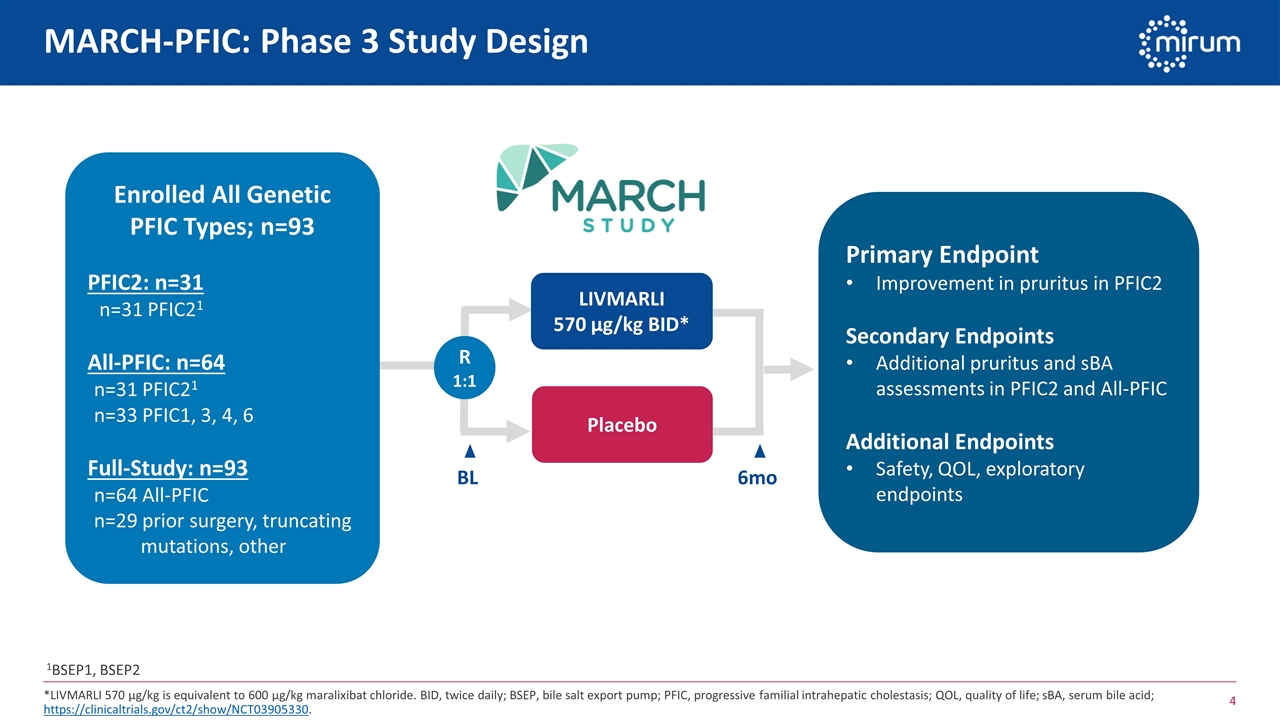
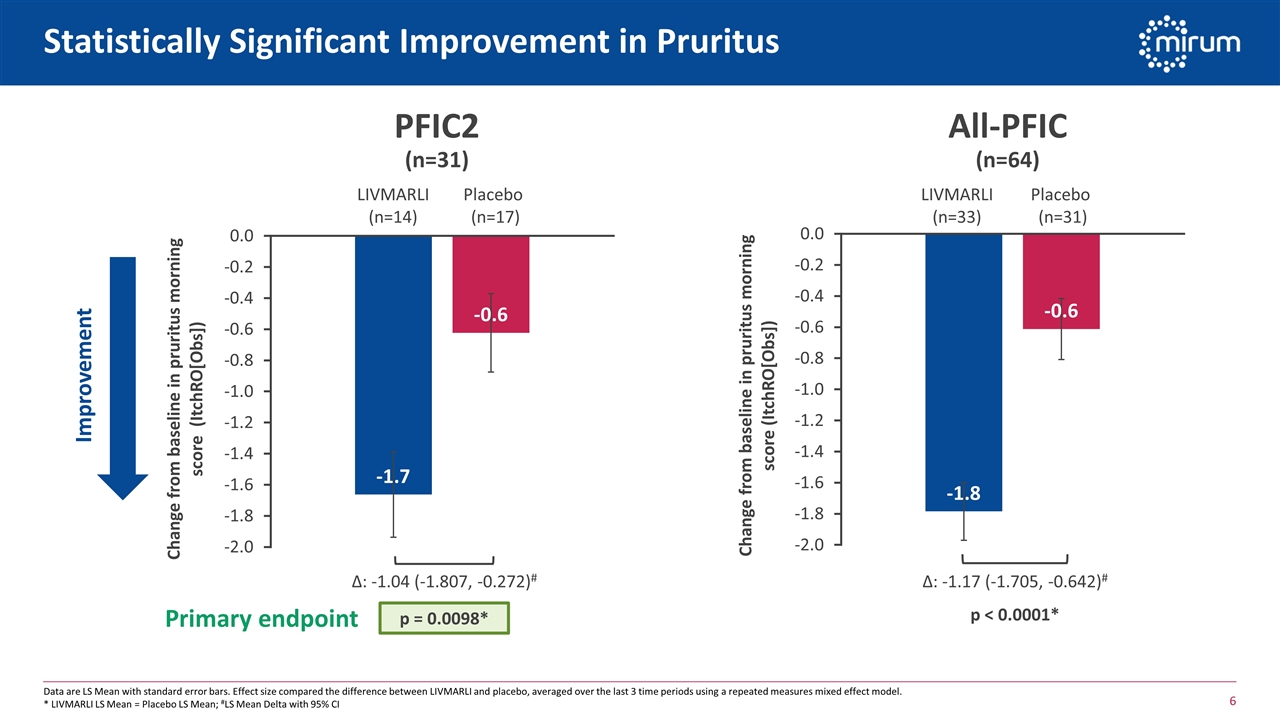
On October 24, 2022, the Company announced positive topline results from its pivotal Phase 3 MARCH study evaluating LIVMARLI® (maralixibat) oral solution in 93 patients with PFIC in a broad range of subtypes, age one to 17 years. The primary endpoint of improvement in pruritus severity in PFIC2 was statistically significant (p=0.0098). The primary analysis was conducted in PFIC2 patients (n=31). The secondary analyses were evaluated in the All-PFIC cohort, which included PFIC2 as well as additional PFIC subtypes (n=64). The Full-Study population included All-PFIC as well as supplemental patients who had previously undergone surgery, had truncating mutations and other patients (n=93).

Topline Results

PFIC2 (n=31)


Endpoint

   Absolute      Change      Effect Size*      P-value  
     LIVMARLI      Placebo                

Primary: Change from baseline in ItchRO(Obs) severity

     -1.7        -0.6        -1.0        0.0098  

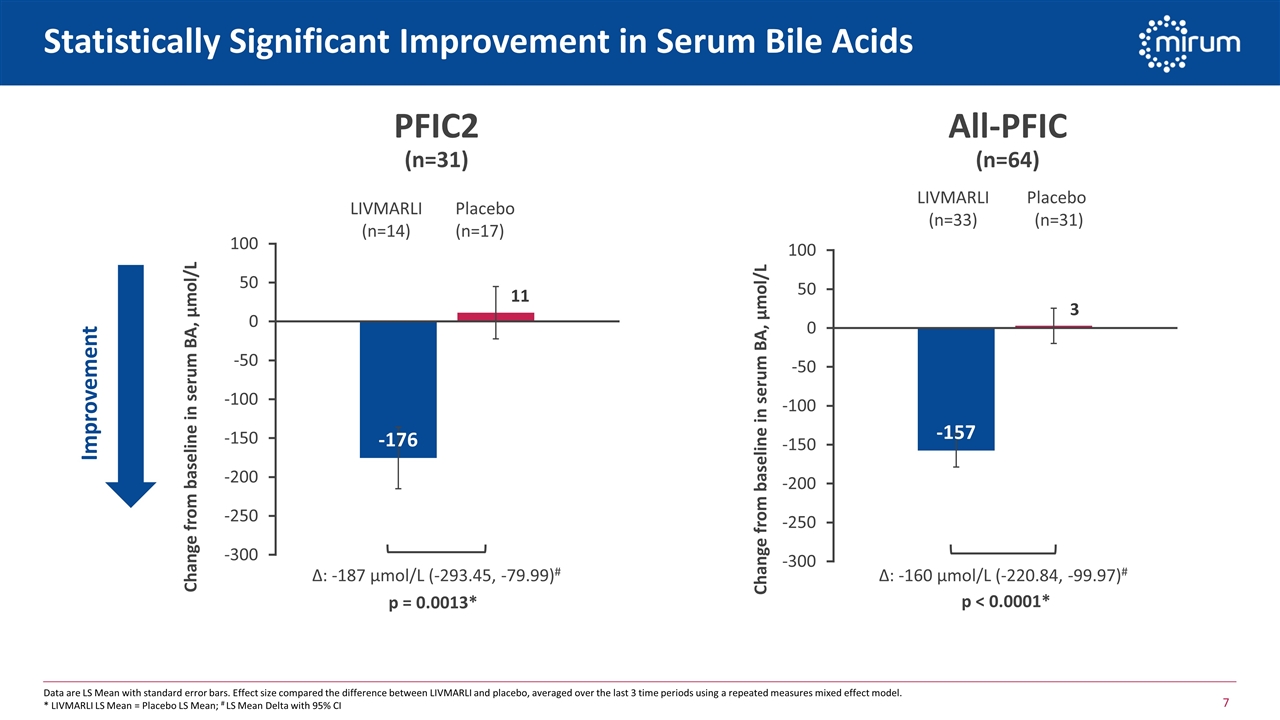
Secondary: Change from baseline in serum bile acid

     -176        11        -187        0.0013  


*

Effect size compared the difference between LIVMARLI and placebo, averaged over the last 3 time periods using a repeated measures mixed effect model. Placebo adjusted. Numbers in tables may not sum due to rounding.

All-PFIC (n=64) [PFIC1, PFIC2, PFIC3, PFIC4, PFIC6]


Endpoint

   Absolute      Change      Effect Size*      P-value  
     LIVMARLI      Placebo                

Secondary: Change from baseline in ItchRO(Obs) severity

     -1.8        -0.6        -1.2        <0.0001  

Secondary: Change from baseline in serum bile acid

     -157        3        -160        <0.0001  


*

Effect size compared the difference between LIVMARLI and placebo, averaged over the last 3 time periods using a repeated measures mixed effect model. Placebo adjusted.

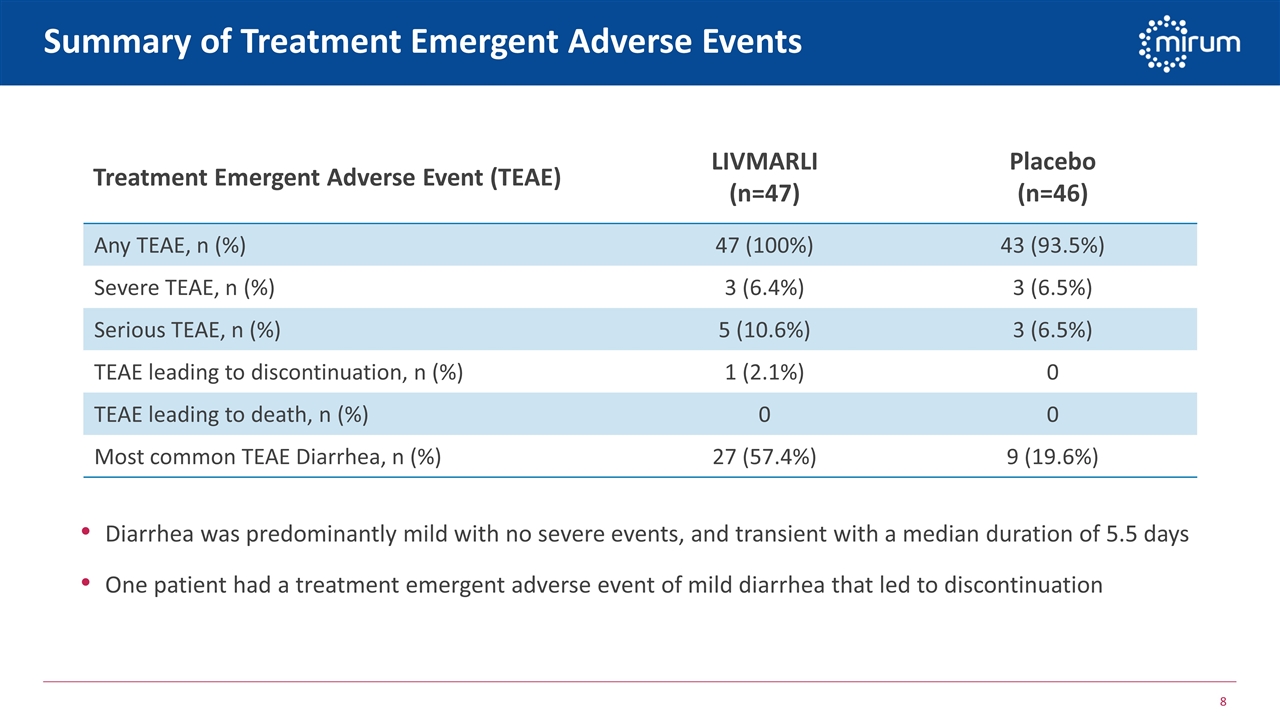
LIVMARLI’s safety and tolerability profile was comparable to previously published data and no new safety signals emerged in the MARCH study. The most common treatment-emergent adverse event was diarrhea, which was predominantly mild, with no severe cases, and transient with a median duration of 5.5 days. One patient had a treatment emergent adverse event of mild diarrhea that led to discontinuation.

Full-Study (n=93)


Treatment Emergent Adverse Event (TEAE)

   LIVMARLI (n=47)   Placebo (n=46)

Any TEAE, n (%)

   47 (100%)   43 (93.5%)

Severe TEAE, n (%)

   3 (6.4%)   3 (6.5%)

Serious TEAE, n (%)

   5 (10.6%)   3 (6.5%)

TEAE leading to discontinuation, n (%)

   1 (2.1%)   0

TEAE leading to death, n (%)

   0   0

Most common TEAE Diarrhea, n (%)

   27 (57.4%)   9 (19.6%)

Further data from the MARCH study will be presented at an upcoming scientific conference.


Item 9.01

Financial Statements and Exhibits.

(d) Exhibits.


Exhibit
No.
  

Description

99.1    Press Release dated October 24, 2022.
99.2    Presentation dated October 24, 2022.
104    Cover Page Interactive Data File (embedded within the Inline XBRL document).


SIGNATURES

Pursuant to the requirements of the Securities Exchange Act of 1934, the registrant has duly caused this report to be signed on its behalf by the undersigned thereunto duly authorized.


    Mirum Pharmaceuticals, Inc.
Date: October 24, 2022     By:  

/s/ Christopher Peetz

      Christopher Peetz
      President and Chief Executive Officer

Exhibit 99.1


LOGO

Positive Topline Data Announced from Mirum’s LIVMARLI Phase 3 MARCH Study in Progressive Familial Intrahepatic Cholestasis (PFIC)


Met primary endpoint (p=0.0098); highly statistically significant effects in all PFIC subtypes.


Significant improvements in total bilirubin and growth versus placebo at six months.


Mirum plans to submit these data to regulatory agencies.


Mirum to host conference call to discuss data today, October 24 at 9:00 a.m. ET/6:00 a.m. PT.

FOSTER CITY, Calif. – OCTOBER 24, 2022 - Mirum Pharmaceuticals, Inc. (Nasdaq: MIRM), today announced positive topline results from its pivotal Phase 3 MARCH study evaluating LIVMARLI® (maralixibat) oral solution in 93 patients with progressive familial intrahepatic cholestasis (PFIC) in a broad range of subtypes, age one to 17 years. The primary endpoint of improvement in pruritus severity in PFIC2 was statistically significant (p=0.0098).

“The LIVMARLI data observed in the MARCH study showcase an unprecedented reduction in pruritus and serum bile acids. These data confirm our thesis that higher doses can result in improved efficacy and better outcomes for these patients,” said Chris Peetz, president and chief executive officer at Mirum. “We are grateful to the patients, caregivers, and healthcare providers who participated in this study and who helped make these groundbreaking results possible.”

The primary analysis was conducted in PFIC2 patients (n=31). The secondary analyses were evaluated in the All-PFIC cohort, which included PFIC2 as well as additional PFIC subtypes (n=64). The Full-Study population included All-PFIC as well as supplemental patients who had previously undergone surgery, had truncating mutations and other patients (n=93).

Topline results

PFIC2 (n=31)


Endpoint

   Absolute    Change    Effect Size*    P-value
     LIVMARLI    Placebo          

Primary: Change from baseline in ItchRO(Obs) severity

   -1.7    -0.6    -1.0    0.0098

Secondary: Change from baseline in serum bile acid

   -176    11    -187    0.0013


*

Effect size compared the difference between LIVMARLI and placebo, averaged over the last 3 time periods using a repeated measures mixed effect model. Placebo adjusted. Numbers in tables may not sum due to rounding.

All-PFIC (n=64) [PFIC1, PFIC2, PFIC3, PFIC4, PFIC6]


Endpoint

   Absolute    Change    Effect Size*    P-value
     LIVMARLI    Placebo          

Secondary: Change from baseline in ItchRO(Obs) severity

   -1.8    -0.6    -1.2    <0.0001

Secondary: Change from baseline in serum bile acid

   -157    3    -160    <0.0001


*

Effect size compared the difference between LIVMARLI and placebo, averaged over the last 3 time periods using a repeated measures mixed effect model. Placebo adjusted.


LOGO


LIVMARLI’s safety and tolerability profile was comparable to previously published data and no new safety signals emerged in the MARCH study. The most common treatment-emergent adverse event was diarrhea, which was predominantly mild, with no severe cases, and transient with a median duration of 5.5 days. One patient had a treatment emergent adverse event of mild diarrhea that led to discontinuation.

Full-Study (n=93)


Treatment Emergent Adverse Event (TEAE)

   LIVMARLI (n=47)   Placebo (n=46)

Any TEAE, n (%)

   47 (100%)   43 (93.5%)

Severe TEAE, n (%)

   3 (6.4%)   3 (6.5%)

Serious TEAE, n (%)

   5 (10.6%)   3 (6.5%)

TEAE leading to discontinuation, n (%)

   1 (2.1%)   0

TEAE leading to death, n (%)

   0   0

Most common TEAE Diarrhea, n (%)

   27 (57.4%)   9 (19.6%)

Further data from the MARCH study will be presented at an upcoming scientific conference.

“The landmark MARCH study represents a significant step forward in the evaluation of therapies for PFIC. Knowing of the impact of itching on the quality of life for children with PFIC, the sustained and clinically significant reduction in itching scores in the LIVMARLI treatment arm is an important topline result,” said Alexander G. Miethke, MD, associate professor of pediatrics from the PFIC Research Center at Cincinnati Children’s Medical Center. “Lowered serum bile acids are a prognostic marker for native liver survival, and it is encouraging to see such an impressive response. These data improved upon the compelling results seen in the LIVMARLI Phase 2 study and underscore the strong effect that this IBAT inhibitor can have on patients with all PFIC subtypes when optimally dosed.”

“The advancement of new medications, particularly for rare diseases like PFIC, is incredibly important and provides hope to families who are in need of a treatment option that can effectively address itch, the most burdensome aspect of the disease,” said Emily Ventura, executive director, PFIC Network. “The itch experienced with PFIC can have lasting and devastating consequences for patients and their families, and we are excited that LIVMARLI, backed by such promising data, may be a new option on the horizon for the PFIC community.”

Data Review Conference Call

Mirum will be hosting a conference call to discuss the topline data from the MARCH study today, Monday, October 24, 2022, at 9:00 a.m. ET/6:00 a.m. PT. Join the call by dialing 1-646-904-5544 (US) or 1-844-200-6205 (toll-free), call ID: 200410. You may also access the webcast through Mirum’s Investor Relations site.


LOGO


About PFIC

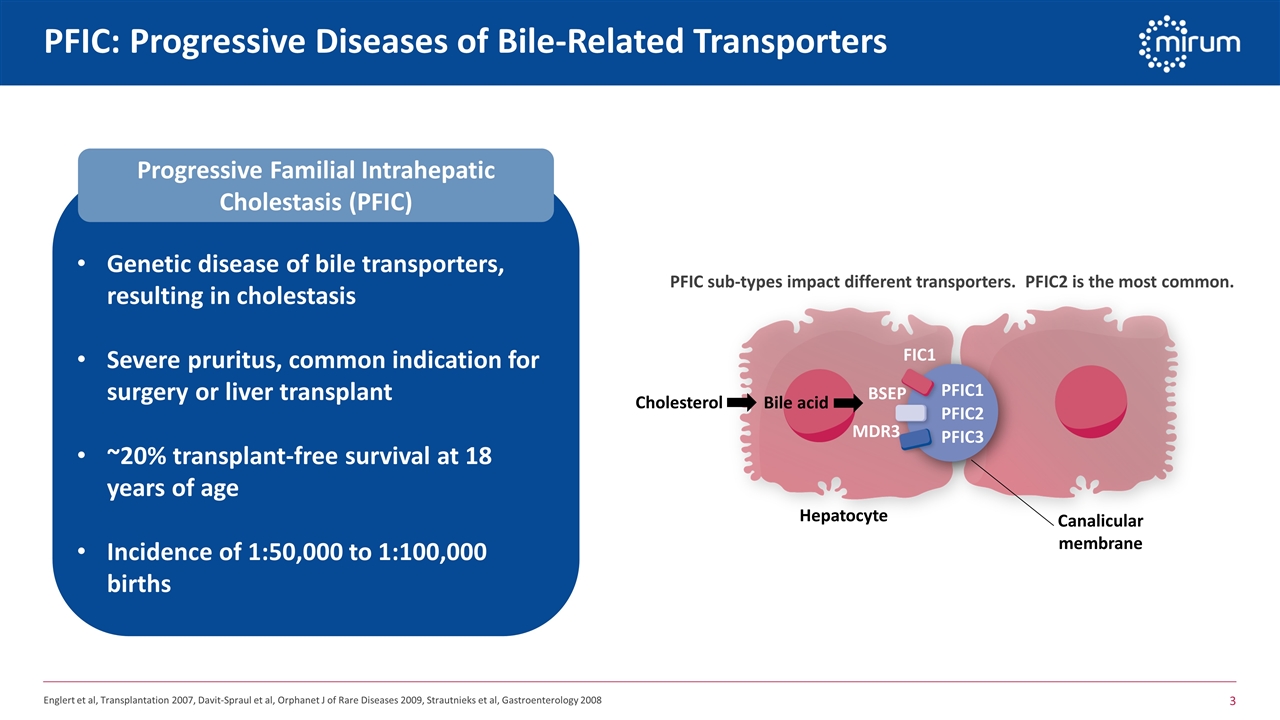
Progressive familial intrahepatic cholestasis (PFIC) is a rare genetic disorder that causes progressive liver disease typically leading to liver failure. In people with PFIC, liver cells are less able to secrete bile. The resulting buildup of bile causes liver disease in affected individuals. Signs and symptoms of PFIC typically begin in infancy. Patients experience severe itching, jaundice, failure to grow at the expected rate (failure to thrive), and an increasing inability of the liver to function (liver failure). The disease is estimated to affect one in every 50,000 to 100,000 births in the United States and Europe. Six types of PFIC have been genetically identified, all of which are similarly characterized by impaired bile flow and progressive liver disease. The PFIC2 patient population accounts for approximately 60% of the PFIC patient population. PFIC2 is caused by a mutation in the ABCB11 gene, which normally encodes a bile salt export pump protein that moves bile acids out of the liver.

About LIVMARLI® (maralixibat) oral solution

LIVMARLI® (maralixibat) oral solution is an orally administered, once-daily, ileal bile acid transporter (IBAT) inhibitor approved by the U.S. Food and Drug Administration for the treatment of cholestatic pruritus in patients with Alagille syndrome (ALGS) one year of age and older and is the only FDA-approved medication to treat cholestatic pruritus associated with Alagille syndrome. For more information, please visit LIVMARLI.com.

LIVMARLI is currently being evaluated in late-stage clinical studies in other rare cholestatic liver diseases including an open-label extension study in progressive familial intrahepatic cholestasis (PFIC), and in biliary atresia. LIVMARLI has received Breakthrough Therapy designation for ALGS and PFIC type 2 and orphan designation for ALGS, PFIC and biliary atresia. To learn more about ongoing clinical trials with LIVMARLI, please visit Mirum’s clinical trials section on the company’s website.

IMPORTANT SAFETY INFORMATION

LIVMARLI can cause side effects, including:

Changes in liver tests. Changes in certain liver tests are common in patients with Alagille syndrome and can worsen during treatment with LIVMARLI. These changes may be a sign of liver injury and can be serious. Your healthcare provider should do blood tests before starting and during treatment to check your liver function. Tell your healthcare provider right away if you get any signs or symptoms of liver problems, including nausea or vomiting, skin or the white part of the eye turns yellow, dark or brown urine, pain on the right side of the stomach (abdomen) or loss of appetite.

Stomach and intestinal (gastrointestinal) problems. LIVMARLI can cause stomach and intestinal problems, including diarrhea, stomach pain, and vomiting during treatment. Tell your healthcare provider right away if you have any of these symptoms more often or more severely than normal for you.

A condition called Fat Soluble Vitamin (FSV) Deficiency caused by low levels of certain vitamins (vitamin A, D, E, and K) stored in body fat. FSV deficiency is common in patients with Alagille syndrome but may worsen during treatment. Your healthcare provider should do blood tests before starting and during treatment.

Other common side effects reported during treatment were bone fractures and gastrointestinal bleeding.


LOGO


Prescribing information

About Mirum Pharmaceuticals

Mirum Pharmaceuticals, Inc. is a biopharmaceutical company dedicated to transforming the treatment of rare liver diseases. Mirum’s approved medication is LIVMARLI® (maralixibat) oral solution which is approved in the U.S. for the treatment of cholestatic pruritus in patients with Alagille syndrome one year of age and older. In Europe, the European Committee for Medicinal Products for Human Use (CHMP) has issued a positive opinion for LIVMARLI for the treatment of cholestatic pruritus in patients with Alagille syndrome two months of age and older. A decision by the European Commission is expected by year-end 2022.

Mirum’s late-stage pipeline includes two investigational treatments for debilitating liver diseases affecting children and adults. LIVMARLI, an oral ileal bile acid transporter (IBAT) inhibitor, is currently being evaluated in clinical trials for pediatric liver diseases and includes the MARCH Phase 3 clinical trial for progressive familial intrahepatic cholestasis (PFIC) and the EMBARK Phase 2b clinical trial for patients with biliary atresia. In addition, Mirum has an expanded access program open across multiple countries for eligible patients with ALGS and PFIC.

Mirum’s second investigational treatment, volixibat, an oral IBAT inhibitor, is being evaluated in three potentially registrational studies including the VISTAS Phase 2b clinical trial for adults with primary sclerosing cholangitis, the OHANA Phase 2b clinical trial for pregnant women with intrahepatic cholestasis of pregnancy, and the VANTAGE Phase 2b clinical trial for adults with primary biliary cholangitis.

Follow Mirum on TwitterFacebookLinkedIn and Instagram.

Forward-Looking Statements

Statements contained in this press release regarding matters that are not historical facts are “forward-looking statements” within the meaning of the Private Securities Litigation Reform Act of 1995. Such forward-looking statements include statements regarding, among other things, Mirum’s plans with respect to the regulatory approval process of LIVMARLI in PFIC and LIVMARLI’s effect on patients with all PFIC subtypes when optimally dosed. Because such statements are subject to risks and uncertainties, actual results may differ materially from those expressed or implied by such forward-looking statements. Words such as “plans,” “will,” “can,” “may” and similar expressions are intended to identify forward-looking statements. These forward-looking statements are based upon Mirum’s current expectations and involve assumptions that may never materialize or may prove to be incorrect. Actual results could differ materially from those anticipated in such forward-looking statements as a result of various risks and uncertainties, which include, without limitation, risks and uncertainties associated with Mirum’s business in general, the impact of geopolitical and macroeconomic events, and the other risks described in Mirum’s filings with the Securities and Exchange Commission. All forward-looking statements contained in this press release speak only as of the date on which they were made and are based on management’s assumptions and estimates as of such date. Mirum undertakes no obligation to update such statements to reflect events that occur or circumstances that exist after the date on which they were made, except as required by law.


LOGO


Contacts

Media Contact:

Erin Murphy

[email protected]

Investor Contacts:

Ian Clements, Ph.D.

[email protected]

Sam Martin

Argot Partners

[email protected]

Slide 1

MARCH-PFIC Phase 3 Topline Results October 24, 2022 Exhibit 99.2


Slide 2

Forward-Looking Statements This presentation contains "forward-looking" statements that are based on our management’s beliefs and assumptions and on information currently available to management. Forward-looking statements include all statements other than statements of historical fact contained in this presentation, including information concerning our business strategy, objectives and opportunities. Forward-looking statements are subject to known and unknown risks, uncertainties, assumptions and other factors that may cause our actual results, performance or achievements to differ materially and adversely from those anticipated or implied by our forward-looking statements, including, but not limited to, those related to our continued commercialization efforts; our ability to obtain and maintain necessary regulatory approvals for our product and product candidates, if and when approved; estimates of the number of patients impacted by PFIC and related diseases and who are appropriate for treatment with LIVMARLI; the potential real-world benefits of LIVMARLI; the impact of competitive products and therapies and development programs; the design, implementation and outcomes of our clinical trials; and our ability to continue to stay in compliance with applicable laws and regulations.  You should refer to the section entitled “Risk Factors” set forth in our Annual Report on Form 10-K, Quarterly Reports on Form 10-Q and other filings we make with the Securities and Exchange Commission (SEC) from time to time for a discussion of important factors that may cause our actual results to differ materially from those expressed or implied by our forward-looking statements. You should not rely upon forward-looking statements as predictions of future events. Neither we nor any other person assumes responsibility for the accuracy and completeness of the forward-looking statements. We undertake no obligation to update any forward-looking statements after the date of this presentation except as may be required by law. This presentation also contains estimates and other statistical data made by independent parties and by us relating to market size and growth and other data about our industry. These data involve a number of assumptions and limitations, and you are cautioned not to give undue weight to such estimates. Projections, assumptions and estimates of the future performance of the markets in which we operate are necessarily subject to a high degree of uncertainty and risk. The trademarks included herein are the property of the owners thereof and are used for reference purposes only. This presentation discusses a product candidate that is under clinical study and which has not yet been approved for marketing by the U.S. Food and Drug Administration for the PFIC indication. No representation is made as to the safety or effectiveness of this product candidate for the use for which such product candidate is being studied.


Slide 3

PFIC: Progressive Diseases of Bile-Related Transporters Progressive Familial Intrahepatic Cholestasis (PFIC) Genetic disease of bile transporters, resulting in cholestasis Severe pruritus, common indication for surgery or liver transplant ~20% transplant-free survival at 18 years of age Incidence of 1:50,000 to 1:100,000 births FIC1 BSEP MDR3 PFIC1 PFIC2 PFIC3 Hepatocyte Canalicular membrane Cholesterol Bile acid PFIC sub-types impact different transporters. PFIC2 is the most common. Englert et al, Transplantation 2007, Davit-Spraul et al, Orphanet J of Rare Diseases 2009, Strautnieks et al, Gastroenterology 2008


Slide 4

LIVMARLI 570 µg/kg BID* Placebo R 1:1 MARCH-PFIC: Phase 3 Study Design *LIVMARLI 570 µg/kg is equivalent to 600 µg/kg maralixibat chloride. BID, twice daily; BSEP, bile salt export pump; PFIC, progressive familial intrahepatic cholestasis; QOL, quality of life; sBA, serum bile acid; https://clinicaltrials.gov/ct2/show/NCT03905330. Primary Endpoint Improvement in pruritus in PFIC2 Secondary Endpoints  Additional pruritus and sBA assessments in PFIC2 and All-PFIC Additional Endpoints Safety, QOL, exploratory endpoints 6mo Enrolled All Genetic PFIC Types; n=93 PFIC2: n=31 n=31 PFIC21 All-PFIC: n=64 n=31 PFIC21 n=33 PFIC1, 3, 4, 6 Full-Study: n=93 n=64 All-PFIC n=29 prior surgery, truncating mutations, other BL 1BSEP1, BSEP2


Slide 5

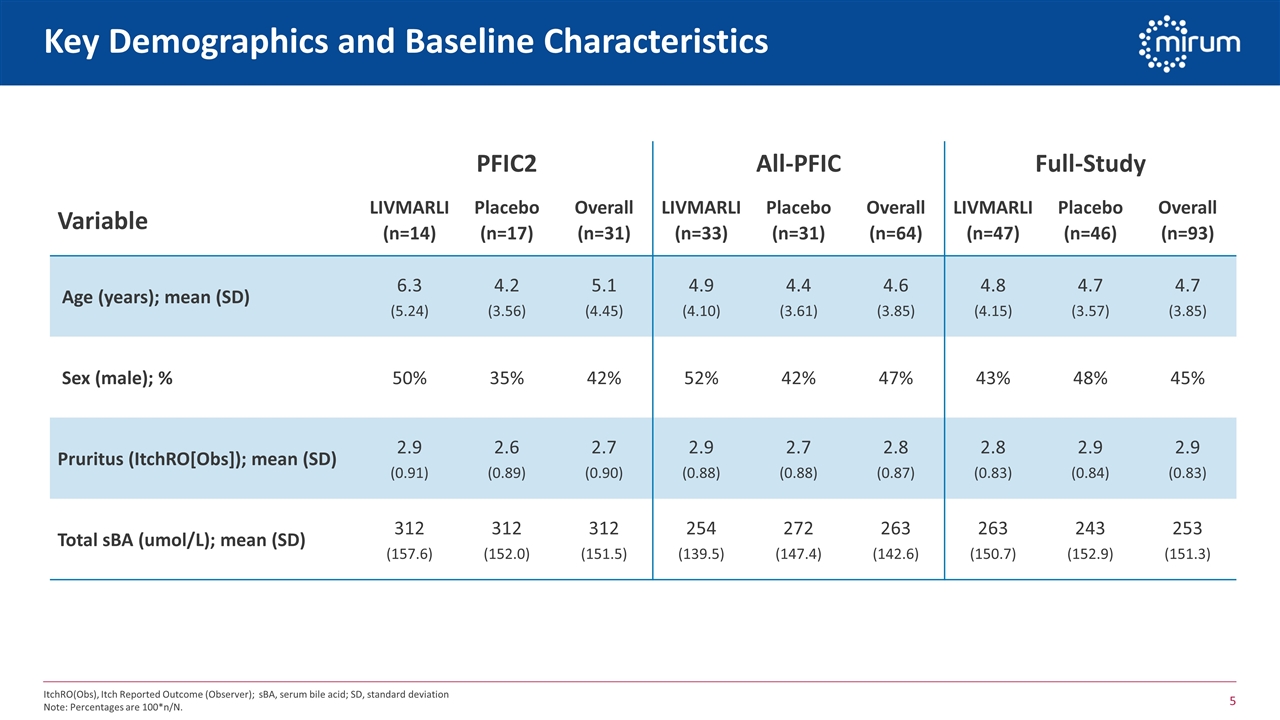
Key Demographics and Baseline Characteristics PFIC2 All-PFIC Full-Study Variable LIVMARLI (n=14) Placebo (n=17) Overall (n=31) LIVMARLI (n=33) Placebo (n=31) Overall (n=64) LIVMARLI (n=47) Placebo (n=46) Overall (n=93) Age (years); mean (SD) 6.3 (5.24) 4.2 (3.56) 5.1 (4.45) 4.9 (4.10) 4.4 (3.61) 4.6 (3.85) 4.8 (4.15) 4.7 (3.57) 4.7 (3.85) Sex (male); % 50% 35% 42% 52% 42% 47% 43% 48% 45% Pruritus (ItchRO[Obs]); mean (SD) 2.9 (0.91) 2.6 (0.89) 2.7 (0.90) 2.9 (0.88) 2.7 (0.88) 2.8 (0.87) 2.8 (0.83) 2.9 (0.84) 2.9 (0.83) Total sBA (umol/L); mean (SD) 312 (157.6) 312 (152.0) 312 (151.5) 254 (139.5) 272 (147.4) 263 (142.6) 263 (150.7) 243 (152.9) 253 (151.3) ItchRO(Obs), Itch Reported Outcome (Observer);  sBA, serum bile acid; SD, standard deviation Note: Percentages are 100*n/N.


Slide 6

Statistically Significant Improvement in Pruritus Data are LS Mean with standard error bars. Effect size compared the difference between LIVMARLI and placebo, averaged over the last 3 time periods using a repeated measures mixed effect model. * LIVMARLI LS Mean = Placebo LS Mean; #LS Mean Delta with 95% CI PFIC2 (n=31) Improvement Δ: -1.04 (-1.807, -0.272)# All-PFIC (n=64) Δ: -1.17 (-1.705, -0.642)# LIVMARLI (n=14) Placebo (n=17) LIVMARLI (n=33) Placebo (n=31) p = 0.0098* p < 0.0001* Primary endpoint


Slide 7

Statistically Significant Improvement in Serum Bile Acids PFIC2 (n=31) Improvement Δ: -187 µmol/L (-293.45, -79.99)# Δ: -160 µmol/L (-220.84, -99.97)# LIVMARLI (n=14) Placebo (n=17) LIVMARLI (n=33) Placebo (n=31) p = 0.0013* p < 0.0001* Data are LS Mean with standard error bars. Effect size compared the difference between LIVMARLI and placebo, averaged over the last 3 time periods using a repeated measures mixed effect model. * LIVMARLI LS Mean = Placebo LS Mean; # LS Mean Delta with 95% CI 11 3 All-PFIC (n=64)


Slide 8

Summary of Treatment Emergent Adverse Events Diarrhea was predominantly mild with no severe events, and transient with a median duration of 5.5 days One patient had a treatment emergent adverse event of mild diarrhea that led to discontinuation Treatment Emergent Adverse Event (TEAE) LIVMARLI (n=47) Placebo (n=46) Any TEAE, n (%) 47 (100%) 43 (93.5%) Severe TEAE, n (%) 3 (6.4%) 3 (6.5%) Serious TEAE, n (%) 5 (10.6%) 3 (6.5%) TEAE leading to discontinuation, n (%) 1 (2.1%) 0 TEAE leading to death, n (%) 0 0 Most common TEAE Diarrhea, n (%) 27 (57.4%) 9 (19.6%)


Slide 9

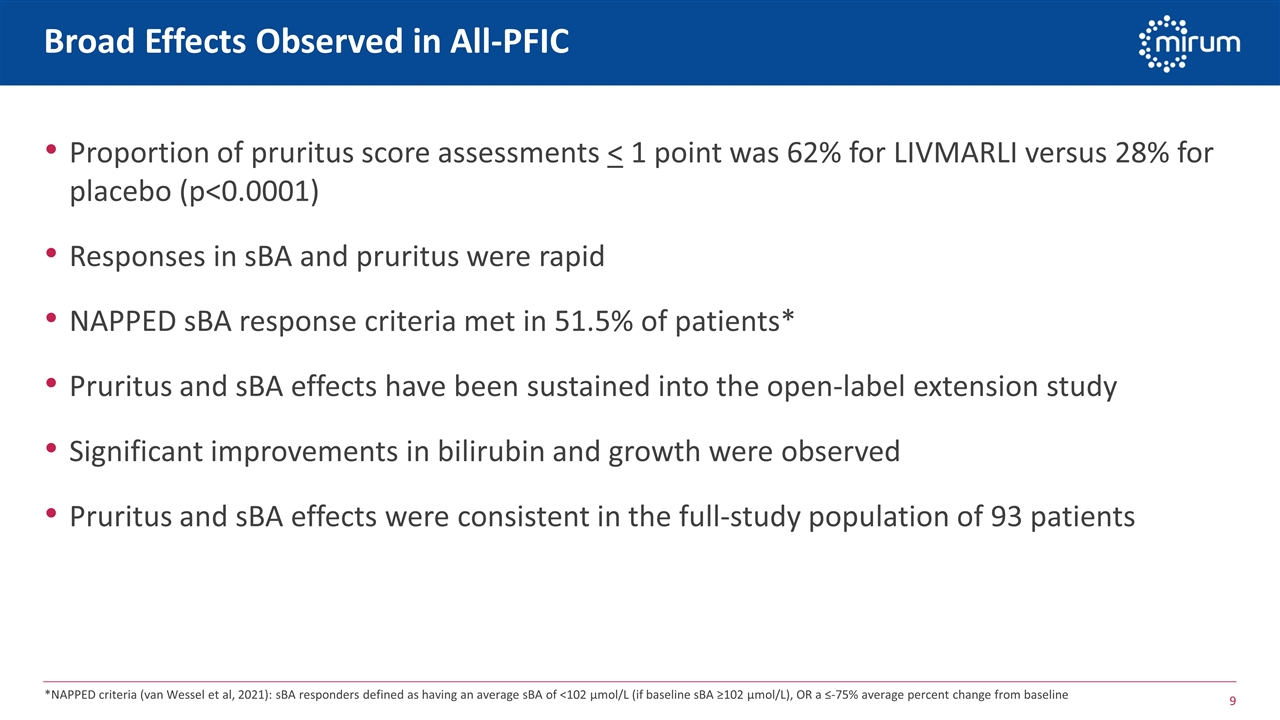
Broad Effects Observed in All-PFIC Proportion of pruritus score assessments < 1 point was 62% for LIVMARLI versus 28% for placebo (p<0.0001) Responses in sBA and pruritus were rapid NAPPED sBA response criteria met in 51.5% of patients* Pruritus and sBA effects have been sustained into the open-label extension study Significant improvements in bilirubin and growth were observed Pruritus and sBA effects were consistent in the full-study population of 93 patients *NAPPED criteria (van Wessel et al, 2021): sBA responders defined as having an average sBA of <102 μmol/L (if baseline sBA ≥102 μmol/L), OR a ≤-75% average percent change from baseline