mirm-20260112
false000175942500017594252026-01-122026-01-12

UNITED STATES
SECURITIES AND EXCHANGE COMMISSION
WASHINGTON, D.C. 20549
____________________________________________________
FORM 8-K
____________________________________________________
CURRENT REPORT
Pursuant to Section 13 or 15(d) of the Securities Exchange Act of 1934
Date of Report (Date of earliest event reported): January 12, 2026
____________________________________________________
Mirum Pharmaceuticals, Inc.
(Exact name of Registrant as Specified in Its Charter)
____________________________________________________
Delaware001-3898183-1281555
(State or Other Jurisdiction
of Incorporation)
(Commission File Number)
(IRS Employer
Identification No.)
989 East Hillsdale Boulevard
Suite 300
Foster City, California
94404
(Address of Principal Executive Offices)(Zip Code)
Registrant’s Telephone Number, Including Area Code: (650) 667-4085
N/A
(Former Name or Former Address, if Changed Since Last Report)
____________________________________________________
Check the appropriate box below if the Form 8-K filing is intended to simultaneously satisfy the filing obligation of the registrant under any of the following provisions:
o   Written communications pursuant to Rule 425 under the Securities Act (17 CFR 230.425)
o   Soliciting material pursuant to Rule 14a-12 under the Exchange Act (17 CFR 240.14a-12)
o   Pre-commencement communications pursuant to Rule 14d-2(b) under the Exchange Act (17 CFR 240.14d-2(b))
o   Pre-commencement communications pursuant to Rule 13e-4(c) under the Exchange Act (17 CFR 240.13e-4(c))
Securities registered pursuant to Section 12(b) of the Act:
Title of each class
Trading
Symbol(s)
Name of each exchange on which registered
Common stock, par value $0.0001 per share
MIRM

Nasdaq Global Market

Indicate by check mark whether the registrant is an emerging growth company as defined in Rule 405 of the Securities Act of 1933 (§ 230.405 of this chapter) or Rule 12b-2 of the Securities Exchange Act of 1934 (§ 240.12b-2 of this chapter).
Emerging growth company
If an emerging growth company, indicate by check mark if the registrant has elected not to use the extended transition period for complying with any new or revised financial accounting standards provided pursuant to Section 13(a) of the Exchange Act.


Item 2.02 Results of Operations and Financial Condition.
On January 12, 2026, Mirum Pharmaceuticals, Inc. (the “Company”) issued a press release announcing, among other things, the Company's preliminary unaudited net product sales for the fiscal year ended December 31, 2025, preliminary unaudited net product sales of LIVMARLI (maralixibat) and CHOLBAM and CTEXLI, and preliminary unaudited cash, cash equivalents and investments. The full text of the press release is furnished as Exhibit 99.1 to this Current Report on Form 8-K.
Item 7.01 Regulation FD Disclosure.
On January 12, 2026, in connection with its participation in the J.P. Morgan Healthcare Conference, the Company posted a corporate slide presentation in the “Investors” portion of its website at www.mirumpharma.com. A copy of the presentation is furnished as Exhibit 99.2 to this Current Report on Form 8-K. The Company undertakes no obligation to update, supplement or amend the materials attached hereto as Exhibit 99.2.
The information in this Current Report on Form 8-K, including Exhibit 99.1 and 99.2, shall not be deemed “filed” for purposes of Section 18 of the Securities Exchange Act of 1934, as amended (the “Exchange Act”), or otherwise subject to the liabilities of that Section, nor shall it be deemed to be incorporated by reference into any filing of the Company under the Securities Act of 1933, as amended, or the Exchange Act, except as expressly set forth by specific reference in such filing.
Item 9.01 Financial Statements and Exhibits.
(d)Exhibits.
Exhibit
No.
Description
104Cover Page Interactive Data File (embedded within the Inline XBRL document)


SIGNATURES
Pursuant to the requirements of the Securities Exchange Act of 1934, the registrant has duly caused this report to be signed on its behalf by the undersigned thereunto duly authorized.
Mirum Pharmaceuticals, Inc.
Date: January 12, 2026By:/s/ Christopher Peetz
Christopher Peetz
Chief Executive Officer


Exhibit 99.1
imagea.jpg
Mirum Pharmaceuticals Announces Preliminary Unaudited 2025 Results, Demonstrating Strong Commercial Growth and Pipeline Momentum
2025 net product sales of approximately $520 million (preliminary and unaudited) exceed upper end of guidance
2026 expected global net product sales of $630 million to $650 million
Volixibat VISTAS study in primary sclerosing cholangitis (PSC) topline data expected Q2 2026
LIVMARLI® EXPAND study in additional cholestatic pruritus settings timing accelerated; topline data now expected Q4 2026
Proposed acquisition of Bluejay Therapeutics to add AZURE Phase 3 studies of brelovitug in chronic hepatitis delta virus (HDV); topline data expected H2 2026
FOSTER CITY, Calif. – January 12, 2026 - Mirum Pharmaceuticals, Inc. (Nasdaq: MIRM), a leading rare disease company, today provided its preliminary and unaudited estimates for full-year 2025 net product sales, year-end cash balance, corporate updates and full-year 2026 outlook.
“2025 was an excellent year for Mirum, reflecting the strength and scalability of our purpose-built rare disease operating model,” said Chris Peetz, Chief Executive Officer of Mirum. “We delivered strong global commercial growth, advanced multiple late-stage clinical programs and are expanding our pipeline with the proposed acquisition of Bluejay Therapeutics and brelovitug for HDV. With a strong financial foundation, deep commitment to patients and multiple upcoming clinical catalysts, we enter 2026 well positioned to drive continued execution and value creation.”
2026 Expectations and Milestones: Commercial growth and pipeline advancement
2026 guidance: expect global net product sales of approximately $630 million to $650 million
Volixibat VISTAS study in PSC topline data expected in Q2 2026
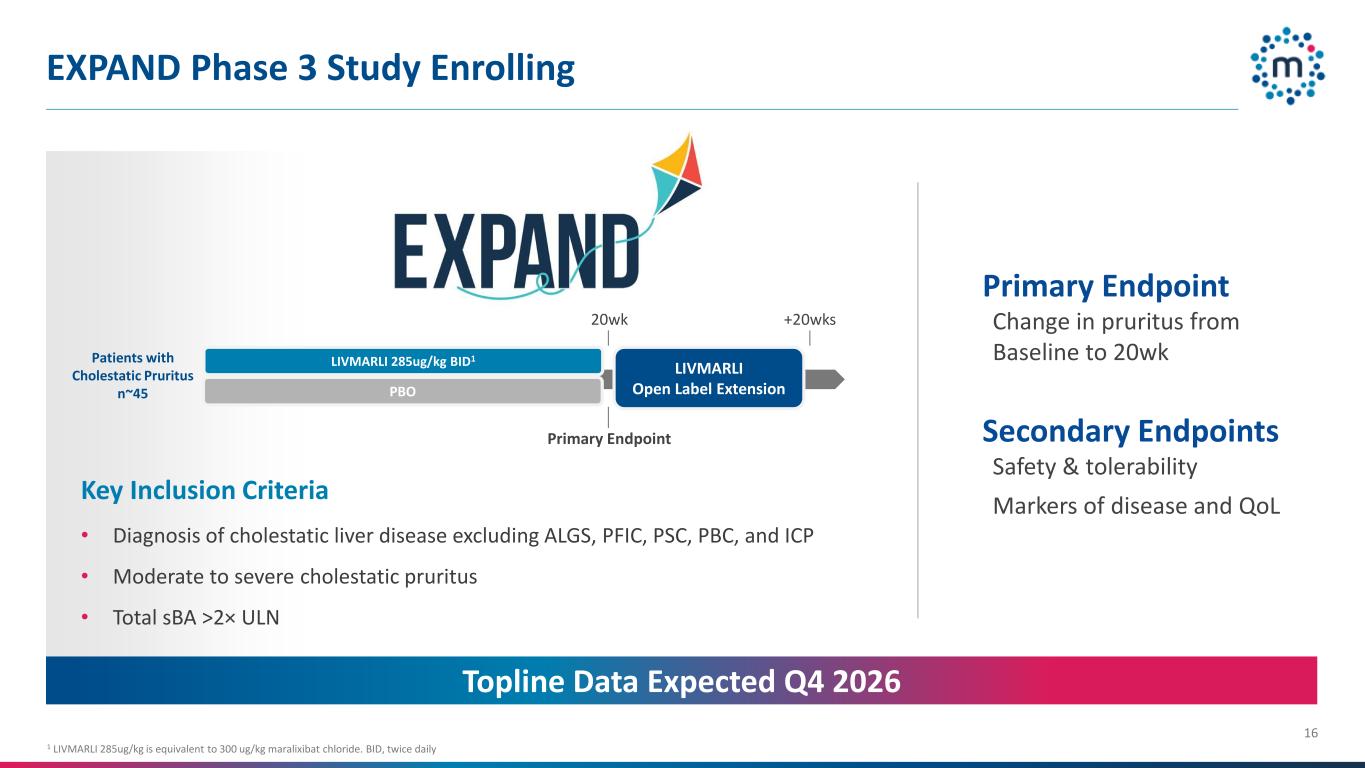
Accelerated study timing for LIVMARLI EXPAND Phase 3 study for pruritus in rare cholestatic conditions; now expected to complete enrollment H1 2026, topline data expected in Q4 2026
Volixibat VANTAGE study in primary biliary cholangitis (PBC) expected to complete enrollment in H2 2026
Acquisition of Bluejay Therapeutics and brelovitug for chronic hepatitis delta (HDV) expected to close in mid-to-late January 2026
Bluejay Therapeutics’ AZURE-1 study in HDV interim data expected in Q2 2026 and topline Phase 3 data expected in H2 2026 assuming closing of proposed acquisition
2025 Highlights
Commercial: Accelerating global rare disease impact
2025 estimated LIVMARLI net product sales of approximately $359 million, including approximately $243 million in US net product sales, representing 69% year-over-year growth from 2024
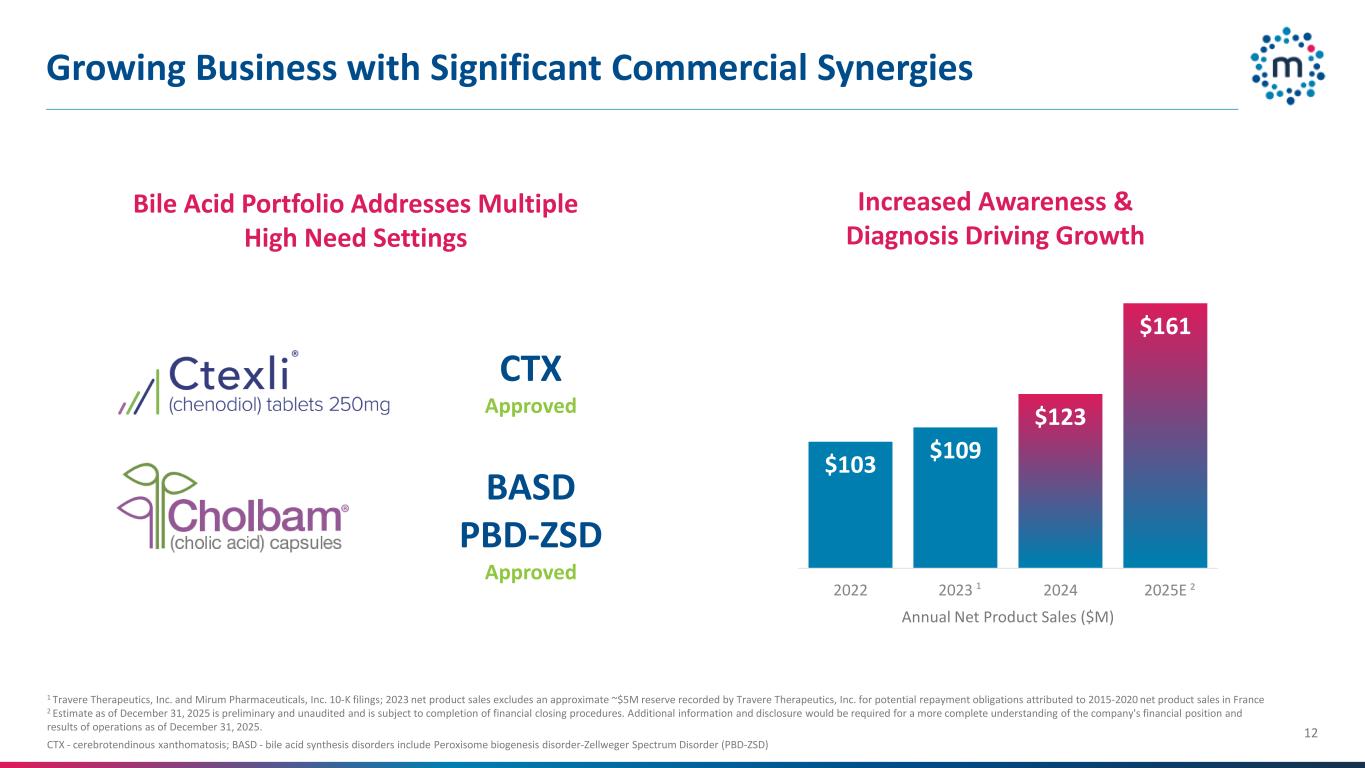
2025 estimated CHOLBAM® and CTEXLI® net product sales of approximately $161 million representing 31% year-over-year growth from 2024
Q4 2025 total estimated net product sales of approximately $149 million including approximately $106 million in LIVMARLI net sales and approximately $43 million in CHOLBAM and CTEXLI net sales
Expanded global footprint; 33 countries with commercial access


Regulatory and Pipeline: Momentum across rare and orphan indications
Received FDA approval of LIVMARLI tablets
Completed enrollment in the volixibat VISTAS study in PSC
Announced proposed acquisition of Bluejay Therapeutics, to add worldwide rights to brelovitug, a late-stage fully human monoclonal antibody for HDV that is well aligned with Mirum’s deep expertise in rare liver disease
Received FDA approval of CTEXLI for cerebrotendinous xanthomatosis (CTX)
LIVMARLI oral solution approved in Japan for the treatment of cholestatic pruritus in patients with Alagille syndrome (ALGS) and progressive familial intrahepatic cholestasis (PFIC)
Initiated MRM-3379 BLOOM Phase 2 study in Fragile X syndrome (FXS)
Corporate and Financial: Sustained financial strength and capital discipline
Achieved positive cash flow from operations in 2025
As of December 31, 2025, cash, cash equivalents and investments are expected to be approximately $392 million, compared to $292.8 million as of December 31, 2024
Two private placements, for aggregate gross proceeds of approximately $268.5 million, expected to be completed concurrently with the closing of the proposed acquisition
The foregoing amounts relating to 2025 financial data are unaudited and preliminary and are subject to completion of financial closing procedures. Additional information and disclosure would be required for a more complete understanding of the Company’s financial position and results of operations as of December 31, 2025.
Mirum will present at the 44th annual J.P. Morgan Healthcare Conference in San Francisco on Wednesday, January 14, 2026, at 11:15 a.m. PT. The presentation and question and answer session will be webcast live and can be accessed by visiting the Investors section of Mirum’s corporate website.
About LIVMARLI® (maralixibat) oral solution and LIVMARLI® (maralixibat) tablets
LIVMARLI® (maralixibat) is an orally administered, ileal bile acid transporter (IBAT) inhibitor approved by the U.S. Food and Drug Administration for two pediatric cholestatic liver diseases. It is approved for the treatment of cholestatic pruritus in patients with Alagille syndrome (ALGS) in the U.S. three months of age and older and in Europe for patients two months of age and older. It is also approved in the U.S. for the treatment of cholestatic pruritus in patients with progressive familial intrahepatic cholestasis (PFIC) 12 months of age and older and in Europe for the treatment of PFIC in patients three months of age and older. For more information for U.S. residents, please visit LIVMARLI.com.
LIVMARLI has received Breakthrough Therapy designation for ALGS and PFIC type 2 and orphan designation for the treatment of ALGS and PFIC. LIVMARLI is currently being evaluated in the Phase 3 EXPAND study in additional settings of cholestatic pruritus. To learn more about ongoing clinical trials with LIVMARLI, please visit Mirum’s clinical trials section on the company’s website.
IMPORTANT SAFETY INFORMATION
Limitation of Use: LIVMARLI is not for use in PFIC type 2 patients who have a severe defect in the bile salt export pump (BSEP) protein.
LIVMARLI can cause side effects, including:
Liver injury. Changes in certain liver tests are common in patients with ALGS and PFIC but can worsen during treatment. These changes may be a sign of liver injury. In PFIC, this can be serious or may lead to liver transplant or death. Your healthcare provider should do blood tests and physical exams before starting and during treatment to check your liver function. Tell your healthcare provider right away if you get any signs or symptoms of liver problems, including nausea or vomiting, skin or the white part of the eye turns yellow, dark or brown urine, pain on the right side of the stomach (abdomen), bloating in your stomach area, loss of appetite or bleeding or bruising more easily than normal.
Stomach and intestinal (gastrointestinal) problems. LIVMARLI can cause stomach and intestinal problems, including diarrhea and stomach pain. Your healthcare provider may advise you to monitor for new or worsening stomach problems including stomach pain, diarrhea, blood in your stool or vomiting. Tell your healthcare provider right away if you have any of these symptoms more often or more severely than normal for you.
A condition called Fat Soluble Vitamin (FSV) Deficiency caused by low levels of certain vitamins (vitamin A, D, E, and K) stored in body fat is common in patients with ALGS and PFIC but may worsen during treatment. Your healthcare provider should do blood tests before starting and during treatment and may monitor for bone fractures and bleeding which have been reported as common side effects.


US Prescribing Information
EU SmPC
Canadian Product Monograph
About CHOLBAM® (cholic acid) capsules
The FDA approved CHOLBAM® (cholic acid) capsules in March 2015, the first FDA-approved treatment for pediatric and adult patients with bile acid synthesis disorders due to single enzyme defects, and for adjunctive treatment of patients with peroxisome biogenesis disorder-Zellweger spectrum disorder. The effectiveness of CHOLBAM has been demonstrated in clinical trials for bile acid synthesis disorders and the adjunctive treatment of peroxisomal disorders. An estimated 200 to 300 patients are current candidates for therapy.
CHOLBAM (cholic acid) Indication
CHOLBAM is a bile acid indicated for
Treatment of bile acid synthesis disorders due to single enzyme defects.
Adjunctive treatment of peroxisomal disorders, including Zellweger spectrum disorders, in patients who exhibit manifestations of liver disease, steatorrhea, or complications from decreased fat-soluble vitamin absorption.
LIMITATIONS OF USE
The safety and effectiveness of CHOLBAM on extrahepatic manifestations of bile acid synthesis disorders due to single enzyme defects or peroxisomal disorders, including Zellweger spectrum disorders, have not been established.
IMPORTANT SAFETY INFORMATION
WARNINGS AND PRECAUTIONS – Exacerbation of liver impairment
Monitor liver function and discontinue CHOLBAM in patients who develop worsening of liver function while on treatment.
Concurrent elevations of serum gamma glutamyltransferase (GGT) and alanine aminotransferase (ALT) may indicate CHOLBAM overdose.
Discontinue treatment with CHOLBAM at any time if there are clinical or laboratory indicators of worsening liver function or cholestasis.
ADVERSE REACTIONS
The most common adverse reactions (≥1%) are diarrhea, reflux esophagitis, malaise, jaundice, skin lesion, nausea, abdominal pain, intestinal polyp, urinary tract infection, and peripheral neuropathy.
Please see full Prescribing Information for additional Important Safety Information.
About CTEXLI® (chenodiol) tablets
CTEXLI® (chenodiol) tablets is FDA-approved for the treatment of adults with cerebrotendinous xanthomatosis (CTX). Chenodiol is another name for chenodeoxycholic acid (CDCA). CDCA is a naturally occurring bile acid that was originally approved for the treatment of people with radiolucent stones in the gallbladder. CTEXLI was evaluated as part of the Phase 3 RESTORE study, the first and only clinical trial for CTX. CTX is a rare progressive disease that can affect the brain, spinal cord, tendons, eyes and arteries.
IMPORTANT SAFETY INFORMATION
CTEXLI can cause side effects, including:
Liver Injury : You will need to undergo laboratory testing before starting and while taking CTEXLI to check your liver function. Changes in certain liver tests may occur during treatment and may be a sign of liver injury. This can be serious. Stop taking CTEXLI immediately and tell your healthcare provider right away if you get any signs or symptoms of liver problems, including, stomach (abdomen) pain, bruising, dark-colored urine, feeling tired (fatigue), bleeding, yellowing of the skin and eyes, nausea, and itching.
Most Common Side Effects : Diarrhea, headache, stomach pain, constipation, high blood pressure, muscular weakness, and upper respiratory tract infection.
Tell your healthcare provider about all the medications that you take, as CTEXLI may interact with other medicines.


US Prescribing Information
About Volixibat
Volixibat is an oral, minimally absorbed agent designed to selectively inhibit the ileal bile acid transporter (IBAT). Volixibat may offer a novel approach in the treatment of adult cholestatic diseases by blocking the recycling of bile acids, through inhibition of IBAT, thereby reducing bile acids systemically and in the liver. Volixibat is currently being evaluated in Phase 2b studies for primary sclerosing cholangitis (PSC) (VISTAS study), and primary biliary cholangitis (PBC) (VANTAGE study). In June, Mirum announced positive interim results from the Phase 2b VANTAGE study showing statistically significant improvement in pruritus as well as meaningful reductions in serum bile acids and improvements in fatigue for patients treated with volixibat. No new safety signals were observed, and the most common adverse event was diarrhea with all cases mild to moderate. Volixibat has been granted breakthrough therapy designation for the treatment of PBC.
About Brelovitug
Brelovitug is an investigational, highly potent, pan-genotypic, fully human immunoglobulin G1 (IgG1) monoclonal antibody (mAb) that targets the surface antigen (anti-HBsAg) on both the chronic hepatitis D virus (HDV) and the hepatitis B virus (HBV). Brelovitug is designed to neutralize and remove hepatitis B and hepatitis D virions and deplete HBsAg-containing subviral particles. Brelovitug has FDA Breakthrough Therapy designation for the treatment of HDV and PRIME and Orphan designations from the European Medicines Agency. Following the anticipated close of the Bluejay Therapeutics acquisition, Mirum will own worldwide rights to brelovitug.
About MRM-3379
MRM-3379 is an in-licensed investigational oral therapy being evaluated for the treatment of Fragile X syndrome (FXS). It is a selective phosphodiesterase-4D (PDE4D) inhibitor designed to enhance cAMP signaling. MRM-3379 may offer a novel approach to improving cognition, language, and daily function in individuals with FXS.
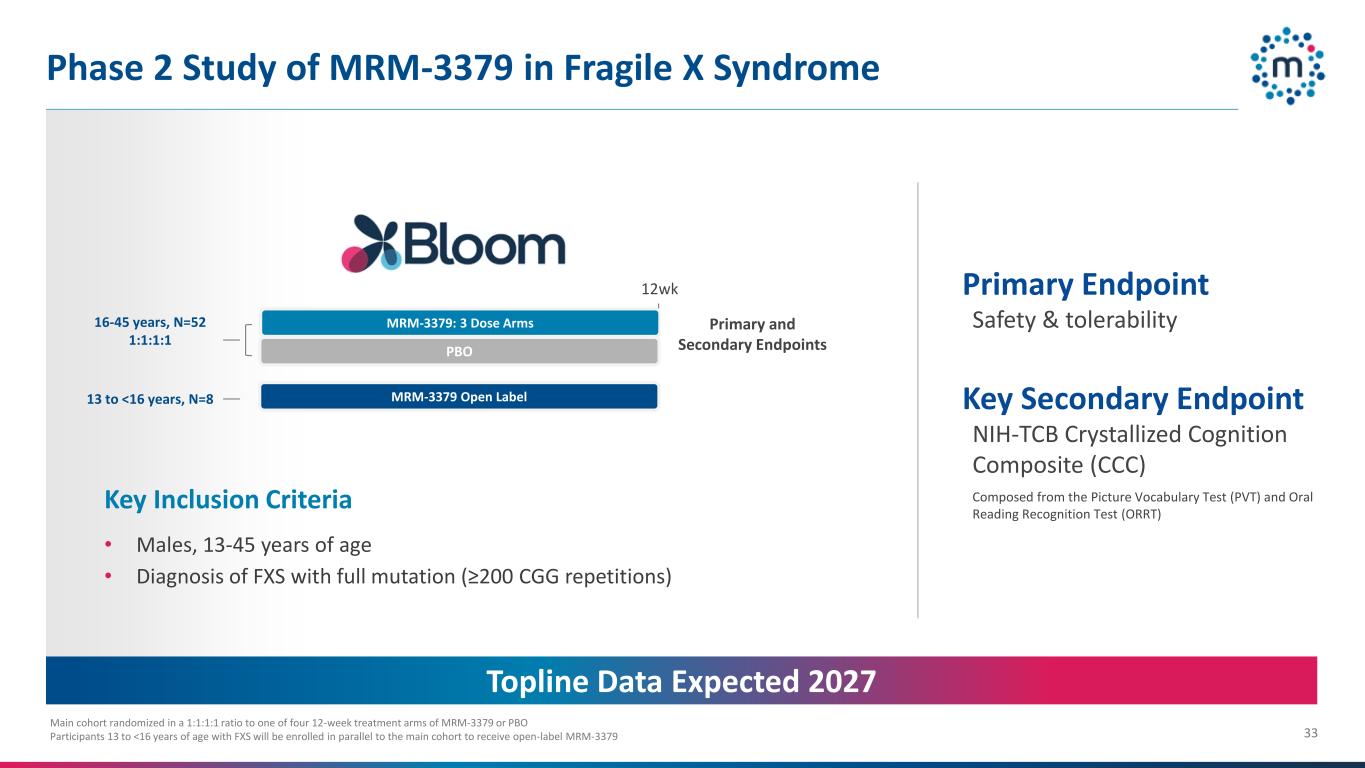
The BLOOM Phase 2 clinical study of MRM-3379 is currently underway in FXS. Males ages 16 to 45 will be randomly assigned to receive one of three dose levels of MRM-3379 or placebo for 12 weeks. An open-label cohort of boys ages 13 to 16 will receive the lowest dose, in order to explore effects of treatment in younger boys, closer to the age of diagnosis. The study’s primary endpoint is safety and tolerability, the key secondary endpoint is the NIH Toolbox Crystallized Cognition Composite (CCC), and several exploratory endpoints will assess potential effects on mood, behavior, and other symptoms that are relevant to this population.
About Mirum Pharmaceuticals  
Mirum Pharmaceuticals (NASDAQ: MIRM) is a leading rare disease company with a global footprint of approved products and a broad pipeline of investigational medicines. Purpose-built to bring forward breakthrough medicines for people with overlooked conditions, Mirum combines deep expertise with strong connections to the rare disease community. The company’s commercial portfolio includes LIVMARLI® (maralixibat) for Alagille syndrome (ALGS) and progressive familial intrahepatic cholestasis (PFIC), CHOLBAM® (cholic acid) for bile-acid synthesis disorders, and CTEXLI® (chenodiol) for cerebrotendinous xanthomatosis (CTX). Mirum’s clinical-stage pipeline includes volixibat, an IBAT inhibitor in late-stage development for primary sclerosing cholangitis (PSC) and primary biliary cholangitis (PBC), brelovitug, a fully human monoclonal antibody in late-stage development for chronic hepatitis delta virus (HDV), subject to the completion of the proposed acquisition of Bluejay Therapeutics, and MRM-3379, a PDE4D inhibitor being evaluated for Fragile X syndrome (FXS). Mirum’s success is driven by a team dedicated to advancing high impact medicines through strategic development, disciplined execution and purposeful collaboration across the rare disease ecosystem. Learn more at www.mirumpharma.com and follow Mirum on Facebook, LinkedIn, Instagram and X. 
Forward-Looking Statements
Statements contained in this press release regarding matters that are not historical facts are “forward-looking statements” within the meaning of the Private Securities Litigation Reform Act of 1995. Such forward-looking statements include statements regarding, among other things, commercial results for our approved products, including continued growth in year over year net product sales, being on track to achieve our revised financial guidance, our expected financial results as of December 31, 2025, including our net product sales, cash flow from operations, and cash, cash equivalents and investments, our expectations regarding our financial results in 2026 and 2027, the anticipated occurrence, manner and timing of the closing of the proposed acquisition of Bluejay Therapeutics, the anticipated occurrence, manner and timing of the closing of the private placements expected to close concurrently with the proposed acquisition of Bluejay Therapeutics and the gross proceeds expected to result from such private placements, delivering life changing medicines for patients


suffering from rare diseases, the results, enrollment, conduct and progress of Mirum’s ongoing and planned studies for its product candidates, including in-licensed product candidates, our expectations regarding the development of Bluejay Therapeutics’ brelovitug, including the potential successful results from the pivotal Phase 3 studies for HDV, the timing and results of interim analyses of our ongoing studies and additional international launches expected in 2026. Because such statements are subject to risks and uncertainties, actual results may differ materially from those expressed or implied by such forward-looking statements. Words such as “anticipate,” “expected,” “will,” “could,” “would,” “guidance,” “potential” and similar expressions are intended to identify forward-looking statements. These forward-looking statements are based upon Mirum’s current expectations and involve assumptions that may never materialize or may prove to be incorrect. Actual results could differ materially from those anticipated in such forward-looking statements as a result of various risks and uncertainties, which include, without limitation, risks and uncertainties associated with Mirum’s business in general, the impact of geopolitical and macroeconomic events, and the other risks described in Mirum’s Quarterly Report on Form 10-Q for the quarter ended September 30, 2025 and subsequent filings with the Securities and Exchange Commission. All forward-looking statements contained in this press release speak only as of the date on which they were made and are based on management’s assumptions and estimates as of such date. Mirum undertakes no obligation to update such statements to reflect events that occur or circumstances that exist after the date on which they were made, except as required by law.
Contacts
Investor Contact:
Andrew McKibben
[email protected]
Media Contact:
Meredith Kiernan
[email protected]

J a n u a r y 2 0 2 6 Mirum Pharmaceuticals: Delivering High Impact Medicines for Rare Disease Exhibit 99.2


Forward-Looking Statements This presentation contains "forward-looking" statements that are based on our management’s beliefs and assumptions and on information currently available to management. Forward-looking statements include all statements other than statements of historical fact contained in this presentation, including information concerning our potential acquisition of Bluejay Therapeutics (“Bluejay”), our business strategy, objectives and opportunities, including the future opportunities and clinical and regulatory milestones for LIVMARLI, CHOLBAM, CTEXLI or Chenodiol, our product candidates and the product candidates that we may acquire if the acquisition of Bluejay is completed. Forward-looking statements are subject to known and unknown risks, uncertainties, assumptions and other factors that may cause our actual results, performance or achievements to differ materially and adversely from those anticipated or implied by our forward-looking statements, including, but not limited to: the failure of our acquisition of Bluejay to be completed for any reason; the results, enrollment, conduct and progress of Bluejay’s ongoing studies for its product candidates; the results, enrollment, conduct and progress of our ongoing and planned studies for our product candidates, including in-licensed product candidates, and our plans and expectations for commercializing LIVMARLI, CHOLBAM and CTEXLI in the United States and rest of world; the costs of our business strategy, commercialization plans and development programs, the financial impact or revenues from any commercialization we undertake; estimates of the number of patients impacted by the diseases or related diseases that we seek or Bluejay has sought to treat and who are appropriate for treatment with our commercial products; the potential clinical benefits of LIVMARLI, CHOLBAM and CTEXLI (or chenodiol tablets under other brand names) and any of our product candidates, including volixibat and MRM-3379; our expected growth, including the potential integration of Bluejay and its operations if the acquisition is completed; our ability to obtain necessary regulatory approvals for our and Bluejay’s product candidates or predictions of the outcome of any regulatory consideration and, if and when approved, market acceptance of our products; our dependence on third-party clinical research organizations, manufacturers, suppliers and distributors; the design, implementation, timelines and outcomes of our clinical trials; the impact of competitive products and therapies; our ability to obtain necessary additional capital; our ability to attract and retain key employees; our ability to manage the growth and complexity of our organization; our ability to maintain, protect and enhance our intellectual property; and our ability to continue to stay in compliance with applicable laws and regulations. You should refer to the section entitled “Risk Factors” set forth in our Annual Report on Form 10-K, Quarterly Reports on Form 10-Q and other filings we make with the Securities and Exchange Commission (SEC) from time to time (available at http://www.sec.gov) for a discussion of important factors that may cause our actual results to differ materially from those expressed or implied by our forward-looking statements. You should not rely upon forward-looking statements as predictions of future events. Neither we nor any other person assumes responsibility for the accuracy and completeness of the forward-looking statements. We undertake no obligation to update any forward-looking statements after the date of this presentation except as may be required by law. This presentation also contains estimates and other statistical data made by independent parties and by us relating to market size and growth and other data about our industry. These data involve a number of assumptions and limitations, and Mirum makes no representation as to the accuracy of such estimates. Projections, assumptions and estimates of the future performance of the markets in which we operate are necessarily subject to a high degree of uncertainty and risk. The trademarks included herein are the property of the owners thereof and are used for reference purposes only. This presentation discusses product candidates that are under clinical study and which have not yet been approved for marketing by the U.S. Food and Drug Administration or other relevant regulatory authorities. No representation is made as to the safety or effectiveness of these product candidates for the use for which such product candidates are being studied. 2

 
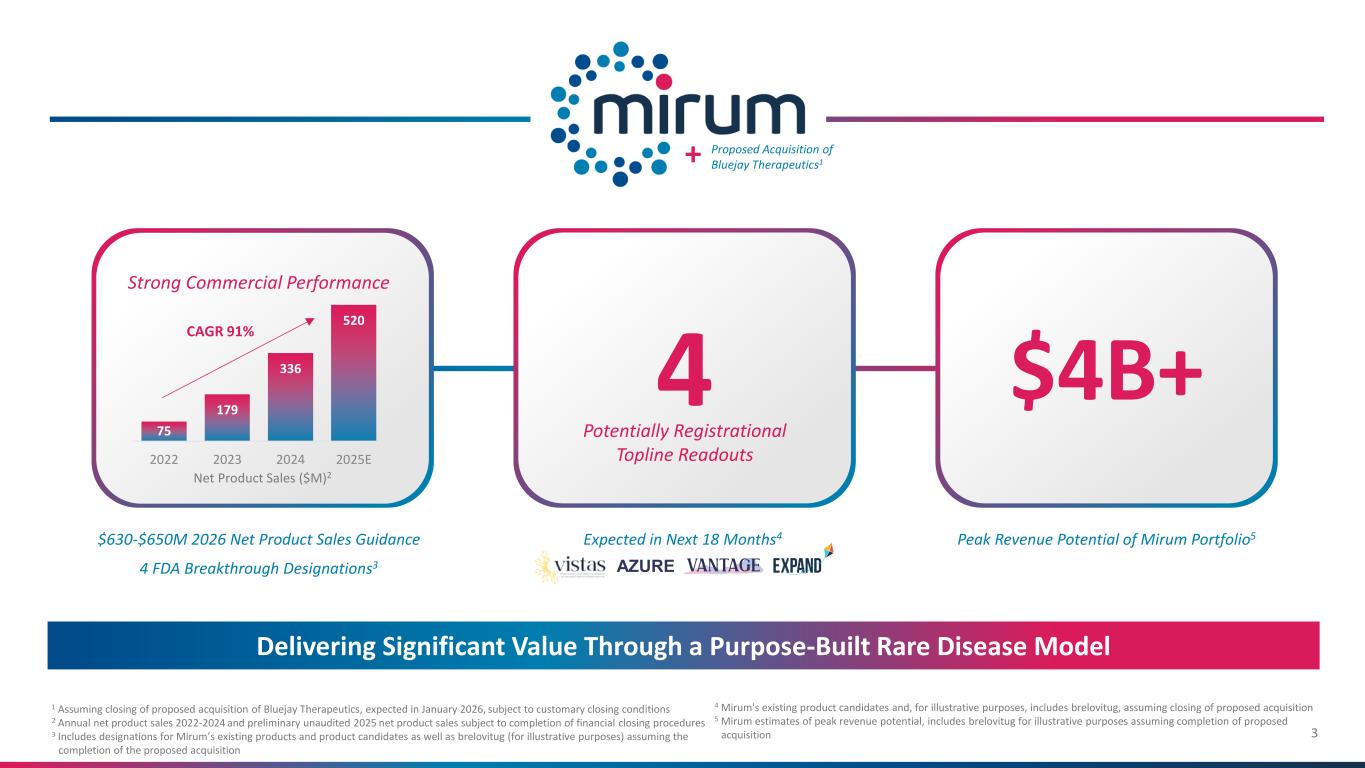
3 1 Assuming closing of proposed acquisition of Bluejay Therapeutics, expected in January 2026, subject to customary closing conditions 2 Annual net product sales 2022-2024 and preliminary unaudited 2025 net product sales subject to completion of financial closing procedures 3 Includes designations for Mirum’s existing products and product candidates as well as brelovitug (for illustrative purposes) assuming the completion of the proposed acquisition 4 Mirum's existing product candidates and, for illustrative purposes, includes brelovitug, assuming closing of proposed acquisition 5 Mirum estimates of peak revenue potential, includes brelovitug for illustrative purposes assuming completion of proposed acquisition + Proposed Acquisition of Bluejay Therapeutics1 Delivering Significant Value Through a Purpose-Built Rare Disease Model $630-$650M 2026 Net Product Sales Guidance 4 FDA Breakthrough Designations3 Peak Revenue Potential of Mirum Portfolio5 $4B+ Expected in Next 18 Months4 75 179 336 520 2022 2023 2024 2025E Net Product Sales ($M)2 AZURE CAGR 91% Strong Commercial Performance 4 Potentially Registrational Topline Readouts


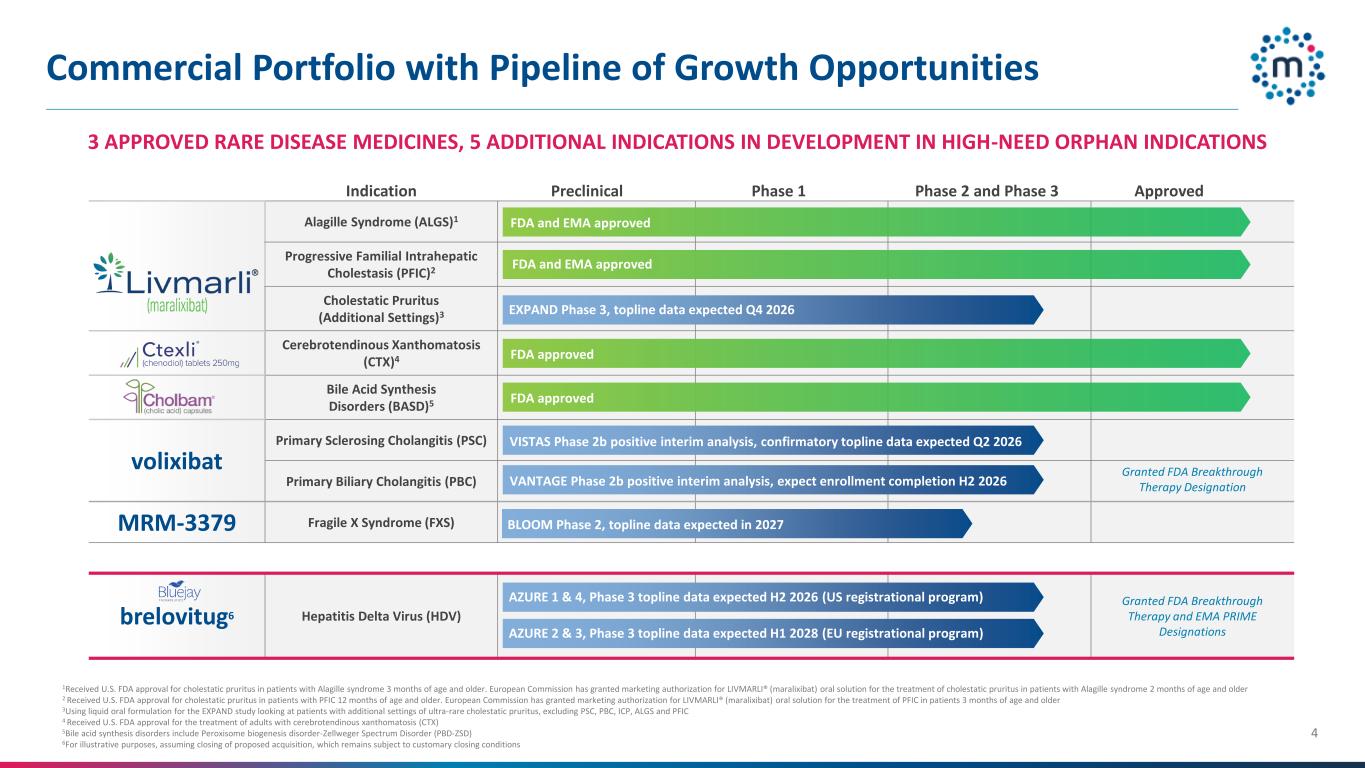
Commercial Portfolio with Pipeline of Growth Opportunities 1Received U.S. FDA approval for cholestatic pruritus in patients with Alagille syndrome 3 months of age and older. European Commission has granted marketing authorization for LIVMARLI® (maralixibat) oral solution for the treatment of cholestatic pruritus in patients with Alagille syndrome 2 months of age and older 2 Received U.S. FDA approval for cholestatic pruritus in patients with PFIC 12 months of age and older. European Commission has granted marketing authorization for LIVMARLI® (maralixibat) oral solution for the treatment of PFIC in patients 3 months of age and older 3Using liquid oral formulation for the EXPAND study looking at patients with additional settings of ultra-rare cholestatic pruritus, excluding PSC, PBC, ICP, ALGS and PFIC 4 Received U.S. FDA approval for the treatment of adults with cerebrotendinous xanthomatosis (CTX) 5Bile acid synthesis disorders include Peroxisome biogenesis disorder-Zellweger Spectrum Disorder (PBD-ZSD) 6For illustrative purposes, assuming closing of proposed acquisition, which remains subject to customary closing conditions 4 Alagille Syndrome (ALGS)1 Progressive Familial Intrahepatic Cholestasis (PFIC)2 Cholestatic Pruritus (Additional Settings)3 Cerebrotendinous Xanthomatosis (CTX)4 Bile Acid Synthesis Disorders (BASD)5 volixibat Primary Sclerosing Cholangitis (PSC) Primary Biliary Cholangitis (PBC) MRM-3379 Fragile X Syndrome (FXS) VISTAS Phase 2b positive interim analysis, confirmatory topline data expected Q2 2026 VANTAGE Phase 2b positive interim analysis, expect enrollment completion H2 2026 Phase 1 ApprovedPreclinical Phase 2 and Phase 3 FDA and EMA approved 3 APPROVED RARE DISEASE MEDICINES, 5 ADDITIONAL INDICATIONS IN DEVELOPMENT IN HIGH-NEED ORPHAN INDICATIONS FDA and EMA approved FDA approved Indication EXPAND Phase 3, topline data expected Q4 2026 BLOOM Phase 2, topline data expected in 2027 FDA approved Granted FDA Breakthrough Therapy Designation ® brelovitug6 Hepatitis Delta Virus (HDV) Granted FDA Breakthrough Therapy and EMA PRIME Designations AZURE 1 & 4, Phase 3 topline data expected H2 2026 (US registrational program) AZURE 2 & 3, Phase 3 topline data expected H1 2028 (EU registrational program)


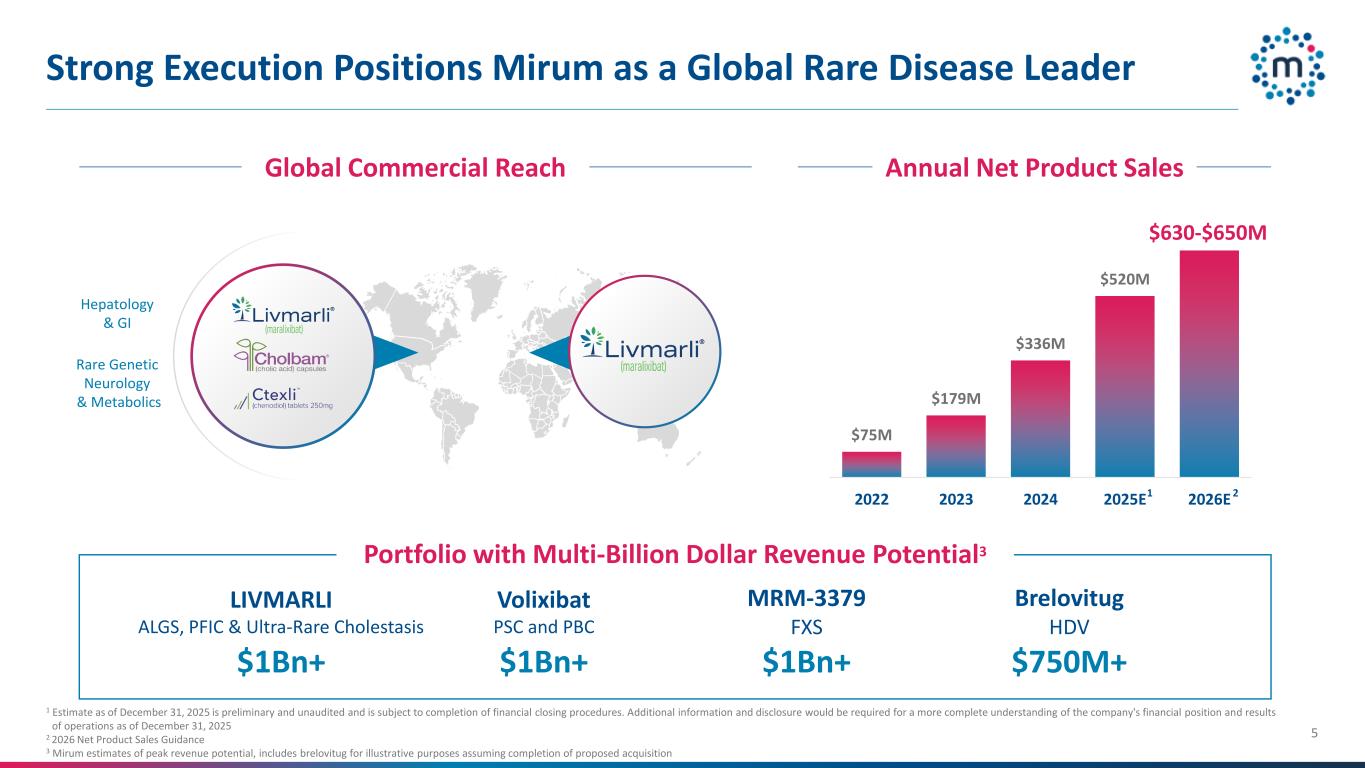
Strong Execution Positions Mirum as a Global Rare Disease Leader 5 Hepatology & GI Rare Genetic Neurology & Metabolics 1 Estimate as of December 31, 2025 is preliminary and unaudited and is subject to completion of financial closing procedures. Additional information and disclosure would be required for a more complete understanding of the company's financial position and results of operations as of December 31, 2025 2 2026 Net Product Sales Guidance 3 Mirum estimates of peak revenue potential, includes brelovitug for illustrative purposes assuming completion of proposed acquisition $1Bn+ $1Bn+ $75M $179M $336M $520M 2022 2023 2024 2025E 2026E $630-$650M 1 Annual Net Product SalesGlobal Commercial Reach Portfolio with Multi-Billion Dollar Revenue Potential3 $1Bn+ Volixibat PSC and PBC MRM-3379 FXS LIVMARLI ALGS, PFIC & Ultra-Rare Cholestasis Brelovitug HDV $750M+ 2


Alagille Syndrome (ALGS) Progressive Familial Intrahepatic Cholestasis (PFIC) LIVMARLI®


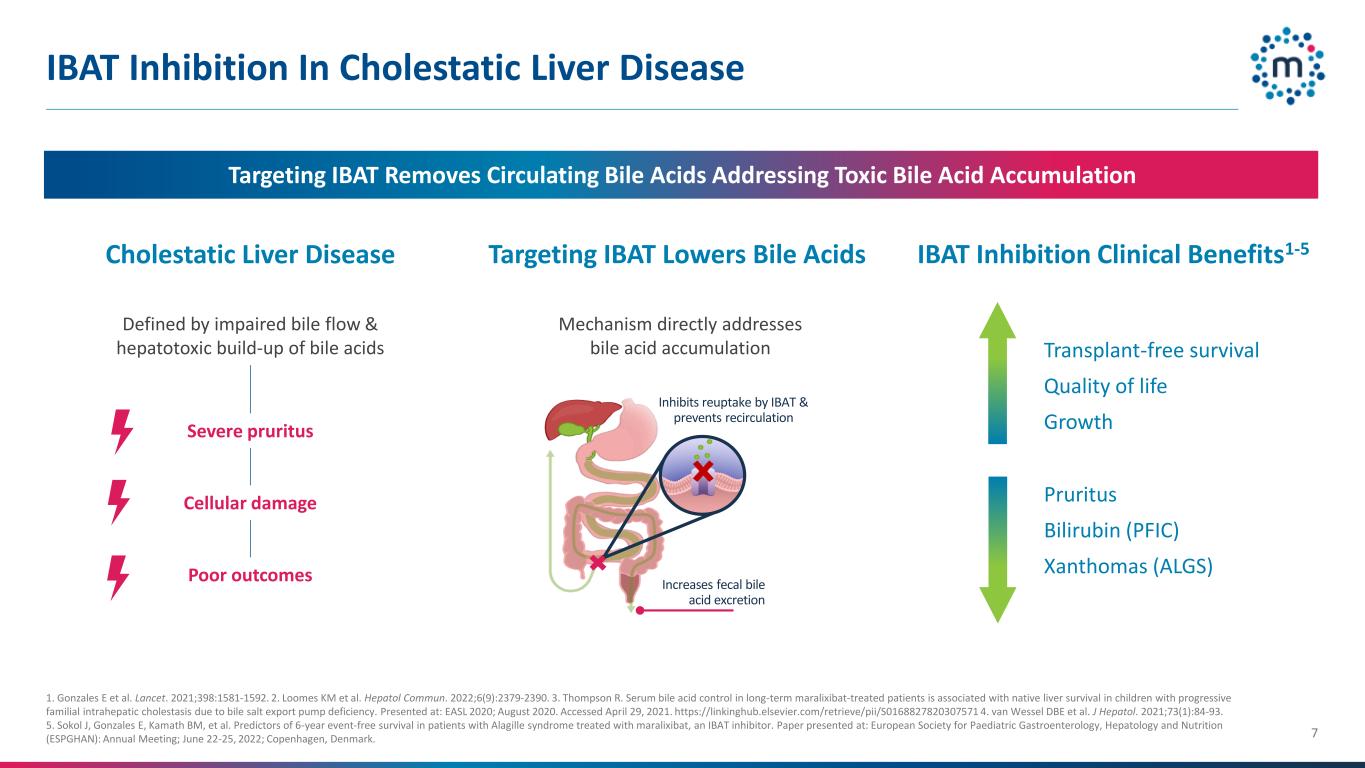
IBAT Inhibition In Cholestatic Liver Disease 7 Targeting IBAT Removes Circulating Bile Acids Addressing Toxic Bile Acid Accumulation Pruritus Bilirubin (PFIC) Xanthomas (ALGS) Transplant-free survival Quality of life Growth 1. Gonzales E et al. Lancet. 2021;398:1581-1592. 2. Loomes KM et al. Hepatol Commun. 2022;6(9):2379-2390. 3. Thompson R. Serum bile acid control in long-term maralixibat-treated patients is associated with native liver survival in children with progressive familial intrahepatic cholestasis due to bile salt export pump deficiency. Presented at: EASL 2020; August 2020. Accessed April 29, 2021. https://linkinghub.elsevier.com/retrieve/pii/S0168827820307571 4. van Wessel DBE et al. J Hepatol. 2021;73(1):84-93. 5. Sokol J, Gonzales E, Kamath BM, et al. Predictors of 6-year event-free survival in patients with Alagille syndrome treated with maralixibat, an IBAT inhibitor. Paper presented at: European Society for Paediatric Gastroenterology, Hepatology and Nutrition (ESPGHAN): Annual Meeting; June 22-25, 2022; Copenhagen, Denmark. Inhibits reuptake by IBAT & prevents recirculation Increases fecal bile acid excretion Cholestatic Liver Disease Defined by impaired bile flow & hepatotoxic build-up of bile acids Targeting IBAT Lowers Bile Acids Mechanism directly addresses bile acid accumulation IBAT Inhibition Clinical Benefits1-5 Severe pruritus Cellular damage Poor outcomes


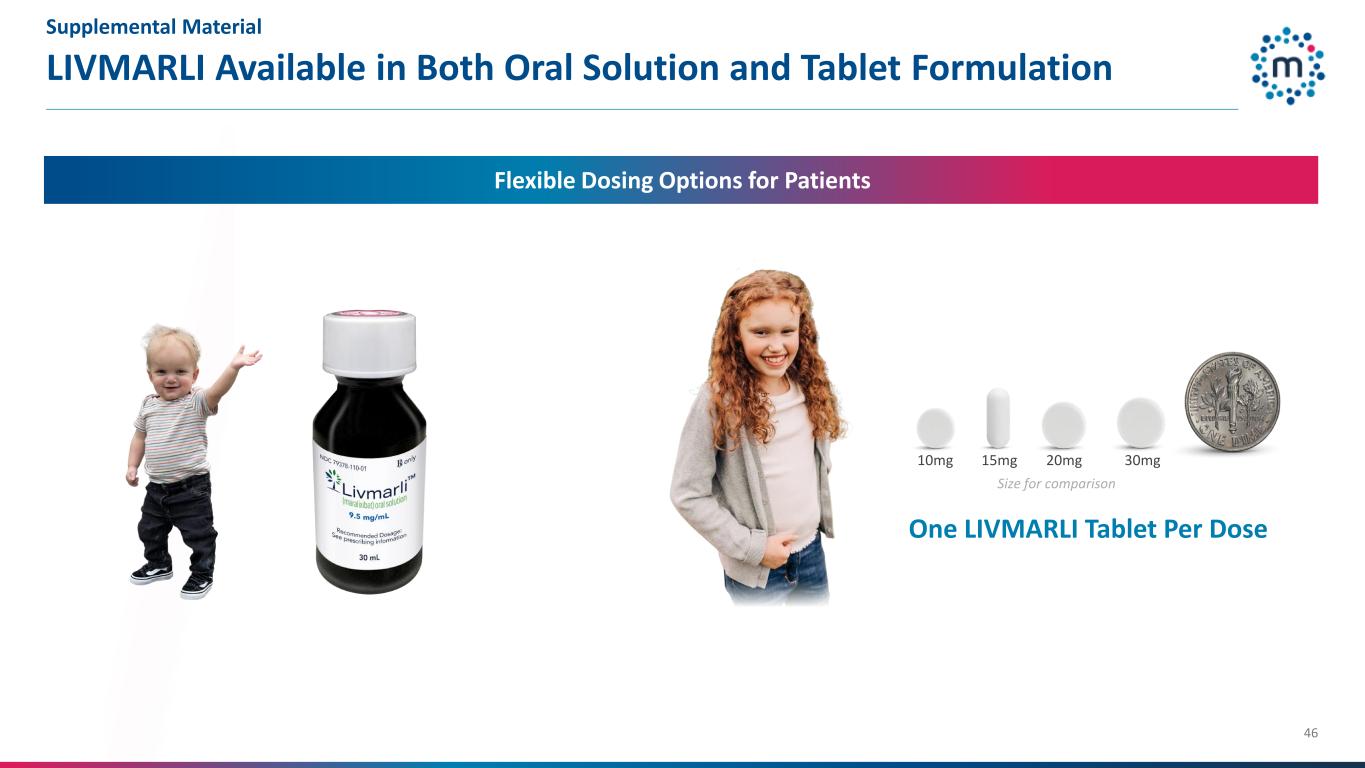
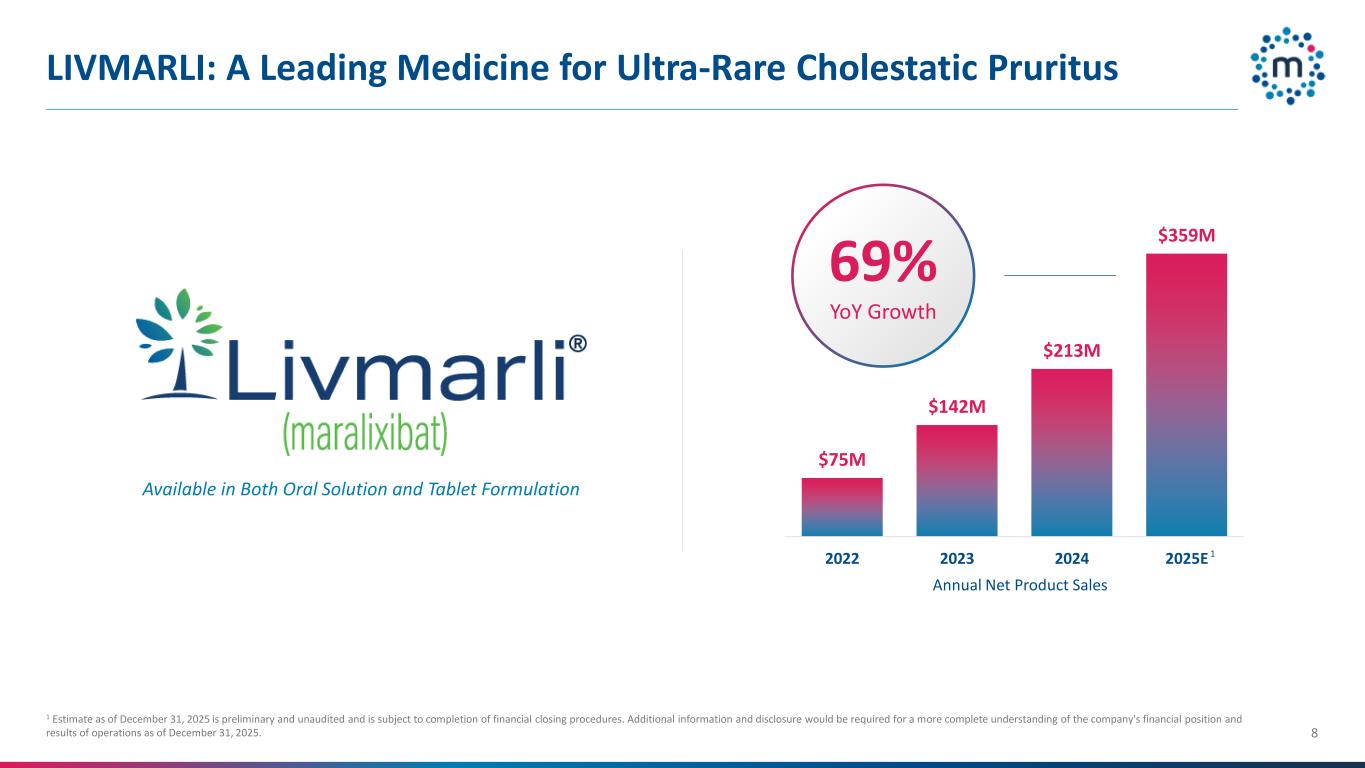
LIVMARLI: A Leading Medicine for Ultra-Rare Cholestatic Pruritus 8 1 Estimate as of December 31, 2025 is preliminary and unaudited and is subject to completion of financial closing procedures. Additional information and disclosure would be required for a more complete understanding of the company's financial position and results of operations as of December 31, 2025. $75M $142M $213M $359M 2022 2023 2024 2025E 69% YoY Growth Annual Net Product Sales Available in Both Oral Solution and Tablet Formulation 1


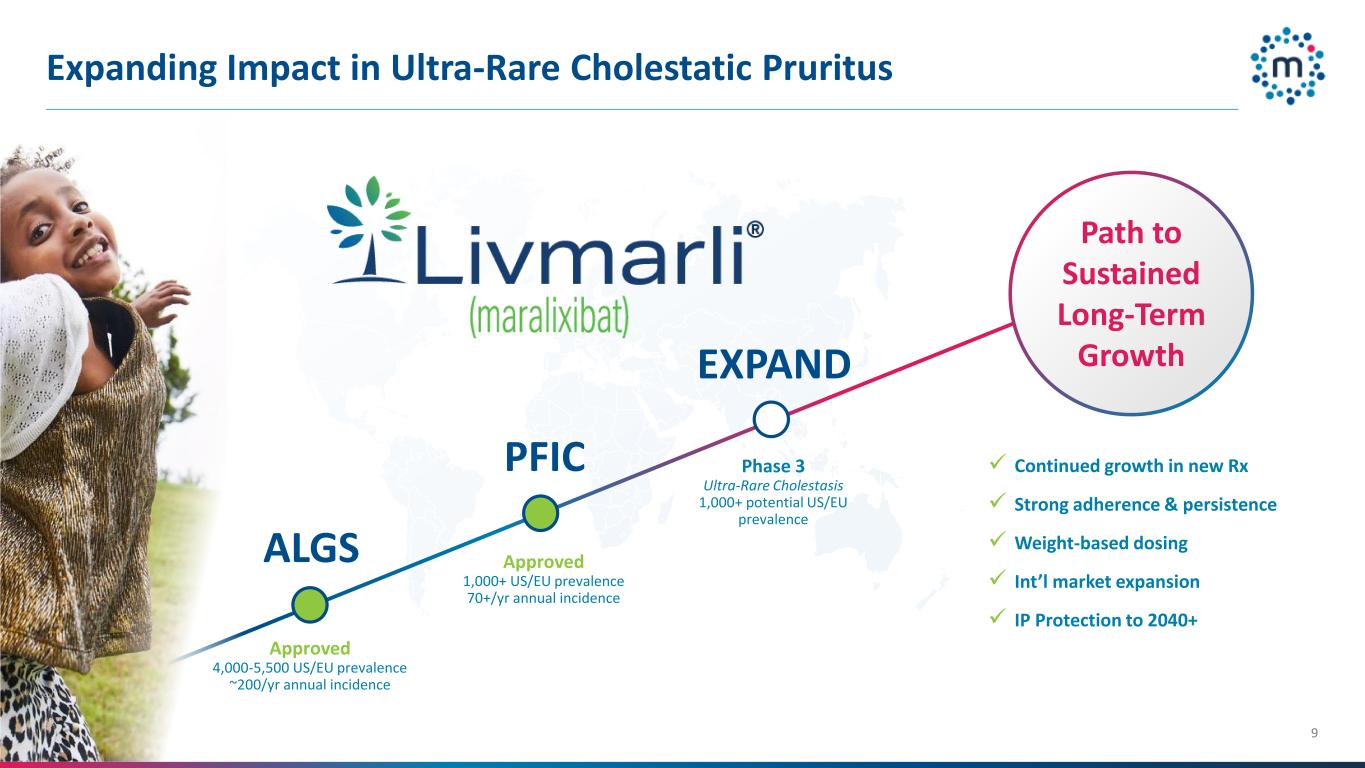
Expanding Impact in Ultra-Rare Cholestatic Pruritus 9 ALGS PFIC EXPAND Approved 4,000-5,500 US/EU prevalence ~200/yr annual incidence Approved 1,000+ US/EU prevalence 70+/yr annual incidence Phase 3 Ultra-Rare Cholestasis 1,000+ potential US/EU prevalence Path to Sustained Long-Term Growth ✓ Continued growth in new Rx ✓ Strong adherence & persistence ✓ Weight-based dosing ✓ Int’l market expansion ✓ IP Protection to 2040+


CHOLBAM® & CTEXLI® Bile Acid Portfolio


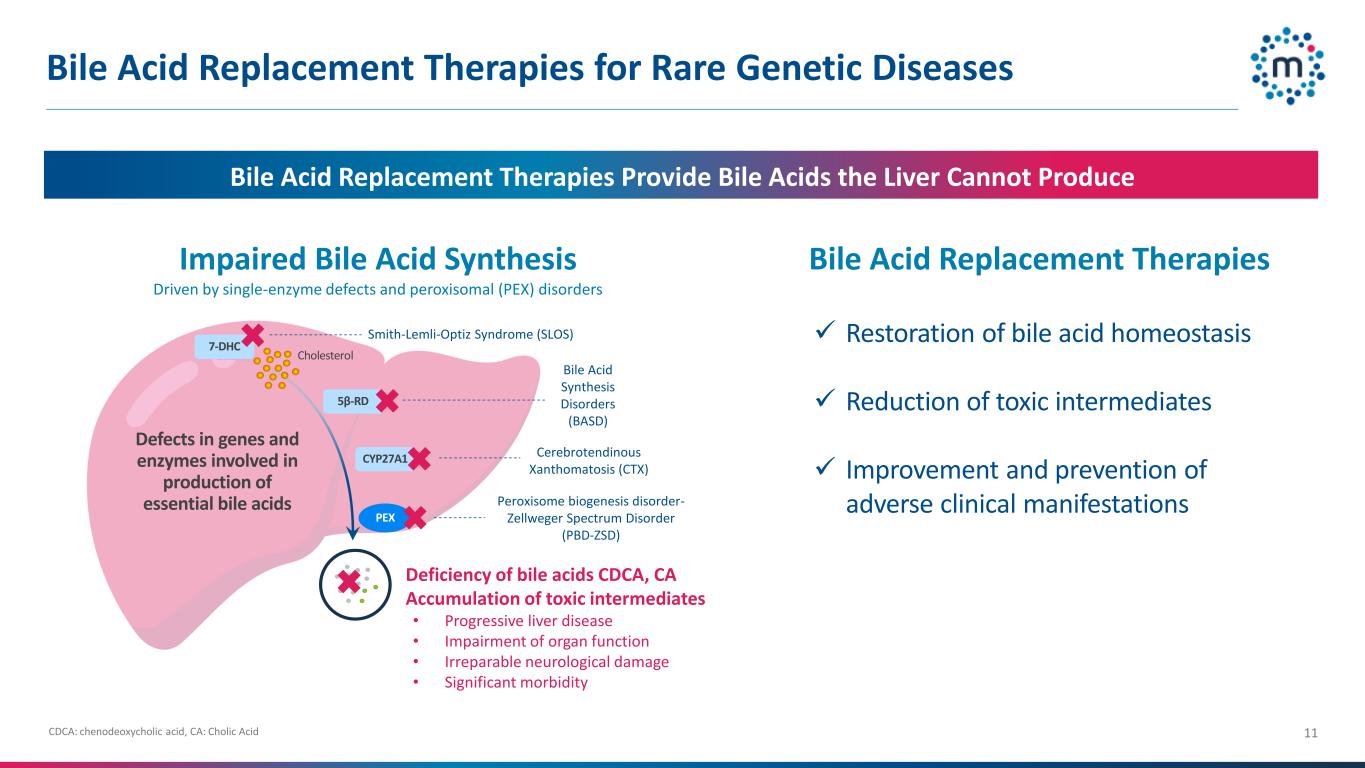
Bile Acid Replacement Therapies for Rare Genetic Diseases 11 Impaired Bile Acid Synthesis Driven by single-enzyme defects and peroxisomal (PEX) disorders Bile Acid Replacement Therapies Provide Bile Acids the Liver Cannot Produce Peroxisome biogenesis disorder- Zellweger Spectrum Disorder (PBD-ZSD) Smith-Lemli-Optiz Syndrome (SLOS) Deficiency of bile acids CDCA, CA Accumulation of toxic intermediates • Progressive liver disease • Impairment of organ function • Irreparable neurological damage • Significant morbidity 7-DHC 5β-RD CYP27A1 Cholesterol Defects in genes and enzymes involved in production of essential bile acids PEX Bile Acid Replacement Therapies ✓ Restoration of bile acid homeostasis ✓ Reduction of toxic intermediates ✓ Improvement and prevention of adverse clinical manifestations Bile Acid Synthesis Disorders (BASD) Cerebrotendinous Xanthomatosis (CTX) CDCA: chenodeoxycholic acid, CA: Cholic Acid


Growing Business with Significant Commercial Synergies 12 Bile Acid Portfolio Addresses Multiple High Need Settings 1 Travere Therapeutics, Inc. and Mirum Pharmaceuticals, Inc. 10-K filings; 2023 net product sales excludes an approximate ~$5M reserve recorded by Travere Therapeutics, Inc. for potential repayment obligations attributed to 2015-2020 net product sales in France 2 Estimate as of December 31, 2025 is preliminary and unaudited and is subject to completion of financial closing procedures. Additional information and disclosure would be required for a more complete understanding of the company's financial position and results of operations as of December 31, 2025. $103 $109 $123 $161 2022 2023 2024 2025E Annual Net Product Sales ($M) Increased Awareness & Diagnosis Driving Growth CTX Approved 1 BASD PBD-ZSD Approved CTX - cerebrotendinous xanthomatosis; BASD - bile acid synthesis disorders include Peroxisome biogenesis disorder-Zellweger Spectrum Disorder (PBD-ZSD) ® 2


Significant Expansion Opportunities within Pipeline Indications Pipeline


LIVMARLI


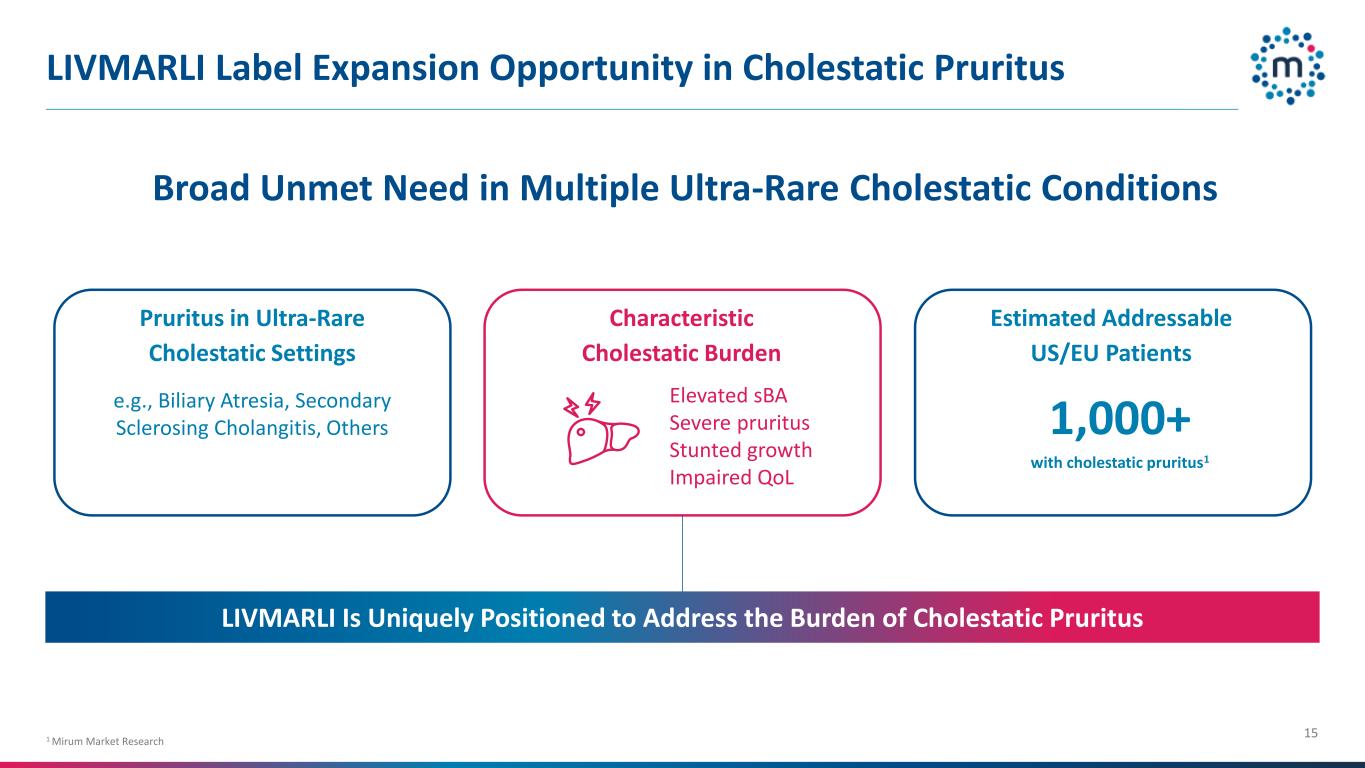
LIVMARLI Label Expansion Opportunity in Cholestatic Pruritus 15 Broad Unmet Need in Multiple Ultra-Rare Cholestatic Conditions 1 Mirum Market Research Pruritus in Ultra-Rare Cholestatic Settings Elevated sBA Severe pruritus Stunted growth Impaired QoL Characteristic Cholestatic Burden Estimated Addressable US/EU Patients 1,000+ with cholestatic pruritus1 LIVMARLI Is Uniquely Positioned to Address the Burden of Cholestatic Pruritus e.g., Biliary Atresia, Secondary Sclerosing Cholangitis, Others


EXPAND Phase 3 Study Enrolling 16 Primary Endpoint Change in pruritus from Baseline to 20wk Secondary Endpoints Safety & tolerability Markers of disease and QoL +20wks Key Inclusion Criteria • Diagnosis of cholestatic liver disease excluding ALGS, PFIC, PSC, PBC, and ICP • Moderate to severe cholestatic pruritus • Total sBA >2× ULN Primary Endpoint LIVMARLI 285ug/kg BID1 LIVMARLI Open Label Extension 20wk 1 LIVMARLI 285ug/kg is equivalent to 300 ug/kg maralixibat chloride. BID, twice daily PBO Patients with Cholestatic Pruritus n~45 Topline Data Expected Q4 2026


IBAT Inhibitor for Cholestasis in Adults Volixibat


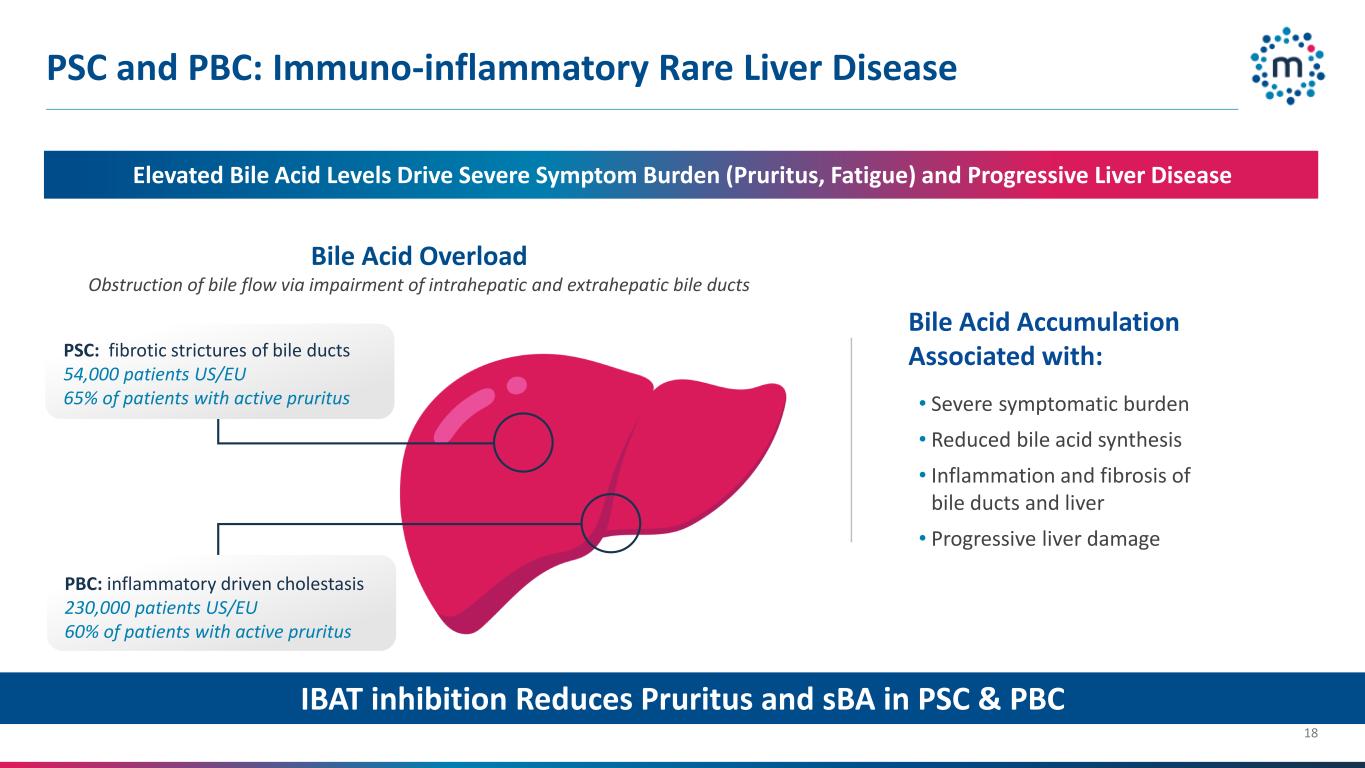
PSC and PBC: Immuno-inflammatory Rare Liver Disease Bile Acid Overload Obstruction of bile flow via impairment of intrahepatic and extrahepatic bile ducts Elevated Bile Acid Levels Drive Severe Symptom Burden (Pruritus, Fatigue) and Progressive Liver Disease Bile Acid Accumulation Associated with: • Severe symptomatic burden • Reduced bile acid synthesis • Inflammation and fibrosis of bile ducts and liver • Progressive liver damage PSC: fibrotic strictures of bile ducts 54,000 patients US/EU 65% of patients with active pruritus PBC: inflammatory driven cholestasis 230,000 patients US/EU 60% of patients with active pruritus IBAT inhibition Reduces Pruritus and sBA in PSC & PBC 18


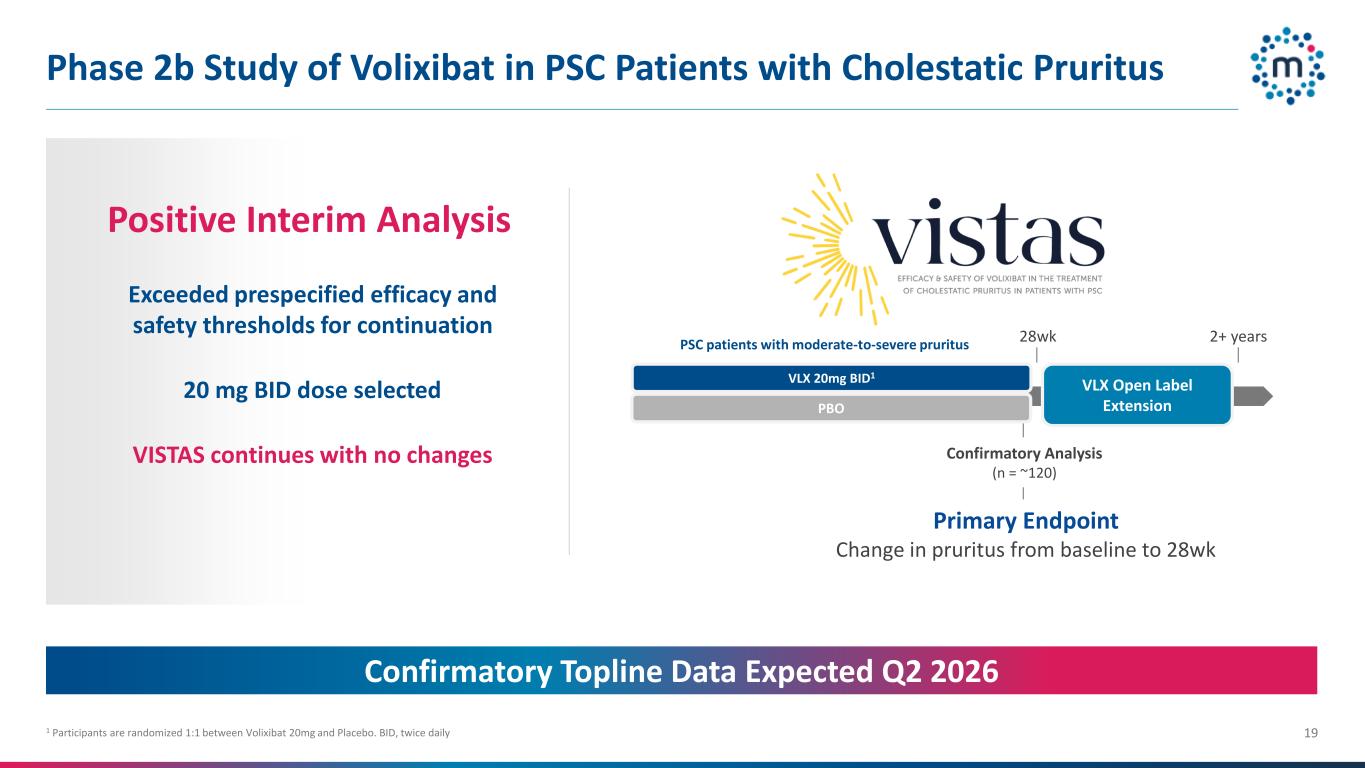
Phase 2b Study of Volixibat in PSC Patients with Cholestatic Pruritus 191 Participants are randomized 1:1 between Volixibat 20mg and Placebo. BID, twice daily 2+ years Confirmatory Analysis (n = ~120) VLX 20mg BID1 VLX Open Label Extension 28wk PBO PSC patients with moderate-to-severe pruritus Confirmatory Topline Data Expected Q2 2026 Primary Endpoint Change in pruritus from baseline to 28wk Exceeded prespecified efficacy and safety thresholds for continuation 20 mg BID dose selected VISTAS continues with no changes Positive Interim Analysis


Primary Sclerosing Cholangitis


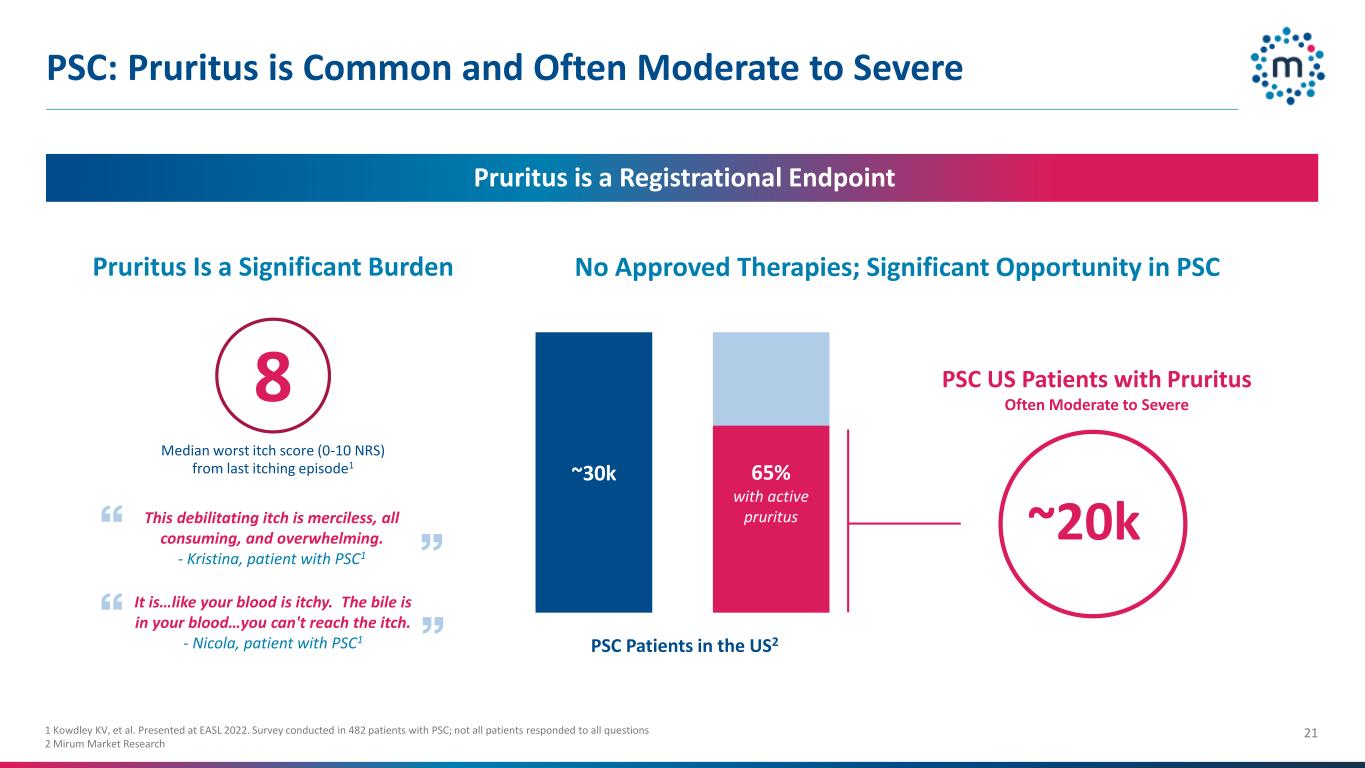
PSC: Pruritus is Common and Often Moderate to Severe 21 Pruritus Is a Significant Burden Median worst itch score (0-10 NRS) from last itching episode1 8 1 Kowdley KV, et al. Presented at EASL 2022. Survey conducted in 482 patients with PSC; not all patients responded to all questions 2 Mirum Market Research No Approved Therapies; Significant Opportunity in PSC ~30k PSC US Patients with Pruritus Often Moderate to Severe ~20k PSC Patients in the US2 65% with active pruritus Pruritus is a Registrational Endpoint It is…like your blood is itchy. The bile is in your blood…you can't reach the itch. - Nicola, patient with PSC1 This debilitating itch is merciless, all consuming, and overwhelming. - Kristina, patient with PSC1


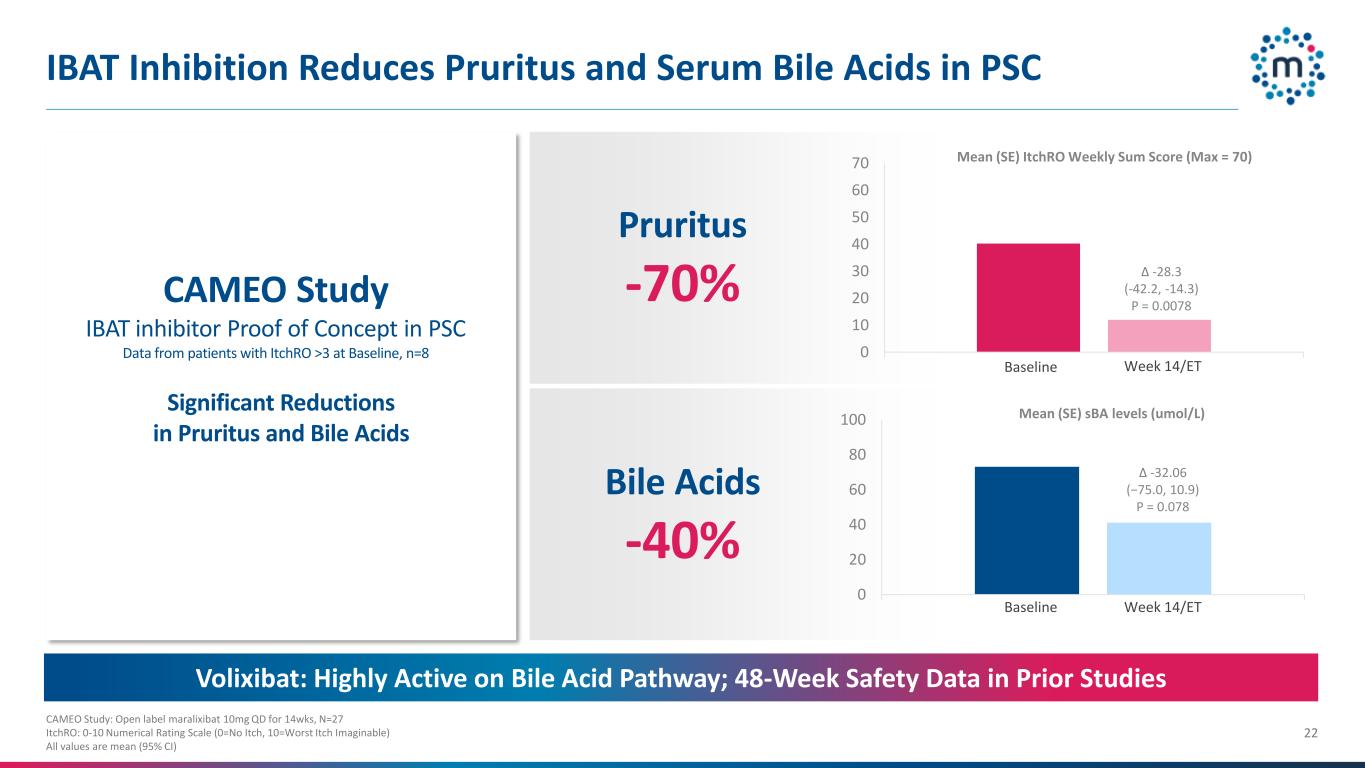
IBAT Inhibition Reduces Pruritus and Serum Bile Acids in PSC 22 CAMEO Study: Open label maralixibat 10mg QD for 14wks, N=27 ItchRO: 0-10 Numerical Rating Scale (0=No Itch, 10=Worst Itch Imaginable) All values are mean (95% CI) Volixibat: Highly Active on Bile Acid Pathway; 48-Week Safety Data in Prior Studies 0 10 20 30 40 50 60 70 CAMEO Study IBAT inhibitor Proof of Concept in PSC Data from patients with ItchRO >3 at Baseline, n=8 Baseline Week 14/ET Pruritus -70% Mean (SE) ItchRO Weekly Sum Score (Max = 70) 0 20 40 60 80 100 Bile Acids -40% Mean (SE) sBA levels (umol/L) Baseline Week 14/ET Δ -28.3 (-42.2, -14.3) P = 0.0078 Δ -32.06 (−75.0, 10.9) P = 0.078 Significant Reductions in Pruritus and Bile Acids


Primary Biliary Cholangitis


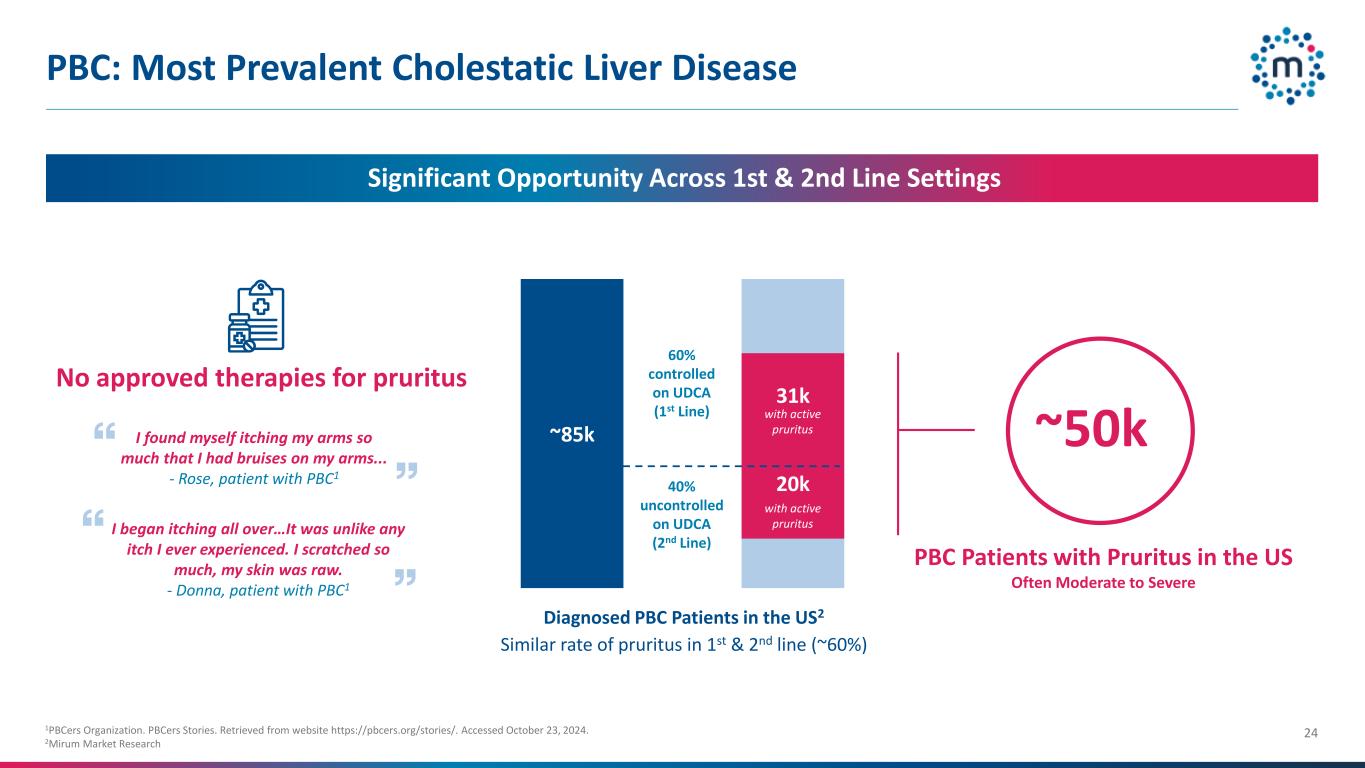
PBC: Most Prevalent Cholestatic Liver Disease 24 ~85k 20k 31k 60% controlled on UDCA (1st Line) 40% uncontrolled on UDCA (2nd Line) PBC Patients with Pruritus in the US Often Moderate to Severe No approved therapies for pruritus with active pruritus with active pruritus Diagnosed PBC Patients in the US2 Significant Opportunity Across 1st & 2nd Line Settings 1PBCers Organization. PBCers Stories. Retrieved from website https://pbcers.org/stories/. Accessed October 23, 2024. 2Mirum Market Research ~50kI found myself itching my arms so much that I had bruises on my arms... - Rose, patient with PBC1 I began itching all over…It was unlike any itch I ever experienced. I scratched so much, my skin was raw. - Donna, patient with PBC1 Similar rate of pruritus in 1st & 2nd line (~60%)


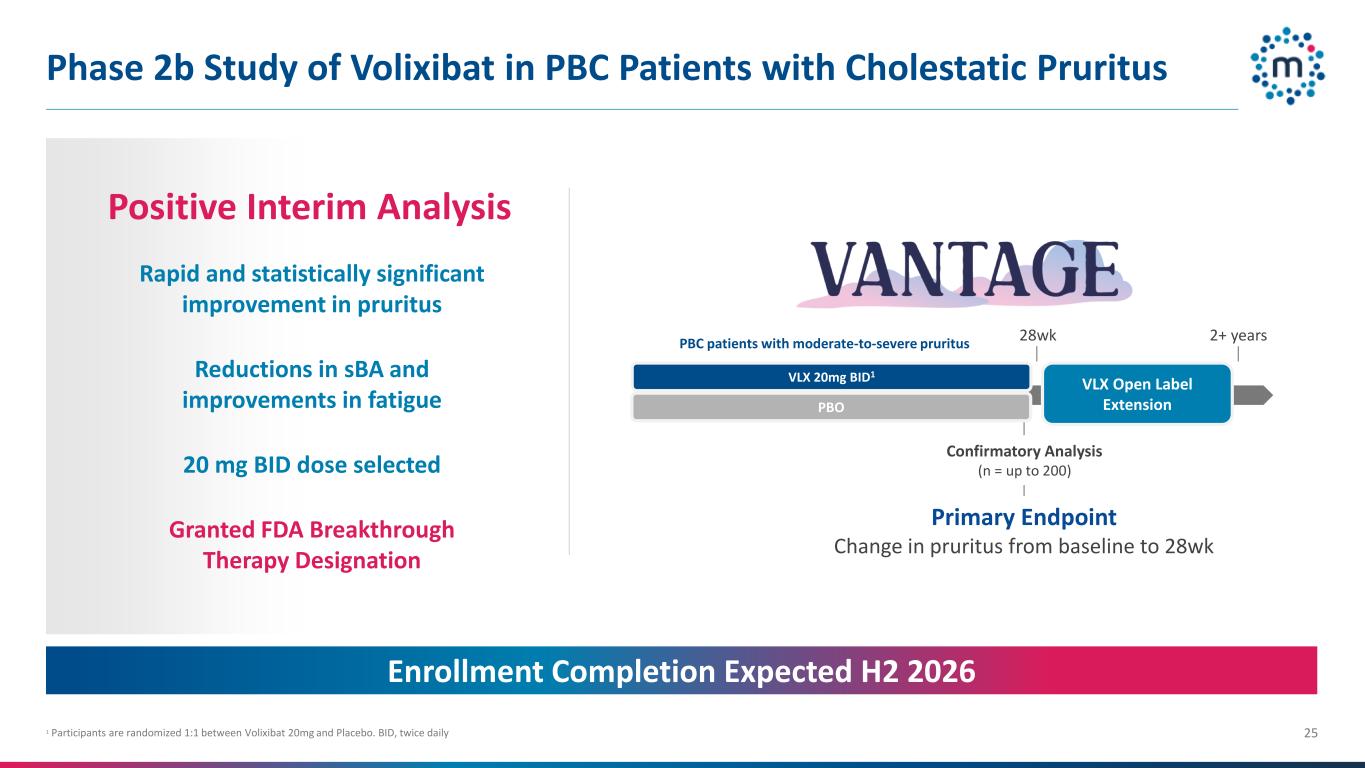
Phase 2b Study of Volixibat in PBC Patients with Cholestatic Pruritus 251 Participants are randomized 1:1 between Volixibat 20mg and Placebo. BID, twice daily 2+ years Confirmatory Analysis (n = up to 200) VLX 20mg BID1 VLX Open Label Extension 28wk PBO PBC patients with moderate-to-severe pruritus Enrollment Completion Expected H2 2026 Primary Endpoint Change in pruritus from baseline to 28wk Positive Interim Analysis Rapid and statistically significant improvement in pruritus Reductions in sBA and improvements in fatigue 20 mg BID dose selected Granted FDA Breakthrough Therapy Designation


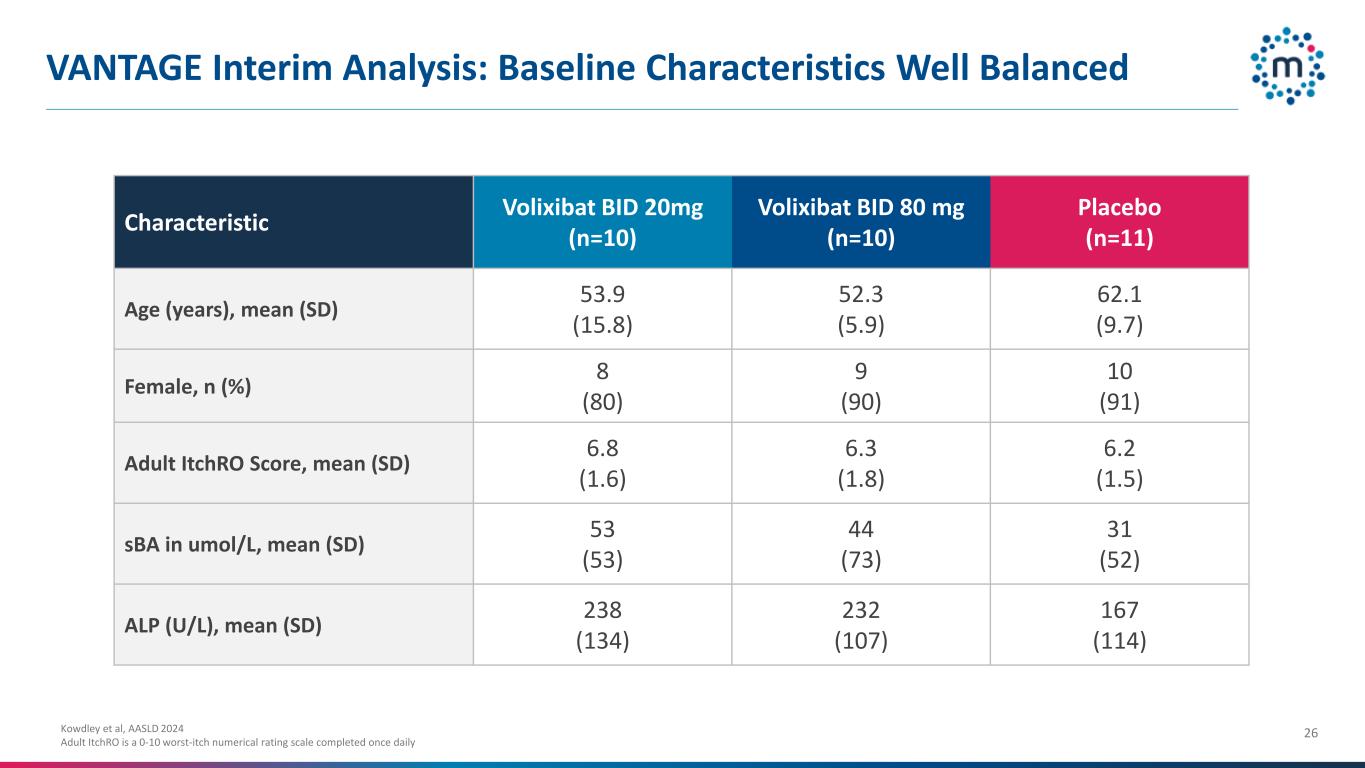
VANTAGE Interim Analysis: Baseline Characteristics Well Balanced 26 Characteristic Volixibat BID 20mg (n=10) Volixibat BID 80 mg (n=10) Placebo (n=11) Age (years), mean (SD) 53.9 (15.8) 52.3 (5.9) 62.1 (9.7) Female, n (%) 8 (80) 9 (90) 10 (91) Adult ItchRO Score, mean (SD) 6.8 (1.6) 6.3 (1.8) 6.2 (1.5) sBA in umol/L, mean (SD) 53 (53) 44 (73) 31 (52) ALP (U/L), mean (SD) 238 (134) 232 (107) 167 (114) Kowdley et al, AASLD 2024 Adult ItchRO is a 0-10 worst-itch numerical rating scale completed once daily


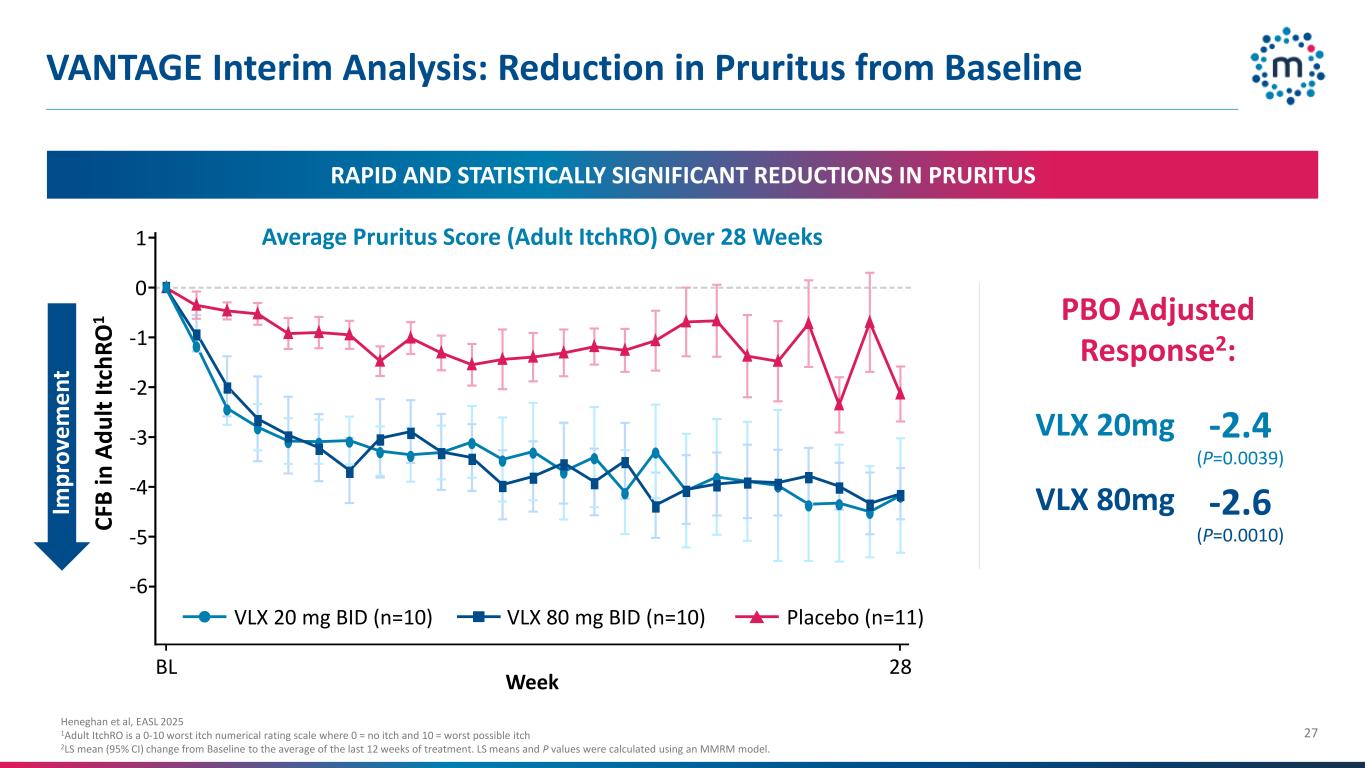
VANTAGE Interim Analysis: Reduction in Pruritus from Baseline 27 Heneghan et al, EASL 2025 1Adult ItchRO is a 0-10 worst itch numerical rating scale where 0 = no itch and 10 = worst possible itch 2LS mean (95% CI) change from Baseline to the average of the last 12 weeks of treatment. LS means and P values were calculated using an MMRM model. RAPID AND STATISTICALLY SIGNIFICANT REDUCTIONS IN PRURITUS -2.4 (P=0.0039) -2.6 (P=0.0010) PBO Adjusted Response2: VLX 20mg VLX 80mg VLX 80 mg BID (n=10)VLX 20 mg BID (n=10) Placebo (n=11) C FB in A d u lt It ch R O 1 Week -6 -5 -4 -3 -2 -1 0 1 BL 28 Average Pruritus Score (Adult ItchRO) Over 28 Weeks Im p ro ve m e n t


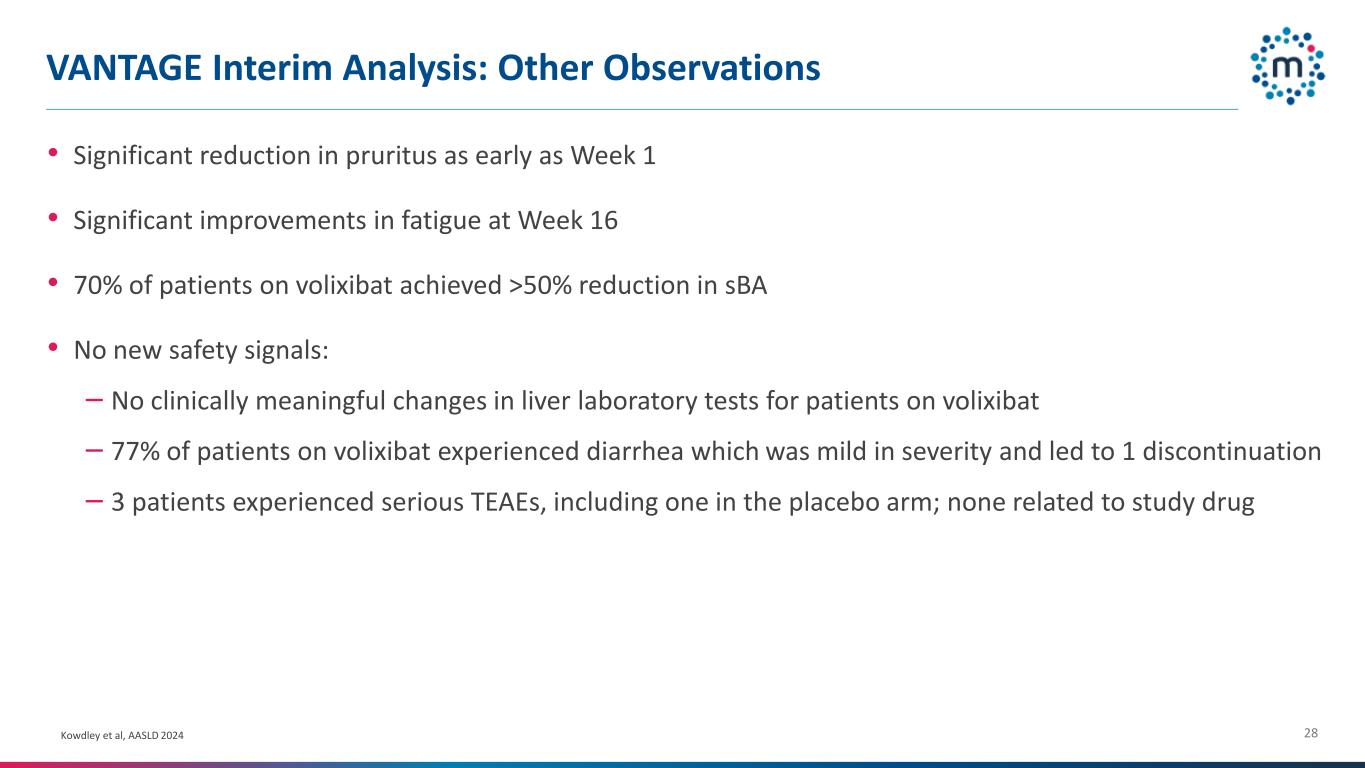
VANTAGE Interim Analysis: Other Observations 28 • Significant reduction in pruritus as early as Week 1 • Significant improvements in fatigue at Week 16 • 70% of patients on volixibat achieved >50% reduction in sBA • No new safety signals: – No clinically meaningful changes in liver laboratory tests for patients on volixibat – 77% of patients on volixibat experienced diarrhea which was mild in severity and led to 1 discontinuation – 3 patients experienced serious TEAEs, including one in the placebo arm; none related to study drug Kowdley et al, AASLD 2024


MRM-3379 PDE4D Inhibitor for Fragile X Syndrome (FXS)


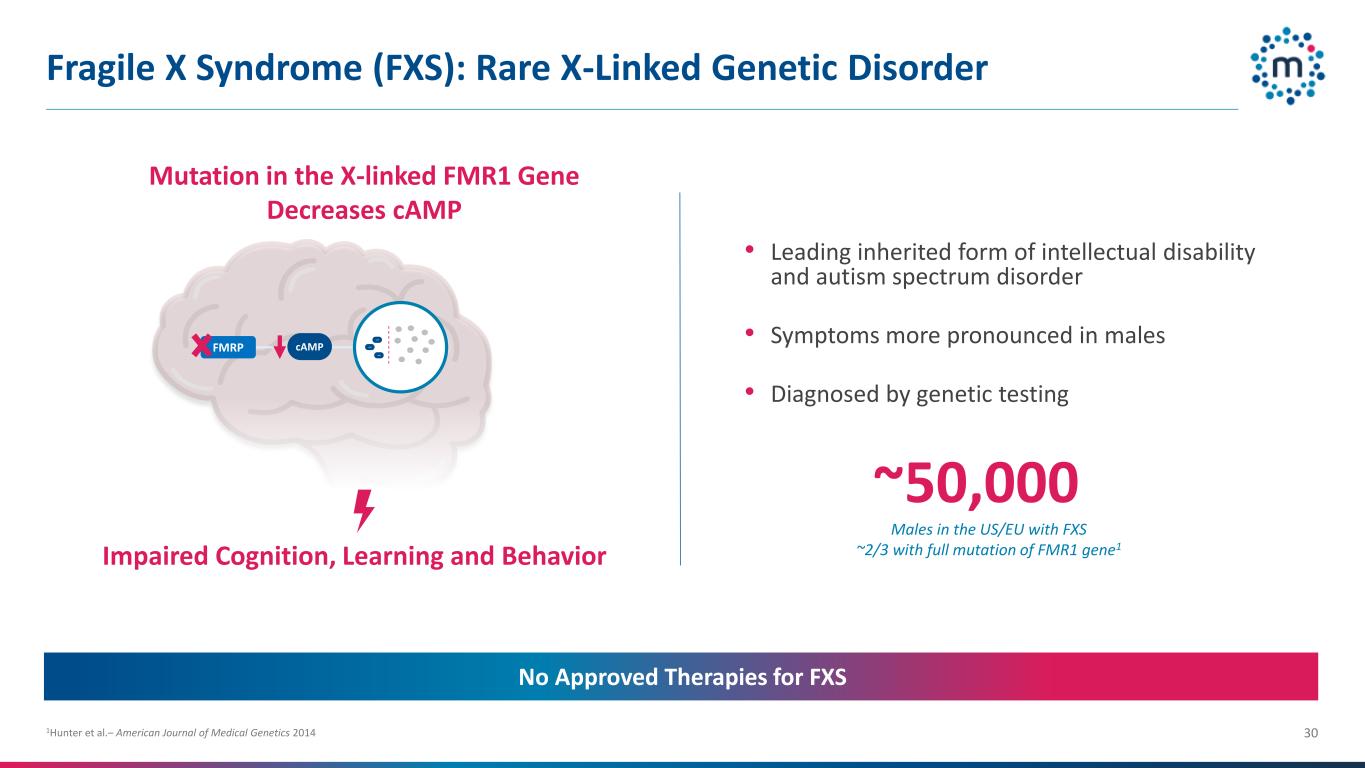
Fragile X Syndrome (FXS): Rare X-Linked Genetic Disorder 30 Mutation in the X-linked FMR1 Gene Decreases cAMP • Leading inherited form of intellectual disability and autism spectrum disorder • Symptoms more pronounced in males • Diagnosed by genetic testing No Approved Therapies for FXS FMRP cAMP cAMP cAMP cAMP Impaired Cognition, Learning and Behavior ~50,000 Males in the US/EU with FXS ~2/3 with full mutation of FMR1 gene1 1Hunter et al.– American Journal of Medical Genetics 2014


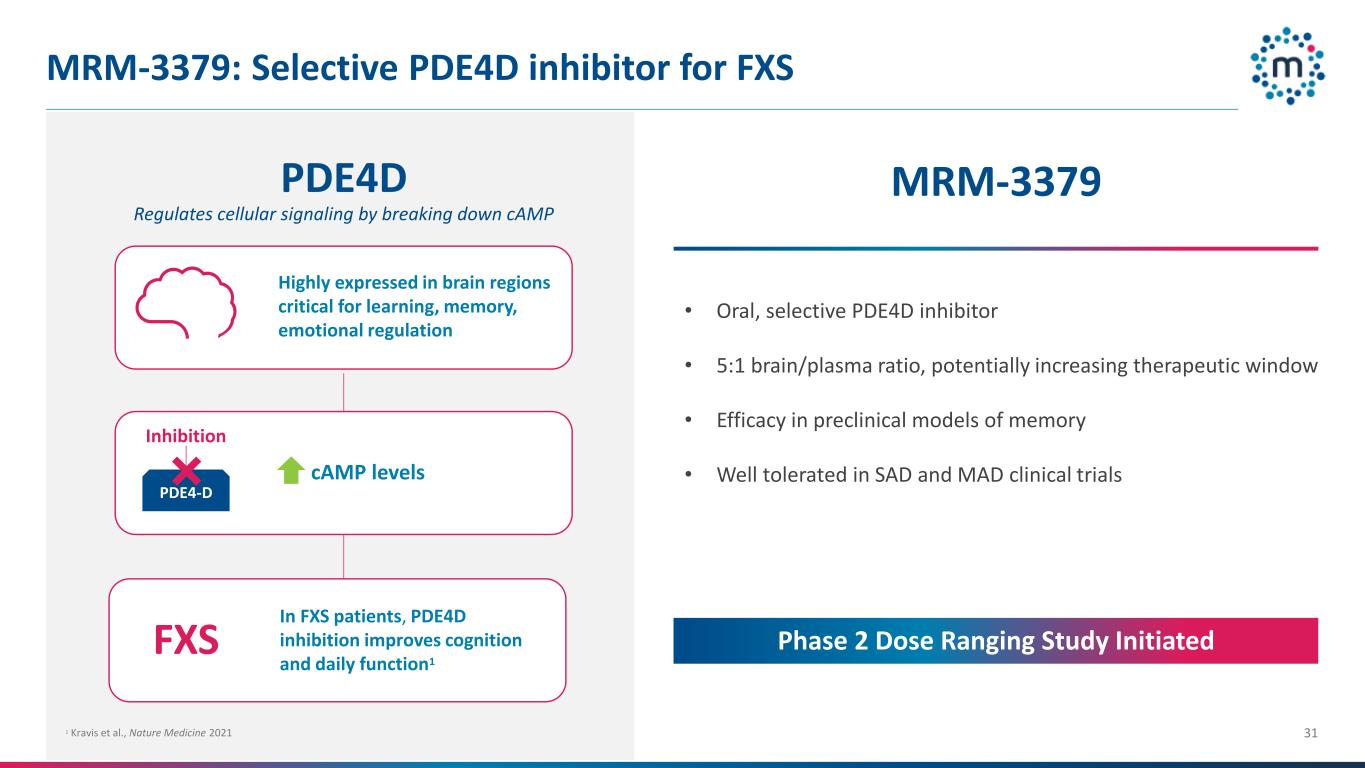
MRM-3379: Selective PDE4D inhibitor for FXS 31 In FXS patients, PDE4D inhibition improves cognition and daily function1 PDE4D Regulates cellular signaling by breaking down cAMP cAMP levels Highly expressed in brain regions critical for learning, memory, emotional regulation PDE4-D Inhibition FXS • Oral, selective PDE4D inhibitor • 5:1 brain/plasma ratio, potentially increasing therapeutic window • Efficacy in preclinical models of memory • Well tolerated in SAD and MAD clinical trials MRM-3379 Phase 2 Dose Ranging Study Initiated 1 Kravis et al., Nature Medicine 2021


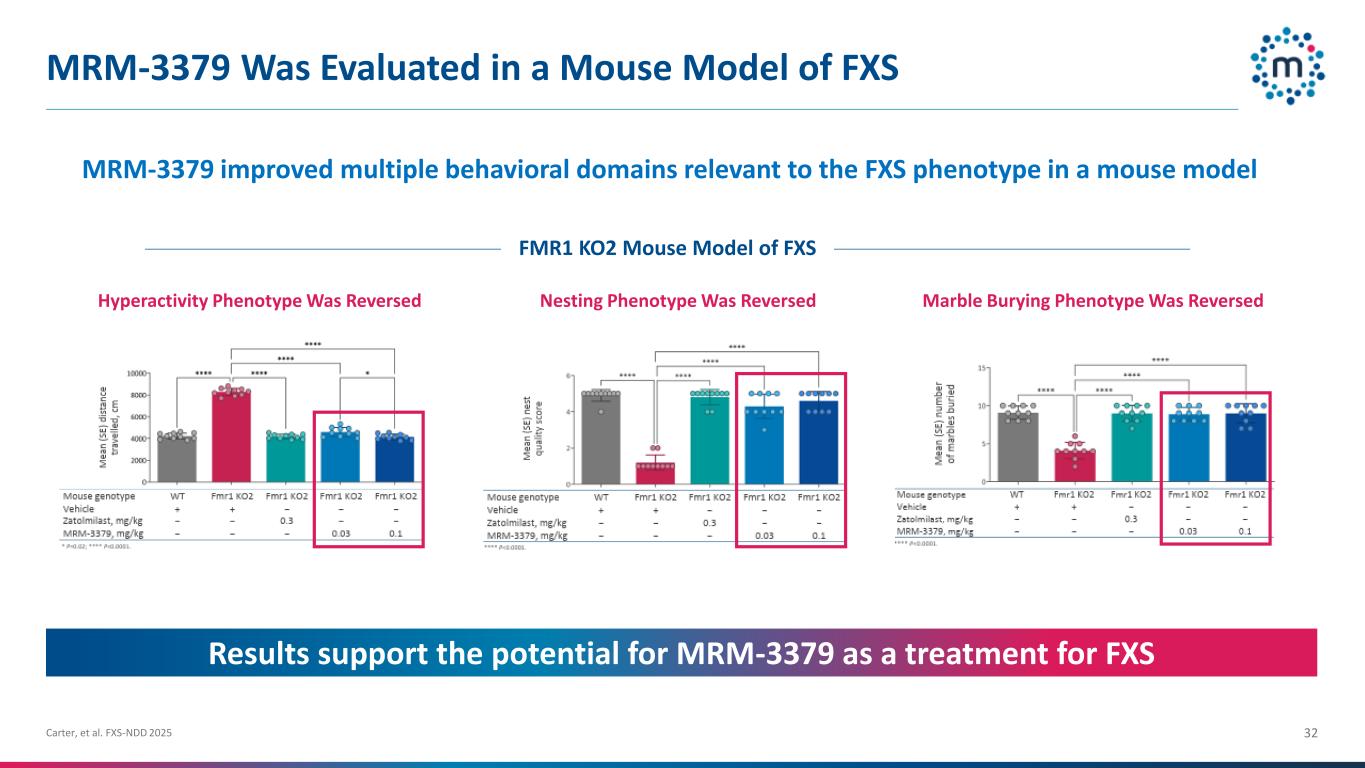
MRM-3379 Was Evaluated in a Mouse Model of FXS 32Carter, et al. FXS-NDD 2025 MRM-3379 improved multiple behavioral domains relevant to the FXS phenotype in a mouse model Hyperactivity Phenotype Was Reversed Nesting Phenotype Was Reversed Marble Burying Phenotype Was Reversed FMR1 KO2 Mouse Model of FXS Results support the potential for MRM-3379 as a treatment for FXS


Phase 2 Study of MRM-3379 in Fragile X Syndrome 33 Primary Endpoint Safety & tolerability Key Secondary Endpoint NIH-TCB Crystallized Cognition Composite (CCC) Composed from the Picture Vocabulary Test (PVT) and Oral Reading Recognition Test (ORRT) Key Inclusion Criteria • Males, 13-45 years of age • Diagnosis of FXS with full mutation (≥200 CGG repetitions) 13 to <16 years, N=8 Topline Data Expected 2027 12wk PBO MRM-3379: 3 Dose Arms Primary and Secondary Endpoints MRM-3379 Open Label 16-45 years, N=52 1:1:1:1 Main cohort randomized in a 1:1:1:1 ratio to one of four 12-week treatment arms of MRM-3379 or PBO Participants 13 to <16 years of age with FXS will be enrolled in parallel to the main cohort to receive open-label MRM-3379


Chronic Hepatitis Delta Virus (HDV) Mirum's acquisition of brelovitug from Bluejay Therapeutics, Inc. remains subject to regulatory approval. The information in this section is derived from public information and Mirum's internal research. Brelovitug


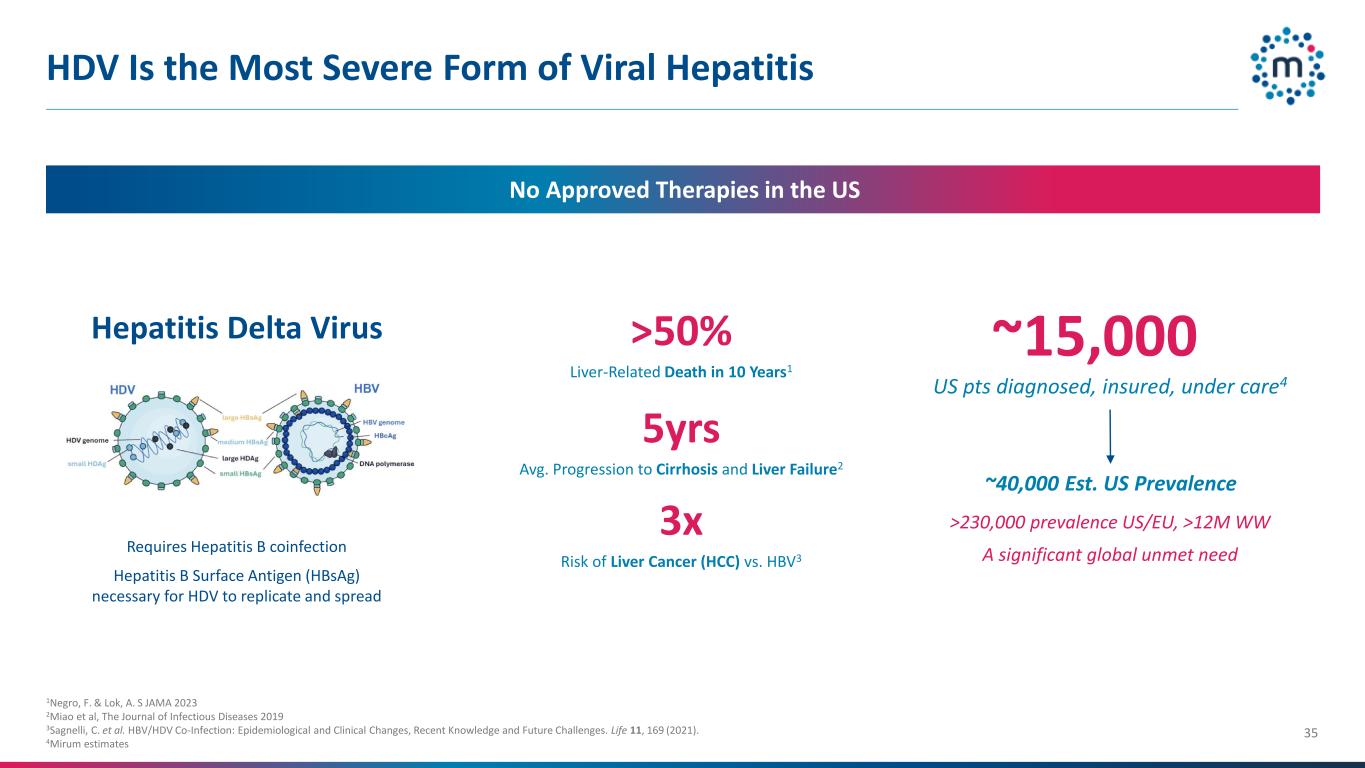
HDV Is the Most Severe Form of Viral Hepatitis 35 No Approved Therapies in the US ~15,000~ US pts diagnosed, insured, under care4 1Negro, F. & Lok, A. S JAMA 2023 2Miao et al, The Journal of Infectious Diseases 2019 3Sagnelli, C. et al. HBV/HDV Co-Infection: Epidemiological and Clinical Changes, Recent Knowledge and Future Challenges. Life 11, 169 (2021). 4Mirum estimates ~40,000 Est. US Prevalence >230,000 prevalence US/EU, >12M WW A significant global unmet need >50% Liver-Related Death in 10 Years1 Avg. Progression to Cirrhosis and Liver Failure2 Risk of Liver Cancer (HCC) vs. HBV3 5yrs 3x Requires Hepatitis B coinfection Hepatitis B Surface Antigen (HBsAg) necessary for HDV to replicate and spread Hepatitis Delta Virus


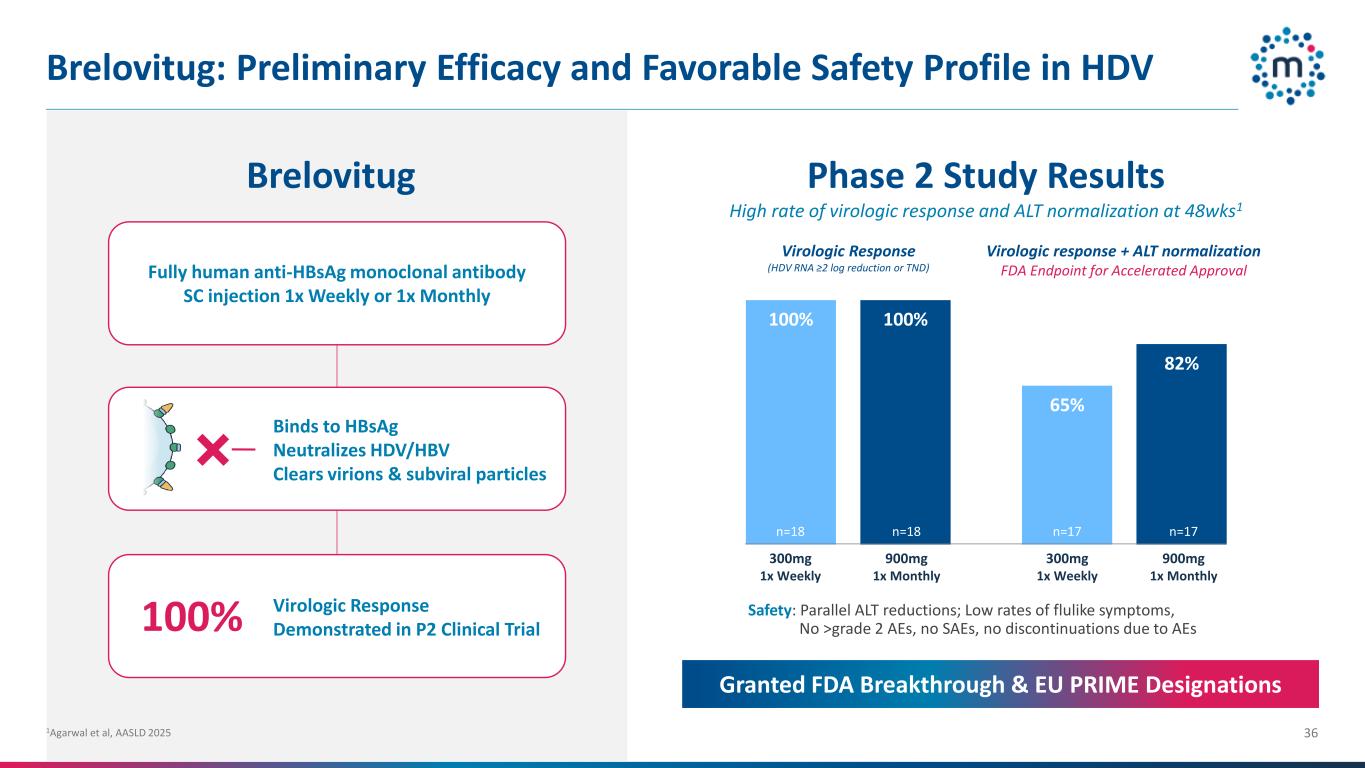
Virologic Response Demonstrated in P2 Clinical Trial Fully human anti-HBsAg monoclonal antibody SC injection 1x Weekly or 1x Monthly Brelovitug: Preliminary Efficacy and Favorable Safety Profile in HDV Safety: Parallel ALT reductions; Low rates of flulike symptoms, No >grade 2 AEs, no SAEs, no discontinuations due to AEs 36 100% 65% 100% 82% Virologic response + ALT normalization FDA Endpoint for Accelerated Approval Phase 2 Study Results High rate of virologic response and ALT normalization at 48wks1 Brelovitug Granted FDA Breakthrough & EU PRIME Designations Binds to HBsAg Neutralizes HDV/HBV Clears virions & subviral particles n=18 n=18 n=17 n=17 100% 300mg 1x Weekly 900mg 1x Monthly 300mg 1x Weekly 900mg 1x Monthly Virologic Response (HDV RNA ≥2 log reduction or TND) 1Agarwal et al, AASLD 2025


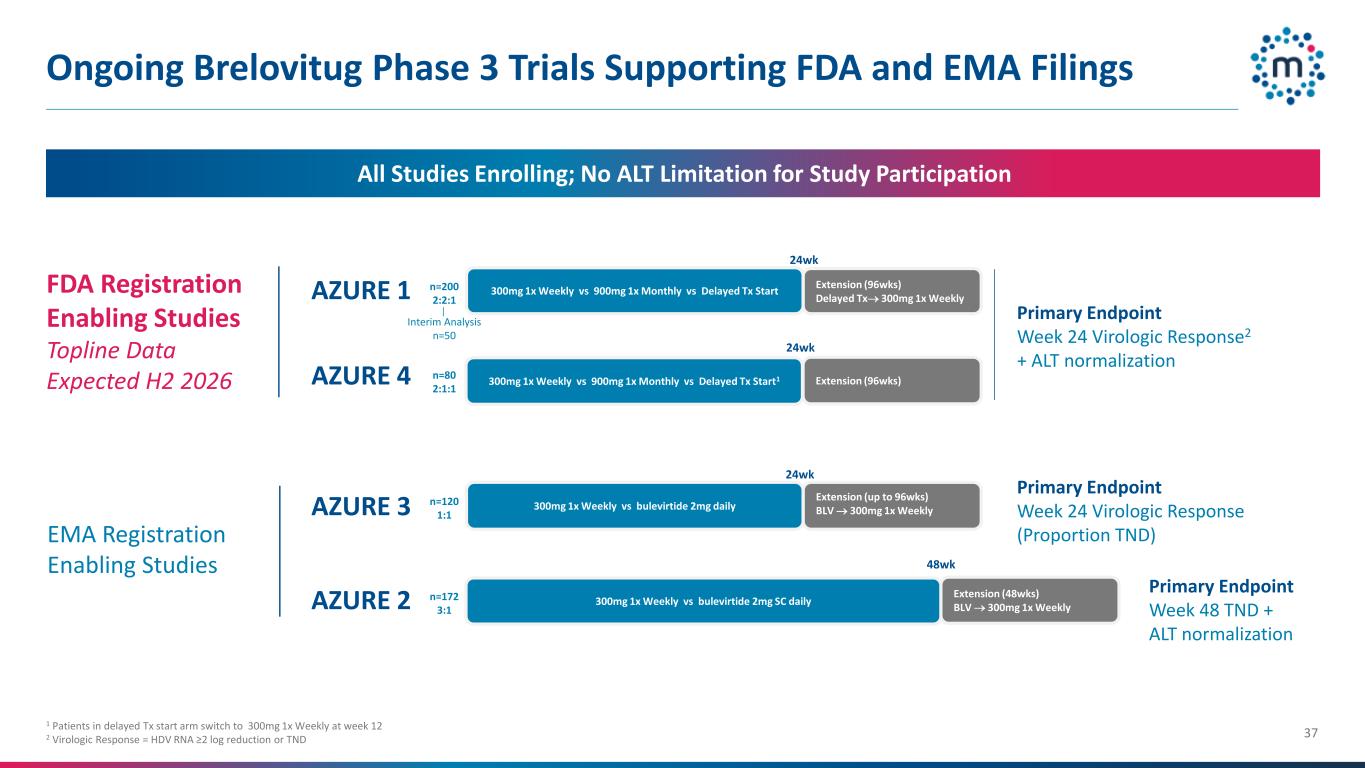
Ongoing Brelovitug Phase 3 Trials Supporting FDA and EMA Filings 37 1 Patients in delayed Tx start arm switch to 300mg 1x Weekly at week 12 2 Virologic Response = HDV RNA ≥2 log reduction or TND 300mg 1x Weekly vs 900mg 1x Monthly vs Delayed Tx Start Primary Endpoint Week 24 Virologic Response2 + ALT normalization Primary Endpoint Week 24 Virologic Response (Proportion TND) 24wk Extension (96wks) Delayed Tx→ 300mg 1x Weekly 24wk Extension (96wks) 48wk Primary Endpoint Week 48 TND + ALT normalization n=80 2:1:1 All Studies Enrolling; No ALT Limitation for Study Participation AZURE 1 300mg 1x Weekly vs bulevirtide 2mg daily 24wk Extension (up to 96wks) BLV → 300mg 1x Weekly AZURE 4 300mg 1x Weekly vs bulevirtide 2mg SC daily 300mg 1x Weekly vs 900mg 1x Monthly vs Delayed Tx Start1 Extension (48wks) BLV → 300mg 1x Weekly n=120 1:1 n=172 3:1 n=200 2:2:1 AZURE 3 AZURE 2 FDA Registration Enabling Studies Topline Data Expected H2 2026 EMA Registration Enabling Studies Interim Analysis n=50


Delivering High Impact Medicines for Rare Disease Mirum Pharmaceuticals


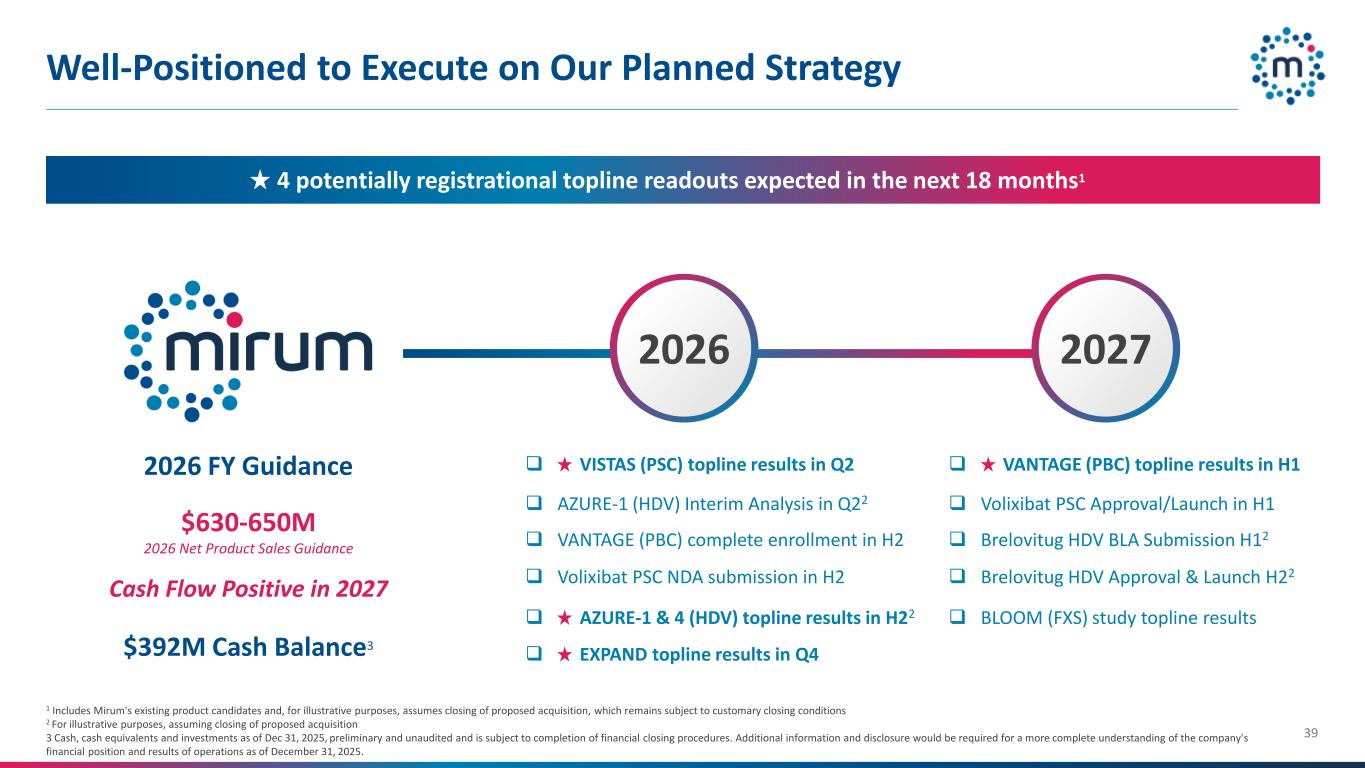
Well-Positioned to Execute on Our Planned Strategy 39 2027 2026 FY Guidance $630-650M 2026 Net Product Sales Guidance Cash Flow Positive in 2027 $392M Cash Balance3 4 potentially registrational topline readouts expected in the next 18 months1 2026 ❑ VANTAGE (PBC) complete enrollment in H2 ❑ VISTAS (PSC) topline results in Q2 ❑ EXPAND topline results in Q4 ❑ AZURE-1 (HDV) Interim Analysis in Q22 ❑ Brelovitug HDV Approval & Launch H22 ❑ Volixibat PSC Approval/Launch in H1 ❑ Volixibat PSC NDA submission in H2 ❑ AZURE-1 & 4 (HDV) topline results in H22 ❑ BLOOM (FXS) study topline results 1 Includes Mirum's existing product candidates and, for illustrative purposes, assumes closing of proposed acquisition, which remains subject to customary closing conditions 2 For illustrative purposes, assuming closing of proposed acquisition 3 Cash, cash equivalents and investments as of Dec 31, 2025, preliminary and unaudited and is subject to completion of financial closing procedures. Additional information and disclosure would be required for a more complete understanding of the company's financial position and results of operations as of December 31, 2025. ❑ Brelovitug HDV BLA Submission H12 ❑ VANTAGE (PBC) topline results in H1


©2026 Mirum Pharmaceuticals, Inc. All rights reserved. All service marks, trademarks and tradenames appearing in this presentation are the property of their respective owners. Solely for convenience, the trademarks and tradenames referred to in this presentation appear without the ® and symbols, but those references are not intended to indicate, in any way, that we will not assert, to the fullest extent under applicable law, our rights, or the right of the applicable licensor to these trademarks and tradenames. The information herein is for informational purposes only and represents the current view of Mirum Pharmaceuticals, Inc. as of the date of this presentation (or as of an earlier date if specifically noted). Thank You


Supplemental Materials


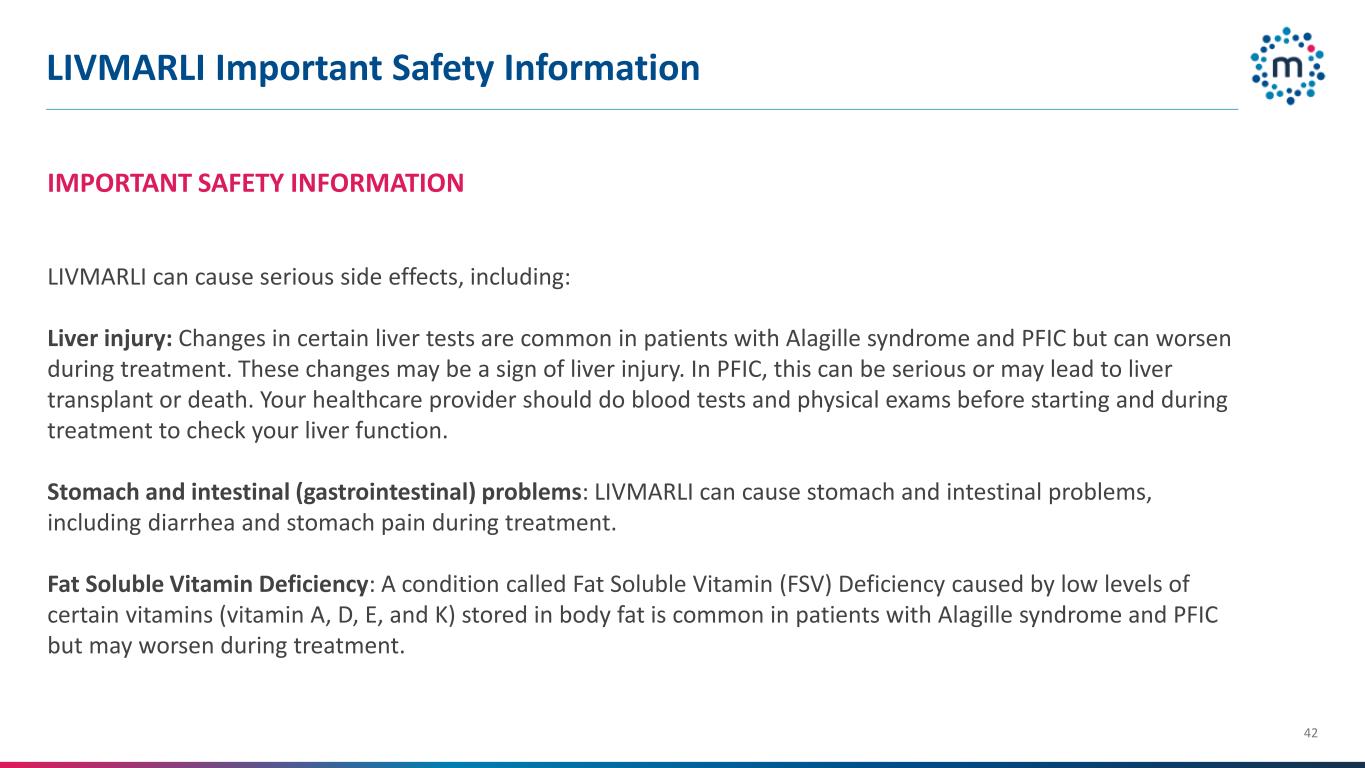
LIVMARLI Important Safety Information 42 IMPORTANT SAFETY INFORMATION LIVMARLI can cause serious side effects, including: Liver injury: Changes in certain liver tests are common in patients with Alagille syndrome and PFIC but can worsen during treatment. These changes may be a sign of liver injury. In PFIC, this can be serious or may lead to liver transplant or death. Your healthcare provider should do blood tests and physical exams before starting and during treatment to check your liver function. Stomach and intestinal (gastrointestinal) problems: LIVMARLI can cause stomach and intestinal problems, including diarrhea and stomach pain during treatment. Fat Soluble Vitamin Deficiency: A condition called Fat Soluble Vitamin (FSV) Deficiency caused by low levels of certain vitamins (vitamin A, D, E, and K) stored in body fat is common in patients with Alagille syndrome and PFIC but may worsen during treatment.


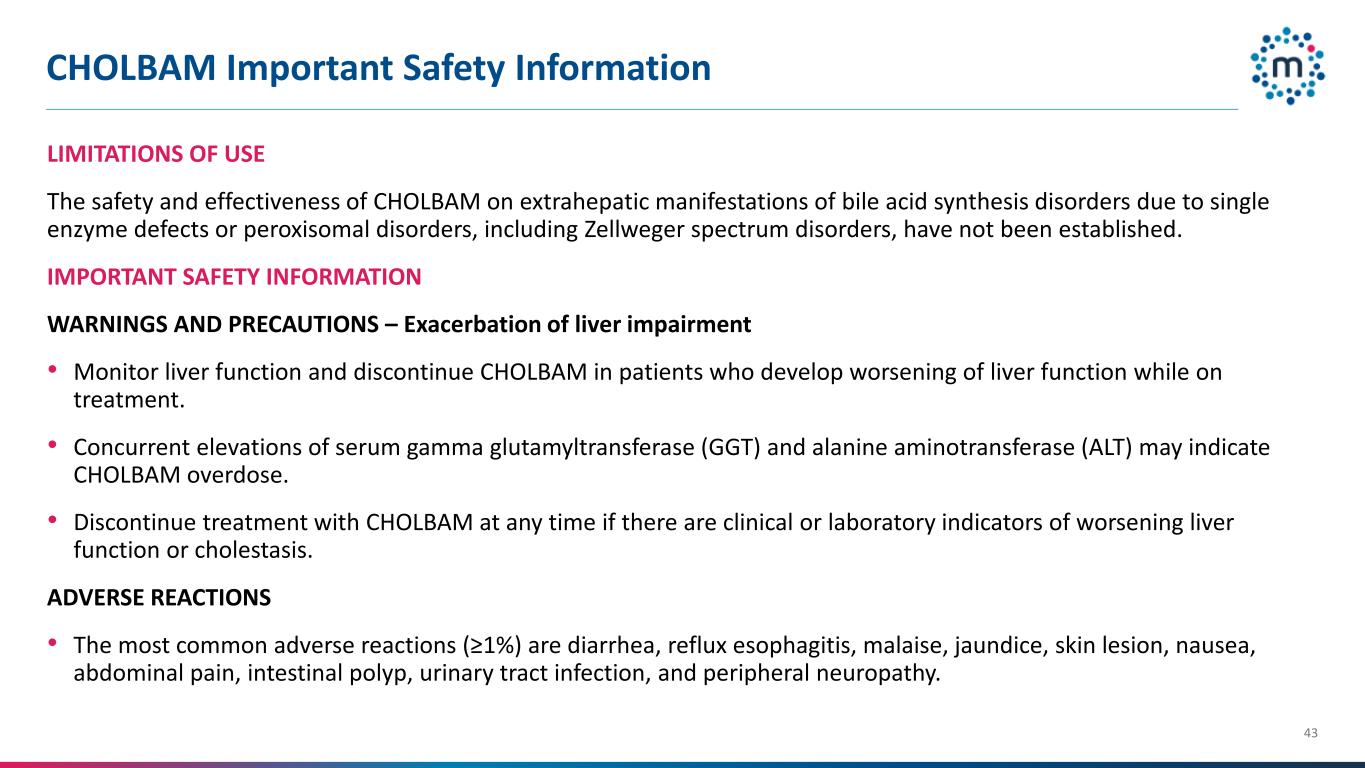
CHOLBAM Important Safety Information LIMITATIONS OF USE The safety and effectiveness of CHOLBAM on extrahepatic manifestations of bile acid synthesis disorders due to single enzyme defects or peroxisomal disorders, including Zellweger spectrum disorders, have not been established. IMPORTANT SAFETY INFORMATION WARNINGS AND PRECAUTIONS – Exacerbation of liver impairment • Monitor liver function and discontinue CHOLBAM in patients who develop worsening of liver function while on treatment. • Concurrent elevations of serum gamma glutamyltransferase (GGT) and alanine aminotransferase (ALT) may indicate CHOLBAM overdose. • Discontinue treatment with CHOLBAM at any time if there are clinical or laboratory indicators of worsening liver function or cholestasis. ADVERSE REACTIONS • The most common adverse reactions (≥1%) are diarrhea, reflux esophagitis, malaise, jaundice, skin lesion, nausea, abdominal pain, intestinal polyp, urinary tract infection, and peripheral neuropathy. 43


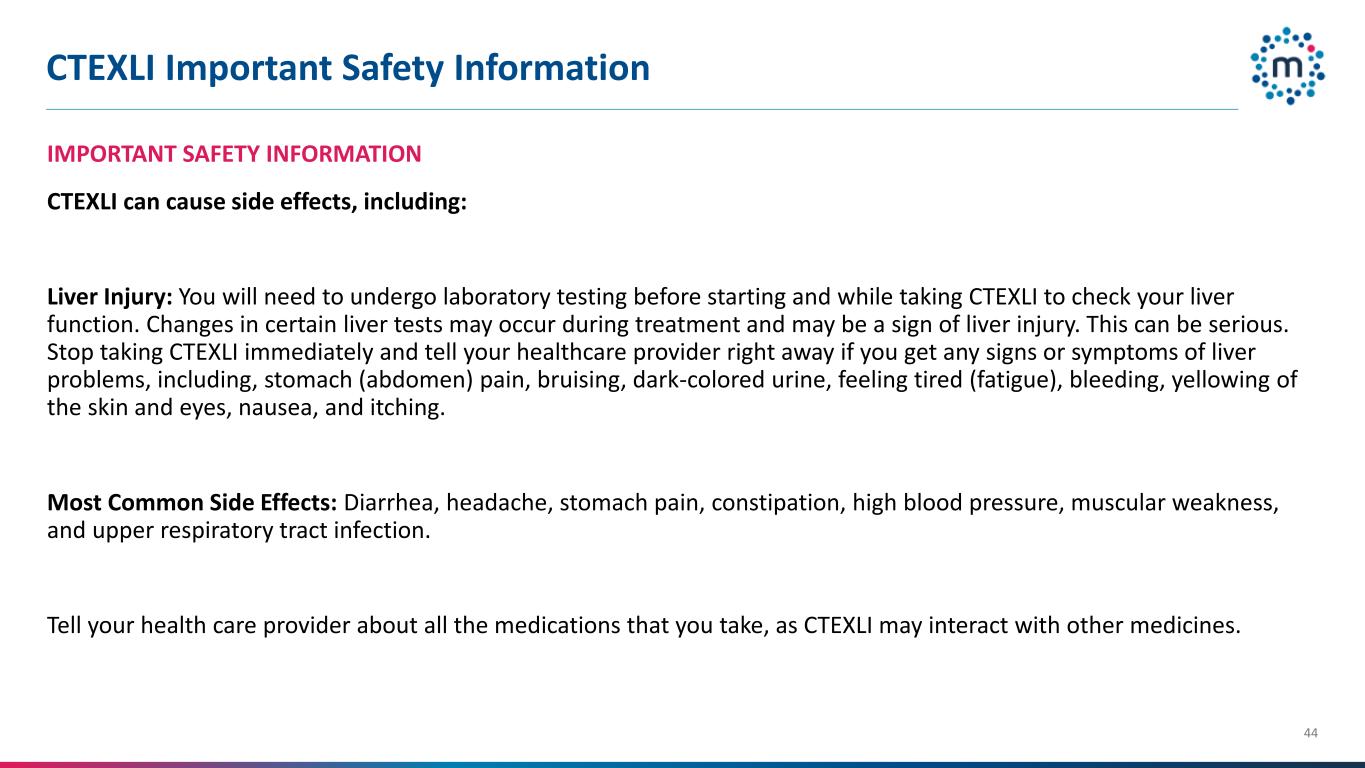
CTEXLI Important Safety Information IMPORTANT SAFETY INFORMATION CTEXLI can cause side effects, including: Liver Injury: You will need to undergo laboratory testing before starting and while taking CTEXLI to check your liver function. Changes in certain liver tests may occur during treatment and may be a sign of liver injury. This can be serious. Stop taking CTEXLI immediately and tell your healthcare provider right away if you get any signs or symptoms of liver problems, including, stomach (abdomen) pain, bruising, dark-colored urine, feeling tired (fatigue), bleeding, yellowing of the skin and eyes, nausea, and itching. Most Common Side Effects: Diarrhea, headache, stomach pain, constipation, high blood pressure, muscular weakness, and upper respiratory tract infection. Tell your health care provider about all the medications that you take, as CTEXLI may interact with other medicines. 44


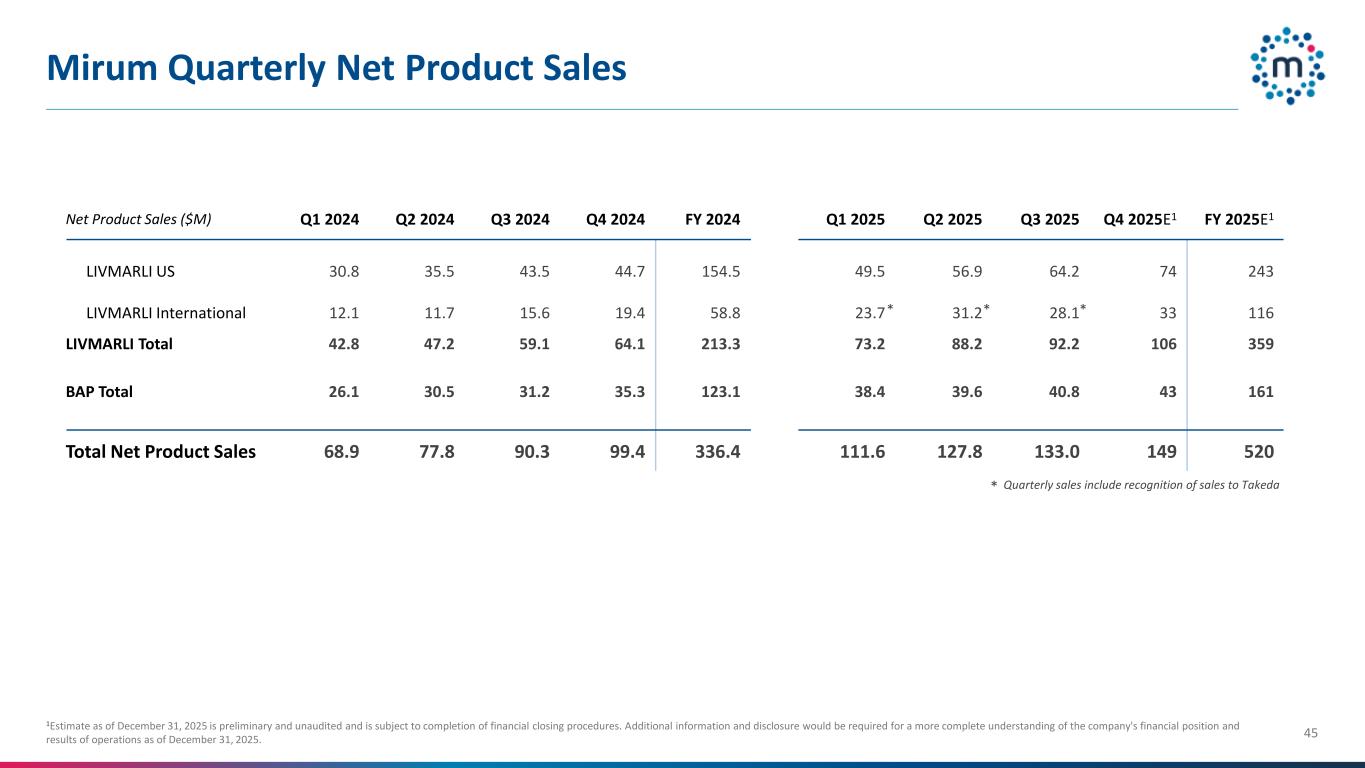
Mirum Quarterly Net Product Sales Net Product Sales ($M) Q1 2024 Q2 2024 Q3 2024 Q4 2024 FY 2024 Q1 2025 Q2 2025 Q3 2025 Q4 2025E1 FY 2025E1 LIVMARLI US 30.8 35.5 43.5 44.7 154.5 49.5 56.9 64.2 74 243 LIVMARLI International 12.1 11.7 15.6 19.4 58.8 23.7 31.2 28.1 33 116 LIVMARLI Total 42.8 47.2 59.1 64.1 213.3 73.2 88.2 92.2 106 359 BAP Total 26.1 30.5 31.2 35.3 123.1 38.4 39.6 40.8 43 161 Total Net Product Sales 68.9 77.8 90.3 99.4 336.4 111.6 127.8 133.0 149 520 45 1Estimate as of December 31, 2025 is preliminary and unaudited and is subject to completion of financial closing procedures. Additional information and disclosure would be required for a more complete understanding of the company's financial position and results of operations as of December 31, 2025. * * * * Quarterly sales include recognition of sales to Takeda


LIVMARLI Available in Both Oral Solution and Tablet Formulation 46 One LIVMARLI Tablet Per Dose Size for comparison 10mg 15mg 20mg 30mg Flexible Dosing Options for Patients Supplemental Material


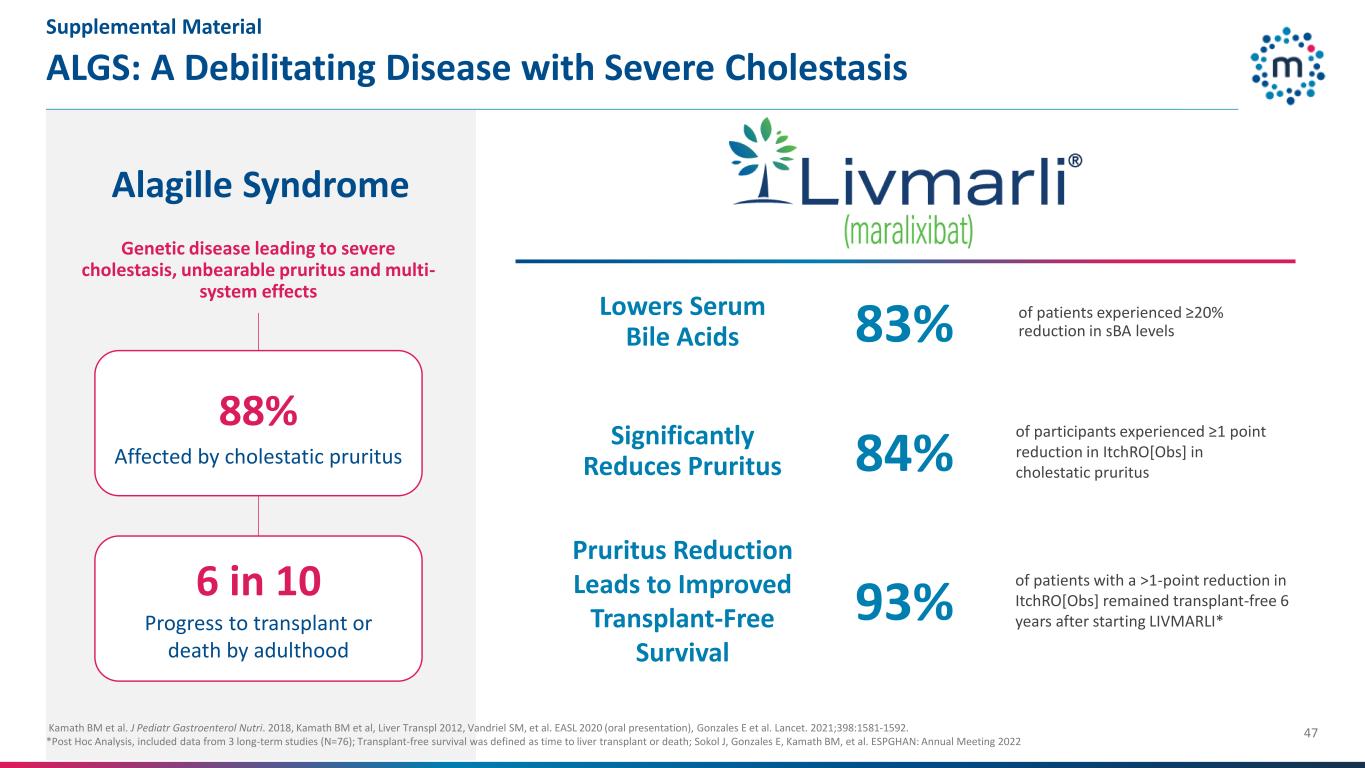
ALGS: A Debilitating Disease with Severe Cholestasis 47Kamath BM et al. J Pediatr Gastroenterol Nutri. 2018, Kamath BM et al, Liver Transpl 2012, Vandriel SM, et al. EASL 2020 (oral presentation), Gonzales E et al. Lancet. 2021;398:1581-1592. *Post Hoc Analysis, included data from 3 long-term studies (N=76); Transplant-free survival was defined as time to liver transplant or death; Sokol J, Gonzales E, Kamath BM, et al. ESPGHAN: Annual Meeting 2022 Genetic disease leading to severe cholestasis, unbearable pruritus and multi- system effects 88% Affected by cholestatic pruritus 6 in 10 Progress to transplant or death by adulthood Pruritus Reduction Leads to Improved Transplant-Free Survival Lowers Serum Bile Acids Alagille Syndrome Significantly Reduces Pruritus 84% 83% of patients with a >1-point reduction in ItchRO[Obs] remained transplant-free 6 years after starting LIVMARLI* of patients experienced ≥20% reduction in sBA levels of participants experienced ≥1 point reduction in ItchRO[Obs] in cholestatic pruritus 93% Supplemental Material


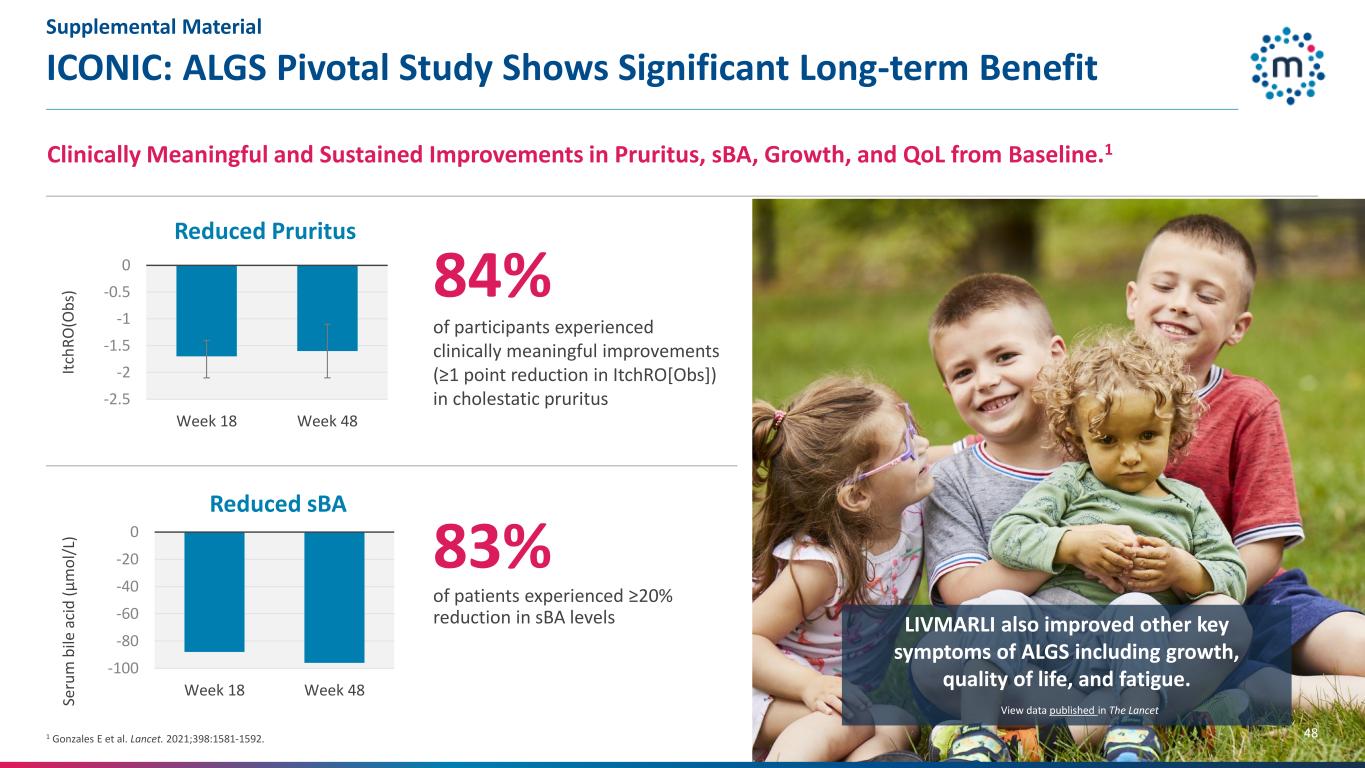
ICONIC: ALGS Pivotal Study Shows Significant Long-term Benefit 1 Gonzales E et al. Lancet. 2021;398:1581-1592. -100 -80 -60 -40 -20 0 Week 18 Week 48 Se ru m b ile a ci d ( μ m o l/ L) Reduced sBA -2.5 -2 -1.5 -1 -0.5 0 Week 18 Week 48 It ch R O (O b s) Reduced Pruritus 84% of participants experienced clinically meaningful improvements (≥1 point reduction in ItchRO[Obs]) in cholestatic pruritus LIVMARLI also improved other key symptoms of ALGS including growth, quality of life, and fatigue. Clinically Meaningful and Sustained Improvements in Pruritus, sBA, Growth, and QoL from Baseline.1 83% of patients experienced ≥20% reduction in sBA levels View data published in The Lancet Supplemental Material 48


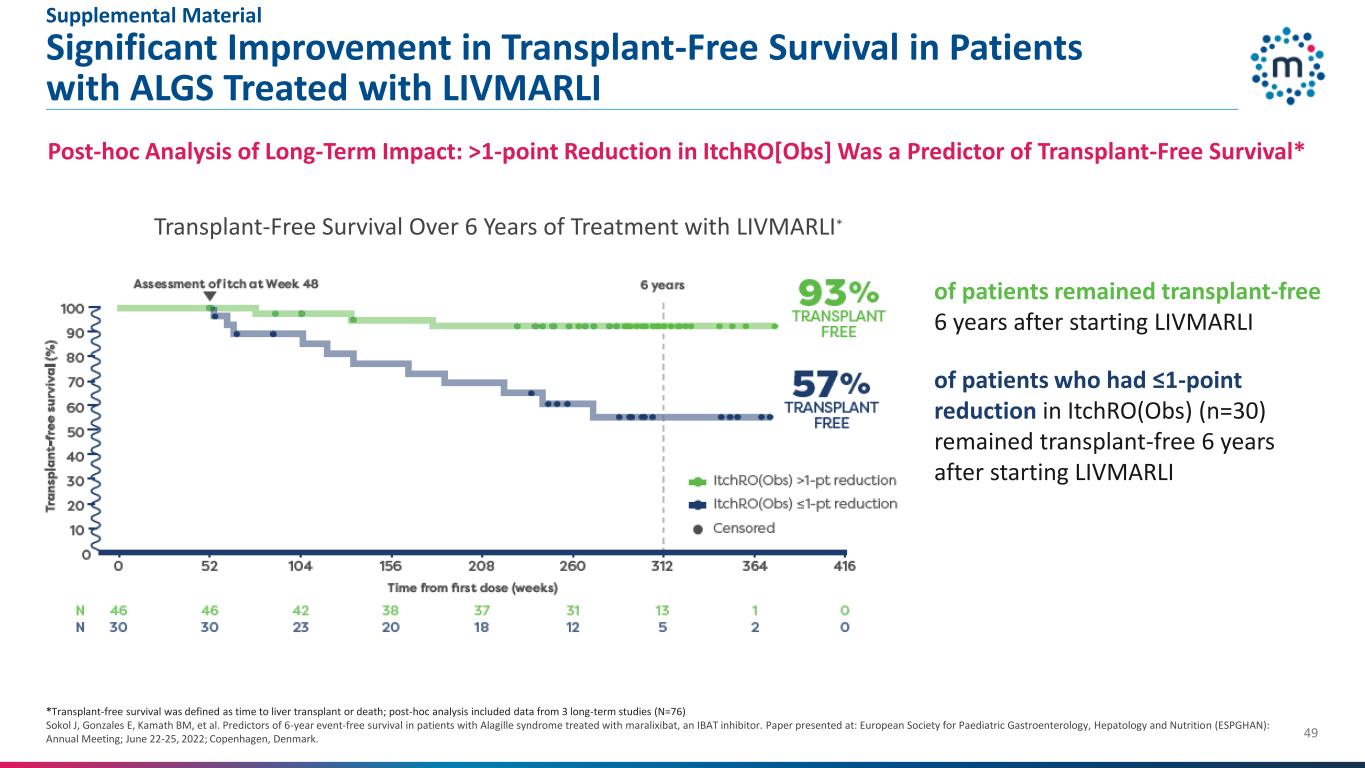
Significant Improvement in Transplant-Free Survival in Patients with ALGS Treated with LIVMARLI *Transplant-free survival was defined as time to liver transplant or death; post-hoc analysis included data from 3 long-term studies (N=76) Sokol J, Gonzales E, Kamath BM, et al. Predictors of 6-year event-free survival in patients with Alagille syndrome treated with maralixibat, an IBAT inhibitor. Paper presented at: European Society for Paediatric Gastroenterology, Hepatology and Nutrition (ESPGHAN): Annual Meeting; June 22-25, 2022; Copenhagen, Denmark. 49 Transplant-Free Survival Over 6 Years of Treatment with LIVMARLI* Post-hoc Analysis of Long-Term Impact: >1-point Reduction in ItchRO[Obs] Was a Predictor of Transplant-Free Survival* of patients remained transplant-free 6 years after starting LIVMARLI of patients who had ≤1-point reduction in ItchRO(Obs) (n=30) remained transplant-free 6 years after starting LIVMARLI Supplemental Material


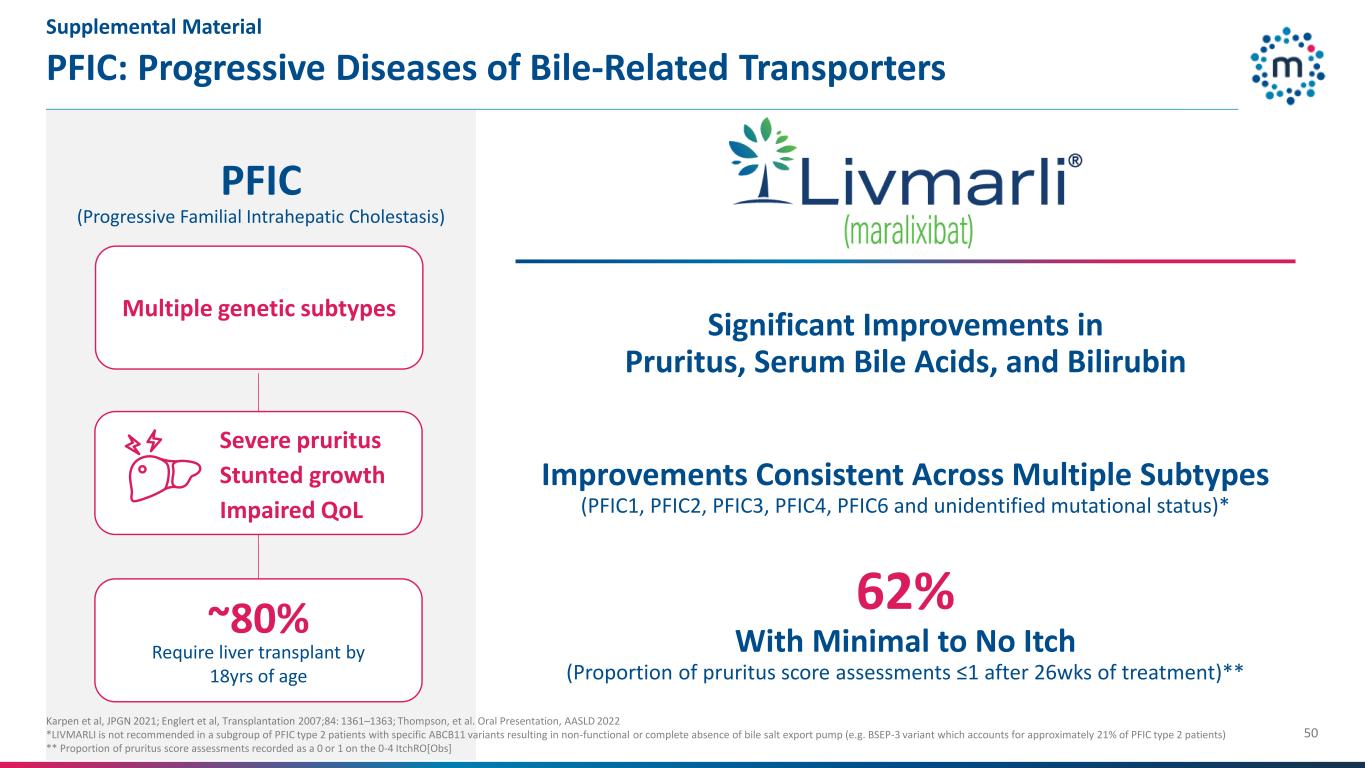
PFIC: Progressive Diseases of Bile-Related Transporters 50 ~80% Require liver transplant by 18yrs of age PFIC (Progressive Familial Intrahepatic Cholestasis) Significant Improvements in Pruritus, Serum Bile Acids, and Bilirubin 62% With Minimal to No Itch (Proportion of pruritus score assessments ≤1 after 26wks of treatment)** Severe pruritus Stunted growth Impaired QoL Improvements Consistent Across Multiple Subtypes (PFIC1, PFIC2, PFIC3, PFIC4, PFIC6 and unidentified mutational status)* Multiple genetic subtypes Karpen et al, JPGN 2021; Englert et al, Transplantation 2007;84: 1361–1363; Thompson, et al. Oral Presentation, AASLD 2022 *LIVMARLI is not recommended in a subgroup of PFIC type 2 patients with specific ABCB11 variants resulting in non-functional or complete absence of bile salt export pump (e.g. BSEP-3 variant which accounts for approximately 21% of PFIC type 2 patients) ** Proportion of pruritus score assessments recorded as a 0 or 1 on the 0-4 ItchRO[Obs] Supplemental Material


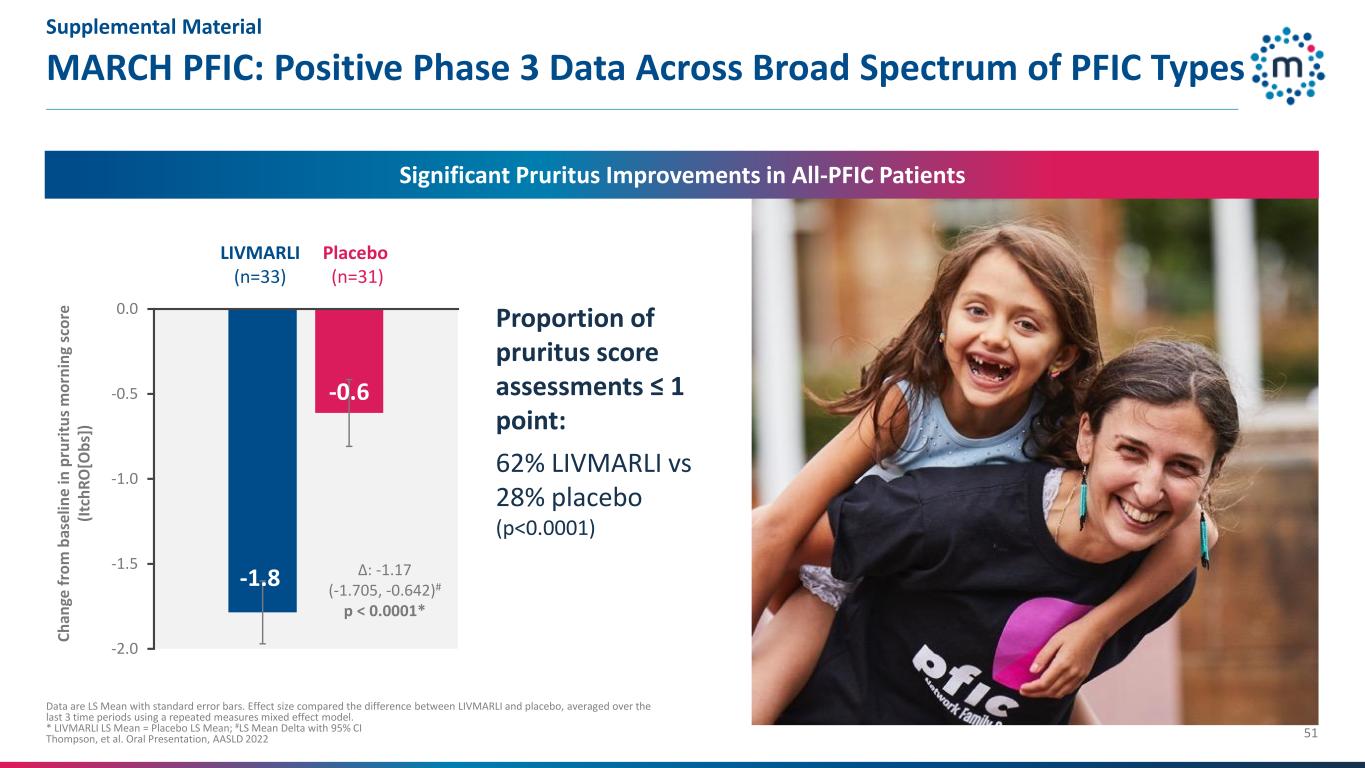
-1.8 -0.6 -2.0 -1.5 -1.0 -0.5 0.0 MARCH PFIC: Positive Phase 3 Data Across Broad Spectrum of PFIC Types Data are LS Mean with standard error bars. Effect size compared the difference between LIVMARLI and placebo, averaged over the last 3 time periods using a repeated measures mixed effect model. * LIVMARLI LS Mean = Placebo LS Mean; #LS Mean Delta with 95% CI Thompson, et al. Oral Presentation, AASLD 2022 51 LIVMARLI (n=33) Placebo (n=31) C h an ge f ro m b as e lin e in p ru ri tu s m o rn in g sc o re (I tc h R O [O b s] ) Δ: -1.17 (-1.705, -0.642)# p < 0.0001* Proportion of pruritus score assessments ≤ 1 point: 62% LIVMARLI vs 28% placebo (p<0.0001) Significant Pruritus Improvements in All-PFIC Patients Supplemental Material


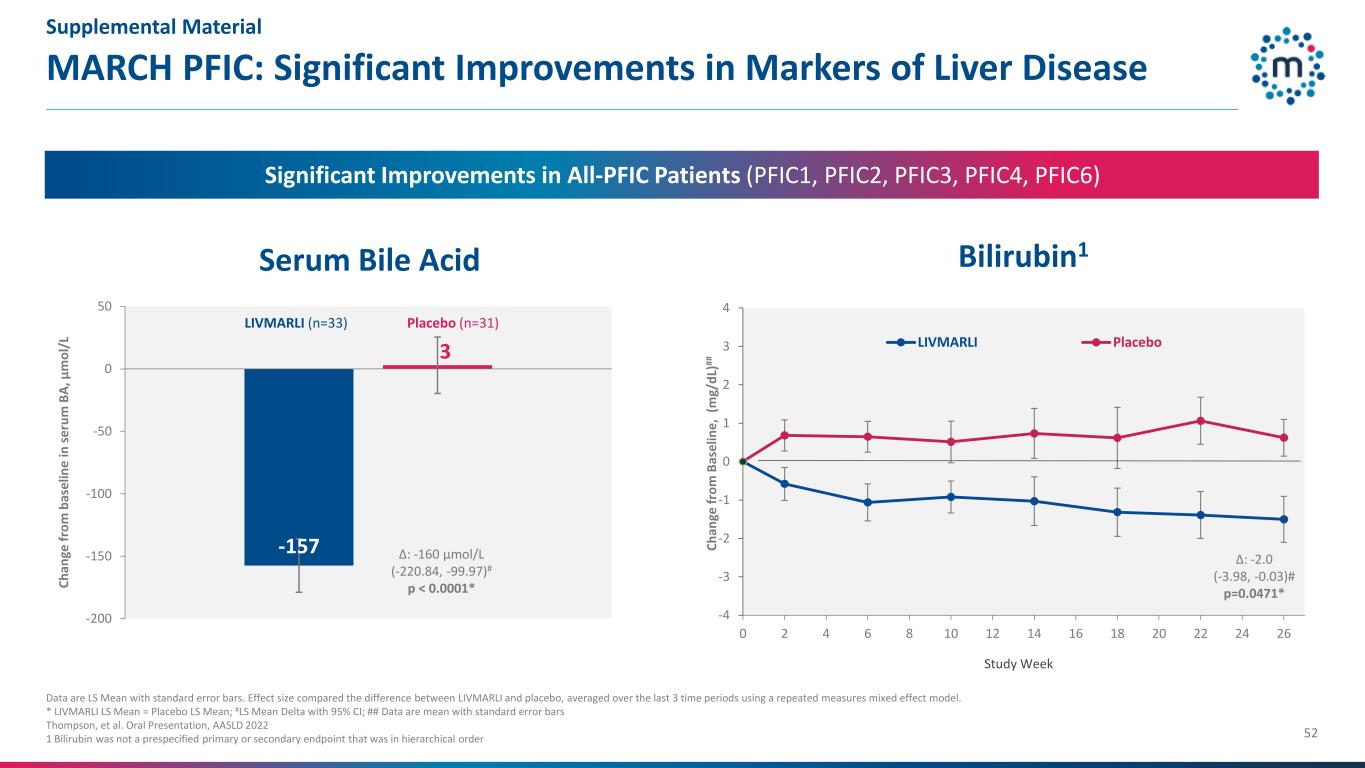
-157 -200 -150 -100 -50 0 50 MARCH PFIC: Significant Improvements in Markers of Liver Disease Data are LS Mean with standard error bars. Effect size compared the difference between LIVMARLI and placebo, averaged over the last 3 time periods using a repeated measures mixed effect model. * LIVMARLI LS Mean = Placebo LS Mean; #LS Mean Delta with 95% CI; ## Data are mean with standard error bars Thompson, et al. Oral Presentation, AASLD 2022 1 Bilirubin was not a prespecified primary or secondary endpoint that was in hierarchical order 52 3 C h an ge f ro m b as e lin e in s e ru m B A , µ m o l/ L LIVMARLI (n=33) Placebo (n=31) -4 -3 -2 -1 0 1 2 3 4 0 2 4 6 8 10 12 14 16 18 20 22 24 26 Study Week LIVMARLI Placebo C h an ge f ro m B as e lin e , ( m g/ d L) ## Δ: -160 µmol/L (-220.84, -99.97)# p < 0.0001* Bilirubin1Serum Bile Acid Significant Improvements in All-PFIC Patients (PFIC1, PFIC2, PFIC3, PFIC4, PFIC6) Δ: -2.0 (-3.98, -0.03)# p=0.0471* Supplemental Material


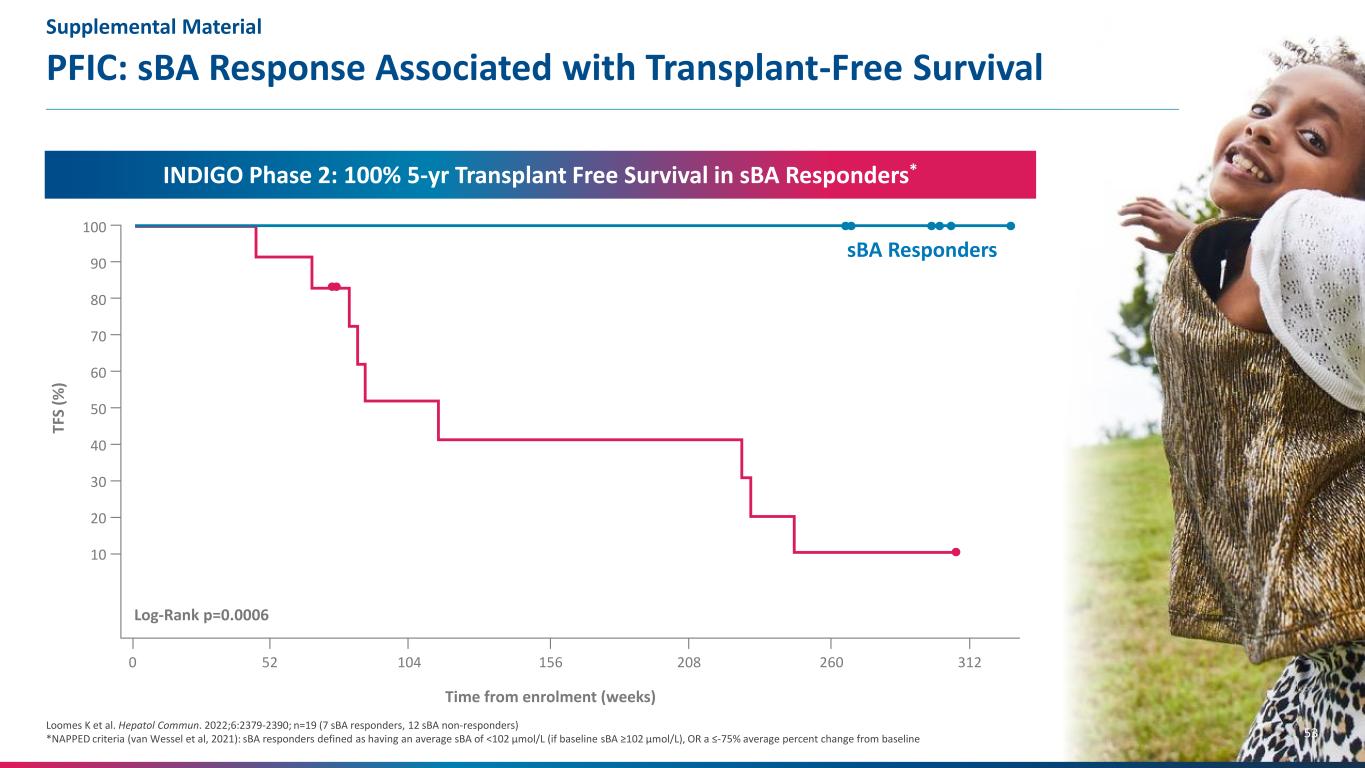
PFIC: sBA Response Associated with Transplant-Free Survival Loomes K et al. Hepatol Commun. 2022;6:2379-2390; n=19 (7 sBA responders, 12 sBA non-responders) *NAPPED criteria (van Wessel et al, 2021): sBA responders defined as having an average sBA of <102 μmol/L (if baseline sBA ≥102 μmol/L), OR a ≤-75% average percent change from baseline 53 Time from enrolment (weeks) TF S (% ) 100 60 40 20 80 10 30 50 70 90 0 52 208 260 312104 156 Log-Rank p=0.0006 sBA Responders INDIGO Phase 2: 100% 5-yr Transplant Free Survival in sBA Responders* Supplemental Material


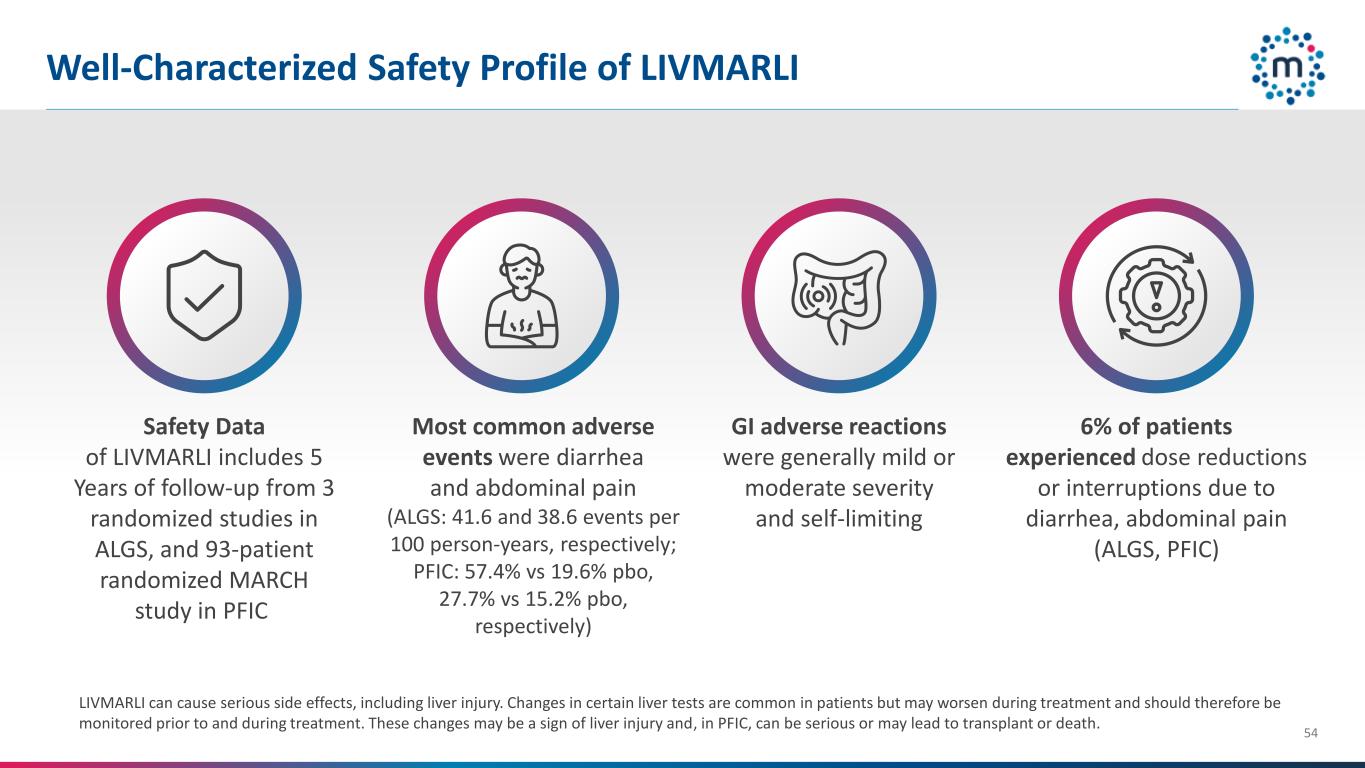
Well-Characterized Safety Profile of LIVMARLI 54 Safety Data of LIVMARLI includes 5 Years of follow-up from 3 randomized studies in ALGS, and 93-patient randomized MARCH study in PFIC Most common adverse events were diarrhea and abdominal pain (ALGS: 41.6 and 38.6 events per 100 person-years, respectively; PFIC: 57.4% vs 19.6% pbo, 27.7% vs 15.2% pbo, respectively) GI adverse reactions were generally mild or moderate severity and self-limiting 6% of patients experienced dose reductions or interruptions due to diarrhea, abdominal pain (ALGS, PFIC) LIVMARLI can cause serious side effects, including liver injury. Changes in certain liver tests are common in patients but may worsen during treatment and should therefore be monitored prior to and during treatment. These changes may be a sign of liver injury and, in PFIC, can be serious or may lead to transplant or death.


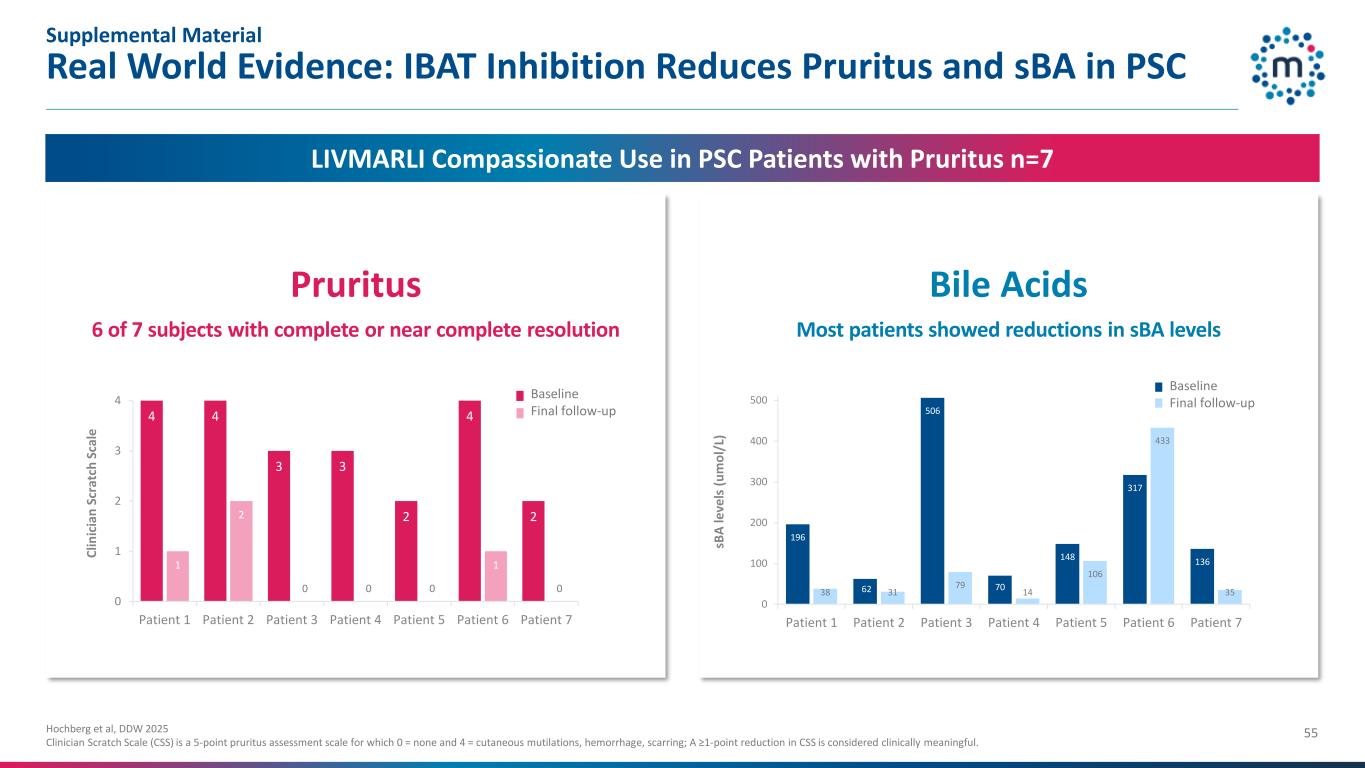
Supplemental Material Real World Evidence: IBAT Inhibition Reduces Pruritus and sBA in PSC 55 4 4 3 3 2 4 2 1 2 0 0 0 1 0 0 1 2 3 4 Patient 1 Patient 2 Patient 3 Patient 4 Patient 5 Patient 6 Patient 7 196 62 506 70 148 317 136 38 31 79 14 106 433 35 0 100 200 300 400 500 Patient 1 Patient 2 Patient 3 Patient 4 Patient 5 Patient 6 Patient 7 Most patients showed reductions in sBA levels sB A le ve ls ( u m o l/ L) C lin ic ia n S cr at ch S ca le Hochberg et al, DDW 2025 Clinician Scratch Scale (CSS) is a 5-point pruritus assessment scale for which 0 = none and 4 = cutaneous mutilations, hemorrhage, scarring; A ≥1-point reduction in CSS is considered clinically meaningful. Bile Acids 6 of 7 subjects with complete or near complete resolution Pruritus Baseline Final follow-up Baseline Final follow-up LIVMARLI Compassionate Use in PSC Patients with Pruritus n=7


Intellectual Property Overview


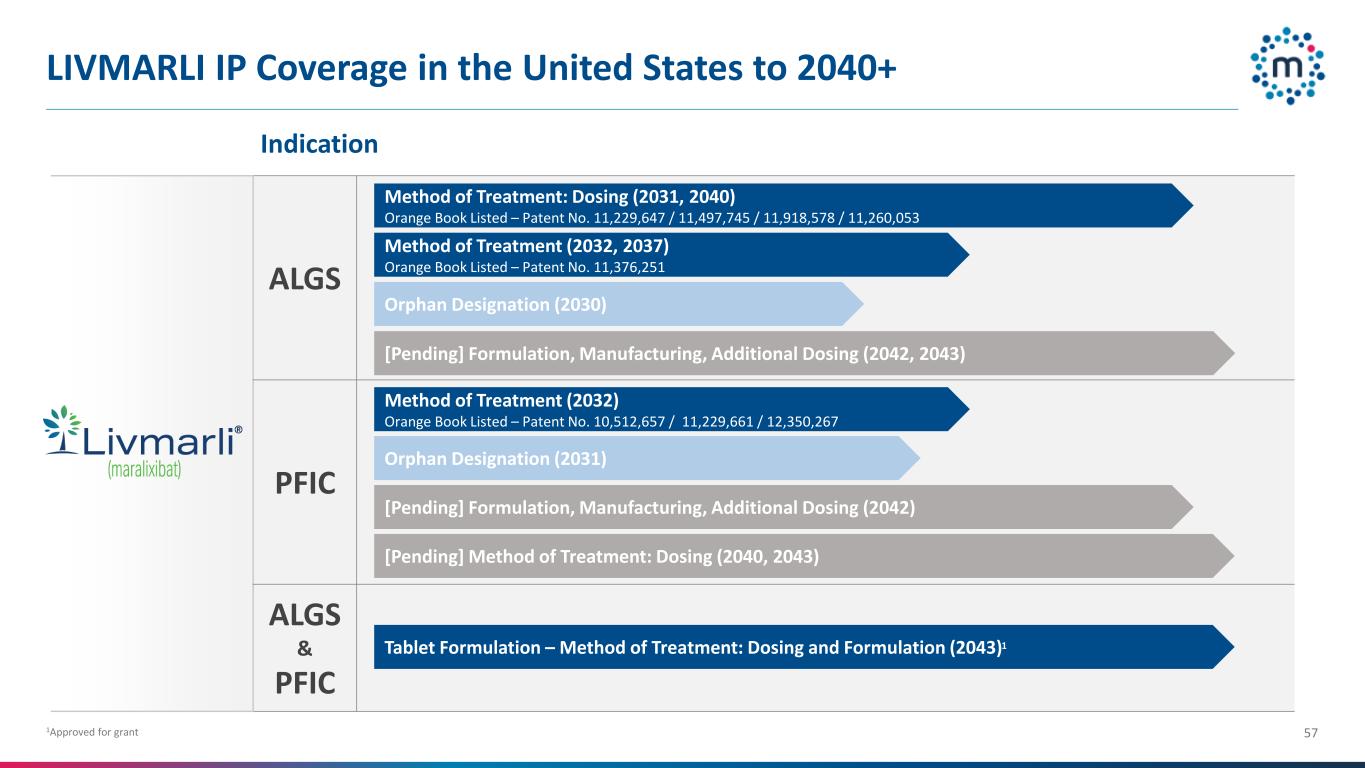
ALGS PFIC ALGS & PFIC LIVMARLI IP Coverage in the United States to 2040+ 571Approved for grant Method of Treatment: Dosing (2031, 2040) Orange Book Listed – Patent No. 11,229,647 / 11,497,745 / 11,918,578 / 11,260,053 Method of Treatment (2032, 2037) Orange Book Listed – Patent No. 11,376,251 [Pending] Method of Treatment: Dosing (2040, 2043) Method of Treatment (2032) Orange Book Listed – Patent No. 10,512,657 / 11,229,661 / 12,350,267 Orphan Designation (2030) [Pending] Formulation, Manufacturing, Additional Dosing (2042, 2043) [Pending] Formulation, Manufacturing, Additional Dosing (2042) Orphan Designation (2031) Indication Tablet Formulation – Method of Treatment: Dosing and Formulation (2043)1


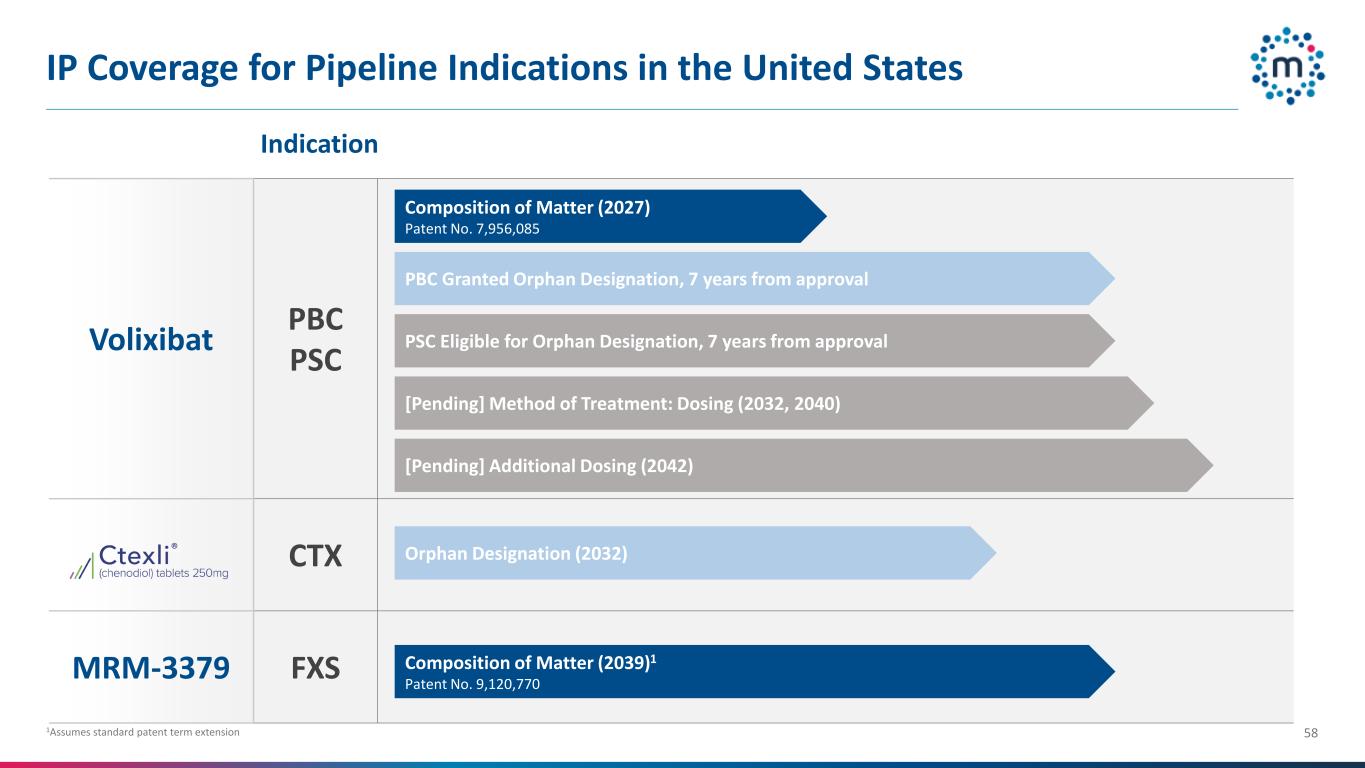
Volixibat PBC PSC CTX MRM-3379 FXS IP Coverage for Pipeline Indications in the United States 581Assumes standard patent term extension [Pending] Additional Dosing (2042) [Pending] Method of Treatment: Dosing (2032, 2040) Orphan Designation (2032) Composition of Matter (2027) Patent No. 7,956,085 PBC Granted Orphan Designation, 7 years from approval Indication Composition of Matter (2039)1 Patent No. 9,120,770 PSC Eligible for Orphan Designation, 7 years from approval ®


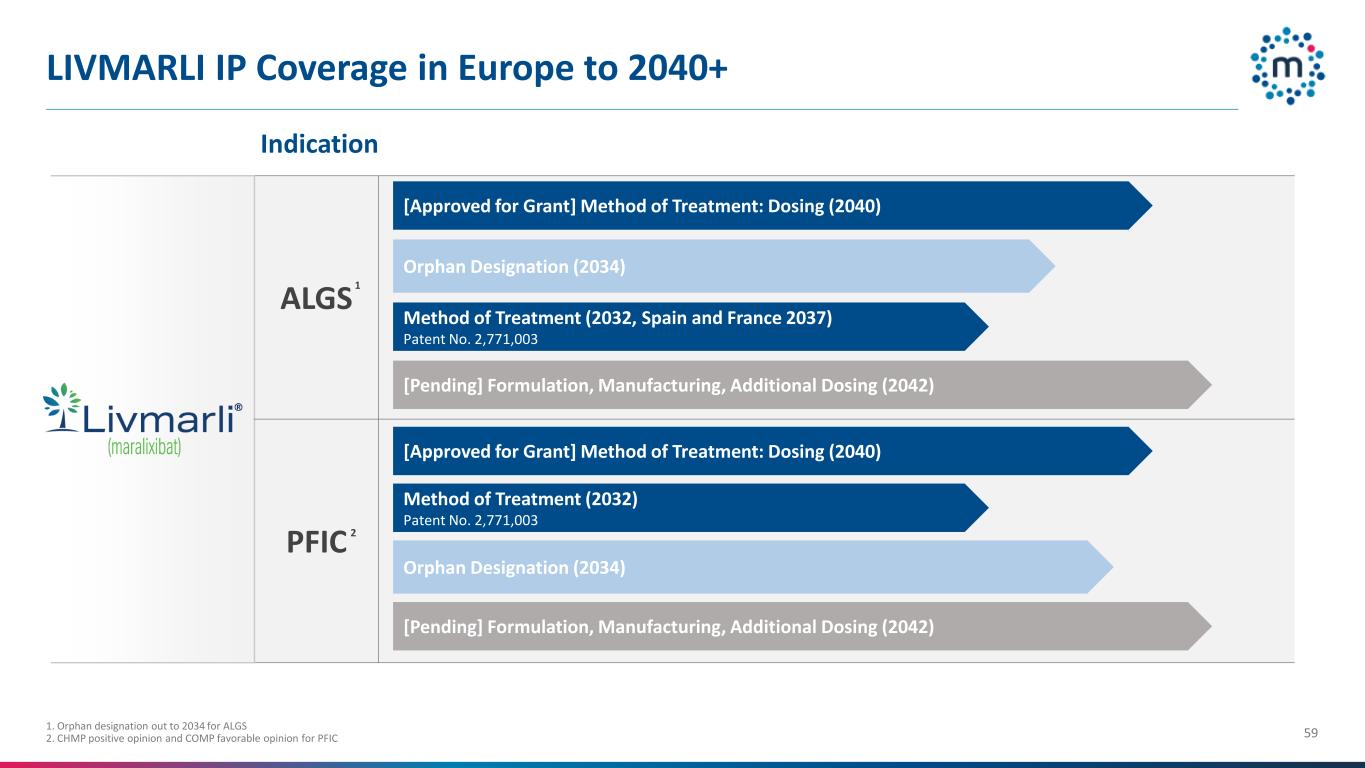
LIVMARLI IP Coverage in Europe to 2040+ 59 Indication Method of Treatment: Dosing (2031, 2040) Orange Book Listed – Patent No. 11,229,647 / 11,497,745 / 11,918,578 / 11,260,053 Method of Treatment (2032) Orange Book Listed – Patent No. 11,376,251 Method of Treatment (2032) Orange Book Listed – Patent No. 10,512,657 / 11,229,661 Orphan Designation (2030) [Pending] Formulation, Manufacturing, Additional Dosing (2042, 2043) ALGS PFIC [Pending] Formulation, Manufacturing, Additional Dosing (2042) [Approved for Grant] Method of Treatment: Dosing (2040) Method of Treatment (2032, Spain and France 2037) Patent No. 2,771,003 [Approved for Grant] Method of Treatment: Dosing (2040) Method of Treatment (2032) Patent No. 2,771,003 [Pending] Formulation, Manufacturing, Additional Dosing (2042) Orp an Designation (2034) Orphan Designation (2034) 1. Orphan designation out to 2034 for ALGS 2. CHMP positive opinion and COMP favorable opinion for PFIC 1 2


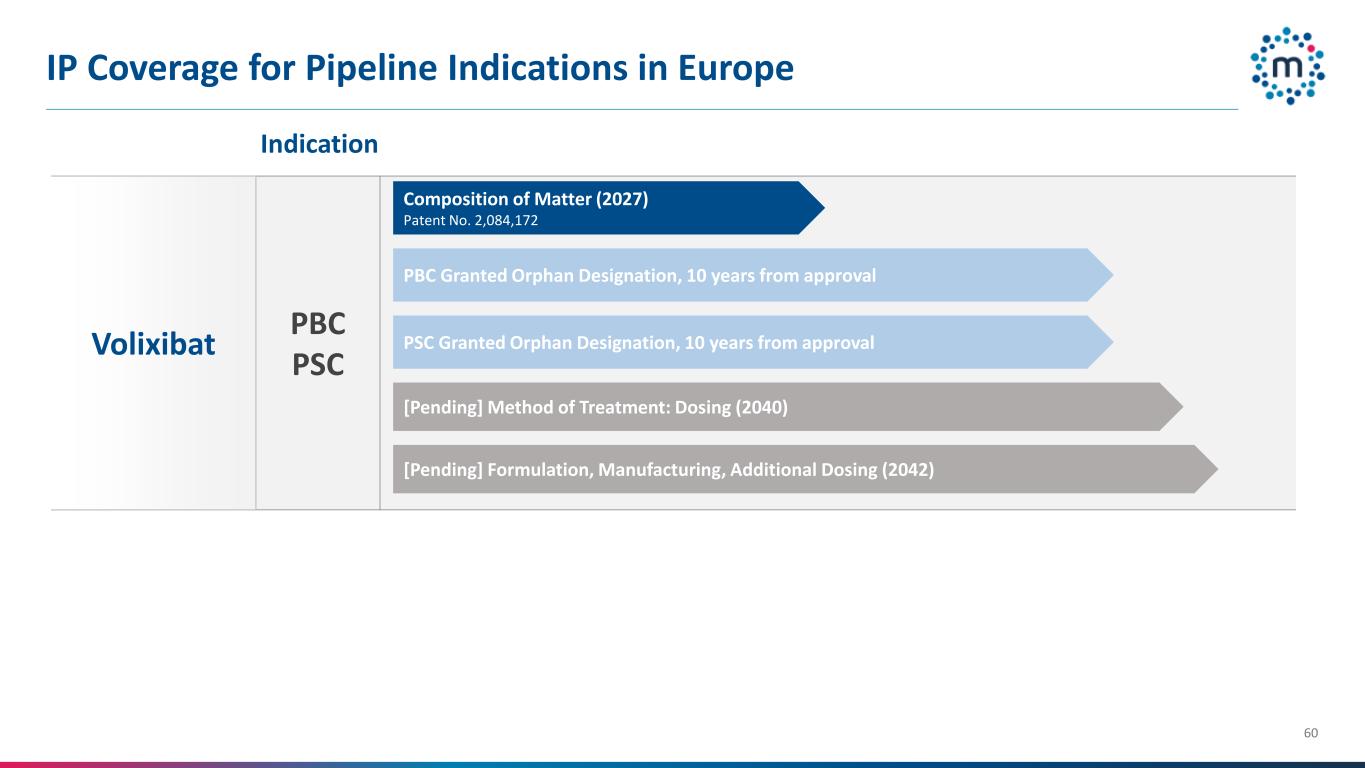
IP Coverage for Pipeline Indications in Europe 60 Method of Treatment: Dosing (2031, 2040) Orange Book Listed – Patent No. 11,229,647 / 11,497,745 / 11,918,578 / 11,260,053 Method of Treatment (2032) Orange Book Listed – Patent No. 11,376,251 [Pending] Method of Treatment: Dosing (2040, 2043) Orphan Designation (2030) [Pending] Formulation, Manufacturing, Additional Dosing (2042) Volixibat PBC PSC [Pending] Method of Treatment: Dosing (2040) Composition of Matter (2027) Patent No. 2,084,172 [Pending] Formulation, Manufacturing, Additional Dosing (2042) PSC Granted Orphan Designation, 10 years from approval Indication PBC Granted Orphan Designation, 10 years from approval