0001787297false00017872972022-05-162022-05-16

UNITED STATES

SECURITIES AND EXCHANGE COMMISSION

Washington, D.C. 20549

FORM 8-K

CURRENT REPORT

Pursuant to Section 13 or 15(d)

of the Securities Exchange Act of 1934

Date of Report (Date of earliest event reported): May 16, 2022

PASSAGE BIO, INC.

(Exact name of registrant as specified in its charter)

Delaware

001-39231

82-2729751

(State or other jurisdiction
of incorporation)

(Commission
File Number)

(IRS Employer
Identification No.)

One Commerce Square
2005 Market Street, 39th Floor
Philadelphia, PA

19103

(Address of principal executive offices)

(Zip Code)

(267) 866-0311

(Registrant’s telephone number, including area code)

N/A

(Former name or former address, if changed since last report)

Check the appropriate box below if the Form 8-K filing is intended to simultaneously satisfy the filing obligation of the registrant under any of the following provisions:

Written communications pursuant to Rule 425 under the Securities Act (17 CFR 230.425)

Soliciting material pursuant to Rule 14a-12 under the Exchange Act (17 CFR 240.14a-12)

Pre-commencement communications pursuant to Rule 14d-2(b) under the Exchange Act (17 CFR 240.14d-2(b))

Pre-commencement communications pursuant to Rule 13e-4(c) under the Exchange Act (17 CFR 240.13e-4(c))

Securities registered pursuant to Section 12(b) of the Act:

Title of each class

Trading symbol(s)

Name of each exchange on which registered

Common Stock, $0.0001 Par Value Per Share

PASG

The Nasdaq Stock Market LLC
(Nasdaq Global Select Market)

Indicate by check mark whether the registrant is an emerging growth company as defined in Rule 405 of the Securities Act of 1933 (§230.405 of this chapter) or Rule 12b-2 of the Securities Exchange Act of 1934 (§240.12b-2 of this chapter).

Emerging growth company

If an emerging growth company, indicate by check mark if the registrant has elected not to use the extended transition period for complying with any new or revised financial accounting standards provided pursuant to Section 13(a) of the Exchange Act.

Item 2.02 Results of Operations and Financial Condition.

On May 16, 2022, Passage Bio, Inc. (the “Company”) issued a press release announcing its financial results for the quarter ended March 31, 2022. A copy of the press release is attached as Exhibit 99.1 to this report.

The information in this Item 2.02, including Exhibit 99.1 to this report, shall not be deemed to be “filed” for purposes of Section 18 of the Securities Exchange Act of 1934, as amended (the “Exchange Act”), or otherwise subject to the liabilities of that section or Sections 11 and 12(a)(2) of the Securities Act of 1933, as amended (the “Securities Act”). The information contained in this Item 2.02 and in the accompanying Exhibit 99.1 shall not be incorporated by reference into any other filing under the Exchange Act or under the Securities Act, except as shall be expressly set forth by specific reference in such filing.

Item 7.01 Regulation FD Disclosure.

On May 16, 2022, the Company also updated its corporate presentation. A copy of the corporate presentation is attached as Exhibit 99.2 to this report.

The information in this Item 7.01, including Exhibit 99.2 to this report, shall not be deemed to be “filed” for purposes of Section 18 of the Exchange Act, or otherwise subject to the liabilities of that section or Sections 11 and 12(a)(2) of the Securities Act. The information contained in this Item 7.01 and in the accompanying Exhibit 99.2 shall not be incorporated by reference into any other filing under the Exchange Act or under the Securities Act, except as shall be expressly set forth by specific reference in such filing.

Item 9.01 Financial Statements and Exhibits.

(d)Exhibits

Exhibit No.

Description

99.1

Press release issued by Passage Bio, Inc. regarding its financial results for the quarter ended March 31, 2022, dated May 16, 2022.

99.2

Corporate Presentation.

104

Cover Page Interactive Data File (formatted as Inline XBRL).

2

SIGNATURE

Pursuant to the requirements of the Securities Exchange Act of 1934, the registrant has duly caused this report to be signed on its behalf by the undersigned hereunto duly authorized.

PASSAGE BIO, INC.

Date: May 16, 2022

By:

/s/ Simona King

Simona King

Chief Financial Officer

3

Exhibit 99.1

Passage Bio Reports First Quarter 2022 Financial Results and Provides Recent Business Highlights

Dosed first patient in Cohort 2 and completed dosing of Cohort 3 in Imagine-1 clinical trial for GM1 gangliosidosis; interim safety and biomarker data for both cohorts expected in 2H22
Dosed first patient in Cohort 1 in GALax-C clinical trial in infantile Krabbe disease; interim safety and biomarker data expected by year-end 2022
Submitted IND for Phase 1/2 clinical program of PBML04 for metachromatic leukodystrophy
Completed strategic prioritization to extend cash runway into 2Q24
Management to host conference call today at 8:30 a.m. ET

Philadelphia, PA May 16, 2022 Passage Bio, Inc. (Nasdaq: PASG), a clinical-stage genetic medicines company focused on developing transformative therapies for central nervous system disorders, today reported financial results for the first quarter ended March 31, 2022 and provided recent business highlights.

“We remain focused on execution across our ongoing clinical programs and are excited to have dosed additional patients in our Imagine-1 trial for GM1 gangliosidosis as well as the first patient in our GALax-C trial for infantile Krabbe disease,” said Bruce Goldsmith, Ph.D., president and chief executive officer of Passage Bio. “We look forward to reporting data as these programs advance throughout 2022, including additional clinical and biomarker data from Cohort 1 in Imagine-1 at the ASGCT conference this week. We continue to open additional clinical sites for our FTD program and expect to dose the first patient in mid-2022.”

“We are thrilled to have recently submitted an IND for PBML04 in metachromatic leukodystrophy, our third rare, pediatric, lysosomal storage disorder program,” Dr. Goldsmith added. “We also recently completed prioritization of our additional pipeline programs as part of our strategic initiatives to extend our cash runway into the second quarter of 2024 and look forward to continuing to advance our programs in amyotrophic lateral sclerosis and Huntington’s Disease and our ongoing exploratory research programs in Alzheimer’s Disease and temporal lobe epilepsy. Rights to our programs for Canavan disease, Charcot-Marie-Tooth Type 2A and Parkinson’s disease have been returned to the University of Pennsylvania allowing for the future development of these programs. We remain deeply committed to our mission of developing transformative therapies for people with devastating CNS disorders.”

Recent Highlights

Dosed first patient in Cohort 2 (late infantile, high dose) and completed dosing of Cohort 3 (early infantile, low dose) of the Imagine-1 clinical trial: Initial safety and biomarker data are expected from both cohorts in the second half of 2022. The company plans to share additional clinical data from Cohort 1 during an oral presentation at the ASGCT conference on Wednesday, May 18, 2022.
Dosed first patient in Cohort 1 of the GALax-C clinical trial in March: Initial safety and biomarker data are expected by year-end 2022.


Preclinical data supporting ongoing clinical study of PBKR03 in Krabbe disease published in Human Gene Therapy: The company announced the publication of the robust pre-clinical studies that supported clinical study initiation for PBKR03. In the paper, Juliette Hordeaux, D.V.M., Ph.D., D.E.C.V.P., and colleagues from University of Pennsylvanias Gene Therapy Program (GTP), report marked improvements in both disease progression and key biomarkers in large and small animal models of Krabbe disease following a single administration of PBKR03, with no observed dose-limiting toxicities.
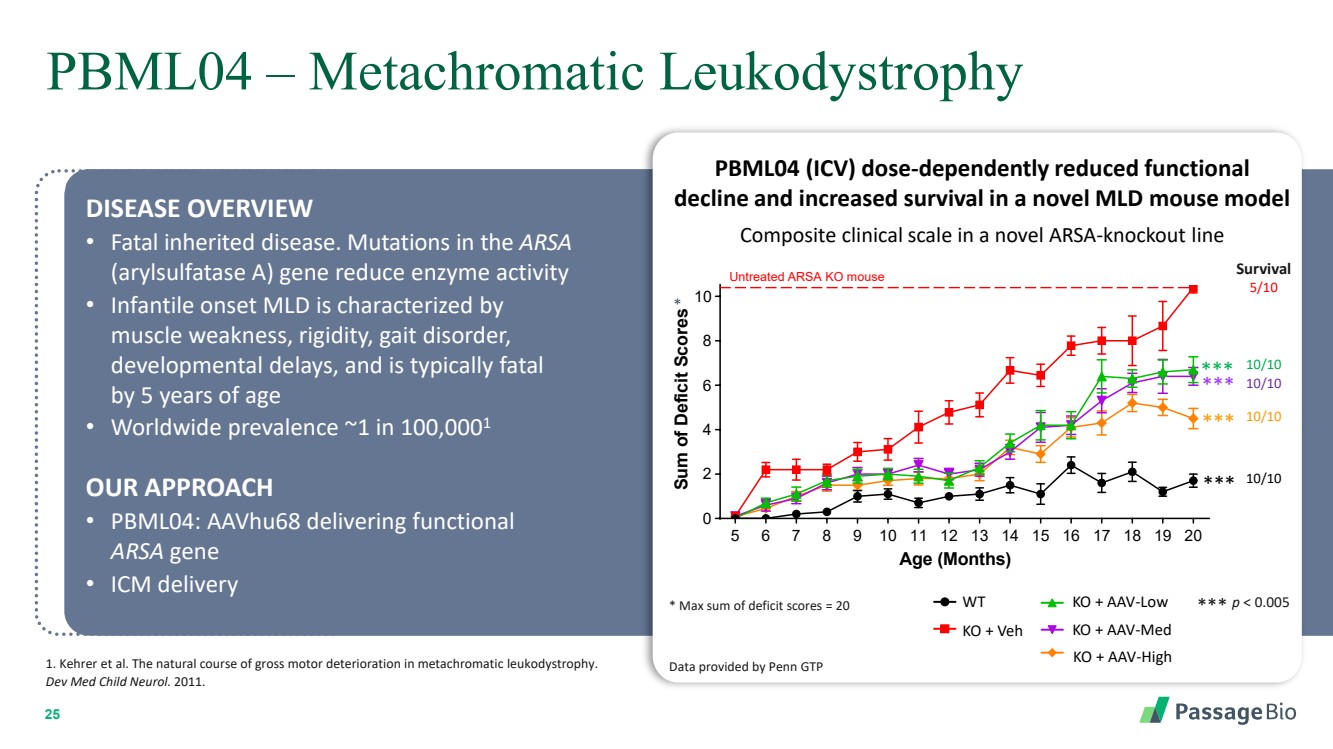
Submitted an Investigational New Drug (IND) application to the U.S. Food and Drug Administration for a Phase 1/2 clinical program for PBML04: An IND has been submitted for PBML04 in metachromatic leukodystrophy (MLD), a rare, pediatric, lysosomal storage disorder. PBML04 utilizes the same next-generation proprietary capsid as PBGM01 and PBKR03 to deliver, through intra-cisterna magna (ICM) administration, a functional ARSA gene into the CSF. Preclinical data supporting the planned clinical development of PBML04 will be presented by GTP colleagues at the ASGCT conference on Wednesday, May 18, 2022.
Completed strategic prioritization to reduce operating expenses and extend cash runway into the second quarter of 2024: In March, the company announced a 13 percent reduction in workforce and plans to prioritize research and development programs to reduce operating expenses. The company has completed its prioritization and will continue to advance its ongoing three clinical programs as well as its preclinical programs in metachromatic leukodystrophy, amyotrophic lateral sclerosis and Huntingtons disease and its exploratory research programs in Alzheimers disease and temporal lobe epilepsy. The company has returned its rights to programs in Canavan disease, Charcot-Marie-Tooth Type 2A and Parkinsons disease to the University of Pennsylvania allowing for the future development of these programs. The company continues to hold 8 additional license options.

Anticipated Upcoming Milestones

Multiple presentations and posters at the ASGCT 25th Annual Meeting taking place May 16-19, 2022, including additional clinical and biomarker data from Cohort 1 of Imagine-1 and preclinical data supporting PBML04.
Present interim safety and biomarker data for Cohorts 2 (late infantile, high dose) and 3 (early infantile, low dose) for Imagine-1 clinical trial for GM1 in the second half of 2022.
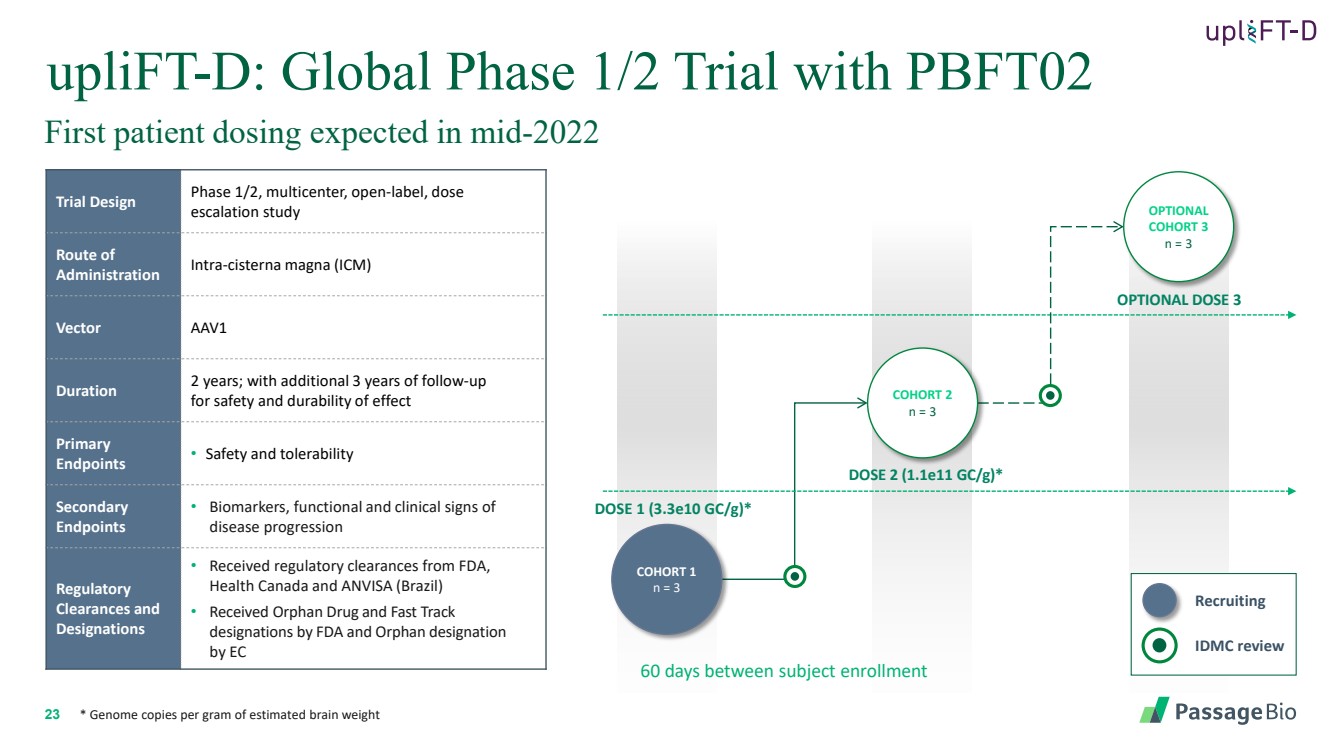
Dose first patient in Phase 1/2 study with PBFT02 for FTD-GRN in mid-2022. Additional clinical data milestone timing to be provided following dosing of first patient.
Present interim safety and biomarker data for Cohort 1 for GALax-C Phase 1/2 clinical trial for Krabbe disease by year-end 2022.

First Quarter 2022 Financial Results

Cash Position: Cash, cash equivalents and marketable securities were $267.1 million as of March 31, 2022, as compared to $315.8 million as of December 31, 2021. The Company expects current cash and cash equivalents to fund operations into the second quarter of 2024.
Research and Development (R&D) Expenses: R&D expenses were $26.2 million for the first quarter ended March 31, 2022, compared to $25.0 million for the same quarter in 2021. Acquired in-process R&D expenses were $1.5 million for the first quarter ended March 31, 2022, compared to $1.5 million in the same quarter of 2021.


General and Administrative (G&A) Expenses: G&A expenses were $15.1 million for the first quarter ended March 31, 2022, compared to $12.5 million for the same quarter in 2021.
Net Loss: Net loss was $42.8 million, or a net loss of $0.79 per basic and diluted share, for the first quarter ended March 31, 2022, compared to $38.9 million, or a net loss of $0.76 per basic and diluted share, for the same quarter in 2021.

Conference Call Details

Passage Bio will host a conference call and webcast today at 8:30 a.m. ET. To access the live conference call, please dial 833-528-0605 (domestic) or 830-221-9711 (international) and reference conference ID number 6960234. A live audio webcast of the event will be available on the Investors & News section of Passage Bios website at investors.passagebio.com. The archived webcast will be available on Passage Bios website approximately two hours after the completion of the event and for 30 days following the call.

About Passage Bio

Passage Bio (Nasdaq: PASG) is a clinical-stage genetic medicines company on a mission to provide life-transforming therapies for patients with CNS diseases with limited or no approved treatment options. Our portfolio spans pediatric and adult CNS indications, and we are currently advancing three clinical programs in GM1 gangliosidosis, Krabbe disease and frontotemporal dementia with several additional programs in preclinical development. Based in Philadelphia, PA, our company has established a strategic collaboration and licensing agreement with the renowned University of Pennsylvanias Gene Therapy Program to conduct our discovery and IND-enabling preclinical work. Through this collaboration, we have enhanced access to a broad portfolio of gene therapy candidates and future gene therapy innovations that we then pair with our deep clinical, regulatory, manufacturing and commercial expertise to rapidly advance our robust pipeline of optimized gene therapies. As we work with speed and tenacity, we are always mindful of patients who may be able to benefit from our therapies. More information is available at www.passagebio.com.

Forward-Looking Statements

This press release contains forward-looking statements within the meaning of, and made pursuant to the safe harbor provisions of, the Private Securities Litigation Reform Act of 1995, including, but not limited to: our expectations about timing and execution of anticipated milestones, including initiation of clinical trials and the availability of clinical data from such trials; our expectations about our collaborators and partners ability to execute key initiatives; our expectations about manufacturing plans and strategies; our expectations about cash runway; and the ability of our lead product candidates to treat their respective target monogenic CNS disorders. These forward-looking statements may be accompanied by such words as aim, anticipate, believe, could, estimate, expect, forecast, goal, intend, may, might, plan, potential, possible, will, would, and other words and terms of similar meaning. These statements involve risks and uncertainties that could cause actual results to differ materially from those reflected in such statements, including: our ability to develop and obtain regulatory approval for our product candidates; the timing and results of preclinical studies and clinical trials; risks associated with clinical trials, including our ability to adequately manage clinical activities, unexpected concerns that may arise from additional data or analysis obtained during clinical trials, regulatory authorities may require additional information or further studies, or may fail to approve or may delay approval of our drug candidates; the occurrence of adverse safety events; the risk that positive results in a preclinical study or clinical trial may not be replicated in subsequent trials or success in early stage clinical trials may not be predictive of results in later stage clinical trials; failure to protect and enforce our intellectual property, and other proprietary rights; our dependence on collaborators and other third parties for the development and manufacture of product candidates and other aspects of our business, which are outside of our full control; risks associated with current and potential delays, work stoppages, or supply chain disruptions caused by the coronavirus pandemic; and the other risks and uncertainties that are described in the Risk Factors section in documents the company files from time to time with the Securities and Exchange Commission (SEC), and other reports as filed with the SEC. Passage Bio undertakes no obligation to publicly update any forward-looking statement, whether written or oral, that may be made from time to time, whether as a result of new information, future developments or otherwise.


For further information, please contact:

Passage Bio Investors:

Stuart Henderson

Passage Bio

267.866.0114

[email protected]

Passage Bio Media:

Mike Beyer

Sam Brown Inc. Healthcare Communications

312-961-2502

[email protected]


Passage Bio, Inc.

Balance Sheets


(Unaudited)


(in thousands, except share data)

March 31, 2022

December 31, 2021

Assets


Current assets:


Cash and cash equivalents

$

101,614

$

128,965

Marketable securities

165,476

186,808

Prepaid expenses and other current assets


2,835


1,726

Prepaid research and development


13,076


7,567

Total current assets


283,001


325,066

Property and equipment, net


24,292


23,806

Right of use assets - operating leases

20,212

-

Other assets


5,719


6,204

Total assets

$

333,224

$

355,076

Liabilities and stockholders’ equity


Current liabilities:


Accounts payable

$

9,135

$

9,448

Accrued expenses and other current liabilities


15,227


20,050

Operating lease liabilities

3,119

-

Total current liabilities


27,481


29,498

Operating lease liabilities - noncurrent


24,432


-

Deferred rent


-


6,921

Total liabilities


51,913


36,419

Commitments and Contingencies


Stockholders’ equity:


Common stock, $0.0001 par value: 300,000,000 shares authorized; 54,307,691 shares issued and outstanding at March 31, 2022 and 54,244,996 shares issued and outstanding at December 31, 2021


5


5

Additional paid-in capital


681,732


675,346

Accumulated other comprehensive income (loss)

(1,334)

(413)

Accumulated deficit


(399,092)


(356,281)

Total stockholders’ equity


281,311


318,657

Total liabilities and stockholders’ equity

$

333,224

$

355,076


Passage Bio, Inc.

Statements of Operations and Comprehensive Loss

(Unaudited)

Three Months Ended March 31, 

(in thousands, except share and per share data)


2022


2021

Operating expenses:


Research and development

$

26,213

$

24,970

Acquired in-process research and development


1,500


1,500

General and administrative


15,099


12,464

Loss from operations


(42,812)


(38,934)

Interest income, net


1


52

Net loss

$

(42,811)

$

(38,882)

Per share information:


Net loss per share of common stock, basic and diluted

$

(0.79)

$

(0.76)

Weighted average common shares outstanding, basic and diluted


54,275,751


51,331,449

Comprehensive loss:

Net loss

$

(42,811)

$

(38,882)

Unrealized gain (loss) on marketable securities

(921)

5

Comprehensive loss

$

(43,732)

$

(38,877)


Exhibit 99.2

Fulfilling the Promise of Genetic Medicines for Central Nervous System DisordersCorporate PresentationMay 2022NASDAQ GS: PASG

2 Forward-Looking StatementThis presentation includes “forward-looking statements” within the meaning of, and made pursuant to the safe harbor provisions of, the Private Securities Litigation Reform Act of 1995, including, but not limited to: our expectation about timing and execution of anticipated milestones, including our planned initiation of clinical trials and the availability of clinical data from such trials; our expectations about our collaborators’ and partners’ ability to execute key initiatives; our expectations about our manufacturing plans and strategies; estimates regarding our cash forecasts; the expected impact of the COVID-19 pandemic on our operations; and the ability of our lead product candidates to treat their respective target CNS disorders. These forward-lookingstatements may be accompanied by such words as “aim,” “anticipate,” “believe,” “could,” “estimate,” “expect,” “forecast,” “goal,” “intend,” “may,” “might,”“plan,” “potential,” “possible,” “will,” “would,” and other words and terms of similar meaning. These statements involve risks and uncertainties that could cause actual results to differ materially from those reflected in such statements, including: our ability to develop, obtain regulatory approval for and commercialize PBGM01, PBFT02, PBKR03 and future product candidates; the timing and results of preclinical studies and clinical trials; the risk that positive results in a preclinical study or clinical trial may not be replicated in subsequent trials or success in early stage clinical trials may not be predictive of results in later stage clinical trials; risks associated with clinical trials, including our ability to adequately manage clinical activities, unexpected concerns that may arise from additional data or analysis obtained during clinical trials, regulatory authorities may require additional information or further studies, or may fail to approve or may delay approval ofour drug candidates; the occurrence of adverse safety events; failure to protect and enforce our intellectual property, and other proprietary rights; failure to successfully execute or realize the anticipated benefits of our strategic and growth initiatives; risks relating to technology failures or breaches; our dependence on collaborators and other third parties for the development of product candidates and other aspects of our business, which are outside of our full control; risks associated with current and potential delays, work stoppages, or supply chain disruptions caused by the coronavirus pandemic; risks associated with current and potential future healthcare reforms; risks relating to attracting and retaining key personnel; failure to comply with legal and regulatory requirements; risks relating to access to capital and credit markets; and the other risks and uncertainties that are described in the Risk Factors section of our most recent filings with the U.S. Securities and Exchange Commission. These statements are based on our current beliefs and expectations and speak only as of the date of this presentation. We do not undertake any obligation to publicly update any forward-looking statements except as required by law. By attending or receiving this presentation you acknowledge that you are cautioned not to place undue reliance on these forward-looking statements, which speak only as of the date such statements are made; you will be solely responsible for your own assessment of the market and our market position; and that you will conduct your own analysis and besolely responsible for forming your own view of the potential future performance of Passage Bio.

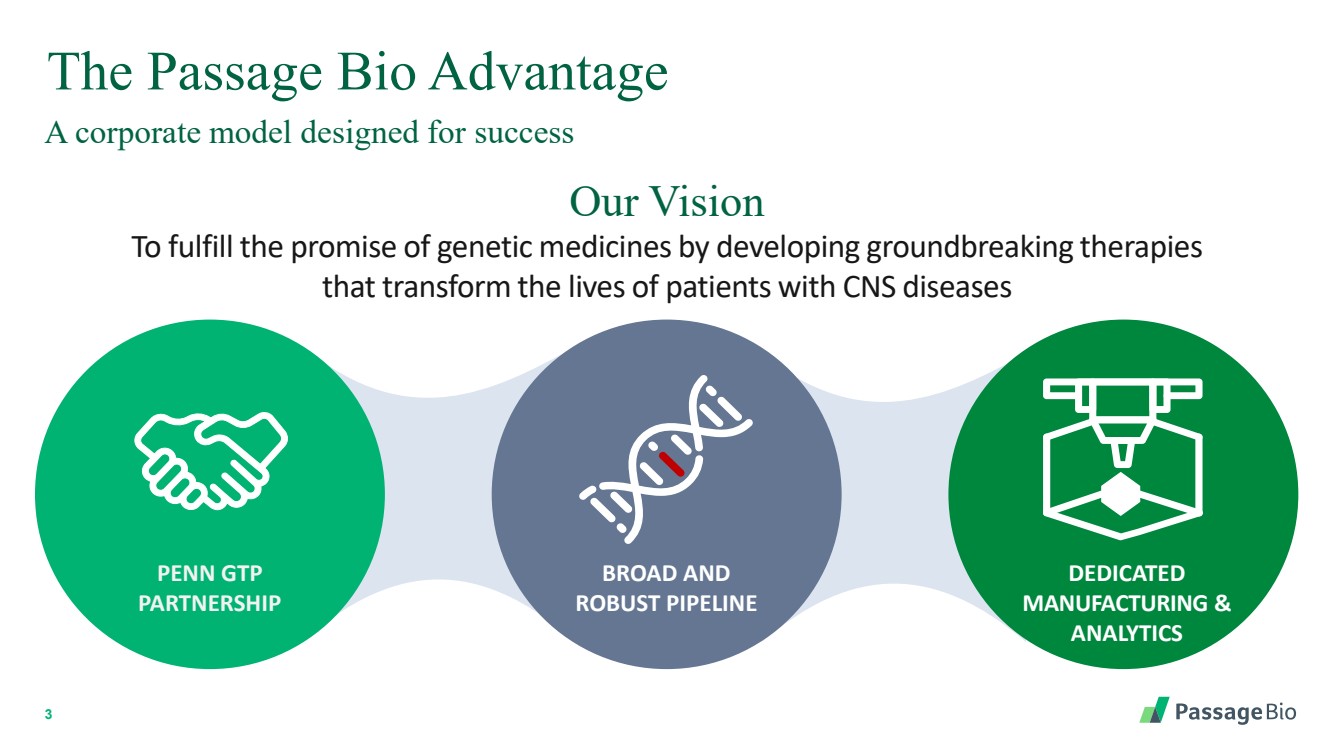
3 The Passage Bio AdvantageOur VisionTo fulfill the promise of genetic medicines by developing groundbreaking therapies that transform the lives of patients with CNS diseasesA corporate model designed for success PENN GTP PARTNERSHIPDEDICATED MANUFACTURING & ANALYTICSBROAD AND ROBUST PIPELINE

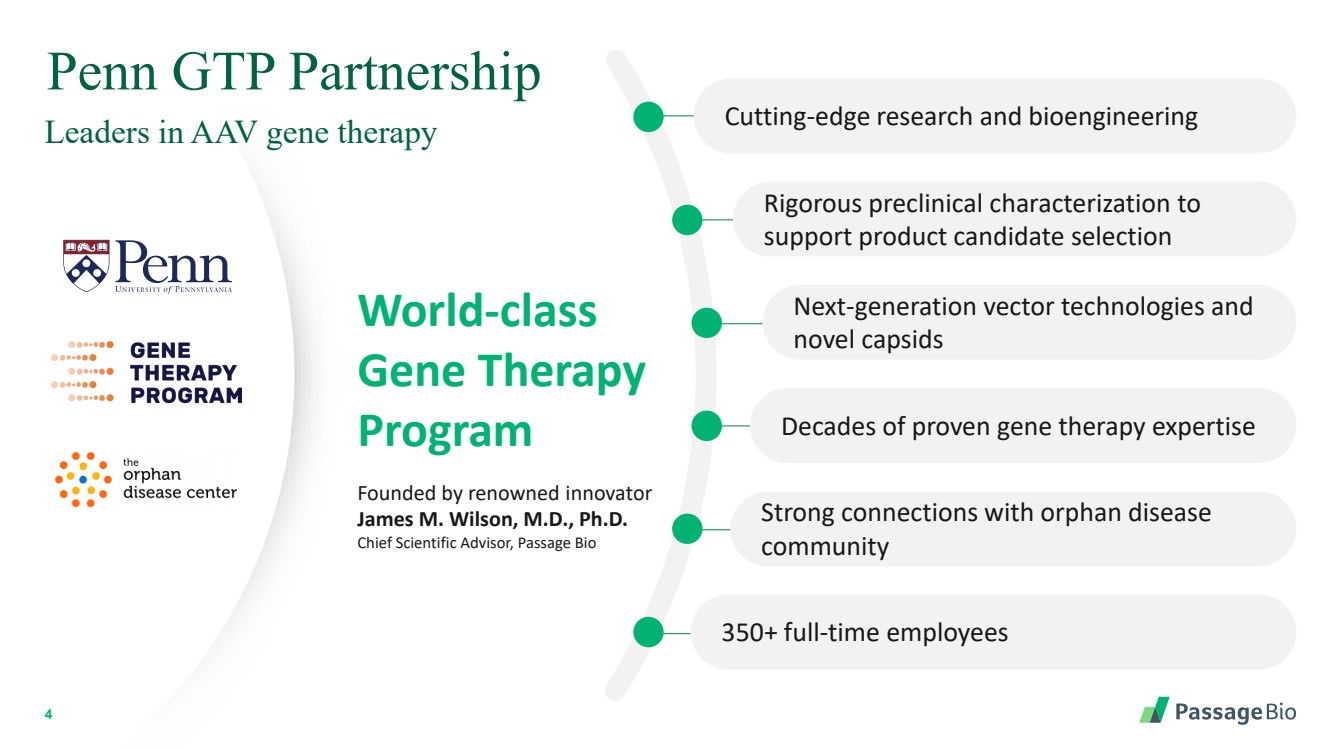
4 Penn GTP Partnership Leaders in AAV gene therapy World-class Gene Therapy ProgramFounded by renowned innovatorJames M. Wilson, M.D., Ph.D.Chief Scientific Advisor, Passage Bio Cutting-edge research and bioengineering Rigorous preclinical characterization to support product candidate selection Next-generation vector technologies and novel capsids Decades of proven gene therapy expertise 350+ full-time employees Strong connections with orphan disease community4

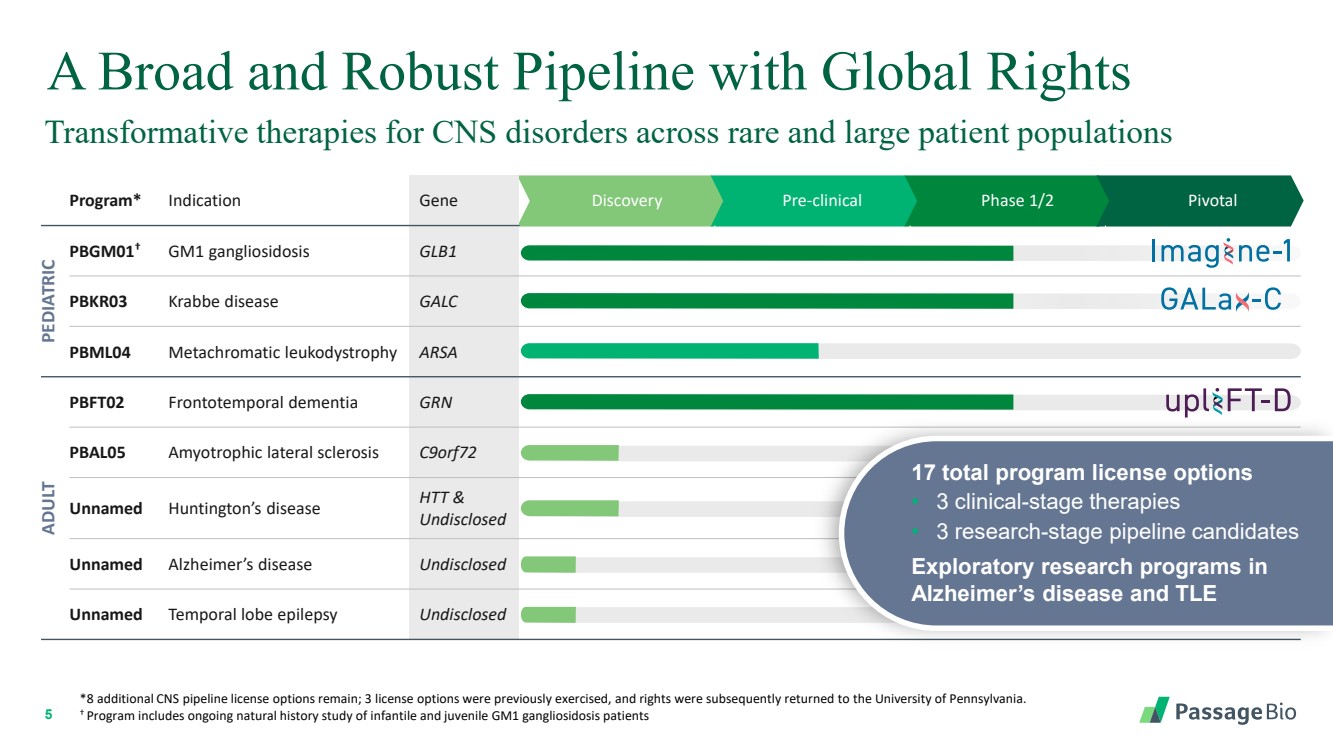
5 A Broad and Robust Pipeline with Global RightsTransformative therapies for CNS disorders across rare and large patient populations Program* Indication GeneDiscoveryPre-clinicalPhase 1/2PivotalPEDIATRIC PBGM01 † GM1 gangliosidosis GLB1 PBKR03 Krabbe disease GALC PBML04 Metachromatic leukodystrophy ARSAADULT PBFT02 Frontotemporal dementia GRN PBAL05 Amyotrophic lateral sclerosis C9orf72 Unnamed Huntington’s disease HTT & Undisclosed Unnamed Alzheimer’s disease Undisclosed Unnamed Temporal lobe epilepsy Undisclosed 17 total program license options•3 clinical-stage therapies •3 research-stage pipeline candidatesExploratory research programs in Alzheimer’s disease and TLE *8 additional CNS pipeline license options remain; 3 license options were previously exercised, and rights were subsequently returned to the University of Pennsylvania.† Program includes ongoing natural history study of infantile and juvenile GM1 gangliosidosis patients

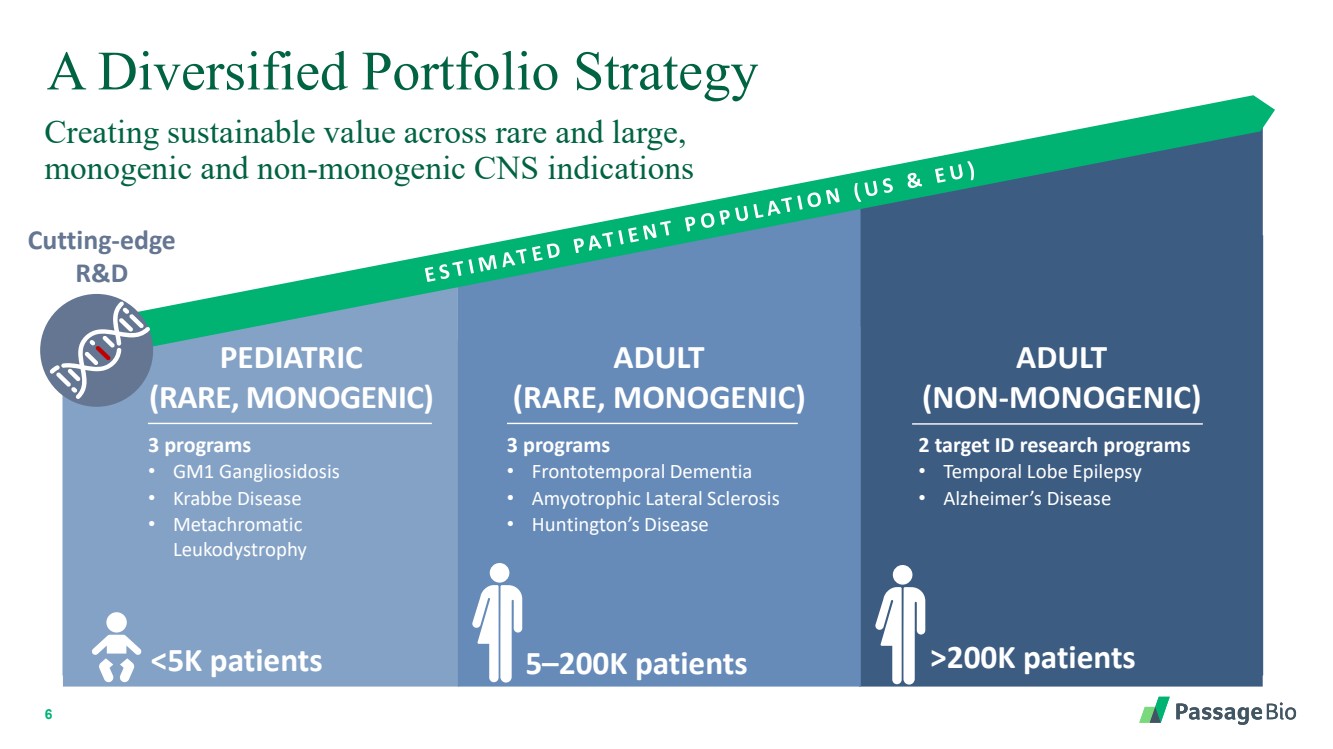
6 A Diversified Portfolio StrategyCreating sustainable value across rare and large, monogenic and non-monogenic CNS indicationsCutting-edge R&D ADULT (RARE, MONOGENIC)ADULT (NON-MONOGENIC)PEDIATRIC (RARE, MONOGENIC)3 programs•GM1 Gangliosidosis•Krabbe Disease•Metachromatic Leukodystrophy3 programs•Frontotemporal Dementia•Amyotrophic Lateral Sclerosis•Huntington’s Disease2 target ID research programs•Temporal Lobe Epilepsy•Alzheimer’s Disease<5K patients 5–200K patients>200K patients

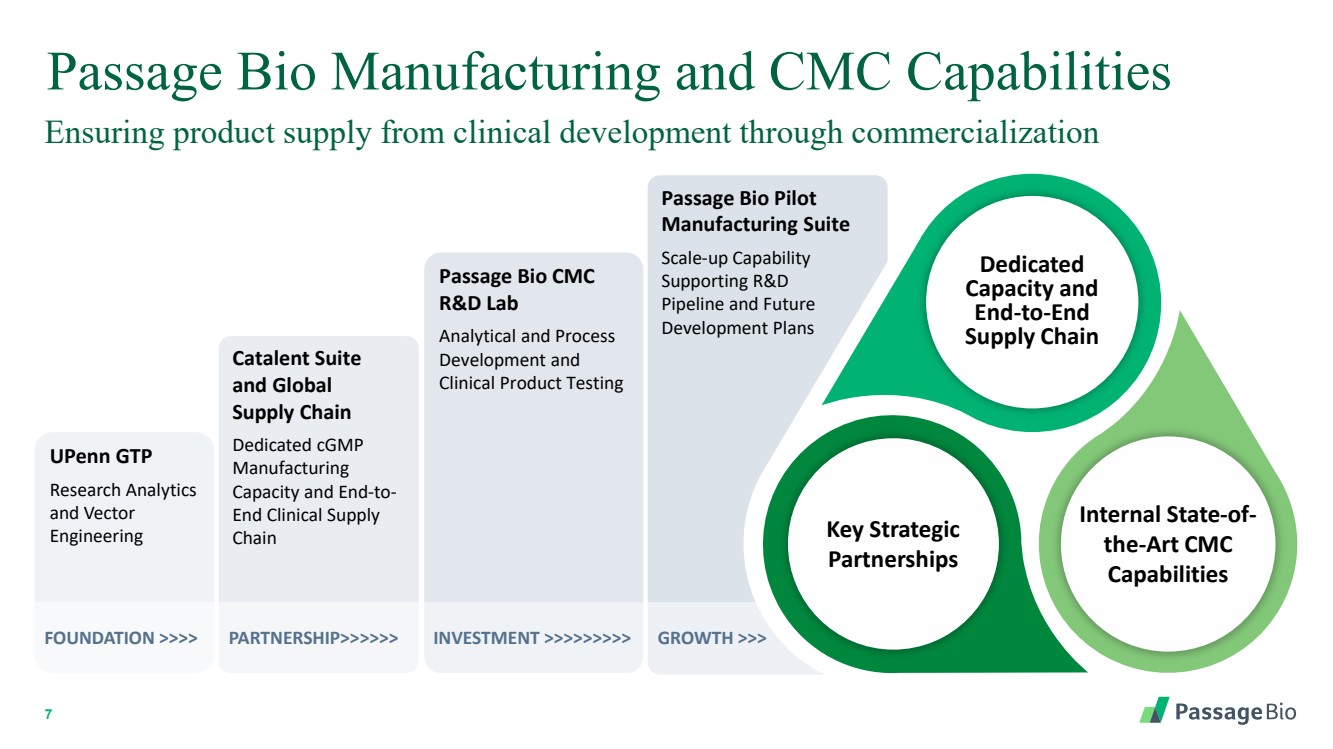
7 Passage Bio Pilot Manufacturing SuiteScale-up Capability Supporting R&D Pipeline and Future Development Plans UPenn GTPResearch Analytics and Vector Engineering Catalent Suite and Global Supply ChainDedicated cGMP Manufacturing Capacity and End-to-End Clinical Supply Chain Passage Bio CMC R&D Lab Analyticaland Process Development and Clinical Product Testing Passage Bio Manufacturing and CMC CapabilitiesEnsuring product supply from clinical development through commercialization Dedicated Capacity and End-to-End Supply ChainKey Strategic PartnershipsInternal State-of-the-Art CMC CapabilitiesGROWTH >>>FOUNDATION >>>>PARTNERSHIP>>>>>>INVESTMENT >>>>>>>>>

PBGM01GM1 Gangliosidosis

9 GM1 Gangliosidosis: A Devastating Pediatric Disease FATAL, PEDIATRIC NEUROLOGICAL LYSOSOMAL STORAGE DISORDER caused by GLB1gene mutations characterized by destruction of neurons in the brain and spinal cord.Characterized by rapidly progressive neurological decline resulting in reduced muscle tone, progressive CNS dysfunction, deafness, blindness, rigidity and skeletal dysplasia. RARE AND UNDERSERVEDpopulations with incidence of up to ~1 per 100,000 live births worldwide.No disease-modifying therapies are presently approved.Source: NIH, CHOP, American Journal of Neuroradiology

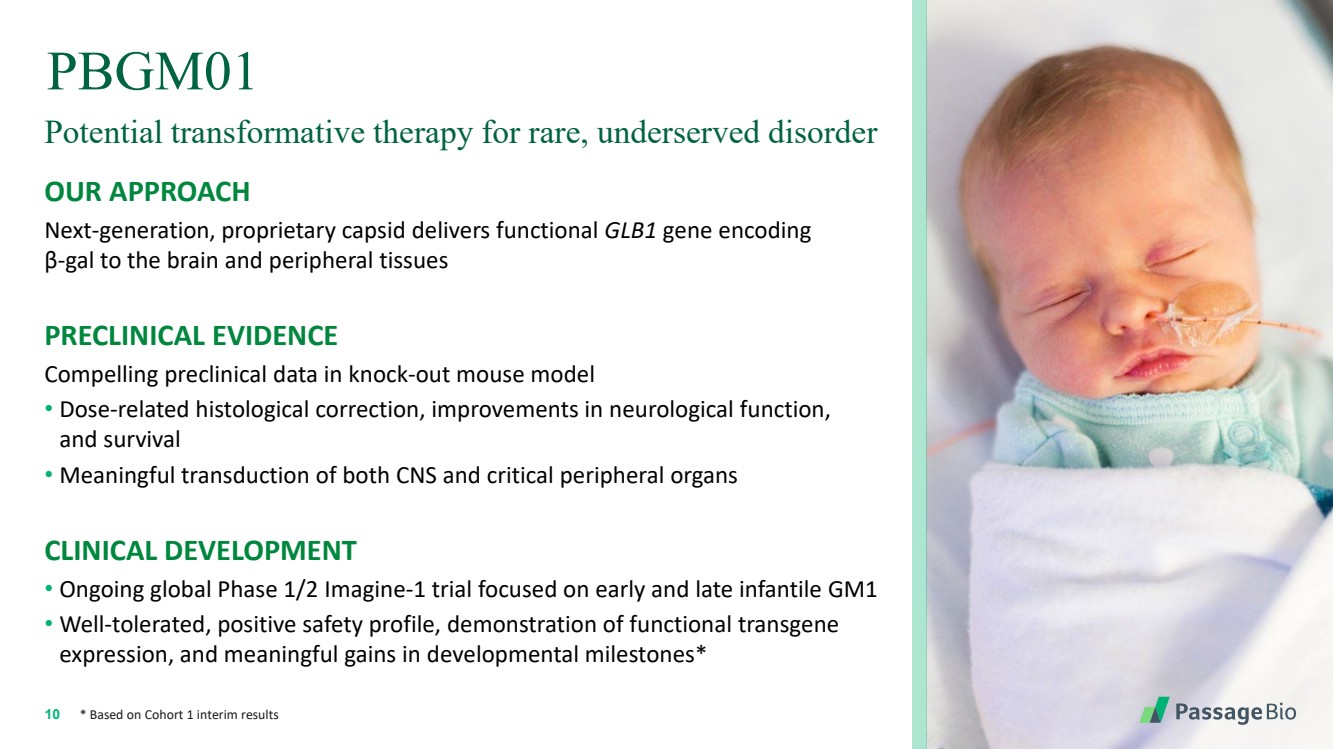
10 PBGM01OUR APPROACHNext-generation, proprietary capsid delivers functional GLB1gene encoding β-gal to the brain and peripheral tissuesPRECLINICAL EVIDENCECompelling preclinical data in knock-out mouse model•Dose-related histological correction, improvements in neurological function, and survival•Meaningful transduction of both CNS and critical peripheral organsCLINICAL DEVELOPMENT•Ongoing global Phase 1/2 Imagine-1 trial focused on early and late infantile GM1•Well-tolerated, positive safety profile, demonstration of functional transgene expression, and meaningful gains in developmental milestones*Potential transformative therapy for rare, underserved disorder * Based on Cohort 1 interim results

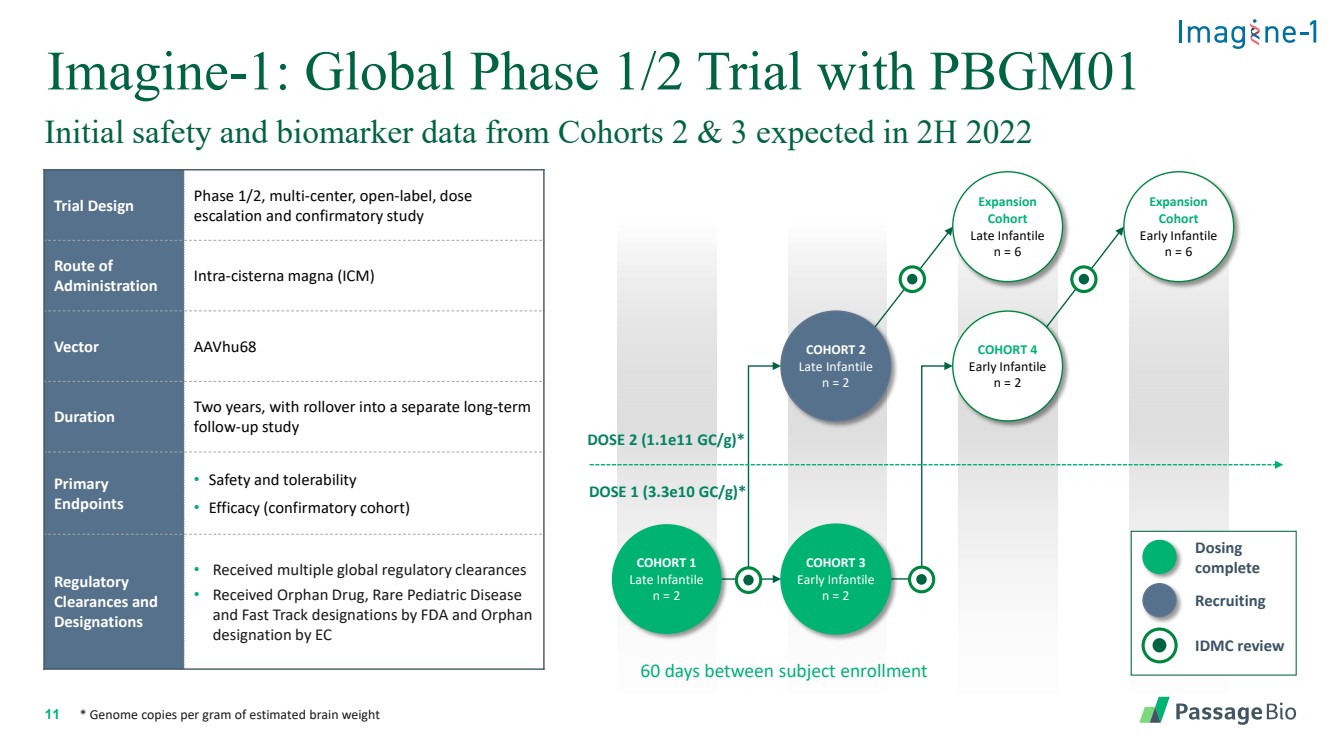
11 Imagine-1: Global Phase 1/2 Trial with PBGM01Initial safety and biomarker data from Cohorts 2 & 3 expected in 2H 2022 Trial DesignPhase 1/2, multi-center, open-label, dose escalation and confirmatory study Route of AdministrationIntra-cisterna magna (ICM)VectorAAVhu68DurationTwo years, with rollover into a separate long-term follow-up studyPrimary Endpoints•Safety and tolerability•Efficacy (confirmatory cohort)Regulatory Clearances and Designations•Received multiple global regulatory clearances•Received Orphan Drug, Rare Pediatric Disease and Fast Track designations by FDA and Orphan designation by EC COHORT 4Early Infantilen = 2DOSE 2 (1.1e11 GC/g)*DOSE 1 (3.3e10 GC/g)* Expansion CohortEarly Infantilen = 6 Expansion CohortLate Infantilen = 6 COHORT 2Late Infantilen = 2 COHORT 3Early Infantilen = 2 COHORT 1Late Infantilen = 2 60 days between subject enrollment IDMC review Recruiting Dosing complete* Genome copies per gram of estimated brain weight

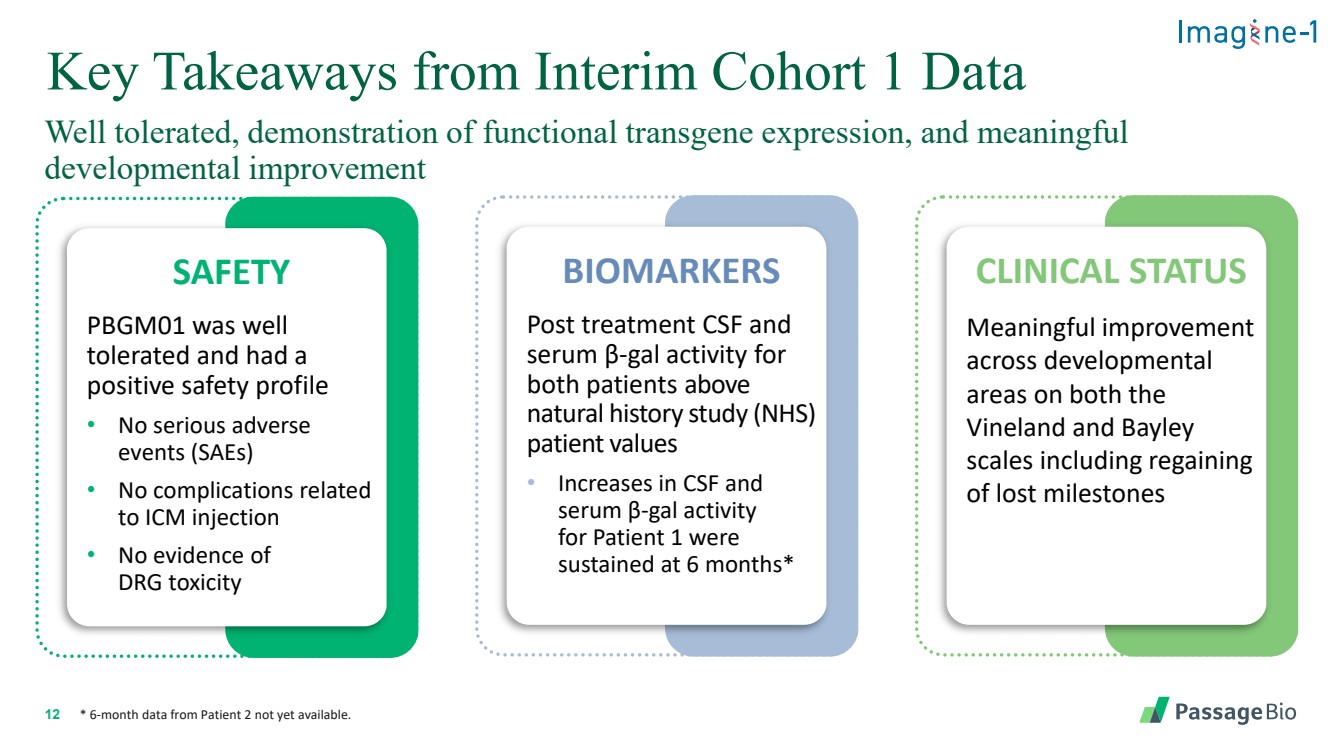
12 Key Takeaways from Interim Cohort 1 DataWell tolerated, demonstration of functional transgene expression, and meaningful developmental improvement BIOMARKERSPost treatment CSF and serum β-gal activity for both patients above natural history study (NHS) patient values•Increases in CSF and serum β-gal activity for Patient 1 were sustained at 6 months* SAFETYPBGM01 was well tolerated and had a positive safety profile•No serious adverse events (SAEs)•No complications related to ICM injection•No evidence of DRG toxicity CLINICAL STATUSMeaningful improvement across developmental areas on both the Vineland and Bayley scales including regaining of lost milestones* 6-month data from Patient 2 not yet available.

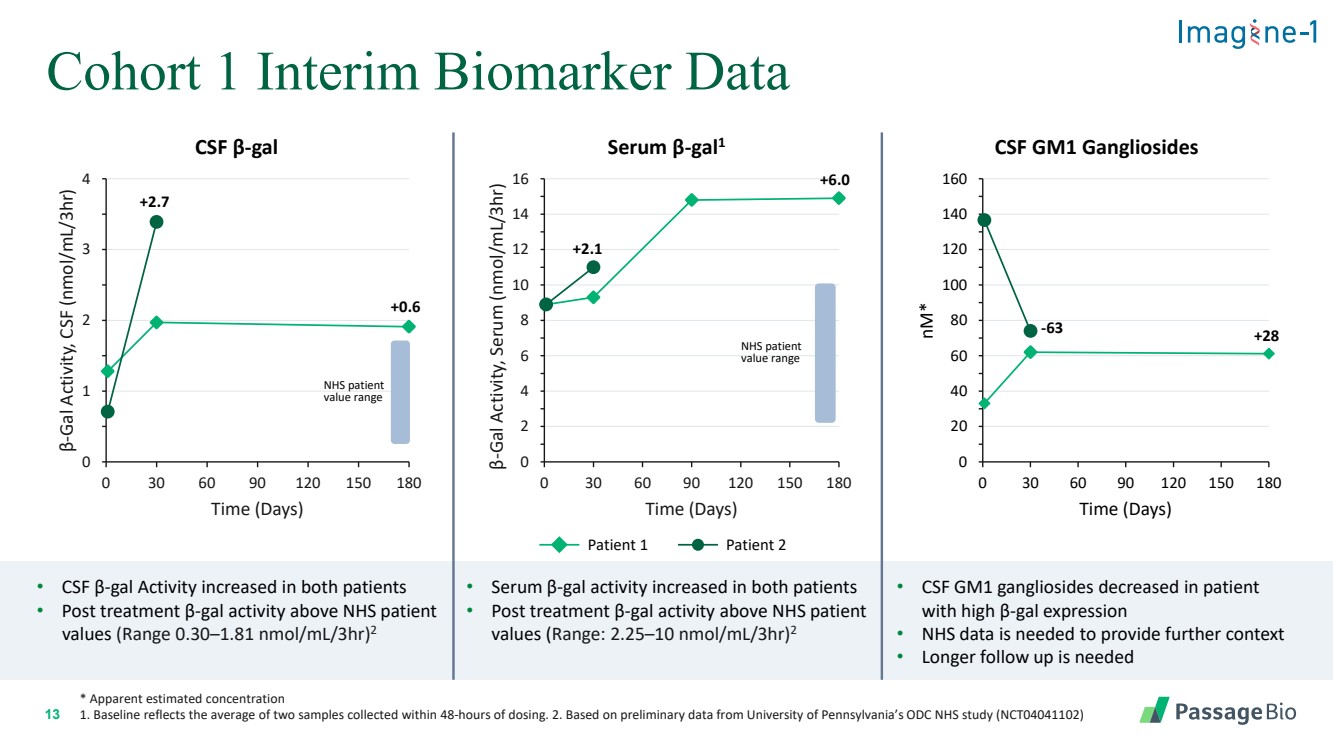
13 •CSF β-gal Activity increased in both patients•Post treatment β-gal activity above NHS patient values (Range 0.30–1.81 nmol/mL/3hr)2Cohort 1 Interim Biomarker Data 01 2 340306090120150180β - Gal Activity, CSF (nmol/mL/3hr) Time (Days)CSF β-gal+0.6+2.7 •Serum β-gal activity increased in both patients•Post treatment β-gal activity above NHS patient values (Range: 2.25–10 nmol/mL/3hr)2•CSF GM1 gangliosides decreased in patient with high β-gal expression•NHS data is needed to provide further context•Longer follow up is needed 02 4 6 8101214160306090120150180β - Gal Activity, Serum (nmol/mL/3hr) Time (Days)Serum β-gal1 020 40 60 801001201401600306090120150180nM*Time (Days)CSF GM1 Gangliosides+6.0+2.1+28-63Patient 2 Patient 1 * Apparent estimated concentration1. Baseline reflects the average of two samples collected within 48-hours of dosing. 2. Based on preliminary data from University of Pennsylvania’s ODC NHS study (NCT04041102) NHS patientvalue range NHS patient value range

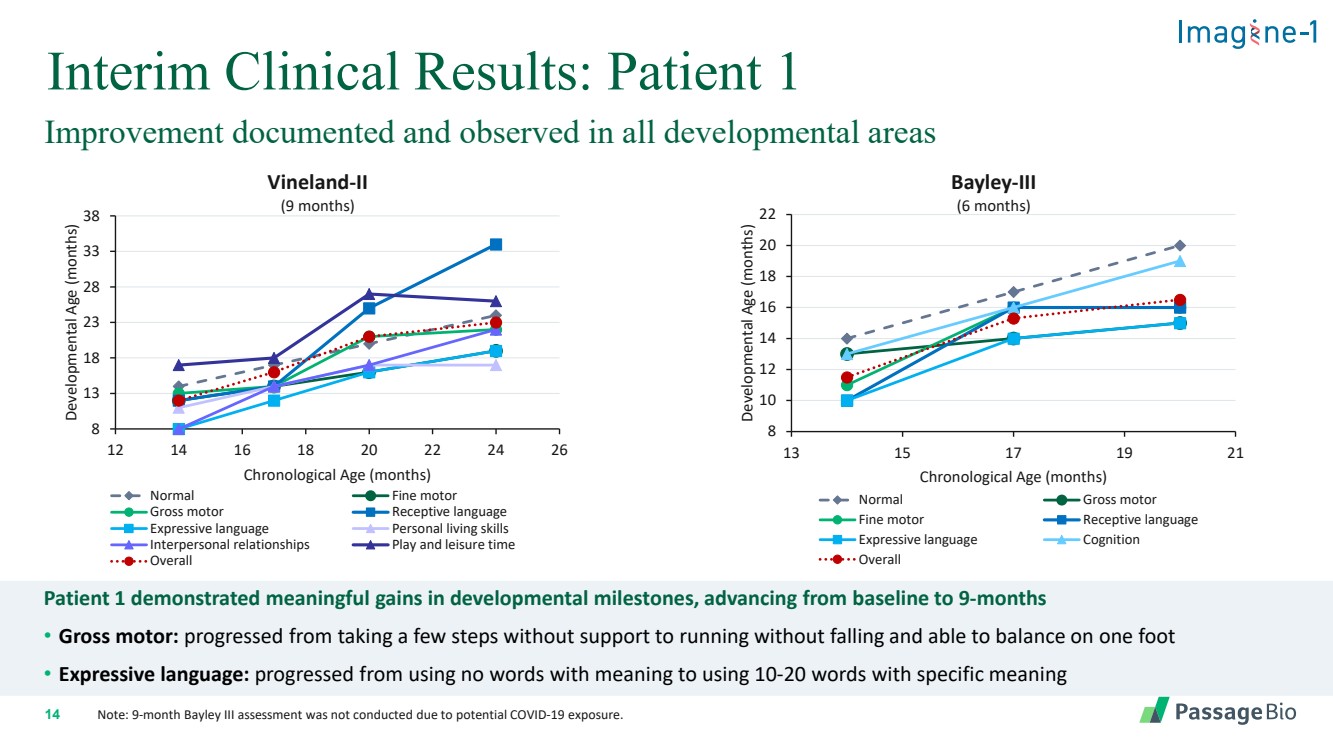
14 Interim Clinical Results: Patient 1Patient 1 demonstrated meaningful gains in developmental milestones, advancing from baseline to 9-months•Gross motor: progressed from taking a few steps without support torunning without falling and able to balance on one foot•Expressive language: progressed from usingno words with meaning tousing 10-20 words with specific meaningImprovement documented and observed in all developmental areas Note: 9-month Bayley III assessment was not conducted due to potential COVID-19 exposure. 81318 232833 381214161820222426 Developmental Age (months) Chronological Age (months)Vineland-II (9 months) Normal Fine motor Gross motor Receptive language Expressive language Personal living skills Interpersonal relationships Play and leisure time Overall 8101214 16 1820221315171921 Developmental Age (months) Chronological Age (months)Bayley-III(6 months) Normal Gross motor Fine motor Receptive language Expressive language Cognition Overall

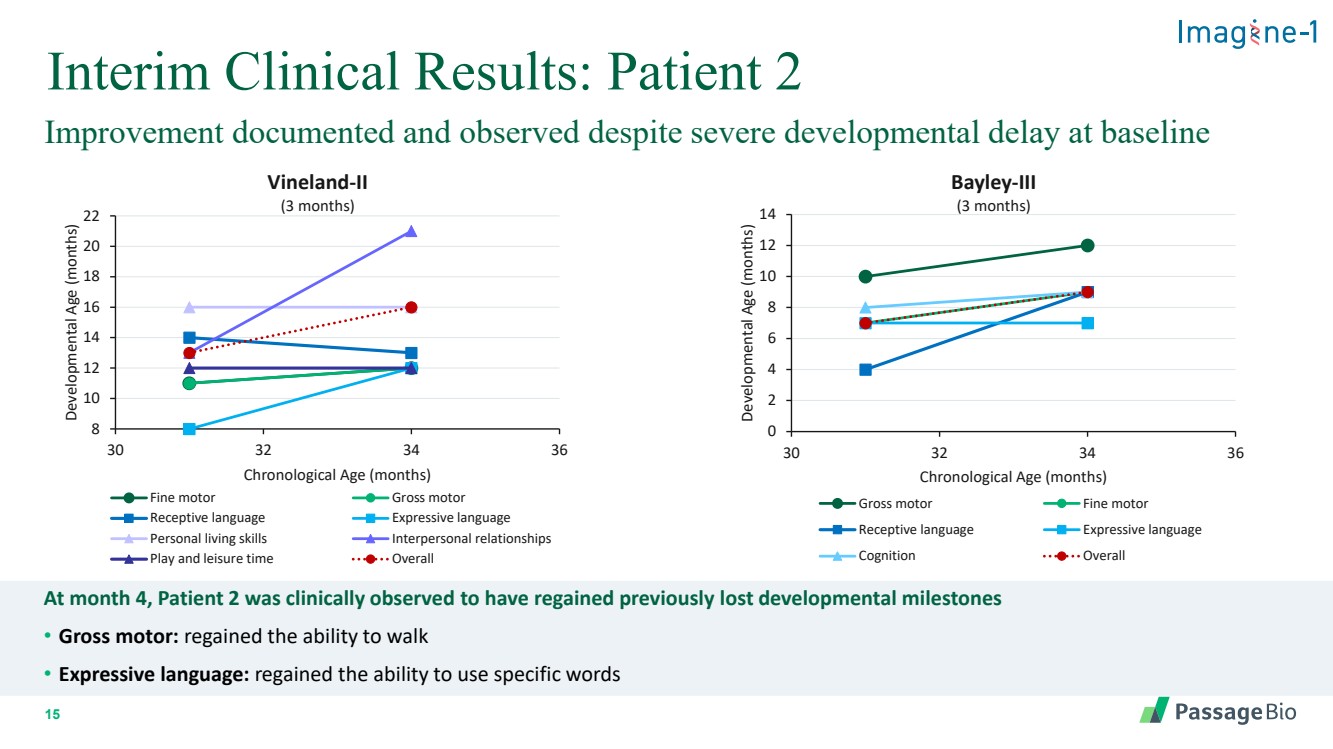
15 Interim Clinical Results: Patient 2At month 4, Patient 2 was clinically observed to have regained previously lost developmental milestones•Gross motor: regained the ability to walk•Expressive language: regained the ability to use specific wordsImprovement documented and observed despite severe developmental delay at baseline 8101214161820 2230323436 Developmental Age (months) Chronological Age (months)Vineland-II (3 months) Fine motor Gross motor Receptive language Expressive language Personal living skills Interpersonal relationships Play and leisure time Overall 0246 810121430323436 Developmental Age (months) Chronological Age (months)Bayley-III(3 months) Gross motor Fine motor Receptive language Expressive language Cognition Overall

PBKR03Krabbe Disease

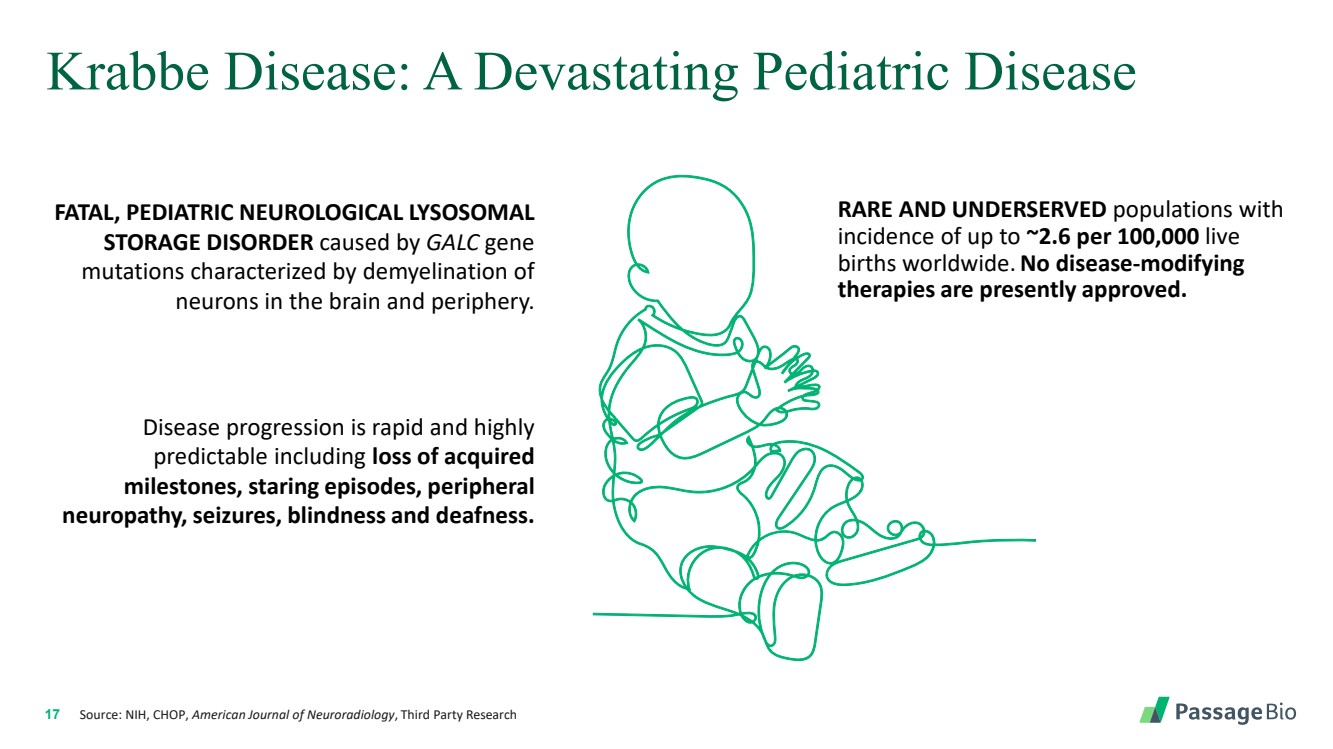
17 Krabbe Disease: A Devastating Pediatric Disease FATAL, PEDIATRIC NEUROLOGICAL LYSOSOMAL STORAGE DISORDER caused by GALCgene mutations characterized by demyelination of neurons in the brain and periphery.Disease progression is rapid and highly predictable including loss of acquired milestones, staring episodes, peripheral neuropathy, seizures, blindness and deafness. RARE AND UNDERSERVEDpopulations with incidence of up to ~2.6 per 100,000 live births worldwide.No disease-modifying therapies are presently approved.Source: NIH, CHOP, American Journal of Neuroradiology, Third Party Research

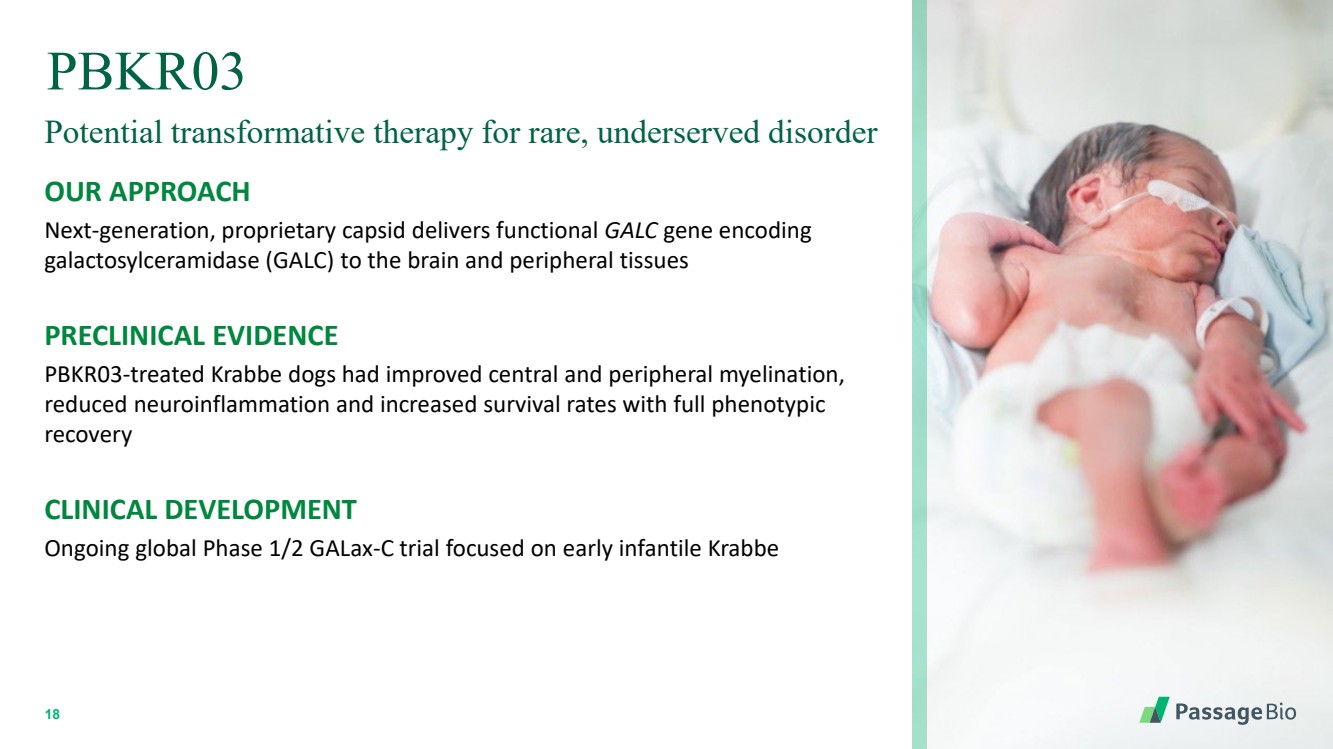
18 PBKR03OUR APPROACHNext-generation, proprietary capsid delivers functional GALCgene encoding galactosylceramidase (GALC) to the brain and peripheral tissuesPRECLINICAL EVIDENCEPBKR03-treated Krabbe dogs had improved central and peripheral myelination, reduced neuroinflammation and increased survival rates with full phenotypic recoveryCLINICAL DEVELOPMENTOngoing global Phase 1/2 GALax-C trial focused on early infantile KrabbePotential transformative therapy for rare, underserved disorder

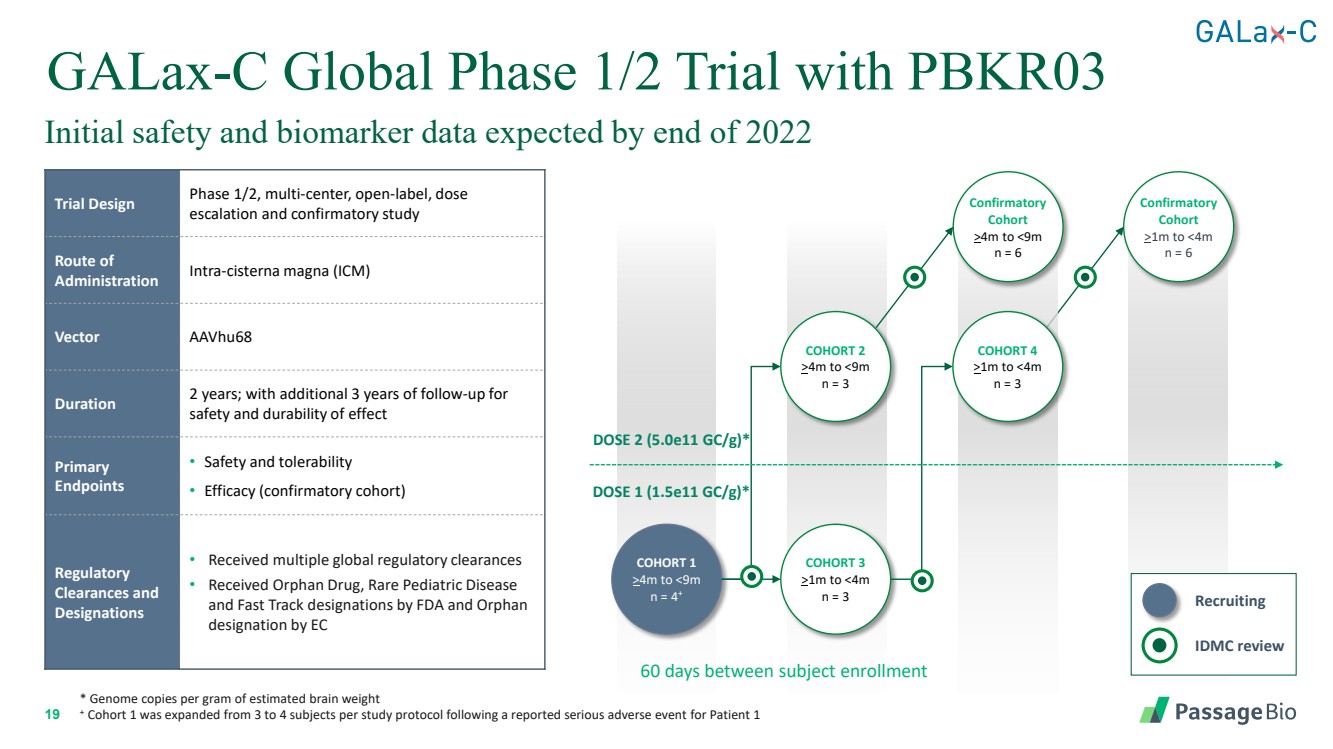
19 COHORT 2> 4m to <9mn = 3 COHORT 3> 1m to <4mn = 3 COHORT 1> 4m to <9mn = 4+GALax-C Global Phase 1/2 Trial with PBKR03Initial safety and biomarker data expected by end of 2022 Confirmatory Cohort > 1m to <4mn = 6 Confirmatory Cohort > 4m to <9mn = 6 COHORT 4> 1m to <4mn = 3DOSE 2 (5.0e11 GC/g)*DOSE 1 (1.5e11 GC/g)* 60 days between subject enrollment Trial DesignPhase 1/2, multi-center, open-label, dose escalation and confirmatory studyRoute of AdministrationIntra-cisterna magna (ICM)VectorAAVhu68Duration2 years; with additional 3 years of follow-up for safety and durability of effectPrimary Endpoints•Safety and tolerability•Efficacy (confirmatory cohort)Regulatory Clearances and Designations•Received multiple global regulatory clearances•Received Orphan Drug, Rare Pediatric Disease and Fast Track designations by FDA and Orphan designation by EC IDMC review Recruiting* Genome copies per gram of estimated brain weight+Cohort 1 was expanded from 3 to 4 subjects per study protocol following a reported serious adverse event for Patient 1

PBFT02Frontotemporal Dementia —GRN

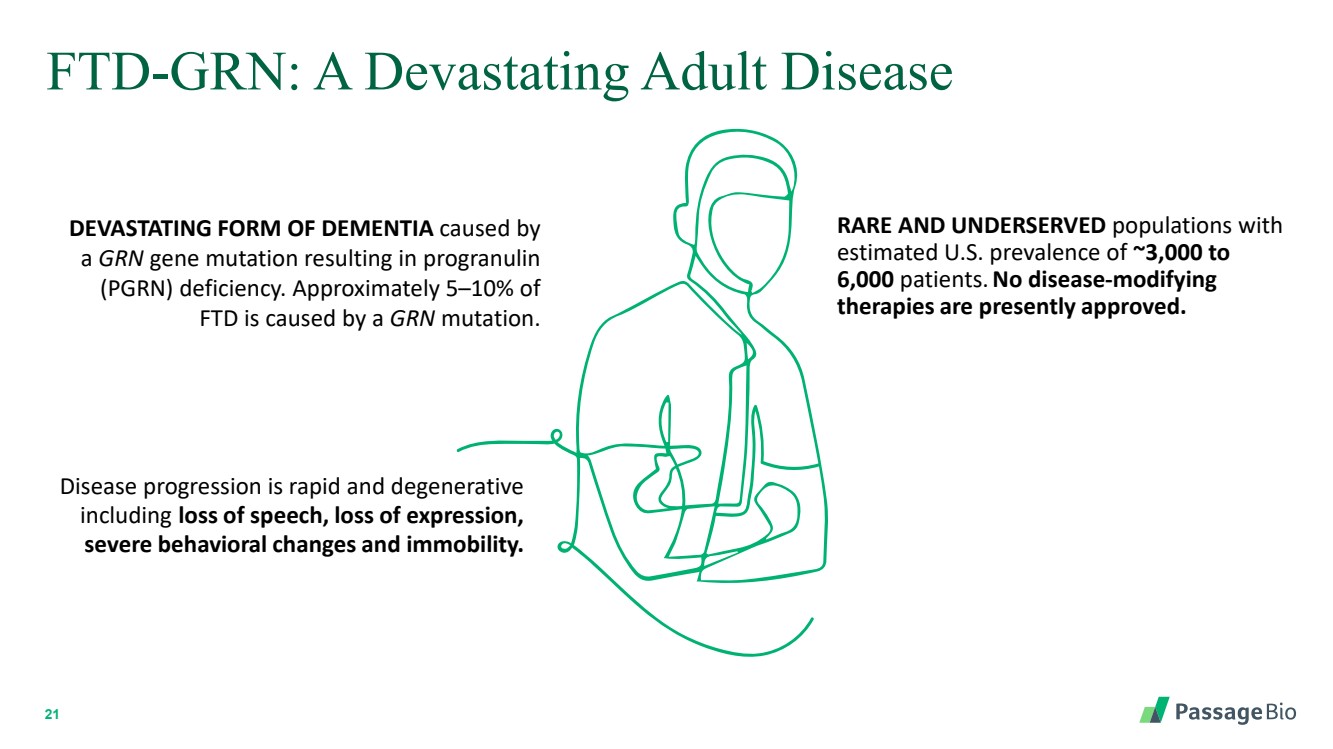
21 FTD-GRN: A Devastating Adult DiseaseDEVASTATING FORM OF DEMENTIA caused by a GRNgene mutation resulting in progranulin (PGRN) deficiency. Approximately 5–10% of FTD is caused by a GRNmutation.Disease progression is rapid and degenerative including loss of speech, loss of expression, severe behavioral changes and immobility. RARE AND UNDERSERVEDpopulations with estimated U.S. prevalence of ~3,000 to 6,000 patients.No disease-modifying therapies are presently approved.

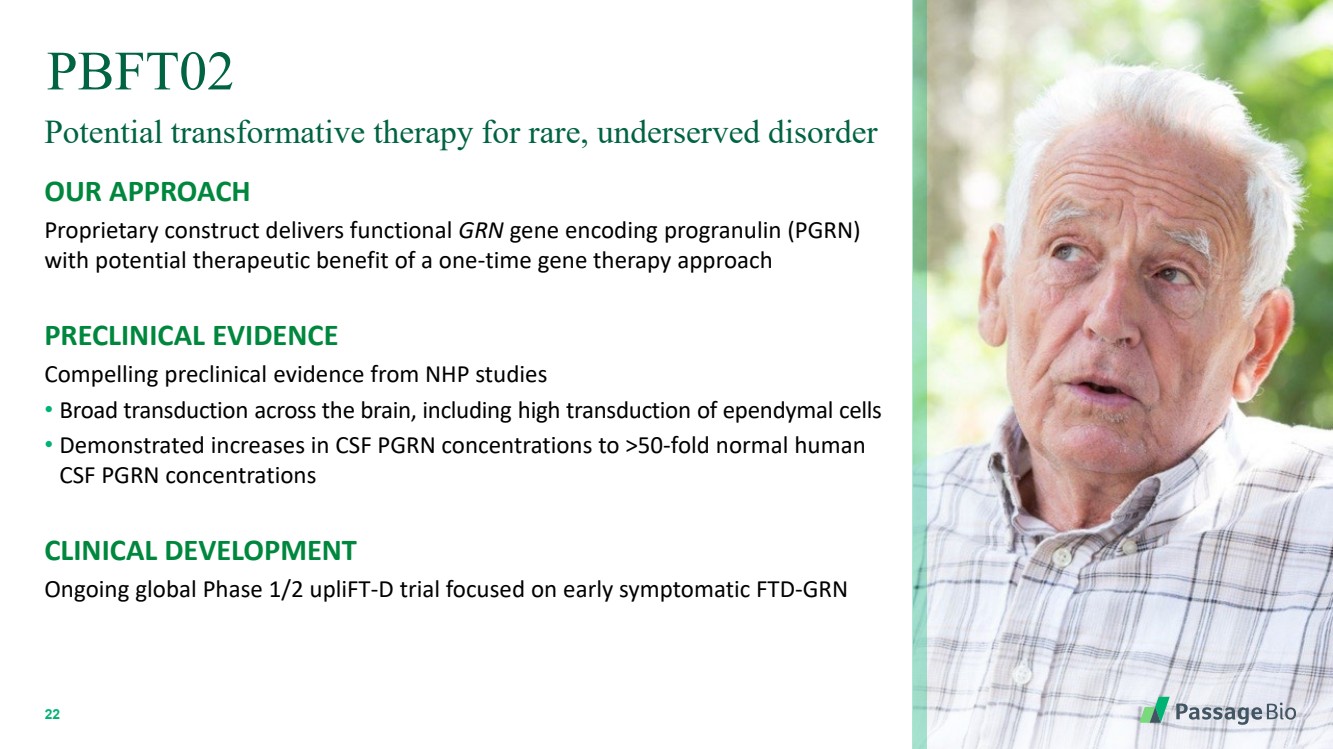
22 PBFT02OUR APPROACHProprietary construct delivers functional GRNgene encoding progranulin (PGRN) with potential therapeutic benefit of a one-time gene therapy approachPRECLINICAL EVIDENCECompelling preclinical evidence from NHP studies•Broad transduction across the brain, including high transduction of ependymal cells•Demonstrated increases in CSF PGRN concentrations to >50-fold normal human CSF PGRN concentrationsCLINICAL DEVELOPMENTOngoing global Phase 1/2 upliFT-D trial focused on early symptomatic FTD-GRNPotential transformative therapy for rare, underserved disorder

23 upliFT-D: Global Phase 1/2 Trial with PBFT02First patient dosing expected in mid-2022 OPTIONAL DOSE 3 DOSE 2 (1.1e11 GC/g)* DOSE 1 (3.3e10 GC/g)* 60 days between subject enrollment COHORT 1n = 3 COHORT 2n = 3 OPTIONAL COHORT 3n = 3 Trial DesignPhase 1/2, multicenter, open-label, dose escalation studyRoute of AdministrationIntra-cisterna magna (ICM)VectorAAV1Duration2 years; with additional 3 years of follow-up for safety and durability of effectPrimary Endpoints•Safety and tolerabilitySecondary Endpoints•Biomarkers, functional and clinical signs of disease progressionRegulatory Clearances and Designations•Received regulatory clearances from FDA, Health Canada and ANVISA (Brazil)•Received Orphan Drug and Fast Track designations by FDA and Orphan designation by EC IDMC review Recruiting* Genome copies per gram of estimated brain weight

Preclinical Pipeline

25 DISEASE OVERVIEW•Fatal inherited disease. Mutations in the ARSA(arylsulfatase A) gene reduce enzyme activity•Infantile onset MLD is characterized by muscle weakness, rigidity, gait disorder, developmental delays, and is typically fatal by 5 years of age•Worldwide prevalence ~1 in 100,0001OUR APPROACH•PBML04: AAVhu68 delivering functional ARSAgene•ICM delivery PBML04 (ICV) dose-dependently reduced functional decline and increased survival in a novel MLD mouse modelComposite clinical scale in a novel ARSA-knockout line PBML04 –Metachromatic Leukodystrophy1. Kehrer et al. The natural course of gross motor deterioration in metachromatic leukodystrophy. Dev Med Child Neurol.2011.Data provided by Penn GTPWTKO + Veh KO AA-oKO AA-ed KO AA-igh p < 0.005************5/1010/1010/1010/1010/10Survival 567891011121314151617181920 024 6 810 Sum of Deficit ScoresAge (Months) Untreated ARSA KO mouse* Max sum of deficit scores = 20*

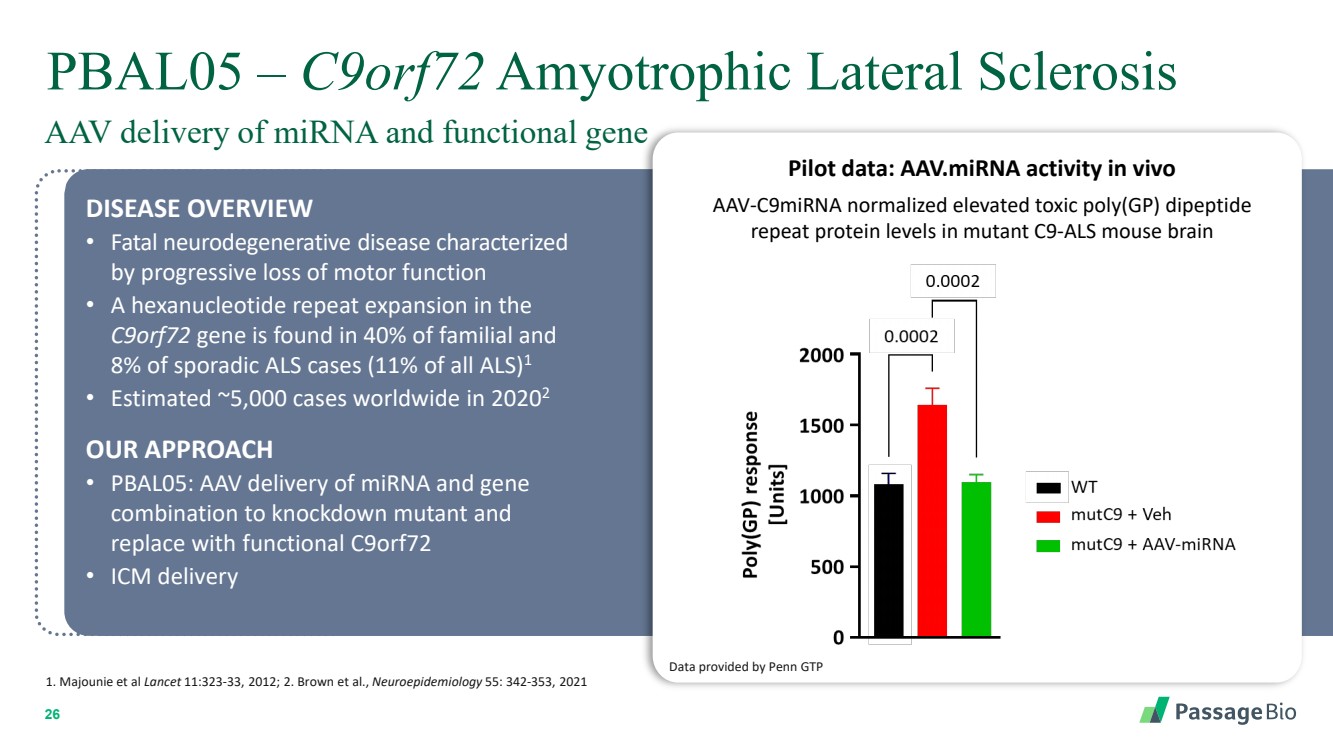
26 DISEASE OVERVIEW•Fatal neurodegenerative disease characterized by progressive loss of motor function •A hexanucleotide repeat expansion in the C9orf72gene is found in 40% of familial and 8% of sporadic ALS cases (11% of all ALS)1•Estimated ~5,000 cases worldwide in 20202OUR APPROACH•PBAL05: AAV delivery of miRNA and gene combination to knockdown mutant and replace with functional C9orf72•ICM delivery Pilot data: AAV.miRNA activity in vivoAAV-C9miRNA normalized elevated toxic poly(GP) dipeptide repeat protein levels in mutant C9-ALS mouse brainPBAL05 –C9orf72Amyotrophic Lateral Sclerosis AAV delivery of miRNA and functional gene1. Majounie et al Lancet11:323-33, 2012; 2. Brown et al., Neuroepidemiology55: 342-353, 2021Data provided by Penn GTP

Looking Ahead

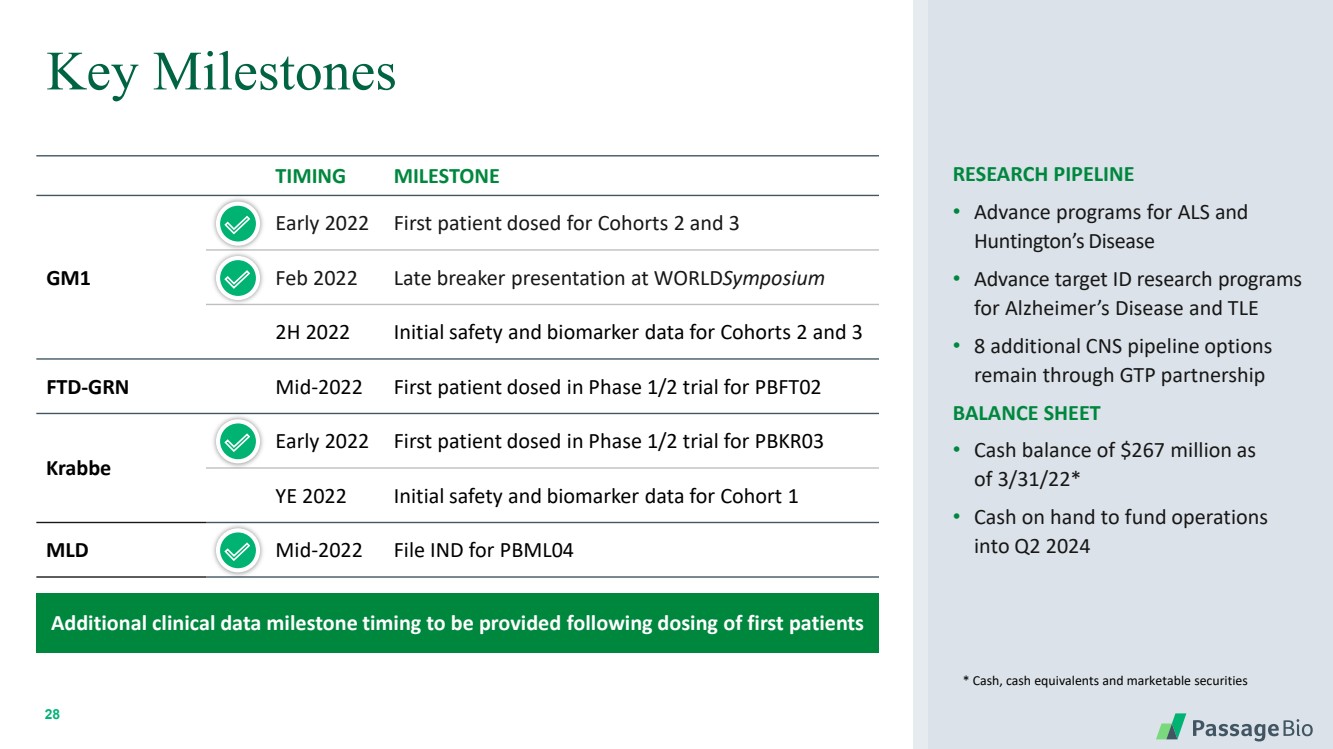
28 TIMINGMILESTONEGM1Early 2022First patient dosed for Cohorts 2 and 3Feb 2022Late breaker presentation at WORLDSymposium2H 2022Initial safety and biomarker data for Cohorts 2 and 3FTD-GRNMid-2022First patient dosed in Phase 1/2 trial for PBFT02KrabbeEarly 2022First patient dosed in Phase 1/2 trial for PBKR03YE 2022Initial safety and biomarker data for Cohort 1MLDMid-2022File IND for PBML04ManufacturingYE 2022Pilot plant operationalKey Milestones RESEARCH PIPELINE•Advance programs for ALS and Huntington’s Disease•Advance target ID research programs for Alzheimer’s Disease and TLE•8 additional CNS pipeline options remain through GTP partnershipBALANCE SHEET•Cash balance of $267 million as of 3/31/22*•Cash on hand to fund operations into Q2 2024* Cash, cash equivalents and marketable securities Additional clinical data milestone timing to be provided following dosing of first patients

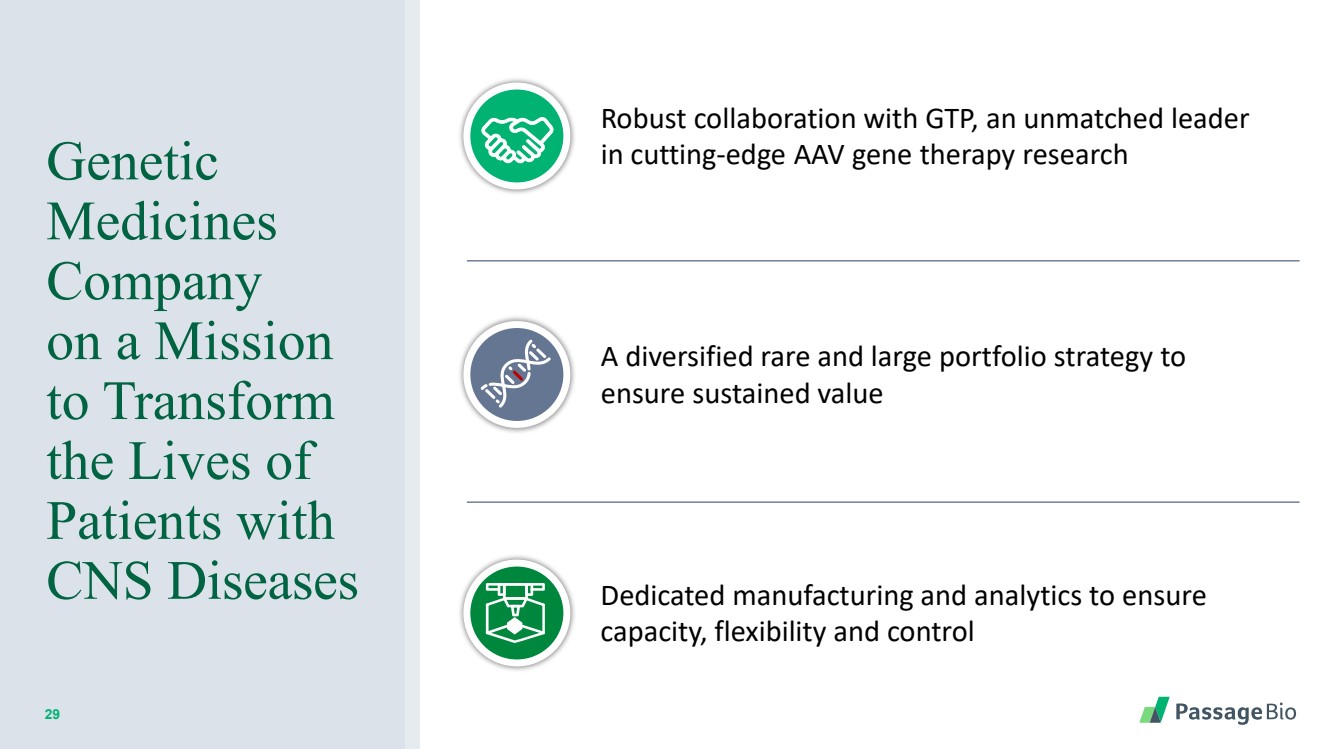
29 29Genetic Medicines Company on a Mission to Transform the Lives of Patients with CNS Diseases A diversified rare and large portfolio strategy to ensure sustained value Robust collaboration with GTP, an unmatched leader in cutting-edge AAVgene therapy research Dedicated manufacturing and analytics to ensure capacity, flexibility and control

Thank Youpassagebio.com |NASDAQ GS: PASG

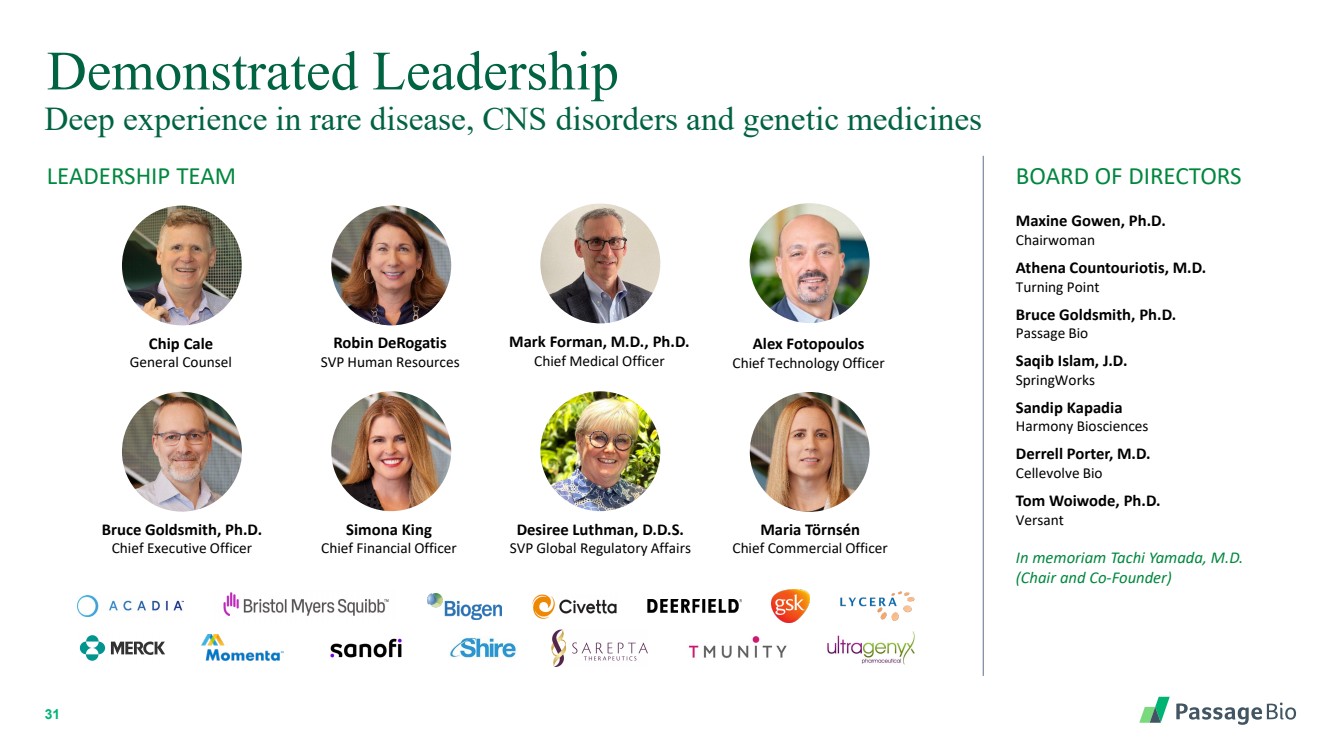
31 Demonstrated LeadershipLEADERSHIP TEAM BOARD OF DIRECTORSMaxine Gowen, Ph.D.ChairwomanAthena Countouriotis, M.D.Turning PointBruce Goldsmith, Ph.D.Passage BioSaqib Islam, J.D.SpringWorksSandip KapadiaHarmony BiosciencesDerrell Porter, M.D.CellevolveBioTom Woiwode, Ph.D.VersantIn memoriam Tachi Yamada, M.D. (Chair and Co-Founder) Simona KingChief Financial OfficerMaria Törnsén Chief Commercial OfficerRobin DeRogatisSVP Human ResourcesMark Forman, M.D., Ph.D.Chief Medical Officer Chip CaleGeneral CounselAlex Fotopoulos Chief Technology OfficerBruce Goldsmith, Ph.D.Chief Executive OfficerDeep experience in rare disease, CNS disorders and genetic medicines Desiree Luthman, D.D.S.SVP Global Regulatory Affairs

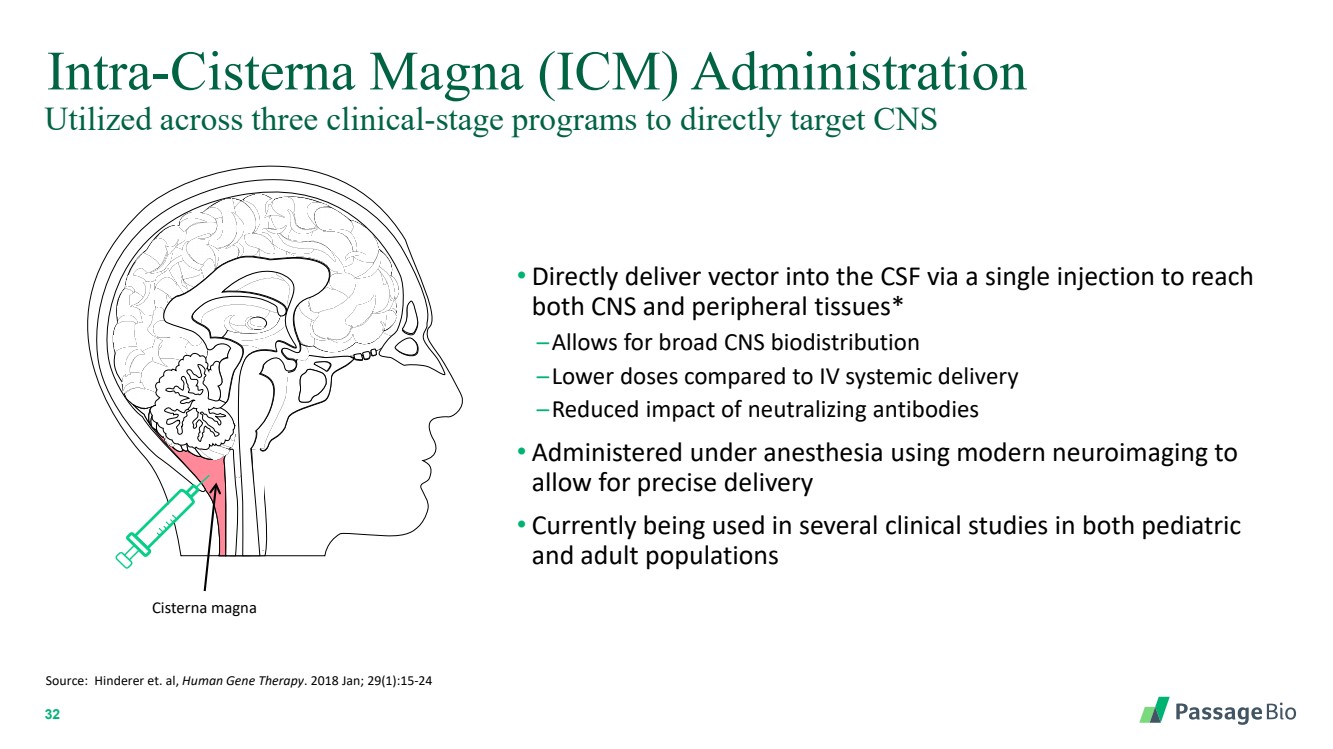
32 Intra-Cisterna Magna (ICM) Administration•Directly deliver vector into the CSF via a single injection to reach both CNS and peripheral tissues*–Allows for broad CNS biodistribution–Lower doses compared to IV systemic delivery–Reduced impact of neutralizing antibodies •Administered under anesthesia using modern neuroimaging to allow for precise delivery•Currently being used in several clinical studies in both pediatric and adult populations Cisterna magna Source:Hinderer et. al,Human Gene Therapy. 2018 Jan; 29(1):15-24Utilized across three clinical-stage programs to directly target CNS

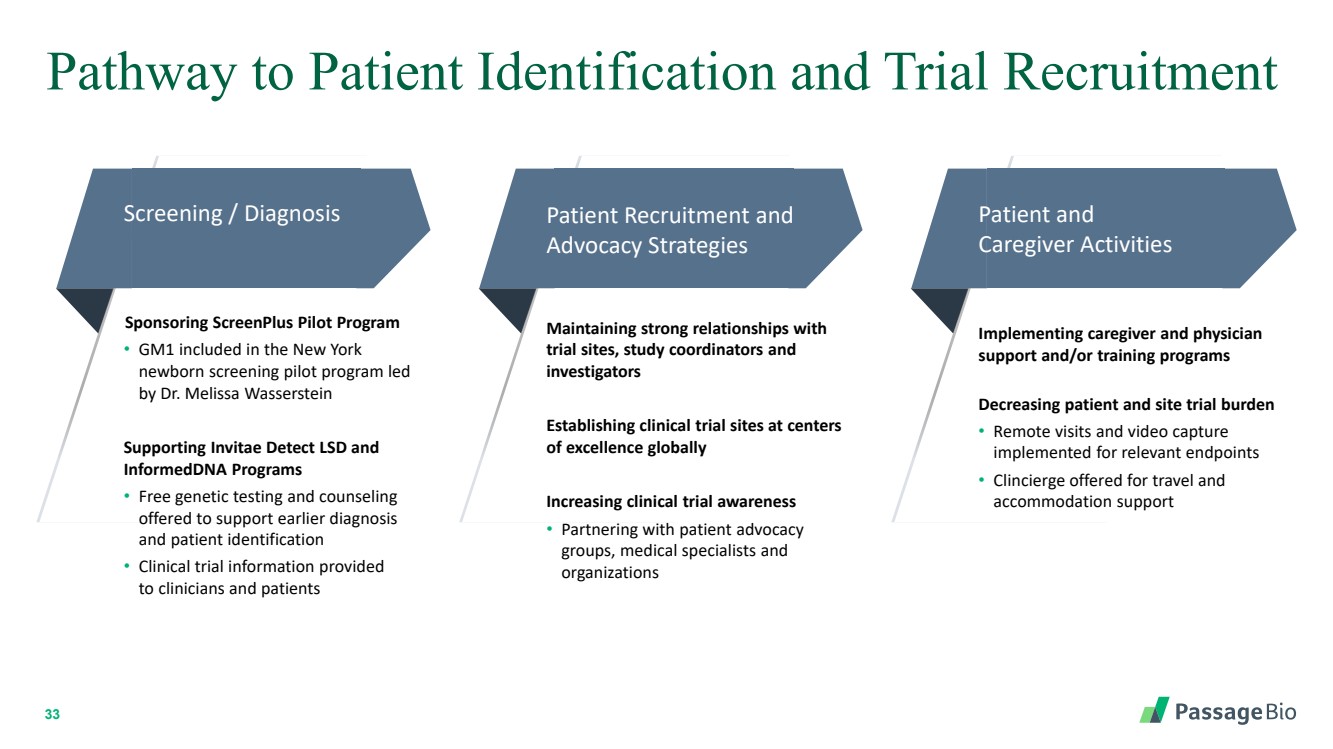
33 Pathway to Patient Identification and Trial Recruitment Screening / DiagnosisSponsoring ScreenPlus Pilot Program•GM1 included in the New York newborn screening pilot program led by Dr. Melissa Wasserstein Supporting Invitae Detect LSD and InformedDNA Programs•Free genetic testing and counseling offered to support earlier diagnosis and patient identification•Clinical trial information provided to clinicians and patients Patient and Caregiver ActivitiesImplementing caregiver and physician support and/or training programsDecreasing patient and site trial burden•Remote visits and video capture implemented for relevant endpoints•Clincierge offered for travel and accommodation support Patient Recruitment and Advocacy StrategiesMaintaining strong relationships with trial sites, study coordinators and investigatorsEstablishing clinical trial sites at centers of excellence globally Increasing clinical trial awareness •Partnering with patient advocacy groups, medical specialists and organizations