Exhibit 99.1

Regional Management Corp. Announces First Quarter 2022 Results
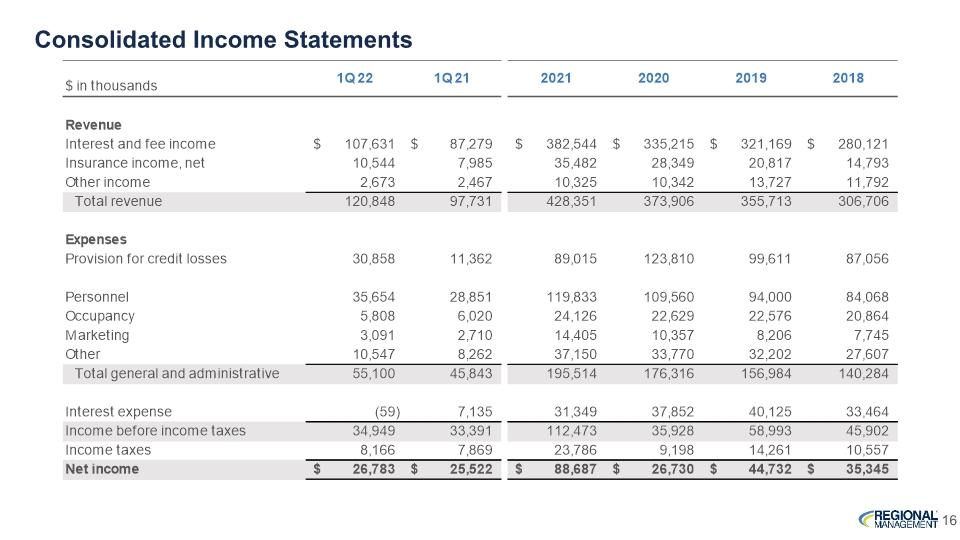
- Net income of $26.8 million and diluted earnings per share of $2.67 -
- 30.8% year-over-year net finance receivables growth and
23.7% year-over-year revenue growth -
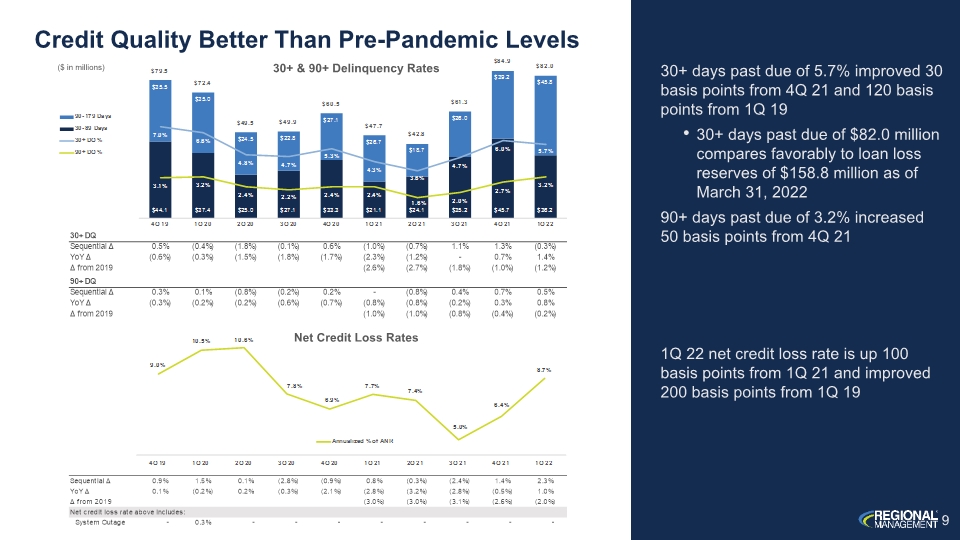
- 30+ day contractual delinquencies of 5.7% as of March 31, 2022, an improvement
of 30 basis points compared to December 31, 2021 -
Greenville, South Carolina – May 4, 2022 – Regional Management Corp. (NYSE: RM), a diversified consumer finance company, today announced results for the first quarter ended March 31, 2022.
“We produced another set of outstanding financial and operating results in the first quarter,” said Robert W. Beck, President and Chief Executive Officer of Regional Management Corp. “Our strategic growth initiatives enabled us to overcome the normal seasonal portfolio liquidation that typically is the hallmark of the first quarter. We grew our net finance receivables in the quarter to an all-time high of $1.45 billion, up 31% from a year prior. Our portfolio in turn generated record quarterly revenue of $121 million, a year-over-year increase of 24%. We posted net income of $26.8 million and diluted EPS of $2.67, both record highs, with diluted EPS up 16% from the prior-year period. We also delivered robust returns of 7.3% ROA and 36.7% ROE.”
“We continue to experience strong loan demand across all channels, and we remain well-positioned to capture additional market share,” added Mr. Beck. “We expanded our operations to Mississippi in February, and in late March, we began piloting end-to-end digital lending. We are excited to introduce this new lending channel, which allows us to offer our small and large loan products on an entirely digital basis without intervention by our team, from the point of application through loan proceeds distribution. Moving ahead, we are focused on maintaining our strong credit profile and will continue executing on our long-term strategies of digital innovation, geographic expansion, and product and channel development. We look forward to continuing our delivery of profitable growth, sustainable returns, and long-term value to our shareholders.”
1
First Quarter 2022 Highlights
|
|
• |
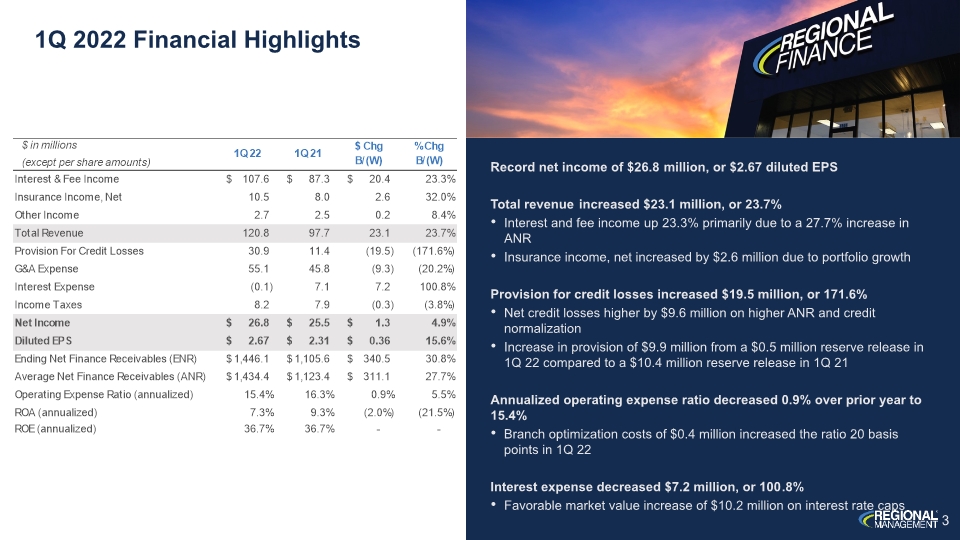
Net income for the first quarter of 2022 was a record $26.8 million and diluted earnings per share was a record $2.67, increases of 4.9% and 15.6%, respectively, compared to the prior-year period. |
|
|
• |
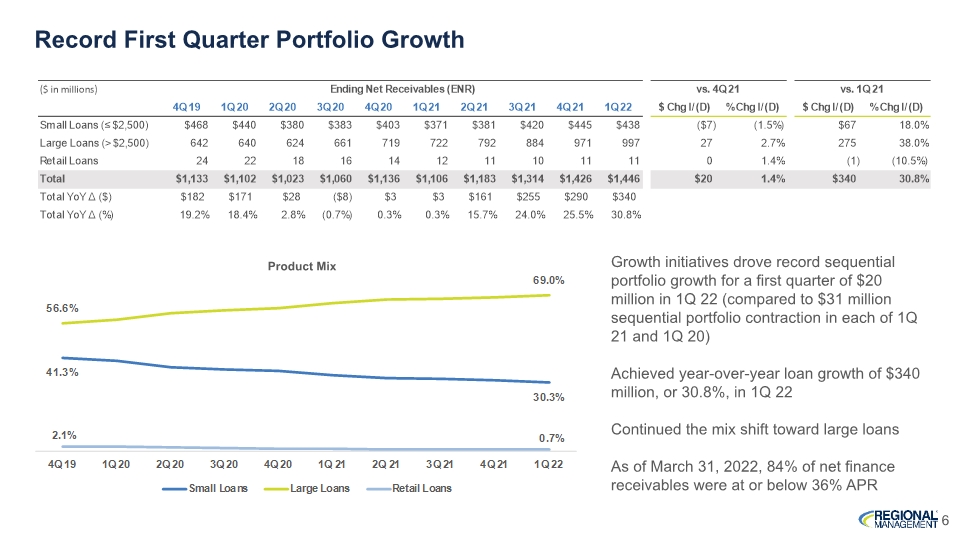
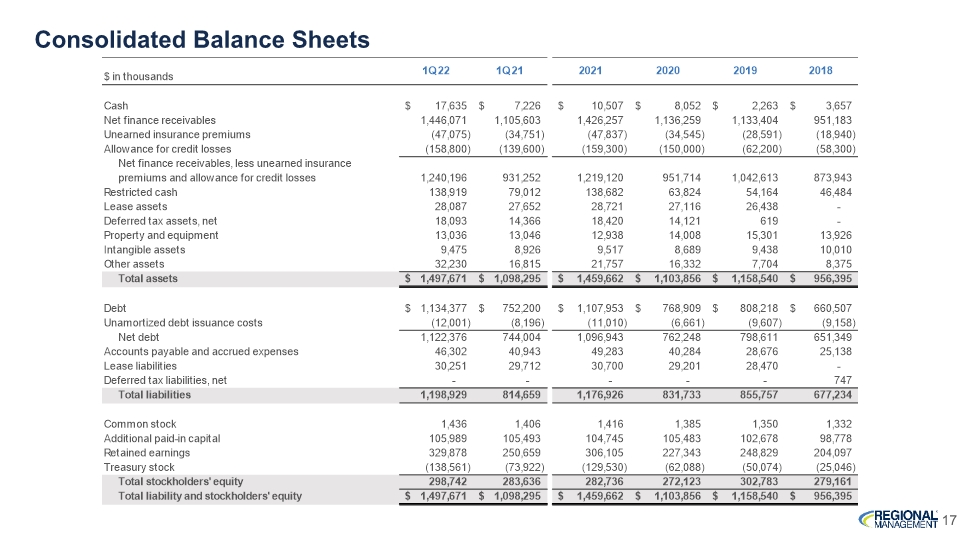
Net finance receivables as of March 31, 2022 hit an all-time high of $1.4 billion, a record increase of $340.5 million, or 30.8%, from the prior-year period. |
|
- |
Large loan net finance receivables of $997.2 million increased $274.8 million, or 38.0%, from the prior-year period and represented 69.0% of the total loan portfolio. Small loan net finance receivables were $438.2 million, an increase of 18.0% from the prior-year period. |
|
- |
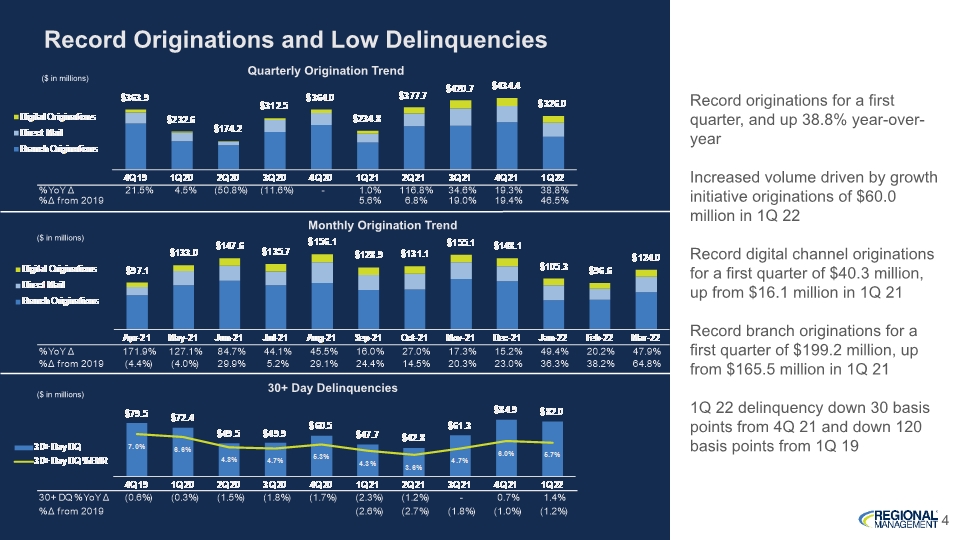
Branch, digitally sourced, direct mail, and total loan originations were all at record levels for a first quarter. |
|
|
- |
Total loan originations of $326.0 million in the first quarter of 2022, an increase of $91.2 million, or 38.8%, from the prior-year period. |
|
|
- |
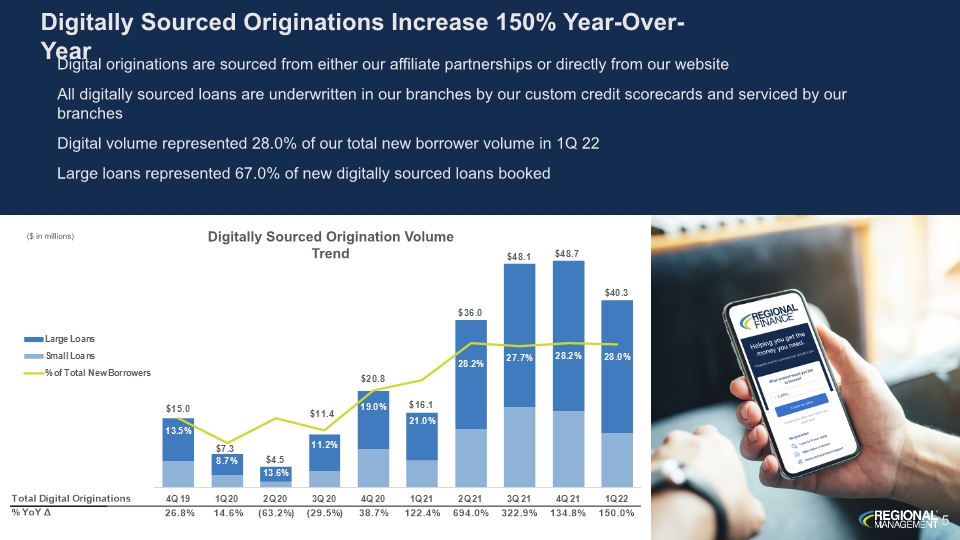
Digitally sourced loan originations of $40.3 million in the first quarter of 2022, an increase of $24.2 million, or 150.0%, from the prior-year period. |
|
|
• |
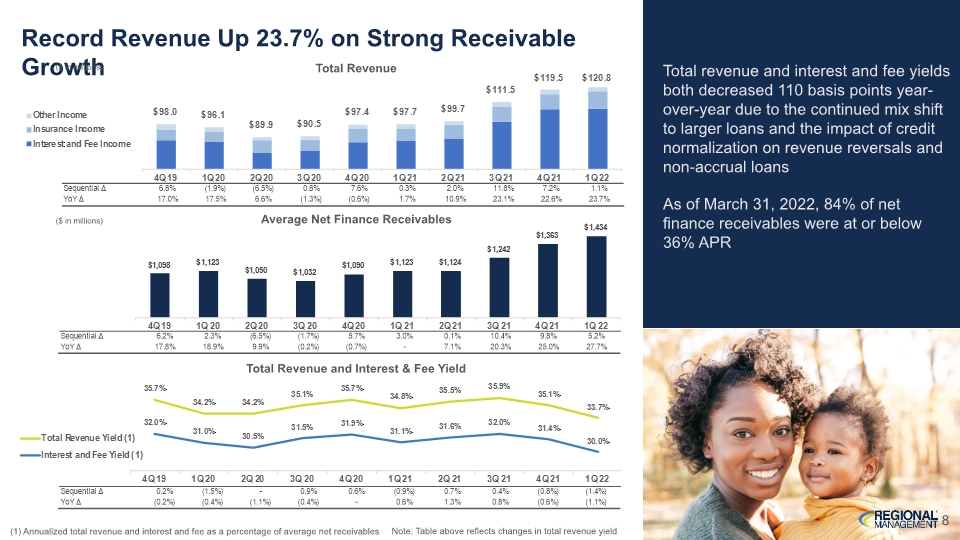
Total revenue for the first quarter of 2022 was a record $120.8 million, an increase of $23.1 million, or 23.7%, from the prior-year period. |
|
|
- |
Interest and fee income increased $20.4 million, or 23.3%, primarily due to higher average net finance receivables, partially offset by ongoing credit normalization and the continued mix shift towards large loans. |
|
|
- |
Insurance income, net increased $2.6 million, or 32.0%, driven by an increase in premium revenue associated with portfolio growth. |
|
|
- |
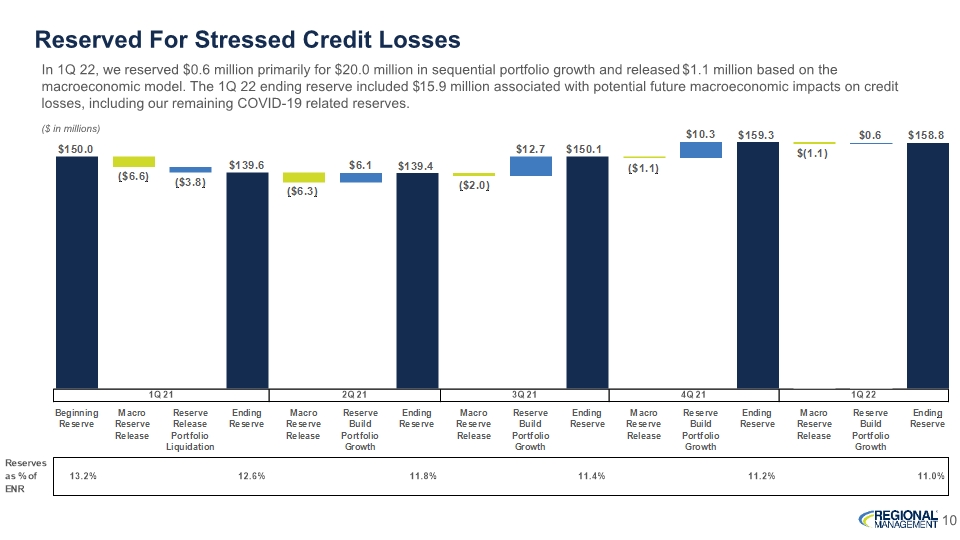
Allowance for credit losses was $158.8 million as of March 31, 2022, including a $15.9 million allowance for credit losses reserve associated with potential future macroeconomic impacts on credit losses, inclusive of those associated with the COVID-19 pandemic. |
2
|
|
• |
Annualized net credit losses as a percentage of average net finance receivables for the first quarter of 2022 were 8.7%, a 100 basis point increase compared to 7.7% in the prior-year period but a 200 basis point improvement compared to 10.7% in the first quarter of 2019. |
|
|
• |
The company expanded its operations to the state of Mississippi in the first quarter. In addition, during the first quarter, the company continued its assessment of its legacy branch network and determined to close 20 branches in the second quarter where clear opportunities exist to consolidate operations into a larger branch in close proximity. This branch optimization is consistent with the company’s omni-channel strategy and builds upon the company’s recent successes in entering new states with a lighter branch footprint, while still providing customers with best-in-class service. The company estimates total general and administrative expenses of $1.2 million associated with the branch optimization, of which $0.4 million was incurred in the first quarter and $0.7 million is estimated in the second quarter. The branch optimization will generate approximately $1.8 million in general and administrative expense annual savings, which the company will reinvest in its expansion into new states. |
|
|
• |
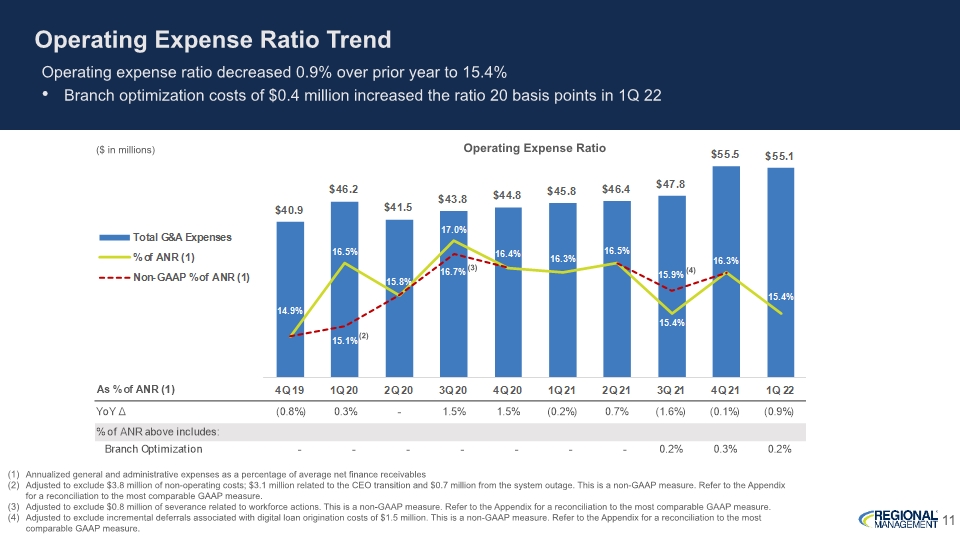
General and administrative expenses for the first quarter of 2022 were $55.1 million, an increase of $9.3 million, or 20.2%, from the prior-year period due to ongoing investment in personnel, marketing, and digital capabilities to support the company’s growth strategy. General and administrative expenses for the first quarter of 2022 included $0.4 million of expenses related to branch optimization. |
|
|
• |
The operating expense ratio (annualized general and administrative expenses as a percentage of average net finance receivables) for the first quarter of 2022 was 15.4%, a 90 basis point improvement compared to the prior-year period. The operating expense ratio was inclusive of a 20 basis point impact related to branch optimization. |
|
|
• |
In the first quarter of 2022, the company repurchased 172,776 shares of its common stock at a weighted-average price of $48.76 per share under the company’s $20 million stock repurchase program. |
3
Second Quarter 2022 Dividend
The company’s Board of Directors has declared a dividend of $0.30 per common share for the second quarter of 2022. The dividend will be paid on June 15, 2022 to shareholders of record as of the close of business on May 25, 2022. The declaration and payment of any future dividend is subject to the discretion of the Board of Directors and will depend on a variety of factors, including the company’s financial condition and results of operations.
Liquidity and Capital Resources
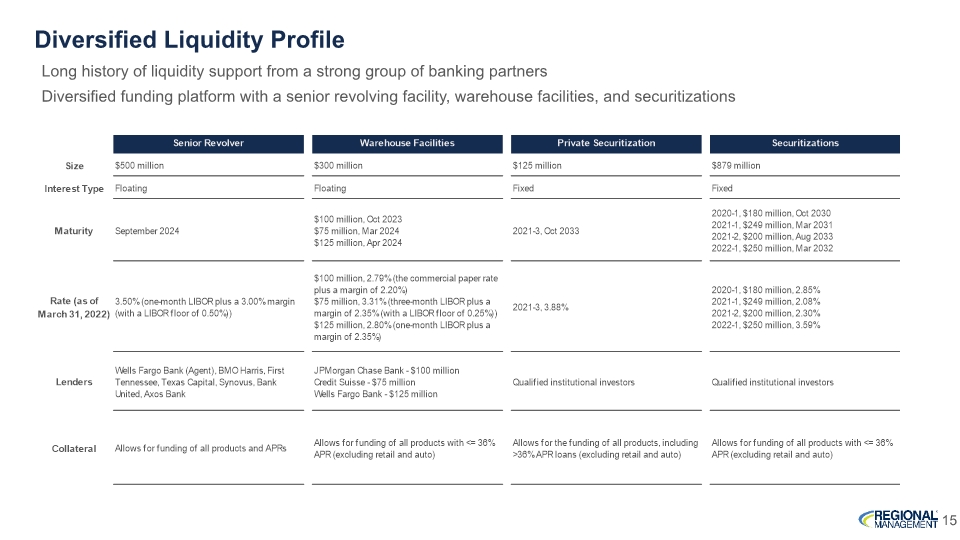
As of March 31, 2022, the company had net finance receivables of $1.4 billion and debt of $1.1 billion. The debt consisted of:
|
|
• |
$44.9 million on the company’s $500 million senior revolving credit facility, |
|
|
• |
$84.6 million on the company’s aggregate $300 million revolving warehouse |
|
|
• |
$1.0 billion through the company’s asset-backed securitizations. |
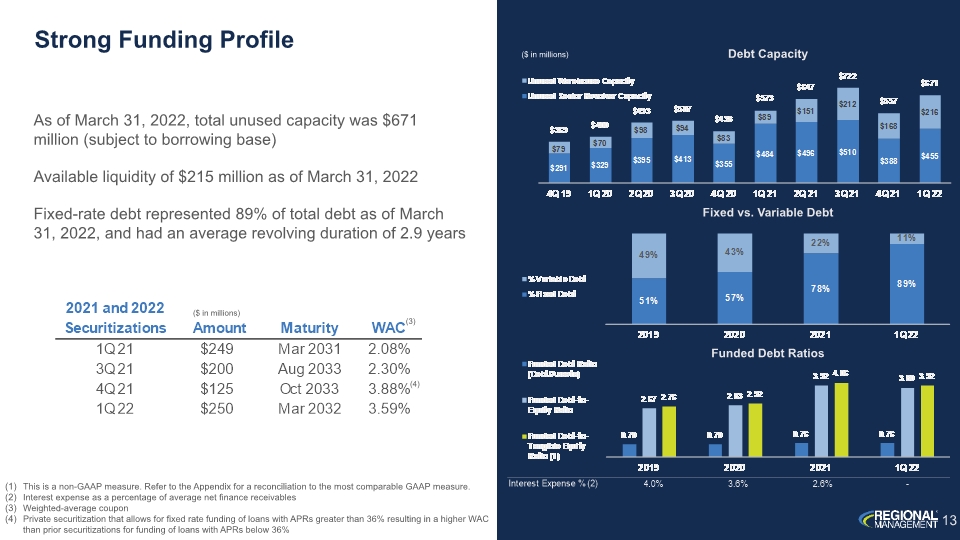
As of March 31, 2022, the company’s unused capacity to fund future growth on its revolving credit facilities (subject to the borrowing base) was $671 million, or 83.9%, and the company had available liquidity of $214.6 million, including unrestricted cash on hand and immediate availability to draw down cash from its revolving credit facilities.
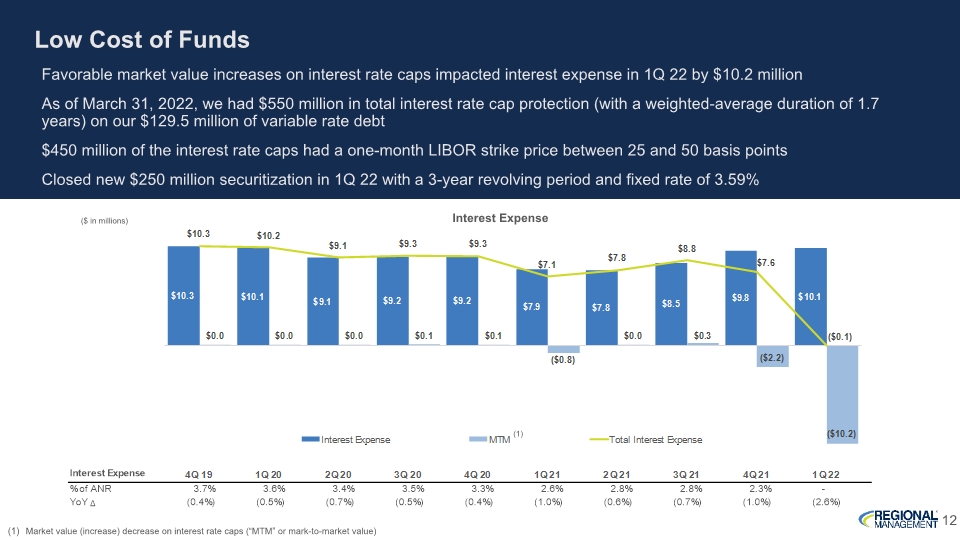
As of March 31, 2022, the company’s fixed-rate debt as a percentage of total debt was 89%, with a weighted-average coupon of 2.9% and an average revolving duration of 2.9 years. The company held interest rate caps with an aggregate notional principal amount of $550 million to manage the risk associated with variable rate debt. The interest rate caps are based on one-month LIBOR and reimburse the company for the difference when one-month LIBOR exceeds the strike rate.
In April 2022, the company sold $300 million of the interest rate cap contracts maturing in 2023 as a result of the significant increases in rates and the value of the interest rate caps. Following the sale, the company continues to maintain $250 million in interest rate cap protection, with one-month LIBOR strike rates between 25 and 50 basis points and maturity dates between February 2024 and February 2026.
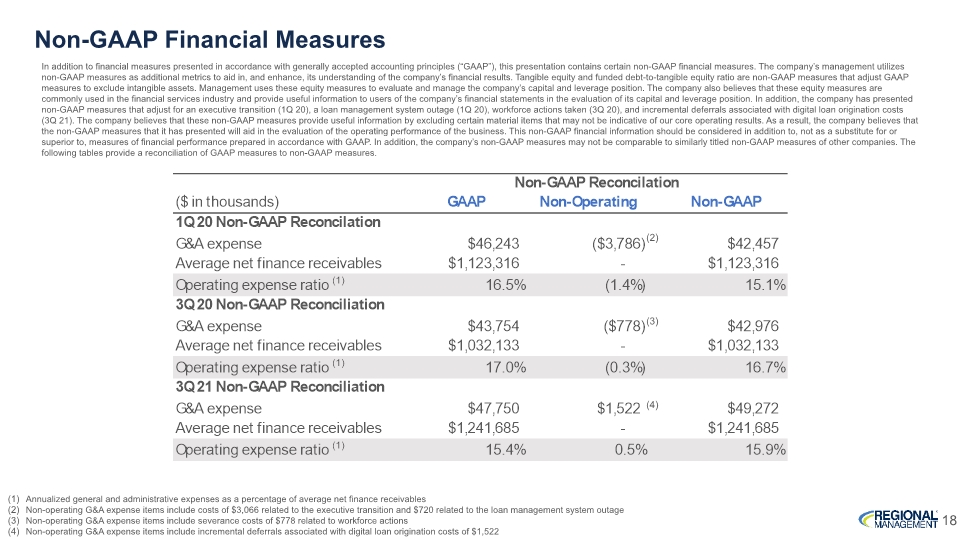
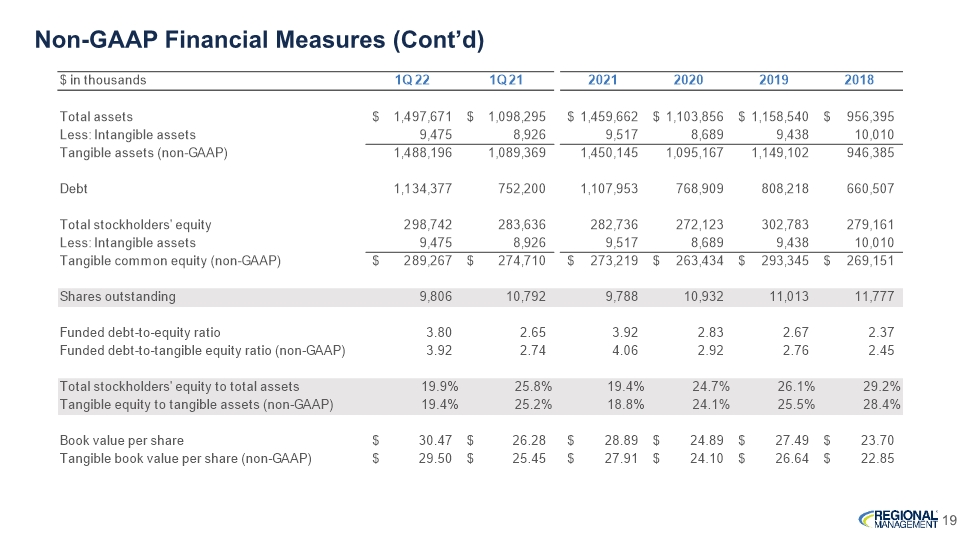
The company had a funded debt-to-equity ratio of 3.8 to 1.0 and a stockholders’ equity ratio of 19.9%, each as of March 31, 2022. On a non-GAAP basis, the company had a funded debt-to-tangible equity ratio of 3.9 to 1.0, as of March 31, 2022. Please refer to the reconciliations of non-GAAP measures to comparable GAAP measures included at the end of this press release.
4
Conference Call Information
Regional Management Corp. will host a conference call and webcast today at 5:00 PM ET to discuss these results.
The dial-in number for the conference call is (855) 327-6837 (toll-free) or (631) 891-4304 (direct). Please dial the number 10 minutes prior to the scheduled start time.
*** A supplemental slide presentation will be made available on Regional’s website prior to the earnings call at www.RegionalManagement.com. ***
In addition, a live webcast of the conference call will be available on Regional’s website at www.RegionalManagement.com.
A webcast replay of the call will be available at www.RegionalManagement.com for one year following the call.
About Regional Management Corp.
Regional Management Corp. (NYSE: RM) is a diversified consumer finance company that provides attractive, easy-to-understand installment loan products primarily to customers with limited access to consumer credit from banks, thrifts, credit card companies, and other lenders. Regional Management operates under the name “Regional Finance” online and in branch locations in 14 states across the United States. Most of its loan products are secured, and each is structured on a fixed-rate, fixed-term basis with fully amortizing equal monthly installment payments, repayable at any time without penalty. Regional Management sources loans through its multiple channel platform, which includes branches, centrally managed direct mail campaigns, digital partners, retailers, and its consumer website. For more information, please visit www.RegionalManagement.com.
Forward-Looking Statements
This press release may contain various “forward-looking statements” within the meaning of the Private Securities Litigation Reform Act of 1995. Forward-looking statements are not statements of historical fact but instead represent Regional Management Corp.’s expectations or beliefs concerning future events. Forward-looking statements include, without limitation, statements concerning financial outlooks or future plans, objectives, goals, projections, strategies, events, or performance, and underlying assumptions and other statements related thereto. Words such as “may,” “will,” “should,” “likely,” “anticipates,” “expects,” “intends,” “plans,” “projects,” “believes,” “estimates,” “outlook,” and similar expressions may be used to identify these forward-looking statements. Such forward-looking statements speak only as of the date on which they were made and are about matters that are inherently subject to risks and uncertainties, many of which are outside of the control of Regional Management. As a result, actual performance and results may differ materially from those contemplated by these
5
forward-looking statements. Therefore, investors should not place undue reliance on forward-looking statements.
Factors that could cause actual results or performance to differ from the expectations expressed or implied in forward-looking statements include, but are not limited to, the following: risks related to Regional Management’s business, including the COVID-19 pandemic and its impact on Regional Management’s operations and financial condition; managing growth effectively, implementing Regional Management’s growth strategy, and opening new branches as planned; Regional Management’s convenience check strategy; Regional Management’s policies and procedures for underwriting, processing, and servicing loans; Regional Management’s ability to collect on its loan portfolio; Regional Management’s insurance operations; exposure to credit risk and repayment risk, which risks may increase in light of adverse or recessionary economic conditions; the implementation of new underwriting models and processes, including as to the effectiveness of new custom scorecards; changes in the competitive environment in which Regional Management operates or a decrease in the demand for its products; the geographic concentration of Regional Management’s loan portfolio; the failure of third-party service providers, including those providing information technology products; changes in economic conditions in the markets Regional Management serves, including levels of unemployment and bankruptcies; the ability to achieve successful acquisitions and strategic alliances; the ability to make technological improvements as quickly as competitors; security breaches, cyber-attacks, failures in information systems, or fraudulent activity; the ability to originate loans; reliance on information technology resources and providers, including the risk of prolonged system outages; changes in current revenue and expense trends, including trends affecting delinquencies and credit losses; changes in operating and administrative expenses; the departure, transition, or replacement of key personnel; the ability to timely and effectively implement, transition to, and maintain the necessary information technology systems, infrastructure, processes, and controls to support Regional Management’s operations and initiatives; changes in interest rates; existing sources of liquidity may become insufficient or access to these sources may become unexpectedly restricted; exposure to financial risk due to asset-backed securitization transactions; risks related to regulation and legal proceedings, including changes in laws or regulations or in the interpretation or enforcement of laws or regulations; changes in accounting standards, rules, and interpretations and the failure of related assumptions and estimates, including those associated with CECL accounting; the impact of changes in tax laws, guidance, and interpretations, including the timing and amount of revenues that may be recognized; risks related to the ownership of Regional Management’s common stock, including volatility in the market price of shares of Regional Management’s common stock; the timing and amount of future cash dividend payments; and anti-takeover provisions in Regional Management’s charter documents and applicable state law. The COVID-19 pandemic may also magnify many of these risks and uncertainties.
The foregoing factors and others are discussed in greater detail in Regional Management’s filings with the Securities and Exchange Commission. Regional Management will not update or revise forward-looking statements to reflect events or circumstances after the date of this press release or to reflect the occurrence of unanticipated events or the non-occurrence of anticipated events, whether as a result of new information, future developments, or otherwise,
6
except as required by law. Regional Management is not responsible for changes made to this document by wire services or Internet services.
Contact
Investor Relations
Garrett Edson, (203) 682-8331
7
Regional Management Corp. and Subsidiaries
Consolidated Statements of Income
(Unaudited)
(dollars in thousands, except per share amounts)
|
|
|
|
|
|
|
|
|
|
|
Better (Worse) |
|
|||||
|
|
|
1Q 22 |
|
|
1Q 21 |
|
|
$ |
|
|
% |
|
||||
|
Revenue |
|
|
|
|
|
|
|
|
|
|
|
|
|
|
|
|
|
Interest and fee income |
|
$ |
107,631 |
|
|
$ |
87,279 |
|
|
$ |
20,352 |
|
|
|
23.3 |
% |
|
Insurance income, net |
|
|
10,544 |
|
|
|
7,985 |
|
|
|
2,559 |
|
|
|
32.0 |
% |
|
Other income |
|
|
2,673 |
|
|
|
2,467 |
|
|
|
206 |
|
|
|
8.4 |
% |
|
Total revenue |
|
|
120,848 |
|
|
|
97,731 |
|
|
|
23,117 |
|
|
|
23.7 |
% |
|
|
|
|
|
|
|
|
|
|
|
|
|
|
|
|
|
|
|
Expenses |
|
|
|
|
|
|
|
|
|
|
|
|
|
|
|
|
|
Provision for credit losses |
|
|
30,858 |
|
|
|
11,362 |
|
|
|
(19,496 |
) |
|
|
(171.6 |
)% |
|
|
|
|
|
|
|
|
|
|
|
|
|
|
|
|
|
|
|
Personnel |
|
|
35,654 |
|
|
|
28,851 |
|
|
|
(6,803 |
) |
|
|
(23.6 |
)% |
|
Occupancy |
|
|
5,808 |
|
|
|
6,020 |
|
|
|
212 |
|
|
|
3.5 |
% |
|
Marketing |
|
|
3,091 |
|
|
|
2,710 |
|
|
|
(381 |
) |
|
|
(14.1 |
)% |
|
Other |
|
|
10,547 |
|
|
|
8,262 |
|
|
|
(2,285 |
) |
|
|
(27.7 |
)% |
|
Total general and administrative |
|
|
55,100 |
|
|
|
45,843 |
|
|
|
(9,257 |
) |
|
|
(20.2 |
)% |
|
|
|
|
|
|
|
|
|
|
|
|
|
|
|
|
|
|
|
Interest expense |
|
|
(59 |
) |
|
|
7,135 |
|
|
|
7,194 |
|
|
|
100.8 |
% |
|
Income before income taxes |
|
|
34,949 |
|
|
|
33,391 |
|
|
|
1,558 |
|
|
|
4.7 |
% |
|
Income taxes |
|
|
8,166 |
|
|
|
7,869 |
|
|
|
(297 |
) |
|
|
(3.8 |
)% |
|
Net income |
|
$ |
26,783 |
|
|
$ |
25,522 |
|
|
$ |
1,261 |
|
|
|
4.9 |
% |
|
Net income per common share: |
|
|
|
|
|
|
|
|
|
|
|
|
|
|
|
|
|
Basic |
|
$ |
2.81 |
|
|
$ |
2.42 |
|
|
$ |
0.39 |
|
|
|
16.1 |
% |
|
Diluted |
|
$ |
2.67 |
|
|
$ |
2.31 |
|
|
$ |
0.36 |
|
|
|
15.6 |
% |
|
Weighted-average common shares outstanding: |
|
|
|
|
|
|
|
|
|
|
|
|
|
|
|
|
|
Basic |
|
|
9,533 |
|
|
|
10,543 |
|
|
|
1,010 |
|
|
|
9.6 |
% |
|
Diluted |
|
|
10,022 |
|
|
|
11,066 |
|
|
|
1,044 |
|
|
|
9.4 |
% |
|
Return on average assets (annualized) |
|
|
7.3 |
% |
|
|
9.3 |
% |
|
|
|
|
|
|
|
|
|
Return on average equity (annualized) |
|
|
36.7 |
% |
|
|
36.7 |
% |
|
|
|
|
|
|
|
|
8
Regional Management Corp. and Subsidiaries
Consolidated Balance Sheets
(Unaudited)
(dollars in thousands, except par value amounts)
|
|
|
|
|
|
|
|
|
|
|
Increase (Decrease) |
|
|||||
|
|
|
1Q 22 |
|
|
1Q 21 |
|
|
$ |
|
|
% |
|
||||
|
Assets |
|
|
|
|
|
|
|
|
|
|
|
|
|
|
|
|
|
Cash |
|
$ |
17,635 |
|
|
$ |
7,226 |
|
|
$ |
10,409 |
|
|
|
144.0 |
% |
|
Net finance receivables |
|
|
1,446,071 |
|
|
|
1,105,603 |
|
|
|
340,468 |
|
|
|
30.8 |
% |
|
Unearned insurance premiums |
|
|
(47,075 |
) |
|
|
(34,751 |
) |
|
|
(12,324 |
) |
|
|
(35.5 |
)% |
|
Allowance for credit losses |
|
|
(158,800 |
) |
|
|
(139,600 |
) |
|
|
(19,200 |
) |
|
|
(13.8 |
)% |
|
Net finance receivables, less unearned insurance premiums and allowance for credit losses |
|
|
1,240,196 |
|
|
|
931,252 |
|
|
|
308,944 |
|
|
|
33.2 |
% |
|
Restricted cash |
|
|
138,919 |
|
|
|
79,012 |
|
|
|
59,907 |
|
|
|
75.8 |
% |
|
Lease assets |
|
|
28,087 |
|
|
|
27,652 |
|
|
|
435 |
|
|
|
1.6 |
% |
|
Deferred tax assets, net |
|
|
18,093 |
|
|
|
14,366 |
|
|
|
3,727 |
|
|
|
25.9 |
% |
|
Property and equipment |
|
|
13,036 |
|
|
|
13,046 |
|
|
|
(10 |
) |
|
|
(0.1 |
)% |
|
Intangible assets |
|
|
9,475 |
|
|
|
8,926 |
|
|
|
549 |
|
|
|
6.2 |
% |
|
Other assets |
|
|
32,230 |
|
|
|
16,815 |
|
|
|
15,415 |
|
|
|
91.7 |
% |
|
Total assets |
|
$ |
1,497,671 |
|
|
$ |
1,098,295 |
|
|
$ |
399,376 |
|
|
|
36.4 |
% |
|
Liabilities and Stockholders’ Equity |
|
|
|
|
|
|
|
|
|
|
|
|
|
|
|
|
|
Liabilities: |
|
|
|
|
|
|
|
|
|
|
|
|
|
|
|
|
|
Debt |
|
$ |
1,134,377 |
|
|
$ |
752,200 |
|
|
$ |
382,177 |
|
|
|
50.8 |
% |
|
Unamortized debt issuance costs |
|
|
(12,001 |
) |
|
|
(8,196 |
) |
|
|
(3,805 |
) |
|
|
(46.4 |
)% |
|
Net debt |
|
|
1,122,376 |
|
|
|
744,004 |
|
|
|
378,372 |
|
|
|
50.9 |
% |
|
Accounts payable and accrued expenses |
|
|
46,302 |
|
|
|
40,943 |
|
|
|
5,359 |
|
|
|
13.1 |
% |
|
Lease liabilities |
|
|
30,251 |
|
|
|
29,712 |
|
|
|
539 |
|
|
|
1.8 |
% |
|
Total liabilities |
|
|
1,198,929 |
|
|
|
814,659 |
|
|
|
384,270 |
|
|
|
47.2 |
% |
|
Stockholders’ equity: |
|
|
|
|
|
|
|
|
|
|
|
|
|
|
|
|
|
Preferred stock ($0.10 par value, 100,000 shares authorized, none issued or outstanding) |
|
|
— |
|
|
|
— |
|
|
|
— |
|
|
|
— |
|
|
Common stock ($0.10 par value, 1,000,000 shares authorized, 14,360 shares issued and 9,806 shares outstanding at March 31, 2022 and 14,063 shares issued and 10,792 shares outstanding at March 31, 2021) |
|
|
1,436 |
|
|
|
1,406 |
|
|
|
30 |
|
|
|
2.1 |
% |
|
Additional paid-in capital |
|
|
105,989 |
|
|
|
105,493 |
|
|
|
496 |
|
|
|
0.5 |
% |
|
Retained earnings |
|
|
329,878 |
|
|
|
250,659 |
|
|
|
79,219 |
|
|
|
31.6 |
% |
|
Treasury stock (4,554 shares at March 31, 2022 and 3,271 shares at March 31, 2021) |
|
|
(138,561 |
) |
|
|
(73,922 |
) |
|
|
(64,639 |
) |
|
|
(87.4 |
)% |
|
Total stockholders’ equity |
|
|
298,742 |
|
|
|
283,636 |
|
|
|
15,106 |
|
|
|
5.3 |
% |
|
Total liabilities and stockholders’ equity |
|
$ |
1,497,671 |
|
|
$ |
1,098,295 |
|
|
$ |
399,376 |
|
|
|
36.4 |
% |
9
Regional Management Corp. and Subsidiaries
Selected Financial Data
(Unaudited)
(dollars in thousands, except per share amounts)
|
|
|
Net Finance Receivables by Product |
|
|||||||||||||||||||||||||
|
|
1Q 22 |
|
|
4Q 21 |
|
|
QoQ $ Inc (Dec) |
|
|
QoQ % Inc (Dec) |
|
|
1Q 21 |
|
|
YoY $ Inc (Dec) |
|
|
YoY % Inc (Dec) |
|
||||||||
|
Small loans |
|
$ |
438,153 |
|
|
$ |
445,023 |
|
|
$ |
(6,870 |
) |
|
|
(1.5 |
)% |
|
$ |
371,188 |
|
|
$ |
66,965 |
|
|
|
18.0 |
% |
|
Large loans |
|
|
997,226 |
|
|
|
970,694 |
|
|
|
26,532 |
|
|
|
2.7 |
% |
|
|
722,474 |
|
|
|
274,752 |
|
|
|
38.0 |
% |
|
Retail loans |
|
|
10,692 |
|
|
|
10,540 |
|
|
|
152 |
|
|
|
1.4 |
% |
|
|
11,941 |
|
|
|
(1,249 |
) |
|
|
(10.5 |
)% |
|
Total net finance receivables |
|
$ |
1,446,071 |
|
|
$ |
1,426,257 |
|
|
$ |
19,814 |
|
|
|
1.4 |
% |
|
$ |
1,105,603 |
|
|
$ |
340,468 |
|
|
|
30.8 |
% |
|
Number of branches at period end |
|
|
354 |
|
|
|
350 |
|
|
|
4 |
|
|
|
1.1 |
% |
|
|
365 |
|
|
|
(11 |
) |
|
|
(3.0 |
)% |
|
Net finance receivables per branch |
|
$ |
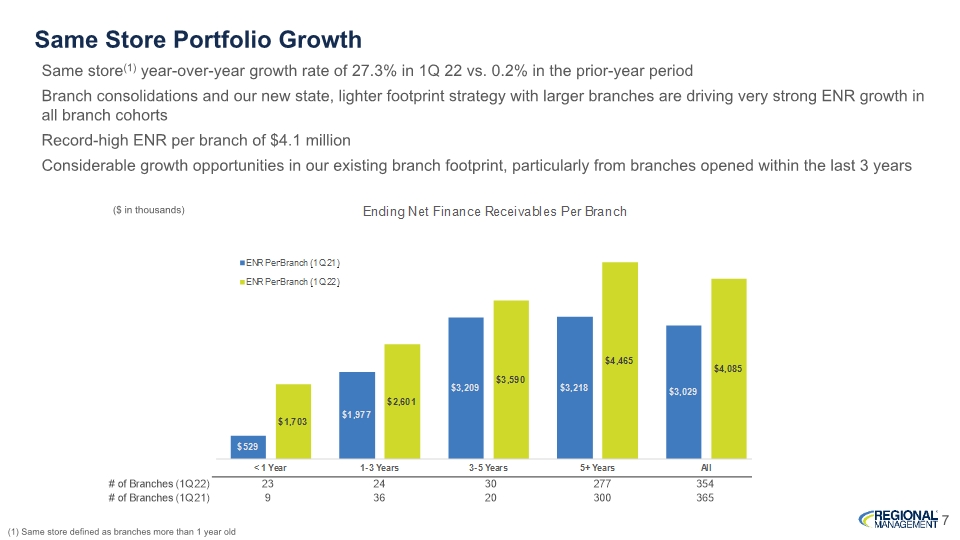
4,085 |
|
|
$ |
4,075 |
|
|
$ |
10 |
|
|
|
0.2 |
% |
|
$ |
3,029 |
|
|
$ |
1,056 |
|
|
|
34.9 |
% |
|
|
|
Averages and Yields |
|
|||||||||||||||||||||
|
|
1Q 22 |
|
|
4Q 21 |
|
|
1Q 21 |
|
||||||||||||||||
|
|
|
Average Net Finance Receivables |
|
|
Average Yield (1) |
|
|
Average Net Finance Receivables |
|
|
Average Yield (1) |
|
|
Average Net Finance Receivables |
|
|
Average Yield (1) |
|
||||||
|
Small loans |
|
$ |
440,936 |
|
|
|
36.0 |
% |
|
$ |
427,586 |
|
|
|
38.1 |
% |
|
$ |
389,138 |
|
|
|
37.5 |
% |
|
Large loans |
|
|
982,881 |
|
|
|
27.5 |
% |
|
|
925,226 |
|
|
|
28.5 |
% |
|
|
721,052 |
|
|
|
27.9 |
% |
|
Retail loans |
|
|
10,620 |
|
|
|
18.4 |
% |
|
|
10,435 |
|
|
|
18.7 |
% |
|
|
13,170 |
|
|
|
17.8 |
% |
|
Total interest and fee yield |
|
$ |
1,434,437 |
|
|
|
30.0 |
% |
|
$ |
1,363,247 |
|
|
|
31.4 |
% |
|
$ |
1,123,360 |
|
|
|
31.1 |
% |
|
Total revenue yield |
|
$ |
1,434,437 |
|
|
|
33.7 |
% |
|
$ |
1,363,247 |
|
|
|
35.1 |
% |
|
$ |
1,123,360 |
|
|
|
34.8 |
% |
(1) Annualized interest and fee income as a percentage of average net finance receivables.
|
|
|
Components of Increase in Interest and Fee Income |
|
|||||||||||||
|
|
1Q 22 Compared to 1Q 21 |
|
||||||||||||||
|
|
|
Increase (Decrease) |
|
|||||||||||||
|
|
|
Volume |
|
|
Rate |
|
|
Volume & Rate |
|
|
Total |
|
||||
|
Small loans |
|
$ |
4,851 |
|
|
$ |
(1,447 |
) |
|
$ |
(192 |
) |
|
$ |
3,212 |
|
|
Large loans |
|
|
18,246 |
|
|
|
(740 |
) |
|
|
(268 |
) |
|
|
17,238 |
|
|
Retail loans |
|
|
(113 |
) |
|
|
19 |
|
|
|
(4 |
) |
|
|
(98 |
) |
|
Product mix |
|
|
1,185 |
|
|
|
(821 |
) |
|
|
(364 |
) |
|
|
— |
|
|
Total increase in interest and fee income |
|
$ |
24,169 |
|
|
$ |
(2,989 |
) |
|
$ |
(828 |
) |
|
$ |
20,352 |
|
|
|
|
Loans Originated (1) |
|
|||||||||||||||||||||||||
|
|
|
1Q 22 |
|
|
4Q 21 |
|
|
QoQ $ Inc (Dec) |
|
|
QoQ % Inc (Dec) |
|
|
1Q 21 |
|
|
YoY $ Inc (Dec) |
|
|
YoY % Inc (Dec) |
|
|||||||
|
Small loans |
|
$ |
137,131 |
|
|
$ |
175,898 |
|
|
$ |
(38,767 |
) |
|
|
(22.0 |
)% |
|
$ |
101,741 |
|
|
$ |
35,390 |
|
|
|
34.8 |
% |
|
Large loans |
|
|
186,279 |
|
|
|
255,828 |
|
|
|
(69,549 |
) |
|
|
(27.2 |
)% |
|
|
131,325 |
|
|
|
54,954 |
|
|
|
41.8 |
% |
|
Retail loans |
|
|
2,590 |
|
|
|
2,630 |
|
|
|
(40 |
) |
|
|
(1.5 |
)% |
|
|
1,780 |
|
|
|
810 |
|
|
|
45.5 |
% |
|
Total loans originated |
|
$ |
326,000 |
|
|
$ |
434,356 |
|
|
$ |
(108,356 |
) |
|
|
(24.9 |
)% |
|
$ |
234,846 |
|
|
$ |
91,154 |
|
|
|
38.8 |
% |
|
(1) |
Represents the principal balance of loan originations and refinancings. |
10
|
|
|
Other Key Metrics |
|
|||||||||
|
|
|
1Q 22 |
|
|
4Q 21 |
|
|
1Q 21 |
|
|||
|
Net credit losses |
|
$ |
31,358 |
|
|
$ |
21,808 |
|
|
$ |
21,762 |
|
|
Percentage of average net finance receivables (annualized) |
|
|
8.7 |
% |
|
|
6.4 |
% |
|
|
7.7 |
% |
|
Provision for credit losses (1) |
|
$ |
30,858 |
|
|
$ |
31,008 |
|
|
$ |
11,362 |
|
|
Percentage of average net finance receivables (annualized) |
|
|
8.6 |
% |
|
|
9.1 |
% |
|
|
4.0 |
% |
|
Percentage of total revenue |
|
|
25.5 |
% |
|
|
26.0 |
% |
|
|
11.6 |
% |
|
General and administrative expenses |
|
$ |
55,100 |
|
|
$ |
55,532 |
|
|
$ |
45,843 |
|
|
Percentage of average net finance receivables (annualized) |
|
|
15.4 |
% |
|
|
16.3 |
% |
|
|
16.3 |
% |
|
Percentage of total revenue |
|
|
45.6 |
% |
|
|
46.5 |
% |
|
|
46.9 |
% |
|
Same store results (2): |
|
|
|
|
|
|
|
|
|
|
|
|
|
Net finance receivables at period-end |
|
$ |
1,406,904 |
|
|
$ |
1,400,817 |
|
|
$ |
1,100,840 |
|
|
Net finance receivable growth rate |
|
|
27.3 |
% |
|
|
23.3 |
% |
|
|
0.2 |
% |
|
Number of branches in calculation |
|
|
331 |
|
|
|
330 |
|
|
|
356 |
|
|
(1) |
Includes macroeconomic impacts to provision for credit losses of $(1,100), $(1,100), and $(6,600) for 1Q 22, 4Q 21, |
|
(2) |
Same store sales reflect the change in year-over-year sales for the comparable branch base. The comparable branch base includes those branches open for at least one year. |
|
|
|
Contractual Delinquency by Aging |
|
|||||||||||||||||||||
|
|
|
1Q 22 |
|
|
4Q 21 |
|
|
1Q 21 |
|
|||||||||||||||
|
Allowance for credit losses (1) |
|
$ |
158,800 |
|
|
|
11.0 |
% |
|
$ |
159,300 |
|
|
|
11.2 |
% |
|
$ |
139,600 |
|
|
|
12.6 |
% |
|
Current |
|
|
1,268,367 |
|
|
|
87.7 |
% |
|
|
1,237,165 |
|
|
|
86.7 |
% |
|
|
1,010,859 |
|
|
|
91.4 |
% |
|
1 to 29 days past due |
|
|
95,689 |
|
|
|
6.6 |
% |
|
|
104,201 |
|
|
|
7.3 |
% |
|
|
47,024 |
|
|
|
4.3 |
% |
|
Delinquent accounts: |
|
|
|
|
|
|
|
|
|
|
|
|
|
|
|
|
|
|
|
|
|
|
|
|
|
30 to 59 days |
|
|
19,818 |
|
|
|
1.4 |
% |
|
|
25,283 |
|
|
|
1.9 |
% |
|
|
11,252 |
|
|
|
1.0 |
% |
|
60 to 89 days |
|
|
16,390 |
|
|
|
1.1 |
% |
|
|
20,395 |
|
|
|
1.4 |
% |
|
|
9,808 |
|
|
|
0.9 |
% |
|
90 to 119 days |
|
|
15,636 |
|
|
|
1.1 |
% |
|
|
15,962 |
|
|
|
1.0 |
% |
|
|
8,682 |
|
|
|
0.8 |
% |
|
120 to 149 days |
|
|
15,322 |
|
|
|
1.1 |
% |
|
|
12,466 |
|
|
|
0.9 |
% |
|
|
8,717 |
|
|
|
0.8 |
% |
|
150 to 179 days |
|
|
14,849 |
|
|
|
1.0 |
% |
|
|
10,785 |
|
|
|
0.8 |
% |
|
|
9,261 |
|
|
|
0.8 |
% |
|
Total contractual delinquency |
|
$ |
82,015 |
|
|
|
5.7 |
% |
|
$ |
84,891 |
|
|
|
6.0 |
% |
|
$ |
47,720 |
|
|
|
4.3 |
% |
|
Total net finance receivables |
|
$ |
1,446,071 |
|
|
|
100.0 |
% |
|
$ |
1,426,257 |
|
|
|
100.0 |
% |
|
$ |
1,105,603 |
|
|
|
100.0 |
% |
|
1 day and over past due |
|
$ |
177,704 |
|
|
|
12.3 |
% |
|
$ |
189,092 |
|
|
|
13.3 |
% |
|
$ |
94,744 |
|
|
|
8.6 |
% |
|
|
|
Contractual Delinquency by Product |
|
|||||||||||||||||||||
|
|
|
1Q 22 |
|
|
4Q 21 |
|
|
1Q 21 |
|
|||||||||||||||
|
Small loans |
|
$ |
34,861 |
|
|
|
8.0 |
% |
|
$ |
39,794 |
|
|
|
8.9 |
% |
|
$ |
22,582 |
|
|
|
6.1 |
% |
|
Large loans |
|
|
46,375 |
|
|
|
4.7 |
% |
|
|
44,348 |
|
|
|
4.6 |
% |
|
|
24,404 |
|
|
|
3.4 |
% |
|
Retail loans |
|
|
779 |
|
|
|
7.3 |
% |
|
|
749 |
|
|
|
7.1 |
% |
|
|
734 |
|
|
|
6.1 |
% |
|
Total contractual delinquency |
|
$ |
82,015 |
|
|
|
5.7 |
% |
|
$ |
84,891 |
|
|
|
6.0 |
% |
|
$ |
47,720 |
|
|
|
4.3 |
% |
|
(1) |
Includes macroeconomic allowance for credit losses of $15,900, $17,000, and $26,400 in 1Q 22, 4Q 21, and 1Q 21, respectively. |
11
|
|
|
Income Statement Quarterly Trend |
|
|||||||||||||||||||||||||
|
|
|
1Q 21 |
|
|
2Q 21 |
|
|
3Q 21 |
|
|
4Q 21 |
|
|
1Q 22 |
|
|
QoQ $ B(W) |
|
|
YoY $ B(W) |
|
|||||||
|
Revenue |
|
|
|
|
|
|
|
|
|
|
|
|
|
|
|
|
|
|
|
|
|
|
|
|
|
|
|
|
|
Interest and fee income |
|
$ |
87,279 |
|
|
$ |
88,793 |
|
|
$ |
99,355 |
|
|
$ |
107,117 |
|
|
$ |
107,631 |
|
|
$ |
514 |
|
|
$ |
20,352 |
|
|
Insurance income, net |
|
|
7,985 |
|
|
|
8,656 |
|
|
|
9,418 |
|
|
|
9,423 |
|
|
|
10,544 |
|
|
|
1,121 |
|
|
|
2,559 |
|
|
Other income |
|
|
2,467 |
|
|
|
2,227 |
|
|
|
2,687 |
|
|
|
2,944 |
|
|
|
2,673 |
|
|
|
(271 |
) |
|
|
206 |
|
|
Total revenue |
|
|
97,731 |
|
|
|
99,676 |
|
|
|
111,460 |
|
|
|
119,484 |
|
|
|
120,848 |
|
|
|
1,364 |
|
|
|
23,117 |
|
|
Expenses |
|
|
|
|
|
|
|
|
|
|
|
|
|
|
|
|
|
|
|
|
|
|
|
|
|
|
|
|
|
Provision for credit losses |
|
|
11,362 |
|
|
|
20,549 |
|
|
|
26,096 |
|
|
|
31,008 |
|
|
|
30,858 |
|
|
|
150 |
|
|
|
(19,496 |
) |
|
Personnel |
|
|
28,851 |
|
|
|
28,370 |
|
|
|
29,299 |
|
|
|
33,313 |
|
|
|
35,654 |
|
|
|
(2,341 |
) |
|
|
(6,803 |
) |
|
Occupancy |
|
|
6,020 |
|
|
|
5,568 |
|
|
|
6,027 |
|
|
|
6,511 |
|
|
|
5,808 |
|
|
|
703 |
|
|
|
212 |
|
|
Marketing |
|
|
2,710 |
|
|
|
4,776 |
|
|
|
2,488 |
|
|
|
4,431 |
|
|
|
3,091 |
|
|
|
1,340 |
|
|
|
(381 |
) |
|
Other |
|
|
8,262 |
|
|
|
7,675 |
|
|
|
9,936 |
|
|
|
11,277 |
|
|
|
10,547 |
|
|
|
730 |
|
|
|
(2,285 |
) |
|
Total general and administrative |
|
|
45,843 |
|
|
|
46,389 |
|
|
|
47,750 |
|
|
|
55,532 |
|
|
|
55,100 |
|
|
|
432 |
|
|
|
(9,257 |
) |
|
Interest expense |
|
|
7,135 |
|
|
|
7,801 |
|
|
|
8,816 |
|
|
|
7,597 |
|
|
|
(59 |
) |
|
|
7,656 |
|
|
|
7,194 |
|
|
Income before income taxes |
|
|
33,391 |
|
|
|
24,937 |
|
|
|
28,798 |
|
|
|
25,347 |
|
|
|
34,949 |
|
|
|
9,602 |
|
|
|
1,558 |
|
|
Income taxes |
|
|
7,869 |
|
|
|
4,771 |
|
|
|
6,577 |
|
|
|
4,569 |
|
|
|
8,166 |
|
|
|
(3,597 |
) |
|
|
(297 |
) |
|
Net income |
|
$ |
25,522 |
|
|
$ |
20,166 |
|
|
$ |
22,221 |
|
|
$ |
20,778 |
|
|
$ |
26,783 |
|
|
$ |
6,005 |
|
|
$ |
1,261 |
|
|
Net income per common share: |
|
|
|
|
|
|
|
|
|
|
|
|
|
|
|
|
|
|
|
|
|
|
|
|
|
|
|
|
|
Basic |
|
$ |
2.42 |
|
|
$ |
1.98 |
|
|
$ |
2.25 |
|
|
$ |
2.18 |
|
|
$ |
2.81 |
|
|
$ |
0.63 |
|
|
$ |
0.39 |
|
|
Diluted |
|
$ |
2.31 |
|
|
$ |
1.87 |
|
|
$ |
2.11 |
|
|
$ |
2.04 |
|
|
$ |
2.67 |
|
|
$ |
0.63 |
|
|
$ |
0.36 |
|
|
Weighted-average shares outstanding: |
|
|
|
|
|
|
|
|
|
|
|
|
|
|
|
|
|
|
|
|
|
|
|
|
|
|
|
|
|
Basic |
|
|
10,543 |
|
|
|
10,200 |
|
|
|
9,861 |
|
|
|
9,545 |
|
|
|
9,533 |
|
|
|
12 |
|
|
|
1,010 |
|
|
Diluted |
|
|
11,066 |
|
|
|
10,797 |
|
|
|
10,544 |
|
|
|
10,177 |
|
|
|
10,022 |
|
|
|
155 |
|
|
|
1,044 |
|
|
Net interest margin |
|
$ |
90,596 |
|
|
$ |
91,875 |
|
|
$ |
102,644 |
|
|
$ |
111,887 |
|
|
$ |
120,907 |
|
|
$ |
9,020 |
|
|
$ |
30,311 |
|
|
Net credit margin |
|
$ |
79,234 |
|
|
$ |
71,326 |
|
|
$ |
76,548 |
|
|
$ |
80,879 |
|
|
$ |
90,049 |
|
|
$ |
9,170 |
|
|
$ |
10,815 |
|
|
|
|
Balance Sheet Quarterly Trend |
|
|||||||||||||||||||||||||
|
|
|
1Q 21 |
|
|
2Q 21 |
|
|
3Q 21 |
|
|
4Q 21 |
|
|
1Q 22 |
|
|
QoQ $ Inc (Dec) |
|
|
YoY $ Inc (Dec) |
|
|||||||
|
Total assets |
|
$ |
1,098,295 |
|
|
$ |
1,191,305 |
|
|
$ |
1,313,558 |
|
|
$ |
1,459,662 |
|
|
$ |
1,497,671 |
|
|
$ |
38,009 |
|
|
$ |
399,376 |
|
|
Net finance receivables |
|
$ |
1,105,603 |
|
|
$ |
1,183,387 |
|
|
$ |
1,314,233 |
|
|
$ |
1,426,257 |
|
|
$ |
1,446,071 |
|
|
$ |
19,814 |
|
|
$ |
340,468 |
|
|
Allowance for credit losses |
|
$ |
139,600 |
|
|
$ |
139,400 |
|
|
$ |
150,100 |
|
|
$ |
159,300 |
|
|
$ |
158,800 |
|
|
$ |
(500 |
) |
|
$ |
19,200 |
|
|
Debt |
|
$ |
752,200 |
|
|
$ |
853,067 |
|
|
$ |
978,803 |
|
|
$ |
1,107,953 |
|
|
$ |
1,134,377 |
|
|
$ |
26,424 |
|
|
$ |
382,177 |
|
12
|
|
|
Other Key Metrics Quarterly Trend |
|
|||||||||||||||||||||||||
|
|
1Q 21 |
|
|
2Q 21 |
|
|
3Q 21 |
|
|
4Q 21 |
|
|
1Q 22 |
|
|
QoQ Inc (Dec) |
|
|
YoY Inc (Dec) |
|
||||||||
|
Interest and fee yield (annualized) |
|
|
31.1 |
% |
|
|
31.6 |
% |
|
|
32.0 |
% |
|
|
31.4 |
% |
|
|
30.0 |
% |
|
|
(1.4 |
)% |
|
|
(1.1 |
)% |
|
Efficiency ratio (1) |
|
|
46.9 |
% |
|
|
46.5 |
% |
|
|
42.8 |
% |
|
|
46.5 |
% |
|
|
45.6 |
% |
|
|
(0.9 |
)% |
|
|
(1.3 |
)% |
|
Operating expense ratio (2) |
|
|
16.3 |
% |
|
|
16.5 |
% |
|
|
15.4 |
% |
|
|
16.3 |
% |
|
|
15.4 |
% |
|
|
(0.9 |
)% |
|
|
(0.9 |
)% |
|
30+ contractual delinquency |
|
|
4.3 |
% |
|
|
3.6 |
% |
|
|
4.7 |
% |
|
|
6.0 |
% |
|
|
5.7 |
% |
|
|
(0.3 |
)% |
|
|
1.4 |
% |
|
Net credit loss ratio (3) |
|
|
7.7 |
% |
|
|
7.4 |
% |
|
|
5.0 |
% |
|
|
6.4 |
% |
|
|
8.7 |
% |
|
|
2.3 |
% |
|
|
1.0 |
% |
|
Book value per share |
|
$ |
26.28 |
|
|
$ |
26.93 |
|
|
$ |
27.73 |
|
|
$ |
28.89 |
|
|
$ |
30.47 |
|
|
$ |
1.58 |
|
|
$ |
4.19 |
|
|
(1) |
General and administrative expenses as a percentage of total revenue. |
|
(2) |
Annualized general and administrative expenses as a percentage of average net finance receivables. |
|
(3) |
Annualized net credit losses as a percentage of average net finance receivables. |
Non-GAAP Financial Measures
In addition to financial measures presented in accordance with generally accepted accounting principles (“GAAP”), this press release contains certain non-GAAP financial measures. The company’s management utilizes non-GAAP measures as additional metrics to aid in, and enhance, its understanding of the company’s financial results. Tangible equity and funded debt-to-tangible equity ratio are non-GAAP measures that adjust GAAP measures to exclude intangible assets. Management uses these equity measures to evaluate and manage the company’s capital and leverage position. The company also believes that these equity measures are commonly used in the financial services industry and provide useful information to users of the company’s financial statements in the evaluation of its capital and leverage position.
This non-GAAP financial information should be considered in addition to, not as a substitute for or superior to, measures of financial performance prepared in accordance with GAAP. In addition, the company’s non-GAAP measures may not be comparable to similarly titled non-GAAP measures of other companies. The following tables provide a reconciliation of GAAP measures to non-GAAP measures.
|
|
|
1Q 22 |
|
|
|
Debt |
|
$ |
1,134,377 |
|
|
Total stockholders' equity |
|
|
298,742 |
|
|
Less: Intangible assets |
|
|
9,475 |
|
|
Tangible equity (non-GAAP) |
|
$ |
289,267 |
|
|
Funded debt-to-equity ratio |
|
|
3.8 |
x |
|
Funded debt-to-tangible equity ratio (non-GAAP) |
|
|
3.9 |
x |
13