snti-20251209
0001854270FALSE00018542702025-12-092025-12-09


UNITED STATES
SECURITIES AND EXCHANGE COMMISSION
Washington, D.C. 20549
___________________________________
FORM 8-K
___________________________________
CURRENT REPORT
Pursuant to Section 13 or 15(d)
of the Securities Exchange Act of 1934
Date of Report (Date of earliest event reported): December 9, 2025
___________________________________
SENTI BIOSCIENCES, INC.
(Exact name of Registrant as specified in its charter)
___________________________________
Delaware001-4044086-2437900
(State or other jurisdiction
of incorporation)
(Commission
File Number)
(IRS Employer
Identification No.)
2 Corporate Drive, First Floor
South San Francisco, California 94080
(Address of principal executive offices including zip code)
Registrant’s telephone number, including area code: (650) 239-2030

(Former name or former address, if changed since last report)
___________________________________
Check the appropriate box below if the Form 8-K filing is intended to simultaneously satisfy the filing obligation of the registrant under any of the following provisions:
Written communications pursuant to Rule 425 under the Securities Act (17 CFR 230.425)
Soliciting material pursuant to Rule 14a-12 under the Exchange Act (17 CFR 240.14a-12)
Pre-commencement communications pursuant to Rule 14d-2(b) under the Exchange Act (17 CFR 240.14d-2(b))
Pre-commencement communications pursuant to Rule 13e-4(c) under the Exchange Act (17 CFR 240.13e-4(c))
Securities registered pursuant to Section 12(b) of the Act:
Title of each class
Trading
Symbol
Name of each exchange
on which registered
Common Stock, par value $0.0001 per shareSNTI
The Nasdaq Capital Market
Indicate by check mark whether the registrant is an emerging growth company as defined in Rule 405 of the Securities Act of 1933 (§230.405 of this chapter) or Rule 12b-2 of the Securities Exchange Act of 1934 (§240.12b-2 of this chapter).
Emerging growth company
If an emerging growth company, indicate by check mark if the registrant has elected not to use the extended transition period for complying with any new or revised financial accounting standards provided pursuant to Section 13(a) of the Exchange Act.

Item 7.01 Regulation FD Disclosure.

On December 9, 2025, Senti Biosciences, Inc. (the “Company”) issued a press release announcing initial clinical data from a Phase 1 clinical trial of SENTI-202, a potential first-in-class Logic Gated off-the-shelf chimeric antigen receptor natural killer investigational cell therapy, for the treatment of relapsed/refractory hematologic malignancies including acute myeloid leukemia (“AML”). SENTI-202 is designed to selectively target and eliminate CD33 and/or FLT3- expressing hematologic malignancies, including AML, while sparing healthy bone marrow cells. The press release also announced that the Company has received a Regenerative Medicine Advanced Therapy (RMAT) designation from the FDA on Senti-202. A copy of the press release is attached hereto as Exhibit 99.1.

The information in this Item 7.01 of this Current Report on Form 8-K, including the accompanying Exhibit 99.1, shall not be deemed “filed” for purposes of Section 18 of the Securities Exchange Act of 1934, as amended (the “Exchange Act”), or otherwise subject to the liability of such section, nor shall such information be deemed incorporated by reference in any filing under the Securities Act of 1933 or the Exchange Act, regardless of the general incorporation language of such filing, except as shall be expressly set forth by specific reference in such filing.
Item 8.01 Other Events

The Company has also made available a slide presentation deck relating to initial clinical data from the Phase 1 clinical trial of SENTI-202, a copy of which is attached as Exhibit 99.2 to this Current Report on Form 8-K and is incorporated herein by reference. The Company undertakes no obligation to update, supplement or amend the materials attached hereto as Exhibit 99.2.

Cautionary Note Regarding Forward Looking Statements

This Current Report on Form 8-K and other related materials may contain a number of “forward-looking statements” within the meaning of the Private Securities Litigation Reform Act of 1995, as amended, including statements regarding the Company’s expectation about any or all of the following: timing of its clinical trials for SENTI-202; the timing of availability of data from the ongoing Phase 1 clinical trial of SENTI-202; as well as the ability of any product candidate to perform in humans in a manner consistent with nonclinical, preclinical or previous clinical study data. Forward-looking statements can be identified by terms such as “will,” “intent,” “expect,” “plan,” “potential,” “would” or similar expressions and the negative of those terms. The Company has based these forward-looking statements largely on its current expectations and projections about future events and financial trends that it believes may affect its business, financial condition and results of operations. Although the Company believes that such statements are based on reasonable assumptions, forward-looking statements are neither promises nor guarantees and they are necessarily subject to a high degree of uncertainty and risk. Because forward-looking statements are inherently subject to risks and uncertainties, some of which cannot be predicted or quantified and some of which are beyond the Company’s control, you should not rely on these forward-looking statements as predictions of future events. The anticipated trends and challenges in the Company’s business and the market in which it operates; and other factors that are described in the “Risk Factors” and “Management's Discussion and Analysis of Financial Condition and Results of Operations” sections of the Company’s Annual Report on Form 10-K for the year ended December 31, 2024, and the Company’s Quarterly Report on Form 10-Q for the quarter ended September 30, 2025, which are on file with the Securities and Exchange Commission (SEC) and available on the SEC website at https://www.sec.gov/. In addition to the risks described above and in the Company’s other filings with the SEC, other unknown or unpredictable factors also could affect the Company’s results. No forward-looking statements can be guaranteed and actual results may differ materially from such statements, accordingly, existing and prospective investors are cautioned not to place undue reliance on such forward-looking statements, which speak only as of the date they are made. The Company disclaims any obligation or undertaking to update or revise any forward-looking statements contained in this Current Report on Form 8-K, other than to the extent required by law.
Item 9.01 Financial Statements and Exhibits.

(d) Exhibits

Exhibit No.Description
104Cover Page Interactive Data File (embedded within the Inline XBRL document)

SIGNATURES
Pursuant to the requirements of the Securities Exchange Act of 1934, the registrant has duly caused this report to be signed on its behalf by the undersigned hereunto duly authorized.

SENTI BIOSCIENCES, INC.
Date:December 9, 2025By:/s/ Timothy Lu
Name:Timothy Lu, M.D., Ph.D.
Title:Chief Executive Officer

sentijpega.jpg
Exhibit 99.1
Senti Bio Announces Updated SENTI-202 Clinical Data from Ongoing Phase 1 Trial in Relapsed or Refractory Acute Myeloid Leukemia Patients, Demonstrating Deep, MRD Negative, Durable Complete Remissions and a Favorable Safety Profile
ASH 2025 oral presentation on SENTI-202 in 20 Relapsed/Refractory Acute Myeloid Leukemia (R/R AML) patients (18 response evaluable) shows high efficacy: 50% ORR and 42% CR/CRh (100% of CRs and 83% of all responses were MRD negative) at RP2D, 7.6 months median duration of composite Complete Remission across all patients, and a favorable safety profile
Pharmacodynamic data from these patients validate SENTI-202’s novel OR/NOT Logic Gate mechanism of action for selectively killing AML blasts and leukemic stem cells (LSCs) while sparing healthy hematopoietic stem and progenitor cells (HSPCs) and reinforce the potential of Senti’s Logic Gates in a new generation of precise and effective cell therapies for hematologic and solid cancers
These data, combined with FDA RMAT designation for SENTI-202 that was also announced today, supports the potential for rapid advancement of SENTI-202 into a pivotal study for R/R AML and potential expansion into other indications
Virtual investor call and webcast to be held on December 9 at 8:00 a.m. EST (https://event.choruscall.com/mediaframe/webcast.html?webcastid=Mtv2qSRS)
SOUTH SAN FRANCISCO, Calif, Dec 9, 2025-- Senti Biosciences, Inc.(https://www.sentibio.com/) (Nasdaq: SNTI) (“Senti Bio”), a clinical-stage biotechnology company developing next-generation cell and gene therapies using its proprietary Gene Circuit platform, announced new data from its ongoing multinational, multicenter clinical trial of SENTI-202, a first-in-class CD33/FLT3 targeting Logic Gated CAR NK cell therapy being studied in patients with relapsed or refractory Acute Myeloid Leukemia (R/R AML). Data from 20 patients (18 with evaluable responses) were presented at the American Society of Hematology (ASH) Annual Meeting in Orlando. The Company will host a conference call and webcast (https://event.choruscall.com/mediaframe/webcast.html?webcastid=Mtv2qSRS) today, December 9th, at 8:00 AM ET to discuss the results (details below).
Highlights of the latest findings in the open-label study of the safety, efficacy, and pharmacodynamics of SENTI-202, when administered after Fludarabine (Flu)/Ara-C (cytarabine) lymphodepletion (LD), in R/R AML patients are summarized below.
Deep and durable responses observed to-date build on a growing body of evidence of the potential efficacy and safety of SENTI-202.
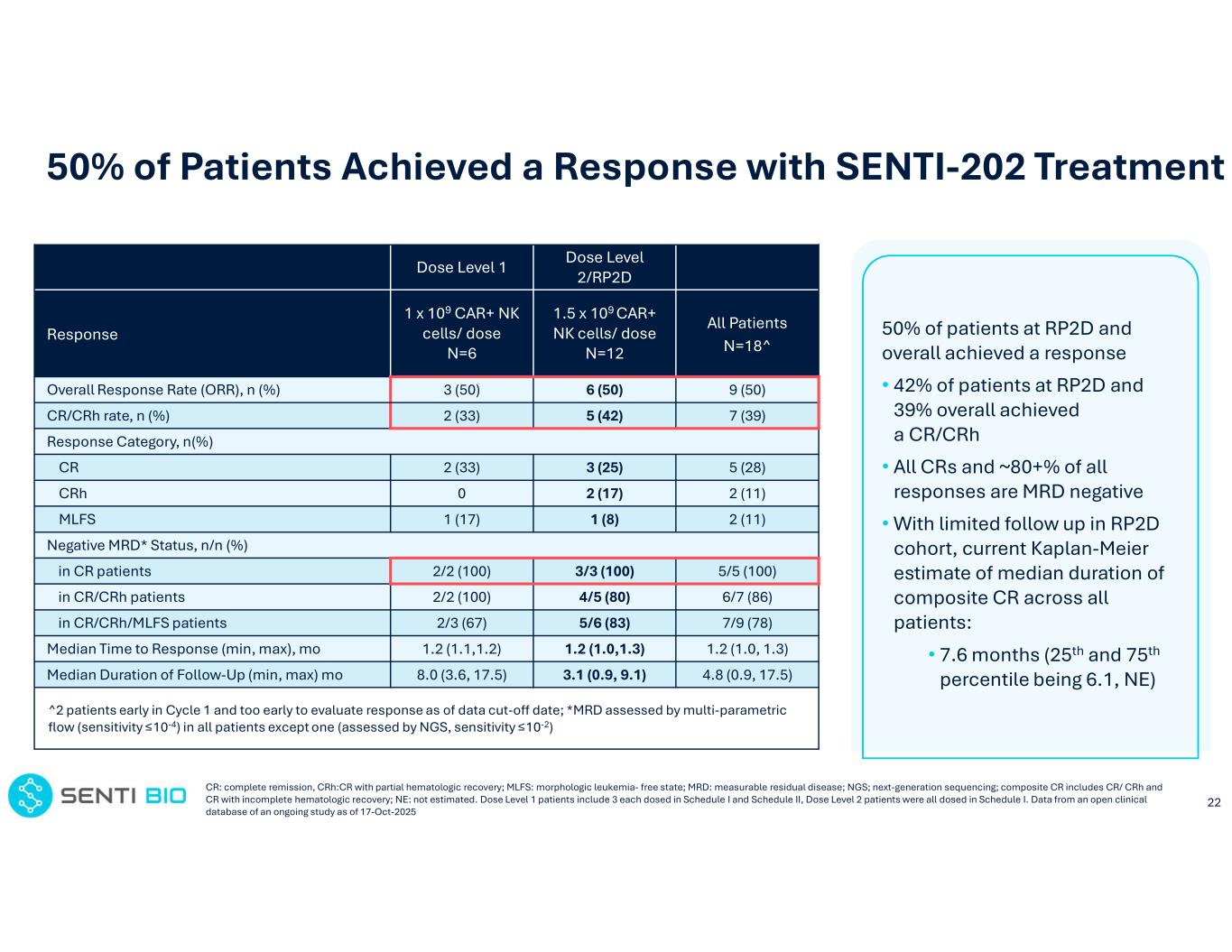
50% (6/12) of patients at the Recommended Phase 2 Dose (RP2D) and 50% (9/18) of all trial patients achieved an Overall Response Rate (ORR) outcome


42% (5/12) of patients at the RP2D and 39% (7/18) of all patients overall achieved a Complete Remission (CR) or CR with Partial Hematologic Recovery (CRh)
100% of all CRs and ~80%+ of all responses were MRD negative
With limited follow-up in the RP2D cohort, the Kaplan-Meier estimate of median duration of composite Complete Remissions across all patients is 7.6 months (6.1, NE)
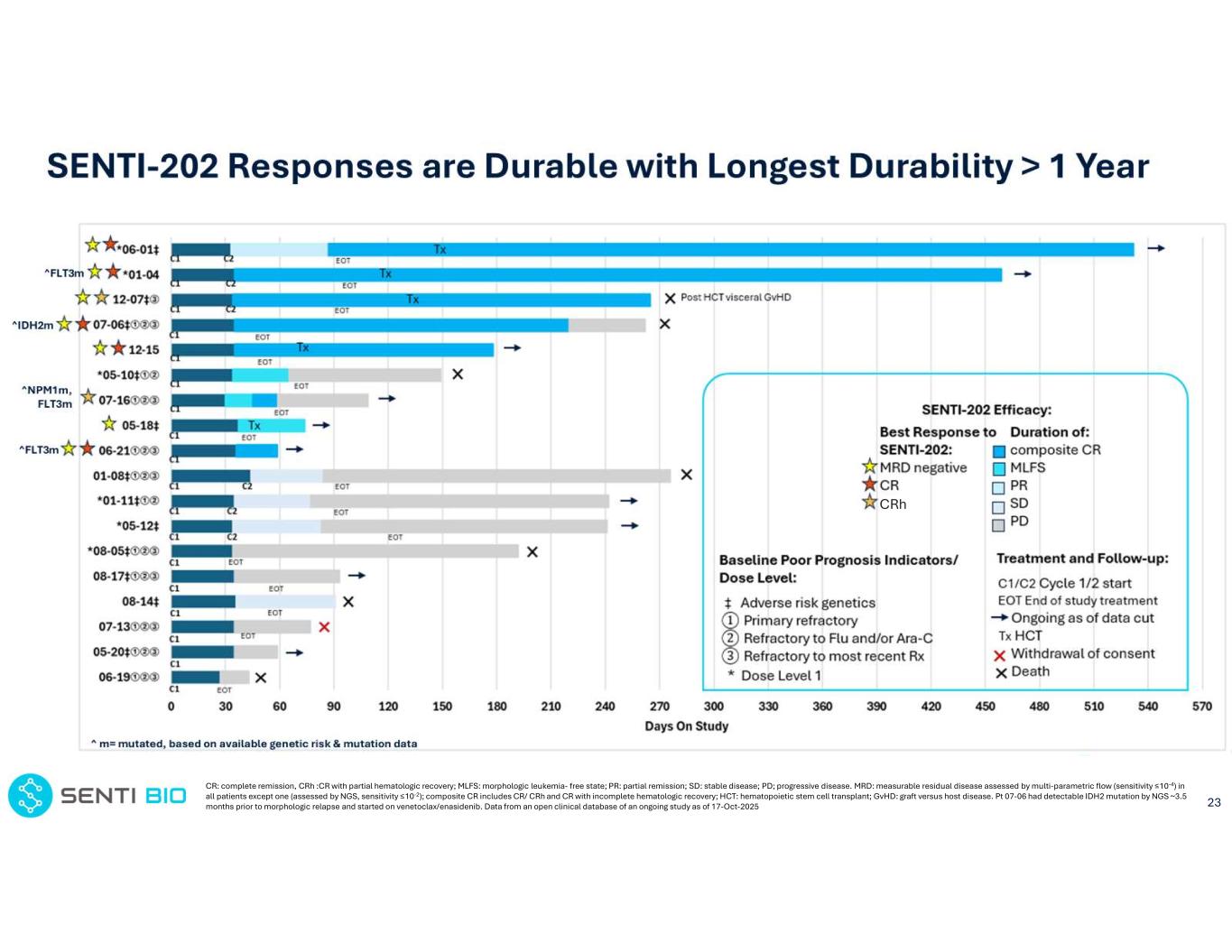
Longest durability of response greater than 1 year and continuing as of data cut-off date
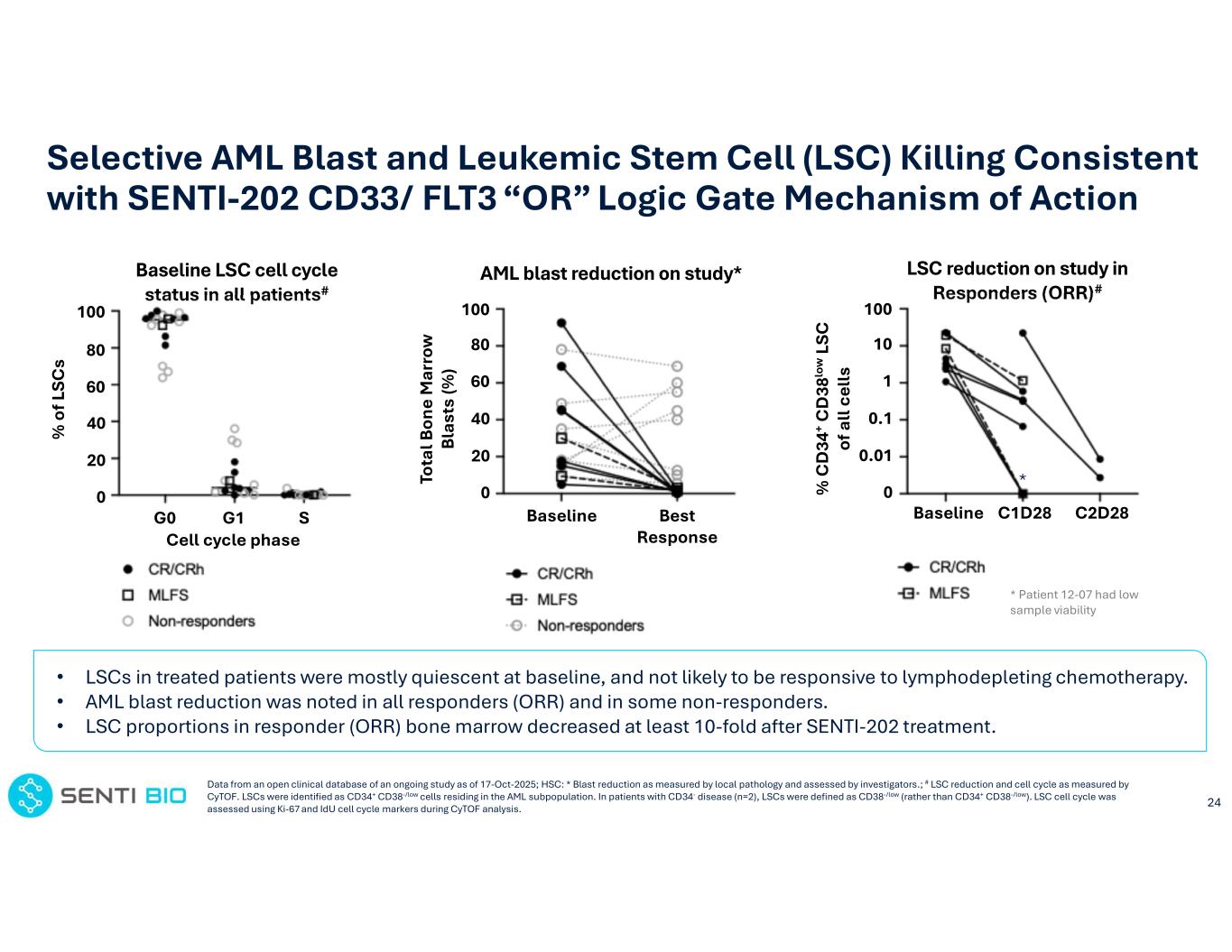
Correlative data from patients validate the Logic Gate mechanism of action enabling selective killing of AML blasts and AML LSCs with sparing of healthy HSPCs in patients’ bone marrow.
Potent AML blast killing in responders, even in a patient with 90% bone marrow AML blasts at baseline
>10-fold killing of AML LSCs in ORR responders
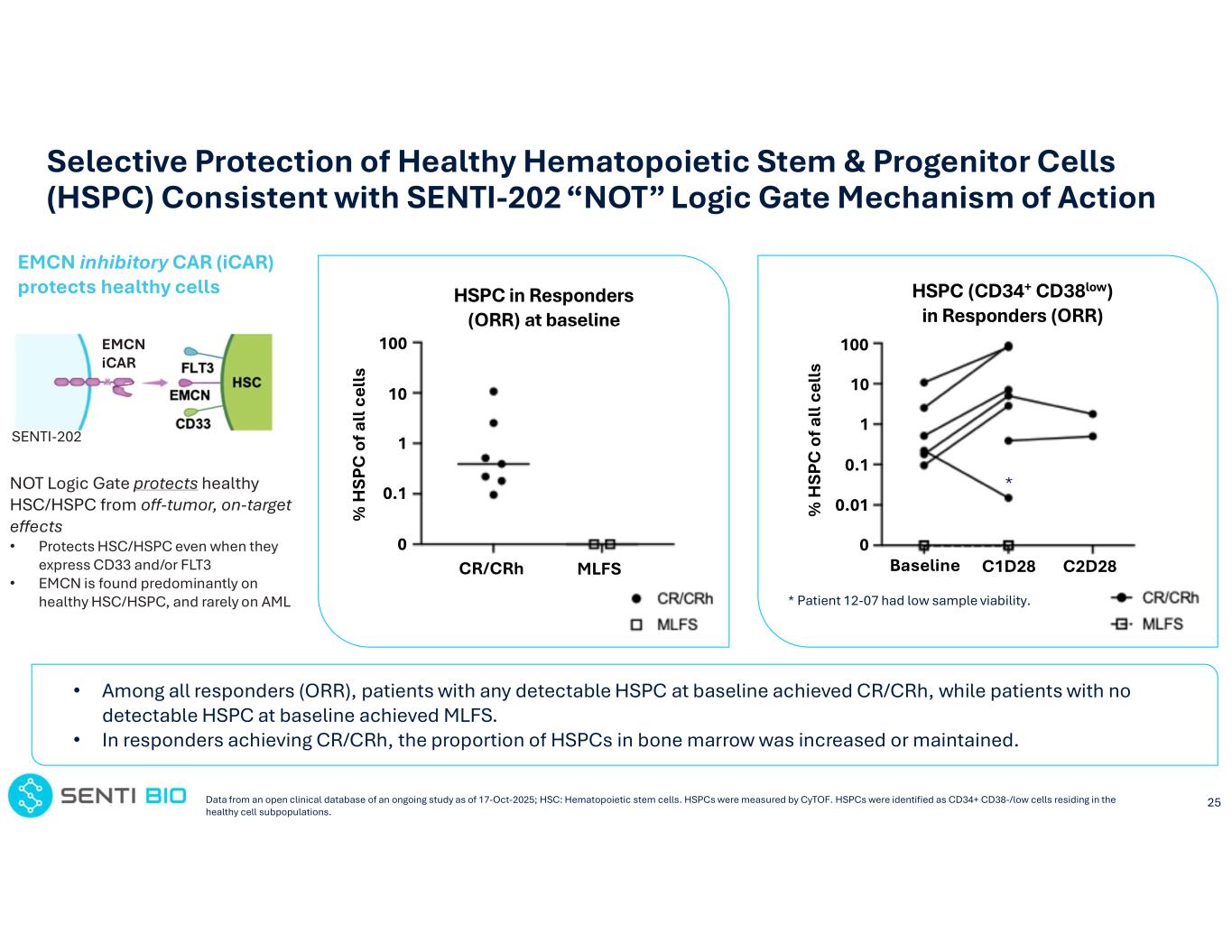
Responders with any level of HSPCs at baseline achieved CR/CRh, and exhibited preservation or increase of HSPCs after SENTI-202 treatment
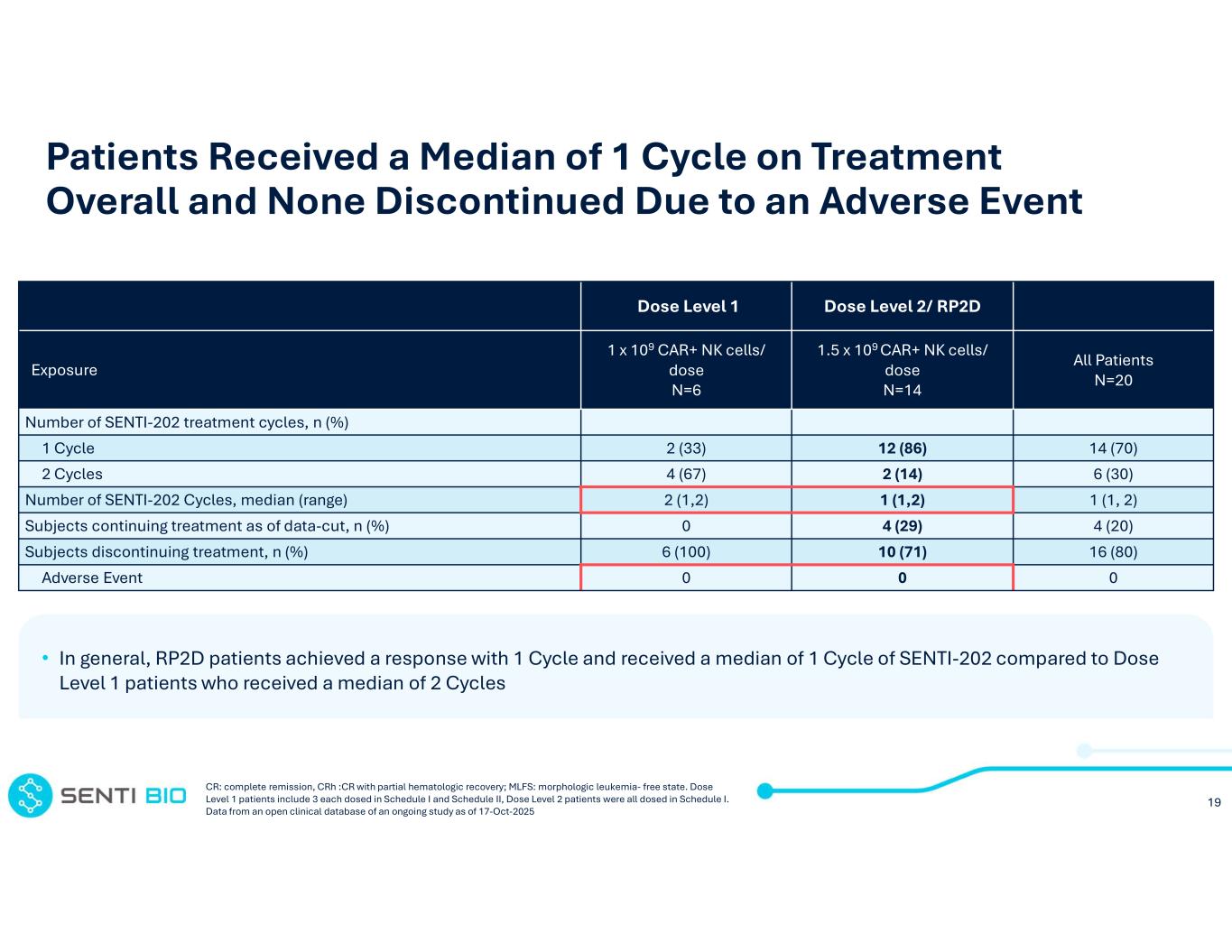
SENTI-202 continues to be well-tolerated, with no Dose-Limiting Toxicities, no SENTI-202-related serious adverse events, or adverse events resulting in discontinuation.
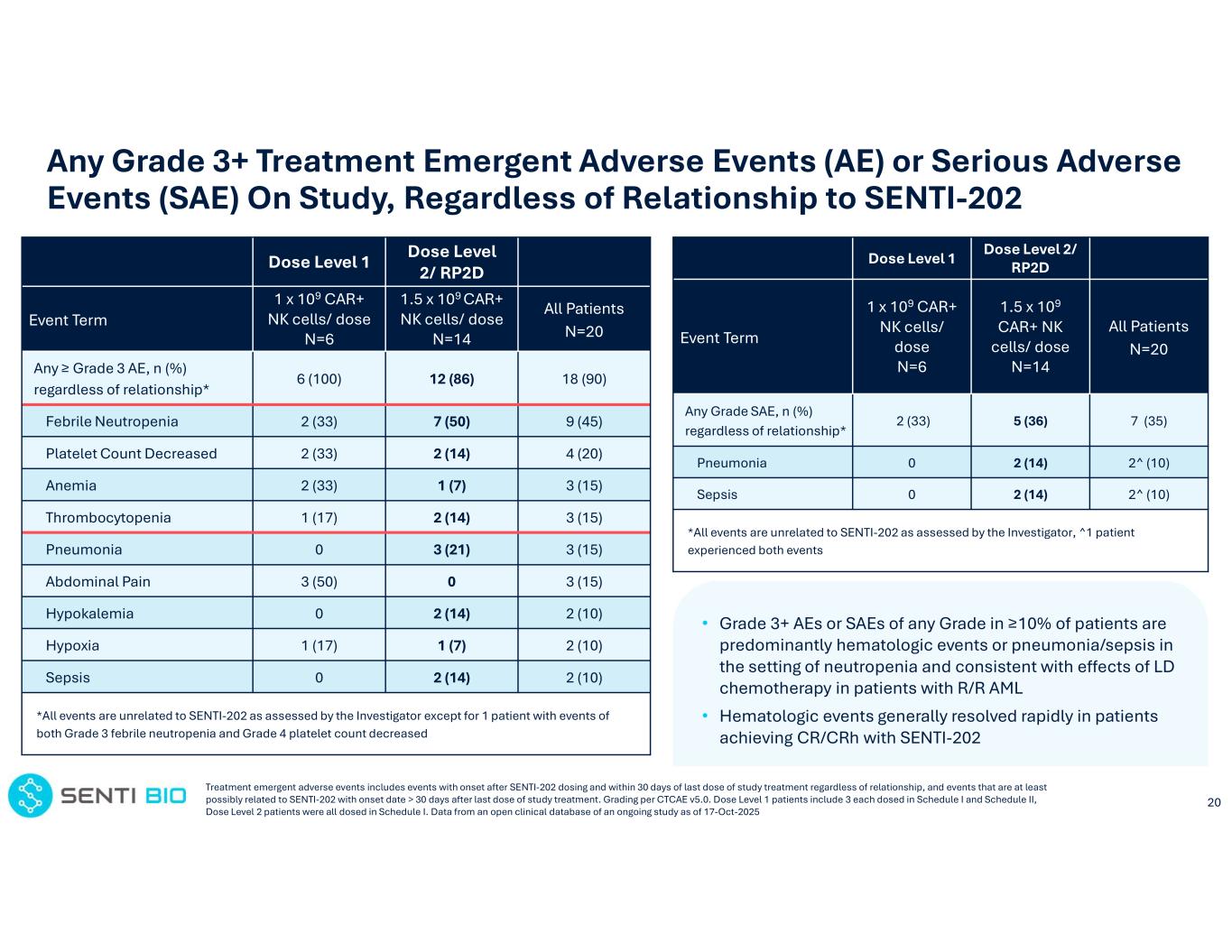
Most frequent Grade 3+ Adverse Events (AEs) were predominantly hematologic, unrelated to SENTI-202, and consistent with events observed in R/R AML patients receiving lymphodepletion
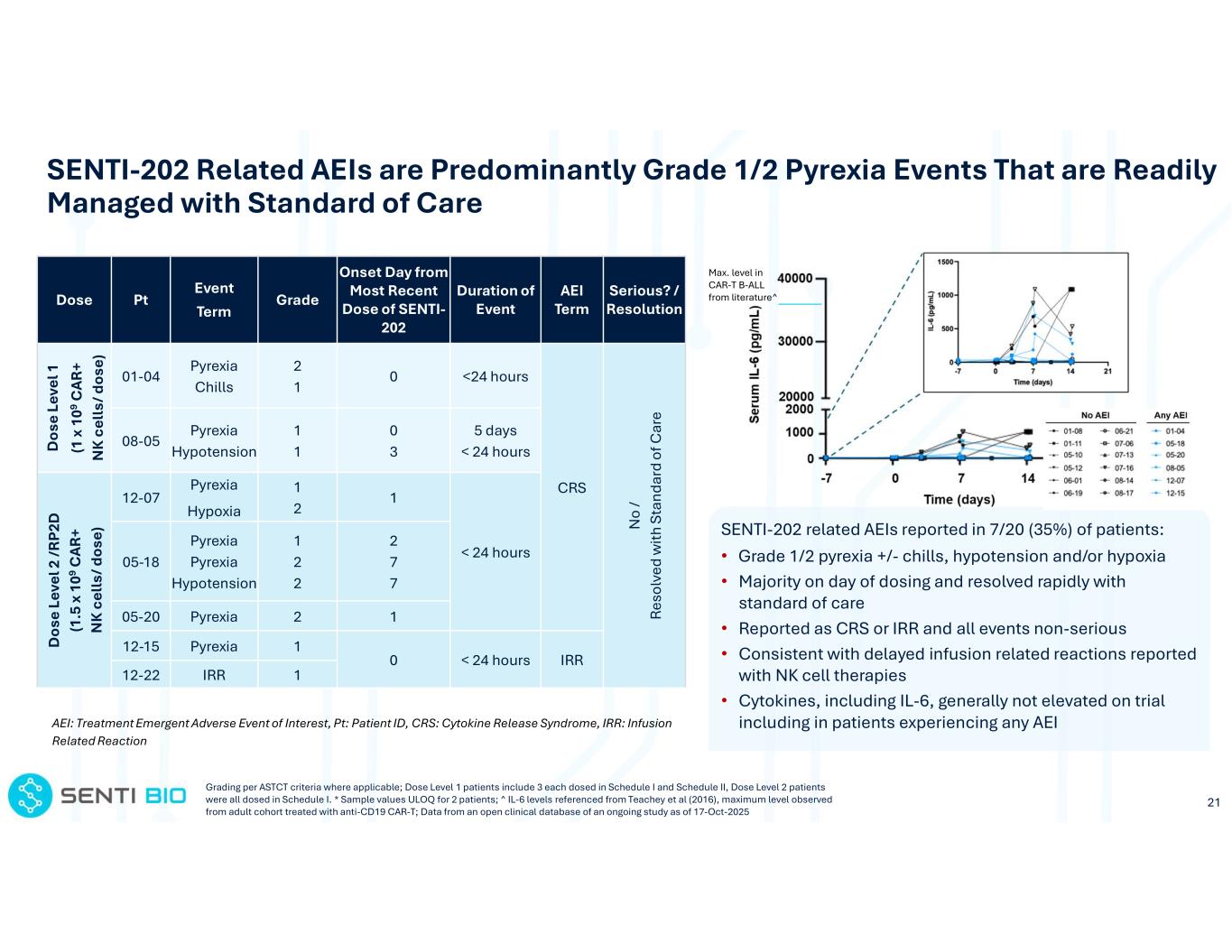
Most frequent SENTI-202-related Adverse Events of Interest (AEI) were Grade 1/2 pyrexia, likely representing delayed infusion related reactions that resolved rapidly with standard of care treatment
This safety profile supports the potential for outpatient delivery of SENTI-202
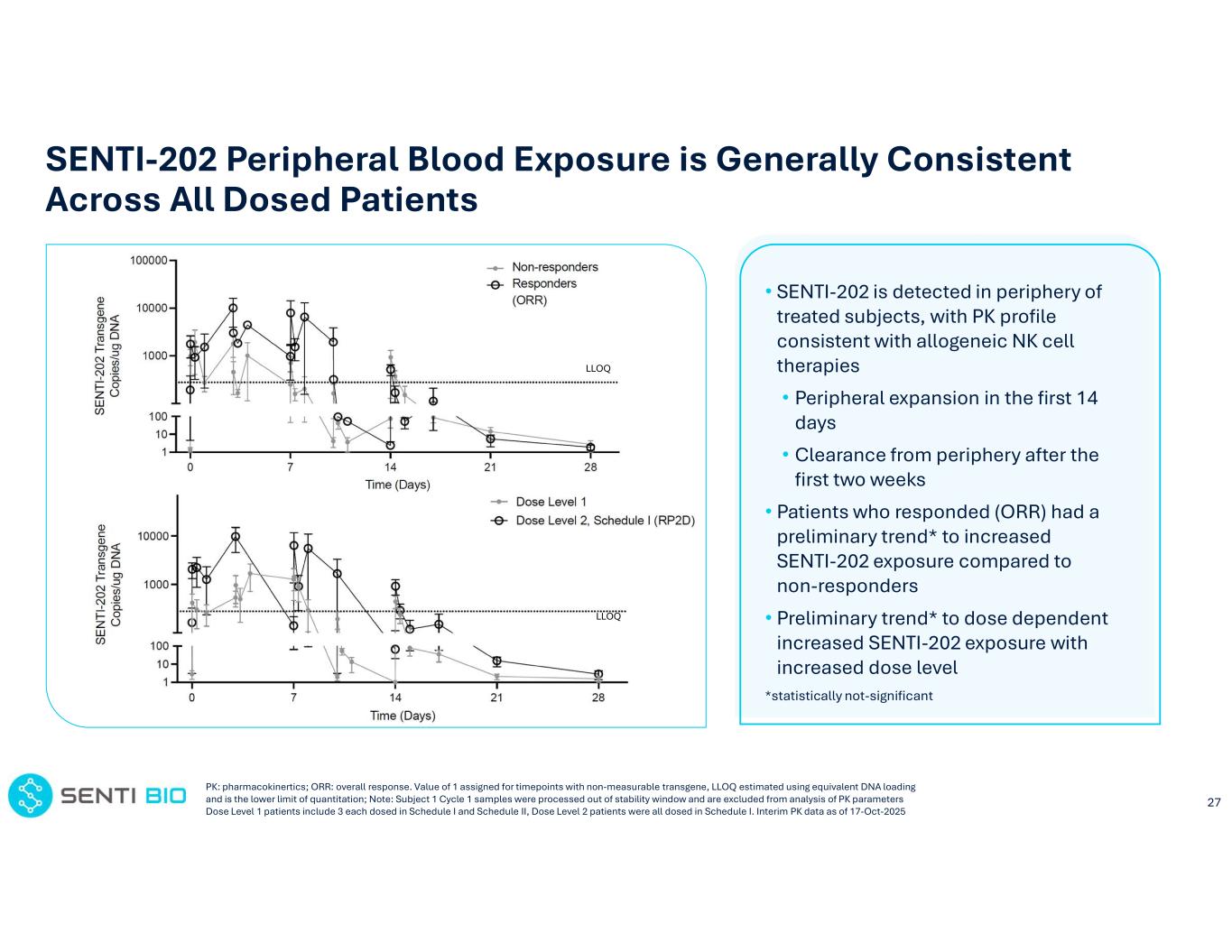
SENTI-202 was detected in the peripheral blood of all patients, with pharmacokinetics that were consistent with other allogeneic NK cell therapies: expansion in the peripheral blood for the first 2 weeks followed by natural clearance.
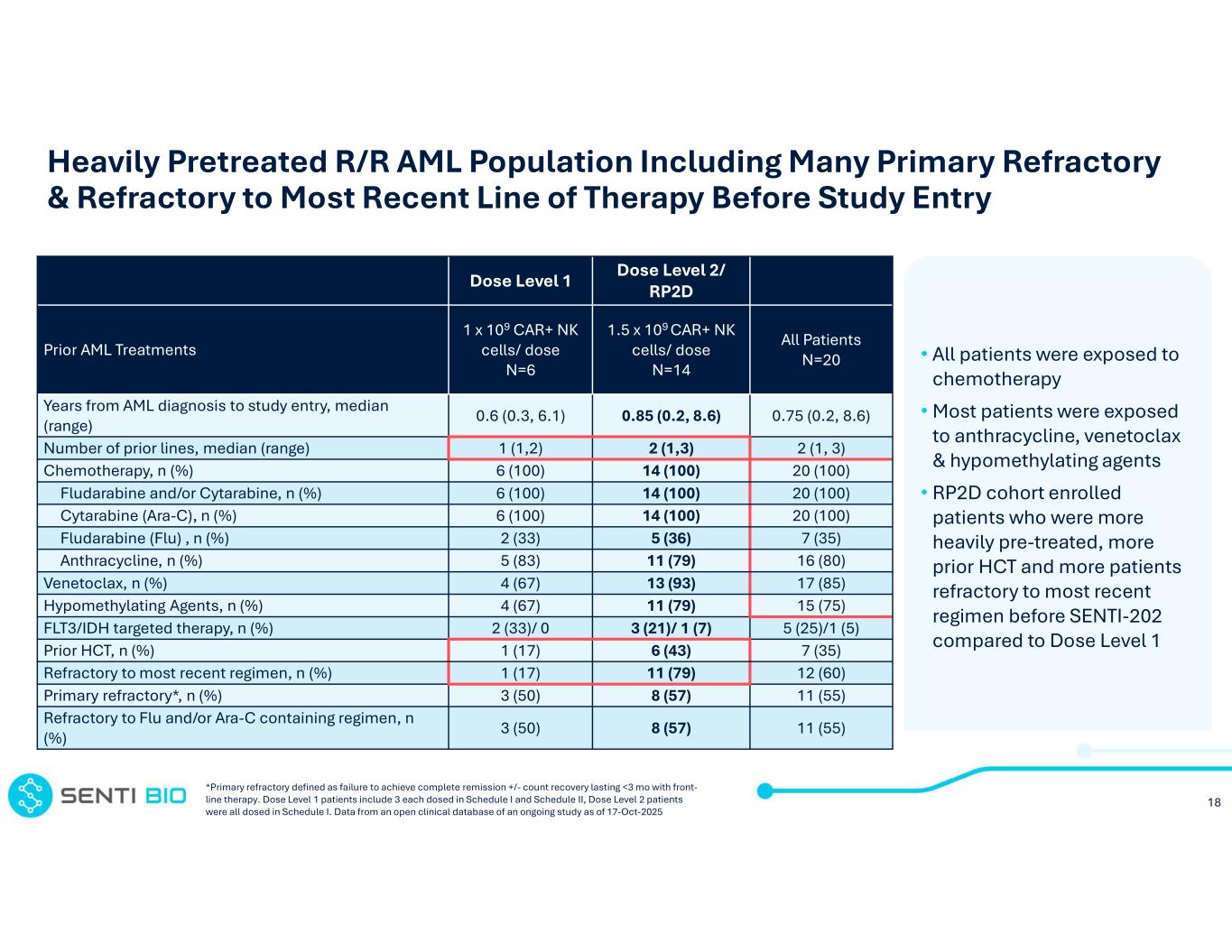
SENTI-202’s clinical responses show that the product has conferred meaningful clinical benefits to a heavily pretreated R/R AML population.
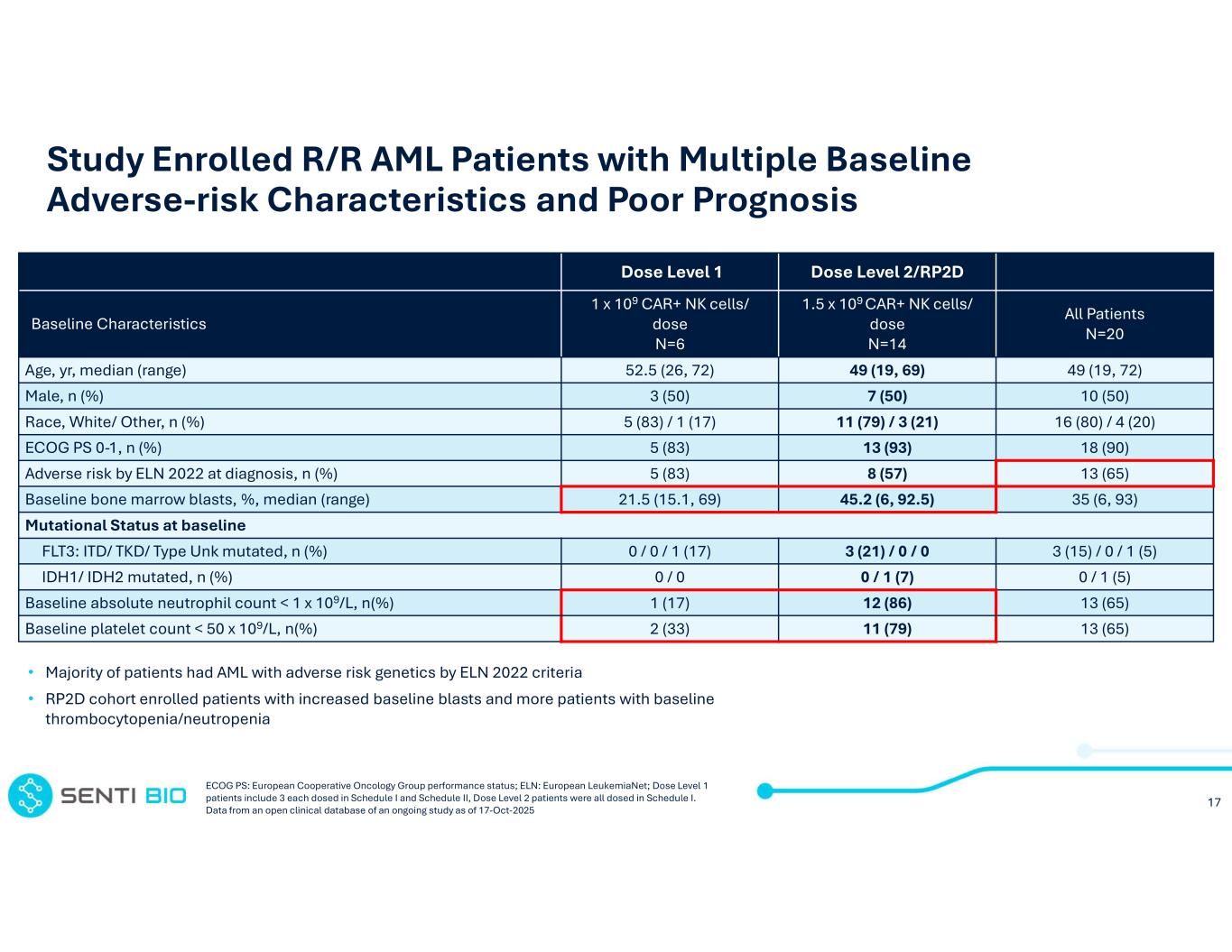
The majority of patients (65%) had disease with adverse risk genetics by ELN 2022 criteria at diagnosis and entered the trial after previously having received a median of 2 lines of therapy within median of less than a year from diagnosis


All patients were previously exposed to chemotherapy, including Ara-C (cytarabine), and most had also received anthracycline, venetoclax, and/or hypomethylating agents
Patients with actionable mutations received prior targeted therapies, including FLT3 and IDH inhibitors
Patients entered the trial with a median of 35% baseline bone marrow blasts, and 65% of patients overall had thrombocytopenia/neutropenia at study entry
Responses were observed in patients with multiple poor prognostic indicators, such as adverse risk genetics, and being primary refractory, refractory to their most recent regimen, or refractory to Flu and/or Ara-C containing regimens
“SENTI-202 continues to demonstrate deep, durable responses and a favorable safety profile in patients with relapsed or refractory AML, where standard therapies often offer patients a survival rate of just a few months,” said Dr. Nosha Farhadfar, Hematologist & Adult Bone Marrow Transplant Specialist at the Sarah Cannon Transplant & Cellular Therapy Program at Methodist Hospital, which conducts research through Sarah Cannon Research Institute (SCRI). “I’m looking forward to continuing to participate in this clinical evaluation to further investigate SENTI-202’s efficacy and safety in patients with R/R AML, with the ambitious and exciting goal of selectively targeting AML blasts and LSCs while protecting healthy HSPCs.”
“Existing cell therapies and biologic drugs have generally been limited to a subset of indications that have cancer-specific targets due to difficulty in killing cancer aggressively without triggering dangerous attacks on healthy tissues,” said Timothy Lu, MD, PhD, Co-Founder and CEO of Senti Biosciences. “To overcome this longstanding key challenge, our Logic Gated cell therapies recognize and kill cancer cells based on multiple targets while simultaneously protecting healthy cells from toxicity. Since CD33 and/or FLT3 are expressed in most AML patients, we believe that SENTI-202 has a multi-billion dollar market potential. Moreover, our positive SENTI-202 data further validates the potential for Senti Bio's platform to transform the treatment of a broad set of cancers where other medicines have insufficient therapeutic windows.”
Senti Biosciences also announced today that the FDA has granted SENTI-202 Regenerative Medicine Advanced Therapy (RMAT) designation, which validates its potential to address a serious unmet medical need. In June 2025, SENTI-202 also received Orphan Drug Designation (https://investors.sentibio.com/news-releases/news-release-details/senti-bio-granted-us-fda-orphan-drug-designation-use-first-class).
“The encouraging SENTI-202 data presented at ASH 2025 demonstrating deep, durable Complete Remissions and a favorable safety profile in a heavily pretreated patient population directly shapes Senti Bio’s clinical development strategy,” said Kanya Rajangam, M.D., Ph.D. Chief Medical Officer at Senti Bio. “This clinical evidence, together with the receipt of recent RMAT and Orphan Drug Designations from the FDA, allows us to rapidly advance SENTI-202 into pivotal studies and to explore its potential in broader patient populations that may include newly diagnosed AML, pediatric AML, and myelodysplastic syndromes (MDS).”


Conference Call and Webcast Details
As previously announced the Company will host a conference call and webcast (https://event.choruscall.com/mediaframe/webcast.html?webcastid=Mtv2qSRS) to discuss the updated clinical results from SENTI-202 today, Tuesday, December 9, 2025 at 8:00 AM ET.
The call will be hosted by Timothy Lu, MD, PhD, Chief Executive Officer and Co-Founder, and Kanya Rajangam, MD, PhD, President, Head of R&D and Chief Medical Officer, of Senti Bio, who will be joined by Nosha Farhadfar, MD, Hematologist and Bone Marrow Transplant Physician, Sarah Cannon Transplant & Cellular Therapy Program at Methodist Hospital which conducts research through Sarah Cannon Research Institute (SCRI). Interested participants and investors may access the conference call by dialing (877) 524-8416 (domestic) or +1 (412) 902-1028 (international). The webcast (https://event.choruscall.com/mediaframe/webcast.html?webcastid=Mtv2qSRS) will be accessible on the Events page (https://investors.sentibio.com/events-presentations) under the Investors section (https://investors.sentibio.com/investors) of the Company’s website (www.sentibio.com) and will be archived for 90 days following the live event.
About the Study
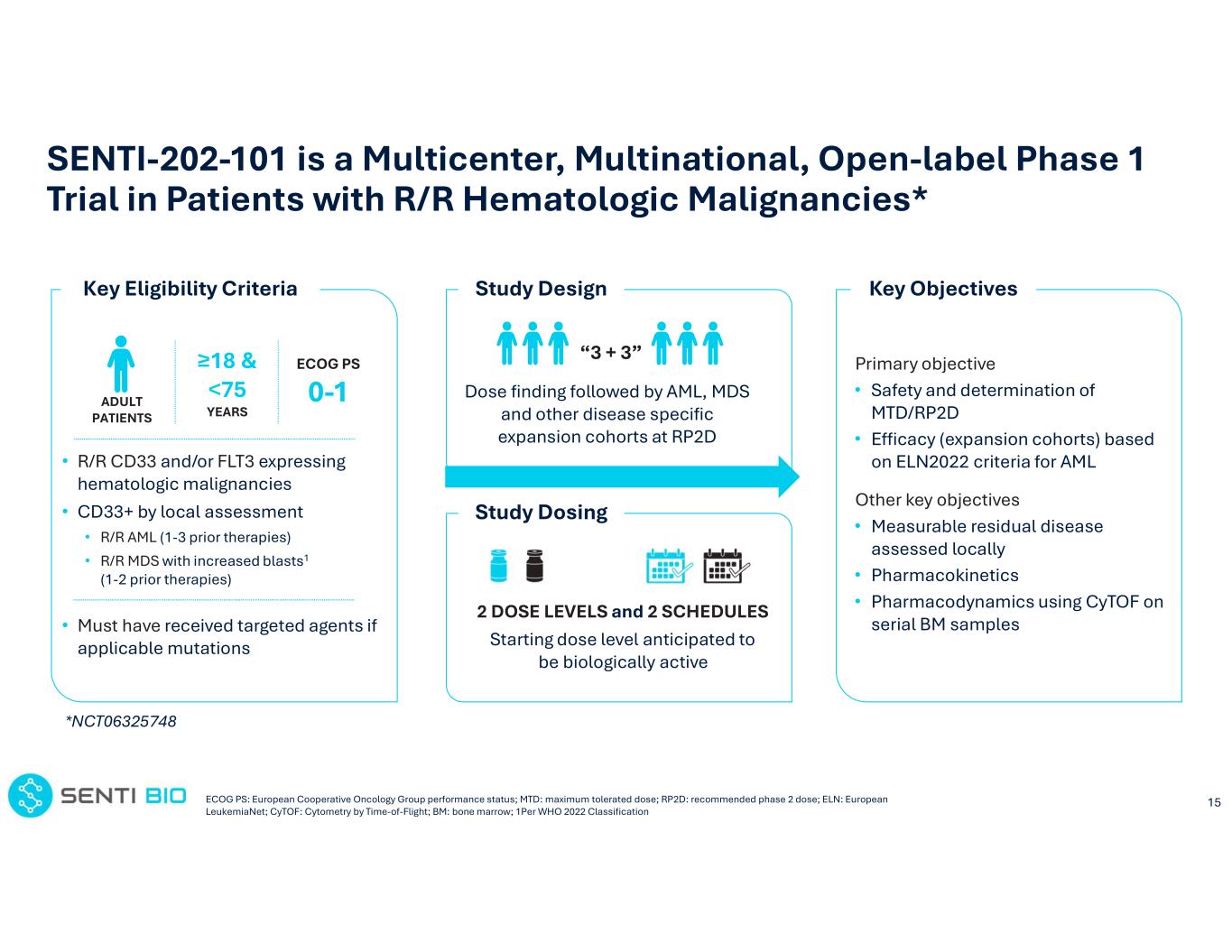
The multinational, multicenter dose-finding study of SENTI-202 (NCT06325748) is comprised of an initial dose finding using a modified "3+3" study design to determine the maximum tolerated dose (MTD) and/or recommended phase two dose (RP2D) of SENTI-202 when administered after lymphodepleting chemotherapy (Part 1) followed by disease-specific expansion cohorts at the RP2D (Part 2).
The primary objectives are to evaluate safety, determine the MTD and RP2D, and assess efficacy in expansion cohorts using ELN 2022 consensus criteria for AML, with key secondary objectives including measurable residual disease assessment, pharmacokinetics, and pharmacodynamics using CyTOF on serial bone marrow samples. For more information visit clinicaltrials.gov
About SENTI-202
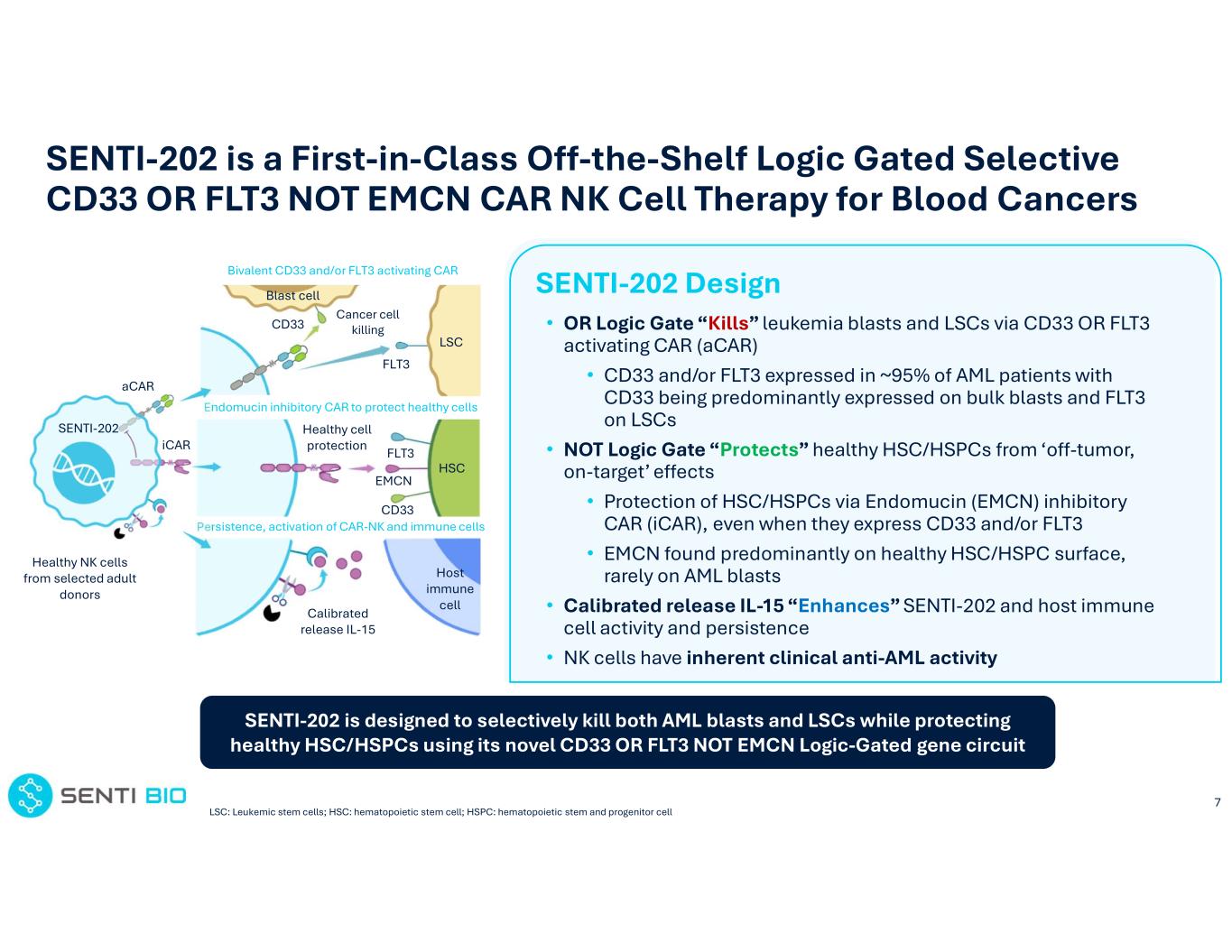
SENTI-202 is the first Logic Gated off-the-shelf CAR-NK cell therapy product candidate designed to selectively target and eliminate CD33 and/or FLT3 expressing hematologic malignancies, such as AML and myelodysplastic syndrome (MDS), while sparing healthy bone marrow cells. SENTI-202 has three main components. First, SENTI-202 contains an OR GATE, which is an activating CAR that recognizes and kills CD33 and FLT3 expressing cells. By targeting either or both of these antigens, SENTI-202 is designed to effectively kill both leukemic blasts (that largely express CD33) and leukemic stem cells (that predominantly express FLT3), which constitute a difficult-to-eradicate reservoir of AML disease. Second, SENTI-202 contains a NOT GATE, which is an inhibitory CAR that is designed to recognize EMCN selectively expressed on healthy hematopoietic stem and progenitor cells and protect those healthy cells from being killed even if they express CD33 and/or FLT3, thus potentially widening the therapeutic window. Third, SENTI-202 contains calibrated-release IL-15, which is designed to significantly increase


cell persistence, expansion and activity of both the CAR-NK cells and host immune cells. The NK cells used to construct SENTI-202 are sourced from selected healthy adult donors, manufactured, cryopreserved and available off-the-shelf for use as needed. Senti Bio is currently enrolling adult patients with R/R CD33 and/or FLT3 expressing heme malignancies in a Phase 1 clinical trial for SENTI-202, which can be a potential first-in-class allogeneic treatment for AML/MDS patients.
The U.S. Food and Drug Administration (FDA) has granted Orphan Drug Designation (ODD) and Regenerative Medicine Advanced Therapy (RMAT) designation to SENTI-202 for the treatment of relapsed/refractory hematologic malignancies including AML.
About AML
AML is a cancer of the blood and bone marrow and is one of the most common types of acute leukemia in adults. It is estimated there will be 22,010 new cases of AML in the United States in 2025. At diagnosis, the five-year survival rate for these patients is approximately 32.9%. Newly diagnosed AML is currently treated with chemotherapy, targeted therapies, and/or allogeneic or autologous stem cell transplant. For patients with R/R AML, there are few treatment options and median overall survival is typically approximately five months.
About Senti Bio
Senti Bio is a biotechnology company developing a new generation of cell and gene therapies for patients living with incurable diseases. To achieve this, Senti Bio is leveraging its synthetic biology platform to engineer Gene Circuits into new medicines with enhanced precision and control. These Gene Circuits are designed to precisely kill cancer cells, to spare healthy cells, to increase specificity to target tissues, and/or to be controllable even after administration. The Company’s wholly-owned pipeline is comprised of cell therapies engineered with Gene Circuits to target challenging liquid and solid tumor indications. Senti’s Gene Circuits have been shown preclinically to work in both NK and T cells. Senti Bio has also preclinically demonstrated the potential breadth of Gene Circuits in other modalities and diseases outside of oncology, and continues to advance these capabilities through partnerships.
Forward-Looking Statements
This press release and document contain certain statements that are not historical facts and are considered forward-looking statements within the meaning of Section 27A of the Securities Act of 1933, as amended, and Section 21E of the Securities Exchange Act of 1934, as amended. These forward-looking statements generally are identified by the words “believe,” “could,” “predict,” “continue,” “ongoing,” “project,” “expect,” “anticipate,” “estimate,” “intend,” “strategy,” “future,” “opportunity,” “plan,” “may,” “should,” “will,” “would,” “will be,” “will continue,” “will likely result,” “forecast,” “seek,” “target” and similar expressions that predict or indicate future events or trends or that are not statements of historical matters. Forward-looking statements are predictions, projections, and other statements about future events that are based on current expectations of Senti Bio’s management and assumptions, whether or not identified in this document, and, as a result, are subject to risks and uncertainties. Forward-


looking statements include, but are not limited to, expectations regarding Senti Bio’s future results. These forward-looking statements are provided for illustrative purposes only and are not intended to serve as and must not be relied on by any investor as, a guarantee, an assurance, a prediction, or a definitive statement of fact or probability. Actual events and circumstances are difficult or impossible to predict and will differ from assumptions. Many actual events and circumstances are beyond the control of Senti Bio. Many factors could cause actual future results to differ materially from the forward-looking statements in this document, including but not limited to: (i) changes in domestic and foreign business, market, financial, political and legal conditions, (ii) changes in the competitive and highly regulated industries in which Senti Bio operates, variations in operating performance across competitors, changes in laws and regulations affecting Senti Bio’s business, (iii) the ability to implement business plans, forecasts and other expectations, (iv) the risk of downturns and a changing regulatory landscape in Senti Bio’s highly competitive industry, (v) risks relating to the uncertainty of any projected financial information with respect to Senti Bio, (vi) risks related to uncertainty in the timing or results of Senti Bio’s , clinical studies, patient enrollment, and GMP manufacturing startup activities, (vii) Senti Bio’s dependence on third parties in connection with clinical studies, and GMP manufacturing activities, (viii) risks related to delays and other impacts from macroeconomic and geopolitical events, increasing rates of inflation and rising interest rates on business operations, (ix) risks related to the timing and utilization of the grant from CIRM, and (x) the success of any future research and development efforts by Senti Bio. The foregoing list of factors is not exhaustive. You should carefully consider the foregoing factors and the other risks and uncertainties described in the “Risk Factors” section of Senti Bio’s most recent periodic report filed with the U.S. Securities and Exchange Commission (“SEC”), and other documents filed by Senti Bio from time to time with the SEC. These filings identify and address other important risks and uncertainties that could cause actual events and results to differ materially from those contained in the forward-looking statements in this document. There may be additional risks that Senti Bio does not presently know, or that Senti Bio currently believes are immaterial that could also cause actual results to differ from those contained in the forward-looking statements in this document. Forward-looking statements speak only as of the date they are made. Senti Bio anticipates that subsequent events and developments may cause Senti Bio’s assessments to change. Except as required by law, Senti Bio assumes no obligation to update publicly any forward-looking statements, whether as a result of new information, future events, or otherwise.
Availability of Other Information About Senti Biosciences, Inc.
For more information, please visit the Senti Bio website at www.sentibio.com or follow Senti Bio on X (@SentiBio) (https://x.com/sentibio) and LinkedIn (Senti Biosciences) (https://www.linkedin.com/company/senti-biosciences). Investors and others should note that we communicate with our investors and the public using our company website (www.sentibio.com), including, but not limited to, company disclosures, investor presentations and FAQs, Securities and Exchange Commission filings, press releases, public conference call transcripts and webcast transcripts, as well as on X (https://x.com/sentibio) and LinkedIn (https://www.linkedin.com/company/senti-biosciences). The information that we post on our website or on X (https://x.com/sentibio) or LinkedIn (https://www.linkedin.com/company/


senti-biosciences) could be deemed to be material information. As a result, we encourage investors, the media and others interested to review the information that we post there on a regular basis. The contents of our website or social media shall not be deemed incorporated by reference in any filing under the Securities Act of 1933, as amended.
Investor Contact:
JTC Team, LLC
Jenene Thomas
(908) 824-0775
[email protected]

Press Contact:
Shira Derasmo
Cuttlefish Communications
(917) 280-2497
[email protected]

NASDAQ: SNTI | sentibio.com SENTI-202-101 Promising Results in the Treatment of Relapsed/Refractory Acute Myeloid Leukemia (R/R AML) in Ongoing Phase 1 Trial (SENTI-202-101) December 9, 2025 Conference Call and Webcast


Forward Looking Statements This presentation contains forward-looking statements of Senti Biosciences, Inc. ("we," "us," "our”) within the meaning of the Private Securities Litigation Reform Act of 1995. Statements we make in this presentation may include statements which are not historical facts and are considered forward-looking within the meaning of Section 27A of the Securities Act of 1933, as amended, and Section 21E of the Securities Exchange Act of 1934, as amended, which are usually identified by the use of words such as “anticipates,” “believes,” “estimates,” “expects,” “future,” “objective,” “opportunity,” “potential,” “proposed,” “targets,” “intends,” “may,” “plans,” “projects,” “seeks,” “should,” “will,” and variations of such words or similar expressions. We intend these forward-looking statements to be covered by the safe harbor provisions for forward-looking statements contained in Section 27A of the Securities Act and Section 21E of the Securities Exchange Act and are making this statement for purposes of complying with those safe harbor provisions. These forward-looking statements, including statements regarding attributes and benefits of our technology platform and of our product candidates, including their therapeutic potential; our cash runway and our ability to continue performing our clinical work; clinical trials, including trial design and endpoints, our ability to achieve such endpoints, our plans to transition our Phase 1 clinical trial of SNTI-202 to a pivotal study and our manufacturing process and its potential benefits, reflect our current views about our plans, intentions, expectations, strategies and prospects, which are based on the information currently available to us and on assumptions we have made. These forward- looking statements are provided for illustrative purposes only and are not intended to serve as, and must not be relied on as a guarantee, an assurance, a prediction or a definitive statement of fact or probability. Although we believe that our plans, intentions, expectations, strategies and prospects as reflected in or suggested by those forward-looking statements are reasonable, we can give no assurance that the plans, intentions, expectations or strategies will be attained or achieved. Many actual events and circumstances are difficult or impossible to predict, are beyond our control and will differ from assumptions. Furthermore, actual results may differ materially from those described in the forward-looking statements and will be affected by a variety of risks and factors that are beyond our control including, without limitation, the risk that results observed in studies of our product candidates, including preclinical studies and future clinical trials of any of our product candidates, will not be observed in ongoing or future studies involving these product candidates, the risk that we may cease or delay clinical development of any of our product candidates for a variety of reasons (including requirements that may be imposed by regulatory authorities on the initiation or conduct of clinical trials, the amount and type of data to be generated, or otherwise to support regulatory approval, difficulties or delays in subject enrollment and continuation in current and planned clinical trials, difficulties in manufacturing or supplying our product candidates for preclinical and clinical testing, and any adverse events or other negative results that may be observed during preclinical or clinical development), our ability to obtain, maintain and protect our intellectual property, our dependence on third parties for development and manufacture of product candidates, our ability to manage expenses and to obtain additional funding when needed to support our business activities and establish and maintain strategic business alliances and new business initiatives, the impacts of macroeconomic and geopolitical events, including various global conflicts, increasing rates of inflation and rising interest rates on business operations and expenses, and the risk that our product candidates may not produce therapeutic benefits or may cause other unanticipated adverse effects, as well as those set forth in the section titled “Risk Factors” of Senti Bio’s most recently filed periodic report, and other documents filed by Senti Bio from time to time with the SEC. Except as required by law, we assume no obligation to update publicly any forward-looking statements, whether as a result of new information, future events or otherwise. This presentation shall not constitute an offer to sell or the solicitation of an offer to buy these securities, nor shall there be any sale of these securities in any state or jurisdiction in which such offer, solicitation, or sale would be unlawful prior to registration or qualification under the securities laws of any such state or jurisdiction. Trademarks This document contains references to trademarks, trade names and service marks belonging to other entities. Solely for convenience, trademarks, trade names and service marks referred to in this presentation may appear without the ® or TM symbols, but such references are not intended to indicate, in any way, that the applicable owner will not assert, to the fullest extent under applicable law, its rights to these trademarks and trade names. We do not intend our use or display of other entities’ trade names, trademarks or service marks to imply a relationship with, or endorsement or sponsorship of us by, any other entities. 2


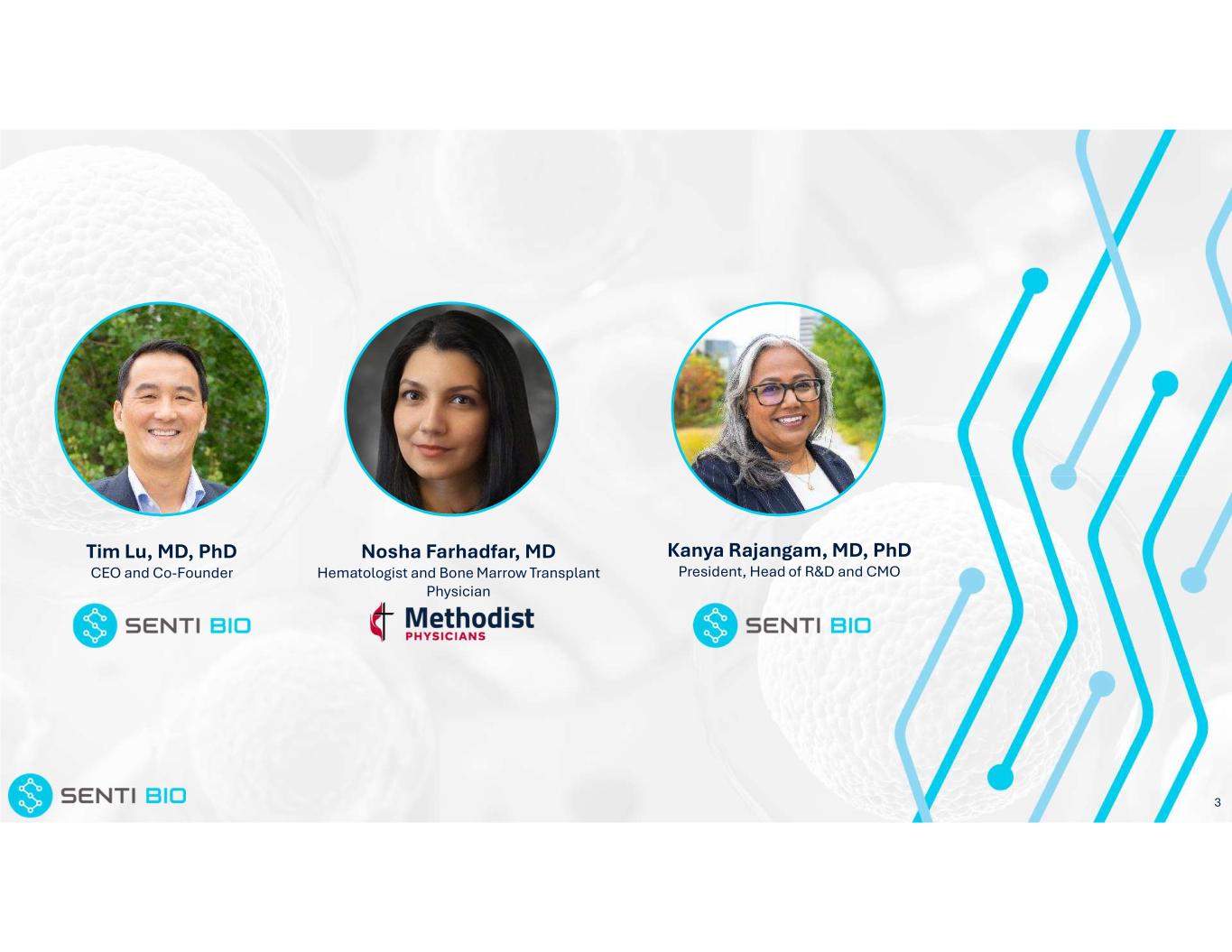
3 Tim Lu, MD, PhD CEO and Co-Founder Kanya Rajangam, MD, PhD President, Head of R&D and CMO Nosha Farhadfar, MD Hematologist and Bone Marrow Transplant Physician


Tim Lu, MD, PhD CEO and Co-Founder 4


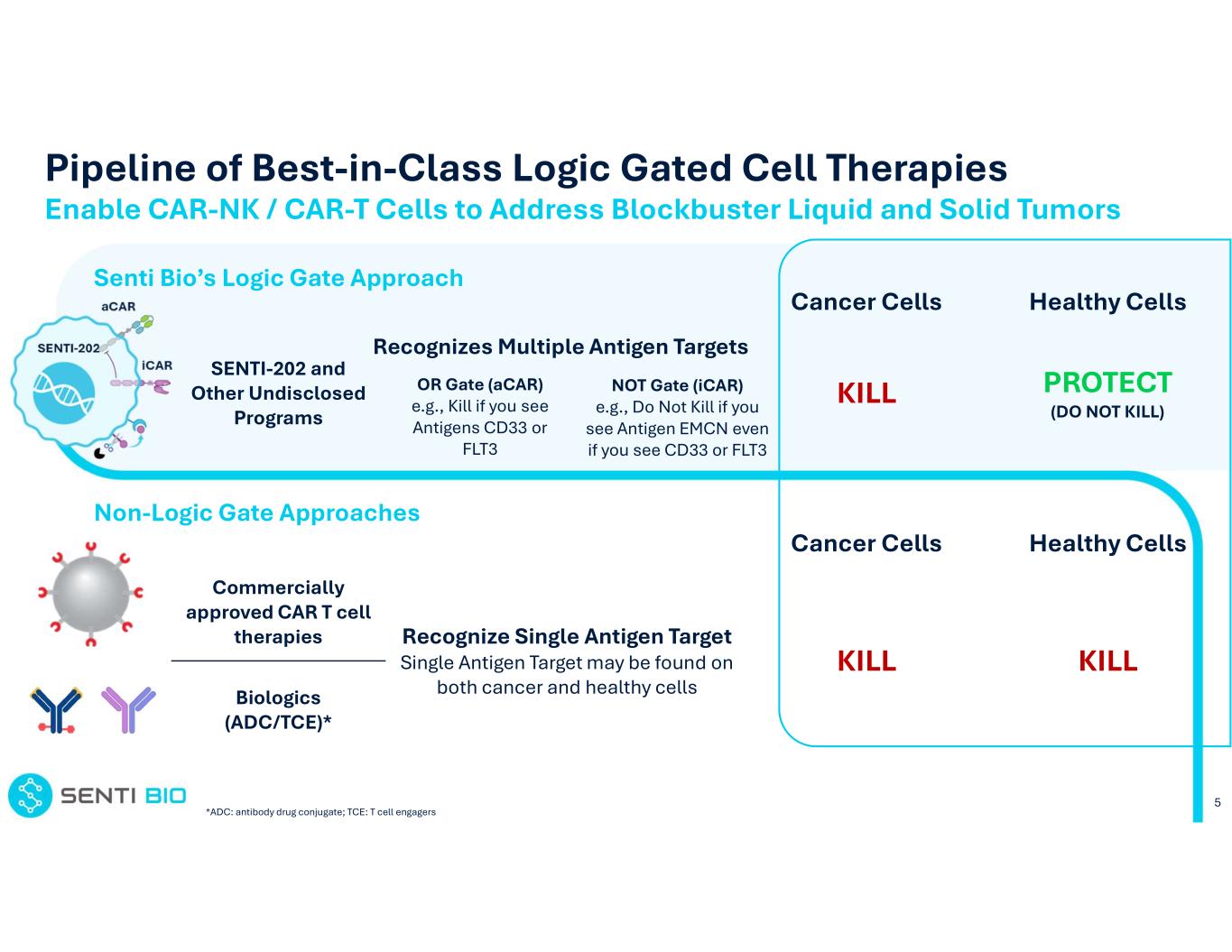
Pipeline of Best-in-Class Logic Gated Cell Therapies 5 Enable CAR-NK / CAR-T Cells to Address Blockbuster Liquid and Solid Tumors *ADC: antibody drug conjugate; TCE: T cell engagers Healthy CellsCancer Cells KILLKILL Recognize Single Antigen Target Single Antigen Target may be found on both cancer and healthy cells Commercially approved CAR T cell therapies Biologics (ADC/TCE)* Non-Logic Gate Approaches Senti Bio’s Logic Gate Approach Healthy CellsCancer Cells PROTECT (DO NOT KILL) KILL SENTI-202 and Other Undisclosed Programs OR Gate (aCAR) e.g., Kill if you see Antigens CD33 or FLT3 NOT Gate (iCAR) e.g., Do Not Kill if you see Antigen EMCN even if you see CD33 or FLT3 Recognizes Multiple Antigen Targets


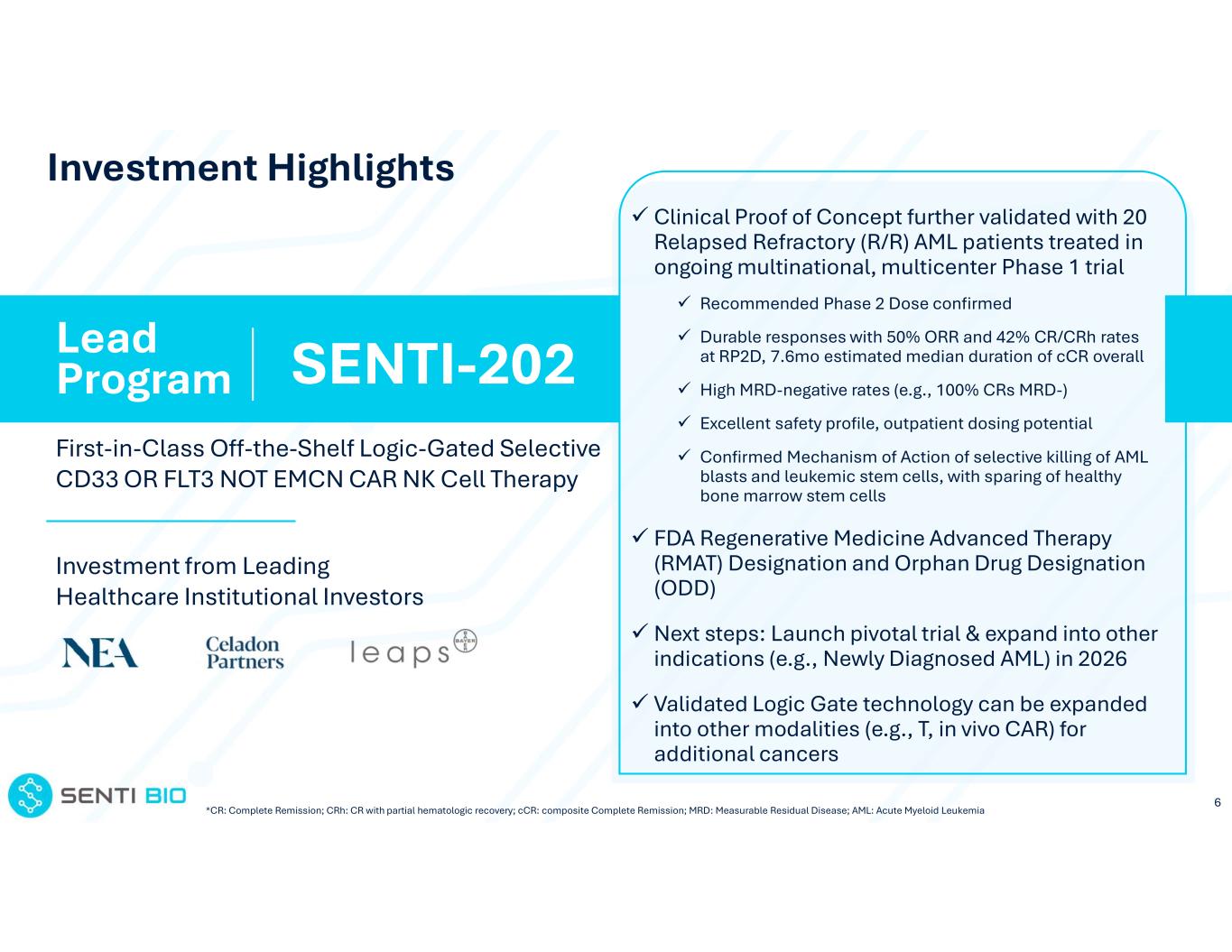
First-in-Class Off-the-Shelf Logic-Gated Selective CD33 OR FLT3 NOT EMCN CAR NK Cell Therapy Investment from Leading Healthcare Institutional Investors Lead Program SENTI-202 Investment Highlights 6 *CR: Complete Remission; CRh: CR with partial hematologic recovery; cCR: composite Complete Remission; MRD: Measurable Residual Disease; AML: Acute Myeloid Leukemia  Clinical Proof of Concept further validated with 20 Relapsed Refractory (R/R) AML patients treated in ongoing multinational, multicenter Phase 1 trial  Recommended Phase 2 Dose confirmed  Durable responses with 50% ORR and 42% CR/CRh rates at RP2D, 7.6mo estimated median duration of cCR overall  High MRD-negative rates (e.g., 100% CRs MRD-)  Excellent safety profile, outpatient dosing potential  Confirmed Mechanism of Action of selective killing of AML blasts and leukemic stem cells, with sparing of healthy bone marrow stem cells  FDA Regenerative Medicine Advanced Therapy (RMAT) Designation and Orphan Drug Designation (ODD)  Next steps: Launch pivotal trial & expand into other indications (e.g., Newly Diagnosed AML) in 2026  Validated Logic Gate technology can be expanded into other modalities (e.g., T, in vivo CAR) for additional cancers


SENTI-202 is a First-in-Class Off-the-Shelf Logic Gated Selective CD33 OR FLT3 NOT EMCN CAR NK Cell Therapy for Blood Cancers 7 LSC: Leukemic stem cells; HSC: hematopoietic stem cell; HSPC: hematopoietic stem and progenitor cell Bivalent CD33 and/or FLT3 activating CAR Calibrated release IL-15 Endomucin inhibitory CAR to protect healthy cells Persistence, activation of CAR-NK and immune cells Healthy NK cells from selected adult donors FLT3 EMCN CD33 Healthy cell protection HSC aCAR iCAR Host immune cell SENTI-202 Cancer cell killing Blast cell CD33 LSC FLT3 SENTI-202 Design • OR Logic Gate “Kills” leukemia blasts and LSCs via CD33 OR FLT3 activating CAR (aCAR) • CD33 and/or FLT3 expressed in ~95% of AML patients with CD33 being predominantly expressed on bulk blasts and FLT3 on LSCs • NOT Logic Gate “Protects” healthy HSC/HSPCs from ‘off-tumor, on-target’ effects • Protection of HSC/HSPCs via Endomucin (EMCN) inhibitory CAR (iCAR), even when they express CD33 and/or FLT3 • EMCN found predominantly on healthy HSC/HSPC surface, rarely on AML blasts • Calibrated release IL-15 “Enhances” SENTI-202 and host immune cell activity and persistence • NK cells have inherent clinical anti-AML activity SENTI-202 is designed to selectively kill both AML blasts and LSCs while protecting healthy HSC/HSPCs using its novel CD33 OR FLT3 NOT EMCN Logic-Gated gene circuit


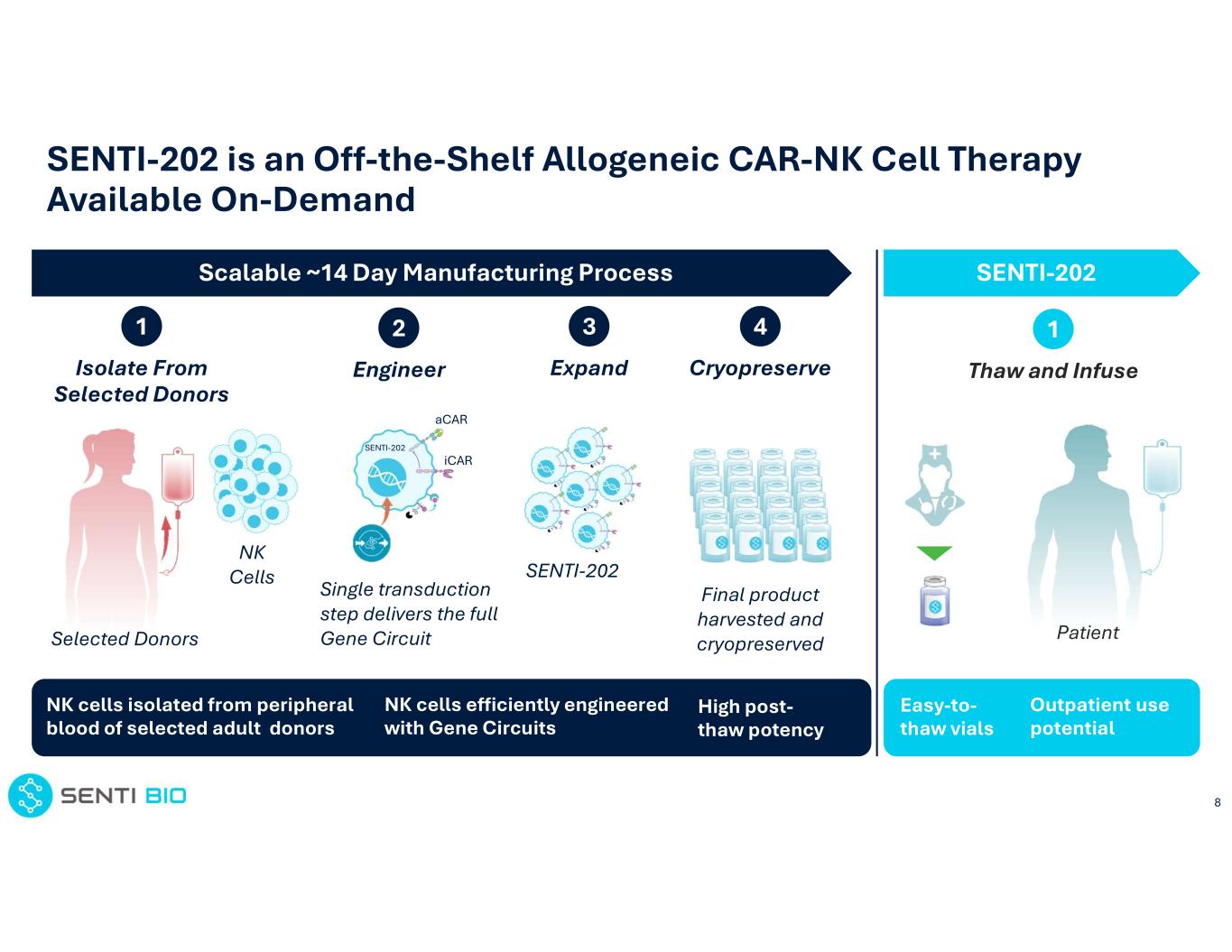
SENTI-202 is an Off-the-Shelf Allogeneic CAR-NK Cell Therapy Available On-Demand 8 Lenti virus Outpatient use potential Isolate From Selected Donors Thaw and Infuse Scalable ~14 Day Manufacturing Process NK Cells Selected Donors Engineer CryopreserveExpand SENTI-202 Single transduction step delivers the full Gene Circuit 1 2 3 4 1 Easy-to- thaw vials Final product harvested and cryopreserved NK cells isolated from peripheral blood of selected adult donors NK cells efficiently engineered with Gene Circuits High post- thaw potency Patient aCAR iCAR SENTI-202 SENTI-202


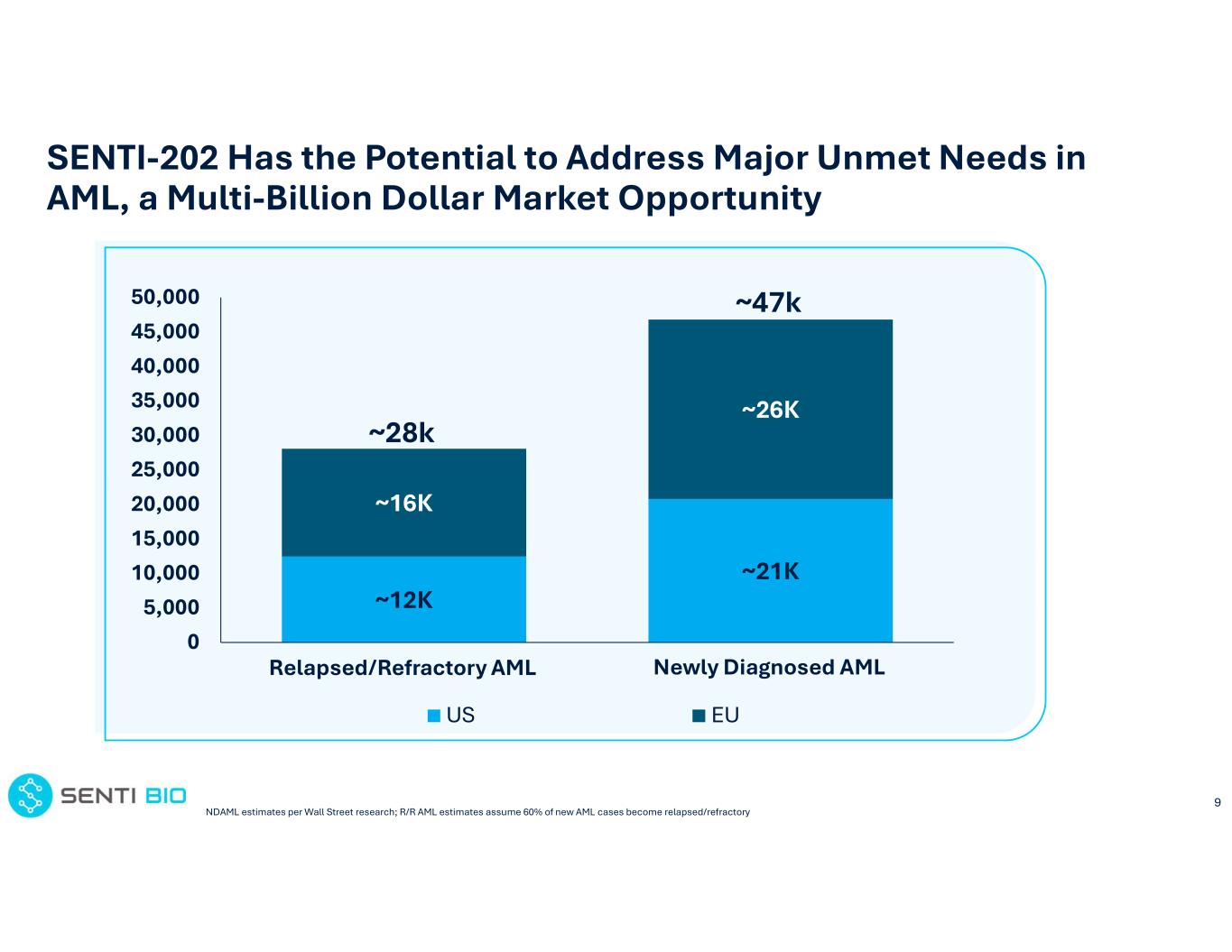
9 NDAML estimates per Wall Street research; R/R AML estimates assume 60% of new AML cases become relapsed/refractory ~12K ~21K ~16K ~26K 0 5,000 10,000 15,000 20,000 25,000 30,000 35,000 40,000 45,000 50,000 R/R AML NDAML US EU ~28k ~47k Relapsed/Refractory AML Newly Diagnosed AML SENTI-202 Has the Potential to Address Major Unmet Needs in AML, a Multi-Billion Dollar Market Opportunity


Nosha Farhadfar, MD Hematologist and Bone Marrow Transplant Physician 10


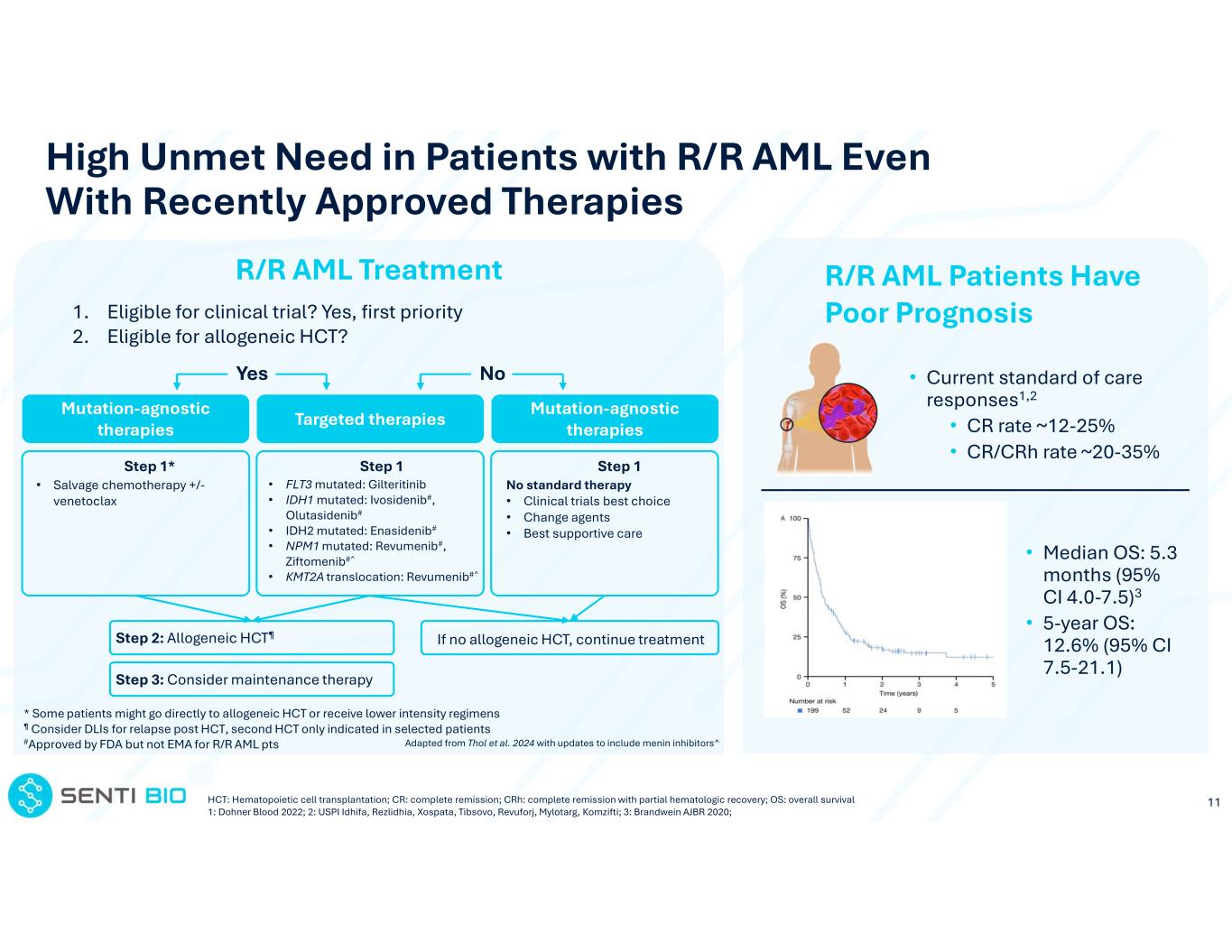
High Unmet Need in Patients with R/R AML Even With Recently Approved Therapies HCT: Hematopoietic cell transplantation; CR: complete remission; CRh: complete remission with partial hematologic recovery; OS: overall survival 1: Dohner Blood 2022; 2: USPI Idhifa, Rezlidhia, Xospata, Tibsovo, Revuforj, Mylotarg, Komzifti; 3: Brandwein AJBR 2020; R/R AML Patients Have Poor Prognosis • Current standard of care responses1,2 • CR rate ~12-25% • CR/CRh rate ~20-35% • Median OS: 5.3 months (95% CI 4.0-7.5)3 • 5-year OS: 12.6% (95% CI 7.5-21.1) R/R AML Treatment 1. Eligible for clinical trial? Yes, first priority 2. Eligible for allogeneic HCT? Yes No Mutation-agnostic therapies Step 1* • Salvage chemotherapy +/- venetoclax Targeted therapies Mutation-agnostic therapies Step 1 • FLT3 mutated: Gilteritinib • IDH1 mutated: Ivosidenib#, Olutasidenib# • IDH2 mutated: Enasidenib# • NPM1 mutated: Revumenib#, Ziftomenib#^ • KMT2A translocation: Revumenib#^ Step 1 No standard therapy • Clinical trials best choice • Change agents • Best supportive care Step 2: Allogeneic HCT¶ Step 3: Consider maintenance therapy If no allogeneic HCT, continue treatment * Some patients might go directly to allogeneic HCT or receive lower intensity regimens ¶ Consider DLIs for relapse post HCT, second HCT only indicated in selected patients #Approved by FDA but not EMA for R/R AML pts Adapted from Thol et al. 2024 with updates to include menin inhibitors^ 11


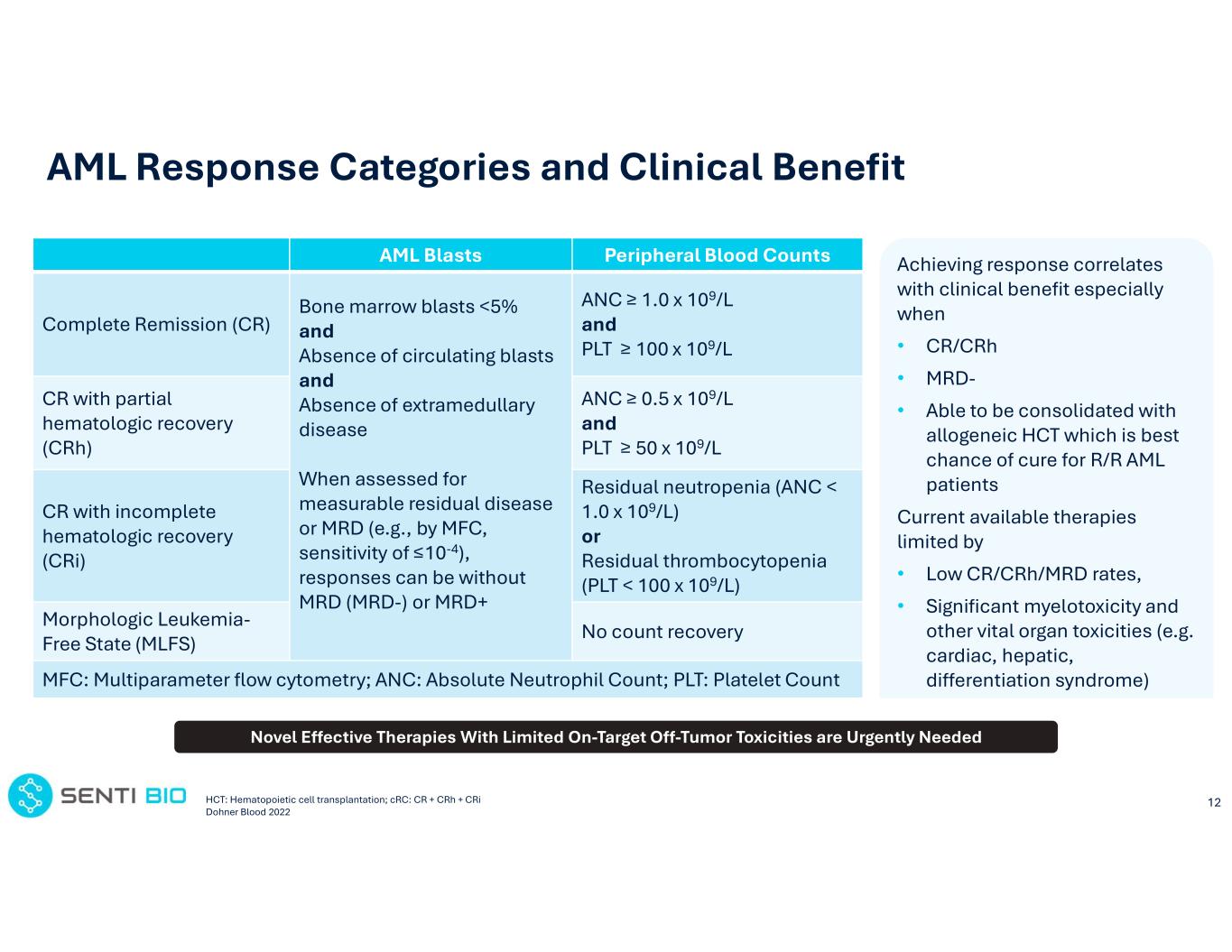
AML Response Categories and Clinical Benefit Peripheral Blood CountsAML Blasts ANC ≥ 1.0 x 10⁹/L and PLT ≥ 100 x 109/L Bone marrow blasts <5% and Absence of circulating blasts and Absence of extramedullary disease When assessed for measurable residual disease or MRD (e.g., by MFC, sensitivity of ≤10-4), responses can be without MRD (MRD-) or MRD+ Complete Remission (CR) ANC ≥ 0.5 x 10⁹/L and PLT ≥ 50 x 109/L CR with partial hematologic recovery (CRh) Residual neutropenia (ANC < 1.0 x 10⁹/L) or Residual thrombocytopenia (PLT < 100 x 109/L) CR with incomplete hematologic recovery (CRi) No count recoveryMorphologic Leukemia- Free State (MLFS) MFC: Multiparameter flow cytometry; ANC: Absolute Neutrophil Count; PLT: Platelet Count 12 Achieving response correlates with clinical benefit especially when • CR/CRh • MRD- • Able to be consolidated with allogeneic HCT which is best chance of cure for R/R AML patients Current available therapies limited by • Low CR/CRh/MRD rates, • Significant myelotoxicity and other vital organ toxicities (e.g. cardiac, hepatic, differentiation syndrome) Novel Effective Therapies With Limited On-Target Off-Tumor Toxicities are Urgently Needed HCT: Hematopoietic cell transplantation; cRC: CR + CRh + CRi Dohner Blood 2022


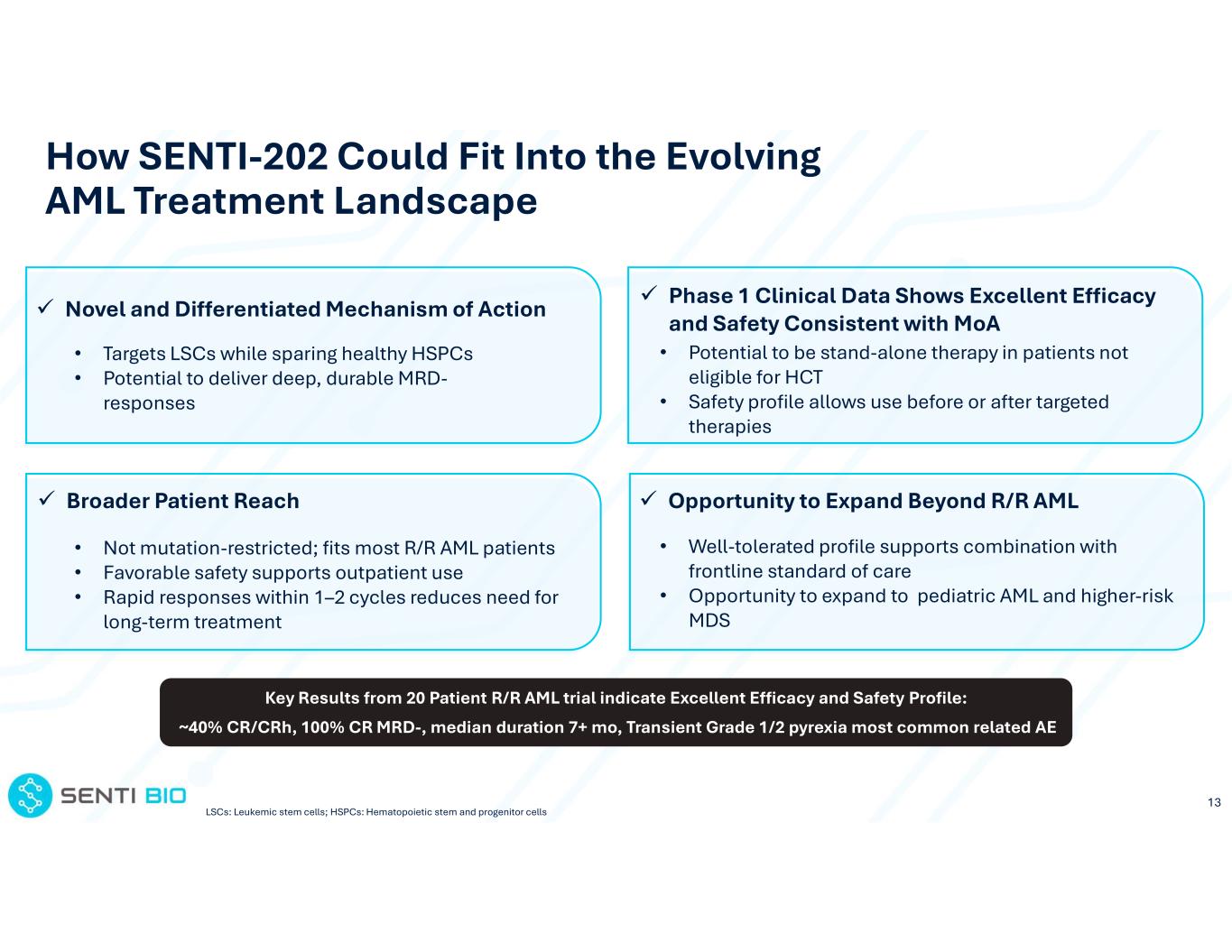
How SENTI-202 Could Fit Into the Evolving AML Treatment Landscape 13 • Targets LSCs while sparing healthy HSPCs • Potential to deliver deep, durable MRD- responses • Potential to be stand-alone therapy in patients not eligible for HCT • Safety profile allows use before or after targeted therapies  Novel and Differentiated Mechanism of Action  Phase 1 Clinical Data Shows Excellent Efficacy and Safety Consistent with MoA  Broader Patient Reach  Opportunity to Expand Beyond R/R AML Key Results from 20 Patient R/R AML trial indicate Excellent Efficacy and Safety Profile: ~40% CR/CRh, 100% CR MRD-, median duration 7+ mo, Transient Grade 1/2 pyrexia most common related AE • Not mutation-restricted; fits most R/R AML patients • Favorable safety supports outpatient use • Rapid responses within 1–2 cycles reduces need for long-term treatment • Well-tolerated profile supports combination with frontline standard of care • Opportunity to expand to pediatric AML and higher-risk MDS LSCs: Leukemic stem cells; HSPCs: Hematopoietic stem and progenitor cells


Kanya Rajangam, MD, PhD President, Head of R&D and CMO 14


2 DOSE LEVELS and 2 SCHEDULES Starting dose level anticipated to be biologically active SENTI-202-101 is a Multicenter, Multinational, Open-label Phase 1 Trial in Patients with R/R Hematologic Malignancies* Key Eligibility Criteria Key Objectives Primary objective • Safety and determination of MTD/RP2D • Efficacy (expansion cohorts) based on ELN2022 criteria for AML Other key objectives • Measurable residual disease assessed locally • Pharmacokinetics • Pharmacodynamics using CyTOF on serial BM samples “3 + 3” Dose finding followed by AML, MDS and other disease specific expansion cohorts at RP2D ADULT PATIENTS ≥18 & <75 YEARS ECOG PS 0-1 • R/R CD33 and/or FLT3 expressing hematologic malignancies • CD33+ by local assessment • R/R AML (1-3 prior therapies) • R/R MDS with increased blasts1 (1-2 prior therapies) • Must have received targeted agents if applicable mutations *NCT06325748 ECOG PS: European Cooperative Oncology Group performance status; MTD: maximum tolerated dose; RP2D: recommended phase 2 dose; ELN: European LeukemiaNet; CyTOF: Cytometry by Time-of-Flight; BM: bone marrow; 1Per WHO 2022 Classification Study Design Study Dosing 15


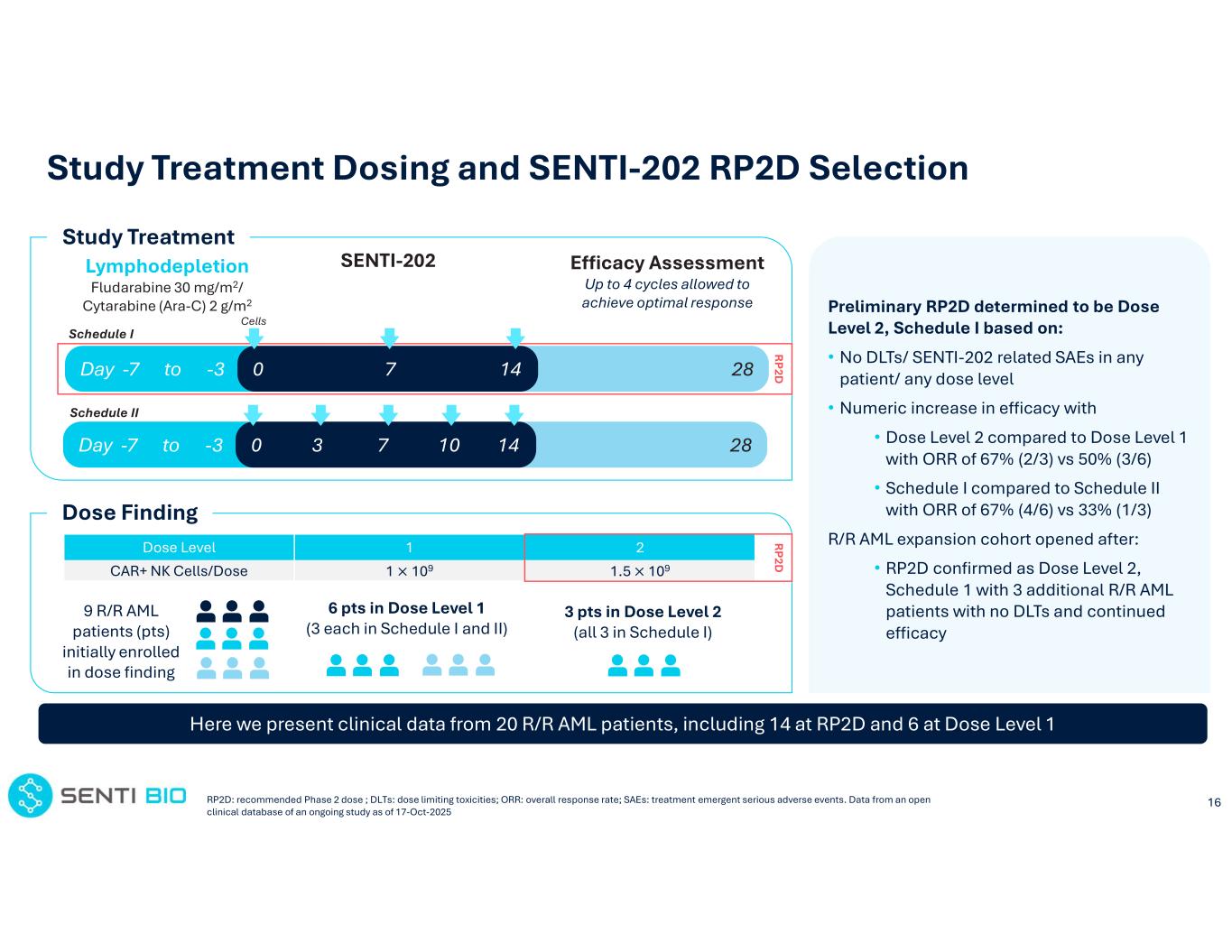
1 R P 2D Study Treatment Dosing and SENTI-202 RP2D Selection 21Dose Level 1.5 × 1091 × 109CAR+ NK Cells/Dose Here we present clinical data from 20 R/R AML patients, including 14 at RP2D and 6 at Dose Level 1 9 R/R AML patients (pts) initially enrolled in dose finding 6 pts in Dose Level 1 (3 each in Schedule I and II) 3 pts in Dose Level 2 (all 3 in Schedule I) Dose Finding R P 2D RP2D: recommended Phase 2 dose ; DLTs: dose limiting toxicities; ORR: overall response rate; SAEs: treatment emergent serious adverse events. Data from an open clinical database of an ongoing study as of 17-Oct-2025 28Day -7 to -3 0 7 14 SENTI-202 Efficacy Assessment Up to 4 cycles allowed to achieve optimal response Study Treatment Lymphodepletion Fludarabine 30 mg/m2/ Cytarabine (Ara-C) 2 g/m2 28Day -7 to -3 0 3 7 10 14 Cells Schedule I Schedule II Preliminary RP2D determined to be Dose Level 2, Schedule I based on: • No DLTs/ SENTI-202 related SAEs in any patient/ any dose level • Numeric increase in efficacy with • Dose Level 2 compared to Dose Level 1 with ORR of 67% (2/3) vs 50% (3/6) • Schedule I compared to Schedule II with ORR of 67% (4/6) vs 33% (1/3) R/R AML expansion cohort opened after: • RP2D confirmed as Dose Level 2, Schedule 1 with 3 additional R/R AML patients with no DLTs and continued efficacy 16


Study Enrolled R/R AML Patients with Multiple Baseline Adverse-risk Characteristics and Poor Prognosis Dose Level 2/RP2DDose Level 1 All Patients N=20 1.5 x 10⁹ CAR+ NK cells/ dose N=14 1 x 10⁹ CAR+ NK cells/ dose N=6 Baseline Characteristics 49 (19, 72)49 (19, 69)52.5 (26, 72)Age, yr, median (range) 10 (50)7 (50)3 (50)Male, n (%) 16 (80) / 4 (20)11 (79) / 3 (21)5 (83) / 1 (17)Race, White/ Other, n (%) 18 (90)13 (93)5 (83)ECOG PS 0-1, n (%) 13 (65)8 (57)5 (83)Adverse risk by ELN 2022 at diagnosis, n (%) 35 (6, 93)45.2 (6, 92.5)21.5 (15.1, 69)Baseline bone marrow blasts, %, median (range) Mutational Status at baseline 3 (15) / 0 / 1 (5)3 (21) / 0 / 00 / 0 / 1 (17)FLT3: ITD/ TKD/ Type Unk mutated, n (%) 0 / 1 (5)0 / 1 (7)0 / 0IDH1/ IDH2 mutated, n (%) 13 (65)12 (86)1 (17)Baseline absolute neutrophil count < 1 x 10⁹/L, n(%) 13 (65)11 (79)2 (33)Baseline platelet count < 50 x 109/L, n(%) ECOG PS: European Cooperative Oncology Group performance status; ELN: European LeukemiaNet; Dose Level 1 patients include 3 each dosed in Schedule I and Schedule II, Dose Level 2 patients were all dosed in Schedule I. Data from an open clinical database of an ongoing study as of 17-Oct-2025 • Majority of patients had AML with adverse risk genetics by ELN 2022 criteria • RP2D cohort enrolled patients with increased baseline blasts and more patients with baseline thrombocytopenia/neutropenia 17


Heavily Pretreated R/R AML Population Including Many Primary Refractory & Refractory to Most Recent Line of Therapy Before Study Entry Dose Level 2/ RP2DDose Level 1 All Patients N=20 1.5 x 10⁹ CAR+ NK cells/ dose N=14 1 x 10⁹ CAR+ NK cells/ dose N=6 Prior AML Treatments 0.75 (0.2, 8.6)0.85 (0.2, 8.6)0.6 (0.3, 6.1)Years from AML diagnosis to study entry, median (range) 2 (1, 3)2 (1,3)1 (1,2)Number of prior lines, median (range) 20 (100)14 (100)6 (100)Chemotherapy, n (%) 20 (100)14 (100)6 (100)Fludarabine and/or Cytarabine, n (%) 20 (100)14 (100)6 (100)Cytarabine (Ara-C), n (%) 7 (35)5 (36)2 (33)Fludarabine (Flu) , n (%) 16 (80)11 (79)5 (83)Anthracycline, n (%) 17 (85)13 (93)4 (67)Venetoclax, n (%) 15 (75)11 (79)4 (67)Hypomethylating Agents, n (%) 5 (25)/1 (5)3 (21)/ 1 (7)2 (33)/ 0FLT3/IDH targeted therapy, n (%) 7 (35)6 (43)1 (17)Prior HCT, n (%) 12 (60)11 (79)1 (17)Refractory to most recent regimen, n (%) 11 (55)8 (57)3 (50)Primary refractory*, n (%) 11 (55)8 (57)3 (50)Refractory to Flu and/or Ara-C containing regimen, n (%) *Primary refractory defined as failure to achieve complete remission +/- count recovery lasting <3 mo with front- line therapy. Dose Level 1 patients include 3 each dosed in Schedule I and Schedule II, Dose Level 2 patients were all dosed in Schedule I. Data from an open clinical database of an ongoing study as of 17-Oct-2025 • All patients were exposed to chemotherapy • Most patients were exposed to anthracycline, venetoclax & hypomethylating agents • RP2D cohort enrolled patients who were more heavily pre-treated, more prior HCT and more patients refractory to most recent regimen before SENTI-202 compared to Dose Level 1 18


Patients Received a Median of 1 Cycle on Treatment Overall and None Discontinued Due to an Adverse Event Dose Level 2/ RP2DDose Level 1 All Patients N=20 1.5 x 10⁹ CAR+ NK cells/ dose N=14 1 x 10⁹ CAR+ NK cells/ dose N=6 Exposure Number of SENTI-202 treatment cycles, n (%) 14 (70)12 (86)2 (33)1 Cycle 6 (30)2 (14)4 (67)2 Cycles 1 (1, 2)1 (1,2)2 (1,2)Number of SENTI-202 Cycles, median (range) 4 (20)4 (29)0Subjects continuing treatment as of data-cut, n (%) 16 (80)10 (71)6 (100)Subjects discontinuing treatment, n (%) 000Adverse Event CR: complete remission, CRh :CR with partial hematologic recovery; MLFS: morphologic leukemia- free state. Dose Level 1 patients include 3 each dosed in Schedule I and Schedule II, Dose Level 2 patients were all dosed in Schedule I. Data from an open clinical database of an ongoing study as of 17-Oct-2025 • In general, RP2D patients achieved a response with 1 Cycle and received a median of 1 Cycle of SENTI-202 compared to Dose Level 1 patients who received a median of 2 Cycles 19


Any Grade 3+ Treatment Emergent Adverse Events (AE) or Serious Adverse Events (SAE) On Study, Regardless of Relationship to SENTI-202 Dose Level 2/ RP2DDose Level 1 All Patients N=20 1.5 x 10⁹ CAR+ NK cells/ dose N=14 1 x 10⁹ CAR+ NK cells/ dose N=6 Event Term 18 (90)12 (86)6 (100) Any ≥ Grade 3 AE, n (%) regardless of relationship* 9 (45)7 (50)2 (33)Febrile Neutropenia 4 (20)2 (14)2 (33)Platelet Count Decreased 3 (15)1 (7)2 (33)Anemia 3 (15)2 (14)1 (17)Thrombocytopenia 3 (15)3 (21)0Pneumonia 3 (15)03 (50)Abdominal Pain 2 (10)2 (14)0Hypokalemia 2 (10)1 (7)1 (17)Hypoxia 2 (10)2 (14)0Sepsis *All events are unrelated to SENTI-202 as assessed by the Investigator except for 1 patient with events of both Grade 3 febrile neutropenia and Grade 4 platelet count decreased Dose Level 2/ RP2DDose Level 1 All Patients N=20 1.5 x 10⁹ CAR+ NK cells/ dose N=14 1 x 10⁹ CAR+ NK cells/ dose N=6 Event Term 7 (35)5 (36)2 (33) Any Grade SAE, n (%) regardless of relationship* 2^ (10)2 (14)0Pneumonia 2^ (10)2 (14)0Sepsis *All events are unrelated to SENTI-202 as assessed by the Investigator, ^1 patient experienced both events Treatment emergent adverse events includes events with onset after SENTI-202 dosing and within 30 days of last dose of study treatment regardless of relationship, and events that are at least possibly related to SENTI-202 with onset date > 30 days after last dose of study treatment. Grading per CTCAE v5.0. Dose Level 1 patients include 3 each dosed in Schedule I and Schedule II, Dose Level 2 patients were all dosed in Schedule I. Data from an open clinical database of an ongoing study as of 17-Oct-2025 • Grade 3+ AEs or SAEs of any Grade in ≥10% of patients are predominantly hematologic events or pneumonia/sepsis in the setting of neutropenia and consistent with effects of LD chemotherapy in patients with R/R AML • Hematologic events generally resolved rapidly in patients achieving CR/CRh with SENTI-202 20


SENTI-202 Related AEIs are Predominantly Grade 1/2 Pyrexia Events That are Readily Managed with Standard of Care Serious? / Resolution AEI Term Duration of Event Onset Day from Most Recent Dose of SENTI- 202 Grade Event Term PtDose N o / Re so lv ed w ith S ta nd ar d of C ar e CRS <24 hours0 2 1 Pyrexia Chills 01-04 D os e Le ve l 1 (1 x 1 09 C A R + N K c el ls / d os e) 5 days < 24 hours 0 3 1 1 Pyrexia Hypotension 08-05 < 24 hours 1 1 2 Pyrexia Hypoxia 12-07 D os e Le ve l 2 /R P2 D (1 .5 x 1 09 C A R + N K c el ls / d os e) 2 7 7 1 2 2 Pyrexia Pyrexia Hypotension 05-18 12Pyrexia 05-20 IRR< 24 hours0 1Pyrexia12-15 1IRR12-22 Grading per ASTCT criteria where applicable; Dose Level 1 patients include 3 each dosed in Schedule I and Schedule II, Dose Level 2 patients were all dosed in Schedule I. * Sample values ULOQ for 2 patients; ^ IL-6 levels referenced from Teachey et al (2016), maximum level observed from adult cohort treated with anti-CD19 CAR-T; Data from an open clinical database of an ongoing study as of 17-Oct-2025 SENTI-202 related AEIs reported in 7/20 (35%) of patients: • Grade 1/2 pyrexia +/- chills, hypotension and/or hypoxia • Majority on day of dosing and resolved rapidly with standard of care • Reported as CRS or IRR and all events non-serious • Consistent with delayed infusion related reactions reported with NK cell therapies • Cytokines, including IL-6, generally not elevated on trial including in patients experiencing any AEI Max. level in CAR-T B-ALL from literature^ AEI: Treatment Emergent Adverse Event of Interest, Pt: Patient ID, CRS: Cytokine Release Syndrome, IRR: Infusion Related Reaction 21


50% of Patients Achieved a Response with SENTI-202 Treatment Dose Level 2/RP2DDose Level 1 All Patients N=18^ 1.5 x 10⁹ CAR+ NK cells/ dose N=12 1 x 10⁹ CAR+ NK cells/ dose N=6 Response 9 (50)6 (50)3 (50)Overall Response Rate (ORR), n (%) 7 (39)5 (42)2 (33)CR/CRh rate, n (%) Response Category, n(%) 5 (28)3 (25)2 (33)CR 2 (11)2 (17)0CRh 2 (11)1 (8)1 (17)MLFS Negative MRD* Status, n/n (%) 5/5 (100)3/3 (100)2/2 (100)in CR patients 6/7 (86)4/5 (80)2/2 (100)in CR/CRh patients 7/9 (78)5/6 (83)2/3 (67)in CR/CRh/MLFS patients 1.2 (1.0, 1.3)1.2 (1.0,1.3)1.2 (1.1,1.2)Median Time to Response (min, max), mo 4.8 (0.9, 17.5)3.1 (0.9, 9.1)8.0 (3.6, 17.5)Median Duration of Follow-Up (min, max) mo ^2 patients early in Cycle 1 and too early to evaluate response as of data cut-off date; *MRD assessed by multi-parametric flow (sensitivity ≤10-4) in all patients except one (assessed by NGS, sensitivity ≤10-2) 50% of patients at RP2D and overall achieved a response • 42% of patients at RP2D and 39% overall achieved a CR/CRh • All CRs and ~80+% of all responses are MRD negative • With limited follow up in RP2D cohort, current Kaplan-Meier estimate of median duration of composite CR across all patients: • 7.6 months (25th and 75th percentile being 6.1, NE) CR: complete remission, CRh:CR with partial hematologic recovery; MLFS: morphologic leukemia- free state; MRD: measurable residual disease; NGS; next-generation sequencing; composite CR includes CR/ CRh and CR with incomplete hematologic recovery; NE: not estimated. Dose Level 1 patients include 3 each dosed in Schedule I and Schedule II, Dose Level 2 patients were all dosed in Schedule I. Data from an open clinical database of an ongoing study as of 17-Oct-2025 22


SENTI-202 Responses Are Durable With Longest Durability > 1 Year C1 C2 C1 C2 C1 C2 C1 C1 C1 C1 C1 C1 C1 C2 C1 C2 C1 C2 C1 C1 C1 C1 C1 C1 Post HCT visceral GvHD Tx Tx Tx Tx Tx C1/C2 Cycle 1/2 start EOT End of study treatment Ongoing as of data cut Tx HCT Withdrawal of consent Death Treatment and Follow-up: Best Response to SENTI-202: MRD negative CR CRh SENTI-202 Efficacy: Duration of: composite CR MLFS PR SD PD ‡ Adverse risk genetics ① Primary refractory ② Refractory to Flu and/or Ara-C ③ Refractory to most recent Rx * Dose Level 1 Baseline Poor Prognosis Indicators/ Dose Level: CR: complete remission, CRh :CR with partial hematologic recovery; MLFS: morphologic leukemia- free state; PR: partial remission; SD: stable disease; PD; progressive disease. MRD: measurable residual disease assessed by multi-parametric flow (sensitivity ≤10-4) in all patients except one (assessed by NGS, sensitivity ≤10-2); composite CR includes CR/ CRh and CR with incomplete hematologic recovery; HCT: hematopoietic stem cell transplant; GvHD: graft versus host disease. Pt 07-06 had detectable IDH2 mutation by NGS ~3.5 months prior to morphologic relapse and started on venetoclax/enasidenib. Data from an open clinical database of an ongoing study as of 17-Oct-2025 EOT EOT EOT EOT EOT EOT EOT EOT EOT EOT EOT EOT EOT EOT EOT EOT 23 CRh


Selective AML Blast and Leukemic Stem Cell (LSC) Killing Consistent with SENTI-202 CD33/ FLT3 “OR” Logic Gate Mechanism of Action 24 AML blast reduction on study* 0 20 40 60 80 100 To ta l B on e M ar ro w B la st s (% ) Baseline Best Response LSC reduction on study in Responders (ORR)# * Patient 12-07 had low sample viability 0 0.01 0.1 1 10 100 % C D 34 + C D 38 lo w LS C of a ll ce lls Baseline C1D28 C2D28 * • LSCs in treated patients were mostly quiescent at baseline, and not likely to be responsive to lymphodepleting chemotherapy. • AML blast reduction was noted in all responders (ORR) and in some non-responders. • LSC proportions in responder (ORR) bone marrow decreased at least 10-fold after SENTI-202 treatment. Baseline LSC cell cycle status in all patients# G0 G1 S Cell cycle phase 0 20 40 60 80 100 % o f L SC s Data from an open clinical database of an ongoing study as of 17-Oct-2025; HSC: * Blast reduction as measured by local pathology and assessed by investigators.; # LSC reduction and cell cycle as measured by CyTOF. LSCs were identified as CD34+ CD38-/low cells residing in the AML subpopulation. In patients with CD34- disease (n=2), LSCs were defined as CD38-/low (rather than CD34+ CD38-/low). LSC cell cycle was assessed using Ki-67 and IdU cell cycle markers during CyTOF analysis.


Selective Protection of Healthy Hematopoietic Stem & Progenitor Cells (HSPC) Consistent with SENTI-202 “NOT” Logic Gate Mechanism of Action 25 HSPC in Responders (ORR) at baseline 100 1 0.1 0 % H SP C o f a ll ce lls CR/CRh MLFS 10 • Among all responders (ORR), patients with any detectable HSPC at baseline achieved CR/CRh, while patients with no detectable HSPC at baseline achieved MLFS. • In responders achieving CR/CRh, the proportion of HSPCs in bone marrow was increased or maintained. HSPC (CD34+ CD38low) in Responders (ORR) * Patient 12-07 had low sample viability. 100 Baseline C1D28 % H SP C o f a ll ce lls 10 1 0.1 0.01 0 C2D28 * EMCN inhibitory CAR (iCAR) protects healthy cells NOT Logic Gate protects healthy HSC/HSPC from off-tumor, on-target effects • Protects HSC/HSPC even when they express CD33 and/or FLT3 • EMCN is found predominantly on healthy HSC/HSPC, and rarely on AML EMCN iCAR SENTI-202 Data from an open clinical database of an ongoing study as of 17-Oct-2025; HSC: Hematopoietic stem cells. HSPCs were measured by CyTOF. HSPCs were identified as CD34+ CD38-/low cells residing in the healthy cell subpopulations.


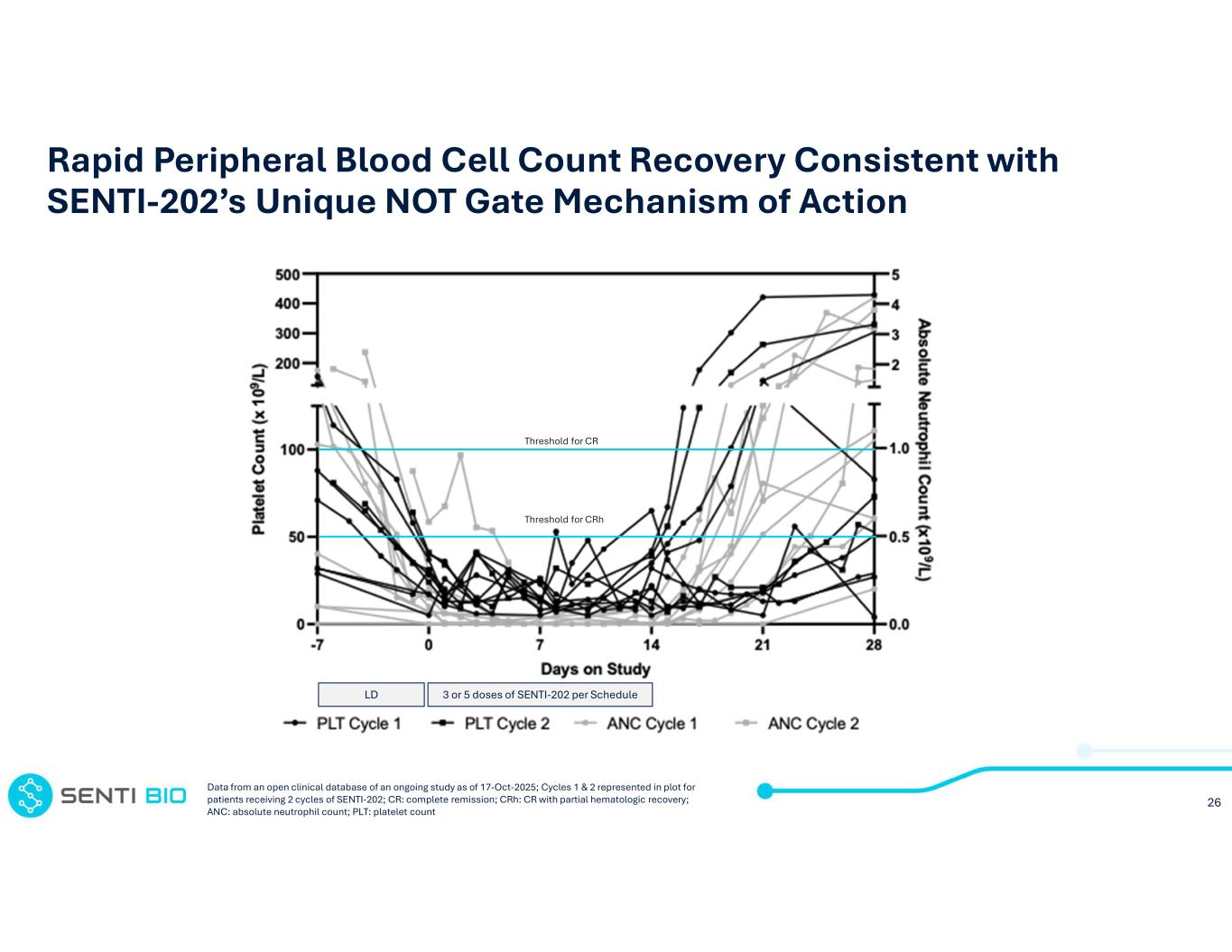
Rapid Peripheral Blood Cell Count Recovery Consistent with SENTI-202’s Unique NOT Gate Mechanism of Action Data from an open clinical database of an ongoing study as of 17-Oct-2025; Cycles 1 & 2 represented in plot for patients receiving 2 cycles of SENTI-202; CR: complete remission; CRh: CR with partial hematologic recovery; ANC: absolute neutrophil count; PLT: platelet count 26 Threshold for CRh Threshold for CR LD 3 or 5 doses of SENTI-202 per Schedule


SENTI-202 Peripheral Blood Exposure is Generally Consistent Across All Dosed Patients • SENTI-202 is detected in periphery of treated subjects, with PK profile consistent with allogeneic NK cell therapies • Peripheral expansion in the first 14 days • Clearance from periphery after the first two weeks • Patients who responded (ORR) had a preliminary trend* to increased SENTI-202 exposure compared to non-responders • Preliminary trend* to dose dependent increased SENTI-202 exposure with increased dose level *statistically not-significant PK: pharmacokinertics; ORR: overall response. Value of 1 assigned for timepoints with non-measurable transgene, LLOQ estimated using equivalent DNA loading and is the lower limit of quantitation; Note: Subject 1 Cycle 1 samples were processed out of stability window and are excluded from analysis of PK parameters Dose Level 1 patients include 3 each dosed in Schedule I and Schedule II, Dose Level 2 patients were all dosed in Schedule I. Interim PK data as of 17-Oct-2025 LLOQ LLOQ 27


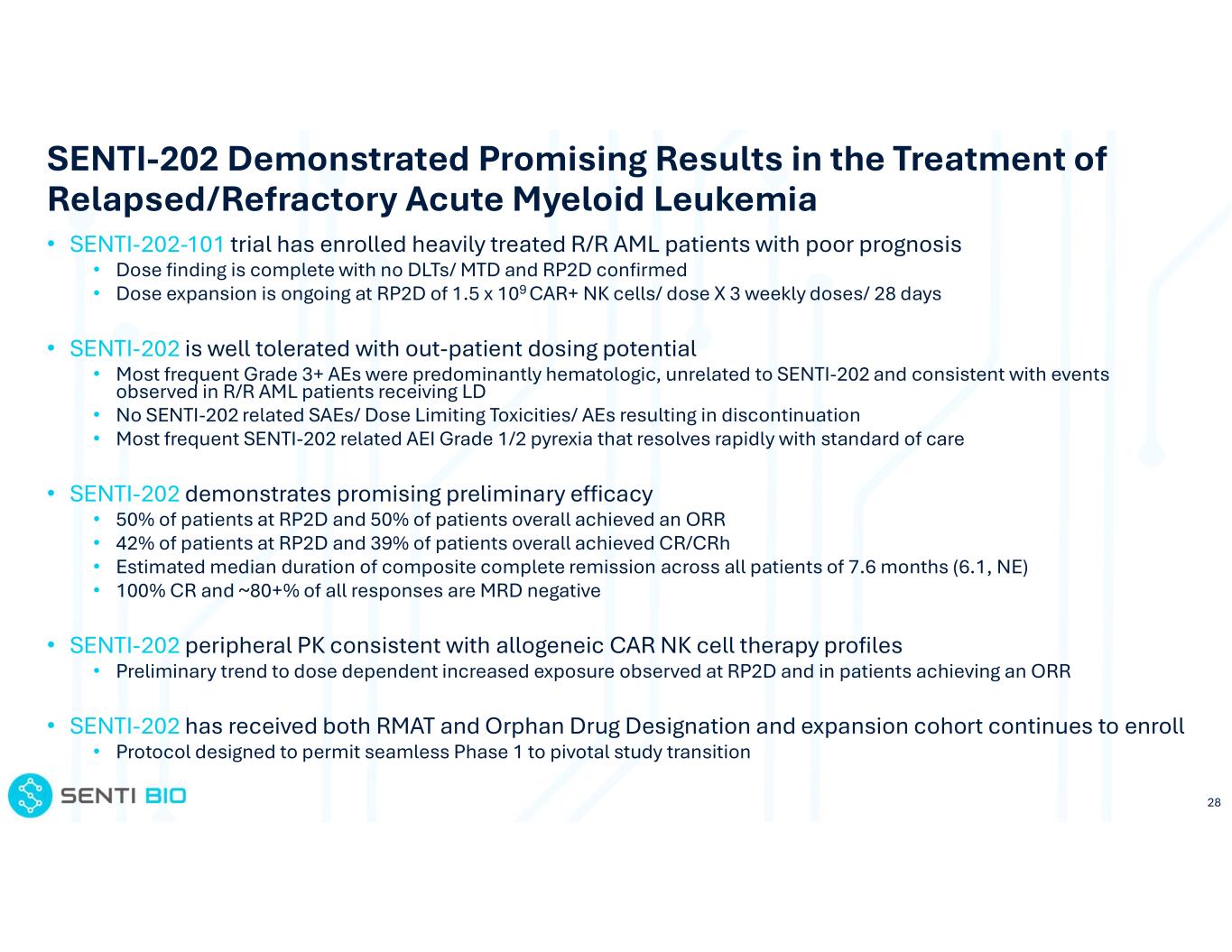
SENTI-202 Demonstrated Promising Results in the Treatment of Relapsed/Refractory Acute Myeloid Leukemia • SENTI-202-101 trial has enrolled heavily treated R/R AML patients with poor prognosis • Dose finding is complete with no DLTs/ MTD and RP2D confirmed • Dose expansion is ongoing at RP2D of 1.5 x 10⁹ CAR+ NK cells/ dose X 3 weekly doses/ 28 days • SENTI-202 is well tolerated with out-patient dosing potential • Most frequent Grade 3+ AEs were predominantly hematologic, unrelated to SENTI-202 and consistent with events observed in R/R AML patients receiving LD • No SENTI-202 related SAEs/ Dose Limiting Toxicities/ AEs resulting in discontinuation • Most frequent SENTI-202 related AEI Grade 1/2 pyrexia that resolves rapidly with standard of care • SENTI-202 demonstrates promising preliminary efficacy • 50% of patients at RP2D and 50% of patients overall achieved an ORR • 42% of patients at RP2D and 39% of patients overall achieved CR/CRh • Estimated median duration of composite complete remission across all patients of 7.6 months (6.1, NE) • 100% CR and ~80+% of all responses are MRD negative • SENTI-202 peripheral PK consistent with allogeneic CAR NK cell therapy profiles • Preliminary trend to dose dependent increased exposure observed at RP2D and in patients achieving an ORR • SENTI-202 has received both RMAT and Orphan Drug Designation and expansion cohort continues to enroll • Protocol designed to permit seamless Phase 1 to pivotal study transition 28


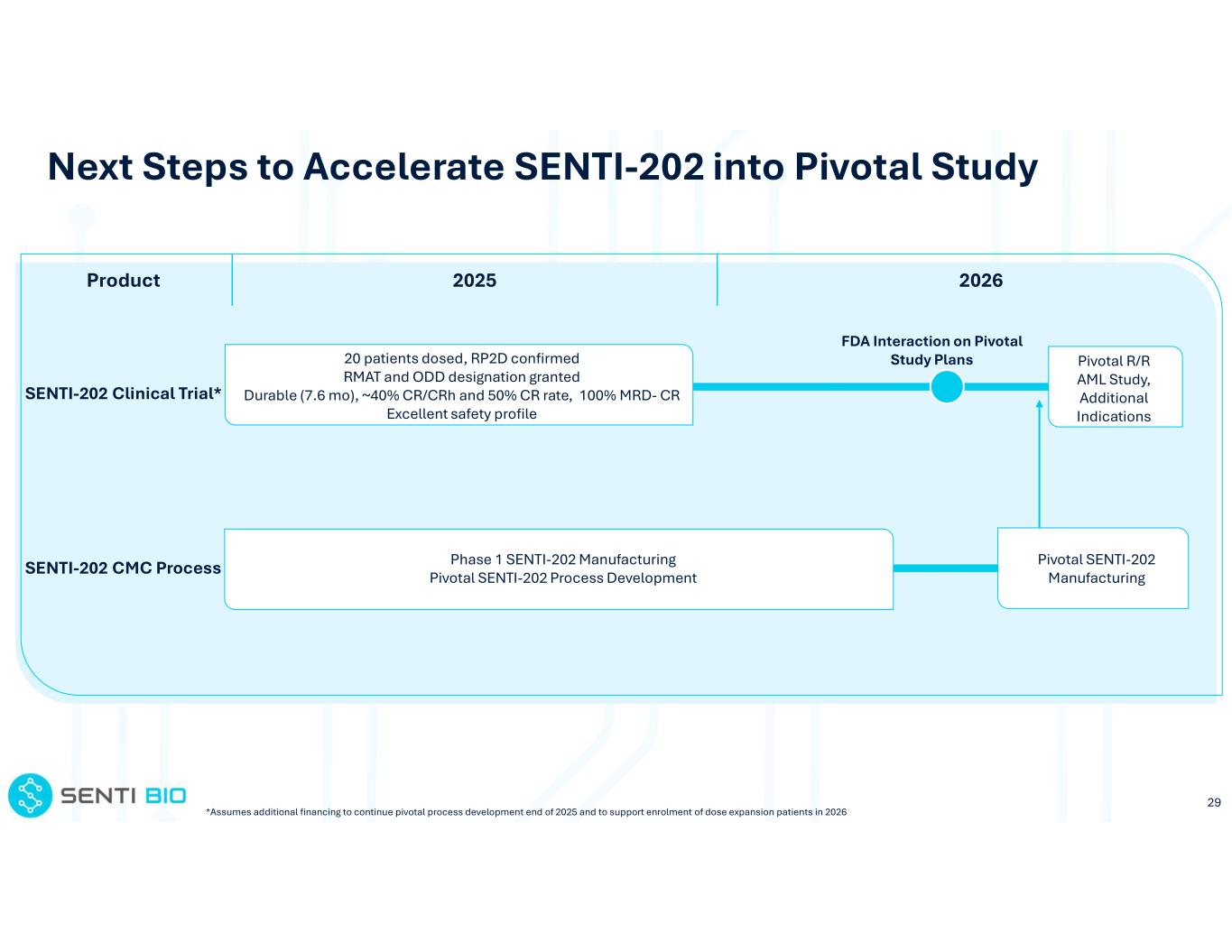
29 Next Steps to Accelerate SENTI-202 into Pivotal Study *Assumes additional financing to continue pivotal process development end of 2025 and to support enrolment of dose expansion patients in 2026 20262025Product SENTI-202 Clinical Trial* SENTI-202 CMC Process 20 patients dosed, RP2D confirmed RMAT and ODD designation granted Durable (7.6 mo), ~40% CR/CRh and 50% CR rate, 100% MRD- CR Excellent safety profile Pivotal R/R AML Study, Additional Indications Phase 1 SENTI-202 Manufacturing Pivotal SENTI-202 Process Development Pivotal SENTI-202 Manufacturing FDA Interaction on Pivotal Study Plans


Tim Lu, MD, PhD CEO and Co-Founder 30


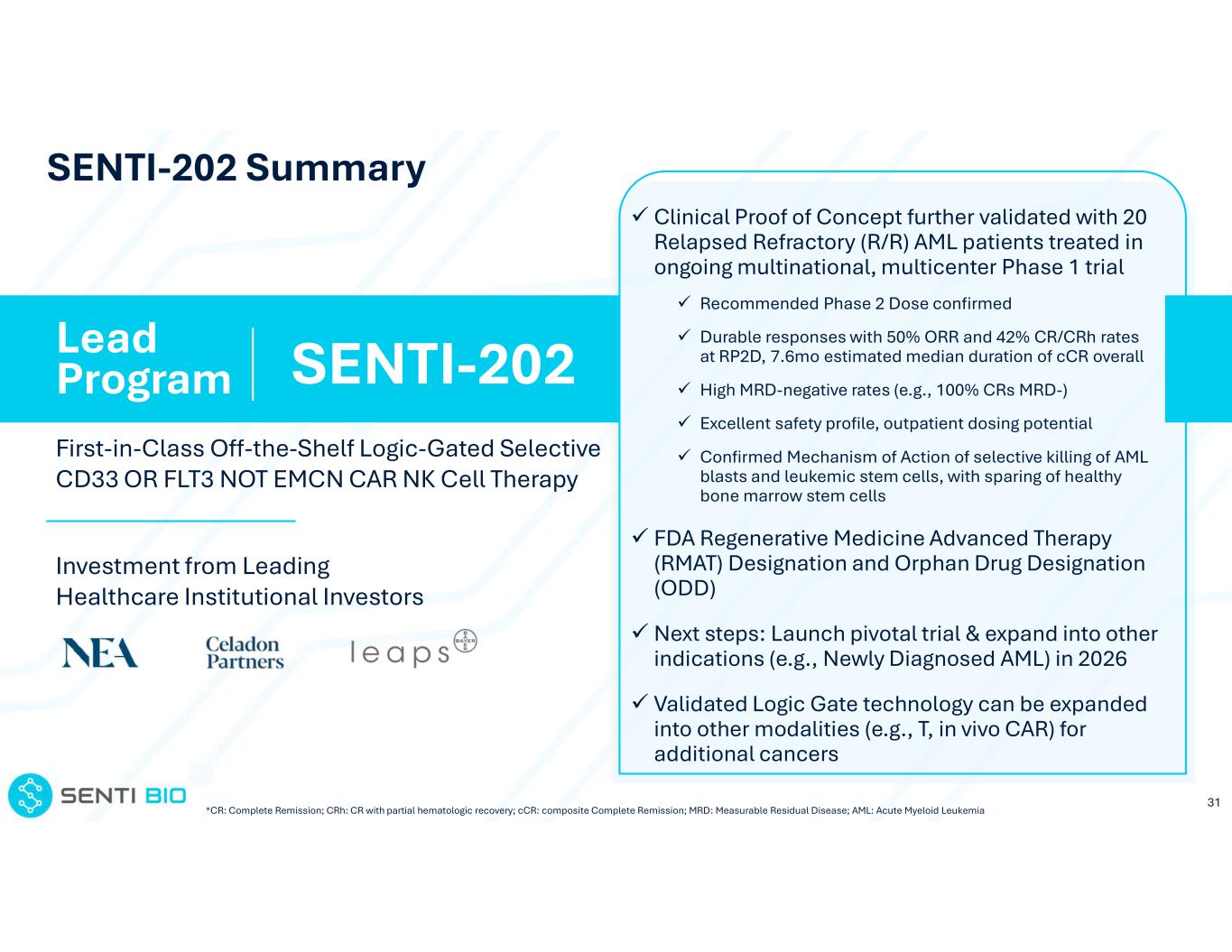
First-in-Class Off-the-Shelf Logic-Gated Selective CD33 OR FLT3 NOT EMCN CAR NK Cell Therapy Investment from Leading Healthcare Institutional Investors Lead Program SENTI-202 SENTI-202 Summary 31 *CR: Complete Remission; CRh: CR with partial hematologic recovery; cCR: composite Complete Remission; MRD: Measurable Residual Disease; AML: Acute Myeloid Leukemia  Clinical Proof of Concept further validated with 20 Relapsed Refractory (R/R) AML patients treated in ongoing multinational, multicenter Phase 1 trial  Recommended Phase 2 Dose confirmed  Durable responses with 50% ORR and 42% CR/CRh rates at RP2D, 7.6mo estimated median duration of cCR overall  High MRD-negative rates (e.g., 100% CRs MRD-)  Excellent safety profile, outpatient dosing potential  Confirmed Mechanism of Action of selective killing of AML blasts and leukemic stem cells, with sparing of healthy bone marrow stem cells  FDA Regenerative Medicine Advanced Therapy (RMAT) Designation and Orphan Drug Designation (ODD)  Next steps: Launch pivotal trial & expand into other indications (e.g., Newly Diagnosed AML) in 2026  Validated Logic Gate technology can be expanded into other modalities (e.g., T, in vivo CAR) for additional cancers


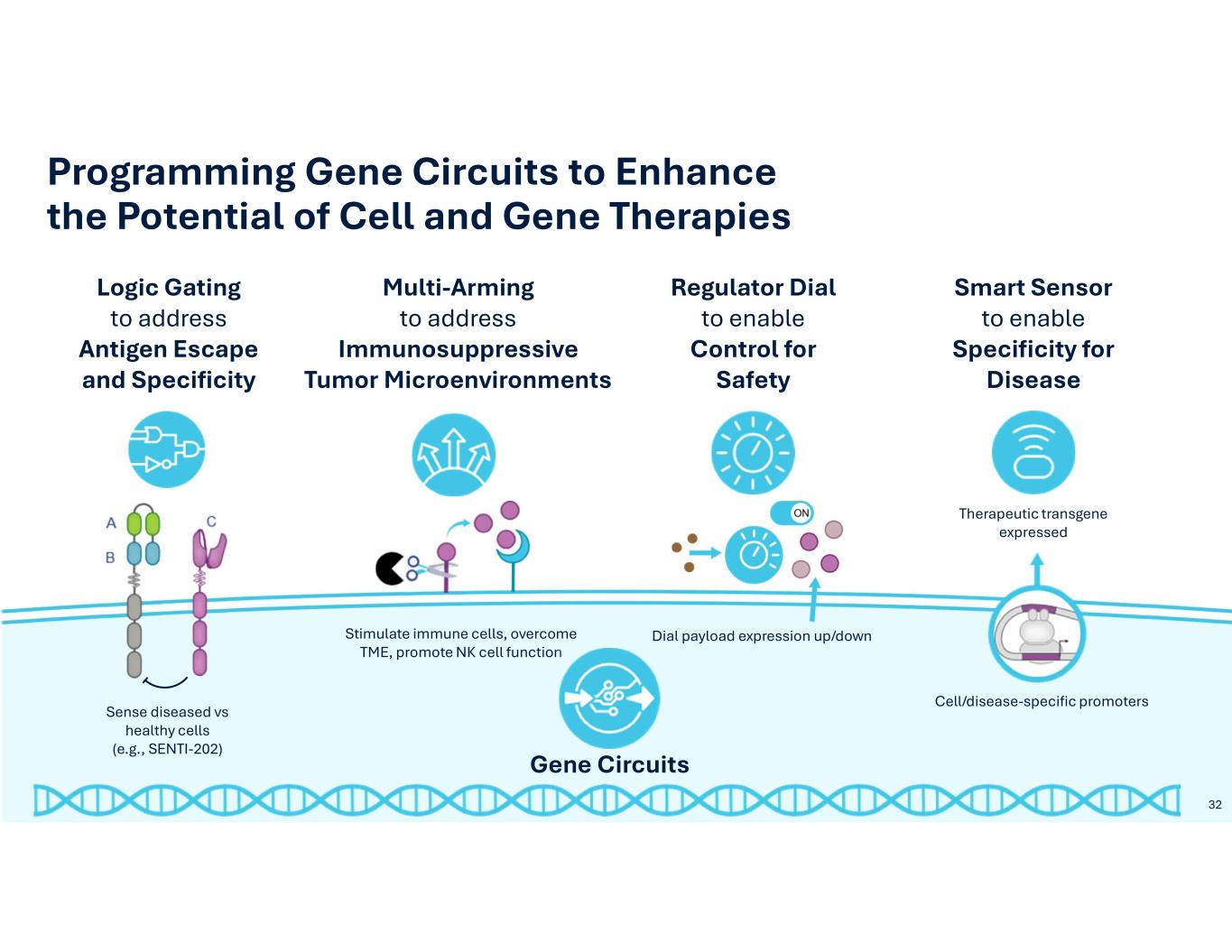
Programming Gene Circuits to Enhance the Potential of Cell and Gene Therapies SENTI BIO CONFIDENTIAL, #CT014 32 Multi-Arming to address Immunosuppressive Tumor Microenvironments Regulator Dial to enable Control for Safety Smart Sensor to enable Specificity for Disease Logic Gating to address Antigen Escape and Specificity Sense diseased vs healthy cells (e.g., SENTI-202) Stimulate immune cells, overcome TME, promote NK cell function Dial payload expression up/down Cell/disease-specific promoters Therapeutic transgene expressed Gene Circuits


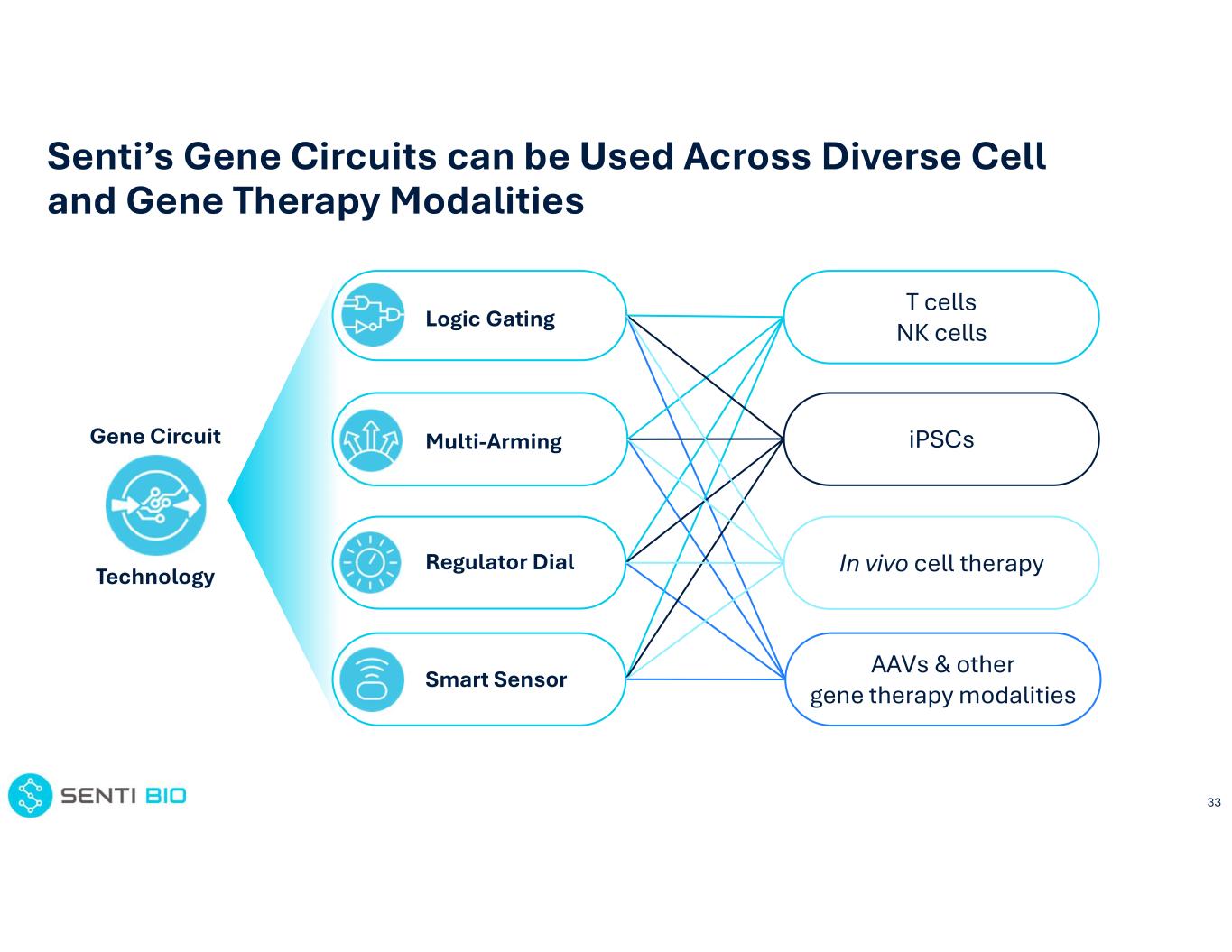
Senti’s Gene Circuits can be Used Across Diverse Cell and Gene Therapy Modalities iPSCs In vivo cell therapy AAVs & other gene therapy modalities T cells NK cells Gene Circuit Multi-Arming Regulator Dial Smart Sensor Logic Gating Technology 33


34