Long -Term Data Presented at the 22nd Annual WORLDSymposium™
Highlights Tralesinidase Alfa Enzyme Replacement Therapy’s Potential as the First Disease-Modifying Treatment Option for Sanfilippo Syndrome Type B (MPS IIIB)
Treatment with Weekly TA-ERT Demonstrated Rapid and Durable Normalization of Cerebral Spinal Fluid Heparan Sulfate Non-Reducing End (CSF HS-NRE), a Surrogate Endpoint Reasonably Likely to Predict Clinical Benefit
TA-ERT Treatment Stabilized and Preserved Cognitive and Non-Cognitive Outcomes, such as Communication and Motor Skills for Over Six-Year Period Relative to Natural History Patients
Safety Profile Consistent with Intracerebroventricular Administration with ~6,000 Doses Administered Over Six-Year Period
South San Francisco, Calif. – February 5, 2026 – Spruce Biosciences, Inc. (Nasdaq: SPRB), a late-stage biopharmaceutical company focused on developing and commercializing novel therapies for neurological disorders with significant unmet medical need, announced that data from two different analyses presented today at the 22nd Annual WORLDSymposium™ demonstrate that the long-term administration of tralesinidase alfa enzyme replacement therapy (TA-ERT) resulted in rapid and durable reduction of heparan sulfate and preserved cognitive and non-cognitive outcomes in patients with Sanfilippo Syndrome Type B (MPS IIIB) relative to natural history patients.
“This long-term data supports tralesinidase alfa enzyme replacement therapy as potentially the first disease-modifying treatment option for individuals living with Sanfilippo Syndrome Type B, a fatal condition for which no approved therapies currently exist,” said Nicole Muschol, M.D., International Center for Lysosomal Disorders (ICLD) at the University Medical Center Hamburg-Eppendorf in Germany and Principal Investigator. “The stabilization and preservation of cognitive function, receptive and expressive communication, and fine and gross motor skills observed over six years of TA-ERT treatment are meaningful and provide hope for the families and patients affected by this devastating disorder.”
In an analysis of 22 patients who enrolled in interventional studies of TA-ERT and followed up to six years, TA-ERT treatment:
•Rapidly and durably normalized levels of cerebral spinal fluid heparan sulfate non-reducing end (CSF HS-NRE), a surrogate endpoint reasonably likely to predict clinical benefit in patients with MPS IIIB;
•Stabilized cognitive function as assessed by Bayley-III Cognitive Raw Score (BSID-C), the cognitive subscale of the validated Bayley Scales of Infant and Toddler Development - Third Edition (Bayley-III) scale relative to declines seen in untreated natural history patients;
•Stabilized cortical gray matter volume, which declined in untreated natural history patients, and normalized liver and spleen volume; and
•Was generally consistent with the safety profile of intracerebroventricular (ICV) administration; over the six-year study, approximately 6,000 doses were administered to 22 patients.
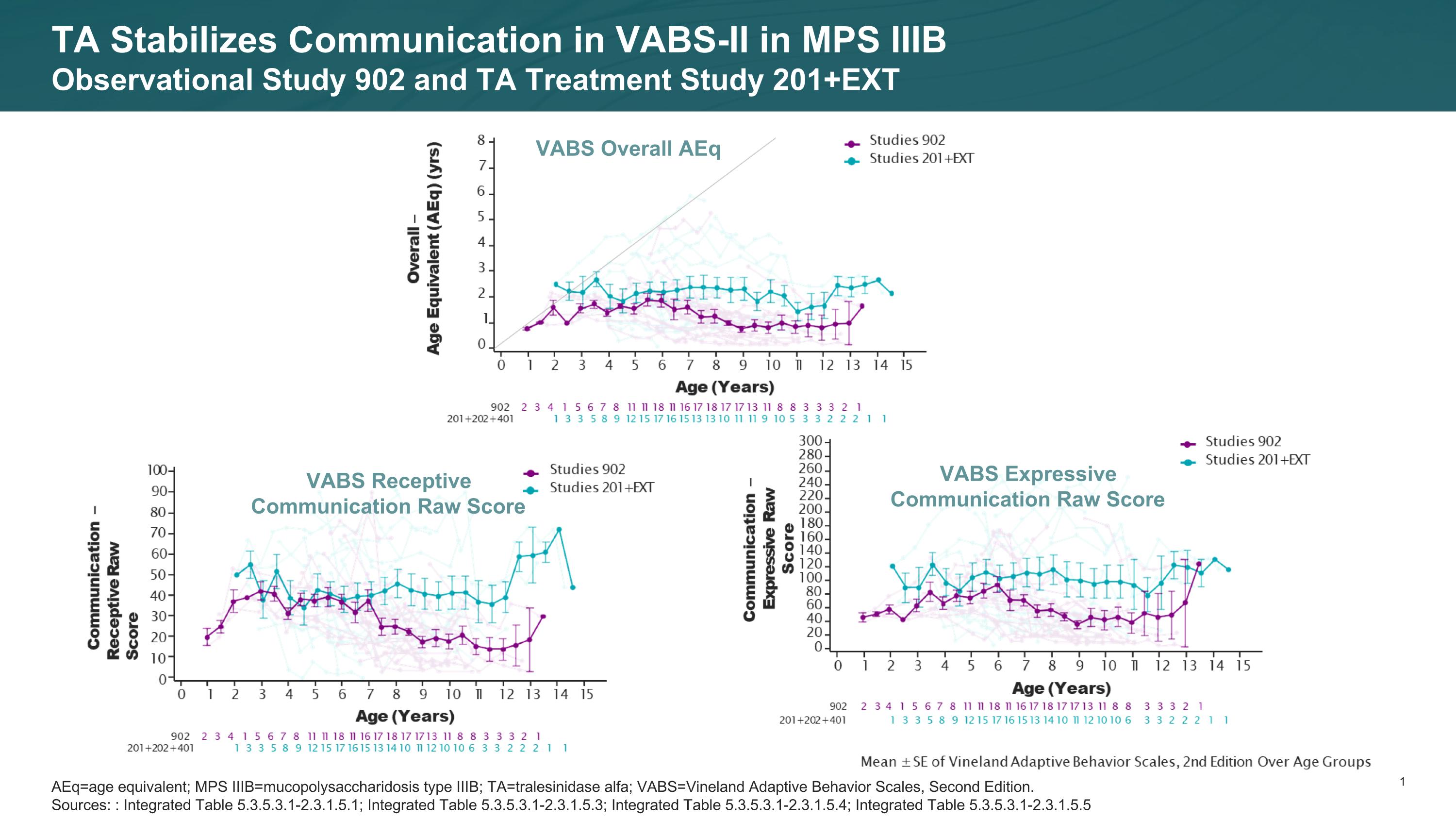
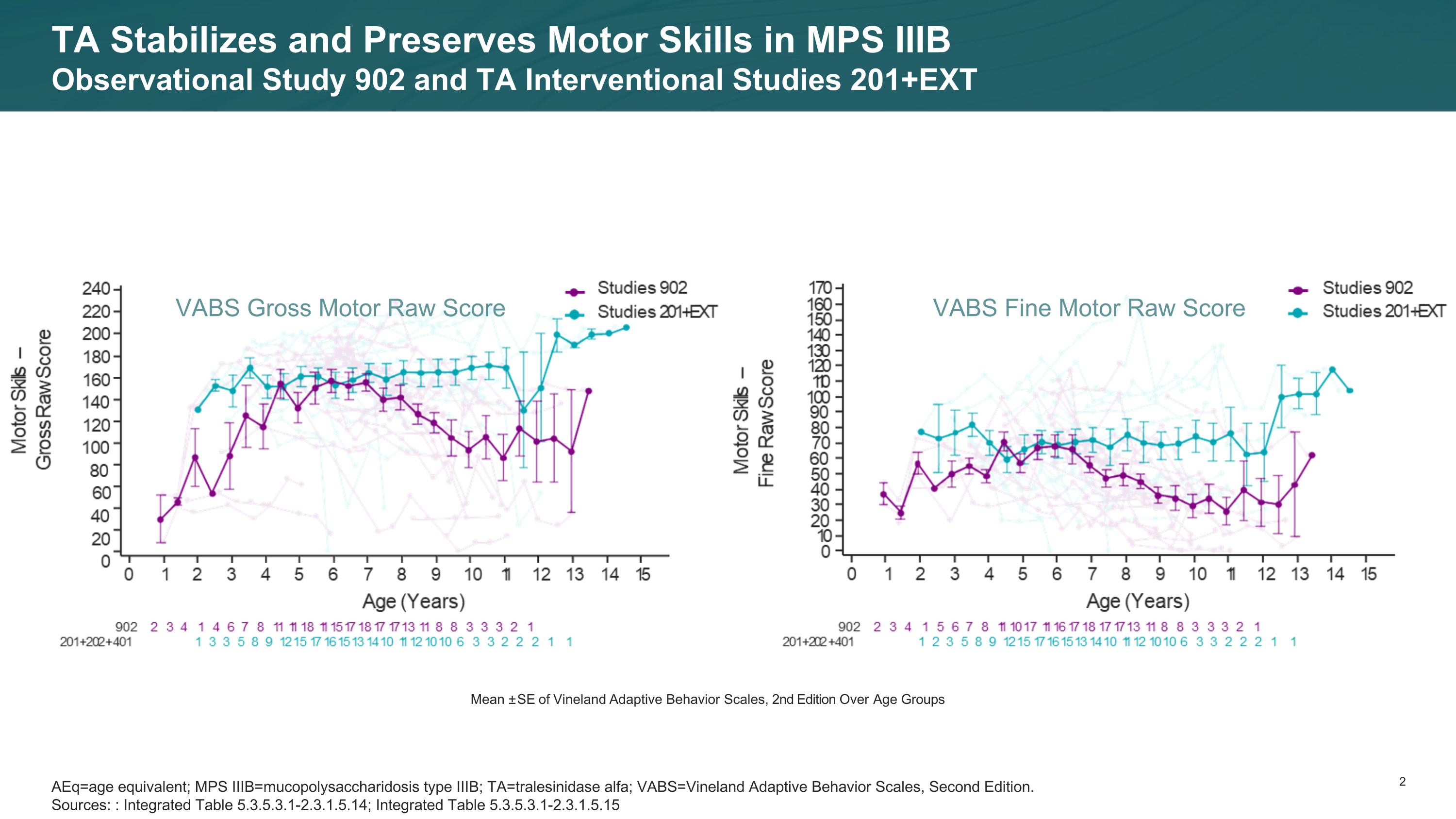
New analysis using the validated Vineland Adaptive Behavior Scales – Second Addition (VABS-II) scale also showed that TA-ERT was associated with a stabilization in receptive and expressive communication, as well as both fine and gross motor skills, compared to a decline in these outcomes in untreated natural history patients.
“This dataset represents an important milestone in the development of TA-ERT and reflects our commitment to generating the rigorous safety and efficacy data needed to deepen our understanding of this potential first- and best-in-class therapy,” said Kirk Ways, M.D., Ph.D., Chief Medical Officer of Spruce Biosciences. “Seeing sustained normalization of CSF HS-NRE alongside long-term stabilization of cognitive function, communication, and motor skills strengthens our confidence in the potential of TA-ERT and reinforces our dedication to working closely with the Sanfilippo community to responsibly advance this program through a biologics license application submission and
potential U.S. FDA approval. We are incredibly grateful to the children, families, caregivers, and study investigators who participated in the TA-ERT clinical development program.”
A second presentation analyzed the course of disease in two siblings who were diagnosed with non-attenuated, severe MPS IIIB. One sibling participated in the interventional clinical trials of TA-ERT, while the other sibling was untreated. In an age-matched comparison, the sibling treated with TA-ERT appeared to display higher cognitive, language, and motor functioning relative to the untreated sibling at a similar age. At 12.1 years of age and one month after cessation of treatment, the sibling treated with TA-ERT was able to speak a few words, was toilet trained and could feed himself finger foods. The untreated sibling at age 11.7 years was nonverbal, was no longer toilet trained, and was dependent on caregivers for feeding.
“This unique analysis enabled us to control for genetic, environmental, and socioeconomic variables in understanding how supportive care with and without administration of TA-ERT can impact the course of MPS IIIB,” said Irene Chang, M.D., Associate Professor at the University of California, San Francisco. “When we compare clinical observations at a similar age range between the treated and untreated siblings, we see a clear divergence in cognitive and functional ability, demonstrating the potential of TA-ERT to be a novel and clinically meaningful treatment option for children and families impacted by MPS IIIB.”
For more information, the two poster presentations can be found on the Spruce Biosciences website at https://investors.sprucebio.com/news-and-events/presentations.
About Sanfilippo Syndrome Type B (MPS IIIB)
Sanfilippo Syndrome Type B (MPS IIIB) is an ultra-rare, serious, and fatal genetic disease characterized by deficiency in N-Acetyl-Alpha-Glycosaminidase (NAGLU), an enzyme required for the catabolism of heparan sulfate (HS) in lysosomes. It is estimated that MPS IIIB affects fewer than one in 200,000 people in the United States, but the true incidence and prevalence are difficult to ascertain because MPS IIIB is a disease currently not included in newborn screening. The accumulation of toxic levels of cerebral spinal fluid heparan sulfate in the brain is the underlying pathophysiology of MPS IIIB. Although signs and symptoms of MPS IIIB can vary amongst affected individuals, progressive neurodegeneration typically follows a predictable path to brain atrophy, cognitive and developmental impairment, hyperactivity with aggressive and destructive behavior, delayed speech, hearing loss, and motor skill deficits. Somatic manifestations include coarse facial features, hepatosplenomegaly, and gastrointestinal symptoms. The final stage of MPS IIIB is typically marked by severe dementia, loss of motor function, and seizure activity, with patients largely bed-ridden and requiring constant care, requiring feeding tubes for hydration and nutrition, and ultimately leading to death. The estimated life expectancy of individuals with MPS IIIB ranges from 15 to 19 years of age. Currently, there are no FDA-approved therapies for MPS IIIB, and management of the disease consists of limited palliative care to improve quality of life.
About Tralesinidase Alfa Enzyme Replacement Therapy (TA-ERT)
Tralesinidase Alfa Enzyme Replacement Therapy (TA-ERT) is a fusion protein comprised of recombinant human alpha-N-acetylglucosaminidase (rhNAGLU). TA-ERT is intended as an enzyme replacement therapy for the treatment of patients with Sanfilippo Syndrome Type B (MPS IIIB) who lack rhNAGLU enzyme activity. TA-ERT is expected to restore rhNAGLU enzyme activity in the central nervous system following intracerebroventricular injection. rhNAGLU typically lacks the mannose-6 phosphate residues that are essential for efficient cellular uptake via the M6P receptor pathway. As a result, the naked enzyme is poorly absorbed by cells, including neurons. To address this challenge, TA-ERT is fused to an insulin-like growth factor 2 peptide, which binds to the cation-independent mannose-6-phosphate on cell surfaces. This fusion enables the enzyme to be internalized and delivered to the lysosome, thereby enhancing its therapeutic potential for treating MPS IIIB. By restoring NAGLU enzymatic activity and promoting clearance of lysosomal heparan sulfate and heparan sulfate non-reducing end in the brain, TA-ERT therapy is expected to preserve neuronal cell health and potentially halt or slow the neurological decline and improve clinical outcomes in affected patients. TA-ERT has been evaluated in three clinical studies in participants with MPS IIIB: the interventional study 201 and extension studies 202 and 401. TA-ERT has been
administered to 22 individuals diagnosed with MPS IIIB, and has demonstrated an adequate safety profile based on integrated six years of safety data.
About Spruce Biosciences
Spruce Biosciences is a late-stage biopharmaceutical company focused on developing and commercializing novel therapies for neurological disorders with significant unmet medical need. To learn more, visit www.sprucebio.com and follow us on X, LinkedIn, Facebook and YouTube.
Forward Looking Statements
Statements contained in this press release regarding matters that are not historical facts are “forward-looking statements” within the meaning of the Private Securities Litigation Reform Act of 1995. Such forward-looking statements include statements regarding, among other things, the ability to seek accelerated approval of TA-ERT for MPS IIIB based on existing clinical data; the timing and likelihood of regulatory filings and approvals for TA-ERT, including advancing this program through a biologics license application submission and potential U.S. FDA approval; the potentially transformative clinical impact for TA-ERT; and TA-ERT’s potential to be the first and best-in-class disease-modifying therapy to treat MPS IIIB. Because such statements are subject to risks and uncertainties, actual results may differ materially from those expressed or implied by such forward-looking statements. Words such as “anticipate,” “will,” “potential,” “intend,” “expect,” and similar expressions are intended to identify forward-looking statements. These forward-looking statements are based upon Spruce’s current expectations and involve assumptions that may never materialize or may prove to be incorrect. Actual results could differ materially from those anticipated in such forward-looking statements as a result of various risks and uncertainties, which include, without limitation, risks and uncertainties associated with Spruce’s business in general, the impact of geopolitical and macroeconomic events, and the other risks described in Spruce’s filings with the U.S. Securities and Exchange Commission. All forward-looking statements contained in this press release speak only as of the date on which they were made and are based on management’s assumptions and estimates as of such date. Spruce undertakes no obligation to update such statements to reflect events that occur or circumstances that exist after the date on which they were made, except as required by law.
Contacts
Media
Carolyn Hawley
Inizio Evoke Comms
[email protected]
[email protected]
Investors
Samir Gharib
President and CFO
Spruce Biosciences, Inc.
[email protected]