10-K
false0001351636FY1P3Yoneone111http://fasb.org/us-gaap/2025#OtherNonoperatingIncomeExpensehttp://fasb.org/us-gaap/2025#OtherNonoperatingIncomeExpensehttp://fasb.org/us-gaap/2025#OtherNonoperatingIncomeExpensehttp://fasb.org/us-gaap/2025#AccruedLiabilitiesAndOtherLiabilitieshttp://fasb.org/us-gaap/2025#AccruedLiabilitiesAndOtherLiabilities1http://fasb.org/srt/2025#ChiefExecutiveOfficerMember10001351636ssti:TwoThousandAndSeventeenEmployeeStockPurchasePlanMember2025-12-310001351636us-gaap:AdditionalPaidInCapitalMember2025-01-012025-12-310001351636ssti:TwoThousandSeventeenEquityIncentivePlanMember2017-05-012017-05-310001351636us-gaap:AccumulatedOtherComprehensiveIncomeMember2023-12-310001351636ssti:FourHundredOneKPlanMember2023-01-012023-12-3100013516362025-10-310001351636ssti:FourHundredOneKPlanMember2025-01-012025-12-310001351636us-gaap:CommonStockMember2022-12-310001351636us-gaap:FairValueInputsLevel3Member2023-08-310001351636us-gaap:CreditConcentrationRiskMember2024-12-310001351636ssti:ColumbiaCreditAgreementMemberssti:LetterOfCreditSubfacilityMember2025-01-012025-12-310001351636us-gaap:VehiclesMember2024-12-310001351636us-gaap:VehiclesMember2025-12-310001351636stpr:CAssti:ForensicLogicLlcMember2022-01-310001351636us-gaap:RestrictedStockUnitsRSUMemberssti:TwoThousandSeventeenEquityIncentivePlanMember2025-01-012025-12-310001351636stpr:CAssti:ForensicLogicLlcMember2022-01-012022-01-310001351636ssti:UnvestedRestrictedStockUnitsMember2025-12-310001351636us-gaap:RetainedEarningsMember2022-12-310001351636us-gaap:FairValueInputsLevel3Memberus-gaap:FairValueMeasurementsRecurringMemberssti:ForensicLogicLlcMember2025-01-012025-12-310001351636ssti:RecognitionFromBeginningDeferredRevenueBalanceMember2025-01-012025-12-3100013516362024-01-310001351636us-gaap:FurnitureAndFixturesMember2025-12-310001351636us-gaap:EmployeeSeveranceMember2025-01-012025-12-310001351636us-gaap:RestrictedStockUnitsRSUMember2023-01-012023-12-310001351636us-gaap:CommonStockMember2023-01-012023-12-310001351636ssti:ProfessionalSoftwareDevelopmentServicesMember2024-01-012024-12-310001351636us-gaap:RetainedEarningsMember2024-01-012024-12-310001351636us-gaap:AccumulatedOtherComprehensiveIncomeMember2025-01-012025-12-310001351636ssti:RecognitionFromNewBillingsOfDeferredRevenueMember2024-01-012024-12-310001351636ssti:DeployedEquipmentMember2024-12-310001351636us-gaap:CostOfSalesMember2024-01-012024-12-310001351636us-gaap:SellingAndMarketingExpenseMember2023-01-012023-12-310001351636country:US2025-01-012025-12-310001351636us-gaap:EmployeeSeveranceMembersrt:ScenarioForecastMember2026-01-012026-03-310001351636ssti:SharesIssuableUnderTwoThousandSeventeenEmployeeStockPurchasePlansMember2025-01-012025-12-310001351636ssti:GunshotDetectionServicesMemberssti:AccountingStandardsUpdates201409Memberus-gaap:SellingAndMarketingExpenseMember2025-01-012025-12-310001351636us-gaap:SecuredOvernightFinancingRateSofrOvernightIndexSwapRateMemberssti:ColumbiaCreditAgreementMember2025-01-012025-12-310001351636ssti:FourHundredOneKPlanMember2024-01-012024-12-310001351636country:ZA2025-01-012025-12-310001351636us-gaap:PerformanceSharesMember2023-12-310001351636country:US2023-01-012023-12-310001351636us-gaap:PatentsMember2025-12-310001351636us-gaap:EmployeeStockOptionMember2023-01-012023-12-310001351636us-gaap:RetainedEarningsMember2025-12-310001351636us-gaap:EmployeeStockOptionMember2024-01-012024-12-3100013516362026-01-012025-12-310001351636us-gaap:SalesRevenueNetMemberus-gaap:GeographicConcentrationRiskMemberssti:ChicagoMember2023-01-012023-12-310001351636ssti:AcquiredSoftwareTechnologyMember2024-12-310001351636us-gaap:DomesticCountryMember2018-12-310001351636us-gaap:SellingAndMarketingExpenseMember2025-01-012025-12-310001351636us-gaap:StateAndLocalJurisdictionMember2025-01-012025-12-310001351636us-gaap:PatentsMember2024-12-310001351636ssti:SoundthinkingMember2023-01-012023-12-310001351636us-gaap:FairValueInputsLevel3Memberus-gaap:FairValueMeasurementsRecurringMemberssti:ForensicLogicLlcMember2023-01-012023-12-310001351636ssti:TwoThousandSeventeenEquityIncentivePlanMemberus-gaap:EmployeeStockOptionMember2023-01-012023-12-310001351636ssti:TwoThousandSeventeenEquityIncentivePlanMember2024-12-310001351636us-gaap:SoftwareAndSoftwareDevelopmentCostsMember2024-12-310001351636ssti:GunshotDetectionServicesMemberssti:AccountingStandardsUpdates201409Memberus-gaap:SellingAndMarketingExpenseMember2023-01-012023-12-310001351636srt:MinimumMemberus-gaap:CustomerRelationshipsMember2025-12-310001351636srt:MinimumMember2025-12-310001351636us-gaap:EmployeeSeveranceMember2024-01-012024-12-310001351636us-gaap:DomesticCountryMember2025-12-310001351636ssti:LeaseTerminationMember2024-01-012024-12-3100013516362027-01-012025-12-310001351636us-gaap:AccountingStandardsUpdate202309Member2025-12-310001351636country:BS2024-01-012024-12-310001351636srt:MaximumMember2025-01-012025-12-310001351636us-gaap:RestrictedStockUnitsRSUMemberssti:TwoThousandSeventeenEquityIncentivePlanMember2024-01-012024-12-310001351636us-gaap:SellingAndMarketingExpenseMember2024-01-012024-12-310001351636ssti:ProfessionalSoftwareDevelopmentServicesMember2023-01-012023-12-310001351636country:UY2024-01-012024-12-310001351636us-gaap:RestrictedStockUnitsRSUMember2022-12-310001351636us-gaap:TradeNamesMember2025-12-310001351636srt:MaximumMember2025-12-310001351636ssti:TwoThousandFiveEquityIncentivePlanMember2017-05-310001351636ssti:TwoThousandSeventeenEquityIncentivePlanMember2025-12-310001351636us-gaap:SalesRevenueNetMemberus-gaap:GeographicConcentrationRiskMemberssti:ChicagoMember2024-01-012024-12-310001351636us-gaap:AdditionalPaidInCapitalMember2024-12-310001351636us-gaap:GeneralAndAdministrativeExpenseMember2025-01-012025-12-310001351636srt:MinimumMember2023-12-310001351636ssti:TwoThousandSeventeenEquityIncentivePlanMemberus-gaap:EmployeeStockOptionMember2025-01-012025-12-310001351636us-gaap:DomesticCountryMember2024-12-310001351636us-gaap:PerformanceSharesMember2024-12-310001351636us-gaap:RevolvingCreditFacilityMemberssti:ColumbiaCreditAgreementMember2024-12-310001351636ssti:GunshotDetectionServicesMembersrt:MaximumMember2025-01-012025-12-310001351636ssti:CatchUpMemberssti:NewYorkCityPoliceDepartmentMember2025-12-310001351636us-gaap:LeaseholdsAndLeaseholdImprovementsMember2024-12-310001351636country:BS2025-01-012025-12-310001351636ssti:RecognitionFromBeginningDeferredRevenueBalanceMember2024-01-012024-12-310001351636ssti:UnvestedRestrictedStockUnitsMember2023-01-012023-12-310001351636ssti:TwoThousandAndSeventeenEmployeeStockPurchasePlanMember2025-01-012025-12-310001351636us-gaap:AccumulatedOtherComprehensiveIncomeMember2024-01-012024-12-310001351636us-gaap:ComputerEquipmentMember2024-12-310001351636srt:MinimumMember2024-01-012024-12-3100013516362025-05-012025-05-310001351636us-gaap:RestrictedStockUnitsRSUMember2024-12-310001351636us-gaap:PerformanceSharesMember2023-01-012023-12-310001351636ssti:OtherCustomersMemberssti:CatchUpMember2025-01-012025-12-310001351636ssti:ForensicLogicLlcMember2025-01-012025-12-3100013516362024-04-012024-06-300001351636srt:MaximumMember2023-12-310001351636us-gaap:CommonStockMember2025-01-012025-12-3100013516362028-01-012025-12-310001351636country:UY2025-01-012025-12-310001351636us-gaap:AdditionalPaidInCapitalMember2023-12-3100013516362025-01-012025-12-3100013516362021-10-010001351636us-gaap:CustomerRelationshipsMember2025-12-310001351636us-gaap:SalesRevenueNetMemberstpr:NYus-gaap:GeographicConcentrationRiskMember2024-01-012024-12-310001351636ssti:IncentiveStockOptionsMember2025-01-012025-12-310001351636us-gaap:RestrictedStockUnitsRSUMember2023-12-310001351636us-gaap:PerformanceSharesMember2022-12-310001351636ssti:UnvestedRestrictedStockUnitsMember2025-01-012025-12-310001351636srt:MaximumMember2022-11-300001351636srt:MinimumMemberssti:GunshotDetectionServicesMember2025-01-012025-12-310001351636ssti:ProfessionalSoftwareDevelopmentServicesMember2025-01-012025-12-310001351636us-gaap:DomesticCountryMember2025-01-012025-12-310001351636ssti:ColumbiaCreditAgreementMemberssti:LetterOfCreditSubfacilityMember2025-12-310001351636us-gaap:RestrictedStockUnitsRSUMember2025-12-3100013516362025-12-310001351636country:CA2025-12-310001351636ssti:GunshotDetectionServicesMemberssti:AccountingStandardsUpdates201409Memberus-gaap:SellingAndMarketingExpenseMember2024-01-012024-12-310001351636ssti:SharesIssuableUnderTwoThousandSeventeenEmployeeStockPurchasePlansMember2023-01-012023-12-310001351636us-gaap:RetainedEarningsMember2023-12-3100013516362025-06-3000013516362025-05-310001351636us-gaap:GeneralAndAdministrativeExpenseMember2024-01-012024-12-310001351636ssti:MaintenanceSupportAndProfessionalSoftwareDevelopmentServicesMember2025-01-012025-12-310001351636ssti:TwoThousandFiveStockPlanAndTwoThousandSeventeenEquityIncentivePlanMembersrt:MaximumMember2025-01-012025-12-310001351636us-gaap:SalesRevenueNetMemberstpr:NYus-gaap:GeographicConcentrationRiskMember2025-01-012025-12-310001351636srt:MaximumMember2024-01-310001351636us-gaap:EmployeeStockOptionMember2025-12-310001351636us-gaap:CustomerRelationshipsMember2024-12-310001351636us-gaap:RevolvingCreditFacilityMemberssti:ColumbiaCreditAgreementMember2025-12-310001351636ssti:DomesticFinancialInstitutionOneMemberus-gaap:CreditConcentrationRiskMember2025-12-310001351636srt:MaximumMember2024-01-012024-12-310001351636us-gaap:SoftwareAndSoftwareDevelopmentCostsMember2025-12-310001351636us-gaap:AdditionalPaidInCapitalMember2024-01-012024-12-310001351636us-gaap:StateAndLocalJurisdictionMember2025-12-310001351636ssti:UnvestedRestrictedStockUnitsMember2024-01-012024-12-3100013516362025-10-012025-10-310001351636us-gaap:CommonStockMember2023-12-310001351636us-gaap:AccountsReceivableMemberstpr:NYus-gaap:GeographicConcentrationRiskMember2024-01-012024-12-310001351636ssti:GunshotDetectionServicesMemberssti:AccountingStandardsUpdates201409Member2025-01-012025-12-310001351636us-gaap:FairValueInputsLevel3Memberus-gaap:FairValueMeasurementsRecurringMemberssti:SafepointeLLCMember2023-01-012023-12-3100013516362024-01-012024-01-310001351636us-gaap:CommonStockMember2025-12-310001351636us-gaap:FairValueInputsLevel3Memberus-gaap:FairValueMeasurementsRecurringMemberssti:SafepointeLLCMember2024-01-012024-12-310001351636us-gaap:AdditionalPaidInCapitalMember2025-12-310001351636ssti:SoundthinkingMember2024-01-012024-12-310001351636ssti:AllOtherForeignCountriesMember2023-01-012023-12-310001351636us-gaap:RestrictedStockUnitsRSUMember2025-01-012025-12-310001351636ssti:ColumbiaCreditAgreementMember2025-01-012025-12-3100013516362020-05-0100013516362023-01-012023-12-310001351636ssti:SoundthinkingMember2025-01-012025-12-310001351636ssti:SharesIssuableUnderTwoThousandSeventeenEmployeeStockPurchasePlansMember2024-01-012024-12-310001351636us-gaap:SecuredOvernightFinancingRateSofrOvernightIndexSwapRateMemberssti:DebtInstrumentFluctuatingRatePerAnnumMemberssti:ColumbiaCreditAgreementMember2025-01-012025-12-3100013516362023-12-310001351636country:CA2025-01-012025-12-310001351636ssti:ColumbiaCreditAgreementMember2024-12-310001351636us-gaap:RestrictedStockUnitsRSUMembersrt:ManagementMember2025-01-012025-12-310001351636ssti:DeployedEquipmentMember2025-12-310001351636us-gaap:EmployeeStockOptionMember2025-01-012025-12-310001351636us-gaap:RestrictedStockUnitsRSUMember2024-01-012024-12-310001351636ssti:TwoThousandAndSeventeenEmployeeStockPurchasePlanMember2017-05-012017-05-310001351636us-gaap:ConstructionInProgressMember2025-12-310001351636us-gaap:SalesRevenueNetMemberstpr:NYus-gaap:GeographicConcentrationRiskMember2023-01-012023-12-310001351636ssti:TwoThousandSeventeenEquityIncentivePlanMember2017-01-012017-12-310001351636ssti:TwoThousandSeventeenEquityIncentivePlanMemberus-gaap:EmployeeStockOptionMember2024-01-012024-12-310001351636us-gaap:PerformanceSharesMember2025-01-012025-12-310001351636ssti:SharesAvailableForFutureGrantMember2025-12-310001351636us-gaap:StateAndLocalJurisdictionMember2024-12-3100013516362025-10-012025-12-310001351636us-gaap:CostOfSalesMember2023-01-012023-12-310001351636ssti:SafepointeLLCMember2025-01-012025-12-310001351636ssti:SafepointeLLCMember2024-01-012024-12-310001351636srt:MinimumMemberus-gaap:ComputerSoftwareIntangibleAssetMember2025-12-310001351636us-gaap:CreditConcentrationRiskMembercountry:US2025-01-012025-12-310001351636srt:ScenarioForecastMember2026-01-012026-03-3100013516362029-01-012025-12-310001351636srt:MaximumMember2023-01-012023-12-310001351636us-gaap:RetainedEarningsMember2025-01-012025-12-310001351636ssti:RecognitionFromNewBillingsOfDeferredRevenueMember2025-01-012025-12-310001351636srt:MaximumMember2024-12-310001351636us-gaap:ComputerSoftwareIntangibleAssetMembersrt:MaximumMember2025-12-310001351636us-gaap:AccumulatedOtherComprehensiveIncomeMember2023-01-012023-12-3100013516362024-12-310001351636stpr:AZssti:ForensicLogicLlcMember2022-01-310001351636us-gaap:RestrictedStockUnitsRSUMemberssti:TwoThousandSeventeenEquityIncentivePlanMember2023-01-012023-12-310001351636ssti:TechnologicSolutionsLlcMember2023-01-012023-03-310001351636srt:MaximumMember2019-05-010001351636ssti:AllOtherForeignCountriesMember2025-01-012025-12-310001351636us-gaap:FurnitureAndFixturesMember2024-12-310001351636ssti:PatentsAndIntellectualPropertyMember2025-12-310001351636us-gaap:FairValueInputsLevel3Memberssti:ForensicLogicLlcMember2022-01-3100013516362020-05-012020-05-010001351636ssti:TwoThousandAndSeventeenEmployeeStockPurchasePlanMember2024-12-310001351636us-gaap:LeaseholdsAndLeaseholdImprovementsMember2025-12-310001351636us-gaap:AccountsReceivableMemberstpr:NYus-gaap:GeographicConcentrationRiskMember2025-01-012025-12-310001351636us-gaap:EmployeeStockOptionMember2025-01-012025-12-310001351636us-gaap:CommonStockMember2024-01-012024-12-310001351636us-gaap:AccumulatedOtherComprehensiveIncomeMember2025-12-310001351636us-gaap:TradeNamesMember2024-12-3100013516362022-12-310001351636srt:MinimumMember2025-01-012025-12-310001351636us-gaap:GeneralAndAdministrativeExpenseMember2023-01-012023-12-310001351636country:ZA2023-01-012023-12-310001351636ssti:SharesIssuableUnderTwoThousandSeventeenEmployeeStockPurchasePlansMember2025-12-3100013516362025-06-012025-06-300001351636us-gaap:AdditionalPaidInCapitalMember2023-01-012023-12-310001351636us-gaap:RetainedEarningsMember2023-01-012023-12-310001351636ssti:TwoThousandSeventeenEquityIncentivePlanMemberus-gaap:EmployeeStockOptionMembersrt:MaximumMember2023-01-012023-12-310001351636stpr:AZssti:ForensicLogicLlcMember2022-01-012022-01-310001351636srt:MinimumMember2023-01-012023-12-310001351636us-gaap:ComputerEquipmentMember2025-12-310001351636srt:MinimumMemberssti:IncentiveStockOptionsMember2025-01-012025-12-310001351636country:BS2023-01-012023-12-310001351636ssti:SubscriptionMaintenanceAndSupportServicesMember2024-01-012024-12-310001351636ssti:CatchUpMember2025-01-012025-12-3100013516362026-03-260001351636ssti:SubscriptionMaintenanceAndSupportServicesMember2025-01-012025-12-310001351636us-gaap:ResearchAndDevelopmentExpenseMember2024-01-012024-12-310001351636us-gaap:CustomerRelationshipsMembersrt:MaximumMember2025-12-310001351636us-gaap:CommonStockMember2024-12-310001351636us-gaap:FairValueInputsLevel3Memberssti:SafepointeLLCMember2023-08-310001351636country:BR2025-01-012025-12-310001351636us-gaap:RetainedEarningsMember2024-12-310001351636us-gaap:CostOfSalesMember2025-01-012025-12-310001351636ssti:AcquiredSoftwareTechnologyMember2025-12-3100013516362024-01-012024-12-310001351636ssti:DomesticFinancialInstitutionOneMemberus-gaap:CreditConcentrationRiskMember2023-12-310001351636us-gaap:AccumulatedOtherComprehensiveIncomeMember2024-12-310001351636country:US2024-01-012024-12-310001351636us-gaap:PerformanceSharesMember2024-01-012024-12-310001351636country:ZA2024-01-012024-12-310001351636us-gaap:NonUsMemberus-gaap:CreditConcentrationRiskMember2025-01-012025-12-310001351636us-gaap:ResearchAndDevelopmentExpenseMember2025-01-012025-12-310001351636srt:MinimumMember2024-12-310001351636ssti:ColumbiaCreditAgreementMember2025-12-310001351636ssti:CatchUpMemberssti:NewYorkCityPoliceDepartmentMember2025-01-012025-12-310001351636us-gaap:PerformanceSharesMember2025-12-310001351636us-gaap:ConstructionInProgressMember2024-12-310001351636us-gaap:ResearchAndDevelopmentExpenseMember2023-01-012023-12-310001351636us-gaap:AdditionalPaidInCapitalMember2022-12-310001351636us-gaap:FairValueInputsLevel3Member2022-01-310001351636ssti:TwoThousandSeventeenEquityIncentivePlanMember2025-01-012025-12-310001351636ssti:SubscriptionMaintenanceAndSupportServicesMember2023-01-012023-12-310001351636ssti:TwoThousandFiveStockPlanAndTwoThousandSeventeenEquityIncentivePlanMember2025-01-012025-12-310001351636ssti:DomesticFinancialInstitutionOneMemberus-gaap:CreditConcentrationRiskMember2024-12-310001351636us-gaap:AccumulatedOtherComprehensiveIncomeMember2022-12-31xbrli:puressti:Universitiesssti:Agenciesssti:Cityssti:Contractiso4217:USDxbrli:sharesssti:Financialinstitutionssti:Employeessti:Segmentssti:Participantxbrli:sharesssti:Customersssti:Subsidiaryiso4217:USD
UNITED STATES
SECURITIES AND EXCHANGE COMMISSION
WASHINGTON, DC 20549
FORM 10-K
(Mark One)
☒ ANNUAL REPORT PURSUANT TO SECTION 13 OR 15(d) OF THE SECURITIES EXCHANGE ACT OF 1934
For the fiscal year ended December 31, 2025
OR
☐ TRANSITION REPORT PURSUANT TO SECTION 13 OR 15(d) OF THE SECURITIES EXCHANGE ACT OF 1934
FOR THE TRANSITION PERIOD FROM TO
Commission File Number 001-38107
SoundThinking, Inc.
(Exact Name of Registrant as Specified in its Charter)
|
|
|
Delaware |
47-0949915 |
(State or other jurisdiction of incorporation or organization) |
(I.R.S. Employer Identification No.) |
39300 Civic Center Dr., Suite 300 Fremont, California |
94538 |
(Address of principal executive offices) |
(Zip Code) |
Registrant’s telephone number, including area code: (510) 794-3100
Securities registered pursuant to Section 12(b) of the Act:
|
|
|
|
Title of each class |
Trading Symbol(s) |
Name of each exchange on which registered |
Common Stock, $0.005 par value per share |
SSTI |
Nasdaq Capital Market |
Securities registered pursuant to Section 12(g) of the Act: None
Indicate by check mark if the Registrant is a well-known seasoned issuer, as defined in Rule 405 of the Securities Act. Yes ☐ No ☒
Indicate by check mark if the Registrant is not required to file reports pursuant to Section 13 or 15(d) of the Act. Yes ☐ No ☒
Indicate by check mark whether the Registrant: (1) has filed all reports required to be filed by Section 13 or 15(d) of the Securities Exchange Act of 1934 during the preceding 12 months (or for such shorter period that the Registrant was required to file such reports), and (2) has been subject to such filing requirements for the past 90 days. Yes ☒ No ☐
Indicate by check mark whether the Registrant has submitted electronically every Interactive Data File required to be submitted pursuant to Rule 405 of Regulation S-T (§232.405 of this chapter) during the preceding 12 months (or for such shorter period that the Registrant was required to submit such files). Yes ☒ No ☐
Indicate by check mark whether the Registrant is a large accelerated filer, an accelerated filer, a non-accelerated filer, smaller reporting company, or an emerging growth company. See the definitions of “large accelerated filer,” “accelerated filer,” “smaller reporting company,” and “emerging growth company” in Rule 12b-2 of the Exchange Act.
|
|
|
|
|
|
Large accelerated filer |
☐ |
|
Accelerated filer |
☐ |
Non-accelerated filer |
☒ |
|
Smaller reporting company |
☒ |
|
|
|
Emerging growth company |
☐ |
If an emerging growth company, indicate by check mark if the Registrant has elected not to use the extended transition period for complying with any new or revised financial accounting standards provided pursuant to Section 13(a) of the Exchange Act. ☐
Indicate by check mark whether the Registrant has filed a report on and attestation to its management’s assessment of the effectiveness of its internal control over financial reporting under Section 404(b) of the Sarbanes-Oxley Act (15 U.S.C. 7262(b)) by the registered independent public accounting firm that prepared or issued its audit report ☐
If securities are registered pursuant to Section 12(b) of the Act, indicate by check mark whether the financial statements of the registrant included in the filing reflect the correction of an error to previously issued financial statements. ◻
Indicate by check mark whether any of those error corrections are restatements that required a recovery analysis of incentive-based compensation received by any of the registrant’s executive officers during the relevant recovery period pursuant to § 240.10D-1(b). ◻
Indicate by check mark whether the Registrant is a shell company (as defined in Rule 12b-2 of the Exchange Act). Yes ☐ No ☒
The aggregate market value of the voting and non-voting common equity held by non-affiliates of the Registrant, based on a closing price of $13.06 per share of the Registrant’s common stock as reported on the Nasdaq Capital Market on June 30, 2025 was $119,664,584.
The number of shares of Registrant’s common stock outstanding as of March 30, 2026 was 12,953,937
DOCUMENTS INCORPORATED BY REFERENCE
Portions of the Registrant’s Definitive Proxy Statement relating to the Annual Meeting of Stockholders, scheduled to be held on June 3, 2026, are incorporated by reference into Part III of this Report. Such Definitive Proxy Statement will be filed with the Securities and Exchange Commission no later than 120 days following the end of the Registrant’s fiscal year ended December 31, 2025.
SPECIAL NOTE REGARDING FORWARD LOOKING STATEMENTS
This Annual Report on Form 10-K contains forward-looking statements that involve substantial risks and uncertainties. The forward-looking statements are contained principally in the sections of this Annual Report on Form 10-K entitled “Risk Factors,” “Management’s Discussion and Analysis of Financial Condition and Results of Operations” and “Business,” but are also contained elsewhere in this Annual Report on Form 10-K. Often, you can identify forward-looking statements by the words “anticipate,” “believe,” “continue,” “could,” “estimate,” “expect,” “intend,” “may,” “might,” “objective,” “ongoing,” “plan,” “predict,” “project,” “potential,” “should,” “will,” or “would,” or the negative of these terms, or other comparable terminology intended to identify statements about the future. Forward-looking statements include statements about:
•our ability to continue to increase revenues, secure customer renewals and expand coverage areas of existing public safety customers;
•our ability to continue to add new customers for our public safety and security solutions;
•our ability to grow both domestically and internationally;
•our ability to effectively manage or sustain our growth;
•our ability to maintain, increase or strengthen awareness of our solutions;
•our ability to achieve and maintain service level agreement standards in our customer contracts;
•future revenues, hiring plans, expenses, capital expenditures, capital requirements and stock performance;
•our ability to service outstanding debt and satisfy covenants associated with outstanding debt facilities;
•our ability to attract and retain qualified employees and key personnel and further expand our overall headcount;
•the impact of the material weaknesses in our internal controls and our ability to remediate these material weaknesses on the timing we anticipate, or at all;
•our ability to comply with new or modified laws and regulations that currently apply or become applicable to our business both in the United States and internationally; and
•our ability to maintain, protect and enhance our intellectual property.
We caution you that the foregoing list may not contain all of the forward-looking statements made in this Annual Report on Form 10-K.
These forward-looking statements involve known and unknown risks, uncertainties and other factors that may cause our actual results, levels of activity, performance or achievements to be materially different from the information expressed or implied by these forward-looking statements. Although we believe that we have a reasonable basis for each forward-looking statement contained in this Annual Report on Form 10-K, we caution you that these statements are based on a combination of facts and factors currently known by us and our expectations of the future, about which we cannot be certain. You should refer to the “Risk Factors” section of this Annual Report on Form 10-K for a discussion of important factors that may cause our actual results to differ materially from those expressed or implied by our forward-looking statements. As a result of these factors, we cannot assure you that the forward-looking statements in this Annual Report on Form 10-K will prove to be accurate. We undertake no obligation to publicly update any forward-looking statements, whether as a result of new information, future events or otherwise, except as required by law. You should read this Annual Report on Form 10-K and the documents that we reference in this Annual Report on Form 10-K completely and with the understanding that our actual future results may be materially different from what we expect. We qualify all of our forward-looking statements by these cautionary statements.
SUMMARY OF RISK FACTORS
Investing in our common stock involves risks, including those discussed in the section titled “Risk Factors.” These risks include, among others:
•Our success depends on maintaining and increasing our sales, which depends on factors we cannot control, including the availability of funding to our customers.
•Our quarterly results of operations may fluctuate significantly due to a wide range of factors, which makes our future results difficult to predict.
•Because we generally recognize our subscription revenues ratably over the term of our contract with a customer, fluctuations in sales will not be fully reflected in our operating results until future periods.
•We have not been profitable in the past and may not achieve or maintain profitability in the future.
•Contracting with government entities can be complex, expensive, and time-consuming.
•If we are unable to reach additional public safety customers, expand into new markets or cross-sell our other solutions to our existing customers, our revenues may not grow.
•If our business does not grow as we expect, or if we fail to manage our growth effectively, our operating results and business prospects would suffer.
•Our sales cycle can be lengthy, time-consuming and costly, and our inability to successfully complete sales could harm our business.
•Real or perceived false positive gunshot alerts or failure or perceived failure to generate alerts for actual gunfire or missed weapon detection could adversely affect our customers and their operations, damage our brand and reputation and adversely affect our growth prospects and results of operations.
•The nature of our business may result in undesirable press coverage or other negative publicity, which could adversely affect our growth prospects and results of operations.
•Economic uncertainties or downturns, or political changes, could limit the availability of funds available to our existing and potential customers, which could materially and adversely affect our business.
•Ongoing social unrest may have a material adverse effect on our business, the future magnitude or duration of which we cannot predict with accuracy.
•The failure of our solutions to meet our customers’ expectations or of our solutions generally could, in some cases, result in injury or loss of life, and could harm our reputation, which may have a material adverse effect on our business, operating results and financial condition.
•The nature of our business exposes us to inherent liability risks.
•If our information technology systems or data, or those of third parties with whom we work, are or were compromised, our customers may be harmed and we could experience adverse consequences resulting from such compromise, including, but not limited to, regulatory investigations or actions; litigation or mass arbitration demands; fines and penalties; disruptions of our business operations; reputation harm; loss of revenue or profits; loss of customers or sales; and other adverse consequences.
•We identified material weaknesses in our internal control over financial reporting as of December 31, 2025. If we are unable to develop and maintain an effective system of internal control over financial reporting, we may not be able to accurately report our financial results in a timely manner, which may adversely affect investor confidence in us and materially and adversely affect our business and operating results.
•Failure to protect our intellectual property rights could adversely affect our business.
•We and the third parties with whom we work are subject to stringent and evolving U.S. and foreign laws, regulations, and rules, contractual obligations, industry standards, policies and other obligations related
to data privacy and security. Our (or the third parties with whom we work) actual or perceived failure to comply with such obligations could lead to regulatory investigations or actions; litigation (including class claims) and mass arbitration demands; fines and penalties; disruptions of our business operations; reputational harm; loss of revenue or profits; loss of customers or sales; and other adverse business consequences.
PART I.
Item 1. BUSINESS
Overview
We are a leading public safety technology company that combines data-driven solutions and strategic advisory services for law enforcement, security teams and civic leadership. As of December 31, 2025, we had approximately 319 customers and to date have worked with approximately 2,100 agencies to help drive more efficient, effective, and equitable public safety outcomes.
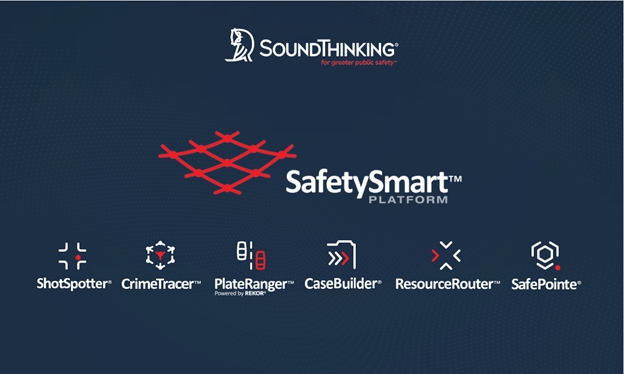
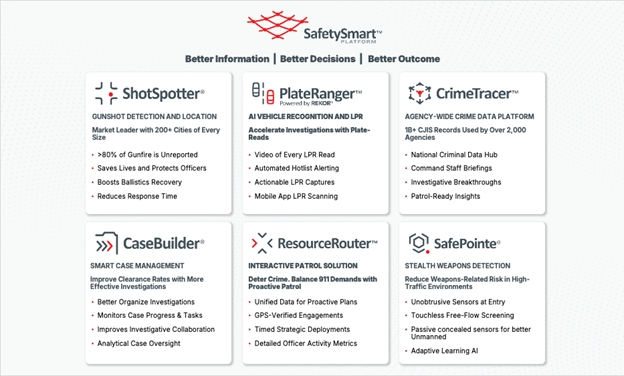
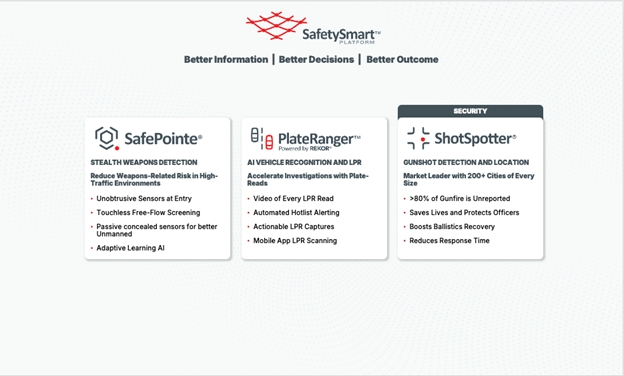
Our SafetySmartTM platform includes six data-driven tools consisting of: (i) our flagship product, ShotSpotter®, the leading outdoor gunshot detection, location and alerting system trusted by 178 cities and 22 universities and corporations as of December 31, 2025; (ii) CrimeTracerTM, an agency-wide crime data and intelligence platform that enables investigators, analysts, patrol officers and command staff to search through more than one billion criminal justice records from across jurisdictions, leverage dashboards and AI-assisted tools to generate tactical leads and quickly make intelligent connections to solve cases; (iii) CaseBuilderTM, a one-stop investigative case management system for tracking, reporting and collaborating on cases; (iv) ResourceRouterTM, which directs the deployment of patrol and community anti-violence resources in an objective way to help maximize the impact of limited resources and improve community safety; (v) PlateRangerTM powered by Rekor®, an automatic license plate recognition (“ALPR”) and vehicle identification solution that leverages artificial intelligence (“AI”) and machine learning to enhance investigative efficiency and provide real-time data sharing for law enforcement; and (vi) SafePointeTM, an AI-based weapons detection system designed to provide discreet, high-throughput screening that complements physical security measures without compromising visitor experience. These solutions may operate independently or together as an integrated system that connects detection, data analysis, resource deployment and case management workflows. We also offer other use-case specific solutions including ShotSpotter for Campus and ShotSpotter for Corporate, which are typically smaller-scale deployments of ShotSpotter gunshot detection vertically marketed to universities, corporate campuses and key infrastructure centers to mitigate risk and enhance security by notifying authorities of outdoor gunfire incidents, saving critical minutes for first responders to arrive. We offer the majority of our solutions on a software-as-a-service subscription model to our customers. In the first quarter of 2025, we rolled out a perimeter-based sniper gunshot detection solution targeting utility substations, with initial pilots aimed at utility customers, conducted through SoundThinking Labs. SoundThinking Labs supports innovative use cases of the Company's technology.
As of December 31, 2025, we had ShotSpotter, ShotSpotter for Campus and ShotSpotter for Corporate coverage areas under contract for over 1,092 square miles, of which over 1,064 square miles had gone live. Coverage areas under contract included 178 cities and 22 universities and corporations across the United States, South Africa, Uruguay, Brazil and the Bahamas, including some of the largest cities in the United States. Most of our revenue is attributable to customers based in the United States. Since our founding over 29 years ago, SoundThinking has been and continues to be a purpose-led company. We are a mission-driven organization that is focused on improving public safety outcomes. We accomplish this by earning the trust of law enforcement and providing solutions to help them better engage and strengthen the police-community relationships in fulfilling their sworn obligation to serve and protect all. Our inspiration comes from our principal founder, Dr. Bob Showen, who believes that the highest and best use of technology is to promote social good. We are committed to developing comprehensive, respectful and engaged partnerships with law enforcement agencies, elected officials and communities focused on making a positive difference in the world.
Industry Background: The Public Safety Gap
Local police departments are challenged to serve and protect in an increasingly transparent fashion without unintentionally over-policing and under serving their communities. This mandate must be met while facing municipal budget pressures, evolving public safety policies, and calls for police reform, all while violent crime remains a critical concern and case closure rates struggle to improve. There are three distinct problems associated with the public safety gap, which are discussed below.
The Violent Crime Problem
We believe the majority of urban gunfire goes unreported. A 2016 report published by the Brookings Institution analyzing data collected from ShotSpotter and our customers suggests that approximately 80% of the gunshots detected by our public safety solution are not reported to 911 by residents. Even in the instances when 911 calls are made, the information reported by the caller is often incomplete or inaccurate as to the time and location of the gunshot. Furthermore, in many cases it is often difficult for the caller to authenticate the incident as gunfire. In addition, we believe that in communities plagued by gun violence, there is often a lack of trust between the community’s residents and its police force, which can exacerbate the underreporting of gunfire and create a vicious cycle of underreporting, lack of response and increased mistrust due to continued unaddressed gun violence in the community. When gunfire is not reported or is reported inaccurately, law enforcement and medical personnel cannot address injuries nor effectively investigate and solve related crimes or prevent future incidents.
We also believe the communities in which gun violence occurs suffer significant economic loss. A 2017 report by the Urban Institute, which studied the effect of gun violence in Minneapolis, Minnesota, Oakland, California and Washington, D.C., noted that the perceived risk of gun violence imposed heavy social, psychological and monetary damages in communities, including fewer jobs and lower economic vitality. The study concluded:
• In Minneapolis, each additional gun homicide in a given year was statistically correlated with 80 fewer jobs.
• In Oakland, every additional gun homicide in a given year was statistically associated with five fewer job opportunities in contracting businesses in the next year.
• In Washington, D.C., every additional gun homicide in a given year was statistically associated with two fewer retail and service establishments the next year.
In addition, several studies have suggested that property values are inversely correlated with violent crime. For example, the Center for American Progress conducted a study of changes in homicide incidents and housing prices in Boston, Seattle, Chicago, Philadelphia and Milwaukee, and found that a reduction in a given year of one homicide in a ZIP code caused a 1.5% increase in housing values in that same ZIP code the following year.
Gut-Based Patrolling Problem
Agencies face a resource deficit and need more efficient ways to patrol and prevent crime. Most departments use old patrolling methods that are not data-driven, have limited visibility to officer activity and no controls to reduce over-policing. We believe the category is ripe for AI-based automation for more efficient and effective patrolling done in a way that better engages the community and supports more effective, data-informed deployment of resources.
Low Case Closure/Victim Resolution Problem
According to a report published by The Marshall Project in 2022, homicide clearance rates in the United States reached a 40-year low of less than 50% in 2021. While clearance rates have shown signs of improvement in more recent years (2023–2024), they remain below levels observed in prior decades and vary significantly across jurisdictions. Too many suspects do not face the consequences and are free to commit additional crimes while victims and their families suffer without closure. Police use a mix of manual, homegrown and limited function record management system (“RMS”) modules for case management. To solve cases, detectives must access multiple, siloed sources of data with limited automation tools for analytical support or collaboration. We believe investigative case management can significantly benefit from greater automation to improve clearance rates and solves cases faster.
Our Vision
We see a world where data are converted into actionable intelligence thereby enabling law enforcement and security departments to implement practices to more efficiently direct interventions toward the relative few that commit crimes and present security threats. These practices in turn help build community trust and engagement while co-producing positive public safety outcomes. We believe the SafetySmart platform can be a valuable set of technological solutions for implementing these public safety practices. The SafetySmart platform includes our flagship product ShotSpotter, CrimeTracer, CaseBuilder, ResourceRouter, PlateRanger powered by Rekor and SafePointe, our AI-based weapons detection system.
Solutions for Law Enforcement
Solutions for Security Markets
ShotSpotter
ShotSpotter, our acoustic gunshot detection technology serves cities and municipalities seeking to identify, locate and deter persistent, localized gun violence into their policing systems. ShotSpotter is used by local police departments and a version of ShotSpotter, branded as ShotSpotter for Campus and ShotSpotter for Corporate, are used by security personnel in the protection of critical assets such as colleges, universities and commercial campuses.
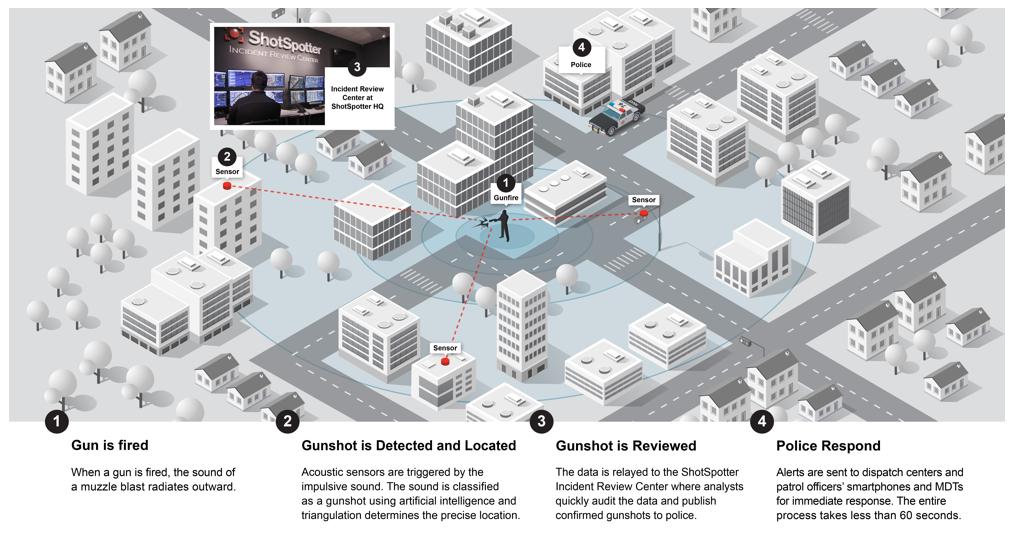
Our gunshot detection solutions consist of highly-specialized, cloud-based software integrated with proprietary, internet-enabled sensors designed to detect outdoor gunfire. The speed and accuracy of our gunfire alerts enable law enforcement and security personnel to consistently and quickly respond to shooting events including those unreported through 911, which can increase the chances of apprehending the shooter, providing timely aid to victims and identifying witnesses before they scatter, as well as aid in evidentiary collection and serve as an overall deterrent. When an impulsive sound is detected by our sensors, our system precisely locates where the incident occurred, and if it determines there is a possibility the sound was caused by gunfire, sends its data for human review to analyze and validate the incident. An alert containing a location on a map and critical information about the incident is sent directly to subscribing law enforcement or security personnel through an internet-connected computer or iPhone or Android mobile devices.
Our software sends validated gunfire data along with the audio of the triggering sound to our Incident Review Center (“IRC”) that has locations in Fremont, CA and Washington, D.C. where our trained incident review specialists are on duty 24 hours a day, seven days a week, 365 days a year to screen and confirm actual gunfire incidents. Our trained incident review specialists can supplement alerts with additional tactical information, such as the potential presence of multiple shooters or the use of high-capacity weapons. Gunshot incidents reviewed by our IRC result in alerts typically sent within approximately 45 seconds of the gunfire incident.
Specialized Gunshot Detection Software
The heart of our gunshot detection solutions is our sophisticated and specialized software. Our software analyzes audio signals for potential gunshots detected by our intelligent sensors. Our sensor filters out ambient background noise, such as traffic or wind, and looks for impulsive sounds characteristic of gunfire. If the sensor detects such an impulse, it extracts pulse features of the soundwave, such as sharpness, strength, duration, rise time and decay time. Then, the sensor sends these features to our cloud servers as part of a data packet that includes the location coordinates of the reporting sensor and the precise time of arrival and angle of arrival of the sound.
When the data reaches our cloud servers, our software assesses whether three or more of our outdoor sensors detected the same sound impulse and, if so, finds the location coordinates of the sound source based on the time of arrival and the angle of arrival of the sound using the technique of multilateration. The accuracy of the locations derived from our proprietary software is significantly improved when, as is typically the case, more than three sensors participate. We deploy our sensor arrays such that, on average, six to eight sensors participate in the detection of a gunshot.
After the software determines the location of the sound source, our machine classifier algorithms analyze the pulse features to filter out sounds that are unlikely to be gunfire. Our algorithms consider pulse features, the distance from the sound source, pattern matching and other heuristic methods to evaluate and classify the sound. The machine classifier algorithm is periodically trained and validated against our large database of known gunfire and other community sounds that are impulsive in nature. We continue to add new data to our machine learning database from the incidents reviewed by our incident review specialists in our IRC process. Incidents that are determined by the machine classifier algorithms to be obviously non-gunfire are filtered out and not presented for human classification.
All incidents not filtered out by our machine classifier algorithms are sent to the incident review specialists in our IRC for analysis and classification. Incident notifications are sent when the incident is confirmed as gunfire by one of our incident review specialists and may include additional information that may be helpful to first responders, such as the possibility of multiple shooters or use of a high-capacity or fully automatic weapon. Alerts are delivered using push notifications to our mobile, desktop or browser applications and through email or SMS text messages. The time from a report of an outdoor trigger-pull to a notification being sent to our customers is typically 45 seconds or less.
Intelligent and Ruggedized Sensors
Our rugged gunshot detection sensor is an intelligent, internet-enabled device that is specially designed and built to ignore ambient noise and respond to impulsive sounds, accurately time-stamping their arrival times. Advanced digital signal processing algorithms filter out background sounds such as traffic, and extract pulse features from the audio signal that, along with the time and angle of arrival of the sound, are sent to our servers where algorithms compute the location of the sound source.
The sensors do not have the ability to live stream audio. Sounds captured by the secure sensors are permanently deleted after 30 hours. When a sensor is triggered by an impulsive sound, the “incident” that is created includes a recording including no more than one second before the incident and one second after the incident. This audio snippet is preserved indefinitely for potential evidentiary use.
Our sensors are designed and tested against international standards for installation in unprotected outdoor environments. Special consideration is given to minimize the sound of wind, rain and hail, which could otherwise limit the range of detection and produce false results. Environmental condition tests performed on the sensors include temperature cycling, temperature soak, shock, vibration, and salt, fog and moisture ingress protection.
We typically design and deploy arrays of 15 to 25 sensors per square mile taking into consideration the unique acoustic environment in which we are deploying. The cumulative experience of deploying in various cities with different acoustic properties has provided a distinct advantage in tailoring our sensor arrays to perform at high levels. We have full telemetry to each sensor that provides detailed data to our system to monitor each sensor’s health and availability. Sensor firmware is maintained with over-the-air updates. Because we design our networks with a certain amount of redundancy to ensure durability, in our sensor arrays, multiple sensors can be offline at any given time without affecting the overall performance of the system.
Incident Review Centers - Classification
Our IRC operates 24 hours a day, seven days a week, 365 days a year. When a loud impulsive sound triggers enough of our outdoor sensors that an incident is detected and located, audio from the incident is sent to our IRC via secure, high-speed network connections for real-time confirmation. Within seconds of an incident, one of our incident review specialists analyzes audio data and recordings of the potential gunfire. When gunfire is confirmed, our IRC
team sends an alert directly to emergency dispatch centers and field personnel through a computer or mobile device with access to the internet. This process typically takes less than 45 seconds from the report of the gunfire incident. Alerts include:
• the precise location of gunfire, including both latitude/longitude and approximate street address;
• the number and exact time of shots fired;
• if detectable, the involvement of multiple shooters; and
• if detectable, the use of fully automatic or high-capacity weapons.
Our IRC operates primarily out of our principal facilities in Fremont, CA and Washington, D.C. and receives audio from incidents detected by our outdoor sensors regardless of where such incidents occur. Although our IRC normally operates from our offices, our trained personnel can perform IRC functions from any location that has a high-speed internet connection.
Gunshot Detection Alerts
Our alerts are delivered in the following forms:
Real-Time Alerts
Our IRC sends real-time notifications of outdoor gunfire incidents to the ShotSpotter application, which is specifically designed for emergency communications centers, dispatch centers, and other public safety answering points.
The ShotSpotter alert received by the ShotSpotter application includes a unique identification number (ShotSpotter ID number), a precise time and date of the gunfire (trigger time), approximate street address of the gunfire, number of shots and police district and beat identification. One of our incident review specialists may add other contextual information related to the incident such as the possibility of multiple shooters, high-capacity or fully automatic weapons and vehicles.
The 911 dispatcher may add their own notes relating to the incident in which case the notes are time- and date-stamped and indicate the operator’s identification. A comprehensive audit trail of all changes to the incident is maintained that includes the time the alert was received and acknowledged by the dispatcher. These data may be used to measure key performance indicators by dispatch personnel.
ShotSpotter Application
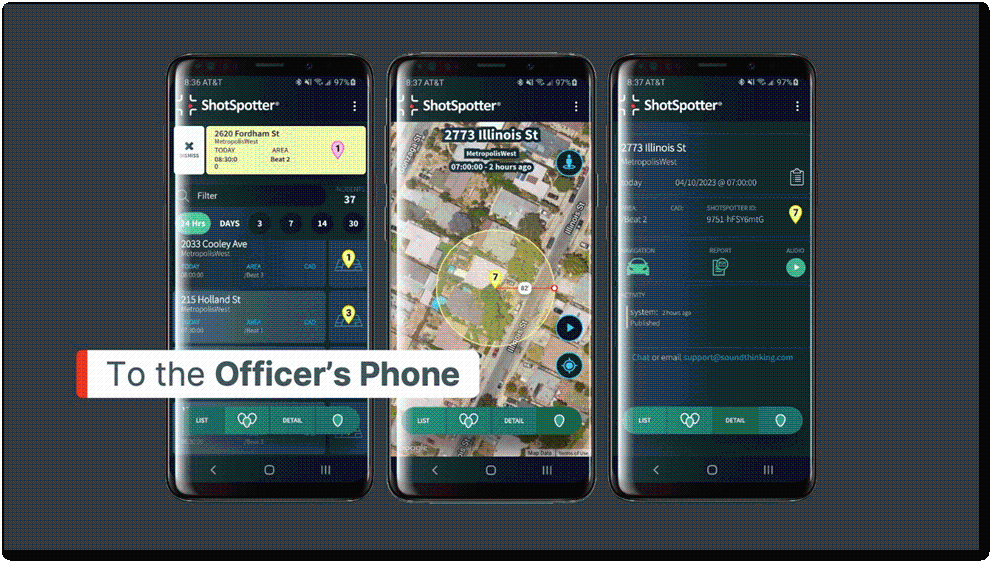
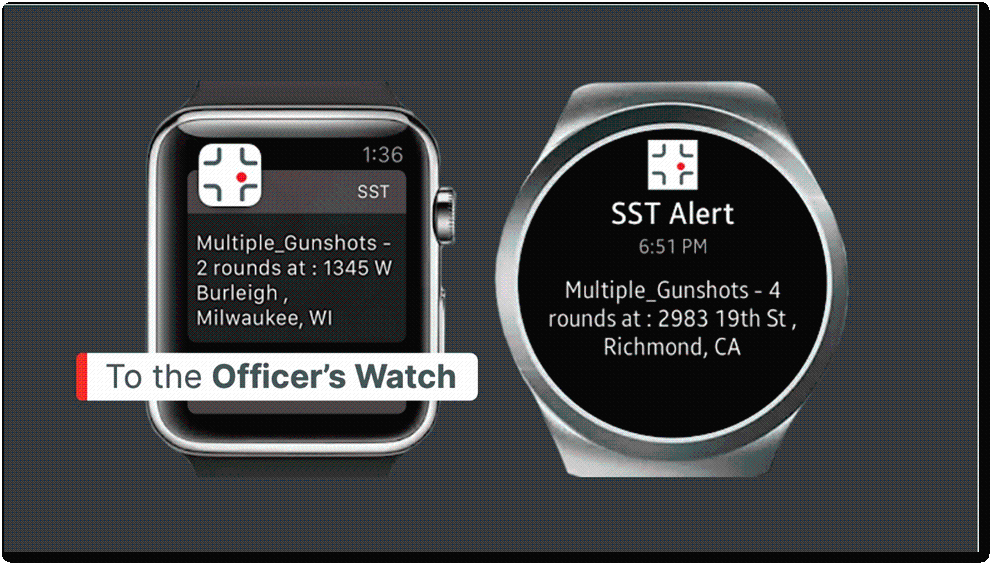
We offer a robust ShotSpotter application for use by patrol officers and security personnel that is available on iPhone or Android mobile devices and computers installed in patrol vehicles and dispatch centers. This application allows field personnel to directly receive alerts of outdoor gunshots and related critical information. The alert includes a unique identification number (ShotSpotter ID number), a precise time and date of the gunfire (trigger time), nearest street address to the location of the gunfire, number of shots and police district and beat identification. One of our incident review specialists may add other contextual information related to the incident such as the possibility of multiple shooters, or high-capacity or fully automatic weapons. In addition, the dispatcher may add their own notes. The alert also includes an audio snippet of the incident.
Mobile Device Support: Apple iOS and Android-phones/tablets and watches
Related Applications and Services
ShotSpotter Insight
All historical incident data in our database can be viewed, searched, sorted, and filtered using our ShotSpotter InSight application. The Insight application can create an investigative lead summary (“ILS”) report that describes the specifics of a single incident as reported by the IRC staff or a multiple incident report that lists groups of such incidents. Complex filters may be defined using multiple search criteria and the filters named and saved for recurring use. Incident data may be exported for use in third-party applications such as Excel, currently the tool of choice for police department crime analysts.
Integration Services
We believe that integrating our solutions with other tools and technologies enhances the value of our solutions to our customers. For example, our solutions can be used in connection with:
•drones to access a crime scene to determine if there is a victim for which an ambulance is needed and to provide situational awareness for officers who are heading towards the scene;
•video surveillance cameras to automatically point tilt and zoom them in the direction of gunfire, assist in feeding more bullet casings to the National Integrated Ballistic Information Network (“NIBIN”) for ballistic matching and the identification of suspects; and
•automated license plate recognition systems used by law enforcement to improve the investigation efforts.
We continue to evaluate new technologies that may integrate with our solutions to generate additional value for our customers.
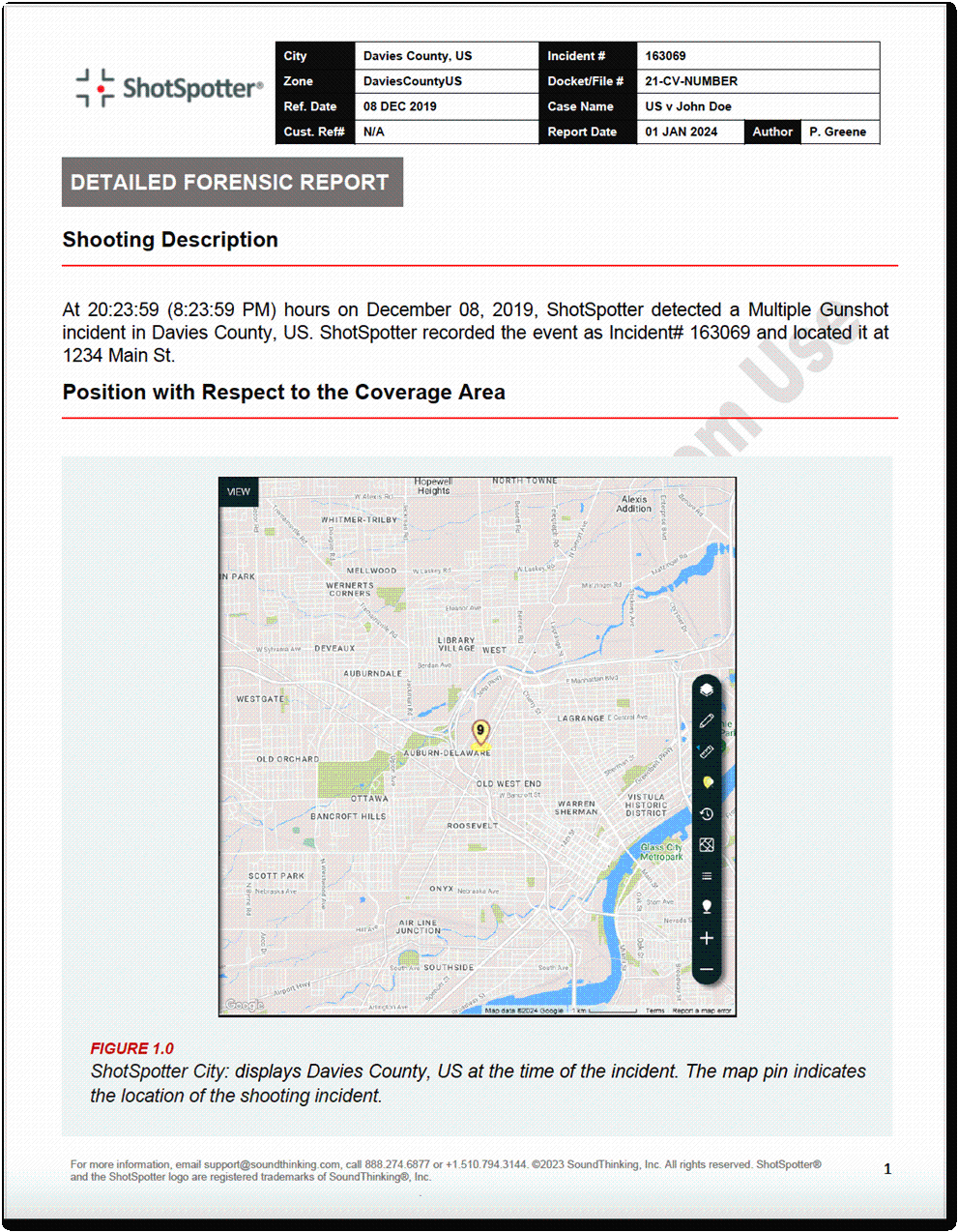
Detailed Forensic Reports and Certified Expert Witness Services
As part of our solution, we offer Detailed Forensic Reports (“DFRs”). These provide investigators and attorneys with comprehensive, court-admissible analysis of a shooting incident, including the gunfire audio. We also offer expert witness testimony to introduce the forensic analysis of the DFRs at trial and to provide technical expertise regarding our technology. Our forensic employees have testified in over 455 cases throughout the United States. Our forensic analyses have survived dozens of challenges in numerous states, under both the Frye and Daubert standards of admissibility. The following is an example of a DFR.
Detailed Forensic Report:
ShotSpotter Results and Benefits
• Expedited Response to Gunfire. In areas where gun violence is persistent, we believe most gunshots are not otherwise reported. Even when calls are made, many callers are unable to provide a location of the gunshot or other relevant details. Human response time to unfolding violence often delays calls for several minutes in circumstances where response time can be critical. By contrast, our ShotSpotter service typically alerts emergency dispatch centers and field personnel within 45 seconds of the report of the gunfire incident and provide an exact location, enabling them to respond faster and to a specific location. The ability to respond more quickly increases the chances of apprehending the shooter and assisting victims of violence, in addition to aiding in evidence collection.
• ShotSpotter Potentially Helps Save Lives
The below graphic demonstrates positive impact results observed at a few of our customers.
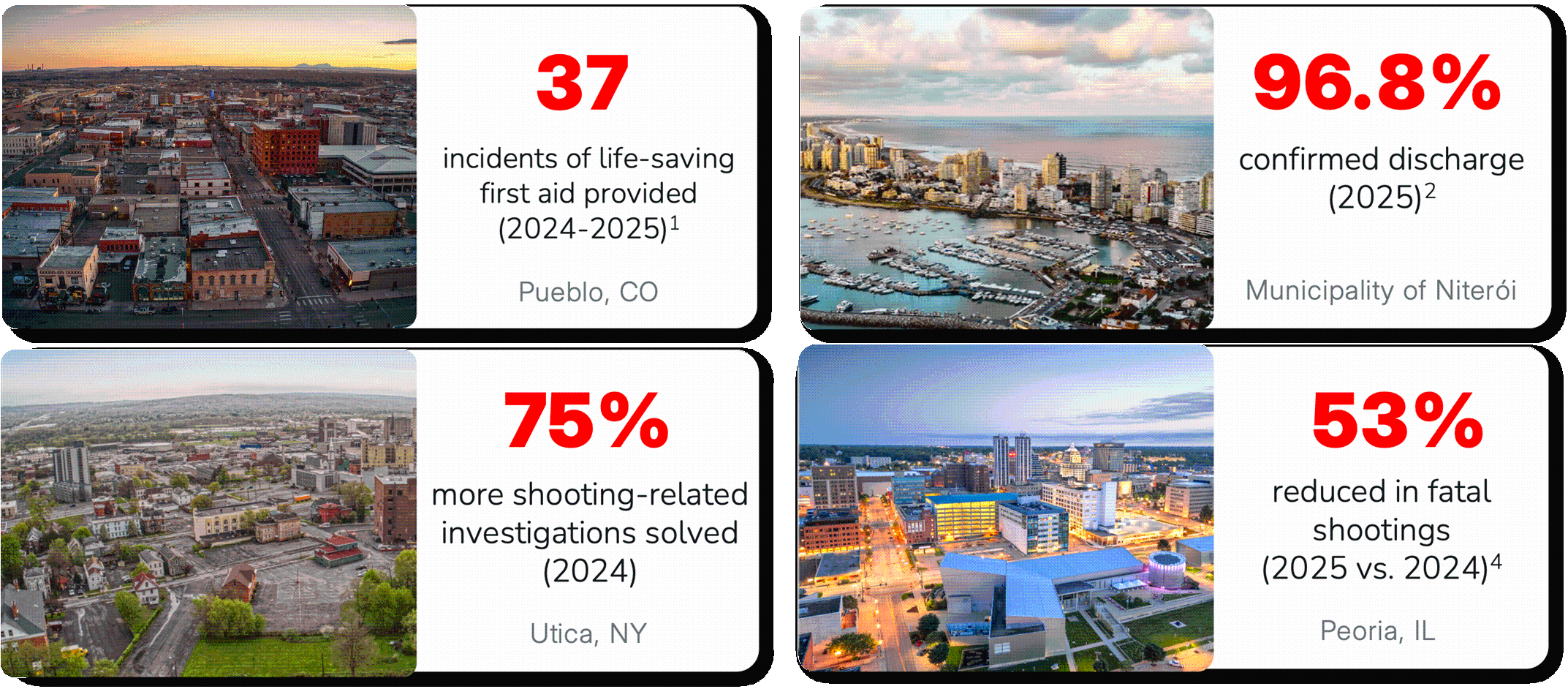
1 - Pueblo PD statistics 2024-2025
2 - Municipality of Niterói 2025
3 - Utica PD statistics 2024
4 - Peoria PD statistics 2025
• Improved Police Officer Safety. We believe that ShotSpotter provides additional and valuable information regarding gunshot incidents as the alerts we provide give additional insight and situational awareness, including round count, potential multiple shooters and potential use of an automatic weapon, that allow the responders to be better prepared to respond appropriately.
• Increased Awareness of Gunfire Activity. Research suggests that approximately 80% of the gunshots are not reported to 911. When law enforcement and elected officials have enhanced awareness of gunfire activity and patterns, they have objective information that can assist in facilitating a more timely and accurate response to gunfire incidents and inform discussions regarding public safety resource allocation.
• Improved Community Relations and Collaboration. We believe that persistent gun violence limits the ability of police and other community leaders to serve their constituents and improve their communities. Many cities struggle to establish and foster a cooperative and trusting relationship between their police department and the communities they serve. Our public safety solution provides cities with the ability to react quickly to gun violence, thus providing the ability to improve their responses and residents’ perception of their responses. This provides our customers with the opportunity to foster improved community relations and collaboration with their residents.
CrimeTracer
In the fourth quarter of 2025, we introduced a new generation of our CrimeTracer solution, which we refer to as CrimeTracer Gen3. CrimeTracer Gen3 transforms investigative search into a comprehensive crime-fighting data solution—combining automated patrol briefings, natural-language search, and AI-driven analysis with access to more than one billion structured and unstructured records from over 2,100 agencies nationwide. Designed to deliver the right data fast, CrimeTracer Gen3 unifies critical information from our customers’ IT systems and from partners across the city, county, state and country. Through our alliance with Thomson Reuters CLEAR®, officers and analysts can access both private law enforcement data and essential public records data in one place without toggling between different applications.
• AI-Driven Analysis. CrimeTracer Gen3 leverages advanced technology to analyze vast amounts of CJIS-compliant public safety data, offering voice-enabled natural language search capabilities and link analysis that connects critical information across jurisdictions to provide actionable insights to patrol officers, analysts, investigators and command staff.
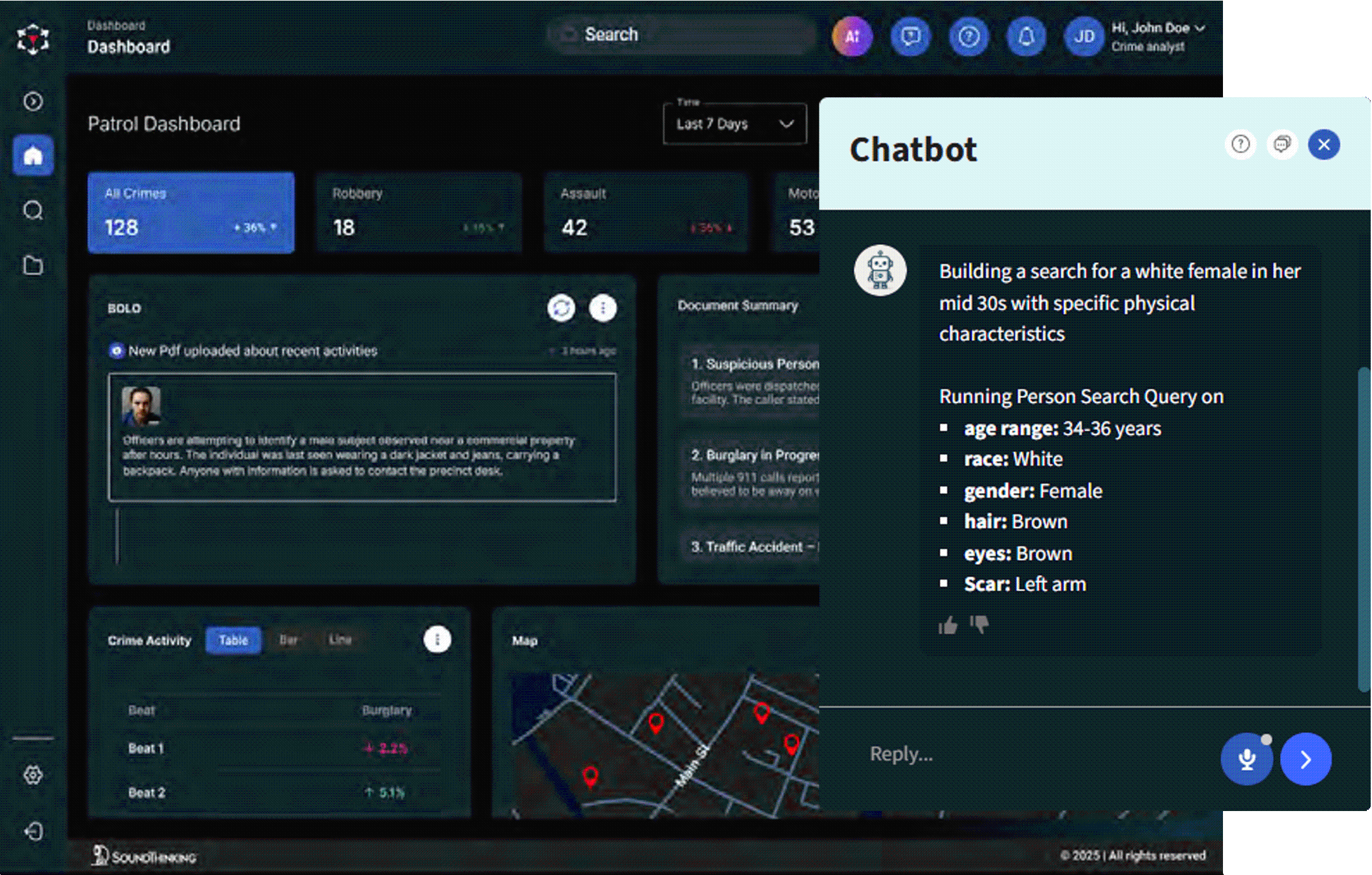
• Easy Access to Actionable Insights. CrimeTracer Gen3’s patrol dashboard automatically generates shift briefings with Be On the Look Outs (“BOLOs”), recent incidents and crime patterns tailored to geographic areas, helping to ensure patrol officers start each shift with critical situational awareness. Centralized case folders house related incidents and leads in one organized view to easily reveal connections and accelerate investigations.
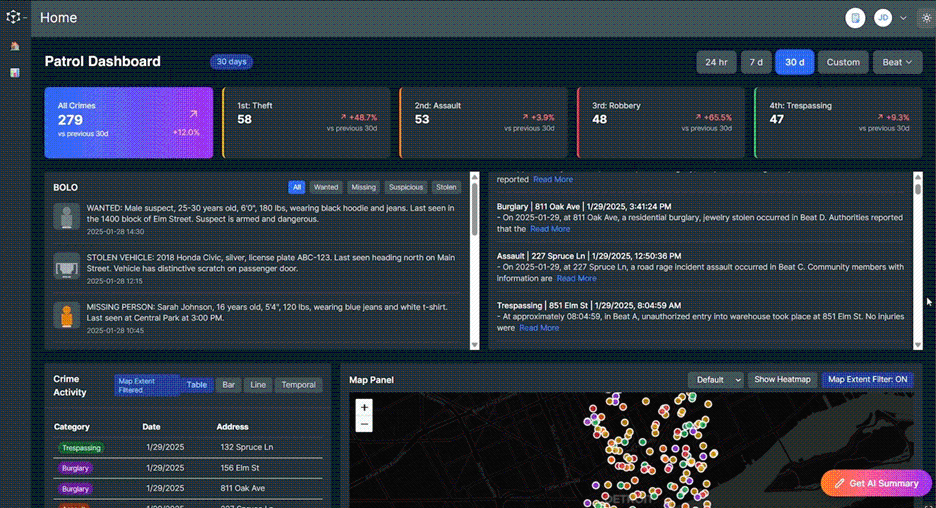
• At-a-Glance Intelligence. CrimeTracer Gen3 provides officers, supervisors and analysts succinct summaries of investigative leads, locations, vehicles and related records, which saves time for law enforcement teams from needing to dig through RMS, computer-aided dispatch (“CAD”) and separate databases. The trends dashboard visualizes crime counts, trends and hot spots, with interactive charts and filters to spot emerging problems. The AI-generated summary of any document in CrimeTracer instantly surfaces key facts from lengthy reports and records, reducing time spent on manual review. The results are faster briefings, smarter deployment and safer decisions in the field.
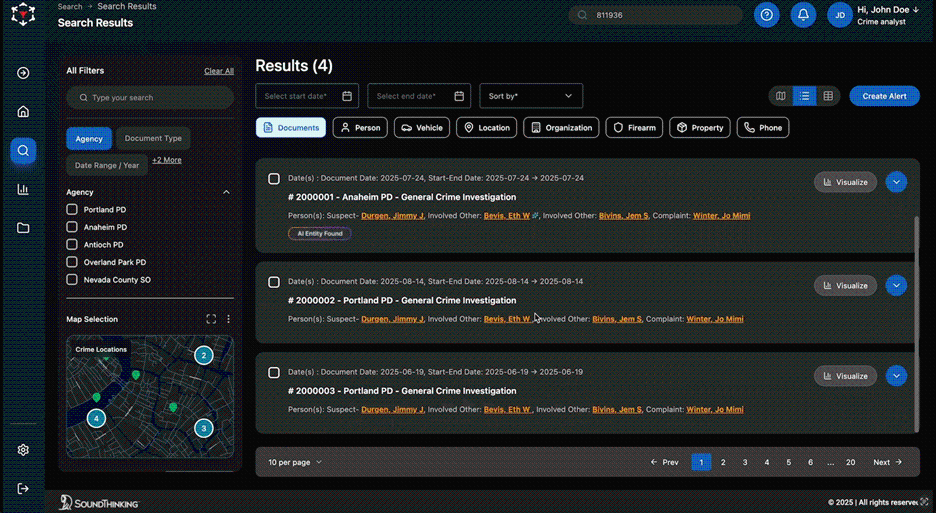
• Seamless Integrations. CrimeTracer Gen3 is accessible from any centrally managed device and across all compliant networks. Integrating with your existing infrastructure, CrimeTracer also features seamless, native integration across other SafetySmart platform solutions, including ShotSpotter, PlateRanger and CaseBuilder.
CaseBuilder
The average homicide clearance rate in the United States was less than 50% in 2021, according to a report published by The Marshall Project in 2022. This means that in more than half the cases the suspect is not held accountable and is free to commit another crime while victims’ families don’t get closure A low clearance rate is a self-perpetuating problem for a law enforcement agency. The problem starts when detectives can’t quickly close cases and clear up their case load, while they continue to catch new ones. Soon they are overloaded with cases and as they attempt to juggle a high caseload, they get spread too thin and then leads start to slip through the cracks and the opportunity to solve the case diminishes. In the longer term, this can create a moral problem within the investigative arm of the agency and they are exposed to losing experienced detectives. This exacerbates the low clearance rates meaning victims are denied justice and the mistrust of law enforcement increases.
The most common tools that departments use to manage, track and solve cases range from purely manual to homegrown to limited function RMS modules or a mix of these. These approaches lack robust collaboration features, have poor data security features and the inability for supervisors to track case progress. We believe there is an opportunity to bring a complete digital case management solution to the market to help improve clearance rates of all crime types and accelerate solvability under the SoundThinking brand and sell to both our installed base and new potential customers, such as prisons.
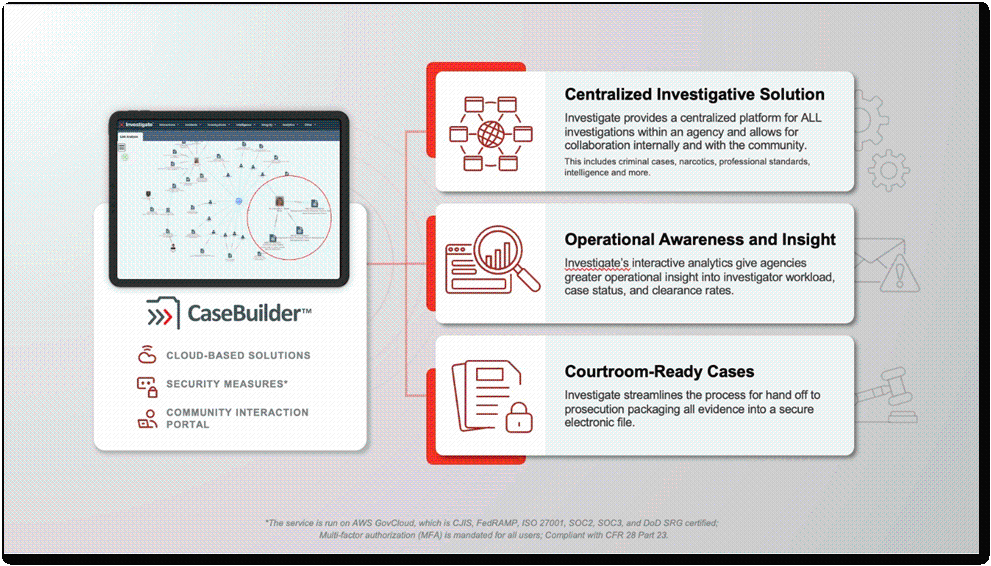
CaseBuilder provides a complete case management solution for detectives and supervisors in local, state and federal law enforcement agencies. It has been used by the New York Police Department for years at scale by thousands of officers as an on-premises solution. The solution provides:
• Complete Digital Case Management. CaseBuilder addresses the challenges investigators and supervisors face in conducting and documenting investigations. It enables police to have all case-related data in one place in a digital and structured format so that it is quickly searchable and able to be used to drive analysis and reporting. We believe law enforcement agencies can use this tool to be more efficient and effective at solving crimes and close more cases to provide resolution for victims and keep offenders from committing additional crimes.
• Analytical and Collaboration Tools. The ability to have the system automatically show linkages between people, property and places can identify connections more quickly and help solve cases faster. Collaboration tools make investigators aware when new relevant evidence is submitted for the same or unrelated cases, and able to more easily communicate on a case across a police department or other city agency such as the district attorney’s office.
• Supervisor Reporting. Supervisor dashboards and reports ensure they have visibility into the status of every case and are aware of roadblocks so they know when to get involved and can more easily provide updates to command staff.
How CaseBuilder works
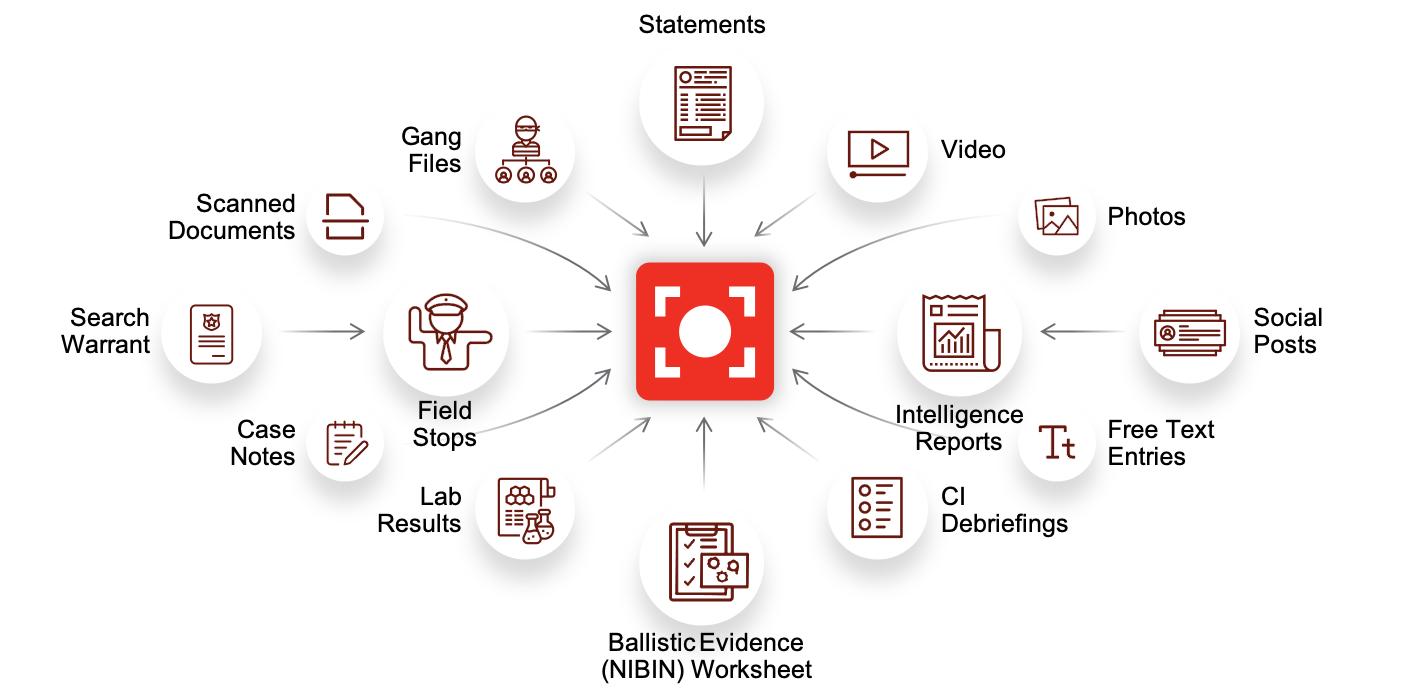
ResourceRouter
Law enforcement agencies today are tasked with an impossible feat: maintain an efficient, data-driven police force in the face of staffing shortages, data silos and outdated manual report processes. ResourceRouter helps address this new reality by helping agencies make their largest cost center–patrol–more efficient and effective in reducing crime and better engaging with the community.
ResourceRouter provides law enforcement agencies with the tools to strategically deploy patrols, manage spontaneous and planned responses and ensure officers have the real-time data they need to make informed decisions. This modernized approach to patrol management leads to more effective crime reduction and safer communities.
ResourceRouter uses AI-driven analysis to direct officers to patrol a location within their beat that ensure officers are at the right place at the right time for crime prevention during their shift. A timer guides officers to patrol this area for a short period of time, often 15 minutes, to create a deterrent effect that can last for hours. This proactive strategy is a community-focused, long-term approach that deters major crime before it happens. Leveraging their data, agencies can allocate resources efficiently while working within the community to reduce crime. ResourceRouter empowers patrol operations to manage both spontaneous and pre-planned deployments effectively. Whether responding to a sudden spike in convenience store robberies over the weekend or strategically deploying resources for traffic control during a major NFL game, ResourceRouter ensures that agencies can address both crime and non-crime-related issues with precision. This level of responsiveness enhances public safety and allows for better resource allocation where needed most.
Information is power, especially in law enforcement. ResourceRouter provides officers in the field with real-time access to key operational and safety data through pinpoint locations within integrated, interactive map layers. This ensures that officers are well-informed about their environment, leading to safer engagements and more effective outcomes. ResourceRouter’s Insight feature provides agencies with key metrics to measure engagement and effectiveness. Law enforcement leaders gain valuable insights into operational efficiency by analyzing how much time officers spend addressing specific issues and the tactics they use to address them. This data is helpful for internal assessments and plays a significant role in demonstrating to the public the proactive steps to address crime and community concerns. Transparency fosters trust, and trust strengthens partnerships between law enforcement and the communities they serve.
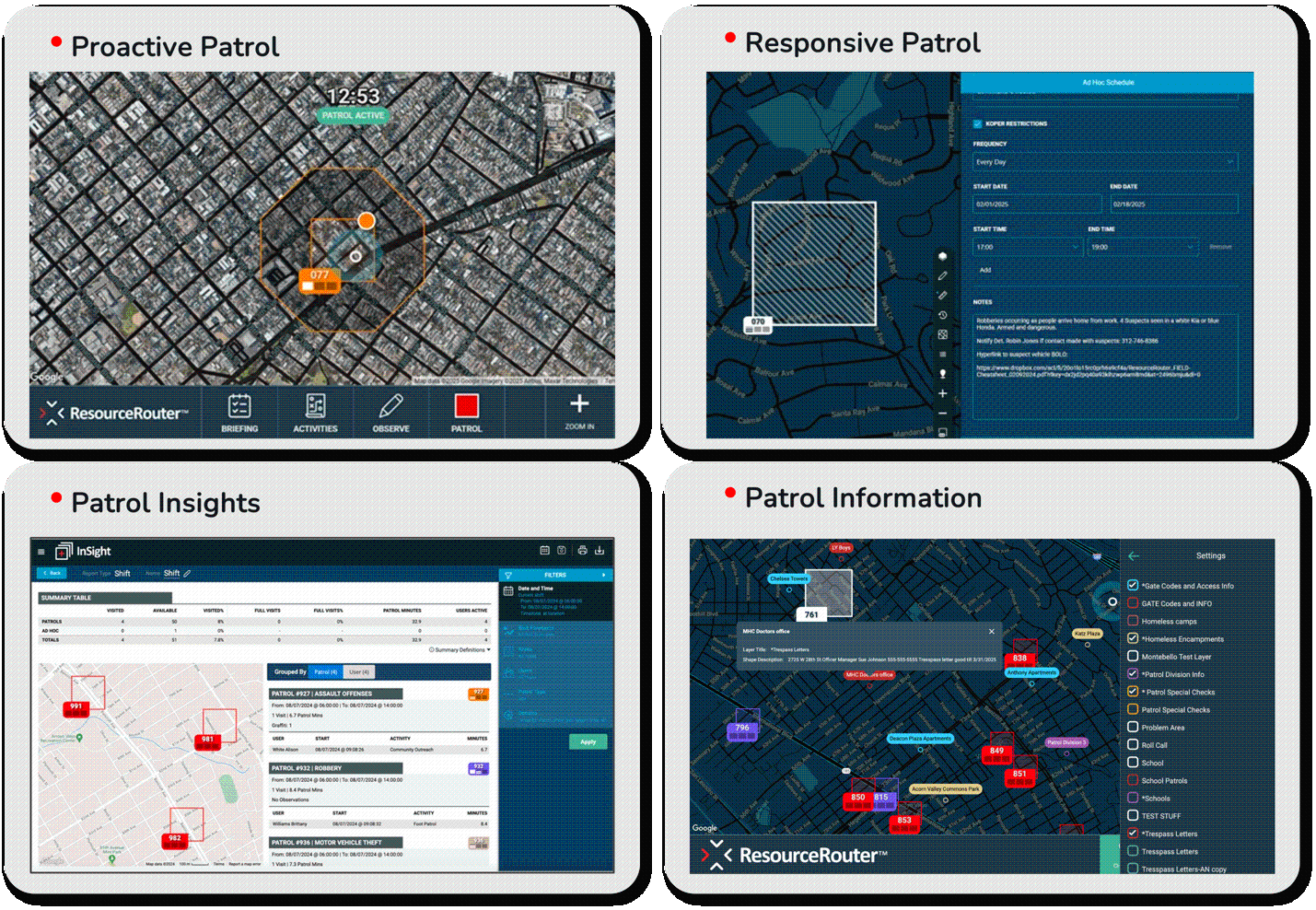
Results and Benefits:
• Direct patrol officers to the right place and the right time for crime prevention.
• Empower patrol officers with real-time actionable insights for spontaneous deployment.
• Reports on officer activity for impact and accountability.
• Enhance community engagement.
• Provide patrol officers with easy access to key operational information and safety data.
PlateRanger, powered by Rekor
PlateRanger, powered by Rekor, is an ALPR and vehicle identification solution that leverages AI and machine learning to enhance investigative efficiency and provide real-time data sharing for law enforcement.
PlateRanger’s vehicle and plate identification algorithms have been trained over many years and millions of images to be highly accurate and dependable in identifying vehicles and license plates from every state. That data is shared in real-time to streamline investigations and enhance officer safety through situational awareness. Designed for public safety, PlateRanger integrates seamlessly with other applications including real-time crime centers, video management systems and the SafetySmart platform. Within the platform, PlateRanger data is integrated with ShotSpotter, enabling agencies to identify vehicles entering or leaving an area within a defined radius and time window surrounding a gunshot event. PlateRanger is also integrated with CrimeTracer, offering a trial subscription that allows agencies to enrich vehicle records with associated data on individuals, addresses and related criminal activity. These integrations are designed to support investigative efficiency and provide incremental value beyond standalone ALPR deployments. PlateRanger can also use hot lists based on integration with National Crime Information Center (“NCIC”), other data such as Amber and Silver alerts and more.
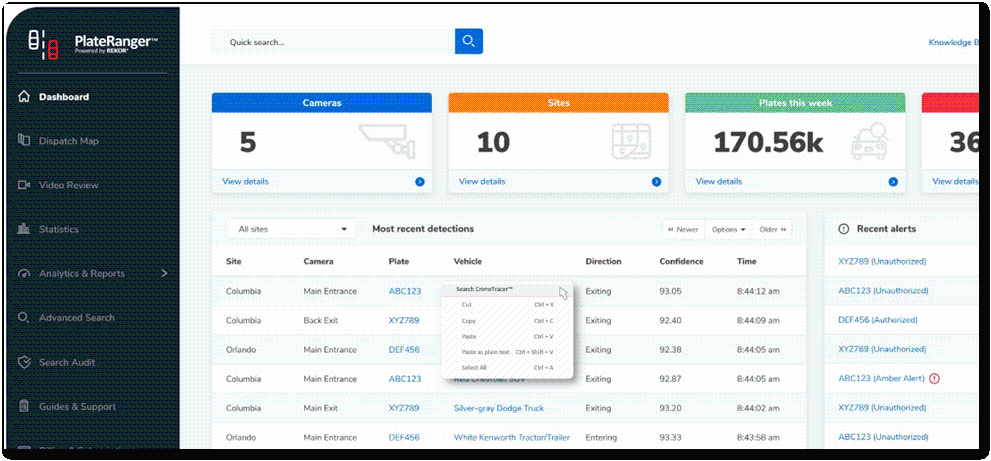
Results and Benefits:
•Connects vehicles of interest associations through advanced analytics.
•Creates faster, more relevant investigative leads.
•Force multiplier that optimizes resource allocation and streamlines investigative processes.
•Integrates with leading law enforcement databases and software.
•Provides valuable data for private sector clients security teams in managing potential safety, security and operational issues on their facilities.
SafePointe
SafePointe is a passive AI-based weapons detection system. Its unique technology and design transform entrance security from a queued security guard-staffed checkpoint environment to a free-flow zone with minimal disruption for those entering. Unlike bulky legacy metal detection, SafePointe’s discreet form factor enables guests and employees to quickly pass unobtrusively without disruption or the need for security personnel stationed at entrances. SafePointe’s ability to quickly screen individuals and their bags makes it an attractive option for hospitals, casinos, higher education, corporate locations, museums and warehouses. We have an opportunity to grow in the healthcare vertical with California’s AB 2975 mandate, which requires weapons detection systems in all general acute care and psychiatric hospitals in 2027. We believe this legislation has created a substantial addressable market opportunity for us.
The patented SafePointe system integrates hardware and software to quickly detect concealed weapons. It features two discreet metal bollards positioned up to eight feet apart to create a “lane,” equipped with an advanced 3D camera and an NVIDIA®-powered edge processor running a state-of-the art AI model. Most customers install multiple lanes throughout their facilities to ensure protection across all entrances.
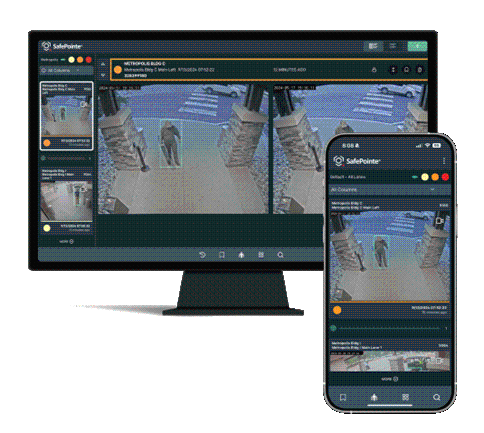
SafePointe enhances security by providing the following capabilities:
• Quickly identifying the individual carrying a weapon when they are walking through the bollards at the same time as others.
• Comprehensive system overview with advanced search filters to easily find historical incidents, create ad hoc reports, and aid investigations.
• Detailed alert review summary and performance metrics (e.g. visitor count, detections, and etc.) available at your fingertips.
Our Opportunity
We believe there is significant demand for the various products comprising our SafetySmart platform. Customers for our public safety solutions include municipalities, law enforcement agencies, college and university campuses, large corporate campuses, healthcare facilities, hospitality venues, transportation centers, key infrastructure and other secured environments where authorities seek to detect gunfire activity or weapons-related risks and enhance situational awareness within and around their facilities.
Our Growth Strategy
We intend to drive growth in our business by expanding our domestic and international footprint for ShotSpotter and putting greater emphasis on driving adoption of the rest of our SafetySmart platform which is gaining traction in current and new markets for the company. We plan to leverage our large and growing installed base of customers with high net promoter attributes that consider SoundThinking a trusted partner. Key elements of our strategy include:
• Further Penetration of Commercial Security Customers with SafePointe and Weapons Detection. We acquired the SafePointe product in late 2023 and devoted much of 2024 to advancing the technology platform and improving system performance, usability, and scalability. During 2025, we expanded the customer base and refined a go-to-market strategy that gained traction across targeted verticals. The market for advanced weapons detection solutions continues to develop, supported by increasing customer awareness of next-generation screening technologies. Competitors have invested significantly in market education and adoption, which we believe has contributed to broader awareness of the category and indirectly benefits our sales efforts. As prospective customers evaluate SafePointe, we believe they recognize its differentiated value proposition as a screening solution designed to enable continuous flow of people without traditional checkpoints. This approach reduces operational friction for security personnel and minimizes disruption for individuals being screened by eliminating queuing and divestment requirements. We believe our differentiation, combined with customer dissatisfaction regarding limitations of available screening approaches, has strengthened our competitive positioning. In 2025, we expanded and specialized our sales organization to support SafePointe, adding experienced security industry professionals with established customer relationships and domain expertise. Given the product’s alignment with customer needs and its relatively high average annual recurring revenue per deployment, we believe SafePointe is well positioned to contribute to future growth.
• AI-Driven Investigative and Operational Intelligence. We are expanding our capabilities in AI-driven investigative and operational intelligence initially through CrimeTracer Gen3, which is a major upgrade to CrimeTracer designed to help agencies more efficiently analyze and act on growing volumes of public safety data. CrimeTracer Gen3 introduced AI productivity tools for officers such a document summarization, an AI chatbot, natural language search and automated linkage capabilities that enable investigators to identify relationships among people, vehicles, locations and incidents across disparate data sources. These enhancements are intended to accelerate investigative workflows, surface actionable leads and support real-time decision making. As agencies confront staffing constraints and increasing data complexity, we believe AI-enabled tools that improve productivity, unify data workflows and strengthen investigative effectiveness represent a meaningful opportunity for adoption and long-term growth.
• Accelerate Cross-Selling of Current Public Safety Customers to Additional SafetySmart Solutions. We continue to pursue growth by expanding adoption of additional SafetySmart solutions within our existing public safety customer base. In the second half of 2025, we piloted an initiative that more actively engaged our customer success organization, which maintains ongoing operational relationships with agencies, to identify opportunities where additional SoundThinking solutions could enhance customer outcomes. Based on initial results, we are developing a more structured cross-sell program designed to generate incremental pipeline within our installed base. This effort focuses on aligning customer operational needs with complementary SafetySmart capabilities and leveraging established trust relationships to support solution expansion. We believe our installed base represents a significant growth opportunity due to the mission-critical nature of our solutions, the operational familiarity customers have with our platform and the potential efficiency gains from deploying integrated public safety technologies through a single vendor relationship.
• Entry Into Large and Fast-Growing Automatic License Plate Recognition (“ALPR”) Market. We made important progress in establishing the new PlateRanger business and brand in the marketplace. In 2025, we built a meaningful sales pipeline, secured initial customer deployments and established reference customers. Through these early engagements, we refined our competitive approach and addressed operational and product requirements necessary to succeed. We have enhanced PlateRanger’s value proposition through integrations with other SafetySmart solutions, enabling differentiated workflows for public safety customers. PlateRanger data is integrated with ShotSpotter, enabling agencies to identify vehicles entering or leaving an area within a defined radius and time window surrounding a gunshot event. We also integrated PlateRanger with our CrimeTracer investigative solution, offering a trial subscription that allows agencies to enrich vehicle records with associated data on vehicles, individuals and related criminal activity. These integrations are designed to support investigative efficiency and provide incremental value beyond standalone ALPR deployments. Throughout 2025, we aligned marketing and sales resources to support entry and pipeline development. We continue to observe strong demand and available funding for ALPR solutions, and customer feedback indicates dissatisfaction with certain incumbent solutions and practices. We believe our integrated platform approach and customer service orientation position PlateRanger as a compelling alternative for agencies seeking a modern ALPR solution.
• Accelerate Our Acquisition of Public Safety Customers. We believe that we are in the early stages of adoption of our public safety solutions. We serve law enforcement agencies as ShotSpotter customers in three of the ten largest U.S. cities. Over the last few years, we expanded our direct sales force and customer success teams and added marketing lead-generation capabilities to help accelerate growth. As part of our focus on increasing sales, we have recently hired a new Senior Vice President of Global Sales and a new Vice President of Sales for SafePointe. Moreover, as we add new public safety customers, publicity and the number of potential references for our solutions increase, which result in our brand and our solutions becoming more well known. We intend to capitalize on this momentum to grow sales.
• Expand ShotSpotter Revenue Within Our Existing Customer Base. As customers realize the benefits of our solutions, we believe that we have a significant opportunity to increase the lifetime value of our customer relationships by expanding coverage within their communities through a “land and expand” strategy. For example, of our ShotSpotter customers, approximately 39% have expanded their coverage areas from their original deployment areas by an average of almost eight square miles as of December 31, 2025. Our overall revenue retention rate was 99% for 2025, 105% for 2024 and 107% for 2023.
• Expand Our International Footprint. With only four currently deployed ShotSpotter customers outside of the United States in South Africa, the Bahamas, Brazil and Uruguay, we believe that we have a significant opportunity to expand internationally. As part of our growth strategy in Brazil, we recently hired a new Vice President of Sales in Brazil to further our expansion in the region. We estimate that the opportunity outside the United States for our public safety solutions includes approximately 200 cities in Central America, the Caribbean, South America and southern Africa that have at least 500,000 residents. We have seen international customers succeed and expand their deployments. We intend to increase our investment in our international product, sales and marketing efforts to penetrate new geographies in 2026.
• Maintain a Strong Focus on Customer Success. Given the specialized nature and mission-critical role of our solutions, a central component of our strategy is maintaining a strong focus on customer success and satisfaction. We emphasize structured onboarding, ongoing advisory support and responsive customer service to support effective deployment and operational adoption. These activities are designed to promote long-term retention, support successful outcomes and contribute to new customer acquisition through customer referrals and peer recommendations. We initiate customer success engagement early in the sales process to align solution deployment with each agency’s operational objectives and desired outcomes. Our teams provide consultative guidance at the command staff level, including policy and workflow development, as well as tactical training for field personnel to support effective utilization in daily operations. We measure customer experience and performance through an annual Net Promoter Score (“NPS”) survey and other feedback mechanisms, which was 55 (highly satisfied) in 2025. Agency participation rates have remained high, and recent results have placed our scores within top benchmark ranges as defined by our survey partner. Our customer success efforts are focused on helping agencies achieve measurable public safety outcomes, including reductions in gun violence and improvements in investigative effectiveness. We believe demonstrated operational value contributes to strong retention and supports organic growth through positive peer-to-peer references within the public safety community.
• Grow Our Security Business. We have developed our ShotSpotter for Campus, (formerly ShotSpotter SecureCampus) solution for universities and other educational institutions. We have also developed ShotSpotter for Corporate (formerly ShotSpotter SiteSecure) for customers such as corporations trying to safeguard their employees, customers, brand and profits. As of December 31, 2025, we had 22 ShotSpotter for Campus and ShotSpotter for Corporate customers under contract. Going forward, we plan to offer these solutions separately and in a bundle with customers interested in SafePointe. We feel these solutions are strong complements to each other and will enable us to successfully offer a more comprehensive solution to our education and commercial clients alike.
SoundThinking Labs
SoundThinking Labs houses our advanced technology efforts to adapt and extend our commercial technology to use cases and verticals outside of our core public sector focus. Current use cases include combating rhino poaching in Kruger National Park, South Africa and blast fishing that threatens coral reefs and food security in Southeast Asia. We have been able to collect revenues from philanthropic entities to cover direct and indirect costs. Some of these innovations have made their way back into our commercial business such as the development of a solar-powered sensor from the Kruger deployment; that technology is similar to those now being used for certain deployments and situations.
The use of guns to poach rhinos is a significant environmental concern in Africa where the horn of a single rhino can be worth hundreds of thousands of dollars. In the vast expanse of Kruger National Park, most poaching incidents go undetected with carcasses found days or weeks after the fact. The problem is particularly acute in that due to cumulative impact of years of poaching the rhino population is on the tipping point of becoming extinct as a species.
Fish blasting results in the destruction the coral reef habitat that may not recover for many decades if at all. Coral reefs are not only home to a myriad of marine organisms including fish but also provide significant livelihood support and form an invaluable protective barrier offshore (protecting the land from heavy storms, tsunamis, and wave action).
The potential decline in fish catch which is the protein source for approximately one billion coastal residents is a strategic food security issue. In addition, coral reefs form the basis of coastal and marine tourism, a valuable national income sector. It is estimated that, coral reefs around the globe provide services valued between $172 billion to $375 billion annually. Reefs must be protected for economic sustainability and food security. Our work in the Coral Triangle also known as the Amazon Forest of the Ocean has shown some promising results. The precise detection and alerting of incidents of fish blasting provides a real time awareness to the extent of fish blasting and helps target enforcement interventions designed to deter and prevent fish blasting activities.
In addition, we are launching a perimeter-based sniper gunshot detection solution focused on critical infrastructure protection of utility substations and corporate campuses, with the potential to cover U.S. Embassy and forward-operating base deployments, conducted through SoundThinking Labs.
Customer Revenue Model
We generate annual subscription revenues from the deployment of ShotSpotter on a per-square-mile basis. Our security solutions, ShotSpotter for Campus, and ShotSpotter for Corporate are typically sold on a subscription basis, each with a customized deployment plan. ResourceRouter, CaseBuilder, PlateRanger and CrimeTracer are also sold on a subscription basis generally customized based on the number of sworn officers in a particular city. With the acquisition of SafePointe, we generate revenues from subscriptions of our AI-based weapons detection system based on the number of entryways, or lanes being covered, a lane being the detection area between two sensors. As of December 31, 2025, we had ShotSpotter, ShotSpotter for Campus and ShotSpotter for Corporate coverage areas under contract of over 1,092 square miles in the aggregate, of which 1,064 miles have gone live. Coverage areas under contract for ShotSpotter included over 178 cities and coverage areas under contract for ShotSpotter for Campus and ShotSpotter for Corporate included 22 campuses/sites across the United States, South Africa, Uruguay, Brazil and the Bahamas, including some of the largest cities in the United States. As of December 31, 2025, we had 291 SafePointe lanes under contract. For the year ended December 31, 2025, our largest customer, the City of New York, accounted for 29% of our revenues. For the year ended December 31, 2024, our two largest customers, the City of New York and the City of Chicago, accounted for 23% and 10% of our revenues, respectively. For the year ended December 31, 2023, our two largest customers, the City of New York and the City of Chicago accounted for 25% and 9% of our
revenues, respectively. Delivery of CaseBuilder in the City of New York has added additional professional services requirements and revenue.
Go-To-Market
We sell our solutions through our direct sales teams. Our sales teams focus on both new customer acquisition, customer renewal, add-on sales, and coverage expansion. Our sales team identifies communities with the opportunity to benefit from our solutions, communicates with key stakeholders, navigates the challenges associated with our customers’ complex funding and procurement cycles, and establishes a foundation for a successful customer relationship. In addition, our sales team works with customers to identify and procure funds from alternate sources, including state and federal government grants. We also have two reseller organizations that focus on CrimeTracer sales efforts and SafePointe commercial opportunities. Our security solutions sales efforts focus primarily on corporate campuses and national retailers. We intend to continue to invest in building a global sales organization as we explore further opportunities for ShotSpotter and expand the customer base for our security solutions.
Marketing
Our marketing function has several focus areas, with demand generation being the largest investment. It is designed to drive a new and qualified pipeline for each product in our SafetySmart platform. The program consists of a series of targeted email, digital and offline campaigns to key personas in prospective agencies, as well as influencers, to drive awareness and interest in our suite of products. This effort is supplemented by content marketing to target search engine keywords that buyers are using to raise the ranking of relevant digital content the company is now producing in greater quantities to educate them on our products. The awareness efforts are supported by a team of sales development representatives who make outbound calls to further drive interest and qualify leads. Conversions from marketing leads to sales qualified opportunities continue to increase as the team has gained more experience and tested various approaches. The demand generation efforts are tracked and measured with a robust marketing technology automation platform.
In general, due to the high visibility of gunfire incidents, the media’s interest in covering them, and SoundThinking’s key role in alerting police for a quick response to these events to save lives, we attract significant attention from broadcast, online and print press. Members of the media have access to a self-serve, comprehensive media kit to easily capture video and photos that depict the service and its benefits in a compelling fashion to enhance broadcast TV segments and print/online articles. This exposure creates awareness for ShotSpotter, both positive and potentially negative, and can lend credibility to our market leadership position. We also have a strategic communications capacity to respond to any specious, misleading and false assertions made by certain media outlets and other organizations about ShotSpotter.
In the areas of content and branding, we leverage our customer base to create a growing catalog of success stories, videos and articles that convey the value of our solutions to prospective customers, often with tangible examples and aggregated data on results. We continue to expand the breadth and depth of our content library that is on display primarily in the Resource Center page of our website and make the information easier to find and share for prospective customers and influencers.
Research and Development
We focus our research and development efforts on enhancing our advanced signal processing and classification algorithms, updating our sensor hardware technology, reducing manufacturing costs, developing mobile, web and desktop applications, evolving our cloud-deployed back-end infrastructure and integration with “smart cities” initiatives. AI is a growing part of our share of investment in research and development. We launched generative AI functions as part of the CrimeTracer Gen3 upgrade, including a natural language chatbot that eliminates filling out search forms and enables faster access to information, and AI-generated summaries of documents that instantly surface key facts from lengthy reports and records, reducing time spent on manual review. We deployed a complete overhaul of our SafePointe solution called NextGen in September 2024. This consisted of a replacement of the legacy apps and backend to a modern set of SoundThinking-based apps in the Amazon web services environment, a 3D camera for motion tracking, a more powerful edge processor with NVIDIA technology, a more advanced AI and Machine Learning model as well as better tools for remote management and monitoring. As of December 31, 2025, we had 54
employees in our research and development organization. In addition, we engage in research and development activities with manufacturing partners and outsource certain activities to engineering firms to further supplement our internal team.
Competition
The markets for public safety and security solutions are highly fragmented and evolving. We compete on the basis of a number of factors, including:
• product functionality, including the ability to cover broad outdoor geographic spaces;
• solution performance, including the rapid capture of multiple acoustic incidents and accuracy;
• ease of implementation, use and maintenance;
• total cost of ownership; and
• customer support and customer success initiatives.
Many of our competitors have greater resources and may be able to compete more effectively.
ShotSpotter Competitors
ShotSpotter is differentiated because it provides scalable wide area gunshot detection over large and geographically diverse areas, provides immediate and precise data on gunfire, helps communities define the scope of illegal gunfire, and provides cities with detailed forensic data for investigation, prosecution and analysis. We believe the primary competitors in the broader gunfire detection space are Alarm.com, Databuoy, EAGL Technology, Flock Safety, Safety Dynamics, Inc., Wi-Fiber, Inc. and ZeroEyes.
Most of these other outdoor solutions offer more limited scope point protection, proximity sensors, or “counter-sniper systems” as compared to ShotSpotter. We believe that ShotSpotter is the most robust gunshot detection solution in that it has shown the ability to achieve successful, ongoing operations for a wide-area gunshot detection solution with a high level of accuracy, rich feature set including specialized court-admissible reporting and evidence testimony support, and ultimately the confidence and trust of law enforcement. These systems are designed primarily for covering small areas, or for defined military or SWAT team applications, where the target is known in advance and it is possible to put a sensor directionally toward the target. However, urban areas and critical infrastructure may require a wider system of protection that can cover a large area.
We also compete with other possible uses of the limited funding available to our SoundThinking customers. Because law enforcement agencies or government entities have limited funds, they may have to choose among resources or solutions that help them to meet their overall mission such as video management systems, and other security solutions. Accordingly, we compete not only with our customers’ internal budget decisions, but also with other companies vying for these limited funds. We believe that in areas with significant levels of gun activity, SoundThinking is favorably positioned to assist customers in interrupting, detecting and preventing gun violence.
ShotSpotter for Campus, ShotSpotter for Corporate Competitors
Our security solutions operate in a highly competitive environment. In addition to other gunfire detection companies, we may face competition from companies offering alternative security technologies, such as video surveillance, access control, alarm and lighting systems. The direct competitors for security solutions include the Alarm.com, AmberBox, Inc., EAGL, Flock Safety, Safety Dynamics Inc., Wi-fiber and ZeroEyes. We believe none of our security solutions competitors is differentiated in the ability to offer comprehensive outdoor coverage.
CrimeTracer Competitors
CrimeTracer operates in a highly competitive environment. It has several direct competitors and also competes with a few alternative approaches to develop investigative leads. Direct competitors include ForceMetrics, Lexis Nexis Accurint Virtual Crime Center and Peregrine. Alternative approaches to law enforcement data sharing include federal government-built applications like the FBI's National Data Exchange (“N-DEx”) System, and the Navy’s NCIS Law Enforcement Information Exchange (“LInX”). Both of these platforms are available to U.S. law enforcement agencies at little to no cost. An additional alternative to develop investigative leads is using the law enforcement agency's existing RMS search function. We believe CrimeTracer is favorably positioned due to its comprehensive and regularly enhanced features and functions, and our large private Criminal Justice Information Standard data set which we believe to be the largest available. Further, CrimeTracer is integrated with the Thomson Reuters CLEAR platform for CLEAR and CrimeTracer subscribers, allowing access to billions of additional public data records in a seamless experience.
CaseBuilder Competitors
Our investigative case management solutions operate in a highly competitive environment. The direct competitors include companies offering a case management module as part of their RMS such as Mark43, Soma Global and Tyler. There are several purpose-built case management solutions such as CaseClosed and Kaseware, as well as case management functionality built directly into RMS. Also, many agencies use manual or homegrown methods. We believe that our solutions are superior in terms of comprehensiveness of functionality, analytical and collaboration tools, workflow process and proven effectiveness at scale.
ResourceRouter Competitors
ResourceRouter operates in an emerging and competitive environment. Competitors include computer-aided dispatch providers and other third-party solutions providers, such as CentralSquare Technologies, Genetec, Inc., Mark 43 and Motorola Solutions, Inc. In addition, we may face competition from companies offering alternative solutions as well as solutions developed internally by our customers.
PlateRanger Competitors
PlateRanger operates in an active growing and highly competitive environment. Competitors include Axon, Flock ALPR, Genetec and Motorola with multiple branded offerings. We believe PlateRanger has multiple advantages compared to our competition including product performance as tested by an independent third party, product integration with ShotSpotter, CrimeTracer and Real Time Crime Centers, breadth of functionality, price and customer service. In addition, toward the end of 2025, there has been significant negative publicity over the data sharing practices of some of these competitors, including sharing customer data with other police agencies and federal agencies such as U.S. Immigration and Customs Enforcement without the consent or knowledge by the customer). PlateRanger’s more restrictive data-sharing policies and controls have driven interest in our solution as an alternative.
SafePointe Competitors
SafePointe competes with several concealed weapons detection systems and adjacent technologies. Competitors include CEIA USA, Evolv Technology and Xtract One Technologies. Competitors with alternate approaches include ZeroEyes and Omnilert which only detect brandished, visible weapons. We believe SafePointe represents significant evolution in concealed weapons detection as it eliminates checkpoints and the divestment of possessions while still providing a robust security layer. Without a checkpoint, it does not require a security guard to staff and manage each instance of the system, which provides a lower total cost of ownership.
Intellectual Property
Our future success and competitive position depend in part on our ability to protect our intellectual property and proprietary technologies. To safeguard these rights, we rely on a combination of patent, trademark, copyright and trade secret laws, and contractual protections in the United States and other jurisdictions.
As of December 31, 2025, we had 29 issued patents, 21 in the United States, three in Brazil, and one each in Mexico, the European Union, the United Kingdom, France and Germany. The issued patents expire on various dates from 2026 to 2034.
We also license software from third parties for integration into our offerings, including open-source software and other software available on commercially reasonable terms.
Human Capital
Our values encourage us to be genuine, innovative, engaged and exceptional. They are built on the foundation that our people and the way we treat one another promote creativity, innovation and productivity, which spur the Company’s success. We are continually investing in our global workforce to further drive diversity and inclusion, provide fair and competitive pay and benefits to support our employees’ well-being, and to foster the growth and development of all employees. As of December 31, 2025, we employed 305 people, all but three of whom were full-time and based in the United States. Our total attrition rate in 2025 was less than 13%, we have not experienced work stoppages, and we believe our employee relations are good. We have been designated a Great Place to Work® Company for the last seven years.
Diversity, Equity and Inclusion
Our vision is to advance equal opportunity across the company. We recognize that everyone deserves respect and equal treatment, regardless of protected characteristics such as gender, race, ethnicity, age, disability, sexual orientation, gender identity, cultural background or religious belief. As of December 31, 2025, women represented 37% of our employees, and underrepresented minorities, defined as those who identify as Black/African American, Asian, Hispanic/Latinx, Native American, Pacific Islander and/or two or more races, represented 54% of our employees. These data are based on voluntary self-identification.
In order to create products that solve challenging problems for people all over the world, we need employees who can bring diverse perspectives and life experiences. We employ inclusive recruitment practices to source diverse candidates and mitigate potential bias. We have a three-pronged strategy to foster inclusion and broaden representation over time by (1) attracting diverse talent and ensuring fair hiring through inclusive and strategic recruitment practices, (2) creating an inclusive workplace environment for employees, and (3) joining forces with our customers, partners and peers to drive industry progress. All employment decisions are based on merit, qualifications and business needs.
We have invested in analysis and transparency to demonstrate our commitment to equity and inclusion through fair compensation, education and opportunity for professional advancement. We make efforts to ensure all of our employees receive equal access to advanced opportunities within the company based on qualifications and performance.
Board Composition and Refreshment
As stated in our Corporate Governance Guidelines, our board of directors values diversity and recognizes the importance of having unique and complementary backgrounds and perspectives in the board room. Our board of directors endeavors to bring together diverse skills, professional experience, perspectives and cultural backgrounds that reflect our customer base and the citizens served by our customers, and to guide us in a way that reflects the best interests of all of our stockholders. There are currently seven members on our board of directors. As of December 31, 2025, 43% of our board members were women and 57% of our board members were self-identified as being from underrepresented communities.
Compensation, Benefits and Well-being
We strive to offer fair, competitive compensation and benefits that support our employees’ overall well-being. To ensure alignment with our short- and long-term objectives, our compensation programs for all employees include base pay, short-term incentives, and opportunities for long-term incentives, including equity incentives offered under our employee equity incentive plans and employee stock purchase program. Our well-being and benefit programs focus
on four key pillars: physical, emotional, financial and community health. We offer a wide array of benefits including comprehensive health and welfare insurance, paid time-off and leave, and we sponsor a 401(k) plan to provide defined contribution retirement benefits.
Growth and Development
Career development is a primary reason new hires decide to join SoundThinking. We actively foster a learning culture where employees are empowered to drive their career progression, supporting professional development and providing on-demand learning platforms. Our development programs play a critical role in engaging and retaining our employees as these programs offer opportunities to continually enhance their skills for a variety of career opportunities across the Company.
Corporate Information
We were formed as ShotSpotter, Inc., a California corporation, in 2001, reincorporated as ShotSpotter, Inc., a Delaware corporation, in 2004 and reincorporated as SoundThinking, Inc. a Delaware Corporation in 2023. We have also done business as “SST” pursuant to a registered trade name.
Our principal executive offices are located at 39300 Civic Center Drive, Fremont, California 94538 and our telephone number is (510) 794-3100. Our website address is www.soundthinking.com. The information contained on, or that can be accessed through, our website is not incorporated by reference into this Annual Report on Form 10-K, and you should not consider any information contained on, or that can be accessed through, our website as part of this Annual Report on Form 10-K.
SoundThinking®, the SoundThinking logo, SafetySmart Platform®, ShotSpotter®, ShotSpotter® for Campus, ShotSpotter® for Corporate, ResourceRouterTM, CaseBuilder®, CrimeTracerTM, PlateRangerTM powered by Rekor®, SafePointe®, SoundThinking® Labs and other trade names, trademarks or service marks of SoundThinking appearing in this Annual Report on Form 10-K are the property of SoundThinking, Inc. Trade names, trademarks and service marks of other companies appearing in this Annual Report on Form 10-K are the property of their respective holders.
Item 1A. Risk Factors
Investing in our common stock involves a high degree of risk. You should consider carefully the risks and uncertainties described below, together with all of the other information in this report, including our consolidated financial statements and related notes, before deciding whether to purchase shares of our common stock. If any of the following risks is realized, our business, operating results, financial condition and prospects could be materially and adversely affected. In that event, the price of our common stock could decline, and you could lose part or all of your investment. Moreover, the risks described below are not the only ones that we face. Additional risks not presently known to us or that we currently deem immaterial may also affect our business, operating results, prospects or financial condition. You should carefully consider these risk factors, together with all of the other information included in this Annual Report on Form 10-K as well as our other publicly available filings with the SEC.
Risks Related to Our Business and Operations
Our success depends on maintaining and increasing our sales, which depends in part on factors we cannot control, including the availability of funding to our customers.
To date, substantially all of our revenues have been derived from contracts with local governments and their agencies, in particular the police departments of major cities in the United States. To a lesser extent, we also generate revenues from federal agencies, foreign governments and higher education institutions. We believe that the success and growth of our business will continue to depend on our ability to maintain existing contracts with government agencies and to add new police departments and other government agencies, domestically and internationally, as customers of our public safety solutions and new universities, corporate campuses, hospitals, casinos and key infrastructure and transportation centers as customers of our security solutions. In order to maintain and add customers, we must protect our brand and reputation, including as a result of negative publicity, and address any public concerns
or perceptions regarding privacy and surveillance. See “Real or perceived false positive gunshot alerts or false positive security threat detection, or failure or perceived failure to generate alerts for actual gunfire or missed weapon detection could adversely affect our customers and their operations, damage our brand and reputation and adversely affect our growth prospects and results of operations,” “The nature of our business may result in undesirable press coverage or other negative publicity, which could adversely affect our growth prospects and results of operations,” and “Concerns regarding privacy and government-sponsored surveillance may deter customers from purchasing our solutions.”
In addition, many of our target customers have restricted budgets, such that we are forced to compete with programs or solutions that offer an alternative use of the same funds. Many factors outside of our control could cause current and/or potential customers to delay or refrain from purchasing our solutions, prevent expansion of, or reduce coverage areas and/or terminate use of our solutions, including:
•decreases or changes in available funding, tax revenues, budgetary allocations, government grants and other government funding programs;
•potential delays or changes in appropriations or other funding authorization processes;
•changes in fiscal or contracting policies;
•macro- and/or local economic changes, such as the imposition of tariffs, inflation, rising interest rates and bank failures, that may affect customer funding; and
•changes in elected or appointed officials.
Many of our customers rely to some extent on funds from the U.S. federal government in order to purchase and pay for our solutions. Any reduction in federal funding for local law enforcement efforts could result in our customers having less access to funds required to continue, renew, expand or pay for our solutions. Social unrest, protests against racial inequality and protests against police brutality have increased in past years. In addition, four members of Congress previously requested the Inspector General of the Department of Homeland Security to investigate the appropriateness of the use of federal funds to purchase our ShotSpotter solution. Furthermore, the New York Comptroller previously issued a report with certain conclusions questioning the accuracy and value of our ShotSpotter solution, that we disputed in a formal reply on the basis that they were misinformed and did not give adequate weight to the New York Police Department’s views. Changes in the availability of federal funding, such as under American Rescue Plan Act of 2021 (“ARPA”) or due to policies implemented by federal agencies under the Trump administration, may lead to changes in the operations of federal agencies, which may adversely impact our business and operating results. These events may directly or indirectly affect municipal and police agency budgets, including federal funding available to current and potential customers. If federal funding is reduced or eliminated and our customers cannot find alternative sources of funding to purchase our solutions, our business will be harmed.
The occurrence of any of the foregoing would impede or delay our ability to maintain or increase the amount of revenues derived from these customers, which could have a material adverse effect on our business, operating results and financial condition.
Our quarterly results of operations may fluctuate significantly due to a wide range of factors, which makes our future results difficult to predict.
Our revenues and results of operations could vary significantly from quarter to quarter as a result of various factors, many of which are outside of our control, including:
•the expansion or contraction of our customer base;
•the renewal or non-renewal of subscription agreements with, and expansion of coverage areas by, existing customers; or cross-selling of other products or services to existing customers;
•the size, timing, terms and deployment schedules of our sales to both existing and new customers;
•the introduction of products or services that may compete with us for the limited funds available to our customers, and changes in the cost of such products or services;
•changes in our customers'; and potential customers' budgets;
•our ability to control costs, including our operating expenses;
•our ability to hire, train and maintain our direct sales force;
•the timing of satisfying revenue recognition criteria in connection with initial deployment and renewals;
•fluctuations in our effective tax rate;
•the concentration of our revenue in a small number of large contracts with the potential for fluctuations and delays; and
•general economic factors, such as the imposition of tariffs, inflation, rising interest rates, bank failures, and political conditions, both domestically and internationally.
For example, our revenues with respect to certain customers have varied significantly during recent years. The City of Chicago did not renew our contract in November 2024. The City of Chicago was our second largest customer by revenue in 2023 and 2024. As a result, the significance of our largest customer by revenue, the City of New York, increased from 23% of our revenue for 2024 to 29% of our revenue for 2025. Any inability to renew or delays in renewal of our contract with the City of New York in the future or any of the other factors above or other factors discussed elsewhere in this report will result in fluctuations in our revenues and operating results, meaning that quarter-to-quarter comparisons of our revenues, results of operations and cash flows may not necessarily be indicative of our future performance.
Because of the fluctuations described above, our ability to forecast revenues is limited and we may not be able to accurately predict our future revenues or results of operations. In addition, we base our current and future expense levels on our operating plans and sales forecasts, and our operating expenses are expected to increase in the short term. Accordingly, we may not be able to reduce our costs sufficiently to compensate for an unexpected shortfall in revenues, and even a small shortfall in revenues could disproportionately and adversely affect our financial results for that quarter.
The variability and unpredictability of these and other factors could result in our failing to meet or exceed financial expectations for a given period.
Because we generally recognize our subscription revenues ratably over the term of our contract with a customer, fluctuations in sales will not be fully reflected in our operating results until future periods.
Our revenues are primarily generated from subscriptions to our solutions. With the exception of a small number of legacy customers, our customers do not have the right to take possession of our equipment or software platform. Revenues from subscriptions to our software platform are recognized ratably over the subscription period beginning on the date that the subscription is made available to the customer, which we refer to as the “go-live” date. Our agreements with our customers typically range from one to three years. As a result, much of the revenues that we report in each quarter are attributable to agreements entered into during previous quarters. Consequently, a decline in sales, customer renewals or market acceptance of our solutions in any one quarter would not necessarily be fully reflected in the revenues in that quarter and would negatively affect our revenues and profitability in future quarters. This ratable revenue recognition also makes it difficult for us to rapidly increase our revenues through additional sales in any period, as revenues from new customers generally are recognized over the applicable agreement term. Our subscription-based approach may result in uneven recognition of revenues.
We recognize subscription revenues over the term of a subscription agreement. Once we enter into a ShotSpotter contract with a customer, there is a delay until we begin recognizing revenues while we survey the coverage areas, obtain any required consents for installation, and install our sensors, which together can take up to several months or more. We begin recognizing revenues from a ShotSpotter sale only when all of these steps are complete and the solution is live. As with ShotSpotter contracts, CaseBuilder, CrimeTracer, ResourceRouter and SafePointe are
typically sold on a subscription basis, each with a customized deployment plan. For CaseBuilder, ResourceRouter and SafePointe contracts, there is a delay until we begin recognizing revenues from such contracts when the subscription service is operational and ready to go live. For CrimeTracer, we generally invoice the first year's subscription price when the contract is fully executed. While most of our customers elect to renew their subscription agreements following the expiration of a term, in some cases, they may not be able to obtain the proper approvals or funding to complete the renewal prior to such expiration. For these customers, we stop recognizing subscription revenues at the end of the current term, even though we may continue to provide services for a period of time while the renewal process is completed. Once the renewal is complete, we then recognize subscription revenues for the period between the expiration of the term of the agreement and the completion of the renewal process.
The variation in the timeline for deploying our solutions and completing renewals may result in fluctuations in our revenues, which could cause our results to differ from projections. Additionally, while we generally invoice for 50% of the contract cost upon a customer’s go-live date, our cash flows may be volatile and will not match our revenue recognition.
We have not been profitable in the past and may not achieve or maintain profitability in the future.
We had a net loss of $9.4 million for the year ended December 31, 2025 and as of December 31, 2025, we had an accumulated deficit of $113.7 million. We are not certain whether we will be able to maintain enough revenues from sales of our solutions to sustain or increase our growth or maintain profitability in the future. We also expect our costs to increase in future periods, which could negatively affect our future operating results if our revenues do not increase. In particular, we have previously and expect to continue to expend substantial financial and other resources on:
•higher costs to procure the sensors required for our solutions due to inflationary pressures or tariffs;
•sales and marketing, including a significant expansion of our sales organization, both domestically and internationally;
•research and development related to our solutions, including investments in our engineering and technical teams and investments in AI;
•acquisition of complementary technologies or businesses, such as our acquisition of LEEDS, LLC, now known as Technologic, in November 2020, our acquisition of Forensic Logic in January 2022 and our acquisition of SafePointe in August 2023;
•continued international expansion of our business; and
•general and administrative expenses.
These investments may not result in increased revenues or growth in our business. If we are unable to increase our revenues at a rate sufficient to offset the expected increase in our costs, our business, operating results and financial position may be harmed, and we may not be able to maintain profitability over the long term. Rising inflation rates have resulted in decreased demand for our products and services and have increased our operating costs. Additionally, we may encounter unforeseen operating expenses, difficulties, complications, delays and other unknown factors that may result in losses in future periods. If our revenue growth does not meet our expectations in future periods, our financial performance may be harmed, and we may not maintain profitability in the future.
Contracting with government entities can be complex, expensive, and time-consuming.
The procurement process for government entities is in many ways more challenging than contracting in the private sector. We must comply with laws and regulations relating to the formation, administration, performance and pricing of contracts with government entities, including U.S. federal, state and local governmental bodies. These laws and regulations may impose added costs on our business or prolong or complicate our sales efforts, and failure to comply with these laws and regulations or other applicable requirements could lead to claims for damages from our customers, penalties, termination of contracts and other adverse consequences. Any such damages, penalties, disruptions or limitations in our ability to do business with government entities could have a material adverse effect on our business, operating results and financial condition.
Government entities often require highly specialized contract terms that may differ from our standard arrangements. For example, if the federal government provides grants to certain state and local governments for our solutions, and such governments do not continue to receive these grants, then these customers have the ability to terminate their contracts with us without penalty. Government entities often impose compliance requirements that are complicated, require preferential pricing or “most favored nation” terms and conditions, or are otherwise time-consuming and expensive to satisfy. Compliance with these special standards or satisfaction of such requirements could complicate our efforts to obtain business or increase the cost of doing so. Due to the nature of our business as a software-as-a-service provider, we are occasionally unable to meet certain requirements related to the utilization of small businesses in providing our services. Even if we do meet these special standards or requirements, the increased costs associated with providing our solutions to government customers could harm our margins. Additionally, even once we have secured a government contract, the renewal process can be lengthy and as time-consuming as the initial sale, and we may be providing our service for months past the contract expiration date without certainty if the renewal agreement will be signed or not.
Changes in the underlying regulatory conditions, political landscape or required procurement procedures that affect these types of customers could be introduced prior to the completion of our sales cycle, making it more difficult or costly to finalize a contract with a new customer or expand or renew an existing customer relationship. For example, customers may require a competitive bidding process with extended response deadlines, review or appeal periods, or customer attention may be diverted to other government matters, postponing the consideration of the purchase of our products. We are experiencing a delayed contract renewal with Puerto Rico which, contrary to our prior dealings with them, has a new requirement of issuing a formal request for proposal process in order to renew an agreement. This delay and other such delays could harm our ability to provide our solutions efficiently and to grow or maintain our customer base.
Our sales cycle can be lengthy, time-consuming and costly, and our inability to successfully complete sales could harm our business.
Our sales process involves educating prospective customers and existing customers about the use, technical capabilities and benefits of our solutions. Prospective customers, especially government agencies, often undertake a prolonged evaluation process that may last up to nine months or more, with an even longer process for international customers, and that typically involves comparing the benefits of our solutions to alternative uses of funds. We may spend substantial time, effort and money on our sales and marketing efforts without any assurance that our efforts will produce any sales.
In addition, in 2011 the Federal Bureau of Investigation’s (the “FBI”) Criminal Justice Information Services Division (the “CJIS”) issued the CJIS Security Policy, a set of standards for organizations that access criminal justice information (“CJI”). CJIS developed this policy to better protect the data it delivers to federal, state and local law enforcement agencies, from services like the National Crime Information Center, the Integrated Automated Fingerprint Identification System and the National Incident Based Reporting System. The policy is also designed to protect CJI that comes from sources other than the FBI. As part of the process of implementing CaseBuilder for a customer, we may have to become an approved CJIS compliant vendor. In some states CJIS compliance is required, a separate process will have to be completed in locations where CaseBuilder will be implemented.
We are continually improving our security, compliance, and processes. Our general processes are based on the NIST-800-53 standard with some aspects also being controlled by CJIS. In the fourth quarter of 2024, an audit of our processes under a SOC2 Type 2 audit was completed. These initiatives require fiscal and time investments. Failure to obtain a SOC2 Type 2 audit report or to be compliant with the CJIS standard or HIPAA could adversely affect our reputation and sales, as well as the availability of our solutions in certain markets.
Additionally, events affecting our customers’ budgets or missions may occur during the sales cycle that could negatively impact the size or timing of a purchase after we have invested substantial time, effort and resources into a potential sale, contributing to more unpredictability in the growth of our business. If we are unable to succeed in closing sales with new and existing customers, our business, operating results and financial condition will be harmed. For example, we are working on a delayed contract renewal with Puerto Rico which, contrary to our prior dealings with them, has a new requirement of issuing a formal request for proposal process in order to renew an agreement. During periods of economic uncertainty resulting from the past and potential future disruptions in access to bank
capital and lending commitments due to bank failures, geopolitical developments such as the conflicts between Ukraine and Russia and in the Middle East, and other macroeconomic pressures in the United States and the global economy, such as the imposition of tariffs, rising inflation and interest rates, supply chain constraints, labor market shortages, energy prices and recession fears, and any associated impact on economic conditions, this risk is more pronounced than usual, as our customers’ priorities may change or they may have greater uncertainty regarding the availability of funding for our solutions as a result.
Real or perceived false positive gunshot alerts or false positive security threat detection, or failure or perceived failure to generate alerts for actual gunfire or missed weapon detection could adversely affect our customers and their operations, damage our brand and reputation and adversely affect our growth prospects and results of operations.
A false positive alert, in which a non-gunfire incident is reported as gunfire or detection of items that do not actually represent security threats, could result in an unnecessary rapid deployment of police officers and first responders, which may raise unnecessary fear among the occupants of a community or facility, and may be deemed a waste of police and first responder resources. A failure to alert law enforcement or security personnel of actual gunfire or security threats (false negative) or missed weapon detection could result in a less rapid or no response by police officers and first responders, increasing the probability of injury or loss of life. Both false positive alerts and the failure to generate alerts of actual gunfire or security threats (false negative) or missed weapon detection may result in customer dissatisfaction, potential loss of confidence in our solutions, and potential liabilities to customers or other third parties, any of which could harm our reputation and adversely impact our business and operating results. Additionally, third parties may misunderstand or misrepresent what constitutes a false positive or false negative and generate negative publicity regarding our solutions. For example, a June 2024 report by the New York City Comptroller appears to argue that any incident that does not result in a police report is a false positive. The perception of a false positive alert or of a failure to generate an alert or missed weapon detection, even where our customers understand that our solutions were utilized correctly, could lead to negative publicity or harm the public perception of our solutions, which could harm our reputation and adversely impact our business and operating results.
Concerns regarding privacy and government-sponsored surveillance may deter customers from purchasing our solutions.
Governmental agencies and private citizens have become increasingly sensitive to real or perceived government or third-party surveillance and may wrongly believe that our outdoor sensors allow customers to listen to private conversations and monitor private citizen activity. Our sensors are not designed for “live listening” and are triggered only by loud impulsive sounds that may likely be gunfire. However, perceived privacy concerns may result in negative media coverage and efforts by private citizens to persuade municipalities, educational institutions or other potential customers not to purchase our precision policing solutions for their communities, campuses or facilities. In addition, laws may exist or be enacted to address such concerns that could impact our ability to deploy our solutions. For example, the City of Toronto, Canada decided against using SoundThinking solutions because the Ministry of the Attorney General of Ontario indicated that it may compromise Section 8 of Canada’s Charter of Rights and Freedoms, which relates to unreasonable search and seizure. If customers choose not to purchase our solutions due to privacy or surveillance concerns, then the market for our solutions may develop more slowly than we expect, or it may not achieve the growth potential we expect, any of which would adversely affect our business and financial results.
The nature of our business may result in undesirable press coverage or other negative publicity, which could adversely affect our growth prospects and results of operations.
Our solutions are used to assist law enforcement and first responders in the event that gunfire is detected. Even when our solutions work as intended, the incidents detected by our solutions could lead to injury, loss of life and other negative outcomes, and such events are likely to receive negative publicity. If we fail to detect an incident, or if we detect an incident, such as a terrorist attack or active-shooter event, but the response time of law enforcement or first responders is not sufficiently quick to prevent injury, loss of life, property damage or other adverse outcomes, we may receive negative media attention. At times, our data or information concerning our techniques and processes may become a matter of public record due to legal or other obligations (for example, as a result of public-records requests or subpoenas to provide information or to testify in court), and we may receive negative media attention as a result.
Our reputation and our business may be harmed by inaccurate reporting, which could have an adverse impact on new sales or renewals or expansions of coverage areas by existing customers, which would adversely impact our financial results and future prospects.
The role of our solutions and our personnel in criminal prosecutions or other court proceedings may result in unfavorable judicial rulings that generate negative publicity or otherwise adversely impact new sales or renewals or expansions of coverage areas by existing customers, which would adversely impact our financial results and future prospects. For instance, a court ruling limiting or excluding evidence related to information gathered through our systems or to the operation of our systems in a judicial proceeding could harm public perceptions of our business and solutions.
Economic uncertainties or downturns, or political changes, could limit the availability of funds available to our existing and potential customers, which could materially and adversely affect our business.
Economic uncertainties or downturns could adversely affect our business and operating results. Negative conditions in the general economy both in the United States and abroad, including conditions resulting from changes in gross domestic product growth, labor market shortages, the imposition of tariffs, inflation, interest rates, financial and credit market fluctuations, political deadlock, natural catastrophes, warfare, geopolitical tensions, terrorist attacks, climate change and global pandemics, could cause a decrease in funds available to our existing and potential customers and negatively affect the rate of growth of our business. Changes in the availability of federal funding, such as under ARPA, and the leadership of federal agencies under the Trump administration, including return-to-office policy, hiring freeze, layoffs, and other policies implemented federal agencies under the Trump Administration, may lead to changes in the operations of federal agencies, which may adversely impact our business and operating results.
These economic conditions may make it extremely difficult for our customers and us to forecast and plan future budgetary decisions or business activities accurately, and they could cause our customers to reevaluate their decisions to purchase our solutions, which could delay and lengthen our sales cycles or result in cancellations of planned purchases. Furthermore, during challenging economic times or as a result of political changes, our customers may tighten their budgets and face constraints in gaining timely access to sufficient funding or other credit, which could result in an impairment of their ability to make timely payments to us. In turn, we may be required to increase our allowance for doubtful accounts, which would adversely affect our financial results.
We cannot predict the timing, strength or duration of any economic slowdown, instability or recovery, generally or within any particular industry, or the impact of political changes. If the economic conditions of the general economy or industries in which we operate worsen from present levels, or if past political changes result in less funding being available to purchase our solutions, our business, operating results, financial condition and cash flows could be adversely affected.
Ongoing social unrest may have a material adverse effect on our business, the future magnitude or duration of which we cannot predict with accuracy.
We may be adversely affected by ongoing social unrest, protests against racial inequality and protests against police brutality or increases in such unrest that may occur in the future, and such unrest may be exacerbated by inaccurate information or negative publicity regarding our solutions. These events may directly or indirectly affect police agency budgets and funding available to current and potential customers. Participants in these events may also attempt to create the perception that our solutions are contributing to the “problem” which may adversely affect us, our business and results of operations, including our revenues, earnings and cash flows from operations.
The failure of our solutions to meet our customers’ expectations or of our solutions generally could, in some cases, result in injury or loss of life, and could harm our reputation, which may have a material adverse effect on our business, operating results and financial condition.
Promoting and demonstrating the utility of our solutions as useful, reliable and important tools for law enforcement and security personnel is critical to the success of our business. Our ability to secure customer renewals, expand existing customer coverage areas, and enter into new customer contracts is dependent on our reputation and
our ability to deliver our solutions effectively. We believe that our reputation among police departments using SoundThinking solutions is particularly important to our success. Our ability to meet customer expectations will depend on a wide range of factors, including:
•our ability to continue to offer high-quality, innovative and accurate precision policing solutions;
•our ability to maintain continuous gunshot detection monitoring during high outdoor-noise activity periods such as New Year's Day, the Fourth of July and Cinco de Mayo, and Carnival for international deployments;
•our ability to maintain high customer satisfaction, including meeting our service level agreements standards;
•the perceived value and quality of our solutions;
•differences in opinion regarding the metrics that measure the success of our solutions;
•our ability to successfully communicate the unique value proposition of our solutions;
•our ability to provide high-quality customer support;
•any misuse or perceived misuse of our solutions;
•interruptions, delays or attacks on our platform;
•litigation- or regulation-related developments; and
•damage to or degradation of our sensors or sensor network and cameras by third parties.
In some cases, if our solutions fail to detect threats such as a firearm or other potential weapon or explosive device, or if our products contain undetected errors or defects, these failures or errors could result in injury or loss of life, which could harm our brand and reputation, subject us to litigation and potential claims against us, and have an adverse effect on our business, operating results and financial condition. There is no guarantee that our solutions will detect and prevent all attacks, especially in light of the rapidly changing security landscape to which it must respond, as well as unique factors that may be present in our customers’ operating environments. If our products fail to detect security threats for any reason, including failures due to customer personnel or security processes, it may also result in significant costs, the attention of our key personnel could be diverted, our customers may delay or withhold payment to us or elect not to renew or cause other significant customer relations problems to arise.
We rely on the cooperation of customers and third parties to permit us to install our ShotSpotter sensors and SafePointe bollards on their facilities, and failure to obtain these rights could increase our costs or limit the effectiveness of our ShotSpotter and SafePointe solutions.
Our ShotSpotter solution requires us to deploy ShotSpotter sensors in our customer coverage areas, which typically entails the installation of approximately 15 to 25 sensors per square mile. The ShotSpotter sensors are mounted on city facilities and third-party buildings, and occasionally on city or utility-owned light poles, and installing the sensors requires the consent of the property owners, which can be time-consuming to obtain and can delay deployment. Generally, we do not pay a site license fee in order to install our sensors, and our contractual agreements with these facility owners provide them the right to revoke permission to use their facility with notice of generally 60 days. Our SafePointe solution requires us to install sensors, cameras, and networking equipment on our customer’s property. SafePointe does not pay a site license fee to install our sensors, cameras, and networking equipment and is typically paid by the customer to complete the installation. In almost all cases, the property is owned by the customer, and no additional approvals or consents are required.
To the extent that required consents delay our ability to deploy our solutions or facility owners do not grant permission to use their facilities, revoke previously granted permissions, or require us to pay a site license fee in order to install our sensors or bollards, our business may be harmed. If we were required to pay a site license fee in order to install sensors or bollards, our deployment expenses would increase, which would impact our gross margins. If we cannot obtain a sufficient number of sensor or bollard mounting locations that are appropriately dispersed in a coverage
area, the effectiveness of our ShotSpotter and SafePointe solutions would be limited, and we may need to reduce the coverage area of the solution.
Natural disasters, infectious disease outbreaks, power outages and other events outside of our control may impact us or our customers and harm our operating results and financial condition.
We recognize revenue on a subscription basis as our solutions are provided to our customers over time. If our services are disrupted due to natural disasters, infectious disease outbreaks, power outages or other events that we cannot control, we may not be able to continue providing our solutions as expected.
When we stop providing coverage, we also stop recognizing revenues as a result of the affected subscription agreement. If we are forced to discontinue our services due to natural disasters, power outages and other events outside of our control, our revenues may decline, which would negatively impact our results of operations and financial condition. In addition, we may face liability for damages caused by our sensors in the event of heavy weather, hurricanes or other natural disasters. We may also incur additional costs to repair or replace installed sensor networks damaged by heavy weather, hurricanes or other natural disasters.
Any of our facilities or operations may be harmed or rendered inoperable by natural or man-made disasters, including earthquakes, tornadoes, hurricanes, wildfires, floods, nuclear disasters, acts of terrorism or other criminal activities, global pandemics, and power outages, which may render it difficult or impossible for us to operate our business for some period of time or decrease productivity. For example, our primary IRC and a data center that hosts some of our customer services are located in the San Francisco Bay Area, a region known for seismic activity. Our facilities would likely be costly to repair or replace, and any such efforts would likely require substantial time. In addition, we expect to continue to work in a hybrid work model for the foreseeable future. This policy may negatively impact productivity of our employees.
Any disruptions in our operations could negatively impact our business and operating results and harm our reputation. In addition, we may not carry business insurance or may not carry sufficient business insurance to compensate for losses that may occur. Any such losses or damages could have a material adverse effect on our business, operating results and financial condition. In addition, the facilities of significant vendors, including the manufacturer of our proprietary acoustic sensor, may be harmed or rendered inoperable by such natural or man-made disasters, which may cause disruptions, difficulties or material adverse effects on our business.
The incurrence of debt may impact our financial position and subject us to additional financial and operating restrictions.
We have a revolving credit facility with Columbia Bank with a revolving credit commitment of $40.0 million that matures on October 15, 2027. As of December 31, 2025, we had $4.0 million outstanding on our line of credit.
Under the credit agreement governing our revolving credit facility with Columbia Bank, we are subject to various negative covenants that limit, subject to certain exclusions, our ability to incur indebtedness, make loans, invest in or secure the obligations of other parties, pay or declare dividends, make distributions with respect to our securities, redeem outstanding shares of our stock, create subsidiaries, materially change the nature of our business, enter into related party transactions, engage in mergers and business combinations, the acquisition or transfer of our assets outside of the ordinary course of business, grant liens or enter into collateral relationships involving company assets or reincorporate, reorganize or dissolve the company. These covenants could adversely affect our financial health and business and future operations by, among other things:
•making it more difficult to satisfy our obligations, including under the terms of the Columbia Credit Agreement;
•limiting our ability to refinance our debt on terms acceptable to us or at all;
•limiting our flexibility to plan for and adjust to changing business and market conditions and increasing our vulnerability;
•limiting our ability to use our available cash flow to fund future acquisitions, working capital, business activities, and other general corporate requirements; and
•limiting our ability to obtain additional financing for working capital to fund growth or for general corporate purposes, even when necessary to maintain adequate liquidity.
We are also required to maintain certain financial covenants tied to our leverage, interest charges and profitability. Our ability to meet such covenants (those negative covenants discussed in the preceding paragraph) or other restrictions can be affected by events beyond our control, and our failure to comply with the financial and other covenants would be an event of default under the Columbia Credit Agreement. If an event of default under the Columbia Credit Agreement, has occurred and is continuing, the outstanding borrowings thereunder could become immediately due and payable, and we would then be required to cash collateralize any letters of credit then outstanding, and the lender could refuse to permit additional borrowings under the facility. We cannot assure you that we would have sufficient assets to repay those borrowings and, if we are unable to repay those amounts, the lender could proceed against the collateral granted to them to secure such indebtedness. We have pledged substantially all of our assets as collateral, and an event of default would likely have a material adverse effect on our business.
The competitive landscape for our security solutions is evolving and new competitors may enter the market for our public safety solutions.
If cities and other government entities increase their efforts to reduce gun violence or our solutions gain visibility in the market, companies could decide to enter into the public safety solutions market and thereby increase the competition we face. In addition to other gunshot detection products, vehicle and plate identification and weapons detection, we also compete with other technologies and solutions targeting our public safety customers’ resources for law enforcement, security teams and crime prevention. Our competitors could benefit from the disclosure of our data or information concerning our techniques and processes due to legal or other obligations (for example, as a result of public-records requests or subpoenas to provide information or to testify in court). Because there are several possible uses for these limited budgetary resources, if we are not able to compete successfully for these limited resources, our business may not grow as we expect, which could adversely impact our revenues and operating results.
In addition, the market for security solutions for university campuses, corporate campuses, hospitals, casinos and transportation and key infrastructure centers includes a number of available options, such as video surveillance and increased human security presence. Because there are several possible uses of funds for security needs, we may face increased challenges in demonstrating or distinguishing the benefits of ShotSpotter for Campus and ShotSpotter for Corporate and establishing the benefits of SafePointe for hospitals or casinos as we try to expand into such markets. If we experience declining interest in any of our offerings, we may cease offering such impacted solution in the future.
The nature of our business exposes us to inherent liability risks.
Our gunshot detection solutions are designed to communicate real-time alerts of gunfire incidents to police officers and first responders. Similarly, our SafePointe weapons detection solution is designed to identify potential threats and alert security personnel. Due to the nature of such applications, we are potentially exposed to greater risks of liability for employee acts or omissions or system failures than may be inherent in other businesses. Although substantially all of our customer agreements contain provisions limiting our liability to our customers, we cannot be certain that these limitations will be enforced or that the costs of any litigation related to actual or alleged omissions or failures would not have a material adverse effect on us even if we prevail. Further, certain of our insurance policies and the laws of some states may limit or prohibit insurance coverage for punitive or certain other types of damages or liability arising from gross negligence, or other issues, such as damages caused due to installation of our sensors on buildings owned by third parties, and we cannot assure you that we are adequately insured against the risks that we face.
If we fail to offer high-quality customer support, our business and reputation may suffer.
We offer customer support 24 hours a day, seven days a week, as well as training on best practices, forensic expertise and expert witness services. Providing these services requires that our personnel have specific experience, knowledge and expertise, making it more difficult for us to hire qualified personnel and to scale up our support
operations. The importance of high-quality customer support will increase as we expand our business and pursue new customers. We may be unable to respond quickly enough to accommodate short-term increases in customer demand for support services or scale our services if our business grows. Increased customer demand for these services, without corresponding revenues, could increase our costs and harm our operating results. If we do not help our customers use applications within our solutions and provide effective ongoing support, our ability to sell additional applications to, or to retain, existing customers may suffer and our reputation with existing or potential customers may be harmed.
We rely on a limited number of suppliers and contract manufacturers, and our proprietary ShotSpotter sensors are manufactured by a single contract manufacturer.
We rely on a limited number of suppliers and contract manufacturers. In particular, we use a single manufacturer, with which we have no long-term contract and from which we purchase on a purchase-order basis, to produce our proprietary ShotSpotter sensors. Our reliance on a sole contract manufacturer increases our risks since we do not currently have any alternative or replacement manufacturers, and we do not maintain a high volume of inventory. In the event of an interruption in our supply from our sole contract manufacturer, we may not be able to develop alternate or secondary sources without incurring material additional costs and substantial delays. Furthermore, these risks could materially and adversely affect our business if one of our contract manufacturers is impacted by a natural disaster or other interruption at a particular location because each of our contract manufacturers produces our products from a single location. Although each of our contract manufacturers has alternative manufacturing locations, transferring manufacturing to another location may result in significant delays in the availability of our sensors. Also, many standardized components used broadly in our sensors are manufactured in significant quantities in concentrated geographic regions, particularly in Greater China. As a result, protracted regional crises, international trade measures, or issues with manufacturing facilities could lead to eventual shortages of necessary components. It could be difficult, costly and time consuming to obtain alternative sources for these components, or to change product designs to make use of alternative components. In addition, difficulties in transitioning from an existing supplier to a new supplier could create delays in component availability that would have a significant impact on our ability to fulfill orders for our products.
Many of the key components used to manufacture our proprietary ShotSpotter sensors also come from limited or sole sources of supply. In addition, the lead times associated with certain components are lengthy and preclude rapid changes in quantities and delivery schedules. Developing alternate sources of supply for these components may be time-consuming, difficult, and costly, and we or our suppliers may not be able to source these components on terms that are acceptable to us, or at all, which may undermine our ability to fill our orders in a timely manner.
For example, for our ShotSpotter sensors, it may take a significant amount of time to identify a contract manufacturer that has the capability and resources to build the sensors to our specifications. Identifying suitable suppliers and contract manufacturers is an extensive process that requires us to become satisfied with their quality control, technical capabilities, responsiveness and service, financial stability, regulatory compliance, and labor and other ethical practices. Accordingly, the loss of any key supplier or contract manufacturer could adversely impact our business, operating results and financial condition.
We are dependent on the continued services and performance of our senior management and other key personnel, the loss of any of whom could adversely affect our business.
Our future success depends in large part on the continued contributions of our senior management and other key personnel. In particular, the leadership of key management personnel is critical to the successful management of our company, the development of our products, and our strategic direction. We also depend on the contributions of key technical personnel.
We do not maintain “key person” insurance for any member of our senior management team or any of our other key employees. Our senior management and key personnel are all employed on an at-will basis, which means that they could terminate their employment with us at any time, for any reason and without notice. For example, on March 6, 2026, one of our executive officers, Nasim Golzadeh, notified us of her resignation as Managing Director, TechnoLogic and Executive Vice President, Investigative Solutions, effective March 31, 2026. The loss of any of our key management personnel could significantly delay or prevent the achievement of our development and strategic objectives and adversely affect our business.
If we are unable to attract, integrate and retain additional qualified personnel, including top technical talent, our business could be adversely affected.
Our future success depends in part on our ability to identify, attract, integrate and retain highly skilled technical, managerial, sales and other personnel. We face intense competition for qualified individuals from numerous other companies, including other software and technology companies, many of whom have greater financial and other resources than we do. Some of these characteristics may be more appealing to high-quality candidates than those we have to offer. In addition, new hires often require significant training and, in many cases, take significant time before they achieve full productivity. We may incur significant costs to attract and retain qualified personnel, including significant expenditures related to salaries and benefits and compensation expenses related to equity awards, and we may lose new employees to our competitors or other companies before we realize the benefit of our investment in recruiting and training them. Moreover, new employees, especially those who work remotely, may not be or become as productive as we expect, as we may face challenges in adequately or appropriately integrating them into our workforce and culture. If we are unable to attract, integrate and retain suitably qualified individuals who are capable of meeting our growing technical, operational and managerial requirements, on a timely basis or at all, our business will be adversely affected.
Volatility or lack of positive performance in our stock price may also affect our ability to attract and retain our key employees. Many of our senior management personnel and other key employees have become, or will soon become, vested in a substantial amount of stock or stock options. Employees may be more likely to leave us if the shares they own or the shares underlying their vested options have significantly appreciated in value relative to the original purchase prices of the shares or the exercise prices of the options, or, conversely, if the exercise prices of the options that they hold are significantly above the market price of our common stock. If we are unable to appropriately incentivize and retain our employees through equity compensation, or if we need to increase our compensation expenses in order to appropriately incentivize and retain our employees, our business, operating results and financial condition would be adversely affected.
Our ability to use our net operating losses to offset future taxable income may be subject to certain limitations.
As of December 31, 2025, we had federal net operating loss carryforwards (“NOLs”) of approximately $57.3 million, of which $43.7 million will begin to expire in 2031, if not utilized. The remaining net operating losses of $13.6 million can be carried forward indefinitely under the Tax Cuts and Jobs Act. As of December 31, 2025, we also had state NOLs of approximately $45.7 million, which began expiring in 2026. These federal and state NOLs may be available to reduce future income subject to income taxes. In general, under Section 382 of the Internal Revenue Code of 1986, as amended (the “Code”), a corporation that undergoes an “ownership change” is subject to limitations on its ability to utilize its NOLs to offset future taxable income. Past or future changes in our stock ownership, some of which are outside of our control, may have resulted or could result in an ownership change. State NOLs generated in one state cannot be used to offset income generated in another state. In addition, at the state level, there may be periods during which the use of NOLs is suspended or otherwise limited. For example, California recently imposed limits on the usability of California state NOL carryforwards and certain state tax credits in tax years beginning after 2023 and before 2027. Such suspensions or limitations could accelerate or permanently increase state taxes owed.
Risks Related to Our Growth Strategy
If we are unable to reach additional public safety customers, expand into new markets or cross-sell our other solutions to our existing customers, our revenues may not grow.
Our ability to increase revenues will depend in large part on our ability to sell our current and future public safety solutions. For example, our ability to have our ShotSpotter customers renew their annual subscriptions and expand their mileage coverage or purchase and implement our other products drives our ability to increase our revenues. Most of our ShotSpotter customers begin using our solution in a limited coverage area. Our experience has been, and we expect will continue to be, that after the initial implementation of our solutions, our new customers typically renew their annual subscriptions, and many also choose to expand their coverage area. However, some customers may choose to not renew or reduce their coverage. For example, the City of Chicago, which was our largest customer by revenue in 2023 and 2024, did not renew our contract in November 2024, which reduced our revenues.
If existing customers do not choose to renew or expand their coverage areas, or choose to reduce their coverage, our revenues will not grow as we anticipate or may even decline.
Our ability to reach additional public safety customers depends on several factors, including: maintaining a high level of customer satisfaction and a strong reputation among law enforcement; increasing the awareness of our SoundThinking solutions and their benefits; the effectiveness of our marketing programs; the availability of funding to our customers; geopolitical developments and other macroeconomic pressures; our ability to expand our solutions into new markets; and the costs of our solutions. Some potential public safety customers may be reluctant or unwilling to use our solution for a number of reasons, including concerns about additional costs or increased prices, lack of concern regarding the extent of gun violence in their community, uncertainty regarding the reliability and security of cloud-based offerings or lack of awareness of the benefits of our public safety solutions.
Part of our growth strategy depends on our ability to increase sales of our security and public safety solutions in markets outside of the United States, and to increase sales of our other solutions to our existing ShotSpotter customers. In addition, we anticipate expanding our SafePointe weapons detection solution into other verticals such as healthcare and casino gaming, including in connection with new California regulations requiring weapons detection systems in hospitals in 2027. Customers in these new markets may not be receptive or sales may be delayed beyond our expectations. We are also focused on increasing our cross-selling efforts to existing customers, for example by encouraging our existing ShotSpotter customers to implement our other solutions such as PlateRanger and CrimeTracer, but there is no assurance that our existing customers will be receptive to our other solutions.
If we are unsuccessful in developing and marketing our solutions into new markets, or growing our revenues from our existing customers through cross-selling, new markets for our solutions might not develop or might develop more slowly than we expect, or we may not be able to expand our relationships with our existing customers, all of which would harm our revenues and growth prospects.
If our business does not grow as we expect, or if we fail to manage our growth effectively, our operating results and business prospects would suffer.
Our ability to successfully grow our business depends on a number of factors including our ability to:
•accelerate our acquisition of new customers, including whether we are successful in winning a new contract with the City of Chicago after our recent submission of a proposal in response to a request for proposals;
•further sell expansions of coverage areas to our existing customers;
•expand our international footprint;
•expand into new vertical markets, such as precision policing, and security solutions, healthcare and casino gaming;
•expand our SafePointe products into new markets in conjunction with new regulations in California requiring weapons detection systems in hospitals in 2027;
•increase awareness of the benefits that our solutions offer;
•maintain our competitive and technology leadership position; and
•manage our business successfully through macroeconomic pressures, such as the imposition of tariffs, inflation, rising interest rates, and bank failures, and any resulting impact on economic conditions, including conditions impacting the availability of funding for our public safety solutions.
If we are unable to successfully grow our business, our stock price may decrease, we may not generate sufficient cash for our operations and debt service, and we may not be able to continue to invest in our existing business.
If usage of our solutions grows, we will need to continue to make investments to develop and implement new or updated solutions, technologies, security features and cloud-based infrastructure operations. In addition, we will
need to appropriately scale our internal business systems and our services organization, including the suppliers of our detection equipment and customer support services, to serve our growing customer base. Conversely, if we are unable to grow our business, we may encounter fixed cost deleveraging, if we have built an infrastructure to support a larger business than we operate and we may need to scale our operations to reflect any lack of growth.
If our growth were to increase quickly, either through acquisitions or growth of the acceptance of our existing products, it could place a strain on our managerial, operational, financial and other resources, and our future operating results would depend to a large extent on our ability to successfully manage such expansion and growth. If we anticipate and build for growth, we are likely to recognize the costs associated with these investments earlier than receiving some of the anticipated benefits, and the return on these investments may be lower, or may develop more slowly, than we expect, which could adversely affect our operating results. For example, we have recently made significant investments in AI to enhance our public safety solutions, but we will likely not be able to receive the anticipated benefits from this investment for a period of time.
If our business does not grow as we expect or we are unable to manage our growth effectively, we may not be able to take advantage of market opportunities or develop new solutions or upgrades to our existing solutions, satisfy customer requirements, maintain the quality and security of our solutions or execute on our business plan, any of which could have a material adverse effect on our business, operating results and financial condition.
Failure to effectively develop and expand our sales and marketing capabilities could harm our ability to increase our customer base and achieve broader market acceptance of our solutions.
To increase total customers and customer coverage areas and to achieve broader market acceptance of our solutions, we will need to expand our sales and marketing organization and increase our business development resources, including the vertical and geographic distribution of our sales force and our teams of account executives focused on new accounts and responsible for renewal and growth of existing accounts.
Our business requires that our sales personnel have particular expertise and experience in working with law enforcement agencies, other government organizations and higher education institutions. We may not achieve revenue growth from expanding our sales force if we are unable to hire, develop and retain talented sales personnel with appropriate experience, if our new sales personnel are unable to achieve desired productivity levels in a reasonable period of time or if our sales and marketing programs are not effective.
We plan to increase our presence in international markets, which exposes us to significant risks.
We currently operate in limited number of locations outside the United States. A key component to our business strategy is to expand our international operations to increase our revenues from customers outside of the United States as part of our growth strategy. Operating in international markets requires significant resources and management attention and will subject us to regulatory, economic and political risks in addition to those we already face in the United States. We may face additional challenges that may delay contract execution related to negotiating with governments in transition, the use of third-party integrations and consultants. For example, due to governmental changes and tariff-related impacts, we have experienced a delay in our ShotSpotter deployment in Brazil. In addition, we will need to invest time and resources in understanding the regulatory framework and political environments of our potential customers overseas in order to focus our sales efforts. Because such regulatory and political considerations are likely to vary across jurisdictions, this effort will require additional time and attention from our sales team and could lead to a sales cycle that is longer than our typical process for sales in the United States. We also may need to hire additional employees and otherwise invest in our international operations in order to reach new customers. Because of our limited experience with international operations as well as developing and managing sales in international markets, our international expansion efforts may be delayed or may not be successful.
In addition, we face and will continue to face risks in doing business internationally that could adversely affect our business, including:
•the potential impact of currency exchange fluctuations;
•the need to comply with local data residency requirements;
•the availability and reliability of local data centers and internet bandwidth providers;
•longer sales cycles and lower visibility on “go live” dates, along with higher attrition or delays in renewal;
•the difficulty of staffing and managing international operations and the increased operations, travel, shipping and compliance costs associated with having customers in numerous international locations;
•potentially greater difficulty collecting accounts receivable and longer payment cycles;
•the availability and cost of coverage by wireless carriers in international markets;
•higher or more variable costs associated with wireless carriers and other service providers;
•the need to offer customer support in various languages;
•challenges in understanding and complying with local laws, regulations and customs in foreign jurisdictions, including laws regarding privacy and government surveillance;
•export controls and economic sanctions administered by the Department of Commerce Bureau of Industry and Security and the Treasury Department’s Office of Foreign Assets Control;
•compliance with various anti-bribery and anti-corruption laws such as the Foreign Corrupt Practices Act and United Kingdom Bribery Act of 2010;
•tariffs and other non-tariff barriers, such as quotas and local content rules;
•more limited protection for our intellectual property in some countries;
•adverse or uncertain tax consequences as a result of international operations;
•currency control regulations, which might restrict or prohibit our conversion of other currencies into U.S. dollars;
•restrictions on the transfer of funds;
•deterioration of political relations between the United States and other countries; and
•political or social unrest, global pandemics, or economic instability in a specific country or region in which we operate, which could have an adverse impact on our operations in that location.
Also, we expect that due to costs related to our international expansion efforts and the increased cost of doing business internationally, we will incur higher costs to secure sales to international customers than the comparable costs for domestic customers. As a result, our financial results may fluctuate as we expand our operations and customer base worldwide.
Our failure to manage any of these risks successfully could harm our international operations, and adversely affect our business, operating results and financial condition.
Our strategy includes pursuing acquisitions, and our inability to successfully integrate newly acquired technologies, assets or businesses, or our becoming subject to certain liabilities assumed or incurred with our acquisitions, may harm our financial results. Future acquisitions of technologies, assets or businesses, which are paid for partially or entirely through the issuance of stock or stock rights, could dilute the ownership of our existing stockholders.
We acquired Technologic in November 2020, Forensic Logic in January 2022 and SafePointe and intellectual property assets in August 2023 in order to enhance our SafetySmart platform. We will continue to evaluate and consider potential strategic transactions, including acquisitions of, or investments in, businesses, technologies, services, products and other assets in the future. We also may enter into relationships with other businesses to expand our platform and applications, which could involve preferred or exclusive licenses, additional channels of distribution, discount pricing or investments in other companies.
If we complete acquisitions in the future, those acquisitions will give rise to risks, including:
•incurring higher than anticipated capital expenditures and operating expenses;
•failing to assimilate the operations and personnel or failing to retain the key personnel of the acquired company or business;
•failing to integrate the acquired technologies, or incurring significant expense to integrate acquired technologies, into our platform and applications;
•disrupting our ongoing business;
•diverting our management’s attention and other company resources;
•failing to maintain uniform standards, controls and policies;
•incurring significant accounting charges;
•impairing relationships with our customers and employees;
•finding that the acquired technology, asset or business does not further our business strategy, that we overpaid for the technology, asset or business or that we may be required to write off acquired assets or investments partially or entirely;
•failing to realize the expected synergies of the transaction;
•being exposed to unforeseen liabilities and contingencies that were not identified prior to acquiring the company; and
•being unable to generate sufficient revenues and profits from acquisitions to offset the associated acquisition costs.
Fully integrating an acquired technology, asset or business into our operations may take a significant amount of time. We may not be successful in overcoming these risks or any other problems encountered with the acquisition of and integration of our prior acquisitions or any future acquisitions. To the extent that we do not successfully avoid or overcome the risks or problems related to any such acquisitions, our results of operations and financial condition could be harmed. Acquisitions also could impact our financial position and capital requirements or could cause fluctuations in our quarterly and annual results of operations. Acquisitions could include significant goodwill and intangible assets, which may result in future impairment charges that would reduce our stated earnings. We may incur significant costs in our efforts to engage in strategic transactions and these expenditures may not result in successful acquisitions.
Additionally, there may be liabilities that we fail to discover while conducting due diligence for acquisitions, that we inadequately assess or that are not properly disclosed to us. In particular, to the extent that any acquired company failed to comply with or otherwise violated applicable laws or regulations, failed to fulfill contractual obligations to counterparties or incurred material liabilities or obligations to other parties that are not identified during the diligence process, we, as the successor owner, may be financially responsible for these violations, failures and liabilities and may suffer financial or reputational harm or otherwise be adversely affected. We also may be subject to litigation or other claims in connection with an acquired company. Any material liabilities we incur that are associated with our acquisitions could harm our business, operating results and financial condition.
We expect that the consideration we might pay for any future acquisitions of technologies, assets, businesses or teams could include stock, rights to purchase stock, cash or some combination of the foregoing. If we issue stock or rights to purchase stock in connection with future acquisitions, net income per share and then-existing holders of our common stock may experience dilution.
Risks Related to Our Technology
We rely on wireless carriers to provide access to wireless networks through which our acoustic sensors communicate with our cloud-based backend and with which we provide our notification services to customers, and any interruption of such access would impair our business.
We rely on wireless carriers, mainly AT&T and Verizon, to provide access to wireless networks for machine-to-machine data transmissions, which are an integral part of our services. Our wireless carriers may suspend wireless service to expand, maintain or improve their networks. These wireless carriers perform routine maintenance and periodic software and firmware updates that may damage our sensors or make them inoperable. Any suspension or other interruption of services would adversely affect our ability to provide our services to our customers and may adversely affect our reputation. In addition, the terms of our agreements with these wireless carriers provide that either party can cancel or terminate the agreement for convenience. If one of our wireless carriers were to terminate its agreement with us, we would need to source a different wireless carrier and/or modify our equipment during the notice period in order to minimize disruption in the performance of our solutions. Price increases or termination by our wireless carriers or changes to existing contract terms could have a material adverse effect on our business, operating results and financial condition.
Furthermore, our reliance on wireless carriers may require updates to our technology and making such updates could also result in interruptions in our service or increase our costs of operations. We may not be able to successfully implement new technologies or adapt existing technologies to changing market demands. If we are unable to adapt timely to changing technologies, market conditions or customer preferences, our business, operating results and financial condition could be materially and adversely affected.
Real or perceived errors, failures, or bugs in our software could adversely affect our operating results and growth prospects.
Because our software is complex, undetected errors, failures or bugs may occur. Our software is often installed and used with different operating systems, system management software, equipment and networking configurations, which may cause errors or failures of our software or other aspects of the computing environment into which it is deployed. In addition, deployment of our software into computing environments may expose undetected errors, compatibility issues, failures or bugs in our software. Despite our testing, errors, failures, or bugs may not be found in our software until it is released to our customers. Moreover, our customers could incorrectly implement or inadvertently misuse our software, which could result in customer dissatisfaction and adversely impact the perceived utility of our products as well as our brand. Any of these real or perceived errors, compatibility issues, failures or bugs in our software could result in negative publicity, reputational harm, loss of or delay in market acceptance of our software, loss of competitive position or claims by customers for losses sustained by them. In any such event, we may be required, or may choose, for customer relations or other reasons, to expend additional resources in order to correct the problem. Alleviating any of these problems could require significant expenditures of our capital and other resources and could cause interruptions or delays in the use of our solutions, which could cause us to lose existing or potential customers and could adversely affect our operating results and growth prospects.
Interruptions or performance problems associated with our technology and infrastructure may adversely affect our business and results of operations.
We have in the past experienced, and may in the future experience, performance issues due to a variety of factors, including infrastructure changes, human or software errors, intentional or accidental damage to our technology (including sensors and cameras), website or third-party hosting disruptions or capacity constraints due to a number of potential causes including technical failures, natural disasters or security attacks. If our security is compromised, our platform is unavailable or our users are unable to receive our alerts or otherwise communicate with our IRC reviewers, within a reasonable amount of time or at all, our business could be negatively affected. In some instances, we may not be able to identify the cause or causes of these performance problems within an acceptable period of time.
In addition, our IRC department personnel operate either in a hybrid work model or out of our offices. Any interruption or delay in service from our IRC, such as from a communications or power outage, could limit our ability to deliver our solutions. In addition, it may become increasingly difficult to maintain and improve the performance of
our solutions, especially during peak usage times as the capacity of our IRC operations reaches its limits. If there is an interruption or delay in service from our IRC operations and a gunshot is detected but not reviewed in the allotted time, our software will flag the incident for off-line review. This may result in delayed notifications to our customers and as a result, we could experience a decline in customer satisfaction with our solutions and our reputation and growth prospects could be harmed.
We expect to continue to make significant investments to maintain and improve the performance of our solutions. To the extent that we do not effectively address capacity constraints, upgrade our systems as needed and continually develop our technology to accommodate actual and anticipated changes in technology, our business, operating results and financial condition may be adversely affected.
If our information technology systems or data, or those of third parties with whom we work, are or were compromised, our customers may be harmed and we could experience adverse consequences resulting from such compromise, including, but not limited to, regulatory investigations or actions; litigation or mass arbitration demands; fines and penalties; disruptions of our business operations; reputation harm; loss of revenue or profits; loss of customers or sales; and other adverse consequences.
Our operations and those of the third parties with whom we work, involve the processing, collection, receipt, storage, storage processing, generation, use, transfer, disclosure, protection, disposal of, transmission, and sharing (collectively, “processing”) of proprietary, confidential and sensitive data, including personal information, intellectual property, trade secrets and other sensitive information such as gunfire incident data, including date, time, address and GPS coordinates, occurring in our customer’s coverage area (collectively, “sensitive information”). Additionally, our systems process information from third parties including criminal justice information.
Cyber-attacks, malicious internet-based activity, online and offline fraud, and other similar activities threaten the confidentiality, integrity, and availability of our sensitive information and information technology systems, and those of the third parties with whom we work. Such threats are prevalent and continue to increase generally, and are increasingly difficult to detect, and come from a variety of sources, including traditional computer “hackers,” threat actors, “hacktivists,” organized criminal threat actors, personnel (such as through theft or misuse), sophisticated nation states, and nation-state-supported actors. Some actors now engage and are expected to continue to engage in cyber-attacks, including without limitation nation-state actors for geopolitical reasons and in conjunction with military conflicts and defense activities. During times of war and other major conflicts, we, the third parties with whom we work, and our customers may be vulnerable to a heightened risk of these attacks, including retaliatory cyber-attacks, that could materially disrupt our systems and operations, supply chain, and ability to produce, sell and distribute our products and services.
We and the third parties upon which we rely may be subject to a variety of evolving threats, including but not limited to social-engineering attacks (including through deep fakes, which may be increasingly more difficult to identify as fake, phishing attacks), malicious code (such as viruses and worms), malware (including as a result of advanced persistent threat intrusions), denial-of-service attacks, credential stuffing, credential harvesting, personnel misconduct or error, and supply-chain attacks, software bugs, server malfunctions, software or hardware failures, loss of data or other information technology assets, attacks enhanced or facilitated by AI, telecommunications failures, earthquakes, fires, floods, and other similar threats. For example, we have been notified of security incidents impacting some of our services providers in the past.
In particular, ransomware attacks are becoming increasingly prevalent and severe and can lead to significant interruptions in our operations, ability to provide our products or services, loss of data and income, reputational harm, and diversion of funds. Extortion payments may alleviate the negative impact of a ransomware attack, but we may be unwilling or unable to make such payments due to, for example, applicable laws or regulations prohibiting such payments. Remote work poses risks to our information technology systems and data, as certain of our employees utilize network connections, computers and devices outside our premises or network, including working at home, while in transit and in public locations.
It may be difficult and/or costly to detect, investigate, mitigate, contain, and remediate a security incident. Our efforts to do so may not be successful. Actions taken by us or the third parties with whom we work to detect, investigate, mitigate, contain, and remediate a security incident could result in outages, data losses, and disruptions of
our business. Threat actors may also gain access to other networks and systems after a compromise of our networks and systems. For example, threat actors may use an initial compromise of one part of our environment to gain access to other parts of our environment, or leverage a compromise of our networks or systems to gain access to the networks or systems of third parties with whom we work, such as through phishing or supply chain attacks. As we increase our customer base and our brand becomes more widely known and recognized, third parties may increasingly seek to compromise our security controls or gain unauthorized access to customer data or other sensitive information. Further, because of the nature of the services that we provide to our customers, we may be a unique target for attacks.
Future or past business transactions (such as acquisitions or integrations, including of Forensic Logic, LLC and SafePointe, LLC) expose us to additional cybersecurity risks and vulnerabilities, as we and our systems are negatively affected by vulnerabilities and weaker security controls present in acquired or integrated entities’ systems, products, processes and technologies. Furthermore, we may not have adequate visibility into security issues of such acquired or integrated entities, may discover security issues that were not found during due diligence of such entities, and it may be difficult to integrate companies and their products into our information technology environment and security program.
We rely on third parties to operate critical business systems to process sensitive information in a variety of contexts, including, without limitation, cloud-based infrastructure, data center facilities, encryption and authentication technology, employee email, content delivery to customers, and other functions. We also rely on third parties to provide other products, services, parts, or otherwise to operate our business. Our ability to monitor these third parties’ information security practices is limited, and these third parties may not have adequate information security measures in place. If the third parties with whom we work experience a security incident or other interruption, we have in the past and could in the future experience adverse consequences. If third parties with whom we work, such as vendors or developers, violate applicable laws or our security policies, such violations may also put our systems and data at risk and could in turn have an adverse effect on our business. In addition, such a violation could expose sensitive data including; criminal justice information, and other data we are contractually obliged to keep confidential. While we may be entitled to damages if the third parties with whom we work fail to satisfy their privacy or security-related obligations to us, any award may be insufficient to cover our damages, or we may be unable to recover such award. In addition, supply-chain attacks have increased in frequency and severity, and we cannot guarantee that third parties’ infrastructure in our supply chain or that of the third parties with whom we work have not been compromised.
While we have implemented security measures designed to protect against security incidents, there can be no assurance that these measures will be effective. We take steps to detect and remediate vulnerabilities in our information systems (such as our hardware and/or software, including that of third parties with whom we work). We have not and may not in the future, however, detect and remediate all such vulnerabilities including on a timely basis. Vulnerabilities could be exploited and result in a security incident. Further, we may experience delays in developing and deploying remedial measures designed to address any such identified vulnerabilities.
We employ a shared responsibility model where our customers are responsible for using, configuring and otherwise implementing security measures related to our platform, services and products in a manner that meets applicable cybersecurity standards, complies with laws, and addresses their information security risk. As part of this shared responsibility security model, we make certain security features available to our customers that can be implemented at our customers’ discretion, or identify security areas or measures for which our customers are responsible. For example, we recommend that customers implement Multifactor Authentication (MFA) when using our products. In certain cases where our customers choose not to implement, or incorrectly implement, those features or measures, misuse our services, or otherwise experience their own vulnerabilities, policy violations, credential exposure or security incidents, even if we are not the cause of a resulting customer security issue or incident, our customer relationships, reputation, and revenue have been and in the future may be adversely impacted.
Any of the previously identified or similar threats have in the past and may in the future cause a security incident or other interruption that could result in unauthorized, unlawful or accidental acquisition, modification, destruction, loss, alteration, encryption, disclosure of or access to our sensitive information or our information technology systems, or those of the third parties upon whom we rely. A security incident or other interruption could disrupt our ability (and that of third parties upon whom we rely) to provide our solutions.
We may expend significant resources or modify our business activities to try to protect against security incidents. Certain data privacy and security obligations have required us to implement and maintain specific security measures or industry-standard or reasonable security measures to protect our information technology systems and sensitive information.
Applicable data privacy and security obligations may require us, or we may voluntarily choose, to notify relevant stakeholders, including affected individuals, customers, regulators and investors, of security incidents, or to take other actions, such as providing credit monitoring and identity theft protection services. Such disclosures and related actions can be costly, and the disclosure or the failure to comply with such applicable requirements could lead to adverse consequences. For example, many governments have enacted laws requiring companies to notify individuals of data security incidents or unauthorized transfers involving certain types of personal information. In addition, some of our customers contractually require notification of any data security incident.
If we (or a third party with whom we work) experience a security incident or are perceived to have experienced a security incident, we may experience material adverse consequences, such as government enforcement actions (for example, investigations, fines, penalties, audits, and inspections); additional reporting requirements and/or oversight; restrictions on processing sensitive information (including personal information); litigation (including class claims); indemnification obligations; negative publicity; reputational harm; monetary fund diversions; diversion of management attention; interruptions in our operations (including availability of data); financial loss; and other similar harms. Security incidents and attendant material consequences may prevent or cause customers to stop using our solutions, deter new customers from using our solutions, and negatively impact our ability to grow and operate our business. Our contracts may not contain limitations of liability, and even where they do, there can be no assurance that limitations of liability in our contracts are sufficient to protect us from liabilities, damages, or claims related to our data privacy and security obligations.
While we maintain general liability insurance coverage and coverage for errors or omissions, we cannot be sure that such coverage would be adequate or sufficient to protect us from liabilities arising out of our privacy and security practices, that such coverage will continue to be available on commercially reasonable terms or at all, or that such coverage will pay future claims.
In addition to experiencing a security incident, third parties may gather, collect, or infer sensitive information about us from public sources, data brokers, or other means that reveals competitively sensitive details about our organization and could be used to undermine our competitive advantage or market position.
If we lose our ability to share a significant agency’s dataset in our CrimeTracer platform, our ability to sell that product may be adversely affected.
Agencies typically share their private CJIS data sets with us through subscription agreements. If we lose access to their data sets because of a technical problem, such as a ransomware attack, or other issues that arise through no fault of our own that makes that data set inaccessible, this may result in the loss of a customer to a competitor, subscriptions not being renewed and may make it more difficult to sell CrimeTracer in that geographic region and to the federal market.
Our solutions use third-party software and services that may be difficult to replace or cause errors or failures of our solutions that could lead to a loss of customers or harm to our reputation and our operating results.
We license third-party software and depend on services from various third parties for use in our solutions. In the future, such software or services may not be available to us on commercially reasonable terms, or at all. Any loss of the right to use any of the software or services could result in decreased functionality of our solutions until equivalent technology is either developed by us or, if available from another provider, is identified, obtained and integrated, which could harm our business. In addition, any errors or defects in or failures of the third-party software or services could result in errors or defects in our solutions or cause our solutions to fail, which could harm our business and be costly to correct. Many of these providers attempt to impose limitations on their liability for such errors, defects or failures, and if enforceable, we may have additional liability to our customers or third-party providers that could harm our reputation and increase our operating costs.
We will need to maintain our relationships with third-party software and service providers, and obtain from such providers software and services that do not contain any errors or defects. Any failure to do so could adversely impact our ability to deliver effective products to our customers and could harm our operating results.
We use artificial intelligence in our products and services which may result in operational challenges, legal liability, reputational concerns and competitive risks.
We currently use and intend to leverage generative AI processes and algorithms and our own evolving cognitive and analytical applications into our daily operations, including by deploying generative AI into our products and services, which may result in adverse effects to our financial condition, results or reputation. Generative AI products and services leverage existing and widely available technologies, such as Chat GPT-4 and its successors, or alternative large language models or other processes. The use of generative AI processes at scale is relatively new, and may lead to challenges, concerns and risks that are significant or that we may not be able to predict, especially if our use of these technologies in our products and services becomes more important to our operations over time.
Use of generative AI in our products and services may be difficult to deploy successfully due to operational issues inherent to the nature of such technologies, and our customers may not adopt or integrate our new services as intended. For example, AI algorithms use machine learning and predictive analytics which may lead to flawed, biased, and inaccurate results, which could lead to customer rejection or skepticism of such products. Emerging ethical issues surround the use of AI, and if our deployment or use of AI becomes controversial, we may be subject to reputational risk. Further, unauthorized use or misuse of AI by our employees or others may result in disclosure of confidential company and customer data, reputational harm, privacy law violations and legal liability. Our use of AI may also lead to novel and urgent cybersecurity risks, including the misuse or unauthorized processing of or access to personal or confidential information, which may adversely affect our operations and reputation.
As a result, we may not be able to successfully integrate AI into our products, services and operations despite expending significant time and monetary resources to attempt to do so. Our investments in deploying such technologies may be substantial and may be more expensive than anticipated. If we fail to deploy AI as intended, our competitors may incorporate AI technology into their products or services more successfully than we do, which may impair our ability to effectively compete in the market.
Uncertainty relating to AI may require significant resources to modify and maintain business practices to comply with U.S. and non-U.S. laws, the nature of which cannot be determined at this time. Further, countries and states are applying their data and consumer protection laws to AI technologies, and particularly generative AI and interactive chatbots. Several jurisdictions around the globe, including Europe and certain U.S. states, have already proposed or enacted laws and regulations governing AI, such as the EU AI Act, the Colorado Artificial Intelligence Act, and the CCPA’s regulations governing automated decision-making technologies. We expect other jurisdictions will adopt similar laws in the future. Other jurisdictions may decide to adopt similar or more restrictive legislation that may render the use of such technologies challenging. Additionally, the disclosure and use of personal and/or confidential information in generative AI technologies is subject to various data privacy and security laws and other obligations. Our use of AI technology could result in additional compliance costs, regulatory investigations and actions, and consumer lawsuits. Also, we use AI to assist us in making certain decisions, which is regulated by certain privacy laws. Due to inaccuracies or flaws in the inputs, outputs, or logic of the AI, the model could be biased and could lead us to make decisions that could bias certain individuals (or classes of individuals), and adversely impact their rights, employment, and ability to obtain certain pricing, products, services, or benefits.
If we do not or cannot maintain the compatibility of our platform with applications that our customers use, our business could suffer.
Some of our customers choose to integrate our solutions with certain other systems used by our customers, such as real-time Technologic, Forensic Logic or SafePointe platforms or computer-aided dispatch systems. The functionality and popularity of our solutions depend, in part, on our ability to integrate our solutions into these systems. Providers of these systems may change the features of their technologies, restrict our access to their applications or alter the terms governing use of their applications in an adverse manner. Such changes could functionally limit or terminate our ability to use these technologies in conjunction with our solutions, which could negatively impact our customer service and harm our business. If we fail to integrate our solutions with applications that our customers use,
we may not be able to offer the functionality that our customers need, and our customers may not renew their agreements, which would negatively impact our ability to generate revenues and adversely impact our business.
Failure to protect our intellectual property rights could adversely affect our business.
Our success depends, in part, on our ability to protect proprietary methods and technologies that we develop or license under patent and other intellectual property laws of the United States, as well as our brands, so that we can prevent others profiting from them. We rely on a combination of contractual and intellectual property rights, including non-disclosure agreements, patents, trade secrets, copyrights and trademarks, to establish and protect our intellectual property rights in our names, services, innovations, methodologies and related technologies. If we fail to protect our intellectual property rights adequately, our competitors might gain access to our technology and our business might be adversely affected.
As of December 31, 2025, we had 29 issued patents directed to our technologies, 21 in the United States, three in Brazil, and one each in Mexico, the European Union, the United Kingdom, France and Germany. The issued patents expire on various dates from 2025 to 2034. We have patent applications pending for examination in the United States, Europe, Mexico, Canada and Brazil, but we cannot guarantee that these patent applications will be granted. We also license one other U.S. patent from one third party which expired in November 2023. The patents that we own or those that we license from others (including those that may be issued in the future) may not provide us with any competitive advantages or may be challenged by third parties.
The process of obtaining patent protection is expensive and time-consuming, and we may not be able to prosecute all necessary or desirable patent applications at a reasonable cost or in a timely manner. Even if issued, there can be no assurance that these patents will adequately protect our intellectual property, as the legal standards relating to the validity, enforceability and scope of protection of patent and other intellectual property rights are uncertain.
Any patents that are issued may subsequently be invalidated or otherwise limited, allowing other companies to develop offerings that compete with ours, which could adversely affect our competitive business position, business prospects and financial condition. In addition, issuance of a patent does not guarantee that we have a right to practice the patented invention. Patent applications in the United States are typically not published until 18 months after their earliest priority date or, in some cases, not at all, and publications of discoveries in industry-related literature lag behind actual discoveries. We cannot be certain that third parties do not have blocking patents that could be used to prevent us from marketing or practicing our software or technology.
Effective patent, trademark, copyright and trade secret protection may not be available to us in every country in which our software is available. The laws of some foreign countries may not be as protective of intellectual property rights as those in the United States (in particular, some foreign jurisdictions do not permit patent protection for software), and mechanisms for enforcement of intellectual property rights may be inadequate. Additional uncertainty may result from changes to intellectual property legislation enacted in the United States, including the recent America Invents Act, or to the laws of other countries and from interpretations of the intellectual property laws of the United States and other countries by applicable courts and agencies. Accordingly, despite our efforts, we may be unable to prevent third parties from infringing upon or misappropriating our intellectual property.
We rely in part on trade secrets, proprietary know-how and other confidential information to maintain our competitive position. Although we endeavor to enter into non-disclosure agreements with our employees, licensees and others who may have access to this information, we cannot assure you that these agreements or other steps we have taken will prevent unauthorized use, disclosure or reverse engineering of our technology. Moreover, third parties may independently develop technologies or products that compete with ours, and we may be unable to prevent this competition. Third parties also may seek access to our trade secrets, proprietary know-how and other confidential information through legal measures (for example, public-records requests or subpoenas to provide information or to testify in court) and it could be expensive to defend against those requests. Disclosure of our trade secrets, proprietary know-how and other confidential information could negatively impact our business.
We might be required to spend significant resources to monitor and protect our intellectual property rights. We may initiate claims or litigation against third parties for infringement of our proprietary rights or to establish the validity of our proprietary rights. We may also engage in litigation in response to public-records requests or subpoenas
that seek our intellectual property. Litigation also puts our patents at risk of being invalidated or interpreted narrowly and our patent applications at risk of not issuing. Additionally, we may provoke third parties to assert counterclaims against us. We may not prevail in any lawsuits that we initiate or other legal proceedings in which we participate, and the damages or other remedies awarded, if any, may not be commercially viable. Any litigation, whether or not resolved in our favor, could result in significant expense to us and divert the efforts of our technical and management personnel, which may adversely affect our business, operating results, financial condition and cash flows.
We may be subject to intellectual property rights claims by third parties, which are extremely costly to defend, could require us to pay significant damages and could limit our ability to use certain technologies.
Companies in the software and technology industries, including some of our current and potential competitors, own large numbers of patents, copyrights, trademarks and trade secrets and frequently enter into litigation based on allegations of infringement or other violations of intellectual property rights. In addition, many of these companies have the capability to dedicate substantially greater resources to enforce their intellectual property rights and to defend claims that may be brought against them. The litigation may involve patent holding companies or other adverse patent owners that have no relevant product revenues and against which our patents may therefore provide little or no deterrence. We may have previously received, and may in the future receive, notices that claim we have misappropriated, misused, or infringed other parties’ intellectual property rights, and, to the extent we gain greater market visibility, we face a higher risk of being the subject of intellectual property infringement claims.
There may be third-party intellectual property rights, including issued or pending patents that cover significant aspects of our technologies or business methods. Any intellectual property claims, with or without merit, could be very time-consuming, could be expensive to settle or litigate and could divert our management’s attention and other resources. These claims could also subject us to significant liability for damages, potentially including treble damages if we are found to have willfully infringed patents or copyrights. These claims could also result in our having to stop using technology found to be in violation of a third party’s rights. We might be required to seek a license for the intellectual property, which may not be available on a timely basis, on reasonable terms or at all. We also may be required to modify our products, services, internal systems or technologies. Even if a license were available, we could be required to pay significant royalties, which would increase our operating expenses. As a result, we may be required to develop alternative non-infringing technology, which could require significant effort and expense. If we cannot license or develop technology for any infringing aspect of our business, we would be forced to limit or stop sales of our software and may be unable to compete effectively. Any of these results would adversely affect our business, operating results, financial condition and cash flows.
Our use of generative artificial intelligence tools may pose particular risks to our proprietary software and systems and subject us to legal liability.
We use generative AI tools in our business, including to generate code and other materials incorporated with our proprietary software and systems, and expect to use generative AI tools in the future. Generative AI tools producing content which can be indistinguishable from that generated by humans is a relatively novel development, with benefits, risks, and liabilities still unknown. Recent decisions of the U.S. Copyright Office suggest that we would not be able to claim copyright ownership in any source code, text, images, or other materials, which we develop through use of generative AI tools, and the availability of such protections in other countries is unclear. As a result, we could have no remedy if third parties reused those same materials, or similar materials also generated by AI tools.
We also face risks to any confidential or proprietary information of the Company which we may include in any prompts or inputs into any generative AI tools, as the providers of the generative AI tools may use these inputs or prompts to further train the tools. Not all providers offer an option to opt-out of such usage, and, even where we do opt-out, we cannot guarantee that the opt-out will be fully effective. In addition, we have little or no insight into the third-party content and materials used to train these generative AI tools, or the extent of the original works which remain in the outputs. As a result, we may face claims from third parties claiming infringement of their intellectual property rights, or mandatory compliance with open-source software or other license terms, with respect to software, or other materials or content we believed to be available for use, and not subject to license terms or other third-party proprietary rights. We could also be subject to claims from the providers of the generative AI tools, if we use any of the generated materials in a manner inconsistent with their terms of use. Any of these claims could result in legal proceedings and could require us to purchase a costly license, comply with the requirement of open-source software
license terms, or limit or cease using the implicated software, or other materials or content unless and until we can re-engineer such software, materials, or content to avoid infringement or change the use of, or remove, the implicated third-party materials, which could reduce or eliminate the value of our technologies and services. Our use of generative AI tools may also present additional security risks because the generated source code may have been modelled from publicly available code, or otherwise not subject to all of our standard internal controls, which may make it easier for hackers and other third parties to determine how to breach our website and systems that rely on the code. Any of these risks could be difficult to eliminate or manage, and, if not addressed, could have a material adverse effect on our business, results of operations, financial condition, and future prospects.
Our use of open-source software could subject us to possible litigation.
A portion of our technologies incorporates open-source software, and we expect to continue to incorporate open-source software into our platform in the future. Few of the licenses applicable to open-source software have been interpreted by courts, and their application to the open-source software integrated into our proprietary technology platform may be uncertain. If we fail to comply with these licenses, then pursuant to the terms of these licenses, we may be subject to certain requirements, including requirements that we make available the source code for our software that incorporates the open-source software. We cannot assure you that we have not incorporated open-source software in our software in a manner that is inconsistent with the terms of the applicable licenses or our current policies and procedures. If an author or other third party that distributes such open-source software were to allege that we had not complied with the conditions of one or more of these licenses, we could incur significant legal expenses defending against such allegations. Litigation could be costly for us to defend, have a negative effect on our operating results and financial condition or require us to devote additional research and development resources to change our technology platform.
Legal and Regulatory Risks
We and the third parties with whom we work are subject to stringent and evolving U.S. and foreign laws, regulations, and rules, contractual obligations, industry standards, policies and other obligations related to data privacy and security. Our (or the third parties with whom we work) actual or perceived failure to comply with such obligations could lead to regulatory investigations or actions; litigation (including class claims) and mass arbitration demands; fines and penalties; disruptions of our business operations; reputational harm; loss of revenue or profits; loss of customers or sales; and other adverse business consequences.
In the ordinary course of business, we process confidential, proprietary, and/or sensitive information, including data collected by our sensors, personal information business data, trade secrets, and intellectual property. Accordingly, our data processing activities subject us to a variety of data privacy and security obligations, such as various laws, regulations, guidance, industry standards, external and internal privacy and security policies, contractual requirements, and other obligations relating to data privacy and security and restrictions on audio monitoring and the processing of personal information. In the United States, federal, state, and local governments have enacted numerous data privacy and security laws, including data breach notification laws, personal data privacy laws, consumer protection laws (e.g., Section 5 of the Federal Trade Commission Act), and other similar laws (e.g., wiretapping laws).
Numerous U.S. states have enacted comprehensive privacy laws that impose certain obligations on covered businesses, including providing specific disclosures in privacy notices and affording residents with certain rights concerning their personal information. As applicable, such rights may include the right to access, correct or delete certain personal information, and to opt-out of certain data processing activities, such as targeted advertising, profiling, and automated decision-making. The exercise of these rights may impact our business and ability to provide our products and services. Certain states also impose stricter requirements for processing certain personal information, including sensitive information, such as conducting data privacy impact assessments. These state laws allow for statutory fines for noncompliance.
For example the California Consumer Privacy Act of 2018 (“CCPA”), applies to personal information of consumers, business representatives, and employees who are California residents, and requires businesses to provide specific disclosures in privacy notices and honor requests of such individuals to exercise certain privacy rights. The CCPA provides for fines and allows private litigants affected by certain data breaches to recover significant statutory
damages. Similar laws are being considered in several other states, as well as at the federal and local levels, and we expect more states to pass similar laws in the future.
Outside the United States, an increasing number of laws, regulations, and industry standards govern data privacy and security. For example, the European Union’s General Data Protection Regulation (“EU GDPR”), the United Kingdom’s GDPR (“UK GDPR”) (collectively, “GDPR”), Brazil’s General Data Protection Law (Lei Geral de Proteção de Dados Pessoais, or “LGPD”) (Law No. 13,709/2018), and China’s Personal Information Protection Law (“PIPL”) impose strict requirements for processing personal information. For example, under the GDPR, companies may face temporary or definitive bans on data processing and other corrective actions; fines of up to 20 million Euros under the EU GDPR, 17.5 million pounds sterling under the UK GDPR or, in each case, 4% of annual global revenue, whichever is greater; or private litigation related to processing of personal information brought by classes of data subjects or consumer protection organizations authorized at law to represent their interests.
Additionally, we may be required, under various data privacy and security laws and other obligations, to obtain certain consents to process personal information. For example, some of our data processing practices may be challenged under wiretapping laws, if we provide consumer information to third parties through various methods, including chatbot and session replay providers, or via third-party marketing pixels. These practices may be subject to increased challenges by class action plaintiffs. Our inability or failure to obtain consent for these practices could result in adverse consequences, including class action litigation and mass arbitration demands.
Furthermore, our business relies on the acquisition and sale of personal data, including data obtained from third-party data suppliers. Regulators are increasingly scrutinizing the activities of third-party data suppliers and acquisition and sale of personal data from or to third parties, and laws in the United States (including the CCPA and California’s Delete Act) and other jurisdictions, such as Europe (including through the GDPR and the ePrivacy Directive), are likewise regulating such activity. These laws pose additional, material compliance risks to such data suppliers, and these suppliers may not be able to provide us with personal information in compliance with these laws.
For example, some data suppliers are required to register as data brokers under California and Vermont law and file reports with regulators, which exposes them to increased scrutiny. Under the California Delete Act data brokers must respond to a mechanism that allows California consumers to submit a single, verifiable request to delete all of their personal information held by all registered data brokers and their service providers. Moreover, data suppliers have recently been subject to increased litigation under various claims of violating certain state privacy laws. These laws and challenges may make it so difficult for us or our suppliers to provide the data that the costs associated with the data materially increase or may materially decrease the availability of data that data suppliers can provide. Obtaining and selling personal data from third parties carries risk to us. For example, we have registered as a data broker and file reports with certain regulators, which exposes us to increased scrutiny.
In addition, we may face compliance risks and limitations on our ability to use certain data provided by our third-party suppliers if those suppliers have not complied with applicable privacy laws, provided appropriate notice to data subjects, obtained necessary consents, or established a legal basis for the transfer and processing of the data by us. These challenges may make it so difficult for us and our suppliers to provide the data and the costs associated with the data materially increase or may materially decrease the availability of data that we or our data suppliers can provide.
We are also bound by contractual obligations related to data privacy and security, and our efforts to comply with such obligations may not be successful. For example, certain privacy laws, such as the GDPR and the CCPA, require our customers to impose specific contractual restrictions on their service providers. We publish privacy policies, marketing materials, whitepapers, and other statements, such as statements related to compliance with certain certifications or self-regulatory principles, concerning data privacy, security, and AI. Regulators in the United States are increasingly scrutinizing these statements, and if these policies, materials or statements are found to be deficient, lacking in transparency, deceptive, unfair, misleading, or misrepresentative of our practices, we may be subject to investigation, enforcement actions by regulators or other adverse consequences.
Obligations related to data privacy and security (and consumers’ data privacy and security expectations) are quickly changing, becoming increasingly stringent, and creating uncertainty. Additionally, these obligations may be subject to differing applications and interpretations, which may be inconsistent or conflict among jurisdictions.
Preparing for and complying with these obligations requires us to devote significant resources, which may necessitate changes to our services, information technologies, systems, and practices and to those of any third parties that process personal information on our behalf. In addition, these obligations may require us to change our business model. We may at times fail (or be perceived to have failed) in our efforts to comply with our data privacy and security obligations. Moreover, despite our efforts, our personnel or third parties with whom we work may fail to comply with such obligations, which could negatively impact our business operations.
If we or the third parties with whom we work fail, or are perceived to have failed, to address or comply with applicable data privacy and security obligations, we could face significant consequences, including but not limited to: government enforcement actions (e.g., investigations, fines, penalties, audits, inspections, and similar); litigation (including class-action claims) and mass arbitration demands; additional reporting requirements and/or oversight; bans or restrictions on processing personal information; orders to destroy or not use personal information; and imprisonment of company officials. In particular, plaintiffs have become increasingly more active in bringing privacy-related claims against companies, including class claims and mass arbitration demands. Some of these claims allow for the recovery of statutory damages on a per violation basis, and, if viable, carry the potential for monumental statutory damages, depending on the volume of data and the number of violations. Any of these events could have a material adverse effect on our reputation, business, or financial condition, including but not limited to: loss of customers; interruptions or stoppages in our business operations; inability to process personal information or to operate in certain jurisdictions; limited ability to develop or commercialize our products; expenditure of time and resources to defend any claim or inquiry; adverse publicity; or substantial changes to our business model or operations.
Changes in tax laws or regulations that are applied adversely to us or our customers may have a material adverse effect on our business, cash flow, financial condition or results of operations.
New income, sales, use or other tax laws, statutes, rules, regulations or ordinances could be enacted at any time, which could adversely affect our business operations and financial performance. Further, existing tax laws, statutes, rules, regulations or ordinances could be interpreted, changed, modified or applied adversely to us. For example, legislation informally titled the One Big Beautiful Bill Act and the Inflation Reduction Act enacted many significant changes to the U.S. tax laws. Future guidance from the Internal Revenue Service and other tax authorities with respect to new and existing legislation may affect us, and certain aspects of such legislation could be repealed or modified in future legislation. In addition, it is uncertain if and to what extent various states will conform to such legislation or any newly enacted federal tax legislation. Changes in corporate tax rates, the realization of net deferred tax assets relating to our operations, the taxation of foreign earnings and the deductibility of expenses or future reform legislation could have a material impact on the value of our deferred tax assets, could result in significant one-time charges and could increase our future U.S. tax expense.
We may be subject to additional obligations to collect and remit certain taxes, and we may be subject to tax liability for past activities, which could harm our business.
State, local and foreign jurisdictions have differing rules and regulations governing sales, use, value added and other taxes, and these rules and regulations are subject to varying interpretations that may change over time, particularly with respect to software-as-a-service products like our solutions. Further, these jurisdictions’ rules regarding tax nexus are complex and vary significantly. If one or more jurisdictions were to assert that we have failed to collect taxes for sales of our solutions, we could face the possibility of tax assessments and audits. A successful assertion that we should be collecting additional sales, use, value added or other taxes in those jurisdictions where we have not historically done so and do not accrue for such taxes could result in substantial tax liabilities and related penalties for past sales or otherwise harm our business and operating results.
International trade policies, including tariffs, sanctions and trade barriers may adversely affect our business, financial condition, results of operations and prospects.
The imposition of tariffs and other restrictive trade policies, and the related legal challenges under the Trump administration have created a dynamic and unpredictable trade landscape, which may adversely impact our business. Although our current business model is not directly reliant on the import or export of physical goods, trade policies may indirectly adversely impact our business and operations. For example, many of our standardized components used broadly in our sensors are manufactured in significant quantities in concentrated geographic regions, particularly
in Greater China. As a result, increased tariffs placed on components exported from China by the U.S. government will increase our costs of revenues. Similarly, any current and future tariffs on hardware, networking infrastructure or other technology infrastructure used by us or our third-party vendors have raised expenses and could continue to raise costs, constrain supply or affect service reliability, which could harm our competitive position, reduce customer demand and damage customer relationships. In addition, many of our customers operate businesses that may be impacted by trade policies, which may result in decreased demand for our services or extended sales cycles as customers assess the impact of evolving trade policies on their operations and face increased costs or decreased revenue due to tariffs and trade restrictions.
Trade disputes, trade restrictions, tariffs, and other political tensions between the United States and other countries may also exacerbate unfavorable macroeconomic conditions including inflationary pressures, foreign exchange volatility, financial market instability, and economic recessions or downturns, which may also negatively impact customer demand for our services, delay renewals or limit expansion opportunities with existing customers, limit our access to capital, or otherwise negatively impact our business and operations. Ongoing tariff and macroeconomic uncertainty has and may continue to contribute to volatility in the price of our common stock. In addition, the fluctuation in tariff rates during the year ended December 31, 2025 and the ongoing uncertainty of those rates has primarily impacted our product costs during this period, and the uncertainty of the rates and the related legal challenges may in the future impact our ability to forecast the tariff impacts on our cost of revenue.
In addition, retaliatory trade policies or anti-U.S. sentiment in certain regions whether driven by trade tensions, political disagreements, or regulatory concerns may make customers and governments more hesitant to adopt solutions offered by U.S.-based providers. This may lead to increased preference for local competitors, changes to government procurement policies, heightened regulatory scrutiny, decreased intellectual property protections, delays in regulatory approvals or other retaliatory regulatory non-tariff policies, the introduction of trade barriers applicable to digital services, which may result in heightened international legal and operational risks and difficulties in attracting and retaining non-U.S. customers, suppliers, employees, partners and investors.
While we continue to monitor trade developments, the ultimate impact of these risks remains uncertain and any prolonged economic downturn, escalation in trade tensions, or deterioration in international perception of U.S.-based companies could materially and adversely affect our business, results of operations, financial condition and prospects. In addition, tariffs and other trade developments have and may continue to heighten the risks related to the other risk factors described elsewhere in this report.
Risks Related to the Ownership of Our Common Stock
We identified material weakness in our internal control over financial reporting as of December 31, 2025. If we are unable to develop and maintain an effective system of internal control over financial reporting, we may not be able to accurately report our financial results in a timely manner, which may adversely affect investor confidence in us and materially and adversely affect our business and operating results.
A material weakness is a deficiency, or a combination of deficiencies, in internal control over financial reporting such that there is a reasonable possibility that a material misstatement of our annual or interim financial statements will not be prevented, or detected and corrected on a timely basis. Effective internal controls are necessary for us to provide reliable financial reports and prevent fraud.
Under the supervision of and with the participation of our management, we assessed the effectiveness of our internal control over financial reporting as of December 31, 2025, using the criteria set forth by the Committee of Sponsoring Organizations of the Treadway Commission (COSO) in Internal Control - Integrated Framework (2013). Based on management’s assessment of our internal control over financial reporting, under the criteria described in the preceding sentence, management has identified material weaknesses in internal control over financial reporting as of December 31, 2025. See Part II, Item 9A, “Controls and Procedures” of this report. If we are unable to develop and maintain an effective system of internal control over financial reporting, we may not be able to accurately report our financial results in a timely manner, which may adversely affect investor confidence in us and materially and adversely affect our business and operating results.
We cannot assure you that there will not be additional material weaknesses or significant deficiencies in our internal control over financial reporting in the future. Any failure to maintain internal control over financial reporting could severely inhibit our ability to accurately report our financial condition, results of operations or cash flows. If we are unable to conclude that our internal control over financial reporting is effective, or if our independent registered public accounting firm determines we have a material weakness in our internal control over financial reporting, investors may lose confidence in the accuracy and completeness of our financial reports, the market price of our common stock could decline, and we could be subject to sanctions or investigations by Nasdaq, the SEC or other regulatory authorities. Failure to remedy any material weakness in our internal control over financial reporting, or to implement or maintain other effective control systems required of public companies, could also restrict our future access to the capital markets.
Management has been implementing and continues to implement measures to remediate the material weaknesses. These remediation measures may be time consuming and costly and there is no assurance that these initiatives will ultimately have the intended effects. If we identify any new material weaknesses in the future, any such newly identified material weakness could limit our ability to prevent or detect a misstatement of our accounts or disclosures that could result in a material misstatement of our annual or interim financial statements. In such case, we may be unable to maintain compliance with securities law requirements regarding timely filing of periodic reports in addition to applicable stock exchange listing requirements, investors may lose confidence in our financial reporting and our stock price may decline as a result. We cannot assure you that the measures we have taken to date, or any measures we may take in the future, will be sufficient to avoid potential future material weaknesses.
Our stock price is volatile and may decline regardless of our operating performance, resulting in substantial losses for investors.
The market price of our common stock is volatile. It has ranged from a low of $5.89 per share to a high of $19.07 per share from January 1, 2025 to March 26, 2026. The price of our common stock may continue to fluctuate significantly in response to numerous factors, many of which are beyond our control, including the factors listed below and other factors described in this “Risk Factors” section:
•actual or anticipated fluctuations in our operating results;
•the financial projections we may provide to the public, any changes in these projections or our failure to meet these projections;
•failure of securities analysts to initiate or maintain coverage of our company, changes in financial estimates by any securities analysts who follow our company, or our failure to meet these estimates or the expectations of investors;
•ratings changes by any securities analysts who follow our company;
•changes in the availability of federal funding to support local law enforcement efforts, or local budgets;
•announcements by us of significant technical innovations, acquisitions, strategic partnerships, joint ventures or capital commitments;
•changes in operating performance and stock market valuations of other software companies generally;
•price and volume fluctuations in the overall stock market, including as a result of trends in the economy as a whole;
•changes in our board of directors or management;
•sales of large blocks of our common stock, including sales by our executive officers, directors and significant stockholders;
•lawsuits threatened or filed against us;
•novel and unforeseen market forces and trading strategies, as well as short sales, hedging and other derivative transactions involving our capital stock;
•the impact of past and potential future disruptions in access to bank deposits and lending commitments due to bank failures, and other macroeconomic pressures;
•general economic conditions in the United States and abroad;
•other events or factors, including those resulting from pandemics, protests against racial inequality, protests against police brutality, war, incidents of terrorism or responses to these events; and
•negative publicity, including false information, regarding our solutions.
In addition, stock markets have experienced extreme price and volume fluctuations that have affected and continue to affect the market prices of equity securities of many software companies. Stock prices of many software companies have fluctuated in a manner unrelated or disproportionate to the operating performance of those companies. Broad market and industry fluctuations, as well as general economic, political, regulatory and market conditions, may negatively impact the market price of our common stock. In the past, stockholders have instituted securities action litigation following periods of market volatility. If we were to become involved in securities litigation, it could subject us to substantial costs, divert resources and the attention of management from our business and adversely affect our business, operating results, financial condition and cash flows.
Stock repurchases could increase the volatility of the trading price of our common stock and diminish our cash reserves, and we cannot guarantee that our stock repurchase program will enhance long-term stockholder value.
Our board of directors has authorized a stock repurchase program for up to $25.0 million of our common stock, of which $10.5 million remains to be utilized as of December 31, 2025. Repurchases of our shares could increase the volatility of the trading price of our stock, which could have a negative impact on the trading price of our stock. Similarly, the future announcement of the termination or suspension of the stock repurchase program, or our decision not to utilize the full authorized repurchase amount under the stock repurchase program, could result in a decrease in the trading price of our stock. In addition, the stock repurchase program could have the impact of diminishing our cash reserves, which may impact our ability to finance our growth, complete acquisitions and execute our strategic plan. There can be no assurance that any share repurchases we do elect to make will enhance stockholder value because the market price of our common stock may decline below the levels at which we repurchased our shares. Although our stock repurchase program is intended to enhance long-term stockholder value, we cannot guarantee that it will do so and short-term stock price fluctuations could reduce the effectiveness of the stock repurchase program.
We expect that we will become an accelerated filer in the future, which will increase our costs and demands on management.
We expect that we will become an accelerated filer in the future. When we do, we will be subject to accelerated filing deadlines as well as the requirements of Section 404(b) of the Sarbanes-Oxley Act, which require our independent registered public accounting firm to formally attest to the effectiveness of our internal control over financial reporting. We have devoted and expect to continue to devote significant time, effort and expenses to implement and comply with Section 404(b) and the additional standards, rules and regulations that apply to us. Compliance with the additional requirements of being an accelerated filer will also increase our legal, accounting and financial compliance costs.
Further, due to the complexity and logistical difficulty of implementing the standards, rules and regulations that now apply to our business, there is an increased risk that we may be found to be in non-compliance with such standards, rules and regulations or to have additional material weaknesses in our internal controls over financial reporting in the future. Any failure to maintain effective disclosure controls and internal control over financial reporting could materially and adversely affect our business, operating results and financial condition, and could cause a decline in the trading price of our common stock.
Anti-takeover provisions in our charter documents and under Delaware law could make an acquisition of our company more difficult, limit attempts by our stockholders to replace or remove our current management and limit the market price of our common stock.
Provisions in our certificate of incorporation and bylaws may have the effect of delaying or preventing a change of control or changes in our management. Our certificate of incorporation and bylaws include provisions that:
•establish a classified board of directors so that not all members of our board of directors are elected at one time;
•permit the board of directors to establish the number of directors and fill any vacancies and newly-created directorships;
•provide that directors may only be removed for cause;
•require super-majority voting to amend some provisions in our certificate of incorporation and bylaws;
•authorize the issuance of “blank check” preferred stock that our board of directors could use to implement a stockholder rights plan;
•eliminate the ability of our stockholders to call special meetings of stockholders;
•prohibit stockholder action by written consent, which requires all stockholder actions to be taken at a meeting of our stockholders;
•provide that the board of directors is expressly authorized to make, alter or repeal our bylaws; and
•establish advance notice requirements for nominations for election to our board of directors or for proposing matters that can be acted upon by stockholders at annual stockholder meetings.
In addition, we are governed by the provisions of Section 203 of the Delaware General Corporation Law, which generally prohibits stockholders owning 15% or more of our outstanding voting stock from merging or otherwise combining with us for a period of three years following the date on which the stockholder became a 15% stockholder without the consent of our board of directors. These provisions may frustrate or prevent any attempts by our stockholders to replace or remove our current management by making it more difficult for stockholders to replace members of our board of directors, which is responsible for appointing the members of our management, and otherwise discourage management takeover attempts.
Our certificate of incorporation contains exclusive forum provisions that could limit our stockholders’ ability to obtain a favorable judicial forum for disputes with us.
Pursuant to our certificate of incorporation, unless we consent in writing to the selection of an alternative forum, the Court of Chancery of the State of Delaware is the sole and exclusive forum for (1) any derivative action or proceeding brought on our behalf, (2) any action asserting a claim of breach of a fiduciary duty owed by any of our directors, officers or other employees to us or our stockholders, (3) any action asserting a claim arising pursuant to any provision of the Delaware General Corporation Law, our certificate of incorporation or our bylaws or (4) any action asserting a claim governed by the internal affairs doctrine. Our certificate of incorporation further provides that any person or entity purchasing or otherwise acquiring any interest in shares of our common stock is deemed to have notice of and consented to the foregoing provision.
Our certificate of incorporation further provides that the federal district courts of the United States of America will be the exclusive forum for resolving any complaint asserting a cause of action arising under the Securities Act. These forum selection clauses in our certificate of incorporation may limit our stockholders’ ability to obtain a favorable judicial forum for disputes with us. While the Delaware courts have determined that such choice of forum provisions are facially valid and several state trial courts have enforced such provisions and required that suits asserting Securities Act claims be filed in federal court, there is no guarantee that courts of appeal will affirm the enforceability of such provisions and a stockholder may nevertheless seek to bring a claim in a venue other than those designated in the exclusive forum provisions. In such instance, we would expect to vigorously assert the validity and enforceability of the exclusive forum provisions of our certificate of incorporation. This may require significant additional costs associated with resolving such action in other jurisdictions and there can be no assurance that the provisions will be enforced by a court in those other jurisdictions. If a court were to find either exclusive forum provision in our certificate of incorporation to be inapplicable or unenforceable in an action, we may incur further significant additional costs
associated with litigating Securities Act claims in state court, or both state and federal court, which could seriously harm our business, financial condition, results of operations, and prospects.
Not Applicable.
Item 1C. CYBERSECURITY
Risk management and strategy
We have implemented and maintain various information security processes designed to identify, assess and manage material risks from cybersecurity threats to our critical computer networks, third party hosted services, communications systems, hardware and software, and our critical data, including intellectual property, confidential information that is proprietary, strategic or competitive in nature, and data related to our SafetySmart platform (“Information Systems and Data”).
Our information security and engineering functions, led by our Vice President of Operational Engineering, help identify, assess and manage the Company’s cybersecurity threats and risks. These teams identify and assess risks from cybersecurity threats by monitoring and evaluating our threat environment and our industry’s risk profile using various methods including, for example manual and automated tools (including firewalls and endpoint protection); subscribing to and analyzing reports and services that identify cybersecurity threats; conducting scans of our environment; evaluating threats reported to us and coordinating with law enforcement concerning certain threats as may be appropriate; conducting threat assessments of both internal and external threats; conducting risk, threat and vulnerability assessments to identify vulnerabilities; working with third parties to conduct testing and tabletop exercises; and using external threat intelligence feeds.
Depending on the environment and data, we implement and maintain various technical, physical, and organizational measures, processes, standards and policies designed to manage and mitigate material risks from cybersecurity threats to our Information Systems and Data, including, for example: acceptable use, incident response and detection policy and processes; vulnerability management processes; a secure software development lifecycle policy and change management procedures; business continuity plans; penetration tests; encrypting certain data; using network security controls; segregating and maintaining access controls over certain data; asset management and tracking; training our employees; maintaining cybersecurity insurance; and internal audit and compliance functions.
Our assessment and management of material risks from cybersecurity threats are integrated into the Company’s overall risk management processes. For example, (1) cybersecurity risk is addressed as a component of the Company’s enterprise risk management program and identified in the Company’s risk register; (2) the information security function works with management to prioritize our risk management processes and mitigate cybersecurity threats that are more likely to lead to a material impact to our business; (3) our senior management evaluates material risks from cybersecurity threats against our overall business objectives and reports to the audit committee of the board of directors, which evaluates our overall enterprise risk.
We use third-party service providers to assist us from time to time to identify, assess, and manage material risks from cybersecurity threats, including for example: professional service firms; threat intelligence service providers; cybersecurity consultants; penetration testing firms; darkweb monitoring services; and managed detection and response providers.
We use third-party service providers to perform a variety of functions throughout our business, such as application providers, hosting companies, and network and cellular communications providers. We have a vendor management program to manage cybersecurity risks associated with our use of certain of these providers. Depending on the nature of the services provided, the sensitivity of the Information Systems and Data at issue, and the identity of the provider, our vendor management process may involve different levels of assessment designed to help identify cybersecurity risks associated with a provider, including for example, conducting risk assessment of certain vendors, providing our vendors with a security questionnaire or reviewing their SOC report, reviewing the vendor’s written
information security program in certain circumstances, conducting audits of our vendors as may be needed, and requiring certain technical controls of our vendors through contractual obligations.
For a description of the risks from cybersecurity threats that may materially affect the Company and how they may do so, see our risk factors under Part 1. Item 1A. Risk Factors in this Annual Report on Form 10-K, including the risks titled “If our information technology systems or data, or those of third parties with whom we work, are or were compromised, our solutions may be perceived as not being secure, our customers may be harmed and we could experience adverse consequences resulting from such compromise, including but not limited to regulatory investigations or actions; litigation or mass arbitration demands; fines and penalties; disruptions of our business operations; reputation harm; loss of revenue or profits; loss of customers or sales; and other adverse consequences.”
Governance
Our board of directors addresses the Company’s cybersecurity risk management as part of its general oversight function. The board of directors’ audit committee is responsible for overseeing Company’s cybersecurity risk management processes, including oversight of mitigation of risks from cybersecurity threats.
Our cybersecurity risk assessment and management processes are implemented and maintained by certain Company management, including our Vice President of Operational Engineering. Our Vice President of Operational Engineering has over thirty years of experience in information technology and information security management and oversees our operational engineering component, which includes our information security function and compliance, IT, networking, cloud operations, and development operations teams.
Our Vice President of Operational Engineering is responsible for hiring appropriate personnel, helping to integrate cybersecurity risk considerations into the Company’s overall risk management strategy, and communicating key priorities to relevant personnel. Our Chief Financial Officer is responsible for approving budgets, helping prepare for cybersecurity incidents, approving cybersecurity processes, and reviewing security assessments and other security-related reports.
Our cybersecurity incident response and vulnerability management processes are designed to escalate certain cybersecurity incidents to members of management depending on the circumstances, including the Chief Executive Officer, Chief Financial Officer, and the Vice President of Operational Engineering. Those members of management work with the Company’s incident response team to help the Company mitigate and remediate cybersecurity incidents of which they are notified. In addition, the Company’s incident response and vulnerability management processes includes members of management reporting to the audit committee of the board of directors for certain cybersecurity incidents.
The audit committee receives periodic reports from the Chief Financial Officer concerning the Company’s significant cybersecurity threats and risk and the processes the Company has implemented to address them. The audit committee also has access to various reports, summaries or presentations related to cybersecurity threats, risk and mitigation.
Item 2. PROPERTIES
Our principal facilities consist of office space for our corporate headquarters in Fremont, California. We also have offices in Washington, D.C., Iselin, New Jersey, Tucson, Arizona, Orlando, Florida and Mount Dora, Florida.
We lease our facilities and do not own any real property. We may procure additional space as we add employees and expand geographically. We believe that our facilities are adequate to meet our needs for the immediate future and that should it be needed, suitable additional space will be available to accommodate expansion of our operations.
Item 3. LEGAL PROCEEDINGS
We may become subject to legal proceedings, as well as demands and claims that arise in the normal course of our business, including claims of alleged infringement of third-party patents and other intellectual property rights, breach of contract, employment law violations and other matters involving requests for information from us or our customers under federal or state law. Such claims, even if not meritorious, could result in the expenditure of significant financial and management resources. We make a provision for a liability relating to legal matters when it is both probable that a liability has been incurred and the amount of the loss can be reasonably estimated. These provisions are reviewed and adjusted to include the impacts of negotiations, estimated settlements, legal rulings, advice of legal counsel, and other information and events pertaining to a particular matter.
An unfavorable outcome on any litigation matters could require payment of substantial damages, or, in connection with any intellectual property infringement claims, could require us to pay ongoing royalty payments or could prevent us from selling certain of our products. As a result, a settlement of, or an unfavorable outcome on, any litigation matters or legal proceedings could have a material adverse effect on our business, operating results, financial condition and cash flows.
Item 4. MINE SAFETY DISCLOSURES
Not Applicable.
PART II.
Item 5. MARKET FOR REGISTRANT’S COMMON STOCK, RELATED STOCKHOLDER MATTERS AND ISSUER PURCHASES OF EQUITY SECURITIES.
Market Information of Common Stock
Our common stock has been listed on the Nasdaq Capital Market under the symbol “SSTI” since June 7, 2017. Prior to that date, there was no public trading market for our common stock.
On March 27, 2026, the last reported sale price of our common stock as reported on the Nasdaq Capital Market was $6.39 per share. As of March 30, 2026, we had approximately 54 holders of record of our common stock. The actual number of stockholders is greater than this number of record holders, and includes stockholders who are beneficial owners, but whose shares are held in street name by brokers and other nominees. This number of holders of record also does not include stockholders whose shares may be held in trust by other entities.
Dividend Policy
We have never declared or paid any dividends on our capital stock. We currently intend to retain all available funds and any future earnings for the operation and expansion of our business and, therefore, we do not anticipate declaring or paying cash dividends in the foreseeable future. The payment of dividends will be at the discretion of our board of directors and will depend on our results of operations, capital requirements, financial condition, prospects, contractual arrangements, any limitations on payment of dividends present in our future debt agreements, and other factors that our board of directors may deem relevant.
Unregistered Sales of Equity Securities
Not applicable.
Issuer Purchases of Equity Securities
In November 2022, our board of directors approved a new stock repurchase program for up to $25.0 million of our common stock. The shares may be repurchased from time to time in open market transactions, in privately negotiated transactions or by other methods in accordance with federal securities laws. The actual timing, number and value of shares repurchased under the program will be determined by management in its discretion and will depend on a number of factors, including the market price of our common stock, general market and economic conditions and applicable legal requirements. The stock repurchase program does not obligate us to purchase any particular amount of common stock and may be suspended or discontinued at any time.
There were no repurchases during the three months ended December 31, 2025. During the year ended December 31, 2025, the Company repurchased 225,334 shares of its common stock at an average price of $13.15 per share for a total of $3.0 million under its stock repurchase program.
Securities Authorized for Issuance under Equity Compensation Plans
Information about securities authorized for issuance under our equity compensation plan is incorporated herein by reference to Item 12 of Part III of this Annual Report on Form 10-K.
Item 6. [Reserved]
Item 7. MANAGEMENT’S DISCUSSION AND ANALYSIS OF FINANCIAL CONDITION AND RESULTS OF OPERATIONS
You should read the following discussion and analysis of our financial condition and results of operations together with our consolidated financial statements and accompanying notes included in this Annual Report on Form 10-K.
Overview
We are a leading public safety technology company that combines data-driven solutions and strategic advisory services for law enforcement, security teams and civic leadership. In April 2023, we changed the company name, ShotSpotter, Inc., to SoundThinking, Inc., reflecting our broader impact on public safety through a growing set of industry-leading law enforcement tools and community-focused solutions. As part of the rebranding, we introduced the SafetySmartTM platform that includes six data-driven tools consisting of: (i) our flagship product, ShotSpotter®, our leading outdoor gunshot detection, location and alerting system trusted by 178 cities and 22 universities and corporations as of December 31, 2025; (ii) CrimeTracerTM, an agency-wide crime data and intelligence platform that enables investigators, analysts, patrol officers and command staff to search through more than one billion criminal justice records from across jurisdictions, leverage dashboards and AI-assisted tools to generate tactical leads, and quickly make intelligent connections to solve cases; (iii) CaseBuilderTM, a one-stop investigative case management system for tracking, reporting, and collaborating on cases; (iv) ResourceRouterTM, which directs the deployment of patrol and community anti-violence resources in an objective way to help maximize the impact of limited resources and improve community safety; (v) PlateRangerTM powered by Rekor®, an ALPR and vehicle identification solution that leverages AI and machine learning to enhance investigative efficiency and provide real-time data sharing for law enforcement and (vi) SafePointeTM, an AI-based weapons detection system designed to provide discreet, high-throughput screening that complements physical security measures without compromising visitor experience. These solutions may operate independently or together as an integrated system that connects detection, data analysis, resource deployment and case management workflows. We also offer other security use-case specific solutions, including ShotSpotter for Campus and ShotSpotter for Corporate, which are typically smaller-scale deployments of ShotSpotter gunshot detection vertically marketed to universities, corporate campuses and key infrastructure centers to mitigate risk and enhance security by notifying authorities of outdoor gunfire incidents, saving critical minutes for first responders to arrive. In the first quarter of 2025, we rolled out a perimeter-based sniper gunshot detection solution targeting utility substations, with initial pilots aimed at utility customers, conducted through SoundThinking Labs. SoundThinking Labs supports innovative use cases of the Company's technology to help protect wildlife and the environment.
Our gunshot detection solutions consist of highly-specialized, cloud-based software integrated with proprietary, internet-enabled sensors designed to detect outdoor gunfire. The speed and accuracy of our gunfire alerts enable law enforcement and security personnel to consistently and quickly respond to shooting events including those unreported through 911, which can increase the chances of apprehending the shooter, providing timely aid to victims, and identifying witnesses before they scatter, as well as aid in evidence collection and serve as an overall deterrent. When a potential gunfire incident is detected by our sensors, our system precisely locates where the incident occurred and applies machine classification combined with human review to analyze and validate the incident. An alert containing a location on a map and critical information about the incident is sent directly to subscribing law enforcement or security personnel through any internet-connected computer and to iPhone or Android mobile devices.
Our software sends gunfire data along with the audio of the triggering sound to our Incident Review Center (“IRC”), where our trained incident review specialists are on duty 24 hours a day, seven days a week, 365 days a year to screen and confirm actual gunfire incidents. Our trained incident review specialists can supplement alerts with additional tactical information, such as the potential presence of multiple shooters or the use of high-capacity weapons. Gunshot incidents reviewed by our IRC result in alerts typically sent within approximately 45 seconds of the receipt of the gunfire incident.
We offer our solutions on a software-as-a-service subscription model to our customers. We generate annual subscription revenues from the deployment of ShotSpotter on a per-square-mile basis. Our security solutions, ShotSpotter for Campus and ShotSpotter for Corporate are typically sold on a subscription basis, each with a
customized deployment plan. Our ResourceRouter solution, CaseBuilder, PlateRanger and CrimeTracer are also sold on a subscription basis generally customized based on the number of sworn officers in a particular city. We generate annual subscription revenues from the deployment of SafePointe on a per-lane basis, a lane being the detection area between two lanes. As of December 31, 2025, we had ShotSpotter, ShotSpotter for Campus, and ShotSpotter for Corporate coverage areas under contract for over 1,092 square miles, of which over 1,064 square miles had gone live. Coverage areas under contract for ShotSpotter included 178 cities and coverage areas under contract for ShotSpotter for Campus and ShotSpotter for Corporate included 22 campuses/sites across the United States, South Africa, Brazil, Uruguay and the Bahamas, including some of the largest cities in the United States. As of December 31, 2025, we had 291 SafePointe lanes under contract. Most of our revenues are attributable to customers based in the United States.
While we intend to continue to devote resources to increase sales of our solutions, we expect that revenues from ShotSpotter will continue to comprise a majority of our revenues for the foreseeable future. SoundThinking Labs projects are generally conducted in coordination with a sponsoring charitable organization and may or may not be revenue-producing. When they are revenue-producing, they will generally be sold on a cost-plus basis. As such, SoundThinking Labs projects will normally produce gross margins significantly lower than most of our other solutions. Additionally, in early 2021, we added new pricing programs for Tier 4 and 5 law enforcement agencies (those with fewer than 100 sworn officers) that allow them to contract for our gunshot detection solutions to cover a footprint of less than three square miles, using standardized coverage parameters, at a discounted annual subscription rate.
We acquired LEEDS, LLC (“LEEDS”) in November 2020 to expand our suite of solutions and introduce CaseBuilder. CaseBuilder is our case management solution that helps automate investigative work and improve case clearance rates – addressing an inefficiency problem for many agencies that have had to rely on multiple disparate systems to work cases. Using the software, investigators benefit from a single digital case folder that includes all elements related to a case. Analytical and collaboration tools help investigators connect the dots and share information faster while reporting helps package cases for command staff and prosecutors. In May 2023, we renamed LEEDS to Technologic Solutions, LLC (“Technologic”).
In January 2022, we acquired Forensic Logic, a leading provider of cloud-based data services to U.S. law enforcement and public safety to enable powering the industry's most advanced search and analysis technology. We believe combining lead generation from Forensic Logic with our CaseBuilder case management solution, and utilizing CrimeTracer, can accelerate crime solving solutions and improve clearance rates.
In August 2023, we acquired SafePointe, a provider of an AI-driven next-generation concealed weapons detection solution and added this technology to our SafetySmart platform.
In July 2024, we announced a strategic partnership to create and launch a new end-to-end vehicle and ALPR public safety solution, “PlateRanger, Powered by Rekor.” This collaboration combines SoundThinking's expertise in acoustic gunshot detection and investigative solutions with Rekor's vehicle ALPR solutions.
Since our founding over 29 years ago, SoundThinking has been and continues to be a purpose-led company. We are a mission-driven organization that focuses on improving public safety outcomes. We accomplish this by earning the trust of law enforcement and providing solutions to help them better engage and strengthen the police-community relationships in fulfilling their sworn obligation to serve and protect all. Our inspiration comes from our principal founder, Dr. Bob Showen, who believes that the highest and best use of technology is to promote social good. We are committed to developing comprehensive, respectful, and engaged partnerships with law enforcement agencies, elected officials and communities focused on making a positive difference in the world.
We enter into subscription agreements that typically range from one to three years in duration. Substantially all of our sales are to governmental agencies and universities, which often undertake a prolonged contract evaluation process that affects the size or the timing of our sales contracts and may likewise increase our customer acquisition costs.
We rely on a limited number of suppliers and contract manufacturers to produce components of our solutions. We have no long-term contracts with these manufacturers and purchases from them are generally on a purchase order basis. Although we use a limited number of suppliers and contract manufacturers, we believe that we could find
alternate suppliers or manufacturers if circumstances required us to do so, in part because a portion of the components required by our solutions are available off the shelf.
We generated revenues of $104.1 million, $102.0 million and $92.7 million for the years ended December 31, 2025, 2024 and 2023, respectively, representing year-over-year increases of 2% and 10%. For the years ended December 31, 2025, 2024 and 2023, revenues from ShotSpotter represented approximately 64%, 71% and 70% of total revenues, respectively. Our largest customer, the City of New York, accounted for 29% of our total revenues for the year ended December 31, 2025. The City of New York and the City of Chicago each accounted for 23% and 10%, respectively, of our total revenues for the year ended December 31, 2024. The City of New York and the City of Chicago each accounted for 25% and 9%, respectively, of our total revenues for the year ended December 31, 2023. Substantially all of our revenues for the years ended December 31, 2025, 2024 and 2023 were derived from customers within the United States (including Puerto Rico and the U.S. Virgin Islands). Our contract with the City of Chicago ended in November 2024.
We had net loss of $9.4 million for the year ended December 31, 2025, net loss of $9.2 million for the year ended December 31, 2024 and net loss of $2.7 million for the year ended December 31, 2023. Our accumulated deficit was $113.7 million and $104.3 million as of December 31, 2025 and 2024, respectively.
During the year ended December 31, 2023, the fair value of the contingent consideration that we recorded in connection with our acquisition of Forensic Logic, decreased to zero by $3.2 million, based upon adjustments to recorded liabilities as a result of actual revenues.
During the year ended December 31, 2024, the fair value of the contingent consideration that we recorded in connection with our acquisition of SafePointe decreased to zero by $0.6 million. During the year ended December 31, 2023, the fair value of the contingent consideration that we recorded in connection with our acquisition of SafePointe decreased by $2.4 million. These adjustments were prompted by revised revenue estimates for 2024 and 2025, which were incorporated into our fair value methodology.
We have focused on rapidly growing our business and believe that our future growth is dependent on many factors, including our ability to increase our customer base, expand the coverage of our solutions among our existing customers, expand our international presence, increase sales of our security solutions and retain our customers. Our future growth will primarily depend on the market acceptance for outdoor gunshot detection solutions and expanding into new markets for our other security solutions. Challenges we face in this regard include our target customers not having access to adequate funding sources, the fact that contracting with government entities can be complex, expensive and time-consuming, the fact that our typical sales cycle is often very long and difficult to estimate accurately and the fact that negative publicity about our company can and has caused current and potential future customers to evaluate the sales of our solutions more than in the past. We expect international sales cycles to be even longer than our domestic sales cycles. To combat these challenges, we invest in research and development, increase awareness of our solutions, invest in new sales and marketing campaigns, often in different languages for international sales, and hire additional sales representatives to drive sales to continue to maintain our position as a market leader. In addition, we believe that entering into strategic partnerships with other service providers to cities and municipalities offers another potential avenue for expansion.
We will also focus on expanding our business by introducing new products and services to existing customers, such as ResourceRouter, CrimeTracer and SafePointe, an AI-driven weapon detection system, and acquiring intellectual property assets. For instance, we have an opportunity to grow in the healthcare vertical with California’s AB 2975 mandate, which requires weapons detection systems in all general acute care and psychiatric hospitals in 2027. We believe this legislation has created a substantial addressable market opportunity for us. We believe that developing and acquiring products for law enforcement in adjacent categories is a path for additional growth. We believe our large and growing installed base of police departments who trust SoundThinking’s products, support, and way of doing business provide revenue growth opportunities. The ability to cross-sell new products provides an opportunity to grow revenues per customer and lifetime value. We will also focus on expanding into new markets in conjunction with new regulations in California requiring weapons detection systems in hospitals and exploring other new markets such as casinos. Challenges we face in this area include ensuring our new products are reliable, integrated well with other SoundThinking solutions, and priced and serviced appropriately. In some cases, we will need to bring in new skill sets to properly develop, market, sell or service these new products depending on the categories they
represent. Consistent with this strategy, we expanded our suite of solutions with the acquisitions of Technologic, Forensic Logic and SafePointe.
With respect to international sales, we believe that we have the potential to expand our coverage within existing areas, and to pursue opportunities in Latin America and other regions of the world. By adding additional sales resources in strategic locations, including our recent hire of a Vice President in Brazil, we believe we will be better positioned to reach these markets. However, we recognize that we have limited international operational experience and currently operate in a limited number of regions outside of the United States. Operating successfully in international markets will require significant resources and management attention and will subject us to additional regulatory, economic, and political risks. We may face additional challenges that may delay contract execution related to negotiating with governments in transition, the use of third-party integrations and consultants. Moreover, we anticipate that different political and regulatory considerations that vary across different jurisdictions could extend or make more difficult to predict the length of what is already a lengthy sales cycle.
Key Business Metrics
|
|
|
|
|
|
|
|
|
|
|
|
December 31, |
|
|
|
2025 |
|
|
2024 |
|
Revenue retention rate |
|
|
99 |
% |
|
|
105 |
% |
Sales and marketing spend per $1.00 of new annualized contract value |
|
$ |
0.56 |
|
|
$ |
0.63 |
|
Net new "go-live" square miles |
|
|
5 |
|
|
|
(64 |
) |
Net new "go-live" cities and universities |
|
|
12 |
|
|
|
25 |
|
Annual recurring revenue (in millions) |
|
$ |
95.4 |
|
|
$ |
95.6 |
|
*2024 "go-live" square miles is negative due to the fact that contract with City of Chicago was terminated in 2024.
Revenue Retention Rate
We calculate our revenue retention rate annually by dividing the (a) total revenues for such year from those customers who were customers during the corresponding prior year by (b) the total revenues from all customers in the corresponding prior year. For the purposes of calculating our revenue retention rate, we count as customers all entities with which we had contracts in the applicable year. Revenue retention rate for any given period does not include revenues attributable to customers first acquired during such period. We focus on our revenue retention rate because we believe that this metric provides insight into revenues related to and retention of existing customers. If our revenue retention rate for a year exceeds 100%, as it did in the years presented above, this indicates a low churn and means that the revenues retained during the year, including from customer expansions, more than offset the revenues that we lost from customers that did not renew their contracts during the year.
Sales and Marketing Spend per $1.00 of New Annualized Contract Value
We calculate sales and marketing spend annually as the total sales and marketing expense during a year divided by the first 12 months of contract value for contracts entered into during the same year. We use this metric to measure the efficiency of our sales and marketing efforts in acquiring customers, renewing customer contracts, and expanding their coverage areas.
Net New “Go-Live” Square Miles
Net new “go-live” square miles represent the square miles covered by deployments of our gunshot detection solutions that were formally approved by customers during the year, both from initial and expanded customer deployments, net of square miles that ceased to be “live” during the year due to customer cancellations. New square miles include deployed square miles that may have been sold, or booked, in prior years. We focus on net new “go-live” square miles as a key business metric to measure our operational performance and inform strategic decisions.
Net New “Go-Live” Cities
Net new “go-live” cities represent the number of cities covered by deployments of our gunshot detection solutions that were formally approved by customers during the year, both from initial and expanded customer
deployments, net of cities that ceased to be “live” during the year due to customer cancellations. New cities include deployed coverage areas that may have been sold, or booked, in a prior period. We focus on net new “go-live” cities as a key business metric to measure our operational performance and customer reach.
Annual Recurring Revenue
We calculate our annual recurring revenue for a year based on the expected GAAP revenue for the year from contracts that are in effect on January 1st of such year, assuming all such contracts that are due for renewal during the year renew as expected on or near their renewal date, and including contracts executed during the year after January 1st, but for which GAAP revenue recognition starts January 1st of the year.
Components of Results of Operations
Revenues
We generate annual subscription revenues from the deployment of ShotSpotter on a per-square-mile basis and generate annual subscription revenues from the deployment of SafePointe on a per-lane basis, a lane being the detection area between two sensors. Our security solutions, ShotSpotter for Campus and ShotSpotter for Corporate are typically sold on a subscription basis, each with a customized deployment plan. Our ResourceRouter, CaseBuilder, PlateRanger and CrimeTracer solutions are also sold on a subscription basis generally customized based on the number of sworn officers in a particular city.
We derive the majority of our revenues from subscription services. We recognize subscription fees ratably, on a straight-line basis, over the term of the subscription, which for new customers is typically initially one to three years in length. Customer contracts include one-time set-up fees for the set-up of our sensors in the customer’s coverage areas, training and third-party integration licenses. If the set-up fees are deemed to be a material right, they are recognized ratably over three to five years depending on the contract term. Training and third-party integration license fees are recognized upon delivery.
We also generate revenues through sales to two customers through sales channel intermediaries that include enhanced services. One sales channel intermediary contract through Technologic includes (i) a single on-premise software license for our proprietary software technology and related maintenance and support services and (ii) professional software development services, such as for software development and testing for product feature enhancements, by executing supplementary work orders. The second sales channel intermediary contract includes an enterprise CaseBuilder solution with supplemental professional services to integrate CaseBuilder with the customer's existing systems that will remain in place.
For ShotSpotter sales to cities, we generally invoice customers for 50% of the total contract value when the contract is fully executed and for the remaining 50% when the subscription service is operational and ready to go live – that is, when the customer has acknowledged the completion of all the deliverables in the signed customer acceptance form. For SafePointe, we generally invoice 50% of the first year's subscription price when the contract is fully executed and the remaining 50% as described above. For ShotSpotter for Campus, ShotSpotter for Corporate and CrimeTracer, we generally invoice customers 100% of the total contract value when the subscription service is operational, which is often soon after contract execution. All fees billed in advance of services being delivered are recorded as deferred revenue. The timing of when new miles go live can be uncertain and, as a result, can have a significant impact on the levels of revenues and deferred revenue from quarter to quarter.
For ShotSpotter, our pricing model is based on a per-square-mile basis. For SafePointe, our pricing model is based on a per-lane basis. For ShotSpotter for Campus, ShotSpotter for Corporate, CaseBuilder and PlateRanger, our pricing model is on a customized-site basis. For ResourceRouter, CaseBuilder, PlateRanger and CrimeTracer, pricing is currently customized, generally tied to the number of sworn police officers in a particular agency. We may also offer discounts or other incentives in conjunction with all ShotSpotter sales in an effort to introduce the product, accelerate sales or extend renewals for a longer contract term. As a result of our process for invoicing contracts and renewals upon execution, our cash flow from operations and accounts receivable can fluctuate due to timing of contract execution and timing of deployment.
We generally invoice subscription service renewals for 100% of the total contract value when the renewal contract is executed. Renewal fees are recognized ratably over the term of the renewal, which is typically one year. While most of our customers elect to renew their agreements, in some cases, they may not be able to obtain the proper approvals or funding to complete the renewal prior to expiration. For these customers, we stop recognizing subscription revenues at the end of the current contract term, even though we may continue to provide services for a period of time until the renewal process is completed. Once the renewal is complete, we then recognize subscription revenues for the period between the expiration of the original term of the agreement and the completion of the renewal process in the month in which the renewal is executed. If a customer declines to renew its subscription prior to the end of the contract term, remaining setup fees, if any, are immediately recognized.
Through Forensic Logic, we generate revenues from subscriptions of CrimeTracer, cloud-based data services for advanced search and analysis tools. We also provide access to this technology platform to an intermediary to either be resold or combined with their own materials, software and/or services, to create an integrated solution that is provided to their end-user customers. We recognize this revenue net of margins paid to the intermediary.
We also generate revenues from CaseBuilder, a first-of-its-kind digital case management solution that automates the process by which key information is input, captured and used to identify associated gun crime cases leading to the identification of persons of interest. Subscriptions for CaseBuilder recognize revenue similar to our ShotSpotter and CrimeTracer products.
With the acquisition of SafePointe, we generate revenues from subscriptions of our AI-based weapons detection system based on the number of entryways, or lanes, being covered.
It is likely that international deployments may have different payment and billing terms due to their local laws, restrictions or other customary terms and conditions.
SoundThinking Labs projects may or may not be revenue-producing. When they are revenue-producing, they are generally sold on a cost-plus basis.
We anticipate that, due to rising costs of inflation, our customers may experience increased expenditures resulting in budget shortfalls and changes in their business cycle, which may cause delays in their ability to approve proposals for contracts.
Costs
Costs include the cost of revenues and impairment of property and equipment. Cost of revenues for ShotSpotter primarily includes depreciation expense associated with capitalized customer acoustic sensor networks, communication expenses, costs related to hosting our service applications, costs related to operating our IRC, providing remote and on-site customer support and maintenance and forensic services, providing customer training and onboarding services, certain personnel and related costs of operations, stock-based compensation and allocated overheads that include information technology, facility and equipment depreciation costs. Cost of revenues for our SafePointe solution are similar except that depreciation of the capitalized customer equipment is smaller due to the lower costs of SafePointe customer equipment.
Impairment of property and equipment is primarily attributable to our write-off of the remaining book value of sensor networks related to customers lost.
In the near term, we expect our cost of revenues to increase in absolute dollars as our installed base increases, although certain of our costs of revenues are fixed and do not need to increase commensurate with increases in revenues. In addition, depreciation expense associated with deployed equipment is recognized over the first five years from the go live date. We also expect cost of revenues to increase in absolute dollars as we continue to invest in our customer success capabilities to drive growth and value for our customers.
For revenues generated through the sale of a proprietary software license and related maintenance and support services and professional software development services, cost of revenues generally includes employee compensation costs that are relatively fixed, third-party contractor costs, allocated facility costs and overhead, and the costs of
billable expenses such as travel and lodging. The unpredictability of the timing of entering into significant professional services agreements may cause significant fluctuations in our costs which, in turn, may impact our quarterly financial results.
The cost of revenues for CrimeTracer, ResourceRouter, CaseBuilder and PlateRanger is generally related to employee compensation costs and data center hosting services, both of which are relatively fixed.
Operating Expenses
Operating expenses consist of sales and marketing, research and development, and general and administrative expenses. Consultants, salaries, bonuses, stock-based compensation expense and other personnel costs are the most significant components of each of these expense categories. We include stock-based compensation expense incurred in connection with the grant of stock options and restricted stock units to the applicable operating expense category based on the equity award recipient’s functional area.
We are focused on executing on our growth strategy. As a result, in the near term we expect our total operating expenses to increase in absolute dollars as we incur additional expenses due to growth. Although our operating expenses will fluctuate, we expect that over time, they will generally decrease as a percentage of revenues.
Sales and Marketing
Sales and marketing expenses primarily consist of personnel-related costs attributable to our sales and marketing personnel, commissions earned by our sales personnel, marketing expenses for trade shows and lead generation programs, consulting fees and travel and facility-related costs.
We expect sales and marketing expense will increase in the near-term in absolute dollars as we continue to grow our organization and may fluctuate from quarter to quarter based on the timing of commission expense, marketing campaigns and tradeshows.
Research and Development
Research and development expenses primarily consist of personnel-related costs attributable to our research and development personnel, consulting fees and allocated facilities and general operational overhead. We have devoted our product development efforts primarily to develop new lower-cost sensor hardware, develop new features, improve functionality of our solutions, and adapt to new technologies or changes to existing technologies.
We are investing in engineering resources to support further development of ResourceRouter, CrimeTracer, CaseBuilder, PlateRanger and SafePointe. The focus of this effort will be in the areas of data science modeling, user experience, core application functionality and backend infrastructure improvements, including integration of ShotSpotter gunshot data to enhance forecasting of gun violence.
We are also investing in research and development resources in conjunction with our SoundThinking Labs projects and initiatives. The initial focus of these efforts is to develop innovative sensor applications as well as to test and expand the functionality of our outdoor sensors in challenging environmental conditions. As mentioned above, we are piloting a perimeter-based sniper gunshot detection solution targeting utility substations, with initial pilots aimed at utility customers.
In the near term, we expect our research and development expenses to increase in absolute dollars and as a percentage of revenues as we increase our research and development headcount to further strengthen our software and invest in the development of our services.
We will continue to invest in research and development to leverage our large and growing database of acoustic events, which includes those from both gunfire and non-gunfire. We also intend to leverage third-party artificial intelligence and our own evolving cognitive and analytical applications to improve the efficiency of our solutions. Certain of these applications and outputs may expand the platform of services that we will be able to offer our customers.
General and Administrative
General and administrative expenses primarily consist of personnel-related costs attributable to our executive, finance, and administrative personnel, legal, litigation, strategic communications, accounting and other professional services fees, and other corporate expenses and allocated overhead.
In the near term, we expect our general and administrative expenses to increase in both absolute dollars and as a percentage of revenues as we grow our business.
Other Income (Expense), Net
Other income (expense), net, consisted primarily of interest income and local and franchise tax expenses.
Income Taxes
Our income taxes are based on the amount of our income before tax and enacted federal, state and foreign tax rates, adjusted for allowable credits and deductions, as applicable. Historically, our income tax expense has been at the state level.
We continually monitor all positive and negative evidence regarding the realization of our deferred tax assets and may record assets when it becomes more likely than not, that they will be realized, which may impact the expense or benefit from income taxes.
In assessing the realizability of deferred tax assets, management considers whether it is more likely than not that some portion or all of the deferred tax assets will not be realized. We regularly assess the likelihood that the deferred tax assets will be recovered from future taxable income. We consider projected future taxable income and ongoing tax planning strategies, then record a valuation allowance to reduce the carrying value of the net deferred taxes to an amount that is more likely than not able to be realized. Based upon our assessment of all available evidence, including the previous three years of income before tax after permanent items, estimates of future profitability, and our overall prospects of future business, we have determined that it is more likely than not that we will not be able to realize a portion of the deferred tax assets in the future. We will continue to assess the potential realization of deferred tax assets on an annual basis, or an interim basis if circumstances warrant. If our actual results and updated projections vary significantly from the projections used as a basis for this determination, we may need to change the valuation allowance against the gross deferred tax assets.
Results of Operations
The following table sets forth our consolidated statements of operations data for the years ended December 31, 2025 and 2024 (in thousands):
|
|
|
|
|
|
|
|
|
|
|
|
|
|
|
|
|
|
|
|
|
|
|
|
|
|
|
|
|
|
|
As a % of |
|
|
|
|
|
As a % of |
|
|
Change |
|
|
|
2025 |
|
|
Revenues |
|
|
2024 |
|
|
Revenues |
|
|
$ |
|
|
% |
|
Revenues |
|
$ |
104,127 |
|
|
|
100 |
% |
|
$ |
102,031 |
|
|
|
100 |
% |
|
$ |
2,096 |
|
|
|
2 |
% |
Costs |
|
|
|
|
|
|
|
|
|
|
|
|
|
|
|
|
|
|
Cost of revenues |
|
|
47,055 |
|
|
|
45 |
% |
|
|
43,542 |
|
|
|
43 |
% |
|
|
3,513 |
|
|
|
8 |
% |
Impairment of property and equipment |
|
|
434 |
|
|
|
1 |
% |
|
|
605 |
|
|
|
1 |
% |
|
|
(171 |
) |
|
|
-28 |
% |
Total costs |
|
|
47,489 |
|
|
|
46 |
% |
|
|
44,147 |
|
|
|
44 |
% |
|
|
3,342 |
|
|
|
8 |
% |
Gross profit |
|
|
56,638 |
|
|
|
54 |
% |
|
|
57,884 |
|
|
|
56 |
% |
|
|
(1,246 |
) |
|
|
-2 |
% |
Operating expenses: |
|
|
|
|
|
|
|
|
|
|
|
|
|
|
|
|
|
|
Sales and marketing |
|
|
26,100 |
|
|
|
25 |
% |
|
|
28,138 |
|
|
|
28 |
% |
|
|
(2,038 |
) |
|
|
-7 |
% |
Research and development |
|
|
15,866 |
|
|
|
16 |
% |
|
|
13,925 |
|
|
|
14 |
% |
|
|
1,941 |
|
|
|
14 |
% |
General and administrative |
|
|
23,207 |
|
|
|
22 |
% |
|
|
23,894 |
|
|
|
23 |
% |
|
|
(687 |
) |
|
|
-3 |
% |
Change in fair value of contingent consideration |
|
|
— |
|
|
|
— |
|
|
|
(554 |
) |
|
|
-1 |
% |
|
|
554 |
|
|
|
-100 |
% |
Restructuring expense |
|
|
197 |
|
|
|
— |
|
|
|
336 |
|
|
|
— |
|
|
|
(139 |
) |
|
|
-41 |
% |
Total operating expenses |
|
|
65,370 |
|
|
|
63 |
% |
|
|
65,739 |
|
|
|
64 |
% |
|
|
(369 |
) |
|
|
-1 |
% |
Operating loss |
|
|
(8,732 |
) |
|
|
-9 |
% |
|
|
(7,855 |
) |
|
|
-8 |
% |
|
|
(877 |
) |
|
|
11 |
% |
Other expense, net |
|
|
(575 |
) |
|
|
— |
|
|
|
(547 |
) |
|
|
— |
|
|
|
(28 |
) |
|
|
-5 |
% |
Provision for income taxes |
|
|
113 |
|
|
|
— |
|
|
|
778 |
|
|
|
1 |
% |
|
|
(665 |
) |
|
|
-85 |
% |
Net loss |
|
$ |
(9,420 |
) |
|
|
-9 |
% |
|
$ |
(9,180 |
) |
|
|
-9 |
% |
|
$ |
(240 |
) |
|
|
3 |
% |
Revenues
The increase of $2.1 million was primarily attributable to an $9.0 million increase in revenues from new customers and expansions of existing customer coverage areas, $3.7 million increase in revenue from New York City, $3.5 million of catch-up revenue from two three-year contract renewals with the New York City Police Department which were renewed in the first quarter of 2025 and $0.8 million increase from Puerto Rico, offset by a reduction in revenue due to non-renewal of contracts of $14.9 million of which $9.7 million was related to the City of Chicago. ShotSpotter went live in 10 new cities and 2 universities during the year ended December 31, 2025.
Costs
The increase in costs of $3.3 million was primarily due to an increase of $2.2 million in information technology (“IT”) costs and $1.3 million in reimbursable product cost, offset by a reduction of $0.2 million in payroll and compensation related to headcount and other expense.
Gross Profit
Gross profit as a percentage of revenues decreased 2% compared to 2024.
Operating Expenses
Sales and Marketing Expense
Sales and marketing expense decreased by $2.0 million, primarily due to $1.7 million in commission expense related to brokerage services for the contract with the NYPD in 2024 without a corresponding service for the contract with the NYPD in 2025 and a decrease of $0.3 million in other sales and marketing expense.
Research and Development Expense
Research and development expense increased by $1.9 million, primarily due to an increase of $1.0 million in consulting expense associated with SafePointe and a $0.9 million increase in IT expense related to our investments in enhancing our AI capabilities.
General and Administrative Expense
General and administrative expense decreased by $0.7 million, primarily due to a decrease of $1.0 million in IT and facility expenses and a $0.3 million decrease in legal expense, offset by a $0.4 million increase in insurance and license fees and a $0.2 million increase in accounting and consulting fees related to our efforts to comply with the requirement to include an auditor attestation report on the effectiveness of our internal control over financial reporting in our annual report on Form 10-K as a result of our expectation of becoming an accelerated filer in the future.
Change in Fair Value of Contingent Consideration
There was no fair value adjustment for contingent consideration liabilities during 2025 resulting in a decrease of $0.6 million compared to 2024.
Restructuring Expense
Restructuring expense during 2025 amounted to $0.2 million, consisting of cash expenditures for employee separation-related costs and in 2024 the restructuring expense of $0.3 million was related to a workforce reduction.
Other Income (Expense), Net
Other expense did not increase materially compared with the prior year.
Income Taxes
Our income taxes are based on the amount of our taxable income and enacted federal, state, and foreign tax rates, adjusted for allowable credits, deductions and the valuations allowance against deferred tax assets, as applicable. Our provision for state income taxes did not increase materially from the prior year.
Comparison of the Years Ended December 31, 2024 and 2023
For discussion of our 2024 results and a comparison with 2023 results please refer to Part II, Item 7, “Management's Discussion and Analysis of Financial Conditions and Results of Operations” in our Annual Report on Form 10-K for the fiscal year ended December 31, 2024 that was filed with the SEC on March 31, 2025 (the “2024 Form 10-K”).
Liquidity and Capital Resources
Sources of Funds
Our operations are financed primarily through net proceeds from debt financing arrangements and cash from operating activities. Our principal source of liquidity is cash and cash equivalents totaling $15.8 million and accounts receivable of $28.6 million as of December 31, 2025. On December 31, 2025, we had $36.0 million available borrowing capacity under our revolving credit facility.
We believe our existing cash and cash equivalent balances, our available credit facility and cash flow from operations will be sufficient to meet our working capital and capital expenditure requirements for at least the next 12 months. We believe that despite our negative working capital, the costs to perform the short-term deferred revenue is relatively low compared to the balance of our deferred revenue of $40.0 million. However, should additional working capital be needed, we can utilize our unused credit facility. We believe that we will meet longer term expected future working capital and capital expenditure requirements through a combination of cash flows from operating activities, available cash balances and our available credit facility. Our future capital requirements may vary materially from those currently planned and will depend on many factors, including our rate of revenue growth, the timing and extent of spending on sales and marketing, the expansion of sales and marketing activities, the timing of new product introductions, market acceptance of our products, and overall economic conditions. We may also seek additional capital to fund our operations, including through the sale of equity or debt financings. To the extent that we raise additional capital through the future sale of equity, the ownership interest of our stockholders will be diluted, and the terms of these securities may include liquidation or other preferences that adversely affect the rights of our existing common stockholders. The incurrence of debt financing would result in debt service obligations and the instruments governing such debt could provide for operating and financing covenants that would restrict our operations.
Additionally, there is no guarantee that debt or equity financing will be available to us on terms that are favorable to us, or at all.
Stock Repurchase Program
In November 2022, our board of directors approved a stock repurchase program (the “2022 Repurchase Program”) for up to $25.0 million of our common stock. The shares may be repurchased from time to time in open market transactions, in privately negotiated transactions or by other methods in accordance with federal securities laws. The actual timing, number and value of shares repurchased under the program will be determined by management in its discretion and will depend on a number of factors, including the market price of our common stock, general market and economic conditions and applicable legal requirements. The stock repurchase program does not obligate us to purchase any particular amount of common stock and may be suspended or discontinued at any time.
During the year ended December 31, 2025, we repurchased 225,334 shares of our common stock at an average price of $13.15 per share for approximately $3.0 million, under the 2022 Repurchase Program. The repurchases were made in open market transactions using cash on hand, and all of the shares repurchased were retired. As of December 31, 2025, $10.5 million remains available under the 2022 Repurchase Program.
Credit Facility
We have a revolving credit facility for available borrowings of up to $40.0 million under our Credit Agreement with Columbia Bank (previously known as Umpqua Bank) (the “Credit Agreement”). The credit facility matures on October 15, 2027. The revolving credit facility is for general working capital purposes. On December 31, 2025, we had $4.0 million outstanding on our line of credit, with an available borrowing capacity of $36.0 million. The Credit Agreement subjects us to certain restrictive and financial covenants, see the risk entitled “The incurrence of debt may impact our financial position and subject us to additional financial and operating restrictions” in Part I, Item 1A, Risk Factors, included in this Annual Report on Form 10-K. We are in compliance with all covenants under the Credit Agreement as of December 31, 2025.
Cash Flows
Comparison of Years Ended December 31, 2025 and 2024
The following table presents a summary of our cash flows for the years ended December 31, 2025 and 2024 (in thousands):
|
|
|
|
|
|
|
|
|
|
|
|
Year Ended December 31, |
|
|
|
2025 |
|
|
2024 |
|
Net cash provided by (used in): |
|
|
|
|
|
|
Operating activities |
|
$ |
9,300 |
|
|
$ |
22,220 |
|
Investing activities |
|
|
(4,455 |
) |
|
|
(6,432 |
) |
Financing activities |
|
|
(2,351 |
) |
|
|
(8,247 |
) |
Net change in cash and cash equivalents |
|
$ |
2,494 |
|
|
$ |
7,541 |
|
As of December 31, 2025 and 2024, $1.5 million and $0.8 million in cash was held by our consolidated foreign subsidiaries, respectively.
Operating Activities
Our net loss and cash flows provided by operating activities are impacted by more collections and increase in deferred revenue in 2025 and offset by timing of account receivable collection and payments for accruals for increased expenses.
Net cash provided by operating activities decreased by $12.9 million in the year ended December 31, 2025 compared to net cash provided in the same period of 2024, primarily due to a decrease of $8.8 million in account receivable collection from contracts with the New York City Police Department, a decrease of $2.5 million in the change of deferred revenue and $2.6 million in other liabilities.
Investing Activities
Our investing activities consist primarily of business acquisition expenditures, capital expenditures to install our solutions in customer coverage areas, purchases of property and equipment, and investments in intangible assets.
Investing activities used $4.5 million and $6.4 million in the years ended December 31, 2025 and 2024, respectively. This was primarily driven by investments of $4.4 million and $6.3 million in property and equipment installed for our solutions in customer coverage areas in 2025 and 2024, respectively.
Financing Activities
Cash generated by financing activities includes net proceeds from the exercise of stock options and proceeds from the employee stock purchase plan (“ESPP”) purchases, offset by payments for repurchases of our common stock and debt.
Financing activities used $2.4 million in cash during the year ended December 31, 2025. This was primarily due to $3.0 million in payments for repurchases of our common stock, offset by $0.6 million in proceeds from ESPP purchases. Financing activities used $8.2 million in cash during the year ended December 31, 2024, primarily due to $3.0 million in payment on our line of credit and $6.0 million in payments for repurchases of our common stock, offset by $0.7 million in proceeds from ESPP purchases
Comparison of the Years Ended December 31, 2024 and 2023
A discussion of changes in our cash flows from the year ended December 31, 2023 to the year ended December 31, 2024 can be found in Part II, Item 7, “Management's Discussion and Analysis of Financial Conditions and Results of Operations” of the 2024 Form 10-K.
Critical Accounting Estimates and Policies
Our consolidated financial statements are prepared in accordance with United States generally accepted accounting principles. The preparation of our consolidated financial statements requires us to make estimates, assumptions and judgments that affect the reported amounts of revenues, assets, liabilities, costs, and expenses. We base our estimates and assumptions on historical experience and other factors that we believe to be reasonable under the circumstances and evaluate our estimates and assumptions on an ongoing basis. Our actual results may differ from these estimates. Our most critical accounting policies are summarized below. See Note 2, Summary of Significant Accounting Policies, to our consolidated financial statements included elsewhere in this Annual Report on Form 10-K for a description of our other significant accounting policies.
Revenue Recognition
For a full description of our revenue policy, refer to Note 2. Summary of Significant Accounting Policies, to our consolidated financial statements included elsewhere in this Annual Report on Form 10-K. We recognize revenue in accordance with ASC 606, Revenue from Contracts with Customers. Subscription revenue is recognized over the term of the subscription as services are provided.
Key judgments include:
Identification of Performance Obligations – Our subscription contracts often include multiple components, such as access to our platform, customer support, and periodic software updates. We assess whether these components are distinct and require separate revenue recognition.
Determination of Standalone Selling Prices (SSP) – When contracts contain multiple performance obligations, we allocate transaction prices based on the relative SSP of each component.
Timing of Revenue Recognition – Subscription fees are generally recognized ratably over the contract term.
Stock-Based Compensation
We measure stock options and other stock-based awards granted to employees, directors and other service providers based on their fair value on the date of grant and recognize compensation expense of those awards over the
requisite service period. We recognize the impact of forfeitures on stock-based compensation expense as forfeitures occur. We apply the straight-line method of expense recognition. We use the Black-Scholes option-pricing model to determine the fair value of stock options and ESPP shares. The Black-Scholes option-pricing model requires the use of highly subjective and complex assumptions to determine the fair value of the awards, including the expected term of the award and the price volatility of the underlying stock. We calculate the fair value of the awards by using the Black-Scholes option-pricing model with the following assumptions:
Expected Volatility - We estimate volatility based on the historical volatility of our stock.
Expected Term - The expected term of the awards represents the period that the stock-based awards are expected to be outstanding. We estimate expected term based on our historical experience with stock option grants.
Risk-Free Interest Rate - We estimate the risk-free interest rate based on the yield on the U.S. Treasury yield curve in effect at the grant date.
Expected Dividend Yield - We have not declared or paid dividends to date and does not anticipate declaring dividends. As such, expected dividend yield is zero.
Goodwill
Goodwill represents the excess of amounts paid over the fair value of net assets acquired from a business acquisition. Goodwill is tested for impairment at the reporting unit level (operating segment or one level below an operating segment) on an annual basis (October 1) and between annual tests if an event occurs or circumstances change that would more likely than not reduce the fair value of a reporting unit below its carrying value. These events or circumstances could include a significant change in the business climate, legal factors, operating performance indicators, competition, or sale or disposition of a significant portion of a reporting unit. Application of the goodwill impairment test requires judgment, including the identification of reporting units and determination of the fair value of each reporting unit. We have concluded there is only one reporting unit for purposes of performing the goodwill impairment test. The fair value of the reporting unit is estimated primarily through the use of market capitalization as a key input. This analysis involves calculating our market capitalization, which is derived from multiplying our closing stock price by the number of outstanding shares, and then comparing it against the net asset value. The estimates used to calculate the fair value of a reporting unit change from year to year based on operating results, market conditions, and other factors. Changes in these estimates and assumptions could materially affect the determination of fair value and goodwill impairment. We performed our annual test for goodwill impairment as of October 1, 2025 and concluded that no impairment charge was necessary.
Valuation and Impairment of Long-Lived Assets
Our intangible assets with a finite life are primarily composed of developed technology, customer relationships, and tradenames acquired in conjunction with the acquisition. We make significant judgments in relation to the valuation of intangible assets resulting from business combinations and asset acquisitions. Intangible assets are generally amortized on a straight-line basis over their estimated useful lives of 3 to 14 years. We base the useful lives and related amortization expense on the period of time we estimate the assets will generate revenue or otherwise be used. We also periodically review the lives assigned to our intangible assets to ensure that our initial estimates do not exceed any revised estimated periods from which we expect to realize cash flows from the assets. If a change were to occur in any of the above-mentioned factors or estimates, the likelihood of a material change in our reported results would increase.
The assessment of whether an indication of impairment exists is performed at the end of each reporting period and requires the application of judgment, historical experience, and external and internal sources of information. We make estimates in determining the future cash flows and discount rates in the quantitative impairment test to compare the fair value to the carrying value. There was no impairment charge during the year ended December 31, 2025
Income Taxes
We account for income taxes under the asset and liability approach. Under this method, deferred tax assets, including those related to tax loss carryforwards and credits, and deferred tax liabilities are determined based on the differences between the financial statement and tax bases of assets and liabilities using enacted tax rates in effect for the year in which the differences are expected to reverse. We recognize the tax benefit for an uncertain tax position when it meets the more likely than not threshold for recognition.
A valuation allowance is recorded to reduce deferred tax assets when management cannot conclude that it is more likely than not that the deferred tax asset will be recovered. The valuation allowance is determined by assessing both positive and negative evidence to determine whether it is more likely than not that deferred tax assets are recoverable; such assessment is required on a jurisdiction-by-jurisdiction basis. Significant judgment is required in determining whether the valuation allowance should be recorded against deferred tax assets. In assessing the need for or release of a valuation allowance, we consider all available evidence including past operating results and estimates of future taxable income.
Item 7A. QUALITATIVE AND QUANTITATIVE DISCLOSURES ABOUT MARKET RISK
Market risk represents the risk of loss that may impact our financial position due to adverse changes in financial market prices and rates. Our market risk exposure is primarily the result of fluctuations in interest rates and foreign exchange rates as well as, to a lesser extent, inflation.
Interest Rate Risk
We are exposed to interest rate risk in the ordinary course of our business. At December 31, 2025, the outstanding balance of our Credit Agreement was $4.0 million, which bears interest at a variable rate. At December 31, 2025, the rate in effect was approximately 6.2%. Based on the outstanding balance of our Credit Agreement at December 31, 2025, a 100 basis point increase in the interest rate would increase interest expense by $0.04 million annually.
Our cash includes cash in readily available checking and money market accounts. These securities are not dependent on interest rate fluctuations that may cause the principal amount of these assets to fluctuate.
We had cash and cash equivalents of $15.8 million as of December 31, 2025, which consists entirely of bank deposits.
We do not enter into investments for trading or speculative purposes and have not used any derivative financial instruments to manage our interest rate risk exposure.
Foreign Currency Exchange Risk
We have foreign currency risks related to our revenues and operating expenses denominated in currencies other than our functional currency, the U.S. dollar, principally the South African Rand. Movements in foreign currencies in which we transact business could significantly affect future net earnings. However, if the average value of the South African Rand had been 10% higher relative to the U.S. dollar during 2025, 2024 or 2023, it would not have resulted in a significant impact to our results of operations for the years ended December 31, 2025, 2024 or 2023. To date, we have not engaged in any hedging strategies. As our international operations grow, we will continue to reassess our approach to manage our risk relating to fluctuations in foreign currency rate.
Inflation Risk
We do not believe that inflation has had a material effect on our business, financial condition, or results of operations. If our costs were to become subject to significant inflationary pressures, we may not be able to fully offset such higher costs through price increases. Our inability or failure to do so could harm our business, financial condition, and results of operations.
Item 8. FINANCIAL STATEMENTS AND SUPPLEMENTARY DATA
INDEX TO CONSOLIDATED FINANCIAL STATEMENTS
Report of Independent Registered Public Accounting Firm
To the stockholders and the board of directors of SoundThinking, Inc.:
Opinion on the Consolidated Financial Statements
We have audited the accompanying consolidated balance sheets of SoundThinking, Inc. (the “Company”) as of December 31, 2025, and 2024, the related consolidated statements of operations, comprehensive loss, stockholders’ equity, and cash flows, for each of the three years in the period ended December 31, 2025, and the related notes (collectively referred to as the “consolidated financial statements”). In our opinion, the consolidated financial statements present fairly, in all material respects, the consolidated financial position of the Company as of December 31, 2025 and 2024, and the consolidated results of its operations and its cash flows for each of the three years in the period ended December 31, 2025, in conformity with accounting principles generally accepted in the United States of America.
Basis for Opinion
These consolidated financial statements are the responsibility of the Company’s management. Our responsibility is to express an opinion on the Company’s consolidated financial statements based on our audits. We are a public accounting firm registered with the Public Company Accounting Oversight Board (United States) (“PCAOB”) and are required to be independent with respect to the Company in accordance with the U.S. federal securities laws and the applicable rules and regulations of the Securities and Exchange Commission and the PCAOB.
We conducted our audits in accordance with the standards of the PCAOB. Those standards require that we plan and perform the audit to obtain reasonable assurance about whether the consolidated financial statements are free of material misstatement, whether due to error or fraud. The Company is not required to have, nor were we engaged to perform, an audit of its internal control over financial reporting. As part of our audits we are required to obtain an understanding of internal control over financial reporting but not for the purpose of expressing an opinion on the effectiveness of the Company’s internal control over financial reporting. Accordingly, we express no such opinion.
Our audits included performing procedures to assess the risks of material misstatement of the consolidated financial statements, whether due to error or fraud, and performing procedures to respond to those risks. Such procedures included examining, on a test basis, evidence regarding the amounts and disclosures in the consolidated financial statements. Our audits also included evaluating the accounting principles used and significant estimates made by
management, as well as evaluating the overall presentation of the consolidated financial statements. We believe that our audits provide a reasonable basis for our opinion.
Critical Audit Matters
Critical audit matters are matters arising from the current period audit of the consolidated financial statements that were communicated or required to be communicated to the audit committee and that: (1) relate to accounts or disclosures that are material to the consolidated financial statements and (2) involved our especially challenging, subjective, or complex judgments. We determined that there are no critical audit matters.
/s/ Baker Tilly US, LLP
Minneapolis, MN
March 30, 2026
We have served as the Company's auditor since 2017.
SoundThinking, Inc.
Consolidated Balance Sheets
(In thousands, except share and per share data)
|
|
|
|
|
|
|
|
|
|
|
|
December 31, |
|
|
|
2025 |
|
|
2024 |
|
|
|
|
|
|
|
|
Assets |
|
|
|
|
|
|
Current assets |
|
|
|
|
|
|
Cash and cash equivalents |
|
$ |
15,797 |
|
|
$ |
13,183 |
|
Accounts receivable and contract assets, net |
|
|
28,570 |
|
|
|
25,464 |
|
Prepaid expenses and other current assets |
|
|
4,225 |
|
|
|
4,881 |
|
Total current assets |
|
|
48,592 |
|
|
|
43,528 |
|
Property and equipment, net |
|
|
18,816 |
|
|
|
20,131 |
|
Operating lease right-of-use assets |
|
|
1,904 |
|
|
|
1,878 |
|
Goodwill |
|
|
34,213 |
|
|
|
34,213 |
|
Intangible assets, net |
|
|
29,335 |
|
|
|
33,182 |
|
Other assets |
|
|
2,894 |
|
|
|
3,861 |
|
Total assets |
|
$ |
135,754 |
|
|
$ |
136,793 |
|
Liabilities and Stockholders' Equity |
|
|
|
|
|
|
Current liabilities |
|
|
|
|
|
|
Accounts payable |
|
$ |
3,789 |
|
|
$ |
3,442 |
|
Accrued expenses and other current liabilities |
|
|
9,578 |
|
|
|
10,216 |
|
Line of credit |
|
|
4,000 |
|
|
|
4,000 |
|
Deferred revenue, short-term |
|
|
40,035 |
|
|
|
38,401 |
|
Total current liabilities |
|
|
57,402 |
|
|
|
56,059 |
|
Deferred revenue, long-term |
|
|
3,845 |
|
|
|
5,832 |
|
Deferred tax liability |
|
|
1,359 |
|
|
|
1,361 |
|
Operating lease liabilities, net of current portion |
|
|
976 |
|
|
|
1,142 |
|
Total liabilities |
|
|
63,582 |
|
|
|
64,394 |
|
Commitments and contingencies (Note 16) |
|
|
|
|
|
|
Stockholders' equity |
|
|
|
|
|
|
Preferred stock: $0.005 par value; 20,000,000 shares authorized; no shares issued and outstanding as of December 31, 2025 and 2024, respectively |
|
|
— |
|
|
|
— |
|
Common stock: $0.005 par value; 500,000,000 shares authorized;
12,825,960 and 12,634,485 shares issued and outstanding as of December 31, 2025 and 2024, respectively |
|
|
64 |
|
|
|
64 |
|
Additional paid-in capital |
|
|
186,115 |
|
|
|
177,021 |
|
Accumulated deficit |
|
|
(113,718 |
) |
|
|
(104,298 |
) |
Accumulated other comprehensive loss |
|
|
(289 |
) |
|
|
(388 |
) |
Total stockholders' equity |
|
|
72,172 |
|
|
|
72,399 |
|
Total liabilities and stockholders' equity |
|
$ |
135,754 |
|
|
$ |
136,793 |
|
See accompanying notes to consolidated financial statements.
SoundThinking, Inc.
Consolidated Statements of Operations
(In thousands, except share and per share data)
|
|
|
|
|
|
|
|
|
|
|
|
|
|
|
|
Year Ended December 31, |
|
|
|
2025 |
|
|
2024 |
|
|
2023 |
|
Revenues |
|
$ |
104,127 |
|
|
$ |
102,031 |
|
|
$ |
92,717 |
|
Costs |
|
|
|
|
|
|
|
|
|
Cost of revenues |
|
|
47,055 |
|
|
|
43,542 |
|
|
|
39,874 |
|
Impairment of property and equipment |
|
|
434 |
|
|
|
605 |
|
|
|
114 |
|
Total costs |
|
|
47,489 |
|
|
|
44,147 |
|
|
|
39,988 |
|
Gross profit |
|
|
56,638 |
|
|
|
57,884 |
|
|
|
52,729 |
|
|
|
|
|
|
|
|
|
|
|
Operating expenses |
|
|
|
|
|
|
|
|
|
Sales and marketing |
|
|
26,100 |
|
|
|
28,138 |
|
|
|
26,959 |
|
Research and development |
|
|
15,866 |
|
|
|
13,925 |
|
|
|
12,138 |
|
General and administrative |
|
|
23,207 |
|
|
|
23,894 |
|
|
|
20,557 |
|
Change in fair value of contingent consideration |
|
|
— |
|
|
|
(554 |
) |
|
|
(5,686 |
) |
Restructuring expense |
|
|
197 |
|
|
|
336 |
|
|
|
— |
|
Total operating expenses |
|
|
65,370 |
|
|
|
65,739 |
|
|
|
53,968 |
|
Operating loss |
|
|
(8,732 |
) |
|
|
(7,855 |
) |
|
|
(1,239 |
) |
Other income (expense), net |
|
|
|
|
|
|
|
|
|
Interest expense, net |
|
|
(19 |
) |
|
|
(154 |
) |
|
|
(48 |
) |
Other expense, net |
|
|
(556 |
) |
|
|
(393 |
) |
|
|
(227 |
) |
Total other expense, net |
|
|
(575 |
) |
|
|
(547 |
) |
|
|
(275 |
) |
Loss before income taxes |
|
|
(9,307 |
) |
|
|
(8,402 |
) |
|
|
(1,514 |
) |
Provision for income taxes |
|
|
113 |
|
|
|
778 |
|
|
|
1,204 |
|
Net loss |
|
$ |
(9,420 |
) |
|
$ |
(9,180 |
) |
|
$ |
(2,718 |
) |
Net loss per share, basic and diluted |
|
$ |
(0.74 |
) |
|
$ |
(0.72 |
) |
|
$ |
(0.22 |
) |
Weighted-average shares used in computing net loss per share, basic and diluted |
|
|
12,717,901 |
|
|
|
12,710,236 |
|
|
|
12,425,132 |
|
See accompanying notes to consolidated financial statements.
SoundThinking, Inc.
Consolidated Statements of Comprehensive Loss
(In thousands)
|
|
|
|
|
|
|
|
|
|
|
|
|
|
|
|
Year Ended December 31, |
|
|
|
2025 |
|
|
2024 |
|
|
2023 |
|
Net loss |
|
$ |
(9,420 |
) |
|
$ |
(9,180 |
) |
|
$ |
(2,718 |
) |
Other comprehensive income (loss): |
|
|
|
|
|
|
|
|
|
Change in foreign currency translation adjustment, net of taxes |
|
|
99 |
|
|
|
(60 |
) |
|
|
(38 |
) |
Comprehensive loss |
|
$ |
(9,321 |
) |
|
$ |
(9,240 |
) |
|
$ |
(2,756 |
) |
See accompanying notes to consolidated financial statements.
SoundThinking Inc.
Consolidated Statements of Stockholders’ Equity
(In thousands, except share data)
|
|
|
|
|
|
|
|
|
|
|
|
|
|
|
|
|
|
|
|
|
|
|
|
|
|
|
|
Common Stock |
|
|
Additional
Paid-in |
|
|
Accumulated |
|
|
Accumulated
Other
Comprehensive |
|
|
Total
Stockholders'
Equity |
|
|
|
Shares |
|
|
Par Value |
|
|
Capital |
|
|
Deficit |
|
|
Loss |
|
|
|
|
Balance at December 31, 2022 |
|
|
12,243,929 |
|
|
$ |
62 |
|
|
$ |
153,573 |
|
|
$ |
(92,400 |
) |
|
$ |
(290 |
) |
|
$ |
60,945 |
|
Exercise of stock options |
|
|
19,021 |
|
|
|
— |
|
|
|
150 |
|
|
|
— |
|
|
|
— |
|
|
|
150 |
|
Repurchase of common stock |
|
|
(228,782 |
) |
|
|
— |
|
|
|
(5,595 |
) |
|
|
— |
|
|
|
— |
|
|
|
(5,595 |
) |
Issuance of common stock from ESPP purchases |
|
|
37,824 |
|
|
|
— |
|
|
|
740 |
|
|
|
— |
|
|
|
— |
|
|
|
740 |
|
Vesting of restricted stock units |
|
|
135,239 |
|
|
|
— |
|
|
|
— |
|
|
|
— |
|
|
|
— |
|
|
|
— |
|
Issuance of common stock for acquisition |
|
|
554,217 |
|
|
|
2 |
|
|
|
11,289 |
|
|
|
— |
|
|
|
— |
|
|
|
11,291 |
|
Stock-based compensation |
|
|
— |
|
|
|
— |
|
|
|
9,982 |
|
|
|
— |
|
|
|
— |
|
|
|
9,982 |
|
Foreign currency translation loss |
|
|
— |
|
|
|
— |
|
|
|
— |
|
|
|
— |
|
|
|
(38 |
) |
|
|
(38 |
) |
Net loss |
|
|
— |
|
|
|
— |
|
|
|
— |
|
|
|
(2,718 |
) |
|
|
— |
|
|
|
(2,718 |
) |
Balance at December 31, 2023 |
|
|
12,761,448 |
|
|
|
64 |
|
|
|
170,139 |
|
|
|
(95,118 |
) |
|
|
(328 |
) |
|
|
74,757 |
|
Exercise of stock options |
|
|
19,765 |
|
|
|
— |
|
|
|
59 |
|
|
|
— |
|
|
|
— |
|
|
|
59 |
|
Repurchase of common stock |
|
|
(418,940 |
) |
|
|
(1 |
) |
|
|
(5,999 |
) |
|
|
— |
|
|
|
— |
|
|
|
(6,000 |
) |
Issuance of common stock from ESPP purchases |
|
|
61,710 |
|
|
|
— |
|
|
|
694 |
|
|
|
— |
|
|
|
— |
|
|
|
694 |
|
Vesting of restricted stock units |
|
|
210,502 |
|
|
|
1 |
|
|
|
— |
|
|
|
— |
|
|
|
— |
|
|
|
1 |
|
Stock-based compensation |
|
|
— |
|
|
|
— |
|
|
|
12,128 |
|
|
|
— |
|
|
|
— |
|
|
|
12,128 |
|
Foreign currency translation loss |
|
|
— |
|
|
|
— |
|
|
|
— |
|
|
|
— |
|
|
|
(60 |
) |
|
|
(60 |
) |
Net loss |
|
|
— |
|
|
|
— |
|
|
|
— |
|
|
|
(9,180 |
) |
|
|
— |
|
|
|
(9,180 |
) |
Balance at December 31, 2024 |
|
|
12,634,485 |
|
|
|
64 |
|
|
|
177,021 |
|
|
|
(104,298 |
) |
|
|
(388 |
) |
|
|
72,399 |
|
Exercise of stock options |
|
|
16,545 |
|
|
|
— |
|
|
|
31 |
|
|
|
— |
|
|
|
— |
|
|
|
31 |
|
Repurchase of common stock |
|
|
(225,334 |
) |
|
|
— |
|
|
|
(2,974 |
) |
|
|
— |
|
|
|
— |
|
|
|
(2,974 |
) |
Issuance of common stock from ESPP purchases |
|
|
74,855 |
|
|
|
— |
|
|
|
592 |
|
|
|
— |
|
|
|
— |
|
|
|
592 |
|
Vesting of restricted stock units |
|
|
325,409 |
|
|
|
— |
|
|
|
— |
|
|
|
— |
|
|
|
— |
|
|
|
— |
|
Stock-based compensation |
|
|
— |
|
|
|
— |
|
|
|
11,445 |
|
|
|
— |
|
|
|
— |
|
|
|
11,445 |
|
Foreign currency translation gain |
|
|
— |
|
|
|
— |
|
|
|
— |
|
|
|
— |
|
|
|
99 |
|
|
|
99 |
|
Net loss |
|
|
— |
|
|
|
— |
|
|
|
— |
|
|
|
(9,420 |
) |
|
|
— |
|
|
|
(9,420 |
) |
Balance at December 31, 2025 |
|
|
12,825,960 |
|
|
$ |
64 |
|
|
$ |
186,115 |
|
|
$ |
(113,718 |
) |
|
$ |
(289 |
) |
|
$ |
72,172 |
|
See accompanying notes to consolidated financial statements.
SoundThinking, Inc.
Consolidated Statements of Cash Flows
(In thousands)
|
|
|
|
|
|
|
|
|
|
|
|
|
|
|
|
Year Ended December 31, |
|
|
|
2025 |
|
|
2024 |
|
|
2023 |
|
Cash flows from operating activities: |
|
|
|
|
|
|
|
|
|
Net loss |
|
$ |
(9,420 |
) |
|
$ |
(9,180 |
) |
|
$ |
(2,718 |
) |
Adjustments to reconcile net loss to net cash provided by operating activities: |
|
|
|
|
|
|
|
|
|
Depreciation of property and equipment |
|
|
5,992 |
|
|
|
6,211 |
|
|
|
6,718 |
|
Amortization of intangible assets |
|
|
3,856 |
|
|
|
3,857 |
|
|
|
3,920 |
|
Impairment of property and equipment |
|
|
435 |
|
|
|
605 |
|
|
|
114 |
|
Stock-based compensation |
|
|
11,445 |
|
|
|
12,128 |
|
|
|
9,982 |
|
Change in fair value of contingent consideration |
|
|
— |
|
|
|
(554 |
) |
|
|
(5,686 |
) |
Deferred taxes |
|
|
(2 |
) |
|
|
135 |
|
|
|
541 |
|
Loss on disposal of property and equipment |
|
|
— |
|
|
|
24 |
|
|
|
— |
|
Allowance for credit losses |
|
|
599 |
|
|
|
176 |
|
|
|
99 |
|
Changes in operating assets and liabilities: |
|
|
|
|
|
|
|
|
|
Accounts receivable and contract assets |
|
|
(3,727 |
) |
|
|
5,060 |
|
|
|
619 |
|
Prepaid expenses and other assets |
|
|
1,624 |
|
|
|
(932 |
) |
|
|
(1,357 |
) |
Accounts payable |
|
|
(318 |
) |
|
|
792 |
|
|
|
1,094 |
|
Accrued expenses and other liabilities |
|
|
(830 |
) |
|
|
1,740 |
|
|
|
(149 |
) |
Deferred revenue |
|
|
(354 |
) |
|
|
2,158 |
|
|
|
(2,226 |
) |
Net cash provided by operating activities |
|
|
9,300 |
|
|
|
22,220 |
|
|
|
10,951 |
|
Cash flows from investing activities: |
|
|
|
|
|
|
|
|
|
Purchase of property and equipment |
|
|
(4,447 |
) |
|
|
(6,327 |
) |
|
|
(5,053 |
) |
Investment in intangible and other assets |
|
|
(8 |
) |
|
|
(105 |
) |
|
|
(437 |
) |
Business acquisition, net of cash acquired |
|
|
— |
|
|
|
— |
|
|
|
(10,995 |
) |
Net cash used in investing activities |
|
|
(4,455 |
) |
|
|
(6,432 |
) |
|
|
(16,485 |
) |
Cash flows from financing activities: |
|
|
|
|
|
|
|
|
|
Payment of contingent consideration liability |
|
|
— |
|
|
|
— |
|
|
|
(1,500 |
) |
Proceeds from (Payment on) line of credit |
|
|
— |
|
|
|
(3,000 |
) |
|
|
7,000 |
|
Proceeds from exercise of stock options |
|
|
31 |
|
|
|
59 |
|
|
|
150 |
|
Repurchases of common stock |
|
|
(2,974 |
) |
|
|
(6,000 |
) |
|
|
(5,595 |
) |
Proceeds from employee stock purchase plan |
|
|
592 |
|
|
|
694 |
|
|
|
740 |
|
Net cash provided by (used in) financing activities |
|
|
(2,351 |
) |
|
|
(8,247 |
) |
|
|
795 |
|
Change in cash, cash equivalents |
|
|
2,494 |
|
|
|
7,541 |
|
|
|
(4,739 |
) |
Effect of exchange rate on cash and cash equivalents |
|
|
120 |
|
|
|
(61 |
) |
|
|
(37 |
) |
Cash, cash equivalents at beginning of year |
|
|
13,183 |
|
|
|
5,703 |
|
|
|
10,479 |
|
Cash, cash equivalents at end of year |
|
$ |
15,797 |
|
|
$ |
13,183 |
|
|
$ |
5,703 |
|
|
|
|
|
|
|
|
|
|
|
Supplemental cash flow disclosures: |
|
|
|
|
|
|
|
|
|
Cash paid for interest |
|
$ |
281 |
|
|
$ |
394 |
|
|
$ |
151 |
|
Right-of-use assets obtained in exchange for lease liabilities |
|
$ |
495 |
|
|
$ |
— |
|
|
$ |
— |
|
Non-cash investing and financing activities: |
|
|
|
|
|
|
|
|
|
Property and equipment purchases included in accounts payable |
|
$ |
752 |
|
|
$ |
88 |
|
|
$ |
477 |
|
Estimated fair value of contingent consideration for business combination at closing |
|
$ |
— |
|
|
$ |
— |
|
|
$ |
2,994 |
|
Fair value of common stock issued as consideration for acquisitions |
|
$ |
— |
|
|
$ |
— |
|
|
$ |
11,291 |
|
See accompanying notes to consolidated financial statements.
SoundThinking, Inc.
Notes to Consolidated Financial Statements
Note 1. Organization and Description of Business
SoundThinking, Inc. (the “Company”) brings the power of digital transformation to law enforcement and security personnel by providing precision-policing and security solutions, combining data-driven solutions and strategic advisory services for law enforcement, security teams and civic leadership. As of December 31, 2025, the Company had approximately 319 customers and to date have worked with approximately 2,100 agencies to help drive more efficient, effective, and equitable public safety outcomes.
In April 2023, the Company's name changed to SoundThinking, Inc., reflecting its broader impact on public safety through a growing set of industry-leading law enforcement tools and community-focused solutions. As part of the rebrand, the Company introduced its SafetySmart™ platform that includes six data-driven tools consisting of (i) its flagship product, ShotSpotter®, the leading outdoor gunshot detection, location and alerting system trusted by 178 cities and 22 universities and corporations as of December 31, 2025, (ii) CrimeTracerTM, an agency-wide crime data and intelligence platform that enables investigators, analysts, patrol officers and command staff to search through more than one billion criminal justice records from across jurisdictions, leverage dashboards and AI-assisted tools to generate tactical leads and quickly make intelligent connections to solve crimes, (iii) CaseBuilderTM, a one-stop investigative management system for tracking, reporting, and collaborating on cases, (iv) ResourceRouterTM that directs the deployment of patrol and community anti-violence resources in an objective way to help maximize the impact of limited resources and improve community safety, (v) PlateRangerTM powered by Rekor®, an advanced license plate recognition (“ALPR”) and vehicle identification solution that leverages artificial intelligence (“AI”) and machine learning to enhance investigative efficiency and provide real-time data sharing for law enforcement and (vi) SafePointeTM, an AI-based weapons detection system designed to provide discreet, high-throughput screening that complements physical security measures without compromising visitor experience. These solutions may operate independently or together as an integrated platform that connects detection, data analysis, resource deployment and case management workflows. The Company offers its solutions on a software-as-a-service subscription model to its customers.
ShotSpotter for Campus and ShotSpotter for Corporate, are typically smaller-scale deployments of ShotSpotter vertically marketed to universities, corporate campuses, and key infrastructure centers to mitigate risk and enhance security by notifying authorities of outdoor gunfire incidents, saving critical minutes for first responders to arrive. In 2019, the Company created a technology innovation unit, SoundThinking Labs, to expand its efforts supporting innovative uses of its technology to help protect wildlife and the environment. In the first quarter of 2025, the Company rolled out a perimeter-based sniper gunshot detection solution targeting utility substations, with initial pilots aimed at utility customers, conducted through SoundThinking Labs. Additionally, the Company provides maintenance and support services and professional software development services to two customers, through sales channel intermediaries.
The Company’s principal executive offices are located in Fremont, California. The Company has six wholly-owned subsidiaries.
Note 2. Summary of Significant Accounting Policies
Basis of Presentation
The accompanying consolidated financial statements have been prepared in accordance with generally accepted accounting principles in the United States of America (“U.S. GAAP”) and applicable rules and regulations of the Securities and Exchange Commission (“SEC”) regarding financial reporting. In the opinion of management, the accompanying consolidated financial statements reflect all normal recurring adjustments necessary to present fairly the financial position, results of operations, comprehensive loss, stockholders’ equity and cash flows for the year
ended December 31, 2025, but are not necessarily indicative of the results of operations or cash flows to be anticipated for any future period.
The consolidated financial statements include the results of the Company and its wholly-owned subsidiaries. All significant intercompany transactions have been eliminated during consolidation.
The Company has evaluated subsequent events occurring after the date of the consolidated financial statements for events requiring recording or disclosure in the consolidated financial statements.
Use of Estimates
The preparation of consolidated financial statements in conformity with U.S. GAAP requires management to make estimates and assumptions that affect the reported amounts of assets and liabilities and reported amounts of revenues and expenses during the reporting period. On an ongoing basis, management evaluates its significant estimates including the valuation of accounts receivable, the lives and realization of tangible and intangible assets and goodwill, contingent consideration liabilities, stock-based compensation expense, customer life, revenue recognition, contingent liabilities related to legal matters, and income taxes including deferred taxes and any related valuation allowance. Management bases its estimates on historical experience and on various other market-specific and relevant assumptions it believes to be reasonable under the circumstances. Actual results could differ from those estimates and such differences could be material to the Company’s financial position and results of operations.
Revenue Recognition – Subscription Services
The Company generates annual subscription revenues from the deployment of ShotSpotter on a per-square-mile basis and generates annual subscription revenues from the deployment of SafePointe on a per-lane basis. The Company's three security solutions, ShotSpotter for Campus and ShotSpotter for Corporate, as well as CaseBuilder, CrimeTracer, PlateRanger and ResourceRouter are typically sold on a subscription basis, each with a customized deployment plan.
The Company generates a majority of its revenues from the sale of platform subscription services, in which gunshot data generated by Company-owned sensors and software is sold to customers through a cloud-based hosting application for a specified contract period. Typically, the initial contract period is one to three years in length. The subscription contract is generally noncancelable without cause. Generally, these service arrangements do not provide the customer with the right to take possession of the hardware or software supporting the subscription service at any time. A small portion of the Company’s revenues are generated from the delivery of setup services to install Company-owned sensors in the customer’s coverage area and other services including training and a license to integrate with third-party applications.
The Company generally invoices customers for 50% of the total contract value when the contract is fully executed and for the remaining 50% when the subscription service is operational and ready to go live – that is, when the customer has acknowledged the completion of all the deliverables in the signed customer acceptance form. This applies to ShotSpotter, ShotSpotter for Campus, ShotSpotter for Corporate, CaseBuilder, ResourceRouter, PlateRanger and SafePointe. If it is a multi-year contract, the Company invoices 50% of the first-year fees upon contract execution and the remaining 50% of the first-year fees when the service is operational and ready to go live. The following years are invoiced 100% at each annual anniversary. For CrimeTracer, the Company generally invoices the first year's subscription price when the contract is fully executed. The Company invoices CrimeTracer subscription service renewals for 100% of the total contract value when the renewal contract is executed. All fees billed in advance of services being delivered are recorded as deferred revenue.
For ShotSpotter, the pricing model is based on a per-square-mile basis. For SafePointe, the pricing model is based on a per-lane basis. For ShotSpotter for Campus, ShotSpotter for Corporate, CaseBuilder and PlateRanger, the pricing model is on a customized-site basis. For ResourceRouter and CrimeTracer, pricing is currently customized, generally tied to the number of sworn police officers in a particular city. The Company may also offer discounts or other incentives in conjunction with all ShotSpotter sales in an effort to introduce the product, accelerate sales or extend renewals for a longer contract term. As a result of the process for invoicing contracts and renewals upon
execution, cash flows from operations and accounts receivable can fluctuate due to timing of contract execution and timing of deployment.
The Company recognizes revenues upon the satisfaction of performance obligations. At contract inception, the Company assesses the services promised in its contracts with customers and identifies a performance obligation for each promise to transfer to the customer a product or service (or bundle of services) that is distinct. To identify the performance obligations, the Company considers all of the services promised in the contract regardless of whether they are explicitly stated or are implied by customary business practices. The Company determined that the subscription services, training, and licenses to integrate with third-party applications are each distinct and represent separate performance obligations. The setup activities are not distinct from the subscription service and are combined into the subscription service performance obligation. However, setup fees may provide a material right to the customer that has influence over the customer's decision to renew. The total contract value is allocated to each performance obligation identified based on the standalone selling price of the service. Discounts are allocated pro-rata to the identified performance obligations.
Revenues from subscription services are recognized ratably, on a straight-line basis, over the term of the subscription. Revenues from material rights are recognized ratably over the period in which they are determined to provide a material right to the customer, which is generally the longer of the estimated customer life or contract, which is typically three years. Revenues from training and third-party integration license fees are recognized upon delivery which generally occurs when the subscription service is operational and ready to go live.
Subscription renewal fees are recognized ratably over the term of the renewal, which is typically one year. While most customers elect to renew their agreements, in some cases, they may not be able to obtain the proper approvals or funding to complete the renewal prior to expiration. For these customers, the Company stops recognizing subscription revenues at the end of the current contract term, even though services may continue to be provided for a period of time until the renewal process is completed. Once the renewal is complete, the Company recognizes subscription revenues for the period between the expiration of the original term of the agreement and the completion of the renewal process in the month in which the renewal is executed. If a customer declines to renew its subscription, then the remaining fees from material rights, if any, are immediately recognized.
The Company capitalizes certain incremental costs of obtaining a contract, which includes sales commissions, based on the first-year fee upon booking of a new contract. These capitalized commissions are amortized on a straight-line basis over the expected customer life, which is determined to be five years. As there are not commensurate commissions earned on renewals of the subscription services, the Company recognizes the commissions as expense when the renewal invoice is paid instead of capitalizing them. Amortization of capitalized commissions is included in sales and marketing expense and was $1.4 million, $1.4 million, and $1.1 million for the years ended December 31, 2025, 2024 and 2023, respectively.
Revenue Recognition – Software License, Maintenance and Support, and Professional Services
Through Technologic, the Company generates revenues through the sale of (i) a proprietary software license and maintenance and support services and (ii) professional software development services to a single customer, through a sales channel intermediary. The sales channel intermediary contract includes a renewable subscription for software and related maintenance and support services. The contract also provides for the procurement of professional services, such as for software development and testing for product feature enhancements, by executing supplementary work orders.
The Company recognizes revenue from the software license and related maintenance and support services revenues upon the satisfaction of performance obligations. It determined that the term-based software license should be combined with the maintenance and support services as a single performance obligation. The nature of the maintenance and support services, inclusive of the Company's obligation to provide additional, unspecified software functionality over the license term, in allowing this single customer to be flexible in utilizing the customized software to respond to the changing regulatory environment, are critical to the customer’s ability to derive benefit and value from the license. Contractually, the Company provides continuous access to the software, maintenance and support services, helpdesk, and technical support over the contract term, hence a time-elapsed method is used to recognize revenue. There is a fixed and variable component to the maintenance and support services. Revenues from the software
license and fixed maintenance and support services are recognized ratably over the term of the contract because the Company's obligation to provide the license and related support services is uniform over the license term. The variable portion is based on time and materials provided for higher-level technical support. For the time and materials component, the Company has elected the right-to-invoice practical expedient, allowing it to recognize revenue based on the amount it has the right to invoice the customer, provided that amount directly corresponds with the value of its completed performance to date. This approach results in revenue recognition as the Company performs the services and incurs the costs. The Company generally invoices for both the fixed and time and materials services a month in arrears. If this customer does not renew prior to the contract term expiring, the Company stops recognizing revenues at the end of the current contract term, even though services may continue to be provided for a period of time until the renewal process is completed. Once the renewal is complete, revenues are recognized for the period between the expiration of the original contract term and the completion of the renewal process in the month in which the renewal is executed.
Professional services revenue consists of fees typically associated with the design, development and testing of product feature enhancements requested by the customer. The customer procures additional development services as needed, and generally based upon annual development plans negotiated by and between the customer and the Company. Professional services do not result in significant customization of the maintenance and support services and are considered distinct services. All, and any part of the output, of the Company’s professional services towards such product feature enhancements, belong to the customer. Accordingly, the Company satisfies the performance obligations over time as the performance of work typically creates or enhances an asset that the customer controls as the asset is created or enhanced.
The Company also has a contract for an enterprise CaseBuilder solution through a second sales channel intermediary that includes supplemental professional services to integrate CaseBuilder with the customer's existing systems that will remain in place.
As these professional services each have a fixed contract fee, the Company recognizes revenue over time proportionally as work is performed, based on cumulative resource costs incurred as a percentage of total forecast costs for the project. Management uses significant judgment in making these estimates, which affect the timing of revenue recognition, including how much revenue to recognize in each period, and in estimating the timing of revenue recognition for remaining performance obligations (see Note 3).
Gross Versus Net Presentation
The Company’s single software license on premise instance and related maintenance and support service agreement was facilitated through a sales channel intermediary. The Company presents the total value of the billings to the end-user as revenue (or gross) and that portion of the billings to the customer retained by the sales channel intermediary as a sales cost which is included in sales and marketing in the accompanying statement of operations, as the Company determined that it is the principal in the arrangement. The Company’s conclusion is based on its role in controlling the products and services consumed by the end-customer throughout the license term or development life cycle, combined with its control over the price charged to the end-user for such products and services, and the inability of the sales channel intermediary to direct or control the services provided to the customer. The fees paid to the sales channel intermediary are expensed as incurred as it relates to a period of performance of one year, and the sales channel intermediary is paid the same rate of commission on license term renewals or additional professional services that are sold to the customer.
Costs
Costs include the cost of revenues and charges for impairment of property and equipment. Cost of revenues primarily include depreciation expense associated with capitalized customer acoustic sensor networks, communication expenses, costs related to hosting the Company's service application, costs related to operating its Incident Review Center (the “IRC”), providing remote and on-site customer support and maintenance and forensic services, personnel and related costs of operations, stock-based compensation and allocated facilities and general operational overhead,
which includes information technology, facility and equipment depreciation costs. The Company expenses all costs as incurred for services that are not recoverable under an enforceable contract.
Advertising and Public Relations Costs
Advertising and public relations costs are expensed as incurred. Advertising and public relations costs were $2.0 million, $2.1 million and $2.0 million for the years ended December 31, 2025, 2024 and 2023, respectively, and were included in sales and marketing expense in the consolidated statements of operations.
Research and Development Costs
Research and development costs are expensed as incurred and consisted primarily of salaries and benefits, consultant fees, certain facilities costs, and other direct costs associated with the continued development of the Company’s solutions.
Product development costs are expensed as incurred until technological feasibility has been established, which the Company defines as the completion of all planning, designing, coding, and testing activities that are necessary to establish products that meet design specifications including functions, features and technical performance requirements. The Company has determined that technological feasibility for its software products is reached shortly before they are released for sale. Costs incurred after technological feasibility is established are not significant, and accordingly the Company expenses all research and development costs when incurred. The Company capitalizes the cost of technology acquired through a business combination based on the fair value of the assets acquired.
Cash and Cash Equivalents
Cash and cash equivalents include all cash and highly liquid investments with an original maturity of three months or less.
At December 31, 2025 and 2024, the Company’s cash and cash equivalents consisted of cash deposited in financial institutions.
The functional currency for the Company’s foreign subsidiaries is the local currency. The assets and liabilities of the subsidiary are translated into U.S. dollars using the exchange rate as of each balance sheet date. Revenues and expenses are translated at the average exchange rates for the period. Gains and losses from translations are recognized in foreign currency translation included in accumulated other comprehensive loss in the accompanying consolidated balance sheets. Foreign currency exchange gains and losses that are realized are recorded in other expense, net, in the accompanying consolidated statements of operations.
Accounts Receivable and Contract Assets, Net
Accounts receivable, net consist of trade accounts receivables from the Company’s customers, net of allowance for credit losses if deemed necessary, and are recorded at the invoiced amount. Accounts receivable also consists of trade accounts receivables (net of any commissions) from the sales channel intermediary through which the Company provides software license, maintenance and support, and professional services. The Company does not require collateral or other security for accounts receivable. Contract assets consist of revenues recognized in advance of invoicing the customer for amounts that the Company has the right to invoice. The Company does not charge interest on accounts receivable that are past due.
The Company periodically evaluates the collectability of its accounts receivable and provides an allowance for credit losses based on the Company’s historical experience. The Company had an allowance for credit losses of $0.9 million and $0.3 million at December 31, 2025 and 2024, respectively.
Concentrations of Risk
Credit Risk — Financial instruments that potentially subject the Company to concentration of credit risk consisted primarily of cash and cash equivalents and accounts receivable from trade customers. The Company maintains its deposits of cash and cash equivalents at three domestic and four international financial institutions. The Company is exposed to credit risk in the event of default by a financial institution to the extent that cash and cash equivalents are in excess of the amount insured by the Federal Deposit Insurance Corporation (“FDIC”) and other local country government agencies. The Company generally places its cash and cash equivalents with high-credit quality financial institutions. To date, the Company has not experienced any losses on its cash and cash equivalents. As of December 31, 2025, the Company had approximately $14.2 million, $0.1 million, $4,000 deposited with the Company's three domestic financial institutions for which $250,000 is insured per institution under FDIC limits.
Concentration of Accounts Receivable and Contract Assets — At December 31, 2025, the City of New York accounted for 33% of the Company’s total accounts receivable. At December 31, 2024, the City of New York accounted for 19% of the Company’s total accounts receivable.
Concentration of Revenues — For the year ended December 31, 2025, the City of New York accounted for 29% of the Company’s revenues. For the year ended December 31, 2024, the City of New York and the City of Chicago accounted for 23% and 10%, respectively, of the Company’s revenues. For the year ended December 31, 2023, the City of New York and the City of Chicago accounted for 25% and 9%, respectively, of the Company’s revenues.
Concentration of Suppliers — The Company relies on a limited number of suppliers and contract manufacturers. In particular, a single supplier is currently the sole manufacturer of the Company’s proprietary sensors.
Business Acquisitions
The Company allocates the fair value of purchase consideration to the tangible assets acquired, liabilities assumed, and intangible assets acquired based on their estimated fair values. The excess of the fair value of purchase consideration over the fair values of these identifiable assets and liabilities is recorded as goodwill. When determining the fair values of assets acquired and liabilities assumed, management makes significant estimates and assumptions, especially with respect to intangible assets and contingent consideration liabilities. Acquisition-related expenses are recognized separately from the business combination and are recognized as general and administrative expense as incurred.
Goodwill
Goodwill represents the excess of amounts paid over the fair value of net assets acquired from an acquisition. Goodwill is tested for impairment at the reporting unit level (the Company has one reporting segment and tests at the company level) on an annual basis (October 1) and between annual tests if an event occurs or circumstances change that would more likely than not reduce the fair value of a reporting unit below its carrying value. These events or circumstances could include a significant change in the business climate, legal factors, operating performance indicators, competition, or sale or disposition of a significant portion of a reporting unit. The Company operates as one reportable segment. It performed its annual test for goodwill impairment as of October 1, 2025 and concluded that
no goodwill impairment charge was necessary. Since inception through December 31, 2025, the Company has not recorded any goodwill impairment.
Intangible Assets
Intangible assets consist of customer relationships, software technology, tradename and acquired patents and capitalized legal fees related to obtaining patents. Patent assets are stated at cost, less accumulated amortization. Customer relationships, tradename and software technology are recorded at fair value as of the date of the acquisition. Intangible assets are amortized on an attribution method, over their expected useful lives, which range from three years for patents, 8 to 11 years for software technology, 9 years for tradename, and 7 to 15 years for customer relationships.
Property and Equipment, net
Property and equipment, net, is stated at cost, less accumulated depreciation and amortization. The Company depreciates property and equipment using the straight-line method over their estimated useful lives, ranging from three to five years. Leasehold improvements are amortized over the shorter of the asset’s useful life or the remaining lease term. Costs incurred to develop software for internal use and for the Company’s solutions are capitalized and amortized over such software’s estimated useful life. Internally developed software costs capitalized during all periods presented have not been material.
Impairment of Long-Lived Assets
The Company reviews long-lived assets for impairment whenever events or changes in circumstances indicate that the carrying amount of an asset may not be recoverable. Recoverability is measured by comparing the carrying amount of the asset group to the group's future undiscounted cash flows expected to be generated from the existing service potential of the asset group for the period of time consistent with the remaining life of the group's primary asset. If such assets are determined to be impaired, the impairment to be recognized is measured as the amount by which the carrying amount of the assets exceeds the future undiscounted net cash flows arising from the assets. Assets to be disposed of are reported at the lower of their carrying amounts or fair value less cost to sell.
Royalty Expense
In 2009, the Company entered into a license agreement with a third-party relating to a patented gunshot digital imaging system that facilitates integration with certain third-party systems. The terms of the license agreement require the Company to pay a one-time fee of $5,000 for each license sold to a customer allowing the customer to integrate their ShotSpotter service with a third-party application, such as a video management system, with a minimum annual amount due of $75,000. The Company incurred $155,000 in 2023. The license agreement terminated in November 2023.
Fair Value Measurements
The Company uses a three-level hierarchy for fair value measurements based on the nature of inputs used in the valuation of an asset or liability as of the measurement date. The three-level hierarchy prioritizes, within the measurement of fair value, the use of market-based information over entity-specific information. Fair value focuses on an exit price and is defined as the price that would be received to sell an asset or paid to transfer a liability in an orderly transaction between market participants at the measurement date. The inputs or methodology used for valuing
financial instruments are not necessarily an indication of the risks associated with investing in those financial instruments. The three-level hierarchy for fair value measurements is defined as follows:
Level I — Inputs to the valuation methodology are quoted prices (unadjusted) for identical assets or liabilities in active markets.
Level II — Inputs to the valuation methodology include quoted prices for similar assets and liabilities in active markets, and inputs that are observable for the asset or liability, either directly or indirectly, for substantially the full term of the financial instrument.
Level III — Inputs to the valuation methodology are unobservable and supported by little or no market data. This includes certain pricing models, discounted cash flow methodologies and similar techniques that use significant unobservable inputs.
An asset’s or a liability’s categorization within the valuation hierarchy is based upon the lowest level of input that is significant to the fair value measurement.
Stock Repurchases
The Company has a stock repurchase program that is executed through purchases made from time to time, including in the open market. The Company retires repurchased shares of common stock, reducing common stock with any excess of cost over par value recorded to accumulated deficit. Issued and outstanding shares of common stock are reduced by the number of shares repurchased. No treasury stock is recognized in the consolidated financial statements. Any excise tax incurred on share repurchases is recognized as part of the cost basis of the shares acquired.
Stock-Based Compensation
The Company generally grants options to purchase shares of its common stock to its employees, directors and non-employees for a fixed number of shares with an exercise price equal to the fair value of the underlying shares at the grant date. Stock-based compensation expense is recognized ratably over the requisite service period as the underlying options vest. The Company uses the Black-Scholes option pricing model to measure the fair value of its stock options.
The Company estimates the grant date fair value of its common stock options using the following assumptions:
Expected Term — The expected term represents the weighted-average period that the stock-based compensation awards are expected to be outstanding. It was calculated based on the Company's historical experience with its stock option grants.
Risk-Free Interest Rate — The risk-free interest rate is based on the yield on U.S. Treasury yield curve in effect at the grant date.
Expected Volatility —The expected volatility is based on the historical volatility of the Company’s stock.
Dividend Yield — Expected dividend yield is based on the Company's dividend policy at the time the options were granted. The Company does not plan to pay any dividends in the foreseeable future. Consequently, it has historically used an expected dividend yield of zero.
The Company uses the market closing price of its common stock as traded on the Nasdaq Capital Market to determine fair value of its common stock for use in the Black-Scholes option pricing model.
The Company generally grants unvested restricted stock unit awards to non-employee directors and executive management for a fixed number of shares and a fixed vesting schedule. The restricted stock unit awards are valued
using the closing price on the date of grant and stock-based compensation is recognized ratably over the requisite service period. Forfeitures are recognized as and when they occur.
The chief operating decision maker is the Company's Chief Executive Officer, who allocates resources and assesses financial performance based upon discrete financial information at the consolidated level. There are no segment managers who are held accountable by the chief operating decision maker, or anyone else, for operations, operating results and planning for levels or components below the consolidated unit level. Accordingly, the Company has determined that it operates as a single operating and reportable segment.
Leases
The Company leases office space under operating leases with expiration dates through 2029. The Company determines whether an arrangement constitutes a lease at inception and records lease liabilities and right-of-use assets on our consolidated balance sheets at lease commencement. The Company measures lease liabilities based on the present value of the total lease payments not yet paid discounted based on the more readily determinable of the rate implicit in the lease or our incremental borrowing rate, which is the estimated rate the Company would be required to pay for a collateralized borrowing equal to the total lease payments over the term of the lease.
Operating lease right-of-use assets represent the Company’s right to use an underlying asset for the lease term and lease liabilities represent the Company’s obligation to make lease payments arising from the lease and are included in operating lease right-of-use assets, accrued expenses and other current liabilities and operating lease liabilities, net of current portion on the Company’s consolidated balance sheets.
The Company has made an accounting policy election to not recognize short-term leases, or leases that have a lease term of 12 months or less at commencement date, within its consolidated balance sheets and to recognize those lease payments in the consolidated statements of operations on a straight-line basis over the lease term. The Company has elected the practical expedient to group lease and non-lease components for all leases.
Income Taxes
The Company records income taxes in accordance with the liability method of accounting. Deferred taxes are recognized for the estimated taxes ultimately payable or recoverable based on enacted tax law. The Company establishes a valuation allowance to reduce the deferred tax assets when it is more likely than not that a deferred tax asset will not be realizable. Changes in tax rates are reflected in the tax provision as they occur.
The Company records net deferred tax assets to the extent the Company believes these assets will more likely than not be realized. In making such a determination, the Company considers all available positive and negative evidence, including future reversals of existing taxable temporary differences, projected future taxable income, tax-planning strategies, and results of recent operations. In the event the Company determines that it would be able to realize its deferred assets in the future in excess of their net recorded amount, the Company makes an adjustment to the deferred tax asset valuation allowance, which would reduce the provision for income taxes.
In accounting for uncertainty in income taxes, the Company recognizes the financial statement benefit of a tax position only after determining that the relevant tax authority would more likely than not sustain the position following an audit. For tax positions meeting the more likely than not threshold, the amount recognized in the consolidated financial statements is the largest benefit that has a greater than 50 percent likelihood of being realized upon ultimate settlement with the relevant tax authority. The Company recognizes interest and penalties accrued on any unrecognized tax benefits as a component of income tax expense.
Net Loss per Share
Basic net loss per share is calculated by dividing net loss by the weighted-average number of common shares outstanding during the period. Diluted net loss per share is computed by dividing net loss by the weighted-average number of common shares and common stock equivalents outstanding during the period. Common stock equivalents
are only included when their effect is dilutive. Common stock equivalents include unvested restricted stock units and outstanding stock options.
Recent Accounting Pronouncements Adopted
Improvements to Income Tax Disclosures
In December 2023, the Financial Accounting Standards Board (“FASB”) issued Accounting Standards Update (“ASU”) 2023-09, Improvements to Income Tax Disclosures (“ASU 2023-09”). ASU 2023-09 enhances the transparency of income tax disclosures, primarily by requiring public business entities to disclose on an annual basis, specific categories in the rate reconciliation tabular presentation, as well as by providing additional information for reconciling items that meet a quantitative threshold. The ASU also requires disaggregated disclosures of federal, state and foreign income taxes paid. The new guidance is effective for fiscal years beginning after December 15, 2024. The Company adopted ASU 2023-09 for the annual period beginning January 1, 2025 on a prospective basis. The adoption of ASU 2023-09 did not have a material impact on the Company’s consolidated financial statements and related disclosures.
Recent Accounting Pronouncements Not Yet Effective
Expense Disaggregation Disclosures
In November 2024, the FASB issued ASU 2024-03, Income Statement - Reporting Comprehensive Income - Expense Disaggregation Disclosures (Subtopic 220-40), which requires disclosure of specific information about costs and expenses within relevant expense captions on the face of the income statement, qualitative descriptions for expense captions not specifically disaggregated quantitatively, and the total amount and definition of selling expenses for interim and annual reporting periods. This standard is effective for the Company’s annual reporting period beginning January 1, 2027 and interim reporting periods beginning January 1, 2028 and should be applied on a retrospective or prospective basis, with early adoption permitted. The Company is currently assessing the impact of adopting this standard on our consolidated financial statements.
Measurement of Credit Losses for Accounts Receivable and Contract Assets
In July 2025, the FASB issued ASU 2025-05, Financial Instruments—Credit Losses (Topic 326): Measurement of Credit Losses for Accounts Receivable and Contract Assets, which introduces a practical expedient for all entities, related to applying Subtopic 326-20 to current accounts receivable and current contract assets arising from transactions accounted for under Topic 606. In developing reasonable and supportable forecasts as part of estimating expected credit losses, all entities may elect a practical expedient that assumes that current conditions as of the balance sheet date do not change for the remaining life of the asset. This standard is effective for the Company’s annual reporting periods beginning after December 15, 2025, and interim reporting periods within those annual reporting periods. The Company is currently assessing the impact of adopting this standard on our consolidated financial statements.
Targeted Improvements to the Accounting for Internal-Use Software
In September 2025, the FASB issued ASU 2025-06, Intangibles—Goodwill and Other—Internal-Use Software (Subtopic 350-40): Targeted Improvements to the Accounting for Internal-Use Software, which removes all references to prescriptive and sequential software development stages. An entity is required to start capitalizing software costs when both of the following occur: (1) management has authorized and committed to funding the software project and (2) it is probable that the project will be completed and the software will be used to perform the function intended. This standard is effective for the Company’s annual reporting periods beginning after December 15, 2027, and interim reporting periods within those annual reporting periods. Early adoption is permitted as of the beginning of an annual reporting period. The Company is currently assessing the impact of adopting this standard on its consolidated financial statements.
Note 3. Revenue Related Disclosures
The changes in deferred revenue were as follows (in thousands):
|
|
|
|
|
|
|
|
|
|
Year Ended December 31, |
|
|
2025 |
|
|
2024 |
|
Beginning balance |
$ |
44,233 |
|
|
$ |
42,077 |
|
New billings |
|
99,686 |
|
|
|
100,094 |
|
Revenue recognized during the year from beginning balance |
|
(36,051 |
) |
|
|
(41,035 |
) |
Revenue recognized during the year from new billings |
|
(63,988 |
) |
|
|
(56,903 |
) |
Ending balance |
$ |
43,880 |
|
|
$ |
44,233 |
|
|
|
|
|
|
|
The following table presents remaining performance obligations for contractually committed revenues as of December 31, 2025 (in thousands):
|
|
|
|
|
2026 |
$ |
53,711 |
|
2027 |
|
30,677 |
|
2028 |
|
10,104 |
|
Thereafter |
|
6,023 |
|
Total |
$ |
100,515 |
|
The timing of revenue recognition included in the table above includes estimates of go-live dates for contracts not yet live. Contractually committed revenue includes deferred revenue as of December 31, 2025 and amounts under contract that will be invoiced after December 31, 2025.
During the year ended December 31, 2025, the Company recognized revenues of $100.6 million from customers in the United States and $3.5 million from customers in South Africa, the Bahamas, Uruguay and Brazil. During the year ended December 31, 2024, the Company recognized revenues of $99.3 million from customers in the United States and $2.7 million from customers in South Africa and the Bahamas and Uruguay. During the year ended December 31, 2023, the Company recognized revenues of $90.8 million from customers in the United States and $1.9 million from customers in South Africa and the Bahamas.
During the year ended December 31, 2025, the Company recognized revenues of $103.1 million from monthly subscription, maintenance, and support services, and $1.0 million from professional software development services. During the year ended December 31, 2024, the Company recognized revenues of $99.1 million from monthly subscription, maintenance, and support services and $2.9 million from professional software development services. During the year ended December 31, 2023, the Company recognized revenues of $87.5 million from monthly subscription, maintenance, and support services and $5.2 million from professional software development services.
During the year ended December 31, 2025, the Company recognized $4.3 million of catch-up revenue comprising of $3.5 million of catch-up revenue from two three-year contract renewals with the New York City Police Department which were renewed in the first quarter of 2025 and $0.8 million of catch-up revenue from various other customers.
Note 4. Fair Value Measurements
In November 2020, the Company estimated the fair value of the contingent consideration liability associated with its acquisition of LEEDS, LLC (“LEEDS”). This fair value measurement was classified as Level III within the fair value hierarchy as prescribed by Accounting Standards Codification 820-10-35-37 (“ASC 820, Fair Value Measurement”). In May 2023, the Company renamed LEEDS to Technologic Solutions, LLC (“Technologic”). During the first quarter of 2023, the Company paid the $1.5 million Technologic contingent consideration balance, in full settlement of its obligations under the purchase agreement.
In January 2022, the Company estimated the fair value of the contingent consideration liability associated with its acquisition of Forensic Logic to be $12.4 million as of the acquisition date, using a Monte Carlo simulation
approach with asset and revenue volatility of 60.0% and 28.0%, respectively. This fair value measurement is classified as Level III within the fair value hierarchy as prescribed by ASC 820, Fair Value Measurement. During the years ended December 31, 2023, the fair value of the contingent consideration was decreased to zero by $3.2 million, based upon adjustments to recorded liabilities as a result of actual revenues. As a result of actual revenue recognized, the company did not pay any amounts under the contingent consideration and no further contingent payments remain.
In August 2023, the Company estimated the fair value of the contingent consideration liability associated with its acquisition of SafePointe to be $3.0 million as of the acquisition date, using a Monte Carlo simulation approach with asset and revenue volatility of 76.1% and 25.8%, respectively. This fair value measurement is classified as Level III within the fair value hierarchy as prescribed by ASC 820, Fair Value Measurement. During the year ended December 31, 2024 and 2023, the fair value of the contingent consideration was decreased by $0.6 million and $2.4 million, respectively, based upon revised estimated 2024 and 2025 revenue targets. There was no outstanding balance related to the contingent consideration as of December 31, 2025 and 2024.
There were no transfers into or out of Level III during the year ended December 31, 2025 and 2024.
The Company had $12.0 million and $10.0 million in a money market fund as of December 31, 2025 and December 31, 2024, respectively. The fair value measurement was classified as Level I within the fair value hierarchy as prescribed by Accounting Standards Codification 820-10-35-37 (“ASC 820, Fair Value Measurement”).
The Company records its financial assets and liabilities at fair value. The carrying amounts of certain of the Company’s financial instruments, including cash, trade and other receivables, net, and accounts payable, approximate their fair value due to their short maturities.
Note 5. Goodwill and Intangible Assets
There was no activity related to goodwill for the years ended December 31, 2025 and 2024. The Company has not recorded any goodwill impairment charges through December 31, 2025.
Intangible assets as of December 31, 2025 and 2024 are as follows (in thousands):
|
|
|
|
|
|
|
|
|
|
|
|
|
|
|
|
December 31, 2025 |
|
|
Weighted-Average Amortization Period (in years) |
|
Gross |
|
|
Accumulated Amortization |
|
|
Net |
|
Customer relationships |
14 |
|
$ |
25,470 |
|
|
$ |
(8,140 |
) |
|
$ |
17,330 |
|
Acquired software technology |
9 |
|
|
16,340 |
|
|
|
(5,622 |
) |
|
|
10,718 |
|
Patents and intellectual property |
3 |
|
|
2,076 |
|
|
|
(1,600 |
) |
|
|
476 |
|
Tradename |
9 |
|
|
2,100 |
|
|
|
(1,289 |
) |
|
|
811 |
|
Total intangible assets, net |
|
|
$ |
45,986 |
|
|
$ |
(16,651 |
) |
|
$ |
29,335 |
|
|
|
|
|
|
|
|
|
|
|
|
|
|
|
|
|
|
|
|
|
|
|
|
|
|
|
|
|
|
December 31, 2024 |
|
|
|
|
Gross |
|
|
Accumulated Amortization |
|
|
Net |
|
Customer relationships |
|
|
$ |
25,470 |
|
|
$ |
(6,307 |
) |
|
$ |
19,163 |
|
Acquired software technology |
|
|
|
16,340 |
|
|
|
(3,911 |
) |
|
|
12,429 |
|
Patents |
|
|
|
2,068 |
|
|
|
(1,411 |
) |
|
|
657 |
|
Tradename |
|
|
|
2,100 |
|
|
|
(1,167 |
) |
|
|
933 |
|
Total intangible assets, net |
|
|
$ |
45,978 |
|
|
$ |
(12,796 |
) |
|
$ |
33,182 |
|
Intangible assets amortization expense was $3.9 million for each of the years ended December 31, 2025, 2024 and 2023.
The following table presents future intangible asset amortization as of December 31, 2025 (in thousands):
|
|
|
|
|
|
|
|
|
|
|
2026 |
|
|
|
|
|
|
$ |
3,824 |
|
2027 |
|
|
|
|
|
|
|
3,809 |
|
2028 |
|
|
|
|
|
|
|
3,741 |
|
2029 |
|
|
|
|
|
|
|
3,650 |
|
2030 |
|
|
|
|
|
|
|
2,775 |
|
Thereafter |
|
|
|
|
|
|
|
11,536 |
|
Total |
|
|
|
|
|
|
$ |
29,335 |
|
Note 6. Details of Certain Consolidated Balance Sheet Accounts
Prepaid expenses and other current assets (in thousands):
|
|
|
|
|
|
|
|
|
|
December 31, |
|
|
December 31, |
|
|
2025 |
|
|
2024 |
|
Deferred commissions |
$ |
1,546 |
|
|
$ |
1,477 |
|
Prepaid software and licenses |
|
1,041 |
|
|
|
1,306 |
|
Prepaid insurance |
|
1,101 |
|
|
|
1,069 |
|
Short-term deposits |
|
335 |
|
|
|
581 |
|
Other prepaid expenses |
|
201 |
|
|
|
447 |
|
Other |
|
1 |
|
|
|
1 |
|
|
$ |
4,225 |
|
|
$ |
4,881 |
|
Accounts receivable and contract assets, net (in thousands):
|
|
|
|
|
|
|
|
|
|
December 31, |
|
|
December 31, |
|
|
2025 |
|
|
2024 |
|
Accounts receivable |
$ |
23,460 |
|
|
$ |
19,635 |
|
Contract assets |
|
5,985 |
|
|
|
6,104 |
|
Allowance for credit losses |
|
(875 |
) |
|
|
(275 |
) |
|
$ |
28,570 |
|
|
$ |
25,464 |
|
|
|
|
|
|
|
Other assets (in thousands):
|
|
|
|
|
|
|
|
|
|
December 31, |
|
|
December 31, |
|
|
2025 |
|
|
2024 |
|
Deferred commissions |
$ |
2,395 |
|
|
$ |
3,152 |
|
Escrow claim |
|
357 |
|
|
|
581 |
|
Other |
|
142 |
|
|
|
128 |
|
|
$ |
2,894 |
|
|
$ |
3,861 |
|
Property and equipment, net (in thousands):
|
|
|
|
|
|
|
|
|
|
|
|
December 31, |
|
|
December 31, |
|
|
|
2025 |
|
|
2024 |
|
Deployed equipment |
|
$ |
55,224 |
|
|
$ |
53,370 |
|
Construction in progress |
|
|
6,927 |
|
|
|
5,014 |
|
Computer equipment |
|
|
3,172 |
|
|
|
2,869 |
|
Software |
|
|
1,238 |
|
|
|
1,238 |
|
Furniture and fixtures |
|
|
1,428 |
|
|
|
1,244 |
|
Leasehold improvements |
|
|
992 |
|
|
|
907 |
|
Vehicles |
|
|
184 |
|
|
|
184 |
|
|
|
|
69,165 |
|
|
|
64,826 |
|
Accumulated depreciation and amortization |
|
|
(50,349 |
) |
|
|
(44,695 |
) |
|
|
$ |
18,816 |
|
|
$ |
20,131 |
|
Depreciation expense during the years ended December 31, 2025, 2024 and 2023 was $6.0 million, $6.2 million, and $6.7 million, respectively.
Accrued expenses and other current liabilities (in thousands):
|
|
|
|
|
|
|
|
|
|
December 31, |
|
|
December 31, |
|
|
2025 |
|
|
2024 |
|
Personnel-related accruals |
$ |
7,233 |
|
|
$ |
8,252 |
|
Operating lease liabilities |
|
1,024 |
|
|
|
909 |
|
Professional fees |
|
177 |
|
|
|
137 |
|
Sales/use tax payable |
|
137 |
|
|
|
141 |
|
Other |
|
1,007 |
|
|
|
777 |
|
|
$ |
9,578 |
|
|
$ |
10,216 |
|
Note 7. Financing Arrangements
The Company has a Credit Agreement with Columbia Bank (previously known as Umpqua Bank), as amended (the “Credit Agreement”), with a revolving credit commitment of $40.0 million and a letter of credit sub-facility of $7.5 million that matures on October 15, 2027.
Borrowings under the Credit Agreement are secured by substantially all of the assets of the Company. Any amounts outstanding under the letter of credit sub-facility reduce the amount available for the Company to borrow under the Revolving Facility.
Under the Credit Agreement, the Company has the option to select an interest rate based on either (1) a base rate, which fluctuates daily and is the greater of (a) the prime rate in effect as of any date of determination and (b) the SOFR rate as of such date of determination plus 1.0% per annum or (2) a SOFR rate, which can be for a period of 30, 90 or 180 days at the Company’s option and is equal to the SOFR rate as published by CME Group Benchmark Administration Limited, in each case plus 2.0% per annum. Any letters of credit issued under the Credit Agreement will be subject to a fee of 2.0% per annum. Borrowings under the Credit Agreement may be repaid and re-borrowed at any time prior to termination of the Credit Agreement.
The Company is subject to certain financial covenants in the Credit Agreement, which include: (1) maintaining a ratio of consolidated funded debt, excluding the amount of any unsecured convertible notes issued by the Company, to consolidated earnings before income tax, depreciation and amortization (“Consolidated EBITDA”) of not greater than 3.00 to 1.00 measured at the end of each fiscal quarter and (2) maintaining a ratio of Consolidated EBITDA to
interest charges of at least 2.00 to 1.00 measured at the end of each fiscal quarter. The Company was in compliance with its covenants as of December 31, 2025.
The Credit Agreement contains various negative covenants that limit, subject to certain exclusions, the Company’s ability to incur indebtedness, make loans, invest in or secure the obligations of other parties, pay or declare dividends, make distributions with respect to the Company's securities, redeem outstanding shares of the Company’s stock, create subsidiaries, materially change the nature of its business, enter into related party transactions, engage in mergers and business combinations, the acquisition or transfer of Company assets outside of the ordinary course of business, grant liens or enter into collateral relationships involving company assets or reincorporate, reorganize or dissolve the Company.
The available loan facility as of December 31, 2025 and December 31, 2024 was approximately $36.0 million and $21.0 million, respectively. As of December 31, 2025 and 2024, there was $4.0 million outstanding on the Company's line of credit, which the Company borrowed in August 2023 to partially fund the acquisition of SafePointe. The interest expense recorded for the year ended December 31, 2025 was $0.3 million, based on a weighted-average interest rate of 6.24%.
Note 8. Related Party Transactions
During each of the years ended December 31, 2025, 2024 and 2023, the Company recognized $0.1 million in revenues from SoundThinking Labs projects with charitable organizations that have received donations from one of the Company’s directors and one of the Company’s significant shareholders.
Note 9. Income Taxes
The domestic and foreign components of net loss before income tax were as follows (in thousands):
|
|
|
|
|
|
|
|
|
|
|
|
|
|
|
|
Year Ended December 31, |
|
|
|
2025 |
|
|
2024 |
|
|
2023 |
|
Domestic |
|
$ |
(9,320 |
) |
|
$ |
(8,277 |
) |
|
$ |
(1,596 |
) |
Foreign |
|
|
13 |
|
|
|
(125 |
) |
|
|
82 |
|
Net loss before income tax |
|
$ |
(9,307 |
) |
|
$ |
(8,402 |
) |
|
$ |
(1,514 |
) |
The provision (benefit) for income tax consists of the following (in thousands):
|
|
|
|
|
|
|
|
|
|
|
|
|
|
|
|
Year Ended December 31, |
|
|
|
2025 |
|
|
2024 |
|
|
2023 |
|
Current: |
|
|
|
|
|
|
|
|
|
Federal |
|
$ |
— |
|
|
$ |
— |
|
|
$ |
— |
|
State |
|
|
58 |
|
|
|
485 |
|
|
|
656 |
|
Foreign |
|
|
57 |
|
|
|
158 |
|
|
|
7 |
|
Total |
|
|
115 |
|
|
|
643 |
|
|
|
663 |
|
Deferred: |
|
|
|
|
|
|
|
|
|
Federal |
|
|
43 |
|
|
|
75 |
|
|
|
277 |
|
State |
|
|
(45 |
) |
|
|
60 |
|
|
|
264 |
|
Foreign |
|
|
— |
|
|
|
— |
|
|
|
— |
|
Total |
|
|
(2 |
) |
|
|
135 |
|
|
|
541 |
|
Total provision for income tax |
|
$ |
113 |
|
|
$ |
778 |
|
|
$ |
1,204 |
|
A reconciliation of income taxes at the statutory federal income tax rate to income tax expense included in the accompanying consolidated statements of operations after the adoption of ASU 2023-09 is as follows (in thousands):
|
|
|
|
|
|
|
|
|
|
|
|
December 31, 2025 |
|
Income tax at statutory rate |
|
$ |
(1,954 |
) |
|
|
21.0 |
% |
State and Local Income Tax (1) |
|
|
10 |
|
|
|
-0.1 |
% |
Foreign Tax Effects |
|
|
57 |
|
|
|
-0.6 |
% |
Effect of Cross-Border Tax Laws |
|
|
|
|
|
|
Foreign-derived intangible income |
|
|
— |
|
|
|
0.0 |
% |
Tax Credits |
|
|
|
|
|
|
Research and development tax credit |
|
|
(664 |
) |
|
|
7.1 |
% |
Change in Valuation Allowance |
|
|
1,499 |
|
|
|
-16.1 |
% |
Nontaxable and Nondeductible Items |
|
|
|
|
|
|
Stock-based compensation |
|
|
882 |
|
|
|
-9.4 |
% |
Section 162(m) disallowed compensation |
|
|
204 |
|
|
|
-2.2 |
% |
Others |
|
|
120 |
|
|
|
-1.3 |
% |
Other Adjustments |
|
|
(41 |
) |
|
|
0.4 |
% |
Effective Tax Rate |
|
$ |
113 |
|
|
|
-1.2 |
% |
(1) The states and local jurisdictions that contribute to the majority (greater than 50%) of the tax effect in this category include California, Florida, Illinois, Indiana, New York state and city, and Texas.
A reconciliation of income taxes at the statutory federal income tax rate to income tax expense included in the accompanying consolidated statements of operations for years prior to the adoption of ASU 2023-09 is as follows (in thousands):
|
|
|
|
|
|
|
|
|
|
|
|
December 31, |
|
|
|
2024 |
|
|
2023 |
|
Income tax (benefit) at statutory rate |
|
$ |
(1,748 |
) |
|
$ |
(312 |
) |
Change in valuation allowance |
|
|
2,284 |
|
|
|
(76 |
) |
Indefinite-lived asset (goodwill) |
|
|
135 |
|
|
|
541 |
|
State tax |
|
|
(226 |
) |
|
|
354 |
|
Change in deferred |
|
|
(87 |
) |
|
|
616 |
|
Stock-based compensation |
|
|
462 |
|
|
|
197 |
|
Research and development credits |
|
|
(371 |
) |
|
|
(369 |
) |
Foreign rate differential |
|
|
191 |
|
|
|
23 |
|
Other |
|
|
138 |
|
|
|
230 |
|
Total |
|
$ |
778 |
|
|
$ |
1,204 |
|
Temporary differences that gave rise to significant portions of the Company’s deferred tax assets and liabilities as of December 31, 2025 and 2024 were as follows (in thousands):
|
|
|
|
|
|
|
|
|
|
|
|
Year Ended December 31, |
|
|
|
2025 |
|
|
2024 |
|
Deferred tax assets: |
|
|
|
|
|
|
Net operating losses |
|
$ |
15,209 |
|
|
$ |
13,492 |
|
Stock-based compensation |
|
|
6,350 |
|
|
|
5,713 |
|
Section 174 capitalized expenditures |
|
|
3,561 |
|
|
|
5,585 |
|
Research and development credits |
|
|
4,795 |
|
|
|
3,982 |
|
Accruals and reserves |
|
|
669 |
|
|
|
1,870 |
|
Deferred revenue and contract costs |
|
|
1,537 |
|
|
|
432 |
|
Fixed assets and intangibles |
|
|
416 |
|
|
|
— |
|
Other |
|
|
4 |
|
|
|
— |
|
Gross deferred tax assets |
|
|
32,541 |
|
|
|
31,074 |
|
Valuation allowance |
|
|
(29,980 |
) |
|
|
(28,372 |
) |
Net deferred tax assets |
|
|
2,561 |
|
|
|
2,702 |
|
Deferred tax liabilities: |
|
|
|
|
|
|
Fixed assets and intangibles |
|
|
— |
|
|
|
(406 |
) |
Goodwill |
|
|
(3,920 |
) |
|
|
(3,657 |
) |
Total deferred tax liabilities, net |
|
$ |
(1,359 |
) |
|
$ |
(1,361 |
) |
In assessing the realizability of deferred tax assets, management considers whether it is more likely than not that some portion or all of the deferred tax assets will not be realized. The Company regularly assesses the likelihood that the deferred tax assets will be recovered from future taxable income. The Company considers projected future taxable income and ongoing tax planning strategies, then records a valuation allowance to reduce the carrying value of the net deferred taxes to an amount that is more likely than not able to be realized. Based upon the Company’s assessment of all available evidence, including the previous three years of U.S.-based taxable income and loss after permanent items, estimates of future profitability, and the Company’s overall prospects of future business, the Company determined that it is more likely than not that the Company will not be able to realize a portion of the deferred tax assets in the future. The Company will continue to assess the potential realization of deferred tax assets on an annual basis, or an interim basis if circumstances warrant. If the Company’s actual results and updated projections vary significantly from the projections used as a basis for this determination, the Company may need to change the valuation allowance against the gross deferred tax assets. Management determined that a valuation allowance of $30.0 million and $28.4 million was required as of December 31, 2025 and 2024, respectively.
The valuation allowance changed by $1.6 million during the year ended December 31, 2025. which includes an increase to certain changes in temporary differences that give rise to deferred tax liabilities related to indefinite-lived intangible assets.
At December 31, 2025 and 2024, the Company had available net operating loss carryforwards of approximately $57.3 million and $48.6 million, respectively, for federal income tax purposes, of which $43.7 million were generated before 2018 and will begin to expire in 2031. The remaining net operating losses of $13.6 million can be carried forward indefinitely under the Tax Cuts and Jobs Act. The Company continually monitors all positive and negative evidence regarding the realization of its deferred tax assets and may record assets when it becomes more likely than not, than they will be realized, which may impact the expense or benefit from income taxes.
At December 31, 2025 and 2024, the net operating losses for state purposes are $45.7 million and $40.8 million, respectively, and will begin to expire in 2026 if not utilized.
As of December 31, 2025, the Company had available for carryover, research and experimental credits of approximately $3.2 million for federal income tax purposes and $2.1 million for California income tax purposes, which are available to reduce future income taxes. The federal research and experimental tax credits will begin to
expire, if not utilized, in 2027. The California research and experimental tax credits carry forward indefinitely until utilized.
Section 382 of the Internal Revenue Code of 1986 (the “Code”), as amended, and similar California regulations impose substantial restrictions on the utilization of net operating losses and tax credits in the event of an “ownership change” of a corporation. Accordingly, the Company’s ability to utilize net operating losses and credit carryforwards may be limited as the result of such an “ownership change” as defined in the Code.
Uncertain Tax Positions
The Company applied FASB ASC 740-10-50, Accounting for Uncertainty in Income Tax, which prescribes a recognition threshold and measurement attributes for the financial statement recognition and measurement of a tax position taken or expected to be taken in a tax return. An uncertain income tax position will not be recognized if it has less than a 50% likelihood of being sustained.
A reconciliation of the beginning and ending amounts of unrecognized uncertain tax positions is as follows (in thousands):
|
|
|
|
|
|
Balance as of December 31, 2023 |
|
$ |
1,241 |
|
Increases for current year tax positions |
|
|
178 |
|
Increases for prior year tax positions |
|
|
40 |
|
Balance as of December 31, 2024 |
|
|
1,459 |
|
Increases for current year tax positions |
|
|
216 |
|
Increases for prior year tax positions |
|
|
68 |
|
Balance as of December 31, 2025 |
|
$ |
1,743 |
|
Of the total unrecognized tax benefits at December 31, 2025, no amount will impact the Company's effective tax rate because the uncertain amounts have a valuation allowance recorded against them. The Company does not anticipate that there will be a substantial change in unrecognized tax benefits within the next 12 months.
The Company recognizes interest and penalties related to unrecognized tax positions within the income tax expense line in the accompanying consolidated statements of operations. There were no accrued interest and penalties associated with uncertain tax positions as of December 31, 2025 and 2024.
The Company files federal and state income tax returns in the United States, certain United States territories, and certain foreign jurisdictions. The statues of limitations remain open for 2011 through 2025 for federal and state purposes in the United States. and certain U.S. territories. Years beyond the normal statutes of limitations remain open to audit by tax authorities due to tax attributes generated in earlier years which are being carried forward and may be audited in subsequent years when utilized.
The amounts of cash income taxes paid by the Company were as follows (in thousands):
|
|
|
|
|
|
|
|
|
|
|
|
|
|
|
|
Year Ended December 31, |
|
|
|
2025 |
|
|
2024 |
|
|
2023 |
|
Federal |
|
$ |
— |
|
|
$ |
— |
|
|
$ |
— |
|
State and local |
|
|
270 |
|
|
|
737 |
|
|
|
896 |
|
Foreign |
|
|
|
|
|
|
|
|
|
South Africa |
|
|
107 |
|
|
|
103 |
|
|
|
— |
|
All other foreign |
|
|
13 |
|
|
|
— |
|
|
|
16 |
|
Income taxes, net of amounts refunded |
|
$ |
390 |
|
|
$ |
840 |
|
|
$ |
912 |
|
In the second quarter of 2024, the Company restructured its workforce and eliminated 3% of its total headcount to more effectively allocate its resources and to reduce operational costs. Additionally, the Company terminated a building lease early for a location that was no longer in use.
Restructuring expense related to the workforce reduction during the year ended December 31, 2024 amounted to $0.3 million, consisting of cash expenditures for severance and other employee separation-related costs. Restructuring expenses related to the lease termination were $0.1 million, comprising of early termination fees and monthly rent. Restructuring expense during the year ended December 31, 2025 amounted to $0.2 million, consisting of cash expenditures for employee separation-related costs. These restructuring expenses were recorded in operating expense, net, in the consolidated statement of operations.
As of December 31, 2025 and 2024, the Company had no restructuring liabilities.
Note 11. Capital Stock
Common Stock
The Company is authorized to issue 500,000,000 shares of common stock with a par value of $0.005 per share. At December 31, 2025 and 2024, there were 12,825,960 and 12,634,485 shares of common stock issued and outstanding, respectively. Holders of common stock have voting rights equal to one vote per share of common stock held and are entitled to receive any dividends as may be declared from time to time by the Board.
At December 31, 2025, shares of common stock reserved for future issuance were as follows:
|
|
|
|
|
|
Options outstanding |
|
|
1,689,142 |
|
Shares available for future grant |
|
|
998,553 |
|
Unvested restricted stock units |
|
|
2,277,656 |
|
Estimated number of shares issuable under 2017 ESPP |
|
|
44,119 |
|
Total |
|
|
5,009,470 |
|
Preferred Stock
The Company is authorized to issue 20,000,000 shares of preferred stock, with a par value of $0.005. At December 31, 2025 and 2024, there was no preferred stock issued or outstanding.
Stock Repurchase Program
In May 2019, the Company's board of directors adopted a stock repurchase program for up to $15.0 million of our common stock. In November 2022, the Company’s board of directors approved a new stock repurchase program for up to $25.0 million of the Company’s common stock. Although the board of directors has authorized the stock repurchase program, it does not obligate the Company to repurchase any specific dollar amount or number of shares, there is no expiration date for the stock repurchase program, and the stock repurchase program may be modified, suspended or terminated at any time and for any reason.
During the year ended December 31, 2025, the Company repurchased 225,334 shares of its common stock at an average price of $13.15 per share for a total of $3.0 million under its stock repurchase program. During the year ended December 31, 2024, the Company repurchased 418,940 shares of its common stock at an average price of $14.31 per share for $6.0 million. During the year ended December 31, 2023, the Company repurchased 228,782 shares of its
common stock for an average price of $24.41 per share for $5.6 million. The repurchases were made in open market transactions using cash on hand, and all of the shares repurchased were retired.
Note 12. Net Loss per Share
The following table summarizes the computation of basic and diluted net loss per share (in thousands, except share and per share data):
|
|
|
|
|
|
|
|
|
|
|
|
|
|
Year Ended December 31, |
|
|
2025 |
|
|
2024 |
|
|
2023 |
|
Numerator: |
|
|
|
|
|
|
|
|
Net loss |
$ |
(9,420 |
) |
|
$ |
(9,180 |
) |
|
$ |
(2,718 |
) |
Denominator: |
|
|
|
|
|
|
|
|
Weighted-average shares outstanding, basic and diluted |
|
12,717,901 |
|
|
|
12,710,236 |
|
|
|
12,425,132 |
|
Net loss per share, basic and diluted |
$ |
(0.74 |
) |
|
$ |
(0.72 |
) |
|
$ |
(0.22 |
) |
The following potentially dilutive shares outstanding at the end of the periods presented were excluded in the calculation of diluted net loss per share as the effect would have been anti-dilutive:
|
|
|
|
|
|
|
|
|
|
|
|
|
|
Year Ended December 31, |
|
|
2025 |
|
|
2024 |
|
|
2023 |
|
Options to purchase common stock |
|
1,689,142 |
|
|
|
1,774,388 |
|
|
|
1,789,431 |
|
Unvested restricted stock units |
|
2,277,656 |
|
|
|
966,131 |
|
|
|
298,361 |
|
Estimated number of shares issuable under 2017 ESPP |
|
44,119 |
|
|
|
40,865 |
|
|
|
36,586 |
|
Total |
|
4,010,917 |
|
|
|
2,781,384 |
|
|
|
2,124,378 |
|
Note 13. Equity Incentive Plans
In February 2005, the Company adopted the 2005 Stock Plan, as amended in January 2010 and November 2012 (the “2005 Plan”). Under the 2005 Plan provisions, the Company was authorized to grant incentive stock options, non-qualified stock options, stock appreciation rights, restricted stock units (“RSUs”), and shares of restricted stock.
In May 2017, the Board and the Company’s stockholders approved the 2017 Equity Incentive Plan (the “2017 Plan”). As a result of the adoption of the 2017 Plan, no further grants may be made under the 2005 Plan. The 2017 Plan provides for the issuance of stock options, RSUs and other awards to employees, directors, and consultants of the Company. The 2017 Plan includes an evergreen provision that provides for the number of shares of common stock reserved for issuance under the 2017 Plan to automatically increase on January 1 of each year by the lesser of (1) 5% of the number of shares of the Company’s common stock outstanding on December 31 of the preceding calendar year or (2) such number of shares as determined by the board of directors.
The following table summarizes the activity of shares available for grant under the 2017 Equity Incentive Plan:
|
|
|
|
|
|
Shares available for grant at December 31, 2024 |
|
|
407,810 |
|
Increase in accordance with the evergreen provision |
|
|
631,724 |
|
Awards issued |
|
|
(1,994,459 |
) |
Awards canceled |
|
|
545,935 |
|
Stock repurchases |
|
|
1,407,543 |
|
Shares available for grant at December 31, 2025 |
|
|
998,553 |
|
|
|
|
|
Stock Options
Incentive stock options may only be granted to Company employees and may only be granted with an exercise price not less than the fair value of the common stock, or not less than 110% of fair value when the grant is issued to a person who, at the time of grant, owns stock representing more than 10% of the voting power of all classes of stock. Non-statutory stock options may be granted to Company employees, directors, and consultants, and may be granted at a price per share not less than fair value on the date of the grant.
Options granted under the 2005 Plan and 2017 Plan generally vest over four years and expire no later than 10 years from the grant date. The 2005 Plan and 2017 Plan grants the board of directors' discretion to determine when the options granted will become exercisable.
Compensation expense for stock options is based upon the estimated fair value of the awards. The fair value of stock option grants is determined using the Black-Scholes option pricing model which requires the use of certain assumed inputs. The assumed inputs used to determine the fair value of stock options granted for the years ended December 31, 2025, 2024 and 2023 are set forth below:
|
|
|
|
|
|
|
|
|
|
Year Ended December 31, |
|
|
2025 |
|
2024 |
|
2023 |
Fair value of common stock |
|
$6.37-$16.43 |
|
$11.43-$17.74 |
|
$18.74 -$32.89 |
Expected term (in years) |
|
6 |
|
6 |
|
6 |
Risk-free interest rate |
|
3.65%-4.43% |
|
3.91%-4.56% |
|
3.46%-4.80% |
Expected volatility |
|
56%-62% |
|
62%-63% |
|
62%-63% |
Expected dividend yield |
|
— |
|
— |
|
— |
A summary of stock option activities during December 31, 2025, 2024 and 2023 is as follows:
|
|
|
|
|
|
|
|
|
|
|
|
|
|
|
|
|
|
|
|
Number
of Options
Outstanding |
|
|
Weighted
Average
Exercise
Price |
|
|
Weighted
Average
Grant Date Fair Value per Option |
|
|
Aggregate Intrinsic Value Exercised (in thousands) |
|
Outstanding at December 31, 2022 |
|
|
1,256,056 |
|
|
$ |
28.20 |
|
|
|
|
|
|
|
Granted |
|
|
724,841 |
|
|
$ |
25.05 |
|
|
$ |
15.18 |
|
|
|
|
Exercised |
|
|
(19,021 |
) |
|
$ |
7.95 |
|
|
|
|
|
$ |
424 |
|
Canceled |
|
|
(172,445 |
) |
|
$ |
31.36 |
|
|
|
|
|
|
|
Outstanding at December 31, 2023 |
|
|
1,789,431 |
|
|
$ |
26.83 |
|
|
|
|
|
|
|
Granted |
|
|
121,044 |
|
|
$ |
14.66 |
|
|
$ |
8.92 |
|
|
|
|
Exercised |
|
|
(19,765 |
) |
|
$ |
2.97 |
|
|
|
|
|
$ |
214 |
|
Canceled |
|
|
(116,322 |
) |
|
$ |
21.52 |
|
|
|
|
|
|
|
Outstanding at December 31, 2024 |
|
|
1,774,388 |
|
|
$ |
26.62 |
|
|
|
|
|
|
|
Granted |
|
|
147,112 |
|
|
$ |
14.40 |
|
|
$ |
8.63 |
|
|
|
|
Exercised |
|
|
(17,491 |
) |
|
$ |
1.80 |
|
|
|
|
|
$ |
131 |
|
Canceled |
|
|
(214,867 |
) |
|
$ |
22.02 |
|
|
|
|
|
|
|
Outstanding at December 31, 2025 |
|
|
1,689,142 |
|
|
$ |
26.41 |
|
|
|
|
|
|
|
|
|
|
|
|
|
|
|
|
|
|
|
|
During the year ended December 31, 2023, the Company modified options to accelerate vesting for two individuals in respect of an aggregate of 6,734 options. The Company accounted for these as modifications and recognized net incremental compensation expense of less than $0.1 million during the year ended December 31, 2023. There were no modifications for the years ended December 31, 2024 or 2025.
Additional information for stock options at December 31, 2025 were as follows:
|
|
|
|
|
|
|
|
|
|
|
|
|
|
|
|
|
|
Number
of Options |
|
|
Weighted
Average
Exercise
Price |
|
|
Aggregate Intrinsic Value (in thousands) |
|
|
Weighted
Average
Remaining Contractual term (in years) |
|
Outstanding at December 31, 2025 |
|
1,689,142 |
|
|
$ |
26.41 |
|
|
$ |
297,457 |
|
|
|
6.11 |
|
Exercisable at December 31, 2025 |
1,322,354 |
|
|
$ |
28.23 |
|
|
$ |
281,843 |
|
|
|
5.51 |
|
At December 31, 2025, total unrecognized stock-based compensation cost related to unvested stock options was $4.1 million, which will be recognized ratably over a weighted-average period of 1.9 years.
No income tax benefits from stock-based compensation arrangements have been recognized in the consolidated statements of operations.
Restricted Stock Units with Service Conditions
The Company grants RSUs under the 2017 Plan to executive management, its non-employee directors and other directors. RSUs granted to executive management generally vest over four years, while RSUs granted to non-employee directors generally vest annually. A new non-employee director will receive an initial grant upon joining the board of directors and all non-employee directors receive new annual grants at each annual meeting of stockholders. Compensation expense for RSUs is based upon the estimated fair value of the awards on the date of grant.
A summary of RSU activities during December 31, 2025, 2024 and 2023 is as follows:
|
|
|
|
|
|
|
|
|
|
|
|
|
|
|
|
Number
of RSUs |
|
|
Weighted
Average
Grant Date Fair Value per RSU |
|
|
Aggregate Fair Value of RSUs Vested (in thousands) |
|
Unvested RSUs at December 31, 2022 |
|
|
223,821 |
|
|
$ |
29.21 |
|
|
|
|
Granted |
|
|
233,878 |
|
|
$ |
28.84 |
|
|
|
|
Vested |
|
|
(135,235 |
) |
|
$ |
29.63 |
|
|
$ |
3,446 |
|
Forfeited |
|
|
(47,672 |
) |
|
$ |
31.08 |
|
|
|
|
Unvested RSUs at December 31, 2023 |
|
|
274,792 |
|
|
$ |
28.42 |
|
|
|
|
Granted |
|
|
373,124 |
|
|
$ |
16.52 |
|
|
|
|
Vested |
|
|
(210,503 |
) |
|
$ |
23.76 |
|
|
$ |
3,071 |
|
Forfeited |
|
|
(14,783 |
) |
|
$ |
18.49 |
|
|
|
|
Unvested RSUs at December 31, 2024 |
|
|
422,630 |
|
|
$ |
20.58 |
|
|
|
|
Granted |
|
|
457,479 |
|
|
$ |
16.37 |
|
|
|
|
Vested |
|
|
(301,840 |
) |
|
$ |
18.87 |
|
|
$ |
3,823 |
|
Forfeited |
|
|
(57,890 |
) |
|
$ |
18.57 |
|
|
|
|
Unvested RSUs at December 31, 2025 |
|
|
520,379 |
|
|
$ |
18.10 |
|
|
|
|
|
|
|
|
|
|
|
|
|
|
At December 31, 2025, total unrecognized stock-based compensation cost related to RSUs was $7.8 million, which will be recognized ratably over a weighted-average period of 1.7 years.
During the year ended December 31 2023, the Company modified RSUs to accelerate vesting for one individual in respect of 2,256 RSUs. The Company accounted for this as a modification of this award and recognized net incremental compensation expense of approximately $28,000 during the year ended December 31, 2023. The incremental compensation cost is measured as the excess of the fair value of the modified award over the fair value of
the original award immediately before its terms were modified and recognized as compensation expense on the date of modification for vested awards. There were no modifications for the years ended December 31, 2025 and 2024.
Restricted Stock Units with Performance Conditions
The Company has granted performance-based restricted stock units (“PSUs”) under the 2017 Plan to certain employees of the Company that represent shares potentially issuable in the future. PSUs generally vest in one installment on the certification date following the satisfaction of obtaining revenue, Adjusted EBITDA or other performance criteria. Compensation expense related to PSUs is determined based on the fair value of the underlying common stock at the grant date and the most probable level of achievement of the performance conditions.
A summary of PSU activities during December 31, 2025, 2024 and 2023 is as follows:
|
|
|
|
|
|
|
|
|
|
|
|
|
|
|
|
Number
of PSUs |
|
|
Weighted
Average
Grant Date Fair Value per PSU |
|
|
Aggregate Fair Value of PSUs Vested (in thousands) |
|
Unvested PSUs at December 31, 2022 |
|
|
— |
|
|
$ |
— |
|
|
|
|
Granted |
|
|
23,569 |
|
|
$ |
20.12 |
|
|
|
|
Unvested PSUs at December 31, 2023 |
|
|
23,569 |
|
|
$ |
20.12 |
|
|
|
|
Granted |
|
|
544,228 |
|
|
$ |
17.74 |
|
|
|
|
Forfeited |
|
|
(24,296 |
) |
|
$ |
18.30 |
|
|
|
|
Unvested PSUs at December 31, 2024 |
|
|
543,501 |
|
|
$ |
17.84 |
|
|
|
|
Granted |
|
|
1,394,909 |
|
|
$ |
16.01 |
|
|
|
|
Vested |
|
|
(23,569 |
) |
|
$ |
20.12 |
|
|
$ |
387 |
|
Forfeited |
|
|
(157,564 |
) |
|
$ |
16.62 |
|
|
|
|
Unvested PSUs at December 31, 2025 |
|
|
1,757,277 |
|
|
$ |
16.47 |
|
|
|
|
|
|
|
|
|
|
|
|
|
|
There was no compensation expense related to PSUs for the year ended December 31, 2025, as the achievement of the performance conditions related to the PSUs was not deemed probable. Compensation expense related to these awards was approximately $1.3 million and $0.1 million for the years ended December 31, 2024 and 2023, respectively.
2017 Employee Stock Purchase Plan
In May 2017, the Board and the Company’s stockholders adopted the 2017 Employee Stock Purchase Plan (“2017 ESPP”). The 2017 ESPP permits the maximum discounted purchase price permitted under U.S. tax rules, including a “lookback,” which allows eligible employees to purchase shares of the Company’s common stock at a 15% discount to the lesser of the fair market value of common stock at the beginning and end of the offering period.
ESPP offering periods generally run for six months each. An employee’s purchase rights terminate immediately upon termination of employment or other withdrawal from the 2017 ESPP. No participant will have the right to purchase shares of common stock in an amount that has a fair market value of more than $25,000 determined as of the first day of the applicable purchase period, for each calendar year.
The 2017 ESPP contains a provision which provides for an automatic annual share increase on January 1 of each year, in an amount equal to the lesser of (1) 2% of the total number of shares of common stock outstanding on December 31st of the preceding calendar year, (2) 150,000 shares or (3) such lesser number of shares as determined by the board of directors.
The following table summarizes the activity of shares available under the 2017 ESPP:
|
|
|
|
|
|
Shares available for grant at December 31, 2024 |
|
|
566,633 |
|
Increase in accordance with the evergreen provision |
|
|
150,000 |
|
Issued during the year |
|
|
(74,855 |
) |
Shares available for grant at December 31, 2025 |
|
|
641,778 |
|
Stock-Based Compensation Expense
Total stock-based compensation expense for all award types is recorded in the consolidated statements of operations and was allocated as follows (in thousands):
|
|
|
|
|
|
|
|
|
|
|
|
|
|
Year Ended December 31, |
|
|
2025 |
|
|
2024 |
|
|
2023 |
|
Cost of revenues |
$ |
1,851 |
|
|
$ |
1,581 |
|
|
$ |
1,871 |
|
Sales and marketing |
|
1,717 |
|
|
|
2,329 |
|
|
|
1,983 |
|
Research and development |
|
1,332 |
|
|
|
1,188 |
|
|
|
1,307 |
|
General and administrative |
|
6,545 |
|
|
|
7,030 |
|
|
|
4,820 |
|
Total |
$ |
11,445 |
|
|
$ |
12,128 |
|
|
$ |
9,982 |
|
Stock-based compensation expense is recognized over the award’s expected vesting schedule. Forfeitures are recognized as and when they occur.
Note 14. Benefit Plan
The Company sponsors a 401(k) plan to provide defined contribution retirement benefits for all eligible employees. Participants may contribute a portion of their compensation to the plan, subject to the limitations under the Internal Revenue Code. The Company is allowed to make 401(k) matching contributions as defined in the plan and as approved by the board of directors. The Company matches 50% of the first 2% of an employee's salary contributed to the plan. During the years ended December 31, 2025, 2024 and 2023, the Company recorded $0.5 million, $0.5 million and $0.4 million, respectively, of matching contribution expense. These matching contributions are subject to additional vesting criteria.
Note 15. Leases
The Company leases its principal executive offices in Fremont, California, under a non-cancelable operating lease which expires in February 2027. This lease does not have significant rent escalation holidays, concessions, leasehold improvement incentives, contingent rent provisions or other build-out clauses. The lease contains an option to extend the term for an additional period of up to five years subject to certain terms and conditions. Upon lease commencement on October 1, 2021, the Company recognized an operating lease right-of-use asset of $2.0 million and a corresponding lease liability of $2.0 million, using a discount rate of 3.00%, which reflects the Company’s incremental borrowing rate for a similar asset and similar term as of the date of commencement. In June 2025, the Company executed an amendment to expand the rentable square feet.
In April 2020, the Company executed a lease agreement for office space in Washington, DC, under a non-cancelable operating lease that expires in November 2025. This lease does not have significant rent escalation holidays, concessions, leasehold improvement incentives, or other build-out clauses. Further, the lease does not contain contingent rent provisions. The lease contains an option to extend the term for an additional five years subject to certain terms and conditions. Upon lease commencement on May 1, 2020, the Company recognized an operating lease right-of-use asset of $0.5 million and a corresponding lease liability of $0.5 million, using a discount rate of 3.85%, which reflects the Company’s incremental borrowing rate for a similar asset and similar term as of the date of commencement. In October 2025, the Company extended the lease end date to November 2028 according to the terms and conditions of the original lease.
In January 2022, as part of the Forensic Logic acquisition, the Company acquired the non-cancelable operating leases of Forensic Logic's offices in Walnut Creek, California and Tucson, Arizona, which expired in June 2025 and February 2026, respectively. The Walnut Creek office lease was early terminated in April 2024. Neither lease had significant rent escalation holidays, concessions, leasehold improvement incentives, or other build-out clauses. Each lease contained an option to extend the term for an additional period of five years subject to certain terms and conditions. In measuring the lease liability upon acquisition, the Company used a discount rate of 3.25% for the Tucson office which reflects the Company’s incremental borrowing rate for a similar asset and similar term as of the date of acquisition.
In January 2024, the Company executed a new lease in Iselin, New Jersey which commenced in April 2024 and expires in March 2029. The lease has no significant rent escalation holidays, concessions, leasehold improvement incentives or other build-out clauses. The lease contains an option to extend the term for an additional period of three years subject to certain terms and conditions. In measuring the lease liability upon commencement, the Company used a discount rate of 7.33% for the Iselin, New Jersey office which reflects the Company’s incremental borrowing rate for a similar asset and similar term as of the date of commencement.
In May 2025, the Company executed a new lease in Orlando, Florida which commenced in August 2025 and expires in September 2028. The lease has no significant rent escalation holidays, concessions, leasehold improvement incentives or other build-out clauses. In measuring the lease liability upon commencement, the Company used a discount rate of 6.29% for the Orlando, Florida office which reflects the Company’s incremental borrowing rate for a similar asset and similar term as of the date of commencement.
In June 2025, the Company executed a new lease in Mt. Dora, Florida which commenced in July 2025 and expires in June 2028. The lease has no significant rent escalation holidays, concessions, leasehold improvement incentives or other build-out clauses. The lease contains an option to extend the term for an additional period of one year subject to certain terms and conditions. In measuring the lease liability upon commencement, the Company used a discount rate of 6.29% for the Mt. Dora, Florida office which reflects the Company’s incremental borrowing rate for a similar asset and similar term as of the date of commencement.
In October 2025, the Company executed a new lease in Mt. Dora, Florida which commenced in November 2025 and expires in October 2028. The lease has no significant rent escalation holidays, concessions, leasehold improvement incentives or other build-out clauses. In measuring the lease liability upon commencement, the Company used a discount rate of 6.17% for the Mt. Dora, Florida storage facility which reflects the Company’s incremental borrowing rate for a similar asset and similar term as of the date of commencement.
The operating lease cost recognized for the years ended December 31, 2025, 2024 and 2023, was $1.1 million, $1.1 million and $1.0 million, respectively.
The Company’s operating leases had weighted average remaining lease terms as of December 31, 2025 of 2.36 years and weighted average discount rate of 5.4%. The Company’s operating leases had weighted average remaining lease terms as of December 31, 2024 of 2.74 years and weighted average discount rate of 4.5%.
Supplemental information related to the operating leases are as follows (in thousands):
|
|
|
|
|
|
|
|
|
|
December 31, |
|
|
2025 |
|
|
2024 |
|
Assets |
|
|
|
|
|
Operating lease right-of-use assets |
$ |
1,904 |
|
|
$ |
1,878 |
|
|
|
|
|
|
|
Liabilities |
|
|
|
|
|
Lease liabilities (short-term) (presented within Accrued expenses and other current liabilities) |
$ |
1,024 |
|
|
$ |
909 |
|
Lease liabilities (long-term) |
|
976 |
|
|
|
1,142 |
|
Total operating lease liabilities |
$ |
2,000 |
|
|
$ |
2,051 |
|
|
|
|
|
|
|
|
|
|
|
Year Ended December 31, |
|
|
2025 |
|
|
2024 |
|
Cash paid for amounts included in the measurement of lease liabilities
(presented within Operating cash flows) |
$ |
1,133 |
|
|
$ |
881 |
|
Maturities of the lease liabilities at December 31, 2025 are as follows (in thousands):
|
|
|
|
|
|
|
2026 |
|
|
$ |
1,127 |
|
2027 |
|
|
|
531 |
|
2028 |
|
|
|
452 |
|
2029 |
|
|
|
35 |
|
2030 |
|
|
|
— |
|
Total lease payments, undiscounted |
|
|
|
2,145 |
|
Less: imputed interest |
|
|
|
(145 |
) |
Total |
|
|
$ |
2,000 |
|
Note 16. Commitments and Contingencies
The Company may become subject to legal proceedings, as well as demands and claims that arise in the normal course of business. Such claims, even if not meritorious, could result in the expenditure of significant financial and management resources. The Company makes a provision for a liability relating to legal matters when it is both probable that a liability has been incurred and the amount of the loss can be reasonably estimated. These provisions are reviewed and adjusted to include the impacts of negotiations, estimated settlements, legal rulings, advice of legal counsel, and other information and events pertaining to a particular matter.
An unfavorable outcome on any litigation matters could require payment of substantial damages, or, in connection with any intellectual property infringement claims, could require the Company to pay ongoing royalty payments or could prevent the Company from selling certain of its products. As a result, a settlement of, or an unfavorable outcome on, any of the matters referenced above or other litigation matters could have a material adverse effect on the Company’s business, operating results, financial condition, and cash flows.
Note 17. Segment Reporting
The Company operates as a single operating and reportable segment, which reflects how the Company's chief operating decision maker (“CODM”) reviews financial information and allocates resources. The Company's CODM is the Chief Executive Officer. The Company manages its operations on a consolidated basis for purposes of evaluating financial performance and allocating resources. Accordingly, the Company has determined that it operates in one operating segment and one reportable segment. The CODM evaluates performance based on consolidated net income and reviews consolidated financial information when making decisions regarding resource allocation. The CODM does not evaluate assets and does not review segment expenses beyond those presented in the consolidated statement
of operations. Because the Company operates in a single reportable segment, the segment results are consistent with the consolidated financial statement.
Note 18. Subsequent Events
Management evaluated subsequent events through March 30, 2026, which was the date the financial statements were available to be issued, and determined that there are no subsequent events to be reported.
Subsequent to December 31, 2025, the Company implemented a reduction in force affecting approximately 15 employees. The impacted employees were notified in March 2026, and the Company expects to incur approximately $0.5 million in restructuring costs, primarily consisting of severance and related benefits, which will be recognized in the first quarter of 2026.
Item 9. CHANGES IN AND DISAGREEMENTS WITH ACCOUNTANTS ON ACCOUNTING AND FINANCIAL DISCLOSURE.
None.
Item 9A. CONTROLS AND PROCEDURES
Evaluation of Disclosure Controls and Procedures
Our management has evaluated, under the supervision and with the participation of our Chief Executive Officer and Chief Financial Officer, the effectiveness of our disclosure controls and procedures (as defined in Rules 13-a-15(e) and 15d-15(e) under the Exchange Act) as of the end of the period covered by this report. Based on this evaluation, our Chief Executive Officer and Chief Financial Officer have concluded that as of December 31, 2025, our disclosure controls and procedures were not effective to provide reasonable assurance that the information we are required to file or submit under the Exchange Act is recorded, processed, summarized and reported within the time periods specified in the SEC’s rules and forms, and that such information is accumulated and communicated to our management, including our Chief Executive Officer and Chief Financial Officer, to allow timely decisions regarding required disclosure as a result of the material weaknesses in our internal control over financial reporting discussed below.
Changes in Internal Control over Financial Reporting
There were no changes in our internal control over financial reporting (as defined in Exchange Act Rule 13a-15(f)) during the quarter ended December 31, 2025 that have materially affected, or are reasonably likely to materially affect, our internal control over financial reporting.
Inherent Limitations on Effectiveness of Controls
Our management, including our principal executive officer and principal financial officer, does not expect that our disclosure controls and procedures or our internal control over financial reporting will prevent or detect all errors and all fraud. A control system, no matter how well conceived and operated, can provide only reasonable, not absolute, assurance that the objectives of the control system are met. Because of the inherent limitations in all control systems, no evaluation of controls can provide absolute assurance that all control issues and instances of fraud, if any, within the Company have been detected. The design of any system of controls also is based in part upon certain assumptions about the likelihood of future events, and there can be no assurance that any design will succeed in achieving its stated goals under all potential future conditions. Over time, controls may become inadequate because of changes in conditions, or the degree of compliance with the policies or procedures may deteriorate. Because of the inherent limitations in a cost-effective control system, misstatements due to error or fraud may occur and not be detected.
Management’s Report on Internal Control over Financial Reporting
Our management is responsible for establishing and maintaining adequate internal control over financial reporting, as defined in Rule 13a-15(f) and Rule 15d-15(f) of the Exchange Act. Internal control over financial reporting consists of policies and procedures that: (1) pertain to the maintenance of records that, in reasonable detail, accurately and fairly reflect the transactions and dispositions of our assets; (2) are designed and operated to provide reasonable assurance regarding the reliability of our financial reporting and our process for the preparation of financial statements for external purposes in accordance with generally accepted accounting principles and that our receipts and expenditures are being made only in accordance with authorizations of our management and directors; and (3) provide reasonable assurance regarding prevention or timely detection of unauthorized acquisition, use or disposition of our assets that could have a material effect on the financial statements. Our management evaluated the effectiveness of our internal control over financial reporting using the criteria set forth by the Committee of Sponsoring Organizations of the Treadway Commission in Internal Control - Integrated Framework (2013). Based on the results of our evaluation, our management has concluded that our internal control over financial reporting was not effective as of December 31, 2025 as a result of the material weaknesses in our internal control over financial reporting discussed below.
A material weakness is a control deficiency, or combination of deficiencies, in internal control over financial reporting such that there is a reasonable possibility that a material misstatement of our annual or interim financial statements will not be prevented or detected on a timely basis. In connection with the assessment of our internal control over financial reporting described above, management identified the following deficiencies that individually, or in the aggregate, constituted a material weakness in our internal control over financial reporting as of December 31, 2025.
Management identified a material weakness related to revenue recognition for certain of the Company’s customer contracts. Specifically, the Company did not design and maintain adequate controls to ensure (i) accurate identification of performance obligations and related timing of revenue recognition and (ii) accurate and complete disclosures required in financial statement footnotes related to revenue.
Management identified a material weakness due to control deficiencies related to the overall information technology general controls (“ITGCs”) for user access, integration monitoring, and program change management for systems supporting the Company's internal control processes and controls, controls over the completeness and accuracy of information used in business process controls and management review controls. Our business process controls (automated and manual), and management review controls were also deemed ineffective because they are adversely impacted by these ineffective ITGCs.
These material weaknesses did not have an adverse effect on our reported operating results or financial condition and management has determined that the consolidated financial statements and other information included in this report and other periodic filings present fairly in all material respects our financial condition, results of operations and cash flows at and for the periods presented in accordance with U.S. GAAP.
Remediation Plan
We have initiated certain measures to remediate these material weaknesses, including enhancing ITGC policies and documentation. We have also initiated measures to enhance controls over the accurate identification of performance obligations, timing of revenue recognition. and related financial statement disclosures. We have engaged external advisors to assist with enhancing the design of our controls and related documentation and implementing new controls where necessary. As described above, management has developed and is implementing a plan to remediate the effectiveness of our disclosure controls and procedures and internal controls over financial reporting, including designing and implementing improved processes and internal controls with the intent of ensuring proper application of relevant accounting guidance. We continue to take steps to enhance the control environment and management will continue to improve and evaluate these controls.
Item 9B. OTHER INFORMATION
There are no disclosures required by this Item 9B, including those relating to “Rule 10b5-1 trading arrangements” and “non-Rule 10b5-1 trading arrangements,” as those terms are defined in Item 408 of Regulation S-K.
Item 9C. DISCLOSURE REGARDING FOREIGN JURISDICTIONS THAT PREVENT INSPECTIONS
Not applicable.
PART III.
We will file a definitive Proxy Statement for our Annual Meeting (our “Proxy Statement”) with the SEC, pursuant to Regulation 14A, not later than 120 days after the end of our fiscal year. Accordingly, certain information required by Part III has been omitted under General Instruction G(3) to Form 10-K. Only those sections of the Proxy Statement that specifically address the items set forth herein are incorporated by reference.
Item 10. DIRECTORS, EXECUTIVE OFFICERS AND CORPORATE GOVERNANCE
The information required by this Item 10 is incorporated herein by reference to the sections of our Proxy Statement.
We have adopted a code of business conduct and ethics that applies to our directors, officers and employees. This code of ethics is published on our website at www.soundthinking.com. If we ever were to amend or waive any provision of our code of ethics that applies to the Company’s principal executive officer, principal financial officer, principal accounting officer or any person performing similar functions, we intend to satisfy our disclosure obligations, if any, with respect to any such waiver or amendment by posting such information on our website set forth above rather than by filing a Current Report on Form 8-K.
Item 11. EXECUTIVE COMPENSATION
The information required by this Item 11 is incorporated herein by reference to the sections of our Proxy Statement.
Item 12. SECURITY OWNERSHIP OF CERTAIN BENEFICIAL OWNERS AND MANAGEMENT AND RELATED STOCKHOLDER MATTERS
The information required by this Item 12 is incorporated herein by reference to the sections of our Proxy Statement.
Item 13. CERTAIN RELATIONSHIPS AND RELATED TRANSACTIONS, AND DIRECTOR INDEPENDENCE
The information required by this Item 13 is incorporated herein by reference to the sections of our Proxy Statement.
Item 14. PRINCIPAL ACCOUNTANT FEES AND SERVICES
The information required by this Item 14 is incorporated herein by reference to the section of our Proxy Statement.
PART IV.
Item 15. EXHIBITS AND FINANCIAL STATEMENT SCHEDULES
(a)(1) Consolidated Financial Statements
We have filed the consolidated financial statements listed in the Index to Consolidated Financial Statements, Schedules, and Exhibits included in Part II, Item 8, “Financial Statements and Supplementary Data” of this Annual Report on Form 10-K.
(a)(2) Financial Statements Schedules
All financial statements schedules have been omitted because they are not applicable, not material, or the required information is shown in the Index to Consolidated Financial Statements included in Part II, Item 8, “Financial Statements and Supplementary Data” of this Annual Report on Form 10-K.
(a)(3) Exhibits
See the Exhibit Index below in this Annual Report on Form 10-K. The exhibits listed in the Exhibit Index below are filed or incorporated by reference as part of this Annual Report on Form 10-K.
Item 16. FORM 10-K SUMMARY
None.
Exhibit Index
|
|
|
|
|
|
|
|
|
|
|
|
|
|
Exhibit |
|
Exhibit |
|
Incorporated by Reference |
|
Filed |
Number |
|
Description |
|
Form |
|
File No. |
|
Exhibit |
|
Filing Date |
|
Herewith |
|
|
|
|
|
|
|
|
|
|
|
|
|
3.1 |
|
Amended and Restated Certificate of Incorporation |
|
8-K |
|
001-38107 |
|
3.1 |
|
April 11, 2023 |
|
|
|
|
|
|
|
|
|
|
|
|
|
|
|
3.2 |
|
Certificate of Change of Registered Agent |
|
10-Q |
|
001-38107 |
|
3.2 |
|
August 10, 2023 |
|
|
|
|
|
|
|
|
|
|
|
|
|
|
|
3.3 |
|
Amended and Restated Bylaws |
|
|
|
|
|
|
|
|
|
X |
|
|
|
|
|
|
|
|
|
|
|
|
|
4.1 |
|
Form of Common Stock Certificate |
|
S-1/A |
|
333-217603 |
|
4.1 |
|
May 19, 2017 |
|
|
|
|
|
|
|
|
|
|
|
|
|
|
|
4.3 |
|
Description of Capital Stock |
|
10-K |
|
001-38107 |
|
4.5 |
|
March 13, 2020 |
|
|
|
|
|
|
|
|
|
|
|
|
|
|
|
10.1(#) |
|
ShotSpotter, Inc. Amended and Restated 2005 Stock Plan |
|
S-1 |
|
333-217603 |
|
10.1 |
|
May 2, 2017 |
|
|
|
|
|
|
|
|
|
|
|
|
|
|
|
10.2(#) |
|
Forms of Option Agreement and Option Grant Notice under the Amended and Restated 2005 Stock Plan |
|
S-1 |
|
333-217603 |
|
10.2 |
|
May 2, 2017 |
|
|
|
|
|
|
|
|
|
|
|
|
|
|
|
10.3(#) |
|
SoundThinking, Inc. 2017 Equity Incentive Plan |
|
|
|
|
|
|
|
|
|
X |
|
|
|
|
|
|
|
|
|
|
|
|
|
10.4(#) |
|
Forms of Option Agreement and Option Grant Notice under the 2017 Equity Incentive Plan |
|
10-K |
|
001-38107 |
|
10.4 |
|
April 1, 2024 |
|
|
|
|
|
|
|
|
|
|
|
|
|
|
|
10.5(#) |
|
Form of Restricted Stock Unit Grant Notice and Restricted Stock Unit Restricted Terms and Conditions under the 2017 Equity Incentive Plan |
|
10-Q |
|
001-38107 |
|
10.1 |
|
November 14, 2023 |
|
|
|
|
|
|
|
|
|
|
|
|
|
|
|
10.6(#) |
|
SoundThinking, Inc. 2017 Employee Stock Purchase Plan |
|
10-K |
|
001-38107 |
|
10.7 |
|
April 1, 2024 |
|
|
|
|
|
|
|
|
|
|
|
|
|
|
|
10.7(#) |
|
Form of Restricted Stock Unit Grant Notice for Directors |
|
10-Q |
|
001-38107 |
|
10.6 |
|
August 14, 2017 |
|
|
|
|
|
|
|
|
|
|
|
|
|
|
|
10.8(#) |
|
Form of Indemnification Agreement by and between ShotSpotter, Inc. and each director and executive officer |
|
S-1 |
|
333-217603 |
|
10.7 |
|
May 2, 2017 |
|
|
|
|
|
|
|
|
|
|
|
|
|
|
|
10.9(#) |
|
Offer Letter between ShotSpotter, Inc. and Ralph A. Clark, dated March 13, 2017 |
|
S-1 |
|
333-217603 |
|
10.8 |
|
May 2, 2017 |
|
|
|
|
|
|
|
|
|
|
|
|
|
|
|
10.10(#) |
|
Offer Letter between ShotSpotter, Inc. and Alan R. Stewart, dated March 13, 2017 |
|
S-1 |
|
333-217603 |
|
10.9 |
|
May 2, 2017 |
|
|
|
|
|
|
|
|
|
|
|
|
|
|
|
10.11(#) |
|
Offer Letter between ShotSpotter, Inc. and Nasim Golzadeh, dated February 20, 2019 |
|
10-K |
|
001-38107 |
|
10.16 |
|
March 4, 2019 |
|
|
|
|
|
|
|
|
|
|
|
|
|
|
|
10.12(#) |
|
Offer Letter between ShotSpotter, Inc. and Kirk Arthur, dated December 24, 2025 |
|
|
|
|
|
|
|
|
|
X |
|
|
|
|
|
|
|
|
|
|
|
|
|
10.13 |
|
Lease Agreement between Washington Township Health Care District and ShotSpotter, Inc., dated August 16, 2021 |
|
10-Q |
|
001-38107 |
|
10.1 |
|
November 15, 2021 |
|
|
|
|
|
|
|
|
|
|
|
|
|
|
|
|
|
|
|
|
|
|
|
|
|
|
|
|
|
10.14 |
|
Credit Agreement between Columbia Bank and ShotSpotter, Inc., dated September 27, 2018 |
|
10-Q |
|
001-38107 |
|
10.1 |
|
November 14, 2018 |
|
|
|
|
|
|
|
|
|
|
|
|
|
|
|
10.15 |
|
First Amendment to Credit Agreement between Columbia Bank and ShotSpotter, Inc., dated May 21, 2019 |
|
8-K |
|
001-38107 |
|
10.1 |
|
May 24, 2019 |
|
|
|
|
|
|
|
|
|
|
|
|
|
|
|
10.16 |
|
Second Amendment to Credit Agreement between Columbia Bank and ShotSpotter, Inc., dated August 14, 2020 |
|
8-K |
|
001-38107 |
|
10.1 |
|
August 19, 2020 |
|
|
|
|
|
|
|
|
|
|
|
|
|
|
|
10.17 |
|
Third Amendment to Credit Agreement between Columbia Bank and ShotSpotter Inc. dated May 19, 2022. |
|
10-Q |
|
001-38107 |
|
10.1 |
|
November 9, 2022 |
|
|
|
|
|
|
|
|
|
|
|
|
|
|
|
10.18 |
|
Fourth Amendment to Credit Agreement between Columbia Bank and ShotSpotter, Inc. dated September 26, 2022. |
|
10-Q |
|
001-38107 |
|
10.2 |
|
November 9, 2022 |
|
|
|
|
|
|
|
|
|
|
|
|
|
|
|
10.19 |
|
Fifth Amendment to Credit Agreement between Columbia Bank and ShotSpotter, Inc. dated November 23, 2022. |
|
8-K |
|
001-38107 |
|
10.1 |
|
November 23, 2022 |
|
|
|
|
|
|
|
|
|
|
|
|
|
|
|
10.20 |
|
Sixth Amendment to Credit Agreement between Columbia Bank and SoundThinking, Inc. dated February 12, 2024 |
|
8-K |
|
001-38107 |
|
10.1 |
|
February 12, 2024 |
|
|
|
|
|
|
|
|
|
|
|
|
|
|
|
10.21 |
|
Seventh Amendment to Credit Agreement between Columbia Bank and SoundThinking, Inc. dated August 28, 2025 |
|
8-K |
|
001-38107 |
|
10.1 |
|
September 3, 2025 |
|
|
|
|
|
|
|
|
|
|
|
|
|
|
|
10.22 |
|
Amended and Restated Nonemployee Director Compensation Policy, dated June 27, 2024 |
|
10-Q |
|
001-38107 |
|
10.1 |
|
May 15, 2025 |
|
|
|
|
|
|
|
|
|
|
|
|
|
|
|
19.1 |
|
SoundThinking, Inc. Insider Trading Policy |
|
|
|
|
|
|
|
|
|
X |
|
|
|
|
|
|
|
|
|
|
|
|
|
21.1 |
|
List of Subsidiaries |
|
10-K |
|
001-38107 |
|
21.1 |
|
April 1, 2024 |
|
|
|
|
|
|
|
|
|
|
|
|
|
|
|
23.1 |
|
Consent of Baker Tilly US, LLP, Independent Registered Public Accounting Firm for SoundThinking, Inc. |
|
|
|
|
|
|
|
|
|
X |
|
|
|
|
|
|
|
|
|
|
|
|
|
31.1 |
|
Certification of Principal Executive Officer Pursuant to Rules 13a-14(a) and 15d-14(a) under the Securities Exchange Act of 1934, as Adopted Pursuant to Section 302 of the Sarbanes-Oxley Act of 2002. |
|
|
|
|
|
|
|
|
|
X |
|
|
|
|
|
|
|
|
|
|
|
|
|
31.2 |
|
Certification of Principal Financial Officer Pursuant to Rules 13a-14(a) and 15d-14(a) under the Securities Exchange Act of 1934, as Adopted Pursuant to Section 302 of the Sarbanes-Oxley Act of 2002. |
|
|
|
|
|
|
|
|
|
X |
|
|
|
|
|
|
|
|
|
|
|
|
|
32.1* |
|
Certification of Principal Executive Officer Pursuant to 18 U.S.C. Section 1350, as |
|
|
|
|
|
|
|
|
|
X |
# Indicates management contract or compensatory plan.
* Furnished herewith and not deemed to be “filed” for purposes of Section 18 of the Securities Exchange Act of 1934, as amended (the “Exchange Act”), and shall not be deemed to be incorporated by reference into any filing under the Securities Act of 1933, as amended, or the Exchange Act (whether made before or after the date of the Form 10-K), irrespective of any general incorporation language contained in such filing.
SIGNATURES
Pursuant to the requirements of Section 13 or 15(d) of the Securities Exchange Act of 1934, the registrant has duly caused this report to be signed on its behalf by the undersigned, thereto duly authorized.
|
|
|
|
|
|
SOUNDTHINKING, INC. |
|
|
|
|
Date: March 30, 2026 |
By: |
|
/s/ Ralph A. Clark |
|
|
|
Ralph A. Clark |
|
|
|
President and Chief Executive Officer |
|
|
|
|
Date: March 30, 2026 |
By: |
|
/s/ Alan R. Stewart |
|
|
|
Alan R. Stewart |
|
|
|
Chief Financial Officer |
KNOW ALL PERSONS BY THESE PRESENTS, that each person whose signature appears below constitutes and appoints Ralph A. Clark and Alan R. Stewart, jointly and severally, his or her attorneys-in-fact, each with the power of substitution, for him or her in any and all capacities, to sign any amendments to this report, and to file the same, with exhibits thereto and other documents in connection therewith, with the Securities and Exchange Commission, hereby ratifying and confirming all that each of said attorneys-in-fact, or his substitute or substitutes, may do or cause to be done by virtue hereof.
Pursuant to the requirements of the Securities Exchange Act of 1934, this report has been signed by the following persons on behalf of the registrant and in the capacities and on the dates indicated.
|
|
|
|
|
|
|
Signature |
|
Title |
|
Date |
|
|
|
|
|
|
|
|
|
|
/s/ Ralph A. Clark |
|
President, Chief Executive Officer, and a Director (Principal Executive Officer) |
|
March 30, 2026 |
Ralph A. Clark |
|
|
|
|
|
|
|
|
/s/ Alan R. Stewart |
|
Chief Financial Officer (Principal Financial and Accounting Officer) |
|
March 30, 2026 |
Alan R. Stewart |
|
|
|
|
|
|
|
|
/s/ William J. Bratton |
|
Director |
|
March 30, 2026 |
William J. Bratton |
|
|
|
|
|
|
|
|
|
/s/ Burton Goldfield |
|
Director |
|
March 30, 2026 |
Burton Goldfield |
|
|
|
|
|
|
|
|
|
/s/ Deborah A. Grant |
|
Director |
|
March 30, 2026 |
Deborah A. Grant |
|
|
|
|
|
|
|
|
|
|
/s/ Roberta S. Jacobson |
|
Director |
|
March 30, 2026 |
Roberta S. Jacobson |
|
|
|
|
|
|
|
|
|
/s/ Marc H. Morial |
|
Director |
|
March 30, 2026 |
Marc H. Morial |
|
|
|
|
|
|
|
|
|
/s/ Ruby Sharma |
|
Director |
|
March 30, 2026 |
Ruby Sharma |
|
|
|
|