8-K
0001382101false00013821012023-01-092023-01-09
UNITED STATES
SECURITIES AND EXCHANGE COMMISSION
WASHINGTON, D.C. 20549
FORM 8-K
CURRENT REPORT
Pursuant to Section 13 or 15(d) of the Securities Exchange Act of 1934
|
Date of Report (Date of earliest event reported): January 9, 2023 |
SUTRO BIOPHARMA, INC.
(Exact name of registrant as specified in its charter)
|
|
|
Delaware |
001-38662 |
47-0926186 |
(State or other jurisdiction of Incorporation) |
(Commission File Number) |
(IRS Employer Identification No.) |
111 Oyster Point Blvd.
South San Francisco, California, 94080
(Address of principal executive offices) (Zip Code)
(650) 881-6500
(Registrant’s telephone number, including area code)
Not Applicable
(Former name or former address, if changed since last report)
Check the appropriate box below if the Form 8-K filing is intended to simultaneously satisfy the filing obligation of the registrant under any of the following provisions:
☐ Written communications pursuant to Rule 425 under the Securities Act (17 CFR 230.425)
☐ Soliciting material pursuant to Rule 14a-12 under the Exchange Act (17 CFR 240.14a-12)
☐ Pre-commencement communications pursuant to Rule 14d-2(b) under the Exchange Act (17 CFR 240.14d-2(b))
☐ Pre-commencement communications pursuant to Rule 13e-4(c) under the Exchange Act (17 CFR 240.13e-4(c))
Securities registered pursuant to Section 12(b) of the Act:
|
|
|
|
|
Title of each class
|
|
Trading
Symbol(s) |
|
Name of each exchange on which registered
|
Common stock, $0.001 par value |
|
STRO |
|
The Nasdaq Global Market |
Indicate by check mark whether the registrant is an emerging growth company as defined in Rule 405 of the Securities Act of 1933 (§ 230.405 of this chapter) or Rule 12b-2 of the Securities Exchange Act of 1934 (§ 240.12b-2 of this chapter).
Emerging growth company ☐
If an emerging growth company, indicate by check mark if the registrant has elected not to use the extended transition period for complying with any new or revised financial accounting standards provided pursuant to Section 13(a) of the Exchange Act. ☐
Item 7.01 Regulation FD Disclosure.
On January 12, 2023, Sutro Biopharma, Inc. (the “Company”) will present an updated corporate presentation at the 41st Annual J.P. Morgan Healthcare Conference. A copy of the corporate presentation is attached as Exhibit 99.1 to this Current Report on Form 8-K. The corporate presentation will also be available on the Company’s website in the Investors section at https://www.sutrobio.com/corporate-presentation/.
The information furnished with this report, including Exhibit 99.1, shall not be deemed “filed” for purposes of Section 18 of the Securities Exchange Act of 1934, as amended (“Exchange Act”), or otherwise subject to the liabilities of that section, nor shall it be deemed incorporated by reference into any other filing under the Securities Act of 1933, as amended, or the Exchange Act, except as expressly set forth by specific reference in such a filing.
Item 8.01 Other Events.
On January 9, 2023, the Company issued a press release providing an update of its Phase 1 dose expansion study of its STRO-002 (Luvelta) product candidate as well as plans for a registrational path forward. The Company also hosted a live webcast discussion regarding STRO-002 (Luvelta).
A copy of the press release and clinical data presentation presented during the webcast are attached as Exhibits 99.2 and 99.3, respectively, to this Current Report on Form 8-K.
This current report contains forward-looking statements within the meaning of the “safe harbor” provisions of the Private Securities Litigation Reform Act of 1995, including, but not limited to, anticipated preclinical and clinical development activities, timing of announcements of clinical results, trial initiation and regulatory filings, potential benefits of STRO-002 (Luvelta) and the Company’s other product candidates and platform, potential future milestone and royalty payments, and potential market opportunities for STRO-002 (Luvelta) and the Company’s other product candidates. All statements other than statements of historical fact are statements that could be deemed forward-looking statements. Although the Company believes that the expectations reflected in such forward-looking statements are reasonable, the Company cannot guarantee future events, results, actions, levels of activity, performance or achievements, and the timing and results of biotechnology development and potential regulatory approval is inherently uncertain. Forward-looking statements are subject to risks and uncertainties that may cause the Company’s actual activities or results to differ significantly from those expressed in any forward-looking statement, including risks and uncertainties related to the Company’s ability to advance its product candidates, the receipt and timing of potential regulatory designations, approvals and commercialization of product candidates and the Company’s ability to successfully leverage Fast Track designation, the market size for the Company’s product candidates to be smaller than anticipated, the impact of the COVID-19 pandemic on the Company’s business, clinical trial sites, supply chain and manufacturing facilities, the Company’s ability to maintain and recognize the benefits of certain designations received by product candidates, the timing and results of preclinical and clinical trials, the Company’s ability to fund development activities and achieve development goals, the Company’s ability to protect intellectual property, the value of the Company’s holdings of Vaxcyte common stock, and the Company’s commercial collaborations with third parties and other risks and uncertainties described under the heading “Risk Factors” in documents the Company files from time to time with the Securities and Exchange Commission. The Company undertakes no obligation to publicly update any forward-looking statement, whether written or oral, that may be made from time to time, whether as a result of new information, future developments or otherwise.
|
|
Item 9.01 |
Financial Statements and Exhibits. |
(d) Exhibits
SIGNATURES
Pursuant to the requirements of the Securities Exchange Act of 1934, the registrant has duly caused this report to be signed on its behalf by the undersigned thereunto duly authorized.
|
|
|
|
|
|
|
Sutro Biopharma, Inc. |
|
|
|
|
Date: |
January 9, 2023 |
By: |
/s/ Edward Albini |
|
|
|
Edward Albini
Chief Financial Officer |

Company Overview January 9, 2023 Sutro Biopharma�NASDAQ: STRO Exhibit 99.1
Forward-Looking Statements This presentation and the accompanying oral presentation contain “forward-looking” statements that are based on our management’s beliefs and assumptions and on information currently available to management. Forward-looking statements include all statements other than statements of historical fact contained in this presentation, including information concerning our future financial performance, business plans and objectives, current and future clinical activities, timing, design and success of our ongoing and planned clinical trials and related data, updates and results of our clinical trials and related data, timing and success of our planned development activities, our ability to obtain and maintain regulatory approval, the potential therapeutic benefits and economic value of our product candidates, potential growth opportunities, financing plans, potential future milestone and royalty payments, competitive position, industry environment and potential market opportunities for the Company’s product candidates. Forward-looking statements are subject to known and unknown risks, uncertainties, assumptions and other factors, including risks and uncertainties related to our cash forecasts, our and our collaborators’ ability to advance our product candidates, the receipt, feedback and timing of potential regulatory submissions, designations, approvals and commercialization of product candidates, the design, timing and results of preclinical and clinical trials, and the expected impact of the COVID-19 pandemic on our operations. It is not possible for our management to predict all risks, nor can we assess the impact of all factors on our business or the extent to which any factor, or combination of factors, may cause actual results to differ materially from those contained in any forward-looking statements we may make. These factors, together with those that may be described in greater detail under the heading “Risk Factors” contained in our most recent Annual Report on Form 10-K, Quarterly Report on Form 10-Q and other reports the company files from time to time with the Securities and Exchange Commission, may cause our actual results, performance or achievements to differ materially and adversely from those anticipated or implied by our forward-looking statements. You should not rely upon forward-looking statements as predictions of future events. Although our management believes that the expectations reflected in our forward-looking statements are reasonable, we cannot guarantee that the future results, levels of activity, performance or events and circumstances described in the forward-looking statements will be achieved or occur. Moreover, neither we nor our management assume responsibility for the accuracy and completeness of the forward-looking statements. We undertake no obligation to publicly update any forward-looking statements for any reason after the date of this presentation to conform these statements to actual results or to changes in our expectations, except as required by law. This presentation also contains estimates and other statistical data made by independent parties and by us relating to market size and growth and other data about our industry. This data involves a number of assumptions and limitations, and you are cautioned not to give undue weight to such estimates. In addition, projections, assumptions, and estimates of our future performance and the future performance of the markets in which we operate are necessarily subject to a high degree of uncertainty and risk.
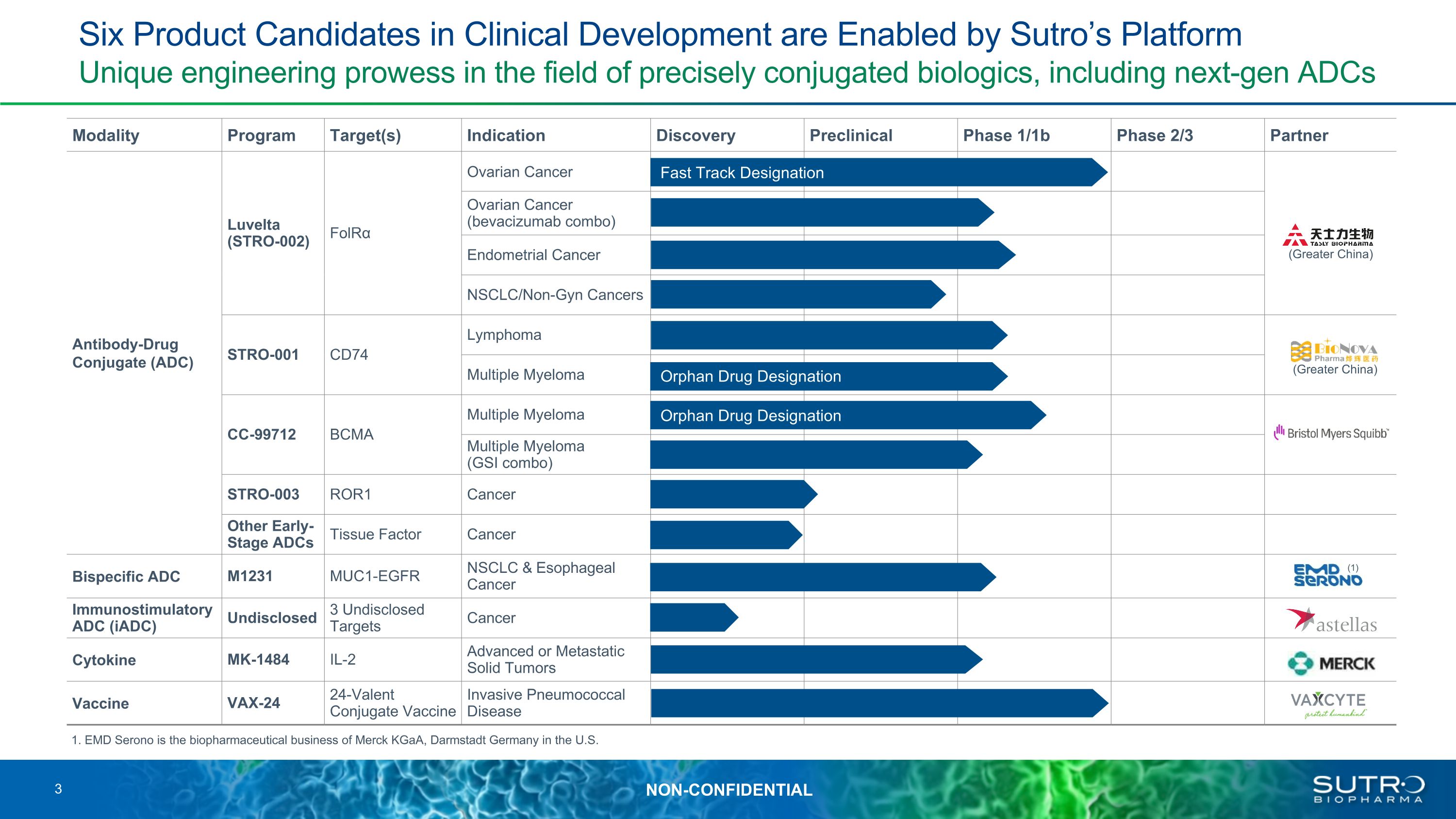
Modality Program Target(s) Indication Discovery Preclinical Phase 1/1b Phase 2/3 Partner Antibody-Drug Conjugate (ADC) Luvelta�(STRO-002) FolRα Ovarian Cancer Ovarian Cancer �(bevacizumab combo) Endometrial Cancer NSCLC/Non-Gyn Cancers STRO-001 CD74 Lymphoma Multiple Myeloma CC-99712 BCMA Multiple Myeloma Multiple Myeloma �(GSI combo) STRO-003 ROR1 Cancer Other Early-Stage ADCs Tissue Factor Cancer Bispecific ADC M1231 MUC1-EGFR NSCLC & Esophageal Cancer Immunostimulatory ADC (iADC) Undisclosed 3 Undisclosed Targets Cancer Cytokine MK-1484 IL-2 Advanced or Metastatic Solid Tumors Vaccine VAX-24 24-Valent Conjugate Vaccine Invasive Pneumococcal Disease Fast Track Designation (Greater China) (Greater China) (1) 1. EMD Serono is the biopharmaceutical business of Merck KGaA, Darmstadt Germany in the U.S. Orphan Drug Designation Orphan Drug Designation Six Product Candidates in Clinical Development are Enabled by Sutro’s Platform�Unique engineering prowess in the field of precisely conjugated biologics, including next-gen ADCs 3
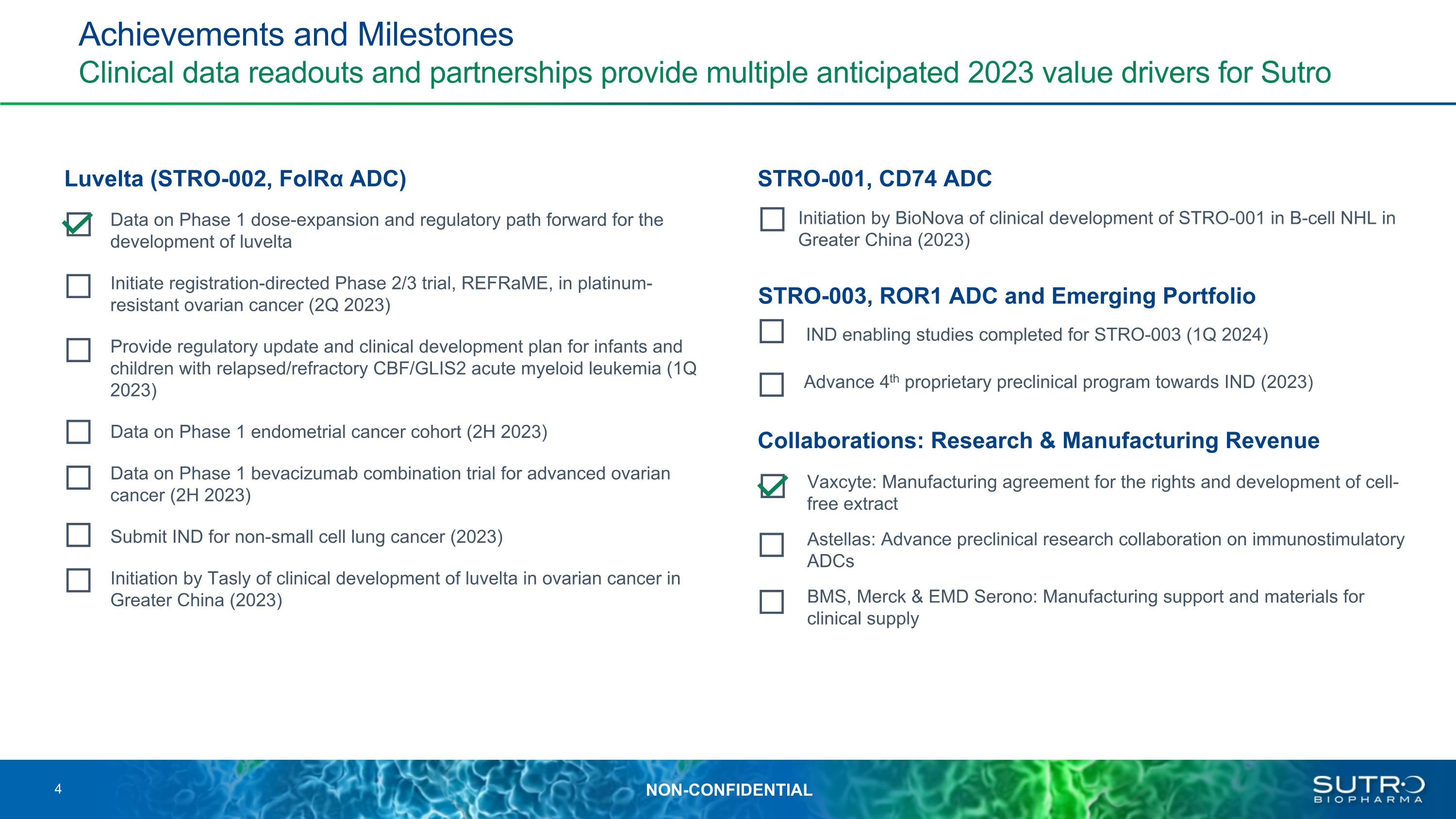
Data on Phase 1 dose-expansion and regulatory path forward for the development of luvelta Initiate registration-directed Phase 2/3 trial, REFRaME, in platinum-resistant ovarian cancer (2Q 2023) Provide regulatory update and clinical development plan for infants and children with relapsed/refractory CBF/GLIS2 acute myeloid leukemia (1Q 2023) Data on Phase 1 endometrial cancer cohort (2H 2023) Data on Phase 1 bevacizumab combination trial for advanced ovarian cancer (2H 2023) Submit IND for non-small cell lung cancer (2023) Initiation by Tasly of clinical development of luvelta in ovarian cancer in Greater China (2023) Vaxcyte: Manufacturing agreement for the rights and development of cell-free extract Astellas: Advance preclinical research collaboration on immunostimulatory ADCs BMS, Merck & EMD Serono: Manufacturing support and materials for clinical supply IND enabling studies completed for STRO-003 (1Q 2024) Luvelta (STRO-002, FolRα ADC) Achievements and Milestones�Clinical data readouts and partnerships provide multiple anticipated 2023 value drivers for Sutro 4 STRO-003, ROR1 ADC and Emerging Portfolio Advance 4th proprietary preclinical program towards IND (2023) Collaborations: Research & Manufacturing Revenue Initiation by BioNova of clinical development of STRO-001 in B-cell NHL in Greater China (2023) STRO-001, CD74 ADC

Luveltamab Tazevibulin �(Luvelta, STRO-002)
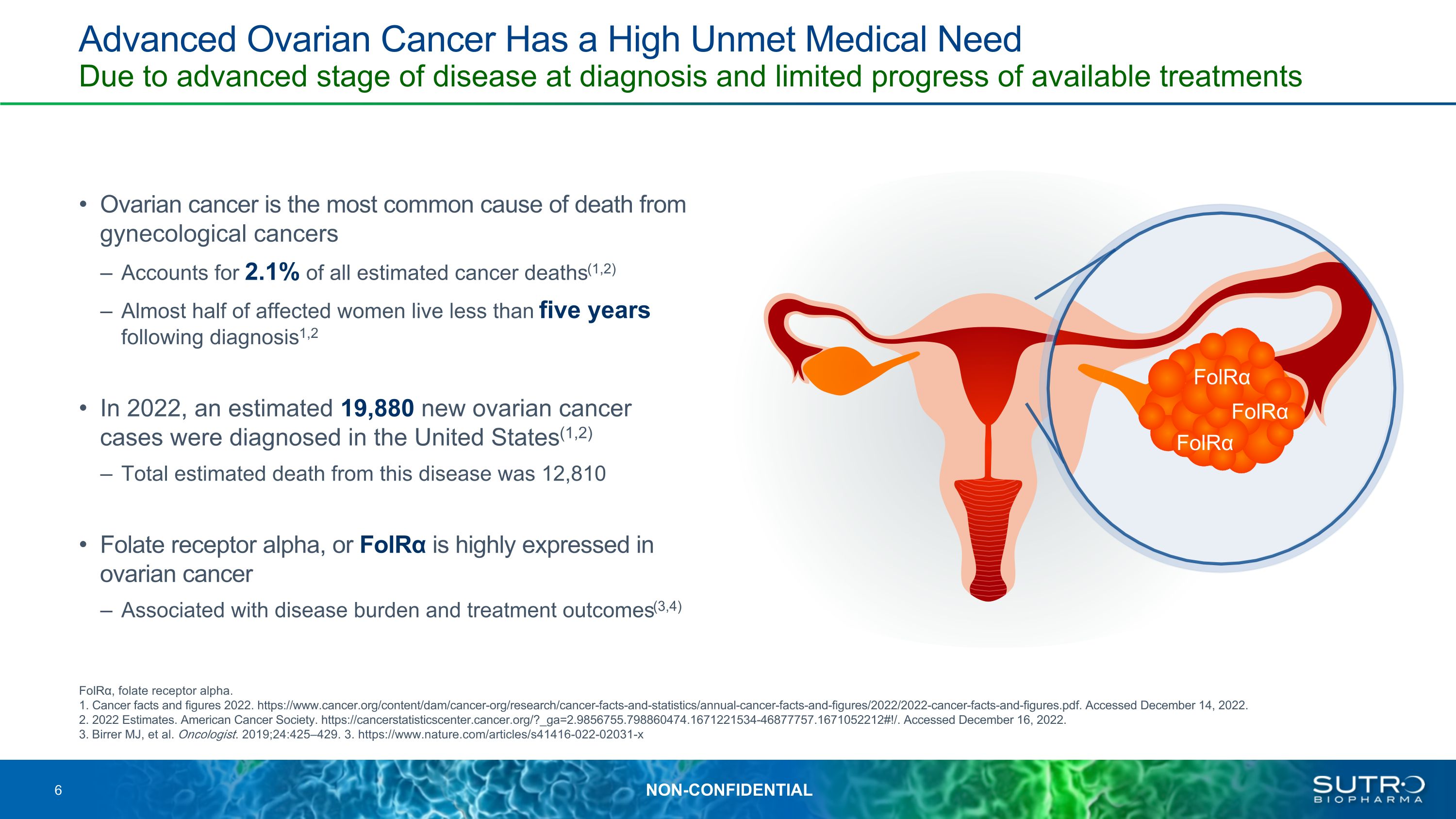
Advanced Ovarian Cancer Has a High Unmet Medical Need Ovarian cancer is the most common cause of death from gynecological cancers Accounts for 2.1% of all estimated cancer deaths(1,2) Almost half of affected women live less than five years following diagnosis1,2 In 2022, an estimated 19,880 new ovarian cancer cases were diagnosed in the United States(1,2) Total estimated death from this disease was 12,810 Folate receptor alpha, or FolRα is highly expressed in ovarian cancer Associated with disease burden and treatment outcomes(3,4) Due to advanced stage of disease at diagnosis and limited progress of available treatments FolRα, folate receptor alpha. �1. Cancer facts and figures 2022. https://www.cancer.org/content/dam/cancer-org/research/cancer-facts-and-statistics/annual-cancer-facts-and-figures/2022/2022-cancer-facts-and-figures.pdf. Accessed December 14, 2022. �2. 2022 Estimates. American Cancer Society. https://cancerstatisticscenter.cancer.org/?_ga=2.9856755.798860474.1671221534-46877757.1671052212#!/. Accessed December 16, 2022. �3. Birrer MJ, et al. Oncologist. 2019;24:425–429. 3. https://www.nature.com/articles/s41416-022-02031-x Z FolRα FolRα FolRα
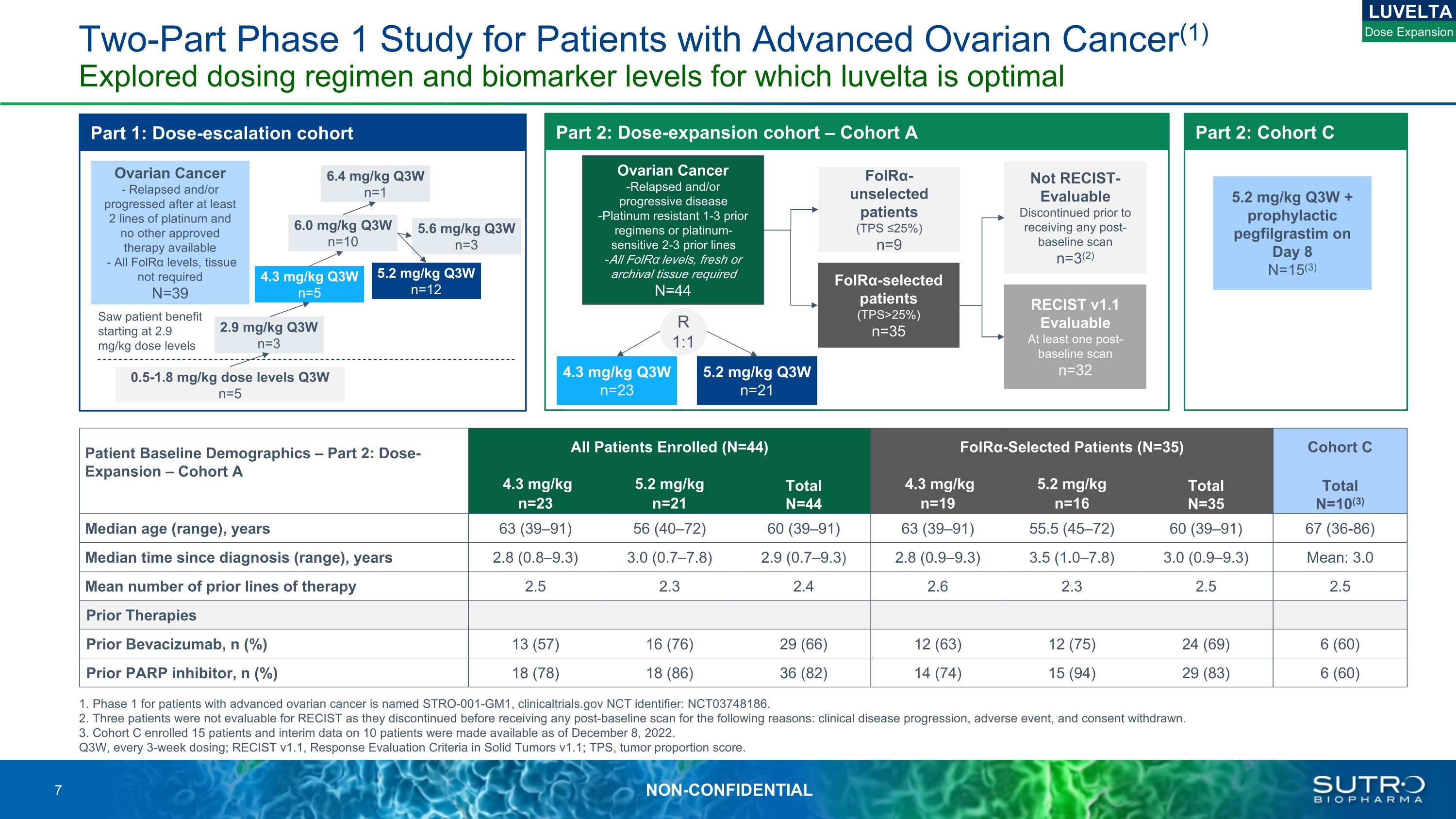
Two-Part Phase 1 Study for Patients with Advanced Ovarian Cancer(1) Explored dosing regimen and biomarker levels for which luvelta is optimal 1. Phase 1 for patients with advanced ovarian cancer is named STRO-001-GM1, clinicaltrials.gov NCT identifier: NCT03748186. 2. Three patients were not evaluable for RECIST as they discontinued before receiving any post-baseline scan for the following reasons: clinical disease progression, adverse event, and consent withdrawn. 3. Cohort C enrolled 15 patients and interim data on 10 patients were made available as of December 8, 2022. Q3W, every 3-week dosing; RECIST v1.1, Response Evaluation Criteria in Solid Tumors v1.1; TPS, tumor proportion score. Part 1: Dose-escalation cohort 5.6 mg/kg Q3W n=3 6.4 mg/kg Q3W n=1 5.2 mg/kg Q3W n=12 6.0 mg/kg Q3W n=10 4.3 mg/kg Q3W n=5 2.9 mg/kg Q3W n=3 0.5-1.8 mg/kg dose levels Q3W n=5 Part 2: Dose-expansion cohort – Cohort A 4.3 mg/kg Q3W n=23 RECIST v1.1 Evaluable At least one post-baseline scan n=32 Not RECIST-Evaluable Discontinued prior to receiving any post-baseline scan n=3(2) FolRα-unselected patients �(TPS ≤25%) n=9 R 1:1 FolRα-selected patients (TPS>25%) n=35 5.2 mg/kg Q3W n=21 Part 2: Cohort C 5.2 mg/kg Q3W + prophylactic pegfilgrastim on Day 8 N=15(3) Ovarian Cancer Relapsed and/or progressive disease Platinum resistant 1-3 prior regimens or platinum-sensitive 2-3 prior lines All FolRα levels, fresh or archival tissue required N=44 LUVELTA Dose Expansion Saw patient benefit starting at 2.9 mg/kg dose levels Ovarian Cancer - Relapsed and/or progressed after at least 2 lines of platinum and no other approved therapy available - All FolRα levels, tissue not required�N=39 Patient Baseline Demographics – Part 2: Dose-Expansion – Cohort A All Patients Enrolled (N=44) FolRα-Selected Patients (N=35) Cohort C 4.3 mg/kg �n=23 5.2 mg/kg �n=21 Total N=44 4.3 mg/kg �n=19 5.2 mg/kg �n=16 Total N=35 Total N=10(3) Median age (range), years 63 (39–91) 56 (40–72) 60 (39–91) 63 (39–91) 55.5 (45–72) 60 (39–91) 67 (36-86) Median time since diagnosis (range), years 2.8 (0.8–9.3) 3.0 (0.7–7.8) 2.9 (0.7–9.3) 2.8 (0.9–9.3) 3.5 (1.0–7.8) 3.0 (0.9–9.3) Mean: 3.0 Mean number of prior lines of therapy 2.5 2.3 2.4 2.6 2.3 2.5 2.5 Prior Therapies Prior Bevacizumab, n (%) 13 (57) 16 (76) 29 (66) 12 (63) 12 (75) 24 (69) 6 (60) Prior PARP inhibitor, n (%) 18 (78) 18 (86) 36 (82) 14 (74) 15 (94) 29 (83) 6 (60)
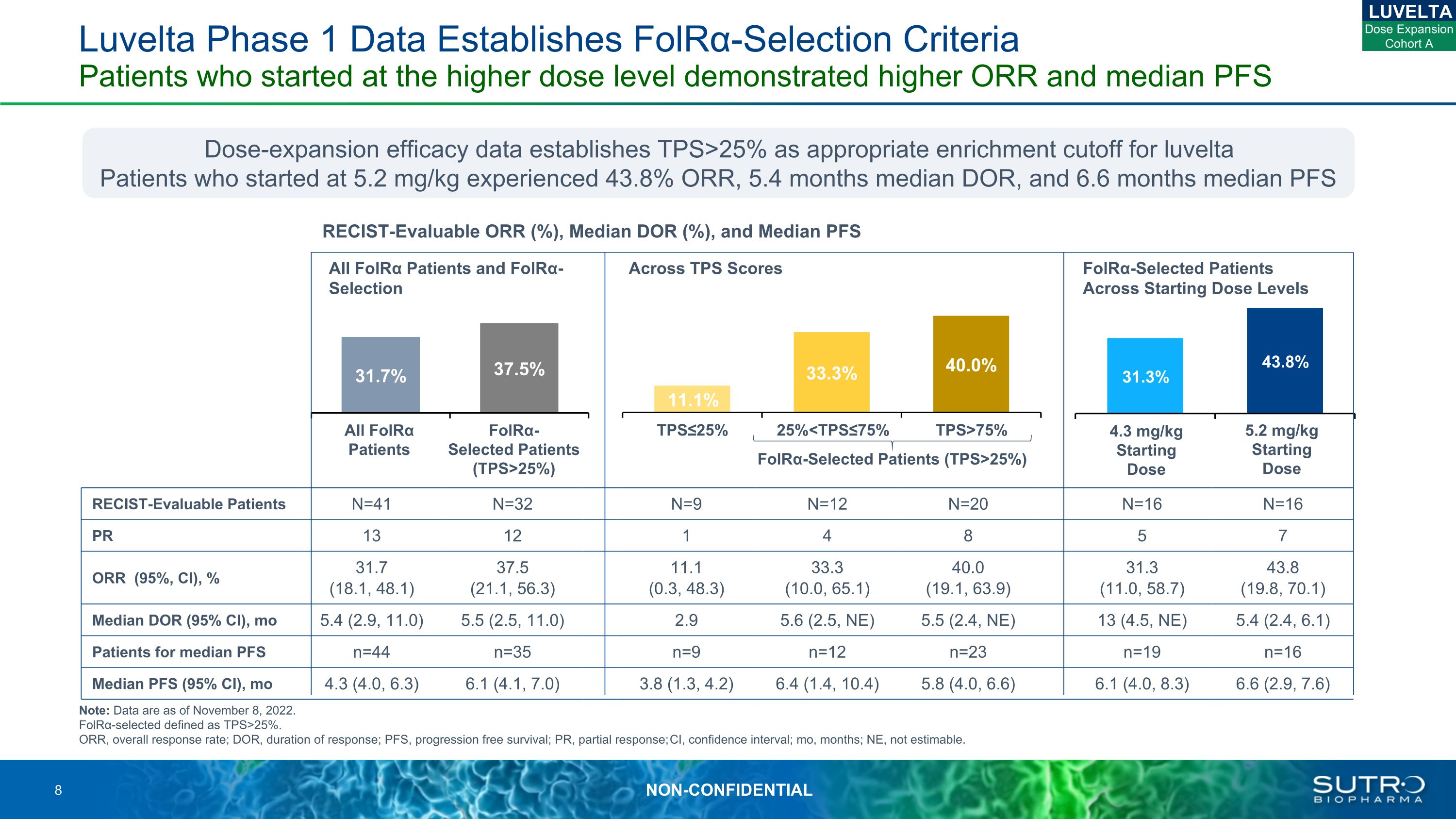
RECIST-Evaluable Patients N=41 N=32 N=9 N=12 N=20 N=16 N=16 PR 13 12 1 4 8 5 7 ORR (95%, CI), % 31.7 �(18.1, 48.1) 37.5�(21.1, 56.3) 11.1 �(0.3, 48.3) 33.3�(10.0, 65.1) 40.0�(19.1, 63.9) 31.3�(11.0, 58.7) 43.8 �(19.8, 70.1) Median DOR (95% CI), mo 5.4 (2.9, 11.0) 5.5 (2.5, 11.0) 2.9 5.6 (2.5, NE) 5.5 (2.4, NE) 13 (4.5, NE) 5.4 (2.4, 6.1) Patients for median PFS n=44 n=35 n=9 n=12 n=23 n=19 n=16 Median PFS (95% CI), mo 4.3 (4.0, 6.3) 6.1 (4.1, 7.0) 3.8 (1.3, 4.2) 6.4 (1.4, 10.4) 5.8 (4.0, 6.6) 6.1 (4.0, 8.3) 6.6 (2.9, 7.6) Luvelta Phase 1 Data Establishes FolRα-Selection Criteria Patients who started at the higher dose level demonstrated higher ORR and median PFS Note: Data are as of November 8, 2022. FolRα-selected defined as TPS>25%. ORR, overall response rate; DOR, duration of response; PFS, progression free survival; PR, partial response; CI, confidence interval; mo, months; NE, not estimable. RECIST-Evaluable ORR (%), Median DOR (%), and Median PFS All FolRα Patients and FolRα-Selection Across TPS Scores FolRα-Selected Patients �Across Starting Dose Levels All FolRα �Patients FolRα-�Selected Patients (TPS>25%) 4.3 mg/kg Starting Dose 5.2 mg/kg Starting �Dose 25%<TPS≤75% TPS>75% TPS≤25% LUVELTA Dose Expansion Cohort A FolRα-Selected Patients (TPS>25%) Dose-expansion efficacy data establishes TPS>25% as appropriate enrichment cutoff for luvelta�Patients who started at 5.2 mg/kg experienced 43.8% ORR, 5.4 months median DOR, and 6.6 months median PFS
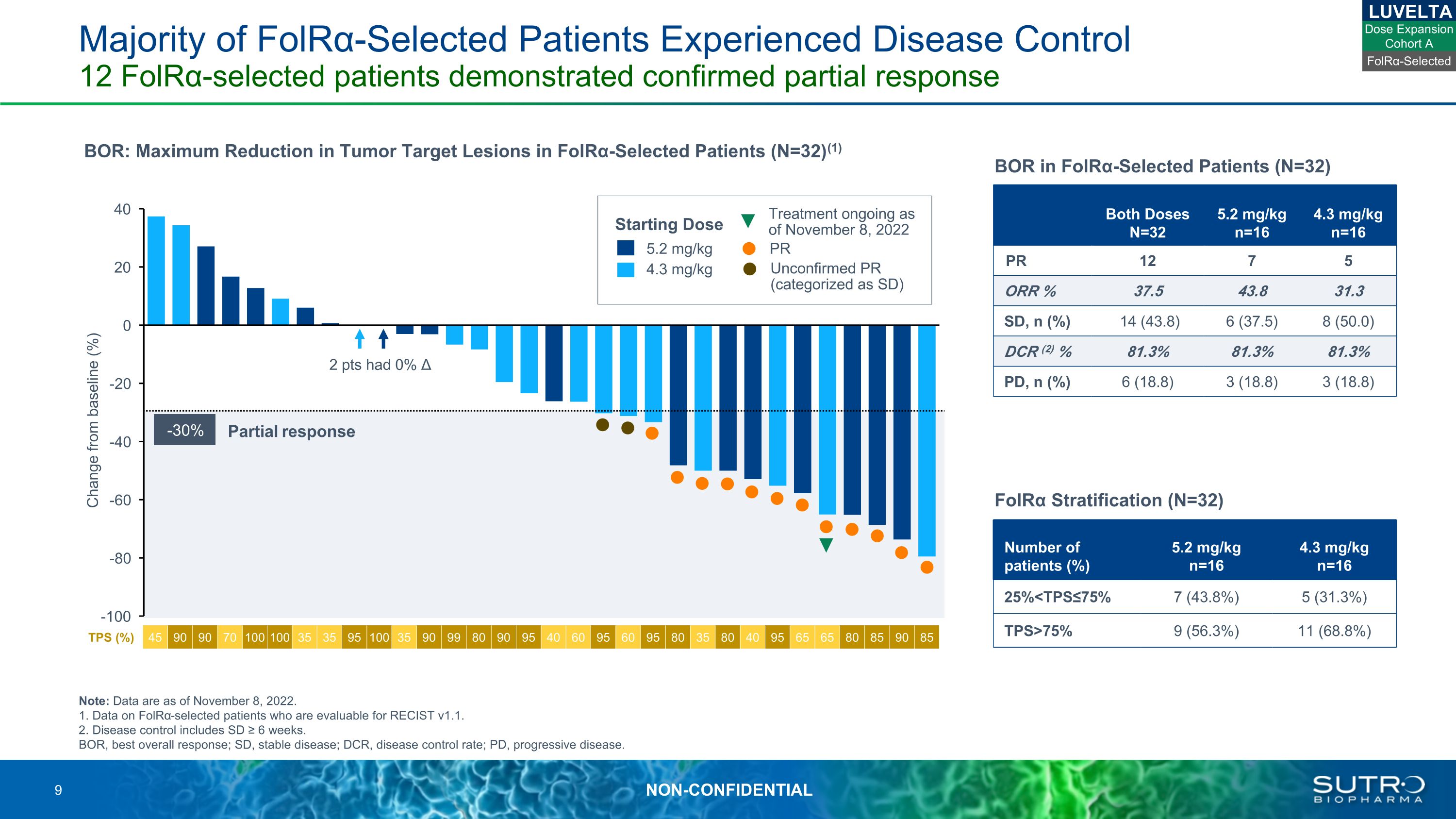
Majority of FolRα-Selected Patients Experienced Disease Control 12 FolRα-selected patients demonstrated confirmed partial response Note: Data are as of November 8, 2022.�1. Data on FolRα-selected patients who are evaluable for RECIST v1.1.�2. Disease control includes SD ≥ 6 weeks.�BOR, best overall response; SD, stable disease; DCR, disease control rate; PD, progressive disease. TPS (%) 45 90 90 70 100 100 35 35 95 100 35 90 99 80 90 95 40 60 95 60 95 80 35 80 40 95 65 65 80 85 90 85 Partial response -30% 2 pts had 0% Δ LUVELTA FolRα-Selected Both Doses N=32 5.2 mg/kg n=16 4.3 mg/kg n=16 PR 12 7 5 ORR % 37.5 43.8 31.3 SD, n (%) 14 (43.8) 6 (37.5) 8 (50.0) DCR (2) % 81.3% 81.3% 81.3% PD, n (%) 6 (18.8) 3 (18.8) 3 (18.8) BOR in FolRα-Selected Patients (N=32) Change from baseline (%) BOR: Maximum Reduction in Tumor Target Lesions in FolRα-Selected Patients (N=32)(1) 5.2 mg/kg 4.3 mg/kg Starting Dose PR Unconfirmed PR (categorized as SD) Treatment ongoing as of November 8, 2022 Number of patients (%) 5.2 mg/kg n=16 4.3 mg/kg n=16 25%<TPS≤75% 7 (43.8%) 5 (31.3%) TPS>75% 9 (56.3%) 11 (68.8%) FolRα Stratification (N=32) Dose Expansion Cohort A
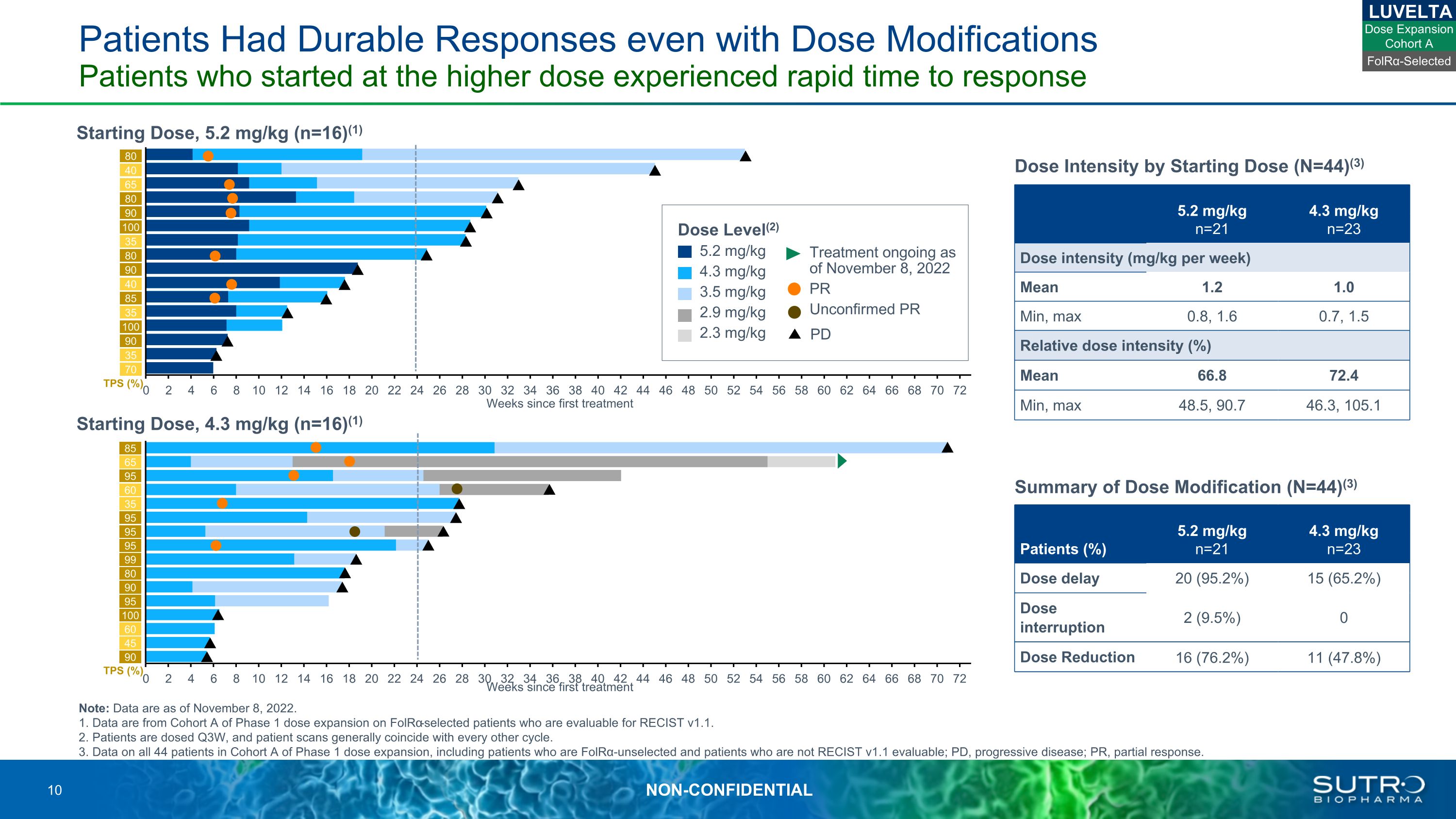
Patients Had Durable Responses even with Dose Modifications Patients who started at the higher dose experienced rapid time to response Note: Data are as of November 8, 2022. �1. Data are from Cohort A of Phase 1 dose expansion on FolRα-selected patients who are evaluable for RECIST v1.1.�2. Patients are dosed Q3W, and patient scans generally coincide with every other cycle.�3. Data on all 44 patients in Cohort A of Phase 1 dose expansion, including patients who are FolRα-unselected and patients who are not RECIST v1.1 evaluable; PD, progressive disease; PR, partial response. Starting Dose, 5.2 mg/kg (n=16)(1) 80 40 65 80 90 80 90 40 85 35 100 90 35 35 100 LUVELTA 5.2 mg/kg n=21 4.3 mg/kg n=23 N=23 Dose intensity (mg/kg per week) Mean 1.2 1.0 Min, max 0.8, 1.6 0.7, 1.5 Relative dose intensity (%) Mean 66.8 72.4 Min, max 48.5, 90.7 46.3, 105.1 Dose Intensity by Starting Dose (N=44)(3) 85 65 95 60 35 95 95 95 99 80 90 95 100 60 45 90 TPS (%) 70 Dose Level(2) 5.2 mg/kg 4.3 mg/kg 3.5 mg/kg 2.9 mg/kg 2.3 mg/kg Treatment ongoing as of November 8, 2022 PR Unconfirmed PR PD Weeks since first treatment Starting Dose, 4.3 mg/kg (n=16)(1) TPS (%) Weeks since first treatment FolRα-Selected Dose Expansion Cohort A 5.2 mg/kg n=21 4.3 mg/kg n=23 Patients (%) N=23 Dose delay 20 (95.2%) 15 (65.2%) Dose interruption 2 (9.5%) 0 Dose Reduction 16 (76.2%) 11 (47.8%) Summary of Dose Modification (N=44)(3)
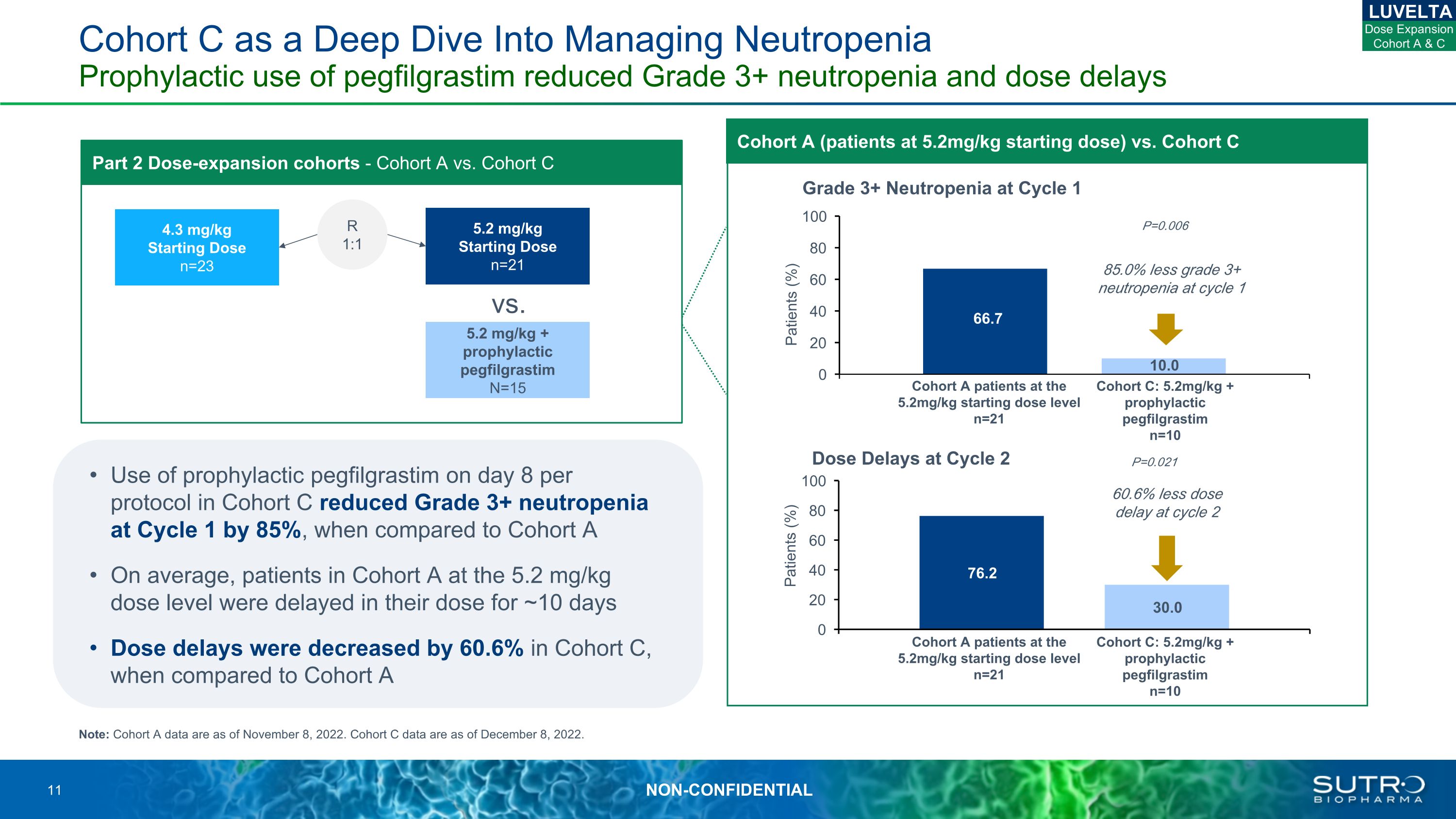
Cohort C as a Deep Dive Into Managing Neutropenia Prophylactic use of pegfilgrastim reduced Grade 3+ neutropenia and dose delays Grade 3+ Neutropenia at Cycle 1 P=0.006 85.0% less grade 3+ neutropenia at cycle 1 Dose Delays at Cycle 2 P=0.021 60.6% less dose delay at cycle 2 Part 2 Dose-expansion cohorts - Cohort A vs. Cohort C R 1:1 Note: Cohort A data are as of November 8, 2022. Cohort C data are as of December 8, 2022. LUVELTA Cohort A patients at the 5.2mg/kg starting dose level n=21 Cohort C: 5.2mg/kg + �prophylactic pegfilgrastim n=10 4.3 mg/kg Starting Dose n=23 5.2 mg/kg Starting Dose n=21 5.2 mg/kg + prophylactic pegfilgrastim N=15 vs. Cohort A patients at the 5.2mg/kg starting dose level n=21 Cohort C: 5.2mg/kg + �prophylactic pegfilgrastim n=10 Use of prophylactic pegfilgrastim on day 8 per protocol in Cohort C reduced Grade 3+ neutropenia at Cycle 1 by 85%, when compared to Cohort A On average, patients in Cohort A at the 5.2 mg/kg dose level were delayed in their dose for ~10 days Dose delays were decreased by 60.6% in Cohort C, when compared to Cohort A Dose Expansion Cohort A & C Cohort A (patients at 5.2mg/kg starting dose) vs. Cohort C
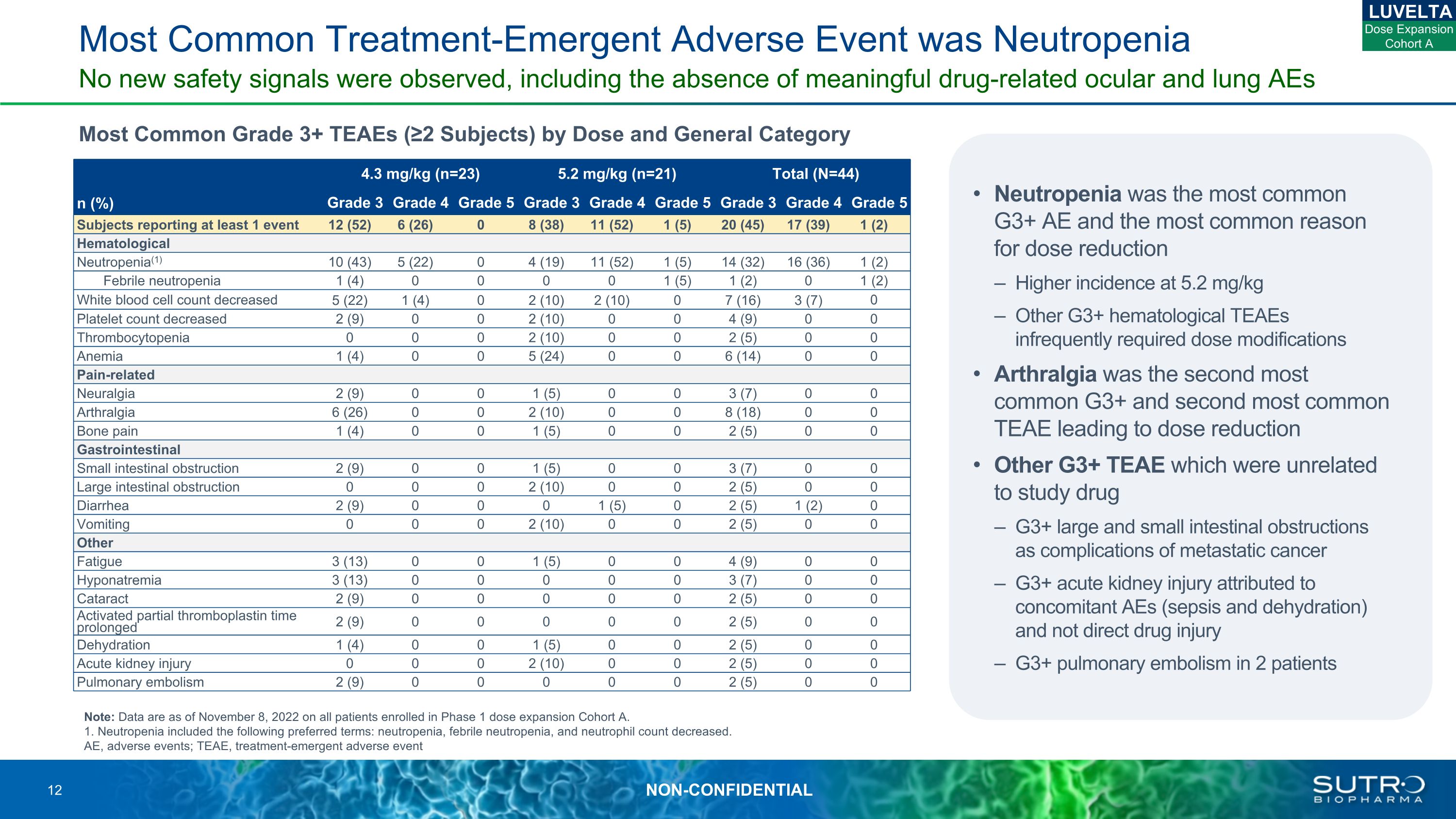
Most Common Treatment-Emergent Adverse Event was Neutropenia Most Common Grade 3+ TEAEs (≥2 Subjects) by Dose and General Category No new safety signals were observed, including the absence of meaningful drug-related ocular and lung AEs Note: Data are as of November 8, 2022 on all patients enrolled in Phase 1 dose expansion Cohort A. 1. Neutropenia included the following preferred terms: neutropenia, febrile neutropenia, and neutrophil count decreased. AE, adverse events; TEAE, treatment-emergent adverse event 4.3 mg/kg (n=23) 5.2 mg/kg (n=21) Total (N=44) n (%) Grade 3 Grade 4 Grade 5 Grade 3 Grade 4 Grade 5 Grade 3 Grade 4 Grade 5 Subjects reporting at least 1 event 12 (52) 6 (26) 0 8 (38) 11 (52) 1 (5) 20 (45) 17 (39) 1 (2) Hematological Neutropenia(1) 10 (43) 5 (22) 0 4 (19) 11 (52) 1 (5) 14 (32) 16 (36) 1 (2) Febrile neutropenia 1 (4) 0 0 0 0 1 (5) 1 (2) 0 1 (2) White blood cell count decreased 5 (22) 1 (4) 0 2 (10) 2 (10) 0 7 (16) 3 (7) 0 Platelet count decreased 2 (9) 0 0 2 (10) 0 0 4 (9) 0 0 Thrombocytopenia 0 0 0 2 (10) 0 0 2 (5) 0 0 Anemia 1 (4) 0 0 5 (24) 0 0 6 (14) 0 0 Pain-related Neuralgia 2 (9) 0 0 1 (5) 0 0 3 (7) 0 0 Arthralgia 6 (26) 0 0 2 (10) 0 0 8 (18) 0 0 Bone pain 1 (4) 0 0 1 (5) 0 0 2 (5) 0 0 Gastrointestinal Small intestinal obstruction 2 (9) 0 0 1 (5) 0 0 3 (7) 0 0 Large intestinal obstruction 0 0 0 2 (10) 0 0 2 (5) 0 0 Diarrhea 2 (9) 0 0 0 1 (5) 0 2 (5) 1 (2) 0 Vomiting 0 0 0 2 (10) 0 0 2 (5) 0 0 Other Fatigue 3 (13) 0 0 1 (5) 0 0 4 (9) 0 0 Hyponatremia 3 (13) 0 0 0 0 0 3 (7) 0 0 Cataract 2 (9) 0 0 0 0 0 2 (5) 0 0 Activated partial thromboplastin time prolonged 2 (9) 0 0 0 0 0 2 (5) 0 0 Dehydration 1 (4) 0 0 1 (5) 0 0 2 (5) 0 0 Acute kidney injury 0 0 0 2 (10) 0 0 2 (5) 0 0 Pulmonary embolism 2 (9) 0 0 0 0 0 2 (5) 0 0 Neutropenia was the most common G3+ AE and the most common reason for dose reduction Higher incidence at 5.2 mg/kg Other G3+ hematological TEAEs infrequently required dose modifications Arthralgia was the second most common G3+ and second most common TEAE leading to dose reduction Other G3+ TEAE which were unrelated to study drug G3+ large and small intestinal obstructions as complications of metastatic cancer G3+ acute kidney injury attributed to concomitant AEs (sepsis and dehydration) and not direct drug injury G3+ pulmonary embolism in 2 patients LUVELTA Dose Expansion Cohort A
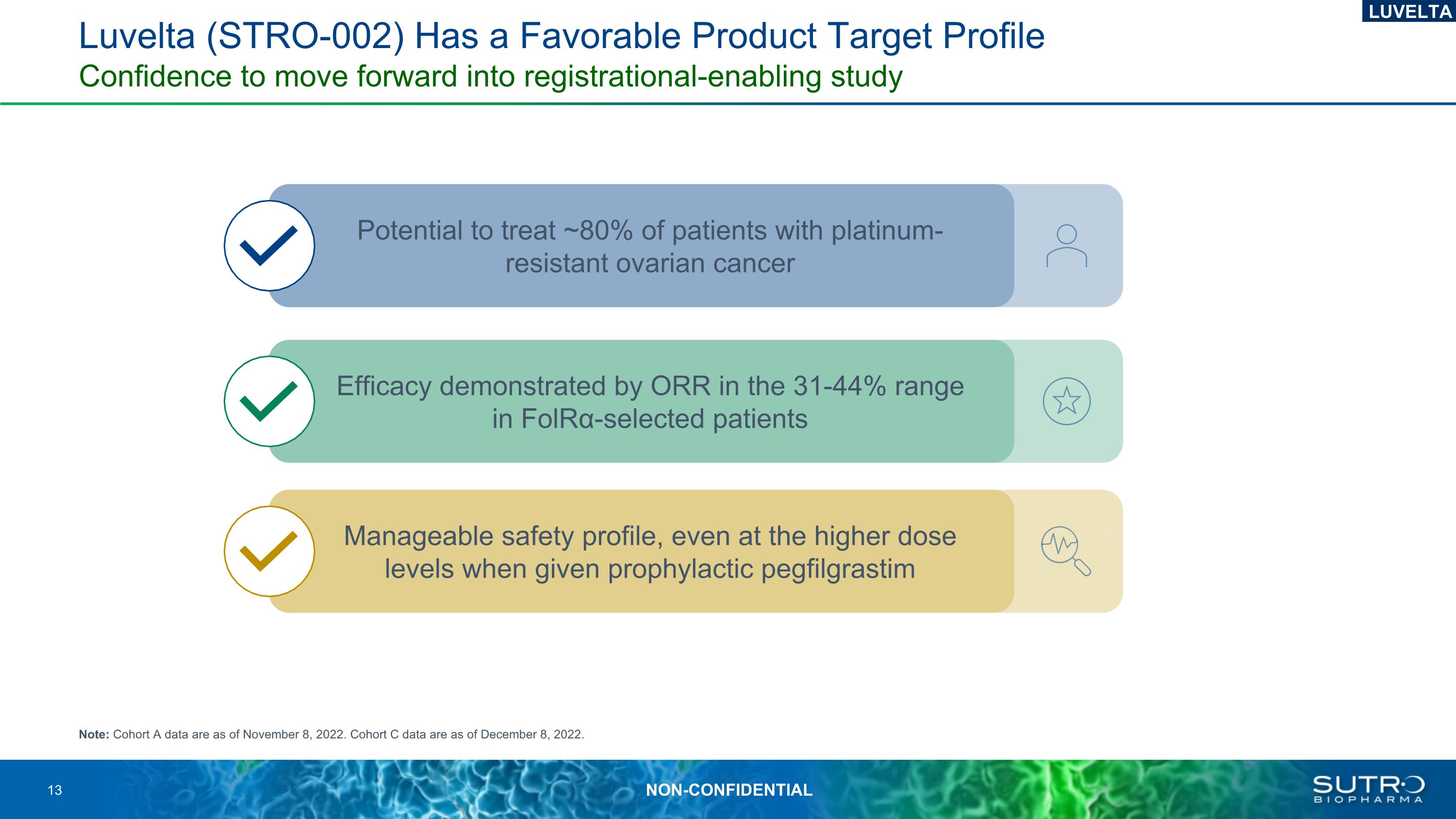
Luvelta (STRO-002) Has a Favorable Product Target Profile Confidence to move forward into registrational-enabling study Note: Cohort A data are as of November 8, 2022. Cohort C data are as of December 8, 2022. Potential to treat ~80% of patients with platinum-resistant ovarian cancer Efficacy demonstrated by ORR in the 31-44% range in FolRα-selected patients Manageable safety profile, even at the higher dose levels when given prophylactic pegfilgrastim LUVELTA
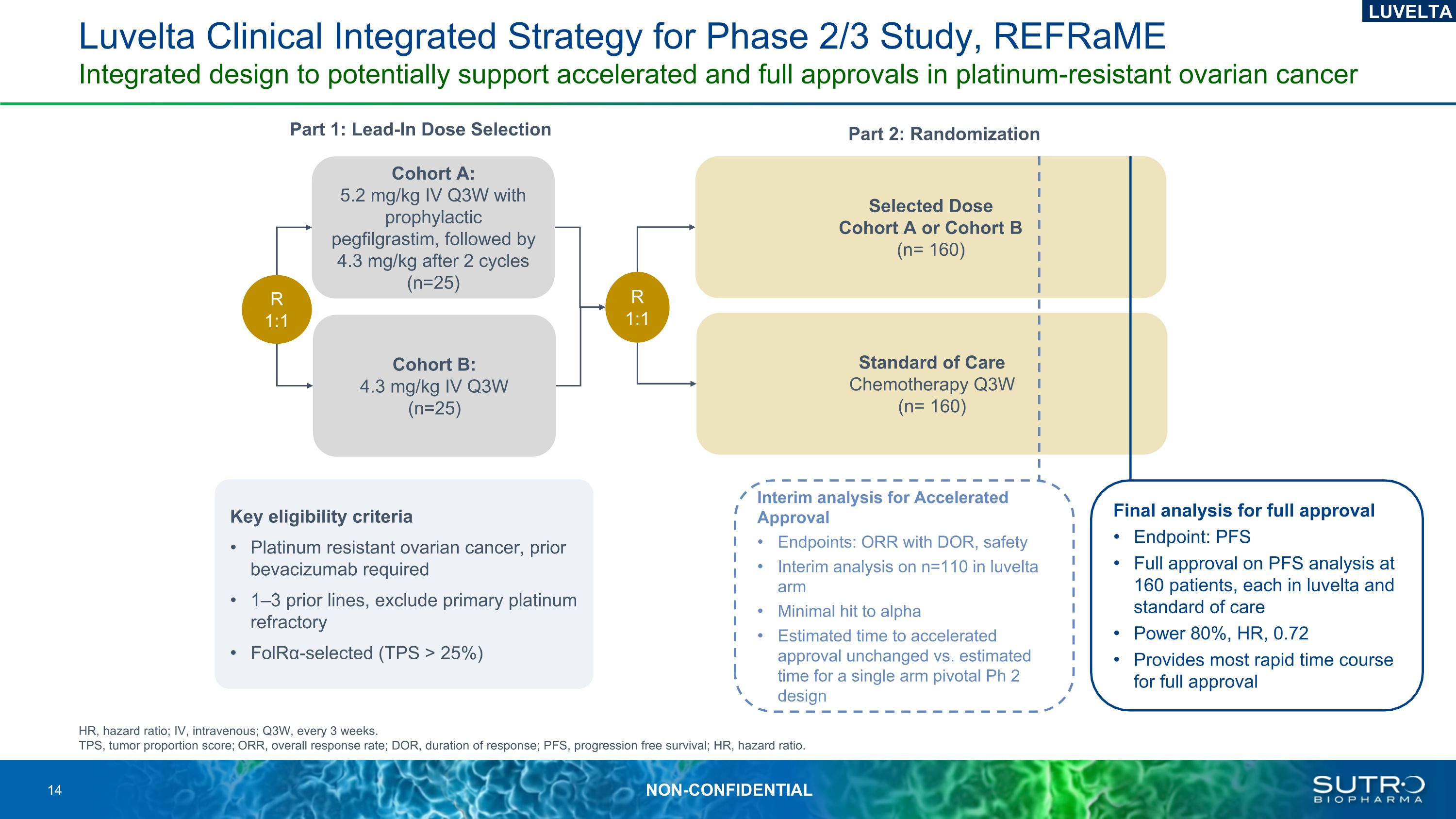
Luvelta Clinical Integrated Strategy for Phase 2/3 Study, REFRaME�Integrated design to potentially support accelerated and full approvals in platinum-resistant ovarian cancer Part 1: Lead-In Dose Selection Key eligibility criteria Platinum resistant ovarian cancer, prior bevacizumab required 1–3 prior lines, exclude primary platinum refractory FolRα-selected (TPS > 25%) Part 2: Randomization LUVELTA Cohort A: �5.2 mg/kg IV Q3W with prophylactic pegfilgrastim, followed by 4.3 mg/kg after 2 cycles (n=25) Cohort B: �4.3 mg/kg IV Q3W (n=25) Interim analysis for Accelerated Approval Endpoints: ORR with DOR, safety Interim analysis on n=110 in luvelta arm Minimal hit to alpha Estimated time to accelerated approval unchanged vs. estimated time for a single arm pivotal Ph 2 design Standard of Care Chemotherapy Q3W (n= 160) R 1:1 R 1:1 Selected Dose Cohort A or Cohort B�(n= 160) Final analysis for full approval Endpoint: PFS Full approval on PFS analysis at 160 patients, each in luvelta and standard of care Power 80%, HR, 0.72 Provides most rapid time course for full approval HR, hazard ratio; IV, intravenous; Q3W, every 3 weeks.�TPS, tumor proportion score; ORR, overall response rate; DOR, duration of response; PFS, progression free survival; HR, hazard ratio.
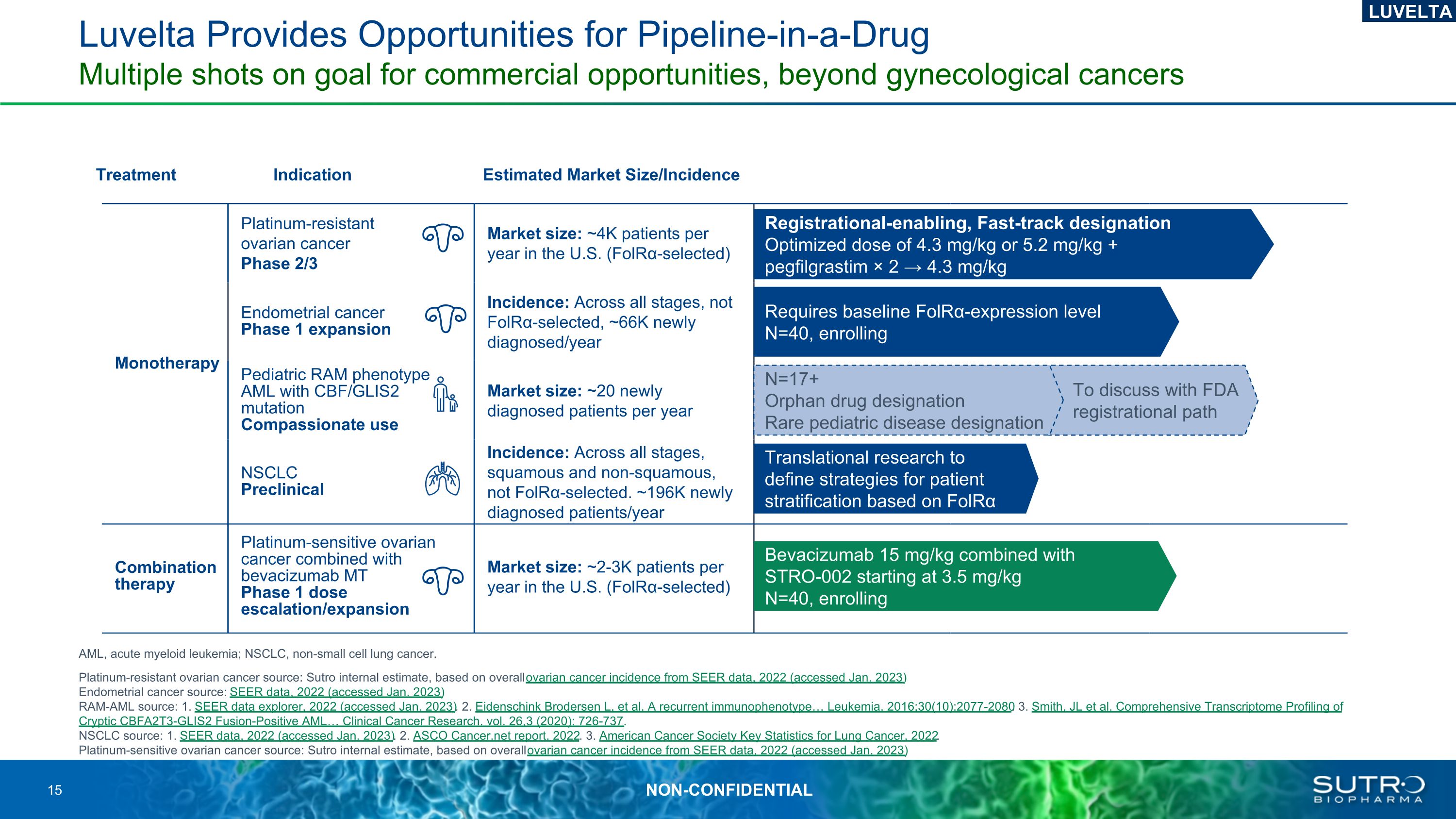
Monotherapy Platinum-resistant ovarian cancer �Phase 2/3 Market size: ~4K patients per �year in the U.S. (FolRα-selected) Endometrial cancer Phase 1 expansion Incidence: Across all stages, not FolRα-selected, ~66K newly diagnosed/year Pediatric RAM phenotype �AML with CBF/GLIS2 �mutation�Compassionate use Market size: ~20 newly diagnosed patients per year NSCLC Preclinical Incidence: Across all stages, squamous and non-squamous, not FolRα-selected. ~196K newly diagnosed patients/year Combination therapy Platinum-sensitive ovarian �cancer combined with bevacizumab MT Phase 1 dose escalation/expansion Market size: ~2-3K patients per year in the U.S. (FolRα-selected) Bevacizumab 15 mg/kg combined with �STRO-002 starting at 3.5 mg/kg �N=40, enrolling Translational research to define strategies for patient stratification based on FolRα Requires baseline FolRα-expression level N=40, enrolling Registrational-enabling, Fast-track designation Optimized dose of 4.3 mg/kg or 5.2 mg/kg + �pegfilgrastim × 2 → 4.3 mg/kg Treatment Indication Estimated Market Size/Incidence To discuss with FDA �registrational path N=17+�Orphan drug designation Rare pediatric disease designation Luvelta Provides Opportunities for Pipeline-in-a-Drug�Multiple shots on goal for commercial opportunities, beyond gynecological cancers LUVELTA AML, acute myeloid leukemia; NSCLC, non-small cell lung cancer. Platinum-resistant ovarian cancer source: Sutro internal estimate, based on overall ovarian cancer incidence from SEER data, 2022 (accessed Jan. 2023)�Endometrial cancer source: SEER data, 2022 (accessed Jan. 2023)�RAM-AML source: 1. SEER data explorer, 2022 (accessed Jan. 2023). 2. Eidenschink Brodersen L, et al. A recurrent immunophenotype… Leukemia. 2016;30(10):2077-2080. 3. Smith, JL et al. Comprehensive Transcriptome Profiling of Cryptic CBFA2T3-GLIS2 Fusion-Positive AML… Clinical Cancer Research. vol. 26,3 (2020): 726-737.�NSCLC source: 1. SEER data, 2022 (accessed Jan. 2023). 2. ASCO Cancer.net report, 2022. 3. American Cancer Society Key Statistics for Lung Cancer, 2022.�Platinum-sensitive ovarian cancer source: Sutro internal estimate, based on overall ovarian cancer incidence from SEER data, 2022 (accessed Jan. 2023)

STRO-003�and Emerging Research Portfolio
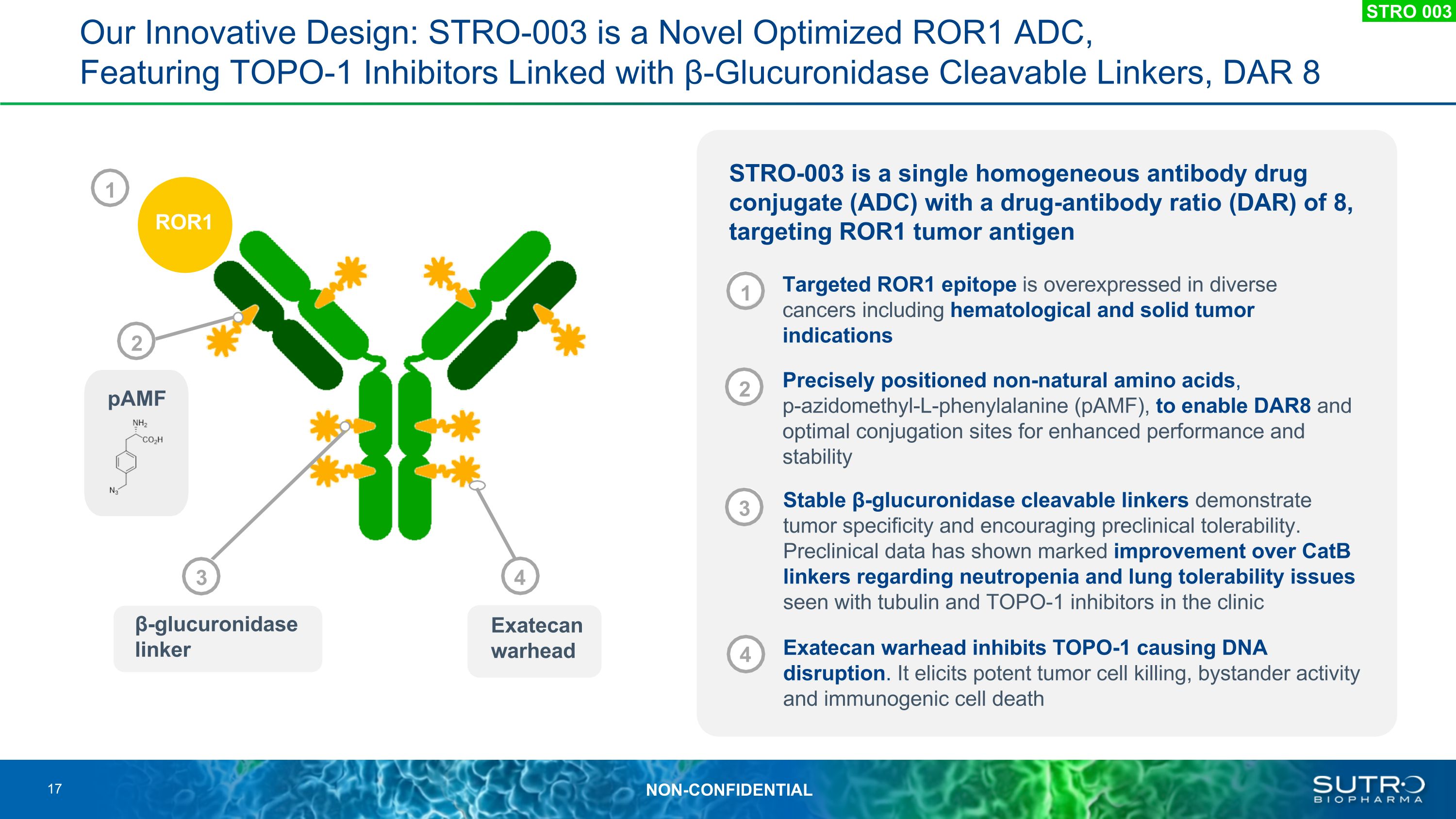
STRO-003 is a single homogeneous antibody drug conjugate (ADC) with a drug-antibody ratio (DAR) of 8, targeting ROR1 tumor antigen 1 2 3 4 pAMF ROR1 Targeted ROR1 epitope is overexpressed in diverse cancers including hematological and solid tumor indications Precisely positioned non-natural amino acids, �p-azidomethyl-L-phenylalanine (pAMF), to enable DAR8 and optimal conjugation sites for enhanced performance and stability Stable β-glucuronidase cleavable linkers demonstrate tumor specificity and encouraging preclinical tolerability. Preclinical data has shown marked improvement over CatB linkers regarding neutropenia and lung tolerability issues seen with tubulin and TOPO-1 inhibitors in the clinic Exatecan warhead inhibits TOPO-1 causing DNA disruption. It elicits potent tumor cell killing, bystander activity and immunogenic cell death Exatecan�warhead β-glucuronidase linker 4 3 2 1 Our Innovative Design: STRO-003 is a Novel Optimized ROR1 ADC, �Featuring TOPO-1 Inhibitors Linked with β-Glucuronidase Cleavable Linkers, DAR 8 17 STRO 003
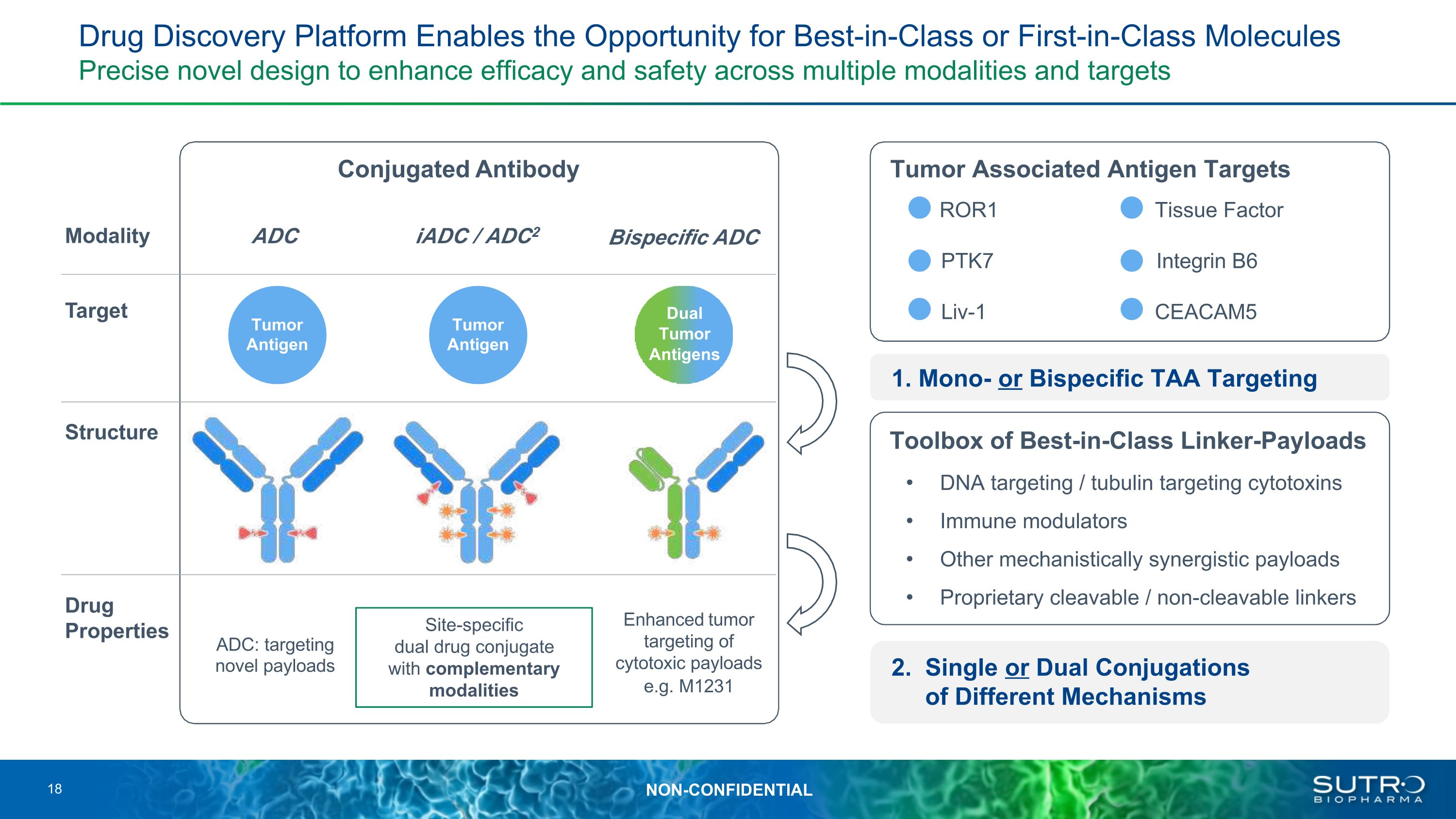
Enhanced tumor targeting of cytotoxic payloads e.g. M1231 Bispecific ADC ADC: targeting novel payloads Tumor Antigen Dual Tumor Antigens Conjugated Antibody Tumor Antigen Modality Drug Properties Target Structure Tumor Associated Antigen Targets ROR1 Tissue Factor PTK7 Integrin B6 Liv-1 CEACAM5 Toolbox of Best-in-Class Linker-Payloads DNA targeting / tubulin targeting cytotoxins Immune modulators Other mechanistically synergistic payloads Proprietary cleavable / non-cleavable linkers 2. Single or Dual Conjugations � of Different Mechanisms ADC iADC / ADC2 Site-specific dual drug conjugate with complementary modalities 1. Mono- or Bispecific TAA Targeting Drug Discovery Platform Enables the Opportunity for Best-in-Class or First-in-Class Molecules�Precise novel design to enhance efficacy and safety across multiple modalities and targets 18
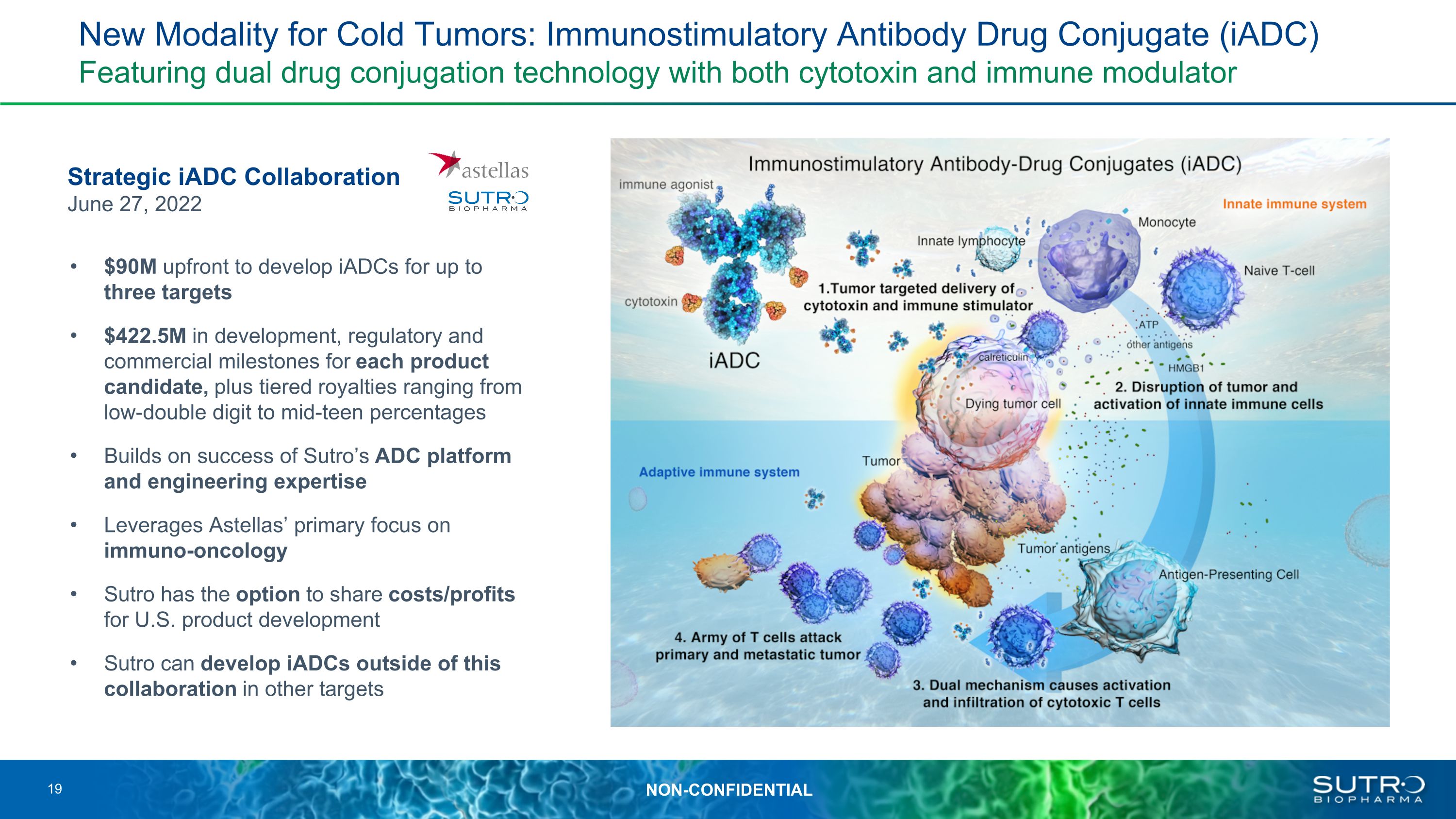
$90M upfront to develop iADCs for up to three targets $422.5M in development, regulatory and commercial milestones for each product candidate, plus tiered royalties ranging from low-double digit to mid-teen percentages Builds on success of Sutro’s ADC platform and engineering expertise Leverages Astellas’ primary focus on immuno-oncology Sutro has the option to share costs/profits for U.S. product development Sutro can develop iADCs outside of this collaboration in other targets Strategic iADC Collaboration June 27, 2022 New Modality for Cold Tumors: Immunostimulatory Antibody Drug Conjugate (iADC)�Featuring dual drug conjugation technology with both cytotoxin and immune modulator 19
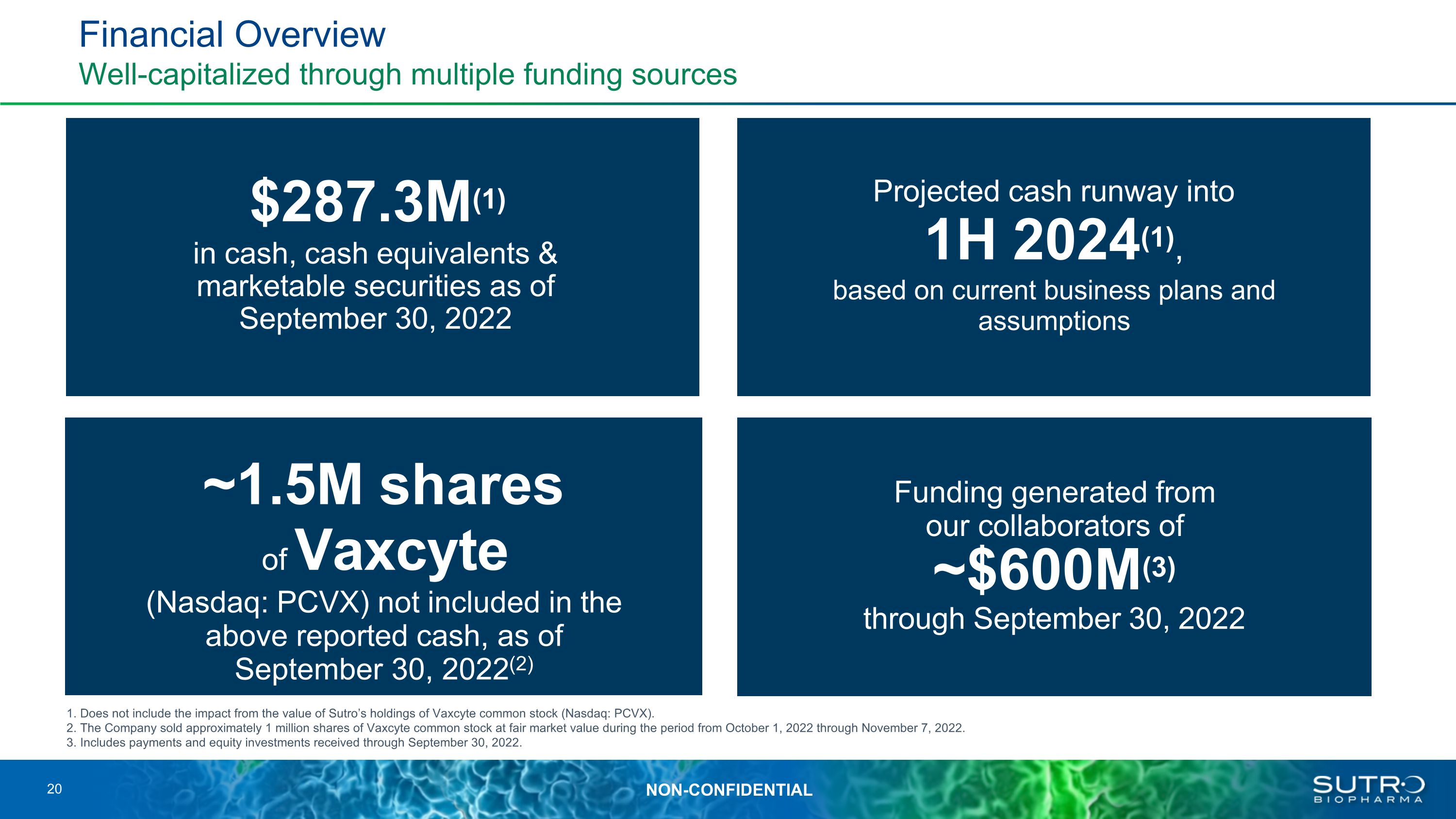
$287.3M(1) in cash, cash equivalents & marketable securities as of September 30, 2022 Projected cash runway into 1H 2024(1), based on current business plans and assumptions ~1.5M shares �of Vaxcyte (Nasdaq: PCVX) not included in the above reported cash, as of September 30, 2022(2) Funding generated from our collaborators of ~$600M(3) through September 30, 2022 1. Does not include the impact from the value of Sutro’s holdings of Vaxcyte common stock (Nasdaq: PCVX). 2. The Company sold approximately 1 million shares of Vaxcyte common stock at fair market value during the period from October 1, 2022 through November 7, 2022. 3. Includes payments and equity investments received through September 30, 2022. Financial Overview�Well-capitalized through multiple funding sources 20

Experienced Leadership Team William Newell, JD Chief Executive Officer and Member of the Board of Directors Trevor Hallam, PhD President of Research and Chief Scientific Officer Ed Albini, MBA Chief Financial Officer Shabbir Anik, PhD Chief Technical Operations Officer Linda Fitzpatrick Chief People and Communications Officer Nicki Vasquez, PhD Chief Portfolio Strategy and Alliance Officer Jane Chung, RPh Chief Commercial Officer Lynx Neurex 21

Exhibit 99.2
Sutro Biopharma Announces Update from STRO-002, Luveltamab Tazevibulin (Luvelta), Phase 1 Dose-Expansion Study and Registrational Plans in Advanced Ovarian Cancer
- Results from the STRO-002 (luvelta) Phase 1 dose-expansion study demonstrate that FolRα-selected patients experienced meaningful clinical benefit, with 43.8% ORR, median DOR of 5.4 months, and median PFS of 6.6 months at the higher starting dose of 5.2mg/kg -
- Meaningful clinical benefit was observed in FolRα-selected patients, defined as TPS>25%, which is potentially 80% of the advanced ovarian cancer patient population -
- Safety profile is generally consistent with prior data with asymptomatic neutropenia being the primary adverse event; no new safety signals were observed -
- Use of prophylactic pegfilgrastim reduced dose delays and neutropenia -
- Sutro plans to initiate Phase 2/3 registration-directed study called REFRaME in second quarter of 2023 -
- Webcast to be held today at 1:30 pm PT, or 4:30 pm ET -
SOUTH SAN FRANCISCO, Calif., January 9, 2023 – Sutro Biopharma, Inc. (Sutro or the Company) (NASDAQ: STRO), a clinical-stage oncology company pioneering site-specific and novel-format antibody drug conjugates (ADCs), today announced results from a Phase 1 dose-expansion study of STRO-002 (luvelta), a novel Folate receptor alpha (FolRα)-targeting ADC and interim safety data from exploratory cohort C, a cohort of 15 patients with advanced ovarian cancer treated at the higher dose of luvelta, (5.2mg/kg), along with prophylactic pegfilgrastim. Additionally, the company provided details on the design of the registration-directed Phase 2/3 study, REFRaME, to start in the second quarter of 2023.
Results demonstrated that luvelta provided substantial clinical benefit in FolRα-selected patients, defined by Tumor Proportion Score (TPS) of >25%, with a 37.5% overall response rate (ORR), median duration of response (median DOR) of 5.5 months, and median progression free survival (median PFS) of 6.1 months, regardless of starting dose. Results also demonstrated the higher starting dose of 5.2 mg/kg providing greater patient benefit compared to the lower dose of 4.3mg/kg. FolRα-selected patients account for approximately 80% of the patient population in advanced ovarian cancer, as represented in the patient stratification in the Phase 1 study.
Consistent with prior luvelta data, the primary adverse event from the dose-expansion cohort was predominantly asymptomatic neutropenia, with no meaningful ocular toxicity signals or complications reported.
In cohort C, an additional 15 patients with advanced ovarian cancer were enrolled and treated with prophylactic pegfilgrastim on Day 8 after each 5.2 mg/kg administration of luvelta. Initial data on neutropenia and dose delays were available on the first 10 patients, which showed that patients in cohort C experienced substantial decreases in neutropenia and potential increases in dose intensity, due to decreased dose delays.
“Today, patients with this form of heavily pre-treated ovarian cancer have extremely limited treatment options available to them, and unfortunately, experience poor outcomes,” said Dr. R. Wendel Naumann, Professor and Director of Gynecologic Oncology Research and Associate Medical Director of Clinical Trials at the Levine Cancer Institute, Atrium Health in Charlotte, North Carolina, and a co-lead principal investigator in the STRO-002-GM1 studies. “To date, luvelta continues to demonstrate encouraging efficacy data, which was further supported by results from the dose-expansion cohort. The safety profile was shown to be manageable and notably devoid of ocular complications across a broad spectrum of patients with FolRα-selected ovarian cancer.”
Commented Bill Newell, Chief Executive Officer of Sutro: “We are pleased with our Phase 1 dose-expansion efficacy data, which are generally consistent with previously reported results and demonstrate luvelta’s potential in a difficult-to-treat patient population. Through the addition of cohort C, we were able to evaluate patients at the higher dose of luvelta at 5.2mg/kg with the use of prophylactic pegfilgrastim and determined that the rates of asymptomatic neutropenia and dose delays could be diminished. Our meeting with the FDA in 2022 provided a framework for our path forward on the registration-directed Phase 2/3 trial for platinum resistant ovarian cancer patients, called REFRaME, which we plan to initiate in the second quarter of 2023.”
Summary of Results from Phase 1 Dose-Expansion Study
•Based on the results, luvelta has demonstrated the potential to provide meaningful clinical benefit to a substantially broader patient population than the on-label patient population of the approved FolRα-targeting agent
oPatients who were FolRα-selected, defined by TPS>25%, regardless of starting dose, demonstrated an ORR of 37.5% (n=32) with a median DOR of 5.5 months (n=12) and a median PFS of 6.1 months (n=35)
oTargeted luvelta patient population is approximately 80% of advanced ovarian cancer patients based on pooled Phase 1 biomarker data
oLuvelta demonstrated a FolRα-dependent response, with patients who were unselected for FolRα (TPS≤25%) demonstrating an 11.1% ORR (n=9) with a median DOR of 2.9 months (n=1) and a median PFS of 3.8 months (n=9)
•Luvelta, when given to patients at a starting dose of 5.2 mg/kg, provided greater patient benefit than a starting dose of 4.3 mg/kg
oFolRα-selected patients given the higher dose of luvelta (5.2 mg/kg) demonstrated higher response rates
▪Median DOR of 5.4 months (n=7)
▪Median PFS of 6.6 months (n=16)
oFolRα-selected patients given the lower dose of luvelta (4.3 mg/kg) demonstrated
▪Median DOR of 13 months (n=5)
▪Median PFS of 6.1 months (n=19)
•Consistent with earlier reported data, the primary adverse event from the dose-expansion cohort was asymptomatic, transient neutropenia
•Cohort C was initiated to explore the use of prophylactic pegfilgrastim for patients treated with the higher dose of luvelta (5.2mg/kg). Early results in the initial 10 patients in cohort C, when compared to patients who were not given prophylactic pegfilgrastim in the dose-expansion cohort at the higher dose (5.2mg/kg), showed substantial reductions in Grade 3+ neutropenia and in instances of dose delays
oGrade 3+ neutropenia was reduced from 66.7% to 10.0%, resulting in an 85.0% decrease in Grade 3+ neutropenia rates at the first cycle of luvelta (p=0.006)
oInstances of dose delays at the second cycle of luvelta were reduced by 60.6% (p=0.021)
Planned Phase 2/3 Study Details
As discussed with the U.S. Food and Drug Administration (FDA), the Phase 2/3 REFRaME study is planned to begin with a randomized, run-in dose confirmation phase. In this phase of the trial, 25 patients will be evaluated at the 5.2 mg/kg dose with pegfilgrastim delivered prophylactically for two cycles followed by a step-down dose to 4.3 mg/kg. The other 25 patients will be evaluated from the start at the 4.3 mg/kg dose without prophylactic pegfilgrastim. Following this 50-patient phase of the study, additional patients will be randomized between these two luvelta dose levels, and standard of care (chemotherapy). Upon agreement with FDA on the go-forward dose versus standard of care, the dose level of luvelta not chosen will be dropped. Upon having data on approximately 110 patients in the selected dose of luvelta arm, Sutro will look to apply for accelerated approval based on ORR as the primary endpoint. At the end of the Phase 3 portion of the trial, full approval can be sought based on PFS as the primary endpoint comparing the luvelta arm (n=160) and the standard of care arm (n=160).
Webcast Details
The data will be presented by members of the Sutro management team and Dr. R. Wendel Naumann, a co-lead principal investigator in the STRO-002-GM1 studies. Dr. Naumann is a Professor and Director of Gynecologic Oncology Research and Associate Medical Director of Clinical Trials at the Levine Cancer Institute, Atrium Health in Charlotte, North Carolina. Dr. Naumann is also a member of Sutro’s Clinical Advisory Board.
•Monday, January 9, 2023 at 1:30 pm PT, or 4:30 pm ET
•To access and register for the live audio webcast, please go to https://ir.sutrobio.com/news-events/ir-calendar
The webcast information will also be available through the News & Events section of the Investors portion of the Company’s website at www.sutrobio.com. An archived replay will be available for at least 30 days after the event.
About Sutro Biopharma
Sutro Biopharma, Inc., headquartered in South San Francisco, is a clinical-stage oncology company pioneering site-specific and novel-format antibody drug conjugates (ADCs). Sutro has two wholly owned ADCs in the clinic—STRO-002, a folate receptor alpha (FolRα)-targeting ADC, in clinical studies for ovarian and endometrial cancers; and STRO-001, a CD74-targeting ADC, in clinical studies for B-cell malignancies. Additionally, Sutro is collaborating with Bristol Myers Squibb (BMS) on CC-99712, a BCMA-targeting ADC in the clinic for patients with multiple myeloma; with Merck KGaA, Darmstadt, Germany, known as EMD Serono in the U.S. and Canada (EMD Serono), on M1231, a MUC1-EGFR bispecific ADC in clinical studies for patients with solid tumors, particularly non-small cell lung cancer (NSCLC) and esophageal squamous cell carcinoma; with Merck, known as MSD outside of the United States and Canada, on MK-1484, a selective IL-2 agonist in clinical studies as a monotherapy and in combination with pembrolizumab for the treatment of solid tumors; and with Astellas Pharma (Astellas) on novel modality, immunostimulatory antibody-drug conjugates (iADCs). Sutro’s platform technology also enabled the spin out of Vaxcyte (Nasdaq: PCVX) and the creation of VAX-24, a 24-valent pneumococcal conjugate vaccine in clinical studies for the prevention of invasive pneumococcal disease. Sutro’s rational design and precise protein engineering has enabled six product candidates in the clinic. Follow Sutro on Twitter, @Sutrobio, and at www.sutrobio.com to learn more about our passion for changing the future of oncology.
Forward-Looking Statements
This press release contains forward-looking statements within the meaning of the “safe harbor” provisions of the Private Securities Litigation Reform Act of 1995, including, but not limited to, anticipated preclinical and clinical development activities, timing of announcements of clinical results, trial initiation and regulatory filings, potential benefits of STRO-002 and the Company’s other product candidates and platform, potential future milestone and royalty payments, and potential market opportunities for STRO-002 and the Company’s other product candidates. All statements other than statements of historical fact are statements that could be deemed forward-looking statements. Although the Company believes that the expectations reflected in such forward-looking statements are reasonable, the Company cannot guarantee future events, results, actions, levels of activity, performance or achievements, and the timing and results of biotechnology development and potential regulatory approval is inherently uncertain. Forward-looking statements are subject to risks and uncertainties that may cause the Company’s actual activities or results to differ significantly from those expressed in any forward-looking statement, including risks and uncertainties related to the Company’s ability to advance its product candidates, the receipt and timing of potential regulatory designations, approvals and commercialization of product candidates and the Company’s ability to successfully leverage Fast Track designation, the market size for the Company’s product candidates to be smaller than anticipated, the impact of the COVID-19 pandemic on the Company’s business, clinical trial sites, supply chain and manufacturing facilities, the Company’s ability to maintain and recognize the benefits of certain designations received by product candidates, the timing and results of preclinical and clinical trials, the Company’s ability to fund development activities and achieve development goals, the Company’s ability to protect intellectual property, the value of the
Company’s holdings of Vaxcyte common stock, and the Company’s commercial collaborations with third parties and other risks and uncertainties described under the heading “Risk Factors” in documents the Company files from time to time with the Securities and Exchange Commission. These forward-looking statements speak only as of the date of this press release, and the Company undertakes no obligation to revise or update any forward-looking statements to reflect events or circumstances after the date hereof.
Investor Contact
Annie J. Chang
Sutro Biopharma
(650) 801-5728
[email protected]
Media Contact
Amy Bonanno
Solebury Strategic Communications
(914) 450-0349
[email protected]
Luveltamab Tazevibulin�(Luvelta, STRO-002) Phase 1 Data and Regulatory Strategy January 9, 2023 Exhibit 99.3
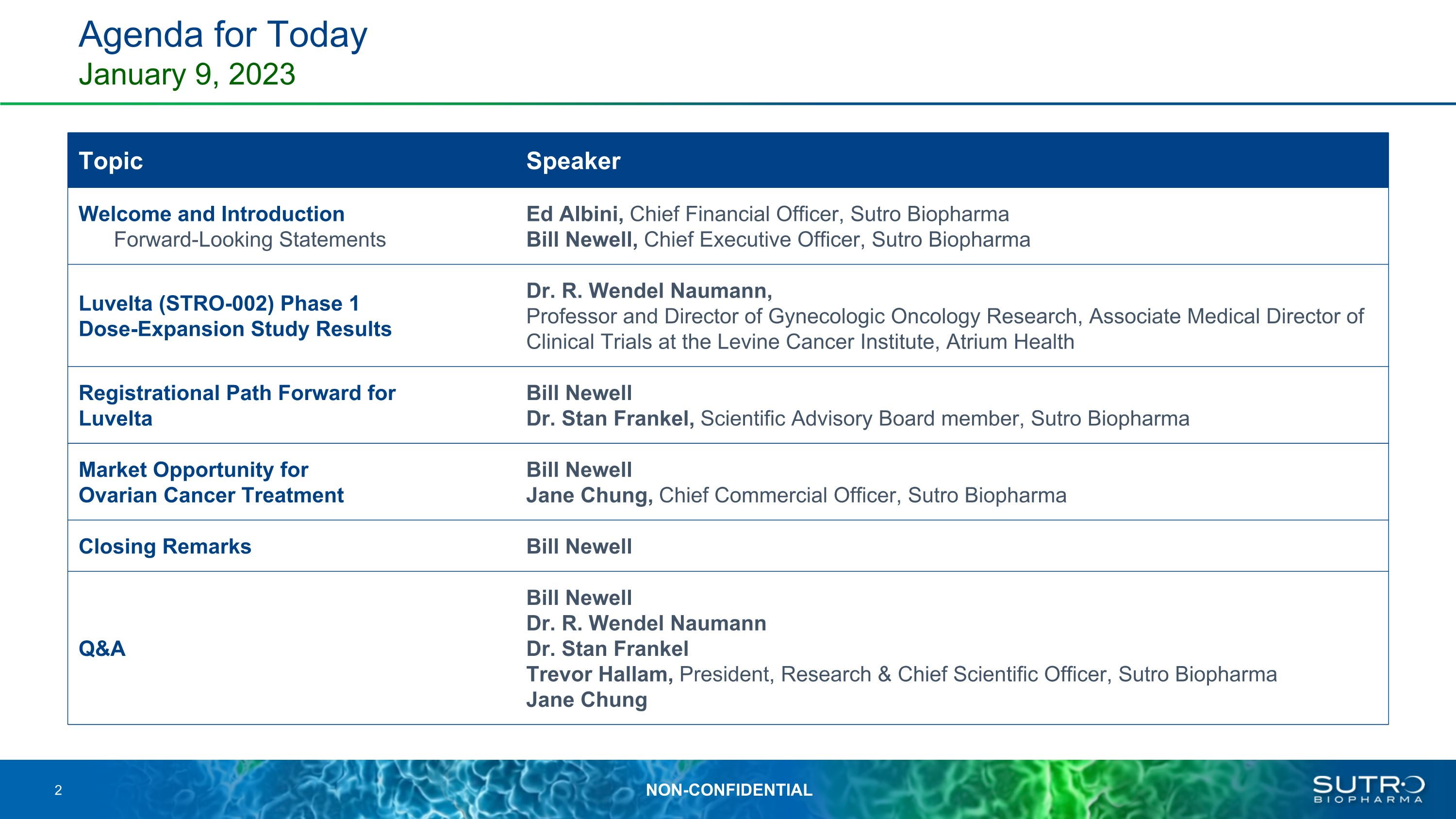
Agenda for Today�January 9, 2023 Topic Speaker Welcome and Introduction� Forward-Looking Statements Ed Albini, Chief Financial Officer, Sutro Biopharma Bill Newell, Chief Executive Officer, Sutro Biopharma Luvelta (STRO-002) Phase 1 �Dose-Expansion Study Results Dr. R. Wendel Naumann, Professor and Director of Gynecologic Oncology Research, Associate Medical Director of Clinical Trials at the Levine Cancer Institute, Atrium Health Registrational Path Forward for �Luvelta Bill Newell Dr. Stan Frankel, Scientific Advisory Board member, Sutro Biopharma Market Opportunity for �Ovarian Cancer Treatment Bill Newell�Jane Chung, Chief Commercial Officer, Sutro Biopharma Closing Remarks Bill Newell Q&A Bill Newell�Dr. R. Wendel Naumann Dr. Stan Frankel Trevor Hallam, President, Research & Chief Scientific Officer, Sutro Biopharma Jane Chung
Forward-Looking Statements This presentation and the accompanying oral presentation contain “forward-looking” statements that are based on our management’s beliefs and assumptions and on information currently available to management. Forward-looking statements include all statements other than statements of historical fact contained in this presentation, including information concerning our future financial performance, business plans and objectives, current and future clinical activities, timing, design and success of our ongoing and planned clinical trials and related data, updates and results of our clinical trials and related data, timing and success of our planned development activities, our ability to obtain and maintain regulatory approval, the potential therapeutic benefits and economic value of our product candidates, potential growth opportunities, financing plans, potential future milestone and royalty payments, competitive position, industry environment and potential market opportunities for the Company’s product candidates. Forward-looking statements are subject to known and unknown risks, uncertainties, assumptions and other factors, including risks and uncertainties related to our cash forecasts, our and our collaborators’ ability to advance our product candidates, the receipt, feedback and timing of potential regulatory submissions, designations, approvals and commercialization of product candidates, the design, timing and results of preclinical and clinical trials, and the expected impact of the COVID-19 pandemic on our operations. It is not possible for our management to predict all risks, nor can we assess the impact of all factors on our business or the extent to which any factor, or combination of factors, may cause actual results to differ materially from those contained in any forward-looking statements we may make. These factors, together with those that may be described in greater detail under the heading “Risk Factors” contained in our most recent Annual Report on Form 10-K, Quarterly Report on Form 10-Q and other reports the company files from time to time with the Securities and Exchange Commission, may cause our actual results, performance or achievements to differ materially and adversely from those anticipated or implied by our forward-looking statements. You should not rely upon forward-looking statements as predictions of future events. Although our management believes that the expectations reflected in our forward-looking statements are reasonable, we cannot guarantee that the future results, levels of activity, performance or events and circumstances described in the forward-looking statements will be achieved or occur. Moreover, neither we nor our management assume responsibility for the accuracy and completeness of the forward-looking statements. We undertake no obligation to publicly update any forward-looking statements for any reason after the date of this presentation to conform these statements to actual results or to changes in our expectations, except as required by law. This presentation also contains estimates and other statistical data made by independent parties and by us relating to market size and growth and other data about our industry. This data involves a number of assumptions and limitations, and you are cautioned not to give undue weight to such estimates. In addition, projections, assumptions, and estimates of our future performance and the future performance of the markets in which we operate are necessarily subject to a high degree of uncertainty and risk.

Luveltamab Tazevibulin �(Luvelta, STRO-002) �Phase 1 Dose-Expansion Study
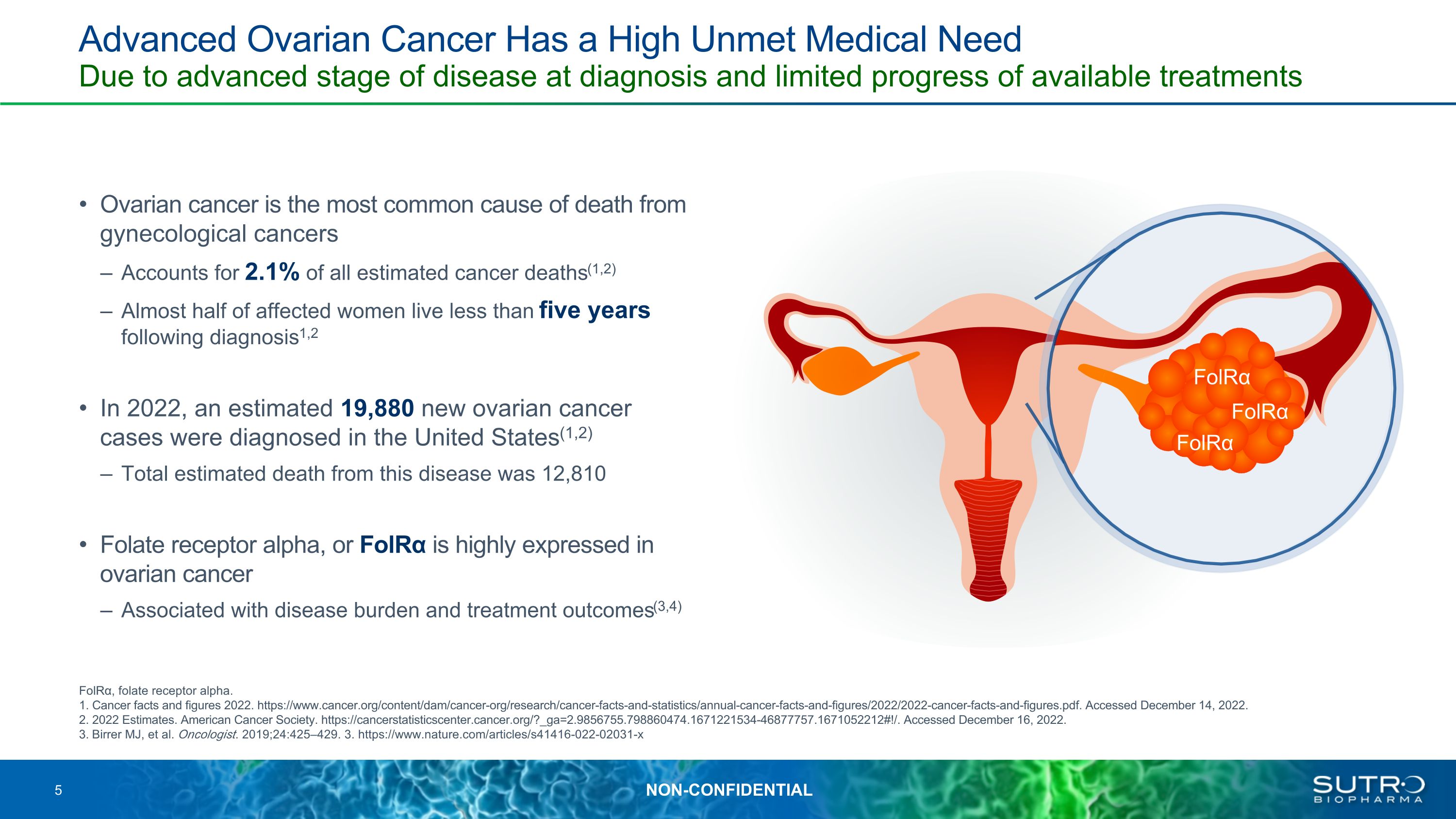
Advanced Ovarian Cancer Has a High Unmet Medical Need Ovarian cancer is the most common cause of death from gynecological cancers Accounts for 2.1% of all estimated cancer deaths(1,2) Almost half of affected women live less than five years following diagnosis1,2 In 2022, an estimated 19,880 new ovarian cancer cases were diagnosed in the United States(1,2) Total estimated death from this disease was 12,810 Folate receptor alpha, or FolRα is highly expressed in ovarian cancer Associated with disease burden and treatment outcomes(3,4) Due to advanced stage of disease at diagnosis and limited progress of available treatments FolRα, folate receptor alpha. �1. Cancer facts and figures 2022. https://www.cancer.org/content/dam/cancer-org/research/cancer-facts-and-statistics/annual-cancer-facts-and-figures/2022/2022-cancer-facts-and-figures.pdf. Accessed December 14, 2022. �2. 2022 Estimates. American Cancer Society. https://cancerstatisticscenter.cancer.org/?_ga=2.9856755.798860474.1671221534-46877757.1671052212#!/. Accessed December 16, 2022. �3. Birrer MJ, et al. Oncologist. 2019;24:425–429. 3. https://www.nature.com/articles/s41416-022-02031-x Z FolRα FolRα FolRα
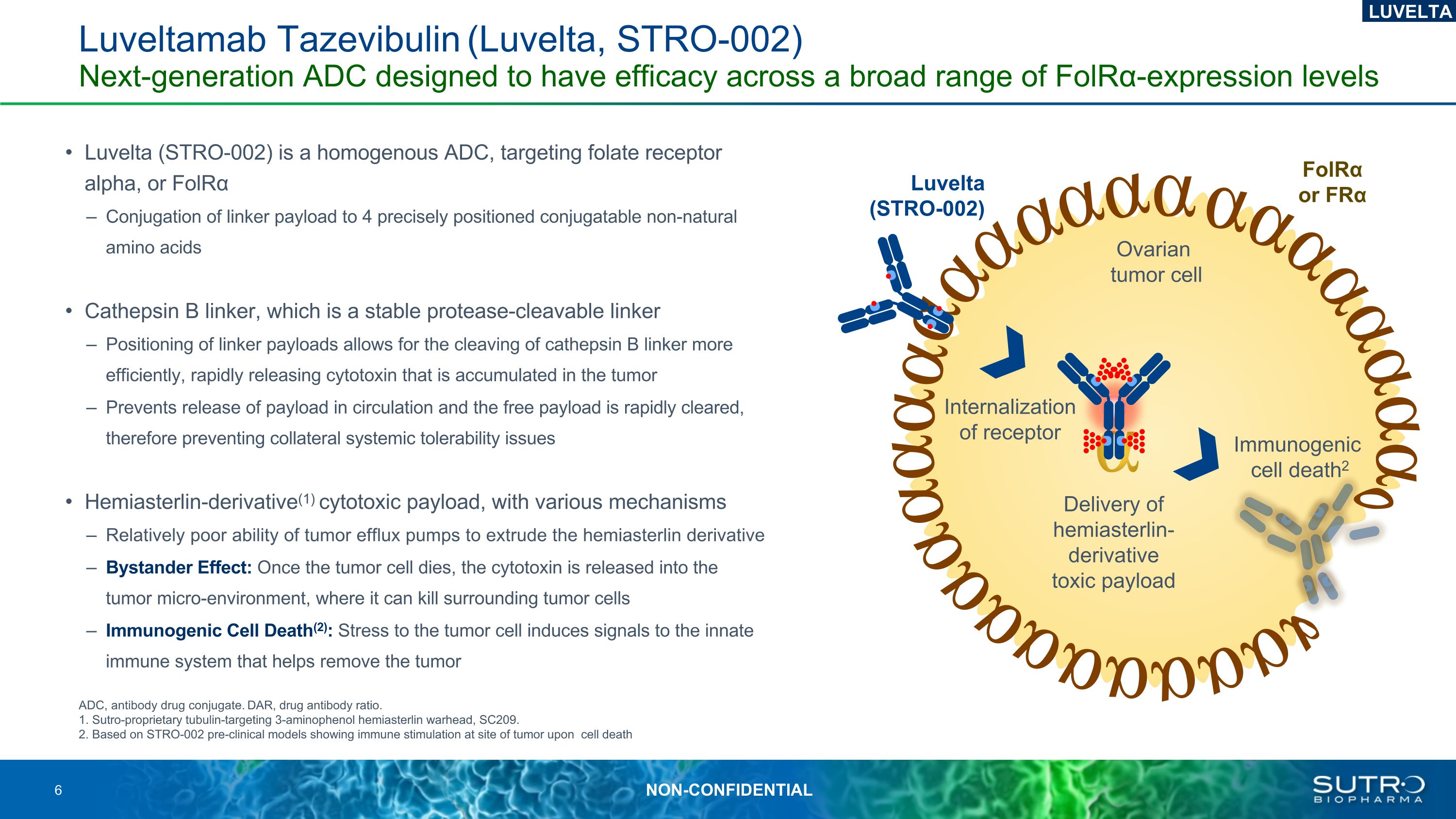
Luveltamab Tazevibulin (Luvelta, STRO-002) Next-generation ADC designed to have efficacy across a broad range of FolRα-expression levels ADC, antibody drug conjugate. DAR, drug antibody ratio. 1. Sutro-proprietary tubulin-targeting 3-aminophenol hemiasterlin warhead, SC209. 2. Based on STRO-002 pre-clinical models showing immune stimulation at site of tumor upon cell death Ovarian �tumor cell FolRα or FRα Delivery of hemiasterlin-derivative toxic payload Internalization of receptor Immunogenic �cell death2 Luvelta (STRO-002) LUVELTA Luvelta (STRO-002) is a homogenous ADC, targeting folate receptor alpha, or FolRα Conjugation of linker payload to 4 precisely positioned conjugatable non-natural amino acids Cathepsin B linker, which is a stable protease-cleavable linker Positioning of linker payloads allows for the cleaving of cathepsin B linker more efficiently, rapidly releasing cytotoxin that is accumulated in the tumor Prevents release of payload in circulation and the free payload is rapidly cleared, therefore preventing collateral systemic tolerability issues Hemiasterlin-derivative(1) cytotoxic payload, with various mechanisms Relatively poor ability of tumor efflux pumps to extrude the hemiasterlin derivative Bystander Effect: Once the tumor cell dies, the cytotoxin is released into the tumor micro-environment, where it can kill surrounding tumor cells Immunogenic Cell Death(2): Stress to the tumor cell induces signals to the innate immune system that helps remove the tumor
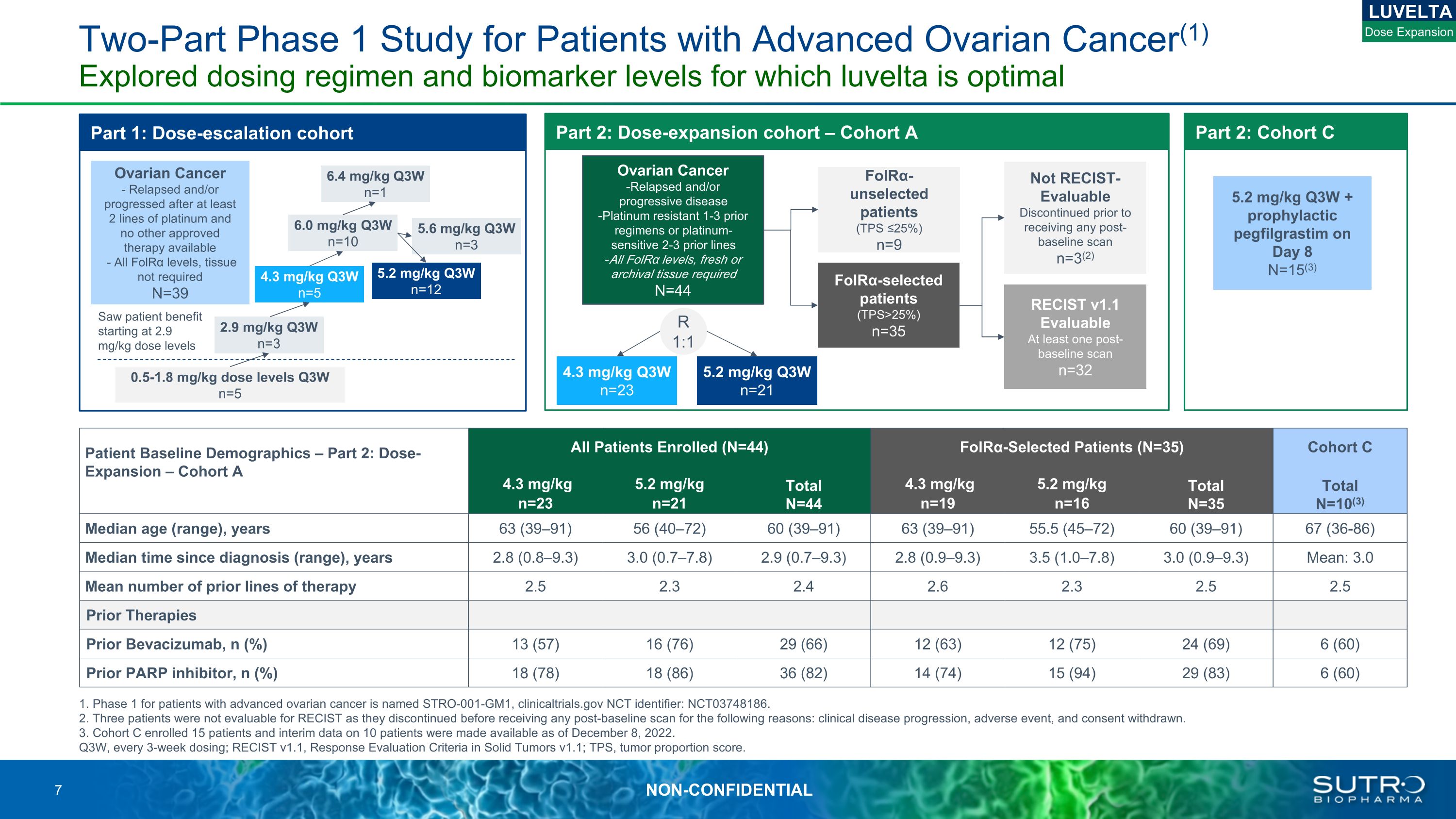
Two-Part Phase 1 Study for Patients with Advanced Ovarian Cancer(1) Explored dosing regimen and biomarker levels for which luvelta is optimal 1. Phase 1 for patients with advanced ovarian cancer is named STRO-001-GM1, clinicaltrials.gov NCT identifier: NCT03748186. 2. Three patients were not evaluable for RECIST as they discontinued before receiving any post-baseline scan for the following reasons: clinical disease progression, adverse event, and consent withdrawn. 3. Cohort C enrolled 15 patients and interim data on 10 patients were made available as of December 8, 2022. Q3W, every 3-week dosing; RECIST v1.1, Response Evaluation Criteria in Solid Tumors v1.1; TPS, tumor proportion score. Part 1: Dose-escalation cohort 5.6 mg/kg Q3W n=3 6.4 mg/kg Q3W n=1 5.2 mg/kg Q3W n=12 6.0 mg/kg Q3W n=10 4.3 mg/kg Q3W n=5 2.9 mg/kg Q3W n=3 0.5-1.8 mg/kg dose levels Q3W n=5 Part 2: Dose-expansion cohort – Cohort A 4.3 mg/kg Q3W n=23 RECIST v1.1 Evaluable At least one post-baseline scan n=32 Not RECIST-Evaluable Discontinued prior to receiving any post-baseline scan n=3(2) FolRα-unselected patients �(TPS ≤25%) n=9 R 1:1 FolRα-selected patients (TPS>25%) n=35 5.2 mg/kg Q3W n=21 Part 2: Cohort C 5.2 mg/kg Q3W + prophylactic pegfilgrastim on Day 8 N=15(3) Ovarian Cancer Relapsed and/or progressive disease Platinum resistant 1-3 prior regimens or platinum-sensitive 2-3 prior lines All FolRα levels, fresh or archival tissue required N=44 LUVELTA Dose Expansion Saw patient benefit starting at 2.9 mg/kg dose levels Ovarian Cancer - Relapsed and/or progressed after at least 2 lines of platinum and no other approved therapy available - All FolRα levels, tissue not required�N=39 Patient Baseline Demographics – Part 2: Dose-Expansion – Cohort A All Patients Enrolled (N=44) FolRα-Selected Patients (N=35) Cohort C 4.3 mg/kg �n=23 5.2 mg/kg �n=21 Total N=44 4.3 mg/kg �n=19 5.2 mg/kg �n=16 Total N=35 Total N=10(3) Median age (range), years 63 (39–91) 56 (40–72) 60 (39–91) 63 (39–91) 55.5 (45–72) 60 (39–91) 67 (36-86) Median time since diagnosis (range), years 2.8 (0.8–9.3) 3.0 (0.7–7.8) 2.9 (0.7–9.3) 2.8 (0.9–9.3) 3.5 (1.0–7.8) 3.0 (0.9–9.3) Mean: 3.0 Mean number of prior lines of therapy 2.5 2.3 2.4 2.6 2.3 2.5 2.5 Prior Therapies Prior Bevacizumab, n (%) 13 (57) 16 (76) 29 (66) 12 (63) 12 (75) 24 (69) 6 (60) Prior PARP inhibitor, n (%) 18 (78) 18 (86) 36 (82) 14 (74) 15 (94) 29 (83) 6 (60)
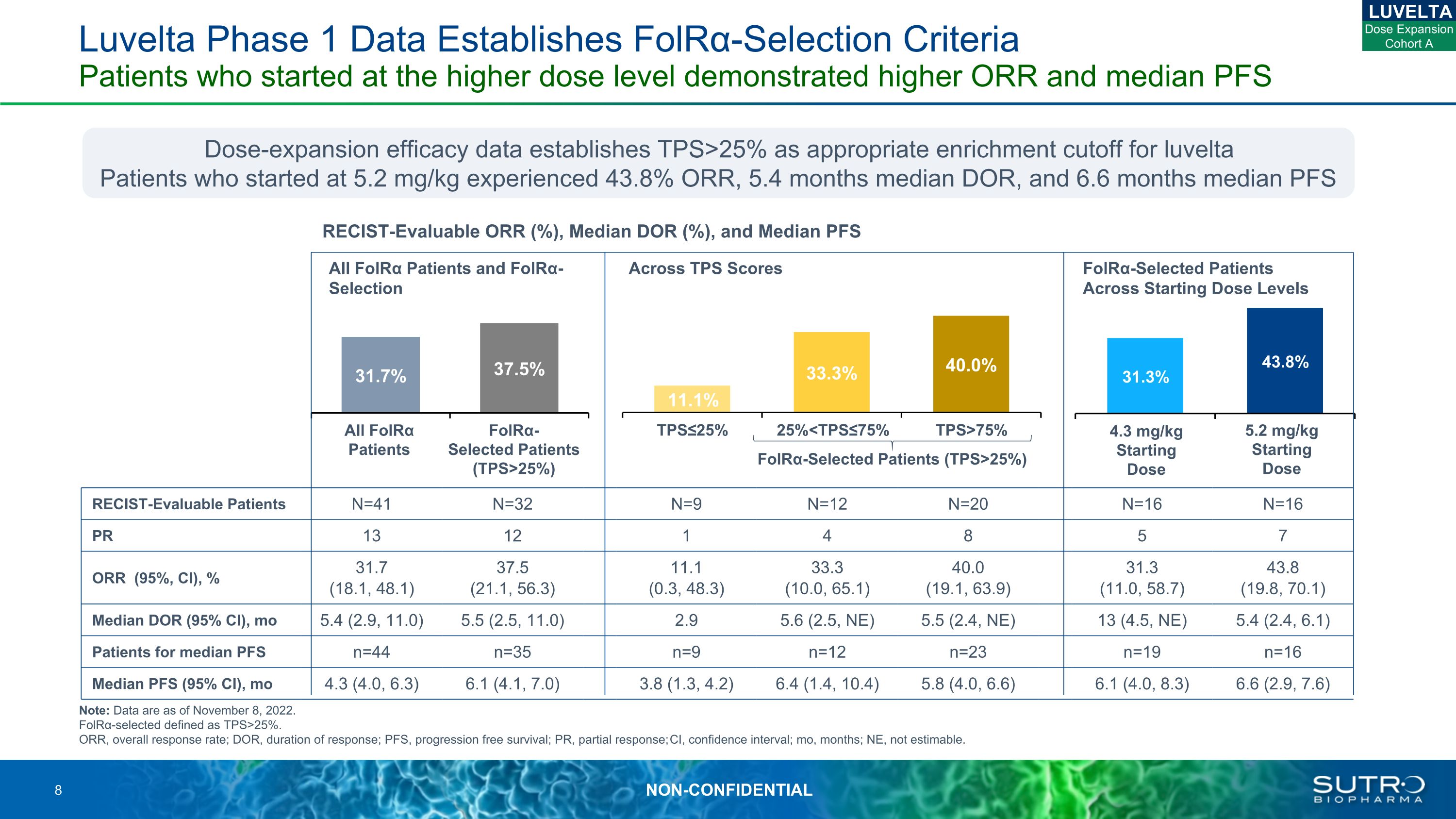
RECIST-Evaluable Patients N=41 N=32 N=9 N=12 N=20 N=16 N=16 PR 13 12 1 4 8 5 7 ORR (95%, CI), % 31.7 �(18.1, 48.1) 37.5�(21.1, 56.3) 11.1 �(0.3, 48.3) 33.3�(10.0, 65.1) 40.0�(19.1, 63.9) 31.3�(11.0, 58.7) 43.8 �(19.8, 70.1) Median DOR (95% CI), mo 5.4 (2.9, 11.0) 5.5 (2.5, 11.0) 2.9 5.6 (2.5, NE) 5.5 (2.4, NE) 13 (4.5, NE) 5.4 (2.4, 6.1) Patients for median PFS n=44 n=35 n=9 n=12 n=23 n=19 n=16 Median PFS (95% CI), mo 4.3 (4.0, 6.3) 6.1 (4.1, 7.0) 3.8 (1.3, 4.2) 6.4 (1.4, 10.4) 5.8 (4.0, 6.6) 6.1 (4.0, 8.3) 6.6 (2.9, 7.6) Luvelta Phase 1 Data Establishes FolRα-Selection Criteria Patients who started at the higher dose level demonstrated higher ORR and median PFS Note: Data are as of November 8, 2022. FolRα-selected defined as TPS>25%. ORR, overall response rate; DOR, duration of response; PFS, progression free survival; PR, partial response; CI, confidence interval; mo, months; NE, not estimable. RECIST-Evaluable ORR (%), Median DOR (%), and Median PFS All FolRα Patients and FolRα-Selection Across TPS Scores FolRα-Selected Patients �Across Starting Dose Levels All FolRα �Patients FolRα-�Selected Patients (TPS>25%) 4.3 mg/kg Starting Dose 5.2 mg/kg Starting �Dose 25%<TPS≤75% TPS>75% TPS≤25% LUVELTA Dose Expansion Cohort A FolRα-Selected Patients (TPS>25%) Dose-expansion efficacy data establishes TPS>25% as appropriate enrichment cutoff for luvelta�Patients who started at 5.2 mg/kg experienced 43.8% ORR, 5.4 months median DOR, and 6.6 months median PFS
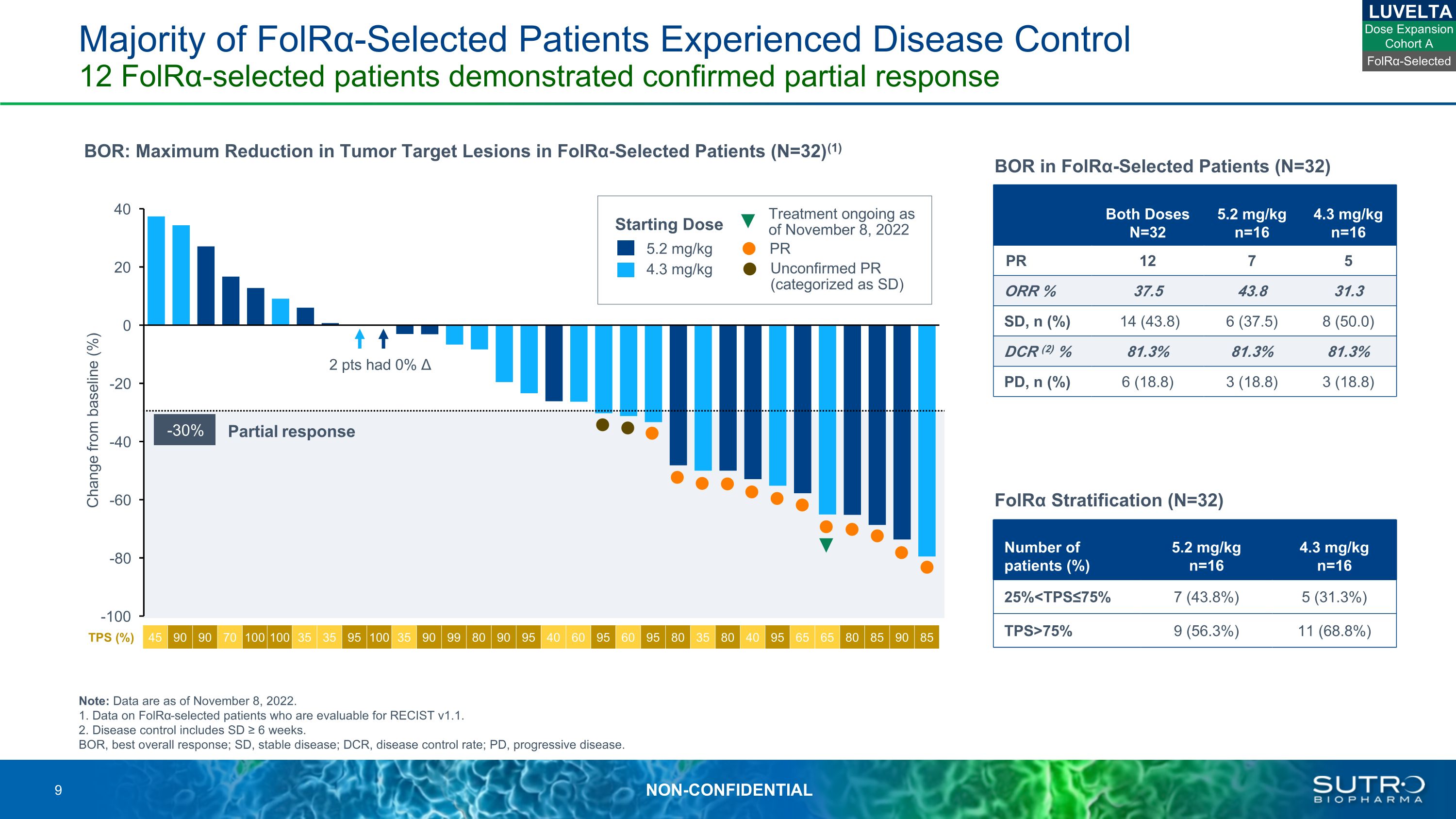
Majority of FolRα-Selected Patients Experienced Disease Control 12 FolRα-selected patients demonstrated confirmed partial response Note: Data are as of November 8, 2022.�1. Data on FolRα-selected patients who are evaluable for RECIST v1.1.�2. Disease control includes SD ≥ 6 weeks.�BOR, best overall response; SD, stable disease; DCR, disease control rate; PD, progressive disease. TPS (%) 45 90 90 70 100 100 35 35 95 100 35 90 99 80 90 95 40 60 95 60 95 80 35 80 40 95 65 65 80 85 90 85 Partial response -30% 2 pts had 0% Δ LUVELTA FolRα-Selected Both Doses N=32 5.2 mg/kg n=16 4.3 mg/kg n=16 PR 12 7 5 ORR % 37.5 43.8 31.3 SD, n (%) 14 (43.8) 6 (37.5) 8 (50.0) DCR (2) % 81.3% 81.3% 81.3% PD, n (%) 6 (18.8) 3 (18.8) 3 (18.8) BOR in FolRα-Selected Patients (N=32) Change from baseline (%) BOR: Maximum Reduction in Tumor Target Lesions in FolRα-Selected Patients (N=32)(1) 5.2 mg/kg 4.3 mg/kg Starting Dose PR Unconfirmed PR (categorized as SD) Treatment ongoing as of November 8, 2022 Number of patients (%) 5.2 mg/kg n=16 4.3 mg/kg n=16 25%<TPS≤75% 7 (43.8%) 5 (31.3%) TPS>75% 9 (56.3%) 11 (68.8%) FolRα Stratification (N=32) Dose Expansion Cohort A
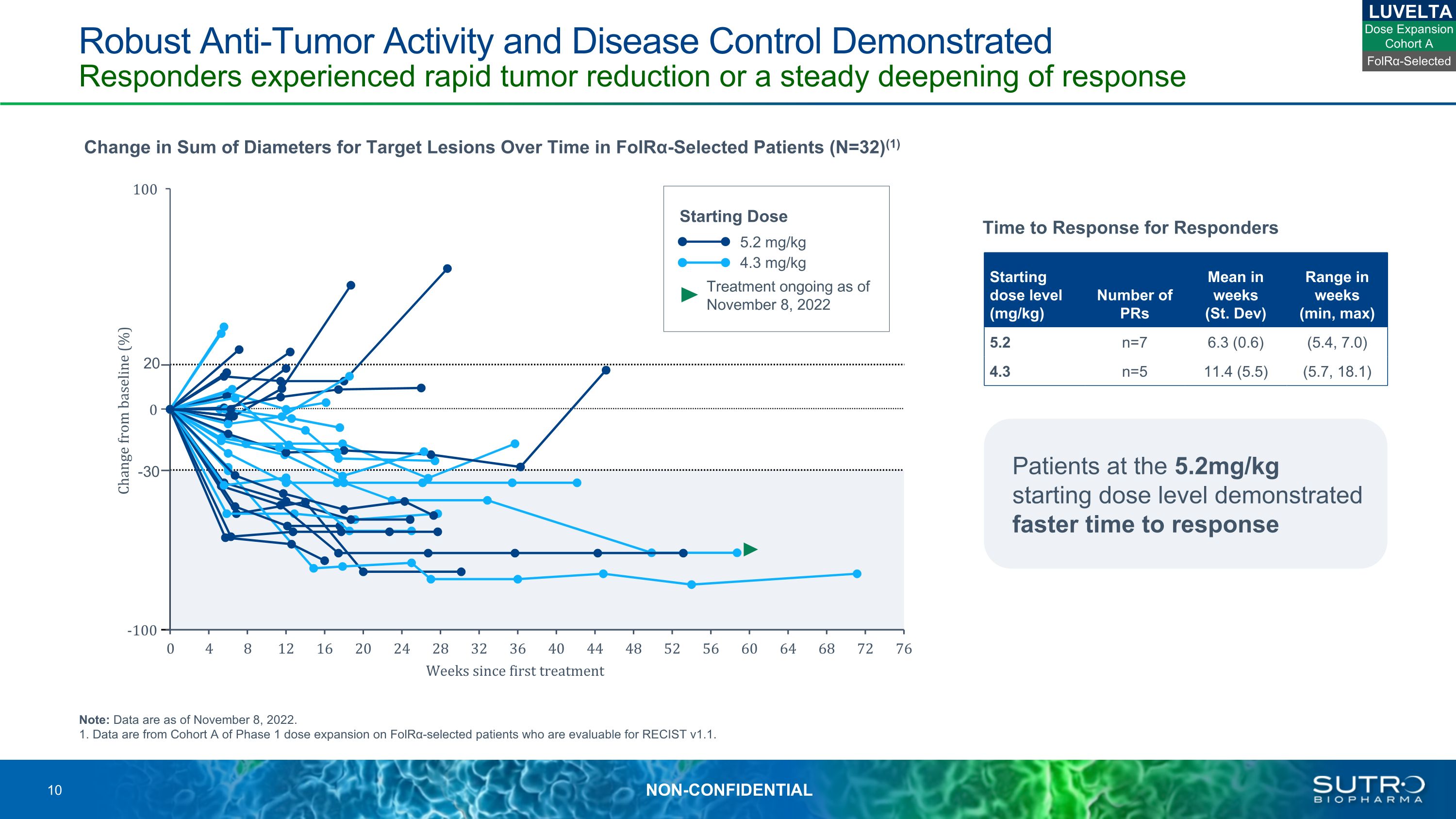
Robust Anti-Tumor Activity and Disease Control Demonstrated Responders experienced rapid tumor reduction or a steady deepening of response Note: Data are as of November 8, 2022.�1. Data are from Cohort A of Phase 1 dose expansion on FolRα-selected patients who are evaluable for RECIST v1.1. 20 -30 Change in Sum of Diameters for Target Lesions Over Time in FolRα-Selected Patients (N=32)(1) LUVELTA Starting dose level (mg/kg) Number of PRs Mean in weeks�(St. Dev) Range in weeks�(min, max) 5.2 n=7 6.3 (0.6) (5.4, 7.0) 4.3 n=5 11.4 (5.5) (5.7, 18.1) Time to Response for Responders 5.2 mg/kg 4.3 mg/kg Treatment ongoing as of November 8, 2022 Starting Dose Patients at the 5.2mg/kg starting dose level demonstrated faster time to response FolRα-Selected Dose Expansion Cohort A
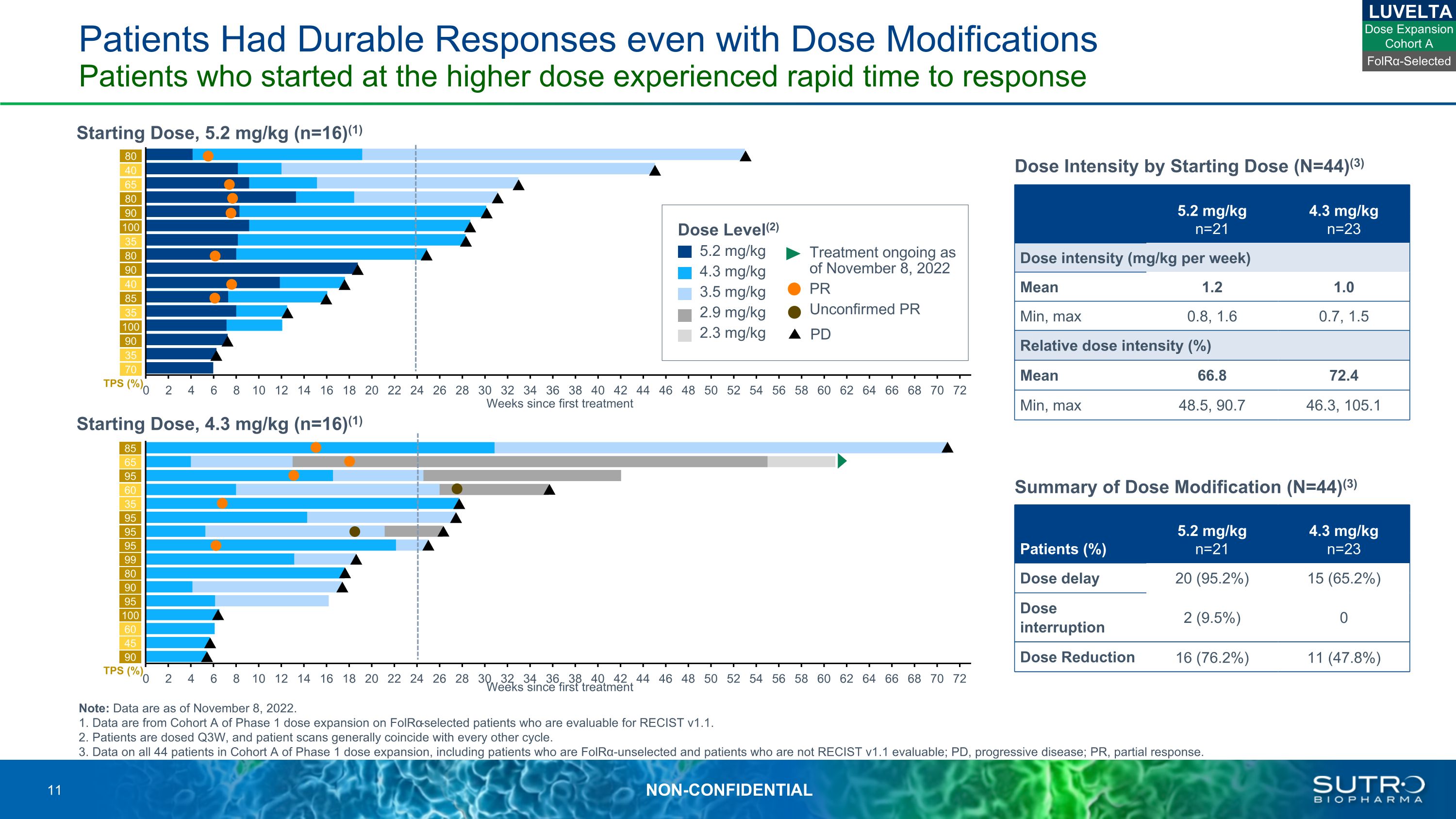
Patients Had Durable Responses even with Dose Modifications Patients who started at the higher dose experienced rapid time to response Note: Data are as of November 8, 2022. �1. Data are from Cohort A of Phase 1 dose expansion on FolRα-selected patients who are evaluable for RECIST v1.1.�2. Patients are dosed Q3W, and patient scans generally coincide with every other cycle.�3. Data on all 44 patients in Cohort A of Phase 1 dose expansion, including patients who are FolRα-unselected and patients who are not RECIST v1.1 evaluable; PD, progressive disease; PR, partial response. Starting Dose, 5.2 mg/kg (n=16)(1) 80 40 65 80 90 80 90 40 85 35 100 90 35 35 100 LUVELTA 5.2 mg/kg n=21 4.3 mg/kg n=23 N=23 Dose intensity (mg/kg per week) Mean 1.2 1.0 Min, max 0.8, 1.6 0.7, 1.5 Relative dose intensity (%) Mean 66.8 72.4 Min, max 48.5, 90.7 46.3, 105.1 Dose Intensity by Starting Dose (N=44)(3) 85 65 95 60 35 95 95 95 99 80 90 95 100 60 45 90 TPS (%) 70 Dose Level(2) 5.2 mg/kg 4.3 mg/kg 3.5 mg/kg 2.9 mg/kg 2.3 mg/kg Treatment ongoing as of November 8, 2022 PR Unconfirmed PR PD Weeks since first treatment Starting Dose, 4.3 mg/kg (n=16)(1) TPS (%) Weeks since first treatment FolRα-Selected Dose Expansion Cohort A 5.2 mg/kg n=21 4.3 mg/kg n=23 Patients (%) N=23 Dose delay 20 (95.2%) 15 (65.2%) Dose interruption 2 (9.5%) 0 Dose Reduction 16 (76.2%) 11 (47.8%) Summary of Dose Modification (N=44)(3)
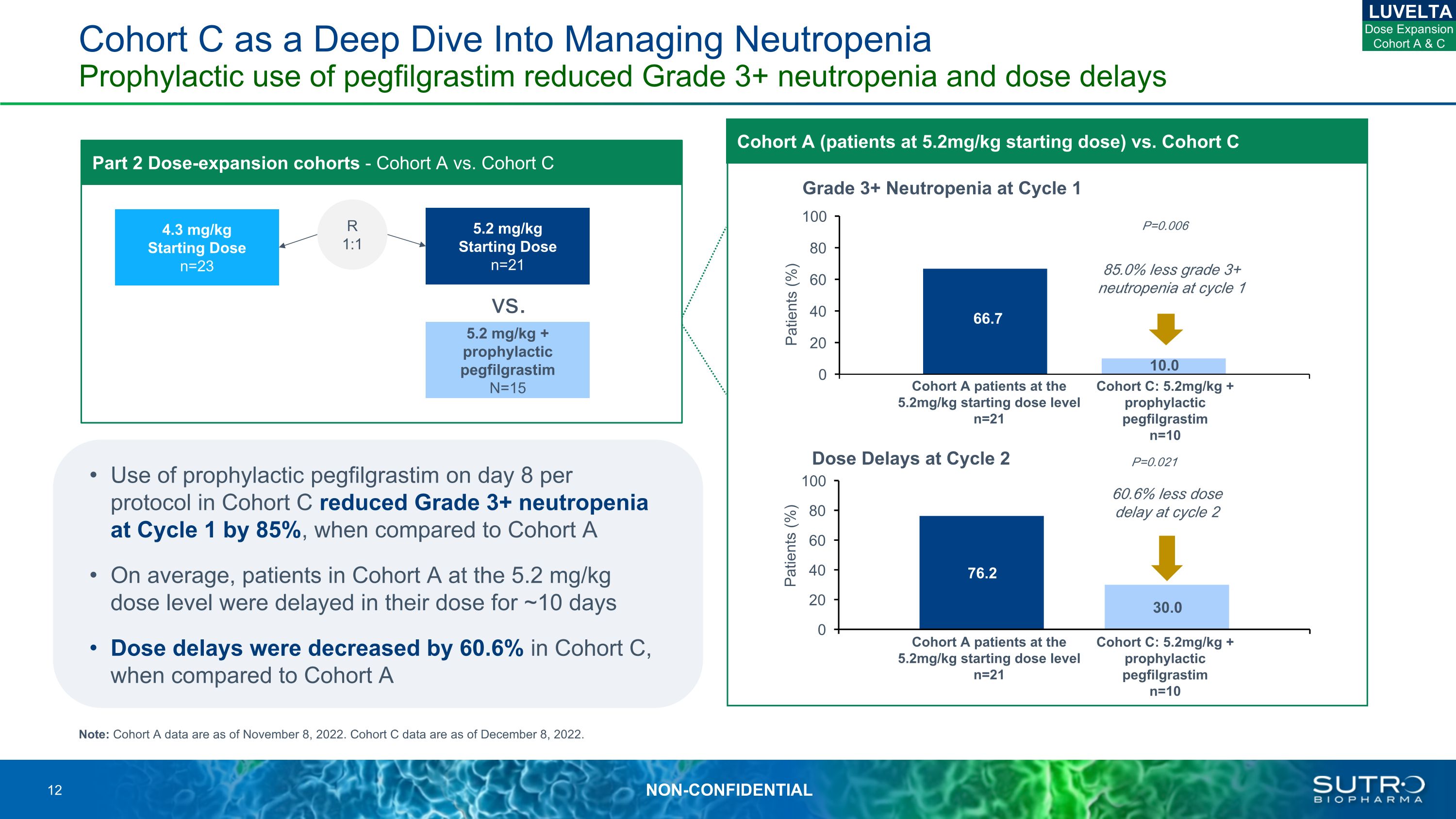
Cohort C as a Deep Dive Into Managing Neutropenia Prophylactic use of pegfilgrastim reduced Grade 3+ neutropenia and dose delays Grade 3+ Neutropenia at Cycle 1 P=0.006 85.0% less grade 3+ neutropenia at cycle 1 Dose Delays at Cycle 2 P=0.021 60.6% less dose delay at cycle 2 Part 2 Dose-expansion cohorts - Cohort A vs. Cohort C R 1:1 Note: Cohort A data are as of November 8, 2022. Cohort C data are as of December 8, 2022. LUVELTA Cohort A patients at the 5.2mg/kg starting dose level n=21 Cohort C: 5.2mg/kg + �prophylactic pegfilgrastim n=10 4.3 mg/kg Starting Dose n=23 5.2 mg/kg Starting Dose n=21 5.2 mg/kg + prophylactic pegfilgrastim N=15 vs. Cohort A patients at the 5.2mg/kg starting dose level n=21 Cohort C: 5.2mg/kg + �prophylactic pegfilgrastim n=10 Use of prophylactic pegfilgrastim on day 8 per protocol in Cohort C reduced Grade 3+ neutropenia at Cycle 1 by 85%, when compared to Cohort A On average, patients in Cohort A at the 5.2 mg/kg dose level were delayed in their dose for ~10 days Dose delays were decreased by 60.6% in Cohort C, when compared to Cohort A Dose Expansion Cohort A & C Cohort A (patients at 5.2mg/kg starting dose) vs. Cohort C
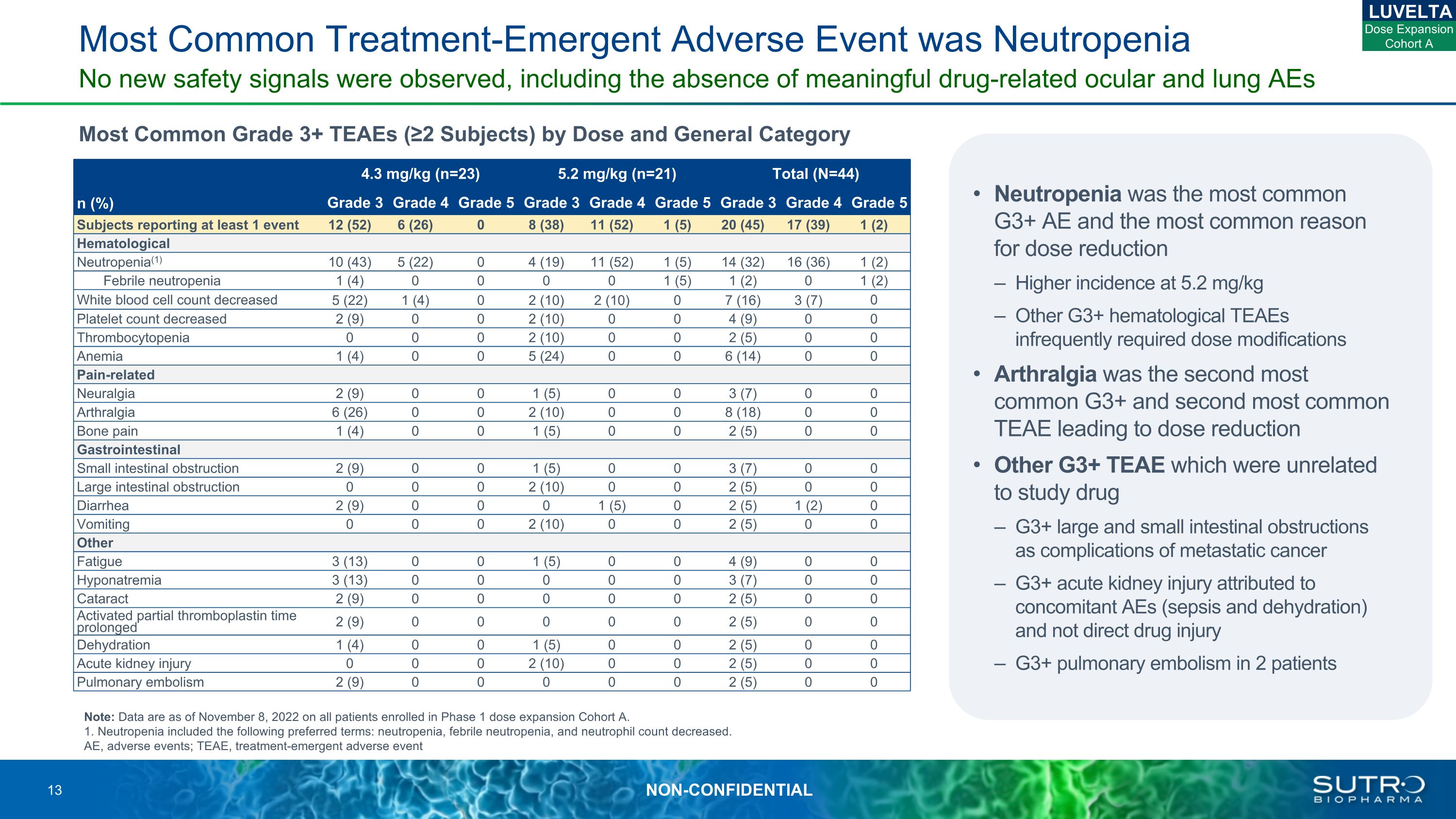
Most Common Treatment-Emergent Adverse Event was Neutropenia Most Common Grade 3+ TEAEs (≥2 Subjects) by Dose and General Category No new safety signals were observed, including the absence of meaningful drug-related ocular and lung AEs Note: Data are as of November 8, 2022 on all patients enrolled in Phase 1 dose expansion Cohort A. 1. Neutropenia included the following preferred terms: neutropenia, febrile neutropenia, and neutrophil count decreased. AE, adverse events; TEAE, treatment-emergent adverse event 4.3 mg/kg (n=23) 5.2 mg/kg (n=21) Total (N=44) n (%) Grade 3 Grade 4 Grade 5 Grade 3 Grade 4 Grade 5 Grade 3 Grade 4 Grade 5 Subjects reporting at least 1 event 12 (52) 6 (26) 0 8 (38) 11 (52) 1 (5) 20 (45) 17 (39) 1 (2) Hematological Neutropenia(1) 10 (43) 5 (22) 0 4 (19) 11 (52) 1 (5) 14 (32) 16 (36) 1 (2) Febrile neutropenia 1 (4) 0 0 0 0 1 (5) 1 (2) 0 1 (2) White blood cell count decreased 5 (22) 1 (4) 0 2 (10) 2 (10) 0 7 (16) 3 (7) 0 Platelet count decreased 2 (9) 0 0 2 (10) 0 0 4 (9) 0 0 Thrombocytopenia 0 0 0 2 (10) 0 0 2 (5) 0 0 Anemia 1 (4) 0 0 5 (24) 0 0 6 (14) 0 0 Pain-related Neuralgia 2 (9) 0 0 1 (5) 0 0 3 (7) 0 0 Arthralgia 6 (26) 0 0 2 (10) 0 0 8 (18) 0 0 Bone pain 1 (4) 0 0 1 (5) 0 0 2 (5) 0 0 Gastrointestinal Small intestinal obstruction 2 (9) 0 0 1 (5) 0 0 3 (7) 0 0 Large intestinal obstruction 0 0 0 2 (10) 0 0 2 (5) 0 0 Diarrhea 2 (9) 0 0 0 1 (5) 0 2 (5) 1 (2) 0 Vomiting 0 0 0 2 (10) 0 0 2 (5) 0 0 Other Fatigue 3 (13) 0 0 1 (5) 0 0 4 (9) 0 0 Hyponatremia 3 (13) 0 0 0 0 0 3 (7) 0 0 Cataract 2 (9) 0 0 0 0 0 2 (5) 0 0 Activated partial thromboplastin time prolonged 2 (9) 0 0 0 0 0 2 (5) 0 0 Dehydration 1 (4) 0 0 1 (5) 0 0 2 (5) 0 0 Acute kidney injury 0 0 0 2 (10) 0 0 2 (5) 0 0 Pulmonary embolism 2 (9) 0 0 0 0 0 2 (5) 0 0 Neutropenia was the most common G3+ AE and the most common reason for dose reduction Higher incidence at 5.2 mg/kg Other G3+ hematological TEAEs infrequently required dose modifications Arthralgia was the second most common G3+ and second most common TEAE leading to dose reduction Other G3+ TEAE which were unrelated to study drug G3+ large and small intestinal obstructions as complications of metastatic cancer G3+ acute kidney injury attributed to concomitant AEs (sepsis and dehydration) and not direct drug injury G3+ pulmonary embolism in 2 patients LUVELTA Dose Expansion Cohort A

Registrational Path Forward �for Luveltamab Tazevibulin �(Luvelta, STRO-002)
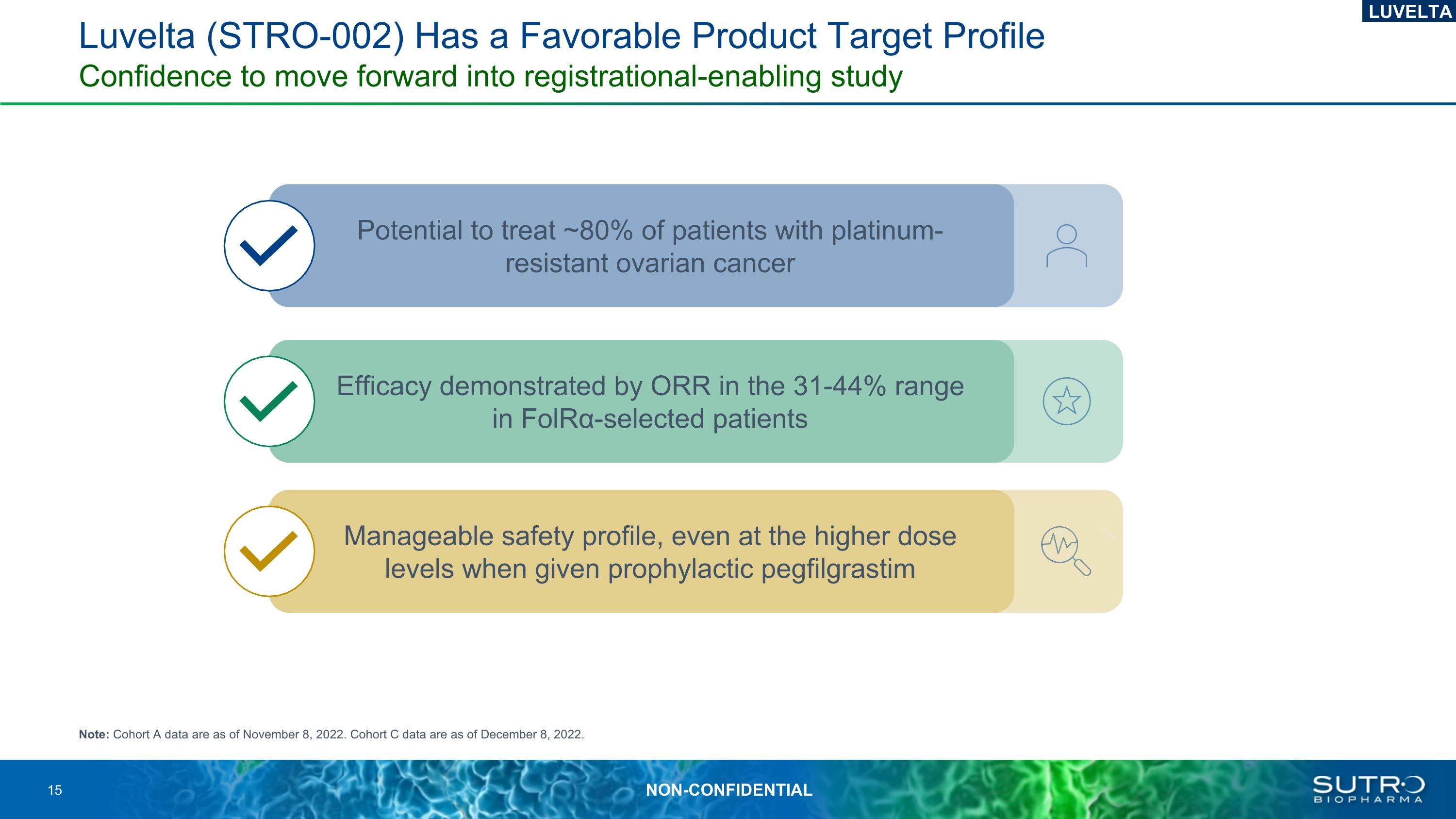
Luvelta (STRO-002) Has a Favorable Product Target Profile Confidence to move forward into registrational-enabling study Note: Cohort A data are as of November 8, 2022. Cohort C data are as of December 8, 2022. Potential to treat ~80% of patients with platinum-resistant ovarian cancer Efficacy demonstrated by ORR in the 31-44% range in FolRα-selected patients Manageable safety profile, even at the higher dose levels when given prophylactic pegfilgrastim LUVELTA
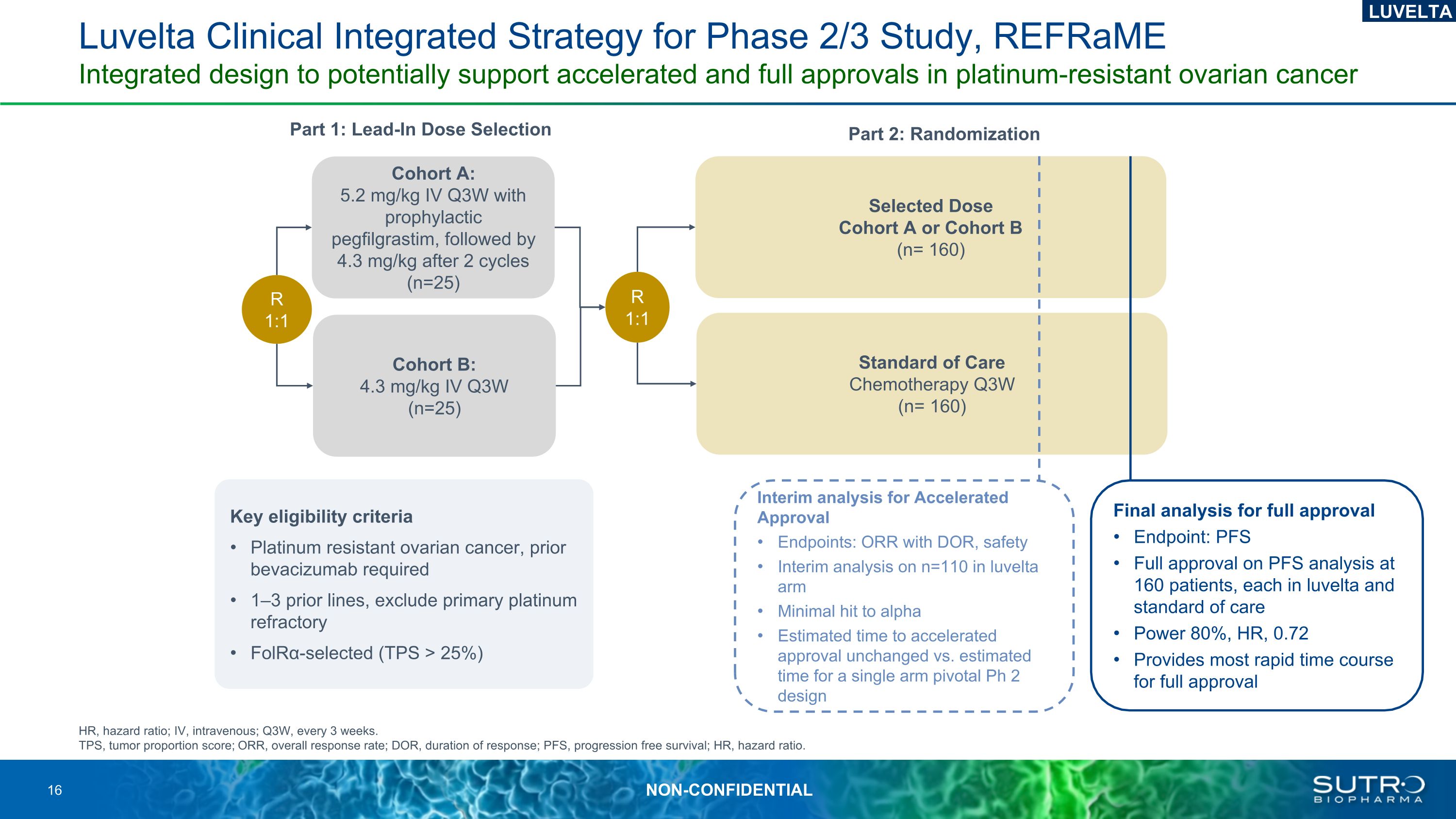
Luvelta Clinical Integrated Strategy for Phase 2/3 Study, REFRaME�Integrated design to potentially support accelerated and full approvals in platinum-resistant ovarian cancer Part 1: Lead-In Dose Selection Key eligibility criteria Platinum resistant ovarian cancer, prior bevacizumab required 1–3 prior lines, exclude primary platinum refractory FolRα-selected (TPS > 25%) Part 2: Randomization LUVELTA Cohort A: �5.2 mg/kg IV Q3W with prophylactic pegfilgrastim, followed by 4.3 mg/kg after 2 cycles (n=25) Cohort B: �4.3 mg/kg IV Q3W (n=25) Interim analysis for Accelerated Approval Endpoints: ORR with DOR, safety Interim analysis on n=110 in luvelta arm Minimal hit to alpha Estimated time to accelerated approval unchanged vs. estimated time for a single arm pivotal Ph 2 design Standard of Care Chemotherapy Q3W (n= 160) R 1:1 R 1:1 Selected Dose Cohort A or Cohort B�(n= 160) Final analysis for full approval Endpoint: PFS Full approval on PFS analysis at 160 patients, each in luvelta and standard of care Power 80%, HR, 0.72 Provides most rapid time course for full approval HR, hazard ratio; IV, intravenous; Q3W, every 3 weeks.�TPS, tumor proportion score; ORR, overall response rate; DOR, duration of response; PFS, progression free survival; HR, hazard ratio.
Market Opportunity for Luveltamab Tazevibulin (Luvelta, STRO-002) �and Ovarian Cancer
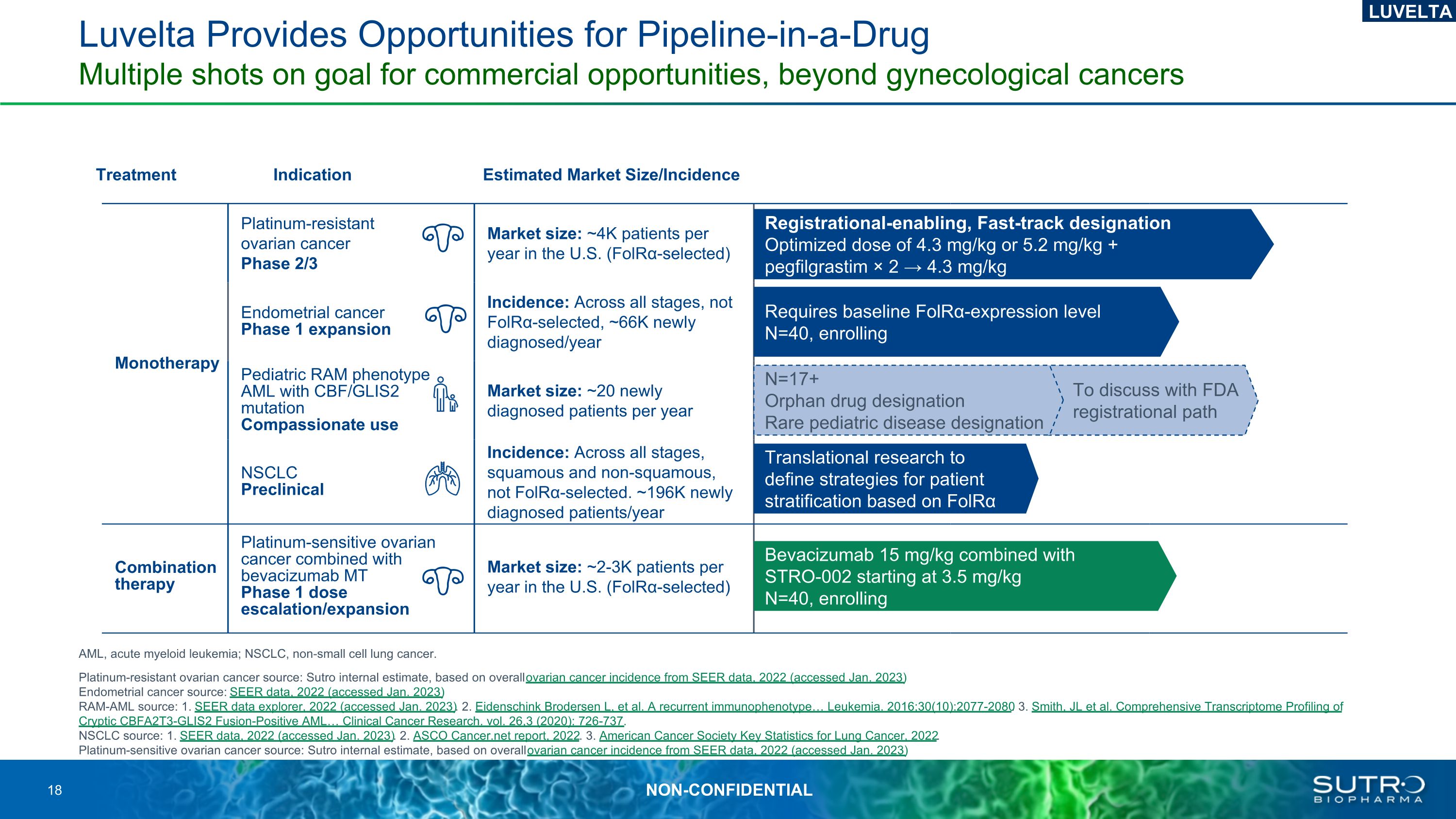
Monotherapy Platinum-resistant ovarian cancer �Phase 2/3 Market size: ~4K patients per �year in the U.S. (FolRα-selected) Endometrial cancer Phase 1 expansion Incidence: Across all stages, not FolRα-selected, ~66K newly diagnosed/year Pediatric RAM phenotype �AML with CBF/GLIS2 �mutation�Compassionate use Market size: ~20 newly diagnosed patients per year NSCLC Preclinical Incidence: Across all stages, squamous and non-squamous, not FolRα-selected. ~196K newly diagnosed patients/year Combination therapy Platinum-sensitive ovarian �cancer combined with bevacizumab MT Phase 1 dose escalation/expansion Market size: ~2-3K patients per year in the U.S. (FolRα-selected) Bevacizumab 15 mg/kg combined with �STRO-002 starting at 3.5 mg/kg �N=40, enrolling Translational research to define strategies for patient stratification based on FolRα Requires baseline FolRα-expression level N=40, enrolling Registrational-enabling, Fast-track designation Optimized dose of 4.3 mg/kg or 5.2 mg/kg + �pegfilgrastim × 2 → 4.3 mg/kg Treatment Indication Estimated Market Size/Incidence To discuss with FDA �registrational path N=17+�Orphan drug designation Rare pediatric disease designation Luvelta Provides Opportunities for Pipeline-in-a-Drug�Multiple shots on goal for commercial opportunities, beyond gynecological cancers LUVELTA AML, acute myeloid leukemia; NSCLC, non-small cell lung cancer. Platinum-resistant ovarian cancer source: Sutro internal estimate, based on overall ovarian cancer incidence from SEER data, 2022 (accessed Jan. 2023)�Endometrial cancer source: SEER data, 2022 (accessed Jan. 2023)�RAM-AML source: 1. SEER data explorer, 2022 (accessed Jan. 2023). 2. Eidenschink Brodersen L, et al. A recurrent immunophenotype… Leukemia. 2016;30(10):2077-2080. 3. Smith, JL et al. Comprehensive Transcriptome Profiling of Cryptic CBFA2T3-GLIS2 Fusion-Positive AML… Clinical Cancer Research. vol. 26,3 (2020): 726-737.�NSCLC source: 1. SEER data, 2022 (accessed Jan. 2023). 2. ASCO Cancer.net report, 2022. 3. American Cancer Society Key Statistics for Lung Cancer, 2022.�Platinum-sensitive ovarian cancer source: Sutro internal estimate, based on overall ovarian cancer incidence from SEER data, 2022 (accessed Jan. 2023)
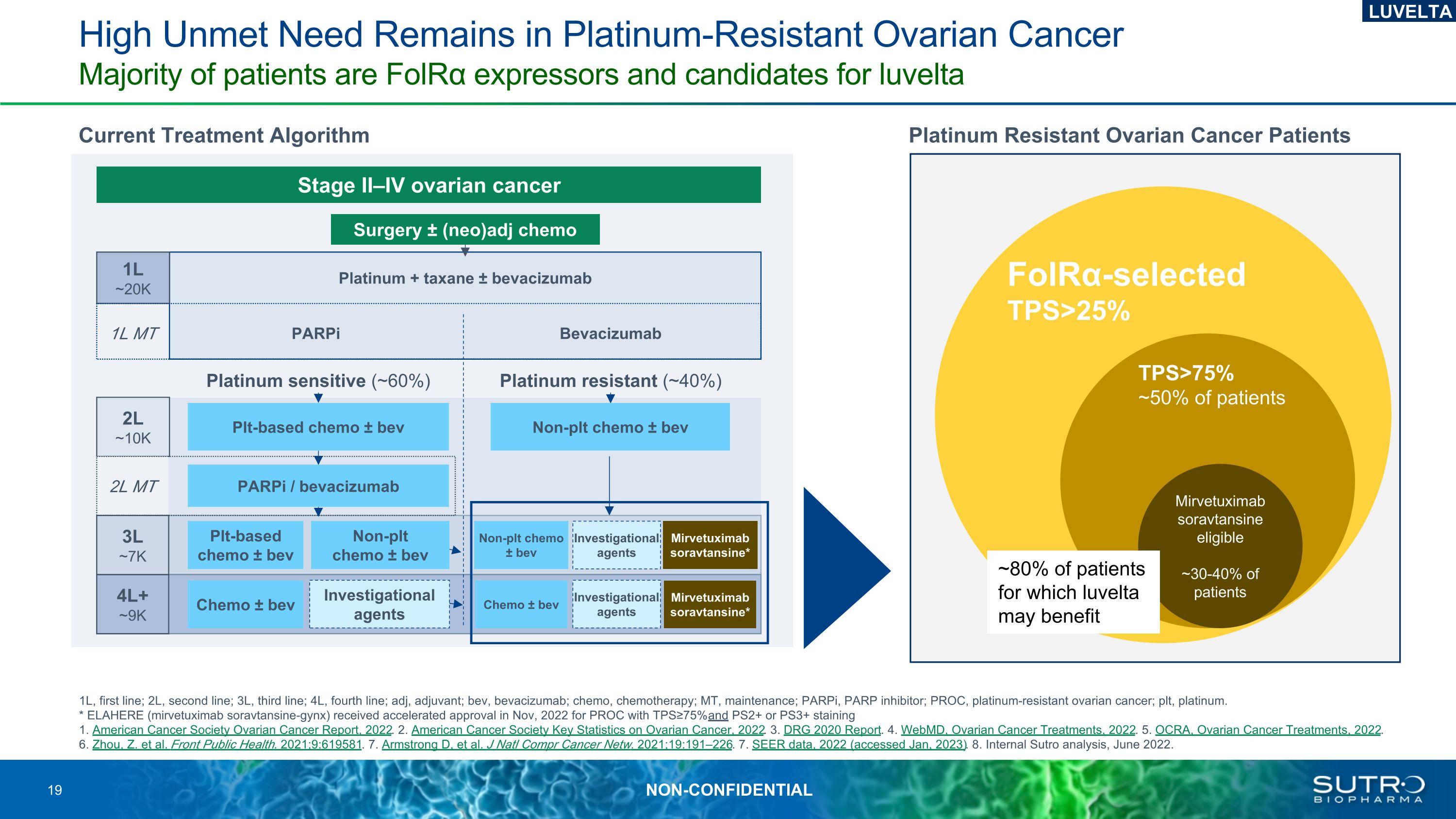
High Unmet Need Remains in Platinum-Resistant Ovarian Cancer�Majority of patients are FolRα expressors and candidates for luvelta 1L, first line; 2L, second line; 3L, third line; 4L, fourth line; adj, adjuvant; bev, bevacizumab; chemo, chemotherapy; MT, maintenance; PARPi, PARP inhibitor; PROC, platinum-resistant ovarian cancer; plt, platinum. �* ELAHERE (mirvetuximab soravtansine-gynx) received accelerated approval in Nov, 2022 for PROC with TPS≥75% and PS2+ or PS3+ staining�1. American Cancer Society Ovarian Cancer Report, 2022. 2. American Cancer Society Key Statistics on Ovarian Cancer, 2022. 3. DRG 2020 Report. 4. WebMD, Ovarian Cancer Treatments, 2022. 5. OCRA, Ovarian Cancer Treatments, 2022. 6. Zhou, Z. et al. Front Public Health. 2021;9:619581. 7. Armstrong D, et al. J Natl Compr Cancer Netw. 2021;19:191–226. 7. SEER data, 2022 (accessed Jan, 2023). 8. Internal Sutro analysis, June 2022. Current Treatment Algorithm Platinum Resistant Ovarian Cancer Patients FolRα-selected TPS>25% Surgery ± (neo)adj chemo 1L ~20K Platinum + taxane ± bevacizumab PARPi Bevacizumab Platinum sensitive (~60%) Platinum resistant (~40%) 2L ~10K Plt-based chemo ± bev 4L+ ~9K Plt-based chemo ± bev Non-plt chemo ± bev Stage II–IV ovarian cancer 2L MT 1L MT PARPi / bevacizumab 3L ~7K Investigational agents Non-plt �chemo ± bev Non-plt chemo ± bev Chemo ± bev Investigational agents Chemo ± bev Investigational agents TPS>75% ~50% of patients LUVELTA Mirvetuximab soravtansine* Mirvetuximab soravtansine* Mirvetuximab soravtansine eligible ~30-40% of patients ~80% of patients for which luvelta may benefit

Closing Remarks and Q&A