vir-20260112
FALSE000170643100017064312026-01-122026-01-120001706431exch:XNAS2026-01-122026-01-12

UNITED STATES
SECURITIES AND EXCHANGE COMMISSION
WASHINGTON, D.C. 20549
________________________________________
FORM 8-K
________________________________________
CURRENT REPORT
Pursuant to Section 13 or 15(d) of the Securities Exchange Act of 1934
Date of Report (Date of earliest event reported): January 12, 2026
________________________________________
Vir Biotechnology, Inc.
(Exact name of Registrant as Specified in Its Charter)
________________________________________
Delaware001-3908381-2730369
(State or Other Jurisdiction
of Incorporation)
(Commission File Number)(IRS Employer
Identification No.)
1800 Owens Street, Suite 900
San Francisco, California 94158
(Address of Principal Executive Offices, including Zip Code)
Registrant’s Telephone Number, Including Area Code: (415) 906-4324
(Former Name or Former Address, if Changed Since Last Report)
________________________________________
Check the appropriate box below if the Form 8-K filing is intended to simultaneously satisfy the filing obligation of the registrant under any of the following provisions:
oWritten communications pursuant to Rule 425 under the Securities Act (17 CFR 230.425)
oSoliciting material pursuant to Rule 14a-12 under the Exchange Act (17 CFR 240.14a-12)
oPre-commencement communications pursuant to Rule 14d-2(b) under the Exchange Act (17 CFR 240.14d-2(b))
oPre-commencement communications pursuant to Rule 13e-4(c) under the Exchange Act (17 CFR 240.13e-4(c))
Securities registered pursuant to Section 12(b) of the Act:
Title of each classTrading
Symbol(s)
Name of each exchange on which registered
Common stock, $0.0001 par valueVIRNasdaq Global Select Market
Indicate by check mark whether the registrant is an emerging growth company as defined in Rule 405 of the Securities Act of 1933 (§ 230.405 of this chapter) or Rule 12b-2 of the Securities Exchange Act of 1934 (§ 240.12b-2 of this chapter).
Emerging growth company o
If an emerging growth company, indicate by check mark if the registrant has elected not to use the extended transition period for complying with any new or revised financial accounting standards provided pursuant to Section 13(a) of the Exchange Act. o


Item 2.02 Results of Operations and Financial Condition.
On January 12, 2026, Vir Biotechnology, Inc. (the Company) issued a press release that, among other things, provided its preliminary cash, cash equivalents and investments balance as of December 31, 2025, and delivered an update on its business. A copy of the press release is attached hereto as Exhibit 99.1 and is incorporated herein by reference.
These preliminary cash, cash equivalents and investments balance result is unaudited and subject to adjustment. The Company expects to report its fourth quarter and full-year 2025 financial results in late February 2026.
The information contained in this Item 2.02, including the attached Exhibit 99.1, is being “furnished” and shall not be deemed “filed” for the purposes of Section 18 of the Securities Exchange Act of 1934, as amended (the Exchange Act), or otherwise subject to the liabilities of that section, nor shall it be deemed incorporated by reference into any filing made by the Company under the Securities Act of 1933, as amended (the Securities Act), or the Exchange Act, except as shall be expressly set forth by specific reference in such a filing.
Item 7.01 Regulation FD Disclosure.
On January 14, 2026, the Company intends to present at the 44th Annual J.P. Morgan Healthcare Conference. The presentation will include the slides attached hereto as Exhibit 99.2 hereto and incorporated herein by reference. These slides will also be made available on the Company’s website at https://investors.vir.bio.
As previously announced, the presentation will take place at 3:45 p.m. PT on January 14, 2026 in San Francisco, California. A live webcast of the presentation will be made available on the Company’s website at https://investors.vir.bio and will be archived there for 30 days.
The information contained in this Item 7.01, including the attached Exhibit 99.2, is being “furnished” and shall not be deemed “filed” for the purposes of Section 18 of the Exchange Act, or otherwise subject to the liabilities of that section, nor shall it be deemed incorporated by reference into any filing made by the Company under the Securities Act or the Exchange Act, except as shall be expressly set forth by specific reference in such a filing.
Item 9.01 Financial Statements and Exhibits.
(d) Exhibits
Exhibit No.Description
99.1
99.2
104Cover Page Interactive Data File (embedded within the Inline XBRL document)


SIGNATURES
Pursuant to the requirements of the Securities Exchange Act of 1934, the registrant has duly caused this report to be signed on its behalf by the undersigned hereunto duly authorized.
VIR BIOTECHNOLOGY, INC.
Date:January 12, 2026By:/s/ Marianne De Backer
Marianne De Backer, M.Sc., Ph.D., MBA
Chief Executive Officer

Exhibit 99.1
image_0.jpg
Vir Biotechnology Provides Updates on Chronic Hepatitis Delta and Oncology Programs and Upcoming 2026 Clinical Milestones
Positive, updated Phase 2 SOLSTICE data showed combination of tobevibart and elebsiran is well tolerated and achieved undetectable HDV RNA in 88% of chronic hepatitis delta participants evaluable at 96 Weeks of treatment
New Phase 1 data from PSMA-targeted PRO-XTEN® dual-masked T-cell engager VIR-5500 in prostate cancer to be presented at the 2026 American Society of Clinical Oncology Genitourinary Cancers Symposium in February
Year-end 2025 cash and investments balance of approximately $781M1, with cash runway extended into Q4 2027 as a result of the Norgine licensing agreement and continued disciplined resource deployment
SAN FRANCISCO, January 12, 2026 – Vir Biotechnology, Inc. (Nasdaq: VIR) today provided key program updates, including new positive data from the ongoing SOLSTICE Phase 2 trial in chronic hepatitis delta (CHD). Participants receiving the combination therapy of tobevibart, an investigational neutralizing monoclonal antibody (mAb), and elebsiran, an investigational small interfering RNA (siRNA), showed increased and sustained viral suppression of HDV RNA versus treatment with the antibody alone in participants who have reached Week 96 of treatment.
The Company also announced that safety and efficacy data from the Phase 1 trial of VIR-5500, its PSMA-targeted PRO-XTEN® dual-masked T-cell engager (TCE) being evaluated in prostate cancer, will be shared in an oral presentation at the 2026 American Society of Clinical Oncology (ASCO) Genitourinary Cancers Symposium in February.
“We are poised for a year of significant clinical progress where we will report initial topline data from our Phase 3 program in CHD, present substantive Phase 1 safety and efficacy data from our PSMA-targeted VIR-5500 TCE program and continue to advance our broader portfolio of PRO-XTEN® masked TCEs through dose escalation,” said Marianne De Backer, M.Sc., Ph.D., MBA, Chief Executive Officer, Vir Biotechnology. “The latest data from our SOLSTICE Phase 2 trial evaluating tobevibart and elebsiran combination therapy in CHD are very promising, showing that monthly treatment with this combination therapy has the potential to achieve an undetectable viral load in a large number of patients, which could redefine the standard of care in CHD.”
Vir Biotechnology will present at the 44ᵗʰ Annual J.P. Morgan Healthcare Conference on Wednesday, January 14, 2026, at 3:45 p.m. PT. The webcast and presentation will be accessible from the Company’s website under Events & Presentations.


Recent Updates and 2026 Clinical Milestones
Tobevibart and elebsiran combination therapy for CHD
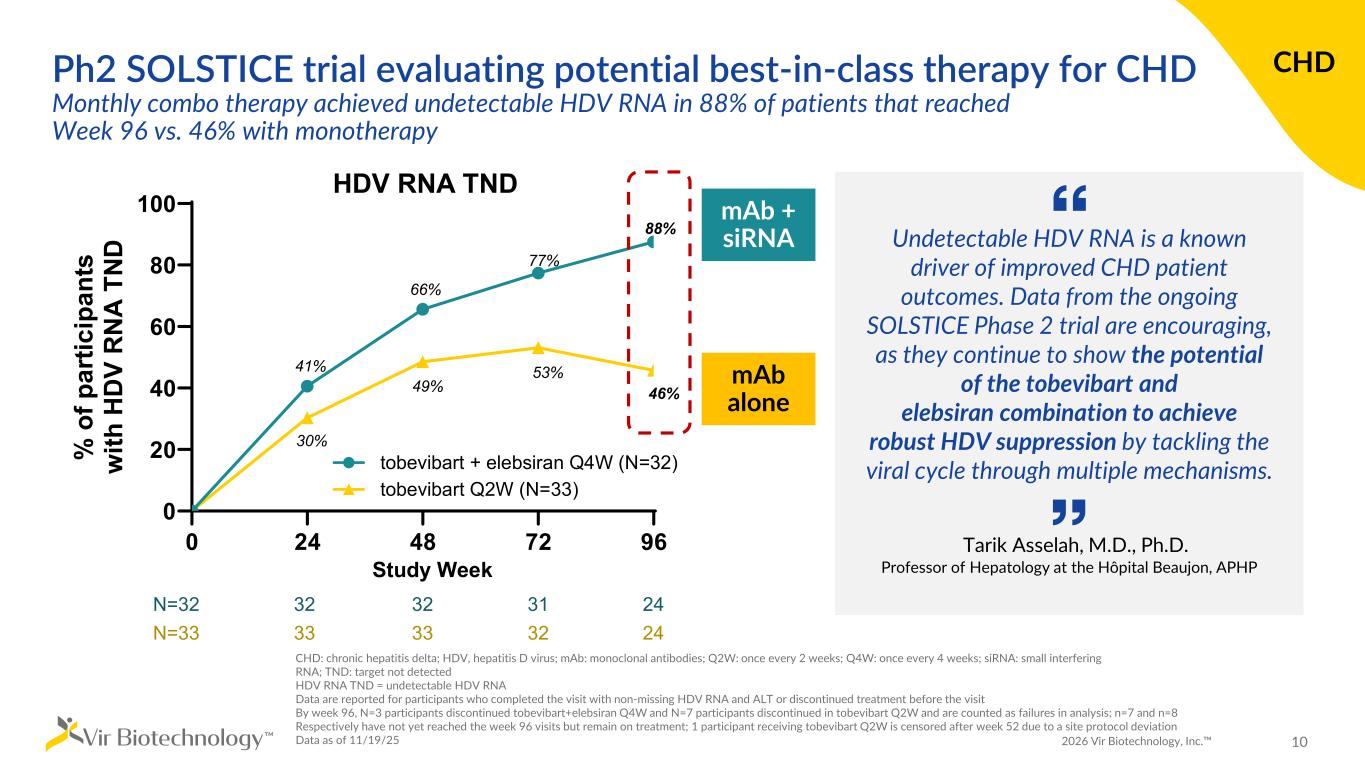
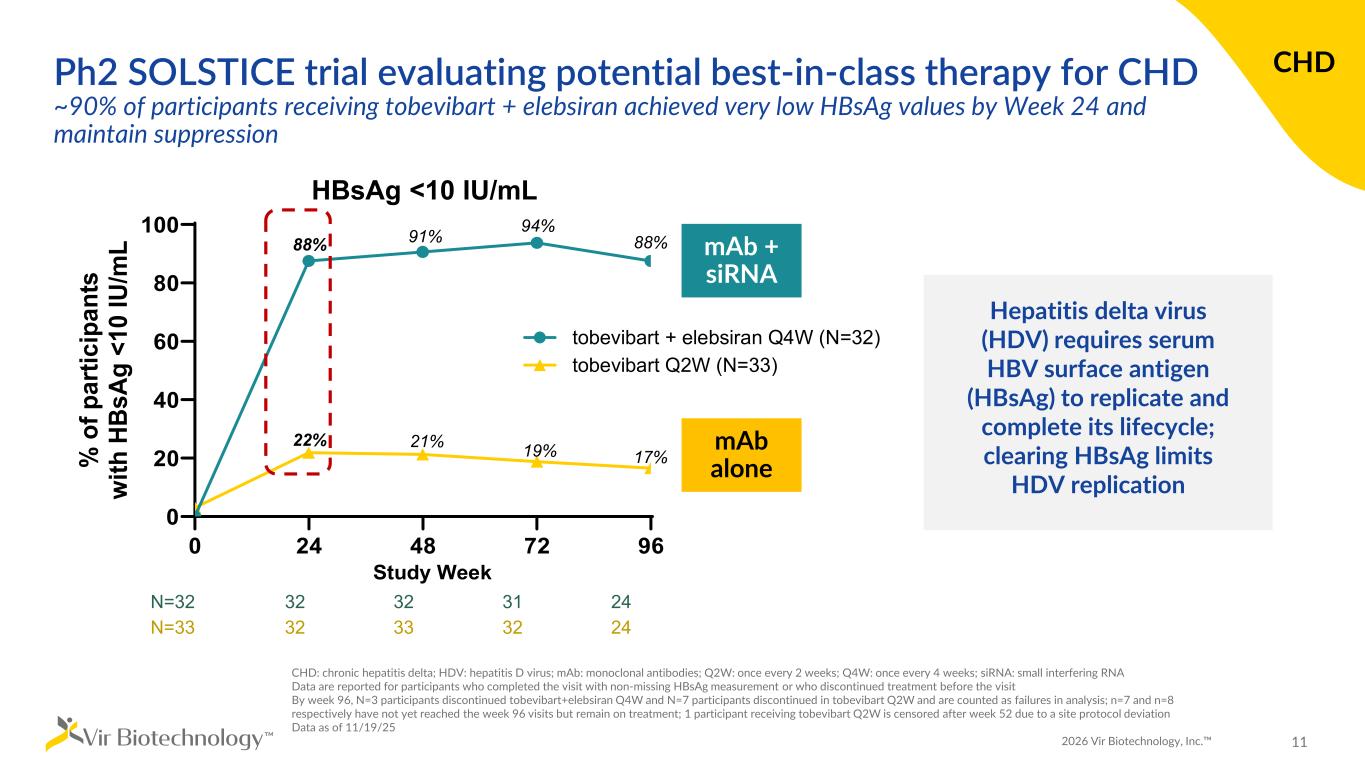
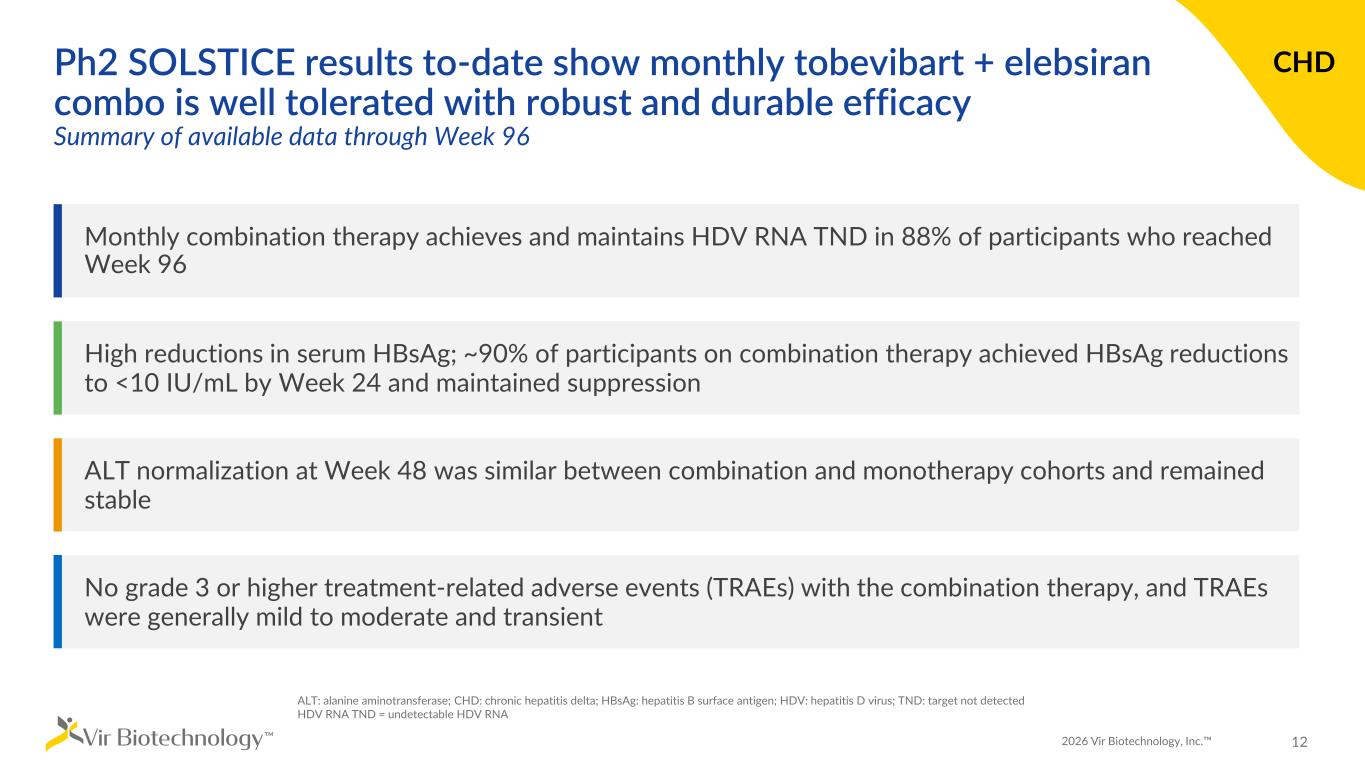
Data from the Phase 2 SOLSTICE trial to be presented at the 44th Annual J.P. Morgan Healthcare Conference demonstrate that undetectable hepatitis delta virus RNA (HDV RNA Target Not Detected, TND) was achieved and maintained by 77% (24/31) of participants receiving the combination of tobevibart and elebsiran at Week 72, and this rate increased to 88% (21/24) in the subset of participants evaluated through Week 96. By contrast, HDV RNA TND was achieved by 53% (17/32) of participants receiving tobevibart antibody monotherapy at Week 72 and 46% (11/24) in the subset of participants evaluated through Week 96. There were no grade 3 or higher treatment-related adverse events in the combination arm, and treatment emergent adverse events were generally mild to moderate and transient. Complete results at Week 96 will be presented at a future medical meeting. Previous positive Phase 2 SOLSTICE data at Week 48 were published in the New England Journal of Medicine.2
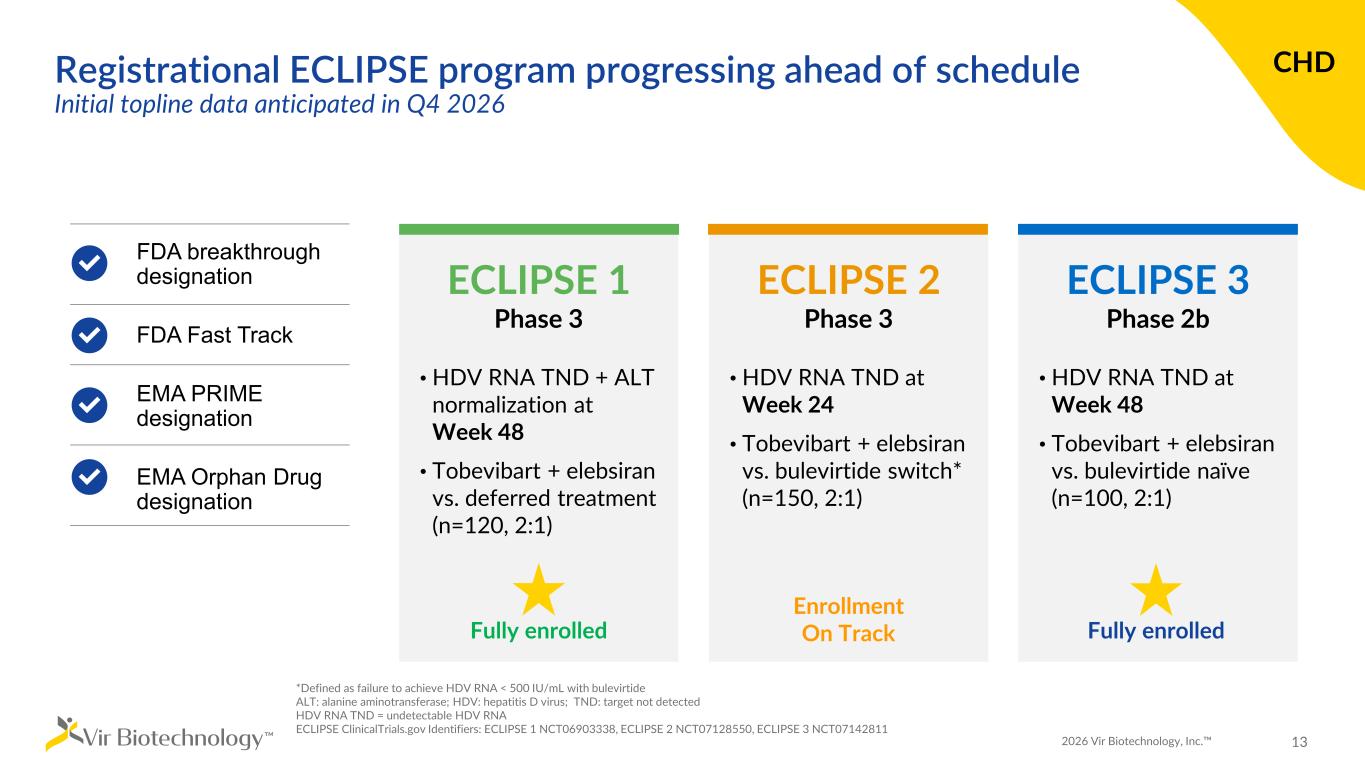
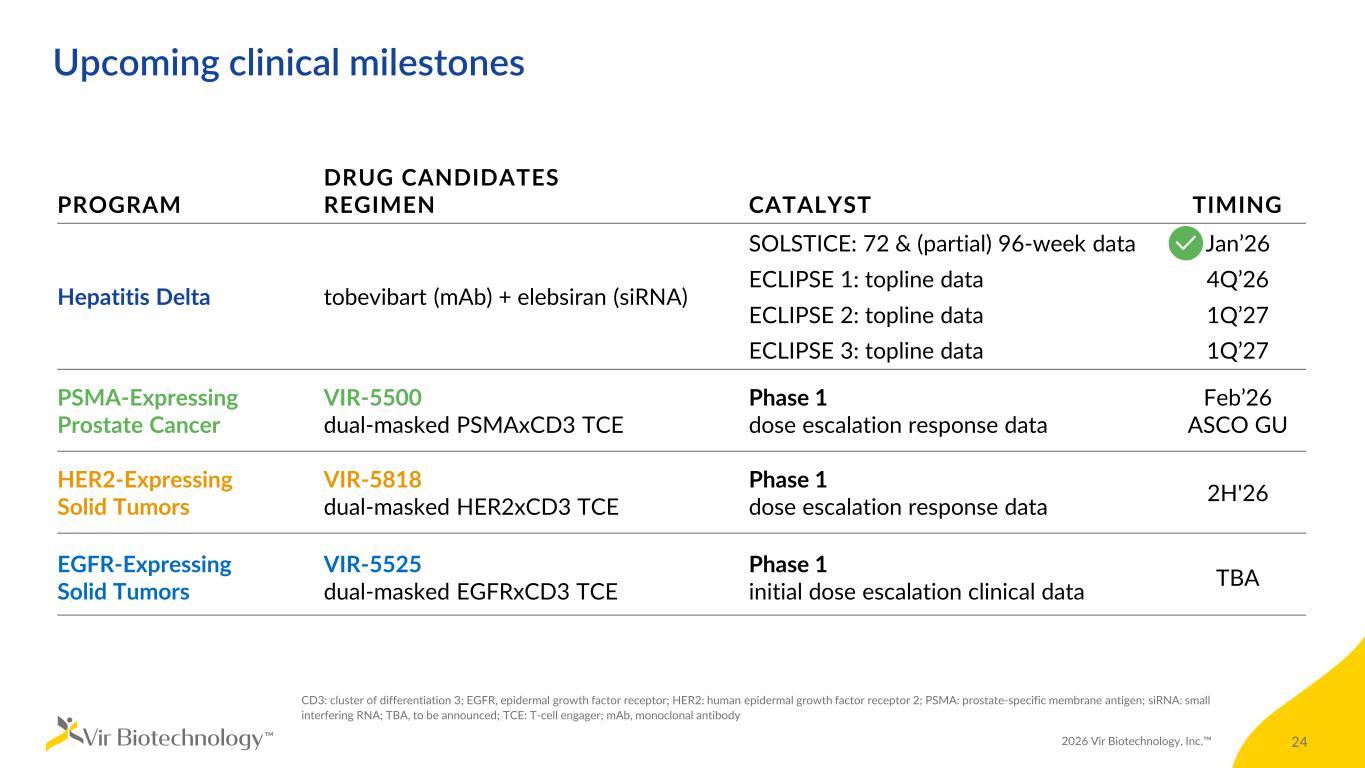
The registrational ECLIPSE program in CHD is ongoing, with ECLIPSE 1 and ECLIPSE 3 fully enrolled. Topline data from the ECLIPSE 1 trial is expected in the fourth quarter of 2026. Topline data from the ECLIPSE 2 and ECLIPSE 3 trials are expected in the first quarter of 2027.
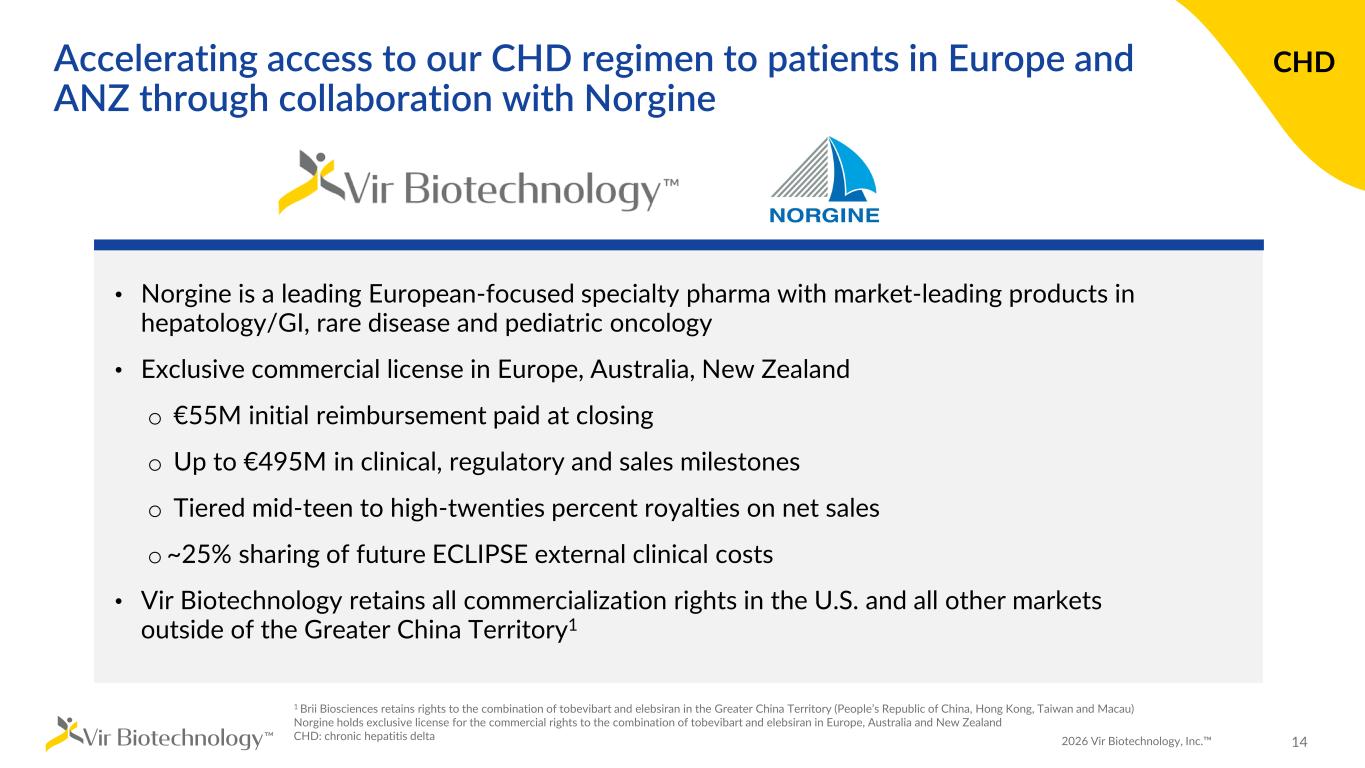
Last month, Vir Biotechnology granted Norgine Pharma UK Limited, an affiliate of Norgine, an exclusive license for the commercial rights to the combination of tobevibart and elebsiran for the treatment of CHD in Europe, Australia and New Zealand. Vir Biotechnology has retained all commercialization rights for tobevibart and elebsiran in the United States and other markets outside of the Greater China Territory.3
PRO-XTEN® dual-masked TCE immunotherapy portfolio
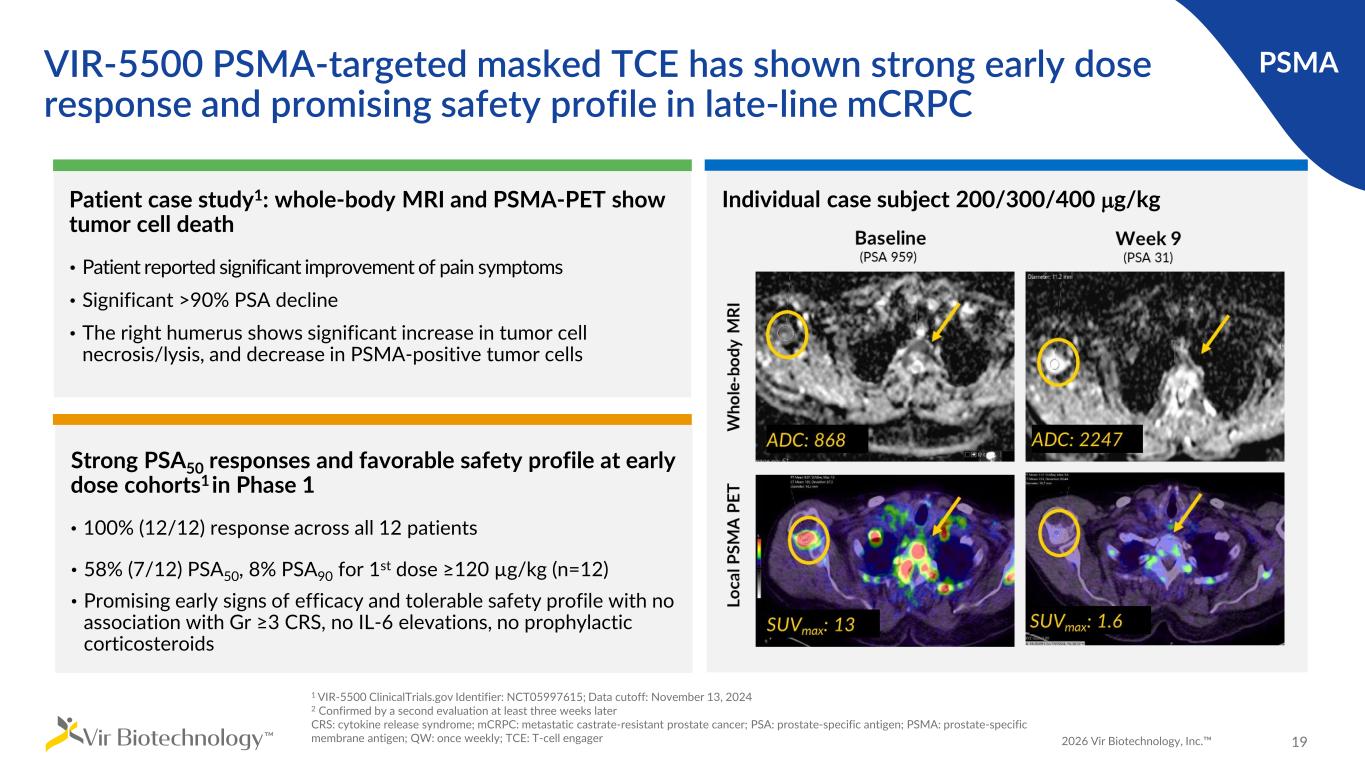
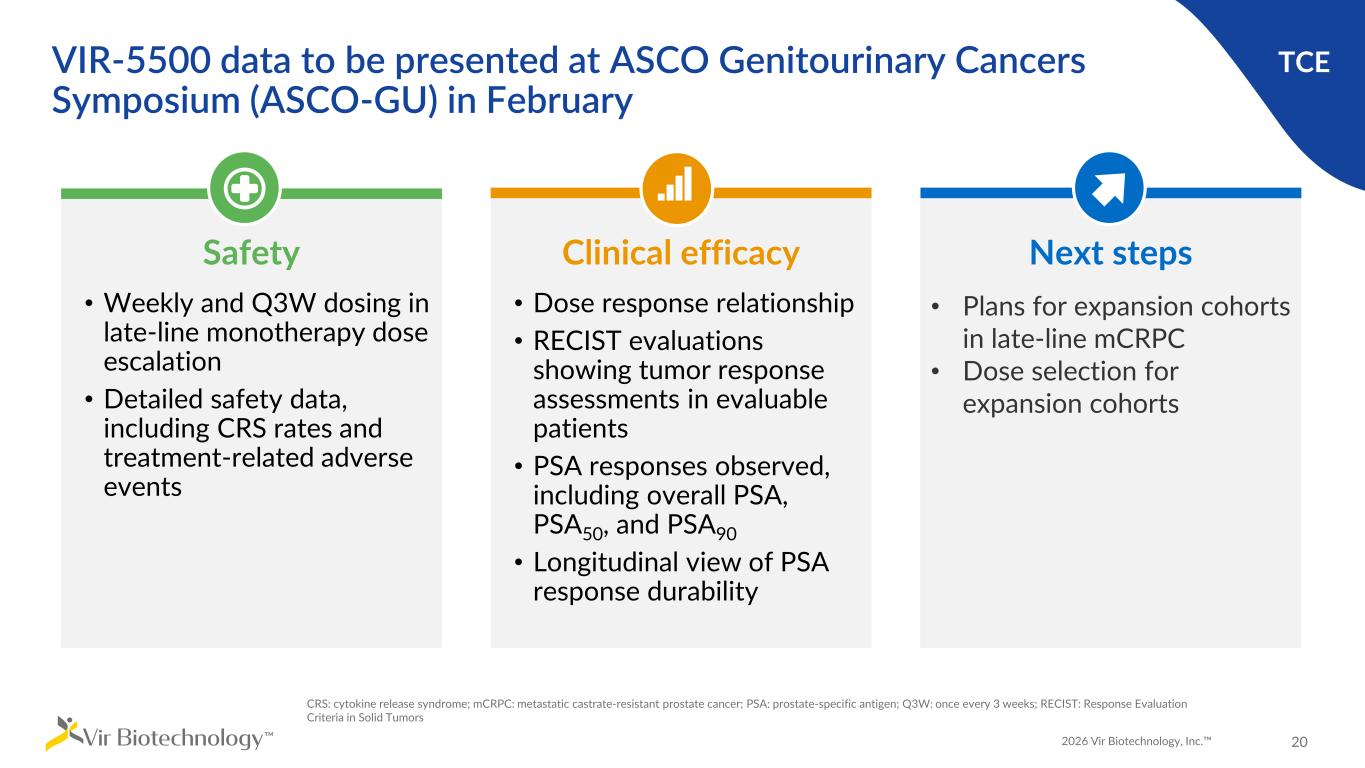
PSMA-targeted PRO-XTEN® dual-masked TCE VIR-5500 is currently being evaluated as monotherapy and in combination with androgen receptor pathway inhibitors (ARPIs) for the first-line treatment of metastatic castration-resistant prostate cancer (mCRPC). Vir Biotechnology will share updated Phase 1 data at the 2026 ASCO Genitourinary Cancers Symposium in February. The Company previously shared preliminary data from the ongoing trial in January 2025 and will provide an update that includes safety and efficacy data of VIR-5500 monotherapy in the later-line mCRPC patients, including RECIST and PSA responses, durability and dose-response relationship.
Vir Biotechnology is also currently enrolling patients in its Phase 1 dose escalation trials for VIR-5818 in HER2-expressing solid tumors and VIR-5525 in EGFR-expressing solid tumors. Phase 1 dose escalation response data for VIR-5818 are expected in the second half of 2026.
Additionally, the Company is currently progressing a number of PRO-XTEN® masked TCEs in preclinical studies directed at clinically validated targets with potential applications across a variety of solid tumors, including lung, colorectal and bladder. All candidates have been discovered and optimized by leveraging Vir Biotechnology’s antibody and TCE discovery and engineering platform, which includes dAIsY™ (data AI structure and antibodY), a proprietary artificial intelligence engine, and the universal PRO-XTEN® masking technology.
2025 ending cash position (unaudited) and runway projection
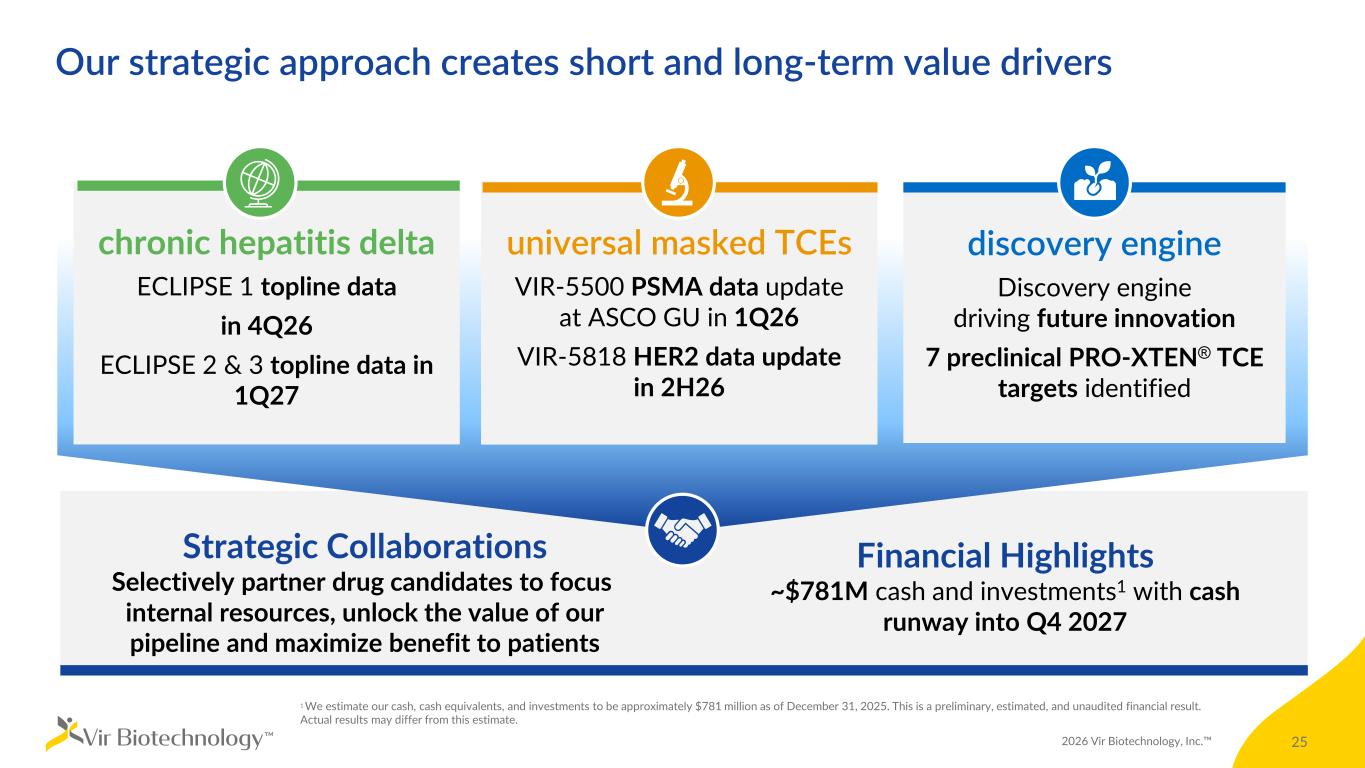
Cash, cash equivalents and investments were approximately $781 million as of December 31, 2025.1 As a result of the anticipated net cash benefits from the Norgine licensing agreement, and through continued financial discipline, the Company expects cash, cash equivalents and investments to fund operations into the fourth quarter of 2027.


About the ECLIPSE Registrational Program
ECLIPSE is a registrational program to evaluate the safety and efficacy of tobevibart in combination with elebsiran in patients with chronic hepatitis delta (CHD). ECLIPSE includes three randomized, controlled trials designed to evaluate the combination therapy in comparison to deferred treatment or bulevirtide. ECLIPSE 1 (NCT06903338) is a Phase 3 trial evaluating the safety and efficacy of tobevibart in combination with elebsiran compared to deferred treatment in the U.S. or other regions where bulevirtide use is limited. ECLIPSE 2 (NCT07128550) is a Phase 3 trial evaluating the efficacy and safety of switching to tobevibart and elebsiran in people with CHD who have not achieved viral suppression with bulevirtide therapy. ECLIPSE 1 and 2 are designed to provide the registrational efficacy and safety data needed for potential submission to global regulatory agencies. ECLIPSE 3 (NCT07142811) is a Phase 2b head-to-head trial evaluating combination tobevibart and elebsiran compared with bulevirtide in bulevirtide-naïve patients, and it is designed to provide important supportive data to help establish access and reimbursement in key markets.
About Tobevibart and Elebsiran
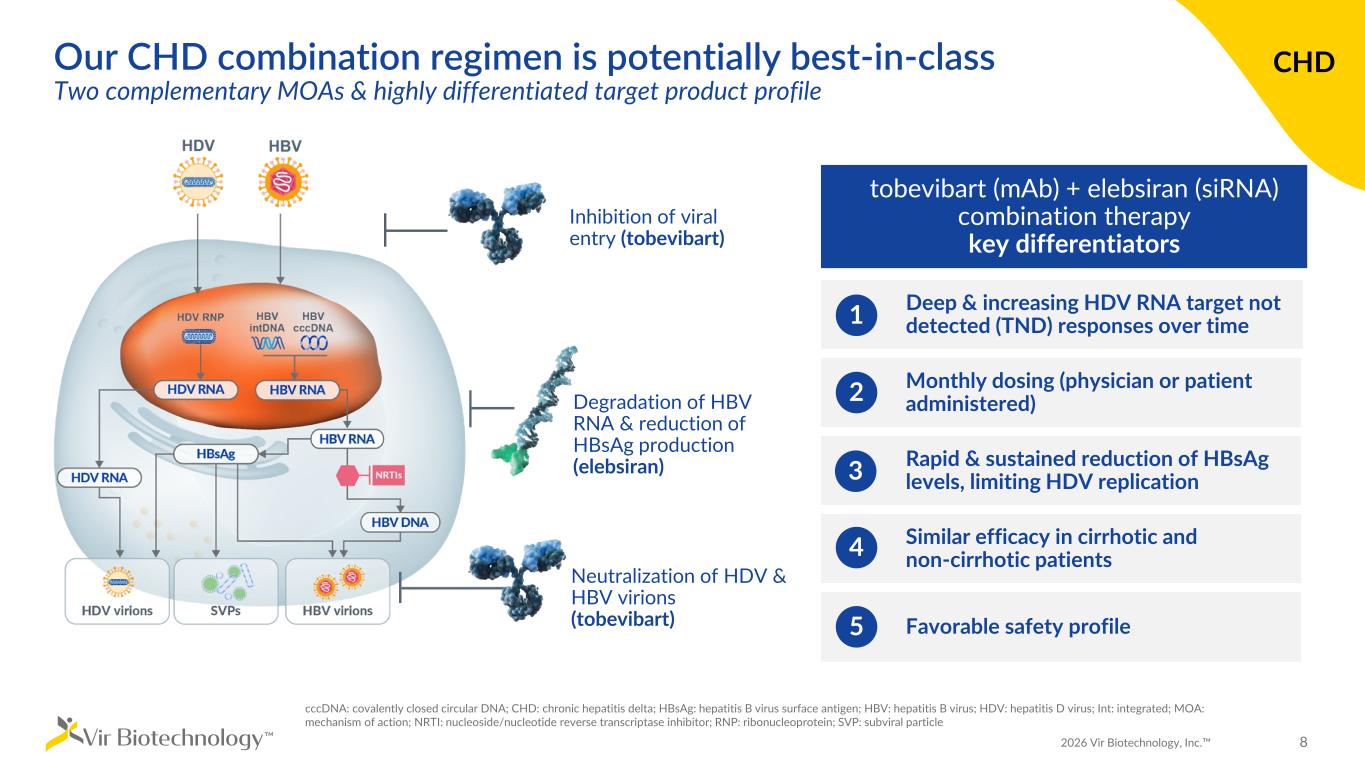
Tobevibart is an investigational broadly neutralizing monoclonal antibody (mAb) targeting the hepatitis B surface antigen (HBsAg). It is designed to inhibit the entry of hepatitis B and hepatitis delta viruses into hepatocytes and to reduce the level of circulating viral and subviral particles in the blood. Tobevibart was identified using Vir Biotechnology’s proprietary mAb discovery platform. The Fc domain has been engineered to increase immune engagement and clearance of HBsAg immune complexes and incorporates Xencor’s Xtend™ technology to extend half-life. Tobevibart is administered subcutaneously, and it is currently in clinical development for the treatment of patients with chronic hepatitis delta.
Elebsiran is an investigational hepatitis B virus-targeting small interfering ribonucleic acid (siRNA) licensed from Alnylam Pharmaceuticals, Inc. It is designed to degrade hepatitis B virus RNA transcripts and limit the production of HBsAg. Current data indicate that it has the potential to have direct antiviral activity against hepatitis B virus and hepatitis delta virus. Elebsiran is administered subcutaneously, and it is currently in clinical development for the treatment of patients with chronic hepatitis delta.
About Chronic Hepatitis Delta (CHD)
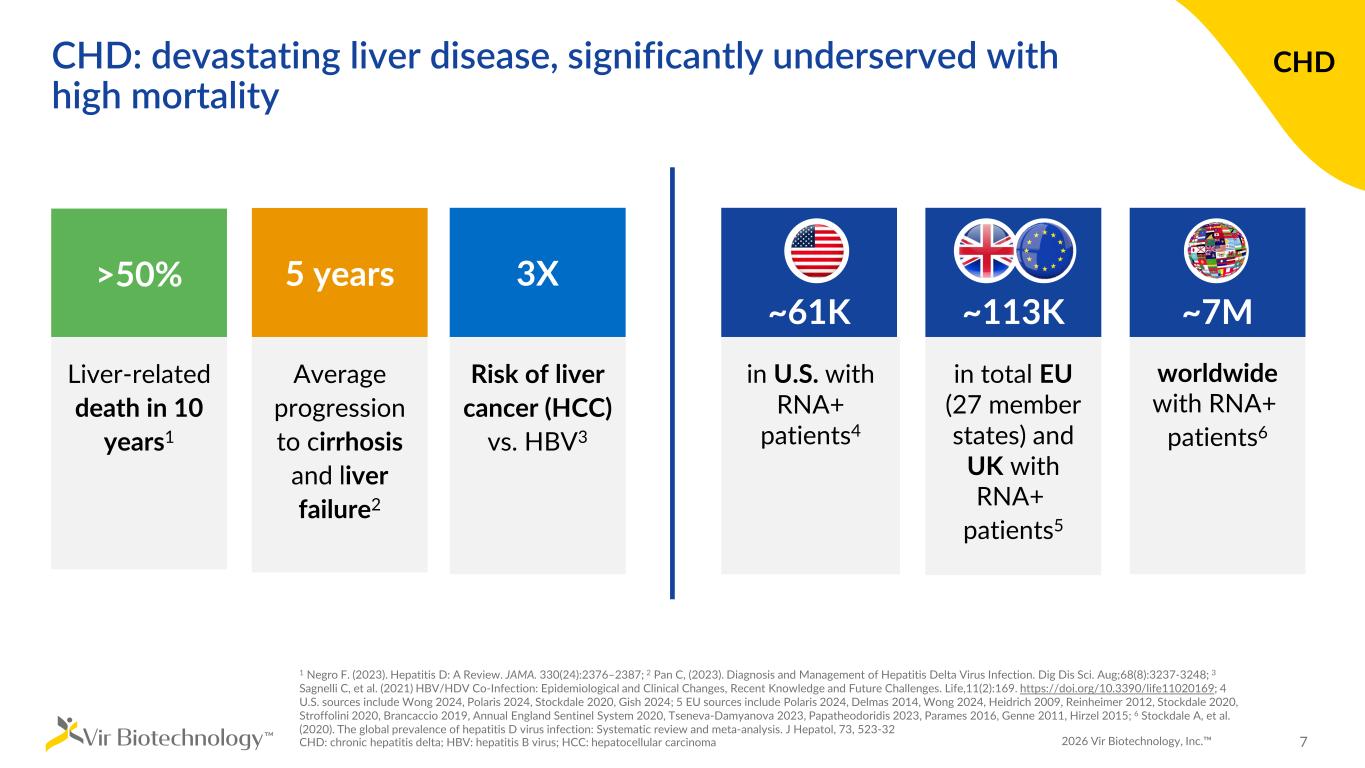
CHD is the most severe form of chronic viral hepatitis4 and was recently classified as carcinogenic by the International Agency for Research on Cancer.5 People living with the disease rapidly progress to cirrhosis, liver failure6 and liver-related death.4 There are currently no approved treatments in the U.S., and options are limited in the European Union and globally.
About VIR-5500, VIR-5818, VIR-5525
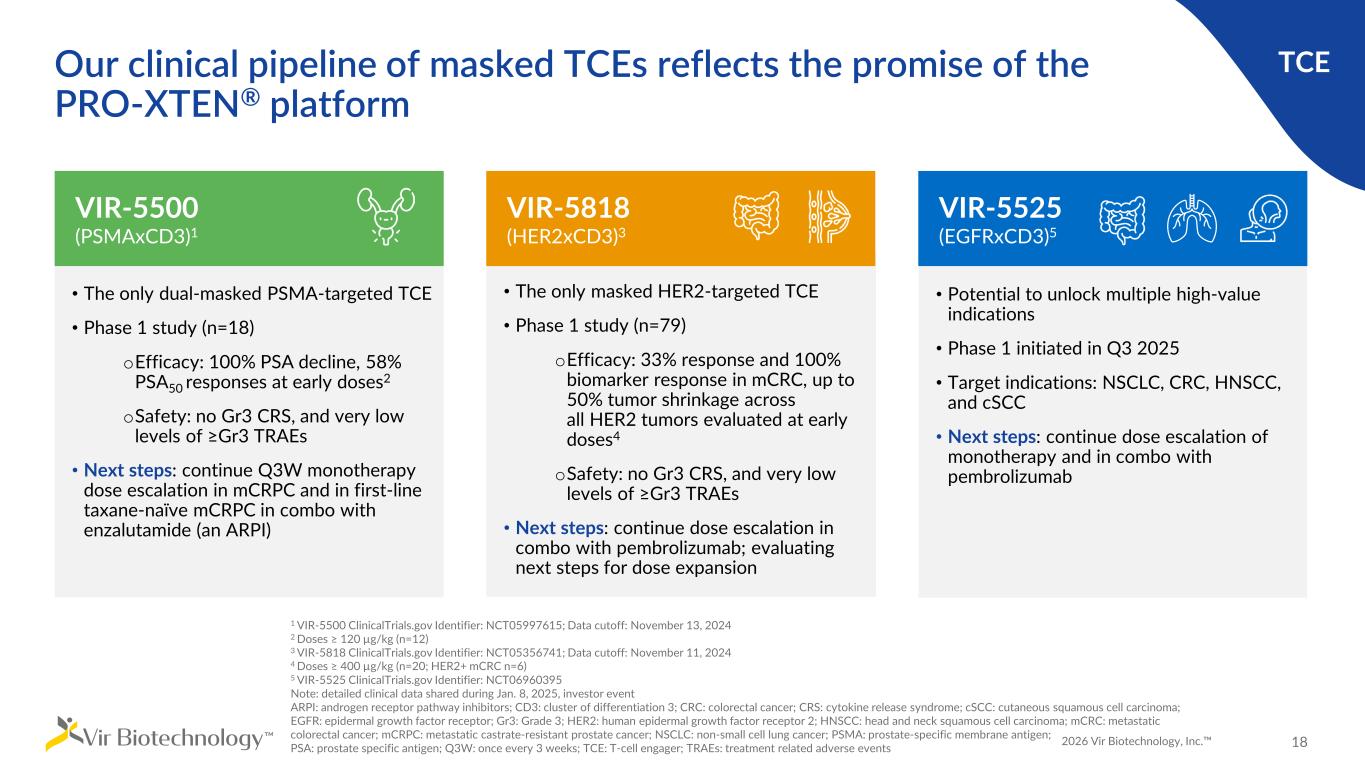
VIR-5500, VIR-5818 and VIR-5525 are investigational, clinical candidates currently being evaluated for the treatment of solid tumors. These assets leverage the universal PRO-XTEN® masking technology and target PSMA, HER2 and EGFR, respectively.
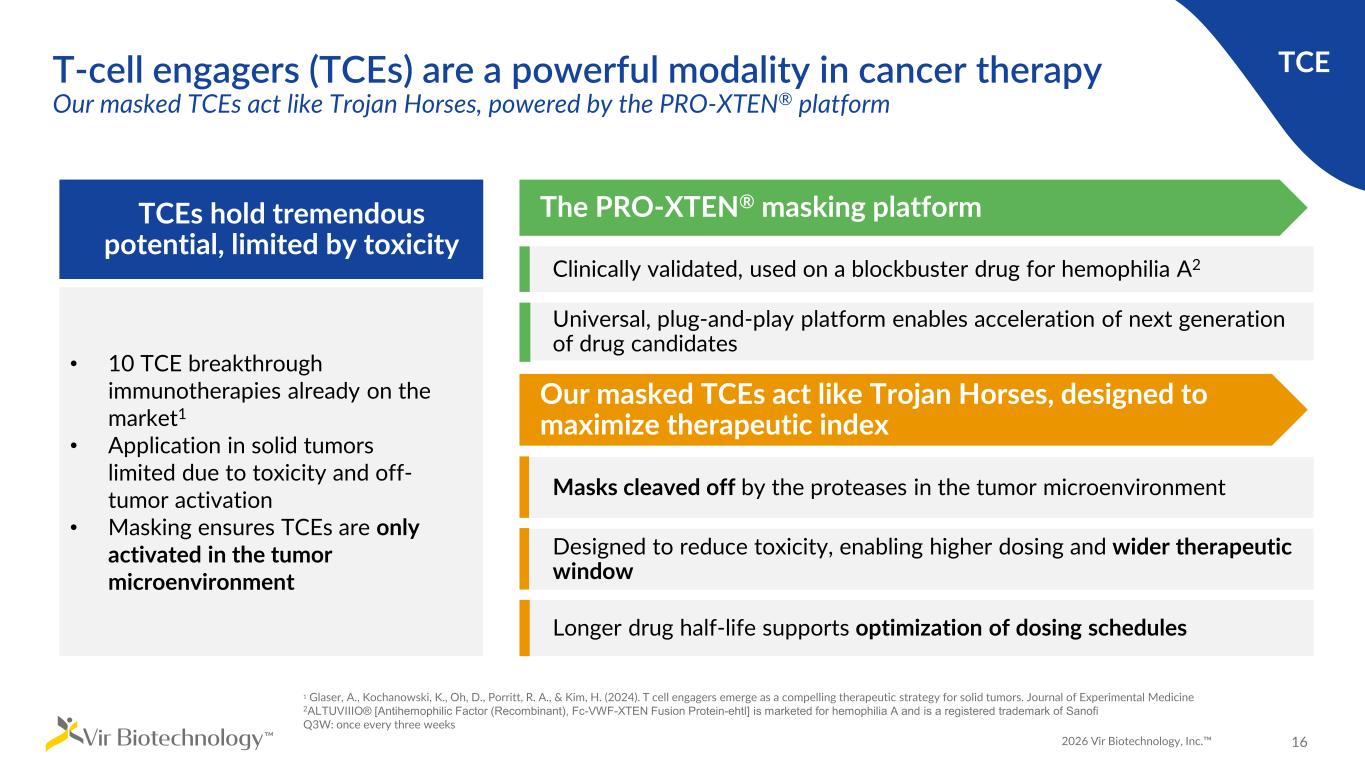
TCEs are powerful anti-tumor agents that can direct the immune system, specifically T-cells, to destroy cancer cells. The universal PRO-XTEN® masking technology is designed to keep the TCEs inactive (or masked) until they reach the tumor microenvironment, where tumor-specific proteases cleave off the mask and activate the TCEs, leading to killing of cancer cells. By driving the activity exclusively to the tumor microenvironment, we aim to circumvent the traditionally high toxicity associated with TCEs and increase their efficacy and tolerability. Additionally, the mask is designed to help drug candidates stay in the bloodstream longer in their inactive form, allowing them to better reach the site of action and potentially allowing less frequent dosing regimens for patients and clinicians.


About Vir Biotechnology, Inc.
Vir Biotechnology, Inc. is a clinical-stage biopharmaceutical company focused on powering the immune system to transform lives by discovering and developing medicines for serious infectious diseases and cancer. Its clinical-stage portfolio includes programs for chronic hepatitis delta and multiple dual-masked T-cell engagers across validated targets in solid tumor indications. Vir Biotechnology also has a portfolio of preclinical programs across a range of infectious diseases and oncologic malignancies. Vir Biotechnology routinely posts information that may be important to investors on its website.
Vir Biotechnology has exclusive rights to the universal PRO-XTEN® masking platform for oncology and infectious disease. PRO-XTEN® is a trademark of Amunix Pharmaceuticals, Inc., a Sanofi company.
Footnotes and references:
1 These preliminary selected financial results are unaudited and subject to adjustment. The Company expects to report its final and complete fourth quarter and full-year 2025 financial results in late February 2026.
2 Asselah T, Chattergoon MA, Jucov A, et al. A Phase 2 Trial of Tobevibart plus Elebsiran in Hepatitis D. N Engl J Med. 2025 Nov 9.Online ahead of print. doi:10.1056/NEJMoa2508827.
3 People’s Republic of China, Hong Kong, Taiwan and Macau
4 National Institute of Diabetes and Digestive and Kidney Diseases. Hepatitis D. NIDDK. Published November 2024. Accessed September 2025. Hepatitis D - NIDDK (nih.gov). 
5 Karagas, Margaret R et al., Carcinogenicity of hepatitis D virus, human cytomegalovirus, and Merkel cell polyomavirus, The Lancet Oncology, Volume 26, Issue 8, 994 – 995.
6 Center for Disease Control and Prevention. Hepatitis D FAQs. CDC. Published March 2020. Accessed September 2025. What is Hepatitis D - FAQ | CDC.


Forward-Looking Statements  
This press release contains forward-looking statements within the meaning of the Private Securities Litigation Reform Act of 1995. Words such as “should,” “could,” “may,” “might,” “will,” “plan,” “potential,” “aim,” “expect,” “anticipate,” “promising” and similar expressions (as well as other words or expressions referencing future events, conditions or circumstances) are intended to identify forward-looking statements. Forward-looking statements contained in this press release include, but are not limited to, statements regarding: Vir Biotechnology’s belief that 2026 will be a year of significant clinical progress for its CHD and oncology TCE programs; the therapeutic and commercial potential of Vir Biotechnology’s CHD program and Vir Biotechnology’s belief that the monthly treatment with the combination of tobevibart and elebsiran has the potential to achieve an undetectable viral load in a large number of patients, which could redefine the standard of care in CHD; Vir Biotechnology’s clinical development plans and expectations for the ECLIPSE Phase 3 registrational program, including protocols for and enrollment into ongoing and planned clinical trials, target endpoints and data analyses or readouts (including the expectation of topline data for ECLIPSE 1 in the fourth quarter of 2026 for ECLIPSE 2 and ECLIPSE 3 in the first quarter of 2027); the therapeutic and potential of Vir Biotechnology’s oncology solid tumor portfolio, preclinical pipeline and PRO-XTEN® masking technology; Vir Biotechnology’s clinical development plans and expectations for the VIR-5500 and VIR-5818 Phase 1 programs, including protocols for and enrollment into ongoing and planned clinical trials, target endpoints and data analyses or readouts (including plans to share updated Phase 1 data for VIR-5500 at the 2026 ASCO Genitourinary Cancers Symposium in February 2026 and Phase 1 dose escalation response data for VIR-5818 in the second half of 2026); Vir Biotechnology’s cash balance (unaudited) and anticipated runway; Vir Biotechnology’s strategy and plans; and any assumptions underlying any of the foregoing. Many factors may cause differences between current expectations and actual results, including, without limitation: unexpected safety or efficacy data or results observed during clinical studies or in data readouts, including the occurrence of adverse safety events; risks of unexpected costs, delays or other unexpected hurdles; challenges in accessing manufacturing capacity; clinical site activation rates or clinical enrollment rates that are lower than expected; the timing and outcome of Vir Biotechnology’s planned interactions with regulatory authorities, as well as general difficulties in obtaining any necessary regulatory approvals; successful development and/or commercialization of alternative product candidates by Vir Biotechnology’s competitors, as well as changes in expected or existing competition; geopolitical changes or other external factors; and unexpected litigation or other disputes. In light of these risks and uncertainties, the events or circumstances referred to in the forward-looking statements may not occur. Drug development and commercialization involve a high degree of risk, and only a small number of research and development programs result in commercialization of a product. Results in early-stage clinical studies may not be indicative of full results or results from later stage or larger scale clinical studies and do not ensure regulatory approval. The actual results may vary from the anticipated results, and the variations may be material. You are cautioned not to place undue reliance on any scientific data presented or these forward-looking statements, which are based on Vir Biotechnology’s available information, expectations and assumptions as of the date of this press release. Other factors that may cause Vir Biotechnology’s actual results to differ from those expressed or implied in the forward-looking statements in this press release are discussed in Vir Biotechnology’s filings with the U.S. Securities and Exchange Commission, including the section titled “Risk Factors” contained therein. Except as required by law, Vir Biotechnology assumes no obligation to update any forward-looking statements, whether as a result of new information, future events or otherwise. 
Media
[email protected]
Investors
[email protected]

January 14, 2026 J.P. Morgan 2026 Healthcare Conference 2026 Vir Biotechnology, Inc. 1


Legal disclaimer Forward-Looking Statements Statements in this presentation that are not statements of historical fact are forward-looking statements. Such forward-looking statements include, without limitation, statements regarding: the therapeutic and commercial potential of Vir Biotechnology's CHD program, as well as Vir Biotechnology's strategy, plans and expectations related thereto; the therapeutic and commercial potential of Vir Biotechnology's oncology solid tumor portfolio, preclinical pipeline and the PRO-XTEN® masking technology, as well as Vir Biotechnology's strategy, plans and expectations related thereto; the potential of and Vir Biotechnology's expectations for its other pipeline programs; Vir Biotechnology's anticipated cash runway; Vir Biotechnology's plans and expectations for its clinical development programs, including protocols for and enrollment into ongoing and planned clinical studies, potential partnering opportunities, and data readouts and presentations, as well as anticipated timelines; the potential benefits, safety and efficacy of Vir Biotechnology's investigational therapies; and any assumptions underlying any of the foregoing. Words such as “aim,” “anticipate,” “believe,” “could,” “expect,” “goal,” “intend,” “may,” “plan,” “potential,” “promising,” “will,” and similar expressions are intended to identify forward-looking statements, though not all forward-looking statements necessarily contain these identifying words. These forward-looking statements are based on the beliefs of the management of Vir Biotechnology, as well as assumptions made by and information currently available to management. Such statements reflect the current views of Vir Biotechnology with respect to future events and are subject to known and unknown risks, including, without limitation: unexpected safety or efficacy data or results observed during clinical studies or in data readouts, including the occurrence of adverse safety events; risks of unexpected costs, delays or other unexpected hurdles; the timing and amount of Vir Biotechnology's actual operating expenses, as determined in accordance with U.S. Generally Accepted Accounting Principles; difficulties in collaborating with other companies, some of whom may be competitors of Vir Biotechnology or otherwise have divergent interests, and uncertainty as to whether the benefits of Vir Biotechnology's various collaborations can ultimately be achieved; challenges in accessing manufacturing capacity; clinical site activation rates or clinical enrollment rates that are lower than expected; the timing and outcome of Vir Biotechnology's planned interactions with regulatory authorities, as well as general difficulties in obtaining any necessary regulatory approvals; successful development and/or commercialization of alternative product candidates by Vir Biotechnology's competitors, as well as changes in expected or existing competition; Vir Biotechnology's use of AI and machine learning in its efforts to engineer next-generation proteins and in other research and development efforts; geopolitical changes or other external factors; and unexpected litigation or other disputes. In light of these risks and uncertainties, the events or circumstances referred to in the forward-looking statements may not occur. Drug development and commercialization involve a high degree of risk, and only a small number of research and development programs result in commercialization of a product. Results in early-stage clinical studies may not be indicative of full results or results from later stage or larger scale clinical studies and do not ensure regulatory approval. The actual results may vary from the anticipated results and the variations may be material. Other factors that may cause the Company’s actual results to differ from current expectations are discussed in the Company’s filings with the U.S. Securities and Exchange Commission, including the section titled “Risk Factors” contained therein. These forward-looking statements should not be taken as forecasts or promises nor should they be taken as implying any indication, assurance or guarantee that the assumptions on which such forward-looking statements have been made are correct or exhaustive or, in the case of the assumptions, fully stated in this presentation. You are cautioned not to place undue reliance on any scientific data presented or these forward-looking statements, which speak only as of the date of this presentation. Except as required by law, Vir Biotechnology undertakes no obligation to publicly update any forward-looking statements, whether as a result of new information, future events or otherwise. Vir Biotechnology claims the protection of the safe harbor for forward-looking statements contained in the Private Securities Litigation Reform Act of 1995 for all forward-looking statements. Product candidates included in this presentation are investigational and have not been approved by the US Food and Drug Administration or other regulatory authorities. No representation is made or intended regarding their safety or efficacy or that of other investigational agents mentioned herein. Any comparative data presented are based on cross-trial comparisons and not head-to-head clinical studies; therefore, caution should be exercised in interpreting these data. PRO-XTEN® is a trademark of Amunix Pharmaceuticals, Inc., a Sanofi company 22026 Vir Biotechnology, Inc.


3 POWERING THE IMMUNE SYSTEM TO TRANSFORM LIVES 2026 Vir Biotechnology, Inc.


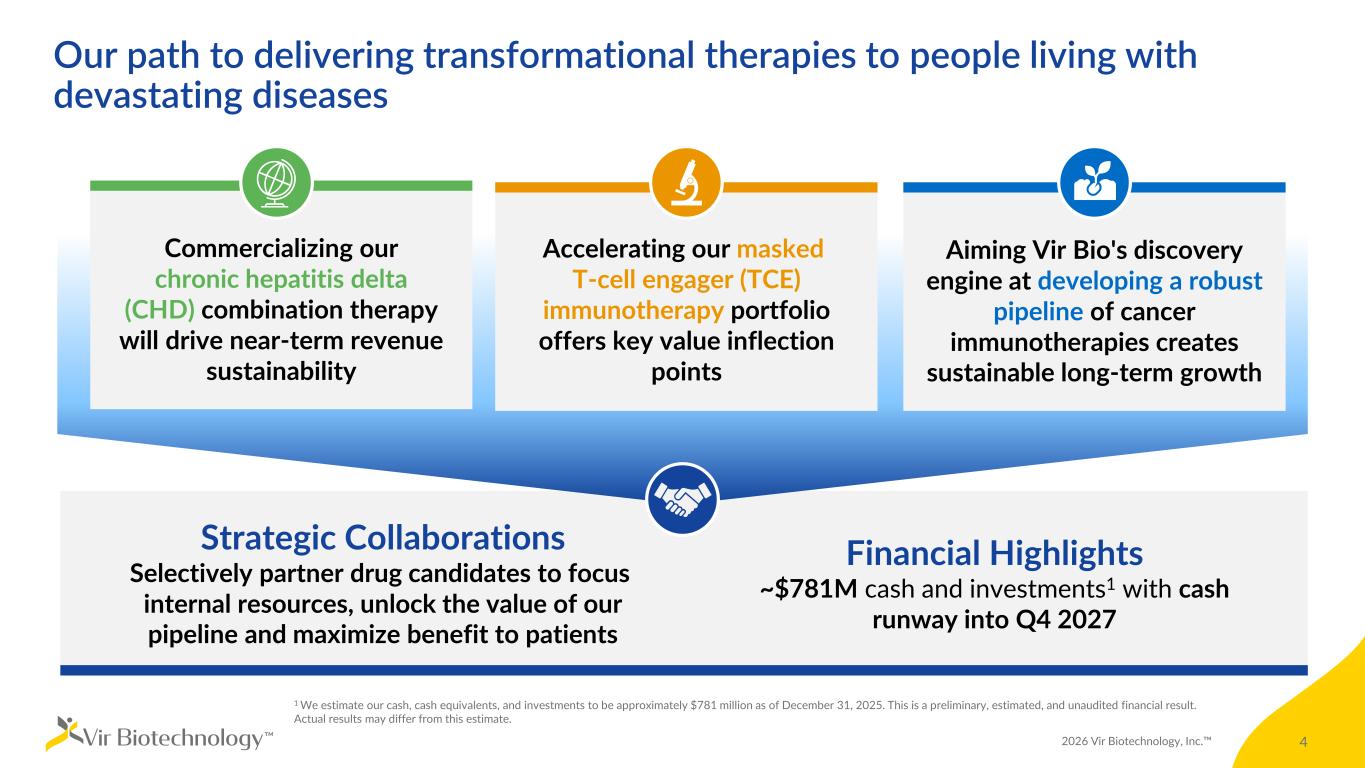
Our path to delivering transformational therapies to people living with devastating diseases Commercializing our chronic hepatitis delta (CHD) combination therapy will drive near-term revenue sustainability Aiming Vir Bio's discovery engine at developing a robust pipeline of cancer immunotherapies creates sustainable long-term growth 2026 Vir Biotechnology, Inc. 4 Accelerating our masked T-cell engager (TCE) immunotherapy portfolio offers key value inflection points Financial Highlights ~$781M cash and investments1 with cash runway into Q4 2027 Strategic Collaborations Selectively partner drug candidates to focus internal resources, unlock the value of our pipeline and maximize benefit to patients 1 We estimate our cash, cash equivalents, and investments to be approximately $781 million as of December 31, 2025. This is a preliminary, estimated, and unaudited financial result. Actual results may differ from this estimate.


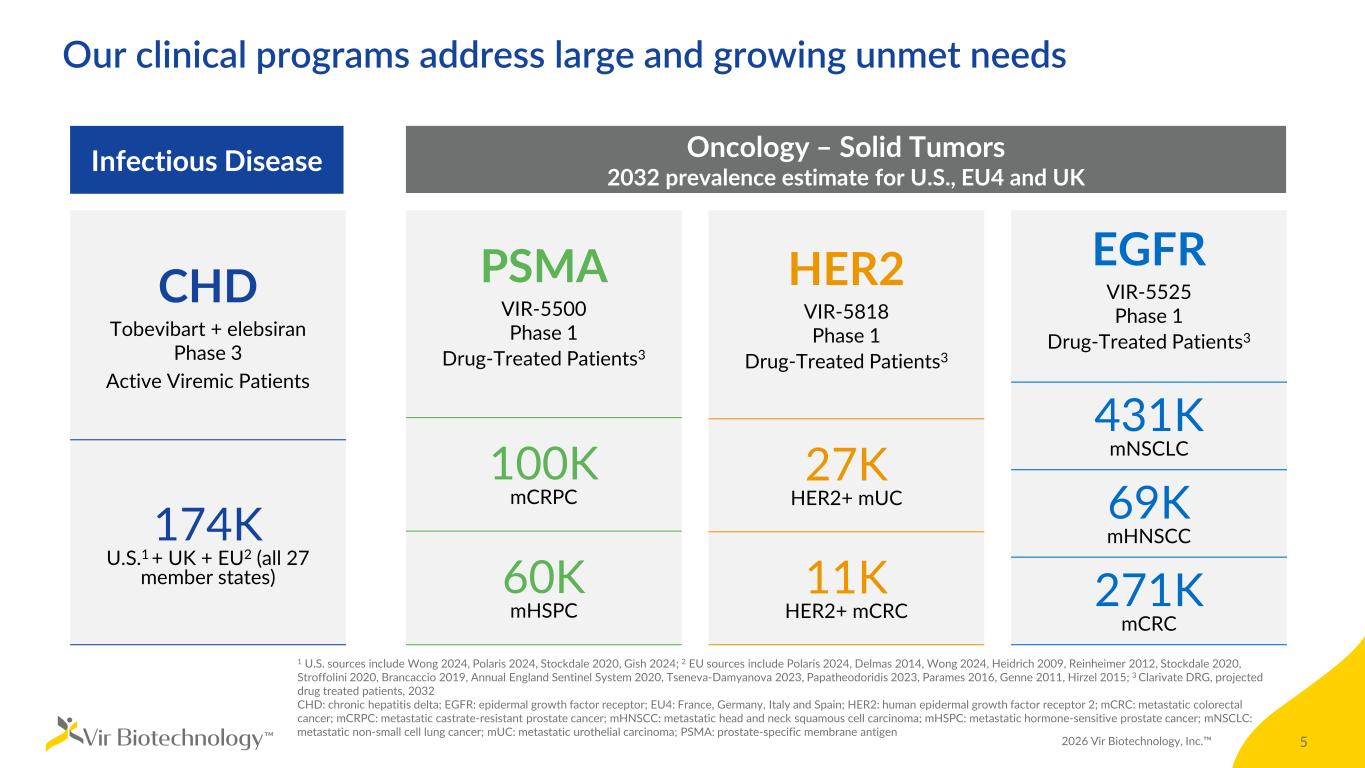
Our clinical programs address large and growing unmet needs Infectious Disease Oncology – Solid Tumors 2032 prevalence estimate for U.S., EU4 and UK EGFR VIR-5525 Phase 1 Drug-Treated Patients3 431K mNSCLC 69K mHNSCC 271K mCRC HER2 VIR-5818 Phase 1 Drug-Treated Patients3 27K HER2+ mUC 11K HER2+ mCRC PSMA VIR-5500 Phase 1 Drug-Treated Patients3 100K mCRPC 60K mHSPC CHD Tobevibart + elebsiran Phase 3 Active Viremic Patients 174K U.S.1 + UK + EU2 (all 27 member states) 1 U.S. sources include Wong 2024, Polaris 2024, Stockdale 2020, Gish 2024; 2 EU sources include Polaris 2024, Delmas 2014, Wong 2024, Heidrich 2009, Reinheimer 2012, Stockdale 2020, Stroffolini 2020, Brancaccio 2019, Annual England Sentinel System 2020, Tseneva-Damyanova 2023, Papatheodoridis 2023, Parames 2016, Genne 2011, Hirzel 2015; 3 Clarivate DRG, projected drug treated patients, 2032 CHD: chronic hepatitis delta; EGFR: epidermal growth factor receptor; EU4: France, Germany, Italy and Spain; HER2: human epidermal growth factor receptor 2; mCRC: metastatic colorectal cancer; mCRPC: metastatic castrate-resistant prostate cancer; mHNSCC: metastatic head and neck squamous cell carcinoma; mHSPC: metastatic hormone-sensitive prostate cancer; mNSCLC: metastatic non-small cell lung cancer; mUC: metastatic urothelial carcinoma; PSMA: prostate-specific membrane antigen 2026 Vir Biotechnology, Inc. 5


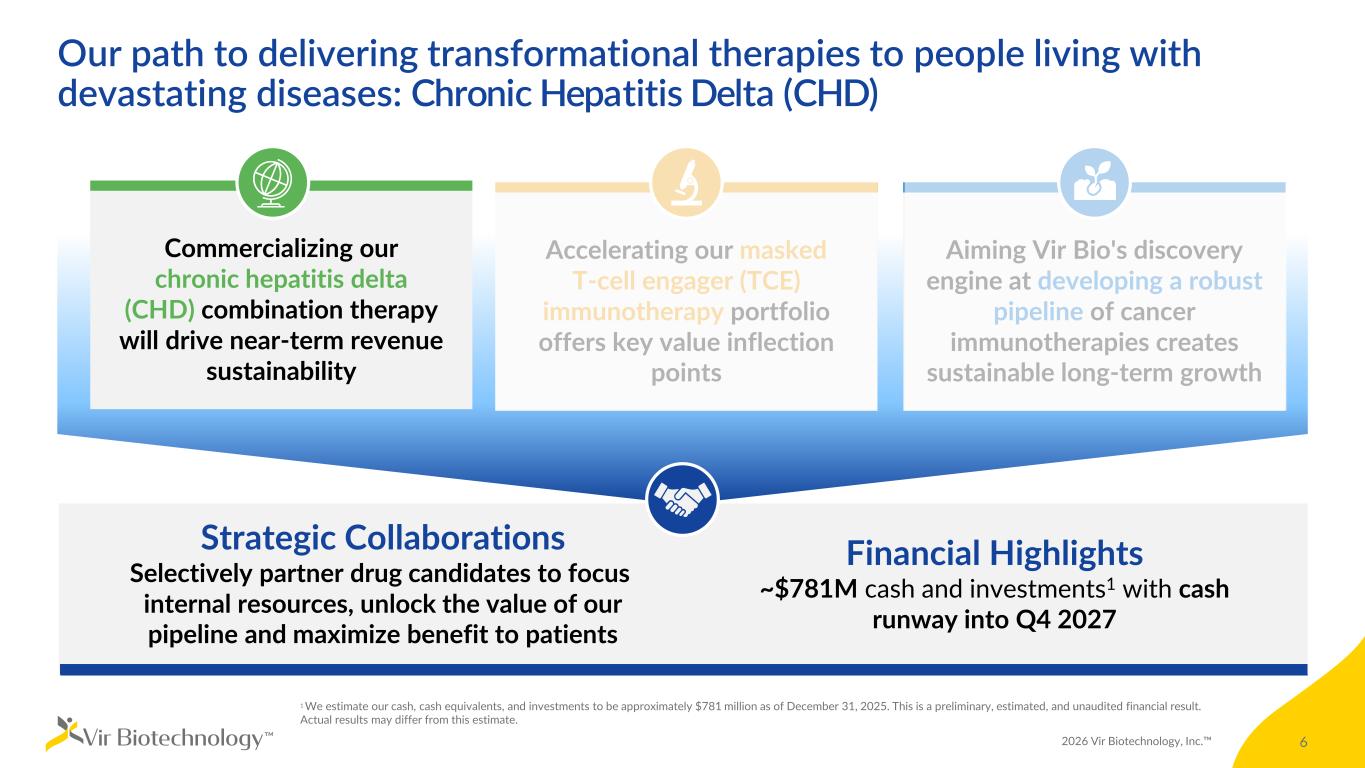
Our path to delivering transformational therapies to people living with devastating diseases: Chronic Hepatitis Delta (CHD) Commercializing our chronic hepatitis delta (CHD) combination therapy will drive near-term revenue sustainability Accelerating our masked T-cell engager (TCE) immunotherapy portfolio offers key value inflection points Aiming Vir Bio's discovery engine at developing a robust pipeline of cancer immunotherapies creates sustainable long-term growth 2026 Vir Biotechnology, Inc. 6 Financial Highlights ~$781M cash and investments1 with cash runway into Q4 2027 Strategic Collaborations Selectively partner drug candidates to focus internal resources, unlock the value of our pipeline and maximize benefit to patients 1 We estimate our cash, cash equivalents, and investments to be approximately $781 million as of December 31, 2025. This is a preliminary, estimated, and unaudited financial result. Actual results may differ from this estimate.


CHD: devastating liver disease, significantly underserved with high mortality 72026 Vir Biotechnology, Inc. 5 years Average progression to cirrhosis and liver failure2 >50% Liver-related death in 10 years1 Risk of liver cancer (HCC) vs. HBV3 3X 1 Negro F. (2023). Hepatitis D: A Review. JAMA. 330(24):2376–2387; 2 Pan C, (2023). Diagnosis and Management of Hepatitis Delta Virus Infection. Dig Dis Sci. Aug;68(8):3237-3248; 3 Sagnelli C, et al. (2021) HBV/HDV Co-Infection: Epidemiological and Clinical Changes, Recent Knowledge and Future Challenges. Life,11(2):169. https://doi.org/10.3390/life11020169; 4 U.S. sources include Wong 2024, Polaris 2024, Stockdale 2020, Gish 2024; 5 EU sources include Polaris 2024, Delmas 2014, Wong 2024, Heidrich 2009, Reinheimer 2012, Stockdale 2020, Stroffolini 2020, Brancaccio 2019, Annual England Sentinel System 2020, Tseneva-Damyanova 2023, Papatheodoridis 2023, Parames 2016, Genne 2011, Hirzel 2015; 6 Stockdale A, et al. (2020). The global prevalence of hepatitis D virus infection: Systematic review and meta-analysis. J Hepatol, 73, 523-32 CHD: chronic hepatitis delta; HBV: hepatitis B virus; HCC: hepatocellular carcinoma ~113K in total EU (27 member states) and UK with RNA+ patients5 in U.S. with RNA+ patients4 ~61K worldwide with RNA+ patients6 ~7M CHD


Neutralization of HDV & HBV virions (tobevibart) Degradation of HBV RNA & reduction of HBsAg production (elebsiran) tobevibart (mAb) + elebsiran (siRNA) combination therapy key differentiators Our CHD combination regimen is potentially best-in-class Two complementary MOAs & highly differentiated target product profile 82026 Vir Biotechnology, Inc. cccDNA: covalently closed circular DNA; CHD: chronic hepatitis delta; HBsAg: hepatitis B virus surface antigen; HBV: hepatitis B virus; HDV: hepatitis D virus; Int: integrated; MOA: mechanism of action; NRTI: nucleoside/nucleotide reverse transcriptase inhibitor; RNP: ribonucleoprotein; SVP: subviral particle CHD Deep & increasing HDV RNA target not detected (TND) responses over time1 Similar efficacy in cirrhotic and non-cirrhotic patients 4 Monthly dosing (physician or patient administered)2 Rapid & sustained reduction of HBsAg levels, limiting HDV replication 3 Favorable safety profile5 Inhibition of viral entry (tobevibart)


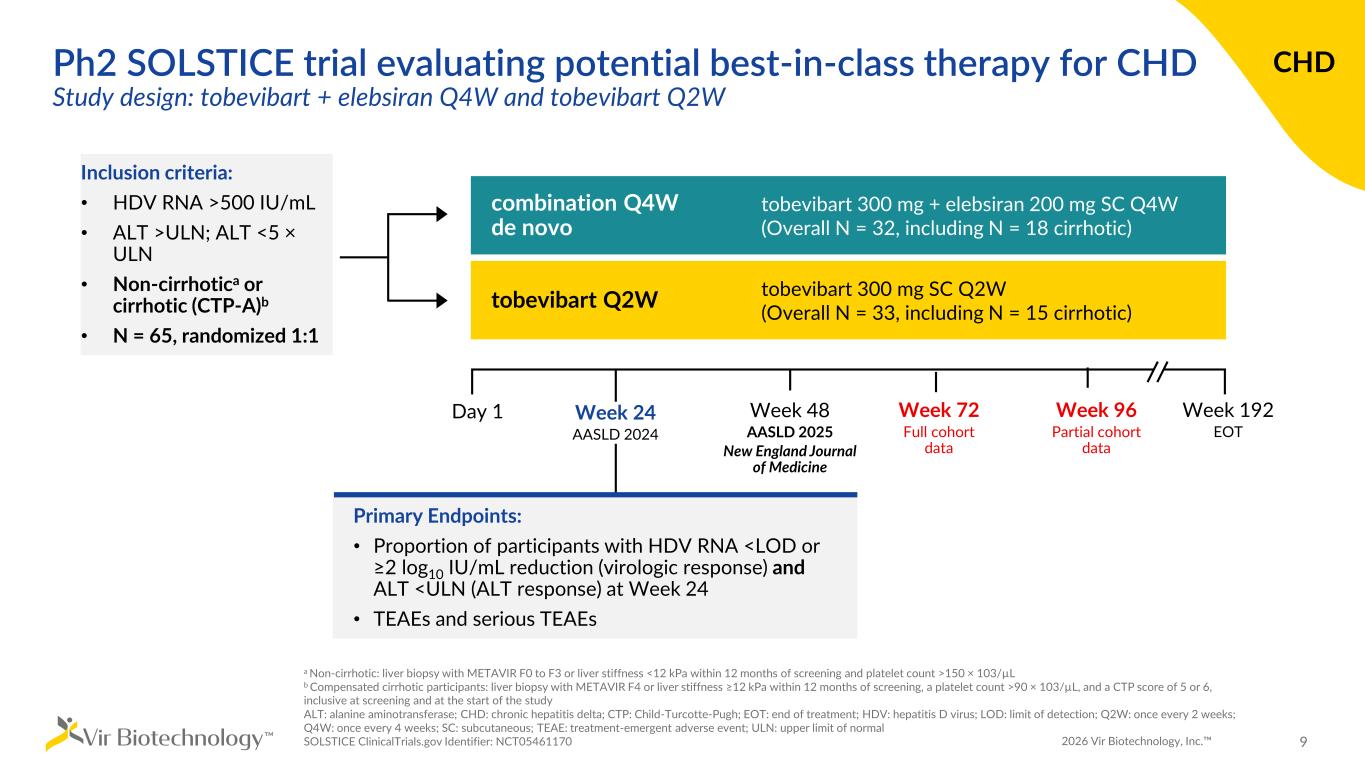
Ph2 SOLSTICE trial evaluating potential best-in-class therapy for CHD Study design: tobevibart + elebsiran Q4W and tobevibart Q2W Primary Endpoints: • Proportion of participants with HDV RNA <LOD or ≥2 log10 IU/mL reduction (virologic response) and ALT <ULN (ALT response) at Week 24 • TEAEs and serious TEAEs Inclusion criteria: • HDV RNA >500 IU/mL • ALT >ULN; ALT <5 × ULN • Non-cirrhotica or cirrhotic (CTP-A)b • N = 65, randomized 1:1 a Non-cirrhotic: liver biopsy with METAVIR F0 to F3 or liver stiffness <12 kPa within 12 months of screening and platelet count >150 × 103/µL b Compensated cirrhotic participants: liver biopsy with METAVIR F4 or liver stiffness ≥12 kPa within 12 months of screening, a platelet count >90 × 103/µL, and a CTP score of 5 or 6, inclusive at screening and at the start of the study ALT: alanine aminotransferase; CHD: chronic hepatitis delta; CTP: Child-Turcotte-Pugh; EOT: end of treatment; HDV: hepatitis D virus; LOD: limit of detection; Q2W: once every 2 weeks; Q4W: once every 4 weeks; SC: subcutaneous; TEAE: treatment-emergent adverse event; ULN: upper limit of normal SOLSTICE ClinicalTrials.gov Identifier: NCT05461170 Day 1 Week 48 AASLD 2025 New England Journal of Medicine Week 24 AASLD 2024 Week 72 Full cohort data CHD combination Q4W de novo tobevibart 300 mg + elebsiran 200 mg SC Q4W (Overall N = 32, including N = 18 cirrhotic) tobevibart Q2W tobevibart 300 mg SC Q2W (Overall N = 33, including N = 15 cirrhotic) Week 96 Partial cohort data Week 192 EOT 2026 Vir Biotechnology, Inc. 9


0 24 48 72 96 0 20 40 60 80 100 % o f p ar tic ip an ts w ith H D V R N A T ND N=32 N=33 32 33 32 33 31 32 24 24 Study Week Ph2 SOLSTICE trial evaluating potential best-in-class therapy for CHD Monthly combo therapy achieved undetectable HDV RNA in 88% of patients that reached Week 96 vs. 46% with monotherapy 10 HDV RNA TND 66% 88% 77% 49% 46% 53%41% 30% tobevibart + elebsiran Q4W (N=32) tobevibart Q2W (N=33) Undetectable HDV RNA is a known driver of improved CHD patient outcomes. Data from the ongoing SOLSTICE Phase 2 trial are encouraging, as they continue to show the potential of the tobevibart and elebsiran combination to achieve robust HDV suppression by tackling the viral cycle through multiple mechanisms. Tarik Asselah, M.D., Ph.D. Professor of Hepatology at the Hôpital Beaujon, APHP mAb + siRNA mAb alone CHD CHD: chronic hepatitis delta; HDV, hepatitis D virus; mAb: monoclonal antibodies; Q2W: once every 2 weeks; Q4W: once every 4 weeks; siRNA: small interfering RNA; TND: target not detected HDV RNA TND = undetectable HDV RNA Data are reported for participants who completed the visit with non-missing HDV RNA and ALT or discontinued treatment before the visit By week 96, N=3 participants discontinued tobevibart+elebsiran Q4W and N=7 participants discontinued in tobevibart Q2W and are counted as failures in analysis; n=7 and n=8 Respectively have not yet reached the week 96 visits but remain on treatment; 1 participant receiving tobevibart Q2W is censored after week 52 due to a site protocol deviation Data as of 11/19/25 2026 Vir Biotechnology, Inc.


Ph2 SOLSTICE trial evaluating potential best-in-class therapy for CHD ~90% of participants receiving tobevibart + elebsiran achieved very low HBsAg values by Week 24 and maintain suppression 112026 Vir Biotechnology, Inc. Hepatitis delta virus (HDV) requires serum HBV surface antigen (HBsAg) to replicate and complete its lifecycle; clearing HBsAg limits HDV replication CHD: chronic hepatitis delta; HDV: hepatitis D virus; mAb: monoclonal antibodies; Q2W: once every 2 weeks; Q4W: once every 4 weeks; siRNA: small interfering RNA Data are reported for participants who completed the visit with non-missing HBsAg measurement or who discontinued treatment before the visit By week 96, N=3 participants discontinued tobevibart+elebsiran Q4W and N=7 participants discontinued in tobevibart Q2W and are counted as failures in analysis; n=7 and n=8 respectively have not yet reached the week 96 visits but remain on treatment; 1 participant receiving tobevibart Q2W is censored after week 52 due to a site protocol deviation Data as of 11/19/25 0 24 48 72 96 0 20 40 60 80 100 % o f p ar tic ip an ts w ith H Bs Ag < 10 IU /m L N=32 N=33 32 33 32 33 31 32 24 24 Study Week HBsAg <10 IU/mL 21% 19% 17% 91% 94% 88% 22% 88% CHD mAb + siRNA mAb alone N=32 32 32 31 24 N=33 32 33 32 24 tobevibart + elebsiran Q4W (N=32) tobevibart Q2W (N=33)


Ph2 SOLSTICE results to-date show monthly tobevibart + elebsiran combo is well tolerated with robust and durable efficacy Summary of available data through Week 96 122026 Vir Biotechnology, Inc. CHD Monthly combination therapy achieves and maintains HDV RNA TND in 88% of participants who reached Week 96 High reductions in serum HBsAg; ~90% of participants on combination therapy achieved HBsAg reductions to <10 IU/mL by Week 24 and maintained suppression ALT normalization at Week 48 was similar between combination and monotherapy cohorts and remained stable No grade 3 or higher treatment-related adverse events (TRAEs) with the combination therapy, and TRAEs were generally mild to moderate and transient ALT: alanine aminotransferase; CHD: chronic hepatitis delta; HBsAg: hepatitis B surface antigen; HDV: hepatitis D virus; TND: target not detected HDV RNA TND = undetectable HDV RNA


*Defined as failure to achieve HDV RNA < 500 IU/mL with bulevirtide ALT: alanine aminotransferase; HDV: hepatitis D virus; TND: target not detected HDV RNA TND = undetectable HDV RNA ECLIPSE ClinicalTrials.gov Identifiers: ECLIPSE 1 NCT06903338, ECLIPSE 2 NCT07128550, ECLIPSE 3 NCT07142811 Registrational ECLIPSE program progressing ahead of schedule Initial topline data anticipated in Q4 2026 13 ECLIPSE 1 Phase 3 • HDV RNA TND + ALT normalization at Week 48 • Tobevibart + elebsiran vs. deferred treatment (n=120, 2:1) ECLIPSE 2 Phase 3 • HDV RNA TND at Week 24 • Tobevibart + elebsiran vs. bulevirtide switch* (n=150, 2:1) ECLIPSE 3 Phase 2b • HDV RNA TND at Week 48 • Tobevibart + elebsiran vs. bulevirtide naïve (n=100, 2:1) FDA breakthrough designation FDA Fast Track EMA PRIME designation EMA Orphan Drug designation Fully enrolled Fully enrolled Enrollment On Track CHD 2026 Vir Biotechnology, Inc.


Accelerating access to our CHD regimen to patients in Europe and ANZ through collaboration with Norgine 142026 Vir Biotechnology, Inc. • Norgine is a leading European-focused specialty pharma with market-leading products in hepatology/GI, rare disease and pediatric oncology • Exclusive commercial license in Europe, Australia, New Zealand o €55M initial reimbursement paid at closing o Up to €495M in clinical, regulatory and sales milestones o Tiered mid-teen to high-twenties percent royalties on net sales o~25% sharing of future ECLIPSE external clinical costs • Vir Biotechnology retains all commercialization rights in the U.S. and all other markets outside of the Greater China Territory1 CHD 1 Brii Biosciences retains rights to the combination of tobevibart and elebsiran in the Greater China Territory (People’s Republic of China, Hong Kong, Taiwan and Macau) Norgine holds exclusive license for the commercial rights to the combination of tobevibart and elebsiran in Europe, Australia and New Zealand CHD: chronic hepatitis delta


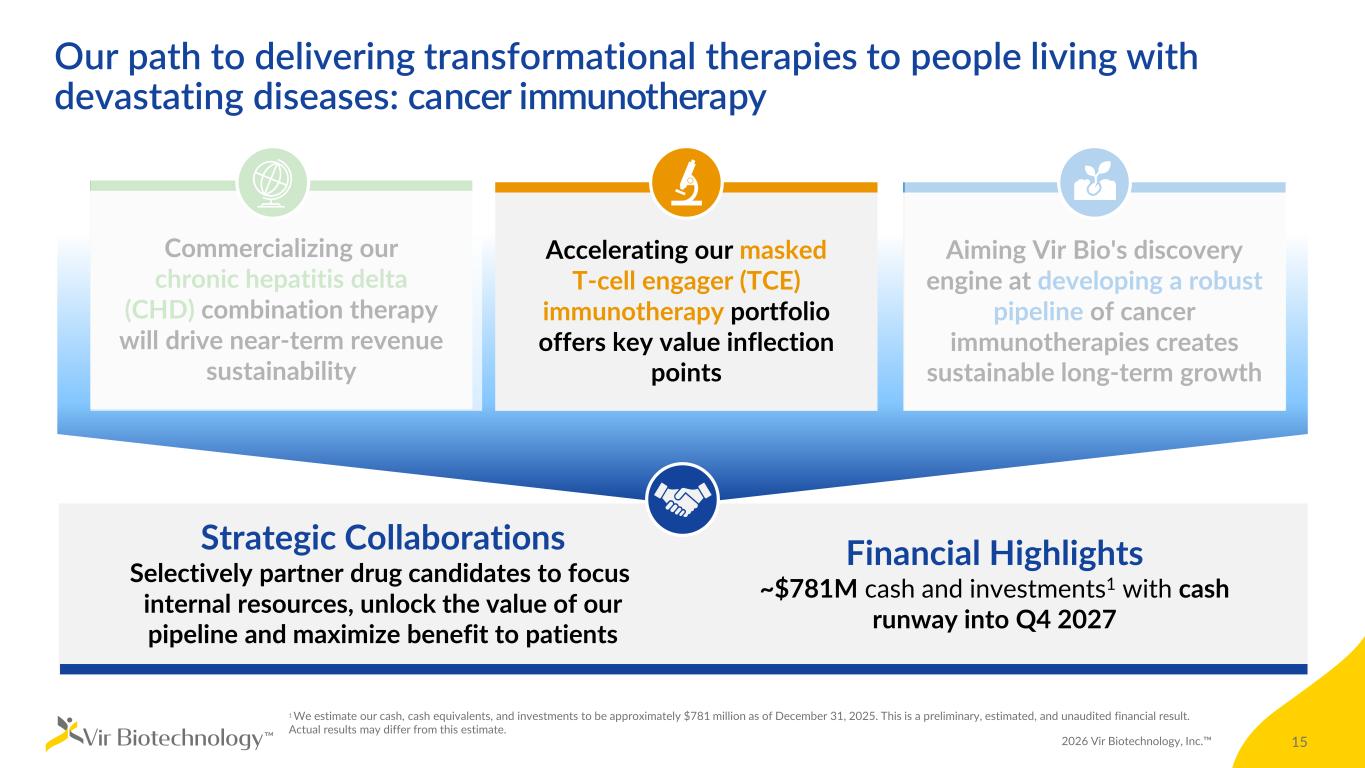
Our path to delivering transformational therapies to people living with devastating diseases: cancer immunotherapy Commercializing our chronic hepatitis delta (CHD) combination therapy will drive near-term revenue sustainability Accelerating our masked T-cell engager (TCE) immunotherapy portfolio offers key value inflection points Aiming Vir Bio's discovery engine at developing a robust pipeline of cancer immunotherapies creates sustainable long-term growth 2026 Vir Biotechnology, Inc. 15 Financial Highlights ~$781M cash and investments1 with cash runway into Q4 2027 Strategic Collaborations Selectively partner drug candidates to focus internal resources, unlock the value of our pipeline and maximize benefit to patients 1 We estimate our cash, cash equivalents, and investments to be approximately $781 million as of December 31, 2025. This is a preliminary, estimated, and unaudited financial result. Actual results may differ from this estimate.


T-cell engagers (TCEs) are a powerful modality in cancer therapy Our masked TCEs act like Trojan Horses, powered by the PRO-XTEN® platform 16 Clinically validated, used on a blockbuster drug for hemophilia A2 2026 Vir Biotechnology, Inc. TCE Designed to reduce toxicity, enabling higher dosing and wider therapeutic window The PRO-XTEN® masking platform Our masked TCEs act like Trojan Horses, designed to maximize therapeutic index Universal, plug-and-play platform enables acceleration of next generation of drug candidates Longer drug half-life supports optimization of dosing schedules • 10 TCE breakthrough immunotherapies already on the market1 • Application in solid tumors limited due to toxicity and off- tumor activation • Masking ensures TCEs are only activated in the tumor microenvironment TCEs hold tremendous potential, limited by toxicity 1 Glaser, A., Kochanowski, K., Oh, D., Porritt, R. A., & Kim, H. (2024). T cell engagers emerge as a compelling therapeutic strategy for solid tumors. Journal of Experimental Medicine 2ALTUVIIIO® [Antihemophilic Factor (Recombinant), Fc-VWF-XTEN Fusion Protein-ehtl] is marketed for hemophilia A and is a registered trademark of Sanofi Q3W: once every three weeks Masks cleaved off by the proteases in the tumor microenvironment


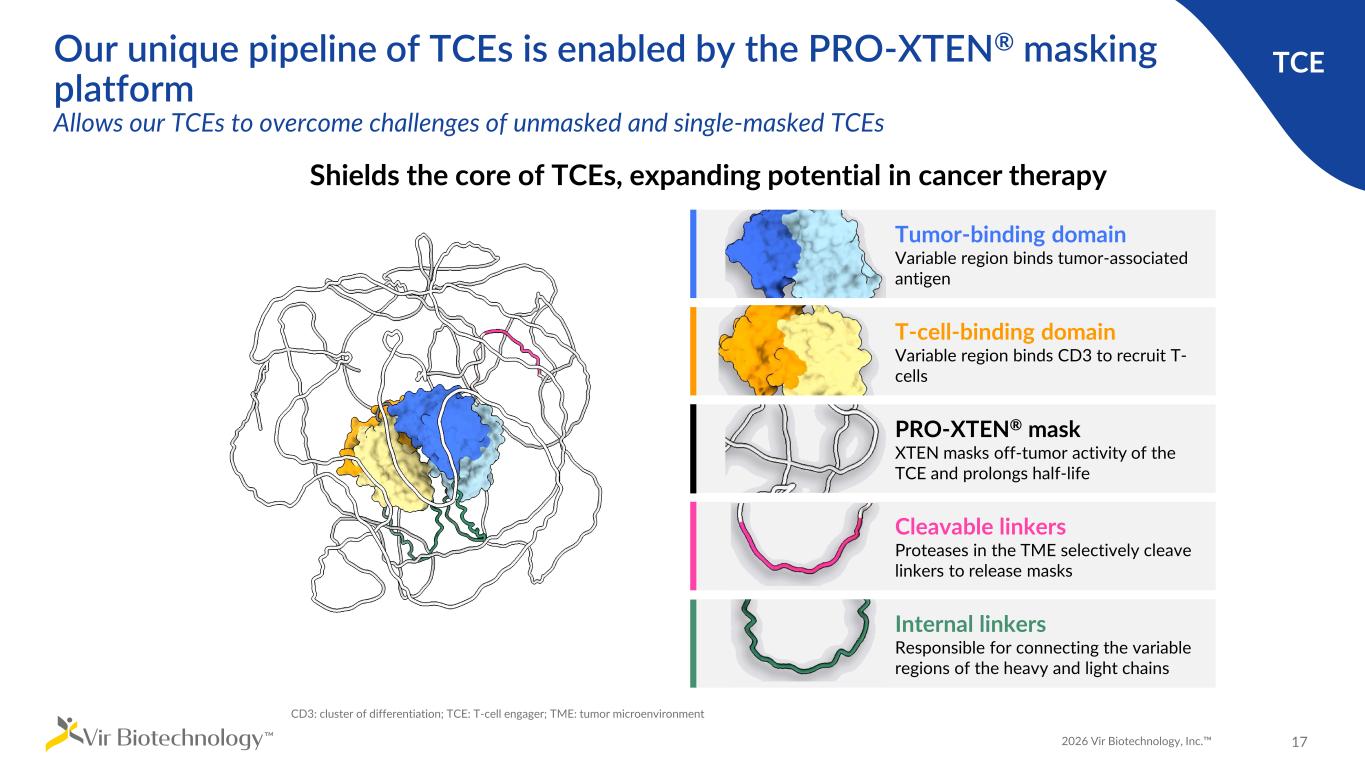
Our unique pipeline of TCEs is enabled by the PRO-XTEN® masking platform Allows our TCEs to overcome challenges of unmasked and single-masked TCEs 172026 Vir Biotechnology, Inc. TCE Tumor-binding domain Variable region binds tumor-associated antigen T-cell-binding domain Variable region binds CD3 to recruit T- cells PRO-XTEN® mask XTEN masks off-tumor activity of the TCE and prolongs half-life Cleavable linkers Proteases in the TME selectively cleave linkers to release masks Internal linkers Responsible for connecting the variable regions of the heavy and light chains Shields the core of TCEs, expanding potential in cancer therapy CD3: cluster of differentiation; TCE: T-cell engager; TME: tumor microenvironment


Our clinical pipeline of masked TCEs reflects the promise of the PRO-XTEN® platform • The only dual-masked PSMA-targeted TCE • Phase 1 study (n=18) oEfficacy: 100% PSA decline, 58% PSA50 responses at early doses2 oSafety: no Gr3 CRS, and very low levels of ≥Gr3 TRAEs • Next steps: continue Q3W monotherapy dose escalation in mCRPC and in first-line taxane-naïve mCRPC in combo with enzalutamide (an ARPI) • The only masked HER2-targeted TCE • Phase 1 study (n=79) oEfficacy: 33% response and 100% biomarker response in mCRC, up to 50% tumor shrinkage across all HER2 tumors evaluated at early doses4 oSafety: no Gr3 CRS, and very low levels of ≥Gr3 TRAEs • Next steps: continue dose escalation in combo with pembrolizumab; evaluating next steps for dose expansion • Potential to unlock multiple high-value indications • Phase 1 initiated in Q3 2025 • Target indications: NSCLC, CRC, HNSCC, and cSCC • Next steps: continue dose escalation of monotherapy and in combo with pembrolizumab VIR-5500 (PSMAxCD3)1 VIR-5818 (HER2xCD3)3 VIR-5525 (EGFRxCD3)5 2026 Vir Biotechnology, Inc. 18 TCE 1 VIR-5500 ClinicalTrials.gov Identifier: NCT05997615; Data cutoff: November 13, 2024 2 Doses ≥ 120 µg/kg (n=12) 3 VIR-5818 ClinicalTrials.gov Identifier: NCT05356741; Data cutoff: November 11, 2024 4 Doses ≥ 400 µg/kg (n=20; HER2+ mCRC n=6) 5 VIR-5525 ClinicalTrials.gov Identifier: NCT06960395 Note: detailed clinical data shared during Jan. 8, 2025, investor event ARPI: androgen receptor pathway inhibitors; CD3: cluster of differentiation 3; CRC: colorectal cancer; CRS: cytokine release syndrome; cSCC: cutaneous squamous cell carcinoma; EGFR: epidermal growth factor receptor; Gr3: Grade 3; HER2: human epidermal growth factor receptor 2; HNSCC: head and neck squamous cell carcinoma; mCRC: metastatic colorectal cancer; mCRPC: metastatic castrate-resistant prostate cancer; NSCLC: non-small cell lung cancer; PSMA: prostate-specific membrane antigen; PSA: prostate specific antigen; Q3W: once every 3 weeks; TCE: T-cell engager; TRAEs: treatment related adverse events


VIR-5500 PSMA-targeted masked TCE has shown strong early dose response and promising safety profile in late-line mCRPC 192026 Vir Biotechnology, Inc. Strong PSA50 responses and favorable safety profile at early dose cohorts1 in Phase 1 • 100% (12/12) response across all 12 patients • 58% (7/12) PSA50, 8% PSA90 for 1st dose ≥120 µg/kg (n=12) • Promising early signs of efficacy and tolerable safety profile with no association with Gr ≥3 CRS, no IL-6 elevations, no prophylactic corticosteroids Individual case subject 200/300/400 µg/kgPatient case study1: whole-body MRI and PSMA-PET show tumor cell death • Patient reported significant improvement of pain symptoms • Significant >90% PSA decline • The right humerus shows significant increase in tumor cell necrosis/lysis, and decrease in PSMA-positive tumor cells 1 VIR-5500 ClinicalTrials.gov Identifier: NCT05997615; Data cutoff: November 13, 2024 2 Confirmed by a second evaluation at least three weeks later CRS: cytokine release syndrome; mCRPC: metastatic castrate-resistant prostate cancer; PSA: prostate-specific antigen; PSMA: prostate-specific membrane antigen; QW: once weekly; TCE: T-cell engager PSMA


VIR-5500 data to be presented at ASCO Genitourinary Cancers Symposium (ASCO-GU) in February 202026 Vir Biotechnology, Inc. Safety • Weekly and Q3W dosing in late-line monotherapy dose escalation • Detailed safety data, including CRS rates and treatment-related adverse events Next steps • Plans for expansion cohorts in late-line mCRPC • Dose selection for expansion cohorts Clinical efficacy • Dose response relationship • RECIST evaluations showing tumor response assessments in evaluable patients • PSA responses observed, including overall PSA, PSA50, and PSA90 • Longitudinal view of PSA response durability TCE CRS: cytokine release syndrome; mCRPC: metastatic castrate-resistant prostate cancer; PSA: prostate-specific antigen; Q3W: once every 3 weeks; RECIST: Response Evaluation Criteria in Solid Tumors


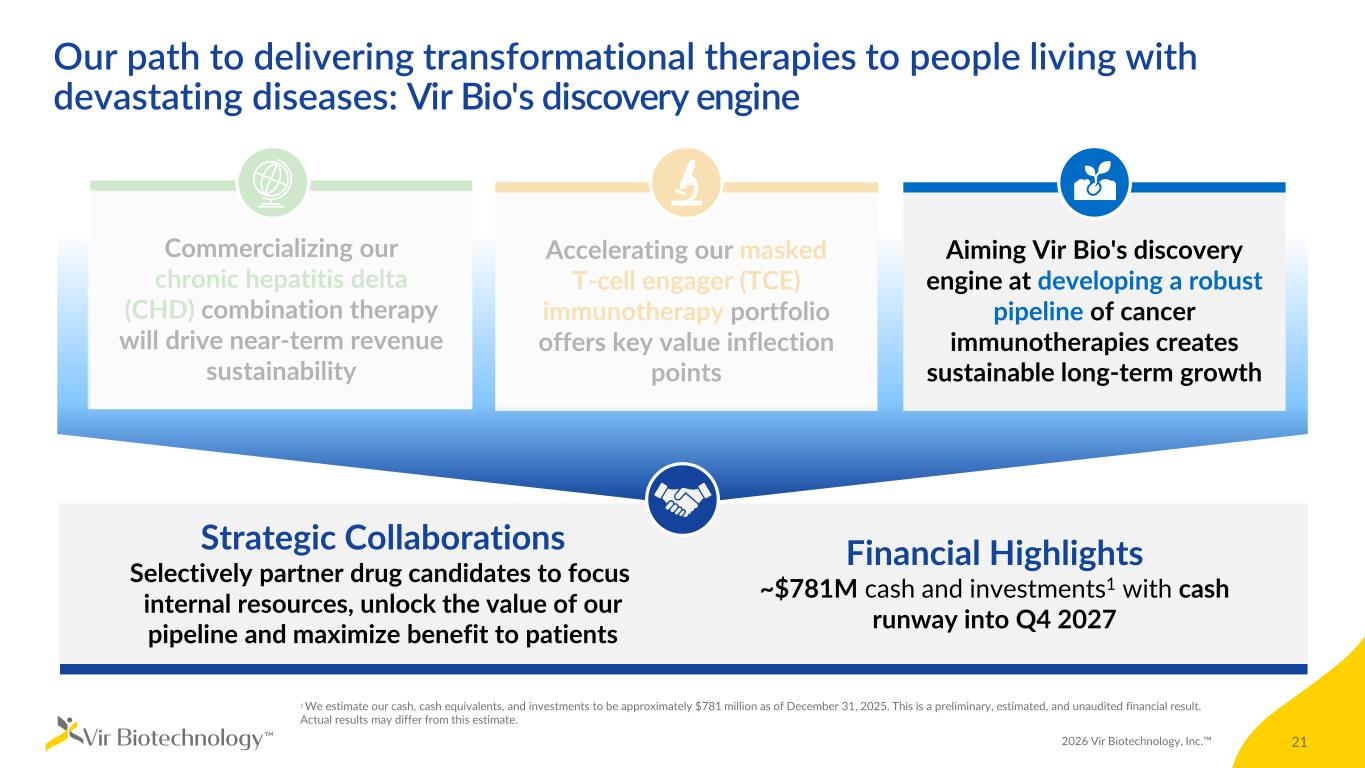
Our path to delivering transformational therapies to people living with devastating diseases: Vir Bio's discovery engine Commercializing our chronic hepatitis delta (CHD) combination therapy will drive near-term revenue sustainability Accelerating our masked T-cell engager (TCE) immunotherapy portfolio offers key value inflection points Aiming Vir Bio's discovery engine at developing a robust pipeline of cancer immunotherapies creates sustainable long-term growth 2026 Vir Biotechnology, Inc. 21 Financial Highlights ~$781M cash and investments1 with cash runway into Q4 2027 Strategic Collaborations Selectively partner drug candidates to focus internal resources, unlock the value of our pipeline and maximize benefit to patients 1 We estimate our cash, cash equivalents, and investments to be approximately $781 million as of December 31, 2025. This is a preliminary, estimated, and unaudited financial result. Actual results may differ from this estimate.


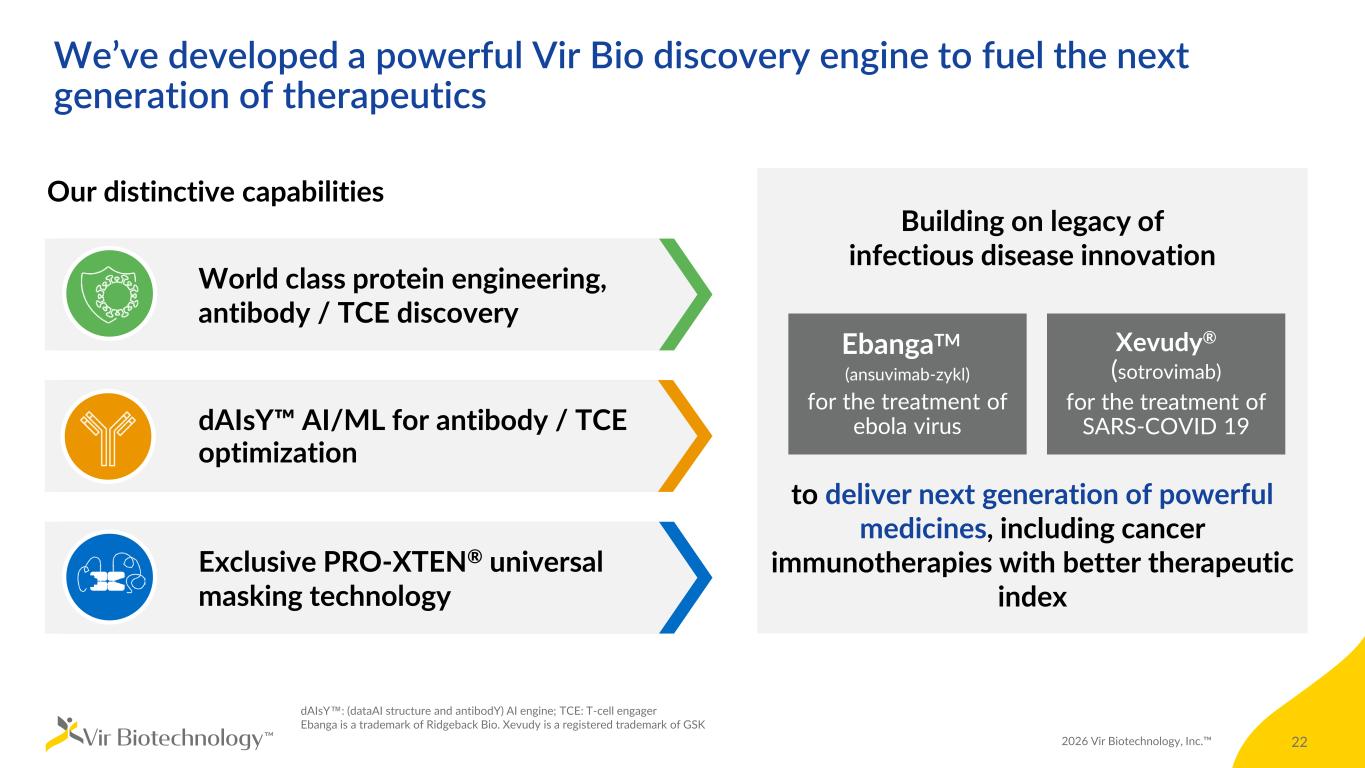
World class protein engineering, antibody discovery dAIsY AI/ML for antibody optimization Exclusive PRO-XTEN® universal masking technology We’ve developed a powerful Vir Bio discovery engine to fuel the next generation of therapeutics World clas protein engine ring, antibody / TCE discovery dAIsY AI/ML for antibody / TCE optimization Exclusive PRO-XTEN® universal masking technology Building on legacy of infectious disease innovation to deliver next generation of powerful medicines, including cancer immunotherapies with better therapeutic index EbangaTM (ansuvimab-zykl) for the treatment of ebola virus Xevudy® (sotrovimab) for the treatment of SARS-COVID 19 2026 Vir Biotechnology, Inc. 22 Our distinctive capabilities dAIsY : (dataAI structure and antibodY) AI engine; TCE: T-cell engager Ebanga is a trademark of Ridgeback Bio. Xevudy is a registered trademark of GSK


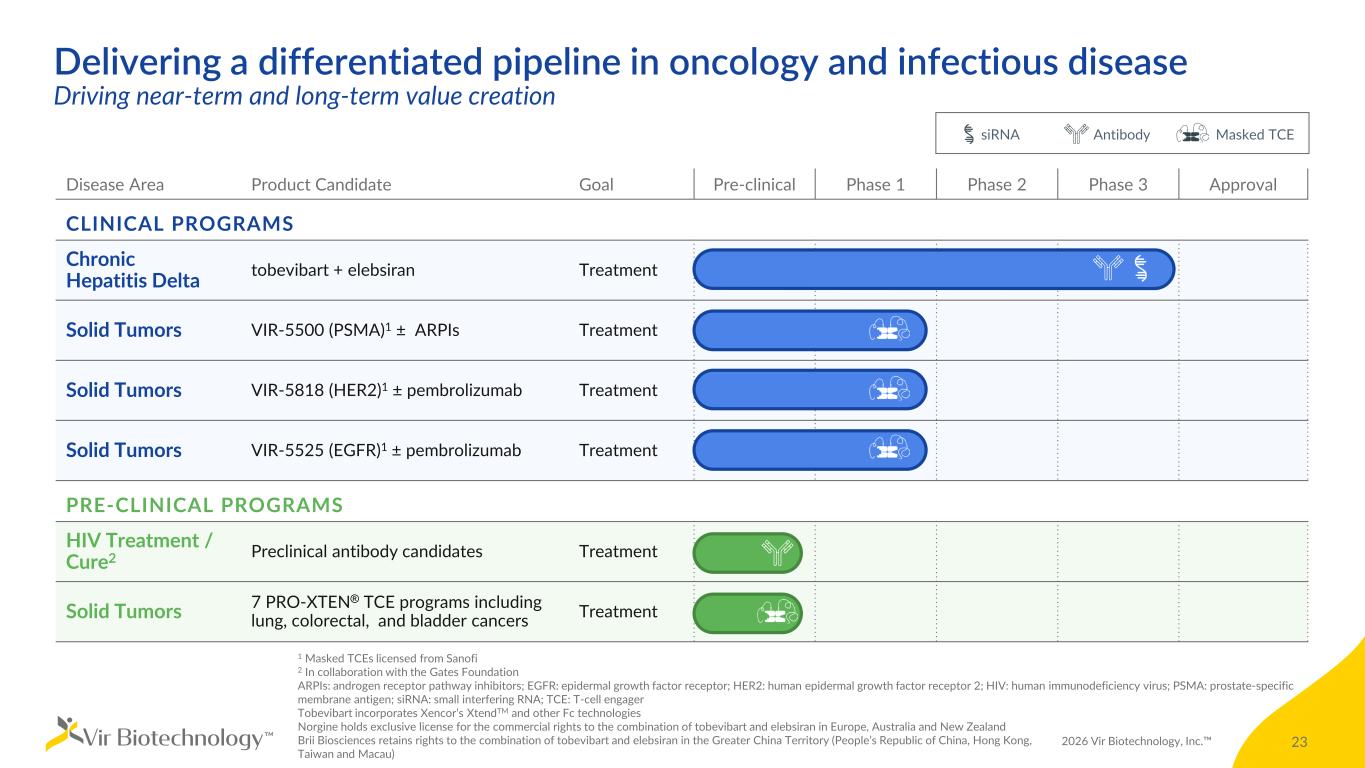
Delivering a differentiated pipeline in oncology and infectious disease Driving near-term and long-term value creation 232026 Vir Biotechnology, Inc. 1 Masked TCEs licensed from Sanofi 2 In collaboration with the Gates Foundation ARPIs: androgen receptor pathway inhibitors; EGFR: epidermal growth factor receptor; HER2: human epidermal growth factor receptor 2; HIV: human immunodeficiency virus; PSMA: prostate-specific membrane antigen; siRNA: small interfering RNA; TCE: T-cell engager Tobevibart incorporates Xencor’s XtendTM and other Fc technologies Norgine holds exclusive license for the commercial rights to the combination of tobevibart and elebsiran in Europe, Australia and New Zealand Brii Biosciences retains rights to the combination of tobevibart and elebsiran in the Greater China Territory (People’s Republic of China, Hong Kong, Taiwan and Macau) Disease Area Product Candidate Goal Pre-clinical Phase 1 Phase 2 Phase 3 Approval CLINICAL PROGRAMS Chronic Hepatitis Delta tobevibart + elebsiran Treatment Solid Tumors VIR-5500 (PSMA)1 ± ARPIs Treatment Solid Tumors VIR-5818 (HER2)1 ± pembrolizumab Treatment Solid Tumors VIR-5525 (EGFR)1 ± pembrolizumab Treatment PRE-CLINICAL PROGRAMS HIV Treatment / Cure2 Preclinical antibody candidates Treatment Solid Tumors 7 PRO-XTEN® TCE programs including lung, colorectal, and bladder cancers Treatment AntibodysiRNA Masked TCE


Upcoming clinical milestones PROGRAM DRUG CANDIDATES REGIMEN CATALYST TIMING Hepatitis Delta tobevibart (mAb) + elebsiran (siRNA) SOLSTICE: 72 & (partial) 96-week data ECLIPSE 1: topline data ECLIPSE 2: topline data ECLIPSE 3: topline data Jan’26 4Q’26 1Q’27 1Q’27 PSMA-Expressing Prostate Cancer VIR-5500 dual-masked PSMAxCD3 TCE Phase 1 dose escalation response data Feb’26 ASCO GU HER2-Expressing Solid Tumors VIR-5818 dual-masked HER2xCD3 TCE Phase 1 dose escalation response data 2H'26 EGFR-Expressing Solid Tumors VIR-5525 dual-masked EGFRxCD3 TCE Phase 1 initial dose escalation clinical data TBA CD3: cluster of differentiation 3; EGFR, epidermal growth factor receptor; HER2: human epidermal growth factor receptor 2; PSMA: prostate-specific membrane antigen; siRNA: small interfering RNA; TBA, to be announced; TCE: T-cell engager; mAb, monoclonal antibody 2026 Vir Biotechnology, Inc. 24


Our strategic approach creates short and long-term value drivers chronic hepatitis delta ECLIPSE 1 topline data in 4Q26 ECLIPSE 2 & 3 topline data in 1Q27 universal masked TCEs VIR-5500 PSMA data update at ASCO GU in 1Q26 VIR-5818 HER2 data update in 2H26 discovery engine Discovery engine driving future innovation 7 preclinical PRO-XTEN® TCE targets identified Strategic Collaborations Selectively partner drug candidates to focus internal resources, unlock the value of our pipeline and maximize benefit to patients Financial Highlights ~$781M cash and investments1 with cash runway into Q4 2027 2026 Vir Biotechnology, Inc. 25 1 We estimate our cash, cash equivalents, and investments to be approximately $781 million as of December 31, 2025. This is a preliminary, estimated, and unaudited financial result. Actual results may differ from this estimate.


PATIENTS ARE WAITING 2026 Vir Biotechnology, Inc. 2026 Vir Biotechnology, Inc. 26