UNITED STATES
SECURITIES AND EXCHANGE COMMISSION
Washington, D.C. 20549
FORM
CURRENT REPORT
Pursuant to Section 13 or 15(d) of the
Securities Exchange Act of 1934
Date of Report (Date of earliest event reported):
(Exact name of registrant as specified in its charter)
(State or other jurisdiction of incorporation) |
(Commission File Number) |
(IRS Employer Identification Number) |
(Address of principal executive offices, including Zip Code)
(
(Registrant’s telephone number, including area code)
Check the appropriate box below if the Form 8-K filing is intended to simultaneously satisfy the filing obligation of the registrant under any of the following provisions:
| Written communications pursuant to Rule 425 under the Securities Act (17 CFR 230.425) |
| Soliciting material pursuant to Rule 14a-12 under the Exchange Act (17 CFR 240.14a-12) |
| Pre-commencement communications pursuant to Rule 14d-2(b) under the Exchange Act (17 CFR 240.14d-2(b)) |
| Pre-commencement communications pursuant to Rule 13e-4(c) under the Exchange Act (17 CFR 240.13e-4(c)) |
Securities registered pursuant to Section 12(b) of the Act:
| Title of each class | Trading Symbol(s) |
Name of each exchange on which registered | ||
Indicate by check mark whether the registrant is an emerging growth company as defined in Rule 405 of the Securities Act of 1933 (§230.405 of this chapter) or Rule 12b-2 of the Securities Exchange Act of 1934 (§240.12b-2 of this chapter).
Emerging growth company
If an emerging growth company, indicate by check mark if the registrant has elected not to use the extended transition period for complying with any new or revised financial accounting standards provided pursuant to Section 13(a) of the Exchange Act. ¨
Item 2.02 Results of Operations and Financial Condition.
The information set forth below in the second paragraph of Item 8.01 of this Current Report on Form 8-K is incorporated by reference herein.
Item 8.01 Other Events.
On July 30, 2025, VYNE Therapeutics Inc. (the “Company”) issued a press release entitled “VYNE Therapeutics Announces Topline Results from Phase 2b Trial with Repibresib Gel in Nonsegmental Vitiligo.” In addition, on July 30, 2025, the Company posted a presentation that includes the data from this Phase 2b trial on its website.
While the Company has not finalized its full financial results for the quarter ended June 30, 2025, the Company expects to report that it had cash, cash equivalents and investments of approximately $39.6 million (unaudited) as of June 30, 2025. This estimate is preliminary and is subject to change pending the actual results of, and completion of, the Company’s condensed consolidated financial statements for the quarter ended June 30, 2025. Additional information and disclosures would be required for a more complete understanding of the Company’s financial position and results of operations as of June 30, 2025. The Company’s independent registered public accounting firm has not reviewed or performed any procedures with respect to this preliminary information and, accordingly, does not express an opinion or any other form of assurance about them.
A copy of the Company’s press release and presentation are attached hereto as Exhibit 99.1 and Exhibit 99.2, respectively, and, other than the quotes by Mr. Domzalski contained in Exhibit 99.1, are incorporated by reference herein.
Item 9.01. Financial Statements and Exhibits.
(d) Exhibits
The following exhibits are being filed herewith.
| Exhibit No. | Description | |
| 99.1 | Press Release, dated July 30, 2025. | |
| 99.2 | Presentation, dated July 30, 2025. | |
| 104 | Cover Page Interactive Data File (embedded within the Inline XBRL document) |
1
SIGNATURES
Pursuant to the requirements of the Securities Exchange Act of 1934, as amended, the registrant has duly caused this report to be signed on its behalf by the undersigned hereunto duly authorized.
| VYNE THERAPEUTICS INC. | ||
| Date: July 30, 2025 | By: | /s/ Mutya Harsch |
| Mutya Harsch | ||
| Chief Legal Officer and General Counsel | ||
2
Exhibit 99.1
VYNE Therapeutics Announces Topline Results from Phase 2b Trial with Repibresib Gel in Nonsegmental Vitiligo
Trial Did Not Meet Primary Endpoint or Key Secondary Endpoint of F-VASI50 and F-VASI75
Nominally Statistically Significant Effects Observed in Key Secondary and Exploratory Endpoints of Change from Baseline in F-VASI and T-VASI at 3% Concentration
Company Will Terminate Extension Phase of Trial and Seek External Partner for Continued Development of Repibresib
BRIDGEWATER, N.J., July 30, 2025 -- VYNE Therapeutics Inc. (Nasdaq: VYNE) (“VYNE” or the “Company”), a clinical-stage biopharmaceutical company focused on developing differentiated therapies to treat chronic inflammatory and immune-mediated conditions with high unmet need, today announced topline results from its Phase 2b trial evaluating Repibresib gel in nonsegmental vitiligo.
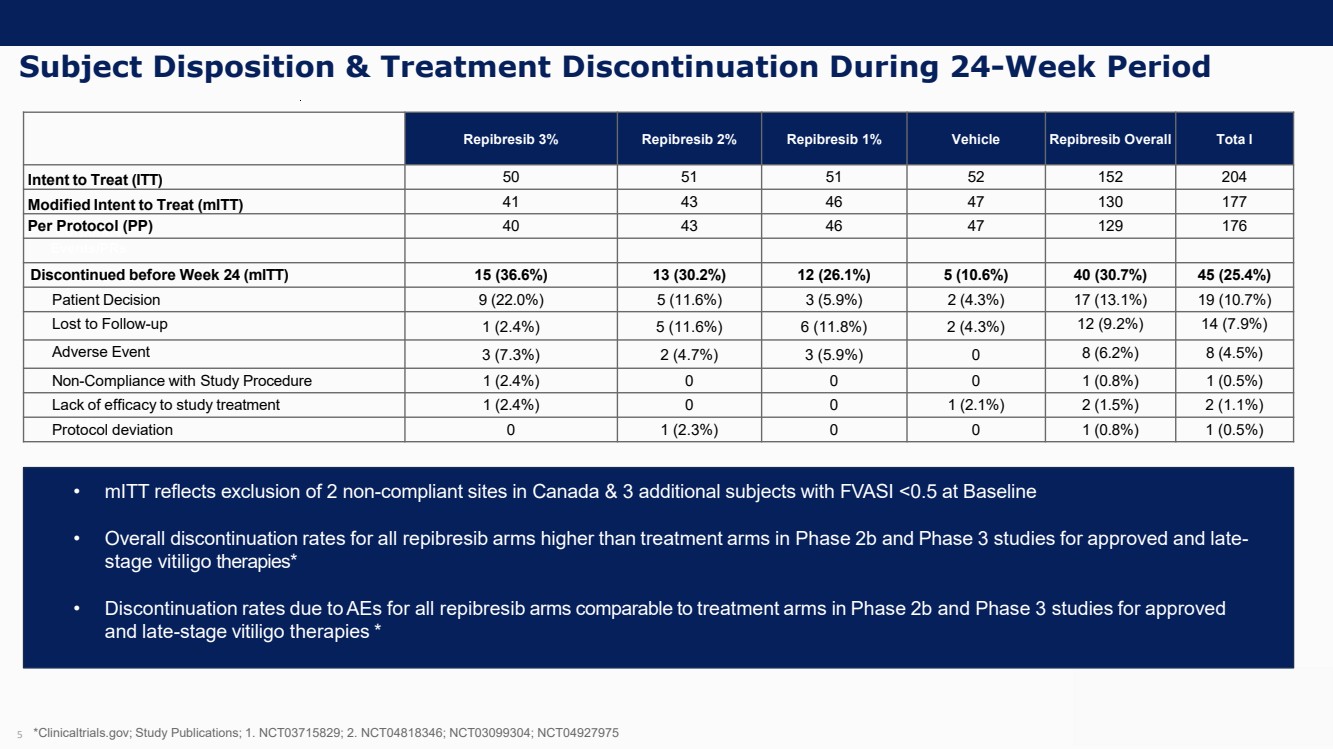
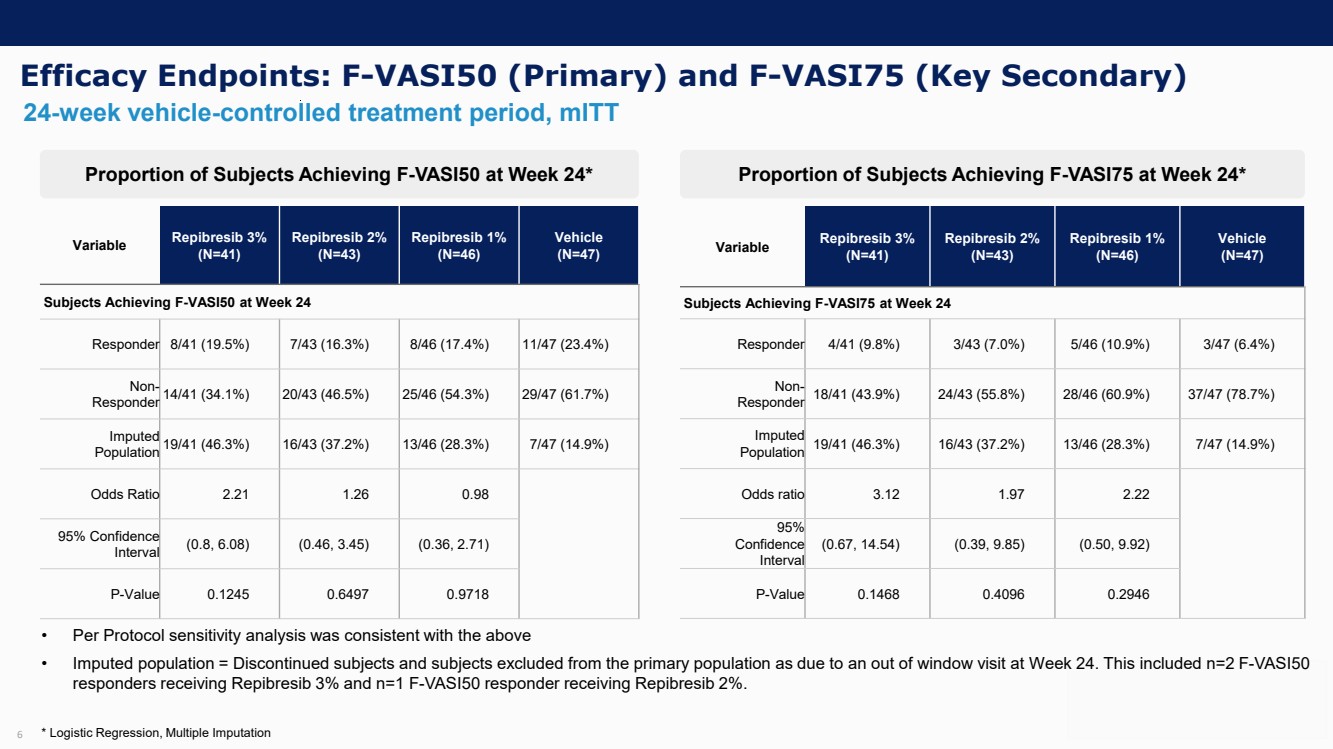
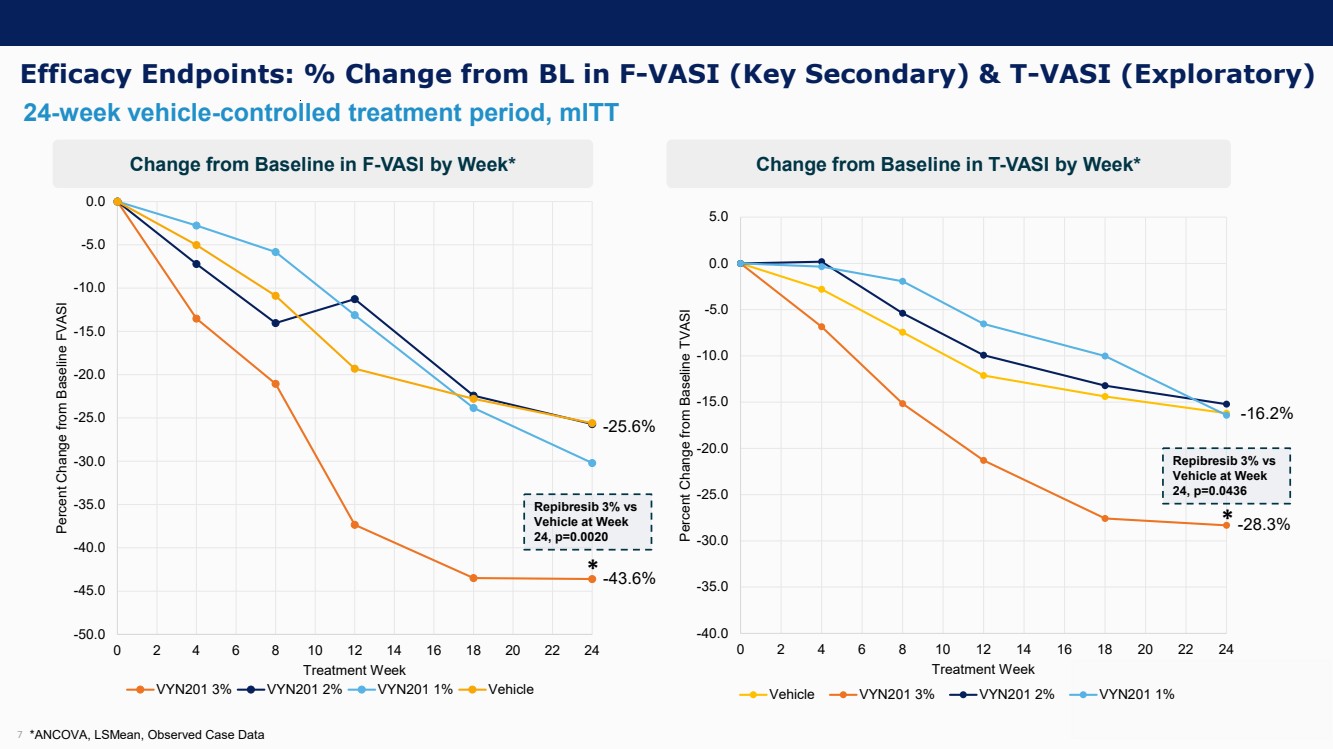
The trial, which evaluated 177 subjects, did not meet its primary endpoint of the proportion of subjects achieving an improvement in Facial Vitiligo Area Scoring Index of at least 50% from baseline (F-VASI50) at week 24 compared to vehicle. The trial also missed a key secondary endpoint of F-VASI75. However, the trial showed a nominally statistically significant treatment effect for the highest dose cohort in a key secondary endpoint, percent change-from-baseline (CFB) in F-VASI score at week 24 compared to vehicle (Repibresib 3%: -43.6% v. Vehicle: -25.6%), and an exploratory endpoint of percent CFB in T-VASI score at week 24 compared to vehicle (Repibresib 3%: -28.3% v. Vehicle: -16.2%). In evaluating the results of the trial, the Company believes the results were impacted by an unusually high vehicle effect and further impacted by a higher-than-expected dropout rate in the active arms of the trial relative to vehicle (Repibresib 3%: 36.6%; Repibresib 2%: 30.2%; Repibresib 1%: 26.1% and vehicle: 10.6%). Based on these data, the company will discontinue treatment in the ongoing extension phase of the trial and will terminate the trial.
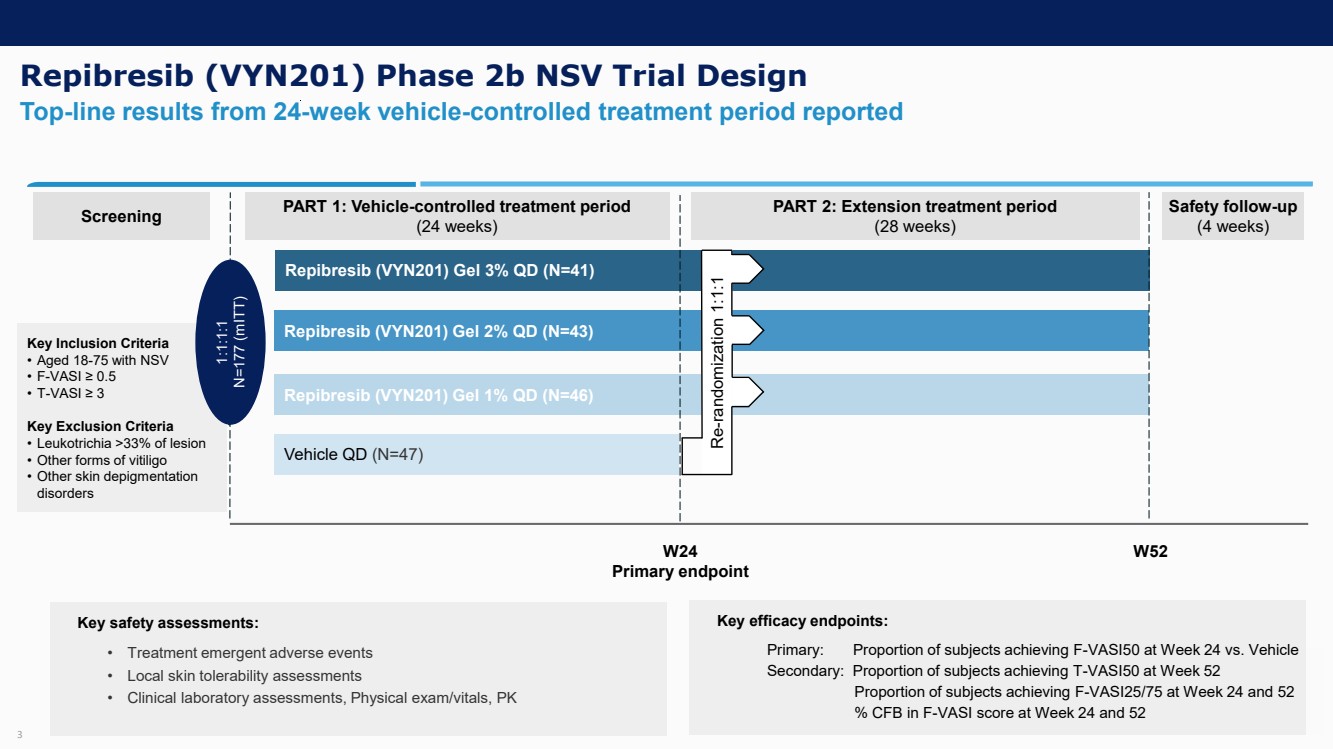
The Phase 2b trial was a randomized double-blind, vehicle-controlled, multi-center trial that evaluated the safety and efficacy of Repibresib dosed once daily (QD) at 1%, 2% and 3% concentrations, versus vehicle in 177 subjects (mITT population) with nonsegmental vitiligo. The trial was conducted at 45 sites in North America and assessed various efficacy endpoints, including the primary endpoint of the proportion of subjects achieving F-VASI50 at Week 24 versus vehicle, as well as key secondary endpoints, which included the proportion of subjects achieving F-VASI75 at Week 24, percent CFB in F-VASI score at week 24 and exploratory endpoints including percent CFB in T-VASI score at week 24.
“We are disappointed with the results of our Phase 2b trial, which were impacted by an unexpectedly high treatment effect in the vehicle arm and a high discontinuation rate in the active arms,” said David Domzalski, President and Chief Executive Officer of VYNE. “Although we missed our F-VASI50 and F-VASI75 endpoints, we did see a meaningful reduction in the percent change from baseline in both F-VASI and T-VASI for our highest dose and are conducting a thorough evaluation of the full dataset to analyze any other data that may inform the results and our strategic next steps. Vitiligo remains an area of significant unmet need and we are grateful to the patients, investigators, and clinical staff who participated in the trial. Despite this outcome, we remain confident in the potential of our InhiBETTM BET inhibitor platform as a promising and innovative mechanistic approach for the treatment of a broad range of serious immune-mediated diseases. We intend to seek a development and commercialization partner for Repibresib and we will provide an update on our plans, including those for our oral BET inhibitor VYN202, in the coming weeks.”
While the Company has not finalized its full financial results for the quarter ended June 30, 2025, the Company expects to report that it had cash, cash equivalents and investments of approximately $39.6 million (unaudited) as of June 30, 2025.
1
Primary endpoint: proportion of subjects achieving F-VASI50 at Week 24 versus vehicle in modified intent to treat population (mITT)
| Endpoint at Week 24 | Repibresib 3% | Repibresib 2% | Repibresib 1% | Vehicle |
| (N=41) | (N=43) | (N=46) | (N=47) | |
| Proportion of Subjects Achieving F-VASI50 | 19.5% | 16.3% | 17.4% | 23.4% |
| P-Value | 0.1245 | 0.6497 | 0.9718 |
Key Secondary and Exploratory Endpoints
Proportion of subjects achieving F-VASI75 at Week 24 (mITT)
| Endpoint at Week 24 | Repibresib 3% | Repibresib 2% | Repibresib 1% | Vehicle |
| (N=41) | (N=43) | (N=46) | (N=47) | |
| Proportion of Subjects Achieving F-VASI75 | 9.8% | 7.0% | 10.9% | 6.4% |
| P-Value | 0.1468 | 0.4096 | 0.2946 |
Percent Change from Baseline (% CFB) in F-VASI at Week 24 (mITT)
| Endpoint at Week 24 | Repibresib 3% | Repibresib 2% | Repibresib 1% | Vehicle |
| (N=41) | (N=43) | (N=46) | (N=47) | |
| Mean Percent Change from Baseline in F-VASI, % (SD) | -43.6 (5.7) | -25.7 (5.7) | -30.2 (5.2) | -25.6 (4.9) |
| P-Value | 0.0020 | 0.9892 | 0.4002 |
Percent Change from Baseline (% CFB) in T-VASI at Week 24 (mITT)
| Endpoint at Week 24 | Repibresib 3% | Repibresib 2% | Repibresib 1% | Vehicle |
| (N=41) | (N=43) | (N=46) | (N=47) | |
| Mean Percent Change from Baseline in T-VASI, % (SD) | -28.3 (6.1) | -15.2 (6.1) | -16.4 (5.2) | -16.2 (4.9) |
| P-Value | 0.0436 | 0.8757 | 0.9670 |
Safety and Tolerability
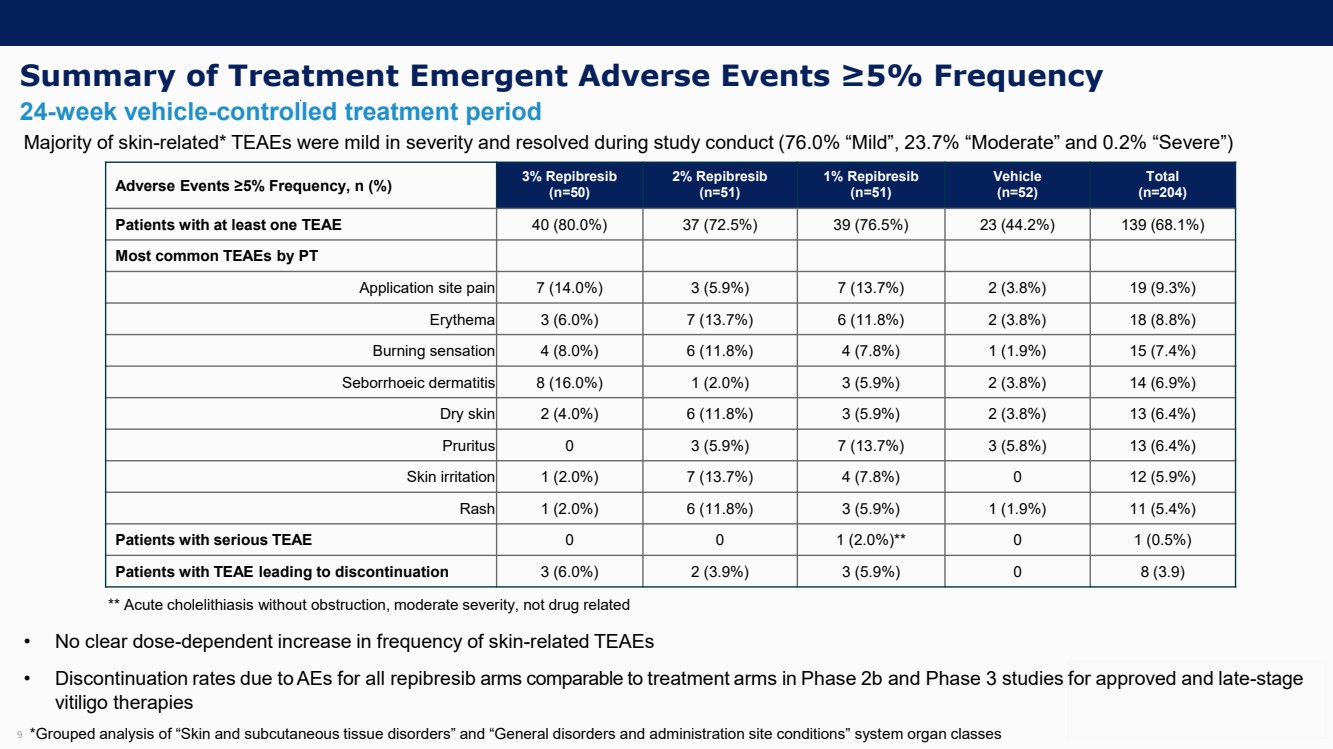
There was a higher rate of treatment emergent adverse events (TEAE) for subjects receiving Repibresib gel compared to vehicle. The most common TEAEs (>5%) were cutaneous in nature. The most frequent adverse event was application site pain (Repibresib 3%: 14.0%; Repibresib 2%: 5.9%; Repibresib 1%: 13.7%; Vehicle: 3.8%). There were 8 subjects receiving Repibresib gel that discontinued due to an AE compared to none in the vehicle. The majority of skin-related TEAEs were mild in severity and resolved during study conduct (76.0% “Mild”, 23.7% “Moderate” and 0.2% “Severe”) and there was no clear dose-dependent increase in frequency of skin-related TEAEs. There was one treatment emergent serious adverse event, cholelithiasis without obstruction, not drug related in the Repibresib 1% cohort, and there was no increased risk of thrombocytopenia or GI-related serious adverse events.
About Repibresib
Repibresib is a pan-bromodomain BET inhibitor designed to be locally administered as a “soft” drug to address diseases involving multiple, diverse inflammatory cell signaling pathways, while providing low systemic exposure. Repibresib has produced consistent reductions in pro-inflammatory and disease-related biomarkers and improvements in disease severity in several preclinical models (using several different routes of administration).
About VYN202
VYN202 is an innovative, oral small molecule BET inhibitor that has potential class-leading selectivity and potency for BD2 vs. BD1. By maximizing BD2 selectivity, VYNE believes VYN202 has the potential to be a differentiated, more conveniently administered, non-biologic treatment option for both acute control and chronic management of immuno-inflammatory indications, in which the damaging effects of unrestricted inflammatory signaling activity are common.
2
About VYNE Therapeutics Inc.
VYNE is a clinical-stage biopharmaceutical company focused on developing differentiated therapies to treat chronic inflammatory and immune-mediated conditions with high unmet need. VYNE’s unique and proprietary BET inhibitors, which comprise its InhiBET™ platform, are designed to overcome limitations of early generation BET inhibitors by leveraging alternative routes of administration and enhanced selectivity.
For more information about VYNE Therapeutics Inc. or its product candidates, visit www.vynetherapeutics.com. VYNE may use its website to comply with its disclosure obligations under Regulation FD. Therefore, investors should monitor VYNE’s website in addition to following its press releases, filings with the U.S. Securities and Exchange Commission, public conference calls, and webcasts.
Investor Relations:
John Fraunces
LifeSci Advisors, LLC
917-355-2395
Tyler Zeronda
VYNE Therapeutics Inc.
908-458-9106
Cautionary Statement Regarding Forward-Looking Statements
This release includes forward-looking statements within the meaning of the Private Securities Litigation Reform Act of 1995, including, but not limited to, statements regarding the clinical development of VYNE’s product candidates and other statements regarding the future expectations, plans and prospects of VYNE. All statements in this press release which are not historical facts are forward-looking statements, including the Company’s intention to seek a development and commercialization partner for repibresib, timing of an update on the Company’s plans for repibresib and the expectations around its cash position as of June 30, 2025. The Company’s cash estimate is preliminary and is subject to change pending the actual results of, and completion of, the Company’s condensed consolidated financial statements for the quarter ended June 30, 2025. Additional information and disclosures would be required for a more complete understanding of the Company’s financial position and results of operations as of June 30, 2025. The Company’s independent registered public accounting firm has not reviewed or performed any procedures with respect to this preliminary information and, accordingly, does not express an opinion or any other form of assurance about them. Any forward-looking statements in this release are based on VYNE’s current knowledge and its present beliefs and expectations regarding possible future events and are subject to risks, uncertainties and assumptions that could cause actual results to differ materially and adversely from those set forth or implied by such forward-looking statements. These risks and uncertainties include, but are not limited to: VYNE’s ability to successfully develop its product candidates; the timing of commencement of future preclinical studies and clinical trials; VYNE’s ability to complete and receive favorable results from clinical trials of its product candidates; VYNE’s ability to find a partner for repibresib; VYNE’s ability to obtain additional funding, either through equity or debt financing transactions or collaboration arrangements; and VYNE’s ability to comply with various regulations applicable to its business. For a discussion of other risks and uncertainties, and other important factors, any of which could cause VYNE’s actual results to differ from those contained in the forward-looking statements, see the section titled “Risk Factors” in VYNE’s Annual Report on Form 10-K for the year ended December 31, 2024 and Quarterly Report on Form 10-Q for the quarter ended March 31, 2025, and VYNE’s other filings from time to time with the U.S. Securities and Exchange Commission. Although VYNE believes these forward-looking statements are reasonable, they speak only as of the date of this announcement and VYNE undertakes no obligation to update publicly such forward-looking statements to reflect subsequent events or circumstances, except as otherwise required by law. Given these risks and uncertainties, you should not rely upon forward-looking statements as predictions of future events.
Third-party products and company names mentioned herein may be the trademarks of their respective owners
3
Exhibit 99.2
| Repibresib (VYN201) Phase 2b Topline Results Repibresib in Subjects with Non-segmental Vitiligo July 2025 |
| Forward Looking Statements and Important Notes This presentation includes forward-looking statements within the meaning of the Private Securities Litigation Reform Act of 1995, including, but not limited to, statements regarding the clinical development of VYNE’s product candidates and other statements regarding the future expectations, plans and prospects of VYNE. All statements in this press release which are not historical facts are forward-looking statements, including the Company’s intention to seek a development and commercialization partner for repibresib, timing of an update on the Company’s plans for repibresib and anticipated timing for announcing data from Part 2 of the Phase 2b trial. Any forward-looking statements are based on VYNE’s current knowledge and its present beliefs and expectations regarding possible future events and are subject to risks, uncertainties and assumptions that could cause actual results to differ materially and adversely from those set forth or implied by such forward-looking statements. These risks and uncertainties include, but are not limited to: VYNE’s ability to successfully develop its product candidates; the timing of commencement of future preclinical studies and clinical trials; VYNE’s ability to complete and receive favorable results from clinical trials of its product candidates; VYNE’s ability to find a partner for repibresib; VYNE’s ability to obtain additional funding, either through equity or debt financing transactions or collaboration arrangements; and VYNE’s ability to comply with various regulations applicable to its business. For a discussion of other risks and uncertainties, and other important factors, any of which could cause VYNE’s actual results to differ from those contained in the forward-looking statements, see the section titled “Risk Factors” in VYNE’s Annual Report on Form 10-K for the year ended December 31, 2024 and Quarterly Report on Form 10-Q for the quarter ended March 31, 2025, and VYNE’s other filings from time to time with the U.S. Securities and Exchange Commission. Although VYNE believes these forward-looking statements are reasonable, they speak only as of the date of this announcement and VYNE undertakes no obligation to update publicly such forward-looking statements to reflect subsequent events or circumstances, except as otherwise required by law. Given these risks and uncertainties, you should not rely upon forward-looking statements as predictions of future events. Certain information contained in this presentation relates to or is based on studies, publications, surveys and other data obtained from third-party sources and VYNE’s own internal estimates and research. While VYNE believes these third-party sources to be reliable as of the date of this presentation, VYNE has not independently verified, and makes no representation as to the adequacy, fairness, accuracy or completeness of, any information obtained from third-party sources. In addition, all of the market data included in this presentation involves a number of assumptions and limitations, and there can be no guarantee as to the accuracy or reliability of such assumptions. Finally, while VYNE believes its own internal research is reliable, such research has not been verified by any independent source. You are cautioned not to give undue weight to any such information, projections and estimates. The trademarks included herein are the property of the owners thereof and are used for reference purposes only. This presentation concerns product candidates that are under clinical investigation. None of such product candidates have been approved for marketing by the FDA or the EMA, and such product candidates are currently limited to investigational use, and no representation is made as to their safety or effectiveness for the purposes for which they are being investigated. 2 |
| Repibresib (VYN201) Phase 2b NSV Trial Design PART 1: Vehicle-controlled treatment period (24 weeks) Safety follow-up (4 weeks) Repibresib (VYN201) Gel 3% QD (N=41) W24 Primary endpoint W52 PART 2: Extension treatment period (28 weeks) Repibresib (VYN201) Gel 2% QD (N=43) Repibresib (VYN201) Gel 1% QD (N=46) Vehicle QD (N=47) Re-randomization 1:1:1 Top-line results from 24-week vehicle-controlled treatment period reported Key safety assessments: • Treatment emergent adverse events • Local skin tolerability assessments • Clinical laboratory assessments, Physical exam/vitals, PK Key efficacy endpoints: Primary: Proportion of subjects achieving F-VASI50 at Week 24 vs. Vehicle Secondary: Proportion of subjects achieving T-VASI50 at Week 52 Proportion of subjects achieving F-VASI25/75 at Week 24 and 52 % CFB in F-VASI score at Week 24 and 52 Key Inclusion Criteria • Aged 18-75 with NSV • F-VASI ≥ 0.5 • T-VASI ≥ 3 Key Exclusion Criteria • Leukotrichia >33% of lesion • Other forms of vitiligo • Other skin depigmentation disorders 3 Screening 1:1:1:1 N=177 (mITT) |
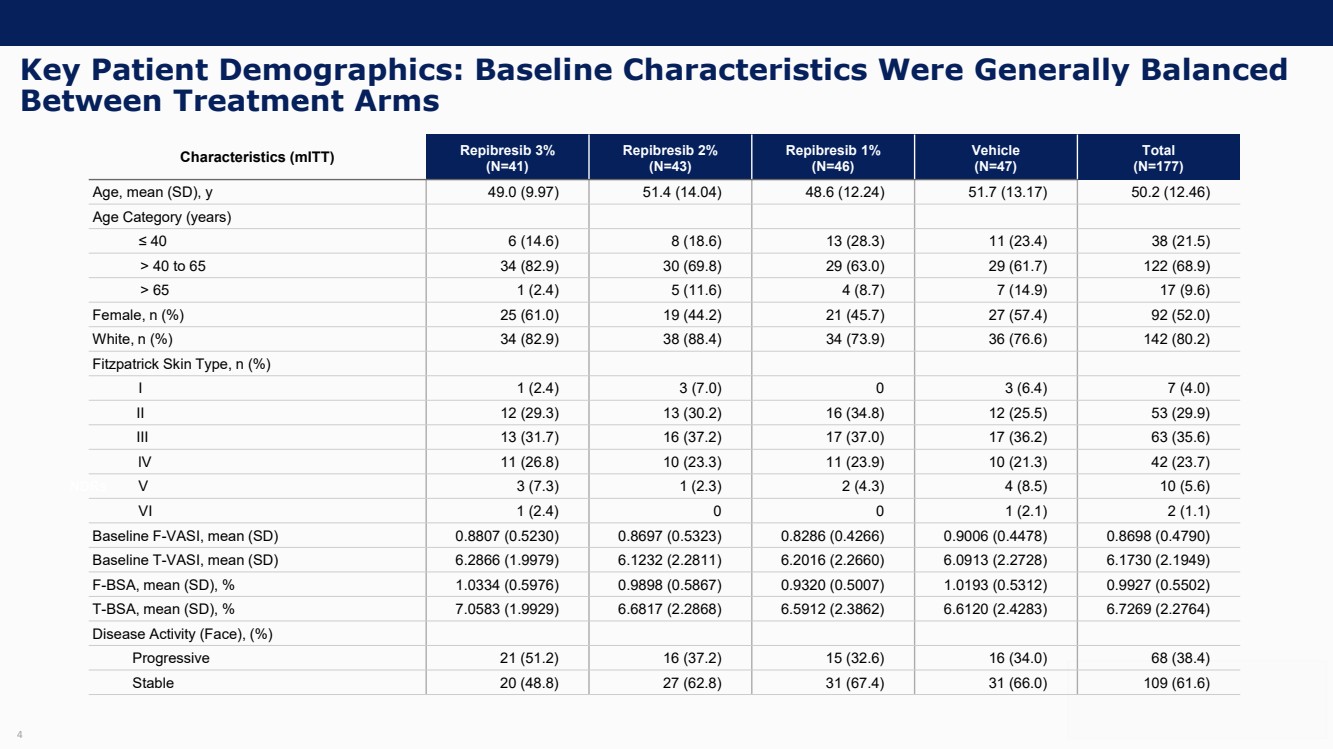
| 4 NDRs Characteristics (mITT) Repibresib 3% (N=41) Repibresib 2% (N=43) Repibresib 1% (N=46) Vehicle (N=47) Total (N=177) Age, mean (SD), y 49.0 (9.97) 51.4 (14.04) 48.6 (12.24) 51.7 (13.17) 50.2 (12.46) Age Category (years) ≤ 40 6 (14.6) 8 (18.6) 13 (28.3) 11 (23.4) 38 (21.5) > 40 to 65 34 (82.9) 30 (69.8) 29 (63.0) 29 (61.7) 122 (68.9) > 65 1 (2.4) 5 (11.6) 4 (8.7) 7 (14.9) 17 (9.6) Female, n (%) 25 (61.0) 19 (44.2) 21 (45.7) 27 (57.4) 92 (52.0) White, n (%) 34 (82.9) 38 (88.4) 34 (73.9) 36 (76.6) 142 (80.2) Fitzpatrick Skin Type, n (%) I 1 (2.4) 3 (7.0) 0 3 (6.4) 7 (4.0) II 12 (29.3) 13 (30.2) 16 (34.8) 12 (25.5) 53 (29.9) III 13 (31.7) 16 (37.2) 17 (37.0) 17 (36.2) 63 (35.6) lV 11 (26.8) 10 (23.3) 11 (23.9) 10 (21.3) 42 (23.7) V 3 (7.3) 1 (2.3) 2 (4.3) 4 (8.5) 10 (5.6) VI 1 (2.4) 0 0 1 (2.1) 2 (1.1) Baseline F-VASI, mean (SD) 0.8807 (0.5230) 0.8697 (0.5323) 0.8286 (0.4266) 0.9006 (0.4478) 0.8698 (0.4790) Baseline T-VASI, mean (SD) 6.2866 (1.9979) 6.1232 (2.2811) 6.2016 (2.2660) 6.0913 (2.2728) 6.1730 (2.1949) F-BSA, mean (SD), % 1.0334 (0.5976) 0.9898 (0.5867) 0.9320 (0.5007) 1.0193 (0.5312) 0.9927 (0.5502) T-BSA, mean (SD), % 7.0583 (1.9929) 6.6817 (2.2868) 6.5912 (2.3862) 6.6120 (2.4283) 6.7269 (2.2764) Disease Activity (Face), (%) Progressive 21 (51.2) 16 (37.2) 15 (32.6) 16 (34.0) 68 (38.4) Stable 20 (48.8) 27 (62.8) 31 (67.4) 31 (66.0) 109 (61.6) Key Patient Demographics: Baseline Characteristics Were Generally Balanced Between Treatment Arms |
| 5 Corporate Events/PRs NDRs Repibresib 3% Repibresib 2% Repibresib 1% Vehicle Repibresib Overall Tota l Intent to Treat (ITT) 50 51 51 52 152 204 Modified Intent to Treat (mITT) 41 43 46 47 130 177 Per Protocol (PP) 40 43 46 47 129 176 Discontinued before Week 24 (mITT) 15 (36.6%) 13 (30.2%) 12 (26.1%) 5 (10.6%) 40 (30.7%) 45 (25.4%) Patient Decision 9 (22.0%) 5 (11.6%) 3 (5.9%) 2 (4.3%) 17 (13.1%) 19 (10.7%) Lost to Follow-up 1 (2.4%) 5 (11.6%) 6 (11.8%) 2 (4.3%) 12 (9.2%) 14 (7.9%) Adverse Event 3 (7.3%) 2 (4.7%) 3 (5.9%) 0 8 (6.2%) 8 (4.5%) Non-Compliance with Study Procedure 1 (2.4%) 0 0 0 1 (0.8%) 1 (0.5%) Lack of efficacy to study treatment 1 (2.4%) 0 0 1 (2.1%) 2 (1.5%) 2 (1.1%) Protocol deviation 0 1 (2.3%) 0 0 1 (0.8%) 1 (0.5%) Subject Disposition & Treatment Discontinuation During 24-Week Period • mITT reflects exclusion of 2 non-compliant sites in Canada & 3 additional subjects with FVASI <0.5 at Baseline • Overall discontinuation rates for all repibresib arms higher than treatment arms in Phase 2b and Phase 3 studies for approved and late-stage vitiligo therapies* • Discontinuation rates due toAEs for all repibresib arms comparable to treatment arms in Phase 2b and Phase 3 studies for approved and late-stage vitiligo therapies * *Clinicaltrials.gov; Study Publications; 1. NCT03715829; 2. NCT04818346; NCT03099304; NCT04927975 |
| Proportion of Subjects Achieving F-VASI50 at Week 24* 6 Efficacy Endpoints: F-VASI50 (Primary) and F-VASI75 (Key Secondary) Variable Repibresib 3% (N=41) Repibresib 2% (N=43) Repibresib 1% (N=46) Vehicle (N=47) Subjects Achieving F-VASI50 at Week 24 Responder 8/41 (19.5%) 7/43 (16.3%) 8/46 (17.4%) 11/47 (23.4%) Non-Responder 14/41 (34.1%) 20/43 (46.5%) 25/46 (54.3%) 29/47 (61.7%) Imputed Population 19/41 (46.3%) 16/43 (37.2%) 13/46 (28.3%) 7/47 (14.9%) Odds Ratio 2.21 1.26 0.98 95% Confidence Interval (0.8, 6.08) (0.46, 3.45) (0.36, 2.71) P-Value 0.1245 0.6497 0.9718 • Per Protocol sensitivity analysis was consistent with the above 24-week vehicle-controlled treatment period, mITT Proportion of Subjects Achieving F-VASI75 at Week 24* Variable Repibresib 3% (N=41) Repibresib 2% (N=43) Repibresib 1% (N=46) Vehicle (N=47) Subjects Achieving F-VASI75 at Week 24 Responder 4/41 (9.8%) 3/43 (7.0%) 5/46 (10.9%) 3/47 (6.4%) Non-Responder 18/41 (43.9%) 24/43 (55.8%) 28/46 (60.9%) 37/47 (78.7%) Imputed Population 19/41 (46.3%) 16/43 (37.2%) 13/46 (28.3%) 7/47 (14.9%) Odds ratio 3.12 1.97 2.22 95% Confidence Interval (0.67, 14.54) (0.39, 9.85) (0.50, 9.92) P-Value 0.1468 0.4096 0.2946 • Imputed population = Discontinued subjects and subjects excluded from the primary population as due to an out of window visit at Week 24. This included n=2 F-VASI50 responders receiving Repibresib 3% and n=1 F-VASI50 responder receiving Repibresib 2%. * Logistic Regression, Multiple Imputation |
| -50.0 -45.0 -40.0 -35.0 -30.0 -25.0 -20.0 -15.0 -10.0 -5.0 0.0 0 2 4 6 8 10 12 14 16 18 20 22 24 Percent Change from Baseline FVASI Treatment Week VYN201 3% VYN201 2% VYN201 1% Vehicle 7 Efficacy Endpoints: % Change from BL in F-VASI (Key Secondary) & T-VASI (Exploratory) Change from Baseline in F-VASI by Week* 24-week vehicle-controlled treatment period, mITT * -43.6% -25.6% Change from Baseline in T-VASI by Week* -40.0 -35.0 -30.0 -25.0 -20.0 -15.0 -10.0 -5.0 0.0 5.0 0 2 4 6 8 10 12 14 16 18 20 22 24 Percent Change from Baseline TVASI Treatment Week Vehicle VYN201 3% VYN201 2% VYN201 1% * -28.3% -16.2% *ANCOVA, LSMean, Observed Case Data Repibresib 3% vs Vehicle at Week 24, p=0.0020 Repibresib 3% vs Vehicle at Week 24, p=0.0436 |
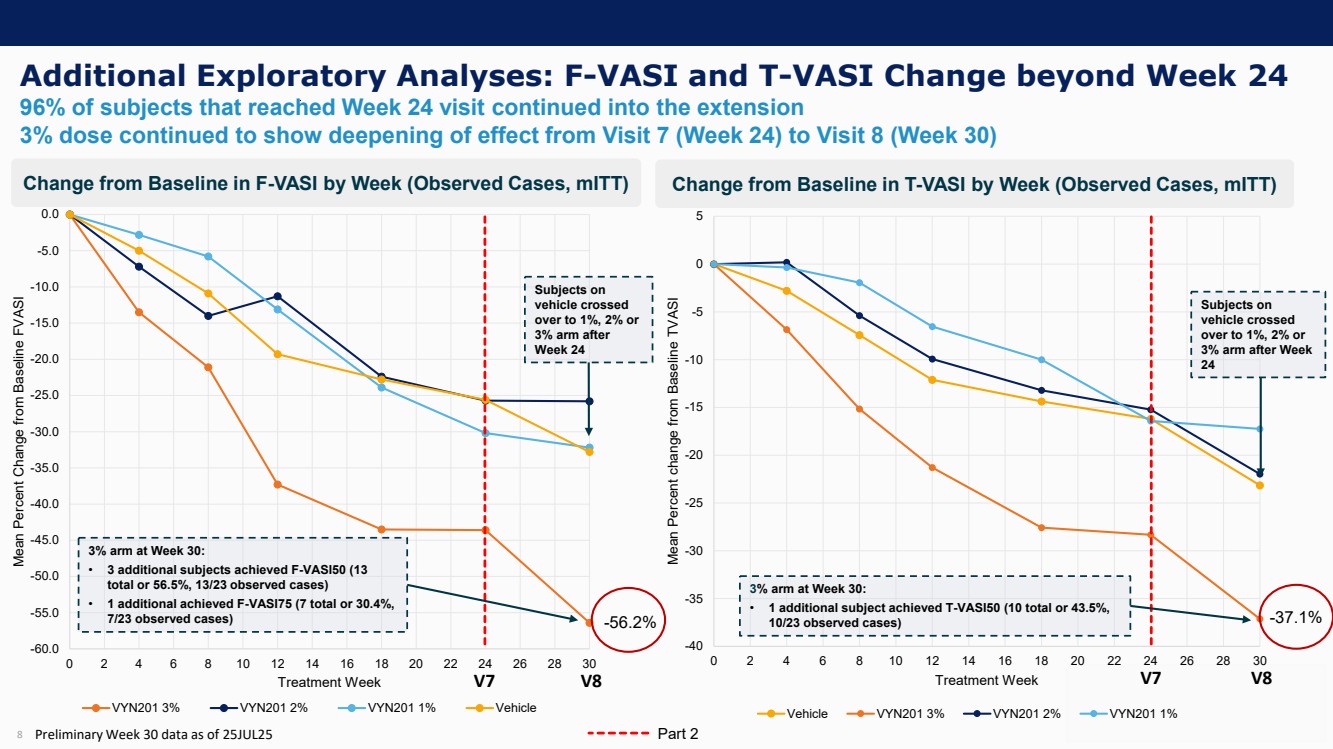
| -60.0 -55.0 -50.0 -45.0 -40.0 -35.0 -30.0 -25.0 -20.0 -15.0 -10.0 -5.0 0.0 0 2 4 6 8 10 12 14 16 18 20 22 24 26 28 30 Mean Percent Change from Baseline FVASI Treatment Week VYN201 3% VYN201 2% VYN201 1% Vehicle 8 Additional Exploratory Analyses: F-VASI and T-VASI Change beyond Week 24 Change from Baseline in F-VASI by Week (Observed Cases, mITT) Change from Baseline in T-VASI by Week (Observed Cases, mITT) Part 2 -56.2% -40 -35 -30 -25 -20 -15 -10 -5 0 5 0 2 4 6 8 10 12 14 16 18 20 22 24 26 28 30 Mean Percent change from Baseline TVASI Treatment Week Vehicle VYN201 3% VYN201 2% VYN201 1% -37.1% 3% arm at Week 30: • 3 additional subjects achieved F-VASI50 (13 total or 56.5%, 13/23 observed cases) • 1 additional achieved F-VASI75 (7 total or 30.4%, 7/23 observed cases) 3% arm at Week 30: • 1 additional subject achieved T-VASI50 (10 total or 43.5%, 10/23 observed cases) 96% of subjects that reached Week 24 visit continued into the extension 3% dose continued to show deepening of effect from Visit 7 (Week 24) to Visit 8 (Week 30) Subjects on vehicle crossed over to 1%, 2% or 3% arm after Week 24 Subjects on vehicle crossed over to 1%, 2% or 3% arm after Week 24 Preliminary Week 30 data as of 25JUL25 V7 V8 V7 V8 |
![]() | 9 Summary of Treatment Emergent Adverse Events ≥5% Frequency Adverse Events ≥5% Frequency, n (%) 3% Repibresib (n=50) 2% Repibresib (n=51) 1% Repibresib (n=51) Vehicle (n=52) Total (n=204) Patients with at least one TEAE 40 (80.0%) 37 (72.5%) 39 (76.5%) 23 (44.2%) 139 (68.1%) Most common TEAEs by PT Application site pain 7 (14.0%) 3 (5.9%) 7 (13.7%) 2 (3.8%) 19 (9.3%) Erythema 3 (6.0%) 7 (13.7%) 6 (11.8%) 2 (3.8%) 18 (8.8%) Burning sensation 4 (8.0%) 6 (11.8%) 4 (7.8%) 1 (1.9%) 15 (7.4%) Seborrhoeic dermatitis 8 (16.0%) 1 (2.0%) 3 (5.9%) 2 (3.8%) 14 (6.9%) Dry skin 2 (4.0%) 6 (11.8%) 3 (5.9%) 2 (3.8%) 13 (6.4%) Pruritus 0 3 (5.9%) 7 (13.7%) 3 (5.8%) 13 (6.4%) Skin irritation 1 (2.0%) 7 (13.7%) 4 (7.8%) 0 12 (5.9%) Rash 1 (2.0%) 6 (11.8%) 3 (5.9%) 1 (1.9%) 11 (5.4%) Patients with serious TEAE 0 0 1 (2.0%)** 0 1 (0.5%) Patients with TEAE leading to discontinuation 3 (6.0%) 2 (3.9%) 3 (5.9%) 0 8 (3.9) 24-week vehicle-controlled treatment period ** Acute cholelithiasis without obstruction, moderate severity, not drug related Majority of skin-related* TEAEs were mild in severity and resolved during study conduct (76.0% “Mild”, 23.7% “Moderate” and 0.2% “Severe”) *Grouped analysis of “Skin and subcutaneous tissue disorders” and “General disorders and administration site conditions” system organ classes • No clear dose-dependent increase in frequency of skin-related TEAEs • Discontinuation rates due toAEs for all repibresib arms comparable to treatment arms in Phase 2b and Phase 3 studies for approved and late-stage vitiligo therapies |