UNITED STATES
SECURITIES AND EXCHANGE COMMISSION
Washington, D.C. 20549
Form
CURRENT REPORT
Pursuant to Section 13 or 15(d)
of the Securities Exchange Act of 1934
Date of Report (Date of earliest event reported):
(Exact name of registrant as specified in its charter)
| (State or other jurisdiction of incorporation) |
(Commission File Number) |
(IRS Employer Identification No.) |
| (Address of principal executive offices) | (Zip Code) |
Registrant’s telephone number, including area code: +
Check the appropriate box below if the Form 8-K filing is intended to simultaneously satisfy the filing obligation of the registrant under any of the following provisions (see General Instruction A.2. below):
| Written communications pursuant to Rule 425 under the Securities Act (17 CFR 230.425) |
| Soliciting material pursuant to Rule 14a-12 under the Exchange Act (17 CFR 240.14a-12) |
| Pre-commencement communications pursuant to Rule 14d-2(b) under the Exchange Act (17 CFR 240.14d-2(b)) |
| Pre-commencement communications pursuant to Rule 13e-4(c) under the Exchange Act (17 CFR 240.13e-4(c)) |
Indicate by check mark whether the registrant is an emerging growth company as defined in Rule 405 of the Securities Act of 1933 (§230.405 of this chapter) or Rule 12b-2 of the Securities Exchange Act of 1934 (§240.12b-2 of this chapter).
Emerging growth company
If an emerging growth company, indicate by check mark if the registrant has elected not to use the extended transition period for complying with any new or revised financial accounting standards provided pursuant to Section 13(a) of the Exchange Act. ☐
Securities registered pursuant to Section 12(b) of the Act:
| Title of each class |
Trading symbol |
Name of each exchange | ||
| Item 2.02 | Results of Operations and Financial Condition. |
On May 8, 2025, Wave Life Sciences Ltd. (the “Company”) announced its financial results for the quarter ended March 31, 2025. The full text of the press release issued in connection with the announcement is furnished as Exhibit 99.1 to this Current Report on Form 8-K and is incorporated by reference herein.
| Item 7.01 | Regulation FD Disclosure. |
From time to time, the Company presents and/or distributes slides and presentations to the investment community to provide updates and summaries of its business. On May 8, 2025, the Company updated its corporate presentation, which is available on the “Investors” section of the Company’s website at http://ir.wavelifesciences.com/. This presentation is also furnished as Exhibit 99.2 to this Current Report on Form 8-K
The information in these Items 2.02 and 7.01 are being furnished and shall not be deemed “filed” for purposes of Section 18 of the Securities Exchange Act of 1934, as amended (the “Exchange Act”), or otherwise subject to the liabilities of that Section, nor shall they be deemed incorporated by reference into any registration statement or other filing under the Securities Act of 1933, as amended, or the Exchange Act, except as shall be expressly set forth by specific reference in such filing.
| Item 9.01 | Financial Statements and Exhibits. |
(d) Exhibits
The following exhibits relating to Items 2.02 and 7.01 are furnished and not filed:
| Exhibit No. |
Description | |
| 99.1 | Press Release issued by Wave Life Sciences Ltd. dated May 8, 2025 | |
| 99.2 | Corporate Presentation of Wave Life Sciences Ltd. dated May 8, 2025 | |
| 104 | Cover Page Interactive Data File (embedded within the Inline XBRL document) | |
SIGNATURES
Pursuant to the requirements of the Securities Exchange Act of 1934, the registrant has duly caused this report to be signed on its behalf by the undersigned hereunto duly authorized.
| WAVE LIFE SCIENCES LTD. | ||
| By: | /s/ Kyle Moran | |
| Kyle Moran | ||
| Chief Financial Officer | ||
Date: May 8, 2025
Exhibit 99.1
Wave Life Sciences Reports First Quarter 2025 Financial Results and Provides Business Update
Dosing complete in the first two cohorts of INLIGHT trial in obesity of WVE-007 (INHBE siRNA), designed to induce healthy weight loss by reducing fat without impacting muscle; clinical data on track for 2H 2025
Dosing underway in second single dose cohort (400 mg) and multidosing (200 mg) ongoing in RestorAATion-2 clinical trial of WVE-006 in individuals with PiZZ AATD; data from the complete 200 mg multidose and single dose cohorts expected in 3Q 2025; data from complete 400 mg single dose cohort expected in the fall of 2025
Delivered positive data from FORWARD-53 clinical trial of WVE-N531 in exon 53 amenable DMD including statistically significant and clinically meaningful improvement in TTR, substantial improvements in muscle health; NDA submission for accelerated approval with monthly dosing planned for 2026
IND submission expected 2H 2025 for potentially registrational WVE-003 Phase 2/3 study in HD with caudate atrophy as a primary endpoint
Cash and cash equivalents of $243.1 million as of March 31, 2025, with runway expected into 2027
Investor conference call and webcast at 8:30 a.m. ET today
CAMBRIDGE, Mass., May 8, 2025 – Wave Life Sciences Ltd. (Nasdaq: WVE), a clinical-stage biotechnology company focused on unlocking the broad potential of RNA medicines to transform human health, today announced financial results for the first quarter ended March 31, 2025, and provided a business update.
“We’ve continued our consistent execution across modalities as we completed dosing in the first two cohorts of our INLIGHT trial in obesity, advanced our RestorAATion-2 trial in AATD, and delivered positive data from our FORWARD-53 clinical trial in DMD. We are on track to deliver multiple clinical datasets this year that will further demonstrate our broad capabilities across modalities and our leadership in RNA medicines,” said Paul Bolno, MD, MBA, President and Chief Executive Officer at Wave Life Sciences. “Our RestorAATion-2 trial of WVE-006, a subcutaneously-dosed GalNAc-conjugated RNA editing oligonucleotide, continues to advance and we are on track to deliver data from multiple dose cohorts this year, which will inform the therapeutic potential of WVE-006 and our pipeline of wholly-owned GalNAc-RNA editing programs. In obesity, we are evaluating WVE-007, our INHBE GalNAc-siRNA in our ongoing INLIGHT clinical trial, and are on track to deliver the first clinical data in the second half of this year. This program has potential to transform the obesity treatment paradigm with healthy weight loss, preservation of muscle mass, and infrequent dosing of once or twice a year.”
Dr. Bolno continued, “In DMD, we delivered the first-ever substantial improvements in muscle health with an exon skipping therapy and showed statistically significant and clinically meaningful functional data from our FORWARD-53 trial of WVE-N531 in March. We have been engaged with the community in discussing our recent clinical results and are excited by the potential to bring a meaningful new potential treatment option to boys with DMD. In HD, our WVE-003 program has industry-leading CSF mutant lowering, and remains the only program to have successfully demonstrated allele-selective knockdown with wild-type HTT preservation in the clinic. We are actively engaged with both the HD community and prospective strategic partners, as we continue to prepare for our potentially registrational Phase 2/3 study.”
Recent Business Highlights and Expected Milestones
Obesity
| • | WVE-007 is a GalNAc-conjugated small interfering RNA (GalNAc-siRNA) designed to silence INHBE mRNA, an obesity target with strong evidence from human genetics. WVE-007 is Wave’s first siRNA candidate to enter clinical development and uses Wave’s best-in-class proprietary oligonucleotide chemistry. |
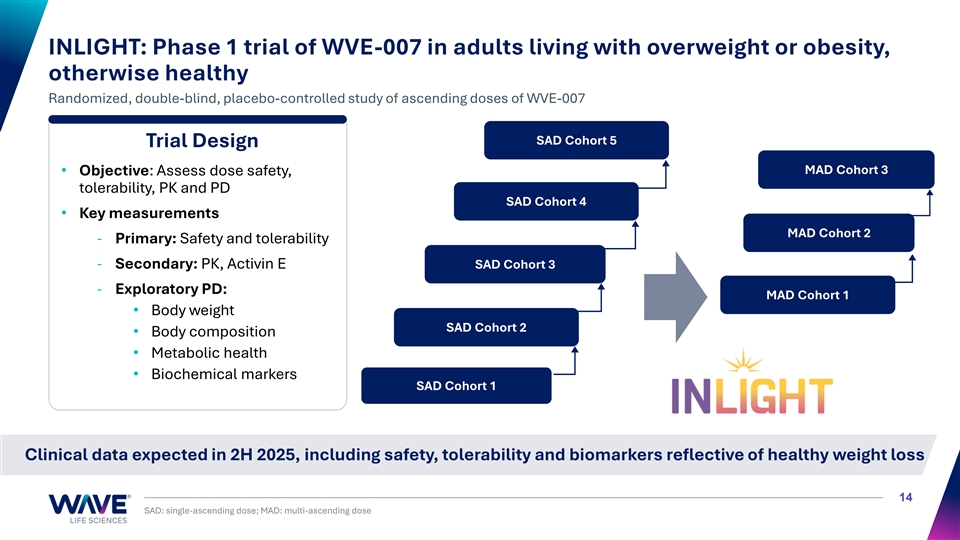
| • | INLIGHT is an ongoing, first-in-human, placebo-controlled, clinical trial evaluating WVE-007 in adults living with overweight or obesity and assesses safety, tolerability, pharmacokinetics, biomarkers for target engagement, body weight and composition, and metabolic health. |
| • | Today, Wave announced that it has completed dosing in the first and second single dose cohorts of INLIGHT. |
| • | Next week, in oral presentations at the 32nd European Congress on Obesity (ECO) and the American Society of Gene and Cell Therapies (ASGCT) 28th Annual Meeting, Wave will highlight its preclinical data supporting WVE-007’s potential in multiple treatment settings with potential for dosing once or twice a year, including: |
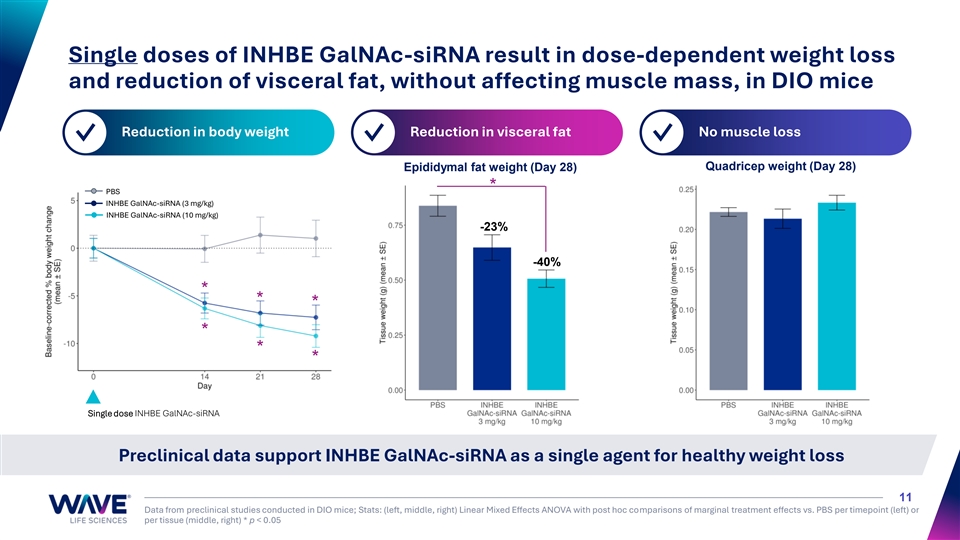
| • | A single dose of Wave’s INHBE siRNA led to weight loss on par with semaglutide, but with no muscle loss. |
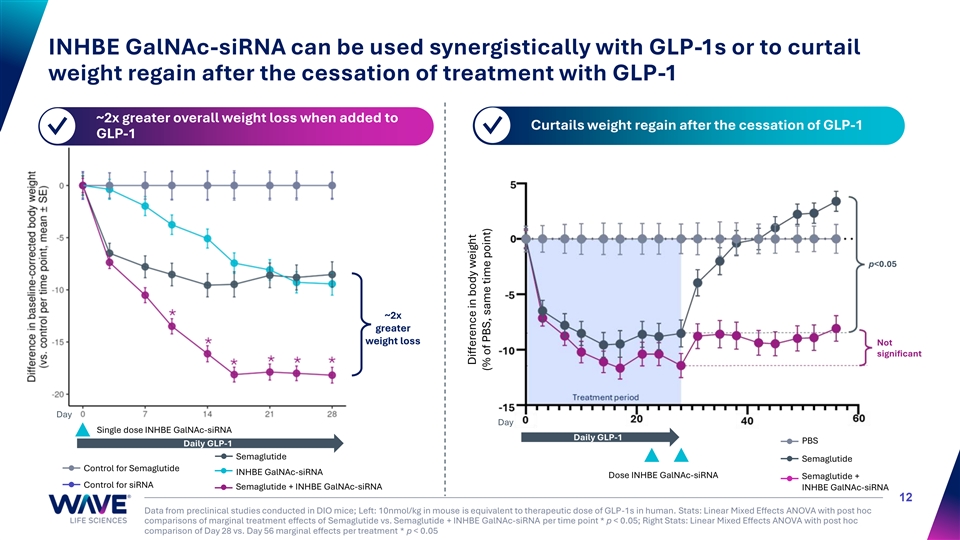
| • | When administered as an add-on to semaglutide, a single dose of Wave’s INHBE siRNA doubled the amount of weight loss. |
| • | Wave’s INHBE siRNA curtailed rebound weight gain when semaglutide treatment was discontinued, highlighting its potential as an off-ramp and maintenance treatment following GLP-1 treatment. |
| • | Expected milestones: Wave expects to deliver clinical data from INLIGHT in the second half of 2025, including safety, tolerability and biomarkers reflective of healthy weight loss. |
AATD (Alpha-1 antitrypsin deficiency)
| • | WVE-006 is a GalNAc-conjugated, subcutaneously delivered, A-to-I RNA editing oligonucleotide (AIMer) that is uniquely designed to address alpha-1 antitrypsin deficiency (AATD)-related lung disease, liver disease, or both. |
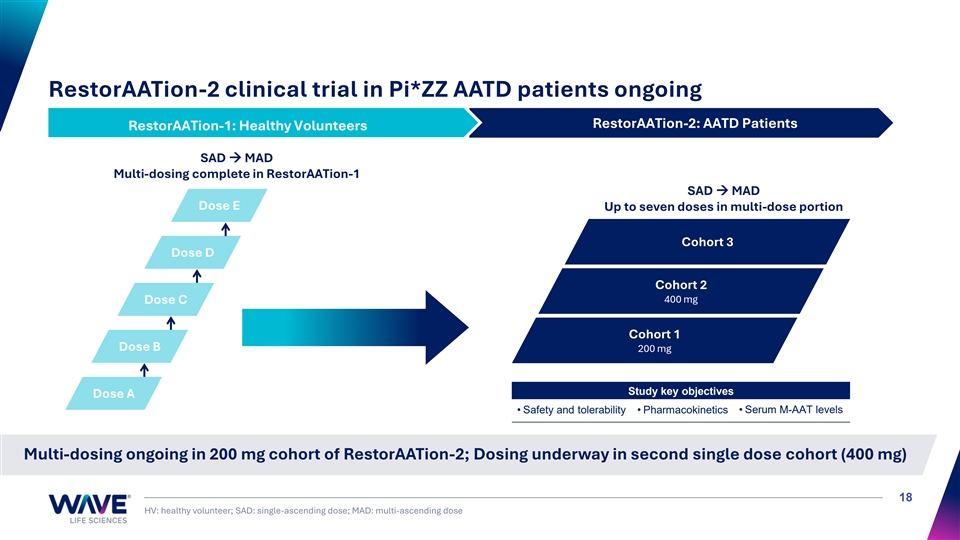
| • | RestorAATion clinical program: Multi-dosing is complete in RestorAATion-1 (healthy volunteers) at a dose level greater than those planned for any cohort in its ongoing RestorAATion-2 study. RestorAATion-2 is a Phase 1b/2a open-label study with both single and multiple ascending dose portions, which is evaluating the safety, tolerability, pharmacodynamics and pharmacokinetics of WVE-006 in individuals with AATD who have the homozygous Pi*ZZ mutation. |
| • | Multi-dosing is ongoing in the first cohort of RestorAATion-2, where patients are receiving 200 mg subcutaneous doses every two weeks. |
| • | Dosing is also underway in the second single dose cohort at 400 mg. |
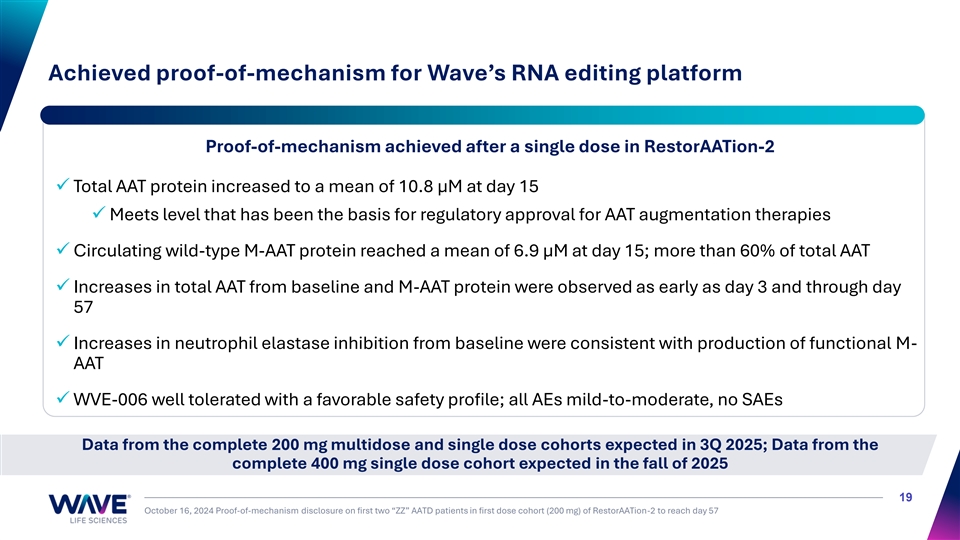
| • | In October 2024, Wave delivered proof-of-mechanism data from a single, lowest dose of WVE-006 from the first two patients in the ongoing RestorAATion-2 clinical study, representing the first-ever clinical demonstration of RNA editing in humans. Circulating wild-type M-AAT protein in plasma reached a mean of 6.9 micromolar, representing more than 60% of total AAT. Mean total AAT protein increased to 10.8 micromolar, meeting the level that has been the basis for regulatory approval for AAT augmentation therapies. |
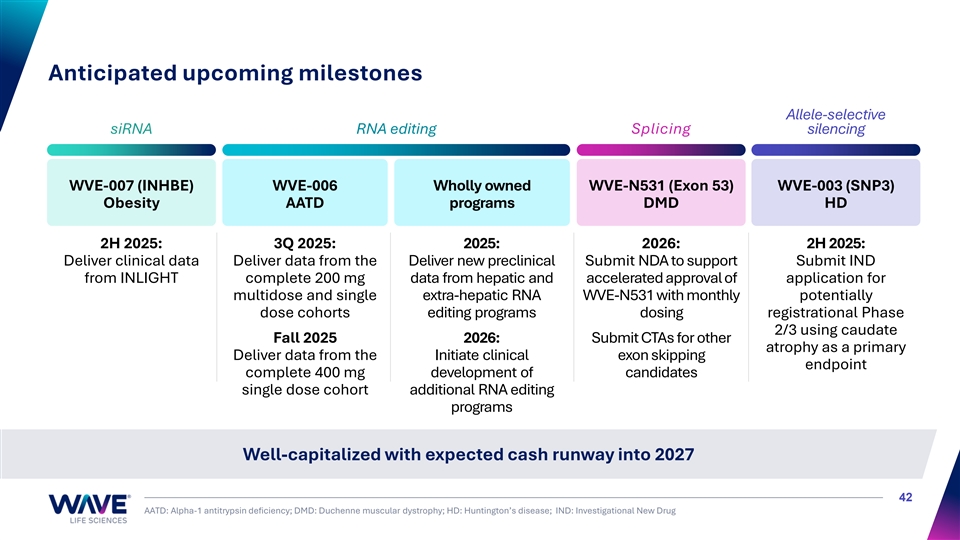
| • | Expected milestones: Wave expects to share data from the complete 200 mg multidose and single dose cohorts of RestorAATion-2 in the third quarter of 2025, and data from the complete 400 mg single dose cohort in the fall of 2025. |
Emerging wholly owned siRNA and RNA editing pipeline
| • | Wave is advancing new targets across multiple disease areas to expand its pipeline of wholly owned programs in both rare and common diseases. Wave’s pipeline of preclinical candidates utilize Wave’s proprietary chemistry to achieve best-in-class silencing using siRNA and RNA editing in a variety of hepatic and extrahepatic tissues, including in the CNS with multiple AIMers such as MECP2. Within RNA editing, Wave has demonstrated the ability to correct single variants to restore wild-type protein function and to increase the stability of the mRNA transcript to upregulate protein levels. |
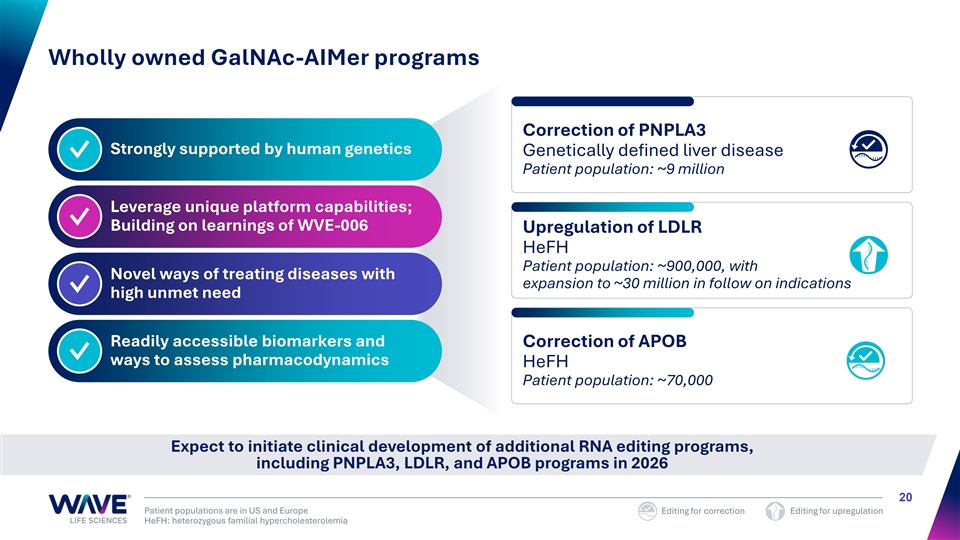
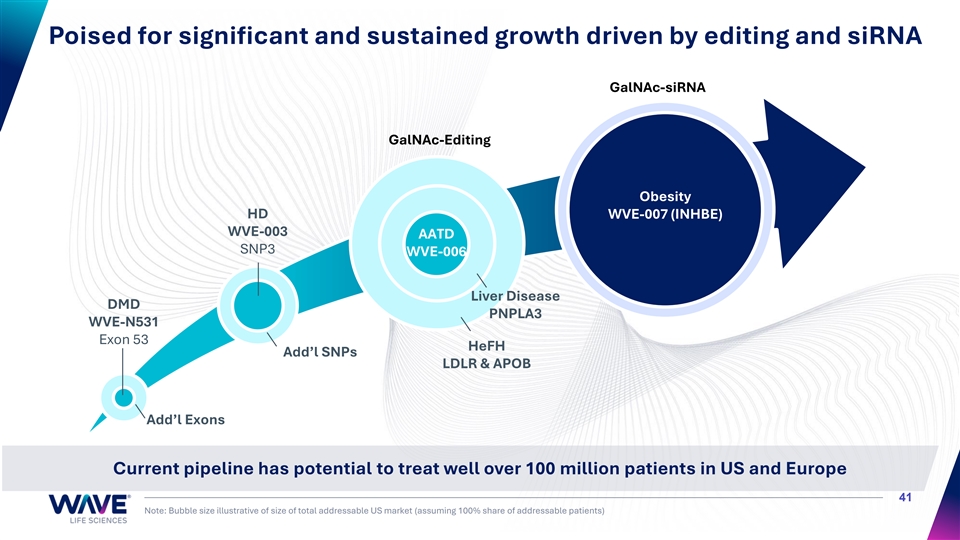
| • | Wave’s wholly owned RNA editing pipeline includes programs that use GalNAc conjugation and have efficient clinical paths to proof-of-concept. These include PNPLA3 mRNA correction to potentially address the nine million homozygous I148M carriers in the US and Europe at risk for a variety of liver diseases, and mRNA upregulation (LDLR) and mRNA correction (APOB), which together would address approximately one million people living with heterozygous familial hypercholesterolemia (HeFH) in the US and Europe. |
| • | Next week, in an oral presentation at the ASGCT 28th Annual Meeting, Wave plans to share preclinical data demonstrating proof-of-principle for the use of AIMers in lung indications, including cystic fibrosis (CF). Available therapies for CF cannot address stop codon mutations in the CFTR gene. In human bronchial epithelial cells with CFTR mutation W1282X, CFTR AIMers increased expression of CFTR mRNA 3-fold and restored up to 50% of functional wild-type CFTR protein levels. |
| • | Expected milestones: Wave plans to share new preclinical data from hepatic and extra-hepatic RNA editing programs in 2025 and to initiate clinical development of additional RNA editing programs, including PNPLA3, LDLR, and APOB, in 2026. |
DMD (Duchenne muscular dystrophy)
| • | WVE-N531 is an exon skipping oligonucleotide being developed as a disease modifying treatment for boys with Duchenne muscular dystrophy amenable to exon 53 skipping. WVE-N531 was designed using Wave’s best-in-class oligonucleotide chemistry modifications, including PN backbone chemistry. WVE-N531 has received Orphan Drug Designation and Rare Pediatric Disease Designation from the U.S. Food & Drug Administration. |
| • | In March 2025, Wave announced positive 48-week data from its Phase 2, open-label FORWARD-53 clinical trial of WVE-N531, which included: |
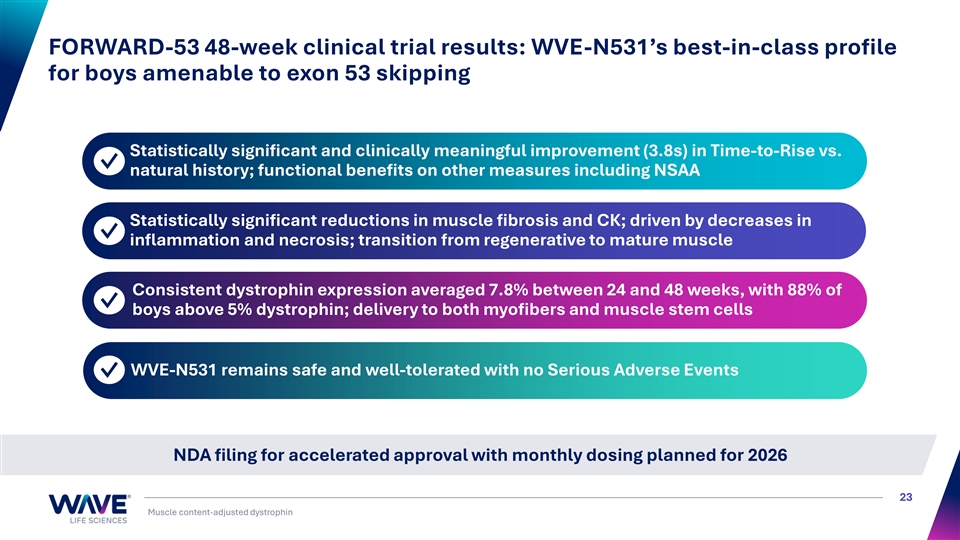
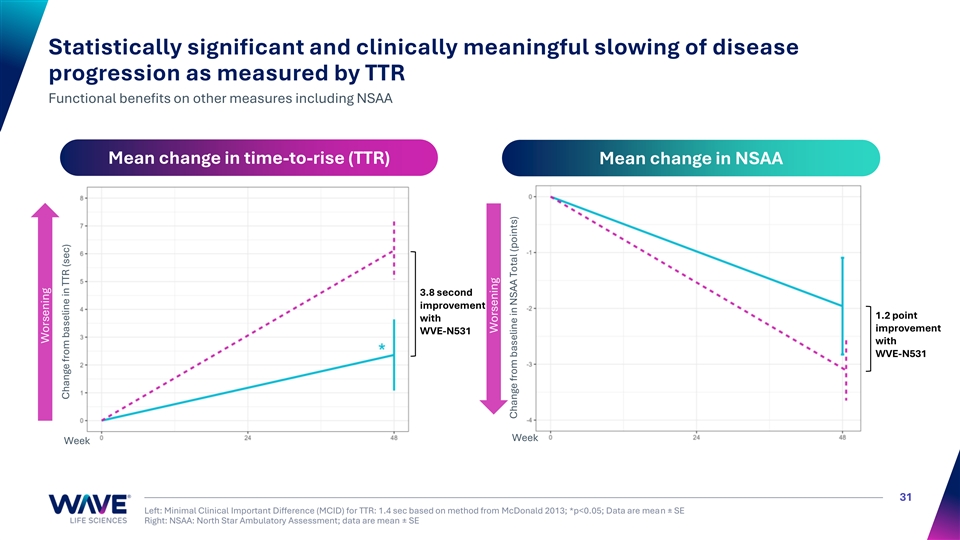
| • | Statistically significant and clinically meaningful improvement of 3.8 seconds in Time-to-Rise vs. natural history with largest effect observed relative to any approved dystrophin restoration therapy at 48 weeks; additional functional benefits observed in other outcome measures including NSAA. |
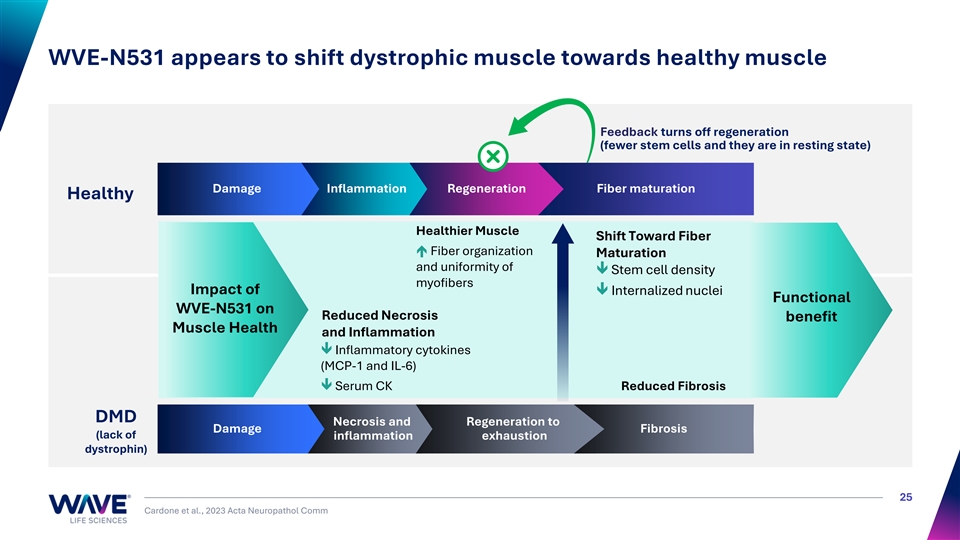
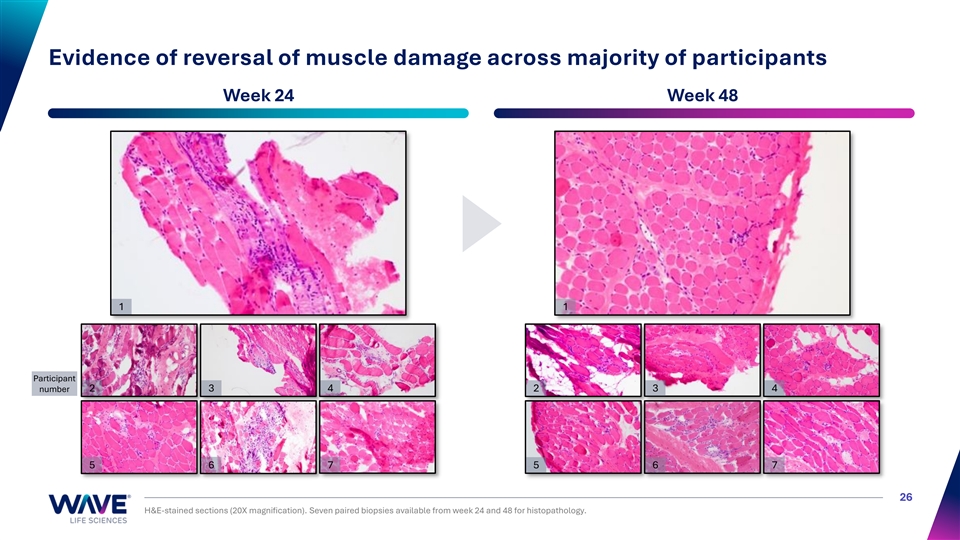
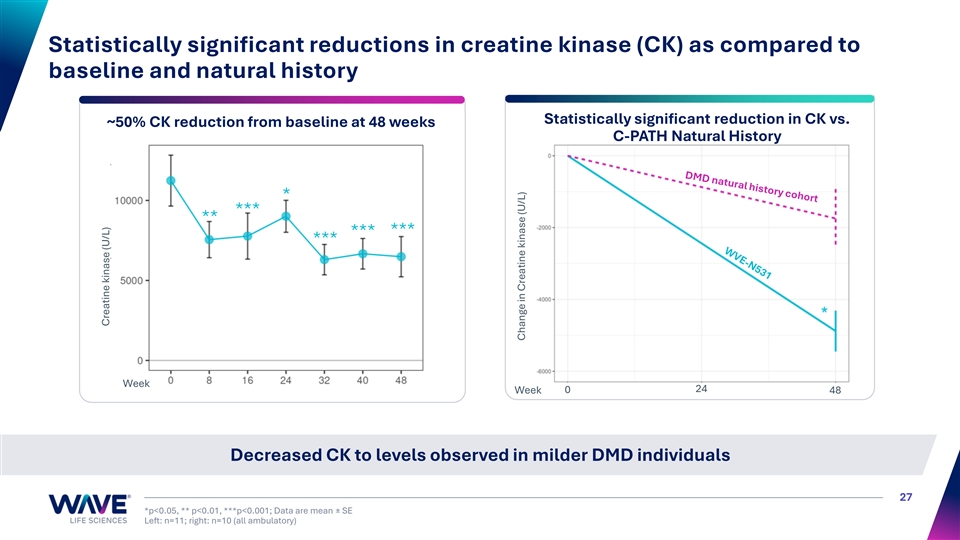
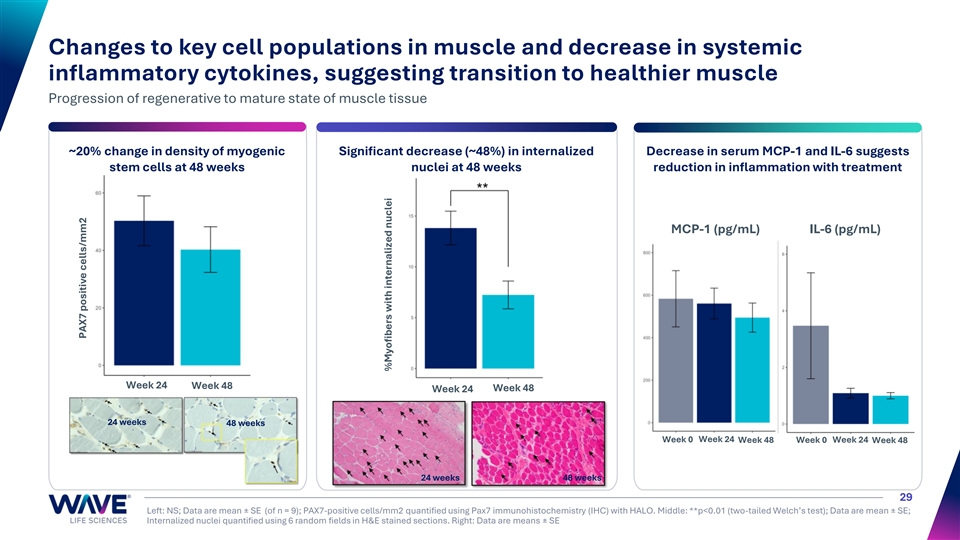
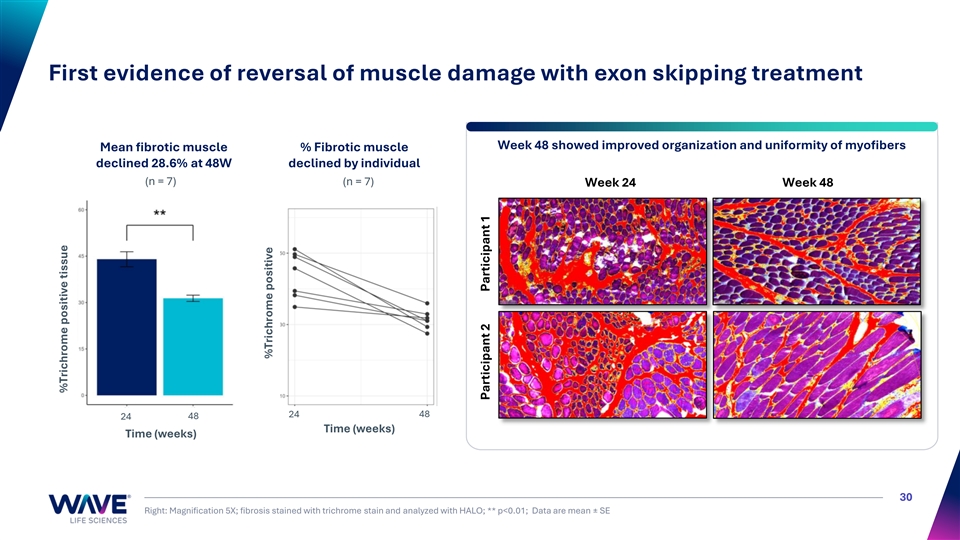
| • | First-ever demonstration of substantial improvements in muscle health with exon skipping – statistically significant reduction in fibrosis driven by decreases in inflammation and necrosis, coupled with transition from regenerative to mature muscle; decreases in creatine kinase and circulating inflammatory biomarkers. |
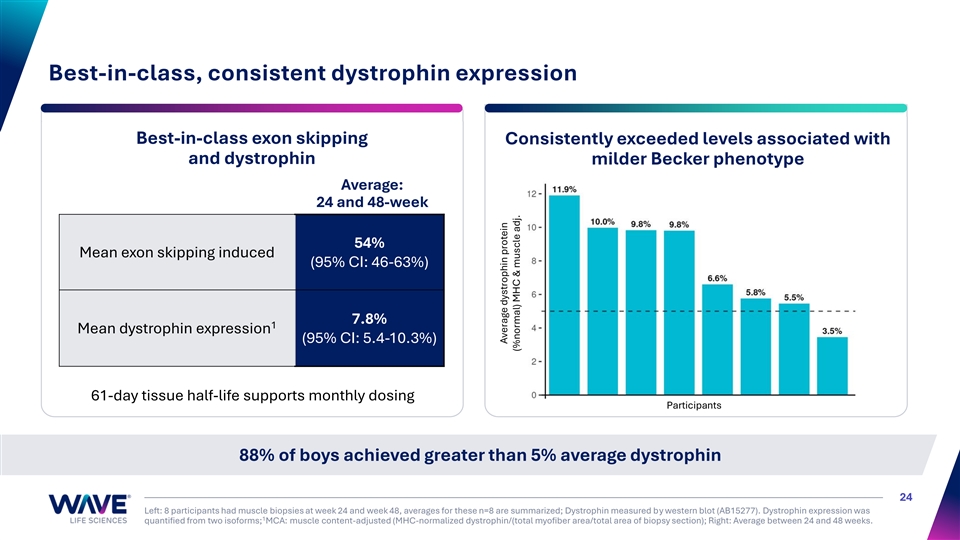
| • | Dystrophin expression stabilized between 24 and 48 weeks and averaged 7.8%, with 88% of boys above 5% average dystrophin. |
| • | WVE-N531 remains safe and well-tolerated with no Serious Adverse Events. |
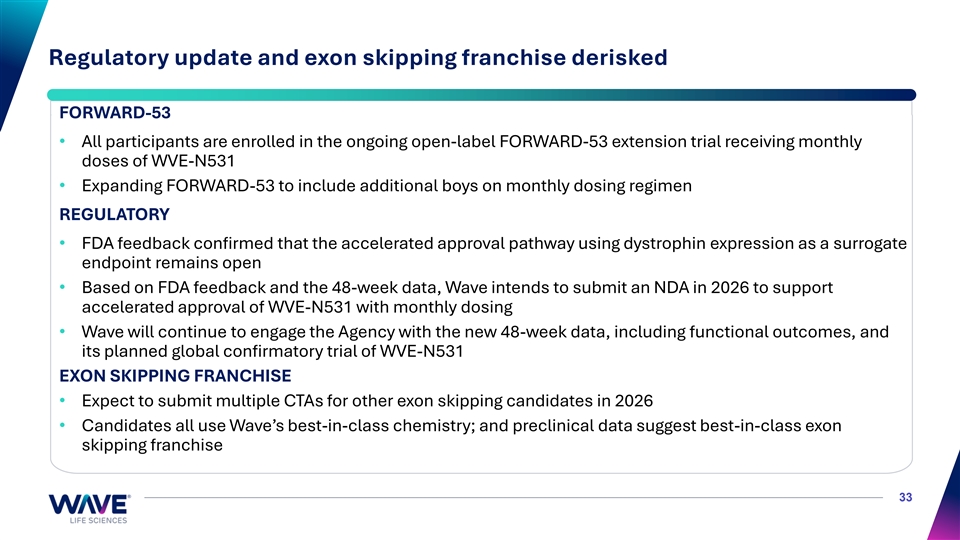
| • | All participants in FORWARD-53 elected to advance to the extension portion of the clinical trial, which is currently ongoing with boys receiving monthly doses of WVE-N531. To augment monthly data and ensure a monthly regimen at a potential launch, Wave is also expanding FORWARD-53 to include additional boys who will be dosed monthly. |
| • | Also in March 2025, Wave announced that the company met with the U.S. Food and Drug Administration (FDA) on WVE-N531 to discuss its interim 24-week data and initial plans for the confirmatory trial, where the Agency confirmed that the accelerated approval pathway using dystrophin expression as a surrogate endpoint remains open. |
| • | Expected milestones: Wave plans to file a New Drug Application (NDA) in 2026 to support accelerated approval of WVE-N531 with monthly dosing. Wave expects to submit clinical trial applications (CTAs) for additional exon skipping programs in 2026. |
HD (Huntington’s disease)
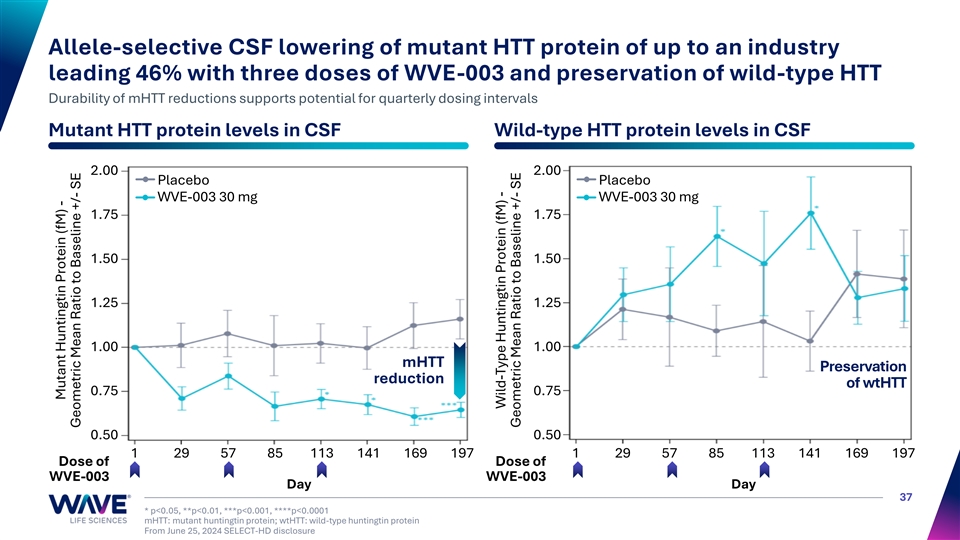
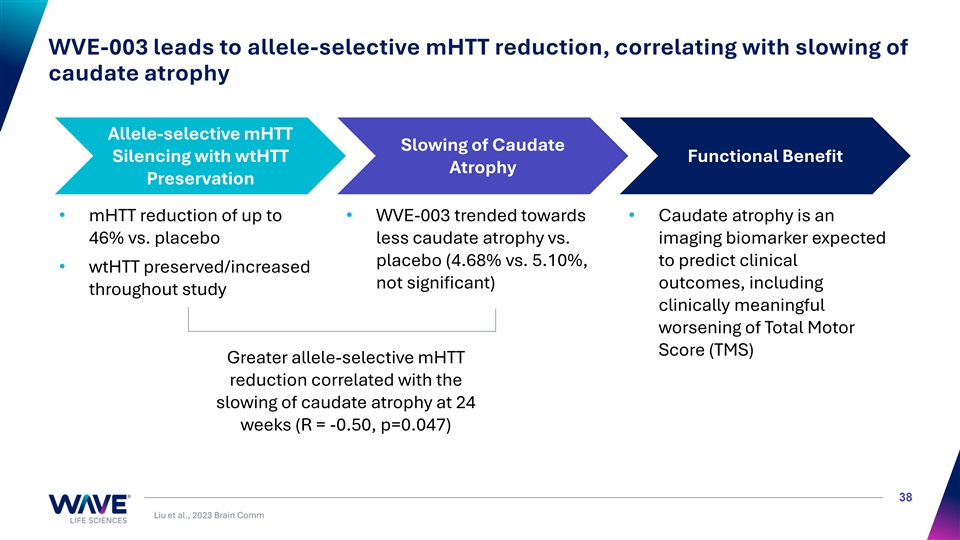
| • | WVE-003 is a first-in-class, allele-selective oligonucleotide for the treatment of Huntington’s disease (HD). In the SELECT-HD clinical trial, data demonstrated the first-ever allele-selective reduction in CSF mHTT protein and preservation of healthy, wtHTT with multiple doses of WVE-003, as well as a statistically significant correlation between mHTT reduction and slowing of caudate atrophy. By reducing mHTT at the mRNA and protein level, WVE-003 addresses underlying drivers of neurodegeneration. In addition, by sparing wtHTT protein, which is critical to the health of the central nervous system, WVE-003 is uniquely positioned to address presymptomatic HD patients, as well as symptomatic patients. |
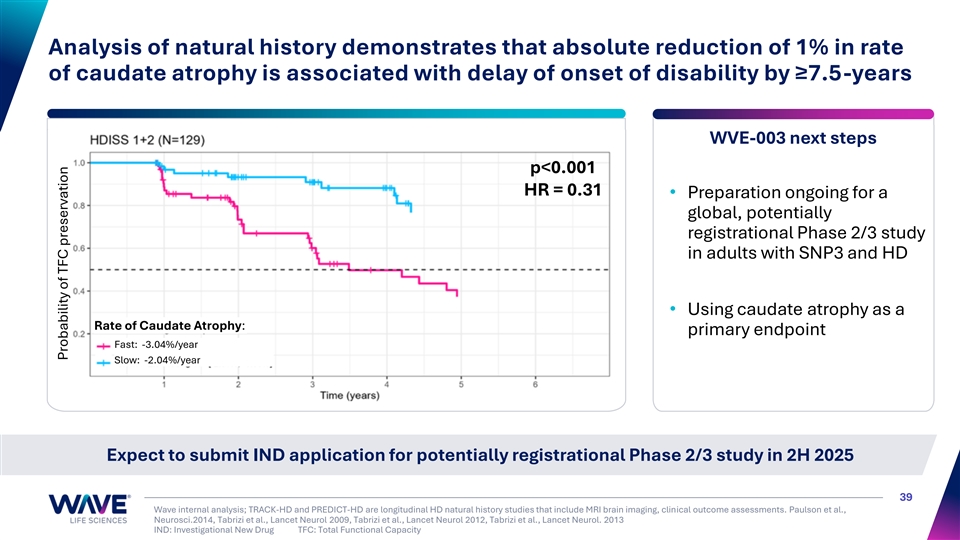
| • | Wave has received supportive initial feedback from FDA, who recognize the severity of HD and are receptive to and engaged with Wave regarding a potential pathway to accelerated approval. Preparation is ongoing for a potentially registrational, global Phase 2/3 study of WVE-003 in adults with SNP3 and HD using caudate atrophy as a primary endpoint. |
| • | Expected milestones: Wave expects to submit an Investigational New Drug (IND) application for a potentially registrational Phase 2/3 study of WVE-003 in HD in the second half of 2025. |
Financial Highlights
| • | Cash and cash equivalents were $243.1 million as of March 31, 2025, compared to $302.1 million as of December 31, 2024. Wave expects that its current cash and cash equivalents will be sufficient to fund operations into 2027. Potential future milestones and other payments to Wave under its GSK collaboration are not included in its cash runway. |
| • | Revenue recognized was $9.2 million for the first quarter of 2025 as compared to $12.5 million in the prior year quarter. |
| • | Research and development expenses were $40.6 million in the first quarter of 2025 as compared to $33.4 million in the same period in 2024. |
| • | General and administrative expenses were $18.4 million in the first quarter 2025 as compared to $13.5 million in the same period in 2024. |
| • | Net loss was $46.9 million for the first quarter of 2025 as compared to $31.6 million in the prior year quarter. |
Investor Conference Call and Webcast
Wave will host an investor conference call today at 8:30 a.m. ET to review the first quarter 2025 financial results and pipeline updates. A webcast of the conference call can be accessed by visiting “Investor Events” on the investor relations section of the Wave Life Sciences website: https://ir.wavelifesciences.com/events-publications/events. Analysts planning to participate during the Q&A portion of the live call can join the conference call by dialing (833) 630-1956 (domestic) or (412) 317-1837 (international). Following the live event, an archived version of the webcast will be available on the Wave Life Sciences website.
About Wave Life Sciences
Wave Life Sciences (Nasdaq: WVE) is a biotechnology company focused on unlocking the broad potential of RNA medicines to transform human health. Wave’s RNA medicines platform, PRISM®, combines multiple modalities, chemistry innovation and deep insights in human genetics to deliver scientific breakthroughs that treat both rare and common disorders. Its toolkit of RNA-targeting modalities includes editing, splicing, RNA interference and antisense silencing, providing Wave with unmatched capabilities for designing and sustainably delivering candidates that optimally address disease biology. Wave’s diversified pipeline includes clinical programs in Alpha-1 antitrypsin deficiency, Duchenne muscular dystrophy, Huntington’s disease, and Obesity, as well as several preclinical programs utilizing the company’s broad RNA therapeutics toolkit. Driven by the calling to “Reimagine Possible”, Wave is leading the charge toward a world in which human potential is no longer hindered by the burden of disease. Wave is headquartered in Cambridge, MA. For more information on Wave’s science, pipeline and people, please visit www.wavelifesciences.com and follow Wave on X (formerly Twitter) and LinkedIn.
Forward-Looking Statements
This press release contains forward-looking statements concerning our goals, beliefs, expectations, strategies, objectives and plans, and other statements that are not necessarily based on historical facts, including statements regarding the following, among others: the anticipated initiation, site activation, patient recruitment, patient enrollment, dosing, generation and reporting of data and completion of our clinical trials, including interactions with regulators and any potential registration based on these data, and the timing and announcement of such events; the protocol, design, endpoints, dose levels and dosing frequency for our investigational therapeutics in clinical trials; the future performance and results of our programs in clinical trials; our expectations with respect to how our clinical data successes to date may predict success for our future therapeutic candidates and data readouts and may further validate our platform; preclinical activities and programs and their potential to transition into clinical-stage programs; the potential of our preclinical data to predict the behavior of our compounds in humans; regulatory submissions and timing for regulatory feedback; the submission of marketing approval applications to regulators, approval thereof, and the potential commercialization of our late-stage programs; the progress and potential benefits of collaborations and strategic partnerships; the potential achievement of milestones under any collaborations; our identification of future product candidates and their therapeutic potential; the anticipated benefits of our therapeutic candidates and pipeline compared to our competitors; the potential unmet medical needs and addressable patient population estimates related to our therapeutic candidates; our ability to design compounds using the most appropriate of
our multiple modalities and the anticipated benefits of that approach; the breadth and versatility of our drug discovery and development platform; the expected benefits of our stereopure oligonucleotides compared with stereorandom oligonucleotides; the potential benefits of our RNA editing capability, including our AIMers, compared to others; the potential for certain of our programs to be best-in-class or first-in-class or to change the existing treatment paradigm or show substantial benefits over existing standards of care; the status and progress of our programs relative to potential competitors; anticipated benefits of our proprietary manufacturing processes and our internal manufacturing capabilities; the benefits of RNA medicines generally; the strength of our intellectual property and the data that support our IP; the anticipated duration of our cash runway and our ability to fund future operations; our intended uses of capital; and our expectations regarding the impact of any potential global macro events on our business. Actual results may differ materially from those indicated by these forward-looking statements as a result of various important factors, including the following: our ability to finance our drug discovery and development efforts and to raise additional capital when needed; the ability of our preclinical programs to produce data sufficient to support our clinical trial applications and the timing thereof; the clinical results of our programs and the timing thereof, which may not support further development of our product candidates; actions of regulatory authorities and their receptiveness to our trial designs and accelerated approval pathways, which may affect the initiation, timing and progress of clinical trials; our effectiveness in managing interactions with regulatory authorities; the effectiveness of our drug discovery and development platform; the effectiveness of our RNA editing capability and our AIMers; our ability to demonstrate the therapeutic benefits of our candidates in clinical trials, including our ability to develop candidates across multiple therapeutic modalities; our dependence on third parties, including contract research organizations, contract manufacturing organizations, collaborators and partners; our ability to manufacture or contract with third parties to manufacture drug material to support our programs and growth; our ability to obtain, maintain and protect our intellectual property; our ability to enforce our patents against infringers and defend our patent portfolio against challenges from third parties; competition from others developing therapies for the indications we are pursuing; our ability to maintain the company infrastructure and personnel needed to achieve our goals; and the information under the caption “Risk Factors” contained in our most recent Annual Report on Form 10-K filed with the Securities and Exchange Commission (SEC) and in other filings we make with the SEC from time to time. We undertake no obligation to update the information contained in this press release to reflect subsequently occurring events or circumstances.
Contact:
Kate Rausch
VP, Corporate Affairs and Investor Relations
+1 617-949-4827
Investors:
Media:
WAVE LIFE SCIENCES LTD. UNAUDITED CONSOLIDATED BALANCE SHEETS
(In thousands, except share amounts)
| March 31, 2025 | December 31, 2024 | |||||||
| Assets |
||||||||
| Current assets: |
||||||||
| Cash and cash equivalents |
$ | 243,075 | $ | 302,078 | ||||
| Accounts receivable |
— | 1,422 | ||||||
| Prepaid expenses |
8,062 | 9,544 | ||||||
| Other current assets |
6,839 | 7,350 | ||||||
|
|
|
|
|
|||||
| Total current assets |
257,976 | 320,394 | ||||||
|
|
|
|
|
|||||
| Long-term assets: |
||||||||
| Property and equipment, net of accumulated depreciation of $47,027 and $46,329 as of March 31, 2025 and December 31, 2024, respectively |
9,566 | 10,128 | ||||||
| Operating lease right-of-use assets |
16,581 | 17,870 | ||||||
| Restricted cash |
3,772 | 3,760 | ||||||
| Other assets |
448 | 55 | ||||||
|
|
|
|
|
|||||
| Total long-term assets |
30,367 | 31,813 | ||||||
|
|
|
|
|
|||||
| Total assets |
$ | 288,343 | $ | 352,207 | ||||
|
|
|
|
|
|||||
| Liabilities, Series A preferred shares, and shareholders’ equity |
||||||||
| Current liabilities: |
||||||||
| Accounts payable |
$ | 14,358 | $ | 16,262 | ||||
| Accrued expenses and other current liabilities |
7,813 | 21,081 | ||||||
| Current portion of deferred revenue |
57,312 | 65,972 | ||||||
| Current portion of operating lease liability |
7,884 | 7,638 | ||||||
|
|
|
|
|
|||||
| Total current liabilities |
87,367 | 110,953 | ||||||
|
|
|
|
|
|||||
| Long-term liabilities: |
||||||||
| Deferred revenue, net of current portion |
5,584 | 6,099 | ||||||
| Operating lease liability, net of current portion |
15,715 | 17,766 | ||||||
|
|
|
|
|
|||||
| Total long-term liabilities |
21,299 | 23,865 | ||||||
|
|
|
|
|
|||||
| Total liabilities |
$ | 108,666 | $ | 134,818 | ||||
|
|
|
|
|
|||||
| Series A preferred shares, no par value; 3,901,348 shares issued and outstanding at March 31, 2025 and December 31, 2024 |
$ | 7,874 | $ | 7,874 | ||||
|
|
|
|
|
|||||
| Shareholders’ equity: |
||||||||
| Ordinary shares, no par value; 154,093,313 and 153,037,286 shares issued and outstanding at March 31, 2025 and December 31, 2024, respectively |
$ | 1,179,336 | $ | 1,175,181 | ||||
| Additional paid-in capital |
161,407 | 156,454 | ||||||
| Accumulated other comprehensive loss |
(204 | ) | (262 | ) | ||||
| Accumulated deficit |
(1,168,736 | ) | (1,121,858 | ) | ||||
|
|
|
|
|
|||||
| Total shareholders’ equity |
$ | 171,803 | $ | 209,515 | ||||
|
|
|
|
|
|||||
| Total liabilities, Series A preferred shares, and shareholders’ equity |
$ | 288,343 | $ | 352,207 | ||||
|
|
|
|
|
|||||
WAVE LIFE SCIENCES LTD.
UNAUDITED CONSOLIDATED STATEMENTS OF OPERATIONS AND COMPREHENSIVE LOSS
(In thousands, except share and per share amounts)
| Three Months Ended March 31, | ||||||||
| 2025 | 2024 | |||||||
| Revenue |
$ | 9,175 | $ | 12,538 | ||||
|
|
|
|
|
|||||
| Operating expenses: |
||||||||
| Research and development |
40,622 | 33,447 | ||||||
| General and administrative |
18,357 | 13,549 | ||||||
|
|
|
|
|
|||||
| Total operating expenses |
58,979 | 46,996 | ||||||
|
|
|
|
|
|||||
| Loss from operations |
(49,804 | ) | (34,458 | ) | ||||
|
|
|
|
|
|||||
| Other income, net: |
||||||||
| Interest income |
2,875 | 2,535 | ||||||
| Other income, net |
51 | 365 | ||||||
|
|
|
|
|
|||||
| Total other income, net |
2,926 | 2,900 | ||||||
|
|
|
|
|
|||||
| Loss before income taxes |
(46,878 | ) | (31,558 | ) | ||||
| Income tax benefit (provision) |
— | — | ||||||
|
|
|
|
|
|||||
| Net loss |
$ | (46,878 | ) | $ | (31,558 | ) | ||
|
|
|
|
|
|||||
| Net loss per share attributable to ordinary shareholders—basic and diluted |
$ | (0.29 | ) | $ | (0.24 | ) | ||
|
|
|
|
|
|||||
| Weighted-average ordinary shares used in computing net loss per share attributable to ordinary shareholders—basic and diluted |
162,527,026 | 129,271,678 | ||||||
|
|
|
|
|
|||||
| Other comprehensive loss: |
||||||||
| Net loss |
$ | (46,878 | ) | $ | (31,558 | ) | ||
| Foreign currency translation |
58 | (74 | ) | |||||
|
|
|
|
|
|||||
| Comprehensive loss |
$ | (46,820 | ) | $ | (31,632 | ) | ||
|
|
|
|
|
|||||

Exhibit 99.2 Wave Life Sciences Corporate Presentation May 8, 2025

Forward-looking statements This document contains forward-looking statements. All statements other than statements of historical facts contained in this document, including statements regarding possible or assumed future results of operations, preclinical and clinical studies, business strategies, research and development plans, collaborations and partnerships, regulatory activities and timing thereof, competitive position, potential growth opportunities, use of proceeds and the effects of competition are forward-looking statements. These statements involve known and unknown risks, uncertainties and other important factors that may cause the actual results, performance or achievements of Wave Life Sciences Ltd. (the “Company”) to be materially different from any future results, performance or achievements expressed or implied by the forward-looking statements. In some cases, you can identify forward-looking statements by terms such as “may,” “will,” “should,” “expect,” “plan,” “aim,” “anticipate,” “could,” “intend,” “target,” “project,” “contemplate,” “believe,” “estimate,” “predict,” “potential” or “continue” or the negative of these terms or other similar expressions. The forward- looking statements in this presentation are only predictions. The Company has based these forward-looking statements largely on its current expectations and projections about future events and financial trends that it believes may affect the Company’s business, financial condition and results of operations. These forward-looking statements speak only as of the date of this presentation and are subject to a number of risks, uncertainties and assumptions, including those listed under Risk Factors in the Company’s Form 10-K and other filings with the SEC, some of which cannot be predicted or quantified and some of which are beyond the Company’s control. The events and circumstances reflected in the Company’s forward-looking statements may not be achieved or occur, and actual results could differ materially from those projected in the forward-looking statements. Moreover, the Company operates in a dynamic industry and economy. New risk factors and uncertainties may emerge from time to time, and it is not possible for management to predict all risk factors and uncertainties that the Company may face. Except as required by applicable law, the Company does not plan to publicly update or revise any forward-looking statements contained herein, whether as a result of any new information, future events, changed circumstances or otherwise. 2

Our Mission To unlock the broad potential of RNA medicines to transform human health 3

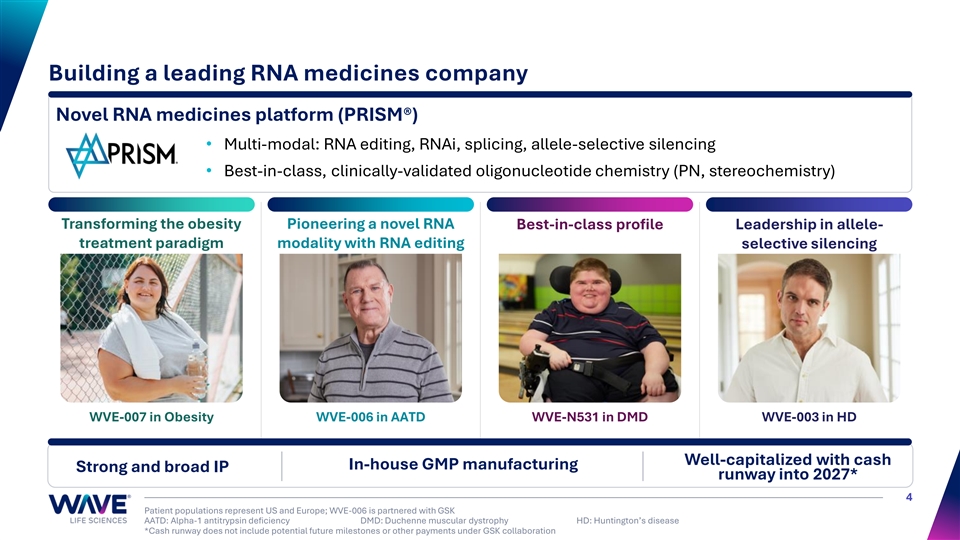
Building a leading RNA medicines company Novel RNA medicines platform (PRISM®) • Multi-modal: RNA editing, RNAi, splicing, allele-selective silencing • Best-in-class, clinically-validated oligonucleotide chemistry (PN, stereochemistry) Transforming the obesity Pioneering a novel RNA Best-in-class profile Leadership in allele- treatment paradigm modality with RNA editing selective silencing WVE-007 in Obesity WVE-006 in AATD WVE-N531 in DMD WVE-003 in HD Well-capitalized with cash In-house GMP manufacturing Strong and broad IP runway into 2027* 4 Patient populations represent US and Europe; WVE-006 is partnered with GSK AATD: Alpha-1 antitrypsin deficiency DMD: Duchenne muscular dystrophy HD: Huntington’s disease *Cash runway does not include potential future milestones or other payments under GSK collaboration

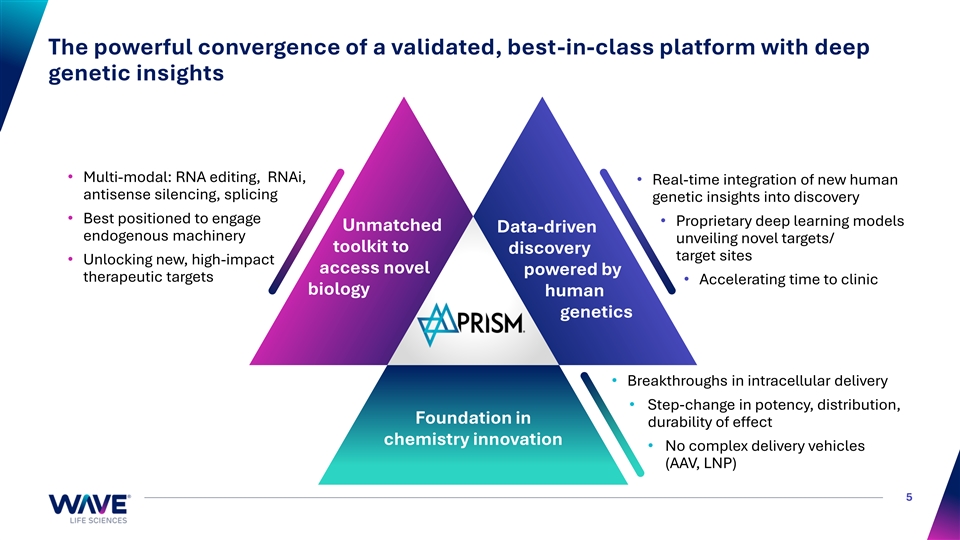
The powerful convergence of a validated, best-in-class platform with deep genetic insights • Multi-modal: RNA editing, RNAi, • Real-time integration of new human antisense silencing, splicing genetic insights into discovery • Best positioned to engage • Proprietary deep learning models Unmatched Data-driven endogenous machinery unveiling novel targets/ toolkit to discovery target sites • Unlocking new, high-impact access novel powered by therapeutic targets • Accelerating time to clinic biology human genetics • Breakthroughs in intracellular delivery • Step-change in potency, distribution, Foundation in durability of effect chemistry innovation • No complex delivery vehicles (AAV, LNP) 5

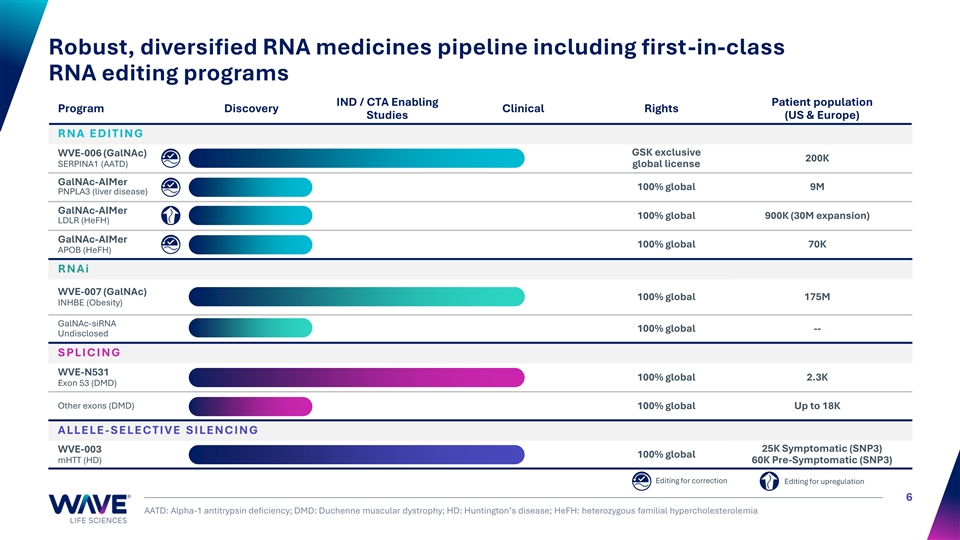
Robust, diversified RNA medicines pipeline including first-in-class RNA editing programs IND / CTA Enabling Patient population Program Discovery Clinical Rights Studies (US & Europe) R N A E D I T I N G GSK exclusive WVE-006 (GalNAc) 200K SERPINA1 (AATD) global license GalNAc-AIMer 100% global 9M PNPLA3 (liver disease) GalNAc-AIMer 100% global 900K (30M expansion) LDLR (HeFH) GalNAc-AIMer 100% global 70K APOB (HeFH) R N A i WVE-007 (GalNAc) 100% global 175M INHBE (Obesity) GalNAc-siRNA 100% global -- Undisclosed S PLI C I N G WVE-N531 100% global 2.3K Exon 53 (DMD) Other exons (DMD) 100% global Up to 18K A LLE LE - S E LE C T I VE S I LE NC I NG 25K Symptomatic (SNP3) WVE-003 100% global mHTT (HD) 60K Pre-Symptomatic (SNP3) Editing for correction Editing for upregulation 6 AATD: Alpha-1 antitrypsin deficiency; DMD: Duchenne muscular dystrophy; HD: Huntington’s disease; HeFH: heterozygous familial hypercholesterolemia

WVE-007 GalNAc-siRNA silencing Obesity 7

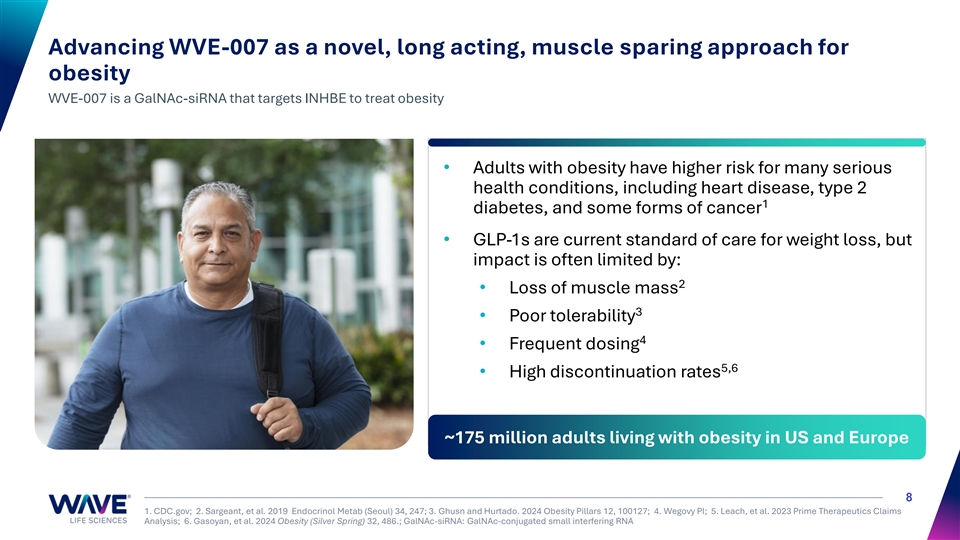
Advancing WVE-007 as a novel, long acting, muscle sparing approach for obesity WVE-007 is a GalNAc-siRNA that targets INHBE to treat obesity • Adults with obesity have higher risk for many serious health conditions, including heart disease, type 2 1 diabetes, and some forms of cancer • GLP-1s are current standard of care for weight loss, but impact is often limited by: 2 • Loss of muscle mass 3 • Poor tolerability 4 • Frequent dosing 5,6 • High discontinuation rates ~175 million adults living with obesity in US and Europe 8 1. CDC.gov; 2. Sargeant, et al. 2019 Endocrinol Metab (Seoul) 34, 247; 3. Ghusn and Hurtado. 2024 Obesity Pillars 12, 100127; 4. Wegovy PI; 5. Leach, et al. 2023 Prime Therapeutics Claims Analysis; 6. Gasoyan, et al. 2024 Obesity (Silver Spring) 32, 486.; GalNAc-siRNA: GalNAc-conjugated small interfering RNA

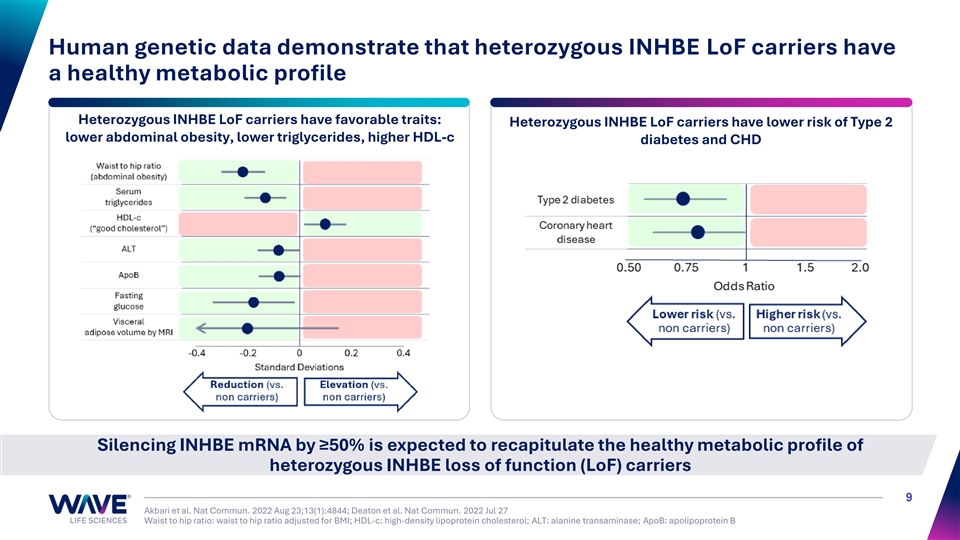
Human genetic data demonstrate that heterozygous INHBE LoF carriers have a healthy metabolic profile Heterozygous INHBE LoF carriers have favorable traits: Heterozygous INHBE LoF carriers have lower risk of Type 2 lower abdominal obesity, lower triglycerides, higher HDL-c diabetes and CHD Silencing INHBE mRNA by ≥50% is expected to recapitulate the healthy metabolic profile of heterozygous INHBE loss of function (LoF) carriers 9 Akbari et al. Nat Commun. 2022 Aug 23;13(1):4844; Deaton et al. Nat Commun. 2022 Jul 27 Waist to hip ratio: waist to hip ratio adjusted for BMI; HDL-c: high-density lipoprotein cholesterol; ALT: alanine transaminase; ApoB: apolipoprotein B

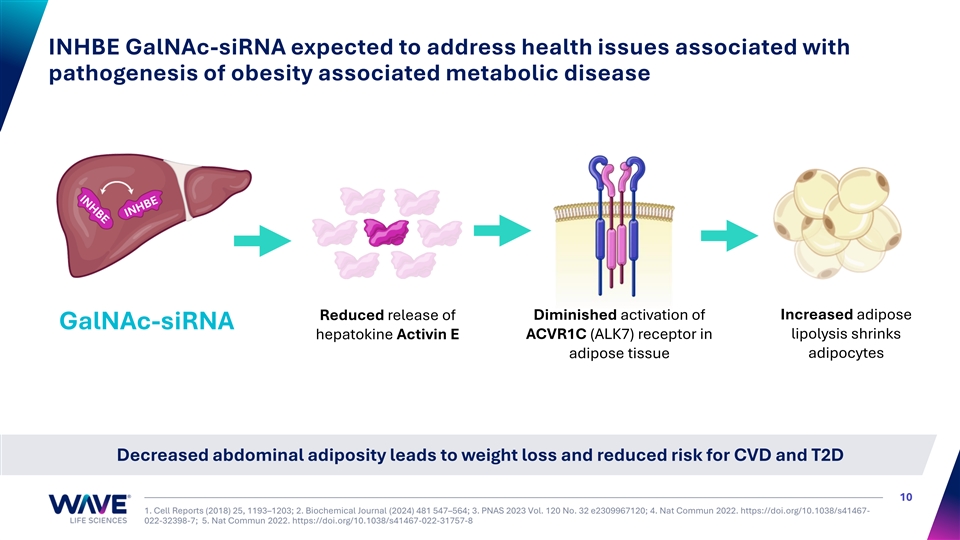
INHBE GalNAc-siRNA expected to address health issues associated with pathogenesis of obesity associated metabolic disease Reduced release of Diminished activation of Increased adipose GalNAc-siRNA ACVR1C (ALK7) receptor in lipolysis shrinks hepatokine Activin E adipose tissue adipocytes Decreased abdominal adiposity leads to weight loss and reduced risk for CVD and T2D 10 1. Cell Reports (2018) 25, 1193–1203; 2. Biochemical Journal (2024) 481 547–564; 3. PNAS 2023 Vol. 120 No. 32 e2309967120; 4. Nat Commun 2022. https://doi.org/10.1038/s41467- 022-32398-7; 5. Nat Commun 2022. https://doi.org/10.1038/s41467-022-31757-8

Single doses of INHBE GalNAc-siRNA result in dose-dependent weight loss and reduction of visceral fat, without affecting muscle mass, in DIO mice Reduction in body weight Reduction in visceral fat No muscle loss ✓ ✓ ✓ Quadricep weight (Day 28) Epididymal fat weight (Day 28) * PBS INHBE GalNAc-siRNA (3 mg/kg) INHBE GalNAc-siRNA (10 mg/kg) -23% -40% * * * * * * Single dose INHBE GalNAc-siRNA Preclinical data support INHBE GalNAc-siRNA as a single agent for healthy weight loss 11 Data from preclinical studies conducted in DIO mice; Stats: (left, middle, right) Linear Mixed Effects ANOVA with post hoc comparisons of marginal treatment effects vs. PBS per timepoint (left) or per tissue (middle, right) * p < 0.05

INHBE GalNAc-siRNA can be used synergistically with GLP-1s or to curtail weight regain after the cessation of treatment with GLP-1 ~2x greater overall weight loss when added to Curtails weight regain after the cessation of GLP-1 ✓ ✓ GLP-1 p<0.05 ~2x greater weight loss Not significant Day Day Single dose INHBE GalNAc-siRNA Daily GLP-1 PBS Daily GLP-1 Semaglutide Semaglutide Control for Semaglutide INHBE GalNAc-siRNA Dose INHBE GalNAc-siRNA Semaglutide + Control for siRNA Semaglutide + INHBE GalNAc-siRNA INHBE GalNAc-siRNA 12 Data from preclinical studies conducted in DIO mice; Left: 10nmol/kg in mouse is equivalent to therapeutic dose of GLP-1s in human. Stats: Linear Mixed Effects ANOVA with post hoc comparisons of marginal treatment effects of Semaglutide vs. Semaglutide + INHBE GalNAc-siRNA per time point * p < 0.05; Right Stats: Linear Mixed Effects ANOVA with post hoc comparison of Day 28 vs. Day 56 marginal effects per treatment * p < 0.05 Difference in body weight (% of PBS, same time point)

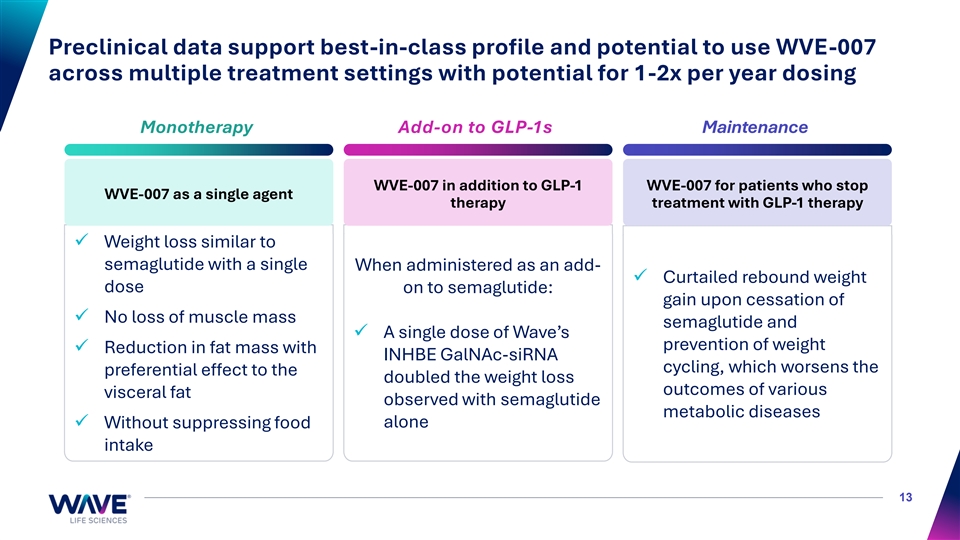
Preclinical data support best-in-class profile and potential to use WVE-007 across multiple treatment settings with potential for 1-2x per year dosing Monotherapy Add-on to GLP-1s Maintenance WVE-007 in addition to GLP-1 WVE-007 for patients who stop WVE-007 as a single agent therapy treatment with GLP-1 therapy ✓ Weight loss similar to semaglutide with a single When administered as an add- ✓ Curtailed rebound weight dose on to semaglutide: gain upon cessation of ✓ No loss of muscle mass semaglutide and ✓ A single dose of Wave’s prevention of weight ✓ Reduction in fat mass with INHBE GalNAc-siRNA cycling, which worsens the preferential effect to the doubled the weight loss outcomes of various visceral fat observed with semaglutide metabolic diseases ✓ Without suppressing food alone intake 13

INLIGHT: Phase 1 trial of WVE-007 in adults living with overweight or obesity, otherwise healthy Randomized, double-blind, placebo-controlled study of ascending doses of WVE-007 SAD Cohort 5 Trial Design MAD Cohort 3 • Objective: Assess dose safety, tolerability, PK and PD SAD Cohort 4 • Key measurements MAD Cohort 2 - Primary: Safety and tolerability - Secondary: PK, Activin E SAD Cohort 3 - Exploratory PD: MAD Cohort 1 • Body weight SAD Cohort 2 • Body composition • Metabolic health • Biochemical markers SAD Cohort 1 Clinical data expected in 2H 2025, including safety, tolerability and biomarkers reflective of healthy weight loss 14 SAD: single-ascending dose; MAD: multi-ascending dose

WVE-006 RNA editing (AIMers) Alpha-1 antitrypsin deficiency (AATD) 15

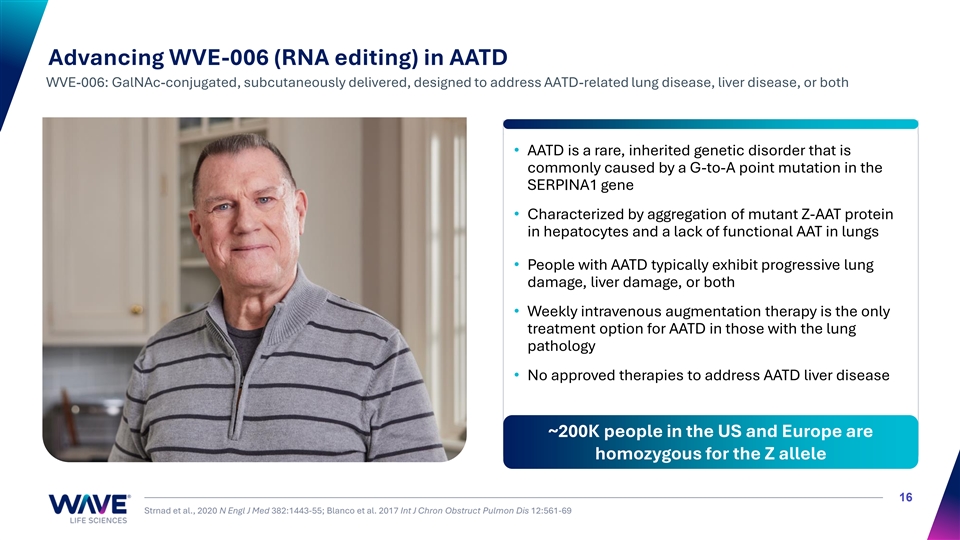
Advancing WVE-006 (RNA editing) in AATD WVE-006: GalNAc-conjugated, subcutaneously delivered, designed to address AATD-related lung disease, liver disease, or both • AATD is a rare, inherited genetic disorder that is commonly caused by a G-to-A point mutation in the SERPINA1 gene • Characterized by aggregation of mutant Z-AAT protein in hepatocytes and a lack of functional AAT in lungs • People with AATD typically exhibit progressive lung damage, liver damage, or both • Weekly intravenous augmentation therapy is the only treatment option for AATD in those with the lung pathology • No approved therapies to address AATD liver disease ~200K people in the US and Europe are homozygous for the Z allele 16 Strnad et al., 2020 N Engl J Med 382:1443-55; Blanco et al. 2017 Int J Chron Obstruct Pulmon Dis 12:561-69

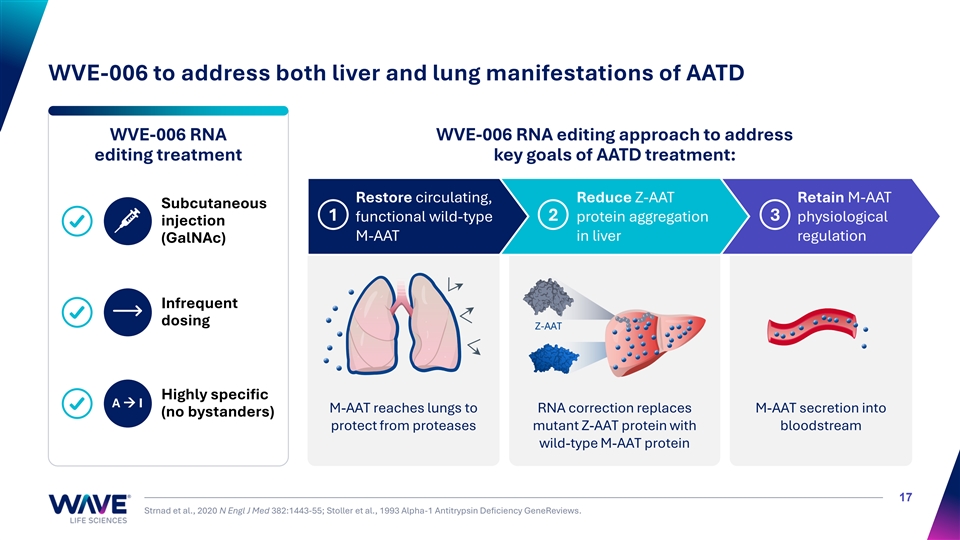
WVE-006 to address both liver and lung manifestations of AATD WVE-006 RNA WVE-006 RNA editing approach to address editing treatment key goals of AATD treatment: Restore circulating, Reduce Z-AAT Retain M-AAT Subcutaneous 1 functional wild-type 2 protein aggregation 3 physiological injection M-AAT in liver regulation (GalNAc) Infrequent dosing Z-AAT Highly specific A → I M-AAT reaches lungs to RNA correction replaces M-AAT secretion into (no bystanders) protect from proteases mutant Z-AAT protein with bloodstream wild-type M-AAT protein 17 Strnad et al., 2020 N Engl J Med 382:1443-55; Stoller et al., 1993 Alpha-1 Antitrypsin Deficiency GeneReviews.

RestorAATion-2 clinical trial in Pi*ZZ AATD patients ongoing RestorAATion-2: AATD Patients RestorAATion-1: Healthy Volunteers RestorAATion-1: Healthy Volunteers SAD → MAD Multi-dosing complete in RestorAATion-1 SAD → MAD Dose E Up to seven doses in multi-dose portion Cohort 3 Dose D Cohort 2 400 mg Dose C Cohort 1 Dose B 200 mg Study key objectives Dose A • Safety and tolerability• Pharmacokinetics• Serum M-AAT levels Multi-dosing ongoing in 200 mg cohort of RestorAATion-2; Dosing underway in second single dose cohort (400 mg) 18 HV: healthy volunteer; SAD: single-ascending dose; MAD: multi-ascending dose

Achieved proof-of-mechanism for Wave’s RNA editing platform Proof-of-mechanism achieved after a single dose in RestorAATion-2 ✓ Total AAT protein increased to a mean of 10.8 µM at day 15 ✓ Meets level that has been the basis for regulatory approval for AAT augmentation therapies ✓ Circulating wild-type M-AAT protein reached a mean of 6.9 µM at day 15; more than 60% of total AAT ✓ Increases in total AAT from baseline and M-AAT protein were observed as early as day 3 and through day 57 ✓ Increases in neutrophil elastase inhibition from baseline were consistent with production of functional M- AAT ✓ WVE-006 well tolerated with a favorable safety profile; all AEs mild-to-moderate, no SAEs Data from the complete 200 mg multidose and single dose cohorts expected in 3Q 2025; Data from the complete 400 mg single dose cohort expected in the fall of 2025 19 October 16, 2024 Proof-of-mechanism disclosure on first two “ZZ” AATD patients in first dose cohort (200 mg) of RestorAATion-2 to reach day 57

Wholly owned GalNAc-AIMer programs Correction of PNPLA3 Strongly supported by human genetics Genetically defined liver disease ✓ Patient population: ~9 million Leverage unique platform capabilities; ✓ Building on learnings of WVE-006 Upregulation of LDLR HeFH Patient population: ~900,000, with Novel ways of treating diseases with expansion to ~30 million in follow on indications ✓ high unmet need Readily accessible biomarkers and Correction of APOB ✓ ways to assess pharmacodynamics HeFH Patient population: ~70,000 Expect to initiate clinical development of additional RNA editing programs, including PNPLA3, LDLR, and APOB programs in 2026 20 Patient populations are in US and Europe Editing for correction Editing for upregulation HeFH: heterozygous familial hypercholesterolemia

WVE-N531 Splicing Duchenne muscular dystrophy 21

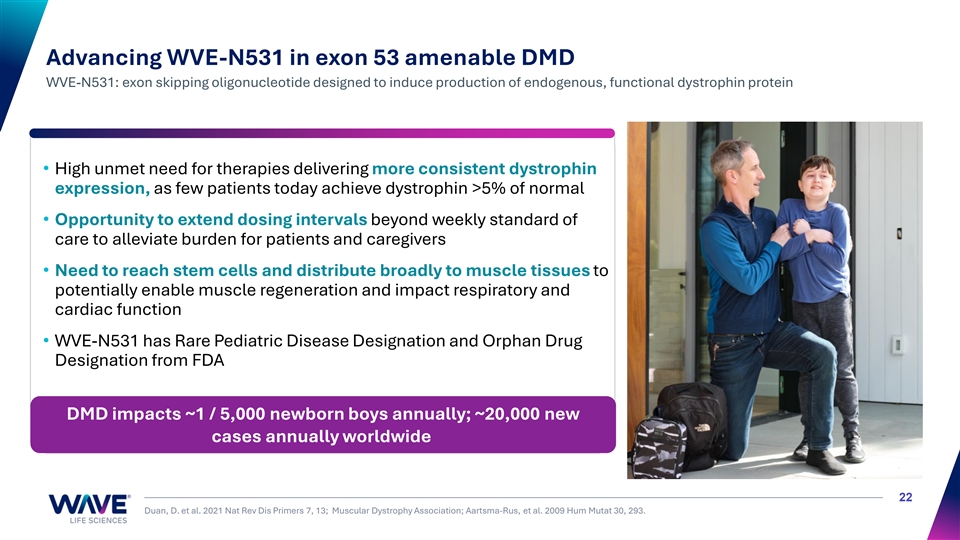
Advancing WVE-N531 in exon 53 amenable DMD WVE-N531: exon skipping oligonucleotide designed to induce production of endogenous, functional dystrophin protein • High unmet need for therapies delivering more consistent dystrophin expression, as few patients today achieve dystrophin >5% of normal • Opportunity to extend dosing intervals beyond weekly standard of care to alleviate burden for patients and caregivers • Need to reach stem cells and distribute broadly to muscle tissues to potentially enable muscle regeneration and impact respiratory and cardiac function • WVE-N531 has Rare Pediatric Disease Designation and Orphan Drug Designation from FDA DMD impacts ~1 / 5,000 newborn boys annually; ~20,000 new cases annually worldwide 22 Duan, D. et al. 2021 Nat Rev Dis Primers 7, 13; Muscular Dystrophy Association; Aartsma-Rus, et al. 2009 Hum Mutat 30, 293.

FORWARD-53 48-week clinical trial results: WVE-N531’s best-in-class profile for boys amenable to exon 53 skipping Statistically significant and clinically meaningful improvement (3.8s) in Time-to-Rise vs. ✓ natural history; functional benefits on other measures including NSAA Statistically significant reductions in muscle fibrosis and CK; driven by decreases in ✓ inflammation and necrosis; transition from regenerative to mature muscle Consistent dystrophin expression averaged 7.8% between 24 and 48 weeks, with 88% of ✓ boys above 5% dystrophin; delivery to both myofibers and muscle stem cells WVE-N531 remains safe and well-tolerated with no Serious Adverse Events ✓ NDA filing for accelerated approval with monthly dosing planned for 2026 23 Muscle content-adjusted dystrophin

Best-in-class, consistent dystrophin expression Best-in-class exon skipping Consistently exceeded levels associated with and dystrophin milder Becker phenotype Average: 24 and 48-week 54% Mean exon skipping induced (95% CI: 46-63%) 7.8% 1 Mean dystrophin expression (95% CI: 5.4-10.3%) 61-day tissue half-life supports monthly dosing Participants 88% of boys achieved greater than 5% average dystrophin 24 Left: 8 participants had muscle biopsies at week 24 and week 48, averages for these n=8 are summarized; Dystrophin measured by western blot (AB15277). Dystrophin expression was 1 quantified from two isoforms; MCA: muscle content-adjusted (MHC-normalized dystrophin/(total myofiber area/total area of biopsy section); Right: Average between 24 and 48 weeks. Average dystrophin protein (%normal) MHC & muscle adj.

WVE-N531 appears to shift dystrophic muscle towards healthy muscle Feedback turns off regeneration (fewer stem cells and they are in resting state) Damage Inflammation Regeneration Fiber maturation Healthy Healthier Muscle Shift Toward Fiber é Fiber organization Maturation and uniformity of ê Stem cell density myofibers Impact of ê Internalized nuclei Functional WVE-N531 on Reduced Necrosis benefit Muscle Health and Inflammation ê Inflammatory cytokines (MCP-1 and IL-6) ê Serum CK Reduced Fibrosis DMD Necrosis and Regeneration to Damage Fibrosis (lack of inflammation exhaustion dystrophin) 25 Cardone et al., 2023 Acta Neuropathol Comm

Evidence of reversal of muscle damage across majority of participants Week 24 Week 48 1 1 Participant number 2 3 4 2 3 4 5 6 7 5 6 7 26 H&E-stained sections (20X magnification). Seven paired biopsies available from week 24 and 48 for histopathology.

Statistically significant reductions in creatine kinase (CK) as compared to baseline and natural history Statistically significant reduction in CK vs. ~50% CK reduction from baseline at 48 weeks C-PATH Natural History * *** ** *** *** *** Week 24 Week 0 48 Decreased CK to levels observed in milder DMD individuals 27 *p<0.05, ** p<0.01, ***p<0.001; Data are mean ± SE Left: n=11; right: n=10 (all ambulatory) Creatine kinase (U/L) Change in Creatine kinase (U/L)

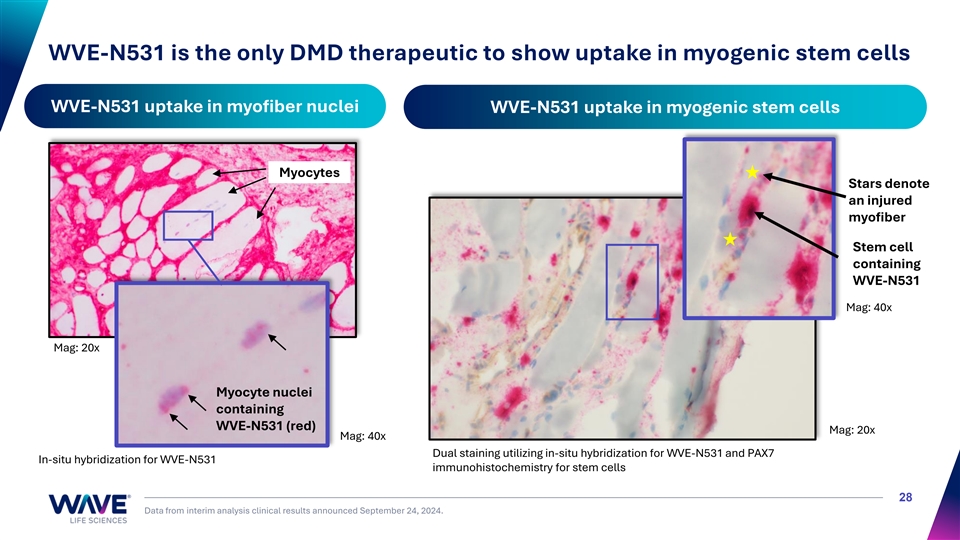
WVE-N531 is the only DMD therapeutic to show uptake in myogenic stem cells WVE-N531 uptake in myofiber nuclei WVE-N531 uptake in myogenic stem cells Myocytes Stars denote an injured myofiber Stem cell containing WVE-N531 Mag: 40x Mag: 20x Myocyte nuclei containing WVE-N531 (red) Mag: 20x Mag: 40x Dual staining utilizing in-situ hybridization for WVE-N531 and PAX7 In-situ hybridization for WVE-N531 immunohistochemistry for stem cells 28 Data from interim analysis clinical results announced September 24, 2024.

Changes to key cell populations in muscle and decrease in systemic inflammatory cytokines, suggesting transition to healthier muscle Progression of regenerative to mature state of muscle tissue ~20% change in density of myogenic Significant decrease (~48%) in internalized Decrease in serum MCP-1 and IL-6 suggests stem cells at 48 weeks nuclei at 48 weeks reduction in inflammation with treatment MCP-1 (pg/mL) IL-6 (pg/mL) Week 24 Week 48 Week 24 Week 48 24 weeks 48 weeks Week 0 Week 24 Week 48 Week 0 Week 24 Week 48 24 weeks 48 weeks 29 Left: NS; Data are mean ± SE (of n = 9); PAX7-positive cells/mm2 quantified using Pax7 immunohistochemistry (IHC) with HALO. Middle: **p<0.01 (two-tailed Welch’s test); Data are mean ± SE; Internalized nuclei quantified using 6 random fields in H&E stained sections. Right: Data are means ± SE PAX7 positive cells/mm2 %Myofibers with internalized nuclei

First evidence of reversal of muscle damage with exon skipping treatment Week 48 showed improved organization and uniformity of myofibers Mean fibrotic muscle % Fibrotic muscle declined 28.6% at 48W declined by individual (n = 7) (n = 7) Week 24 Week 48 24 48 24 48 Time (weeks) Time (weeks) 30 Right: Magnification 5X; fibrosis stained with trichrome stain and analyzed with HALO; ** p<0.01; Data are mean ± SE %Trichrome positive tissue %Trichrome positive Participant 2 Participant 1

Statistically significant and clinically meaningful slowing of disease progression as measured by TTR Functional benefits on other measures including NSAA Mean change in time-to-rise (TTR) Mean change in NSAA 3.8 second improvement 1.2 point with improvement WVE-N531 with WVE-N531 Week Week 31 Left: Minimal Clinical Important Difference (MCID) for TTR: 1.4 sec based on method from McDonald 2013; *p<0.05; Data are mean ± SE Right: NSAA: North Star Ambulatory Assessment; data are mean ± SE Worsening Change from baseline in TTR (sec) Worsening Change from baseline in NSAA Total (points)

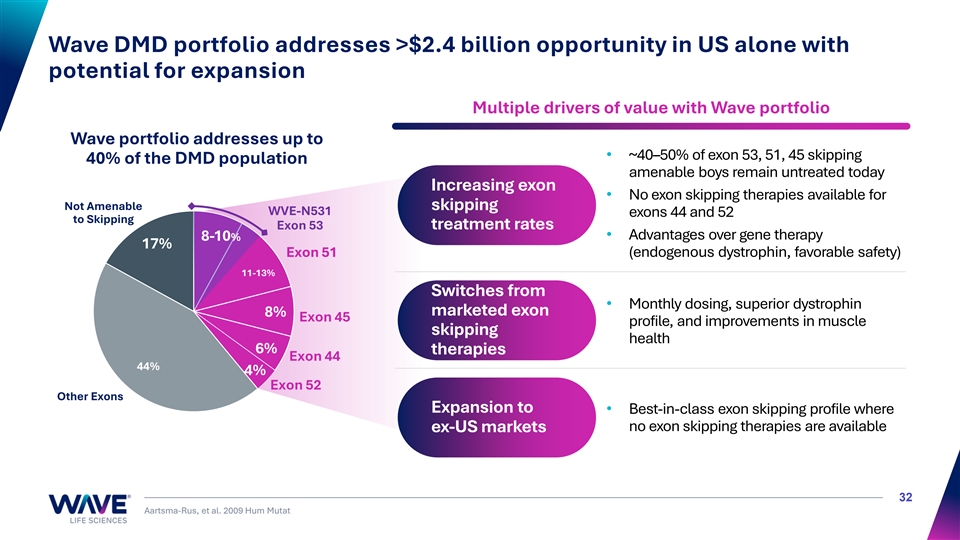
Wave DMD portfolio addresses >$2.4 billion opportunity in US alone with potential for expansion Multiple drivers of value with Wave portfolio Wave portfolio addresses up to • ~40–50% of exon 53, 51, 45 skipping 40% of the DMD population amenable boys remain untreated today Increasing exon • No exon skipping therapies available for Not Amenable skipping WVE-N531 exons 44 and 52 to Skipping Exon 53 treatment rates • Advantages over gene therapy 8-10% 17% E Ex xo on n 51 51 (endogenous dystrophin, favorable safety) 11-13% Switches from • Monthly dosing, superior dystrophin marketed exon 8% Exon 45 profile, and improvements in muscle skipping health 6% therapies Exon 44 44% 4% Exon 52 Other Exons Expansion to • Best-in-class exon skipping profile where ex-US markets no exon skipping therapies are available 32 Aartsma-Rus, et al. 2009 Hum Mutat

Regulatory update and exon skipping franchise derisked FORWARD-53 • All participants are enrolled in the ongoing open-label FORWARD-53 extension trial receiving monthly doses of WVE-N531 • Expanding FORWARD-53 to include additional boys on monthly dosing regimen REGULATORY • FDA feedback confirmed that the accelerated approval pathway using dystrophin expression as a surrogate endpoint remains open • Based on FDA feedback and the 48-week data, Wave intends to submit an NDA in 2026 to support accelerated approval of WVE-N531 with monthly dosing • Wave will continue to engage the Agency with the new 48-week data, including functional outcomes, and its planned global confirmatory trial of WVE-N531 EXON SKIPPING FRANCHISE • Expect to submit multiple CTAs for other exon skipping candidates in 2026 • Candidates all use Wave’s best-in-class chemistry; and preclinical data suggest best-in-class exon skipping franchise 33

WVE-003 Allele-selective silencing Huntington’s Disease 34

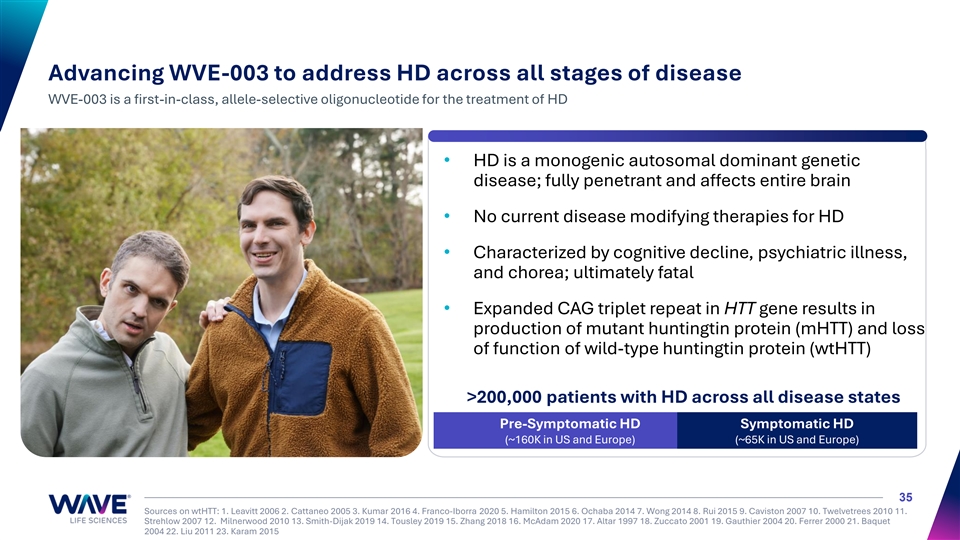
Advancing WVE-003 to address HD across all stages of disease WVE-003 is a first-in-class, allele-selective oligonucleotide for the treatment of HD • HD is a monogenic autosomal dominant genetic disease; fully penetrant and affects entire brain • No current disease modifying therapies for HD • Characterized by cognitive decline, psychiatric illness, and chorea; ultimately fatal • Expanded CAG triplet repeat in HTT gene results in production of mutant huntingtin protein (mHTT) and loss of function of wild-type huntingtin protein (wtHTT) >200,000 patients with HD across all disease states Pre-Symptomatic HD Symptomatic HD (~160K in US and Europe) (~65K in US and Europe) 35 Sources on wtHTT: 1. Leavitt 2006 2. Cattaneo 2005 3. Kumar 2016 4. Franco-Iborra 2020 5. Hamilton 2015 6. Ochaba 2014 7. Wong 2014 8. Rui 2015 9. Caviston 2007 10. Twelvetrees 2010 11. Strehlow 2007 12. Milnerwood 2010 13. Smith-Dijak 2019 14. Tousley 2019 15. Zhang 2018 16. McAdam 2020 17. Altar 1997 18. Zuccato 2001 19. Gauthier 2004 20. Ferrer 2000 21. Baquet 2004 22. Liu 2011 23. Karam 2015

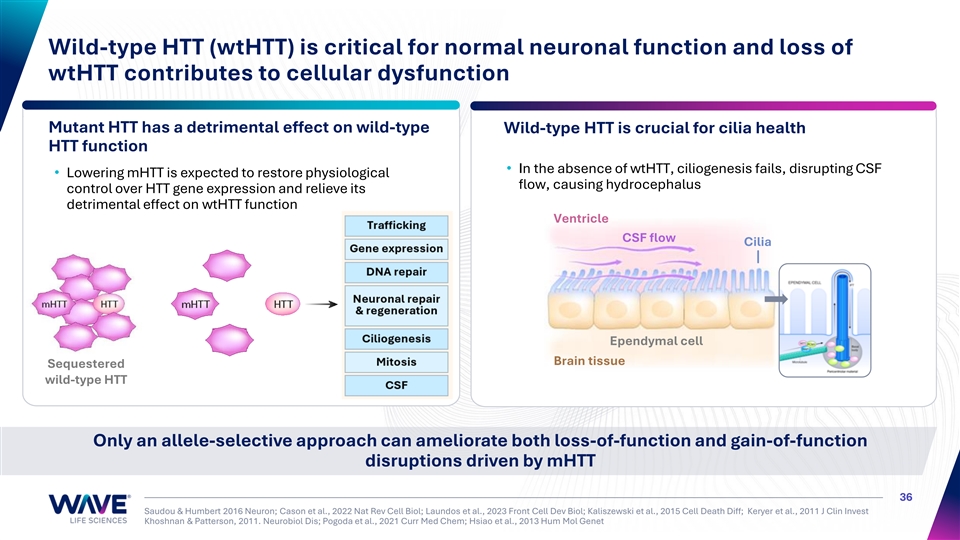
Wild-type HTT (wtHTT) is critical for normal neuronal function and loss of wtHTT contributes to cellular dysfunction Mutant HTT has a detrimental effect on wild-type Wild-type HTT is crucial for cilia health HTT function • In the absence of wtHTT, ciliogenesis fails, disrupting CSF • Lowering mHTT is expected to restore physiological flow, causing hydrocephalus control over HTT gene expression and relieve its detrimental effect on wtHTT function Ventricle CSF flow Cilia Ependymal cell Brain tissue Sequestered wild-type HTT Only an allele-selective approach can ameliorate both loss-of-function and gain-of-function disruptions driven by mHTT 36 Saudou & Humbert 2016 Neuron; Cason et al., 2022 Nat Rev Cell Biol; Laundos et al., 2023 Front Cell Dev Biol; Kaliszewski et al., 2015 Cell Death Diff; Keryer et al., 2011 J Clin Invest Khoshnan & Patterson, 2011. Neurobiol Dis; Pogoda et al., 2021 Curr Med Chem; Hsiao et al., 2013 Hum Mol Genet

Allele-selective CSF lowering of mutant HTT protein of up to an industry leading 46% with three doses of WVE-003 and preservation of wild-type HTT Durability of mHTT reductions supports potential for quarterly dosing intervals Mutant HTT protein levels in CSF Wild-type HTT protein levels in CSF 2.00 2.00 Placebo Placebo WVE-003 30 mg WVE-003 30 mg 1.75 1.75 1.50 1.50 1.25 1.25 1.00 1.00 mHTT Preservation reduction of wtHTT 0.75 0.75 0.50 0.50 1 29 57 85 113 141 169 197 1 29 57 85 113 141 169 197 Dose of Dose of WVE-003 WVE-003 Day Day 37 * p<0.05, **p<0.01, ***p<0.001, ****p<0.0001 mHTT: mutant huntingtin protein; wtHTT: wild-type huntingtin protein From June 25, 2024 SELECT-HD disclosure Mutant Huntingtin Protein (fM) - Geometric Mean Ratio to Baseline +/- SE Wild-Type Huntingtin Protein (fM) - Geometric Mean Ratio to Baseline +/- SE

WVE-003 leads to allele-selective mHTT reduction, correlating with slowing of caudate atrophy Allele-selective mHTT Slowing of Caudate Silencing with wtHTT Functional Benefit Atrophy Preservation • mHTT reduction of up to • WVE-003 trended towards • Caudate atrophy is an 46% vs. placebo less caudate atrophy vs. imaging biomarker expected placebo (4.68% vs. 5.10%, to predict clinical • wtHTT preserved/increased not significant) outcomes, including throughout study clinically meaningful worsening of Total Motor Score (TMS) Greater allele-selective mHTT reduction correlated with the slowing of caudate atrophy at 24 weeks (R = -0.50, p=0.047) 38 Liu et al., 2023 Brain Comm

Analysis of natural history demonstrates that absolute reduction of 1% in rate of caudate atrophy is associated with delay of onset of disability by ≥7.5-years WVE-003 next steps p<0.001 HR = 0.31 • Preparation ongoing for a global, potentially registrational Phase 2/3 study in adults with SNP3 and HD • Using caudate atrophy as a Rate of Caudate Atrophy: primary endpoint Fast: -3.04%/year Slow: -2.04%/year Expect to submit IND application for potentially registrational Phase 2/3 study in 2H 2025 39 Wave internal analysis; TRACK-HD and PREDICT-HD are longitudinal HD natural history studies that include MRI brain imaging, clinical outcome assessments. Paulson et al., Neurosci.2014, Tabrizi et al., Lancet Neurol 2009, Tabrizi et al., Lancet Neurol 2012, Tabrizi et al., Lancet Neurol. 2013 IND: Investigational New Drug TFC: Total Functional Capacity Probability of TFC preservation

Reimagining RNA medicines 40

Poised for significant and sustained growth driven by editing and siRNA GalNAc-siRNA GalNAc-Editing Obesity HD WVE-007 (INHBE) WVE-003 AATD SNP3 WVE-006 Liver Disease DMD PNPLA3 WVE-N531 Exon 53 HeFH Add’l SNPs LDLR & APOB Add’l Exons Current pipeline has potential to treat well over 100 million patients in US and Europe 41 Note: Bubble size illustrative of size of total addressable US market (assuming 100% share of addressable patients)

Anticipated upcoming milestones Allele-selective siRNA RNA editing Splicing silencing WVE-007 (INHBE) WVE-006 Wholly owned WVE-N531 (Exon 53) WVE-003 (SNP3) Obesity AATD programs DMD HD 2H 2025: 3Q 2025: 2025: 2026: 2H 2025: Deliver clinical data Deliver data from the Deliver new preclinical Submit NDA to support Submit IND from INLIGHT complete 200 mg data from hepatic and accelerated approval of application for multidose and single extra-hepatic RNA WVE-N531 with monthly potentially dose cohorts editing programs dosing registrational Phase 2/3 using caudate Fall 2025 2026: Submit CTAs for other atrophy as a primary Deliver data from the Initiate clinical exon skipping endpoint complete 400 mg development of candidates single dose cohort additional RNA editing programs Well-capitalized with expected cash runway into 2027 42 AATD: Alpha-1 antitrypsin deficiency; DMD: Duchenne muscular dystrophy; HD: Huntington’s disease; IND: Investigational New Drug

For questions contact: [email protected]