Exhibit 99.1

VYNE Therapeutics Reports Third Quarter 2021
Financial Results and Provides Business Update
Lead BET Inhibitor Candidate, VYN201, Demonstrates
Potent Anti-Inflammatory Effect in Preclinical Studies
VYN201 Expected to Enter Clinic in 2022
Phase 2a Results for FMX114 in Mild-to-Moderate
Atopic Dermatitis Expected Early Q1 2022
Process for Sale of Topical Minocycline Franchise
Continues to Advance
Conference call and Live Webcast Today at
8:30 am Eastern Time
BRIDGEWATER, N.J., November 10, 2021 -- VYNE
Therapeutics Inc. (Nasdaq: VYNE) (“VYNE” or the “Company”) today announced financial results for the third quarter
ended September 30, 2021 and provided a business update.
“The third quarter marks an important turning
point for VYNE, as our company is now fully engaged in the development of next-generation therapeutics designed to address multiple immuno-inflammatory
diseases,” said David Domzalski, CEO of VYNE. “Based upon a growing body of preclinical data, we believe the evolving therapeutic
profile for the BET inhibitor drug class represents a potential breakthrough in the treatment of immuno-inflammatory diseases. Our lead
candidate, VYN201, is demonstrating a strong ability to effect multiple pro-inflammatory pathways while also appearing to be well tolerated
in animal models. As we move toward 2022, creating shareholder value remains front and center for our company and we look forward to our
Phase 2a data readout for FMX114 in Q1 2022 and advancing our lead BET inhibitor candidates.”
Pipeline Update
VYN201, Topical BET Inhibitor Program:
On October 26, 2021 and November 4, 2021, VYNE announced data from preclinical studies showing that its pan-bromodomain BET inhibitor,
VYN201, significantly reduced the expression of several key pro-inflammatory cytokines relevant to Th17-mediated autoimmune diseases and
demonstrated improvement in reducing fibrotic tissue mass and overall skin repair outcomes. Key highlights from the preclinical studies
include:
| • | VYN201 exhibited anti-inflammatory effect similar to super-potent glucocorticosteroids. |
| • | VYN201 appeared well-tolerated in mice, as seen through animal body weight and skin condition. |
| • | VYN201 also demonstrated stronger inhibition of key Th17 cytokines in ex vivo data with human skin tissue
when directly compared to JAK1/2 inhibitor, ruxolitinib. |
| • | VYN201, demonstrated improvements in reducing fibrotic tissue mass and overall skin repair outcomes with
no negative impact on healing time, supporting the continued progression of the VYN201 development program. |
Following the completion of the prerequisite IND-enabling
non-clinical safety assessments, the Company intends to communicate the initial indication it will be pursuing for VYN201 and expects
to enter the program into the clinic in 2022.
VYN202, Oral BET Inhibitor Program: VYN202
is an orally delivered, first-in-class BET inhibitor that is highly selective for Bromodomain 2 (“BD2”). By selectively inhibiting
BD2, the Company believes VYN202 could have a more targeted anti-inflammatory effect with an improved benefit/risk profile. Upon the selection
of a lead candidate, VYNE intends to exercise its exclusive option with In4Derm Limited and commence an IND-enabling non-clinical safety
program.
FMX114 for Atopic Dermatitis (AD): In October,
VYNE announced the first patient had enrolled in its Phase 1b/2a study comparing the safety and efficacy of FMX114 gel with vehicle gel
in patients with mild-to-moderate AD. Topline results from the Phase 2a portion of the study are anticipated early in the first quarter
of 2022.
Strategic Process to Sell Topical Minocycline
Franchise
The Company continues to execute its process to
divest its topical minocycline franchise, including AMZEEQ, ZILXI and FCD105 (the Company’s Phase 3 proprietary novel topical combination
foam formulation of minocycline and adapalene for the treatment of moderate-to-severe acne vulgaris), as well as the underlying Molecule
Stabilizing Technology (MST) platform specific to this portfolio.
“We believe our minocycline franchise is
a high-quality commercial platform that has significant value,” said Mr. Domzalski. “We are encouraged by the level of interest
we have received and will provide additional details as we continue to progress the sale process.”
Recent Highlights:
| • | On October 5, 2021, we announced that the first patient was enrolled in Cutia's Phase 3 study in China
evaluating AMZEEQ for the purposes of seeking regulatory approval in China. |
| • | On October 19, 2021, we announced that the first patient was enrolled in our Phase 1b/2a clinical trial
evaluating FMX114 for the treatment of mild-to-moderate atopic dermatitis. We expect topline results from the study early in the first
quarter of 2022. |
| • | On October 21, 2021, we announced the formation of a scientific advisory board ("SAB") composed
of leading scientists and academics specializing in immunological and inflammatory diseases. The SAB will provide scientific expertise
and guidance to the VYNE management team and Board, as the Company progresses its pipeline of innovative treatments for immuno-inflammatory
conditions. |
| • | On October 26, 2021, we announced preclinical data showing that VYN201 significantly reduced the expression
of several key pro-inflammatory cytokines relevant to Th17-mediated autoimmune diseases in an animal model and an ex vivo human tissue
study. |
| • | On November 4, 2021, we announced preclinical data showing that VYN201 demonstrated improvements in reducing
fibrotic tissue mass and overall skin repair outcomes with no negative impact on healing time, the results of which support the continued
progression of VYN201 development program for autoimmune skin diseases. |
Financial Performance
(in thousands, except per share amounts) |
|
Three Months Ended September
30, |
|
|
Nine Months Ended September
30, |
|
| |
|
2021 |
|
|
2020 |
|
|
2021 |
|
|
2020 |
|
| Total Revenues |
|
$ |
4,086 |
|
|
$ |
3,269 |
|
|
$ |
12,463 |
|
|
$ |
16,707 |
|
| Net Loss |
|
$ |
(21,285 |
) |
|
$ |
(24,714 |
) |
|
$ |
(61,759 |
) |
|
$ |
(232,387 |
) |
| Diluted Net Loss per Share |
|
$ |
(0.41 |
) |
|
$ |
(0.59 |
) |
|
$ |
(1.22 |
) |
|
$ |
(7.98 |
) |
| Adjusted Net Loss* |
|
$ |
(18,880 |
) |
|
$ |
(22,094 |
) |
|
$ |
(55,011 |
) |
|
$ |
(78,169 |
) |
| Adjusted Diluted Net Loss per Share* |
|
$ |
(0.36 |
) |
|
$ |
(0.53 |
) |
|
$ |
(1.09 |
) |
|
$ |
(2.68 |
) |
| Adjusted EBITDA* |
|
$ |
(15,378 |
) |
|
$ |
(20,934 |
) |
|
$ |
(49,318 |
) |
|
$ |
(74,944 |
) |
* See "Note Regarding the Use of Non-GAAP Financial Measures"
elsewhere in this earnings release.
Cash and Cash Equivalents
As of September 30, 2021, VYNE had cash, cash equivalents and
restricted cash of $52.9 million. On August 11, 2021, the Company paid its lenders approximately $36.5 million in respect of its
outstanding indebtedness and the Credit Agreement was terminated. See Note 1 to our unaudited interim condensed consolidated financial
statements included in VYNE’s Quarterly Report on Form 10-Q for the quarter ended September 30, 2021 for additional discussion
on liquidity.
Financial Results for the Third Quarter Ended September 30,
2021
Revenues
Revenues totaled $4.1 million for the three months
ended September 30, 2021 compared to $3.3 million for the three months ended September 30, 2020. For the three months ended
September 30, 2021, our revenue consisted of $4.0 million of product sales and $0.1 million of royalty revenue. For the three months
ended September 30, 2020, revenues consisted of $2.9 million of product sales, and $0.4 million of royalty revenue.
Cost of Goods Sold
Cost of goods sold was $1.0 million and $0.4 million
for the three months ended September 30, 2021 and 2020, respectively. The increase in cost of goods sold was primarily due to an
increase in sales volume.
Our gross margin percentage was 73% for the three
months ended September 30, 2021. Our gross margin percentage of 87% for the three months ended September 30, 2020
was favorably impacted by product sales with certain materials produced prior to FDA approval and therefore expensed in prior periods.
Research and Development Expenses
Our research and development expenses for the
three months ended September 30, 2021 were $7.0 million, representing an increase of $0.4 million, or 5.4%, compared to $6.6 million
for the three months ended September 30, 2020. Employee-related expenses, including stock-based compensation, increased by $1.0 million.
Expenditures for FMX114 and our BET inhibitor programs increased by $1.8 million, including fees due to In4Derm upon the execution
of the Option Agreement and in connection with the exercise of the Topical BETi Option. The increases were offset by a decrease in clinical
trial and manufacturing expenses due to the completion of FCD105 and serlopitant clinical trials and the product launches of AMZEEQ and
ZILXI during 2020.
Selling, General and Administrative Expenses
Our selling, general and administrative expenses
for the three months ended September 30, 2021 were $13.8 million, representing a decrease of $5.9 million, or 30.0%, compared to
$19.8 million for the three months ended September 30, 2020. Employee-related expenses decreased by $2.0 million primarily due to
lower headcount in 2021. Commercial operations and marketing expenditures decreased by $2.5 million as a result of the strategic
shift of the business announced in August 2021. The balance of the decrease was primarily due to corporate costs incurred during 2020
following the merger between Menlo Therapeutics Inc. and Foamix Pharmaceuticals Ltd. that were eliminated or reduced in 2021. See Note
1 to our unaudited interim condensed consolidated financial statements included in VYNE’s Quarterly Report on Form 10-Q for the
quarter ended September 30, 2021 for additional information regarding the merger.
Conference Call and Live Webcast
VYNE management will host a conference call and live webcast today,
Thursday, November 10, 2021, at 8:30 am Eastern Time to discuss the financial results and provide a business update.
| Toll Free: |
855-327-6837 |
| International: |
631-891-4304 |
| Conference ID: |
10017178 |
| Webcast: |
https://viavid.webcasts.com/starthere.jsp?ei=1512469&tp_key=ee68066700 |
A replay of the call will be archived on the Company’s website
at www.vynetherapeutics.com promptly after the conference call.
Note Regarding the Use of Non-GAAP Financial Measures
The Company has provided certain non-GAAP financial
information as additional information to measure operating performance, including, among others, Adjusted Total Operating Expenses, Adjusted
Net Loss, Adjusted Diluted Net Loss per Share and Adjusted EBITDA. The Company believes that its presentation of such non-GAAP measures
provides useful information to management and investors regarding its financial condition and operations. Specifically, these measures
exclude, among other things, share-based compensation. The Company does not believe that such expenses accurately reflect the Company's
ongoing operations, and the Company does not expect to incur similar expenses in future periods. These measures are not in accordance
with, or an alternative for, generally accepted accounting principles in the United States (“GAAP”) and may be different from
similarly titled non-GAAP measures reported by other companies. The Company has provided required reconciliations to the most comparable
GAAP measures elsewhere in the document.
About Bromodomain and Extra-Terminal Domain (BET) Inhibitors
BET proteins play a key role in regulating gene
transcription via epigenetic interactions (“reading”), and recent research has determined a key role for these BET proteins
in regulating B cell and T cell activation and subsequent inflammatory processes. As epigenetic readers, BET proteins regulate the recruitment
of transcriptional factors that are key to the production of several pro-inflammatory cytokines. Inhibiting BET proteins blocks cytokine
transcription and therefore may have significant therapeutic potential across a wide variety of immuno-inflammatory/fibrotic and myeloproliferative
neoplastic disorders. A topically applied BET inhibitor product has the possibility to positively impact diseases involving multiple,
diverse inflammatory cell signaling pathways that are active in rare neutrophilic dermatoses. Furthermore, bromodomain 2 selective oral
BET inhibitors may present as more conveniently-administered non-biologic treatment options for both acute control and chronic management
of immuno-inflammatory indications, where the damaging effects of unrestricted inflammatory signaling activity is common.
About VYNE Therapeutics Inc.
VYNE’s mission is to improve the lives of
patients by developing proprietary, innovative, and differentiated therapies for the treatment of immuno-inflammatory conditions. VYNE
is working to develop and commercialize a variety of therapies for major immuno-inflammatory conditions and rare skin diseases with high
unmet medical need. The Company’s unique and proprietary pipeline includes FMX114 for the potential treatment of mild-to-moderate
atopic dermatitis and access to a library of bromodomain & extra-terminal (BET) domain inhibitors in both topical and oral forms for
the potential treatment of major immuno-inflammatory conditions and rare skin diseases.
For more information about VYNE Therapeutics
Inc. or its investigational products, visit www.vynetherapeutics.com or follow VYNE on Twitter. VYNE may use its website to comply
with its disclosure obligations under Regulation FD. Therefore, investors should monitor VYNE’s website in addition to following
its press releases, filings with the U.S. Securities and Exchange Commission, public conference calls, and webcasts.
Investor Relations:
Joseph Ranieri
LifeSci Advisors, LLC
617-430-7582
[email protected]
Tyler Zeronda
Chief Financial Officer
VYNE Therapeutics
908-458-9106
[email protected]
Cautionary Statement Regarding Forward-Looking Statements
This release includes forward-looking statements
within the meaning of the Private Securities Litigation Reform Act of 1995, including, but not limited to statements regarding the development
of VYNE’s product candidates and other statements regarding the future expectations, plans and prospects of VYNE. All statements
in this presentation which are not historical facts are forward-looking statements. Any forward-looking statements are based on VYNE’s
current knowledge and its present beliefs and expectations regarding possible future events and are subject to risks, uncertainties and
assumptions that could cause actual results to differ materially and adversely from those set forth or implied by such forward-looking
statements. These risks and uncertainties include, but are not limited to, VYNE’s ability to complete a sale or out-license of its
minocycline franchise on terms acceptable to VYNE in a timely manner or at all; VYNE’s ability to successfully develop its product
candidates; the timing of commencement of future non-clinical studies and clinical trials; VYNE’s ability to successfully progress,
complete, and receive favorable results in, clinical trials for its product candidates; VYNE’s ability to exercise its exclusive
option with respect to an oral BETi candidate pursuant to the terms of the option agreement with In4Derm Limited; VYNE’s intentions
and its ability to obtain additional funding, either through equity or debt financing transactions or collaboration arrangements; disruptions
related to COVID-19 or another pandemic, epidemic or outbreak of a contagious disease, on the ability of VYNE’s suppliers to manufacture
and provide materials for our product candidates, initiating and retaining patients in clinical trials, operating results, liquidity and
financial condition; supply chain disruptions; the regulatory approval process for VYNE’s product candidates, including any delay
or failure in obtaining requisite approvals; the potential market size of treatments for any diseases and market adoption of products,
if approved or cleared for commercial use, by physicians and patients; developments and projections relating to competitors and the pharmaceuticals
industry, including competing drugs and therapies; the timing or likelihood of regulatory filings and approvals or clearances for product
candidates; VYNE’s ability to comply with various regulations applicable to its business; VYNE’s ability to create intellectual
property and the scope of protection it is able to establish and maintain for intellectual property rights covering its product candidates,
including the projected terms of patent protection; risks that any of VYNE’s patents may be held to be narrowed, invalid or unenforceable
or one or more of VYNE’s patent applications may not be granted and potential competitors may also seek to design around VYNE’s
granted patents or patent applications; the timing, costs or results of litigation, including litigation to protect its intellectual property,
including the matter with Padagis Israel Pharmaceuticals Ltd.; VYNE’s ability to successfully challenge intellectual property claimed
by others; estimates of VYNE’s expenses, capital requirements, its needs for additional financing and its ability to obtain additional
capital on acceptable terms or at all; VYNE’s ability to attract and retain key scientific or management personnel; VYNE’s
defense of any litigation that may be initiated against it; VYNE’s expectations regarding licensing, business transactions and strategic
operations; VYNE’s future financial performance and liquidity; and volatility in VYNE’s stock price may result in rapid and
substantial increases or decreases in the stock price that may or may not be related to the company’s operating performance or prospects.
For a discussion of other risks and uncertainties, and other important factors, any of which could cause VYNE’s actual results to
differ from those contained in the forward-looking statements, see the section titled “Risk Factors” in VYNE’s Annual
Report on Form 10-K for the year ended December 31, 2020, as well as discussions of potential risks, uncertainties, and other important
factors in VYNE’s subsequent filings with the U.S. Securities and Exchange Commission. Although VYNE believes these forward-looking
statements are reasonable, they speak only as of the date of this announcement and VYNE undertakes no obligation to update publicly such
forward-looking statements to reflect subsequent events or circumstances, except as otherwise required by law. Given these risks and uncertainties,
you should not rely upon forward-looking statements as predictions of future events.
VYNE THERAPEUTICS INC.
CONDENSED CONSOLIDATED BALANCE SHEETS
(U.S. dollars in thousands, except per share data)
(Unaudited)
| | |
September 30 | | |
December 31 | |
| | |
2021 | | |
2020 | |
| Assets | |
| | | |
| | |
| Current Assets: | |
| | | |
| | |
| Cash and cash equivalents | |
$ | 52,306 | | |
$ | 57,563 | |
| Restricted cash | |
| 605 | | |
| 855 | |
| Investment in marketable securities | |
| — | | |
| 1,027 | |
| Trade receivables, net of allowances | |
| 10,084 | | |
| 15,819 | |
| Prepaid and other assets | |
| 5,064 | | |
| 4,591 | |
| Inventory | |
| 8,070 | | |
| 7,404 | |
| Total Current Assets | |
| 76,129 | | |
| 87,259 | |
| Property and equipment, net | |
| 472 | | |
| 555 | |
| Operating lease right-of-use assets | |
| 1,036 | | |
| 1,583 | |
| Prepaid and other assets | |
| 3,678 | | |
| 4,345 | |
| Total Assets | |
$ | 81,315 | | |
$ | 93,742 | |
| | |
| | | |
| | |
| Liabilities and shareholders’ equity | |
| | | |
| | |
| Current Liabilities: | |
| | | |
| | |
| Trade payables | |
$ | 7,621 | | |
$ | 4,780 | |
| Accrued expenses | |
| 9,613 | | |
| 11,452 | |
| Debt | |
| — | | |
| — | |
| Employee related obligations | |
| 3,382 | | |
| 4,360 | |
| Operating lease liabilities | |
| 277 | | |
| 757 | |
| Other | |
| 104 | | |
| 104 | |
| Total Current Liabilities | |
| 20,997 | | |
| 21,453 | |
| Liability for employee severance benefits | |
| 206 | | |
| 312 | |
| Operating lease liabilities | |
| 775 | | |
| 853 | |
| Long-term debt | |
| — | | |
| 33,174 | |
| Other liabilities | |
| 451 | | |
| 457 | |
| Total Liabilities | |
| 22,429 | | |
| 56,249 | |
| Commitments and Contingencies | |
| — | | |
| — | |
| Shareholders' Equity: | |
| | | |
| | |
| Preferred stock: $0.0001 par value; 20,000,000 shares authorized at September 30, 2021 and December 31, 2020, respectively; no shares issued and outstanding at September 30, 2021 and December 31, 2020, respectively | |
| — | | |
| — | |
| Common stock: $0.0001 par value; 150,000,000 shares and 75,000,000 shares authorized at September 30, 2021 and December 31, 2020, respectively; 53,510,599 and 43,205,221 shares issued and outstanding at September 30, 2021 and December 31, 2020, respectively | |
| 5 | | |
| 4 | |
| Additional paid-in capital | |
| 686,836 | | |
| 603,685 | |
| Accumulated deficit | |
| (627,955 | ) | |
| (566,196 | ) |
| Total Shareholders' Equity | |
| 58,886 | | |
| 37,493 | |
| Total Liabilities and Shareholders' Equity | |
$ | 81,315 | | |
$ | 93,742 | |
VYNE THERAPEUTICS INC.
CONDENSED CONSOLIDATED STATEMENTS OF OPERATIONS
(U.S. dollars in thousands, except per share data)
(Unaudited)
| | |
Three months ended
September 30 | | |
Nine months ended
September 30 | |
| | |
2021 | | |
2020 | | |
2021 | | |
2020 | |
| Revenues | |
| | |
| | |
| | |
| |
| Product sales | |
$ | 3,953 | | |
$ | 2,863 | | |
$ | 11,805 | | |
$ | 6,096 | |
| License revenues | |
| — | | |
| — | | |
| — | | |
| 10,000 | |
| Royalty revenues | |
| 133 | | |
| 406 | | |
| 658 | | |
| 611 | |
| Total Revenues | |
| 4,086 | | |
| 3,269 | | |
| 12,463 | | |
| 16,707 | |
| | |
| | | |
| | | |
| | | |
| | |
| Cost of goods sold | |
| 1,049 | | |
| 371 | | |
| 2,445 | | |
| 858 | |
| | |
| | | |
| | | |
| | | |
| | |
| Operating Expenses: | |
| | | |
| | | |
| | | |
| | |
| Research and development | |
| 6,981 | | |
| 6,623 | | |
| 19,723 | | |
| 35,695 | |
| Selling, general and administrative | |
| 13,832 | | |
| 19,766 | | |
| 46,283 | | |
| 71,640 | |
| Goodwill and in-process research & development impairments | |
| — | | |
| — | | |
| — | | |
| 54,345 | |
| Contingent Stock Right Remeasurement | |
| — | | |
| — | | |
| — | | |
| 84,726 | |
| Total Operating Expenses | |
| 20,813 | | |
| 26,389 | | |
| 66,006 | | |
| 246,406 | |
| Operating Loss | |
| 17,776 | | |
| 23,491 | | |
| 55,988 | | |
| 230,557 | |
| Interest expense | |
| 3,474 | | |
| 1,092 | | |
| 5,610 | | |
| 3,229 | |
| Other expense (income), net | |
| 35 | | |
| 130 | | |
| 161 | | |
| (1,141 | ) |
| Loss Before Income Tax | |
| 21,285 | | |
| 24,713 | | |
| 61,759 | | |
| 232,645 | |
| Income tax expense (benefit) | |
| — | | |
| 1 | | |
| — | | |
| (258 | ) |
| Net Loss | |
$ | 21,285 | | |
$ | 24,714 | | |
$ | 61,759 | | |
$ | 232,387 | |
| | |
| | | |
| | | |
| | | |
| | |
| Loss per share basic and diluted | |
$ | 0.41 | | |
$ | 0.59 | | |
$ | 1.22 | | |
$ | 7.98 | |
| | |
| | | |
| | | |
| | | |
| | |
| Weighted average shares outstanding - basic and diluted | |
| 52,028 | | |
| 41,934 | | |
| 50,776 | | |
| 29,132 | |
Non-GAAP Financial Measures
The following tables reconcile non-GAAP financial
measures presented in this press release or that may be presented on the Company’s conference call with analysts and investors.
The Company believes that these non-GAAP financial measures provide management, analysts, investors and other users of the Company’s
financial information with meaningful supplemental information regarding the performance of the Company’s business. These non-GAAP
financial measures should not be considered superior to, but rather in addition to, other financial measures prepared by the Company in
accordance with GAAP, including the year-to-year results. The Company’s method of determining these non-GAAP financial measures
may be different from other companies’ methods and, therefore, may not be comparable to those used by other companies, and the Company
does not recommend the sole use of these non-GAAP measures to assess its financial and earnings performance. For reasons noted above,
the Company is presenting certain non-GAAP financial measures for the three and nine months ended September 30, 2021 and September 30,
2020. In order for investors to be able to more easily compare the Company’s performance across periods, the Company has included
comparable reconciliations for the 2020 period in the reconciliation tables below.
Reconciliation of EBITDA and Adjusted EBITDA (non-GAAP)
The following table provides a reconciliation of Net loss (GAAP) to
EBITDA (non-GAAP) and Adjusted EBITDA (non-GAAP) for the three and nine months ended September 30, 2021 and 2020 (in thousands):
| | |
Three Months Ended
September 30, | | |
Nine Months Ended
September 30, | |
| | |
2021 | | |
2020 | | |
2021 | | |
2020 | |
| Net loss (GAAP) | |
| (21,285 | ) | |
| (24,714 | ) | |
| (61,759 | ) | |
| (232,387 | ) |
| Income tax expense (benefit) | |
| — | | |
| 1 | | |
| — | | |
| (258 | ) |
| Interest expense, net | |
| 3,474 | | |
| 1,092 | | |
| 5,610 | | |
| 3,229 | |
| Depreciation and amortization | |
| 28 | | |
| 67 | | |
| 83 | | |
| 254 | |
| EBITDA (non-GAAP) | |
| (17,783 | ) | |
| (23,554 | ) | |
| (56,066 | ) | |
| (229,162 | ) |
| | |
| | | |
| | | |
| | | |
| | |
| Share based compensation expense | |
| 2,405 | | |
| 2,620 | | |
| 6,748 | | |
| 15,147 | |
| Goodwill and in-process research & development impairments | |
| — | | |
| — | | |
| — | | |
| 54,345 | |
| Contingent Stock Right Remeasurement | |
| — | | |
| — | | |
| — | | |
| 84,726 | |
| Adjusted EBITDA (non-GAAP) | |
| (15,378 | ) | |
| (20,934 | ) | |
| (49,318 | ) | |
| (74,944 | ) |
Reconciliation of Adjusted Net Loss and other non-GAAP metrics
The following table provides detailed reconciliations of various other
income statement data between GAAP and non-GAAP amounts for the three and nine months ended September 30, 2021 and 2020 (in thousands,
except per share data):
| | |
Three months ended
September 30 | | |
Nine months ended
September 30 | |
| | |
2021 | | |
2020 | | |
2021 | | |
2020 | |
| Net Loss (GAAP) | |
| (21,285 | ) | |
| (24,714 | ) | |
| (61,759 | ) | |
| (232,387 | ) |
| Share based compensation expense | |
| 2,405 | | |
| 2,620 | | |
| 6,748 | | |
| 15,147 | |
| Goodwill and in-process research & development impairments | |
| — | | |
| — | | |
| — | | |
| 54,345 | |
| Contingent Stock Right Remeasurement | |
| — | | |
| — | | |
| — | | |
| 84,726 | |
| Adjusted Net Loss (non-GAAP) | |
| (18,880 | ) | |
| (22,094 | ) | |
| (55,011 | ) | |
| (78,169 | ) |
| | |
| | | |
| | | |
| | | |
| | |
| Research and development expense (GAAP) | |
| 6,981 | | |
| 6,623 | | |
| 19,723 | | |
| 35,695 | |
| Share based compensation expense | |
| (435 | ) | |
| (361 | ) | |
| (1,335 | ) | |
| (3,927 | ) |
| Adjusted Research and development expense (non-GAAP) | |
| 6,546 | | |
| 6,262 | | |
| 18,388 | | |
| 31,768 | |
| | |
| | | |
| | | |
| | | |
| | |
| Selling, general and administrative expense (GAAP) | |
| 13,832 | | |
| 19,766 | | |
| 46,283 | | |
| 71,640 | |
| Share based compensation expense | |
| (1,970 | ) | |
| (2,259 | ) | |
| (5,413 | ) | |
| (11,220 | ) |
| Adjusted Selling, general and administrative expense (non-GAAP) | |
| 11,862 | | |
| 17,507 | | |
| 40,870 | | |
| 60,420 | |
| | |
| | | |
| | | |
| | | |
| | |
| Total Operating Expenses (GAAP) | |
| 20,813 | | |
| 26,389 | | |
| 66,006 | | |
| 246,406 | |
| Share based compensation expense | |
| (2,405 | ) | |
| (2,620 | ) | |
| (6,748 | ) | |
| (15,147 | ) |
| Goodwill and in-process research & development impairments | |
| — | | |
| — | | |
| — | | |
| (54,345 | ) |
| Contingent Stock Right Remeasurement | |
| — | | |
| — | | |
| — | | |
| (84,726 | ) |
| Adjusted Total Operating Expenses | |
| 18,408 | | |
| 23,769 | | |
| 59,258 | | |
| 92,188 | |
| | |
| | | |
| | | |
| | | |
| | |
| Total Operating Loss (GAAP) | |
| (17,776 | ) | |
| (23,491 | ) | |
| (55,988 | ) | |
| (230,557 | ) |
| Share based compensation expense | |
| 2,405 | | |
| 2,620 | | |
| 6,748 | | |
| 15,147 | |
| Goodwill and in-process research & development impairments | |
| — | | |
| — | | |
| — | | |
| 54,345 | |
| Contingent Stock Right Remeasurement | |
| — | | |
| — | | |
| — | | |
| 84,726 | |
| Adjusted Total Operating Loss (non-GAAP) | |
| (15,371 | ) | |
| (20,871 | ) | |
| (49,240 | ) | |
| (76,339 | ) |
| | |
| | | |
| | | |
| | | |
| | |
| Net loss per common share - basic and diluted (GAAP) | |
| (0.41 | ) | |
| (0.59 | ) | |
| (1.22 | ) | |
| (7.98 | ) |
| Share based compensation expense | |
| 0.05 | | |
| 0.06 | | |
| 0.13 | | |
| 0.52 | |
| Goodwill and in-process research & development impairments | |
| — | | |
| — | | |
| — | | |
| 1.87 | |
| Contingent Stock Right Remeasurement | |
| — | | |
| — | | |
| — | | |
| 2.91 | |
| Adjusted Net loss per share - basic and diluted (non-GAAP) | |
| (0.36 | ) | |
| (0.53 | ) | |
| (1.09 | ) | |
| (2.68 | ) |
| Weighted average number of common shares outstanding - basic and diluted | |
| 52,028 | | |
| 41,934 | | |
| 50,776 | | |
| 29,132 | |
Exhibit 99.2
INVESTOR PRESENTATION November 2021
Forward Looking Statements This presentation includes forward - looking statements within the meaning of the Private Securities Litigation Reform Act of 1995 , including, but not limited to statements regarding the development of VYNE’s product candidates and other statements regarding the future expectations, plans and prospects of VYNE . All statements in this presentation which are not historical facts are forward - looking statements . Any forward - looking statements are based on VYNE’s current knowledge and its present beliefs and expectations regarding possible future events and are subject to risks, uncertainties and assumptions that could cause actual results to differ materially and adversely from those set forth or implied by such forward - looking statements . These risks and uncertainties include, but are not limited to, VYNE’s ability to complete a sale or out - license of its minocycline franchise on terms acceptable to VYNE in a timely manner or at all ; VYNE’s ability to successfully develop its product candidates ; the timing of commencement of future non - clinical studies and clinical trials ; VYNE’s ability to successfully progress, complete, and receive favorable results in, clinical trials for its product candidates ; VYNE’s ability to exercise its exclusive option with respect to an oral BETi candidate pursuant to the terms of the option agreement with In 4 Derm Limited ; VYNE’s intentions and its ability to obtain additional funding, either through equity or debt financing transactions or collaboration arrangements ; disruptions related to COVID - 19 or another pandemic, epidemic or outbreak of a contagious disease, on the ability of VYNE’s suppliers to manufacture and provide materials for our product candidates, initiating and retaining patients in clinical trials, operating results, liquidity and financial condition ; supply chain disruptions ; the regulatory approval process for VYNE’s product candidates, including any delay or failure in obtaining requisite approvals ; the potential market size of treatments for any diseases and market adoption of products, if approved or cleared for commercial use, by physicians and patients ; developments and projections relating to competitors and the pharmaceuticals industry, including competing drugs and therapies ; the timing or likelihood of regulatory filings and approvals or clearances for product candidates ; VYNE’s ability to comply with various regulations applicable to its business ; VYNE’s ability to create intellectual property and the scope of protection it is able to establish and maintain for intellectual property rights covering its product candidates, including the projected terms of patent protection ; risks that any of VYNE’s patents may be held to be narrowed, invalid or unenforceable or one or more of VYNE’s patent applications may not be granted and potential competitors may also seek to design around VYNE’s granted patents or patent applications ; the timing, costs or results of litigation, including litigation to protect its intellectual property, including the matter with Padagis Israel Pharmaceuticals Ltd .; VYNE’s ability to successfully challenge intellectual property claimed by others ; estimates of VYNE’s expenses, capital requirements, its needs for additional financing and its ability to obtain additional capital on acceptable terms or at all ; VYNE’s ability to attract and retain key scientific or management personnel ; VYNE’s defense of any litigation that may be initiated against it ; VYNE’s expectations regarding licensing, business transactions and strategic operations ; VYNE’s future financial performance and liquidity ; and volatility in VYNE’s stock price may result in rapid and substantial increases or decreases in the stock price that may or may not be related to the company’s operating performance or prospects . For a discussion of other risks and uncertainties, and other important factors, any of which could cause VYNE’s actual results to differ from those contained in the forward - looking statements, see the section titled “Risk Factors” in VYNE’s annual report on Form 10 - K for the year ended December 31 , 2020 as well as discussions of potential risks, uncertainties, and other important factors in VYNE’s subsequent filings with the U . S . Securities and Exchange Commission . Although VYNE believes these forward - looking statements are reasonable, they speak only as of the date of this presentation and VYNE undertakes no obligation to update publicly such forward - looking statements to reflect subsequent events or circumstances, except as otherwise required by law . Given these risks and uncertainties, you should not rely upon forward - looking statements as predictions of future events . The trademarks included herein are the property of the owners thereof and are used for reference purposes only . This presentation concerns product candidates that are under clinical investigation . None of such product candidates have been approved for marketing by the FDA or the EMA, and such product candidates are currently limited to investigational use, and no representation is made as to their safety or effectiveness for the purposes for which they are being investigated . 2
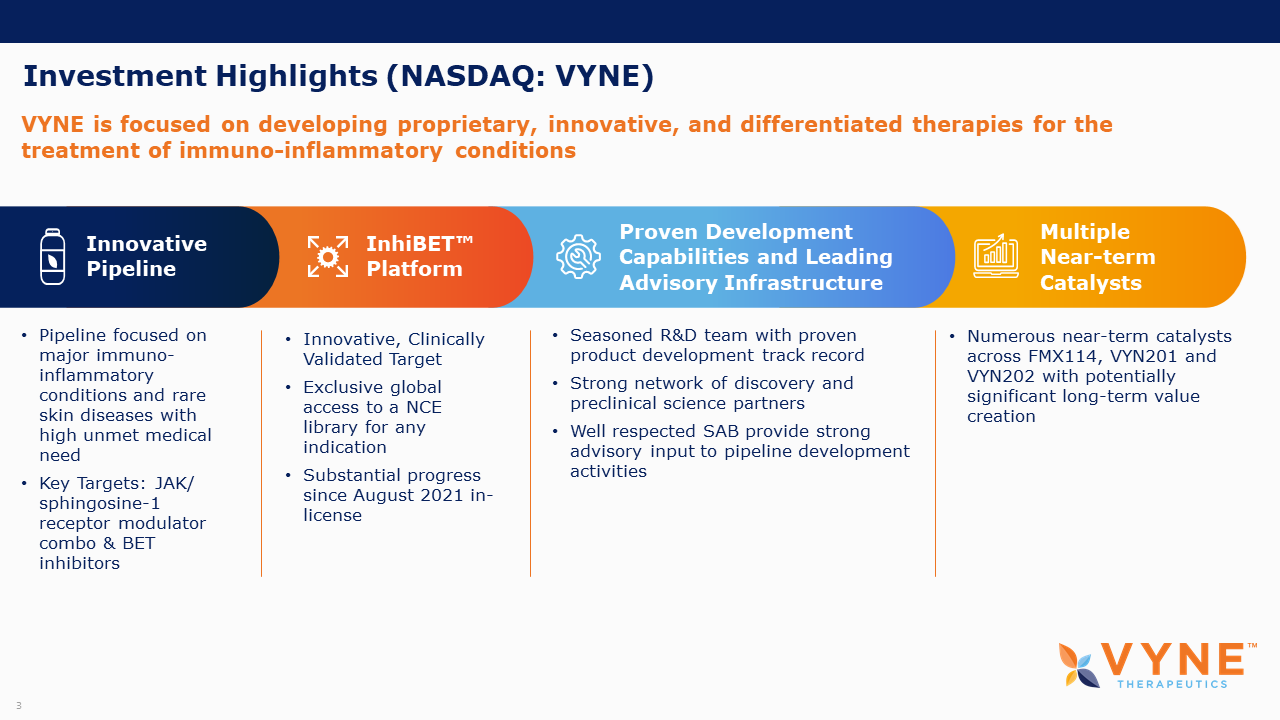
3 Investment Highlights (NASDAQ: VYNE) VYNE is focused on developing proprietary, innovative, and differentiated therapies for the treatment of immuno - inflammatory conditions Innovative Pipeline • Pipeline focused on major immuno - inflammatory conditions and rare skin diseases with high unmet medical need • Key Targets: JAK/ sphingosine - 1 receptor modulator combo & BET inhibitors InhiBET Œ Platform • Innovative, Clinically Validated Target • Exclusive global access to a NCE library for any indication • Substantial progress since August 2021 in - license Proven Development Capabilities and Leading Advisory Infrastructure Multiple Near - term Catalysts • Seasoned R&D team with proven product development track record • Strong network of discovery and preclinical science partners • Well respected SAB provide strong advisory input to pipeline development activities • Numerous n ear - term catalysts across FMX114, VYN201 and VYN202 with potentially significant long - term value creation
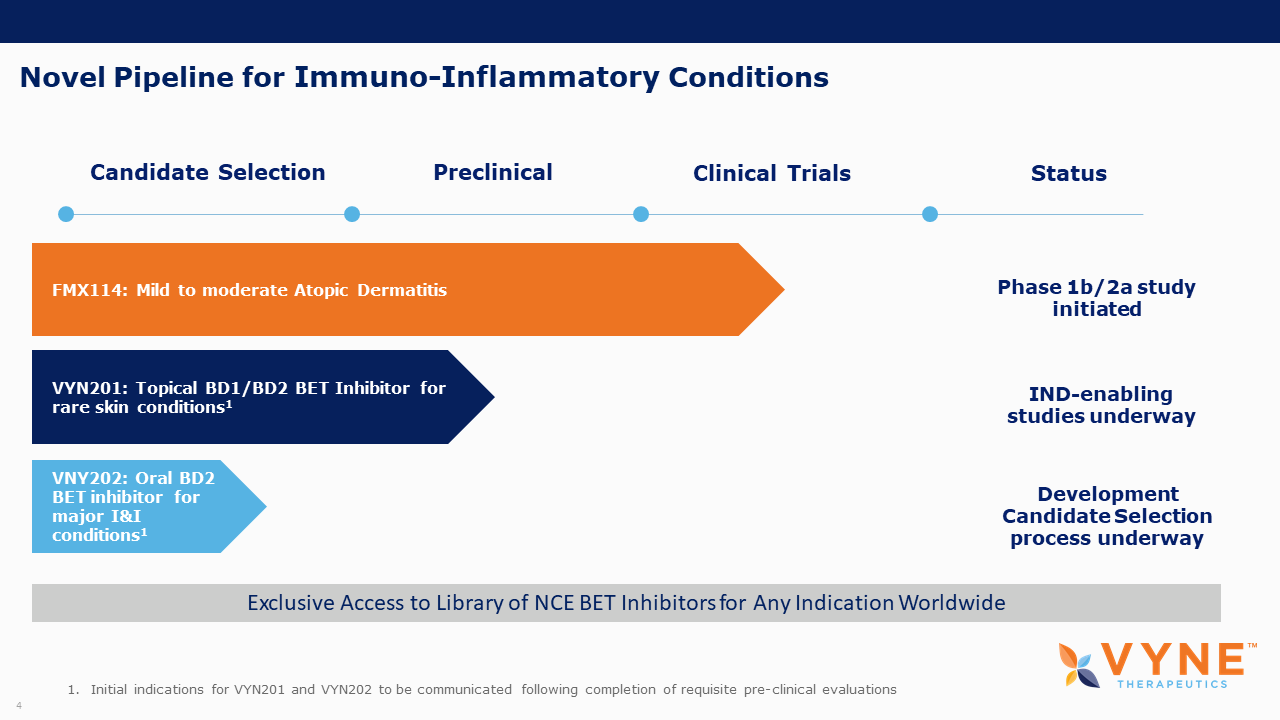
Novel Pipeline for Immuno - Inflammatory Conditions FMX114: Mild to moderate Atopic Dermatitis VNY202: Oral BD2 BET inhibitor for major I&I conditions 1 VYN201: Topical BD1/BD2 BET Inhibitor for rare skin conditions 1 Preclinical Candidate Selection Status IND - enabling studies underway Development Candidate Selection process underway Phase 1b/2a study initiated Clinical Trials Exclusive Access to Library of NCE BET Inhibitors for Any Indication Worldwide 1. Initial indications for VYN201 and VYN202 to be communicated following completion of requisite pre - clinical evaluations 4
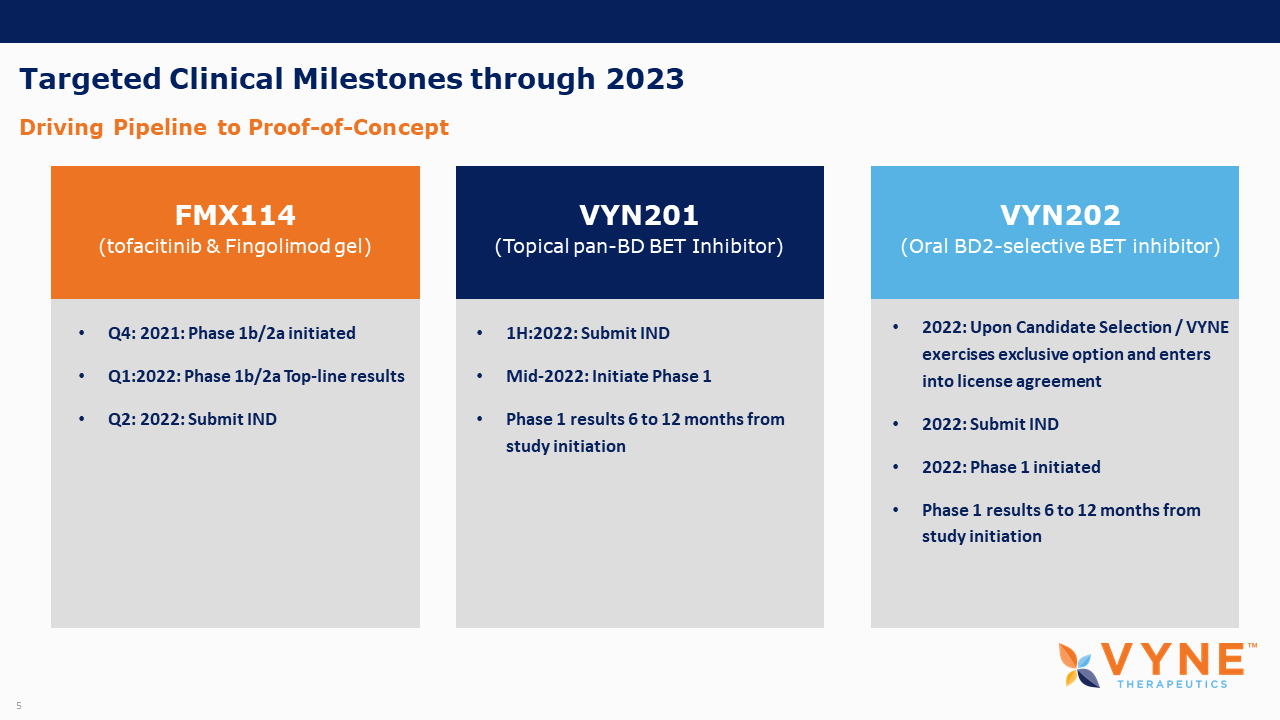
Targeted Clinical Milestones through 2023 Driving Pipeline to Proof - of - Concept • Q4: 2021: Phase 1b/2a initiated • Q1:2022: Phase 1b/2a Top - line results • Q2: 2022: Submit IND FMX114 (tofacitinib & Fingolimod gel) • 1H:2022: Submit IND • Mid - 2022: Initiate Phase 1 • Phase 1 results 6 to 12 months from study initiation • 2022: Upon Candidate Selection / VYNE exercises exclusive option and enters into license agreement • 2022: Submit IND • 2022: Phase 1 initiated • Phase 1 results 6 to 12 months from study initiation VYN201 (Topical pan - BD BET Inhibitor) VYN202 (Oral BD2 - selective BET inhibitor) 5
FMX114 Tofacitinib and Fingolimod Topical Gel for Atopic Dermatitis 6
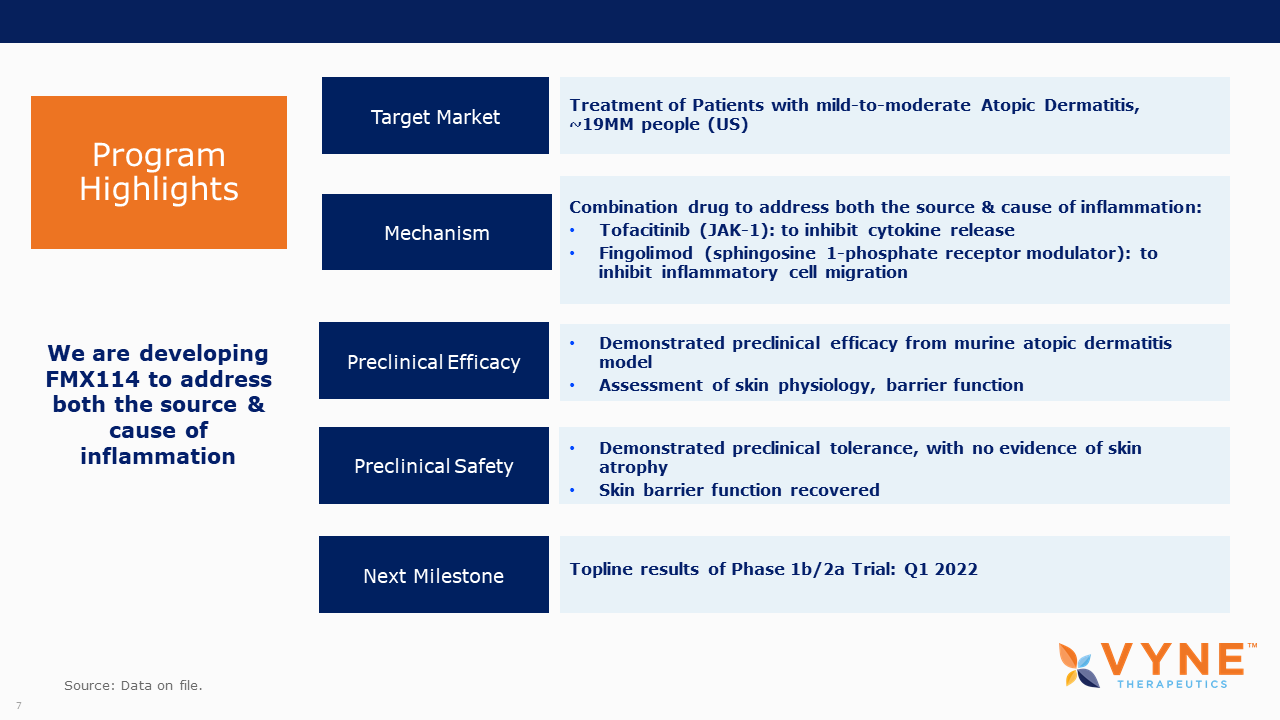
Program Highlights Target Market Treatment of Patients with mild - to - moderate Atopic Dermatitis, ~19MM people (US) Preclinical Safety • Demonstrated preclinical tolerance, with no evidence of skin atrophy • Skin barrier function recovered Next Milestone Topline results of Phase 1b/2a Trial: Q1 2022 Mechanism Combination drug to address both the source & cause of inflammation: • Tofacitinib (JAK - 1): to inhibit cytokine release • Fingolimod (sphingosine 1 - phosphate receptor modulator): to inhibit inflammatory cell migration Preclinical Efficacy • Demonstrated preclinical efficacy from murine atopic dermatitis model • Assessment of skin physiology, barrier function We are developing FMX114 to address both the source & cause of inflammation 7 Source: Data on file.
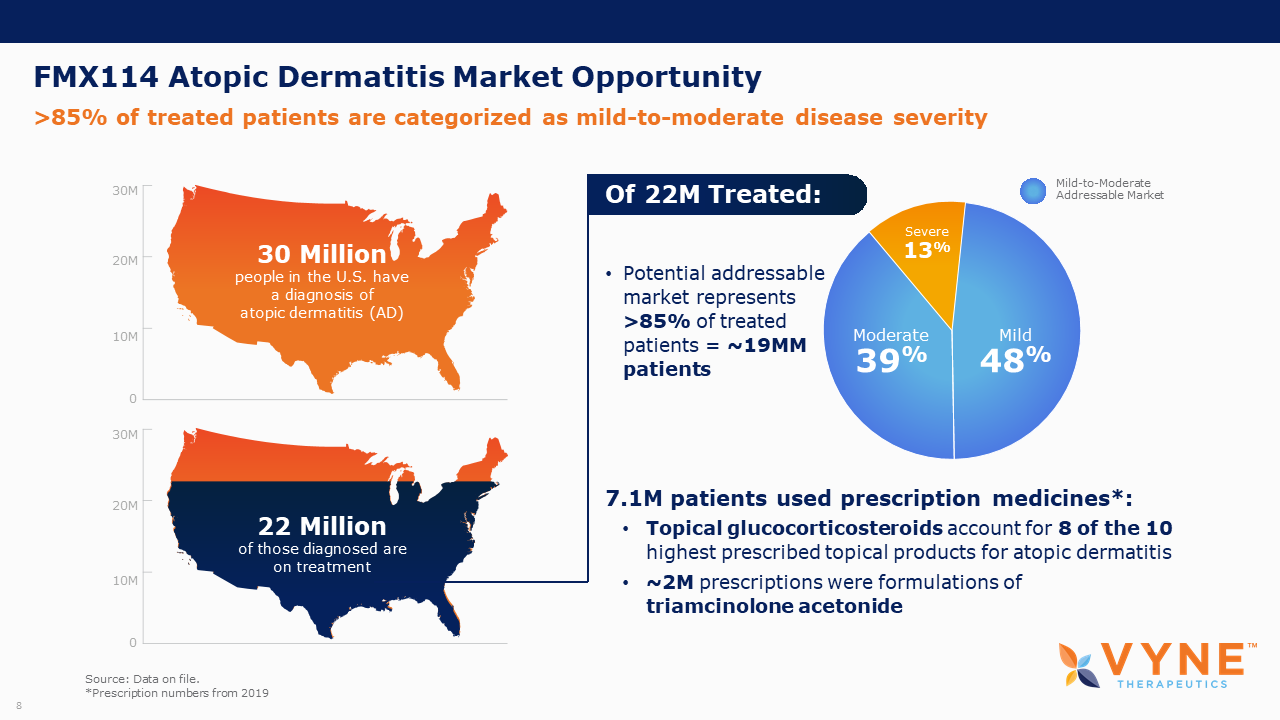
FMX114 Atopic Dermatitis Market Opportunity >85% of treated patients are categorized as mild - to - moderate disease severity Source: Data on file. *Prescription numbers from 2019 30 Million people in the U.S. have a diagnosis of atopic dermatitis (AD) 0 10M 20M 30M 0 10M 20M 30M 22 Million of those diagnosed are on treatment • Potential addressable market represents >85% of treated patients = ~19MM patients Of 22M Treated: 7.1M patients used prescription medicines*: • Topical glucocorticosteroids account for 8 of the 10 highest prescribed topical products for atopic dermatitis • ~2M prescriptions were formulations of triamcinolone acetonide Mild 48 % Moderate 39 % Severe 13 % Mild - to - Moderate Addressable Market 8
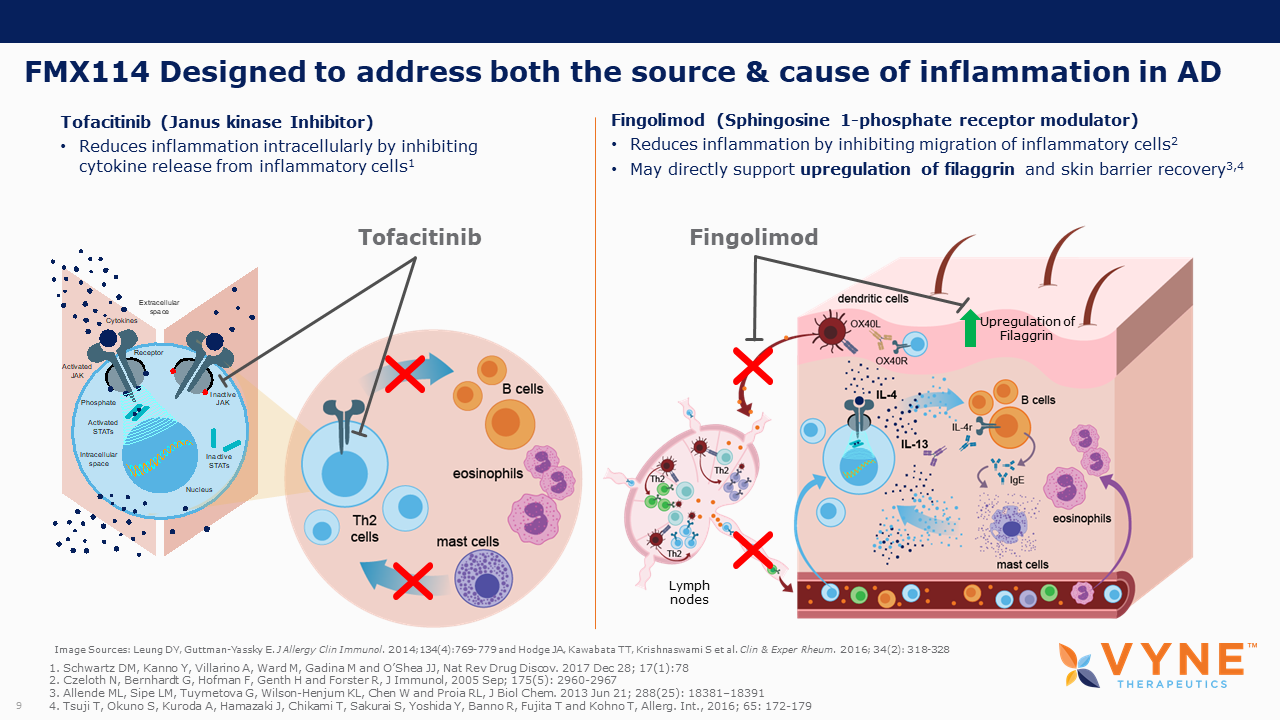
Intracellular space Extracellular space Activated STATs Inactive STATs Nucleus Activated JAK Inactive JAK Receptor Cytokines Phosphate FMX114 Designed to address both the source & cause of inflammation in AD Image Sources: Leung DY, Guttman - Yassky E. J Allergy Clin Immunol . 2014;134(4):769 - 779 and Hodge JA, Kawabata TT, Krishnaswami S et al. Clin & Exper Rheum . 2016; 34(2): 318 - 328 Fingolimod (Sphingosine 1 - phosphate receptor modulator) • Reduces inflammation by inhibiting migration of inflammatory cells 2 • May directly support upregulation of filaggrin and skin barrier recovery 3,4 Tofacitinib (Janus kinase Inhibitor) • Reduces inflammation intracellularly by inhibiting cytokine release from inflammatory cells 1 Fingolimod Tofacitinib Lymph nodes 1. Schwartz DM, Kanno Y, Villarino A, Ward M, Gadina M and O’Shea JJ, Nat Rev Drug Discov . 2017 Dec 28; 17(1):78 2. Czeloth N, Bernhardt G, Hofman F, Genth H and Forster R, J Immunol, 2005 Sep; 175(5): 2960 - 2967 3. Allende ML, Sipe LM, Tuymetova G, Wilson - Henjum KL, Chen W and Proia RL, J Biol Chem. 2013 Jun 21; 288(25): 18381 – 18391 4. Tsuji T, Okuno S, Kuroda A, Hamazaki J, Chikami T, Sakurai S, Yoshida Y, Banno R, Fujita T and Kohno T, Allerg . Int., 2016; 65: 172 - 179 Upregulation of Filaggrin 9
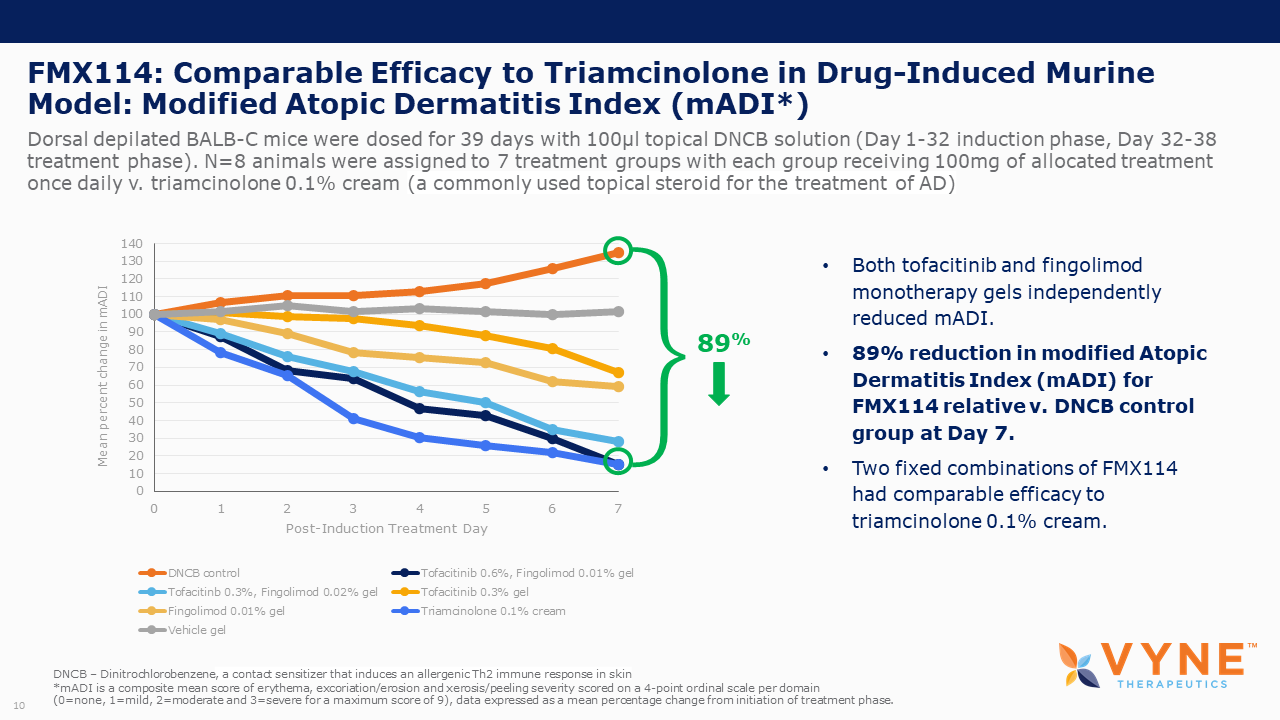
FMX114: Comparable Efficacy to Triamcinolone in Drug - Induced Murine Model: Modified Atopic Dermatitis Index ( mADI *) Dorsal depilated BALB - C mice were dosed for 39 days with 100µl topical DNCB solution (Day 1 - 32 induction phase, Day 32 - 38 treatment phase). N=8 animals were assigned to 7 treatment groups with each group receiving 100mg of allocated treatment once daily v. triamcinolone 0.1% cream (a commonly used topical steroid for the treatment of AD) • Both tofacitinib and fingolimod monotherapy gels independently reduced mADI . • 89% reduction in modified Atopic Dermatitis Index ( mADI ) for FMX114 relative v. DNCB control group at Day 7. • Two fixed combinations of FMX114 had comparable efficacy to triamcinolone 0.1% cream. DNCB – Dinitrochlorobenzene , a contact sensitizer that induces an allergenic Th2 immune response in skin * mADI is a composite mean score of erythema, excoriation/erosion and xerosis/peeling severity scored on a 4 - point ordinal scale per d omain (0=none, 1=mild, 2=moderate and 3=severe for a maximum score of 9), data expressed as a mean percentage change from initiatio n o f treatment phase. 10 0 10 20 30 40 50 60 70 80 90 100 110 120 130 140 0 1 2 3 4 5 6 7 Mean percent change in mADI Post - Induction Treatment Day DNCB control Tofacitinib 0.6%, Fingolimod 0.01% gel Tofacitinb 0.3%, Fingolimod 0.02% gel Tofacitinib 0.3% gel Fingolimod 0.01% gel Triamcinolone 0.1% cream Vehicle gel 89 %
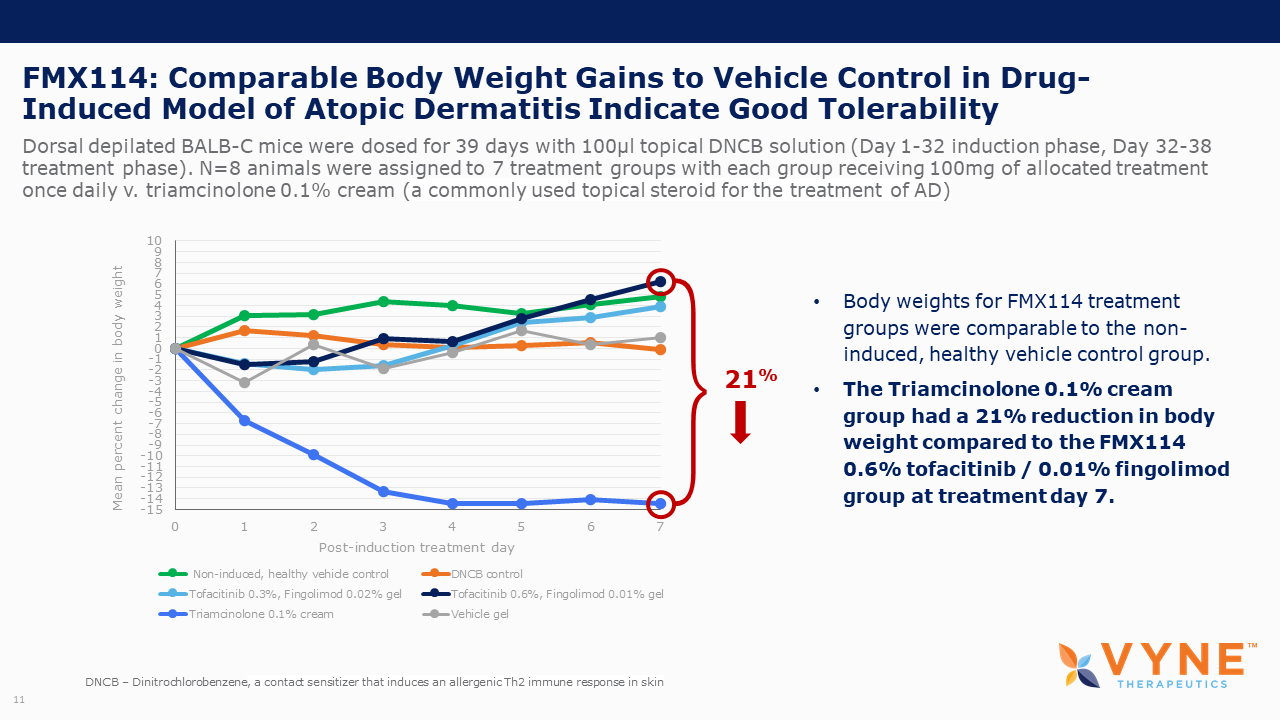
11 -15 -14 -13 -12 -11 -10 -9 -8 -7 -6 -5 -4 -3 -2 -1 0 1 2 3 4 5 6 7 8 9 10 0 1 2 3 4 5 6 7 Mean percent change in body weight Post - induction treatment day Non-induced, healthy vehicle control DNCB control Tofacitinib 0.3%, Fingolimod 0.02% gel Tofacitinib 0.6%, Fingolimod 0.01% gel Triamcinolone 0.1% cream Vehicle gel 21 % • Body weights for FMX114 treatment groups were comparable to the non - induced, healthy vehicle control group. • The Triamcinolone 0.1% cream group had a 21% reduction in body weight compared to the FMX114 0.6% tofacitinib / 0.01% fingolimod group at treatment day 7. DNCB – Dinitrochlorobenzene , a contact sensitizer that induces an allergenic Th2 immune response in skin Dorsal depilated BALB - C mice were dosed for 39 days with 100µl topical DNCB solution (Day 1 - 32 induction phase, Day 32 - 38 treatment phase). N=8 animals were assigned to 7 treatment groups with each group receiving 100mg of allocated treatment once daily v. triamcinolone 0.1% cream (a commonly used topical steroid for the treatment of AD) FMX114: Comparable Body Weight Gains to Vehicle Control in Drug - Induced Model of Atopic Dermatitis Indicate Good Tolerability
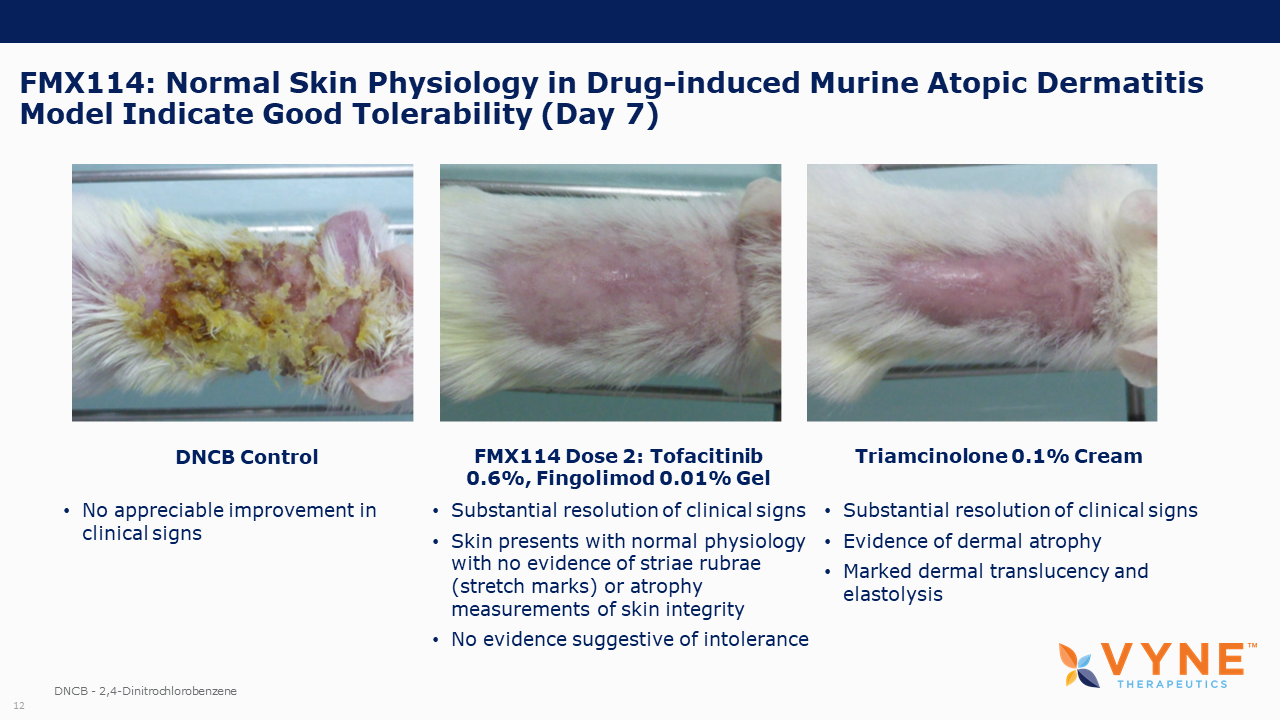
DNCB - 2,4 - Dinitrochlorobenzene FMX114 Dose 2: Tofacitinib 0.6%, Fingolimod 0.01% Gel DNCB Control Triamcinolone 0.1% Cream • No appreciable improvement in clinical signs • Substantial resolution of clinical signs • Skin presents with normal physiology with no evidence of striae rubrae (stretch marks) or atrophy measurements of skin integrity • No evidence suggestive of intolerance • Substantial resolution of clinical signs • Evidence of dermal atrophy • Marked dermal translucency and elastolysis FMX114: Normal Skin Physiology in Drug - induced Murine Atopic Dermatitis Model Indicate Good Tolerability (Day 7) 12
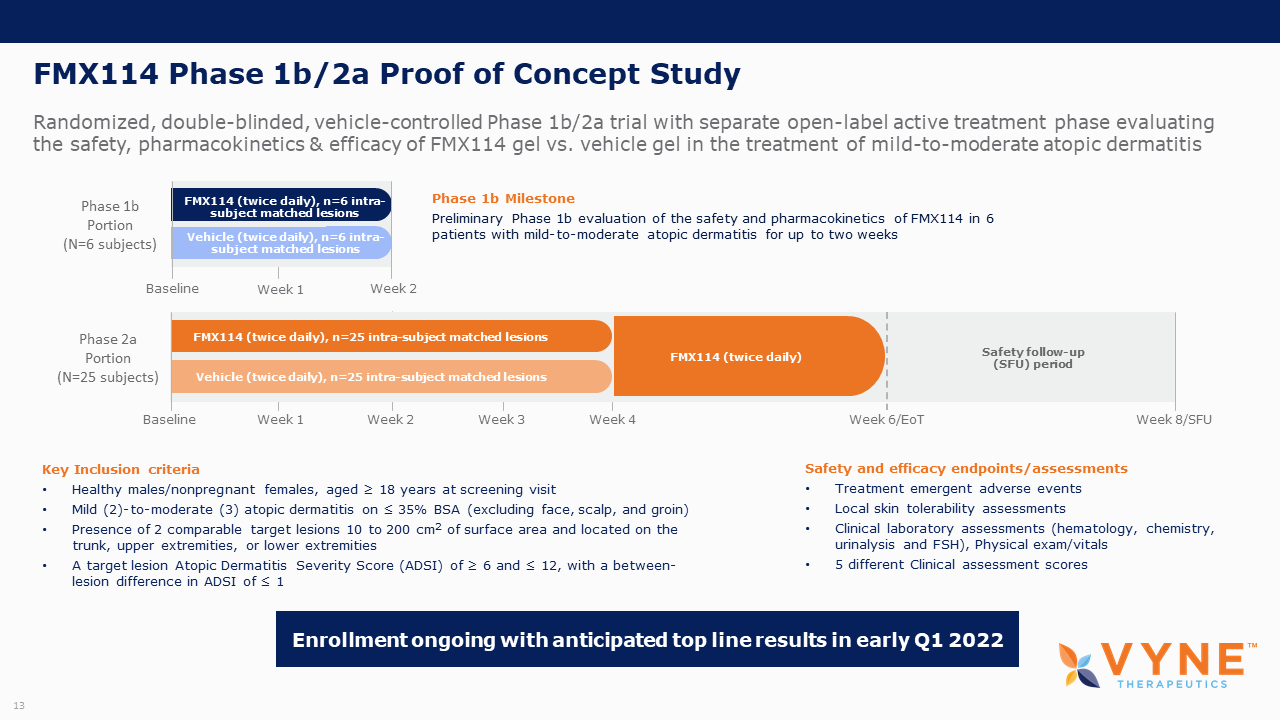
FMX114 Phase 1b/2a Proof of Concept Study Randomized, double - blinded, vehicle - controlled Phase 1b/2a trial with separate open - label active treatment phase evaluating the safety, pharmacokinetics & efficacy of FMX114 gel vs. vehicle gel in the treatment of mild - to - moderate atopic dermatitis Key Inclusion criteria • Healthy males/nonpregnant females, aged ≥ 18 years at screening visit • Mild (2) - to - moderate (3) atopic dermatitis on ≤ 35% BSA ( excluding face, scalp, and groin) • Presence of 2 comparable target lesions 10 to 200 cm 2 of surface area and located on the trunk, upper extremities, or lower extremities • A target lesion Atopic Dermatitis Severity Score (ADSI) of ≥ 6 and ≤ 12, with a between - lesion difference in ADSI of ≤ 1 Safety and efficacy endpoints/assessments • Treatment emergent adverse events • Local skin tolerability assessments • Clinical laboratory assessments (hematology, chemistry, urinalysis and FSH), Physical exam/vitals • 5 different Clinical assessment scores Enrollment ongoing with anticipated top line results in early Q1 2022 Baseline Week 1 FMX114 (twice daily), n=25 intra - subject matched lesions Week 4 Week 6/EoT Week 8/SFU Vehicle (twice daily), n=25 intra - subject matched lesions FMX114 (twice daily) Safety follow - up (SFU) period Week 2 Week 3 FMX114 (twice daily), n=25 intra - subject matched lesions Vehicle (twice daily), n=25 intra - subject matched lesions FMX114 (twice daily) Safety follow - up (SFU) period FMX114 (twice daily), n=6 intra - subject matched lesions Vehicle (twice daily), n=6 intra - subject matched lesions Baseline Week 1 Week 2 Phase 1b Portion (N=6 subjects) Phase 2a Portion (N=25 subjects) Phase 1b Milestone P reliminary Phase 1b evaluation of the safety and pharmacokinetics of FMX114 in 6 patients with mild - to - moderate atopic dermatitis for up to two weeks 13
InhiBET ΠBET Inhibitor Platform Bromodomain & Extra - Terminal Domain (BET) Inhibition for Immunology and Inflammatory Diseases 14
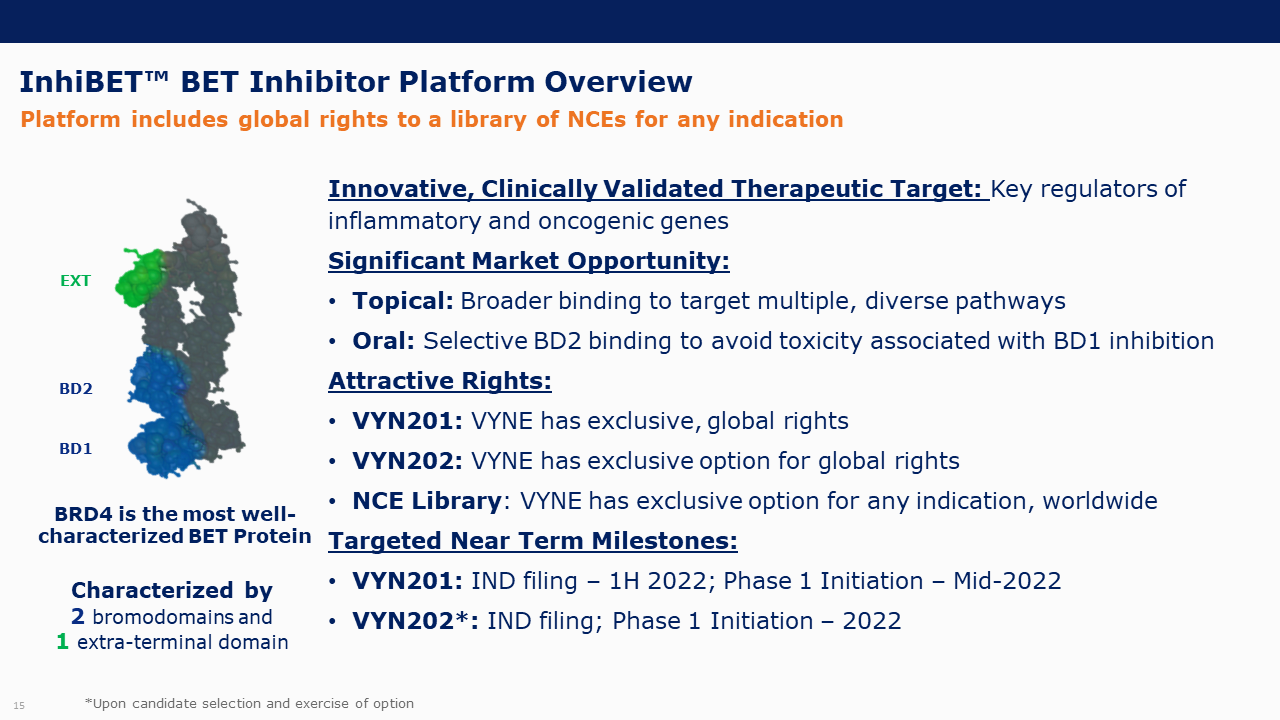
BD1 BD2 BRD4 is the most well - characterized BET Protein EXT Characterized by 2 bromodomains and 1 extra - terminal domain InhiBET Œ BET Inhibitor Platform Overview Platform includes global rights to a library of NCEs for any indication Innovative, Clinically Validated Therapeutic Target: Key regulators of inflammatory and oncogenic genes Significant Market Opportunity: • Topical: Broader binding to target multiple, diverse pathways • Oral: Selective BD2 binding to avoid toxicity associated with BD1 inhibition Attractive Rights: • VYN201: VYNE has exclusive, global rights • VYN202: VYNE has exclusive option for global rights • NCE Library : VYNE has exclusive option for any indication, worldwide Targeted Near Term Milestones: • VYN201: IND filing – 1H 2022; Phase 1 Initiation – Mid - 2022 • VYN202*: IND filing; Phase 1 Initiation – 2022 15 *Upon candidate selection and exercise of option
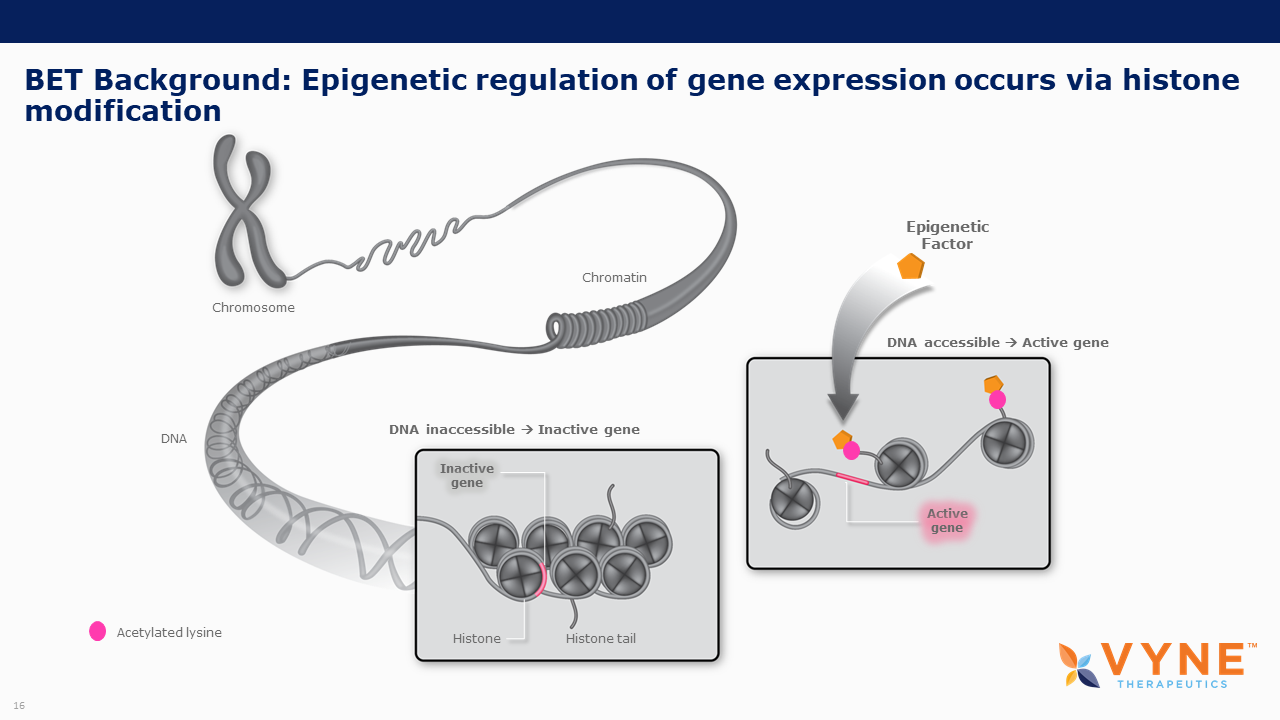
BET Background: Epigenetic regulation of gene expression occurs via histone modification Chromosome DNA Chromatin Inactive gene Histone tail Histone DNA inaccessible Inactive gene Epigenetic Factor DNA accessible Active gene Active gene Acetylated lysine 16
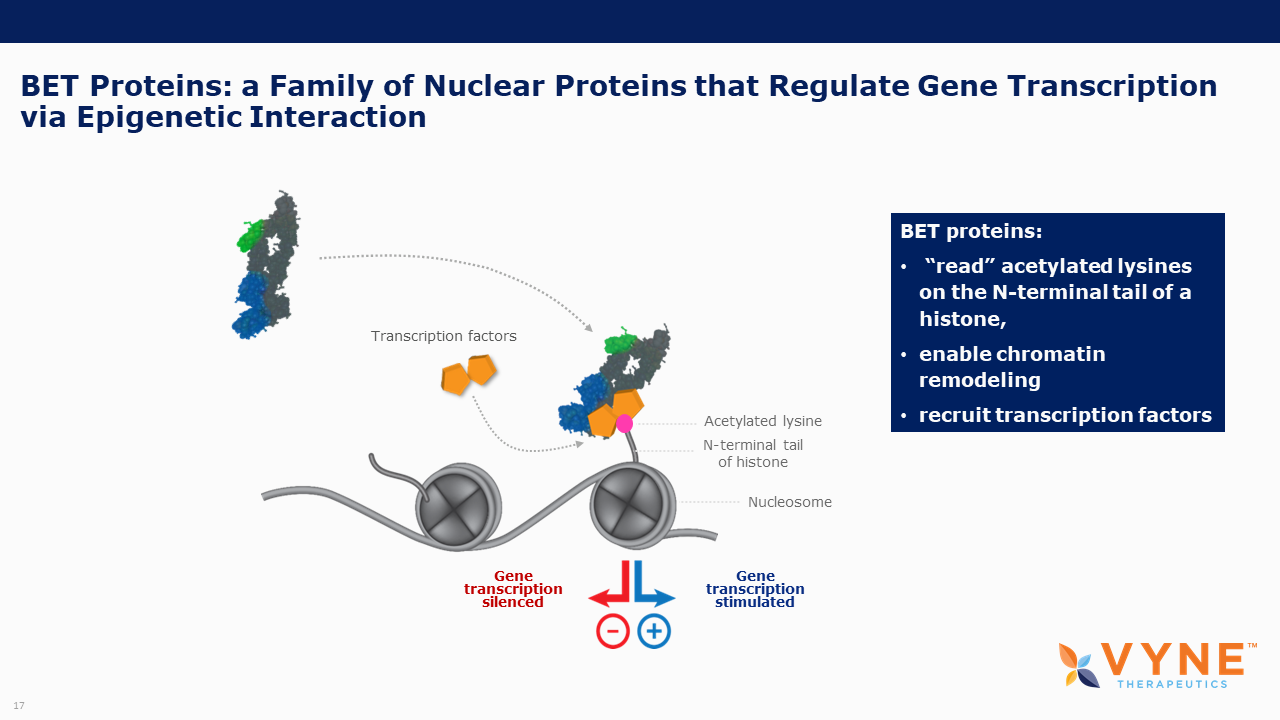
Gene transcription stimulated N - terminal tail of histone Gene transcription silenced Nucleosome Transcription factors BET Proteins: a Family of Nuclear Proteins that Regulate Gene Transcription via Epigenetic Interaction BET proteins: • “read” acetylated lysines on the N - terminal tail of a histone, • enable chromatin remodeling • recruit transcription factors Acetylated lysine 17
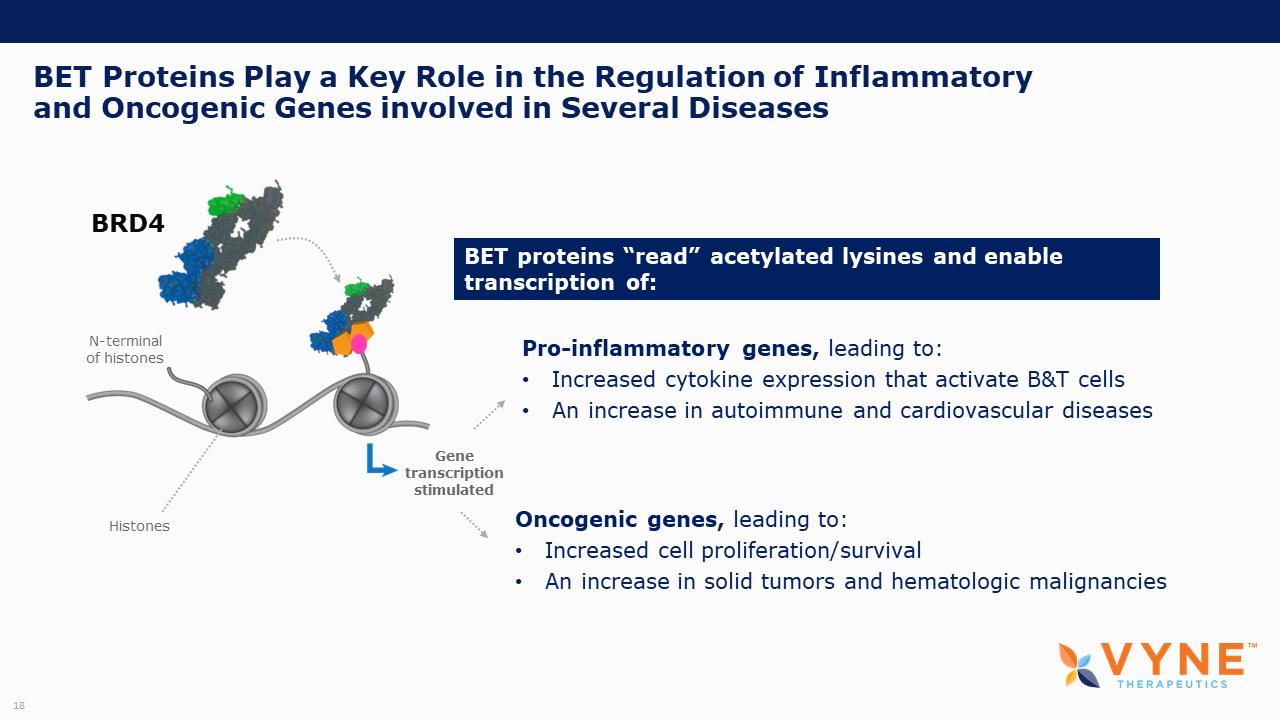
BET Proteins Play a Key Role in the Regulation of Inflammatory and Oncogenic Genes involved in Several Diseases Gene transcription stimulated Histones N - terminal of histones BRD4 Oncogenic genes, leading to: • Increased cell proliferation/survival • An increase in solid tumors and hematologic malignancies Pro - inflammatory genes, leading to: • Increased cytokine expression that activate B&T cells • An increase in autoimmune and cardiovascular diseases BET proteins “read” acetylated lysines and enable transcription of: 18
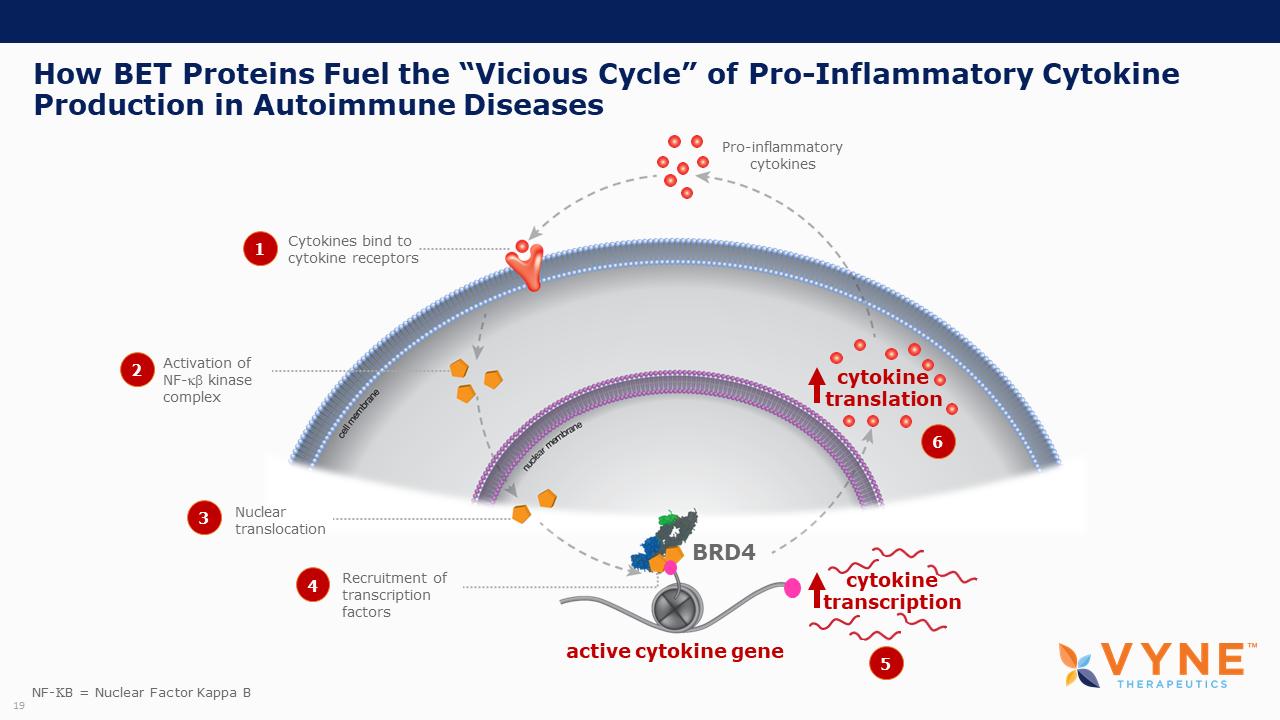
How BET Proteins Fuel the “Vicious Cycle” of Pro - Inflammatory Cytokine Production in Autoimmune Diseases Pro - inflammatory cytokines Cytokines bind to cytokine receptors 1 Activation of NF - kb kinase complex 2 Nuclear translocation 3 Recruitment of transcription factors 4 5 6 BRD4 active cytokine gene cytokine transcription cytokine translation NF - B = Nuclear Factor Kappa B 19
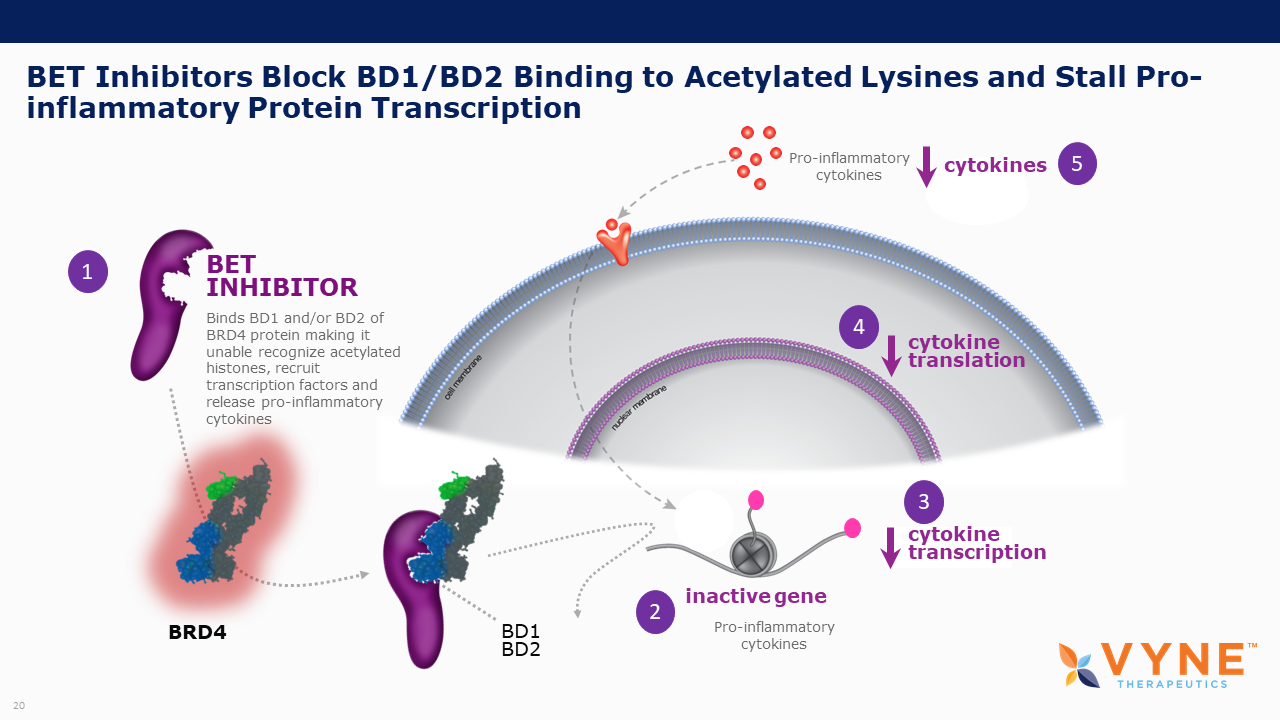
BET Inhibitors Block BD1/BD2 Binding to Acetylated Lysines and Stall Pro - inflammatory Protein Transcription BET INHIBITOR Binds BD1 and/or BD2 of BRD4 protein making it unable recognize acetylated histones, recruit transcription factors and release pro - inflammatory cytokines Pro - inflammatory cytokines inactive gene cytokine translation cytokine transcription cytokines BRD4 BD1 BD2 1 2 3 4 5 Pro - inflammatory cytokines 20
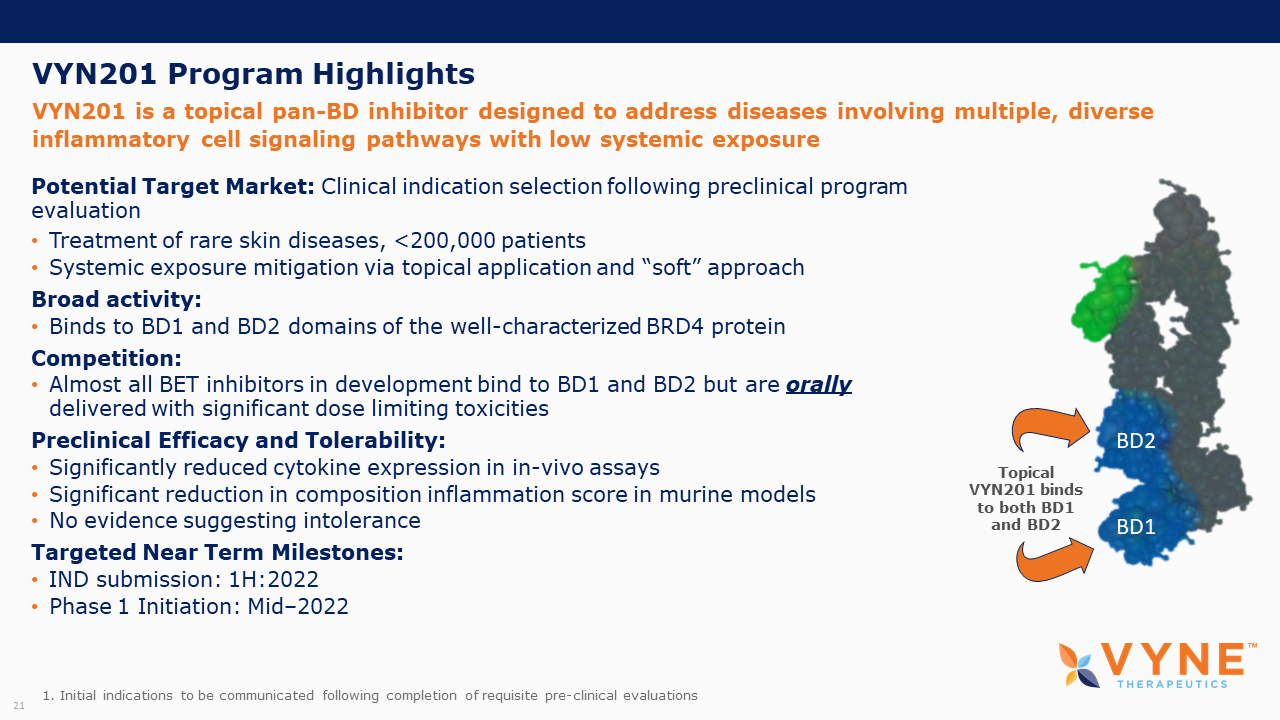
VYN201 Program Highlights Potential Target Market: Clinical indication selection following preclinical program evaluation • Treatment of rare skin diseases, <200,000 patients • Systemic exposure mitigation via topical application and “soft” approach Broad activity: • Binds to BD1 and BD2 domains of the well - characterized BRD4 protein Competition: • Almost all BET inhibitors in development bind to BD1 and BD2 but are orally delivered with significant dose limiting toxicities Preclinical Efficacy and Tolerability: • Significantly reduced cytokine expression in in - vivo assays • Significant reduction in composition inflammation score in murine models • No evidence suggesting intolerance Targeted Near Term Milestones: • IND submission: 1H:2022 • Phase 1 Initiation: Mid – 2022 BD1 BD2 Topical VYN201 binds to both BD1 and BD2 VYN201 is a topical pan - BD inhibitor designed to address diseases involving multiple, diverse inflammatory cell signaling pathways with low systemic exposure 1. Initial indications to be communicated following completion of requisite pre - clinical evaluations 21
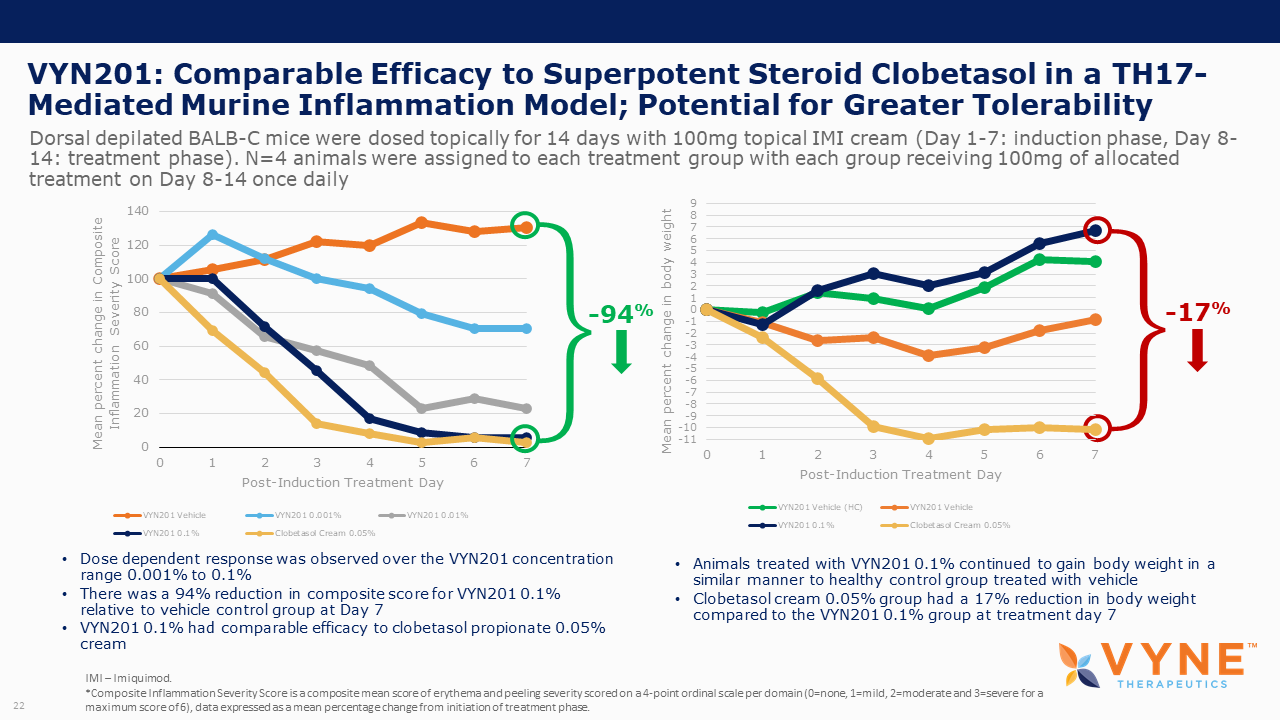
IMI – Imiquimod. *Composite Inflammation Severity Score is a composite mean score of erythema and peeling severity scored on a 4 - point ordinal sc ale per domain (0=none, 1=mild, 2=moderate and 3=severe for a maximum score of 6), data expressed as a mean percentage change from initiation of treatment phase. Dorsal depilated BALB - C mice were dosed topically for 14 days with 100mg topical IMI cream (Day 1 - 7: induction phase, Day 8 - 14: treatment phase). N=4 animals were assigned to each treatment group with each group receiving 100mg of allocated treatment on Day 8 - 14 once daily • Dose dependent response was observed over the VYN201 concentration range 0.001% to 0.1% • There was a 94% reduction in composite score for VYN201 0.1% relative to vehicle control group at Day 7 • VYN201 0.1% had comparable efficacy to clobetasol propionate 0.05% cream - 94 % -11 -10 -9 -8 -7 -6 -5 -4 -3 -2 -1 0 1 2 3 4 5 6 7 8 9 0 1 2 3 4 5 6 7 Mean percent change in body weight Post - Induction Treatment Day VYN201 Vehicle (HC) VYN201 Vehicle VYN201 0.1% Clobetasol Cream 0.05% 0 20 40 60 80 100 120 140 0 1 2 3 4 5 6 7 Mean percent change in Composite Inflammation Severity Score Post - Induction Treatment Day VYN201 Vehicle VYN201 0.001% VYN201 0.01% VYN201 0.1% Clobetasol Cream 0.05% • Animals treated with VYN201 0.1% continued to gain body weight in a similar manner to healthy control group treated with vehicle • Clobetasol cream 0.05% group had a 17% reduction in body weight compared to the VYN201 0.1% group at treatment day 7 - 17 % VYN201: Comparable Efficacy to Superpotent Steroid Clobetasol in a TH17 - Mediated Murine Inflammation Model; Potential for Greater Tolerability 22
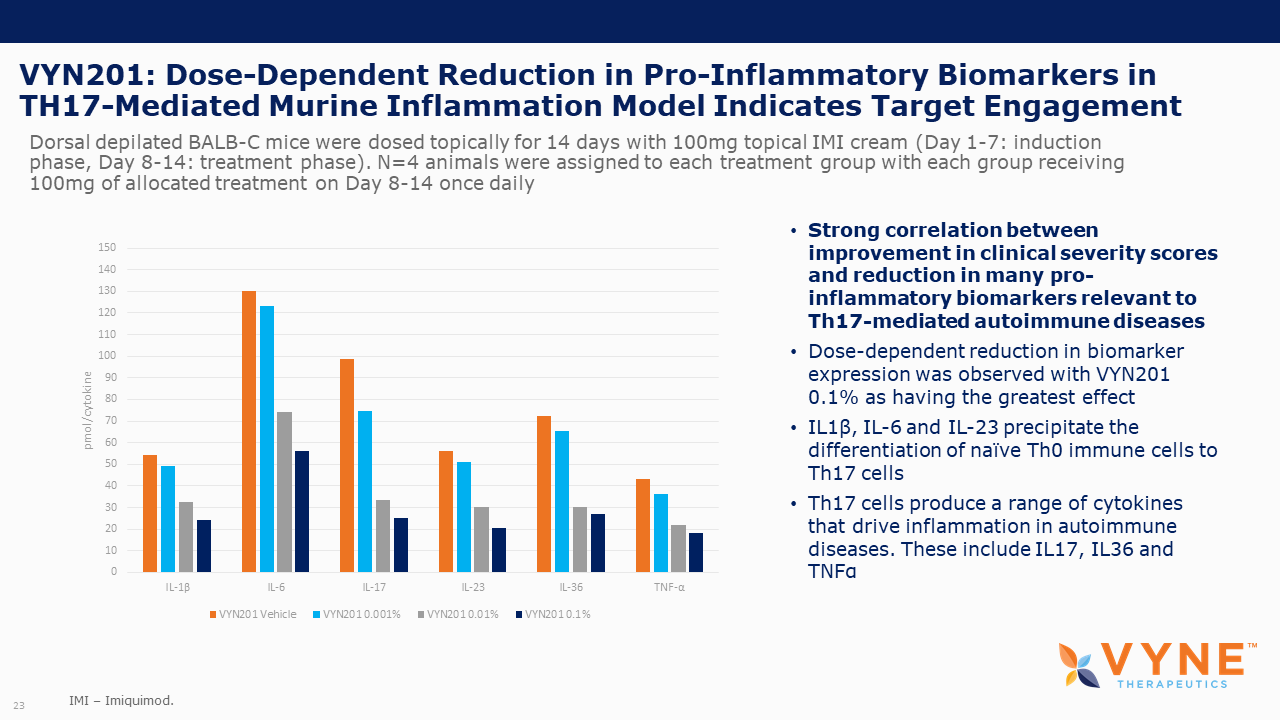
IMI – Imiquimod. Dorsal depilated BALB - C mice were dosed topically for 14 days with 100mg topical IMI cream (Day 1 - 7: induction phase, Day 8 - 14: treatment phase). N=4 animals were assigned to each treatment group with each group receiving 100mg of allocated treatment on Day 8 - 14 once daily • Strong correlation between improvement in clinical severity scores and reduction in many pro - inflammatory biomarkers relevant to Th17 - mediated autoimmune diseases • Dose - dependent reduction in biomarker expression was observed with VYN201 0.1% as having the greatest effect • IL1 β , IL - 6 and IL - 23 precipitate the differentiation of naïve Th0 immune cells to Th17 cells • Th17 cells produce a range of cytokines that drive inflammation in autoimmune diseases. These include IL17, IL36 and TNF α 0 10 20 30 40 50 60 70 80 90 100 110 120 130 140 150 IL - 1 β IL-6 IL-17 IL-23 IL-36 TNF - α pmol/cytokine VYN201 Vehicle VYN201 0.001% VYN201 0.01% VYN201 0.1% VYN201: Dose - Dependent Reduction in Pro - Inflammatory Biomarkers in TH17 - Mediated Murine Inflammation Model Indicates Target Engagement 23
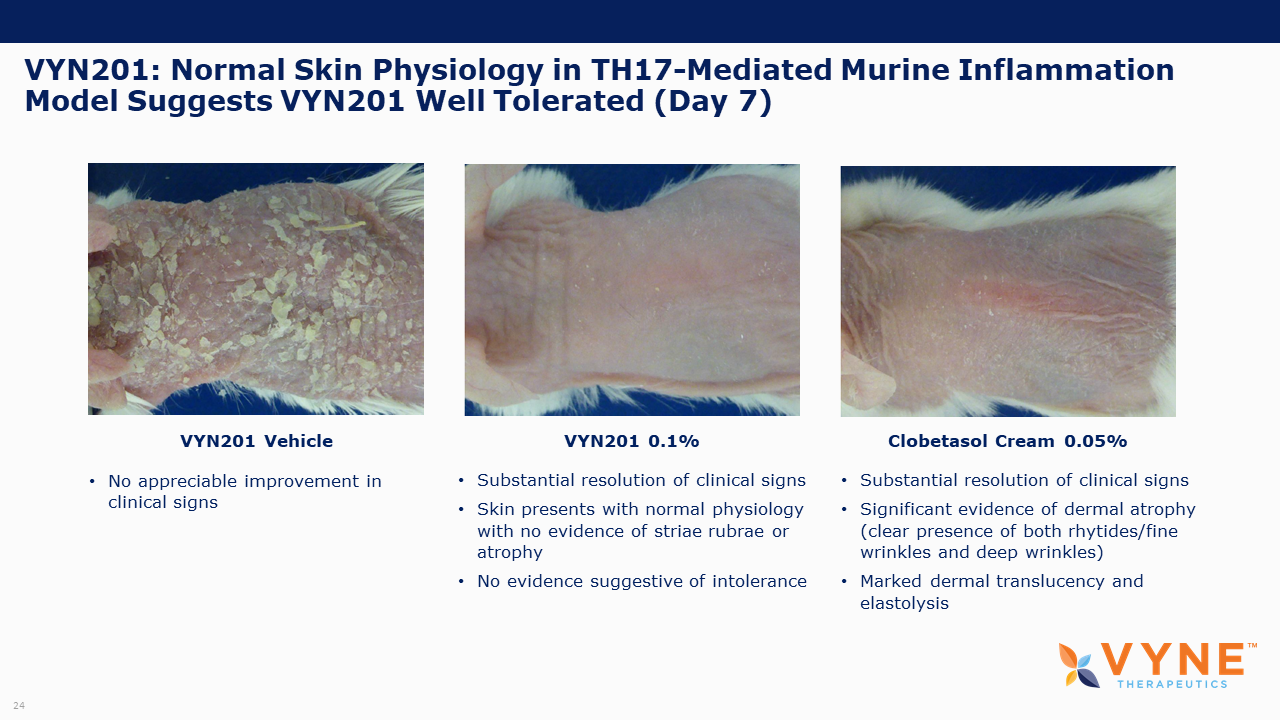
VYN201 0.1% VYN201 Vehicle Clobetasol Cream 0.05% • No appreciable improvement in clinical signs • Substantial resolution of clinical signs • Skin presents with normal physiology with no evidence of striae rubrae or atrophy • No evidence suggestive of intolerance • Substantial resolution of clinical signs • Significant evidence of dermal atrophy (clear presence of both rhytides /fine wrinkles and deep wrinkles) • Marked dermal translucency and elastolysis VYN201: Normal Skin Physiology in TH17 - Mediated Murine Inflammation Model Suggests VYN201 Well Tolerated (Day 7) 24
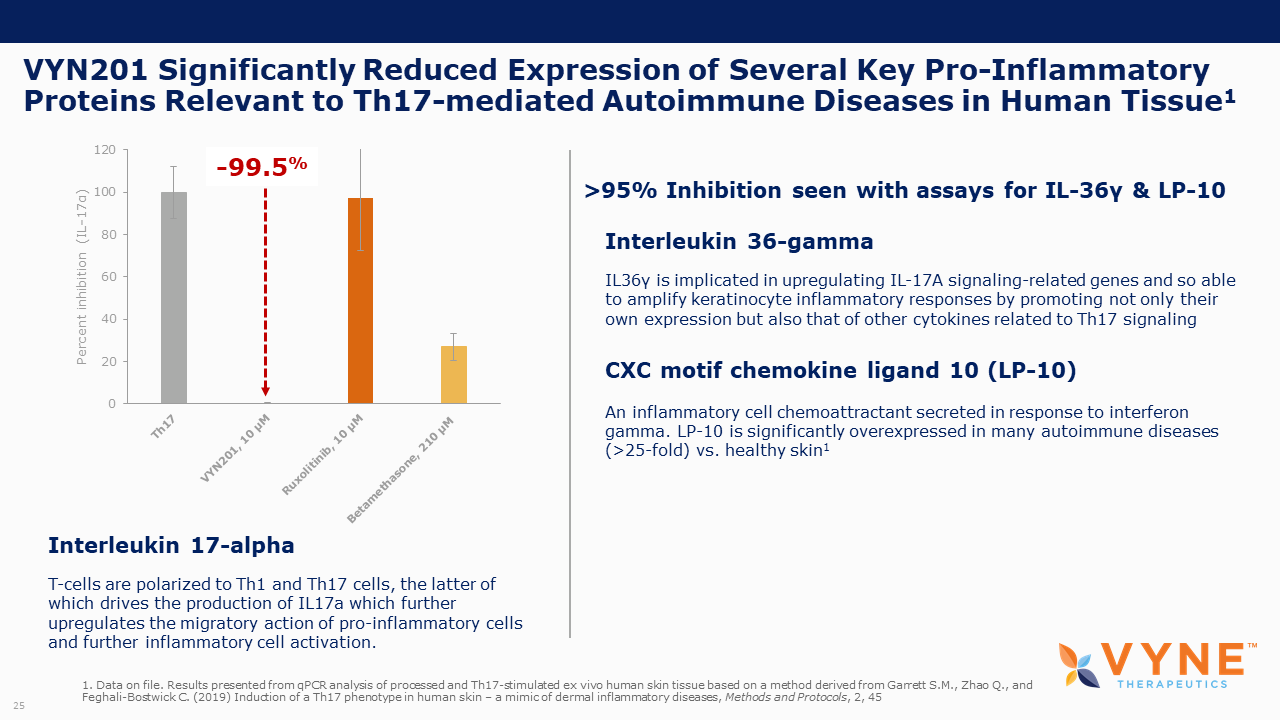
VYN201 Significantly Reduced Expression of Several Key Pro - Inflammatory Proteins Relevant to Th17 - mediated Autoimmune Diseases in Human Tissue 1 0 20 40 60 80 100 120 Percent inhibition (IL - 17 α ) Interleukin 36 - gamma IL36 γ is implicated in upregulating IL - 17A signaling - related genes and so able to amplify keratinocyte inflammatory responses by promoting not only their own expression but also that of other cytokines related to Th17 signaling CXC motif chemokine ligand 10 (LP - 10) An inflammatory cell chemoattractant secreted in response to interferon gamma. LP - 10 is significantly overexpressed in many autoimmune diseases (>25 - fold) vs. healthy skin 1 >95% Inhibition seen with assays for IL - 36 γ & LP - 10 1. Data on file. Results presented from qPCR analysis of processed and Th17 - stimulated ex vivo human skin tissue based on a meth od derived from Garrett S.M., Zhao Q., and Feghali - Bostwick C. (2019) Induction of a Th17 phenotype in human skin – a mimic of dermal inflammatory diseases, Methods and Protocols , 2, 45 - 99.5 % Interleukin 17 - alpha T - cells are polarized to Th1 and Th17 cells, the latter of which drives the production of IL17a which further upregulates the migratory action of pro - inflammatory cells and further inflammatory cell activation. 25
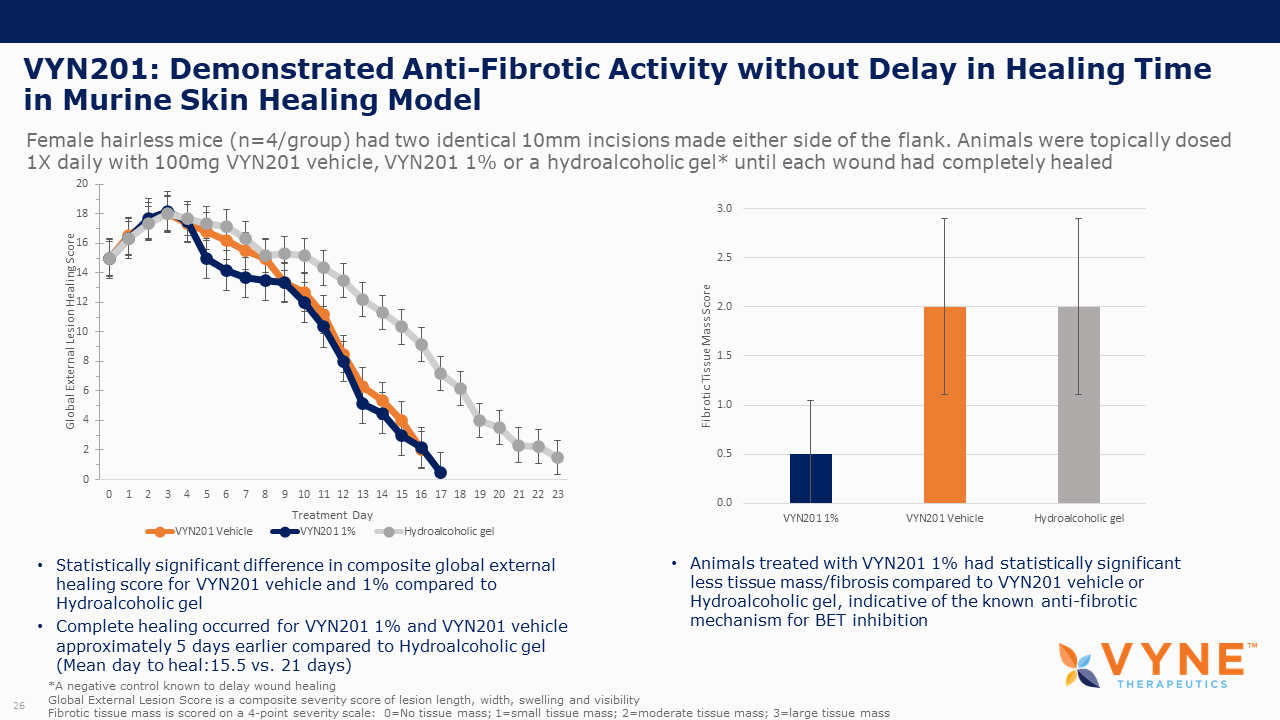
Female hairless mice (n=4/group) had two identical 10mm incisions made either side of the flank. Animals were topically dosed 1X daily with 100mg VYN201 vehicle, VYN201 1% or a hydroalcoholic gel* until each wound had completely healed • Statistically significant difference in composite global external healing score for VYN201 vehicle and 1% compared to Hydroalcoholic gel • Complete healing occurred for VYN201 1% and VYN201 vehicle approximately 5 days earlier compared to Hydroalcoholic gel (Mean day to heal:15.5 vs. 21 days) *A negative control known to delay wound healing Global External Lesion Score is a composite severity score of lesion length, width, swelling and visibility Fibrotic tissue mass is scored on a 4 - point severity scale: 0=No tissue mass; 1=small tissue mass; 2=moderate tissue mass; 3=large tissue mass • Animals treated with VYN201 1% had statistically significant less tissue mass/fibrosis compared to VYN201 vehicle or Hydroalcoholic gel, indicative of the known anti - fibrotic mechanism for BET inhibition VYN201: Demonstrated Anti - Fibrotic Activity without Delay in Healing Time in Murine Skin Healing Model 26 0 2 4 6 8 10 12 14 16 18 20 0 1 2 3 4 5 6 7 8 9 10 11 12 13 14 15 16 17 18 19 20 21 22 23 Global External Lesion Healing Score Treatment Day VYN201 Vehicle VYN201 1% Hydroalcoholic gel 0.0 0.5 1.0 1.5 2.0 2.5 3.0 VYN201 1% VYN201 Vehicle Hydroalcoholic gel Fibrotic Tissue Mass Score
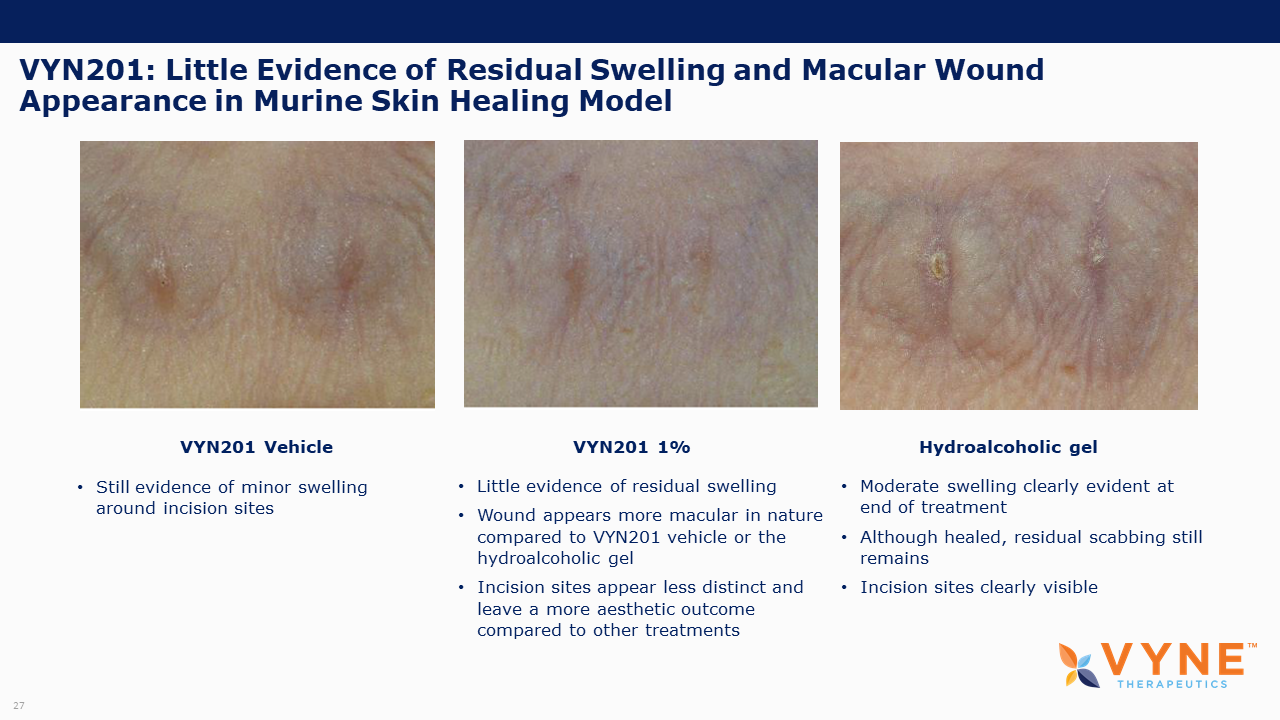
VYN201 1% VYN201 Vehicle Hydroalcoholic gel • Still evidence of minor swelling around incision sites • Little evidence of residual swelling • Wound appears more macular in nature compared to VYN201 vehicle or the hydroalcoholic gel • Incision sites appear less distinct and leave a more aesthetic outcome compared to other treatments • Moderate swelling clearly evident at end of treatment • Although healed, residual scabbing still remains • Incision sites clearly visible VYN201: Little Evidence of Residual Swelling and Macular Wound Appearance in Murine Skin Healing Model 27
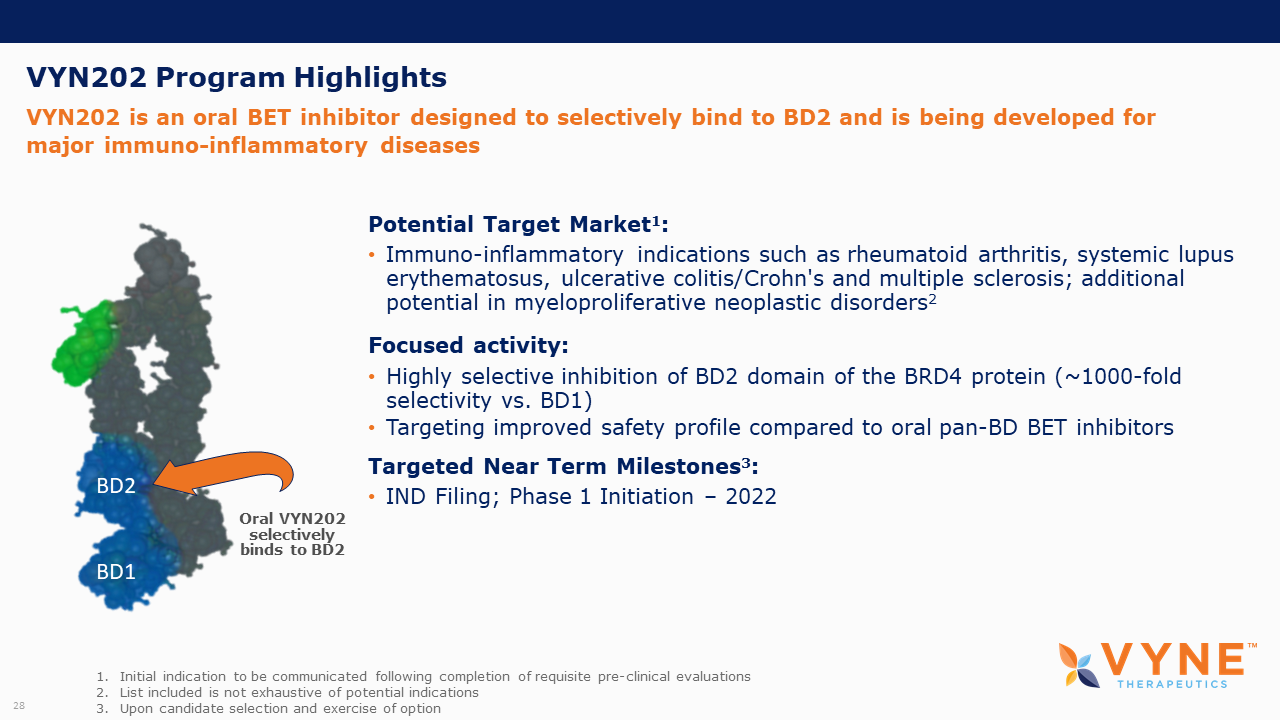
Potential Target Market 1 : • Immuno - inflammatory indications such as rheumatoid arthritis, systemic lupus erythematosus, ulcerative colitis/Crohn's and multiple sclerosis; additional potential in myeloproliferative neoplastic disorders 2 Focused activity: • Highly selective inhibition of BD2 domain of the BRD4 protein (~1000 - fold selectivity vs. BD1) • Targeting improved safety profile compared to oral pan - BD BET inhibitors Targeted Near Term Milestones 3 : • IND Filing; Phase 1 Initiation – 2022 BD1 BD2 Oral VYN202 selectively binds to BD2 VYN202 Program Highlights VYN202 is an oral BET inhibitor designed to selectively bind to BD2 and is being developed for major immuno - inflammatory diseases 1. Initial indication to be communicated following completion of requisite pre - clinical evaluations 2. List included is not exhaustive of potential indications 3. Upon candidate selection and exercise of option 28
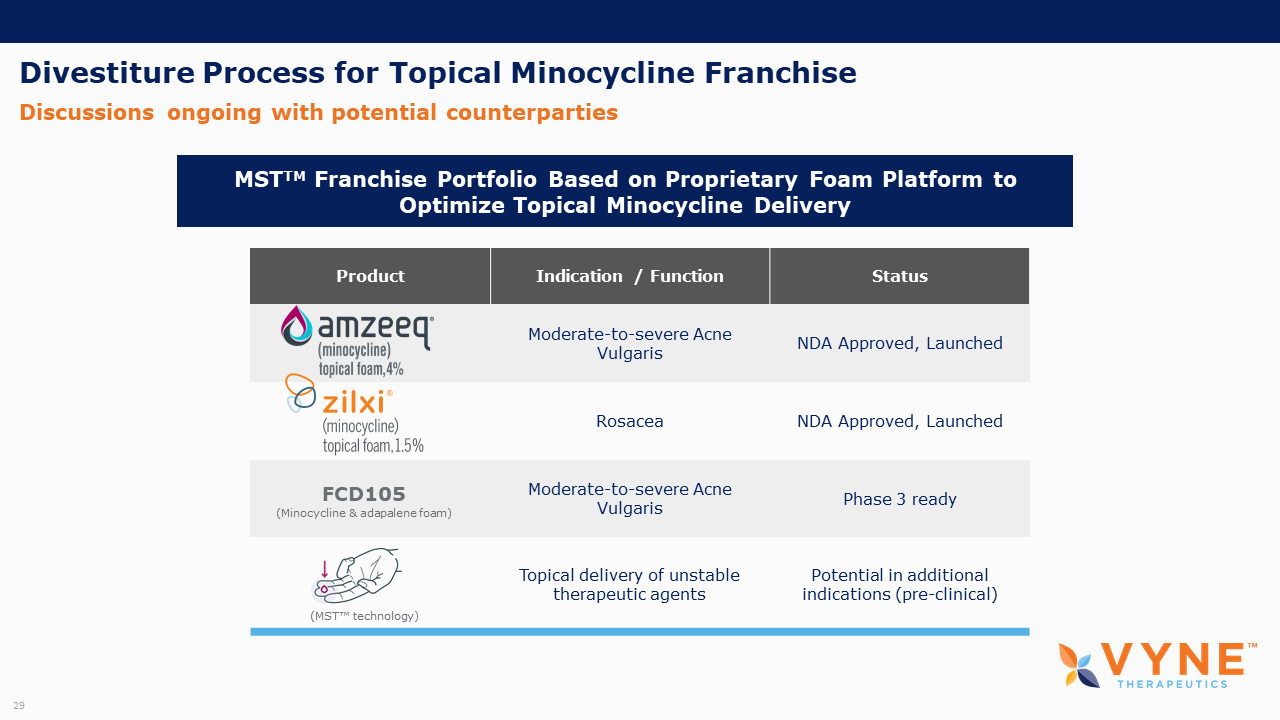
Divestiture Process for Topical Minocycline Franchise Discussions ongoing with potential counterparties MST TM Franchise Portfolio Based on Proprietary Foam Platform to Optimize Topical Minocycline Delivery Product Indication / Function Status Moderate - to - severe Acne Vulgaris NDA Approved, Launched Rosacea NDA Approved, Launched Moderate - to - severe Acne Vulgaris Phase 3 ready Topical delivery of unstable therapeutic agents Potential in additional indications (pre - clinical) FCD105 (Minocycline & adapalene foam) (MST Πtechnology) 29
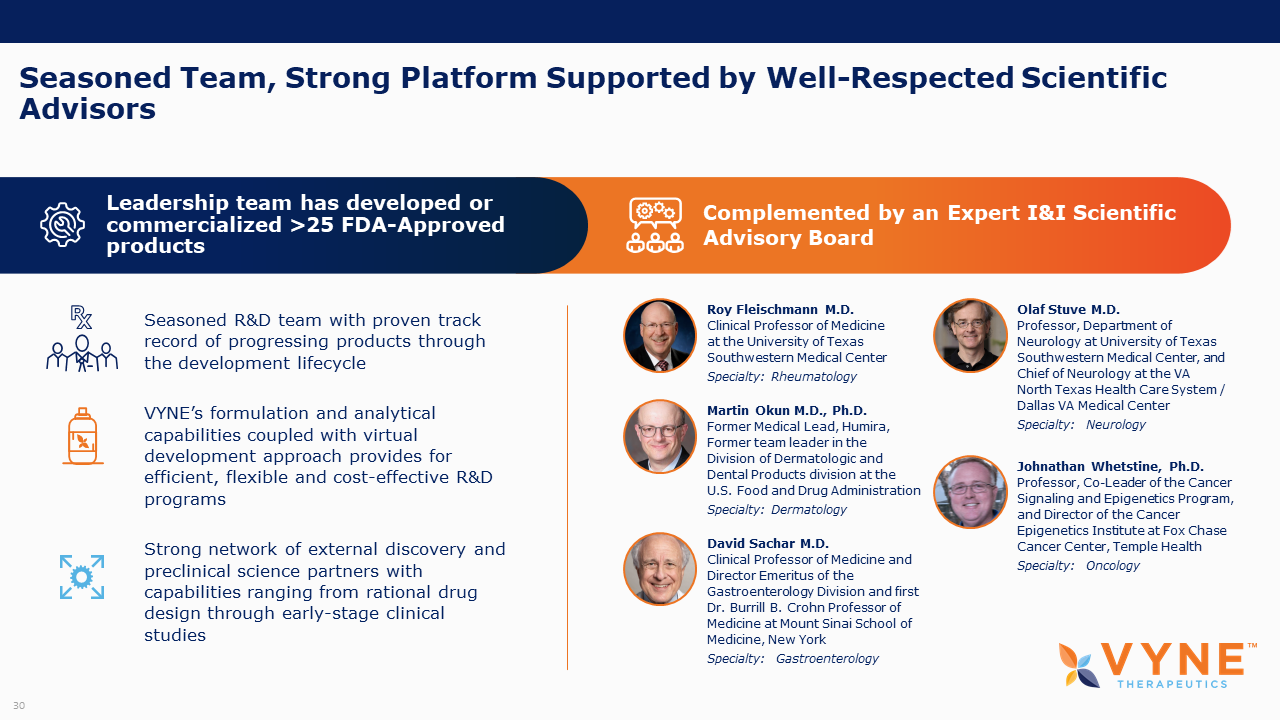
30 Seasoned Team, Strong Platform Supported by Well - Respected Scientific Advisors Leadership team has developed or commercialized >25 FDA - Approved products Complemented by an Expert I&I Scientific Advisory Board Seasoned R&D team with proven track record of progressing products through the development lifecycle VYNE’s formulation and analytical capabilities coupled with virtual development approach provides for efficient, flexible and cost - effective R&D programs Strong network of external discovery and preclinical science partners with capabilities ranging from rational drug design through early - stage clinical studies Roy Fleischmann M.D. Clinical Professor of Medicine at the University of Texas Southwestern Medical Center Specialty: Rheumatology David Sachar M.D. Clinical Professor of Medicine and Director Emeritus of the Gastroenterology Division and first Dr. Burrill B. Crohn Professor of Medicine at Mount Sinai School of Medicine, New York Specialty: Gastroenterology Martin Okun M.D., Ph.D. Former Medical Lead, Humira, Former team leader in the Division of Dermatologic and Dental Products division at the U.S. Food and Drug Administration Specialty: Dermatology Johnathan Whetstine , Ph.D. Professor, Co - Leader of the Cancer Signaling and Epigenetics Program, and Director of the Cancer Epigenetics Institute at Fox Chase Cancer Center, Temple Health Specialty: Oncology Olaf Stuve M.D. Professor, Department of Neurology at University of Texas Southwestern Medical Center, and Chief of Neurology at the VA North Texas Health Care System / Dallas VA Medical Center Specialty: Neurology
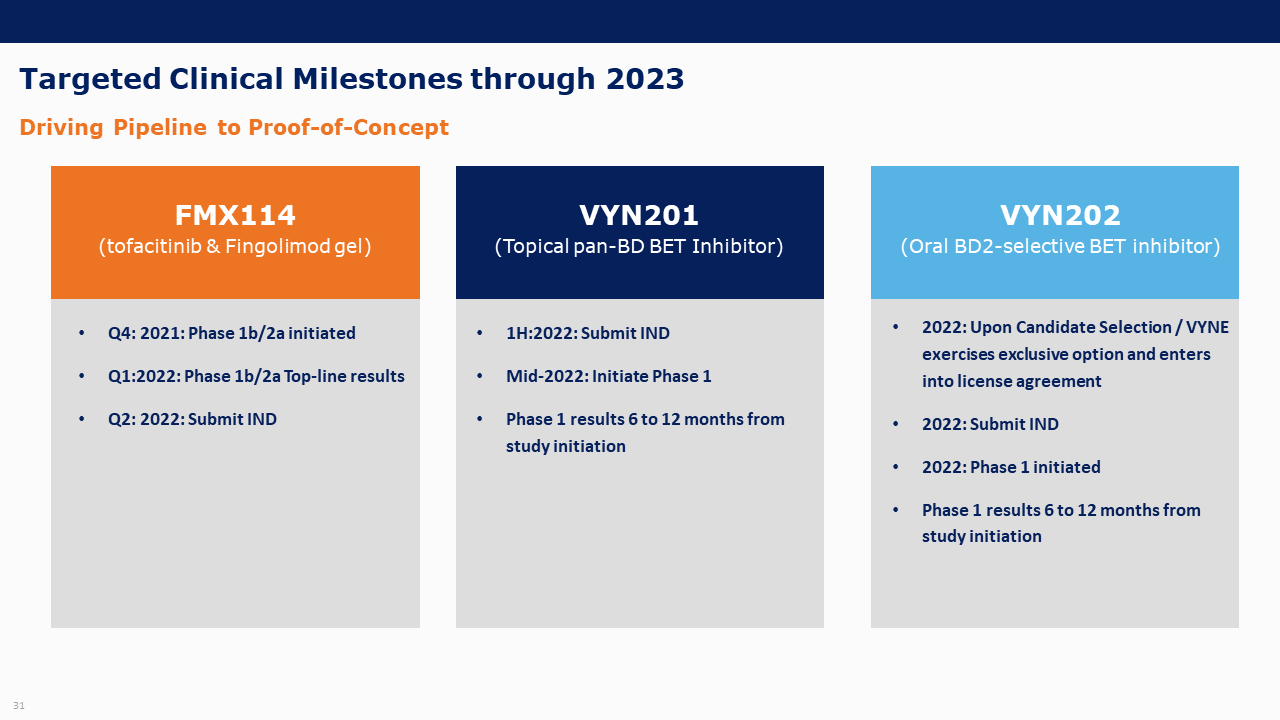
Targeted Clinical Milestones through 2023 Driving Pipeline to Proof - of - Concept • Q4: 2021: Phase 1b/2a initiated • Q1:2022: Phase 1b/2a Top - line results • Q2: 2022: Submit IND FMX114 (tofacitinib & Fingolimod gel) • 1H:2022: Submit IND • Mid - 2022: Initiate Phase 1 • Phase 1 results 6 to 12 months from study initiation • 2022: Upon Candidate Selection / VYNE exercises exclusive option and enters into license agreement • 2022: Submit IND • 2022: Phase 1 initiated • Phase 1 results 6 to 12 months from study initiation VYN201 (Topical pan - BD BET Inhibitor) VYN202 (Oral BD2 - selective BET inhibitor) 31