
AGIO 8-K
Agios Pharmaceuticals, Inc. (AGIO)
8-K
2026-01-12
For: 2026-01-12
View Original
Added on
April 10, 2026
UNITED STATES
SECURITIES AND EXCHANGE COMMISSION
WASHINGTON, D.C. 20549
FORM 8-K
CURRENT REPORT
Pursuant to Section 13 or 15(d)
of the Securities Exchange Act of 1934
Date of Report (Date of earliest event reported): January 12, 2026
(Exact Name of Registrant as Specified in Charter)
| (State or Other Jurisdiction of Incorporation) | (Commission File Number) | (IRS Employer Identification No.) | ||||||||||||
| (Address of Principal Executive Offices) | (Zip Code) | |||||||||||||
Registrant’s telephone number, including area code: (617 ) 649-8600
(Former Name or Former Address, if Changed Since Last Report)
Check the appropriate box below if the Form 8-K filing is intended to simultaneously satisfy the filing obligation of the registrant under any of the following provisions (see General Instruction A.2. below):
| Written communications pursuant to Rule 425 under the Securities Act (17 CFR 230.425) | ||||||||
| Soliciting material pursuant to Rule 14a-12 under the Exchange Act (17 CFR 240.14a-12) | ||||||||
| Pre-commencement communications pursuant to Rule 14d-2(b) under the Exchange Act (17 CFR 240.14d-2(b)) | ||||||||
| Pre-commencement communications pursuant to Rule 13e-4(c) under the Exchange Act (17 CFR 240.13e-4(c)) | ||||||||
Securities registered pursuant to Section 12(b) of the Act:
| Title of each class | Trading symbol(s) | Name of each exchange on which registered | ||||||||||||
Indicate by check mark whether the registrant is an emerging growth company as defined in Rule 405 of the Securities Act of 1933 (§230.405 of this chapter) or Rule 12b-2 of the Securities Exchange Act of 1934 (§240.12b-2 of this chapter). | |||||
| Emerging growth company | |||||
If an emerging growth company, indicate by check mark if the registrant has elected not to use the extended transition period for complying with any new or revised financial accounting standards provided pursuant to Section 13(a) of the Exchange Act. ☐ | |||||
| Item 7.01 | Regulation FD Disclosure | ||||
On January 12, 2026, Agios Pharmaceuticals, Inc. (the “Company”) issued a press release outlining its anticipated 2026 milestones, which will be discussed at the Company’s presentation at the 44th Annual J.P. Morgan Healthcare Conference on January 14, 2026. The full text of the press release is furnished as Exhibit 99.1 to this Current Report on Form 8-K and is incorporated herein by reference. The slides to be presented by the Company at the 44th Annual J.P. Morgan Healthcare Conference are furnished as Exhibit 99.2 to this Current Report on Form 8-K and are incorporated herein by reference.
The information in this Item 7.01 (including Exhibit 99.1 and Exhibit 99.2) shall not be deemed “filed” for purposes of Section 18 of the Securities Exchange Act of 1934, as amended (the “Exchange Act”) or otherwise subject to the liabilities of that section, nor shall it be deemed incorporated by reference in any filing under the Securities Act of 1933, as amended, or the Exchange Act, except as expressly set forth by specific reference in such a filing.
| Item 9.01 | Financial Statements and Exhibits. | ||||
(d) Exhibits.
| Exhibit No. | Description | ||||
| 99.1 | |||||
| 99.2 | |||||
| 104 | Cover Page Interactive Data File (embedded within the Inline XBRL document) | ||||
SIGNATURES
Pursuant to the requirements of the Securities Exchange Act of 1934, the registrant has duly caused this report to be signed on its behalf by the undersigned hereunto duly authorized.
| AGIOS PHARMACEUTICALS, INC. | ||||||||
Date: January 12, 2026 | By: | /s/ Brian Goff | ||||||
Brian Goff Chief Executive Officer | ||||||||
Exhibit 99.1

Agios Outlines 2026 Strategic Priorities and Key Milestones to Accelerate Rare Disease Portfolio Growth
•AQVESME™ (mitapivat) U.S. commercial launch in thalassemia underway following December 2025 FDA approval
•Pre-sNDA meeting with FDA for mitapivat in sickle cell disease anticipated in first quarter of 2026, with planned U.S. regulatory submission to follow
•Company progressing early- and mid-stage pipeline in multiple high-value indications
•Clear path to profitability through the company’s existing commercial presence in thalassemia and PK deficiency, with potential to achieve over $1 billion in peak global sales
CAMBRIDGE, Mass., Jan. 12, 2026 – Agios Pharmaceuticals, Inc. (Nasdaq: AGIO), a commercial-stage biopharmaceutical company focused on delivering innovative medicines for patients with rare diseases, today announced its 2026 strategic priorities and key milestones anticipated during the year. Members of the company’s management team will present this update at the 44th Annual J.P. Morgan Healthcare Conference on Wednesday, January 14, 2026, at 8:15 a.m. PT / 11:15 a.m. ET.
“In 2025, Agios delivered another year of strong and consistent execution across our portfolio, marking meaningful progress toward our goal of becoming a sustainable and diversified rare disease company,” said Brian Goff, Chief Executive Officer, Agios. “Last year culminated in the historic U.S. approval of AQVESME™ (mitapivat), our pyruvate kinase (PK) activator and the only medicine approved to treat anemia in adults with non-transfusion-dependent and transfusion-dependent alpha- or beta-thalassemia. This approval brings a new, disease-modifying oral option to people living with this debilitating and deadly rare blood disorder.
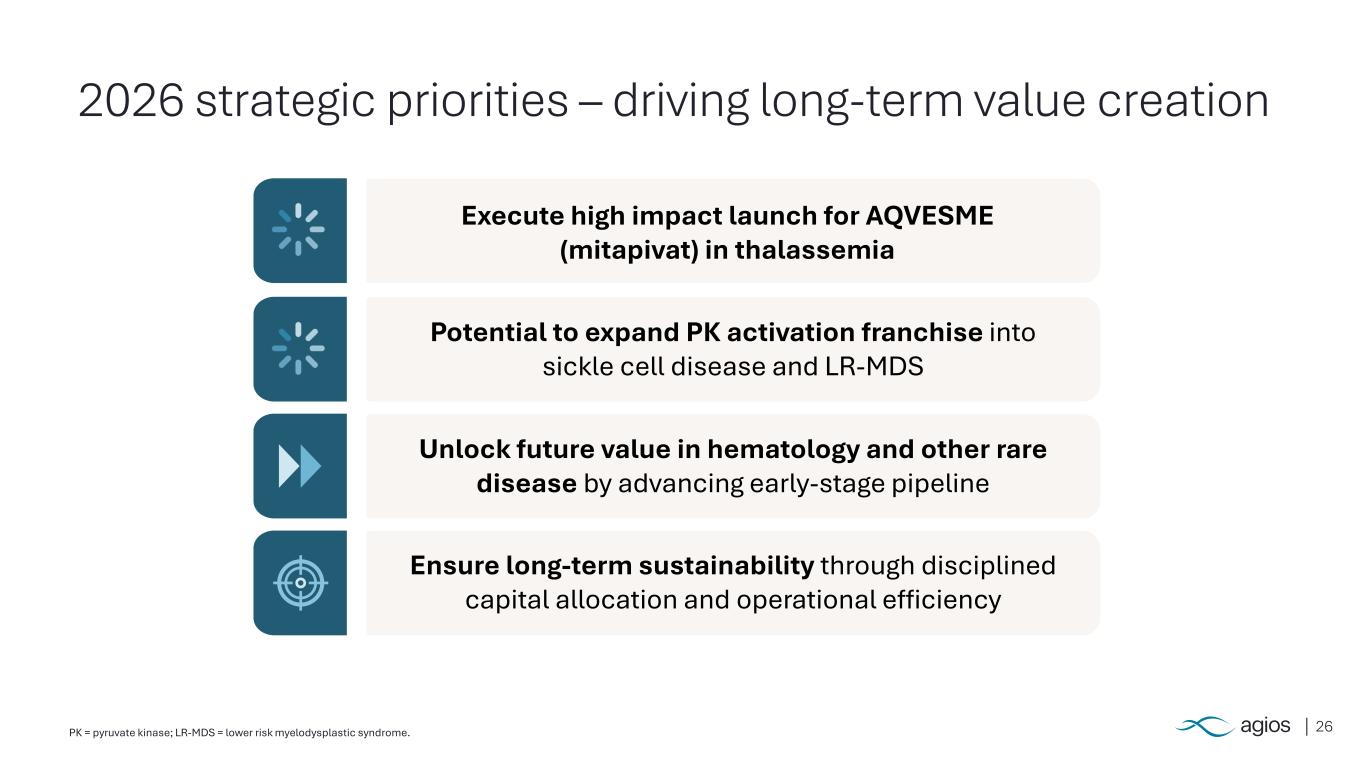
“Entering 2026, the company is at an important inflection point. We will deliver a high-impact U.S. launch of AQVESME in thalassemia, seek to expand our PK activation franchise into additional high-value indications such as sickle cell disease and lower-risk myelodysplastic syndromes, and advance our promising early-stage pipeline with the potential to further diversify across hematologic and rare diseases. We also remain focused on disciplined capital allocation and operational efficiency to support our long-term sustainability. With strong momentum and a clear roadmap, Agios enters the year positioned to deliver transformative innovation and meaningful impact for patients living with rare diseases,” Mr. Goff added.
Anticipated 2026 Milestones
Thalassemia
-In December 2025, the U.S. Food and Drug Administration (FDA) approved AQVESME for the treatment of anemia in adults with alpha- or beta-thalassemia. AQVESME is the only FDA-approved medicine for anemia in both non-transfusion-dependent and transfusion-dependent alpha- or beta-thalassemia.
-Agios expects AQVESME to become available in the U.S. in late January 2026 following implementation of the AQVESME Risk Evaluation and Mitigation Strategy (REMS) program. Commercial launch activities are already underway and will continue throughout the year.
Sickle Cell Disease
-Topline results from the RISE UP Phase 3 trial of mitapivat in sickle cell disease were reported in November 2025. Agios anticipates having a pre-supplemental New Drug Application (sNDA) meeting with the FDA in the first quarter of 2026, and plans to submit a U.S. marketing application for mitapivat in sickle cell disease following that engagement.
-Enrollment in the Phase 2 sickle cell disease trial of tebapivat, Agios’ more potent, once-daily oral PK activator, was initiated in 2025. Agios expects to report topline results from this trial in the second half of 2026.
Lower-Risk Myelodysplastic Syndromes (LR-MDS)
-Enrollment in the Phase 2b LR-MDS trial of tebapivat was completed in 2025. Agios expects to report topline results from this trial in the first half of 2026.
Polycythemia Vera (PV)
-Agios expects to report topline results from a Phase 1 healthy volunteer trial of AG-236, a small interfering RNA (siRNA) targeting TMPRSS6 as a potential treatment for PV, in the first half of 2026.
Phenylketonuria (PKU)
-With dosing completed in the Phase 1 single- and multiple-ascending-dose trial of AG-181, a phenylalanine hydroxylase (PAH) stabilizer, in healthy volunteers, Agios expects to initiate a Phase 1b proof-of-mechanism trial of AG-181 in patients with PKU in the first half of 2026 and to confirm proof of mechanism in the second half of 2026.
Presentation at 44th Annual J.P. Morgan Healthcare Conference
Members of Agios’ management team will present at the 44th Annual J.P. Morgan Healthcare Conference on Wednesday, January 14, 2026, at 8:15 a.m. PT / 11:15 a.m. ET. The live webcast will be accessible on the Investors section of the company's website (www.agios.com) under the “Events & Presentations” tab. A replay of the webcast will be archived on the company’s website for at least two weeks following the presentation.
Members of Agios’ management team will present at the 44th Annual J.P. Morgan Healthcare Conference on Wednesday, January 14, 2026, at 8:15 a.m. PT / 11:15 a.m. ET. The live webcast will be accessible on the Investors section of the company's website (www.agios.com) under the “Events & Presentations” tab. A replay of the webcast will be archived on the company’s website for at least two weeks following the presentation.
About AQVESME™ (mitapivat)
U.S. INDICATION
AQVESME is indicated for the treatment of anemia in adults with alpha- or beta-thalassemia.
U.S. IMPORTANT SAFETY INFORMATION
BOXED WARNING: HEPATOCELLULAR INJURY
AQVESME can cause serious hepatocellular injury. Measure liver laboratory tests (ALT, AST, alkaline phosphatase and total bilirubin with fractionation) at baseline and every 4 weeks for 24 weeks and then as clinically indicated. Avoid use of AQVESME in patients with cirrhosis. Discontinue AQVESME if hepatic injury is suspected.
Because of the risk of hepatocellular injury, AQVESME is available only through a restricted program under a Risk Evaluation and Mitigation Strategy (REMS) called the AQVESME REMS.
WARNINGS AND PRECAUTIONS
Hepatocellular Injury
AQVESME can cause hepatocellular injury. Avoid use of AQVESME in patients with cirrhosis. In patients with thalassemia treated with AQVESME, liver injury with and without jaundice has been observed within the first 6 months of exposure. Obtain liver tests (including ALT, AST, alkaline phosphatase, total bilirubin with fractionation) prior to the initiation of AQVESME, then every 4 weeks for the first 24 weeks, and as clinically indicated thereafter. Interrupt AQVESME if clinically significant increases in liver tests are observed or alanine aminotransferase is >5 times the upper limit of normal (ULN). Complete a comprehensive evaluation to rule out other causes of liver injury when drug-induced liver injury is suspected. Discontinue AQVESME if hepatocellular injury due to AQVESME is suspected.
Symptoms and signs of early liver injury may mimic those of thalassemia. Advise patients to report new or worsening symptoms of loss of appetite, nausea, right-upper-quadrant abdominal pain, vomiting, scleral icterus, jaundice, or dark urine while on AQVESME treatment.
During the double-blind period, 2 of 301 patients (0.66%) with thalassemia treated with AQVESME experienced adverse reactions suggestive of hepatocellular injury. Three additional patients experienced adverse reactions suggestive of hepatocellular injury during the open-label extension periods after switching from placebo to AQVESME. Of these 5 patients, 2 had serious liver injury requiring hospitalization, including 1 patient who developed jaundice (peak bilirubin 32 mg/dL). Another patient developed jaundice (peak bilirubin 4 mg/dL) without requiring hospitalization. These reactions were characterized by a time to onset within the first 6 months of treatment with peak elevations of alanine aminotransferase of >5×ULN with or without jaundice. All patients discontinued treatment with AQVESME, and these reactions improved upon treatment discontinuation.
AQVESME REMS
AQVESME is available only through a restricted program under a REMS called the AQVESME REMS because of the risk of hepatocellular injury.
ADVERSE REACTIONS
The most common adverse reactions among patients taking AQVESME were headache and insomnia.
DRUG INTERACTIONS
•Strong CYP3A Inhibitors and Inducers: Avoid concomitant use.
•Moderate CYP3A Inhibitors: Avoid concomitant use.
•Moderate CYP3A Inducers: Consider alternatives that are not moderate inducers. If there are no alternatives, see full Prescribing Information for recommended dosage for drug interactions with moderate CYP3A inducers.
•Sensitive CYP3A Substrates, including hormonal contraceptives: Avoid concomitant use with substrates that have narrow therapeutic index.
•CYP2B6, CYP2C, and UGT1A1 Substrates: Monitor patients for efficacy of the substrates with narrow therapeutic index.
•P-gp Substrates: Monitor patients for adverse reactions of the substrates with narrow therapeutic index.
HEPATIC IMPAIRMENT
Avoid use of AQVESME in patients with cirrhosis (Child-Pugh Class A, B, or C).
Please see full Prescribing Information for AQVESME, including Boxed Warning.
About Agios: Fueled by Connections to Transform Rare Diseases™
At Agios, our vision is to redefine the future of rare disease treatment. Fueled by connections, we build trusted partnerships with communities – collaborating to develop and deliver innovative medicines that have the potential to transform lives. With a foundation in hematology, we combine biological expertise with real-world insights to advance a growing pipeline of rare disease medicines that reflect the priorities of the people we serve. Agios is a commercial-stage biopharmaceutical company headquartered in Cambridge, Massachusetts. To learn more, visit www.agios.com and follow us on LinkedIn and X.
Cautionary Note Regarding Forward-Looking Statements
This press release contains forward-looking statements within the meaning of The Private Securities Litigation Reform Act of 1995. Such forward-looking statements include those regarding the potential benefits of Agios’ products, including AQVESME™; Agios’ plans for future meetings with, or submissions to, regulators, including the FDA; its plans for the development of mitapivat, tebapivat, AG-236 and AG-181, and its strategic plans and focus. The words “anticipate,” “expect,” “goal,” “hope,” “intend,” “milestone,” “plan,” “potential,” “possible,” “strategy,” “will,” “vision,” and similar expressions are intended to identify forward-looking statements, although not all forward-looking statements contain these identifying words. Such statements are subject to numerous important factors, risks and uncertainties that may cause actual events or results to differ materially from Agios’ current expectations and beliefs. For example, there can be no guarantee that any product candidate Agios is developing will successfully commence or complete necessary preclinical and clinical development phases, or that development of any of Agios’ product candidates will successfully continue. There can be no guarantee that any positive developments in Agios’ business will result in stock price appreciation. Management's expectations and, therefore, any forward-looking statements in this press release could also be affected by risks and uncertainties relating to a number of other important factors, including, without limitation: the content and timing of decisions made by the U.S. FDA, the EMA or other regulatory authorities, investigational review boards at clinical trial sites and publication review bodies; Agios’ results of clinical trials and preclinical studies, including subsequent analysis of existing data and new data received from ongoing and future studies; risks and uncertainties related to the impact of pandemics or other public health emergencies to Agios’ business, operations, strategy, goals and anticipated milestones, including its ongoing and planned research activities, ability to conduct ongoing and planned clinical trials, clinical supply of current or future drug candidates, commercial supply of current or future approved products, and launching, marketing and selling current or future approved products; Agios’ ability to obtain and maintain requisite regulatory approvals and to enroll patients in its planned clinical trials; unplanned cash requirements and expenditures; competitive factors; Agios' ability to obtain, maintain and enforce patent and other intellectual property protection for any product candidates it is developing; Agios’ ability to establish and maintain key collaborations; uncertainty regarding any royalty payments related to the sale of its oncology business or any milestone or royalty payments related to its in-licensing of AG-236, and the uncertainty of the timing of any such payments; uncertainty of the results and effectiveness of the use of Agios’ cash and cash equivalents; and general economic and market conditions. These and other risks are described in greater detail under the caption "Risk Factors" included in Agios’ public filings with the Securities and Exchange Commission. Any forward-looking statements contained in this press release speak only as of the date hereof, and Agios expressly disclaims any obligation to update any forward-looking statements, whether as a result of new information, future events or otherwise, except as required by law.
Contacts:
Investor Contact
Morgan Sanford, Vice President, Investor Relations
Agios Pharmaceuticals
Media Contact
Eamonn Nolan, Senior Director, Corporate Communications
Agios Pharmaceuticals
J.P. Morgan Healthcare Conference 2026 Agios Pharmaceuticals Brian Goff, Chief Executive Officer 14 January 2026 Exhibit 99.2
Forward-Looking Statements 2 This presentation and various remarks we make during this presentation contain forward-looking statements within the meaning of The Private Securities Litigation Reform Act of 1995. Such forward-looking statements include those regarding the potential benefits of AQVESMETM (mitapivat) and PYRUKYND® (mitapivat); Agios’ plans for future meetings with, or submissions to, regulators, including the FDA; Agios’ plans for the development of mitapivat, tebapivat, AG-236 and AG-181; Agios' estimates regarding market sizes for various indications; and the potential benefits of Agios’ strategic plans and focus. The words “anticipate”, "estimate", “expect”, “goal”, “hope”, “milestone”, “opportunity”, “plan”, “potential”, “possible”, “strategy”, “will”, “vision”, and similar expressions are intended to identify forward-looking statements, although not all forward-looking statements contain these identifying words. Such statements are subject to numerous important factors, risks and uncertainties that may cause actual events or results to differ materially from Agios’ current expectations and beliefs. For example, there can be no guarantee that any product candidate Agios is developing will successfully commence or complete necessary preclinical and clinical development phases, or that development of any of Agios’ product candidates will successfully continue. There can be no guarantee that any positive developments in Agios’ business will result in stock price appreciation. Management's expectations and, therefore, any forward-looking statements in this presentation and various remarks we make during this presentation could also be affected by risks and uncertainties relating to a number of other important factors, including, without limitation: risks and uncertainties related to the impact of pandemics or other public health emergencies to Agios’ business, operations, strategy, goals and anticipated milestones, including its ongoing and planned research activities, ability to conduct ongoing and planned clinical trials, clinical supply of current or future drug candidates, commercial supply of current or future approved products, and launching, marketing and selling current or future approved products; Agios’ results of clinical trials and preclinical studies, including subsequent analysis of existing data and new data received from ongoing and future studies; the content and timing of decisions made by the U.S. FDA, the EMA or other regulatory authorities, investigational review boards at clinical trial sites and publication review bodies; Agios’ ability to obtain and maintain requisite regulatory approvals and to enroll patients in its planned clinical trials; unplanned cash requirements and expenditures; competitive factors; Agios' ability to obtain, maintain and enforce patent and other intellectual property protection for any product candidates it is developing; Agios’ ability to establish and maintain key collaborations; uncertainty regarding any royalty payments related to the sale of its oncology business or any milestone or royalty payments related to its in-licensing of AG-236, and the uncertainty of the timing of any such payments; uncertainty of the results and effectiveness of the use of Agios’ cash and cash equivalents; and general economic and market conditions. These and other risks are described in greater detail under the caption "Risk Factors" included in Agios’ public filings with the Securities and Exchange Commission. Any forward-looking statements contained in this presentation and various remarks we make during this presentation speak only as of the date hereof, and Agios expressly disclaims any obligation to update any forward- looking statements, whether as a result of new information, future events or otherwise, except as required by law.
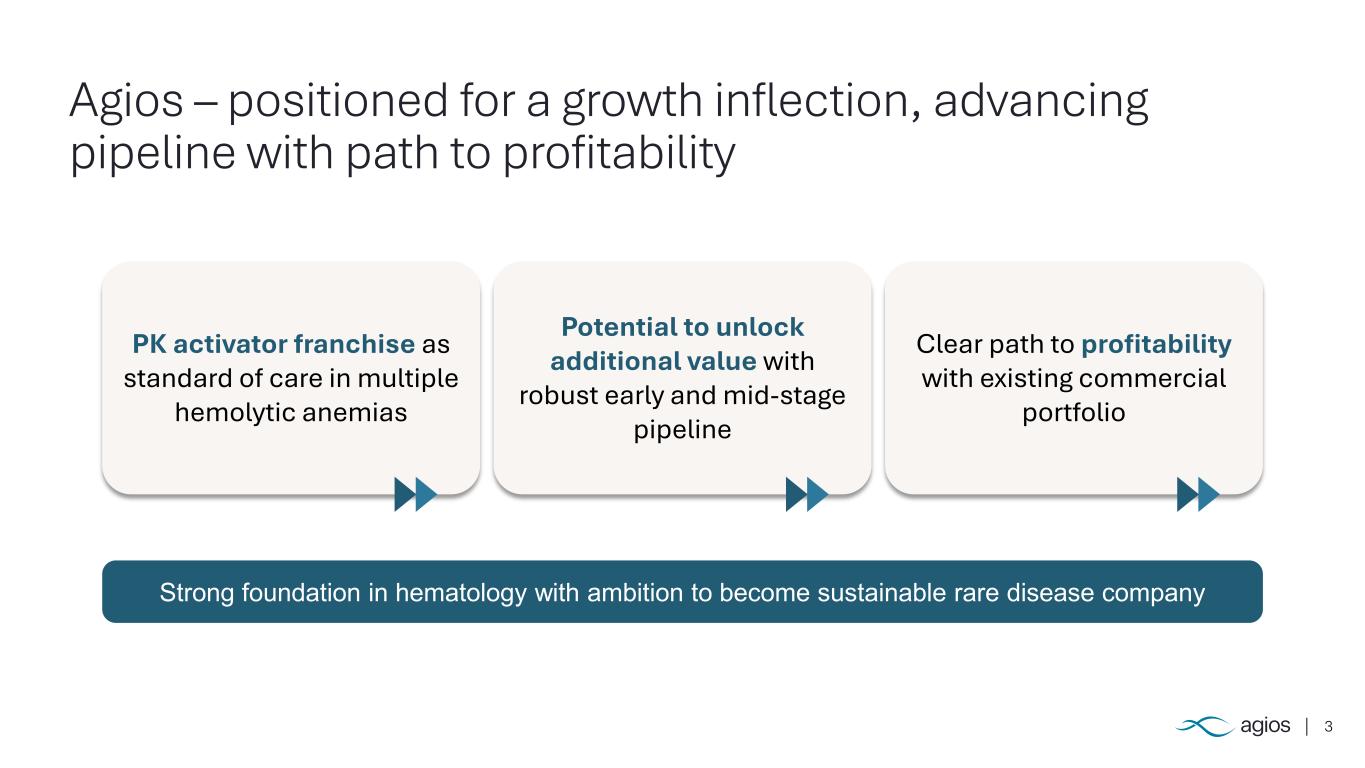
3 Agios – positioned for a growth inflection, advancing pipeline with path to profitability PK activator franchise as standard of care in multiple hemolytic anemias Potential to unlock additional value with robust early and mid-stage pipeline Clear path to profitability with existing commercial portfolio Strong foundation in hematology with ambition to become sustainable rare disease company
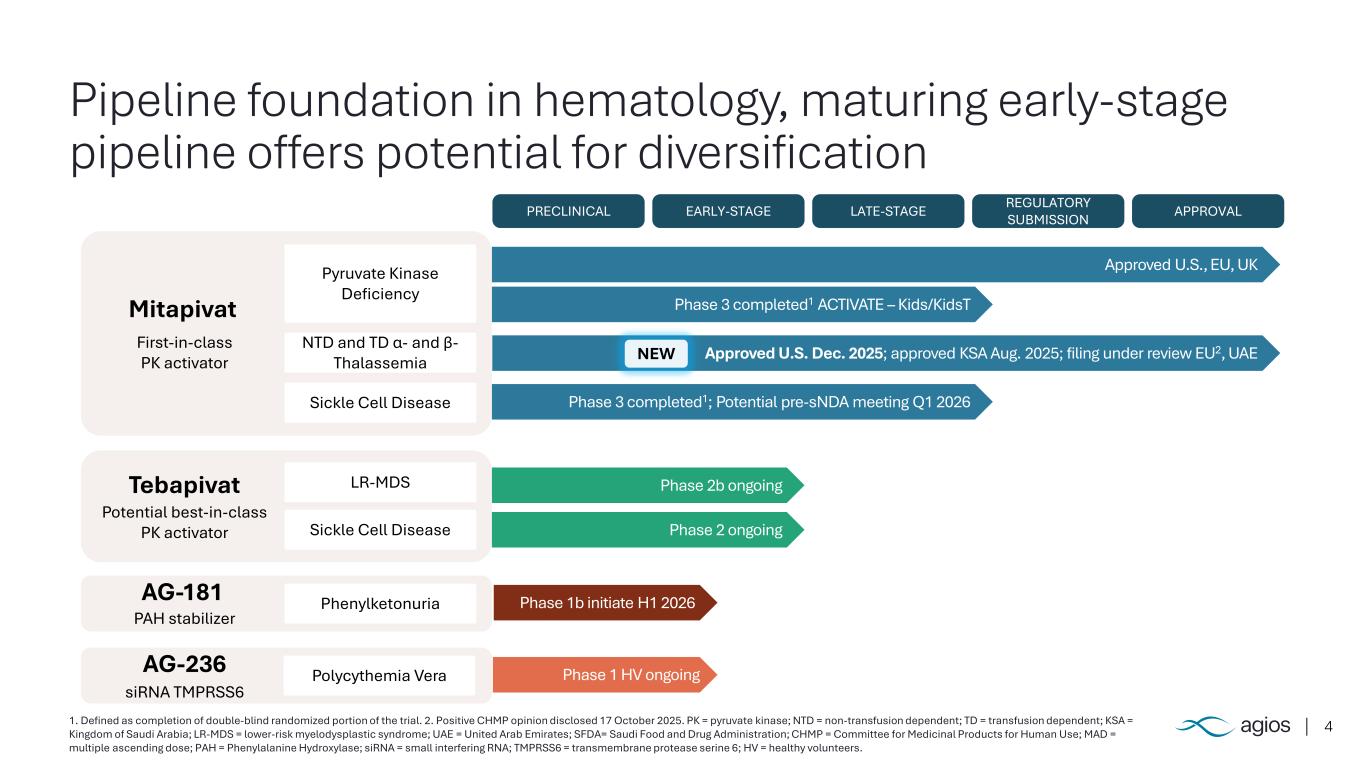
4 Pipeline foundation in hematology, maturing early-stage pipeline offers potential for diversification 1. Defined as completion of double-blind randomized portion of the trial. 2. Positive CHMP opinion disclosed 17 October 2025. PK = pyruvate kinase; NTD = non-transfusion dependent; TD = transfusion dependent; KSA = Kingdom of Saudi Arabia; LR-MDS = lower-risk myelodysplastic syndrome; UAE = United Arab Emirates; SFDA= Saudi Food and Drug Administration; CHMP = Committee for Medicinal Products for Human Use; MAD = multiple ascending dose; PAH = Phenylalanine Hydroxylase; siRNA = small interfering RNA; TMPRSS6 = transmembrane protease serine 6; HV = healthy volunteers. PRECLINICAL EARLY-STAGE LATE-STAGE REGULATORY SUBMISSION APPROVAL Pyruvate Kinase Deficiency NTD and TD α- and β- Thalassemia Sickle Cell Disease Mitapivat First-in-class PK activator LR-MDS Sickle Cell Disease Tebapivat Potential best-in-class PK activator PhenylketonuriaAG-181 PAH stabilizer Polycythemia VeraAG-236 siRNA TMPRSS6 Approved U.S., EU, UK Phase 3 completed1 ACTIVATE – Kids/KidsT Approved U.S. Dec. 2025; approved KSA Aug. 2025; filing under review EU2, UAE Phase 3 completed1; Potential pre-sNDA meeting Q1 2026 Phase 2b ongoing Phase 2 ongoing Phase 1b initiate H1 2026 Phase 1 HV ongoing NEW
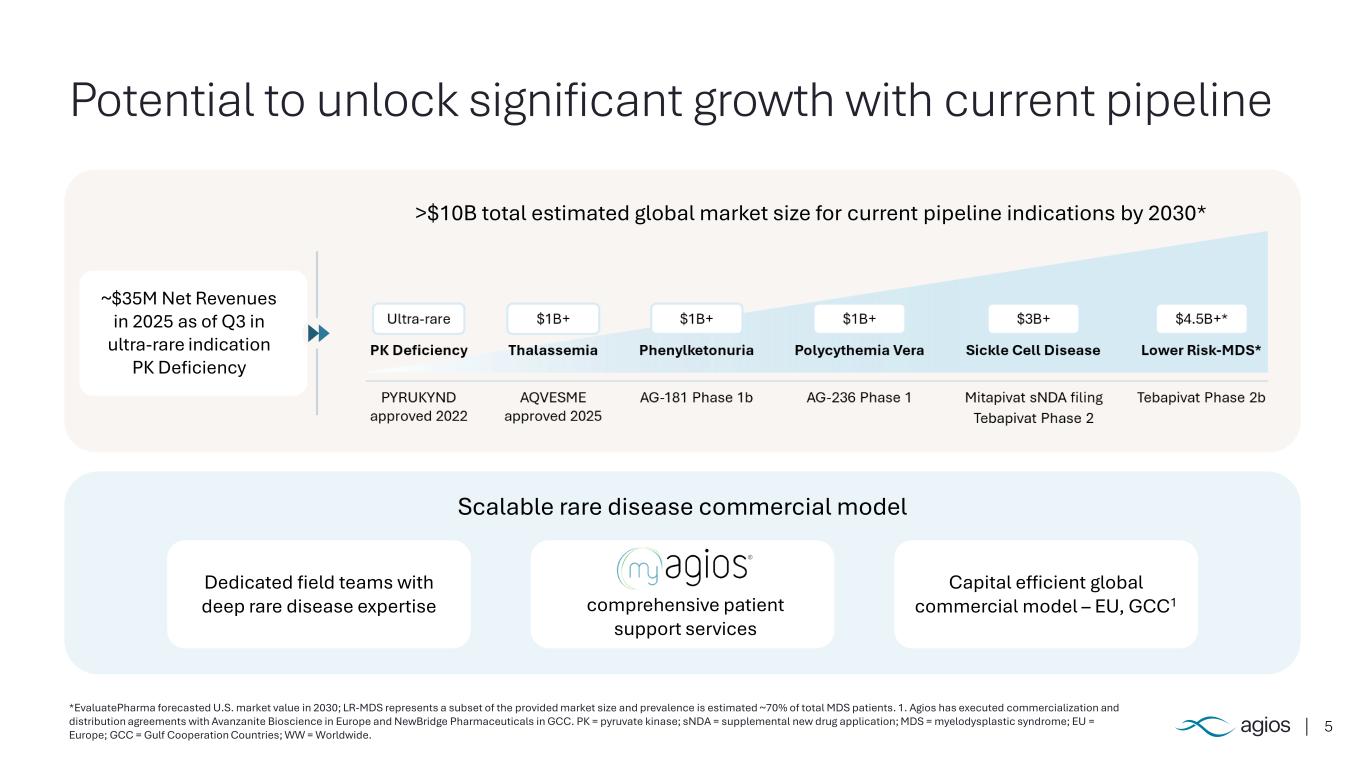
5 Potential to unlock significant growth with current pipeline *EvaluatePharma forecasted U.S. market value in 2030; LR-MDS represents a subset of the provided market size and prevalence is estimated ~70% of total MDS patients. 1. Agios has executed commercialization and distribution agreements with Avanzanite Bioscience in Europe and NewBridge Pharmaceuticals in GCC. PK = pyruvate kinase; sNDA = supplemental new drug application; MDS = myelodysplastic syndrome; EU = Europe; GCC = Gulf Cooperation Countries; WW = Worldwide. Scalable rare disease commercial model comprehensive patient support services Dedicated field teams with deep rare disease expertise Capital efficient global commercial model – EU, GCC1 >$10B total estimated global market size for current pipeline indications by 2030* ~$35M Net Revenues in 2025 as of Q3 in ultra-rare indication PK Deficiency
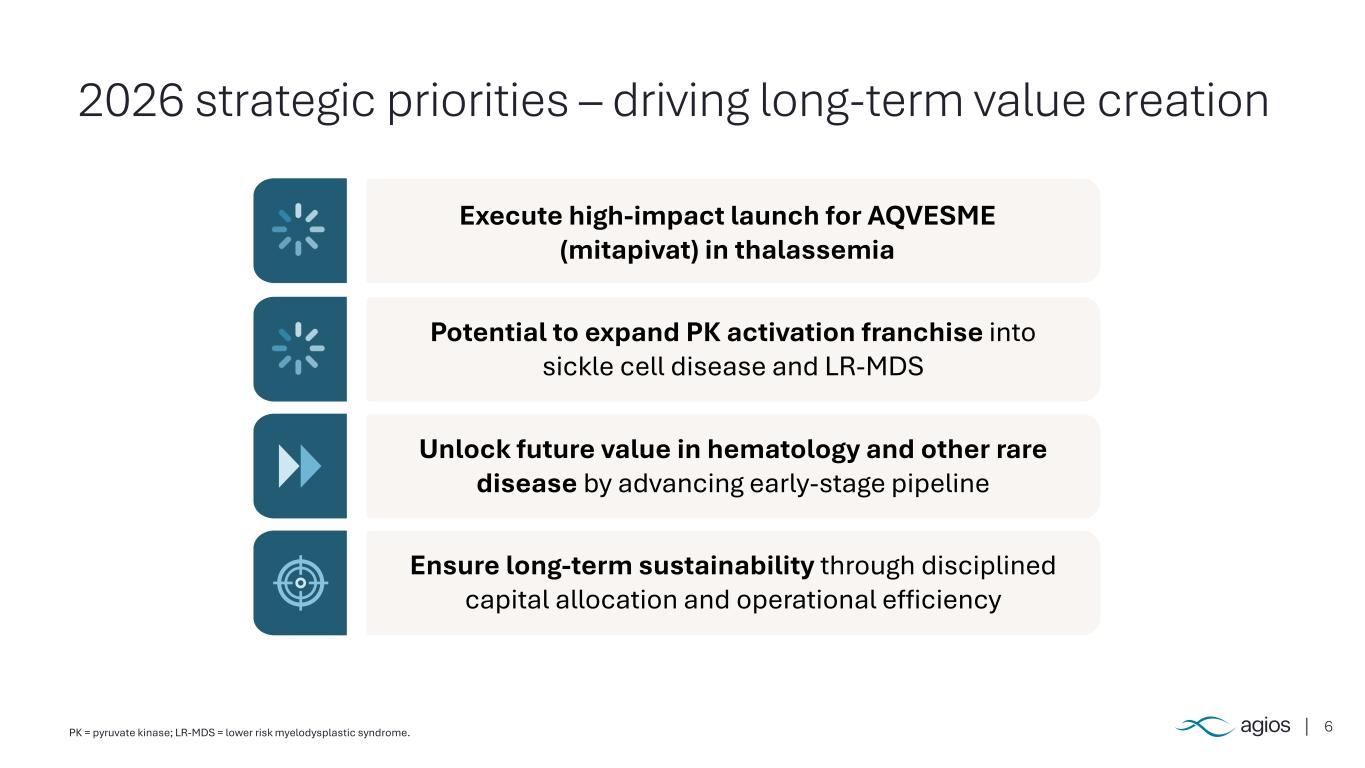
6 2026 strategic priorities – driving long-term value creation Execute high-impact launch for AQVESME (mitapivat) in thalassemia Potential to expand PK activation franchise into sickle cell disease and LR-MDS Unlock future value in hematology and other rare disease by advancing early-stage pipeline Ensure long-term sustainability through disciplined capital allocation and operational efficiency PK = pyruvate kinase; LR-MDS = lower risk myelodysplastic syndrome.
7 Execute high impact launch for AQVESME in thalassemia
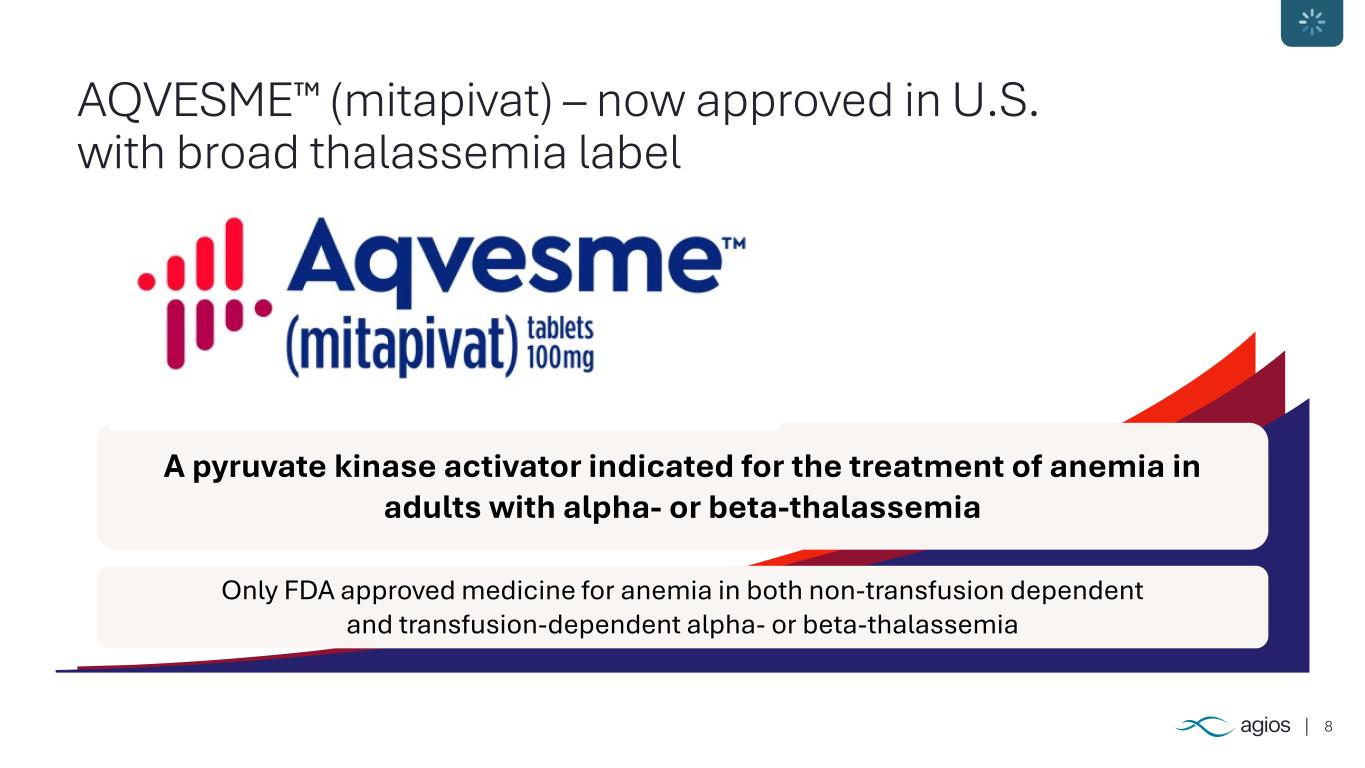
8 AQVESME (mitapivat) – now approved in U.S. with broad thalassemia label A pyruvate kinase activator indicated for the treatment of anemia in adults with alpha- or beta-thalassemia Only FDA approved medicine for anemia in both non-transfusion dependent and transfusion-dependent alpha- or beta-thalassemia
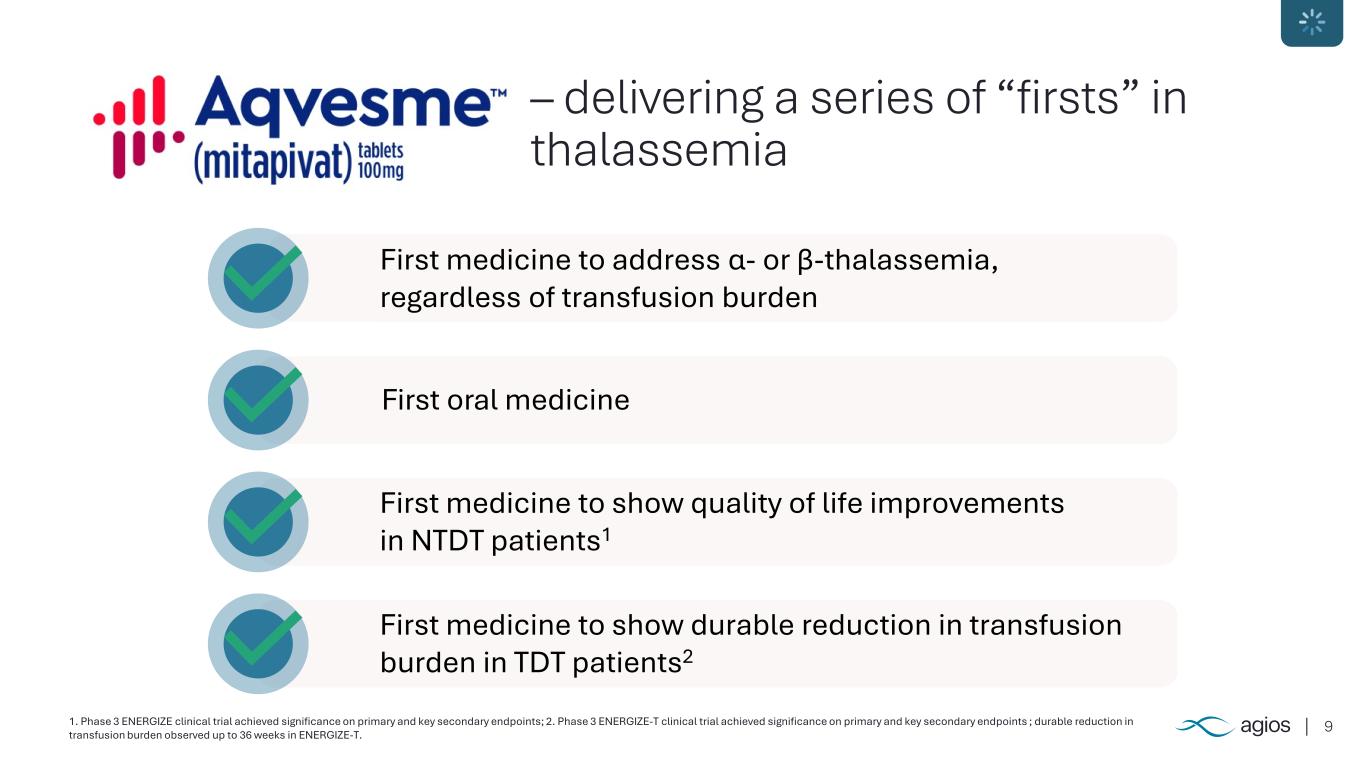
91. Phase 3 ENERGIZE clinical trial achieved significance on primary and key secondary endpoints; 2. Phase 3 ENERGIZE-T clinical trial achieved significance on primary and key secondary endpoints ; durable reduction in transfusion burden observed up to 36 weeks in ENERGIZE-T. – delivering a series of “firsts” in thalassemia First medicine to address α- or β-thalassemia, regardless of transfusion burden First medicine to show quality of life improvements in NTDT patients1 First medicine to show durable reduction in transfusion burden in TDT patients2 First oral medicine
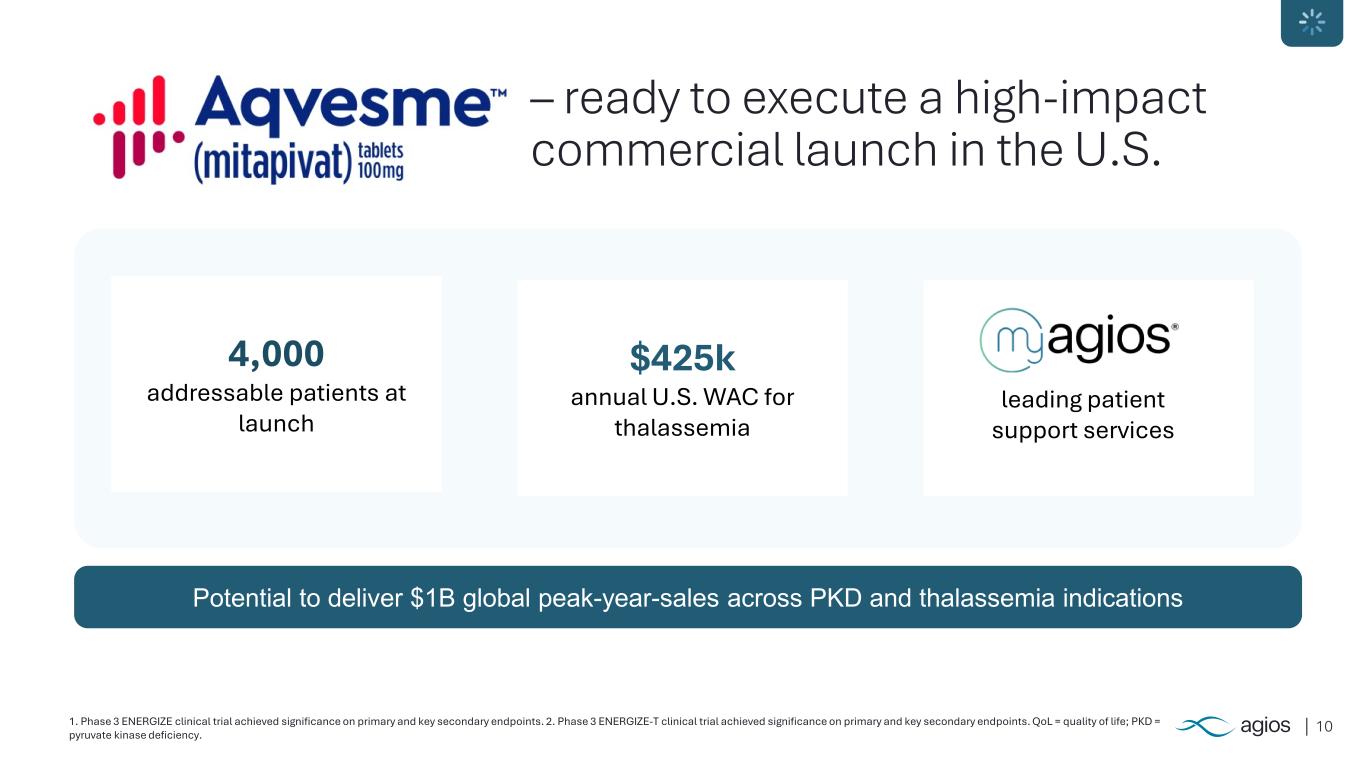
101. Phase 3 ENERGIZE clinical trial achieved significance on primary and key secondary endpoints. 2. Phase 3 ENERGIZE-T clinical trial achieved significance on primary and key secondary endpoints. QoL = quality of life; PKD = pyruvate kinase deficiency. – ready to execute a high-impact commercial launch in the U.S. Potential to deliver $1B global peak-year-sales across PKD and thalassemia indications 4,000 addressable patients at launch $425k annual U.S. WAC for thalassemia leading patient support services
11 Potential to expand PK activation franchise into Sickle Cell Disease and LR-MDS
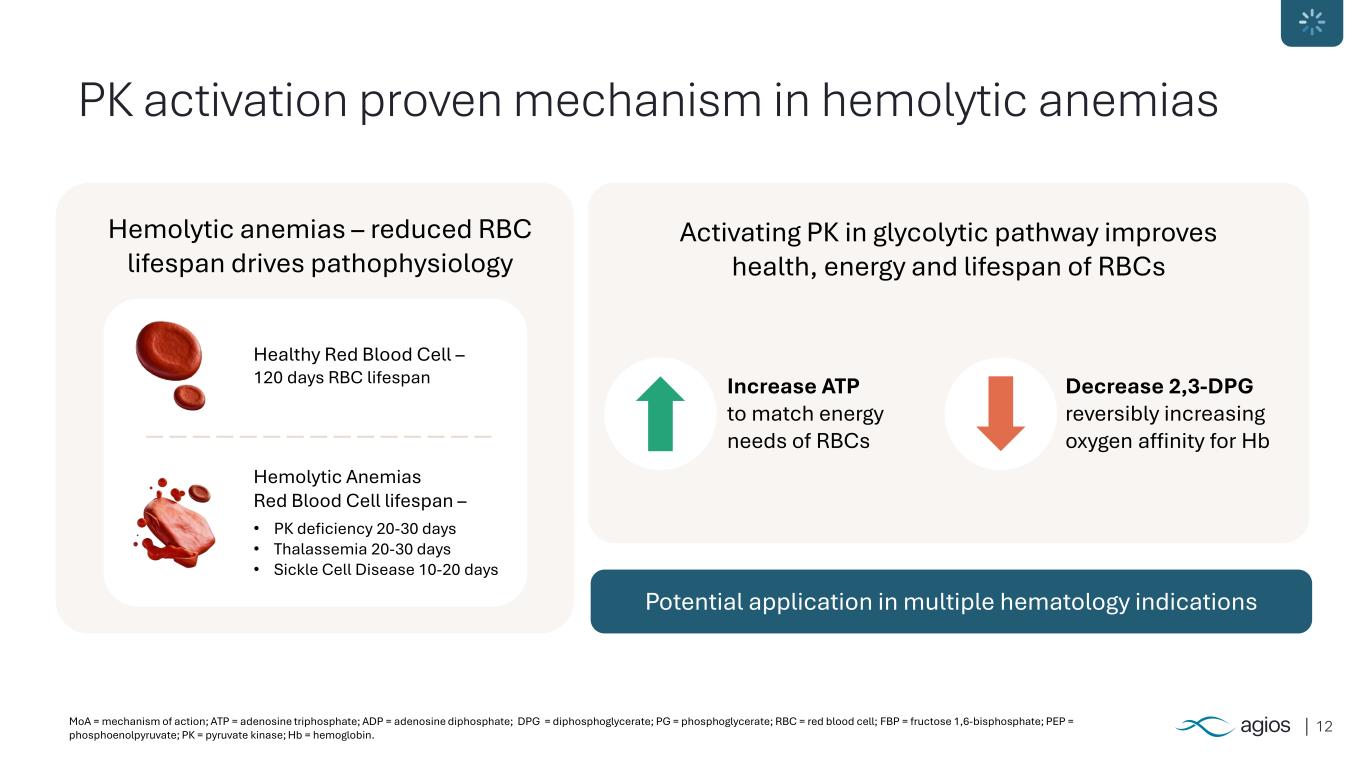
12MoA = mechanism of action; ATP = adenosine triphosphate; ADP = adenosine diphosphate; DPG = diphosphoglycerate; PG = phosphoglycerate; RBC = red blood cell; FBP = fructose 1,6-bisphosphate; PEP = phosphoenolpyruvate; PK = pyruvate kinase; Hb = hemoglobin. PK activation proven mechanism in hemolytic anemias Hemolytic anemias – reduced RBC lifespan drives pathophysiology Activating PK in glycolytic pathway improves health, energy and lifespan of RBCs Potential application in multiple hematology indications Increase ATP to match energy needs of RBCs Decrease 2,3-DPG reversibly increasing oxygen affinity for Hb Healthy Red Blood Cell – 120 days RBC lifespan • PK deficiency 20-30 days • Thalassemia 20-30 days • Sickle Cell Disease 10-20 days Hemolytic Anemias Red Blood Cell lifespan –
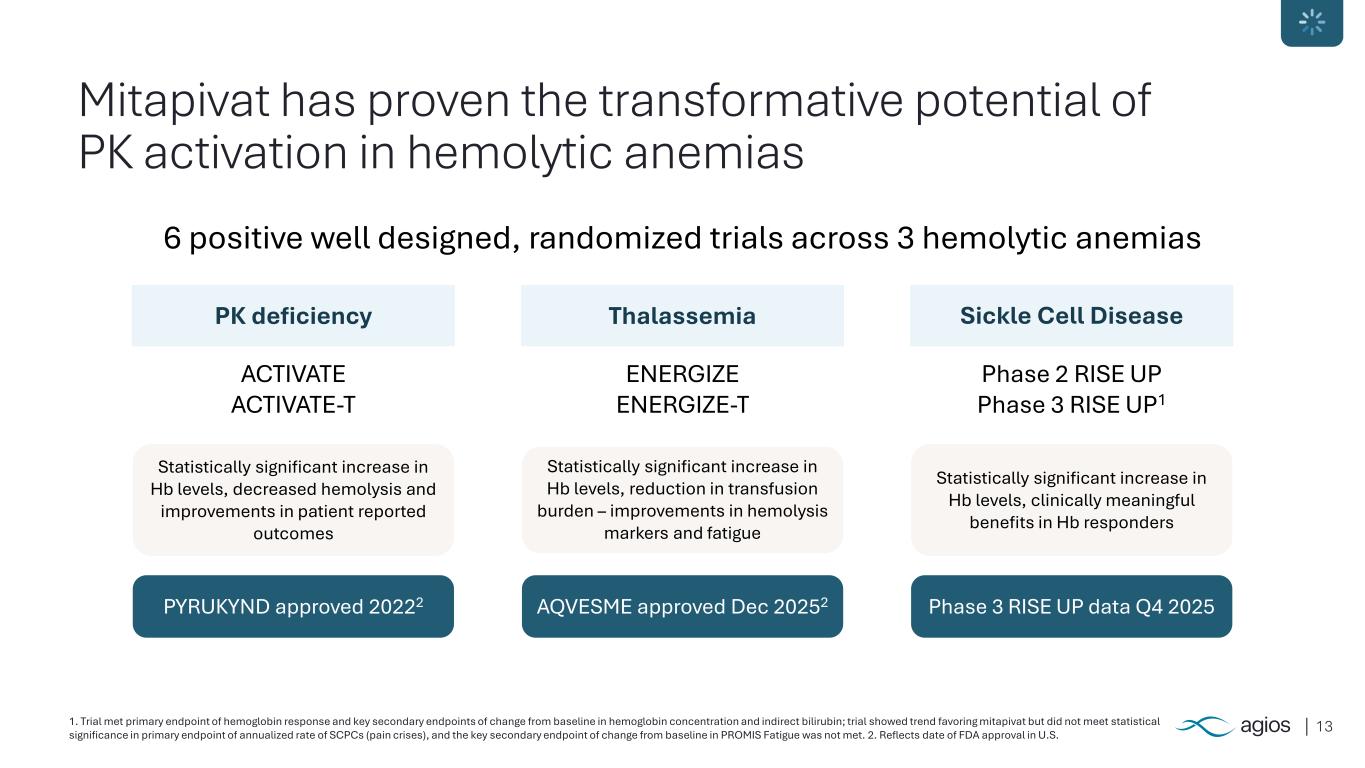
131. Trial met primary endpoint of hemoglobin response and key secondary endpoints of change from baseline in hemoglobin concentration and indirect bilirubin; trial showed trend favoring mitapivat but did not meet statistical significance in primary endpoint of annualized rate of SCPCs (pain crises), and the key secondary endpoint of change from baseline in PROMIS Fatigue was not met. 2. Reflects date of FDA approval in U.S. Mitapivat has proven the transformative potential of PK activation in hemolytic anemias 6 positive well designed, randomized trials across 3 hemolytic anemias ACTIVATE ACTIVATE-T PK deficiency Statistically significant increase in Hb levels, decreased hemolysis and improvements in patient reported outcomes PYRUKYND approved 20222 ENERGIZE ENERGIZE-T Thalassemia Statistically significant increase in Hb levels, reduction in transfusion burden – improvements in hemolysis markers and fatigue AQVESME approved Dec 20252 Phase 2 RISE UP Phase 3 RISE UP1 Sickle Cell Disease Statistically significant increase in Hb levels, clinically meaningful benefits in Hb responders Phase 3 RISE UP data Q4 2025
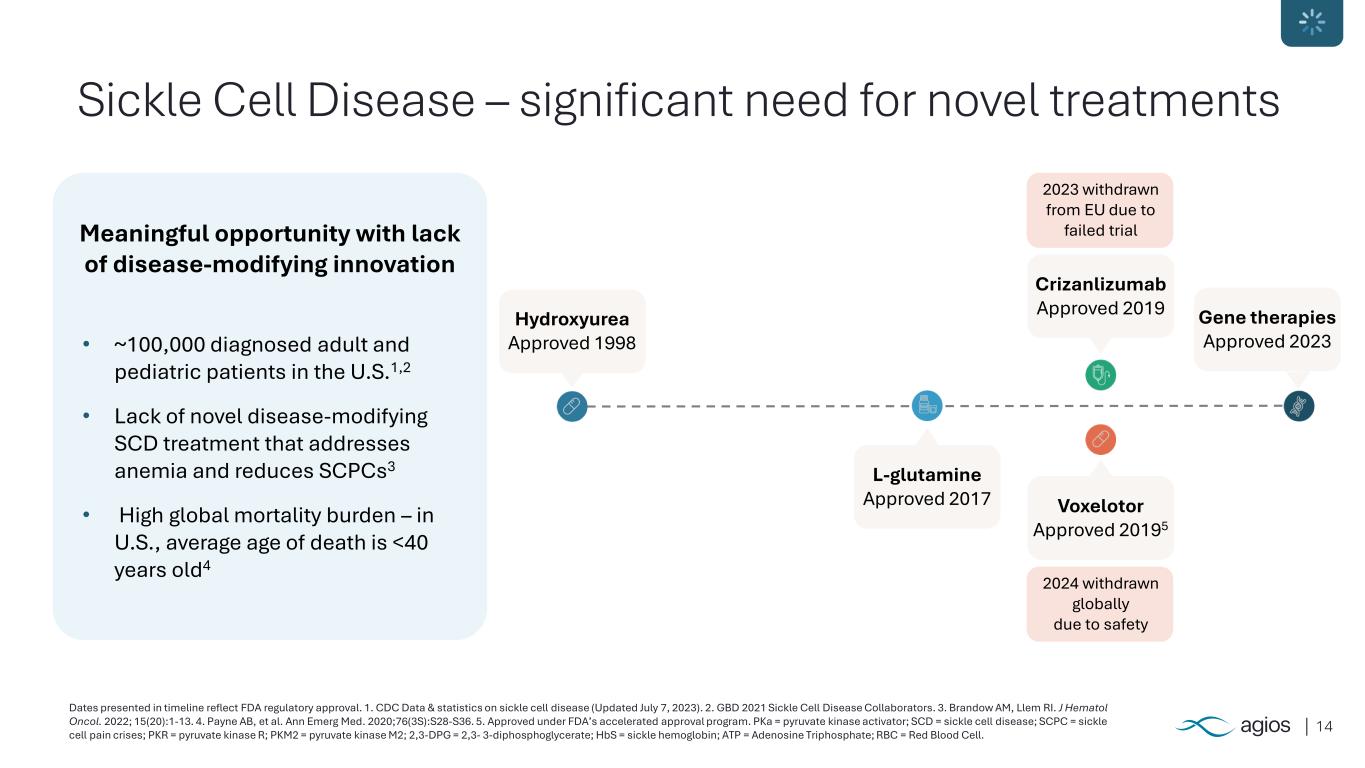
14 Sickle Cell Disease – significant need for novel treatments Dates presented in timeline reflect FDA regulatory approval. 1. CDC Data & statistics on sickle cell disease (Updated July 7, 2023). 2. GBD 2021 Sickle Cell Disease Collaborators. 3. Brandow AM, Llem RI. J Hematol Oncol. 2022; 15(20):1-13. 4. Payne AB, et al. Ann Emerg Med. 2020;76(3S):S28-S36. 5. Approved under FDA’s accelerated approval program. PKa = pyruvate kinase activator; SCD = sickle cell disease; SCPC = sickle cell pain crises; PKR = pyruvate kinase R; PKM2 = pyruvate kinase M2; 2,3-DPG = 2,3- 3-diphosphoglycerate; HbS = sickle hemoglobin; ATP = Adenosine Triphosphate; RBC = Red Blood Cell. Meaningful opportunity with lack of disease-modifying innovation • ~100,000 diagnosed adult and pediatric patients in the U.S.1,2 • Lack of novel disease-modifying SCD treatment that addresses anemia and reduces SCPCs3 • High global mortality burden – in U.S., average age of death is <40 years old4 Hydroxyurea Approved 1998 L-glutamine Approved 2017 Voxelotor Approved 20195 Crizanlizumab Approved 2019 Gene therapies Approved 2023 2024 withdrawn globally due to safety 2023 withdrawn from EU due to failed trial
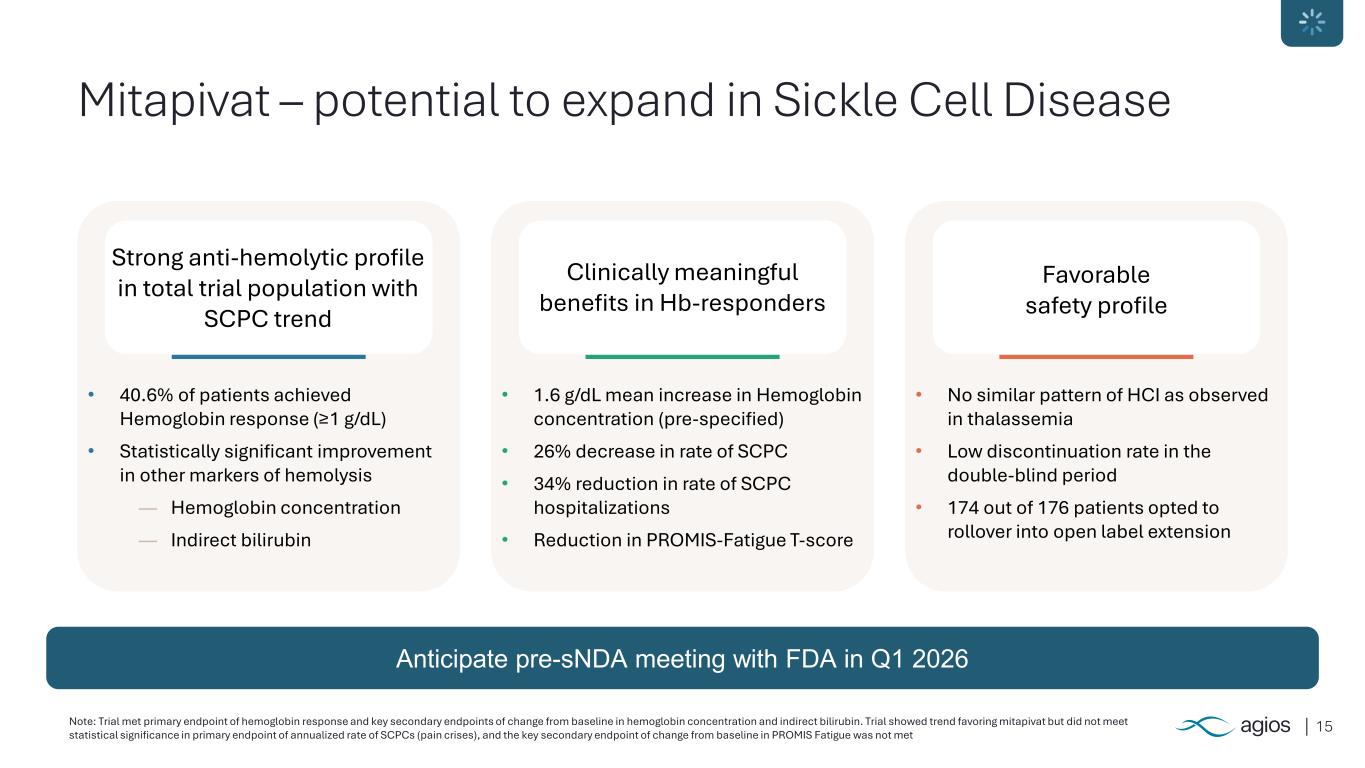
15 Mitapivat – potential to expand in Sickle Cell Disease Strong anti-hemolytic profile in total trial population with SCPC trend Clinically meaningful benefits in Hb-responders Favorable safety profile • 40.6% of patients achieved Hemoglobin response (≥1 g/dL) • Statistically significant improvement in other markers of hemolysis ― Hemoglobin concentration ― Indirect bilirubin • 1.6 g/dL mean increase in Hemoglobin concentration (pre-specified) • 26% decrease in rate of SCPC • 34% reduction in rate of SCPC hospitalizations • Reduction in PROMIS-Fatigue T-score • No similar pattern of HCI as observed in thalassemia • Low discontinuation rate in the double-blind period • 174 out of 176 patients opted to rollover into open label extension Anticipate pre-sNDA meeting with FDA in Q1 2026 Note: Trial met primary endpoint of hemoglobin response and key secondary endpoints of change from baseline in hemoglobin concentration and indirect bilirubin. Trial showed trend favoring mitapivat but did not meet statistical significance in primary endpoint of annualized rate of SCPCs (pain crises), and the key secondary endpoint of change from baseline in PROMIS Fatigue was not met
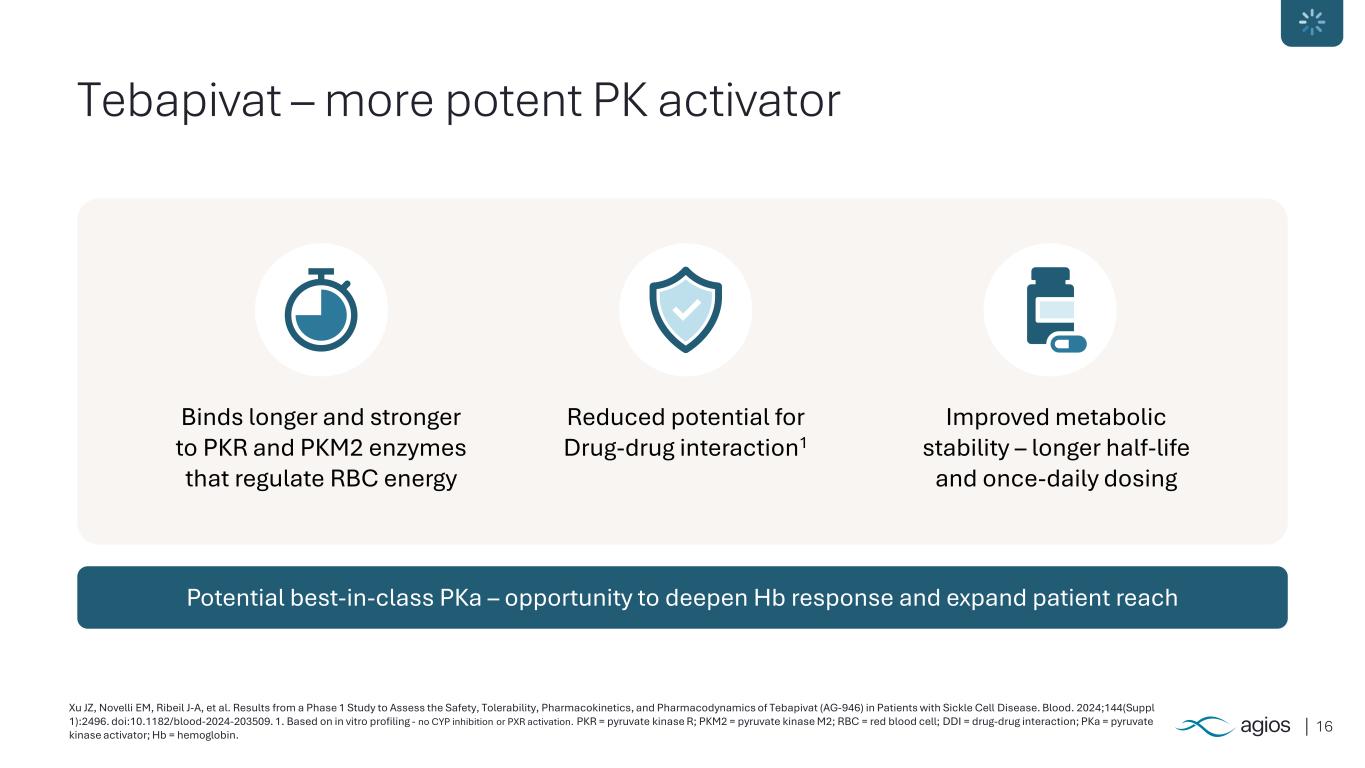
16 Xu JZ, Novelli EM, Ribeil J-A, et al. Results from a Phase 1 Study to Assess the Safety, Tolerability, Pharmacokinetics, and Pharmacodynamics of Tebapivat (AG-946) in Patients with Sickle Cell Disease. Blood. 2024;144(Suppl 1):2496. doi:10.1182/blood-2024-203509. 1. Based on in vitro profiling - no CYP inhibition or PXR activation. PKR = pyruvate kinase R; PKM2 = pyruvate kinase M2; RBC = red blood cell; DDI = drug-drug interaction; PKa = pyruvate kinase activator; Hb = hemoglobin. Tebapivat – more potent PK activator Potential best-in-class PKa – opportunity to deepen Hb response and expand patient reach Binds longer and stronger to PKR and PKM2 enzymes that regulate RBC energy Reduced potential for Drug-drug interaction1 Improved metabolic stability – longer half-life and once-daily dosing
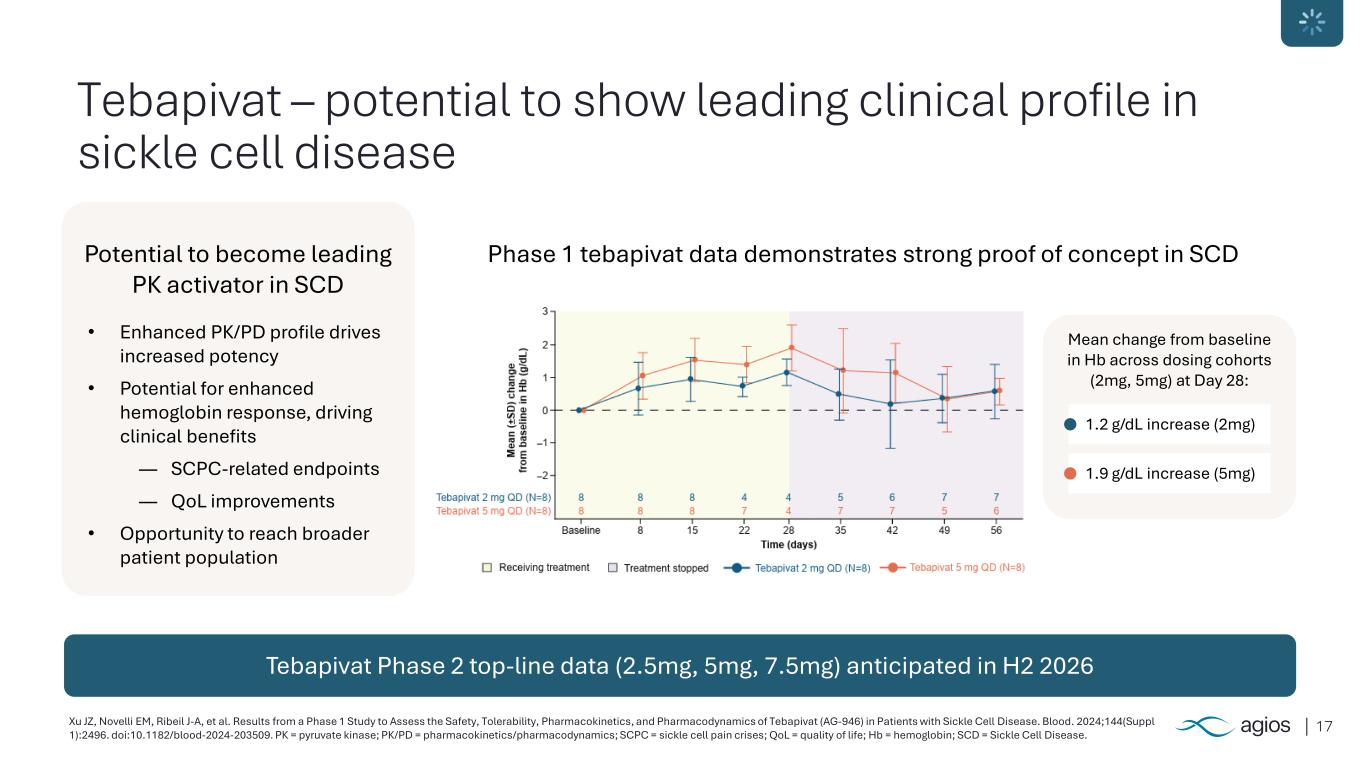
17Xu JZ, Novelli EM, Ribeil J-A, et al. Results from a Phase 1 Study to Assess the Safety, Tolerability, Pharmacokinetics, and Pharmacodynamics of Tebapivat (AG-946) in Patients with Sickle Cell Disease. Blood. 2024;144(Suppl 1):2496. doi:10.1182/blood-2024-203509. PK = pyruvate kinase; PK/PD = pharmacokinetics/pharmacodynamics; SCPC = sickle cell pain crises; QoL = quality of life; Hb = hemoglobin; SCD = Sickle Cell Disease. Tebapivat – potential to show leading clinical profile in sickle cell disease Tebapivat Phase 2 top-line data (2.5mg, 5mg, 7.5mg) anticipated in H2 2026 Potential to become leading PK activator in SCD • Enhanced PK/PD profile drives increased potency • Potential for enhanced hemoglobin response, driving clinical benefits ― SCPC-related endpoints ― QoL improvements • Opportunity to reach broader patient population Phase 1 tebapivat data demonstrates strong proof of concept in SCD Mean change from baseline in Hb across dosing cohorts (2mg, 5mg) at Day 28: 1.2 g/dL increase (2mg) 1.9 g/dL increase (5mg)
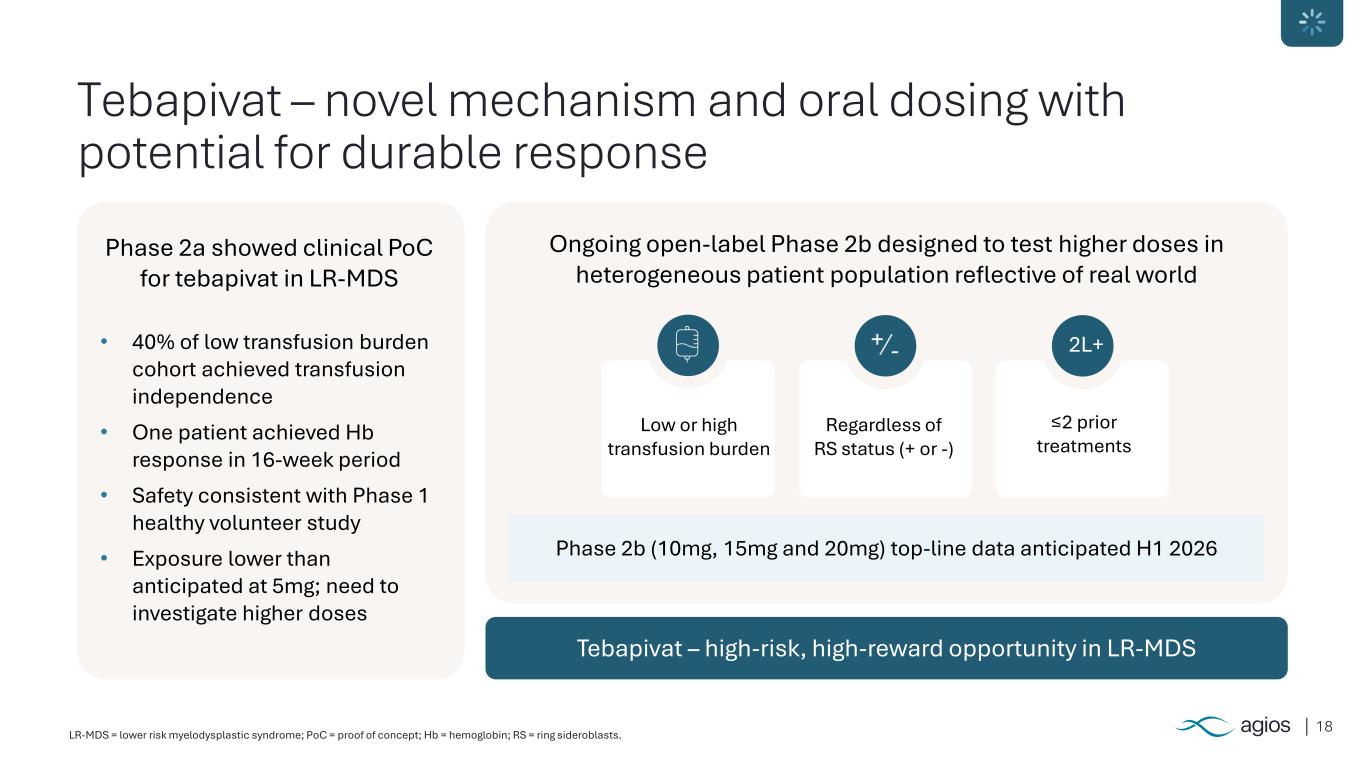
18LR-MDS = lower risk myelodysplastic syndrome; PoC = proof of concept; Hb = hemoglobin; RS = ring sideroblasts. Tebapivat – novel mechanism and oral dosing with potential for durable response Tebapivat – high-risk, high-reward opportunity in LR-MDS Phase 2a showed clinical PoC for tebapivat in LR-MDS • 40% of low transfusion burden cohort achieved transfusion independence • One patient achieved Hb response in 16-week period • Safety consistent with Phase 1 healthy volunteer study • Exposure lower than anticipated at 5mg; need to investigate higher doses Ongoing open-label Phase 2b designed to test higher doses in heterogeneous patient population reflective of real world Phase 2b (10mg, 15mg and 20mg) top-line data anticipated H1 2026 Low or high transfusion burden Regardless of RS status (+ or -) ≤2 prior treatments 2L+
19 Drive future growth with diversified rare disease pipeline
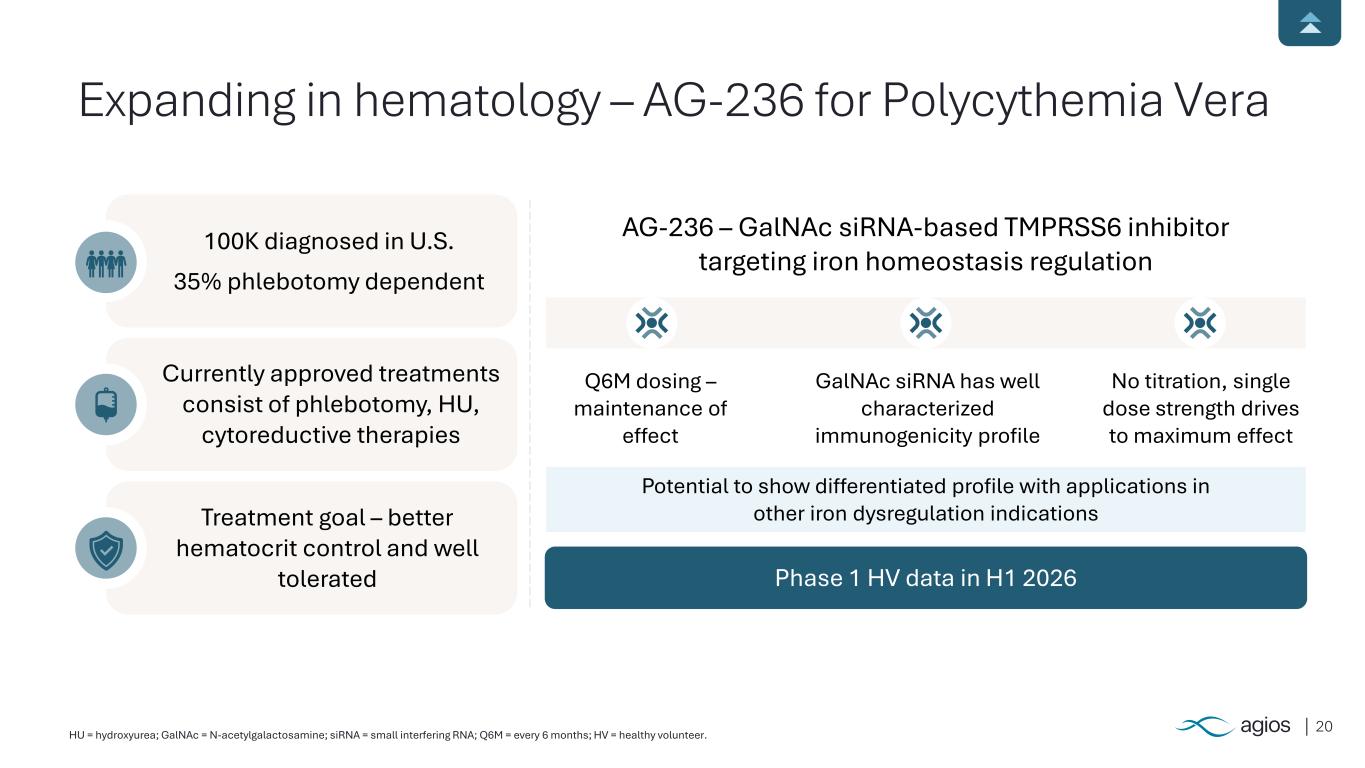
20HU = hydroxyurea; GalNAc = N-acetylgalactosamine; siRNA = small interfering RNA; Q6M = every 6 months; HV = healthy volunteer. Expanding in hematology – AG-236 for Polycythemia Vera 100K diagnosed in U.S. 35% phlebotomy dependent Currently approved treatments consist of phlebotomy, HU, cytoreductive therapies Treatment goal – better hematocrit control and well tolerated Phase 1 HV data in H1 2026 AG-236 – GalNAc siRNA-based TMPRSS6 inhibitor targeting iron homeostasis regulation Q6M dosing – maintenance of effect GalNAc siRNA has well characterized immunogenicity profile No titration, single dose strength drives to maximum effect Potential to show differentiated profile with applications in other iron dysregulation indications
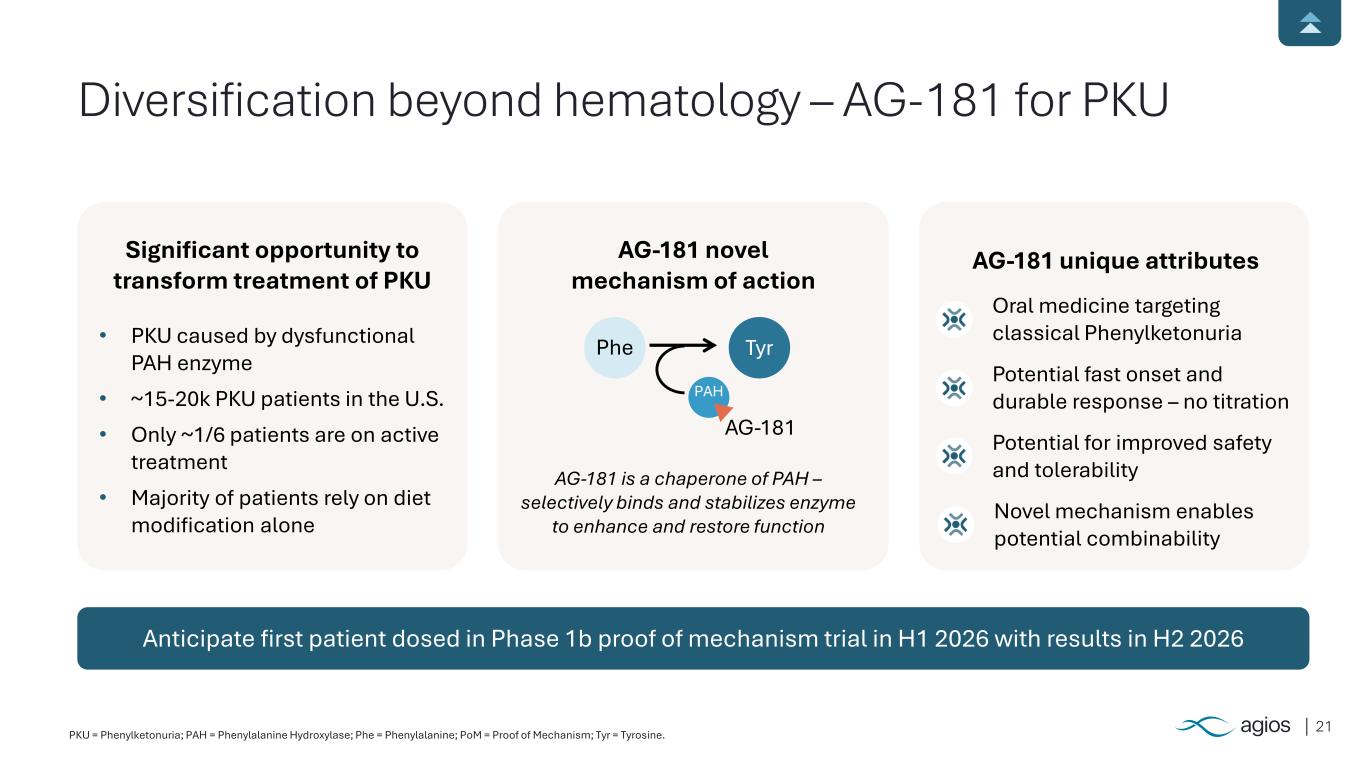
21PKU = Phenylketonuria; PAH = Phenylalanine Hydroxylase; Phe = Phenylalanine; PoM = Proof of Mechanism; Tyr = Tyrosine. Anticipate first patient dosed in Phase 1b proof of mechanism trial in H1 2026 with results in H2 2026 Significant opportunity to transform treatment of PKU • PKU caused by dysfunctional PAH enzyme • ~15-20k PKU patients in the U.S. • Only ~1/6 patients are on active treatment • Majority of patients rely on diet modification alone AG-181 novel mechanism of action AG-181 unique attributes Oral medicine targeting classical Phenylketonuria Potential fast onset and durable response – no titration Potential for improved safety and tolerabilityAG-181 is a chaperone of PAH – selectively binds and stabilizes enzyme to enhance and restore function Diversification beyond hematology – AG-181 for PKU Phe Tyr AG-181 Novel mechanism enables potential combinability PAH
22 Financial discipline to achieve growth and long-term sustainability
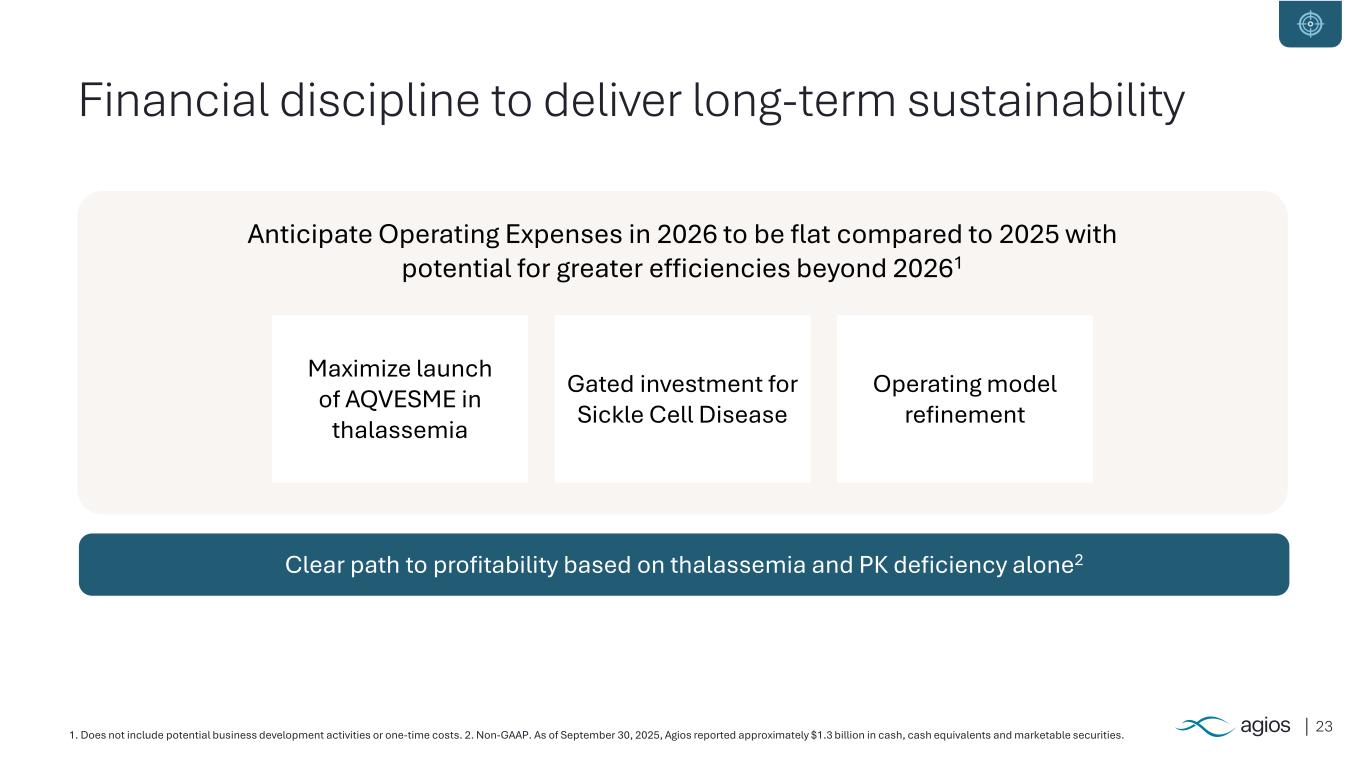
231. Does not include potential business development activities or one-time costs. 2. Non-GAAP. As of September 30, 2025, Agios reported approximately $1.3 billion in cash, cash equivalents and marketable securities. Financial discipline to deliver long-term sustainability Clear path to profitability based on thalassemia and PK deficiency alone2 Anticipate Operating Expenses in 2026 to be flat compared to 2025 with potential for greater efficiencies beyond 20261 Gated investment for Sickle Cell Disease Operating model refinement Maximize launch of AQVESME in thalassemia
24 Agios – Transforming for tomorrow
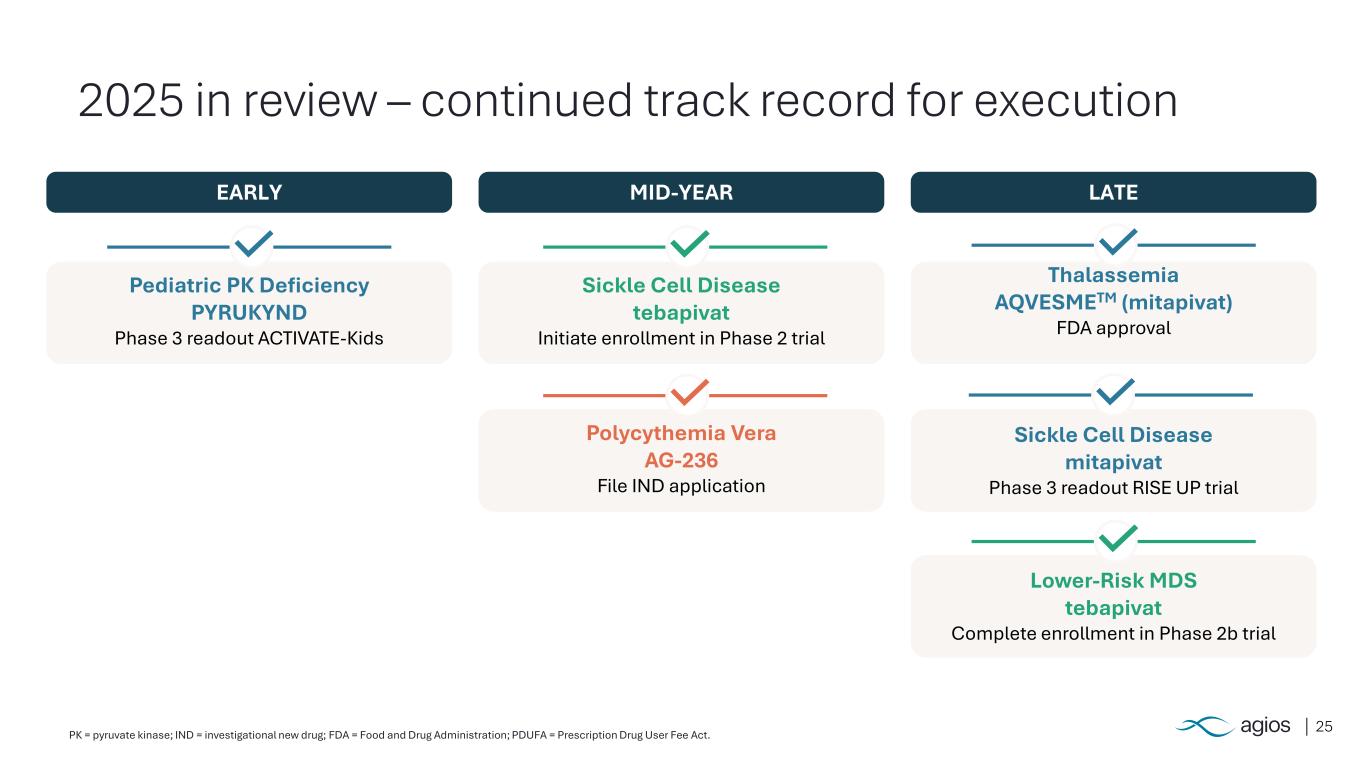
25 2025 in review – continued track record for execution EARLY MID-YEAR LATE Pediatric PK Deficiency PYRUKYND Phase 3 readout ACTIVATE-Kids Sickle Cell Disease tebapivat Initiate enrollment in Phase 2 trial Polycythemia Vera AG-236 File IND application Thalassemia AQVESMETM (mitapivat) FDA approval Sickle Cell Disease mitapivat Phase 3 readout RISE UP trial Lower-Risk MDS tebapivat Complete enrollment in Phase 2b trial PK = pyruvate kinase; IND = investigational new drug; FDA = Food and Drug Administration; PDUFA = Prescription Drug User Fee Act.
26PK = pyruvate kinase; LR-MDS = lower risk myelodysplastic syndrome. 2026 strategic priorities – driving long-term value creation Execute high impact launch for AQVESME (mitapivat) in thalassemia Potential to expand PK activation franchise into sickle cell disease and LR-MDS Unlock future value in hematology and other rare disease by advancing early-stage pipeline Ensure long-term sustainability through disciplined capital allocation and operational efficiency
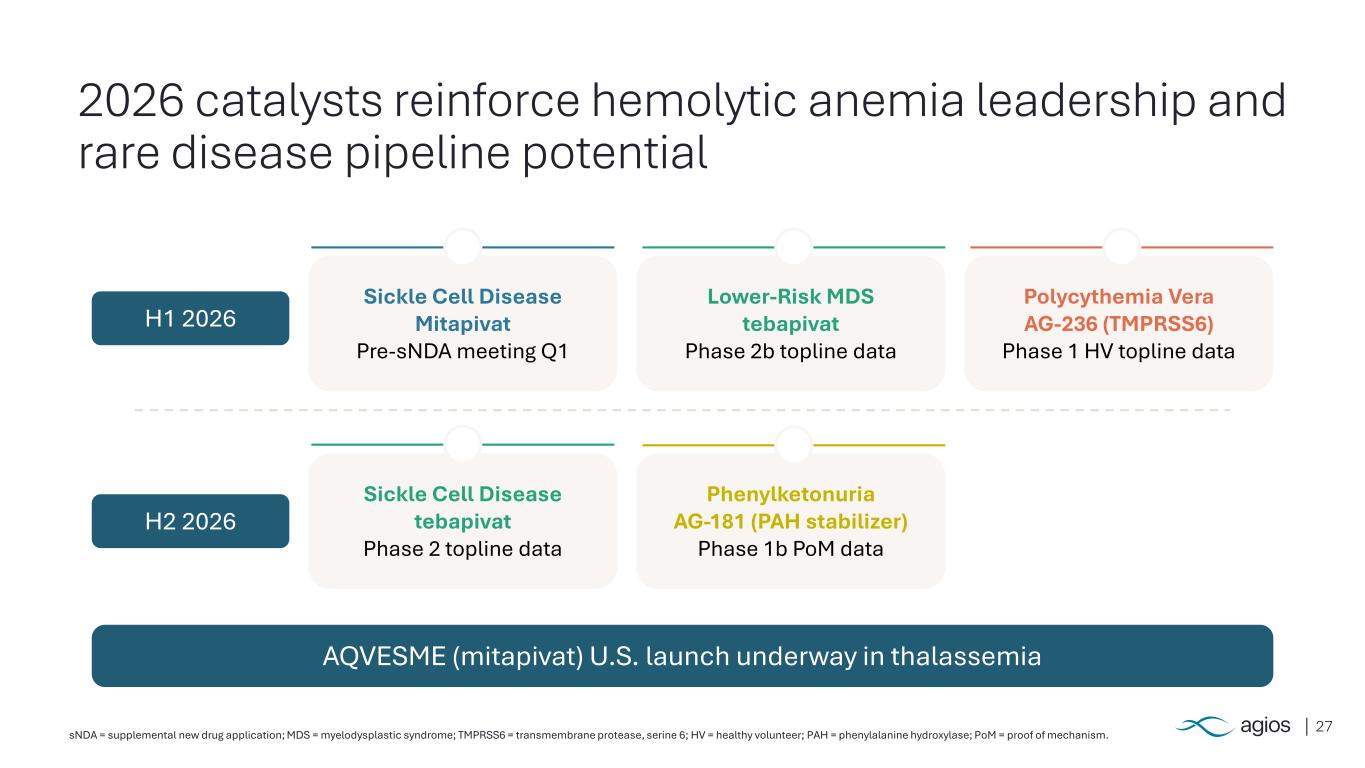
27sNDA = supplemental new drug application; MDS = myelodysplastic syndrome; TMPRSS6 = transmembrane protease, serine 6; HV = healthy volunteer; PAH = phenylalanine hydroxylase; PoM = proof of mechanism. 2026 catalysts reinforce hemolytic anemia leadership and rare disease pipeline potential Sickle Cell Disease Mitapivat Pre-sNDA meeting Q1 Lower-Risk MDS tebapivat Phase 2b topline data Polycythemia Vera AG-236 (TMPRSS6) Phase 1 HV topline data Sickle Cell Disease tebapivat Phase 2 topline data Phenylketonuria AG-181 (PAH stabilizer) Phase 1b PoM data H1 2026 H2 2026 AQVESME (mitapivat) U.S. launch underway in thalassemia

28 Appendix
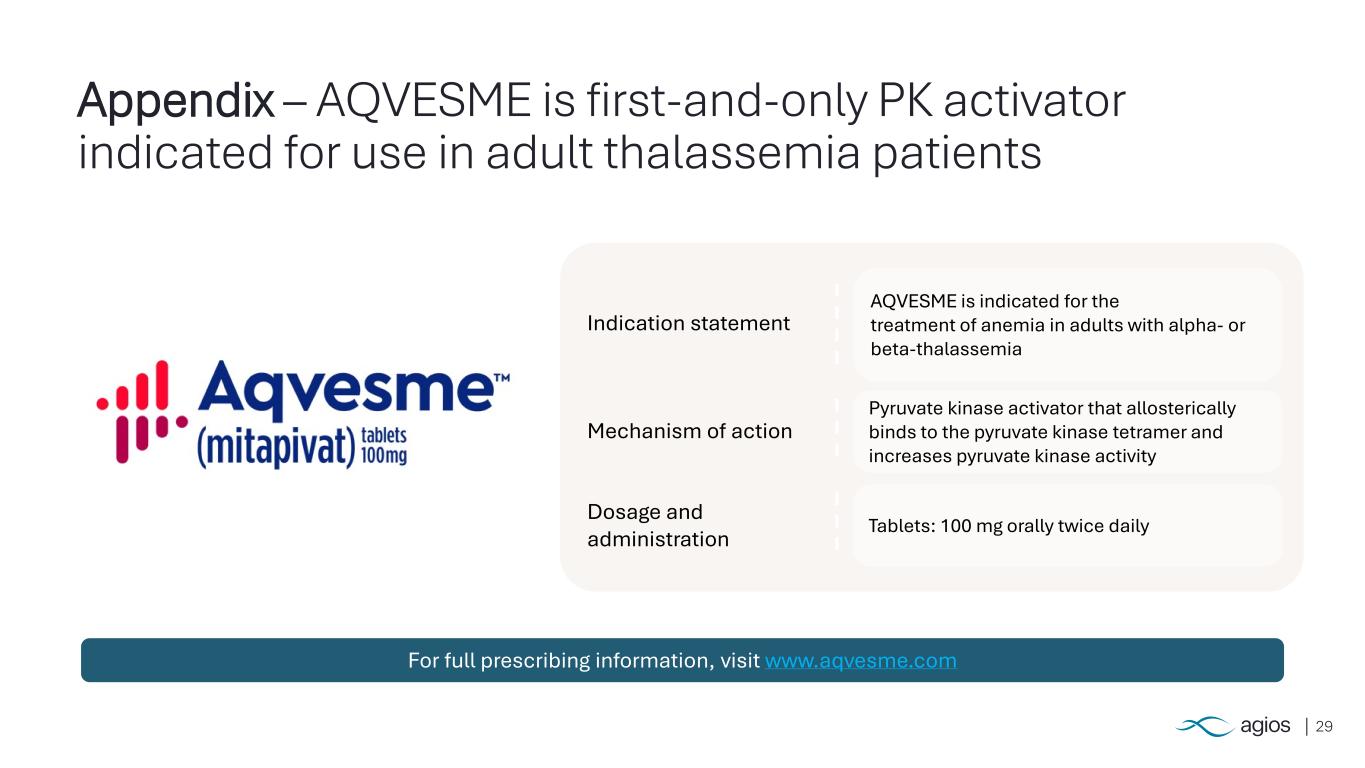
29 Appendix – AQVESME is first-and-only PK activator indicated for use in adult thalassemia patients Indication statement AQVESME is indicated for the treatment of anemia in adults with alpha- or beta-thalassemia Dosage and administration Tablets: 100 mg orally twice daily Mechanism of action Pyruvate kinase activator that allosterically binds to the pyruvate kinase tetramer and increases pyruvate kinase activity For full prescribing information, visit www.aqvesme.com
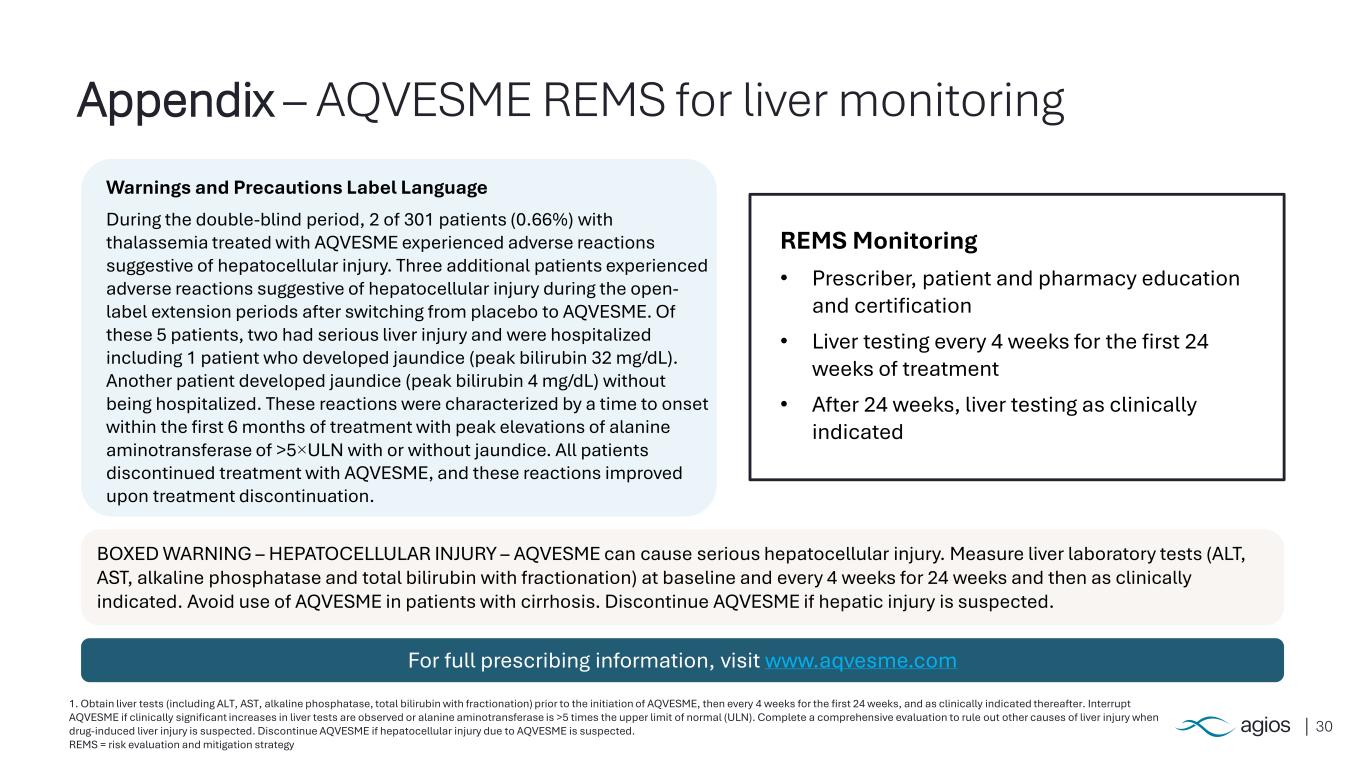
30 1. Obtain liver tests (including ALT, AST, alkaline phosphatase, total bilirubin with fractionation) prior to the initiation of AQVESME, then every 4 weeks for the first 24 weeks, and as clinically indicated thereafter. Interrupt AQVESME if clinically significant increases in liver tests are observed or alanine aminotransferase is >5 times the upper limit of normal (ULN). Complete a comprehensive evaluation to rule out other causes of liver injury when drug-induced liver injury is suspected. Discontinue AQVESME if hepatocellular injury due to AQVESME is suspected. REMS = risk evaluation and mitigation strategy Appendix – AQVESME REMS for liver monitoring v BOXED WARNING – HEPATOCELLULAR INJURY – AQVESME can cause serious hepatocellular injury. Measure liver laboratory tests (ALT, AST, alkaline phosphatase and total bilirubin with fractionation) at baseline and every 4 weeks for 24 weeks and then as clinically indicated. Avoid use of AQVESME in patients with cirrhosis. Discontinue AQVESME if hepatic injury is suspected. REMS Monitoring • Prescriber, patient and pharmacy education and certification • Liver testing every 4 weeks for the first 24 weeks of treatment • After 24 weeks, liver testing as clinically indicated Warnings and Precautions Label Language During the double-blind period, 2 of 301 patients (0.66%) with thalassemia treated with AQVESME experienced adverse reactions suggestive of hepatocellular injury. Three additional patients experienced adverse reactions suggestive of hepatocellular injury during the open- label extension periods after switching from placebo to AQVESME. Of these 5 patients, two had serious liver injury and were hospitalized including 1 patient who developed jaundice (peak bilirubin 32 mg/dL). Another patient developed jaundice (peak bilirubin 4 mg/dL) without being hospitalized. These reactions were characterized by a time to onset within the first 6 months of treatment with peak elevations of alanine aminotransferase of >5×ULN with or without jaundice. All patients discontinued treatment with AQVESME, and these reactions improved upon treatment discontinuation. For full prescribing information, visit www.aqvesme.com
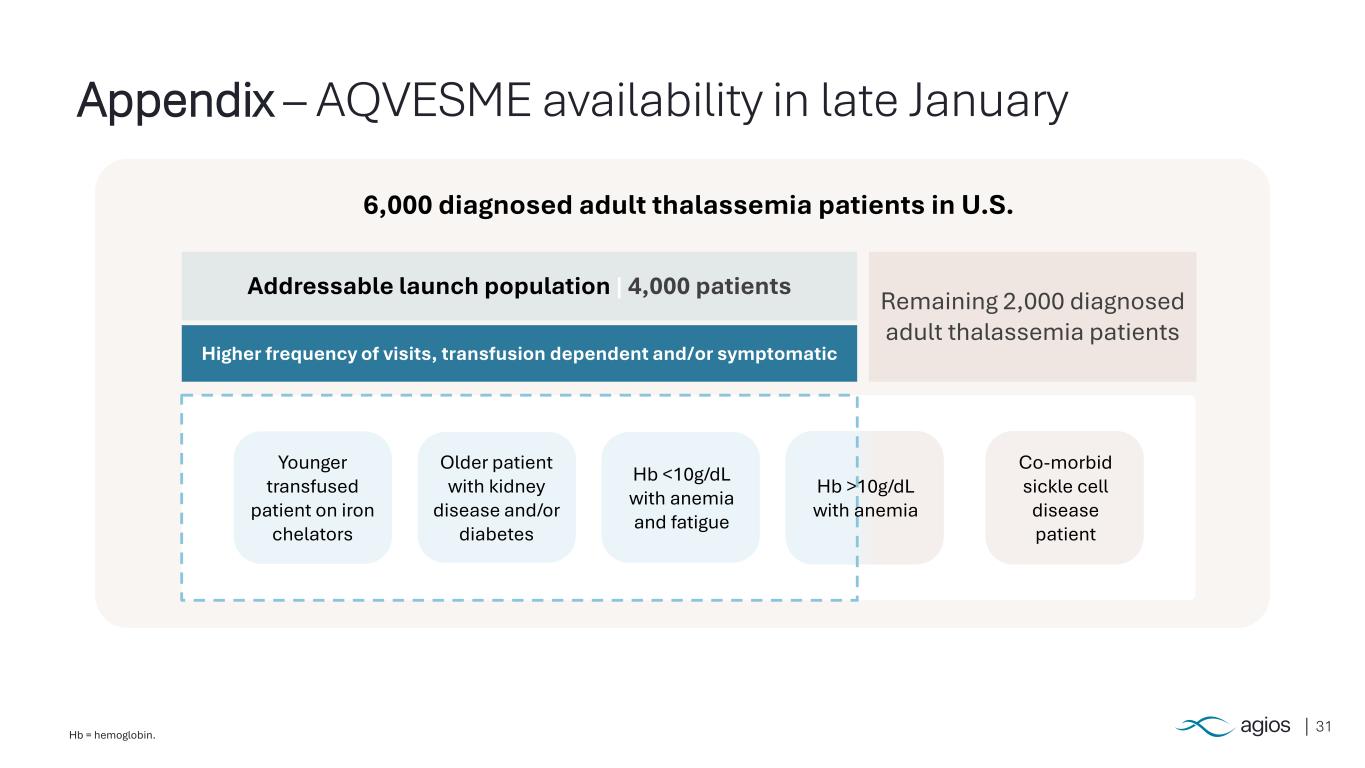
31Hb = hemoglobin. Appendix – AQVESME availability in late January 6,000 diagnosed adult thalassemia patients in U.S. Addressable launch population | 4,000 patients Higher frequency of visits, transfusion dependent and/or symptomatic Remaining 2,000 diagnosed adult thalassemia patients Hb <10g/dL with anemia and fatigue Older patient with kidney disease and/or diabetes Younger transfused patient on iron chelators Co-morbid sickle cell disease patient Hb >10g/dL with anemia
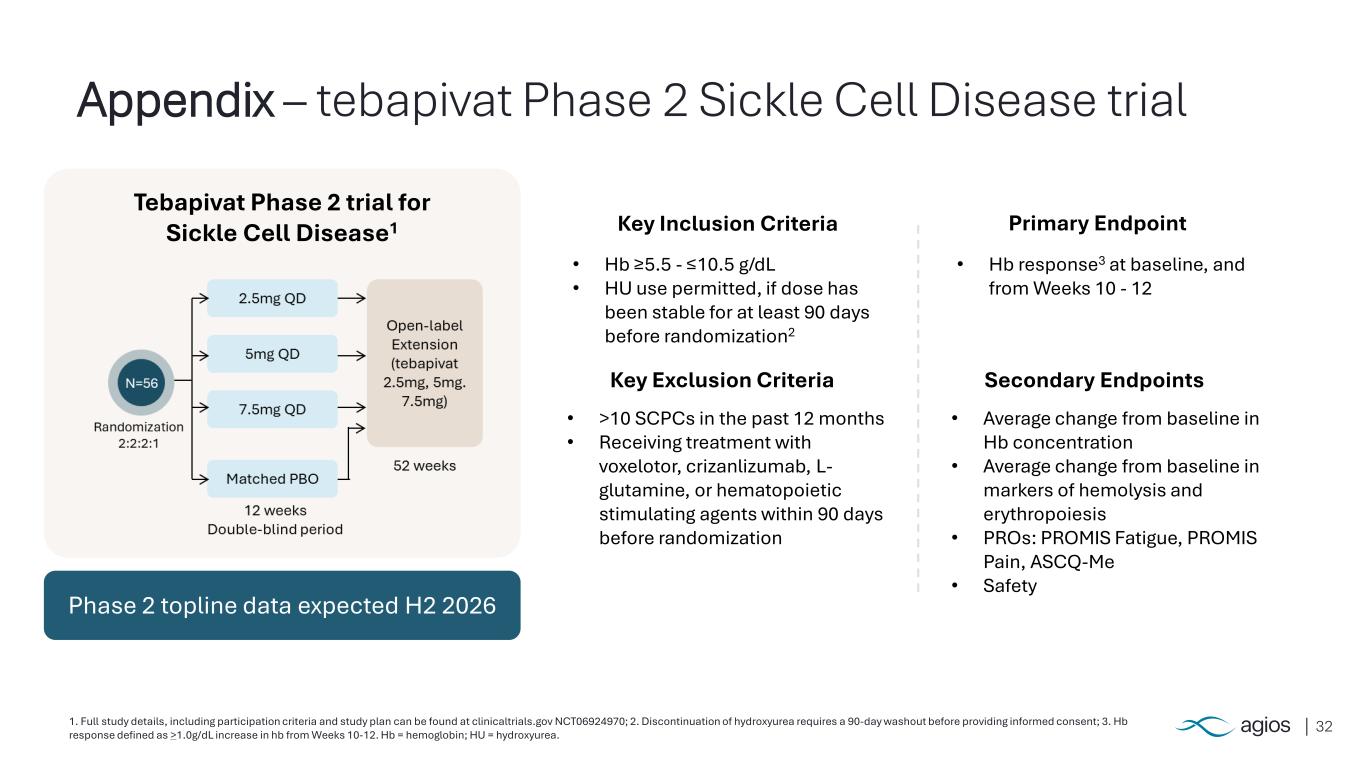
321. Full study details, including participation criteria and study plan can be found at clinicaltrials.gov NCT06924970; 2. Discontinuation of hydroxyurea requires a 90-day washout before providing informed consent; 3. Hb response defined as >1.0g/dL increase in hb from Weeks 10-12. Hb = hemoglobin; HU = hydroxyurea. Appendix – tebapivat Phase 2 Sickle Cell Disease trial Primary Endpoint Secondary Endpoints Key Inclusion Criteria • Hb ≥5.5 - ≤10.5 g/dL • HU use permitted, if dose has been stable for at least 90 days before randomization2 Key Exclusion Criteria • >10 SCPCs in the past 12 months • Receiving treatment with voxelotor, crizanlizumab, L- glutamine, or hematopoietic stimulating agents within 90 days before randomization • Hb response3 at baseline, and from Weeks 10 - 12 • Average change from baseline in Hb concentration • Average change from baseline in markers of hemolysis and erythropoiesis • PROs: PROMIS Fatigue, PROMIS Pain, ASCQ-Me • Safety Tebapivat Phase 2 trial for Sickle Cell Disease1 Phase 2 topline data expected H2 2026
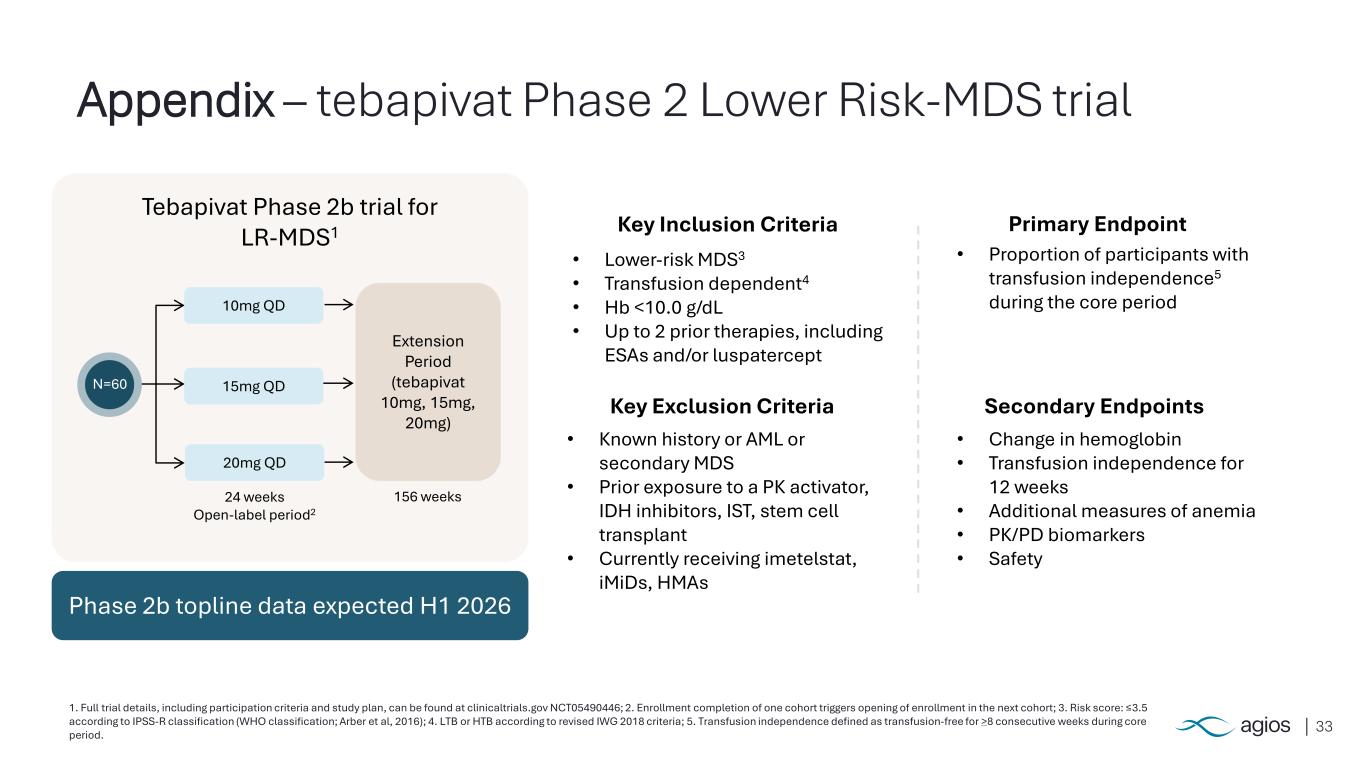
33 1. Full trial details, including participation criteria and study plan, can be found at clinicaltrials.gov NCT05490446; 2. Enrollment completion of one cohort triggers opening of enrollment in the next cohort; 3. Risk score: ≤3.5 according to IPSS-R classification (WHO classification; Arber et al, 2016); 4. LTB or HTB according to revised IWG 2018 criteria; 5. Transfusion independence defined as transfusion-free for >8 consecutive weeks during core period. Appendix – tebapivat Phase 2 Lower Risk-MDS trial Primary Endpoint Secondary Endpoints Key Inclusion Criteria • Lower-risk MDS3 • Transfusion dependent4 • Hb <10.0 g/dL • Up to 2 prior therapies, including ESAs and/or luspatercept Key Exclusion Criteria • Known history or AML or secondary MDS • Prior exposure to a PK activator, IDH inhibitors, IST, stem cell transplant • Currently receiving imetelstat, iMiDs, HMAs • Proportion of participants with transfusion independence5 during the core period • Change in hemoglobin • Transfusion independence for 12 weeks • Additional measures of anemia • PK/PD biomarkers • Safety Tebapivat Phase 2b trial for LR-MDS1 N=60 10mg QD 15mg QD 20mg QD 24 weeks Open-label period2 Extension Period (tebapivat 10mg, 15mg, 20mg) 156 weeks Phase 2b topline data expected H1 2026