
Airship AI Holdings, Inc 10-K for FY2025
Airship AI Holdings, Inc. (AISP)
About this 10-K
Airship AI Holdings, Inc filed this 10-K on February 17, 2026, covering the fiscal year ended December 31, 2025 (FY2025).
Headline figures
Fiscal year ended December 31, 2025, as reported in this filing, compared with the same period a year earlier where the filing states it.
- Revenue
- $15.32M
- down 33.5% from $23.05M a year earlier
- Net income
- $29.32M
- compared with a net loss of $57.46M a year earlier
- Diluted EPS
- $0.76
- compared with -$2.34 a year earlier
UNITED STATES
SECURITIES AND EXCHANGE COMMISSION
Washington, D.C. 20549
FORM
(Mark One)
For the fiscal year ended:
For the transition period from ____________ to _____________
Commission File No.
(Exact name of registrant as specified in its charter) |
| ||
(State or other jurisdiction of incorporation or organization) |
| (I.R.S. Employer Identification No.) |
|
|
|
| ||
(Address of principal executive offices) |
| (Zip Code) |
( |
(Registrant’s telephone number, including area code) |
Securities registered pursuant to Section 12(b) of the Act:
Title of each class |
| Trading Symbol(s) |
| Name of each exchange on which registered |
|
| The | ||
|
| The |
Securities registered pursuant to Section 12(g) of the Act: None.
Indicate by check mark if the registrant is a well-known seasoned issuer, as defined in Rule 405 of the Securities Act. Yes ☐
Indicate by check mark if the registrant is not required to file reports pursuant to Section 13 or Section 15(d) of the Act. Yes ☐
Indicate by check mark whether the registrant (1) has filed all reports required to be filed by Section 13 or 15(d) of the Securities Exchange Act of 1934 during the preceding 12 months (or for such shorter period that the registrant was required to file such reports), and (2) has been subject to such filing requirements for the past 90 days.
Indicate by check mark whether the registrant has submitted electronically every Interactive Data File required to be submitted pursuant to Rule 405 of Regulation S-T during the preceding 12 months (or for such shorter period that the registrant was required to submit such files).
Indicate by check mark whether the registrant is a large accelerated filer, an accelerated filer, a non-accelerated filer, a smaller reporting company, or emerging growth company. See the definitions of “large accelerated filer,” “accelerated filer,” “smaller reporting company,” and “emerging growth company” in Rule 12b-2 of the Exchange Act.
Large accelerated filer | ☐ | Accelerated filer | ☐ |
☒ | Smaller reporting company | ||
|
| Emerging growth company |
If an emerging growth company, indicate by check mark if the registrant has elected not to use the extended transition period for complying with any new or revised financial accounting standards provided pursuant to Section 13(a) of the Exchange Act.
Indicate by check mark whether the registrant has filed a report on and attestation to its management’s assessment of the effectiveness of its internal control over financial reporting under Section 404(b) of the Sarbanes-Oxley Act by the registered public accounting firm that prepared or issued its audit report.
If securities are registered pursuant to Section 12(b) of the Act, indicate by check mark whether the financial statements of the registrant included in the filing reflect the correction of an error to previously issued financial statements.
Indicate by check mark whether any of those error corrections are restatements that required a recovery analysis of incentive-based compensation received by any of the registrant’s executive officers during the relevant recovery period pursuant to §240.10D-1(b). ☐
Indicate by check mark whether registrant is a shell company (as defined in Rule 12b-2 of the Act). Yes
As of June 30, 2025 (the last business day of our most recently completed second fiscal quarter), based upon the last reported trade on that date, the aggregate market value of the voting and non-voting common equity held by non-affiliates (for this purpose, all outstanding and issued common stock minus stock held by the officers, directors and known holders of 10% or more of the Company’s common stock) was $
As of February 13, 2026, there were a total of
DOCUMENTS INCORPORATED BY REFERENCE
None.
Airship AI Holdings, Inc.
Annual Report on Form 10-K
Year Ended December 31, 2025
TABLE OF CONTENTS
|
|
|
| |
| 4 |
| ||
| 12 |
| ||
| 35 |
| ||
| 35 |
| ||
| 36 |
| ||
| 36 |
| ||
|
|
|
| |
|
|
|
| |
| 37 |
| ||
| 48 |
| ||
Management’s Discussion and Analysis of Financial Condition and Results of Operations. |
| 49 |
| |
| 57 |
| ||
| 57 |
| ||
Changes in and Disagreements with Accountants on Accounting and Financial Disclosure. |
| 57 |
| |
| 58 |
| ||
| 59 |
| ||
|
|
|
| |
|
|
|
| |
| 60 |
| ||
| 65 |
| ||
Security Ownership of Certain Beneficial Owners and Management and Related Stockholder Matters. |
| 74 |
| |
Certain Relationships and Related Transactions, and Director Independence. |
| 76 |
| |
| 77 |
| ||
|
|
|
| |
|
|
|
| |
| 78 |
| ||
Item 16. | Form 10-K Summary. |
|
|
|
| 2 |
| Table of Contents |
Special Note Regarding Forward-Looking Statements
This report contains forward-looking statements that are based on our management’s beliefs and assumptions and on information currently available to us. All statements other than statements of historical facts are forward-looking statements. These statements relate to future events or to our future financial performance and involve known and unknown risks, uncertainties and other factors that may cause our actual results, levels of activity, performance or achievements to be materially different from any future results, levels of activity, performance or achievements expressed or implied by these forward-looking statements. Forward-looking statements include, but are not limited to, statements about:
| · | our goals and strategies; |
| · | our future business development, financial condition and results of operations; |
| · | expected changes in our revenue, costs or expenditures; |
| · | growth of and competition trends in our industry; |
| · | our expectations regarding demand for, and market acceptance of, our products; |
| · | our expectations regarding our relationships with investors, institutional funding partners and other parties with whom we collaborate; |
| · | fluctuations in general economic and business conditions in the markets in which we operate; and |
| · | relevant government policies and regulations relating to our industry. |
In some cases, you can identify forward-looking statements by terms such as “may,” “could,” “will,” “should,” “would,” “expect,” “plan,” “intend,” “anticipate,” “believe,” “estimate,” “predict,” “potential,” “project” or “continue” or the negative of these terms or other comparable terminology. These statements are only predictions. You should not place undue reliance on forward-looking statements because they involve known and unknown risks, uncertainties and other factors which are, in some cases, beyond our control and which could materially affect results. Factors that may cause actual results to differ materially from current expectations include, among other things, those listed under Item 1A “Risk Factors” and elsewhere in this report. If one or more of these risks or uncertainties occur, or if our underlying assumptions prove to be incorrect, actual events or results may vary significantly from those implied or projected by the forward-looking statements. No forward-looking statement is a guarantee of future performance.
In addition, statements that “we believe” and similar statements reflect our beliefs and opinions on the relevant subject. These statements are based upon information available to us as of the date of this report, and while we believe such information forms a reasonable basis for such statements, such information may be limited or incomplete, and our statements should not be read to indicate that we have conducted an exhaustive inquiry into, or review of, all potentially available relevant information. These statements are inherently uncertain and investors are cautioned not to unduly rely upon these statements.
The forward-looking statements made in this report relate only to events or information as of the date on which the statements are made in this report. Except as expressly required by the federal securities laws, there is no undertaking to publicly update or revise any forward-looking statements, whether as a result of new information, future events, changed circumstances or any other reason.
Trademarks, Trade Names and Service Marks
We own or have rights to trademarks, service marks and trade names that we use in connection with the operation of our business, including our corporate name, logos and website names. Other trademarks, service marks and trade names appearing in this report are the property of their respective owners. Solely for convenience, some of the trademarks, service marks and trade names referred to in this report are listed without the ® and ™ symbols, but we will assert, to the fullest extent under applicable law, our rights to our trademarks, service marks and trade names. This report may include trademarks, service marks and trade names owned by us or other companies. All trademarks, service marks and trade names included in this Annual Report are the property of their respective owners.
| 3 |
| Table of Contents |
PART I
ITEM 1. BUSINESS.
History
Airship AI Holdings, Inc. (the “Company” or “Airship”) is a holding company incorporated in Delaware that executes business through its wholly owned subsidiary, Airship AI, Inc. (“Airship AI”). Prior to the formation of Super Simple AI, Inc. in 2022, the Company operated as Airship AI, Inc. (formerly known as JDL Digital Systems, Inc.). JDL Digital Systems, Inc. was incorporated under the laws of the State of Washington on June 30, 2003. Super Simple AI, Inc. was formed in January 2022 through a share exchange with JDL Digital Systems, Inc. On March 7, 2023, Super Simple AI, Inc. changed its name to Airship AI Holdings, Inc.
On December 21, 2023, the Company completed the merger contemplated by the Merger Agreement, dated as of June 27, 2023, as amended (the “Merger Agreement”) by and among BYTE Acquisition Corp. (“BYTS”), BYTE Merger Sub, Inc., a Washington corporation and a direct, wholly-owned subsidiary of BYTS (“Merger Sub”), and Airship AI.
Effective December 21, 2023, Merger Sub merged with and into Airship AI with Airship AI as the surviving corporation (the “merger”). Thus, Airship AI became a wholly-owned subsidiary of the Company. In connection with the merger, Airship AI changed its name from “Airship AI Holdings, Inc.” to “Airship AI, Inc.”
Overview
We are a robust AI-driven data management platform that solves complex data challenges for large institutions operating in dynamic and mission-critical environments with rapidly increasing volumes of data being ingested from a similarly rapidly growing number of data sources.
We solve these challenges by structuring “dark” or unstructured data at the edge, the location at which the data is generated and collected, and leveraging purpose-built AI models. Unstructured, or “dark” data, which is typically categorized as qualitative data, cannot be processed and analyzed via conventional data tools and methods. Conversely, structured data, typically categorized as quantitative data, is highly organized and easily decipherable by machine learning algorithms.
Structuring and then analyzing data using AI models at the edge, versus transmitting the data from the edge back to a central processing location for structuring and analysis, enables real-time decision making and data-driven operational efficiency.
We specialize in ingesting all available metadata from edge-based sensors used by government and law enforcement agencies around the world, including surveillance cameras (video), audio, telemetry, acoustic, seismic, and autonomous devices, along with large commercial corporations with fundamentally similar capabilities and requirements.
Data generated by these edge-based sensors, including video, can then be run through our trained AI models to detect objects present within the video frame. Once an object is detected, for example an automobile, additional identifying characteristics of the object can be extracted from the image including the license plate characters and the make, model, and color of the automobile. This process of analyzing, logging and categorizing ingested data is referred to as “structuring” the data.
Airship AI’s software allows customers to view structured data both in real-time as well as to conduct searches on the structured data at a later point in time. Real-time structured data use includes, for example, alarms on a specific license plate or a specific make, model or color of automobile. Non-real-time structured data use includes, for example, searching a database of video data that has been previously ingested and stored to find instances of a particular license plate being visible, along with other logged vehicle characteristics such as make, model and color of an automobile.
| 4 |
| Table of Contents |
Additional edge deployed AI models enable similar object detection and recognition of common and custom trained objects, such as an aircraft, boat, person, animal, bag, or weapon. Airship AI’s models provide similar data points for these object types allowing analysts the ability to be notified in real-time of the detection of a specified object and similarly search for historically detected objects. Examples include detecting aircrafts and boats along with their respective tail numbers and hull registration numbers.
Our AI modelling process starts with pre-trained AI models from our technology ecosystem partners which we then customize using proprietary datasets tailored towards our customers unique workflow requirements. Where customers have pre-existing AI models or engines, we integrate those models or engines into our edge platform allowing customers to leverage proprietary models within the Airship AI software ecosystem.
Our primary offerings include Outpost AI, Acropolis, and Airship Command. Our offerings allow customers to manage their data across the full data lifecycle, when and where they need it, using a highly secure permissioned based architecture.
Outpost AI is our edge hardware and software offering that is purpose built to structure and analyze data efficiently and effectively at the source using Airship AI trained models. Once structured, Outpost AI securely encodes the data and streams it to Acropolis for further processing. In the automobile example, Outpost AI will process the unstructured and unlabeled video data into structured data including images of vehicles, images of plates, make, model, color, locations and plate numbers, as well as confidence levels on the structured results.
Acropolis is our enterprise management software suite which serves as the backbone of our software ecosystem. Acropolis allows customers with a handful of devices or hundreds of thousands of devices to manage their user and install base efficiently and securely from a single graphical user interface. Acropolis can be installed and managed locally (on-premises) as well as in cloud/multi-cloud-based system architectures. Acropolis can work with structured and unstructured data. In the scenario where Outpost AI processes the unstructured video of vehicles into images, plate numbers and other structured data, Acropolis will compare the structured data against customer repositories of structured data in order to add labels to results for user attention. Here, Acropolis leaves the initial processing of unstructured data to the edge device (Outpost AI) and handles additional labeling which requires bigger centralized datasets. Where Acropolis is receiving unstructured data as input from devices, it will do the initial processing of unstructured to structured data similar to what Outpost AI does at the edge before any additional labelling. This holistic approach allows customers to leverage the benefits of both edge and back-end data structuring and analysis in a “single-pane-of-glass” approach.
Airship Command then allows the customer to view the final labelled data which can be presented in real-time or as search results, as alerts, in automatically updating lists or on maps. In the vehicle example, Airship Command can present alarms on specific filters such as specific plates, intelligent partial matches, make, model, color and any combination thereof, as well as searches using the same filters against character recognition and vehicle characteristics results.
Airship Command is our suite of visualization tools that allow customers to interact with their data and devices securely and efficiently. Customer data interaction may include receiving and viewing an alarm triggered by an AI detected event at the edge on a mobile phone, or receiving and viewing events from thousands of edge devices spread across multiple different locations on a large video wall in a Security Operations Center (“SOC”). Our visualization tools span applications for workstations, web-based browsers, and applications for mobile handheld devices ensuring our customers data is never out of their immediate reach.
We apply AI across the entire offering suite, ensuring that we are extracting as much value from our customers’ existing and emerging data as possible. Whether it is using machine learning to train new models for deployment at the edge, or using a rules-based approach to detect anomalies based on data generated by machine learning models, we are constantly expanding and evolving our AI capabilities.
Our offerings are used by some of the largest government agencies and commercial organizations in the world. While we are heavily focused on continuing to grow market share in the United States, our offerings are currently deployed around the world, with significant room to grow in both the governmental and commercial markets.
| 5 |
| Table of Contents |
Our typical customer engagement is a multi-year contractual agreement, an agreement which includes our core offerings as well as professional services, technical support, and software maintenance, which we expect will result in predictable, long-term recurring revenue. Our history shows that organizations that have chosen to partner with Airship AI stick with Airship AI.
Since our inception and until the merger in December 2023, we have operated as a 100% employee-owned bootstrapped company with no outside investment, operating in a fiscally conservative model. As a U.S. based company, we operate in high growth areas, namely the intersection of public safety and AI, with a combined $7 billion edge AI hardware and software addressable market.
Our customers trust us to collect and analyze vast amounts of data in real-time as well as make it available to their users when they need it, where they need it, as securely as possible. We believe our offerings are purpose-built from the ground up to help ensure we continue to meet or exceed these expectations.
Our Industry
We believe a robust digital transformation strategy is imperative today for companies to discover new revenue opportunities, gain competitive advantages, and create efficient business operations. Whether companies are established brick and mortar operations with large disparate operational footprints and user bases or newer entrants to the marketplace with centralized operations, the need to ingest and process data efficiently and effectively is critical.
Nowhere across the digital data lifecycle is transformation occurring at a greater rate and pace than at the edge. While the advantages of operating at the edge are clearly recognized, it is only recently that physical technology has caught up with the virtual capabilities software has to offer. These advancements include the shrinking size of processors capable of performing advanced analytics at the edge and networking advancements such as 5G that can efficiently move the data processed at the edge (in real-time).
With these advancements, the ability to move data processing workloads to the edge and achieve true digital transformation has started to become reality. To achieve the full value of this transformation, we must be able to do the following key technical attributes at the edge:
| · | Structure data and analyze it in real-time, |
|
|
|
| · | Extract value from the analyzed data in real-time, |
|
|
|
| · | Securely transmit the usable data to the consumers who need it in real-time, and |
|
|
|
| · | Securely retain all data at the edge for regulatory/evidentiary purposes. |
Achieving these end-states at the edge should allow companies to substantially reduce the time needed to make decisions that affect operations across their environment, in some cases in a predictive manner. This ability to make real-time decisions using data analyzed at the edge can transform operations across industry and government by improving public safety, tailoring predictive maintenance, improving quality control, mitigating organized retail crime, and providing more efficient operations, which drive better customer experiences and operational outcomes.
In addition to the benefits achieved by increasing the speed and efficiency at which decisions can be made by offloading workflow and AI capabilities to the edge, significant cost benefits such as reduced operational costs associated with moving data across networks, processing and analyzing data using traditional massive backend servers and processors, and storage costs for extraneous data that is not valuable. Data security is also greatly enhanced, as are regulatory and compliance requirements for data, when compared to legacy data center approaches to data management.
Similarly, transformative changes are happening between edge and the cloud, leveraging applications that allow you to interact with your data wherever it resides, at the edge, on-premises, and/or in the cloud. True digital transformation can then be fully achieved when you have the “single pane of glass” interface that brings all your data together, securely, and efficiently, structured and analyzed, when and where the data consumer needs it.
| 6 |
| Table of Contents |
Our Solution
Airship AI’s platform today is used across multiple verticals and markets, including commercial and government, and small and enterprise. Our products are purpose-built to be scalable and flexible, operating in the environments our customers are in today as well as where they want to be tomorrow. Our software can be installed in air-gapped stand-alone environments as well as enterprise-wide federated environments with countless devices, users, and end-points where data is aggregated and consumed. Our software is installed on bare-metal servers on-premises, in data centers, and in the cloud, as well as in physical and virtualized environments.
Our software is also designed to replace existing capabilities as well as augment and/or enhance existing capabilities, from sensors to IT infrastructure to analytics. In many cases, our customers are able to achieve greater functionality out of existing capabilities through our unique approach to sensor integration and fusion than they could through the OEM manufacturers offerings, further improving ROI on existing infrastructure and cost-savings on planned future technology.
Our primary product offering is our software operating system, Airship Acropolis, supported by our edge (Airship Outpost AI) and end point visualization (Airship Command) offerings. Within Airship Acropolis, we have two variations, our commercial offering (Acropolis Commercial) and our government offering (Acropolis Law). While both variations are derived from the same code base, each is tailored towards specific workflow and operational requirements for their respective customer environments.
| · | Acropolis Commercial. We built this platform first, supporting a variety of small and medium businesses across various commercial verticals, including schools, hospitals, casinos, logistics, and retail establishments. Our growth led us to larger commercial entities where we branched out from a standalone platform managing small numbers of cameras to an enterprise platform capable of managing hundreds of thousands of cameras and users from a single graphical user interface. Acropolis Commercial continues to support our commercial customers’ requirements today. |
|
|
|
| · | Acropolis Law. We built this platform based on the success of our commercial offering and we have grown our customer base to include agencies across the law enforcement, defense, and intelligence sectors, with dozens of custom sensor integrations and unique workflows allowing agencies to break down data sharing silos when operating standalone or in joint interagency environments. |
Our edge platform, Airship Outpost AI, can be used in a standalone environment as well as pointed back to Airship Acropolis. Outpost AI primarily ingests either single or multiple feeds and using edge inference AI analyzes each feed for specific defined data parameters to alert on. All data is then encoded and streamed back to Acropolis securely for downstream visualization as well as further processing and/or analysis.
Our end point visualization platforms, Airship Command, consists of a thick client application, a web-based thin client, and our iOS and Android applications. Each of these visualization applications provides users the opportunity to securely view and interact with data being managed by Acropolis and control sensors/devices at the edge. Airship Command is the “single pane of glass” solution customers need.
Our professional services include custom model training for customers using their proprietary and sensitive data, on-site and/or remote engineering services supporting customer deployments and operations, as well as custom integrations and workflow enhancements aimed at creating additional operational efficiencies in their environments.
Our support and software maintenance agreements (“SMA”) create recurring revenue opportunities for the life of the contract and include options for general support as well as dedicated support through cleared individuals (up to the Top Secret clearance level). Our SMA provides customers access to new releases, patches, and other software updates as they are made public.
| 7 |
| Table of Contents |
Our Customer Base
Our market-entry strategy has been to build enduring partnerships with large early adopters, primarily in the United States. We believe these early adopters become customers and serve as validation of our capabilities to other potential customers in similar and adjacent verticals by demonstrating the value and operational efficiencies our platform provides. From our early adopter customer in the commercial space, we have successfully expanded our footprint to include additional enterprise customers in the commercial market, as well as numerous federal, military, and intelligence agencies across the U.S. government.
After our initial contract is established, our customers tend to expand their use of our products and services, as they realize the efficiency and value provided. We also tend to see rapid expansion into adjacent buying entities within the customer, allowing them to break down data silos between functional areas that have historically existed, through the sharing of data securely and efficiently across network and operational domains.
We believe there are substantial opportunities to leverage work done for our existing early adopter customers in the commercial and government sectors, where we continue to see growing parallels around operational needs and the technology capabilities we provide that can solve them.
Revenue Mix
Historically, a majority of our product revenue has consisted primarily of a bundled hardware and software product and to date we have sold or licensed a minimal amount of standalone software. In the future, we expect to see more deliveries of our products using a cloud based software solution which will allow us to create additional subscription revenue.
We expect to capitalize on the significant investments made over the last several years by refining our enterprise software platform for federated users in our defined customer verticals and completing the development of our AI driven edge hardware platform running our proprietary edge software and analytic platform.
These investments have positioned us to not only significantly grow market share at higher margins in these existing verticals but to also find and/or create opportunities in greenfield spaces where the benefits of AI are just starting to emerge.
Competitive Strengths
We believe that our approach to providing a holistic data management solution that leverages AI is the key to our future success, as much as the foresight to build a scalable and federated data management backend was when we first started our company. Our software and capabilities are more than just tools in a customer’s toolbox, they are integral parts of their day-to-day operational workflow and equally ingrained into their operational processes.
| · | Single Pane of Glass Platform: Our platform brings together disparate edge generated data into one place, structured and unstructured, allowing our customers the ability to visualize multiple analyzed data forms in a true “single pane of glass.” This approach substantially reduces the infrastructure, human and physical, that has been historically needed to view and extract operational value from the customers’ data. |
|
|
|
| · | Superior Customer Experience: Our direct approach to customer engagements enables our team to manage the entire customer experience, starting with the first platform demonstration and continuing through installation and long-term employment. This is key to our goal to build partnerships with our customers, which we equate to potential long-term recurring revenue engagements with strong opportunities for expansion within the organization. |
| 8 |
| Table of Contents |
| · | Ease of Use and Adoption: Our solution is architected such that it can be installed in as little as one hour with minimal direct engagement or support needed, yet ready to support operational engagements of a handful of users and devices to thousands of users and tens of thousands of attached devices. Everything within the architecture is purpose built to be intuitive and straightforward, allowing users to become operationally proficient in short order with limited training. |
|
|
|
| · | Hardened and Secure Platform: As a U.S. owned and operated company, our offerings are compliant with the National Defense Authorization Act (“NDAA”), the Commercial Software and the Trade Agreements Act (“TAA”), and the Buy American Act. Thus, cybersecurity and safeguarding data at rest and in transit is factored into everything we do, resulting in our platform having been accredited with numerous Authorities to Operate (“ATO”) for U.S. government agencies for on-premise deployments as well at the Fed Ramp high impact level in the secure cloud. This allows us to bring government-grade security to the larger commercial sector. |
|
|
|
| · | Significant Cost Savings: Our edge solution enables customers to add AI capabilities to their existing IT infrastructure, allowing them to immediately recognize the operational benefits of our AI platform without having to add expensive backend servers. Additionally, our open approach to edge sensors and devices allows customers to extract the full value out of their existing devices compared to the more common industry standard rip and replace approach. |
Market Opportunity
Airship AI serves a large and rapidly growing addressable market. We determined the total addressable market (“TAM”) based upon publicly-available third-party industry reports on the current and projected markets for edge AI hardware and software offerings as well as federal, state, and local grants and set-aside funding for law enforcement, public safety, and community violence intervention efforts.
In addition to the $7 billion combined edge AI hardware and software addressable market by 2029, growing at a blended compounded average growth rate (“CAGR”) of 21.8%, for 2023 alone the U.S. government has set aside $3.2 billion in discretionary resources for state and local grants and $30 billion in mandatory resources to support law enforcement, crime prevention, and violence intervention, based on The President’s Budget for Fiscal Year 2023.
We believe our existing product market fit in the law enforcement vertical supported by our rapidly growing edge AI hardware and software offerings positions us well in this market. We plan to take advantage of this nexus market opportunity by targeting the larger state and local public safety marketplaces as well as commercial customers where our edge AI platform can allow them to participate in joint public-private ventures to improve public safety for their larger communities.
We expect that our market opportunity will continue to grow as we expand our edge AI hardware and software capabilities allowing us to serve our customers more broadly across their operations.
Growth Strategy
We also began to see movement during the fourth quarter of 2025 and into the first quarter of 2026 on several large projects in the federal and commercial marketplace, including several notable awards:
| · | $1.9 million award from Department of Homeland Security (DHS) supporting large National Special Security Events (NSSE) scheduled for 2026. |
|
|
|
| · | $2.8 million award from a large commercial customer supporting a technical refresh of deployed hardware and software. |
Our backlog as of December 31, 2025 was $3.3 million.
Our total validated pipeline as of December 31, 2025 was $173.4 million, consisting of single and multi-year opportunities for AI-driven edge, video, and sensor and data management platforms across our customer verticals. Our pipeline includes opportunities at varying stages of progression with expected award timeframes over the next 18-24 months. While many of these opportunities are multi-year engagements which are expected to be highly competitive, they represent years of work of developing the opportunity around our unique value proposition and differentiators in support of a sole source award or to position Airship AI as the company to beat.
| 9 |
| Table of Contents |
Outlook for 2026. We enter 2026 optimistic about growth opportunities across both the federal and commercial market segments. During the second half of 2025, we began to see returns from investments made earlier in the year to expand our sales and business development organization, reflected in increased customer activity, pipeline development, and pilot deployments.
Based on these results, we have significant additional investments planned across the company, preparing us to execute against anticipated awards and opportunities from the growing pipeline. These investments include additional resources across our software development team, ensuring that we can continue to scale our platform as quickly as our customers need, while operating at the highest levels of cyber-security that our customers demand. As we build out our back-office capabilities, we will continue to add to our customer-facing teams, including more partner-focused sales and marketing personnel.
As part of our on-going digital transformation efforts, we have successfully incorporated AI into our daily operational workflow, leveraging the best of AI to assist with making our existing team and processes more effective and efficient, rather than replacing people or processes. All these efforts are aimed at getting to positive cash flow as soon as possible within 2026, driving increased value for our customers and shareholders.
Looking forward, we expect most of our revenue to come from the federal vertical in 2026, with meaningful new growth in the commercial vertical adding to our overall pipeline for 2027 and beyond.
Federal vertical. In 2025, we expanded our footprint across multiple agencies within the Department of Homeland Security (“DHS”) and the Department of Justice (“DoJ”). We initiated multiple new pilot efforts, including our first deployments of rapidly deployable Airship-built hardware and software solutions based on our edge analytics platform, Outpost AI. Our current pipeline includes opportunities we estimate to be in the tens of millions of dollars; however, pipeline represents potential opportunities and is not a guarantee of contract award or revenue.
We believe current U.S. border and homeland security funding priorities support continued demand for solutions aligned with Airship AI’s capabilities. For example, the One Big Beautiful Bill Act (“OBBA”) (H.R. 1), signed into law on July 4, 2025, includes funding for border infrastructure and technology, including $6.2 billion for border security technology and investments that reference artificial intelligence and machine learning, approximately $46.5 billion for border barrier system construction and enhancements (including items such as cameras and sensors), and $5 billion for U.S. Customs and Border Protection facilities and checkpoints. We are actively supporting each of these efforts through our growing partner and integrator eco-system, leveraging our long-standing direct customer relationships.
Commercial vertical. In 2026, we plan to continue expanding our regional partner and integrator ecosystem. We believe a partner-led approach can accelerate customer acquisition and deployment efficiency versus solely direct routes to market, particularly where partners bring established customer relationships and complementary capabilities and services that we do not plan to build internally.
Early partner and customer engagements have further reinforced our view of the marketplace that there is not only room for but the need for a new entrant in the marketplace, one that can move quickly and be responsive to customer needs while still providing a robust enterprise level platform capable of meeting demanding operational and security requirements.
Platform expansion. We are expanding the use of our edge AI capabilities across additional sensor modalities and operational platforms, including mobile autonomous platforms. We believe analytics developed for fixed deployments can be adapted to mobile use cases, creating additional product and marketplace opportunities.
| 10 |
| Table of Contents |
These deployments include emerging partnerships with robotic platforms built to solve physical security and public safety challenges. Early customer engagements to date have been encouraging, noting these initiatives are in development and may not result in commercial deployments or revenue on expected timelines.
Go-to-market focus. We believe early customer engagement, helping shape requirements based on validated operational needs, remains important to our ability to compete effectively. Many opportunities, particularly in the federal market, involve multi-year sales cycles and can represent significant total contract value over their lifetimes (including potential programs that may extend into the $100 million range), but may take years to progress from early-stage activity to awards, if at all. In 2026 and beyond, our sales and business development teams will remain focused on building our pipeline, advancing qualified opportunities, and collaborating with partners to develop and pursue joint programs across both the federal and commercial marketplaces.
Employees
We employed sixty three employees as of December 31, 2025. The employees are headquartered in Redmond, WA and are supported by a growing team at our Customer Center of Excellence located in Charlotte, NC. We employed eight research and development personnel in Taiwan as of December 31, 2025.
Intellectual Property
We do not have any patents and instead rely on trade secrets and know-how in the development of our business. Although large technology companies use patent portfolios as a means of strategic and legal deterrence, we believe it is more advantageous not to disclose our proprietary know-how.
| 11 |
| Table of Contents |
ITEM 1A. RISK FACTORS.
An investment in our securities involves a high degree of risk. You should carefully consider the risks described below before making an investment decision. Our business, prospects, financial condition, or operating results could be harmed by any of these risks, as well as other risks not known to us or that we consider immaterial as of the date of this annual report. The trading price of our securities could decline due to any of these risks, and, as a result, you may lose all or part of your investment. The following discussion should be read in conjunction with Airship AI’s financial statements and notes thereto included herein. You should carefully consider the following risk factors in addition to the other information included in this annual report.
Risks Related to Airship AI’s Business and Industry
The market for Airship AI’s edge AI services and products is relatively new, and may decline or experience limited growth, and Airship AI’s business is dependent on its clients’ continuing adoption and use its services and products.
The edge AI market is relatively new and is subject to a number of risks and uncertainties. Airship AI has developed an edge AI platform system. Through this platform, we deliver our edge AI services to our clients, which include law enforcement, military, and commercial enterprise organizations. Airship AI believes that our future success will significantly depend on the growth, if any, of this market and the use of our services and products, including our Nexus real-time analytics technology.
The use of edge AI is still relatively new, and consumers may not recognize the need for or benefits of our services and products. If consumers do not recognize the need for and benefits of our services and products, then they may decide to adopt alternative services to satisfy some portion of their business needs. In order to grow our business and extend our market position, Airship AI intends to focus on educating potential customers about the benefits of our services and products, expanding the range of Airship AI’s services and bringing new technologies to market to increase market acceptance and use of our platform. Airship AI’s ability to expand the market that our services and products address depends upon a number of factors, including the cost, performance and perceived value associated with our services and products. The market for our services and products could fail to grow significantly or there could be a reduction in demand for our services and/or products as a result of a lack of acceptance, technological challenges, competing services, a decrease in spending by current and prospective customers, weakening economic conditions and other causes. If the edge AI market does not experience significant growth, or demand for its services and/or products decreases, then our business, financial condition and results of operations could be adversely affected.
If Airship AI does not develop enhancements to its services and introduce new services that achieve market acceptance, its growth, business, results of operations and financial condition could be adversely affected.
Airship AI’s ability to attract new clients and increase revenue from existing clients depends, in part, on its ability to enhance and improve its existing services, increase adoption and usage of its services, and introduce new services. The success of any enhancements or new services depends on several factors, including timely completion, adequate quality testing, actual performance quality, market accepted pricing levels and overall market acceptance.
Enhancements, such as additional technology features, and new services, such as software licenses and data services, that Airship AI develops may not be introduced in a timely or cost-effective manner, may contain errors or defects, may have interoperability difficulties with its platform or other services or may not achieve the broad market acceptance necessary to generate significant revenue. Furthermore, Airship AI’s ability to increase the usage of its services depends, in part, on the development of new uses for its services, which may be outside of its control. Its ability to generate usage of additional services by its data consumers may also require increasingly sophisticated and more costly sales efforts and result in a longer sales cycle. If Airship AI is unable to successfully enhance its existing services to meet evolving data consumer requirements, increase adoption and usage of its services, develop new services, or if its efforts to increase the usage of its services are more expensive than Airship AI expects, then its business, results of operations and financial condition would be adversely affected.
| 12 |
| Table of Contents |
Airship AI has experienced moderate growth in the past several years, and if Airship AI fails to effectively manage its growth, then its business, results of operations and financial condition could be adversely affected.
Airship AI has experienced moderate growth in its business since 2016 when Airship AI developed its edge AI capabilities in video analytics and cyber analytics. For example, Airship AI has also experienced significant growth in the number of data consumers, usage and amount of data that its platform and associated infrastructure support. This growth has placed, and may continue to place, significant demands on its corporate culture, operational infrastructure and management. Any failure to manage Airship AI’s anticipated growth and organizational changes in a manner that preserves the key aspects of its culture and services could adversely affect Airship AI’s overall chance for future success, including its ability to recruit and retain personnel, and effectively focus on and pursue its corporate objectives. This, in turn, could adversely affect its business, financial condition and results of operations.
In addition, Airship AI’s ability to manage its operations and future growth will require Airship AI to continue to improve its operational, financial and management controls, compliance programs with multiple and changing international laws and regulations and reporting systems. Airship AI is currently in the process of strengthening its compliance programs, including its compliance programs related to data protection, privacy and cybersecurity and anti-corruption. Airship AI may not be able to implement improvements in an efficient or timely manner and may discover deficiencies in existing controls, programs, systems and procedures, which could have an adverse effect on its business, reputation, results of operations and financial condition.
Airship AI’s sales efforts involve considerable time and expense and its sales cycle is often long and unpredictable.
Airship AI’s results of operations may fluctuate, in part, because of the intensive nature of our sales efforts and the length and unpredictability of our sales cycle. As part of our sales efforts, we invest considerable time and expense evaluating the specific organizational needs of our potential customers and educating these potential customers about the technical capabilities and value of our platforms and services. We often also provide our platforms to potential customers at no or low cost initially to them for evaluation purposes through short-term pilot deployments of our platforms, and there is no guarantee that we will be able to convert customers from these short-term pilot deployments to full revenue-generating contracts. In addition, we have a growing direct sales force, and our sales efforts have historically depended on the significant involvement of our senior management team. The length of our sales cycle, from initial demonstration of our platforms to sale of our platforms and services, tends to be long and varies substantially from customer to customer. Our sales cycle often lasts six to nine months but can extend to a year or more for some customers. Because decisions to purchase our platforms involve significant financial commitments, potential customers generally evaluate our platforms at multiple levels within their organization, each of which often have specific requirements, and typically involve their senior management.
Our results of operations depend on sales to government and commercial enterprise organizations, which make product purchasing decisions based in part or entirely on factors, or perceived factors, not directly related to the features of the platforms, including, among others, that customer’s projections of business growth, uncertainty about macroeconomic conditions (including as a result of the ongoing Russia-Ukraine war and related economic sanctions, rising inflation and interest rates, or monetary policy changes), capital budgets, anticipated cost savings from the implementation of our platforms, potential preference for such customer’s internally-developed software solutions, perceptions about our business and platforms, more favorable terms offered by potential competitors, and previous technology investments. In addition, certain decision makers and other stakeholders within our potential customers tend to have vested interests in the continued use of internally developed or existing software, which may make it more difficult for us to sell our platforms and services. As a result of these and other factors, our sales efforts typically require an extensive effort throughout a customer’s organization, a significant investment of human resources, expense and time, including by our senior management, and there can be no assurances that we will be successful in making a sale to a potential customer. If our sales efforts to a potential customer do not result in sufficient revenue to justify our investments, including in our growing direct sales force, our business, financial condition, and results of operations could be adversely affected.
| 13 |
| Table of Contents |
Historically, existing customers have expanded their relationships with Airship AI, which has resulted in a limited number of customers accounting for a substantial portion of its revenue. If existing customers do not make subsequent purchases from Airship AI or renew their contracts with Airship AI, or if its relationships with its largest customers are impaired or terminated, Airship AI’s revenue could decline, and its results of operations would be adversely impacted.
We derive a significant portion of our revenue from existing customers that expand their relationships with us. Increasing the size and number of the deployments of our existing customers is a major part of our growth strategy. We may not be effective in executing this or any other aspect of our growth strategy.
For the year ended December 31, 2025, we had revenue from ninety two customers and four customers represented 87% of total revenue. The primary reason for the high level of customer concentration for the year ended December 31, 2025 was due to reliance on these four customers for the year ended December 31, 2025. As of December 31, 2025, three customers represent approximately 34%, 33% and 17% of outstanding account receivables. Due to the nature of the customers and timely payment history, customer concentration and credit risk in account receivables is estimated to be minimal.
For the year ended December 31, 2024, we had revenue from seventy-four customers and one customer represented 57% of total revenue, although such a high level of customer concentration is not typical. The primary reason for the high level of customer concentration for the year ended December 31, 2024 was due to one large order received in late 2023 which was fulfilled in the year ended December 31, 2024. As of December 31, 2024, four customers represent approximately 36%, 25%, 19% and 12% of outstanding account receivables. Due to the nature and concentration of the customers and timely payment history, credit risk in account receivables is estimated to be minimal.
From time to time, we may lose a major customer. It is not possible for us to predict the future level of demand from our larger customers for our platforms and applications.
With the exception of a master service agreement with one commercial customer for out of warranty services, we do not have any master service agreements with our customers. For our government agency customers, we must submit and complete standard bidding forms which contain all the applicable terms and conditions for our service offerings. In order to bid and secure government agency contracts, we either work directly with certain governmental agencies or work with and through the entity that has the prime bidding relationship with the government agencies. For our commercial customers, they submit detailed purchase orders which generally contain all the key terms and conditions, but such purchase orders may be supported by separate statements of work for particular projects.
Airship AI’s customer awards, either through commercial or government customers, come in a variety of forms depending on if the relationship with the customer is a direct relationship or if it is through a partner. For direct relationships, Airship AI receives the award directly from the commercial customer or government agency, either in the form of a purchase order or the requisite government form. For indirect or partner based awards, Airship AI receives the award in the form of a purchase order or task order against the specific effort being awarded.
Regardless of the form of the purchase order and/or the customer vertical, Airship AI has standard terms and conditions which are applied to all awards accepted. These include the specific line items by quantity being acquired, the delivery period for which Airship AI has to deliver the products and services awarded, the support and maintenance offering desired, and the total period of performance for the award (single year or multi-year). Payment is due within 30 days of when the invoice is received irrespective of the type of customer.
While we generally offer contract terms up to five years in length, our customers sometimes enter into shorter-term contracts, such as one-year subscriptions, which may not provide for automatic renewal and may require the customer to opt-in to extend the term. Our customers have no obligation to renew, upgrade, or expand their agreements with us after the terms of their existing agreements have expired. In addition, many of our customer contracts permit the customer to terminate their contracts with us with notice periods of varying lengths, generally three to six months. If one or more of our customers terminate their contracts with us, whether for convenience, for default in the event of a breach by us, or for other reasons specified in our contracts, as applicable; if our customers elect not to renew their contracts with us; if our customers renew their contractual arrangements with us for shorter contract lengths or for a reduced scope; or if our customers otherwise seek to renegotiate terms of their existing agreements on terms less favorable to us, our business and results of operations could be adversely affected. This adverse impact would be even more pronounced for customers that represent a material portion of our revenue or business operations.
| 14 |
| Table of Contents |
Our ability to renew or expand our customer relationships may decrease or vary as a result of a number of factors, including our customers’ satisfaction or dissatisfaction with our platforms and services, the frequency and severity of software and implementation errors, our platforms’ reliability, our pricing, the effects of general economic conditions, competitive offerings or alternatives, or reductions in our customers’ spending levels. If our customers do not renew or expand their agreements with us or if they renew their contracts for shorter lengths or on other terms less favorable to us, our revenue may grow more slowly than expected or decline, and our business could suffer. Our business, financial condition, and results of operations would also be adversely affected if we face difficulty collecting our accounts receivable from our customers or if we are required to refund customer deposits.
Achieving renewal or expansion of deployments may require us to increasingly engage in sophisticated and costly sales efforts that may not result in additional sales. In addition, our customers’ decisions to expand the deployment of our platforms depends on a number of factors, including general economic conditions, the functioning of our platforms, the ability of our forward-deployed engineers to assist our customers in identifying new use cases, modernizing their data architectures, and achieving success with data-driven initiatives, and our customers’ satisfaction with our services. If our efforts to expand within our existing customer base are not successful, our business may suffer.
Seasonality may cause fluctuations in Airship AI’s results of operations and financial position.
Historically our sales vary significantly . We believe that this seasonality results from a number of factors, including:
| · | the fiscal year end procurement cycle of our government customers, and in particular U.S. government customers which have a fiscal year-end of September 30; |
|
|
|
| · | the fiscal year budgeting process for our commercial customers, many of which have a fiscal year end of March 31; |
|
|
|
| · | seasonal reductions in business activity during the summer months in the United States, Europe, and certain other regions; and |
|
|
|
| · | timing of projects and our customers’ evaluation of our work progress. |
This seasonality has historically impacted and may in the future continue to impact the timing of collections and recognized revenue. Because a significant portion of our customer contracts are typically finalized near the end of the year, and we typically invoice customers shortly after entering into a contract, we may receive a portion of our customer payments near the end of the year and record such payment as an increase in deferred revenue or customer deposits (“contract liabilities”), while the revenue from our customer contracts is generally recognized over the contract term. While we have historically billed and collected payments for multiple contract years from certain customers in advance, we have and may continue to shift to collecting payments on an annual or other basis.
While this has been the historical seasonal pattern of our quarterly sales, we believe that our customers’ required timing for certain new government or commercial programs requiring new software may outweigh the nature or magnitude of seasonal factors that might have influenced our business to date. As a result, we may experience future growth from additional government or commercial mandates that do not follow the seasonal purchasing and evaluation decisions by our customers that we have historically observed.
For example, increased government spending on technology aimed at national defense, financial or policy regulation, cybersecurity, or healthcare mandates may drive customer demand at different times throughout our year, the timing of which we may not be able to anticipate and may cause fluctuations in our results of operations. The timing of our fiscal quarters, the U.S. federal government’s September 30 fiscal year end and budget approvals also may impact sales to governmental agencies in the third quarter of our year, offsetting, at least in part, the otherwise seasonal downturn we have historically observed in later summer months.
Our recent growth may obscure the extent to which seasonality trends have affected our business and may continue to affect our business. We expect that seasonality will continue to materially impact our business in the future and may become more pronounced over time. The seasonality of our business may cause continued or increased fluctuations in our results of operations and cash flows, which may prevent us from achieving our quarterly or annual forecasts or meeting or exceeding the expectations of research analysts or investors, which in turn may cause a decline in the trading price of our securities.
| 15 |
| Table of Contents |
If Airship AI does not successfully develop and deploy new technologies to address the needs of its customers, its business and results of operations could suffer.
Airship AI’s success has been based on our ability to design software and products that enable the integration of data into a common operating environment to facilitate advanced data analysis, knowledge management, and collaboration. We spend substantial amounts of time and money researching and developing new technologies and enhanced versions of existing features to meet our customers’ and potential customers’ rapidly evolving needs. There is no assurance that our enhancements to our platforms or our new product features, capabilities, or offerings, including new product modules, will be compelling to our customers or gain market acceptance. If our research and development investments do not accurately anticipate customer demand or if we fail to develop our platforms in a manner that satisfies customer preferences in a timely and cost-effective manner, we may fail to retain our existing customers or increase demand for our platforms.
The introduction of new products and services by competitors or the development of entirely new technologies to replace existing offerings could make our platforms obsolete or adversely affect our business, financial condition, and results of operations. We may experience difficulties with software development, design, or marketing that delay or prevent our development, introduction, or implementation of new platforms, features, or capabilities. We have in the past experienced delays in our internally planned release dates of new features and capabilities, and there can be no assurance that new platforms, features, or capabilities will be released according to schedule. Any delays could result in adverse publicity, loss of revenue or market acceptance, or claims by customers brought against us, any of which could harm our business. Moreover, the design and development of new platforms or new features and capabilities to our existing platforms may require substantial investment, and we have no assurance that such investments will be successful. If customers do not widely adopt our new platforms, experiences, features, and capabilities, we may not be able to realize a return on our investment and our business, financial condition, and results of operations may be adversely affected.
Our new and existing platforms and changes to our existing platforms could fail to attain sufficient market acceptance for many reasons, including:
| · | our failure to predict market demand accurately in terms of product functionality and to supply offerings that meet this demand in a timely fashion; |
|
|
|
| · | product defects, errors, or failures or our inability to satisfy customer service level requirements; |
|
|
|
| · | negative publicity or negative private statements about the security, performance, or effectiveness of our platforms or product enhancements; |
|
|
|
| · | delays in releasing to the market our new offerings or enhancements to our existing offerings, including new product modules; |
|
|
|
| · | introduction or anticipated introduction of competing platforms or functionalities by our competitors; |
|
|
|
| · | inability of our platforms or product enhancements to scale and perform to meet customer demands; |
|
|
|
| · | receiving qualified or adverse opinions in connection with security or penetration testing, certifications or audits, such as those related to IT controls and security standards and frameworks or compliance; |
|
|
|
| · | poor business conditions for our customers, causing them to delay software purchases; |
|
|
|
| · | reluctance of customers to purchase proprietary software products; |
|
|
|
| · | reluctance of our customers to purchase products hosted by our vendors and/or service interruption from such providers; and |
|
|
|
| · | reluctance of customers to purchase products incorporating open source software. |
| 16 |
| Table of Contents |
If we are not able to continue to identify challenges faced by our customers and develop, license, or acquire new features and capabilities to our platforms in a timely and cost-effective manner, or if such enhancements do not achieve market acceptance, our business, financial condition, results of operations, and prospects may suffer and our anticipated revenue growth may not be achieved. Because we derive, and expect to continue to derive, substantially all of our revenue from customers purchasing our platforms and products, market acceptance of these platforms and products, and any enhancements or changes thereto, is critical to our success.
Airship AI’s ability to sell its platforms and satisfy its customers is dependent on the quality of Airship AI’s services, and its failure to offer high quality services could have a material adverse effect on its sales and results of operations.
Once Airship AI’s platforms are deployed and integrated with our customers’ existing information technology investments and data, our customers depend on our support and maintenance services to resolve any issues relating to our platforms. Increasingly, our platforms have been deployed in large-scale, complex technology environments, and we believe our future success will depend on our ability to increase sales of our platforms for use in such deployments. Further, our ability to provide effective ongoing services, or to provide such services in a timely, efficient, or scalable manner, may depend in part on our customers’ environments and their upgrading to the latest versions of our platforms and participating in our centralized platform management and services.
In addition, our ability to provide effective services is largely dependent on our ability to attract, train, and retain qualified personnel with experience in supporting customers on platforms such as ours. The number of our customers has grown significantly, and that growth has and may continue to put additional pressure on our services teams. We may be unable to respond quickly enough to accommodate short-term increases in customer demand for our support and maintenance services. We also may be unable to modify the future scope and delivery of our support and maintenance services to compete with changes in the services provided by our competitors. Increased customer demand for support, without corresponding revenue, could increase costs and negatively affect our business and results of operations. In addition, as we continue to grow our operations and expand outside of the United States, we need to be able to provide efficient services that meet our customers’ needs globally at scale, and our services teams may face additional challenges, including those associated with operating the platforms and delivering support, training, and documentation in languages other than English and providing services across expanded time-zones. If we are unable to provide efficient support and maintenance services globally at scale, our ability to grow our operations may be harmed, and we may need to hire additional services personnel, which could negatively impact our business, financial condition, and results of operations.
Our customers typically need training in the proper use of and the variety of benefits that can be derived from our platforms to maximize the potential of our platforms. If we do not effectively deploy, update, or upgrade our platforms, succeed in helping our customers quickly resolve post-deployment issues, and provide effective ongoing services, our ability to sell additional products and services to existing customers could be adversely affected, we may face negative publicity, and our reputation with potential customers could be damaged. Many enterprise and government customers require higher levels of service than smaller customers. If we fail to meet the requirements of the larger customers, it may be more difficult to execute on our strategy to increase our penetration with larger customers. As a result, our failure to maintain high quality services may have a material adverse effect on our business, financial condition, results of operations, and growth prospects.
If Airship AI is not able to maintain and enhance its brand and reputation, Airship AI’s relationships with its customers, partners, and employees may be harmed, and its business and results of operations may be adversely affected.
We believe that maintaining and enhancing our brand identity and reputation is important to our relationships with, and to our ability to attract and retain customers, partners, investors, and employees. The successful promotion of our brand depends upon our ability to continue to offer high-quality software, maintain strong relationships with our customers, the community, and others, while successfully differentiating our platforms from those of our competitors. Unfavorable media coverage may adversely affect our brand and reputation. We anticipate that as our market becomes increasingly competitive, maintaining and enhancing our brand may become increasingly difficult and expensive. If we do not successfully maintain and enhance our brand identity and reputation, we may fail to attract and retain employees, customers, investors, or partners, grow our business, or sustain pricing power, all of which could adversely impact our business, financial condition, results of operations, and growth prospects. Additionally, despite our internal safeguards and efforts to the contrary, we cannot guarantee that our customers will not ultimately use our platforms for purposes inconsistent with our company values, and such uses may harm our brand and reputation.
| 17 |
| Table of Contents |
If the market for Airship AI’s platforms and services develops more slowly than Airship AI expects, its growth may slow or stall, and its business, financial condition, and results of operations could be harmed.
The market for Airship AI’s platforms is rapidly evolving. Our future success will depend in large part on the growth and expansion of this market, which is difficult to predict and relies on a number of factors, including customer adoption, customer demand, changing customer needs, the entry of competitive products, the success of existing competitive products, potential customers’ willingness to adopt an alternative approach to data collection, storage, and processing and their willingness to invest in new software after significant prior investments in legacy data collection, storage, and processing software. The estimates and assumptions that are used to calculate our market opportunity are subject to change over time, and there is no guarantee that any particular number or percentage of the organizations covered by our market opportunity estimates will pay for our platforms and services at all or generate any particular level of revenue for us. Even if the market in which we compete meets the size estimates and growth forecasts, our business could fail to grow at the levels we expect or at all for a variety of reasons outside our control, including competition in our industry. Further, if we or other data management and analytics providers experience security breaches or incidents, loss, corruption, or unavailability of or unauthorized access to customer data, disruptions in delivery, or other problems, this market as a whole, including our platforms, may be negatively affected. If software for the challenges that we address does not achieve widespread adoption, or there is a reduction in demand caused by a lack of customer acceptance, technological challenges, weakening economic conditions (including due to the ongoing Russia-Ukraine war and related economic sanctions, rising inflation and interest rates, and monetary policy changes), security or privacy concerns, competing technologies and products, decreases in corporate spending, or otherwise, or, alternatively, if the market develops but we are unable to continue to penetrate it due to the cost, performance, and perceived value associated with our platforms, or other factors, it could result in decreased revenue and our business, financial condition, and results of operations could be adversely affected.
Issues raised by the use of artificial intelligence (“AI”) (including machine learning) in Airship AI’s platforms may result in reputational harm or liability.
AI is enabled by or integrated into some of Airship AI’s technology platforms and is a significant and potentially growing element of our business. As with many developing technologies, AI presents risks and challenges that could affect its further development, adoption, and use, and therefore our business. AI algorithms may be flawed. Datasets in AI training, development, or operations may be insufficient, of poor quality, or reflect unwanted forms of bias. Inappropriate or controversial data practices by, or practices reflecting inherent biases of, data scientists, engineers, and end-users of our systems could impair the acceptance of AI solutions. If the recommendations, forecasts, or analyses that AI applications assist in producing are deficient or inaccurate, we could be subjected to competitive harm, potential legal liability, including under new proposed legislation regulating AI in jurisdictions such as the European Union and brand or reputational harm. Some AI scenarios present ethical issues. Though our technologies and business practices are designed to mitigate many of these risks, if we enable or offer AI solutions that are controversial or problematic because of their purported or real impact on human rights, privacy, employment, or other social issues, we may experience brand or reputational harm, as well as regulatory or legal scrutiny.
Real or perceived errors, failures, defects, or bugs in Airship AI’s platforms could adversely affect its results of operations and growth prospects.
Because Airship AI offers very complex technology platforms, undetected errors, defects, failures, or bugs have occurred and may in the future occur, especially when platforms or capabilities are first introduced or when new versions or other product or infrastructure updates are released. Our platforms are often installed and used in large-scale computing environments with different operating systems, software products and equipment, and data source and network configurations, which may cause errors or failures in our platforms or may expose undetected errors, failures, or bugs in our platforms. Despite testing by us, errors, failures, or bugs may not be found in new software or releases until after commencement of commercial shipments. In the past, errors have affected the performance of our platforms and can also delay the development or release of new platforms or capabilities or new versions of platforms, adversely affect our reputation and our customers’ willingness to buy platforms from us, and adversely affect market acceptance or perception of our platforms. Many of our customers use our platforms in applications that are critical to their businesses or missions and may have a lower risk tolerance to defects in our platforms than to defects in other, less critical, software products. Any errors or delays in releasing new software or new versions of platforms or allegations of unsatisfactory performance, errors, defects, or failures in released software could cause us to lose revenue or market share, increase our service costs, cause us to incur substantial costs in redesigning the software, cause us to lose significant customers, subject us to liability for damages and divert our resources from other tasks, any one of which could materially and adversely affect our business, results of operations and financial condition. In addition, our platforms could be perceived to be ineffective for a variety of reasons outside of our control. Hackers or other malicious parties could circumvent our or our customers’ security measures, and customers may misuse our platforms resulting in a security breach or perceived product failure.
| 18 |
| Table of Contents |
Real or perceived errors, failures, or bugs in our platforms and services, or dissatisfaction with our services and outcomes, could result in customer terminations and/or claims by customers for losses sustained by them. In such an event, we may be required, or we may choose, for customer relations or other reasons, to expend additional resources in order to help correct any such errors, failures, or bugs. Although we have limitation of liability provisions in our standard software licensing and service agreement terms and conditions, these provisions may not be enforceable in some circumstances, may vary in levels of protection across our agreements, or may not fully or effectively protect us from such claims and related liabilities and costs. We generally provide a warranty to our customers for our software products and services. In the event that there is a failure of warranties in such agreements, we are generally obligated to correct the product or service to conform to the warranty provision as set forth in the applicable agreement, or, if we are unable to do so, the customer is entitled to seek a refund of the purchase price of the product and service (generally prorated over the contract term). The sale and support of our products also entail the risk of product liability claims. We maintain insurance to protect against certain claims associated with the use of our products, but our insurance coverage may not adequately cover any claim asserted against us. In addition, even claims that ultimately are unsuccessful could result in our expenditure of funds in litigation and divert management’s time and other resources.
In addition, our platforms integrate a wide variety of other elements, and our platforms must successfully interoperate with products from other vendors and our customers’ internally developed software. As a result, when problems occur for a customer using our platforms, it may be difficult to identify the sources of these problems, and we may receive blame for a security, access control, or other compliance breach that was the result of the failure of one of the other elements in a customer’s or another vendor’s IT, security, or compliance infrastructure. The occurrence of software or errors in data, whether or not caused by our platforms, could delay or reduce market acceptance of our platforms and have an adverse effect on our business and financial performance, and any necessary revisions may cause us to incur significant expenses. The occurrence of any such problems could harm our business, financial condition, and results of operations. If an actual or perceived breach of information correctness, auditability, integrity, or availability occurs in one of our customers’ systems, regardless of whether the breach is attributable to our platforms, the market perception of the effectiveness of our platforms could be harmed. Alleviating any of these problems could require additional significant expenditures of our capital and other resources and could cause interruptions, delays, or cessation of our product licensing, which could cause us to lose existing or potential customers and could adversely affect our business, financial condition, results of operations, and growth prospects.
Airship AI may not be able to adequately protect or enforce its intellectual property rights or prevent unauthorized parties from copying or reverse engineering its solutions. Airship AI’s efforts to protect and enforce its intellectual property rights and prevent third parties from violating its rights may be costly.
The success of Airship AI’s services and its business depends, in part, on Airship AI’s ability to obtain intellectual property rights and maintain adequate legal protection for its products in the United States and other international jurisdictions. Airship AI does not have any patents. Airship AI relies on a combination of copyright, service mark, and trade secret laws, as well as confidentiality procedures and contractual obligations, to establish and protect its proprietary rights, all of which provide only limited protection. Airship AI cannot be certain that the steps it has taken will prevent unauthorized use of its technology or the reverse engineering of its technology. Moreover, others may independently develop technologies that are competitive to Airship AI or infringe Airship AI’s intellectual property.
Protecting against the unauthorized use of Airship AI’s intellectual property, products and other proprietary rights is expensive and can be difficult, particularly with respect to international jurisdictions. Unauthorized parties may attempt to copy or reverse engineer Airship AI’s solutions or certain aspects of Airship AI’s solutions that are considered proprietary. Litigation may be necessary in the future to enforce or defend Airship AI’s intellectual property rights, to prevent unauthorized parties from copying or reverse engineering its solutions, to determine the validity and scope of the proprietary rights of others or to block the importation of infringing products into the U.S. Any such litigation, regardless of merit, could be costly, divert the attention of management and may not ultimately be resolved in Airship AI’s favor.
| 19 |
| Table of Contents |
Effective trademark, service mark, copyright and trade secret protection may not be available or applied for in every country in which Airship AI’s products are available and competitors based in other countries may sell infringing products in one or more markets. An inability to adequately protect and enforce Airship AI’s intellectual property and other proprietary rights or an inability to prevent authorized parties from copying or reverse engineering its technology solutions or certain aspects of its solutions that Airship AI considers proprietary could adversely affect its business, operating results, financial condition and prospects.
Airship AI relies on its unpatented proprietary technology, trade secrets, processes and know-how.
Airship AI relies on proprietary information (such as trade secrets, know-how and confidential information) to protect intellectual property that may not be patentable or subject to copyright, trademark, trade dress or service mark protection, or that Airship AI believes is best protected by means that do not require public disclosure.
Airship AI generally seeks to protect this proprietary information by entering into confidentiality agreements, or consulting, services or employment agreements that contain non-disclosure and non-use provisions with its employees, consultants, contractors and third parties. However, Airship AI may fail to enter into the necessary agreements and, even if entered into, these agreements may be breached or may otherwise fail to prevent disclosure, third-party infringement or misappropriation of its proprietary information, may be limited as to their term and may not provide an adequate remedy in the event of unauthorized disclosure or use of proprietary information. Airship AI has limited control over the protection of trade secrets used by its current or future manufacturing partners and suppliers and could lose future trade secret protection if any unauthorized disclosure of such information occurs. In addition, Airship AI’s proprietary information may otherwise become known or be independently developed by its competitors or other third parties. To the extent that its employees, consultants, contractors, advisors and other third parties use intellectual property owned by others in their work for Airship AI, disputes may arise as to the rights in related or resulting know-how and inventions. Costly and time-consuming litigation could be necessary to enforce and determine the scope of Airship AI’s proprietary rights, and failure to obtain or maintain protection for its proprietary information could adversely affect its competitive business position. Furthermore, laws regarding trade secret rights in certain markets where Airship AI operates may afford limited or no protection for its trade secrets.
Airship AI also relies on physical and electronic security measures to protect its proprietary information, but it cannot provide assurance that these security measures will not be breached or that these measures will provide adequate protection. There is a risk that third parties may obtain and improperly utilize Airship AI’s proprietary information to its competitive disadvantage. Airship AI may not be able to detect or prevent the unauthorized use of such information or take appropriate and timely steps to enforce its intellectual property rights.
Airship AI has not been consistently profitable in the past and may not achieve or maintain profitability in the future.
We have incurred losses from operations the past few years and had an accumulated deficit of $45.6 million as of December 31, 2025. There can be no assurance that Airship AI will ever achieve the level of revenues needed to be profitable in the future and if profitability is achieved, that it will be sustained. Airship AI’s revenues have fluctuated and may likely continue to fluctuate significantly from quarter to quarter and from year to year. Airship AI will need to obtain additional capital and increase sales to become profitable. The net income for the year ended December 31, 2025 was $29,321,000 primarily as a result of the gain from change in fair value of change in fair value of warrant liability of $20,853,000 and the gain from change in fair value of change earnout liability of approximately $15,402,000. The net loss for the year ended December 31, 2024 was primarily a result of the loss from change in fair value of warrant liability of $33,513,000 and the loss from change in fair value of earnout liability of $18,171,000.
| 20 |
| Table of Contents |
Airship AI requires substantial additional funding, which may not be available to Airship AI on acceptable terms, or at all, and, if not so available, may require Airship AI to delay, limit, reduce or cease its operations.
Airship AI has limited financial resources. There can be no assurance that sufficient funding will be available to us to fund our operating expenses and to further develop our business. Unless we achieve substantial profitability, we anticipate that we will likely need to raise additional capital to fund our operations while we implement and execute our business plan. We currently do not have any contracts or commitments for additional financing. In addition, any additional equity financing may involve substantial dilution to our existing shareholders. There can be no assurance that such additional capital will be available on a timely basis or on terms that will be acceptable to us. Failure to obtain such additional financing could result in delay or indefinite postponement of operations or the further development of our business. If adequate funds are not available or are not available on acceptable terms, we may not be able to further fund our business or the expansion thereof, take advantage of strategic acquisitions or investment opportunities or respond to competitive pressures. Such inability to obtain additional financing when needed could have a material adverse effect on our business, results of operations, cash flow, financial condition and prospects.
Airship AI has a limited operating history. There can be no assurance that Airship AI will be successful in growing its business.
We have a limited history of operations. As a result, there can be no assurance that we will be successful in our operations. Any potential for future growth will place additional demands on our executive officers, and any increased scope of our operations will present challenges due to our current limited management resources. There can be no assurance that we will be successful in our efforts. Our inability to locate additional opportunities, to hire additional management and other personnel, or to enhance our management systems, could have a material adverse effect on our results of operations. There can be no assurance that our operations will be profitable.
Airship AI faces intense competition within its industry and is subject to the effects of technology change.
The industry in which we are engaged is subject to rapid and significant technological change. There can be no assurance that Airship AI’s systems can be upgraded to meet future innovations in the industry or that new technologies will not emerge, or existing technologies will not be improved, which would render Airship AI’s offerings obsolete or non-competitive. Many of the companies we compete with enjoy significant competitive advantages over us, including greater name recognition; greater financial, technical and service resources; established networks; additional product offerings; and greater resources for product development and sales and marketing. In addition, there can be no assurance that other established technology companies, any of which would likely have greater resources than Airship AI, will not enter the market. There can be no assurance that Airship AI will be able to compete successfully against any of its competitors.
Airship AI’s proprietary products and services and service delivery may not operate properly, which could damage its reputation, give rise to claims against Airship AI, or divert application of its resources from other purposes, any of which could harm its business and operating results.
We may encounter supply chain, human, or technical obstacles that prevent our products and services from operating profitably. If our offerings do not function reliably or fail to achieve customer expectations in terms of performance, customers could assert liability claims against us or cancel their contracts with us. This could damage our reputation and impair our ability to attract or maintain customers. We cannot assure you that material performance problems or defects in our products will not arise in the future. Errors may result from receipt, entry, or interpretation of customer information or from interface of our services. These defects and errors and any failure by us to identify and address them could result in loss of revenue or market share, liability to customers or others, failure to achieve market acceptance or expansion, diversion of development resources, injury to our reputation, and increased service and maintenance costs. The costs incurred in correcting any defects or errors or in responding to resulting claims or liability may be substantial and could adversely affect our operating results.
| 21 |
| Table of Contents |
If critical components used in Airship AI’s products become scarce or unavailable, Airship AI may incur delays in delivering its products and providing services, which could damage its business. Airship AI relies on a sustainable supply chain. Any issues with this supply chain could adversely affect daily business operations and profitability.
We depend on third party providers, suppliers and licensors to supply some of the hardware, software and support necessary to provide some of our products and services. We obtain these materials from a limited number of vendors, some of which do not have a long operating history, or which may not be able to continue to supply the equipment, supplies, and services we desire. Some of our hardware, software and operational support vendors represent our primary or sole source of supply or have, either through contract or as a result of intellectual property rights, a position of some exclusivity. If demand exceeds these vendors’ capacity or if these vendors experience operating or financial difficulties or are otherwise unable to provide the equipment or services we need in a timely manner, at our specifications and at reasonable prices, our ability to provide some services might be materially adversely affected, or the need to procure or develop alternative sources of the affected materials or services might delay our ability to serve our customers. These events could materially and adversely affect our ability to retain and attract customers, and have a material negative impact on our operations, business, financial results and financial condition.
Unavailability of materials or higher costs could adversely affect Airship AI’s financial results.
We depend on certain domestic and international suppliers for the delivery of components used in the assembly of our products. Our reliance on third-party suppliers creates risks related to our potential inability to obtain an adequate supply of components or sub-assemblies and reduced control over pricing and timing of delivery of components and sub-assemblies. Specifically, we depend on suppliers of sub-assemblies, machined parts, printed circuit boards, custom wire fabrications and other miscellaneous customer parts for our products. Although we have and are implementing additional long-term agreements with strategic suppliers to mitigate the risk of supply continuity, there remains risk across our supply chain while we extend our supplier contract program, and there is no guarantee that supply will not be interrupted. Additionally, if our suppliers do not accurately forecast and effectively allocate production or if they are not willing to allocate sufficient production to us, or they decommit to us previously agreed to supply levels, it may reduce our access to components and require us to search for new suppliers. If we are unable to accurately match the timing and quantities of component purchases to our actual needs, we may incur unexpected production disruption, storage, transportation and write-off costs, which may harm our business and operating results.
Single or sole-source components used in the manufacture of our products may become unavailable or discontinued. Delays caused by industry allocations or obsolescence may take weeks or months to resolve. In some cases, parts obsolescence may require a product re-design to ensure quality replacement components. These delays could cause significant delays in manufacturing and loss of sales, leading to adverse effects significantly impacting our financial condition or results of operations and could harm our reputation.
A significant number of our raw materials or components are comprised of petroleum-based products or incur some form of landed cost associated with transporting the raw materials or components to our facility. Our freight and import costs and the timely delivery of our products could be adversely impacted by a number of factors which could reduce the profitability of our operations, including: higher fuel costs; potential port closures; customs clearance issues; increased government regulation or regulatory changes for imports of foreign products into the U.S.; delays created by terrorist attacks or threats, public health issues, national disasters or work stoppages; and other matters. Any interruption of supply for any material components of our products could significantly delay the shipment of our products and have a material adverse effect on our revenues, profitability and financial condition. For example, there have been disruptions in the semi-conductor supply chain that could negatively impact our ability to make our products. While many of the COVID-19 driven supply chain issues have been resolved, challenges to the timely production and delivery of Taiwan based products we utilize for our edge AI platform due to geo-political factors is a concern looking forward. In the event that our suppliers are unable to provide timely delivery of those supplies it will significantly impact our ability to meet delivery schedules for existing and anticipated edge AI hardware-based solutions.
International or domestic geopolitical or other events, including the imposition of new or increased tariffs and/or quotas by the U.S. government on any of these raw materials or components and other government trade policies, could adversely impact the supply and cost of these raw materials or components, and could adversely impact our revenues, profitability and financial condition. In particular, the implementation of tariffs and trade restrictions as well as changes in trade policies between the U.S. and China may have an adverse effect on our supply chain from a sourcing and cost perspective. We source certain raw materials from China, as do some of our suppliers. We may be unable to transition away from China to other jurisdictions or obtain secondary source s for raw materials which could result in a material adverse effect on our revenues, profitability and financial condition.
| 22 |
| Table of Contents |
If Airship AI’s security measures are breached or fail and unauthorized access is obtained to a customer’s data, our service may be perceived as insecure, the attractiveness of its services to current or potential customers may be reduced, and Airship AI may incur significant liabilities.
Airship AI services involve the web-based and data storage and transmission of customers’ information. We rely on proprietary and commercially available systems, software, tools and monitoring, as well as other processes, to provide security for processing, transmission and storage of such information. Because of the sensitivity of this information and due to requirements under applicable laws and regulations, the effectiveness of our security efforts is very important. If our security measures are breached or fail as a result of third-party action, acts of terror, social unrest, employee error, malfeasance or for any other reasons, someone may be able to obtain unauthorized access to customer data. Improper activities by third-parties, advances in computer and software capabilities and encryption technology, new tools and discoveries and other events or developments may facilitate or result in a compromise or breach of our security systems. Our security measures may not be effective in preventing unauthorized access to the customer data stored on our servers. If a breach of our security occurs, we could face damages for contract breach, penalties for violation of applicable laws or regulations, possible lawsuits by individuals affected by the breach and significant remediation costs and efforts to prevent future occurrences. In addition, whether there is an actual or a perceived breach of our security, the market perception of the effectiveness of our security measures could be harmed and we could lose current or potential customers.
The loss of one or more of Airship AI’s significant customers, or any other reduction in the amount of revenue Airship AI derives from any such customer, would adversely affect its business, financial condition, results of operations and growth prospects.
Airship AI sells its product to commercial and government customers under agreements that are normally paid within 30 days of contract completion.
For the year ended December 31, 2025, we had revenue from ninety two customers and four customers represented 87% of total revenue. The primary reason for the high level of customer concentration for the year ended December 31, 2025 was due to reliance on these four customers for the year ended December 31, 2025. As of December 31, 2025, three customers represent approximately 34%, 33% and 17% of outstanding account receivables. Due to the nature of the customers and timely payment history, customer concentration and credit risk in account receivables is estimated to be minimal.
We expect to continue to derive a significant portion of our revenue from a limited number of customers in the future and, in some cases, the portion of our revenue attributable to individual customers may increase. The loss of one or more significant customers or a reduction in the amount of revenue we derive from any such customer could significantly and adversely affect our business, financial condition and results of operations. Customers may choose not to renew their contracts or may otherwise reduce the breadth of the offerings which they purchase for any number of reasons. We are also subject to the risk that any such customer will experience financial difficulties that prevent them from making payments to us on a timely basis or at all.
Airship AI depends on key information systems and third party service providers.
We depend on key information systems to accurately and efficiently transact our business. These systems and services are vulnerable to interruptions or other failures resulting from, among other things, pandemics, epidemics, natural disasters, terrorist attacks, software or equipment failures, processing errors, computer viruses, other security issues or supplier defaults. Security, backup and disaster recovery measures may not be adequate or implemented properly to avoid such disruptions or failures. Any disruption or failure of these systems or services could cause substantial errors, processing inefficiencies, security breaches, inability to use the systems or process transactions, loss of customers or other business disruptions, all of which could negatively affect our business and financial performance.
As cybersecurity attacks continue to evolve and increase, our information systems could also be penetrated or compromised by internal and external parties’ intent on extracting confidential information, disrupting business processes or corrupting information. These risks could arise from external parties or from acts or omissions of internal or service provider personnel. Such unauthorized access could disrupt our business and could result in the loss of assets, litigation, remediation costs, damage to our reputation and failure to retain or attract customers following such an event, which could adversely affect our business.
| 23 |
| Table of Contents |
Cyber-attacks and security vulnerabilities could lead to reduced revenue, increased costs, liability claims, or harm to Airship AI’s competitive position.
Increased sophistication and activities of perpetrators of cyber-attacks have resulted in an increase in information security risks in recent years. Hackers develop and deploy viruses, worms, and other malicious software programs that attack products and services and gain access to networks and data centers. If we experience difficulties maintaining existing systems or implementing new systems, we could incur significant losses due to disruptions in our operations. Additionally, these systems contain valuable proprietary and confidential information and may contain personal data of our customers. A security breach could result in disruptions of our internal systems and business applications, harm to our competitive position from the compromise of confidential business information, or subject us to liability under laws that protect personal data. As cyber threats continue to evolve, we may be required to expend additional resources to continue to enhance our information security measures and/or to investigate and remediate any information security vulnerabilities. Any of these consequences would adversely affect our revenue and margins.
Claims by others that Airship AI infringes their intellectual property could force Airship AI to incur significant costs or revise the way Airship AI conducts its business.
Our competitors protect their proprietary rights by means of patents, trade secrets, copyrights, trademarks and other intellectual property. We have not conducted an independent review of patents and other intellectual property issued to third-parties, who may have patents or patent applications relating to our proprietary technology. We may receive letters from third parties alleging, or inquiring about, possible infringement, misappropriation or violation of their intellectual property rights. Any party asserting that we infringe, misappropriate or violate proprietary rights may force us to defend ourselves, and potentially our customers, against the alleged claim. These claims and any resulting lawsuit, if successful, could subject us to significant liability for damages and/or invalidation of our proprietary rights or interruption or cessation of our operations. Any such claims or lawsuit could:
| · | be time-consuming and expensive to defend, whether meritorious or not; |
|
|
|
| · | require us to stop providing products or services that use the technology that allegedly infringes the other party’s intellectual property; |
|
|
|
| · | divert the attention of our technical and managerial resources; |
|
|
|
| · | require us to enter into royalty or licensing agreements with third-parties, which may not be available on terms that we deem acceptable; |
|
|
|
| · | prevent us from operating all or a portion of our business or force us to redesign our products, services or technology platforms, which could be difficult and expensive and may make the performance or value of our product or service offerings less attractive; |
|
|
|
| · | subject us to significant liability for damages or result in significant settlement payments; or |
|
|
|
| · | require us to indemnify our customers. |
Furthermore, during the course of litigation, confidential information may be disclosed in the form of documents or testimony in connection with discovery requests, depositions or trial testimony. Disclosure of our confidential information and our involvement in intellectual property litigation could materially adversely affect our business. Some of our competitors may be able to sustain the costs of intellectual property litigation more effectively than we can because they have substantially greater resources. In addition, any litigation could significantly harm our relationships with current and prospective customers. Any of the foregoing could disrupt our business and have a material adverse effect on our business, operating results and financial condition.
| 24 |
| Table of Contents |
Airship AI’s success depends upon the continued protection of its intellectual property rights and Airship AI may be forced to incur substantial costs to maintain, defend, protect and enforce its intellectual property rights.
We do not have any patents and instead rely on trade secrets and know-how in the development of our business, which are of material importance to Airship AI and its future prospects. Competitors may attempt to challenge our IP and IP systems, or may be able to design alternative techniques or devices that develop products with functionalities that are comparable to ours. In the event a competitor infringes upon our intellectual property, enforcing those rights, even if successful, could be expensive, uncertain, difficult and time consuming and could require significant time and attention from our management. Furthermore, there can be no assurance that Airship AI’s products will not infringe on others. We may not have sufficient resources to enforce our intellectual property rights or to defend our IP against challenges from others.
Airship AI depends on its management team and other key employees, and the loss of one or more of these employees or an inability to attract and retain highly skilled employees could adversely affect its business.
Our future success depends, in part, on our ability to continue to attract and retain highly skilled personnel. The loss of the services of any of our key personnel, the inability to attract or retain qualified personnel, or delays in hiring required personnel, particularly in engineering and sales, may seriously and adversely affect our business, financial condition and results of operations. Although we have entered into employment or consulting agreements with our personnel, their employment is generally for no specific duration.
Our future performance also depends on the continued services and continuing contributions of our senior management team. We are implementing a transition plan for the senior management team. Any loss of senior management could significantly delay or prevent the achievement of our development and strategic objectives, which could adversely affect our business, financial condition and results of operations.
Airship AI’s management team has limited experience managing a public company and regulatory compliance may divert their attention from the day-to-day management of Airship AI’s business.
Our management team has limited experience managing a publicly-traded company and limited experience complying with the increasingly complex laws pertaining to public companies. These obligations typically require substantial attention from our senior management and could divert their attention away from the day-to-day management of our business.
Airship AI’s business depends, in part, on sales to government organizations, and significant changes in the contracting or fiscal policies of such government organizations could have an adverse effect on Airship AI’s business and operating results.
Our future depends, in part, on continuing sales to government organizations. Demand from government organizations is often unpredictable, subject to budgetary uncertainty and typically involves long sales cycles. We have made significant investments to address the government sector, but we cannot assure you that these investments will be successful, or that we will be able to maintain or grow our revenue from the government sector. Although we anticipate that they may increase in the future, sales to governmental organizations have not accounted for, and may never account for, a significant portion of our revenue. Sales to governmental organizations are subject to a number of challenges and risks that may adversely impact our business. Sales to such government entities include the following risks:
| · | selling to governmental agencies can be highly competitive, expensive and time consuming, often requiring significant upfront time and expense without any assurance that such efforts will generate a sale; |
|
|
|
| · | government certification requirements applicable to our platform may change and, in doing so, restrict our ability to sell into the governmental sector until we have attained the revised certification; |
|
|
|
| · | government demand and payment for our platform may be impacted by public sector budgetary cycles and funding authorizations, with funding reductions or delays adversely affecting public sector demand for our platform; and |
|
|
|
| · | governments routinely investigate and audit government contractors’ administrative processes, and any unfavorable audit could result in the government refusing to continue buying our platform, which would adversely impact our revenue and operating results. |
| 25 |
| Table of Contents |
The occurrence of any of the foregoing could cause governmental organizations to delay or refrain from purchasing our solutions in the future or otherwise have an adverse effect on our business, operating results and financial condition.
On January 20, 2025, President Trump signed an executive order creating an advisory commission, the Department of Government Efficiency to reform federal government processes and reduce expenditures. Pressures on and uncertainty surrounding the U.S. federal government’s budget, and potential changes in budgetary priorities and spending levels, could adversely affect staffing levels and the funding for government projects. Disruptions in how the government agencies operate due to these policies may materially adversely affect our business. Unstable market and economic conditions may have serious adverse consequences on our business, financial condition and stock price.
Acquisitions of, or investments in, other companies, products, or technologies may require significant management attention and could disrupt Airship AI’s business, dilute stockholder value, and adversely affect its operating results.
Our business strategy may include acquiring other complementary products, technologies or businesses. Negotiating these transactions can be time-consuming, difficult and expensive, and our ability to close these transactions may be subject to third-party approvals, such as government regulatory approvals, which are beyond our control. Consequently, we can make no assurance that these transactions once undertaken and announced, will close.
If we merge with or acquire another company, it is reasonably expected that there will be increased operating expenses and costs associated with such acquisition that could negatively impact operating profits in the future periods immediately following the M&A event. The extent and longevity of those impacts is not possible to quantify.
These kinds of acquisitions or investments may result in unforeseen operating difficulties and expenditures. If we acquire businesses or technologies, we may not be able to integrate the acquired personnel, operations, and technologies successfully, or effectively manage the combined business following the acquisition. We also may not achieve the anticipated benefits from the acquired business due to a number of factors, including:
| · | inability to integrate or benefit from acquired technologies, products, personnel or services in a profitable manner; |
|
|
|
| · | unanticipated costs or liabilities associated with the acquisition, including potential liabilities due to litigation and potential identified or unknown security vulnerabilities in acquired technologies that expose us to additional security risks or delay our ability to integrate the product into our offerings or recognize the benefits of our investment; |
|
|
|
| · | differences between our values and those of an acquired company, as well as potential disruptions to our workplace culture; |
|
|
|
| · | incurrence of acquisition-related costs, including costs related to integration activities; |
|
|
|
| · | difficulty integrating the accounting and information systems, operations, and personnel of the acquired business; |
| 26 |
| Table of Contents |
| · | augmenting the acquired technologies and platforms to the levels that are consistent with our brand and reputation; |
|
|
|
| · | difficulties and additional expenses associated with supporting legacy products and hosting infrastructure of the acquired business; |
|
|
|
| · | challenges converting the acquired company’s revenue recognition policies and forecasting the related revenues, including subscription-based revenues and software license revenues; |
|
|
|
| · | potential write-offs of acquired assets or investments, and potential financial and credit risks associated with acquired customers; |
|
|
|
| · | difficulty converting the customers of the acquired business onto our platform and contract terms; |
|
|
|
| · | diversion of management’s attention and other company resources; |
|
|
|
| · | harm to our existing business relationships with business partners and customers as a result of the acquisition; |
|
|
|
| · | the potential loss of key employees; |
|
|
|
| · | use of resources that are needed in other parts of our business; and |
|
|
|
| · | use of substantial portions of our available cash to consummate the acquisition. |
We cannot assure you that the anticipated benefits of any acquisition or investment would be realized or that we would not be exposed to unknown liabilities or risks. Integrating an acquired technology, asset or business into our operations can be challenging, complex and costly and we cannot assure you that we will be successful or that the anticipated benefits of the acquisitions that we complete will be realized or outweigh their costs. If our integration and development efforts are not successful and the anticipated benefits of the acquisitions that we complete are not achieved, our business, operating results, financial condition, and prospects could be adversely affected.
In connection with these types of transactions, we may issue additional equity securities that would dilute our stockholders, use cash that we may need in the future to operate our business, incur debt on terms unfavorable to us or that we are unable to repay, incur large charges or substantial liabilities, encounter difficulties integrating diverse business cultures and values, and become subject to adverse tax consequences, substantial depreciation, or deferred compensation charges. These challenges could adversely affect our business, operating results, financial condition, and prospects.
Material adverse developments in domestic and global economic conditions, or the occurrence of other world events, could materially adversely affect Airship AI’s revenue and results of operations.
Various factors contribute to the uncertain economic environment, including the ongoing Russia-Ukraine and Israel wars, the increase in, and volatility of, interest rates, high inflation, an actual recession or fears of a recession, trade policies and tariffs and geopolitical tensions. Our inability to offset price inflation in our materials, components, shipping, or labor through increased prices to customers with long-term fixed contracts and formula-based or long-term fixed price contracts with suppliers could adversely affect our business, financial condition and results of operations. Global supply chain and labor market challenges could also negatively affect our performance as well as the performance of our suppliers. Interest rate increases have also created financial market volatility and could further negatively impact financial markets, lead to an economic downturn or recession or have an adverse effect on our operating results. Economic slowdowns can also negatively impact municipal and state tax collections and put pressure on law enforcement budgets which may increase the risk that our customers will be unable to appropriate funds for existing or future contracts with us. In addition, geopolitical risks could affect our customers’ budgets and policies. These and other factors may adversely affect customer demand and ability to pay, cause decrease in sales, and negatively impact the realizability of our accounts and notes receivable and contract assets.
| 27 |
| Table of Contents |
Catastrophic events could materially adversely affect Airship AI’s business, results of operations and/or financial condition.
A disruption or failure of our systems or operations in the event of a major earthquake, weather event, fire, explosion, failure to contain hazardous materials, industrial accident, utility failure, cyber-attack, terrorist attack, public health crisis, pandemic, or other catastrophic event could cause delays in completing sales, providing services, or performing other mission-critical functions. A catastrophic event that results in the destruction or disruption of any of our critical business or information technology systems could harm our ability to conduct normal business operations and our operating results as well as expose us to claims, litigation and governmental investigations and fines.
If our backup and mitigation plans are not sufficient to minimize business disruption, our financial results could be adversely affected. We are continuously monitoring our operations and intend to take appropriate actions to mitigate the risks arising from catastrophic events, but there can be no assurances that we will be successful in doing so.
If Airship AI fails to maintain effective internal control over financial reporting or identify a material weakness or significant deficiency in its internal control over financial reporting, Airship AI’s ability to report its financial condition and results of operations in a timely and accurate manner could be adversely affected, investor confidence in Airship AI company could diminish, and the value of its stock may decline.
Preparing our consolidated financial statements involves a number of complex manual and automated processes, which are dependent upon individual data input or review and require significant management judgment. One or more of these processes may result in errors that may not be detected and could result in a material misstatement or other errors of our consolidated financial statements. Such errors may be more likely to occur when implementing new systems and processes, particularly when implementing evolving and complex accounting rules. The Sarbanes-Oxley Act of 2002 (the “Sarbanes-Oxley Act”) requires, among other things, that as a publicly-traded company we disclose whether our internal control over financial reporting and disclosure controls and procedures are effective.
A material weakness is a deficiency, or combination of deficiencies, in internal control over financial reporting, such that there is a reasonable possibility that a material misstatement of our annual or interim financial statements will not be prevented or detected on a timely basis. While we continually undertake steps to improve our internal control over financial reporting as our business changes, we may not be successful in making the improvements and changes necessary to be able to identify and remediate control deficiencies or material weaknesses on a timely basis. If we are unable to successfully remediate any current or future material weaknesses in our internal control over financial reporting, the accuracy and timing of our financial reporting may be adversely affected; our liquidity, access to capital markets and perceptions of our creditworthiness may be adversely affected; we may be unable to maintain compliance with securities laws, stock exchange listing requirements and debt instruments covenants regarding the timely filing of periodic reports; we may be subject to regulatory investigations and penalties; investors may lose confidence in our financial reporting; we may suffer defaults under our debt instruments; and our stock price may decline.
Changes in accounting principles or their application to Airship AI could result in unfavorable accounting charges or effects, which could adversely affect its results of operations and growth prospects.
We prepare our consolidated financial statements in accordance with the accounting principles generally accepted in the United States (“U.S. GAAP”). In particular, we make certain estimates and assumptions related to the adoption and interpretation of these principles including the recognition of our revenue and the accounting for our provision for income taxes. If these assumptions turn out to be incorrect, our financial results and position could materially differ from our expectations and could be materially adversely affected. A change in any of these principles or guidance, or in their interpretations or application to us, may have a significant effect on our reported results, as well as our processes and related controls, and may retroactively affect previously reported results or our forecasts, which may negatively impact our financial statements.
| 28 |
| Table of Contents |
If Airship AI’s judgments or estimates relating to its critical accounting policies are based on assumptions that change or prove to be incorrect, Airship AI’s results of operations could fall below expectations of securities analysts and investors, resulting in a decline in its stock price.
The preparation of our financial statements in conformity with U.S. GAAP requires management to make judgments, estimates, and assumptions that affect the amounts reported in the consolidated financial statements and accompanying notes. We base our estimates on historical experience and on various other assumptions that we believe to be reasonable under the circumstances, as provided in the section titled “Management’s Discussion and Analysis of Financial Condition and Results of Operations” the results of which form the basis for making judgments about the carrying values of assets, liabilities, and equity, and the amount of revenue and expenses that are not readily apparent from other sources. Our results of operations may be adversely affected if our assumptions change or if actual circumstances differ from those in our assumptions, which could cause our results of operations to fall below the expectations of securities analysts and investors, resulting in a decline in the trading price of the combined company’s securities. Significant judgments, estimates, and assumptions used in preparing our consolidated financial statements include, or may in the future include, those related to revenue recognition, the fair value of certain liabilities and income taxes.
Airship AI has limited insurance which may not cover claims by third parties against Airship AI or its officers and directors.
We have directors’ and officers’ liability insurance and commercial liability insurance policies. Claims, however, by third parties against us may exceed policy amounts and we may not have amounts to cover these claims. Any significant claims would have a material adverse effect on our business, financial condition and results of operations. In addition, our limited directors’ and officers’ liability insurance may affect our ability to attract and retain directors and officers.
Airship AI could be subject to additional tax liabilities.
We are subject to federal, state, and local income taxes in the United States and numerous foreign jurisdictions. Determining our provision for income taxes requires significant management judgment, and the ultimate tax outcome may be uncertain. In addition, our provision for income taxes is subject to volatility and could be adversely affected by many factors, including, among other things, changes to our operating or holding structure, changes in the amounts of earnings in jurisdictions with differing statutory tax rates, changes in the valuation of deferred tax assets and liabilities, and changes in U.S. and foreign tax laws. Moreover, we are subject to the examination of our income tax returns by tax authorities in the United States and various foreign jurisdictions, which may disagree with our calculation of research and development tax credits, cross-jurisdictional transfer pricing, or other matters and assess additional taxes, interest or penalties. While we regularly assess the likely outcomes of these examinations to determine the adequacy of our provision for income taxes and we believe that our financial statements reflect adequate reserves to cover any such contingencies, there can be no assurance that the outcomes of such examinations will not have a material impact on our results of operations and cash flows. If U.S. or other foreign tax authorities change applicable tax laws, our overall taxes could increase, and our financial condition or results of operations may be adversely impacted.
Under the Tax Reform Act of 1986, the amounts of, and benefits from, net operating losses may be limited in certain circumstances, including a change in control. Section 382 of the Internal Revenue Code of 1986, as amended (the “Code”), generally imposes an annual limitation on the amount of net operating loss carryforwards that may be used to offset taxable income when a corporation has undergone significant changes in its stock ownership. There can be no assurance that the Company will be able to utilize any net operating loss carryforwards in the future.
Provisions enacted by the 2017 Tax Cuts and Jobs Act related to the capitalization for tax purposes of research and experimental (“R&E”) expenditures became effective on January 1, 2022. Beginning January 1, 2022, all U.S. and non-U.S. based R&E expenditures must be capitalized and amortized over five years and 15 years, respectively.
Costs incurred in the development of software programs for the Company’s products are charged to operations as incurred until technological feasibility of the software has been established. Generally, technological feasibility is established when the software module performs its primary functions described in its original specifications, contains features required for it to be usable in a production environment, is completely documented and the related hardware portion of the product is complete. After technological feasibility is established, any additional costs are capitalized. Capitalization of software costs ceases when the software is substantially complete and is ready for its intended use. No software development costs have been capitalized during the years ended or as of December 31, 2025 and 2024.
On July 4, 2025, OBBBA was signed into law in the United States. Key provisions of the OBBBA include the permanent extension of once-temporary provisions of the Tax Cuts and Jobs Act of 2017, along with the introduction of other significant changes that may impact the Company. The legislation has multiple effective dates, with certain provisions effective in the Company’s fiscal year 2025 and others implemented through the Company’s fiscal year 2028. The Company continues to evaluate the impact of the OBBBA and has included the impact of changes in the law that were effective during its fiscal year 2025 in the results of its consolidated financial statements.
| 29 |
| Table of Contents |
Risks Related to Our Securities
Currently, our common stock and public warrants are listed on Nasdaq. However, there may not be enough liquidity in such market to enable securityholders to sell their securities.
Currently, our common stock and public warrants are listed on The Nasdaq Global Market and The Nasdaq Capital Market, respectively. If a public market for our securities does not develop, investors may not be able to re-sell their securities, rendering their securities illiquid and possibly resulting in a complete loss of their investment. We cannot predict the extent to which investor interest in us will lead to the development of an active, liquid trading market. The trading price of and demand for the common stock and the development and continued existence of a market and favorable price for the common stock will depend on a number of conditions, including the development of a market following, including by analysts and other investment professionals, the businesses, operations, results, and prospects of the Company, general market and economic conditions, governmental actions, regulatory considerations, legal proceedings, and developments or other factors. These and other factors may impair the development of a liquid market and the ability of investors to sell shares at an attractive price. These factors also could cause the market price and demand for the common stock to fluctuate substantially, which may limit or prevent investors from readily selling their shares and may otherwise negatively affect the price and liquidity of the common stock. Many of these factors and conditions are beyond the control of the Company or the stockholders.
Our executive officers and directors exercise significant control over us, which will limit your ability to influence corporate matters and could delay or prevent a change in corporate control.
Victor Huang, Airship AI’s co-Founder and our Chief Executive Officer, and Derek Xu, Airship AI’s co-Founder and our Chief Operating Officer, beneficially own (including shares underlying outstanding warrants, stock options and SARs) approximately 38.6% of our combined voting power. As a result, these stockholders will be able to influence our management and affairs and control the outcome of matters submitted to our stockholders for approval, including the election of directors and any sale, merger, consolidation, or sale of all or substantially all of our assets.
These stockholders may have interests, with respect to their common stock, which are different from those of the public investors and the concentration of voting power among one or more of these stockholders may have an adverse effect on the price of the common stock.
In addition, this concentration of ownership might adversely affect the market price of the common stock by: (1) delaying, deferring or preventing a change of control; (2) impeding a merger, consolidation, takeover or other M&A event involving us; or (3) discouraging a potential acquirer from making a tender offer or otherwise attempting to obtain control of us.
The requirements of being a public company may strain the Company’s resources and distract management and we will incur substantial costs as a result of being a public company.
The Company is subject to the reporting requirements of the Securities Exchange Act of 1934, as amended (the “Exchange Act”), the Sarbanes-Oxley Act, and the Securities Act of 1933, as amended (the “Securities Act”). These rules, regulations and requirements are extensive. We will incur significant costs associated with our public company corporate governance and reporting requirements. The Exchange Act requires, among other things, that we file annual, quarterly and current reports with respect to our business and operating results. The Sarbanes-Oxley Act requires, among other things, that we maintain effective disclosure controls and procedures and internal control over financial reporting. In order to maintain and, if required, improve our disclosure controls and procedures and internal control over financial reporting to meet this standard, significant resources and management oversight may be required. As a result, management’s attention may be diverted from other business concerns, which could adversely affect our business and operating results. We may need to hire more corporate employees to comply with these requirements or engage outside consultants, which would increase our costs and expenses. This may divert management’s attention from other business concerns, which could have a material adverse effect on our business, financial condition and results of operations. These applicable rules and regulations may make it more difficult and more expensive for us to obtain director and officer liability insurance and it may be required to accept reduced policy limits and coverage or incur substantially higher costs to obtain the same or similar coverage. As a result, it may be more difficult for us to attract and retain qualified individuals to serve on the Board or as executive officers.
| 30 |
| Table of Contents |
In addition, changing laws, regulations and standards relating to corporate governance and public disclosure are creating uncertainty for public companies, increasing legal and financial compliance costs and making some activities more time-consuming. These laws, regulations and standards are subject to varying interpretations, in many cases due to their lack of specificity, and, as a result, their application in practice may evolve over time as new guidance is provided by regulatory and governing bodies. This could result in continuing uncertainty regarding compliance matters and higher costs necessitated by ongoing revisions to disclosure and governance practices. We intend to invest resources to comply with evolving laws, regulations and standards, and this investment may result in increased general and administrative expenses and a diversion of management’s time and attention from revenue-generating activities to compliance activities. If our efforts to comply with new laws, regulations and standards differ from the activities intended by regulatory or governing bodies due to ambiguities related to their application and practice, regulatory authorities may initiate legal proceedings against us and our business may be adversely affected.
As a result of disclosure of information in this prospectus and in the filings that we are required to make as a public company, our business, operating results and financial condition have become more visible, which may result in threatened or actual litigation, including by competitors and other third parties. If any such claims are successful, our business, operating results and financial condition could be adversely affected, and even if the claims do not result in litigation or are resolved in our favor, these claims, and the time and resources necessary to resolve them, could divert the resources of our management and adversely affect our business, operating results and financial condition.
A decline in the price of common stock could affect our ability to raise working capital and adversely impact our ability to continue operations.
A prolonged decline in the price of our common stock could result in a reduction in the liquidity of the common stock and a reduction in our ability to raise capital. A decline in the price of our common stock could be especially detrimental to our liquidity, operations and strategic plans. Such reductions may force us to reallocate funds from other planned uses and may have a significant negative effect on our business plan and operations, including our ability to develop new products and services and continue current operations. If our common stock’s price declines, we can offer no assurance that we will be able to raise additional capital or generate funds from operations sufficient to meet our obligations. If we are unable to raise sufficient capital in the future, we may not be able to have the resources to continue our normal operations.
If securities or industry analysts do not publish research or publish inaccurate or unfavorable research about us or our business, our common stock price and trading volume could decline.
The trading market for our common stock will depend in part on the research and reports that securities or industry analysts publish about us or our business. Securities and industry analysts do not currently, and may never, publish research on us. If no securities or industry analysts commence coverage of us, the trading price for our common stock would likely be negatively affected. In the event securities or industry analysts initiate coverage, if one or more of the analysts who cover us downgrade our securities or publish inaccurate or unfavorable research about our business, our share price would likely decline. If one or more of these analysts cease coverage of us or fail to publish reports on us, demand for our common stock could decrease, which might cause the share price and trading volume to decline.
We do not intend to pay any cash dividends in the foreseeable future and, therefore, any return on your investment in our capital stock must come from increases in the fair market value and trading price of the capital stock.
We have not paid any cash dividends on common stock and do not intend to pay cash dividends on common stock in the foreseeable future. We intend to retain future earnings, if any, for reinvestment in the development and expansion of our business. Any credit agreements which we may enter into with institutional lenders may restrict our ability to pay dividends. Whether we pay cash dividends in the future will be at the discretion of the Board and will be dependent upon our financial condition, results of operations, capital requirements and any other factors that the Board decides is relevant. Therefore, any return on your investment in our capital stock must come from increases in the fair market value and trading price of the capital stock.
| 31 |
| Table of Contents |
The market price of our equity securities may be volatile, and you could lose a significant part of your investment.
The stock markets, including the Nasdaq, on which certain of our securities are listed, have from time to time experienced significant price and volume fluctuations. Even if an active, liquid and orderly trading market develops and is sustained for our common stock and public warrants, the market price of our securities may be volatile and could decline significantly.
On February 13, 2026, the last reported sales price of our common stock was $2.43. The exercise price of the public warrants is $4.50. The exercise price of the public warrants is higher than the current market price of our common stock and accordingly, public warrant holders may not be able to exercise their public warrants at this time. Cash proceeds associated with the exercises of the public warrants are dependent on our stock price and given the recent price volatility of our common stock and relative lack of liquidity in our stock, we may not receive any cash proceeds in relation to our outstanding warrants. In addition, the trading volume in our common stock and our public warrants may fluctuate and cause significant price variations to occur. We cannot assure you that the market price of the common stock and our public warrants will not fluctuate widely or decline significantly in the future in response to a number of factors, including, among others, the following:
| · | the realization of any of the risk factors presented in this report; |
|
|
|
| · | the concentration of the ownership of our shares by a limited number of affiliated stockholders may limit interest in our securities; |
|
|
|
| · | limited “public float” with a small number of persons whose sales or lack of sales could result in positive or negative pricing pressure on the market price for the common stock; |
|
|
|
| · | additions or departures of key personnel; |
|
|
|
| · | loss of a strategic relationship; |
|
|
|
| · | variations in operating results from the expectations of securities analysts or investors; |
|
|
|
| · | announcements of new products or services by us or our competitors; |
|
|
|
| · | reductions in the market share of our products; |
|
|
|
| · | announcements by us or our competitors of significant acquisitions, strategic partnerships, joint ventures or capital commitments; |
|
|
|
| · | investor perception of our industry or prospects; |
|
|
|
| · | insider selling or buying; |
|
|
|
| · | investors entering into short sale contracts; |
|
|
|
| · | regulatory developments affecting our industry; |
|
|
|
| · | changes in our industry; |
|
|
|
| · | competitive pricing pressures; |
| 32 |
| Table of Contents |
| · | our ability to obtain working capital financing; |
|
|
|
| · | our ability to execute our business plan; |
|
|
|
| · | operating results that fall below expectations; |
|
|
|
| · | revisions in securities analysts’ estimates or reductions in security analysts’ coverage; and |
|
|
|
| · | economic and other external factors. |
Many of these factors are beyond our control and may decrease the market price of the common stock, regardless of our operating performance. We cannot make any predictions or projections as to what the prevailing market price for the common stock will be at any time, including as to whether the common stock will sustain current market prices, or as to what effect that the sale of shares or the availability of the common stock for sale at any time will have on the prevailing market price. In addition, the securities markets have from time-to-time experienced significant price and volume fluctuations that are unrelated to the operating performance of particular companies. These market fluctuations may also materially and adversely affect the market price of the common stock.
In the past, many companies that have experienced volatility in the market price of their stock have been subject to securities class action litigation. We may be the target of this type of litigation in the future. Securities litigation against us could result in substantial costs and divert our management’s attention from other business concerns, which could seriously harm our business.
If our shares become subject to the penny stock rules, it would become more difficult to trade our shares.
The SEC has adopted rules that regulate broker-dealer practices in connection with transactions in penny stocks. Penny stocks are generally equity securities with a price of less than $5.00, other than securities registered on certain national securities exchanges or authorized for quotation on certain automated quotation systems, provided that current price and volume information with respect to transactions in such securities is provided by the exchange or system. If our common stock is no longer listed on a national securities exchange such as Nasdaq and if the price of our common stock is less than $5.00, our common stock may be deemed a penny stock. The penny stock rules require a broker-dealer, before a transaction in a penny stock not otherwise exempt from those rules, to deliver a standardized risk disclosure document containing specified information. In addition, the penny stock rules require that before effecting any transaction in a penny stock not otherwise exempt from those rules, a broker-dealer must make a special written determination that the penny stock is a suitable investment for the purchaser and receive: (i) the purchaser’s written acknowledgment of the receipt of a risk disclosure statement; (ii) a written agreement to transactions involving penny stocks; and (iii) a signed and dated copy of a written suitability statement. These disclosure requirements may have the effect of reducing the trading activity in the secondary market for our common stock, and therefore stockholders may have difficulty selling their shares.
We are a “smaller reporting company” and “emerging growth company” under the U.S. federal securities laws, and the reduced reporting requirements applicable to smaller reporting companies and emerging growth companies could make our common stock less attractive to investors.
We are a “smaller reporting company” and an “emerging growth company” under U.S. federal securities laws. For as long as we continue to be a smaller reporting company, we may take advantage of exemptions from various reporting requirements that are applicable to other public companies that are not smaller reporting companies, including reduced disclosure obligations regarding executive compensation in our periodic reports and proxy statements. Furthermore, as an emerging growth company, we may take advantage of exemptions from certain reporting requirements including not being required to comply with the auditor attestation requirements of Section 404 of the Sarbanes-Oxley Act and exemptions from the requirements of holding a non-binding advisory vote on executive compensation. Investors may not find our common stock attractive because we may rely on these exemptions and reduced disclosures. If some investors find our common stock less attractive as a result, there may be a less active trading market for our common stock and our stock price may be more volatile.
| 33 |
| Table of Contents |
We will remain a smaller reporting company until the last day of the fiscal year in which (1) the market value of our common stock held by non-affiliates exceeds $250 million as of the prior June 30, or (2) our annual revenues exceeded $100 million during such completed fiscal year and the market value of our common stock held by non-affiliates exceeds $700 million as of the prior June 30.
We will remain an emerging growth company until the earlier of: (1) the last day of the fiscal year (a) following the fifth anniversary of the closing of BYTS’ IPO, (b) in which we have total annual gross revenue of at least $1.23 billion, or (c) in which we are deemed to be a large accelerated filer, which means the market value of our common equity that is held by non-affiliates exceeds $700 million as of the end of the prior fiscal year’s second fiscal quarter; and (2) the date on which we have issued more than $1 billion in non-convertible debt securities during the prior three-year period.
Anti-takeover provisions contained in our certificate of incorporation and bylaws could impair a takeover attempt.
Our charter and bylaws afford certain rights and powers to our board of directors that could contribute to the delay or prevention of an acquisition that it deems undesirable, including:
| · | the ability of our board of directors to issue shares of preferred stock and to determine the price and other terms of those shares, including preferences and voting rights, without stockholder approval, which could be used to significantly dilute the ownership of a hostile acquiror; |
|
|
|
| · | the right of our board of directors to elect a director to fill a vacancy created by the expansion of our board of directors or the resignation, death or removal of a director, which may prevent stockholders from being able to fill vacancies on our board of directors; |
|
|
|
| · | the requirement that a special meeting of stockholders may be called only by our board of directors or the chairman of the board of directors, which could delay the ability of our stockholders to force consideration of a proposal or to take action, including the removal of directors; and |
We are also subject other provisions of Delaware law that limit the ability of stockholders in certain situations to effect certain mergers. Any of the foregoing provisions and terms that has the effect of delaying or deterring a change in control could limit the opportunity for stockholders to receive a premium for their shares of common stock, and could also affect the price that some investors are willing to pay for the common stock.
Our certificate of incorporation provides, subject to limited exceptions, that the Court of Chancery of the State of Delaware will be the sole and exclusive forum for certain stockholder litigation matters, which could limit stockholders’ ability to obtain a favorable judicial forum for disputes with us or our directors, officers, employees or stockholders.
Our charter requires, to the fullest extent permitted by law, that derivative actions brought in our name, actions against directors, officers and employees for breach of fiduciary duty and other similar actions may be brought in the Court of Chancery in the State of Delaware or, if that court lacks subject matter jurisdiction, another federal or state court situated in the State of Delaware. These provisions will not apply to suits brought to enforce any liability or duty created by the Securities Act, the Exchange Act, or any other claim for which the federal courts have exclusive jurisdiction. Any person or entity purchasing or otherwise acquiring any interest in shares of our capital stock shall be deemed to have notice of and consented to the forum provisions in our charter. In addition, our charter and bylaws provide that, to the fullest extent permitted by law, claims made under the Securities Act must be brought in federal district court.
This choice of forum provision may limit a stockholder’s ability to bring a claim in a judicial forum that it finds favorable for disputes with us or any of our directors, officers, other employees or stockholders, which may discourage lawsuits with respect to such claims and result in increased costs for investors to bring a claim. Alternatively, if a court were to find the choice of forum provision contained in our charter to be inapplicable or unenforceable in an action, we may incur additional costs associated with resolving such action in other jurisdictions, which could harm our business, operating results and financial condition.
| 34 |
| Table of Contents |
ITEM 1B. UNRESOLVED STAFF COMMENTS.
Not applicable.
ITEM 1C. CYBERSECURITY.
Airship’s cybersecurity and risk management program is intended to protect the confidentiality, integrity, and availability of our critical information systems and the data resided on them. Due to the nature of our business and our customers, we face various cybersecurity challenges and threats, including attempts to gain unauthorized access to our codebase, proprietary or confidential information, denial-of-service attacks, attacks from foreign nations, as well as threats to our identity and personnel. We have designed our IT systems and processes with the intention that our solutions should defend against the ever-evolving threat landscape while remaining agile to keep up with such threats.
Airship leverages a combination of the NIST Cyber Security Framework alongside the CMMC framework to protect its assets and secure our supply chain for our customers. We use the controls from these frameworks as well as guidelines and best practices from the industry to develop our cybersecurity plan. Our cybersecurity plan and its elements are reviewed regularly to ensure they meet the requirements and expectations of our security needs.
Airship’s cybersecurity program is spearheaded by their cybersecurity department with approval from executive management. The stakeholders have been identified and know their roles within the cyber security process as well as having all roles be documented.
Risk is assessed based on multiple factors. First, our IT team updates and maintains our asset inventory to ensure all assets are included in our risk management process. From there, key assets are identified, and risk is assessed based on business impact, availability of information, and attack feasibility. After the risks have been identified, they are reviewed with the stakeholders for action plans or sign-off on the acceptance of risk.
Airship leverages
The Company performs security awareness training with its employees. Our security policy is also provided to employees upon employment providing them with the rules and policies to follow so that proper security practices are understood and performed.
An incident response plan has been established which provides detailed information on actions to take in the event of an incident. The incident response plan includes the scope of the plan, establishes the incident response team, details the incident response lifecycle, and provides templates to make the process easier to document and follow. Timelines, communication methods, and notification information are included in the plan to ensure the process can be followed in high pressure situations which can occur during incidents.
Business continuity and disaster recovery plans are also a part of our cybersecurity process. Ensuring data continuity in times of disaster or other incidents is important so that proper security is followed in times of impact to our business. Our business continuity and disaster recovery plan includes a list of items that are essential to our business along with RTO and RPO information. The plan lists what each employee in the plan is
Sensitive and confidential data is a part of business. Airship leverages an encryption and signing policy that identifies the type of information Airship stores and what level of encryption and signing is required for the data. This document also details the overarching requirements for encryption such as allowed cyphers, encryption methods, and key storage.
Airship has had one cybersecurity incident in the last decade. The Company was the victim of a ransomware virus that encrypted several machines on Airship’s corporate network. The threat was quickly identified and isolated before significant damage could be done. The attack did not affect business operations and did not have a significant financial impact on the Company. Most files
| 35 |
| Table of Contents |
ITEM 2. PROPERTIES.
On September 7, 2023, we entered into a lease in Redmond, WA for 15,567 square feet of office and warehouse space which started August 1, 2024. The monthly payment is approximately $29,600 per month. The lease expires October 31, 2027 and the monthly payment increases 3% on August 1, 2025 and each year thereafter. There is a one three year option to extend the lease based on the fair market rate on October 31, 2027. We do not believe that is reasonably certain that the lease will be extended.
On December 6, 2024, we entered into two separate office leases in Mooresville, North Carolina, the terms of which commenced on February 1, 2025. We lease an aggregate of 5,240 square feet and the net monthly payment is approximately $9,105. The leases expire January 31, 2028 and the monthly payment increases 3% on February 1, 2026 and each year thereafter. There is no option to extend the lease.
We believe that all our properties have been adequately maintained, are generally in good condition, and are suitable and adequate for our business.
ITEM 3. LEGAL PROCEEDINGS.
From time to time, we may become involved in actions, claims, litigation, and other legal proceedings occurring in the ordinary course of its business from time to time, including assertions by third parties relating to intellectual property infringement, contract or warranty breaches, or employment-related matters. We are not currently a party to any actions, claims, suits, or other legal procedures whose conclusion, if not determined in our favor, would have a major adverse effect on our business, financial condition, or results of operations, either individually or in the aggregate.
| 36 |
| Table of Contents |
PART II
ITEM 5. MARKET FOR REGISTRANT’S COMMON EQUITY, RELATED STOCKHOLDER MATTERS AND ISSUER PURCHASES OF EQUITY SECURITIES.
Market Information
Our common stock and public warrants are listed on The Nasdaq Global Market and The Nasdaq Capital Market, respectively, and began trading on Nasdaq under the symbols “AISP” and “AISPW,” respectively, on December 22, 2023. As of February 13, 2026, the closing sales price of our common stock and the closing sales price of our public warrants were $2.43 and $0.85, respectively.
Number of Holders of our Securities
As of February 13, 2026, there were approximately 425 holders of record of our common stock and five holders of record of the public warrants. In computing the number of holders of record of our common stock and public warrants, each broker-dealer and clearing corporation holding shares on behalf of its customers is counted as a single stockholder.
Dividend Policy
We have not paid any cash dividends on our common stock to date. The payment of cash dividends by us in the future will be dependent upon our revenues and earnings, if any, capital requirements and general financial condition. The payment of any dividends will be within the discretion of our board of directors.
Securities Authorized for Issuance under Equity Compensation Plans
See Item 12 “Security Ownership of Certain Beneficial Owners and Management and Related Stockholder Matters.”
Recent Sales of Unregistered Securities
There were no sales of unregistered securities during the three months ended December 31, 2025.
Description of Securities
Authorized and Outstanding Stock
We are a Delaware company and our affairs are governed by our certificate of incorporation, our bylaws and the Delaware General Corporation Law, which we refer to as the “DGCL” or “Delaware law” below, and the common law of the State of Delaware. Our charter authorizes the issuance of 205,000,000 shares, consisting of 200,000,000 shares of common stock, par value $0.0001 per share, and 5,000,000 shares of preferred stock, par value $0.0001 per share.
Common Stock
As of December 31, 2025, there were 34,368,162 shares of common stock outstanding.
Voting rights. Each holder of common stock is entitled to one vote for each share of common stock held of record by such holder on all matters on which stockholders generally are entitled to vote. The holders of common stock do not have cumulative voting rights in the election of directors. Generally, all matters to be voted on by stockholders must be approved by a majority (or, in the case of election of directors, by a plurality) of the votes entitled to be cast by all stockholders present in person or represented by proxy, voting together as a single class.
Dividend Rights. Subject to preferences that may be applicable to any outstanding preferred stock, the holders of shares of common stock are entitled to receive ratably such dividends, if any, as may be declared from time to time by the Board out of funds legally available for such purposes.
| 37 |
| Table of Contents |
Liquidation Rights. In the event of any voluntary or involuntary liquidation, dissolution or winding up of the Company’s affairs, the holders of common stock are entitled to share ratably in all assets remaining after payment of the Company’s debts and other liabilities, subject to prior distribution rights of preferred stock or any class or series of stock having a preference over the common stock, then outstanding, if any.
Other rights. The holders of common stock have no pre-emptive or conversion rights or other subscription rights. There are no redemption or sinking fund provisions applicable to the common stock. The rights, preferences and privileges of holders of the common stock will be subject to those of the holders of any shares of the preferred stock that the Company may issue in the future.
Preferred Stock
There are no shares of preferred stock issued or outstanding. Our charter authorizes the Board to establish one or more series of preferred stock. Unless required by law or any stock exchange, the authorized shares of preferred stock will be available for issuance without further action by the holders of common stock. The Board has the discretion to determine the powers, preferences and relative, participating, optional and other special rights, including voting rights, dividend rights, conversion rights, redemption privileges and liquidation preferences, of each series of preferred stock. The issuance of preferred stock may have the effect of delaying, deferring or preventing a change in control of the Company without further action by the stockholders. Additionally, the issuance of preferred stock may adversely affect the holders of common stock by restricting dividends on the common stock, diluting the voting power of the common stock or subordinating the liquidation rights of the common stock. As a result of these or other factors, the issuance of preferred stock could have an adverse impact on the market price of the common stock, restricting dividends on the Company’s capital stock, diluting the voting power of common stock, impairing the liquidation rights of the Company’s capital stock, or delaying or preventing a change in control of the Company. At present, there are no plans to issue any preferred stock.
Warrants
Public Warrants
Each whole public warrant will entitle the registered holder to purchase one share of common stock at a price of $4.50 per share, subject to adjustment as discussed below, provided that the Company has an effective registration statement under the Securities Act covering the shares of common stock issuable upon exercise of the public warrants and a current prospectus relating to them is available (or the Company permits holders to exercise their public warrants on a cashless basis under the circumstances specified in the warrant agreement) and such shares of common stock are registered, qualified or exempt from registration under the securities, or blue sky, laws of the state of residence of the holder. Pursuant to the warrant agreement, a warrant holder may exercise its public warrants only for a whole number of shares of common stock. This means only a whole public warrants may be exercised at a given time by a warrant holder. The public warrants will expire five years after the closing of the merger, at 5:00 p.m., New York City time, or earlier upon redemption or liquidation.
The Company will not be obligated to deliver any shares of common stock pursuant to the exercise of a public warrant and will have no obligation to settle such warrant exercise unless a registration statement under the Securities Act with respect to the shares of common stock underlying the public warrants is then effective and a prospectus relating thereto is current, subject to our satisfying our obligations described below with respect to registration. No public warrants will be exercisable and the Company will not be obligated to issue a share of common stock upon exercise of a public warrant unless the common stock issuable upon such warrant exercise has been registered, qualified or deemed to be exempt under the securities laws of the state of residence of the registered holder of the warrants. In the event that the conditions in the two immediately preceding sentences are not satisfied with respect to a public warrant, the holder of such public warrant will not be entitled to exercise such public warrant and such public warrant may have no value and expire worthless. In no event will the Company be required to net cash settle any public warrant.
| 38 |
| Table of Contents |
Redemption of Public Warrants when the price per share of Common Stock equals or exceeds $18.00.
Once the public warrants become exercisable, the Company may redeem the outstanding public warrants:
| · | in whole and not in part; |
|
|
|
| · | at a price of $0.01 per warrant; |
|
|
|
| · | upon not less than 30 days’ prior written notice of redemption (the “30-day redemption period”) to each warrant holder; and |
|
|
|
| · | if, and only if, the closing price of the shares of common stock equals or exceeds $18.00 per share (as adjusted for adjustments to the number of shares issuable upon exercise or the exercise price of a public warrant as described under the heading “— Warrants — Public Warrants — Anti-Dilution Adjustments”) for any 20 trading days within a 30-trading day period ending three business days before we send to the notice of redemption to the warrant holders (which we refer to as the “Reference Value”). |
The Company will not redeem the public warrants as described above unless a registration statement under the Securities Act covering the issuance of the common stock issuable upon exercise of the public warrants is then effective and a current prospectus relating to those shares of common stock is available throughout the 30-day redemption period. If and when the public warrants become redeemable, the Company may exercise its redemption right even if the Company is unable to register or qualify the underlying securities for sale under all applicable state securities laws.
We have established the last of the redemption criterion discussed above to prevent a redemption call unless there is at the time of the call a significant premium to the warrant exercise price. If the foregoing conditions are satisfied and we issue a notice of redemption of the public warrants, each warrant holder will be entitled to exercise his, her or its public warrant prior to the scheduled redemption date. However, the price of the common stock may fall below the $18.00 redemption trigger price (as adjusted for adjustments to the number of shares issuable upon exercise or the exercise price of a public warrant described under the heading “— Anti-dilution Adjustments”) as well as the $4.50 warrant exercise price after the redemption notice is issued.
Redemption of Public Warrants when the price per share of Common Stock equals or exceeds $10.00.
Once the public warrants become exercisable, the Company may redeem the outstanding warrants:
| · | in whole and not in part; |
|
|
|
| · | at a price of $0.10 per warrant; |
|
|
|
| · | upon not less than 30 days’ prior written notice of redemption, provided that holders will be able to exercise their public warrants on a cashless basis prior to redemption and receive that number of shares determined by reference to the table below, based on the redemption date and the “fair market value” (as defined below) of common stock except as otherwise described below; |
|
|
|
| · | if, and only if, the Reference Value equals or exceeds $10.00 per Public Share (as adjusted for adjustments to the number of shares issuable upon exercise) or the exercise price of a warrant as described under the heading “— Anti-dilution Adjustments”; and |
|
|
|
| · | if the Reference Value is less than $18.00 per share, the private warrants must also be concurrently called for redemption on the same terms as the outstanding public warrants, as described above. |
| 39 |
| Table of Contents |
Beginning on the date the notice of redemption is given until the public warrants are redeemed or exercised, holders may elect to exercise their public warrants on a cashless basis. The numbers in the table below represent the number of shares of common stock that a warrant holder will receive upon such cashless exercise in connection with a redemption by us pursuant to this redemption feature, based on the “fair market value” of common stock on the corresponding redemption date (assuming holders elect to exercise their public warrants and such warrants are not redeemed for $0.10 per warrant), determined for these purposes based on the volume weighted average price of the common stock during the 10 trading days immediately following the date on which the notice of redemption is sent to the holders of warrants, and the number of months that the corresponding redemption date precedes the expiration date of the warrants, each as set forth in the table below. the Company will provide warrant holders with the final fair market value no later than one business day after the 10-trading day period described above ends.
The share prices set forth in the column headings of the table below will be adjusted as of any date on which the number of shares issuable upon exercise of a public warrant or the exercise price of a public warrant is adjusted as set forth under the heading “— Anti-dilution Adjustments” below. If the number of shares issuable upon exercise of public warrants is adjusted, the adjusted share prices in the column headings will equal the share prices immediately prior to such adjustment, multiplied by a fraction, the numerator of which is the number of shares deliverable upon exercise of a public warrant immediately prior to such adjustment and the denominator of which is the number of shares deliverable upon exercise of a public warrant as so adjusted. The number of shares in the table below shall be adjusted in the same manner and at the same time as the number of shares issuable upon exercise of a public warrant. If the exercise price of a warrant is adjusted, (a) in the case of an adjustment pursuant to the fifth paragraph under the heading “— Anti-dilution Adjustments” below, the adjusted share prices in the column headings will equal the unadjusted share price multiplied by a fraction, the numerator of which is the higher of the Market Value and the Newly Issued Price as set forth under the heading “— Anti-dilution Adjustments” and the denominator of which is $10.00 and (b) in the case of an adjustment pursuant to the second paragraph under the heading “— Anti-dilution Adjustments” below, the adjusted share prices in the column headings will equal the unadjusted share price less the decrease in the exercise price of a warrant pursuant to such exercise price adjustment.
Redemption Date (period to expiration of warrants) |
| Fair Market Value of Common Stock | ||||||||||||||||
≤10.00 |
| 11.00 |
| 12.00 |
| 13.00 |
| 14.00 |
| 15.00 |
| 16.00 |
| 17.00 |
| ≥18.00 | ||
60 months |
| 0.261 |
| 0.281 |
| 0.297 |
| 0.311 |
| 0.324 |
| 0.337 |
| 0.348 |
| 0.358 |
| 0.361 |
57 months |
| 0.257 |
| 0.277 |
| 0.294 |
| 0.310 |
| 0.324 |
| 0.337 |
| 0.348 |
| 0.358 |
| 0.361 |
54 months |
| 0.252 |
| 0.272 |
| 0.291 |
| 0.307 |
| 0.322 |
| 0.335 |
| 0.347 |
| 0.357 |
| 0.361 |
51 months |
| 0.246 |
| 0.268 |
| 0.287 |
| 0.304 |
| 0.320 |
| 0.333 |
| 0.346 |
| 0.357 |
| 0.361 |
48 months |
| 0.241 |
| 0.263 |
| 0.283 |
| 0.301 |
| 0.317 |
| 0.332 |
| 0.344 |
| 0.356 |
| 0.361 |
45 months |
| 0.235 |
| 0.258 |
| 0.279 |
| 0.298 |
| 0.315 |
| 0.330 |
| 0.343 |
| 0.356 |
| 0.361 |
42 months |
| 0.228 |
| 0.252 |
| 0.274 |
| 0.294 |
| 0.312 |
| 0.328 |
| 0.342 |
| 0.355 |
| 0.361 |
39 months |
| 0.221 |
| 0.246 |
| 0.269 |
| 0.290 |
| 0.309 |
| 0.325 |
| 0.340 |
| 0.354 |
| 0.361 |
36 months |
| 0.213 |
| 0.239 |
| 0.263 |
| 0.285 |
| 0.305 |
| 0.323 |
| 0.339 |
| 0.353 |
| 0.361 |
33 months |
| 0.205 |
| 0.232 |
| 0.257 |
| 0.280 |
| 0.301 |
| 0.320 |
| 0.337 |
| 0.352 |
| 0.361 |
30 months |
| 0.196 |
| 0.224 |
| 0.250 |
| 0.274 |
| 0.297 |
| 0.316 |
| 0.335 |
| 0.351 |
| 0.361 |
27 months |
| 0.185 |
| 0.214 |
| 0.242 |
| 0.268 |
| 0.291 |
| 0.313 |
| 0.332 |
| 0.350 |
| 0.361 |
24 months |
| 0.173 |
| 0.204 |
| 0.233 |
| 0.260 |
| 0.285 |
| 0.308 |
| 0.329 |
| 0.348 |
| 0.361 |
21 months |
| 0.161 |
| 0.193 |
| 0.223 |
| 0.252 |
| 0.279 |
| 0.304 |
| 0.326 |
| 0.347 |
| 0.361 |
18 months |
| 0.146 |
| 0.179 |
| 0.211 |
| 0.242 |
| 0.271 |
| 0.298 |
| 0.322 |
| 0.345 |
| 0.361 |
15 months |
| 0.130 |
| 0.164 |
| 0.197 |
| 0.230 |
| 0.262 |
| 0.291 |
| 0.317 |
| 0.342 |
| 0.361 |
12 months |
| 0.111 |
| 0.146 |
| 0.181 |
| 0.216 |
| 0.250 |
| 0.282 |
| 0.312 |
| 0.339 |
| 0.361 |
9 months |
| 0.090 |
| 0.125 |
| 0.162 |
| 0.199 |
| 0.237 |
| 0.272 |
| 0.305 |
| 0.336 |
| 0.361 |
6 months |
| 0.065 |
| 0.099 |
| 0.137 |
| 0.178 |
| 0.219 |
| 0.259 |
| 0.296 |
| 0.331 |
| 0.361 |
3 months |
| 0.034 |
| 0.065 |
| 0.104 |
| 0.150 |
| 0.197 |
| 0.243 |
| 0.286 |
| 0.326 |
| 0.361 |
0 months |
| — |
| — |
| 0.042 |
| 0.115 |
| 0.179 |
| 0.233 |
| 0.281 |
| 0.323 |
| 0.361 |
| 40 |
| Table of Contents |
The exact fair market value and redemption date may not be set forth in the table above, in which case, if the fair market value is between two values in the table or the redemption date is between two redemption dates in the table, the number of shares of common stock to be issued for each public warrant exercised will be determined by a straight-line interpolation between the number of shares set forth for the higher and lower fair market values and the earlier and later redemption dates, as applicable, based on a 365 or 366-day year, as applicable. For example, if the volume weighted average price of common stock during the 10 trading days immediately following the date on which the notice of redemption is sent to the holders of the warrants is $11.00 per share, and at such time there are 57 months until the expiration of the warrants, holders may choose to, in connection with this redemption feature, exercise their warrants for 0.277 shares of common stock for each whole warrant. For an example where the exact fair market value and redemption date are not as set forth in the table above, if the volume weighted average price of common stock during the 10 trading days immediately following the date on which the notice of redemption is sent to the holders of the warrants is $13.50 per share, and at such time there are 38 months until the expiration of the warrants, holders may choose to, in connection with this redemption feature, exercise their warrants for 0.298 shares of common stock for each whole warrant. In no event will the public warrants be exercisable on a cashless basis in connection with this redemption feature for more than 0.361 shares of common stock per warrant (subject to adjustment). Finally, as reflected in the table above, if the public warrants are out of the money and about to expire, they cannot be exercised on a cashless basis in connection with a redemption by us pursuant to this redemption feature, since they will not be exercisable for any shares of common stock.
This redemption feature is structured to allow for all of the outstanding public warrants to be redeemed when the common stock is trading at or above $10.00 per share, which may be at a time when the trading price of the common stock is below the exercise price of the public warrants. We have established this redemption feature to provide us with the flexibility to redeem the public warrants without the public warrants having to reach the $18.00 per share threshold set forth above under “— Redemption of Public Warrants when the price per share of Common Stock equals or exceeds $18.00.” Holders choosing to exercise their public warrants in connection with a redemption pursuant to this feature will, in effect, receive a number of shares for their warrants based on an option pricing model with a fixed volatility input as of the date of BYTS’ IPO prospectus. This redemption right provides us with an additional mechanism by which to redeem all of the outstanding warrants, and therefore have certainty as to our capital structure as the warrants would no longer be outstanding and would have been exercised or redeemed and we will be required to pay the applicable redemption price to warrant holders if we choose to exercise this redemption right and it will allow us to quickly proceed with a redemption of the public warrants if we determine it is in our best interest to do so. As such, we would redeem the public warrants in this manner when we believe it is in our best interest to update our capital structure to remove the warrants and pay the applicable redemption price to the warrant holders.
No fractional shares of common stock will be issued upon exercise. If, upon exercise, a holder would be entitled to receive a fractional interest in a share, we will round down to the nearest whole number of the number of shares to be issued to the holder. If, at the time of redemption, the public warrants are exercisable for a security other than shares of common stock pursuant to the warrant agreement, the public warrants may be exercised for such security. At such time as the public warrants become exercisable for a security other than common stock, the Company (or the surviving company) will use its commercially reasonable efforts to register under the Securities Act the security issuable upon exercise of the warrants.
Redemption Procedures
In the event that the Company determines to redeem the public warrants when the closing price of the shares of common stock equals or exceeds $18.00 per share or $10.00 per share, pursuant to Section 6.1 or Section 6.2 of the warrant agreement, respectively, the Company will fix a date for the redemption. Notice of redemption will be mailed by first class mail, postage prepaid, by the Company not less than thirty (30) days prior to the redemption date to the registered holders of the public warrants to be redeemed at their last addresses as they appear on the registration books. Any notice mailed in the manner herein provided will be conclusively presumed to have been duly given whether or not the registered holder received such notice.
Beneficial Ownership Limitations
A holder of a public warrant may notify us in writing in the event it elects to be subject to a requirement that such holder will not have the right to exercise such warrant, to the extent that after giving effect to such exercise, such person (together with such person’s affiliates), to the warrant agent’s actual knowledge, would beneficially own in excess of 4.9% or 9.8% (as specified by the holder) of the common stock outstanding immediately after giving effect to such exercise.
| 41 |
| Table of Contents |
Anti-dilution Adjustments. If the number of outstanding shares of common stock is increased by a share capitalization payable in shares of common stock, or by a sub-division of shares or other similar event, then, on the effective date of such share capitalization, sub-division or similar event, the number of shares of common stock issuable on exercise of each public warrant will be increased in proportion to such increase in the outstanding shares. A rights offering made to all or substantially all holders of securities entitling holders to purchase shares of common stock at a price less than the fair market value will be deemed a share capitalization of a number of shares equal to the product of (i) the number of shares of common stock actually sold in such rights offering (or issuable under any other equity securities sold in such rights offering that are convertible into or exercisable for common stock) and (ii) the quotient of (x) the price per share of common stock paid in such rights offering and (y) the fair market value. For these purposes (i) if the rights offering is for securities convertible into or exercisable for common stock, in determining the price payable for common stock, there will be taken into account any consideration received for such rights, as well as any additional amount payable upon exercise or conversion and (ii) fair market value means the volume weighted average price of common stock as reported during the ten (10) trading day period ending on the trading day prior to the first date on which the shares of common stock trade on the applicable exchange or in the applicable market, regular way, without the right to receive such rights.
In addition, if the Company, at any time while the public warrants are outstanding and unexpired, pay a dividend or make a distribution in cash, securities or other assets to all or substantially all of the holders of the common stock on account of such common stock (or other securities into which the public warrants are convertible), other than (a) as described above or (b) any cash dividends or cash distributions which, when combined on a per share basis with all other cash dividends and cash distributions paid on the common stock during the 365-day period ending on the date of declaration of such dividend or distribution does not exceed $0.50 (as adjusted to appropriately reflect any other adjustments and excluding cash dividends or cash distributions that resulted in an adjustment to the exercise price or to the number of shares of common stock issuable on exercise of each warrant) but only with respect to the amount of the aggregate cash dividends or cash distributions equal to or less than $0.50 per share, then the warrant exercise price will be decreased, effective immediately after the effective date of such event, by the amount of cash and/or the fair market value of any securities or other assets paid on each share of common stock in respect of such event.
If the number of outstanding shares of common stock is decreased by a consolidation, combination, reverse share sub-division or reclassification of common stock or other similar event, then, on the effective date of such consolidation, combination, reverse share sub-division, reclassification or similar event, the number of shares of common stock issuable on exercise of each public warrant will be decreased in proportion to such decrease in outstanding shares of common stock.
Whenever the number of shares of common stock purchasable upon the exercise of the public warrants is adjusted, as described above, the warrant exercise price will be adjusted by multiplying the warrant exercise price immediately prior to such adjustment by a fraction (x) the numerator of which will be the number of shares purchasable upon the exercise of the warrants immediately prior to such adjustment, and (y) the denominator of which will be the number of shares so purchasable immediately thereafter.
In case of any reclassification or reorganization of the outstanding shares of common stock (other than those described above or that solely affects the par value of such shares), or in the case of any merger or consolidation of us with or into another corporation (other than a consolidation or merger in which we are the continuing corporation and that does not result in any reclassification or reorganization of our issued and outstanding shares of common stock), or in the case of any sale or conveyance to another corporation or entity of the assets or other property of us as an entirety or substantially as an entirety in connection with which we are dissolved, the holders of the public warrants will thereafter have the right to purchase and receive, upon the basis and upon the terms and conditions specified in the public warrants and in lieu of the common stock immediately theretofore purchasable and receivable upon the exercise of the rights represented thereby, the kind and amount of shares or other securities or property (including cash) receivable upon such reclassification, reorganization, merger or consolidation, or upon a dissolution following any such sale or transfer, that the holder of the public warrants would have received if such holder had exercised their public warrants immediately prior to such event. However, if such holders were entitled to exercise a right of election as to the kind or amount of securities, cash or other assets receivable upon such consolidation or merger, then the kind and amount of securities, cash or other assets for which each public warrant will become exercisable will be deemed to be the weighted average of the kind and amount received per share by such holders in such consolidation or merger that affirmatively make such election, and if a tender, exchange or redemption offer has been made to and accepted by such holders under circumstances in which, upon completion of such tender or exchange offer, the maker thereof, together with members of any group (within the meaning of Rule 13d-5(b)(1) under the Exchange Act) of which such maker is a part, and together with any affiliate or associate of such maker (within the meaning of Rule 12b-2 under the Exchange Act) and any members of any such group of which any such affiliate or associate is a part, own beneficially (within the meaning of Rule 13d-3 under the Exchange Act) more than 50% of the issued and outstanding common stock, the holder of a public warrant will be entitled to receive the highest amount of cash, securities or other property to which such holder would actually have been entitled as a shareholder if such warrant holder had exercised the public warrant prior to the expiration of such tender or exchange offer, accepted such offer and all of the common stock held by such holder had been purchased pursuant to such tender or exchange offer, subject to adjustment (from and after the consummation of such tender or exchange offer) as nearly equivalent as possible to the adjustments provided for in the warrant agreement. If less than 70% of the consideration receivable by the holders of common stock in such a transaction is payable in the form of shares in the successor entity that is listed for trading on a national securities exchange or is quoted in an established over-the-counter market, or is to be so listed for trading or quoted immediately following such event, and if the registered holder of the warrant properly exercises the warrant within thirty days following public disclosure of such transaction, the warrant exercise price will be reduced as specified in the warrant agreement based on the Black-Scholes Warrant Value (as defined in the warrant agreement) of the warrant. The purpose of such exercise price reduction is to provide additional value to holders of the public warrants when an extraordinary transaction occurs during the exercise period of the public warrants pursuant to which the holders of the warrants otherwise do not receive the full potential value of the public warrants.
| 42 |
| Table of Contents |
The public warrants are issued in registered form under a warrant agreement between the Company and Equiniti Trust Company, LLC, as warrant agent. The warrant agreement provides that the terms of the public warrants may be amended without the consent of any holder for the purpose of (i) curing any ambiguity or to correct any defective provision or mistake, including to conform the provisions of the warrant agreement to the description of the terms of the public warrants and the warrant agreement, (ii) adjusting the provisions relating to cash dividends on shares as contemplated by and in accordance with the warrant agreement or (iii) adding or changing any provisions with respect to matters or questions arising under the warrant agreement as the parties to the warrant agreement may deem necessary or desirable and that the parties deem to not adversely affect the rights of the registered holders of the public warrants, provided that the approval by the holders of at least 50% of the then-outstanding public warrants is required to make any change that adversely affects the interests of the registered holders of public warrants, and, solely with respect to any amendment to the terms of the private warrants, 50% of the then outstanding private warrants. You should review a copy of the warrant agreement, which is filed as an exhibit to the annual report, for a complete description of the terms and conditions applicable to the public warrants.
The public warrants may be exercised upon surrender of the warrant certificate on or prior to the expiration date at the offices of the warrant agent, with the exercise form on the reverse side of the warrant certificate completed and executed as indicated, accompanied by full payment of the exercise price (or on a cashless basis, if applicable), by certified or official bank check payable to us, for the number of warrants being exercised. The warrant holders do not have the rights or privileges of holders of shares of common stock and any voting rights until they exercise their warrants and receive shares of common stock. After the issuance of shares of common stock upon exercise of the public warrants, each holder will be entitled to one vote for each share held of record on all matters to be voted on by shareholders.
No fractional shares will be issued upon exercise of the public warrants. If, upon exercise of the public warrants, a holder would be entitled to receive a fractional interest in a share, we will, upon exercise, round down to the nearest whole number the number of shares of common stock to be issued to the warrant holder.
Exclusive Forum
The warrant agreement provides that, subject to applicable law, (i) any action, proceeding or claim against us arising out of or relating in any way to the warrant agreement, including under the Securities Act, will be brought and enforced in the courts of the State of New York or the United States District Court for the Southern District of New York, and (ii) that we irrevocably submit to such jurisdiction, which jurisdiction shall be the exclusive forum for any such action, proceeding or claim. We will waive any objection to such exclusive jurisdiction and that such courts represent an inconvenient forum.
Notwithstanding the foregoing, these provisions of the warrant agreement will not apply to suits brought to enforce any liability or duty created by the Exchange Act or any other claim for which the federal district courts of the United States of America are the sole and exclusive forum. Any person or entity purchasing or otherwise acquiring any interest in any of our warrants shall be deemed to have notice of and to have consented to the forum provisions in our warrant agreement. If any action, the subject matter of which is within the scope the forum provisions of the warrant agreement, is filed in a court other than a court of the State of New York or the United States District Court for the Southern District of New York (a “foreign action”) in the name of any holder of our warrants, such holder shall be deemed to have consented to: (x) the personal jurisdiction of the state and federal courts located in the State of New York in connection with any action brought in any such court to enforce the forum provisions (an “enforcement action”), and (y) having service of process made upon such warrant holder in any such enforcement action by service upon such warrant holder’s counsel in the foreign action as agent for such warrant holder.
This choice-of-forum provision may limit a warrant holder’s ability to bring a claim in a judicial forum that it finds favorable for disputes, which may discourage such lawsuits and result in increased costs to warrant holders to bring a lawsuit. Alternatively, if a court were to find this provision of our warrant agreement inapplicable or unenforceable with respect to one or more of the specified types of actions or proceedings, we may incur additional costs associated with resolving such matters in other jurisdictions, which could materially and adversely affect our business, financial condition and results of operations and result in a diversion of the time and resources of our management and board.
| 43 |
| Table of Contents |
Private Warrants
The private warrants will not be redeemable by the Company so long as they are held by the Sponsor, members of the Sponsor or their permitted transferees (except as set forth under “— Warrants — Public Warrants — Redemption of Public Warrants when the price per share of Common Stock equals or exceeds $10.00”). The Sponsor or its permitted transferees have the option to exercise the private warrants on a cashless basis. Except as described below, the private warrants have terms and provisions that are identical to those of the warrants sold as part of the Units in BYTS’ IPO. If the private warrants are held by holders other than the Sponsor or its permitted transferees, the private warrants will be redeemable by the Company and exercisable by the holders on the same basis as the warrants included in the Units sold in BYTS’s IPO.
Except as described above under “— Public Warrants — Redemption of Public Warrants when the price per share of Common Stock equals or exceeds $10.00,” if holders of the private warrants elect to exercise them on a cashless basis, they would pay the exercise price by surrendering his, her or its warrants for that number of shares of common stock equal to the quotient obtained by dividing (x) the product of the number of shares underlying the private warrants, multiplied by the excess of the “fair market value” of the common stock (as defined below) over the exercise price of the warrants by (y) the fair market value. The “fair market value” means the average reported closing price of the common stock for the 10 trading days ending on the third trading day prior to the date on which the notice of warrant exercise is sent to the warrant agent. The reason that we have agreed that these warrants will be exercisable on a cashless basis so long as they are held by the Sponsor or its permitted transferees is because it was not known at the time of the IPO whether the Sponsor would be affiliated with us following a business combination. If the Sponsor remains affiliated with the Company, its ability to sell the Company’s securities in the open market will be significantly limited. The Company has policies in place that prohibit insiders from selling securities except during specific periods of time. Even during such periods of time when insiders will be permitted to sell the Company’s securities, an insider cannot trade in the Company’s securities if he or she is in possession of material non-public information. Accordingly, unlike public stockholders who could exercise their public warrants and sell the shares received upon such exercise freely in the open market in order to recoup the cost of such exercise, the insiders could be significantly restricted from selling such securities.
Dividends
We have not paid any cash dividends on common stock and do not intend to pay cash dividends on common stock in the foreseeable future. We intend to retain future earnings, if any, for reinvestment in the development and expansion of our business. Whether we pay cash dividends in the future will be at the discretion of the Board and will be dependent upon our financial condition, results of operations, capital requirements and any other factors that the Board decides is relevant. If we incur any indebtedness, our ability to declare dividends may be limited by restrictive covenants we may agree to in connection therewith.
Our Transfer Agent and Warrant Agent
The transfer agent for the common stock and warrant agent for the warrants is Equiniti Trust Company, LLC. Its address is 48 Wall Street, Floor 23, New York, New York 10005, and its telephone number is (800) 937-5449.
| 44 |
| Table of Contents |
Certain Anti-Takeover Provisions of the Charter, the Bylaws and Certain Provisions of Delaware law
Our charter and bylaws and the DGCL contain provisions, which are summarized in the following paragraphs, which are intended to enhance the likelihood of continuity and stability in the composition of the Board and to discourage certain types of transactions that may involve an actual or threatened acquisition of the Company. These provisions are intended to avoid costly takeover battles, reduce the Company’s vulnerability to a hostile change of control or other unsolicited acquisition proposal, and enhance the ability of the Board to maximize stockholder value in connection with any unsolicited offer to acquire the Company. However, these provisions may have the effect of delaying, deterring or preventing a merger or acquisition of the Company by means of a tender offer, a proxy contest or other takeover attempt that a stockholder might consider in its best interest, including attempts that might result in a premium over the prevailing market price for the shares of common stock. Our charter provides that, from and after the date the Company ceases to qualify as a “controlled company” within the meaning of Nasdaq listing standards, any action required or permitted to be taken by the Company’s stockholders must be effected at a duly called annual or special meeting of stockholders and may not be effected by any consent in writing by such holders, except that any action required or permitted to be taken by holders of any series of preferred stock, voting separately as a series or separately as a class with one or more other such series, may be taken without a meeting, without prior notice and without a vote, to the extent expressly permitted to do so by the certificate of designation relating to one or more series of preferred stock, if a consent or consents, setting forth the action so taken, are signed by the holders of outstanding shares of the relevant class or series having not less than the minimum number of votes that would be necessary to authorize or take such action at a meeting at which all shares entitled to vote thereon were present and voted and are delivered to the Company in accordance with the applicable provisions of the DGCL. See also “Risk Factors — Risks Related to our Securities — Anti-takeover provisions contained in our certificate of incorporation and bylaws could impair a takeover attempt”.
Authorized but Unissued Capital Stock
Delaware law does not require stockholder approval for any issuance of authorized shares. However, the listing requirements of Nasdaq, which would apply if and so long as the common stock remains listed on Nasdaq, require stockholder approval of certain issuances equal to or exceeding 20% of the then outstanding voting power or then outstanding number of shares of common stock. Additional shares that may be issued in the future may be used for a variety of corporate purposes, including future public offerings, to raise additional capital or to facilitate acquisitions. One of the effects of the existence of unissued and unreserved capital stock may be to enable the Board to issue shares to persons friendly to current management, which issuance could render more difficult or discourage an attempt to obtain control of the Company by means of a merger, tender offer, proxy contest or otherwise and thereby protect the continuity of management and possibly deprive stockholders of opportunities to sell their shares of common stock at prices higher than prevailing market prices.
Election of Directors and Vacancies
Our charter provides that the Board will determine the number of directors who will serve on the board. The exact number of directors will be fixed from time to time by a majority of the Board. The Board is declassified and consists of one class of directors only, and all directors will be elected annually and will be elected for one year terms expiring at the next annual meeting of the Company’s stockholders. There will be no limit on the number of terms a director may serve on the Board.
In addition, our charter provides that any vacancy on the Board, including a vacancy that results from an increase in the number of directors or a vacancy that results from the removal of a director with cause, may be filled only by a majority of the directors then in office, subject to any rights of the holders of preferred stock.
Quorum
Our bylaws provide that at any meeting of the Board, a majority of the total number of directors then in office constitutes a quorum for the transaction of business.
| 45 |
| Table of Contents |
No Cumulative Voting
Under Delaware law, the right to vote cumulatively does not exist unless the certificate of incorporation expressly authorizes cumulative voting. Our charter does not authorize cumulative voting.
Special Meetings of Stockholders
Our charter provides that special meetings of stockholders may be called only by or at the direction of the Board, the Chairperson of the Board of Directors, the Chief Executive Officer or President, in each case, in accordance with our charter and bylaws.
Requirements for Advance Notification of Stockholder Meetings, Nominations and Proposals
Our bylaws establish advance notice procedures with respect to stockholder proposals and the nomination of candidates for election as directors, other than nominations made by or at the direction of the Board or a committee of the Board. For any matter to be “properly brought” before a meeting, a stockholder will have to comply with advance notice requirements and provide the Company with certain information. Generally, to be timely, a stockholder’s notice must be received at the Company’s principal executive offices not less than 90 days nor more than 120 days prior to the first anniversary date of the immediately preceding annual meeting of stockholders. Our bylaws allow the Board to adopt rules and regulations for the conduct of a meeting of the stockholders as it deems appropriate, which may have the effect of precluding the conduct of certain business at a meeting if the rules and regulations are not followed. These provisions may also defer, delay or discourage a potential acquirer from conducting a solicitation of proxies to elect the acquirer’s own slate of directors or otherwise attempting to influence or obtain control of the Company.
Supermajority Provisions
Our charter and bylaws provide that the Board is expressly authorized to adopt, amend or repeal, in whole or in part, the bylaws without a stockholder vote in any matter not inconsistent with the laws of the State of Delaware or our charter. The Company’s stockholders also will have the power to adopt, amend or repeal the bylaws by the affirmative vote of the holders of at least a majority of the voting power of all of the then outstanding shares of stock of the Company entitled to vote generally in an election of directors, voting together as a single class, subject to any vote of the holders of any class or series of stock of the Company required by applicable law or by our charter (including any certificate of designation in respect of any series of preferred stock) or bylaws.
The DGCL provides generally that the affirmative vote of a majority of the outstanding shares entitled to vote thereon, voting together as a single class, is required to amend a corporation’s certificate of incorporation, unless the certificate of incorporation requires a greater percentage. Our charter provides that the following provisions therein may be amended, altered, repealed or rescinded only by the affirmative vote of the holders of at least 66 and 2/3% in voting power all the then outstanding shares of the Company’s stock entitled to vote thereon, voting together as a single class:
| · | the provision regarding the Board being authorized to establish one or more series of preferred stock with such powers, preferences and relative, participating, optional and other special rights, including voting rights, dividend rights, conversion rights, redemption privileges and liquidation preferences as the Board may determine; |
|
|
|
| · | the provisions regarding removal of directors; |
|
|
|
| · | the provisions regarding filling vacancies on the Board and newly created directorships; |
|
|
|
| · | the provision regarding the Board being authorized to amend the bylaws without a stockholder vote; |
|
|
|
| · | the provisions regarding calling special meetings of stockholders; |
| 46 |
| Table of Contents |
| · | the provisions regarding stockholder nominations for the election of directors and of other business proposed to be brought by stockholders before any meeting of the stockholders; |
|
|
|
| · | the provisions regarding limitation on liability and indemnification of the Company’s directors and officers; |
|
|
|
| · | the provisions regarding the Company electing not to be governed by Section 203 of the DGCL; |
|
|
|
| · | the provisions adopting Delaware as the exclusive forum for certain stockholder litigation and adopting the federal district courts of the United States as the exclusive forum for resolving complaints asserting a cause of action under the Securities Act; |
|
|
|
| · | the provisions regarding the Company renouncing its interest or expectancy in any corporate opportunity offered to any of its non-employee directors or principal stockholders and their affiliates; and |
|
|
|
| · | the amendment provision requiring that the above provisions be amended only with a 66 and 2/3% supermajority vote. |
These provisions may have the effect of deterring hostile takeovers or delaying or preventing changes in control of the Company or its management, such as a merger, reorganization or tender offer. These provisions are intended to enhance the likelihood of continued stability in the composition of the Board and its policies and to discourage certain types of transactions that may involve an actual or threatened acquisition of the Company. These provisions are designed to reduce the Company’s vulnerability to an unsolicited acquisition proposal. The provisions are also intended to discourage certain tactics that may be used in proxy fights. However, such provisions could have the effect of discouraging others from making tender offers for common stock and, as a consequence, may inhibit fluctuations in the market price of common stock that could result from actual or rumored takeover attempts. Such provisions may also have the effect of preventing changes in management.
Exclusive Forum
Our charter provides that, unless the Company consents in writing to the selection of an alternative forum, the Court of Chancery of the State of Delaware (or, if and only if the Court of Chancery lacks subject matter jurisdiction, any state court located within the State of Delaware or, if and only if all such state courts lack subject matter jurisdiction, the federal district court for the District of Delaware) and any appellate court thereof shall, to the fullest extent permitted by law, be the sole and exclusive forum for the following claims or causes of action under the Delaware statutory or common law: (i) any derivative action, suit or proceeding brought on behalf of the Company, (ii) any action, suit or proceeding asserting a claim of breach of a fiduciary duty owed by any current or former director, officer or other employee of the Company to the Company or the Company’s stockholders, (iii) any action, suit or proceeding against the Company or any current or former director, officer or other employee of the Company arising pursuant to any provision of the DGCL or our charter or bylaws (as each may be amended from time to time), (iv) any claim or cause of action seeking to interpret, apply, enforce or determine the validity of our charter or bylaws (as each may be amended from time to time, including any right, obligation, or remedy thereunder), (v) any action, suit or proceeding as to which the DGCL confers jurisdiction on the Chancery Court, or (vi) any action, suit or proceeding asserting a claim against the Company or any current or former director, officer or other employee of the Company governed by the internal affairs doctrine or otherwise related to the Company’s internal affairs, in all cases to the fullest extent permitted by law and subject to the court having personal jurisdiction over the indispensable parties named as defendants. To the fullest extent permitted by law, any person or entity purchasing or otherwise acquiring or holding any interest in shares of capital stock of the Company will be deemed to have notice of and consented to the forum provisions in our charter. Our charter further provides that unless the Company consents in writing to the selection of an alternative forum, to the fullest extent permitted by law, the federal district courts of the United States will be the exclusive forum for the resolutions of any complaint asserting a cause of action arising under the Securities Act. This provision in the charter will not apply to any claim or action arising under the Exchange Act or any other claim for which the federal courts of the United States have exclusive jurisdiction; however, Section 27 of the Exchange Act creates exclusive federal jurisdiction over all suits brought to enforce any duty or liability created by the Exchange Act or the rules and regulations thereunder. However, it is possible that a court could find the Company’s forum selection provisions to be inapplicable or unenforceable. Although the Company believes this provision will benefit the Company by providing increased consistency in the application of Delaware law in the types of lawsuits to which it applies, the provision may have the effect of discouraging lawsuits against the Company’s directors and officers.
| 47 |
| Table of Contents |
Conflicts of Interest
Delaware law permits corporations to adopt provisions renouncing any interest or expectancy in certain opportunities that are presented to the corporation or its officers, directors or stockholders. Our charter, to the maximum extent permitted from time to time by Delaware law, renounces any interest or expectancy that the Company has in, or right to be offered an opportunity to participate in, specified business opportunities that are from time to time presented to a member of the Board who is not an employee of the Company or its subsidiaries, or the principal stockholders of the Company and their affiliates. Our charter does not renounce the Company’s interest in any business opportunity that is expressly offered to a non-employee director solely in his or her capacity as a director or officer of the Company.
Limitations on Liability and Indemnification of Officers and Directors
The DGCL authorizes corporations to limit or eliminate the personal liability of directors to corporations and their stockholders for monetary damages for breaches of directors’ fiduciary duties, subject to certain exceptions. Our charter includes a provision that eliminates the personal liability of directors and officers for monetary damages for any breach of fiduciary duty as a director or officer, except to the extent such exemption from liability or limitation thereof is not permitted under the DGCL. The effect of these provisions is to eliminate the rights of the Company and its stockholders, through stockholders’ derivative suits on the Company’s behalf, to recover monetary damages from a director or officer for breach of fiduciary duty as a director or officer, including breaches resulting from grossly negligent behavior. However, exculpation does not apply to any director or officer if the director or officer has acted in bad faith, knowingly or intentionally violated the law, authorized illegal dividends or redemptions or derived an improper benefit from his or her actions as a director or officer.
The limitation of liability provision in our charter and bylaws may discourage stockholders from bringing a lawsuit against directors or officers for breach of their fiduciary duty. These provisions also may have the effect of reducing the likelihood of derivative litigation against directors and officers, even though such an action, if successful, might otherwise benefit the Company and its stockholders. In addition, your investment may be adversely affected to the extent the Company pays the costs of settlement and damage awards against directors and officers pursuant to any indemnity agreements that may be entered into. The Company believes that this provision, liability insurance and any indemnity agreements that may be entered into are necessary to attract and retain talented and experienced directors and officers.
Insofar as indemnification for liabilities arising under the Securities Act may be permitted to the Company’s directors, officers and controlling persons pursuant to the foregoing provisions, or otherwise, the Company has been advised that in the opinion of the SEC such indemnification is against public policy as expressed in the Securities Act and is, therefore, unenforceable.
There is currently no pending material litigation or proceeding involving any of the Company’s respective directors, officers or employees for which indemnification is sought.
ITEM 6. [Reserved]
| 48 |
| Table of Contents |
ITEM 7. MANAGEMENT’S DISCUSSION AND ANALYSIS OF FINANCIAL CONDITION AND RESULTS OF OPERATIONS.
The following discussion and analysis summarizes the significant factors affecting our operating results, financial condition, liquidity and cash flows as of and for the periods presented below. The following discussion and analysis should be read in conjunction with our financial statements and the related notes thereto included elsewhere in this report. The discussion contains forward-looking statements that are based on the beliefs of management, as well as assumptions made by, and information currently available to, management. Actual results could differ materially from those discussed in or implied by forward-looking statements as a result of various factors, including those discussed below and elsewhere in this report, particularly in the sections titled “Risk Factors” and “Special Note Regarding Forward-Looking Statements.”
Overview
We are a robust AI-driven data management platform that solves complex data challenges for large institutions operating in dynamic and mission-critical environments with rapidly increasing volumes of data being ingested from a similarly rapidly growing number of data sources.
We solve these challenges by structuring “dark” or unstructured data at the edge, the location at which the data is generated and collected, and leveraging purpose-built AI models. Unstructured, or “dark” data, which is typically categorized as qualitative data, cannot be processed and analyzed via conventional data tools and methods. Conversely, structured data, typically categorized as quantitative data, is highly organized and easily decipherable by machine learning algorithms.
Structuring and then analyzing data using AI models at the edge, versus transmitting the data from the edge back to a central processing location for structuring and analysis, enables real-time decision making and data-driven operational efficiency.
We specialize in ingesting all available metadata from edge-based sensors used by government and law enforcement agencies around the world, including surveillance cameras (video), audio, telemetry, acoustic, seismic, and autonomous devices, along with large commercial corporations with fundamentally similar capabilities and requirements.
Data generated by these edge-based sensors, including video, can then be run through our trained AI models to detect objects present within the video frame. Once an object is detected, for example an automobile, additional identifying characteristics of the object can be extracted from the image including the license plate characters and the make, model, and color of the automobile. This process of analyzing, logging and categorizing ingested data is referred to as “structuring” the data.
Airship AI’s software allows customers to view structured data both in real-time as well as to conduct searches on the structured data at a later point in time. Real-time structured data use includes, for example, alarms on a specific license plate or a specific make, model or color of automobile. Non-real-time structured data use includes, for example, searching a database of video data that has been previously ingested and stored to find instances of a particular license plate being visible, along with other logged vehicle characteristics such as make, model and color of an automobile.
Additional edge deployed AI models enable similar object detection and recognition of common and custom trained objects, such as an aircraft, boat, person, animal, bag, or weapon. Airship AI’s models provide similar data points for these object types allowing analysts the ability to be notified in real-time of the detection of a specified object and similarly search for historically detected objects. Examples include detecting aircrafts and boats along with their respective tail numbers and hull registration numbers.
Our AI modelling process starts with pre-trained AI models from our technology ecosystem partners which we then customize using proprietary datasets tailored towards our customers’ unique workflow requirements. Where customers have pre-existing AI models or engines, we integrate those models or engines into our edge platform allowing customers to leverage proprietary models within the Airship AI software ecosystem.
Our primary offerings include Outpost AI, Acropolis, and Airship Command. Our offerings allow customers to manage their data across the full data lifecycle, when and where they need it, using a highly secure permissioned based architecture.
| 49 |
| Table of Contents |
Recent Developments
Expansion into Robotics and Autonomous Systems
We are pursuing the extension of our edge AI platform to support robotic and autonomous system deployments and expect to conduct pilot programs during 2026. We believe the integration of advanced computer vision, sensor fusion, and real-time edge analytics with mobile and semi-autonomous platforms represents a natural extension of our existing software capabilities.
Our robotics-related initiatives are focused on enabling our AI software to operate on, and integrate with, ground-based or mobile robotic platforms for applications such as security, inspection, monitoring, and situational awareness. These platforms are expected to leverage our existing AI models, including object detection, behavior analysis, and anomaly detection, deployed at the edge to support real-time decision-making in dynamic environments.
During 2026, we plan to conduct limited pilot deployments with selected customers and partners to evaluate technical performance, operational integration, and market demand. These pilot programs are not expected to generate material revenue. Any future commercialization of robotics-enabled offerings would be expected to complement our existing software-centric business model. There can be no assurance that these pilot efforts will result in commercially viable products or services.
Backlog and Pipeline
We also began to see movement during the fourth quarter of 2025 and into the first quarter of 2026 on several large projects in the federal and commercial marketplace, including several notable awards:
| · | $1.9 million award from Department of Homeland Security (DHS) supporting large National Special Security Events (NSSE) scheduled for 2026. |
|
|
|
| · | $2.8 million award from a large commercial customer supporting a technical refresh of deployed hardware and software. |
Our backlog as of December 31, 2025 was $3.3 million.
Our total validated pipeline as of December 31, 2025 was $173.4 million, consisting of single and multi-year opportunities for AI-driven edge, video, and sensor and data management platform across our customer verticals. Our pipeline includes opportunities at varying stages of progression with expected award timeframes over the next 18-24 months.
Warrant Exercise
On October 8, 2025, we entered into a warrant exercise inducement offer letter with the holder of existing common stock warrants exercisable for an aggregate of 2,162,162 shares of common stock to exercise such warrants at the existing exercise price of $4.50 per share, in exchange for our agreement to issue new common stock warrants to purchase 2,702,702 shares of common stock at an exercise price per share of $6.20. The aggregate gross proceeds received from the exercise of the existing warrants were approximately $9,729,729, before deducting financial advisory fees. We intend to use the net proceeds from the exercise of the existing warrants for working capital and general corporate purposes.
The shares of common stock issuable upon exercise of the existing warrants are registered for issuance pursuant to a registration statement on Form S-3 (File No. 333-284462), which was declared effective by the SEC on January 31, 2025.
| 50 |
| Table of Contents |
In consideration for the immediate exercise of the existing warrants for cash, the holder received the inducement warrants to purchase 2,702,702 shares of common stock in a private placement pursuant to Section 4(a)(2) of the Securities Act. The inducement warrants have an exercise price of $6.20 per share, are immediately exercisable and will be exercisable for five and one-half years from the date of issuance.
The inducement warrants and the shares of common stock underlying the inducement warrants offered in the private placement have not been registered under the Securities Act or applicable state securities laws. Accordingly, the securities may not be offered or sold in the United States except pursuant to an effective registration statement or an applicable exemption from the registration requirements of the Securities Act and such applicable state securities laws. As part of the transaction, we have filed a resale registration statement on Form S-3 with the SEC to register the resale of the shares of common stock underlying the inducement warrants, which registration statement went effective on November 16, 2025.
Key Performance Indicators
Historically, a majority of our product revenue has consisted primarily of a bundled hardware and software product and to date we have sold or licensed a minimal amount of standalone software. In the future, we expect to see more delivery of our products using a cloud-based software solution which will allow us to create additional subscription revenue.
We have historically evaluated our business solely based on revenue generated from customers and we have not tracked any other customer-related metrics. As we grow and increase our product offerings and customer base, we intend to modify and develop more advanced performance indicators. We believe the following key performance indicators apply to us in the future:
| · | Growth within existing government customers. While we currently have a strong footprint across multiple large U.S. government agencies, growing our business within these agencies outside of the investigation focused departments is a fundamental area of our projected growth. Our ability to expand our footprint by implementing AI based solutions that leverage our core existing competencies within the agencies will be a critical indicator of the success of this strategy. We will measure progress against this objective through the disclosure of awards for new business within these agencies during the affected timeframe, providing tangible evidence of the success of our strategy to both management and investors alike. |
|
|
|
| · | Greater penetration into the commercial marketplace. While we have several existing customers in the commercial marketplace, our ability to build on the solutions we provide those customers and expand that base will be critical to our projected growth objectives. We will measure progress against this objective through the disclosure of the number of new commercial customers added during the affected timeframe, providing tangible evidence of the success of our strategy to both management and investors alike. |
|
|
|
| · | Expansion of our edge AI based solutions. We began to sell AI based solutions in late 2022. Our current strategy is highly focused on the transition of data management and analysis workloads to the edge, driving efficiency and cost savings for our customers. This strategy also includes new models being trained to extract data at the edge which enables real-time intelligent decision making for our customers. We will measure progress against this objective through the disclosure of the numbers of edge AI hardware devices we are selling as well as the growth of our edge AI analytic capabilities, providing tangible evidence of the success of our strategy to both management and investors alike. |
| 51 |
| Table of Contents |
Principal Factors Affecting Our Financial Performance
We believe the following factors and trends may cause previously reported financial information not to be necessarily indicative of future operating results or future financial conditions:
| · | Increase in the sales of lower margin solutions as we expand our operational footprint. While our current focus remains on expanding our AI driven software application portfolio, opportunities will continue to present themselves to provide those software-based solutions as part of a larger hardware-based turn-key solutions where Airship AI can provide a unique value-add to the customer. While these solutions will positively affect revenue we anticipate our operating profits in future periods may be adversely affected as compared to previous years due to the lower operating margin for hardware versus software applications. |
|
|
|
| · | Challenges due to geo-political driven supply-chain constraints. While many of the COVID-19 driven supply chain issues have been resolved, challenges to the timely production and delivery of Taiwan based products we utilize for our edge AI platform due to geo-political factors is a concern looking forward. In the event that our suppliers are unable to provide timely delivery of those supplies it will significantly impact our ability to meet delivery schedules for existing and anticipated edge AI hardware-based solutions. |
|
|
|
| · | Near-term impacts due to merger and acquisition activity. If Airship AI merges with or acquires another company, it is reasonably expected that there will be increased operating expenses and costs associated with the merger that could negatively impact operating profits in the future periods immediately following the M&A event. The extent and longevity of those impacts is not possible to quantify. |
Segment Reporting
The Financial Accounting Standards Board, or FASB, Accounting Standard Codification, or ASC, Topic 280, Segment Reporting, requires that an enterprise report selected information about reportable segments in its financial reports issued to its stockholders. Operating segments are defined as components of an entity for which separate financial information is available and that is regularly reviewed by the Chief Operating Decision Maker (“CODM”) in deciding how to allocate resources to an individual segment and in assessing performance. The Chief Executive Officer, Chief Financial Officer and President are the Company’s CODM. The CODM monitors the revenue and expense components of the various products and services we offer, but operations are managed and financial performance is evaluated on a corporation-wide basis in comparison to a business plan which is developed each year. Accordingly, all operations are considered by management to be one operating segment and one reportable segment as contained in the Consolidated Statements of Operations and Comprehensive Loss to the consolidated financial statements. The CODM uses consolidated net income (loss) as its required measure of segment profit/loss, as such measure is determined in accordance with the measurement principles most consistent with the consolidated financial statements.
| 52 |
| Table of Contents |
Results of Operations
The following table sets forth key components of our results of operations during the years ended December 31, 2025 and 2024.
(dollars in thousands)
|
| Years Ended December 31, |
| |||||||||||||
|
| 2025 |
|
| 2024 |
|
| $ Variance |
|
| % Variance |
| ||||
|
|
|
|
|
|
|
|
|
|
|
|
| ||||
Net revenues |
| $ | 15,321 |
|
| $ | 23,050 |
|
| $ | (7,729 | ) |
|
| -33.5 | % |
Cost of net revenues |
|
| 7,624 |
|
|
| 12,523 |
|
|
| 4,899 |
|
|
| 39.1 | % |
Gross profit |
|
| 7,697 |
|
|
| 10,527 |
|
|
| (2,830 | ) |
|
| -26.9 | % |
Research and development expenses |
|
| 3,076 |
|
|
| 2,805 |
|
|
| (271 | ) |
|
| -9.7 | % |
Selling, general and administrative expenses |
|
| 11,837 |
|
|
| 11,227 |
|
|
| (610 | ) |
|
| -5.4 | % |
Total operating expenses |
|
| 14,913 |
|
|
| 14,032 |
|
|
| (881 | ) |
|
| -6.3 | % |
Operating loss |
|
| (7,216 | ) |
|
| (3,505 | ) |
|
| (3,711 | ) |
|
| -105.9 | % |
Other income (expense): |
|
|
|
|
|
|
|
|
|
|
|
|
|
|
|
|
Gain (loss) from change in fair value of earnout liability |
|
| 15,402 |
|
|
| (18,171 | ) |
|
| 33,573 |
|
|
| 184.8 | % |
Gain (loss) change in fair value of warrant liability |
|
| 20,853 |
|
|
| (33,513 | ) |
|
| 54,366 |
|
|
| 162.2 | % |
Loss from change in fair value of convertible debt |
|
| - |
|
|
| (142 | ) |
|
| 142 |
|
|
| 100.0 | % |
Loss on note conversion |
|
| - |
|
|
| (1,145 | ) |
|
| 1,145 |
|
|
| 100.0 | % |
Interest income (expense), net |
|
| 282 |
|
|
| (1,003 | ) |
|
| 1,285 |
|
|
| 128.1 | % |
Other expense |
|
| - |
|
|
| 14 |
|
|
| (14 | ) |
|
| 100.0 | % |
Total income (other expense), net |
|
| 36,537 |
|
|
| (53,960 | ) |
|
| 90,497 |
|
|
| 167.7 | % |
Income (loss) before income taxes |
|
| 29,321 |
|
|
| (57,465 | ) |
|
| 86,786 |
|
|
| 151.0 | % |
Provision for income taxes |
|
| - |
|
|
| - |
|
|
| - |
|
|
| - |
|
Net income (loss) |
| $ | 29,321 |
|
| $ | (57,465 | ) |
| $ | 86,786 |
|
|
| 151.0 | % |
Net Revenues — Net revenues for the year ended December 31, 2025 decreased $7,729,000 to $15,321,000 as compared to $23,050,000 for the year ended December 31, 2024. The net revenues for the year ended December 31, 2024 included purchase orders from various federal government agency customers totaling over $16 million, which we primarily shipped in the year ended December 31, 2024.
On January 20, 2025, President Trump signed an executive order creating an advisory commission, the Department of Government Efficiency, to reform federal government processes and reduce expenditures. Pressures on and uncertainty surrounding the U.S. federal government’s budget, and potential changes in budgetary priorities and spending levels, could adversely affect staffing levels and the funding for government projects. Disruptions in how the government agencies operate due to these policies may materially affect our business and resulted in a decline in revenue for the year ended December 31, 2025.
Cost of Net Revenues — Cost of net revenues primarily consists of product costs and post customer support. For the year ended December 31, 2025, cost of sales decreased $4,899,000 to $7,624,000 as compared to $12,523,000 for the year ended December 31, 2024. The decrease was due to lower sales, offset by product mix with decreased equipment purchases during the year ended December 31, 2025.
| 53 |
| Table of Contents |
Research and Development Expenses — Research and development expenses for the year ended December 31, 2025 increased $271,000 to $3,076,000 as compared to $2,805,000 for the year ended December 31, 2024. The increase was due to increased expenses for product development in the United States and Taiwan.
Selling, General and Administrative Expenses — Selling, general and administrative expenses for the year ended December 31, 2025 increased $610,000 to $11,837,000 as compared to $11,227,000 for the year ended December 31, 2024. The increase is primarily due to an increase in stock-based compensation expense of $267,000 and other personnel costs.
Other Income (Expense) — Other income for the year ended December 31, 2025 was $36,537,000 as compared to other expense of $53,960,000 for the year ended December 31, 2024. Other income for the year ended December 31, 2025 consisted of (i) gain from change in fair value of earnout liability of $15,402,000; (ii) gain from change in fair value of warrant liability of $20,853,000; and (iii) interest income of $282,000. The income from change in fair value of various financial instruments was primarily the result of a decrease in our stock price.
Other expense for the year ended December 31, 2024 consisted of (i) loss from change in fair value of earnout liability of $18,171,000; (ii) loss from change in fair value of warrant liability of $33,513,000; (iii) loss from change in fair value of convertible debt of $142,000; (iv) loss on note conversion of $1,145,000; (v) interest expense of $1,003,000; and offset by (vi) other income of $14,000. The loss from change in fair value of various financial instruments was primarily the result of an increase in the stock price.
Net Income (Loss) — Net income (loss) for the year ended December 31, 2025 was $29,321,000 as compared to a net loss of $57,465,000 for the year ended December 31, 2024. The net income primarily related to noncash items of $34,247,000. Noncash items included (i) gain from change in warrant liability of $20,853,000; (ii) gain from change in earnout liability of $15,402,000; and offset by (iii) stock based compensation of $1,630,000; and (iv) net amortization of operating lease right of use asset of $378,000.
The net loss for the year ended December 31, 2024 was primarily related to noncash items of $55,766,000. Noncash items included (i) depreciation of $2,000; (ii) stock based compensation of $1,363,000; (iii) net amortization of operating lease right of use asset of $223,000; (iv) issuance of common stock for services of $199,000; (v) noncash interest expense of $1,008,000; (vi) loss from change in warrant liability of $33,513,000; (vii) loss from change in earnout liability of $18,171,000; (viii) loss from change in fair value of convertible note of $142,000; and (ix) loss on note conversions of $1,145,000.
Liquidity and Capital Resources as of December 31, 2025 and 2024
Liquidity is our ability to generate funds to support its current and future operations, satisfy its obligations, and otherwise operate on an ongoing basis. Significant factors in the management of liquidity are funds generated by operations, levels of accounts receivable and accounts payable and capital expenditures. We have incurred losses from operations in the past few years and had an accumulated deficit of $45.6 million as of December 31, 2025.
On October 8, 2025, we entered into warrant exercise inducement offer letter with the holder of existing common stock warrants exercisable for an aggregate of 2,162,162 shares of common stock to exercise such warrants at the existing exercise price of $4.50 per share, in exchange for our agreement to issue new common stock warrants to purchase 2,702,702 shares of common stock at an exercise price per share of $6.20. The aggregate gross proceeds received from the exercise of the existing warrants were approximately $9,729,729, before deducting financial advisory fees. We intend to use the net proceeds from the exercise of the existing warrants for working capital and general corporate purposes.
Operating Activities
Net cash used in operating activities for the year ended December 31, 2025 was $8,005,000. This amount was primarily related to (i) net income of $29,321,000; offset by (ii) net working capital changes of $3,080,000 (including a $2,444,000 increase in deferred revenues); and (iii) noncash items of $34,247,000. Noncash items included (iv) gain from change in warrant liability of $20,853,000; (v) gain from change in earnout liability of $15,402,000; and offset by (vi) stock based compensation of $1,630,000; and (vii) net amortization of operating lease right of use asset of $378,000.
Net cash used in operating activities for the year ended December 31, 2024 was $6,504,000. This amount was primarily related to (i) net loss of $57,465,000; and (ii) net working capital reductions of $4,804,000 (including a $2,780,000 reduction in deferred revenues); offset by (iii) noncash items of $55,766,000. Noncash items included (iv) depreciation of $2,000; (v) stock based compensation of $1,363,000; (vi) net amortization of operating lease right of use asset of $223,000; (vii) issuance of common stock for services of $199,000; (viii) noncash interest expense of $1,008,000; (ix) loss from change in warrant liability of $33,513,000; (x) loss from change in earnout liability of $18,171,000; (xi) loss from change in fair value of convertible note of $142,000; and (xii) loss on note conversions of $1,145,000.
| 54 |
| Table of Contents |
Financing Activities
Net cash provided by financing activities for the year ended December 31, 2025 was $8,347,000 and consisted of (i) net proceeds from exercise of warrants of $9,498,000; (ii) proceeds from stock option exercises of $149,000; and offset by (iii) repayment of advances by founders of $1,300,000.
Net cash provided by financing activities for the year ended December 31, 2024 was $14,785,000 and consisted of (i) net proceeds from offering of $7,290,000; (ii) net proceeds from exercise of warrants of $7,705,000; and (iii) proceeds from stock option exercises of $240,000; and (iv) offset by repayment of advances by founders of $450,000.
Debt Financing Arrangements
On June 22, 2023, we entered into a senior secured convertible promissory note with Platinum Capital Partners Inc. (“Platinum”) and received $2,000,000. On June 22, 2024, we entered into an extension agreement with Platinum to extend the maturity date of the $2,000,000 senior secured convertible promissory note to June 22, 2025. In consideration for entering into the extension agreement, we issued to Platinum 232,360 shares of common stock in payment of all interest and extension fees through June 22, 2025. As of December 31, 2024, the Platinum convertible note was fully converted to equity. We issued 879,051 shares of common stock related to the conversion.
On October 3, 2023, we issued senior secured convertible promissory notes for $600,000 to two private investors. At the option of the holders, the notes were convertible into cash, common stock or a combination of cash and stock. On March 5, 2024, the two private investors converted the notes with a face value of $600,000 and interest into 169,204 shares of our common stock valued at $835,610. On September 13, 2024, we issued an additional 86,198 shares of our common stock related to the conversion of notes at $2.65 per share.
We recognized a loss on debt conversion of $1,144,676 during the year ended December 31, 2024.
Contractual Obligations and Commitments [MAKE CHANGES TO SAME DISCLOSURE THAT APPEARS ON PAGE 36]
On July 13, 2023, we entered into a lease in Redmond, WA for 15,567 square feet of office and warehouse space which started on October 1, 2023. The monthly payment is $25,000 per month. The lease expires October 31, 2027 and the monthly payment increases 3% on July 31, 2024 and each year thereafter. There is a one three year option to extend the lease based on the fair market rate on October 31, 2027. We do not believe that is reasonably certain that the lease will be extended.
On February 1, 2025, we entered into an office lease in Mooresville, North Carolina. We lease 5,240 square feet and the net monthly payment is $9,105. The lease expires January 31, 2028 and the monthly payment increases 3% on February 1, 2026 and each year thereafter. There is no option to extend the lease.
Off-Balance Sheet Arrangements
We do not have any off-balance sheet arrangements (as that term is defined in Item 303 of Regulation S-K) that are reasonably likely to have a current or future material effect on our financial condition, revenue or expenses, results of operations, liquidity, capital expenditures or capital resources.
Critical Accounting Policies and Estimates
Our consolidated financial statements have been prepared in accordance with U.S. GAAP. The preparation of these consolidated financial statements requires us to make estimates and assumptions that affect the reported amounts of assets, liabilities, revenue, expenses, and related disclosures. We base our estimates on historical experience and on various other assumptions that we believe are reasonable under the circumstances. We evaluate our estimates and assumptions on an ongoing basis. Actual results could differ materially from those estimates due to risks and uncertainties, including uncertainty in the current economic environment. To the extent that there are material differences between these estimates and our actual results, our future consolidated financial statements will be affected.
We believe that the significant accounting policies described in “Note 2, Summary of Significant Accounting Policies” to our audited consolidated financial statements are accurate and complete.
| 55 |
| Table of Contents |
Critical Accounting Policies and Estimates
Our consolidated financial statements have been prepared in accordance with U.S. GAAP. The preparation of these consolidated financial statements requires us to make estimates and assumptions that affect the reported amounts of assets, liabilities, revenue, expenses, and related disclosures. We base our estimates on historical experience and on various other assumptions that we believe are reasonable under the circumstances. We evaluate our estimates and assumptions on an ongoing basis. Actual results could differ materially from those estimates due to risks and uncertainties, including uncertainty in the current economic environment. To the extent that there are material differences between these estimates and our actual results, our future consolidated financial statements will be affected.
We believe that the significant accounting policies described in “Note 2, Summary of Significant Accounting Policies” to our audited consolidated financial statements are accurate and complete. The critical accounting estimates, assumptions, and judgments that have the most significant impact on our consolidated financial statements are described below.
Revenue Recognition
The majority of our contracts with our customers include various combinations of our products and post contract support (“PCS”) services. Our products and PCS offerings have significant standalone functionalities and capabilities. Accordingly, the products are distinct from our PCS services as customers can benefit from the products without the PCS services and such PCS services are separately identifiable within the contracts. We account for multiple agreements with a single customer as a single contract if the contractual terms and/or substance of those agreements indicate that they may be so closely related that they are, in effect, parts of a single contract. The amount of consideration we expect to receive in exchange for delivering on the contract is allocated to each performance obligation based on its relative standalone selling price.
We establish the standalone selling price using the prices charged for a deliverable when sold separately. If the standalone selling price is not observable through past transactions, we estimate the standalone selling price based on our pricing model and offering type (products or PCS services). As our business offerings evolve over time, we may be required to modify our estimated standalone selling prices, and as a result the timing and classification of our revenue could be affected.
Income Taxes
We account for income taxes using the asset and liability method, which requires the recognition of deferred tax assets and liabilities for the expected future tax consequences of events that have been recognized in our consolidated financial statements or tax returns. In addition, deferred tax assets are recorded for all future benefits including, but not limited to, net operating losses, research and development credit carryforwards, and basis differences with certain assets and liabilities.
Significant judgment is required in determining any valuation allowance recorded against deferred tax assets. In assessing the need for a valuation allowance, we consider all available evidence, including past operating results, estimates of future taxable income, and the feasibility of tax planning strategies. In the event that we change our determination as to the amount of deferred tax assets that can be realized, we will adjust our valuation allowance with a corresponding impact to the provision or benefit for income taxes in the period in which such determination is made.
We recognize liabilities for uncertain tax positions based on a two-step process. The first step is to evaluate the tax position for recognition by determining if the weight of available evidence indicates that it is more likely than not that the position will be sustained on audit, including resolution of related appeals or litigation processes, if any. The second step requires us to estimate and measure the tax benefit as the largest amount that is more likely than not to be realized upon ultimate settlement. We do not believe that we currently have any material uncertain tax positions and no reserves are currently required given our deferred tax asset has a 100% valuation allowance.
| 56 |
| Table of Contents |
Stock Based Compensation
The Company records stock-based compensation expense associated with stock options, warrants, SARs, unvested earnout shares and other equity-based compensation using the Black-Scholes-Merton option valuation and Monte Carlo valuation models for estimating fair value of such equity instruments. The fair value of such equity instruments is determined at the date of grant and such value is recognized as an expense over the service period of the recipient. The Black-Scholes-Merton and Monte Carlo pricing model uses various inputs and assumptions, including the estimated fair value of the common stock, stock volatility, risk free interest rate over the expected term of the instrument, estimated life of the award, and forfeiture rates of such awards. All of these estimates impact stock based compensation which is a non-cash expense. Changes in the assumptions used in the calculation would impact the recorded stock based compensation. The fair value of the equity instrument is usually calculated at issuance and is not required to be remeasured in the future. Management uses third party experts to assist with certain elements of the fair value calculation and it constantly adjusts the variables used in estimating the fair value of equity instruments issued as compensation.
Fair Value Measurements
Fair value is the exchange price that would be received for an asset or paid to transfer a liability (an exit price) in the principal or most advantageous market for the asset or liability in an orderly transaction between market participants on the measurement date. This topic also establishes a fair value hierarchy, which requires classification based on observable and unobservable inputs when measuring fair value. The fair value hierarchy distinguishes between assumptions based on market data (observable inputs) and an entity’s own assumptions (unobservable inputs). The hierarchy consists of three levels:
| Level 1 — | Quoted prices in active markets for identical assets and liabilities; |
Level 2 — | Inputs other than level one inputs that are either directly or indirectly observable; and | |
Level 3 — | Inputs to the valuation methodology are unobservable and significant to the fair value measurement. |
We recorded our earnout liability (unvested earnout shares) and public and private placement warrants, remeasured on a recurring basis The recorded value of other financial assets and liabilities, which consist primarily of cash and cash equivalents, accounts receivable, other current assets, accounts payable and accrued expenses approximate the fair value of the respective assets and liabilities as of December 31, 2025 and 2024 are based upon the short-term nature of the assets and liabilities.
We classify as liabilities any contracts that (i) require net-cash settlement (including a requirement to net- cash settle the contract if an event occurs and if that event is outside the control of the Company) or (ii) give the counterparty a choice of net-cash settlement or settlement in shares (physical settlement or net-share settlement).
Recent Accounting Pronouncements
For further information on recent accounting pronouncements, see “Note 2, Summary of Significant Accounting Policies” to our audited consolidated financial statements included herein.
ITEM 7A. QUANTITATIVE AND QUALITATIVE DISCLOSURES ABOUT MARKET RISK.
Not applicable.
ITEM 8. FINANCIAL STATEMENTS AND SUPPLEMENTARY DATA.
The full text of our audited consolidated financial statements begins on page F-1 of this report and is included herein by reference.
ITEM 9. CHANGES IN AND DISAGREEMENTS WITH ACCOUNTANTS ON ACCOUNTING AND FINANCIAL DISCLOSURE.
There is no information to report pursuant to Item 304(b) of Regulation S-K.
| 57 |
| Table of Contents |
ITEM 9A. CONTROLS AND PROCEDURES.
(a) Evaluation of Disclosure Controls and Procedures
We conducted an evaluation, under the supervision and with the participation of our management, of the effectiveness of the design and operation of our disclosure controls and procedures. The term “disclosure controls and procedures,” as defined in Rules 13a-15(e) and 15d-15(e) under the Securities and Exchange Act of 1934, as amended (“Exchange Act”), means controls and other procedures of a company that are designed to ensure that information required to be disclosed by the company in the reports it files or submits under the Exchange Act is recorded, processed, summarized and reported, within the time periods specified in the Securities and Exchange Commission's rules and forms. Disclosure controls and procedures also include, without limitation, controls and procedures designed to ensure that information required to be disclosed by a company in the reports that it files or submits under the Exchange Act is accumulated and communicated to the company's management, including its principal executive and principal financial officers, or persons performing similar functions, as appropriate, to allow timely decisions regarding required disclosure. Based on that evaluation, our Chief Executive Officer and Chief Financial Officer concluded that, as of December 31, 2025, our disclosure controls and procedures are effective at the reasonable assurance level.
(b) Management’s Report on Internal Control Over Financial Reporting.
Our management is responsible for establishing and maintaining adequate internal control over financial reporting as defined in Rules 13a-15(f) and 15d-15(f) under the Securities Exchange Act of 1934. Our internal control over financial reporting is a process designed by, or under the supervision of, our Chief Executive Officer and Chief Financial Officer, or persons performing similar functions, and effected by our board of directors, management and other personnel, to provide reasonable assurance regarding the reliability of financial reporting and the preparation of financial statements for external purposes in accordance with accounting principles generally accepted in the United States of America (GAAP). Our internal control over financial reporting includes those policies and procedures that: (i) pertain to the maintenance of records that, in reasonable detail, accurately and fairly reflect the transactions and disposition of the assets of our company; (ii) provide reasonable assurance that transactions are recorded as necessary to permit preparation of financial statements in accordance with GAAP and that receipts and expenditures of our company are being made only in accordance with authorization of management and directors of our company; and (iii) provide reasonable assurance regarding prevention or timely detection of unauthorized acquisition, use, or disposition of our assets that could have a material effect on the financial statements.
Management assessed the effectiveness of our internal control over financial reporting as of December 31, 2025. In making this assessment, management used the criteria set forth by the Committee of Sponsoring Organizations of the Treadway Commission in the 2013 Internal Control-Integrated Framework. Based on its evaluation, management has concluded that our internal control over financial reporting was effective as of December 31, 2025.
Pursuant to Regulation S-K Item 308(b), this Annual Report on Form 10-K does not include an attestation report of our company’s registered public accounting firm regarding internal control over financial reporting.
Because of its inherent limitations, internal control over financial reporting may not prevent or detect misstatements. Also, projections of any evaluation of effectiveness to future periods are subject to the risk that controls may become inadequate because of changes in conditions or that the degree of compliance with the policies or procedures may deteriorate. A control system, no matter how well designed and operated can provide only reasonable, but not absolute, assurance that the control system’s objectives will be met. The design of a control system must reflect the fact that there are resource constraints, and the benefits of controls must be considered relative to their cost.
(c) Changes in Internal Control over Financial Reporting
During the fourth fiscal quarter ended December 31, 2025, there were no other changes in our internal controls over financial reporting, which were identified in connection with our management’s evaluation required by paragraph (d) of rules 13a-15 and 15d-15 under the Exchange Act, that materially affected, or is reasonably likely to have a material effect on our internal control over financial reporting.
| 58 |
| Table of Contents |
ITEM 9B. OTHER INFORMATION.
We have no information to disclose that was required to be disclosed in a report on Form 8-K during the fourth quarter of fiscal year 2025 but was not reported.
ITEM 9C. DISCLOSURE REGARDING FOREIGN JURISDICTIONS THAT PREVENT INSPECTIONS.
Not applicable.
| 59 |
| Table of Contents |
PART III
ITEM 10. DIRECTORS, EXECUTIVE OFFICERS AND CORPORATE GOVERNANCE.
Directors and Executive Officers
The following table sets forth certain information about our current directors and executive officers:
Name |
| Age |
| Position |
Victor Huang |
| 56 |
| Chief Executive Officer, Chairman of the Board and Director |
Derek Xu |
| 69 |
| Chief Operating Officer and Director |
Paul Allen |
| 56 |
| President |
Mark E. Scott |
| 72 |
| Chief Financial Officer, Secretary and Treasurer |
Peeyush Ranjan |
| 51 |
| Director |
Louis Lebedin |
| 68 |
| Director |
Amit Mital |
| 56 |
| Director |
Background and Business Experience:
Victor Huang joined Airship as its first employee in October 2004. Mr. Huang has served as our Chief Executive Officer and Chairman of the Board since December 2023. He has served as Airship’s Chief Executive Officer since April 2007, a member of its Board of Directors since March 2005 and as its Chairman of the Board beginning in January 2012. From June 1996 to September 2004, Mr. Huang was an independent trader and investor. From January 1992 to June 1996, Mr. Huang worked at Smith Barney as a financial consultant. Mr. Huang attended University of Washington where he studied business administration. Mr. Huang is our co-founder and was appointed as a director due to the perspective and experience he brings as an investor, Chairman, Chief Executive Officer and one of our largest stockholders.
Derek Xu is a co-founder of Airship. Mr. Xu has served as our Chief Operating Officer, Secretary and Treasurer and a member of the Board since December 2023. He has served as Airship’s Chief Operating Officer since March 2022 and as a member of its Board of Directors since the incorporation of Airship in 2003. Mr. Xu previously served as Airship’s Secretary and Treasurer. Mr. Xu also previously served as Airship’s Chief Technology Officer from April 2007 to December 2023. Prior to 2003, Mr. Xu co-founded and sold his Web service company that provided eCommerce solutions for small businesses. Before that, Mr. Xu worked in leadership positions at various tech companies where he helped develop and launch several Web based products for financial institutions. Mr. Xu holds a Ph.D. degree in Geophysics from University of Washington. Mr. Xu is our co-founder and was appointed as a director due to the perspective and experience he brings as an investor, director, Chief Operating Officer and one of our largest stockholders.
Paul Allen has served as our President since December 2023. He has served as Airship’s President since 2019. Mr. Allen joined Airship as the Director of Business Development in 2015 and was promoted to Vice President of Sales in 2017 before being promoted to President in 2019. Prior to joining Airship, Mr. Allen was partner at a boutique firm in Northern Virginia, providing technical goods and services to the U.S. Government and Department of Defense, which he left following a successful private acquisition. Mr. Allen previously spent 14 years with IBM, leaving as a Business Unit Executive in their partner channel organization to pursue a career in direct support of the U.S. Government and Department of Defense. Mr. Allen retired from the U.S. Army 1st Special Forces Command in 2021 with over 28 years of service, the majority of which he spent in the U.S. Army Special Forces as a Green Beret, retiring as the 3rd Battalion 20th Special Forces Group (National Guard) Senior Warrant Officer at the rank of Chief Warrant Officer 3 (CW3). Mr. Allen holds a bachelor’s degree in Strategic Studies & Defense Analysis from Norwich University.
Mark E. Scott has served as our Chief Financial Officer since March 1, 2024. He served as Interim Chief Financial Officer of Airship AI since November 2021 and served as a consultant from February 2021 to November 2021. Mr. Scott has served as a consultant and Chief Financial Officer for Valterra Partners LLC, a private equity firm, from 2017 to 2024. Mr. Scott also served as a consultant and Chief Financial Officer of Valuto, Inc., a bitcoin kiosk company, from January 2021 to November 2021. Mr. Scott has operated a wholly owned consulting firm where he advises companies on financial matters. Mr. Scott has significant financial, SEC and merger and acquisition experience in public and private microcap companies. Mr. Scott is a certified public accountant and received a Bachelor of Arts in Accounting from the University of Washington.
| 60 |
| Table of Contents |
Peeyush Ranjan has served as a member of the Board since December 2023. From 2017 to March 2025 and from 2006-2015, Mr. Ranjan has served as VP, Director or Manager of Engineering at Google, a technology services firm. From 2015 to 2016, he was CTO of Flipkart, an e-commerce services company based in India, and a VP of Engineering at Airbnb. Previously, he was part of engineering teams at Consera Technologies, Hewlett Packard, Infospace, Inc. and Microsoft. He holds a B.Tech. degree in Computer Science from IIT Kharagpur, an M.S. in Computer Science from Purdue University and an M.B.A. in Technology Management from University of Washington. Mr. Ranjan was appointed as a director based on his extensive technology experience.
Louis Lebedin has served as a member of the Board since December 2023. Mr. Lebedin has over 25 years of banking experience with a proven track record of building and leading a world class business. From 2017 to 2019, Mr. Lebedin served as an advisor to Unio Capital LLC, an asset management firm, responsible for product development. From 2006 to 2012, Mr. Lebedin was global head of JP Morgan’s prime brokerage business, a leading provider of clearing and financing services for equity and fixed income hedge funds. He was responsible for defining and executing the strategy for the business, to expand its market share while continuing to meet the evolving needs of its hedge fund clients. From 2008 to 2012, Mr. Lebedin served on JP Morgan Clearing Corp.’s Operations Committee and the Equities Division’s Executive Committee. From 2001 to 2005, Mr. Lebedin was the chief operating officer and chief financial officer of Bear Stearns’s Global Clearing Services division. Mr. Lebedin joined the Clearance Division in 1988 assuming the role of controller before being promoted to chief financial officer in 1996. From 1980 to 1987, he worked at Coopers & Lybrand, rising to the level of audit manager specializing in financial services. Mr. Lebedin holds a B.S. in accounting from Syracuse University, and he earned his CPA license in 1982. Mr. Lebedin was appointed as a director based on his extensive banking and business experience.
Amit Mital has served as a member of the Board since December 2023. Mr. Mital has over two decades of experience in the tech field and currently serves as CEO and founder of Kernel Labs, which focuses on machine learning, virtual reality and cybersecurity, a position he also held from 2018 to 2021. From 2021 to 2022, Mr. Mital was on the National Security Council (NSC) as the senior director for cybersecurity strategy and policy and also served in the White House as a special assistant to the President. Before Kernel Labs, Mr. Mital was chief technology officer at Symantec Corporation, where he oversaw technology strategy for the cybersecurity company from 2013-2015. While at Kernel Labs, Mr. Mital was also co-founder and chairman of the blockchain-based distributed identification platform Trusted Key, which was later acquired by Workday. Mr. Mital’s longest-tenured job came at Microsoft, where he worked as a corporate vice president for 20 years, and as a general manager concurrently for seven years. Mr. Mital holds a Master of Science degree in Engineering from Dartmouth College. Mr. Mital was appointed as a director based on his executive leadership experience in the technology industry and his senior leadership experience in the United States government, as well as being a cybersecurity industry veteran.
Term of Office
Our directors currently have terms which will end at our next annual meeting of stockholders or until their successors are elected and qualified, subject to their prior death, resignation or removal. Officers serve at the discretion of the Board.
Family Relationships
There are no family relationships among any of our officers or directors.
| 61 |
| Table of Contents |
Involvement in Certain Legal Proceedings
To the best of our knowledge, except as described below, none of our directors or executive officers has, during the past ten years:
| · | been convicted in a criminal proceeding or been subject to a pending criminal proceeding (excluding traffic violations and other minor offences); |
|
|
|
| · | had any bankruptcy petition filed by or against the business or property of the person, or of any partnership, corporation or business association of which he was a general partner or executive officer, either at the time of the bankruptcy filing or within two years prior to that time; |
|
|
|
| · | been subject to any order, judgment, or decree, not subsequently reversed, suspended or vacated, of any court of competent jurisdiction or federal or state authority, permanently or temporarily enjoining, barring, suspending or otherwise limiting, his involvement in any type of business, securities, futures, commodities, investment, banking, savings and loan, or insurance activities, or to be associated with persons engaged in any such activity; |
|
|
|
| · | been found by a court of competent jurisdiction in a civil action or by the Securities and Exchange Commission or the Commodity Futures Trading Commission to have violated a federal or state securities or commodities law, and the judgment has not been reversed, suspended, or vacated; |
|
|
|
| · | been the subject of, or a party to, any federal or state judicial or administrative order, judgment, decree, or finding, not subsequently reversed, suspended or vacated (not including any settlement of a civil proceeding among private litigants), relating to an alleged violation of any federal or state securities or commodities law or regulation, any law or regulation respecting financial institutions or insurance companies including, but not limited to, a temporary or permanent injunction, order of disgorgement or restitution, civil money penalty or temporary or permanent cease-and-desist order, or removal or prohibition order, or any law or regulation prohibiting mail or wire fraud or fraud in connection with any business entity; or |
|
|
|
| · | been the subject of, or a party to, any sanction or order, not subsequently reversed, suspended or vacated, of any self-regulatory organization (as defined in Section 3(a)(26) of the Exchange Act (15 U.S.C. 78c(a)(26))), any registered entity (as defined in Section 1(a)(29) of the Commodity Exchange Act (7 U.S.C. 1(a)(29))), or any equivalent exchange, association, entity or organization that has disciplinary authority over its members or persons associated with a member. |
The Board’s Role in Risk Oversight
The Company’s business and affairs are managed under the direction of the Board. The Board consists of five directors, including three independent directors, namely Amit Mital, Peeyush Ranjan and Louis Lebedin. A director is not required to hold any shares in the Company to qualify as a director.
The Board has extensive involvement in the oversight of risk management related to the Company and its business and will accomplish this oversight through the regular reporting to the Board by the audit committee. The audit committee represents the Board by periodically reviewing the Company’s accounting, reporting and financial practices, including the integrity of its financial statements, the surveillance of administrative and financial controls and its compliance with legal and regulatory requirements. Through its regular meetings with management, including the finance, legal, internal audit and information technology functions, the audit committee reviews and discusses all significant areas of the Company’s business and summarize for the Board all areas of risk and the appropriate mitigating factors. In addition, the Board receives periodic detailed operating performance reviews from management.
Board Meetings and Committees
During our last fiscal year, each of our directors attended at least 75% of the aggregate of (i) the total number of Board meetings and (ii) the total number of meetings of the committees on which the director served.
| 62 |
| Table of Contents |
Independent Directors
Nasdaq rules generally require that independent directors must comprise a majority of a listed company’s board of directors. Based upon information requested from and provided by each director concerning his or her background, employment and affiliations, including family relationships, the Company has determined that Peeyush Ranjan, Louis Lebedin, and Amit Mital, representing three of the Company’s five directors, are “independent” as defined in the Nasdaq listing standards and applicable SEC rules.
Committees of the Board of Directors
The Board has established an audit committee, a compensation committee and a nominating and corporate governance committee, which have the responsibilities and authority necessary to comply with applicable Nasdaq and SEC rules. The Board may from time to time establish other committees.
The Company’s chief executive officer and other executive officers will regularly report to the non-executive directors and the audit, the compensation and the nominating and corporate governance committees to ensure effective and efficient oversight of the Company’s activities and to assist in proper risk management and the ongoing evaluation of management controls. We believe that the leadership structure of the Board will provide appropriate risk oversight of the Company’s activities.
Audit Committee
Amit Mital, Peeyush Ranjan and Louis Lebedin serve as members of the audit committee of the Company (the “Audit Committee”), with Mr. Mital serving as the chairperson. Each of the members of the Audit Committee satisfies all independence requirements under the applicable rules and regulations of the SEC and Nasdaq. Our Board has determined that Louis Lebedin possesses accounting or related financial management experience that qualifies him as an “audit committee financial expert” as defined by the rules and regulations of the SEC and Nasdaq.
The Audit Committee oversees our accounting and financial reporting processes and the audits of our financial statements. The Audit Committee is generally responsible for, among other things:
| · | appointing the independent auditors and pre-approving all auditing and non-auditing services permitted to be performed by the independent auditors; |
|
|
|
| · | reviewing with the independent auditors any audit problems or difficulties and management’s response; |
|
|
|
| · | discussing the annual audited financial statements with management and the independent auditors; |
|
|
|
| · | reviewing the adequacy and effectiveness of our accounting and internal control policies and procedures and any steps taken to monitor and control major financial risk exposures; |
|
|
|
| · | reviewing and approving all proposed related party transactions as defined by applicable law or Nasdaq listing requirements; |
|
|
|
| · | meeting separately and periodically with management and the independent auditors; and |
|
|
|
| · | monitoring compliance with our code of business conduct and ethics, including reviewing the adequacy and effectiveness of our procedures to ensure proper compliance. |
Compensation Committee
Louis Lebedin, Peeyush Ranjan and Amit Mital serve as members of the compensation committee of the Company (the “Compensation Committee”), with Mr. Lebedin serving as the chairperson. Each of the members of the Compensation Committee satisfies the independence requirements under the applicable rules and regulations of the SEC and Nasdaq.
| 63 |
| Table of Contents |
The Compensation Committee is generally responsible for overseeing and making recommendations to the Board regarding the salaries and other compensation of our Executive Officers and general employees and providing assistance and recommendations with respect to our compensation policies and practices. The Compensation Committee is generally responsible for, among other things:
| · | reviewing and approving the corporate goals and objectives applicable to the compensation of the chief executive officer, evaluating the chief executive officer’s performance, and determining and approving the chief executive officer’s compensation level based on this evaluation; |
|
|
|
| · | reviewing and approving the compensation of all other Executive Officers; |
|
|
|
| · | reviewing, approving and recommending incentive compensation plans and equity-based plans to the Board and stockholders of the Company for approval, and administering the Company’s incentive compensation plans, equity-based plans and the clawback policy; |
|
|
|
| · | reviewing, approving and recommending employment agreements and severance arrangements or plans to the Board for approval; |
|
|
|
| · | reviewing all Director compensation and benefits for service on the Board and Board committees, and recommending any changes to the Board as necessary; and |
|
|
|
| · | overseeing, in conjunction with the Nominating and Corporate Governance Committee, engagement with stockholders and proxy advisory firms on executive compensation matters. |
Nominating and Corporate Governance Committee
Peeyush Ranjan, Amit Mital and Victor Huang serve as members of the nominating and governance committee of the Company (the “Nominating and Governance Committee”), with Mr. Ranjan serving as the chairperson.
The Nominating and Governance Committee is generally responsible for identifying and proposing new potential director nominees to the Board for consideration and for reviewing our corporate governance policies. The Nominating and Governance Committee is generally responsible for, among other things:
| · | determining the qualifications, qualities, skills, and other expertise required to be a director, and developing and recommending to the Board the criteria to be considered in selecting director nominees for the Board’s approval; |
|
|
|
| · | identifying and screening individuals qualified to become members of the Board, and considering any director candidates recommended by the Company’s stockholders; |
|
|
|
| · | selecting and approving the director nominees to be submitted to a stockholder vote at the stockholders’ annual meeting, subject to approval by the Board; |
|
|
|
| · | developing and recommending to the Board a set of corporate governance guidelines applicable to the Company, reviewing these principles and recommending any changes to the Board; |
|
|
|
| · | overseeing the Company’s corporate governance practices and procedures, including identifying best practices, and reviewing and recommending to the Board for approval any changes to the documents, policies and procedures in the Company’s corporate governance framework; |
|
|
|
| · | reviewing the Board’s committee structure and composition and to make recommendations to the Board annually regarding the appointment of directors to serve as members of each committee and committee chairmen; |
| 64 |
| Table of Contents |
| · | if a vacancy on the Board and/or any Board committee occurs, identifying and making recommendations to the Board regarding the selection and approval of candidates to fill such vacancy either by election by stockholders or appointment by the Board; |
|
|
|
| · | developing and overseeing a Company orientation program for new Directors and a continuing education program for current Directors, periodically reviewing these programs and updating them as necessary; |
|
|
|
| · | reviewing and discussing with management disclosure of the Company’s corporate governance practices; |
|
|
|
| · | developing and recommending to the Board for approval an officer succession plan, to review such succession plan periodically with the chief executive officer, developing and evaluating potential candidates for executive positions, and recommending to the Board any changes to and any candidates for succession under the succession plan. |
Code of Ethics
We have adopted code of business conduct that applies to all of its directors, officers and employees, including its principal executive officer, principal financial officer and principal accounting officer. Our code of business conduct is a “code of ethics,” as defined in Item 406(b) of Regulation S-K. Please note that our Internet website address is provided as an inactive textual reference only. The Company will make any legally required disclosures regarding amendments to, or waivers of, provisions of its code of ethics on its Internet website.
Insider Trading Policy
We have adopted an insider trading policy and procedures governing the purchase, sale, and/or other dispositions of its securities by directors, officers and employees, or the Company itself, that are reasonably designed to promote compliance with insider trading laws, rules and regulations, and any listing standards applicable to the Company.
Communication with our Board of Directors
Our stockholders and other interested parties may communicate with our Board of Directors by sending written communication in an envelope addressed to “Board of Directors” in care of the Secretary, 8210 154th Avenue NE, Suite 120, Redmond WA 98052.
Section 16(a) Beneficial Ownership Reporting Compliance
Our executive officers, directors and 10% stockholders are required under Section 16(a) of the Exchange Act to file reports of ownership and changes in ownership with the SEC. Copies of these reports must also be furnished to us.
Based solely on our review of the copies of such reports received by us, and on written representations by our officers and directors regarding their compliance with the applicable reporting requirements under Section 16(a) of the Exchange Act, we believe that, with respect to the fiscal year ended December 31, 2025, all such reports were filed timely.
ITEM 11. EXECUTIVE COMPENSATION.
Unless the context requires otherwise, references to “Airship AI,” “we,” “us,” “our” and “the Company” in this section are to the business and operations of Airship AI prior to the merger and the business and operations of the Company as directly or indirectly affected by Airship AI by virtue of the Company’s ownership of the business of Airship AI following the merger.
This section discusses the material components of the executive compensation program for (i) the individual who served as our principal executive officer during fiscal years 2025 and 2024; and (ii) our next two most highly compensated executive officers who earned more than $100,000 during fiscal years 2025 and 2024 and were serving as executive officers as of December 31, 2025 or 2024. We refer to these individuals as our “named executive officers.”
| 65 |
| Table of Contents |
This discussion may contain forward-looking statements that are based on our current plans, considerations, expectations and determinations regarding future compensation programs. Actual compensation programs that we adopt following the merger may differ materially from the currently planned programs summarized in this discussion. As an “emerging growth company” as defined in the JOBS Act, we are not required to include a Compensation Discussion and Analysis section and have elected to comply with the scaled disclosure requirements applicable to emerging growth companies.
Summary Compensation Table - Years Ended December 31, 2025 and 2024
The following table sets forth information concerning the compensation of our named executive officers for the years ended December 31, 2025 and 2024:
|
|
|
|
|
|
|
|
|
|
|
|
| Non-Equity |
|
|
|
|
|
|
|
|
|
| |||||||
|
|
|
|
|
|
|
|
|
|
|
|
| Incentive |
|
|
|
|
|
|
|
|
|
| |||||||
|
|
|
|
|
|
|
|
|
| Stock |
|
| Plan |
|
| Option |
|
| Other |
|
|
|
| |||||||
|
|
|
| Salary |
|
| Bonus |
|
| Awards |
|
| Compensation |
|
| Awards |
|
| Compensation |
|
| Total |
| |||||||
Name and Principal Position |
| Year |
| ($) |
|
| ($) |
|
| ($) |
|
| ($) |
|
| ($) |
|
| ($) |
|
| ($) |
| |||||||
Victor Huang, Chief Executive Officer, Chairman of the Board and Director |
| 12/31/2025 |
| $ | 397,266 |
|
| $ | - |
|
| $ | - |
|
| $ | - |
|
| $ | 66,390 |
|
| $ | 21,511 |
|
| $ | 485,167 |
|
|
| 12/31/2024 |
| $ | 408,717 |
|
| $ | - |
|
| $ | - |
|
| $ | 284,478 |
|
| $ | 49,464 |
|
| $ | 11,584 |
|
| $ | 754,243 |
|
|
|
|
|
|
|
|
|
|
|
|
|
|
|
|
|
|
|
|
|
|
|
|
|
|
|
|
|
|
|
|
Derek Xu, Chief Operating Officer and Director |
| 12/31/2025 |
| $ | 388,000 |
|
| $ | - |
|
| $ | - |
|
| $ | - |
|
| $ | 66,390 |
|
| $ | - |
|
| $ | 454,390 |
|
|
| 12/31/2024 |
| $ | 388,000 |
|
| $ | - |
|
| $ | - |
|
| $ | - |
|
| $ | 49,464 |
|
| $ | 328 |
|
| $ | 437,792 |
|
|
|
|
|
|
|
|
|
|
|
|
|
|
|
|
|
|
|
|
|
|
|
|
|
|
|
|
|
|
|
|
Paul Allen, President |
| 12/31/2025 |
| $ | 319,000 |
|
| $ | - |
|
| $ | - |
|
| $ | - |
|
| $ | 296,053 |
|
| $ | - |
|
| $ | 615,053 |
|
|
| 12/31/2024 |
| $ | 320,875 |
|
| $ | - |
|
| $ | - |
|
| $ | - |
|
| $ | 49,464 |
|
| $ | - |
|
| $ | 370,339 |
|
|
|
|
|
|
|
|
|
|
|
|
|
|
|
|
|
|
|
|
|
|
|
|
|
|
|
|
|
|
|
|
Mark E. Scott, Chief Financial Officer, Secretary and Treasurer |
| 12/31/2025 |
| $ | 244,167 |
|
| $ | 30,000 |
|
| $ | - |
|
| $ | - |
|
| $ | 105,168 |
|
| $ | - |
|
| $ | 379,335 |
|
|
| 12/31/2024 |
| $ | 266,699 |
|
| $ | 50,000 |
|
| $ | - |
|
| $ | - |
|
| $ | 85,691 |
|
| $ | - |
|
| $ | 402,390 |
|
| 66 |
| Table of Contents |
Outstanding Equity Awards as of the Years Ended December 31, 2025 and 2024
The following table summarizes the number of shares of common stock underlying outstanding equity incentive plan awards for each named executive officer as of December 31, 2025 and 2024.
|
| Option Awards | |||||||||||||
|
| Number of |
|
| Number of |
|
|
|
|
|
| ||||
|
| Securities |
|
| Securities |
|
|
|
|
|
| ||||
|
| Underlying |
|
| Underlying |
|
|
|
|
|
| ||||
|
| Unexercised |
|
| Unexercised |
|
| Option |
|
|
| ||||
|
| Options |
|
| Options |
|
| Exercise |
|
| Option | ||||
|
| Exercisable |
|
| Unexerciseable |
|
| Price |
|
| Expiration | ||||
Name |
| (#) |
|
| (#) |
|
| ($) |
|
| Date | ||||
Victor Huang |
|
| 1,749,335 |
|
|
| - |
|
| $ | 0.12 |
|
| 1/15//2032 | |
|
|
| 37,500 |
|
|
| 62,500 |
|
| $ | 2.86 |
|
| 8/16/2034 | |
|
|
| 6,250 |
|
|
| 43,750 |
|
| $ | 4.25 |
|
| 9/3/2035 | |
Victor Huang- SARS |
|
| 1,758,105 |
|
|
| - |
|
| $ | 0.12 |
|
| 2/16/2032 | |
|
|
|
|
|
|
|
|
|
|
|
|
|
|
| |
Derek Xu |
|
| 37,500 |
|
|
| 62,500 |
|
| $ | 2.86 |
|
| 8/16/2034 | |
|
|
| 6,250 |
|
|
| 43,750 |
|
| $ | 4.25 |
|
| 9/3/2035 | |
|
|
|
|
|
|
|
|
|
|
|
|
|
|
| |
Paul Allen |
|
| 835,058 |
|
|
| - |
|
| $ | 0.57 |
|
| 1/15/2032 | |
|
|
| 56,250 |
|
|
| 93,750 |
|
| $ | 2.86 |
|
| 8/16/2034 | |
|
|
| 100,000 |
|
|
| - |
|
| $ | 3.27 |
|
| 3/4/2035 | |
|
|
| 175,000 |
|
|
| 125,000 |
|
| $ | 3.27 |
|
| 3/4/2035 | |
|
|
| 6,250 |
|
|
| 43,750 |
|
| $ | 4.25 |
|
| 9/3/2035 | |
|
|
|
|
|
|
|
|
|
|
|
|
|
|
| |
Mark E. Scott |
|
| 25,000 |
|
|
| - |
|
| $ | 1.49 |
|
| 3/1/2034 | |
|
|
| 31,250 |
|
|
| 68,750 |
|
| $ | 2.86 |
|
| 8/16/2034 | |
|
|
| 7,500 |
|
|
| 22,500 |
|
| $ | 3.27 |
|
| 3/4/2035 | |
|
|
| 6,250 |
|
|
| 43,750 |
|
| $ | 4.25 |
|
| 9/3/2035 | |
Stock Option Exercises as of the Years Ended December 31, 2025 and 2024
The following table summarizes the stock option exercises for each named executive officer as of December 31, 2025:
|
| Option Awards |
|
| Stock Awards |
| ||||||||||
|
| Number of Shares |
|
| Value Realized |
|
| Number of Shares |
|
| Value Realized |
| ||||
|
| Acquired on Exercise |
|
| on Exercise |
|
| Acquired on Vesting |
|
| on Vesting |
| ||||
Name |
| (#) |
|
| ($) |
|
| (#) |
|
| ($) |
| ||||
Victor Huang |
|
| - |
|
| $ | - |
|
|
| - |
|
| $ | - |
|
|
|
|
|
|
|
|
|
|
|
|
|
|
|
|
|
|
Derek Xu |
|
| - |
|
| $ | - |
|
|
| - |
|
| $ | - |
|
|
|
|
|
|
|
|
|
|
|
|
|
|
|
|
|
|
Paul Allen |
|
| - |
|
| $ | - |
|
|
| - |
|
| $ | - |
|
|
|
|
|
|
|
|
|
|
|
|
|
|
|
|
|
|
Mark E. Scott |
|
| 26,836 |
|
| $ | 166,537 |
|
|
| 43,952 |
|
| $ | - |
|
| 67 |
| Table of Contents |
The following table summarizes the stock option exercises for each named executive officer as of December 31, 2024:
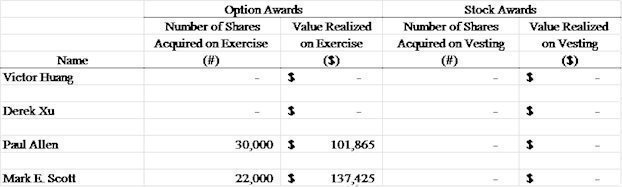
Executive Compensation Arrangements
Other than the annual compensation, bonus and equity incentive awards described above and below, the Company has no other executive compensation, change in control or similar agreements or arrangements.
On March 1, 2024, the Company entered into an employment agreement with Mark E. Scott, the Company’s Chief Financial Officer, which provides for a base salary of $250,000 annually. Mr. Scott is also eligible to participate in annual performance-based bonus programs established by the Board or Compensation Committee, subject to the achievement of applicable performance criteria established by the Board or Compensation Committee, which shall be determined in good faith by the Board or Compensation Committee. Mr. Scott was also granted options to purchase up to Twenty Five Thousand (25,000) shares of common stock with an exercise price equal to $1.49, which options vested in full on the date of issuance.
On March 4, 2025, we entered into an employment agreement with Paul Allen to serve as our President, which provides for a base salary of $350,000. The term of the employment agreement is for a period of three years, which will be automatically extended for additional one-year periods unless either party gives the other party written notice of such party’s decision not to renew the term at least 90 days prior to the end of the initial three-year term or any renewal term. Mr. Allen is also eligible to participate in annual performance-based bonus programs established from time to time by the Board, subject to the achievement by Mr. Allen and the Company of the applicable performance criteria set forth in the employment agreement and established for Mr. Allen by the Board. The employment agreement is terminable by either party at any time. In the event of termination by us without cause or by Mr. Allen for good reason, as those terms are defined in the employment agreement, he is entitled to three months’ severance. In connection with entering into the employment agreement, Mr. Allen was granted ten-year options under our 2023 Equity Incentive Plan to purchase 100,000 shares of our common stock, which options vest immediately, at an exercise price equal to $3.27, being the fair market value on the date of grant. Mr. Allen was also granted ten-year options under the Plan to purchase 300,000 shares of our common stock, which options vest quarterly over four years, at an exercise price equal to $3.27, being the fair market value on the date of grant.
| 68 |
| Table of Contents |
Potential Payments upon Termination or Change in Control
Mr. Huang and Mr. Xu have stock option grants with a grant date fair value of $216,649 that vest with a change in control.
We have the following potential payments upon termination or change in control with Mark E. Scott:
|
|
|
|
| Early |
|
| Not For Good |
|
| Change in |
|
|
|
| |||||
Executive |
| For Cause |
|
| or Normal |
|
| Cause |
|
| Control |
|
| Disability |
| |||||
Payments Upon |
| Termination |
|
| Retirement |
|
| Termination |
|
| Termination |
|
| or Death |
| |||||
Separation |
| 12/31/2025 |
| |||||||||||||||||
Compensation: |
|
|
|
|
|
|
|
|
|
|
|
|
|
|
| |||||
Base salary (1) |
| $ | - |
|
| $ | - |
|
| $ | 83,333 |
|
| $ | - |
|
| $ | - |
|
Performance-based incentive |
|
|
|
|
|
|
|
|
|
|
|
|
|
|
|
|
|
|
|
|
compensation |
| $ | - |
|
| $ | - |
|
| $ | - |
|
| $ | - |
|
| $ | - |
|
Stock options |
| $ | - |
|
| $ | - |
|
| $ | - |
|
| $ | 323,491 |
|
| $ | - |
|
|
|
|
|
|
|
|
|
|
|
|
|
|
|
|
|
|
|
|
|
|
Benefits and Perquisites: |
|
|
|
|
|
|
|
|
|
|
|
|
|
|
|
|
|
|
|
|
Health and welfare benefits |
| $ | - |
|
| $ | - |
|
| $ | - |
|
| $ | - |
|
| $ | - |
|
Accrued vacation pay |
| $ | - |
|
| $ | - |
|
| $ | - |
|
| $ | - |
|
| $ | - |
|
|
|
|
|
|
|
|
|
|
|
|
|
|
|
|
|
|
|
|
|
|
Total |
| $ | - |
|
| $ | - |
|
| $ | 83,333 |
|
| $ | 323,491 |
|
| $ | - |
|
We have the following potential payments upon termination or change in control with Paul Allen:
|
|
|
|
| Early |
|
| Not For Good |
|
| Change in |
|
|
|
| |||||
Executive |
| For Cause |
|
| or Normal |
|
| Cause |
|
| Control |
|
| Disability |
| |||||
Payments Upon |
| Termination |
|
| Retirement |
|
| Termination |
|
| Termination |
|
| or Death |
| |||||
Separation |
| 12/31/2025 |
| |||||||||||||||||
Compensation: |
|
|
|
|
|
|
|
|
|
|
|
|
|
|
| |||||
Base salary (1) |
| $ | - |
|
| $ | - |
|
| $ | 116,667 |
|
| $ | - |
|
| $ | - |
|
Performance-based incentive |
|
|
|
|
|
|
|
|
|
|
|
|
|
|
|
|
|
|
|
|
compensation |
| $ | - |
|
| $ | - |
|
| $ | - |
|
| $ | - |
|
| $ | - |
|
Stock options |
| $ | - |
|
| $ | - |
|
| $ | - |
|
| $ | 534,041 |
|
| $ | - |
|
|
|
|
|
|
|
|
|
|
|
|
|
|
|
|
|
|
|
|
|
|
Benefits and Perquisites: |
|
|
|
|
|
|
|
|
|
|
|
|
|
|
|
|
|
|
|
|
Health and welfare benefits |
| $ | - |
|
| $ | - |
|
| $ | - |
|
| $ | - |
|
| $ | - |
|
Accrued vacation pay |
| $ | - |
|
| $ | - |
|
| $ | - |
|
| $ | - |
|
| $ | - |
|
|
|
|
|
|
|
|
|
|
|
|
|
|
|
|
|
|
|
|
|
|
Total |
| $ | - |
|
| $ | - |
|
| $ | 116,667 |
|
| $ | 534,041 |
|
| $ | - |
|
Stock Appreciation Rights Plan
Related to the Share Exchange Agreement with Super Simple AI, Inc., on February 17, 2022, the Company’s Board of Directors approved the 2022 Stock Appreciation Rights Plan (the “SAR Plan”) to issue a maximum of 1,500,000 stock appreciation rights (“SARs”), which was later adjusted to 2,637,150 SARs after the merger.
As of December 31, 2025 and 2024, there were 1,758,000 SARs outstanding with a base value of $0.12 and January 2028 expiration. There were no SAR grants during the years ended December 31, 2025 and 2024.
| 69 |
| Table of Contents |
Payment of Appreciation Amount
The appreciation distribution in respect to a SAR may be paid in cash, in common stock of the Company, in any combination of the two or in any other form of consideration, as determined by the Board and contained in the stock appreciation rights agreement evidencing such SAR.
Amendment and Termination
Our board of directors may terminate or amend the SAR Plan at any time, but no such action shall adversely affect rights under any outstanding award without the holder’s consent.
Upon consummation of the merger, each SAR granted under the SAR Plan that was outstanding immediately prior to the effective time of the merger converted into a stock appreciation right denominated in shares of common stock (each, a “Converted SAR”). Each Converted SAR will continue to have and be subject to substantially the same terms and conditions as were applicable to such SAR immediately prior to the effective time, except that (i) each Converted SAR will cover that number of shares of common stock equal to (A) the product of (1) the number of shares of common stock subject to such SAR immediately prior to the effective time and (2) the conversion ratio and (B) a number of earnout shares in accordance with, and subject to, the contingencies set forth in the Merger Agreement, and (ii) the per share base value for each share of common stock covered by the Converted SAR will be equal to the quotient obtained by dividing (A) the base value per share of common stock of such SAR immediately prior to the effective time by (B) the conversion ratio.
2023 Amended and Restated Equity Incentive Plan
On December 4, 2023, the Company adopted the Airship AI Holdings, Inc. 2023 Equity Incentive Plan, which plan was approved by stockholders at the extraordinary general meeting held on December 19, 2023 in connection with the merger. On October 15, 2025, the Company adopted the Airship AI Holdings, Inc. 2023 Amended and Restated Equity Incentive Plan (the “Equity Incentive Plan”), which increased the number of shares of common stock authorized for issuance pursuant to awards granted thereunder by 2,000,000 shares. The Equity Incentive Plan was approved by our stockholders at our annual meeting held on December 11, 2025. This section summarizes certain principal features of the Equity Incentive Plan.
The Equity Incentive Plan is a comprehensive incentive compensation plan under which the Company can grant equity-based and other incentive awards to its officers, employees, directors, consultants and advisers. The purpose of the Equity Incentive Plan is to help the Company attract, motivate and retain such persons with awards under the Equity Incentive Plan and thereby enhance shareholder value.
Administration. The Equity Incentive Plan is administered by the compensation committee of the Board, which consists of three members of the Board, each of whom is a “non-employee director” within the meaning of Rule 16b-3 promulgated under the Exchange Act and “independent” for purposes of any applicable listing requirements. If a member of the compensation committee is eligible to receive an award under the Equity Incentive Plan, such compensation committee member shall have no authority under the plan with respect to his or her own award. Among other things, the compensation committee has complete discretion, subject to the express limits of the Equity Incentive Plan, to determine the directors, employees and nonemployee consultants to be granted an award, the type of award to be granted the terms and conditions of the award, the form of payment to be made and/or the number of shares of common stock subject to each award, the exercise price of each option and base price of each stock appreciation right (“SAR”), the term of each award, the vesting schedule for an award, whether to accelerate vesting, the value of the common stock underlying the award, and the required withholding, if any. The compensation committee may amend, modify or terminate any outstanding award, provided that the participant’s consent to such action is required if the action would impair the participant’s rights or entitlements with respect to that award. The compensation committee is also authorized to construe the award agreements, and may prescribe rules relating to the Equity Incentive Plan. Notwithstanding the foregoing, the compensation committee does not have any authority to grant or modify an award under the Equity Incentive Plan with terms or conditions that would cause the grant, vesting or exercise thereof to be considered nonqualified “deferred compensation” subject to Code Section 409A, unless such award is structured to be exempt from or comply with all requirements of Code Section 409A.
Grant of Awards; Shares Available for Awards. The Equity Incentive Plan provides for the grant of stock options, SARs, performance share awards, performance unit awards, distribution equivalent right awards, restricted stock awards, restricted stock unit awards and unrestricted stock awards to non-employee directors, officers, employees and nonemployee consultants of the Company or its affiliates. The aggregate number of shares of common stock initially reserved and available for grant and issuance under the Equity Incentive Plan is 7,068,009. Such aggregate number of shares of stock will automatically increase on January 1 of each year for a period of ten years commencing on January 1, 2026 and ending on (and including) January 1, 2035, in an amount equal to 2.0% of the total number of shares of common stock outstanding on December 31 of the preceding year; provided, however, that the Board may act prior to January 1 of a given year to provide that the increase for such year will be a lesser number of shares of common stock. No more than 7,068,009 shares of common stock in the aggregate may be issued under the Equity Incentive Plan in connection with incentive stock options. Shares shall be deemed to have been issued under the Equity Incentive Plan solely to the extent actually issued and delivered pursuant to an award. If any award granted under the Equity Incentive Plan expires, is cancelled, or terminates unexercised or is forfeited, the number of shares subject thereto is again available for grant under the Equity Incentive Plan, other than any shares tendered or withheld in order to exercise or satisfy withholding obligation in respect of any award. The Equity Incentive Plan shall continue in effect, unless sooner terminated, until the tenth (10th) anniversary of the date on which it is adopted by the Board.
| 70 |
| Table of Contents |
It is expected that all of our employees, consultants, advisors and service providers and all of our non-executive officer directors will be eligible to participate in the Equity Incentive Plan. Future new hires and additional non-employee directors and/or consultants would be eligible to participate in the Equity Incentive Plan as well. The number of stock options and/or shares of restricted stock to be granted to executives and directors cannot be determined at this time as the grant of stock options and/or shares of restricted stock is dependent upon various factors such as hiring requirements and job performance.
Non-Employee Director Compensation Limit. The Equity Incentive Plan provides for a limit on non-employee director compensation. The maximum number of shares of stock that may be subject to an award granted under the Equity Incentive Plan during any single fiscal year to any non-employee director, when taken together with any cash fees paid to such non-employee director during such year in respect of his or her service as a non-employee director (including service as a member or chair of any committee of the board), shall not exceed $250,000 in total value (calculating the value of any such award based on the fair market value on the date of grant of such award for financial reporting purposes).
Stock Options. The Equity Incentive Plan provides for the grant of either “incentive stock options” (“ISOs”), which are intended to meet the requirements for special federal income tax treatment under Section 422 of the Code, or “nonqualified stock options” (“NQSOs”). Stock options may be granted on such terms and conditions as the compensation committee may determine, which shall be specified in the option agreement; provided, however, that the per share exercise price under a stock option may not be less than the fair market value of a share of common stock on the date of grant and the term of the stock option may not exceed 10 years (110% of such value and five years in the case of an ISO granted to an employee who owns (or is deemed to own) more than 10% of the total combined voting power of all classes of capital stock of our company or a parent or subsidiary of our company). ISOs may only be granted to employees. In addition, the aggregate fair market value of common stock covered by one or more ISOs (determined at the time of grant), which are exercisable for the first time by an employee during any calendar year may not exceed $100,000. Any excess is treated as a NQSO.
Stock Appreciation Rights. A SAR entitles the participant, upon exercise, to receive an amount, in cash or stock or a combination thereof, equal to the increase in the fair market value of the underlying common stock between the date of grant and the date of exercise. The compensation committee shall set forth in the applicable SAR award agreement the terms and conditions of the SAR, including the base value for the SAR (which shall not be less than the fair market value of a share on the date of grant), the number of shares subject to the SAR and the period during which the SAR may be exercised and any other special rules and/or requirements which the compensation committee imposes on the SAR. No SAR shall be exercisable after the expiration of ten (10) years from the date of grant. SARs may be granted in tandem with, or independently of, stock options granted under the Equity Incentive Plan. A SAR granted in tandem with a stock option (i) is exercisable only at such times, and to the extent, that the related stock option is exercisable in accordance with the procedure for exercise of the related stock option; (ii) terminates upon termination or exercise of the related stock option (likewise, the common stock option granted in tandem with a SAR terminates upon exercise of the SAR); (iii) is transferable only with the related stock option; and (iv) if the related stock option is an ISO, may be exercised only when the value of the stock subject to the stock option exceeds the exercise price of the stock option. A SAR that is not granted in tandem with a stock option is exercisable at such times as the compensation committee may specify.
Performance Shares and Performance Unit Awards. Performance share and performance unit awards entitle the participant to receive cash or shares of common stock upon the attainment of specified performance goals. In the case of performance units, the right to acquire the units is denominated in cash values. The compensation committee shall set forth in the applicable award agreement the performance goals and objectives and the period of time to which such goals and objectives shall apply. If such goals and objectives are achieved, such distribution of shares, or payment in cash, as the case may be, shall be made no later than by the fifteenth (15th) day of the third (3rd) calendar month next following the end of the company’s fiscal year to which such performance goals and objectives relate, unless otherwise structured to comply with Code Section 409A.
| 71 |
| Table of Contents |
Distribution Equivalent Right Awards. A distribution equivalent right award entitles the participant to receive bookkeeping credits, cash payments and/or common stock distributions equal in amount to the distributions that would have been made to the participant had the participant held a specified number of shares of common stock during the period the participant held the distribution equivalent right. A distribution equivalent right may be awarded as a component of another award (but not an option or SAR award) under the Equity Incentive Plan, where, if so awarded, such distribution equivalent right will expire or be forfeited by the participant under the same conditions as under such other award. The compensation committee shall set forth in the applicable distribution equivalent rights award agreement the terms and conditions, if any, including whether the holder is to receive credits currently in cash, is to have such credits reinvested (at fair market value determined as of the date of reinvestment) in additional shares of common stock, or is to be entitled to choose among such alternatives.
Restricted Stock Awards. A restricted stock award is a grant or sale of common stock to the holder, subject to such restrictions on transferability, risk of forfeiture and other restrictions, if any, as the compensation committee or the board of directors may impose, which restrictions may lapse separately or in combination at such times, under such circumstances (including based on achievement of performance goals and/or future service requirements), in such instalments or otherwise, as the compensation committee or the board of directors may determine at the date of grant or purchase or thereafter. If provided for under the restricted stock award agreement, a participant who is granted or has purchased restricted stock shall have all of the rights of a shareholder, including the right to vote the restricted stock and the right to receive dividends thereon (subject to any mandatory reinvestment or other requirement imposed by the compensation committee or the board of directors or in the award agreement). During the restricted period applicable to the restricted stock, subject to certain exceptions, the restricted stock may not be sold, transferred, pledged, exchanged, hypothecated, or otherwise disposed of by the participant.
Restricted Stock Unit Awards. A restricted stock unit award provides for a grant of shares or a cash payment to be made to the holder upon the satisfaction of predetermined individual service-related vesting requirements, based on the number of units awarded to the holder. The compensation committee shall set forth in the applicable restricted stock unit award agreement the individual service-based vesting requirements which the holder would be required to satisfy before the holder would become entitled to payment and the number of units awarded to the holder. The holder of a restricted stock unit shall be entitled to receive a cash payment equal to the fair market value of a share of common stock, or one share of common stock, as determined in the sole discretion of the compensation committee and as set forth in the restricted stock unit award agreement, for each restricted stock unit subject to such restricted stock unit award, if and to the extent the holder satisfies the applicable vesting requirements. Such payment or distribution shall be made no later than by the fifteenth (15th ) day of the third (3rd) calendar month next following the end of the calendar year in which the restricted stock unit first becomes vested, unless otherwise structured to comply with Code Section 409A. A restricted stock unit shall not constitute an equity interest in the company and shall not entitle the holder to voting rights, dividends or any other rights associated with ownership of shares prior to the time the holder shall receive a distribution of shares.
Unrestricted Stock Awards. An unrestricted stock award is a grant or sale of shares of common stock to the employees, non-employee directors or non-employee consultants that are not subject to transfer, forfeiture or other restrictions, in consideration for past services rendered to the company or an affiliate or for other valid consideration.
Adjustment to Shares. Subject to any required action by shareholders of the company, the number of shares of common stock covered by each outstanding award shall be proportionately adjusted for any increase or decrease in the number of issued shares resulting from a subdivision or consolidation of shares, including, but not limited to, a stock split, reverse stock split, recapitalization, continuation or reclassification, or the payment of a stock dividend (but only on the stock) or any other increase or decrease in the number of such shares effected without receipt of consideration by the company.
Change-in-Control Provisions. The compensation committee may, in its sole discretion, at the time an award is granted or at any time prior to, coincident with or after the time of a change in control, cause any award either (i) to be cancelled in consideration of a payment in cash or other consideration in amount per share equal to the excess, if any, of the price or implied price per share of common stock in the change in control over the per share exercise, base or purchase price of such award, which may be paid immediately or over the vesting schedule of the award; (ii) to be assumed, or new rights substituted therefore, by the surviving corporation or a parent or subsidiary of such surviving corporation following such change in control; (iii) accelerate any time periods, or waive any other conditions, relating to the vesting, exercise, payment or distribution of an award so that any award to a holder whose employment has been terminated as a result of a change in control may be vested, exercised, paid or distributed in full on or before a date fixed by the compensation committee; (iv) to be purchased from a holder whose employment has been terminated as a result of a change of control, upon the holder’s request, for an amount of cash equal to the amount that could have been obtained upon the exercise, payment or distribution of such rights had such award been currently exercisable or payable; or (v) terminate any then outstanding award or make any other adjustment to the awards then outstanding as the compensation committee deems necessary or appropriate to reflect such transaction or change. The number of shares subject to any award shall be rounded to the nearest whole number.
| 72 |
| Table of Contents |
Transferability. No award may be assigned, transferred, sold, exchanged, encumbered, pledged or otherwise hypothecated or disposed of by a holder except by will or by the laws of descent and distribution, or by gift to any immediate family member of the holder, subject to compliance with applicable laws.
Amendment and Termination. The compensation committee may adopt, amend and rescind rules relating to the administration of the Equity Incentive Plan, and amend, suspend or terminate the Equity Incentive Plan, but no such amendment or termination will be made that materially and adversely impairs the rights of any participant with respect to any award received thereby under the Equity Incentive Plan without the participant’s consent, other than amendments that are necessary to permit the granting of awards in compliance with applicable laws. In addition, no amendment that results (directly or indirectly ) in the reduction of the exercise price of an option or SAR or that otherwise requires shareholder approval under applicable law will be made without shareholder approval.
Director Compensation
We primarily use monthly fees and stock option grants to attract and retain qualified candidates to serve on the Board. This compensation reflected the financial condition of the Company. In setting director compensation, we consider the significant amount of time that directors expend in fulfilling their duties to the Company as well as the skill-level required by our members of the Board. During the year ended December 31, 2025, Victor Huang and Derek Xu did not receive any compensation for their services as directors. The compensation disclosed in the “Summary Compensation Table” above represents the total compensation for Mr. Huang and Mr. Xu.
Our independent non-employee directors are compensated in cash and stock option grants. The non-employee directors receive $100,000 of compensation in cash and stock option grants after appointment at the annual shareholder meetings. The stock option grants generally vest quarterly over four years.
Our non-employee directors received the following compensation during the year ended December 31, 2025:
|
|
|
|
|
|
|
|
|
|
| Non-Equity |
|
| Non-Qualified |
|
|
|
|
|
|
| |||||||
|
| Fees Earned |
|
|
|
|
|
|
|
| Incentive |
|
| Deferred |
|
|
|
|
|
|
| |||||||
|
| or Paid in |
|
|
|
|
|
|
|
| Plan |
|
| Compensation |
|
| Other |
|
|
|
| |||||||
|
| Cash |
|
| Stock |
|
| Option |
|
| Compensation |
|
| Earnings |
|
| Compensation |
|
|
|
| |||||||
Name |
| $ |
|
| Awards |
|
| Awards (1) |
|
| ($) |
|
| $ |
|
| ($) |
|
| Total |
| |||||||
Peeyush Ranjan |
| $ | 60,000 |
|
|
| - |
|
| $ | 54,172 |
|
|
| - |
|
|
| - |
|
|
| - |
|
| $ | 114,172 |
|
Louis Lebedin |
| $ | - |
|
|
| - |
|
| $ | 47,502 |
|
|
| - |
|
|
| - |
|
|
| - |
|
| $ | 47,502 |
|
Amit Mital |
| $ | - |
|
|
| - |
|
| $ | 67,281 |
|
|
| - |
|
|
| - |
|
|
| - |
|
| $ | 67,281 |
|
| 73 |
| Table of Contents |
ITEM 12. SECURITY OWNERSHIP OF CERTAIN BENEFICIAL OWNERS AND MANAGEMENT AND RELATED STOCKHOLDER MATTERS.
Security Ownership of Certain Beneficial Owners and Management
The following table sets forth information as of December 31, 2025 regarding the beneficial ownership of shares of our common stock by:
● | each person known by us to be the beneficial owner of more than 5% of the outstanding shares of any class of our voting securities; |
● | each of our current executive officers and directors; and |
● | all executive officers and directors of the Company as a group. |
Percentage of beneficial ownership of common stock is based on 34,368,162 shares of common stock outstanding as of December 31, 2025.
Beneficial ownership is determined in accordance with the rules of the SEC and includes voting or investment power with respect to, or the power to receive the economic benefit of ownership of, the securities. In computing the number of shares beneficially owned by a person and the percentage ownership of that person, shares that the person has the right to acquire within 60 days are included, including through the exercise of any option or other right or the conversion of any other security. However, these shares are not included in the computation of the percentage ownership of any other person.
Unless otherwise indicated, we believe that all persons named in the table have sole voting and investment power with respect to all of shares beneficially owned by them.
|
| Common Stock Beneficially Owned |
| |||||
Name of Beneficial Owner (1) |
| Shares |
|
| % |
| ||
Directors and Named Executive Officers- |
|
|
|
|
|
| ||
Victor Huang (2) |
|
| 9,214,833 |
|
|
| 23.3 | % |
Derek Xu (3) |
|
| 6,611,621 |
|
|
| 18.5 | % |
Paul Allen (4) |
|
| 1,224,507 |
|
|
| 3.5 | % |
Mark E. Scott (5) |
|
| 113,952 |
|
| * |
| |
Peeyush Ranjan (6) |
|
| 167,599 |
|
| * |
| |
Louis Lebedin (7) |
|
| 197,562 |
|
| * |
| |
Amit Mital (8) |
|
| 148,253 |
|
| * |
| |
Total Directors and Officers (8 in total) |
|
| 17,678,327 |
|
|
| 41.6 | % |
Armistice Capital Master Fund LLC (9) |
|
| 2,702,702 |
|
|
| 7.3 | % |
_________
* Less than 1%
(1) | Unless otherwise noted, the business address of each of the directors and executive officers of is c/o Airship AI Holdings, Inc., 8210 154th Ave NE, Redmond, WA 98052. |
|
|
(2) | Includes (i) shares by Mr. Huang and has voting and dispositive power, (ii) 1,691,076 shares of common stock issuable upon the exercise of warrants to purchase shares of common stock, (iii) 1,793,085 shares of common stock subject to options exercisable within 60 days, and (iv) 1,758,105 shares of common stock subject to stock appreciation rights. Excludes the right to receive a number of earnout shares, in accordance with and subject to the contingencies set forth in the Merger Agreement. |
| 74 |
| Table of Contents |
(3) | Includes (i) shares owned by Mr. Xu and has voting and dispositive power, (ii) 1,344,951 shares of common stock issuable upon the exercise of warrants to purchase shares of common stock, and (iii) 43,750 shares of common stock subject to options exercisable within 60 days. Excludes the right to receive a number of earnout shares, in accordance with and subject to the contingencies set forth in the Merger Agreement. |
|
|
(4) | Includes (i) shares owned by Mr. Allen, and (ii) 1,072,559 shares of common stock subject to options exercisable within 60 days. Excludes the right to receive a number of earnout shares, in accordance with and subject to the contingencies set forth in the Merger Agreement. |
|
|
(5) | Includes (i) shares owned by Mr. Scott, and (ii) 70,000 shares of common stock subject to options exercisable within 60 days. Excludes the right to receive a number of earnout shares, in accordance with and subject to the contingencies set forth in the Merger Agreement. |
|
|
(6) | Includes (i) shares owned by Mr. Ranjan, and (ii) 157,832 shares of common stock subject to options exercisable within 60 days. Excludes the right to receive a number of earnout shares, in accordance with and subject to the contingencies set forth in the Merger Agreement. |
|
|
(7) | Includes (i) shares owned by Mr. Lebedin, and (ii) 97,562 shares of common stock subject to options exercisable within 60 days. Excludes the right to receive a number of earnout shares, in accordance with and subject to the contingencies set forth in the Merger Agreement. |
|
|
(8) | Includes (i) shares owned by Mr. Mital, and (ii) 136,972 shares of common stock subject to options exercisable within 60 days. Excludes the right to receive a number of earnout shares, in accordance with and subject to the contingencies set forth in the Merger Agreement. |
|
|
(9) | The securities are directly held by Armistice Capital Master Fund Ltd., a Cayman Islands exempted company (the “Master Fund”), and may be deemed to be beneficially owned by: (i) Armistice Capital, LLC (“Armistice Capital”), as the investment manager of the Master Fund; and (ii) Steven Boyd, as the Managing Member of Armistice Capital. The warrants are subject to a beneficial ownership limitation of 9.99%, which such limitation restricts the holder from exercising that portion of the warrants that would result in the holder and its affiliates owning, after exercise, a number of shares of common stock in excess of the beneficial ownership limitation. The address of Armistice Capital Master Fund Ltd. is c/o Armistice Capital, LLC, 510 Madison Avenue, 7th Floor, New York, NY 10022. |
Securities Authorized for Issuance Under Equity Compensation Plans
The following table sets forth certain information about the securities authorized for issuance under our incentive plans as of December 31, 2025:
|
| (a) |
|
| (b) |
|
| (c) |
| |||
|
|
|
|
|
|
|
| Number of securities |
| |||
|
|
|
|
|
|
|
| remaining available |
| |||
|
| Number of securities |
|
| Weighted-average |
|
| for future issuance |
| |||
|
| to be issued upon |
|
| exercise price of |
|
| under equity compensation |
| |||
|
| exercise of outstanding |
|
| outstanding options, |
|
| plan (excluding securities |
| |||
Plan Category |
| options, warrants and rights |
|
| warrants and rights |
|
| reflected in column (a) ) |
| |||
Equity compensation plan |
|
|
|
|
|
|
|
|
| |||
approved by shareholders |
|
| 6,792,880 |
|
| $ | 1.68 |
|
|
| 4,768,585 |
|
Equity compensation plans |
|
|
|
|
|
|
|
|
|
|
|
|
not approved by shareholders |
|
| - |
|
|
| - |
|
|
| - |
|
Total |
|
| 6,792,880 |
|
| $ | 1.68 |
|
|
| 4,768,585 |
|
| 75 |
| Table of Contents |
The following table sets forth certain information about the securities authorized for issuance under our incentive plans for SARS as of December 31, 2025:
|
| (a) |
|
| (b) |
|
| (c) |
| |||
|
|
|
|
|
|
|
| Number of securities |
| |||
|
|
|
|
|
|
|
| remaining available |
| |||
|
| Number of securities |
|
| Weighted-average |
|
| for future issuance |
| |||
|
| to be issued upon |
|
| exercise price of |
|
| under equity compensation |
| |||
|
| exercise of outstanding |
|
| outstanding options, |
|
| plan (excluding securities |
| |||
Plan Category |
| options, warrants and rights |
|
| warrants and rights |
|
| reflected in column (a) ) |
| |||
Equity compensation plan |
|
|
|
|
|
|
|
|
| |||
approved by shareholders |
|
| 1,758,105 |
|
| $ | 0.120 |
|
|
| 879,045 |
|
Equity compensation plans |
|
|
|
|
|
|
|
|
|
|
|
|
not approved by shareholders |
|
| - |
|
|
| - |
|
|
| - |
|
Total |
|
| 1,758,105 |
|
| $ | 0.120 |
|
|
| 879,045 |
|
ITEM 13. CERTAIN RELATIONSHIPS AND RELATED TRANSACTIONS, AND DIRECTOR INDEPENDENCE.
Advances due to Founders
As of January 1, 2024, advances due to founders totaled $1,750,000. During 2024, Mr. Huang and Mr. Xu advanced Airship AI $2,100,000 and were repaid $2,550,000, with $1,300,000 recorded as advances from founders as of December 31, 2024. During 2025, Mr. Huang and Mr. Xu were repaid $650,000 each, with $0 recorded as advances from founders as of December 31, 2025.
Master Loan Agreement with Victor Huang
On September 27, 2024, we entered into a master loan agreement with Mr. Huang, whereby he may provide additional funding of up to $1,500,000 under certain terms and conditions. The agreement provides for interest of 6%. We agreed to pay interest for the 2024 advances of $11,913 and issued warrants to purchase up to 220,000 shares of common stock. The warrants have an exercise price of $2.36 per share, are exercisable immediately upon issuance and will expire in five years following the date of issuance. The $284,478 fair value of the warrant is recorded in permanent equity in the consolidated balance sheets and was fully expensed on the date of grant. There are no outstanding advances under the master loan agreement as of December 31, 2024. The master loan agreement was terminated September 2, 2025.
Indemnification
The Company’s charter and bylaws provide that the Company will indemnify its directors and officers to the fullest extent permitted by Delaware law. In addition, the Company has entered into indemnification agreements with its directors and executive officers.
Policies and Procedures for Related Persons Transactions
Pursuant to its Audit Committee charter, the Audit Committee will have the responsibility to review related party transactions. A “related person transaction” is a transaction, arrangement or relationship in which the post-combination company or any of its subsidiaries was, is or will be a participant, the amount of which involved exceeds $120,000 (or, for so long as we remain a “smaller reporting company” the lesser of (i) $120,000 and (ii) 1% of our average total assets of the two completed fiscal years), and in which any related person had, has or will have a direct or indirect material interest. A “related person” means:
| · | any person who is, or at any time during the applicable period was, one of the Company’s executive officers or directors; |
|
|
|
| · | any person who is known by the post-combination company to be the beneficial owner of more than 5% of the Company voting stock; |
|
|
|
| · | any immediate family member of any of the foregoing persons, which means any child, stepchild, parent, stepparent, spouse, sibling, mother-in-law, father-in-law, son-in-law, daughter-in-law, brother-in-law or sister-in-law of a director, executive officer or a beneficial owner of more than 5% of the Company’s voting stock, and any person (other than a tenant or employee) sharing the household of such director, executive officer or beneficial owner of more than 5% of the Company’s voting stock; and |
|
|
|
| · | any firm, corporation or other entity in which any of the foregoing persons is a partner or principal, or in a similar position, or in which such person has a 10% or greater beneficial ownership interest. |
| 76 |
| Table of Contents |
ITEM 14. PRINCIPAL ACCOUNTING FEES AND SERVICES.
Audit Committee Pre-Approval Policy
The Audit Committee has established a pre-approval policy and procedures for audit, audit-related and tax services that can be performed by the independent auditors without specific authorization from the Audit Committee subject to certain restrictions. The policy sets out the specific services pre-approved by the Audit Committee and the applicable limitations, while ensuring the independence of the independent auditors to audit our financial statements is not impaired. The pre-approval policy does not include a delegation to management of the Audit Committee’s responsibilities under the Exchange Act. During the year ended December 31, 2025, the Audit Committee pre-approved all audit and permissible non-audit services provided by our independent auditors.
Service Fees Paid to the Independent Registered Public Accounting Firm
The Audit Committee engaged BPM LLP to perform an annual audit of our financial statements for the fiscal years ended December 31, 2025 and 2024. The following is the breakdown of aggregate fees paid for the last two fiscal years. Another tax firm prepares our tax returns.
|
| Year Ended |
|
| Year Ended |
| ||
|
| December 31, 2025 |
|
| December 31, 2024 |
| ||
Audit fees |
| $ | 246,052 |
|
| $ | 281,375 |
|
Tax fees |
|
| - |
|
|
| - |
|
All other fees |
|
| 51,863 |
|
|
| 159,265 |
|
|
|
|
|
|
|
|
|
|
|
| $ | 297,915 |
|
| $ | 440,640 |
|
-”Audit Fees” are fees paid for professional services for the audit and quarterly reviews of our financial statements.
- “Tax Fees” are fees primarily for tax compliance in connection with filing US income tax returns.
“All other fees” related to the reviews of Registration Statements on Form S-1 and S-4.
| 77 |
| Table of Contents |
PART IV
ITEM 15. EXHIBIT AND FINANCIAL STATEMENT SCHEDULES.
(a) List of Documents Filed as a Part of This Report:
The Company’s financial statements, as indicated by the Index to Consolidated Financial Statements set forth below, begin on page F-1. Financial statement schedules have been omitted because they are not applicable or the required information is included in the financial statements or notes thereto.
INDEX TO CONSOLIDATED FINANCIAL STATEMENTS
|
| Page |
|
Report of Independent Registered Public Accounting Firm (PCAOB ID |
| F-1 |
|
| F-2 |
| |
| F-3 |
| |
| F-4 |
| |
| F-5 |
| |
| F-6 |
|
(2) Index to Financial Statement Schedules:
All schedules have been omitted because the required information is included in the financial statements or the notes thereto, or because it is not required.
(3) Index to Exhibits:
See exhibits listed under Part (b) below.
| 78 |
| Table of Contents |
(b) Exhibits:
Exhibit No. |
| Description | ||
| ||||
| ||||
| ||||
| ||||
| ||||
| ||||
| ||||
| ||||
| ||||
| ||||
| ||||
| ||||
| ||||
| ||||
| ||||
| ||||
| ||||
| 79 |
| Table of Contents |
| ||||
| ||||
| ||||
| ||||
| ||||
| ||||
| ||||
| ||||
| ||||
| ||||
| ||||
| ||||
| ||||
| ||||
101.INS* |
| Inline XBRL Instance Document (the instance document does not appear in the Interactive Data File because iXBRL tags are embedded within the Inline XBRL document). | ||
101.SCH* |
| Inline XBRL Taxonomy Extension Schema Document | ||
101.CAL* |
| Inline XBRL Taxonomy Extension Calculation Linkbase Document | ||
101.DEF* |
| Inline XBRL Taxonomy Extension Definition Linkbase Document | ||
101.LAB* |
| Inline XBRL Taxonomy Extension Labels Linkbase Document | ||
101.PRE* |
| Inline XBRL Taxonomy Extension Presentation Linkbase Document | ||
104* |
| Cover page from the Company’s Annual Report on Form 10-K for the year ended December 31, 2025 formatted in Inline XBRL (included in Exhibit 101). | ||
* | Filed herewith |
+ | Indicates a management or compensatory plan. |
† | Certain schedules and similar attachments to this Exhibit have been omitted in accordance with Item 601(a)(5) of Regulation S-K. The registrant agrees to furnish supplementally a copy of any omitted exhibit or schedule to the SEC upon request. |
| 80 |
| Table of Contents |
Report of Independent Registered Public Accounting Firm
To the Board of Directors and Stockholders of
Airship AI Holdings, Inc.
Opinion on the Consolidated Financial Statements
We have audited the accompanying consolidated balance sheets of Airship AI Holdings, Inc. (a Delaware corporation) (the “Company”) as of December 31, 2025 and 2024 and the related consolidated statements of operations and comprehensive income (loss), changes in stockholders’ deficit, and cash flows for each of the two years in the period ended December 31, 2025, and the related notes (collectively referred to as the “consolidated financial statements”). In our opinion, the consolidated financial statements present fairly, in all material respects, the financial position of the Company as of December 31, 2025 and 2024, and the results of its operations and its cash flows for each of the two years in the period ended December 31, 2025 in conformity with accounting principles generally accepted in the United States of America.
Basis for Opinion
These consolidated financial statements are the responsibility of the Company’s management. Our responsibility is to express an opinion on these consolidated financial statements based on our audits. We are a public accounting firm registered with the Public Company Accounting Oversight Board (United States) (“PCAOB”) and are required to be independent with respect to the Company in accordance with the U.S. federal securities laws and the applicable rules and regulations of the Securities and Exchange Commission and the PCAOB.
We conducted our audits in accordance with the auditing standards of the PCAOB. Those standards require that we plan and perform the audit to obtain reasonable assurance about whether the consolidated financial statements are free of material misstatement, whether due to error or fraud. The Company is not required to have, nor were we engaged to perform, an audit of its internal control over financial reporting. As part of our audits, we are required to obtain an understanding of internal control over financial reporting but not for the purpose of expressing an opinion on the effectiveness of the Company’s internal control over financial reporting. Accordingly, we express no such opinion.
Our audits included performing procedures to assess the risks of material misstatement of the consolidated financial statements, whether due to error or fraud, and performing procedures that respond to those risks. Such procedures included examining, on a test basis, evidence regarding the amounts and disclosures in the consolidated financial statements. Our audits also included evaluating the accounting principles used and significant estimates made by management, as well as evaluating the overall presentation of the consolidated financial statements. We believe that our audits provide a reasonable basis for our opinion.
/s/
We have served as the Company’s auditor since 2021.
February 16, 2026
| F-1 |
| Table of Contents |
AIRSHIP AI HOLDINGS, INC. | ||||||||
CONSOLIDATED BALANCE SHEETS | ||||||||
As of December 31, 2025 and 2024 | ||||||||
|
|
|
|
|
|
| ||
|
| December 31, 2025 |
|
| December 31, 2024 |
| ||
ASSETS |
|
|
|
|
|
| ||
|
|
|
|
|
|
| ||
CURRENT ASSETS: |
|
|
|
|
|
| ||
Cash and cash equivalents |
| $ |
|
| $ |
| ||
Accounts receivable, net of allowance for credit losses of $ |
|
|
|
|
|
| ||
Prepaid expenses and other |
|
|
|
|
|
| ||
Total current assets |
|
|
|
|
|
| ||
|
|
|
|
|
|
|
|
|
OTHER ASSETS |
|
|
|
|
|
|
|
|
Other assets |
|
|
|
|
|
| ||
Operating lease right of use asset |
|
|
|
|
|
| ||
|
|
|
|
|
|
|
|
|
TOTAL ASSETS |
| $ |
|
| $ |
| ||
|
|
|
|
|
|
|
|
|
LIABILITIES AND STOCKHOLDERS' DEFICIT |
|
|
|
|
|
|
|
|
|
|
|
|
|
|
|
|
|
CURRENT LIABILITIES: |
|
|
|
|
|
|
|
|
Accounts payable - trade |
| $ |
|
| $ |
| ||
Advances from founders |
|
|
|
|
|
| ||
Accrued expenses |
|
|
|
|
|
| ||
Current portion of operating lease liability |
|
|
|
|
|
| ||
Deferred revenue- current portion |
|
|
|
|
|
| ||
Total current liabilities |
|
|
|
|
|
| ||
|
|
|
|
|
|
|
|
|
NON-CURRENT LIABILITIES: |
|
|
|
|
|
|
|
|
Operating lease liability, net of current portion |
|
|
|
|
|
| ||
Warrant liability |
|
|
|
|
|
| ||
Earnout liability |
|
|
|
|
|
| ||
Deferred revenue- non-current |
|
|
|
|
|
| ||
Total liabilities |
|
|
|
|
|
| ||
|
|
|
|
|
|
|
|
|
COMMITMENTS AND CONTINGENCIES (Note 9) |
|
|
|
|
|
|
|
|
|
|
|
|
|
|
|
|
|
STOCKHOLDERS' DEFICIT: |
|
|
|
|
|
|
|
|
Preferred stock - no par value, |
|
|
|
|
|
| ||
Common stock - $ |
|
|
|
|
|
| ||
Additional paid in capital |
|
|
|
|
|
| ||
Accumulated deficit |
|
| ( | ) |
|
| ( | ) |
Accumulated other comprehensive loss |
|
| ( | ) |
|
| ( | ) |
Total stockholders' deficit |
|
| ( | ) |
|
| ( | ) |
|
|
|
|
|
|
|
|
|
TOTAL LIABILITIES AND STOCKHOLDERS' DEFICIT |
| $ |
|
| $ |
| ||
The accompanying notes are an integral part of these consolidated financial statements.
| F-2 |
| Table of Contents |
AIRSHIP AI HOLDINGS, INC. | ||||||||
CONSOLIDATED STATEMENT OF OPERATIONS AND COMPREHENSIVE INCOME (LOSS) | ||||||||
For the years ended December 31, 2025 and 2024 | ||||||||
|
|
|
|
|
|
| ||
|
| Year Ended |
|
| Year Ended |
| ||
|
| December 31, 2025 |
|
| December 31, 2024 |
| ||
|
|
|
|
|
|
| ||
NET REVENUES: |
|
|
|
|
|
| ||
Product |
| $ |
|
| $ |
| ||
Post contract support |
|
|
|
|
|
| ||
Other services |
|
|
|
|
|
| ||
|
|
|
|
|
|
| ||
COST OF NET REVENUES: |
|
|
|
|
|
|
|
|
Cost of Sales |
|
|
|
|
|
| ||
Post contract support |
|
|
|
|
|
| ||
Other services |
|
|
|
|
|
| ||
|
|
|
|
|
|
| ||
GROSS PROFIT |
|
|
|
|
|
| ||
RESEARCH AND DEVELOPMENT EXPENSES |
|
|
|
|
|
| ||
SELLING, GENERAL AND ADMINISTRATIVE EXPENSES |
|
|
|
|
|
| ||
TOTAL OPERATING EXPENSES |
|
|
|
|
|
| ||
OPERATING LOSS |
|
| ( | ) |
|
| ( | ) |
OTHER INCOME (EXPENSE) : |
|
|
|
|
|
|
|
|
Gain (loss) from change in fair value of earnout liability |
|
|
|
|
| ( | ) | |
Gain (loss) from change in fair value of warrant liability |
|
|
|
|
| ( | ) | |
Loss from change in fair value of convertible debt |
|
|
|
|
| ( | ) | |
Loss on note conversion |
|
|
|
|
| ( | ) | |
Interest income (expense), net |
|
|
|
|
| ( | ) | |
Other income |
|
|
|
|
|
| ||
Total other income (expense), net |
|
|
|
|
| ( | ) | |
|
|
|
|
|
|
|
|
|
INCOME (LOSS) BEFORE PROVISON FOR INCOME TAXES |
|
|
|
|
| ( | ) | |
|
|
|
|
|
|
|
|
|
Provision for income taxes |
|
|
|
|
|
| ||
|
|
|
|
|
|
|
|
|
NET INCOME (LOSS) |
|
|
|
|
| ( | ) | |
|
|
|
|
|
|
|
|
|
OTHER COMPREHENSIVE INCOME (LOSS) |
|
|
|
|
|
|
|
|
Foreign currency (loss) income, net |
|
| ( | ) |
|
|
| |
|
|
|
|
|
|
|
|
|
TOTAL COMPREHENSIVE INCOME (LOSS) |
| $ |
|
| $ | ( | ) | |
|
|
|
|
|
|
|
|
|
NET INCOME (LOSS) PER SHARE: |
|
|
|
|
|
|
|
|
Basic |
| $ |
|
| $ | ( | ) | |
Diluted |
| $ |
|
| $ | ( | ) | |
|
|
|
|
|
|
|
|
|
Weighted average shares of common stock outstanding |
|
|
|
|
|
|
|
|
Basic |
|
|
|
|
|
| ||
Diluted |
|
|
|
|
|
| ||
The accompanying notes are an integral part of these consolidated financial statements.
| F-3 |
| Table of Contents |
AIRSHIP AI HOLDINGS, INC. | ||||||||||||||||||||||||
CONDENSED CONSOLIDATED STATEMENT OFCHANGES IN STOCKHOLDERS' DEFICIT | ||||||||||||||||||||||||
For the years ended December 31, 2025 and 2024 | ||||||||||||||||||||||||
|
|
|
|
|
|
|
|
|
|
|
|
|
|
|
|
|
|
| ||||||
|
|
|
|
| Common |
|
| Additional |
|
|
|
|
| Other |
|
| Total |
| ||||||
|
| Common |
|
| Stock |
|
| Paid in |
|
| Accumulated |
|
| Comprehensive |
|
| Stockholders' |
| ||||||
|
| Stock |
|
| $ |
|
| Capital |
|
| Deficit |
|
| (Loss) Gain |
|
| Deficit |
| ||||||
Balance as of January 1, 2024 |
|
|
|
| $ |
|
| $ |
|
| $ | ( | ) |
| $ | ( | ) |
| $ | ( | ) | |||
Stock-based compensation |
|
| - |
|
|
| - |
|
|
|
|
|
|
|
|
|
|
|
|
| ||||
Stock based compensation- warrants |
|
|
|
|
|
|
|
|
|
|
|
|
|
|
|
|
|
| ||||||
Issuance of common stock for services |
|
|
|
|
|
|
|
|
|
|
|
|
|
|
|
|
|
| ||||||
Issuance of common stock for conversion of debt |
|
|
|
|
|
|
|
|
|
|
|
|
|
|
|
|
|
| ||||||
Issuance of common stock for exercise of warrants, net |
|
|
|
|
|
|
|
|
|
|
|
|
|
|
|
|
|
| ||||||
Issuance of common stock for stock options exercise |
|
|
|
|
|
|
|
|
|
|
|
|
|
|
|
|
|
| ||||||
Issuance of common stock for debt interest payment |
|
|
|
|
|
|
|
|
|
|
|
|
|
|
|
|
|
| ||||||
Issuance of common stock and warrants for offering, net |
|
|
|
|
|
|
|
|
|
|
|
|
|
|
|
|
|
| ||||||
Foreign currency translation gain |
|
| - |
|
|
|
|
|
|
|
|
|
|
|
|
|
|
|
| |||||
Net loss |
|
| - |
|
|
|
|
|
|
|
|
| ( | ) |
|
|
|
|
| ( | ) | |||
Balance as of December 31, 2024 |
|
|
|
|
|
|
|
|
|
|
| ( | ) |
|
| ( | ) |
|
| ( | ) | |||
|
|
|
|
|
|
|
|
|
|
|
|
|
|
|
|
|
|
|
|
|
|
|
|
|
Balance as of January 1, 2025 |
|
|
|
|
|
|
|
|
|
|
| ( | ) |
|
| ( | ) |
|
| ( | ) | |||
Stock-based compensation |
|
|
|
|
|
|
|
|
|
|
|
|
|
|
|
|
|
| ||||||
Issuance of common stock for exercise of warrants, net |
|
|
|
|
|
|
|
|
|
|
|
|
|
|
|
|
|
| ||||||
Issuance of common stock for stock options exercise |
|
|
|
|
|
|
|
|
|
|
|
|
|
|
|
|
|
| ||||||
Issuance of common stock for earnout shares |
|
|
|
|
|
|
|
|
|
|
|
|
|
| - |
|
|
|
| |||||
Foreign currency translation loss |
|
| - |
|
|
|
|
|
|
|
|
|
|
|
| ( | ) |
|
| ( | ) | |||
Net income |
|
| - |
|
|
|
|
|
|
|
|
|
|
|
|
|
|
|
| |||||
Balance as of December 31, 2025 |
|
|
|
| $ |
|
| $ |
|
| $ | ( | ) |
| $ | ( | ) |
| $ | ( | ) | |||
The accompanying notes are an integral part of these consolidated financial statements.
| F-4 |
| Table of Contents |
AIRSHIP AI HOLDINGS, INC. | ||||||||
CONSOLIDATED STATEMENTS OF CASH FLOWS | ||||||||
For the years ended December 31, 2025 and 2024 | ||||||||
|
|
|
|
|
|
| ||
|
| Year Ended |
|
| Year Ended |
| ||
|
| December 31, 2025 |
|
| December 31, 2024 |
| ||
|
|
|
|
|
|
| ||
CASH FLOWS FROM OPERATING ACTIVITIES: |
|
|
|
|
|
| ||
Net income (loss) |
| $ |
|
| $ | ( | ) | |
Adjustments to reconcile net income (loss) to net cash used in operating activities |
|
|
|
|
|
|
|
|
Depreciation and amortization |
|
|
|
|
|
| ||
Stock-based compensation |
|
|
|
|
|
| ||
Amortization of operating lease right of use asset |
|
|
|
|
|
| ||
Issuance of common stock for services |
|
|
|
|
|
| ||
Noncash interest expense |
|
|
|
|
|
| ||
(Gain) loss from change in fair value of warrant liability |
|
| ( | ) |
|
|
| |
(Gain) loss from change in fair value of earnout liability |
|
| ( | ) |
|
|
| |
Loss from change in fair value of convertible note |
|
|
|
|
|
| ||
Loss on note conversion |
|
|
|
|
|
| ||
Changes in operating assets and liabilities: |
|
|
|
|
|
|
|
|
Accounts receivable |
|
| ( | ) |
|
|
| |
Prepaid expenses and other |
|
| ( | ) |
|
|
| |
Other assets |
|
|
|
|
|
| ||
Operating lease liability |
|
| ( | ) |
|
| ( | ) |
Payroll and income tax receivable |
|
|
|
|
|
| ||
Accounts payable - trade and accrued expenses |
|
|
|
|
| ( | ) | |
Deferred revenue |
|
|
|
|
| ( | ) | |
NET CASH USED IN OPERATING ACTIVITIES |
|
| ( | ) |
|
| ( | ) |
|
|
|
|
|
|
|
|
|
CASH FLOWS FROM FINANCING ACTIVITIES: |
|
|
|
|
|
|
|
|
Issuance of common stock and warrants for offering, net |
|
|
|
|
|
| ||
Proceeds from warrant exercise, net |
|
|
|
|
|
| ||
Repayment of advances from founders |
|
| ( | ) |
|
|
| |
Advances from founders |
|
|
|
|
| ( | ) | |
Proceeds from stock option exercises |
|
|
|
|
|
| ||
|
|
|
|
|
|
|
|
|
NET CASH PROVIDED BY FINANCING ACTIVITIES |
|
|
|
|
|
| ||
|
|
|
|
|
|
|
|
|
NET INCREASE IN CASH AND CASH EQUIVALENTS |
|
|
|
|
|
| ||
|
|
|
|
|
|
|
|
|
Effect from exchange rate on cash |
|
| ( | ) |
|
|
| |
|
|
|
|
|
|
|
|
|
CASH AND CASH EQUIVALENTS, beginning of period |
|
|
|
|
|
| ||
|
|
|
|
|
|
|
|
|
CASH AND CASH EQUIVALENTS, end of period |
| $ |
|
| $ |
| ||
|
|
|
|
|
|
|
|
|
Supplemental disclosures of cash flow information: |
|
|
|
|
|
|
|
|
Interest paid |
| $ |
|
| $ |
| ||
Taxes paid |
| $ |
|
| $ |
| ||
|
|
|
|
|
|
|
|
|
Noncash investing and financing |
|
|
|
|
|
|
|
|
Issuance of common stock for debt interest payment |
| $ |
|
| $ |
| ||
Issuance of common stock for debt conversion |
| $ |
|
| $ |
| ||
Issuance of common stock for earnout shares |
| $ |
|
| $ |
| ||
Recognition of operating right-of-use asset |
| $ |
|
| $ |
| ||
Recognition of operating lease liability |
| $ |
|
| $ |
| ||
The accompanying notes are an integral part of these consolidated financial statements.
| F-5 |
| Table of Contents |
AIRSHIP AI HOLDINGS, INC.
NOTES TO CONSOLIDATED FINANCIAL STATEMENTS
1. Organization
Airship AI Holdings, Inc. (the “Company” or “Airship”) is a holding company incorporated in Delaware that executes business through its wholly owned subsidiary, Airship AI, Inc. (“Airship AI”). Prior to the formation of Super Simple AI, Inc. in 2022, the Company operated as Airship AI, Inc. (formerly known as JDL Digital Systems, Inc.). On March 7, 2023, Super Simple AI, Inc. changed its name to Airship AI Holdings, Inc. Super Simple AI, Inc. was formed in January 2022 through a share exchange with JDL Digital Systems, Inc. JDL Digital Systems, Inc. was incorporated under the laws of the State of Washington on June 30, 2003.
On December 21, 2023, the Company completed the merger (the “Merger”) contemplated by the merger agreement (the “Merger Agreement”) dated as of June 27, 2023 and amended on September 22, 2023, by and among BYTE Acquisition Corp. (“BYTS”), BYTE Merger Sub, Inc., a Washington corporation and a direct, wholly-owned subsidiary of BYTS (“Merger Sub”), and Airship AI.
Effective December 21, 2023, Merger Sub merged with and into Airship AI with Airship AI as the surviving corporation. Thus, Airship AI became a wholly-owned subsidiary of the Company. In connection with the Merger, Airship AI changed its name from “Airship AI Holdings, Inc.” to “Airship AI, Inc.”
Fair Value Transactions in Connection with Merger
As a result of the Merger, the Company entered into the following transactions that were measured at fair value and vary quarterly with the share price and other items. Any change is non-cash and is recorded as a gain or loss in other income (expense). See Note 13– Fair Value Measurements for more information.
|
| Liability as of |
|
| Liability as of |
| ||
|
| December 31, 2025 |
|
| December 31, 2024 |
| ||
|
|
|
|
|
|
| ||
Earnout liability |
| $ |
|
| $ |
| ||
Warrant liability (Public Warrants) |
|
|
|
|
|
| ||
Warrant liability (Private Warrants) |
|
|
|
|
|
| ||
Total liabilities measured at fair value |
| $ |
|
| $ |
| ||
|
|
|
|
|
|
|
|
|
Other income (expense) related to instruments recorded at fair value during the years ended December 31, 2025 and 2024 |
| $ |
|
| $ | ( | ) | |
Business
The Company is a robust AI-driven data management platform that solves complex data challenges for large institutions operating in dynamic and mission-critical environments with rapidly increasing volumes of data being ingested from a similarly rapidly growing number of data sources.
The Company solves these challenges by structuring “dark” or unstructured data at the edge, the location at which the data is generated and collected, and leveraging purpose-built AI models. Unstructured, or “dark” data, which is typically categorized as qualitative data, cannot be processed and analyzed via conventional data tools and methods. Conversely, structured data, typically categorized as quantitative data, is highly organized and easily decipherable by machine learning algorithms.
Structuring and then analyzing data using AI models at the edge, versus transmitting the data from the edge back to a central processing location for structuring and analysis, enables real-time decision making and data-driven operational efficiency.
The Company specializes in ingesting all available metadata from edge-based sensors used by government and law enforcement agencies around the world, including surveillance cameras (video), audio, telemetry, acoustic, seismic, and autonomous devices, along with large commercial corporations with fundamentally similar capabilities and requirements.
| F-6 |
| Table of Contents |
Data generated by these edge-based sensors, including video, can then be run through the Company’s trained AI models to detect objects present within the video frame. Once an object is detected, for example an automobile, additional identifying characteristics of the object can be extracted from the image including the license plate characters and the make, model, and color of the automobile. This process of analyzing, logging and categorizing ingested data is referred to as “structuring” the data.
Airship AI’s software allows customers to view structured data both in real-time as well as to conduct searches on the structured data at a later point in time. Real-time structured data use includes, for example, alarms on a specific license plate or a specific make, model or color of automobile. Non-real-time structured data use includes, for example, searching a database of video data that has been previously ingested and stored to find instances of a particular license plate being visible, along with other logged vehicle characteristics such as make, model and color of an automobile.
Additional edge deployed AI models enable similar object detection and recognition of common and custom trained objects, such as an aircraft, boat, person, animal, bag, or weapon. Airship AI’s models provide similar data points for these object types allowing analysts the ability to be notified in real-time of the detection of a specified object and similarly search for historically detected objects. Examples include detecting aircrafts and boats along with their respective tail numbers and hull registration numbers.
The Company’s AI modelling process starts with pre-trained AI models from its technology ecosystem partners which the Company then customizes using proprietary datasets tailored towards its customers’ unique workflow requirements. Where customers have pre-existing AI models or engines, the Company integrates those models or engines into its edge platform allowing customers to leverage proprietary models within the Airship AI software ecosystem.
The Company’s primary offerings include Outpost AI, Acropolis, and Airship Command. Its offerings allow customers to manage their data across the full data lifecycle, when and where they need it, using a highly secure permissioned based architecture.
The Company employed sixty three employees as of December 31, 2025. The employees are headquartered in Redmond, WA and are supported by a growing team at its Customer Center of Excellence located in Charlotte, NC. The Company employed eight research and development personnel in Taiwan as of December 31, 2025.
2. Summary of Significant Accounting Policies
Basis of Presentation and Consolidation
The accompanying consolidated financial statements include the accounts of the Company and its wholly owned subsidiaries. Intercompany accounts and transactions have been eliminated. The preparation of these consolidated financial statements were prepared in conformity with U.S. generally accepted accounting principles (“GAAP”).
Functional Currency
The Company’s reporting currency is the U.S. Dollar. The Company’s functional currency for U.S. operations is the U.S. Dollar. The operations of Zeppelin Worldwide, Inc. and its subsidiary, Zeppelin Taiwan, Ltd. (together “Zeppelin”) use the Taiwan Dollar as its functional currency. At each period end, Zeppelin’s balance sheet is translated into U.S. Dollars based upon the period end exchange rate, while their statements of operations and comprehensive loss and statements of cash flows are translated into U.S. Dollars based upon an average exchange rate during the period.
Cash and Cash Equivalents
The Company classifies highly liquid temporary investments with an original maturity of three months or less when purchased as cash equivalents. The Company maintains cash balances at various financial institutions. Balances at US banks are insured by the Federal Deposit Insurance Corporation up to $
| F-7 |
| Table of Contents |
Revenue Recognition and Deferred Revenue
The Company primarily generates revenue from sales of systems and products and the related post contract support to customers. The Company’s primary systems and products include Outpost AI, Acropolis and Airship Command. To date, the majority of the Company’s product revenue that has been recognized consists primarily of a bundled offering of hardware and software which delivers on premise solutions to its customers. Separate limited software subscription services have been delivered to customers including those customers that are able to operate in a cloud-based environment. The transaction price recognized as revenue represents the amount the Company expects to be entitled to and is primarily comprised of product revenue, net of returns and variable consideration, including sales incentives provided to customers. Payment is typically due within 30 to 90 calendar days of the invoice date.
The Company recognizes revenue when promised goods or services are transferred to customers in an amount that reflects the consideration to which the Company expects to be entitled in exchange for those goods or services by following a five-step process: (1) identify the contract with a customer, (2) identify the performance obligations in the contract, (3) determine the transaction price, (4) allocate the transaction price, and (5) recognize revenue when or as the Company satisfies a performance obligation, as further described below. The Company generally provides a warranty to its customers for its software products and services. In the event that there is a failure of warranties in such agreements, the Company is generally obligated to correct the product or service to conform to the warranty provision as set forth in the applicable agreement, or, if the Company is unable to do so, the customer is entitled to seek a refund of the purchase price of the product and service (generally prorated over the contract term). For the years ended December 31, 2025 and 2024, the Company did not incur any significant warranty expenses and as such a warranty reserve was not considered necessary as of December 31, 2025 and 2024.
Product Revenue
Product revenue is derived primarily from sales of the Company’s system offerings, Outpost AI, Acropolis and Airship Command. The Company recognizes product revenue at a point in time when title transfers, when the products are shipped, or when control of the system is transferred to the customer, which usually is upon delivery of the system and when contractual performance obligations have been satisfied.
Post Contract Support Revenue
Post Contract Support (“PCS”) revenue is derived primarily from the Company’s support and software maintenance agreements (“SMA”). The Company’s PCS includes the right to receive, on a when and if available basis, future unspecified firmware upgrades and features as well as bug fixes, and email and telephone support. The Company allocates a portion of the transaction price to the PCS performance obligation based on a cost-plus methodology and recognizes the associated revenue on a straight-line basis over the estimated term of the support period. The Company’s support contracts are typically one to five years with an average of four years, payment is due within 30 to 90 calendars days of the invoice date and may include options to renew. For the years ended December 31, 2025 and 2024, the Company recognized revenue of $2,461,217 and $339,947, respectively, related to one-year support contracts. For the years ended December 31, 2025 and 2024, the Company recognized revenue of $
Other Services
The Company earns other service revenues from installation services, training and licensing which are short-term in nature and revenue for these services are recognized at the time of performance when the service is provided. For the years ended December 31, 2025 and 2024, the Company recognized revenue of $
| F-8 |
| Table of Contents |
Contracts with Multiple Performance Obligations
The Company’s contracts with customers often contain multiple performance obligations that can include three separate obligations: (i) a hardware component (which may be bundled with hardware accessories) and the embedded firmware essential to the functionality of the hardware component delivered at the time of sale; (ii) the right to the Company’s downloadable free application and software solutions, and (iii) the right for the customer to receive post contract support (“PCS”) after the initial sale. The Company’s products and PCS offerings have significant standalone functionalities and capabilities. Accordingly, the products are distinct from the Company’s PCS services as customers can benefit from the products without the PCS services and such PCS services are separately identifiable within the contracts. The Company accounts for multiple agreements with a single customer as a single contract if the contractual terms and/or substance of those agreements indicate that they may be so closely related that they are, in effect, parts of a single contract. The amount of consideration the Company expects to receive in exchange for delivering on the contract is allocated to each performance obligation based on its relative standalone selling price.
The Company establishes the standalone selling price using the prices charged for a deliverable when sold separately. If the standalone selling price is not observable through past transactions, the Company estimates the standalone selling price based on its pricing model and offering type (products or PCS services).
The Company has elected the practical expedient to not assess whether a contract has a significant financing component as the Company’s standard payment terms are less than one year.
The Company sells its products primarily through a direct sales force. The Company considers revenue to be earned when all of the following criteria are met:
| ☐ | The Company has a contract with a customer that creates enforceable rights and obligations, |
|
|
|
| ☐ | Promised performance obligations are identified, |
|
|
|
| ☐ | The transaction price, or the amount the Company expects to receive, is determinable |
|
|
|
| ☐ | The transaction price is allocated to multiple performance obligations, and |
|
|
|
| ☐ | The Company has satisfied the performance obligations to the customer. |
Transfer of control is evidenced upon passage of title and risk of loss to the customer unless the Company is required to provide additional services.
The Company’s short-term and long-term deferred revenue balances totaled $
Accounts Receivable and Provision for Credit Losses
The Company generally sells its products to large governmental entities and large corporations in the United States. Accounts receivable are recorded at invoiced amounts and are non-interest bearing.
The Company determined estimates of uncollectible accounts receivable based primarily on actual historical bad debt and sales return trends, customers financial condition and general economic conditions. Under the application of Accounting Standards Codification 326, the Company’s historical credit loss experience provides the basis for the estimation of expected credit losses, as well as current economic and business conditions, and anticipated future economic events that may impact collectability. In developing its expected credit loss estimate, the Company evaluated the appropriate grouping of financial assets based upon its evaluation of risk characteristics, including consideration of the types of products and services sold. Account balances are written off against the allowance for expected credit losses after all means of collection have been exhausted and the potential for recovery is considered remote.
| F-9 |
| Table of Contents |
Occasionally certain long-standing customers, who routinely place large orders, will have unusually large receivables balances relative to the total gross receivables. Management monitors the payments for these large balances closely and very often requires payment of existing invoices before shipping new sales orders. As of December 31, 2025 and 2024, the Company did not have a reserve for credit losses as all accounts receivable are considered collectible. Accounts receivable balances as of December 31, 2025 and 2024 and January 1, 2024 were $
Concentration of Credit and Sales Risk
The Company sells its product to commercial and government customers under agreements that are normally paid within 30 days of contract completion.
For the year ended December 31, 2025, the Company had revenue from ninety two customers and four customers represented
For the year ended December 31, 2024, the Company had revenue from seventy-four customers and one customer represented
Inventory
The Company’s purchase of inventory, primarily computer servers, is undertaken to match purchase orders received from customers. Upon receipt of inventory, the Company generally configures the servers and loads proprietary software onto the servers before shipping out. The Company holds inventory for a short period of time and as of December 31, 2025 and 2024, it had no inventory in stock. Inventory value is primarily material costs and is valued at the lower of cost (first in, first out method) or net realizable value.
Long-Lived Assets
The Company reviews its long-lived assets for impairment annually or when changes in circumstances indicate that the carrying amount of an asset may not be recoverable. Long-lived assets under certain circumstances are reported at the lower of carrying amount or fair value. Assets to be disposed of and assets not expected to provide any future service potential to the Company are recorded at the lower of carrying amount or fair value (less the projected cost associated with selling the asset). To the extent carrying values exceed fair values, an impairment loss is recognized in operating results. The Company recorded impairment losses of $
Research and Development Expenses
Research and development expenses consist of the cost of employees, consultants and contractors who design, engineer and develop new products and processes as well as materials, supplies and facilities used in producing prototypes.
The Company’s current research and development efforts are primarily focused on improving the Company’s products. The Company is also actively involved in identifying new applications. The Company’s current internal team along with outside consultants has considerable experience working with the application of the Company’s technologies and their applications. The Company engages third party experts as required to supplement the Company’s internal team. The Company believes that continued development of new and enhanced technologies is essential to the Company’s future success. The Company incurred research and development expenses of $
| F-10 |
| Table of Contents |
Software Development Costs
Costs incurred in the development of software programs for the Company’s products are charged to operations as incurred until technological feasibility of the software has been established. Generally, technological feasibility is established when the software module performs its primary functions described in its original specifications, contains features required for it to be usable in a production environment, is completely documented and the related hardware portion of the product is complete. After technological feasibility is established, any additional costs are capitalized. Capitalization of software costs ceases when the software is substantially complete and is ready for its intended use. No software development costs have been capitalized as of December 31, 2025 and 2024.
Cost of Net Revenues
Cost of net revenues for products includes components and freight. Cost of net revenues for post contract support and other services includes primarily the cost of personnel and personnel-related expenses to conduct implementations and ongoing client support.
Advertising
Advertising costs are charged to selling, general and administrative expenses as incurred. Advertising and marketing costs for the years ended December 31, 2025 and 2024 were $
Shipping and Handling of Products
Amounts billed to customers for shipping and handling of products are included in net revenues. Costs incurred related to shipping and handling of products are included in cost of revenues.
Fair Value Measurements
Fair value is the exchange price that would be received for an asset or paid to transfer a liability (an exit price) in the principal or most advantageous market for the asset or liability in an orderly transaction between market participants on the measurement date. This topic also establishes a fair value hierarchy, which requires classification based on observable and unobservable inputs when measuring fair value. The fair value hierarchy distinguishes between assumptions based on market data (observable inputs) and an entity’s own assumptions (unobservable inputs). The hierarchy consists of three levels:
Level 1 — Quoted prices in active markets for identical assets and liabilities;
Level 2 — Inputs other than level one inputs that are either directly or indirectly observable; and
Level 3 — Inputs to the valuation methodology are unobservable and significant to the fair value measurement.
The Company initially recorded its senior secured convertible promissory notes, earnout liability (unvested earnout shares), and the warrants that were issued with the notes at fair value, remeasured on a recurring basis and considered them as Level 3 instruments. The public and private warrants were considered Level 1 and 2 instruments, respectively. The senior secured convertible promissory notes were converted to equity during the year ended December 31, 2024. The recorded value of other financial assets and liabilities, which consist primarily of cash and cash equivalents, accounts receivable, other current assets, accounts payable and accrued expenses approximate the fair value of the respective assets and liabilities as of December 31, 2025 and 2024 are based upon the short-term nature of the assets and liabilities.
The Company classifies as liabilities any contracts that (i) require net-cash settlement (including a requirement to net- cash settle the contract if an event occurs and if that event is outside the control of the Company) or (ii) give the counterparty a choice of net-cash settlement or settlement in shares (physical settlement or net-share settlement).
| F-11 |
| Table of Contents |
Derivative Liabilities and Earnout Liabilities
The Company does not use derivative instruments to hedge exposures to cash flow, market, or foreign currency risks. The Company evaluates all of its financial instruments, including issued share purchase warrants and earnout shares to determine if such instruments are derivatives or contain features that qualify as embedded derivatives, pursuant to ASC 480 and FASB ASC Topic 815, “Derivatives and Hedging” (“ASC 815”). The classification of derivative instruments, including whether such instruments should be recorded as liabilities or as equity, is re-assessed at the end of each reporting period. The Company classifies as liabilities any contracts that (i) require net-cash settlement (including a requirement to net- cash settle the contract if an event occurs and if that event is outside the control of the Company) or (ii) give the counterparty a choice of net-cash settlement or settlement in shares (physical settlement or net-share settlement).
At the Merger closing, the Company assumed
Upon consummation of the Merger, the Company evaluated the warrants and concluded that they did not meet the criteria to be classified within the stockholders’ deficit. Accordingly, the Company recognizes the warrant instruments as liabilities at fair value and adjusts the instruments to fair value at each reporting period. The initial estimated fair value of the warrants was measured using a Monte Carlo simulation. The subsequent estimated fair value of the public warrants is based on the listed price in an active market for such warrants while the fair value of the private placement warrants continues to be measured using a Monte Carlo simulation with the key inputs being directly or indirectly observable public warrants listed price.
At the closing of the Merger, the Airship AI securityholders that hold shares of common stock of Airship AI, Airship AI options, Airship AI earnout warrants or Airship AI SARs had the contingent right to receive up to
The earnout shares associated with vested shares are recognized as derivative liabilities in accordance with ASC 815-40, as the events that determine the number of earnout shares required to be released or issued, as the case may be, include events that were not solely indexed to the fair value of common stock of the Company. The earnout shares were measured at the Merger closing and subsequently measured at each reporting date until settled or when they met the criteria for equity classification. Accordingly, the Company recognizes the earnout shares as liabilities at fair value and adjusts the instruments to fair value at each reporting period. The earnout shares were valued using a Monte Carlo analysis.
At the closing of the Merger, the earnout shares associated with unvested underlying shares were considered to be equity instruments and valued at approximately $
Derivative warrant and earnout shares liabilities are classified as non-current liabilities as their liquidation is not reasonably expected to require the use of significant current assets or require the creation of current liabilities.
Stock-Based Compensation
The Company has share-based compensation plans under which employees, consultants, suppliers and directors may be granted restricted stock, stock appreciation rights, incentive stock options, nonqualified stock options, unvested earnout shares and warrants to purchase shares of common stock at the fair market value at the time of grant. Stock-based compensation cost is measured by the Company at the grant date and the fair value of the award is recognized as an expense, over the requisite service period which is generally the vesting period. The Company adjusts stock-based compensation for changes to the estimate of expected equity award forfeitures based on actual forfeiture experience. The effect of adjusting the forfeiture rate is recognized in the period the forfeiture estimate is changed.
| F-12 |
| Table of Contents |
Income Taxes
Income taxes are accounted for using the liability method. Deferred tax assets and liabilities are recognized for future tax consequences attributable to differences between financial statement carrying amounts of existing assets and liabilities and their respective tax bases and net operating loss and tax credit carry forwards. Deferred tax assets and liabilities are measured using enacted tax rates expected to apply to taxable income in the year in which those temporary differences are expected to be recovered or settled. The Company’s ability to realize deferred tax assets depends upon future taxable income, as well as the limitations discussed below. For financial reporting purposes, a deferred tax asset must be reduced by a valuation allowance if it is more likely than not that some portion or all of the deferred tax assets will not be realized prior to expiration. The Company considers historical and future taxable income, future reversals of existing taxable temporary differences, taxable income in prior carryback years, and ongoing tax planning strategies in assessing the need for valuation.
Comprehensive (Loss) Gain
Comprehensive (loss) gain is defined as the change in equity of a business during a period from non-owner sources. There was other comprehensive loss of $
Going Concern Assessment
The Company applies Accounting Standards Codification 205-40 (“ASC 205-40”), Disclosure of Uncertainties about an Entity’s Ability to Continue as a Going Concern, which the Financial Accounting Standards Board (“FASB”) issued to provide guidance on determining when and how reporting companies must disclose going concern uncertainties in their consolidated financial statements. ASC 205-40 requires management to perform assessments of an entity’s ability to continue as a going concern within one year of the date of issuance of the entity’s consolidated financial statements (or within one year after the date on which the consolidated financial statements are available to be issued, when applicable). Further, a company must provide certain disclosures if there is “substantial doubt about the entity’s ability to continue as a going concern” and management plans to alleviate the going concern. In February 2026, the Company analyzed its cash requirements and operations at least through February 2027 and has determined that, based upon the Company’s current available cash and operations, the Company has no substantial doubt about its ability to continue as a going concern.
Use of Estimates
In preparing these consolidated financial statements in conformity with GAAP, management is required to make estimates and assumptions that may affect the reported amounts of assets and liabilities and disclosure of contingent assets and liabilities as of the date of the consolidated financial statements and the reported amount of revenues and expenses during the reporting periods. Actual results could differ from those estimates. Significant estimates and assumptions included in the Company’s consolidated financial statements relate to the calculation of revenue recognition, stock-based compensation, valuation of common stock, valuation of senior secured convertible notes, warrant liability, earnout share liabilities, accruals for potential liabilities including income taxes, valuation of deferred tax assets and valuation assumptions related to share-based compensation.
Income (Loss) Per Share
Basic income (loss) per share is based upon the net income (loss) for the years ended December 31, 2025 and 2024 divided by the weighted average shares of common stock outstanding. Diluted net income per share is determined using the weighted average number of common shares and potential common shares (representing the dilutive effect of stock options, warrants and stock appreciation rights) outstanding during the period using the treasury stock method. Common stock equivalents for the year ended December 31, 2024 are not included in the calculation of diluted earnings (loss) per share given the Company incurred a loss and they are anti-dilutive. See Note 14—Earnings per share.
| F-13 |
| Table of Contents |
Reportable Segments
The Financial Accounting Standards Board, or FASB, Accounting Standard Codification, or ASC, Topic 280, Segment Reporting, requires that an enterprise report selected information about reportable segments in its financial reports issued to its stockholders. Operating segments are defined as components of an entity for which separate financial information is available and that is regularly reviewed by the Chief Operating Decision Maker (“CODM”) in deciding how to allocate resources to an individual segment and in assessing performance. The Chief Executive Officer, Chief Financial Officer and President are the Company’s CODM. The CODM monitors the revenue and expense components of the various products and services the Company offers, but operations are managed and financial performance is evaluated on a corporation-wide basis in comparison to a business plan which is developed each year. Accordingly, all operations are considered by the CODM to be one operating segment and one reportable segment as contained in the Consolidated Statements of Operations and Comprehensive Income (Loss) to the consolidated financial statements. The CODM uses consolidated net income (loss) as its required measure of segment profit/loss, as such measure is determined in accordance with the measurement principles most consistent with the consolidated financial statements.
Recent Accounting Pronouncements
In December 2023, the FASB issued ASU 2023-09, “Income Taxes (Topic 740): Improvements to Income Tax Disclosures” (“ASU 2023-09”). ASU 2023-09 requires public entities, on an annual basis, to provide: a tabular rate reconciliation (using both percentages and reporting currency amounts) of (1) the reported income tax expense (or benefit) from continuing operations, to (2) the product of the income (or loss) from continuing operations before income taxes and the applicable statutory federal (national) income tax rate of the jurisdiction (country) of domicile using specific categories, and separate disclosure for any reconciling items within certain categories that are equal to or greater than a specified quantitative threshold. For each annual period presented, ASU 2023-09 also requires all reporting entities to disclose the year-to-date amount of income taxes paid (net of refunds received) disaggregated by federal (national), state, and foreign. It also requires additional disaggregated information on income taxes paid (net of refunds received) to an individual jurisdiction equal to or greater than 5% of total income taxes paid (net of refunds received). ASU 2023-09 is effective for public entities for fiscal years beginning after December 15, 2024. ASU 2023-09 is to be applied on a prospective basis with the option to apply the standard retrospectively. The Company adopted this standard and disclosed the impact from this standard in Note 10 – Income Taxes.
All other recent accounting pronouncements issued by the FASB, its Emerging Issues Task Force, the American Institute of Certified Public Accountants, and the SEC did not or are not believed by management to have a material impact on the Company’s present or future financial statements.
Recent Legislation
On July 4, 2025, the One Big Beautiful Bill Act (“OBBBA”) was signed into law in the United States. Key provisions of the OBBBA include permanent extension of once-temporary provisions of the Tax Cuts and Jobs Act of 2017, along with the introduction of other significant changes that may impact the Company. The legislation has multiple effective dates, with certain provisions effective in the Company’s fiscal year 2025 and others implemented through the Company’s fiscal year 2028. The Company continues to evaluate the impact of the OBBBA and has included the impact of changes in the law that were effective during its fiscal year 2025 in the results of its consolidated financial statements
3. Advances due to Founders
As of January 1, 2024, advances due to founders totaled $
| F-14 |
| Table of Contents |
4. Revenues
Disaggregation of Revenue
The Company’s net revenues for the years ended December 31, 2025 and 2024 consisted of approximately $
Contract Balances
A receivable is recognized in the period the Company delivers goods or provides services or when the Company’s right to consideration is unconditional. The Company usually does not record contract assets because the Company has an unconditional right to payment upon satisfaction of the performance obligation, and therefore, a receivable is more commonly recorded than a contract asset. Receivables are generally paid within thirty days and there is no financing element to the customer contracts. As of December 31, 2025 and 2024, there are no unbilled receivable balances.
The Company’s short-term and long-term deferred revenue balances totaled $
Remaining Performance Obligations
As of December 31, 2025, the Company had approximately $
Costs to Obtain or Fulfill a Contract
The Company does not pay any material variable compensation to obtain a customer contract. Additionally, the majority of the Company’s cost of fulfillment as a seller of products is classified as inventory and then cost of revenue when the product is sold. Other costs of contract fulfillment such as software maintenance are expensed in the period incurred and align with when the revenue is amortized.
5. Notes Payable and Convertible Notes Payable
On June 22, 2023, the Company issued a $
On October 3, 2023, the Company issued senior secured convertible promissory notes for $
During the year ended December 31, 2024, the Company recorded an unrealized loss due to the increase in the fair value of the convertible notes payable totaling $
| F-15 |
| Table of Contents |
6. Stockholders’ Deficit
Authorized and Outstanding Stock
The Company is a Delaware company and its affairs are governed by its certificate of incorporation, its bylaws and the Delaware General Corporation Law and the common law of the State of Delaware. The Company’s charter authorizes the issuance of
Preferred Stock
As of December 31, 2025 and 2024, there were no shares of preferred stock outstanding.
Common Stock
As of December 31, 2025 and 2024, there were
Year Ended December 31, 2025
During the year ended December 31, 2025, the Company had the following issuances of equity securities:
As of September 30, 2024, the Company determined the First Operating Performance Milestone of the earnout shares was achieved resulting in the vesting of
During the year ended December 31, 2025, investors exercised public warrants for
On October 8, 2025, the Company entered into warrant exercise inducement offer letter with the holder of its existing common stock warrants and issued
During the year ended December 31, 2025, the Company issued an aggregate of
Year Ended December 31, 2024
During the year ended December 31, 2024, the Company had the following sales of equity securities:
On March 5, 2024, a private investor converted a senior secured convertible promissory note for $
On March 5, 2024, a private investor converted a senior secured convertible promissory note for $
On March 21, 2024, the Company issued
On May 16, 2024, the Company issued
On June 22, 2024, the Company entered into an extension agreement with Platinum Capital Partners Inc. to extend the maturity date of the Platinum convertible note to June 22, 2025. In consideration for entering into the extension agreement, the Company issued to Platinum
| F-16 |
| Table of Contents |
On September 3, 2024, the Company issued
On September 13, 2024, the Company issued an additional
During the year ended December 31, 2024, the Company issued
During the year ended December 31, 2024, the Company issued an aggregate of
During the year ended December 31, 2024, the Company issued an aggregate of
On December 24, 2024, the Company issued
2023 Equity Incentive Plan
The Company has adopted the 2023 Equity Incentive Plan (the “2023 Plan”), which plan was approved by stockholders at the extraordinary general meeting held in December 2023. Details on the equity incentive plan were disclosed in the Company’s Annual Report on Form 10-K for the year ended December 31, 2023 and filed with the SEC on April 1, 2024. The 2022 Combined Incentive and Non-Qualified Stock Option Plan (the “2022 Plan”) is no longer available for use for the grant of future awards. The 2022 Plan will continue to govern the terms of awards that have been granted under the 2022 Plan before, and that are still outstanding following the Merger.
On December 11, 2025, the Company’s shareholders approved the Airship AI Holdings, Inc. 2023 Amended and Restated Equity Incentive Plan and increased the number of shares of the Company’s common stock authorized for issuance pursuant to awards granted under the plan by
The aggregate number of shares of common stock initially reserved and available for grant and issuance under the 2023 Plan is
The Company had the following stock option activity during the years ended December 31, 2025 and 2024:
Year Ended December 31, 2025
During the year ended December 31, 2025, the Company granted stock options to employees to purchase an aggregate of
During the year ended December 31, 2025, two employees forfeited stock options to purchase an aggregate of
During the year ended December 31, 2025, the Company issued an aggregate of
| F-17 |
| Table of Contents |
Year Ended December 31, 2024
During the year ended December 31, 2024, the Company granted stock options to employees to purchase an aggregate of
During the year ended December 31, 2024, five employees voluntarily cancelled stock options to purchase an aggregate of
During the year ended December 31, 2024, the Company issued an aggregate of
Stock option activity for the years ended December 31, 2025 and 2024 were as follows:
|
| Options |
|
| Weighted Average |
| ||
|
| Shares |
|
| Exercise Price |
| ||
Outstanding as of January 1, 2024 |
|
|
|
| $ |
| ||
Granted |
|
|
|
|
|
| ||
Exercised |
|
| ( | ) |
|
| ( | ) |
Forfeited |
|
| ( | ) |
|
| ( | ) |
Outstanding as of January 1, 2025 |
|
|
|
|
|
| ||
Granted |
|
|
|
|
|
| ||
Exercised |
|
| ( | ) |
|
| ( | ) |
Forfeited |
|
| ( | ) |
|
| ( | ) |
Outstanding as of December 31, 2025 |
|
|
|
| $ |
| ||
The following table summarizes information about stock options outstanding and exercisable as of December 31, 2025:
|
|
|
|
|
|
|
|
|
|
|
|
|
|
|
|
|
| Weighted |
| |||||||
|
|
|
|
|
| Weighted |
|
|
|
|
|
|
|
| Weighted |
|
| Average |
| |||||||
|
|
|
|
|
| Average |
|
| Weighted |
|
|
|
|
| Average |
|
| Remaining Life |
| |||||||
Range of |
|
| Number |
|
| Remaining Life |
|
| Average |
|
| Number |
|
| Exercise Price |
|
| In Years - Vested |
| |||||||
Exercise Prices |
|
| Outstanding |
|
| In Years |
|
| Exercise Price |
|
| Exerciseable |
|
| Exerciseable |
|
| and Exercisable |
| |||||||
| $ | 0.12 |
|
|
|
|
|
|
|
| $ |
|
|
|
|
| $ |
|
|
|
| ||||||
| 0.57 |
|
|
|
|
|
|
|
|
|
|
|
|
|
|
|
|
|
|
| ||||||
1.49-1.65 |
|
|
|
|
|
|
|
|
|
|
|
|
|
|
|
|
|
|
| |||||||
2.86-3.06 |
|
|
|
|
|
|
|
|
|
|
|
|
|
|
|
|
|
|
| |||||||
3.27-4.47 |
|
|
|
|
|
|
|
|
|
|
|
|
|
|
|
|
|
|
| |||||||
|
|
|
|
|
|
|
|
|
| $ |
|
|
|
|
| $ |
|
|
|
| ||||||
There were
In August 2024,
| F-18 |
| Table of Contents |
The significant weighted-average assumptions relating to the valuation of the Company’s stock option grants were as follows for the years ended December 31, 2025 and 2024:
Assumptions |
| 12/31/2025 |
|
| 12/31/2024 |
| ||
Exercise price |
| $ | |
|
| $ | |
|
Dividend yield |
|
| 0 | % |
|
| 0 | % |
Expected life |
|
|
|
| ||||
Expected volatility |
| % |
| % | ||||
Risk free interest rate |
| % |
| % | ||||
There were stock incentive plan awards outstanding at December 31, 2025 totaling
Stock Appreciation Rights Plan
Related to the Share Exchange Agreement with Super Simple AI, Inc., on
As of December 31, 2025 and 2024, there were
Warrants to Purchase Common Stock
See Note 11 for public and private placement warrants assumed after the Merger. The summary table below of outstanding warrants as of December 31, 2024 and 2023 include public and private placement warrants in Note 11.
Year Ended December 31, 2025
The Company had the following warrant activity during the year ended December 31, 2025:
During the year ended December 31, 2025, investors exercised public warrants for
On October 8, 2025, the Company entered into warrant exercise inducement offer letter with the holder of its existing common stock warrants and issued
In accordance with ASC Topic 815 guidance on equity classified warrant modifications, the modification is consistent with the equity issuance classification under that guidance as the reason for the modification was to induce the holders of the warrants to cash exercise their warrants, which raised equity capital and generated gross proceeds of approximately $
| F-19 |
| Table of Contents |
Year Ended December 31, 2024
The Company had the following warrant activity during the year ended December 31, 2024:
In connection with the issuance of the Platinum convertible note, the Company issued to Platinum an amended and restated common stock purchase warrant dated February 2, 2024 to purchase
On September 3, 2024 the Company issued warrants to purchase up to
On September 3, 2024 the Company issued warrants to purchase up to
On September 27, 2024, the Company issued warrants to purchase up to
On December 24, 2024, the Company entered into a warrant exercise inducement agreement with a holder of existing common stock warrants exercisable for an aggregate of 2,882,883 shares of common stock at the existing exercise price of $
In accordance with ASC Topic 815 guidance on equity classified warrant modifications, the modification is consistent with the equity issuance classification under that guidance as the reason for the modification was to induce the holders of the September 3, 2024 existing warrants to cash exercise their warrants, which raised equity capital and generated net proceeds of approximately $
During the year ended December 31, 2024, various investors exercised warrants for
| F-20 |
| Table of Contents |
Warrant activity for the years ended December 31, 2025 and 2024 was as follows:
|
|
|
|
| Weighted |
| ||
|
|
|
|
| Average |
| ||
|
|
|
|
| Exercise |
| ||
|
| Warrants |
|
| Price |
| ||
Outstanding January 1, 2024 |
|
|
|
| $ |
| ||
Issued |
|
|
|
|
|
| ||
Exercised |
|
| ( | ) |
|
| ( | ) |
Forfeited |
|
| ( | ) |
|
| ( | ) |
Outstanding January 1, 2025 |
|
|
|
|
|
| ||
Issued |
|
|
|
|
|
| ||
Exercised |
|
| ( | ) |
|
| ( | ) |
Forfeited |
|
| - |
|
|
|
| |
Outstanding at December 31, 2025 |
|
|
|
| $ |
| ||
A summary of the warrants outstanding as of December 31, 2025 were as follows:
|
|
| December 31, 2025 |
| ||||||||||||||
|
|
| Weighted |
|
| Weighted |
|
|
|
|
| Weighted |
| |||||
|
|
| Average |
|
| Average |
|
|
|
|
| Average |
| |||||
Number of |
|
| Remaining |
|
| Exercise |
|
| Shares |
|
| Exercise |
| |||||
Warrants |
|
| Life (In Years) |
|
| Price |
|
| Exercisable |
|
| Price |
| |||||
|
|
|
|
|
| $ |
|
|
|
|
| $ |
| |||||
|
|
|
|
|
|
|
|
|
|
|
|
|
| |||||
|
|
|
|
|
|
|
|
|
|
|
|
|
| |||||
|
|
|
|
|
|
|
|
|
|
|
|
|
| |||||
|
|
|
|
|
|
|
|
|
|
|
|
|
| |||||
|
|
|
|
|
| $ |
|
|
|
|
| $ |
| |||||
The significant weighted average assumptions relating to the valuation of the Company’s warrants issued for the years ended December 31, 2025 and 2024 were as follows:
|
| 12/31/2025 |
|
| 12/31/2024 |
| ||
Dividend yield |
|
| % |
|
| % | ||
Exercise price |
| $ |
|
| |
| ||
Expected life |
|
|
|
| ||||
Expected volatility |
|
| % |
|
| % | ||
Risk free interest rate |
|
| % |
| % | |||
There were warrants outstanding and exercisable at December 31, 2025 totaling
Earnout Liability
See Note 13 for common stock shares related to earnout liability.
7. Employee 401(k) Plan
The Company has a 401(k) plan for its employees.
| F-21 |
| Table of Contents |
8. Related Party Transactions
Advances due to Founders
As of January 1, 2024, advances due to founders totaled $
Master Loan Agreement with Victor Huang
On September 27, 2024, we entered into a master loan agreement with Mr. Huang, whereby he may provide additional funding of up to $
9. Commitments, Contingencies and Legal Proceedings
Legal Proceedings
The Company may from time to time become a party to various legal proceedings arising in the ordinary course of its business. The Company is currently not a party to any pending legal proceeding that is not ordinary routine litigation incidental to its business.
Employment Agreements
On March 1, 2024, the Company entered into an employment agreement with Mark E. Scott, the Company’s Chief Financial Officer, which provides for a base salary of $
On March 4, 2025, the Company entered into an employment agreement with Paul Allen to serve as its President, which provides for a base salary of $
| F-22 |
| Table of Contents |
Properties and Operating Leases-Right of Use Asset and Lease Liability
Lease agreements are evaluated to determine whether an arrangement is or contains a lease in accordance with ASC 842, Leases. Right of use lease assets and lease liabilities are recognized based on the present value of the future minimum lease payments over the lease term at the commencement date. The incremental borrowing taking into consideration the Company’s credit quality and borrowing rate for similar assets is used in determining the present value of future payments. Lease expense is recorded as general and administrative expenses on the Company’s consolidated statements of operations. The Company elected the package of transitional practical expedients, under which (1) the Company did not reassess whether any expired or existing contracts are or contain leases, (2) the Company did not reassess the lease classification for any expired or existing leases and (3) the Company did not reassess initial direct costs for any existing leases. Additionally, the Company elected the short-term lease recognition exemption for all leases that qualify, meaning it does not recognize right-of use assets or lease liabilities for those leases. The Company also elected the practical expedient to not separate lease and non-lease components for all asset classes.
The Company has entered into operating leases for office and development facilities for four years and include options to renew. The Company determines whether an arrangement is or contains a lease based upon the unique facts and circumstances at the inception of the lease. Operating lease liabilities and their corresponding right-of-use asses are recorded based upon the present value of the lease payments over the expected lease term. As of December 31, 2025 and 2024, total operating lease liabilities were approximately $
The weighted average remaining lease term for the operating leases was thirty-two months at December 31, 2025 and the weighted average discount rate was
The minimum future lease payments as of December 31, 2025 are as follows:
Years Ended December 31, |
|
|
| |
2026 |
| $ |
| |
2027 |
|
|
| |
2028 |
|
|
| |
Total remaining payments |
|
|
| |
Less imputed interest |
|
| ( | ) |
Total lease liability |
| $ |
| |
On September 7, 2023, the Company entered into a lease in Redmond, WA for
On December 6, 2024, the Company entered into two separate office leases in Mooresville, North Carolina, the terms of which commenced on February 1, 2025. The Company leases an aggregate of
10. Income Taxes
For each of the years ended December 31, 2025 and 2024, the Company’s income tax expense was $0 and the effective tax rate was 0%.
| F-23 |
| Table of Contents |
The sources of income (loss) before income taxes are as follows for the years ended December 31, 2025 and 2024:
|
| Year Ended December 31, |
| |||||
|
| 2025 |
|
| 2024 |
| ||
United States |
| $ |
|
| $ | ( | ) | |
International |
|
| ( | ) |
|
| ( | ) |
Income (loss) before income taxes |
| $ |
|
| $ | ( | ) | |
The components of the provision for income taxes for the years ended December 31, 2025 and 2024 consisted of the following:
|
| Years Ended December 31, |
| |||||
|
| 2025 |
|
| 2024 |
| ||
Current: |
|
|
|
|
|
| ||
Federal |
| $ |
|
| $ |
| ||
State |
|
|
|
|
|
| ||
Total current provision |
|
|
|
|
|
| ||
|
|
|
|
|
|
|
|
|
Deferred: |
|
|
|
|
|
|
|
|
Federal |
|
|
|
|
|
| ||
State |
|
|
|
|
|
| ||
Total deferred income taxes |
|
|
|
|
|
| ||
Total provision for income taxes |
| $ |
|
| $ |
| ||
Upon adoption of ASU 2023-09, Improvements to Income Tax Disclosures, as described in Note 2, the reconciliation of taxes at the federal statutory rate to the provision for income taxes for the year ended December 31, 2025 was as follows:
|
| Years Ended December 31, |
| |||||
|
| 2025 |
| |||||
|
| Amount |
|
| Percentage |
| ||
U. S. Federal Statutory Tax Rate |
| $ |
|
|
| % | ||
Change in valuation allowance |
|
|
|
|
| % | ||
Non-taxable and non-deductible items |
|
|
|
|
|
|
|
|
Share-based payment awards |
|
|
|
|
| % | ||
Change in fair value of earnout shares liability |
|
| ( | ) |
|
| ( | )% |
Change in warrants liability |
|
| ( | ) |
|
| ( | )% |
Other |
|
|
|
|
| % | ||
Total |
| $ |
|
|
| 0.0 | % | |
For the year ended December 31, 2025, the Company’s effective tax rate differs from the federal statutory rate principally due to non-taxable revaluation of fair value of earnout shares and warrants liabilities, change in valuation allowance and other permanent differences being excluded from the determination of taxable loss
As previously disclosed for the years ended December 31, 2024 and 2023, prior to the adoption of ASU 2023-09, the effective income tax rate differed from the statutory federal income tax rate as follows:
|
| Years Ended December 31, |
| |||||
|
| 2024 |
|
| 2023 |
| ||
Federal statutory tax rate |
|
| % |
|
| % | ||
Change in valuation allowance |
|
| ( | )% |
|
| % | |
Share-based compensation |
|
| % |
|
| % | ||
Non-taxable change in fair value of earnout shares liability |
|
| ( | )% |
|
| ( | )% |
Non-taxable change in fair value of warrants liability |
|
| ( | )% |
| ( | )% | |
Other permanent differences |
|
| ( | )% |
|
| % | |
Effective tax rate |
|
| % |
|
| % | ||
| F-24 |
| Table of Contents |
The components of net deferred tax assets as of December 31, 2025 and 2024 consisted of the following:
|
| Years Ended December 31, |
| |||||
|
| 2025 |
|
| 2024 |
| ||
Deferred tax assets: |
|
|
|
|
|
| ||
Tax credit carryforward |
| $ |
|
| $ |
| ||
Deferred revenue |
|
|
|
|
|
| ||
Capitalized research and development costs |
|
|
|
|
|
| ||
Net operating loss carry-forward |
|
|
|
|
|
| ||
Capital loss carry-forward |
|
|
|
|
|
| ||
Operating lease liability |
|
|
|
|
|
| ||
Property and equipment and other |
|
|
|
|
|
| ||
|
|
|
|
|
|
| ||
Valuation allowance |
|
| ( | ) |
|
| ( | ) |
Net deferred tax assets |
| $ |
|
| $ |
| ||
|
|
|
|
|
|
|
|
|
Deferred tax liabilities: |
|
|
|
|
|
|
|
|
Right-of-use-assets |
|
| ( | ) |
|
| ( | ) |
|
|
|
|
|
|
|
|
|
Total net deferred tax assets |
| $ |
|
| $ |
| ||
As of December 31, 2025 and 2024, the Company has a federal net operating loss carryforward totaling approximately $
Significant judgment is required in determining the realizability of our deferred tax assets. The assessment of whether valuation allowances are required considers, among other matters, the nature, frequency and severity of any current and cumulative losses, forecasts of future profitability, the duration of statutory carry forward periods, our experience with loss carry forwards not expiring unused and tax planning alternatives. In analyzing the need for valuation allowances, the Company first considered our history of cumulative operating results for income tax purposes over the past three years in each of the tax jurisdictions in which the Company operates, its financial performance in recent quarters, statutory carry forward periods and tax planning alternatives. In addition, the Company considered both its near-term and long-term financial outlook. After considering all available evidence (both positive and negative), the Company concluded that recognition of a valuation allowance for all of its deferred tax assets was required at December 31, 2025 and 2024. The valuation allowance increased by approximately $
Pursuant to Sections 382 and 383 of the Internal Revenue Code, or IRC, annual use of the Company's net operating losses and tax credit carryforwards may be limited in the event a cumulative change in ownership of more than 50% occurs within a three-year period. The amount of annual limitation is determined based on the value of the Company immediately prior to the ownership changes. The Company is in process of performing an assessment of whether a change in ownership has occurred or whether there have been multiple changes in ownership, within the meaning of Section 382.
The Company evaluates uncertain tax positions using the “more likely than not” threshold (i.e., a likelihood of occurrence greater than fifty percent). The recognition threshold is met when an entity concludes that a tax position, based solely on its technical merits, is more likely than not to be sustained upon examination by the relevant taxing authority. Those tax positions failing to qualify for initial recognition are classified as a gross unrecognized tax benefit until they meet the more likely than not standard or are resolved through negotiation or litigation with the taxing authority, or upon expiration of the statute of limitations. As of December 31, 2025 and 2024, the unrecognized tax benefit totals approximately $
| F-25 |
| Table of Contents |
The gross unrecognized tax benefits, if recognized, would not affect the effective tax rate as these unrecognized tax benefits would increase deferred tax assets that would be subject to a full valuation allowance. No material changes in the gross unrecognized tax benefits are expected over the next twelve months. Interest and penalties related to unrecognized tax benefits, if any, will be recognized as a component of income tax expense.
The Company did not have any cash paid amount for income taxes, net of refunds for the year ended December 31, 2025.
The Company is subject to possible tax examination for the years 2014 through 2025.The Company is also subject to examination with respect to federal net operating loss carryforwards generated and carried forward from those years. There are currently no federal or state income tax audits in process.
11. Warrant Liability
At the Merger closing, the Company assumed
The following table is a summary of the number of shares of the Company’s common stock issuable upon exercise of the public and private warrants outstanding as of December 31, 2025 and 2024:
December 31, 2025 | ||||||||||||||
|
| Number of |
|
| Exercise |
|
|
|
| |||||
|
| Shares |
|
| Price |
|
| Expiration Date |
| Fair Value |
| |||
Public Warrants |
|
|
|
| $ |
|
|
| $ |
| ||||
Private Warrants |
|
|
|
| $ |
|
|
| $ |
| ||||
December 31, 2024 | ||||||||||||||
|
| Number of |
|
| Exercise |
|
|
|
| |||||
|
| Shares |
|
| Price |
|
| Expiration Date |
| Fair Value |
| |||
Public Warrants |
|
|
|
| $ |
|
|
| $ |
| ||||
Private Warrants |
|
|
|
| $ |
|
|
| $ |
| ||||
The Company has reviewed the terms of the Public and Private Warrants to determine whether warrants should be classified as liabilities or stockholders’ equity in its consolidated balance sheet. In order for a warrant to be classified in stockholders’ equity, the warrant must be (a) indexed to the Company’s equity and (b) meet the conditions for equity classification in ASC 815-40, Derivatives and Hedging - Contracts in an Entity’s Own Equity. If a warrant does not meet the conditions for equity classification, it is carried on the consolidated balance sheet as a warrant liability measured at fair value, with subsequent changes in the fair value of the warrant recorded in the statement of operations as change in fair value of warrants. The Company determined that all warrants are required to be carried as a liability in the consolidated balance sheet at fair value, with changes in fair value recorded in the consolidated statement of operations. At the closing of the Merger on December 21, 2023, the warrants had an initial fair value of $
| F-26 |
| Table of Contents |
12. Earnout Liability
At the closing of the Merger, the Airship AI securityholders that hold shares of common stock of Airship AI, Airship AI options, Airship AI earnout warrants or Airship AI SARs have the contingent right to receive up to
| (A) |
| (B) | |
|
|
|
| (C) | |
|
|
|
| (D) |
Any earnout shares issuable under the Merger Agreement to an Airship AI securityholder in respect of each Airship AI option or Airship AI SAR held by such holder as of immediately prior to the effective time of the Merger shall be earned by such holder on the later of (i) the occurrence of the applicable earnout milestone, and (ii) the date on which the option in respect of such Airship AI option or SAR in respect of such Airship AI SAR, as applicable, becomes vested pursuant to its applicable vesting schedule, but only if such holder continues to provide services (whether as an employee, director or individual independent contractor) to the Company or one of its subsidiaries through such date. Notwithstanding the foregoing, any earnout shares that are not earned by Airship AI securityholder in respect of its options or SARs on or before the fifth anniversary of the closing date of the Merger shall be forfeited without any consideration. Any earnout shares that are forfeited pursuant to the Merger Agreement shall be reallocated to the other Airship AI securityholders who remain entitled to receive earnout shares in accordance with their respective earnout pro rata shares.
These earnout shares have been categorized into two components: (i) the “Vested Shares” - those associated with earnout holders with vested equity at the closing of the Merger that will be earned upon achievement of the earnout milestones and (ii) the “Unvested Shares” - those associated with earnout holders with unvested equity at the closing of the Merger that will be earned over the remaining service period with the Company on their unvested equity shares and upon achievement of the earnout milestones. The Vested Shares, which represent 95% of the total earnout shares are classified as liabilities in the consolidated balance sheet at fair value with changes in fair value recognized in the consolidated statements of operations due to the variability in the number of earnout shares at settlement which could change upon a change of control event. The earnout arrangement contains a settlement provision that violates the indexation guidance under ASC 815-40. The Unvested Shares are equity-classified share-based compensation to be recognized over time under ASC 718 due to the service component.
As of September 30, 2024, the Company determined the first operating performance milestone was achieved resulting in the vesting of
| F-27 |
| Table of Contents |
In addition, a portion of the earnout shares may be issued to individuals with unvested equity awards. While the payout of these shares requires the achievement of the earnout milestones, the individuals must complete the remaining service period associated with these unvested equity awards to be eligible to receive the earnout shares. As a result, these unvested earn-out shares are equity-classified awards and have an aggregated grant date fair value of $
13. Fair Value Measurements
The following table sets forth by level within the ASC 820, Fair Value Measurement, fair value hierarchy of the Company’s liabilities that are measured at fair value on a recurring basis as of December 31, 2025 and 2024:
|
| December 31, 2025 |
| |||||||||||||
|
| Level 1 |
|
| Level 2 |
|
| Level 3 |
|
| Total |
| ||||
Liabilities- |
|
|
|
|
|
|
|
|
|
|
|
| ||||
Earnout liability |
| $ |
|
| $ |
|
| $ |
|
| $ |
| ||||
Warrant liability (Public Warrants) |
|
|
|
|
|
|
|
|
|
|
|
| ||||
Warrant liability (Private Warrants) |
|
|
|
|
|
|
|
|
|
|
|
| ||||
Total liabilities measured at fair value |
| $ |
|
| $ |
|
| $ |
|
| $ |
| ||||
|
|
|
| December 31, 2024 |
|
|
| |||||||||
|
| Level 1 |
|
| Level 2 |
|
| Level 3 |
|
| Total |
| ||||
Liabilities- |
|
|
|
|
|
|
|
|
|
|
|
| ||||
Earnout liability |
| $ |
|
| $ |
|
| $ |
|
| $ |
| ||||
Warrant liability (Public Warrants) |
|
|
|
|
|
|
|
|
|
|
|
| ||||
Warrant liability (Private Warrants) |
|
|
|
|
|
|
|
|
|
|
|
| ||||
Total liabilities measured at fair value |
| $ |
|
| $ |
|
| $ |
|
| $ |
| ||||
The estimated fair value of the earnout liability was determined using a Monte Carlo Model. The assumptions utilized in the calculation are based on the achievement of certain stock price milestones including projected stock price, volatility, probability of meeting the federal law enforcement agency growth and risk-free rate. The following assumptions were used in the simulation at each valuation date:
|
| December 31, 2025 |
|
| December 31, 2024 |
| ||
Stock price |
| $ |
|
| $ |
| ||
Risk-free interest rate |
|
| % |
|
| % | ||
Expected term (in years) |
|
|
|
|
|
| ||
Expected volatility |
|
| % |
|
| % | ||
Dividend yield |
|
| 0 | % |
|
| 0 | % |
The fair value of the
The initial estimated fair value of the private warrants was measured using a Monte Carlo simulation. The estimated fair value of the public warrants is based on the listed price in an active market for such warrants and the fair value of the private placement warrants continues to be measured based on the public warrants listed price.
| F-28 |
| Table of Contents |
The estimated fair value of the senior secured convertible promissory notes was measured using a Monte Carlo simulation pricing model that factors in potential outcomes being consummated, such as the convertible notes being repaid in cash and the convertible notes being converted to common stock. All of these scenarios take into consideration the terms and conditions of the underlying convertible notes plus potential changes in the underlying value of the common stock. The senior secured convertible promissory notes were fully converted to equity as of December 31, 2024.
On September 13, 2024, the vested earnout shares were transferred from Level 3 to Level 1 upon the Board approval of the achievement of the First Operating Performance Milestone (A,2). The fair value on the day of transfer was $
|
| Level 3 |
| |||||||||||||||||
|
| Beginning Balance |
|
| Unrealized and |
|
| Conversions / |
|
| Transfers out |
|
| Ending Balance as of |
| |||||
|
| January 1, 2025 |
|
| Realized Gain |
|
| Settlements (a) |
|
| of Level 3 |
|
| December 31, 2025 |
| |||||
|
|
|
|
|
|
|
|
|
|
|
|
|
|
|
| |||||
| Liabilities- |
| $ |
|
| $ | ( | ) |
| $ |
|
| $ |
|
| $ |
| ||||
|
| $ |
|
| $ | ( | ) |
| $ |
|
| $ |
|
| $ |
| ||||
|
| Level 3 |
| |||||||||||||||||
|
| Beginning Balance |
|
| Unrealized and |
|
| Conversions / |
|
| Transfers out |
|
| Ending Balance as of |
| |||||
|
| January 1, 2024 |
|
| Realized Gain |
|
| Settlements (a) |
|
| of Level 3 |
|
| December 31, 2024 |
| |||||
Liabilities- |
|
|
|
|
|
|
|
|
|
|
|
|
|
|
| |||||
Earnout liability |
| $ |
|
| $ |
|
| $ |
|
| $ | ( | ) |
| $ |
| ||||
Senior Secured Convertible Promissory Notes |
|
|
|
|
|
|
|
| ( | ) |
|
|
|
|
|
| ||||
|
| $ |
|
| $ |
|
| $ | ( | ) |
| $ | ( | ) |
| $ |
| |||
(a) The conversions and settlements represent the fair value of the Senior Secured Convertible Promissory Notes at the dates of conversion.
14. Earnings per Share
The following table sets forth the computation of basic and diluted net income (loss) per share attributable to common stockholders:
|
| Years Ended, |
| |||||
|
| December 31, 2025 |
|
| December 31, 2024 |
| ||
Net income (loss) |
| $ |
|
| $ | ( | ) | |
|
|
|
|
|
|
|
|
|
Weighted average shares outstanding- |
|
|
|
|
|
|
|
|
Basic |
|
|
|
|
|
| ||
Add: dilutive effect of stock options, SARs and warrants |
|
|
|
|
| - |
| |
Diluted |
|
|
|
|
|
| ||
|
|
|
|
|
|
|
|
|
Income (loss) per share- |
|
|
|
|
|
|
|
|
Basic |
| $ |
|
| $ | ( | ) | |
Diluted |
| $ |
|
| $ | ( | ) | |
| F-29 |
| Table of Contents |
The following potentially dilutive shares were not included in the calculation of diluted shares outstanding for the periods presented as the effect would have been anti-dilutive:
Anti-dilutive shares |
| December 31, 2025 |
|
| December 31, 2024 |
| ||
Public Warrants |
|
|
|
|
|
| ||
Private Warrants |
|
|
|
|
|
| ||
Warrants |
|
|
|
|
|
| ||
Outstanding stock options |
|
|
|
|
|
| ||
Earnout shares |
|
| - |
|
|
|
| |
SARs |
|
| - |
|
|
|
| |
|
|
|
|
|
|
| ||
The
15. Subsequent Events
The Company evaluated subsequent events, for the purpose of adjustment or disclosure, up through the date the financial statements were issued. Subsequent to December 31, 2025, there were no items that require recognition or disclosure in the financial statements.
| F-30 |
| Table of Contents |
SIGNATURES
Pursuant to the requirements of Section 13 or 15(d) of the Securities Exchange Act of 1934, the registrant has duly caused this report to be signed on its behalf by the undersigned, thereunto duly authorized.
Date: February 17, 2026 | Airship AI Holdings, Inc. |
|
|
|
|
| /s/ Victor Huang |
|
| Name: Victor Huang |
|
| Title: Chief Executive Officer |
|
| (Principal Executive Officer) |
|
|
|
|
| /s/ Mark E. Scott |
|
| Name: Mark E. Scott |
|
| Title: Chief Financial Officer |
|
| (Principal Financial and Accounting Officer) |
|
Pursuant to the requirements of the Securities Exchange Act of 1934, this report has been signed below by the following persons on behalf of the registrant and in the capacities and on the dates indicated.
SIGNATURE | TITLE |
| DATE | |
|
|
|
| |
/s/ Victor Huang |
| Chief Executive Officer and Director (principal executive officer) |
| February 17, 2026 |
Victor Huang |
|
|
| |
|
|
|
| |
/s/ Mark E. Scott |
| Chief Financial Officer (principal financial and accounting officer) |
| February 17, 2026 |
Mark E. Scott |
|
|
| |
|
|
|
| |
/s/ Derek Xu |
| Chief Operating Officer and Director |
| February 17, 2026 |
Derek Xu |
|
|
| |
|
|
|
| |
/s/ Peeyush Ranjan |
| Director |
| February 17, 2026 |
Peeyush Ranjan |
|
|
| |
|
|
|
| |
/s/ Louis Lebedin |
| Director |
| February 17, 2026 |
Louis Lebedin
|
|
|
| |
/s/ Amit Mital |
| Director |
| February 17, 2026 |
Amit Mital |
|
|
| |
| 81 |
EXHIBIT 10.5
AGREEMENT OF LEASE
BY AND BETWEEN
KORE WESTPARK, LLC
(“LANDLORD”)
AND
JDL DIGITAL SYSTEMS, INC.
(“TENANT”)
DATED AS OF
September 7, 2023
AGREEMENT OF LEASE
This Agreement of Lease (“Lease”) between the parties set forth below incorporates the Basic Lease Provisions and the General Lease Provisions attached hereto. In addition to other terms elsewhere defined in this Lease, the following terms whenever used in this Lease shall have only the meanings set forth in this Paragraph, unless such meanings are expressly modified, limited or expanded elsewhere herein.
1. BASIC LEASE PROVISIONS:
| 1.
| Effective Date:
| See cover page
| ||||
| 2.
| Tenant:
| JDL DIGITAL SYSTEMS, INC., a Washington corporation, doing business as Airship Industries, Inc.
| ||||
| 3.
| Landlord:
| KORE WESTPARK, LLC, a Delaware limited liability company
| ||||
| 4.
| Premises:
| The space in the Building depicted on Exhibit A, containing 15,567 rentable square feet [being comprised of (i) 3,720 rentable square feet of office space and 3,655 rentable square feet of warehouse space, designated as Suite 120, and (ii) 8,192 rentable square feet of office space, designated as Suite 250, for a total of 11,912 rentable square feet of office space (collectively, the “Office Space”) and 3,655 rentable square feet of warehouse space (the “Warehouse Space”), in the aggregate] (“Rentable Area”) (more or less), having a street address of 8210 154th Avenue NE, Redmond, Washington 98052.
| ||||
| 5.
| (a) Project:
| Twenty-one (21) building complex comprised of the following: (a) the office building complex, comprised of fourteen (14) buildings, commonly known as the Westpark Business Park (the “Westpark Business Park”), (b) the office and industrial building complex, comprised of two (2) buildings, commonly known as Redmond Center Court (the “Redmond Center Court”), and (c) the office and industrial building complex, comprised of five (5) buildings, commonly known as Pacific Business and Technology Center (the “PBTC”).
| ||||
| (b) Building and Building Complex:
| That certain building, designated as Building A, and located in the Westpark Business Park at 8210 154th Avenue NE, Redmond, Washington 98052, consisting of 54,560 square feet of Rentable Area (the “Building”), located within that certain building complex known as the Westpark Business Park, with a total of 583,817 square feet of Rentable Area, located in Redmond, Washington 98052 (the “Building Complex”).
| |||||
| 6.
| Land:
| That certain tract of real property more particularly described on Exhibit B hereto.
| ||||
| 7.
| Property:
| The Land, the Building and additional buildings within the Building Complex and the Project, containing a total of 782,185 square feet of Rentable Area.
| ||||
| 1 |
| 8.
| Initial Term:
| Thirty-nine (39) months
| ||||
| 9.
| Commencement Date (Paragraph 2):
| August 1, 2024
| ||||
| 10.
| Expiration Date (Paragraph 2):
| October 31, 2027
| ||||
| 11.
| Base Rent (Paragraph 4): |
| ||||
|
| Months**:
| Annual rate per Rentable Area:
| Monthly Base Rent:
| |||
|
| 01
| through
| 12
| , inclusive
| $24.75/rsf/ annum, plus NNN* for the 11,912 rsf of office space; plus $16.50/rsf/annum, plus NNN for the 3,655 rsf warehouse space, plus NNN*
| $29,594.13, plus NNN*+ [being $24,568.50/ month for the office space, plus $5,025.63/ month for the warehouse space]
|
| 13
| through
| 24
| , inclusive
| $25.49/rsf/ annum, plus NNN* for the 11,912 rsf of office space; plus $17.00/rsf/annum, plus NNN for the 3,655 rsf warehouse space, plus NNN*
| $30,480.99, plus NNN*+ [being $25,303.07/ month for the office space, plus $5,177.92/ month for the warehouse space]
| |
| 25
| through
| 36
| , inclusive
| $26.26/rsf/ annum, plus NNN* for the 11,912 rsf of office space; plus $17.50/rsf/annum, plus NNN for the 3,655 rsf warehouse space, plus NNN*
| $31,397.64, plus NNN*+ [being $26,067.43/ month for the office space, plus $5,330.21/ month for the warehouse space]
| |
|
| 37 | through
| 39 | , inclusive
| $27.04/rsf/ annum, plus NNN* for the 11,912 rsf of office space; plus $18.03/rsf/annum, plus NNN for the 3,655 rsf warehouse space, plus NNN* | $32,333.35, plus NNN*+ [being $26,841.71/ month for the office space, plus $5,491.64/ month for the warehouse space] |
|
| *NNN = Tenant’s Pro Rata Share of Taxes, Insurance and CAM expenses
** Each reference to a “Month” herein shall mean the number of full calendar months in the Initial Term following the Commencement Date. If the Commencement Date occurs on a day other than the first day of a calendar month, then this period shall commence on the Commencement Date and end on the last day of the twelfth (12th) full calendar month following the Commencement Date (i.e., this period will include the partial month in which the Commencement Date occurs, plus twelve (12) full calendar months thereafter).
+So long as Tenant is not then in default under the Lease, Base Rent shall be abated for the first three (3) full months of the Initial Term, being the period commencing on the Commencement Date and continuing through the day immediately preceding the fourth (4th) month anniversary of the Commencement Date (such three (3) month period being referred to herein as the “Abated Rent Period”); for a total of $88,782.39 in abated Base Rent during the Abated Rent Period; provided, however, Additional Rent, including, without limitation, Tenant’s Pro Rata Share of Taxes, Insurance and CAM expenses, shall not be abated during the Abated Rent Period and shall continue to be due in accordance with the applicable terms and provisions hereof.
Monthly installments of Rent for any period which is not a full calendar month shall be calculated on a per diem basis.
| |||||
| 2 |
| 12.
| Installment Payable Upon Execution:
| $187,948.42 (Security Deposit plus 1st Month’s Rent) [comprised of the following: (i) the Security Deposit in the amount of $150,000.00, plus (ii) $37,948.42 (being one (1) full monthly installment of Rent, to be applied toward the monthly installment of Estimated Amount of Tenant’s Pro Rata Share of Taxes, Insurance and CAM expenses due for Month 01 of the Initial Term and Base Rent due for Month 04 of the Initial Term]
| ||||
| 13.
| Pro Rata Share:
(a) Tenant’s Pro Rata Share for the Building: (Paragraph 4):
|
28.5319% (15,567 rsf/54,560 rsf)
| ||||
| (b) Tenant’s Pro Rata Share for the Building Complex: (Paragraph 4):
|
2.6664% (15,567 rsf/583,817 rsf)
| |||||
| (c) Tenant’s Pro Rata Share for the Property: (Paragraph 4):
|
1.9902% (15,567 rsf/782,185 rsf)
| |||||
| 14.
| Estimated Amount of Tenant’s Pro Rata Share of Taxes, Insurance and CAM expenses (Paragraph 4):
|
$8,354.29 per month ($6.44/rsf/annum for 15,567 rsf)
| ||||
| 15.
| Security Deposit (Paragraph 26):
| $150,000.00 (See Section 26)
| ||||
| 16.
| Rent Payment Address:
| All payments payable under this Lease shall be sent to Landlord at:
Via U.S. Mail:
KORE Westpark, LLC c/o Transwestern Commercial Services WA, LLC P.O. Box 842715 Dallas, Texas 75284-2715
| ||||
|
|
| Via Overnight Courier:
Bank of America Lockbox Services KORE Westpark, LLC Lockbox 842715, 1950 N. Stemmons Freeway, Suite 5010 Dallas, Texas 75207
or to such other address as Landlord may designate in writing.
| ||||
| 17.
| Tenant Improvements:
| See Exhibit C.
| ||||
| 18.
| Permitted Use of the Premises (Paragraph 3):
| General warehouse and distribution, and office space incidental thereto
| ||||
| 3 |
| 19.
| Parking:
| Total of thirty-eight (38) parking spaces, being derived as follows: (i) three (3) uncovered, unreserved surface parking spaces per 1,000 square feet of Rentable Area in the office area of the Premises, from time to time (which, as of the Commencement Date, shall be equal to thirty-six (36) unreserved parking spaces), at no additional charge to Tenant during the Initial Term, plus (i) one-half (.5) uncovered, unreserved surface parking spaces per 1,000 square feet of Rentable Area in the warehouse area of the Premises, from time to time (which, as of the Commencement Date, shall be equal to two (2) unreserved parking spaces), at no additional charge to Tenant during the Initial Term (See Paragraph 24).
| ||||
| 20.
| Landlord’s Address:
| KORE Westpark, LLC c/o Transwestern 8441 154th Avenue NE, Suite 100 Redmond, Washington 98052
| ||||
|
| With a copy to:
| Pacific Oak Capital Advisors, LLC 3200 Park Center Drive, Suite 800 Costa Mesa, California 92626 Attn: Jason Espiritu, Vice President
| ||||
| 21.
| Tenant’s Address:
| JDL Digital Systems, Inc. 8210 154th Avenue NE, Suite 120 Redmond, Washington 98052
| ||||
| 22.
| Guarantor:
| None
| ||||
| Guarantor’s Address:
| N/A
| |||||
| 23.
| Landlord’s Broker(s) (Paragraph 31):
| Jones Lang LaSalle 225 108th Avenue NE, Suite 550 Bellevue Washington 98004
| ||||
|
|
| Kidder Mathews 500 108th Avenue NE, Suite 2400 Bellevue, Washington 98004
| ||||
| 24.
| Tenant’s Broker:
| CBRE, Inc. 929 108th Avenue NE, Suite 700 Bellevue, Washington 98004
| ||||
| 25. | Additional Agreements: | Addendum One (One Renewal Option at Market) | ||||
[General Lease Provisions Follow]
| 4 |
GENERAL LEASE PROVISIONS
2. COMMENCEMENT. The Initial Term of this Lease shall be for the period shown in Item 8 of the Basic Lease Provisions (the “Lease Term”), commencing on August 1, 2024 (the “Commencement Date”), and the Expiration Date shall be October 31, 2027 (being the last day of the calendar month following the thirty-ninth (39th) full calendar month anniversary of the Commencement Date) (the “Expiration Date”). Unless earlier terminated in accordance with the provisions hereof, the Initial Term of this Lease shall be the period shown in Item 8 of the Basic Lease Provisions. This Lease shall be a binding contractual obligation effective upon execution hereof by Landlord and Tenant, notwithstanding the later commencement of the Lease Term.
Notwithstanding anything in this Lease to the contrary and subject to the provisions of Paragraph 34(aa) of this Lease, Landlord and Tenant acknowledge and agree that Tenant is currently in possession of and occupying the Premises pursuant to the terms of the Existing Sublease (as defined in Paragraph 34(aa) of this Lease), which Existing Sublease is stipulated by the parties to expire on July 31, 2024 and accordingly, the Commencement Date under this Lease is August 1, 2024. If, for any reason, the Commencement Date does not occur on August 1, 2024, this Lease shall not be void or voidable, nor shall Landlord be liable to Tenant for any loss or damage resulting therefrom; however, in such event the Commencement Date shall be extended until the date that the Premises is deemed to be delivered to Tenant in accordance with the terms of this Lease, and the Expiration Date shall likewise be extended so as to give full effect to the thirty-nine (39) full calendar month term of this Lease. Notwithstanding the foregoing, if the Commencement Date is a day other than the first day of a calendar month, or if the Expiration Date does not occur on the last day of a calendar month, the Lease Term and the last month of the Lease Term shall be extended by the number of days necessary to cause the Expiration Date to occur on the last day of the last calendar month of the Lease Term and Tenant shall pay Rent for such additional days at the same rate payable for the portion of the last calendar month immediately preceding such extension.
3. USE.
(a) The Premises shall be used only for the purpose set forth in Item 18 of the Basic Lease Provisions and for reasonable and customary uses ancillary thereto, and shall not be used for any other purpose. Landlord shall have the right to deny its consent to any change in the permitted use of the Premises in its sole and absolute discretion.
(b) Outside storage including, without limitation, drop shipments, dock storage, trucks and other vehicles, is prohibited without Landlord’s prior written consent. Tenant shall obtain, at Tenant’s sole cost and expense, any and all licenses and permits necessary for Tenant’s contemplated use of the Premises. Tenant shall comply with all existing and future governmental laws, ordinances and regulations applicable to the use of the Premises, as well as all requirements of Landlord’s insurance carrier. Tenant shall not permit any objectionable or unpleasant odors, smoke, dust, gas, noise or vibrations to emanate from the Premises, nor take any other action which would constitute a nuisance or which would disturb or endanger any other tenants of the Property, or unreasonably interfere with such other tenants’ use of their respective space. Tenant shall not receive, store or otherwise handle any product, material or merchandise which is explosive or highly inflammable.
(c) If any Legal Requirement shall, by reason of the nature of Tenant’s particular use or occupancy of the Premises (as opposed to laws that generally apply to use of the Premises or Property), impose any duty upon Tenant or Landlord with respect to (i) modification or other maintenance of the Premises or the Property, or (ii) the use, alteration or occupancy thereof, Tenant shall comply with such Legal Requirements at Tenant’s sole cost and expense. Notwithstanding the foregoing, Tenant, at its sole cost and expense, shall be responsible for the Premises complying with all sprinkler and high pile storage Legal Requirements. If the Building (excluding the Premises) is determined by applicable governmental agencies to not be in compliance with Legal Requirements applicable to the Property as of the Commencement Date, then Landlord shall be fully responsible, at its sole cost and expense (which shall not be included in CAM), for making all alterations and repairs to the Property (excluding the Premises) required by such governmental agencies so that the Property (excluding the Premises) complies with all such Legal Requirements. The term “Legal Requirements” shall mean all covenants and restrictions of record (if any), laws, statutes, building and zoning codes, ordinances, and governmental orders, conditions of approval, rules and regulations (including, but not limited to, Title III of the Americans With Disabilities Act of 1990), as well as the same may be amended and supplemented from time to time, including, without limitation, all Legal Requirements that pertain to the building structure. Notwithstanding the foregoing sentence, if there is a “new” Legal Requirement (a Legal Requirement first enacted or made applicable to the Property after the Commencement Date of this Lease) affecting the Property (excluding the Premises), which require Landlord to make capital expenditures or repairs to the Property (excluding the Premises) (a “New Legal Requirement”), the annual amortized portion of such capital expenditures or repairs shall be included in CAM which shall be reimbursed by the tenants in the Property over a commercially reasonable period not to exceed 10 years. Subject to applicable New Legal Requirements (including any “grandfather” provisions pertaining thereto), Landlord agrees to maintain the Property (except the Premises) in compliance with all Legal Requirements.
| 5 |
(d) Tenant shall not at any time use or occupy the Premises in violation of the certificates of occupancy issued for or restrictive covenants pertaining to the Building or the Premises, and in the event that any architectural control committee or department of the State or the city or county in which the Property is located shall at any time contend or declare that the Premises are used or occupied in violation of such certificate or certificates of occupancy or restrictive covenants, Tenant shall, upon five (5) days’ notice from Landlord or any such governmental agency, immediately discontinue such use of the Premises (and otherwise remedy such violation). The failure by Tenant to discontinue such use shall be considered a Default under this Lease and Landlord shall have the right to exercise any and all rights and remedies provided herein or by law. Tenant shall not place weight upon any portion of the Premises exceeding the structural floor load (per square foot of area) which such area was designated (and is permitted by Legal Requirements) to carry or otherwise use any Building system in excess of its capacity or in any other manner which may damage such system or the Building. Tenant shall not create within the Premises a working environment with a density of greater than five (5) persons per 1,000 square feet of rentable area.
4. RENT. Tenant shall pay the Base Rent (as defined in Item 11 of the Basic Lease Provisions), Additional Rent (hereinafter defined) and any other amounts required to be paid by Tenant to Landlord under this Lease (collectively referred to as “Rent”) during the Lease Term, in advance, on the first day of each calendar month, or as otherwise set forth in this Lease, without setoff or deduction, at the address set forth in Item 16 of the Basic Lease Provisions. In the event any Rent is due for a partial calendar month or year, the Rent shall be equitably adjusted to reflect that portion of the Lease Term within such month or year. All accrued Rent shall survive the expiration or earlier termination of the Lease Term. The obligation of Tenant to pay Rent and other sums to Landlord and the obligations of Landlord under this Lease are independent obligations. The first full monthly installment of Base Rent (as set forth in Item 12 of the Basic Lease Provisions) shall be payable upon Tenant’s execution of this Lease.
(a) Base Rent. Tenant shall pay to Landlord, as Base Rent, the sums and amounts set forth in Item 11 of the Basic Lease Provisions.
(b) Additional Rent. Notwithstanding anything herein to the contrary, including, without limitation, any abatement of Base Rent set forth in Item 11 of the Basic Lease Provisions, commencing with Month 01 of the Initial Term, Tenant shall pay to Landlord, as Additional Rent, Tenant’s Pro Rata Share of the Taxes, Insurance and CAM expenses (as such terms are hereinafter defined) incurred by Landlord for and on behalf of the Building, the Building Complex and the Property. Landlord shall reasonably allocate the Taxes, Insurance and CAM expenses attributable to (i) the Building only, with the applicable Pro Rata Share percentage being set forth in Item 13(a) of the Basic Lease Provisions, (ii) the entire Building Complex, with the applicable Pro Rata Share percentage being set forth in Item 13(b) of the Basic Lease Provisions, and (iii) the entire Property, with the applicable Pro Rata Share percentage being set forth in Item 13(c) of the Basic Lease Provisions, in accordance with such allocation, and such applicable Pro Rata Share percentage shall be used to calculate Tenant’s Pro Rata Share of all Taxes, Insurance and CAM expenses, as applicable.
(i) Taxes. Taxes shall include, without limitation any form of assessment, license fee, license tax, business license fee, commercial rental tax, levy, charge, improvement bond, tax, water and sewer rents and charges, utilities and communications taxes and charges or similar or dissimilar imposition imposed by any authority having the direct power to tax, including any city, county, state or federal government, or any school, agricultural, lighting, drainage or other improvement or special assessment district thereof, or any other governmental charge, general and special, ordinary and extraordinary, foreseen and unforeseen, which may be assessed against any legal or equitable interest of Landlord in the Premises, Building, Building Complex, common areas or Property (collectively, (“Taxes”). Taxes shall also include, without limitation:
(A) any tax on Landlord’s “right” to rent or “right” to other income from the Premises or as against Landlord’s business of leasing the Premises;
| 6 |
(B) any assessment, tax, fee, levy or charge in substitution, partially or totally, of any assessment, tax, fee, levy or charge previously included within the definition of real property tax. It is the intention of Tenant and Landlord that all such new and increased assessments, taxes, fees, levies and charges be included within the definition of “Taxes” for the purposes of this Lease;
(C) any assessment, tax, fee, levy or charge allocable to or measured by the area of the Premises or other premises in the Building or the rent payable by Tenant hereunder or other tenants of the Property, including, without limitation, any gross receipts tax or excise tax levied by state, city or federal government, or any political subdivision thereof, with respect to the receipt of such rent, or upon or with respect to the possession, leasing, operation, management, maintenance, alteration, repair, use or occupancy by Tenant of the Premises, or any portion thereof but not on Landlord’s other operations;
(D) any assessment, tax, fee, levy or charge upon this transaction or any document to which Tenant is a party, creating or transferring an interest or an estate in the Premises;
(E) any assessment, tax, fee, levy or charge by any governmental agency related to any transportation plan, fund or system (including assessment districts) instituted within the geographic area of which the Property is a part; and/or
(F) any costs and expenses (including, without limitation, reasonable attorneys’ fees) incurred in attempting to protest, reduce or minimize Taxes.
(ii) Insurance. Insurance shall include, without limitation, premiums for liability, property damage, fire, workers compensation, rent and any and all other insurance (herein collectively referred to as “Insurance”) which Landlord deems necessary to carry on, for, or in connection with Landlord’s operation of the Property. In addition thereto, in the event Tenant’s use of the Premises shall result in an increase of any of Landlord’s Insurance premiums, Tenant shall pay to Landlord, upon demand, as Additional Rent, an amount equal to such increase in Insurance. Such payments of Insurance shall be in addition to all premiums of insurance which Tenant is required to carry pursuant to Paragraph 19 of this Lease. The estimated amount of Tenant’s Pro Rata Share of Insurance is a component of the amount set forth in Item 14 of the Basic Lease Provisions, which amount is subject to increase as provided for herein.
(iii) Common Area Maintenance. Common area maintenance charges (hereinafter referred to as “CAM”) shall mean any and all costs, expenses and obligations incurred by Landlord in connection with the operation, ownership, management, repair and replacement, if necessary, of the Building, Building Complex and the Property, including, without limitation, the following: the maintenance, repair and replacement, if necessary, of the downspouts, gutters and the non-structural portions of the roof; the heating, ventilation and air conditioning units located on the rooftop of the Building and the heating, ventilation and air conditioning units located in the Premises (collectively, the “HVAC Units”) (but excluding the Supplemental HVAC, as hereinafter defined); the paving of all parking facilities, access roads, driveways, truck ways, sidewalks and passageways; janitorial services; loading docks and access ramps, trunk-line plumbing (as opposed to branch-line plumbing); common utilities and exterior lighting; landscaping; snow removal; fire protection; exterior painting and interior painting of the common areas of the Property; management fees; additions or alterations made by Landlord to the Property or the Building in order to comply with Legal Requirements (other than those expressly required herein to be made by Tenant) or that are appropriate to the continued operation of the Property or the Building as a bulk warehouse facility in the market area or an office building, as applicable, provided that the cost of additions or alterations that are required to be capitalized for federal income tax purposes shall be amortized on a straight line basis over a period equal to the lesser of the useful life thereof for federal income tax purposes or ten (10) years; and all other expenses incurred by Landlord for or on behalf of the Property, and all other similar maintenance and repair expenses incurred by Landlord for or on behalf of the Property. Additionally, CAM does not include costs, expenses, depreciation or amortization for capital repairs and capital replacements required to be made by Landlord under Paragraph 7 of this Lease, debt service under mortgages or ground rent underground leases, costs of restoration to the extent of net insurance proceeds received by Landlord with respect thereto, leasing commissions, or the costs of renovating space for tenants. Notwithstanding the foregoing, for the sake of clarification in connection with CAM under this Lease, the following costs and expenses referenced above are anticipated to be incurred by Landlord in connection with the operation, management, repair or maintenance of and for the Building and shall be included in the CAM charges: the quarterly maintenance of the heating, ventilating and air conditioning system located within the Premises. The estimated amount of Tenant’s Pro Rata Share of CAM is a component of the amount set forth in Item 14 of the Basic Lease Provisions, which amount is subject to increase as provided for herein.
| 7 |
(c) Payment of Additional Rent. Landlord shall have the right to invoice Tenant monthly, quarterly, or otherwise from time to time, for Tenant’s Pro Rata Share of the actual Taxes, Insurance and CAM expenses payable by Tenant under this Lease; and Tenant shall pay to Landlord, as Additional Rent, those amounts for which Tenant is invoiced within thirty (30) days after receipt of said invoice.
Alternatively, at Landlord’s election, Landlord shall have the right to invoice Tenant monthly for Tenant’s Pro Rata Share of such Taxes, Insurance and CAM expenses, as reasonably estimated by Landlord. Any monies paid in advance to Landlord by Tenant shall not accrue interest thereon. At the end of each calendar year or property fiscal year, Landlord shall deliver a statement to Tenant setting forth the difference between Tenant’s actual Pro Rata Share of Taxes, Insurance and/or CAM expenses and the total amount of monthly payments, paid by Tenant to Landlord. Tenant shall thereafter pay to Landlord the full amount of any difference between Tenant’s actual obligation over the total amount of Tenant’s estimated payments, within thirty (30) days after receipt of said statement; conversely, in the event Tenant’s estimated payments exceed Tenant’s actual obligation, Landlord shall either refund the overpayment to Tenant or credit said overpayment against Tenant’s monthly obligation in the forthcoming year.
For purposes of this Lease, (i) Tenant’s Pro Rata Share of the Building is hereinafter defined as a fraction, the numerator of which shall be the square footage of the Premises, and the denominator of which shall be the square footage of the Rentable Area of the Building, which Pro Rata Share is hereby agreed to be as set forth in Item 13(a) of the Basic Lease Provisions, (ii) Tenant’s Pro Rata Share of the Building Complex is hereinafter defined as a fraction, the numerator of which shall be the square footage of the Premises, and the denominator of which shall be the square footage of the Rentable Area of the Building Complex, which Pro Rata Share is hereby agreed to be as set forth in Item 13(b) of the Basic Lease Provisions, and (iii) Tenant’s Pro Rata Share of the Property is hereinafter defined as a fraction, the numerator of which shall be the square footage of the Premises, and the denominator of which shall be the square footage of the Rentable Area of the Property, which Pro Rata Share is hereby agreed to be as set forth in Item 13(c) of the Basic Lease Provisions. In the event this Lease expires on a date other than the end of a billing period, Tenant’s obligation with respect to any amounts owed to Landlord shall survive the expiration of the Lease Term, and shall be invoiced to Tenant when the same have been accurately determined or, at Landlord’s option, such amounts shall be reasonably estimated by Landlord to reflect the period of time the Lease was in effect during such billing period.
Taxes, Insurance and CAM expenses for any calendar year during which actual occupancy of the Property is less than one hundred percent (100%) of the Rentable Area of the Property shall be appropriately adjusted to reflect one hundred percent (100%) occupancy of the existing Rentable Area of the Property during such period. In determining Taxes, Insurance and CAM expenses, if any services or utilities are separately charged to tenants of the Property or others, such expenses shall be adjusted by Landlord to reflect the amount of expense which would have been incurred for such services or utilities on a full time basis for normal Property operating hours. Landlord shall maintain complete and accurate records of all Taxes, Insurance and CAM expenses incurred in connection with the Property. Tenant, an officer or employee of Tenant or Tenant’s certified public accountant (but in no event shall Tenant hire or employ an accounting firm of accountants or any person (including an employee of Tenant) to audit Landlord as set forth under this Paragraph who is compensated or paid for such audit on a contingency basis) shall have the right to inspect such records at Tenant’s sole cost and expense, at the office of Landlord’s managing agent during said agent’s normal business hours, upon five (5) days prior written notice, provided that Tenant shall maintain strict confidentiality of all of Landlord’s accounting records and shall not disclose the same to any other person or entity except for Tenant’s professional advisory representatives (such as Tenant’s employees, accountants, advisors, attorneys and consultants) with a need to know such accounting information, who agree to similarly maintain the confidentiality of such financial information. Landlord shall not be obligated to provide Tenant with detailed summaries or receipts for any expenses incurred by or on behalf of the Property; but Landlord shall provide Tenant with one or more statements setting forth such expenses, categorized by class and amount. Notwithstanding the aforesaid, unless Tenant asserts specific errors within ninety (90) days after receipt of any invoice, or year‑end statement, it shall be deemed that said invoice, or year‑end statement, is correct. In addition, Landlord shall have the right, from time to time, to equitably allocate and prorate some or all of the Taxes, Insurance and CAM expenses among different tenants and/or different buildings of the Property and/or on a building-by-building basis (the “Cost Pools”), adjusting Tenant’s Pro Rata Share of Taxes, Insurance and CAM expenses as to each of the separately allocated costs based on the ratio of the Rentable Area of the Premises to the Rentable Area of all of the premises to which such costs are allocated. Such Cost Pools may include, without limitation, the office space tenants and retail space tenants of the buildings in the Property.
| 8 |
Notwithstanding anything to the contrary contained in this Lease (including the abatement of Base Rent referred to in Item 11 of the Basic Lease Provisions), Tenant’s Pro Rata Share of Taxes, Insurance and CAM shall be due and payable in accordance with the terms set forth in this Lease throughout the entire Lease Term and shall not be abated during the Abated Rent Period.
The terms and provisions of this Article 4 shall survive the expiration or earlier termination of this Lease.
5. LATE CHARGE. In the event Tenant is late in the payment of any Rent or other charge due Landlord, Tenant shall be assessed a late charge for Landlord’s increased administrative expenses, which late charge shall be equal to five percent (5%), per month, of all outstanding amounts owed Landlord.
6. UTILITIES. Landlord agrees to supply water, gas, electricity and sewer connections to the Premises. Tenant shall pay for all gas, electricity, water and sewer used by Tenant within the Premises, together with any taxes, penalties, surcharges or the like pertaining thereto, and Tenant shall be liable for all maintenance and equipment with respect to the continued operation thereof including, without limitation, all electric light bulbs and tubes. In no event shall Landlord be liable for any interruption or failure of any utility servicing the Property. Landlord may cause, at Tenant’s expense, any utilities used by Tenant to be separately metered or charged directly to Tenant by the provider.
7. LANDLORD’S REPAIRS AND MAINTENANCE. Landlord, at Landlord’s sole cost and expense, shall maintain, repair and replace, if necessary, the foundation, the structural portions of the roof and the exterior walls. Notwithstanding the aforesaid, in the event any such maintenance or repairs are caused by the negligence of Tenant or Tenant’s employees, agents or invitees, Tenant shall reimburse to Landlord, as Additional Rent, the cost of all such maintenance and repairs within thirty (30) days after receipt of Landlord’s invoice for same. For purposes of this Paragraph, the term “exterior walls” shall not include windows, plate glass, office doors, dock doors, dock bumpers, office entries, or any exterior improvement made by Tenant. Landlord reserves the right to designate all sources of services in connection with Landlord’s obligations under this Lease.
8. TENANT’S REPAIRS AND MAINTENANCE. Tenant, at Tenant’s sole cost and expense, shall at all times during the Lease Term and in accordance with all Legal Requirements, maintain, service, repair and replace, if necessary, and keep in good condition and repair all portions of the Premises which are not expressly the responsibility of Landlord (as set forth in Paragraph 7 above), including, but not limited to, fixtures, equipment and appurtenances thereto, any windows, plate glass, office doors, dock doors and ancillary equipment, any interior supplemental heating, ventilation and air conditioning equipment (the “Supplemental HVAC”) (for the sake of clarification, the Supplemental HVAC is separate and apart and is not included in the definition of the HVAC Units), all office entries, interior walls and finish work, floors and floor coverings, water heaters, electrical systems and fixtures, sprinkler systems, dock bumpers, dock levelers, trailer lights and fans, shelters/seals and restraints, branch plumbing and fixtures, and pest extermination. In addition thereto, Tenant shall keep the Premises and the dock area servicing the Premises in a clean and sanitary condition, and shall keep the common parking areas, driveways and loading docks free of Tenant’s debris. Tenant shall not store materials, waste or pallets outside of the Premises, and shall timely arrange for the removal and/or disposal of all pallets, crates and refuge owned by Tenant which cannot be disposed of in the dumpster servicing the Property. If replacement of equipment, fixtures, and appurtenances thereto are necessary, then Tenant shall replace the same with equipment, fixtures and appurtenances of the same quality, and shall repair all damage done in or by such replacement. Notwithstanding anything to the contrary in this Lease, Landlord shall have no obligation to provide janitorial services to the Premises. Tenant, at its sole cost and expense, shall provide janitorial services for the Premises, which janitorial services shall meet Landlord’s minimum janitorial requirements for the Project (“Tenant’s Janitorial Services”) and shall be provided by a janitorial contractor reasonably acceptable to Landlord. In the event Tenant fails to provide Tenant’s Janitorial Services and such failure continues for more than thirty (30) days after receipt of written notice from Landlord, then in addition to constituting an event of default under this Lease, Landlord may, in Landlord’s sole discretion, provide janitorial service to the Premises and Tenant agrees to reimburse Landlord, from time to time, for such expenses incurred on Tenant’s behalf within ten (10) days following receipt of invoice(s) therefor. Such janitorial services to be comparable to other services.
| 9 |
Upon the expiration or earlier termination of this Lease, Tenant shall return the Premises to Landlord in substantially the same condition as when received, reasonable wear and tear excepted. Tenant shall perform all repairs and maintenance in a good and workmanlike manner, using materials and labor of the same character, kind and quality as originally employed within the Property; and all such repairs and maintenance shall be in compliance with all governmental and quasi-governmental laws, ordinances and regulations, as well as all requirements of Landlord’s insurance carrier. In the event Tenant fails to properly perform any such repairs or maintenance within a reasonable period of time, Landlord shall have the option to perform such repairs on behalf of Tenant, in which event Tenant shall reimburse to Landlord, as Additional Rent, the costs thereof within thirty (30) days after receipt of Landlord’s invoice for same.
9. ALTERATIONS. Landlord’s sole construction obligation under this Lease is set forth in the Work Letter attached hereto as Exhibit C. Landlord hereby delivers to Tenant, and Tenant hereby accepts from Landlord, the Premises in its “AS-IS”, “WHERE-IS” and “WITH ALL FAULTS” condition, and Tenant acknowledges that Landlord shall have no obligation to refurbish or otherwise improve the Premises after the Effective Date hereof. Tenant shall not make any alterations, additions or improvements to the Premises or Property (“Alterations”) without the prior written consent of Landlord. Tenant shall have the right at any time during the Lease Term, without needing Landlord’s prior written consent, to make cosmetic, non-material and non-structural alterations to the Premises which cost shall not exceed Ten Thousand Dollars ($10,000.00) in any one calendar year (“Cosmetic Alterations”). Tenant shall make no Alterations to the Premises, including, without limitation any Alterations (i) which will adversely impact the Building’s mechanical, electrical or heating, ventilation or air conditioning systems (including, but not limited to, the HVAC Units), or (ii) which will adversely impact the structure of the Building, or (iii) which are visible from the exterior of the Premises or (iv) which will result in the penetration or puncturing of the roof, without first obtaining Landlord’s prior written consent or approval to such Alterations (which consent or approval shall be in the Landlord’s sole and absolute discretion). Notwithstanding the aforesaid, Tenant, at Tenant’s sole cost and expense, may install such trade fixtures as Tenant may deem necessary, so long as such trade fixtures do not penetrate or disturb the structural integrity and support provided by the roof, exterior walls or sub floors. All such trade fixtures shall be constructed and/or installed by contractors approved by Landlord, in a good and workmanlike manner, and in compliance with all applicable governmental and quasi-governmental laws, ordinances and regulations, as well as all requirements of Landlord’s insurance carrier.
Upon the expiration or earlier termination of this Lease, Tenant shall remove all trade fixtures and any other Alterations installed by Tenant within the Premises, except for Cosmetic Alterations; and, upon such removal, Tenant shall restore the Premises to a condition substantially similar to that condition when received by Tenant. However, notwithstanding the aforesaid, upon Landlord’s written election, such Alterations shall revert to Landlord and shall remain within the Premises. In no event shall Landlord have any right to any of Tenant’s trade fixtures; and, except as otherwise set forth in this Lease, Tenant may remove such trade fixtures upon the termination of this Lease, provided Tenant repairs any damage caused by such removal. If Tenant does not timely remove such property, then Tenant shall be conclusively presumed to have, at Landlord’s election (i) conveyed such property to Landlord without compensation or (ii) abandoned such property, and Landlord may dispose of or store any part thereof in any manner at Tenant’s sole cost, without waiving Landlord’s right to claim from Tenant all expenses arising out of Tenant’s failure to remove the property, and without liability to Tenant or any other person. Landlord shall have no duty to be a bailee of any such personal property. If Landlord elects abandonment, Tenant shall pay to Landlord, upon demand, any expenses incurred for disposition.
| 10 |
10. DESTRUCTION. If the Premises or the Property are damaged in whole or in part by casualty so as to render the Premises untenantable, and if the damages cannot be repaired as reasonably determined by Landlord within two hundred seventy (270) days from the date of said casualty, this Lease shall terminate as of the date of such casualty. If the damages can be repaired within said two hundred seventy (270) days, and Landlord does not elect within sixty (60) days after the date of such casualty to repair same, then either party may terminate this Lease by written notice served upon the other. In the event of any such termination, the parties shall have no further obligations to the other, except for those obligations accrued through the effective date of such termination; and, upon such termination, Tenant shall immediately surrender possession of the Premises to Landlord. Should Landlord elect to make such repairs, this Lease shall remain in full force and effect, and Landlord shall proceed with all due diligence to repair and restore the Premises to a condition substantially similar to that condition which existed prior to such casualty. In the event the repair and restoration of the Premises extends beyond two hundred seventy (270) days after the date of such casualty due to causes beyond the control of Landlord, this Lease shall remain in full force and effect, and Landlord shall not be liable therefor; but Landlord shall continue to complete such repairs and restoration with all due diligence. Landlord and Tenant acknowledge and agree that Rent shall abate during the period the Premises is untenantable due to a casualty loss under this Paragraph 10. In the event only a portion of the Premises are untenantable, Tenant’s Rent shall be equitably abated in proportion to that portion of the Premises which are so unfit. However, there shall be no Rent abatement if said damage is due to the fault or negligence of Tenant or Tenant’s agents, employees or invitees.
11. INSPECTION. Upon prior written notice to Tenant (except in the event of an emergency when no such notice shall be necessary). Landlord shall have the right to enter and inspect the Premises at any reasonable time for the purpose of ascertaining the condition of the Premises, or in order to make such repairs as may be required or permitted to be made by Landlord under the terms of this Lease; provided, however, Landlord shall use reasonable efforts to minimize any disruption to Tenant’s business in the Premises during such entry by Landlord. Tenant shall have the duty to periodically inspect the Premises and notify Landlord should Tenant observe a need for repairs or maintenance of any obligation to be performed by Landlord under this Lease. Upon receipt of Tenant’s notice, Landlord shall have a commercially reasonable period of time to make such repairs or maintenance. In addition thereto, during the last six (6) months of the Lease Term, Landlord shall have the right to enter the Premises at any reasonable time for the purpose of showing the Premises to prospective third‑party tenants; and, during said six (6) months, Landlord shall have the right to erect on the Property and/or Premises suitable signs indicating that the Premises are available for lease.
Tenant shall give Landlord thirty (30) days written notice prior to Tenant vacating the Premises, for the purpose of arranging a joint inspection of the Premises with respect to any obligation to be performed therein by Tenant, including, without limitation, the necessity of any repair or restoration of the Premises. In the event Tenant fails to notify Landlord of such inspection, Landlord’s inspection after Tenant vacates shall be conclusively deemed correct for purposes of determining Tenant’s responsibility for repairs and restoration.
12. SIGNS. Tenant shall not place or permit any signs, lights, awnings or poles in or about the Premises or the Property, other than the standard building signage as per Landlord specifications contained in Exhibit F (Tenant Sign Criteria for Westpark) attached hereto, without the prior written consent of Landlord; nor shall Tenant change the uniform architecture, paint, landscape, or otherwise alter or modify the exterior of the Property without the prior written consent of Landlord.
13. ASSIGNMENT AND SUBLETTING.
(a) Tenant shall not directly or indirectly, by operation of law or otherwise, assign, sublet, mortgage, hypothecate or otherwise encumber all or any portion of its interest in this Lease or in the Premises or grant any license in any person other than Tenant or its employees to use or occupy the Premises or any part thereof without obtaining the prior written consent of Landlord, which consent shall not be unreasonably withheld or delayed. Any such attempted assignment, subletting, license, mortgage, hypothecation, other encumbrance or other use or occupancy without the consent of Landlord shall be null and void and of no effect. Any mortgage, hypothecation or encumbrance of all or any portion of Tenant’s interest in this Lease or in the Premises and any grant of a license or sufferance of any person other than Tenant or its employees to use or occupy the Premises or any part thereof shall be deemed to be an “assignment” of this Lease. In addition, as used in this Paragraph 13, the term “Tenant” shall also mean any entity that has guaranteed Tenant’s obligations under this Lease, and the restrictions applicable to Tenant contained herein shall also be applicable to such guarantor. Provided no event of monetary default has occurred and is continuing under this Lease, upon thirty (30) days prior written notice to Landlord, Tenant may, without Landlord’s prior written consent, assign this Lease to an entity into which Tenant is merged or consolidated or to an entity to which substantially all of Tenant’s assets are transferred or to an entity controlled by or is commonly controlled with Tenant, provided (i) such merger, consolidation, or transfer of assets is for a good business purpose and not principally for the purpose of transferring Tenant’s leasehold estate, and (ii) the assignee or successor entity has a tangible net worth, calculated in accordance with generally accepted accounting principles (and evidenced by financial statements in form reasonably satisfactory to Landlord) at least equal to the tangible net worth of Tenant immediately prior to such merger, consolidation, or transfer (any such transfer to an entity permitted under this grammatical paragraph shall be referred to herein as a “Permitted Transfer” and the assignee or sublessee pursuant to a Permitted Transfer being a “Permitted Transferee”). The term “controlled by” or “commonly controlled with” shall mean the possession, direct or indirect, of the power to direct or cause the direction of the management and policies of such controlled person or entity; the ownership, directly or indirectly, of at least fifty-one percent (51%) of the voting securities of, or possession of the right to vote, in the ordinary direction of its affairs, at least fifty-one percent (51%) of the voting interest in, any person or entity shall be presumed to constitute such control.
| 11 |
(b) No permitted assignment or subletting shall relieve Tenant of its obligation to pay the Rent and to perform all of the other obligations to be performed by Tenant hereunder. The acceptance of Rent by Landlord from any other person shall not be deemed to be a waiver by Landlord of any provision of this Lease or to be a consent to any subletting or assignment. Consent by Landlord to one subletting or assignment shall not be deemed to constitute a consent to any other or subsequent attempted subletting or assignment. If Tenant desires at any time to assign this Lease or to sublet the Premises or any portion thereof, it shall first notify Landlord of its desire to do so and shall submit in writing to Landlord all pertinent information relating to the proposed assignee or sublessee, all pertinent information relating to the proposed assignment or sublease, and all such financial information as Landlord may reasonably request concerning the proposed assignee or subtenant, but at a minimum, the financial information shall include the proposed assignee’s profit and loss statements, balance sheets and tax returns for the prior two (2) years. Any approved assignment or sublease shall be expressly subject to the terms and conditions of this Lease.
(c) At any time within thirty (30) days after Landlord’s receipt of the information specified in subparagraph (b) above, Landlord may by written notice to Tenant elect to terminate this Lease as to the portion of the Premises so proposed to be subleased or assigned (which may include all of the Premises), with a proportionate abatement in the Rent payable hereunder; provided, however, Landlord shall not have the right to terminate this Lease in the event that Tenant assigns this Lease to an entity into which Tenant is merged or consolidated or Tenant assigns this Lease or subleases the Premises to an entity to which substantially all of Tenant’s assets are transferred or to an entity which is controlled by or is commonly controlled with Tenant (i.e., a Permitted Transferee and such terms “controlled by” or “commonly controlled with” are defined in the last sentence of subparagraph (a) above).
(d) Tenant acknowledges that it shall be reasonable for Landlord to withhold its consent to a proposed assignment or sublease in any of the following instances:
(i) The assignee or sublessee is not, in Landlord’s reasonable opinion, sufficiently creditworthy to perform the obligations such assignee or sublessee will have under this Lease;
(ii) The intended use of the Premises by the assignee or sublessee is not the same as set forth in this Lease or otherwise reasonably satisfactory to Landlord;
(iii) The intended use of the Premises by the assignee or sublessee would materially increase the pedestrian or vehicular traffic to the Premises or the Property;
(iv) Occupancy of the Premises by the assignee or sublessee would, in the good faith judgment of Landlord, violate any agreement binding upon Landlord, or the Property with regard to the identity of tenants, usage in the Property, or similar matters;
(v) The assignee or sublessee is then actively negotiating with Landlord or has negotiated with Landlord within the previous three (3) months, or is a current tenant or subtenant within the Premises or Property;
(vi) The identity or business reputation of the assignee or sublessee will, in the good faith judgment of Landlord, tend to damage the goodwill or reputation of the Premises or Property; or
| 12 |
(vii) In the case of a sublease, the subtenant has not acknowledged that the Lease controls over any inconsistent provision in the sublease.
The foregoing criteria shall not exclude any other reasonable basis for Landlord to refuse its consent to such assignment or sublease
(e) Notwithstanding any assignment or subletting, Tenant and any guarantor or surety of Tenant’s obligations under this Lease shall at all times during the Initial Term and any subsequent renewals or extensions remain fully responsible and liable for the payment of the Rent and for compliance with all of Tenant’s other obligations under this Lease. In the event that the Rent due and payable by a sublessee or assignee (or a combination of the rental payable under such sublease or assignment, plus any bonus or other consideration therefor or incident thereto) exceeds the Rent payable under this Lease, then Tenant, after the recovery of all reasonable expenses associated with the sublease, including tenant improvement costs, architectural fees, commissions, and any other reasonable concessions provided, shall be bound and obligated to pay Landlord, as additional rent hereunder, one-half of all such excess Rent and other excess consideration within ten (10) days following receipt thereof by Tenant.
(f) If this Lease is assigned or if the Premises is subleased (whether in whole or in part), or in the event of the mortgage, pledge, or hypothecation of Tenant’s leasehold interest, or grant of any concession or license within the Premises, or if the Premises are occupied in whole or in part by anyone other than Tenant, then upon a default by Tenant hereunder Landlord may collect Rent from the assignee, sublessee, mortgagee, pledgee, party to whom the leasehold interest was hypothecated, concessionee or licensee or other occupant and, except to the extent set forth in the preceding paragraph, apply the amount collected to the next Rent payable hereunder; and all such Rent collected by Tenant shall be held in deposit for Landlord and immediately forwarded to Landlord. No such transaction or collection of Rent or application thereof by Landlord, however, shall be deemed a waiver of these provisions or a release of Tenant from the further performance by Tenant of its covenants, duties, or obligations hereunder.
(g) Should Tenant request of Landlord the right to assign or sublet its rights under this Lease, Landlord shall charge Tenant and Tenant shall pay to Landlord the actual cost of Landlord’s legal fees up to a maximum amount of One Thousand and No/100 Dollars ($1,000.00).
(h) Nothing in this paragraph is intended to nor shall permit Tenant to transfer its interest under this Lease as part of a fraud or subterfuge to intentionally avoid its obligations under this Lease (for example, transferring its interest to a shell corporation that subsequently files a bankruptcy), and any such transfer shall constitute a Default hereunder. Any change in control of Tenant resulting from a merger, consolidation, or a transfer of partnership or membership interests, a stock transfer, or any sale of substantially all of the assets of Tenant that does not meet the requirements of this Section 13(h) shall be deemed an assignment or transfer that requires Landlord’s prior written consent pursuant to Section 13(a) above. Tenant shall give Landlord written notice of any transfer pursuant to this Section 11(h) within ten (10) days after such transfer is consummated.
14. DEFAULT AND REMEDIES.
(a) This Lease and Tenant’s right to possession of the Premises is made subject to and condition upon Tenant performing all of the covenants and obligations to be performed by Tenant hereunder, at the times and pursuant to terms and conditions set forth herein. If Tenant (i) fails to pay any Rent or other charge when the same is due and such monetary default continues to exist in full or part at the expiration of five (5) days after written notice is given by Landlord to Tenant; provided, however, Landlord shall only be obligated to provide such written notice to Tenant one (1) time within any calendar year and in the event Tenant fails to timely pay Rent or any other sums for a second time during any calendar year, then Tenant shall be in default for such late payment and Landlord shall have no obligation or duty to provide notice of such non-payment to Tenant prior to declaring an event of default under this Lease, (ii) fails to comply with or observe any other provision of this Lease and such failure shall continue for thirty (30) days after written notice to Tenant except that if such failure cannot reasonably be cured within such 30 day period, Tenant shall be afforded such additional cure period as shall be reasonably necessary to effect cure (provided that Tenant is acting in good faith and with constant diligence to cure such failure); (iii) makes an assignment for the benefit of creditors, (iv) vacates or abandons the Premises for more than thirty (30) days, (v) files or has filed against it a petition in bankruptcy, (vi) has a receiver, trustee or liquidator appointed over a substantial portion of its property, or (vii) is adjudicated insolvent (each of the foregoing each being referred to hereafter as a “Default” or “Event of Default”), then Tenant shall be in default under this Lease.
| 13 |
(b) Except as otherwise expressly provided in this Lease, upon the occurrence of a Default or any of the Events of Default described above, Landlord shall have the option to pursue any one or more of the following remedies without any notice or demand whatsoever, concurrently or consecutively and not alternatively:
(i) Landlord may, at its election, terminate this Lease or terminate Tenant’s right to possession only, without terminating the Lease.
(ii) Upon any termination of this Lease, whether by lapse of time or otherwise, or upon any termination of Tenant’s right to possession without termination of the Lease, Tenant shall surrender possession and vacate the Premises immediately, and deliver possession thereof to Landlord, and Tenant hereby grants to Landlord full and free license to enter into and upon the Premises in such event and to repossess Landlord of the Premises as of Landlord’s former estate and to expel or remove Tenant and any others who may be occupying or be within the Premises and to remove Tenant’s signs and other evidence of tenancy and all other property of Tenant therefrom without being deemed in any manner guilty of trespass, eviction or forcible entry or detainer, and without incurring any liability for any damage resulting therefrom, Tenant waiving any right to claim damages for such re-entry and expulsion, and without relinquishing Landlord’s right to rent or any other right given to Landlord under this Lease or by operation of law.
(iii) Upon any termination of this Lease, whether by lapse of time or otherwise, Landlord shall be entitled to recover as damages, all Rent, including any amounts treated as Additional Rent under this Lease, and other sums due and payable by Tenant on the date of termination, plus as liquidated damages and not as a penalty, an amount equal to the sum of (a) an amount equal to the then present value of the Rent reserved in this Lease for the residue of the stated Term of this Lease including any amounts treated as Additional Rent under this Lease and all other sums provided in this Lease to be paid by Tenant, minus the fair rental value of the Premises for such residue; (b) the value of the time and expense necessary to obtain a replacement tenant or tenants, and the estimated expenses described in this Article 14 relating to recovery of the Premises, preparation for reletting and for reletting itself; and (c) the cost of performing any other covenants which would have otherwise been performed by Tenant.
(c) Upon any termination of Tenant’s right to possession only without termination of the Lease:
(i) Neither such termination of Tenant’s right to possession nor Landlord’s taking and holding possession thereof as provided in this Article 14 shall terminate the Lease or release Tenant, in whole or in part, from any obligation, including Tenant’s obligation to pay the Rent, including any amounts treated as Additional Rent, under this Lease for the full Term, and if Landlord so elects Tenant shall continue to pay to Landlord the entire amount of the Rent as and when it becomes due, including any amounts treated as Additional Rent under this Lease, for the remainder of the Term plus any other sums provided in this Lease to be paid by Tenant for the remainder of the Term.
(ii) Landlord shall use commercially reasonable efforts to relet the Premises or portions thereof to the extent required by applicable law. Landlord and Tenant agree that nevertheless Landlord shall at most be required to use only the same efforts Landlord then uses to lease space in the Building generally and that in any case that Landlord shall not be required to give any preference or priority to the showing or leasing of the Premises or portions thereof over any other space that Landlord may be leasing or have available and may place a suitable prospective tenant in any such other space regardless of when such other space becomes available and that Landlord shall have the right to relet the Premises for a greater or lesser term than that remaining under this Lease, the right to relet only a portion of the Premises, or a portion of the Premises or the entire Premises as a part of a larger area, and the right to change the character or use of the Premises. In connection with or in preparation for any reletting, Landlord may, but shall not be required to, make repairs, alterations and additions in or to the Premises and redecorate the same to the extent Landlord deems necessary or desirable, and Tenant shall pay the cost thereof, together with Landlord’s expenses of reletting, including, without limitation, any commission incurred by Landlord, within five (5) days of Landlord’s demand. Landlord shall not be required to observe any instruction given by Tenant about any reletting or accept any tenant offered by Tenant unless such offered tenant has a creditworthiness acceptable to Landlord and leases the entire Premises upon terms and conditions including a rate of rent (after giving effect to all expenditures by Landlord for tenant improvements, broker’s commissions and other leasing costs) all no less favorable to Landlord than as called for in this Lease, nor shall Landlord be required to make or permit any assignment or sublease for more than the current term or which Landlord would not be required to permit under the provisions of Article 9.
| 14 |
(iii) Until such time as Landlord shall elect to terminate the Lease and shall thereupon be entitled to recover the amounts specified in such case, Tenant shall pay to Landlord upon demand the full amount of all Rent, including any amounts treated as Additional Rent under this Lease and other sums reserved in this Lease for the remaining Term, together with the costs of repairs, alterations, additions, redecorating and Landlord’s expenses of reletting and the collection of the Rent accruing therefrom (including reasonable attorney’s fees and broker’s commissions), as the same shall then be due or become due from time to time, less only such consideration as Landlord may have received from any reletting of the Premises; and Tenant agrees that Landlord may file suits from time to time to recover any sums falling due under this Article 14 as they become due. Any proceeds of reletting by Landlord in excess of the amount then owed by Tenant to Landlord from time to time shall be credited against Tenant’s future obligations under this Lease but shall not otherwise be refunded to Tenant or inure to Tenant’s benefit.
(d) Upon the occurrence of an Event of Default, Landlord may (but shall not be obligated to) cure such default at Tenant’s sole expense. Without limiting the generality of the foregoing, Landlord may, at Landlord’s option, enter into and upon the Premises if Landlord determines in its sole discretion that Tenant is not acting within a commercially reasonable time to maintain, repair or replace anything for which Tenant is responsible under this Lease or to otherwise effect compliance with its obligations under this Lease and correct the same, without being deemed in any manner guilty of trespass, eviction or forcible entry and detainer and without incurring any liability for any damage or interruption of Tenant’s business resulting therefrom and Tenant agrees to reimburse Landlord within five (5) days of Landlord’s demand as Additional Rent, for any expenses which Landlord may incur in thus effecting compliance with Tenant’s obligations under this Lease, plus interest from the date of expenditure by Landlord at the Wall Street Journal prime rate.
(e) Tenant understands and agrees that in entering into this Lease, Landlord is relying upon receipt of all the annual and monthly installments of Rent to become due with respect to all the Premises originally leased hereunder over the full Lease Term for amortization, including interest at the rate set forth in Article 16 of this Lease. For purposes hereof, the “Concession Amount” shall be defined as the aggregate of all amounts forgone or expended by Landlord as free Rent under the Lease, under Exhibit C hereof for construction allowances (excluding therefrom any amounts expended by Landlord for the Tenant Improvements, as defined in Exhibit C), and for brokers’ commissions payable by reason of this Lease. Accordingly, Tenant agrees that if this Lease or Tenant’s right to possession of the Premises leased hereunder shall be terminated as of any date (“Default Termination Date”) prior to the expiration of the full Lease Term hereof by reason of a default of Tenant, there shall be due and owing to Landlord as of the day prior to the Default Termination Date, as rent in addition to all other amounts owed by Tenant as of such Date, the amount (“Unamortized Amount”) of the Concession Amount determined as set forth below; provided, however, that in the event that such amounts are recovered by Landlord pursuant to any other provision of this Article 14, Landlord agrees that it shall not attempt to recover such amounts pursuant to this Paragraph. For the purposes hereof, the Unamortized Amount shall be determined in the same manner as the remaining principal balance of a mortgage with interest at the rate set forth in Article 16 payable in level payments over the same length of time as from the effectuation of the Concession Amount concerned to the end of the full Lease Term would be determined. The foregoing provisions shall also apply to and upon any reduction of space in the Premises, as though such reduction were a termination for Tenant’s default, except that (1) the Unamortized Amount shall be reduced by any amounts paid by Tenant to Landlord to effectuate such reduction and (ii) the manner of application shall be that the Unamortized Amount shall first be determined as though for a full termination as of the Effective Date of the elimination of the portion, but then the amount so determined shall be multiplied by the fraction of which the numerator is the rentable square footage of the eliminated portion and the denominator is the rentable square footage of the Premises originally leased hereunder; and the amount thus obtained shall be the Unamortized Amount.
| 15 |
(f) If, on account of any breach or default by Tenant in Tenant’s obligations under the terms and conditions of this Lease, it shall become necessary or appropriate for Landlord to employ or consult with an attorney or collection agency concerning or to enforce or defend any of Landlord’s rights or remedies arising under this Lease or to collect any sums due from Tenant, Tenant agrees to pay all costs and fees so incurred by Landlord, including, without limitation, reasonable attorneys’ fees and costs. TENANT EXPRESSLY WAIVES ANY RIGHT TO: (A) TRIAL BY JURY; AND (B) SERVICE OF ANY NOTICE REQUIRED BY ANY PRESENT OR FUTURE LAW OR ORDINANCE APPLICABLE TO LANDLORDS OR TENANTS BUT NOT REQUIRED BY THE TERMS OF THIS LEASE.
(g) Pursuit of any of the foregoing remedies shall not preclude pursuit of any of the other remedies provided in this Lease or any other remedies provided by law (all such remedies being cumulative), nor shall pursuit of any remedy provided in this Lease constitute a forfeiture or waiver of any rent due to Landlord under this Lease or of any damages accruing to Landlord by reason of the violation of any of the terms, provisions and covenants contained in this Lease.
(h) No act or thing done by Landlord or its agents during the Term shall be deemed a termination of this Lease or an acceptance of the surrender of the Premises, and no agreement to terminate this Lease or accept a surrender of said Premises shall be valid, unless in writing signed by Landlord. No waiver by Landlord of any violation or breach of any of the terms, provisions and covenants contained in this Lease shall be deemed or construed to constitute a waiver of any other violation or breach of any of the terms, provisions and covenants contained in this Lease. Landlord’s acceptance of the payment of rental or other payments after the occurrence of an Event of Default shall not be construed as a waiver of such Default, unless Landlord so notifies Tenant in writing. Forbearance by Landlord in enforcing one or more of the remedies provided in this Lease upon an Event of Default shall not be deemed or construed to constitute a waiver of such Default or of Landlord’s right to enforce any such remedies with respect to such Default or any subsequent Default.
(i) Any and all property which may be removed from the Premises by Landlord pursuant to the authority of this Lease or of law, to which Tenant is or may be entitled, may be handled, removed and/or stored, as the case may be, by or at the direction of Landlord but at the risk, cost and expense of Tenant, and Landlord shall in no event be responsible for the value, preservation or safekeeping thereof. Tenant shall pay to Landlord, upon demand, any and all expenses incurred in such removal and all storage charges against such property so long as the same shall be in Landlord’s possession or under Landlord’s control. Any such property of Tenant not retaken by Tenant from storage within thirty (30) days after removal from the Premises shall, at Landlord’s option, be deemed conveyed by Tenant to Landlord under this Lease as by a bill of sale without further payment or credit by Landlord to Tenant
(j) In addition to any other remedy afforded Landlord under this Lease, Tenant hereby grants to Landlord a continuing security interest upon all of Tenant’s goods, wares, equipment, fixtures, furniture, inventory, accounts, contract rights, chattel paper and other personal property (hereinafter collectively referred to as “Security”) situated within the Premises. In the event Tenant shall be in Default under this Lease, Tenant shall not remove any such Security from the Premises without the prior written consent of Landlord; and Landlord shall have all rights and remedies under the Uniform Commercial Code including, without limitation, the right to sell such Security at public or private sale upon five (5) days prior written notice to Tenant. Tenant hereby agrees to execute financing statements and other reasonable instruments necessary or desirable, in Landlord’s discretion, to perfect any security interest hereby created. The lien hereby created shall be in addition to any statutory lien granted under the laws of the State of Washington.
(k) No payment of money by Tenant after the termination of this Lease, service of any notice, commencement of any suit, or after final judgment for possession of the Premises, shall reinstate this Lease or affect any such notice, demand or suit, or imply consent for any action for which Landlord’s consent is required. Tenant shall pay all costs and attorney’s fees incurred by Landlord from enforcing the covenants of this Lease. Should Landlord elect not to exercise its rights in the event of a Default, it shall not be deemed a waiver of such rights as to subsequent Defaults.
15. HOLDOVER. Upon the expiration or earlier termination of this Lease, Tenant shall surrender the Premises to Landlord, without demand, in as good condition as when delivered to Tenant, reasonable wear and tear excepted. If Tenant shall remain in possession of the Premises after the termination of this Lease, and hold over for any reason, Tenant shall be deemed guilty of unlawful detainer; or, at Landlord’s election, Tenant shall be deemed a holdover tenant and shall pay to Landlord monthly Rent equal to one hundred fifty percent (150%) of the total Rent payable hereunder during the last month prior to any such holdover. In addition, Tenant shall be liable for all damages incurred by Landlord as a result of such holding over. Should any of Tenant’s property remain within the Premises after the termination of this Lease, it shall be deemed abandoned, and Landlord shall have the right to store or dispose of it at Tenant’s cost and expense.
| 16 |
16. RIGHT TO CURE TENANT’S DEFAULT. In the event Tenant is in Default under any provision of this Lease, other than for the payment of Rent, and Tenant has not cured same within ten (10) days after receipt of Landlord’s written notice, Landlord may cure such Default on behalf of Tenant, at Tenant’s expense. Landlord may also perform any obligation of Tenant, without notice to Tenant, should Landlord deem the performance of same to be an emergency. Any monies expended by Landlord to cure any such Default(s), or resolve any deemed emergency shall be payable by Tenant as Additional Rent. If Landlord incurs any expense, including reasonable attorney’s fees, in prosecuting and/or defending any action or proceeding by reason of any emergency or Default, Tenant shall reimburse Landlord for same, as Additional Rent, with interest thereon at twelve percent (12%) annually from the date such payment is due Landlord.
17. HOLD HARMLESS. To the greatest extent permitted by law, and except to the extent caused by Landlord’s sole negligence or willful misconduct, Landlord shall not be liable to Tenant for any damages to the Premises, Project or the Property, nor for any damages to Tenant on or about the Property, nor for any other damages arising from the action or negligence of Landlord, Tenant, co-tenants or other occupants of the Property; and to the greatest extent permitted by law, and except to the extent caused by Landlord’s sole negligence or willful misconduct, Tenant hereby releases, discharges and shall indemnify, hold harmless and defend Landlord, at Tenant’s sole cost and expense, from all losses, claims, liability, damages, and expenses (including reasonable attorney’s fees) due to any damage or injury to persons or property of the parties hereto or of third persons, caused by Tenant’s use or occupancy of the Premises, Tenant’s breach of any covenant under this Lease, or Tenant’s use of any equipment, facilities or property in, on, or adjacent to the Property. In the event any suit shall be instituted against Landlord by any third person for which Tenant is hereby indemnifying and holding Landlord harmless, Tenant shall defend such suit at Tenant’s sole cost and expense with counsel reasonably satisfactory to Landlord; or, in Landlord’s discretion, Landlord may elect to defend such suit, in which event Tenant shall pay Landlord, as Additional Rent, Landlord’s costs of such defense. This Paragraph shall survive the expiration or earlier termination of this Lease. In compliance with RCW 4.24.115 as in effect on the date of this Lease, all provisions of this Lease pursuant to which Landlord or Tenant (the “Indemnitor”) agrees to indemnify the other (the “Indemnitee”) against liability for damages arising out of bodily injury to persons or damage to property relative to the construction, alteration, repair, addition to, subtraction from, improvement to, or maintenance of, any building, road, or other structure, project, development, or improvement attached to real estate, including the Premises, (i) shall not apply to damages caused by or resulting from the sole negligence of the Indemnitee, its agents or employees, and (ii) to the extent caused by or resulting from the concurrent negligence of (a) the Indemnitee or the Indemnitee’s agents or employees, and (b) the Indemnitor or the Indemnitor’s agents or employees, shall apply only to the extent of the Indemnitor’s negligence; PROVIDED, HOWEVER, the limitations on indemnity set forth in this Paragraph 17 shall automatically and without further act by either Landlord or Tenant be deemed amended so as to remove any of the restrictions contained in this Paragraph 17 no longer required by then applicable law.
18. CONDEMNATION. If the whole or any part of the Property or the Premises shall be taken in condemnation, or transferred by agreement in lieu of condemnation, either Tenant or Landlord may terminate this Lease by serving the other party with written notice of same, effective as of the taking date; provided in the case of termination by Tenant that at least 50% of the Premises is so taken and the remaining portion of the Premises is not adequate for the purpose set forth in Item 18 of the Basic Lease Provisions of this Lease. If neither Tenant nor Landlord elect to terminate this Lease as aforesaid, then this Lease shall terminate on the taking date only as to that portion of the Premises so taken, and the Rent and other charges payable by Tenant shall be reduced proportionally. Landlord shall be entitled to the entire condemnation award for all realty and improvements. Tenant shall only be entitled to an award for Tenant’s fixtures, personal property, and reasonable moving expenses, provided Tenant independently petitions the condemning authority for same. Notwithstanding the aforesaid, if any condemnation takes a portion of the parking area the result of which does not reduce the minimum required parking ratio below that established by local code or ordinance, this Lease shall continue in full force and effect without modification.
| 17 |
19. INSURANCE. Landlord shall maintain in full force and effect policies of insurance covering the Property in an amount not less than the Property’s “replacement cost”, as such term is defined in the Replacement Cost Endorsement attached to such policy, insuring against physical loss or damage generally included in the classification of “all risk” coverage. Except as set forth below, such insurance shall be for the sole benefit of Landlord, and under Landlord’s sole control.
Tenant shall maintain in full force and effect throughout the term of this Lease policies providing “all risk” insurance coverage protecting against physical damage (including, but not limited to, fire, lightning, extended coverage perils, vandalism, sprinkler leakage, water damage, collapse, and other special extended perils) to the extent of 100% of the replacement cost of Tenant’s property and improvements, as well as broad form comprehensive or commercial general liability insurance, in an occurrence form, insuring Landlord and Tenant jointly against any liability (including bodily injury, property damage and contractual liability) arising out of Tenant’s use or occupancy of the Premises, with a combined single limit of not less than $2,000,000, or for a greater amount as may be reasonably required by Landlord from time to time, with an Excess Limits (Umbrella) Policy in the amount of $5,000,000. Tenant shall also maintain worker’s compensation insurance to the statutory limit, if any, and employer’s liability insurance to the limit of $1,000,000 per occurrence. All such policies shall be of a form and content satisfactory to Landlord; and Landlord, its Property Manager, and any mortgagee, shall be named as an additional insured on all such policies. All policies shall be with companies licensed to do business in the State of Washington, with financial ratings not lower than VII in Best’s Insurance Guide (most current edition). Tenant shall furnish Landlord with certificates of all policies at least ten (10) days prior to occupancy; and, further, such policies shall provide that not less than thirty (30) days written notice be given to Landlord before any such policies are canceled or substantially changed to reduce the insurance provided thereby. All such policies shall be primary and non-contributing with or in excess of any insurance carried by Landlord. Tenant shall not do any act which may make void or voidable any insurance on the Premises or Property; and, in the event Tenant’s use of the Premises shall result in an increase in Landlord’s insurance premiums, Tenant shall pay to Landlord upon demand, as Additional Rent, an amount equal to such increase in insurance.
Landlord, Tenant, and all parties claiming under them, each mutually release and discharge each other from responsibility for that portion of any loss or damage paid or reimbursed by an insurer of Landlord or Tenant under any fire, extended coverage or other property insurance policy maintained by Tenant with respect to its Premises or by Landlord with respect to the Building, Project or the Property (or which would have been paid had the insurance required to be maintained hereunder been in full force and effect), no matter how caused, including negligence, and each waives any right of recovery from the other including, but not limited to, claims for contribution or indemnity, which might otherwise exist on account thereof. Any fire, extended coverage or property insurance policy maintained by Tenant with respect to the Premises, or Landlord with respect to the Building, Project or the Property, shall contain, in the case of Tenant’s policies, a waiver of subrogation provision or endorsement in favor of Landlord, and in the case of Landlord’s policies, a waiver of subrogation provision or endorsement in favor of Tenant, or, in the event that such insurers cannot or shall not include or attach such waiver of subrogation provision or endorsement, Tenant and Landlord shall obtain the approval and consent of their respective insurers, in writing, to the terms of this Lease. Tenant agrees to indemnify, protect, defend and hold harmless Landlord, and its agents, officers, employees and contractors from and against any claim, suit or cause of action asserted or brought by Tenant’s insurers for, on behalf of, or in the name of Tenant, including, but not limited to, claims for contribution, indemnity or subrogation, brought in contravention of this paragraph. The mutual releases, discharges and waivers contained in this provision shall apply EVEN IF THE LOSS OR DAMAGE TO WHICH THIS PROVISION APPLIES IS CAUSED SOLELY OR IN PART BY THE NEGLIGENCE OF LANDLORD OR TENANT.
Landlord shall not be responsible for, and Tenant releases and discharges Landlord from, and Tenant further waives any right of recovery from Landlord for, any loss for or from business interruption or loss of use of the Premises suffered by Tenant in connection with Tenant’s use or occupancy of the Premises, EVEN IF SUCH LOSS IS CAUSED SOLELY OR IN PART BY THE NEGLIGENCE OF LANDLORD, except as to Landlord’s intentional willful misconduct.
20. MORTGAGES. This Lease is subject and subordinated to any mortgages, deeds of trust or underlying leases, as well as to any extensions or modifications thereof (hereinafter collectively referred to as “Mortgages”), now of record or hereafter placed of record. In the event Landlord exercises its option to further subordinate this Lease, Tenant shall at the option of the holder of said Mortgage attorn to said holder. Any subordination shall be self-executing, but Tenant shall, at the written request of Landlord, execute such further assurances as Landlord deems desirable to confirm such subordination. In the event Tenant should fail or refuse to execute any instrument required under this Paragraph, within ten (10) days after Landlord’s request, Landlord shall be granted a limited power of attorney to execute such instrument in the name of Tenant. In the event any existing or future lender, holding a mortgage, deed of trust or other commercial paper, requires a modification of this Lease which does not increase Tenant’s Rent hereunder, or does not materially change any obligation of Tenant hereunder, Tenant agrees to execute appropriate instruments to reflect such modification, upon request by Landlord.
| 18 |
21. LIENS. Tenant shall not mortgage or otherwise encumber or allow to be encumbered its interest herein without obtaining the prior written consent of Landlord. Should Tenant cause any mortgage, lien or other encumbrance (hereinafter singularly or collectively referred to as “Encumbrance”) to be filed, against the Premises, Building, Project or the Property, Tenant shall dismiss or bond against same within fifteen (15) days after the filing thereof. If Tenant fails to remove said Encumbrance within said fifteen (15) days, Landlord shall have the absolute right to remove said Encumbrance by whatever measures Landlord shall deem convenient including, without limitation, payment of such Encumbrance, in which event Tenant shall reimburse Landlord, as Additional Rent, all costs expended by Landlord, including reasonable attorneys’ fees, in removing said Encumbrance. Tenant shall indemnify Landlord and its agents, employees and contractors against any damages, losses or costs arising out of any such claim. Tenant’s indemnification of Landlord contained in this Paragraph shall survive the expiration or earlier termination of this Lease. All of the aforesaid rights of Landlord shall be in addition to any remedies which either Landlord or Tenant may have available to them at law or in equity.
22. GOVERNMENT REGULATIONS. Tenant, at Tenant’s sole cost and expense, shall conform with all laws and requirements of any Municipal, State, or Federal, authorities now in force, or which may hereafter be in force, pertaining to the Premises, as well as any requirement of Landlord’s insurance carrier with respect to Tenant’s use of the Premises. The judgment of any court, or an admission of Tenant in any action or proceeding at law, whether Landlord be a party thereto or not, shall be conclusive of the fact as between Landlord and Tenant.
23. NOTICES. All notices which are required to be given hereunder shall be in writing, and delivered by either (a) United States registered or certified mail, or (b) an overnight commercial package courier/delivery service with a follow‑up letter sent by United States mail; and such notices shall be sent postage prepaid, addressed to the parties hereto at their respective addresses set forth in Item 20 and Item 21 of the Basic Lease Provisions. Either party may designate a different address by giving notice to the other party of same at the address set forth above. Notices shall be deemed received on the date of the return receipt. If any such notices are refused, or if the party to whom any such notice is sent has relocated without leaving a forwarding address, then the notice shall be deemed received on the date the notice-receipt is returned stating that the same was refused or is undeliverable at such address.
24. PARKING. Tenant shall have the right to the nonexclusive use of the number of parking spaces located in the parking areas of the Property specified in Item 19 of the Basic Lease Provisions for the parking of operational motor vehicles used by Tenant, its officers and employees only. Landlord reserves the right, at any time upon written notice to Tenant, to designate the location of Tenant’s parking spaces as determined by Landlord in its reasonable discretion. The use of such spaces shall be subject to the rules and regulations adopted by Landlord from time to time for the use of the parking areas. Landlord further reserves the right to make such changes to the parking system as Landlord may deem necessary or reasonable from time to time; i.e., Landlord may provide for one or a combination of parking systems, including, without limitation, self-parking, single or double stall parking spaces, and valet assisted parking. Tenant agrees that Tenant, its officers and employees shall not be entitled to park in any reserved or specially assigned areas designated by Landlord from time to time in the Property’s parking areas. Landlord may require execution of an agreement with respect to the use of such parking areas by Tenant and/or its officers and employees in form satisfactory to Landlord as a condition of any such use by Tenant, its officers and employees. Tenant shall not permit or allow any vehicles that belong to or are controlled by Tenant or Tenant’s officers, employees, suppliers, shippers, customers or invitees to be loaded, unloaded or parked in areas other than those designated by Landlord for such activities and shall not permit or allow any of such vehicles to remain parked on the Property overnight. If Tenant permits or allows any of the prohibited activities described in this Paragraph, then Landlord shall have the right, without notice, in addition to such other rights and remedies that it may have, to remove or tow away the vehicle involved and charge the cost to Tenant, which cost shall be immediately payable upon demand by Landlord. Tenant shall be liable for all vehicles owned, rented or used by Tenant or Tenant’s agents, employees, contractors and invitees in or about the Property. Tenant shall not store any equipment, inventory or other property in any trucks, nor store any trucks on the parking lot of the Property. Notwithstanding the aforesaid, in the event the Premises have access to a loading dock which exclusively services the Premises, and no other space. In the event the Premises have access to a loading dock which does not exclusively service the Premises, Tenant shall not park its trucks in the dock area longer than the time it takes to reasonably load or unload its trucks. In no event shall Tenant park any vehicle in or about a loading dock which exclusively services another tenant within the Property, or in a thoroughfare, driveway, street, or other area not specifically designated for parking. Landlord reserves the right to establish uniform rules and regulations for the loading and unloading of trucks upon the Property, which rules may include the right to designate specific parking spaces for tenants’ use. Upon request by Landlord, Tenant shall move its trucks and vehicles if, in Landlord’s reasonable opinion, said vehicles are in violation of any of the above restrictions.
| 19 |
25. OWNERSHIP.
(a) In the event of a sale or conveyance by Landlord of the Building, Project or the Property, Landlord shall be released from any and all liability under this Lease. If the Security Deposit has been made by Tenant prior to such sale or conveyance, Landlord shall transfer the Security Deposit to the purchaser, and upon delivery to Tenant of notice thereof, Landlord shall be discharged from any further liability in reference thereto.
(b) Landlord shall not be in default of any obligation of Landlord hereunder unless Landlord fails to perform any of its obligations under this Lease within thirty (30) days after receipt of written notice of such failure from Tenant; provided, however, that if the nature of Landlord’s obligation is such that more than thirty (30) days are required for its performance, Landlord shall not be in default if Landlord commences to cure such default within the thirty (30) day period and thereafter diligently prosecutes the same to completion. All obligations of Landlord under this Lease will be binding upon Landlord only during the period of its ownership of the Premises and not thereafter. All obligations of Landlord hereunder shall be construed as covenants, not conditions; and, except as may be otherwise expressly provided in this Lease, Tenant may not terminate this Lease for breach of Landlord’s obligations hereunder.
(c) Any liability of Landlord for a default by Landlord under this Lease, or a breach by Landlord of any of its obligations under the Lease, shall be limited solely to its interest in the Property, and in no event shall any personal liability be asserted against Landlord in connection with this Lease nor shall any recourse be had to any other property or assets of Landlord. Tenant’s sole and exclusive remedy for a default or breach of this Lease by Landlord shall be either (i) an action for damages, or (ii) an action for injunctive relief; Tenant hereby waiving and agreeing that Tenant shall have no offset rights or right to terminate this Lease on account of any breach or default by Landlord under this Lease. Under no circumstances whatsoever shall Landlord ever be liable for punitive, consequential or special damages under this Lease and Tenant waives any rights it may have to such damages under this Lease in the event of a breach or default by Landlord under this Lease.
26. SECURITY DEPOSIT. Tenant has deposited with Landlord a Security Deposit as set forth in Item 15 of the Basic Lease Provisions, as security for the full and faithful performance of Tenant’s obligations under this Lease. The parties agree that, unless otherwise required by law, Landlord shall not be required to keep said Security Deposit separate from its general funds, nor pay any interest thereon to Tenant. Such Security Deposit shall not be construed as an advance Rent payment, or as a measure of Landlord’s damages in the event of a Default by Tenant. If Tenant should be placed in Default with respect to any provision of this Lease, Landlord may apply all or a portion of said Security Deposit for the payment of any sum in Default or for the payment of any amount which Landlord expends by reason of such Default. If any portion of said Security Deposit is so applied, Tenant shall deposit with Landlord, within five (5) days after receipt of Landlord’s written demand, an amount sufficient to restore said Security Deposit to its original amount. Upon the expiration of this Lease, Landlord shall return said Security Deposit to Tenant, provided Tenant has paid to Landlord all sums owing to Landlord under this Lease, and Tenant has returned the Premises to Landlord in as good order and satisfactory condition as when Tenant took possession. Provided that no event of default by Tenant has occurred, or breach of the Lease by Tenant has occurred, under this Lease on or before (i) the first (1st) day of the fifteenth (15th) full calendar month of the Initial Term, Landlord and Tenant hereby agree to amend and decrease the Security Deposit required under the Lease to be $100,000.00 (the “First Reduced Security Deposit”), which First Reduced Security Deposit shall remain on deposit with Landlord, as the Security Deposit under the Lease, in accordance with the terms and conditions of the Lease applicable thereto, and Landlord shall apply the difference between the Security Deposit and the First Reduced Security Deposit (which amount is stipulated to be $50,000.00, and referred to herein as the “First Excess Security Deposit”) as a credit towards the monthly installment(s) of Base Rent becoming due under the Lease from and after the first (1st) day of the fifteenth (15th) full calendar month of the Initial Term (the “First Rent Credit”) until such time as the total amount of the First Excess Security Deposit available to Tenant for such First Rent Credit has been exhausted. In no event shall the total amount credited by Landlord to Tenant for the First Rent Credit exceed the amount of $50,000.00, and (ii) the first (1st) day of the twenty-seventh (27th) full calendar month of the Initial Term, Landlord and Tenant hereby agree to amend and decrease the Security Deposit required under the Lease to be $50,000.00 (the “Second Reduced Security Deposit”), which Second Reduced Security Deposit shall remain on deposit with Landlord, as the Security Deposit under the Lease, in accordance with the terms and conditions of the Lease applicable thereto, and Landlord shall apply the difference between the Security Deposit and the Second Reduced Security Deposit (which amount is stipulated to be $50,000.00, and referred to herein as the “Second Excess Security Deposit”) as a credit towards the monthly installment(s) of Base Rent becoming due under the Lease from and after the first (1st) day of the twenty-seventh (27th) full calendar month of the Initial Term (the “Second Rent Credit”) until such time as the total amount of the Second Excess Security Deposit available to Tenant for such Second Rent Credit has been exhausted. In no event shall the total amount credited by Landlord to Tenant for the Second Rent Credit exceed the amount of $50,000.00. Notwithstanding the foregoing, the Security Deposit shall not be reduced as hereinabove provided in this Paragraph 26, in the event that Tenant subleases or assigns its interest in and to this Lease, to the extent such Security Deposit remains on deposit with Landlord as of the date of such sublease or assignment. Notwithstanding anything herein to the contrary, in the event each such amendment and reduction of the Security Deposit provided for in this Paragraph 26 occurs, the Security Deposit required under this Lease throughout the remainder of the Lease Term shall be equal to, and shall never be less than, Fifty Thousand and No/100 Dollars ($50,000.00).
| 20 |
27. ESTOPPEL CERTIFICATES. Upon Landlord’s written request, Tenant shall execute and return to Landlord, within ten (10) days, a statement in writing certifying that this Lease is unmodified and in full force and effect, that Tenant has no defenses, offsets or counterclaims against its obligations to pay any Rent or to perform any other covenants under this Lease, that there are no uncured Defaults of Landlord or Tenant, and setting forth the dates to which the Rent and other charges have been paid, and any other information reasonably requested by Landlord. In the event Tenant fails to return such statement within said ten (10) days, setting forth the above or, alternatively, setting forth those lease modifications, defenses and/or uncured Defaults, Tenant shall be in default hereunder or, at Landlord’s election, it shall be deemed that Landlord’s statement is correct with respect to the information therein contained. Any such statement delivered pursuant to this Paragraph may be relied upon by any prospective purchaser, mortgagee, or assignee of any mortgagee of the Property.
28. CONDITION OF PREMISES. EXCEPT AS OTHERWISE EXPRESSLY PROVIDED IN THIS LEASE, LANDLORD HEREBY DISCLAIMS ANY EXPRESS OR IMPLIED REPRESENTATION OR WARRANTY THAT THE PREMISES ARE SUITABLE FOR TENANT’S INTENDED PURPOSE OR USE, WHICH DISCLAIMER IS HEREBY ACKNOWLEDGED BY TENANT. THE TAKING OF POSSESSION BY TENANT SHALL BE CONCLUSIVE EVIDENCE THAT TENANT:
(i) ACCEPTS THE PREMISES, THE BUILDING AND LEASEHOLD IMPROVEMENTS AS SUITABLE FOR THE PURPOSES FOR WHICH THE PREMISES WERE LEASED;
(ii) ACCEPTS THE PREMISES, PROJECT AND PROPERTY AS BEING IN GOOD AND SATISFACTORY CONDITION;
(iii) WAIVES ANY DEFECTS IN THE PREMISES AND ITS APPURTENANCES EXISTING NOW OR IN THE FUTURE, EXCEPT THAT TENANT’S TAKING OF POSSESSION SHALL NOT BE DEEMED TO WAIVE LANDLORD’S COMPLETION OF MINOR FINISH WORK ITEMS THAT DO NOT INTERFERE WITH TENANT’S OCCUPANCY OF THE PREMISES; AND
(iv) WAIVES ALL CLAIMS BASED ON ANY IMPLIED WARRANTY OF SUITABILITY OR HABITABILITY.
29. SUBSTITUTE PREMISES. Subject to the conditions specified in this Paragraph 29, Landlord reserves the right without Tenant’s consent, on thirty (30) days’ prior written notice to Tenant, to substitute other premises within the Property for the Premises. In each such case, the substituted premises shall (a) contain substantially the same rentable area as the Premises, (b) contain comparable tenant improvements, and (c) be made available to Tenant at the then current rental rate for such space, which in no event, shall exceed the per square foot rental rate in effect at the time of such substitution. Landlord shall pay all reasonable moving expenses of Tenant incidental to such substitution of premises.
| 21 |
30. PERSONAL PROPERTY TAXES. Tenant shall timely pay all taxes assessed against Tenant’s personal property and all improvements to the Premises in excess of Landlord’s standard installations. If said personal property and improvements are assessed with the property of Landlord, Tenant shall pay to Landlord an amount equal to Tenant’s share of such taxes, within ten (10) days after receipt of Landlord’s statement for same.
31. BROKERAGE. Landlord and Tenant each warrant to the other that it has had no dealings with any real estate broker or agent in connection with the negotiation of this Lease, excepting only those referred to in Item 23 and Item 24 of the Basic Lease Provisions (“Brokers”) and that it knows of no other real estate broker or agent who is or might be entitled to a commission in connection with this Lease. Landlord and Tenant each hereby agree to indemnify, defend and hold the other harmless from and against all claims for any brokerage commissions, finders’ fees or similar payments by any persons other than those Brokers listed above and all costs, expenses and liabilities incurred in connection with such claims, including reasonable attorneys’ fees and costs.
32. SEVERABILITY. In the event any provision of this Lease is invalid or unenforceable, the same shall not affect or impair the validity or enforceability of any other provision.
33. HAZARDOUS MATERIALS. Tenant shall not cause or permit any Hazardous Material to be generated, produced, brought upon, used, stored, treated or disposed of in or about the Property by Tenant, its agents, employees, contractors, sublessees or invitees without the prior written consent of Landlord. Landlord shall be entitled to take into account such other factors or facts as Landlord may reasonably determine to be relevant to determining whether to grant or withhold consent to Tenant’s proposed activity with respect to Hazardous Material. In no event, however, shall Landlord be required to consent to the installation or use of any storage tanks on the Property. Tenant, at its sole cost and expense, shall remediate in a manner satisfactory to Landlord any Hazardous Materials released on or from the Property by Tenant, its agents, employees, contractors, subtenants or invitees. Tenant shall complete and certify to disclosure statements as requested by Landlord from time to time relating to Tenant’s transportation, storage, use, generation, manufacture or release of Hazardous Materials on the Premises. As defined in any applicable laws, Tenant is and shall be deemed to be the “operator” of Tenant’s “facility” and the “owner” of all Hazardous Materials brought on the Premises by Tenant, its agents, employees, contractors or invitees, and the wastes, by-products, or residues generated, resulting, or produced therefrom. As used in the Lease, the term “Hazardous Materials” means any flammable items, explosives, radioactive materials, hazardous or toxic substances, material or waste or related materials, including any substances defined as or included in the definition of “hazardous substance”, “hazardous wastes,” “hazardous material”, or “toxic substances” now or subsequently regulated under any applicable federal, state or local laws or regulations, including without limitation petroleum-based products, paints, solvents, lead, cyanide, DDT, printing inks, acids, pesticides, ammonia compounds and other chemical products, asbestos, PCBs and similar compounds, and including any different products and materials which are subsequently found to have adverse effects on the environment or the health and safety of persons. Tenant agrees to indemnify, defend and hold Landlord and its partners, officers, trustees, affiliates, directors, employees, contractors, agents or representatives harmless for, from and against any and all claims, actions, administrative proceedings (including informal proceedings), judgments, damages, punitive damages, penalties, fines, costs, liabilities, interest or losses, including reasonable attorneys’ fees and expenses, court costs, consultant fees, and expert fees, together with all other costs and expenses of any kind or nature that arise during or after the Lease Term from or in connection with the presence, suspected presence, or release of any Hazardous Material in or into the air, soil, surface water or groundwater at, on, about, under or within the Premises, or any portion thereof but only to the extent directly caused by Tenant or its agents, employees, contractors or sublessees. Each of the covenants and agreements of Tenant set forth in this Paragraph shall survive the expiration or earlier termination of this Lease.
34. MISCELLANEOUS.
(a) Rules and Regulations. In addition to the terms and conditions set forth herein, Landlord and Tenant shall be bound by those certain Rules and Regulations, set forth on Exhibit D, attached hereto and made a part hereof.
(b) Covenants and Conditions. All of the covenants of Tenant hereunder shall be deemed and construed to be “conditions” as well as “covenants” as though both words were used in each separate instance.
(c) No Recordation. This Lease shall not be recorded by Tenant without the prior written consent of Landlord.
| 22 |
(d) Defined Terms and Marginal Headings. The paragraph headings appearing in this Lease are inserted only as a matter of convenience, and in no way define or limit the scope of any paragraph.
(e) Force Majeure. Except with respect to Tenant’s obligation for the payment of Rent hereunder, in the event any obligation to be performed by either Landlord or Tenant is prevented or delayed due to labor disputes, acts of God, inability to obtain materials, government restrictions, casualty, any restrictions, shutdowns, closures, or shortages or other delays related to COVID-19 or any similar viruses, epidemics or pandemics, or other causes beyond the control of the parties hereto, the party liable to perform such obligation shall be excused from performing same for a period of time equal to any aforesaid delay. Notwithstanding anything to the contrary in this Lease, in no event will any force majeure event excuse the Tenant’s obligation to pay Rent or other amounts.
(f) No Offer. Submission of this Lease shall not be deemed to be an offer, or an acceptance, or a reservation of the Premises; and Landlord shall not be bound hereby until Landlord has delivered to Tenant a fully executed copy of this Lease, signed by both of the parties on the last page of this Lease in the spaces herein provided. Until such delivery, Landlord reserves the right to exhibit and lease the Premises to other prospective tenants. Notwithstanding anything contained herein to the contrary, Landlord may withhold possession of the Premises from Tenant until such time as Tenant has paid to Landlord the Security Deposit required by Paragraph 26 of this Lease, and the first month of Base Rent as set forth in Paragraph 4 of this Lease.
(g) Successors and Assigns. All of the terms of this Lease shall extend to and be binding upon the parties hereto and their respective heirs, executors, administrators, successors and assigns.
(h) Waiver of Right to Jury Trial. This Lease and the parties’ respective rights hereunder shall be governed by the laws of the State of Washington. In the event of litigation, suit shall be brought in King County, Washington. LANDLORD AND TENANT HEREBY WAIVE ANY AND ALL RIGHT TO A TRIAL BY JURY ON ANY ISSUE TO ENFORCE ANY TERM OR CONDITION OF THIS LEASE, OR WITH RESPECT TO LANDLORD’S RIGHT TO TERMINATE THIS LEASE, OR TERMINATE TENANT’S RIGHT OF POSSESSION.
(i) Attorneys’ Fees. In the event of any legal action or proceeding brought by either party against the other arising out of this Lease, the prevailing party shall be entitled to recover reasonable attorneys’ fees and costs (including, without limitation, court costs and expert witness fees) incurred in such action. Such amounts shall be included in any judgment rendered in any such action or proceeding.
(j) No Waiver. No waiver by Landlord of any provision of this Lease or of any breach by Tenant hereunder shall be deemed to be a waiver of any other provision hereof, or of any subsequent breach by Tenant. Landlord’s consent to or approval of any act by Tenant requiring Landlord’s consent or approval under this Lease shall not be deemed to render unnecessary the obtaining of Landlord’s consent to or approval of any subsequent act of Tenant. No act or thing done by Landlord or Landlord’s agents during the Lease Term shall be deemed an acceptance of a surrender of the Premises, unless in writing signed by Landlord. The delivery of the keys to any employee or agent of Landlord shall not operate as a termination of the Lease or a surrender of the Premises. The acceptance of any Rent by Landlord following a breach of this Lease by Tenant shall not constitute a waiver by Landlord of such breach or any other breach unless such waiver is expressly stated in a writing signed by Landlord.
(k) Access Security. Landlord shall be the sole determinant of the type and amount of any access control or courtesy guard services to be provided to the Property, if any. IN ALL EVENTS, LANDLORD SHALL NOT BE LIABLE TO TENANT, AND TENANT HEREBY WAIVES ANY CLAIM AGAINST LANDLORD, FOR (I) ANY UNAUTHORIZED OR CRIMINAL ENTRY OF THIRD PARTIES INTO THE PREMISES, THE BUILDING, THE PROJECT OR THE PROPERTY, (II) ANY DAMAGE TO PERSONS, OR (III) ANY LOSS OF PROPERTY IN AND ABOUT THE PREMISES, THE BUILDING, THE PROJECT OR THE PROPERTY, BY OR FROM ANY UNAUTHORIZED OR CRIMINAL ACTS OF THIRD PARTIES, REGARDLESS OF ANY ACTION, INACTION, FAILURE, BREAKDOWN, MALFUNCTION AND/OR INSUFFICIENCY OF THE ACCESS CONTROL OR COURTESY GUARD SERVICES PROVIDED BY LANDLORD.
(l) Quiet Possession. Upon Tenant’s paying the Rent reserved hereunder and observing and performing all of the covenants, conditions and provisions on Tenant’s part to be observed and performed hereunder, Tenant shall have quiet possession of the Premises for the term hereof without hindrance or ejection by any person lawfully claiming under Landlord, subject to the provisions of this Lease and to the provisions of any (i) covenants, conditions and restrictions, (ii) master lease, or (iii) Mortgages to which this Lease is subordinate or may be subordinated.
| 23 |
(m) Time. Time is of the essence of this Lease and each and all of its provisions.
(n) Tenant Entity. If Tenant is a corporation, each individual executing this Lease on behalf of Tenant hereby covenants and warrants that Tenant is a duly authorized and existing corporation, that Tenant has and is qualified to do business in the State, that the corporation has full right and authority to enter into this Lease, and that each person signing on behalf of the corporation is authorized to do so. If Tenant is a partnership or trust, each individual executing this Lease on behalf of Tenant hereby covenants and warrants that he is duly authorized to execute and deliver this Lease on behalf of Tenant in accordance with the terms of such entity’s partnership or trust agreement. Tenant shall provide Landlord on demand with such evidence of such authority as Landlord shall reasonably request, including, without limitation, resolutions, certificates and opinions of counsel.
(o) Joint and Several Liability. If two or more individuals, corporations, partnerships or other business associations (or any combination of two or more thereof) shall sign this Lease as Tenant, the liability of each such individual, corporation, partnership or other business association to pay Rent and perform all other obligations hereunder shall be deemed to be joint and several, and all notices, payments and agreements given or made by, with or to any one of such individuals, corporations, partnerships or other business associations shall be deemed to have been given or made by, with or to all of them. In like manner, if Tenant shall be a partnership or other business association, the members of which are, by virtue of statute or federal law, subject to personal liability, then the liability of each such member shall be joint and several.
(p) Authorship. This Agreement is the result of arms-length negotiations between Landlord and Tenant and their respective attorneys. Accordingly, neither party shall be deemed to be the author of this Lease and this Lease shall not be construed against either party.
(q) Financial Statements. Upon Landlord’s written request, Tenant shall promptly furnish Landlord, from time to time, with the most current audited financial statements prepared in accordance with generally accepted accounting principles, certified by Tenant and an independent auditor to be true and correct, reflecting Tenant’s then current financial condition.
(r) Counterparts. This Lease may be executed in several counterparts, each of which shall be deemed an original, and all of which shall constitute but one and the same instrument.
(s) No Smoking. Tenant acknowledges that Landlord has not made any portion of the Premises or the Building accessible for smoking in compliance with WAC 296-62-12000.
(t) OFAC Compliance.
(i) Certification. Tenant certifies, represents, warrants and covenants that:
(A) It is not acting and will not act, directly or indirectly, for or on behalf of any person, group, entity, or nation named by any Executive Order or the United States Treasury Department as a terrorist, “Specially Designated National and Blocked Person”, or other banned or blocked person, entity, nation or transaction pursuant to any law, order, rule, or regulation that is enforced or administered by the Office of Foreign Assets Control; and
(B) It is not engaged in this transaction, directly or indirectly on behalf of, or instigating or facilitating this transaction, directly or indirectly on behalf of, any such person, group, entity or nation.
(ii) Indemnity. Tenant hereby agrees to defend (with counsel reasonably acceptable to Landlord), indemnify and hold harmless Landlord and the Landlord Indemnitees from and against any and all claims arising from or related to any such breach of the foregoing certifications, representations, warranties and covenants.
| 24 |
(u) Cannabis. Tenant agrees that the Premises shall not be used for the use, growing, producing, processing, storing (short or long term), distributing, transporting, or selling of cannabis, cannabis derivatives, or any cannabis containing substances (“Cannabis”), or any office uses related to the same, nor shall Tenant permit, allow or suffer, any of Tenant’s officers, employees, agents, servants, licensees, subtenants, concessionaires, contractors and invitees to bring onto the Premises, any Cannabis. Without limiting the foregoing, the prohibitions in this paragraph shall apply to all Cannabis, whether such Cannabis is legal for any purpose whatsoever under state or federal law or both. Notwithstanding anything to the contrary, any failure by Tenant to comply with each of the terms, covenants, conditions and provisions of this paragraph shall automatically and without the requirement of any notice be a Default that is not subject to cure, and Tenant agrees that upon the occurrence of any such Default, Landlord may elect, in its sole discretion, to exercise all of its rights and remedies under this Lease, at law or in equity with respect to such Default.
(v) Press Releases. No press release or other public disclosure regarding this Lease or the transaction contemplated hereby shall be made without either party’s prior written consent and content approval.
(w) Access. Tenant shall be granted access to the Premises twenty-four (24) hours per day, every day of the year, provided that such access shall: (i) be in accordance with all reasonable security measures as may be imposed by Landlord from time to time and as are generally applicable to tenants of the Building and their invitees; and (ii) be subject to restrictions on access recommended or imposed as a result of an emergency.
(x) Directory Board Listing and Interior Suite Sign. Tenant shall be entitled throughout the Lease Term to (i) one (1) building standard directory board listing on the Building’s main lobby directory, the location of which shall be designated by Landlord, and (ii) one (1) interior building standard suite sign located outside of (but near the entrance to) the Premises, the location of which suite sign shall be reasonably designated by Landlord. Landlord shall pay for the initial directory board listing and the initial interior suite sign, and Tenant shall be responsible for the cost of all replacements or repairs thereto. The style, type, color, size, and design of the directory board listing and the interior suite sign shall be (i) in accordance with the Landlord’s specifications contained in Exhibit F (Tenant Sign Criteria for Westpark) attached hereto, and (ii) subject to Landlord’s prior written approval, which approval shall not be unreasonably withheld or delayed.
(y) Monument Signage Rights. Provided that (x) Tenant is the Tenant originally named herein, (y) Tenant is leasing and actually occupies at least 15,567 square feet of Rentable Area in the Building, and (z) no Event of Default or event which but for the passage of time or the giving of notice, or both, would constitute an event of default has occurred and is continuing, and subject to the further provisions of this Paragraph 34(y), Tenant shall have the right to install and maintain one (1) building standard listing reflecting Tenant’s name on the Building’s existing monument sign, in a location designated by Landlord (the “Monument Sign Listing”). Landlord shall pay for the initial costs of preparing and installing the Monument Sign Listing, and Tenant shall be responsible for all other costs associated with the Monument Sign Listing. Notwithstanding the foregoing, the Monument Sign Listing (and Tenant’s right to install and maintain the same) shall be subject to and in compliance with all Laws, applicable conditions, covenants and restrictions affecting the Building and in compliance with Landlord specifications contained in Exhibit F (Tenant Sign Criteria for Westpark) attached hereto. Tenant shall be solely responsible for the cost and expense of obtaining and maintaining any necessary permits for the Monument Sign Listing and any sign licenses related thereto, and for the cost and expense of maintenance and utilities for the Monument Sign Listing (including all metered electrical usage, if any). Additionally, Tenant shall, in a first class manner, maintain and repair any damage to the Monument Sign Listing. The Monument Sign Listing shall be installed in accordance with all applicable Laws, codes, ordinances, covenants, conditions and restrictions relating to the Building and in compliance with Landlord specifications contained in Exhibit F (Tenant Sign Criteria for Westpark) attached hereto. The style, type, color, size, and design of the Monument Sign Listing shall be subject to Landlord’s prior written approval, which approval shall not be unreasonably withheld or delayed. All rights and remedies of Landlord under the Lease (including, without limitation, Landlord’s self-help remedies) shall apply in the event Tenant fails to perform Tenant’s obligations hereunder with respect to the Monument Sign Listing, and, in the event Landlord performs any of Tenant’s obligations hereunder, Tenant shall pay to Landlord, upon demand as additional rental hereunder, the cost incurred by Landlord in connection therewith, plus an additional charge of fifteen percent (15%) of such cost to cover overhead. Tenant shall protect, defend, indemnify and hold harmless Landlord from and against any and all claims, damages, liabilities, costs or expenses of every kind and nature (including without limitation reasonable attorney’s fees) imposed upon or incurred by or asserted against Landlord and which arise out of any work performed by or on behalf of Tenant in connection with the Monument Sign Listing. Upon the expiration or earlier termination of the Lease, Tenant shall pay all costs associated with the removal of the Monument Sign Listing. The terms and provisions of this Paragraph 34(y) shall survive the expiration or earlier termination of this Lease.
| 25 |
(z) Tenant Entity Information. Tenant acknowledges and agrees that a copy of the entity information available for Tenant, as a Washington corporation, as filed with the Washington Secretary of State’s office, is attached hereto as Exhibit G and made a part hereof for all purposes. Additionally, Tenant certifies to Landlord that Victor Huang is the chief executive officer of Tenant and Mark Scott is chief financial officer of Tenant.
(aa) Existing Lease. Landlord and Tenant acknowledge and agree that Landlord and Helion Energy, Inc., a Delaware corporation (the “Existing Tenant”), are the current parties to that certain Lease, originally entered into between Calwest Industrial Properties, LLC, a California limited liability company (“Original Landlord”), as landlord, and Existing Tenant, as tenant, dated March 17, 2015 (the “Original Helion Lease”), as subsequently amended by that certain (i) First Amendment to Lease, dated as of May 4, 2020, (ii) Second Amendment to Lease, dated as of April 13, 2021, (iii) letter from Landlord dated July 28, 2021, and (iv) Third Amendment to Lease, dated as of April 21, 2022 (the Original Helion Lease, as heretofore amended, being referred to herein as the “Existing Lease”), for certain premises containing a total of 46,939 rentable square feet (being comprised of 27,984 rentable square feet of office space and 18,955 rentable square feet of warehouse space), designated as Suite 100, Suite 120, Suite 230 and Suite 250 in the Building (such space referred to herein as the “Helion Existing Premises”), for a term which is stipulated to expire by its own terms on July 31, 2024. Landlord and Tenant further acknowledge and agree that Tenant and the Existing Tenant are parties to that certain Sublease Agreement dated effective as of July 13, 2023 (the “Existing Sublease”), whereby Tenant is subletting from the Existing Tenant a portion of the Existing Helion Premises consisting of 15,567 square feet of rentable area in the Building (being comprised of (i) 11,912 rentable square feet of office space (collectively, the “Subleased Office Space”) and 3,655 rentable square feet of warehouse space (the “Subleased Warehouse Space”), in the aggregate, designated as Suite 120 and Suite 250 in the Building (the Subleased Office Space and Subleased Warehouse Space being collectively referred to herein as the “Subleased Premises”), and which Existing Sublease was consented to by Landlord pursuant to that certain Consent by Landlord to Sublease Agreement, between Landlord, Existing Tenant and Tenant (the “Consent to Sublease”). Consequently, the Premises (being a portion of the same space as the Helion Existing Premises and all of the Subleased Premises) will be occupied by Tenant pursuant to the terms of the Existing Sublease through July 31, 2024. Notwithstanding the foregoing, subject to Paragraph 34(bb) below, Landlord and Tenant acknowledge and agree that Landlord’s delivery of the Premises to Tenant under the terms of this Lease is expressly conditioned upon Existing Tenant’s vacating and surrendering the Subleased Premises to Landlord in compliance with the Existing Lease and all applicable legal requirements on and as of July 31, 2024 (being the termination date of the Existing Lease). Landlord agrees to use commercially reasonable efforts to cause Existing Tenant to surrender the Subleased Premises to Landlord on and as of July 31, 2024 (such date being referred to herein as the “Existing Tenant Surrender Date”).
(bb) [Intentionally Deleted]
(cc) Landlord and Tenant acknowledge and agree that the Building (Building A) and the two (2) buildings in the Project commonly known as Redmond Center Court are currently being utilized for office and industrial purposes and that, notwithstanding anything contained in this Lease to the contrary, Landlord shall have the right at any time following the expiration of the Initial Term of this Lease to send Tenant written notice (the “Termination Notice”) notifying Tenant that Landlord has elected to terminate the Lease with respect to the Premises, with such termination being effective on the last day of the calendar month which is twelve (12) months following the effective date of such Termination Notice (“Termination Date”), and Tenant shall have no further right to use, occupy or have possession of the Premises or any portion thereof after the Termination Date. In the event, but only in the event, that Landlord elects to terminate the Lease with respect to the Premises, as set forth in this Paragraph 34(cc), the parties agree to use reasonable, good faith efforts to enter into a written agreement evidencing such termination of the Lease (the “Agreement”); provided, however, if the Agreement is not fully executed by Landlord and Tenant on or prior to the Termination Date, the Lease shall still automatically terminate in accordance with the terms set forth in the Termination Notice, with the Termination Date being the date set forth in the Termination Notice. On or prior to the Termination Date, Tenant agrees to surrender the Premises to Landlord in a “broom clean” condition, and otherwise accordance with the terms of this Lease (including specifically, Paragraph 8 and Paragraph 34(cc) of this Lease), with all of the personal property of Tenant removed therefrom, and in substantially the same condition as the Premises was tendered to Tenant, reasonable wear and tear excepted. Tenant agrees to be responsible and liable to Landlord for any and all damages incurred by Landlord due to any holding over by Tenant in the Premises beyond the Termination Date in accordance with the terms of the Lease applicable thereto, and to pay Rent with respect to the Premises during any holdover period in accordance with the terms of the Lease applicable thereto. Following the Termination Date, Tenant shall be relieved of all obligations with respect to the Premises from and after the Termination Date, but not with respect to (i) any obligations accruing under the Lease prior to the Termination Date, or (ii) any obligations in the Lease stipulated in the Lease to survive the termination or earlier expiration of this Lease.
[SIGNATURE PAGE TO FOLLOW]
| 26 |
SIGNATURE PAGE TO AGREEMENT OF LEASE
BY AND BETWEEN KORE WESTPARK, LLC, AS LANDLORD,
AND JDL DIGITAL SYSTEMS, INC., AS TENANT
WHEREFORE, Landlord and Tenant have respectively executed this Lease the day and year first above written.
| LANDLORD:
KORE WESTPARK, LLC, a Delaware limited liability company
|
| TENANT:
JDL DIGITAL SYSTEMS, INC., a Washington corporation, doing business as Airship | ||
| By: | Pacific Oak Capital Advisors, LLC, a Delaware limited liability company, as its authorized agent |
|
|
|
|
| By: | /s/ Jason Espiritu | By: | /s/ Victor Huang | ||
|
|
| Jason Espiritu, | Name: | Victor Huang | ||
|
|
| Vice President | Title: | CEO | ||
|
|
|
|
|
| ||
|
| Date: | September 7, 2023 | Date: | August 25, 2023 |
| 27 |
SIGNATURE PAGE TO AGREEMENT OF LEASE
BY AND BETWEEN KORE WESTPARK, LLC, AS LANDLORD,
AND JDL DIGITAL SYSTEMS, INC., AS TENANT
| STATE OF CALIFORNIA | § |
|
| § ss. |
| COUNTY OF ORANGE | § |
I certify that I know or have satisfactory evidence that JASON ESPIRITU, is the person who appeared before me, and said person acknowledged that he signed this instrument, on oath stated that he was authorized to execute the instrument and acknowledged it as the Vice President of Pacific Oak Capital Advisors, LLC, a Delaware limited liability company, as the authorized agent of KORE WESTPARK, LLC, a Delaware limited liability company, to be the free and voluntary act of such party for the uses and purposes mentioned in the instrument.
Dated: ______________, 2023.
|
|
|
|
|
| (Signature) |
|
|
|
|
|
|
|
|
|
|
| (Print Name) |
|
|
|
|
|
|
| Notary Public, in and for the State of California, residing at _______________ My Commission Expires _______________ |
|
| STATE OF WASHINGTON | § |
|
| § ss. |
| COUNTY OF ___________ | § |
I certify that I know or have satisfactory evidence that VICTOR HUANG, is the person who appeared before me, and said person acknowledged that he signed this instrument, on oath stated that he was authorized to execute the instrument and acknowledged it as the Chief Executive Officer of JDL DIGITAL SYSTEMS, INC., a Washington corporation, doing business as Airship Industries, Inc., to be the free and voluntary act of such party for the uses and purposes mentioned in the instrument.
Dated: ______________, 2023.
|
|
|
|
|
| (Signature) |
|
|
|
|
|
|
|
|
|
|
| (Print Name) |
|
|
|
|
|
|
| Notary Public, in and for the State of Washington, residing at _____________ My Commission Expires _______________ |
|
| 28 |
EXHIBIT A
PREMISES
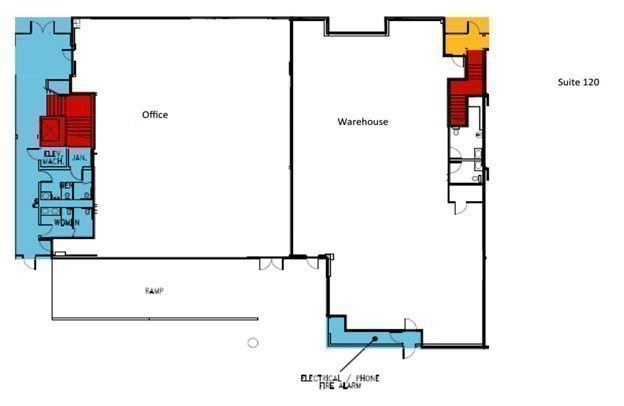
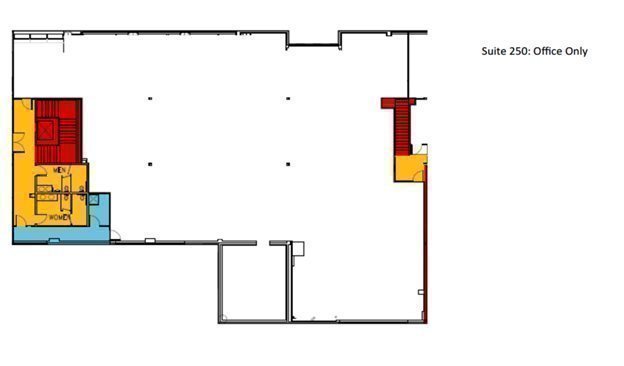
| A - 1 |
EXHIBIT B
LEGAL DESCRIPTION OF PROPERTY
WESTPARK PORTFOLIO
THE LAND REFERRED TO HEREIN BELOW IS SITUATED IN THE CITY OF REDMOND, IN THE COUNTY OF KING, STATE OF WASHINGTON, AND IS DESCRIBED AS FOLLOWS:
PARCEL A:
LOTS 1 THROUGH 4, INCLUSIVE, AND 9 AND 10, PACIFIC BUSINESS & TECHNICAL CENTER, ACCORDING TO THE SECOND AMENDED BINDING SITE PLAN THEREOF RECORDED IN VOLUME 140 OF PLATS, PAGES 25 THROUGH 30, INCLUSIVE, IN KING COUNTY, WASHINGTON.
PARCEL A-1:
PARCEL A OF BOUNDARY LINE ADJUSTMENT RECORDED UNDER RECORDING NUMBER 20080204900013, BEING A PORTION OF LOT 8, PACIFIC BUSINESS & TECHNICAL CENTER, ACCORDING TO THE SECOND AMENDED BINDING SITE PLAN THEREOF RECORDED IN VOLUME 140 OF PLATS, PAGES 25 THROUGH 30, INCLUSIVE, IN KING COUNTY, WASHINGTON.
PARCEL B:
LOTS B AND C, WESTPARK, AMENDED BINDING SITE PLAN, ACCORDING TO THE PLAT THEREOF RECORDED IN VOLUME 152 OF PLATS, PAGES 70 THROUGH 73, INCLUSIVE, AND RECORDED UNDER RECORDING NUMBER 9006070535, IN KING COUNTY, WASHINGTON;
(BEING KNOWN AS A PORTION OF LOT 1, CITY OF REDMOND SHORT PLAT NUMBER SS-85-11R, RECORDED UNDER RECORDING NUMBER 8912190943).
PARCEL C:
LOTS D, E AND F, WESTPARK II, ACCORDING TO THE AMENDED BINDING SITE PLAN THEREOF RECORDED IN VOLUME 150 OF PLATS, PAGES 12 THROUGH 15, INCLUSIVE, IN KING COUNTY, WASHINGTON;
(ALSO KNOWN AS LOT 2, CITY OF REDMOND SHORT PLAT NUMBER SS-85-11R, RECORDED UNDER RECORDING NUMBER 8912190943).
PARCEL D:
LOT 3, CITY OF REDMOND SHORT PLAT NUMBER SS-85-11R, RECORDED UNDER RECORDING NUMBER 8912190943, SAID SHORT PLAT BEING A SUBDIVISION OF THE EAST HALF OF THE SOUTHWEST QUARTER OF SECTION 2, TOWNSHIP 25 NORTH, RANGE 5 EAST, W.M., IN KING COUNTY, WASHINGTON.
PARCEL E:
LOT A, WESTPARK, AMENDED BINDING SITE PLAN, ACCORDING TO THE PLAT THEREOF RECORDED IN VOLUME 152 OF PLATS, PAGES 70 THROUGH 73, INCLUSIVE, AND RECORDED UNDER RECORDING NUMBER 9006070535, IN KING COUNTY, WASHINGTON;
(BEING KNOWN AS A PORTION OF LOT 1, CITY OF REDMOND SHORT PLAT NUMBER SS-85-11R, RECORDED UNDER RECORDING NUMBER 8912190943).
| B - 1 |
PARCEL F:
PARCEL B OF BOUNDARY LINE ADJUSTMENT RECORDED UNDER RECORDING NUMBER 20080204900013, BEING A PORTION OF LOT 8, PACIFIC BUSINESS & TECHNICAL CENTER, ACCORDING TO THE SECOND AMENDED BINDING SITE PLAN THEREOF RECORDED IN VOLUME 140 OF PLATS, PAGES 25 THROUGH 30, INCLUSIVE, IN KING COUNTY, WASHINGTON.
AND LOT 1, CITY OF REDMOND SHORT PLAT NUMBER SS-86-5, RECORDED UNDER RECORDING NUMBER 8811030191, IN KING COUNTY, WASHINGTON.
PARCEL G:
LOT 4, CITY OF REDMOND SHORT PLAT NUMBER SS-85-11R, RECORDED UNDER RECORDING NUMBER 8912190943, SAID SHORT PLAT BEING A REVISION OF SHORT PLAT RECORDED UNDER RECORDING NUMBER 8512260700, SAID SHORT PLAT BEING A SUBDIVISION OF THE EAST HALF OF THE SOUTHWEST QUARTER OF SECTION 2, TOWNSHIP 25 NORTH, RANGE 5 EAST, W.M., IN KING COUNTY, WASHINGTON.
PARCEL H:
LOT 2 OF CITY OF REDMOND SHORT PLAT NUMBER SS-86-5, RECORDED UNDER RECORDING NUMBER 8811030191, SAID SHORT PLAT BEING A SUBDIVISION OF A PORTION OF THE SOUTH 320 FEET OF THE NORTH 1006 FEET OF THE NORTHEAST QUARTER OF THE SOUTHWEST QUARTER OF SECTION 2, TOWNSHIP 25 NORTH, RANGE 5 EAST, W.M., IN KING COUNTY, WASHINGTON;
TOGETHER WITH AN EASEMENT FOR INGRESS, EGRESS AND UTILITIES 30 FEET IN WIDTH, BEING A SOUTHERLY EXTENSION OF THE EAST 30 FEET OF SAID PREMISES, LYING SOUTHERLY OF THE SOUTH LINE OF SAID PREMISES AND NORTHERLY OF THE NORTHERLY MARGIN OF N.E. 85TH STREET.
PARCEL I:
THAT PORTION OF THE FOLLOWING DESCRIBED TRACT LYING NORTHERLY OF THE RIGHT OF WAY FOR N.E. 85TH STREET AND EASTERLY OF THE RIGHT OF WAY FOR 154TH AVENUE N.E. THE EAST HALF OF THE SOUTHWEST QUARTER OF SECTION 2, TOWNSHIP 25 NORTH, RANGE 5 EAST, W.M., IN KING COUNTY, WASHINGTON, LYING EASTERLY OF THE NORTHERN PACIFIC RAILROAD (NOW “BURLINGTON NORTHERN”) RIGHT OF WAY, AND WESTERLY OF 100 FOOT STRIP OF LAND AS CONVEYED TO KING COUNTY BY DEED RECORDED UNDER RECORDING NUMBER 6611004;
EXCEPT THE NORTH 1006 FEET THEREOF;
EXCEPT THAT PORTION CONVEYED TO THE CITY OF REDMOND, A MUNICIPAL CORPORATION, BY DEED RECORDED UNDER RECORDING NUMBER 8407250771 FOR 154TH AVENUE N.E.
SITUATE IN THE COUNTY OF KING, STATE OF WASHINGTON.
| B - 2 |
EXHIBIT C
CONSTRUCTION WORK LETTER
THIS WORK LETTER is attached as Exhibit C to the Agreement of Lease between KORE WESTPARK, LLC, a Delaware limited liability company, as Landlord, and JDL DIGITAL SYSTEMS, INC., a Washington corporation, doing business as Airship Industries, Inc., as Tenant, and constitutes the further agreement between Landlord and Tenant as follows:
(a) Tenant Improvements; Landlord’s Construction Allowance. The leasehold improvements to be constructed by Tenant (the “Tenant Improvements”), at Tenant’s sole cost and expense (except for the Landlord’s Construction Allowance, as defined below), shall be constructed in accordance with the Final Plans to be submitted by Tenant and reviewed and approved by Landlord in accordance with the provisions of Paragraph (b) of this Exhibit C.
Landlord shall have no obligation to construct or to pay for the construction of the Tenant Improvements. However, following the Commencement Date of the Lease, Landlord agrees to contribute toward the cost of construction of the Tenant Improvements the cash sum of up to Two Hundred Ninety-Six Thousand Seven Hundred Twenty and No/100 Dollars ($296,720.00) (being $238,240.00 ($20.00 per rentable square foot of office space for 11,912 rsf), plus $58,480.00 ($16.00 per rentable square foot of warehouse space for 3,655 rsf)) (the “Landlord’s Construction Allowance”). Notwithstanding anything in this Lease or in this Work Letter to the contrary, except as otherwise expressly set forth in Paragraph (h) below, the Landlord’s Construction Allowance shall be used only for the construction of the Tenant Improvements, and if construction of the Tenant Improvements is not completed prior to December 31, 2024 (the “Construction Termination Date”), then Landlord’s obligation to provide the Landlord’s Construction Allowance shall terminate and become null and void, and Tenant shall be deemed to have waived its rights in and to said Landlord’s Construction Allowance. There shall be no coordination fee/construction management fee payable to Landlord in connection with the construction of the Tenant Improvements and any work related to the construction of the Tenant Improvements in the Premises. The Landlord’s Construction Allowance will be reduced by any consulting or architectural fees and by any inspection or permitting fees incurred by Landlord. The construction costs that may be reimbursed from the Landlord’s Construction Allowance shall include only the following: costs of labor, equipment, supplies and materials furnished for construction of the Tenant Improvements, including low-volt data cabling in the Premises installed by or on behalf of Tenant; governmental fees and charges for required permits, plan checks, and inspections for the Tenant Improvements; charges of Tenant’s design professionals; and charges of Landlord’s design professionals for review of plans and monitoring of construction or installation of the Tenant Improvements. No other costs, fees or expenses of the Tenant Improvements shall be reimbursable out of the Landlord’s Construction Allowance, except as otherwise expressly set forth in Paragraph (h) below.
Landlord’s payment of the Landlord’s Construction Allowance, or such portion thereof as Tenant may be entitled to, shall be made within thirty (30) days after each and all of the following conditions shall have been satisfied: (i) the Tenant Improvements shall have been completed in accordance with the Final Plans (as hereinafter defined); (ii) Tenant shall have delivered to Landlord satisfactory evidence that all mechanics’ lien rights of all contractors, suppliers, subcontractors, or materialmen furnishing labour, supplies or materials in the construction or installation of the Tenant Improvements have been unconditionally waived, released, or extinguished; (iii) Tenant shall have delivered to Landlord paid receipts or other written evidence satisfactorily substantiating the actual amount of the construction costs of the Tenant Improvements; (iv) Tenant shall have delivered to Landlord a final certificate of occupancy for the Premises; (v) Tenant shall not then be in default of any of the provisions of the Lease; (vi) Tenant shall have occupied and opened for business at the Premises; (vii) Tenant shall have delivered to Landlord a complete set of the final “as built” plans and specifications conforming to the Final Plans (defined below) in both hard copy and CAD format; and (viii) Tenant shall have delivered to Landlord copies of all warranties from contractors and suppliers relating to the Tenant Improvements; provided, however, Landlord shall have no obligation to provide any of the Landlord’s Construction Allowance prior to the Commencement Date of this Lease. If the actual cost of the Tenant Improvements is less than the Landlord’s Construction Allowance, then Tenant shall not receive any credit whatsoever for the difference between the actual cost of the Tenant Improvements and the Landlord’s Construction Allowance, except as otherwise expressly set forth in Paragraph (h) below.
| C - 1 |
(b) Preparation and Review of Plans for Tenant Improvements. Tenant has retained a space planner (the “Space Planner”), and the Space Planner has prepared (or will prepare) certain plans, drawings and specifications (the “Temporary Plans”) for the construction of the Tenant Improvements in the Premises to be installed in the Premises by a general contractor selected by Tenant pursuant to this Work Letter. Tenant shall deliver the Temporary Plans to Landlord within ten (10) days after the execution of this Lease by Tenant. Landlord shall have five (5) business days after Landlord’s receipt of the proposed Temporary Plans to review the same and notify Tenant in writing of any comments or required changes, or to otherwise give its approval or disapproval of such proposed Temporary Plans. If Landlord fails to give written comments to or approve the Temporary Plans within such five (5) business day period, then Landlord shall be deemed to have rejected the Temporary Plans as submitted. Tenant shall have five (5) business days following its receipt of Landlord’s comments and objections to redraw the proposed Temporary Plans in compliance with Landlord’s request and to resubmit the same for Landlord’s final review and approval or comment within five (5) business days of Landlord’s receipt of such revised plans. Such process shall be repeated twice and if at such time final approval by Landlord of the proposed Temporary Plans has not been obtained, then Landlord shall complete such Temporary Plans, at Tenant’s sole cost and expense, to reflect Landlord’s objections or comments. Once Landlord has approved the Temporary Plans, the approved Temporary Plans shall be thereafter known as the “Final Plans”. The Final Plans shall include the complete and final layout, plans and specifications for the Premises showing all doors, light fixtures, electrical outlets, telephone outlets, wall coverings, plumbing improvements (if any), data systems wiring, floor coverings, wall coverings, painting, any other improvements to the Premises beyond the shell and core improvements provided by Landlord and any demolition of existing improvements in the Premises. The improvements shown in the Final Plans shall (i) utilize Landlord’s building standard materials and methods of construction, (ii) be compatible with the shell and core improvements and the design, construction and equipment of the Premises, and (iii) comply with all applicable laws, rules, regulations, codes and ordinances. Tenant, using the Space Planner, shall prepare or cause to be prepared and submitted the Final Plans by receipted courier or delivery service, to Landlord’s construction representative, c/o Transwestern, 10800 NW 8th Street, Suite 150, Bellevue, Washington 98004 (“Landlord’s Construction Representative”), for Landlord’s review and approval, which shall be consistent with the description of the Tenant Improvements set forth in the Temporary Plans.
Each set of proposed Final Plans furnished by Tenant shall include at least two (2) sets of prints. The Final Plans shall be compatible with the design, construction, and equipment of the Building, and shall be capable of logical measurement and construction. Unless Landlord shall otherwise agree in writing, the Final Plans shall be signed/stamped by the Space Planner, and shall include (to the extent relevant or applicable) such additional plans reasonably requested by Landlord related to the Tenant Improvements, including, without limitation, any and all additional plans related to Tenant’s specific use of the Premises, or as may be required by local city ordinance or building code.
Tenant shall submit all Final Plans to Landlord’s construction representative, as designated above, for Landlord’s review and approval. Landlord shall have five (5) business days after Landlord’s receipt of the proposed Final Plans to review the same and notify Tenant in writing of any comments or required changes, or to otherwise give its approval or disapproval of such proposed Final Plans. If Landlord fails to give written comments to or approve the Final Plans within such five (5) business day period, then Landlord shall be deemed to have rejected the Final Plans as submitted. Tenant shall have five (5) business days following its receipt of Landlord’s comments and objections to redraw the proposed Final Plans in compliance with Landlord’s request and to resubmit the same for Landlord’s final review and approval or comment within five (5) business days of Landlord’s receipt of such revised plans. Such process shall be repeated as necessary until final approval by Landlord of the proposed Final Plans has been obtained. Landlord may at any time by written notice given in accordance with the notice provisions of the Lease change the name and/or address of the designated Landlord’s construction representative to receive plans delivered by Tenant to Landlord. In the event that Tenant disagrees with any of the changes to the proposed Final Plans required by Landlord, then Landlord and Tenant shall consult with respect thereto and each party shall use all reasonable efforts to promptly resolve any disputed elements of such proposed Final Plans. If such Final Plans are not resolved by Landlord and Tenant, then Tenant shall accept Landlord’s final changes to the proposed Final Plans. For purposes hereof, “business days” shall be all calendar days except Saturdays and Sundays and holidays observed by national banks in the State in which the Premises are situated.
Notwithstanding the preceding provisions of this Paragraph (b), under no circumstances whatsoever shall (i) any combustible materials be utilized above finished ceiling or in any concealed space, (ii) any structural load, temporary or permanent, be placed or exerted on any part of the Building without the prior written approval of Landlord, or (iii) any holes be cut or drilled in any part of the roof or other portion of the Building shell without the prior written approval of Landlord.
| C - 2 |
In the event that Tenant proposes any changes to the Final Plans (or any portion thereof) after the same have been approved by Landlord, Landlord shall not unreasonably withhold its consent to any such changes, provided the changes do not, in Landlord’s reasonable opinion, adversely affect the Building structure, systems, or equipment, or the external appearance of the Premises.
As soon as the Final Plans (or a portion thereof sufficient to permit commencement of construction or installation of the Tenant Improvements, if Tenant elects to proceed with a “fast track” construction) are mutually agreed upon, Tenant shall use diligent efforts to obtain all required permits, authorizations, and licenses from appropriate governmental authorities for construction of the Tenant Improvements (or such portion thereof, as applicable). Tenant shall be solely responsible for obtaining any business or other license or permit required for the conduct of its business at the Premises.
(c) Construction of the Tenant Improvements. Construction or installation of the Tenant Improvements shall be performed by a licensed general contractor or contractors selected by Tenant and approved by Landlord, such approval not to be unreasonably withheld or delayed (the “Tenant’s Contractor,” whether one or more), pursuant to a written construction contract negotiated and entered into by and between the Tenant’s Contractor and Tenant and approved by Landlord. Each such contract shall (i) obligate Tenant’s Contractor to comply with all rules and regulations of Landlord relating to construction activities in the Building, (ii) name Landlord as an additional indemnitee under the provisions of the contract whereby the Tenant’s Contractor holds Tenant harmless from and against any and all claims, damages, losses, liabilities and expenses arising out of or resulting from the performance of such work, (iii) name Landlord as a beneficiary of (and a party entitled to enforce) all of the warranties of the Tenant’s Contractor with respect to the work performed thereunder and the obligation of the Tenant’s Contractor to replace defective materials and correct defective workmanship for a period of not less than one (1) year following final completion of the work under such contract, (iv) evidence the agreement of the Tenant’s Contractor that the provisions of the Lease shall control over the provisions of the contract with respect to distribution or use of insurance proceeds, in the event of a casualty during construction, and (v) evidence the waiver and release by the Tenant’s Contractor of any lien or right to assert a lien on all or any portion of the fee estate of Landlord in and to the Building as a result of the work performed or to be performed thereunder (and obligating the Tenant’s Contractor to include a substantially similar release and waiver provision in all subcontracts and purchase orders entered under or pursuant to the contract).
Tenant acknowledges and understands that all roof penetrations involved in the construction of the Tenant Improvements must be performed by the Landlord’s Building roofing contractor. All costs, fees and expenses incurred with such contractor in performing such work shall be a cost of the Tenant Improvements, payable in accordance with the provisions of this Exhibit C. Tenant or Tenant’s Contractor shall be responsible for all water, gas, electricity, sewer or other utilities used or consumed at the Premises during the construction of the Tenant Improvements.
Tenant specifically agrees to carry, or cause the Tenant’s Contractor to carry, during all such times as the Tenant’s work is being performed, (a) builder’s risk completed value insurance on the Tenant Improvements, in an amount not less than the full replacement cost of the Tenant Improvements, endorsed to show a waiver of subrogation by the insurer in favor of the Landlord (b) a policy of insurance covering commercial general liability, in an amount not less than Two Million Dollars ($2,000,000.00), combined single limit for bodily injury and property damage per occurrence (and combined single limit coverage of $2,000,000.00 in the aggregate), and automobile liability coverage (including owned, non-owned and hired vehicles) in an amount not less than One Million Dollars ($1,000,000.00) combined single limit (each person, each accident), and endorsed to show Landlord as an additional insured, be primary and non-contributing with any insurance available to the Landlord, (c) workers’ compensation insurance as required by law, endorsed to show a waiver of subrogation by the insurer to any claim the Tenant’s Contractor may have against Landlord and (d) umbrella excess liability insurance in an amount not less than $5,000,000 per occurrence and in the aggregate scheduling as underlying insurance the commercial general liability, automobile liability and employers liability insurance required under this paragraph’s part (b) and (c) listed above. Tenant shall not commence construction of the Tenant Improvements until Landlord has issued to Tenant a written authorization to proceed with construction after Tenant has delivered to Landlord’s construction representative (i) certificates of the insurance policies described above, (ii) copies of all permits required for construction of the Tenant Improvements and a copy of the permitted Final Plans as approved by the appropriate governmental agency, and (iii) a copy of each signed construction contract for the Tenant Improvements (a copy of each subsequently signed contract shall be forwarded to Landlord’s construction representative without request or demand, promptly after execution thereof and prior to the performance of any work thereunder). All of the construction work shall be the responsibility of and supervised by Tenant.
| C - 3 |
(d) Requirements for Tenant’s Work. All of Tenant’s construction with respect to the Premises shall be performed in substantial compliance with this Exhibit C and the Final Plans therefor previously approved in writing by Landlord (and any changes thereto approved by Landlord as herein provided), and in a good and workmanlike manner, utilizing only new materials. All such work shall be performed by Tenant in strict compliance with all applicable building codes, regulations and all other legal requirements. All materials utilized in the construction of Tenant’s work must be confined to within the Premises. All trash and construction debris not located wholly within the Premises must be removed each day from the Project at the sole cost and expense of Tenant. Landlord shall have the right at all times to monitor the work for compliance with the requirements of this Exhibit C. If Landlord determines that any such requirements are not being strictly complied with, Landlord may immediately require the cessation of all work being performed in or around the Premises or the Project until such time as Landlord is satisfied that the applicable requirements will be observed. Any approval given by Landlord with respect to Tenant’s construction or the Temporary Plans or Final Plans therefor, and/or any monitoring of Tenant’s work by Landlord, shall not make Landlord liable or responsible in any way for the condition, quality or function of such matters or constitute any undertaking, warranty or representation by Landlord with respect to any of such matters. So long as Landlord reviews and responds to the plan submission to Landlord as provided in this Exhibit C, no delays in plan approval, and no delays in the construction of the Tenant Improvements, shall delay the Commencement Date of this Lease.
(e) No Liens; Indemnification. Tenant shall have no authority to place any lien upon the Premises, or the Building, or any portion thereof or interest therein, nor shall Tenant have any authority in any way to bind Landlord, and any attempt to do so shall be void and of no effect. If, because of any actual or alleged act or omission of Tenant, or Tenant’s Contractor, or any subcontractors or materialmen, any lien, affidavit, charge or order for the payment of money shall be filed against Landlord, the Premises, the Building, or any portion thereof or interest therein, whether or not such lien, affidavit, charge or order is valid or enforceable, Tenant shall, at its sole cost and expense, cause the same to be discharged of record by payment, bonding or otherwise no later than fifteen (15) days after notice to Tenant of the filing thereof, but in any event prior to the foreclosure thereof. With respect to the contract for labor or materials for construction of the Tenant Improvements, Tenant acts as principal and not as the agent of Landlord. Landlord expressly disclaims liability for the cost of labor performed for or supplies or materials furnished to Tenant. Landlord may post one or more “notices of non-responsibility” for Tenant’s work on the Building. No contractor of Tenant is intended to be a third-party beneficiary with respect to the Landlord’s Construction Allowance, or the agreement of Landlord to make such Landlord’s Construction Allowance available for payment of or reimbursement for the costs of construction of the Tenant Improvements. Tenant agrees to indemnify, defend and hold Landlord, the Premises and the Project, harmless from all claims (including all costs and expenses of defending against such claims) arising or alleged to arise from any act or omission of Tenant or Tenant’s agents, employees, contractor, subcontractors, suppliers, materialmen, architects, designers, surveyors, engineers, consultants, laborers, or invitees, or arising from any bodily injury or property damage occurring or alleged to have occurred incident to any of the work to be performed by Tenant or its contractors or subcontractors with respect to the Premises. Any default by Tenant under this Exhibit C shall constitute a default by Tenant under the Lease for all purposes. Additionally, any approval given by Landlord with respect to the Tenant Improvements or the Final Plans and/or any monitoring of the construction of the Tenant Improvements by Landlord shall not make Landlord liable or responsible in any way for the condition, quality or function of such matters or constitute any undertaking, warranty or representation by Landlord with respect to any such matters.
(f) Substantial Completion. “Substantial Completion” (or any grammatical variant thereof) of construction of the Tenant Improvements shall be defined as (i) the date upon which Landlord’s Construction Representative (or other consultant engaged by Landlord) determines that the Tenant Improvements have been substantially completed in accordance with the Final Plans, and (ii) the date upon which a temporary certificate of occupancy (or its equivalent) is issued for the Premises by the appropriate governmental authority. After the completion of the Tenant Improvements, Tenant shall, upon demand, execute and deliver to Landlord a letter of acceptance of improvements performed on the Premises.
(g) Rent Credit. Notwithstanding anything herein to the contrary, if the total cost of the Tenant Improvements is less than the total amount of the Landlord’s Construction Allowance (the difference between the cost of the Tenant Improvements and the cost of the Landlord’s Construction Allowance being referred to herein as the “Excess Allowance”), then Landlord agrees that, upon Tenant’s written request and subject to the further terms of this Paragraph (h), Tenant shall have the right to have up to (but not to exceed) $77,835.00 ($5.00 per square foot for 15,567 rsf) out of such Excess Allowance credited towards the monthly installment(s) of Base Rent first becoming due under this Lease after the Abated Rent Period (the “Rent Credit”), until such time as the total amount of the Excess Allowance available to Tenant for such credit has been exhausted; provided, however, in no event shall (x) the total amount advanced by Landlord to Tenant for the Rent Credit, exceed the lesser of the amount of the Excess Allowance or $77,835.00, and (y) the amount advanced by Landlord for the cost of the Tenant Improvements and/or the Rent Credit exceed the amount of Landlord’s Construction Allowance. In the event Tenant desires any such credit, Tenant shall notify Landlord of the amounts that Tenant wants credited within sixty (60) days following the Commencement Date, and, notwithstanding anything herein to the contrary, if Tenant fails to so notify Landlord in writing of such amounts Tenant desires to have credited within said sixty (60) day period, Tenant shall not be entitled to any such credit and all such Excess Allowance shall belong to Landlord and Tenant shall have no rights thereto.
| C - 4 |
EXHIBIT D
RULES AND REGULATIONS
Tenant agrees to comply with the following rules and regulations, and any subsequent rules or regulations which Landlord may reasonably adopt or modify from time to time. Tenant shall be bound by such rules and regulations to the same extent as if such rules and regulations were covenants of this Lease; and any non-compliance thereof shall constitute grounds for Default under this Lease. Landlord shall not be liable for the non-observance of said rules and regulations by any other tenant.
1. Tenant shall not use any picture or likeness of the Property in any notices or advertisements, without Landlord’s prior written consent.
2. In the event Tenant requires any telegraph, telephone or satellite dish connections, Landlord shall have the right to prescribe additional rules and regulations regarding the same including, but not limited to, the size, manner, location and attachment of such equipment and connections.
3. No additional locks shall be placed upon any door of the Premises, and Tenant shall not permit any duplicate keys to be made, without the prior consent of Landlord. Upon the expiration or earlier termination of this Lease, Tenant shall surrender to Landlord all keys to the Premises and Property.
4. Tenant shall not install or operate any steam or internal combustion engine, boiler, machinery, or carry on any mechanical business within the Premises. Tenant shall not use any fuel source within the Premises other than the fuel source(s) provided by Landlord.
5. Tenant shall not permit within the Premises any animals other than service animals; nor shall Tenant create or allow any foul or noxious gas, noise, odors, sounds, and/or vibrations to emanate from the Premises, or create any interference with the operation of any equipment or radio or television broadcasting/reception from within or about the Property, which may obstruct or interfere with the rights of other tenant(s) in the Property.
6. All sidewalks, loading areas, stairways, doorways, corridors, and other common areas shall not be obstructed by Tenant or used for any purpose other than for ingress and egress. Landlord retains the right to control all public and other areas not specifically designated as the Premises, provided nothing herein shall be construed to prevent access to the Premises or the common areas of the Property by Tenant or Tenant’s invitees.
7. Tenant shall not install any window treatments other than existing treatments or otherwise obstruct the windows of the Premises without Landlord’s prior written consent.
8. After business hours, Tenant shall lock all doors and windows of the Premises which enter upon any common areas of the Property; and Tenant shall be liable for all damages sustained by Landlord or other tenants within the Property resulting from Tenant’s default or carelessness in this respect.
9. Any person(s) who shall be employed by Tenant for the purpose of cleaning the Premises shall be employed at Tenant’s cost. Tenant shall indemnify and hold Landlord harmless from all losses, claims, liability, damages, and expenses for any injury to person or damage to property of Tenant, or third persons, caused by Tenant’s cleaning contractor.
10. Tenant shall not canvass or solicit business, or allow any employee of Tenant to canvass or solicit business, from other tenants in the Property, unless the same is within the scope of Tenant’s normal business.
11. Landlord reserves the right to place into effect a “no smoking” policy within all or selected portions of the common areas of the Property, wherein Tenant, its agents, employees and invitees shall not be allowed to smoke. Tenant shall not be allowed to smoke in any common stairwells, elevators or bathrooms; nor shall Tenant dispose of any smoking material including, without limitation, matches, ashes and cigarette butts on the floors of the Property, about the grounds of the Property, or in any receptacle other than a specifically designated receptacle for smoking.
| D - 1 |
EXHIBIT E
MOVE-OUT CONDITIONS
Notwithstanding anything to the contrary in this Lease, Tenant is obligated to check and address prior to move-out of the facility the following items. Landlord expects to receive the space in a well maintained condition, with normal wear and tear of certain areas acceptable. The following list is designed to assist Tenant in the move-out procedures but is not intended to be all inclusive.
1. All lighting is to be placed into good working order. This includes replacement of bulbs, ballasts, and lenses as needed.
2. All truck doors and dock levelers should be serviced and placed in good operating order. This would include the necessary replacement of any dented truck door panels and adjustment of door tension to insure proper operation. All door panels which are replaced need to be painted to match the building standard.
3. All structural steel columns in the warehouse and office should be inspected for damage and Tenant shall be responsible for repairing any damage to such structural steel columns caused by or attributable to Tenant, its agents, employees or invitees. Repairs of this nature should be pre-approved by the Landlord prior to implementation.
4. Heating/air conditioning systems (including, but not limited to, the HVAC Units) should be placed in good working order, including the necessary replacement of any parts to return the unit to a well maintained condition. This includes warehouse heaters and exhaust fans. Upon move-out, Landlord will have an exit inspection performed by a certified mechanical contractor to determine the condition.
5. All holes in the sheetrock walls should be repaired prior to move-out.
6. The carpets and vinyl tiles should be in a clean condition and should not have any holes or chips in them. Landlord will accept normal wear on these items provided they appear to be in a maintained condition.
7. Facilities should be returned in a clean condition which would include cleaning of the coffee bar, restroom areas, windows, and other portions of the space.
8. The warehouse should be in broom clean condition with all inventory and racking removed. There should be no protrusion of anchors from the warehouse floor and all holes should be appropriately patched. If machinery/equipment is removed, the electrical lines should be properly terminated at the nearest junction box.
9. All exterior windows with cracks or breakage should be replaced.
10. The Tenant shall provide to Landlord the keys for all locks on the Premises, including front doors, rear doors, and interior doors.
11. Items that have been added by the Tenant and affixed to the Property (excluding personal property and equipment that are not fixtures) will remain the property of Landlord, unless agreed otherwise in this Lease. This would include but is not limited to mini-blinds, air conditioners, electrical, water heaters, cabinets, flooring, etc., normal wear and tear excepted. Except as otherwise set forth in this Lease, please note that if modifications have been made to the space, such as the addition of office areas, Landlord retains the right to have the Tenant remove these at Tenant’s expense.
12. All electrical systems should be left in a safe condition that conforms to code. Bare wires and dangerous installations should be corrected prior to move-out.
13. All plumbing fixtures should be in good working order, including the water heater. Faucets and toilets should not leak.
14. All dock bumpers must be left in place and well secured.
15. Notwithstanding the foregoing and except as otherwise set forth in this Lease, Tenant agrees to surrender the Premises to Landlord in substantially the same condition as exists at the time that Tenant occupies the Premises and opens for business.
| E - 1 |
EXHIBIT F
TENANT SIGN CRITERIA FOR WESTPARK
The following signage criteria (these “Criteria”) have been established for the purpose of allowing sufficient business identification for businesses locating within the Project. The criteria have also been established for the purpose of maintaining the overall appearance by providing maximum continuity with the environment and an architectural integration with the Project. The signage guidelines are in accordance with the Redmond Community Development Code, Section 20c.20.230. All signs shall be installed in accordance with all applicable governmental laws, codes, ordinances, covenants, conditions and restrictions relating to the Building and the Project, including, but not limited to, the City of Redmond, King County, Washington zoning codes, as well as all applicable covenants, restrictions or deed restrictions affecting the Project. No deviation from these criteria will be permitted without Landlord’s prior written approval. Landlord requires strict compliance with these Criteria and shall strictly enforce the same. Any sign installed without the prior written approval of the Landlord shall, at Landlord’s option, be removed at Tenant’s sole cost and expenses or brought into conformance at the Tenant’s sole cost and expense. The following Criteria are guidelines for installation of signage at the Project but shall in no event be deemed express consent to such installation by Landlord unless expressly stated herein.
REQUIREMENTS
| A. | Landlord’s Cost and Criteria of Signage – Premises Identification Signage |
|
| 1. | Landlord shall provide the following signage options at no cost to Tenant: |
|
| a) | Tenant’s name (the “Tenant’s Name”) and Premises number on the Building lobby or Project directory (if one exists in the common areas). |
|
|
|
|
|
| b) | Tenant’s Name and suite number on Premises front door only on those suites whose primary entrance is off a common corridor or lobby. |
|
|
|
|
|
| c) | Tenant’s suite number on front entry transom glass where Premises entry is visible from the exterior of the Building. |
|
| 2. | Method of attachment, location, color and size shall be in standard conformance as determined by Landlord and is subject to Landlord’s prior approval. |
| B. | Tenant’s Cost and Criteria of Signage – Exterior Signage |
|
| 1. | If provided for in this Lease, Tenant shall have one (1) exterior sign for the Premises. |
|
|
|
|
|
| 2. | No signage is allowed except for those identifying Tenant’s Name. |
|
|
|
|
|
| 3. | Tenant shall be responsible for coordinating the construction, installation and payment of the Building-mounted company sign through Landlord’s approved vendor. |
|
|
|
|
|
| 4. | Tenant shall submit a copy of exterior Building signage layout, along with a photo simulation of the proposed signage, to Landlord for final approval prior to allowing vendor to proceed with fabrication and/or installation. |
|
|
|
|
|
| 5. | All signs must be approved in writing by Landlord, including both interior and exterior signage. |
|
|
|
|
|
| 6. | Tenant shall be solely responsible for the cost and expense of obtaining and maintaining any necessary permits for Tenant’s Exterior Signage and any sign licenses related thereto, including, but not limited to, the City of Redmond, King County, Washington, and for the cost and expense of maintenance and utilities for Tenant’s Exterior Signage (including all metered electrical usage, if any). |
|
|
|
|
|
| 7. | Upon Lease expiration, Tenant shall be responsible for all costs related to the removal of their signage and the restoration of the sign band area including sanding adhesive, patching and painting, all to Landlord’s reasonable satisfaction. |
| F - 1 |
| C. | Building Standard Specifications |
|
|
|
| The following specifications vary depending on the type of building structure, the floor level, and the leased premises in the building. | |
|
|
|
| In accordance with the previously established and adopted sign program for the Project, the following specifications outline more specifically the nature of the intended signage. | |
|
| 1. | Tenants’ name will be limited to the upper facade of the individual tenant Premises. First-floor-only tenants may locate signage over main entry doors where possible and with Landlord’s written approval. Tenants on the second floor and 2-story tenants shall locate signage on the panel designated by Landlord. |
|
|
|
|
|
| 2. | The building-mounted company signage shall consist of dimensional foam letters, a maximum of 2” deep and no larger than 12”, painted a uniform color, either black or a color to match the building trim as may be changed from time to time by Landlord. Application is limited to adhesives, no drilling into building facade. The letter type style shall be of Tenant’s choice. Maximum sign coverage may vary depending on the building, but in general (and unless otherwise approved in writing by Landlord) will be no more than 20 or 25 square feet determined on a case-by-case basis dependent upon Tenant’s location within the subject building and the available frontage. Tenant signage may contain no more than two lines of information and shall consist of Tenant name only provided that the total designated sign area is not exceeded and the number of rows of information and presents a professional appearance. All signage must be submitted to Landlord for Landlord’s approval. |
|
|
|
|
|
| 3. | Subject to Landlord’s prior written approval, separate logos may be allowed and shall not exceed 24” X 24”. Approved logos will be included in the designated square feet allowed in signage area as indicated herein. The building type and location in the Project determines the specific parameters of the sign. |
| D. | Window Graphics |
|
| 1. | The sign will be located on the window closest to the front door of the Premises. The copy color shall be white; logo style and color to be approved by Landlord and City of Redmond if applicable. |
|
|
|
|
|
| 2. | The style, color and size of the individual tenant company’s name shall be standard and in conformance with the Project standards and subject to Landlord’s approval. Landlord reserves the right to modify window signage design based on Tenant’s corporate type style and/or format. |
|
|
|
|
|
| 3. | No electrical or audible signs will be permitted except those which presently exist in the Project or which may be required by the 2003 American National Standard, 1CC/ANSI A117.1-2003. |
|
|
|
|
|
| 4. | Except as provided herein, no advertising placards, banners, pennants, names, insignia trademarks, “sandwich boards” or other descriptive material shall be affixed or maintained upon the Building or Project glass, exterior walls, landscaped area, street, or parking areas. |
The following is an example of a standard layout for window identification graphics for the Project. Note: the example is a flush-left layout. A tenant’s layout may not be flush left depending on the position of the subject premises window.
[REMAINDER OF PAGE INTENTIONALLY LEFT BLANK]
| F - 2 |
EXTERIOR BUILDING SIGNAGE:
The following is an example of a standard layout for exterior building signage on buildings with two or more floors.
|
| (24” x 24”) |
|
| ||
|
|
LOGO
|
|
|
|
(letters no higher than 12”) |
|
|
| ||||
The following is an example of a standard layout for exterior building signage on one story buildings.
|
| (18” x 18”) |
|
| ||
|
|
LOGO
|
|
|
|
(letters no higher than 10”) |
|
|
| ||||
WINDOW SIGNAGE:
The following is an example of a standard layout for window identification graphics for the Project. NOTE: the example is a flush-left layout. A tenant’s layout may not be flush left depending on the position of the subject premises window.
|
|
|
|
|
|
|
|
|
|
|
| 36” |
|
| |
|
|
|
|
|
|
|
|
|
|
LOGO
|
|
|
|
|
|
|
|
|
|
| 8” |
|
|
|
|
|
|
|
|
|
|
| TRANSWESTERN Leasing Office |
|
| 8” LOGO |
| ||
|
|
|
|
|
|
|
|
|
|
|
|
|
|
|
|
| (ALL COPY IN WHITE) |
|
| 7” TENANT NAME | |||
|
|
|
|
|
|
|
|
|
|
| (ALL COPY IN WHITE) |
|
| ||
IS LOGO CAMERA READY ARTWORK PROVIDED? ☐ YES ☐ NO
| · | LOGO SYMBOL IN COLOR, ALL OTHER COPY MUST BE IN WHITE |
| · | IF NO ARTWORK PROVIDED, HELVETICA MEDIUM TYPE WILL BE USED |
| · | LETTER/COPY SIZE SHALL NOT EXCEED 3.5” AND SHALL NOT EXCEED TWO (2) LINES |
[REMAINDER OF PAGE INTENTIONALLY LEFT BLANK]
| F - 3 |
EXHIBIT G
TENANT ENTITY INFORMATION
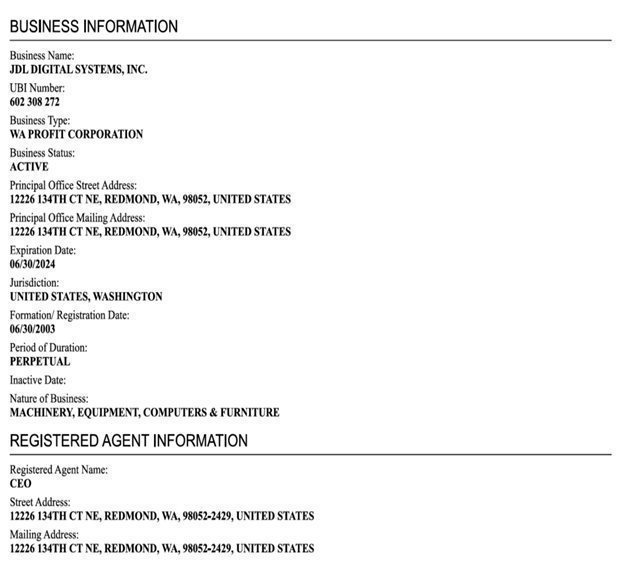
| G - 1 |
ADDENDUM ONE
ONE RENEWAL OPTION AT MARKET
ATTACHED TO AND A PART OF THE AGREEMENT OF LEASE
BY AND BETWEEN
KORE WESTPARK, LLC
and
JDL DIGITAL SYSTEMS, INC.
(a) Provided that as of the time of the giving of the Extension Notice and the Commencement Date of the Extension Term, (i) Tenant is the Tenant originally named herein, (ii) Tenant actually occupies all of the Premises initially demised under this Lease and any space added to the Premises, and (iii) no Event of Default exists or would exist but for the passage of time or the giving of notice, or both; then Tenant shall have the right to extend the Lease Term for one (1) additional period of three (3) years (such additional period is hereinafter called the “Extension Term”) commencing on the day following the expiration of the Initial Term (hereinafter referred to as the “Commencement Date of the Extension Term”). Tenant shall give Landlord notice (hereinafter called the “Extension Notice”) of its election to extend the Lease Term at least twelve (12) months, but not more than fourteen (14) months, prior to the scheduled Expiration Date of the Initial Term.
(b) The Base Rent payable by Tenant to Landlord during the Extension Term shall be the greater of (i) the Base Rent applicable to the last year of the Initial Term, and (ii) the then prevailing market rate for comparable space in the Project and comparable buildings in the vicinity of the Project, taking into account the size of the Lease, the length of the renewal term, market escalations and the credit of Tenant. The Base Rent shall not be reduced by reason of any costs or expenses saved by Landlord by reason of Landlord’s not having to find a new tenant for such premises (including, without limitation, brokerage commissions, costs of improvements, rent concessions or lost rental income during any vacancy period). In the event Landlord and Tenant fail to reach an agreement on such rental rate and execute the Extension Amendment (defined below) at least nine (9) months prior to the expiration of the Lease, then Tenant’s exercise of this renewal option shall be deemed withdrawn and the Lease shall terminate on its original Expiration Date.
(c) The determination of Base Rent does not reduce the Tenant’s obligation to pay or reimburse Landlord for Additional Rent, including, but not limited to, Tenant’s Pro Rata Share of the Taxes, Insurance and CAM expenses, and other reimbursable items as set forth in the Lease, and Tenant shall reimburse and pay Landlord as set forth in the Lease with respect to such Additional Rent, including, but not limited to, Tenant’s Pro Rata Share of the Taxes, Insurance and CAM expenses and other items with respect to the Premises during the Extension Term without regard to any cap on such expenses set forth in the Lease.
(d) Except for the Base Rent as determined above, Tenant’s occupancy of the Premises during the Extension Term shall be on the same terms and conditions as are in effect immediately prior to the expiration of the Initial Term; provided, however, Tenant shall have no further right to any allowances, credits or abatements or any options to expand, contract, terminate, renew or extend the Lease.
(e) If Tenant does not give the Extension Notice within the period set forth in Paragraph (a) above, Tenant’s right to extend the Lease Term shall automatically terminate. Time is of the essence as to the giving of the Extension Notice.
(f) Landlord shall have no obligation to refurbish or otherwise improve the Premises for the Extension Term. The Premises shall be tendered on the Commencement Date of the Extension Term in “as-is” condition.
(g) If the Lease is extended for the Extension Term, then Landlord shall prepare and Tenant shall execute an amendment to the Lease confirming the extension of the Lease Term and the other provisions applicable thereto (the “Extension Amendment”).
(h) If Tenant exercises its right to extend the Lease Term of the Lease for the Extension Term pursuant to this Addendum One, the defined term “Lease Term” as used in the Lease, shall be construed to include, when practicable, the Extension Term except as provided in Paragraph (d) above.
| Addendum One - 1 |
| 1. | BASIC LEASE PROVISIONS: |
| 1 |
|
| 2. | COMMENCEMENT. |
| 5 |
|
| 3. | USE. |
| 5 |
|
| 4. | RENT. |
| 6 |
|
| 5. | LATE CHARGE. |
| 9 |
|
| 6. | UTILITIES. |
| 9 |
|
| 7. | LANDLORD’S REPAIRS AND MAINTENANCE. |
| 9 |
|
| 8. | TENANT’S REPAIRS AND MAINTENANCE. |
| 9 |
|
| 9. | ALTERATIONS. |
| 10 |
|
| 10. | DESTRUCTION. |
| 10 |
|
| 11. | INSPECTION. |
| 11 |
|
| 12. | SIGNS. |
| 11 |
|
| 13. | ASSIGNMENT AND SUBLETTING. |
| 11 |
|
| 14. | DEFAULT AND REMEDIES. |
| 13 |
|
| 15. | HOLDOVER. |
| 16 |
|
| 16. | RIGHT TO CURE TENANT’S DEFAULT. |
| 17 |
|
| 17. | HOLD HARMLESS. |
| 17 |
|
| 18. | CONDEMNATION. |
| 17 |
|
| 19. | INSURANCE. |
| 18 |
|
| 20. | MORTGAGES. |
| 18 |
|
| 21. | LIENS. |
| 19 |
|
| 22. | GOVERNMENT REGULATIONS. |
| 19 |
|
| 23. | NOTICES. |
| 19 |
|
| 24. | PARKING. |
| 19 |
|
| 25. | OWNERSHIP. |
| 20 |
|
| 26. | SECURITY DEPOSIT. |
| 20 |
|
| 27. | ESTOPPEL CERTIFICATES. |
| 21 |
|
| 28. | CONDITION OF PREMISES. |
| 21 |
|
| 29. | SUBSTITUTE PREMISES. |
| 21 |
|
| 30. | PERSONAL PROPERTY TAXES. |
| 22 |
|
| 31. | BROKERAGE. |
| 22 |
|
| 32. | SEVERABILITY. |
| 22 |
|
| 33. | HAZARDOUS MATERIALS. |
| 22 |
|
| 34. | MISCELLANEOUS. |
| 22 |
|
| EXHIBIT A | – | PREMISES |
| EXHIBIT B | – | LEGAL DESCRIPTION OF PROPERTY |
| EXHIBIT C | – | CONSTRUCTION WORK LETTER |
| EXHIBIT D | – | RULES AND REGULATIONS |
| EXHIBIT E | – | MOVE-OUT CONDITIONS |
| EXHIBIT F | – | TENANT SIGN CRITERIA FOR WESTPARK |
| EXHIBIT G | – | TENANT ENTITY INFORMATION |
|
|
|
|
| ADDENDUM ONE | – | ONE RENEWAL OPTION AT MARKET |
| -i- |
EXHIBIT 10.6
| 1 |

| 2 |

| 3 |

| 4 |
| 5 |

| 6 |
| 7 |

| 8 |
| 9 |

| 10 |

| 11 |

| 12 |

| 13 |

| 14 |
EXHIBIT B
| Premises: | 137 Ebert Lane, Suite 8, Mooresville, NC 28117 |
|
|
|
| Size: | 2,155 sq.ft. +/- |
|
|
|
| Tenant: | Airship AI Holdings, Inc. |
|
|
|
| Use: | Tenant shall have right to use and occupy the Leased Premises: |
|
|
|
|
| Office |
|
|
|
| Initial Term: | Thirty-Seven (37) Months (One month rent abatement) |
|
|
|
| Lease Commencement: | February 1st, 2025 |
|
|
|
| Rent Commencement: | March 1st, 2025 |
|
|
|
| Rental Schedule: | $23.50 PSF x 2,155 sq.ft. = $4,220.21/ month NNN |
|
|
|
| Additional Rent | TICAMS: $3.26 PSF X 2,155 sq.ft.= $585.44 per month |
|
|
|
|
| Note: TICAMS are reassessed annually and may increase |
|
|
|
|
| Rent 1st Year: $4,805.65/month. |
|
|
|
|
| Note: Tenant shall reimburse Landlord for Tenant’s Pro Rata share of all real estate taxes, assessments, hazard and liability insurance and common area maintenance costs for Suite 8 at Park 35. The estimated 2024 NNN charges are $3.26/SF. |
|
|
|
| Annual Escalations: | 3.00% Annual Escalation based on CPI Index |
|
|
|
| Utilities: | Tenant Responsibility |
|
|
|
|
| The tenant is responsible for Electric, HVAC, Gas, Water/Sewer, and Internet (All Utilities). Water/Sewer bills will be sent quarterly from Landlord at this time. |
|
|
|
|
| Note: All maintenance of the Leased Premises shall be the responsibility of the Tenant including, but not limited to, the mechanical, electrical, and plumbing systems. The COA shall be responsible for maintenance of the roof, exterior walls, and structural integrity of the building. |
|
|
|
| Security Deposit: | $4,805.65 |
|
|
|
| Pre-Paid Rent: | 1st month Gross Rent paid at Lease Execution ($4,805.65) |
|
|
|
| Due at Lease Signing: | Security Deposit, 1st month Gross Rent, Certificate of Insurance $15,000 Non-Refundable Contribution towards Upfit |
|
|
|
| Landlord’s Work: | See Attached Below for Build Out ($15,000 Non-Refundable Contribution towards upfit due at Lease Execution) |
Tenant Initials: ______ Landlord Initials: ______
| 15 |
Suite 8 – Scope Of Work
|
| 1. | Build out per attached drawing, with finishes, and paint colors to match Suite 9 (shower included) |
|
| 2. | Offices & conference room to get Carpet Tiles (Blk) for Sound / Common areas & corridor to get LVP |
|
| 3. | Kitchenette to be like attached pic included / Microwave, Sink, & Refrigerator |
|
| 4. | Conference room to get store front with frosted glass |
|
| 5. | Tenant will need to identify Cat 6 locations in office and main drop Location |
| Tenant’s Work: | None. |
Signage: Must conform to the attached sign standards per Park 35 and completed/installed by Artisan Signs. (See attached below).
Any temporary signage must be approved by Landlord.
Use of Name: Tenant will have the right to use the name or mark of Park 35 in association with the office while as a tenant at Park 35. Parking is not reserved, and the Parking ratio is 4 spaces per unit.
Trash: Tenant is responsible for removing off site bulk trash or large debris, including but not limited to pallets, wood, metal, construction debris etc.
Estimated Rent Schedule:
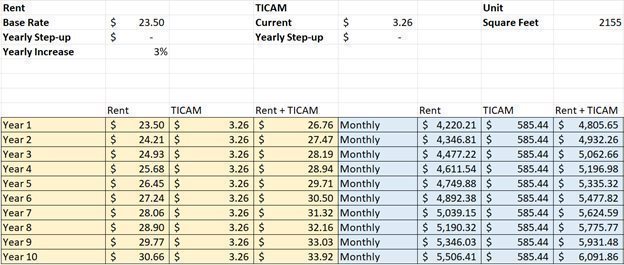
Annual Escalations: Commencing on the 1st anniversary of the Lease Commencement Base rental shall increase by (3.0%) based on CPI Index on an annual basis throughout term.
Tenant Initials: ______ Landlord Initials: ______
| 16 |
Landlord’s Work
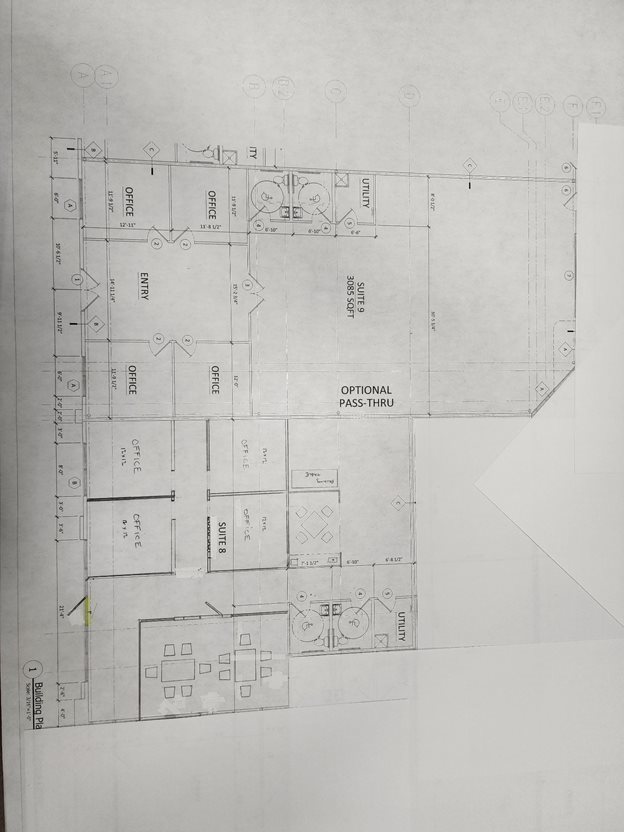
Tenant Initials: _____ Landlord Initials: ______
| 17 |
Tenant acknowledges receipt of un-signed and un-recorded copies of the Declaration of Park 35 Condominium and the Park 35 Condominium Plat to be filed in the Register of Deeds for Iredell County, North Carolina, in substantially the same forms as received by Tenant, the Bylaws of Park 35 Condominium Owners Association, Inc., and the Rules and Regulations and Sign Standards applicable to the Premises (collectively, the “Condominium Documents”), and Tenant acknowledges that the Premises is subject in all respects to the provisions of the Condominium Documents and Tenant agrees to comply with the terms thereof.
RULES
OF
Park 35 Condominium Owners Association
TABLE OF CONTENTS
ARTICLE I - Use of Units Affecting the Common Elements
| Section 1.1 | Occupancy Restrictions |
| Section 1.2 | No Residential Use |
| Section 1.3 | Trash |
| Section 1.4 | Displays Outside of Units |
| Section 1.5 | Painting Exteriors |
| Section 1.6 | Cleanliness |
| Section 1.7 | Dangerous Materials |
| Section 1.8 | Guests |
ARTICLE II - Use of Common Elements
| Section 2.1 | Obstructions |
| Section 2.2 | Proper Use |
| Section 2.3 | Trucks and Commercial Vehicles |
| Section 2.4 | Alterations, Additions, or Improvements to Common Elements |
ARTICLE III - Actions of Owners and Occupants
| Section 3.1 | Annoyance or Nuisance |
| Section 3.2 | Compliance with Law |
| Section 3.3 | Pets |
| Section 3.4 | Indemnification for Actions of Others |
| Section 3.5 | Leases |
| Section 3.6 | Signs |
Tenant Initials: _____ Landlord Initials: ______
| 18 |
ARTICLE V - Rubbish Removal
| Section 5.1 | Refuse Removal |
| Section 5.2 | Hazardous Waste |
ARTICLE VI - Motor Vehicles
| Section 6.1 | Compliance with Law |
| Section 6.2 | Limitations on Use |
| Section 6.3 | Unlicensed or Immobile Vehicles |
| Section 6.4 | No Parking Areas |
| Section. 6.5 | Limited Use of Trucks, Vans, Trailers and Commercial Vehicles |
| Section 6.6 | No Long Term Parking |
| Section 6.7 | Where to Park |
| Section 6.8 | Speed Limit |
| Section 6.9 | Unregistered Vehicles |
| Section 6.10 | Vehicle Operators |
| Section 6.11 | Repairs |
ARTICLE VII - Rights of Declarant
ARTICLE VIII - General Administrative Rules
| Section 8.1 | Consent in Writing |
| Section 8.2 | Complaint |
ARTICLE IX - Alternate Dispute Resolution
| Section 9.1 | Alternate Dispute Resolution |
Tenant Initials: ______ Landlord Initials: ______
| 19 |
RULES AND REGULATIONS AND SIGN STANDARDS
OF PARK 35
The following Rules apply to all owners and occupants of the Units.
ARTICLE I
Use of Units Affecting the Common Elements
Section 1.1 - Occupancy Restrictions. Units may be used for any commercial uses allowed pursuant to the Zoning Regulations of the Town of Mooresville provided uses for specific Unit(s) may be further restricted by the terms of the Declaration.
Section 1.2 - No Residential Use. No residential use of any kind shall be allowed in any Unit.
Section 1.3 - Trash. All trash, garbage, debris and other disposables shall be stored by Unit Owners inside the Units. No trash, garbage, debris or disposables may be placed outside the Units except for placement in the trash compactor or dumpster. Unit Owners at their own expense must arrange for their own regular pick up of trash, garbage, debris and disposables, from within their units.
Section 1.4 - Displays Outside of Units. Owners shall not cause or permit anything to be hung, displayed or exposed at or on the inside or outside of windows without the prior consent of the Executive Board.
Section 1.5 - Painting Exteriors. Owners shall not paint, stain, or otherwise change the color of any exterior portion of any building.
Section 1.6 - Cleanliness. Each Unit Owner shall keep his or her Unit in a good state of preservation and cleanliness and under no circumstances shall allow any garbage, debris, or stored material items of any type to accumulate outside the Unit.
Section 1.7 - Dangerous Materials. No Unit Owner shall use or permit to be brought into the Common Elements or any Unit any flammable, combustible or explosive material, chemical or substance or articles deemed extra hazardous to life or property, except such products and materials as are required for the normal allowed use employed at the Unit, without in each case obtaining written consent of the Manager or the Executive Board.
Section 1.8 - Guests. Unit Owners shall be held responsible for all actions of their tenants, invitees, employees, agents, clients or guests.
Tenant Initials: _____ Landlord Initials: ______
| 20 |
ARTICLE II
Use of Common Elements
Section 2.1-Obstructions. There shall be no obstruction of the Common Elements, nor shall anything be stored outside of the Units.
Section 2.2-Proper Use. Common Elements shall be used only for the purposes for which they were designed. No person shall commit waste on the Common Elements or interfere with their proper use by others, or commit any nuisances, vandalism, boisterous or improper behavior on the Common Elements which interferes with or limits the enjoyment of the Common Elements by others.
Section 2.3-Trucks and Commercial Vehicles. Trucks and commercial vehicles not associated with the uses employed by the Units are prohibited in the parking areas and driveways, except for temporary loading and unloading, or as may be designated by the Executive Board.
Section 2.4-Alterations, Additions or Improvements to Common Elements. No Alterations, additions or Improvements may be made to the Units or the Common Elements including, but not limited to, any painting or staining of the exterior of any structure without the prior consent of the Executive Board or such committee established by the Executive Board having jurisdiction over such matters, if any.
ARTICLE III
Actions of Owners and Occupants
Section 3.1- Annoyance or Nuisance. No noxious, offensive, dangerous or unsafe activity shall be carried on or in any Unit, or the Common Elements, nor shall anything be done therein either willfully or negligently, which may be or become an annoyance or nuisance to the other Unit Owners or occupants. No Unit Owner or occupant shall make or permit any disturbing noises by himself or employees, agents, visitors and licensees, nor do or permit anything to be done by such persons that will interfere with the rights, comforts or convenience of other Unit Owners or occupants. No Unit Owner or occupant shall play, or suffer to be played, any musical instrument or operate or suffer to be operated a phonograph, television set, radio or other audio device at such high volume or in such other manner that it shall cause unreasonable disturbances to other Unit Owners or occupants.
Section 3.2-Compliance with Law. No immoral, improper, offensive or unlawful use may be made of the Property and Unit Owners shall comply with and conform to all applicable laws and regulations of the United States and of the State of North Carolina, and all ordinances, rules and regulations of the Town of Mooresville. The violating Unit Owner shall indemnify and hold the Association and other Unit Owners harmless from all fines, penalties, costs and prosecutions for the violation thereof or noncompliance therewith.
Section 3.3-Pets. No animals, birds or reptiles of any kind shall be raised, bred, or kept on the Property or brought on the Common Elements or kept in the Units.
Section 3.4 - Indemnification for Actions of Others. Unit Owners shall indemnify and hold the Association and other Unit Owners and occupants harmless for the actions of their tenants, guests, employees, agents, invitees or licensees.
Section 3.5-Leases. All leases shall be in writing and shall reference that the lease is subject to the terms and conditions contained within the Documents for the Common Interest Community.
Section 3.6-Signs. All signage must conform to the Park 35 Condominium Sign Standards attached hereto.
Tenant Initials: _____ Landlord Initials: ______
| 21 |
ARTICLE IV
Insurance
Section 4.l-Increase in Rating. Nothing shall be done or kept by Unit Owners within Units, without the prior consent of the Executive Board. No Unit Owner shall permit anything to be done, or kept on the Property which will result in the cancellation of insurance coverage on any of the buildings, or contents thereof, or which would be in violation of any law
Section 4.2-Rules of Insurance. Unit Owners and occupants shall comply with the Rules and Regulations of the National Fire Rating Association and with the rules and regulations contained in any fire and liability insurance policy applicable to their Unit.
Section 4.3 - Reports of Damage. Damage by fire or accident affecting the Property, and persons injured by or responsible for any damage, fire or accident must be promptly reported COA. Owners must ensure that smoke detectors and fire extinguishers consistent with NFPA standards are installed and operable in their Units.
ARTICLE V
Refuse Removal
Section 5.1- Refuse Removal. Unit Owners shall dispose of refuse, trash and garbage in containers approved by the Executive Board and in locations designated by the Executive Board. No other disposal of refuse, trash or garbage shall be permitted except if the Unit Owner makes private arrangements with a hauler approved by the Executive Board for pick-up with all storage of refuse in the Unit or in dumpsters or trash compactors approved by the Executive Board together with a pick-up schedule calling for pick-up at least once per week.
Section 5.2 - Hazardous Waste. Chemicals, or any hazardous waste (e.g.: motor oil, antifreeze, paint, etc.), shall not be put in any refuse container for pickup, or poured down any drain on the Property but shall only be disposed of in accordance with applicable law.
Tenant Initials: _____ Landlord Initials: ______
| 22 |
ARTICLE VI
Motor Vehicles
Section 6.1- Compliance with Law. All persons shall comply with North Carolina State Laws, Department of Motor Vehicle regulations, and applicable local ordinances, in the drives and parking area at the Property.
Section 6.2 - Limitations on Use. The use of any Limited Common Element parking space is limited to use by the Unit to which it is assigned. Parking areas shall be used for no other purpose than to park motor vehicles and loading or unloading.
Section 6.3-Unlicensed or Immobile Vehicles. Except for motor assisted bicycles and wheelchairs as permitted by state law, all motor vehicles used or parked on the Property will be licensed and properly equipped and in operating condition for safe travel on the public highways of the state.
Section 6.4 - No Parking Areas. Vehicles may not be parked in such manner as to block access to fire hydrants, sidewalks running perpendicular to drives, pedestrian crossing areas, designated fire lanes, designated loading areas, clear two lane passage by vehicles on roads and drives, or parking in another Unit's Limited Common Element parking spot. Vehicles in violation will be towed. In addition, a $50 per day fine may be levied against the Person, Unit Owner or occupant to whom the vehicle is registered, following Notice and Hearing, for the period that the vehicle violates these rules, unless at such hearing good and valid reasons are given for such violation.
Section 6.5-Limited Use of Trucks, Vans, Trailers and Commercial Vehicles. Unless associated with the use employed within the Units, the following types of vehicles are prohibited in the parking areas or drives except for temporary loading or unloading, following which the vehicle must be removed from the Property for at least 16 hours: commercial vehicles carrying a sign advertising a business; trucks, vans and vehicles having capacity of more than one ton; trailers of any kind; and vehicles with more than four single-tired wheels. Construction equipment used in the actual repair, construction or maintenance of the Property will not be so restricted during such use.
Section 6.6 - No Long-Term Parking. Unless associated with the use employed within the Units, there shall be no long-term parking permitted at the Property. Long term shall be defined as parking for a period of ninety-six (96) consecutive hours.
Section 6.7-Where to Park. Parking of vehicles by Unit Owners, tenants, guests’ customers, clients, patients or visitors shall be only in the spaces designated for parking by Unit Owners or Visitors, as the case may be. No unattended vehicles shall at any time, be left in such a manner as to impede the passage of traffic or to impair access to parking areas, aisles or spaces. No storage of any objects shall be permitted in the parking areas and the same shall always be kept free of debris or rubbish of any kind.
Section 6.8 - Speed Limit. The speed limit on the Property is 15 miles per hour. Speed limit and stop signs must be obeyed.
Section 6.9 - Unregistered Vehicles. Unregistered vehicles parked on the Common Elements, Limited Common Elements or within the borders of any Unit with "Type A" boundaries for more than 24 hours must be removed from the Property until legally registered. Operating unregistered vehicles, including mopeds, off road vehicles and motor bikes, on the roads or parking areas at the Property is prohibited. Unregistered vehicles will be tagged by the police department and towed at the owner's expense.
Section 6.10 - Vehicle Operators. All vehicles on the roadways within the Property must be operated by licensed drivers. Learning permits are not considered licenses.
Section 6.11 - Repairs. No vehicle repairs are permitted on the Property unless the approved use employed at the Unit includes a vehicle repair license.
Tenant Initials: _____ Landlord Initials: ______
| 23 |
ARTICLE VII
Rights of Declarant
The Declarant may make such use of the unsold Units and Common Elements as may facilitate completion and sale of the Common Interest Community including, but not limited to, maintenance of a sales office, the showing of the Common Elements and unsold Units, the display of signs the use of vehicles, and the storage of materials. Interference with workmen or with buildings under construction is prohibited. Entrance into construction or Declarant's restricted areas will be only with representatives of the Declarant.
ARTICLE VIII
General Administrative Rules
Section 8.1-Consent in Writing. Any consent or approval required by these Rules must be obtained in writing prior to undertaking the action to which it refers.
Section 8.2 - Complaint. Any formal complaint regarding the management of the Property or regarding actions of other Unit Owners shall be made in writing to the Executive Board.
ARTICLE IX
Alternate Dispute Resolution
Section 9.1 - Alternate Dispute Resolution. Pursuant to Section 47-244(a)(l8) of the Common Interest Ownership Act, the Executive Board requires that disputes between the Executive Board and any Unit Owner, OTHER THAN DISPUTES WITH RESPECT TO NON- PAYMENT OF COMMON EXPENSE ASSESSMENTS INCLUDING FINES, or between any two or more Unit Owners or any combination thereof, regarding any aspect of the Common Interest Community, must be submitted to non-binding alternative dispute resolution in accordance with this regulation as a prerequisite to commencement of a judicial proceeding.
The Procedures to be used are as follows:
First, any person who intends to or is required to use the procedures of this regulation (the “Applicant”) must notify the Association and any other person involved in the dispute in writing, that the Applicant is using the dispute resolution procedures of the Park 35 Condominium Owners Association, Inc.’s Rules.
Tenant Initials: _____ Landlord Initials: ______
| 24 |
The notice should also contain a concise statement of the subject of the dispute.
Second, the President of the Executive Board, or the President's designate, (in either case, the “Association's Representative”) must promptly meet with the Applicant. If the Applicant's dispute is with the Association, or the President, the Association’s Representative should be, if practical, a Director, property manager, or other Unit Owner who is not directly involved in the subject matter of the dispute. If the dispute is not with the Association, the Association’s Representative should also ask to meet with the other parties to the dispute, either with the Applicant, or separately.
Third, at the first meeting, and at any subsequent meetings which all the parties feel may be helpful, the Applicant, the Association’s Representative and any other parties to the dispute may first seek to satisfactorily (if not amicably) resolve the matter, without any further proceedings.
Fourth, if a satisfactory resolution under the third step is not feasible, the Association's Representative should seek to identify an additional procedure for resolution of the dispute. The procedure should be, if possible, one that is mutually satisfactory to all parties to the dispute.
However, at a minimum, the Association's Representative may require, in the sole discretion of the Association's Representative that the Applicant and the other parties to the dispute participate in either, but not both, of the following procedures, before any lawsuit may be filed:
Individual mediation: The Association’s Representative may retain, at the Association’s expense (if any expenses are incurred), an individual or organization who either on a volunteer or compensated basis, is willing and able to serve as a neutral third party to attempt to mediate the dispute. Unless the parties to the dispute agree on the identity of the mediator, the mediator should be a person who is either a non-interested Unit Owner, or the property manager at the Property, if any.
(ii) Panel mediation: Alternatively, the Association’s Representative may choose panel mediation. In that case, the Applicant should pick a mediator of his choosing, and the Association’s Representative (if the Association is the party to the dispute) or, otherwise, the other party, or parties, to the dispute, shall themselves each select their own mediator, and those mediators shall attempt to select an additional mediator. The costs of panel mediation shall be paid in equal shares by the parties to the mediation, so long as the cost of the first meeting to any one party does not exceed $200.00.
Fifth, regardless of the form of mediation selected, the first mediation meeting under the fourth step should occur no later than fifteen (15) calendar days after the meeting which occurs as a result of the third step. Neither the Applicant nor any other party shall be required to attend more than one meeting with the mediator(s). The mediators selected should try and use all reasonable efforts to resolve the dispute by voluntary means, including any additional meetings which are acceptable to the parties.
Finally, if the dispute cannot be resolved under the foregoing procedures, the Applicant shall be free to pursue any legal recourse available.
Tenant Initials: _____ Landlord Initials: ______
| 25 |
Tenant Initials: _____ Landlord Initials: ______
| 26 |
Landlord will provide Biannual HVAC Maintenance Service (See below on what that entails)
-Will be scheduled thru the COA
-Will require entry into tenant’s unit and access to the air handler
-Will Change the air filter @ this time
*TENANT IS STILL RESPONSIBLE FOR REPAIRS/REPLACEMENT OF HVAC UNIT(S) if not covered under 5 Year Manufacturer’s warranty
The Basics of Biannual HVAC Maintenance Service
Just like your car, your HVAC system needs regular servicing to maintain its performance level. Each year, scheduling biannual HVAC maintenance allows you and your HVAC service to keep tabs on your heating and cooling system in terms of age and performance.
A biannual HVAC service appointment will include an evaluation of your system’s controls. Your thermostat and its electrical connections to your HVAC system play an important part in the overall function of your furnace and air conditioner—problems with these components can quickly translate into an added strain on the appliances and higher heating and cooling bills. Your HVAC technician will ensure your thermostat is calibrated and prompting your HVAC system accurately to activate and turn off efficiently to achieve the temperature changes you want quickly and without wasting energy.
Heating and Cooling Components
The heart of your HVAC system is its cooling and heating components, which warm or cool the air according to your thermostat’s set point. Dirty cooling coils or furnace burners aren’t as effective at cooling and heating your air, while refrigerant leaks can cause your air conditioner to fail to produce cool air at all. The added stress of functioning while dirty can lead to extensive damage that requires repair or replacement of these systems before you can enjoy the comfortable environment you want once more. During your biannual HVAC service visit, your system’s heating and cooling components will be checked and cleaned to ensure they are functioning at their highest capacity.
Cleaning and Lubrication
Dirt and dust can easily accumulate inside your HVAC system, even with regular filter changes. Your HVAC service appointment will include a thorough cleaning of your heating and cooling appliances, both inside and out, to bring them back to like-new condition and improve airflow through the entire system. Any moving parts inside the appliances, such as gears and belts, will be checked and lubricated as necessary for quieter, smoother operation; proper lubrication will also reduce wear, tear on your HVAC system’s interior, and eliminate excess heat generation during cooling.
For Additional HVAC Needs or Service Please contact our preferred HVAC vendor. All the systems at Park 35 are new and the parts are under a Manufacturer’s warranty & limited workmanship warranty . It is important that you contact our preferred vendor, to keep from paying for costly repairs that might possibly be covered under warranty.
Tenant Initials: _____ Landlord Initials: ______
| 27 |
Sherry Radford
North Gaston Service Company
northgastonservices@gmail.com
1129 Miles Rd
Dallas NC 28034
704-675-8383 Office
704-913-0338 Cell
Tenant Initials: _____ Landlord Initials: ______
| 28 |
Tenants Responsibility
Racking systems plan review and permitting guidelines
The North Carolina Building Code requires that buildings and racking/shelving systems installed therein conform to seismic code requirements and other pertinent code requirements. Based on the height of materials stored on shelving and the classifications of such materials, the North Carolina Fire Code classified certain installation "High Pile Combustible Storage". To ensure code compliance and safety, the department reviews plans on such buildings and shelving systems prior to issuance of permits for construction. Building projects of this type will follow one of the following 3 listed paths for plan approval and permitting.
Racking/Shelving permit issued separately as a breakout from the upfit and require plans that include the following:
|
| 1. | Appendix B - Building Code Summary *As listed on N.C. Department of Insurance website. (may submit original field copy of approved upfit plans or submit Appendix B from the upfit permit drawings) |
|
| ○ | 2018 Appendix B (pdf) |
|
|
|
|
|
| ○ | 2018 Appendix B (Word) |
|
| 2. | A detailed list of the commodities and how they are stored |
|
|
|
|
|
| 3. | Complete Sprinkler Drawings |
|
|
|
|
|
| 4. | Hydraulic Design Criteria with a note indicating height to the top of materials stored and distance from top of stored materials to sprinkler heads |
|
|
|
|
|
| 5. | Reflected Ceiling Plan |
|
|
|
|
|
| 6. | Egress/floor plan showing racking layout, exits and directional signage as needed to meet code compliance |
|
|
|
|
|
| 7. | For seismic, either provide sealed drawings with anchor details or provide anchorage calculations and drawings (if not sealed by NC registered engineer) |
|
|
|
|
|
| 8. | Site Plan Vicinity Map |
|
|
|
|
|
| 9. | Special Inspections |
Existing Building - NOT a Change of Use and NOT classified Hazardous - Racking/Shelving permit issued separately.
Tenant Initials: _____ Landlord Initials: ______
| 29 |
Appendix B - Building Code Summary *As listed on N.C. Department of Insurance website.
|
| ○ | 2018 Appendix B (pdf) |
|
| ○ | 2018 Appendix B (Word) |
A detailed list of the commodities and how they are stored
Hydraulic Design Criteria with a note indicating height to the top of materials stored and distance from top of stored materials to sprinkler heads.
Sealed drawing showing anchors in detail or drawings and calculations if anchor details are not sealed in the plan submission for the project
Egress/floor plan showing racking layout, exits and directional signage as needed to meet code compliance
Special Inspections (Field Verification)
For Additional information please contact –
Kevin Aube - Assistant Fire Marshal (New Construction/Up-Fits)
Email: kaube@mooresvillenc.gov
Phone Number: 704-663-2786
Tenant Initials: _____ Landlord Initials: ______
| 30 |
Tenant Initials: _____ Landlord Initials: ______
| 31 |
EXHIBIT 10.7
| 1 |
| 2 |
| 3 |

| 4 |
| 5 |
| 6 |
| 7 |

| 8 |

| 9 |
| 10 |
| 11 |
| 12 |
| 13 |
| 14 |
EXHIBIT B
| Premises: | 137 Ebert Lane, Suite 9, Mooresville, NC 28117 |
|
|
|
| Size: | 3,085 sq.ft. +/- |
|
|
|
| Tenant: | Airship AI Holdings, Inc. |
|
|
|
| Use: | Tenant shall have right to use and occupy the Leased Premises: |
|
|
|
|
| Office/Warehouse. |
|
|
|
| Initial Term: | Thirty-Six (36) Months. |
|
|
|
| Lease Commencement: | February 1st, 2025 |
|
|
|
| Rent Commencement: | February 1st, 2025 |
|
|
|
| Rental Schedule: | $19.00 PSF x 3,085 sq.ft. = $4,884.58/ month NNN |
|
|
|
| Additional Rent | TICAMS: $3.26 PSF X 3,085 sq.ft.= $838.09 per month |
|
|
|
|
| Note: TICAMS are reassessed annually and may increase |
|
|
|
|
| Rent 1st Year: $5,722.68/month. |
|
|
|
|
| Note: Tenant shall reimburse Landlord for Tenant’s Pro Rata share of all real estate taxes, assessments, hazard and liability insurance and common area maintenance costs for Suite 9 at Park 35. The estimated 2024 NNN charges are $3.26/SF. |
|
|
|
| Annual Escalations: | 3.00% Annual Escalation based on CPI Index |
|
|
|
| Utilities: | Tenant Responsibility |
|
|
|
|
| The tenant is responsible for Electric, HVAC, Gas, Water/Sewer, and Internet (All Utilities). Water/Sewer bills will be sent quarterly from Landlord at this time. |
|
|
|
|
| Note: All maintenance of the Leased Premises shall be the responsibility of the Tenant including, but not limited to, the mechanical, electrical, and plumbing systems. The COA shall be responsible for maintenance of the roof, exterior walls, and structural integrity of the building. |
|
|
|
| Security Deposit: | $5,722.68 |
|
|
|
| Pre-Paid Rent: | 1st month Gross Rent paid at Lease Execution ($5,722.68) |
|
|
|
| Due at Lease Signing: | Security Deposit, 1st month Gross Rent, Certificate of Insurance |
|
|
|
| Landlord’s Work: | None. |
|
|
|
| Tenant’s Work: | None. |
Tenant Initials: _____ Landlord Initials: ______
| 15 |
Signage: Must conform to the attached sign standards per Park 35 and completed/installed by Artisan Signs. (See attached below).
Any temporary signage must be approved by Landlord.
Use of Name: Tenant will have the right to use the name or mark of Park 35 in association with the office while as a tenant at Park 35. Parking is not reserved, and the Parking ratio is 4 spaces per unit.
Trash: Tenant is responsible for removing off site bulk trash or large debris, including but not limited to pallets, wood, metal, construction debris etc.
Estimated Rent Schedule:
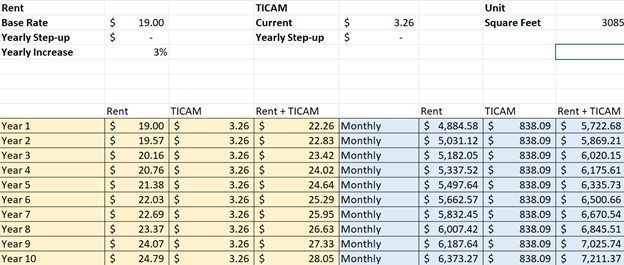
Annual Escalations: Commencing on the 1st anniversary of the Lease Commencement Base rental shall increase by (3.0%) based on CPI Index on an annual basis throughout term.
Tenant Initials: _____ Landlord Initials: ______
| 16 |
Tenant acknowledges receipt of un-signed and un-recorded copies of the Declaration of Park 35 Condominium and the Park 35 Condominium Plat to be filed in the Register of Deeds for Iredell County, North Carolina, in substantially the same forms as received by Tenant, the Bylaws of Park 35 Condominium Owners Association, Inc., and the Rules and Regulations and Sign Standards applicable to the Premises (collectively, the “Condominium Documents”), and Tenant acknowledges that the Premises is subject in all respects to the provisions of the Condominium Documents and Tenant agrees to comply with the terms thereof.
RULES
OF
Park 35 Condominium Owners Association
TABLE OF CONTENTS
ARTICLE I - Use of Units Affecting the Common Elements
| Section 1.1 | Occupancy Restrictions |
| Section 1.2 | No Residential Use |
| Section 1.3 | Trash |
| Section 1.4 | Displays Outside of Units |
| Section 1.5 | Painting Exteriors |
| Section 1.6 | Cleanliness |
| Section 1.7 | Dangerous Materials |
| Section 1.8 | Guests |
ARTICLE II - Use of Common Elements
| Section 2.1 | Obstructions |
| Section 2.2 | Proper Use |
| Section 2.3 | Trucks and Commercial Vehicles |
| Section 2.4 | Alterations, Additions, or Improvements to Common Elements |
ARTICLE III - Actions of Owners and Occupants
| Section 3.1 | Annoyance or Nuisance |
| Section 3.2 | Compliance with Law |
| Section 3.3 | Pets |
| Section 3.4 | Indemnification for Actions of Others |
| Section 3.5 | Leases |
| Section 3.6 | Signs |
Tenant Initials: _____ Landlord Initials: ______
| 17 |
ARTICLE V - Rubbish Removal
| Section 5.1 | Refuse Removal |
| Section 5.2 | Hazardous Waste |
ARTICLE VI - Motor Vehicles
| Section 6.1 | Compliance with Law |
| Section 6.2 | Limitations on Use |
| Section 6.3 | Unlicensed or Immobile Vehicles |
| Section 6.4 | No Parking Areas |
| Section. 6.5 | Limited Use of Trucks, Vans, Trailers and Commercial Vehicles |
| Section 6.6 | No Long Term Parking |
| Section 6.7 | Where to Park |
| Section 6.8 | Speed Limit |
| Section 6.9 | Unregistered Vehicles |
| Section 6.10 | Vehicle Operators |
| Section 6.11 | Repairs |
ARTICLE VII - Rights of Declarant
ARTICLE VIII - General Administrative Rules
| Section 8.1 | Consent in Writing |
| Section 8.2 | Complaint |
ARTICLE IX - Alternate Dispute Resolution
| Section 9.1 | Alternate Dispute Resolution |
Tenant Initials: _____ Landlord Initials: ______
| 18 |
RULES AND REGULATIONS AND SIGN STANDARDS
OF PARK 35
The following Rules apply to all owners and occupants of the Units.
ARTICLE I
Use of Units Affecting the Common Elements
Section 1.1 - Occupancy Restrictions. Units may be used for any commercial uses allowed pursuant to the Zoning Regulations of the Town of Mooresville provided uses for specific Unit(s) may be further restricted by the terms of the Declaration.
Section 1.2 - No Residential Use. No residential use of any kind shall be allowed in any Unit.
Section 1.3 - Trash. All trash, garbage, debris and other disposables shall be stored by Unit Owners inside the Units. No trash, garbage, debris or disposables may be placed outside the Units except for placement in the trash compactor or dumpster. Unit Owners at their own expense must arrange for their own regular pick up of trash, garbage, debris and disposables, from within their units.
Section1.4-Displays Outside of Units. Owners shall not cause or permit anything to be hung, displayed or exposed at or on the inside or outside of windows without the prior consent of the Executive Board.
Section 1.5-Painting Exteriors. Owners shall not paint, stain, or otherwise change the color of any exterior portion of any building.
Section1.6- Cleanliness. Each Unit Owner shall keep his or her Unit in a good state of preservation and cleanliness and under no circumstances shall allow any garbage, debris, or stored material items of any type to accumulate outside the Unit.
Section 1.7-Dangerous Materials. No Unit Owner shall use or permit to be brought into the Common Elements or any Unit any flammable, combustible or explosive material, chemical or substance or articles deemed extra hazardous to life or property, except such products and materials as are required for the normal allowed use employed at the Unit, without in each case obtaining written consent of the Manager or the Executive Board.
Section 1.8-Guests. Unit Owners shall be held responsible for all actions of their tenants, invitees, employees, agents, clients or guests.
Tenant Initials: _____ Landlord Initials: ______
| 19 |
ARTICLE II
Use of Common Elements
Section 2.1-Obstructions. There shall be no obstruction of the Common Elements, nor shall anything be stored outside of the Units.
Section 2.2-Proper Use. Common Elements shall be used only for the purposes for which they were designed. No person shall commit waste on the Common Elements or interfere with their proper use by others, or commit any nuisances, vandalism, boisterous or improper behavior on the Common Elements which interferes with or limits the enjoyment of the Common Elements by others.
Section 2.3-Trucks and Commercial Vehicles. Trucks and commercial vehicles not associated with the uses employed by the Units are prohibited in the parking areas and driveways, except for temporary loading and unloading, or as may be designated by the Executive Board.
Section 2.4-Alterations, Additions or Improvements to Common Elements. No Alterations, additions or Improvements may be made to the Units or the Common Elements including, but not limited to, any painting or staining of the exterior of any structure without the prior consent of the Executive Board or such committee established by the Executive Board having jurisdiction over such matters, if any.
ARTICLE III
Actions of Owners and Occupants
Section 3.1- Annoyance or Nuisance. No noxious, offensive, dangerous or unsafe activity shall be carried on or in any Unit, or the Common Elements, nor shall anything be done therein either willfully or negligently, which may be or become an annoyance or nuisance to the other Unit Owners or occupants. No Unit Owner or occupant shall make or permit any disturbing noises by himself or employees, agents, visitors and licensees, nor do or permit anything to be done by such persons that will interfere with the rights, comforts or convenience of other Unit Owners or occupants. No Unit Owner or occupant shall play, or suffer to be played, any musical instrument or operate or suffer to be operated a phonograph, television set, radio or other audio device at such high volume or in such other manner that it shall cause unreasonable disturbances to other Unit Owners or occupants.
Section 3.2-Compliance with Law. No immoral, improper, offensive or unlawful use may be made of the Property and Unit Owners shall comply with and conform to all applicable laws and regulations of the United States and of the State of North Carolina, and all ordinances, rules and regulations of the Town of Mooresville. The violating Unit Owner shall indemnify and hold the Association and other Unit Owners harmless from all fines, penalties, costs and prosecutions for the violation thereof or noncompliance therewith.
Section 3.3-Pets. No animals, birds or reptiles of any kind shall be raised, bred, or kept on the Property or brought on the Common Elements or kept in the Units.
Section 3.4 - Indemnification for Actions of Others. Unit Owners shall indemnify and hold the Association and other Unit Owners and occupants harmless for the actions of their tenants, guests, employees, agents, invitees or licensees.
Section 3.5-Leases. All leases shall be in writing and shall reference that the lease is subject to the terms and conditions contained within the Documents for the Common Interest Community.
Section 3.6-Signs. All signage must conform to the Park 35 Condominium Sign Standards attached hereto.
Tenant Initials: _____ Landlord Initials: ______
| 20 |
ARTICLE IV
Insurance
Section 4.l-Increase in Rating. Nothing shall be done or kept by Unit Owners within Units, without the prior consent of the Executive Board. No Unit Owner shall permit anything to be done, or kept on the Property which will result in the cancellation of insurance coverage on any of the buildings, or contents thereof, or which would be in violation of any law
Section 4.2-Rules of Insurance. Unit Owners and occupants shall comply with the Rules and Regulations of the National Fire Rating Association and with the rules and regulations contained in any fire and liability insurance policy applicable to their Unit.
Section 4.3 - Reports of Damage. Damage by fire or accident affecting the Property, and persons injured by or responsible for any damage, fire or accident must be promptly reported COA. Owners must ensure that smoke detectors and fire extinguishers consistent with NFPA standards are installed and operable in their Units.
ARTICLE V
Refuse Removal
Section 5.1- Refuse Removal. Unit Owners shall dispose of refuse, trash and garbage in containers approved by the Executive Board and in locations designated by the Executive Board. No other disposal of refuse, trash or garbage shall be permitted except if the Unit Owner makes private arrangements with a hauler approved by the Executive Board for pick-up with all storage of refuse in the Unit or in dumpsters or trash compactors approved by the Executive Board together with a pick-up schedule calling for pick-up at least once per week.
Section 5.2 - Hazardous Waste. Chemicals, or any hazardous waste (e.g.: motor oil, antifreeze, paint, etc.), shall not be put in any refuse container for pickup, or poured down any drain on the Property but shall only be disposed of in accordance with applicable law.
ARTICLE VI
Motor Vehicles
Section 6.1- Compliance with Law. All persons shall comply with North Carolina State Laws, Department of Motor Vehicle regulations, and applicable local ordinances, in the drives and parking area at the Property.
Tenant Initials: _____ Landlord Initials: ______
| 21 |
Section 6.2 - Limitations on Use. The use of any Limited Common Element parking space is limited to use by the Unit to which it is assigned. Parking areas shall be used for no other purpose than to park motor vehicles and loading or unloading.
Section 6.3-Unlicensed or Immobile Vehicles. Except for motor assisted bicycles and wheelchairs as permitted by state law, all motor vehicles used or parked on the Property will be licensed and properly equipped and in operating condition for safe travel on the public highways of the state.
Section 6.4 - No Parking Areas. Vehicles may not be parked in such manner as to block access to fire hydrants, sidewalks running perpendicular to drives, pedestrian crossing areas, designated fire lanes, designated loading areas, clear two lane passage by vehicles on roads and drives, or parking in another Unit's Limited Common Element parking spot. Vehicles in violation will be towed. In addition, a $50 per day fine may be levied against the Person, Unit Owner or occupant to whom the vehicle is registered, following Notice and Hearing, for the period that the vehicle violates these rules, unless at such hearing good and valid reasons are given for such violation.
Section 6.5-Limited Use of Trucks, Vans, Trailers and Commercial Vehicles. Unless associated with the use employed within the Units, the following types of vehicles are prohibited in the parking areas or drives except for temporary loading or unloading, following which the vehicle must be removed from the Property for at least 16 hours: commercial vehicles carrying a sign advertising a business; trucks, vans and vehicles having capacity of more than one ton; trailers of any kind; and vehicles with more than four single-tired wheels. Construction equipment used in the actual repair, construction or maintenance of the Property will not be so restricted during such use.
Section 6.6 - No Long-Term Parking. Unless associated with the use employed within the Units, there shall be no long-term parking permitted at the Property. Long term shall be defined as parking for a period of ninety-six (96) consecutive hours.
Section 6.7-Where to Park. Parking of vehicles by Unit Owners, tenants, guests’ customers, clients, patients or visitors shall be only in the spaces designated for parking by Unit Owners or Visitors, as the case may be. No unattended vehicles shall at any time, be left in such a manner as to impede the passage of traffic or to impair access to parking areas, aisles or spaces. No storage of any objects shall be permitted in the parking areas and the same shall always be kept free of debris or rubbish of any kind.
Section 6.8 - Speed Limit. The speed limit on the Property is 15 miles per hour. Speed limit and stop signs must be obeyed.
Section 6.9 - Unregistered Vehicles. Unregistered vehicles parked on the Common Elements, Limited Common Elements or within the borders of any Unit with "Type A" boundaries for more than 24 hours must be removed from the Property until legally registered. Operating unregistered vehicles, including mopeds, off road vehicles and motor bikes, on the roads or parking areas at the Property is prohibited. Unregistered vehicles will be tagged by the police department and towed at the owner's expense.
Section 6.10 - Vehicle Operators. All vehicles on the roadways within the Property must be operated by licensed drivers. Learning permits are not considered licenses.
Section 6.11 - Repairs. No vehicle repairs are permitted on the Property unless the approved use employed at the Unit includes a vehicle repair license.
Tenant Initials: _____ Landlord Initials: ______
| 22 |
ARTICLE VII
Rights of Declarant
The Declarant may make such use of the unsold Units and Common Elements as may facilitate completion and sale of the Common Interest Community including, but not limited to, maintenance of a sales office, the showing of the Common Elements and unsold Units, the display of signs the use of vehicles, and the storage of materials. Interference with workmen or with buildings under construction is prohibited. Entrance into construction or Declarant's restricted areas will be only with representatives of the Declarant.
ARTICLE VIII
General Administrative Rules
Section 8.1 - Consent in Writing. Any consent or approval required by these Rules must be obtained in writing prior to undertaking the action to which it refers.
Section 8.2 - Complaint. Any formal complaint regarding the management of the Property or regarding actions of other Unit Owners shall be made in writing to the Executive Board.
ARTICLE IX
Alternate Dispute Resolution
Section 9.1 - Alternate Dispute Resolution. Pursuant to Section 47-244(a)(l8) of the Common Interest Ownership Act, the Executive Board requires that disputes between the Executive Board and any Unit Owner, OTHER THAN DISPUTES WITH RESPECT TO NON- PAYMENT OF COMMON EXPENSE ASSESSMENTS INCLUDING FINES, or between any two or more Unit Owners or any combination thereof, regarding any aspect of the Common Interest Community, must be submitted to non-binding alternative dispute resolution in accordance with this regulation as a prerequisite to commencement of a judicial proceeding.
The Procedures to be used are as follows:
First, any person who intends to or is required to use the procedures of this regulation (the “Applicant”) must notify the Association and any other person involved in the dispute in writing, that the Applicant is using the dispute resolution procedures of the Park 35 Condominium Owners Association, Inc.’s Rules.
The notice should also contain a concise statement of the subject of the dispute.
Tenant Initials: _____ Landlord Initials: ______
| 23 |
Second, the President of the Executive Board, or the President's designate, (in either case, the “Association's Representative”) must promptly meet with the Applicant. If the Applicant's dispute is with the Association, or the President, the Association’s Representative should be, if practical, a Director, property manager, or other Unit Owner who is not directly involved in the subject matter of the dispute. If the dispute is not with the Association, the Association’s Representative should also ask to meet with the other parties to the dispute, either with the Applicant, or separately.
Third, at the first meeting, and at any subsequent meetings which all the parties feel may be helpful, the Applicant, the Association’s Representative and any other parties to the dispute may first seek to satisfactorily (if not amicably) resolve the matter, without any further proceedings.
Fourth, if a satisfactory resolution under the third step is not feasible, the Association's Representative should seek to identify an additional procedure for resolution of the dispute. The procedure should be, if possible, one that is mutually satisfactory to all parties to the dispute.
However, at a minimum, the Association's Representative may require, in the sole discretion of the Association's Representative that the Applicant and the other parties to the dispute participate in either, but not both, of the following procedures, before any lawsuit may be filed:
Individual mediation: The Association’s Representative may retain, at the Association’s expense (if any expenses are incurred), an individual or organization who either on a volunteer or compensated basis, is willing and able to serve as a neutral third party to attempt to mediate the dispute. Unless the parties to the dispute agree on the identity of the mediator, the mediator should be a person who is either a non-interested Unit Owner, or the property manager at the Property, if any.
(ii) Panel mediation: Alternatively, the Association’s Representative may choose panel mediation. In that case, the Applicant should pick a mediator of his choosing, and the Association’s Representative (if the Association is the party to the dispute) or, otherwise, the other party, or parties, to the dispute, shall themselves each select their own mediator, and those mediators shall attempt to select an additional mediator. The costs of panel mediation shall be paid in equal shares by the parties to the mediation, so long as the cost of the first meeting to any one party does not exceed $200.00.
Fifth, regardless of the form of mediation selected, the first mediation meeting under the fourth step should occur no later than fifteen (15) calendar days after the meeting which occurs as a result of the third step. Neither the Applicant nor any other party shall be required to attend more than one meeting with the mediator(s). The mediators selected should try and use all reasonable efforts to resolve the dispute by voluntary means, including any additional meetings which are acceptable to the parties.
Finally, if the dispute cannot be resolved under the foregoing procedures, the Applicant shall be free to pursue any legal recourse available.
Tenant Initials: _____ Landlord Initials: ______
| 24 |
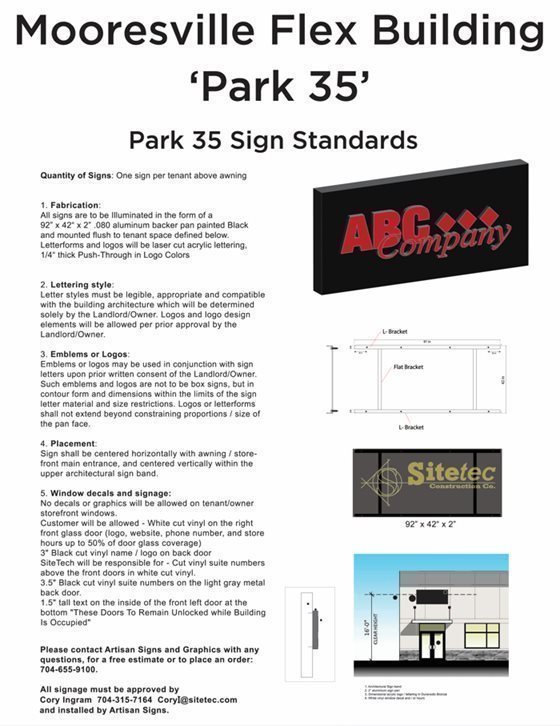
Tenant Initials: _____ Landlord Initials: ______
| 25 |
Landlord will provide Biannual HVAC Maintenance Service (See below on what that entails)
-Will be scheduled thru the COA
-Will require entry into tenant’s unit and access to the air handler
-Will Change the air filter @ this time
*TENANT IS STILL RESPONSIBLE FOR REPAIRS/REPLACEMENT OF HVAC UNIT(S) if not covered under 5 Year Manufacturer’s warranty
The Basics of Biannual HVAC Maintenance Service
Just like your car, your HVAC system needs regular servicing to maintain its performance level. Each year, scheduling biannual HVAC maintenance allows you and your HVAC service to keep tabs on your heating and cooling system in terms of age and performance.
A biannual HVAC service appointment will include an evaluation of your system’s controls. Your thermostat and its electrical connections to your HVAC system play an important part in the overall function of your furnace and air conditioner—problems with these components can quickly translate into an added strain on the appliances and higher heating and cooling bills. Your HVAC technician will ensure your thermostat is calibrated and prompting your HVAC system accurately to activate and turn off efficiently to achieve the temperature changes you want quickly and without wasting energy.
Heating and Cooling Components
The heart of your HVAC system is its cooling and heating components, which warm or cool the air according to your thermostat’s set point. Dirty cooling coils or furnace burners aren’t as effective at cooling and heating your air, while refrigerant leaks can cause your air conditioner to fail to produce cool air at all. The added stress of functioning while dirty can lead to extensive damage that requires repair or replacement of these systems before you can enjoy the comfortable environment you want once more. During your biannual HVAC service visit, your system’s heating and cooling components will be checked and cleaned to ensure they are functioning at their highest capacity.
Cleaning and Lubrication
Dirt and dust can easily accumulate inside your HVAC system, even with regular filter changes. Your HVAC service appointment will include a thorough cleaning of your heating and cooling appliances, both inside and out, to bring them back to like-new condition and improve airflow through the entire system. Any moving parts inside the appliances, such as gears and belts, will be checked and lubricated as necessary for quieter, smoother operation; proper lubrication will also reduce wear, tear on your HVAC system’s interior, and eliminate excess heat generation during cooling.
For Additional HVAC Needs or Service Please contact our preferred HVAC vendor. All the systems at Park 35 are new and the parts are under a Manufacturer’s warranty & limited workmanship warranty . It is important that you contact our preferred vendor, to keep from paying for costly repairs that might possibly be covered under warranty.
Tenant Initials: _____ Landlord Initials: ______
| 26 |
Sherry Radford
North Gaston Service Company
northgastonservices@gmail.com
1129 Miles Rd
Dallas NC 28034
704-675-8383 Office
704-913-0338 Cell
Tenant Initials: _____ Landlord Initials: ______
| 27 |
Tenants Responsibility
Racking systems plan review and permitting guidelines
The North Carolina Building Code requires that buildings and racking/shelving systems installed therein conform to seismic code requirements and other pertinent code requirements. Based on the height of materials stored on shelving and the classifications of such materials, the North Carolina Fire Code classified certain installation "High Pile Combustible Storage". To ensure code compliance and safety, the department reviews plans on such buildings and shelving systems prior to issuance of permits for construction. Building projects of this type will follow one of the following 3 listed paths for plan approval and permitting.
Racking/Shelving permit issued separately as a breakout from the upfit and require plans that include the following:
|
| 1. | Appendix B - Building Code Summary *As listed on N.C. Department of Insurance website. (may submit original field copy of approved upfit plans or submit Appendix B from the upfit permit drawings) |
|
| ○ | 2018 Appendix B (pdf) |
|
| ○ | 2018 Appendix B (Word) |
|
| 2. | A detailed list of the commodities and how they are stored |
|
|
|
|
|
| 3. | Complete Sprinkler Drawings |
|
|
|
|
|
| 4. | Hydraulic Design Criteria with a note indicating height to the top of materials stored and distance from top of stored materials to sprinkler heads |
|
|
|
|
|
| 5. | Reflected Ceiling Plan |
|
|
|
|
|
| 6. | Egress/floor plan showing racking layout, exits and directional signage as needed to meet code compliance |
|
|
|
|
|
| 7. | For seismic, either provide sealed drawings with anchor details or provide anchorage calculations and drawings (if not sealed by NC registered engineer) |
|
|
|
|
|
| 8. | Site Plan Vicinity Map |
|
|
|
|
|
| 9. | Special Inspections |
Existing Building - NOT a Change of Use and NOT classified Hazardous - Racking/Shelving permit issued separately.
Tenant Initials: _____ Landlord Initials: ______
| 28 |
Appendix B - Building Code Summary *As listed on N.C. Department of Insurance website.
|
| ○ | 2018 Appendix B (pdf) |
|
| ○ | 2018 Appendix B (Word) |
A detailed list of the commodities and how they are stored
Hydraulic Design Criteria with a note indicating height to the top of materials stored and distance from top of stored materials to sprinkler heads.
Sealed drawing showing anchors in detail or drawings and calculations if anchor details are not sealed in the plan submission for the project
Egress/floor plan showing racking layout, exits and directional signage as needed to meet code compliance
Special Inspections (Field Verification)
For Additional information please contact –
Kevin Aube - Assistant Fire Marshal (New Construction/Up-Fits)
Email: kaube@mooresvillenc.gov
Phone Number: 704-663-2786
Tenant Initials: _____ Landlord Initials: ______
| 29 |

Tenant Initials: _____ Landlord Initials: ______
| 30 |
EXHIBIT 23.1
Consent of Independent Registered Public Accounting Firm
We hereby consent to the incorporation by reference in the Registration Statements on Form S-3 (No. 333-284462, No. 333-285678 and No. 333-291118) and Form S-8 (No. 333-279921) of Airship AI Holdings, Inc. of our report dated February 16, 2026, relating to the consolidated financial statements of Airship AI Holdings, Inc., which appears in this Annual Report on Form 10-K.
/s/ BPM LLP
Santa Rosa, California
February 16, 2026
EXHIBIT 31.1
CERTIFICATION OF PRINCIPAL EXECUTIVE OFFICER
PURSUANT TO
EXCHANGE ACT RULES 13a-14(a) and 15d-14(a),
AS ADOPTED PURSUANT TO
SECTION 302 OF THE SARBANES-OXLEY ACT OF 2002
I, Victor Huang, certify that:
|
| 1. | I have reviewed this annual report on Form 10-K of Airship AI Holdings, Inc.; |
|
| 2. | Based on my knowledge, this report does not contain any untrue statement of a material fact or omit to state a material fact necessary to make the statements made, in light of the circumstances under which such statements were made, not misleading with respect to the period covered by this report; |
|
| 3. | Based on my knowledge, the financial statements, and other financial information included in this report, fairly present in all material respects the financial condition, results of operations and cash flows of the registrant as of, and for, the periods presented in this report; |
|
| 4. | The registrant’s other certifying officer(s) and I are responsible for establishing and maintaining disclosure controls and procedures (as defined in Exchange Act Rules 13a-15(e) and 15d-15(e)) and internal control over financial reporting (as defined in Exchange Act Rules 13a-15(f) and 15d-15(f)) for the registrant and have: |
|
| a) | Designed such disclosure controls and procedures, or caused such disclosure controls and procedures to be designed under our supervision, to ensure that material information relating to the registrant, including its consolidated subsidiaries, is made known to us by others within those entities, particularly during the period in which this report is being prepared; |
|
| b) | Designed such internal control over financial reporting, or caused such internal control over financial reporting to be designed under our supervision, to provide reasonable assurance regarding the reliability of financial reporting and the preparation of financial statements for external purposes in accordance with generally accepted accounting principles; | |
|
| |||
|
| c) | Evaluated the effectiveness of the registrant’s disclosure controls and procedures and presented in this report our conclusions about the effectiveness of the disclosure controls and procedures, as of the end of the period covered by this report based on such evaluation; and | |
|
| d) | Disclosed in this report any change in the registrant’s internal control over financial reporting that occurred during the registrant’s most recent fiscal quarter (the registrant’s fourth fiscal quarter in the case of an annual report) that has materially affected, or is reasonably likely to materially affect, the registrant’s internal control over financial reporting; and |
|
| 5. | The registrant’s other certifying officer(s) and I have disclosed, based on our most recent evaluation of internal control over financial reporting, to the registrant’s auditors and the audit committee of the registrant’s board of directors (or persons performing the equivalent functions): |
|
| a) | All significant deficiencies and material weaknesses in the design or operation of internal control over financial reporting which are reasonably likely to adversely affect the registrant’s ability to record, process, summarize and report financial information; and |
|
| b) | Any fraud, whether or not material, that involves management or other employees who have a significant role in the registrant’s internal control over financial reporting. |
Date: February 17, 2026
| /s/ Victor Huang |
|
| Victor Huang |
|
| Chief Executive Officer (Principal Executive Officer) |
|
EXHIBIT 31.2
CERTIFICATION OF PRINCIPAL FINANCIAL OFFICER
PURSUANT TO
EXCHANGE ACT RULES 13a-14(a) and 15d-14(a),
AS ADOPTED PURSUANT TO
SECTION 302 OF THE SARBANES-OXLEY ACT OF 2002
I, Mark E. Scott, certify that:
|
| 1. | I have reviewed this annual report on Form 10-K of Airship AI Holdings, Inc.; |
|
| 2. | Based on my knowledge, this report does not contain any untrue statement of a material fact or omit to state a material fact necessary to make the statements made, in light of the circumstances under which such statements were made, not misleading with respect to the period covered by this report; |
|
| 3. | Based on my knowledge, the financial statements, and other financial information included in this report, fairly present in all material respects the financial condition, results of operations and cash flows of the registrant as of, and for, the periods presented in this report; |
|
| 4. | The registrant’s other certifying officer(s) and I are responsible for establishing and maintaining disclosure controls and procedures (as defined in Exchange Act Rules 13a-15(e) and 15d-15(e)) and internal control over financial reporting (as defined in Exchange Act Rules 13a-15(f) and 15d-15(f)) for the registrant and have: |
|
| a) | Designed such disclosure controls and procedures, or caused such disclosure controls and procedures to be designed under our supervision, to ensure that material information relating to the registrant, including its consolidated subsidiaries, is made known to us by others within those entities, particularly during the period in which this report is being prepared; |
|
| b) | Designed such internal control over financial reporting, or caused such internal control over financial reporting to be designed under our supervision, to provide reasonable assurance regarding the reliability of financial reporting and the preparation of financial statements for external purposes in accordance with generally accepted accounting principles; | |
|
| |||
|
| c) | Evaluated the effectiveness of the registrant’s disclosure controls and procedures and presented in this report our conclusions about the effectiveness of the disclosure controls and procedures, as of the end of the period covered by this report based on such evaluation; and | |
|
| d) | Disclosed in this report any change in the registrant’s internal control over financial reporting that occurred during the registrant’s most recent fiscal quarter (the registrant’s fourth fiscal quarter in the case of an annual report) that has materially affected, or is reasonably likely to materially affect, the registrant’s internal control over financial reporting; and |
|
| 5. | The registrant’s other certifying officer(s) and I have disclosed, based on our most recent evaluation of internal control over financial reporting, to the registrant’s auditors and the audit committee of the registrant’s board of directors (or persons performing the equivalent functions): |
|
| a) | All significant deficiencies and material weaknesses in the design or operation of internal control over financial reporting which are reasonably likely to adversely affect the registrant’s ability to record, process, summarize and report financial information; and |
|
|
|
|
|
| b) | Any fraud, whether or not material, that involves management or other employees who have a significant role in the registrant’s internal control over financial reporting. |
Date: February 17, 2026
| /s/ Mark E. Scott |
|
| Mark E. Scott |
|
| Chief Financial Officer (Principal Financial and Accounting Officer) |
|
EXHIBIT 32.1
CERTIFICATION PURSUANT TO 18 U.S.C. SECTION 1350, AS ADOPTED
PURSUANT TO SECTION 906 OF THE SARBANES-OXLEY ACT OF 2002
In connection with Annual Report of Airship AI Holdings, Inc. (the “Company”) on Form 10-K for the period ended December 31, 2025 as filed with the Securities and Exchange Commission on the date hereof (the “Report”), the undersigned Victor Huang, Chief Executive Officer (Principal Executive Officer) of the Company, certifies, pursuant to 18 U.S.C. Section 1350, as adopted pursuant to Section 906 of the Sarbanes-Oxley Act of 2002, that:
|
| (1) | The Report fully complies with the requirements of Section 13(a) or 15(d) of the Securities Exchange Act of 1934; and |
|
|
|
|
|
| (2) | The information contained in the Report fairly presents, in all material respects, the financial condition and results of operations of the Company. |
Date: February 17, 2026
| /s/ Victor Huang |
|
| Victor Huang |
|
| Chief Executive Officer (Principal Executive Officer) |
|
A signed original of this written statement required by Section 906 has been provided to Airship AI Holdings, Inc. and will be retained by Airship AI Holdings, Inc. and furnished to the Securities and Exchange Commission or its staff upon request.
The forgoing certification is being furnished to the Securities and Exchange Commission pursuant to § 18 U.S.C. Section 1350. It is not being filed for purposes of Section 18 of the Securities Exchange Act of 1934, as amended, and is not to be incorporated by reference into any filing of the Company, whether made before or after the date hereof, regardless of any general incorporation language in such filing.
EXHIBIT 32.2
CERTIFICATION PURSUANT TO 18 U.S.C. SECTION 1350, AS ADOPTED
PURSUANT TO SECTION 906 OF THE SARBANES-OXLEY ACT OF 2002
In connection with Annual Report of Airship AI Holdings, Inc. (the “Company”) on Form 10-K for the period ended December 31, 2025 as filed with the Securities and Exchange Commission on the date hereof (the “Report”), the undersigned Mark E. Scott, Chief Financial Officer (Principal Financial and Accounting Officer) of the Company, certifies, pursuant to 18 U.S.C. Section 1350, as adopted pursuant to Section 906 of the Sarbanes-Oxley Act of 2002, that:
|
| (1) | The Report fully complies with the requirements of Section 13(a) or 15(d) of the Securities Exchange Act of 1934; and |
|
|
|
|
|
| (2) | The information contained in the Report fairly presents, in all material respects, the financial condition and results of operations of the Company. |
Date: February 17, 2026
| /s/ Mark E. Scott |
|
| Mark E. Scott |
|
| Chief Financial Officer (Principal Financial and Accounting Officer) |
|
A signed original of this written statement required by Section 906 has been provided to Airship AI Holdings, Inc. and will be retained by Airship AI Holdings, Inc. and furnished to the Securities and Exchange Commission or its staff upon request.
The forgoing certification is being furnished to the Securities and Exchange Commission pursuant to § 18 U.S.C. Section 1350. It is not being filed for purposes of Section 18 of the Securities Exchange Act of 1934, as amended, and is not to be incorporated by reference into any filing of the Company, whether made before or after the date hereof, regardless of any general incorporation language in such filing.