ALMS 8-K
Alumis Inc. (ALMS)
UNITED STATES
SECURITIES AND EXCHANGE COMMISSION
Washington, D.C. 20549
FORM
CURRENT REPORT
Pursuant to Section 13 or 15(d)
of the Securities
Exchange Act of 1934
Date of Report (Date of earliest event reported):
(Exact name of registrant as specified in its charter)
| (State or other jurisdiction of incorporation) |
(Commission File Number) |
(IRS Employer Identification No.) |
(Address of principal executive offices)
Registrant’s telephone number, including area code: (
N/A
(Former name or former address, if changed since last report.)
Check the appropriate box below if the Form 8-K filing is intended to simultaneously satisfy the filing obligation of the registrant under any of the following provisions:
| Written communications pursuant to Rule 425 under the Securities Act (17 CFR 230.425) |
| Soliciting material pursuant to Rule 14a-12 under the Exchange Act (17 CFR 240.14a-12) |
| Pre-commencement communications pursuant to Rule 14d-2(b) under the Exchange Act (17 CFR 240.14d-2(b)) |
| Pre-commencement communications pursuant to Rule 13e-4(c) under the Exchange Act (17 CFR 240.13e-4(c)) |
Securities registered pursuant to Section 12(b) of the Act:
| Title of each class | Trading Symbol(s) |
Name
of each exchange on which registered | ||
Indicate by check mark whether the registrant is an emerging growth company as defined in as defined in Rule 405 of the Securities Act of 1933 (§230.405 of this chapter) or Rule 12b-2 of the Securities Exchange Act of 1934 (§240.12b-2 of this chapter).
Emerging growth company
If an emerging growth company, indicate by check
mark if the registrant has elected not to use the extended transition period for complying with any new or revised financial accounting
standards provided pursuant to Section 13(a) of the Exchange Act.
Item 8.01. Other Events.
On September 3, 2025, Alumis Inc. updated its corporate presentation for use in meetings with investors, analysts, and others.
A copy of the presentation is furnished as Exhibit 99.1 to this Current Report on Form 8-K (the “Report”). The information set forth in this Report, including without limitation the presentation, is not deemed “filed” for purposes of Section 18 of the Securities Exchange Act of 1934, as amended (the “Exchange Act”), or incorporated by reference in any filing under the Securities Act of 1933, as amended, or the Exchange Act, except as may be expressly set forth by specific reference in such a filing.
Item 9.01 Financial Statements and Exhibits.
(d) Exhibits.
| Exhibit No. | Description | |
| 99.1 | Corporate Presentation dated September 2025. | |
| 104 | Cover Page Interactive Data File (embedded within the Inline XBRL Document). | |
SIGNATURES
Pursuant to the requirements of the Securities Exchange Act of 1934, the registrant has duly caused this report to be signed on its behalf by the undersigned hereunto duly authorized.
| Alumis Inc. | ||
| By: | /s/ Martin Babler | |
| Martin Babler | ||
| President & Chief Executive Officer | ||
Dated: September 3, 2025
| Transform Therapies. Reimagine Lives. September 2025 Corporate Presentation |

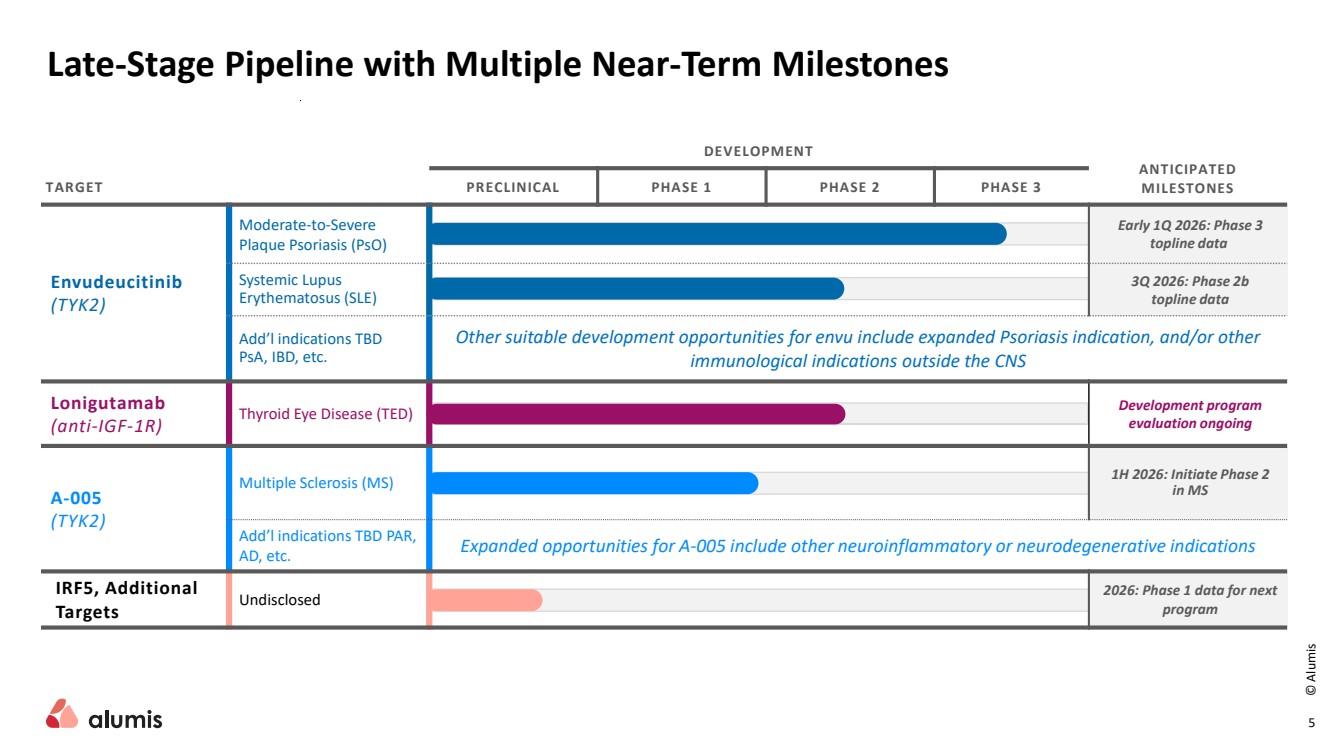
| 2© Alumis Forward-Looking Statements This presentation contains forward looking statements within the meaning of federal securities laws, including the “safe harbor” provisions of the Private Securities Litigation Reform Act of 1995. Such statements are based upon current plans, estimates and expectations of management of Alumis Inc. (“Alumis”) in light of historical results and trends, current conditions and potential future developments, and are subject to various risks and uncertainties that could cause actual results to differ materially from such statements. The inclusion of forward-looking statements should not be regarded as a representation that such plans, estimates and expectations will be achieved. Words such as “anticipate,” “expect,” “project,” “intend,” “believe,” “may,” “will,” “should,” “plan,” “could,” “continue,” “target,” “contemplate,” “estimate,” “forecast,” “guidance,” “predict,” “possible,” “potential,” “pursue,” “likely,” and words and terms of similar substance used in connection with any discussion of future plans, actions or events identify forward-looking statements. All statements, other than statements of historical facts, including express or implied statements regarding the timing of Alumis’ topline data in its Phase 3 ONWARD and Phase 2b LUMUS programs, the timing of Alumis’ evaluation of its lonigutamab program, any expectations regarding the safety, efficacy or tolerability of envudeucitinib and statements regarding our future plans and prospects including our cash runway and development of our development pipeline and any assumptions underlying the foregoing; our competitive ability and position; our clinical pipeline; and any assumptions underlying any of the foregoing, are forward-looking statements. Risks and uncertainties include, among other things, the risk that Alumis may be adversely affected by economic, business and/or competitive factors; the risk that the anticipated benefits and synergies of the recent merger with ACELYRIN, Inc. may not be fully realized or may take longer to realize than expected, including the risk that the combined company may not be able to be successfully integrated and achieve the growth prospects expected from the transaction; the impact of legislative, regulatory, economic, competitive and technological changes; the implementation of our business model and strategic plans for our product candidates and pipeline, and challenges inherent in developing, commercializing, manufacturing, launching, marketing and selling potential existing and new products and product candidates; the scope, progress, results and costs of developing our product candidates and any future product candidates, including conducting preclinical studies and clinical trials, and otherwise related to the research and development of our pipeline; the timing and costs involved in obtaining and maintaining regulatory approval for current or future product candidates, and any related restrictions, limitations and/or warnings in the label of any product, if and once approved; the market for, adoption (including rate and degree of market acceptance) and pricing and reimbursement of our product candidates, if approved, and their respective abilities to compete with therapies and procedures that are rapidly growing and evolving; uncertainties in contractual relationships, including collaborations, partnerships, licensing or other arrangements and the performance of third party suppliers and manufacturers; our ability to establish and maintain intellectual property protection for products or avoid or defend claims of infringement; and (xxi) potential delays in initiating, enrolling or completing preclinical studies and clinical trials. While the list of factors presented here are considered representative, no such list should be considered to be a complete statement of all potential risks and uncertainties. For additional information about other factors that could cause actual results to differ materially from those described in the forward-looking statements, please refer to our periodic reports and other filings with the Securities and Exchange Commission (the “SEC”), including the risk factors identified in our most recent Quarterly Report on Form 10-Q. The risks and uncertainties described above and in the SEC filings cited above are not exclusive and further information concerning us and our businesses, including factors that potentially could materially affect our business, financial conditions or operating results, may emerge from time to time. Readers are urged to consider these factors carefully in evaluating these forward-looking statements, and not to place undue reliance on any forward-looking statements, which speak only as of the date hereof. Readers should also carefully review the risk factors described in other documents we file from time to time with the SEC. The forward-looking statements included in this presentation are made only as of the date hereof. Alumis assumes no obligation and does not intend to update these forward-looking statements, even if new information becomes available in the future, except as required by law. This presentation contains trademarks, service marks, trade names and copyrights of Alumis and other companies which are the property of their respective owners. This presentation discusses product candidates that are under clinical study and which have not yet been approved for marketing by the U.S. Food and Drug Administration. No representation is made as to the safety or effectiveness of these product candidates for the uses for which they are being studied. This presentation also contains estimates and other statistical data made by independent parties and by us relating to market size and growth and other data about our industry. These data involve a number of assumptions and limitations, and you are cautioned not to give undue weight to such estimates. We have not independently verified the data generated by independent parties and cannot guarantee their accuracy or completeness. In addition, projections, assumptions, and estimates of our future performance and the future performance of the markets in which we operate are necessarily subject to a high degree of uncertainty and risk. Additional Information and Where to Find It Copies of documents filed with the SEC by Alumis are available free of charge under the SEC Filings heading of the Investor Relations section of Alumis’ website at https://investors.alumis.com/. |
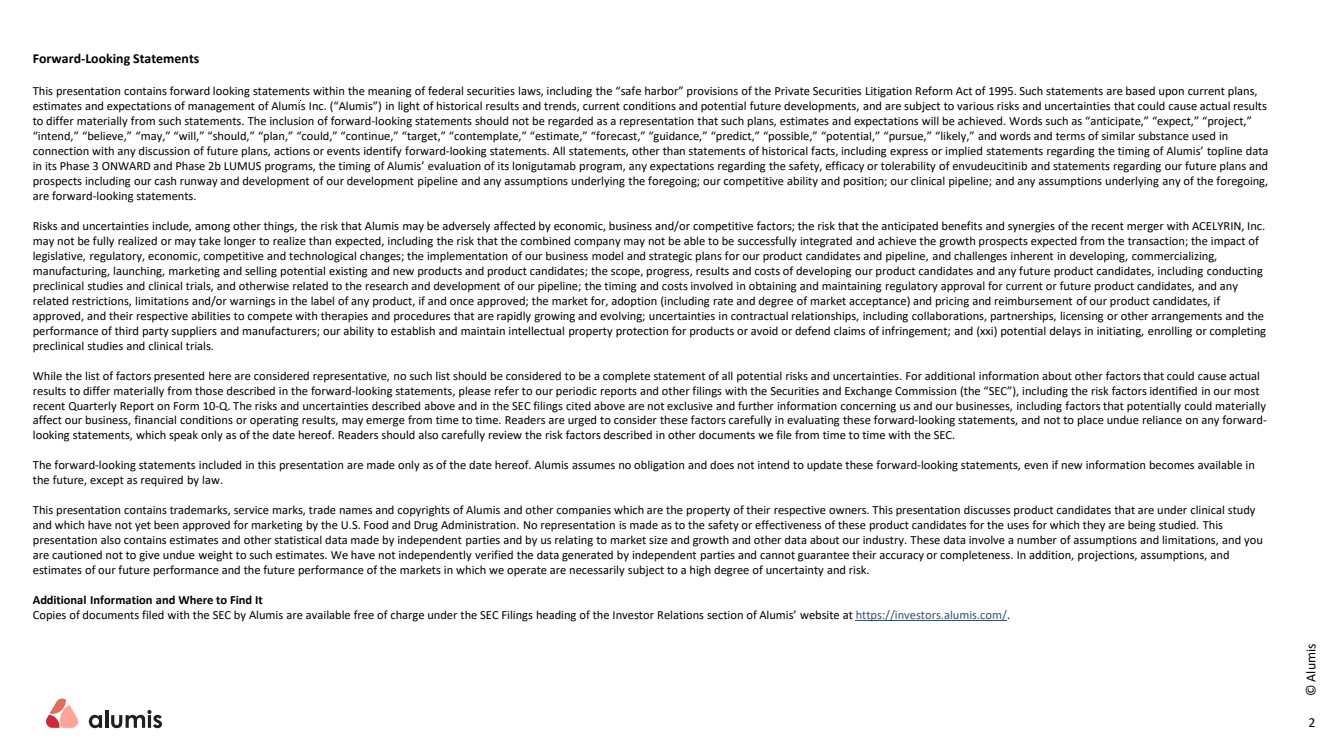
| 〉 A portfolio of three clinical molecules against validated targets and an internal pipeline powered by a proven Research organization – Envudeucitinib, a TYK2 inhibitor for Psoriasis and Systemic Lupus Erythematosus (SLE) – A-005, a CNS penetrant TYK2 inhibitor for MS and other neuroinflammatory and neurogenerative diseases – Lonigutamab, an anti-IGF-1R therapy with a unique MOA for Thyroid Eye Disease – Multiple Pipeline assets in late-stage research 〉 Envu Psoriasis top-line data expected early Q1 2026 and SLE Phase 2b top-line data expected Q3 2026 〉 Two pipeline in a pill opportunities with TYK2 validation across multiple indications 〉 Team with an established track record in execution and value creation 〉 Cash, cash equivalents and marketable securities of $486.3 M as of June 30, 2025 expected to fund operations into 2027 © Alumis 3 Alumis: Late-Stage Precision Immunology Company with a Differentiated Pipeline and Key Near-Term Readouts |
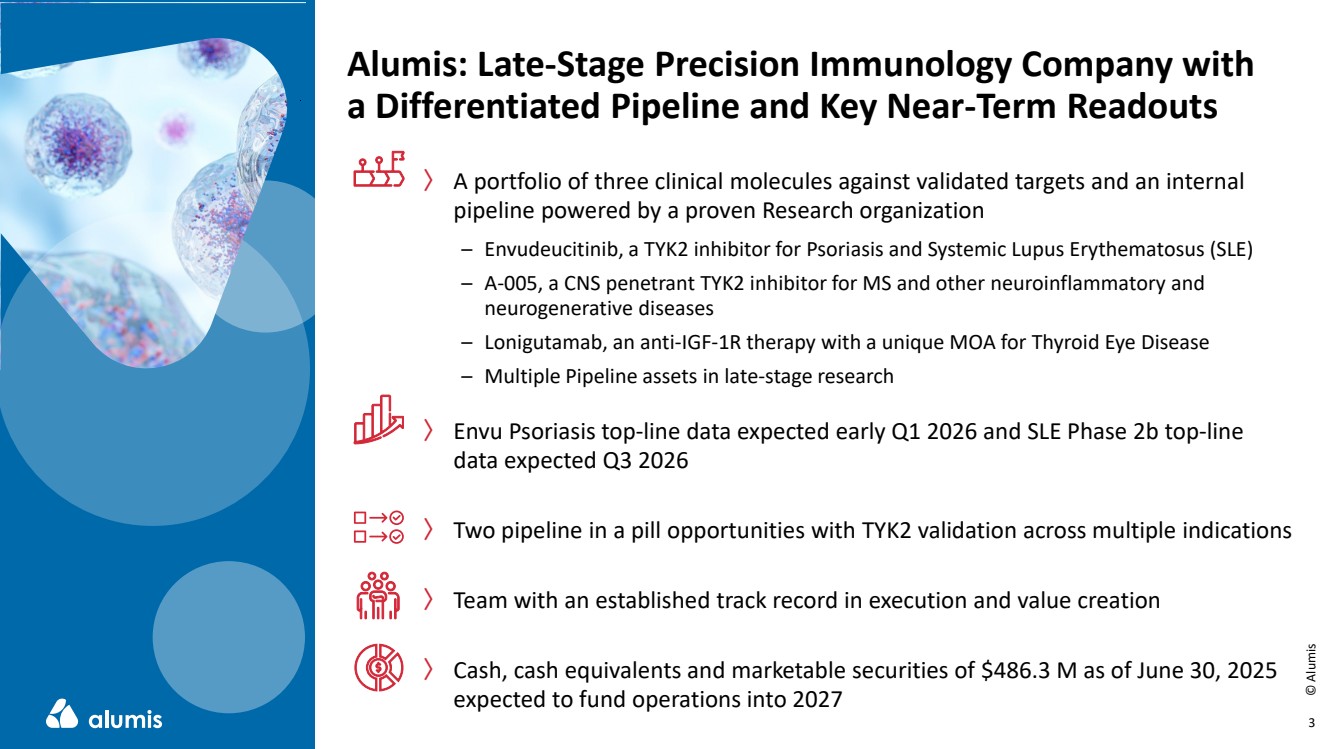
| © Alumis 4 Alumis Portfolio: De-risked, Disruptive and Poised to Deliver De-risked Portfolio Disruptive Poised to Deliver 〉 TYK2 is genetically and clinically well validated across multiple diseases including PSO, PSA, SLE and CLE 〉 Envudeucitinib has a large safety and efficacy data set > 1 year with best in class TYK2 profile in psoriasis 〉 Our compelling biomarker data demonstrate maximum interferon and IL-23 pathway inhibition 〉 TYK2 maximum target inhibition in patients creates disruptive best in class efficacy and safety opportunity 〉 A-005 is a first and best in class brain penetrant TYK2i for neuroinflammation and neurodegeneration 〉 Lonigutamab unique MOA provides opportunity for differentiated safety and efficacy profile 〉 Transformative near-term milestones – Psoriasis Envu Phase 3 data – SLE Envu potentially pivotal Phase 2b data – A-005 Phase 2 MS initiation – Phase 1 data for undisclosed target – Lonigutamab evaluation Near term results could unlock interferon and IL-23 pathway driven diseases with global market opportunities >$ 150B |
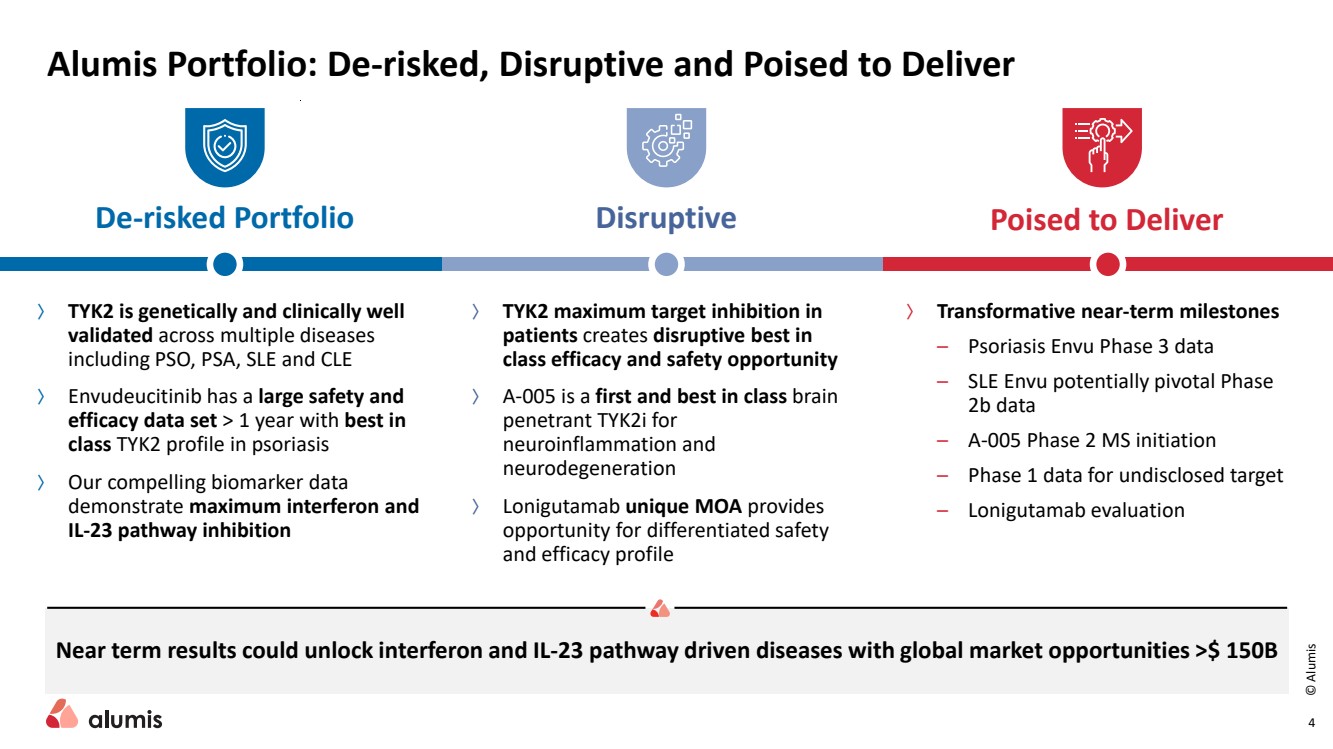
| Late-Stage Pipeline with Multiple Near-Term Milestones 5© Alumis DEVELOPMENT ANTICIPATED TARGET PRECLINICAL PHASE 1 PHASE 2 PHASE 3 MILESTONES Envudeucitinib (TYK2) Moderate-to-Severe Plaque Psoriasis (PsO) Early 1Q 2026: Phase 3 topline data Systemic Lupus Erythematosus (SLE) 3Q 2026: Phase 2b topline data Add’l indications TBD PsA, IBD, etc. Other suitable development opportunities for envu include expanded Psoriasis indication, and/or other immunological indications outside the CNS Lonigutamab (anti-IGF-1R) Thyroid Eye Disease (TED) Development program evaluation ongoing A-005 (TYK2) Multiple Sclerosis (MS) 1H 2026: Initiate Phase 2 in MS Add’l indications TBD PAR, AD, etc. Expanded opportunities for A-005 include other neuroinflammatory or neurodegenerative indications IRF5, Additional Targets Undisclosed 2026: Phase 1 data for next program |
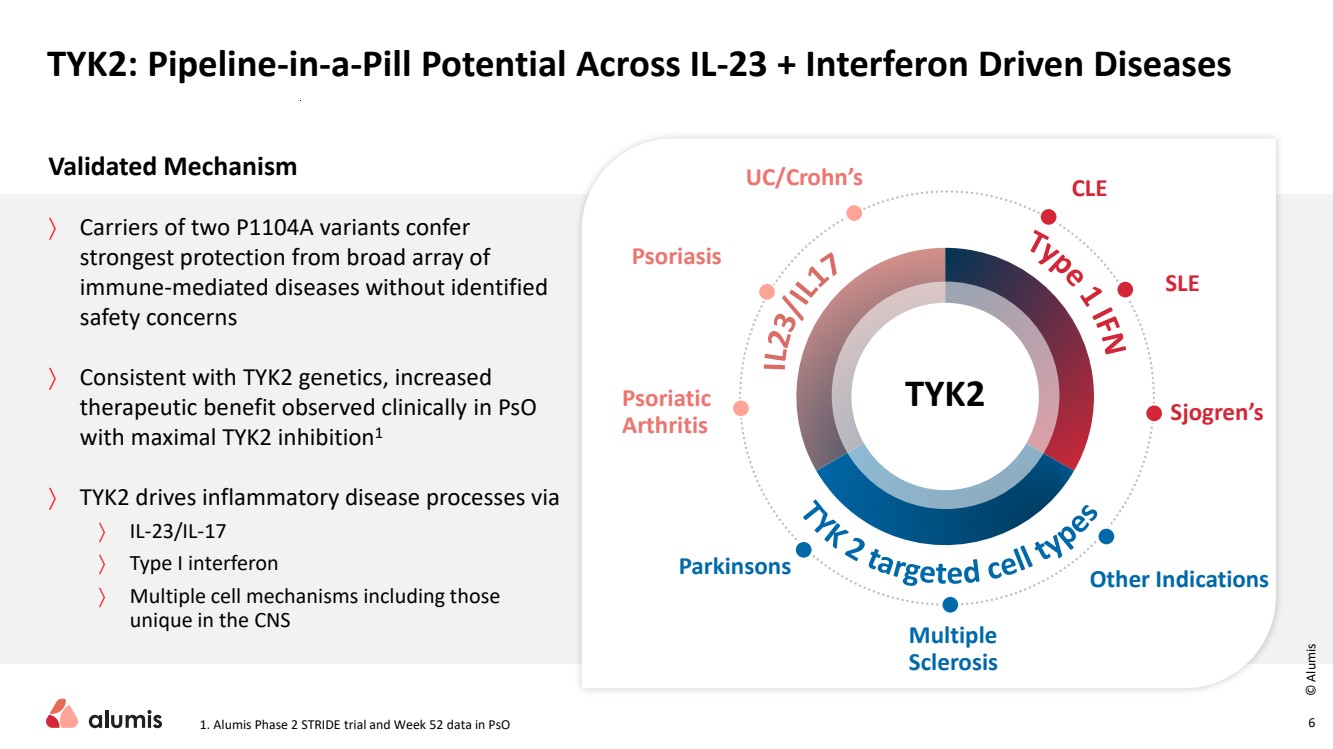
| Validated Mechanism 〉 Carriers of two P1104A variants confer strongest protection from broad array of immune-mediated diseases without identified safety concerns 〉 Consistent with TYK2 genetics, increased therapeutic benefit observed clinically in PsO with maximal TYK2 inhibition1 〉 TYK2 drives inflammatory disease processes via 〉 IL-23/IL-17 〉 Type I interferon 〉 Multiple cell mechanisms including those unique in the CNS 1. Alumis Phase 2 STRIDE trial and Week 52 data in PsO © Alumis 6 TYK2: Pipeline-in-a-Pill Potential Across IL-23 + Interferon Driven Diseases Psoriasis Psoriatic Arthritis UC/Crohn’s SLE CLE Sjogren’s Other Indications Parkinsons Multiple Sclerosis TYK2 |
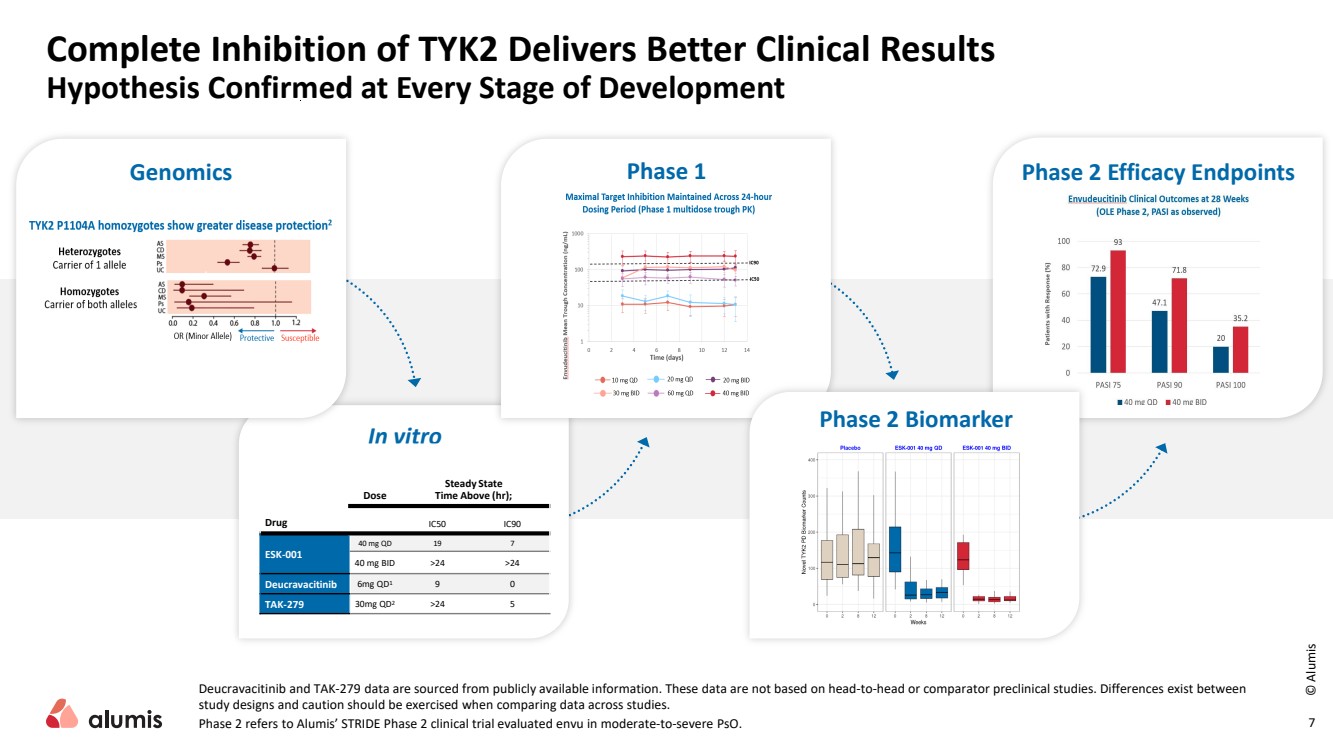
| Phase 2 Efficacy Endpoints In vitro Deucravacitinib and TAK-279 data are sourced from publicly available information. These data are not based on head-to-head or comparator preclinical studies. Differences exist between study designs and caution should be exercised when comparing data across studies. Phase 2 refers to Alumis’ STRIDE Phase 2 clinical trial evaluated envu in moderate-to-severe PsO. © Alumis 7 Complete Inhibition of TYK2 Delivers Better Clinical Results Hypothesis Confirmed at Every Stage of Development Drug Dose Steady State Time Above (hr); IC50 IC90 ESK-001 40 mg QD 19 7 40 mg BID >24 >24 Deucravacitinib 6mg QD1 9 0 TAK-279 30mg QD2 >24 5 Phase 1 Phase 2 Biomarker Genomics |
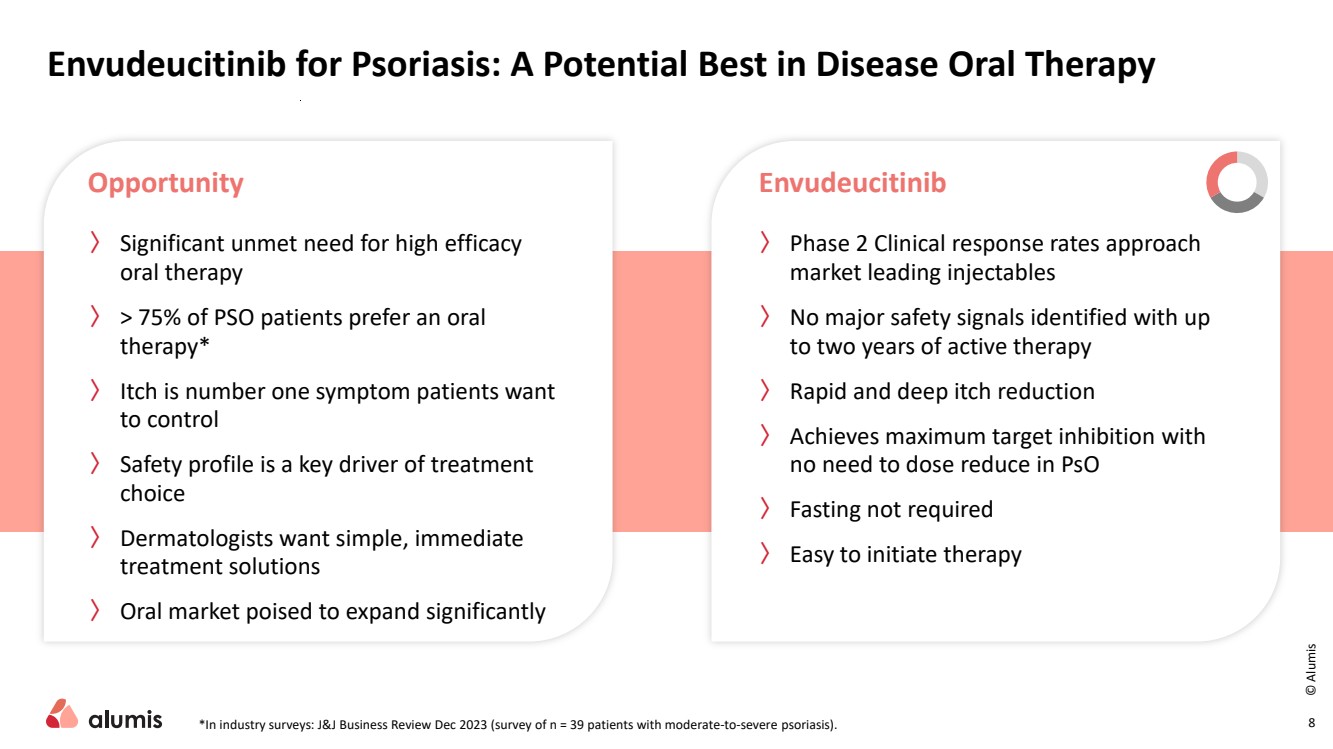
| 〉 Phase 2 Clinical response rates approach market leading injectables 〉 No major safety signals identified with up to two years of active therapy 〉 Rapid and deep itch reduction 〉 Achieves maximum target inhibition with no need to dose reduce in PsO 〉 Fasting not required 〉 Easy to initiate therapy Envudeucitinib for Psoriasis: A Potential Best in Disease Oral Therapy © Alumis 8 〉 Significant unmet need for high efficacy oral therapy 〉 > 75% of PSO patients prefer an oral therapy* 〉 Itch is number one symptom patients want to control 〉 Safety profile is a key driver of treatment choice 〉 Dermatologists want simple, immediate treatment solutions 〉 Oral market poised to expand significantly Opportunity *In industry surveys: J&J Business Review Dec 2023 (survey of n = 39 patients with moderate-to-severe psoriasis). Envudeucitinib |
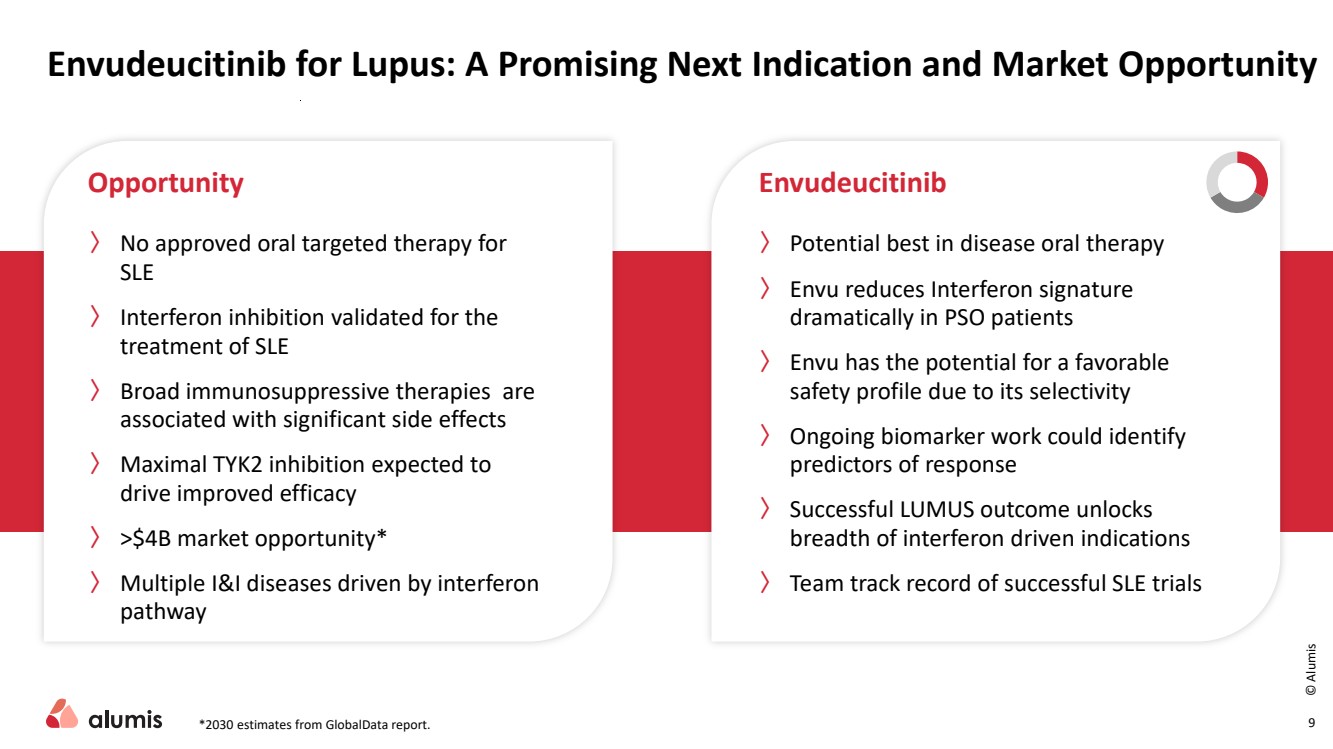
| 〉 Potential best in disease oral therapy 〉 Envu reduces Interferon signature dramatically in PSO patients 〉 Envu has the potential for a favorable safety profile due to its selectivity 〉 Ongoing biomarker work could identify predictors of response 〉 Successful LUMUS outcome unlocks breadth of interferon driven indications 〉 Team track record of successful SLE trials Envudeucitinib for Lupus: A Promising Next Indication and Market Opportunity© Alumis 9 〉 No approved oral targeted therapy for SLE 〉 Interferon inhibition validated for the treatment of SLE 〉 Broad immunosuppressive therapies are associated with significant side effects 〉 Maximal TYK2 inhibition expected to drive improved efficacy 〉 >$4B market opportunity* 〉 Multiple I&I diseases driven by interferon pathway *2030 estimates from GlobalData report. Opportunity Envudeucitinib |
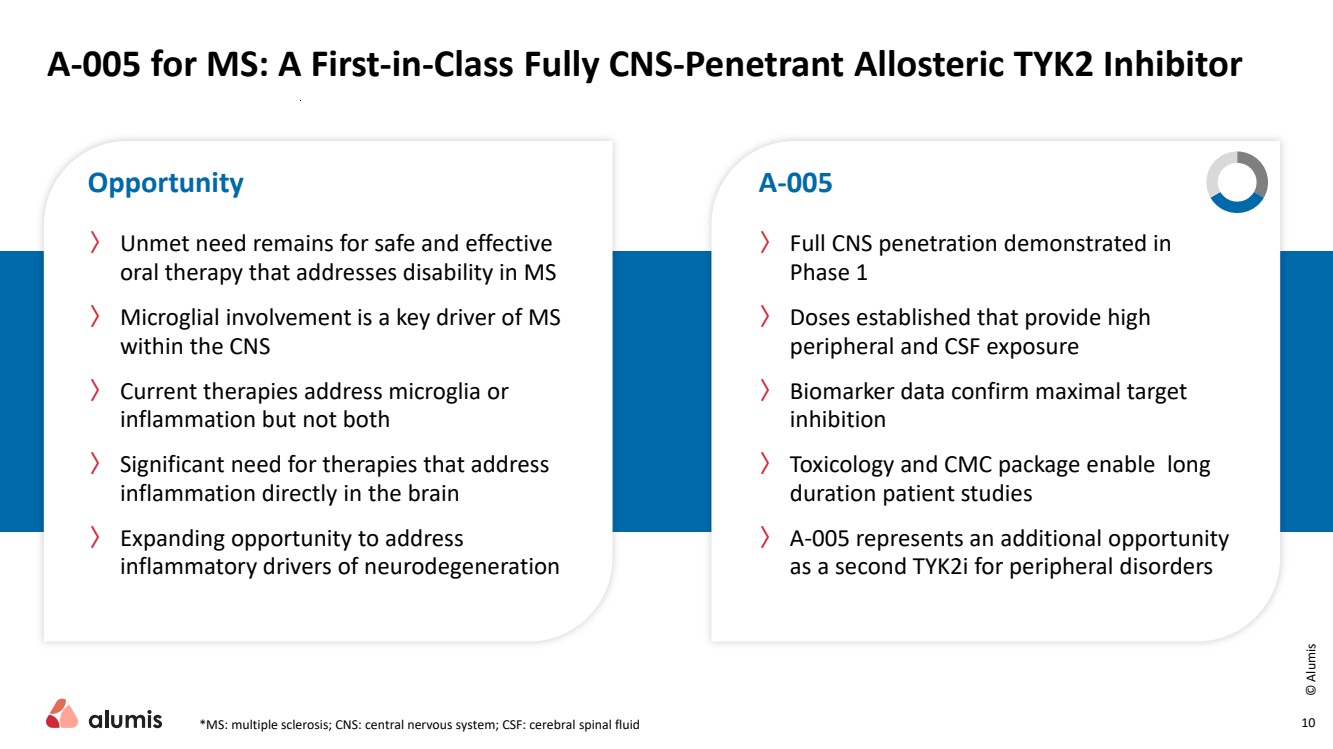
| 〉 Full CNS penetration demonstrated in Phase 1 〉 Doses established that provide high peripheral and CSF exposure 〉 Biomarker data confirm maximal target inhibition 〉 Toxicology and CMC package enable long duration patient studies 〉 A-005 represents an additional opportunity as a second TYK2i for peripheral disorders A-005 for MS: A First-in-Class Fully CNS-Penetrant Allosteric TYK2 Inhibitor © Alumis 10 〉 Unmet need remains for safe and effective oral therapy that addresses disability in MS 〉 Microglial involvement is a key driver of MS within the CNS 〉 Current therapies address microglia or inflammation but not both 〉 Significant need for therapies that address inflammation directly in the brain 〉 Expanding opportunity to address inflammatory drivers of neurodegeneration Opportunity A-005 *MS: multiple sclerosis; CNS: central nervous system; CSF: cerebral spinal fluid |
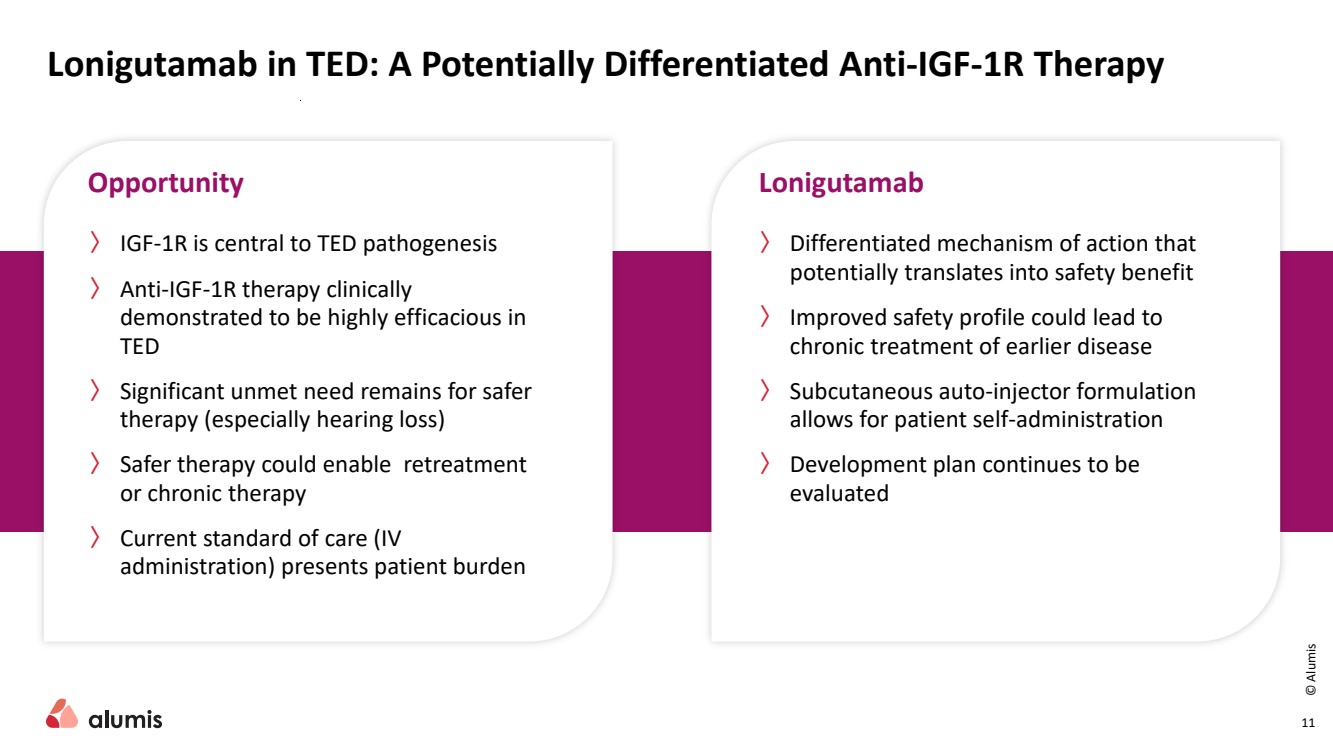
| 〉 Differentiated mechanism of action that potentially translates into safety benefit 〉 Improved safety profile could lead to chronic treatment of earlier disease 〉 Subcutaneous auto-injector formulation allows for patient self-administration 〉 Development plan continues to be evaluated Lonigutamab in TED: A Potentially Differentiated Anti-IGF-1R Therapy © Alumis 11 〉 IGF-1R is central to TED pathogenesis 〉 Anti-IGF-1R therapy clinically demonstrated to be highly efficacious in TED 〉 Significant unmet need remains for safer therapy (especially hearing loss) 〉 Safer therapy could enable retreatment or chronic therapy 〉 Current standard of care (IV administration) presents patient burden Opportunity Lonigutamab |
| Envudeucitinib: TYK2i Achieving Maximal Target Inhibition |
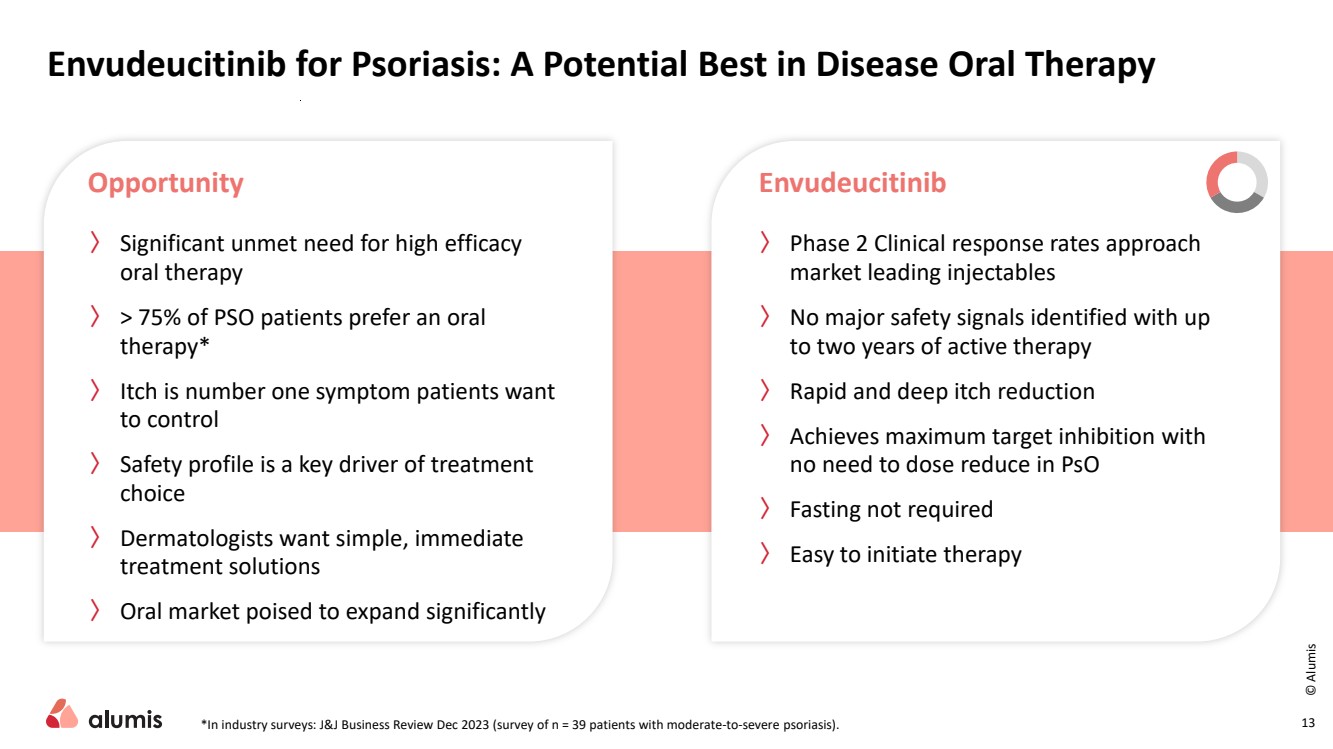
| 〉 Phase 2 Clinical response rates approach market leading injectables 〉 No major safety signals identified with up to two years of active therapy 〉 Rapid and deep itch reduction 〉 Achieves maximum target inhibition with no need to dose reduce in PsO 〉 Fasting not required 〉 Easy to initiate therapy Envudeucitinib for Psoriasis: A Potential Best in Disease Oral Therapy © Alumis 13 〉 Significant unmet need for high efficacy oral therapy 〉 > 75% of PSO patients prefer an oral therapy* 〉 Itch is number one symptom patients want to control 〉 Safety profile is a key driver of treatment choice 〉 Dermatologists want simple, immediate treatment solutions 〉 Oral market poised to expand significantly Opportunity *In industry surveys: J&J Business Review Dec 2023 (survey of n = 39 patients with moderate-to-severe psoriasis). Envudeucitinib |
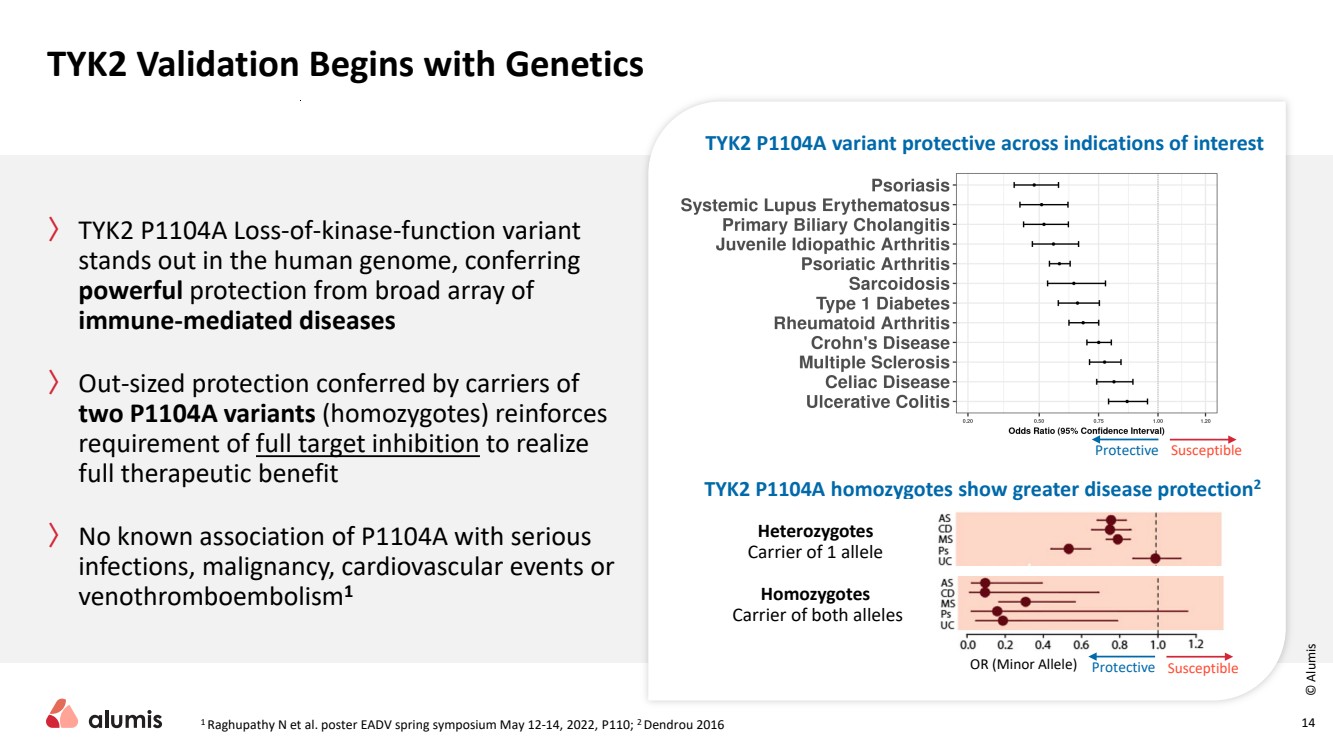
| © Alumis 14 TYK2 Validation Begins with Genetics 〉TYK2 P1104A Loss-of-kinase-function variant stands out in the human genome, conferring powerful protection from broad array of immune-mediated diseases 〉Out-sized protection conferred by carriers of two P1104A variants (homozygotes) reinforces requirement of full target inhibition to realize full therapeutic benefit 〉No known association of P1104A with serious infections, malignancy, cardiovascular events or venothromboembolism1 TYK2 P1104A variant protective across indications of interest 1 Raghupathy N et al. poster EADV spring symposium May 12-14, 2022, P110; 2 Dendrou 2016 TYK2 P1104A homozygotes show greater disease protection2 Heterozygotes Carrier of 1 allele Homozygotes Carrier of both alleles Protective Susceptible OR (Minor Allele) Protective Susceptible |
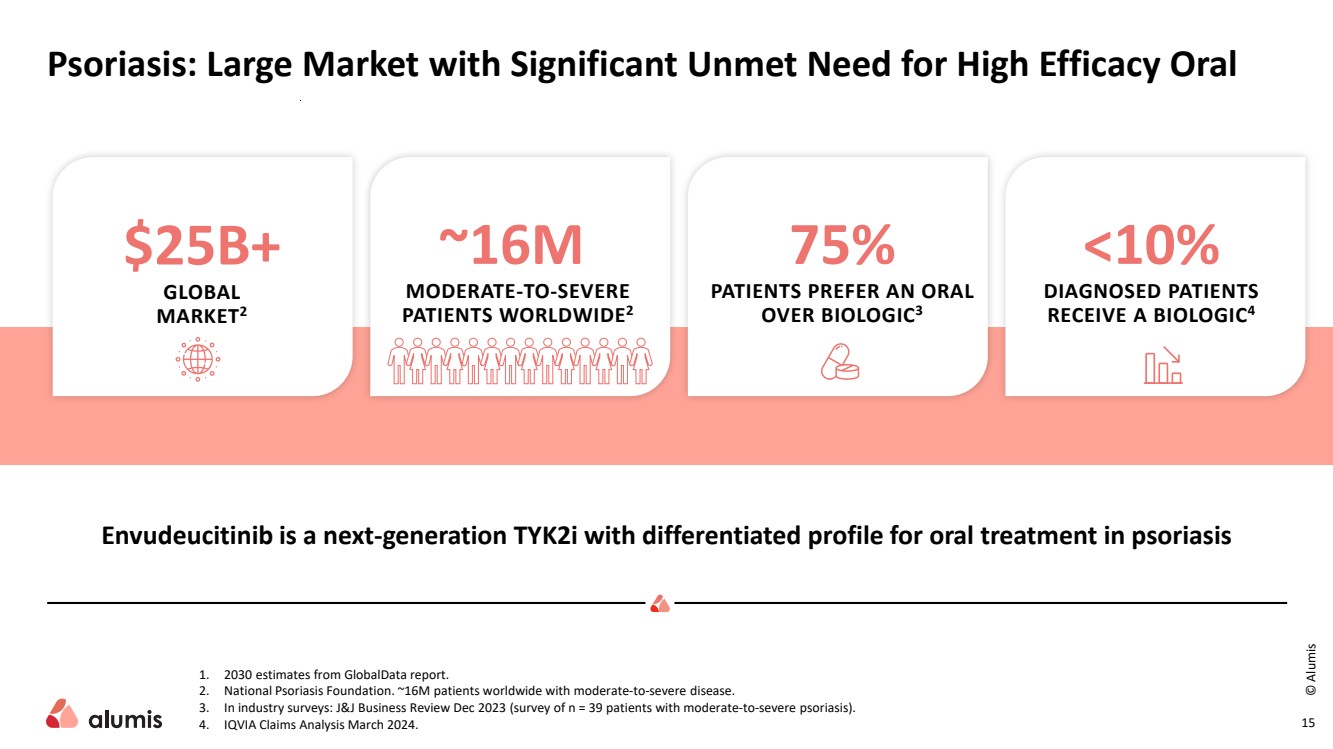
| Psoriasis: Large Market with Significant Unmet Need for High Efficacy Oral 1. 2030 estimates from GlobalData report. 2. National Psoriasis Foundation. ~16M patients worldwide with moderate-to-severe disease. 3. In industry surveys: J&J Business Review Dec 2023 (survey of n = 39 patients with moderate-to-severe psoriasis). 4. IQVIA Claims Analysis March 2024. 15 ~16M MODERATE-TO-SEVERE PATIENTS WORLDWIDE2 © Alumis $25B+ GLOBAL MARKET2 75% PATIENTS PREFER AN ORAL OVER BIOLOGIC3 <10% DIAGNOSED PATIENTS RECEIVE A BIOLOGIC4 Envudeucitinib is a next-generation TYK2i with differentiated profile for oral treatment in psoriasis |
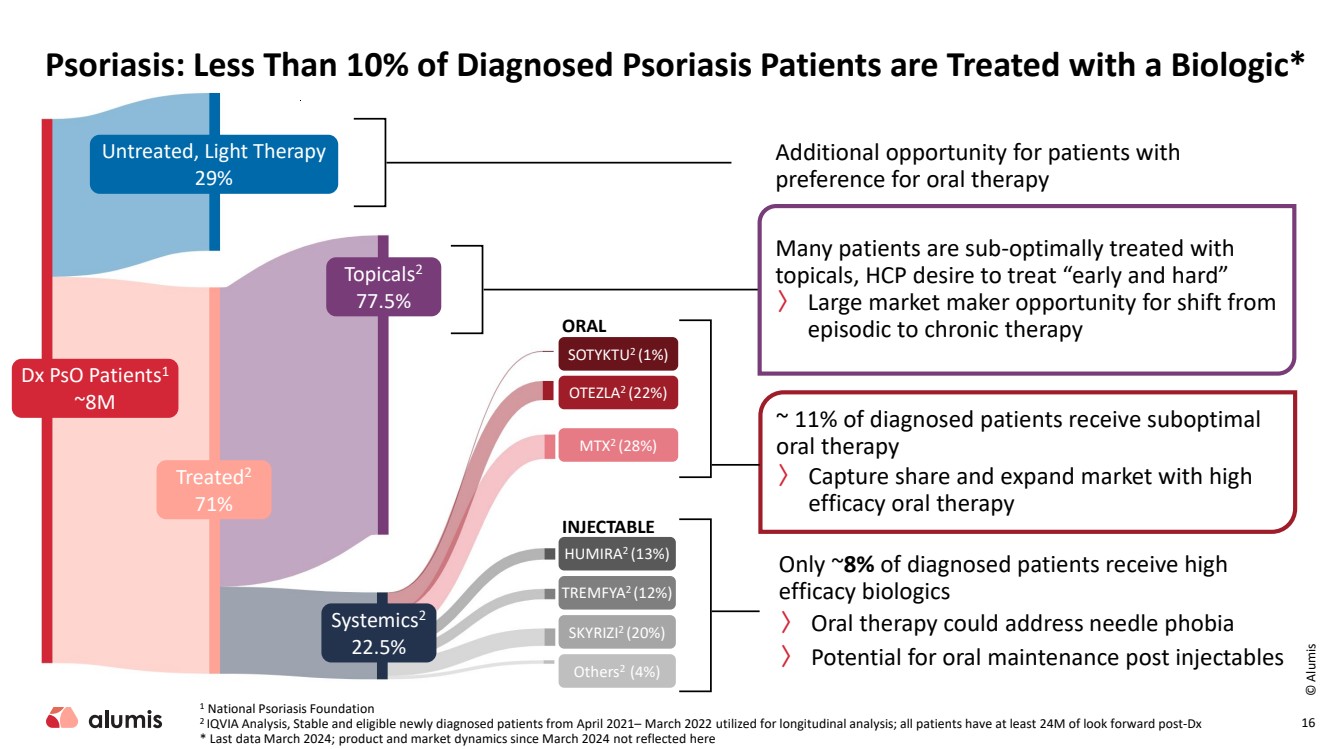
| 1 National Psoriasis Foundation 2 IQVIA Analysis, Stable and eligible newly diagnosed patients from April 2021– March 2022 utilized for longitudinal analysis; all patients have at least 24M of look forward post-Dx * Last data March 2024; product and market dynamics since March 2024 not reflected here 16 Psoriasis: Less Than 10% of Diagnosed Psoriasis Patients are Treated with a Biologic* ~ 11% of diagnosed patients receive suboptimal oral therapy 〉 Capture share and expand market with high efficacy oral therapy Only ~8% of diagnosed patients receive high efficacy biologics 〉 Oral therapy could address needle phobia 〉 Potential for oral maintenance post injectables Additional opportunity for patients with preference for oral therapy © Alumis Many patients are sub-optimally treated with topicals, HCP desire to treat “early and hard” 〉 Large market maker opportunity for shift from episodic to chronic therapy Untreated, Light Therapy 29% Treated2 71% Dx PsO Patients1 ~8M Topicals2 77.5% Systemics2 22.5% SOTYKTU2 (1%) OTEZLA2 (22%) MTX2 (28%) ORAL Others2 (4%) TREMFYA2 (12%) HUMIRA2 (13%) SKYRIZI2 (20%) INJECTABLE |
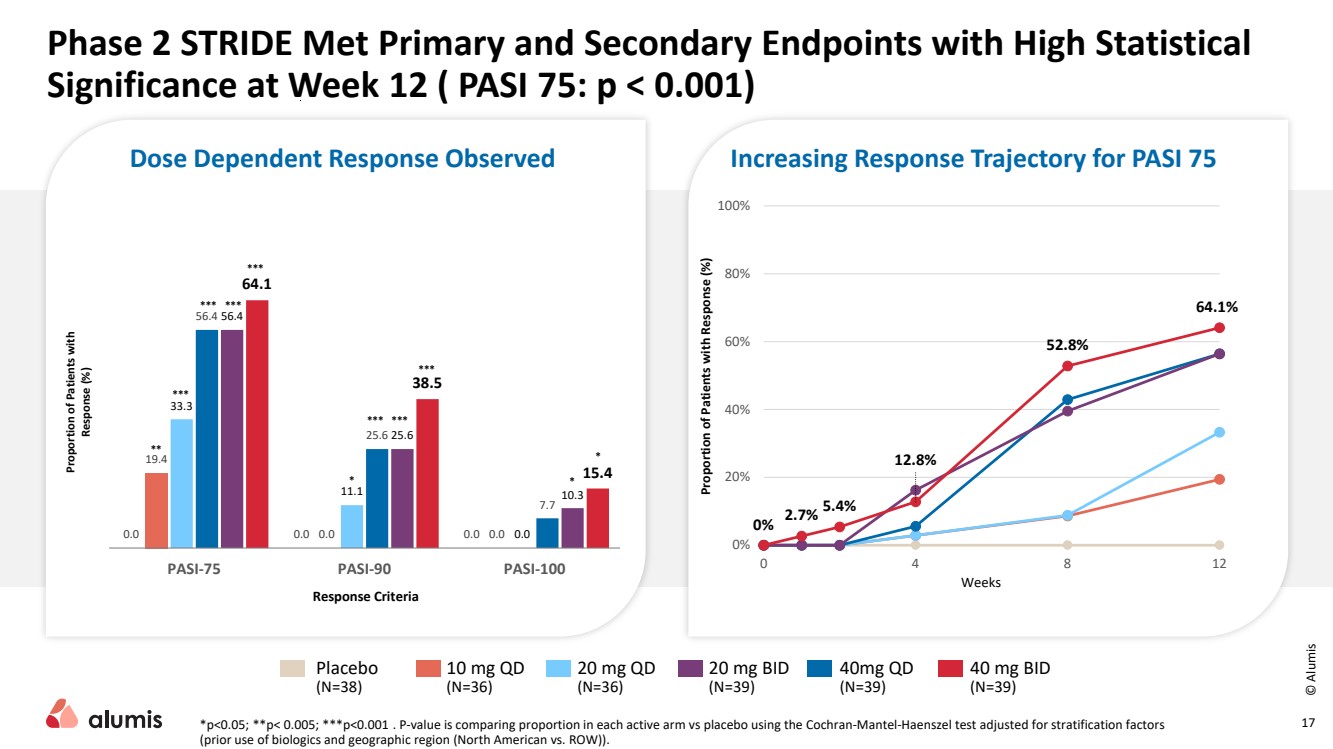
| *p<0.05; **p< 0.005; ***p<0.001 . P-value is comparing proportion in each active arm vs placebo using the Cochran-Mantel-Haenszel test adjusted for stratification factors (prior use of biologics and geographic region (North American vs. ROW)). © Alumis 17 Phase 2 STRIDE Met Primary and Secondary Endpoints with High Statistical Significance at Week 12 ( PASI 75: p < 0.001) Dose Dependent Response Observed Increasing Response Trajectory for PASI 75 0% 2.7% 5.4% 12.8% 52.8% 64.1% 0% 20% 40% 60% 80% 100% 0 4 8 12 0.0 0.0 0.0 19.4 0.0 0.0 33.3 11.1 0.0 56.4 25.6 7.7 56.4 25.6 10.3 64.1 38.5 15.4 PASI-75 PASI-90 PASI-100 Proportion of Patients with Response (%) Response Criteria *** *** *** *** ** * *** *** *** * * Weeks Proportion of Patients with Response (%) 40 mg BID (N=39) 20 mg BID (N=39) 40mg QD (N=39) 20 mg QD (N=36) 10 mg QD (N=36) Placebo (N=38) |
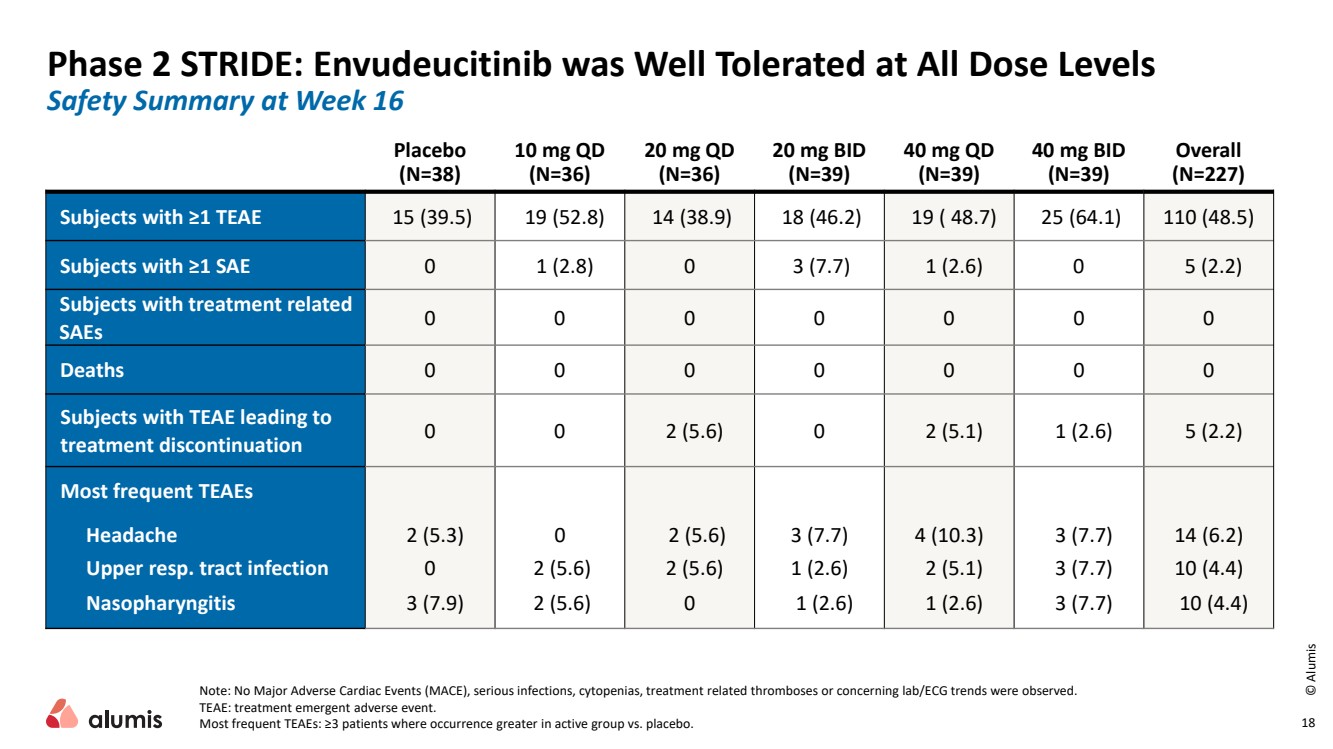
| Placebo (N=38) 10 mg QD (N=36) 20 mg QD (N=36) 20 mg BID (N=39) 40 mg QD (N=39) 40 mg BID (N=39) Overall (N=227) Subjects with ≥1 TEAE 15 (39.5) 19 (52.8) 14 (38.9) 18 (46.2) 19 ( 48.7) 25 (64.1) 110 (48.5) Subjects with ≥1 SAE 0 1 (2.8) 0 3 (7.7) 1 (2.6) 0 5 (2.2) Subjects with treatment related SAEs 0 0 0 0 0 0 0 Deaths 0 0 0 0 0 0 0 Subjects with TEAE leading to treatment discontinuation 0 0 2 (5.6) 0 2 (5.1) 1 (2.6) 5 (2.2) Most frequent TEAEs Headache 2 (5.3) 0 2 (5.6) 3 (7.7) 4 (10.3) 3 (7.7) 14 (6.2) Upper resp. tract infection 0 2 (5.6) 2 (5.6) 1 (2.6) 2 (5.1) 3 (7.7) 10 (4.4) Nasopharyngitis 3 (7.9) 2 (5.6) 0 1 (2.6) 1 (2.6) 3 (7.7) 10 (4.4) 18 Phase 2 STRIDE: Envudeucitinib was Well Tolerated at All Dose Levels Safety Summary at Week 16 Note: No Major Adverse Cardiac Events (MACE), serious infections, cytopenias, treatment related thromboses or concerning lab/ECG trends were observed. TEAE: treatment emergent adverse event. Most frequent TEAEs: ≥3 patients where occurrence greater in active group vs. placebo. © Alumis |
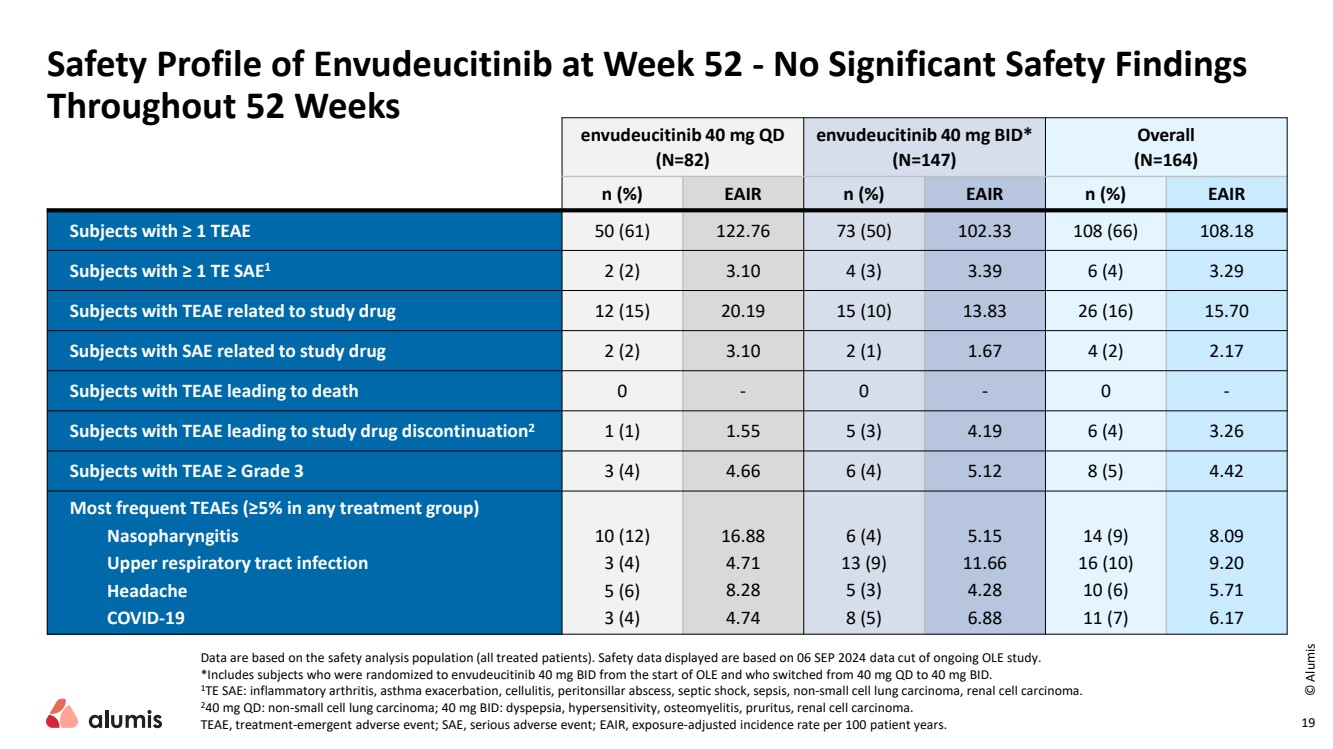
| 19 Safety Profile of Envudeucitinib at Week 52 - No Significant Safety Findings Throughout 52 Weeks envudeucitinib 40 mg QD (N=82) envudeucitinib 40 mg BID* (N=147) Overall (N=164) n (%) EAIR n (%) EAIR n (%) EAIR Subjects with ≥ 1 TEAE 50 (61) 122.76 73 (50) 102.33 108 (66) 108.18 Subjects with ≥ 1 TE SAE1 2 (2) 3.10 4 (3) 3.39 6 (4) 3.29 Subjects with TEAE related to study drug 12 (15) 20.19 15 (10) 13.83 26 (16) 15.70 Subjects with SAE related to study drug 2 (2) 3.10 2 (1) 1.67 4 (2) 2.17 Subjects with TEAE leading to death 0 - 0 - 0 - Subjects with TEAE leading to study drug discontinuation2 1 (1) 1.55 5 (3) 4.19 6 (4) 3.26 Subjects with TEAE ≥ Grade 3 3 (4) 4.66 6 (4) 5.12 8 (5) 4.42 Most frequent TEAEs (≥5% in any treatment group) Nasopharyngitis Upper respiratory tract infection Headache COVID-19 10 (12) 3 (4) 5 (6) 3 (4) 16.88 4.71 8.28 4.74 6 (4) 13 (9) 5 (3) 8 (5) 5.15 11.66 4.28 6.88 14 (9) 16 (10) 10 (6) 11 (7) 8.09 9.20 5.71 6.17 Data are based on the safety analysis population (all treated patients). Safety data displayed are based on 06 SEP 2024 data cut of ongoing OLE study. *Includes subjects who were randomized to envudeucitinib 40 mg BID from the start of OLE and who switched from 40 mg QD to 40 mg BID. 1TE SAE: inflammatory arthritis, asthma exacerbation, cellulitis, peritonsillar abscess, septic shock, sepsis, non-small cell lung carcinoma, renal cell carcinoma. 240 mg QD: non-small cell lung carcinoma; 40 mg BID: dyspepsia, hypersensitivity, osteomyelitis, pruritus, renal cell carcinoma. TEAE, treatment-emergent adverse event; SAE, serious adverse event; EAIR, exposure-adjusted incidence rate per 100 patient years. © Alumis |
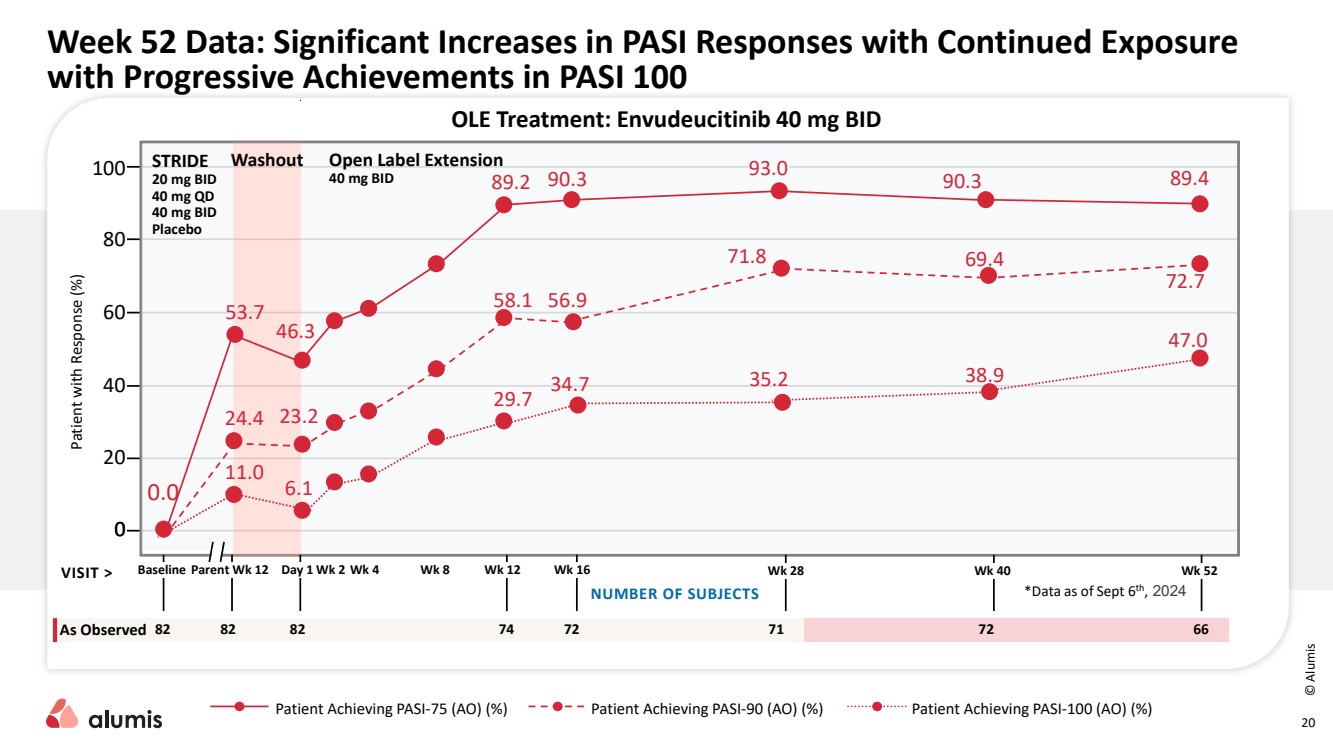
| Patient Achieving PASI-75 (AO) (%) Patient Achieving PASI-90 (AO) (%) Patient Achieving PASI-100 (AO) (%) 20 Week 52 Data: Significant Increases in PASI Responses with Continued Exposure with Progressive Achievements in PASI 100 OLE Treatment: Envudeucitinib 40 mg BID As Observed 82 82 82 74 72 71 72 66 Open Label Extension 40 mg BID STRIDE Washout 20 mg BID 40 mg QD 40 mg BID Placebo Patient with Response (%) 100 80 60 40 20 0 VISIT > Baseline Wk 2 Wk 4 Wk 8 Wk 12 Wk 16 Wk 28 *Data as of Sept 6th, 2024 Parent Wk 12 Day 1 Wk 40 Wk 52 NUMBER OF SUBJECTS 46.3 23.2 53.7 24.4 11.0 0.0 6.1 35.2 71.8 93.0 90.3 56.9 34.7 89.2 58.1 29.7 38.9 69.4 90.3 47.0 72.7 89.4 © Alumis |
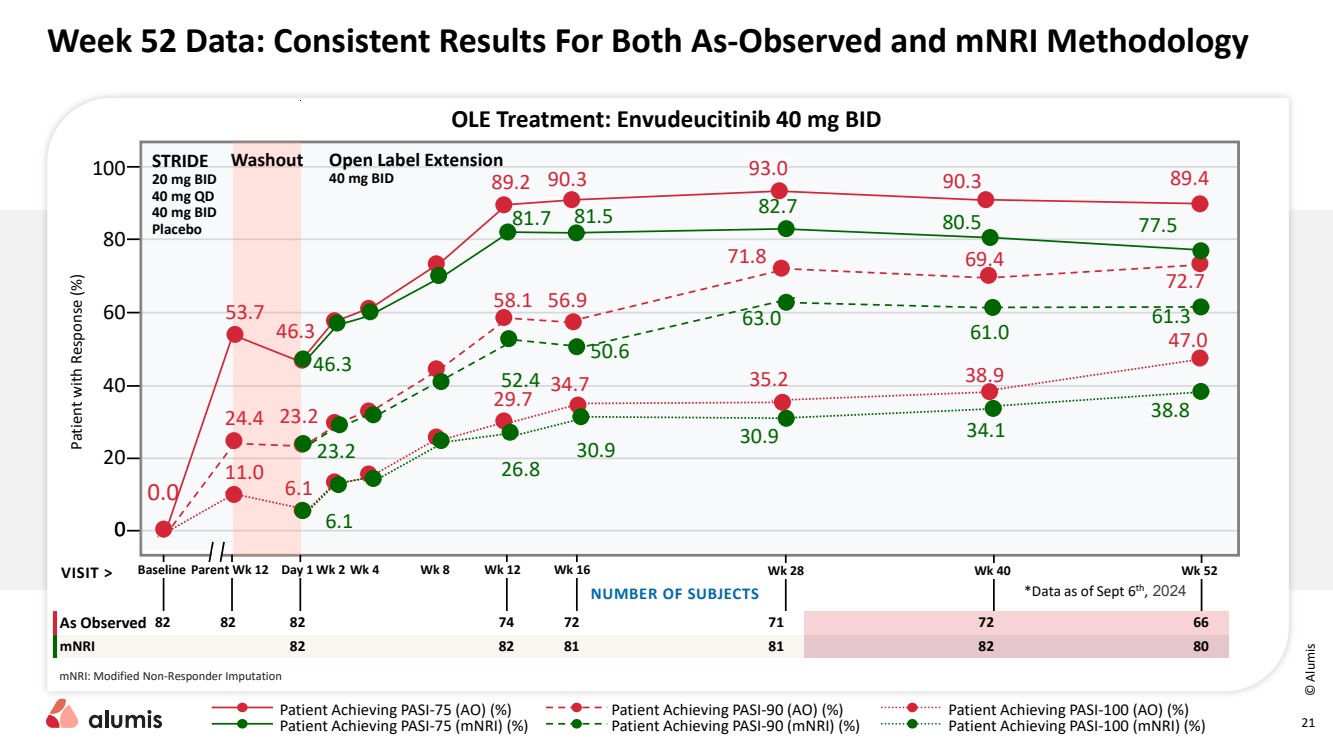
| 21 Week 52 Data: Consistent Results For Both As-Observed and mNRI Methodology Patient Achieving PASI-75 (mNRI) (%) Patient Achieving PASI-90 (mNRI) (%) Patient Achieving PASI-100 (mNRI) (%) Patient Achieving PASI-75 (AO) (%) Patient Achieving PASI-90 (AO) (%) Patient Achieving PASI-100 (AO) (%) OLE Treatment: Envudeucitinib 40 mg BID Open Label Extension 40 mg BID STRIDE Washout 20 mg BID 40 mg QD 40 mg BID Placebo Patient with Response (%) 100 80 60 40 20 0 mNRI: Modified Non-Responder Imputation As Observed 82 82 82 74 72 71 72 66 mNRI 82 82 81 81 82 80 0 VISIT > Baseline Parent Wk 12 Day 1 Wk 2 Wk 4 Wk 8 Wk 12 Wk 16 Wk 28 Wk 40 Wk 52 NUMBER OF SUBJECTS 46.3 23.2 53.7 24.4 11.0 0.0 6.1 35.2 71.8 93.0 90.3 56.9 34.7 89.2 58.1 29.7 38.9 69.4 90.3 47.0 72.7 89.4 81.7 81.5 46.3 23.2 26.8 50.6 52.4 30.9 63.0 30.9 82.7 6.1 61.0 61.3 34.1 38.8 80.5 77.5 *Data as of Sept 6th, 2024 © Alumis |
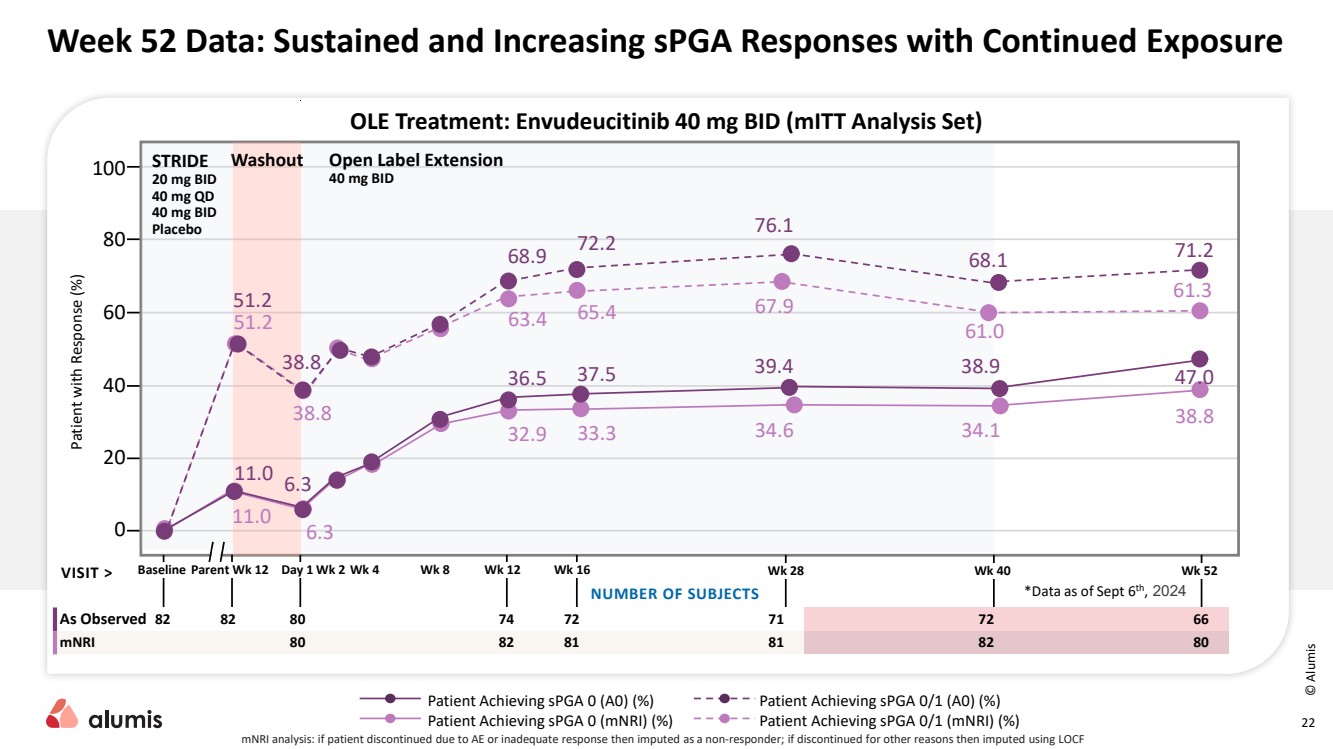
| OLE Treatment: Envudeucitinib 40 mg BID (mITT Analysis Set) Open Label Extension 40 mg BID STRIDE Washout 20 mg BID 40 mg QD 40 mg BID Placebo Patient with Response (%) 100 80 60 40 20 0 22 Week 52 Data: Sustained and Increasing sPGA Responses with Continued Exposure Patient Achieving sPGA 0 (A0) (%) Patient Achieving sPGA 0/1 (A0) (%) Patient Achieving sPGA 0 (mNRI) (%) Patient Achieving sPGA 0/1 (mNRI) (%) mNRI analysis: if patient discontinued due to AE or inadequate response then imputed as a non-responder; if discontinued for other reasons then imputed using LOCF VISIT > Baseline Parent Wk 12 Day 1 Wk 2 Wk 4 Wk 8 Wk 12 Wk 16 Wk 28 Wk 40 Wk 52 NUMBER OF SUBJECTS As Observed 82 82 80 74 72 71 72 66 mNRI 80 82 81 81 82 80 51.2 65.4 63.4 67.9 38.8 61.0 61.3 11.0 32.9 33.3 34.6 6.3 34.1 38.8 6.3 39.4 76.1 72.2 37.5 68.9 36.5 11.0 51.2 38.8 38.9 68.1 47.0 71.2 *Data as of Sept 6th, 2024 © Alumis |
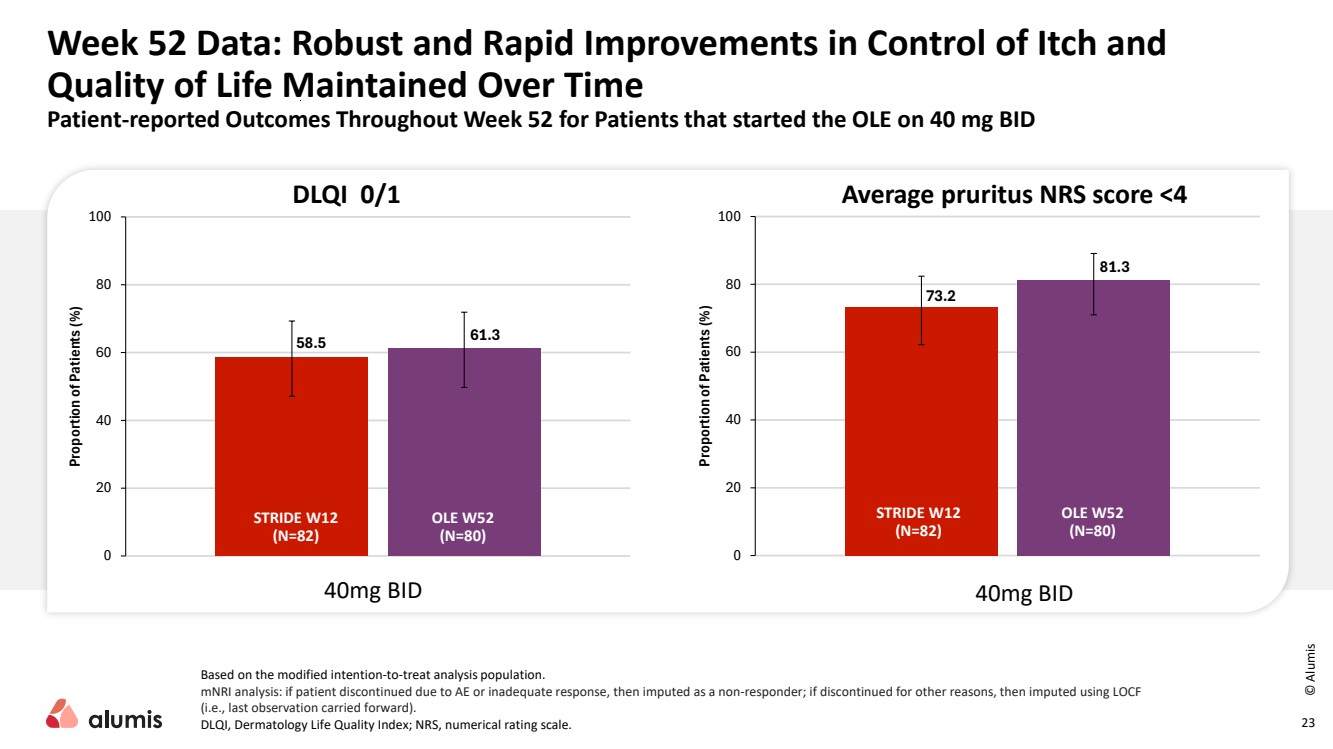
| Based on the modified intention-to-treat analysis population. mNRI analysis: if patient discontinued due to AE or inadequate response, then imputed as a non-responder; if discontinued for other reasons, then imputed using LOCF (i.e., last observation carried forward). DLQI, Dermatology Life Quality Index; NRS, numerical rating scale. 23 Week 52 Data: Robust and Rapid Improvements in Control of Itch and Quality of Life Maintained Over Time Patient-reported Outcomes Throughout Week 52 for Patients that started the OLE on 40 mg BID 58.5 61.3 0 20 40 60 80 100 Proportion of Patients (%) DLQI 0/1 73.2 81.3 0 20 40 60 80 100 Proportion of Patients (%) Average pruritus NRS score <4 STRIDE W12 (N=82) OLE W52 (N=80) STRIDE W12 (N=82) OLE W52 (N=80) 40mg BID 40mg BID © Alumis |
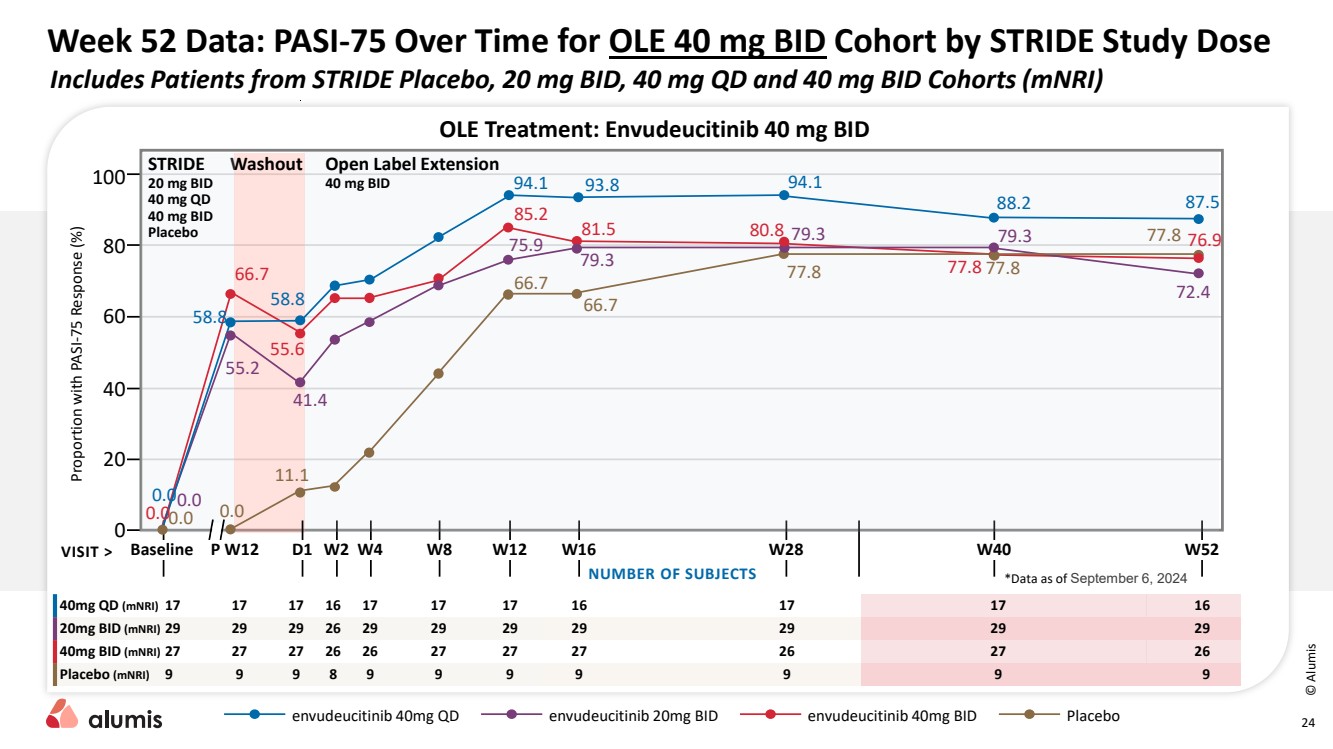
| NUMBER OF SUBJECTS STRIDE Washout 20 mg BID 40 mg QD 40 mg BID Placebo Proportion with PASI-75 Response (%) 100 80 60 40 20 0 VISIT > Baseline P W12 D1 W2 W4 Open Label Extension 40 mg BID OLE Treatment: Envudeucitinib 40 mg BID *Data as of September 6, 2024 W8 W12 W16 W28 W40 W52 © Alumis 24 Week 52 Data: PASI-75 Over Time for OLE 40 mg BID Cohort by STRIDE Study Dose envudeucitinib 40mg QD envudeucitinib 20mg BID envudeucitinib 40mg BID Placebo 40mg QD (mNRI) 17 17 17 16 17 17 17 16 17 17 16 20mg BID (mNRI) 29 29 29 26 29 29 29 29 29 29 29 40mg BID (mNRI) 27 27 27 26 26 27 27 27 26 27 26 Placebo (mNRI) 9 9 9 8 9 9 9 9 9 9 9 94.1 93.8 94.1 58.8 58.8 0.0 81.5 79.3 66.7 66.7 85.2 75.9 11.1 55.6 41.4 0.0 66.7 55.2 0.0 0.0 0.0 77.8 77.8 88.2 87.5 77.8 79.3 76.9 72.4 79.3 77.8 80.8 Includes Patients from STRIDE Placebo, 20 mg BID, 40 mg QD and 40 mg BID Cohorts (mNRI) |
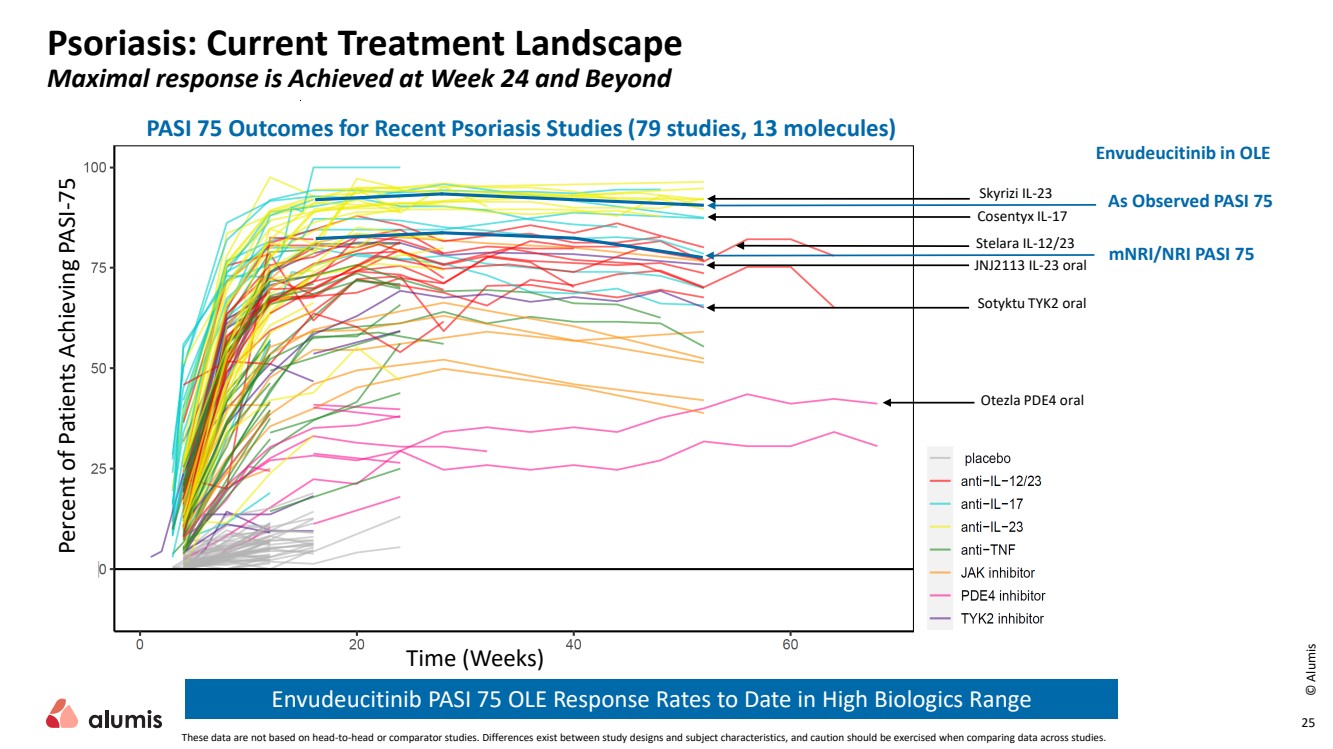
| © Alumis 25 Psoriasis: Current Treatment Landscape Maximal response is Achieved at Week 24 and Beyond Percent of Patients Achieving PASI-75 Time (Weeks) Skyrizi IL-23 Cosentyx IL-17 Stelara IL-12/23 JNJ2113 IL-23 oral Sotyktu TYK2 oral Otezla PDE4 oral PASI 75 Outcomes for Recent Psoriasis Studies (79 studies, 13 molecules) Envudeucitinib in OLE As Observed PASI 75 mNRI/NRI PASI 75 These data are not based on head-to-head or comparator studies. Differences exist between study designs and subject characteristics, and caution should be exercised when comparing data across studies. Envudeucitinib PASI 75 OLE Response Rates to Date in High Biologics Range |
| 1. Global Data, Plaque Psoriasis: Seven-Market Drug Forecast and Market Analysis Market Forecast 2023–2030, May 2024. © Alumis 26 Kaken Collaboration and Licensing Agreement Secures Key Market for Envu Global Commercialization Strategy Alumis-Kaken Collaboration for envu in Dermatology in Japan 〉 Collaboration underscores envu’s commercial potential in PsO and leverages Kaken’s regional capabilities and expertise in novel dermatology treatments 〉 Non-dilutive capital extends current runway through Phase 3 PsO data readout 〉 Maintains optionality for global commercialization strategy, including potential global partnering 〉 Kaken: Specialty pharmaceutical company in Japan with strong experience in developing and commercializing novel pharmaceuticals with a focus on dermatology 〉 Upfront and Near-Term Payments to Alumis: $40M ($20M upfront, $20M in 2025-2026 non-contingent payments) 〉 Additional Regulatory and Commercial Milestones and Option Fees: Approx. $140M in aggregate 〉 Tiered Royalties: Low double-digits to mid-twenties on aggregate net sales in Japan 〉 Indications Covered: Dermatological indications including PsO, PsA, CLE, etc. 〉 Expansion: Options for rheumatology and GI diseases Deal Background and Terms Alumis receiving $40M near-term for Japan, <5% of Worldwide Psoriasis Market (estimated at $600M in 2024)1 , highlighting significant opportunity for Alumis in ROW |
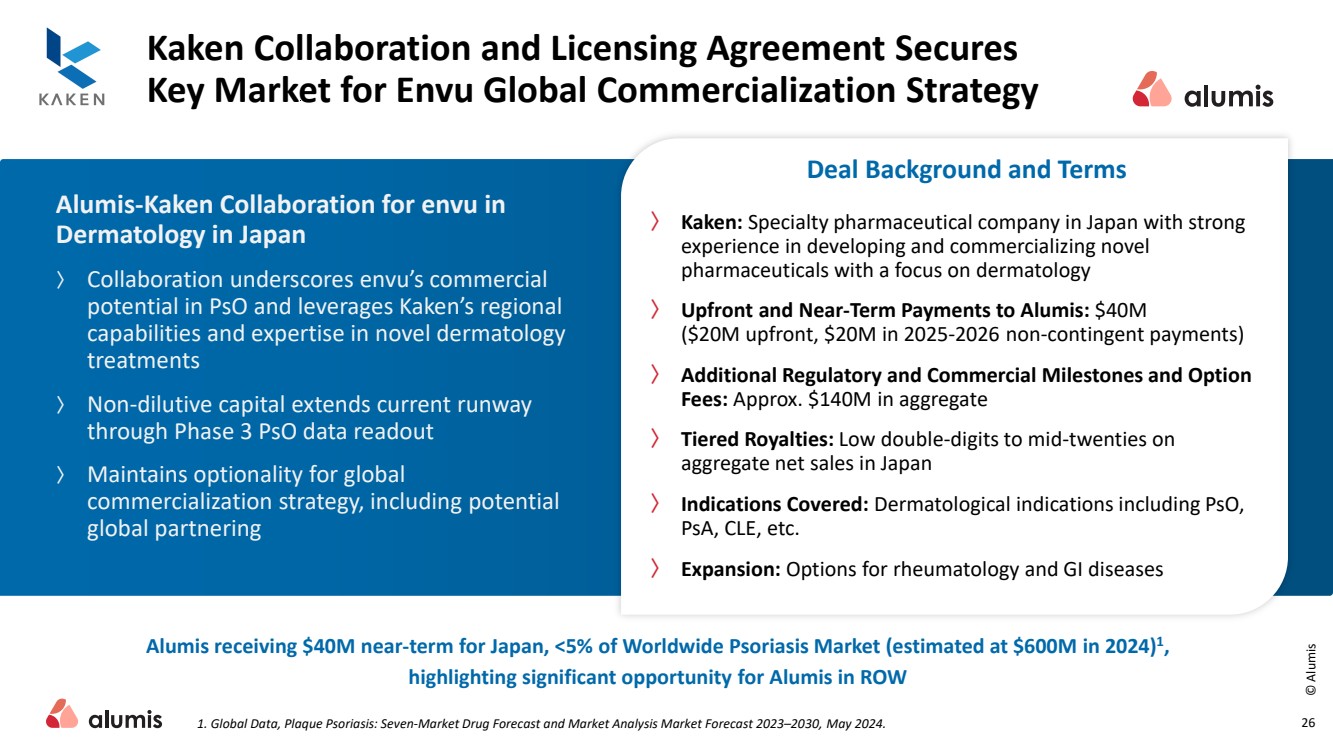
| 〉 Potential best in disease oral therapy 〉 Envu reduces Interferon signature dramatically in PSO patients 〉 Envu has the potential for a favorable safety profile due to its selectivity 〉 Ongoing biomarker work could identify predictors of response 〉 Successful LUMUS outcome unlocks breadth of interferon driven indications 〉 Team track record of successful SLE trials Envudeucitinib for Lupus: A Promising Next Indication and Market Opportunity© Alumis 27 〉 No approved oral targeted therapy for SLE 〉 Interferon inhibition validated for the treatment of SLE 〉 Broad immunosuppressive therapies are associated with significant side effects 〉 Maximal TYK2 inhibition expected to drive improved efficacy 〉 >$ 4B market opportunity* 〉 Multiple I&I diseases driven by interferon pathway *2030 estimates from GlobalData report. Opportunity Envudeucitinib |
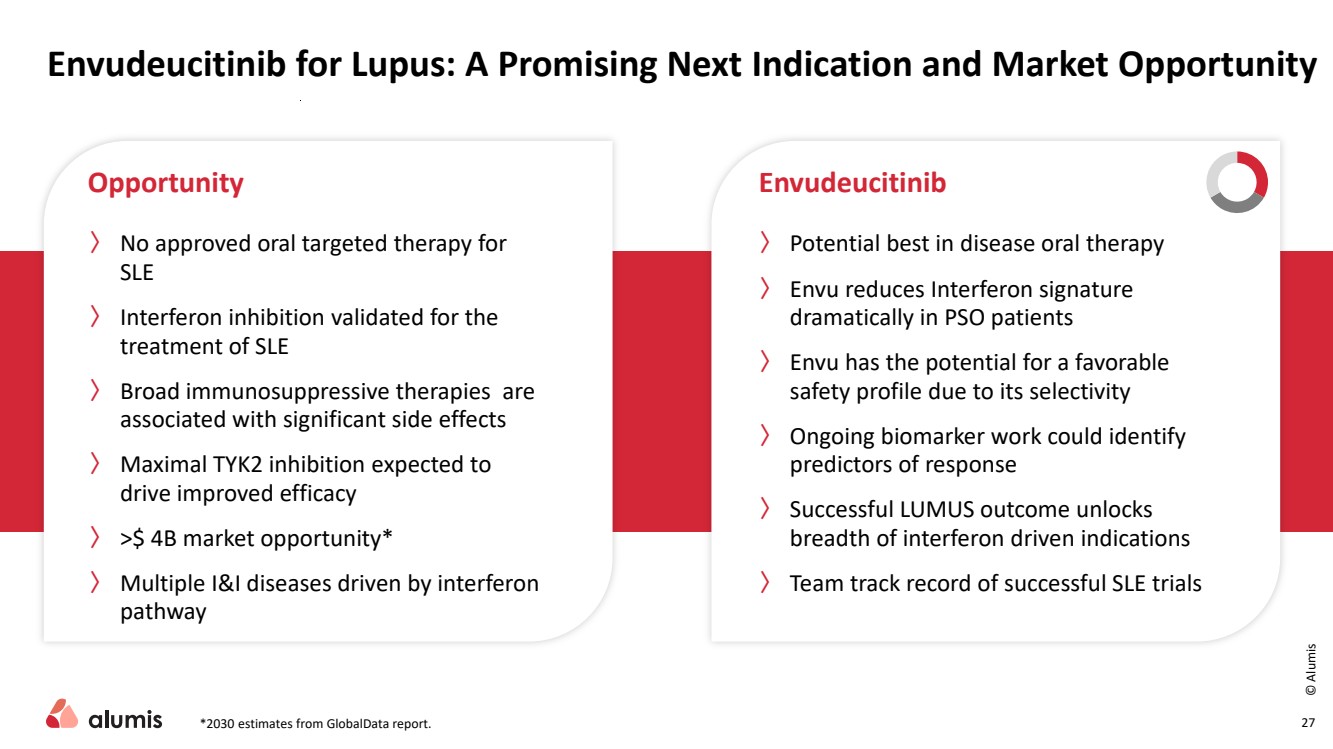
| ~3.4M PATIENTS WORLDWIDE1 $4B+ GLOBAL MARKET3 Envu in SLE: Potential Ability to Maximally Inhibit Type I Interferon Offers Promise as an Oral Therapy 1. Current patient estimates from Tian J, Zhang D, Yao X, Huang Y, Lu Q. Global epidemiology of systemic lupus erythematosus: a comprehensive systematic analysis and modelling study. Ann Rheum Dis. 2023 Mar;82(3):351-356. doi: 10.1136/ard-2022-223035. Epub 2022 Oct 14. PMID: 36241363; PMCID: PMC9933169. 2. Current patient estimate per GlobalData report 3. 2030 estimates from GlobalData report 28 SYSTEMIC LUPUS ERYTHEMATOSUS ~400K PEOPLE have SLE in the US, 68% with moderate-to-severe disease2 STRONG UNMET NEED persists in the SLE treatment space, with only two approved treatments available; biologics are effective in a subset of patients OPPORTUNITY to expand into lupus nephritis and cutaneous lupus erythematosus (CLE) © Alumis |
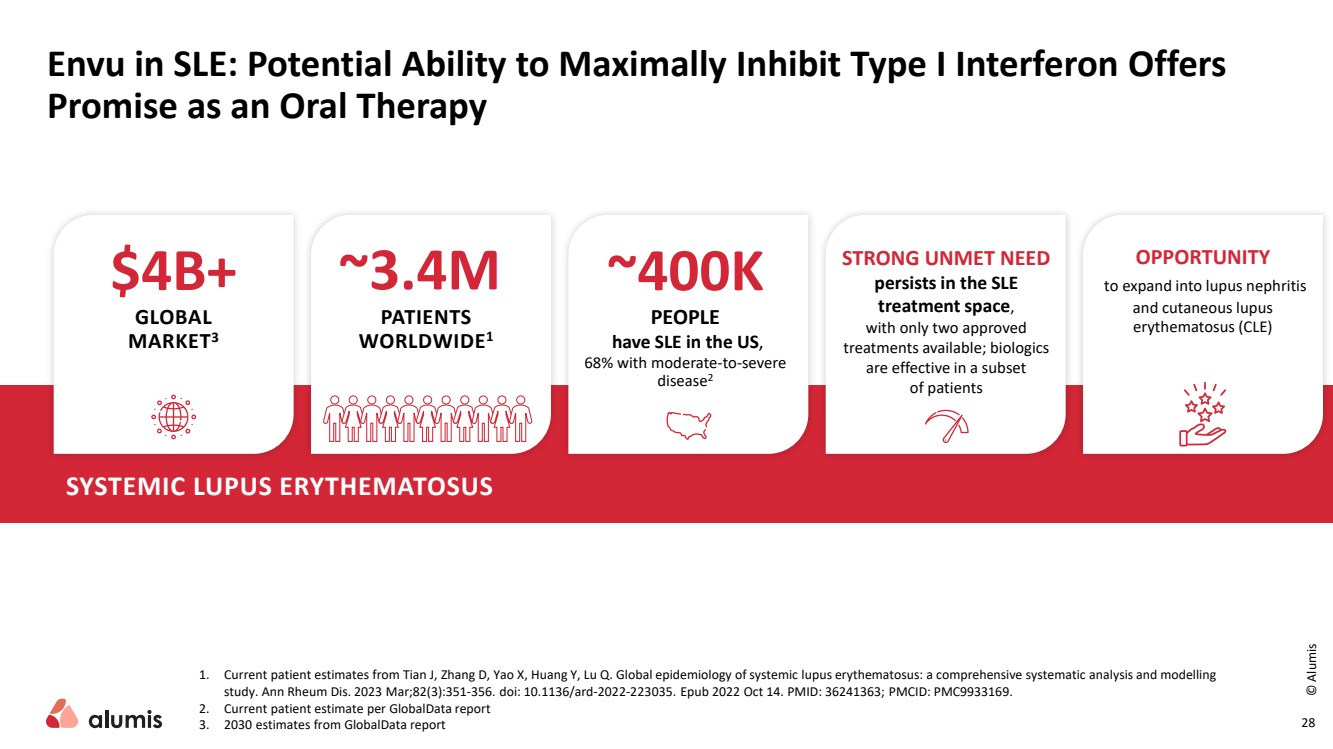
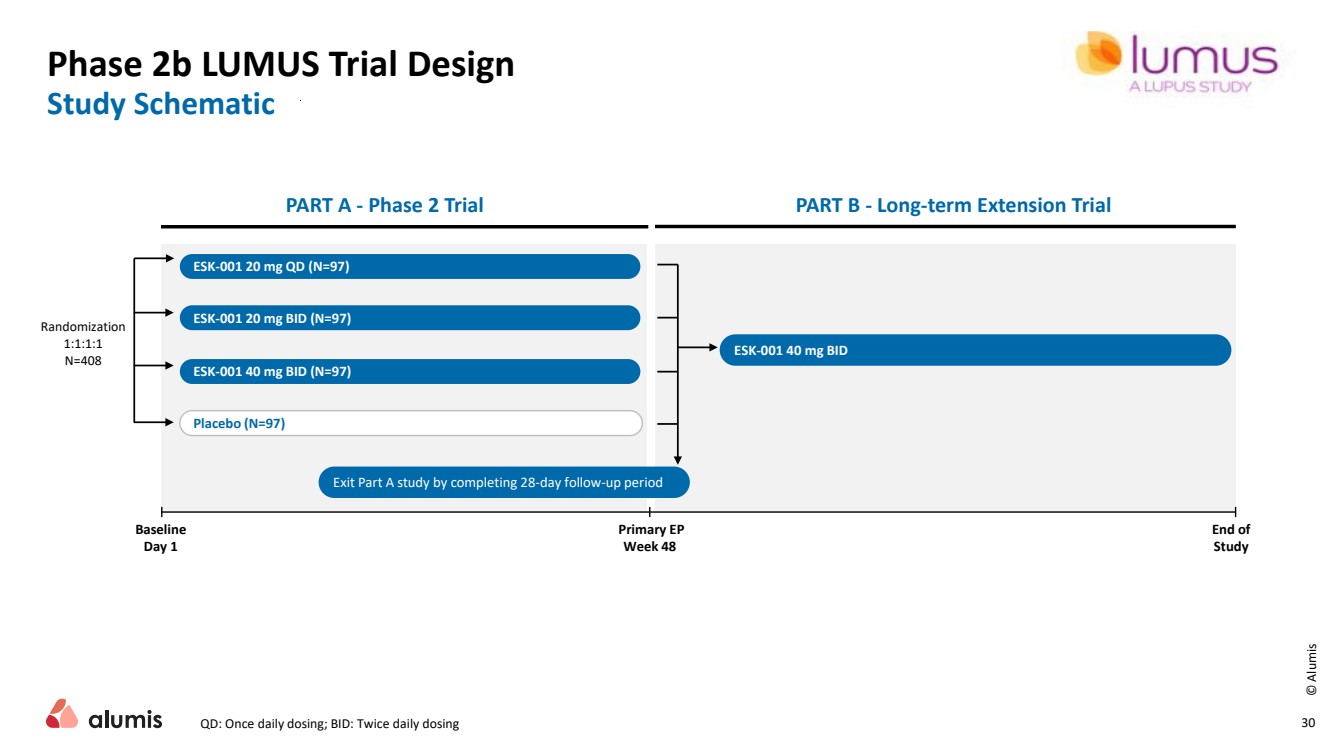
| SLE: Ongoing Phase 2b Program (LUMUS) is Designed for Speed to Market and Probability of Clinical Success 29 〉 High unmet need for safe and effective treatment in SLE – No oral targeted treatments available at this time – Opportunity to expand into lupus nephritis, cutaneous lupus 〉 Multiple points of validation for TYK2 and associated pathways in SLE – Strong genetic rationale from P1104A loss of function mutation – Strong scientific rationale for inhibition of Type I Interferon preclinically and from Saphnelo® – Positive Phase 2 results from competitive TYK2 molecule 〉 Ongoing global Phase 2b LUMUS trial, expected topline readout in Q3 2026 – Designed as first of two potentially pivotal trials – Primary endpoint BICLA at week 48, enrolled n=408 patients – Includes OLE for long term safety database 〉 Potential for accelerated regulatory pathway with one additional confirmatory Phase 3 trial prior to seeking approval © Alumis |
| QD: Once daily dosing; BID: Twice daily dosing 30 Phase 2b LUMUS Trial Design Study Schematic PART A - Phase 2 Trial PART B - Long-term Extension Trial ESK-001 40 mg BID ESK-001 20 mg QD (N=97) ESK-001 20 mg BID (N=97) ESK-001 40 mg BID (N=97) Primary EP Week 48 Baseline Day 1 End of Study Placebo (N=97) Exit Part A study by completing 28-day follow-up period Randomization 1:1:1:1 N=408 © Alumis |
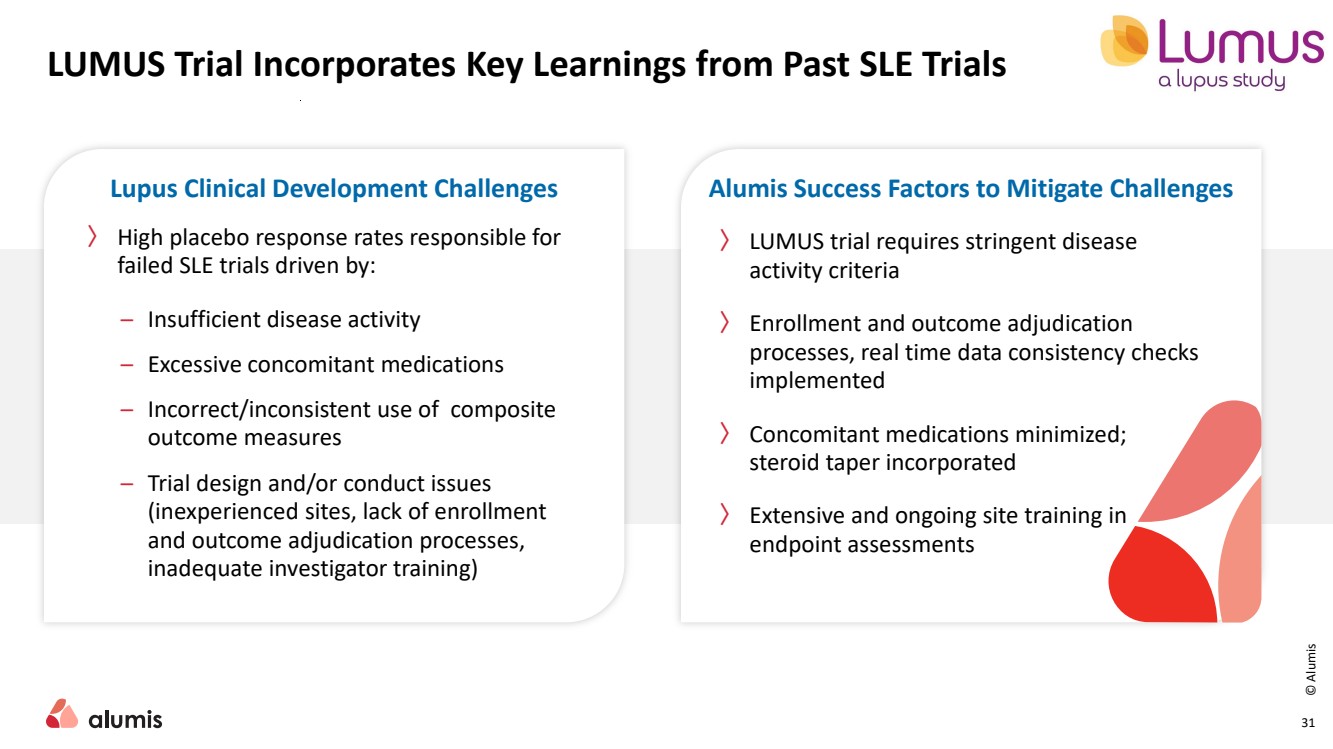
| © Alumis 31 LUMUS Trial Incorporates Key Learnings from Past SLE Trials 〉 High placebo response rates responsible for failed SLE trials driven by: – Insufficient disease activity – Excessive concomitant medications – Incorrect/inconsistent use of composite outcome measures – Trial design and/or conduct issues (inexperienced sites, lack of enrollment and outcome adjudication processes, inadequate investigator training) 〉 LUMUS trial requires stringent disease activity criteria 〉 Enrollment and outcome adjudication processes, real time data consistency checks implemented 〉 Concomitant medications minimized; steroid taper incorporated 〉 Extensive and ongoing site training in endpoint assessments Lupus Clinical Development Challenges Alumis Success Factors to Mitigate Challenges |
| A-005: First-in-Class, CNS-Penetrant Allosteric TYK2 Inhibitor |
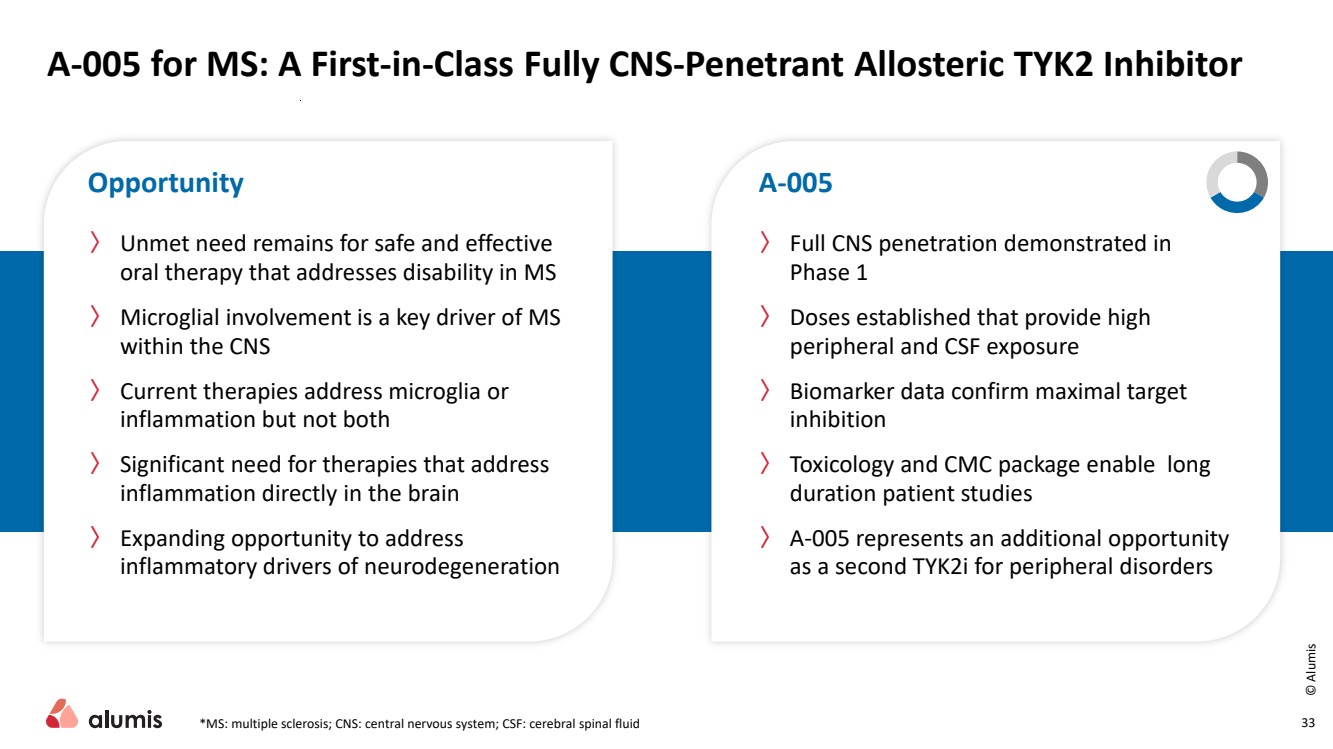
| 〉 Full CNS penetration demonstrated in Phase 1 〉 Doses established that provide high peripheral and CSF exposure 〉 Biomarker data confirm maximal target inhibition 〉 Toxicology and CMC package enable long duration patient studies 〉 A-005 represents an additional opportunity as a second TYK2i for peripheral disorders A-005 for MS: A First-in-Class Fully CNS-Penetrant Allosteric TYK2 Inhibitor © Alumis 33 〉 Unmet need remains for safe and effective oral therapy that addresses disability in MS 〉 Microglial involvement is a key driver of MS within the CNS 〉 Current therapies address microglia or inflammation but not both 〉 Significant need for therapies that address inflammation directly in the brain 〉 Expanding opportunity to address inflammatory drivers of neurodegeneration Opportunity A-005 *MS: multiple sclerosis; CNS: central nervous system; CSF: cerebral spinal fluid |
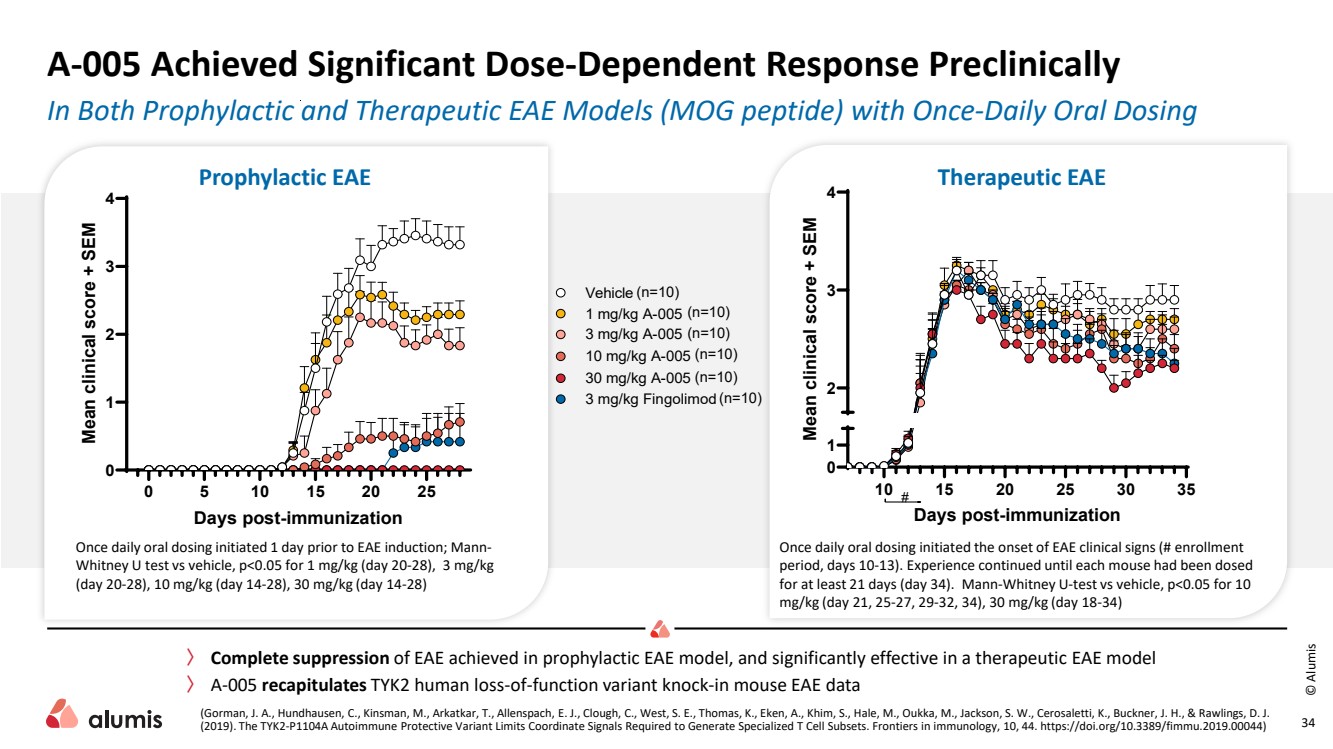
| Once daily oral dosing initiated 1 day prior to EAE induction; Mann-Whitney U test vs vehicle, p<0.05 for 1 mg/kg (day 20-28), 3 mg/kg (day 20-28), 10 mg/kg (day 14-28), 30 mg/kg (day 14-28) (Gorman, J. A., Hundhausen, C., Kinsman, M., Arkatkar, T., Allenspach, E. J., Clough, C., West, S. E., Thomas, K., Eken, A., Khim, S., Hale, M., Oukka, M., Jackson, S. W., Cerosaletti, K., Buckner, J. H., & Rawlings, D. J. (2019). The TYK2-P1104A Autoimmune Protective Variant Limits Coordinate Signals Required to Generate Specialized T Cell Subsets. Frontiers in immunology, 10, 44. https://doi.org/10.3389/fimmu.2019.00044) Once daily oral dosing initiated the onset of EAE clinical signs (# enrollment period, days 10-13). Experience continued until each mouse had been dosed for at least 21 days (day 34). Mann-Whitney U-test vs vehicle, p<0.05 for 10 mg/kg (day 21, 25-27, 29-32, 34), 30 mg/kg (day 18-34) 0 5 10 15 20 25 0 1 2 3 4 Days post-immunization Mean clinical score + SEM Vehicle 1 mg/kg A-005 3 mg/kg A-005 10 mg/kg A-005 30 mg/kg A-005 3 mg/kg Fingolimod 10 15 20 25 30 35 0 1 2 3 4 Days post-immunization Mean clinical score + SEM # 34 A-005 Achieved Significant Dose-Dependent Response Preclinically In Both Prophylactic and Therapeutic EAE Models (MOG peptide) with Once-Daily Oral Dosing Prophylactic EAE Therapeutic EAE (n=10) (n=10) (n=10) (n=10) (n=10) (n=10) © Alumis 〉 Complete suppression of EAE achieved in prophylactic EAE model, and significantly effective in a therapeutic EAE model 〉 A-005 recapitulates TYK2 human loss-of-function variant knock-in mouse EAE data |
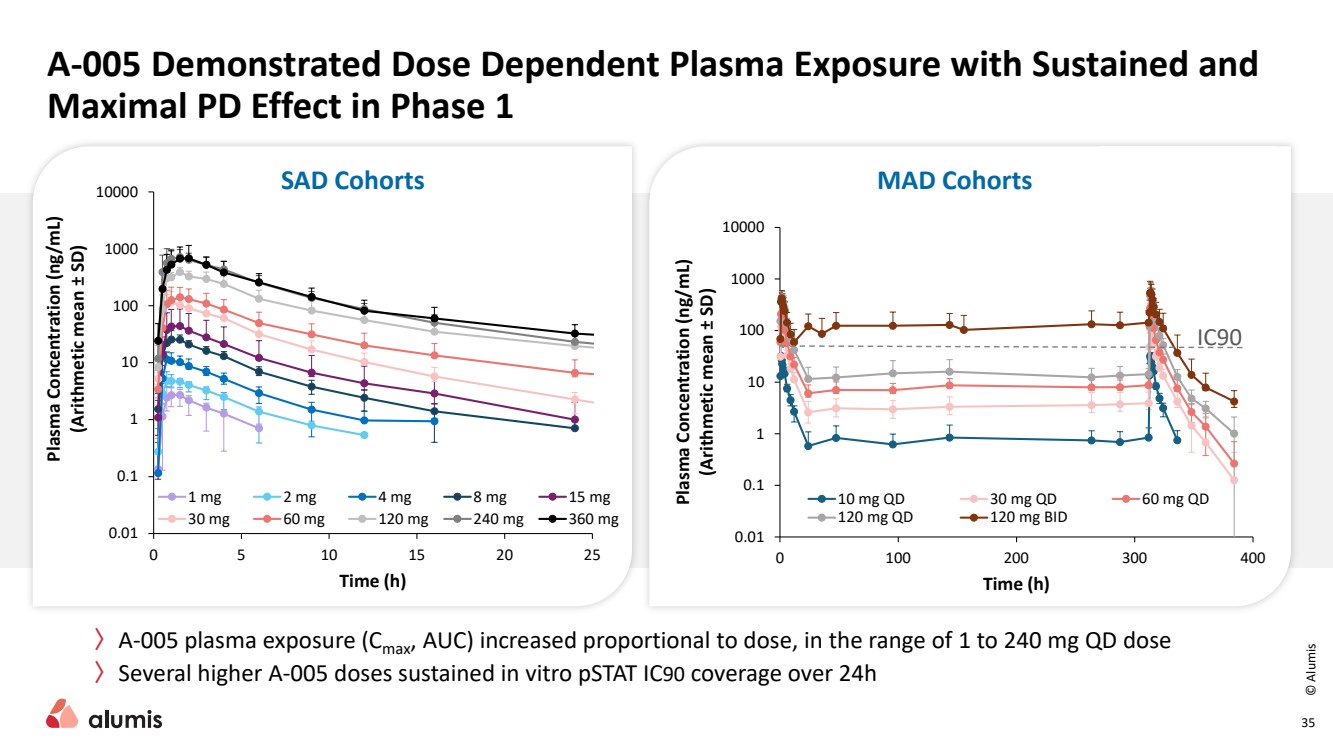
| © Alumis 35 A-005 Demonstrated Dose Dependent Plasma Exposure with Sustained and Maximal PD Effect in Phase 1 〉A-005 plasma exposure (Cmax, AUC) increased proportional to dose, in the range of 1 to 240 mg QD dose 〉Several higher A-005 doses sustained in vitro pSTAT IC90 coverage over 24h 0.01 0.1 1 10 100 1000 10000 0 5 10 15 20 25 Plasma Concentration (ng/mL) (Arithmetic mean ± SD) Time (h) 1 mg 2 mg 4 mg 8 mg 15 mg 30 mg 60 mg 120 mg 240 mg 360 mg 0.01 0.1 1 10 100 1000 10000 0 100 200 300 400 Plasma Concentration (ng/mL) (Arithmetic mean ± SD) Time (h) 10 mg QD 30 mg QD 60 mg QD 120 mg QD 120 mg BID IC90 SAD Cohorts MAD Cohorts |
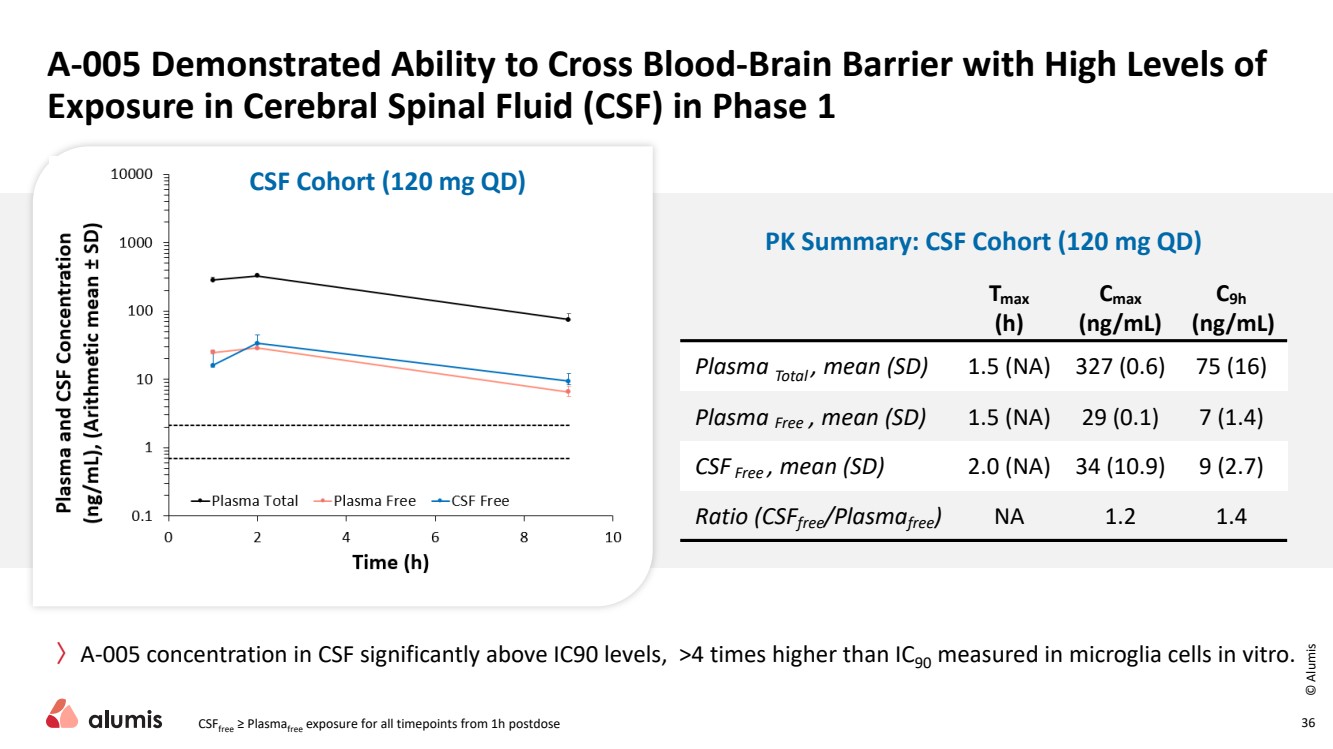
| CSFfree ≥ Plasmafree exposure for all timepoints from 1h postdose © Alumis 36 A-005 Demonstrated Ability to Cross Blood-Brain Barrier with High Levels of Exposure in Cerebral Spinal Fluid (CSF) in Phase 1 PK Summary: CSF Cohort (120 mg QD) Tmax (h) Cmax (ng/mL) C9h (ng/mL) Plasma Total , mean (SD) 1.5 (NA) 327 (0.6) 75 (16) Plasma Free , mean (SD) 1.5 (NA) 29 (0.1) 7 (1.4) CSF Free , mean (SD) 2.0 (NA) 34 (10.9) 9 (2.7) Ratio (CSFfree/Plasmafree) NA 1.2 1.4 〉A-005 concentration in CSF significantly above IC90 levels, >4 times higher than IC90 measured in microglia cells in vitro. CSF Cohort (120 mg QD) |
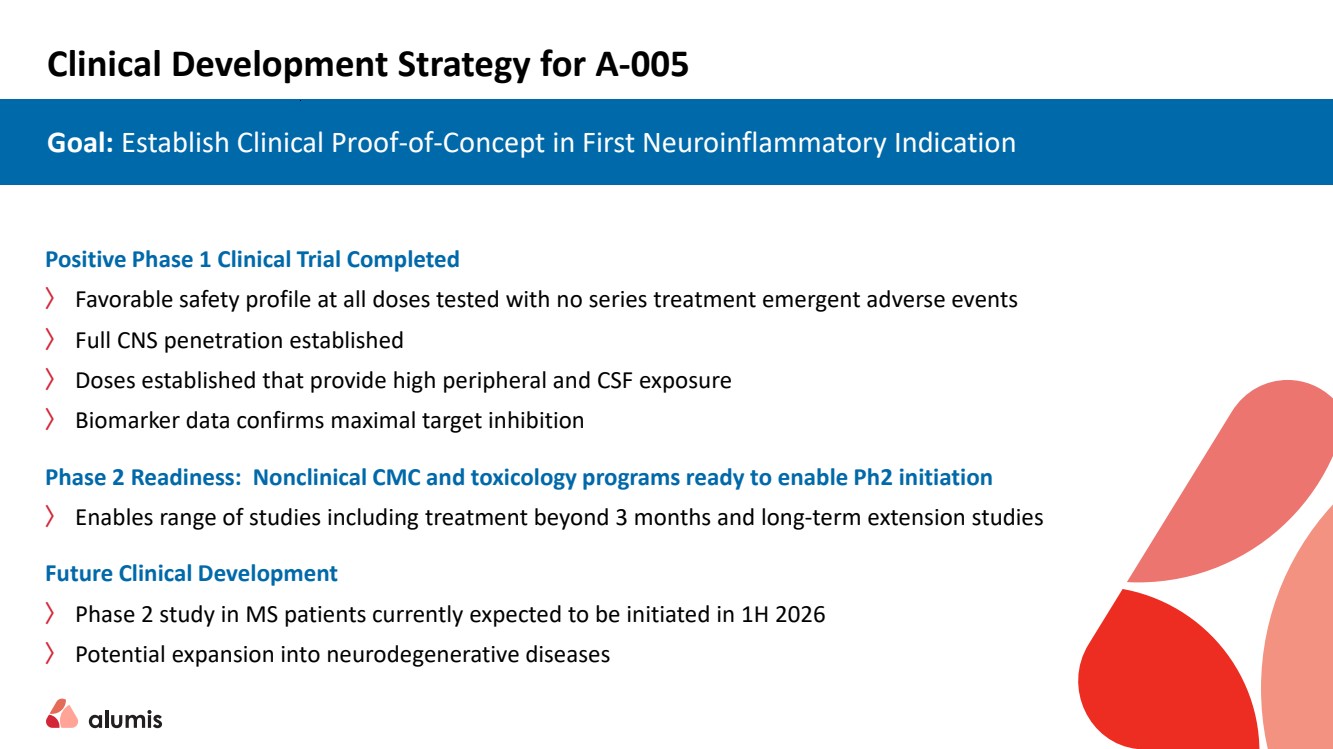
| Clinical Development Strategy for A-005 Goal: Establish Clinical Proof-of-Concept in First Neuroinflammatory Indication Positive Phase 1 Clinical Trial Completed 〉 Favorable safety profile at all doses tested with no series treatment emergent adverse events 〉 Full CNS penetration established 〉 Doses established that provide high peripheral and CSF exposure 〉 Biomarker data confirms maximal target inhibition Phase 2 Readiness: Nonclinical CMC and toxicology programs ready to enable Ph2 initiation 〉 Enables range of studies including treatment beyond 3 months and long-term extension studies Future Clinical Development 〉 Phase 2 study in MS patients currently expected to be initiated in 1H 2026 〉 Potential expansion into neurodegenerative diseases |
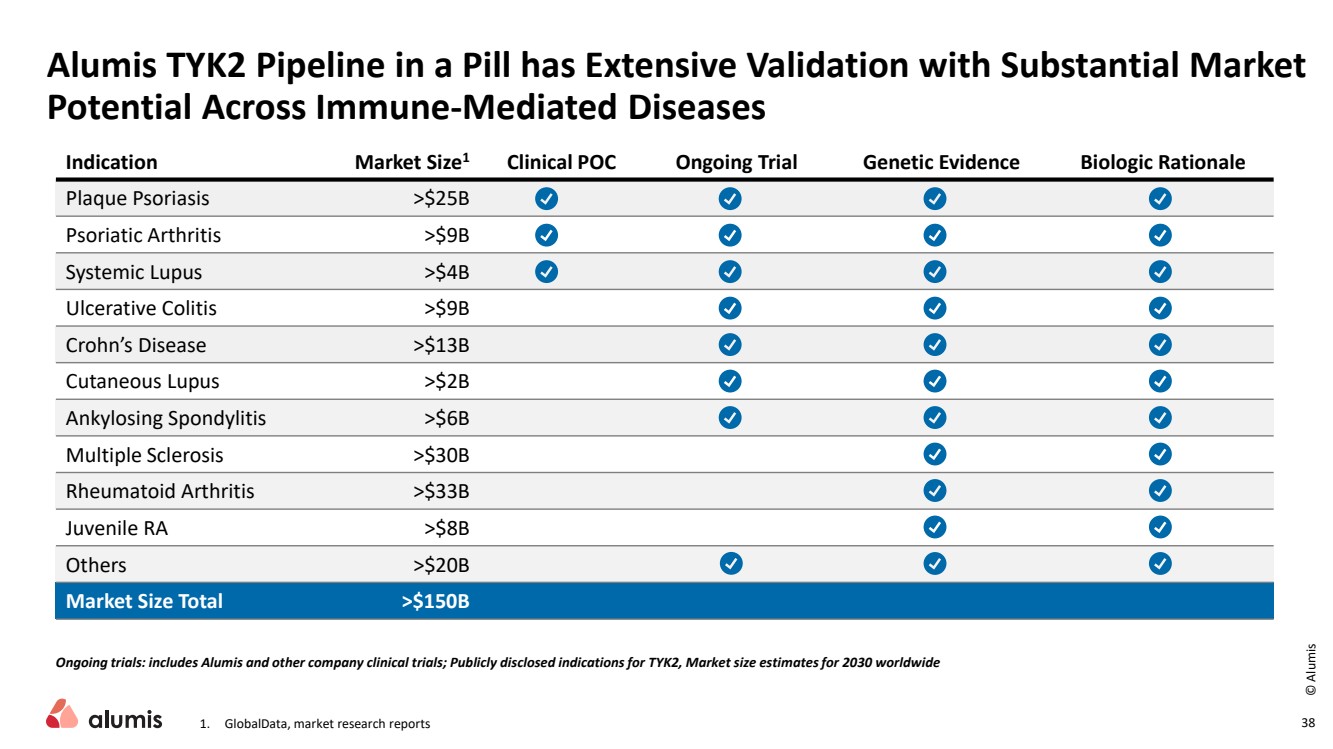
| Alumis TYK2 Pipeline in a Pill has Extensive Validation with Substantial Market Potential Across Immune-Mediated Diseases Ongoing trials: includes Alumis and other company clinical trials; Publicly disclosed indications for TYK2, Market size estimates for 2030 worldwide Indication Market Size1 Clinical POC Ongoing Trial Genetic Evidence Biologic Rationale Plaque Psoriasis >$25B Psoriatic Arthritis >$9B Systemic Lupus >$4B Ulcerative Colitis >$9B Crohn’s Disease >$13B Cutaneous Lupus >$2B Ankylosing Spondylitis >$6B Multiple Sclerosis >$30B Rheumatoid Arthritis >$33B Juvenile RA >$8B Others >$20B Market Size Total >$150B 1. GlobalData, market research reports 38© Alumis |
| Lonigutamab, IGF-1R |

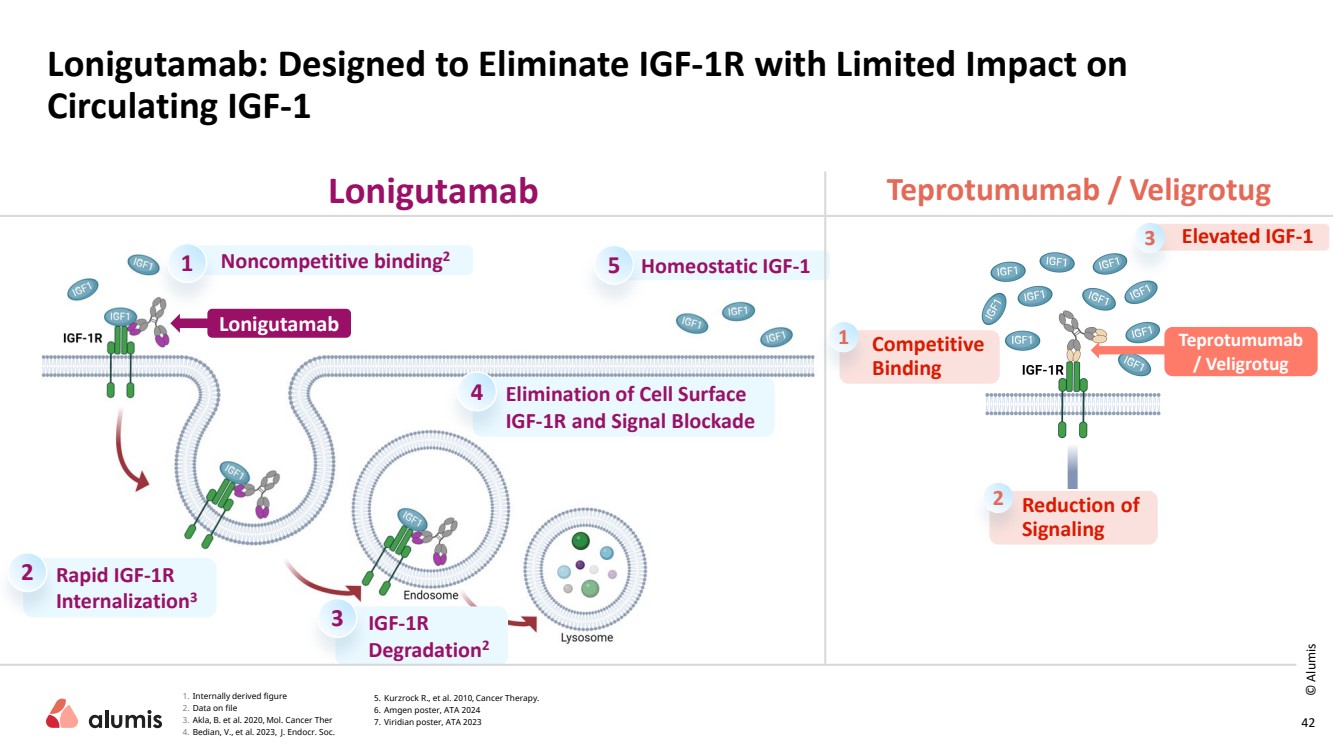
| 〉 Differentiated mechanism of action that potentially translates into safety benefit 〉 Improved safety profile could lead to chronic treatment of earlier disease 〉 Subcutaneous auto-injector formulation allows for patient self-administration 〉 Development plan continues to be evaluated Lonigutamab in TED: A Potentially Differentiated Anti-IGF-1R Therapy © Alumis 40 〉 IGF-1R is central to TED pathogenesis 〉 Anti-IGF-1R therapy clinically demonstrated to be highly efficacious in TED 〉 Significant unmet need remains for safer therapy (especially hearing loss) 〉 Safer therapy could enable retreatment or chronic therapy 〉 Current standard of care (IV administration) presents patient burden Opportunity Lonigutamab |
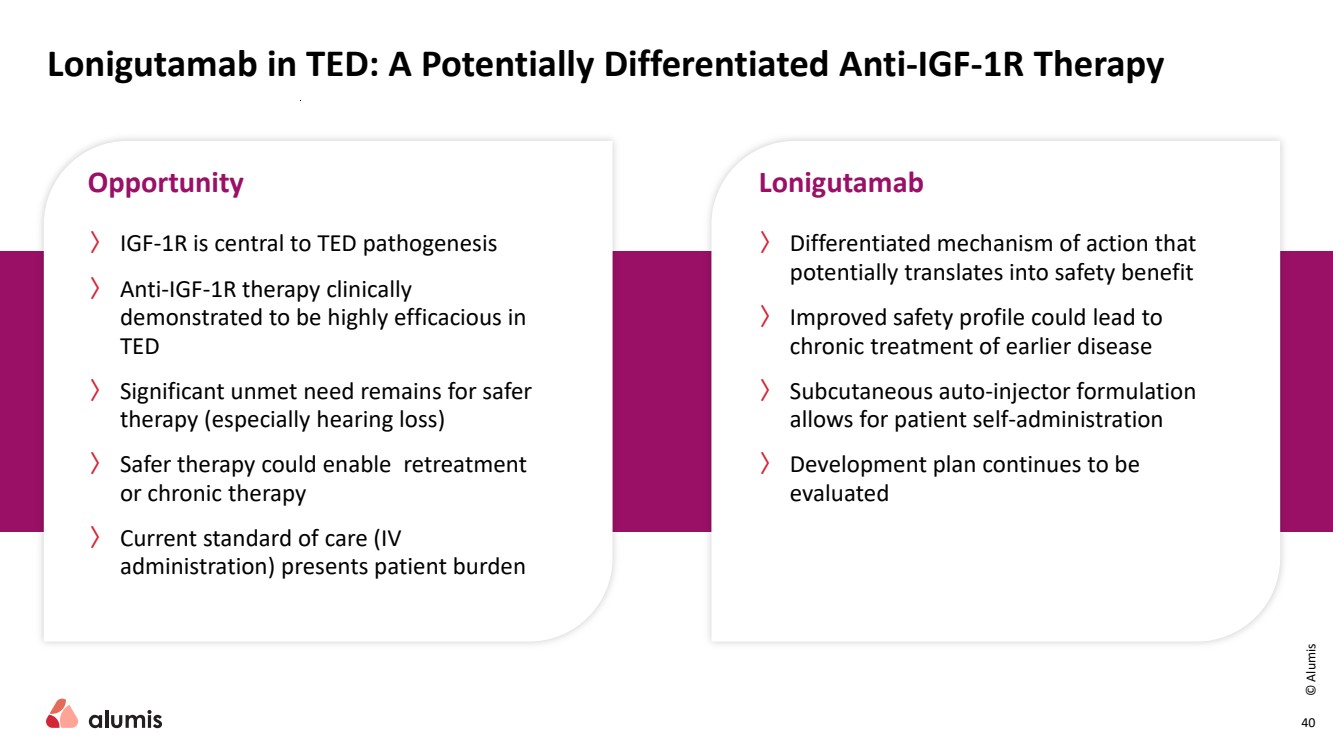
| Lonigutamab A Next-Generation Subcutaneous Anti-IGF-1R Therapy With Best-in-Class Potential in TED 41 Lonigutamab Best-In-Class Potential 〉 Uniquely differentiated MOA: non-competitively binding IGF-1R antagonist in TED 〉 Phase 1/2 clinical data provided key insights for the design of differentiated clinical development program 〉 Potential for commercially attractive product profile with IV-like efficacy and reduced safety barriers for adoption 〉 Development plan continues to be evaluated © Alumis |
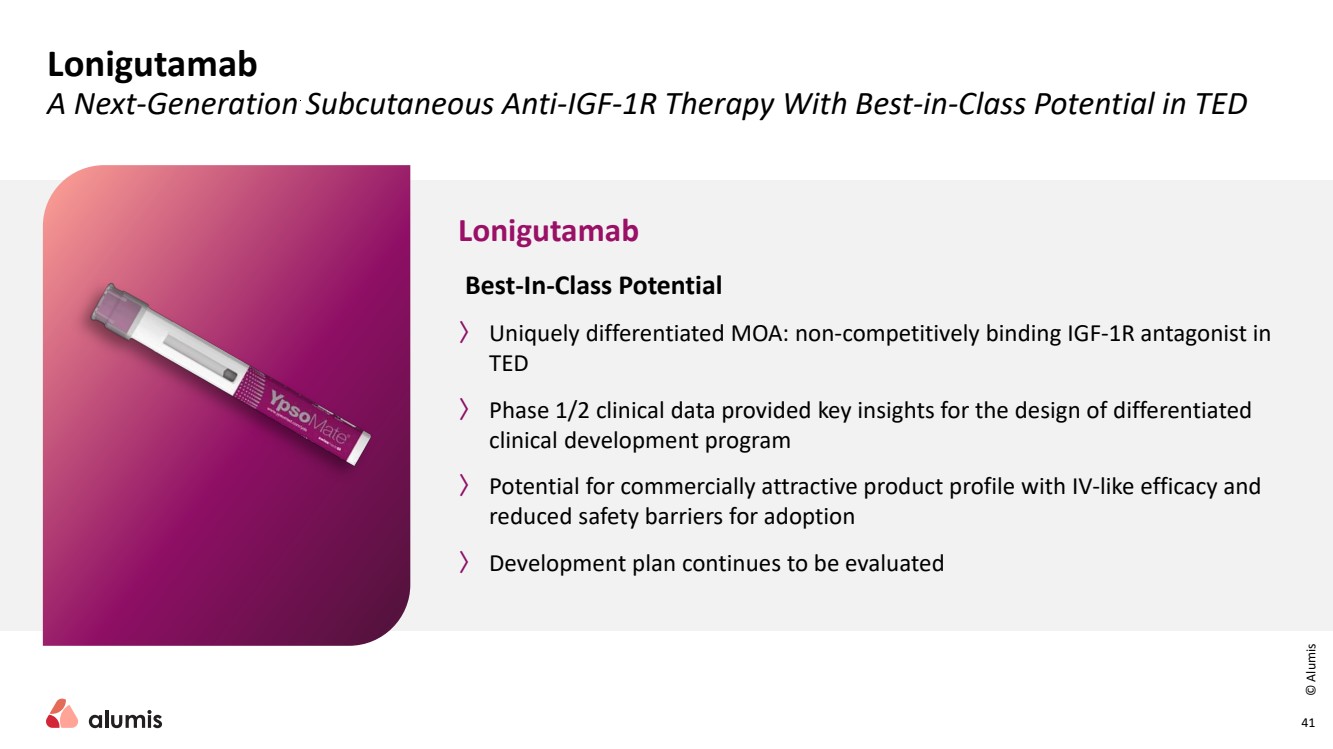
| 1. Internally derived figure 2. Data on file 3. Akla, B. et al. 2020, Mol. Cancer Ther 4. Bedian, V., et al. 2023, J. Endocr. Soc. 42 Lonigutamab: Designed to Eliminate IGF-1R with Limited Impact on Circulating IGF-1 Lonigutamab Teprotumumab / Veligrotug Rapid IGF-1R Internalization3 2 IGF-1R Degradation2 3 Signaling reduced by elimination of IG-1R from the cell surface 5. Kurzrock R., et al. 2010, Cancer Therapy. 6. Amgen poster, ATA 2024 7. Viridian poster, ATA 2023 Noncompetitive binding2 1 5 Homeostatic IGF-1 Competitive Binding 3 Elevated IGF-1© Alumis Elimination of Cell Surface IGF-1R and Signal Blockade 4 Reduction of Signaling Teprotumumab / Veligrotug Lonigutamab 1 2 |
| Summary |

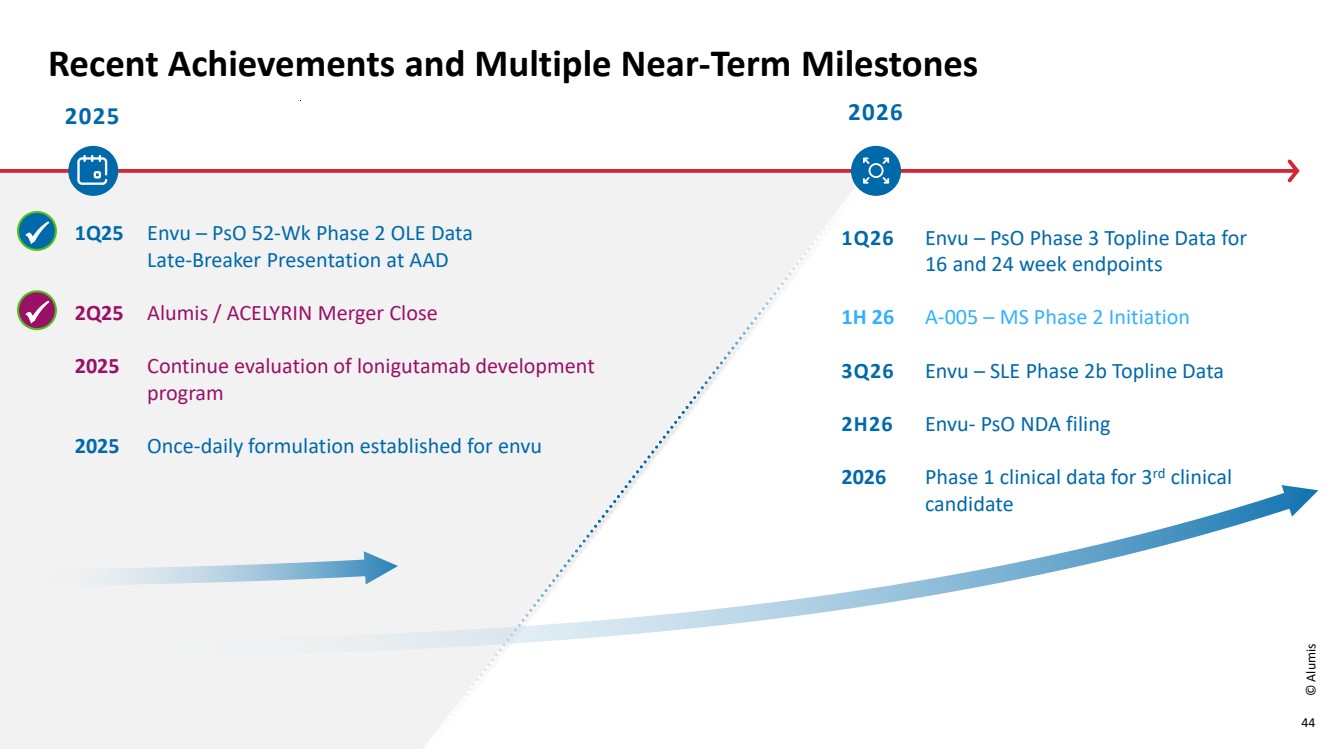
| © Alumis 44 Recent Achievements and Multiple Near-Term Milestones 2025 2026 1Q26 1H 26 3Q26 2H26 2026 Envu – PsO Phase 3 Topline Data for 16 and 24 week endpoints A-005 – MS Phase 2 Initiation Envu – SLE Phase 2b Topline Data Envu- PsO NDA filing Phase 1 clinical data for 3rd clinical candidate Envu – PsO 52-Wk Phase 2 OLE Data Late-Breaker Presentation at AAD Alumis / ACELYRIN Merger Close Continue evaluation of lonigutamab development program Once-daily formulation established for envu 1Q25 2Q25 2025 2025 |
| Thank You! |