
Altimmune, Inc 8-K, filed Dec 19, 2025
Altimmune, Inc. (ALT)
About this 8-K
Altimmune, Inc filed this 8-K on December 19, 2025.
Items reported
- Item 7.01: Regulation FD disclosure
- Item 8.01: Other events
- Item 9.01: Financial statements and exhibits
UNITED STATES
SECURITIES AND EXCHANGE COMMISSION
Washington, D.C. 20549
FORM
CURRENT REPORT
Pursuant to Section 13 or 15(d)
of The Securities Exchange Act of 1934
Date of Report (Date of earliest event reported):
(Exact name of registrant as specified in its charter)
|
(State or other jurisdiction of incorporation) |
(Commission File Number) |
(I.R.S. Employer Identification No.) | ||
|
|
||||
| (Address of principal executive offices) | (Zip Code) | |||
Registrant’s telephone number, including
area code (
Not Applicable
(Former name or former address, if changed since last report)
Check the appropriate box below if the Form 8-K filing is intended to simultaneously satisfy the filing obligation of the registrant under any of the following provisions:
| Written communications pursuant to Rule 425 under the Securities Act (17 CFR 230.425) |
| Soliciting material pursuant to Rule 14a-12 under the Exchange Act (17 CFR 240.14a-12) |
| Pre-commencement communications pursuant to Rule 14d-2(b) under the Exchange Act (17 CFR 240.14d-2(b)) |
| Pre-commencement communications pursuant to Rule 13e-4(c) under the Exchange Act (17 CFR 240.13e-4(c)) |
Securities registered pursuant to Section 12(b) of the Act:
| Title of each class | Trading
symbol(s) |
Name
of each exchange on which registered | ||
| The |
Indicate by check mark whether the registrant is an emerging growth company as defined in Rule 405 of the Securities Act of 1933 (§230.405 of this chapter) or Rule 12b-2 of the Securities Exchange Act of 1934 (§240.12b-2 of this chapter).
Emerging growth company
If an emerging growth company, indicate by check mark if the registrant has elected not to use the extended transition period for complying with any new or revised financial accounting standards provided pursuant to Section 13(a) of the Exchange Act. ¨
| Item 7.01. | Regulation FD Disclosure. |
On December 19 2025, Altimmune, Inc. (the “Company”) issued a press release titled “Altimmune Announces Topline 48-Week Data from IMPACT Phase 2b Trial Achieved Key Measures of Success” A copy of the press release is furnished as Exhibit 99.1 to this Current Report on Form 8-K.
The Company intends to host a conference call and live webcast to discuss the results on December 19, 2025 at 8:00 a.m. E.T. The Company has made available the slide presentation to accompany the call, furnished herewith as Exhibit 99.2 to this Current Report on Form 8-K. The information under this Item 7.01, including Exhibit 99.1 and Exhibit 99.2 hereto, is being furnished herewith and shall not be deemed “filed” for the purposes of Section 18 of the Securities Exchange Act of 1934, as amended (the “Exchange Act”), or otherwise subject to the liabilities of that section, nor shall such information be deemed incorporated by reference into any filing under the Securities Act of 1933, as amended (the “Securities Act”), or the Exchange Act, except as expressly set forth by specific reference in such filing.
| Item 8.01. | Other Events. |
On December 19, 2025, the Company announced positive topline results from the IMPACT Phase 2b trial of pemvidutide, a balanced 1:1 glucagon/GLP-1 dual receptor agonist, in patients with metabolic dysfunction-associated steatohepatitis (“MASH”) at 48 weeks.
Topline 48-week data from the IMPACT trial showed that treatment with pemvidutide achieved statistically significant improvements across treatment arms in key non-invasive tests (“NITs”), including Enhanced Liver Fibrosis (“ELF”) and Liver Stiffness Measurement (“LSM”), versus placebo. Importantly, these data exhibited continued reductions from week 24 and provide evidence of continued improvement in antifibrotic activity with both treatment doses. These are well-established markers of fibrosis and hepatic inflammation and are strongly associated with histological changes and liver related events. Additional weight loss was observed with the 1.8 mg dose compared to the IMPACT 24-week data, with no evidence of plateauing. The 48-week data also maintained the favorable tolerability profile seen at 24 weeks, including a lower discontinuation rate due to adverse events versus placebo.
The randomized, placebo-controlled, double-blind IMPACT Phase 2b trial (NCT05989711) enrolled 212 participants with biopsy-confirmed MASH and fibrosis stages F2 or F3, with and without diabetes. Study participants were randomized 1:2:2 to receive weekly subcutaneous pemvidutide doses at either 1.2 mg, 1.8 mg or placebo for 48 weeks. The primary efficacy endpoints, measured at 24 weeks, were MASH resolution without worsening of fibrosis, or fibrosis improvement without worsening of MASH. Secondary endpoints included non-invasive tests of fibrosis and weight loss measured at 24 and 48 weeks.
Highlights from the 48-week Topline Results
| · | Pemvidutide-treated participants achieved statistically significant reductions in primary non-invasive markers of fibrosis, including ELF and LSM. |
| o | ELF: 1.2 mg and 1.8 mg doses achieved a mean reduction from baseline of -0.49 and -0.58 respectively, vs. +0.16 in placebo-treated patients (p<0.0001, both doses). | |
| o | LSM: 1.2 mg and 1.8 mg doses achieved a mean reduction from baseline of -3.04 (p<0.05) and -3.97 (p<0.001), respectively, vs. -0.03 in placebo-treated participants. | |
| o | The proportion of participants receiving pemvidutide 1.2 mg and 1.8 mg that achieved both a ≥0.5 reduction in ELF and a 30% reduction in LSM were 27.8% (p<0.001) and 32.4% (p<0.0001) respectively, vs. 3.2% in placebo-treated participants. |
| · | Pemvidutide-treated participants also achieved statistically significant reductions in key non-invasive measures of liver health and hepatic inflammation, including liver fat content, alanine aminotransferase (“ALT”) and corrected T1 (“cT1”). |
| o | Liver fat content: 1.2 mg and 1.8 mg doses achieved a mean reduction from baseline of 45.2% and 54.7% respectively, compared to 8.2% in participants who received placebo (p<0.0001). | |
| o | ALT: 1.2 mg and 1.8 mg achieved a mean reduction from baseline of -37.8 IU/L and -37.4 IU/L respectively, vs -10.3 IU/L in placebo-treated participants (p<0.0001, both doses). | |
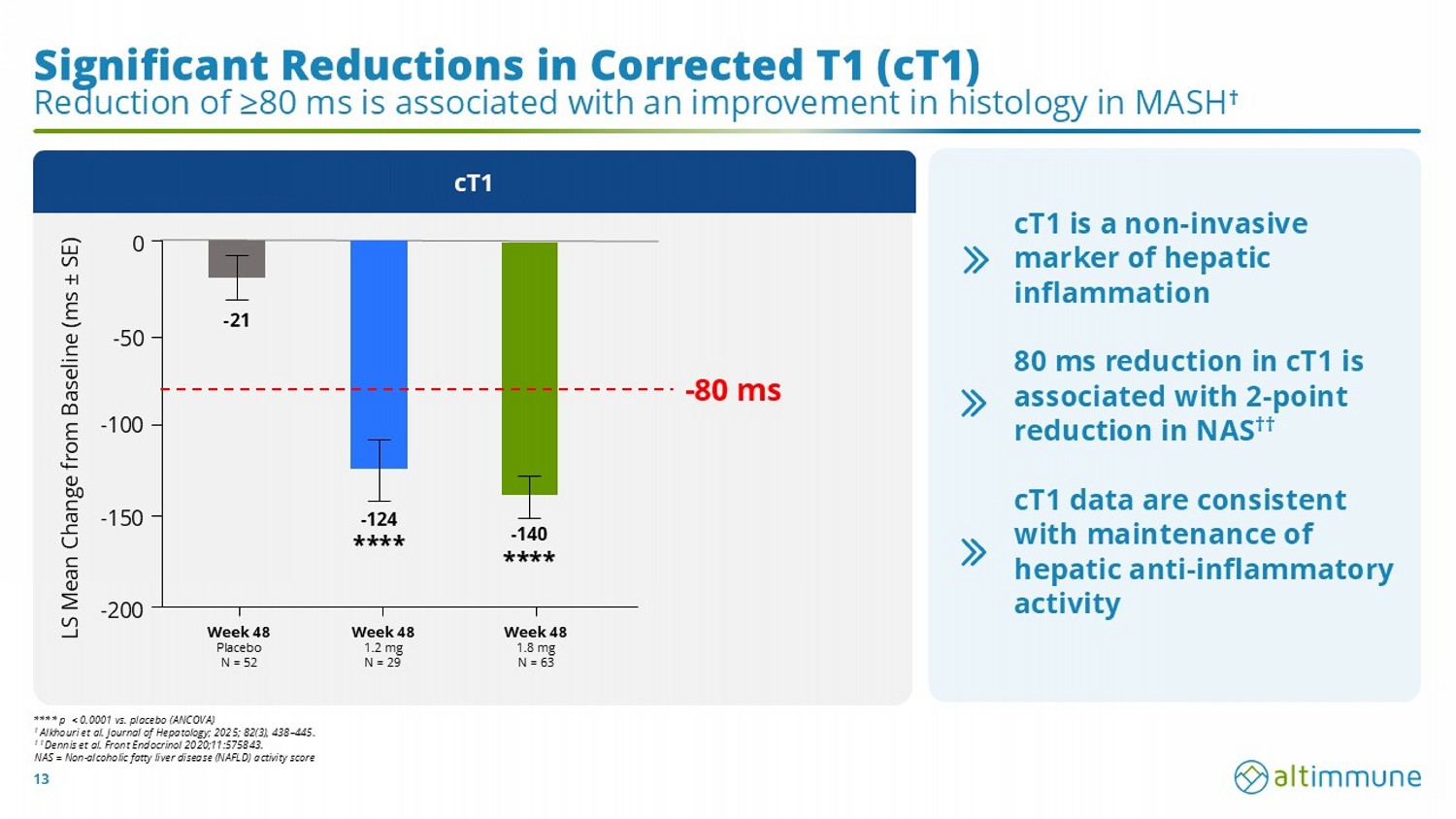
| o | cT1: Participants receiving pemvidutide 1.2 mg and 1.8 mg achieved a mean reduction from baseline of -124 and -140 milliseconds (ms) respectively, vs -21 ms in placebo-treated participants (p<0.0001, both doses). |
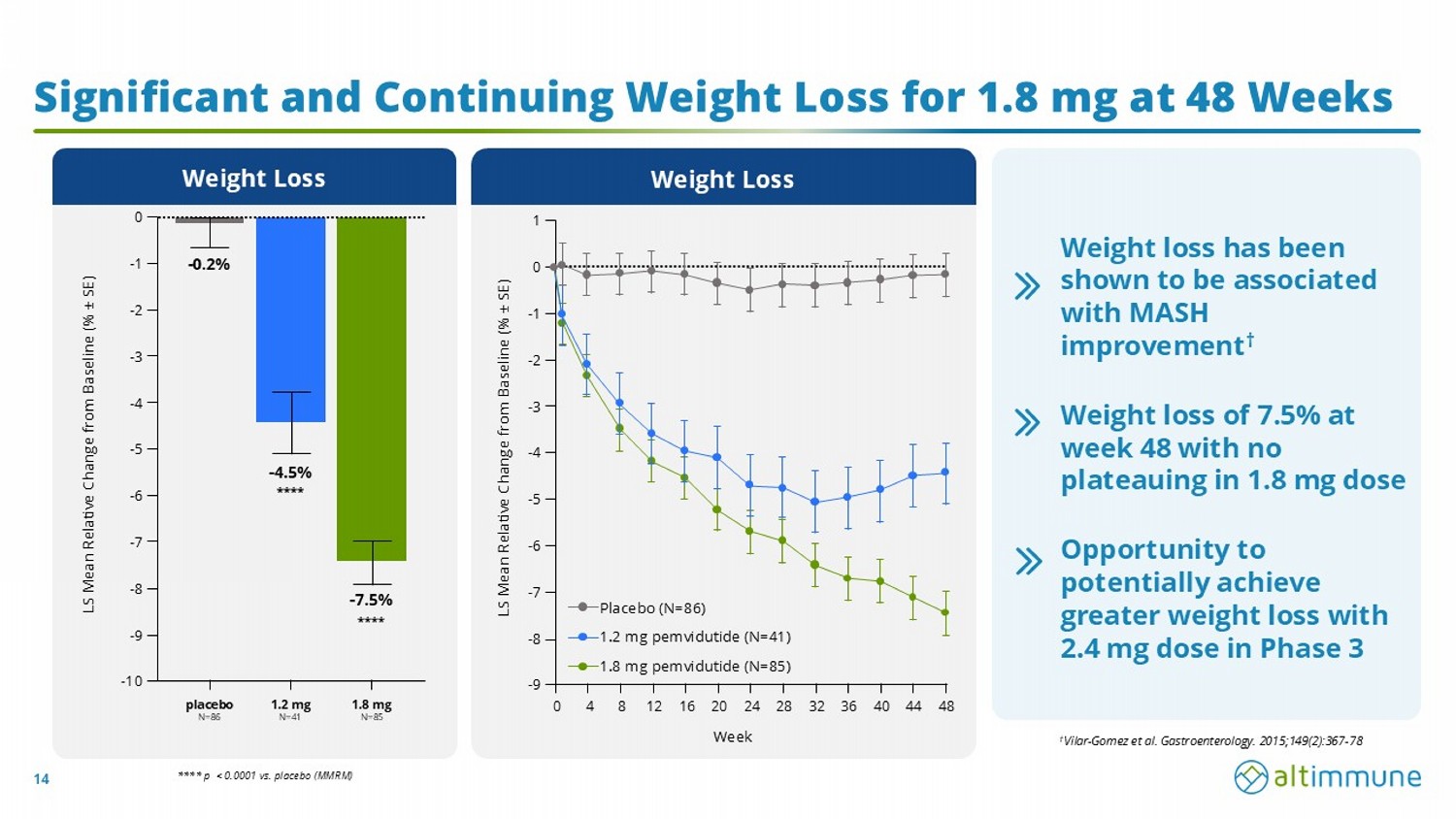
| · | Participants receiving pemvidutide 1.2 mg and 1.8 mg achieved weight loss of 4.5% and 7.5%, respectively, vs. 0.2% of placebo-treated participants (p<0.0001, both doses), with no plateauing at 48 weeks with the 1.8 mg dose. |
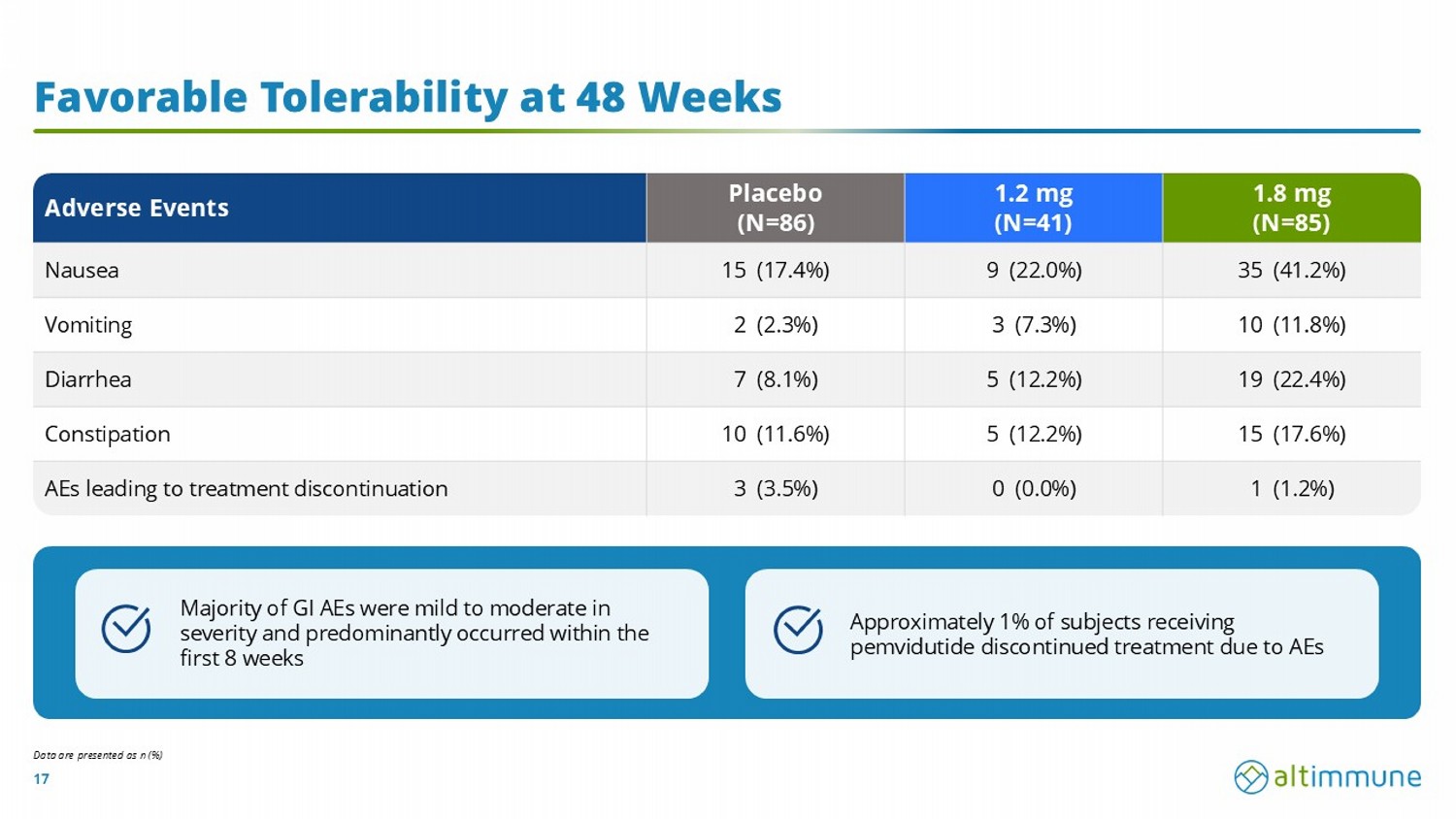
| · | Adverse events leading to treatment discontinuation occurred in 0% and 1.2% of patients treated with pemvidutide 1.2 mg and 1.8 mg, respectively, vs. 3.5% of participants on placebo. |
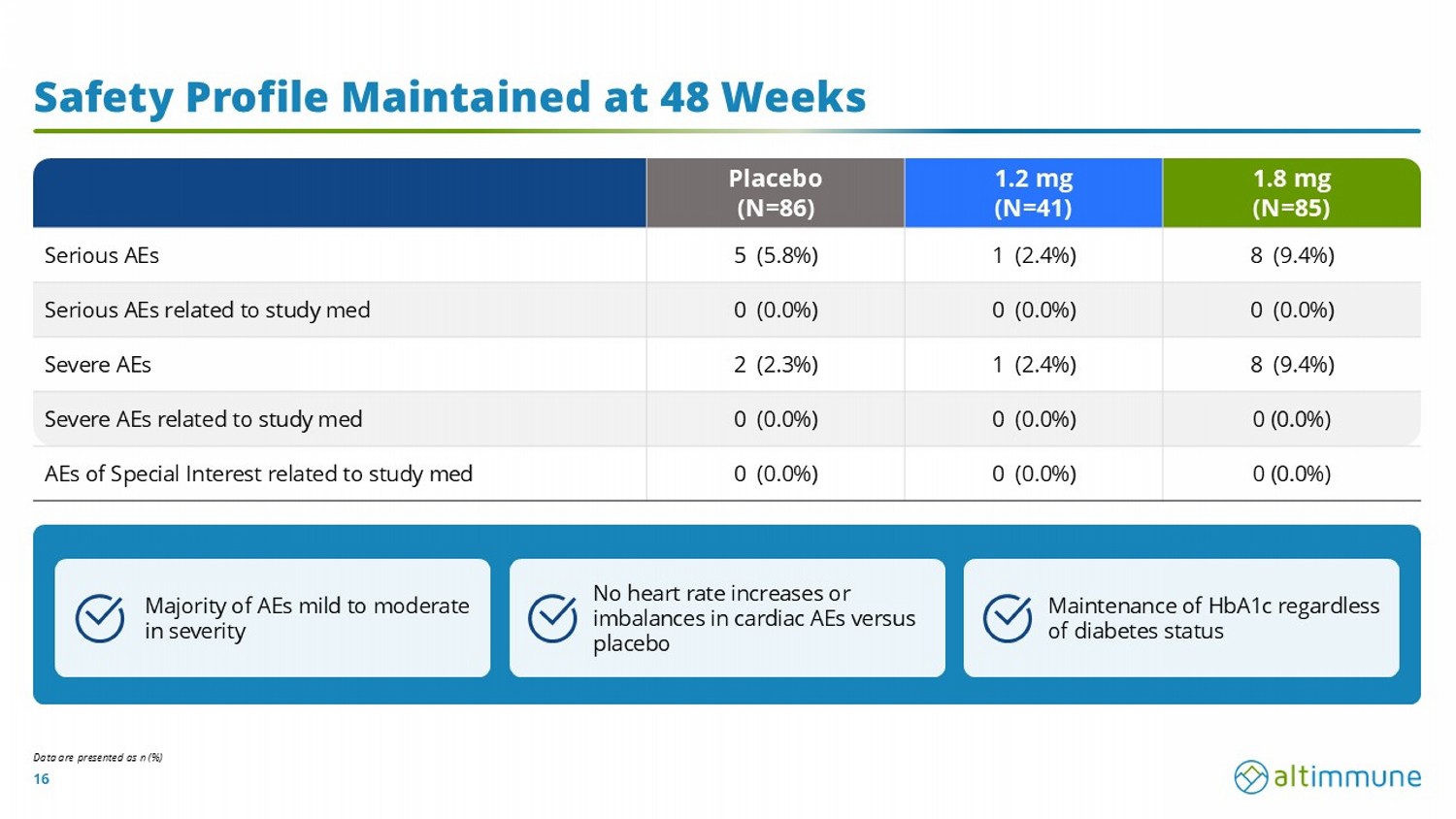
| · | No serious or severe AEs related to treatment were reported. |
End of Phase 2 Meeting with FDA
On December 11, 2025, we held an End-of-Phase 2 meeting with the United States Food and Drug Administration (“FDA”) to discuss and align on a pathway forward to a registrational Phase 3 trial of pemvidutide in moderate to advanced fibrosis with biopsy driven endpoints. The FDA indicated openness to incorporation of AIM-MASH AI Assist, the first FDA-qualified AI pathology tool for MASH clinical trials, and we intend to evaluate multiple doses, including 2.4 mg, while also seeking scientific advice from European regulators to inform the final Phase 3 protocol. We expect to receive final minutes from the meeting in January 2026.
ATM Sales
As previously disclosed, on November 6, 2025, we entered an Equity Distribution Agreement (the “November 2025 Agreement”) with Leerink Partners LLC serving as the sales agent, with respect to an at-the-market offerings program under which we may offer and sell shares of our common stock having an aggregate offering price of up to $200.0 million through the sales agent (the “November 2025 ATM”). Prior to entering the November 2025 Agreement, we provided notice to Leerink Partners LLC, Piper Sandler & Co. and Stifel, Nicolaus & Company, Incorporated (the “February Sales Agents”), to terminate the Equity Distribution Agreement entered into with the February Sales Agents on February 27, 2025 (the “February 2025 ATM Program”). Following September 30, 2025 and through the date hereof, the Company has sold 13,547,341 shares of common stock for net proceeds of approximately $54.6 million pursuant to the February 2025 ATM Program and November 2025 ATM Program.
This Current Report on Form 8-K and certain materials furnished or filed herewith contain forward-looking statements within the meaning of the Private Securities Litigation Reform Act of 1995, as amended, including, without limitation, implied and express statements regarding: the Company’s business plans and objectives, including future plans or expectations for pemvidutide and ongoing clinical studies, including the anticipated or potential therapeutic effects of pemvidutide, as well as the dosing, safety and tolerability of pemvidutide.
Any forward-looking statements are based on management’s current expectations of future events and are subject to a number of risks and uncertainties that could cause actual results to differ materially and adversely from those set forth in or implied by such forward-looking statements. Risks that contribute to the uncertain nature of the forward-looking statements include: the success, cost, and timing of the Company’s product candidate development activities and planned clinical trials; the Company’s ability to execute on its strategy; positive results from any of its clinical studies may not necessarily be predictive of the results of future or ongoing clinical studies; the timing of key milestones for the Company’s clinical assets, future plans or expectations for pemvidutide for the treatment of MASH; any meetings with the FDA, regulatory developments in the United States and foreign countries; the Company’s ability to manufacture clinical trial materials on the timelines anticipated and the Company’s ability to fund operations. For a discussion of these and other risks and uncertainties, and other important factors, any of which could cause the Company’s actual results to differ from those contained in the forward-looking statements, see the section entitled “Risk Factors” in the Company’s annual report on Form 10-K filed, with the United States Securities and Exchange Commission (SEC) and quarterly reports on Form 10-Q filed with the SEC, as well as discussions of potential risks, uncertainties, and other important factors in the Company’s other filings with the SEC. All forward-looking statements contained in this presentation speak only as of the date on which they were made. The Company undertakes no obligation to update such statements to reflect events that occur or circumstances that exist after the date on which they were made.
| Item 9.01. | Financial Statements and Exhibits. |
(d) Exhibits
|
Exhibit No. |
Description | |
| 99.1 | Press Release issued by Altimmune, Inc. on December 19, 2025. | |
| 99.2 | Phase 2b IMPACT Study slide presentation of Altimmune, Inc. | |
| 104 | Cover Page Interactive Data File (embedded within Inline XBRL document). | |
SIGNATURES
Pursuant to the requirements of the Securities Exchange Act of 1934, the registrant has duly caused this report to be signed on its behalf by the undersigned hereunto duly authorized.
| Date: December 19, 2025 | ALTIMMUNE, INC. | |
| By: |
/s/ Gregory Weaver | |
| Name: Gregory Weaver | ||
| Title: Chief Financial Officer | ||
Exhibit 99.1

Altimmune Announces that Pemvidutide Achieved Key Measures of Success at 48 Weeks in IMPACT Phase 2b MASH Trial
Improvements observed in key non-invasive markers of fibrosis across treatment arms versus placebo, with continued reductions from 24-week timepoint
Additional weight loss from 24 to 48 weeks with 1.8 mg dose, without plateauing
Favorable tolerability profile of pemvidutide preserved at 48 weeks, reinforced by low treatment-related discontinuation rate
End-of-Phase 2 meeting with FDA supports advancing to registrational Phase 3 trial in MASH patients with moderate to advanced liver fibrosis
Conference call to be held today at 8:00 a.m. ET
GAITHERSBURG, MD, December 19, 2025 -- Altimmune, Inc. (Nasdaq: ALT), a late clinical-stage biopharmaceutical company developing therapies that address serious liver diseases, today announced positive topline results from the IMPACT Phase 2b trial of pemvidutide, a balanced 1:1 glucagon/GLP-1 dual receptor agonist, in patients with metabolic dysfunction-associated steatohepatitis (MASH) at 48 weeks.
Topline 48-week data from the IMPACT trial showed that treatment with pemvidutide achieved statistically significant improvements across treatment arms in key non-invasive tests (NITs), including Enhanced Liver Fibrosis (ELF) and Liver Stiffness Measurement (LSM), versus placebo. Importantly, these data exhibited continued reductions from week 24 and provide evidence of continued improvement in antifibrotic activity with both treatment doses. These are well-established markers of fibrosis and hepatic inflammation and are strongly associated with histological changes and liver related events. Additional weight loss was observed with the 1.8 mg dose compared to the IMPACT 24-week data, with no evidence of plateauing. The 48-week data also maintained the favorable tolerability profile seen at 24 weeks, including a lower discontinuation rate due to adverse events versus placebo.
“The magnitude of response versus placebo on measures such as ELF and LSM at 48 weeks makes these data particularly compelling, as these noninvasive markers have been shown to correlate with histologic fibrosis stage. These results reinforce that pemvidutide may address both liver-specific and metabolic drivers of MASH without compromising tolerability – three critical elements of a potential effective treatment for this patient population,” said Mazen Noureddin, M.D., IMPACT trial principal investigator, Professor of Medicine at Houston Methodist Hospital and Co-Chairman of the Board for Summit and Pinnacle Clinical Research. “I am encouraged by the dose response observed and the performance of the 1.8 mg arm and am eager to see this differentiated therapeutic candidate advance into Phase 3 evaluation.”
Highlights from the 48-Week Topline Results
| • | Pemvidutide-treated participants achieved statistically significant reductions in primary non-invasive markers of fibrosis, including Enhanced Liver Fibrosis (ELF) and Liver Stiffness Measurement (LSM). |
| o | ELF: 1.2 mg and 1.8 mg doses achieved a mean reduction from baseline of -0.49 and -0.58 respectively, vs. +0.16 in placebo-treated patients (p<0.0001, both doses). |
| o | LSM: 1.2 mg and 1.8 mg doses achieved a mean reduction from baseline of -3.04 (p<0.05) and -3.97 (p<0.001), respectively, vs. -0.03 in placebo-treated participants. |
| o | The proportion of participants receiving pemvidutide 1.2 mg and 1.8 mg that achieved both a ≥0.5 reduction in ELF and a 30% reduction in LSM were 27.8% (p<0.001) and 32.4% (p<0.0001) respectively, vs. 3.2% in placebo-treated participants. |
| • | Pemvidutide-treated participants also achieved statistically significant reductions in key non-invasive measures of liver health and hepatic inflammation, including liver fat content, alanine aminotransferase (ALT) and corrected T1 (cT1). |
| o | Liver fat content: 1.2 mg and 1.8 mg doses achieved a mean reduction from baseline of 45.2% and 54.7% respectively, compared to 8.2% in participants who received placebo (p<0.0001). |
| o | ALT: 1.2 mg and 1.8 mg achieved a mean reduction from baseline of -37.8 IU/L and -37.4 IU/L respectively, vs. -10.3 IU/L in placebo-treated participants (p<0.0001, both doses). |
| o | cT1: 1.2 mg and 1.8 mg achieved a mean reduction from baseline of -124 and -140 milliseconds (ms) respectively, vs. -21 ms in placebo-treated participants (p<0.0001, both doses). |
| • | Participants receiving pemvidutide 1.2 mg and 1.8 mg achieved weight loss of 4.5% and 7.5%, respectively, vs. 0.2% of placebo-treated participants (p<0.0001, both doses), with no plateauing at 48 weeks with the 1.8 mg dose. |
| • | Adverse events leading to treatment discontinuation occurred in 0% and 1.2% of patients treated with pemvidutide 1.2 mg and 1.8 mg, respectively, vs. 3.5% of participants on placebo. |
| • | No serious or severe AEs related to treatment were reported. |
Additionally, the Company announced that it held a productive End-of-Phase 2 meeting with the U.S. Food and Drug Administration (FDA) which resulted in alignment on the parameters for a registrational Phase 3 trial of pemvidutide for MASH patients with moderate to advanced liver fibrosis. With the FDA’s recent qualification of AIM-MASH AI Assist, the Agency was open to the Company’s intent to integrate use of this AI tool into the Phase 3 trial. AIM-MASH AI Assist is intended to help standardize histologic assessment and reduce the time and resources needed for MASH drug development.
“With the benefit of FDA feedback and these 48-week data now in hand, we are greatly looking forward to progressing pemvidutide to a Phase 3 program which we intend to initiate in 2026. Strong evidence of antifibrotic improvements based upon non-invasive tests, combined with an attractive tolerability profile, highlight pemvidutide’s differentiation and potential to be a meaningful treatment option for the MASH patient community,” said Vipin Garg, Ph.D., Chief Executive Officer of Altimmune.
Conference Call and Webcast
Altimmune will host a conference call and webcast on Friday, December 19, 2025 at 8:00 am ET to review the IMPACT
Phase 2b topline 48-week data. To listen, the conference call will be webcast live on Altimmune’s Investor Relations website.
To participate or dial-in, register here to receive the dial-in numbers and unique PIN to access the call.
About the IMPACT Phase 2b Study
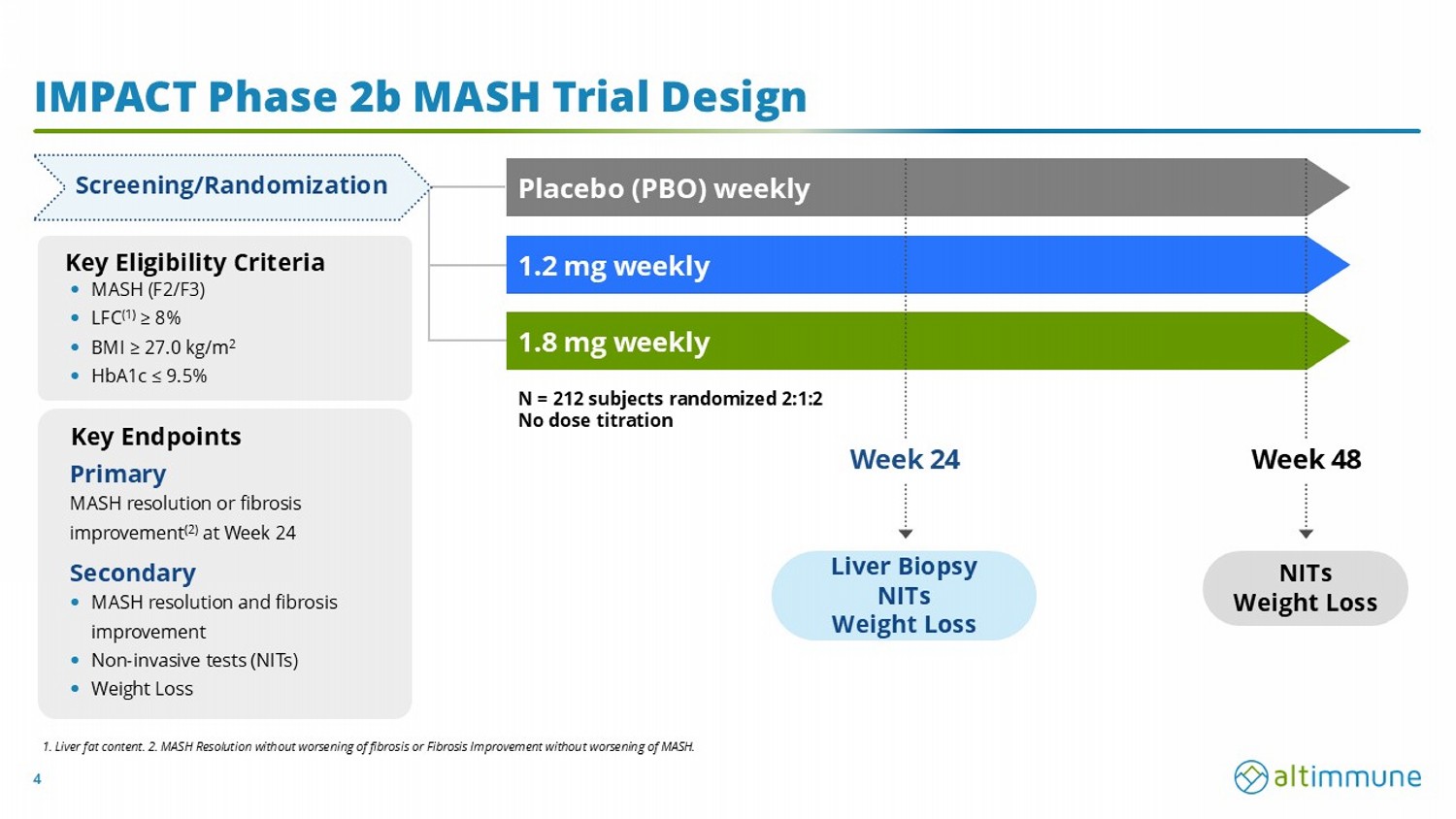
The randomized, placebo-controlled, double-blind IMPACT Phase 2b trial (NCT05989711) enrolled 212 participants with biopsy-confirmed
metabolic dysfunction-associated steatohepatitis (MASH) and fibrosis stages F2 or F3, with and without diabetes. Study participants were
randomized 1:2:2 to receive weekly subcutaneous pemvidutide doses at either 1.2 mg, 1.8 mg or placebo for 48 weeks. The primary efficacy
endpoints, measured at 24 weeks, were MASH resolution without worsening of fibrosis, or fibrosis improvement without worsening of MASH.
Secondary endpoints included non-invasive tests of fibrosis and weight loss measured at 24 and 48 weeks.
About MASH
Metabolic dysfunction-associated steatohepatitis (MASH) is a progressive liver disease marked by fat accumulation, inflammation, and fibrosis in the liver. Without treatment, it can progress to cirrhosis, liver failure, or liver cancer, and is one of the most common reasons for liver transplantation in the U.S. Management relies largely on lifestyle changes, and currently approved treatment options may not fully address both the metabolic drivers and fibrosis that can pose long-term risk.
About Pemvidutide
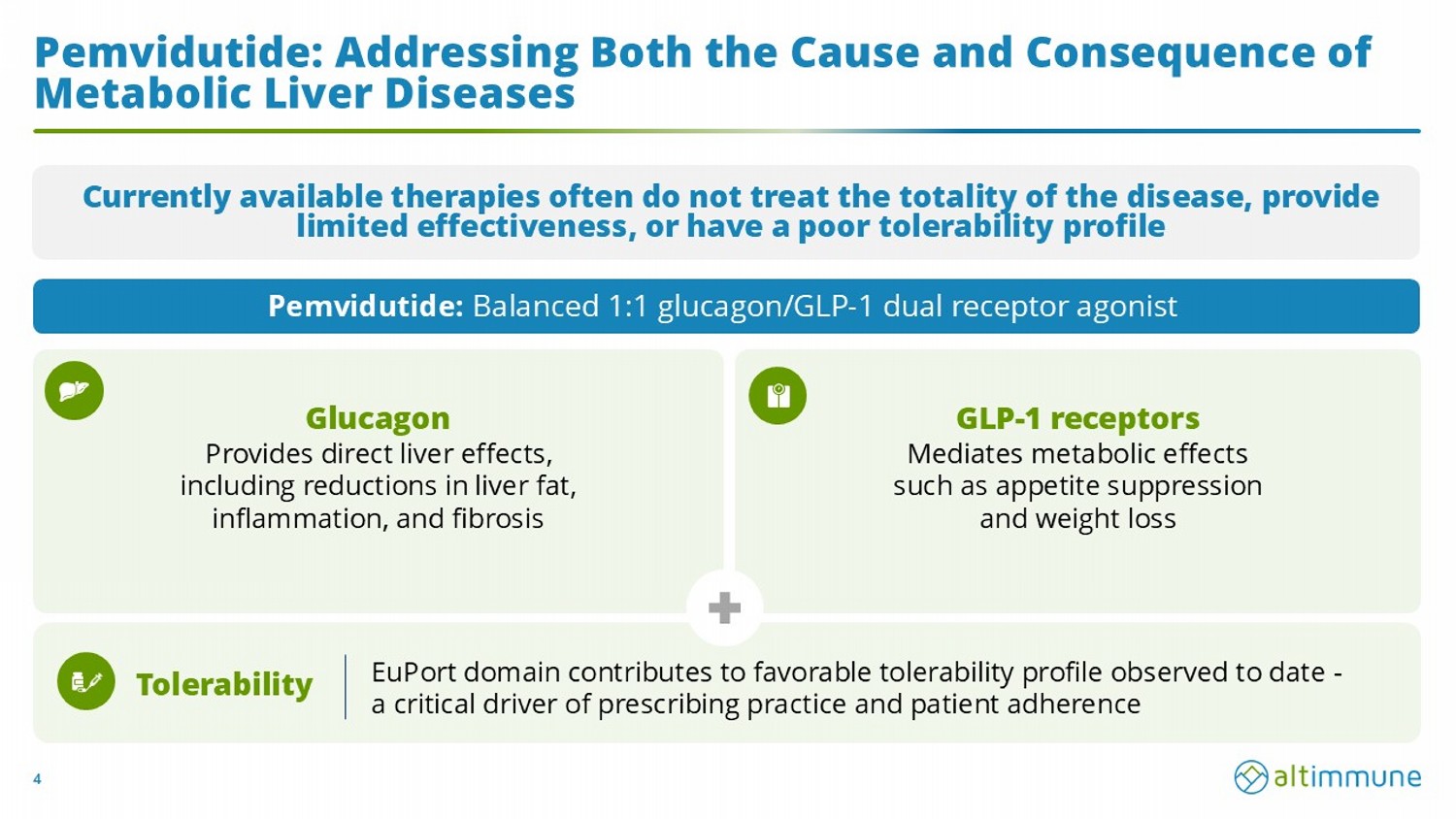
Pemvidutide is a novel, investigational peptide with balanced 1:1 glucagon/GLP-1 dual receptor agonist activity, in development for
the treatment of metabolic dysfunction-associated steatohepatitis (MASH), alcohol use disorder (AUD) and alcohol-associated liver disease
(ALD). The activation of glucagon results in direct effects on the liver, including reductions in liver fat, inflammation, and fibrosis,
while GLP-1 receptors mediate metabolic effects such as appetite suppression and weight loss.
The FDA granted Fast Track designations to pemvidutide for the treatment of MASH and AUD, both areas of significant unmet medical need. In December 2025, the Company announced 48-week data from the IMPACT Phase 2b trial in MASH. Phase 2 trials in AUD (RECLAIM) and ALD (RESTORE) were initiated in May 2025 and July 2025, respectively, and are currently ongoing.
About Altimmune
Altimmune is a late clinical-stage biopharmaceutical company developing therapies for patients with serious liver diseases. The Company’s lead candidate, pemvidutide, is a unique dual-action therapy targeting both glucagon and GLP-1 receptors in a balanced 1:1 ratio for the treatment of metabolic dysfunction-associated steatohepatitis (MASH), alcohol use disorder (AUD) and alcohol-associated liver disease (ALD). For more information, please visit www.altimmune.com.
Forward-Looking
Statement
Any statements made in this press release related to the clinical trial results, development or commercialization of pemvidutide, an
investigational product candidate, and other business, regulatory and financial matters including without limitation, trial results and
data, including the data and results from the 48-week IMPACT trial, and statements related to ELF, LSM, ALT and cT1, the timing of key
milestones for the Company’s clinical assets, future plans or expectations for pemvidutide for the treatment of MASH, any meetings
with the FDA, and the prospects for receiving regulatory approval or commercializing or selling any product or drug candidates, are forward-looking
statements within the meaning of the Private Securities Litigation Reform Act of 1995. In addition, when or if used in this press release,
the words "may," "could," "should," "anticipate," "believe," "estimate,"
"expect," "intend," "plan," "predict" and similar expressions and their variants, as they relate
to Altimmune, Inc. may identify forward-looking statements. The Company cautions that these forward-looking statements are
subject to numerous assumptions, risks, and uncertainties, which change over time. Important factors that may cause actual results to
differ materially from the results discussed in the forward-looking statements, or historical experience include risks and uncertainties,
including risks relating to: delays in regulatory review, manufacturing and supply chain interruptions, access to clinical sites, enrollment,
adverse effects on healthcare systems and disruption of the global economy; the reliability of the results of studies relating to human
safety and possible adverse effects resulting from the administration of the Company's product candidates; the Company's ability to manufacture
clinical trial materials on the timelines anticipated; and the success of future product advancements, including the success of future
clinical trials. Further information on the factors and risks that could affect the Company's business, financial conditions and results
of operations are contained in the Company's filings with the U.S. Securities and Exchange Commission, including under the heading
"Risk Factors" in the Company's most recent annual report on Form 10-K, quarterly report on Form 10-Q and the Company’s
other filings with the SEC, which are available at www.sec.gov.
Investor Contact:
Lee Roth
Burns McClellan
Phone: 646-382-3403
lroth@burnsmc.com
Media Contact:
Savannah Valade
Real Chemistry
Altimmune@realchemistry.com
Exhibit 99.2
48 - Week IMPACT Phase 2b Topline Data Presentation December 2025
Forward Looking Statements 2 This presentation has been prepared by Altimmune, Inc. ("we," "us," "our," "Altimmune" or the "Company") and includes certain “f orward - looking statements” within the meaning of the Private Securities Litigation Reform Act of 1995, including, but not limited to, statements relating to future financi al or business performance, conditions, plans, prospects, trends, or strategies and other financial and business matters, including without limitation, the timing of key milestones fo r o ur clinical assets, the performance of our drug candidates in ongoing and future clinical trials including the ongoing IMPACT, RECLAIM and RESTORE trials evaluating pemvidut ide in patients with MASH, AUD and ALD, respectively, and the prospects for regulatory approval, commercializing, market size, market potential, competitive landscap e, or selling any product or drug candidates. In addition, when or if used in this press release, the words “may,” “could,” “should,” “anticipate,” “believe,” “estimate,” “ex pec t,” “intend,” “plan,” “predict,” “potential”, “suggest” and similar expressions and their variants, as they relate to the Company may identify forward - looking statements. The Company cauti ons that these forward - looking statements are subject to numerous assumptions, risks, and uncertainties, which change over time. Important factors that may cause actual re sul ts to differ materially from the results discussed in the forward - looking statements or historical experience include risks and uncertainties, including risks such as delays in re gulatory review, manufacturing and supply chain interruptions, access to clinical sites, enrollment, adverse effects on healthcare systems and disruption of the global econo my; subject baseline characteristics which may vary and impact the success of future trials; the reliability of the results of studies relating to human safety and possible adverse effects re sulting from the administration of the Company’s product candidates; the Company’s ability to manufacture clinical trial materials on the timelines anticipated; and the succe ss of future product advancements, including the success of current and future clinical trials. Further information on the factors and risks that could affect the Company's b usi ness, financial conditions and results of operations are contained in the Company’s filings with the U.S. Securities and Exchange Commission, including under the heading “Risk Fa cto rs” in the Company’s latest annual report on Form 10 - K, quarterly report on Form 10 - Q and our other filings with the SEC, which are available at www.sec.gov . This presentation shall not constitute an offer to sell, or the solicitation of an offer to buy, any securities, nor shall th ere be any sale of securities in any states or jurisdictions in which such offer, solicitation or sale would be unlawful. You agree to keep any information provided herein confidential and not to disclose any of the information to any other parties without prior express written permission of the Company. Neither the information contained in this presentation nor a ny further information made available by the Company or any of its affiliates or employees, directors, representatives, officers, agents or advisers in connection with th is presentation will form the basis of, or be construed as, a contract or any other legal obligation.
Pemvidutide: Addressing Both the Cause and Consequence of Metabolic Liver Diseases Glucagon Provides direct liver effects, including reductions in liver fat, inflammation, and fibrosis GLP - 1 receptors Mediates metabolic effects such as appetite suppression and weight loss Tolerability EuPort domain contributes to favorable tolerability profile observed to date - a critical driver of prescribing practice and patient adherence Currently available therapies often do not treat the totality of the disease, provide limited effectiveness, or have a poor tolerability profile Pemvidutide: Balanced 1:1 glucagon/GLP - 1 dual receptor agonist 4
IMPACT Phase 2b MASH Trial Design 1. Liver fat content. 2. MASH Resolution without worsening of fibrosis or Fibrosis Improvement without worsening of MASH. 1.2 mg weekly 1.8 mg weekly Placebo (PBO) weekly Week 48 NITs Weight Loss Week 24 Liver Biopsy NITs Weight Loss Key Eligibility Criteria MASH (F2/F3) LFC (1) ≥ 8% BMI ≥ 27.0 kg/m 2 HbA1c ≤ 9.5% Key Endpoints Primary MASH resolution or fibrosis improvement (2) at Week 24 Secondary MASH resolution and fibrosis improvement Non - invasive tests (NITs) Weight Loss Screening/Randomization 4 N = 212 subjects randomized 2:1:2 No dose titration
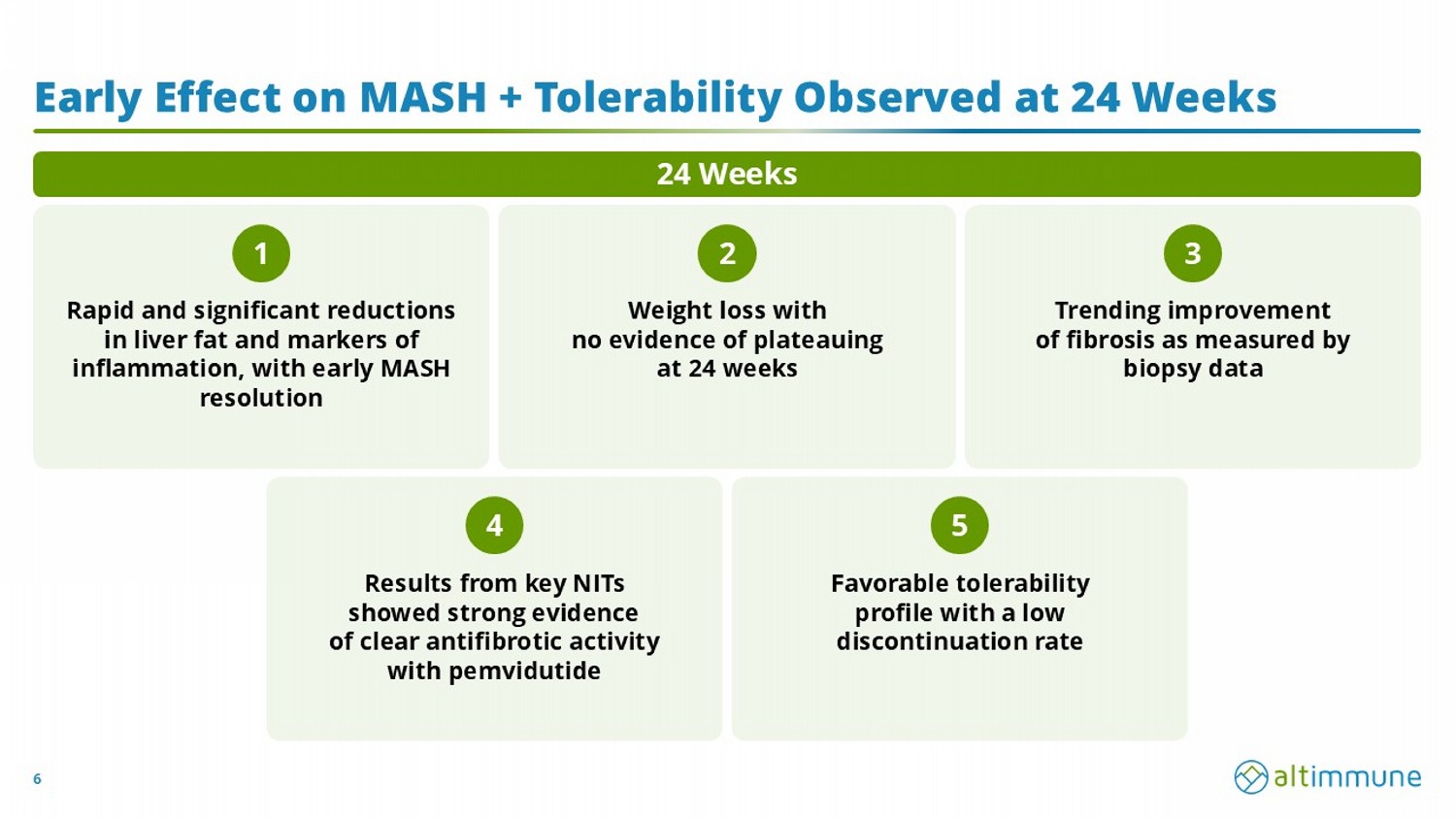
Early Effect on MASH + Tolerability Observed at 24 Weeks Rapid and significant reductions in liver fat and markers of inflammation, with early MASH resolution 1 Weight loss with no evidence of plateauing at 24 weeks 2 Trending improvement of fibrosis as measured by biopsy data 3 Results from key NITs showed strong evidence of clear antifibrotic activity with pemvidutide 4 Favorable tolerability profile with a low discontinuation rate 5 24 Weeks 6
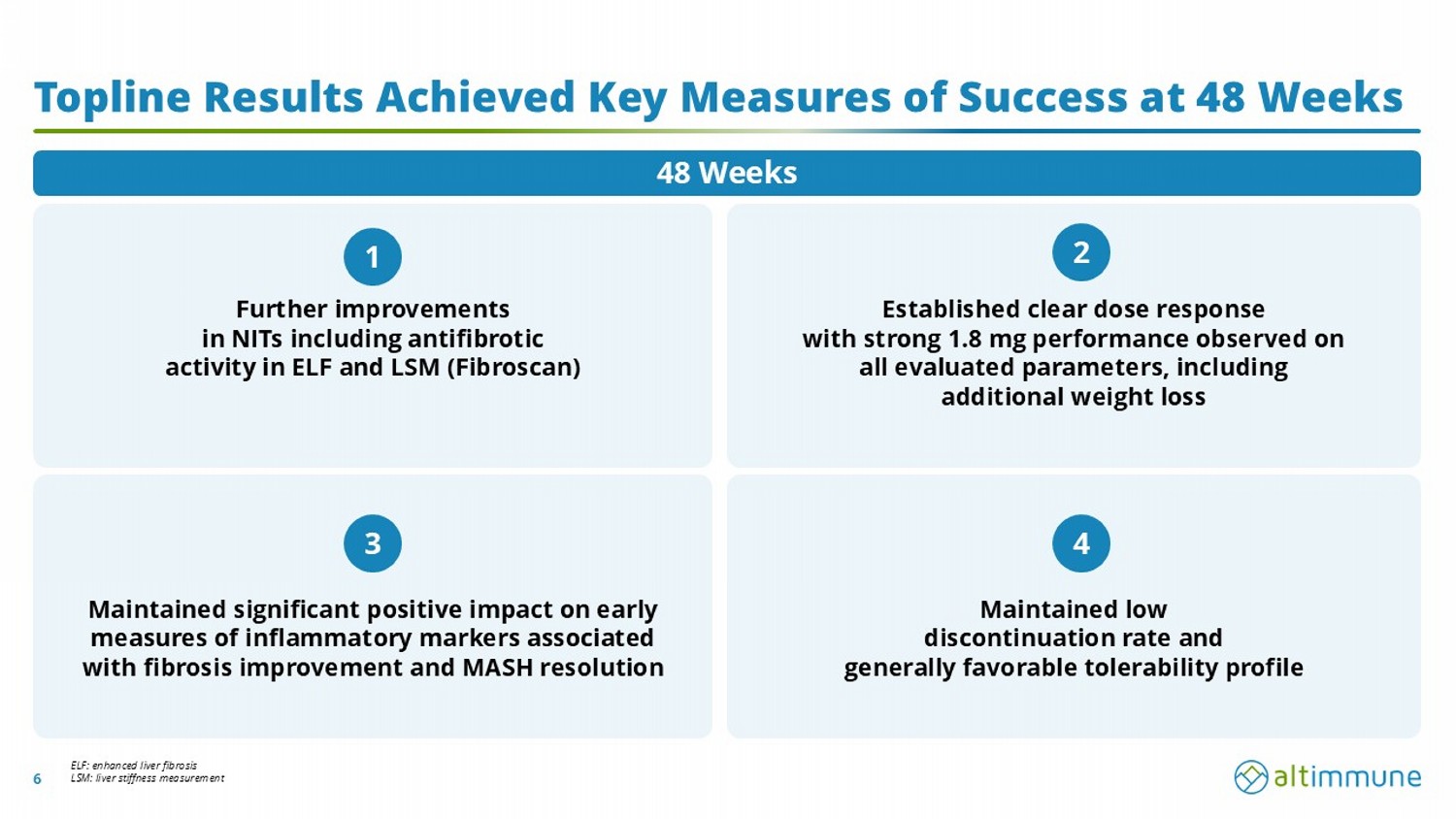
Topline Results Achieved Key Measures of Success at 48 Weeks 6 48 Weeks Further improvements in NITs including antifibrotic activity in ELF and LSM (Fibroscan) Established clear dose response with strong 1.8 mg performance observed on all evaluated parameters, including additional weight loss Maintained low discontinuation rate and generally favorable tolerability profile Maintained significant positive impact on early measures of inflammatory markers associated with fibrosis improvement and MASH resolution 1 2 3 4 ELF: enhanced liver fibrosis LSM: liver stiffness measurement
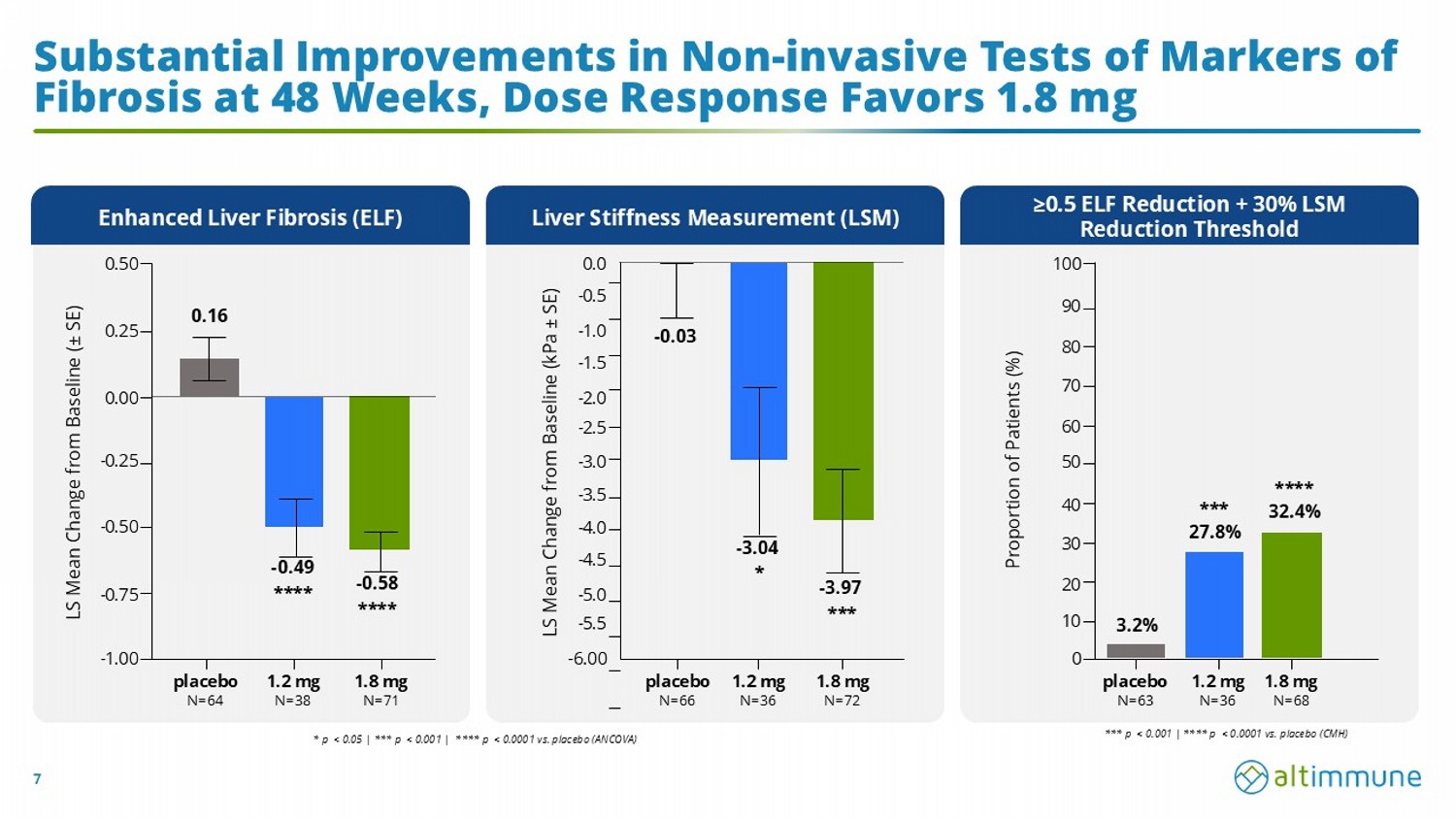
Enhanced Liver Fibrosis (ELF) Liver Stiffness Measurement (LSM) ≥0.5 ELF Reduction + 30% LSM Reduction Threshold Substantial Improvements in Non - invasive Tests of Markers of Fibrosis at 48 Weeks, Dose Response Favors 1.8 mg * p < 0.05 | *** p < 0.001 | **** p < 0.0001 vs. placebo (ANCOVA) LS Mean Change from Baseline ( ± SE) - 1.00 - 0.75 - 0.50 - 0.25 0.00 0.25 0.50 placebo N=64 1.2 mg N=38 1.8 mg N=71 0.16 - 0.49 **** - 0.58 **** LS Mean Change from Baseline (kPa ± SE) - 6.00 - 5.0 - 4.5 - 3.5 - 2.0 - 1.0 0.0 placebo N=66 1.2 mg N=36 1.8 mg N=72 - 5.5 - 4.0 - 3.0 - 2.5 - 1.5 - 0.5 - 0.03 - 3.04 * - 3.97 *** Proportion of Patients (%) 0 20 40 80 100 placebo N=63 1.8 mg N=68 1.2 mg N=36 10 30 50 60 70 90 3.2% *** **** 27.8% 32.4% 7 *** p < 0.001 | **** p < 0.0001 vs. placebo (CMH)
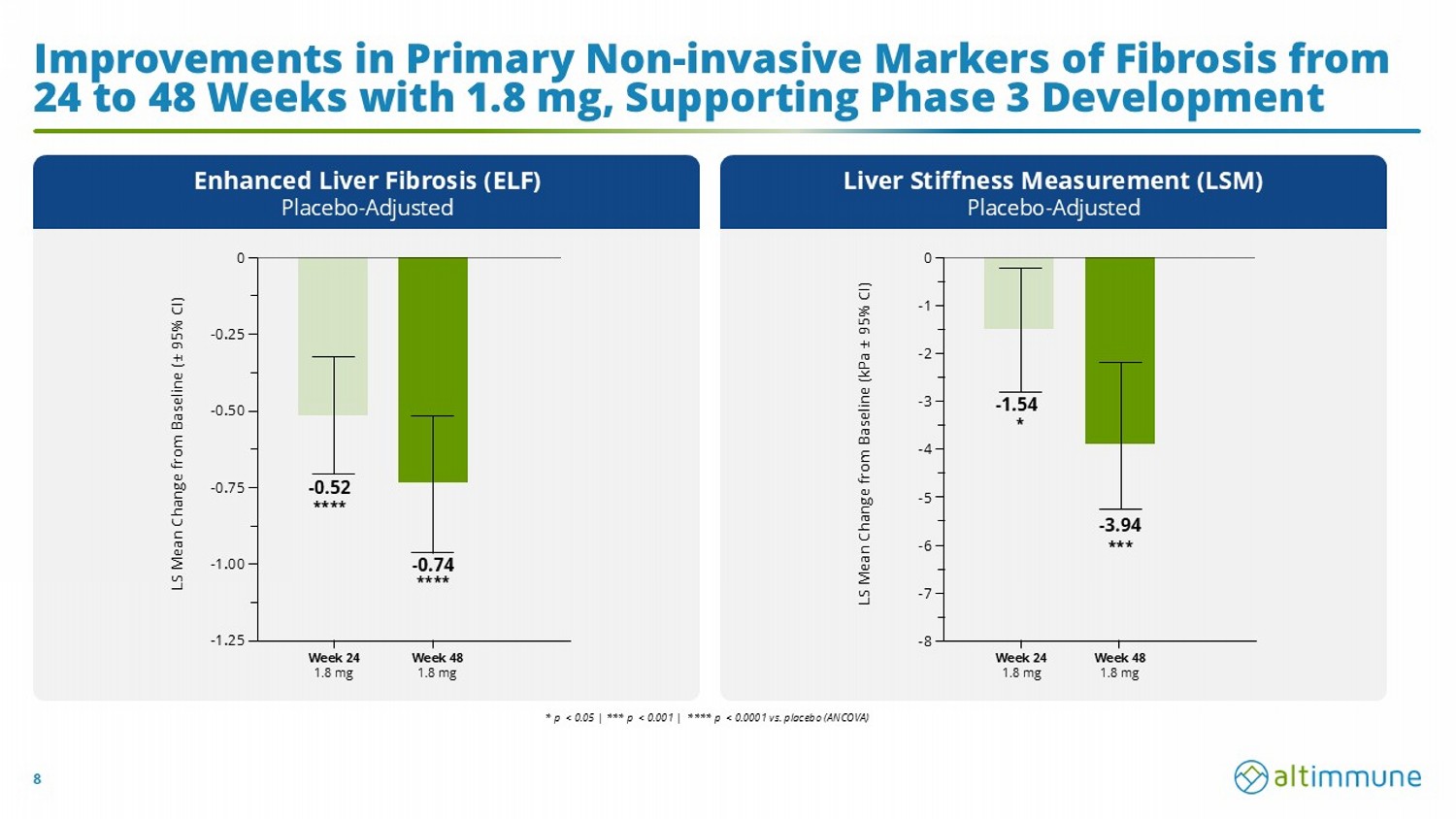
Improvements in Primary Non - invasive Markers of Fibrosis from 24 to 48 Weeks with 1.8 mg, Supporting Phase 3 Development Liver Stiffness Measurement (LSM) Placebo - Adjusted Enhanced Liver Fibrosis (ELF) Placebo - Adjusted 0 - 0.25 - 0.50 - 0.75 - 1.25 Week 24 **** - 0.52 **** - 0.74 Week 48 1.8 mg 1.8 mg - 1.00 LS Mean Change from Baseline (kPa ± 95% CI) 0 - 2 - 3 - 4 - 5 Week 24 * - 1.54 *** - 3.94 Week 48 1.8 mg 1.8 mg - 6 - 8 - 1 - 7 8 LS Mean Change from Baseline ( ± 95% CI) * p < 0.05 | *** p < 0.001 | **** p < 0.0001 vs. placebo (ANCOVA)
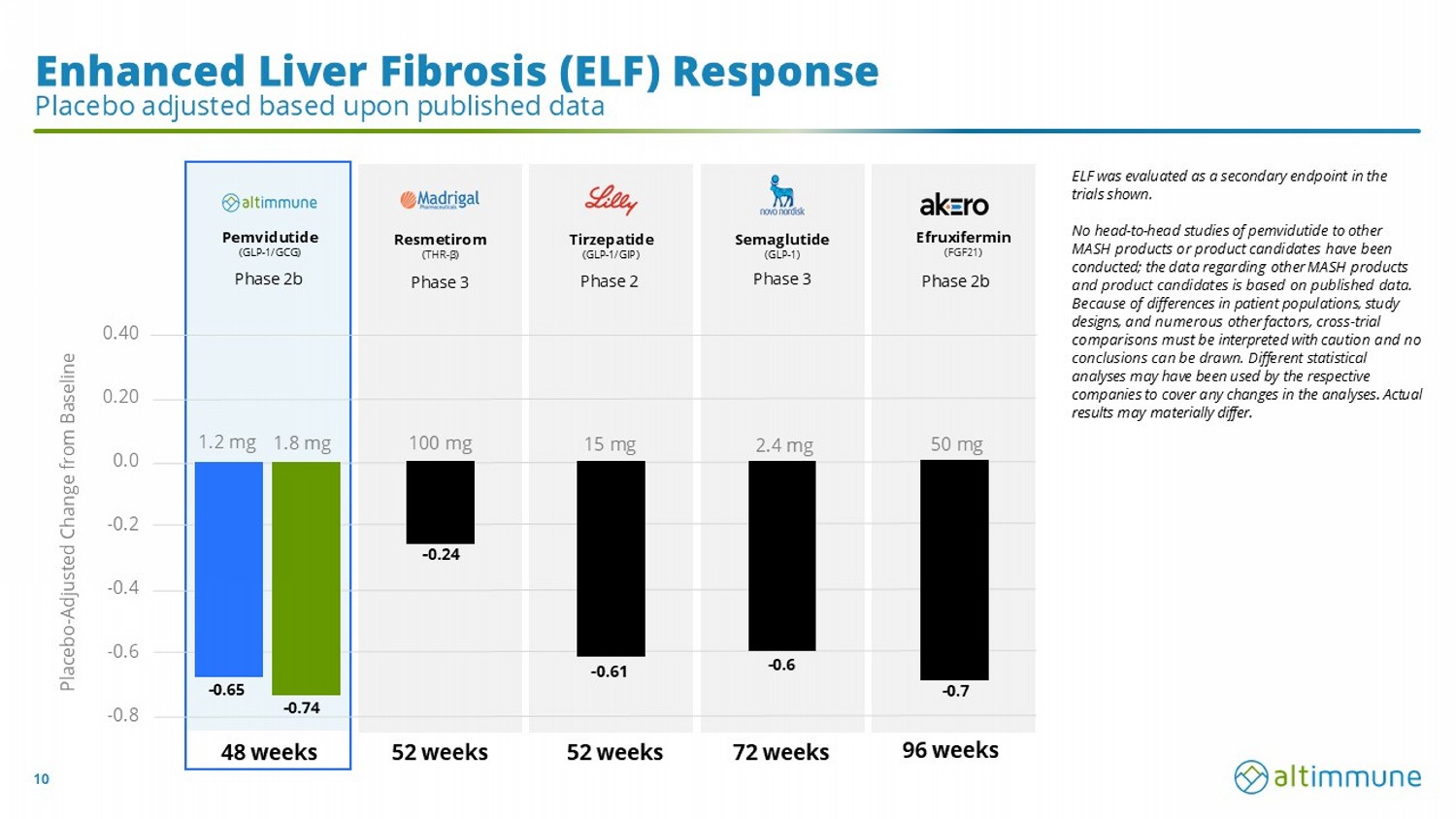
Enhanced Liver Fibrosis (ELF) Response Placebo adjusted based upon published data 10 Phase 2b Pemvidutide (GLP - 1/GCG) Resmetirom ( THR - β ) Phase 3 Efruxifermin ( FGF21 ) Phase 2b Semaglutide (GLP - 1) Phase 3 Tirzepatide (GLP - 1/GIP) Phase 2 48 weeks 52 weeks 52 weeks 72 weeks 96 weeks - 0.65 - 0.74 - 0.7 - 0.61 - 0.6 - 0.24 1.2 mg 1.8 mg 15 mg 100 mg 2.4 mg 50 mg 0.40 0.20 0.0 - 0.2 - 0.4 - 0.6 - 0.8 Placebo - Adjusted Change from Baseline ELF was evaluated as a secondary endpoint in the trials shown. No head - to - head studies of pemvidutide to other MASH products or product candidates have been conducted; the data regarding other MASH products and product candidates is based on published data. Because of differences in patient populations, study designs, and numerous other factors, cross - trial comparisons must be interpreted with caution and no conclusions can be drawn. Different statistical analyses may have been used by the respective companies to cover any changes in the analyses. Actual results may materially differ.
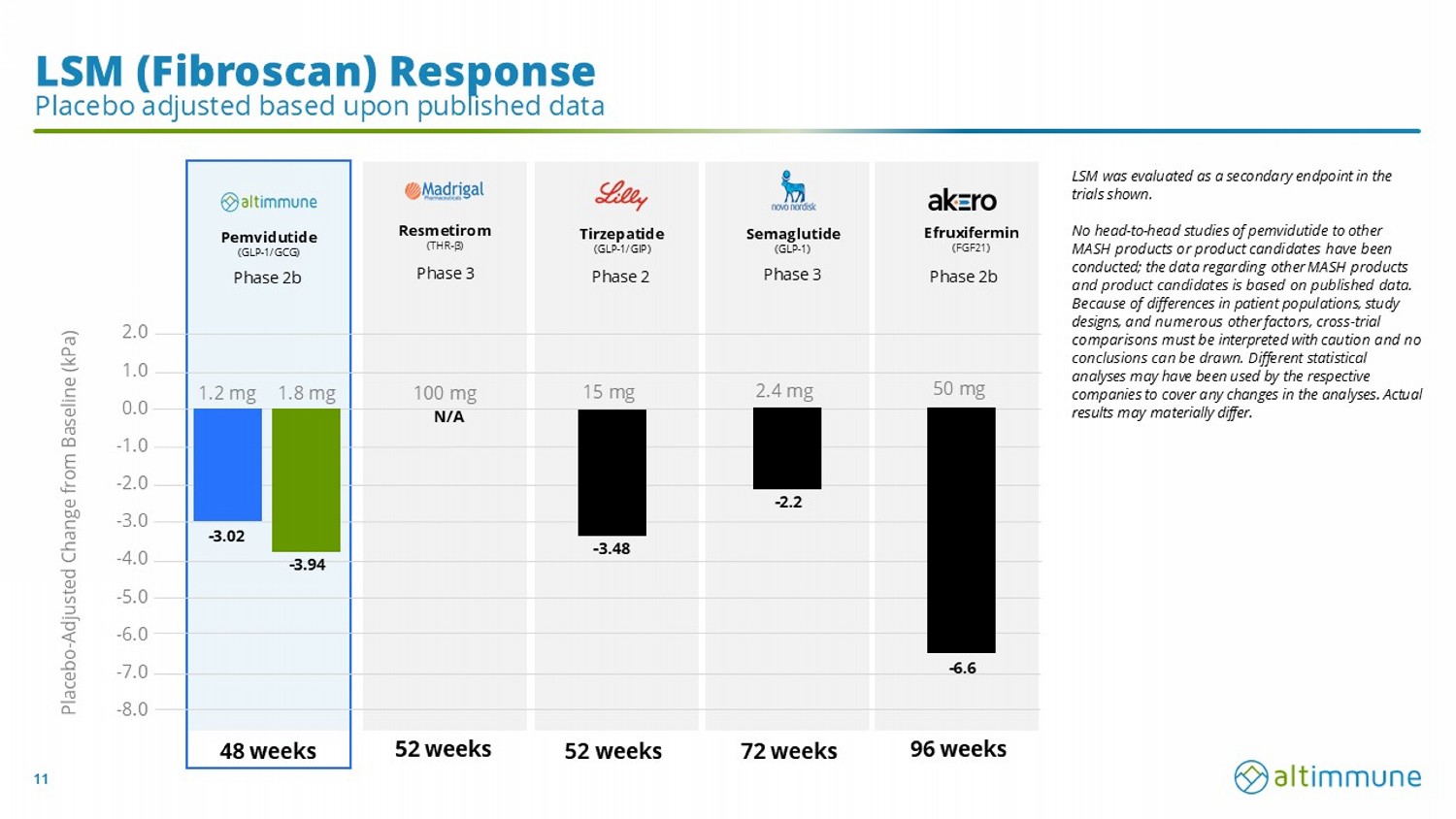
LSM (Fibroscan) Response Placebo adjusted based upon published data 11 Phase 2b Pemvidutide (GLP - 1/GCG) Resmetirom ( THR - β ) Phase 3 Efruxifermin ( FGF21 ) Phase 2b Semaglutide (GLP - 1) Phase 3 Tirzepatide (GLP - 1/GIP) Phase 2 48 weeks 52 weeks 52 weeks 72 weeks 96 weeks - 3.02 - 2.2 - 6.6 2.0 1.0 0.0 - 1.0 - 2.0 - 3.0 - 4.0 - 5.0 - 6.0 - 7.0 - 8.0 N/A 1.2 mg 1.8 mg - 3.48 100 mg 2.4 mg 15 mg 50 mg LSM was evaluated as a secondary endpoint in the trials shown. No head - to - head studies of pemvidutide to other MASH products or product candidates have been conducted; the data regarding other MASH products and product candidates is based on published data. Because of differences in patient populations, study designs, and numerous other factors, cross - trial comparisons must be interpreted with caution and no conclusions can be drawn. Different statistical analyses may have been used by the respective companies to cover any changes in the analyses. Actual results may materially differ. Placebo - Adjusted Change from Baseline (kPa) - 3.94
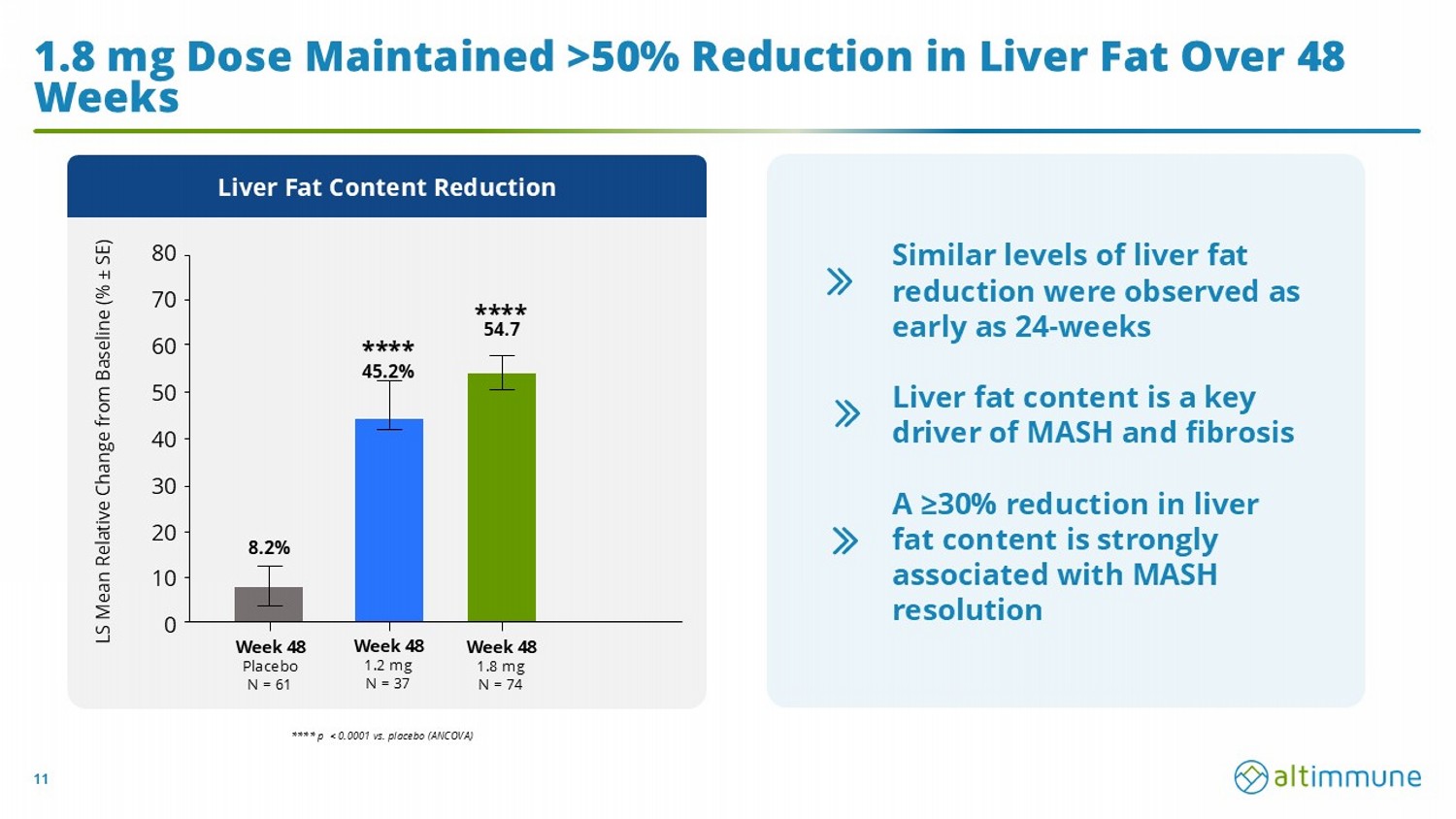
1.8 mg Dose Maintained >50% Reduction in Liver Fat Over 48 Weeks **** p < 0.0001 vs. placebo (ANCOVA) Liver Fat Content Reduction LS Mean Relative Change from Baseline (% ± SE) 80 70 60 50 40 30 20 10 0 Week 48 1.8 mg N = 74 54.7 **** Week 48 1.2 mg N = 37 45.2% **** Week 48 Placebo N = 61 8.2% 11 Similar levels of liver fat reduction were observed as early as 24 - weeks Liver fat content is a key driver of MASH and fibrosis A ≥30% reduction in liver fat content is strongly associated with MASH resolution
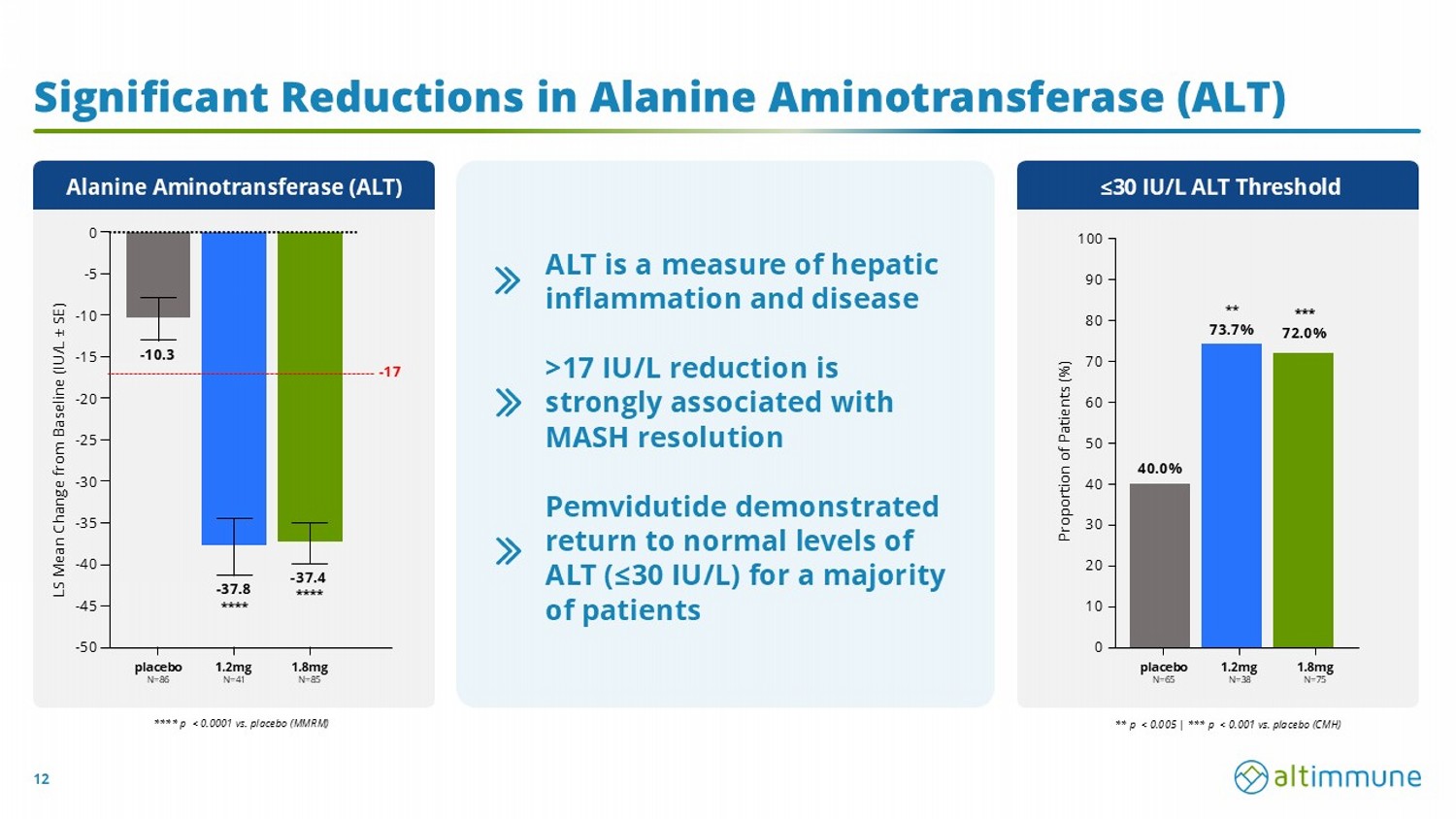
Significant Reductions in Alanine Aminotransferase (ALT) **** p < 0.0001 vs. placebo (MMRM) Alanine Aminotransferase (ALT) 0 - 5 - 10 - 15 - 20 - 25 - 30 - 35 - 40 - 45 - 50 LS Mean Change from Baseline (IU/L ± SE) - 10.3 - 37.8 **** - 37.4 **** placebo N=86 1.2mg N=41 1.8mg N=85 ≤30 IU/L ALT Threshold 100 90 80 70 60 50 40 30 20 10 0 Proportion of Patients (%) ** 73.7% *** 72.0% 40.0% placebo N=65 1.2mg N=38 1.8mg N=75 - 17 12 ALT is a measure of hepatic inflammation and disease >17 IU/L reduction is strongly associated with MASH resolution Pemvidutide demonstrated return to normal levels of ALT (≤30 IU/L) for a majority of patients ** p < 0.005 | *** p < 0.001 vs. placebo (CMH)
Significant Reductions in Corrected T1 (cT1) Reduction of ≥80 ms is associated with an improvement in histology in MASH † 13 cT1 0 - 100 - 150 - 200 - 50 LS Mean Change from Baseline (ms ± SE) **** p < 0.0001 vs. placebo (ANCOVA) † Alkhouri et al. Journal of Hepatology; 2025; 82(3), 438 – 445. † † Dennis et al. Front Endocrinol 2020;11:575843. NAS = Non - alcoholic fatty liver disease (NAFLD) activity score - 80 ms Week 48 1.8 mg N = 63 Week 48 1.2 mg N = 29 Week 48 Placebo N = 52 - 21 - 124 **** - 140 **** cT1 is a non - invasive marker of hepatic inflammation 80 ms reduction in cT1 is associated with 2 - point reduction in NAS †† cT1 data are consistent with maintenance of hepatic anti - inflammatory activity
Significant and Continuing Weight Loss for 1.8 mg at 48 Weeks 14 placebo N=86 1.2 mg N=41 1.8 mg N=85 - 10 - 9 - 8 - 7 - 6 - 5 - 4 - 3 - 2 - 1 0 LS Mean Relative Change from Baseline (% ± SE) - 9 - 8 - 7 - 6 - 5 - 4 - 3 - 2 - 1 0 1 Week 0 4 8 12 16 20 24 28 32 36 40 44 48 Placebo (N=86) 1.2 mg pemvidutide (N=41) 1.8 mg pemvidutide (N=85) Weight Loss Weight Loss - 0.2% - 4.5% **** - 7.5% **** LS Mean Relative Change from Baseline (% ± SE) Weight loss has been shown to be associated with MASH improvement † Weight loss of 7.5% at week 48 with no plateauing in 1.8 mg dose Opportunity to potentially achieve greater weight loss with 2.4 mg dose in Phase 3 † Vilar - Gomez et al. Gastroenterology. 2015;149(2):367 - 78 **** p < 0.0001 vs. placebo (MMRM)
Safety Profile Maintained at 48 Weeks Data are presented as n (%) 1.8 mg (N=85) 1.2 mg (N=41) Placebo (N=86) 8 (9.4%) 1 (2.4%) 5 (5.8%) Serious AEs 0 (0.0%) 0 (0.0%) 0 (0.0%) Serious AEs related to study med 8 (9.4%) 1 (2.4%) 2 (2.3%) Severe AEs 0 (0.0%) 0 (0.0%) 0 (0.0%) Severe AEs related to study med 0 (0.0%) 0 (0.0%) 0 (0.0%) AEs of Special Interest related to study med 16 Majority of AEs mild to moderate in severity No heart rate increases or imbalances in cardiac AEs versus placebo Maintenance of HbA1c regardless of diabetes status
Favorable Tolerability at 48 Weeks Data are presented as n (%) 1.8 mg (N=85) 1.2 mg (N=41) Placebo (N=86) Adverse Events 35 (41.2%) 9 (22.0%) 15 (17.4%) Nausea 10 (11.8%) 3 (7.3%) 2 (2.3%) Vomiting 19 (22.4%) 5 (12.2%) 7 (8.1%) Diarrhea 15 (17.6%) 5 (12.2%) 10 (11.6%) Constipation 1 (1.2%) 0 (0.0%) 3 (3.5%) AEs leading to treatment discontinuation 17 Majority of GI AEs were mild to moderate in severity and predominantly occurred within the first 8 weeks Approximately 1% of subjects receiving pemvidutide discontinued treatment due to AEs
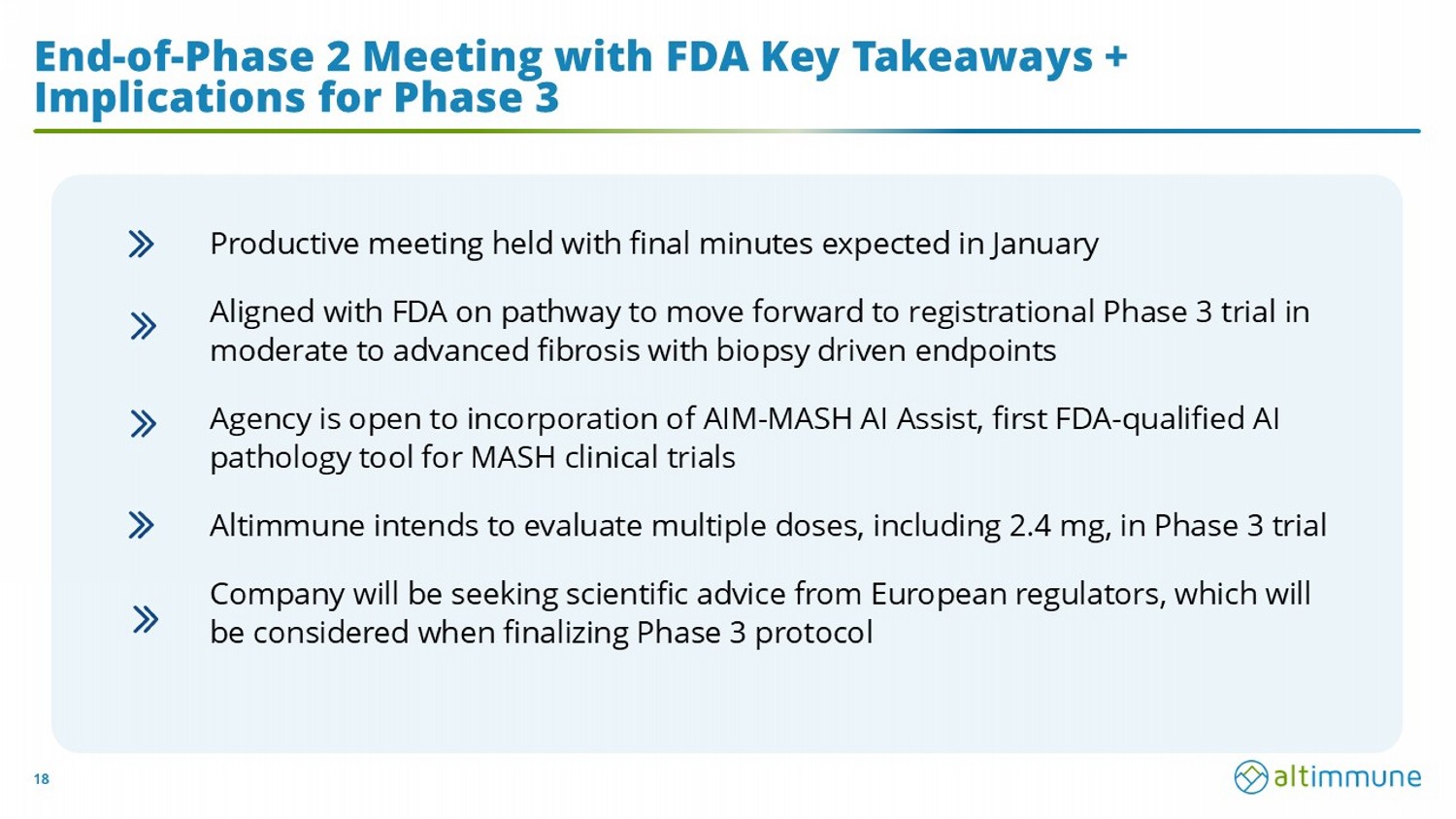
End - of - Phase 2 Meeting with FDA Key Takeaways + Implications for Phase 3 Productive meeting held with final minutes expected in January Aligned with FDA on pathway to move forward to registrational Phase 3 trial in moderate to advanced fibrosis with biopsy driven endpoints Agency is open to incorporation of AIM - MASH AI Assist, first FDA - qualified AI pathology tool for MASH clinical trials Altimmune intends to evaluate multiple doses, including 2.4 mg, in Phase 3 trial Company will be seeking scientific advice from European regulators, which will be considered when finalizing Phase 3 protocol 18
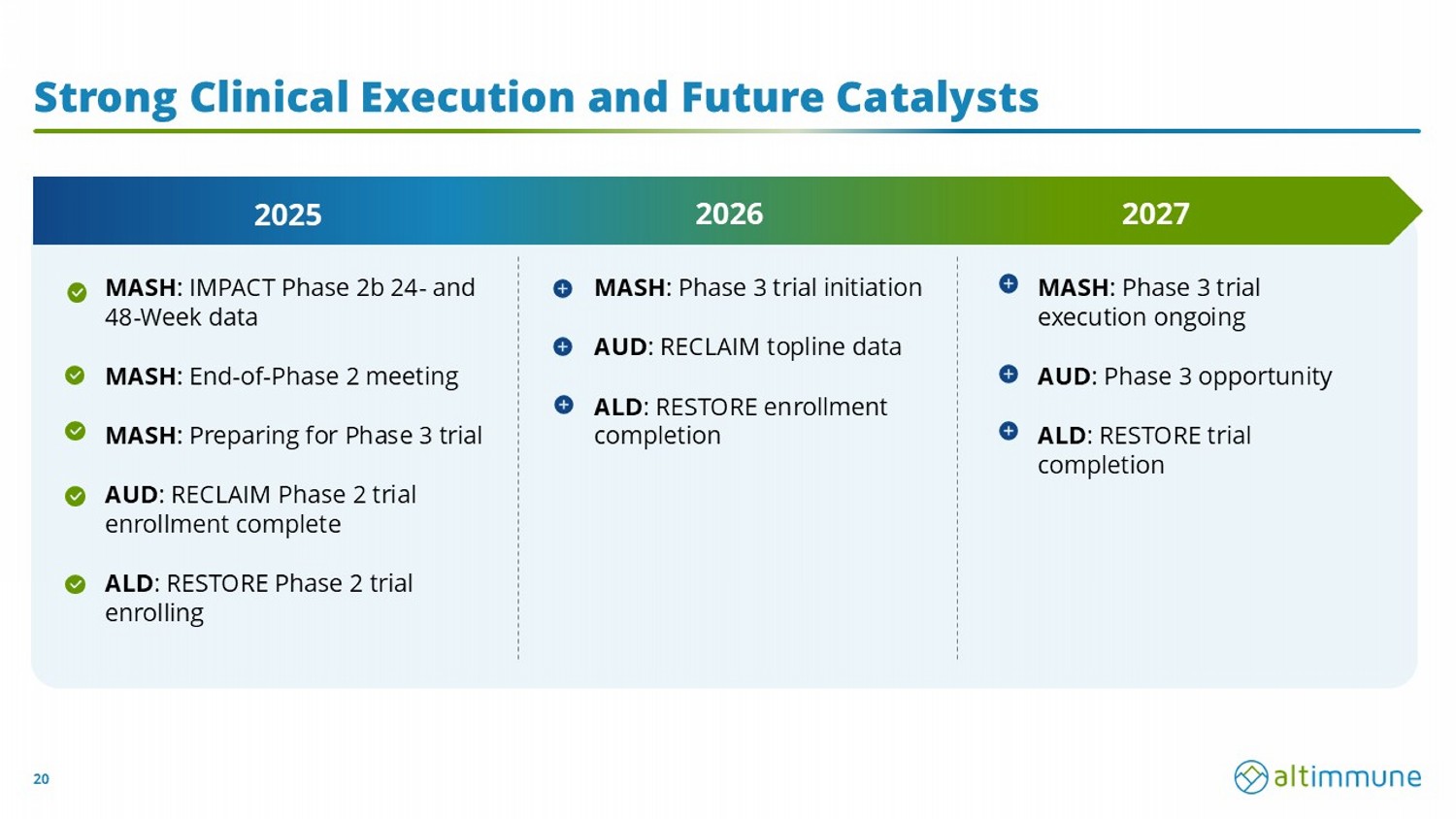
Strong Clinical Execution and Future Catalysts 20 2025 2026 • MASH : IMPACT Phase 2b 24 - and 48 - Week data • MASH : End - of - Phase 2 meeting • MASH : Preparing for Phase 3 trial • AUD : RECLAIM Phase 2 trial enrollment complete • ALD : RESTORE Phase 2 trial enrolling • MASH : Phase 3 trial initiation • AUD : RECLAIM topline data • ALD : RESTORE enrollment completion • MASH : Phase 3 trial execution ongoing • AUD : Phase 3 opportunity • ALD : RESTORE trial completion 2027
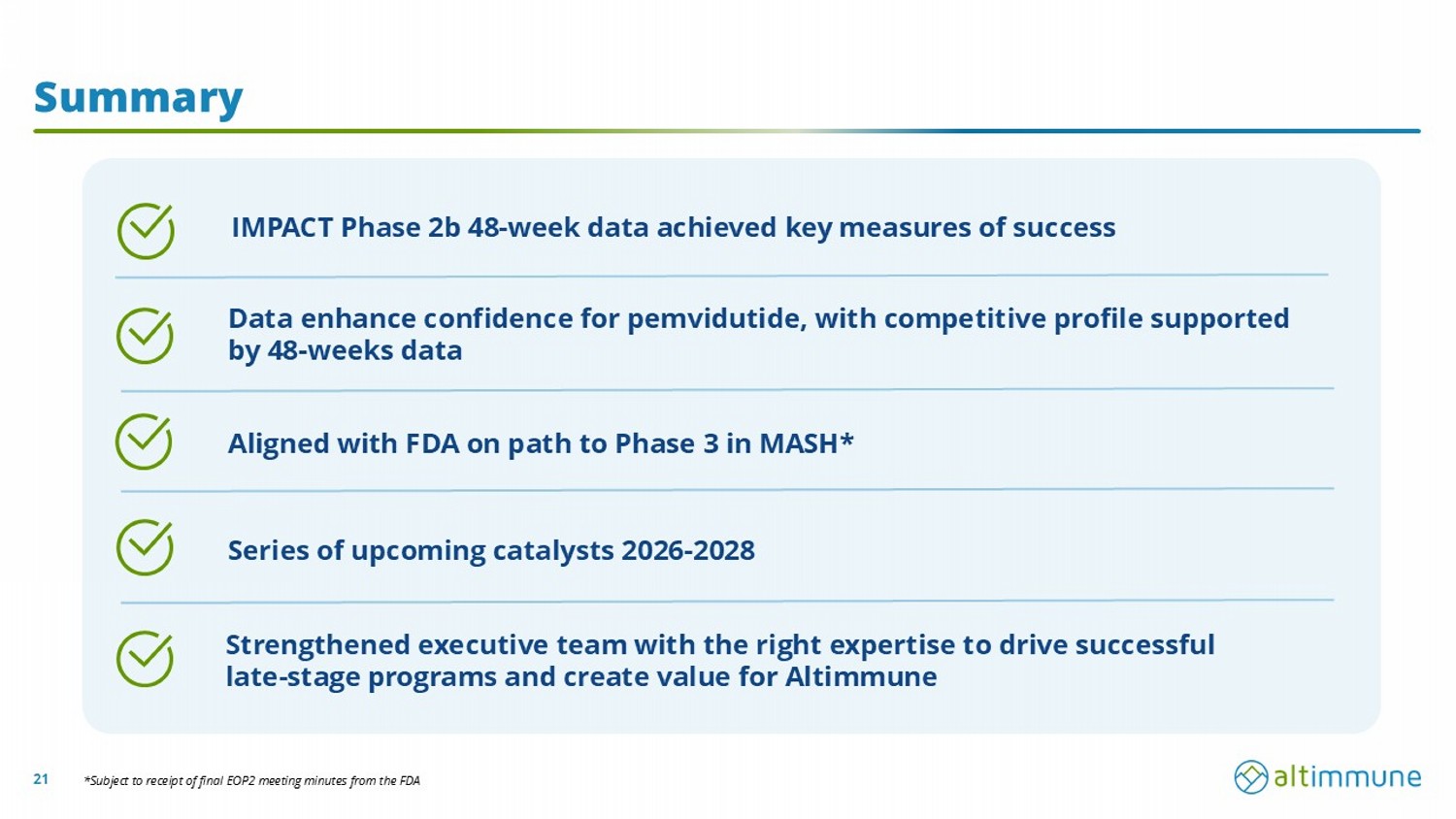
Summary 21 IMPACT Phase 2b 48 - week data achieved key measures of success Data enhance confidence for pemvidutide, with competitive profile supported by 48 - weeks data Aligned with FDA on path to Phase 3 in MASH* Series of upcoming catalysts 2026 - 2028 Strengthened executive team with the right expertise to drive successful late - stage programs and create value for Altimmune *Subject to receipt of final EOP2 meeting minutes from the FDA

Thank you