
BDTX 8-K
Black Diamond Therapeutics, Inc. (BDTX)
UNITED STATES
SECURITIES AND EXCHANGE COMMISSION
Washington, D.C. 20549
FORM
CURRENT REPORT
Pursuant
to Section 13 or 15(d)
of the Securities Exchange Act of 1934
Date of Report (Date of earliest event reported):
(Exact name of registrant as specified in its charter)
| (State or other jurisdiction | (Commission | (I.R.S. Employer |
| of incorporation) | File Number) | Identification No.) |
(Address of principal executive offices, including zip code)
(
(Registrant’s telephone number, including area code)
(Former Name or Former Address, if Changed Since Last Report)
Check the appropriate box below if the Form 8-K filing is intended to simultaneously satisfy the filing obligation of the registrant under any of the following provisions:
| Written communications pursuant to Rule 425 under the Securities Act (17 CFR 230.425) | |
| Soliciting material pursuant to Rule 14a-12 under the Exchange Act (17 CFR 240.14a-12) | |
| Pre-commencement communications pursuant to Rule 14d-2(b) under the Exchange Act (17 CFR 240.14d-2(b)) | |
| Pre-commencement communications pursuant to Rule 13e-4(c) under the Exchange Act (17 CFR 240.13e-4(c)) |
Securities registered pursuant to Section 12(b) of the Act:
| Title of each class | Trading Symbol(s) |
Name of each exchange on which registered |
Indicate by check mark whether the registrant is an emerging growth company as defined in Rule 405 of the Securities Act of 1933 (§230.405 of this chapter) or Rule 12b-2 of the Securities Exchange Act of 1934 (§240.12b-2 of this chapter).
Emerging growth company
If an emerging growth company, indicate by check mark if the registrant
has elected not to use the extended transition period for complying with any new or revised financial accounting standards provided pursuant
to Section 13(a) of the Exchange Act.
Item 2.02. Results of Operations and Financial Condition.
On December 3, 2025, Black Diamond Therapeutics, Inc. (the “Company”) issued a press release titled “Black Diamond Therapeutics Announces Preliminary Phase 2 Data for Silevertinib in 1L NSCLC and Plans for a Phase 2 Trial of Silevertinib in GBM” and posted an updated corporate presentation to its website at https://investors.blackdiamondtherapeutics.com/events-presentations, which press release and presentation included updated financial guidance for September 30, 2025. Specifically, the Company announced that its previously reported cash, cash equivalents and investments of approximately $135.5 million as of September 30, 2025 is now expected to be sufficient to fund its anticipated operating expenses and capital expenditure requirements into the second half of 2028.
The foregoing updated financial guidance is based on management’s current expectations and assumes that the Company funds its Phase 2 trial of silevertinib in newly diagnosed glioblastoma (“GBM”) and that a potential partner funds pivotal development of silevertinib in non-small cell lung cancer (“NSCLC”).
Reference to the Company’s website is for inactive textual reference only and the content of the website should not be deemed incorporated by reference into this Current Report on Form 8-K.
The information in this Item 2.02 is intended to be furnished and shall not be deemed “filed” for purposes of Section 18 of the Securities Exchange Act of 1934, as amended (the “Exchange Act”), or otherwise subject to the liabilities of that section, nor shall it be deemed incorporated by reference in any filing under the Securities Act of 1933, as amended (the “Securities Act”), or the Exchange Act, except as expressly set forth by specific reference in such a filing.
Item 7.01. Regulation FD Disclosure.
Copies of the press release and corporate presentation are furnished as Exhibit 99.1 and Exhibit 99.2, respectively, to this Current Report on Form 8-K and are incorporated herein by reference.
The information in this Item 7.01, including Exhibit 99.1 and Exhibit 99.2 attached hereto, is intended to be furnished and shall not be deemed “filed” for purposes of Section 18 of the Exchange Act, or otherwise subject to the liabilities of that section, nor shall it be deemed incorporated by reference in any filing under the Securities Act or the Exchange Act, except as expressly set forth by specific reference in such a filing.
Item 8.01. Other Events.
On December 3, 2025, the Company announced topline data from its Phase 2 trial of silevertinib in 1L NSCLC patients with non-classical epidermal growth factor receptor (“EGFR”) mutations and outlined plans for a randomized Phase 2 trial of silevertinib in patients with newly diagnosed GBM.
Silevertinib Phase 2 1L NSCLC Initial Clinical Results and Program Update
43 frontline NSCLC patients harboring a broad spectrum of 35 distinct non-classical EGFR mutations were enrolled, including 16 patients with brain metastases (seven of whom had measurable central nervous system (“CNS”) target lesions). All patients were enrolled at a 200 mg oral daily dose of silevertinib. Efficacy and safety were assessed with a November 3, 2025 data cutoff; median follow-up time as of this date was 7.2 months and the study remains ongoing.
Key data highlights include:
For the 43 patients enrolled, preliminary efficacy data is as follows:
| · | 25 confirmed partial responses, one confirmed complete response | |
| · | 60% objective response rate (“ORR”) (ORR by RECIST 1.1) | |
| · | 86% CNS ORR (by RANO-BM) | |
| · | 91% disease control rate |
Initial duration of treatment data:
| · | 29 patients remain on therapy (five out of 29 after progression), longest ongoing for >19 months |
Summary of safety data:
| · | No new safety signals observed | |
| · | Adverse events (“AEs”) experienced by a majority of patients include rash, stomatitis, diarrhea and paronychia |
| · | AEs were managed with standard supportive care and dose interruptions/reductions without compromising response depth or durability to date |
The Company expects to present updated results from the Phase 2 NSCLC trial, including duration of response (“DOR”) and progression-free survival (“PFS”) data in both the recurrent (83 patients) and frontline (43 patients) settings, at a medical meeting in the second quarter of 2026. The Company continues to explore potential partnerships to advance silevertinib into pivotal development.
GBM Program Update and Phase 2 Plans
Approximately 50% of patients with GBM present with an oncogenic EGFR alteration that can be targeted by silevertinib; each year approximately 7,000 patients in the U.S. are diagnosed with GBM harboring these EGFR alterations.
Key trial highlights include:
| · | Expected to enroll approximately 150 newly diagnosed patients, randomized to receive temozolomide (“TMZ”) (control arm) or silevertinib + TMZ (experimental arm) | |
| · | Initial focus will be on EGFRvIII-positive patients (approximately 30% of GBM) who are methylguanine methyltransferase-negative (unmethylated) | |
| · | Randomization and treatment will begin after patients have had their surgical resection and radiation | |
| · | Primary endpoint is PFS (RANO by Blinded Independent Committee Review), with an interim analysis; secondary endpoint is overall survival | |
| · | Trial will be governed by an Independent Data Monitoring Committee |
The Company plans to initiate a randomized Phase 2 trial in newly diagnosed GBM patients in the first half of 2026, with preliminary data expected in 2028.
Forward-Looking Statements
Statements contained in this Current Report on Form 8-K regarding matters that are not historical facts are “forward-looking statements” within the meaning of the Private Securities Litigation Reform Act of 1995. Because such statements are subject to risks and uncertainties, actual results may differ materially from those expressed or implied by such forward-looking statements. Such statements include, but are not limited to, statements regarding: the continued development and advancement of silevertinib, including the ongoing Phase 2 clinical trial and the timing of clinical updates for silevertinib in patients with NSCLC and in patients with GBM, the expected timing for regulatory feedback and the disclosure of a potential registrational pathway for silevertinib in NSCLC, the potential of silevertinib to address the unmet medical need for newly diagnosed NSCLC patients with non-classical EGFR mutations and benefit patients with NSCLC across multiple lines of therapy, the potential future development plans for silevertinib in NSCLC and GBM, a potential partnership for silevertinib, and the Company’s expected cash runway. Any forward-looking statements in this Current Report on Form 8-K are based on management’s current expectations of future events and are subject to a number of risks and uncertainties that could cause actual results to differ materially and adversely from those set forth in or implied by such forward-looking statements. Risks that contribute to the uncertain nature of the forward-looking statements include those risks and uncertainties set forth in the Company’s Annual Report on Form 10-K for the year ended December 31, 2024, filed with the United States Securities and Exchange Commission (the “SEC”) and in its subsequent filings filed with the SEC. All forward-looking statements contained in this press release speak only as of the date on which they were made. The Company undertakes no obligation to update such statements to reflect events that occur or circumstances that exist after the date on which they were made.
Item 9.01. Financial Statements and Exhibits.
(d) Exhibits:
| Exhibit No. | Description | |
| 99.1 | Press Release issued by Black Diamond Therapeutics, Inc. dated December 3, 2025. | |
| 99.2 | Corporate Presentation of Black Diamond Therapeutics, Inc. dated December 3, 2025. | |
| 104 | Cover Page Interactive Data File (embedded within the Inline XBRL document). |
SIGNATURE
Pursuant to the requirements of the Securities Exchange Act of 1934, the registrant has duly caused this report to be signed on its behalf by the undersigned hereunto duly authorized.
| Black Diamond Therapeutics, Inc. | ||
| Date: December 3, 2025 | By: | /s/ Brent Hatzis-Schoch |
| Brent Hatzis-Schoch | ||
| Chief Operating Officer and General Counsel | ||
Exhibit 99.1

Black Diamond Therapeutics Announces Preliminary Phase 2 Data for Silevertinib in 1L NSCLC and Plans for a Phase 2 Trial of Silevertinib in GBM
| · | Silevertinib delivers robust anti-tumor activity as demonstrated by an ORR of 60% and a CNS response rate of 86% in 43 1L NSCLC patients presenting with 35 different non-classical EGFR mutations; no new safety signals observed to date |
| · | PFS data for 1L NSCLC patients expected in Q2 2026; Company continues to explore partnership opportunities for pivotal development of silevertinib |
| · | Based on encouraging CNS activity of silevertinib in multiple trials across NSCLC and GBM, Company plans to initiate a randomized Phase 2 trial of silevertinib in newly diagnosed GBM patients in 1H 2026; initial data anticipated in 2028 |
| · | Cash, cash equivalents, and investments of $135.5 million as of September 30, 2025; expected to be sufficient to fund operations into 2H of 2028 |
| · | Company to host an investor webcast and conference call today at 8:00 AM ET |
CAMBRIDGE, MA, December 3, 2025 (GLOBE NEWSWIRE) – Black Diamond Therapeutics, Inc. (Nasdaq: BDTX), a clinical-stage oncology company developing MasterKey therapies that target families of oncogenic mutations in patients with cancer, today announced topline data from its Phase 2 trial of silevertinib in frontline (1L) non-small cell lung cancer (NSCLC) patients with non-classical epidermal growth factor receptor (EGFR) mutations (NCMs) and outlined plans for a randomized Phase 2 trial of silevertinib in patients with newly diagnosed glioblastoma (ND GBM).
“We are pleased to share these initial data in frontline NSCLC patients showing silevertinib’s activity against a broad spectrum of 35 distinct non-classical EGFR mutations,” said Mark Velleca, M.D., Ph.D., President and Chief Executive Officer of Black Diamond Therapeutics. “We are particularly encouraged by the CNS activity of silevertinib in treating NSCLC patients with brain metastases, as published data clearly demonstrate that CNS metastases are a key factor in early disease progression for NCM NSCLC patients treated with second- and third-generation EGFR-TKIs. We also believe that silevertinib is uniquely positioned as a potential treatment for patients with newly diagnosed EGFR-altered GBM, and plan to initiate a randomized Phase 2 trial in the first half of 2026, while PFS data matures in our Phase 2 NSCLC study and we continue our partnering discussions.”
Silevertinib Phase 2 1L NSCLC Initial Clinical Results and Program Update
43 frontline NSCLC patients harboring a broad spectrum of 35 distinct non-classical EGFR mutations were enrolled, including 16 patients with brain metastases (7 of whom had measurable CNS target lesions). All patients were enrolled at a 200mg oral daily dose of silevertinib. Efficacy and safety were assessed with a November 3, 2025 data cutoff; median follow-up time as of this date was 7.2 months and the study remains ongoing.
Key data highlights include:
For the 43 patients enrolled, preliminary efficacy data is as follows:
| · | 25 confirmed partial responses, 1 confirmed complete response |
| · | 60% Objective Response Rate (ORR by RECIST 1.1) |
| · | 86% CNS ORR (by RANO-BM) |
| · | 91% disease control rate (DCR) |
Initial duration of treatment data:
| · | 29 patients remain on therapy (5/29 after progression), longest ongoing for >19 months |
Summary of safety data:
| · | No new safety signals observed |
| · | Adverse events (AEs) experienced by a majority of patients include rash, stomatitis, diarrhea and paronychia |
| · | AEs were managed with standard supportive care and dose interruptions/reductions without compromising response depth or durability to date |
The Company expects to present updated results from the Phase 2 NSCLC trial, including Duration of Response (DOR) and Progression-free Survival (PFS) data in both the recurrent (83 patients) and frontline (43 patients) settings, at a medical meeting in the second quarter of 2026. Black Diamond continues to explore potential partnerships to advance silevertinib into pivotal development.
“These highly encouraging data speak to the potential of silevertinib to be the treatment of choice for frontline NSCLC patients with the full spectrum of non-classical EGFR mutations” said Sergey Yurasov, M.D., Ph.D., Black Diamond’s Chief Medical Officer. “We are struck by the compelling CNS response rate, which may translate to prolonged durability of response for patients with CNS metastases. Based on these data, and promising Phase 0/1 and Phase 1 GBM results, we are preparing to initiate a randomized Phase 2 trial of silevertinib in newly diagnosed GBM patients, one of the highest unmet needs in oncology”.
GBM Program Update and Phase 2 Plans
Approximately 50% of patients with glioblastoma (GBM) present with an oncogenic EGFR alteration that can be targeted by silevertinib; each year approximately 7,000 patients in the U.S. are diagnosed with GBM harboring these EGFR alterations.
“Prior attempts to treat EGFR-altered GBM patients have been limited by poor brain penetrance of targeted therapies and/or lack of potency of these therapies on the full spectrum of EGFR alterations” said Elizabeth Buck, Ph.D., Chief Scientific Officer of Black Diamond. “Based on encouraging CNS activity demonstrated by silevertinib across multiple trials, and its preclinical potency on all EGFR alterations found in GBM, we believe that silevertinib has the potential to be the first targeted therapy for these patients.”
Black Diamond plans to initiate a randomized Phase 2 trial in newly diagnosed GBM patients in the first half of 2026, with preliminary data expected in 2028.
Key trial highlights include:
| · | Expected to enroll approximately 150 newly diagnosed patients, randomized to receive TMZ (control arm) or silevertinib + TMZ (experimental arm) |
| · | Initial focus will be on EGFRvIII-positive patients (approximately 30% of GBM) who are MGMT-negative (unmethylated) |
| · | Randomization and treatment will begin after patients have had their surgical resection and radiation |
| · | Primary endpoint is PFS (RANO by Blinded Independent Committee Review), with an interim analysis; secondary endpoint is overall survival (OS) |
| · | Trial will be governed by an Independent Data Monitoring Committee (IDMC) |
Updated Financial Guidance
| · | Black Diamond previously reported cash, cash equivalents and investments of approximately $135.5 million as of September 30, 2025, which the Company now believes is sufficient to fund its anticipated operating expenses and capital expenditure requirements into the second half of 2028. |
| · | Financial guidance assumes Black Diamond funds the Phase 2 trial of silevertinib in ND GBM and a potential partner funds pivotal development in NSCLC. Financial guidance does not assume receipt of potential development milestones from the Company’s partnership with Servier Pharmaceuticals LLC for BDTX-4933 (now S241656). |
Conference Call Information
Black Diamond will host a conference call and webcast on Wednesday, December 3, 2025, at 8:00 AM ET to discuss the preliminary Phase 2 data for silevertinib in 1L NSCLC and plans for a Phase 2 trial of silevertinib in GBM. The webcast may be accessed online here or by visiting the Events page in the Investors section of the Company’s website at www.blackdiamondtherapeutics.com.
A replay of the webcast will be available for 30 days on the Investors section of Black Diamond’s website.
About Black Diamond Therapeutics
Black Diamond Therapeutics is a clinical-stage oncology company developing MasterKey therapies that target families of oncogenic mutations in patients with cancer. The Company’s MasterKey therapies are designed to address a broad spectrum of genetically defined tumors, overcome resistance, minimize wild-type mediated toxicities, and be brain penetrant to treat central nervous system disease. The Company is advancing silevertinib, a brain-penetrant fourth-generation EGFR MasterKey inhibitor targeting EGFR-mutant NSCLC and GBM. For more information, please visit www.blackdiamondtherapeutics.com.
From time to time, we may use our website or our LinkedIn profile at www.linkedin.com/company/black-diamond-therapeutics to distribute material information. Our financial and other material information is routinely posted to and accessible on the Investors section of our website, available at www.blackdiamondtherapeutics.com. Investors are encouraged to review the Investors section of our website because we may post material information on that site that is not otherwise disseminated by us. Information that is contained in and can be accessed through our website or our LinkedIn page is not incorporated into, and does not form a part of, this press release.
Forward-Looking Statements
Statements contained in this press release regarding matters that are not historical facts are “forward-looking statements” within the meaning of the Private Securities Litigation Reform Act of 1995. Because such statements are subject to risks and uncertainties, actual results may differ materially from those expressed or implied by such forward-looking statements. Such statements include, but are not limited to, statements regarding: the continued development and advancement of silevertinib, including the ongoing Phase 2 clinical trial and the timing of clinical updates for silevertinib in patients with NSCLC and in patients with GBM, enrollment in the investigator sponsored Phase 0/1 clinical trial of silevertinib of newly diagnosed GBM patients with EGFR alterations, the expected timing for regulatory feedback and the disclosure of a potential registrational pathway for silevertinib in NSCLC, the potential of silevertinib to address the unmet medical need for newly diagnosed NSCLC patients with non-classical EGFR mutations and benefit patients with NSCLC across multiple lines of therapy, the potential future development plans for silevertinib in NSCLC and GBM, a potential partnership for silevertinib, and the Company’s expected cash runway. Any forward-looking statements in this press release are based on management’s current expectations of future events and are subject to a number of risks and uncertainties that could cause actual results to differ materially and adversely from those set forth in or implied by such forward-looking statements. Risks that contribute to the uncertain nature of the forward-looking statements include those risks and uncertainties set forth in its Annual Report on Form 10-K for the year ended December 31, 2024, filed with the United States Securities and Exchange Commission and in its subsequent filings filed with the United States Securities and Exchange Commission. All forward-looking statements contained in this press release speak only as of the date on which they were made. The Company undertakes no obligation to update such statements to reflect events that occur or circumstances that exist after the date on which they were made.
Contact
For Investors:
For Media:
# # #
Exhibit 99.2

1 Black Diamond Therapeutics, Inc. Developing MasterKey Therapies to Defeat Cancer Resistance December 3, 2025
2 Forward - Looking Statements This presentation contains forward looking statements of Black Diamond Therapeutics, Inc (“we,” “us,” “our”) within the meaning of the Private Securities Litigation Reform Act of 1995 . Forward looking statements include all statements that are not historical facts, and in some cases, can be identified by terms such as “may,” “might,” “will,” “could,” “would,” “should,” “expect,” “intend,” “plan,” “objective,” “anticipate,” “believe,” “estimate,” “predict,” “potential,” “continue,” “ongoing,” or the negative of these terms, or other comparable terminology intended to identify statements about the future . Forward looking statements contained in this presentation include, but are not limited to, statements regarding our future financial or business performance, conditions, plans, prospects, trends or strategies and other financial and business matters, the continued development and advancement of silevertinib , the progress, timing and success of our clinical trials of silevertinib and any of our future product candidates, including the availability, timing and announcement of data and results of such trials, our ability to replicate results achieved in our preclinical studies or clinical trials, the expected timing for regulatory feedback and the disclosure of potential registrational pathways for silevertinib , the potential of silevertinib to address the unmet medical need for newly diagnosed non - small cell lung cancer (“NSCLC”) patients with non - classical EGFR mutations and benefit patients with NSCLC across multiple lines of therapy, the potential future development plans for silevertinib in NSCLC and glioblastoma ("GBM"), enrollment in the investigator sponsored Phase 0 / 1 clinical trial of silevertinib of newly diagnosed GBM patients with EGFR alterations, the competitive landscape and market for silevertinib or any of our other current or future product candidates, a potential partnership for silevertinib , our ability to maintain our intellectual property portfolio, the timing and success of our development and commercialization of our product candidates, including our ability to establish and maintain collaborations or strategic relationships, and our expected cash runway . New risks and uncertainties may emerge from time to time, and it is not possible to predict all risks and uncertainties . Except as required by law, we assume no obligation to update these forward looking statements publicly, or to update the reasons actual results could differ materially from those anticipated in the forward looking statements, even if new information becomes available in the future . For a discussion of these and other risks and uncertainties, and other important factors, any of which could cause our actual results to differ from those contained in the forward looking statements, see the section entitled “Risk Factors” in our most recent annual report on Form 10 - K filed with the Securities and Exchange Commission (the “SEC”), as well as discussions of potential risks, uncertainties, and other important factors in our other subsequent filings with the SEC . In addition, we have not conducted any head to head studies comparing our product candidates to any third party drug products or candidates, whether investigated or approved . Information regarding other drug products in this presentation is meant to provide context for illustrative purposes only . Because there are no head to head studies, no conclusions should be made based on cross study comparisons . Recipients are cautioned not to place undue reliance on these forward looking statements, which speak only as of the date such statements are made and should not be construed as statements of fact . This presentation also contains information using industry publications that generally state that the information contained therein has been obtained from sources believed to be reliable, but such information may not be accurate or complete . While we are not aware of any misstatements regarding the information from these industry publications, we have not independently verified any of the data from third party sources nor have we ascertained the underlying economic assumptions relied on therein .
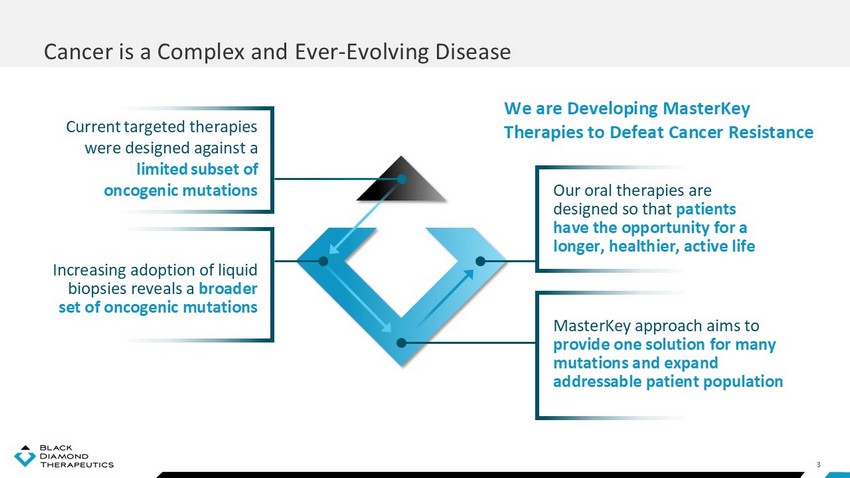
3 Cancer is a Complex and Ever - Evolving Disease Current targeted therapies were designed against a limited subset of oncogenic mutations Increasing adoption of liquid biopsies reveals a broader set of oncogenic mutations We are Developing MasterKey Therapies to Defeat Cancer Resistance MasterKey approach aims to provide one solution for many mutations and expand addressable patient population Our oral therapies are designed so that patients have the opportunity for a longer, healthier, active life
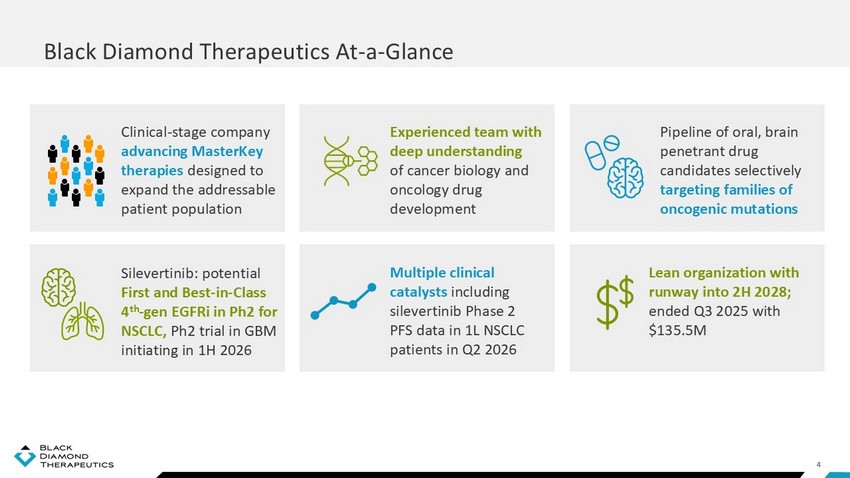
4 Black Diamond Therapeutics At - a - Glance Clinical - stage company advancing MasterKey therapies designed to expand the addressable patient population Experienced team with deep understanding of cancer biology and oncology drug development Silevertinib : potential First and Best - in - Class 4 th - gen EGFRi in Ph2 for NSCLC , Ph2 trial in GBM initiating in 1H 2026 Pipeline of oral, brain penetrant drug candidates selectively targeting families of oncogenic mutations Multiple clinical catalysts including silevertinib Phase 2 PFS data in 1L NSCLC patients in Q2 2026 Lean organization with runway into 2H 2028; ended Q3 2025 with $135.5M
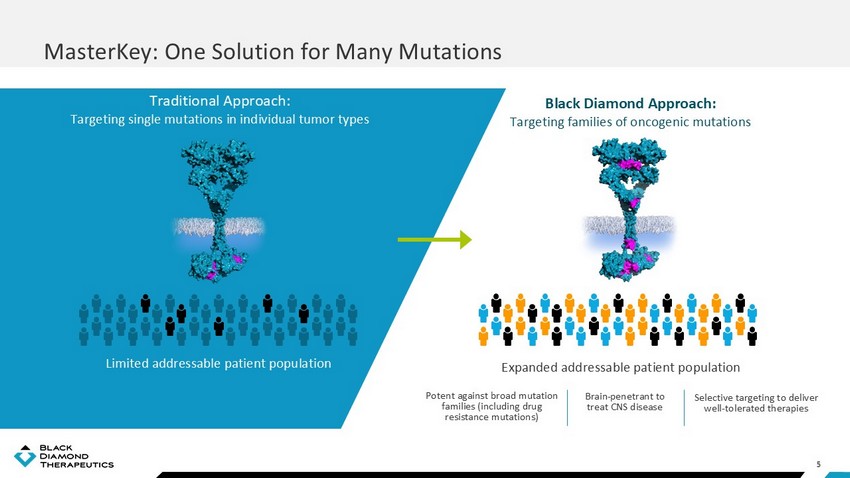
5 MasterKey : One Solution for Many Mutations Expanded addressable patient population Black Diamond Approach: Targeting families of oncogenic mutations Limited addressable patient population 5 Brain - penetrant to treat CNS disease Traditional Approach: Targeting single mutations in individual tumor types Potent against broad mutation families (including drug resistance mutations) Selective targeting to deliver well - tolerated therapies
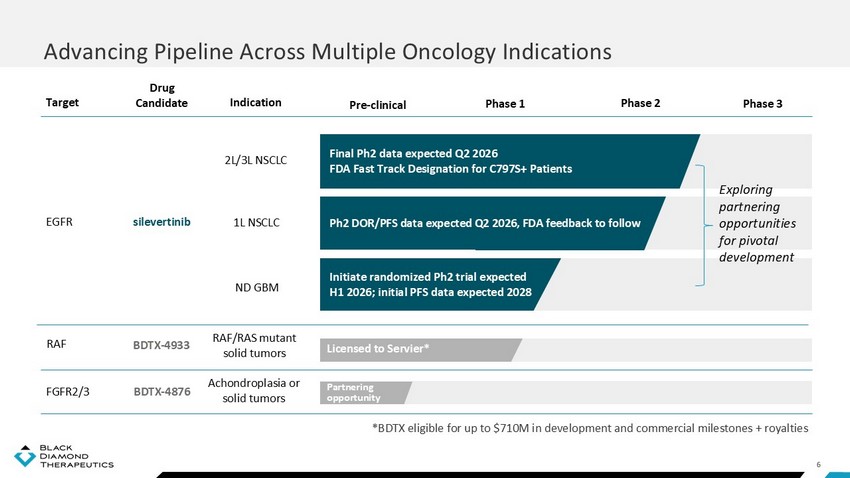
6 Advancing Pipeline Across Multiple Oncology Indications Target Drug Candidate Indication Pre - clinical Phase 1 Phase 2 Phase 3 EGFR RAF silevertinib BDTX - 4933 2L/3L NSCLC 1L NSCLC FGFR2/3 BDTX - 4876 Achondroplasia or solid tumors RAF/RAS mutant solid tumors Partnering opportunity Licensed to Servier* ND GBM Final Ph2 data expected Q2 2026 FDA Fast Track Designation for C797S+ Patients Initiate randomized Ph2 trial expected H1 2026; initial PFS data expected 2028 Ph2 DOR/PFS data expected Q2 2026, FDA feedback to follow Exploring partnering opportunities for pivotal development *BDTX eligible for up to $710M in development and commercial milestones + royalties
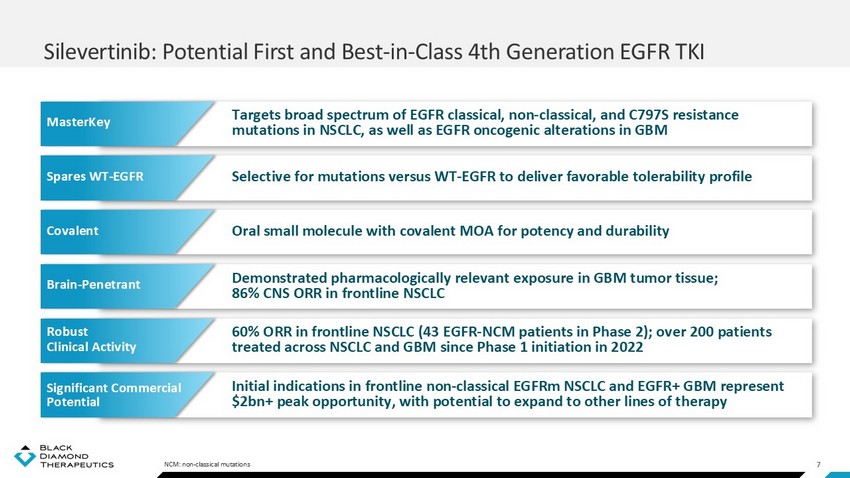
7 Targets broad spectrum of EGFR classical, non - classical, and C797S resistance mutations in NSCLC, as well as EGFR oncogenic alterations in GBM Selective for mutations versus WT - EGFR to deliver favorable tolerability profile Oral small molecule with covalent MOA for potency and durability Demonstrated pharmacologically relevant exposure in GBM tumor tissue; 86% CNS ORR in frontline NSCLC 60% ORR in frontline NSCLC (43 EGFR - NCM patients in Phase 2); over 200 patients treated across NSCLC and GBM since Phase 1 initiation in 2022 Initial indications in frontline non - classical EGFRm NSCLC and EGFR+ GBM represent $2bn+ peak opportunity, with potential to expand to other lines of therapy Silevertinib: Potential First and Best - in - Class 4th Generation EGFR TKI MasterKey Spares WT - EGFR Covalent Brain - Penetrant Robust Clinical Activity Significant Commercial Potential NCM: non - classical mutations
8 Silevertinib : Development in NSCLC
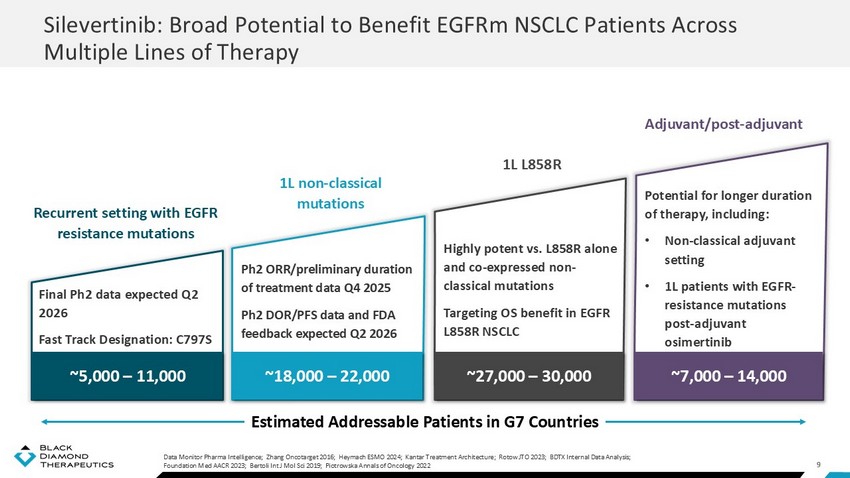
9 Silevertinib : Broad Potential to Benefit EGFRm NSCLC Patients Across Multiple Lines of Therapy 1L non - classical mutations Recurrent setting with EGFR resistance mutations Adjuvant/post - adjuvant 1L L858R Final Ph2 data expected Q2 2026 Fast Track Designation : C797S Potential for longer duration of therapy, including: • Non - classical adjuvant setting • 1L patients with EGFR - resistance mutations post - adjuvant osimertinib Highly potent vs. L858R alone and co - expressed non - classical mutations Targeting OS benefit in EGFR L858R NSCLC ~5,000 – 11,000 ~7,000 – 14,000 ~27,000 – 30,000 Ph2 ORR/preliminary duration of treatment data Q4 2025 Ph2 DOR/PFS data and FDA feedback expected Q2 2026 Data Monitor Pharma Intelligence; Zhang Oncotarget 2016; Heymach ESMO 2024; Kantar Treatment Architecture; Rotow JTO 2023; BDTX Internal Data Analysis; Foundation Med AACR 2023; Bertoli Int J Mol Sci 2019; Piotrowska Annals of Oncology 2022 Estimated Addressable Patients in G7 Countries ~18,000 – 22,000
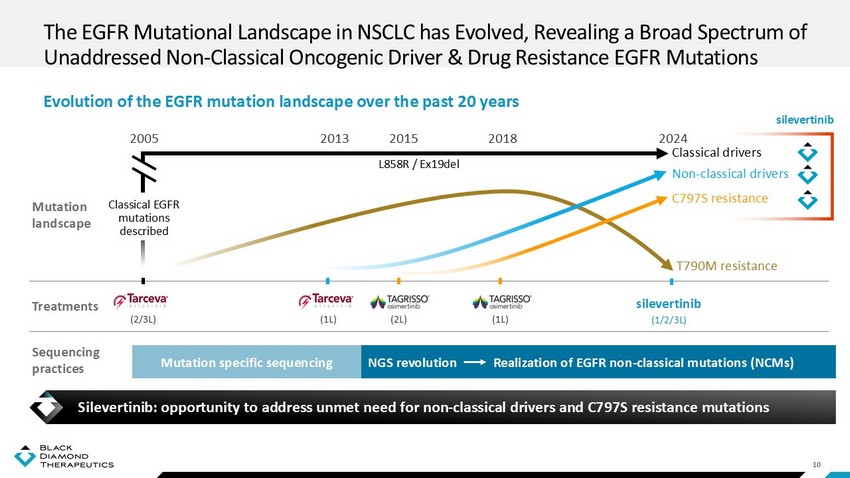
10 Evolution of the EGFR mutation landscape over the past 20 years NGS revolution Mutation specific sequencing 2005 (2/3L) 2013 2015 2018 2024 T790M resistance C797S resistance Non - classical drivers Classical drivers L858R / Ex19del R ealization of EGFR non - classical mutations (NCMs) Treatments Sequencing practices Classical EGFR mutations described Mutation landscape S ilevertinib : opportunity to address unmet need for non - classical drivers and C797S resistance mutations silevertinib (1L) (2L) (1L) The EGFR Mutational Landscape in NSCLC has Evolved, Revealing a Broad Spectrum of Unaddressed Non - Classical Oncogenic Driver & Drug Resistance EGFR Mutations silevertinib (1/2/3L)
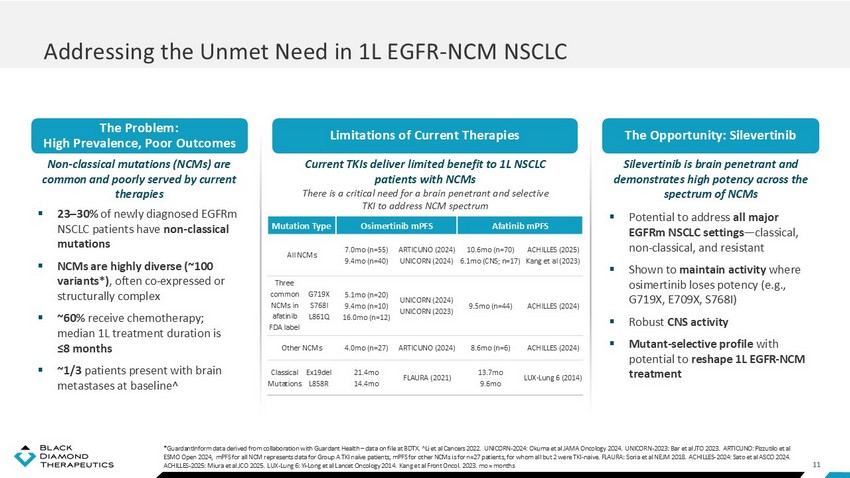
11 Addressing the Unmet Need in 1L EGFR - NCM NSCLC The Problem: High Prevalence, Poor Outcomes Non - classical mutations (NCMs) are common and poorly served by current therapies Current TKIs deliver limited benefit to 1L NSCLC patients with NCMs There is a critical need for a brain penetrant and selective TKI to address NCM spectrum Limitations of Current Therapies Silevertinib is brain penetrant and demonstrates high potency across the spectrum of NCMs ▪ Potential to address all major EGFRm NSCLC settings — classical, non - classical, and resistant ▪ Shown to maintain activity where osimertinib loses potency (e.g., G719X, E709X, S768I) ▪ Robust CNS activity ▪ Mutant - selective profile with potential to reshape 1L EGFR - NCM treatment The Opportunity: S ilevertinib Afatinib mPFS Osimertinib mPFS Mutation Type ACHILLES (2025) Kang et al (2023) 10.6mo (n=70) 6.1mo (CNS; n=17) ARTICUNO (2024) UNICORN (2024) 7.0mo (n=55) 9.4mo (n=40) All NCMs ACHILLES (2024) 9.5mo (n=44) UNICORN (2024) UNICORN (2023) 5.1mo (n=20) 9.4mo (n=10) 16.0mo (n=12) G719X S768I L861Q Three common NCMs in afatinib FDA label ACHILLES (2024) 8.6mo (n=6) ARTICUNO (2024) 4.0mo (n=27) Other NCMs LUX - Lung 6 (2014) 13.7mo 9.6mo FLAURA (2021) 21.4mo 14.4mo Ex19del L858R Classical Mutations * GuardantInform data derived from collaboration with Guardant Health – data on file at BDTX. ^Li et al Cancers 2022. UNICORN - 2024: Okuma et al JAMA Oncology 2024. UNICORN - 2023: Bar et al JTO 2023. ARTICUNO: Pizzutilo et al ESMO Open 2024, mPFS for all NCM represents data for Group A TKI naïve patients, mPFS for other NCMs is for n=27 patients, for whom all but 2 were TKI - naive. FLAURA: Soria et al NEJM 2018. ACHILLES - 2024: Sato et al ASCO 2024. ACHILLES - 2025: Miura et al JCO 2025. LUX - Lung 6: Yi - Long et al Lancet Oncology 2014. Kang et al Front Oncol. 2023. mo = months ▪ 23 – 30% of newly diagnosed EGFRm NSCLC patients have non - classical mutations ▪ NCMs are highly diverse (~100 variants*) , often co - expressed or structurally complex ▪ ~60% receive chemotherapy; median 1L treatment duration is ≤8 months ▪ ~1/3 patients present with brain metastases at baseline^
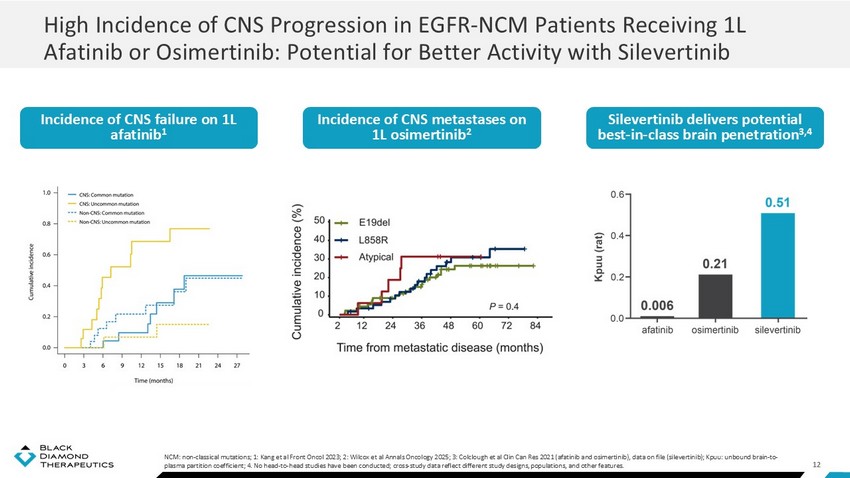
12 NCM: non - classical mutations; 1: Kang et al Front Oncol 2023; 2: Wilcox et al Annals Oncology 2025; 3: Colclough et al Clin Can Res 2021 (afatinib and osimertinib ), data on file ( silevertinib ); Kpuu : unbound brain - to - plasma partition coefficient; 4. No head - to - head studies have been conducted; cross - study data reflect different study designs, populations, and other features. High Incidence of CNS Progression in EGFR - NCM Patients Receiving 1L Afatinib or Osimertinib: Potential for Better Activity with Silevertinib Silevertinib delivers potential best - in - class brain penetration 3,4 Incidence of CNS metastases on 1L osimertinib 2 Incidence of CNS failure on 1L afatinib 1
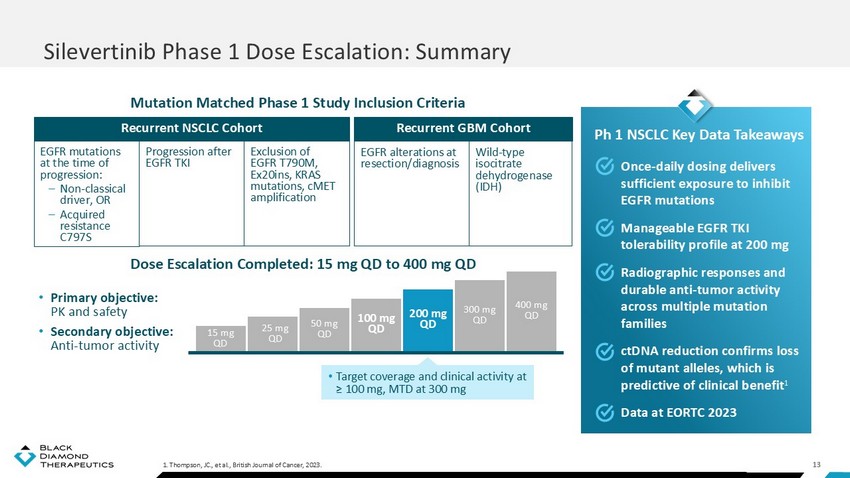
13 Silevertinib Phase 1 Dose Escalation: Summary Mutation Matched Phase 1 Study Inclusion Criteria Once - daily dosing delivers sufficient exposure to inhibit EGFR mutations M anageable EGFR TKI tolerability profile at 200 mg Radiographic responses and durable anti - tumor activity across multiple mutation families ctDNA reduction confirms loss of mutant alleles, which is predictive of clinical benefit 1 Data at EORTC 2023 Ph 1 NSCLC Key Data T akeaways • Primary objective: PK and safety • Secondary objective: Anti - tumor activity Dose Escalation Completed: 15 mg QD to 400 mg QD 15 mg QD 25 mg QD 50 mg QD 100 mg QD 200 mg QD 300 mg QD 400 mg QD Recurrent GBM Cohort EGFR alterations at resection/diagnosis Wild - type isocitrate dehydrogenase (IDH) Recurrent NSCLC Cohort EGFR mutations at the time of progression: – Non - classical driver, OR – Acquired resistance C797S Progression after EGFR TKI Exclusion of EGFR T790M, Ex20ins, KRAS mutations, cMET amplification • Target coverage and clinical activity at ≥ 100 mg, MTD at 300 mg 1. Thompson, JC., et al., British Journal of Cancer, 2023.
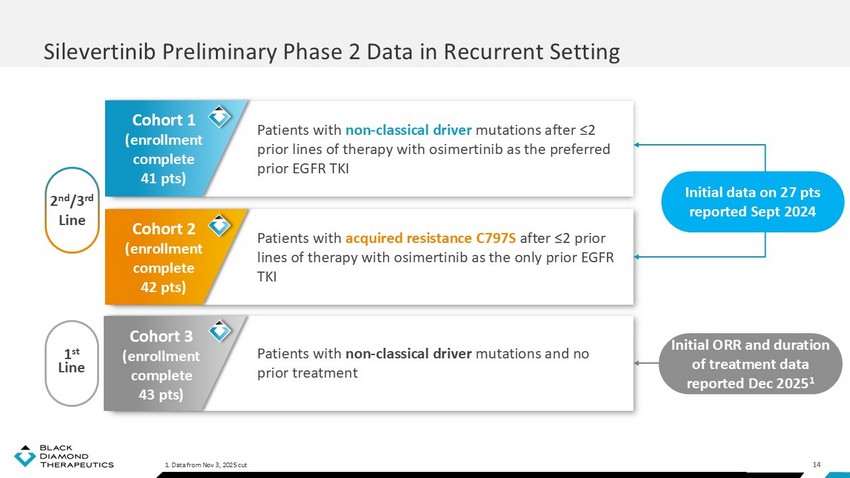
14 Patients with non - classical driver mutations after ≤2 prior lines of therapy with osimertinib as the preferred prior EGFR TKI Patients with acquired resistance C797S after ≤2 prior lines of therapy with osimertinib as the only prior EGFR TKI Cohort 2 (enrollment complete 42 pts ) Cohort 1 (enrollment complete 41 pts ) Patients with non - classical driver mutations and no prior treatment Cohort 3 (enrollment complete 43 pts) 1 st Line 2 nd /3 rd Line Initial data on 27 pts reported Sept 2024 Initial ORR and duration of treatment data reported Dec 2025 1 1. Data from Nov 3, 2025 cut Silevertinib Preliminary Phase 2 Data in Recurrent Setting
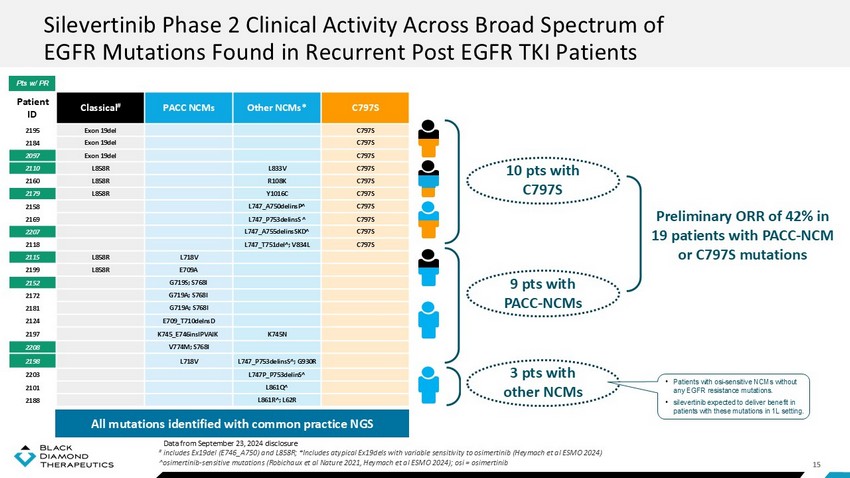
15 Silevertinib Phase 2 Clinical Activity Across Broad Spectrum of EGFR Mutations Found in Recurrent Post EGFR TKI Patients # includes Ex19del (E746_A750) and L858R; *Includes atypical Ex19dels with variable sensitivity to osimertinib ( Heymach et al ESMO 2024) ^ osimertinib - sensitive mutations (Robichaux et al Nature 2021, Heymach et al ESMO 2024) ; osi = osimertinib C797S Other NCMs* PACC NCMs Classical # Patient ID C797S Exon 19del 2195 C797S Exon 19del 2184 C797S Exon 19del 2097 C797S L833V L858R 2110 C797S R108K L858R 2160 C797S Y1016C L858R 2179 C797S L747_A750delinsP^ 2158 C797S L747_P753delinsS ^ 2169 C797S L747_A755delinsSKD^ 2207 C797S L747_T751del^ ; V834L 2118 L718V L858R 2115 E709A L858R 2199 G719S; S768I 2152 G719A; S768I 2172 G719A; S768I 2181 E709_T710deInsD 2124 K745N K745_E746insIPVAIK 2197 V774M; S768I 2208 L747_P753delinsS^; G930R L718V 2198 L747P_P753delinS^ 2203 L861Q^ 2101 L861R^; L62R 2188 9 pts with PACC - NCMs 10 pts with C797S 3 pts with other NCMs All mutations identified with common practice NGS Preliminary ORR of 42% in 19 patients with PACC - NCM or C797S mutations Pts w/ PR Data from September 23, 2024 disclosure • Patients with osi - sensitive NCMs without any EGFR resistance mutations. • silevertinib expected to deliver benefit in patients with these mutations in 1L setting.
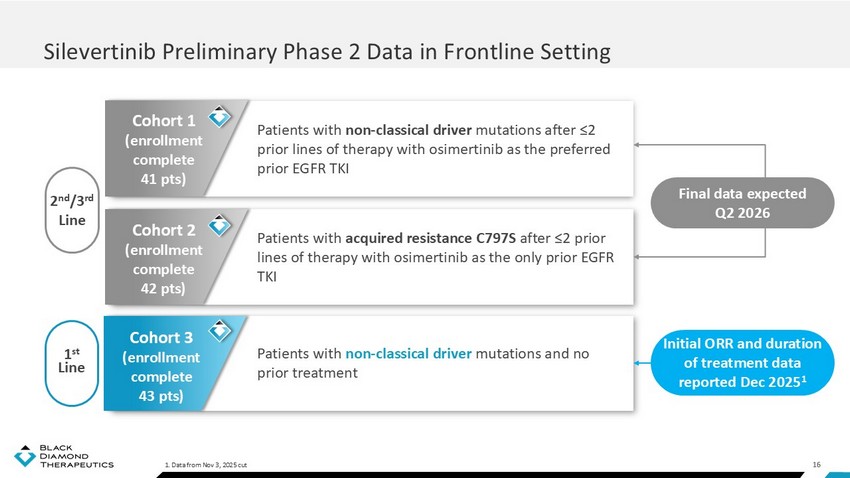
16 Silevertinib Preliminary Phase 2 Data in Frontline Setting Patients with non - classical driver mutations after ≤2 prior lines of therapy with osimertinib as the preferred prior EGFR TKI Patients with acquired resistance C797S after ≤2 prior lines of therapy with osimertinib as the only prior EGFR TKI Cohort 2 (enrollment complete 42 pts) Cohort 1 (enrollment complete 41 pts) Patients with non - classical driver mutations and no prior treatment Cohort 3 (enrollment complete 43 pts) 1 st Line 2 nd /3 rd Line Final data expected Q2 2026 Initial ORR and duration of treatment data reported Dec 2025 1 1. Data from Nov 3, 2025 cut
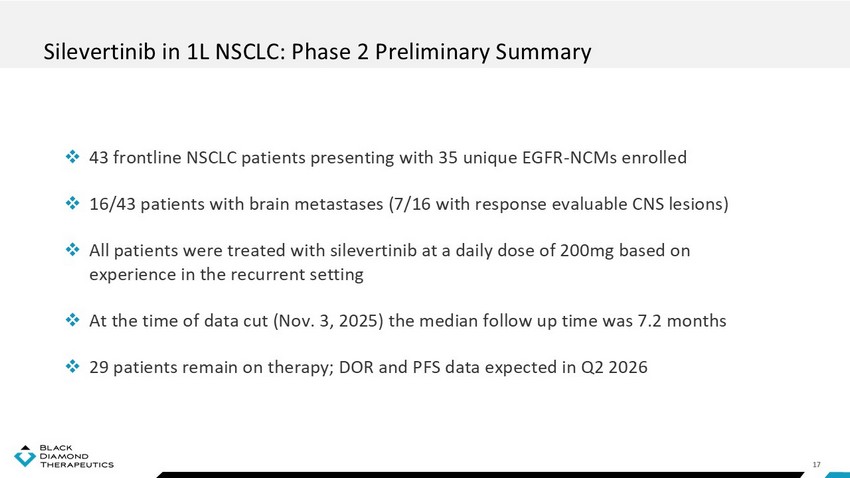
17 Silevertinib in 1L NSCLC: Phase 2 Preliminary Summary □ 43 frontline NSCLC patients presenting with 35 unique EGFR - NCMs enrolled □ 16/43 patients with brain metastases (7/16 with response evaluable CNS lesions) □ All patients were treated with silevertinib at a daily dose of 200mg based on experience in the recurrent setting □ At the time of data cut (Nov. 3, 2025) the median follow up time was 7.2 months □ 29 patients remain on therapy; DOR and PFS data expected in Q2 2026
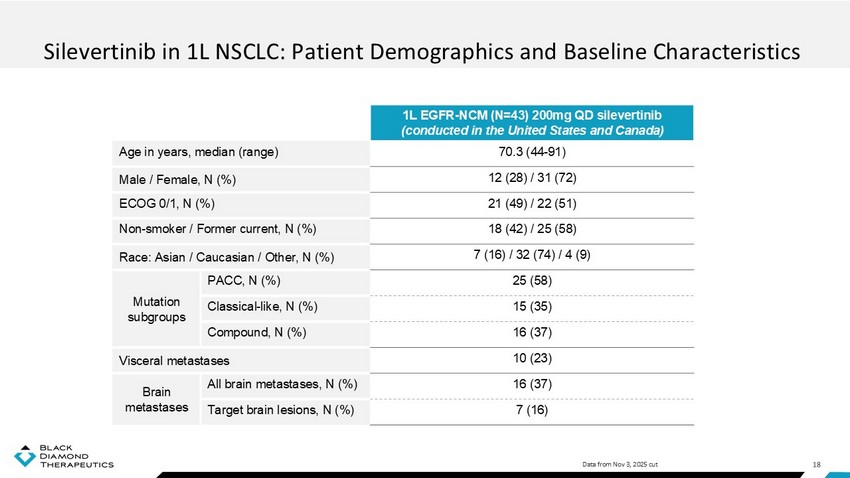
18 Silevertinib in 1L NSCLC: Patient Demographics and Baseline Characteristics 1L EGFR - NCM (N=43) 200mg QD silevertinib (conducted in the United States and Canada) 70.3 (44 - 91) Age in years, median (range) 12 (28) / 31 (72) Male / Female, N (%) 21 (49) / 22 (51) ECOG 0/1, N (%) 18 (42) / 25 (58) Non - smoker / Former current, N (%) 7 (16) / 32 (74) / 4 (9) Race: Asian / Caucasian / Other, N (%) 25 (58) PACC, N (%) Mutation subgroups 15 (35) Classical - like, N (%) 16 (37) Compound, N (%) 10 (23) Visceral metastases 16 (37) All brain metastases, N (%) Brain metastases 7 (16) Target brain lesions, N (%) Data from Nov 3, 2025 cut
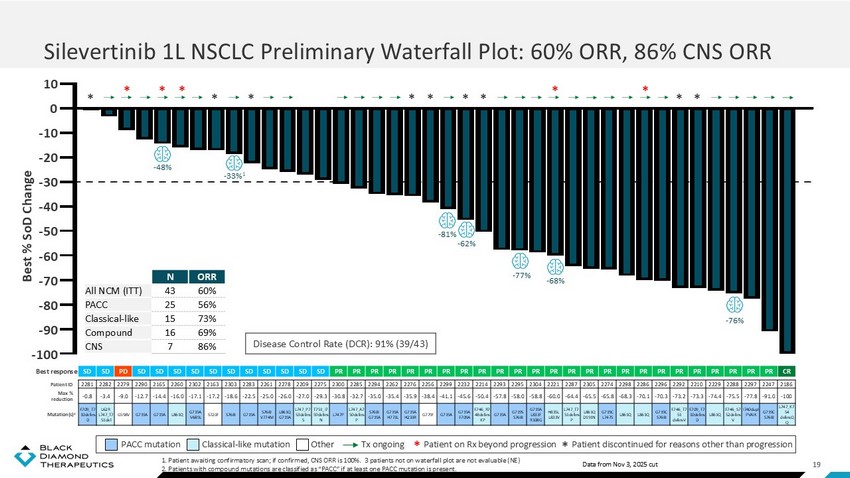
19 Silevertinib 1L NSCLC Preliminary Waterfall Plot: 60% ORR, 86% CNS ORR 2186 2247 2297 2288 2229 2210 2292 2296 2286 2298 2274 2305 2287 2221 2304 2295 2293 2214 2232 2299 2256 2276 2262 2294 2285 2300 2275 2209 2278 2261 2283 2303 2163 2302 2260 2165 2290 2279 2282 2281 Patient ID - 100 - 91.0 - 77.8 - 75.5 - 74.4 - 73.3 - 73.2 - 70.3 - 70.1 - 68.3 - 65.8 - 65.5 - 64.4 - 60.0 - 58.8 - 58.0 - 57.8 - 50.4 - 45.6 - 41.1 - 38.4 - 35.9 - 35.4 - 35.0 - 32.7 - 30.8 - 29.3 - 27.0 - 26.0 - 25.0 - 22.5 - 18.6 - 17.2 - 17.1 - 16.0 - 14.4 - 12.7 - 9.0 - 3.4 - 0.8 Max % reduction L747_K7 54 delinsQ Q G719C S768I I740dupI PVAIK E746_S7 52delins V L861Q E709_T7 10delins D E746_T7 51 delinsV G719C S768I L861Q L861Q G719C L747S L861Q D191N L747_T7 51delins P H835L L833V G719A L833F R108G G719S S768I G719A E746_R7 48delins KP G719A E709A G719A G779F G719A H233R G719A H773L S768I G719A L747_A7 50delins P L747P T751_I7 59delins N L747_P7 53delins S L861Q G719A S768I V774M G719A S768I S720F G719A V689L L861Q G719A G719A G598V L62R L747_T7 51del E709_T7 10delins D Mutation(s) 2 CR PR PR PR PR PR PR PR PR PR PR PR PR PR PR PR PR PR PR PR PR PR PR PR PR PR SD SD SD SD SD SD SD SD SD SD SD PD SD SD Best response Best % SoD Change 10 0 - 10 - 20 - 30 - 40 - 50 - 60 - 70 - 80 - 90 - 100 - 48% - 62% - 68% * * - 76% - 77% * - 81% - 33% 1 * * * * ORR N 60% 43 All NCM (ITT) 56% 25 PACC 73% 15 Classical - like 69% 16 Compound 86% 7 CNS * * 1. Patient awaiting confirmatory scan; i f confirmed, CNS ORR is 100%. 3 patients not on waterfall plot are not evaluable (NE) 2. Patients with compound mutations are classified as “PACC” if at least one PACC mutation is present. * PACC mutation Classical - like mutation Other * Tx ongoing Patient on Rx beyond progression Patient discontinued for reasons other than progression Data from Nov 3, 2025 cut * * * * * Disease Control Rate (DCR): 91% (39/43)
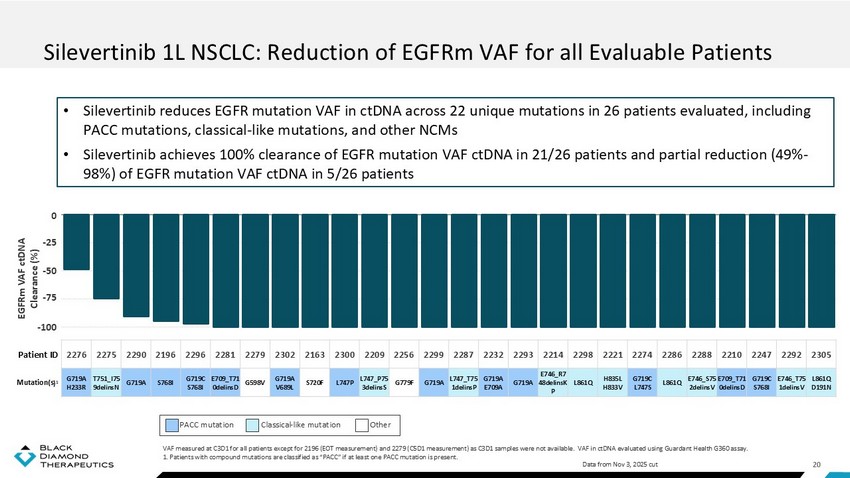
20 Silevertinib 1L NSCLC: Reduction of EGFRm VAF for all Evaluable Patients VAF measured at C3D1 for all patients except for 2196 (EOT measurement) and 2279 (C5D1 measurement) as C3D1 samples were not ava ilable. VAF in ctDNA evaluated using Guardant Health G360 assay. 1. Patients with compound mutations are classified as “PACC” if at least one PACC mutation is present. 2305 2292 2247 2210 2288 2286 2274 2221 2298 2214 2293 2232 2287 2299 2256 2209 2300 2163 2302 2279 2281 2296 2196 2290 2275 2276 Patient ID L861Q D191N E746_T75 1delinsV G719C S768I E709_T71 0delinsD E746_S75 2delinsV L861Q G719C L747S H835L H833V L861Q E746_R7 48delinsK P G719A G719A E709A L747_T75 1delinsP G719A G779F L747_P75 3delinsS L747P S720F G719A V689L G598V E709_T71 0delinsD G719C S768I S768I G719A T751_I75 9delinsN G719A H233R Mutation(s ) 1 • Silevertinib reduces EGFR mutation VAF in ctDNA across 22 unique mutations in 26 patients evaluated, including PACC mutations, classical - like mutations, and other NCMs • Silevertinib achieves 100% clearance of EGFR mutation VAF ctDNA in 21/26 patients and partial reduction (49% - 98%) of EGFR mutation VAF ctDNA in 5/26 patients EGFRm VAF ctDNA Clearance (%) 0 - 25 - 50 - 75 - 100 Other Classical - like mutation PACC mutation Data from Nov 3, 2025 cut
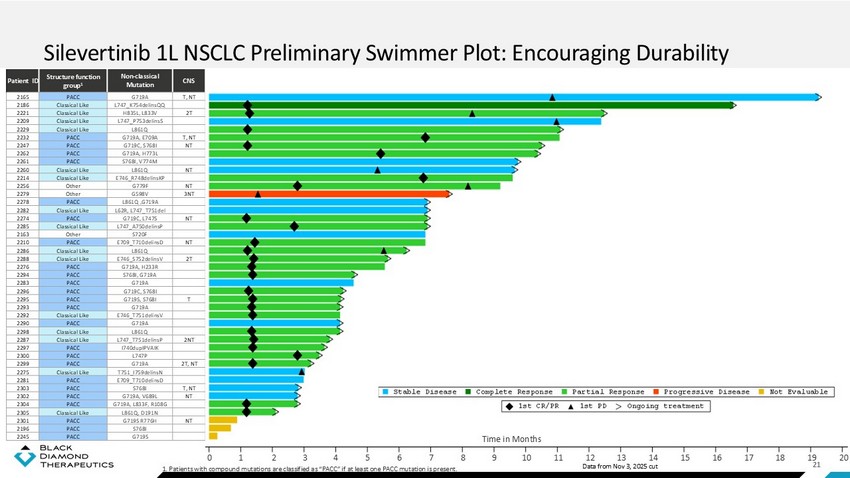
21 Silevertinib 1L NSCLC Preliminary Swimmer Plot: Encouraging Durability 1. Patients with compound mutations are classified as “PACC” if at least one PACC mutation is present. CNS Non - classical Mutation Structure function group 1 Patient ID T, NT G719A PACC 2165 L747_K754delinsQQ Classical Like 2186 2T H835L, L833V Classical Like 2221 L747_P753delinsS Classical Like 2209 L861Q Classical Like 2229 T, NT G719A, E709A PACC 2232 NT G719C, S768I PACC 2247 G719A, H773L PACC 2262 S768I, V774M PACC 2261 NT L861Q Classical Like 2260 E746_R748delinsKP Classical Like 2214 NT G779F Other 2256 3NT G598V Other 2279 L861Q ,G719A PACC 2278 L62R, L747_T751del Classical Like 2282 NT G719C, L747S PACC 2274 L747_A750delinsP Classical Like 2285 S720F Other 2163 NT E709_T710delinsD PACC 2210 L861Q Classical Like 2286 2T E746_S752delinsV Classical Like 2288 G719A, H233R PACC 2276 S768I, G719A PACC 2294 G719A PACC 2283 G719C, S768I PACC 2296 T G719S, S768I PACC 2295 G719A PACC 2293 E746_T751delinsV Classical Like 2292 G719A PACC 2290 L861Q Classical Like 2298 2NT L747_T751delinsP Classical Like 2287 I740dupIPVAIK PACC 2297 L747P PACC 2300 2T, NT G719A PACC 2299 T751_I759delinsN Classical Like 2275 E709_T710delinsD PACC 2281 T, NT S768I PACC 2303 NT G719A, V689L PACC 2302 G719A, L833F, R108G PACC 2304 L861Q, D191N Classical Like 2305 NT G719S R776H PACC 2301 S768I PACC 2196 G719S PACC 2245 Time in Months 1 2 3 4 5 6 7 8 9 10 11 12 13 14 15 16 17 18 19 20 0 Data from Nov 3, 2025 cut
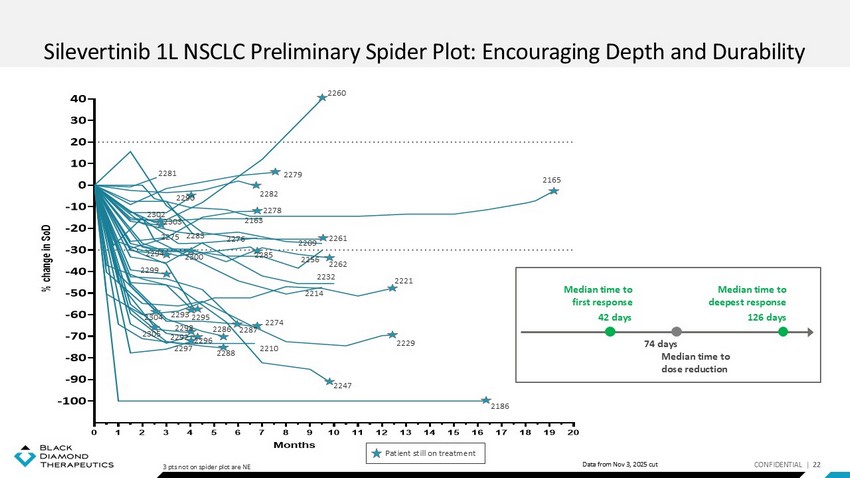
CONFIDENTIAL | 22 0 1 2 3 4 5 6 7 8 9 10 11 12 13 14 15 16 17 18 19 20 -100 -90 -80 -70 -60 -50 -40 -30 -20 -10 0 10 20 30 40 Months on Treatment % c h a n g e i n S o D 2247 2260 2276 2261 2165 2163 2186 2210 2209 2214 2221 2229 2232 2256 2262 2274 2279 2278 2283 2286 2282 2285 2288 2287 2281 3 pts not on spider plot are NE 2292 2296 2293 2290 2295 2294 2302 2303 2297 2299 2300 2298 2304 2305 Silevertinib 1L NSCLC Preliminary Spider Plot: Encouraging Depth and Durability Data from Nov 3, 2025 cut 2275 Median time to first response Median time to deepest response Median time to dose reduction 42 days 126 days 74 days Patient still on treatment
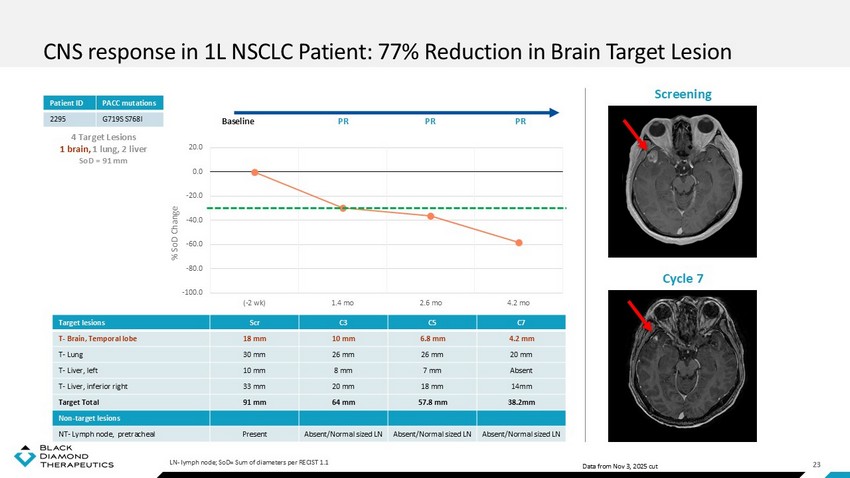
23 -100.0 -80.0 -60.0 -40.0 -20.0 0.0 20.0 (-2 wk) 1.4 mo 2.6 mo 4.2 mo % SoD change CNS response in 1L NSCLC Patient: 77% Reduction in Brain Target Lesion LN - lymph node; SoD= Sum of diameters per RECIST 1.1 Baseline 4 Target Lesions 1 brain, 1 lung, 2 liver SoD = 91 mm Screening Cycle 7 C7 C5 C3 Scr Target lesions 4.2 mm 6.8 mm 10 mm 18 mm T - Brain, Temporal lobe 20 mm 26 mm 26 mm 30 mm T - Lung Absent 7 mm 8 mm 10 mm T - Liver, left 14mm 18 mm 20 mm 33 mm T - Liver, inferior right 38.2mm 57.8 mm 64 mm 91 mm Target Total Non - target lesions Absent/Normal sized LN Absent/Normal sized LN Absent/Normal sized LN Present NT - Lymph node, pretracheal PR PR PR PACC mutations Patient ID G719S S768I 2295 Data from Nov 3, 2025 cut % SoD Change
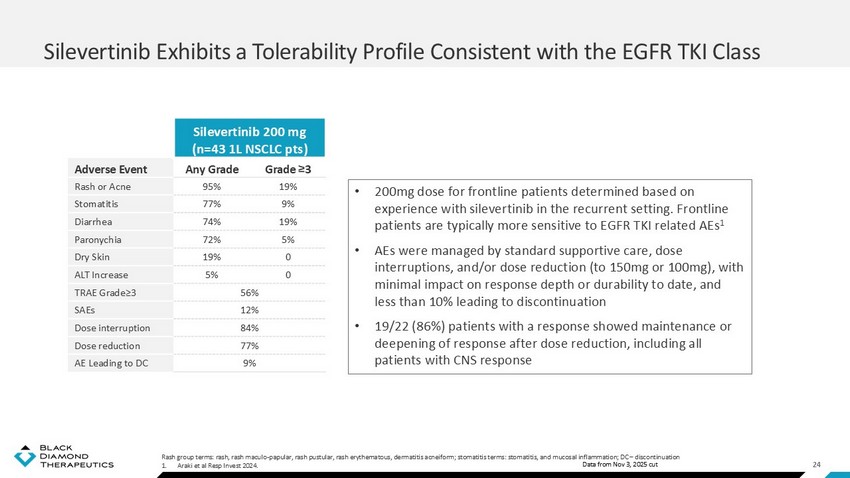
24 Silevertinib 200 mg (n=43 1L NSCLC pts) Grade ≥ 3 Any Grade Adverse Event 19% 95% Rash or Acne 9% 77% Stomatitis 19% 74% Diarrhea 5% 72% Paronychia 0 19% Dry Skin 0 5% ALT Increase 56% TRAE Grade≥3 12% SAEs 84% Dose interruption 77% Dose reduction 9% AE Leading to DC Silevertinib Exhibits a Tolerability Profile Consistent with the EGFR TKI Class Rash group terms: rash, rash maculo - papular, rash pustular, rash erythematous, dermatitis acneiform; stomatitis terms: stomatiti s, and mucosal inflammation; DC – discontinuation 1. Araki et al Resp Invest 2024. • 200mg dose for frontline patients determined based on experience with silevertinib in the recurrent setting. Frontline patients are typically more sensitive to EGFR TKI related AEs 1 • AEs were managed by standard supportive care, dose interruptions, and/or dose reduction (to 150mg or 100mg), with minimal impact on response depth or durability to date, and less than 10% leading to discontinuation • 19/22 (86%) patients with a response showed maintenance or deepening of response after dose reduction, including all patients with CNS response Data from Nov 3, 2025 cut
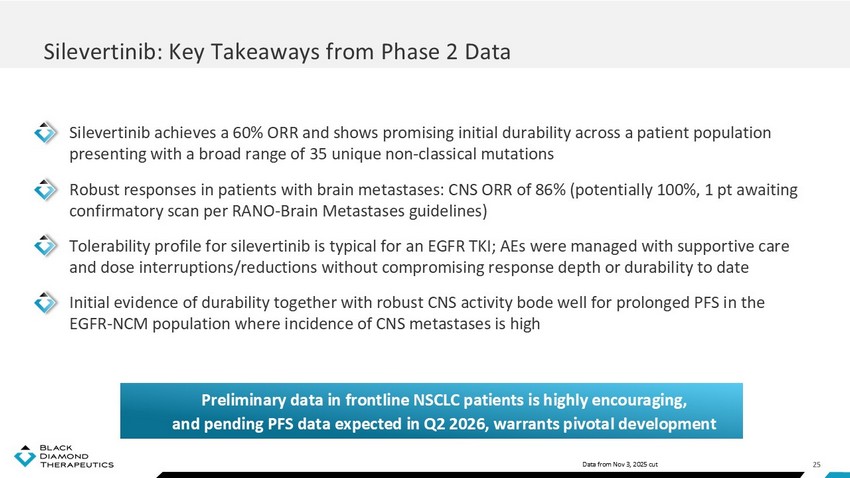
25 Silevertinib: Key Takeaways from Phase 2 Data Silevertinib achieves a 60% ORR and shows promising initial durability across a patient population presenting with a broad range of 35 unique non - classical mutations Robust responses in patients with brain metastases: CNS ORR of 86% (potentially 100%, 1 pt awaiting confirmatory scan per RANO - Brain Metastases guidelines) Tolerability profile for silevertinib is typical for an EGFR TKI; AEs were managed with supportive care and dose interruptions/reductions without compromising response depth or durability to date Initial evidence of durability together with robust CNS activity bode well for prolonged PFS in the EGFR - NCM population where incidence of CNS metastases is high Preliminary data in frontline NSCLC patients is highly encouraging, and pending PFS data expected in Q2 2026, warrants pivotal development Data from Nov 3, 2025 cut
26 S ilevertinib : Development in Glioblastoma
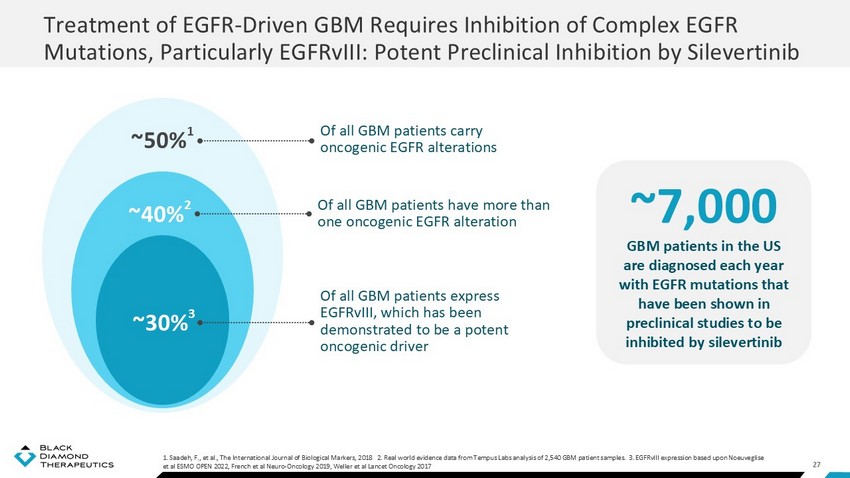
27 1. Saadeh, F., et al., The International Journal of Biological Markers, 2018 2. Real world evidence data from Tempus Labs a nal ysis of 2,540 GBM patient samples. 3. EGFRvIII expression based upon Noeuveglise et al ESMO OPEN 2022, French et al Neuro - Oncology 2019, Weller et al Lancet Oncology 2017 Treatment of EGFR - Driven GBM Requires Inhibition of Complex EGFR Mutations, Particularly EGFRvIII : Potent Preclinical Inhibition by Silevertinib Of all GBM patients express EGFRvIII, which has been demonstrated to be a potent oncogenic driver ~30% 3 ~40% 2 ~50% 1 Of all GBM patients have more than one oncogenic EGFR alteration Of all GBM patients carry oncogenic EGFR alterations ~7,000 GBM patients in the US are diagnosed each year with EGFR mutations that have been shown in preclinical studies to be inhibited by silevertinib
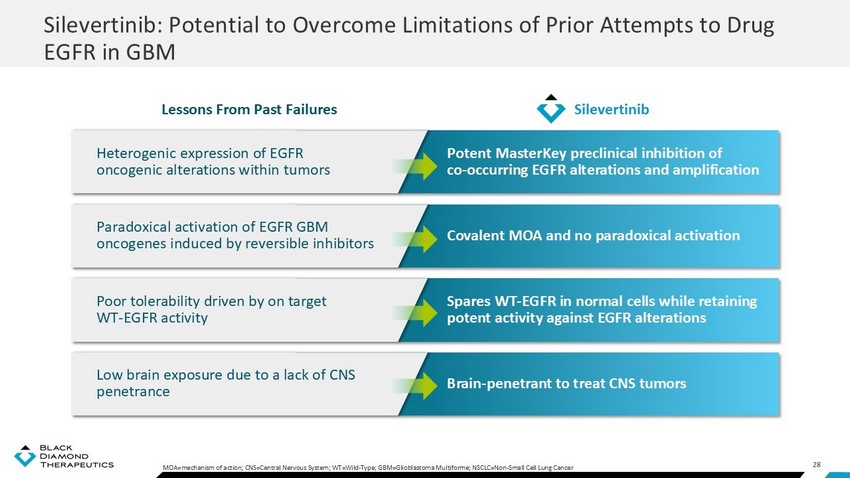
28 Silevertinib: Potential to Overcome Limitations of Prior Attempts to Drug EGFR in GBM Lessons From Past Failures Silevertinib MOA=mechanism of action; CNS=Central Nervous System; WT=Wild - Type; GBM=Glioblastoma Multiforme; NSCLC=Non - Small Cell Lung Cancer Potent MasterKey preclinical inhibition of co - occurring EGFR alterations and amplification Heterogenic expression of EGFR oncogenic alterations within tumors Covalent MOA and no paradoxical activation Paradoxical activation of EGFR GBM oncogenes induced by reversible inhibitors Spares WT - EGFR in normal cells while retaining potent activity against EGFR alterations Poor tolerability driven by on target WT - EGFR activity Brain - penetrant to treat CNS tumors Low brain exposure due to a lack of CNS penetrance
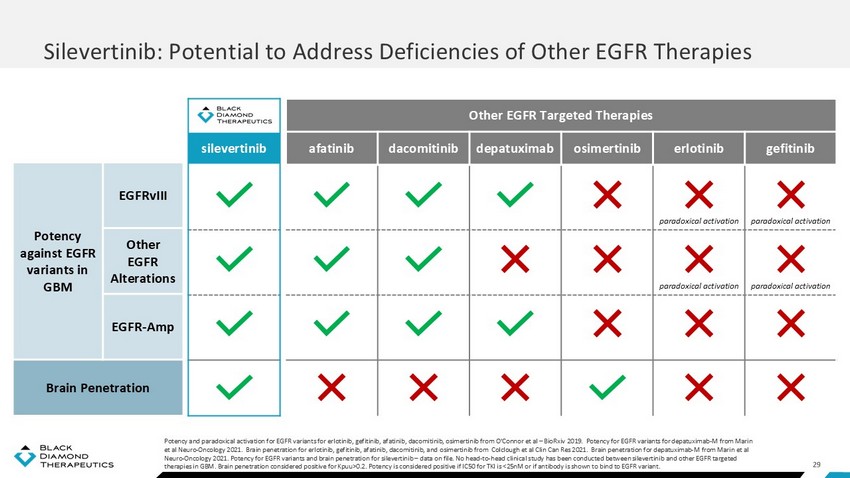
29 silevertinib Other EGFR Targeted Therapies gefitinib erlotinib osimertinib depatuximab dacomitinib afatinib paradoxical activation paradoxical activation paradoxical activation paradoxical activation Silevertinib: Potential to Address Deficiencies of Other EGFR Therapies Potency and paradoxical activation for EGFR variants for erlotinib, gefitinib, afatinib, dacomitinib, osimertinib from O’Connor et al – BioRxiv 2019. Potency for EGFR variants for depatuximab - M from Marin et al Neuro - Oncology 2021. Brain penetration for erlotinib, gefitinib, afatinib, dacomitinib, and osimertinib from Colclough et al Clin Can Res 2021. Brain penetration for depatuximab - M from Marin et al Neuro - Oncology 2021. Potency for EGFR variants and brain penetration for silevertinib – data on file. No head - to - head clinical study has been conducted between silevertinib and other EGFR targeted therapies in GBM. Brain penetration considered positive for Kpuu >0.2. Potency is considered positive if IC50 for TKI is <25nM or if antibody is shown to bind to EGFR variant. EGFRvIII Potency against EGFR variants in GBM Other EGFR Alterations EGFR - Amp Brain Penetration
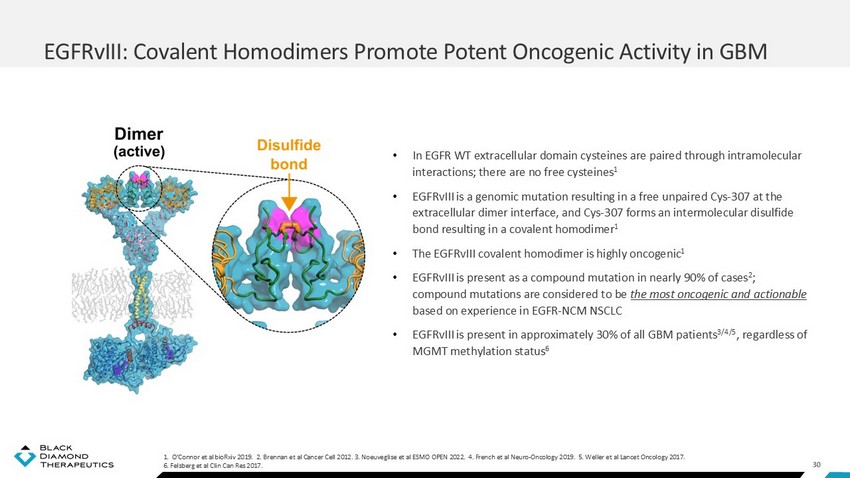
30 EGFRvIII : Covalent Homodimers Promote Potent Oncogenic Activity in GBM • In EGFR WT extracellular domain cysteines are paired through intramolecular interactions; there are no free cysteines 1 • EGFRvIII is a genomic mutation resulting in a free unpaired Cys - 307 at the extracellular dimer interface, and Cys - 307 forms an intermolecular disulfide bond resulting in a covalent homodimer 1 • The EGFRvIII covalent homodimer is highly oncogenic 1 • EGFRvIII is present as a compound mutation in nearly 90% of cases 2 ; compound mutations are considered to be the most oncogenic and actionable based on experience in EGFR - NCM NSCLC • EGFRvIII is present in approximately 30% of all GBM patients 3/4/5 , regardless of MGMT methylation status 6 1. O’Connor et al bioRxiv 2019. 2. Brennan et al Cancer Cell 2012. 3. Noeuveglise et al ESMO OPEN 2022. 4. French et al Neuro - Oncology 2019. 5. Weller et al Lancet Oncology 2017. 6 . Felsberg et al Clin Can Res 2017.
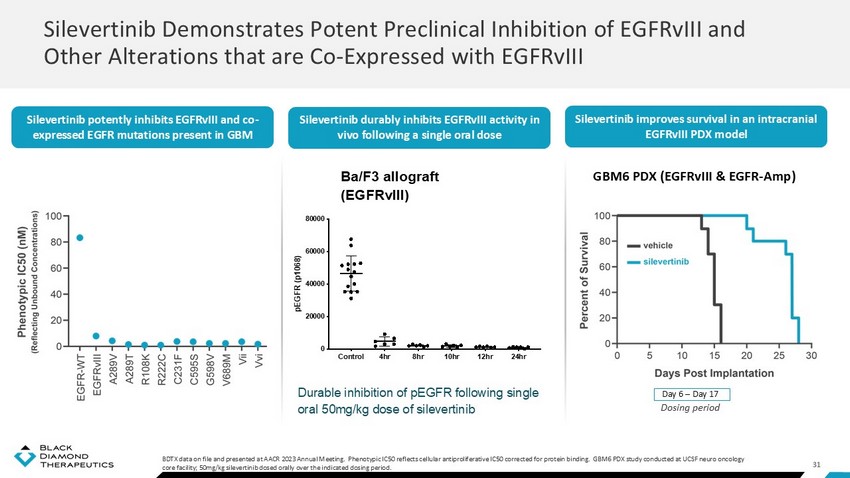
31 Silevertinib Demonstrates Potent Preclinical Inhibition of EGFRvIII and Other Alterations that are Co - Expressed with EGFRvIII Silevertinib potently inhibits EGFRvIII and co - expressed EGFR mutations present in GBM Dosing period GBM6 PDX (EGFRvIII & EGFR - Amp) Day 6 – Day 17 Silevertinib durably inhibits EGFRvIII activity in vivo following a single oral dose Silevertinib improves survival in an intracranial EGFRvIII PDX model Control 4hr 8hr 10hr 12hr 24hr 0 20000 40000 60000 80000 p E G F R ( p 1 0 6 8 ) Ba/F3 allograft (EGFRvIII) Durable inhibition of pEGFR following single oral 50mg/kg dose of silevertinib BDTX data on file and presented at AACR 2023 Annual Meeting. Phenotypic IC50 reflects cellular antiproliferative IC50 correc ted for protein binding. GBM6 PDX study conducted at UCSF neuro oncology core facility; 50mg/kg silevertinib dosed orally over the indicated dosing period.
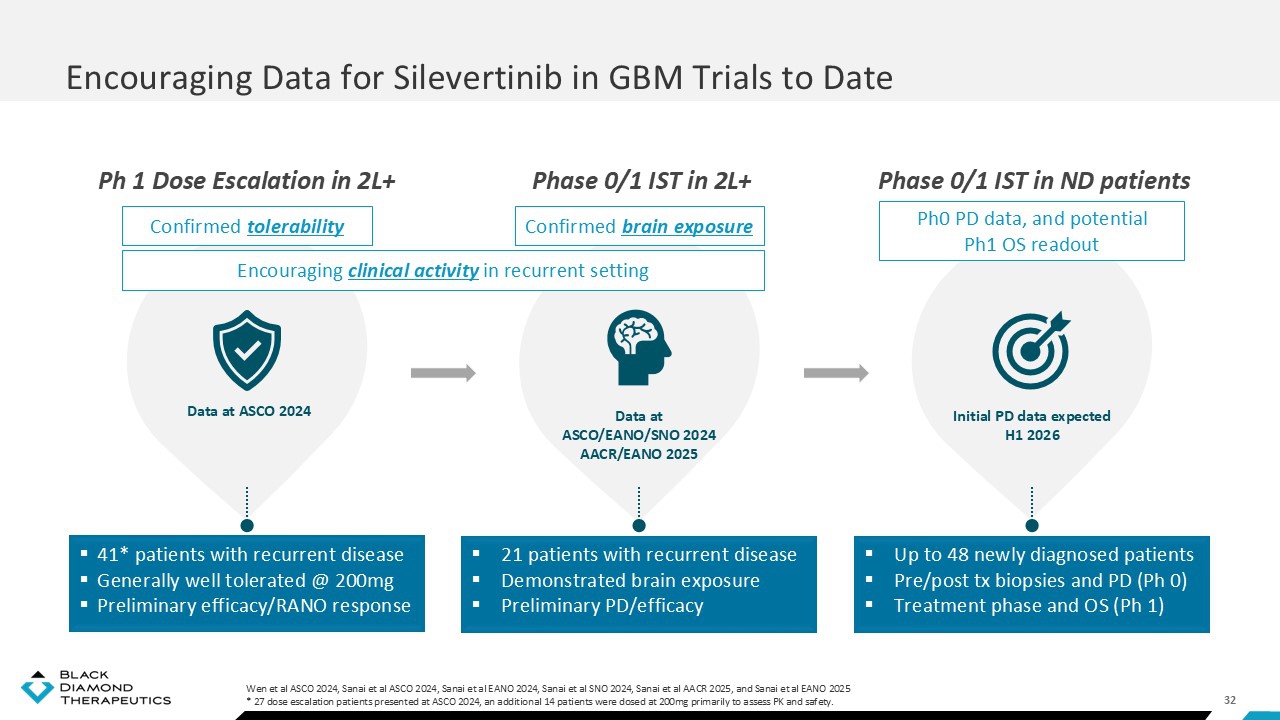
32 Encouraging Data for Silevertinib in GBM Trials to Date Wen et al ASCO 2024, Sanai et al ASCO 2024, Sanai et al EANO 2024, Sanai et al SNO 2024, Sanai et al AACR 2025, and Sanai et al EANO 2025 * 27 dose escalation patients presented at ASCO 2024, an additional 14 patients were dosed at 200mg primarily to assess PK an d s afety. Ph 1 Dose Escalation in 2L+ ▪ 41 * patients with recurrent disease ▪ Generally well tolerated @ 200mg ▪ Preliminary efficacy/RANO response Confirmed tolerability Data at ASCO 2024 Initial PD data expected H1 2026 Ph0 PD data, and potential Ph1 OS readout ▪ Up to 48 newly diagnosed patients ▪ Pre/post tx biopsies and PD (Ph 0) ▪ Treatment phase and OS (Ph 1) Phase 0/1 IST in ND patients Data at ASCO/EANO/SNO 2024 AACR/EANO 2025 Confirmed brain exposure ▪ 21 patients with recurrent disease ▪ Demonstrated brain exposure ▪ Preliminary PD/efficacy Phase 0/1 IST in 2L+ Encouraging clinical activity in recurrent setting
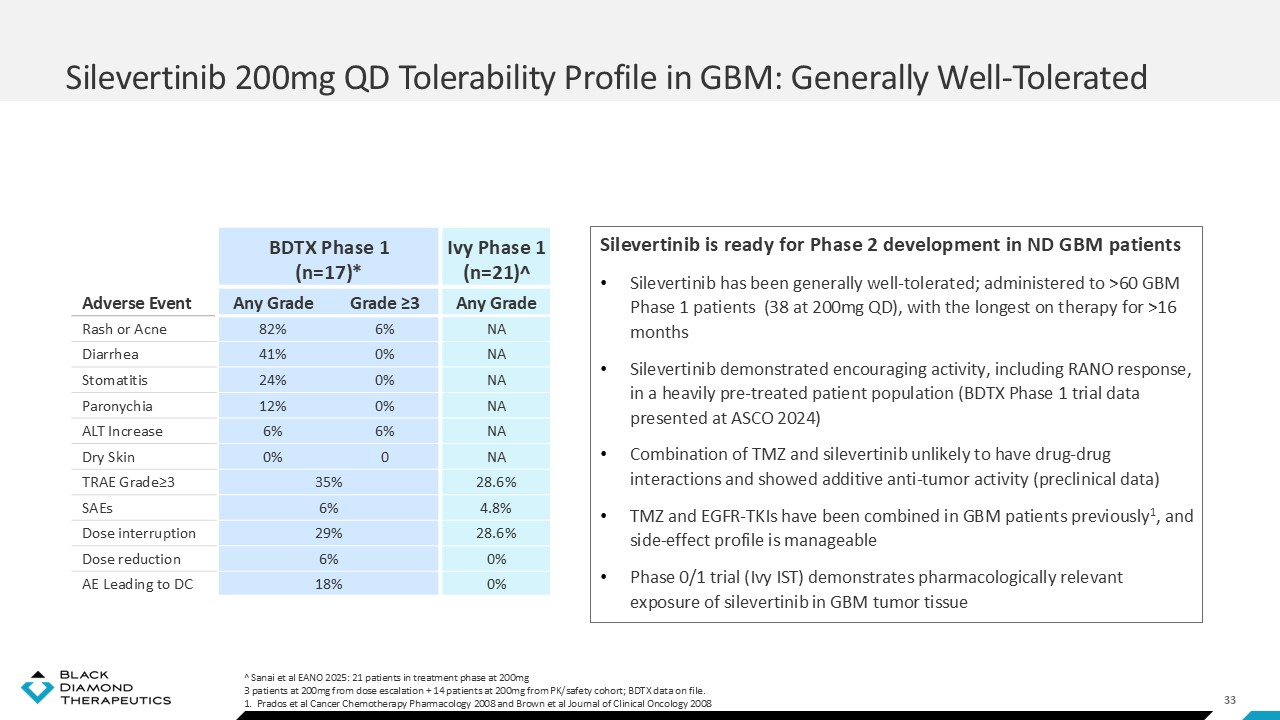
33 Ivy Phase 1 (n=21 )^ BDTX Phase 1 (n=17)* Any Grade Grade ≥3 Any Grade Adverse Event NA 6% 82% Rash or Acne NA 0% 41% Diarrhea NA 0% 24% Stomatitis NA 0% 12% Paronychia NA 6% 6% ALT Increase NA 0 0% Dry Skin 28.6% 35% TRAE Grade≥3 4.8% 6% SAEs 28.6% 29 % Dose interruption 0% 6% Dose reduction 0% 18% AE Leading to DC Silevertinib 200mg QD Tolerability Profile in GBM: Generally Well - Tolerated ^ Sanai et al EANO 2025: 21 patients in treatment phase at 200mg 3 patients at 200mg from dose escalation + 14 patients at 200mg from PK/safety cohort; BDTX data on file. 1. Prados et al Cancer Chemotherapy Pharmacology 2008 and Brown et al Journal of Clinical Oncology 2008 Silevertinib is ready for Phase 2 development in ND GBM patients • Silevertinib has been generally well - tolerated; administered to >60 GBM Phase 1 patients (38 at 200mg QD), with the longest on therapy for >16 months • Silevertinib demonstrated encouraging activity, including RANO response, in a heavily pre - treated patient population (BDTX Phase 1 trial data presented at ASCO 2024) • Combination of TMZ and silevertinib unlikely to have drug - drug interactions and showed additive anti - tumor activity (preclinical data) • TMZ and EGFR - TKIs have been combined in GBM patients previously 1 , and side - effect profile is manageable • Phase 0/1 trial (Ivy IST) demonstrates pharmacologically relevant exposure of silevertinib in GBM tumor tissue
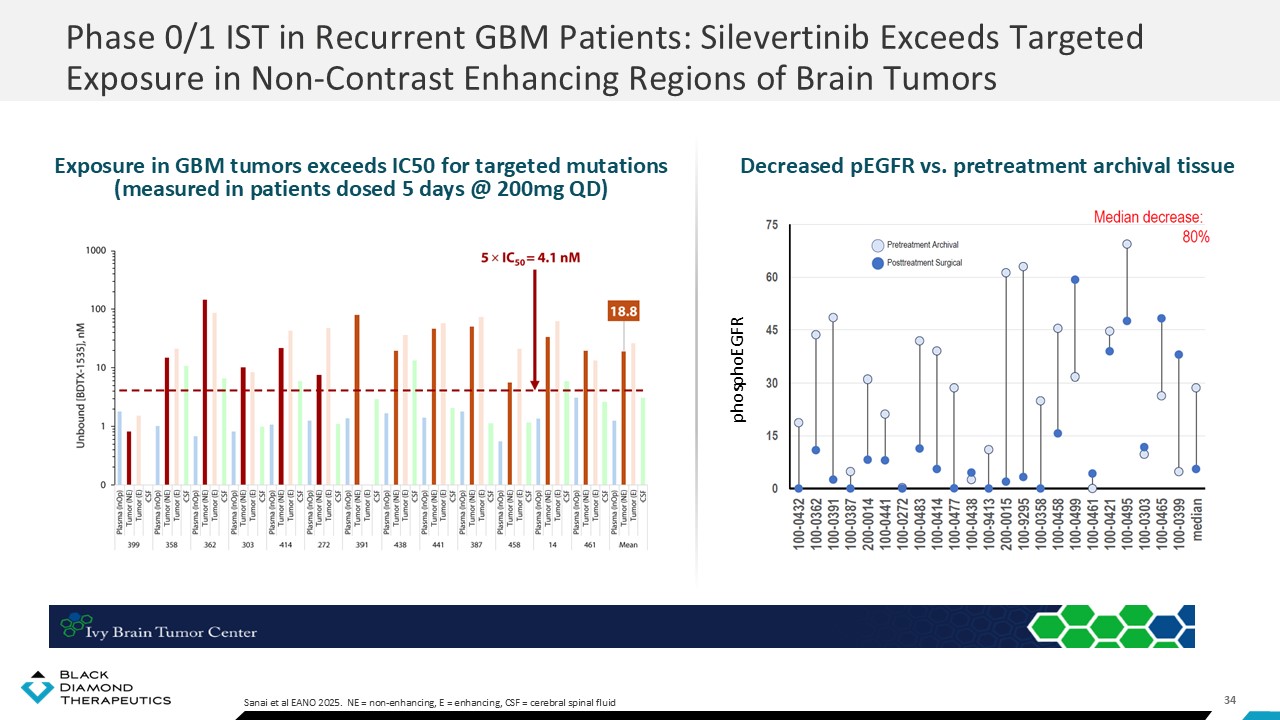
34 Phase 0/1 IST in Recurrent GBM Patients: Silevertinib Exceeds Targeted Exposure in Non - Contrast Enhancing Regions of Brain Tumors Sanai et al EANO 2025. NE = non - enhancing, E = enhancing, CSF = cerebral spinal fluid Exposure in GBM tumors exceeds IC50 for targeted mutations (measure d in patients dosed 5 days @ 200mg QD) Decreased pEGFR vs. pretreatment archival tissue phosphoEGFR
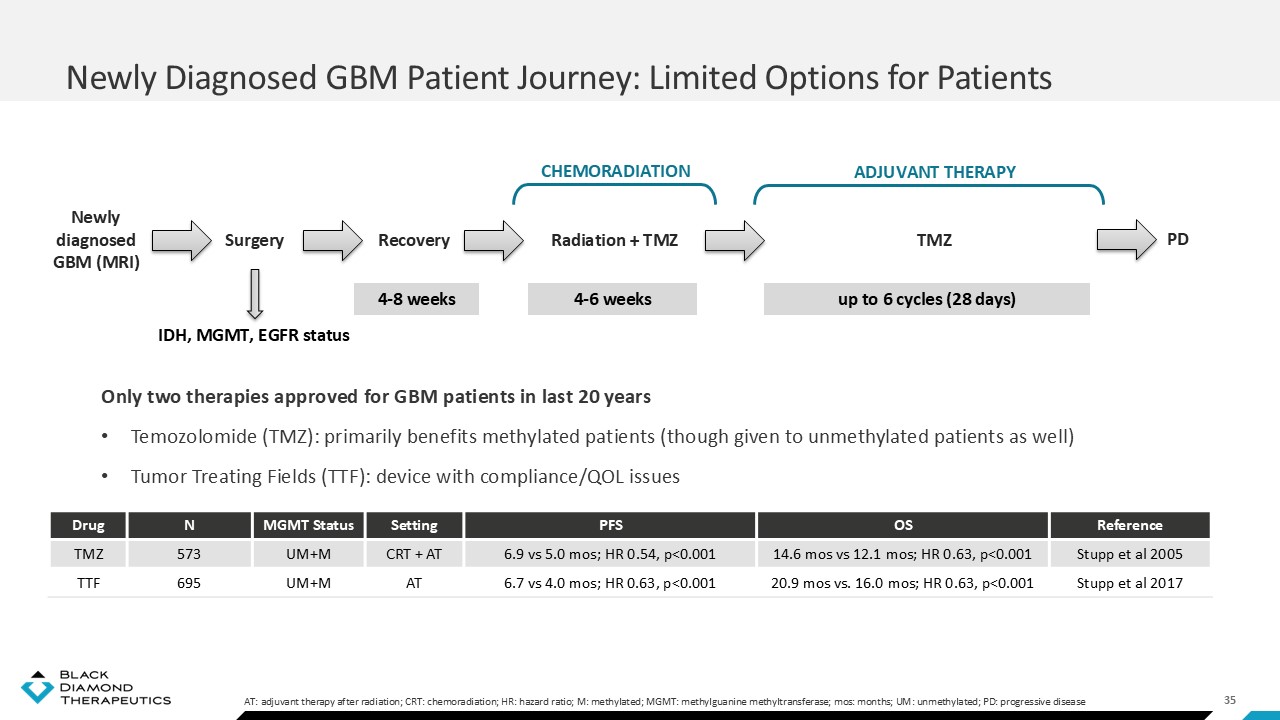
35 AT: adjuvant therapy after radiation; CRT: chemoradiation; HR: hazard ratio; M: methylated; MGMT: methylguanine methyltransferas e; mos : months; UM: unmethylated; PD: progressive disease Newly Diagnosed GBM Patient Journey: Limited Options for Patients Newly diagnosed GBM (MRI) 4 - 8 weeks Surgery Recovery Radiation + TMZ 4 - 6 weeks IDH, MGMT, EGFR status TMZ up to 6 cycles (28 days) PD Reference OS PFS Setting MGMT Status N Drug Stupp et al 2005 14.6 mos vs 12.1 mos ; HR 0.63, p<0.001 6.9 vs 5.0 mos ; HR 0.54, p<0.001 CRT + AT UM+M 573 TMZ Stupp et al 2017 20.9 mos vs. 16.0 mos ; HR 0.63, p<0.001 6.7 vs 4.0 mos; HR 0.63, p<0.001 AT UM+M 695 TTF CHEMORADIATION ADJUVANT THERAPY Only two therapies approved for GBM patients in last 20 years • Temozolomide (TMZ): primarily benefits methylated patients (though given to unmethylated patients as well) • Tumor Treating Fields (TTF): device with compliance/QOL issues
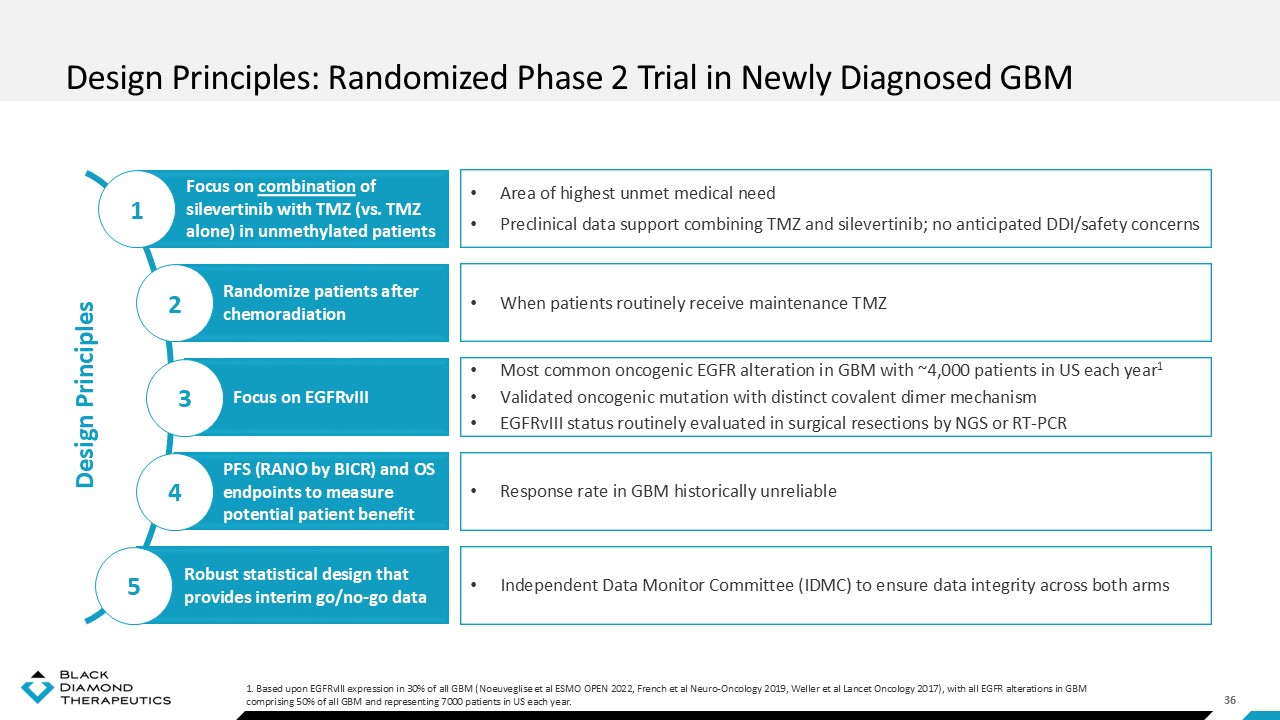
36 Design Principles: Randomized Phase 2 Trial in Newly Diagnosed GBM Focus on combination of silevertinib with TMZ (vs. TMZ alone) in unmethylated patients • Area of highest unmet medical need • Preclinical data support combining TMZ and silevertinib ; no anticipated DDI/safety concerns Randomize patients after chemoradiation • When patients routinely receive maintenance TMZ Focus on EGFRvIII • Most common oncogenic EGFR alteration in GBM with ~4,000 patients in US each year 1 • Validated oncogenic mutation with distinct covalent dimer mechanism • EGFRvIII status routinely evaluated in surgical resections by NGS or RT - PCR PFS (RANO by BICR) and OS endpoints to measure potential patient benefit • Response rate in GBM historically unreliable • Independent Data Monitor Committee (IDMC) to ensure data integrity across both arms Robust statistical design that provides interim go/no - go data Design Principles 1 2 3 4 5 1. Based upon EGFRvII I expression in 30% of all GBM ( Noeuveglise et al ESMO OPEN 2022, French et al Neuro - Oncology 2019, Weller et al Lancet Oncology 2017), with all EGFR alterations in GBM comprising 50% of all GBM and representing 7000 patients in US each year.
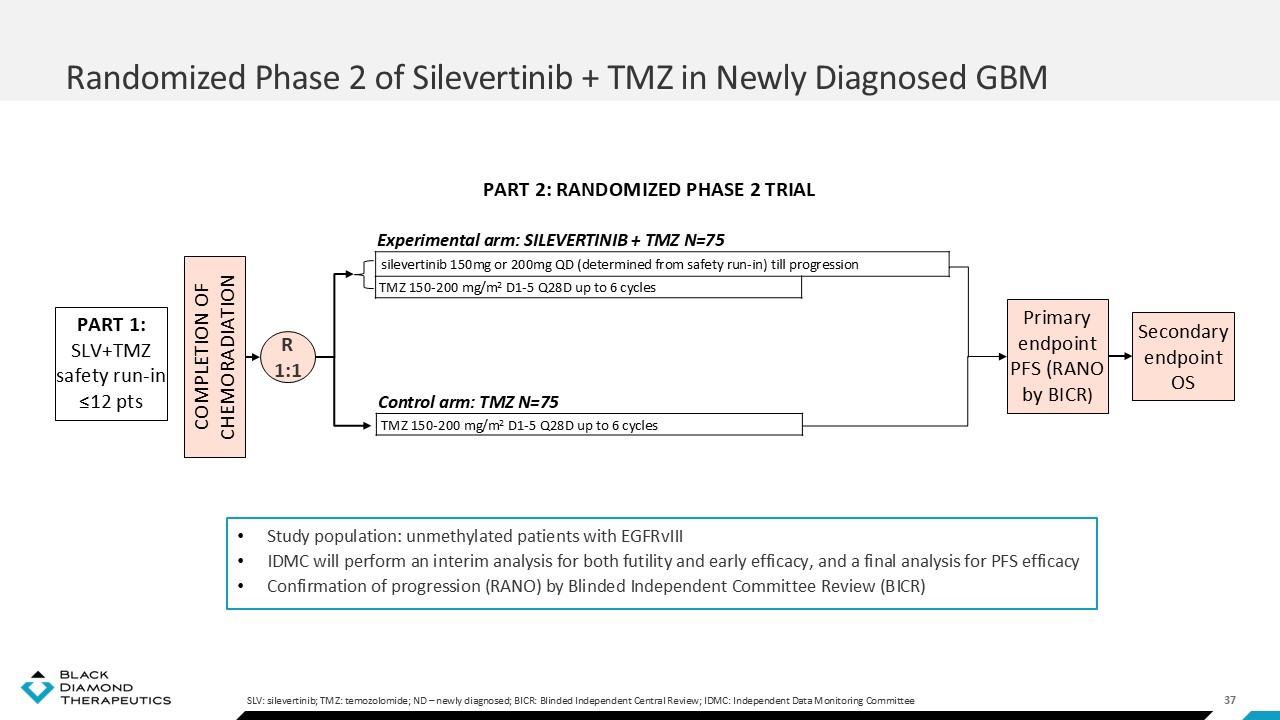
37 SLV: silevertinib ; TMZ: temozolomide; ND – newly diagnosed; BICR: Blinded Independent Central Review; IDMC: Independent Data Monitoring Committee Randomized Phase 2 of Silevertinib + TMZ in Newly Diagnosed GBM R 1:1 PART 1: SLV+TMZ safety run - in ≤12 pts COMPLETION OF CHEMORADIATION Control arm: TMZ N=75 Experimental arm: SILEVERTINIB + TMZ N=75 Primary endpoint PFS (RANO by BICR ) Secondary endpoint OS TMZ 150 - 200 mg/m 2 D1 - 5 Q28D up to 6 cycles TMZ 150 - 200 mg/m 2 D1 - 5 Q28D up to 6 cycles silevertinib 150mg or 200mg QD (determined from safety run - in) till progression PART 2: RANDOMIZED PHASE 2 TRIAL • Study population: unmethylated patients with EGFRvIII • IDMC will perform an interim analysis for both futility and early efficacy, and a final analysis for PFS efficacy • Confirmation of progression (RANO) by Blinded Independent Committee Review (BICR)
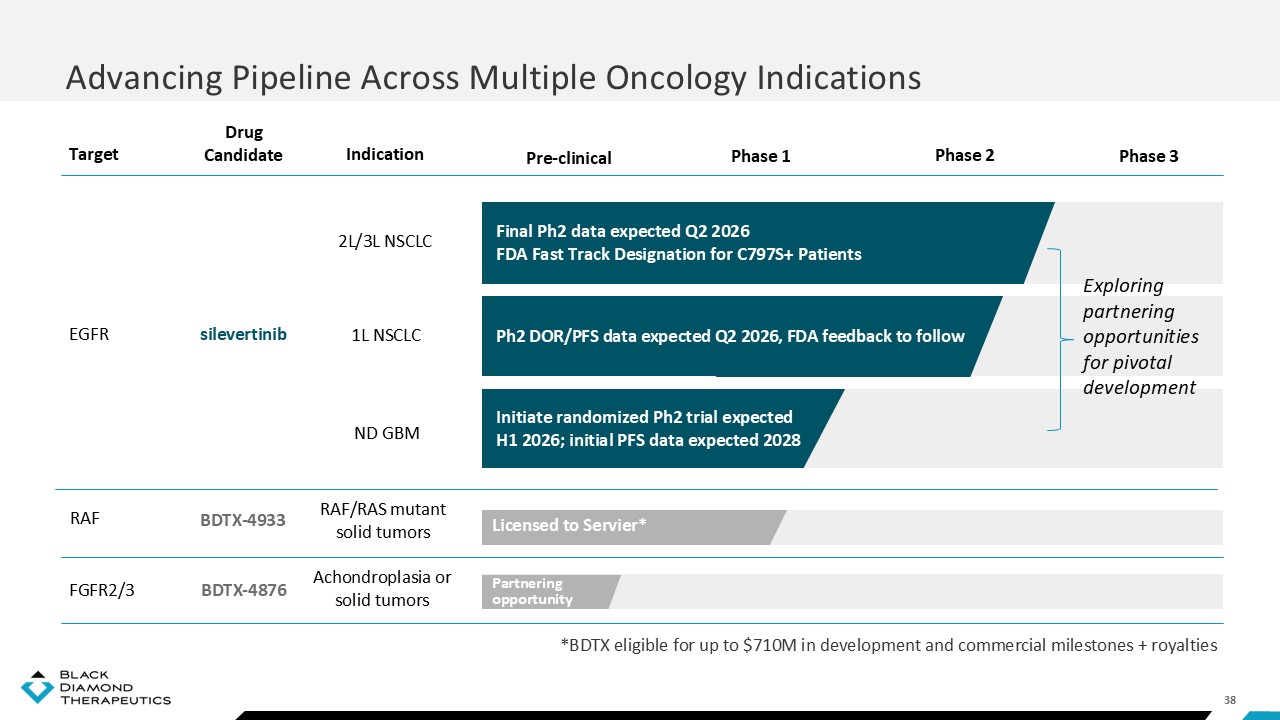
38 Advancing Pipeline Across Multiple Oncology Indications Target Drug Candidate Indication Pre - clinical Phase 1 Phase 2 Phase 3 EGFR RAF silevertinib BDTX - 4933 2L/3L NSCLC 1L NSCLC FGFR2/3 BDTX - 4876 Achondroplasia or solid tumors RAF/RAS mutant solid tumors Partnering opportunity Licensed to Servier* ND GBM Final Ph2 data expected Q2 2026 FDA Fast Track Designation for C797S+ Patients Initiate randomized Ph2 trial expected H1 2026; initial PFS data expected 2028 Ph2 DOR/PFS data expected Q2 2026, FDA feedback to follow Exploring partnering opportunities for pivotal development *BDTX eligible for up to $710M in development and commercial milestones + royalties