CBIO 8-K
Crescent Biopharma, Inc. (CBIO)
UNITED STATES
SECURITIES AND EXCHANGE COMMISSION
Washington, DC 20549
FORM
CURRENT REPORT
Pursuant to Section 13 or 15(d) of
The Securities Exchange Act of 1934
Date of Report (Date of earliest event reported):
(Exact name of registrant as specified in its charter)
(State or other jurisdiction of incorporation) | (Commission File Number) | (IRS Employer |
(Address of principal executive offices, including zip code)
(
(Registrant’s telephone number, including area code)
N/A
(Former name or former address, if changed since last report)
Check the appropriate box below if the Form 8-K filing is intended to simultaneously satisfy the filing obligation of the registrant under any of the following provisions:
Securities registered pursuant to Section 12(b) of the Act:
Title of each class | Trading Symbol(s) | Name of each exchange on which registered |
Indícate by check mark whether the registrant is an emerging growth company as defined in Rule 405 of the Securities Act of 1933 (§230.405 of this chapter) or Rule 12b-2 of the Securities Exchange Act of 1934 (§240.12b-2 of this chapter).
Emerging growth company
If an emerging growth company, indicate by check mark if the registrant has elected not to use the extended transition period for complying with any new or revised financial accounting standards provided pursuant to Section 13(a) of the Exchange Act. ☐
Item 7.01.Regulation FD Disclosure.
On June 4, 2024, GlycoMimetics, Inc. (the “Company”) issued a press release announcing comprehensive results from its pivotal Phase 3 clinical trial of uproleselan in patients with relapsed/refractory acute myeloid leukemia. On June 4, 2024, the Company also hosted a live webcast to discuss the results. The press release and slide presentation used during the webcast are attached as Exhibits 99.1 and 99.2, respectively, to this Current Report and are incorporated herein solely for purposes of this Item 7.01 disclosure.
The information in this Item 7.01, including the exhibits attached hereto, is being furnished and shall not be deemed “filed” for purposes of Section 18 of the Securities Exchange Act of 1934, as amended (the “Exchange Act”), or otherwise subject to the liability of that section, nor shall it be deemed incorporated by reference into any of the Company’s filings under the Securities Act of 1933, as amended (the “Securities Act”) or the Exchange Act, whether made before or after the date hereof, regardless of any incorporation language in such filing, except as otherwise expressly stated in such filing.
Item 9.01Financial Statements and Exhibits
(d) Exhibits
Exhibit |
| |
Number |
| Exhibit Description |
99.1 | ||
99.2 | ||
104 | Cover Page Interactive Data File (the cover page XBRL tags are embedded within the Inline XBRL document) |
2
SIGNATURES
Pursuant to the requirements of the Securities Exchange Act of 1934, the registrant has duly caused this report to be signed on its behalf by the undersigned hereunto duly authorized.
GLYCOMIMETICS, INC. | ||
By: | /s/ Brian M. Hahn | |
Date: June 4, 2024 | Brian M. Hahn |
3
| GlycoMimetics Announces Comprehensive Results from Pivotal Phase 3 Study of Uproleselan in Relapsed/Refractory (R/R) Acute Myeloid Leukemia (AML) • Company exploring path forward for uproleselan in multiple AML settings based on observed efficacy results, including clinically meaningful results in primary refractory AML, and significant unmet patient need • Uproleselan demonstrated a clinically meaningful improvement in median overall survival (mOS) for patients with primary refractory AML; mOS was 31.2 months for the uproleselan arm compared to 10.1 months for the placebo arm in this subgroup • Adverse events for uproleselan were consistent with known side effect profiles of chemotherapy used in the study • Advancing discussions with the National Cancer Institute (NCI) and the Alliance for Clinical Trials in Oncology for Phase 2/3 study of uproleselan with chemotherapy in older adults with frontline AML • Conference call and webcast to be hosted today, June 4, 2024, at 8:30 am E.T. ROCKVILLE, Md.--(BUSINESS WIRE)—June 4, 2024-- GlycoMimetics, Inc. (Nasdaq: GLYC), a late clinical-stage biotechnology company discovering and developing glycobiology-based therapies for cancers and inflammatory diseases, today announced comprehensive results from the company’s pivotal Phase 3 study of uproleselan in R/R AML. “There is a wealth of data across large subsets of this pivotal Phase 3 study that help us understand how prespecified stratification factors such as backbone chemotherapy, disease status, and age impacted survival outcomes for patients,” said Daniel DeAngelo, M.D., Ph.D., Professor of Medicine, Harvard Medical School, Chief, Division of Leukemia, Dana-Farber Cancer Institute, and Principal Investigator of the pivotal Phase 3 study. “In the primary refractory setting, uproleselan’s improvement of mOS and greater duration of remission were particularly compelling, as there is a significant unmet need for new treatment options in this setting that can extend and improve the lives of patients. These results demonstrate uproleselan has the potential to address this unmet need in primary refractory AML.” “As we have analyzed data from this large, well-balanced, and well-executed study alongside medical, statistical, and regulatory experts, it has become clear that uproleselan may offer clinically meaningful patient benefit in multiple settings, including primary refractory AML,” said Harout Semerjian, Chief Executive Officer of GlycoMimetics. “We are committed to addressing unmet needs of AML patients and plan to engage with regulators and NCI to discuss potential paths forward for uproleselan.” Results of Pivotal Phase 3 Study of Uproleselan in R/R AML The randomized, double-blind, placebo-controlled Phase 3 clinical study evaluated uproleselan in combination with MEC (mitoxantrone, etoposide and cytarabine) or FAI (fludarabine, cytarabine and idarubicin) in patients with R/R AML. Patients received either uproleselan or placebo for 8 days over 1 cycle of induction and, if applicable, up to 3 cycles of consolidation. The primary endpoint was overall survival (OS), which was not censored for transplant. Secondary endpoints included incidence of severe |
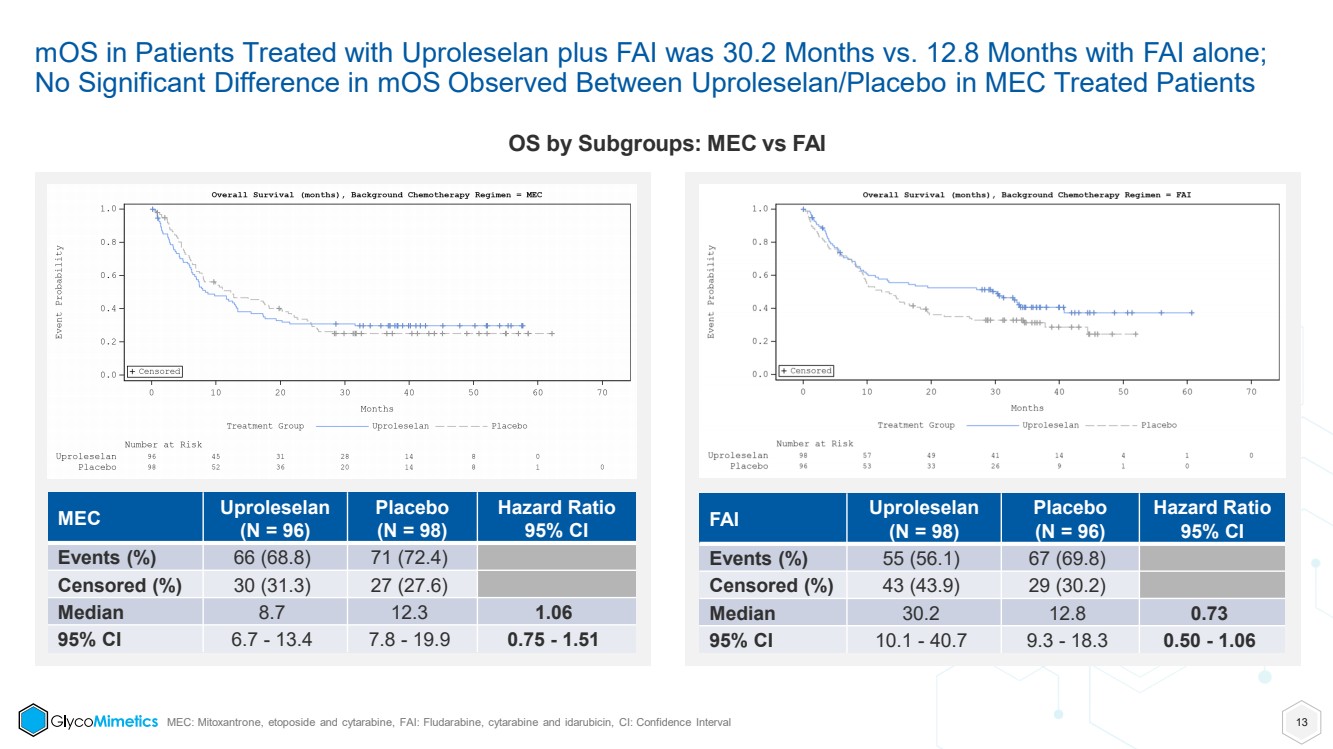
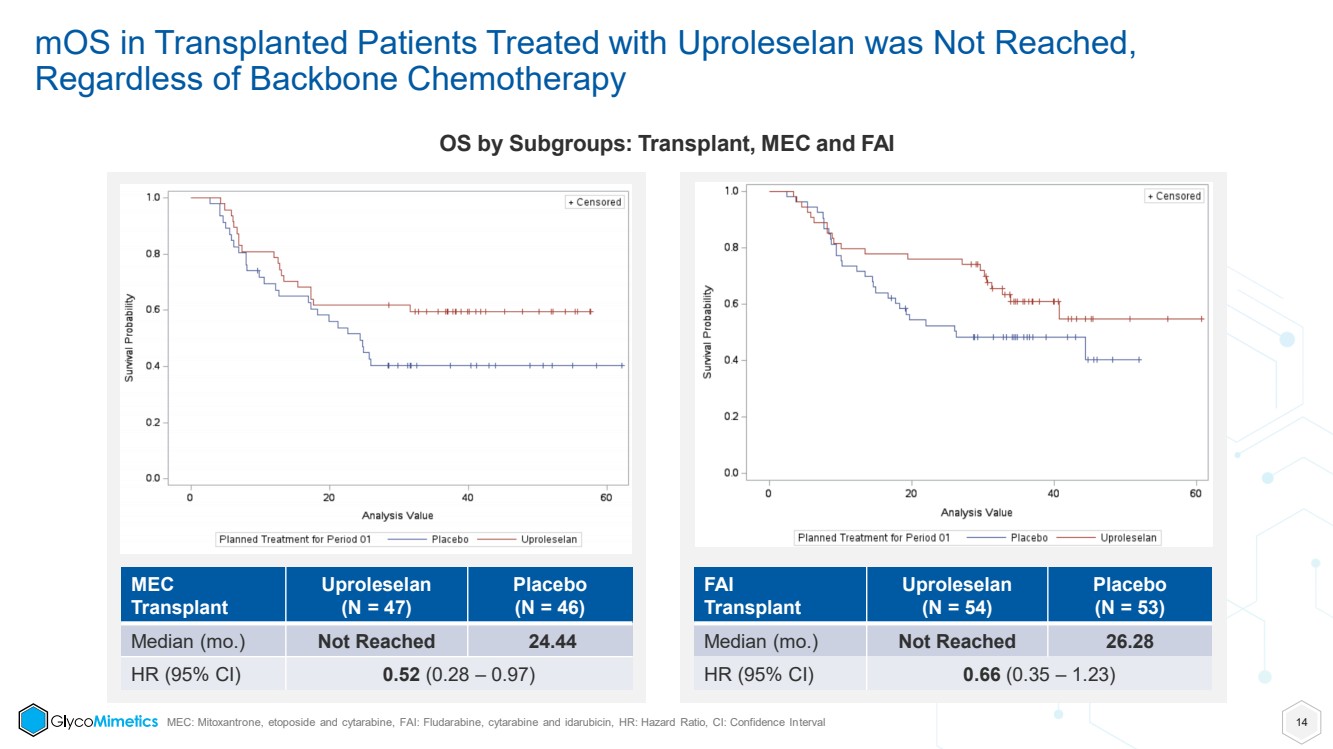
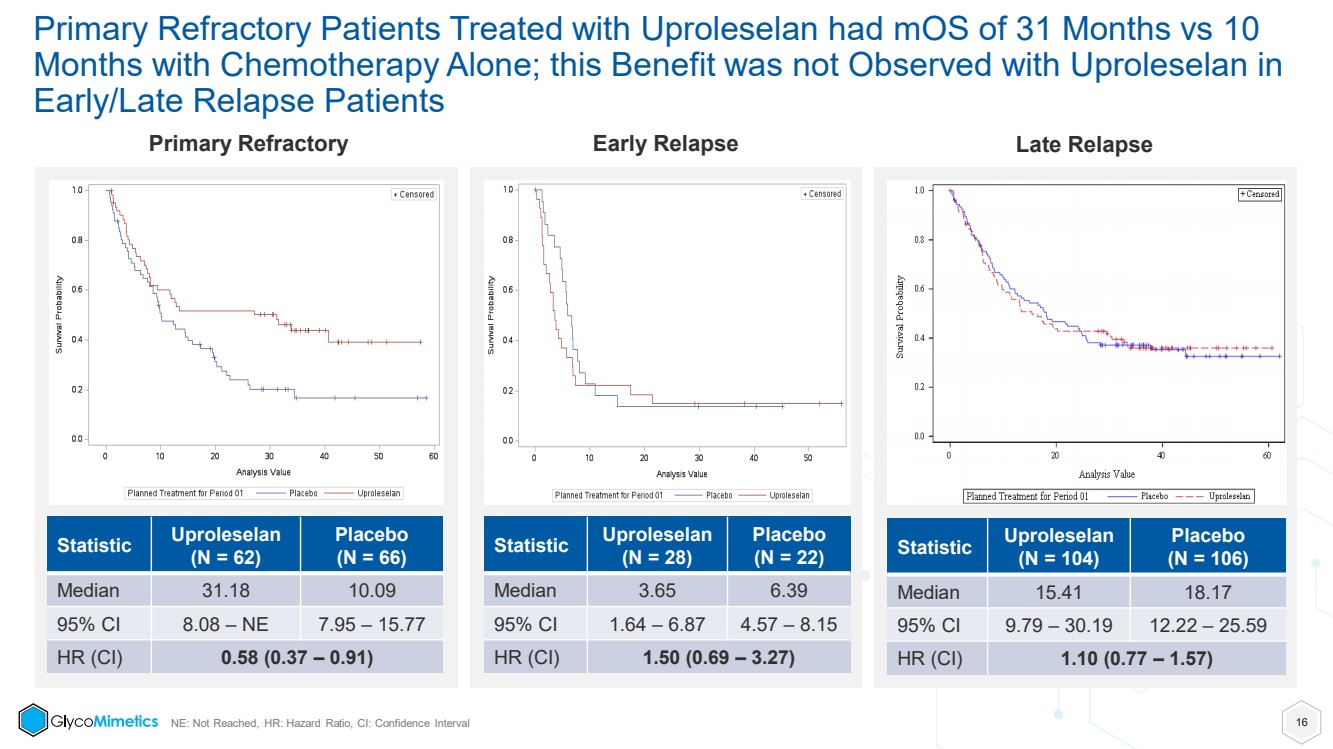
| oral mucositis, complete remission (CR) rate and CR with partial hematologic recovery (CRh). A total of 388 patients in nine countries were randomized 1:1 between treatment and placebo arms. There were 59 sites that enrolled at least one patient. Median follow up was over three years at the time of primary analysis. Overall Survival • Primary Endpoint: mOS in the intent-to-treat (ITT) population (n=388) was 13.0 months for the uproleselan arm, compared to 12.3 months for the placebo arm (hazard ratio [HR] 0.89; 95% confidence interval [CI] 0.69-1.15); this difference is not statistically significant. • Disease Status o Primary Refractory: mOS for primary refractory patients in the uproleselan arm (n=62) was 31.2 months, compared to 10.1 months (HR 0.58; 95% CI 0.37-0.91) for the placebo arm (n=66). This benefit was irrespective of backbone chemotherapy. ▪ Median duration of response (DoR) for complete remission (CR) was not reached for primary refractory patients in the uproleselan arm compared to a median DoR of 12.7 months for the placebo arm. o Early Relapse: mOS for early relapse patients in the uproleselan arm (n=28) was 3.7 months, compared to 6.4 months (HR 1.50; 95% CI 0.69-3.27) for the placebo arm (n=22). o Late Relapse: mOS for late relapse patients in the uproleselan arm (n=104) was 15.4 months, compared to 18.2 months (HR 1.10; 95% CI 0.77-1.57) for the placebo arm (n=106). • Backbone Chemotherapy: o FAI: mOS for patients treated with uproleselan plus FAI (n=98) was 30.2 months compared to 12.8 months (HR 0.73; 95% CI 0.50-1.06) for patients treated with FAI alone (n=96) in the ITT population. o MEC: mOS for patients treated with uproleselan plus MEC (n=96) was 8.7 months compared to 12.3 months (HR 1.06; 95% CI 0.75-1.51) for patients treated with MEC alone (n=98) in the ITT population. • Transplantation Status: o For patients who received hematopoietic stem cell transplantation (HSCT) after study treatment, mOS was not reached for patients in the uproleselan arm (n=101). In contrast, for HSCT patients in the placebo arm, mOS for patients receiving FAI (n=53) was 26.3 months and for patients receiving MEC (n=46) was 24.4 months. Secondary Endpoints • 7.2% of patients in each arm (n=388) experienced induction emergent severe oral mucositis. • 36.1% of patients in the uproleselan arm (n=194) experienced CR at the end of induction (EOI) as determined by an independent endpoint review committee (IERC), compared to 33.5% of patients in the placebo arm (n=194). • 46.4% of patients in the uproleselan arm experienced CR/CRh at EOI as determined by IERC, compared to 41.2% of patients in the placebo arm. • Post-treatment HSCT rate was 52.1% in the uproleselan arm and 51.0% in the placebo arm. |
| • Subsequent AML therapy in non-responders was 40.0% in the uproleselan arm (n=80) and 46.2% in the placebo arm (n=78). Safety • Adverse events were consistent with the known safety profile for backbone chemotherapy regimens. • 35.9% of patients in the uproleselan arm experienced serious treatment-emergent adverse events (TEAEs) compared to 34.2% in the placebo arm. • 85.9% of patients in the uproleselan arm experienced grade 3 or higher TEAEs compared to 87.6% in the placebo arm. NCI Phase 2/3 Study of Uproleselan in Frontline AML In addition to the company’s pivotal Phase 3 trial of uproleselan, the National Cancer Institute (NCI) and the Alliance for Clinical Trials in Oncology are conducting an adaptive Phase 2/3 study of uproleselan in adults with newly diagnosed AML who are 60 years or older and fit for intensive chemotherapy. Their randomized, controlled study is evaluating the addition of uproleselan to a standard cytarabine / daunorubicin regimen (7+3) versus chemotherapy alone. The Phase 2 portion of the study completed enrollment of 267 patients in December 2021. The Company is advancing discussions with the NCI and the Alliance for Clinical Trials in Oncology based on the results of the pivotal Phase 3 study of uproleselan in R/R AML. Conference Call Details To access the call by phone, please go to this registration link and you will be provided with dial in details. Participants are encouraged to connect 15 minutes in advance of the scheduled start time. A live webcast of the call and the corresponding slides will be available on the “Investors” tab on the GlycoMimetics website. A webcast replay will be available for 30 days following the call. About AML AML is the most common acute leukemia in adults. A cancer of the bone marrow, nearly 21,000 people in the United States are diagnosed with AML each year. Despite the availability of multiple treatments, disease prognosis is poor, and new treatment options are needed to improve outcomes. Newly diagnosed AML has the lowest 5-year survival rate of all leukemias at 31.7%. The five-year survival rate for people with relapsed/refractory disease is only 10%. About Uproleselan Discovered and developed by GlycoMimetics, uproleselan (yoo’ pro le’se lan) is an investigational, first-in-class E-selectin antagonist. GlycoMimetics has received Breakthrough Therapy and Fast Track designations from the U.S. Food and Drug Administration (FDA) and Breakthrough Therapy designation from the Chinese National Medical Products Administration for uproleselan as a potential treatment for adult AML patients with relapsed or refractory disease. E-selectin is a leukocyte adhesion molecule constitutively expressed on endothelial cells of the vasculature and bone marrow. In AML, there is evidence that E-selectin–ligand interaction between endothelial cells in the protective niche of the Bone Marrow microEnvironment (BME) and leukemic stem cells and blasts promotes leukemic cell survival |
| and hides them from AML therapies. Uproleselan is designed to disrupt E-selectin binding and prevent leukemic myeloid cells using the protective niche of the BME. About GlycoMimetics, Inc. GlycoMimetics is a late clinical-stage biotechnology company discovering and developing glycobiology-based therapies for cancers, including AML, and for inflammatory diseases. The company’s scientific approach is based on an understanding of the role that carbohydrates play in cell recognition. Its specialized chemistry platform is being deployed to discover small molecule drugs, known as glycomimetics, that alter carbohydrate-mediated recognition in diverse disease states, including cancers and inflammation. GlycoMimetics is leveraging its differentiated expertise with this scientific approach in order to advance its pipeline of wholly owned drug candidates. The company’s goal is to develop transformative therapies for diseases with high unmet medical need. GlycoMimetics is headquartered in Rockville, MD in the BioHealth Capital Region. Learn more at www.glycomimetics.com. Forward-Looking Statements This press release contains forward-looking statements. These forward-looking statements may include, but are not limited to, statements regarding the conduct of, and timing for analysis and presentation of data from, clinical trials; potential development and regulatory activities; and the potential benefits and impact of uproleselan. Actual results may differ materially from those described in these forward-looking statements. For a further description of the risks associated with these statements, as well as other risks facing GlycoMimetics, please see the risk factors described in the company’s Annual Report on Form 10-K filed with the U.S. Securities and Exchange Commission (SEC) on March 27, 2024, the company’s Quarterly Report on Form 10-Q filed with the SEC on May 9, 2024, and other filings GlycoMimetics makes with the SEC from time to time. Forward-looking statements speak only as of the date of this release, and GlycoMimetics undertakes no obligation to update or revise these statements, except as may be required by law. Investor Contact: Argot Partners Leo Vartorella 212-600-1902 [email protected] |
| Results of Pivotal Phase 3 Trial of Uproleselan in Relapsed/Refractory (R/R) Acute Myeloid Leukemia (AML) June 2024 | NASDAQ: GLYC |
| 2 • To the extent that statements contained in this presentation are not descriptions of historical facts, they are forward-looking statements reflecting the current beliefs and expectations of the management of GlycoMimetics, Inc. (“GlycoMimetics,” “we,” “us,” or “our”). Forward-looking statements contained in this presentation may include, but are not limited to: (i) potential indications, benefits and impact of our drug candidates, including uproleselan; (ii) our plans for interactions with regulatory authorities; (iii) business and product development strategies, including potential partnering activities for our programs; (iv) our projected cash runway; and (v) any other statement containing terminology such as “may,” “will,” “should,” “expects,” “plans,” “anticipates,” “believes,” “estimates,” “predicts,” “potential,” “intends,” or “continue,” or the negative of these terms or other comparable terminology. • Forward-looking statements are subject to known and unknown risks, uncertainties, and other factors that may cause our or our industry’s actual results, levels of activity, performance, or achievements to be materially different from those discussed, implied or otherwise anticipated by such statements. You are cautioned not to place undue reliance on such forward-looking statements, which are current only as of the date of this presentation. Examples of risks, uncertainties and factors that may cause differences between our expectations and actual results include unexpected safety or efficacy data, unexpected side effects observed during preclinical studies or in clinical trials, whether results of early clinical trials will be indicative of results from later clinical trials, changes in the regulatory environment for our drug candidates, failure of our collaborators to support or advance our collaborations or drug candidates, our need for future capital, the inability to adequately protect our intellectual property, and becoming a party to litigation or other disputes. For a further description of the risks associated with forward-looking statements, as well as other risks facing GlycoMimetics, please see the risk factors described in the Company’s Annual Report on Form 10-K filed with the U.S. Securities and Exchange Commission (SEC) on March 27, 2024; the Company’s Quarterly Report on Form 10-Q filed with the SEC on May 9, 2024; and other reports we file with the U.S. Securities and Exchange Commission from time to time, including those factors discussed under the caption “Risk Factors” in such filings. Forward-looking statements speak only as of the date of this presentation, and GlycoMimetics undertakes no obligation to update or revise these statements, except as may be required by law. Forward-Looking Statements |
| Welcome & Introduction Harout Semerjian President and Chief Executive Officer |

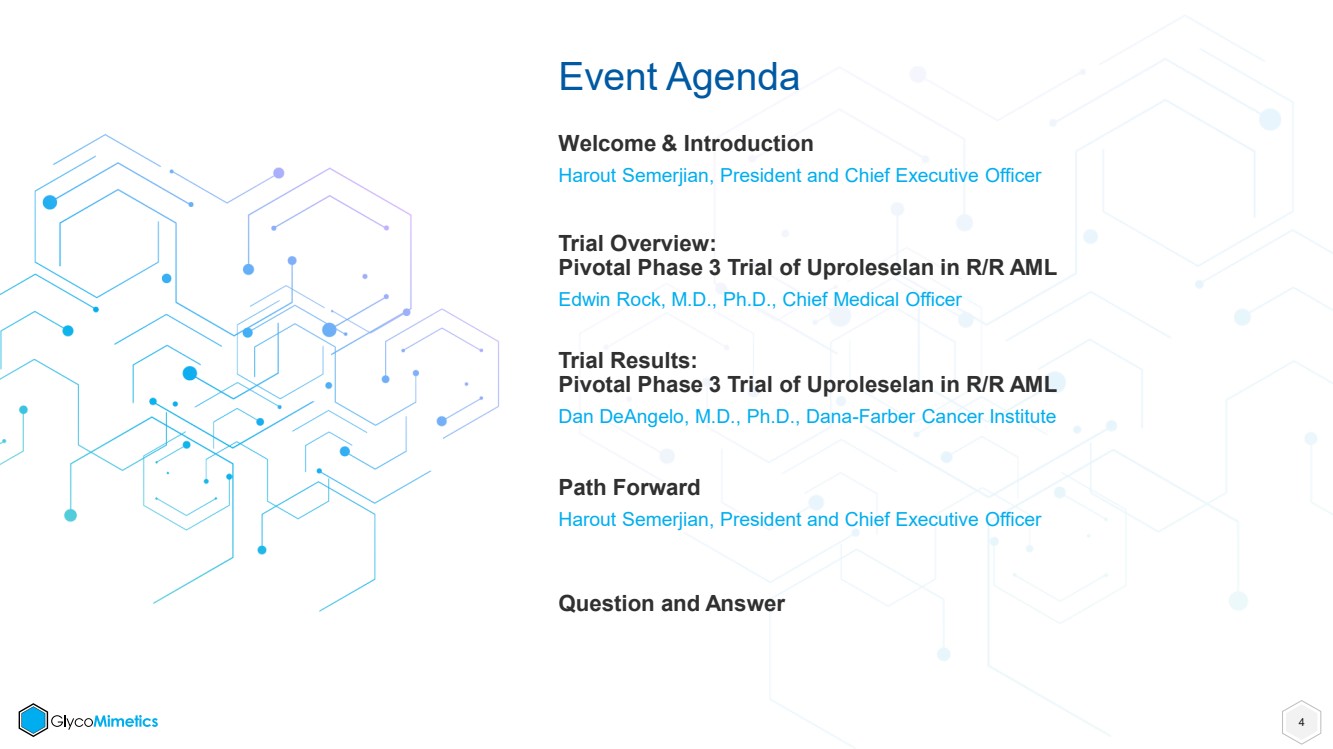
| Event Agenda 4 Welcome & Introduction Harout Semerjian, President and Chief Executive Officer Trial Overview: Pivotal Phase 3 Trial of Uproleselan in R/R AML Edwin Rock, M.D., Ph.D., Chief Medical Officer Trial Results: Pivotal Phase 3 Trial of Uproleselan in R/R AML Dan DeAngelo, M.D., Ph.D., Dana-Farber Cancer Institute Path Forward Harout Semerjian, President and Chief Executive Officer Question and Answer |
| Trial Overview: Pivotal Phase 3 Trial of Uproleselan in R/R AML Edwin Rock, M.D., Ph.D. Chief Medical Officer |
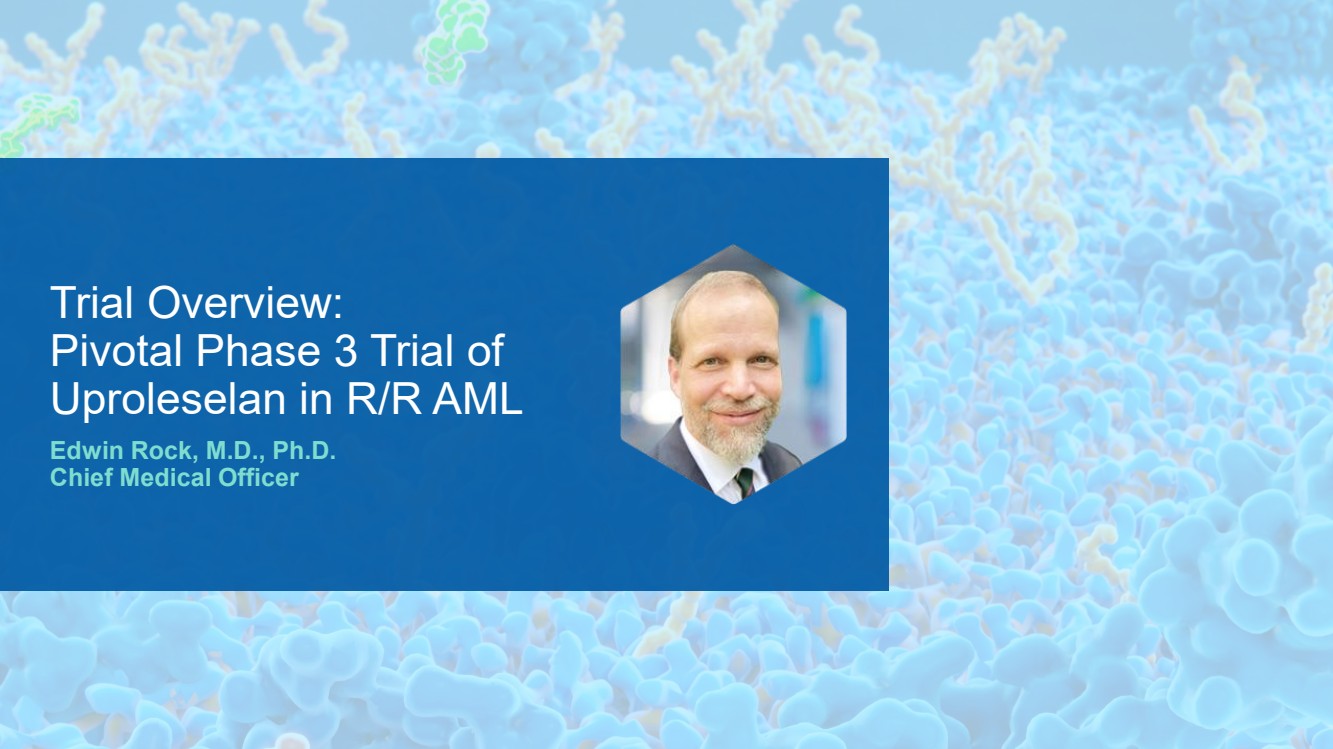
| 301 Trial Has Enrolled 388 Relapse and Refractory AML Patients, and is One of the Longest Randomized Placebo-Controlled AML Trials, Running from 2018 to 2024 6 Enrollment Completed in November 2021; Data Cutoff end Q1 2024, Topline Results Reported in Q2 2024 KEY ELIGIBILITY CRITERIA • ≥18 and ≤75 years in age • AML – primary refractory or first or second relapse • Eligible for intensive salvage treatment • <1 prior HSCT Placebo plus MEC or FAI (N=190) Placebo plus HiDAC or IDAC Uproleselan plus MEC or FAI (N=190) Uproleselan plus HiDAC or IDAC 1:1 Randomization (stratified by age, disease status and backbone chemo) Induction (1 Cycle) Consolidation (Up to 3 Cycles) Follow-up for Overall Survival not censored for transplant. HSCT: Hematopoietic Stem Cell Transplantation , MEC: Mitoxantrone, etoposide and cytarabine , FAI: Fludarabine, cytarabine and idarubicin, HiDAC/IDAC: High-dose or Intermediate-dose cytarabine Randomize 1:1 |
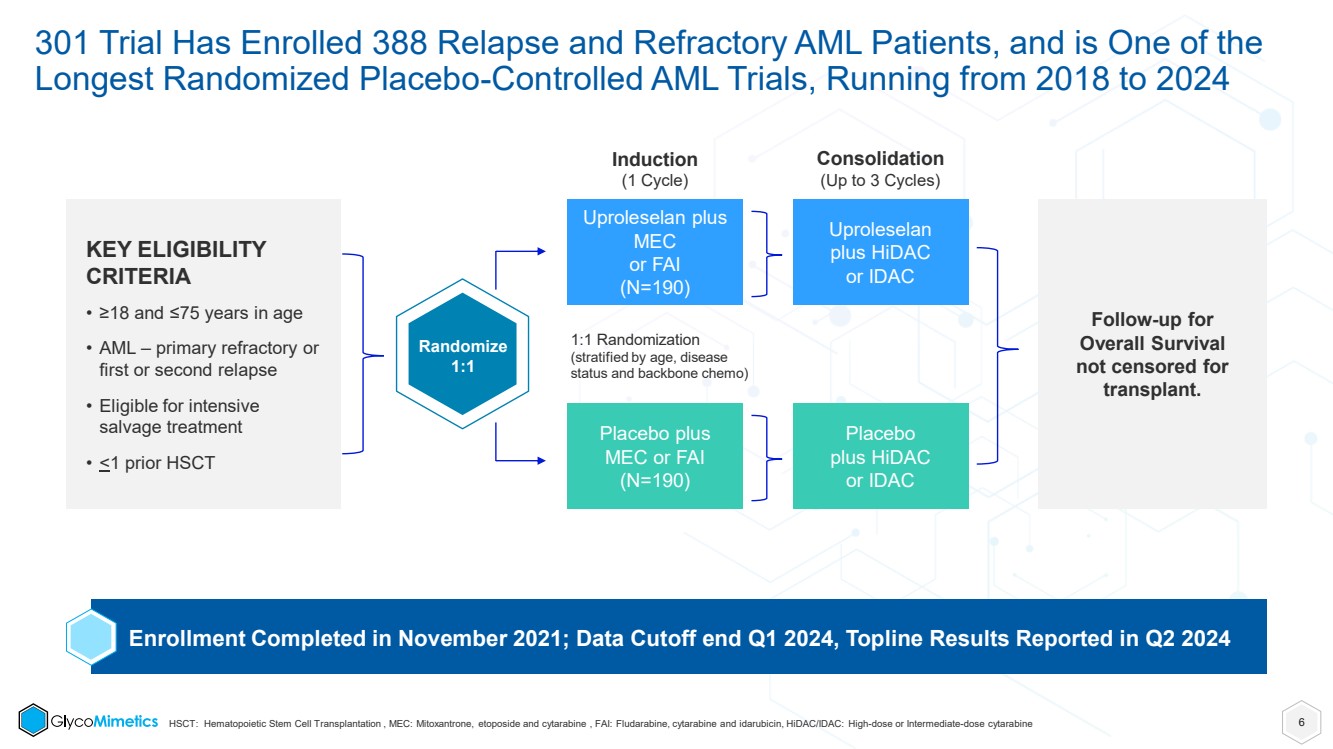
| Statistic Uproleselan (N=194) Placebo (N=194) Hazard Ratio, 95% CI P-value Events (%) 121 (62.4) 138 (71.1) Censored (%) 73 (37.6) 56 (28.9) Median 13.0 12.3 0.89 95% CI 8.7 - 19.4 9.6 - 17.3 0.69 - 1.15 0.3869 CI: Confidence Interval 7 Median Overall Survival (mOS) in the Intent-To-Treat (ITT) Population was 13.0 Months versus 12.3 Months; Statistical Significance was not Achieved Overall Survival (months) |
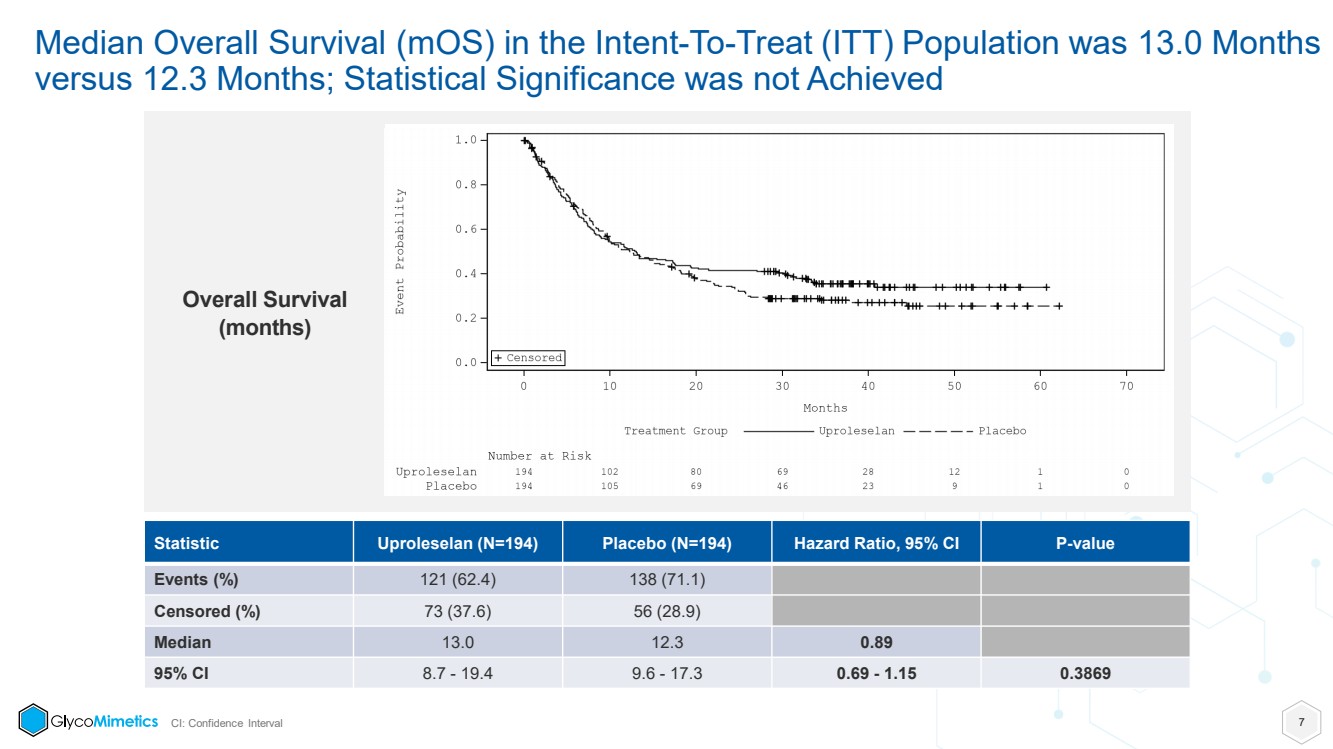
| EOI: End of Induction, IERC: Independent Endpoint Review Committee, MRD-: Measurable Residual Disease-Negative 8 Additional Endpoints Including CR MRD- Trended Favorably for Uproleselan vs. Placebo Additional Endpoints Uproleselan N=194 (%) Placebo N=194 (%) Treatment Difference P-value Induction Emergent Severe Oral Mucositis 14 (7.2) 14 (7.2) 0.0 0.9830 Complete Remission (CR), EOI / IERC 70 (36.1) 65 (33.5) 2.6 0.6236 Remission (CR/CRh), EOI / IERC 90 (46.4) 80 (41.2) 5.2 0.2437 Post-Treatment Stem Cell Transplant Rate (All) 101 (52.1) 99 (51.0) 1.0 0.8638 MRD- CR, EOI / IERC (n=70 / n=65) 47 (67.1) 40 (61.5) -- -- |
| Trial Results: Pivotal Phase 3 Trial of Uproleselan in R/R AML Daniel J. DeAngelo, M.D., Ph.D., Dana-Farber Cancer Institute |
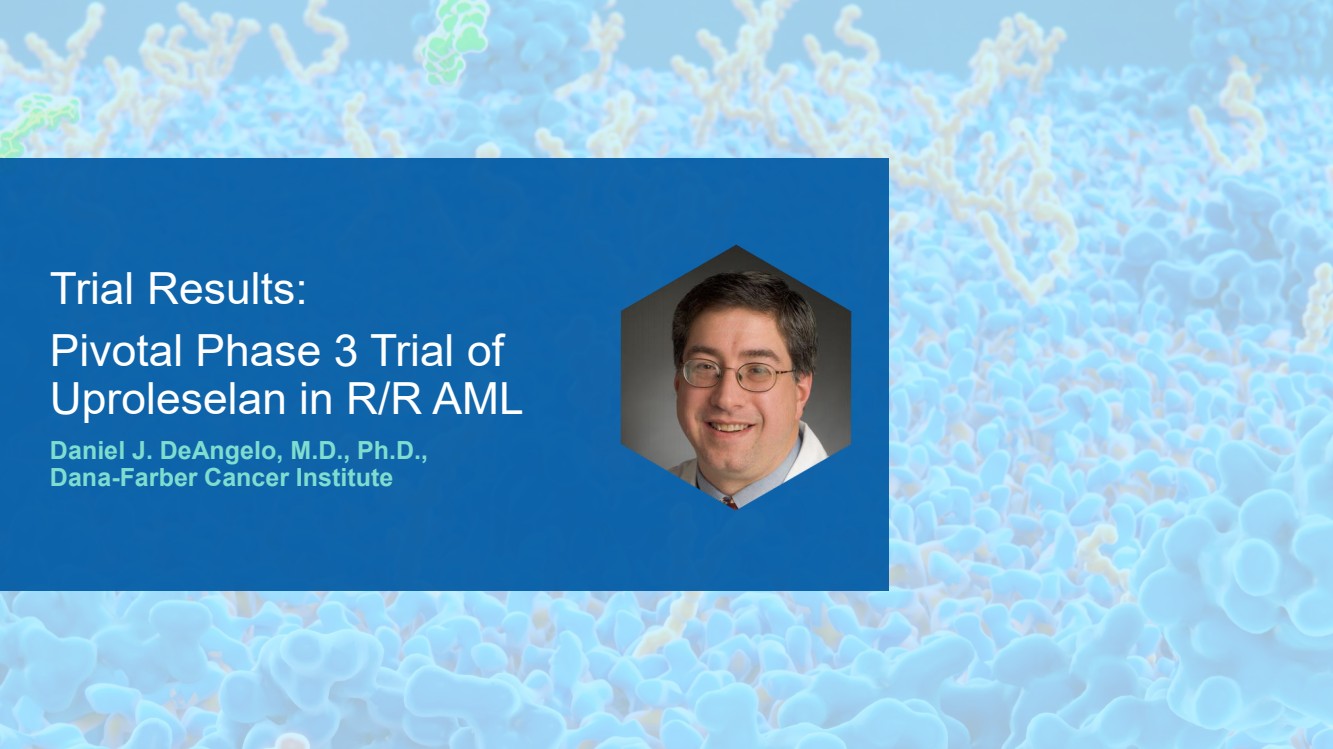
| 301 Trial Captured Significant Data Across a Range of Categories Informing Relationship of Factors Impacting Survival Outcomes MEC: Mitoxantrone, etoposide and cytarabine, FAI: Fludarabine, cytarabine and idarubicin, MRD-: Measurable Residual Disease-Negative, AE: Adverse Event, TEAE: 10 Treatment-Emergent Adverse Event Backbone Chemotherapy MEC (N=194) vs FAI (N=194) Randomization Strata Disease Status Primary Refractory (N=128) Early Relapse (N=50) Late Relapse (N=210) Age <60 years (N=218) ≥60 years (N=170) MRD- Status (N=144) Depth of Response and Transplant Transplantation Status Yes (N=200) No (N=188) AEs & Serious TEAEs Safety and Tolerability |
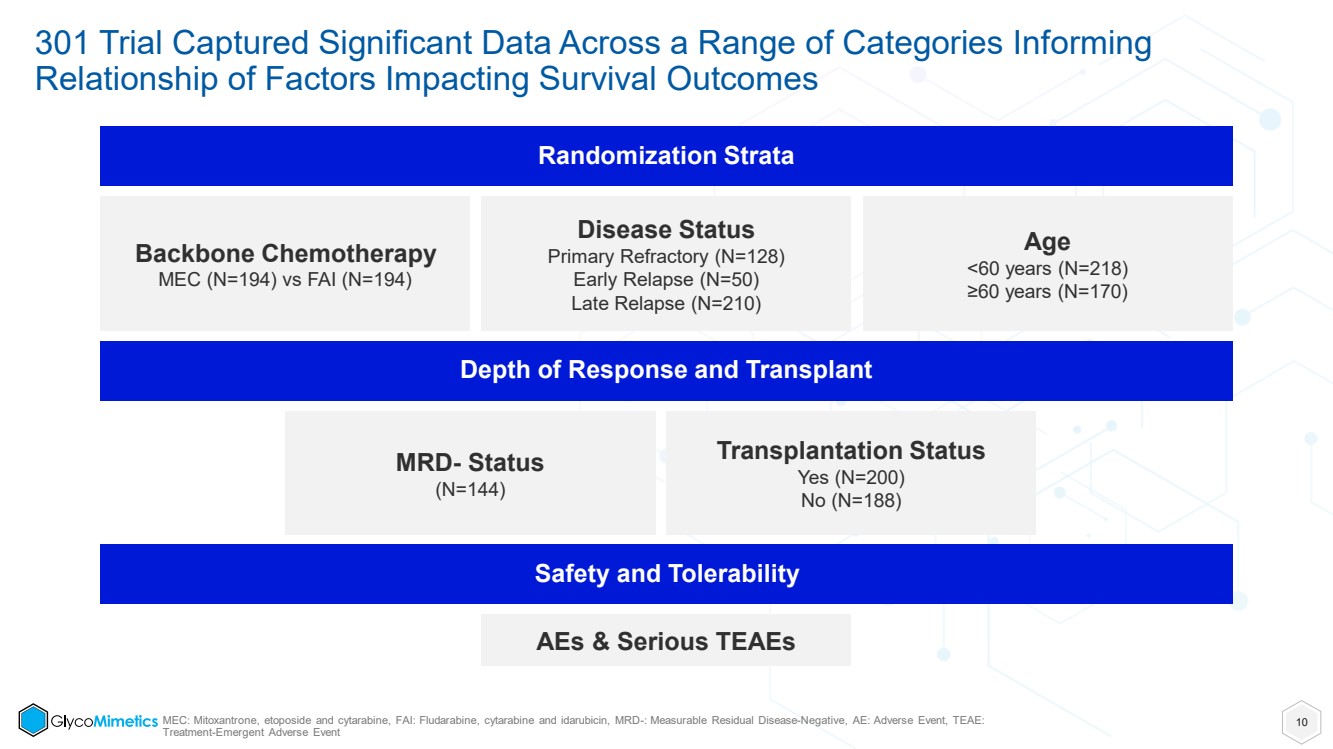
| Uproleselan Survival Results Vary by Stratification Factors And Other Subgroups 11 MEC: Mitoxantrone, etoposide and cytarabine, FAI: Fludarabine, cytarabine and idarubicin, CI: Confidence Interval, MRD: Measurable Residual Disease, EOI: End of Induction. Overall Survival Subgroups Hazard Ratio (95% CI) Age • < 60 years 0.79 (0.55 - 1.12) • ≥ 60 years 1.03 (0.71 - 1.48) Backbone Chemotherapy • MEC 1.06 (0.75 – 1.51) • FAI 0.73 (0.50 – 1.06) BL Disease Status • Primary Refractory 0.58 (0.37 - 0.91) • Relapse ≤ 6 months 1.50 (0.69 - 3.27) • Relapse > 6 months 1.10 (0.77 - 1.57) Overall Survival Subgroups Hazard Ratio (95% CI) Disease Response • CR 0.92 (0.54 - 1.59) • CR/CRh 1.01 (0.64 – 1.60) Post-Treatment Transplant (All) • Yes 0.59 (0.38 - 0.91) • No 1.42 (1.01 - 2.00) MRD Status at EOI • Negative 0.49 (0.28 – 0.84) • Positive 1.27 (0.85 – 1.90) |
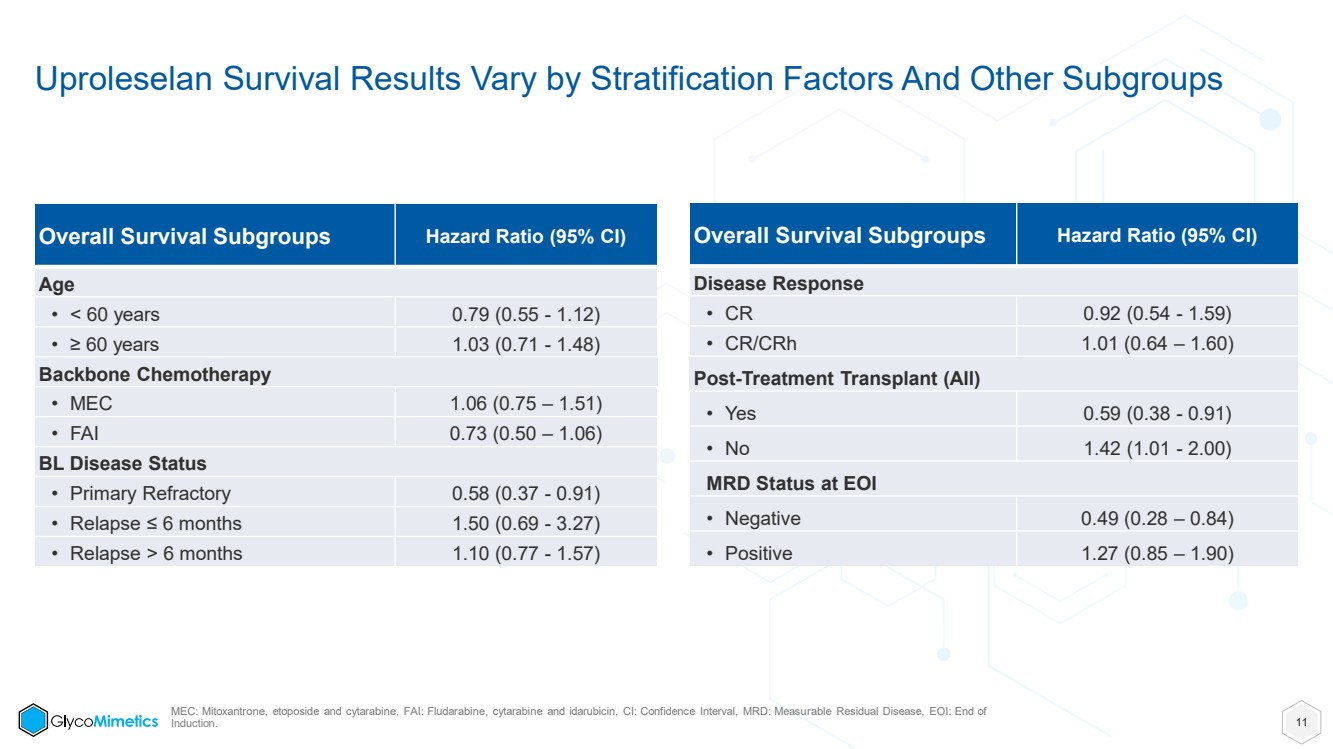
| 301 Trial Captured Significant Data Across a Range of Categories Informing Relationship of Factors Impacting Survival Outcomes 12 Backbone Chemotherapy MEC (N=194) vs FAI (N=194) Randomization Strata MEC: Mitoxantrone, etoposide and cytarabine, FAI: Fludarabine, cytarabine and idarubicin, MRD-: Measurable Residual Disease-Negative, AE: Adverse Event, TEAE: Treatment-Emergent Adverse Event |
| 13 mOS in Patients Treated with Uproleselan plus FAI was 30.2 Months vs. 12.8 Months with FAI alone; No Significant Difference in mOS Observed Between Uproleselan/Placebo in MEC Treated Patients OS by Subgroups: MEC vs FAI MEC Uproleselan (N = 96) Placebo (N = 98) Hazard Ratio 95% CI Events (%) 66 (68.8) 71 (72.4) Censored (%) 30 (31.3) 27 (27.6) Median 8.7 12.3 1.06 95% CI 6.7 - 13.4 7.8 - 19.9 0.75 - 1.51 FAI Uproleselan (N = 98) Placebo (N = 96) Hazard Ratio 95% CI Events (%) 55 (56.1) 67 (69.8) Censored (%) 43 (43.9) 29 (30.2) Median 30.2 12.8 0.73 95% CI 10.1 - 40.7 9.3 - 18.3 0.50 - 1.06 MEC: Mitoxantrone, etoposide and cytarabine, FAI: Fludarabine, cytarabine and idarubicin, CI: Confidence Interval |
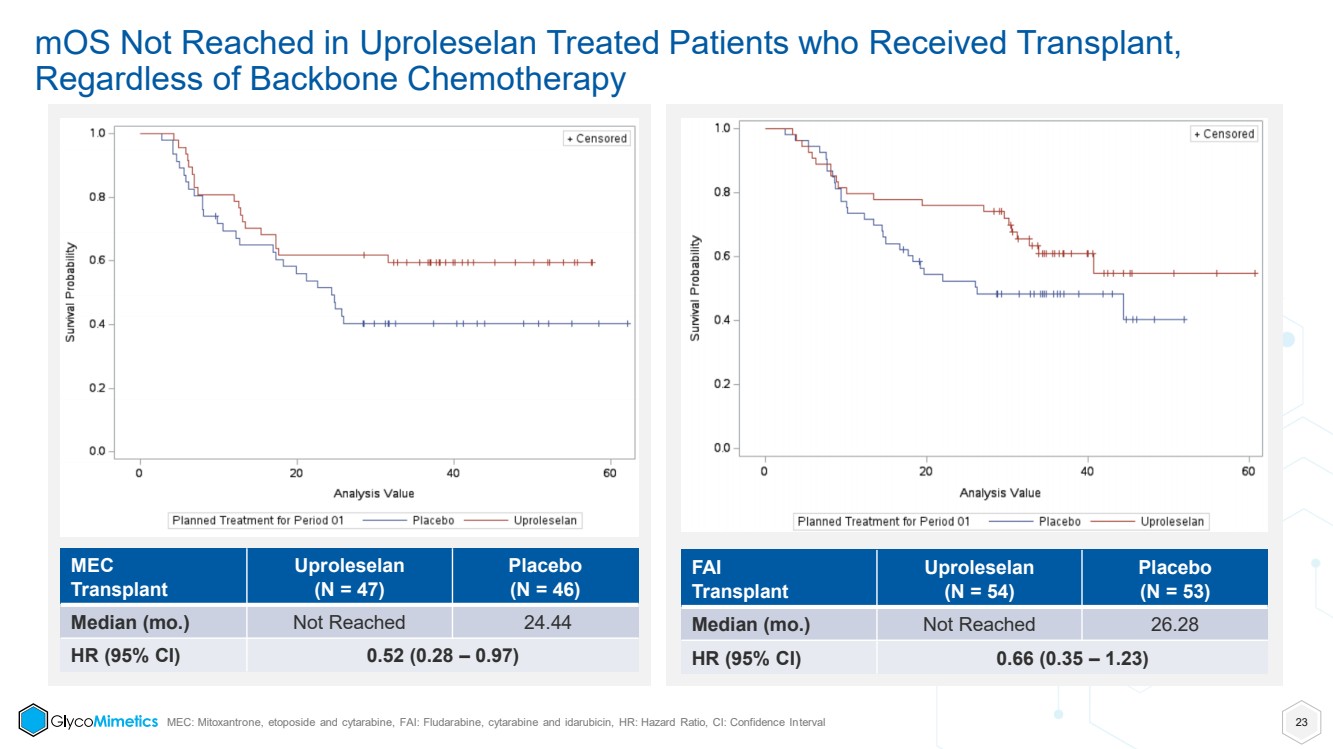
| 14 mOS in Transplanted Patients Treated with Uproleselan was Not Reached, Regardless of Backbone Chemotherapy OS by Subgroups: Transplant, MEC and FAI MEC Transplant Uproleselan (N = 47) Placebo (N = 46) Median (mo.) Not Reached 24.44 HR (95% CI) 0.52 (0.28 – 0.97) FAI Transplant Uproleselan (N = 54) Placebo (N = 53) Median (mo.) Not Reached 26.28 HR (95% CI) 0.66 (0.35 – 1.23) MEC: Mitoxantrone, etoposide and cytarabine, FAI: Fludarabine, cytarabine and idarubicin, HR: Hazard Ratio, CI: Confidence Interval |
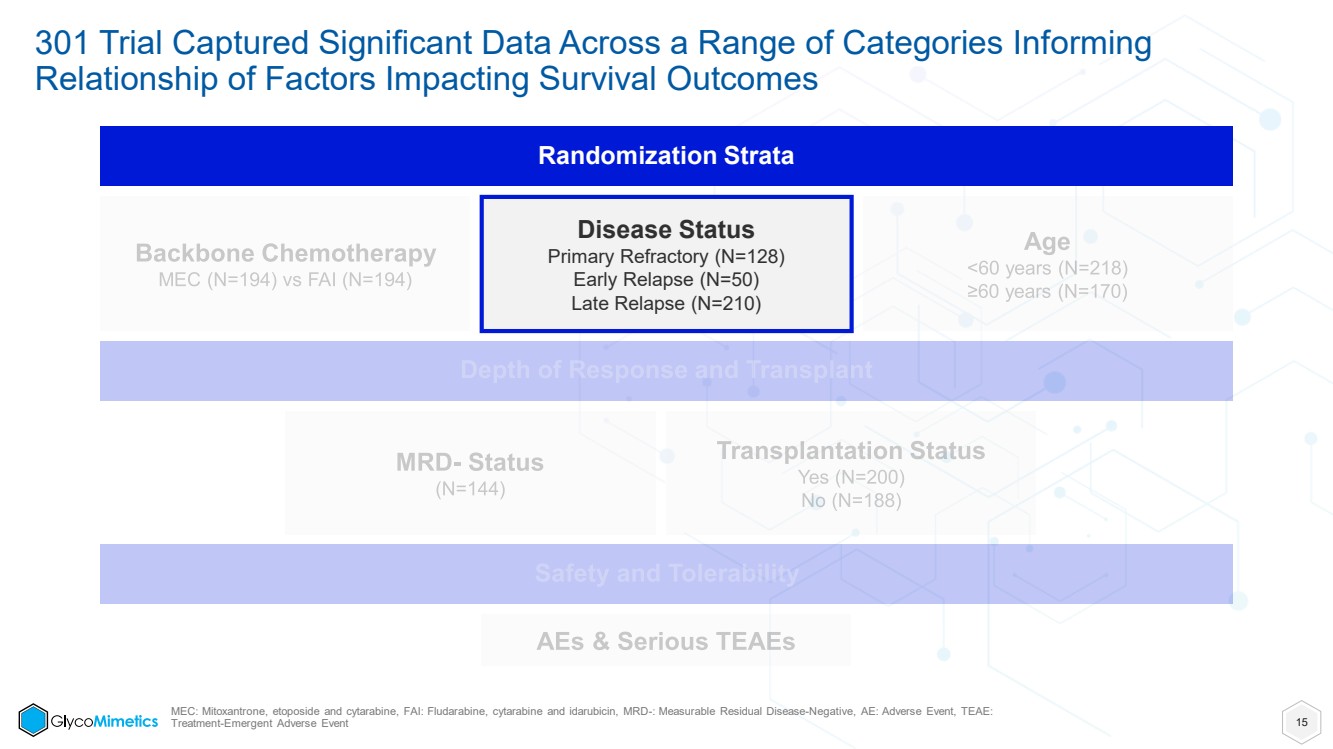
| 301 Trial Captured Significant Data Across a Range of Categories Informing Relationship of Factors Impacting Survival Outcomes 15 Randomization Strata Disease Status Primary Refractory (N=128) Early Relapse (N=50) Late Relapse (N=210) MEC: Mitoxantrone, etoposide and cytarabine, FAI: Fludarabine, cytarabine and idarubicin, MRD-: Measurable Residual Disease-Negative, AE: Adverse Event, TEAE: Treatment-Emergent Adverse Event |
| 16 Primary Refractory Patients Treated with Uproleselan had mOS of 31 Months vs 10 Months with Chemotherapy Alone; this Benefit was not Observed with Uproleselan in Early/Late Relapse Patients Statistic Uproleselan (N = 62) Placebo (N = 66) Median 31.18 10.09 95% CI 8.08 – NE 7.95 – 15.77 HR (CI) 0.58 (0.37 – 0.91) Statistic Uproleselan (N = 28) Placebo (N = 22) Median 3.65 6.39 95% CI 1.64 – 6.87 4.57 – 8.15 HR (CI) 1.50 (0.69 – 3.27) Statistic Uproleselan (N = 104) Placebo (N = 106) Median 15.41 18.17 95% CI 9.79 – 30.19 12.22 – 25.59 HR (CI) 1.10 (0.77 – 1.57) Primary Refractory Early Relapse Late Relapse NE: Not Reached, HR: Hazard Ratio, CI: Confidence Interval |
| Clinically Meaningful Response Rates and Duration in Primary Refractory Patients 17 Response Rates in Primary Refractory Patients Endpoint Uproleselan (N = 62) Placebo (N = 66) Treatment Difference 95% CI P-value Complete Remission (CR) Rate at EOI (IERC) n (%) 20 (32.3) 18 (27.3) 5.0 95% CI 20.9 – 45.3 17.0 – 39.6 -10.7 – 20.4 0.5424 Remission (CR/CRh) rate at EOI (IERC) n (%) 24 (38.7) 23 (34.8) 3.9 95% CI 26.6 – 51.9 23.5 – 47.6 -12.5 – 20.1 0.6801 Duration of Response (DoR) in Primary Refractory Patients Uproleselan (N = 62) Placebo (N = 66) Hazard Ratio CR Achieved 20 18 Events* (%) 6 (30.0) 14 (77.8) Median DoR Not Reached 12.7 0.26 95% CI 4.4 – NE 3.7 – 27.6 0.09 – 0.75 CR/CRh Achieved 24 23 Events* (%) 7 (29.2) 17 (73.9) Median DoR Not Reached 12.7 0.26 95% CI 33.8 – NE 3.7 – 25.2 0.10 – 0.67 Response Rates Trending in Favor of Uproleselan vs. Placebo Median Duration of Response was Not Reached in the Uproleselan Arm IERC: Independent Endpoint Review Committee, CI: Confidence Interval, NE: Not Reached |
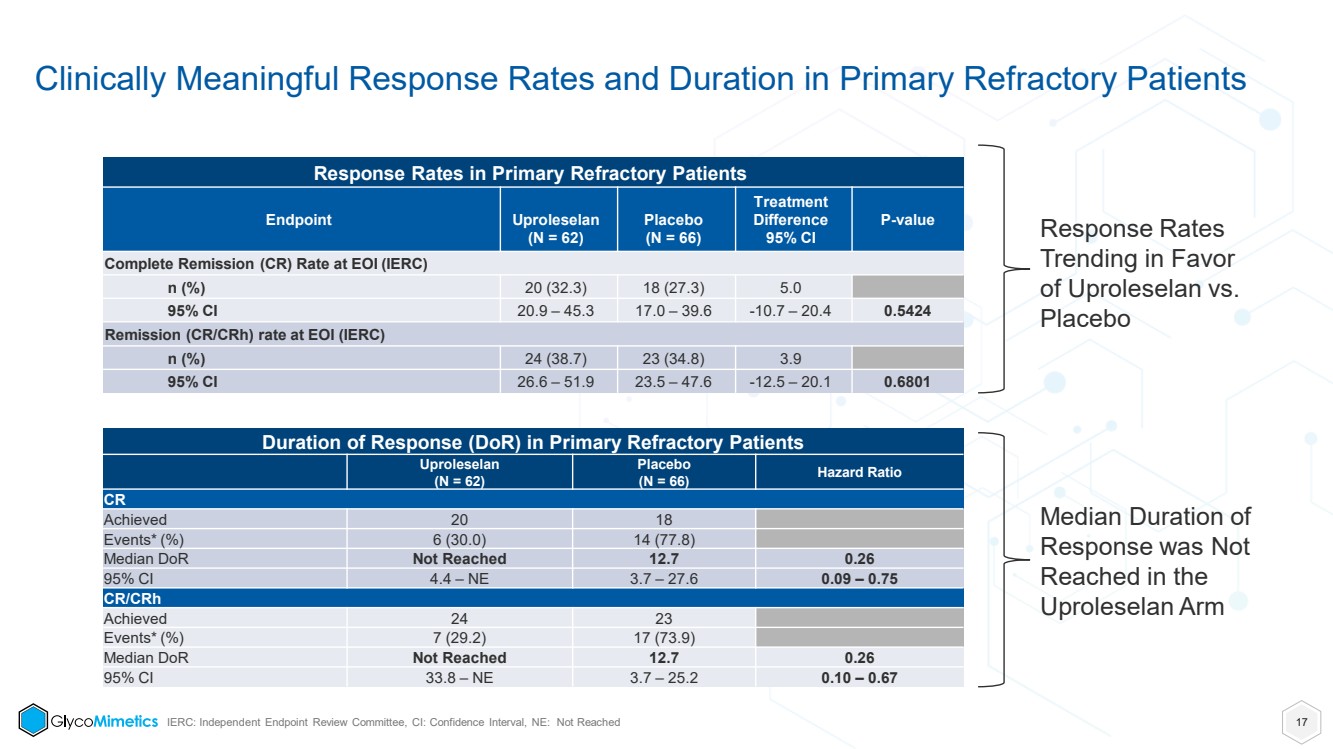
| 18 Primary Refractory Patients Achieve Greater mOS with Uproleselan Regardless of Backbone Chemotherapy; this Benefit was Particularly Significant in FAI plus Uproleselan MEC Uproleselan (N = 23) Placebo (N = 27) Median 12.2 8.0 95% CI 3.6 – NE 4.1 – 19.9 HR (CI) 0.68 (0.34 – 1.38) FAI Uproleselan (N = 39) Placebo (N = 39) Median 33.8 10.2 95% CI 8.1 – NE 8.6 – 19.7 HR (CI) 0.53 (0.30 – 0.93) MEC: Mitoxantrone, etoposide and cytarabine, FAI: Fludarabine, cytarabine and idarubicin, HR: Hazard Ratio, CI: Confidence Interval |
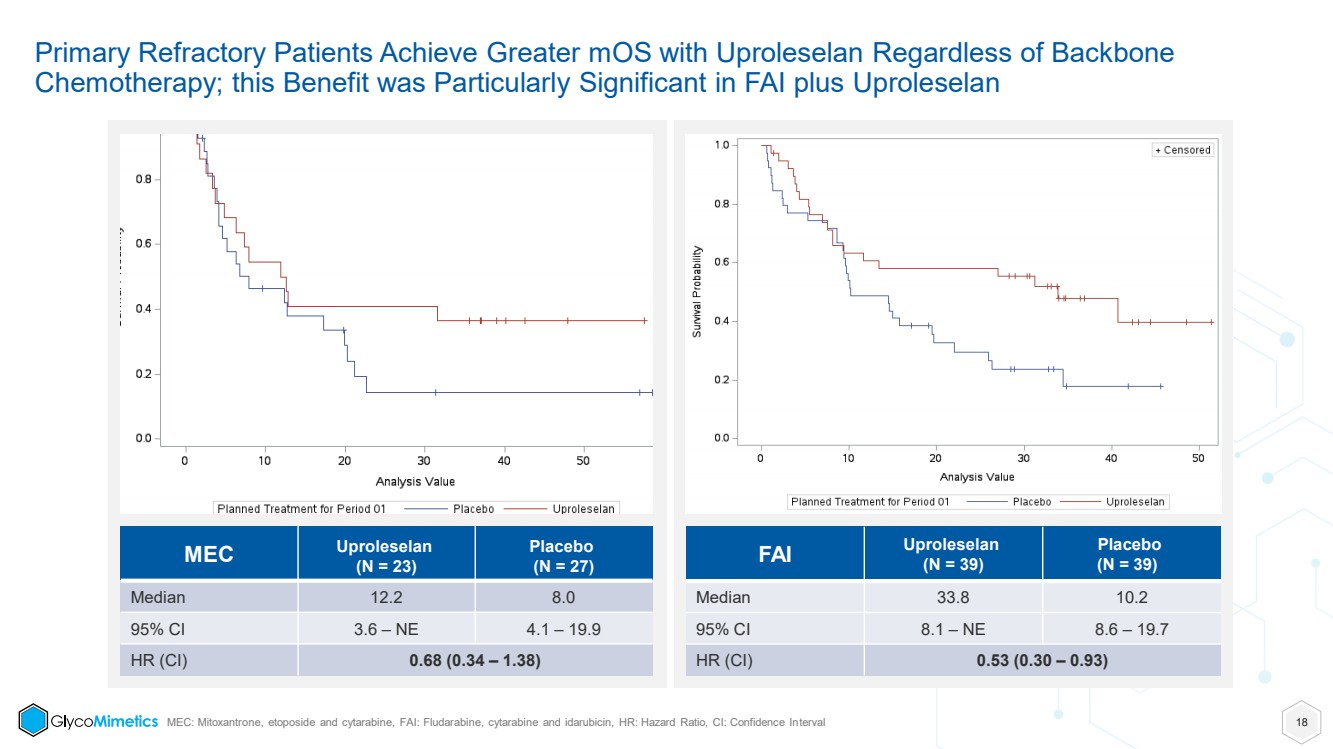
| 301 Trial Captured Significant Data Across a Range of Categories Informing Relationship of Factors Impacting Survival Outcomes 19 MRD- Status (N=144) Depth of Response and Transplant MEC: Mitoxantrone, etoposide and cytarabine, FAI: Fludarabine, cytarabine and idarubicin, MRD-: Measurable Residual Disease-Negative, AE: Adverse Event, TEAE: Treatment-Emergent Adverse Event |
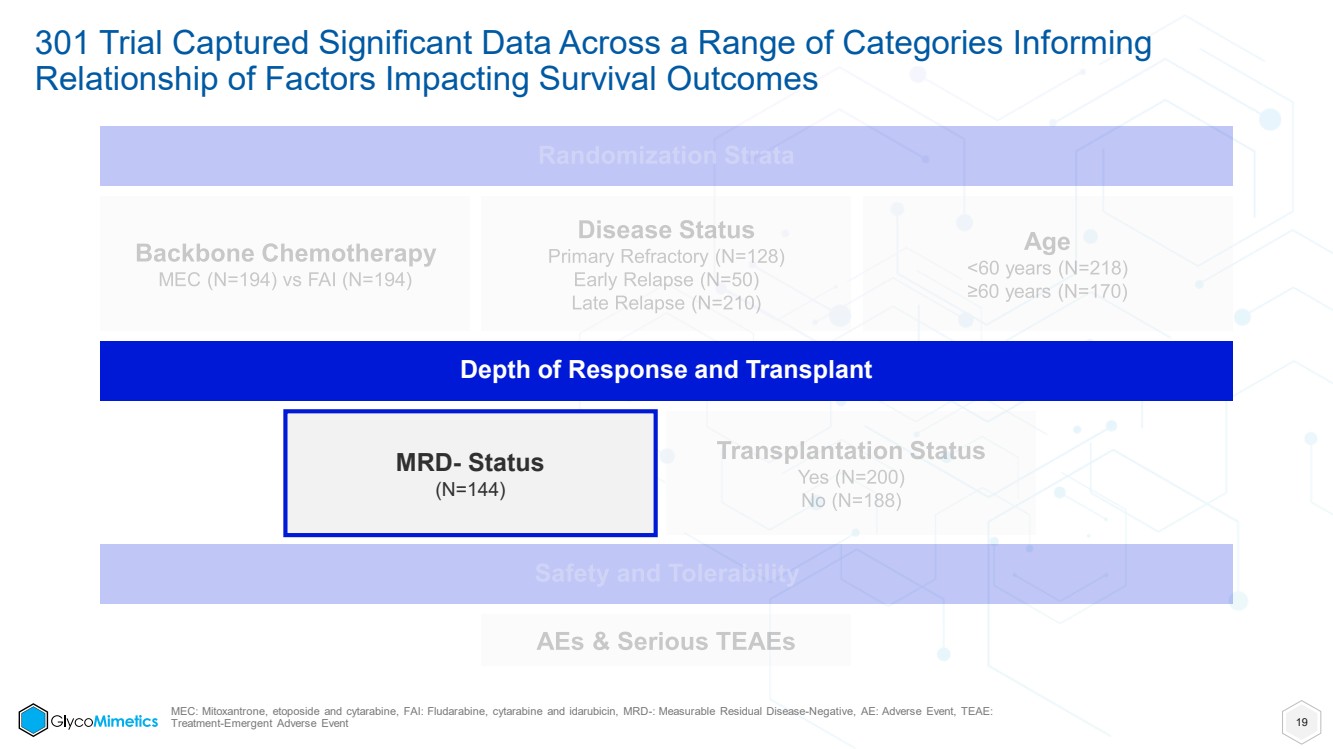
| 20 Patients Achieving MRD- Status at EOI had mOS > 2 years; mOS in Uproleselan Treated Patients Not Reached, Regardless of Backbone Chemotherapy Statistic Uproleselan (N = 76) Placebo (N = 68) Median Not Reached 24.1 95% CI 40.7 – NE 14.5 – NE HR (CI) 0.49 (0.28 – 0.84) NE: Not Reached, HR: Hazard Ratio, CI: Confidence Interval |
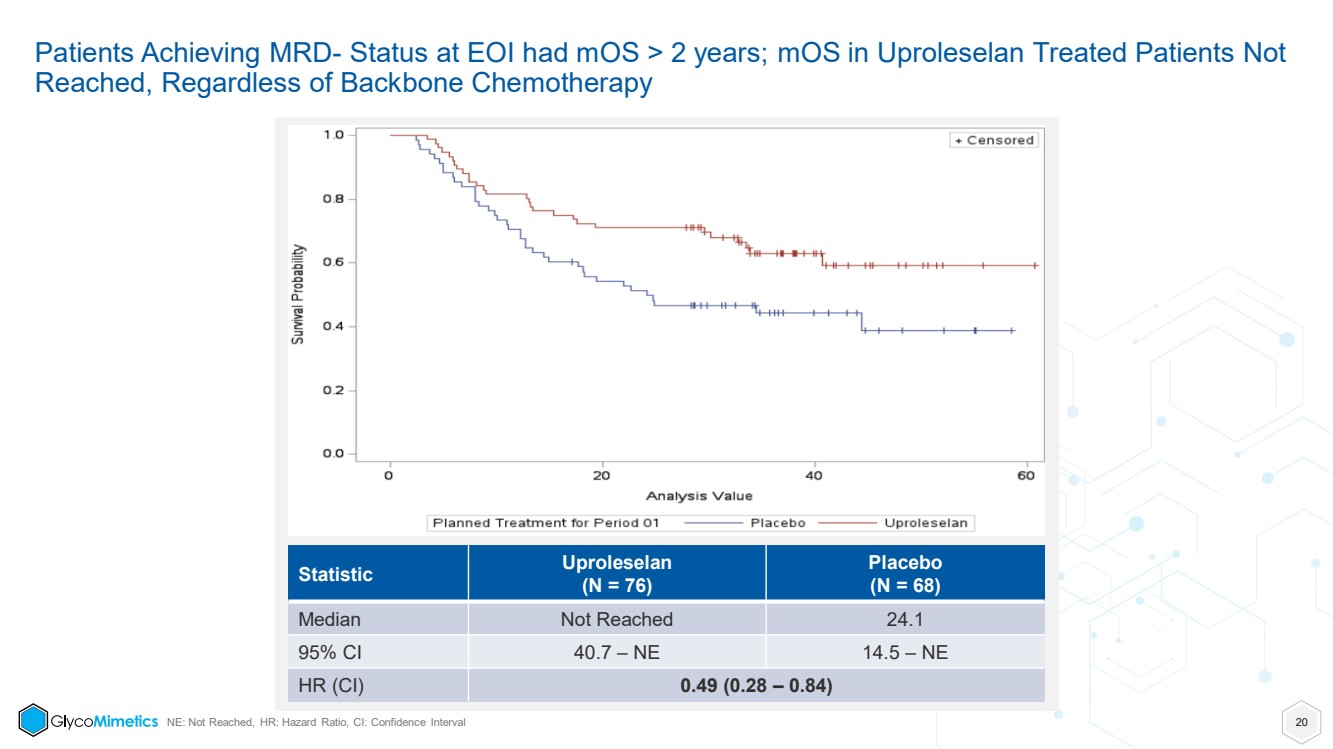
| 301 Trial Captured Significant Data Across a Range of Categories Informing Relationship of Factors Impacting Survival Outcomes 21 Depth of Response and Transplant Transplantation Status Yes (N=200) No (N=188) MEC: Mitoxantrone, etoposide and cytarabine, FAI: Fludarabine, cytarabine and idarubicin, MRD-: Measurable Residual Disease-Negative, AE: Adverse Event, TEAE: Treatment-Emergent Adverse Event |
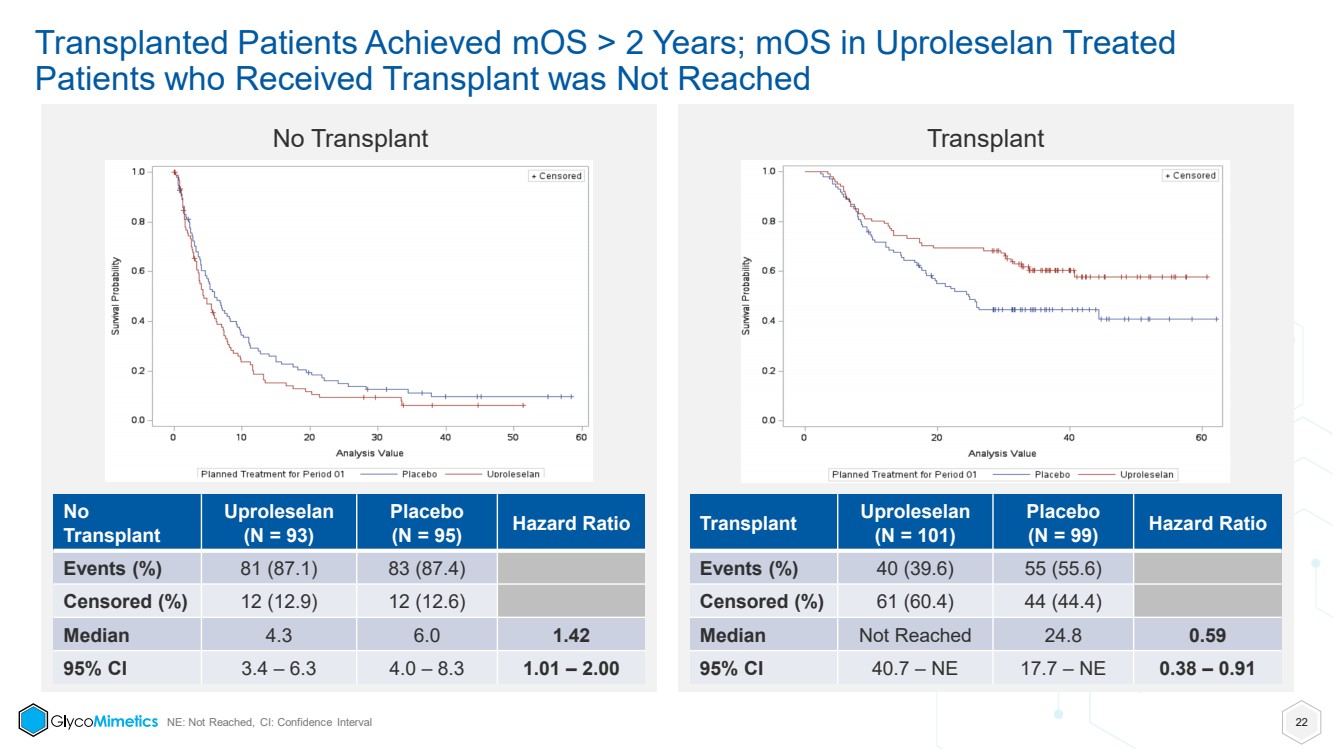
| 22 Transplanted Patients Achieved mOS > 2 Years; mOS in Uproleselan Treated Patients who Received Transplant was Not Reached Transplant Uproleselan (N = 101) Placebo (N = 99) Hazard Ratio Events (%) 40 (39.6) 55 (55.6) Censored (%) 61 (60.4) 44 (44.4) Median Not Reached 24.8 0.59 95% CI 40.7 – NE 17.7 – NE 0.38 – 0.91 No Transplant Uproleselan (N = 93) Placebo (N = 95) Hazard Ratio Events (%) 81 (87.1) 83 (87.4) Censored (%) 12 (12.9) 12 (12.6) Median 4.3 6.0 1.42 95% CI 3.4 – 6.3 4.0 – 8.3 1.01 – 2.00 No Transplant Transplant NE: Not Reached, CI: Confidence Interval |
| 23 mOS Not Reached in Uproleselan Treated Patients who Received Transplant, Regardless of Backbone Chemotherapy MEC Transplant Uproleselan (N = 47) Placebo (N = 46) Median (mo.) Not Reached 24.44 HR (95% CI) 0.52 (0.28 – 0.97) FAI Transplant Uproleselan (N = 54) Placebo (N = 53) Median (mo.) Not Reached 26.28 HR (95% CI) 0.66 (0.35 – 1.23) MEC: Mitoxantrone, etoposide and cytarabine, FAI: Fludarabine, cytarabine and idarubicin, HR: Hazard Ratio, CI: Confidence Interval |
| 301 Trial Captured Significant Data Across a Range of Categories Informing Relationship of Factors Impacting Survival Outcomes 24 AEs & Serious TEAEs Safety and Tolerability MEC: Mitoxantrone, etoposide and cytarabine, FAI: Fludarabine, cytarabine and idarubicin, MRD-: Measurable Residual Disease-Negative, AE: Adverse Event, TEAE: Treatment-Emergent Adverse Event |
| 301 Safety Observations Consistent with Known Safety Profile for Uproleselan • No known adverse DDI • No CYP inhibition/induction • No dose limiting toxicities • No hERG signal (of QT prolongation) • No Differentiation Syndrome 25 DDI: Drug-drug Interaction, TEAE: Treatment-Emergent Adverse Event, m: total number of events Adverse Events Consistent with Known Safety Profile for Backbone Chemotherapy Regimens Adverse Events Uproleselan n (%) [m] Placebo n (%) [m] Total n (%) [m] Serious TEAE 69 ( 35.9) [97] 66 (34.2) [97] 135 (35.1) [194] ≥ Grade 3 TEAE 165 ( 85.9) [775] 169 (87.6) [744] 334 (86.8) [1519] TEAE → Discontinuation 3 (1.6) [3] 2 (1.0) [2] 5 (1.3) [5] Deaths 13 (6.8) [13] 13 (6.7) [14] 26 (6.8) [27] Treatment-Emergent Adverse Events |
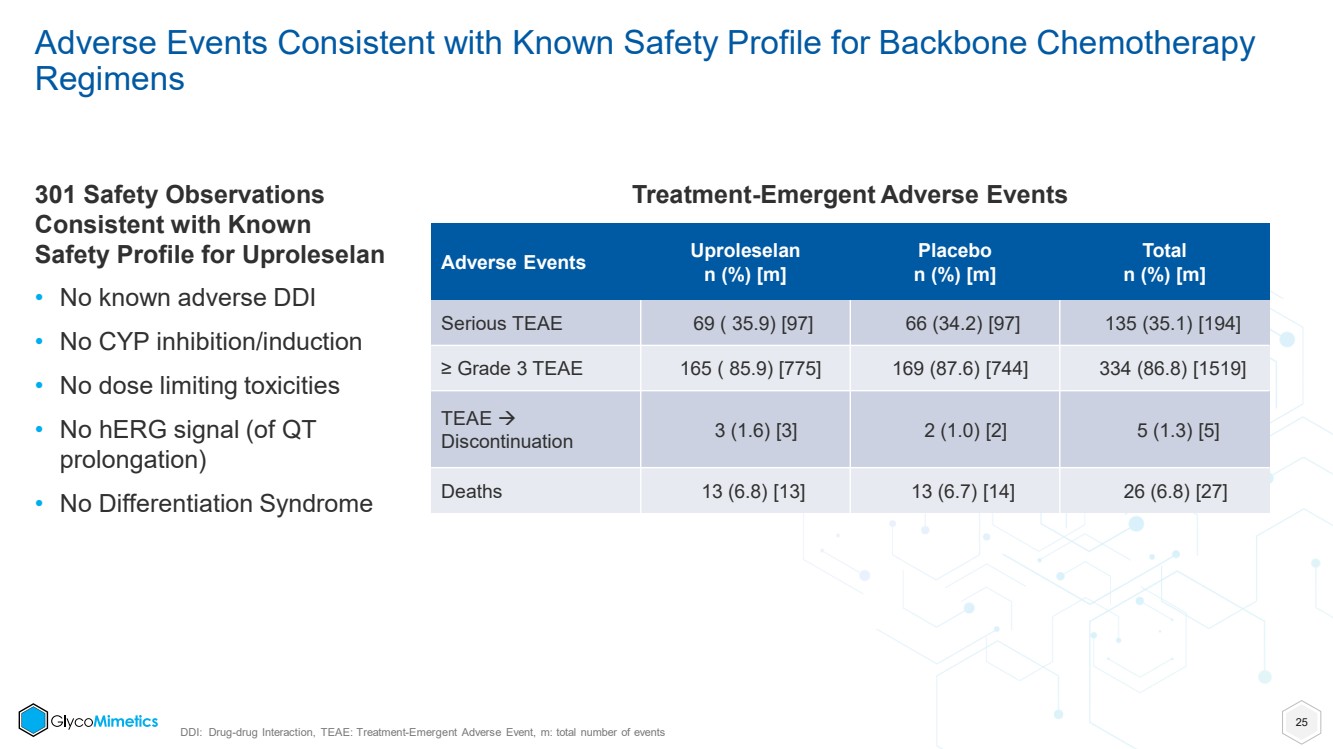
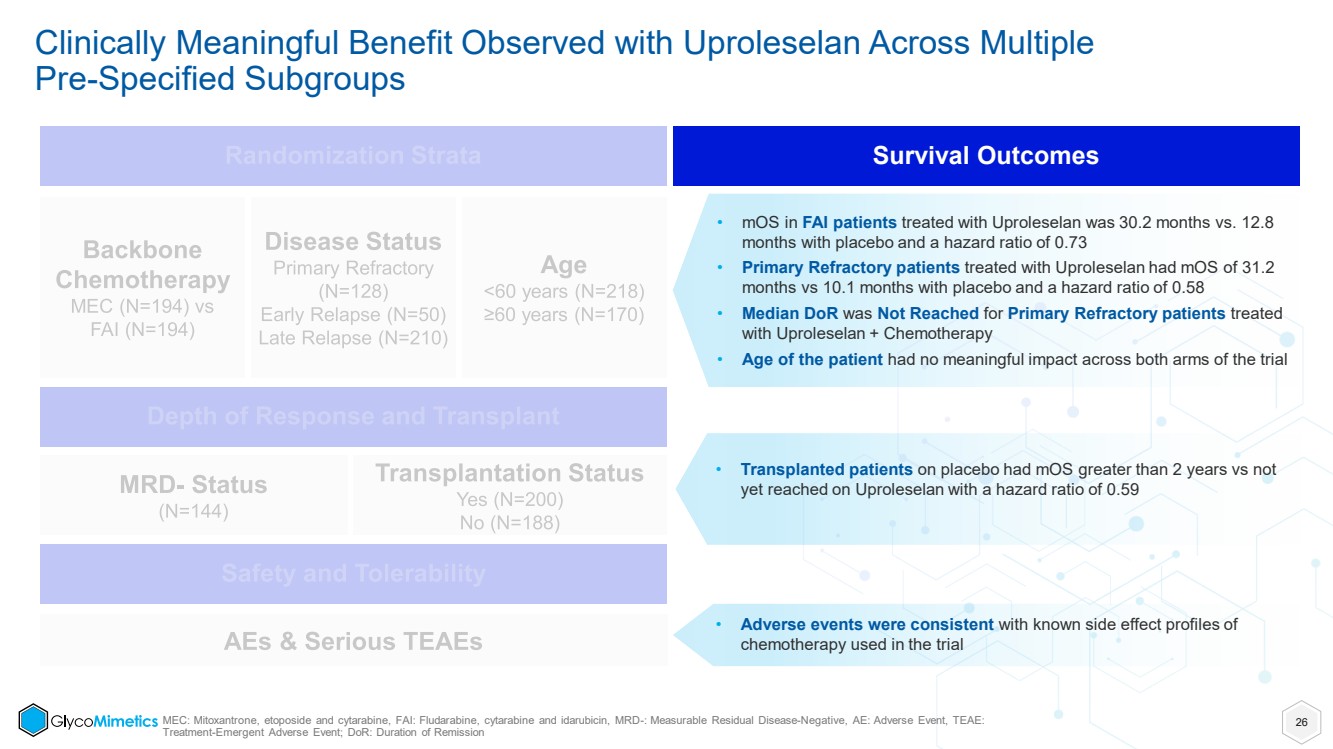
| 26 Clinically Meaningful Benefit Observed with Uproleselan Across Multiple Pre-Specified Subgroups Survival Outcomes • Transplanted patients on placebo had mOS greater than 2 years vs not yet reached on Uproleselan with a hazard ratio of 0.59 • mOS in FAI patients treated with Uproleselan was 30.2 months vs. 12.8 months with placebo and a hazard ratio of 0.73 • Primary Refractory patients treated with Uproleselan had mOS of 31.2 months vs 10.1 months with placebo and a hazard ratio of 0.58 • Median DoR was Not Reached for Primary Refractory patients treated with Uproleselan + Chemotherapy • Age of the patient had no meaningful impact across both arms of the trial • Adverse events were consistent with known side effect profiles of chemotherapy used in the trial MEC: Mitoxantrone, etoposide and cytarabine, FAI: Fludarabine, cytarabine and idarubicin, MRD-: Measurable Residual Disease-Negative, AE: Adverse Event, TEAE: Treatment-Emergent Adverse Event; DoR: Duration of Remission |
| Path Forward Harout Semerjian President and Chief Executive Officer |

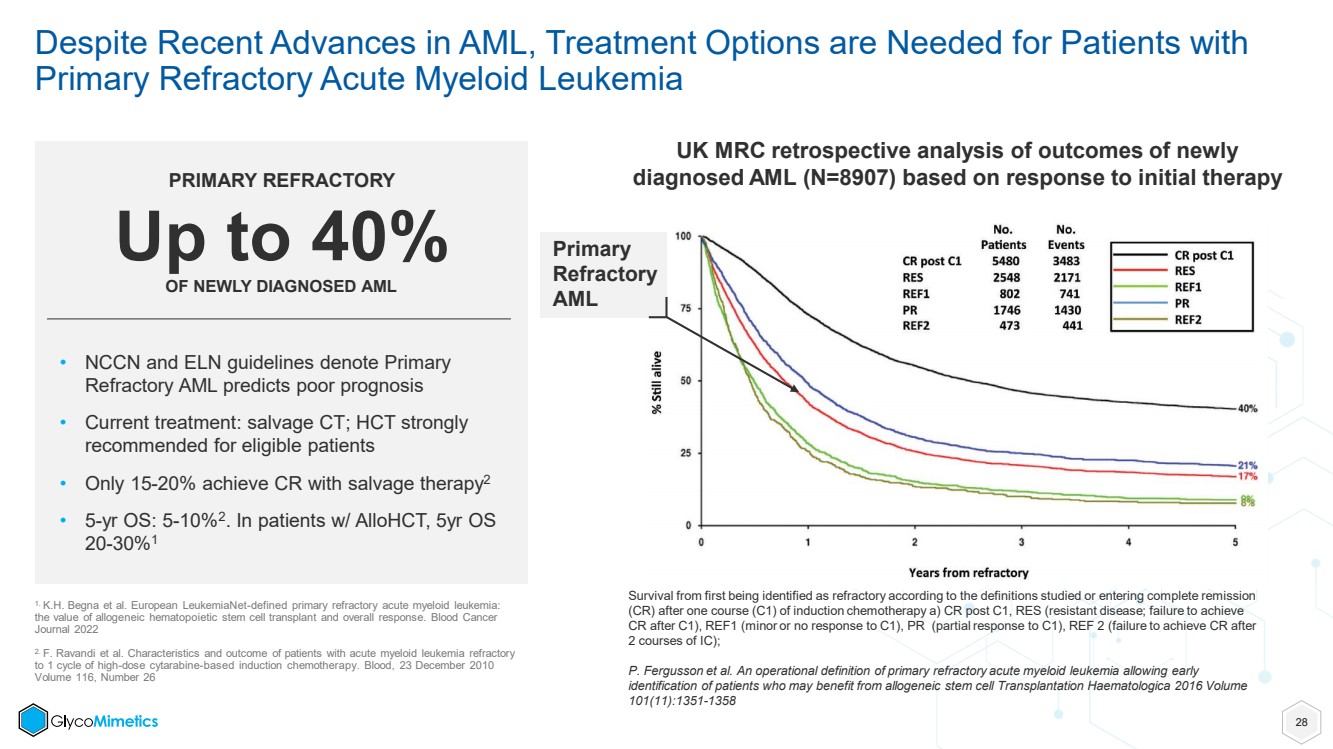
| • NCCN and ELN guidelines denote Primary Refractory AML predicts poor prognosis • Current treatment: salvage CT; HCT strongly recommended for eligible patients • Only 15-20% achieve CR with salvage therapy2 • 5-yr OS: 5-10%2 .. In patients w/ AlloHCT, 5yr OS 20-30%1 28 Despite Recent Advances in AML, Treatment Options are Needed for Patients with Primary Refractory Acute Myeloid Leukemia Up to 40% OF NEWLY DIAGNOSED AML PRIMARY REFRACTORY UK MRC retrospective analysis of outcomes of newly diagnosed AML (N=8907) based on response to initial therapy Survival from first being identified as refractory according to the definitions studied or entering complete remission (CR) after one course (C1) of induction chemotherapy a) CR post C1, RES (resistant disease; failure to achieve CR after C1), REF1 (minor or no response to C1), PR (partial response to C1), REF 2 (failure to achieve CR after 2 courses of IC); P. Fergusson et al. An operational definition of primary refractory acute myeloid leukemia allowing early identification of patients who may benefit from allogeneic stem cell Transplantation Haematologica 2016 Volume 101(11):1351-1358 Primary Refractory AML 1. K.H. Begna et al. European LeukemiaNet-defined primary refractory acute myeloid leukemia: the value of allogeneic hematopoietic stem cell transplant and overall response. Blood Cancer Journal 2022 2. F. Ravandi et al. Characteristics and outcome of patients with acute myeloid leukemia refractory to 1 cycle of high-dose cytarabine-based induction chemotherapy. Blood, 23 December 2010 Volume 116, Number 26 |
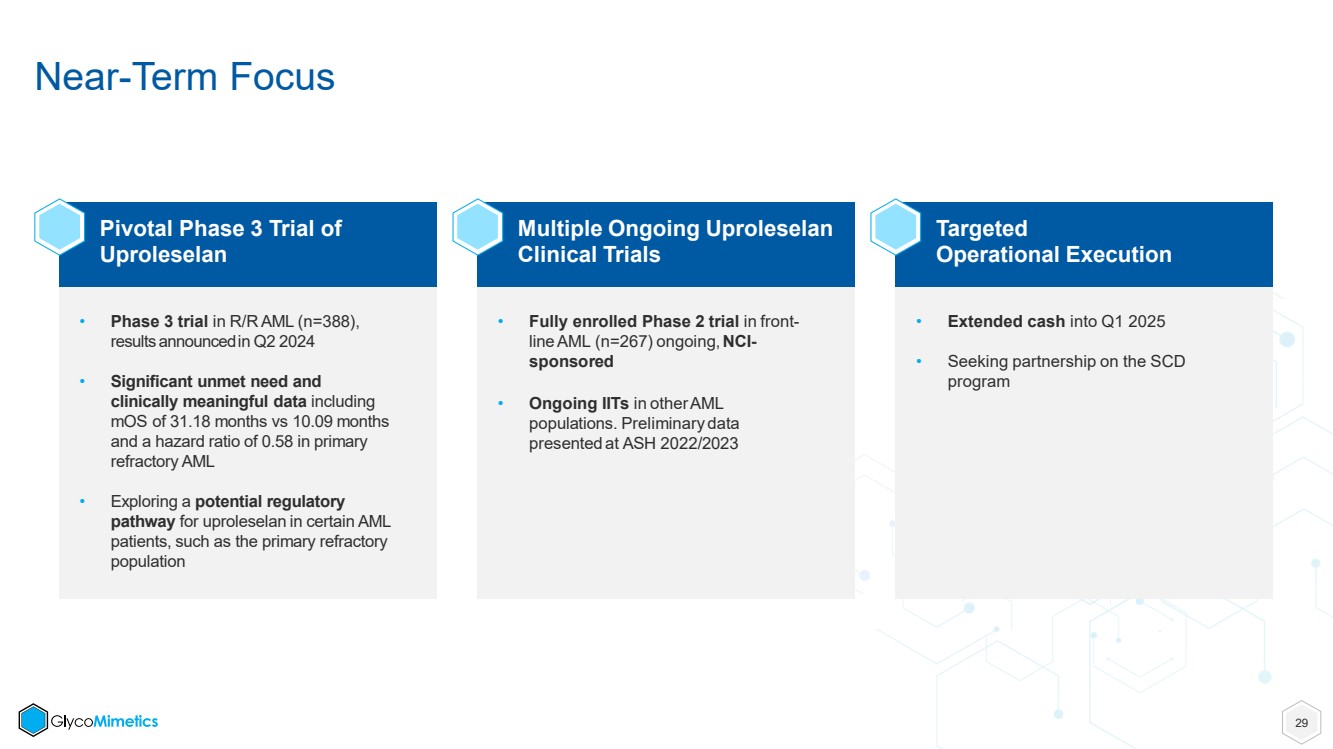
| Near-Term Focus 29 • Phase 3 trial in R/R AML (n=388), results announcedin Q2 2024 • Significant unmet need and clinically meaningful data including mOS of 31.18 months vs 10.09 months and a hazard ratio of 0.58 in primary refractory AML • Exploring a potential regulatory pathway for uproleselan in certain AML patients, such as the primary refractory population Pivotal Phase 3 Trial of Uproleselan • Fully enrolled Phase 2 trial in front-line AML (n=267) ongoing,NCI-sponsored • Ongoing IITs in otherAML populations. Preliminarydata presented at ASH 2022/2023 Multiple Ongoing Uproleselan Clinical Trials • Extended cash into Q1 2025 • Seeking partnership on the SCD program Targeted Operational Execution |
| Thank you. Questions? June 2024 | NASDAQ: GLYC |

| Additional Trial Data June 2024 | NASDAQ: GLYC |
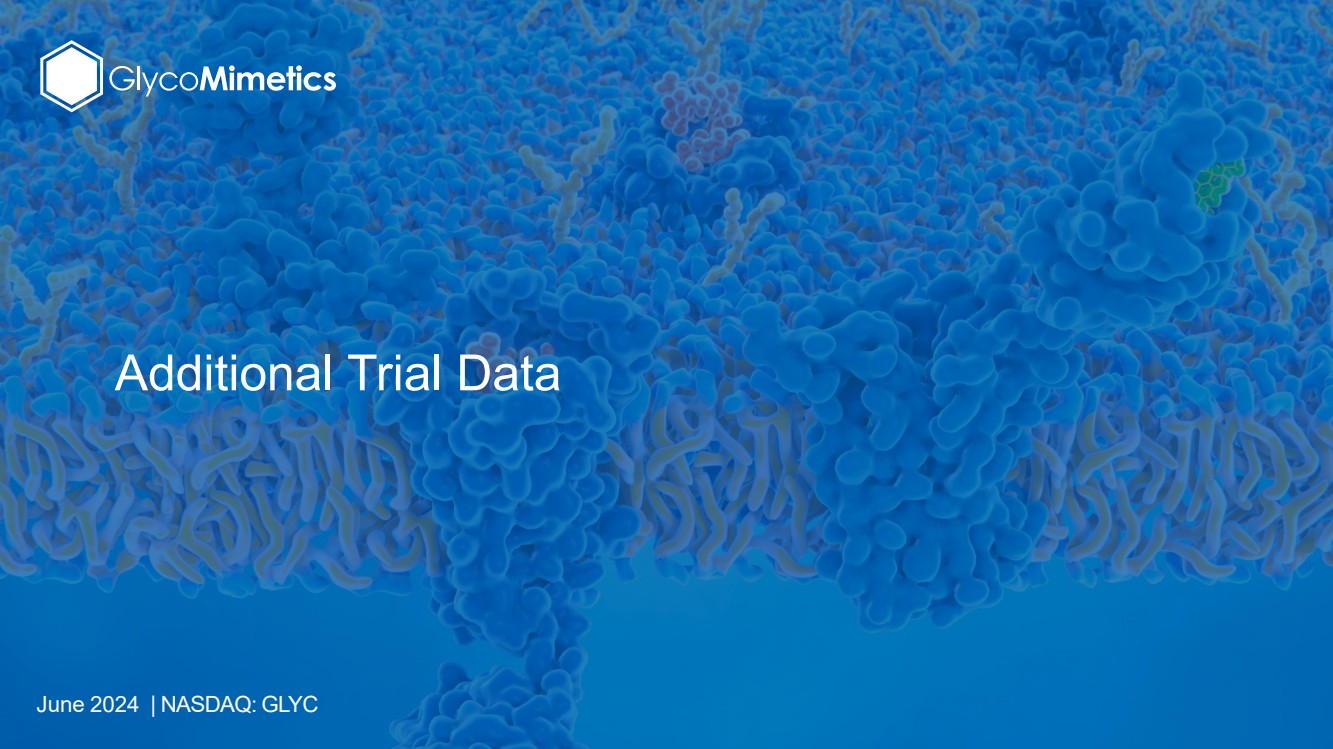
| CRc: Complete Remission Composite, ELN: European Leukemia Net, CI: Confidence Interval, MRD: Measurable Residual Disease. 32 Uproleselan Survival Results Vary by Stratification Factors And Other Subgroups Overall Survival Subgroups Hazard Ratio (95% CI) Sex • Female 0.93 (0.63 - 1.36) • Male 0.95 (0.67 - 1.36) BL ELN Risk • Favorable 0.72 (0.38 - 1.38) • Intermediate 0.71 (0.39 - 1.29) • Adverse 1.24 (0.85 - 1.82) Overall Survival Subgroups Hazard Ratio (95% CI) Disease Response • CR 0.92 (0.54 - 1.59) • CR/CRh 1.01 (0.64 – 1.60) • CR/CRi 0.86 (0.52 - 1.41) • CRc 0.94 (0.62 - 1.45) • CRc/MLFS/PR 0.80 (0.55 - 1.17) • No response 1.01 (0.70 - 1.46) CRc and MRD • Negative 0.63 (0.34 - 1.16) • Positive 1.66 (0.67 - 4.11) |
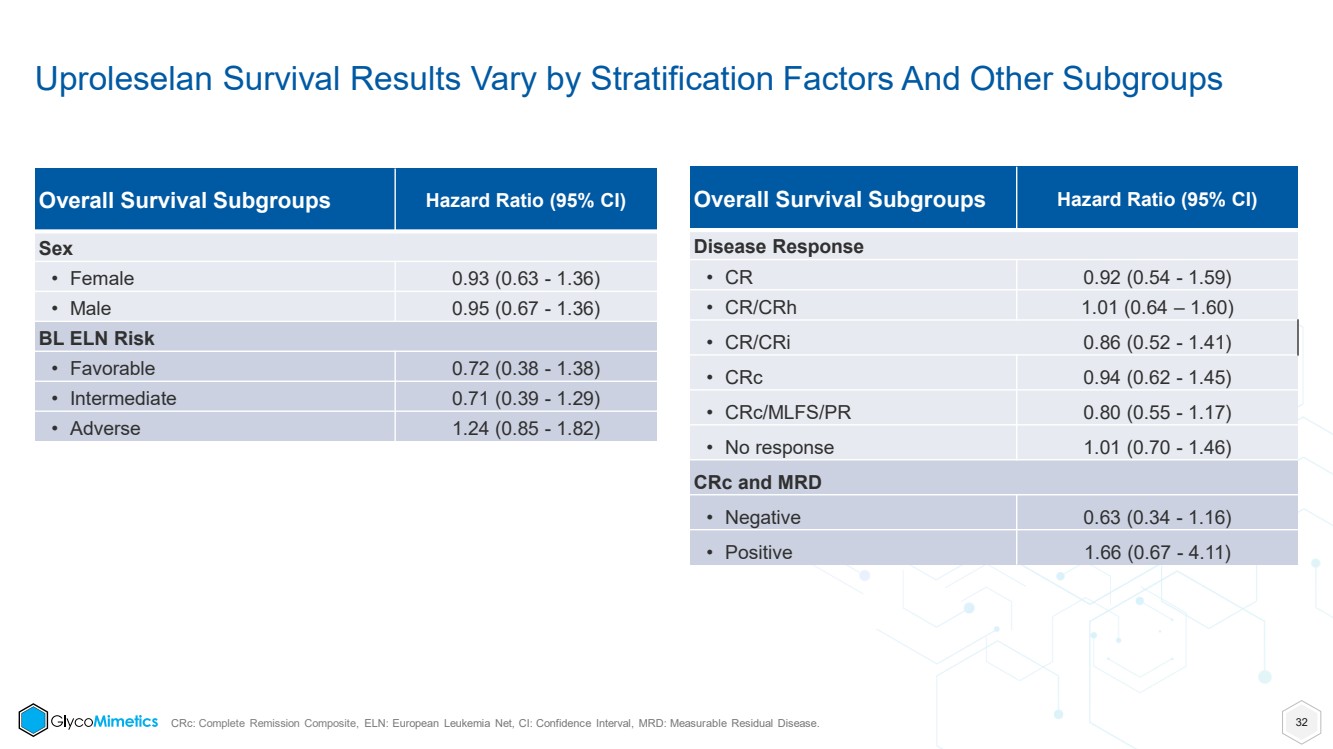
| EOI: End of Induction, IERC: Independent Endpoint Review Committee, MRD-: Measurable Residual Disease-Negative 33 Secondary Endpoints and CRc MRD- Trended Favorably for Uproleselan vs. Placebo Additional Endpoints Uproleselan N = 194 n (%) Placebo N = 194 n (%) Treatment Difference P-value Subsequent AML Rx in Non-Responders (n=80 / n=78) 32 (40.0) 36 (46.2) -6.2 0.3865 MRD-MRD- CR/CRi, EOI / IERC (n=77 / n=80) 50 (64.9) 47 (58.8) MRD- CR/CRh/CRi, EOI / IERC (n=97 / n=95) 64 (66.0) 56 (58.9) MRD- CR/CRh/CRi/MLFS/PR, EOI / IERC (n=114 / n=116) 70 (61.4) 64 (55.2) |
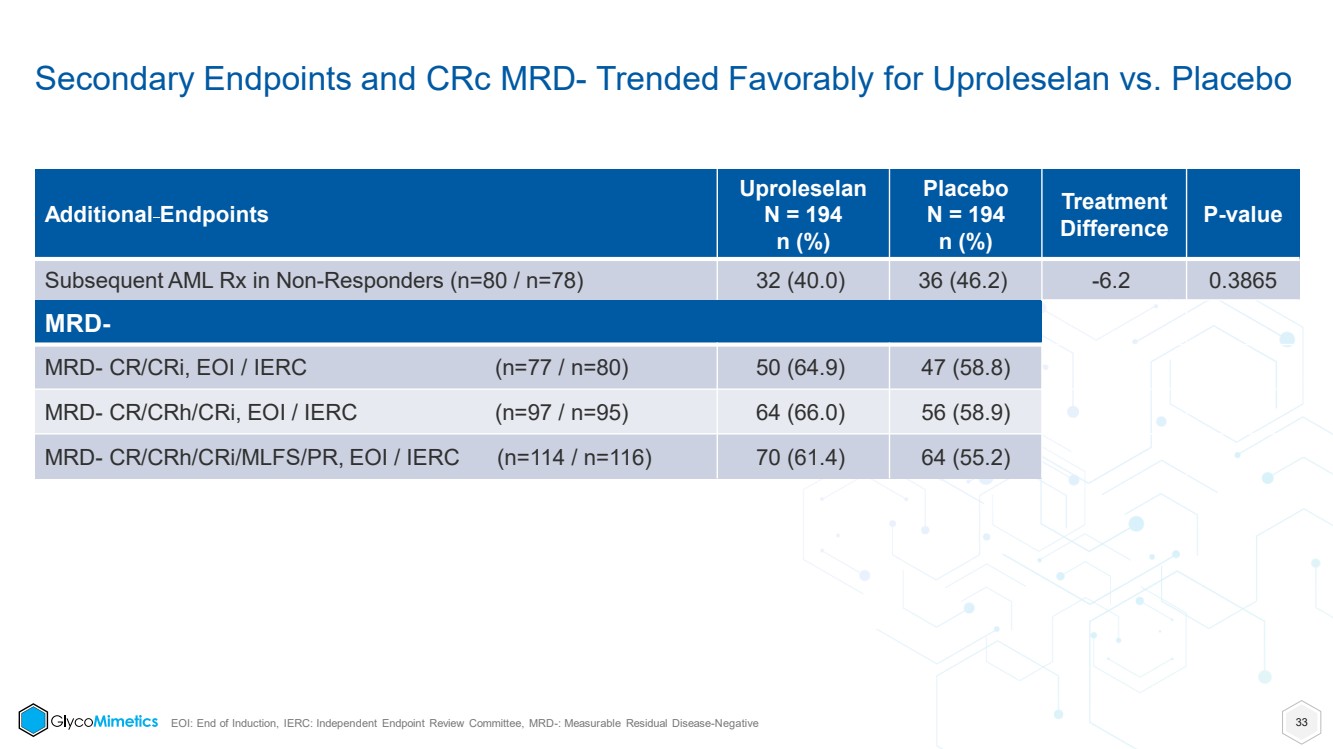
| 34 Primary Refractory Patients Treated with Uproleselan had Significantly Greater Duration of Remission versus Placebo Primary Refractory Uproleselan N = 62 Placebo N = 66 Hazard Ratio CR/CRh/CRi Achieved 26 29 Events* (%) 8 (30.8) 21 (72.4) Median DoR Not Reached 12.7 0.28 95% CI 33.8 – NE 6.1 – 16.0 0.12 – 0.68 * Event defined as loss of achieved response DoR: Duration of Remission, CI: Confidence Interval |
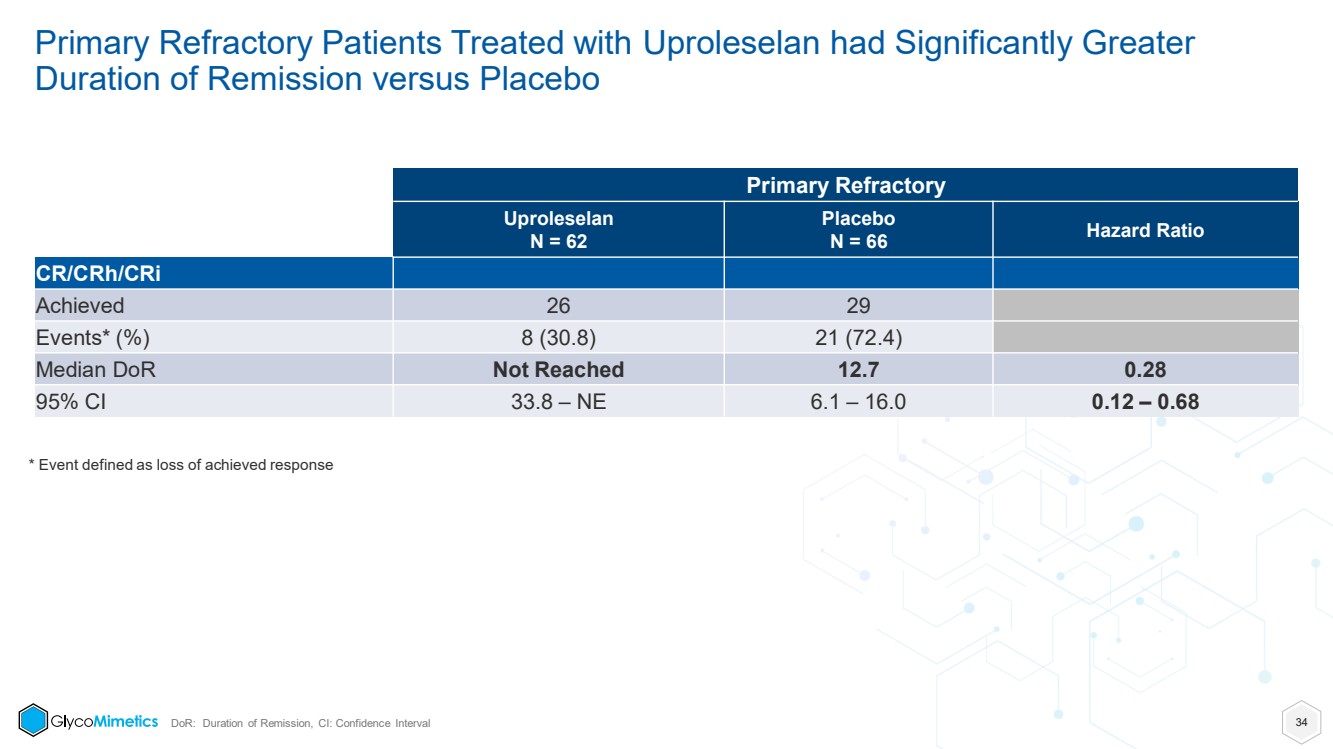
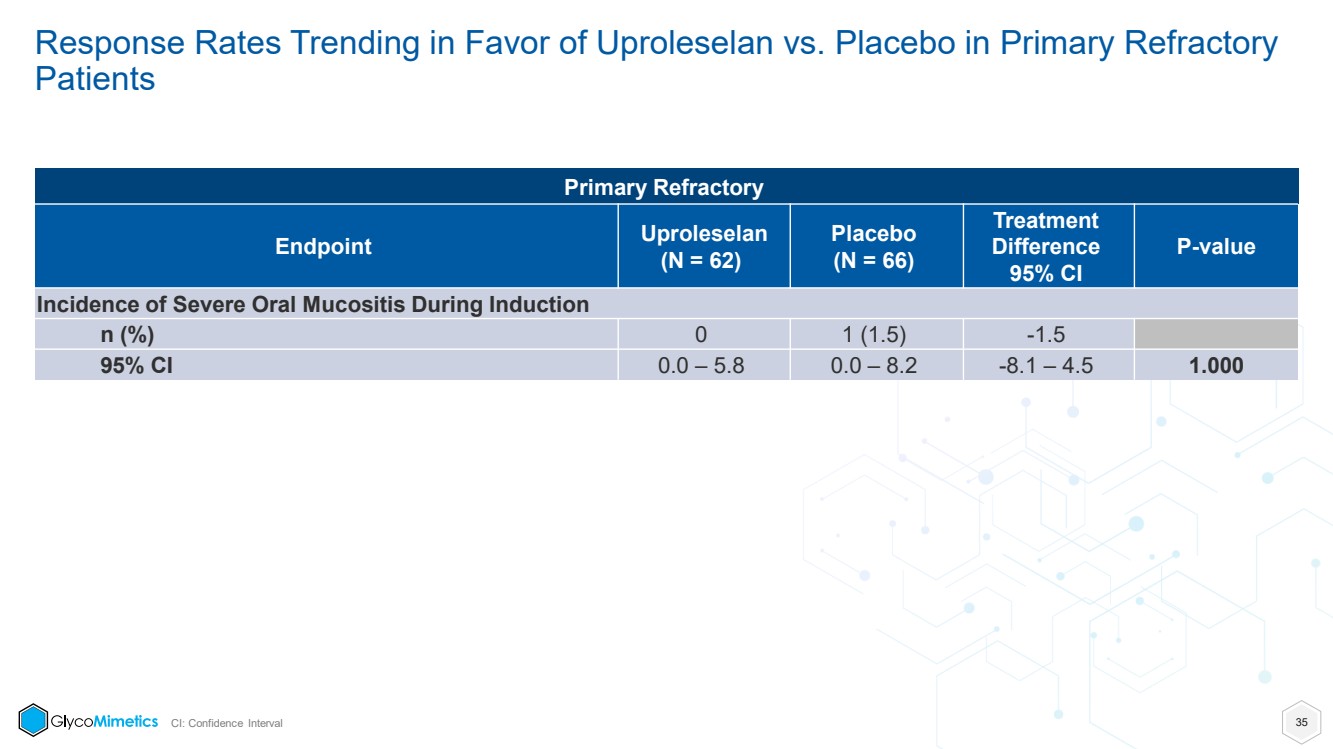
| CI: Confidence Interval 35 Response Rates Trending in Favor of Uproleselan vs. Placebo in Primary Refractory Patients Primary Refractory Endpoint Uproleselan (N = 62) Placebo (N = 66) Treatment Difference 95% CI P-value Incidence of Severe Oral Mucositis During Induction n (%) 0 1 (1.5) -1.5 95% CI 0.0 – 5.8 0.0 – 8.2 -8.1 – 4.5 1.000 |