CGTX 8-K
Cognition Therapeutics Inc (CGTX)
UNITED
STATES
SECURITIES AND EXCHANGE COMMISSION
Washington, DC 20549
FORM
CURRENT REPORT
Pursuant to Section 13 or 15(d)
of the Securities Exchange Act of 1934
Date of Report (Date of earliest event reported):
(Exact name of registrant as specified in its charter)
| (State
or other jurisdiction of incorporation or organization) |
(Primary Standard Industrial Classification Code Number) |
(I.R.S.
Employer Identification No.) |
| (Address of principal executive offices) | (Zip Code) |
Registrant’s telephone number, including
area code: (
Not
Applicable
(Former name or former address, if changed since last report)
Check the appropriate box below if the Form 8-K filing is intended to simultaneously satisfy the filing obligation of the registrant under any of the following provisions (see General Instruction A.2. below):
| Written communications pursuant to Rule 425 under the Securities Act (17 CFR 230.425) | |
|
| |
| Soliciting material pursuant to Rule 14a-12 under the Exchange Act (17 CFR 240.14a-12) | |
| Pre-commencement communications pursuant to Rule 14d-2(b) under the Exchange Act (17 CFR 240.14d-2(b)) | |
| Pre-commencement communications pursuant to Rule 13e-4(c) under the Exchange Act (17 CFR 240.13e-4(c)) |
Securities registered pursuant to Section 12(b) of the Act:
| Title of Each Class | Trading Symbol | Name
of Exchange on Which Registered | ||
Indicate by check mark whether the registrant is an emerging growth company as defined in Rule 405 of the Securities Act of 1933 (§230.405 of this chapter) or Rule 12b-2 of the Securities Exchange Act of 1934 (§240.12b-2 of this chapter).
Emerging
growth company
If
an emerging growth company, indicate by check mark if the registrant has elected not to use the extended transition period for complying
with any new or revised financial accounting standards provided pursuant to Section 13(a) of the Exchange Act.
Item 7.01 Regulation FD Disclosure.
Attached as Exhibit 99.1 and furnished for purposes of Regulation FD is a presentation that Cognition Therapeutics, Inc. may use from time to time in presentations or discussions with investors, analysts, and other parties.
The information in this Item 7.01 (including Exhibit 99.1) is being furnished solely to satisfy the requirements of Regulation FD and shall not be deemed to be “filed” for the purposes of Section 18 of the Securities Exchange Act of 1934, as amended (the “Exchange Act”), or otherwise subject to the liabilities of that Section, nor shall it be deemed to be incorporated by reference in any filing under the Securities Act of 1933, as amended, or the Exchange Act.
Item 9.01 Financial Statements and Exhibits.
(d) Exhibits
The following exhibits are being furnished herewith:
| Exhibit No. |
Document | |
| 99.1 | Investor presentation of Cognition Therapeutics, Inc. | |
| 104 | Cover Page Interactive Data File (embedded within the Inline XBRL document) |
SIGNATURES
Pursuant to the requirements of the Securities Exchange Act of 1934, the registrant has duly caused this report to be signed on its behalf by the undersigned hereunto duly authorized.
| COGNITION THERAPEUTICS, INC. | ||
| Date: October 1, 2024 | ||
| By: | /s/ Lisa Ricciardi | |
| Name: | Lisa Ricciardi | |
| Title: | President and Chief Executive Officer | |
Exhibit 99.1
| Targeting Amyloid Beta Oligomers: A Disruptive Approach to the Treatment of CNS Disorders September 2024 |
| 2 FORWARD-LOOKING STATEMENTS This presentation contains forward-looking statements within the meaning of The Private Securities Litigation Reform Act of 1995. All statements contained in this presentation, other than statements of historical facts or statements that relate to present facts or current conditions, including but not limited to, product candidates, including CT1812, and any expected or implied benefits or results, including that initial clinical results observed with respect to CT1812 will be replicated in later trials, and our clinical development plans, including statements regarding our clinical studies of CT1812 in animal models and any analyses of the results therefrom, and our expected cash runway, are forward-looking statements. These statements, including statements related to the timing and expected results of our clinical trials, involve known and unknown risks, uncertainties and other important factors that may cause our actual results, performance, or achievements to be materially different from any future results, performance, or achievements expressed or implied by the forward-looking statements. In some cases, you can identify forward-looking statements by terms such as “may,” “might,” “will,” “should,” “expect,” “plan,” “aim,” “seek,” “anticipate,” “could,” “intend,” “target,” “project,” “contemplate,” “believe,” “estimate,” “predict,” “forecast,” “potential” or “continue” or the negative of these terms or other similar expressions. We have based these forward-looking statements largely on our current expectations and projections about future events and financial trends that we believe may affect our business, financial condition, and results of operations. These forward-looking statements speak only as of the date of this presentation and are subject to a number of risks, uncertainties and assumptions, some of which cannot be predicted or quantified and some of which are beyond our control. Factors that may cause actual results to differ materially from current expectations include, but are not limited to: our ability to successfully advance our current and future product candidates through development activities, preclinical studies and clinical trials and costs related thereto; uncertainties inherent in the results of preliminary data, preclinical studies and earlier-stage clinical trials being predictive of the results of early or later-stage clinical trials; the timing, scope and likelihood of regulatory filings and approvals, including regulatory approval of our product candidates; competition, our ability to secure new (and retain existing) grant funding, our ability to grow and manage growth, maintain relationships with suppliers and retain our management and key employees; changes in applicable laws or regulations; the possibility that the we may be adversely affected by other economic, business or competitive factors, including ongoing economic uncertainty; our estimates of expenses and profitability; the evolution of the markets in which we compete; our ability to implement our strategic initiatives and continue to innovate our existing products; our ability to defend our intellectual property; impacts of ongoing global and regional conflicts; the impact of the COVID-19 pandemic on our business, supply chain and labor force; and the risks and uncertainties described more fully in the “Risk Factors” section of our annual and quarterly reports filed with the Securities & Exchange Commission that are available on www.sec.gov. These risks are not exhaustive, and we face both known and unknown risks. You should not rely on these forward-looking statements as predictions of future events. The events and circumstances reflected in our forward-looking statements may not be achieved or occur, and actual results could differ materially from those projected in the forward-looking statements. Moreover, we operate in a dynamic industry and economy. New risk factors and uncertainties may emerge from time to time, and it is not possible for management to predict all risk factors and uncertainties that we may face. Except as required by applicable law, we do not plan to publicly update or revise any forward-looking statements contained herein, whether as a result of any new information, future events, changed circumstances or otherwise. TRADEMARKS This presentation may contain trademarks, service marks, trade names and copyrights of other companies, which are the property of their respective owners. Solely for convenience, some of the trademarks, service marks, trade names and copyrights referred to in this presentation may be listed without the TM, SM © or ® symbols, but we will assert, to the fullest extent under applicable law, the rights of the applicable owners, if any, to these trademarks, service marks, trade names and copyrights. MARKET & INDUSTRY DATA Projections, estimates, industry data and information contained in this presentation, including the size of and growth in key end markets, are based on information from third-party sources and management estimates. Although we believe that these third party-sources are reliable, we cannot guarantee the accuracy or completeness of these sources. Our management’s estimates are derived from third-party sources, publicly available information, our knowledge of our industry and assumptions based on such information and knowledge. Our management’s estimates have not been verified by any independent source. All of the projections, estimates, market data and industry information used in this presentation involve a number of assumptions and limitations, and you are cautioned not to give undue weight to such information. In addition, projections, estimates and assumptions relating to us and our industry's future performance are necessarily subject to a high degree of uncertainty and risk due to a variety of factors, including, but not limited to, those described above, that could cause future performance to differ materially from our expressed projections, estimates and assumptions or those provided by third parties. Forward-looking Statements |
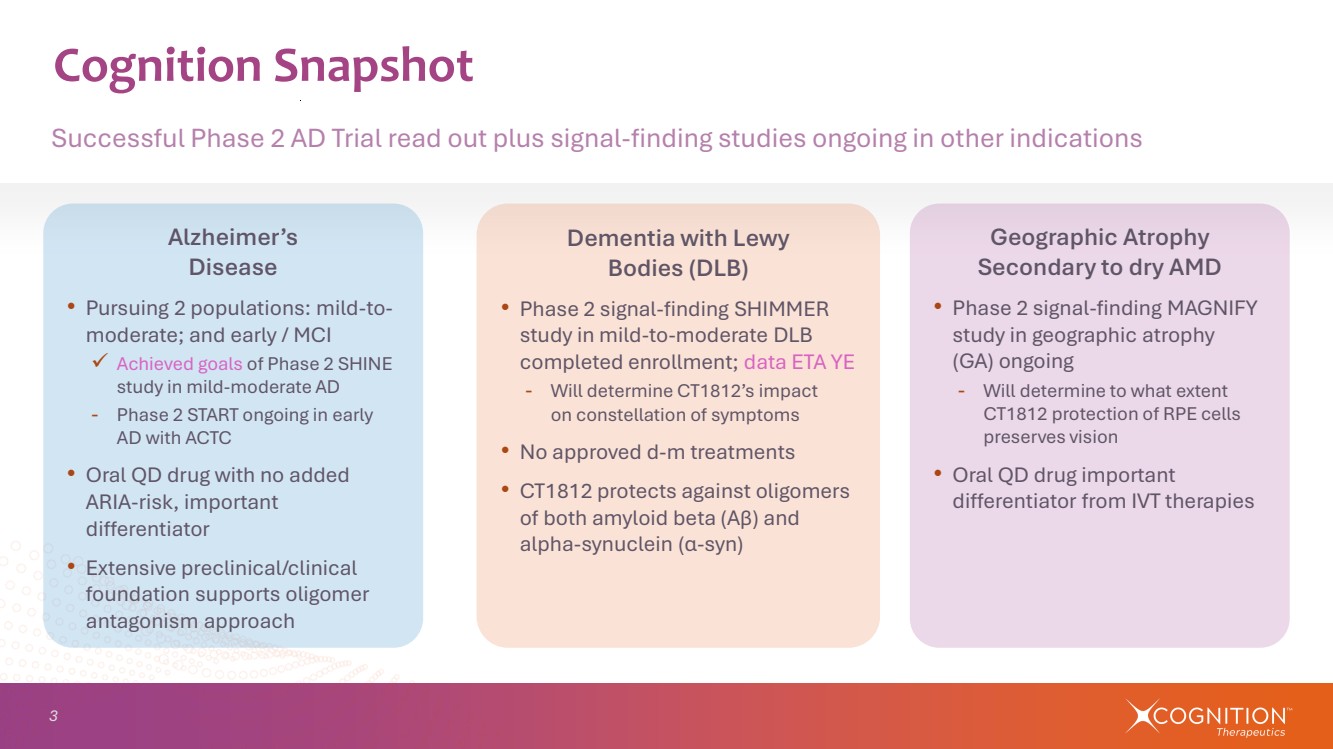
| 3 Cognition Snapshot Successful Phase 2 AD Trial read out plus signal-finding studies ongoing in other indications Alzheimer’s Disease • Pursuing 2 populations: mild-to-moderate; and early / MCI ✓ Achieved goals of Phase 2 SHINE study in mild-moderate AD - Phase 2 START ongoing in early AD with ACTC • Oral QD drug with no added ARIA-risk, important differentiator • Extensive preclinical/clinical foundation supports oligomer antagonism approach Geographic Atrophy Secondary to dry AMD • Phase 2 signal-finding MAGNIFY study in geographic atrophy (GA) ongoing - Will determine to what extent CT1812 protection of RPE cells preserves vision • Oral QD drug important differentiator from IVT therapies Dementia with Lewy Bodies (DLB) • Phase 2 signal-finding SHIMMER study in mild-to-moderate DLB completed enrollment; data ETA YE - Will determine CT1812’s impact on constellation of symptoms • No approved d-m treatments • CT1812 protects against oligomers of both amyloid beta (Aβ) and alpha-synuclein (α-syn) |
| SHINE Study in Mild-to-Moderate Alzheimer’s disease Alzheimer’s Disease |
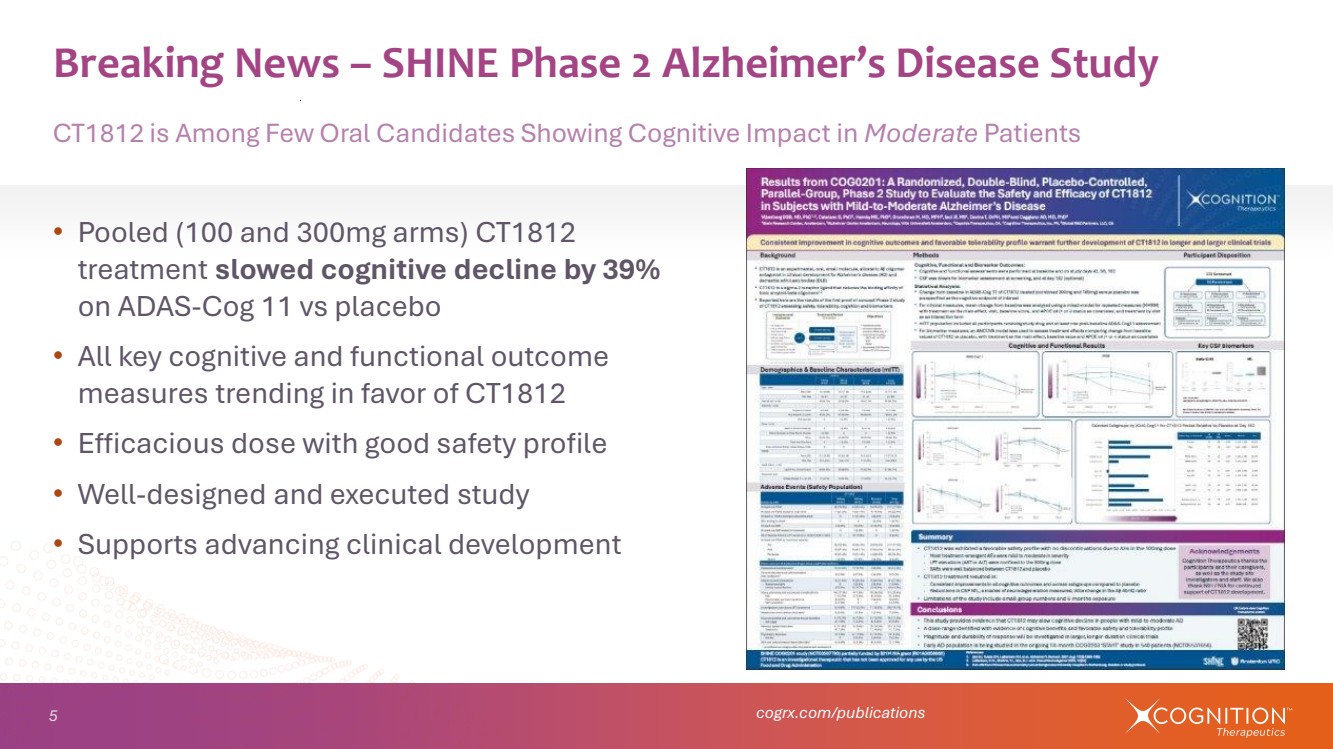
| 5 • Pooled (100 and 300mg arms) CT1812 treatment slowed cognitive decline by 39% on ADAS-Cog 11 vs placebo • All key cognitive and functional outcome measures trending in favor of CT1812 • Efficacious dose with good safety profile • Well-designed and executed study • Supports advancing clinical development Breaking News – SHINE Phase 2 Alzheimer’s Disease Study CT1812 is Among Few Oral Candidates Showing Cognitive Impact in Moderate Patients cogrx.com/publications |
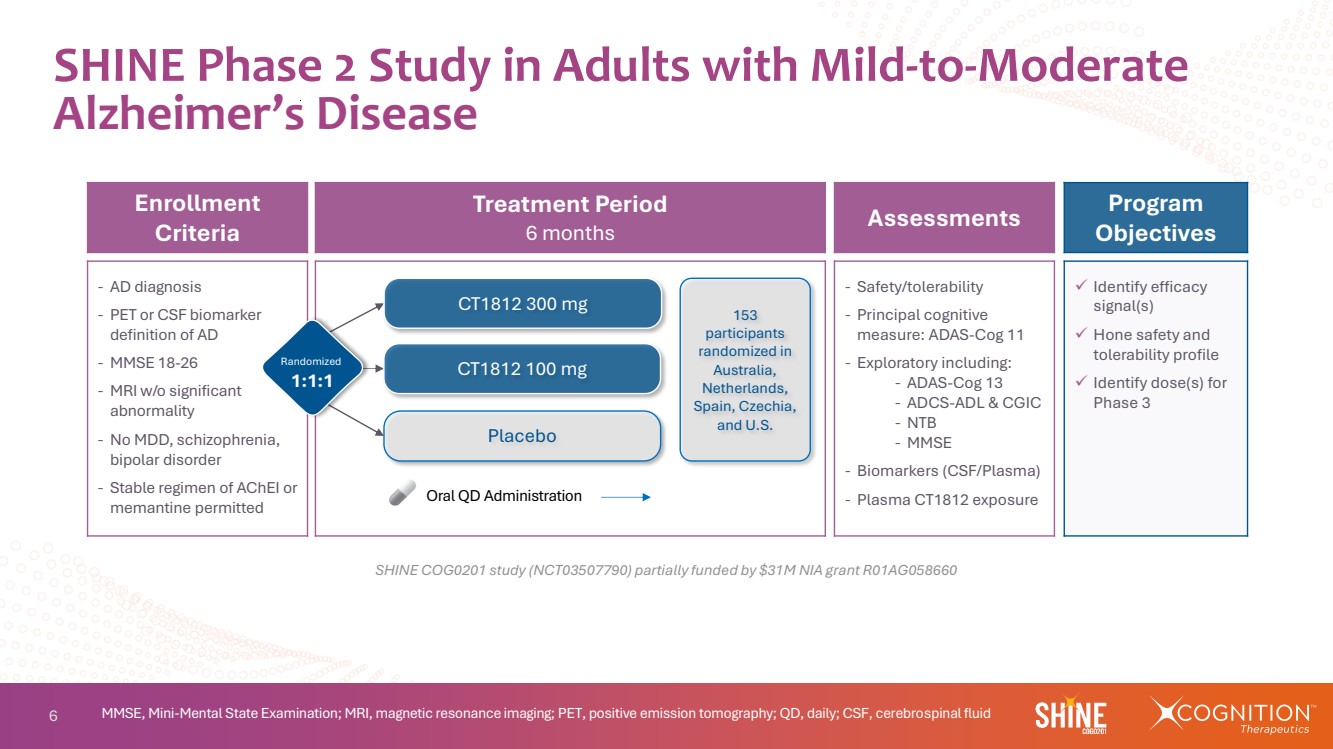
| 6 SHINE Phase 2 Study in Adults with Mild-to-Moderate Alzheimer’s Disease SHINE COG0201 study (NCT03507790) partially funded by $31M NIA grant R01AG058660 Enrollment Criteria Treatment Period 6 months Assessments Program Objectives ‐ AD diagnosis ‐ PET or CSF biomarker definition of AD ‐ MMSE 18-26 ‐ MRI w/o significant abnormality ‐ No MDD, schizophrenia, bipolar disorder ‐ Stable regimen of AChEI or memantine permitted ‐ Safety/tolerability ‐ Principal cognitive measure: ADAS-Cog 11 ‐ Exploratory including: ‐ ADAS-Cog 13 ‐ ADCS-ADL & CGIC ‐ NTB ‐ MMSE ‐ Biomarkers (CSF/Plasma) ‐ Plasma CT1812 exposure ✓ Identify efficacy signal(s) ✓ Hone safety and tolerability profile ✓ Identify dose(s) for Phase 3 Placebo CT1812 100 mg CT1812 300 mg Oral QD Administration Randomized 1:1:1 153 participants randomized in Australia, Netherlands, Spain, Czechia, and U.S. MMSE, Mini-Mental State Examination; MRI, magnetic resonance imaging; PET, positive emission tomography; QD, daily; CSF, cerebrospinal fluid |
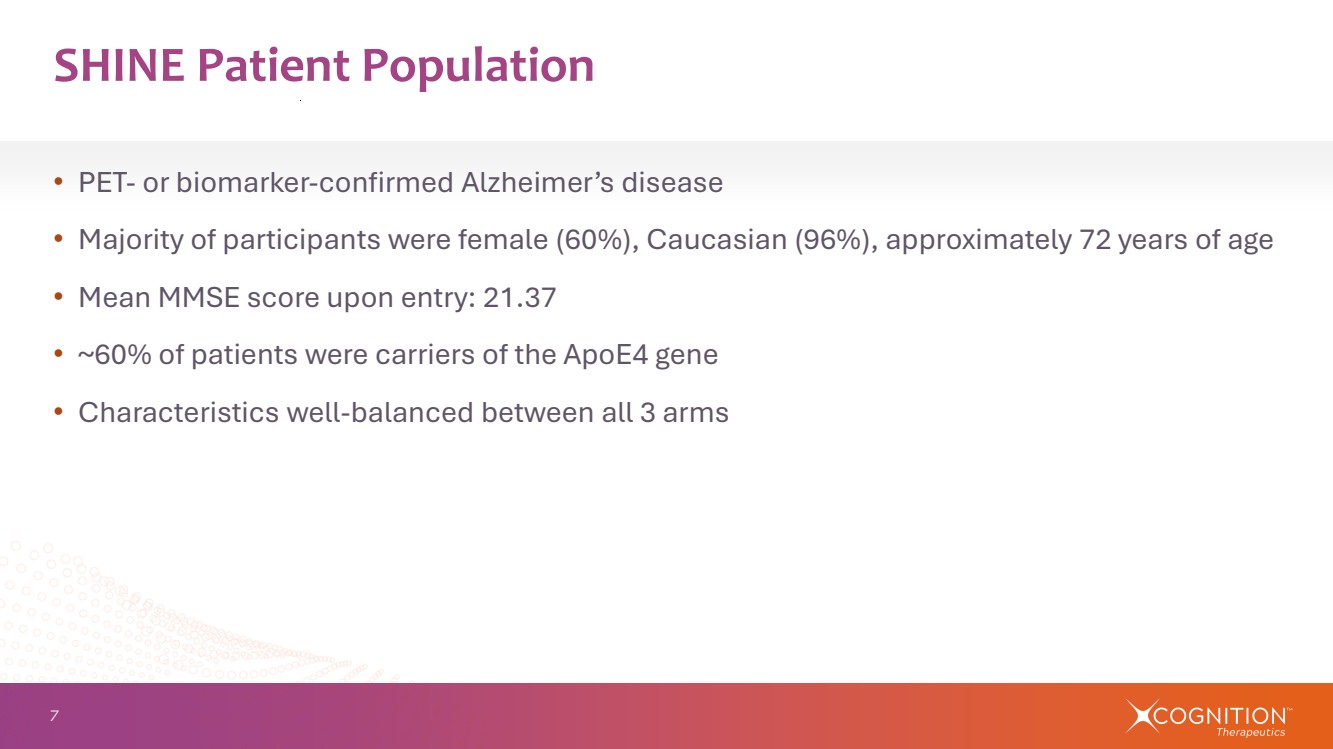
| 7 • PET- or biomarker-confirmed Alzheimer’s disease • Majority of participants were female (60%), Caucasian (96%), approximately 72 years of age • Mean MMSE score upon entry: 21.37 • ~60% of patients were carriers of the ApoE4 gene • Characteristics well-balanced between all 3 arms SHINE Patient Population |
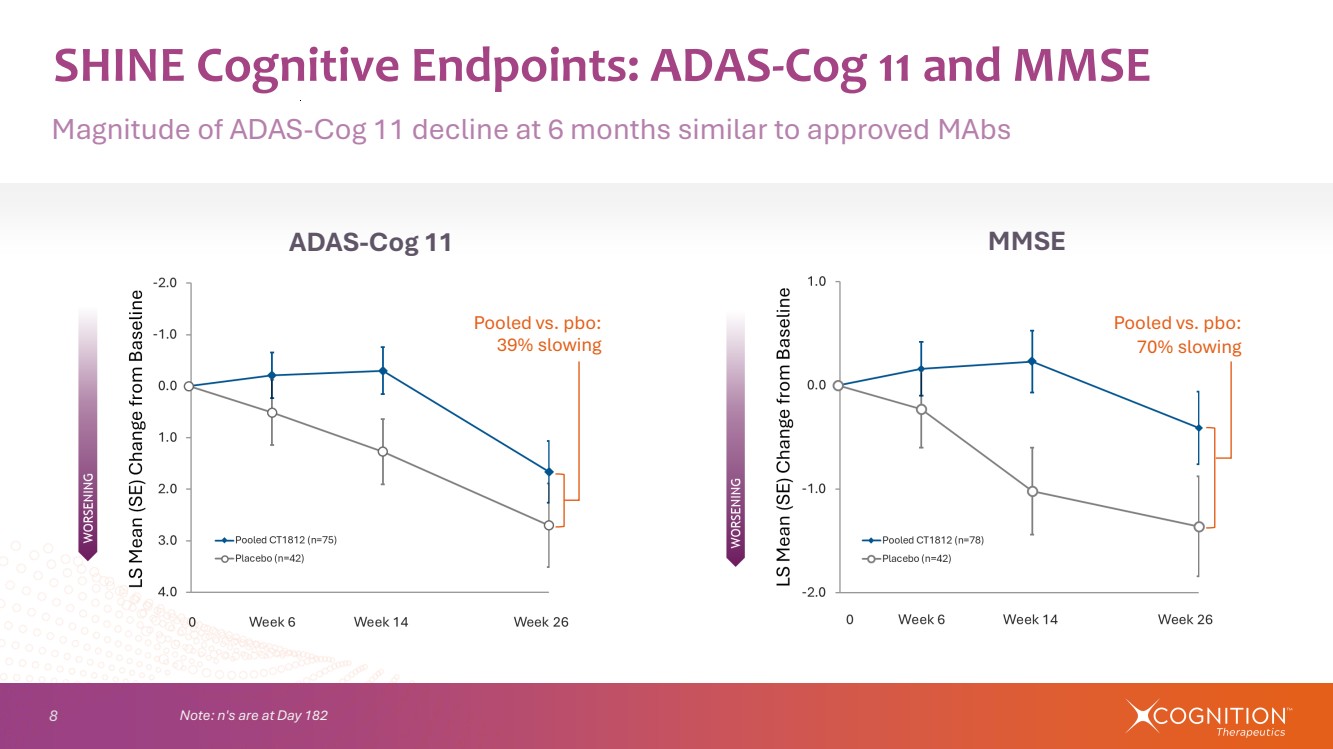
| 8 SHINE Cognitive Endpoints: ADAS-Cog 11 and MMSE Magnitude of ADAS-Cog 11 decline at 6 months similar to approved MAbs ADAS-Cog 11 MMSE Pooled vs. pbo: 70% slowing Pooled vs. pbo: 39% slowing Note: n's are at Day 182 |
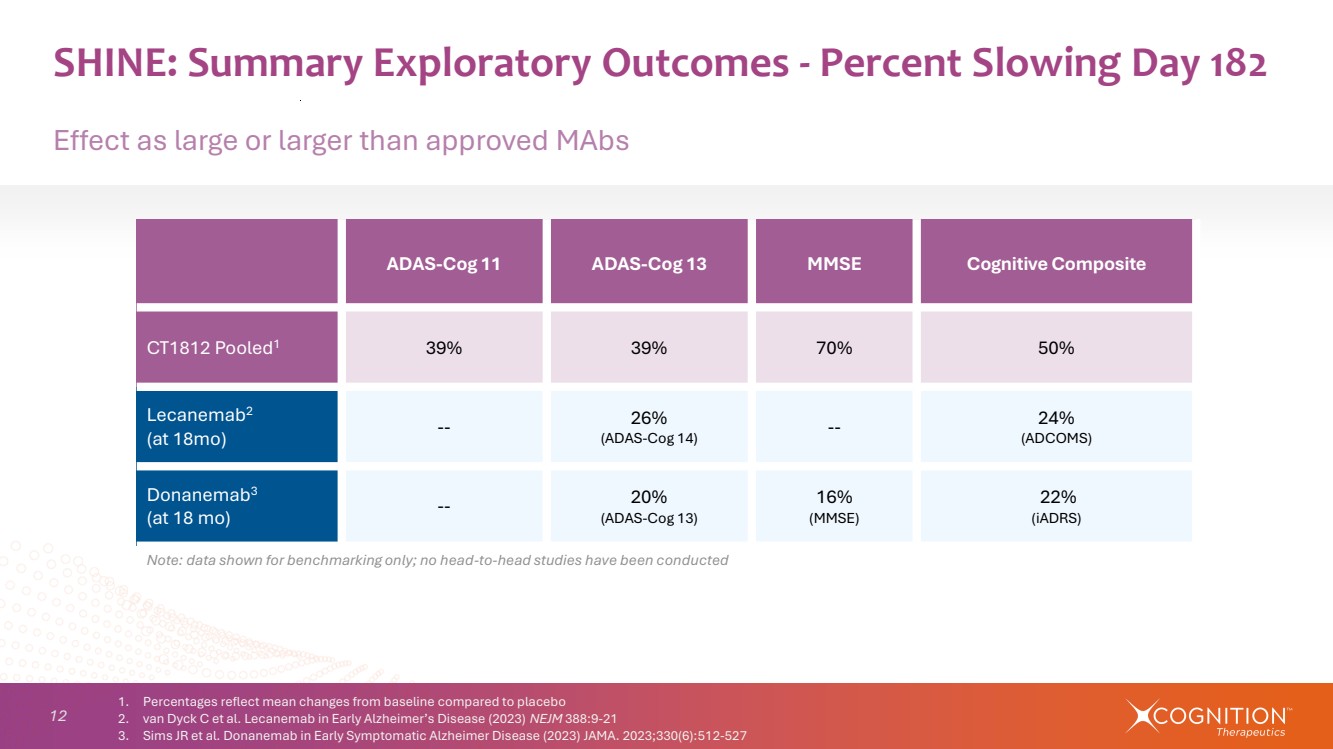
| 9 SHINE Cognitive Endpoints: ADAS-Cog 13, Cognitive Composite Consistent results across multiple cognitive endpoints ADAS-Cog 13 Cognitive Composite Pooled vs. pbo: 39% slowing Pooled vs. pbo: 50% slowing Note: n's are at Day 182 |
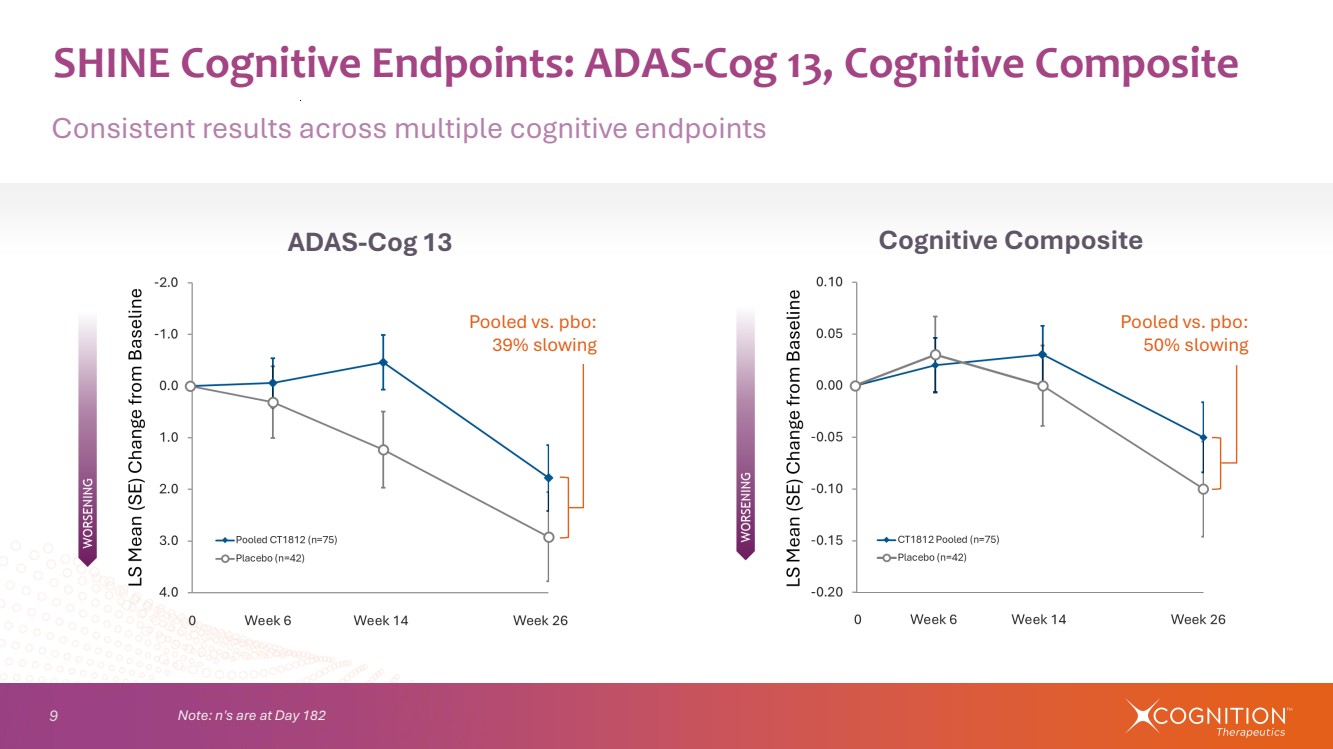
| 10 • CT1812 demonstrated a favorable safety and tolerability profile • Most TEAEs were mild or moderate in severity • Similar percentages of adverse events in treated (76.5%) and placebo (78%) groups • No discontinuations due to AEs in the 100mg dose group • Most discontinuations were in 300mg dose group and all the reportable liver enzyme elevations were in 300mg dose group Summary of SHINE Safety and Tolerability findings Adverse Events CT1812 Placebo 76.5% 78% Serious AEs CT1812 Placebo 4.9% 10% Deaths CT1812 Placebo 0 1 (cancer) |
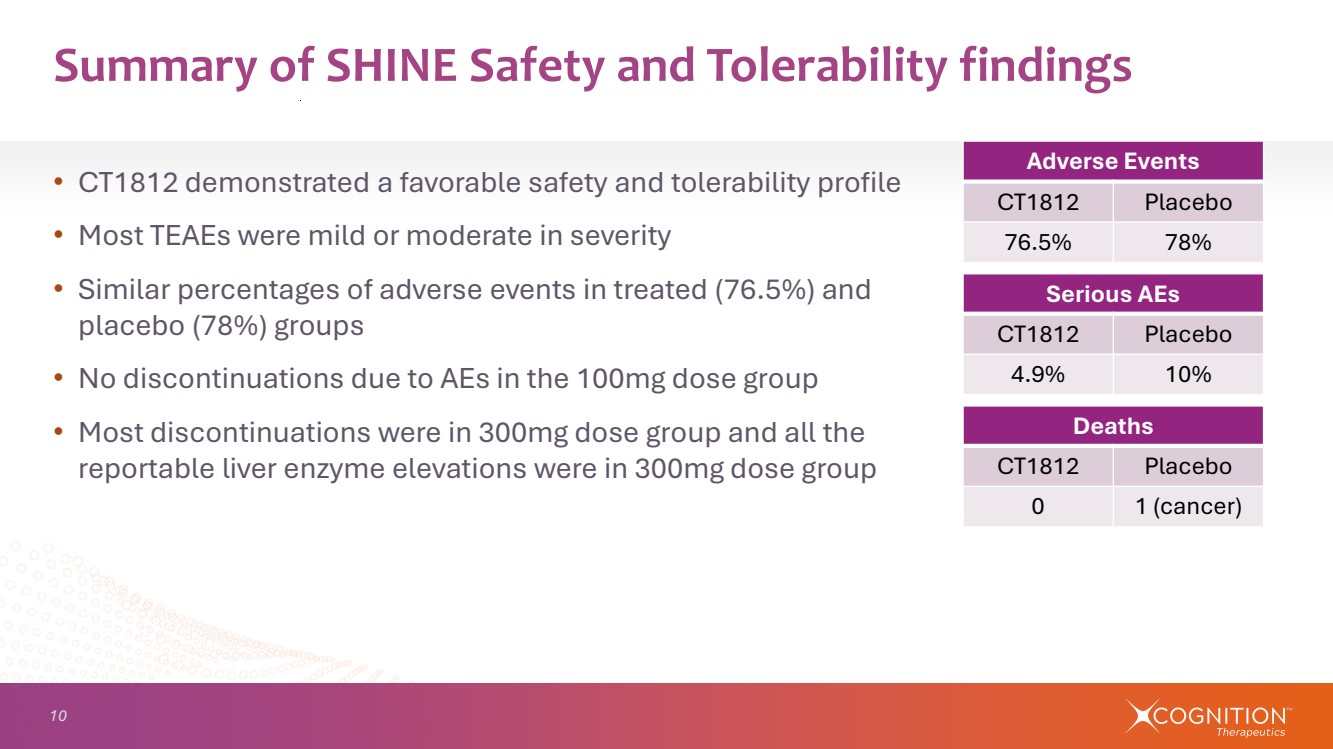
| 11 SHINE Response at 6 months Comparable to Approved MAbs Once-daily pill • no ARIA • 39% slowing at 6 months vs Leqembi’s 26% at 18 months 1. van Dyck C et al. Lecanemab in Early Alzheimer’s Disease (2023) NEJM 388:9-21 CLARITY1 : ADAS-Cog 14 response in early AD (MMSE 22-30) Adjusted Mean Change from Baseline 0 1 2 3 4 5 6 0 3 6 9 12 15 18 Visit (mo) • Lecanemab • Placebo 1.4-point difference ~26% slowing with lecanemab SHINE Results at 6 months 1.1 pt difference btw pooled CT1812 vs. placebo 39% slowing pooled CT1812 vs. placebo Placebo decline in SHINE steeper w moderate AD |
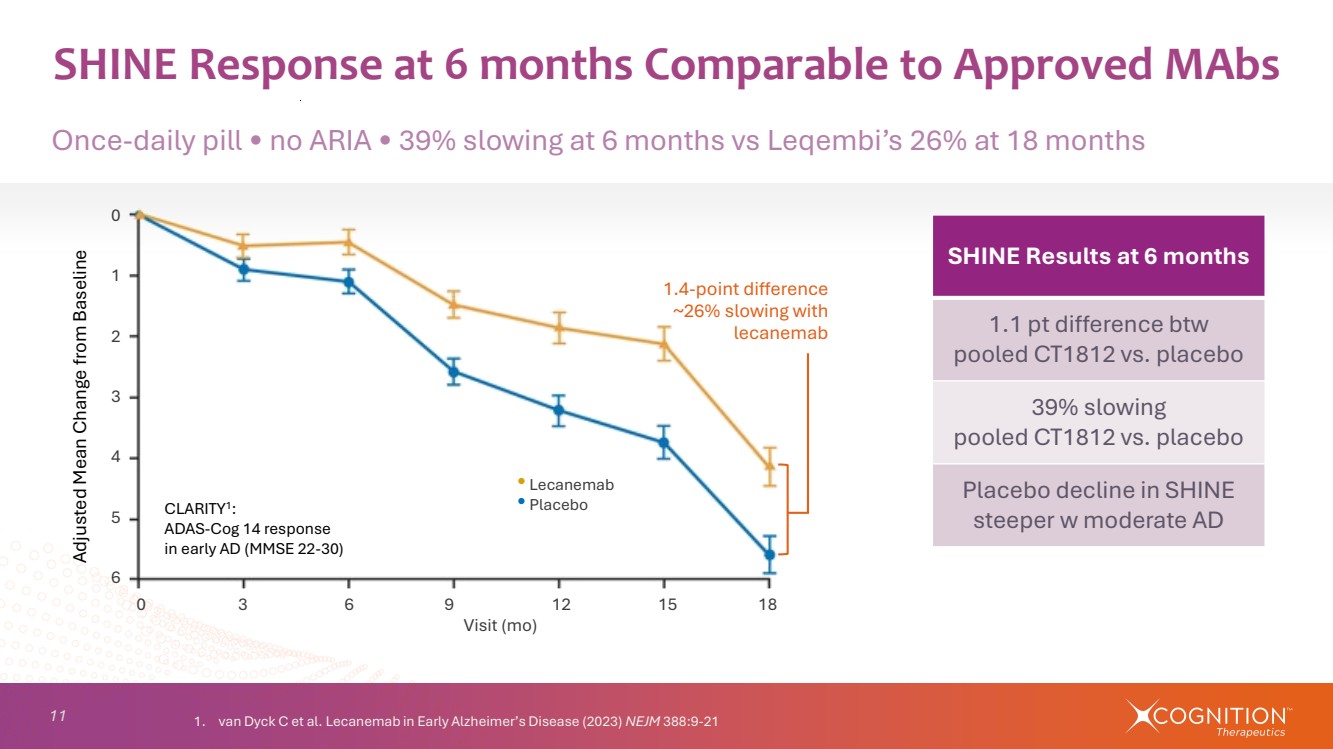
| 12 SHINE: Summary Exploratory Outcomes - Percent Slowing Day 182 Effect as large or larger than approved MAbs ADAS-Cog 11 ADAS-Cog 13 MMSE Cognitive Composite CT1812 Pooled1 39% 39% 70% 50% Lecanemab2 (at 18mo) -- 26% (ADAS-Cog 14) -- 24% (ADCOMS) Donanemab3 (at 18 mo) -- 20% (ADAS-Cog 13) 16% (MMSE) 22% (iADRS) Note: data shown for benchmarking only; no head-to-head studies have been conducted 1. Percentages reflect mean changes from baseline compared to placebo 2. van Dyck C et al. Lecanemab in Early Alzheimer’s Disease (2023) NEJM 388:9-21 3. Sims JR et al. Donanemab in Early Symptomatic Alzheimer Disease (2023) JAMA. 2023;330(6):512-527 |
| Results of a Commissioned Survey of 51 neurologists SHINE: Corroborated by Experts |

| 14 CT1812 Market Opportunity Insights from a Survey of Neurologists Current Options for Alzheimer’s Disease: • Two recently approved monoclonal antibodies: lecanemab and donanemab • Acetylcholinesterase (AChE) inhibitors: donepezil, galantamine, and rivastigmine • NMDA receptor antagonist: memantine Market Opportunity: • 7 M in the U.S. & 55 M worldwide have Alzheimer’s* * Alzheimer's Disease Facts and Figures 2024 |
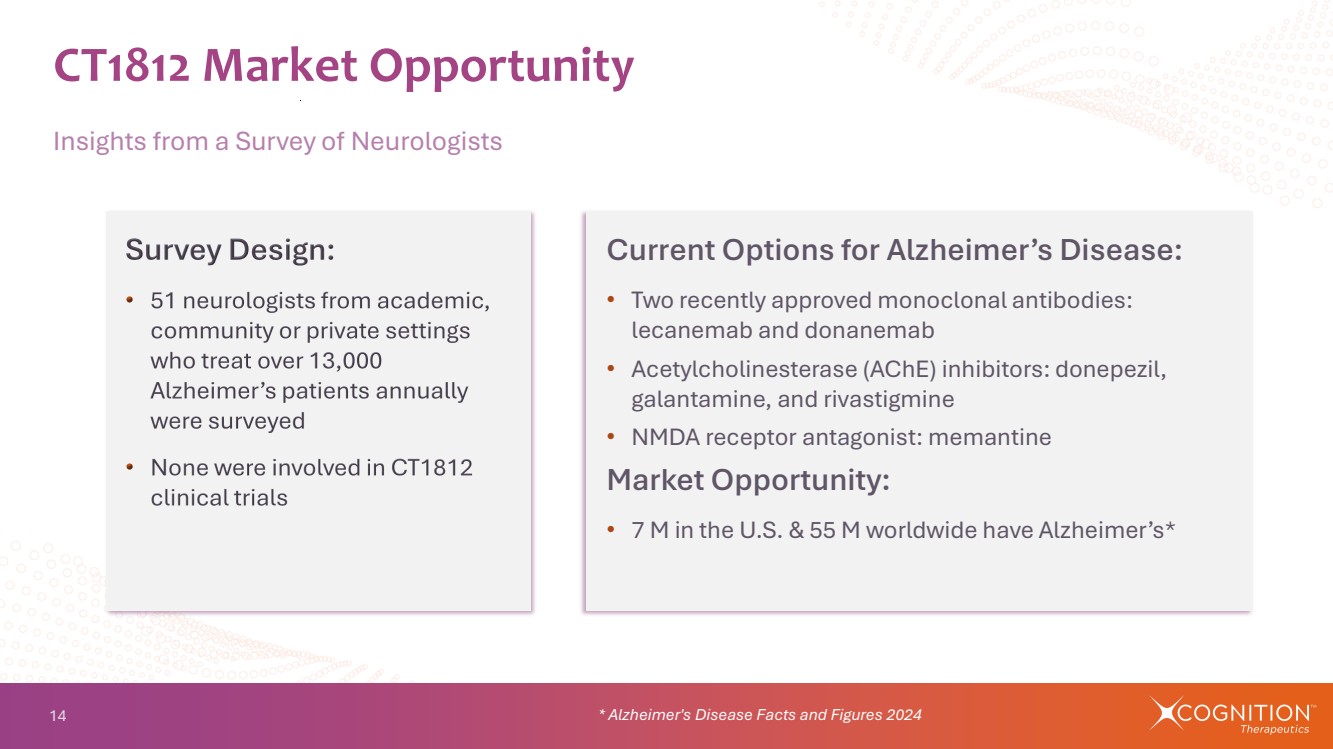
| 15 Academic medical Center Private practice Community hospital VA center Cross Section of Practice Setting General neurology Memory disorder specialist Movement disorder specialist Cross Section of Specialties SHINE Data Feedback from Neurologists Surveyed diverse group of 51 neurologists who treat over 13,000 AD patients annually MCI / early Mild Moderate Severe Cross Section of Patients (MMSE) |
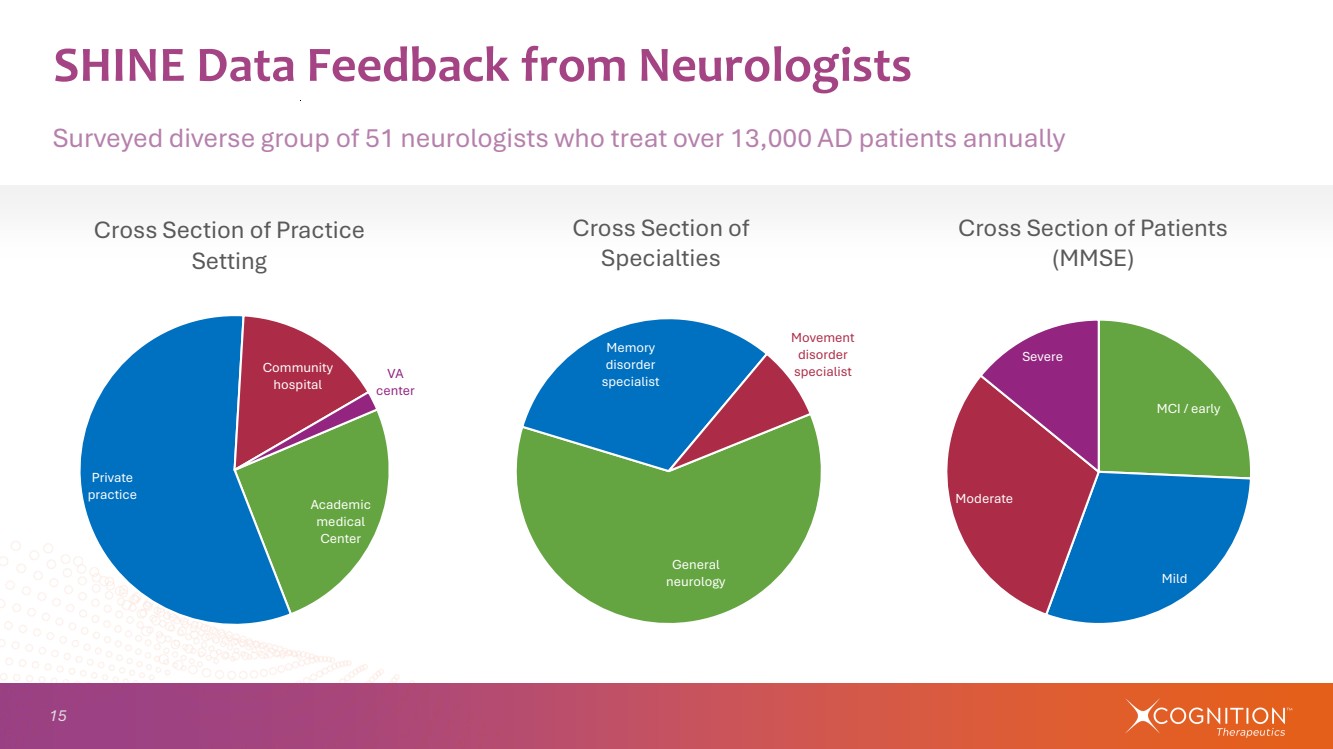
| 16 0 2 4 6 8 10 Efficacy Safety Tolerability Dosing Route of Administration Most Appealing Features of CT1812’s Product Profile (10-pt scale) CT1812’s Safety and Oral Delivery Appealed to Neurologists “Ease of dosing as oral medication” “Oral medication without ARIA risks” “Pill form is always welcome over an IV infusion” “Does not require infusion or intensive monitoring” |
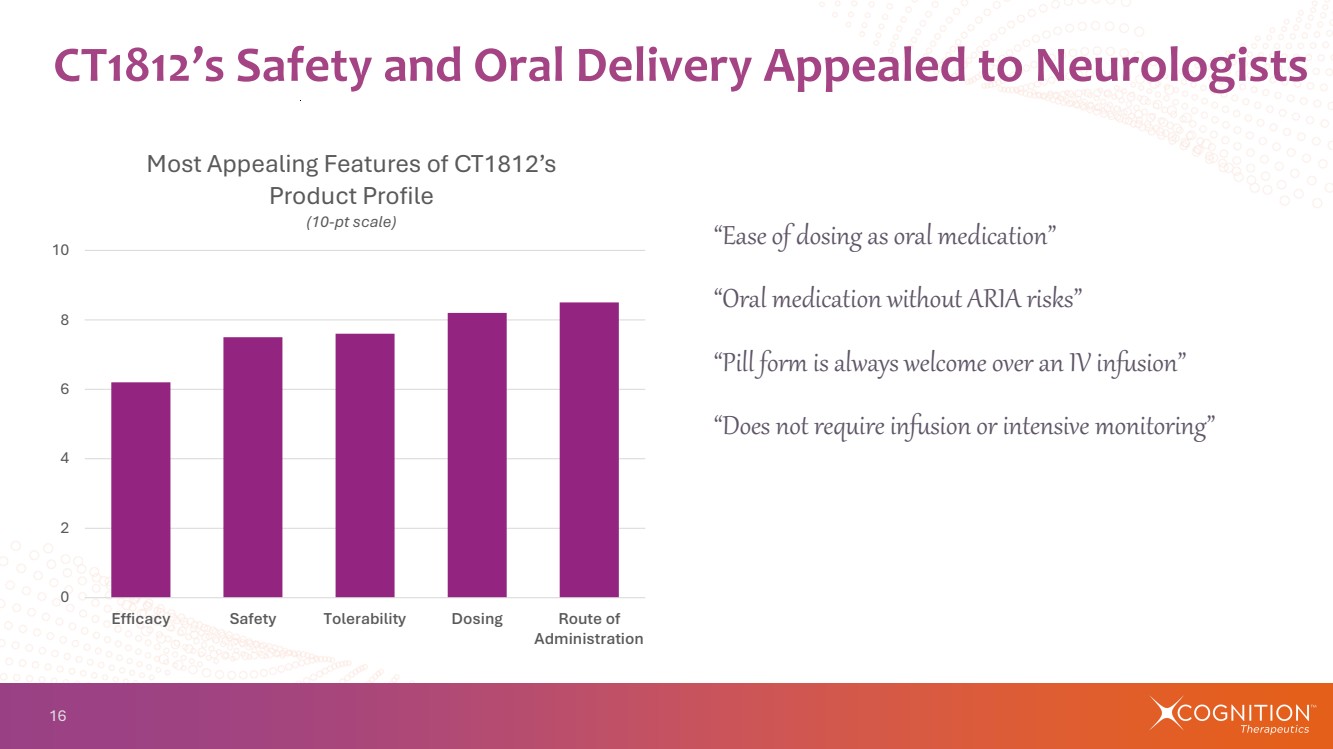
| 17 Extremely Positive Positive Neutral Negative Overall Characterization of SHINE Results Neurologists Enthusiastic About SHINE Results Oral, once-daily treatment with cognitive benefit and no increased ARIA risk Appx 84% felt SHINE was positive or extremely positive • The absence of symptomatic ARIA was seen as important (rated 8.4 out of 10) • 86.3% of respondents felt CT1812’s cognitive benefit (ADAS-Cog, MMSE, Cog Composite) was at least as good if not better than lecanemab • 78.5% felt CT1812’s functional benefit (ADCS-ADL and -CGIC) was at least as good if not better than lecanemab • Efficacy rated 6.2 out of 10 possibly due to limited trial duration and number of participants in SHINE |
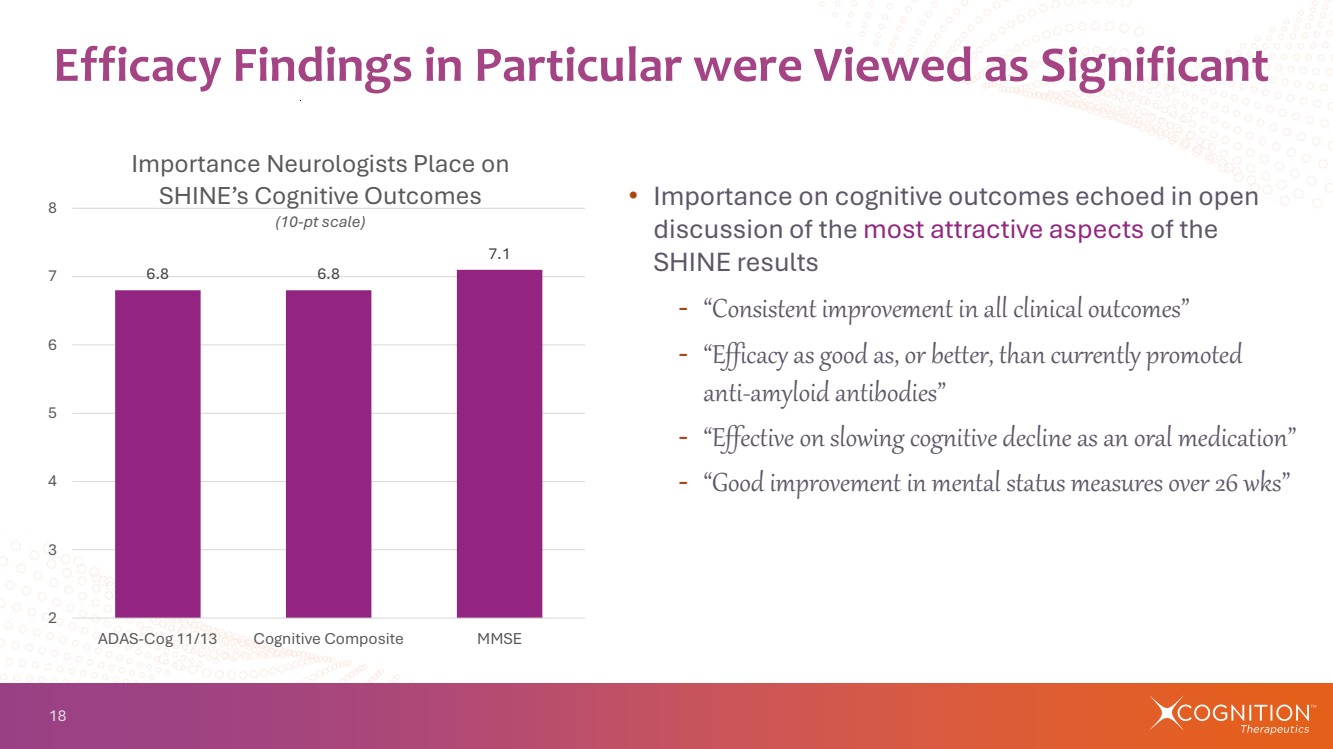
| 18 Efficacy Findings in Particular were Viewed as Significant • Importance on cognitive outcomes echoed in open discussion of the most attractive aspects of the SHINE results - “Consistent improvement in all clinical outcomes” - “Efficacy as good as, or better, than currently promoted anti-amyloid antibodies” - “Effective on slowing cognitive decline as an oral medication” - “Good improvement in mental status measures over 26 wks” 6.8 6.8 7.1 2 3 4 5 6 7 8 ADAS-Cog 11/13 Cognitive Composite MMSE Importance Neurologists Place on SHINE’s Cognitive Outcomes (10-pt scale) |
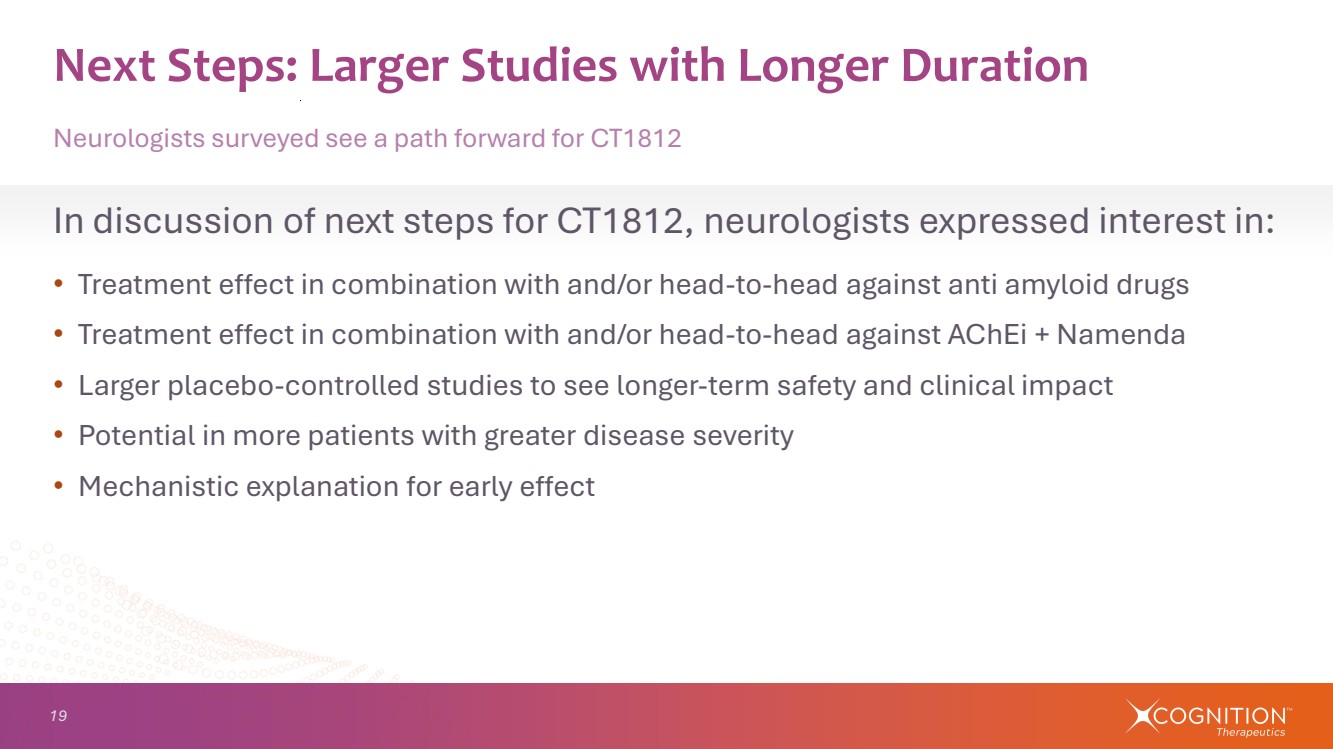
| 19 In discussion of next steps for CT1812, neurologists expressed interest in: • Treatment effect in combination with and/or head-to-head against anti amyloid drugs • Treatment effect in combination with and/or head-to-head against AChEi + Namenda • Larger placebo-controlled studies to see longer-term safety and clinical impact • Potential in more patients with greater disease severity • Mechanistic explanation for early effect Next Steps: Larger Studies with Longer Duration Neurologists surveyed see a path forward for CT1812 |
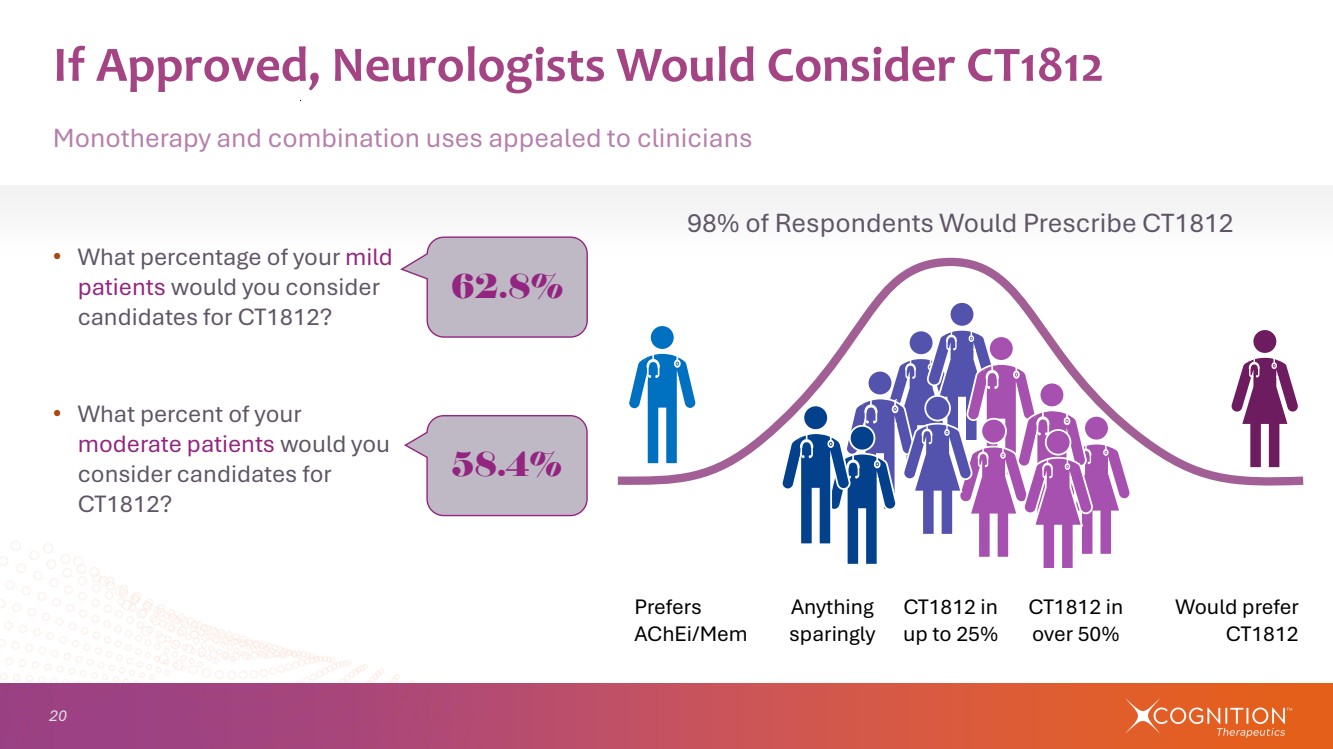
| 20 58.4% 62.8% • What percentage of your mild patients would you consider candidates for CT1812? • What percent of your moderate patients would you consider candidates for CT1812? If Approved, Neurologists Would Consider CT1812 Monotherapy and combination uses appealed to clinicians 98% of Respondents Would Prescribe CT1812 CT1812 in up to 25% Would prefer CT1812 Prefers AChEi/Mem CT1812 in over 50% Anything sparingly |
| START Study in early Alzheimer’s disease Alzheimer’s Disease |

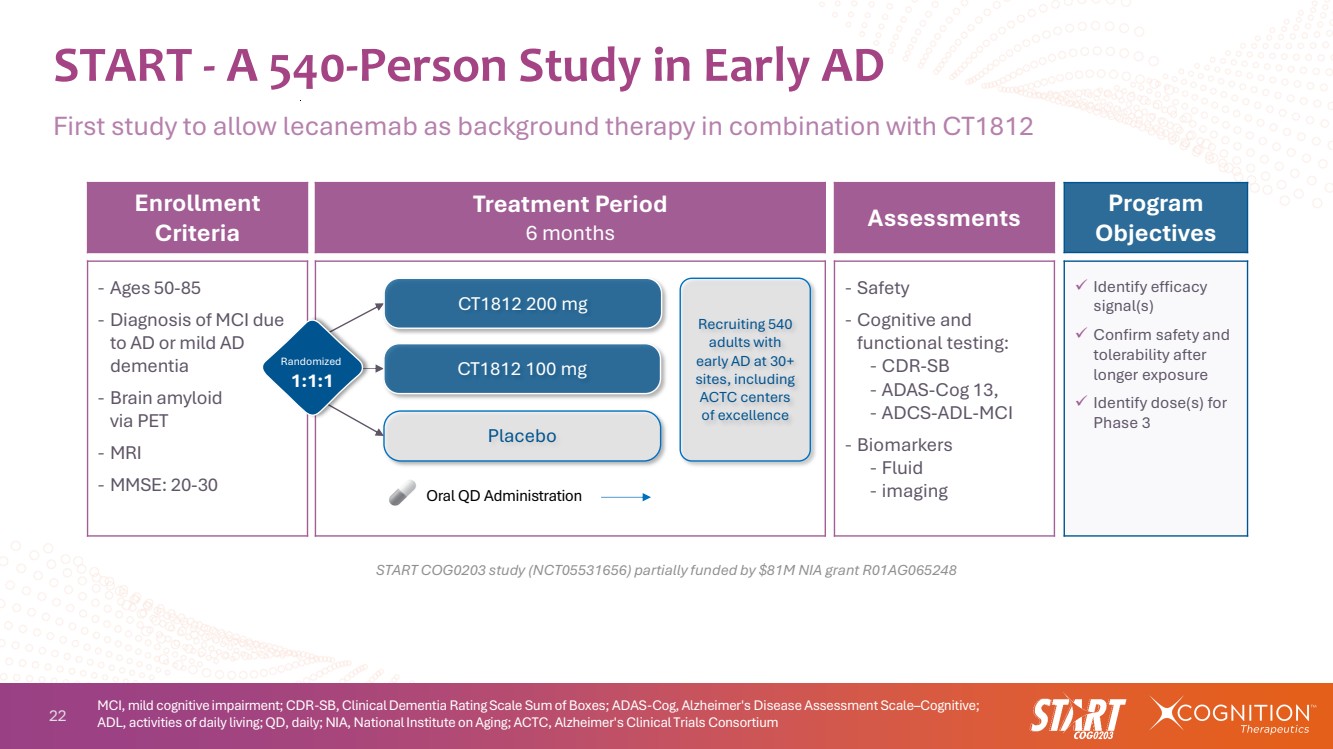
| 22 START - A 540-Person Study in Early AD First study to allow lecanemab as background therapy in combination with CT1812 START COG0203 study (NCT05531656) partially funded by $81M NIA grant R01AG065248 Enrollment Criteria Treatment Period 6 months Assessments Program Objectives ‐ Ages 50-85 ‐ Diagnosis of MCI due to AD or mild AD dementia ‐ Brain amyloid via PET ‐ MRI ‐ MMSE: 20-30 ‐ Safety ‐ Cognitive and functional testing: ‐ CDR-SB ‐ ADAS-Cog 13, ‐ ADCS-ADL-MCI ‐ Biomarkers ‐ Fluid ‐ imaging ✓ Identify efficacy signal(s) ✓ Confirm safety and tolerability after longer exposure ✓ Identify dose(s) for Phase 3 Placebo CT1812 100 mg CT1812 200 mg Oral QD Administration Randomized 1:1:1 Recruiting 540 adults with early AD at 30+ sites, including ACTC centers of excellence MCI, mild cognitive impairment; CDR-SB, Clinical Dementia Rating Scale Sum of Boxes; ADAS-Cog, Alzheimer's Disease Assessment Scale–Cognitive; ADL, activities of daily living; QD, daily; NIA, National Institute on Aging; ACTC, Alzheimer's Clinical Trials Consortium |
| 23 CT1812 is Also Being Investigated in two Additional Indications Alzheimer’s Disease Dementia with Lewy Bodies Dry AMD Geographic Atrophy |
| “The most common dementia you’ve never heard of” Dementia with Lewy Bodies |
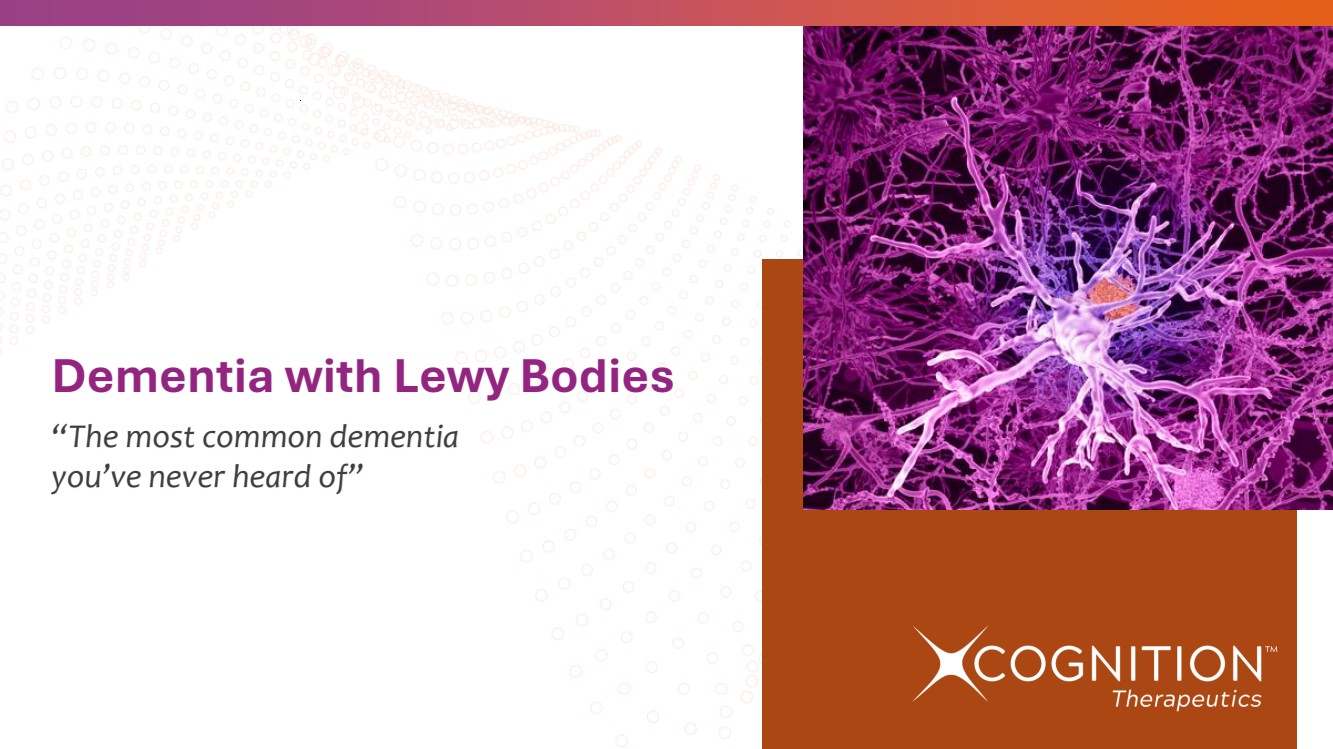
| 25 • In the U.S. an estimated 1.4 million people1 have dementia with Lewy bodies (DLB) • It is estimated that 50-80% of patients with DLB have Aβ as well as α-synuclein2 pathology • Core symptoms of DLB include: - Progressive cognitive decline - Fluctuating cognition with variations in attention - Impaired visuospatial perception - Recurrent visual hallucinations - REM sleep disorder Lewy Body Dementias are Second only to AD in Prevalence 1) Lewy Body Dementia Association. About LBD. Available from: https://www.lbda.org/about-lbd 2) Int J Mol Sci. 2023 Jun; 24(12): 10215. doi: 10.3390/ijms241210215 Parkinson's Disease DLB Alzheimer's Disease Vascular Dementia Frontotemporal Dementia Dementias Estimated US Population |
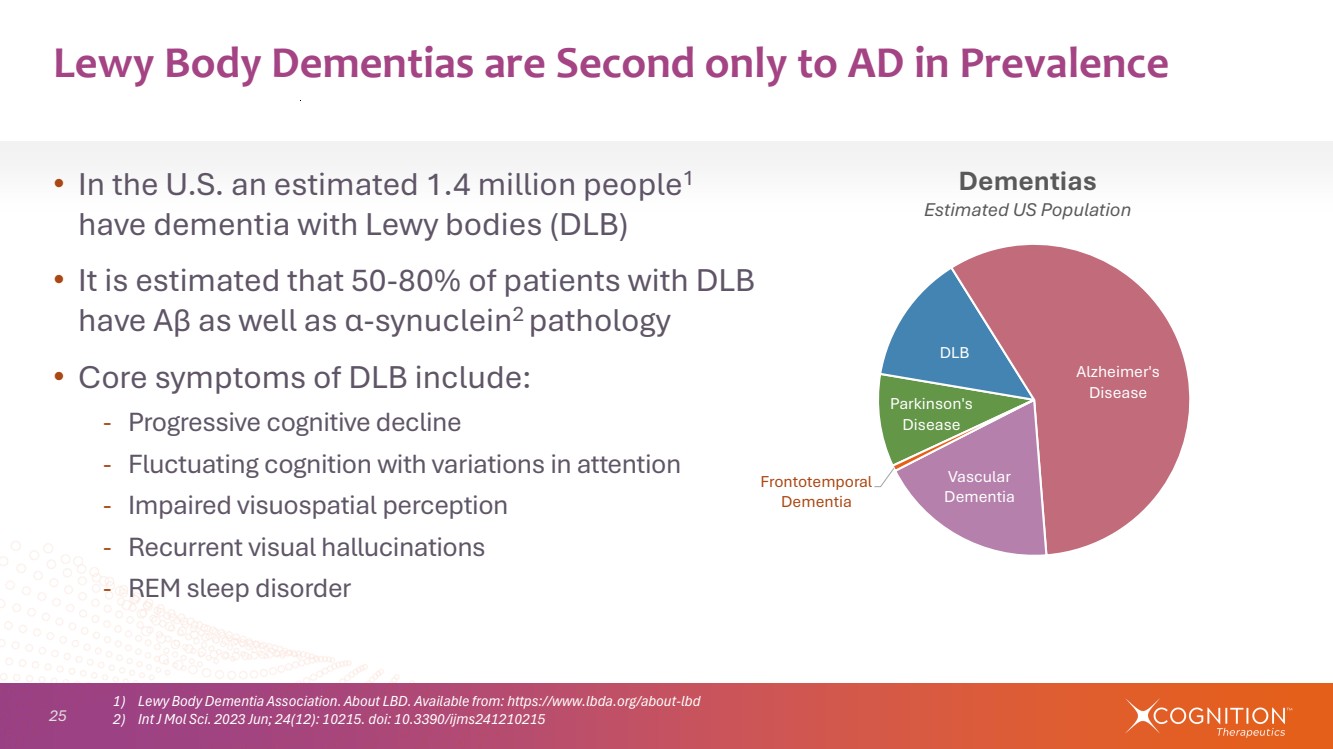
| 26 Evidence Supports CT1812 Potential in DLB -synuclein oligomers -synuclein oligomers + CT1812 -Synuclein oligomers in red Limegrover CS, et al. J Neurosci Res. 2021. doi: 10.1002/jnr.24782 Neurons rescued from α-synuclein oligomer-induced damage Protection of neurons from α-synuclein oligomers rescued damaged |
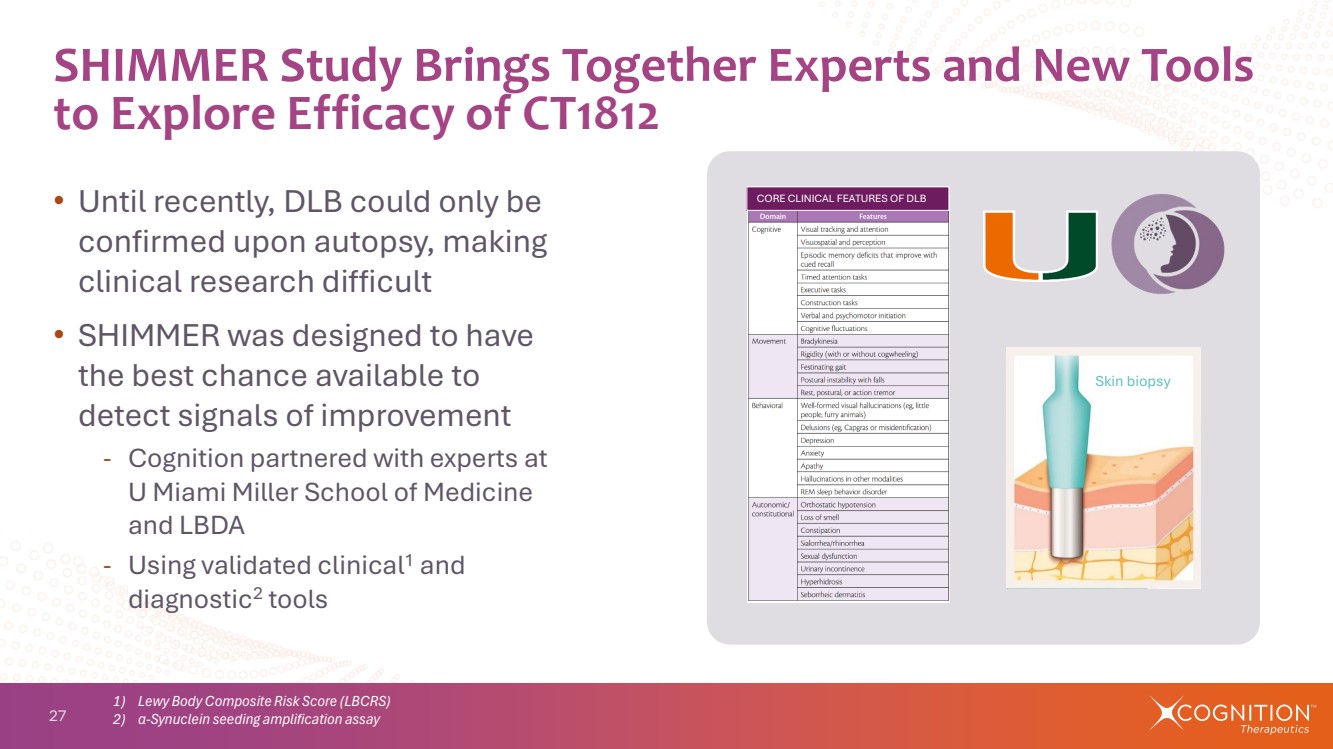
| 27 • Until recently, DLB could only be confirmed upon autopsy, making clinical research difficult • SHIMMER was designed to have the best chance available to detect signals of improvement - Cognition partnered with experts at U Miami Miller School of Medicine and LBDA - Using validated clinical1 and diagnostic2 tools SHIMMER Study Brings Together Experts and New Tools to Explore Efficacy of CT1812 CORE CLINICAL FEATURES OF DLB Skin biopsy 1) Lewy Body Composite Risk Score (LBCRS) 2) α-Synuclein seeding amplification assay |
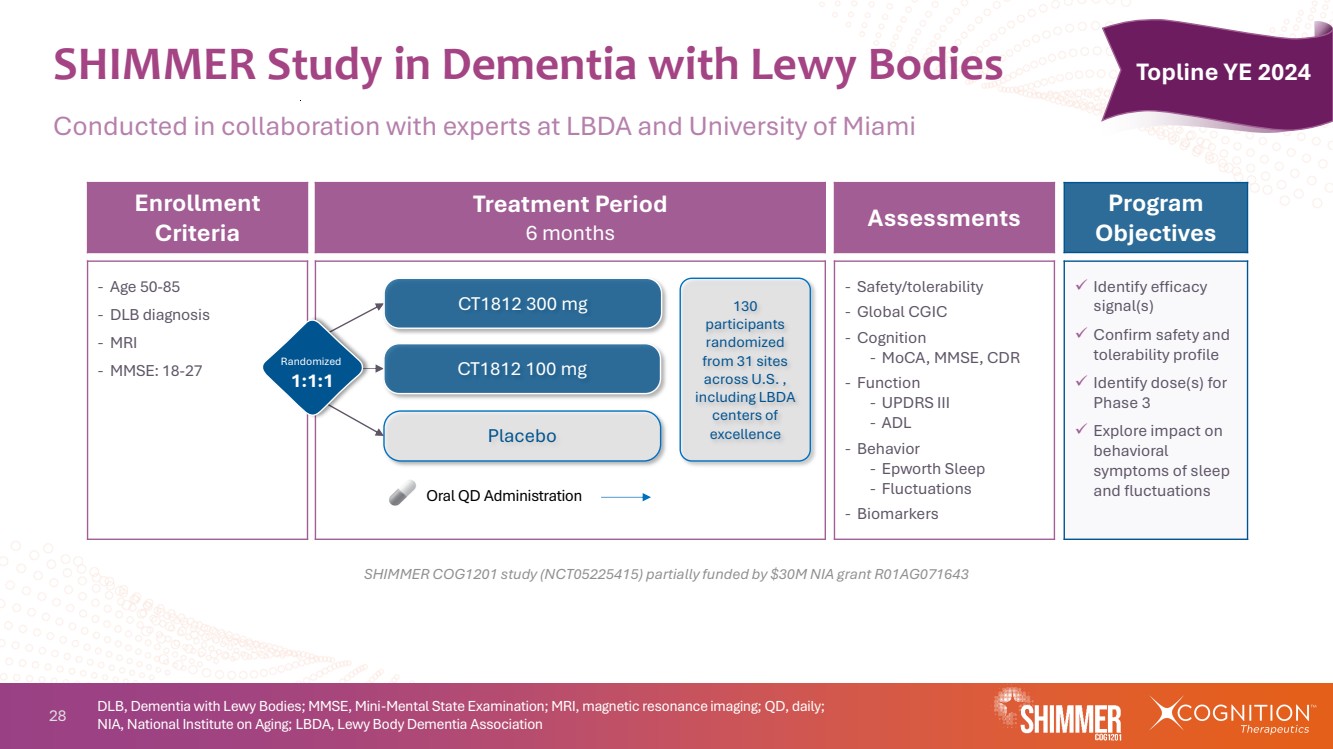
| 28 SHIMMER Study in Dementia with Lewy Bodies Conducted in collaboration with experts at LBDA and University of Miami SHIMMER COG1201 study (NCT05225415) partially funded by $30M NIA grant R01AG071643 Enrollment Criteria Treatment Period 6 months Assessments Program Objectives ‐ Age 50-85 ‐ DLB diagnosis ‐ MRI ‐ MMSE: 18-27 ‐ Safety/tolerability ‐ Global CGIC ‐ Cognition ‐ MoCA, MMSE, CDR ‐ Function ‐ UPDRS III ‐ ADL ‐ Behavior ‐ Epworth Sleep ‐ Fluctuations ‐ Biomarkers ✓ Identify efficacy signal(s) ✓ Confirm safety and tolerability profile ✓ Identify dose(s) for Phase 3 ✓ Explore impact on behavioral symptoms of sleep and fluctuations Placebo CT1812 100 mg CT1812 300 mg Oral QD Administration Randomized 1:1:1 130 participants randomized from 31 sites across U.S. , including LBDA centers of excellence DLB, Dementia with Lewy Bodies; MMSE, Mini-Mental State Examination; MRI, magnetic resonance imaging; QD, daily; NIA, National Institute on Aging; LBDA, Lewy Body Dementia Association Topline YE 2024 |
| Damage to the macula resulting from advanced dry age-related macular degeneration (dry AMD) Geographic Atrophy |
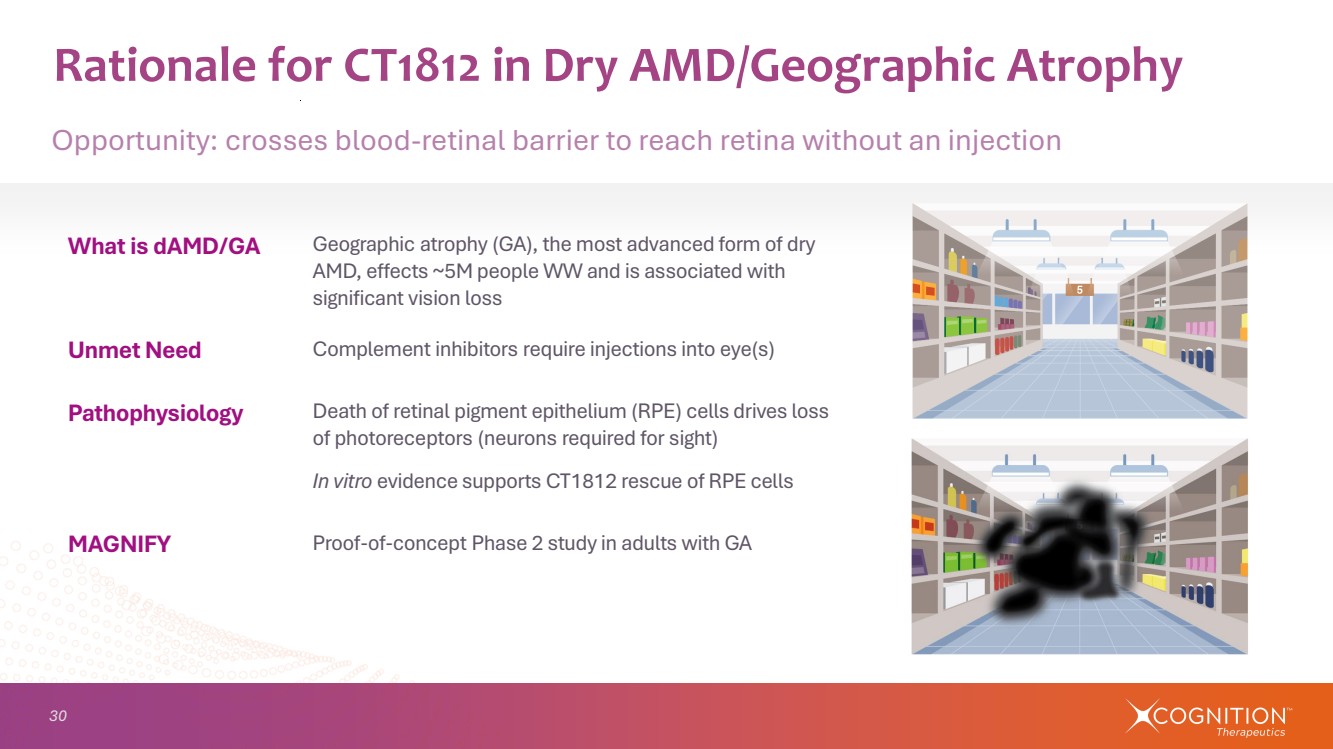
| 30 Rationale for CT1812 in Dry AMD/Geographic Atrophy Opportunity: crosses blood-retinal barrier to reach retina without an injection What is dAMD/GA Geographic atrophy (GA), the most advanced form of dry AMD, effects ~5M people WW and is associated with significant vision loss Unmet Need Complement inhibitors require injections into eye(s) Pathophysiology Death of retinal pigment epithelium (RPE) cells drives loss of photoreceptors (neurons required for sight) In vitro evidence supports CT1812 rescue of RPE cells MAGNIFY Proof-of-concept Phase 2 study in adults with GA |
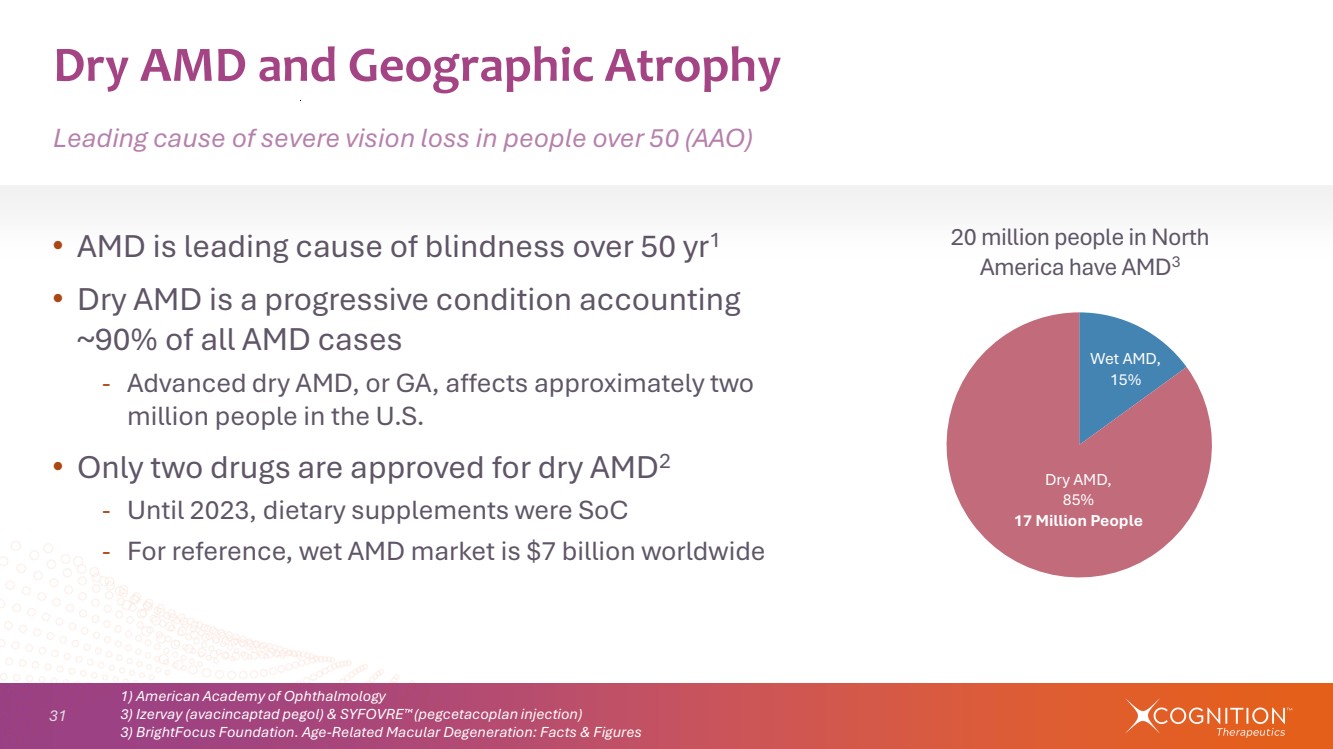
| 31 20 million people in North America have AMD3 • AMD is leading cause of blindness over 50 yr1 • Dry AMD is a progressive condition accounting ~90% of all AMD cases - Advanced dry AMD, or GA, affects approximately two million people in the U.S. • Only two drugs are approved for dry AMD2 - Until 2023, dietary supplements were SoC - For reference, wet AMD market is $7 billion worldwide Leading cause of severe vision loss in people over 50 (AAO) Dry AMD and Geographic Atrophy Wet AMD, 15% Dry AMD, 85% 17 Million People 1) American Academy of Ophthalmology 3) Izervay (avacincaptad pegol) & SYFOVRE (pegcetacoplan injection) 3) BrightFocus Foundation. Age-Related Macular Degeneration: Facts & Figures |
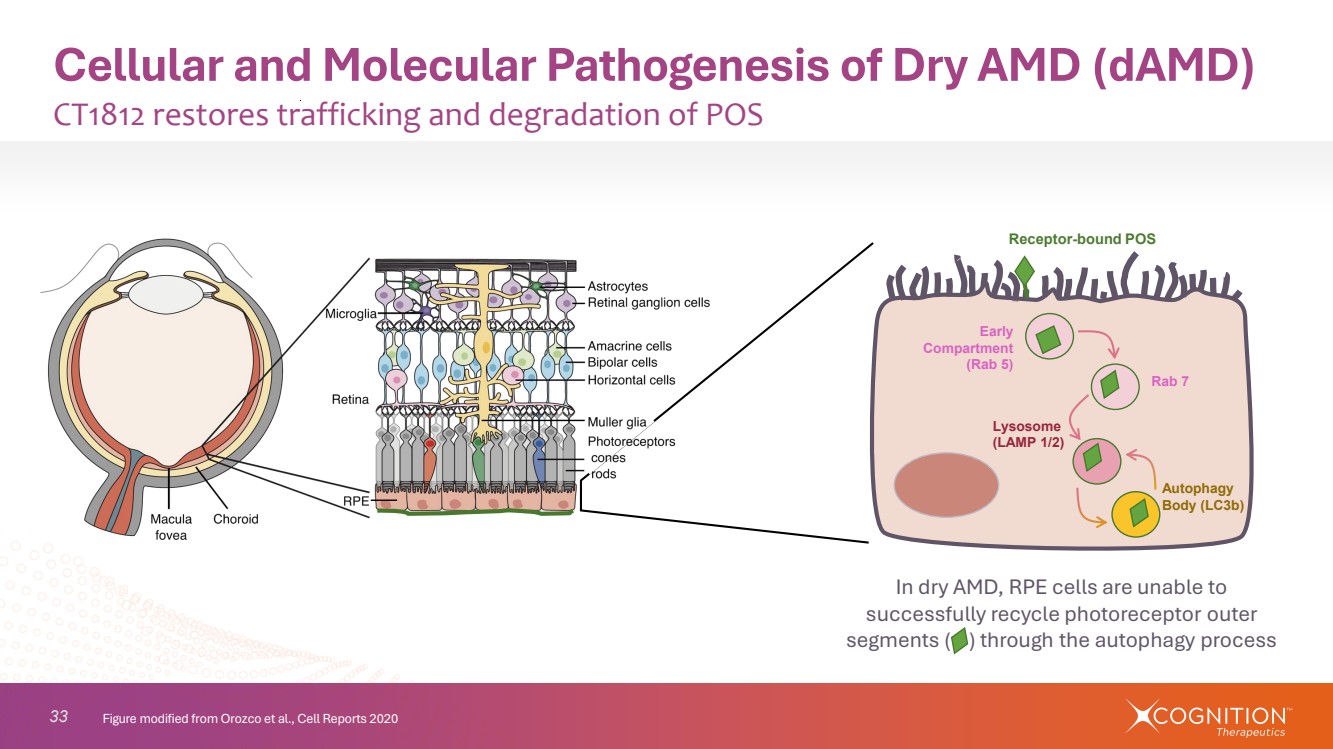
| 32 • Photoreceptors – specialized neurons necessary for sight – require support from retinal pigment epithelial (RPE) cells that are damaged in dry AMD • CT1812 has been shown to rescue RPE cells in vitro • CT1812’s potential to preserve vision through this mechanism is being tested in Phase 2 CT1812 Protects RPE Cells and the Photoreceptors they Support Figure modified from Orozco et al., Cell Reports 2020 |

| 33 Cellular and Molecular Pathogenesis of Dry AMD (dAMD) Receptor-bound POS Lysosome (LAMP 1/2) Autophagy Body (LC3b) Early Compartment (Rab 5) Rab 7 In dry AMD, RPE cells are unable to successfully recycle photoreceptor outer segments ( ) through the autophagy process CT1812 restores trafficking and degradation of POS Figure modified from Orozco et al., Cell Reports 2020 |
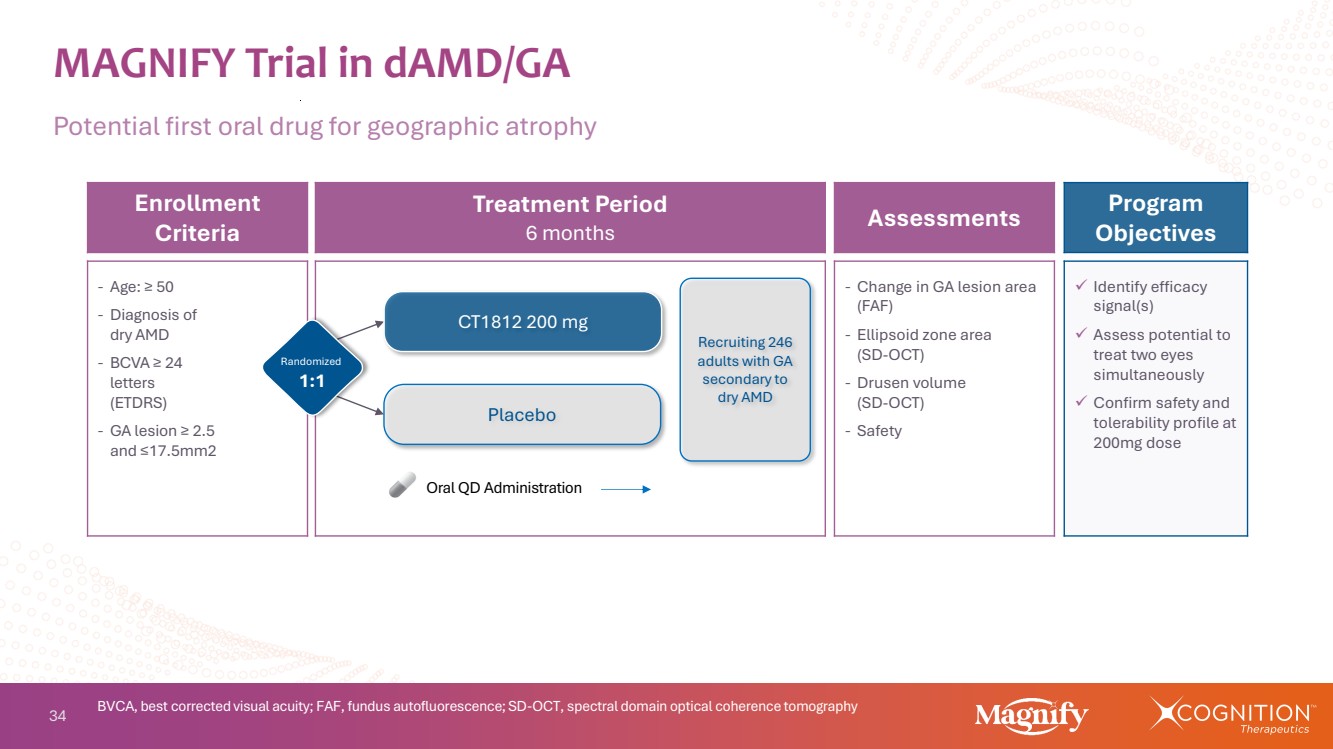
| 34 MAGNIFY Trial in dAMD/GA Potential first oral drug for geographic atrophy Enrollment Criteria Treatment Period 6 months Assessments Program Objectives ‐ Age: ≥ 50 ‐ Diagnosis of dry AMD ‐ BCVA ≥ 24 letters (ETDRS) ‐ GA lesion ≥ 2.5 and ≤17.5mm2 ‐ Change in GA lesion area (FAF) ‐ Ellipsoid zone area (SD-OCT) ‐ Drusen volume (SD-OCT) ‐ Safety ✓ Identify efficacy signal(s) ✓ Assess potential to treat two eyes simultaneously ✓ Confirm safety and tolerability profile at 200mg dose Placebo CT1812 200 mg Oral QD Administration Randomized 1:1 Recruiting 246 adults with GA secondary to dry AMD BVCA, best corrected visual acuity; FAF, fundus autofluorescence; SD-OCT, spectral domain optical coherence tomography |
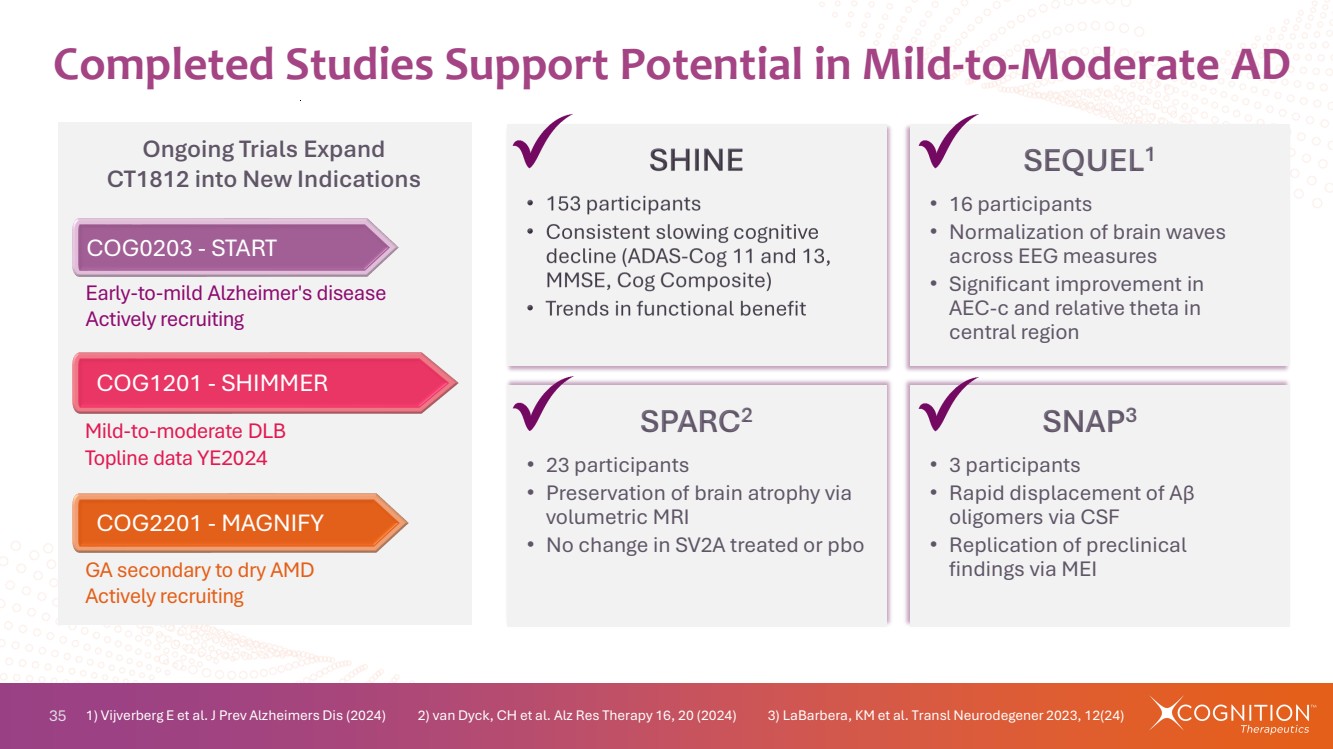
| 35 Completed Studies Support Potential in Mild-to-Moderate AD SPARC2 • 23 participants • Preservation of brain atrophy via volumetric MRI • No change in SV2A treated or pbo SNAP3 • 3 participants • Rapid displacement of Aβ oligomers via CSF • Replication of preclinical findings via MEI SEQUEL1 • 16 participants • Normalization of brain waves across EEG measures • Significant improvement in AEC-c and relative theta in central region Early-to-mild Alzheimer's disease Actively recruiting Mild-to-moderate DLB Topline data YE2024 GA secondary to dry AMD Actively recruiting COG0203 - START COG1201 - SHIMMER COG2201 - MAGNIFY Ongoing Trials Expand CT1812 into New Indications 1) Vijverberg E et al. J Prev Alzheimers Dis (2024) 2) van Dyck, CH et al. Alz Res Therapy 16, 20 (2024) 3) LaBarbera, KM et al. Transl Neurodegener 2023, 12(24) |
| 36 The Promise of CT1812 • First-in-class Aβ oligomer antagonism via sigma-2 receptor • Consistent efficacy in Alzheimer’s disease studies - ARIA unlikely to occur based on MoA • Potential first-to-market for DLB • Potential first oral for dAMD/GA • Well tolerated safety profile anticipated • Oral administration - No need for IV therapy, a key limitation of immunotherapeutics - No surveillance imaging required - Greater convenience and access |
| 37 Current Financial Position Cash and cash equivalents $28.5 M Expected cash runway into 2Q 2025 Grant funding for CT1812 studies Preclinical through Phase 2 ~$171 M Approximate funding used ($113.7 M) Remaining grant funding $57.3M As of June 30, 2024 |
| Tony Caggiano, MD, PhD CMO and Head of R&D [email protected] Lisa Ricciardi President & CEO [email protected] John Doyle Chief Financial Officer [email protected] Thank You |