DMAC 8-K
DiaMedica Therapeutics Inc. (DMAC)
|
(State or Other Jurisdiction of Incorporation) |
(Commission File Number) |
Not Applicable
(IRS Employer Identification No.) |
|
Title of Class
|
Trading Symbol(s)
|
Exchange Name
|
|
|
|
The
|
|
|
Written communications pursuant to Rule 425 under the Securities Act.
|
|
|
Soliciting material pursuant to Rule 14a-12 under the Exchange Act.
|
|
|
Pre-commencement communications pursuant to Rule 14d-2b under the Exchange Act.
|
|
|
Pre-commencement communications pursuant to Rule 13e-4(c) under the Exchange Act.
|
|
Item 7.01.
|
Regulation FD Disclosure.
|
|
Item 9.01.
|
Financial Statements and Exhibits.
|
|
(d)
|
Exhibits.
|
|
Exhibit
|
||
|
Number
|
Description
|
|
|
99.1
|
||
|
99.2
|
||
|
104
|
Cover Page Interactive Data File, formatted in Inline Extensible Business Reporting Language (iXBRL).
|
|
DiaMedica Therapeutics Inc.
|
||
|
(Registrant)
|
||
|
Date: July 17, 2025
|
||
|
By:
|
/s/ Scott Kellen
|
|
|
Scott Kellen
|
||
|
Chief Financial Officer and Secretary
|
||
Exhibit 99.1

DiaMedica Therapeutics Reports Positive Interim Phase 2 Preeclampsia Results: Statistically Significant Reductions in Blood Pressure and No Placental Transfer
Conference Call Today July 17, 2025 at 4:30 PM Eastern Time / 3:30 PM Central Time
|
● |
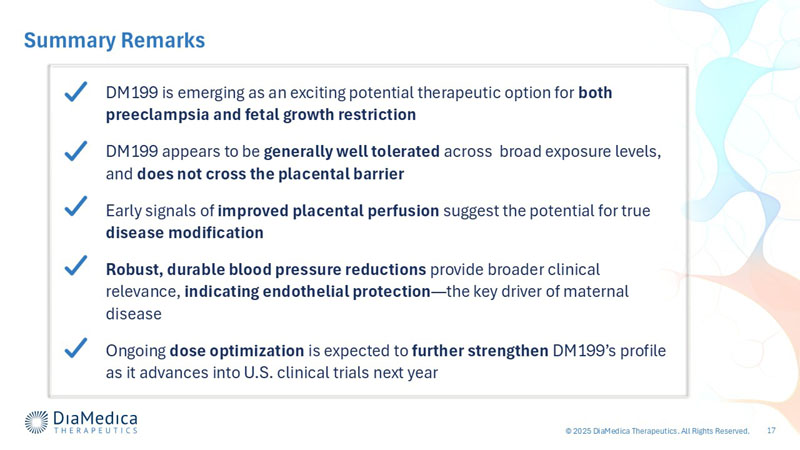
DM199 Demonstrated Highly Statistically Significant and Clinically Meaningful Reductions in Systolic and Diastolic Blood Pressure for Combined Cohorts 6-9 |
|
● |
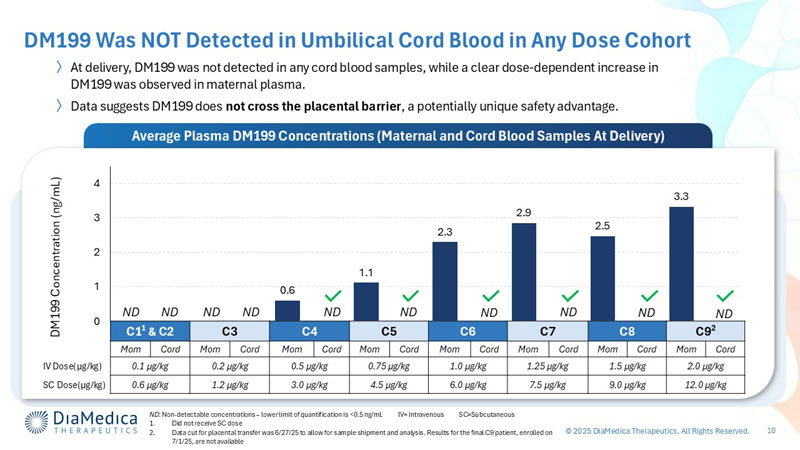
DM199 Did Not Cross the Placental Barrier and was Generally Safe and Well Tolerated |
|
● |
Highly Statistically Significant Reduction in Uterine Artery Pulsatility Index |
|
● |
Robust Evidence Supports a Potential Best-In-Class Mechanism Enhancing Placental Perfusion, Protecting the Endothelium and Reducing Blood Pressure |
Minneapolis, Minnesota – July 17, 2025 – (BUSINESS WIRE) – DiaMedica Therapeutics Inc. (Nasdaq: DMAC), a clinical-stage biopharmaceutical company, today announced positive interim results from Part 1a of the Phase 2 study of DM199 for the treatment of preeclampsia. The study achieved pre-specified safety and efficacy endpoints for the Part 1a dose escalation phase, reinforcing the therapeutic potential of DM199. DM199, rinvecalinase alfa, is a recombinant form of the KLK1 protein expected to influence blood pressure regulation and vascular health in the treatment of preeclampsia (PE). Currently, there are no approved pharmacological treatments for the management of PE in the United States and Europe, representing a significant global unmet medical need.
“These interim results exceeded our expectations demonstrating DM199’s potential to be a first-in-class, disease modifying therapy for preeclampsia, coupled with a promising fetal exposure profile,” said Rick Pauls, President and CEO of DiaMedica Therapeutics. “We believe that the statistically significant reductions in blood pressure and pulsatility index represent on-target responses consistent with DM199’s mechanism of action signaling the potential of DM199 to greatly benefit this underserved patient population. These results are bolstered by data showing that DM199 did not cross the placental barrier, which historically has been a safety hurdle faced in developing treatments for PE. DM199 could potentially offer a significant safety advantage for both mothers and their babies.”
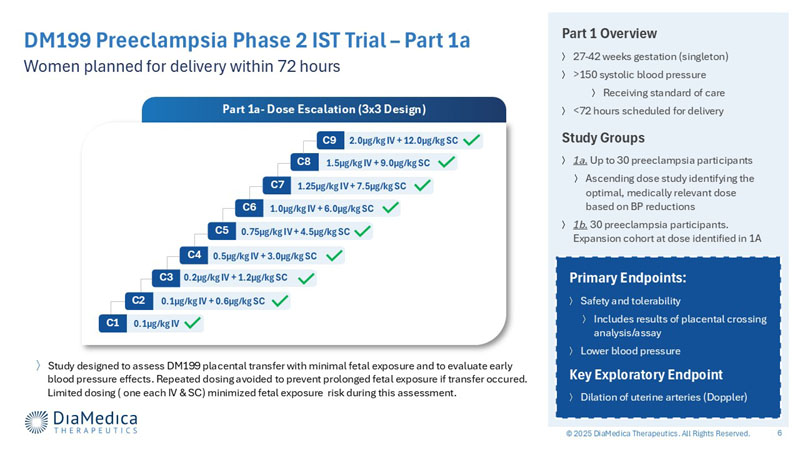
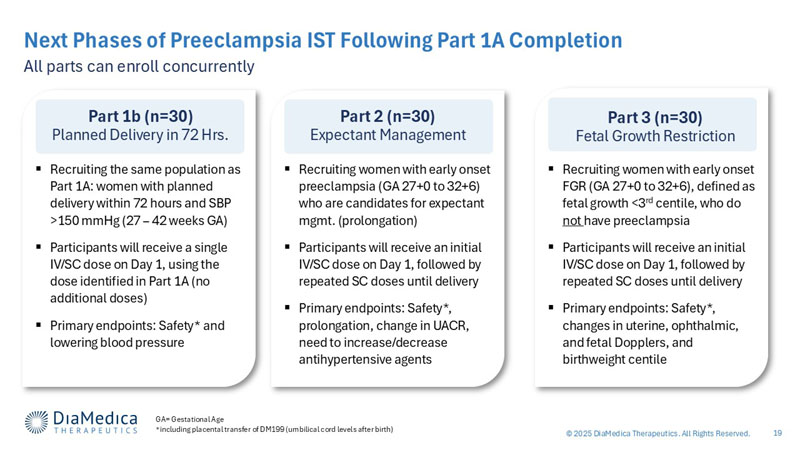
The Phase 2 study of DM199 for PE is an investigator-sponsored, open-label, single center, single-arm, safety and pharmacodynamic, proof-of-concept study of DM199 in treating preeclampsia. It is being conducted at the Tygerberg Hospital, Cape Town, South Africa (SA), under the direction of Catherine Cluver, MD, PhD, Professor of Maternal/Fetal Medicine, Stellenbosch University, Stellenbosch, SA, in collaboration with DiaMedica. This trial will enroll up to 90 women with preeclampsia and 30 women with fetal growth restriction.
Blood Pressure Reduction
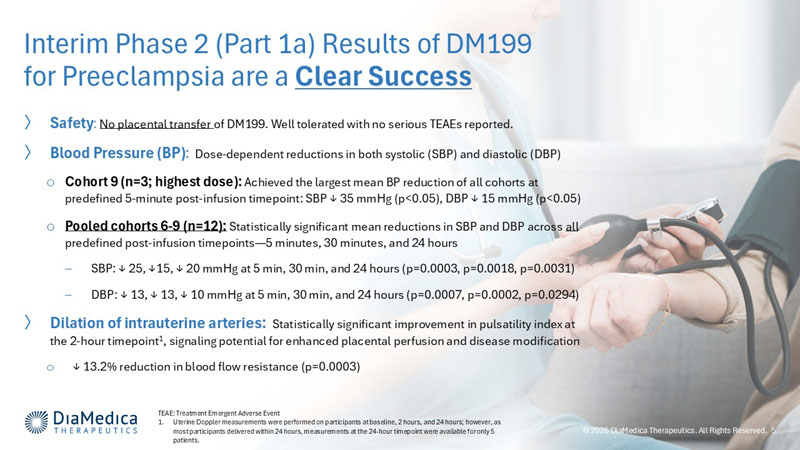
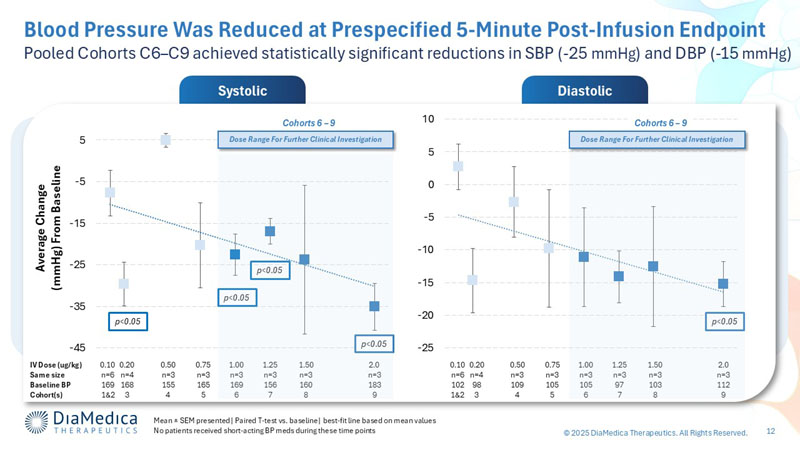
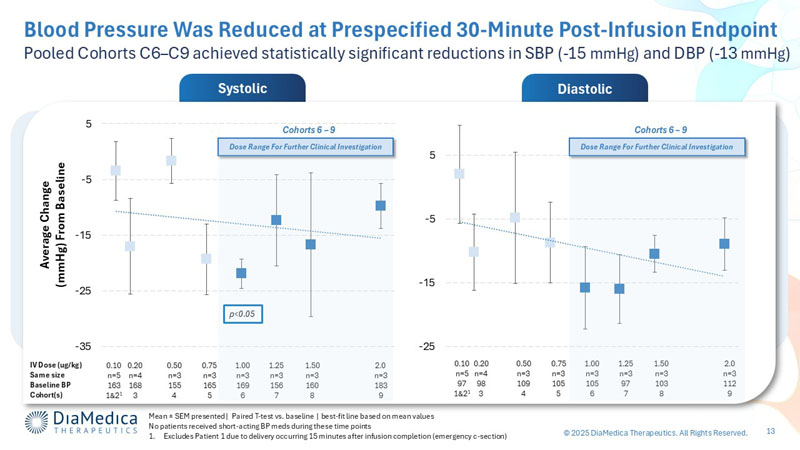
The study revealed a dose-dependent reduction in both systolic blood pressure (SBP) and diastolic blood pressure (DBP):
|
● |
Cohort 9 (n=3; highest dose) achieved the most substantial mean reductions at 5 minutes post-infusion: |
|
o |
SBP reductions: -35 mmHg (p<0.05) |
|
o |
DBP reductions: -15 mmHg (p<0.05) |
|
● |
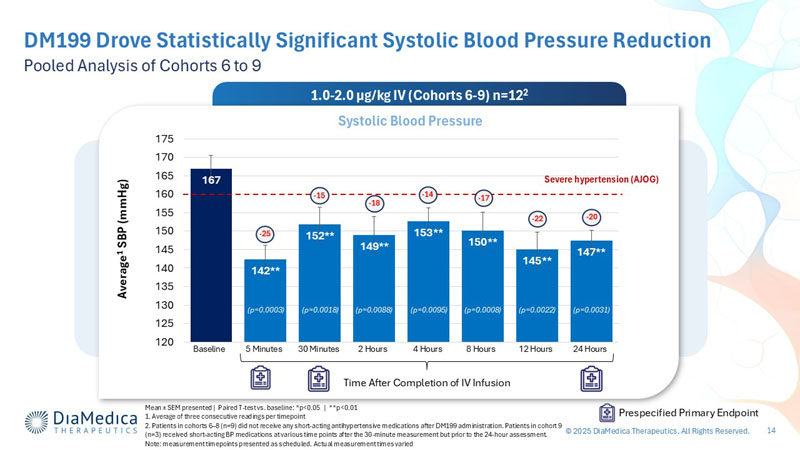
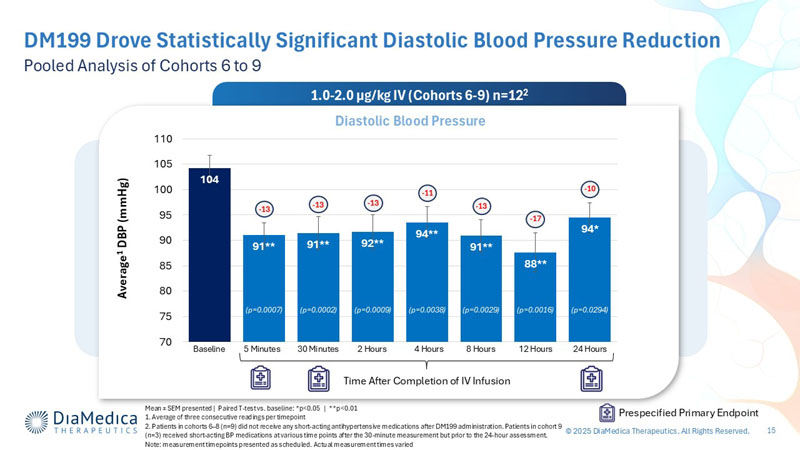
Pooled cohorts 6–9 (n=12), the potentially therapeutic dose range, exhibited statistically significant mean blood pressure reductions at 5 minutes, 30 minutes, and 24 hours post-infusion, showing a durable response over time: |
|
o |
SBP reductions: -25mmHg (p=0.0003), -15mmHg (p=0.0018) and -20 mmHg (p=0.0031) |
|
o |
DBP reductions: -13mmHg (p=0.0007), -13mmHg (p=0.0002) and -10 mmHg (p=0.0294) |
Safety
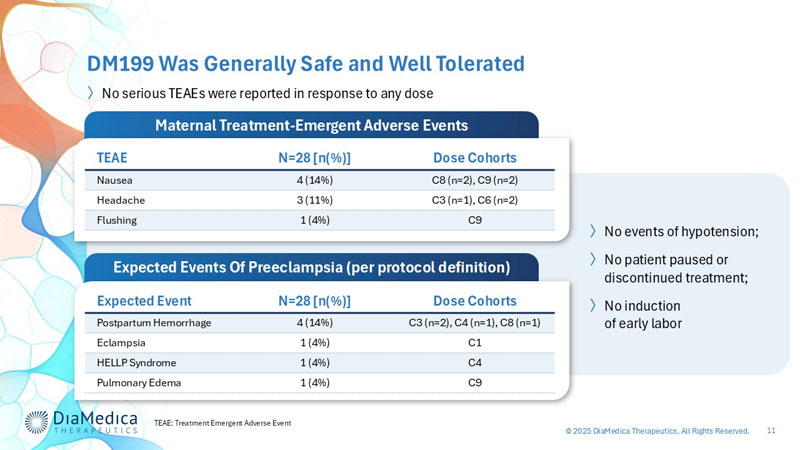
DM199 demonstrated no placental transfer and no serious treatment emergent adverse events (TEAEs) were reported across all cohorts. TEAEs events were mild and limited to nausea (n=4)(14%), headache (n=3)(11%) and flushing (n=1)(4%). Additionally, there were no discontinuations of treatment and no inductions of early labor.
Dilation of Uterine Arteries
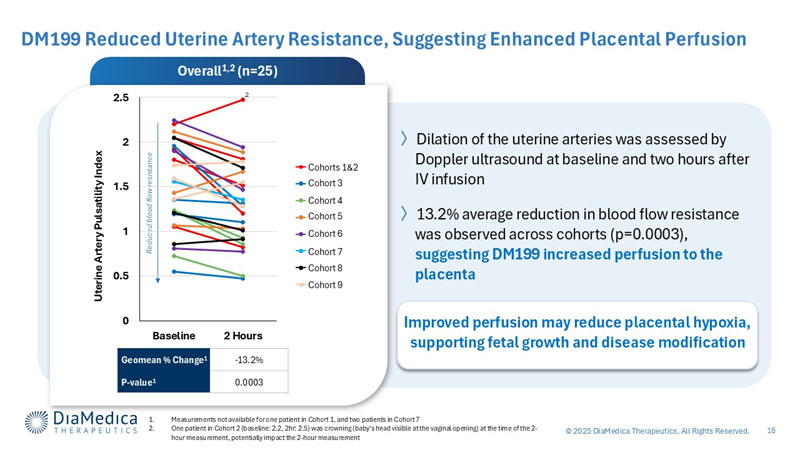
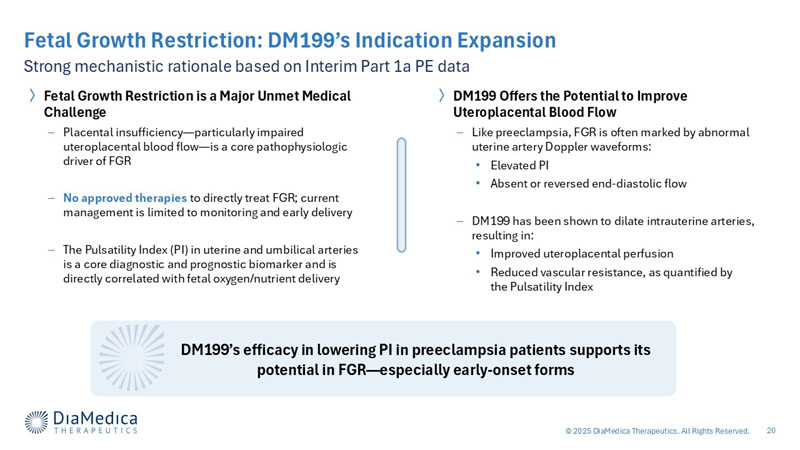
DM199 also produced a statistically significant reduction in pulsatility index (PI) measures, with a 13.2% (p=0.0003) mean reduction in blood flow resistance at the 2-hour mark, indicating a reduction in uterine artery resistance which suggests an improvement in uterine artery blood flow and placental perfusion. Improved perfusion may reduce placental hypoxia, supporting fetal growth and potential disease modification. The uterine artery pulsatility index is a doppler ultrasound measurement that reflects blood flow resistance in the uterine arteries.
Patient Demographics and Dosing:
|
● |
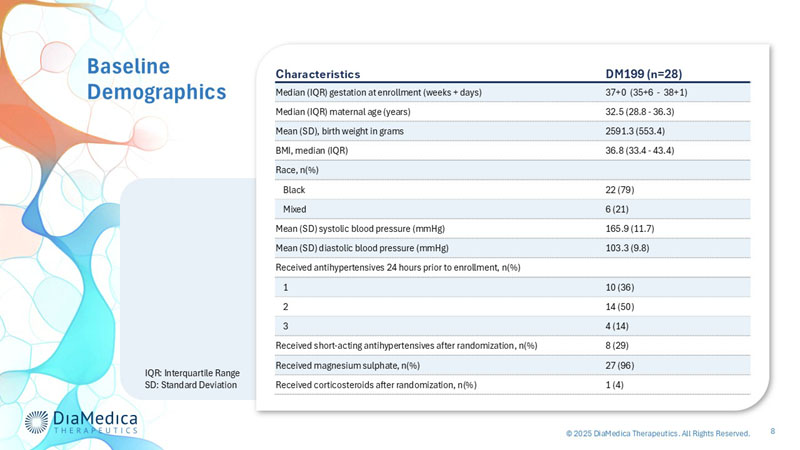
Participants were an average of 32.5 years old, had a mean gestation of 37 weeks at enrollment, and had a mean SBP of 165 mmHg and mean DBP of 102 mmHg at baseline. |
|
● |
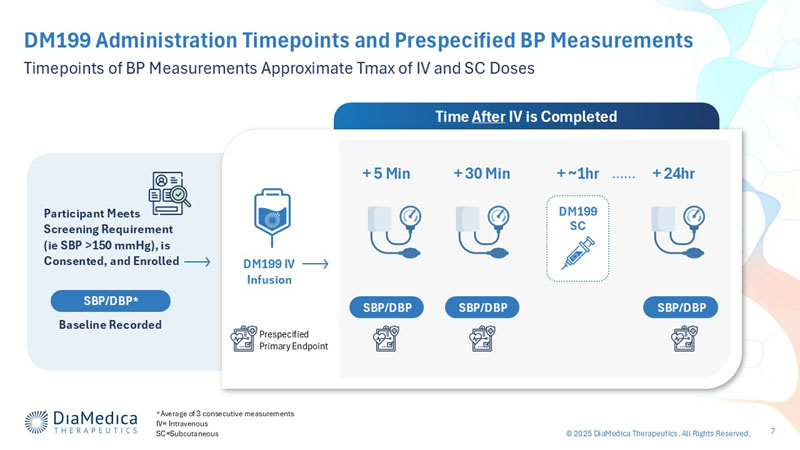
Following enrollment and baseline measurements, participants received DM199 IV infusion, followed by SBP and DBP measurements at 5 and 30 minutes post-IV. For cohorts 2 through 9, at 1 hour post-IV, participants received subcutaneous injection of DM199. SBP and DBP were measured again at/through 24 hours post-IV. |
|
● |
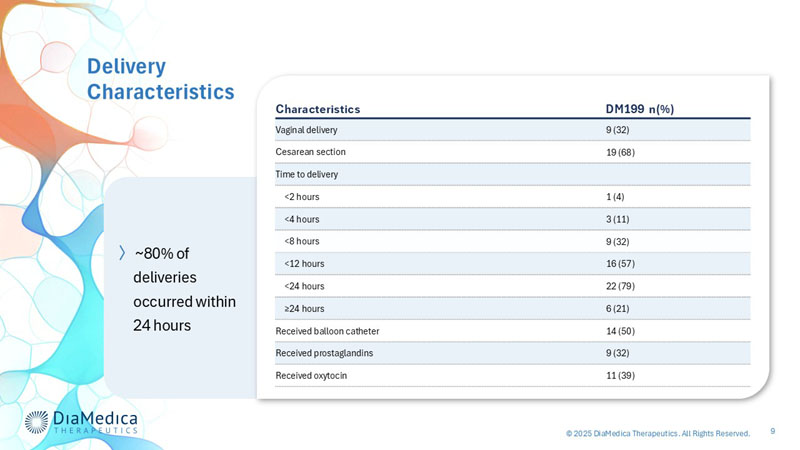
Approximately 80% of deliveries occurred within 24 hours following enrollment, with a total of 9 vaginal deliveries and 16 cesarean sections. |
“Mothers suffering with preeclampsia have no approved treatment options to address the root cause of the disease, ultimately putting their life and the health of the fetus, at risk,” said Professor Cathy Cluver, principal investigator of the Phase 2 preeclampsia trial and a maternal-fetal medicine specialist, founder and leader of the Preeclampsia Research Unit at Tygerberg Hospital, Stellenbosch University, South Africa. “With hypertension being the leading cause of delivery, often prematurely, in early onset preeclampsia, DM199’s ability to safely reduce blood pressure represents an exciting development in the search for an effective treatment for preeclampsia and I look forward to continuing our trial.”
The Company further notes that the DM199 investigator-sponsored Phase 2 trial will proceed with enrollment of the dose expansion cohort (Part 1b). Additionally, based upon the observation of PI reductions in Part 1a, enrollment in the fetal growth restriction (FGR) cohort (Part 3 of the study) will also being initiated.
Conference Call and Webcast Information
DiaMedica Management will host a conference call and webcast to discuss the interim Phase 2 preeclampsia study results later today on Thursday, July 17, 2025, at 4:30 PM Eastern Time / 3:30 PM Central Time:
|
Date: |
Thursday, July 17, 2025 |
|
Time: |
4:30 PM EDT / 3:30 PM CDT |
|
Web access: |
https://app.webinar.net/embnRNgXMqE |
|
Dial In: |
(800) 880-3330 |
|
Conference ID: |
6198262 |
Interested parties may access the conference call by dialing in or listening to the simultaneous webcast. Listeners should log on to the website or dial in 15 minutes prior to the call. The webcast will remain available for play back on the Company’s website, under investor relations - events and presentations, following the earnings call and for 12 months thereafter. A telephonic replay of the conference call will be available until July 24, 2025, by dialing (800) 770-2030 (US Toll Free) and entering the replay passcode: 6198262#.
About Preeclampsia
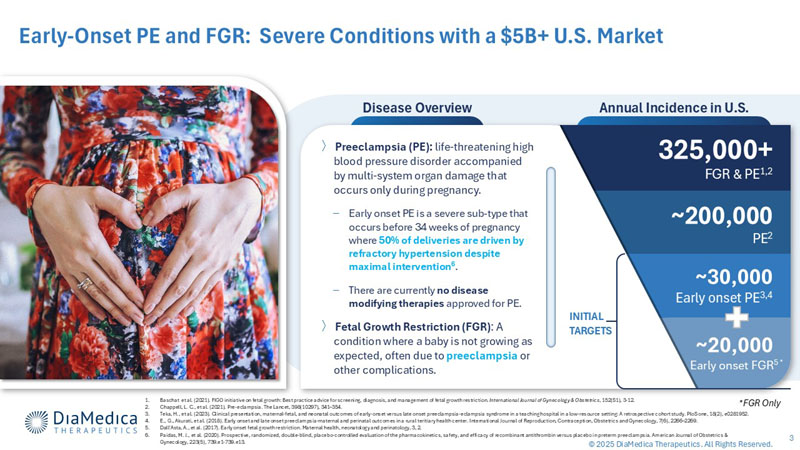
Preeclampsia is a serious pregnancy disorder that typically develops after the 20th week of gestation, characterized by high blood pressure and damage to organ systems, often the kidneys and liver. Affecting up to 8% of pregnancies worldwide, preeclampsia can pose significant risks to both the mother and baby, including risk of stroke, placental abruption, progression to eclampsia, premature delivery, and death. Preeclampsia occurs in two stages. First, in early pregnancy, the placenta fails to embed properly in the wall of the uterus, and the spiral arteries in the uterine wall that are supposed to dilate to promote healthy blood flow to the placenta do not widen. Stage 2 then occurs after 20 weeks of pregnancy as the placenta, which has been chronically starved of oxygen from the blood, begins to release noxious factors into the mother’s circulation, inflicting widespread damage to her blood vessels and causing systemic endothelial dysfunction. Symptoms may include severe headaches, vision changes, upper abdominal pain and swelling in the hands and face. Delivery of the baby, often very prematurely, is the only available option for stopping the progression of preeclampsia. Women who have had preeclampsia have three to four times the risk of high blood pressure and double the risk for heart disease and stroke.
About Fetal Growth Restriction
Fetal growth restriction (FGR) is a condition frequently associated with preeclampsia in which the fetus is not growing as expected due to a lack of adequate blood flow, oxygen, and nutrients reaching the placenta, and can often lead to premature birth, low birth weight, stillbirth, or potential long-term health problems for the baby after birth.
About DM199 (rinvecalinase alfa)
DM199 (rinvecalinase alfa) is a recombinant form of human tissue kallikrein-1 (rhKLK1) in clinical development for acute ischemic stroke and preeclampsia. KLK1 is a serine protease enzyme that plays an important role in the regulation of diverse physiological processes via a molecular mechanism that increases production of nitric oxide, prostacyclin and endothelium-derived hyperpolarizing factor. In preeclampsia, DM199 is intended to lower blood pressure, enhance endothelial health and improve perfusion to maternal organs and the placenta.
About DiaMedica Therapeutics Inc.
DiaMedica Therapeutics Inc. is a clinical stage biopharmaceutical company committed to improving the lives of people suffering from serious ischemic diseases with a focus on acute ischemic stroke and preeclampsia. DiaMedica’s lead candidate DM199 is the first pharmaceutically active recombinant (synthetic) form of the KLK1 protein, an established therapeutic modality in Asia for the treatment of acute ischemic stroke, preeclampsia and other vascular diseases. For more information visit the Company’s website at www.diamedica.com.
Cautionary Note Regarding Forward-Looking Statements
This press release contains forward-looking statements within the meaning of the U.S. Private Securities Litigation Reform Act of 1995 and forward-looking information that are based on the beliefs of management and reflect management’s current expectations. When used in this press release, the words “anticipates,” “believes,” “continue,” “could,” “estimates,” “expects,” “intends,” “may,” “plans,” “potential,” “should,” “seek,” “might,” “project,” “target,” “aim,” or “will,” the negative of these words or such variations thereon or comparable terminology and the use of future dates are intended to identify forward-looking statements and information. The forward-looking statements and information in this press release include statements regarding the Company’s expectations regarding anticipated clinical benefits and success of DM199 for the treatment of preeclampsia. Such statements and information reflect management’s current view and DiaMedica undertakes no obligation to update or revise any of these statements or information. By their nature, forward-looking statements involve known and unknown risks, uncertainties and other factors which may cause actual results, performance or achievements, or other future events, to be materially different from any future results, performance or achievements expressed or implied by such forward-looking statements. Applicable risks and uncertainties are subject to market and other conditions and include, among others, risks and uncertainties relating to the Phase 2 trial for preeclampsia and risks and uncertainties relating to the clinical expansion into preeclampsia; the possibility of unfavorable results from DiaMedica’s ongoing or future clinical trials of DM199; the risk that existing preclinical and clinical data may not be predictive of the results of ongoing or later clinical trials; DiaMedica’s plans to develop, obtain regulatory approval for and commercialize its DM199 product candidate for the treatment of preeclampsia and its expectations regarding the benefits of DM199; DiaMedica’s reliance on collaboration with third parties to conduct clinical trials; DiaMedica’s ability to continue to obtain funding for its operations, including funding necessary to complete current and planned clinical trials and obtain regulatory approvals for DM199 for preeclampsia and the risks identified under the heading “Risk Factors” in DiaMedica’s annual report on Form 10-K for the fiscal year ended December 31, 2024 and quarterly report on Form 10-Q for the quarterly period ended March 31, 2025 filed with the U.S. Securities and Exchange Commission (SEC) and subsequent SEC reports. The forward-looking information contained in this press release represents the expectations of DiaMedica as of the date of this press release and, accordingly, is subject to change after such date. Readers should not place undue importance on forward-looking information and should not rely upon this information as of any other date. While DiaMedica may elect to, it does not undertake to update this information at any particular time except as required in accordance with applicable laws.
Contact:
Scott Kellen
Chief Financial Officer
Phone: (763) 496-5118
For Investor Inquiries:
Mike Moyer
Managing Director, LifeSci Advisors, LLC
Media Contact:
Madelin Hawtin
LifeSci Communications
Source: DiaMedica Therapeutics Inc.
Released July 17, 2025
Exhibit 99.2