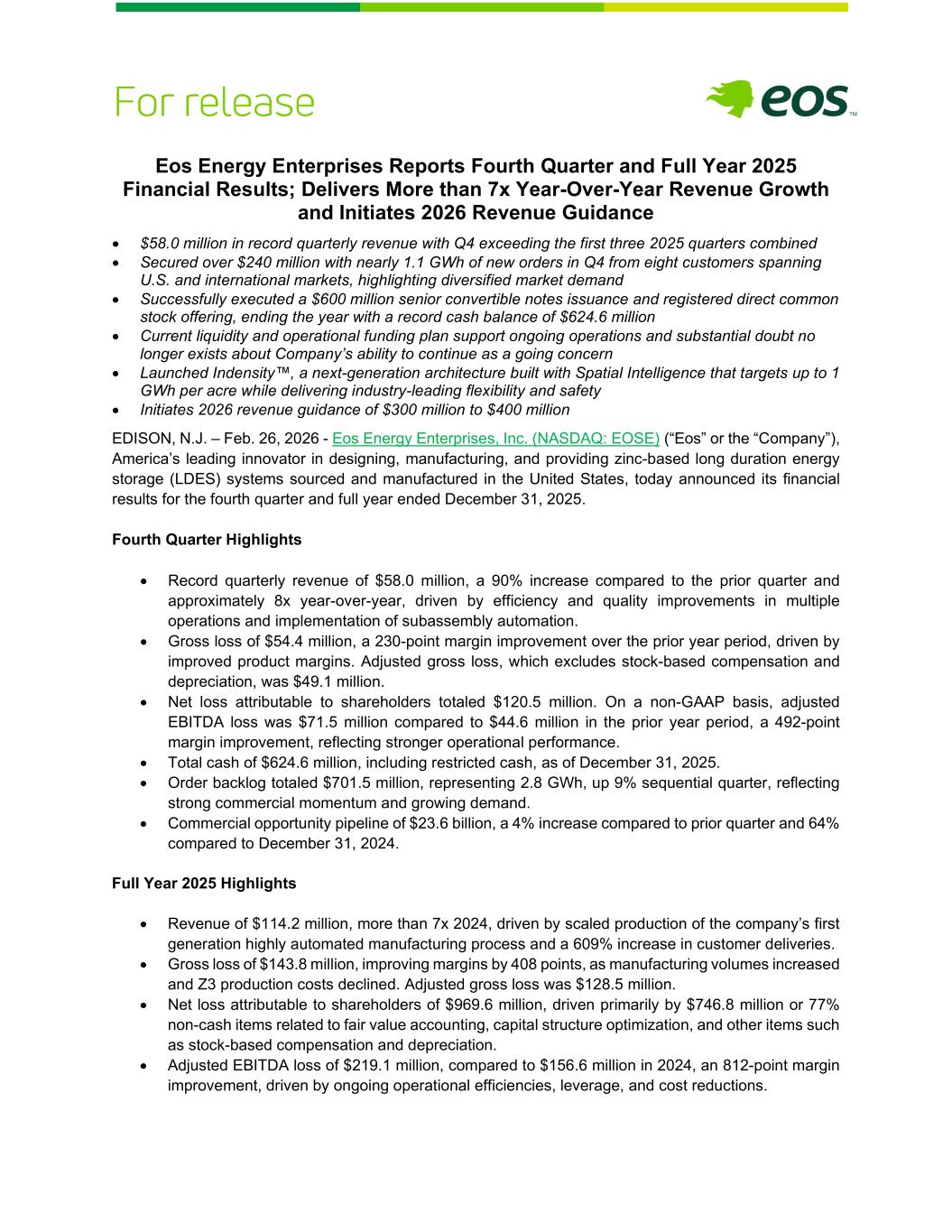
Operator
Good morning, and welcome to EOS Energy Enterprises' full year 2025 conference call. As a reminder, today's call is being recorded, and your participation implies consent to such recording. At this time, all participants are in listen-only mode. A brief question and answer session will follow the formal presentation. If anyone should require operator assistance during the conference, please press star zero on your telephone keypad. With that, I would like to turn the call over to Liz Higley, Head of Investor Relations. Thank you. You may begin.
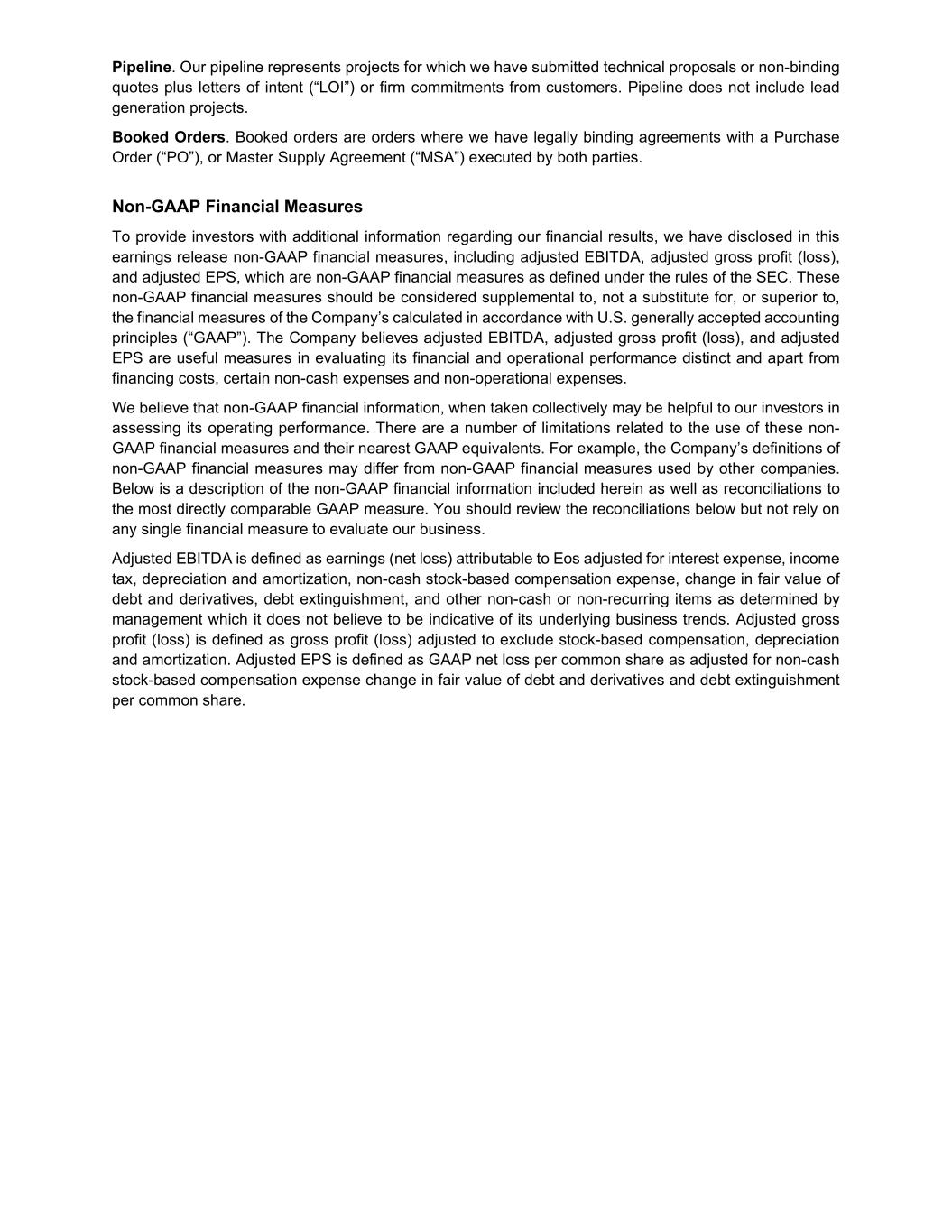
Good morning, everyone, and welcome to EOS's fourth quarter and full year 2025 conference call. Today, I'm joined by EOS CEO Joe Mastrangelo, COO John Mahaz, CTO Francis Ritchie, and CCO and Interim CFO Nathan Craker. This call may include forward-looking statements, including but not limited to current expectations with respect to future results and our outlook for our company. Should any of these risks materialize or should our assumptions prove to be incorrect, our actual results may differ materially from our expectation or those implied by these forward-looking statements. The risks and uncertainties that forward-looking statements are subject to are described in our SEC filings. Forward-looking statements represent our beliefs and assumptions only of the date such statements are made. We undertake no obligation to update these statements made during this call to reflect events or circumstances after today, or to reflect new information or the occurrence of unanticipated events, except as required by law. Today's remarks will also include references to non-GAAP financial measures. Additional information, including reconciliation between non-GAAP financial information to U.S. GAAP financial information, is provided in the press release. Non-GAAP information should be considered as supplemental and is not meant to be considered in isolation or as a substitute for the related financial information prepared in accordance with GAAP. In addition, our non-GAAP financial measures may not be the same or as comparable to similar non-GAAP measures presented by other companies. This conference call will be available for replay via webcast through EOS's Investor Relations website at investors.eosb.com. Joe, John, Francis, and Nathan will walk you through our business outlook and financial results before we proceed to Q&A. With that, I'll now turn the call over to EOS CEO, Joe Mr. Angelo.
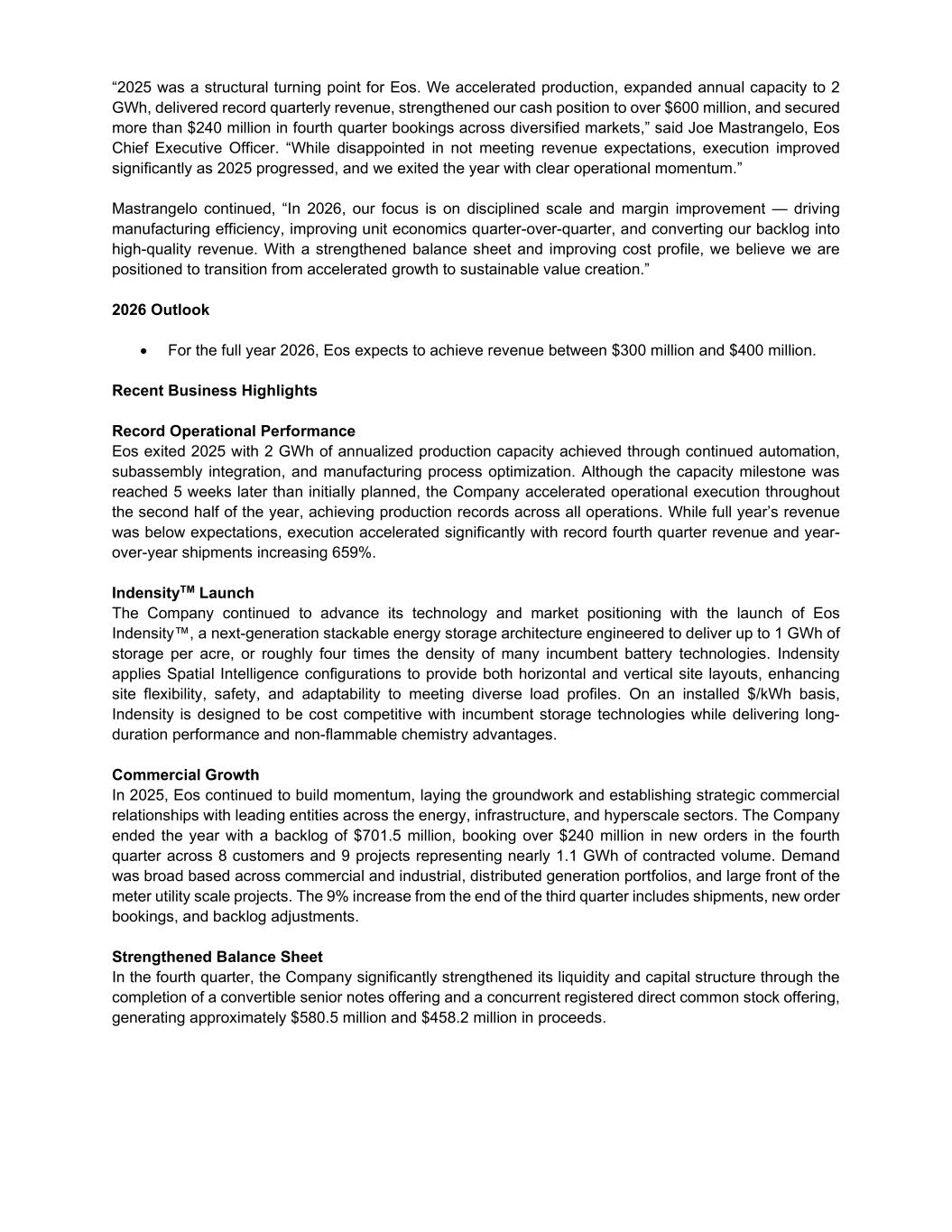
Thanks, Liz. Good morning, everyone, and thanks for joining us. This quarter, we continue to operate in an energy environment defined by one clear trend, the acceleration of demand for power combined with constrained grid flexibility and reliability. That creates opportunity for a company like EOS. What we've been talking about over the five years that we've been a public company is being able to bring a product that was flexible, reliable, and can do multiple discharges in a day or long or short discharges with quick response times. That's exactly what the market's looking for. And although data centers are in the headlines and data centers are changing the way that we think about our grid and data centers are requiring us to make decisions on faster time horizons than we've ever done before in the energy sector, there are other demand drivers in the industry. Things like electrification and transport, and also electrification of heating, and then the increased domestic production in the United States are creating higher load growths for a grid. That fits in perfectly with our technology. What we're moving to in energy storage is moving away from managing volatility to providing reliability. What you need is this buffer resource that allows you to keep the grid balanced, but also allows you to adapt to quick changes in load growth. But a vision of a product and a vision of a company only goes so far, execution is what counts. And when you look at our quarter and our year, yes, we set records. Our volume was up, our margins improved sequentially quarter over quarter and year over year. We had a great quarter as far as orders being booked, and Nathan will talk about how those orders fit into different use cases that are going to provide growth for the company in the future. But the bottom line is we missed our guidance, and that falls on me as the CEO of the company. What John Francis and Nathan and I will talk about today is building out the capabilities of our team, of our product, and of how we bring that product to market and manufacture and install it to be able to provide reliable performance. It's reliable performance, not just to achieve guidance, which is important, but to achieve the operating requirements of our customer as the grid evolves and demand emerges. We think we have the product that meets those future needs. We've got to continue to build the company and continue to smooth out and deliver predictable performance for our shareholders and our customers. I think we have the team that is able to do that and will show the initial results that are beginning to lay out how we can deliver reliably in the future. When you think about on the bottom, yes, seven times year-over-year growth on revenue combined with our highest cash position that we've had in the company's history, Along with closing the gap and moving towards profitability, we've removed the going concern language inside of our 10K filing, which Nathan will talk about in a moment, which really allows us, really says, we're operating the company strategically, which is important for the future. At the same time, we launched Indensity, which Frances will give some more details on. But Indensity is really taking the product that we have and finding a way to package it that's easy to operate, easy to service, easy to manufacture, and easy for customers to utilize multiple times in the day. It's not starting over. It's improving upon what we already have. At the same time, we're responsible to get our assets in the field up and running reliably, and Nathan and the projects team are doing just that. As we look at the overall results, I'm proud of what we did and disappointed that we didn't meet the guidance, but we are going to work to make sure that this doesn't happen again in the future. Moving to the next page, let's talk about how our install base is expanding. Today, we cover 20% of the United States. We have 20 projects installed. The company continues to expand its footprint and continues to operate out in the field. Today, our Z3 product has discharged nearly 300 megawatt hours of power. Every cycle is a learning opportunity and every cycle is an opportunity for us to get better and to understand our customer requirements and that's how we use it. At the same time, we do talk about concentration of revenue with a few large customers but if you look at the lower right hand side of this page we had deliveries to 11 different customers and we had revenue that came in from 18 different customers the difference in that seven is either commissioning and installation revenue or revenue from services on installed equipment that we did earlier when you look at this map you know as we come in in future quarters we're going to add more states we're going to target to get 25 here over the next few months and then at the same time we're going to add in a map of Europe as we ship into Germany and wait for the cap and floor program to close in the UK. We're excited about what the team is doing here. We want to give a picture of how we operate.
We've talked about the operating hours out in the field in the past, and that's really where we learned, and that's where Indensity came from.
These customers on this map giving us feedback to enable us to deliver a product that's going to meet the future needs of the industry while working with Nathan, John, and the teams to make what we have out in the field more rugged to be able to operate flawlessly and to give customers the performance that they require. Let's move to the next page and talk about some operational metrics. I want to start off in the upper left-hand side where we're looking at our quarterly revenue profile. If you go back to Q4 2024 and forward to Q2 of last year, you're looking at quarters that are basically growing 30 percent. That's basically taking our line, installing it, improving upon it and getting 30% throughput on the same asset base. Then you come into Q3 of 2025, where we started to bring bipolar manufacturing in, and you see a 2x step function from Q2 of 25 and Q3 of 25. Then we double it again, which is again bringing more of the bipolar manufacturing online. And by year end, John will talk through that we achieved our two gigawatt hour capacity coming out of the facility in Turtle Creek. On an annualized basis, we're up seven times and our capacity will support the demand that we see what's important here is we think about capacity management and as john walks through this and i think about this and you take what john's going to talk about and combine that with what nathan is going to talk about commercially is you're not running the factory at full capacity at any one point in time you're creating capacity to be able to create the opportunity for the company to grow and deliver and building in a buffer to be able to manage weather through the blips that you're going to see in any factories anybody that's worked in an industrial process knows that nothing goes perfect and you got a plan for that and that's what we're building here to get to the stable production that i talked about earlier we go to the bottom of the page you're seeing a narrowing of the gap and improvement in margin we're not at profitability yet but we're on track the company is structurally profitable we need to do now and what john will talk about is improve the efficiencies and the processes of how we operate the company thornhill and bringing our second line up and running is going to show us the full entitlement of how efficient we can be as a company the same time you bring a lean mindset to what you do every day that lean mindset tells you i've got to get better in everything i do there's waste in these numbers today we know that we know we have to get better and when you take all that in and start thinking about driving cost out of our product, taking and becoming more efficient in how we build it, getting out in the field, because productivity and profitability go beyond the factory doors, becoming more efficient in how we operate in the field, and proving out and getting installations up and running faster than what we planned. That's how we deliver our profitability, and we have a clear line of sight on how to do that. This is a profitable business when we execute to our capabilities, and that's we're building right now in density is a step function change in that the z3 tube is a profitable product and we will make that profitable what indensity does is it allows us to compete in a new way in the marketplace it delivers better footprint density to customers it allows us to build out capability faster it makes it simpler to manufacture the product and indensity gives us the ability to compete not only on price, but the ability to drive further cost out to deliver the profitability that we expect. I'm excited about the work that John's doing and Francis is doing, and I'm really excited about what Nathan's seeing out in the marketplace, and I'll turn it over to John now to start that off and then hand it off to Francis and Nathan.
Thanks, Joe, and good morning everyone. Great to be here with you all again this morning. Q4 was my first full quarter at EOS, and and I'm gonna speak candidly about where we are operationally. First, there's a real progress to acknowledge. We completed our sub-assembly automation, making our battery line fully automated. We closed 2025 with production records across all operations and delivered our fourth consecutive quarter of record revenue. 26 key suppliers supported this ramp to enable us to achieve our two gigawatt hour line capacity. That doesn't happen without a committed team doing a lot of things right. At the same time, we fell short of our operational targets, and that's on me. When we spoke last quarter, I felt confident in our ramp plan. We had strong early results and the excess capacity to deliver what we needed to hit our guidance. Ultimately, three very fixable issues prevented us from delivering our commitments. First, we had one isolated supplier non-conformance that cost us a week of production. We addressed it directly, working closely with our supplier to quickly identify root causes and corrective actions. We implemented better controls internally and at our suppliers. That specific issue is behind us. Second, the ability for the automated bipolar production to hit quality targets took longer than expected. That drove rework and lost revenue. We improved tooling, reduced variation in the automation process, and tightened material specifications to stabilize bipolar production. We have also added laser detection to give us better visibility and control of any process variation. Third, our battery line downtime ran well above industry norms, the design intent of the line, and our internal forecast. Best-in-class operations, and our expectation, is to run at roughly 10% equipment downtime. That's my expectation, and that's the expectation of our automation partners. As we pushed utilization higher throughout the year and ran the line for more hours, we were closer to the mid-30% range. Working closely with our automation partners, we addressed issues with our robotics, hardware, controls, maintenance schedules, and spare parts. We have also improved our technical capability and strengthened our team to improve time to resolution. Downtime has improved significantly in Q1. This is a controllable lever, and we have a path to world-class performance. None of these were demand issues. None were structural. This was a significant ramp of first-generation automation designs. While the magnitude of the issues was unanticipated by me, the resulting learnings, actions, and execution are my responsibility. Look, since I've been brought in, a major focus for me has been identifying single points of failure in the system. This was first-generation automation that was being run at high volumes for the first time in some cases you don't fully see those weaknesses until you stress the operation we've now done that it has allowed us to identify and address gaps in our automation organization and operating system we are systematically hardening the process to make sure these failures do not occur in the future the results of our efforts have driven higher quality repeatable and predictable operations in early q1 the biggest structural risk today is a lack of redundancy. If our primary line goes down, production stops. That changes with line two, and as I said on the last call, we're making design changes in that line to further improve our performance. Line two is progressing well and is preparing for factory acceptance testing in Wisconsin. We've intentionally built redundancy into critical stations. Once operational, it eliminates our single largest point of failure and gives us flexibility that we simply don't have today we're also addressing efficiency as i've mentioned before today materials travel across three floors and two buildings over two miles from start to finish that's not a cost efficient design with line two and the thornhill expansion we're redesigning the layout around single piece flow significantly reducing material handling and complexity as we have worked to achieve the entitlement for the line output we have uncovered inefficiencies that result in longer end-to-end production times and higher labor costs to achieve that goal. We are fixing those challenges, and that will allow us to operate at a higher efficiency with a lower cost structure. We expect equipment to begin arriving in Q2 with fully automated production targeted in Q4. Let me close with this. 2025 was a year of heavy automation implementation, capacity expansion, and rapid change. Day one is never perfect. My job is to turn new capability into repeatable, disciplined operations. We've identified the gaps, we've addressed the root causes, and we're building the redundancy and process rigor required to scale reliably from here. I'm confident in the path forward and confident in the team's ability to execute it. Let me turn this over to someone who's helped me get up to speed quickly, our CTO, Francis Ritchie.
Thanks, John. It's great to be joining the call today. I'm the Chief Technology Officer, and I've been with EOS for 11 years. I started at EOS when we were a 15-person company, and it's been a rewarding journey with an incredible team of scientists and engineers, developing the chemistry, battery, system, and software over multiple product iterations. I'm a chemical engineer by training, and my passion is scaling and optimizing technology to build profitable products, particularly products utilizing electrochemistry. Throughout my time at EOS, the market environment has evolved significantly, and EOS has evolved along with the market. We started with an aqueous zinc-based battery. As our technology continued to advance, we found more efficient ways to configure our systems and implement better power electronics to control performance, most recently with the EOS Z3 Cube. Early customers simply wanted to buy a DC system of batteries, which they would integrate into larger AC systems. Now, many want a full system where EOS provides batteries, software, controls, AC integration, and site design, a complete project that can be easily installed and operated. Many of these storage solutions also require installation in an urban or suburban environment. For more than two years, we've operated Z3 systems in the field and tested them even longer in our Edison test facility learning how these systems operate in extreme environments we've operated in very cold climates and also in hot desert environments with high winds that create sand and dust that can impact system operation look the field is the ultimate proving ground and this has helped us to improve system resilience and reliability as well as our software and controls which led to the launch of dawn os dawn os enables customers to manage and optimize system performance with individual battery monitoring and control to provide improved operability. This is then where Indensity comes in. This is a product that we've co-developed with our customers as we discuss their operating requirements and run load profiles in our Edison test facility. The same chemistry, same battery, same software and controls, different packaging, and better performance. We're entering a new phase of growth and opportunity, one that differentiates EOS from any other commercially available battery energy storage solution. When we talk about indensity as a differentiated product, we focus on three key elements – serviceability, cost, and site energy density. The indensity core significantly improves ease of serviceability. We took a page from the aviation industry and thought of an indensity core like an aircraft engine that won't require on-wing service. Instead of disconnecting the entire system to service one piece of it, Indensity is designed for quick disconnect so that individual units can be safely serviced using a simple forklift, avoiding disruption of the entire system and allowing for uninterrupted operations. This is an industry-wide advantage of our solution, as we can now service each 133 kilowatt hour in density core without needing a crane, whereas competitors usually require a crane and the loss of multiple megawatt hours of energy during service or site-wide power augmentation. The modular core design allows units to be stacked vertically, as many as 12 units high, significantly improving site energy density and allowing us to serve customers in areas incumbent technology simply can't access, such as in densely populated space-contrained locations where safety is often a key element in decision-making. This new solution allows us to easily configure systems to customer energy and space requirements. This is an exciting time, and I've had the opportunity to lead EOS's evolution from cell testing to battery manufacturing to now providing battery energy storage systems integrated with advanced controls and software. I couldn't be more excited about the future and how our product meets the needs of our customers. Thanks, everyone. With that, I'll turn it over to Nathan.
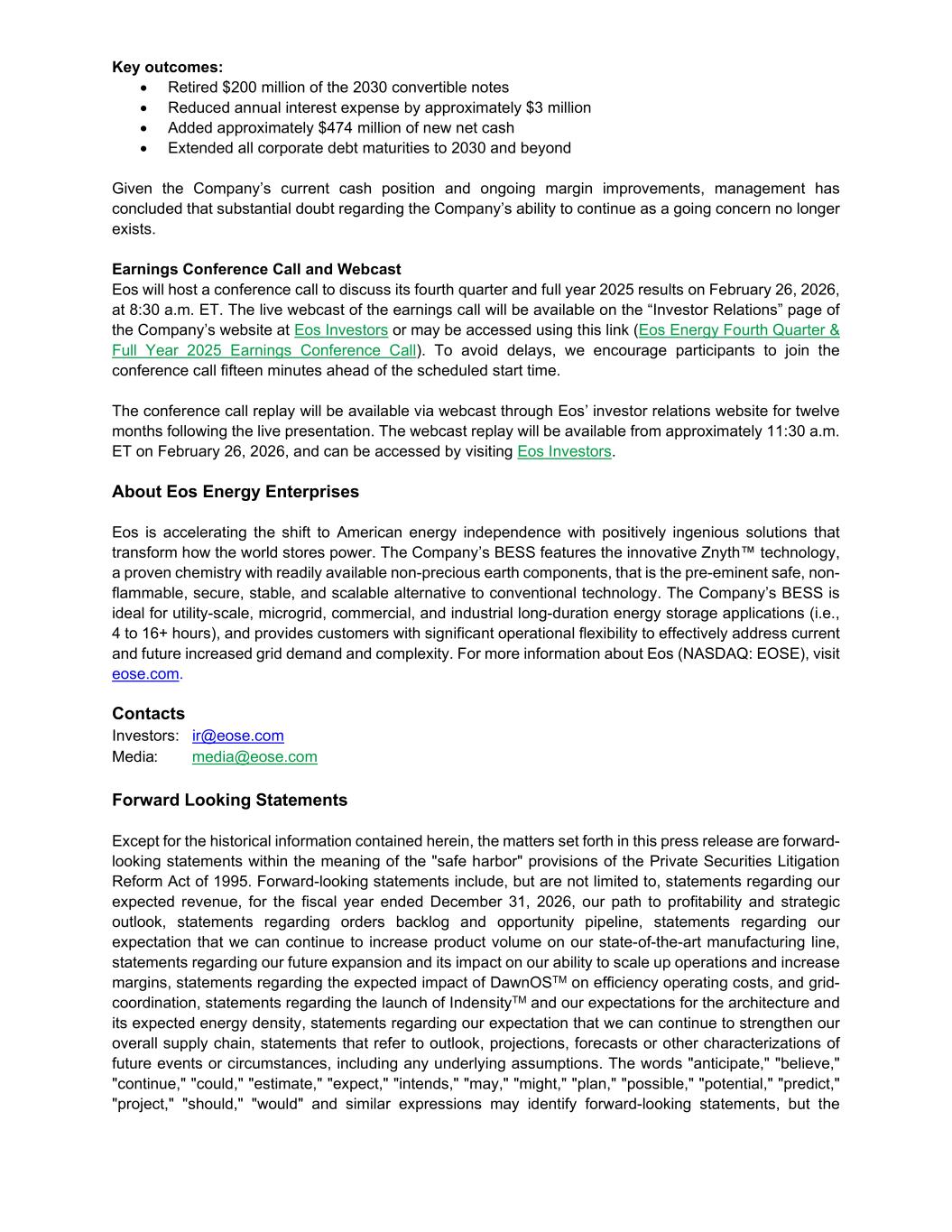
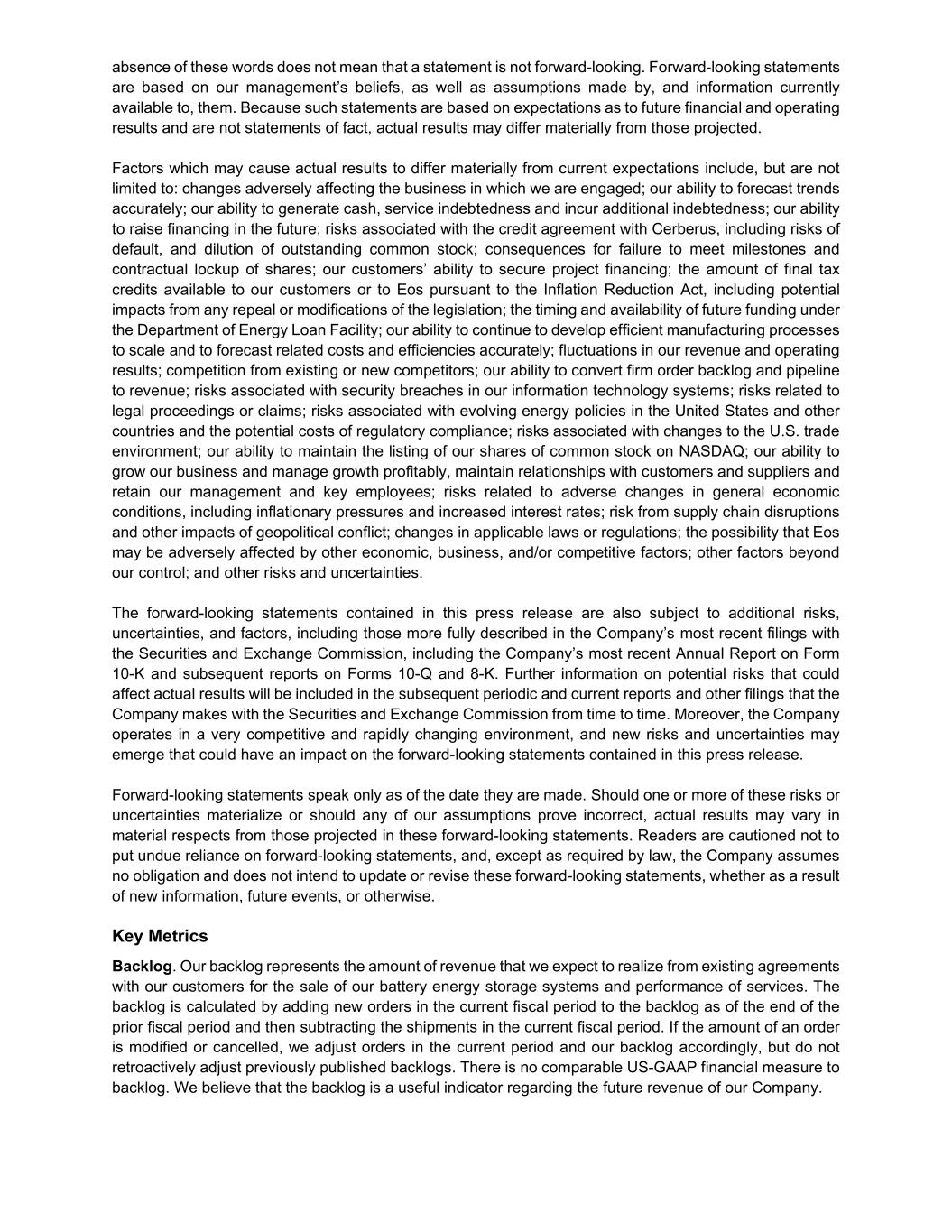
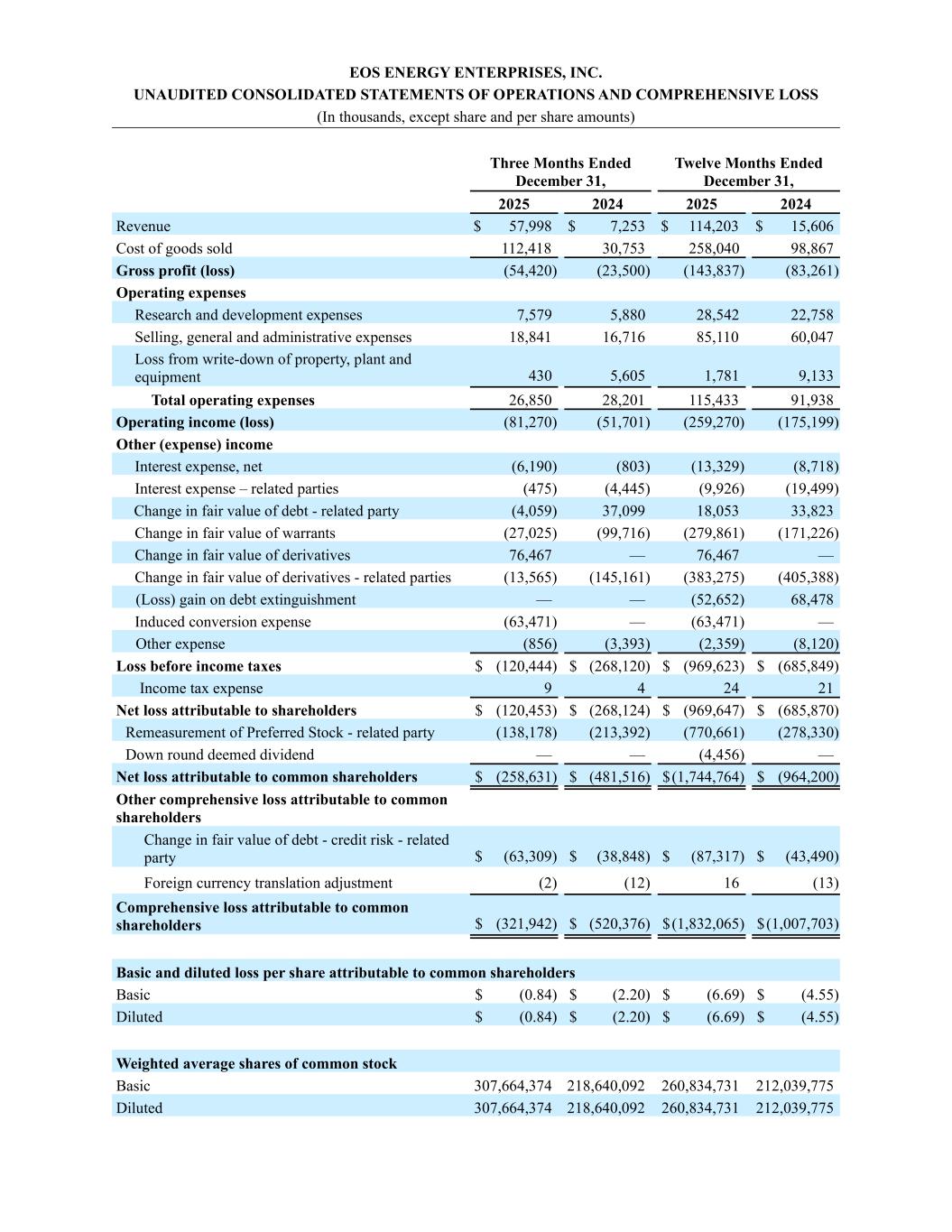
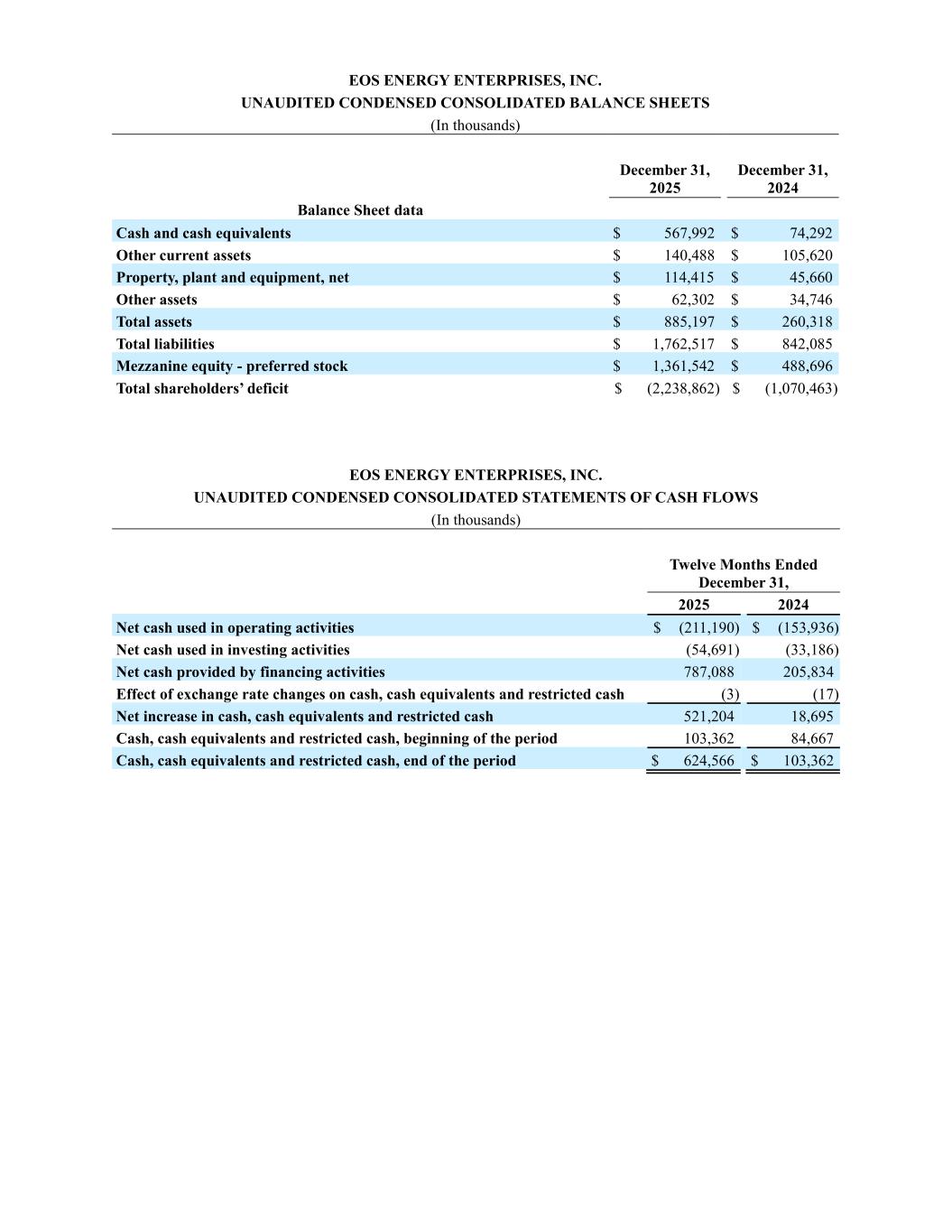
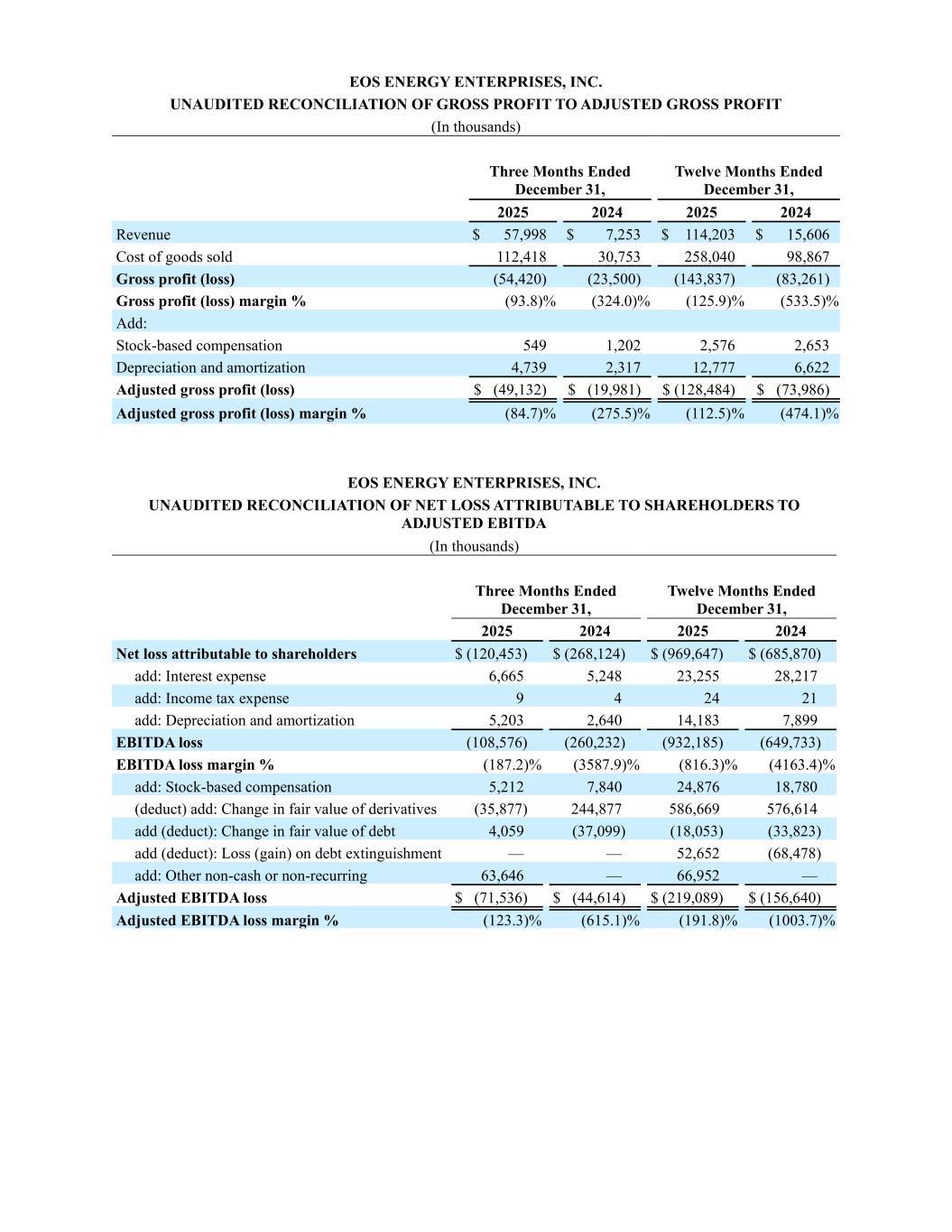
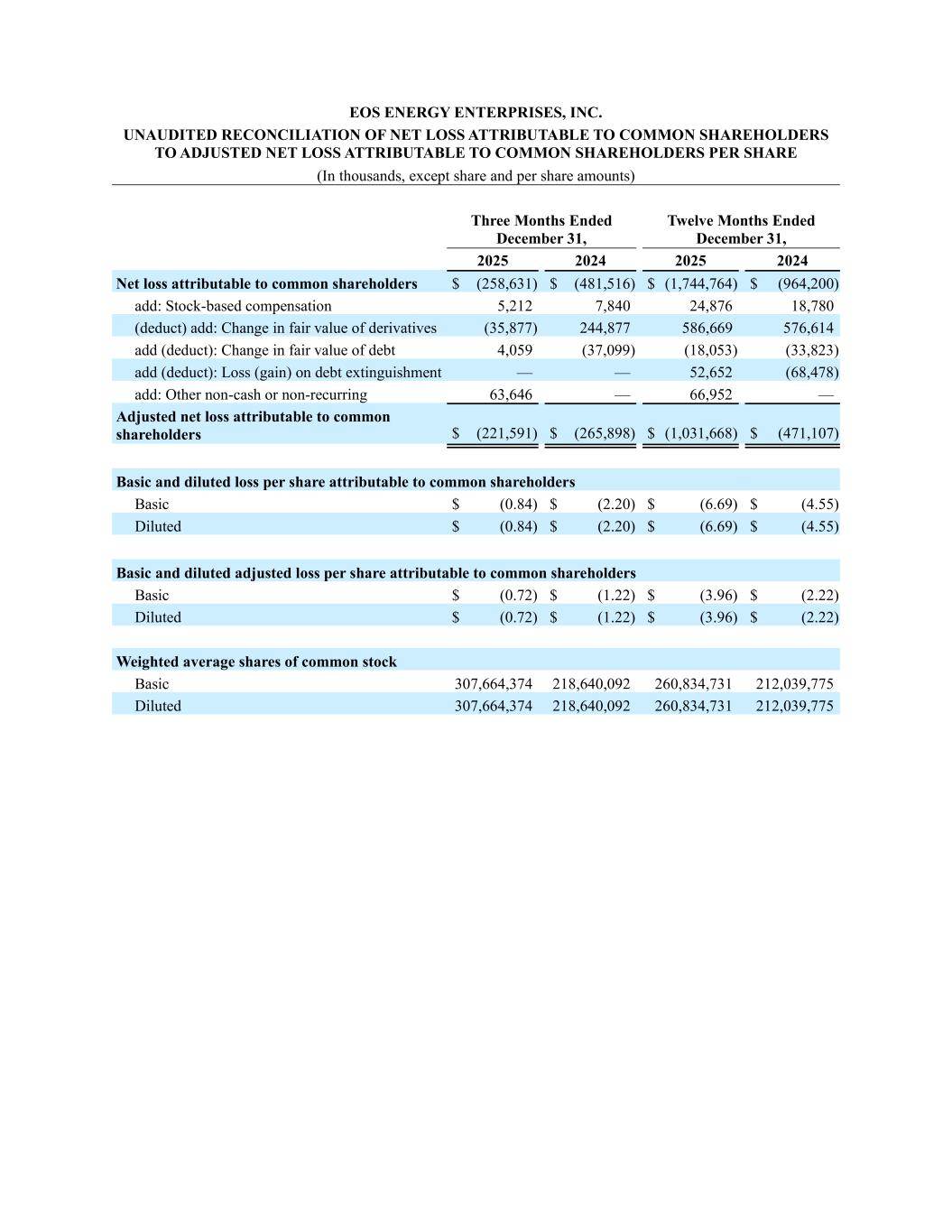
Thanks, Francis, and good morning, everybody. Let me start on the commercial front, where we had a very active fourth quarter, and I want to start by looking at the results. We ended the quarter with just over $701 million in backlog, booking nearly 1.1 gigawatt hours across eight customers and nine individual projects, representing a 9% sequential increase. During the quarter, we secured more than $240 million in new orders with a healthy diversification across commercial and industrial, distributed generation, and front-of-the-meter utility scale applications. Now, let me give you some background on three of these orders that highlight the operating flexibility of our technology and how we can work across the energy value chain in different customer use cases. First of all, we signed a 50-megawatt-hour master supply agreement with a developer in the Midwest to deliver projects that are supported by Commonwealth Edison's Distributed Generation Rebate Program. This program provides a $250 per kilowatt-hour incentive for new energy storage systems. And we have already executed the first purchase order under this agreement, with delivery being scheduled for later this year. Now, moving on to the second one I want to highlight, and just as important, we signed two initial projects for systems to be installed at hotels in Florida with a developer that has a robust pipeline of additional projects. And we expect additional projects to materialize over the next 12 to 18 months. And the last one I want to highlight, we secured an order from a global power company that is a focused, renewable, and energy storage platform to deliver a Z3 system to be installed at a national lab for integration testing. And we are actively working on large-scale opportunities with this customer, so this is a very meaningful project to show the Z3 performance capabilities. All three of these projects highlight how we are building long-term partnerships that will scale into larger, more meaningful growth opportunities in the future. Now, turning our attention to the broader pipeline, we ended the quarter with a commercial pipeline of $23.6 billion, representing approximately 99 gigawatt hours of opportunity, up 4% sequentially and 64% year-over-year. Hyperscaler and AI-related projects remain a primary growth driver, as we see customers looking for firm, dispatchable capacity and behind-the-meter load-smoothing solutions. Leads specific to data centers increased by 50% quarter-over-quarter, while our active data center pipeline grew by more than 40%. Many of these opportunities are specifically designed for the indensity solution. As disclosed in our public filings, EOS has been submitted for a 300-megawatt, eight-hour project in the Brooklyn Navy Yard under NYSERDA's Bulk Storage Procurement Program. We also have another project that was submitted under the same bulk storage program in ConEd's Zone K with the customer that I highlighted earlier that is testing our product at the National Lab. From an application perspective, we are also seeing more opportunities shift toward co-location with generation assets, including both natural gas and renewables. These applications typically require longer discharge durations, and as a result of this shift, we are now seeing 63% of our pipeline consisting of eight-hour or longer systems. I want to highlight PJM for a moment, where we've seen recent capacity market reforms with sustained elevated clearing prices that are improving the economics for long-duration storage. This aligns very well with our framework agreement that we have in place with TALENT. In addition, Bymergen, a long-term partner that has publicly traded on the New York Stock Exchange, announced their technical selection of the Z3 system for the 400-megawatt-hour Redbird project in ERCOT. Following this project, there is an additional 2 gigawatts of project development pipeline that spans ERCOT, PJM, and MISO that we are currently working on. overall we are seeing very strong near-term backlog growth combined with sustained long-term pipeline expansion both of which are positioning the company very well as demand for integrated long duration storage solutions continues to accelerate now shifting over to the financials we have a lot to be proud of and as joe and john mentioned earlier we are focused on the work ahead of us that will deliver profitable growth. Now, let's step back and look at 2025. It was a year full of real operational progress. We exited the year having full automated battery module manufacturing. We've implemented continuous process improvements. We launched Dawn OS, and we executed multiple product component cutovers, all while scaling production significantly. These foundational moves are now clearly translating into financial performance. We delivered our fourth consecutive quarter of record revenue and an additional consecutive quarter of gross margin improvement as production volumes ramped and sub-assembly automation went into production. In the fourth quarter, we generated $58 million in revenue, nearly double Q3. We exceeded the combined revenue of the first three quarters of 2025, as well as all prior year revenue combined since the company went public. We delivered $114.2 million in full-year revenue, more than seven times year-over-year growth. As John highlighted earlier, sub-assembly automation represents a meaningful inflection point in our manufacturing strategy. It expands available capacity, it improves product consistency and quality, and it enhances labor productivity, ultimately lowering overall unit costs. While this is only beginning to contribute late in Q3, what we saw in Q4 reinforces our confidence in how this business scales. As volumes increase, we are seeing improved fixed cost absorption, driving continued margin improvement. Gross loss for the year was $143.8 million, a 408 percentage point margin improvement year over year, driven by significantly higher production volumes and continued product cost out. This quarter, we introduced a new non-GAAP metric, adjusted gross profit. This excludes stock-based compensation and depreciation and amortization. And we believe this provides a clearer view of core operating performance and better aligns us with industry peers. And on that basis, adjusted gross loss for the year was $128.5 million. dollars 2025 operating expenses came in at 115.4 million up 26 percent year over year reflecting the targeted investments to support scaling initiatives and further enhanced product solutions throughout the year we've invested in engineering launched don os and in density we closed multiple financing transactions all while bringing in high impact new talent into the organization. Of the 115 million in OpEx, 25 million or 22 percent was comprised of non-cash items primarily driven by stock-based compensation and depreciation and amortization. The net loss for the year was 969.6 million dollars compared to 685.9 million in the prior year. Importantly, these results included 746.8 million dollars of non-cash impacts related to the fair value accounting adjustments, refinancing, and other non-operating items. The largest driver of the loss was from the 135% year-over-year increase in our stock price, which resulted in mark-to-market revaluations of both the warrants and the derivatives. Now, as our share price continues to move, this line item will continue to fluctuate, and it is not tied to company operations. And with that, we finished 2025 with an adjusted EBITDA loss of $219.1 million, showing an 812-point margin improvement. While up year-over-year in absolute dollars, the margin improvement and the 632% revenue growth demonstrate improving unit economics and operating leverage as we continue to scale the business. These gains were driven primarily by the operational efficiencies from increased manufacturing capacity and from higher production volumes. Now turning to cash, we ended the year with just under $625 million worth of cash on the balance sheet, the strongest cash position in the company's history. Over the course of the year, we were very intentional about strengthening our balance sheet, and that really culminated with the refinancing that we completed in November, Where we retired 80% of our existing 2030 converts, we reduced our interest rate by 500 basis points, and we added $474 million in cash. And we were able to free up an additional $11.5 million in restricted cash. Additionally, with the exercise of our public warrants, we also generated approximately $80 million in gross proceeds. And as a result of all these actions and our current company outlook, we have removed the going concern language that we have had in our filings in prior years. This is a significant milestone that reflects the strength of our cash position and the continued improvements in our underlying operations. Now, taken together, 2025 was a foundational year for the business. We expanded customer relationships. We advanced key partnerships. We've scaled our production. we've implemented automation, we've improved our margins, and we've launched both a new software and a product configuration that builds on our existing technology while addressing the evolving market needs. While there's still a lot of work ahead of us, the foundation that we have built positions as well for continued growth, improved profitability, and long-term value creation. And with that, I'm going to turn the call over to Joe.
Thanks, Nathan. let me wrap up with our outlook on 2026 as we initiate guidance on revenue. You can see the progression of our guidance from 7x. If you take the midpoint of the guidance range in 2026, it's 3x what we did in 2025. Feel confident about the guidance that we're giving, given what John and Francis have talked about. And when you think about this guidance, think of it this way. The 300 million is coming from backlog and the range to the 400 million is tied to some of the bigger projects that we talked about as they go through the normal approval processes with the grid operators where our customers will be installing projects. We're excited about the things that you see, the NYSERDA projects that Nathan talked about, working with Talon and PJM, things that we're seeing as far as states like Virginia, ERCOT growth, data center growth. We feel confident that we'll begin shipping in density as we get into the second half later part of this year. And that's we go from the 300 to 400 million as we go through the year we'll give updates on where we are against that progress and when you also think about this one other thing that we've never given official guidance on what we've talked about a few times in earnings we talked about becoming gross margin positive in q1 unfortunately with where we wound up in volume last year our material costs pushed out into one q that's going to delay our path to profitability as we get into 2026 we feel very confident on the projects that that francis is bringing from a technology standpoint that john is driving from a productivity and cost out material cost out standpoint and nathan delivering better efficiency out in the field that we will be gross margin positive in the second half of 2026 we feel very confident on the guide that we're giving on the range of 300 to 400 million so with that i want to thank everybody for listening today and now we'll go to the q a portion where we'll start off with some of our questions that came in over the say tool from our from our retail shareholder base okay first one as part of project amaze eight gigawatt hour annual production targets where does eos expect to be at the end of 2026 for annualized manufacturing nameplate capacity right now we're targeting four gigawatt hours that's in line with the customer requirements that we have we really want to bring position foreign hill for rapid expansion you know what as we think about how we want to do this you know the goal here is to be able to bring capacity online within the window of customer demand and that's what john's trying to do but it's not just the capacity of the equipment that we're installing it's other other portions of the overall supply chain i'll turn over to john here to add some comments but the the target for the year is four gigawatt hours of nameplate capacity coming out of 2026. that matches with where we see our backlog and then from there we'll be able to add capacity as required i don't know john if you have anything you want to add yeah over the last few months we've developed multiple automation partners for automation equipment to shrink lead times we've developed the national building partner that can deliver a building in a short period of time that's in line with our automation commitments from an implementation standpoint and then we work with our suppliers to understand where their inflection points are where they have to add additional capacity and what their timelines are so that i can stay out ahead of nathan on from an order standpoint and i i would just add at the end here before we go to the next question look we're we're not out chasing chasing uh we're not out chasing volume we're building capability we're building capability to reliably deliver you know when you flip the switch in your home you want the lights to come on and we want to deliver a product that enables us to do that so we're going to be very disciplined on how we do that for delivering for customers and also disciplined about how we think about our working capital and cash balances as we also expand if i move to the second question what recent operational metrics and achievements validate achieving your q1 2026 positive gross margin target how much of the margin expansion is dependent on the intensity transition versus efficiency gains on the existing z3 module automation line i think we talked i talked about the first part of that question on the last page when we when we issued guidance um you know look, we feel like underlying, this is a structurally profitable business that needs to get better at how it executes day by day. And we have a very clear path on how we want to do that. We've got the leaders and the capability from a team standpoint and the equipment to be able to do that. I think the pages that John talked about and the operational page I had in there shows that structural profitability we need to just execute to get there the z3 tube is a profitable product the indensity core is adding to provide better performance to customers allowing us to manufacture faster and allowing us to compete on price point head-to-head with any with any technology on the market no john if you want to add anything to that as far as how you see profitability evolving Yeah, if I look at it from a lean methodology, all aspects of our operations have waste and opportunity for improvement.
So I look at, I talked earlier about downtime. So reducing downtime and increasing fixed asset utilization and labor utilization. We talked about yields, so improving the yields and reducing scrap. If I look at materials, we've got several projects that are going to reduce material costs, but not only reduce material costs, but also reduce assembly time and manufacturing time. We continue to look at ways to increase run rates, look at ways to increase efficiency, and then as we get into Thornhill, we'll have an optimized cost perspective from a material handling standpoint. We're literally gone from two miles down to a thousand feet. So if you consider all the material handling that goes into there, there's a significant opportunity to reduce costs in just that one item.
And I think just closing out, like John brings up a great point on Thornhill, you know, over time we're going to want to consolidate the footprint into one location to capture all those synergies. That will be part of the plan as we move forward and think about expanding. With that, we'll wrap up with the same questions and Operator will turn it over to our cell side for any Q&A.
Operator
Thank you. At this time, we will conduct the question-and-answer session. As a reminder to ask a question, you will need to press star 11 on your telephone and wait for your name to be announced. To withdraw your question, please press star 11 again. Please stand by while we compile the Q&A roster. Our first question comes on the line of Steven and Gengaro of Seifel. Your line is now open.
Thanks. Good morning, everybody. My first question is on the guidance, and maybe two parts. One is, a couple months ago, you had a pretty high expectation for the fourth quarter, and clearly you fell short, and now we're looking at a pretty big ramp in 26. How do you think about the components of guidance and sort of de-risking the parameters you put out versus guidance historically?
Yeah, Stephen, good morning. Thanks for the question. First, like, you know, you look at the range, as I talked about, when we talked about the guidance in and of itself, you know, we're looking at the improvements that John has implemented coming out of fourth quarter, looking at the backlog of orders that we have to get to the bottom end of the range, than looking at the opportunities that we're working on, the fact that we're bringing a new line in to give us the top end of the range. But we've tried to really look at how we can change our discipline as a company to not have happen what happened in 2025. So the range is $100 million, midpoint is $350 million. What hasn't changed about the company is the demand that's out there for the product. What we're trying to do in 2026 is better control our scale, get the manufacturing throughput quality and margin expansion that we need, and really look at where we think we can land without going for a degree of difficulty that's a 10, but coming in with something that we can manage to over time. okay great no that's that's helpful and then just i imagine this is correct but when we think about the the quarterly growth i mean i would imagine the one q would be above four q but the low point and then escalate throughout the year is that a reasonable pattern yeah well look steven so part part of part of what we have coming in and you know we don't give quarterly guidance but But from a standpoint of coming into the year, you know, we're coming off a high point. We're delivering the customer schedules. I think we'll be around the fourth quarter number as we look at, like, what we have to deliver to customers. And there's also commissioning revenue in there as well. And then from there, sequentially grow.
Okay, great. I'll get back in line.
Operator
One moment for our next question. Our next question comes from the line of Julian Dumoulin-Smith of Jefferies. Your line is now open.
Hey, good morning, team. Thanks for the time. I appreciate it. Can you guys hear me okay?
You're good. Morning, Julian.
Hey, guys, a super cool question. Just going back to the comment about the $300 million to $400 million range, can you guys comment a little bit about what exactly those bigger projects that you're talking about are? Like which ones in particular seem particularly right, right? Again, just to maybe track against the milestones this year and what would materialize. materialize. And also, if you can speak a little bit against, you know, you've got a materially larger backlog in aggregate. What's the duration of that backlog when you think about it, just given that, you know, call it 300 of it is burning off this year, if you will?
Yeah, Julian, great question. Look, I think we go back on the material large stuff. But look, I think we all know the industry needs power, needs power quickly. But at the same time, we still operate in a framework where approvals and queues are long, so we're kind of hedging that. But Nathan talked about two large projects in NYSERDA that, when approved by NYSERDA as part of their bulk storage buy, would go into delivery almost immediately. So that's two of them in there. We've talked about PJM and what we're doing with Talon. There's other projects that we have that we haven't discussed with large hyperscalers that could potentially come in. And then Nathan talked about what appears to be, you know, when you look on the surface, they look like small projects, but they're small projects with a big pipeline of opportunity that you deliver and grow and continue to deliver. And we just got to work through that. We'll keep everybody updated on that as we move forward from there.
Got it. And then just if I can follow up there you know the defense space you know seems intriguing here can you comment about that and market and the opportunity you see there what is it what does the project like like look like in that space size duration and just even elaborate a little bit more about what you guys were talking about a second ago and in the timing of seeing some of that come to fruition again how do you what does that look like so so defense like i think you start off with NDAA, which is how the Defense Department of War purchases.
In the NDAA, they're being told to buy American products, and I think we have that American product. As we go through that, there's a lot of things we have to go through as far as working with different branches of the government to get approval. I think a big thing that helps accelerate us is the due diligence process that we went through with the Department of Energy to get our loan. But we're working through across all branches of the military to see what the needs are. And what we're looking at is what do they need, and there's also large power growth that they have, and how do we meet those needs. and then we go through and show them how the product is. But also, as you work with the military, there's things that we're doing to make sure that we hit all their requirements because we want to hit the ground running. But that's something that we'll continue to work on, and we are working on, and we do spend a significant amount of time down in Washington walking everyone through what the technology is capable of.
Got it. Excellent. Thank you for that. And then lastly, if I could just ask, just given where you are coming out for 26, how do you think about the ramp of line 3 and 4? Right. So, you know, how do you think about when and the timing and scaling of that? Right. Obviously, you got line one and now line two here, but three, four, four of a twenty seven question. Right.
Yeah. And I think, Julian, like this goes back to disciplined execution. Right. It's a great question. Right. So, John, John's taking us into a new building. The new building changes the game from a throughput efficiency and cost. Turtle Creek is a fully functioning factory that's up at two gigawatt hours of production. It hit its nameplate capacity coming out of 2025, but if you have a lean mindset, you're constantly looking at how to get things better, how to improve on things. That goes with how you operate your manufacturing, but also how you implement capacity expansion. So what we've told John is come up with a plan that we can execute and implement lines within the window of when a customer orders to when they ship. So as things come in, we'll be able to do that. What John has done in his time, not only did he increase output 80% in the fourth quarter, if you look at quarter over quarter sequential manufacturing output, he also went in and revamped our automation partnerships. got us in with tier one automation providers, broke up how we were doing the different pieces of that and positioned those suppliers to be able to come up with a framework agreement approach with them where we can put a signal in to them and they can deliver faster than what we're doing on line two today. Line two today, part of what's happening there is it's a new building and there's a lot of work that we've got to go through and we want to make sure that we get that right and we get that ramp right and the transition and balancing between the two facilities.
Yeah, that makes sense. Excellent. Appreciate it. Thanks, Julian.
Operator
One moment for our next question. Our next question comes from the line of Mark Strauss of JPMorgan. Your line is now open.
Craig Shear
Analyst — Tuohy Brothers Investment Research
Yeah.
Thank you very much for taking our questions.
Craig Shear
Analyst — Tuohy Brothers Investment Research
I'm just curious if you can comment on the competitive environment that you're seeing recently. Obviously, you guys are making good progress with your backlog, but one of your publicly listed peers that's traditionally in lithium ion they have really been talking up their long duration pipeline the last couple of quarters uh you know there was a very large project long duration project up in minnesota that just uh recently got uh announced uh just kind of broadly speaking i i know those are completely different technologies in both of those cases but just kind of broadly speaking about the competitive environment would be great thank you get point I think, Mark, I think first off, it points to what we're showing in our backlog about longer duration discharges coming to fruition.
I think it's great to have other companies that are doing it because it just goes to show that, you know, what we've been talking about for five years, the market's now there. I've said this many times, like, there's many different use cases, and I always draw the correlation of, you know, Energy storage is going to look like gas turbine technology over time. You have different types of gas turbines that do different things with different efficiency points. So I think what was announced in Minnesota, delivery in 2028, is a great example of people looking for longer duration energy storage, longer than what we do. At the same time, Nathan showed our pipeline is up above 40% for longer duration, and it's now become 40% of our pipeline. Sorry, I misspoke, but it's becoming more and more, and I think established players, there's a market out there for that product. I think we've come up with the work that Francis has done and the team. We've come up with a solution that delivers in that four- to 16-hour spot, which is going to be very important. And look, we've been running load profiles here in our test facility in Edison, New Jersey, using the load profiles of data centers. And our technology matches up great with that. So we're encouraged by that, but there's a lot of demand out there, and I think it's great there's other players. It's going to be a competitive marketplace, and I think we have a product that competes.
Craig Shear
Analyst — Tuohy Brothers Investment Research
Yeah, makes sense. I'll take the rest offline.
Operator
One moment for our next question. Our next question comes from the line of Craig Shear of Tsui Brothers Investment Research. Your line is now open.
Craig Shear
Analyst — Tuohy Brothers Investment Research
Thank you for taking the questions. So, first, can you opine on the potential margin deltas, gross margin deltas, between U.S. and international orders? Does American-made help in any way internationally to the degree some trading partners want to right-size trade balances on a national level? And can you give some color on the timeline for that foreign power company national lab testing and the level of prospective order flow, should they deem you're having the most optimal solution?
Yeah, Craig, just a couple of things inside of that. I think where we're seeing interest in our product internationally has less to do with politics and more to do with performance. I think people are looking at what the product delivers and less about trade balances. I think having a product where we go through and talk about the intrinsic value of it is what's attracting our customers, whether that's domestic or international. I think we're starting to plant seeds starting off in Germany, and obviously we have a big pipeline of opportunity in the U.K. that Nathan talked about. Just on your last point here, the customer that Nathan talked about is a global utility that's doing testing in the United States at a lab that is tied to a project for the NYSERDA program. So we're going through that. And by the way, that testing is great. We love doing that because it gives us data to show people about how the product performs and put this through its bases. And that's where, you know, doing stuff like this, that's what brings out intensity and improved performance on the product that we have out in the field.
Craig Shear
Analyst — Tuohy Brothers Investment Research
And would one assume that international sales are going to be slightly lower gross margin? No, I wouldn't assume that. Okay. And my last question, and I apologize if my quick math is incorrect, but it looks like you burned through maybe $65.75 million in operating cash flow before working capital changes in the quarter. Thoughts about tempering that bleed as you move in the positive gross margin in the second half of 26?
Yeah, look, our goal, as Nathan talked about, We've capitalized the company. We are focused on being good stewards of that capital. I think as you look at that, one of the reasons why we removed the going concern for the company this quarter is that we see a trajectory to be able to manage the company strategically and for the long term. and then obviously there was a ramp into a build plan that then levelizes, but then we'll ramp again. So we managed through that, but as we look at where the company is, we have cash to be able to grow it over the long term.
Craig Shear
Analyst — Tuohy Brothers Investment Research
Okay, thank you.
Operator
One moment for our next question. Our next question comes from the line of Jeff Osborne of CD Callen. Your line is now open.
Thank you. Just a couple quick ones. I think last quarter you mentioned that the yield on the bipolar line that started, I believe, in July was 98%. I was wondering what the fabrication yields were in the fourth quarter.
Go ahead. Yeah, John, take that one.
So the bipolar yields in January hitting the target, we've reduced that significantly and will continue to do so. And we did not anticipate that with the automation.
The goal for that automation is 97% for a special yield. and we're well on our way there perfect and then can you just touch on spend a few seconds on what sort of field performance has been safety reliability commissioning schedules you know relative to expectations okay Jeff did you want to repeat your question in case they did not hear that sure thing I was asking about can you just spend a few seconds on sort of field reliability for units that have been shipped over the past six to nine months what commissioning cadence has been safety issues installation timing etc just as we think about that trend over the past six months or so as it relates to the guidance that you've given just want to understand what
what that lag is and reliability and uptime has been yeah so jeff i don't know i don't know if you heard i don't know where we dropped off before uh look um you know we continue to go through and execute out in the field bringing a new product online um operating out operating you know we We were doing our operations meeting this morning and continue to see good cycles out in the field, as Francis talked about. We continue to learn on each cycle and incorporate those things back into the install base from a commissioning cadence standpoint. It's a mix and cadence of things where there's permitting challenges, there's bringing the site up to speed, there's getting our stuff up and running, there's integrating everything, and we work through that with the customer on a customer-by-customer basis. But if you go back to that page I showed, you know, we ship to 10 customers' recognized revenue on 18 customers, and that ties back to the commissioning that we have.
And just very quickly, are you capturing higher price as the duration use case extends out to six, eight hours and beyond, or is pricing consistent with a sub-four hour relative to longer duration? well i mean jeff i think it all that it all um it all depends on how you look at that i think when you look at the value proposition of eos and you look at our a our asp in the backlog the asp in the backlog um it's higher than what you would expect for a shorter duration product what we do is we sell on a levelized cost of storage basis which is a little bit higher on the capex side but a lot lower on the operating cost side and that's what the customers evaluate to make their purchasing decision perfect that's oh yeah thank you thank you I am showing no further questions at this time I would now like to turn it back to see you know Joe Miss Randall for closing remarks yep thanks everyone and any thanks for the question and the continued engagement a couple points I want to close with first you know demand for long duration, domestic source energy storage is not a question. The grid is changing. The load growth is real, whether it's AI electrification, industrial reshoring, these are structural changes to the power grid in the United States, and they're not cyclical. The market is moving towards solutions that match what we bring to the market, and that's how we've positioned EOS for the long second you know 2025 was building a foundation strengthening our balance sheets scaling manufacturing standardizing our product architecture improving operational cadence you know we delivered great revenue growth it reflects the progress that we've made it's not linear yet but it's directional and it's improving third you know 2026 is a year where we have to show disciplined execution our guidance reflects what we believe we control as we sit here today we'll keep everybody updated as we go through the year and where we wind up I feel good about where the team is positioned and as execution improves predictability improves so we know we've got that's what that's ultimately where we need to focus on and that is where the team is focused on a day-to-day basis and then profitability for the company look it's a it's a scaling equation you know on an automation you know how we move material efficiency bring a lean mindset finding waste eliminating waste resetting it going back and doing it again and again again you see the sequential improvement in margin that we need to continue until we become margin profitable and that's the goal of the company for to deliver a long-term valuable shareholders and customers look we strengthen our liquidity it helps us operate the company more strategically it gives us runway to be able to to be able to to execute you know EOS is an infrastructure business right we are we are infrastructure businesses are built on discipline consistency and operational trust that's what we're building and that's what we have to show and and and and deliver we appreciate the questions and the focus and and and really the the attention to EOS across the board of all of our stakeholders we look forward to demonstrating this continued improvement in progress quarter over quarter as we build a great energy infrastructure company thanks for listening today
Operator
thank you for your participation in today's conference this does conclude the program you may now disconnect