8-K
INSMED Inc (INSM)
UNITED STATES
SECURITIES AND EXCHANGE COMMISSION
Washington, D.C. 20549
FORM 8-K
CURRENT REPORT
Pursuant to Section 13 or 15(d) of
The Securities Exchange Act of 1934
Date of Report (Date of earliest event reported): January 10, 2025
INSMED INCORPORATED
(Exact name of registrant as specified in its charter)
| Virginia | 000-30739 | 54-1972729 |
|---|---|---|
| (State or other jurisdiction of incorporation) | (Commission File Number) | (IRS Employer Identification No.) |
| 700 US Highway 202/206 | 08807 | |
| --- | --- | |
| Bridgewater, New Jersey | (Zip Code) | |
| (Address of principal executive offices) |
Registrant’s telephone number, including area code: (908) 977-9900
Not Applicable
(Former name or former address, if changed since last report.)
Check the appropriate box below if the Form 8-K filing is intended to simultaneously satisfy the filing obligation of the registrant under any of the following provisions (see General Instruction A.2. below):
| ☐ | Written communications pursuant to Rule 425 under the Securities Act (17 CFR 230.425) |
|---|---|
| ☐ | Soliciting material pursuant to Rule 14a-12 under the Exchange Act (17 CFR 240.14a-12) |
| --- | --- |
| ☐ | Pre-commencement communications pursuant to Rule 14d-2(b) under the Exchange Act (17 CFR 240.14d-2(b)) |
| --- | --- |
| ☐ | Pre-commencement communications pursuant to Rule 13e-4(c) under the Exchange Act (17 CFR 240.13e-4(c)) |
| --- | --- |
Securities registered pursuant to Section 12(b) of the Act:
| Title of each class | Trading Symbol(s) | Name of each exchange on which<br><br> <br>registered |
|---|---|---|
| Common Stock, par value $0.01 per share | INSM | Nasdaq Global Select Market |
Indicate by check mark whether the registrant is an emerging growth company as defined in Rule 405 of the Securities Act of 1933 (17 CFR 230.405) or Rule 12b-2 of the Securities Exchange Act of 1934 (17 CFR 240.12b-2).
Emerging growth company ☐
If an emerging growth company, indicate by check mark if the registrant has elected not to use the extended transition period for complying with any new or revised financial accounting standards provided pursuant to Section 13(a) of the Exchange Act. ☐
ITEM 7.01 – Regulation FD Disclosure.
As previously announced, management of Insmed Incorporated (the “Company”) will present at the 43^rd^ Annual J.P. Morgan Healthcare Conference on Monday, January 13, 2025, at 3:00 p.m. PT (6:00 p.m. ET). A live webcast of the presentation will be accessible through the investor relations section of the Company’s website.
On January 10, 2025, in connection with the presentation, the Company issued a press release, a copy of which is attached hereto as Exhibit 99.1 and incorporated herein by reference. In addition, the slide presentation to be used during the presentation is attached hereto as Exhibit 99.2 and incorporated herein by reference.
The information contained herein, including the exhibits attached hereto, shall not be deemed “filed” for purposes of Section 18 of the Securities Exchange Act of 1934, as amended (the “Exchange Act”), or incorporated by reference in any filing under the Securities Act of 1933, as amended, or the Exchange Act, except as shall be expressly set forth by specific reference in such a filing.
ITEM 9.01 - Financial Statements and Exhibits.
(d) Exhibits
| Exhibit<br><br> <br>No. | Description |
|---|---|
| 99.1 | Press release issued by Insmed Incorporated on January 10, 2025. |
| 99.2 | Insmed Incorporated J.P. Morgan Healthcare Conference Presentation. |
| 104 | Cover Page Interactive Date File (embedded within the Inline XBRL document). |
SIGNATURES
Pursuant to the requirements of the Securities Exchange Act of 1934, the registrant has duly caused this report to be signed on its behalf by the undersigned hereunto duly authorized.
| Dated: January 10, 2025 | INSMED INCORPORATED | |
|---|---|---|
| By: | /s/ Michael A. Smith | |
| Name: | Michael A. Smith | |
| Title: | Chief Legal Officer and Corporate Secretary |
Exhibit 99.1

Insmed Provides Business Update at 43rd Annual J.P. Morgan Healthcare Conference
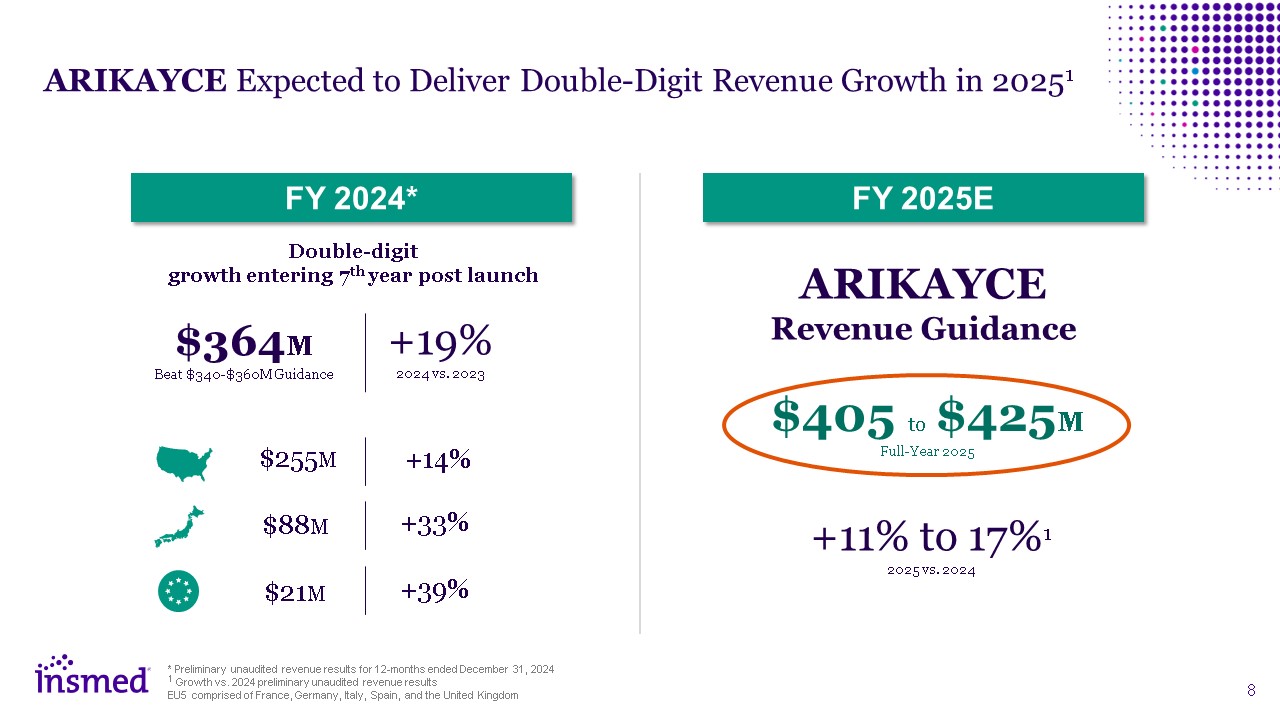
—ARIKAYCE^®^ (amikacin liposome inhalation suspension) Exceeds the Upper End of Guidance Range for Full-Year 2024 with Unaudited Global Revenues of Approximately $363.7 Million—
—2025 Global ARIKAYCE Revenues Expected to be Between $405 Million and $425 Million, Reflecting Continued Double-Digit Growth Compared to 2024—
—NDA for Brensocatib in Bronchiectasis Submitted to FDA in December 2024, Narrowing the Timing for Expected U.S. Launch to the Third Quarter of 2025, Pending Approval Under Priority Review—
—Enrollment for Phase 2 Study of TPIP in Patients with PAH Completed in December 2024; Expected Timing for Topline Data Moved Forward to Mid-2025—
—Phase 3 ENCORE Trial for ARIKAYCE in Patients with Newly Diagnosed or Recurrent MAC Lung Disease Fully Enrolled; Topline Data Anticipated in First Quarter of 2026—
—IND Cleared for Insmed’s First Gene Therapy (INS1201) for Patients with DMD; First Patient Dosing Anticipated in the First Half of 2025—
BRIDGEWATER, N.J., January 10, 2025 /PRNewswire/ — Insmed Incorporated (Nasdaq: INSM), a people-first global biopharmaceutical company striving to deliver first- and best-in-class therapies to transform the lives of patients facing serious diseases, today provided an update on the Company's commercial and clinical programs and its outlook for 2025. These updates will be discussed as part of the Company's presentation at the 43^rd^ Annual J.P. Morgan Healthcare Conference in San Francisco on Monday, January 13, 2025, at 3:00 p.m. PT (6:00 p.m. ET).
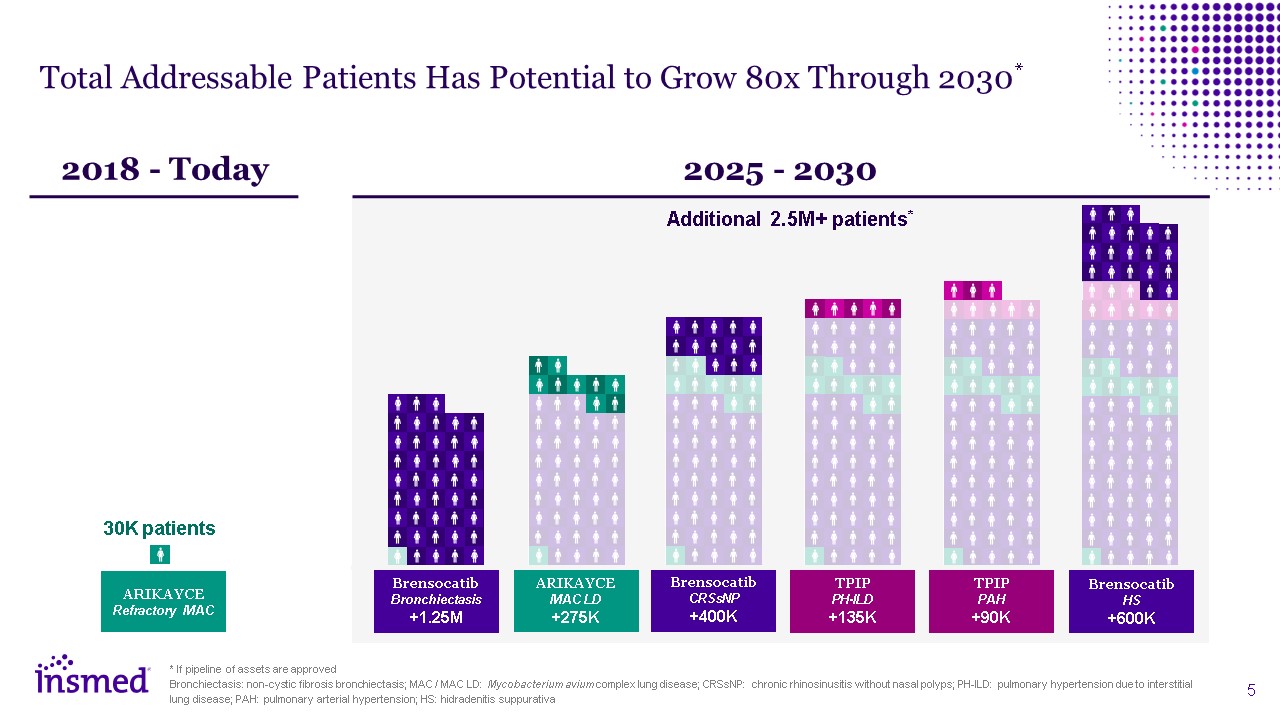
“2024 was an extraordinary year for Insmed, and it is only the beginning of our journey. We believe the upcoming clinical and commercial catalysts have the potential to redefine Insmed from a company that can serve approximately 30,000 patients today to one able to reach more than 2.5 million patients by the end of the decade,” said Will Lewis, Chair and Chief Executive Officer of Insmed. “As we prepare for the highly anticipated U.S. approval and launch of brensocatib in bronchiectasis in the third quarter of 2025, we continue to advance our additional clinical programs, including TPIP in PH-ILD and PAH, brensocatib in CRSsNP and HS, and our first gene therapy in DMD. In parallel, we expect to continue to drive double-digit ARIKAYCE growth as we await the readout of ENCORE data, which has the potential to unlock a blockbuster opportunity for the brand.”
Preliminary Full-Year 2024 Global Net Product Sales (Unaudited)
Based on preliminary unaudited financial information, the Company expects total global net product sales of ARIKAYCE to be approximately $363.7 million for full-year 2024. This represents 19% year-over-year growth versus full-year 2023, including growth across each of our regions, as follows:
| Preliminary Unaudited Full-Year 2024 Global Net Product Sales by Region | ||
|---|---|---|
| 2024 Revenues | % Change YoY | |
| United States | $254.8 million | 14% |
| Japan | $87.7 million | 33% |
| Europe | $21.2 million | 39% |
| Total | $363.7 million | 19% |
1
These preliminary unaudited results are subject to adjustment. Insmed will report its final and complete fourth-quarter and full-year 2024 financial results in late February 2025. The actual results could be materially different from these preliminary unaudited financial results.
Progress and Anticipated Milestones by Program:
ARIKAYCE
| • | Insmed anticipates 2025 global ARIKAYCE revenues to be between $405 million and $425 million, representing between 11% and 17% year-over-year growth compared to 2024. |
|---|---|
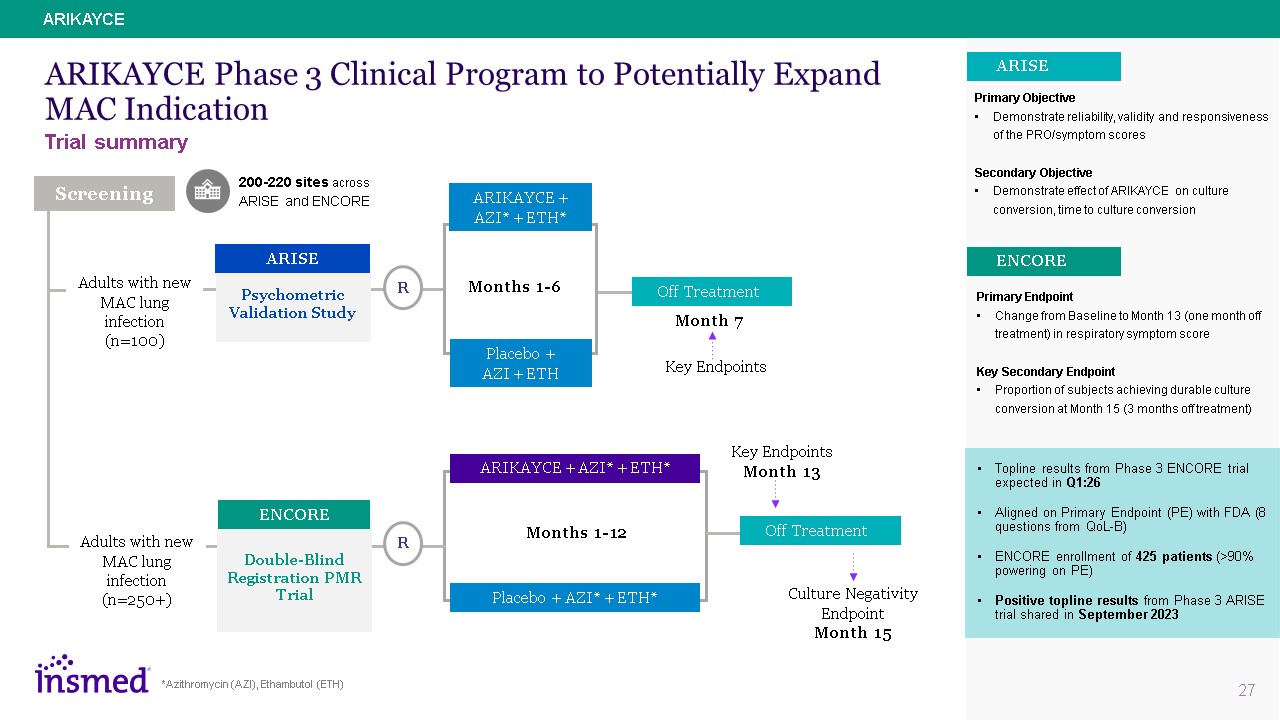
| • | The Company has completed enrollment in the ENCORE trial for patients with newly diagnosed or recurrent Mycobacterium avium complex (MAC) lung disease who had not started antibiotics. Total enrollment in the study was 425 patients, exceeding the target enrollment of 400 patients. |
| --- | --- |
| • | The Company continues to anticipate a topline readout for ENCORE in the first quarter of 2026, with the submission of a supplementary new drug application (sNDA) for ARIKAYCE in all<br> patients with MAC lung disease projected for later in 2026. |
| --- | --- |
Brensocatib
| • | Insmed submitted a new drug application (NDA) for brensocatib for patients with bronchiectasis with the U.S. Food and Drug Administration (FDA) in December 2024 and is currently<br> awaiting FDA acceptance of that submission. If priority review is granted by FDA and brensocatib is approved, the Company anticipates a U.S. launch in the third quarter of 2025. |
|---|---|
| • | Regulatory submissions for brensocatib in the EU, UK, and Japan are planned for 2025, with commercial launches anticipated in 2026, pending approval in each territory. |
| --- | --- |
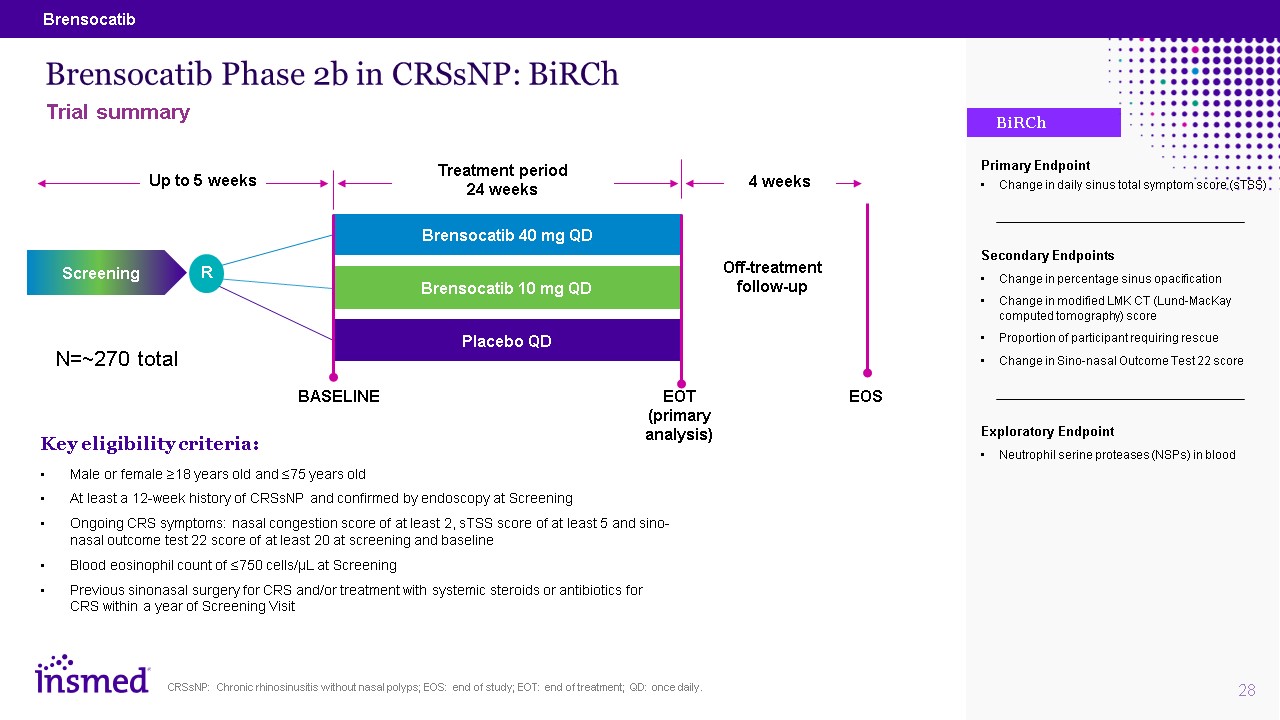
| • | The Phase 2b BiRCh trial of brensocatib in patients with chronic rhinosinusitis without nasal polyps (CRSsNP) has completed nearly 70% of its target enrollment. Topline data continue<br> to be expected before the end of 2025. |
| --- | --- |
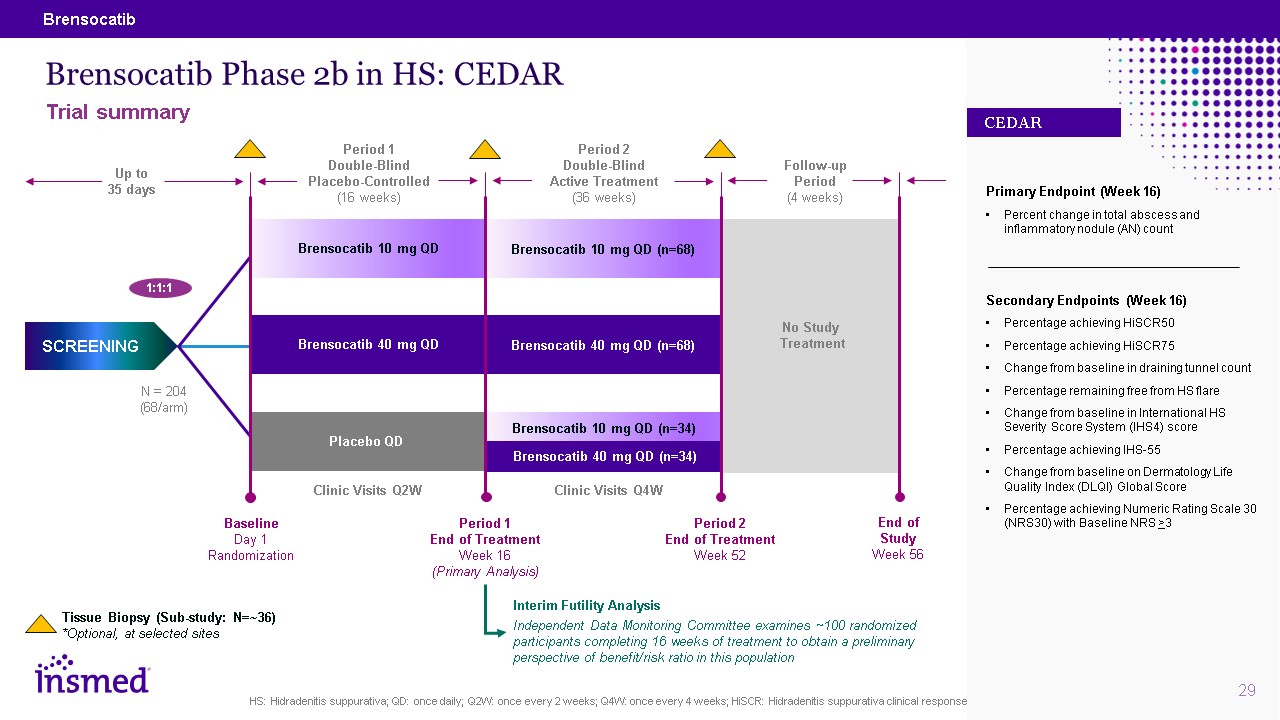
| • | The Company randomized its first participant in the Phase 2 CEDAR trial of brensocatib in patients with hidradenitis suppurativa (HS) in December 2024. |
| --- | --- |
TPIP
| • | Insmed will present the full data from the Phase 2 study of treprostinil palmitil inhalation powder (TPIP) in pulmonary hypertension associated with interstitial lung disease<br> (PH-ILD) at the Pulmonary Vascular Research Institute’s 2025 Annual World Congress in Rio de Janeiro being held from January 29 through February 1, 2025. The Company plans to initiate a Phase 3 study in PH-ILD in the second half of 2025. |
|---|---|
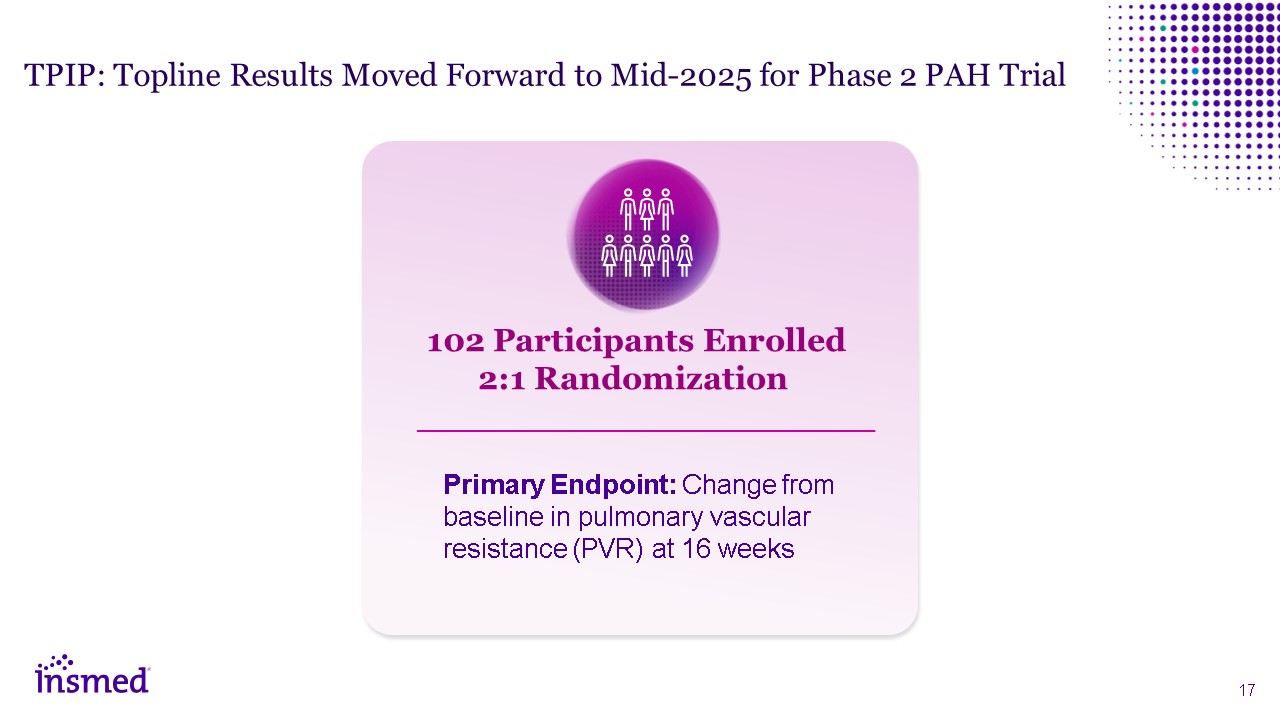
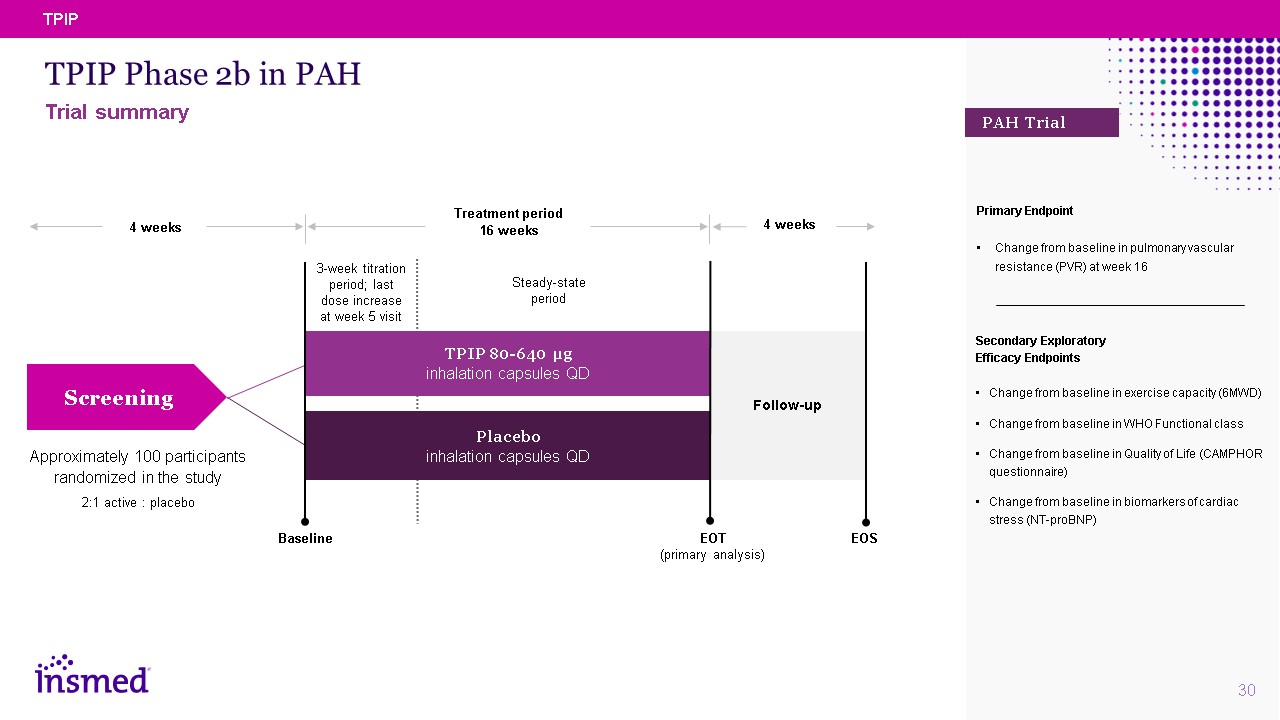
| • | Enrollment in the Phase 2 study of TPIP in pulmonary arterial hypertension (PAH) has been completed with 102 patients randomized in the study. Topline data from the study are now<br> anticipated in the middle of 2025, ahead of the anticipated U.S. launch of brensocatib. |
| --- | --- |
Gene Therapy
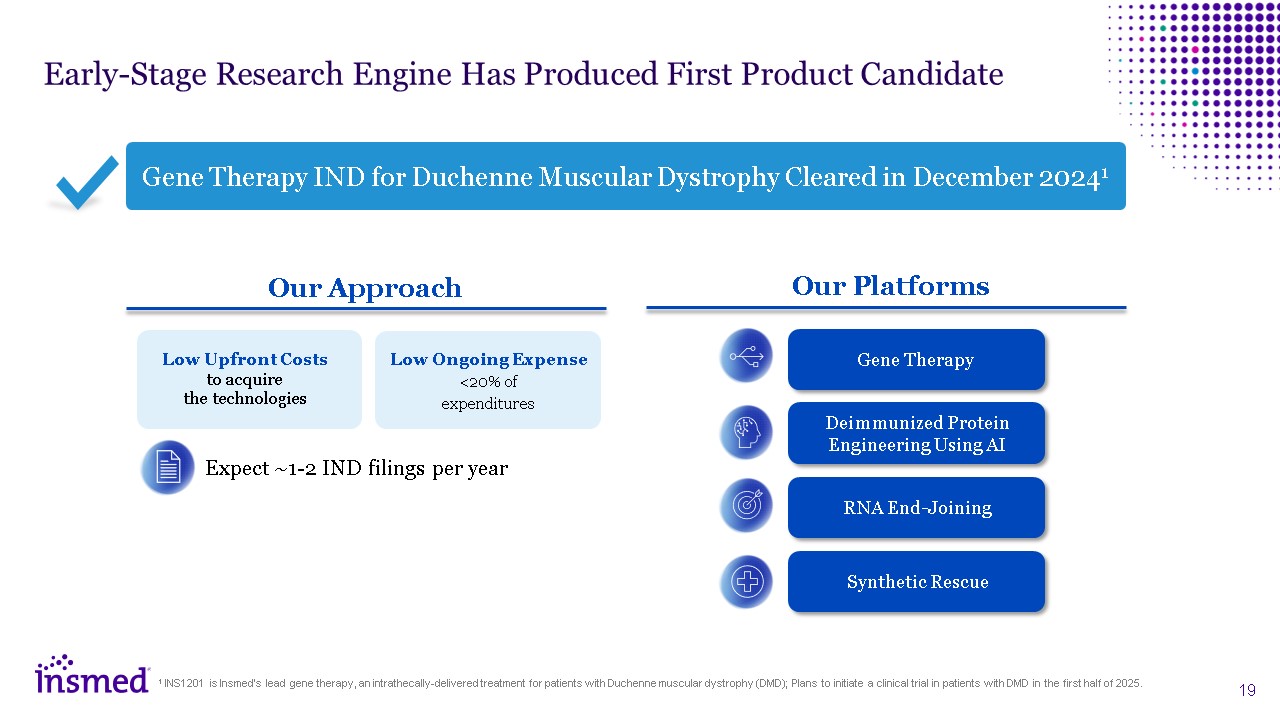
| • | Insmed’s lead gene therapy is INS1201, an intrathecally-delivered treatment for patients with Duchenne muscular dystrophy (DMD). |
|---|
2
| • | In December 2024, Insmed received clearance from the FDA for its investigational new drug (IND) application for INS1201. |
|---|---|
| • | The Company plans to initiate a clinical trial of INS1201 in patients with DMD in the first half of 2025. |
| --- | --- |
Pre-Clinical Programs
| • | Insmed's early-stage research efforts include more than 30 identified pre-clinical programs in development, all of which have the potential to become first-in-class or best-in-class<br> therapies for the indications being pursued. |
|---|---|
| • | The Company continues to anticipate that the totality of its early-stage research programs will comprise less than 20% of overall expenditure. |
| --- | --- |
Presentation at the 43^rd^ Annual J.P. Morgan Healthcare Conference
Will Lewis, Chair and Chief Executive Officer of Insmed, will present at the 43^rd^ Annual J.P. Morgan Healthcare Conference on Monday, January 13, 2025, at 3:00 p.m. PT (6:00 p.m. ET). A live audio webcast of the presentation will be available on the Investor Relations section of the Company's website at www.insmed.com. A replay will also be archived for a period of 30 days following the conclusion of the live event.
About ARIKAYCE
ARIKAYCE is approved in the United States as ARIKAYCE^®^ (amikacin liposome inhalation suspension), in Europe as ARIKAYCE^®^ Liposomal 590 mg Nebuliser Dispersion, and in Japan as ARIKAYCE^®^ inhalation 590 mg (amikacin sulfate inhalation drug product). Current international treatment guidelines recommend the use of ARIKAYCE for appropriate patients. ARIKAYCE is a novel, inhaled, once-daily formulation of amikacin, an established antibiotic that was historically administered intravenously and associated with severe toxicity to hearing, balance, and kidney function. Insmed's proprietary PULMOVANCE^®^ liposomal technology enables the delivery of amikacin directly to the lungs, where liposomal amikacin is taken up by lung macrophages where the infection resides, while limiting systemic exposure. ARIKAYCE is administered once daily using the Lamira^®^ Nebulizer System manufactured by PARI Pharma GmbH (PARI).
About PARI Pharma and the Lamira® Nebulizer System
ARIKAYCE is delivered by a novel inhalation device, the Lamira® Nebulizer System, developed by PARI. Lamira^®^ is a quiet, portable nebulizer that enables efficient aerosolization of ARIKAYCE via a vibrating, perforated membrane. Based on PARI's 100-year history working with aerosols, PARI is dedicated to advancing inhalation therapies by developing innovative delivery platforms to improve patient care.
About Brensocatib
Brensocatib is a small molecule, oral, reversible inhibitor of dipeptidyl peptidase 1 (DPP1) being developed by Insmed for the treatment of patients with bronchiectasis, CRSsNP, HS, and other neutrophil-mediated diseases. DPP1 is an enzyme responsible for activating neutrophil serine proteases (NSPs), such as neutrophil elastase, in neutrophils when they are formed in the bone marrow. Neutrophils are the most common type of white blood cell and play an essential role in pathogen destruction and inflammatory mediation. In chronic inflammatory lung diseases, neutrophils accumulate in the airways and result in excessive active NSPs that cause lung destruction and inflammation. Brensocatib may decrease the damaging effects of inflammatory diseases such as bronchiectasis by inhibiting DPP1 and its activation of NSPs. Brensocatib is an investigational drug product that has not been approved for any indication in any jurisdiction.
3
About TPIP
Treprostinil palmitil inhalation powder (TPIP) is a dry powder formulation of treprostinil palmitil, a treprostinil prodrug consisting of treprostinil linked by an ester bond to a 16-carbon chain. Developed entirely in Insmed's laboratories, TPIP is a potentially highly differentiated prostanoid being evaluated for the treatment of patients with PAH, PH-ILD, and other rare and serious pulmonary disorders. TPIP is administered in a capsule-based inhalation device. TPIP is an investigational drug product that has not been approved for any indication in any jurisdiction.
IMPORTANT SAFETY INFORMATION AND BOXED WARNING FOR ARIKAYCE IN THE U.S.
| WARNING: RISK OF INCREASED RESPIRATORY ADVERSE REACTIONS<br><br> <br><br><br> <br>ARIKAYCE has been associated with an increased risk of respiratory adverse reactions, including hypersensitivity pneumonitis, hemoptysis, bronchospasm, and exacerbation of underlying pulmonary disease<br> that have led to hospitalizations in some cases. |
|---|
Hypersensitivity Pneumonitis has been reported with the use of ARIKAYCE in the clinical trials. Hypersensitivity pneumonitis (reported as allergic alveolitis, pneumonitis, interstitial lung disease, allergic reaction to ARIKAYCE) was reported at a higher frequency in patients treated with ARIKAYCE plus background regimen (3.1%) compared to patients treated with a background regimen alone (0%). Most patients with hypersensitivity pneumonitis discontinued treatment with ARIKAYCE and received treatment with corticosteroids. If hypersensitivity pneumonitis occurs, discontinue ARIKAYCE and manage patients as medically appropriate.
Hemoptysis has been reported with the use of ARIKAYCE in the clinical trials. Hemoptysis was reported at a higher frequency in patients treated with ARIKAYCE plus background regimen (17.9%) compared to patients treated with a background regimen alone (12.5%). If hemoptysis occurs, manage patients as medically appropriate.
Bronchospasm has been reported with the use of ARIKAYCE in the clinical trials. Bronchospasm (reported as asthma, bronchial hyperreactivity, bronchospasm, dyspnea, dyspnea exertional, prolonged expiration, throat tightness, wheezing) was reported at a higher frequency in patients treated with ARIKAYCE plus background regimen (28.7%) compared to patients treated with a background regimen alone (10.7%). If bronchospasm occurs during the use of ARIKAYCE, treat patients as medically appropriate.
Exacerbations of underlying pulmonary disease has been reported with the use of ARIKAYCE in the clinical trials. Exacerbations of underlying pulmonary disease (reported as chronic obstructive pulmonary disease (COPD), infective exacerbation of COPD, infective exacerbation of bronchiectasis) have been reported at a higher frequency in patients treated with ARIKAYCE plus background regimen (14.8%) compared to patients treated with background regimen alone (9.8%). If exacerbations of underlying pulmonary disease occur during the use of ARIKAYCE, treat patients as medically appropriate.
Anaphylaxis and Hypersensitivity Reactions: Serious and potentially life-threatening hypersensitivity reactions, including anaphylaxis, have been reported in patients taking ARIKAYCE. Signs and symptoms include acute onset of skin and mucosal tissue hypersensitivity reactions (hives, itching, flushing, swollen lips/tongue/uvula), respiratory difficulty (shortness of breath, wheezing, stridor, cough), gastrointestinal symptoms (nausea, vomiting, diarrhea, crampy abdominal pain), and cardiovascular signs and symptoms of anaphylaxis (tachycardia, low blood pressure, syncope, incontinence, dizziness). Before therapy with ARIKAYCE is instituted, evaluate for previous hypersensitivity reactions to aminoglycosides. If anaphylaxis or a hypersensitivity reaction occurs, discontinue ARIKAYCE and institute appropriate supportive measures.
4
Ototoxicity has been reported with the use of ARIKAYCE in the clinical trials. Ototoxicity (including deafness, dizziness, presyncope, tinnitus, and vertigo) were reported with a higher frequency in patients treated with ARIKAYCE plus background regimen (17%) compared to patients treated with background regimen alone (9.8%). This was primarily driven by tinnitus (7.6% in ARIKAYCE plus background regimen vs 0.9% in the background regimen alone arm) and dizziness (6.3% in ARIKAYCE plus background regimen vs 2.7% in the background regimen alone arm). Closely monitor patients with known or suspected auditory or vestibular dysfunction during treatment with ARIKAYCE. If ototoxicity occurs, manage patients as medically appropriate, including potentially discontinuing ARIKAYCE.
Nephrotoxicity was observed during the clinical trials of ARIKAYCE in patients with MAC lung disease but not at a higher frequency than background regimen alone. Nephrotoxicity has been associated with the aminoglycosides. Close monitoring of patients with known or suspected renal dysfunction may be needed when prescribing ARIKAYCE.
Neuromuscular Blockade: Patients with neuromuscular disorders were not enrolled in ARIKAYCE clinical trials. Patients with known or suspected neuromuscular disorders, such as myasthenia gravis, should be closely monitored since aminoglycosides may aggravate muscle weakness by blocking the release of acetylcholine at neuromuscular junctions.
Embryo-Fetal Toxicity: Aminoglycosides can cause fetal harm when administered to a pregnant woman. Aminoglycosides, including ARIKAYCE, may be associated with total, irreversible, bilateral congenital deafness in pediatric patients exposed in utero. Patients who use ARIKAYCE during pregnancy, or become pregnant while taking ARIKAYCE should be apprised of the potential hazard to the fetus.
Contraindications: ARIKAYCE is contraindicated in patients with known hypersensitivity to any aminoglycoside.
Most Common Adverse Reactions: The most common adverse reactions in Trial 1 at an incidence ≥5% for patients using ARIKAYCE plus background regimen compared to patients treated with background regimen alone were dysphonia (47% vs 1%), cough (39% vs 17%), bronchospasm (29% vs 11%), hemoptysis (18% vs 13%), ototoxicity (17% vs 10%), upper airway irritation (17% vs 2%), musculoskeletal pain (17% vs 8%), fatigue and asthenia (16% vs 10%), exacerbation of underlying pulmonary disease (15% vs 10%), diarrhea (13% vs 5%), nausea (12% vs 4%), pneumonia (10% vs 8%), headache (10% vs 5%), pyrexia (7% vs 5%), vomiting (7% vs 4%), rash (6% vs 2%), decreased weight (6% vs 1%), change in sputum (5% vs 1%), and chest discomfort (5% vs 3%).
Drug Interactions: Avoid concomitant use of ARIKAYCE with medications associated with neurotoxicity, nephrotoxicity, and ototoxicity. Some diuretics can enhance aminoglycoside toxicity by altering aminoglycoside concentrations in serum and tissue. Avoid concomitant use of ARIKAYCE with ethacrynic acid, furosemide, urea, or intravenous mannitol.
Overdosage: Adverse reactions specifically associated with overdose of ARIKAYCE have not been identified. Acute toxicity should be treated with immediate withdrawal of ARIKAYCE, and baseline tests of renal function should be undertaken. Hemodialysis may be helpful in removing amikacin from the body. In all cases of suspected overdosage, physicians should contact the Regional Poison Control Center for information about effective treatment.
5
U.S. INDICATION
LIMITED POPULATION: ARIKAYCE^®^ is indicated in adults, who have limited or no alternative treatment options, for the treatment of Mycobacterium avium complex (MAC) lung disease as part of a combination antibacterial drug regimen in patients who do not achieve negative sputum cultures after a minimum of 6 consecutive months of a multidrug background regimen therapy. As only limited clinical safety and effectiveness data for ARIKAYCE are currently available, reserve ARIKAYCE for use in adults who have limited or no alternative treatment options. This drug is indicated for use in a limited and specific population of patients.
This indication is approved under accelerated approval based on achieving sputum culture conversion (defined as 3 consecutive negative monthly sputum cultures) by Month 6. Clinical benefit has not yet been established. Continued approval for this indication may be contingent upon verification and description of clinical benefit in confirmatory trials.
Limitation of Use: ARIKAYCE has only been studied in patients with refractory MAC lung disease defined as patients who did not achieve negative sputum cultures after a minimum of 6 consecutive months of a multidrug background regimen therapy. The use of ARIKAYCE is not recommended for patients with non-refractory MAC lung disease.
Patients are encouraged to report negative side effects of prescription drugs to the FDA. Visit www.fda.gov/medwatch, or call 1‑800‑FDA‑1088. You can also call the Company at 1-844-4-INSMED.
Please see Full Prescribing Information.
About Insmed
Insmed Incorporated is a people-first global biopharmaceutical company striving to deliver first- and best-in-class therapies to transform the lives of patients facing serious diseases. The Company is advancing a diverse portfolio of approved and mid- to late-stage investigational medicines as well as cutting-edge drug discovery focused on serving patient communities where the need is greatest. Insmed's most advanced programs are in pulmonary and inflammatory conditions, including a therapy approved in the United States, Europe, and Japan to treat a chronic, debilitating lung disease. The Company's early-stage research programs encompass a wide range of technologies and modalities, including gene therapy, AI-driven protein engineering, protein manufacturing, RNA end-joining, and synthetic rescue.
Headquartered in Bridgewater, New Jersey, Insmed has offices and research locations throughout the United States, Europe, and Japan. Insmed is proud to be recognized as one of the best employers in the biopharmaceutical industry, including spending four consecutive years as the No. 1 Science Top Employer. Visit www.insmed.com to learn more.
Forward-looking Statements
This press release contains forward-looking statements that involve substantial risks and uncertainties. “Forward-looking statements,” as that term is defined in the Private Securities Litigation Reform Act of 1995, are statements that are not historical facts and involve a number of risks and uncertainties. Words herein such as “may,” “will,” “should,” “could,” “would,” “expects,” “plans,” “anticipates,” “believes,” “estimates,” “projects,” “predicts,” “intends,” “potential,” “continues,” and similar expressions (as well as other words or expressions referencing future events, conditions or circumstances) may identify forward-looking statements.
6
The forward-looking statements in this press release are based upon the Company’s current expectations and beliefs, and involve known and unknown risks, uncertainties and other factors, which may cause the Company’s actual results, performance and achievements and the timing of certain events to differ materially from the results, performance, achievements or timings discussed, projected, anticipated or indicated in any forward-looking statements. Such risks, uncertainties and other factors include, among others, the following: failure to continue to successfully commercialize ARIKAYCE, our only approved product, in the U.S., Europe or Japan (amikacin liposome inhalation suspension, Liposomal 590 mg Nebuliser Dispersion, and amikacin sulfate inhalation drug product, respectively), or to maintain US, European or Japanese approval for ARIKAYCE; our inability to obtain full approval of ARIKAYCE from the FDA, including the risk that we will not successfully or in a timely manner complete the confirmatory post-marketing clinical trial required for full approval of ARIKAYCE, or our failure to obtain regulatory approval to expand ARIKAYCE’s indication to a broader patient population; the risk that the full data set from the ASPEN study or data generated in further clinical trials of Brensocatib will not be consistent with the topline results of the ASPEN study or any additional data published from the ASPEN study; failure to obtain, or delays in obtaining, regulatory approvals for brensocatib, TPIP or our other product candidates in the US, Europe or Japan or for ARIKAYCE outside the US, Europe or Japan, including separate regulatory approval for Lamira^®^ in each market and for each usage; failure to successfully commercialize brensocatib, TPIP or our other product candidates, if approved by applicable regulatory authorities, or to maintain applicable regulatory approvals for brensocatib, TPIP or our other product candidates, if approved; uncertainties or changes in the degree of market acceptance of ARIKAYCE or, if approved, brensocatib or TPIP by physicians, patients, third-party payors and others in the healthcare community; our inability to obtain and maintain adequate reimbursement from government or third-party payors for ARIKAYCE or, if approved, brensocatib or TPIP, or acceptable prices for ARIKAYCE or, if approved, brensocatib or TPIP; inaccuracies in our estimates of the size of the potential markets for ARIKAYCE, brensocatib, TPIP or our other product candidates or in data we have used to identify physicians, expected rates of patient uptake, duration of expected treatment, or expected patient adherence or discontinuation rates; failure of third parties on which the Company is dependent to manufacture sufficient quantities of ARIKAYCE, brensocatib, or TPIP for commercial or clinical needs, to conduct the Company's clinical trials, or to comply with the Company's agreements or laws and regulations that impact the Company's business; the risks and uncertainties associated with, and the perceived benefits of, our secured senior loan with certain funds managed by Pharmakon Advisors L.P. and our royalty financing with OrbiMed Royalty & Credit Opportunities IV, LP, including our ability to maintain compliance with the covenants in the agreements for the senior secured loan and royalty financing and the impact of the restrictions on our operations under these agreements; our inability to create or maintain an effective direct sales and marketing infrastructure or to partner with third parties that offer such an infrastructure for distribution of ARIKAYCE or any of our product candidates that are approved in the future; failure to successfully conduct future clinical trials for ARIKAYCE, brensocatib, TPIP and our other product candidates and our potential inability to enroll or retain sufficient patients to conduct and complete the trials or generate data necessary for regulatory approval of our product candidates or to permit the use of ARIKAYCE in the broader population of patients with MAC lung disease, among other things; development of unexpected safety or efficacy concerns related to ARIKAYCE, brensocatib, TPIP or our other product candidates; risks that our clinical studies will be delayed, that serious side effects will be identified during drug development, or that any protocol amendments submitted will be rejected; failure to successfully predict the time and cost of development, regulatory approval and commercialization for novel gene therapy products; the risk that interim or partial data sets are not representative of a complete or larger data set or that blinded data will not be predictive of unblinded data; the risk that interim, topline or preliminary data from our clinical trials that we announce or publish from time to time may change as more patient data become available or may be interpreted differently if additional data are disclosed; risk that our competitors may obtain orphan drug exclusivity for a product that is essentially the same as a product we are developing for a particular indication; our inability to attract and retain key personnel or to effectively manage our growth; our inability to successfully integrate our recent acquisitions and appropriately manage the amount of management’s time and attention devoted to integration activities; risks that our acquired technologies, products and product candidates are not commercially successful; inability to adapt to our highly competitive and changing environment; inability to access, upgrade or expand our technology systems or difficulties in updating our existing technology or developing or implementing new technology; risk that we are unable to maintain our significant customers; risk that government healthcare reform materially increases our costs and damages our financial condition; business or economic disruptions due to catastrophes or other events, including natural disasters or public health crises; risk that our current and potential future use of AI and machine learning may not be successful; deterioration in general economic conditions in the US, Europe, Japan and globally, including the effect of prolonged periods of inflation, affecting us, our suppliers, third-party service providers and potential partners; the risk that we could become involved in costly intellectual property disputes, be unable to adequately protect our intellectual property rights or prevent disclosure of our trade secrets and other proprietary information, and incur costs associated with litigation or other proceedings related to such matters; restrictions or other obligations imposed on us by agreements related to ARIKAYCE, brensocatib or our other product candidates, including our license agreements with PARI and AstraZeneca AB , and failure to comply with our obligations under such agreements; the cost and potential reputational damage resulting from litigation to which we are or may become a party, including product liability claims; risk that our operations are subject to a material disruption in the event of a cybersecurity attack or issue; our limited experience operating internationally; changes in laws and regulations applicable to our business, including any pricing reform and laws that impact our ability to utilize certain third parties in the research, development or manufacture of our product candidates, and failure to comply with such laws and regulations; our history of operating losses, and the possibility that we never achieve or maintain profitability; goodwill impairment charges affecting our results of operations and financial condition; inability to repay our existing indebtedness and uncertainties with respect to our ability to access future capital; and delays in the execution of plans to build out an additional third-party manufacturing facility approved by the appropriate regulatory authorities and unexpected expenses associated with those plans.
7
The Company may not actually achieve the results, plans, intentions or expectations indicated by the Company’s forward-looking statements because, by their nature, forward-looking statements involve risks and uncertainties because they relate to events and depend on circumstances that may or may not occur in the future. For additional information about the risks and uncertainties that may affect the Company’s business, please see the factors discussed in Item 1A, “Risk Factors,” in the Company’s Annual Report on Form 10-K for the year ended December 31, 2023 and any subsequent Company filings with the Securities and Exchange Commission (SEC).
The Company cautions readers not to place undue reliance on any such forward-looking statements, which speak only as of the date of this press release. The Company disclaims any obligation, except as specifically required by law and the rules of the SEC, to publicly update or revise any such statements to reflect any change in expectations or in events, conditions or circumstances on which any such statements may be based, or that may affect the likelihood that actual results will differ from those set forth in the forward-looking statements.
Contacts:
Investors:
Bryan Dunn
Vice President, Investor Relations
(646) 812-4030
bryan.dunn@insmed.com
Michael V. Morabito, Ph.D.
Director, Investor Relations
(917) 936-8430
michael.morabito@insmed.com
8
Gianna De Palma
Manager, Investor Relations
(973) 886-2236
gianna.depalma@insmed.com
Media:
Mandy Fahey
Vice President, Corporate Communications
(732) 718-3621
amanda.fahey@insmed.com
9
Exhibit 99.2
January 13, 2025 JPMorgan Healthcare Conference Presentation

Forward Looking Statements This presentation contains forward-looking statements that involve substantial risks and uncertainties. “Forward-looking statements,” as that term is defined in the Private Securities Litigation Reform Act of 1995, are statements that are not historical facts and involve a number of risks and uncertainties. Words herein such as “may,” “will,” “should,” “could,” “would,” “expects,” “plans,” “anticipates,” “believes,” “estimates,” “projects,” “predicts,” “intends,” “potential,” “continues,” and similar expressions (as well as other words or expressions referencing future events, conditions or circumstances) may identify forward-looking statements. The forward-looking statements in this presentation are based upon the Company’s current expectations and beliefs, and involve known and unknown risks, uncertainties and other factors, which may cause the Company’s actual results, performance and achievements and the timing of certain events to differ materially from the results, performance, achievements or timings discussed, projected, anticipated or indicated in any forward-looking statements. Such risks, uncertainties and other factors include, among others, the following: failure to continue to successfully commercialize ARIKAYCE, our only approved product, in the U.S., Europe or Japan (amikacin liposome inhalation suspension, Liposomal 590 mg Nebuliser Dispersion, and amikacin sulfate inhalation drug product, respectively), or to maintain US, European or Japanese approval for ARIKAYCE; our inability to obtain full approval of ARIKAYCE from the FDA, including the risk that we will not successfully or in a timely manner complete the confirmatory post-marketing clinical trial required for full approval of ARIKAYCE, or our failure to obtain regulatory approval to expand ARIKAYCE’s indication to a broader patient population; the risk that the full data set from the ASPEN study or data generated in further clinical trials of brensocatib will not be consistent with the topline results of the ASPEN study or any additional data published from the ASPEN study; failure to obtain, or delays in obtaining, regulatory approvals for brensocatib, TPIP or our other product candidates in the US, Europe or Japan or for ARIKAYCE outside the US, Europe or Japan, including separate regulatory approval for Lamira® in each market and for each usage; failure to successfully commercialize brensocatib, TPIP or our other product candidates, if approved by applicable regulatory authorities, or to maintain applicable regulatory approvals for Brensocatib, TPIP or our other product candidates, if approved; uncertainties or changes in the degree of market acceptance of ARIKAYCE or, if approved, brensocatib or TPIP by physicians, patients, third-party payors and others in the healthcare community; our inability to obtain and maintain adequate reimbursement from government or third-party payors for ARIKAYCE or, if approved, Brensocatib or TPIP, or acceptable prices for ARIKAYCE or, if approved, brensocatib or TPIP; inaccuracies in our estimates of the size of the potential markets for ARIKAYCE, Brensocatib, TPIP or our other product candidates or in data we have used to identify physicians, expected rates of patient uptake, duration of expected treatment, or expected patient adherence or discontinuation rates; failure of third parties on which the Company is dependent to manufacture sufficient quantities of ARIKAYCE, brensocatib, or TPIP for commercial or clinical needs, to conduct the Company's clinical trials, or to comply with the Company's agreements or laws and regulations that impact the Company's business; the risks and uncertainties associated with, and the perceived benefits of, our secured senior loan with certain funds managed by Pharmakon Advisors L.P. and our royalty financing with OrbiMed Royalty & Credit Opportunities IV, LP, including our ability to maintain compliance with the covenants in the agreements for the senior secured loan and royalty financing and the impact of the restrictions on our operations under these agreements; our inability to create or maintain an effective direct sales and marketing infrastructure or to partner with third parties that offer such an infrastructure for distribution of ARIKAYCE or any of our product candidates that are approved in the future; failure to successfully conduct future clinical trials for ARIKAYCE, Brensocatib, TPIP and our other product candidates and our potential inability to enroll or retain sufficient patients to conduct and complete the trials or generate data necessary for regulatory approval of our product candidates or to permit the use of ARIKAYCE in the broader population of patients with MAC lung disease, among other things; development of unexpected safety or efficacy concerns related to ARIKAYCE, brensocatib, TPIP or our other product candidates; risks that our clinical studies will be delayed, that serious side effects will be identified during drug development, or that any protocol amendments submitted will be rejected; failure to successfully predict the time and cost of development, regulatory approval and commercialization for novel gene therapy products; risks that interim or partial data sets are not representative of a complete or larger data set or that blinded data will not be predictive of unblinded data; the risk that interim, topline or preliminary data from our clinical trials that we announce or publish from time to time may change as more patient data become available or may be interpreted differently if additional data are disclosed; risk that our competitors may obtain orphan drug exclusivity for a product that is essentially the same as a product we are developing for a particular indication; our inability to attract and retain key personnel or to effectively manage our growth; our inability to successfully integrate our recent acquisitions and appropriately manage the amount of management’s time and attention devoted to integration activities; risks that our acquired technologies, products and product candidates are not commercially successful; inability to adapt to our highly competitive and changing environment; inability to access, upgrade or expand our technology systems or difficulties in updating our existing technology or developing or implementing new technology; risk that we are unable to maintain our significant customers; risk that government healthcare reform materially increases our costs and damages our financial condition; business or economic disruptions due to catastrophes or other events, including natural disasters or public health crises; risk that our current and potential future use of AI and machine learning may not be successful; deterioration in general economic conditions in the US, Europe, Japan and globally, including the effect of prolonged periods of inflation, affecting us, our suppliers, third-party service providers and potential partners; the risk that we could become involved in costly intellectual property disputes, be unable to adequately protect our intellectual property rights or prevent disclosure of our trade secrets and other proprietary information, and incur costs associated with litigation or other proceedings related to such matters; restrictions or other obligations imposed on us by agreements related to ARIKAYCE, Brensocatib or our other product candidates, including our license agreements with PARI and AstraZeneca AB , and failure to comply with our obligations under such agreements; the cost and potential reputational damage resulting from litigation to which we are or may become a party, including product liability claims; risk that our operations are subject to a material disruption in the event of a cybersecurity attack or issue; our limited experience operating internationally; changes in laws and regulations applicable to our business, including any pricing reform and laws that impact our ability to utilize certain third parties in the research, development or manufacture of our product candidates, and failure to comply with such laws and regulations; our history of operating losses, and the possibility that we never achieve or maintain profitability; goodwill impairment charges affecting our results of operations and financial condition; inability to repay our existing indebtedness and uncertainties with respect to our ability to access future capital; and delays in the execution of plans to build out an additional third-party manufacturing facility approved by the appropriate regulatory authorities and unexpected expenses associated with those plans. The Company may not actually achieve the results, plans, intentions or expectations indicated by the Company's forward-looking statements because, by their nature, forward-looking statements involve risks and uncertainties because they relate to events and depend on circumstances that may or may not occur in the future. For additional information about the risks and uncertainties that may affect the Company's business, please see the factors discussed in Item 1A, "Risk Factors," in the Company's Annual Report on Form 10-K for the year ended December 31, 2023 and any subsequent Company filings with the Securities and Exchange Commission (SEC). The Company cautions readers not to place undue reliance on any such forward-looking statements, which speak only as of the date of this presentation. The Company disclaims any obligation, except as specifically required by law and the rules of the SEC, to publicly update or revise any such statements to reflect any change in expectations or in events, conditions or circumstances on which any such statements may be based, or that may affect the likelihood that actual results will differ from those set forth in the forward-looking statements. Certain information contained in this presentation relates to or is based on studies, publications, surveys and other data obtained from third-party sources, as well as our own internal estimates and research. While we believe the information in these third-party sources to be reliable as of the date of this presentation, we have not independently verified any such information or the underlying assumptions relied on in such third-party sources. In addition, while we believe our internal research is reliable, such research has not been verified by any independent source. Please be aware that brensocatib and TPIP are investigational products that have not been approved for sale or found safe or effective by the FDA or any regulatory authority. In addition, ARIKAYCE has not been approved for the treatment of all patients with MAC lung disease. This presentation is not promotion or advertisement of ARIKAYCE, brensocatib, or TPIP. Insmed and ARIKAYCE are registered trademarks of Insmed Incorporated. All other trademarks are property of their respective owner(s).

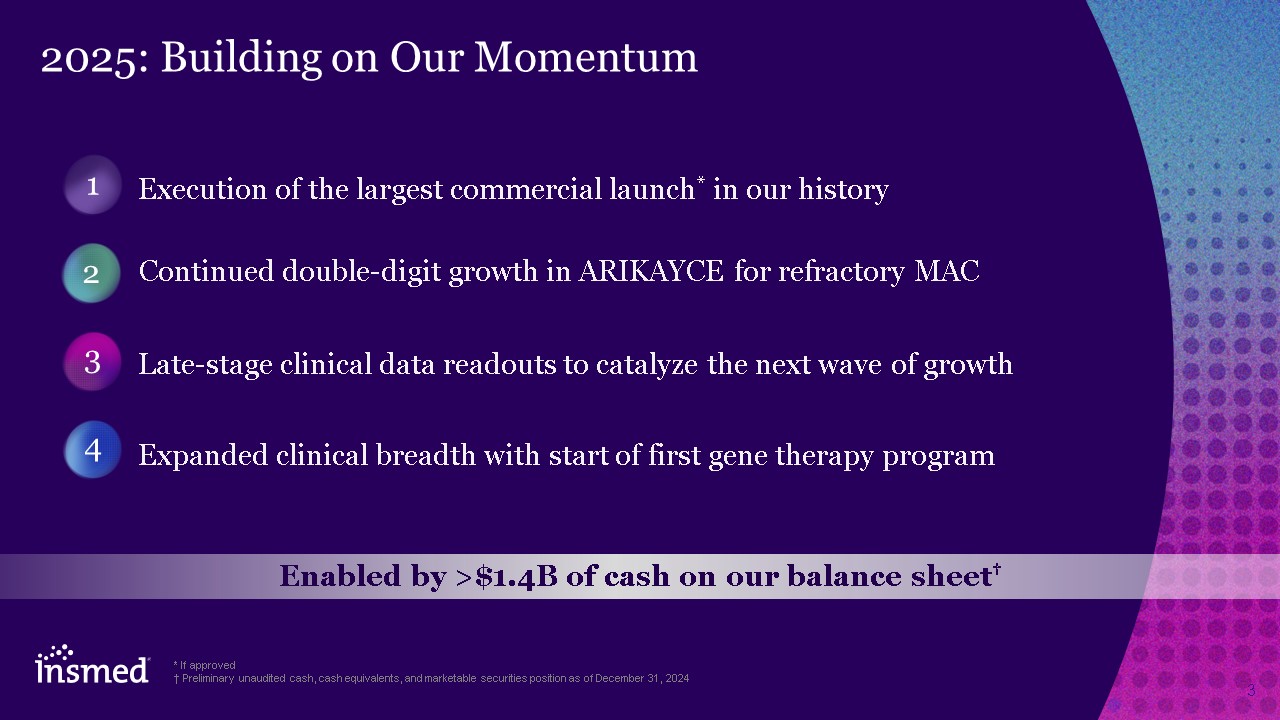
2025: Building on Our Momentum * If approved † Preliminary unaudited cash, cash equivalents, and marketable securities position as of December 31, 2024 Continued double-digit growth in ARIKAYCE for refractory MAC Execution of the largest commercial launch* in our history Late-stage clinical data readouts to catalyze the next wave of growth Expanded clinical breadth with start of first gene therapy program 1 2 3 4 Enabled by >$1.4B of cash on our balance sheet†

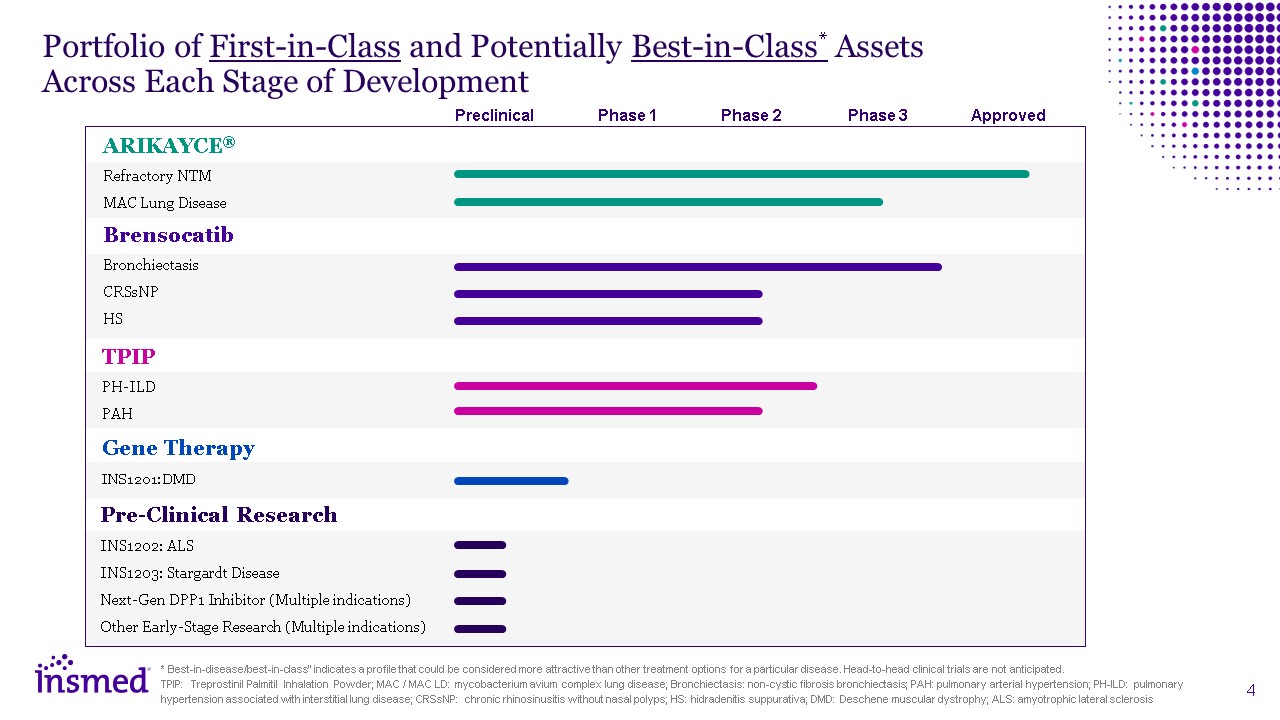
Portfolio of First-in-Class and Potentially Best-in-Class* Assets Across Each Stage of Development Preclinical Phase 1 Phase 2 Phase 3 Approved ARIKAYCE® Refractory NTM MAC Lung Disease Brensocatib Bronchiectasis CRSsNP HS TPIP PH-ILD PAH Pre-Clinical Research INS1202: ALS INS1203: Stargardt Disease Next-Gen DPP1 Inhibitor (Multiple indications) Other Early-Stage Research (Multiple indications) Gene Therapy INS1201: DMD * Best-in-disease/best-in-class" indicates a profile that could be considered more attractive than other treatment options for a particular disease. Head-to-head clinical trials are not anticipated. TPIP: Treprostinil Palmitil Inhalation Powder; MAC / MAC LD: mycobacterium avium complex lung disease; Bronchiectasis: non-cystic fibrosis bronchiectasis; PAH: pulmonary arterial hypertension; PH-ILD: pulmonary hypertension associated with interstitial lung disease; CRSsNP: chronic rhinosinusitis without nasal polyps; HS: hidradenitis suppurativa; DMD: Deschene muscular dystrophy; ALS: amyotrophic lateral sclerosis

* If pipeline of assets are approved Bronchiectasis: non-cystic fibrosis bronchiectasis; MAC / MAC LD: Mycobacterium avium complex lung disease; CRSsNP: chronic rhinosinusitis without nasal polyps; PH-ILD: pulmonary hypertension due to interstitial lung disease; PAH: pulmonary arterial hypertension; HS: hidradenitis suppurativa ARIKAYCE Refractory MAC 2018 - Today 30K patients Total Addressable Patients Has Potential to Grow 80x Through 2030* 2025 - 2030 Brensocatib Bronchiectasis +1.25M ARIKAYCE MAC LD +275K Brensocatib CRSsNP +400K TPIP PH-ILD +135K TPIP PAH +90K Brensocatib HS +600K Additional 2.5M+ patients*

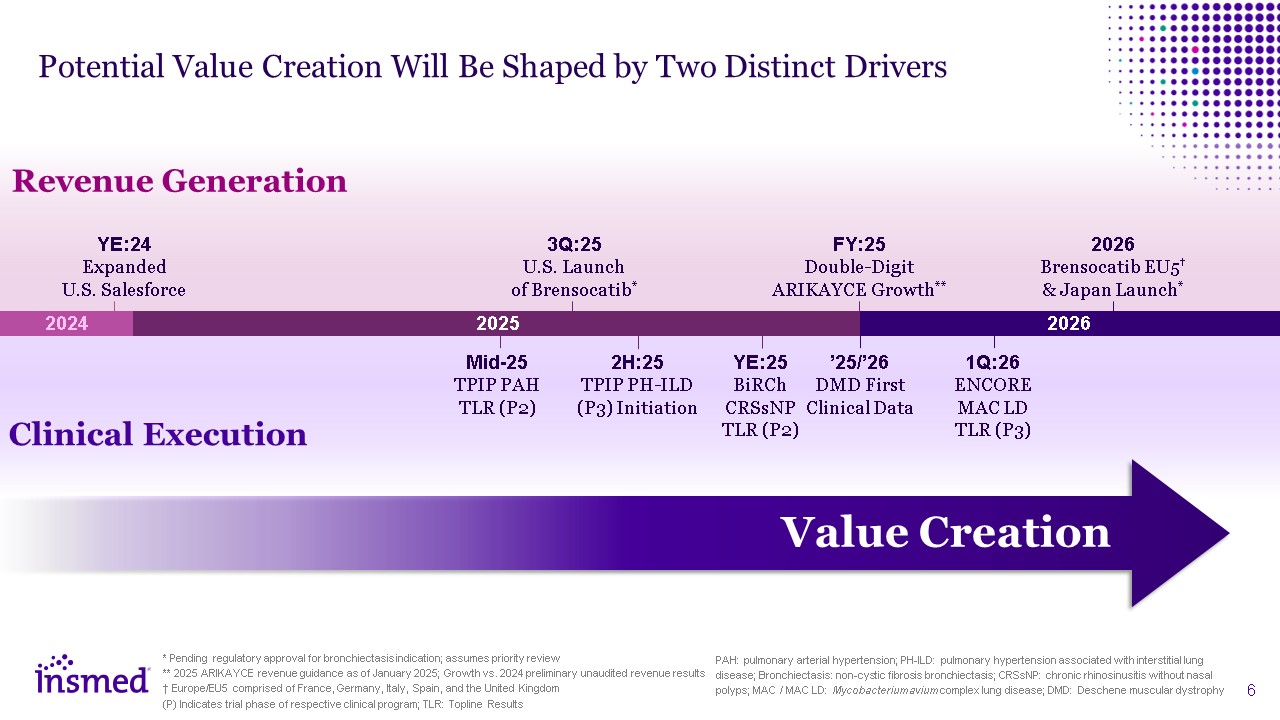
Potential Value Creation Will Be Shaped by Two Distinct Drivers * Pending regulatory approval for bronchiectasis indication; assumes priority review ** 2025 ARIKAYCE revenue guidance as of January 2025; Growth vs. 2024 preliminary unaudited revenue results † Europe/EU5 comprised of France, Germany, Italy, Spain, and the United Kingdom (P) Indicates trial phase of respective clinical program; TLR: Topline Results Revenue Generation Clinical Execution Value Creation Mid-25 TPIP PAH TLR (P2) 3Q:25 U.S. Launch of Brensocatib* YE:25 BiRCh CRSsNP TLR (P2) FY:25 Double-Digit ARIKAYCE Growth** 2H:25 TPIP PH-ILD (P3) Initiation YE:24 Expanded U.S. Salesforce 1Q:26 ENCORE MAC LD TLR (P3) ’25/’26 DMD First Clinical Data 2026 Brensocatib EU5† & Japan Launch* PAH: pulmonary arterial hypertension; PH-ILD: pulmonary hypertension associated with interstitial lung disease; Bronchiectasis: non-cystic fibrosis bronchiectasis; CRSsNP: chronic rhinosinusitis without nasal polyps; MAC / MAC LD: Mycobacterium avium complex lung disease; DMD: Deschene muscular dystrophy 2024 2025 2026

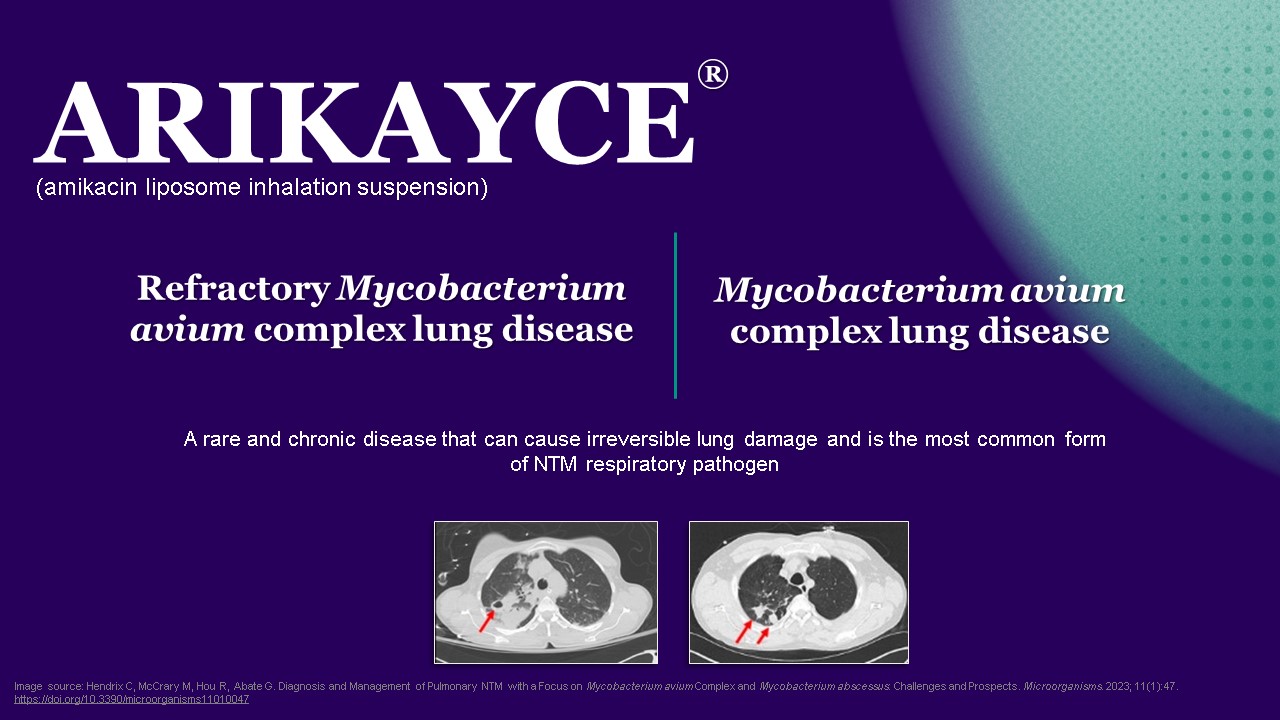
ARIKAYCE Refractory Mycobacterium avium complex lung disease A rare and chronic disease that can cause irreversible lung damage and is the most common form of NTM respiratory pathogen Mycobacterium avium complex lung disease Image source: Hendrix C, McCrary M, Hou R, Abate G. Diagnosis and Management of Pulmonary NTM with a Focus on Mycobacterium avium Complex and Mycobacterium abscessus: Challenges and Prospects. Microorganisms. 2023; 11(1):47. https://doi.org/10.3390/microorganisms11010047 ® (amikacin liposome inhalation suspension)

ARIKAYCE Expected to Deliver Double-Digit Revenue Growth in 20251 * Preliminary unaudited revenue results for 12-months ended December 31, 2024 1 Growth vs. 2024 preliminary unaudited revenue results EU5 comprised of France, Germany, Italy, Spain, and the United Kingdom Double-digit growth entering 7th year post launch +19% 2024 vs. 2023 +14% +39% +33% FY 2024* $364M Beat $340-$360M Guidance $255M $21M $88M $405 to $425M Full-Year 2025 +11% to 17%1 2025 vs. 2024 FY 2025E ARIKAYCE Revenue Guidance

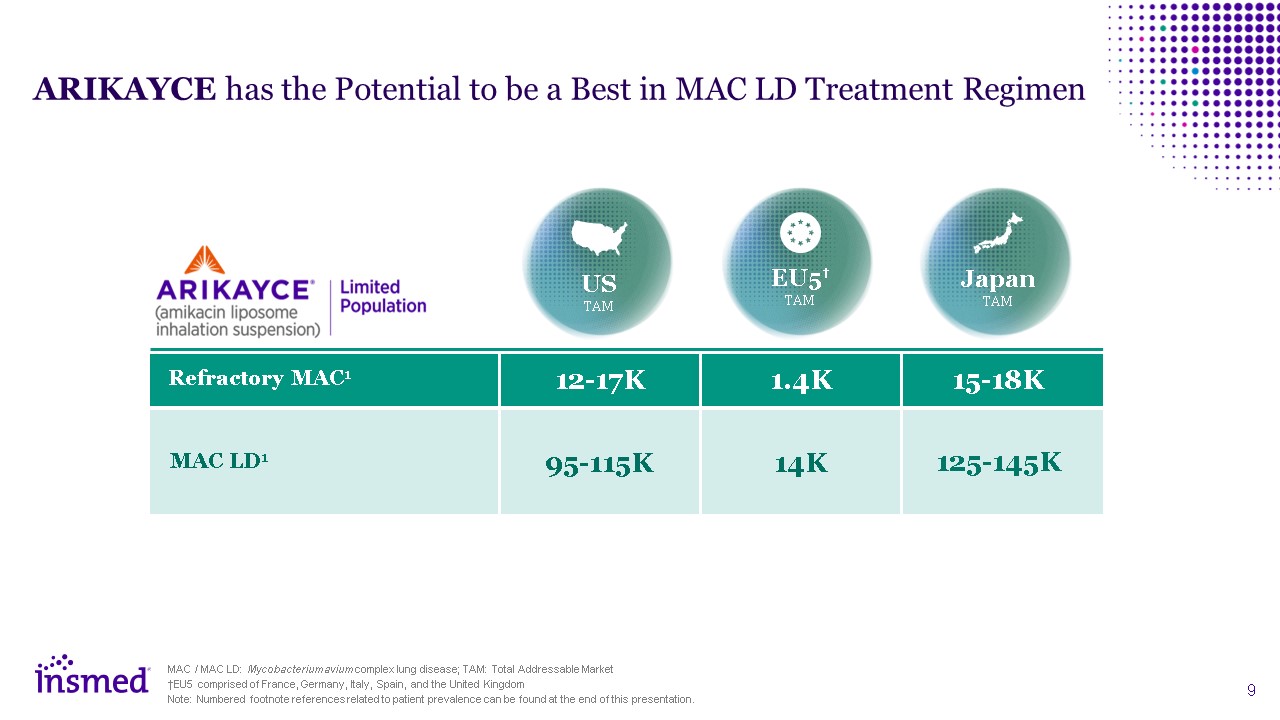
ARIKAYCE has the Potential to be a Best in MAC LD Treatment Regimen MAC / MAC LD: Mycobacterium avium complex lung disease; TAM: Total Addressable Market †EU5 comprised of France, Germany, Italy, Spain, and the United Kingdom Note: Numbered footnote references related to patient prevalence can be found at the end of this presentation. 125-145K US TAM EU5† TAM Japan TAM Refractory MAC1 95-115K 14K MAC LD1 15-18K 12-17K 1.4K

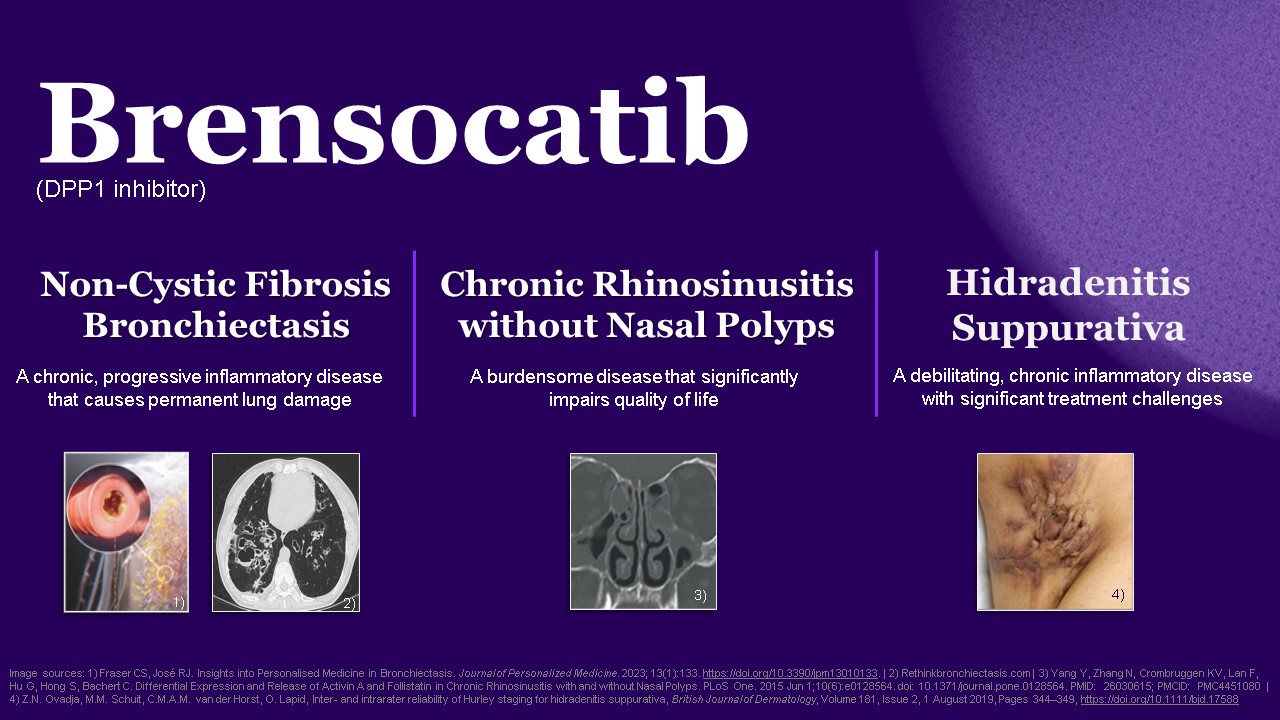
Brensocatib Image sources: 1) Fraser CS, José RJ. Insights into Personalised Medicine in Bronchiectasis. Journal of Personalized Medicine. 2023; 13(1):133. https://doi.org/10.3390/jpm13010133. | 2) Rethinkbronchiectasis.com | 3) Yang Y, Zhang N, Crombruggen KV, Lan F, Hu G, Hong S, Bachert C. Differential Expression and Release of Activin A and Follistatin in Chronic Rhinosinusitis with and without Nasal Polyps. PLoS One. 2015 Jun 1;10(6):e0128564. doi: 10.1371/journal.pone.0128564. PMID: 26030615; PMCID: PMC4451080 | 4) Z.N. Ovadja, M.M. Schuit, C.M.A.M. van der Horst, O. Lapid, Inter‐ and intrarater reliability of Hurley staging for hidradenitis suppurativa, British Journal of Dermatology, Volume 181, Issue 2, 1 August 2019, Pages 344–349, https://doi.org/10.1111/bjd.17588 Non-Cystic Fibrosis Bronchiectasis A chronic, progressive inflammatory disease that causes permanent lung damage Chronic Rhinosinusitis without Nasal Polyps Hidradenitis Suppurativa A burdensome disease that significantly impairs quality of life A debilitating, chronic inflammatory disease with significant treatment challenges 1) 2) 3) 4) (DPP1 inhibitor)

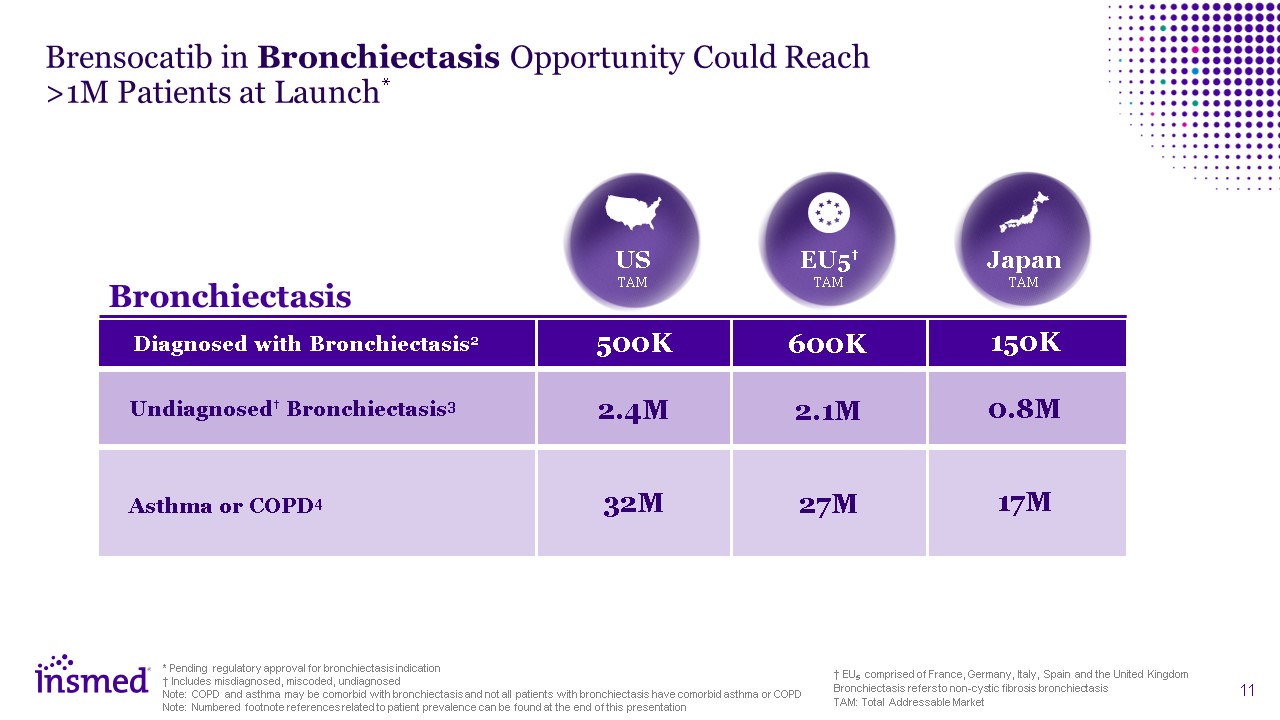
Brensocatib in Bronchiectasis Opportunity Could Reach >1M Patients at Launch* * Pending regulatory approval for bronchiectasis indication † Includes misdiagnosed, miscoded, undiagnosedNote: COPD and asthma may be comorbid with bronchiectasis and not all patients with bronchiectasis have comorbid asthma or COPD Note: Numbered footnote references related to patient prevalence can be found at the end of this presentation † EU5 comprised of France, Germany, Italy, Spain and the United KingdomBronchiectasis refers to non-cystic fibrosis bronchiectasis TAM: Total Addressable Market US TAM EU5† TAM Japan TAM Diagnosed with Bronchiectasis2 0.8M 2.4M 2.1M Undiagnosed† Bronchiectasis3 Asthma or COPD4 150K 500K 600K 17M 32M 27M Bronchiectasis

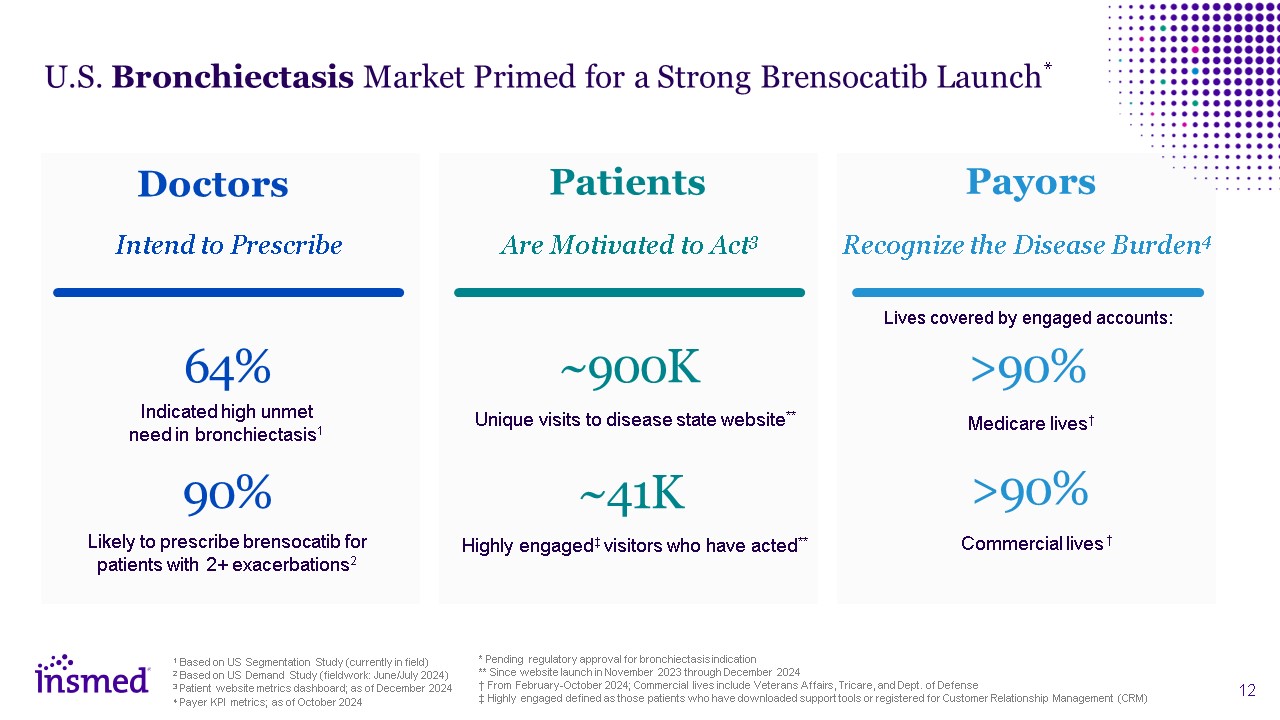
U.S. Bronchiectasis Market Primed for a Strong Brensocatib Launch* * Pending regulatory approval for bronchiectasis indication ** Since website launch in November 2023 through December 2024 † From February-October 2024; Commercial lives include Veterans Affairs, Tricare, and Dept. of Defense ‡ Highly engaged defined as those patients who have downloaded support tools or registered for Customer Relationship Management (CRM) 1 Based on US Segmentation Study (currently in field) 2 Based on US Demand Study (fieldwork: June/July 2024) 3 Patient website metrics dashboard; as of December 2024 4 Payer KPI metrics; as of October 2024 Doctors Intend to Prescribe 64% Indicated high unmet need in bronchiectasis1 90% Likely to prescribe brensocatib for patients with 2+ exacerbations2 Patients Are Motivated to Act3 ~900K Unique visits to disease state website** ~41K Highly engaged‡ visitors who have acted** Payors Recognize the Disease Burden4 >90% Medicare lives† >90% Commercial lives † Lives covered by engaged accounts:

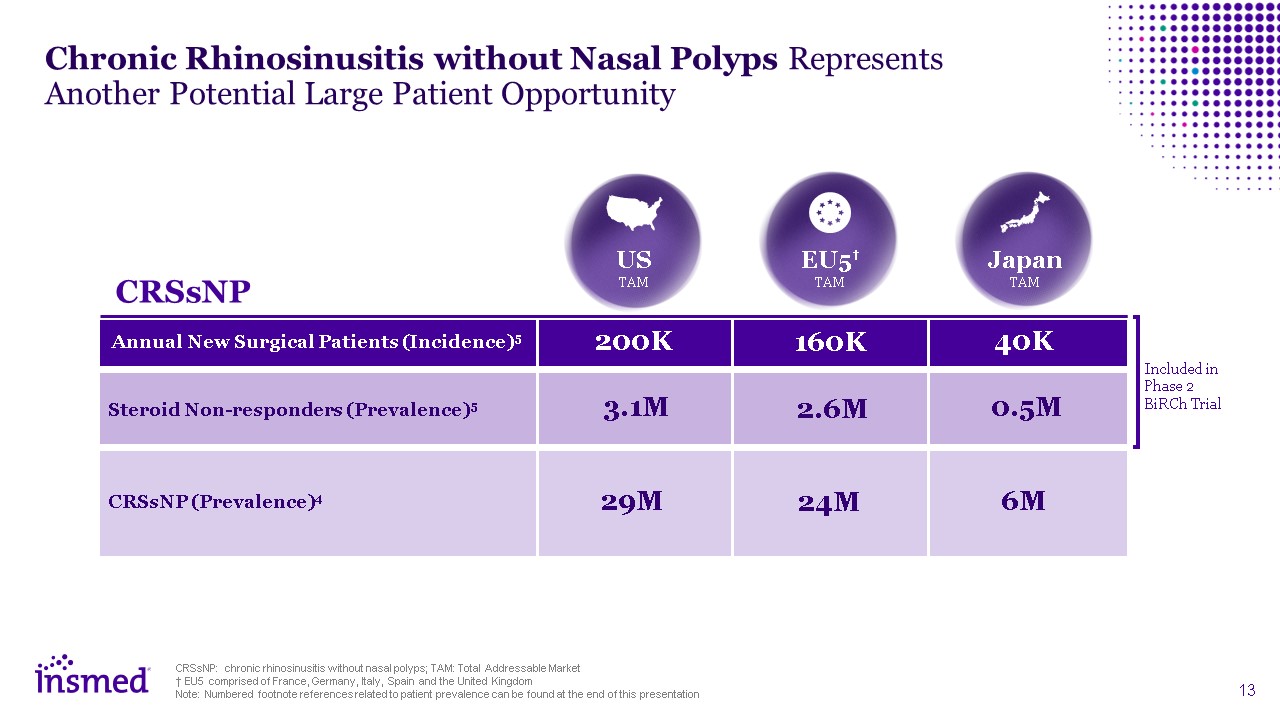
Chronic Rhinosinusitis without Nasal Polyps Represents Another Potential Large Patient Opportunity Included in Phase 2 BiRCh Trial Annual New Surgical Patients (Incidence)5 0.5M 3.1M 2.6M Steroid Non-responders (Prevalence)5 40K 200K 160K 6M 29M 24M CRSsNP CRSsNP (Prevalence)4 US TAM EU5† TAM Japan TAM US TAM EU5† TAM Japan TAM CRSsNP: chronic rhinosinusitis without nasal polyps; TAM: Total Addressable Market † EU5 comprised of France, Germany, Italy, Spain and the United Kingdom Note: Numbered footnote references related to patient prevalence can be found at the end of this presentation

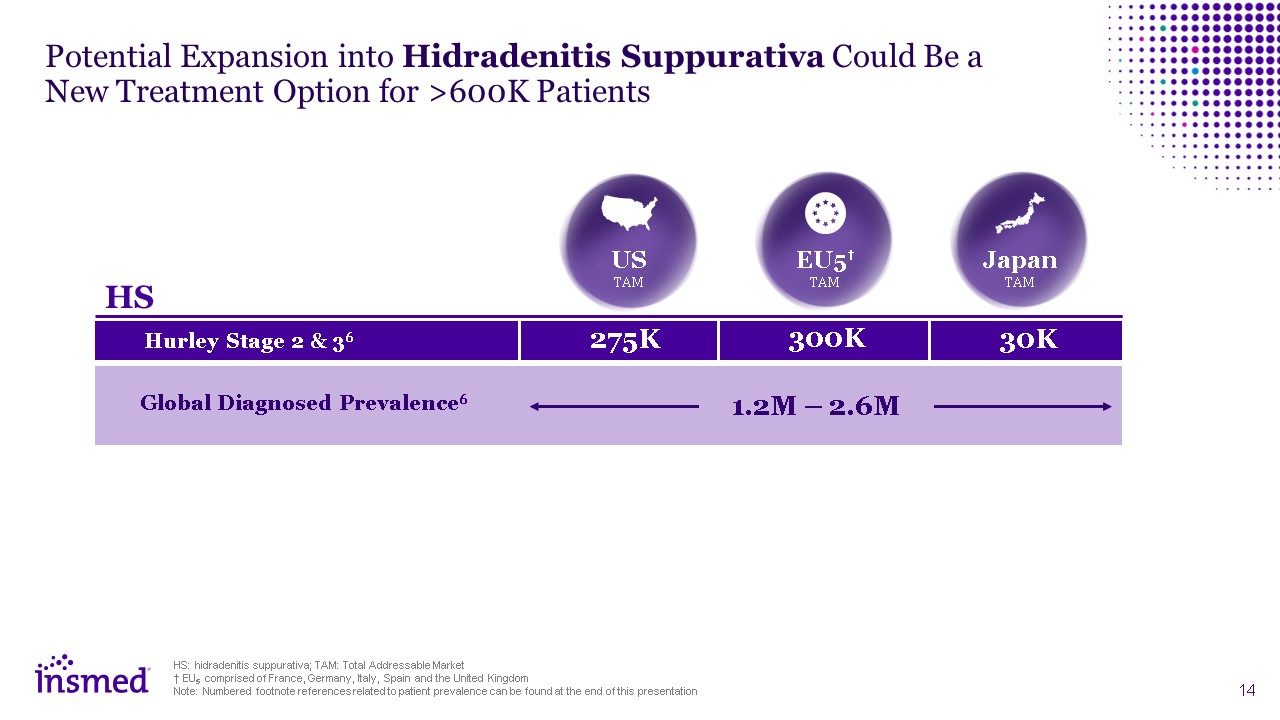
Potential Expansion into Hidradenitis Suppurativa Could Be a New Treatment Option for >600K Patients Hurley Stage 2 & 36 Global Diagnosed Prevalence6 30K 275K 300K HS 1.2M – 2.6M US TAM EU5† TAM Japan TAM HS: hidradenitis suppurativa; TAM: Total Addressable Market † EU5 comprised of France, Germany, Italy, Spain and the United Kingdom Note: Numbered footnote references related to patient prevalence can be found at the end of this presentation

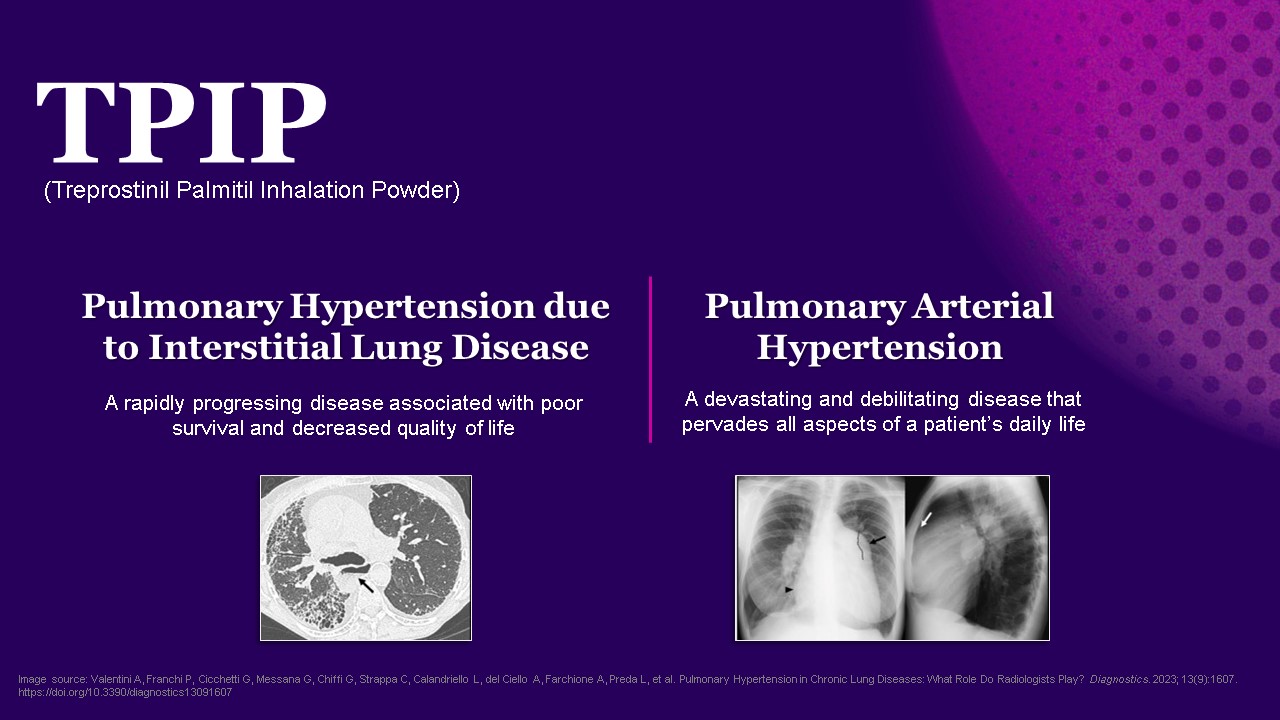
TPIP Pulmonary Hypertension due to Interstitial Lung Disease A rapidly progressing disease associated with poor survival and decreased quality of life Pulmonary Arterial Hypertension A devastating and debilitating disease that pervades all aspects of a patient’s daily life Image source: Valentini A, Franchi P, Cicchetti G, Messana G, Chiffi G, Strappa C, Calandriello L, del Ciello A, Farchione A, Preda L, et al. Pulmonary Hypertension in Chronic Lung Diseases: What Role Do Radiologists Play? Diagnostics. 2023; 13(9):1607. https://doi.org/10.3390/diagnostics13091607 (Treprostinil Palmitil Inhalation Powder)

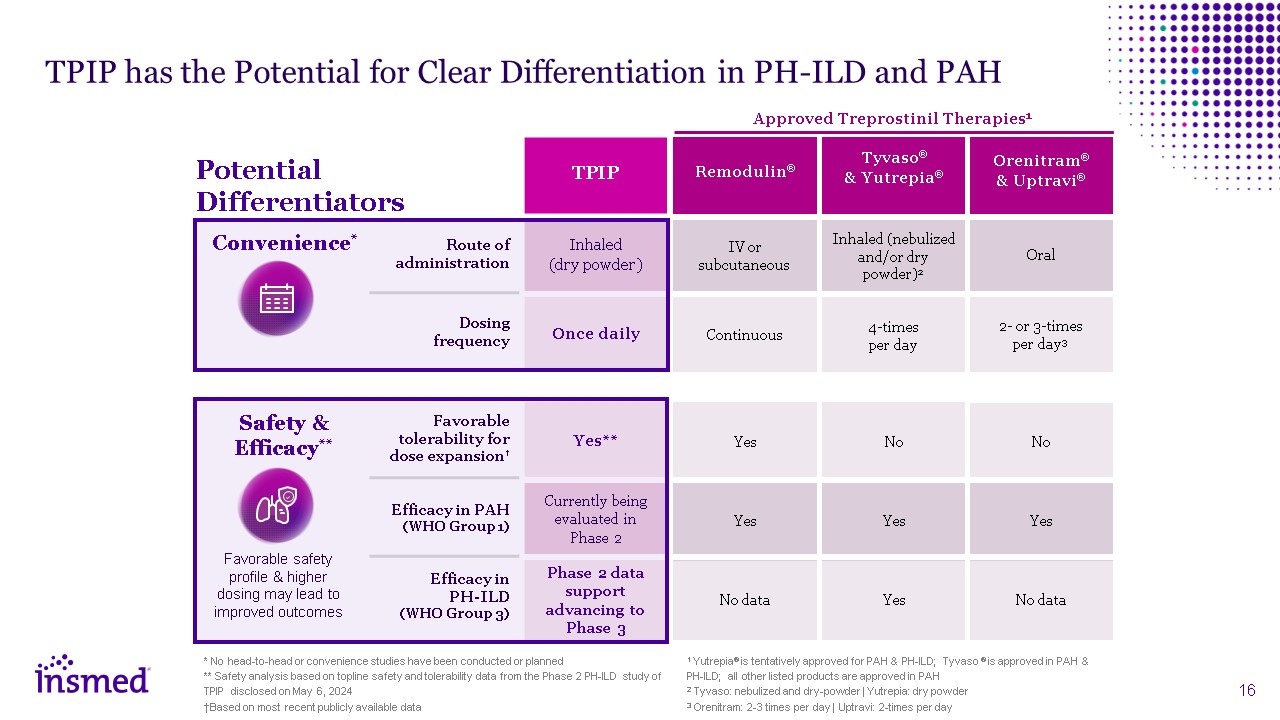
TPIP has the Potential for Clear Differentiation in PH-ILD and PAH * No head-to-head or convenience studies have been conducted or planned** Safety analysis based on topline safety and tolerability data from the Phase 2 PH-ILD study of TPIP disclosed on May 6, 2024 †Based on most recent publicly available data TPIP Inhaled (dry powder) Once daily Yes** Currently being evaluated in Phase 2 Phase 2 data support advancing to Phase 3 Remodulin® IV or subcutaneous Continuous Yes Yes No data Tyvaso® & Yutrepia® Inhaled (nebulized and/or dry powder)2 4-times per day No Yes Yes Orenitram® & Uptravi® Oral 2- or 3-times per day3 No Yes No data Route of administration Dosing frequency Favorable tolerability for dose expansion† Efficacy in PAH (WHO Group 1) Efficacy in PH-ILD (WHO Group 3) Potential Differentiators 1 Yutrepia® is tentatively approved for PAH & PH-ILD; Tyvaso ® is approved in PAH & PH-ILD; all other listed products are approved in PAH 2 Tyvaso: nebulized and dry-powder | Yutrepia: dry powder 3 Orenitram: 2-3 times per day | Uptravi: 2-times per day Approved Treprostinil Therapies1 Convenience* Safety & Efficacy** Favorable safety profile & higher dosing may lead to improved outcomes

TPIP: Topline Results Moved Forward to Mid-2025 for Phase 2 PAH Trial 102 Participants Enrolled 2:1 Randomization Primary Endpoint: Change from baseline in pulmonary vascular resistance (PVR) at 16 weeks

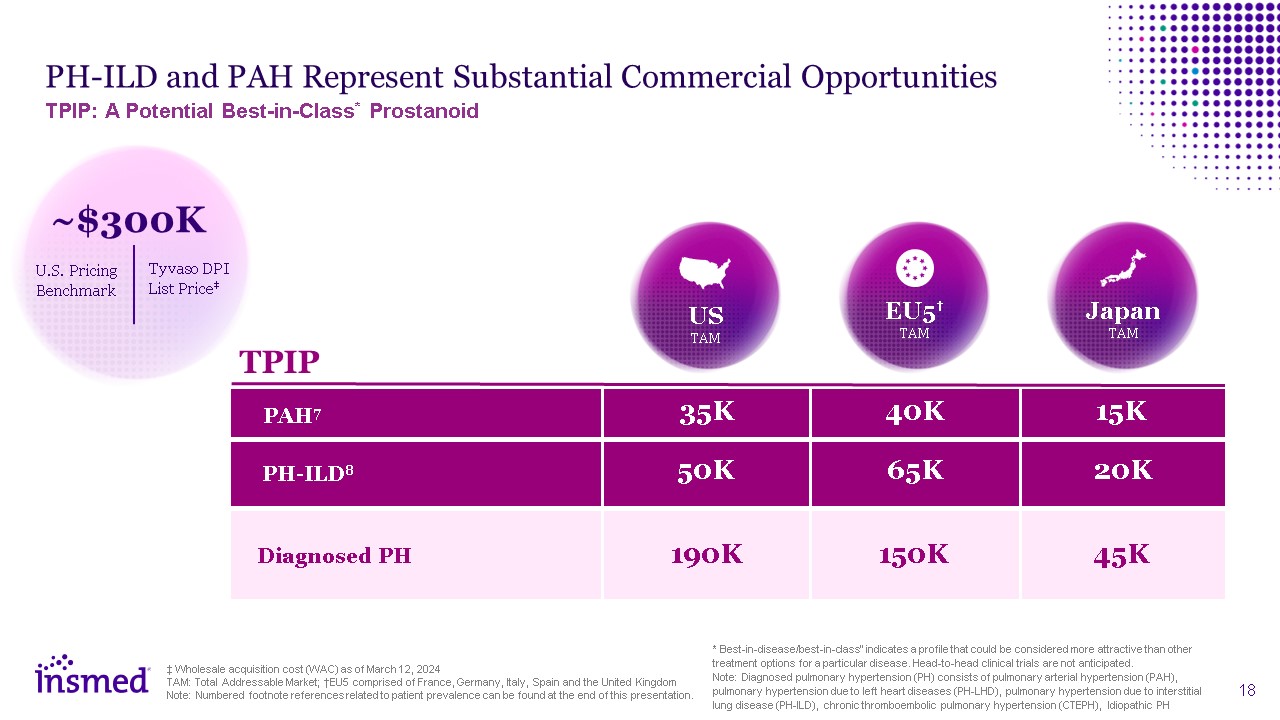
PH-ILD and PAH Represent Substantial Commercial Opportunities TPIP: A Potential Best-in-Class* Prostanoid ‡ Wholesale acquisition cost (WAC) as of March 12, 2024 TAM: Total Addressable Market; †EU5 comprised of France, Germany, Italy, Spain and the United Kingdom Note: Numbered footnote references related to patient prevalence can be found at the end of this presentation. * Best-in-disease/best-in-class" indicates a profile that could be considered more attractive than other treatment options for a particular disease. Head-to-head clinical trials are not anticipated.Note: Diagnosed pulmonary hypertension (PH) consists of pulmonary arterial hypertension (PAH), pulmonary hypertension due to left heart diseases (PH-LHD), pulmonary hypertension due to interstitial lung disease (PH-ILD), chronic thromboembolic pulmonary hypertension (CTEPH), Idiopathic PH ~$300K U.S. Pricing Benchmark Tyvaso DPI List Price‡ US TAM EU5† TAM Japan TAM 15K 35K 40K PAH7 PH-ILD8 20K 50K 65K Diagnosed PH 45K 190K 150K TPIP

Early-Stage Research Engine Has Produced First Product Candidate Gene Therapy IND for Duchenne Muscular Dystrophy Cleared in December 20241 Our Approach High Potential Impact Multiple preclinical programs Low Upfront Costs to acquire the technologies Low Ongoing Expense <20% of expenditures Expect ~1-2 IND filings per year Gene Therapy Deimmunized Protein Engineering Using AI Synthetic Rescue RNA End-Joining Our Platforms 1 INS1201 is Insmed’s lead gene therapy, an intrathecally-delivered treatment for patients with Duchenne muscular dystrophy (DMD); Plans to initiate a clinical trial in patients with DMD in the first half of 2025.

Our Culture is Our Greatest Strength In a recent survey* >90% of Employees who responded said they felt: * The 2024 annual Insmed Pulse Survey included 89.4% participation across the organization Proud to work at Insmed Inspired by what we do Confident in Insmed’s future Driven to do their best work No. 1 on Science’s Top BioPharma Employers List Certified as a U.S. Great Place to Work Four years in a row Four years in a row

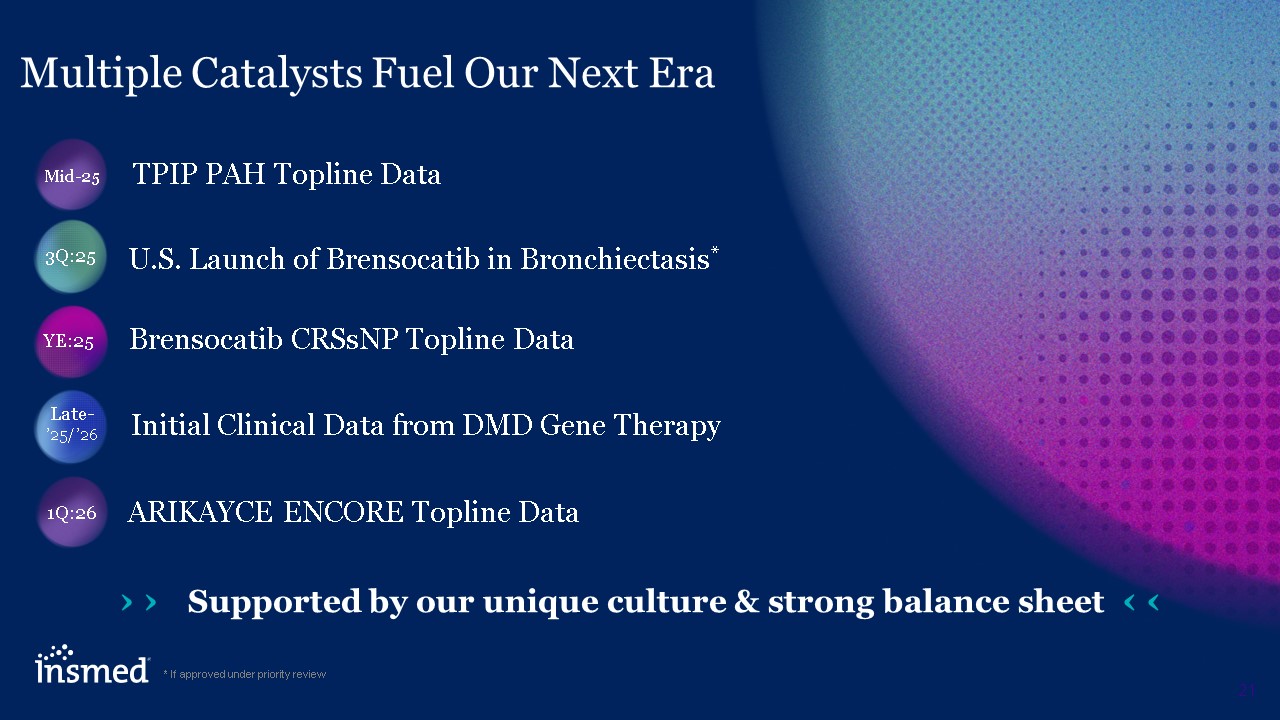
Multiple Catalysts Fuel Our Next Era * If approved under priority review TPIP PAH Topline Data Mid-25 U.S. Launch of Brensocatib in Bronchiectasis* 3Q:25 Brensocatib CRSsNP Topline Data YE:25 Initial Clinical Data from DMD Gene Therapy Late- ’25/’26 › › Supported by our unique culture & strong balance sheet ‹ ‹ ARIKAYCE ENCORE Topline Data 1Q:26


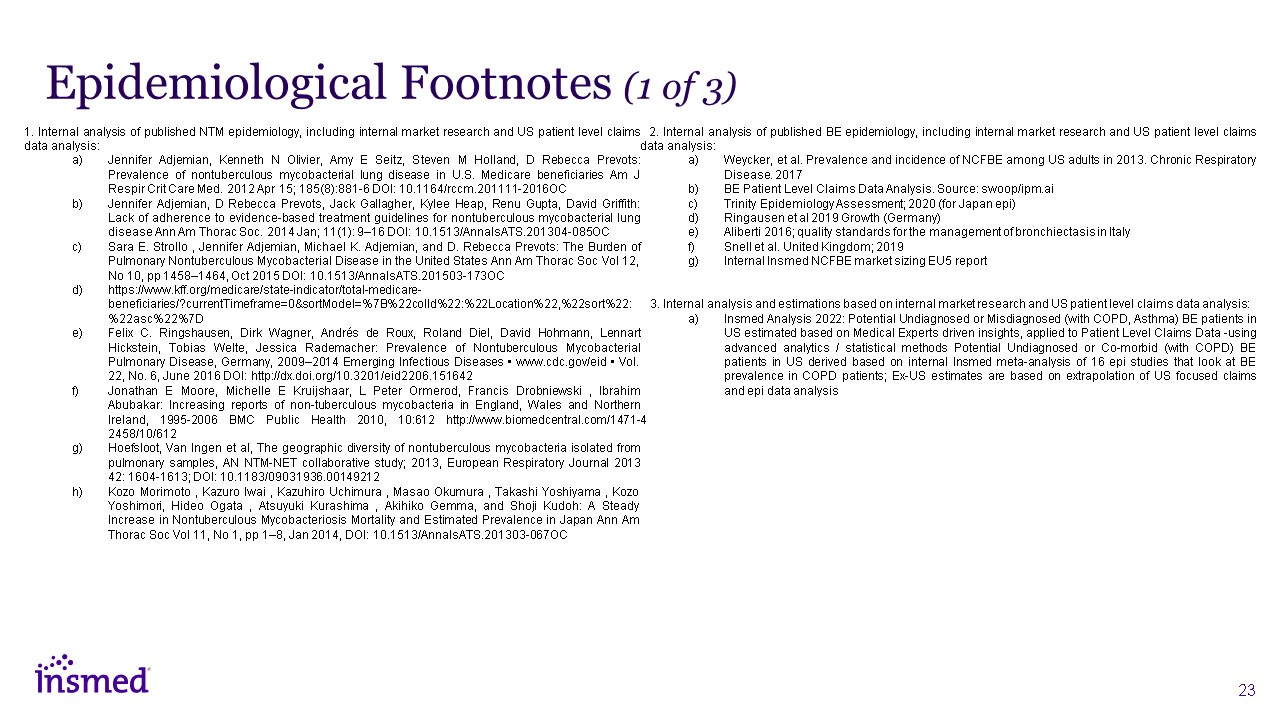
Epidemiological Footnotes (1 of 3) 1. Internal analysis of published NTM epidemiology, including internal market research and US patient level claims data analysis: Jennifer Adjemian, Kenneth N Olivier, Amy E Seitz, Steven M Holland, D Rebecca Prevots: Prevalence of nontuberculous mycobacterial lung disease in U.S. Medicare beneficiaries Am J Respir Crit Care Med. 2012 Apr 15; 185(8):881-6 DOI: 10.1164/rccm.201111-2016OC Jennifer Adjemian, D Rebecca Prevots, Jack Gallagher, Kylee Heap, Renu Gupta, David Griffith: Lack of adherence to evidence-based treatment guidelines for nontuberculous mycobacterial lung disease Ann Am Thorac Soc. 2014 Jan; 11(1): 9–16 DOI: 10.1513/AnnalsATS.201304-085OC Sara E. Strollo , Jennifer Adjemian, Michael K. Adjemian, and D. Rebecca Prevots: The Burden of Pulmonary Nontuberculous Mycobacterial Disease in the United States Ann Am Thorac Soc Vol 12, No 10, pp 1458–1464, Oct 2015 DOI: 10.1513/AnnalsATS.201503-173OC https://www.kff.org/medicare/state-indicator/total-medicare-beneficiaries/?currentTimeframe=0&sortModel=%7B%22colId%22:%22Location%22,%22sort%22:%22asc%22%7D Felix C. Ringshausen, Dirk Wagner, Andrés de Roux, Roland Diel, David Hohmann, Lennart Hickstein, Tobias Welte, Jessica Rademacher: Prevalence of Nontuberculous Mycobacterial Pulmonary Disease, Germany, 2009–2014 Emerging Infectious Diseases • www.cdc.gov/eid • Vol. 22, No. 6, June 2016 DOI: http://dx.doi.org/10.3201/eid2206.151642 Jonathan E Moore, Michelle E Kruijshaar, L Peter Ormerod, Francis Drobniewski , Ibrahim Abubakar: Increasing reports of non-tuberculous mycobacteria in England, Wales and Northern Ireland, 1995-2006 BMC Public Health 2010, 10:612 http://www.biomedcentral.com/1471-2458/10/612 Hoefsloot, Van Ingen et al, The geographic diversity of nontuberculous mycobacteria isolated from pulmonary samples, AN NTM-NET collaborative study; 2013, European Respiratory Journal 2013 42: 1604-1613; DOI: 10.1183/09031936.00149212 Kozo Morimoto , Kazuro Iwai , Kazuhiro Uchimura , Masao Okumura , Takashi Yoshiyama , Kozo Yoshimori, Hideo Ogata , Atsuyuki Kurashima , Akihiko Gemma, and Shoji Kudoh: A Steady Increase in Nontuberculous Mycobacteriosis Mortality and Estimated Prevalence in Japan Ann Am Thorac Soc Vol 11, No 1, pp 1–8, Jan 2014, DOI: 10.1513/AnnalsATS.201303-067OC 2. Internal analysis of published BE epidemiology, including internal market research and US patient level claims data analysis: Weycker, et al. Prevalence and incidence of NCFBE among US adults in 2013. Chronic Respiratory Disease. 2017 BE Patient Level Claims Data Analysis. Source: swoop/ipm.ai Trinity Epidemiology Assessment; 2020 (for Japan epi) Ringausen et al 2019 Growth (Germany) Aliberti 2016; quality standards for the management of bronchiectasis in Italy Snell et al. United Kingdom; 2019 Internal Insmed NCFBE market sizing EU5 report 3. Internal analysis and estimations based on internal market research and US patient level claims data analysis: Insmed Analysis 2022: Potential Undiagnosed or Misdiagnosed (with COPD, Asthma) BE patients in US estimated based on Medical Experts driven insights, applied to Patient Level Claims Data -using advanced analytics / statistical methods Potential Undiagnosed or Co-morbid (with COPD) BE patients in US derived based on internal Insmed meta-analysis of 16 epi studies that look at BE prevalence in COPD patients; Ex-US estimates are based on extrapolation of US focused claims and epi data analysis 4

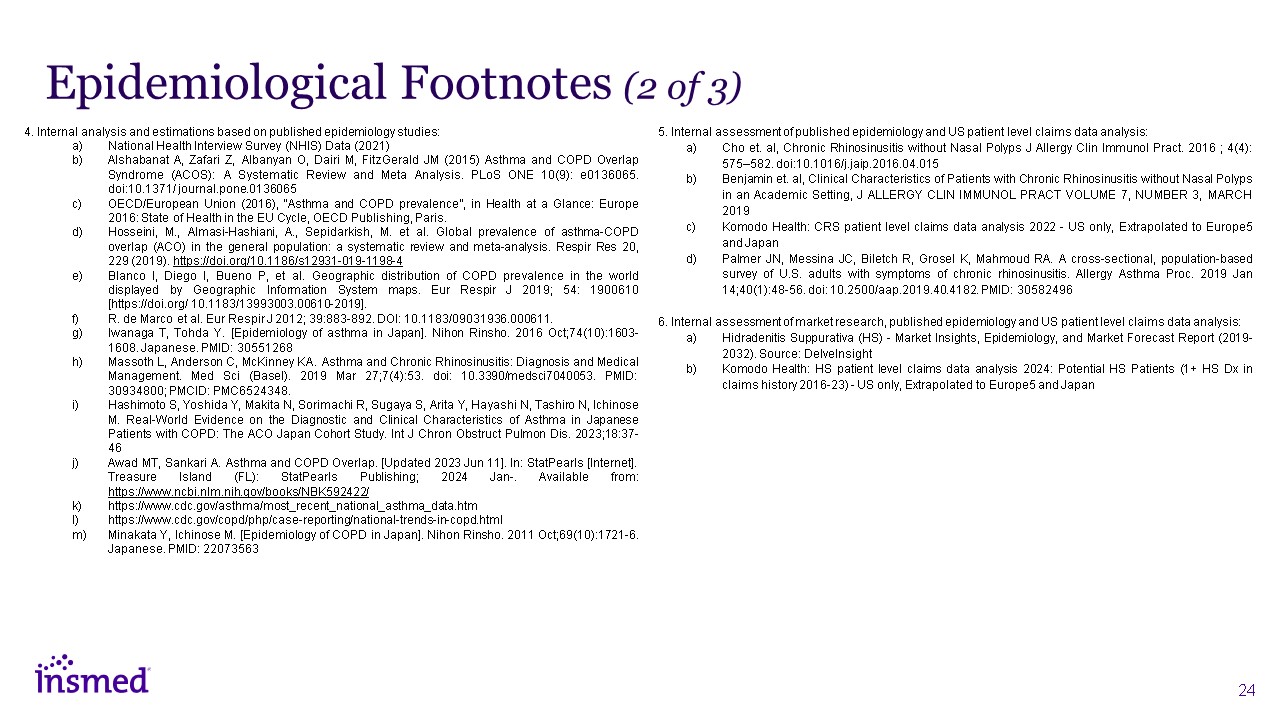
Epidemiological Footnotes (2 of 3) 4. Internal analysis and estimations based on published epidemiology studies: National Health Interview Survey (NHIS) Data (2021) Alshabanat A, Zafari Z, Albanyan O, Dairi M, FitzGerald JM (2015) Asthma and COPD Overlap Syndrome (ACOS): A Systematic Review and Meta Analysis. PLoS ONE 10(9): e0136065. doi:10.1371/ journal.pone.0136065 OECD/European Union (2016), “Asthma and COPD prevalence”, in Health at a Glance: Europe 2016: State of Health in the EU Cycle, OECD Publishing, Paris. Hosseini, M., Almasi-Hashiani, A., Sepidarkish, M. et al. Global prevalence of asthma-COPD overlap (ACO) in the general population: a systematic review and meta-analysis. Respir Res 20, 229 (2019). https://doi.org/10.1186/s12931-019-1198-4 Blanco I, Diego I, Bueno P, et al. Geographic distribution of COPD prevalence in the world displayed by Geographic Information System maps. Eur Respir J 2019; 54: 1900610 [https://doi.org/ 10.1183/13993003.00610-2019]. R. de Marco et al. Eur Respir J 2012; 39:883-892. DOI: 10.1183/09031936.000611. Iwanaga T, Tohda Y. [Epidemiology of asthma in Japan]. Nihon Rinsho. 2016 Oct;74(10):1603-1608. Japanese. PMID: 30551268 Massoth L, Anderson C, McKinney KA. Asthma and Chronic Rhinosinusitis: Diagnosis and Medical Management. Med Sci (Basel). 2019 Mar 27;7(4):53. doi: 10.3390/medsci7040053. PMID: 30934800; PMCID: PMC6524348. Hashimoto S, Yoshida Y, Makita N, Sorimachi R, Sugaya S, Arita Y, Hayashi N, Tashiro N, Ichinose M. Real-World Evidence on the Diagnostic and Clinical Characteristics of Asthma in Japanese Patients with COPD: The ACO Japan Cohort Study. Int J Chron Obstruct Pulmon Dis. 2023;18:37-46 Awad MT, Sankari A. Asthma and COPD Overlap. [Updated 2023 Jun 11]. In: StatPearls [Internet]. Treasure Island (FL): StatPearls Publishing; 2024 Jan-. Available from: https://www.ncbi.nlm.nih.gov/books/NBK592422/ https://www.cdc.gov/asthma/most_recent_national_asthma_data.htm https://www.cdc.gov/copd/php/case-reporting/national-trends-in-copd.html Minakata Y, Ichinose M. [Epidemiology of COPD in Japan]. Nihon Rinsho. 2011 Oct;69(10):1721-6. Japanese. PMID: 22073563 5. Internal assessment of published epidemiology and US patient level claims data analysis: Cho et. al, Chronic Rhinosinusitis without Nasal Polyps J Allergy Clin Immunol Pract. 2016 ; 4(4): 575–582. doi:10.1016/j.jaip.2016.04.015 Benjamin et. al, Clinical Characteristics of Patients with Chronic Rhinosinusitis without Nasal Polyps in an Academic Setting, J ALLERGY CLIN IMMUNOL PRACT VOLUME 7, NUMBER 3, MARCH 2019 Komodo Health: CRS patient level claims data analysis 2022 - US only, Extrapolated to Europe5 and Japan Palmer JN, Messina JC, Biletch R, Grosel K, Mahmoud RA. A cross-sectional, population-based survey of U.S. adults with symptoms of chronic rhinosinusitis. Allergy Asthma Proc. 2019 Jan 14;40(1):48-56. doi: 10.2500/aap.2019.40.4182. PMID: 30582496 6. Internal assessment of market research, published epidemiology and US patient level claims data analysis: Hidradenitis Suppurativa (HS) - Market Insights, Epidemiology, and Market Forecast Report (2019-2032). Source: DelveInsight Komodo Health: HS patient level claims data analysis 2024: Potential HS Patients (1+ HS Dx in claims history 2016-23) - US only, Extrapolated to Europe5 and Japan

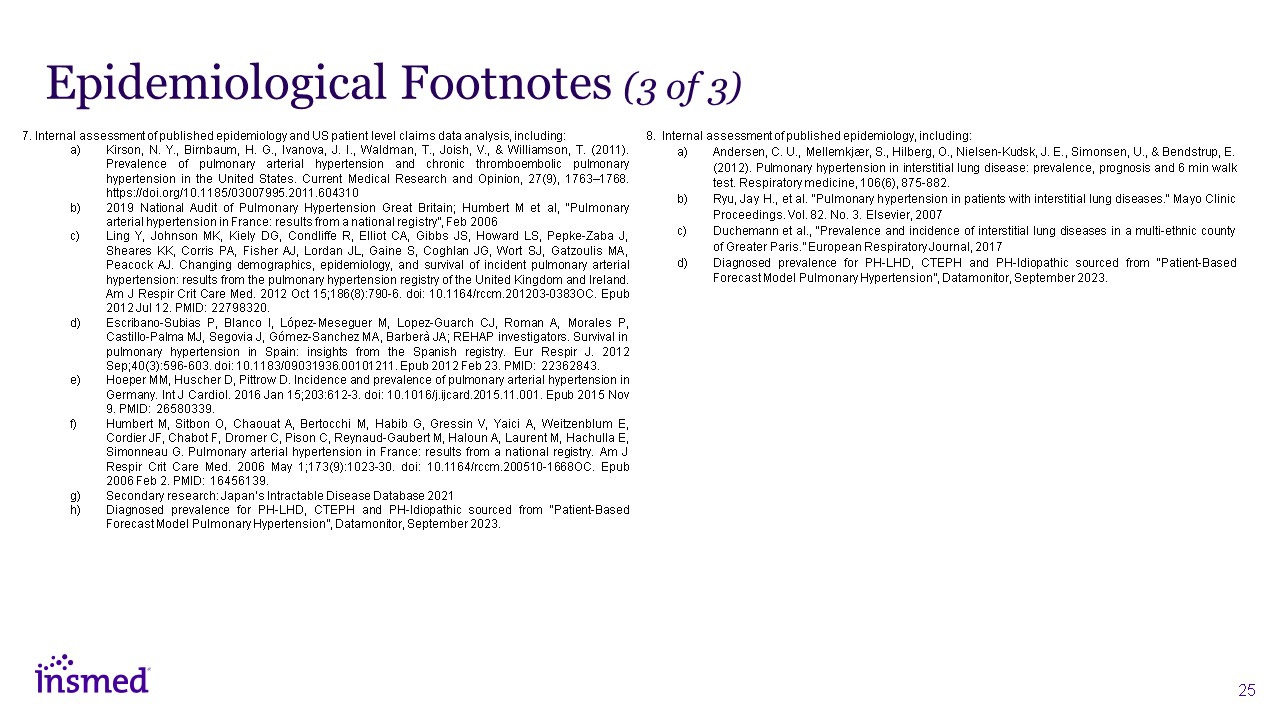
Epidemiological Footnotes (3 of 3) 7. Internal assessment of published epidemiology and US patient level claims data analysis, including: Kirson, N. Y., Birnbaum, H. G., Ivanova, J. I., Waldman, T., Joish, V., & Williamson, T. (2011). Prevalence of pulmonary arterial hypertension and chronic thromboembolic pulmonary hypertension in the United States. Current Medical Research and Opinion, 27(9), 1763–1768. https://doi.org/10.1185/03007995.2011.604310 2019 National Audit of Pulmonary Hypertension Great Britain; Humbert M et al, “Pulmonary arterial hypertension in France: results from a national registry”, Feb 2006 Ling Y, Johnson MK, Kiely DG, Condliffe R, Elliot CA, Gibbs JS, Howard LS, Pepke-Zaba J, Sheares KK, Corris PA, Fisher AJ, Lordan JL, Gaine S, Coghlan JG, Wort SJ, Gatzoulis MA, Peacock AJ. Changing demographics, epidemiology, and survival of incident pulmonary arterial hypertension: results from the pulmonary hypertension registry of the United Kingdom and Ireland. Am J Respir Crit Care Med. 2012 Oct 15;186(8):790-6. doi: 10.1164/rccm.201203-0383OC. Epub 2012 Jul 12. PMID: 22798320. Escribano-Subias P, Blanco I, López-Meseguer M, Lopez-Guarch CJ, Roman A, Morales P, Castillo-Palma MJ, Segovia J, Gómez-Sanchez MA, Barberà JA; REHAP investigators. Survival in pulmonary hypertension in Spain: insights from the Spanish registry. Eur Respir J. 2012 Sep;40(3):596-603. doi: 10.1183/09031936.00101211. Epub 2012 Feb 23. PMID: 22362843. Hoeper MM, Huscher D, Pittrow D. Incidence and prevalence of pulmonary arterial hypertension in Germany. Int J Cardiol. 2016 Jan 15;203:612-3. doi: 10.1016/j.ijcard.2015.11.001. Epub 2015 Nov 9. PMID: 26580339. Humbert M, Sitbon O, Chaouat A, Bertocchi M, Habib G, Gressin V, Yaici A, Weitzenblum E, Cordier JF, Chabot F, Dromer C, Pison C, Reynaud-Gaubert M, Haloun A, Laurent M, Hachulla E, Simonneau G. Pulmonary arterial hypertension in France: results from a national registry. Am J Respir Crit Care Med. 2006 May 1;173(9):1023-30. doi: 10.1164/rccm.200510-1668OC. Epub 2006 Feb 2. PMID: 16456139. Secondary research: Japan’s Intractable Disease Database 2021 Diagnosed prevalence for PH-LHD, CTEPH and PH-Idiopathic sourced from “Patient-Based Forecast Model Pulmonary Hypertension”, Datamonitor, September 2023. 8. Internal assessment of published epidemiology, including: Andersen, C. U., Mellemkjær, S., Hilberg, O., Nielsen-Kudsk, J. E., Simonsen, U., & Bendstrup, E. (2012). Pulmonary hypertension in interstitial lung disease: prevalence, prognosis and 6 min walk test. Respiratory medicine, 106(6), 875-882. Ryu, Jay H., et al. "Pulmonary hypertension in patients with interstitial lung diseases." Mayo Clinic Proceedings. Vol. 82. No. 3. Elsevier, 2007 Duchemann et al., “Prevalence and incidence of interstitial lung diseases in a multi-ethnic county of Greater Paris.” European Respiratory Journal, 2017 Diagnosed prevalence for PH-LHD, CTEPH and PH-Idiopathic sourced from “Patient-Based Forecast Model Pulmonary Hypertension”, Datamonitor, September 2023.

Appendix Late-Stage Trial Designs

ARIKAYCE Phase 3 Clinical Program to Potentially Expand MAC Indication Trial summary Key Endpoints Screening Double-Blind Registration PMR Trial ARIKAYCE + AZI* + ETH* Placebo + AZI* + ETH* Key Endpoints Month 13 Culture Negativity Endpoint Month 15 R Months 1-6 ARIKAYCE + AZI* + ETH* Off Treatment Months 1-12 Adults with new MAC lung infection (n=250+) Psychometric Validation Study Month 7 Placebo + AZI + ETH Off Treatment Adults with new MAC lung infection (n=100) ENCORE ARISE R ENCORE Primary Endpoint Change from Baseline to Month 13 (one month off treatment) in respiratory symptom score Key Secondary Endpoint Proportion of subjects achieving durable culture conversion at Month 15 (3 months off treatment) ARISE Primary Objective Demonstrate reliability, validity and responsiveness of the PRO/symptom scores Secondary Objective Demonstrate effect of ARIKAYCE on culture conversion, time to culture conversion 200-220 sites across ARISE and ENCORE Topline results from Phase 3 ENCORE trial expected in Q1:26 Aligned on Primary Endpoint (PE) with FDA (8 questions from QoL-B) ENCORE enrollment of 425 patients (>90% powering on PE) Positive topline results from Phase 3 ARISE trial shared in September 2023 *Azithromycin (AZI), Ethambutol (ETH) ARIKAYCE

Brensocatib Phase 2b in CRSsNP: BiRCh Brensocatib 40 mg QD Placebo QD Screening BASELINE EOT (primary analysis) Up to 5 weeks Brensocatib 10 mg QD 4 weeks Treatment period 24 weeks EOS R Off-treatment follow-up N=~270 total Key eligibility criteria: Male or female ≥18 years old and ≤75 years old At least a 12-week history of CRSsNP and confirmed by endoscopy at Screening Ongoing CRS symptoms: nasal congestion score of at least 2, sTSS score of at least 5 and sino-nasal outcome test 22 score of at least 20 at screening and baseline Blood eosinophil count of ≤750 cells/μL at Screening Previous sinonasal surgery for CRS and/or treatment with systemic steroids or antibiotics for CRS within a year of Screening Visit Primary Endpoint Change in daily sinus total symptom score (sTSS) Secondary Endpoints Change in percentage sinus opacification Change in modified LMK CT (Lund-MacKay computed tomography) score Proportion of participant requiring rescue Change in Sino-nasal Outcome Test 22 score Exploratory Endpoint Neutrophil serine proteases (NSPs) in blood CRSsNP: Chronic rhinosinusitis without nasal polyps; EOS: end of study; EOT: end of treatment; QD: once daily. Trial summary BiRCh Brensocatib

Primary Endpoint (Week 16) Percent change in total abscess and inflammatory nodule (AN) count Secondary Endpoints (Week 16) Percentage achieving HiSCR50 Percentage achieving HiSCR75 Change from baseline in draining tunnel count Percentage remaining free from HS flare Change from baseline in International HS Severity Score System (IHS4) score Percentage achieving IHS-55 Change from baseline on Dermatology Life Quality Index (DLQI) Global Score Percentage achieving Numeric Rating Scale 30 (NRS30) with Baseline NRS >3 Brensocatib Phase 2b in HS: CEDAR Trial summary HS: Hidradenitis suppurativa; QD: once daily; Q2W: once every 2 weeks; Q4W: once every 4 weeks; HiSCR: Hidradenitis suppurativa clinical response Up to 35 days Period 1 Double-Blind Placebo-Controlled (16 weeks) Period 2 Double-Blind Active Treatment (36 weeks) Follow-up Period (4 weeks) No Study Treatment SCREENING 1:1:1 N = 204 (68/arm) Clinic Visits Q2W Clinic Visits Q4W Baseline Day 1 Randomization Period 1 End of Treatment Week 16 (Primary Analysis) Period 2 End of Treatment Week 52 End of Study Week 56 Tissue Biopsy (Sub-study: N=~36) *Optional, at selected sites Brensocatib 10 mg QD Brensocatib 10 mg QD (n=68) Brensocatib 40 mg QD Brensocatib 40 mg QD (n=68) Placebo QD Brensocatib 10 mg QD (n=34) Brensocatib 40 mg QD (n=34) Interim Futility Analysis Independent Data Monitoring Committee examines ~100 randomized participants completing 16 weeks of treatment to obtain a preliminary perspective of benefit/risk ratio in this population CEDAR Brensocatib

TPIP Phase 2b in PAH 4 weeks TPIP 80-640 µg inhalation capsules QD Placebo inhalation capsules QD Screening Treatment period 16 weeks Baseline EOT (primary analysis) EOS 4 weeks Follow-up Approximately 100 participants randomized in the study 2:1 active : placebo Steady-state period 3-week titration period; last dose increase at week 5 visit Primary Endpoint Change from baseline in pulmonary vascular resistance (PVR) at week 16 Secondary Exploratory Efficacy Endpoints Change from baseline in exercise capacity (6MWD) Change from baseline in WHO Functional class Change from baseline in Quality of Life (CAMPHOR questionnaire) Change from baseline in biomarkers of cardiac stress (NT-proBNP) Trial summary PAH Trial TPIP