IPSC 8-K
Century Therapeutics, Inc. (IPSC)
UNITED STATES
SECURITIES AND EXCHANGE COMMISSION
Washington, DC 20549
FORM
CURRENT REPORT
Pursuant to Section 13 or 15(d)
of the Securities Exchange Act of 1934
Date of Report (Date of earliest event reported):
(Exact name of registrant as specified in its charter)
| (State or other jurisdiction of incorporation or organization) |
(Commission File Number) | (I.R.S. Employer Identification No.) |
|
|
||
| (Address of principal executive offices) | (Zip Code) |
Registrant’s telephone number, including
area code: (
Not Applicable
(Former name or former address, if changed since last report)
Check the appropriate box below if the Form 8-K filing is intended to simultaneously satisfy the filing obligation of the registrant under any of the following provisions (see General Instruction A.2. below):
| Written communications pursuant to Rule 425 under the Securities Act (17 CFR 230.425) | |
| Soliciting material pursuant to Rule 14a-12 under the Exchange Act (17 CFR 240.14a-12) | |
| Pre-commencement communications pursuant to Rule 14d-2(b) under the Exchange Act (17 CFR 240.14d-2(b)) | |
| Pre-commencement communications pursuant to Rule 13e-4(c) under the Exchange Act (17 CFR 240.13e-4(c)) |
Securities registered pursuant to Section 12(b) of the Act:
| Title of Each Class | Trading Symbol | Name of Exchange on Which Registered | ||
Indicate by check mark whether the registrant is an emerging growth company as defined in Rule 405 of the Securities Act of 1933 (§230.405 of this chapter) or Rule 12b-2 of the Securities Exchange Act of 1934 (§240.12b-2 of this chapter).
Emerging growth company
If an emerging growth company, indicate by check mark if the registrant
has elected not to use the extended transition period for complying with any new or revised financial accounting standards provided pursuant
to Section 13(a) of the Exchange Act.
| Item 2.02 | Results of Operations and Financial Condition |
On May 15, 2025, Century Therapeutics, Inc. (the “Company”) issued a press release announcing its financial results for the quarter ended March 31, 2025. A copy of the press release is furnished as Exhibit 99.1 to this Current Report on Form 8-K and is incorporated herein by reference.
The information contained in this Item 2.02 (including Exhibit 99.1) is being furnished and shall not be deemed “filed” for purposes of Section 18 of the Securities Exchange Act of 1934, as amended (the “Exchange Act”), or otherwise subject to the liabilities of that section and shall not be deemed to be incorporated by reference in any filing under the Securities Act of 1933, as amended (the “Securities Act”), or the Exchange Act, except as shall be expressly set forth by specific reference in such filing.
| Item 7.01 | Regulation FD Disclosure |
On May 15, 2025, the Company updated information reflected in a slide presentation, which is attached as Exhibit 99.2 to this Current Report on Form 8-K and is incorporated herein by reference. Representatives of the Company will use the updated presentation in various meetings with investors from time to time.
The information contained in this Item 7.01 (including Exhibit 99.2) is being furnished and shall not be deemed “filed” for purposes of Section 18 of the Exchange Act, or otherwise subject to the liabilities of that section and shall not be deemed incorporated by reference in any filing under the Securities Act or the Exchange Act, except as shall be expressly set forth by specific reference in such filing.
| Item 9.01 | Financial Statements and Exhibits |
(d) Exhibits
| Exhibit No. |
Document | |
| 99.1 | Press Release of Century Therapeutics, Inc., dated May 15, 2025 | |
| 99.2 | Investor Presentation of Century Therapeutics, Inc., dated May 15, 2025 | |
| 104 | Cover Page Interactive Data File (embedded within the Inline XBRL document) |
SIGNATURES
Pursuant to the requirements of the Securities Exchange Act of 1934, the registrant has duly caused this report to be signed on its behalf by the undersigned hereunto duly authorized.
| CENTURY THERAPEUTICS, INC. | ||
| By: | /s/ Brent Pfeiffenberger, Pharm.D. | |
| Name: | Brent Pfeiffenberger, Pharm.D. | |
| Title: | President and Chief Executive Officer | |
Date: May 15, 2025
Exhibit 99.1
Century Therapeutics Reports First Quarter 2025 Financial Results and Provides Business Update
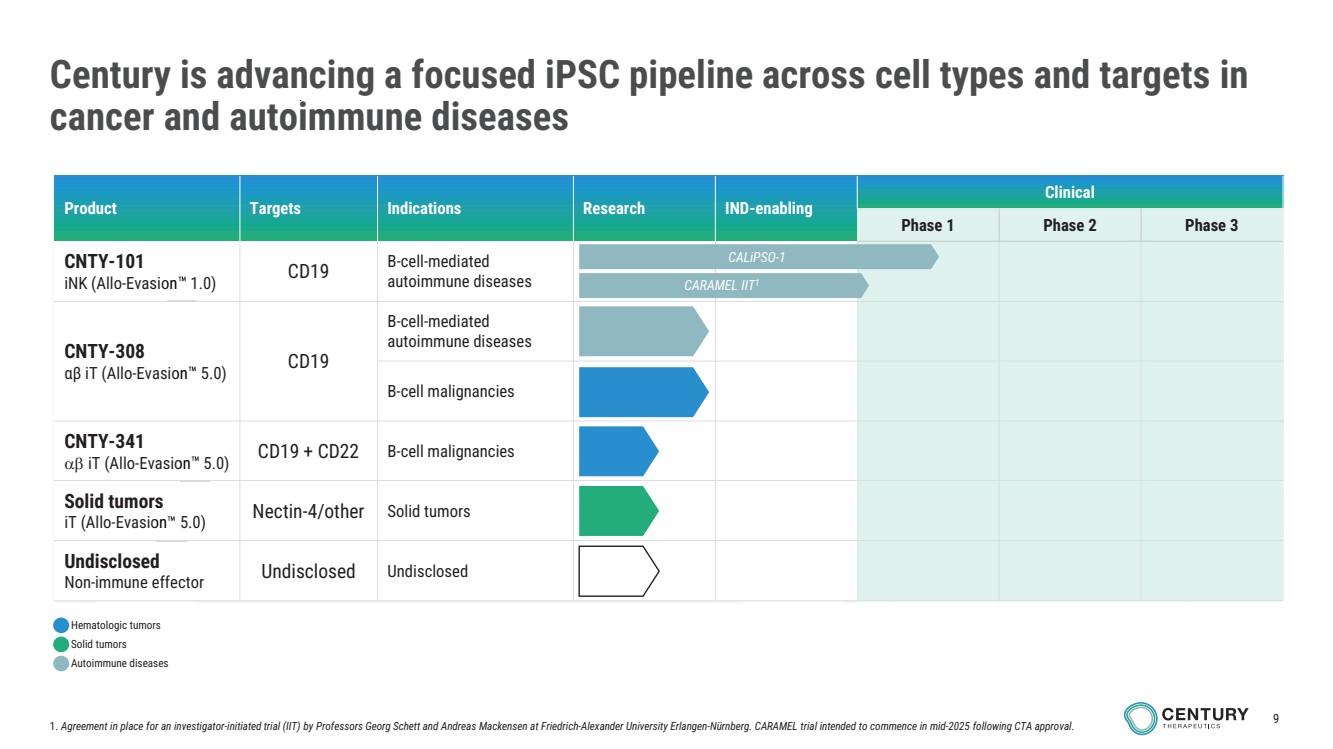
| · | Patient dosing initiated in Phase 1 CALiPSO-1 trial evaluating CNTY-101 in autoimmune disease; expanding to additional U.S. and European sites following CTA authorizations in Germany, France, and Italy |
| · | CNTY-308 expected to enter IND-enabling studies in mid-2025 to support anticipated clinical trials in B-cell-mediated autoimmune diseases and malignancies |
| · | Presentations at ASGCT 28th Annual Meeting highlight preclinical pipeline anchored by advanced iPSC-derived ’tunable’ CD4+/CD8+ ab T cells and Allo-Evasion™ 5.0 technology |
PHILADELPHIA, May 15, 2025 -- Century Therapeutics, Inc. (‘Century’, NASDAQ: IPSC), an innovative biotechnology company developing induced pluripotent stem cell (iPSC)-derived cell therapies in autoimmune disease and cancer, today reported financial results and business highlights for the first quarter ended March 31, 2025.
“We have made important progress focusing on pipeline programs with transformational potential in high-value commercial markets. In a recently held company webinar and at ASGCT, we showcased developmental progress with our preclinical pipeline, iPSC platform, and manufacturing capabilities, highlighting the potential for a pathway to developing iPSC-derived cell therapies at antibody-like scale. We are on track to initiate IND-enabling studies for our lead preclinical program, CNTY-308, in mid-2025,” said Brent Pfeiffenberger, Pharm.D., Chief Executive Officer of Century Therapeutics. “For our clinical-stage pipeline, patient dosing is now underway in the U.S. for the CALiPSO-1 trial and, with expansion into Europe, we remain on track to deliver clinical data for CNTY-101 by the end of 2025. We look forward to building on this momentum and pursuing a disciplined approach across our pipeline to bring investigational cell therapies closer to patients and generate value for all our stakeholders.”
First Quarter 2025 and Recent Highlights
CNTY-101 in Autoimmune Disease
| · | Patient dosing underway in CALiPSO-1 trial in the U.S.: In March 2025, the first patient was dosed in the Phase 1 CALiPSO-1 trial which is currently evaluating CNTY-101 as a potential treatment for patients with B-cell-mediated autoimmune diseases. |
| · | Focus on CALiPSO-1 clinical trial expansion and patient recruitment: Five clinical trial sites in the U.S. are active with additional U.S. clinical trial sites expected to open in 2025. Site activation activities are underway in select European countries, with enrollment at these sites expected to initiate in the second half of 2025. The company’s Clinical Trial Application (CTA) has been authorized in Germany, France, and Italy, providing important external validation of Century’s approach to clinical studies with allogeneic iPSC-derived therapies. |
| · | CARAMEL IIT CTA authorized and study on track to commence in mid-2025: The CARAMEL investigator-initiated trial (IIT), a Phase 1/2 trial of CNTY-101 in patients with B-cell-mediated autoimmune diseases led by Professors Georg Schett and Andreas Mackensen and sponsored by the Friedrich-Alexander University Erlangen-Nürnberg, is expected to commence in mid-2025. The CTA has been authorized in Germany |
| · | Clinical data by end of 2025: The company remains on track to report clinical data for CNTY-101 by the end of 2025. |
CNTY-308 and Other Preclinical Programs
| · | ASGCT presentations highlighting preclinical pipeline: At the ongoing American Society of Gene and Cell Therapy (ASGCT) 28th Annual Meeting, the company is presenting data on the company’s emerging preclinical cell therapy pipeline for autoimmune diseases and cancer. The data from the poster presentation suggest certain engineering modifications to CAR-iT and CAR-iNK cells can improve the anti-tumor activity of iPSC-derived immunotherapies to withstand the immunosuppressive nature of the solid tumor microenvironment. The data from the oral presentation characterize the generation of allogeneic iPSC-derived targeted CD4+/CD8+ ab CAR-T cells with comparable function, in vivo proliferation, and tumor control to primary T cells, supporting their use for the development of scalable, accessible CAR-T cell therapies. |
| · | CNTY-308 on track to enter into IND-enabling studies in mid-2025: The company continues to expect to initiate Investigational New Drug (IND)-enabling studies with CNTY-308, a CD19-targeted CD4+/CD8+ ab CAR-iT cell therapy engineered with Allo-Evasion™ 5.0 as a potential treatment for B-cell-mediated autoimmune diseases and malignancies, in mid-2025. |
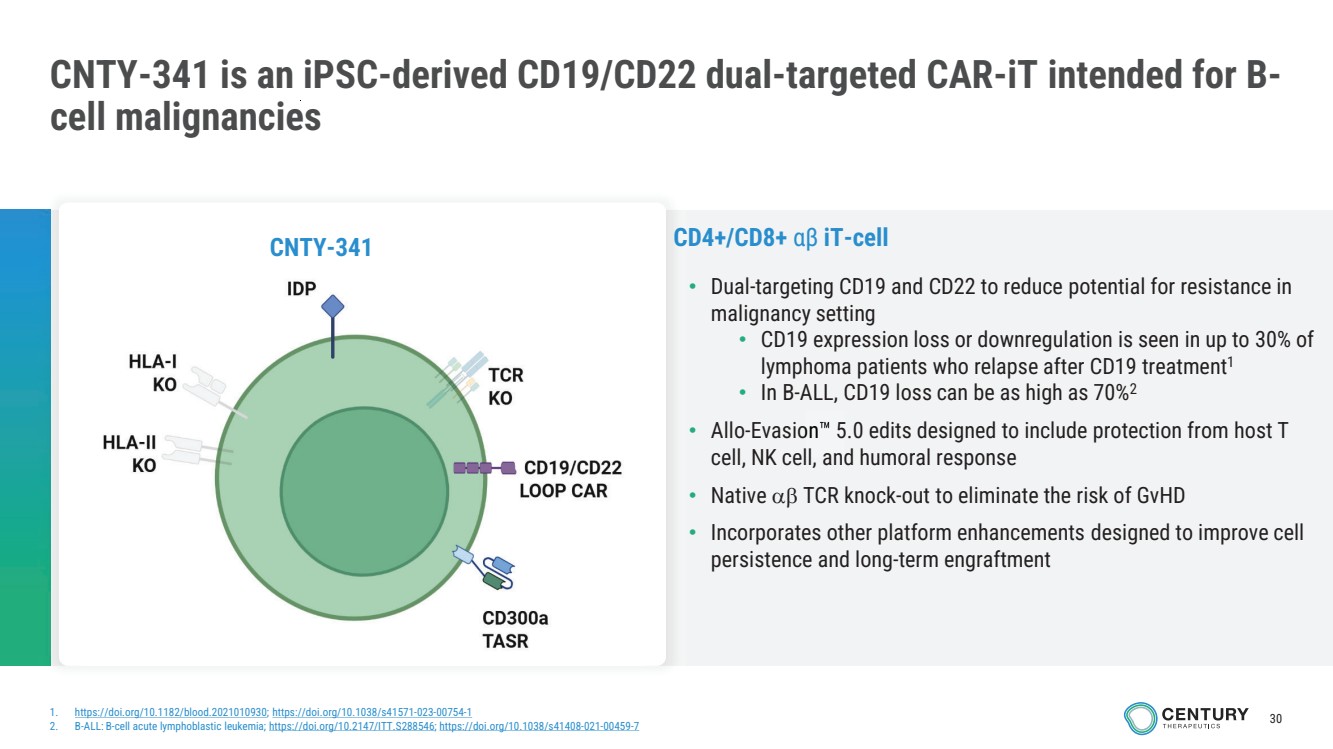
| · | Progressing early-stage development activities for iPSC-derived ab CAR-T cells in oncology and opportunities with non-immune effector cells in high-impact diseases: The company is advancing CNTY-341, a CD19/CD22 dual-targeted CAR-iT investigational cell therapy intended for B-cell malignancies, and the company’s first solid tumor CAR-iT investigational program exploiting nectin-4 CAR and other validated targets. Each of these programs is anchored by advanced iPSC-derived ’tunable’ CD4+/CD8+ ab T cells and is engineered with the company’s proprietary immune evasion technology, Allo-Evasion™ 5.0, which is designed to enable holistic evasion of T cell, NK cell, and humoral immunity. In addition, the company is leveraging its deep expertise in selective iPSC differentiation to non-immune effector cells with opportunities to potentially accelerate in high-impact therapeutic areas where the company believes its technology and capabilities provide meaningful differentiation. |
First Quarter 2025 Financial Results
| · | Cash Position: Cash, cash equivalents, and marketable securities were $185.8 million as of March 31, 2025, as compared to $220.1 million as of December 31, 2024. The company estimates its cash, cash equivalents, and investments will support operations into the fourth quarter of 2026. |
| · | Collaboration Revenue: Collaboration revenue generated through the company’s collaboration, option, and license agreement with Bristol-Myers Squibb (the Collaboration Agreement) was $109.2 million for the three months ended March 31, 2025, compared to $0.9 million for the same period in 2024. The Collaboration Agreement was terminated effective March 12, 2025. As such, the company recognized $109.2 million of collaboration revenue for the quarter ended March 31, 2025. There will be no future collaboration revenues recognized under the Collaboration Agreement. |
| · | Research and Development (R&D) Expenses: R&D expenses were $26.6 million for the three months ended March 31, 2025, compared to $23.4 million for the same period in 2024. The increase in R&D expenses is most notably due to increased clinical trial costs and advancing of preclinical programs. |
| · | General and Administrative (G&A) Expenses: G&A expenses were $8.4 million for the three months ended March 31, 2025, compared to $8.7 million for the same period in 2024. The decrease was primarily due to a decrease in salary and benefit expense. |
| · | Net Income (Loss): Net income was $76.6 million for the three months ended March 31, 2025, compared to net (loss) of $28.1 million for the same period in 2024. |
About Century Therapeutics
Century Therapeutics (NASDAQ: IPSC) is a clinical-stage biotechnology company leveraging its expertise in cellular reprogramming, genetic engineering, and manufacturing to develop cell therapies with the potential to provide meaningful advantages over existing cell therapies. Century’s genetically engineered, iPSC-derived cell therapy pipeline includes programs designed to address autoimmune diseases and cancers. Century believes its commitment to developing off-the-shelf cell therapies will expand patient access and provide an opportunity to advance the course of autoimmune disease and cancer care. For more information on Century Therapeutics, please visit www.centurytx.com and connect with us on LinkedIn.
Forward-Looking Statements
This press release contains forward-looking statements within the meaning of, and made pursuant to the safe harbor provisions of, The Private Securities Litigation Reform Act of 1995. All statements contained in this press release, other than statements of historical facts or statements that relate to present facts or current conditions, including but not limited to, statements regarding our clinical development plans and timelines are forward-looking statements. These statements involve known and unknown risks, uncertainties and other important factors that may cause our actual results, performance, or achievements to be materially different from any future results, performance or achievements expressed or implied by the forward-looking statements. In some cases, you can identify forward-looking statements by terms such as “may,” “might,” “will,” “should,” “expect,” “plan,” “aim,” “seek,” “anticipate,” “could,” “intend,” “target,” “project,” “contemplate,” “believe,” “estimate,” “predict,” “forecast,” “potential” or “continue” or the negative of these terms or other similar expressions. The forward-looking statements in this press release are only predictions. We have based these forward-looking statements largely on our current expectations and projections about future events and financial trends that we believe may affect our business, financial condition, and results of operations. These forward-looking statements speak only as of the date of this press release and are subject to a number of risks, uncertainties and assumptions, some of which cannot be predicted or quantified and some of which are beyond our control, including, among others: our ability to successfully advance our current and future product candidates through development activities, preclinical studies, and clinical trials; our dependence on the success of our lead product candidate, CNTY-101; our ability to progress CNTY-101 through clinical development; our ability to meet development milestones on anticipated timelines; uncertainties inherent in the results of preliminary data, pre-clinical studies and earlier-stage clinical trials, which may not be predictive of final results or the results of later-stage clinical trials; our ability to obtain clearance of our future IND or CTA submissions and commence and complete clinical trials on expected timelines, or at all; our reliance on the maintenance of certain key collaborative relationships for the manufacturing and development of our product candidates; the timing, scope and likelihood of regulatory filings and approvals, including final regulatory approval of our product candidates; the impact of geopolitical issues, trade disputes and tariffs, banking instability and inflation on our business and operations, supply chain and labor force; the performance of third parties in connection with the development of our product candidates, including third parties conducting our clinical trials as well as third-party suppliers and manufacturers; our ability to successfully commercialize our product candidates and develop sales and marketing capabilities, if our product candidates are approved; our ability to recruit and maintain key members of management and our ability to maintain and successfully enforce adequate intellectual property protection. These and other risks and uncertainties are described more fully in the “Risk Factors” section of our most recent filings with the Securities and Exchange Commission and available at www.sec.gov. You should not rely on these forward-looking statements as predictions of future events. The events and circumstances reflected in our forward-looking statements may not be achieved or occur, and actual results could differ materially from those projected in the forward-looking statements. Moreover, we operate in a dynamic industry and economy. New risk factors and uncertainties may emerge from time to time, and it is not possible for management to predict all risk factors and uncertainties that we may face. Except as required by applicable law, we do not plan to publicly update or revise any forward-looking statements contained herein, whether as a result of any new information, future events, changed circumstances or otherwise.
For More Information:
Century Therapeutics
Morgan Conn, Ph.D.
Chief Financial Officer
JPA Health
Sarah McCabe
Century Therapeutics, Inc
Condensed Balance Sheets
(unaudited, in thousands)
| March 31, | December 31, | |||||||
| Assets | 2025 | 2024 | ||||||
| Current Assets: | $ | $ | ||||||
| Cash and cash equivalents | 51,865 | 58,441 | ||||||
| Short-term investments | 113,256 | 130,851 | ||||||
| Prepaid expenses and other current assets | 4,510 | 4,759 | ||||||
| Total current assets | 169,631 | 194,051 | ||||||
| Property and equipment, net | 59,532 | 62,141 | ||||||
| Operating lease right-of-use assets, net | 28,232 | 28,706 | ||||||
| Long-term investments | 20,713 | 30,818 | ||||||
| Intangible assets | 34,200 | 34,200 | ||||||
| Other long-term assets | 3,301 | 3,300 | ||||||
| Total assets | 315,609 | 353,216 | ||||||
| Liabilities, convertible preferred stock, and stockholders' equity | ||||||||
| Current liabilities: | ||||||||
| Accounts payable | $ | 3,573 | $ | 3,075 | ||||
| Accrued expenses and other liabilities | 10,930 | 17,543 | ||||||
| Deferred revenue, current | - | 109,164 | ||||||
| Total current liabilities | 14,503 | 129,782 | ||||||
| Operating lease liability, noncurrent | 47,793 | 48,960 | ||||||
| Contingent consideration liability | 8,500 | 8,738 | ||||||
| Deferred tax liability | 4,374 | 4,374 | ||||||
| Total liabilities | 75,170 | 191,854 | ||||||
| Stockholders' equity | ||||||||
| Common stock | 9 | 9 | ||||||
| Additional paid-in capital | 945,902 | 943,366 | ||||||
| Accumulated deficit | (705,777 | ) | (782,337 | ) | ||||
| Accumulated other comprehensive loss | 305 | 324 | ||||||
| Total stockholders' equity | 240,439 | 161,362 | ||||||
| Total liabilities and stockholders' equity | $ | 315,609 | $ | 353,216 | ||||
Century Therapeutics, Inc
Condensed consolidated statements of operations
(unaudited, in thousands, except share and per share amounts)
| Three Months Ended | Three Months Ended | |||||||
| March 31, 2025 | March 31, 2024 | |||||||
| Collaboration Revenue | $ | 109,164 | $ | 855 | ||||
| Operating Expenses | ||||||||
| Research and development | 26,580 | 23,421 | ||||||
| General and administrative | 8,408 | 8,743 | ||||||
| Total operating expenses | 34,988 | 32,164 | ||||||
| Income (loss) from operations | 74,176 | (31,309 | ) | |||||
| Interest income | 2,422 | 3,237 | ||||||
| Other income (expense), net | (38 | ) | 11 | |||||
| Income (loss) before provision for income taxes | 76,560 | (28,061 | ) | |||||
| Provision for income taxes | - | (1 | ) | |||||
| Net Income (loss) | $ | 76,560 | $ | (28,062 | ) | |||
| Unrealized loss on investments | (19 | ) | (351 | ) | ||||
| Foreign currency translation gain | - | 2 | ||||||
| Comprehensive income (loss) | $ | 76,541 | $ | (28,411 | ) | |||
| Net income (loss) per common share: Basic | 0.89 | (0.45 | ) | |||||
| Net income (loss) per common share: Diluted | 0.89 | (0.45 | ) | |||||
| Weighted average common shares outstanding: Basic | 86,021,188 | 62,296,637 | ||||||
| Weighted average common shares outstanding: Diluted | 86,098,619 | 62,296,637 | ||||||
| May 2025 Corporate Overview Exhibit 99.2 |
| 2 Forward-looking statements This presentation contains forward-looking statements within the meaning of, and made pursuant to the safe harbor provisions of, The Private Securities Litigation Reform Act of 1995. All statements contained in this presentation, other than statements of historical facts or statements that relate to present facts or current conditions, including but not limited to, statements regarding our clinical development plans and timelines and the initial safety and efficacy profiles of CNTY-101 are forward-looking statements. These statements involve known and unknown risks, uncertainties and other important factors that may cause our actual results, performance, or achievements to be materially different from any future results, performance or achievements expressed or implied by the forward-looking statements. In some cases, you can identify forward-looking statements by terms such as “may,” “might,” “will,” “should,” “expect,” “plan,” “aim,” “seek,” “anticipate,” “could,” “intend,” “target,” “project,” “contemplate,” “believe,” “estimate,” “predict,” “forecast,” “potential” or “continue” or the negative of these terms or other similar expressions. The forward-looking statements in this presentation are only predictions. We have based these forward-looking statements largely on our current expectations and projections about future events and financial trends that we believe may affect our business, financial condition, and results of operations. These forward-looking statements speak only as of the date of this presentation and are subject to a number of risks, uncertainties and assumptions, some of which cannot be predicted or quantified and some of which are beyond our control, including, among others: our ability to successfully advance our current and future product candidates through development activities, preclinical studies, and clinical trials; our dependence on the success of our lead product candidate, CNTY-101; our ability to progress CNTY-101 through clinical development; our ability to meet development milestones on anticipated timelines; uncertainties inherent in the results of preliminary data, pre-clinical studies and earlier-stage clinical trials, which may not be predictive of final results or the results of later-stage clinical trials; our ability to obtain clearance of our future IND or CTA submissions and commence and complete clinical trials on expected timelines, or at all; our reliance on the maintenance of certain key collaborative relationships for the manufacturing and development of our product candidates; the timing, scope and likelihood of regulatory filings and approvals, including final regulatory approval of our product candidates; the impact of geopolitical issues, trade disputes and tariffs, banking instability and inflation on our business and operations, supply chain and labor force; the performance of third parties in connection with the development of our product candidates, including third parties conducting our clinical trials as well as third-party suppliers and manufacturers; our ability to successfully commercialize our product candidates and develop sales and marketing capabilities, if our product candidates are approved; our ability to recruit and maintain key members of management and our ability to maintain and successfully enforce adequate intellectual property protection. These and other risks and uncertainties are described more fully in the “Risk Factors” section of our most recent filings with the Securities and Exchange Commission and available at www.sec.gov. You should not rely on these forward-looking statements as predictions of future events. The events and circumstances reflected in our forward-looking statements may not be achieved or occur, and actual results could differ materially from those projected in the forward-looking statements. Moreover, we operate in a dynamic industry and economy. New risk factors and uncertainties may emerge from time to time, and it is not possible for management to predict all risk factors and uncertainties that we may face. Except as required by applicable law, we do not plan to publicly update or revise any forward-looking statements contained herein, whether as a result of any new information, future events, changed circumstances or otherwise. |
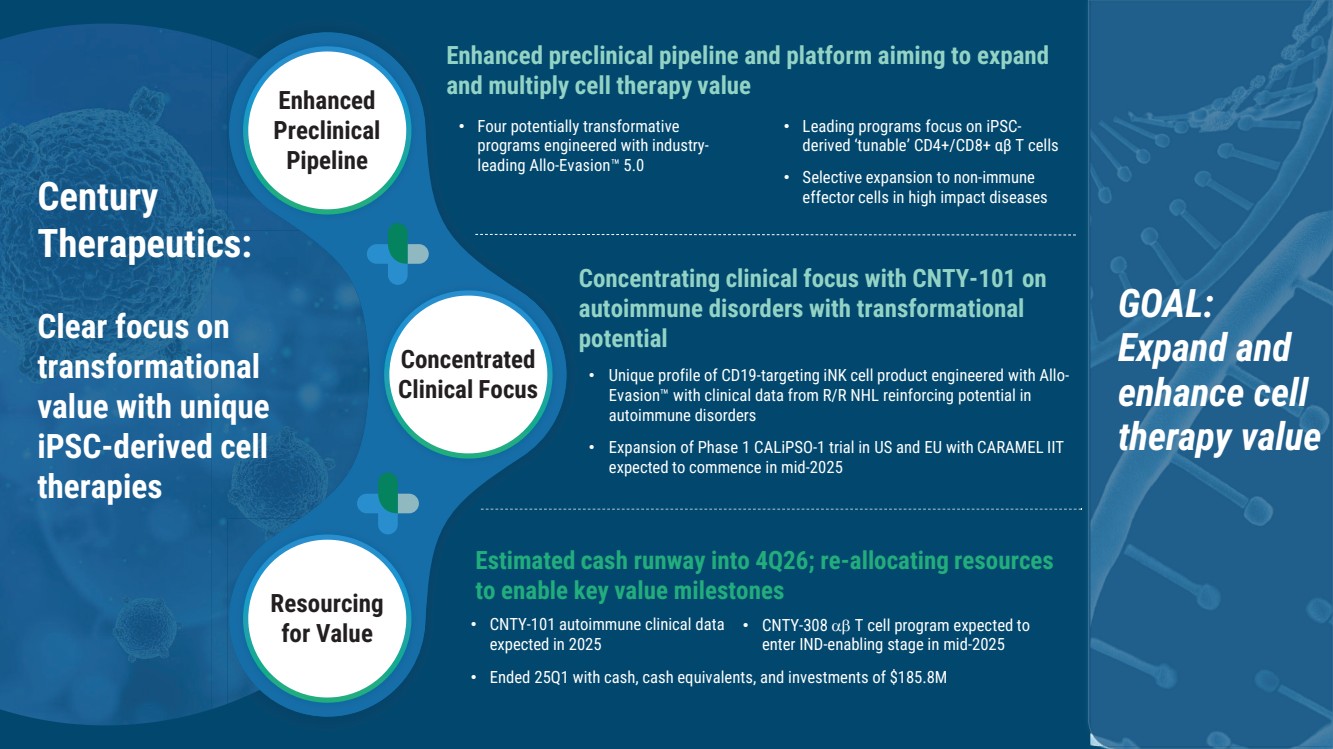
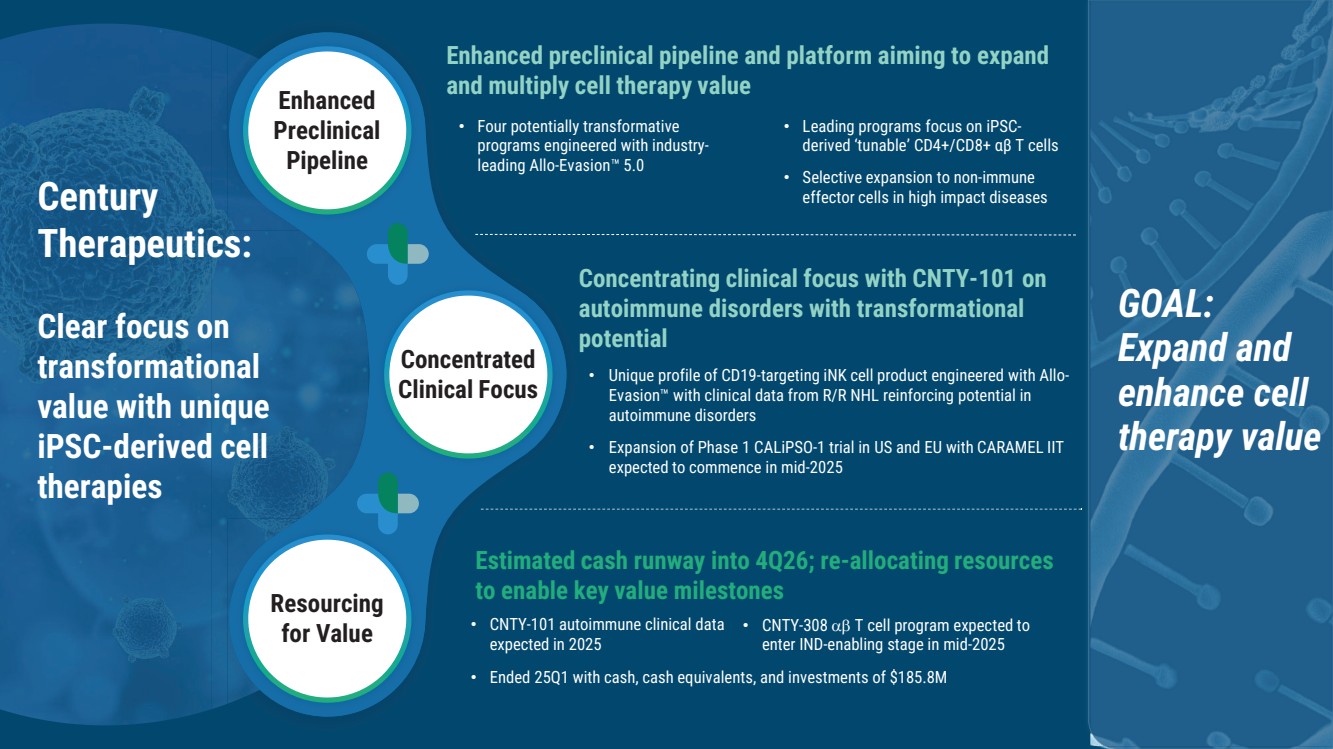
| Estimated cash runway into 4Q26; re-allocating resources to enable key value milestones Enhanced preclinical pipeline and platform aiming to expand and multiply cell therapy value • Four potentially transformative programs engineered with industry-leading Allo-Evasion ed w on 5.0 • Leading programs focus on iPSC-HIVMZIHƄXYREFPIƅ'('(»¼8GIPPW • Selective expansion to non-immune effector cells in high impact diseases Estimated c to enable k Enhanced prec and multiply c • Four potentially t programs engine leading Allo-Evas Enhanced Preclinical Pipeline Concentrated Clinical Focus Resourcing for Value Concentrating clinical focus with CNTY-101 on autoimmune disorders with transformational potential • Unique profile of CD19-targeting iNK cell product engineered with Allo-Evasion e pro on with clinical data from R/R NHL reinforcing potential in autoimmune disorders • Expansion of Phase 1 CALiPSO-1 trial in US and EU with CARAMEL IIT expected to commence in mid-2025 Century Therapeutics: Clear focus on transformational value with unique iPSC-derived cell therapies GOAL: Expand and enhance cell therapy value • Ended 25Q1 with cash, cash equivalents, and investments of $185.8M • CNTY-308 DE T cell program expected to enter IND-enabling stage in mid-2025 • CNTY-101 autoimmune clinical data expected in 2025 |
| 4 Clear differentiation from other allogeneic cell therapies with pathway to antibody-like scale Century’s ability to create multiple iPSC-derived cell types incorporating Allo-Evasion ability on stands apart from other allogeneic cell therapy approaches Engineerability • Control of differentiation to multiple cell types • Nearly unlimited genetic editing capacity due to infinite replicative capacity Reproducibility • Fully characterized single cell clones form master cell bank (MCB) • Deep understanding of cell function and safety Profitable Scalability • Large batch sizes with batch-to-batch consistency • Pathway to significantly reduced COGS similar to antibody therapies • Expansion from a single-clone MCB decreases risk of cell exhaustion Allogeneic Allo-Evasion iPSCs Off-the-shelf therapies Potential for improved time-to-treatment Broad availability Manufacturing dependability Enables potential for persistence and re-dosing of therapy Engineering for immune evasion from: • Native T-cells and NK-cells • Antibody immunity 4 |
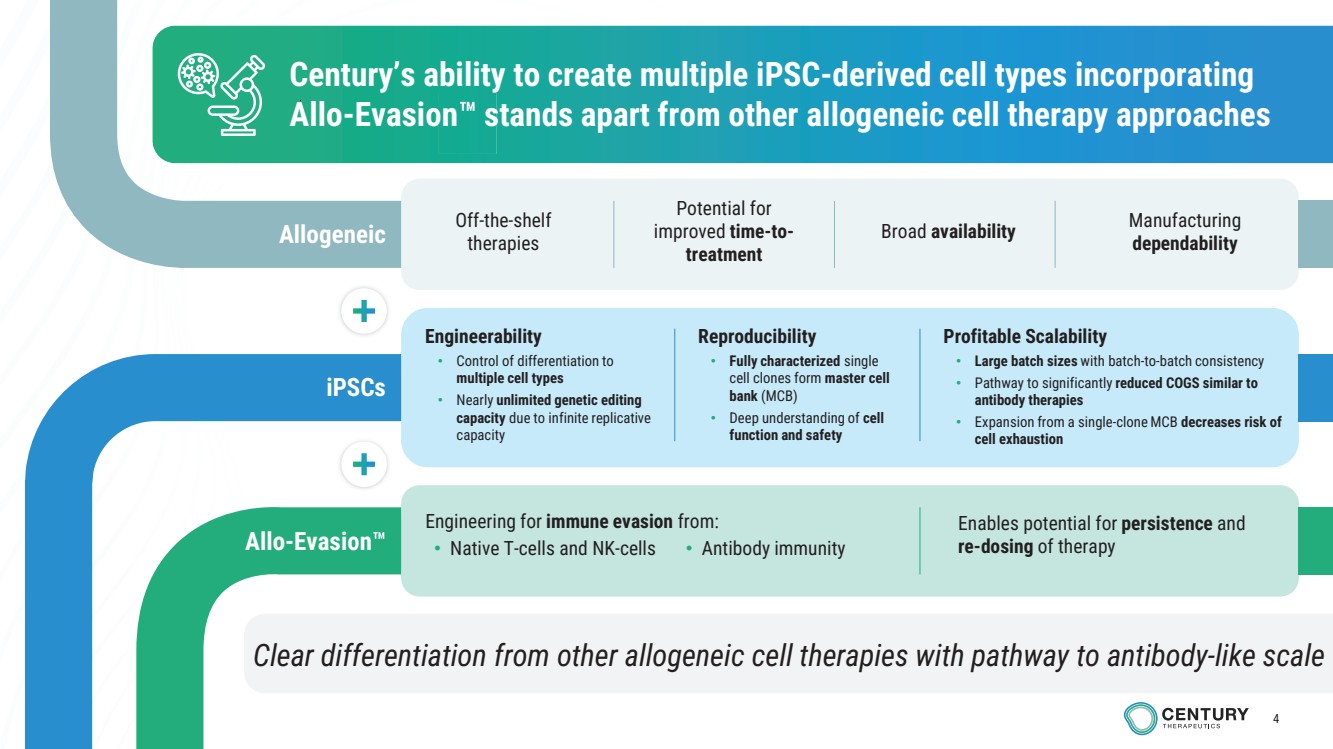
| 5 Allo-Evasion engineering aims to drive durable responses by enabling repeat dosing for tighter control over drug exposure Clinical data from CNTY-101 in ELiPSE-1 show persistent exposure in the presence of an intact immune system1 With Allo-Evasion engineering Without Allo-Evasion eng n engineering Dose 1 Dose 2 Dose 3 1. Company data: ELiPSE-1 Phase 1 study in B-cell malignancies |
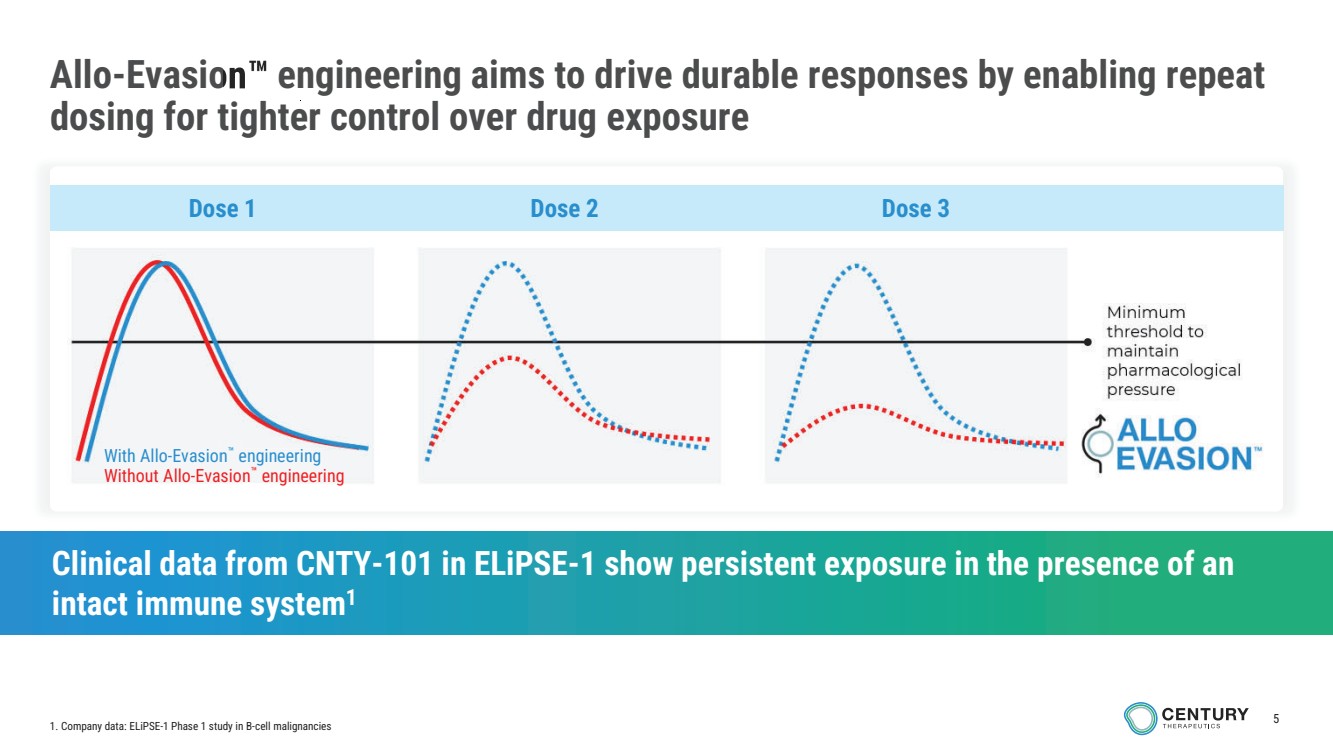
| 6 Continued evolution to enhance holistic protection from major immunity pathways Century is a leader in immune evasion engineering Allo-Evasion 1.0 n Deletion of HLA-I o Deletion of HLA-II p Insertion of HLA-E Protection from: Native T-cells Native NK-cells Humoral immunity CNTY-101 1. Company data: ELiPSE-1 Phase 1 study in B-cell malignancies 2. https://www.centurytx.com/wp-content/uploads/ASH_Welstead_Universal-Protection-of-Allogenic-T-Cells-Final.pdf 3. https://ashpublications.org/bloodadvances/article/doi/10.1182/bloodadvances.2024013436/518079/Universal-Protection-of-Allogeneic-T-Cell 4. Peraro et al, Mol. Therapy 2021, 29(12), 3398-3409; https://pmc.ncbi.nlm.nih.gov/articles/PMC8636170 CNTY-308 CNTY-341 Solid tumors n Deletion of HLA-I o Deletion of HLA-II rInsertion of CD300a TASR pan-NK inhibitory ligand2, 3 sInsertion of cell-surface enzyme to degrade IgG antibodies4 b2M KO (HLA-I) CIITA KO (HLA-II) CD8+ T Cell CD4+ T Cell Pan NK Inhibitory ligand Fc NK cell s o n r Allo-Evasion 5.0 c m y |
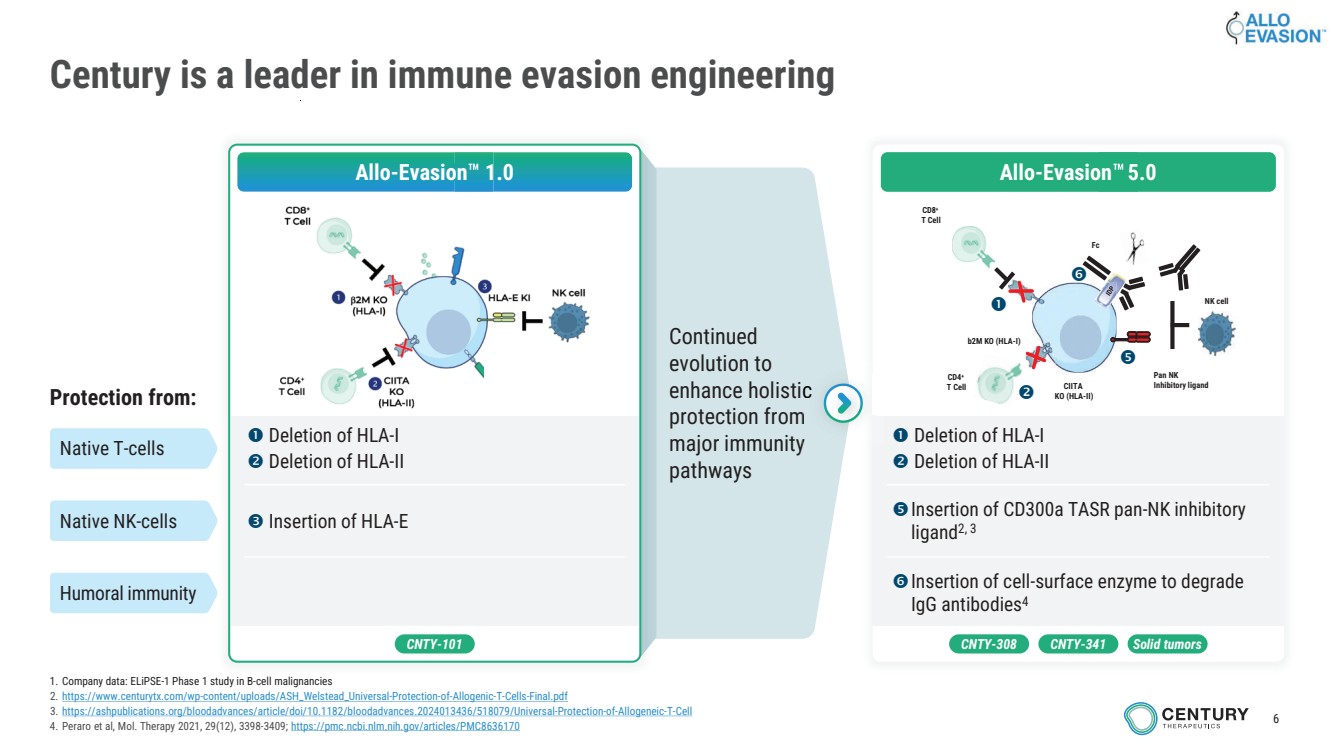
| 7 The CD300a TASR ligand mimics natural signaling to provide broad protection from host NK cells in preclinical studies CD300a detects disordered membrane lipids TASR mimics signaling of dead or dying cells Drug Product (live) Inhibit NK Cell TASR CD300a Dead/dying cell NK Cell Inhibit CD300a Male Female <50 >50 Gender Age Ethni-city CMV Caucasian Other African American Hispanic Negative Positive N = 45 PBMC Donors 0.01 0.1 1 0 0 .0 1 0 .1 1 0 25 50 75 100 0 E:T Ratio T Cell Survival (%) 0 0.01 0.1 1 No Cloak CD300a TASR CD47 HLA-I+ 20 hours Target (T) T Cell NK Effector (E) CD300a NKG2A KIR 0 20 40 60 80 100 Inhibitory Receptor Expression on NK Cells (n = 46 donors) % of NK Cells CD300a is expressed broadly TASR provides protection from NK cells in vitro NK Donor 2 (2Cdom NK Donor 1 (2A ) dom) NK Donor 3 (2Adom) TASR KI B2M KO https://ashpublications.org/bloodadvances/article/doi/10.1182/bloodadvances.2024013436/518079/Universal-Protection-of-Allogeneic-T-Cell; https://www.centurytx.com/wp-content/uploads/ASH_Welstead_Universal-Protection-of-Allogenic-T-Cells-Final.pdf CD300a |
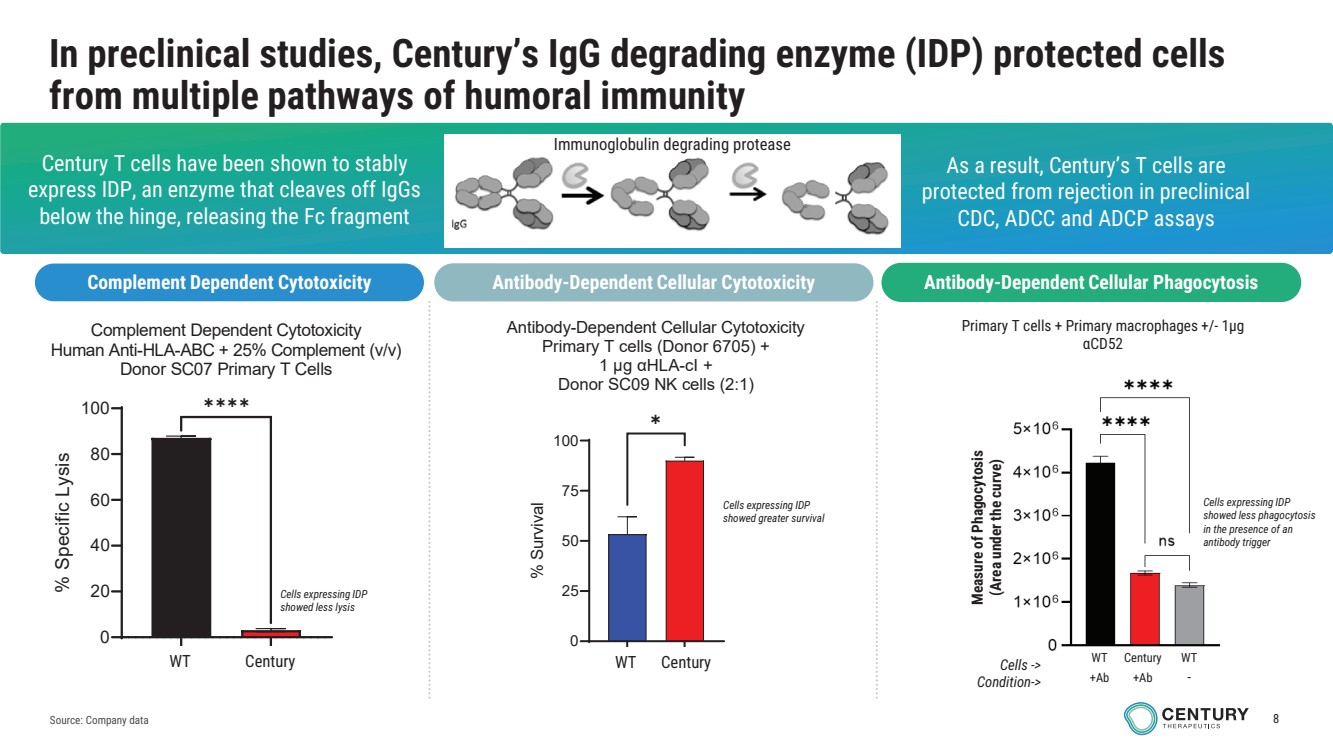
| 8 WT Gen 2.3 0 25 50 75 100 Antibody-Dependent Cellular Cytotoxicity Primary T cells (Donor 6705) + 1 ȝg ĮHLA-cI + Donor SC09 NK cells (2:1) % Survival ٓ GFP IdeStm 0 20 40 60 80 100 Complement Dependent Cytotoxicity Human Anti-HLA-ABC + 25% Complement (v/v) Donor SC07 Primary T Cells % Specific Lysis ٓٓٓٓ WT Century Measure of Phagocytosis (Area under the curve) As a result, Century’s T cells are protected from rejection in preclinical CDC, ADCC and ADCP assays Century T cells have been shown to stably express IDP, an enzyme that cleaves off IgGs below the hinge, releasing the Fc fragment Primary T cells + Primary macrophages +/- 1μg »CD52 Source: Company data In preclinical studies, Century’s IgG degrading enzyme (IDP) protected cells from multiple pathways of humoral immunity WT Century WT Century WT Cells -> Condition-> +Ab +Ab - Complement Dependent Cytotoxicity Antibody-Dependent Cellular Cytotoxicity Antibody-Dependent Cellular Phagocytosis Immunoglobulin degrading protease Cells expressing IDP showed less lysis Cells expressing IDP showed greater survival Cells expressing IDP showed less phagocytosis in the presence of an antibody trigger |
| 9 Product Targets Indications Research IND-enabling Clinical Phase 1 Phase 2 Phase 3 CNTY-101 iNK (Allo-Evasion 1.0) CD19 B-cell-mediated autoimmune diseases CNTY-308 »¼iT (Allo-Evasion 5.0) CD19 B-cell-mediated autoimmune diseases B-cell malignancies CNTY-341 DE iT (Allo-Evasion 5.0) CD19 + CD22 B-cell malignancies Solid tumors iT (Allo-Evasion s on 5.0) Nectin-4/other Solid tumors Undisclosed Non-immune effector Undisclosed Undisclosed 1. Agreement in place for an investigator-initiated trial (IIT) by Professors Georg Schett and Andreas Mackensen at Friedrich-Alexander University Erlangen-Nürnberg. CARAMEL trial intended to commence in mid-2025 following CTA approval. Century is advancing a focused iPSC pipeline across cell types and targets in cancer and autoimmune diseases CALiPSO-1 CARAMEL IIT1 Autoimmune diseases Hematologic tumors Solid tumors |
| CNTY-101 CAR-iNK cell therapy with Allo-Evasion 1.0 |
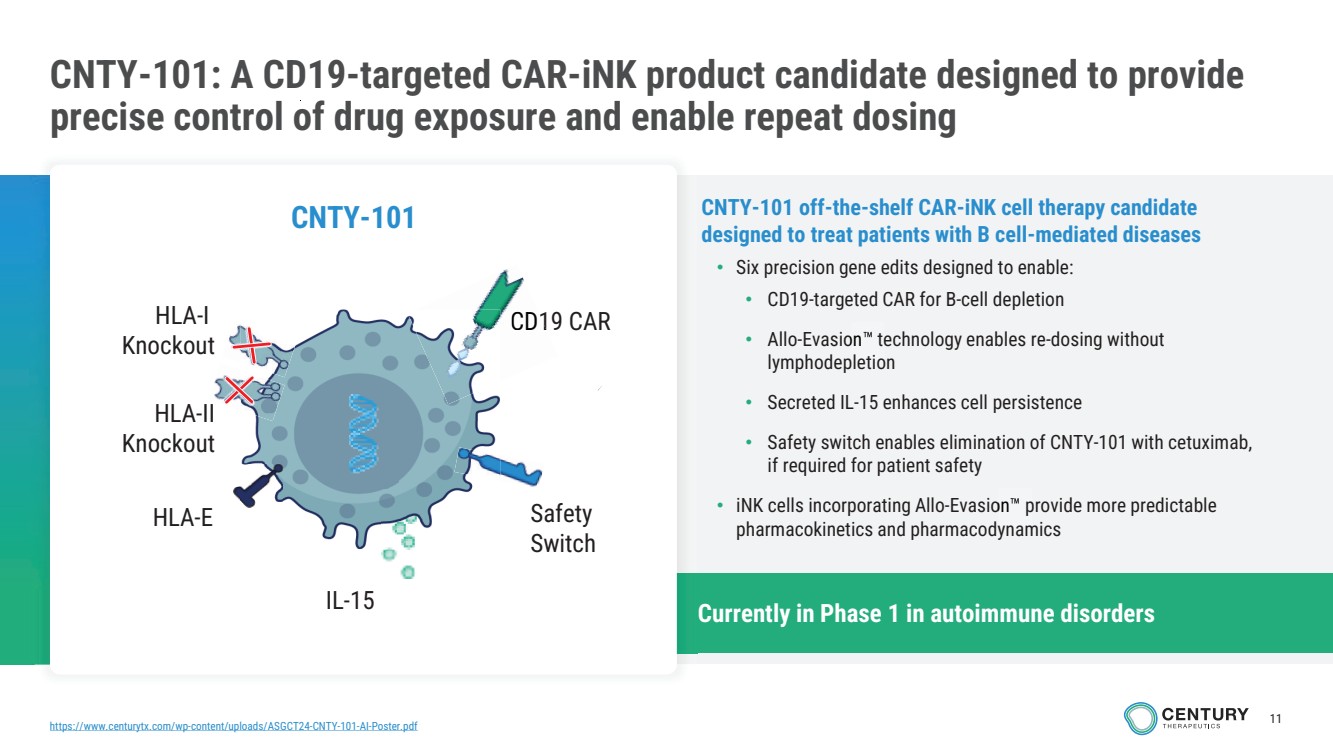
| 11 Currently in Phase 1 in autoimmune disorders https://www.centurytx.com/wp-content/uploads/ASGCT24-CNTY-101-AI-Poster.pdf CNTY-101: A CD19-targeted CAR-iNK product candidate designed to provide precise control of drug exposure and enable repeat dosing CNTY-101 off-the-shelf CAR-iNK cell therapy candidate designed to treat patients with B cell-mediated diseases • Six precision gene edits designed to enable: • CD19-targeted CAR for B-cell depletion • Allo-Evasion technology enables re-dosing without lymphodepletion • Secreted IL-15 enhances cell persistence • Safety switch enables elimination of CNTY-101 with cetuximab, if required for patient safety • iNK cells incorporating Allo-Evasion provide more predictable pharmacokinetics and pharmacodynamics CNTY-101 HLA-I Knockout IL-15 HLA-II Knockout CD19 CAR HLA-E CD1 Safety Switch |
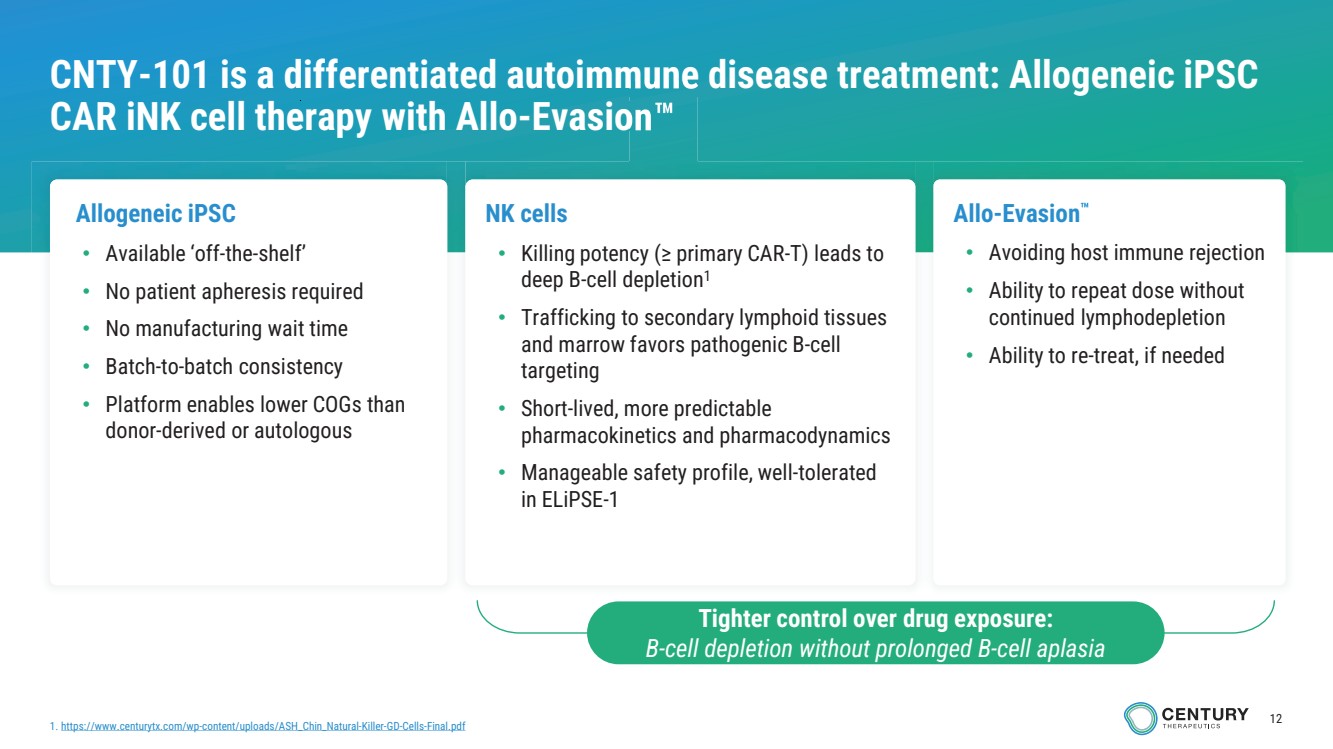
| 12 Allogeneic iPSC • Available ‘off-the-shelf’ • No patient apheresis required • No manufacturing wait time • Batch-to-batch consistency • Platform enables lower COGs than donor-derived or autologous NK cells • /MPPMRKTSXIRG]ǐTVMQEV]'%6-T) leads to deep B-cell depletion1 • Trafficking to secondary lymphoid tissues and marrow favors pathogenic B-cell targeting • Short-lived, more predictable pharmacokinetics and pharmacodynamics • Manageable safety profile, well-tolerated in ELiPSE-1 Allo-Evasion • Avoiding host immune rejection • Ability to repeat dose without continued lymphodepletion • Ability to re-treat, if needed CNTY-101 is a differentiated autoimmune disease treatment: Allogeneic iPSC CAR iNK cell therapy with Allo-Evasion 1. https://www.centurytx.com/wp-content/uploads/ASH_Chin_Natural-Killer-GD-Cells-Final.pdf Tighter control over drug exposure: B-cell depletion without prolonged B-cell aplasia |
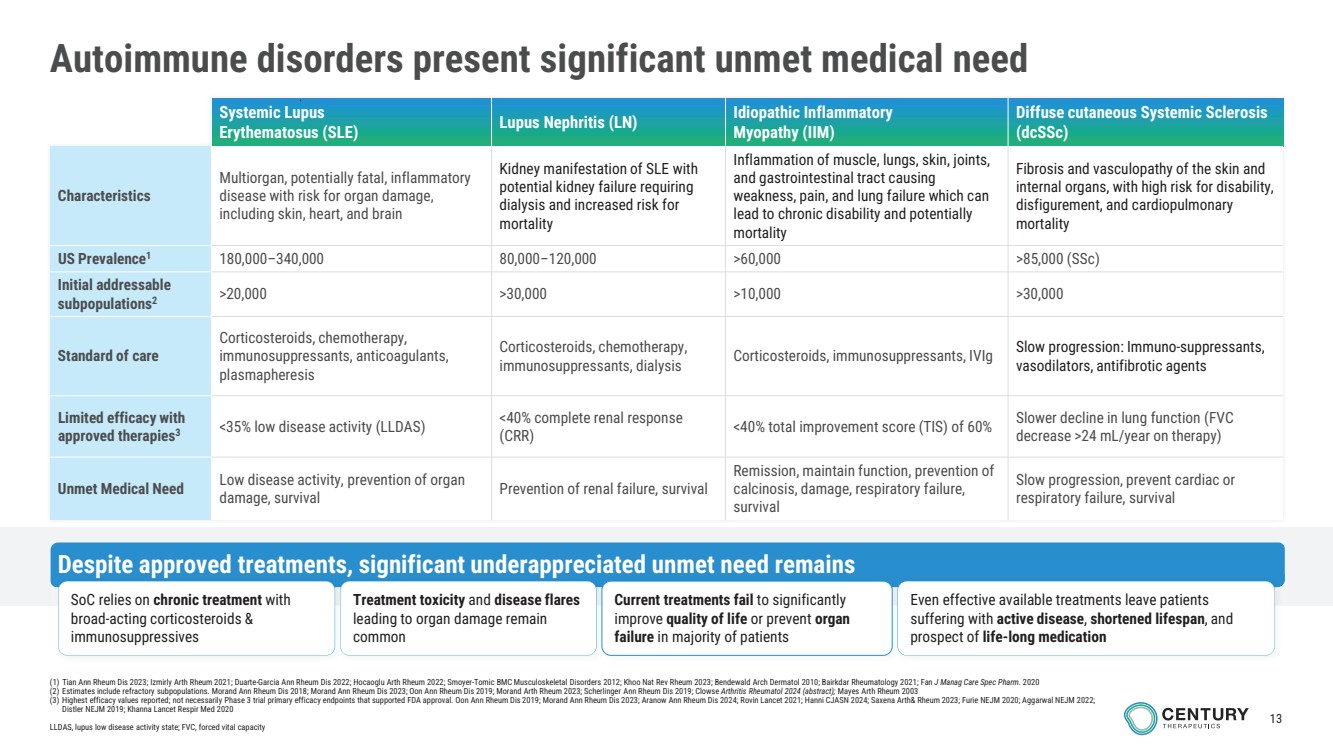
| 13 Autoimmune disorders present significant unmet medical need Systemic Lupus Erythematosus (SLE) Lupus Nephritis (LN) Idiopathic Inflammatory Myopathy (IIM) Diffuse cutaneous Systemic Sclerosis (dcSSc) Characteristics Multiorgan, potentially fatal, inflammatory disease with risk for organ damage, including skin, heart, and brain Kidney manifestation of SLE with potential kidney failure requiring dialysis and increased risk for mortality Inflammation of muscle, lungs, skin, joints, and gastrointestinal tract causing weakness, pain, and lung failure which can lead to chronic disability and potentially mortality Fibrosis and vasculopathy of the skin and internal organs, with high risk for disability, disfigurement, and cardiopulmonary mortality US Prevalence1 180,000–340,000 80,000–120,000 >60,000 >85,000 (SSc) Initial addressable subpopulations2 >20,000 >30,000 >10,000 >30,000 Standard of care Corticosteroids, chemotherapy, immunosuppressants, anticoagulants, plasmapheresis Corticosteroids, chemotherapy, immunosuppressants, dialysis Corticosteroids, immunosuppressants, IVIg Slow progression: Immuno-suppressants, vasodilators, antifibrotic agents Limited efficacy with approved therapies3 <35% low disease activity (LLDAS) <40% complete renal response (CRR) <40% total improvement score (TIS) of 60% Slower decline in lung function (FVC decrease >24 mL/year on therapy) Unmet Medical Need Low disease activity, prevention of organ damage, survival Prevention of renal failure, survival Remission, maintain function, prevention of calcinosis, damage, respiratory failure, survival Slow progression, prevent cardiac or respiratory failure, survival Despite approved treatments, significant underappreciated unmet need remains Even effective available treatments leave patients suffering with active disease, shortened lifespan, and prospect of life-long medication p pp , SoC relies on chronic treatment with broad-acting corticosteroids & immunosuppressives , g pp Treatment toxicity and disease flares leading to organ damage remain common Current treatments fail to significantly improve quality of life or prevent organ failure in majority of patients (1) Tian Ann Rheum Dis 2023; Izmirly Arth Rheum 2021; Duarte-Garcia Ann Rheum Dis 2022; Hocaoglu Arth Rheum 2022; Smoyer-Tomic BMC Musculoskeletal Disorders 2012; Khoo Nat Rev Rheum 2023; Bendewald Arch Dermatol 2010; Bairkdar Rheumatology 2021; Fan J Manag Care Spec Pharm. 2020 (2) Estimates include refractory subpopulations. Morand Ann Rheum Dis 2018; Morand Ann Rheum Dis 2023; Oon Ann Rheum Dis 2019; Morand Arth Rheum 2023; Scherlinger Ann Rheum Dis 2019; Clowse Arthritis Rheumatol 2024 (abstract); Mayes Arth Rheum 2003 (3) Highest efficacy values reported; not necessarily Phase 3 trial primary efficacy endpoints that supported FDA approval. Oon Ann Rheum Dis 2019; Morand Ann Rheum Dis 2023; Aranow Ann Rheum Dis 2024; Rovin Lancet 2021; Hanni CJASN 2024; Saxena Arth& Rheum 2023; Furie NEJM 2020; Aggarwal NEJM 2022; Distler NEJM 2019; Khanna Lancet Respir Med 2020 LLDAS, lupus low disease activity state; FVC, forced vital capacity |
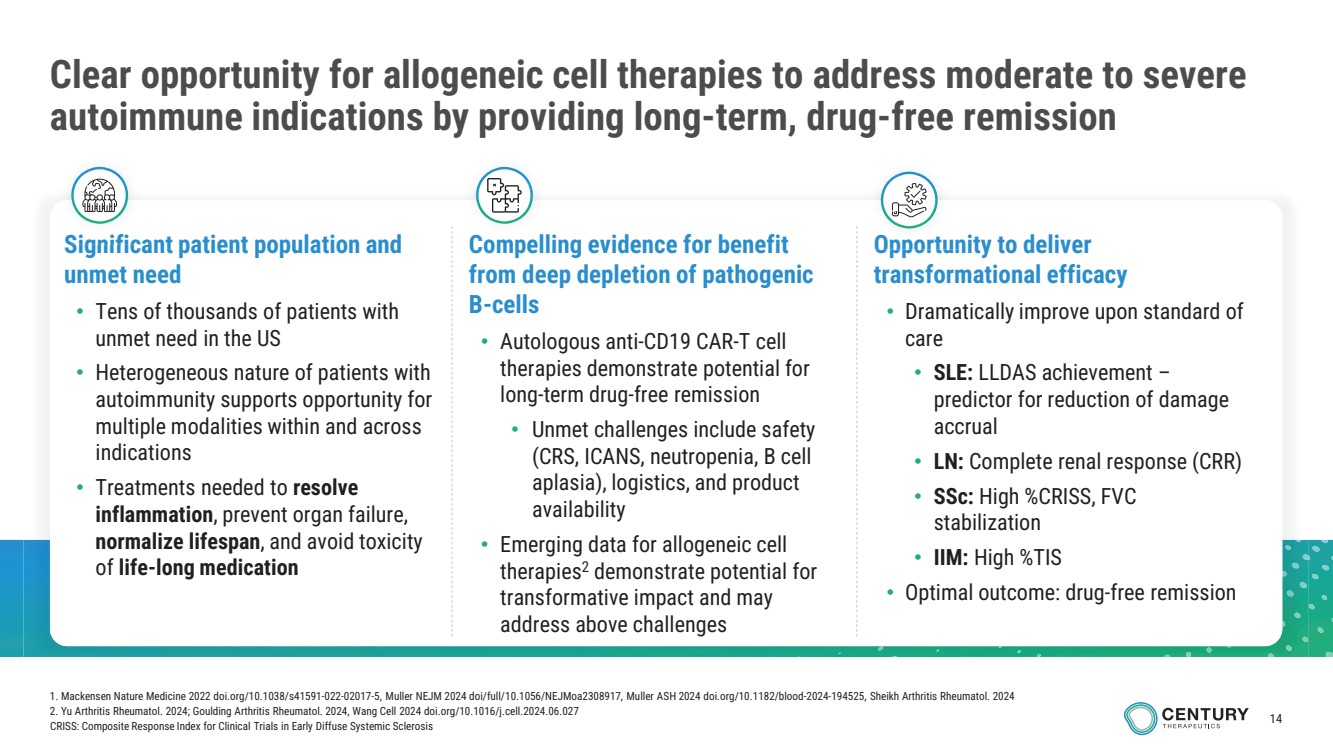
| 14 Clear opportunity for allogeneic cell therapies to address moderate to severe autoimmune indications by providing long-term, drug-free remission Significant patient population and unmet need • Tens of thousands of patients with unmet need in the US • Heterogeneous nature of patients with autoimmunity supports opportunity for multiple modalities within and across indications • Treatments needed to resolve inflammation, prevent organ failure, normalize lifespan, and avoid toxicity of life-long medication Opportunity to deliver transformational efficacy • Dramatically improve upon standard of care • SLE: LLDAS achievement – predictor for reduction of damage accrual • LN: Complete renal response (CRR) • SSc: High %CRISS, FVC stabilization • IIM: High %TIS • Optimal outcome: drug-free remission Significa Compelling evidence for benefit Opportun from deep depletion of pathogenic B-cells • Autologous anti-CD19 CAR-T cell therapies demonstrate potential for long-term drug-free remission • Unmet challenges include safety (CRS, ICANS, neutropenia, B cell aplasia), logistics, and product availability • Emerging data for allogeneic cell therapies2 demonstrate potential for transformative impact and may address above challenges 1. Mackensen Nature Medicine 2022 doi.org/10.1038/s41591-022-02017-5, Muller NEJM 2024 doi/full/10.1056/NEJMoa2308917, Muller ASH 2024 doi.org/10.1182/blood-2024-194525, Sheikh Arthritis Rheumatol. 2024 2. Yu Arthritis Rheumatol. 2024; Goulding Arthritis Rheumatol. 2024, Wang Cell 2024 doi.org/10.1016/j.cell.2024.06.027 CRISS: Composite Response Index for Clinical Trials in Early Diffuse Systemic Sclerosis |
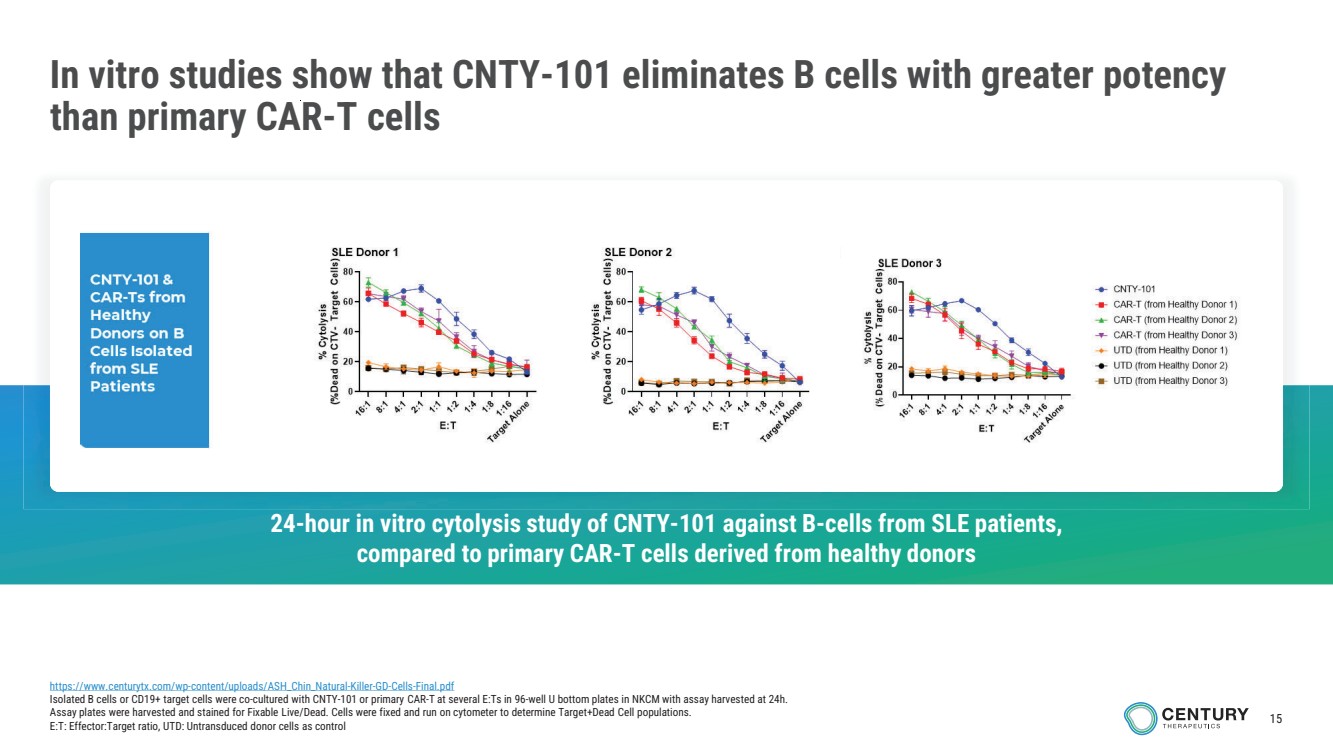
| 15 In vitro studies show that CNTY-101 eliminates B cells with greater potency than primary CAR-T cells https://www.centurytx.com/wp-content/uploads/ASH_Chin_Natural-Killer-GD-Cells-Final.pdf Isolated B cells or CD19+ target cells were co-cultured with CNTY-101 or primary CAR-T at several E:Ts in 96-well U bottom plates in NKCM with assay harvested at 24h. Assay plates were harvested and stained for Fixable Live/Dead. Cells were fixed and run on cytometer to determine Target+Dead Cell populations. E:T: Effector:Target ratio, UTD: Untransduced donor cells as control 24-hour in vitro cytolysis study of CNTY-101 against B-cells from SLE patients, compared to primary CAR-T cells derived from healthy donors |
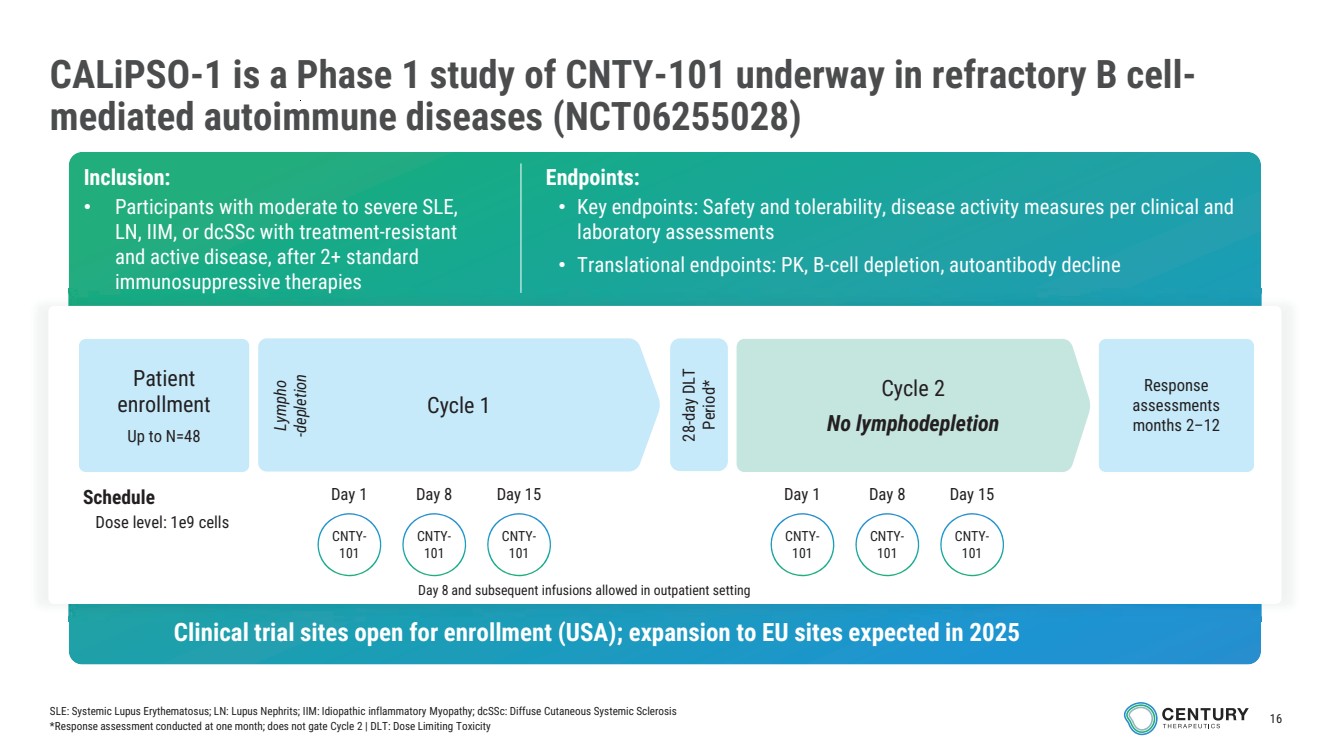
| 16 CALiPSO-1 is a Phase 1 study of CNTY-101 underway in refractory B cell-mediated autoimmune diseases (NCT06255028) infusions in outpatient setting Inclusion: • Participants with moderate to severe SLE, LN, IIM, or dcSSc with treatment-resistant and active disease, after 2+ standard immunosuppressive therapies Endpoints: • Key endpoints: Safety and tolerability, disease activity measures per clinical and laboratory assessments • Translational endpoints: PK, B-cell depletion, autoantibody decline Cycle 1 Cycle 2 No lymphodepletion Schedule Dose level: 1e9 cells Lympho -depletion 28-day DLT Period* Patient enrollment Up to N=48 Response assessments months 2–12 Clinical trial sites open for enrollment (USA); expansion to EU sites expected in 2025 SLE: Systemic Lupus Erythematosus; LN: Lupus Nephrits; IIM: Idiopathic inflammatory Myopathy; dcSSc: Diffuse Cutaneous Systemic Sclerosis *Response assessment conducted at one month; does not gate Cycle 2 | DLT: Dose Limiting Toxicity CNTY-101 CNTY-101 CNTY-101 Day 1 Day 8 Day 15 CNTY-101 CNTY-101 CNTY-101 Day 1 Day 8 Day 15 Day 8 and subsequent infusions allowed in outpatient setting |
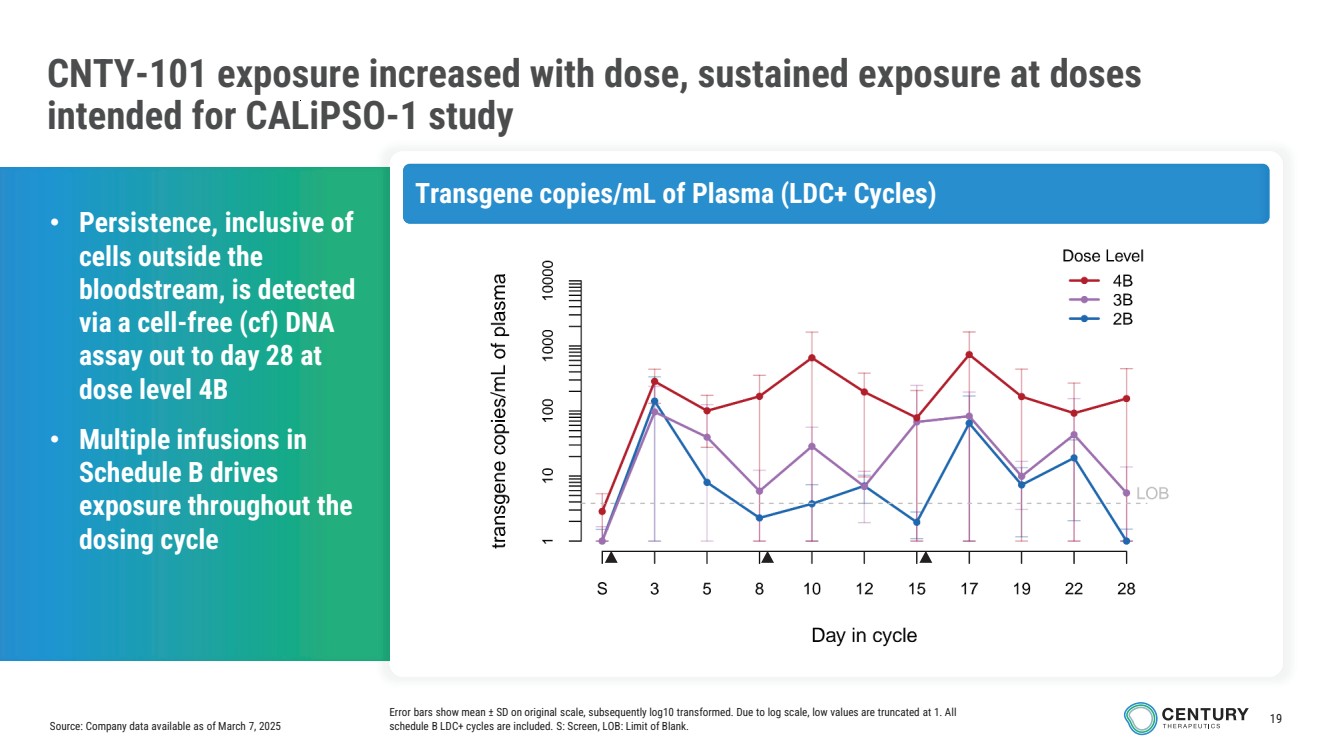
| 17 CNTY-101 ELiPSE-1 first-in-human study: Initial clinical experience in relapsed/refractory B-cell lymphoma validates Century’s IPSC platform Heavily pre-treated patient population (n=23 safety; n=22 efficacy) • Median 4 prior lines (range 2-6); 48% (11/23) of patients received prior CART Favorable initial safety and tolerability profile (n=23) • No dose-limiting toxicities (DLTs); no events of graft-versus-host disease (GvHD) • Majority of participants received CNTY-101 infusions in an outpatient setting • In DL 3B and 4B (n=9), No ICANs; 3 patients (33%) had G1 or G2 cytokine release syndrome (CRS) Activity Profile in Relapsed / Refractory Aggressive BCL • ORR for DL 3B and 4B (n=9) was 77% (7/9) and complete response rate was 22% (2/9) Source: Company data available as of March 1, 2025 Emerging data reinforce potential of CNTY-101 in autoimmune diseases at targeted dose levels (DL3B, 4B) • CNTY-101 cells were detected in lymph node tumor biopsies early post-treatment • CNTY-101 treatment demonstrated deep B cell depletion • CNTY-101 infusions showed similar exposure in the presence or absence of endogenous lymphocytes |
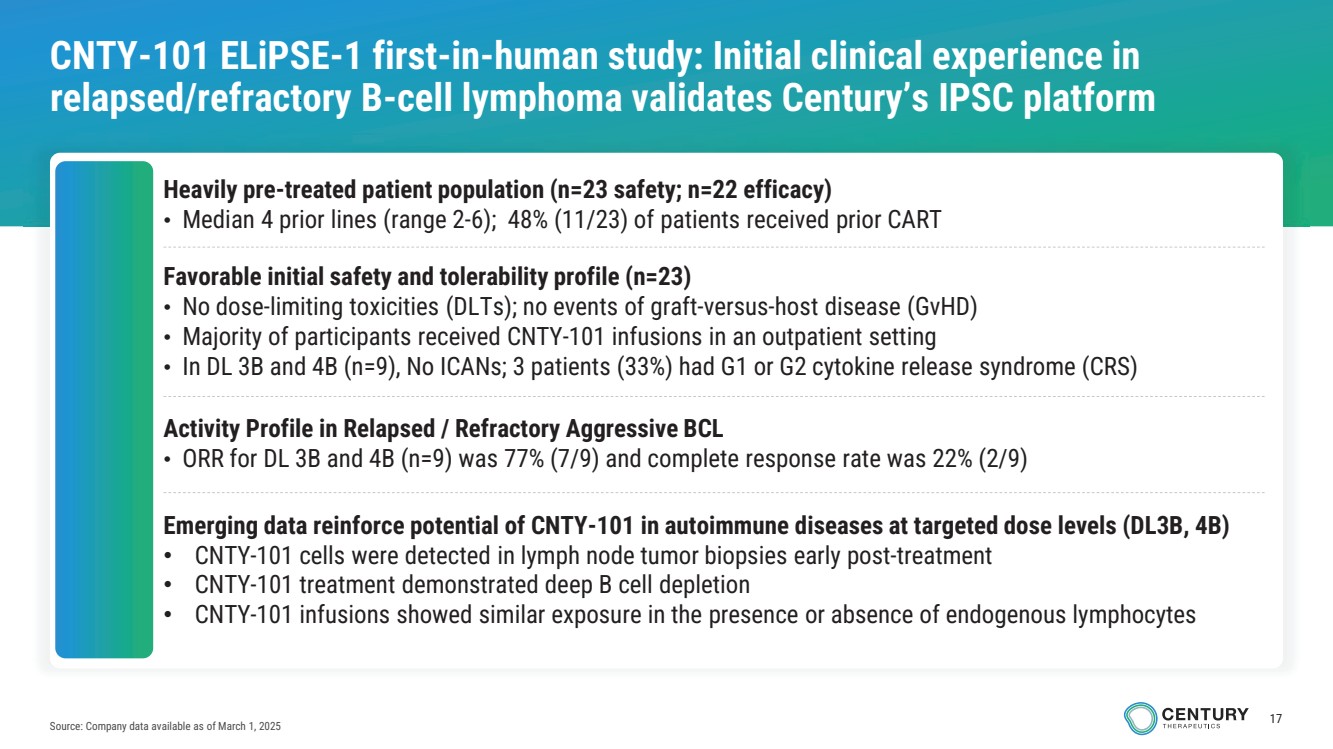
| 18 1. Standard lymphodepletion regimen: Fludarabine (30 mg/c/d) and cyclophosphamide IV (300 mg/m/d) for 3 days 2. Subjects who are assessed as stable disease or better may receive additional cycles of CNTY-101 3. Subjects at DL4A did not receive IL-2 on the day of CNTY-101 infusion but did receive IL-2 daily for 7 days 4. For DL 4B, initial 2 cycles at DL 4B; subsequent cycle regimen depending on response or risk/benefit ELiPSE-1 is a dose-escalating Phase 1 study of CNTY-101 in B-cell malignancies (NCT05336409) Patients with CD19+ aggressive and high-risk indolent R/R B-NHL • Part 1 – Dose escalation • Schedule A: Single dose • Schedule B: 1 dose per week x 3 weeks • Part 2 – Dose expansion DLBCL: Diffuse large B cell Lymphoma; HGBL: High-Grade B-cell Lymphoma; MCL: Mantle Cell Lymphoma; PMBCL: Peripheral Mediastinal B-cell Lymphoma; FL3B: Follicular Lymphoma Grade 3B; FL: Follicular Lymphoma; MZL: Marginal Zone Lymphoma DLT: Dose Limiting Toxicity IL-2: Interleukin-2 (dose: 3e6 IU; subcutaneous) • DLBCL, HGBL, MCL, PMBCL, FL3B, FL, MZL • >2 prior lines of therapy • Prior CD19-targeted cell therapy allowed Dose level 4: 3 billion4 Bayesian Optimal Interval (BOIN) design |
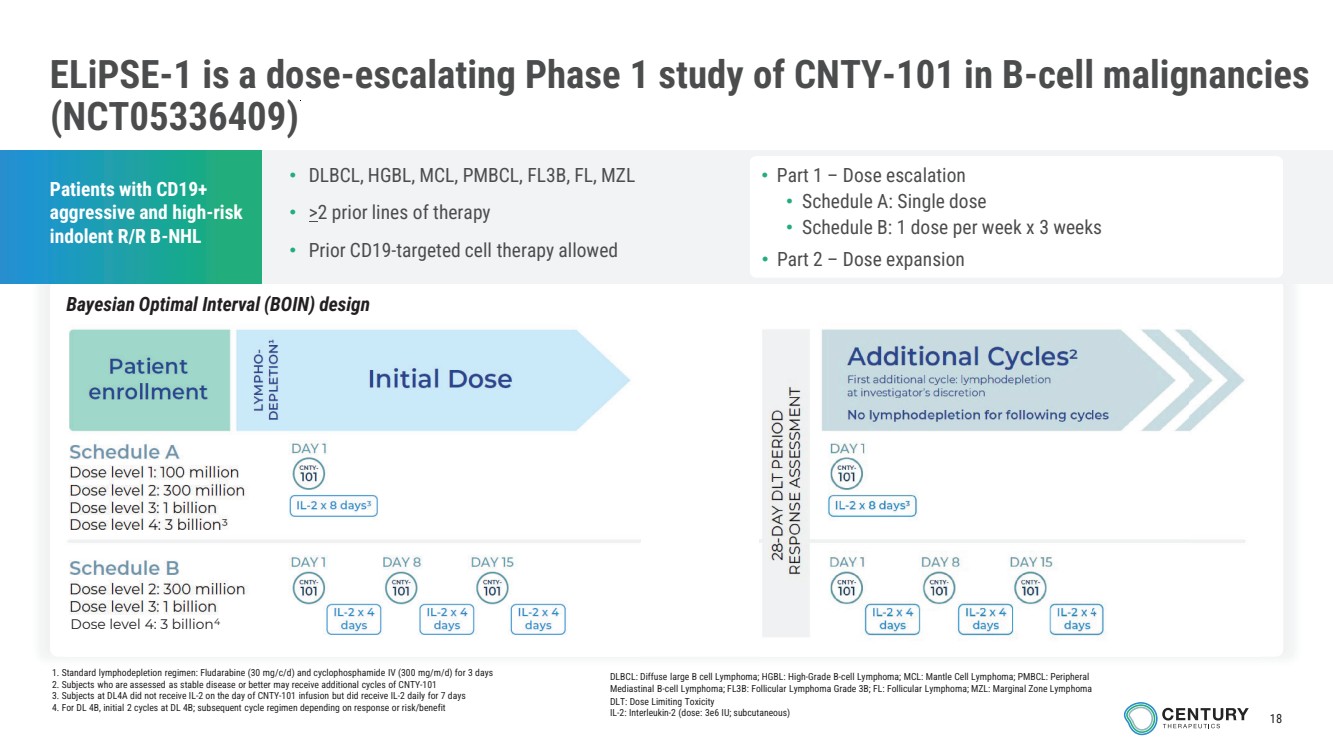
| 19 Source: Company data available as of March 7, 2025 CNTY-101 exposure increased with dose, sustained exposure at doses intended for CALiPSO-1 study Error bars show mean ± SD on original scale, subsequently log10 transformed. Due to log scale, low values are truncated at 1. All schedule B LDC+ cycles are included. S: Screen, LOB: Limit of Blank. • Persistence, inclusive of cells outside the bloodstream, is detected via a cell-free (cf) DNA assay out to day 28 at dose level 4B • Multiple infusions in Schedule B drives exposure throughout the dosing cycle Transgene copies/mL of Plasma (LDC+ Cycles) |
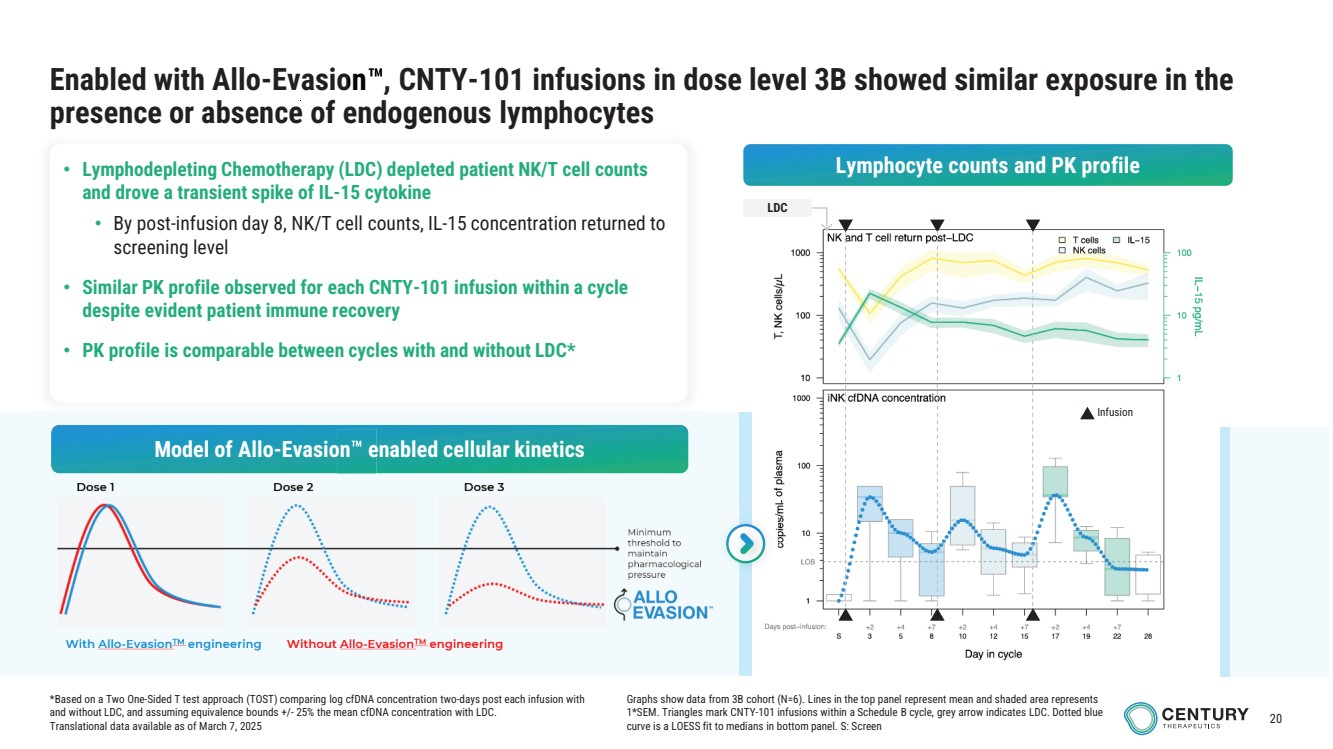
| 20 Infusion LDC • Lymphodepleting Chemotherapy (LDC) depleted patient NK/T cell counts and drove a transient spike of IL-15 cytokine • By post-infusion day 8, NK/T cell counts, IL-15 concentration returned to screening level • Similar PK profile observed for each CNTY-101 infusion within a cycle despite evident patient immune recovery • PK profile is comparable between cycles with and without LDC* Enabled with Allo-Evasion , CNTY-101 infusions in dose level 3B showed similar exposure in the presence or absence of endogenous lymphocytes *Based on a Two One-Sided T test approach (TOST) comparing log cfDNA concentration two-days post each infusion with and without LDC, and assuming equivalence bounds +/- 25% the mean cfDNA concentration with LDC. Translational data available as of March 7, 2025 Graphs show data from 3B cohort (N=6). Lines in the top panel represent mean and shaded area represents 1*SEM. Triangles mark CNTY-101 infusions within a Schedule B cycle, grey arrow indicates LDC. Dotted blue curve is a LOESS fit to medians in bottom panel. S: Screen Lymphocyte counts and PK profile Model of Allo-Evasion enabled cellular kinetics |
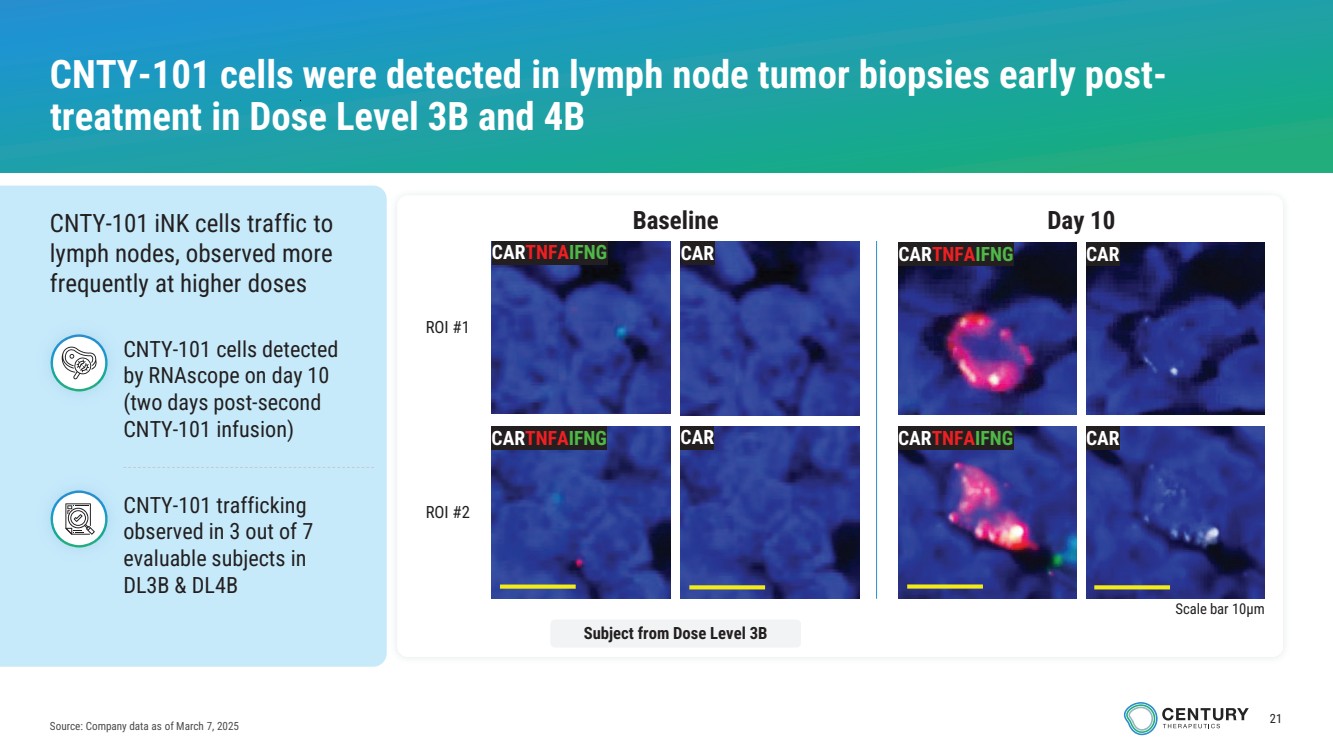
| 21 Source: Company data as of March 7, 2025 CNTY-101 cells were detected in lymph node tumor biopsies early post-treatment in Dose Level 3B and 4B CNTY-101 iNK cells traffic to lymph nodes, observed more frequently at higher doses CARTNFAIFNG CARTNFAIFNG CAR CAR Baseline Day 10 CARTNFAIFNG Scale bar 10μm CAR CARTNFAIFNG CAR ROI #1 ROI #2 Subject from Dose Level 3B CNTY-101 trafficking observed in 3 out of 7 evaluable subjects in DL3B & DL4B CNTY-101 cells detected by RNAscope on day 10 (two days post-second CNTY-101 infusion) |
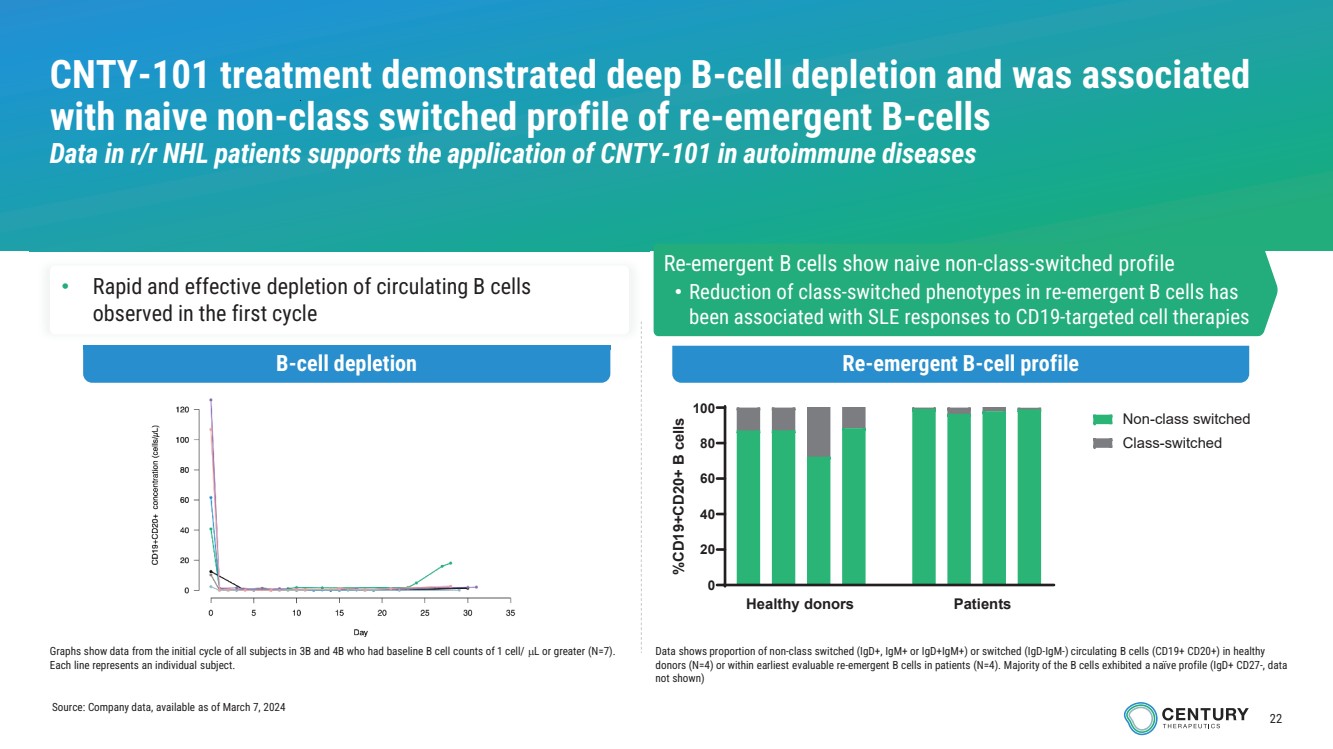
| 22 CNTY-101 treatment demonstrated deep B-cell depletion and was associated with naive non-class switched profile of re-emergent B-cells Data in r/r NHL patients supports the application of CNTY-101 in autoimmune diseases B-cell depletion Re-emergent B-cell profile • Rapid and effective depletion of circulating B cells observed in the first cycle 0 20 40 60 80 100 %CD19+CD20+ B cells Non-class switched Class-switched Healthy donors Patients Re-emergent B cells show naive non-class-switched profile • Reduction of class-switched phenotypes in re-emergent B cells has been associated with SLE responses to CD19-targeted cell therapies Graphs show data from the initial cycle of all subjects in 3B and 4B who had baseline B cell counts of 1 cell/ PL or greater (N=7). Each line represents an individual subject. Data shows proportion of non-class switched (IgD+, IgM+ or IgD+IgM+) or switched (IgD-IgM-) circulating B cells (CD19+ CD20+) in healthy donors (N=4) or within earliest evaluable re-emergent B cells in patients (N=4). Majority of the B cells exhibited a naïve profile (IgD+ CD27-, data not shown) Source: Company data, available as of March 7, 2024 |
| CNTY-308 '%6»¼-iT cell with Allo-Evasion 5.0 |
| 24 CARVYKTI® ($963M) ABECMA® ($406M) YESCARTA® ($1570M) BREYANZI® ($747M) KYMRIAH® ($443M) TECARTUS® ($403M) 2024 Worldwide Sales1 $4.5B ƒ All currently marketed CAR-T cell therapies are patient-derived (‘primary’ or ‘autologous’) DE T cells delivered as a mixture of cells expressing CD4 or CD82 ƒ Access remains a challenge for autologous CAR T therapies • Fewer than 30% of patients eligible for CAR T cell therapy receive it1 ƒ An iPSC-derived allogeneic cell therapy that can recapitulate the characteristics of a CD4+/CD8+ DE CAR T cell provides potential to replace and expand autologous products with off-the-shelf therapy having improved time-to-treatment, reliable and consistent manufacturing process, and reduced cost of goods The current CAR-T cell therapy market represents ~$4.5B worldwide sales (1) 2024 worldwide sales, Evaluate Pharma 2025-04-15; (2) Prescribing information: CARVYKTI®, ABECMA®, YESCARTA®, BREYANZI®, KYMRIAH®, TECARTUS®; (3) https://doi.org/10.1182/bloodadvances.2023012549 BCMA-targeted CD19-targeted |
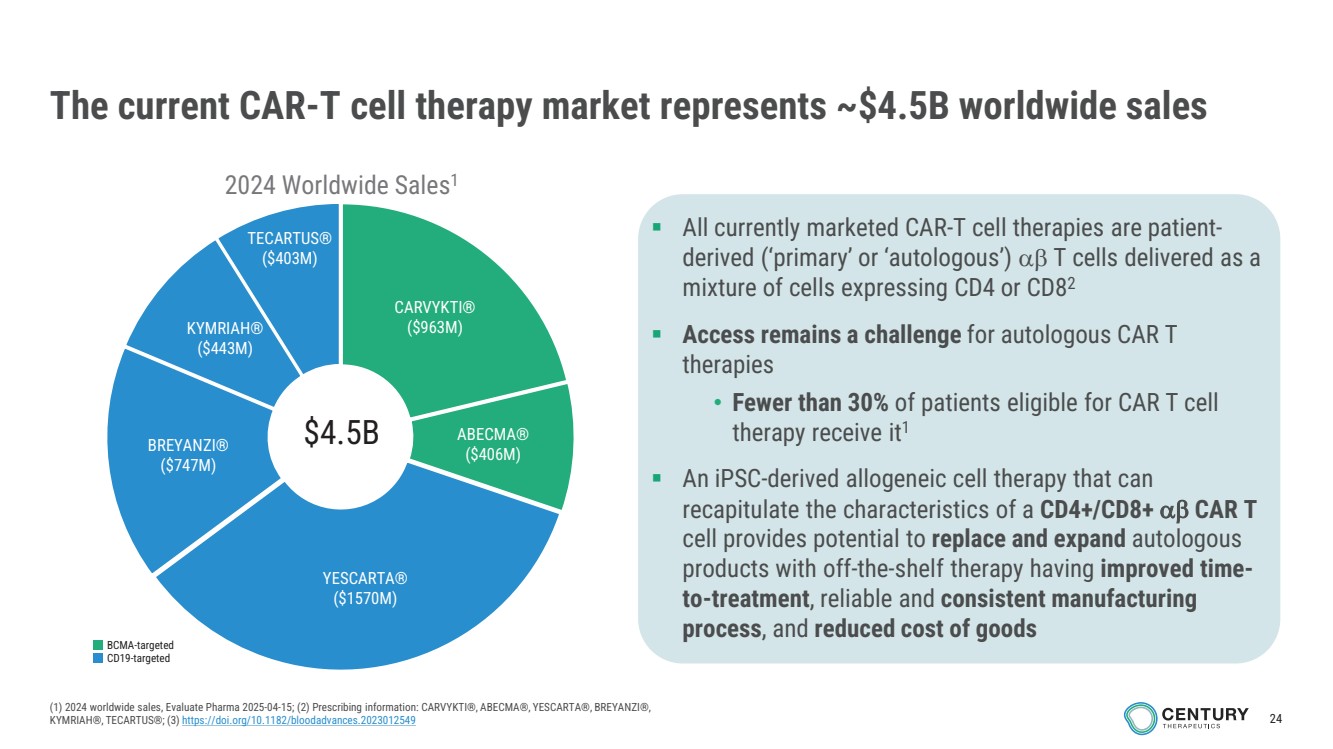
| 25 CNTY-308 is an iPSC-derived CD19-targeted CAR-iT intended for B-cell-mediated disease 1. https://www.centurytx.com/wp-content/uploads/ASH_Heinze_iPSC-Derived-CD4-CD8-Final.pdf 2. Company data on file CD4+/CD8+ »¼ iT-cell • CD19-targeted CAR to target B-cells for cytotoxic depletion • 4-1BB and CD3z co-stim domain to stimulate expansion on target engagement • Allo-Evasion 5.0 edits designed to include protection from host T cell, NK cell, and humoral response • Native DE TCR knock-out to eliminate the risk of GvHD • Displays characteristics of autologous CAR-T cells1 • Highly proliferative upon target engagement • Secretes cytokines (e.g., IL-2, IFNJ, and TNFD) • Cytotoxic effector function rapidly eliminates tumor cells • Long-term persistence in vivo • Eliminates CD19+ B-cells from healthy donors in vitro2 CNTY-308 |
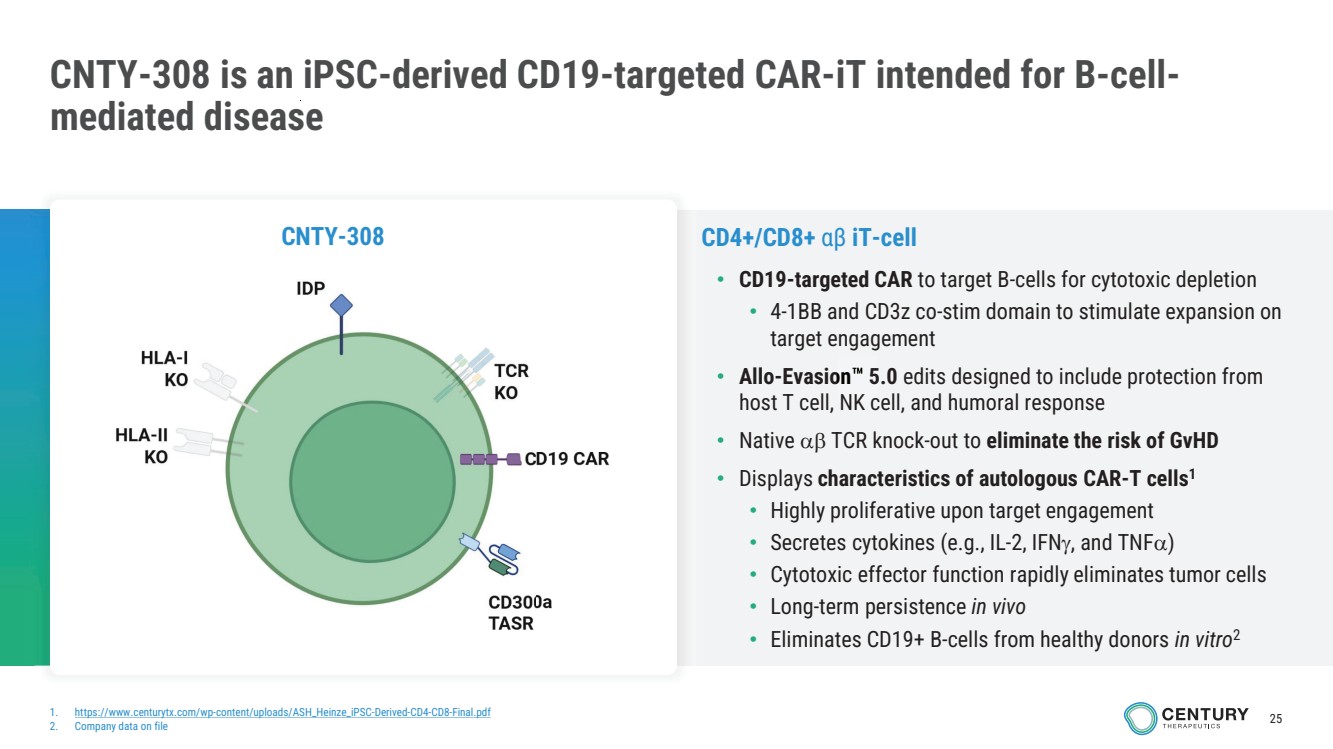
| 26 https://www.centurytx.com/wp-content/uploads/ASH_Heinze_iPSC-Derived-CD4-CD8-Final.pdf Century’s process is designed to control the ratio of CD4+ to CD8+ while I\TERHMRKHMJJIVIRXMEXMRKIRKMRIIVIH'%6M47'GIPPWXS»¼'%6-T cells Stage Expansion from iPSCs (-fold) Ending Viability 1 3 90% 2 54,000 48% 3+4 860,000 80% 77% CD8+/CD4- CD8+ skewing CD4+ skewing Stage 3 Stage 2: CD4+CD8+ DP T cells CD8 CD4 CD8 CD4 CD8 CD4 80% CD8-/CD4+ |
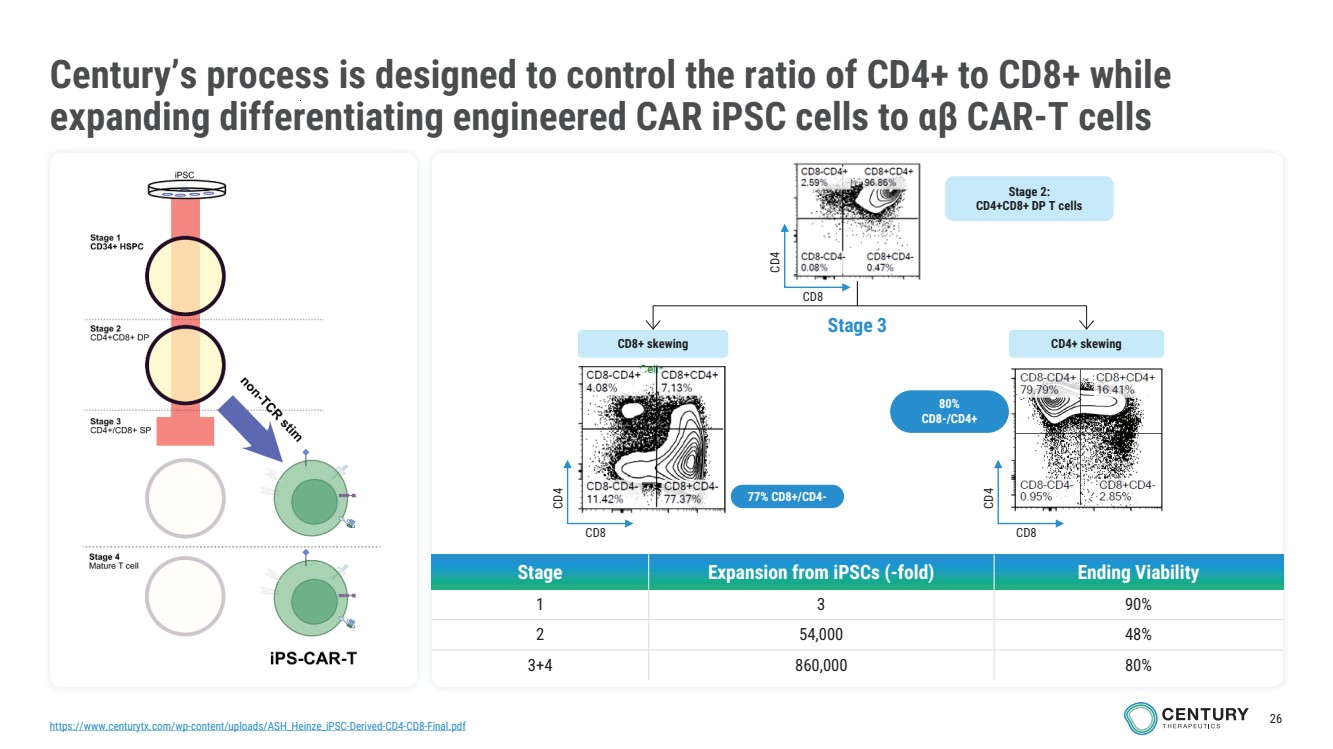
| 27 Function 1’ CAR-T CNTY-308 IL-2 secretion (pg/mL) ~3,000 ~2,000 Requires exogenous IL-2/IL-15 No No Repeat killing (rounds) > 10 > 10 Persistence in blood (days) 32 32 Tumor control after rechallenge (in vivo) Yes Yes CNTY-308 and 1’ CAR-T • Self-supports with own target-mediated IL-2 • High functional persistence: kills for >10 rounds, persists in blood for 32+ days, controls tumor after in vivo rechallenge Source: Company data on file In preclinical studies, Century’s iPSC-derived CAR- »¼T cells show characteristics similar to primary CAR-T cells |
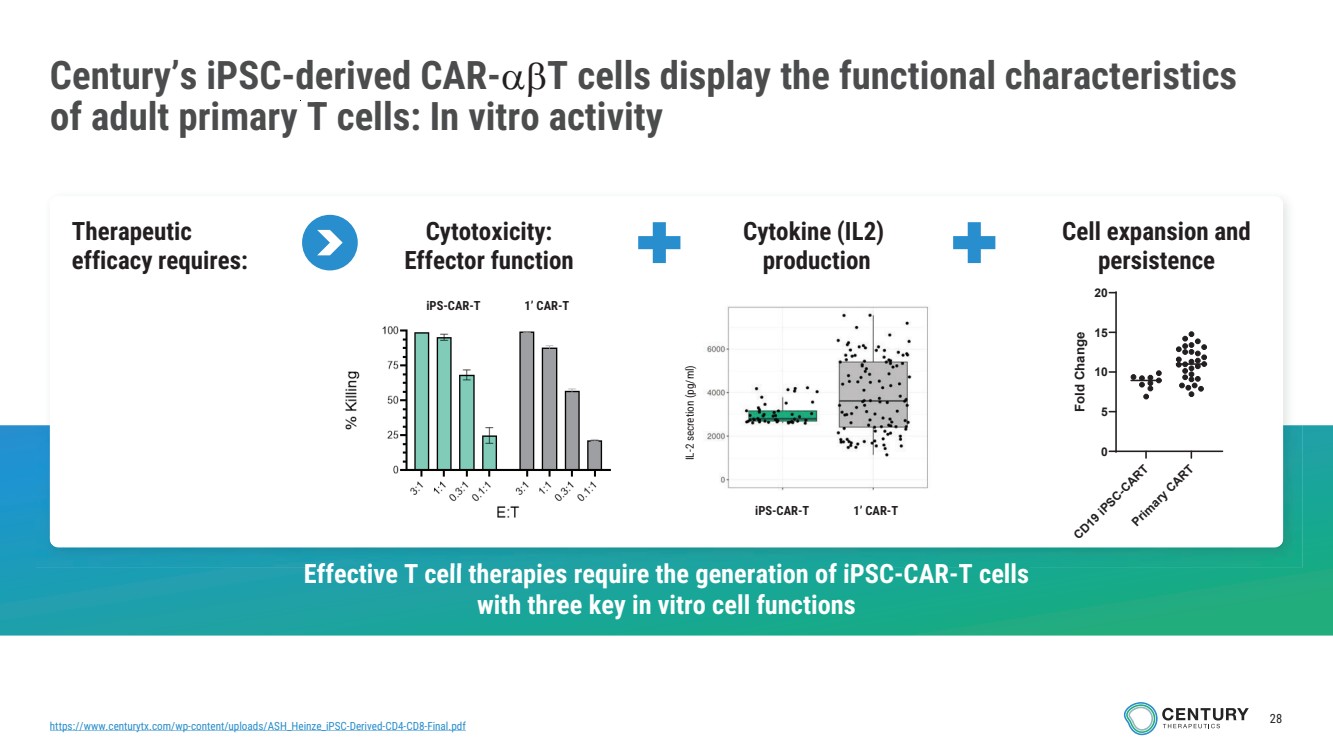
| 28 Century’s iPSC-derived CAR-DET cells display the functional characteristics of adult primary T cells: In vitro activity Effective T cell therapies require the generation of iPSC-CAR-T cells with three key in vitro cell functions Eff ti T ll th i i th ti f iPSC CAR T ll Cytotoxicity: Effector function Cell expansion and persistence Therapeutic efficacy requires: Cytokine (IL2) production iPS-CAR-T 1’ CAR-T IL-2 secretion (pg/ml) iPS-CAR-T 1’ CAR-T CD19 iPSC-CART Primary CART 0 5 10 15 20 Fold Change https://www.centurytx.com/wp-content/uploads/ASH_Heinze_iPSC-Derived-CD4-CD8-Final.pdf |
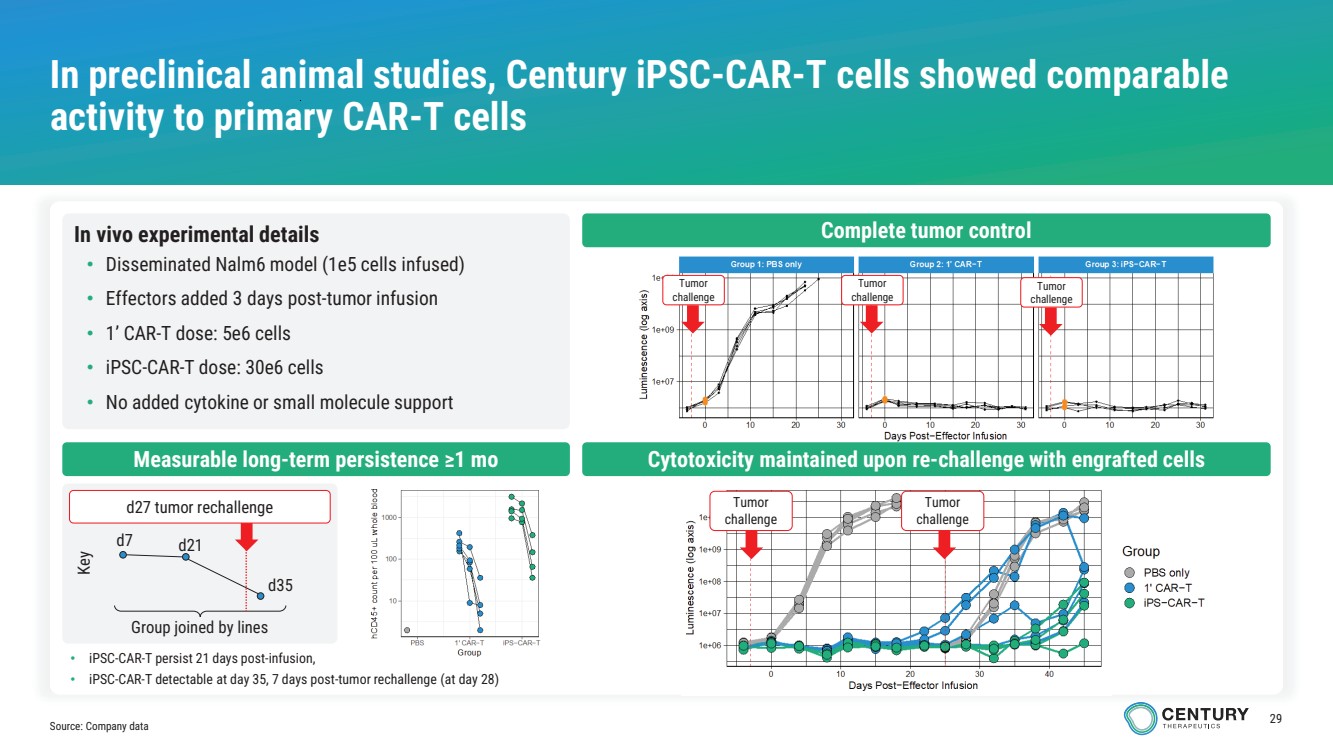
| 29 In preclinical animal studies, Century iPSC-CAR-T cells showed comparable activity to primary CAR-T cells Source: Company data Complete tumor control Measurable long-XIVQTIVWMWXIRGIǐmo Cytotoxicity maintained upon re-challenge with engrafted cells In vivo experimental details • Disseminated Nalm6 model (1e5 cells infused) • Effectors added 3 days post-tumor infusion • 1’ CAR-T dose: 5e6 cells • iPSC-CAR-T dose: 30e6 cells • No added cytokine or small molecule support Group joined by lines d7 d21 d35 d27 tumor rechallenge Key Tumor challenge • iPSC-CAR-T persist 21 days post-infusion, • iPSC-CAR-T detectable at day 35, 7 days post-tumor rechallenge (at day 28) Tumor challenge Tumor challenge Tumor challenge Tumor challenge |
| 30 CNTY-341 is an iPSC-derived CD19/CD22 dual-targeted CAR-iT intended for B-cell malignancies 1. https://doi.org/10.1182/blood.2021010930; https://doi.org/10.1038/s41571-023-00754-1 2. B-ALL: B-cell acute lymphoblastic leukemia; https://doi.org/10.2147/ITT.S288546; https://doi.org/10.1038/s41408-021-00459-7 CD4+/CD8+ »¼ iT-cell • Dual-targeting CD19 and CD22 to reduce potential for resistance in malignancy setting • CD19 expression loss or downregulation is seen in up to 30% of lymphoma patients who relapse after CD19 treatment1 • In B-ALL, CD19 loss can be as high as 70%2 • Allo-Evasion 5.0 edits designed to include protection from host T cell, NK cell, and humoral response • Native DE TCR knock-out to eliminate the risk of GvHD • Incorporates other platform enhancements designed to improve cell persistence and long-term engraftment C CNTY-341 |
| 31 Century’s solid tumor programs target validated targets with proprietary CARs • »¼CAR iT cells • Includes Allo-Evasion 5.0 designed to evade host T-cell, NK-cell, and humoral immunity • Novel targeting approaches include • Proprietary nectin-4 CAR • Novel TCRs providing additional functions • Novel CARs directed to other validated targets • Including GPC3, CD70, mesothelin • Cytokine engineering designed to improve cell persistence post infusion • Engineering designed to enhance trafficking and sustained function in tumor microenvironment Solid Tumors |
| Platform: iPSC cell foundry |
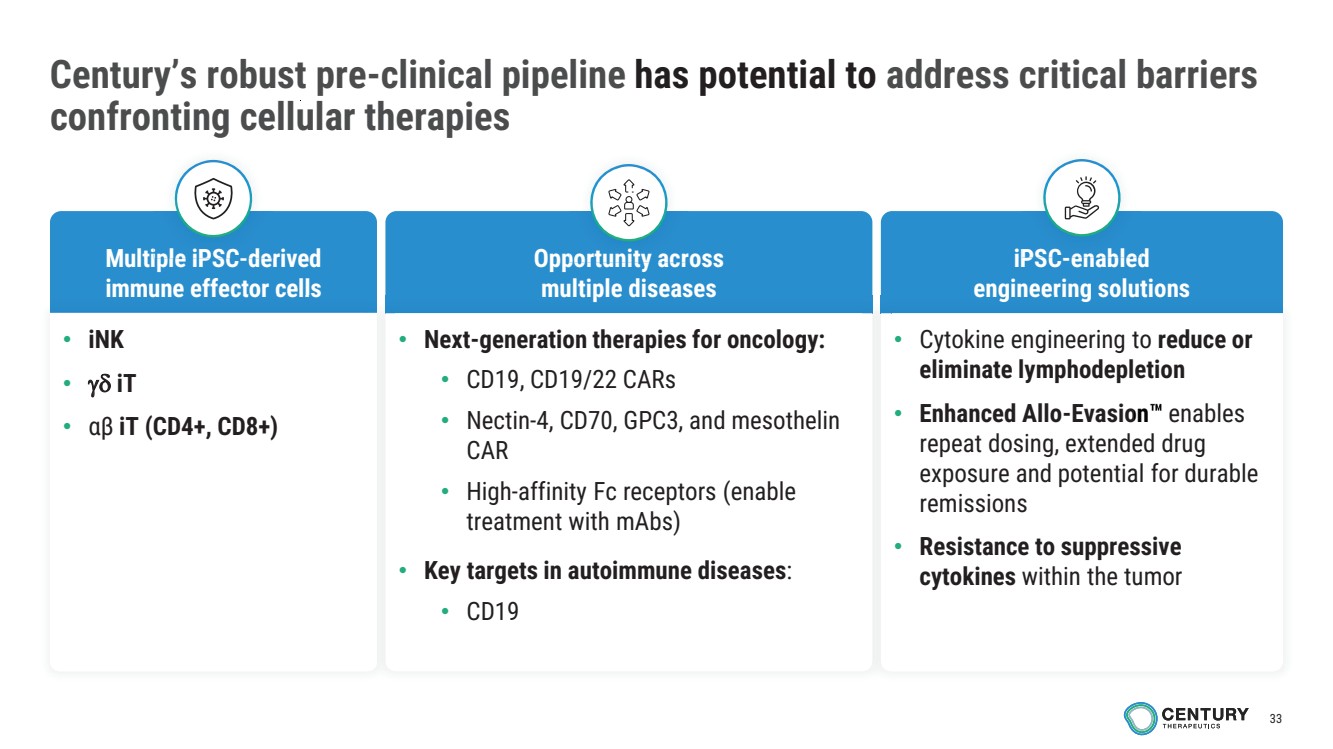
| 33 Century’s robust pre-clinical pipeline has potential to address critical barriers confronting cellular therapies Multiple iPSC-derived immune effector cells iPSC-enabled engineering solutions iple iPSC-de Opportunity across PSC enabled multiple diseases portunity acr engineering solutions • Cytokine engineering to reduce or eliminate lymphodepletion • Enhanced Allo-Evasion enables repeat dosing, extended drug exposure and potential for durable remissions • Resistance to suppressive cytokines within the tumor immune effector cells • iNK • JG iT • »¼ iT (CD4+, CD8+) multiple diseases • Next-generation therapies for oncology: • CD19, CD19/22 CARs • Nectin-4, CD70, GPC3, and mesothelin CAR • High-affinity Fc receptors (enable treatment with mAbs • Key targets in autoimmune diseases: • CD19 |
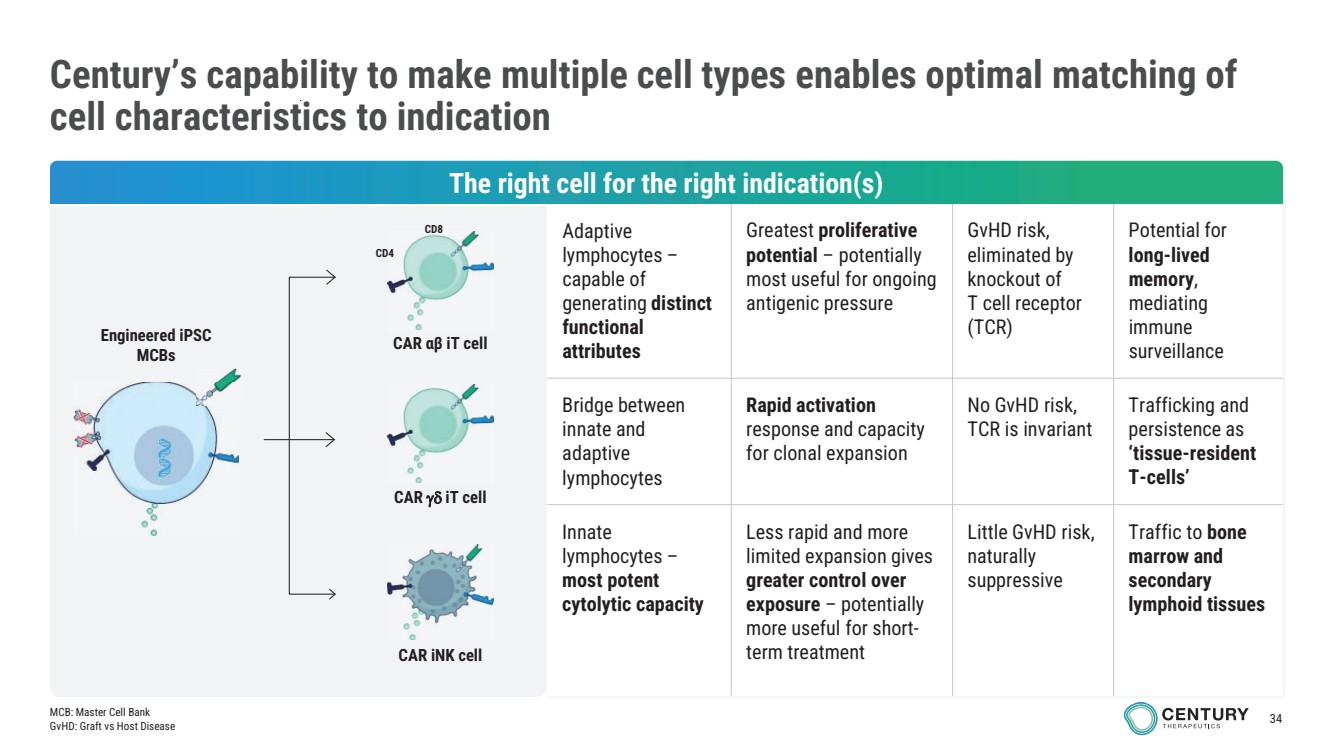
| 34 Adaptive lymphocytes – capable of generating distinct functional attributes Greatest proliferative potential – potentially most useful for ongoing antigenic pressure GvHD risk, eliminated by knockout of T cell receptor (TCR) Potential for long-lived memory, mediating immune surveillance Bridge between innate and adaptive lymphocytes Rapid activation response and capacity for clonal expansion No GvHD risk, TCR is invariant Trafficking and persistence as ‘tissue-resident T-cells’ Innate lymphocytes – most potent cytolytic capacity Less rapid and more limited expansion gives greater control over exposure – potentially more useful for short-term treatment Little GvHD risk, naturally suppressive Traffic to bone marrow and secondary lymphoid tissues Century’s capability to make multiple cell types enables optimal matching of cell characteristics to indication Engineered iPSC MCBs CAR iNK cell CAR JG iT cell CAR »¼ iT cell CD4 CD8 The right cell for the right indication(s) MCB: Master Cell Bank GvHD: Graft vs Host Disease |
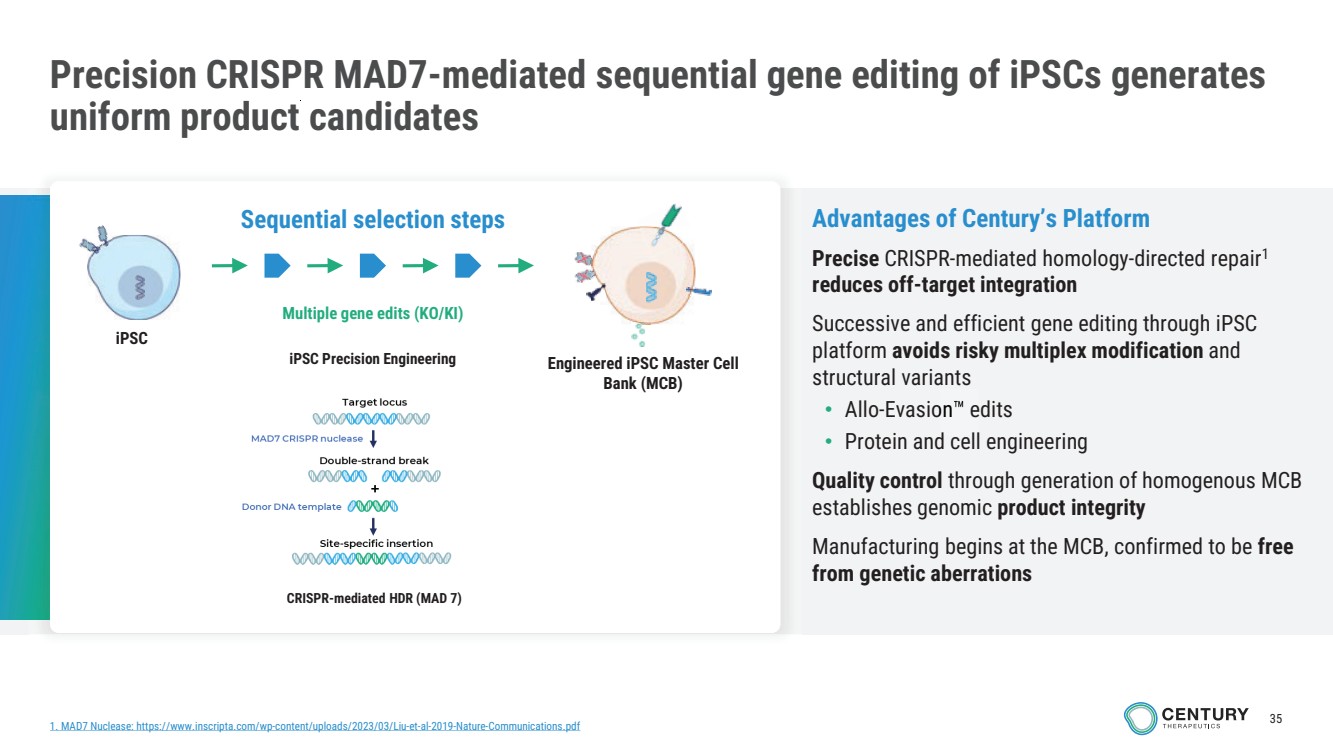
| 35 Precision CRISPR MAD7-mediated sequential gene editing of iPSCs generates uniform product candidates Multiple gene edits (KO/KI) iPSC Engineered iPSC Master Cell Bank (MCB) Sequential selection steps iPSC Precision Engineering CRISPR-mediated HDR (MAD 7) Advantages of Century’s Platform Precise CRISPR-mediated homology-directed repair1 reduces off-target integration Successive and efficient gene editing through iPSC platform avoids risky multiplex modification and structural variants • Allo-Evasion edits • Protein and cell engineering Quality control through generation of homogenous MCB establishes genomic product integrity Manufacturing begins at the MCB, confirmed to be free from genetic aberrations 1. MAD7 Nuclease: https://www.inscripta.com/wp-content/uploads/2023/03/Liu-et-al-2019-Nature-Communications.pdf |
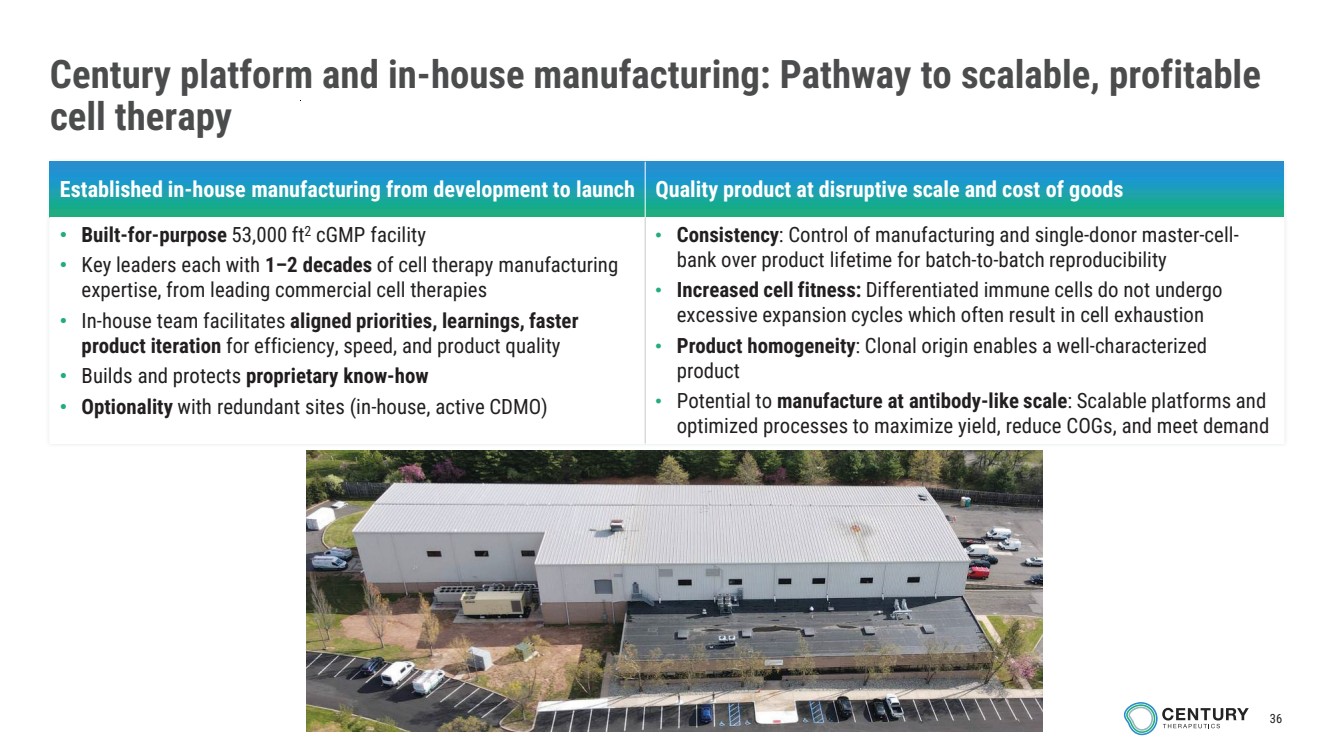
| 36 Century platform and in-house manufacturing: Pathway to scalable, profitable cell therapy Established in-house manufacturing from development to launch Quality product at disruptive scale and cost of goods • Built-for-purpose 53,000 ft2 cGMP facility • Key leaders each with 1–2 decades of cell therapy manufacturing expertise, from leading commercial cell therapies • In-house team facilitates aligned priorities, learnings, faster product iteration for efficiency, speed, and product quality • Builds and protects proprietary know-how • Optionality with redundant sites (in-house, active CDMO) • Consistency: Control of manufacturing and single-donor master-cell-bank over product lifetime for batch-to-batch reproducibility • Increased cell fitness: Differentiated immune cells do not undergo excessive expansion cycles which often result in cell exhaustion • Product homogeneity: Clonal origin enables a well-characterized product • Potential to manufacture at antibody-like scale: Scalable platforms and optimized processes to maximize yield, reduce COGs, and meet demand |
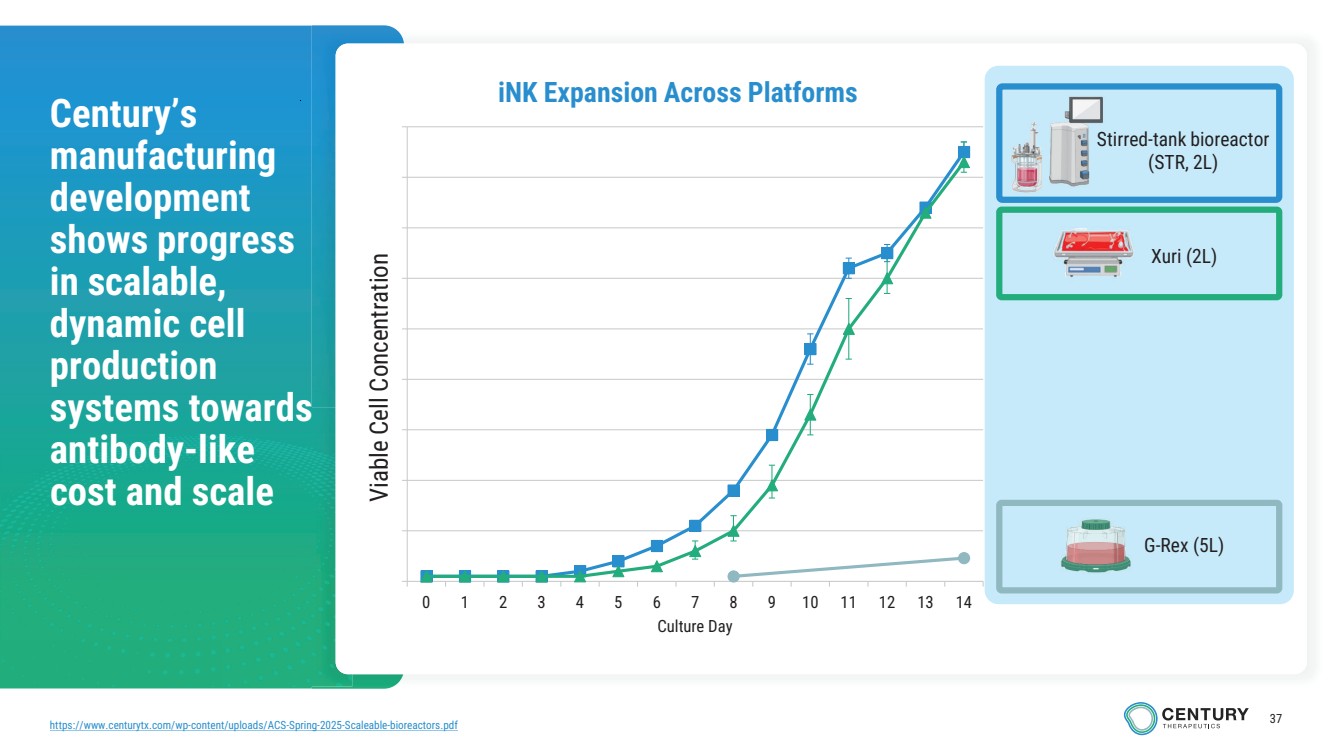
| 37 https://www.centurytx.com/wp-content/uploads/ACS-Spring-2025-Scaleable-bioreactors.pdf Century’s manufacturing development shows progress in scalable, dynamic cell production systems towards antibody-like cost and scale 0 1 2 3 4 5 6 7 8 9 10 11 12 13 14 Viable Cell Concentration Culture Day iNK Expansion Across Platforms Stirred-tank bioreactor (STR, 2L) Xuri (2L) G-Rex (5L) |
| Estimated cash runway into 4Q26; re-allocating resources to enable key value milestones Enhanced preclinical pipeline and platform aiming to expand and multiply cell therapy value • Four potentially transformative programs engineered with industry-leading Allo-Evasion ed w on 5.0 • Leading programs focus on iPSC-HIVMZIHƄXYREFPIƅ'('(»¼8GIPPW • Selective expansion to non-immune effector cells in high impact diseases Estimated c to enable k Enhanced prec and multiply c • Four potentially t programs engine leading Allo-Evas Enhanced Preclinical Pipeline Concentrated Clinical Focus Resourcing for Value Concentrating clinical focus with CNTY-101 on autoimmune disorders with transformational potential • Unique profile of CD19-targeting iNK cell product engineered with Allo-Evasion e pro on with clinical data from R/R NHL reinforcing potential in autoimmune disorders • Expansion of Phase 1 CALiPSO-1 trial in US and EU with CARAMEL IIT expected to commence in mid-2025 Century Therapeutics: Clear focus on transformational value with unique iPSC-derived cell therapies GOAL: Expand and enhance cell therapy value • Ended 25Q1 with cash, cash equivalents, and investments of $185.8M • CNTY-308 DE T cell program expected to enter IND-enabling stage in mid-2025 • CNTY-101 autoimmune clinical data expected in 2025 |
| www.centurytx.com |