
KROS 8-K
Keros Therapeutics, Inc. (KROS)
8-K
2025-03-31
For: 2025-03-31
View Original
Added on
April 06, 2026
UNITED STATES
SECURITIES AND EXCHANGE COMMISSION
Washington, D.C. 20549
FORM 8-K
CURRENT REPORT
Pursuant to Section 13 or 15(d)
of the Securities Exchange Act of 1934
Date of Report (Date of earliest event reported): March 31, 2025
(Exact name of registrant as specified in its charter)
(state or other jurisdiction of incorporation) | (Commission File Number) | (I.R.S. Employer Identification No.) | ||||||||||||
| (Address of principal executive offices) | (Zip Code) | |||||||||||||
Registrant’s telephone number, including area code: (617 ) 314-6297
Not applicable
(Former name or former address, if changed since last report.)
Check the appropriate box below if the Form 8-K filing is intended to simultaneously satisfy the filing obligation of the registrant under any of the following provisions:
| Written communications pursuant to Rule 425 under the Securities Act (17 CFR 230.425) | |||||
| Soliciting material pursuant to Rule 14a-12 under the Exchange Act (17 CFR 240.14a-12) | |||||
| Pre-commencement communications pursuant to Rule 14d-2(b) under the Exchange Act (17 CFR 240.14d-2(b)) | |||||
| Pre-commencement communications pursuant to Rule 13e-4(c) under the Exchange Act (17 CFR 240.13e-4(c)) | |||||
Securities registered pursuant to Section 12(b) of the Act:
| Title of each class | Trading Symbol | Name of each exchange on which registered | ||||||||||||
Indicate by check mark whether the registrant is an emerging growth company as defined in Rule 405 of the Securities Act of 1933 (§230.405 of this chapter) or Rule 12b-2 of the Securities Exchange Act of 1934 (§240.12b-2 of this chapter).
Emerging growth company ☐
If an emerging growth company, indicate by check mark if the registrant has elected not to use the extended transition period for complying with any new or revised financial accounting standards provided pursuant to Section 13(a) of the Exchange Act. ☐
Item 8.01 Other Events.
On March 31, 2025, Keros Therapeutics, Inc. (the “Company”) issued a press release announcing initial topline results from the Phase 1 clinical trial of KER-065 in healthy volunteers. A copy of the press release is attached as Exhibit 99.1 to this Current Report on Form 8-K and is incorporated herein by reference.
During a conference call and webcast scheduled to be held at 8:00 a.m. Eastern time on March 31, 2025, the Company’s management will discuss the initial topline results from the Phase 1 clinical trial of KER-065 in healthy volunteers. A copy of the presentation for the conference call and webcast is attached as Exhibit 99.2 to this Current Report on Form 8-K and is incorporated by reference.
Item 9.01 Financial Statements and Exhibits.
(d) Exhibits
| Exhibit | ||||||||
| No. | Description | |||||||
| 104 | Cover Page Interactive Data File (the cover page XBRL tags are embedded within the Inline XBRL document) | |||||||
SIGNATURES
Pursuant to the requirements of the Securities Exchange Act of 1934, the registrant has duly caused this report to be signed on its behalf by the undersigned hereunto duly authorized.
| KEROS THERAPEUTICS, INC. | ||||||||
| By: | /s/ Jasbir Seehra | |||||||
Jasbir Seehra, Ph.D. Chief Executive Officer | ||||||||
Dated: March 31, 2025
Exhibit 99.1
Keros Therapeutics Announces Initial Topline Results from the Phase 1 Clinical Trial of KER-065 in Healthy Volunteers
•Trial achieved key objectives for safety, tolerability, pharmacokinetics and pharmacodynamics
•Clinical data from this trial, together with preclinical data, support the therapeutic potential of KER-065 for broad impact in Duchenne muscular dystrophy (“DMD”) and other neuromuscular indications
•Keros plans on advancing KER-065 into a Phase 2 clinical trial in DMD, subject to positive regulatory interaction
•Keros to host a conference call and webcast today, March 31, 2025, at 8:00 a.m. ET
LEXINGTON, Mass., Mar. 31, 2025 (GLOBE NEWSWIRE) -- Keros Therapeutics, Inc. (“Keros”) (Nasdaq: KROS), a clinical-stage biopharmaceutical company focused on developing and commercializing novel therapeutics to treat a wide range of patients with disorders that are linked to dysfunctional signaling of the transforming growth factor-beta (“TGF-ß”) family of proteins, today announced initial topline results from the Phase 1 clinical trial of KER-065 in healthy volunteers. Topline results from this ongoing trial are through the multiple ascending dose (“MAD”) treatment period (Day 85).
“We are pleased to report topline results that met the key objectives of the Phase 1 clinical trial and provided important insights to inform the development of KER-065 for patients with DMD,” said Jasbir S. Seehra, Ph.D., Chair and Chief Executive Officer. “Considering the limitations of currently available therapies, the need for additional treatments in DMD remains high, and KER-065 has the potential to address multiple aspects of the disease, including across important tissues and underlying genetic deficiencies. Our strong financial foundation enables us to continue advancing our promising pipeline of novel therapeutics, and we look forward to engaging with regulators towards the aim of moving KER-065 to a Phase 2 clinical trial in the first quarter of 2026.”
Key findings of this trial as of a February 6, 2025 data cut-off date include the following:
•KER-065 was generally well-tolerated, with no major safety signals observed to date
◦No serious adverse events or dose-limiting toxicities reported
•Evidence for activin inhibition across tissues of interest, as KER-065 elicited:
◦Increases in bone specific alkaline phosphate (BSAP), a biomarker of bone formation, and decreases in C-Terminal Telopeptide (CTX), a biomarker of bone resorption
◦Increases in adiponectin, a biomarker of fat mobilization, and decreases in leptin, a biomarker of fat mass
◦Changes in body composition, as demonstrated by increases in bone mineral density and muscle mass and decreases in fat mass, which in totality were consistent with activin inhibition
“We observed evidence of activin inhibition based on multiple biomarkers and body composition data. These data, coupled with preclinical and mechanistic insights on the pivotal role of the activin pathway in neuromuscular pathobiology, demonstrate the exciting
therapeutic potential of KER-065 in DMD and other neuromuscular disorders,” said Yung H. Chyung, M.D., Chief Medical Officer.
Keros plans on engaging with regulatory authorities, starting in the third quarter of 2025. Subject to the outcome of these regulatory interactions, Keros expects to initiate a Phase 2 clinical trial of KER-065 in patients with DMD in the first quarter of 2026.
Conference Call and Webcast Information
Keros will host a conference call and webcast today, March 31, 2025, at 8:00 a.m. Eastern time. The conference call will be webcast live at: https://event.webcasts.com/starthere.jsp?ei=1713593&tp_key=5723864d86. The live teleconference may be accessed by dialing (877) 407-0309 (domestic) or (201) 389-0853 (international). An archived version of the call will be available in the investors section of the Keros website at http://ir.kerostx.com for 90 days following the conclusion of the call.
About the KER-065 Phase 1 Clinical Trial
The KER-065 Phase 1 clinical trial is a randomized, double-blind, placebo-controlled, two-part dose escalation (single ascending dose and MAD) trial in healthy volunteers. The primary objectives of this trial were to assess safety, tolerability and pharmacokinetics of KER-065. Exploratory endpoints include assessments of the pharmacodynamic effect on bone, adipose, muscle, cardiac tissue and fibrosis.
About KER-065
KER-065 is a novel ligand trap comprised of a modified ligand-binding domain derived from activin receptor type IIA and activin receptor type IIB that is fused to the portion of the human antibody known as the Fc domain. KER-065 is designed to act as a ligand trap and inhibit the biological effects of myostatin and activin A, two ligands that signal through activin receptors, to increase skeletal muscle regeneration, increase muscle size and strength, reduce body fat, reduce fibrosis of the skeletal muscle and increase bone strength. We are developing KER-065 for the treatment of neuromuscular diseases, with an initial focus on DMD.
About Duchenne Muscular Dystrophy (DMD)
DMD is the most common form of muscular dystrophy and results in muscle degeneration and premature death. DMD results from the lack of functional dystrophin protein that helps promote myofiber stability, caused by a gene mutation. The lack of dystrophin, an important structural component of muscle cells, causes muscle cells to have increased susceptibility to damage and to progressively die. Additionally, the absence of dystrophin in muscle cells leads to significant cell damage and ultimately causes muscle cell death and the replacement of muscle with fibrotic and fatty tissue. The replacement of muscle fibers with fatty and fibrotic tissue leads to progressive loss of muscle strength and function leading to immobility and respiratory and cardiac complications. In DMD patients, heart muscle cells progressively die and are replaced with scar tissue. This cardiomyopathy eventually leads to heart failure, which is currently the leading cause of death among those with DMD. The National Organization for
Rare Disorders estimates that approximately one in every 3,500 male births is affected by DMD worldwide.
About Keros Therapeutics, Inc.
Keros is a clinical-stage biopharmaceutical company focused on developing and commercializing novel therapeutics to treat a wide range of patients with disorders that are linked to dysfunctional signaling of the TGF-ß family of proteins. Keros is a leader in understanding the role of the TGF-ß family of proteins, which are master regulators of the growth, repair and maintenance of a number of tissues, including blood, bone, skeletal muscle, adipose and heart tissue. By leveraging this understanding, Keros has discovered and is developing protein therapeutics that have the potential to provide meaningful and potentially disease-modifying benefit to patients. One of Keros’ product candidates, cibotercept (KER-012), is being developed for the treatment of pulmonary arterial hypertension and for the treatment of cardiovascular disorders. Keros’ second product candidate, KER-065, is being developed for the treatment of neuromuscular diseases. Keros’ most advanced product candidate, elritercept (KER-050), is being developed for the treatment of low blood cell counts, or cytopenias, including anemia and thrombocytopenia, in patients with myelodysplastic syndrome and in patients with myelofibrosis.
Cautionary Note Regarding Forward-Looking Statements
Statements contained in this press release regarding matters that are not historical facts are “forward-looking statements” within the meaning of the Private Securities Litigation Reform Act of 1995, as amended. Words such as “anticipates,” “believes,” “continue,” “expects,” “enable,” “potential” and “will” or similar expressions are intended to identify forward-looking statements. Examples of these forward-looking statements include statements concerning: Keros’ expectations regarding its strategy and timing of its Phase 2 clinical trial for KER-065, including its plans to engage with regulatory authorities; Keros’ ability to advance its pipeline of novel therapeutics; and the potential therapeutic benefits of KER-065. Because such statements are subject to risks and uncertainties, actual results may differ materially from those expressed or implied by such forward-looking statements. These risks and uncertainties include, among others: Keros’ limited operating history and historical losses; Keros’ ability to raise additional funding to complete the development and any commercialization of its product candidates; Keros’ dependence on the success of its product candidates, cibotercept, KER-065 and elritercept; that Keros may be delayed in initiating, enrolling or completing any clinical trials; competition from third parties that are developing products for similar uses; Keros’ ability to obtain, maintain and protect its intellectual property; and Keros’ dependence on third parties in connection with manufacturing, clinical trials and preclinical studies.
These and other risks are described more fully in Keros’ filings with the Securities and Exchange Commission (“SEC”), including the “Risk Factors” section of the Company’s Annual Report on Form 10-K, filed with the SEC on February 26, 2025, and its other documents subsequently filed with or furnished to the SEC. All forward-looking statements contained in this press release speak only as of the date on which they were made. Except to the extent required by law, Keros undertakes no obligation to update such statements to reflect events that occur or circumstances that exist after the date on which they were made.
Investor Contact:
Justin Frantz
617-221-6042

KER-065 Update March 2025
KER-065 Update Statements contained in this presentation regarding matters that are not historical facts are “forward-looking statements” within the meaning of the Private Securities Litigation Reform Act of 1995, as amended. Words such as "anticipates," "believes," "expects," "intends," “plans,” “potential,” "projects,” “would” and "future" or similar expressions are intended to identify forward- looking statements. Examples of these forward-looking statements include statements concerning: Keros’ expectations regarding its strategy, progress, design, objectives and expected timing of its Phase 2 clinical trial for KER-065, including its regulatory plans and potential therapeutic benefits of KER-065. Because such statements are subject to risks and uncertainties, actual results may differ materially from those expressed or implied by such forward-looking statements. These risks and uncertainties include, among others: Keros’ limited operating history and historical losses; Keros’ ability to raise additional funding to complete the development and any commercialization of its product candidates; Keros’ dependence on the success of its product candidates, cibotercept, KER-065 and elritercept; that Keros may be delayed in initiating, enrolling or completing any clinical trials; competition from third parties that are developing products for similar uses; Keros’ ability to obtain, maintain and protect its intellectual property; and Keros’ dependence on third parties in connection with manufacturing, clinical trials and preclinical studies. These and other risks are described more fully in Keros’ filings with the Securities and Exchange Commission (“SEC”), including the “Risk Factors” section of the Company’s Annual Report on Form 10-K, filed with the SEC on February 26, 2025, and its other documents subsequently filed with or furnished to the SEC. All forward-looking statements contained in this presentation speak only as of the date on which they were made. Except to the extent required by law, Keros undertakes no obligation to update such statements to reflect events that occur or circumstances that exist after the date on which they were made. Certain information contained in this presentation relates to or is based on studies, publications, surveys and other data obtained from third-party sources and the Company’s own internal estimates and research. While we believe these third-party sources to be reliable as of the date of this presentation, it has not independently verified, and makes no representation as to the adequacy, fairness, accuracy or completeness of, any information obtained from third-party sources. Finally, while we believe our own internal research is reliable, such research has not been verified by any independent source. The trademarks included in this presentation are the property of the owners thereof and are used for reference purposes only. Disclaimer 2
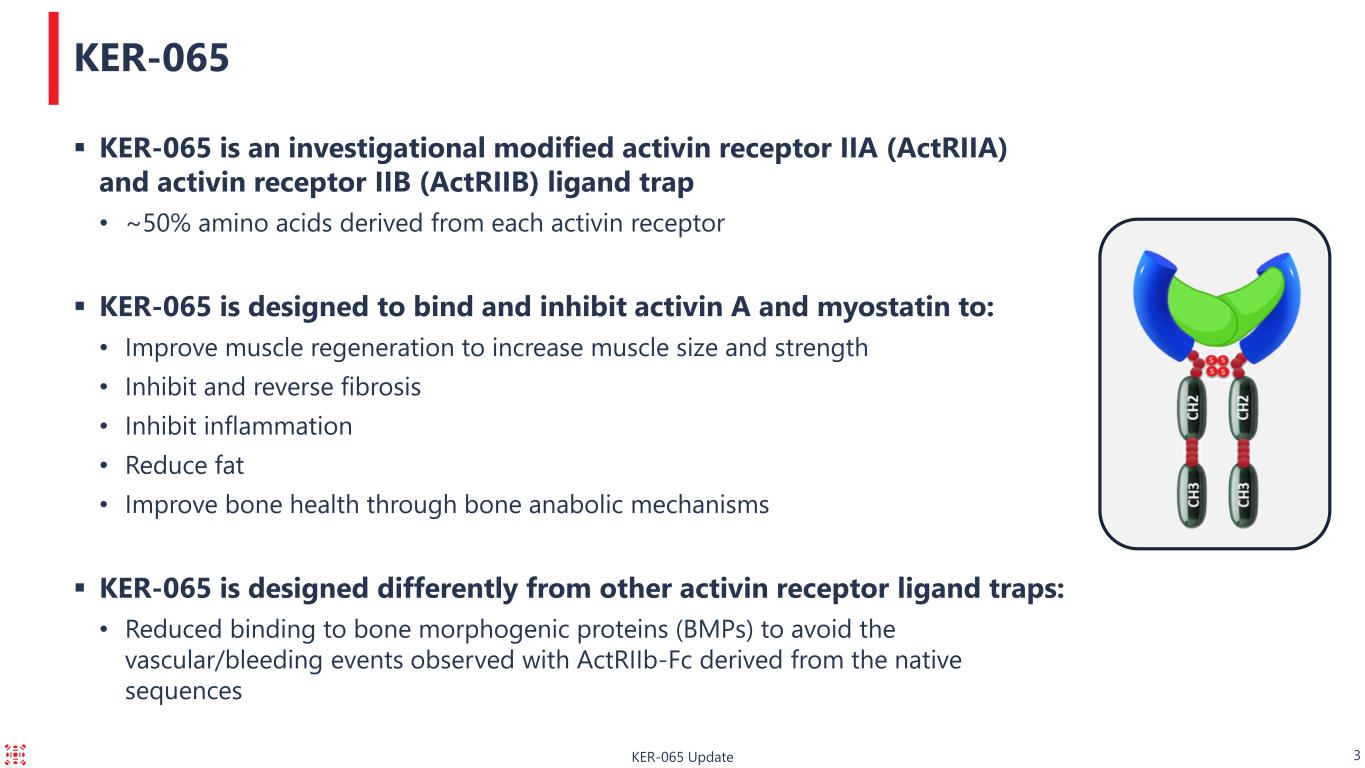
KER-065 Update 3 KER-065 KER-065 is an investigational modified activin receptor IIA (ActRIIA) and activin receptor IIB (ActRIIB) ligand trap • ~50% amino acids derived from each activin receptor KER-065 is designed to bind and inhibit activin A and myostatin to: • Improve muscle regeneration to increase muscle size and strength • Inhibit and reverse fibrosis • Inhibit inflammation • Reduce fat • Improve bone health through bone anabolic mechanisms KER-065 is designed differently from other activin receptor ligand traps: • Reduced binding to bone morphogenic proteins (BMPs) to avoid the vascular/bleeding events observed with ActRIIb-Fc derived from the native sequences
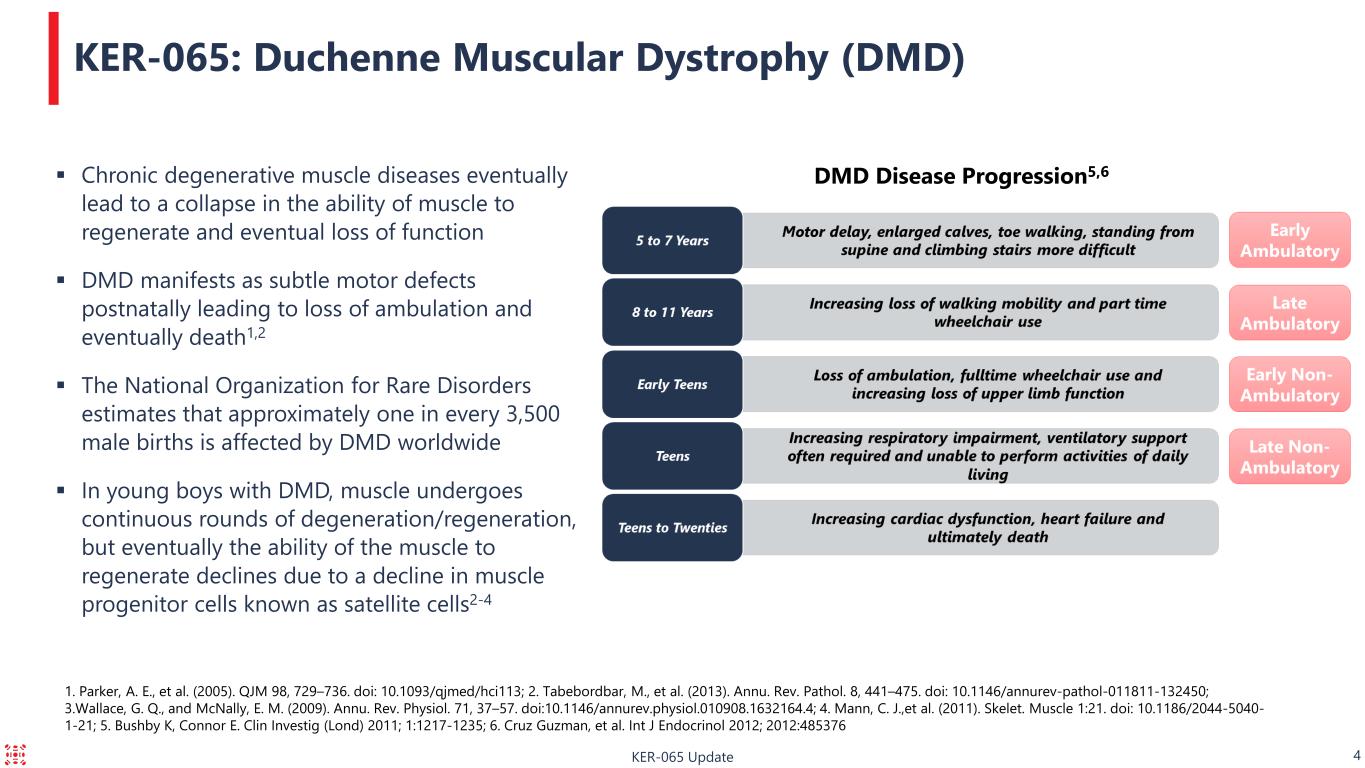
1. Parker, A. E., et al. (2005). QJM 98, 729–736. doi: 10.1093/qjmed/hci113; 2. Tabebordbar, M., et al. (2013). Annu. Rev. Pathol. 8, 441–475. doi: 10.1146/annurev-pathol-011811-132450; 3.Wallace, G. Q., and McNally, E. M. (2009). Annu. Rev. Physiol. 71, 37–57. doi:10.1146/annurev.physiol.010908.1632164.4; 4. Mann, C. J.,et al. (2011). Skelet. Muscle 1:21. doi: 10.1186/2044-5040- 1-21; 5. Bushby K, Connor E. Clin Investig (Lond) 2011; 1:1217-1235; 6. Cruz Guzman, et al. Int J Endocrinol 2012; 2012:485376 KER-065 Update 4 Chronic degenerative muscle diseases eventually lead to a collapse in the ability of muscle to regenerate and eventual loss of function DMD manifests as subtle motor defects postnatally leading to loss of ambulation and eventually death1,2 The National Organization for Rare Disorders estimates that approximately one in every 3,500 male births is affected by DMD worldwide In young boys with DMD, muscle undergoes continuous rounds of degeneration/regeneration, but eventually the ability of the muscle to regenerate declines due to a decline in muscle progenitor cells known as satellite cells2-4 KER-065: Duchenne Muscular Dystrophy (DMD) DMD Disease Progression5,6
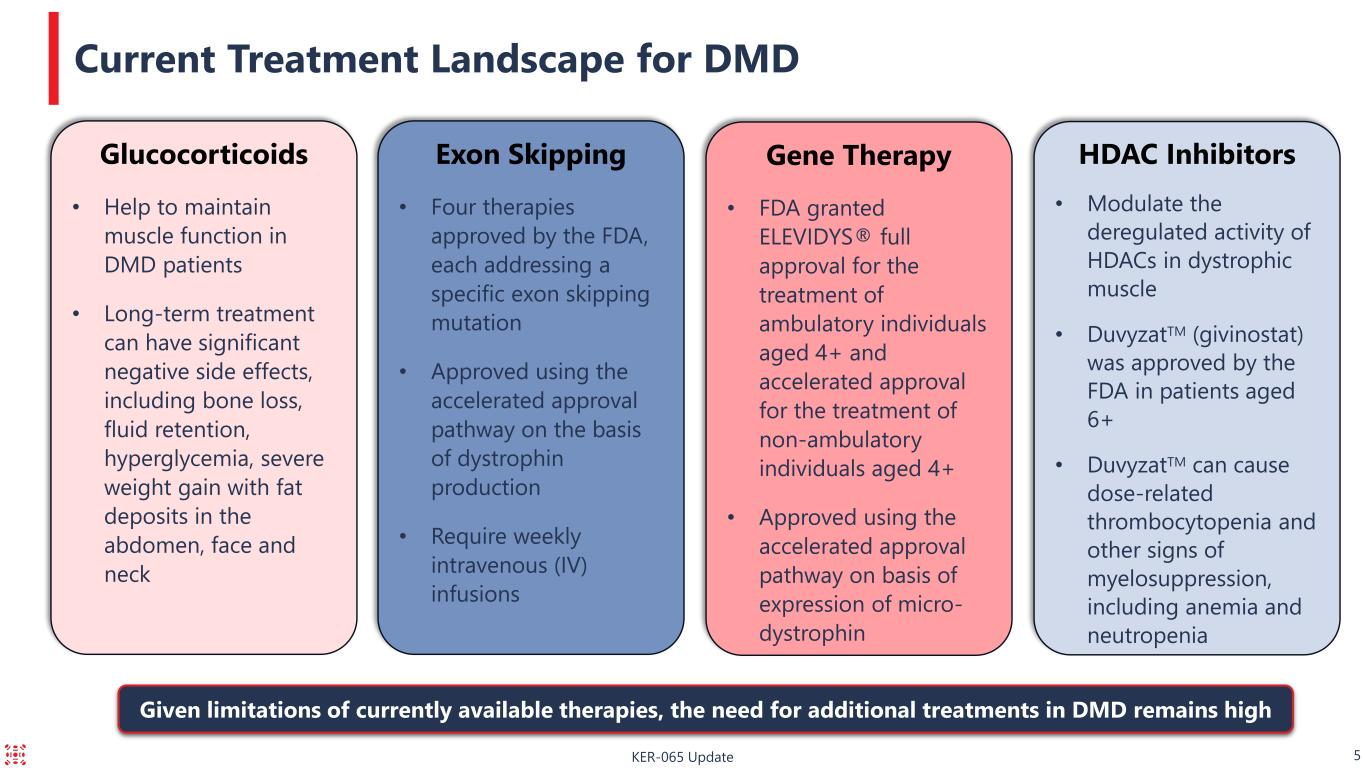
HDAC Inhibitors • Modulate the deregulated activity of HDACs in dystrophic muscle • DuvyzatTM (givinostat) was approved by the FDA in patients aged 6+ • DuvyzatTM can cause dose-related thrombocytopenia and other signs of myelosuppression, including anemia and neutropenia KER-065 Update 5 Current Treatment Landscape for DMD Gene Therapy • FDA granted ELEVIDYS® full approval for the treatment of ambulatory individuals aged 4+ and accelerated approval for the treatment of non-ambulatory individuals aged 4+ • Approved using the accelerated approval pathway on basis of expression of micro- dystrophin Exon Skipping • Four therapies approved by the FDA, each addressing a specific exon skipping mutation • Approved using the accelerated approval pathway on the basis of dystrophin production • Require weekly intravenous (IV) infusions Glucocorticoids • Help to maintain muscle function in DMD patients • Long-term treatment can have significant negative side effects, including bone loss, fluid retention, hyperglycemia, severe weight gain with fat deposits in the abdomen, face and neck Given limitations of currently available therapies, the need for additional treatments in DMD remains high
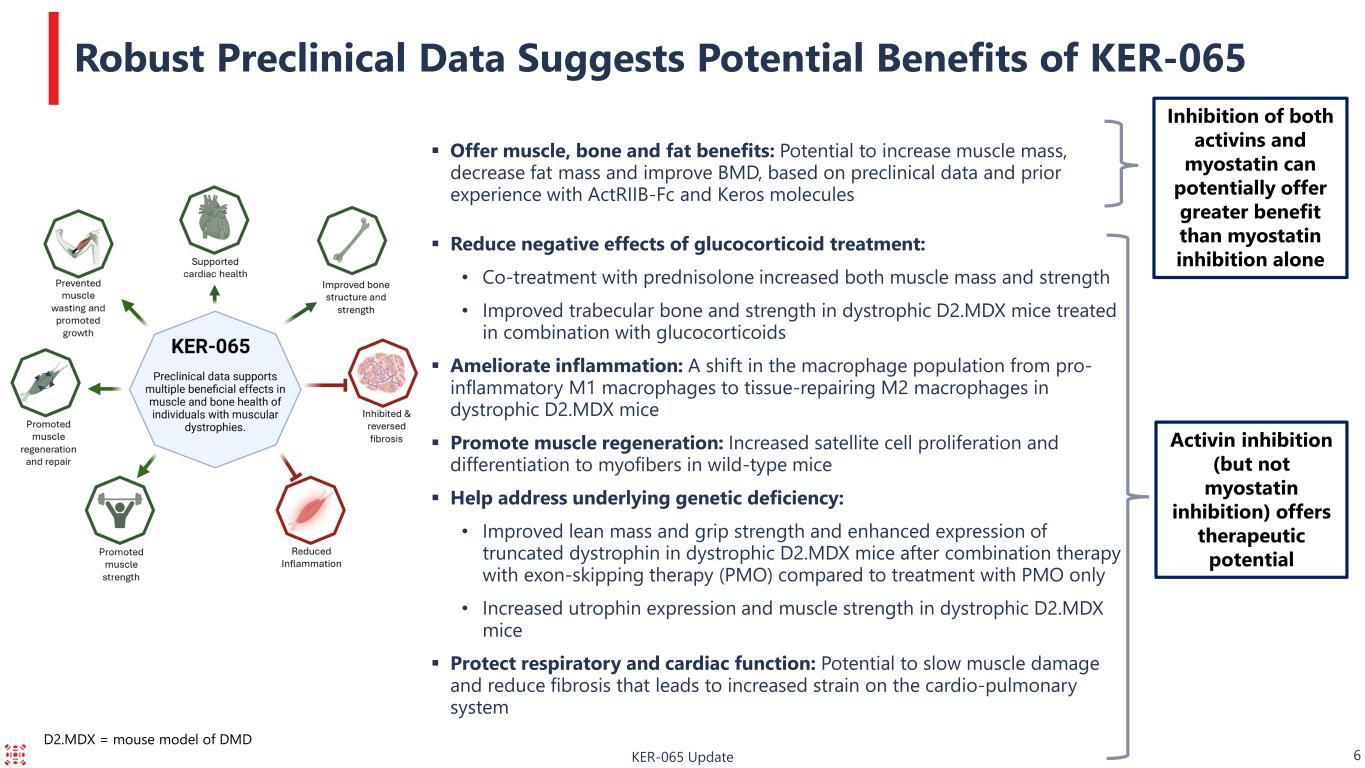
KER-065 Update 6 Robust Preclinical Data Suggests Potential Benefits of KER-065 Activin inhibition (but not myostatin inhibition) offers therapeutic potential Offer muscle, bone and fat benefits: Potential to increase muscle mass, decrease fat mass and improve BMD, based on preclinical data and prior experience with ActRIIB-Fc and Keros molecules Reduce negative effects of glucocorticoid treatment: • Co-treatment with prednisolone increased both muscle mass and strength • Improved trabecular bone and strength in dystrophic D2.MDX mice treated in combination with glucocorticoids Ameliorate inflammation: A shift in the macrophage population from pro- inflammatory M1 macrophages to tissue-repairing M2 macrophages in dystrophic D2.MDX mice Promote muscle regeneration: Increased satellite cell proliferation and differentiation to myofibers in wild-type mice Help address underlying genetic deficiency: • Improved lean mass and grip strength and enhanced expression of truncated dystrophin in dystrophic D2.MDX mice after combination therapy with exon-skipping therapy (PMO) compared to treatment with PMO only • Increased utrophin expression and muscle strength in dystrophic D2.MDX mice Protect respiratory and cardiac function: Potential to slow muscle damage and reduce fibrosis that leads to increased strain on the cardio-pulmonary system Inhibition of both activins and myostatin can potentially offer greater benefit than myostatin inhibition alone D2.MDX = mouse model of DMD
KER-065 Update KER-065: Phase 1 Clinical Trial Data 7
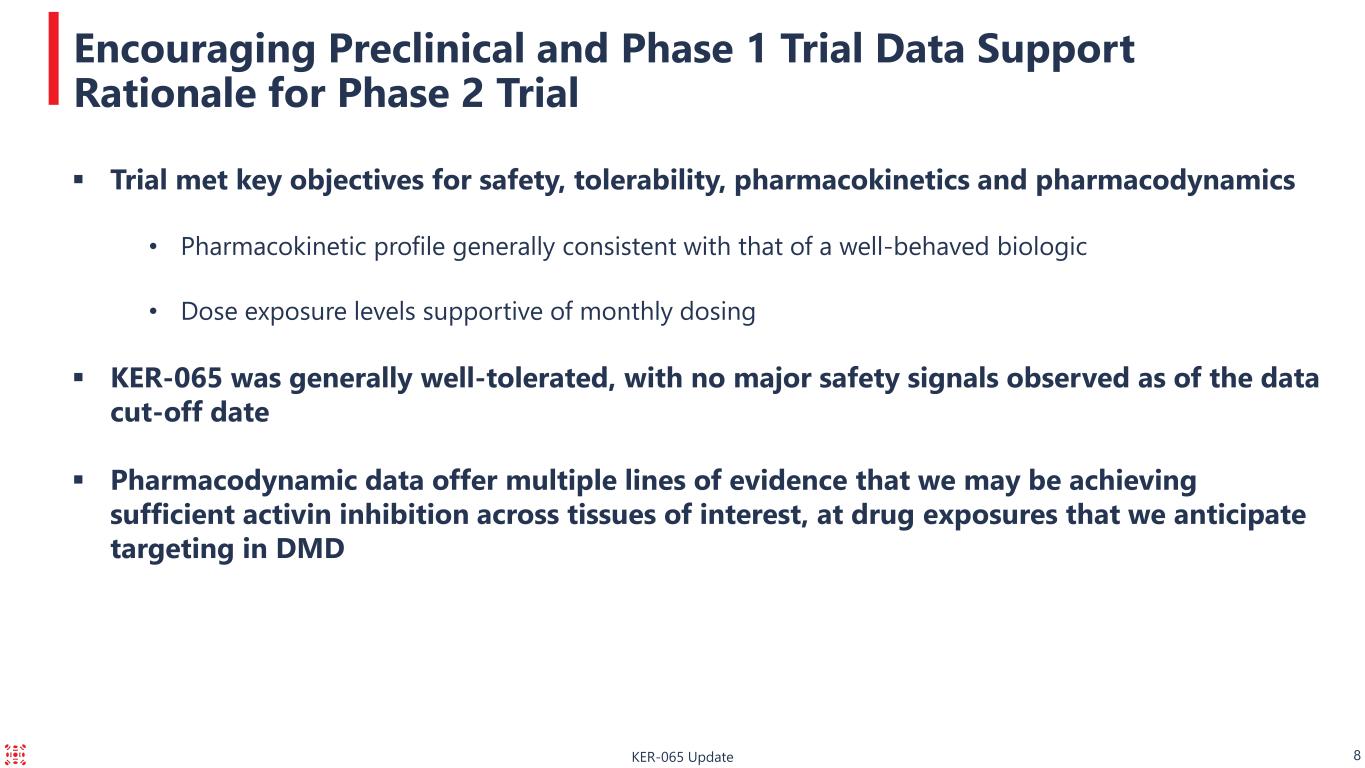
KER-065 Update 8 Encouraging Preclinical and Phase 1 Trial Data Support Rationale for Phase 2 Trial Trial met key objectives for safety, tolerability, pharmacokinetics and pharmacodynamics • Pharmacokinetic profile generally consistent with that of a well-behaved biologic • Dose exposure levels supportive of monthly dosing KER-065 was generally well-tolerated, with no major safety signals observed as of the data cut-off date Pharmacodynamic data offer multiple lines of evidence that we may be achieving sufficient activin inhibition across tissues of interest, at drug exposures that we anticipate targeting in DMD
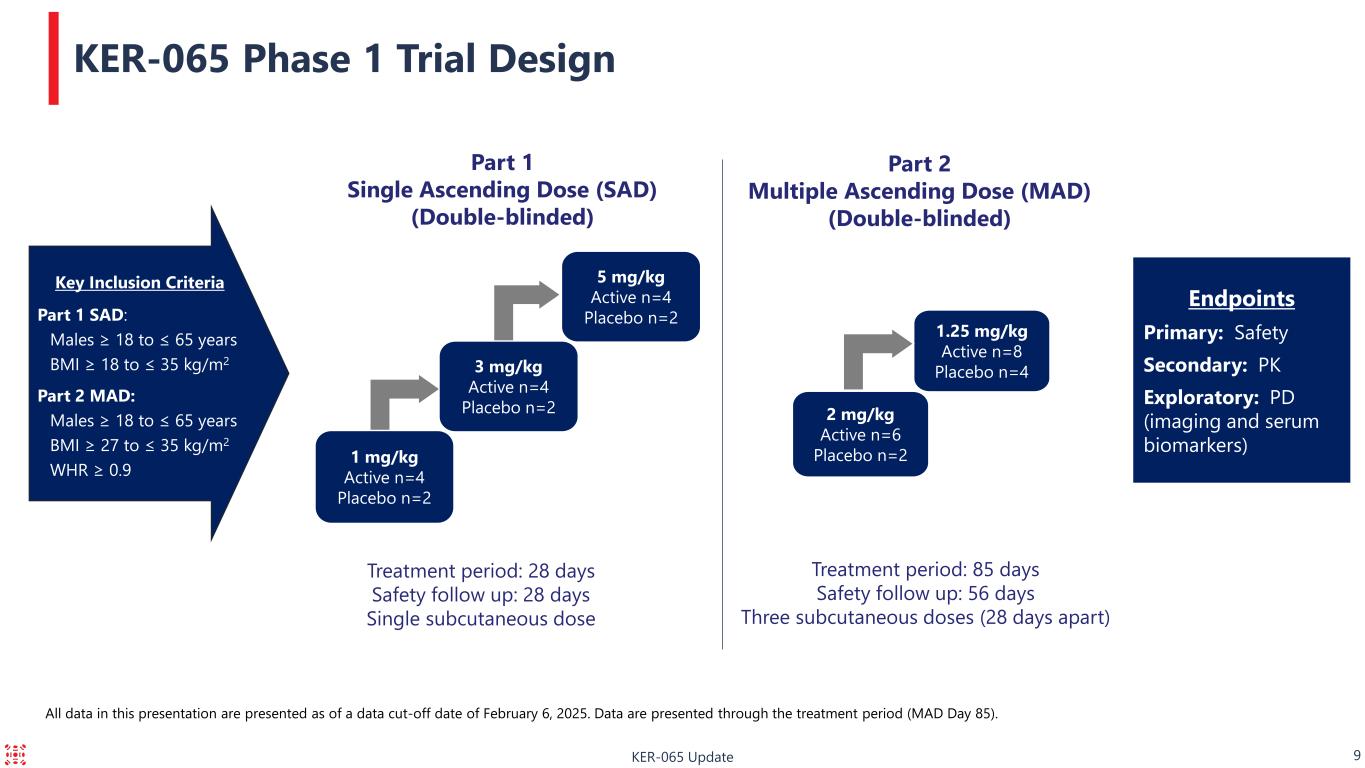
KER-065 Update 9 KER-065 Phase 1 Trial Design Part 1 Single Ascending Dose (SAD) (Double-blinded) Treatment period: 28 days Safety follow up: 28 days Single subcutaneous dose Part 2 Multiple Ascending Dose (MAD) (Double-blinded) Treatment period: 85 days Safety follow up: 56 days Three subcutaneous doses (28 days apart) Endpoints Primary: Safety Secondary: PK Exploratory: PD (imaging and serum biomarkers)1 mg/kg Active n=4 Placebo n=2 5 mg/kg Active n=4 Placebo n=2 3 mg/kg Active n=4 Placebo n=2 2 mg/kg Active n=6 Placebo n=2 1.25 mg/kg Active n=8 Placebo n=4 Key Inclusion Criteria Part 1 SAD: Males ≥ 18 to ≤ 65 years BMI ≥ 18 to ≤ 35 kg/m2 Part 2 MAD: Males ≥ 18 to ≤ 65 years BMI ≥ 27 to ≤ 35 kg/m2 WHR ≥ 0.9 All data in this presentation are presented as of a data cut-off date of February 6, 2025. Data are presented through the treatment period (MAD Day 85).
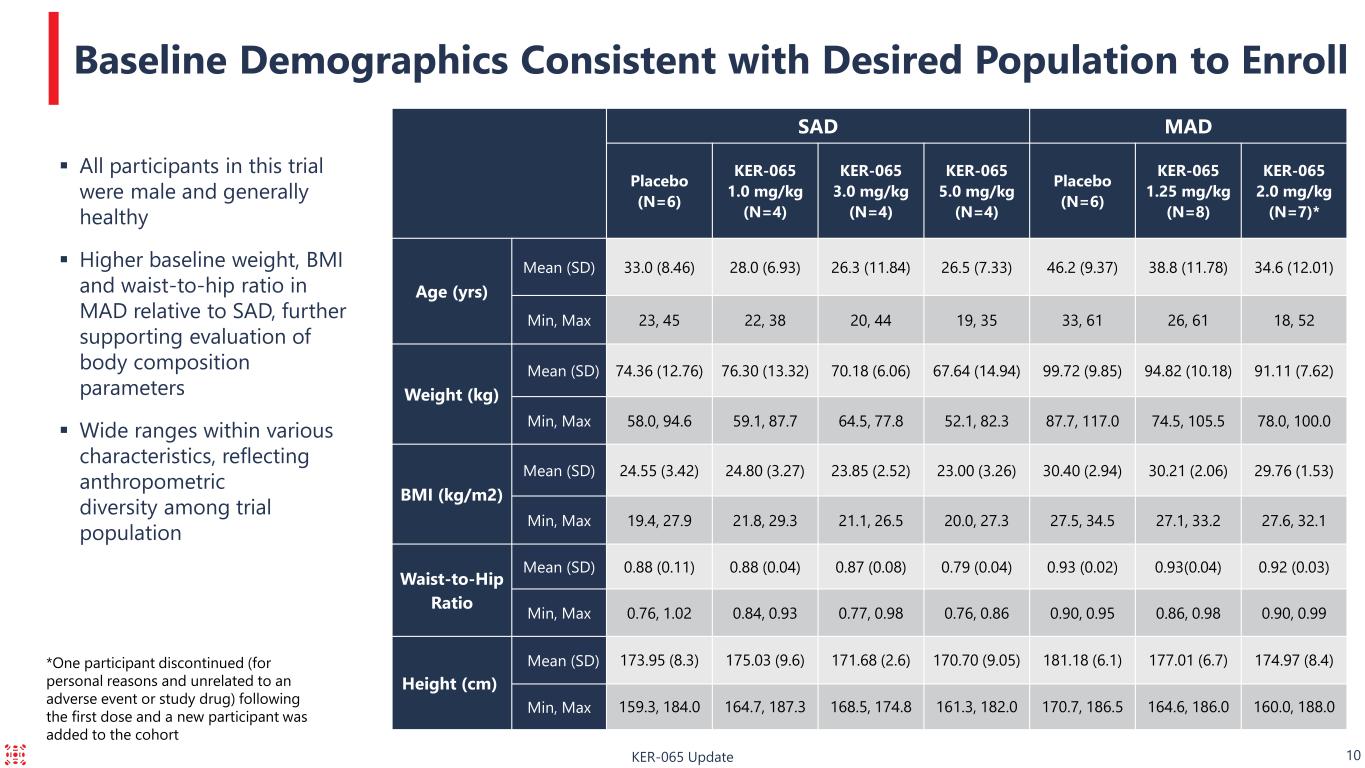
KER-065 Update 10 Baseline Demographics Consistent with Desired Population to Enroll All participants in this trial were male and generally healthy Higher baseline weight, BMI and waist-to-hip ratio in MAD relative to SAD, further supporting evaluation of body composition parameters Wide ranges within various characteristics, reflecting anthropometric diversity among trial population SAD MAD Placebo (N=6) KER-065 1.0 mg/kg (N=4) KER-065 3.0 mg/kg (N=4) KER-065 5.0 mg/kg (N=4) Placebo (N=6) KER-065 1.25 mg/kg (N=8) KER-065 2.0 mg/kg (N=7)* Age (yrs) Mean (SD) 33.0 (8.46) 28.0 (6.93) 26.3 (11.84) 26.5 (7.33) 46.2 (9.37) 38.8 (11.78) 34.6 (12.01) Min, Max 23, 45 22, 38 20, 44 19, 35 33, 61 26, 61 18, 52 Weight (kg) Mean (SD) 74.36 (12.76) 76.30 (13.32) 70.18 (6.06) 67.64 (14.94) 99.72 (9.85) 94.82 (10.18) 91.11 (7.62) Min, Max 58.0, 94.6 59.1, 87.7 64.5, 77.8 52.1, 82.3 87.7, 117.0 74.5, 105.5 78.0, 100.0 BMI (kg/m2) Mean (SD) 24.55 (3.42) 24.80 (3.27) 23.85 (2.52) 23.00 (3.26) 30.40 (2.94) 30.21 (2.06) 29.76 (1.53) Min, Max 19.4, 27.9 21.8, 29.3 21.1, 26.5 20.0, 27.3 27.5, 34.5 27.1, 33.2 27.6, 32.1 Waist-to-Hip Ratio Mean (SD) 0.88 (0.11) 0.88 (0.04) 0.87 (0.08) 0.79 (0.04) 0.93 (0.02) 0.93(0.04) 0.92 (0.03) Min, Max 0.76, 1.02 0.84, 0.93 0.77, 0.98 0.76, 0.86 0.90, 0.95 0.86, 0.98 0.90, 0.99 Height (cm) Mean (SD) 173.95 (8.3) 175.03 (9.6) 171.68 (2.6) 170.70 (9.05) 181.18 (6.1) 177.01 (6.7) 174.97 (8.4) Min, Max 159.3, 184.0 164.7, 187.3 168.5, 174.8 161.3, 182.0 170.7, 186.5 164.6, 186.0 160.0, 188.0 *One participant discontinued (for personal reasons and unrelated to an adverse event or study drug) following the first dose and a new participant was added to the cohort
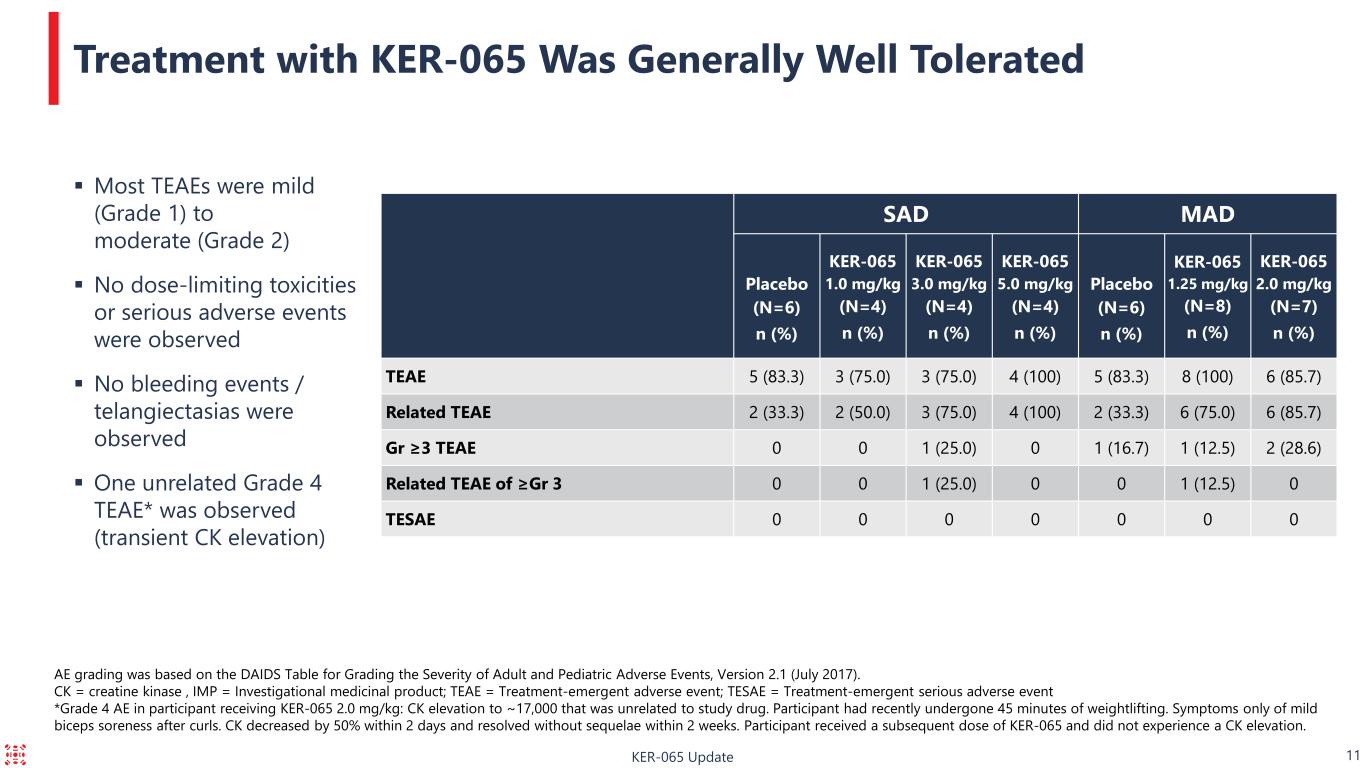
KER-065 Update 11 Treatment with KER-065 Was Generally Well Tolerated Most TEAEs were mild (Grade 1) to moderate (Grade 2) No dose-limiting toxicities or serious adverse events were observed No bleeding events / telangiectasias were observed One unrelated Grade 4 TEAE* was observed (transient CK elevation) AE grading was based on the DAIDS Table for Grading the Severity of Adult and Pediatric Adverse Events, Version 2.1 (July 2017). CK = creatine kinase , IMP = Investigational medicinal product; TEAE = Treatment-emergent adverse event; TESAE = Treatment-emergent serious adverse event *Grade 4 AE in participant receiving KER-065 2.0 mg/kg: CK elevation to ~17,000 that was unrelated to study drug. Participant had recently undergone 45 minutes of weightlifting. Symptoms only of mild biceps soreness after curls. CK decreased by 50% within 2 days and resolved without sequelae within 2 weeks. Participant received a subsequent dose of KER-065 and did not experience a CK elevation. SAD MAD Placebo (N=6) n (%) KER-065 1.0 mg/kg (N=4) n (%) KER-065 3.0 mg/kg (N=4) n (%) KER-065 5.0 mg/kg (N=4) n (%) Placebo (N=6) n (%) KER-065 1.25 mg/kg (N=8) n (%) KER-065 2.0 mg/kg (N=7) n (%) TEAE 5 (83.3) 3 (75.0) 3 (75.0) 4 (100) 5 (83.3) 8 (100) 6 (85.7) Related TEAE 2 (33.3) 2 (50.0) 3 (75.0) 4 (100) 2 (33.3) 6 (75.0) 6 (85.7) Gr ≥3 TEAE 0 0 1 (25.0) 0 1 (16.7) 1 (12.5) 2 (28.6) Related TEAE of ≥Gr 3 0 0 1 (25.0) 0 0 1 (12.5) 0 TESAE 0 0 0 0 0 0 0
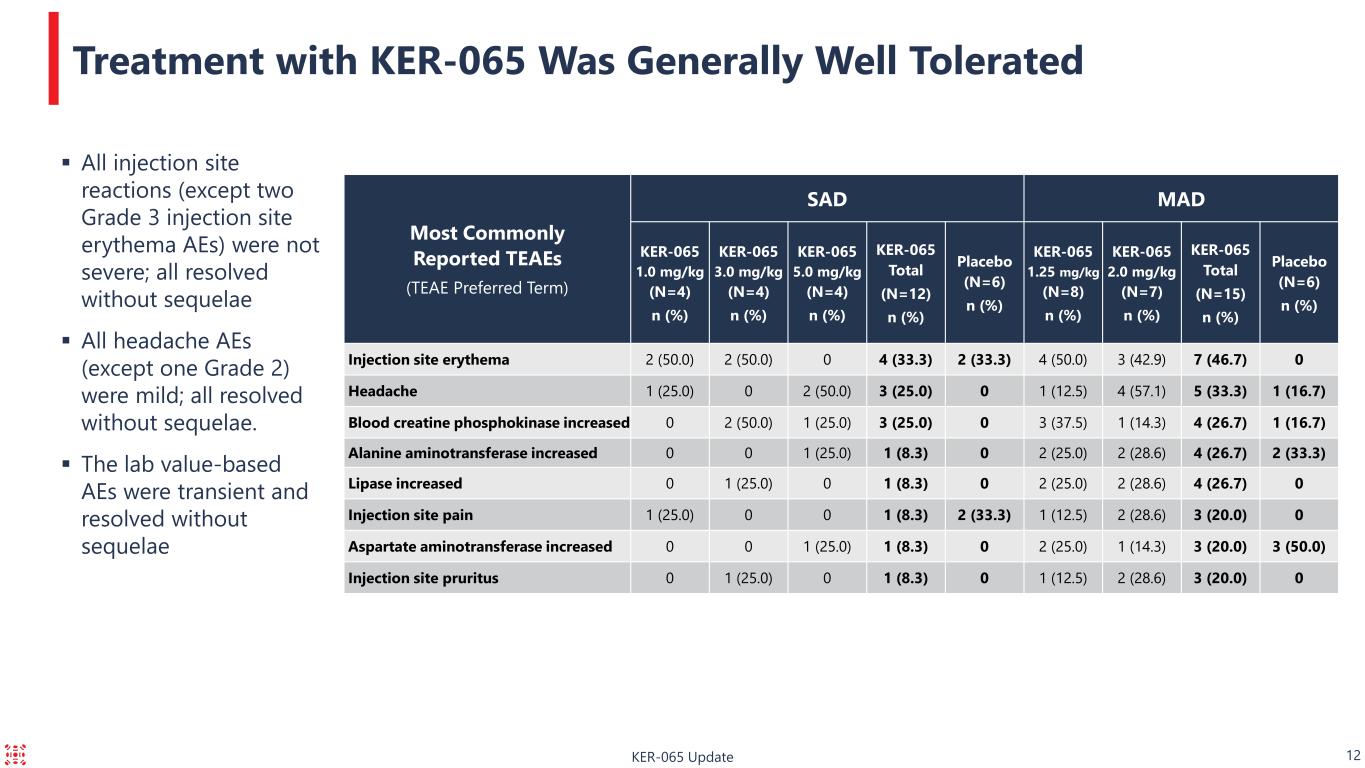
KER-065 Update 12 Treatment with KER-065 Was Generally Well Tolerated Most Commonly Reported TEAEs (TEAE Preferred Term) SAD MAD KER-065 1.0 mg/kg (N=4) n (%) KER-065 3.0 mg/kg (N=4) n (%) KER-065 5.0 mg/kg (N=4) n (%) KER-065 Total (N=12) n (%) Placebo (N=6) n (%) KER-065 1.25 mg/kg (N=8) n (%) KER-065 2.0 mg/kg (N=7) n (%) KER-065 Total (N=15) n (%) Placebo (N=6) n (%) Injection site erythema 2 (50.0) 2 (50.0) 0 4 (33.3) 2 (33.3) 4 (50.0) 3 (42.9) 7 (46.7) 0 Headache 1 (25.0) 0 2 (50.0) 3 (25.0) 0 1 (12.5) 4 (57.1) 5 (33.3) 1 (16.7) Blood creatine phosphokinase increased 0 2 (50.0) 1 (25.0) 3 (25.0) 0 3 (37.5) 1 (14.3) 4 (26.7) 1 (16.7) Alanine aminotransferase increased 0 0 1 (25.0) 1 (8.3) 0 2 (25.0) 2 (28.6) 4 (26.7) 2 (33.3) Lipase increased 0 1 (25.0) 0 1 (8.3) 0 2 (25.0) 2 (28.6) 4 (26.7) 0 Injection site pain 1 (25.0) 0 0 1 (8.3) 2 (33.3) 1 (12.5) 2 (28.6) 3 (20.0) 0 Aspartate aminotransferase increased 0 0 1 (25.0) 1 (8.3) 0 2 (25.0) 1 (14.3) 3 (20.0) 3 (50.0) Injection site pruritus 0 1 (25.0) 0 1 (8.3) 0 1 (12.5) 2 (28.6) 3 (20.0) 0 All injection site reactions (except two Grade 3 injection site erythema AEs) were not severe; all resolved without sequelae All headache AEs (except one Grade 2) were mild; all resolved without sequelae. The lab value-based AEs were transient and resolved without sequelae
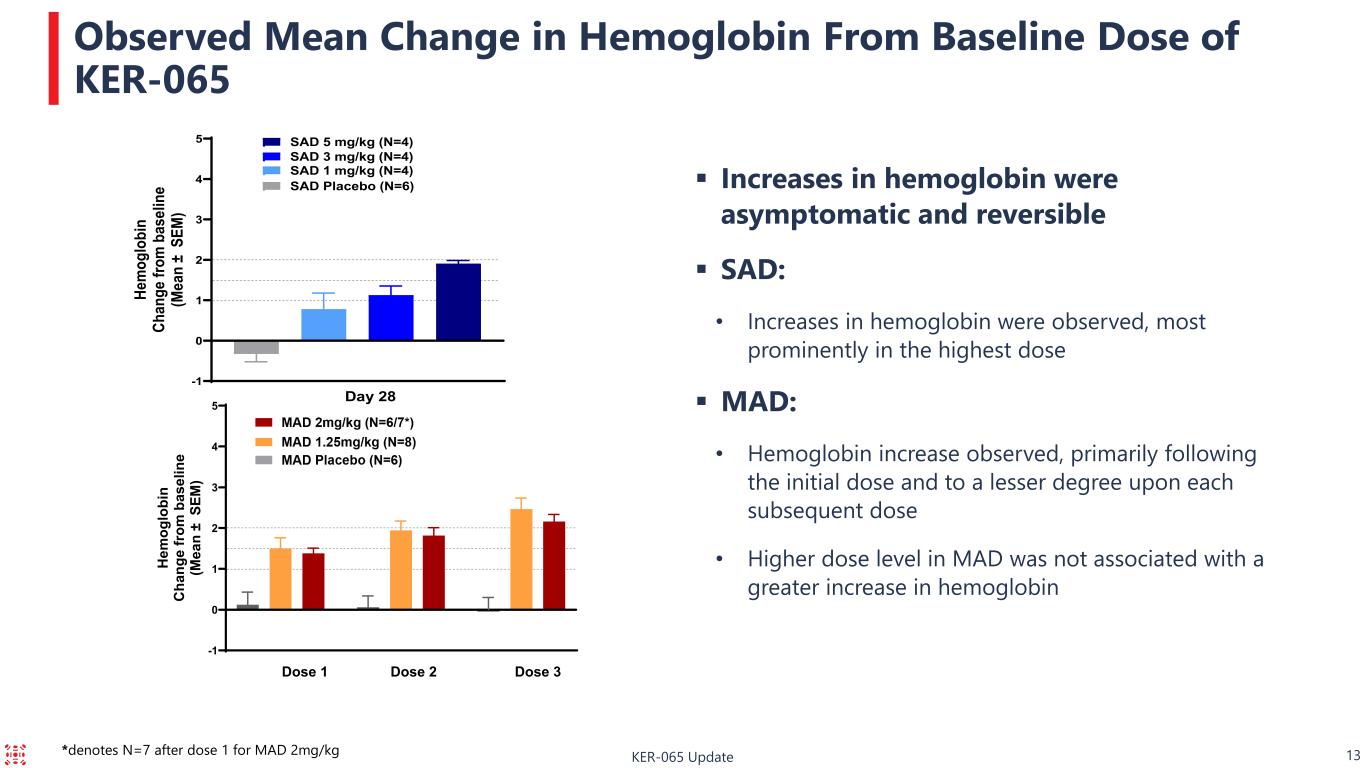
KER-065 Update 13 Observed Mean Change in Hemoglobin From Baseline Dose of KER-065 Increases in hemoglobin were asymptomatic and reversible SAD: • Increases in hemoglobin were observed, most prominently in the highest dose MAD: • Hemoglobin increase observed, primarily following the initial dose and to a lesser degree upon each subsequent dose • Higher dose level in MAD was not associated with a greater increase in hemoglobin -1 0 1 2 3 4 5 H em og lo bi n C ha ng e fr om b as el in e (M ea n ± S EM ) Dose 1 Dose 2 Dose 3 -1 0 1 2 3 4 5 He m og lo bi n Ch an ge fr om b as el in e (M ea n ± S EM ) SAD Placebo (N=6) SAD 1 mg/kg (N=4) SAD 3 mg/kg (N=4) Day 28 SAD 5 mg/kg (N=4) *denotes N=7 after dose 1 for MAD 2mg/kg
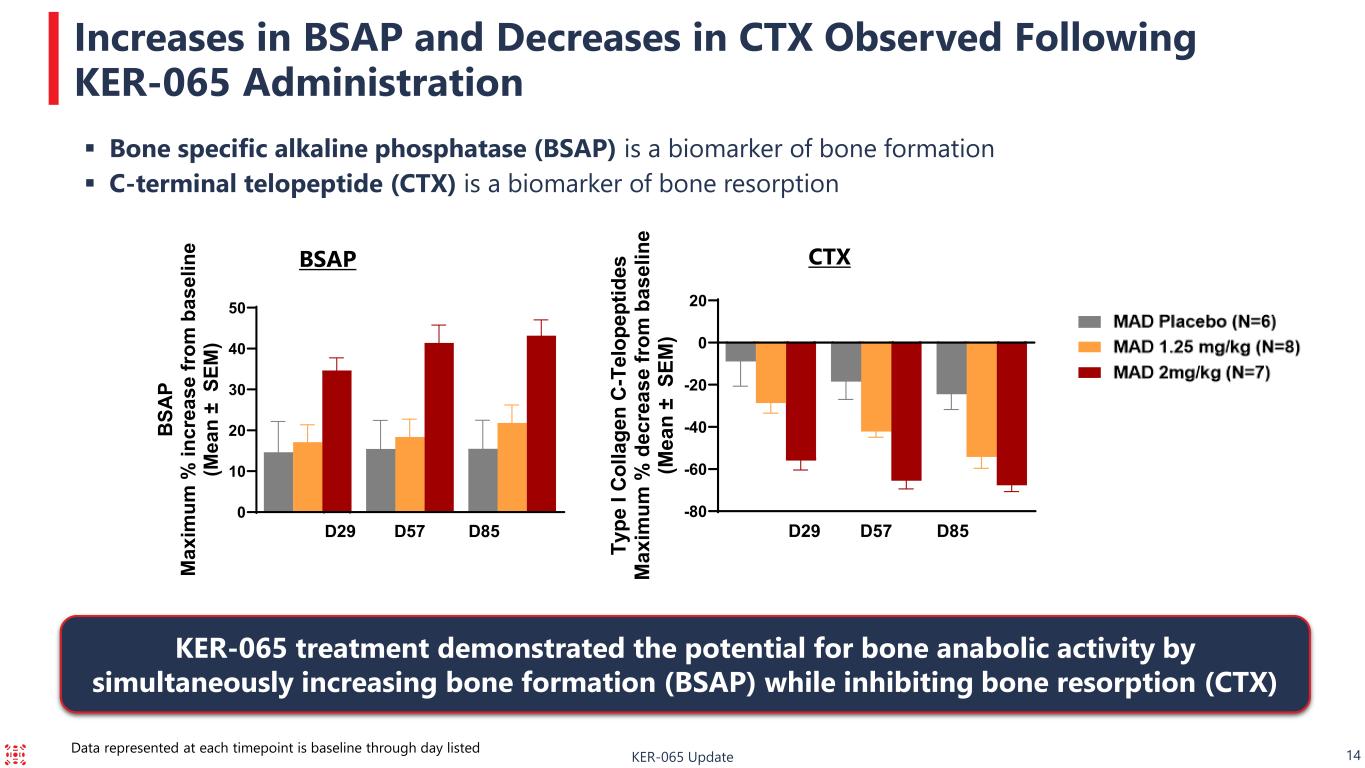
14 BSAP CTX Bone specific alkaline phosphatase (BSAP) is a biomarker of bone formation C-terminal telopeptide (CTX) is a biomarker of bone resorption Increases in BSAP and Decreases in CTX Observed Following KER-065 Administration KER-065 Update KER-065 treatment demonstrated the potential for bone anabolic activity by simultaneously increasing bone formation (BSAP) while inhibiting bone resorption (CTX) Data represented at each timepoint is baseline through day listed 0 10 20 30 40 50 D29 D57 D85 BS AP M ax im um % in cr ea se fr om b as el in e (M ea n ± S EM ) -80 -60 -40 -20 0 20 D29 D57 D85 Ty pe I Co lla ge n C- Te lo pe pt id es M ax im um % d ec re as e fr om b as el in e (M ea n ± S EM )
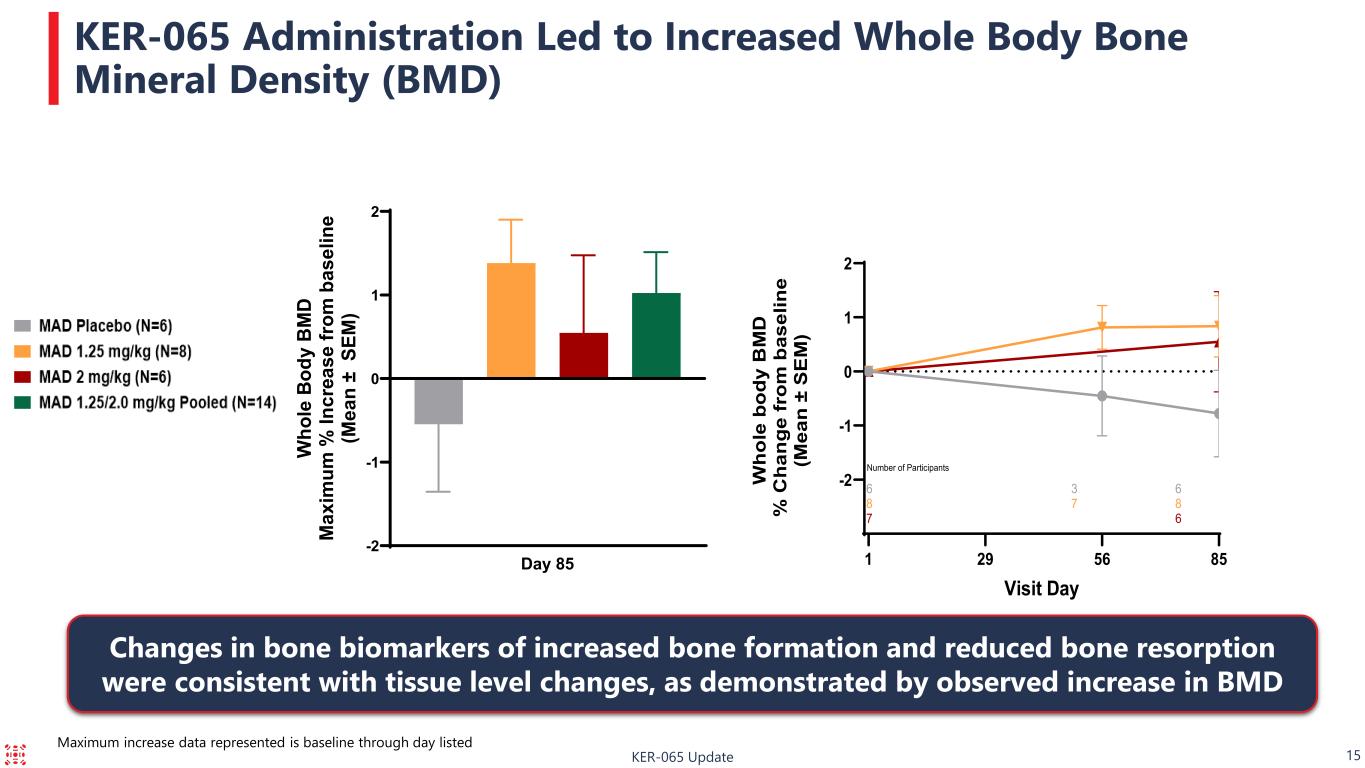
KER-065 Update 15 KER-065 Administration Led to Increased Whole Body Bone Mineral Density (BMD) Changes in bone biomarkers of increased bone formation and reduced bone resorption were consistent with tissue level changes, as demonstrated by observed increase in BMD Maximum increase data represented is baseline through day listed -2 -1 0 1 2 Day 85 W ho le B od y B M D M ax im um % In cr ea se fr om b as el in e (M ea n ± S EM ) -2 -1 0 1 2 Visit Day W ho le b od y B M D % C ha ng e fr om b as el in e (M ea n ± S E M ) 6 3 6 8 7 8 7 6 Number of Participants 1 56 8529
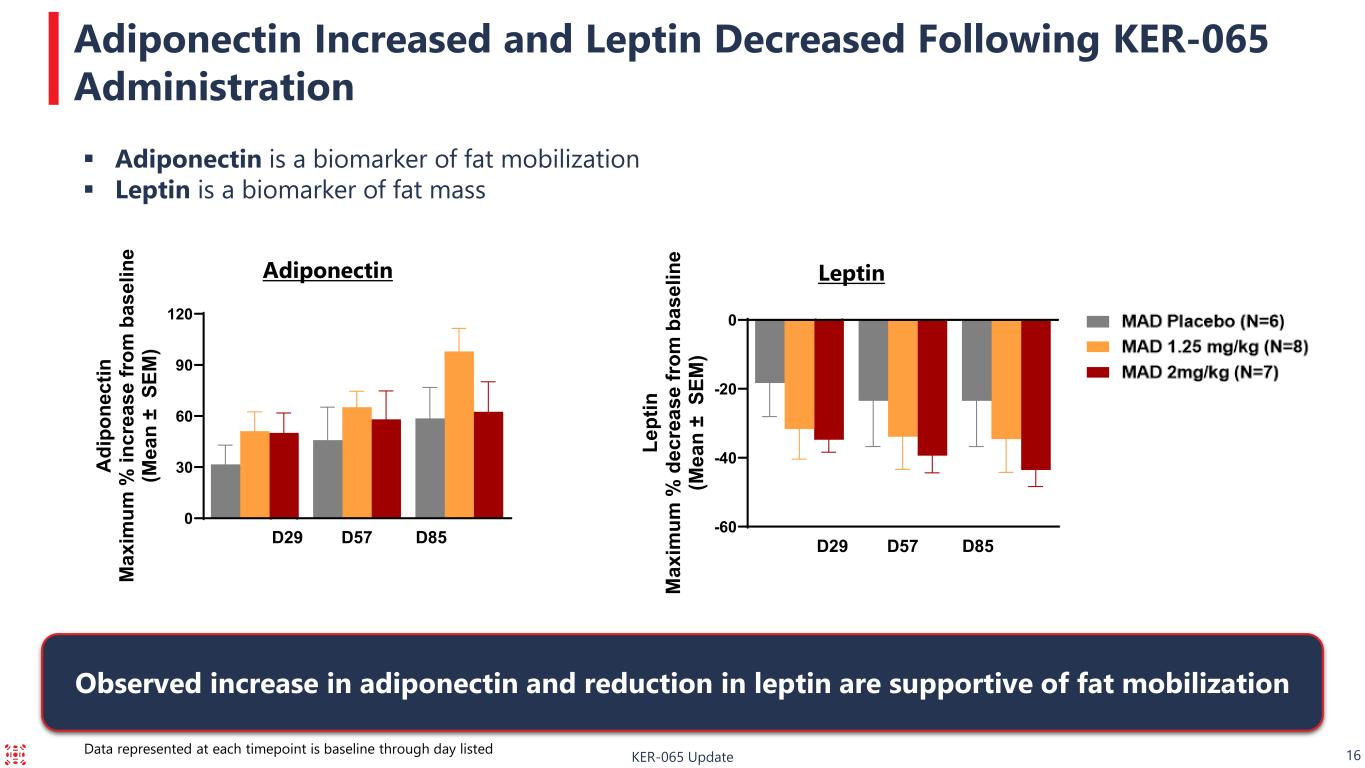
16 Adiponectin Leptin Adiponectin is a biomarker of fat mobilization Leptin is a biomarker of fat mass Adiponectin Increased and Leptin Decreased Following KER-065 Administration KER-065 Update Observed increase in adiponectin and reduction in leptin are supportive of fat mobilization Data represented at each timepoint is baseline through day listed 0 30 60 90 120 D29 D57 D85 A di po ne ct in M ax im um % in cr ea se fr om b as el in e (M ea n ± S EM ) -60 -40 -20 0 D29 D57 D85 Le pt in M ax im um % d ec re as e fr om b as el in e (M ea n ± S EM )
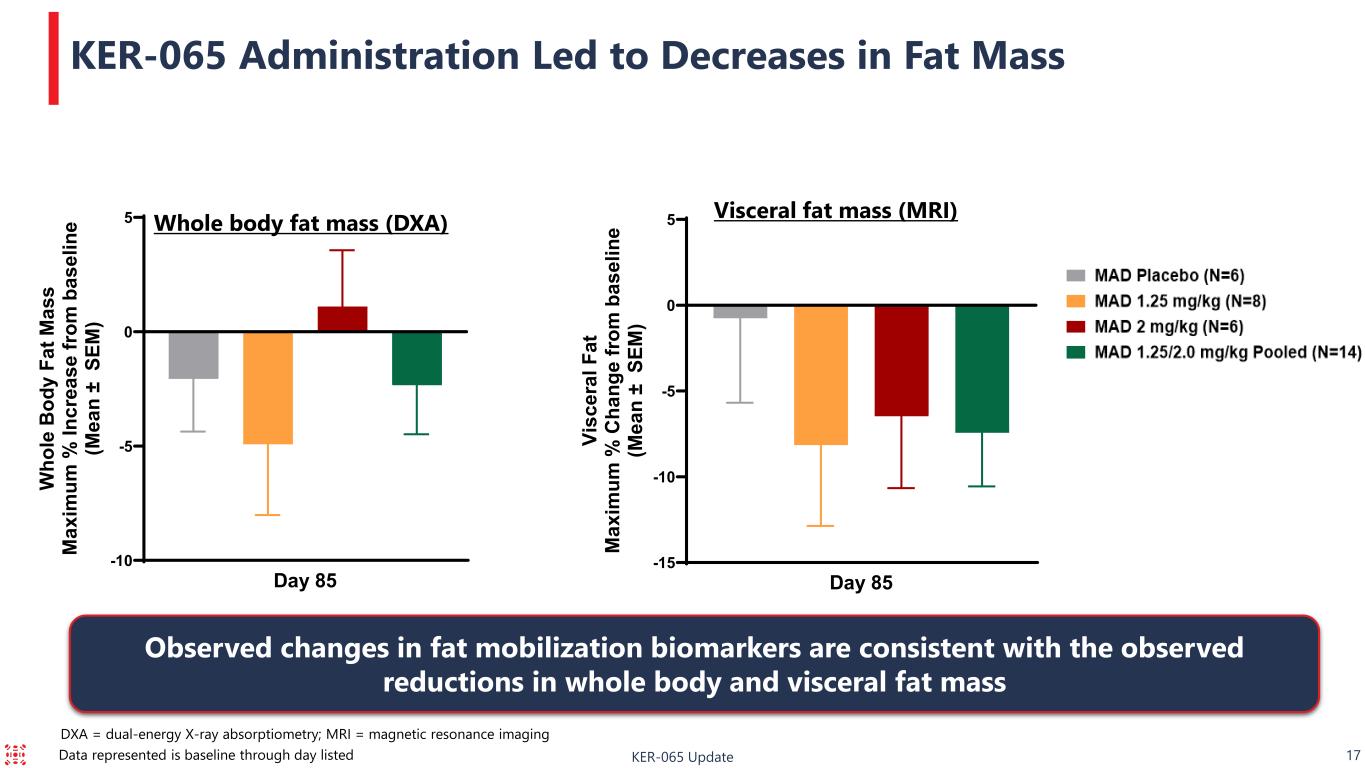
-15 -10 -5 0 5 Day 85 Vi sc er al F at M ax im um % C ha ng e fr om b as el in e (M ea n ± S EM ) -10 -5 0 5 Day 85 W ho le B od y Fa t M as s M ax im um % In cr ea se fr om b as el in e (M ea n ± S EM ) DXA = dual-energy X-ray absorptiometry; MRI = magnetic resonance imaging KER-065 Update 17 KER-065 Administration Led to Decreases in Fat Mass Whole body fat mass (DXA) Visceral fat mass (MRI) Observed changes in fat mobilization biomarkers are consistent with the observed reductions in whole body and visceral fat mass Data represented is baseline through day listed
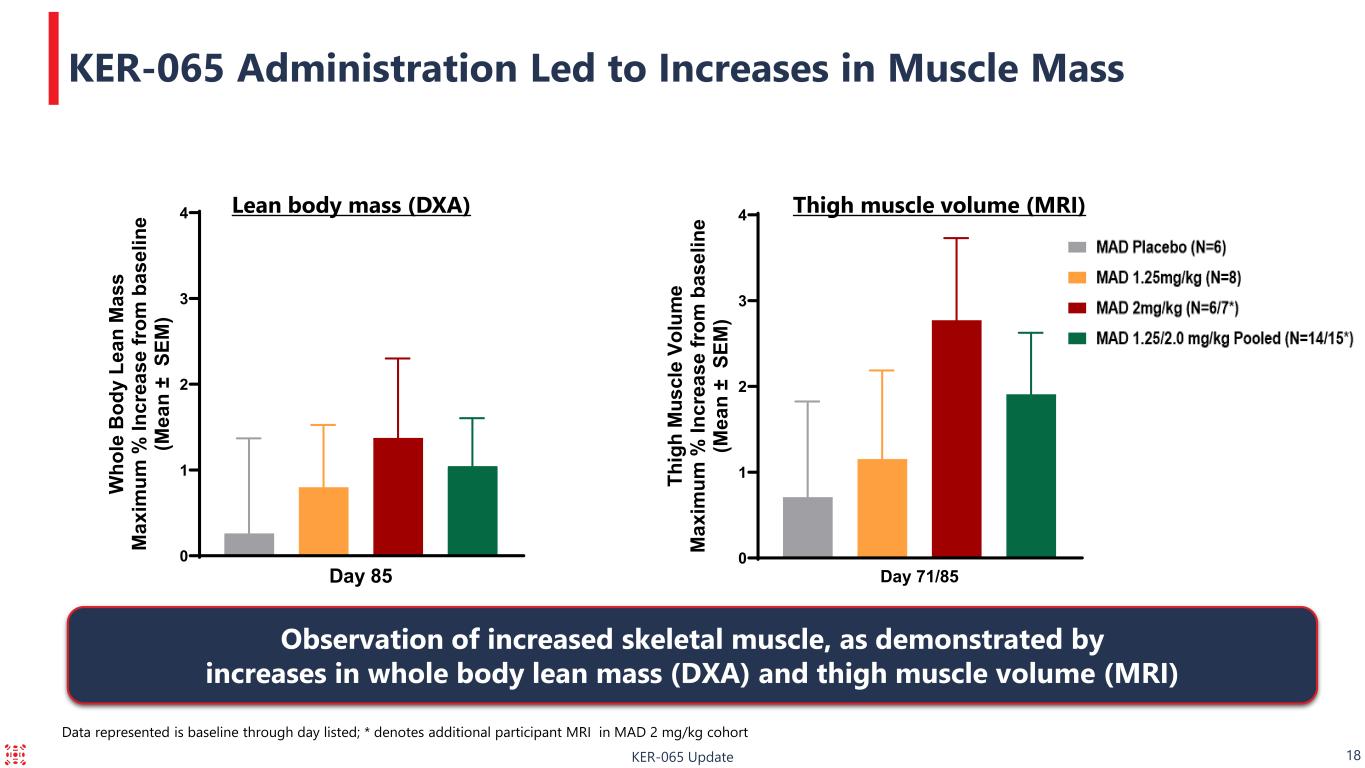
KER-065 Update 18 KER-065 Administration Led to Increases in Muscle Mass Lean body mass (DXA) Thigh muscle volume (MRI) Observation of increased skeletal muscle, as demonstrated by increases in whole body lean mass (DXA) and thigh muscle volume (MRI) Data represented is baseline through day listed; * denotes additional participant MRI in MAD 2 mg/kg cohort 0 1 2 3 4 Day 85 W ho le B od y Le an M as s M ax im um % In cr ea se fr om b as el in e (M ea n ± S EM ) 0 1 2 3 4 Day 71/85 Th ig h M us cl e Vo lu m e M ax im um % In cr ea se fr om b as el in e (M ea n ± S EM )
KER-065 Update 19 Encouraging Preclinical and Phase 1 Trial Data Support Rationale for Phase 2 Trial Trial met key objectives for safety, tolerability, pharmacokinetics and pharmacodynamics • Pharmacokinetic profile generally consistent with that of a well-behaved biologic • Dose exposure levels supportive of monthly dosing KER-065 was generally well-tolerated, with no major safety signals observed as of the data cut-off date Pharmacodynamic data offer multiple lines of evidence that we may be achieving sufficient activin inhibition across tissues of interest, at drug exposures that we anticipate targeting in DMD
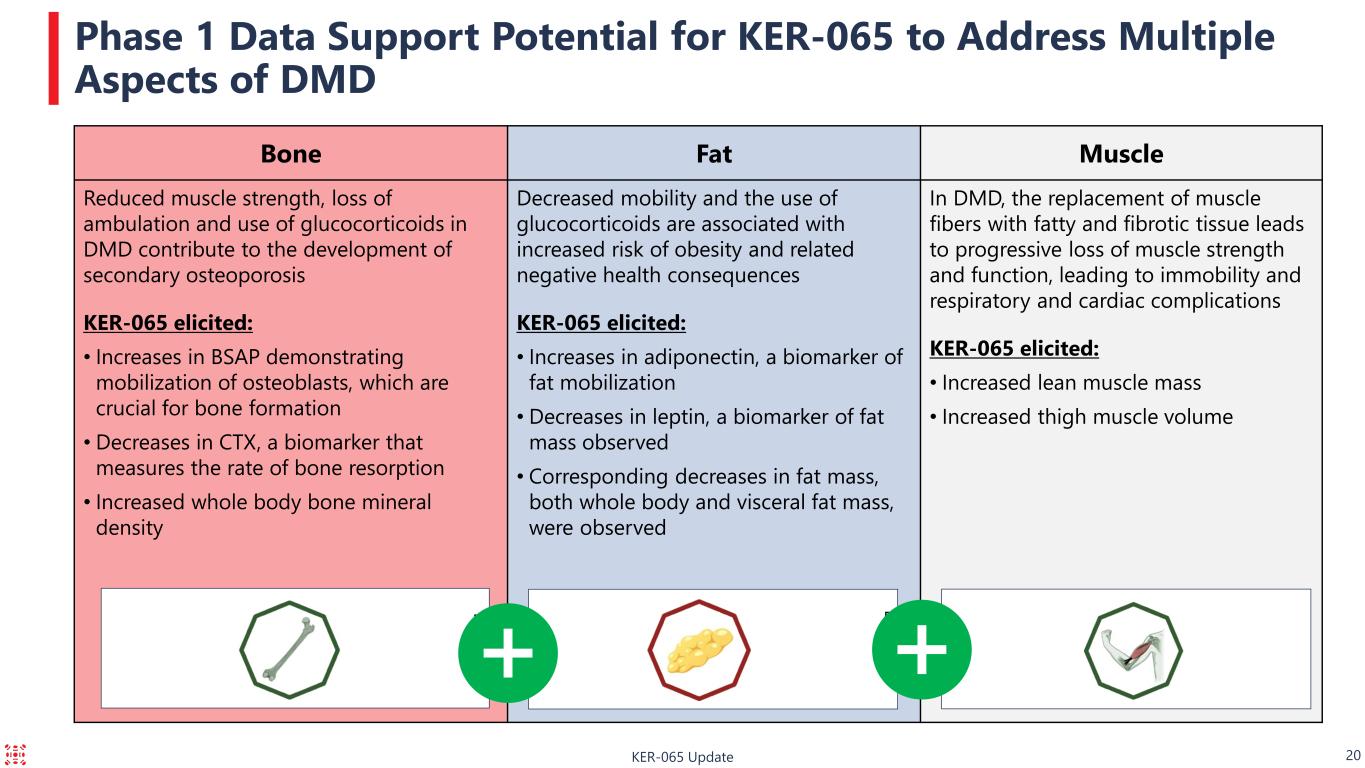
KER-065 Update 20 Phase 1 Data Support Potential for KER-065 to Address Multiple Aspects of DMD Bone Fat Muscle Reduced muscle strength, loss of ambulation and use of glucocorticoids in DMD contribute to the development of secondary osteoporosis KER-065 elicited: • Increases in BSAP demonstrating mobilization of osteoblasts, which are crucial for bone formation • Decreases in CTX, a biomarker that measures the rate of bone resorption • Increased whole body bone mineral density Decreased mobility and the use of glucocorticoids are associated with increased risk of obesity and related negative health consequences KER-065 elicited: • Increases in adiponectin, a biomarker of fat mobilization • Decreases in leptin, a biomarker of fat mass observed • Corresponding decreases in fat mass, both whole body and visceral fat mass, were observed In DMD, the replacement of muscle fibers with fatty and fibrotic tissue leads to progressive loss of muscle strength and function, leading to immobility and respiratory and cardiac complications KER-065 elicited: • Increased lean muscle mass • Increased thigh muscle volume
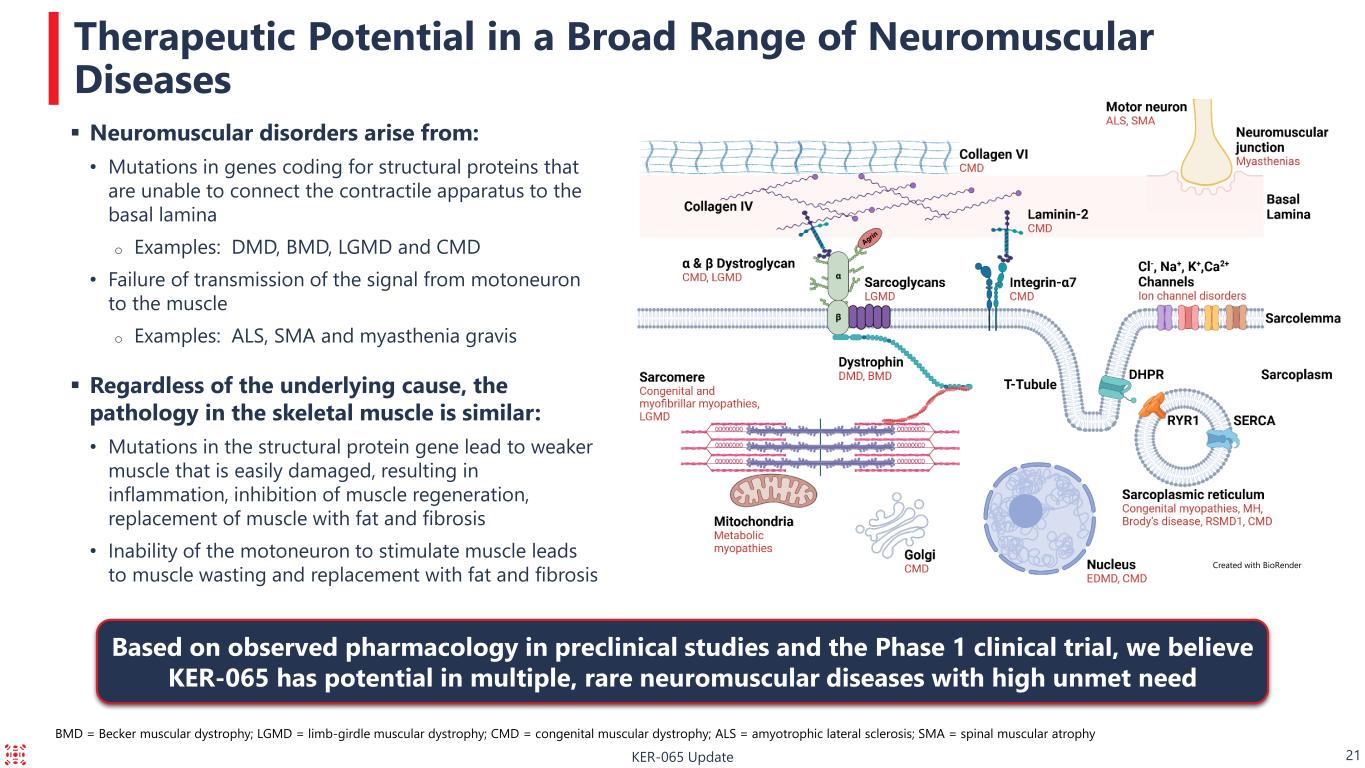
KER-065 Update 21 Therapeutic Potential in a Broad Range of Neuromuscular Diseases Created with BioRender Based on observed pharmacology in preclinical studies and the Phase 1 clinical trial, we believe KER-065 has potential in multiple, rare neuromuscular diseases with high unmet need BMD = Becker muscular dystrophy; LGMD = limb-girdle muscular dystrophy; CMD = congenital muscular dystrophy; ALS = amyotrophic lateral sclerosis; SMA = spinal muscular atrophy Neuromuscular disorders arise from: • Mutations in genes coding for structural proteins that are unable to connect the contractile apparatus to the basal lamina o Examples: DMD, BMD, LGMD and CMD • Failure of transmission of the signal from motoneuron to the muscle o Examples: ALS, SMA and myasthenia gravis Regardless of the underlying cause, the pathology in the skeletal muscle is similar: • Mutations in the structural protein gene lead to weaker muscle that is easily damaged, resulting in inflammation, inhibition of muscle regeneration, replacement of muscle with fat and fibrosis • Inability of the motoneuron to stimulate muscle leads to muscle wasting and replacement with fat and fibrosis
KER-065 Update 22 Next Steps for KER-065 We plan to engage regulators on the design of a Phase 2 clinical trial evaluating KER-065 in patients with DMD in the third quarter of 2025 Subject to regulatory feedback, we plan to initiate this Phase 2 clinical trial in the first quarter of 2026

Q&A

Appendix
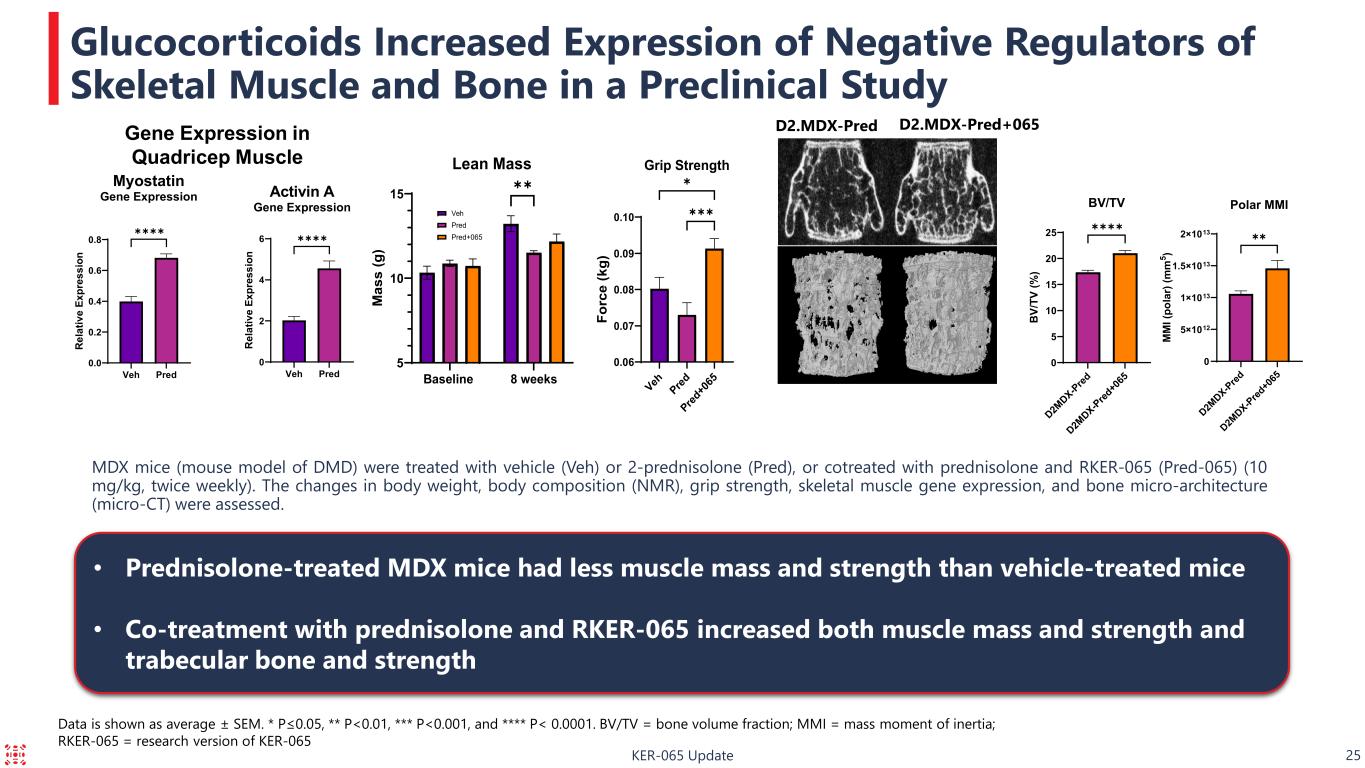
KER-065 Update 25 MDX mice (mouse model of DMD) were treated with vehicle (Veh) or 2-prednisolone (Pred), or cotreated with prednisolone and RKER-065 (Pred-065) (10 mg/kg, twice weekly). The changes in body weight, body composition (NMR), grip strength, skeletal muscle gene expression, and bone micro-architecture (micro-CT) were assessed. Glucocorticoids Increased Expression of Negative Regulators of Skeletal Muscle and Bone in a Preclinical Study Veh Pred 0.0 0.2 0.4 0.6 0.8 Myostatin Gene Expression R el at iv e Ex pr es si on ✱✱✱✱ Veh Pred 0 2 4 6 R el at iv e Ex pr es si on ✱✱✱✱ Activin A Gene Expression Gene Expression in Quadricep Muscle Veh Pred Pred +0 65 0.06 0.07 0.08 0.09 0.10 Grip Strength Fo rc e (k g) ✱ ✱✱✱ Baseline 8 weeks 5 10 15 Lean Mass M as s (g ) ✱✱ Veh Pred Pred+065 Data is shown as average ± SEM. * P≤0.05, ** P<0.01, *** P<0.001, and **** P< 0.0001. BV/TV = bone volume fraction; MMI = mass moment of inertia; RKER-065 = research version of KER-065 D2M DX-Pred D2M DX-Pred +0 65 0 5 10 15 20 25 BV/TV B V/ TV (% ) ✱✱✱✱ D2M DX-Pred D2M DX-Pred +0 65 0 5×10¹² 1×10¹³ 1.5×10¹³ 2×10¹³ Polar MMI M M I ( po la r) (m m 5 ) ✱✱ • Prednisolone-treated MDX mice had less muscle mass and strength than vehicle-treated mice • Co-treatment with prednisolone and RKER-065 increased both muscle mass and strength and trabecular bone and strength D2.MDX-Pred D2.MDX-Pred+065
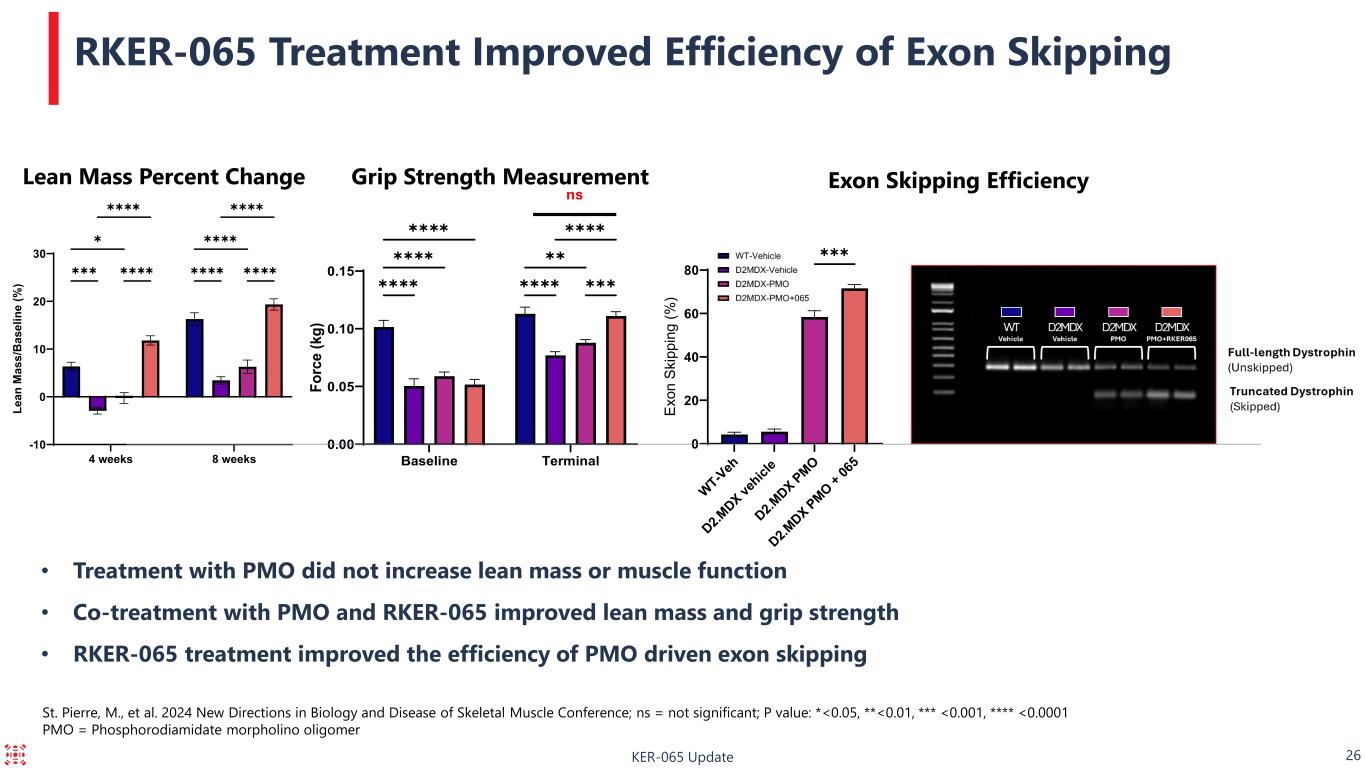
KER-065 Update 26 • Treatment with PMO did not increase lean mass or muscle function • Co-treatment with PMO and RKER-065 improved lean mass and grip strength • RKER-065 treatment improved the efficiency of PMO driven exon skipping RKER-065 Treatment Improved Efficiency of Exon Skipping Lean Mass Percent Change Exon Skipping Efficiency ns Grip Strength Measurement Baseline Terminal 0.00 0.05 0.10 0.15 Fo rc e (k g) WT-Vehicle D2MDX-Vehicle D2MDX-PMO D2MDX-PMO+065 ✱✱✱✱ ✱✱✱✱ ✱✱✱✱ ✱✱✱✱ ✱✱ ✱✱✱✱ ✱✱✱ 4 weeks 8 weeks -10 0 10 20 30 Le an M as s/ B as el in e (% ) ✱✱✱ ✱ ✱✱✱✱ ✱✱✱✱ ✱✱✱✱ ✱✱✱✱ ✱✱✱✱ ✱✱✱✱ WT-Veh D2.M DX ve hicl e D2.M DX PMO D2.M DX PMO + 06 5 0 20 40 60 80 Ex on S ki pp in g (% ) ✱✱✱ St. Pierre, M., et al. 2024 New Directions in Biology and Disease of Skeletal Muscle Conference; ns = not significant; P value: *<0.05, **<0.01, *** <0.001, **** <0.0001 PMO = Phosphorodiamidate morpholino oligomer
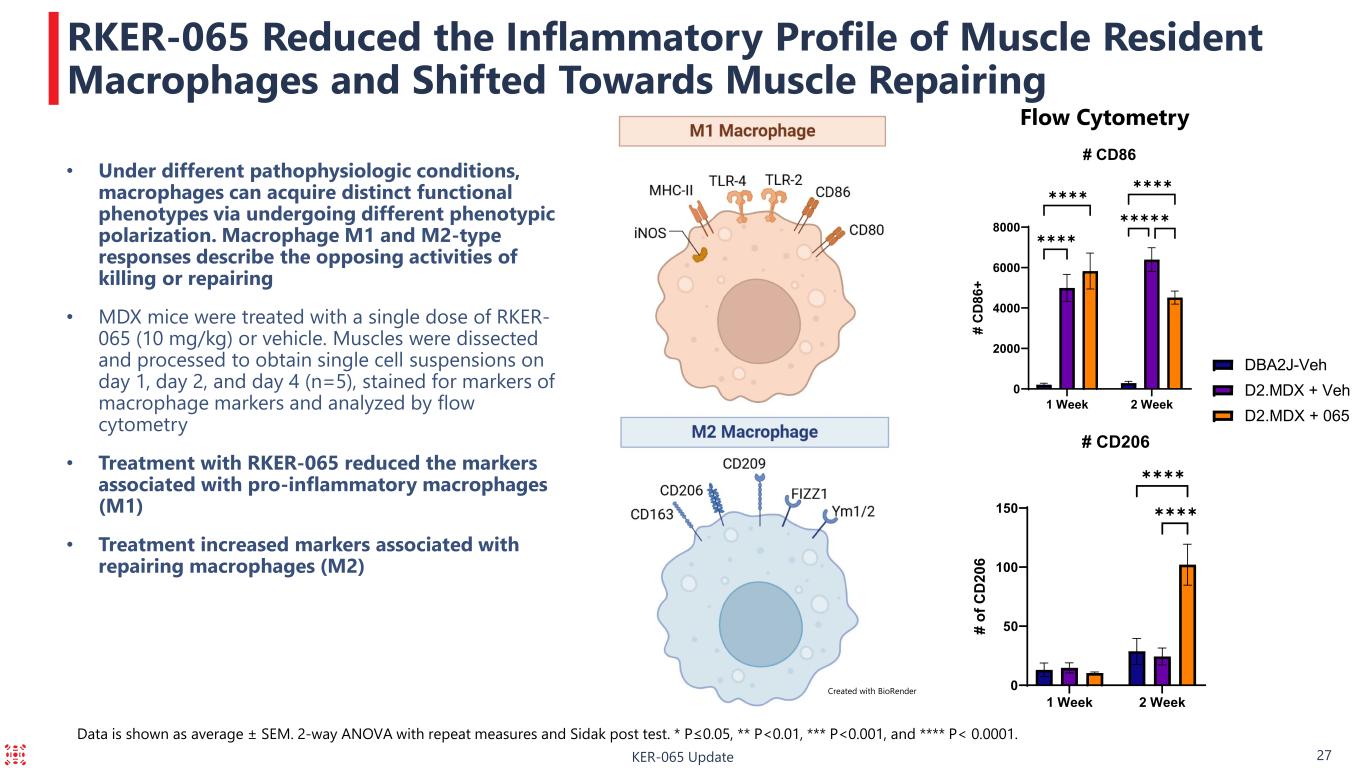
KER-065 Update 27 RKER-065 Reduced the Inflammatory Profile of Muscle Resident Macrophages and Shifted Towards Muscle Repairing Flow Cytometry DBA2J-Veh D2.MDX + Veh D2.MDX + 065 Data is shown as average ± SEM. 2-way ANOVA with repeat measures and Sidak post test. * P≤0.05, ** P<0.01, *** P<0.001, and **** P< 0.0001. • Under different pathophysiologic conditions, macrophages can acquire distinct functional phenotypes via undergoing different phenotypic polarization. Macrophage M1 and M2-type responses describe the opposing activities of killing or repairing • MDX mice were treated with a single dose of RKER- 065 (10 mg/kg) or vehicle. Muscles were dissected and processed to obtain single cell suspensions on day 1, day 2, and day 4 (n=5), stained for markers of macrophage markers and analyzed by flow cytometry • Treatment with RKER-065 reduced the markers associated with pro-inflammatory macrophages (M1) • Treatment increased markers associated with repairing macrophages (M2) 1 Week 2 Week 0 2000 4000 6000 8000 # CD86 # C D 86 + ✱✱✱✱ ✱✱✱✱ ✱✱✱✱ ✱✱✱✱ ✱ 1 Week 2 Week 0 50 100 150 # CD206 # of C D 20 6 ✱✱✱✱ ✱✱✱✱ Created with BioRender
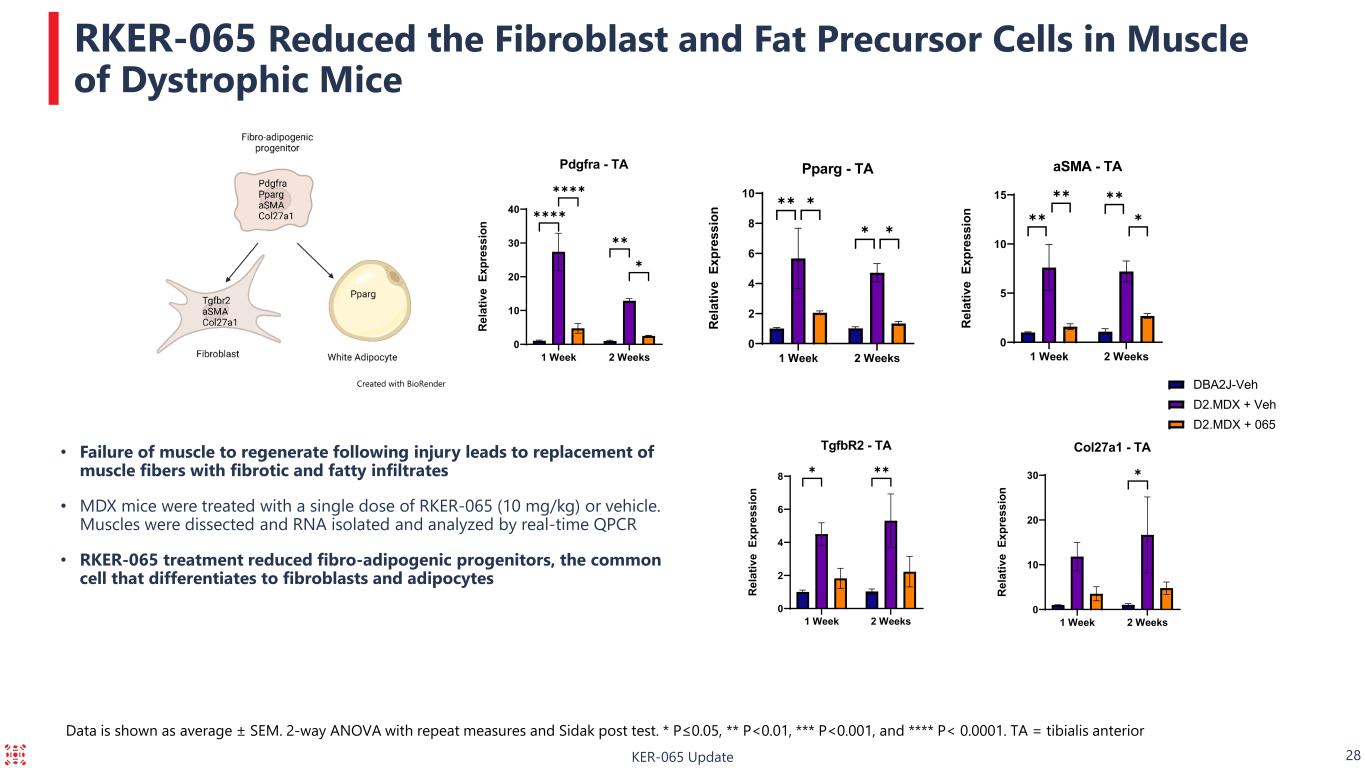
KER-065 Update 28 RKER-065 Reduced the Fibroblast and Fat Precursor Cells in Muscle of Dystrophic Mice DBA2J-Veh D2.MDX + Veh D2.MDX + 065 Data is shown as average ± SEM. 2-way ANOVA with repeat measures and Sidak post test. * P≤0.05, ** P<0.01, *** P<0.001, and **** P< 0.0001. TA = tibialis anterior 1 Week 2 Weeks 0 10 20 30 40 Pdgfra - TA R el at iv e E xp re ss io n ✱✱✱✱ ✱✱✱✱ ✱✱ ✱ 1 Week 2 Weeks 0 2 4 6 8 10 Pparg - TA R el at iv e E xp re ss io n ✱✱ ✱ ✱ ✱ 1 Week 2 Weeks 0 5 10 15 aSMA - TA R el at iv e E xp re ss io n ✱✱ ✱✱ ✱✱ ✱ 1 Week 2 Weeks 0 2 4 6 8 TgfbR2 - TA R el at iv e E xp re ss io n ✱ ✱✱ 1 Week 2 Weeks 0 10 20 30 Col27a1 - TA R el at iv e E xp re ss io n ✱ • Failure of muscle to regenerate following injury leads to replacement of muscle fibers with fibrotic and fatty infiltrates • MDX mice were treated with a single dose of RKER-065 (10 mg/kg) or vehicle. Muscles were dissected and RNA isolated and analyzed by real-time QPCR • RKER-065 treatment reduced fibro-adipogenic progenitors, the common cell that differentiates to fibroblasts and adipocytes Created with BioRender
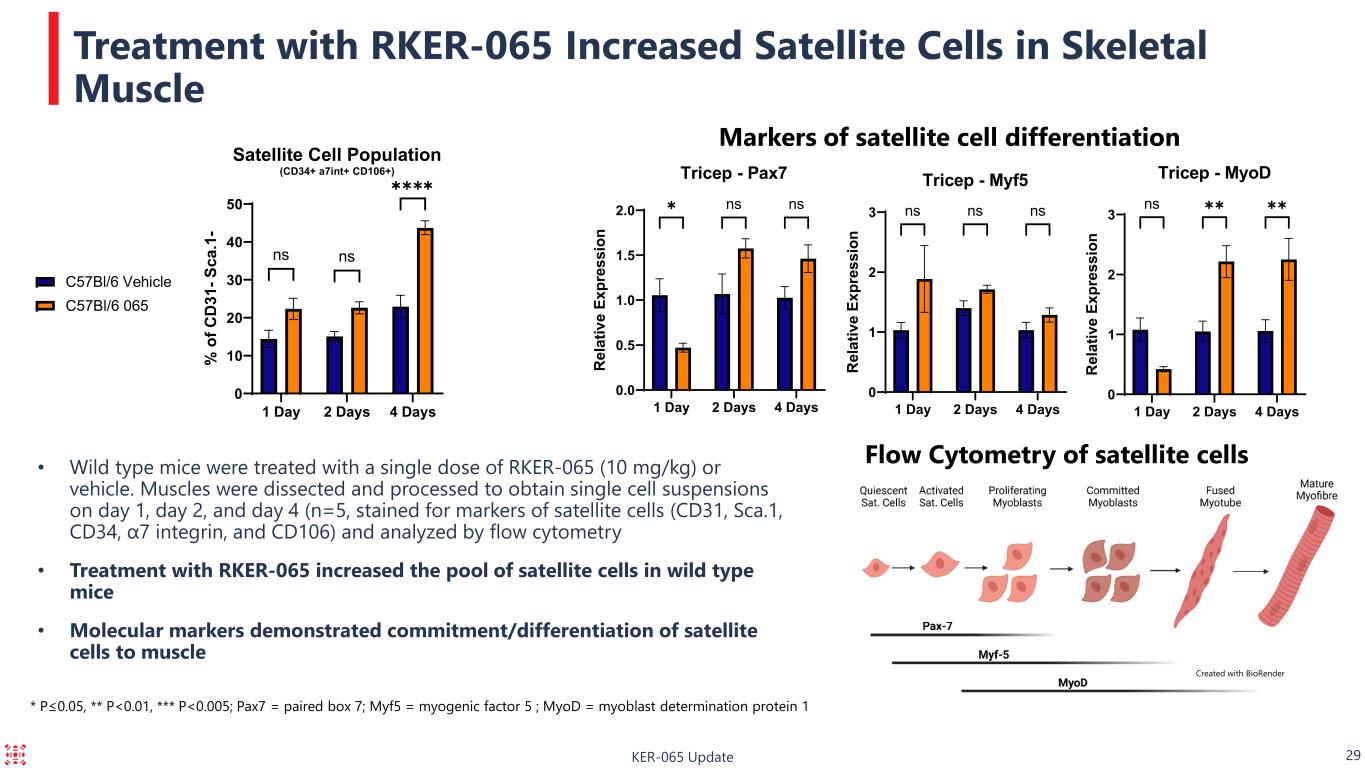
KER-065 Update 29 • Wild type mice were treated with a single dose of RKER-065 (10 mg/kg) or vehicle. Muscles were dissected and processed to obtain single cell suspensions on day 1, day 2, and day 4 (n=5, stained for markers of satellite cells (CD31, Sca.1, CD34, α7 integrin, and CD106) and analyzed by flow cytometry • Treatment with RKER-065 increased the pool of satellite cells in wild type mice • Molecular markers demonstrated commitment/differentiation of satellite cells to muscle Treatment with RKER-065 Increased Satellite Cells in Skeletal Muscle * P≤0.05, ** P<0.01, *** P<0.005; Pax7 = paired box 7; Myf5 = myogenic factor 5 ; MyoD = myoblast determination protein 1 Markers of satellite cell differentiation 1 Day 2 Days 4 Days 0.0 0.5 1.0 1.5 2.0 Tricep - Pax7 R el at iv e Ex pr es si on ✱ ns ns 1 Day 2 Days 4 Days 0 1 2 3 Tricep - Myf5 R el at iv e Ex pr es si on ns ns ns 1 Day 2 Days 4 Days 0 1 2 3 Tricep - MyoD R el at iv e Ex pr es si on ns ✱✱ ✱✱ C57Bl/6 Vehicle C57Bl/6 065 Flow Cytometry of satellite cells 1 Day 2 Days 4 Days 0 10 20 30 40 50 % o f C D 31 - S ca .1 - ns ns ✱✱✱✱ Satellite Cell Population (CD34+ a7int+ CD106+) Created with BioRender
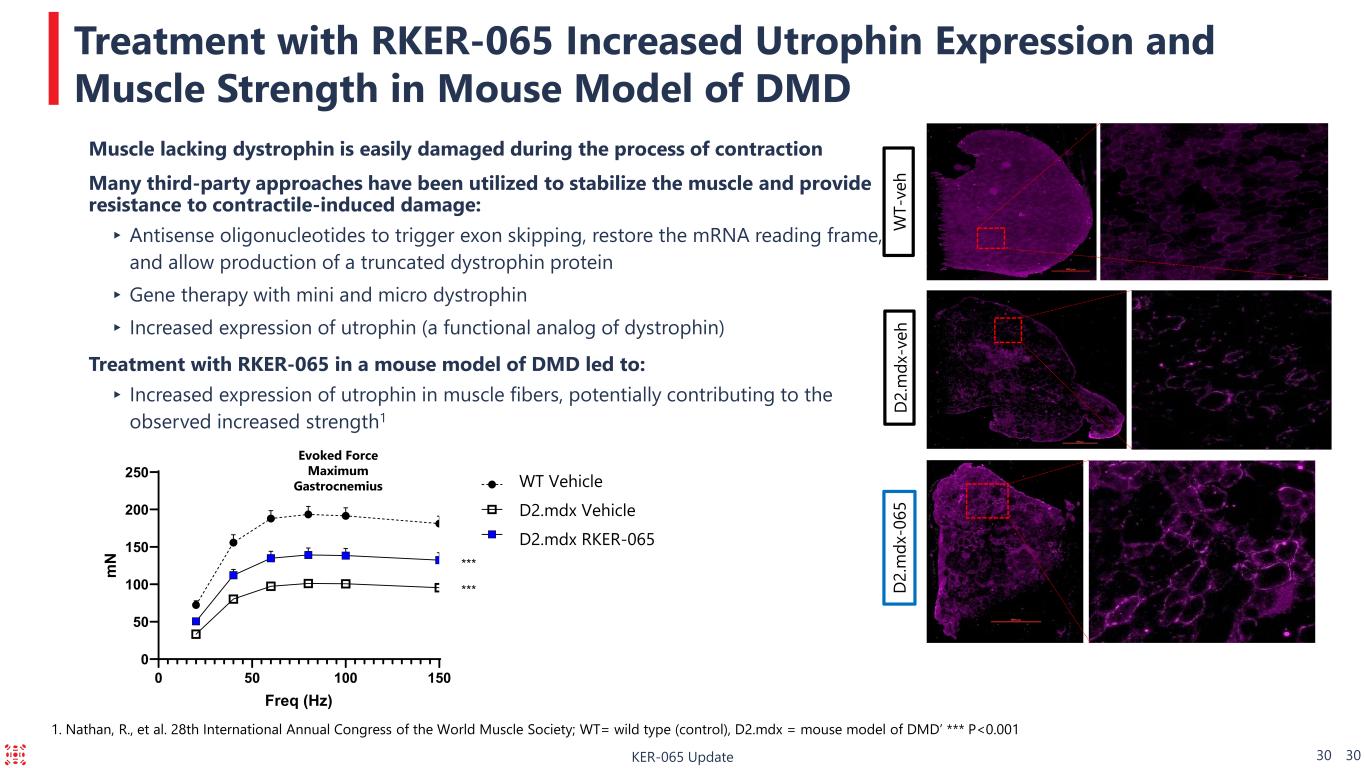
KER-065 Update 30 W T- ve h D 2. m dx -v eh D2 .m dx -0 65 1. Nathan, R., et al. 28th International Annual Congress of the World Muscle Society; WT= wild type (control), D2.mdx = mouse model of DMD’ *** P<0.001 30 0 50 100 150 0 50 100 150 200 250 Evoked Force Maximum Gastrocnemius Freq (Hz) m N DBA/2J Vehicle D2.mdx Vehicle D2.mdx RKER-065 *** *** Muscle lacking dystrophin is easily damaged during the process of contraction Many third-party approaches have been utilized to stabilize the muscle and provide resistance to contractile-induced damage: ▸Antisense oligonucleotides to trigger exon skipping, restore the mRNA reading frame, and allow production of a truncated dystrophin protein ▸Gene therapy with mini and micro dystrophin ▸ Increased expression of utrophin (a functional analog of dystrophin) Treatment with RKER-065 in a mouse model of DMD led to: ▸ Increased expression f utrophin in muscle fibers, potentially contributing to the observed increased strength1 Evoked Force Maximum Gastrocnemius WT Vehicle D2.mdx Vehicle D2.mdx RKER-065 Treatment with RKER-065 Increased Utrophin Expression and Muscle Strength in Mouse Model of DMD