
KROS 8-K
Keros Therapeutics, Inc. (KROS)
8-K
2025-05-29
For: 2025-05-28
View Original
Added on
April 06, 2026
UNITED STATES
SECURITIES AND EXCHANGE COMMISSION
Washington, D.C. 20549
FORM 8-K
CURRENT REPORT
Pursuant to Section 13 or 15(d)
of the Securities Exchange Act of 1934
Date of Report (Date of earliest event reported): May 28, 2025
(Exact name of registrant as specified in its charter)
(state or other jurisdiction of incorporation) | (Commission File Number) | (I.R.S. Employer Identification No.) | ||||||||||||
| (Address of principal executive offices) | (Zip Code) | |||||||||||||
Registrant’s telephone number, including area code: (617 ) 314-6297
Not applicable
(Former name or former address, if changed since last report.)
Check the appropriate box below if the Form 8-K filing is intended to simultaneously satisfy the filing obligation of the registrant under any of the following provisions:
| Written communications pursuant to Rule 425 under the Securities Act (17 CFR 230.425) | |||||
| Soliciting material pursuant to Rule 14a-12 under the Exchange Act (17 CFR 240.14a-12) | |||||
| Pre-commencement communications pursuant to Rule 14d-2(b) under the Exchange Act (17 CFR 240.14d-2(b)) | |||||
| Pre-commencement communications pursuant to Rule 13e-4(c) under the Exchange Act (17 CFR 240.13e-4(c)) | |||||
Securities registered pursuant to Section 12(b) of the Act:
| Title of each class | Trading Symbol | Name of each exchange on which registered | ||||||||||||
Indicate by check mark whether the registrant is an emerging growth company as defined in Rule 405 of the Securities Act of 1933 (§230.405 of this chapter) or Rule 12b-2 of the Securities Exchange Act of 1934 (§240.12b-2 of this chapter).
Emerging growth company ☐
If an emerging growth company, indicate by check mark if the registrant has elected not to use the extended transition period for complying with any new or revised financial accounting standards provided pursuant to Section 13(a) of the Exchange Act. ☐
Item 2.05 Costs Associated with Exit or Disposal Activities.
On May 28, 2025, the Board of Directors of Keros Therapeutics, Inc. (the “Company”) formally approved a plan to reduce the Company’s overall workforce by approximately 45% (the “Reorganization”). These plans were communicated to affected employees on May 29, 2025.
The Company expects to incur one-time cash charges associated with the Reorganization of approximately $3.2 million related to employee severance payments and related costs, which are expected to be expensed in the second quarter of 2025. In addition, the Company has committed to pay one-time employee retention costs to certain employees of up to approximately $0.4 million, which are expected to be incurred through the fourth quarter of 2025. The Company expects the Reorganization will be substantially complete by the fourth quarter of 2025.
The estimates of the charges and expenditures that the Company expects to incur in connection with the Reorganization, and the timing thereof, are subject to several assumptions and the actual amounts incurred may differ materially from these estimates. In addition, the Company may incur other charges or cash expenditures not currently contemplated due to unanticipated events that may occur, including in connection with the implementation of the Reorganization.
Item 8.01 Other Events.
On May 29, 2025, the Company issued a press release announcing topline data from its TROPOS trial and corporate update. A copy of the press release is attached as Exhibit 99.1 to this Current Report on Form 8-K and, other than the quotes contained therein, is incorporated herein by reference.
A copy of the TROPOS topline results presentation is posted on the Company’s website and is filed as Exhibit 99.2 to this Current Report on Form 8-K and is incorporated by reference herein.
Cautionary Note Regarding Forward-Looking Statements
This Current Report on Form 8-K contains “forward-looking statements” within the meaning of the Private Securities Litigation Reform Act of 1995, including, among other things, statements regarding the expecting timing for incurring costs associated with the Reorganization, the expected timing of implementing and completing the Reorganization and the Company’s plans to retain certain individuals to assist in this process. Any forward-looking statements in this Current Report on Form 8-K are based on management’s current expectations of future events and are subject to a number of risks and uncertainties that could cause actual results to differ materially and adversely from those set forth in or implied by such forward-looking statements, including, but not limited to, the risk that the Company may not be able to implement the Reorganization as currently anticipated or within the timing currently anticipated, the impact of the Reorganization on the Company’s business, the risk that the Company’s cost saving initiatives may not be successful, and unanticipated charges not currently contemplated that may occur as a result of the Reorganization. These and other risks are described more fully in the Company’s filings with the Securities and Exchange Commission (the “SEC”), including the “Risk Factors” section of the Company’s Quarterly Report on Form 10-Q, filed with the SEC on May 6, 2025, and its other documents subsequently filed with or furnished to the SEC. All forward-looking statements contained in this Current Report on Form 8-K speak only as of the date on which they were made. Except to the extent required by law, the Company undertakes no obligation to update such statements to reflect events that occur or circumstances that exist after the date on which they were made.
Item 9.01 Financial Statements and Exhibits.
(d) Exhibits
| Exhibit | ||||||||
| No. | Description | |||||||
| 104 | Cover Page Interactive Data File (the cover page XBRL tags are embedded within the Inline XBRL document) | |||||||
SIGNATURES
Pursuant to the requirements of the Securities Exchange Act of 1934, the registrant has duly caused this report to be signed on its behalf by the undersigned hereunto duly authorized.
| KEROS THERAPEUTICS, INC. | ||||||||
| By: | /s/ Jasbir Seehra | |||||||
Jasbir Seehra, Ph.D. Chief Executive Officer | ||||||||
Dated: May 29, 2025
Exhibit 99.1
Keros Therapeutics Announces TROPOS Topline Data and Corporate Restructuring
Discontinues Development of Cibotercept in PAH
Announces Corporate Restructuring to Align Operations with Ongoing Strategic Priorities
Lexington, Mass., May 29, 2025 – Keros Therapeutics, Inc. (“Keros”, the “Company” or “we”) (Nasdaq: KROS), a clinical-stage biopharmaceutical company focused on developing and commercializing novel therapeutics to treat a wide range of patients with disorders that are linked to dysfunctional signaling of the transforming growth factor-beta (“TGF-ß”) family of proteins, today announced topline data from the TROPOS trial, a Phase 2 clinical trial of cibotercept (KER-012) in combination with background therapy in patients with pulmonary arterial hypertension (“PAH”), and provided a corporate update.
TROPOS Trial Results
TROPOS is a randomized, double-blind, placebo-controlled, global Phase 2 clinical trial to evaluate cibotercept in combination with background therapy in patients with PAH. On December 12, 2024, the Company announced that it had voluntarily halted the 3.0 mg/kg and 4.5 mg/kg treatment arms based on the observation of pericardial effusions at those dose levels. Furthermore, on January 15, 2025, the Company announced that it had voluntarily halted all dosing in the trial, including the 1.5 mg/kg and placebo treatment arms, based on the ongoing safety review due to new observations of pericardial effusion adverse events. Following the early termination of the trial, patients continued to be monitored through their end-of-trial visits.
Following the analysis of all available safety and efficacy data from the TROPOS trial, the Company has decided to discontinue all development of cibotercept in PAH.
“Additional treatment options for individuals with PAH are critically needed,” said Jasbir S. Seehra, Ph.D, Chair and Chief Executive Officer. “We are immensely grateful to the patients, investigators and Keros colleagues for their dedication to seeking new treatment options for this devastating disease.”
The Company shared top-line results in a presentation that will be accessible in the Investors section of the Keros website at https://ir.kerostx.com. The Company plans to submit more detailed findings from the TROPOS trial at a future medical meeting.
The Company plans to further evaluate the appropriate development strategy for cibotercept, if any, in other indications following the completion of the strategic alternative review process.
Corporate Restructuring
In connection with the decision to discontinue all development of cibotercept in PAH and an assessment of its ongoing development programs, the Keros Board of Directors (the “Board”) and management team have decided to reduce the Company’s headcount by approximately 45%, after which the Company will have 85 full-time employees. The reduction in headcount will commence after the 60-day notice period required by the Worker Adjustment and Retraining Notification Act has elapsed, and as a result of these actions, Keros expects to realize average annualized cost savings of approximately $17 million.
Dr. Seehra added, “Consistent with our commitment to being data driven and taking action to best position Keros to drive sustainable stockholder value, we have identified opportunities to restructure our operations and reduce costs as we focus on our key ongoing development programs. As a result, we have made the difficult decision to reduce our workforce to better align with our strategic priorities. We appreciate the hard work and dedication of our impacted team members and we are committed to supporting them through this transition. Looking ahead, Keros maintains a robust balance sheet and we are making meaningful progress on our other development programs. Our focus remains on the execution of our strategy as we concurrently work to complete the ongoing review of strategic alternatives to maximize value for all stockholders.”
As previously announced on April 10, 2025, with the assistance of outside financial and legal advisors, the Strategic Committee of the Board, which consists of independent and disinterested directors, is continuing to evaluate a comprehensive range of strategic alternatives, including but not limited to a sale of the Company or other business combination transaction, continued investment in the Company’s pipeline, and/or return of excess capital to stockholders. Keros intends to provide a preliminary update regarding the status of the process no later than June 9, 2025.
About TROPOS (NCT05975905)
TROPOS is a randomized, double-blind, placebo-controlled, global Phase 2 clinical trial to evaluate cibotercept in combination with background therapy in patients with PAH. The primary objective of this trial is to evaluate the effect of cibotercept on pulmonary hemodynamics compared to placebo in participants on background PAH therapy. The key secondary objective of this trial is to evaluate the effect of cibotercept on exercise capacity compared to placebo on participants on background PAH therapy.
About Keros Therapeutics, Inc.
Keros is a clinical-stage biopharmaceutical company focused on developing and commercializing novel therapeutics to treat a wide range of patients with disorders that are linked to dysfunctional signaling of the TGF-ß family of proteins. Keros is a leader in understanding the role of the TGF-ß family of proteins, which are master regulators of the growth, repair and maintenance of a number of tissues, including blood, bone, skeletal muscle, adipose and heart tissue. By leveraging this understanding, Keros has discovered and is developing protein therapeutics that have the potential to provide meaningful and potentially disease-modifying benefit to patients. Keros’ lead product candidate, KER-065, is being developed for the treatment of neuromuscular diseases, with an initial focus on Duchenne muscular dystrophy. Keros’ most advanced product candidate, elritercept (KER-050), is being developed for the treatment of cytopenias, including anemia and thrombocytopenia, in patients with myelodysplastic syndrome and in patients with myelofibrosis.
Cautionary Note Regarding Forward-Looking Statements
Statements contained in this press release regarding matters that are not historical facts are “forward-looking statements” within the meaning of the Private Securities Litigation Reform Act of 1995, as amended. Words such as “anticipates,” “believes,” “continue,” “expects,” “enable,” “potential” and “will” or similar expressions are intended to identify forward-looking statements. Examples of these forward-looking statements include statements concerning the intended benefits and outcome of the strategic review process (including timing of announcing an update), expected development and regulatory pathway and therapeutic benefits of cibotercept and the Company’s other product candidates, any anticipated benefits of the reduction in force (including anticipated cost savings), and the Company’s cash runway. Because such statements are subject to risks and uncertainties, actual results may differ materially from those expressed or implied by such forward-looking statements. These risks and uncertainties include, among others: whether the objectives of the strategic alternative review process will be achieved; the terms, structure, benefits and costs of any strategic transaction; the timing of any transaction and whether any transaction will be consummated at all; the risk that the strategic alternatives review, workforce reduction and the announcements thereof could have an adverse effect on the ability of the Company to retain and hire key personnel and maintain relationships with partners, suppliers, employees, stockholders and other business relationships and on its operating results and business generally; the risk the strategic alternatives review could divert the attention and time of the Company’s management; the risk of any unexpected costs or expenses resulting from the review; the risk of any litigation relating to the review; Keros’ limited operating history and historical losses; Keros’ ability to raise additional funding to complete the development and any commercialization of its product candidates; Keros’ dependence on the success of its product candidates, KER-065 and elritercept; that Keros may be delayed in initiating, enrolling or completing any clinical trials; competition from third parties that are developing products for similar uses; the risk that circumstances surrounding or leading up to our 2025 Annual Meeting may change; Keros’ ability to obtain, maintain and protect its intellectual property; Keros’ dependence on third parties in connection with manufacturing, clinical trials and preclinical studies; the impact of the workforce reduction, including any unexpected costs, expenses, or litigation.
These and other risks are described more fully in Keros’ filings with the Securities and Exchange Commission (the “SEC”), including the “Risk Factors” section of the Company’s Quarterly Report on Form 10-Q, filed with the SEC on May 6, 2025, and its other documents subsequently filed with or furnished to the SEC. All forward-looking statements contained in this press release speak only as of the date on which they were made. Except to the extent required by law, Keros undertakes no obligation to update such statements to reflect events that occur or circumstances that exist after the date on which they were made.
Contacts
Investor Contact:
Justin Frantz
617-221-6042
Media Contact:
Mahmoud Siddig / Adam Pollack / Viveca Tress
Joele Frank, Wilkinson Brimmer Katcher
(212) 355-4449

Results from the Cibotercept TROPOS PAH Phase 2 Trial May 29, 2025
TROPOS Update Statements contained in this presentation regarding matters that are not historical facts are “forward-looking statements” within the meaning of the Private Securities Litigation Reform Act of 1995, as amended. Words such as "anticipates," "believes," "expects," "intends," “plans,” “potential,” "projects,” “would” and "future" or similar expressions are intended to identify forward-looking statements. Examples of these forward-looking statements include statements concerning: Keros’ expectations regarding its strategy, progress, design and objectives for cibotercept (KER-012). Because such statements are subject to risks and uncertainties, actual results may differ materially from those expressed or implied by such forward- looking statements. These risks and uncertainties include, among others: Keros’ limited operating history and historical losses; Keros’ ability to raise additional funding to complete the development and any commercialization of its product candidates; Keros’ dependence on the success of its product candidates, KER-065, cibotercept and elritercept; that Keros may be delayed in initiating, enrolling or completing any clinical trials; competition from third parties that are developing products for similar uses; Keros’ ability to obtain, maintain and protect its intellectual property; and Keros’ dependence on third parties in connection with manufacturing, clinical trials and preclinical studies. These and other risks are described more fully in Keros’ filings with the Securities and Exchange Commission (“SEC”), including the “Risk Factors” section of the Company’s Quarterly Report on Form 10-Q, filed with the SEC on May 6, 2025, and its other documents subsequently filed with or furnished to the SEC. All forward-looking statements contained in this presentation speak only as of the date on which they were made. Except to the extent required by law, Keros undertakes no obligation to update such statements to reflect events that occur or circumstances that exist after the date on which they were made. Certain information contained in this presentation relates to or is based on studies, publications, surveys and other data obtained from third-party sources and the Company’s own internal estimates and research. While we believe these third-party sources to be reliable as of the date of this presentation, it has not independently verified, and makes no representation as to the adequacy, fairness, accuracy or completeness of, any information obtained from third-party sources. Finally, while we believe our own internal research is reliable, such research has not been verified by any independent source. The trademarks included in this presentation are the property of the owners thereof and are used for reference purposes only. Disclaimer 2
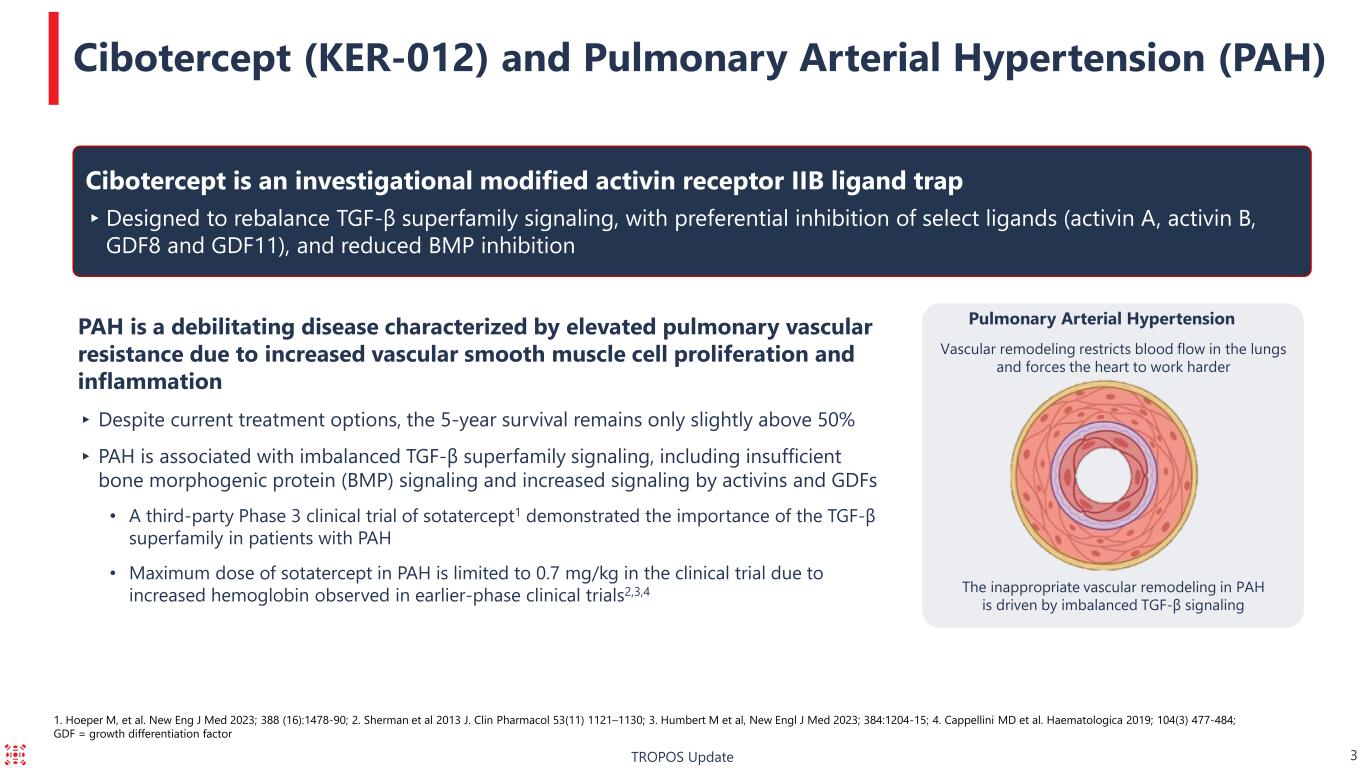
TROPOS Update Cibotercept (KER-012) and Pulmonary Arterial Hypertension (PAH) Cibotercept is an investigational modified activin receptor IIB ligand trap ▸Designed to rebalance TGF-β superfamily signaling, with preferential inhibition of select ligands (activin A, activin B, GDF8 and GDF11), and reduced BMP inhibition Vascular remodeling restricts blood flow in the lungs and forces the heart to work harder Pulmonary Arterial Hypertension The inappropriate vascular remodeling in PAH is driven by imbalanced TGF-β signaling PAH is a debilitating disease characterized by elevated pulmonary vascular resistance due to increased vascular smooth muscle cell proliferation and inflammation ▸Despite current treatment options, the 5-year survival remains only slightly above 50% ▸ PAH is associated with imbalanced TGF-β superfamily signaling, including insufficient bone morphogenic protein (BMP) signaling and increased signaling by activins and GDFs • A third-party Phase 3 clinical trial of sotatercept1 demonstrated the importance of the TGF-β superfamily in patients with PAH • Maximum dose of sotatercept in PAH is limited to 0.7 mg/kg in the clinical trial due to increased hemoglobin observed in earlier-phase clinical trials2,3,4 1. Hoeper M, et al. New Eng J Med 2023; 388 (16):1478-90; 2. Sherman et al 2013 J. Clin Pharmacol 53(11) 1121–1130; 3. Humbert M et al, New Engl J Med 2023; 384:1204-15; 4. Cappellini MD et al. Haematologica 2019; 104(3) 477-484; GDF = growth differentiation factor 3
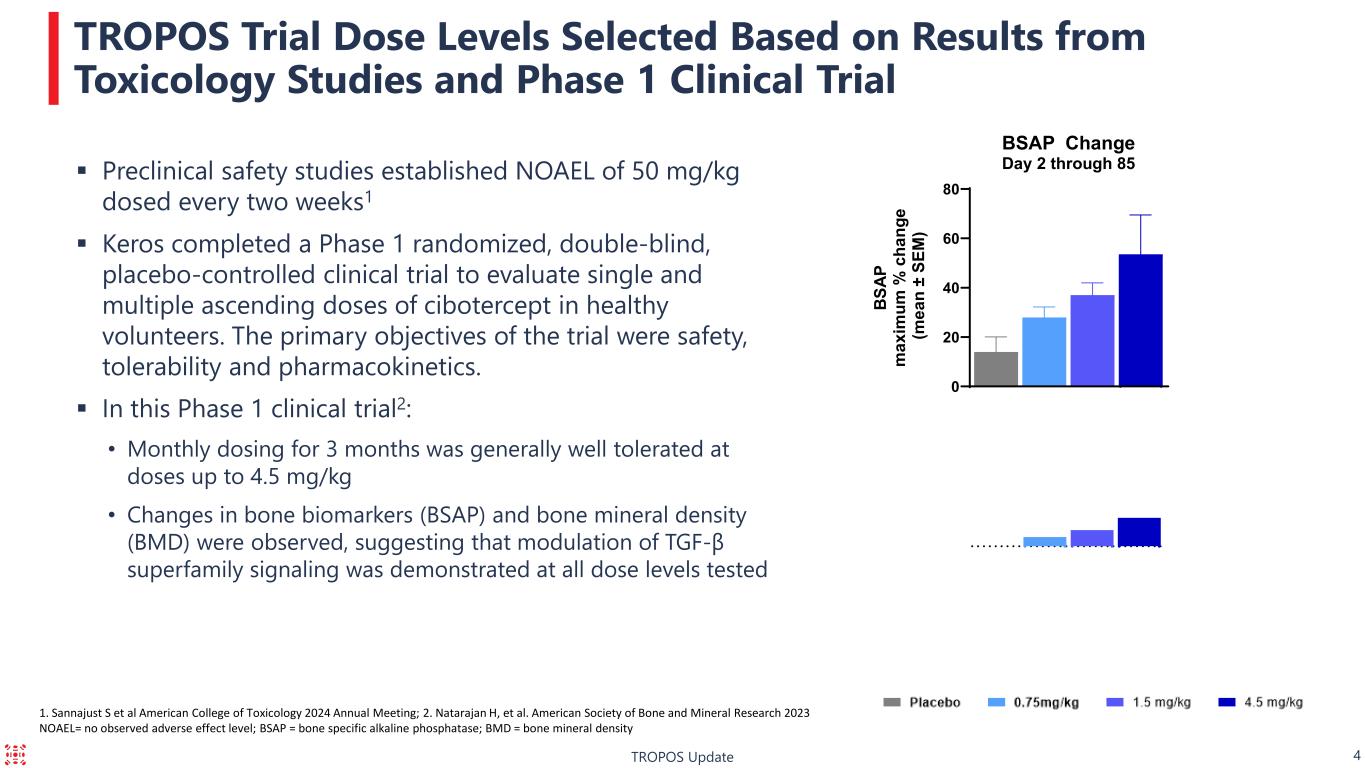
TROPOS Update 4 TROPOS Trial Dose Levels Selected Based on Results from Toxicology Studies and Phase 1 Clinical Trial Preclinical safety studies established NOAEL of 50 mg/kg dosed every two weeks1 Keros completed a Phase 1 randomized, double-blind, placebo-controlled clinical trial to evaluate single and multiple ascending doses of cibotercept in healthy volunteers. The primary objectives of the trial were safety, tolerability and pharmacokinetics. In this Phase 1 clinical trial2: • Monthly dosing for 3 months was generally well tolerated at doses up to 4.5 mg/kg • Changes in bone biomarkers (BSAP) and bone mineral density (BMD) were observed, suggesting that modulation of TGF-β superfamily signaling was demonstrated at all dose levels tested 1. Sannajust S et al American College of Toxicology 2024 Annual Meeting; 2. Natarajan H, et al. American Society of Bone and Mineral Research 2023 NOAEL= no observed adverse effect level; BSAP = bone specific alkaline phosphatase; BMD = bone mineral density 0 20 40 60 80 BSAP Change Day 2 through 85 BS AP m ax im um % c ha ng e (m ea n ± SE M )
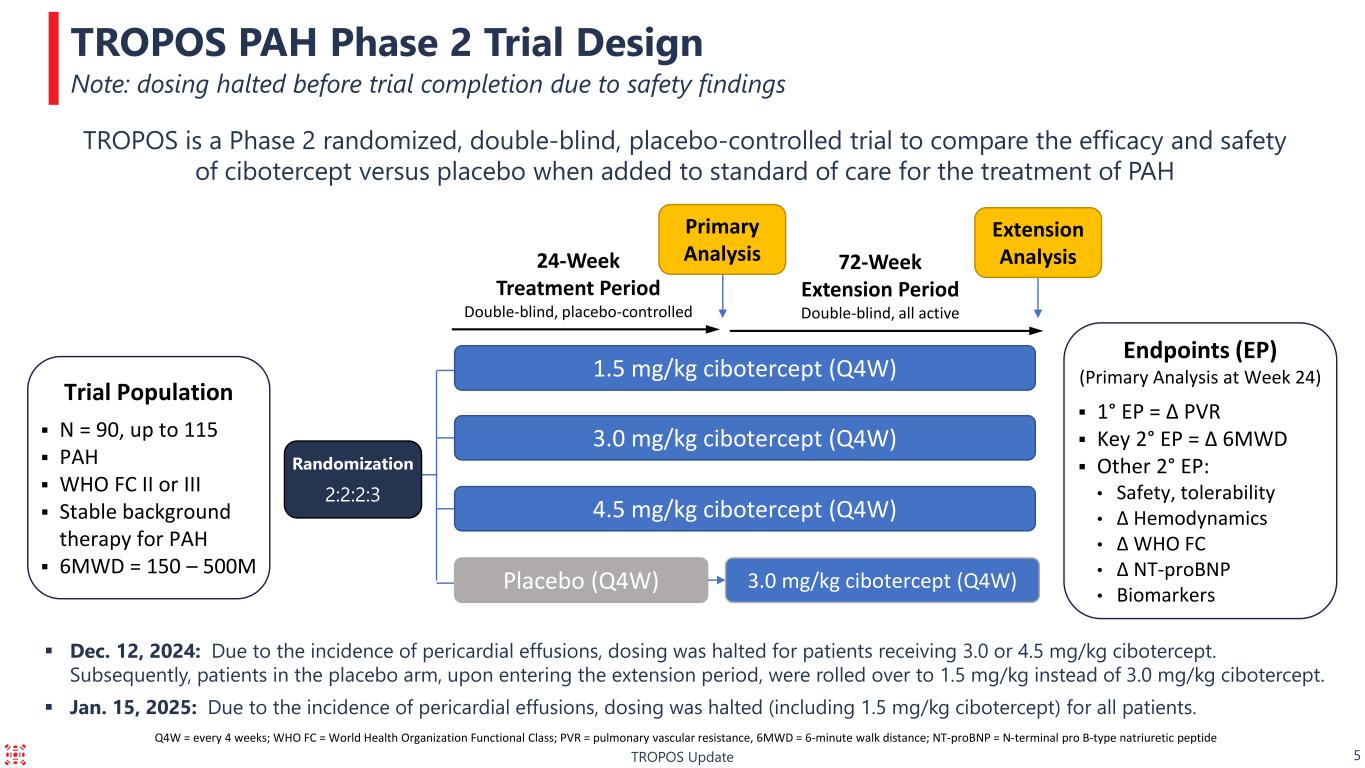
TROPOS Update 5 TROPOS PAH Phase 2 Trial Design Note: dosing halted before trial completion due to safety findings 1.5 mg/kg cibotercept (Q4W) 3.0 mg/kg cibotercept (Q4W) 4.5 mg/kg cibotercept (Q4W) Placebo (Q4W) 3.0 mg/kg cibotercept (Q4W) 24-Week Treatment Period Double-blind, placebo-controlled 72-Week Extension Period Double-blind, all active Q4W = every 4 weeks; WHO FC = World Health Organization Functional Class; PVR = pulmonary vascular resistance, 6MWD = 6-minute walk distance; NT-proBNP = N-terminal pro B-type natriuretic peptide Randomization 2:2:2:3 Trial Population N = 90, up to 115 PAH WHO FC II or III Stable background therapy for PAH 6MWD = 150 – 500M Endpoints (EP) (Primary Analysis at Week 24) 1° EP = ∆ PVR Key 2° EP = ∆ 6MWD Other 2° EP: • Safety, tolerability • ∆ Hemodynamics • ∆ WHO FC • ∆ NT-proBNP • Biomarkers Dec. 12, 2024: Due to the incidence of pericardial effusions, dosing was halted for patients receiving 3.0 or 4.5 mg/kg cibotercept. Subsequently, patients in the placebo arm, upon entering the extension period, were rolled over to 1.5 mg/kg instead of 3.0 mg/kg cibotercept. Jan. 15, 2025: Due to the incidence of pericardial effusions, dosing was halted (including 1.5 mg/kg cibotercept) for all patients. TROPOS is a Phase 2 randomized, double-blind, placebo-controlled trial to compare the efficacy and safety of cibotercept versus placebo when added to standard of care for the treatment of PAH Primary Analysis Extension Analysis
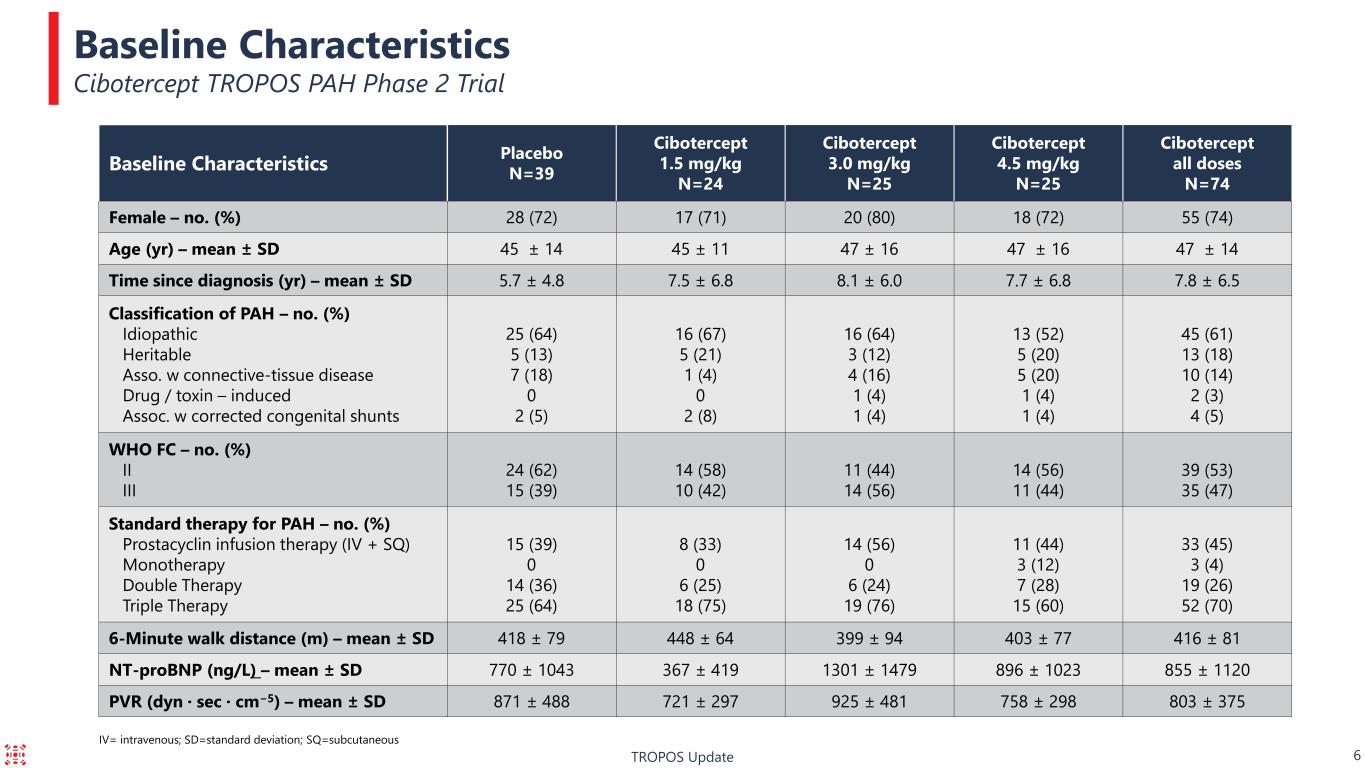
TROPOS Update 6 Baseline Characteristics Cibotercept TROPOS PAH Phase 2 Trial Baseline Characteristics Placebo N=39 Cibotercept 1.5 mg/kg N=24 Cibotercept 3.0 mg/kg N=25 Cibotercept 4.5 mg/kg N=25 Cibotercept all doses N=74 Female – no. (%) 28 (72) 17 (71) 20 (80) 18 (72) 55 (74) Age (yr) – mean ± SD 45 ± 14 45 ± 11 47 ± 16 47 ± 16 47 ± 14 Time since diagnosis (yr) – mean ± SD 5.7 ± 4.8 7.5 ± 6.8 8.1 ± 6.0 7.7 ± 6.8 7.8 ± 6.5 Classification of PAH – no. (%) Idiopathic Heritable Asso. w connective-tissue disease Drug / toxin – induced Assoc. w corrected congenital shunts 25 (64) 5 (13) 7 (18) 0 2 (5) 16 (67) 5 (21) 1 (4) 0 2 (8) 16 (64) 3 (12) 4 (16) 1 (4) 1 (4) 13 (52) 5 (20) 5 (20) 1 (4) 1 (4) 45 (61) 13 (18) 10 (14) 2 (3) 4 (5) WHO FC – no. (%) II III 24 (62) 15 (39) 14 (58) 10 (42) 11 (44) 14 (56) 14 (56) 11 (44) 39 (53) 35 (47) Standard therapy for PAH – no. (%) Prostacyclin infusion therapy (IV + SQ) Monotherapy Double Therapy Triple Therapy 15 (39) 0 14 (36) 25 (64) 8 (33) 0 6 (25) 18 (75) 14 (56) 0 6 (24) 19 (76) 11 (44) 3 (12) 7 (28) 15 (60) 33 (45) 3 (4) 19 (26) 52 (70) 6-Minute walk distance (m) – mean ± SD 418 ± 79 448 ± 64 399 ± 94 403 ± 77 416 ± 81 NT-proBNP (ng/L) – mean ± SD 770 ± 1043 367 ± 419 1301 ± 1479 896 ± 1023 855 ± 1120 PVR (dyn · sec · cm−5) – mean ± SD 871 ± 488 721 ± 297 925 ± 481 758 ± 298 803 ± 375 IV= intravenous; SD=standard deviation; SQ=subcutaneous
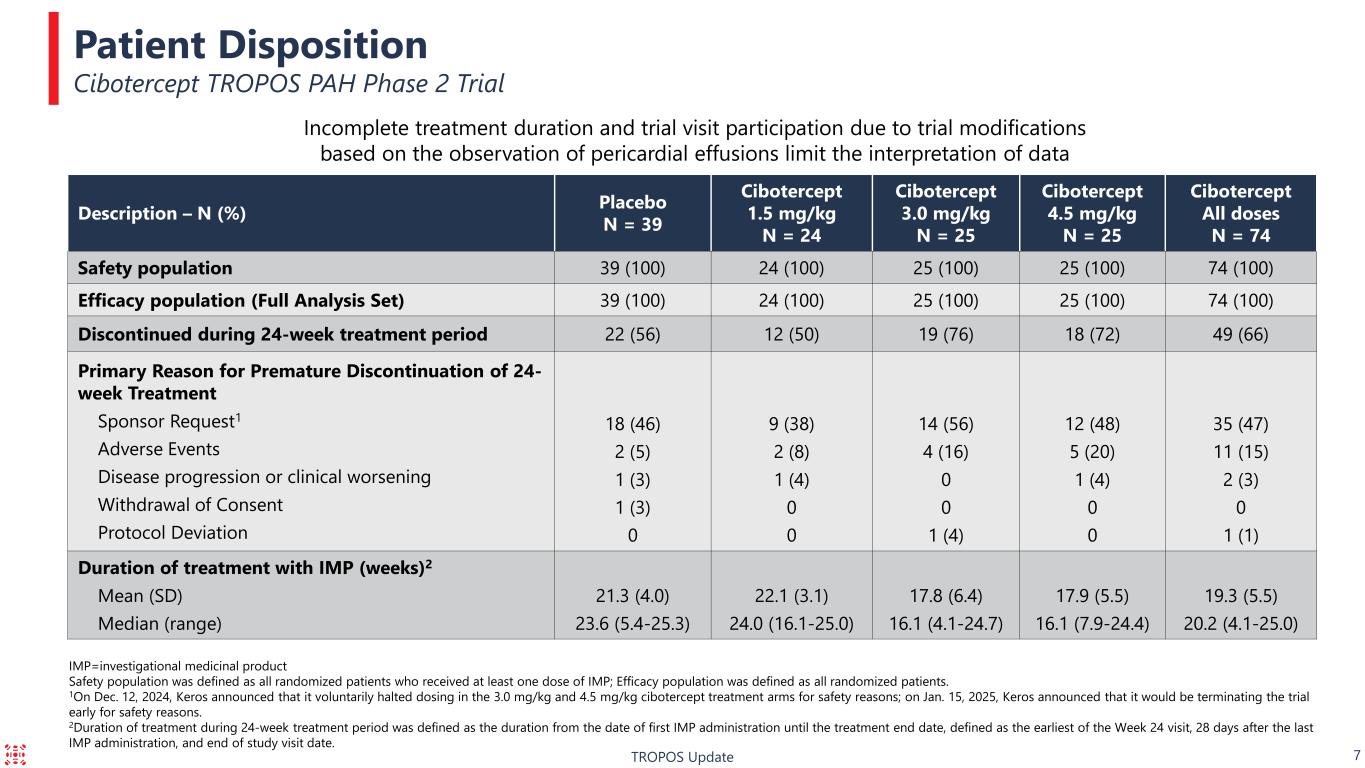
TROPOS Update 7 Patient Disposition Cibotercept TROPOS PAH Phase 2 Trial Description – N (%) Placebo N = 39 Cibotercept 1.5 mg/kg N = 24 Cibotercept 3.0 mg/kg N = 25 Cibotercept 4.5 mg/kg N = 25 Cibotercept All doses N = 74 Safety population 39 (100) 24 (100) 25 (100) 25 (100) 74 (100) Efficacy population (Full Analysis Set) 39 (100) 24 (100) 25 (100) 25 (100) 74 (100) Discontinued during 24-week treatment period 22 (56) 12 (50) 19 (76) 18 (72) 49 (66) Primary Reason for Premature Discontinuation of 24- week Treatment Sponsor Request1 Adverse Events Disease progression or clinical worsening Withdrawal of Consent Protocol Deviation 18 (46) 2 (5) 1 (3) 1 (3) 0 9 (38) 2 (8) 1 (4) 0 0 14 (56) 4 (16) 0 0 1 (4) 12 (48) 5 (20) 1 (4) 0 0 35 (47) 11 (15) 2 (3) 0 1 (1) Duration of treatment with IMP (weeks)2 Mean (SD) Median (range) 21.3 (4.0) 23.6 (5.4-25.3) 22.1 (3.1) 24.0 (16.1-25.0) 17.8 (6.4) 16.1 (4.1-24.7) 17.9 (5.5) 16.1 (7.9-24.4) 19.3 (5.5) 20.2 (4.1-25.0) IMP=investigational medicinal product Safety population was defined as all randomized patients who received at least one dose of IMP; Efficacy population was defined as all randomized patients. 1On Dec. 12, 2024, Keros announced that it voluntarily halted dosing in the 3.0 mg/kg and 4.5 mg/kg cibotercept treatment arms for safety reasons; on Jan. 15, 2025, Keros announced that it would be terminating the trial early for safety reasons. 2Duration of treatment during 24-week treatment period was defined as the duration from the date of first IMP administration until the treatment end date, defined as the earliest of the Week 24 visit, 28 days after the last IMP administration, and end of study visit date. Incomplete treatment duration and trial visit participation due to trial modifications based on the observation of pericardial effusions limit the interpretation of data
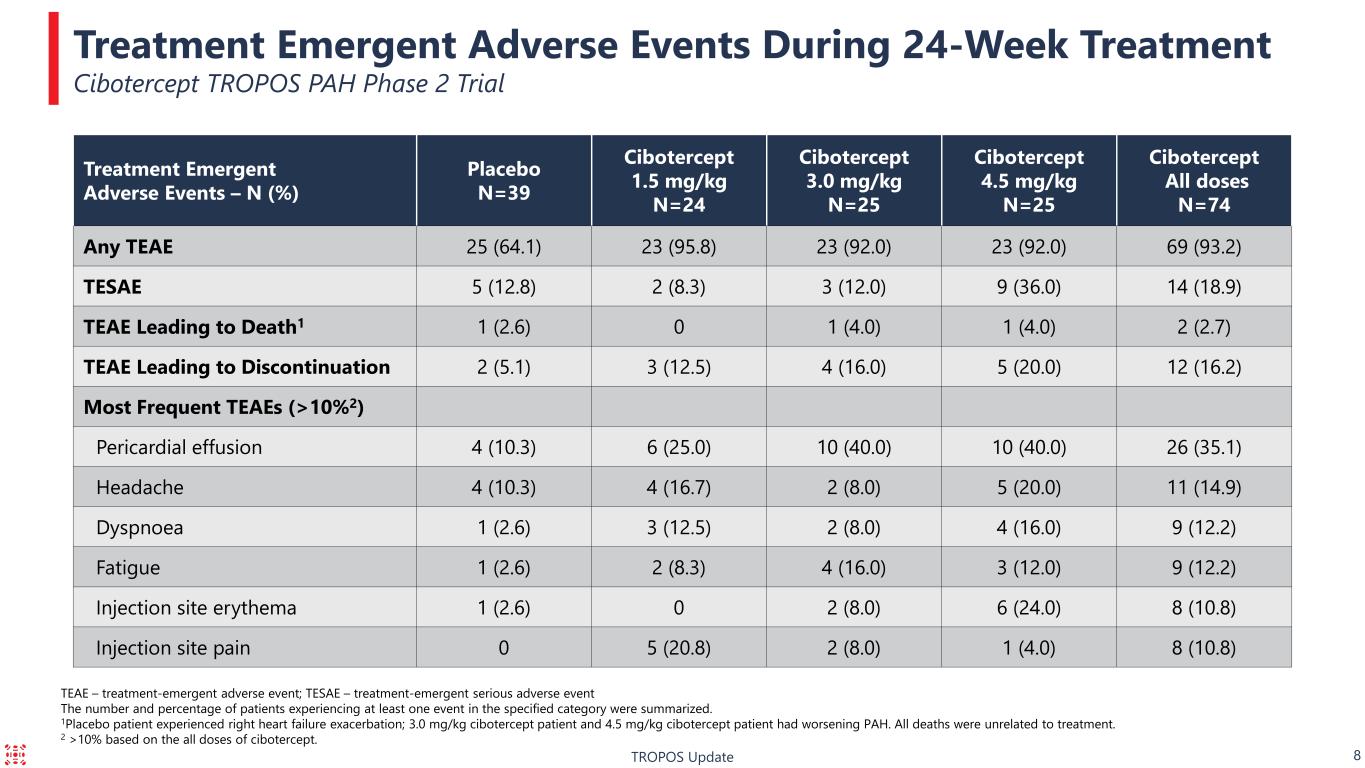
TROPOS Update 8 Treatment Emergent Adverse Events During 24-Week Treatment Cibotercept TROPOS PAH Phase 2 Trial Treatment Emergent Adverse Events – N (%) Placebo N=39 Cibotercept 1.5 mg/kg N=24 Cibotercept 3.0 mg/kg N=25 Cibotercept 4.5 mg/kg N=25 Cibotercept All doses N=74 Any TEAE 25 (64.1) 23 (95.8) 23 (92.0) 23 (92.0) 69 (93.2) TESAE 5 (12.8) 2 (8.3) 3 (12.0) 9 (36.0) 14 (18.9) TEAE Leading to Death1 1 (2.6) 0 1 (4.0) 1 (4.0) 2 (2.7) TEAE Leading to Discontinuation 2 (5.1) 3 (12.5) 4 (16.0) 5 (20.0) 12 (16.2) Most Frequent TEAEs (>10%2) Pericardial effusion 4 (10.3) 6 (25.0) 10 (40.0) 10 (40.0) 26 (35.1) Headache 4 (10.3) 4 (16.7) 2 (8.0) 5 (20.0) 11 (14.9) Dyspnoea 1 (2.6) 3 (12.5) 2 (8.0) 4 (16.0) 9 (12.2) Fatigue 1 (2.6) 2 (8.3) 4 (16.0) 3 (12.0) 9 (12.2) Injection site erythema 1 (2.6) 0 2 (8.0) 6 (24.0) 8 (10.8) Injection site pain 0 5 (20.8) 2 (8.0) 1 (4.0) 8 (10.8) TEAE – treatment-emergent adverse event; TESAE – treatment-emergent serious adverse event The number and percentage of patients experiencing at least one event in the specified category were summarized. 1Placebo patient experienced right heart failure exacerbation; 3.0 mg/kg cibotercept patient and 4.5 mg/kg cibotercept patient had worsening PAH. All deaths were unrelated to treatment. 2 >10% based on the all doses of cibotercept.
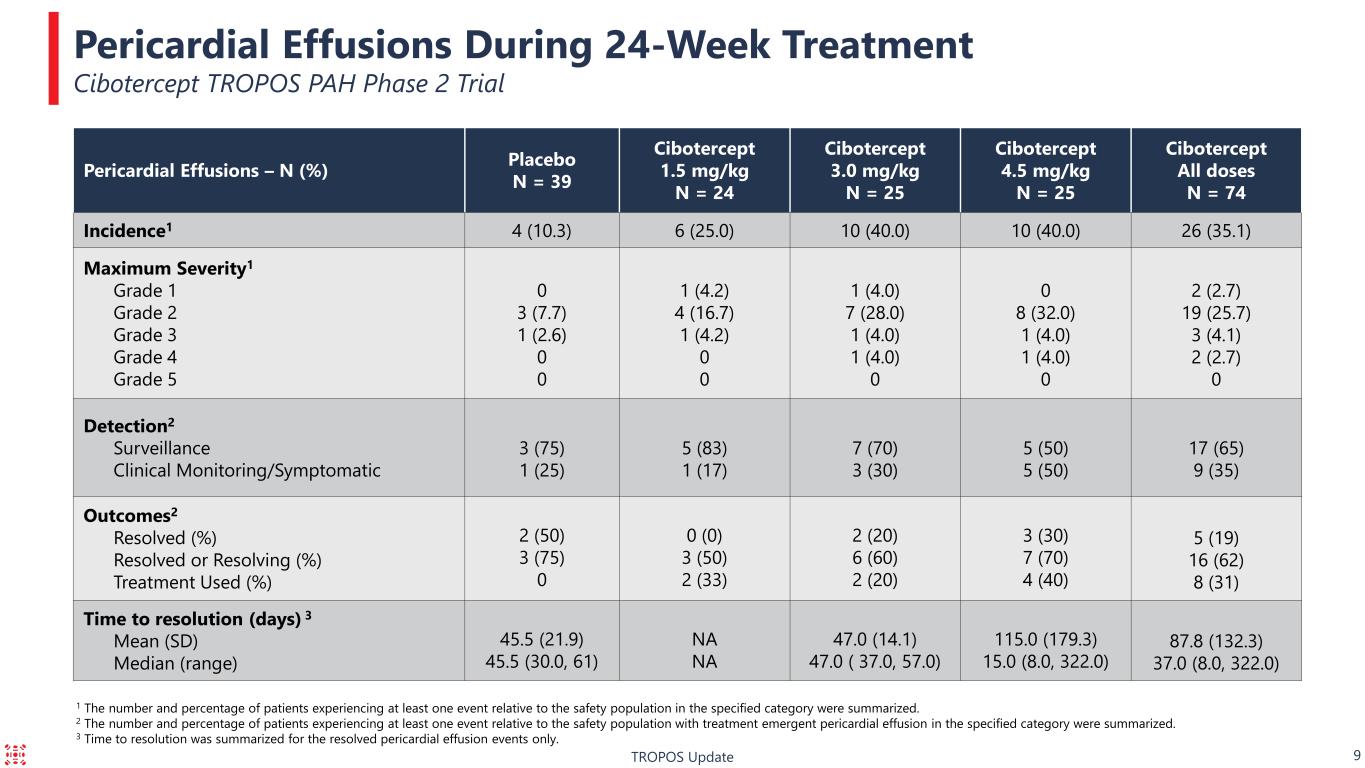
1 The number and percentage of patients experiencing at least one event relative to the safety population in the specified category were summarized. 2 The number and percentage of patients experiencing at least one event relative to the safety population with treatment emergent pericardial effusion in the specified category were summarized. 3 Time to resolution was summarized for the resolved pericardial effusion events only. 9 Pericardial Effusions During 24-Week Treatment Cibotercept TROPOS PAH Phase 2 Trial Pericardial Effusions – N (%) Placebo N = 39 Cibotercept 1.5 mg/kg N = 24 Cibotercept 3.0 mg/kg N = 25 Cibotercept 4.5 mg/kg N = 25 Cibotercept All doses N = 74 Incidence1 4 (10.3) 6 (25.0) 10 (40.0) 10 (40.0) 26 (35.1) Maximum Severity1 Grade 1 Grade 2 Grade 3 Grade 4 Grade 5 0 3 (7.7) 1 (2.6) 0 0 1 (4.2) 4 (16.7) 1 (4.2) 0 0 1 (4.0) 7 (28.0) 1 (4.0) 1 (4.0) 0 0 8 (32.0) 1 (4.0) 1 (4.0) 0 2 (2.7) 19 (25.7) 3 (4.1) 2 (2.7) 0 Detection2 Surveillance Clinical Monitoring/Symptomatic 3 (75) 1 (25) 5 (83) 1 (17) 7 (70) 3 (30) 5 (50) 5 (50) 17 (65) 9 (35) Outcomes2 Resolved (%) Resolved or Resolving (%) Treatment Used (%) 2 (50) 3 (75) 0 0 (0) 3 (50) 2 (33) 2 (20) 6 (60) 2 (20) 3 (30) 7 (70) 4 (40) 5 (19) 16 (62) 8 (31) Time to resolution (days) 3 Mean (SD) Median (range) 45.5 (21.9) 45.5 (30.0, 61) NA NA 47.0 (14.1) 47.0 ( 37.0, 57.0) 115.0 (179.3) 15.0 (8.0, 322.0) 87.8 (132.3) 37.0 (8.0, 322.0) TROPOS Update
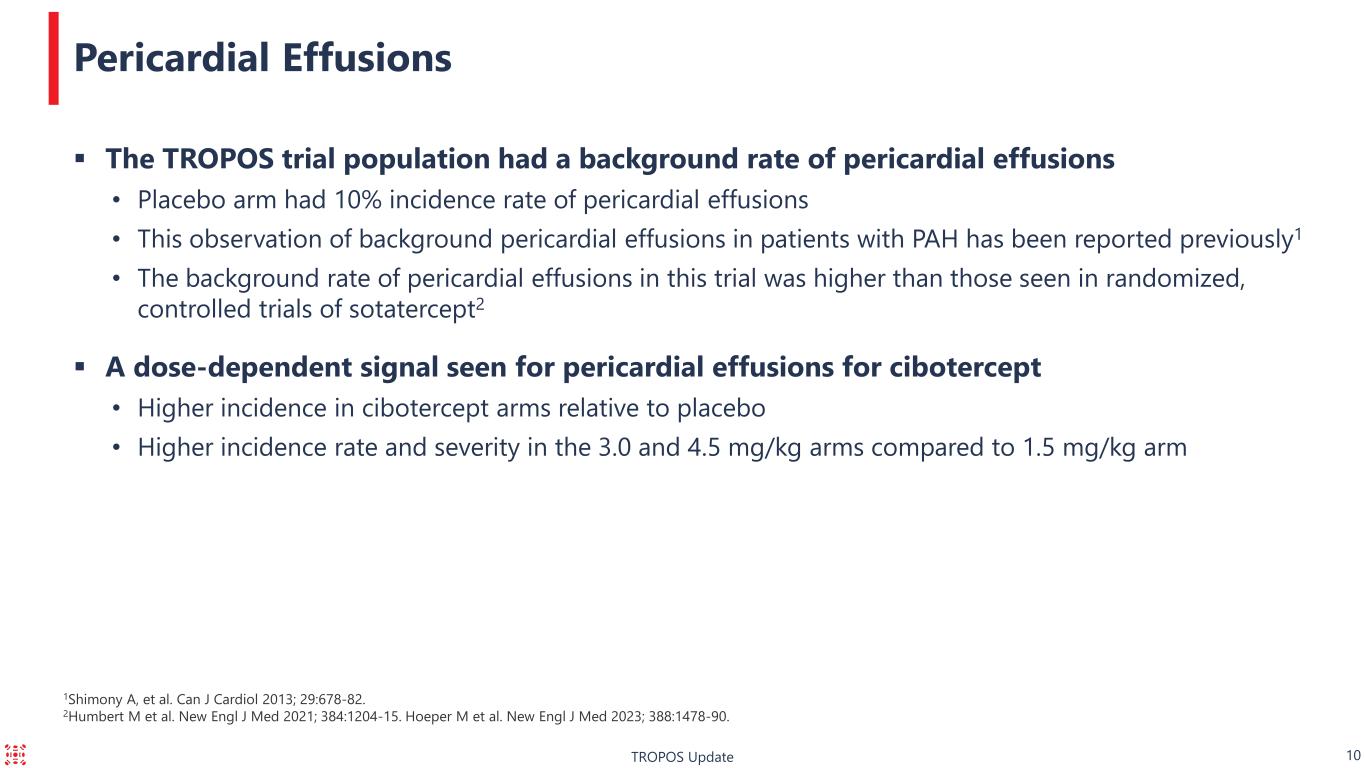
TROPOS Update 10 Pericardial Effusions The TROPOS trial population had a background rate of pericardial effusions • Placebo arm had 10% incidence rate of pericardial effusions • This observation of background pericardial effusions in patients with PAH has been reported previously1 • The background rate of pericardial effusions in this trial was higher than those seen in randomized, controlled trials of sotatercept2 A dose-dependent signal seen for pericardial effusions for cibotercept • Higher incidence in cibotercept arms relative to placebo • Higher incidence rate and severity in the 3.0 and 4.5 mg/kg arms compared to 1.5 mg/kg arm 1Shimony A, et al. Can J Cardiol 2013; 29:678-82. 2Humbert M et al. New Engl J Med 2021; 384:1204-15. Hoeper M et al. New Engl J Med 2023; 388:1478-90.
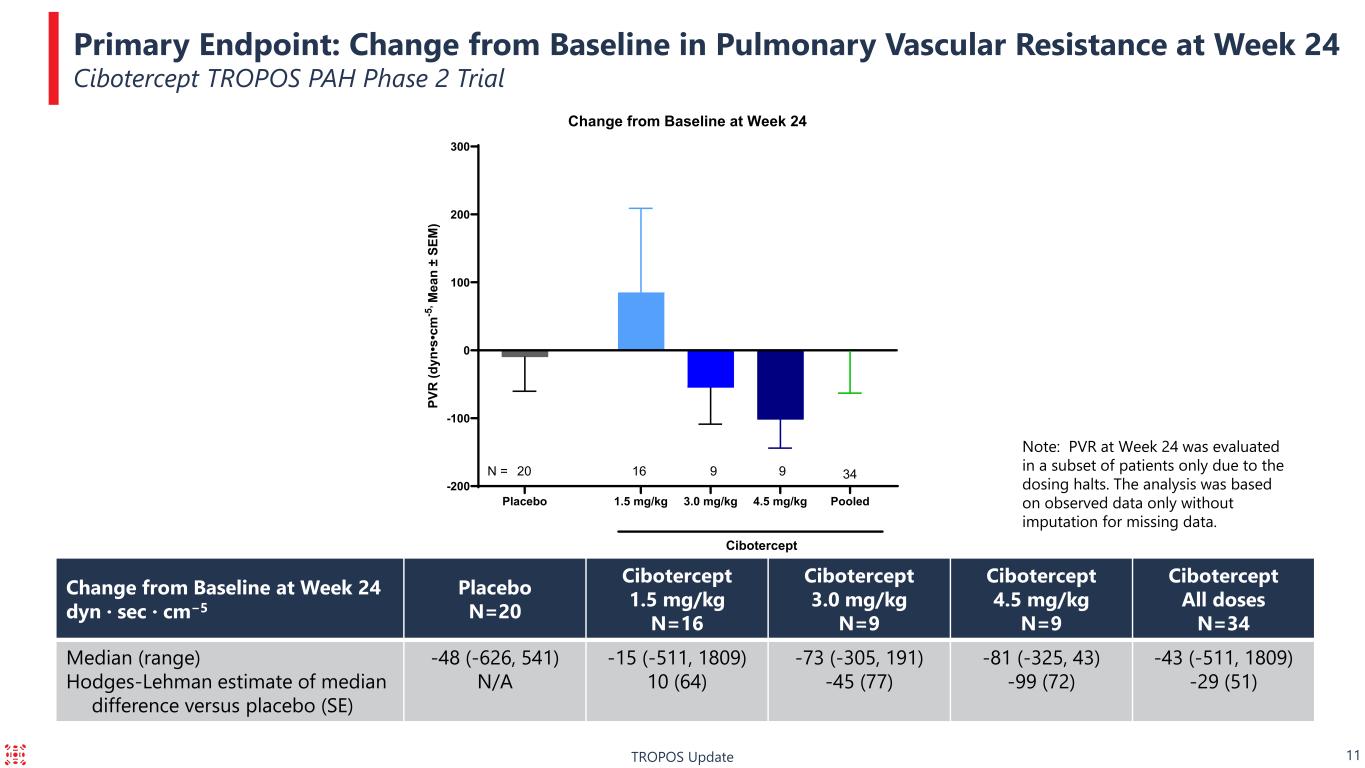
TROPOS Update 11 Primary Endpoint: Change from Baseline in Pulmonary Vascular Resistance at Week 24 Cibotercept TROPOS PAH Phase 2 Trial Change from Baseline at Week 24 dyn · sec · cm−5 Placebo N=20 Cibotercept 1.5 mg/kg N=16 Cibotercept 3.0 mg/kg N=9 Cibotercept 4.5 mg/kg N=9 Cibotercept All doses N=34 Median (range) Hodges-Lehman estimate of median difference versus placebo (SE) -48 (-626, 541) N/A -15 (-511, 1809) 10 (64) -73 (-305, 191) -45 (77) -81 (-325, 43) -99 (72) -43 (-511, 1809) -29 (51) Placebo 1.5 mg/kg 3.0 mg/kg 4.5 mg/kg Pooled -200 -100 0 100 200 300 Change from Baseline at Week 24 PV R (d yn •s •c m -5 , M ea n ± SE M ) Cibotercept N = 20 16 9 9 34 Note: PVR at Week 24 was evaluated in a subset of patients only due to the dosing halts. The analysis was based on observed data only without imputation for missing data.
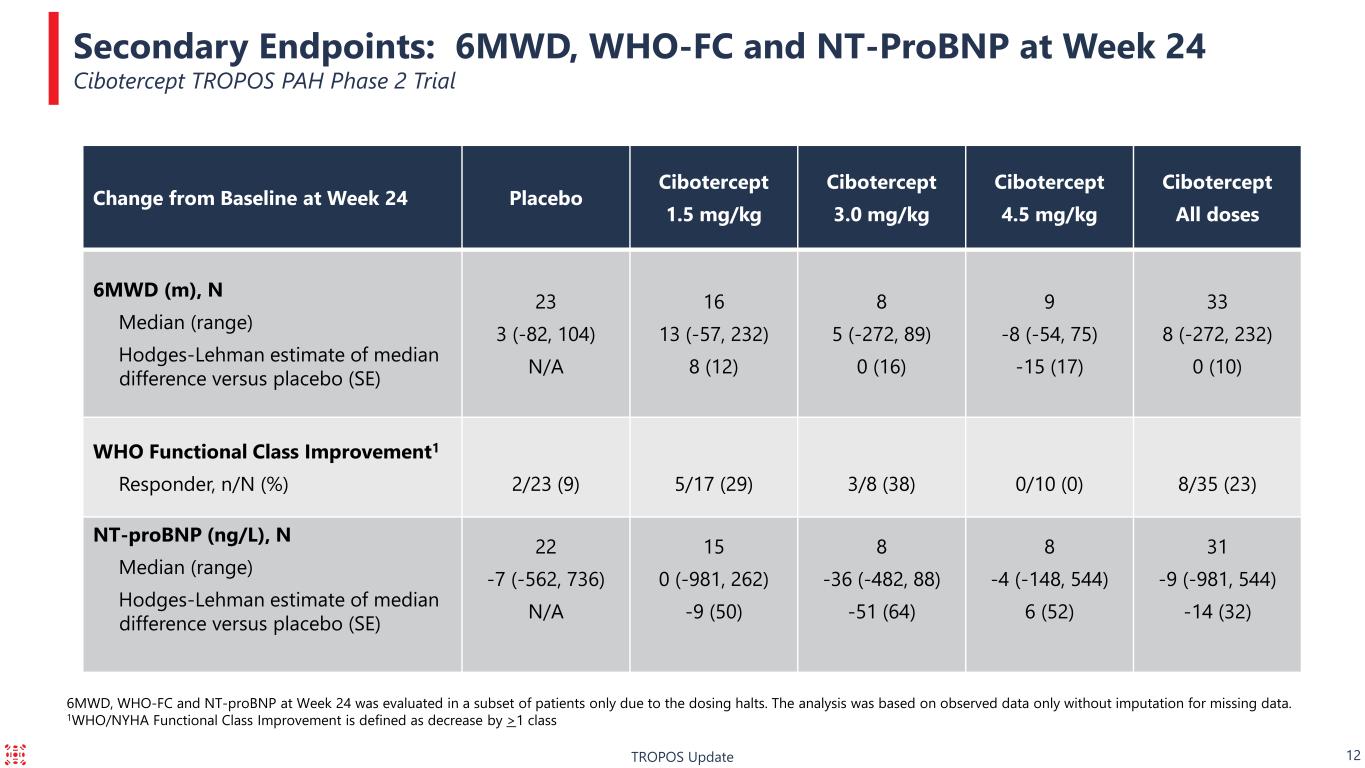
TROPOS Update 12 Secondary Endpoints: 6MWD, WHO-FC and NT-ProBNP at Week 24 Cibotercept TROPOS PAH Phase 2 Trial Change from Baseline at Week 24 Placebo Cibotercept 1.5 mg/kg Cibotercept 3.0 mg/kg Cibotercept 4.5 mg/kg Cibotercept All doses 6MWD (m), N Median (range) Hodges-Lehman estimate of median difference versus placebo (SE) 23 3 (-82, 104) N/A 16 13 (-57, 232) 8 (12) 8 5 (-272, 89) 0 (16) 9 -8 (-54, 75) -15 (17) 33 8 (-272, 232) 0 (10) WHO Functional Class Improvement1 Responder, n/N (%) 2/23 (9) 5/17 (29) 3/8 (38) 0/10 (0) 8/35 (23) NT-proBNP (ng/L), N Median (range) Hodges-Lehman estimate of median difference versus placebo (SE) 22 -7 (-562, 736) N/A 15 0 (-981, 262) -9 (50) 8 -36 (-482, 88) -51 (64) 8 -4 (-148, 544) 6 (52) 31 -9 (-981, 544) -14 (32) 6MWD, WHO-FC and NT-proBNP at Week 24 was evaluated in a subset of patients only due to the dosing halts. The analysis was based on observed data only without imputation for missing data. 1WHO/NYHA Functional Class Improvement is defined as decrease by >1 class
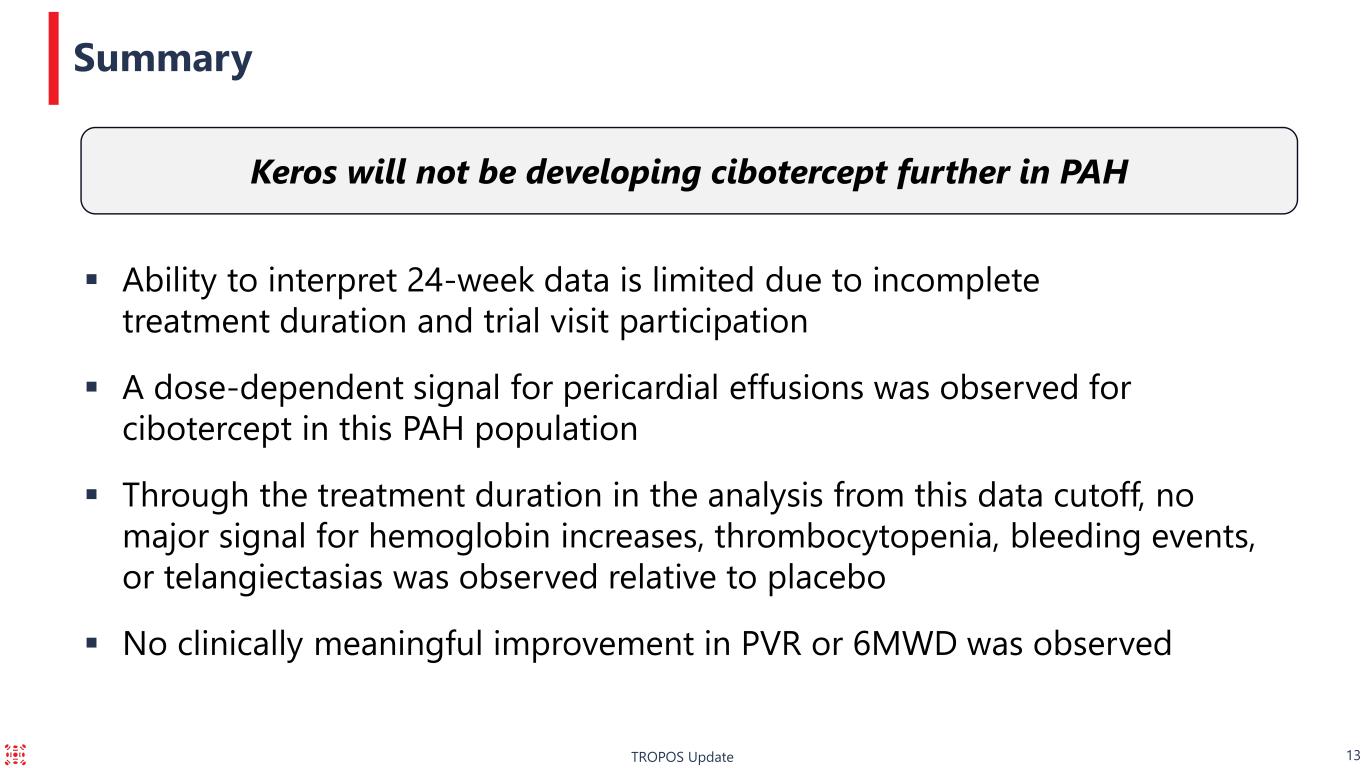
TROPOS Update 13 Summary Keros will not be developing cibotercept further in PAH Ability to interpret 24-week data is limited due to incomplete treatment duration and trial visit participation A dose-dependent signal for pericardial effusions was observed for cibotercept in this PAH population Through the treatment duration in the analysis from this data cutoff, no major signal for hemoglobin increases, thrombocytopenia, bleeding events, or telangiectasias was observed relative to placebo No clinically meaningful improvement in PVR or 6MWD was observed
TROPOS Update 14 Acknowledgements We thank all of the patients, their families, the TROPOS investigators and site staff who participated in the trial