
LXEO 8-K
Lexeo Therapeutics, Inc. (LXEO)
UNITED STATES
SECURITIES AND EXCHANGE COMMISSION
WASHINGTON, D.C. 20549
FORM 8-K
CURRENT REPORT
Pursuant to Section 13 or 15(d) of the Securities Exchange Act of 1934
Date of Report (Date of earliest event reported): |
(Exact name of Registrant as Specified in Its Charter)
(State or Other Jurisdiction |
(Commission File Number) |
(IRS Employer |
||
|
|
|
|
|
|
||||
|
||||
(Address of Principal Executive Offices) |
|
(Zip Code) |
||
Registrant’s Telephone Number, Including Area Code: |
(Former Name or Former Address, if Changed Since Last Report)
Check the appropriate box below if the Form 8-K filing is intended to simultaneously satisfy the filing obligation of the registrant under any of the following provisions:
Securities registered pursuant to Section 12(b) of the Act:
|
|
Trading |
|
|
|
|
Indicate by check mark whether the registrant is an emerging growth company as defined in Rule 405 of the Securities Act of 1933 (§ 230.405 of this chapter) or Rule 12b-2 of the Securities Exchange Act of 1934 (§ 240.12b-2 of this chapter).
Emerging growth company
If an emerging growth company, indicate by check mark if the registrant has elected not to use the extended transition period for complying with any new or revised financial accounting standards provided pursuant to Section 13(a) of the Exchange Act.
Item 7.01 Regulation FD Disclosure.
The corporate presentation to be used in connection with the webcast described in Item 8.01 below is attached as Exhibit 99.1 to this Current Report on Form 8-K and incorporated into this Item 7.01 by reference.
The information in this Item 7.01, including Exhibit 99.1 attached hereto, shall not be deemed “filed” for purposes of Section 18 of the Exchange Act, or otherwise subject to the liabilities of that section, nor shall they be deemed incorporated by reference in any filing under the Securities Act, except as expressly set forth by specific reference in such filing.
Item 8.01 Other Events.
On April 7, 2025, the Company issued a press release announcing positive interim Phase 1/2 clinical data of LX2006 for the treatment of Friedreich ataxia (“FA”) cardiomyopathy. As part of the press release, the Company announced that it would be hosting a conference call and webcast at 8:00 a.m. ET on April 7, 2025 to discuss the interim Phase 1/2 clinical data of LX2006 for the treatment of FA cardiomyopathy. The press release is attached hereto as Exhibit 99.2 and incorporated by reference herein.
Item 9.01 Financial Statements and Exhibits.
(d) Exhibits
Exhibit Number |
|
Description |
99.1 |
|
|
99.2 |
|
|
104 |
|
Cover Page Interactive Data File (embedded within the Inline XBRL document) |
SIGNATURES
Pursuant to the requirements of the Securities Exchange Act of 1934, the registrant has duly caused this report to be signed on its behalf by the undersigned hereunto duly authorized.
|
|
|
Lexeo Therapeutics, Inc. |
|
|
|
|
Date: |
April 7, 2025 |
By: |
/s/ R. Nolan Townsend |
|
|
|
R. Nolan Townsend, Chief Executive Officer |
Interim Data Update of LX2006 for the Treatment of Friedreich Ataxia Cardiomyopathy April 7, 2025 Exhibit 99.1
Forward Looking Statements This presentation contains “forward-looking statements” within the meaning of the federal securities laws, including, but not limited to, statements regarding Lexeo’s expectations and plans regarding its current product candidates and programs, including statements regarding the timing, progress and results of preclinical and clinical trials of Lexeo’s gene therapy product candidates, the anticipated benefits of its current product candidates, the timing and likelihood of regulatory approval, and expected cash runway. Words such as “may,” “might,” “will,” “objective,” “intend,” “should,” “could,” “can,” “would,” “expect,” “believe,” “design,” “estimate,” “predict,” “potential,” “develop,” “plan” or the negative of these terms, and similar expressions, or statements regarding intent, belief, or current expectations, are forward-looking statements. While Lexeo believes these forward-looking statements are reasonable, undue reliance should not be placed on any such forward-looking statements. These forward-looking statements are based upon current information available to the company as well as certain estimates and assumptions and are subject to various risks and uncertainties (including, without limitation, those set forth in Lexeo’s filings with the SEC), many of which are beyond the company’s control and subject to change. Actual results could be materially different from those indicated by such forward looking statements as a result of many factors, including but not limited to: risks and uncertainties related to expectations regarding the initiation, progress, and expected results of Lexeo’s preclinical studies, clinical trials and research and development programs; the unpredictable relationship between preclinical study results and clinical study results; delays in submission of regulatory filings or failure to receive regulatory approval; liquidity and capital resources; and other risks and uncertainties identified in Lexeo’s Annual Report on Form 10-K for the year ended December 31, 2024, filed with the SEC on March 24, 2025, and subsequent future filings Lexeo may make with the SEC. New risks and uncertainties may emerge from time to time, and it is not possible to predict all risks and uncertainties. Lexeo claims the protection of the Safe Harbor contained in the Private Securities Litigation Reform Act of 1995 for forward-looking statements. Lexeo expressly disclaims any obligation to update or alter any statements whether as a result of new information, future events or otherwise, except as required by law.
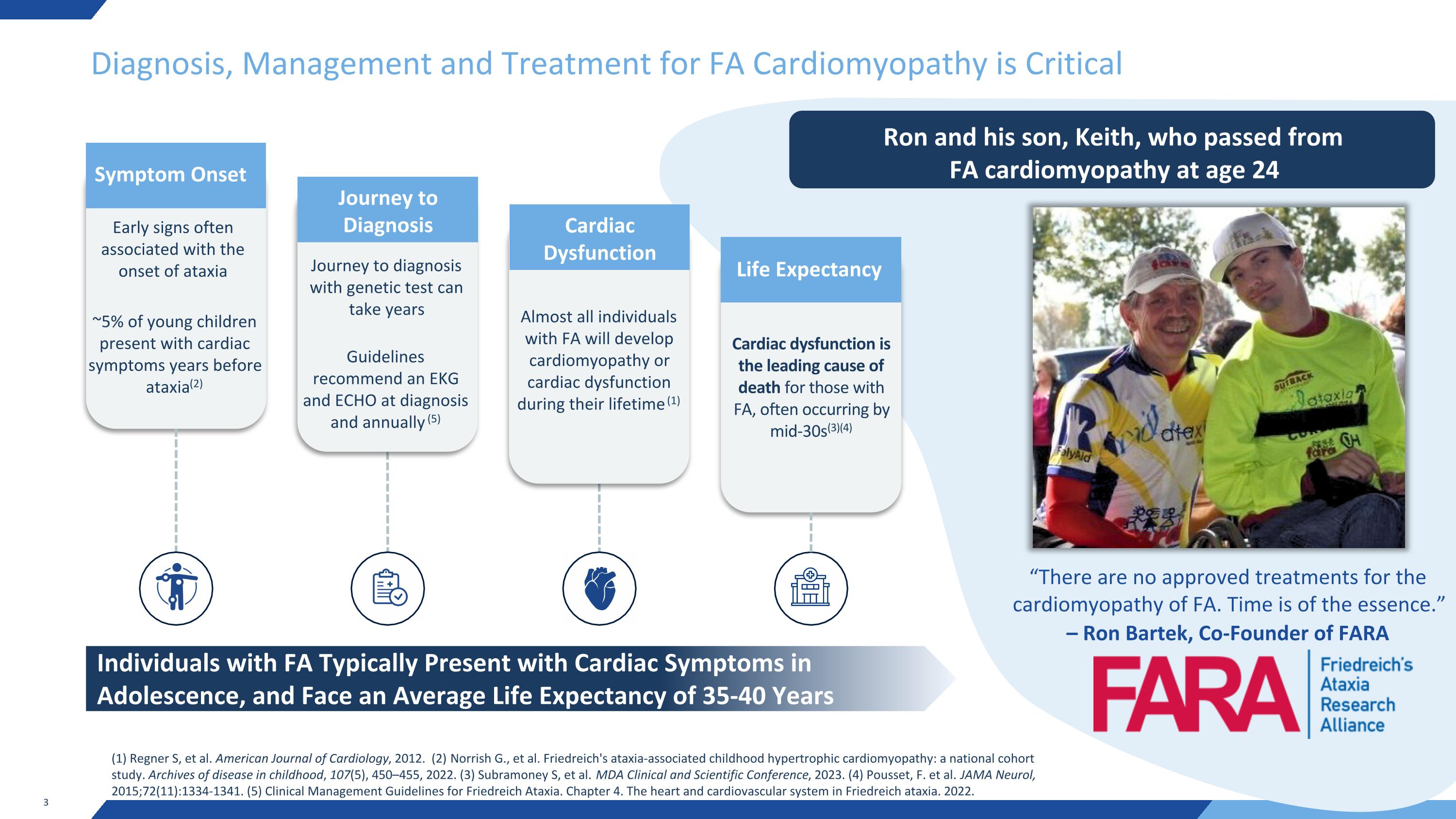
Individuals with FA Typically Present with Cardiac Symptoms in Adolescence, and Face an Average Life Expectancy of 35-40 Years Ron and his son, Keith, who passed from FA cardiomyopathy at age 24 “There are no approved treatments for the cardiomyopathy of FA. Time is of the essence.” – Ron Bartek, Co-Founder of FARA Early signs often associated with the onset of ataxia ~5% of young children present with cardiac symptoms years before ataxia(2) Symptom Onset Journey to diagnosis with genetic test can take years Guidelines recommend an EKG and ECHO at diagnosis and annually (5) Almost all individuals with FA will develop cardiomyopathy or cardiac dysfunction during their lifetime (1) Cardiac dysfunction is the leading cause of death for those with FA, often occurring by mid-30s(3)(4) Journey to Diagnosis Life Expectancy Cardiac Dysfunction Diagnosis, Management and Treatment for FA Cardiomyopathy is Critical (1) Regner S, et al. American Journal of Cardiology, 2012. (2) Norrish G., et al. Friedreich's ataxia-associated childhood hypertrophic cardiomyopathy: a national cohort study. Archives of disease in childhood, 107(5), 450–455, 2022. (3) Subramoney S, et al. MDA Clinical and Scientific Conference, 2023. (4) Pousset, F. et al. JAMA Neurol, 2015;72(11):1334-1341. (5) Clinical Management Guidelines for Friedreich Ataxia. Chapter 4. The heart and cardiovascular system in Friedreich ataxia. 2022.
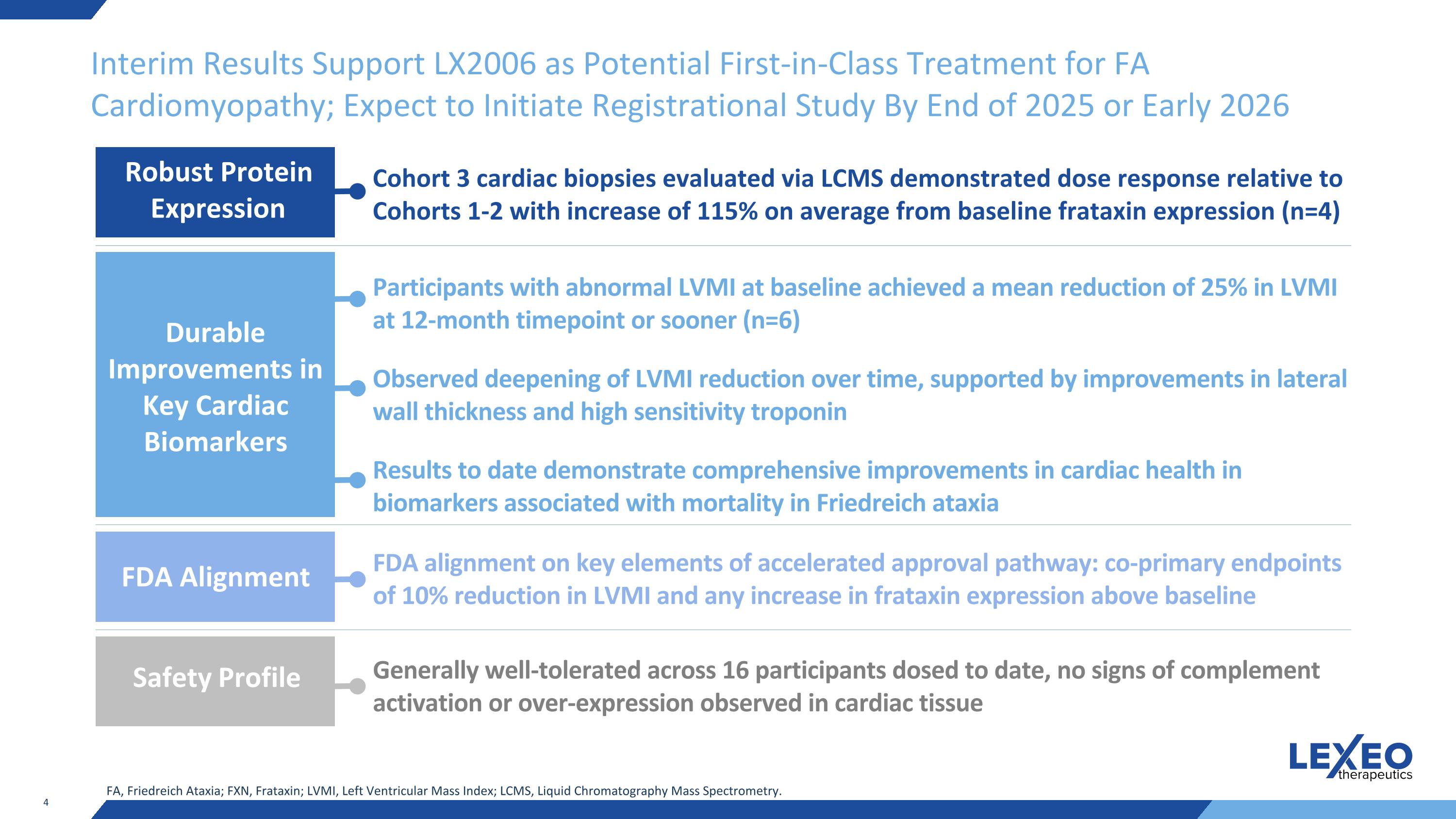
Interim Results Support LX2006 as Potential First-in-Class Treatment for FA Cardiomyopathy; Expect to Initiate Registrational Study By End of 2025 or Early 2026 Cohort 3 cardiac biopsies evaluated via LCMS demonstrated dose response relative to Cohorts 1-2 with increase of 115% on average from baseline frataxin expression (n=4) FDA alignment on key elements of accelerated approval pathway: co-primary endpoints of 10% reduction in LVMI and any increase in frataxin expression above baseline Generally well-tolerated across 16 participants dosed to date, no signs of complement activation or over-expression observed in cardiac tissue Participants with abnormal LVMI at baseline achieved a mean reduction of 25% in LVMI at 12-month timepoint or sooner (n=6) Observed deepening of LVMI reduction over time, supported by improvements in lateral wall thickness and high sensitivity troponin Results to date demonstrate comprehensive improvements in cardiac health in biomarkers associated with mortality in Friedreich ataxia Durable Improvements in Key Cardiac Biomarkers Robust Protein Expression FA, Friedreich Ataxia; FXN, Frataxin; LVMI, Left Ventricular Mass Index; LCMS, Liquid Chromatography Mass Spectrometry. FDA Alignment Safety Profile
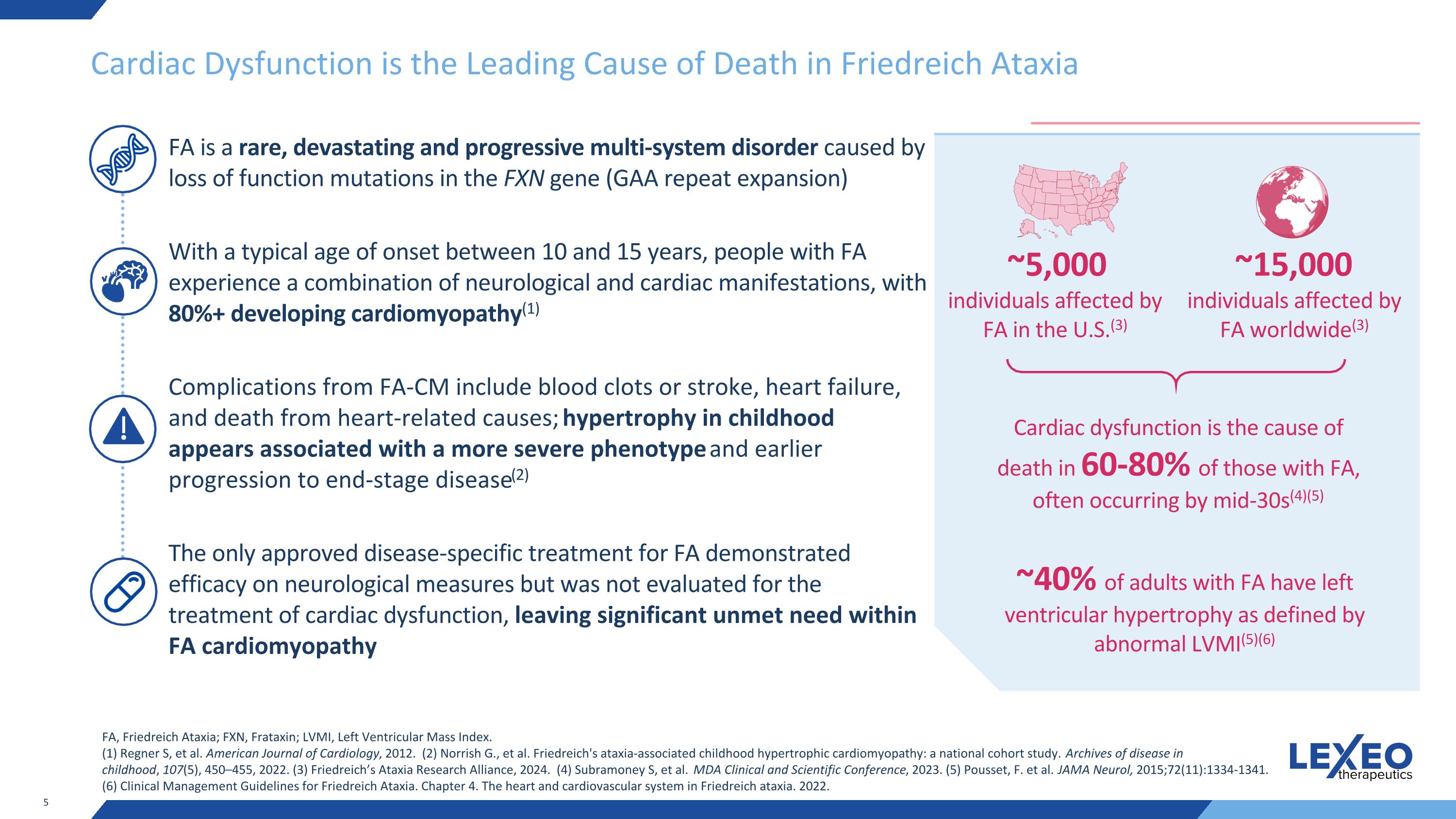
FA is a rare, devastating and progressive multi-system disorder caused by loss of function mutations in the FXN gene (GAA repeat expansion) With a typical age of onset between 10 and 15 years, people with FA experience a combination of neurological and cardiac manifestations, with 80%+ developing cardiomyopathy(1) Complications from FA-CM include blood clots or stroke, heart failure, and death from heart-related causes; hypertrophy in childhood appears associated with a more severe phenotype and earlier progression to end-stage disease(2) The only approved disease-specific treatment for FA demonstrated efficacy on neurological measures but was not evaluated for the treatment of cardiac dysfunction, leaving significant unmet need within FA cardiomyopathy Cardiac dysfunction is the cause of death in 60-80% of those with FA, often occurring by mid-30s(4)(5) Cardiac Dysfunction is the Leading Cause of Death in Friedreich Ataxia ~15,000 individuals affected by FA worldwide(3) ~5,000 individuals affected by FA in the U.S.(3) FA, Friedreich Ataxia; FXN, Frataxin; LVMI, Left Ventricular Mass Index. (1) Regner S, et al. American Journal of Cardiology, 2012. (2) Norrish G., et al. Friedreich's ataxia-associated childhood hypertrophic cardiomyopathy: a national cohort study. Archives of disease in childhood, 107(5), 450–455, 2022. (3) Friedreich’s Ataxia Research Alliance, 2024. (4) Subramoney S, et al. MDA Clinical and Scientific Conference, 2023. (5) Pousset, F. et al. JAMA Neurol, 2015;72(11):1334-1341. (6) Clinical Management Guidelines for Friedreich Ataxia. Chapter 4. The heart and cardiovascular system in Friedreich ataxia. 2022. ~40% of adults with FA have left ventricular hypertrophy as defined by abnormal LVMI(5)(6)
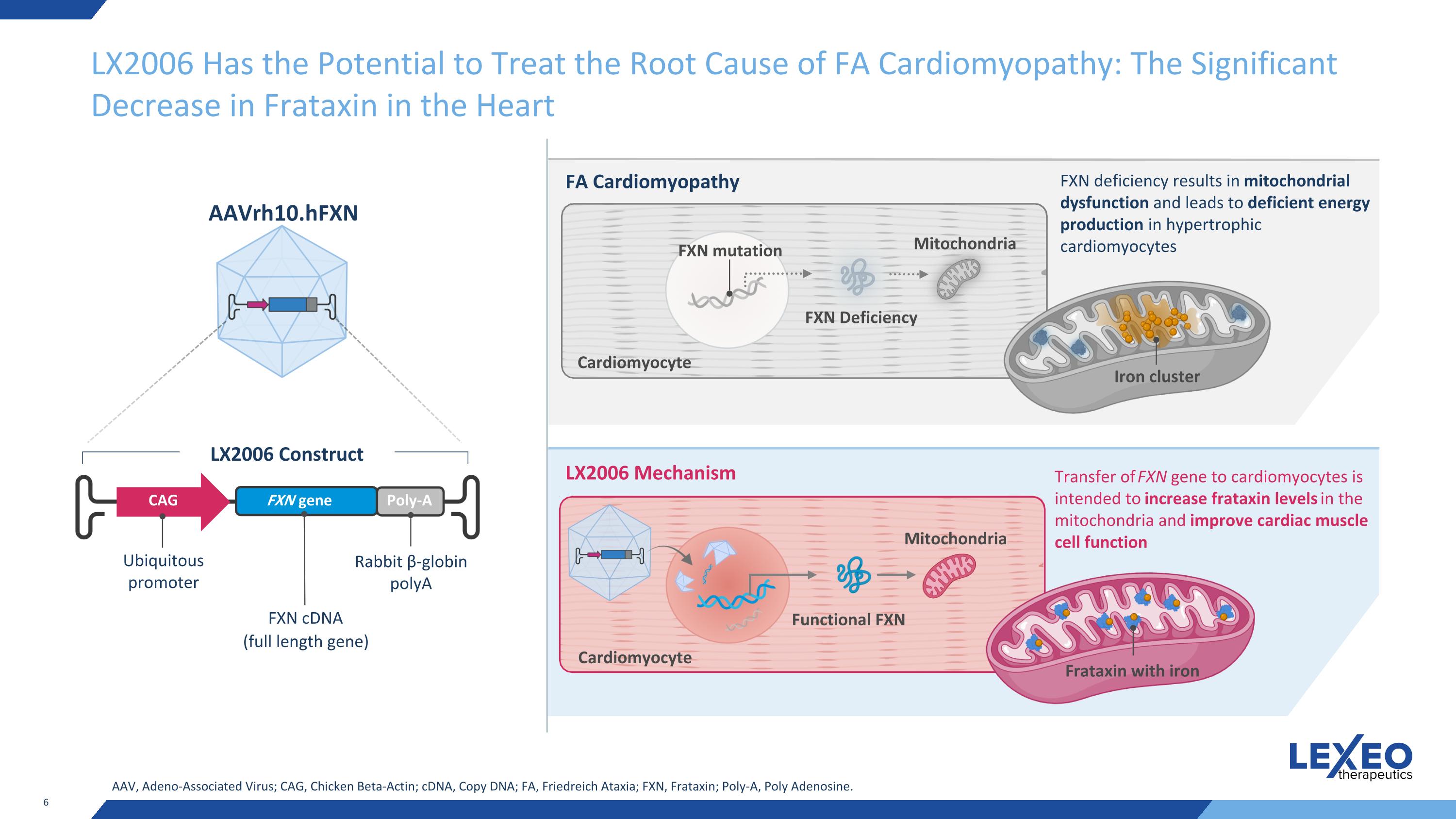
LX2006 Has the Potential to Treat the Root Cause of FA Cardiomyopathy: The Significant Decrease in Frataxin in the Heart FXN mutation FXN Deficiency Mitochondria Functional FXN FA Cardiomyopathy LX2006 Mechanism Cardiomyocyte Transfer of FXN gene to cardiomyocytes is intended to increase frataxin levels in the mitochondria and improve cardiac muscle cell function FXN deficiency results in mitochondrial dysfunction and leads to deficient energy production in hypertrophic cardiomyocytes Mitochondria Cardiomyocyte AAV, Adeno-Associated Virus; CAG, Chicken Beta‐Actin; cDNA, Copy DNA; FA, Friedreich Ataxia; FXN, Frataxin; Poly-A, Poly Adenosine. Ubiquitous promoter FXN cDNA (full length gene) CAG FXN gene Poly-A Rabbit β-globin polyA LX2006 Construct AAVrh10.hFXN Iron cluster Frataxin with iron
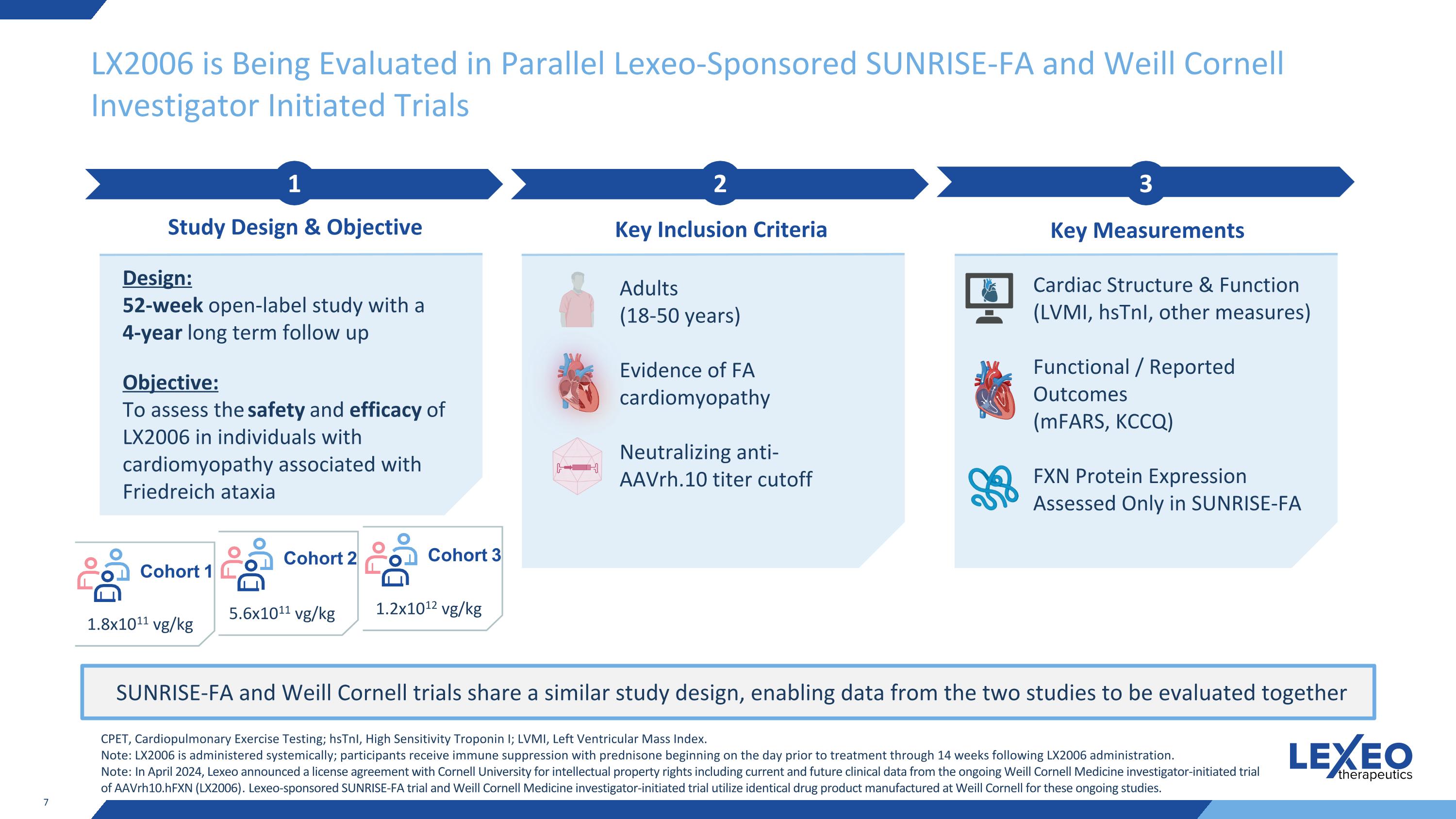
LX2006 is Being Evaluated in Parallel Lexeo-Sponsored SUNRISE-FA and Weill Cornell Investigator Initiated Trials SUNRISE-FA and Weill Cornell trials share a similar study design, enabling data from the two studies to be evaluated together 2 Key Inclusion Criteria 3 Key Measurements 1 Study Design & Objective Design: 52-week open-label study with a 4-year long term follow up Objective: To assess the safety and efficacy of LX2006 in individuals with cardiomyopathy associated with Friedreich ataxia Adults (18-50 years) Evidence of FA cardiomyopathy Neutralizing anti-AAVrh.10 titer cutoff Cardiac Structure & Function (LVMI, hsTnI, other measures) Functional / Reported Outcomes (mFARS, KCCQ) FXN Protein Expression Assessed Only in SUNRISE-FA CPET, Cardiopulmonary Exercise Testing; hsTnI, High Sensitivity Troponin I; LVMI, Left Ventricular Mass Index. Note: LX2006 is administered systemically; participants receive immune suppression with prednisone beginning on the day prior to treatment through 14 weeks following LX2006 administration. Note: In April 2024, Lexeo announced a license agreement with Cornell University for intellectual property rights including current and future clinical data from the ongoing Weill Cornell Medicine investigator-initiated trial of AAVrh10.hFXN (LX2006). Lexeo-sponsored SUNRISE-FA trial and Weill Cornell Medicine investigator-initiated trial utilize identical drug product manufactured at Weill Cornell for these ongoing studies. Cohort 1 1.8x10¹¹ vg/kg Cohort 2 5.6x10¹¹ vg/kg Cohort 3 1.2x10¹² vg/kg
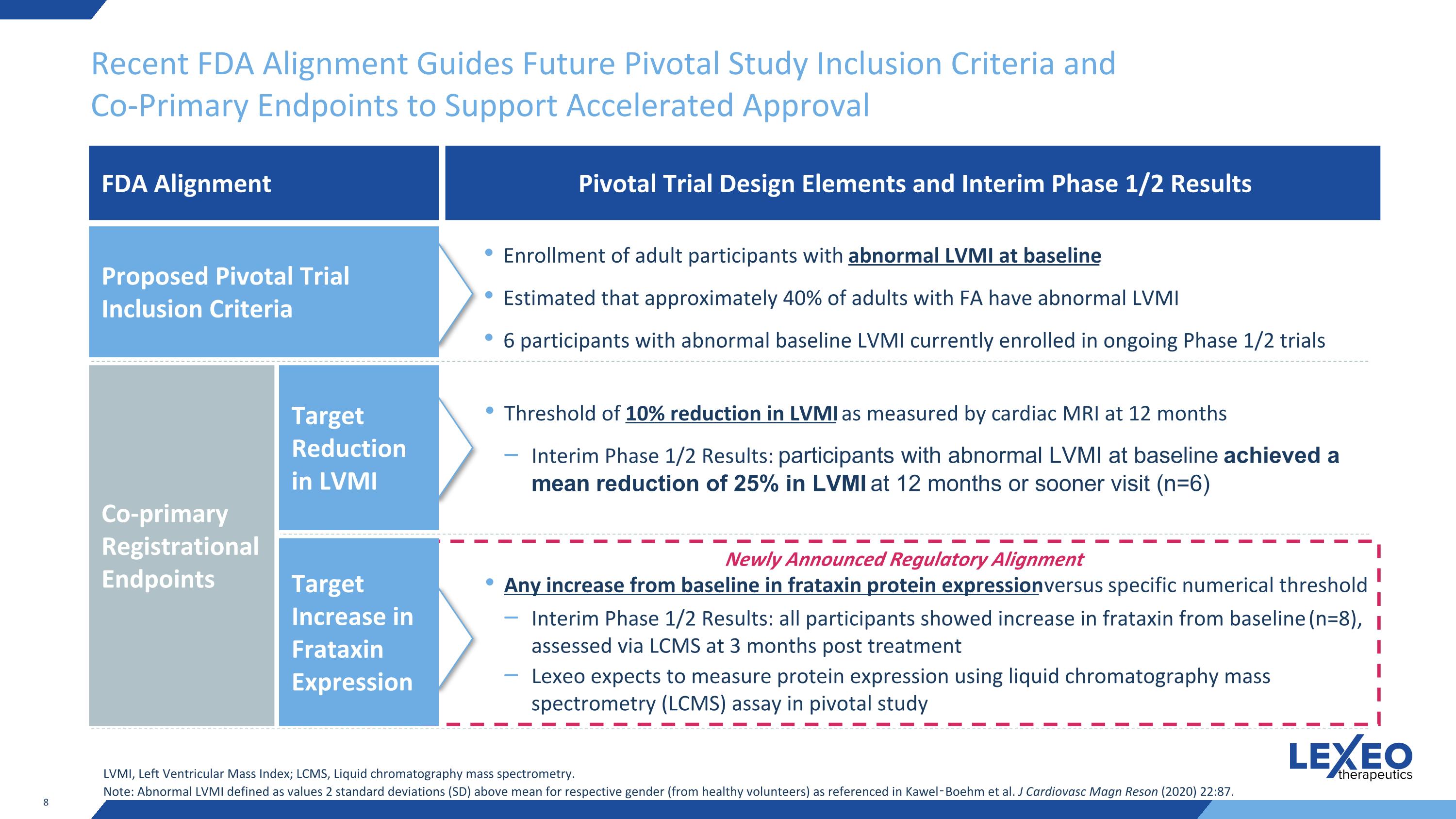
Recent FDA Alignment Guides Future Pivotal Study Inclusion Criteria and Co-Primary Endpoints to Support Accelerated Approval FDA Alignment Threshold of 10% reduction in LVMI as measured by cardiac MRI at 12 months Interim Phase 1/2 Results: participants with abnormal LVMI at baseline achieved a mean reduction of 25% in LVMI at 12 months or sooner visit (n=6) Co-primary Registrational Endpoints Target Reduction in LVMI Pivotal Trial Design Elements and Interim Phase 1/2 Results Any increase from baseline in frataxin protein expression versus specific numerical threshold Interim Phase 1/2 Results: all participants showed increase in frataxin from baseline (n=8), assessed via LCMS at 3 months post treatment Lexeo expects to measure protein expression using liquid chromatography mass spectrometry (LCMS) assay in pivotal study Enrollment of adult participants with abnormal LVMI at baseline Estimated that approximately 40% of adults with FA have abnormal LVMI 6 participants with abnormal baseline LVMI currently enrolled in ongoing Phase 1/2 trials Proposed Pivotal Trial Inclusion Criteria LVMI, Left Ventricular Mass Index; LCMS, Liquid chromatography mass spectrometry. Note: Abnormal LVMI defined as values 2 standard deviations (SD) above mean for respective gender (from healthy volunteers) as referenced in Kawel‑Boehm et al. J Cardiovasc Magn Reson (2020) 22:87. Newly Announced Regulatory Alignment Target Increase in Frataxin Expression
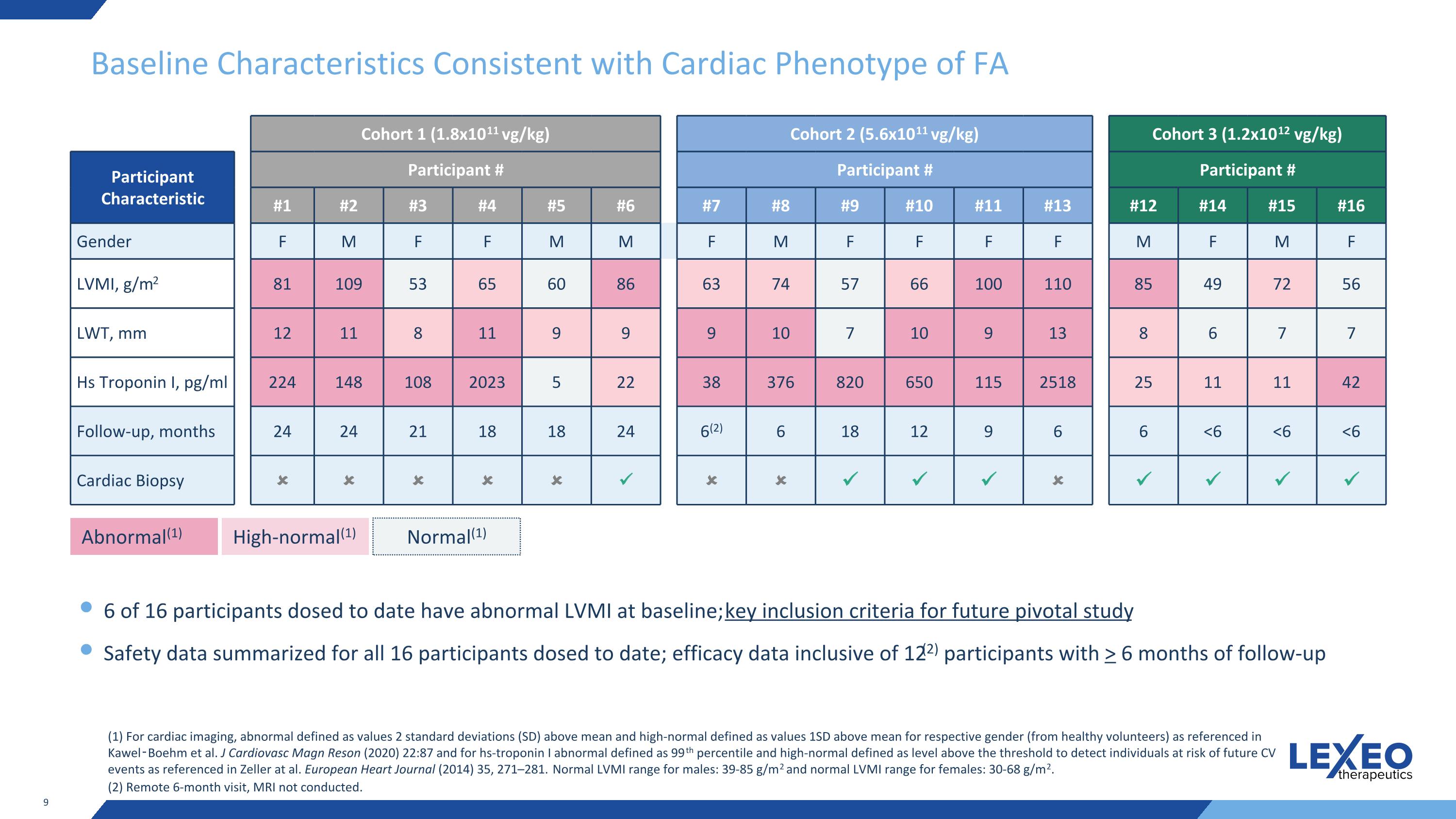
Baseline Characteristics Consistent with Cardiac Phenotype of FA Cohort 1 (1.8x10¹¹ vg/kg) Cohort 2 (5.6x10¹¹ vg/kg) Cohort 3 (1.2x10¹² vg/kg) Participant Characteristic Participant # Participant # Participant # #1 #2 #3 #4 #5 #6 #7 #8 #9 #10 #11 #13 #12 #14 #15 #16 Gender F M F F M M F M F F F F M F M F LVMI, g/m2 81 109 53 65 60 86 63 74 57 66 100 110 85 49 72 56 LWT, mm 12 11 8 11 9 9 9 10 7 10 9 13 8 6 7 7 Hs Troponin I, pg/ml 224 148 108 2023 5 22 38 376 820 650 115 2518 25 11 11 42 Follow-up, months 24 24 21 18 18 24 6(2) 6 18 12 9 6 6 <6 <6 <6 Cardiac Biopsy Abnormal(1) High-normal(1) (1) For cardiac imaging, abnormal defined as values 2 standard deviations (SD) above mean and high-normal defined as values 1SD above mean for respective gender (from healthy volunteers) as referenced in Kawel‑Boehm et al. J Cardiovasc Magn Reson (2020) 22:87 and for hs-troponin I abnormal defined as 99th percentile and high-normal defined as level above the threshold to detect individuals at risk of future CV events as referenced in Zeller at al. European Heart Journal (2014) 35, 271–281. Normal LVMI range for males: 39-85 g/m2 and normal LVMI range for females: 30-68 g/m2. (2) Remote 6-month visit, MRI not conducted. 6 of 16 participants dosed to date have abnormal LVMI at baseline; key inclusion criteria for future pivotal study Safety data summarized for all 16 participants dosed to date; efficacy data inclusive of 12(2) participants with > 6 months of follow-up Normal(1)
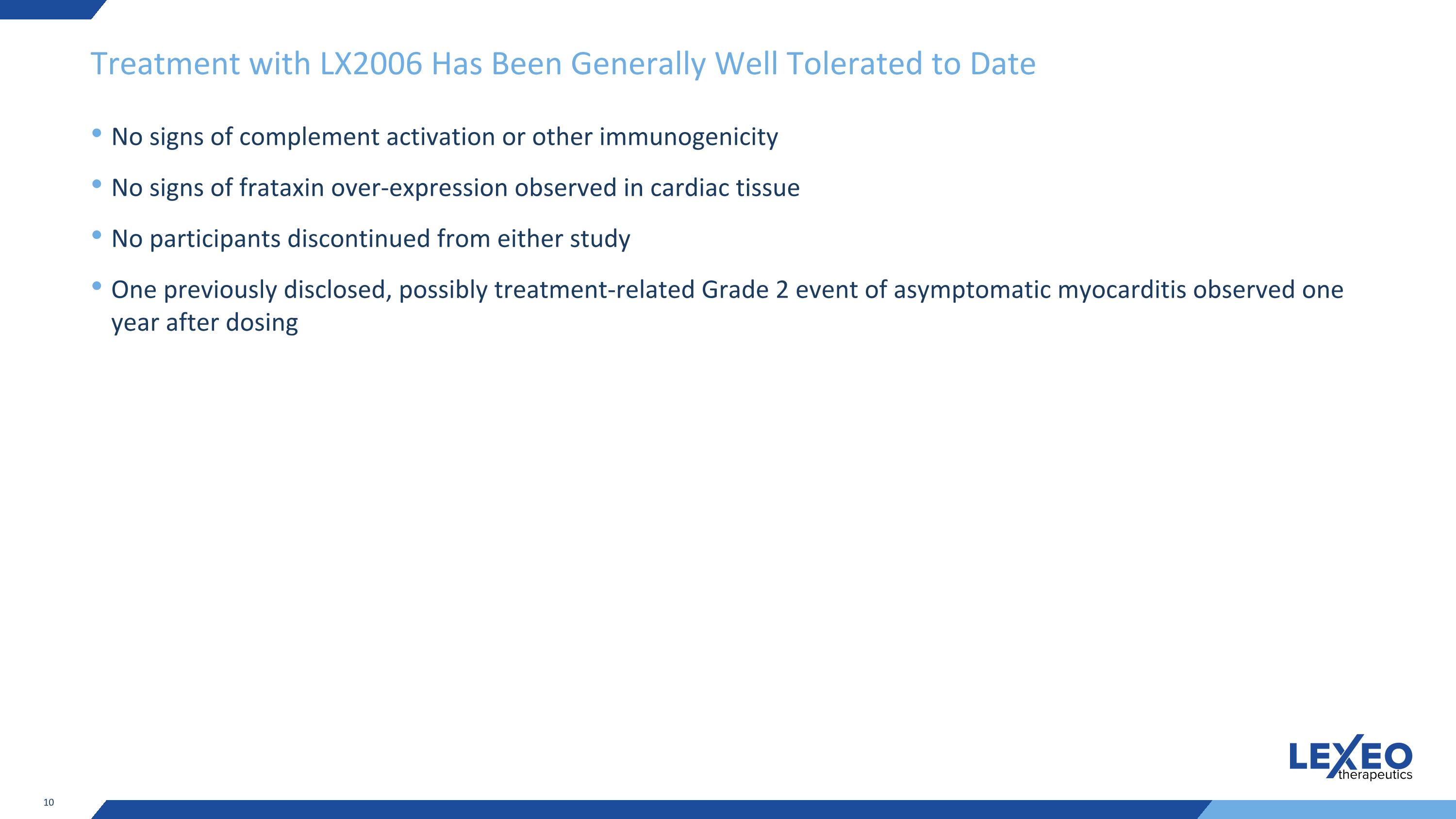
Treatment with LX2006 Has Been Generally Well Tolerated to Date No signs of complement activation or other immunogenicity No signs of frataxin over-expression observed in cardiac tissue No participants discontinued from either study One previously disclosed, possibly treatment-related Grade 2 event of asymptomatic myocarditis observed one year after dosing
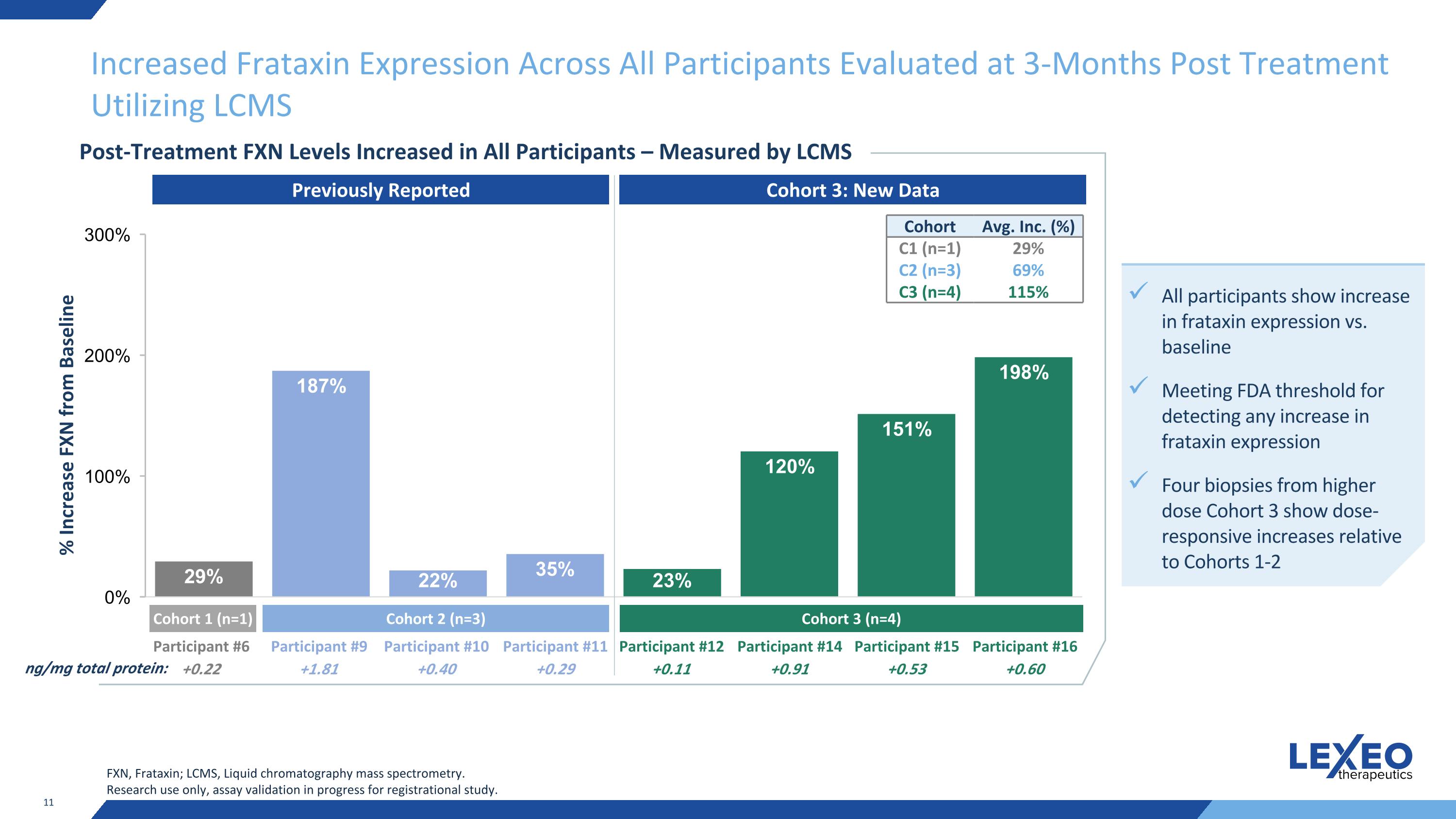
Participant #9 Increased Frataxin Expression Across All Participants Evaluated at 3-Months Post Treatment Utilizing LCMS Post-Treatment FXN Levels Increased in All Participants – Measured by LCMS Participant #6 Participant #10 Participant #11 Cohort 1 (n=1) Cohort 2 (n=3) Cohort 3 (n=4) Participant #12 Participant #14 Participant #15 Participant #16 Cohort 3: New Data Previously Reported Cohort Avg. Inc. (%) C1 (n=1) 29% C2 (n=3) 69% C3 (n=4) 115% % Increase FXN from Baseline All participants show increase in frataxin expression vs. baseline Meeting FDA threshold for detecting any increase in frataxin expression Four biopsies from higher dose Cohort 3 show dose-responsive increases relative to Cohorts 1-2 +0.22 +1.81 +0.40 +0.29 +0.11 +0.91 +0.53 +0.60 FXN, Frataxin; LCMS, Liquid chromatography mass spectrometry. Research use only, assay validation in progress for registrational study. ng/mg total protein:
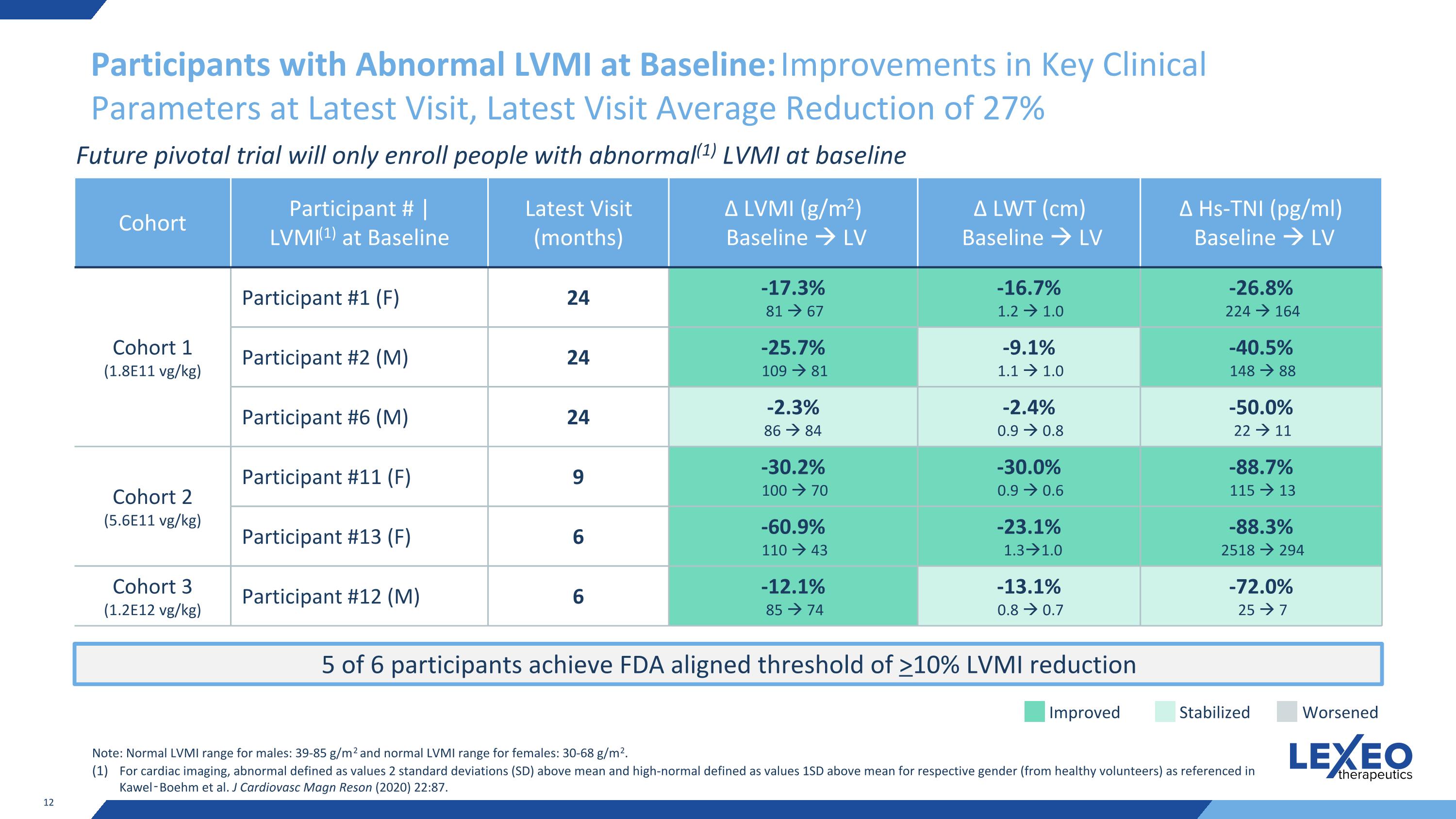
Participants with Abnormal LVMI at Baseline: Improvements in Key Clinical Parameters at Latest Visit, Latest Visit Average Reduction of 27% Cohort Participant # | LVMI(1) at Baseline Latest Visit (months) ∆ LVMI (g/m2) Baseline LV ∆ LWT (cm) Baseline LV ∆ Hs-TNI (pg/ml) Baseline LV Cohort 1 (1.8E11 vg/kg) Participant #1 (F) 24 -17.3% 81 67 -16.7% 1.2 1.0 -26.8% 224 164 Participant #2 (M) 24 -25.7% 109 81 -9.1% 1.1 1.0 -40.5% 148 88 Participant #6 (M) 24 -2.3% 86 84 -2.4% 0.9 0.8 -50.0% 22 11 Cohort 2 (5.6E11 vg/kg) Participant #11 (F) 9 -30.2% 100 70 -30.0% 0.9 0.6 -88.7% 115 13 Participant #13 (F) 6 -60.9% 110 43 -23.1% 1.31.0 -88.3% 2518 294 Cohort 3 (1.2E12 vg/kg) Participant #12 (M) 6 -12.1% 85 74 -13.1% 0.8 0.7 -72.0% 25 7 Future pivotal trial will only enroll people with abnormal(1) LVMI at baseline Note: Normal LVMI range for males: 39-85 g/m2 and normal LVMI range for females: 30-68 g/m2. For cardiac imaging, abnormal defined as values 2 standard deviations (SD) above mean and high-normal defined as values 1SD above mean for respective gender (from healthy volunteers) as referenced in Kawel‑Boehm et al. J Cardiovasc Magn Reson (2020) 22:87. Improved Stabilized Worsened 5 of 6 participants achieve FDA aligned threshold of >10% LVMI reduction
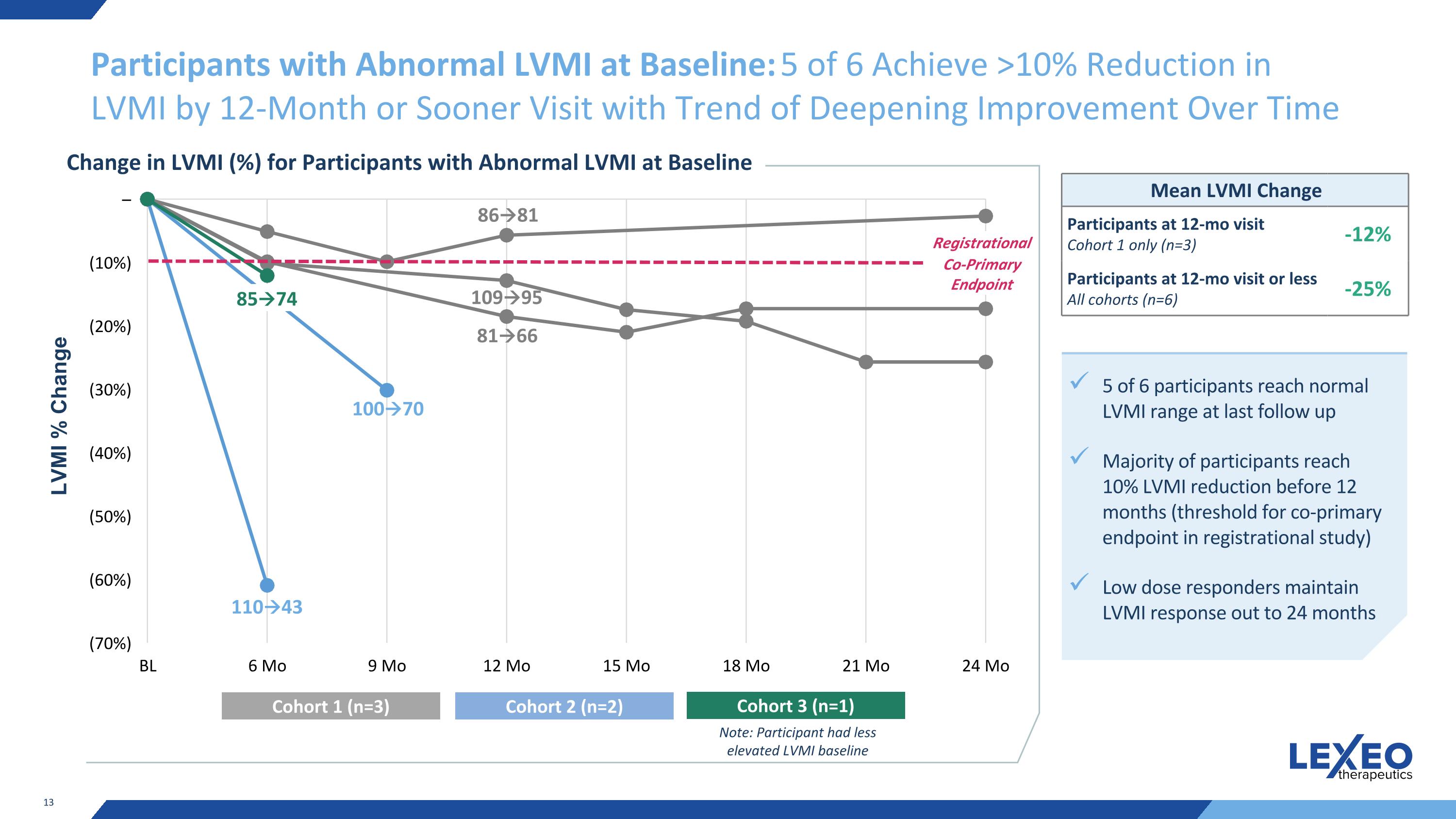
Registrational Co-Primary Endpoint LVMI % Change Participants with Abnormal LVMI at Baseline: 5 of 6 Achieve >10% Reduction in LVMI by 12-Month or Sooner Visit with Trend of Deepening Improvement Over Time Cohort 1 (n=3) Cohort 2 (n=2) Cohort 3 (n=1) Note: Participant had less elevated LVMI baseline 5 of 6 participants reach normal LVMI range at last follow up Majority of participants reach 10% LVMI reduction before 12 months (threshold for co-primary endpoint in registrational study) Low dose responders maintain LVMI response out to 24 months Mean LVMI Change Participants at 12-mo visit Cohort 1 only (n=3) -12% Participants at 12-mo visit or less All cohorts (n=6) -25% Change in LVMI (%) for Participants with Abnormal LVMI at Baseline 10070 8574 8166 10995 8681 11043
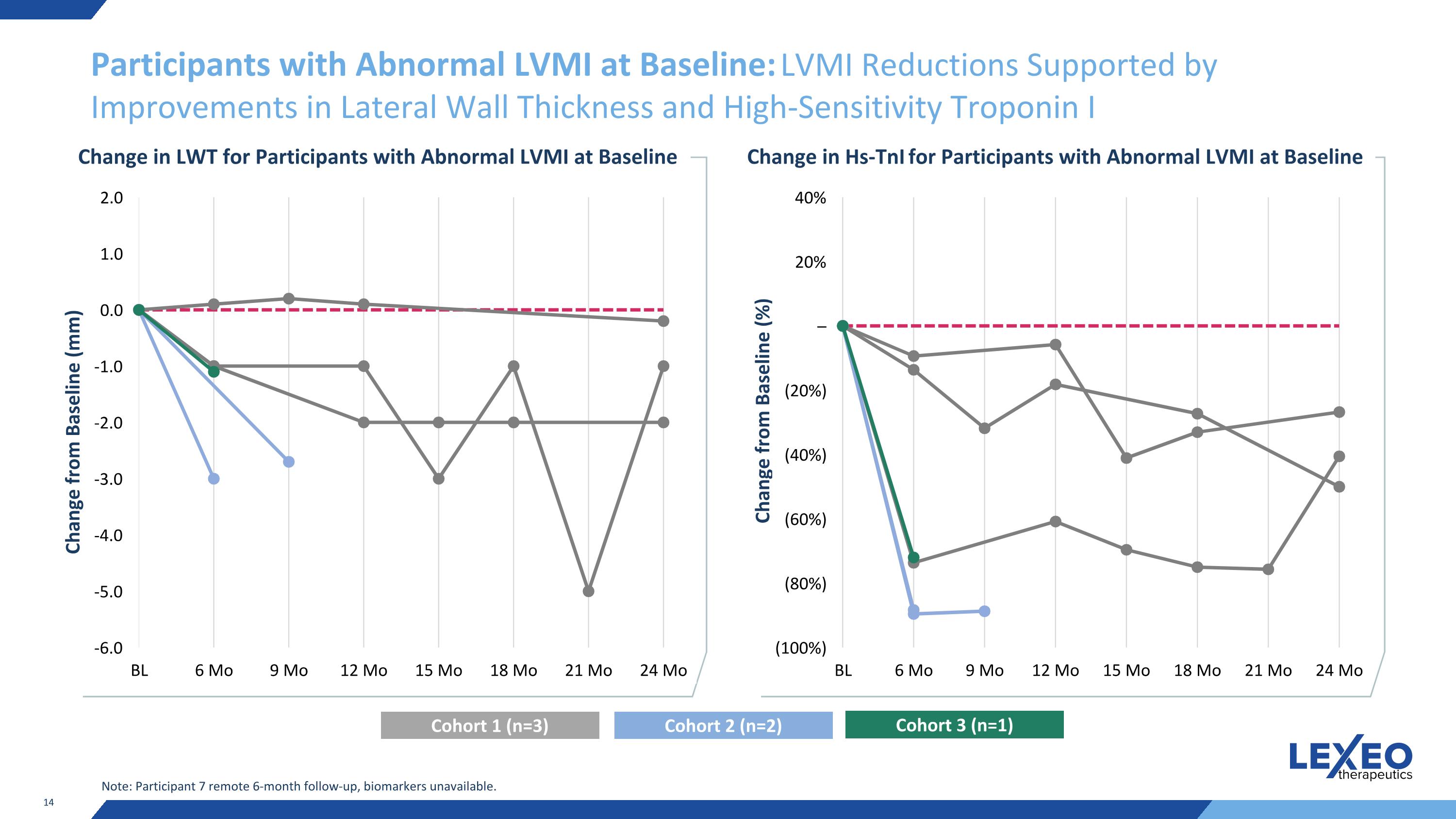
Participants with Abnormal LVMI at Baseline: LVMI Reductions Supported by Improvements in Lateral Wall Thickness and High-Sensitivity Troponin I Change from Baseline (mm) Note: Participant 7 remote 6-month follow-up, biomarkers unavailable. Change in LWT for Participants with Abnormal LVMI at Baseline Change in Hs-TnI for Participants with Abnormal LVMI at Baseline Change from Baseline (%) Cohort 1 (n=3) Cohort 2 (n=2) Cohort 3 (n=1)
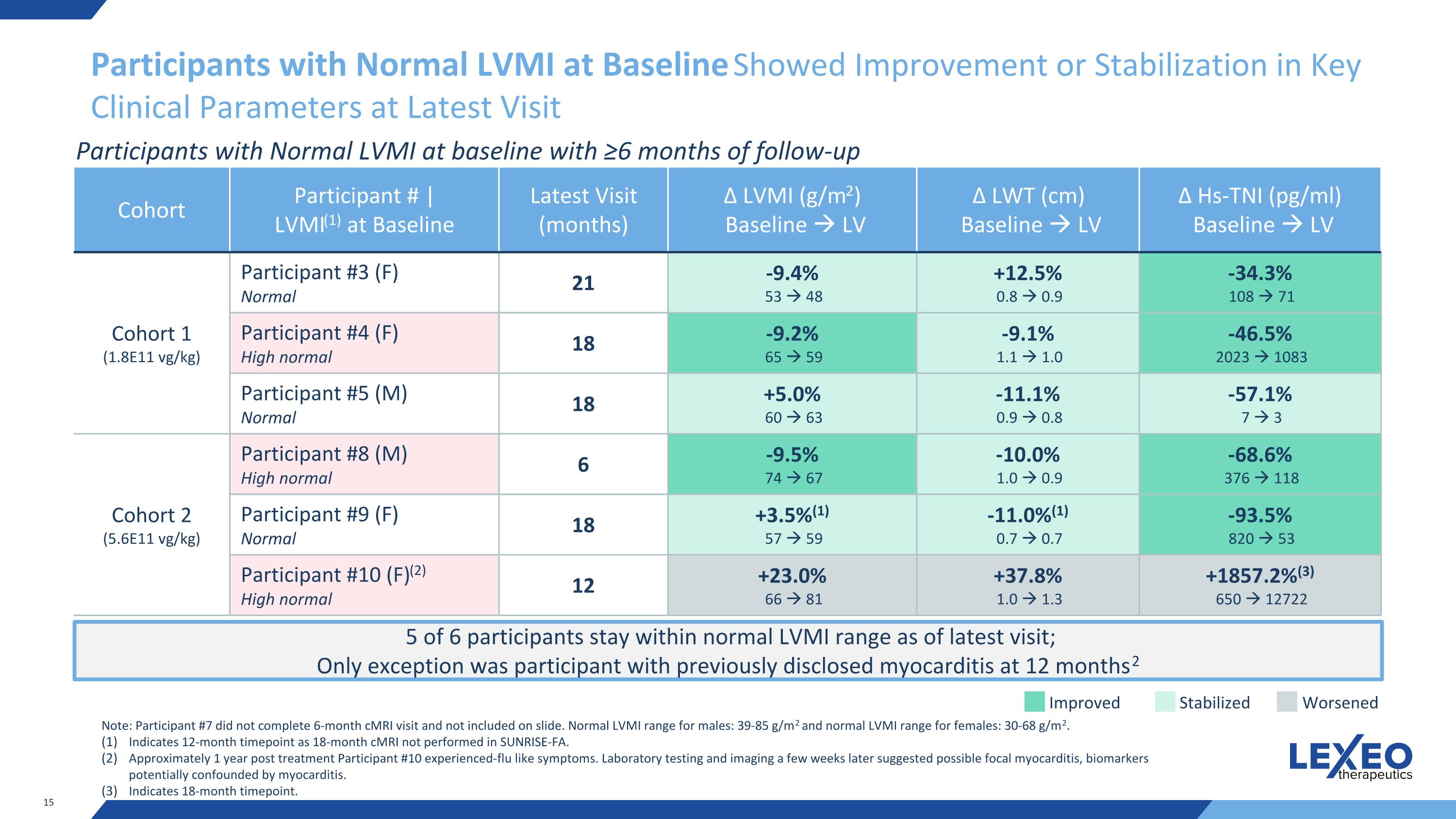
Participants with Normal LVMI at Baseline Showed Improvement or Stabilization in Key Clinical Parameters at Latest Visit Cohort Participant # | LVMI(1) at Baseline Latest Visit (months) ∆ LVMI (g/m2) Baseline LV ∆ LWT (cm) Baseline LV ∆ Hs-TNI (pg/ml) Baseline LV Cohort 1 (1.8E11 vg/kg) Participant #3 (F) Normal 21 -9.4% 53 48 +12.5% 0.8 0.9 -34.3% 108 71 Participant #4 (F) High normal 18 -9.2% 65 59 -9.1% 1.1 1.0 -46.5% 2023 1083 Participant #5 (M) Normal 18 +5.0% 60 63 -11.1% 0.9 0.8 -57.1% 7 3 Cohort 2 (5.6E11 vg/kg) Participant #8 (M) High normal 6 -9.5% 74 67 -10.0% 1.0 0.9 -68.6% 376 118 Participant #9 (F) Normal 18 +3.5%(1) 57 59 -11.0%(1) 0.7 0.7 -93.5% 820 53 Participant #10 (F)(2) High normal 12 +23.0% 66 81 +37.8% 1.0 1.3 +1857.2%(3) 650 12722 Note: Participant #7 did not complete 6-month cMRI visit and not included on slide. Normal LVMI range for males: 39-85 g/m2 and normal LVMI range for females: 30-68 g/m2. Indicates 12-month timepoint as 18-month cMRI not performed in SUNRISE-FA. Approximately 1 year post treatment Participant #10 experienced-flu like symptoms. Laboratory testing and imaging a few weeks later suggested possible focal myocarditis, biomarkers potentially confounded by myocarditis. Indicates 18-month timepoint. Participants with Normal LVMI at baseline with ≥6 months of follow-up Improved Stabilized Worsened 5 of 6 participants stay within normal LVMI range as of latest visit; Only exception was participant with previously disclosed myocarditis at 12 months 2
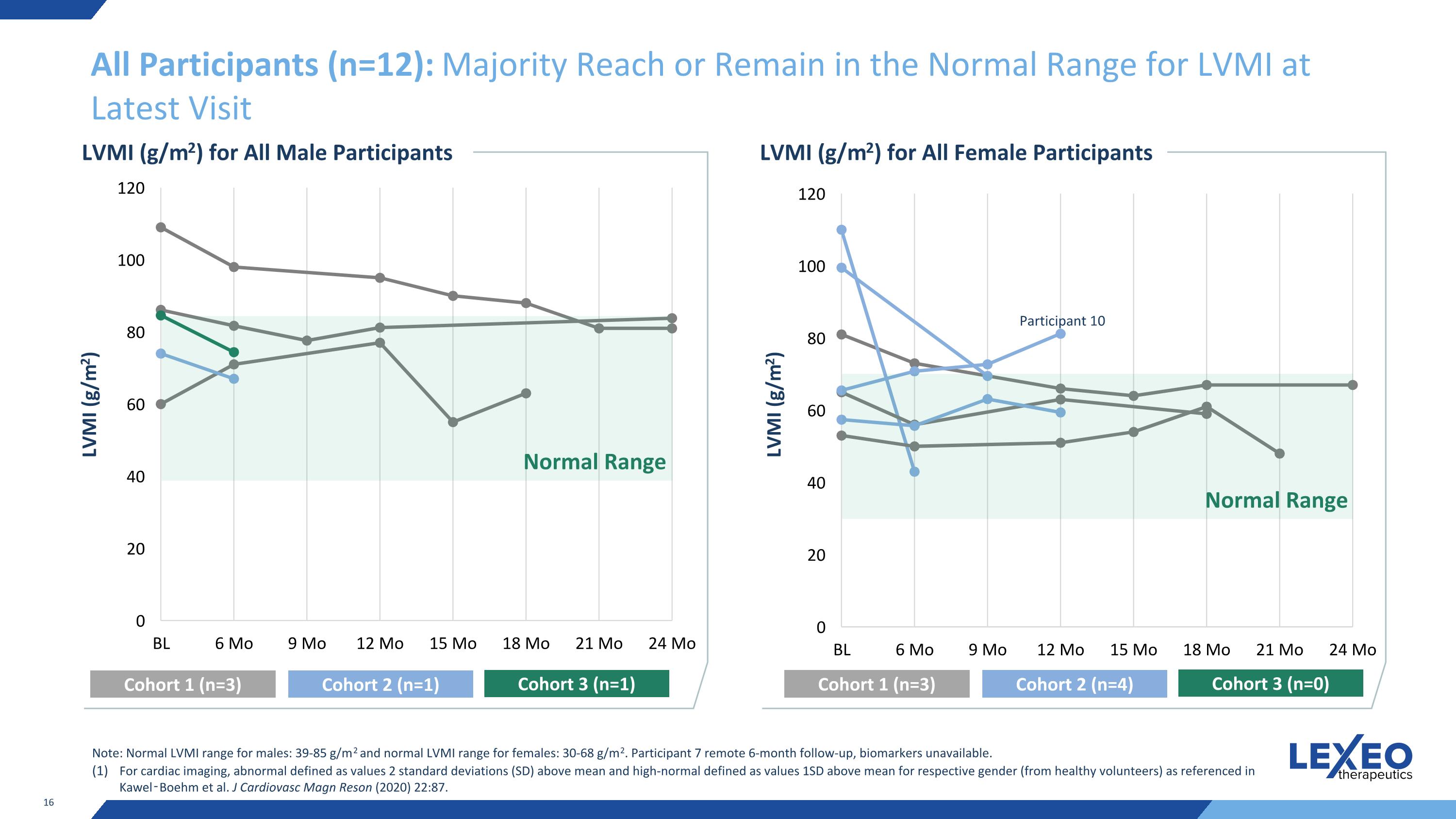
All Participants (n=12): Majority Reach or Remain in the Normal Range for LVMI at Latest Visit Cohort 1 (n=3) Cohort 2 (n=1) Cohort 3 (n=1) LVMI (g/m2) for All Male Participants LVMI (g/m2) for All Female Participants LVMI (g/m2) Cohort 1 (n=3) Cohort 2 (n=4) Cohort 3 (n=0) LVMI (g/m2) Note: Normal LVMI range for males: 39-85 g/m2 and normal LVMI range for females: 30-68 g/m2. Participant 7 remote 6-month follow-up, biomarkers unavailable. For cardiac imaging, abnormal defined as values 2 standard deviations (SD) above mean and high-normal defined as values 1SD above mean for respective gender (from healthy volunteers) as referenced in Kawel‑Boehm et al. J Cardiovasc Magn Reson (2020) 22:87. Normal Range Normal Range Participant 10
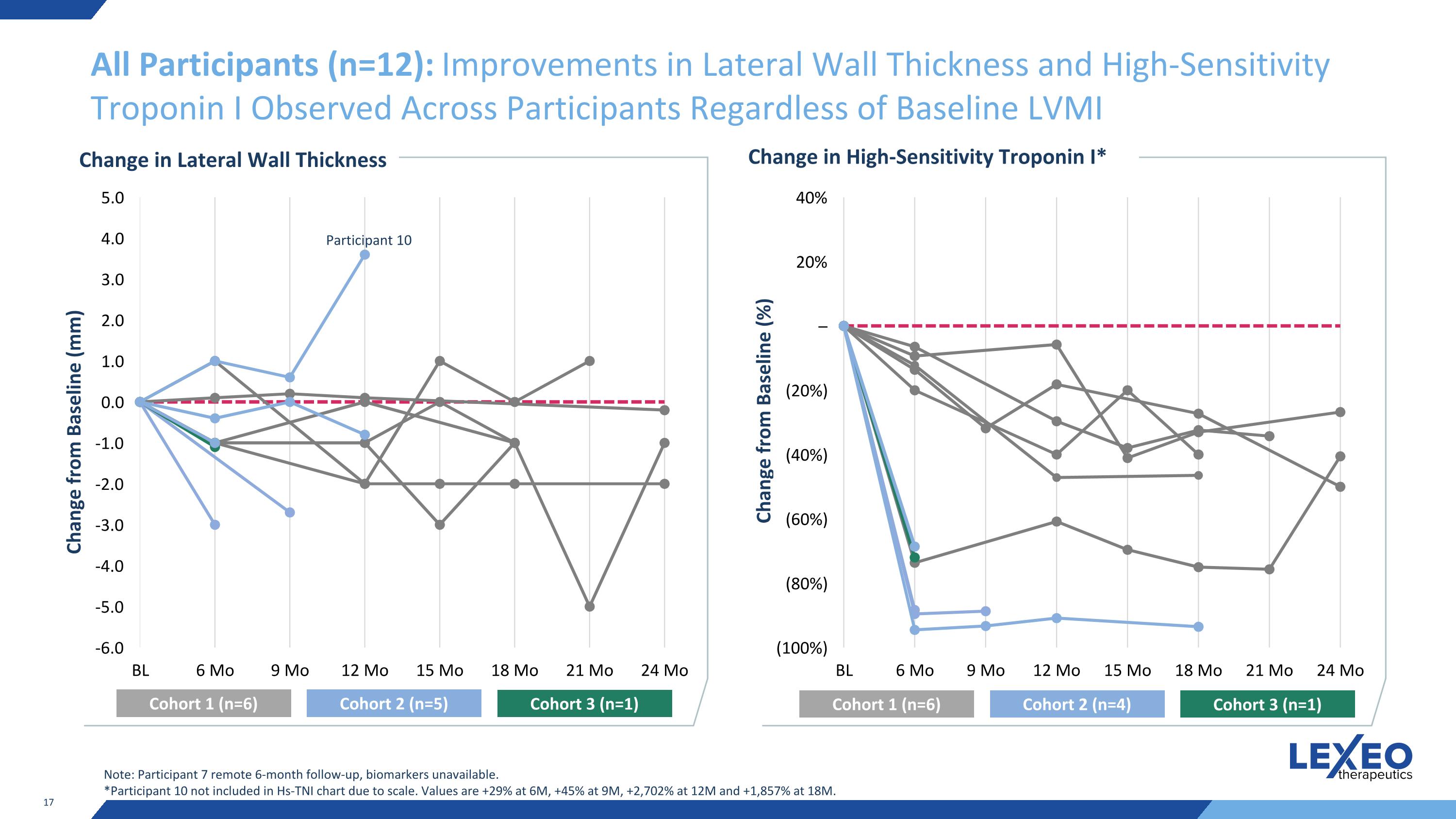
All Participants (n=12): Improvements in Lateral Wall Thickness and High-Sensitivity Troponin I Observed Across Participants Regardless of Baseline LVMI Change from Baseline (mm) Note: Participant 7 remote 6-month follow-up, biomarkers unavailable. *Participant 10 not included in Hs-TNI chart due to scale. Values are +29% at 6M, +45% at 9M, +2,702% at 12M and +1,857% at 18M. Change in Lateral Wall Thickness Change in High-Sensitivity Troponin I* Change from Baseline (%) Cohort 1 (n=6) Cohort 2 (n=5) Cohort 3 (n=1) Cohort 1 (n=6) Cohort 2 (n=4) Cohort 3 (n=1) Participant 10
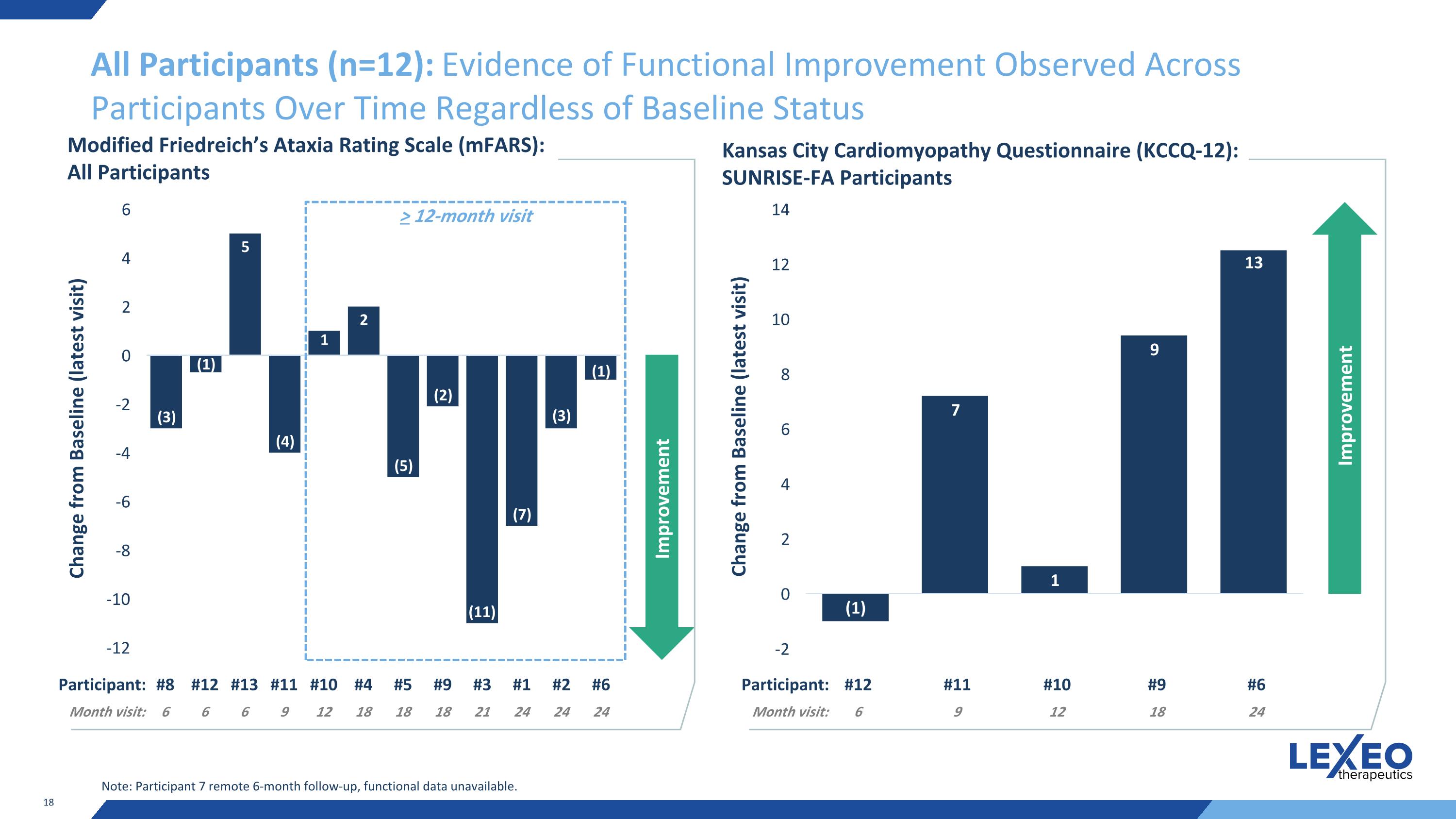
All Participants (n=12): Evidence of Functional Improvement Observed Across Participants Over Time Regardless of Baseline Status Change from Baseline (latest visit) Improvement Improvement Modified Friedreich’s Ataxia Rating Scale (mFARS): All Participants Kansas City Cardiomyopathy Questionnaire (KCCQ-12): SUNRISE-FA Participants Change from Baseline (latest visit) Note: Participant 7 remote 6-month follow-up, functional data unavailable. Participant: #8 #12 #13 #11 #10 #4 #5 #9 #3 #1 #2 #6 Month visit: 6 6 6 9 12 18 18 18 21 24 24 24 > 12-month visit Participant: #12 #11 #10 #9 #6 Month visit: 6 9 12 18 24
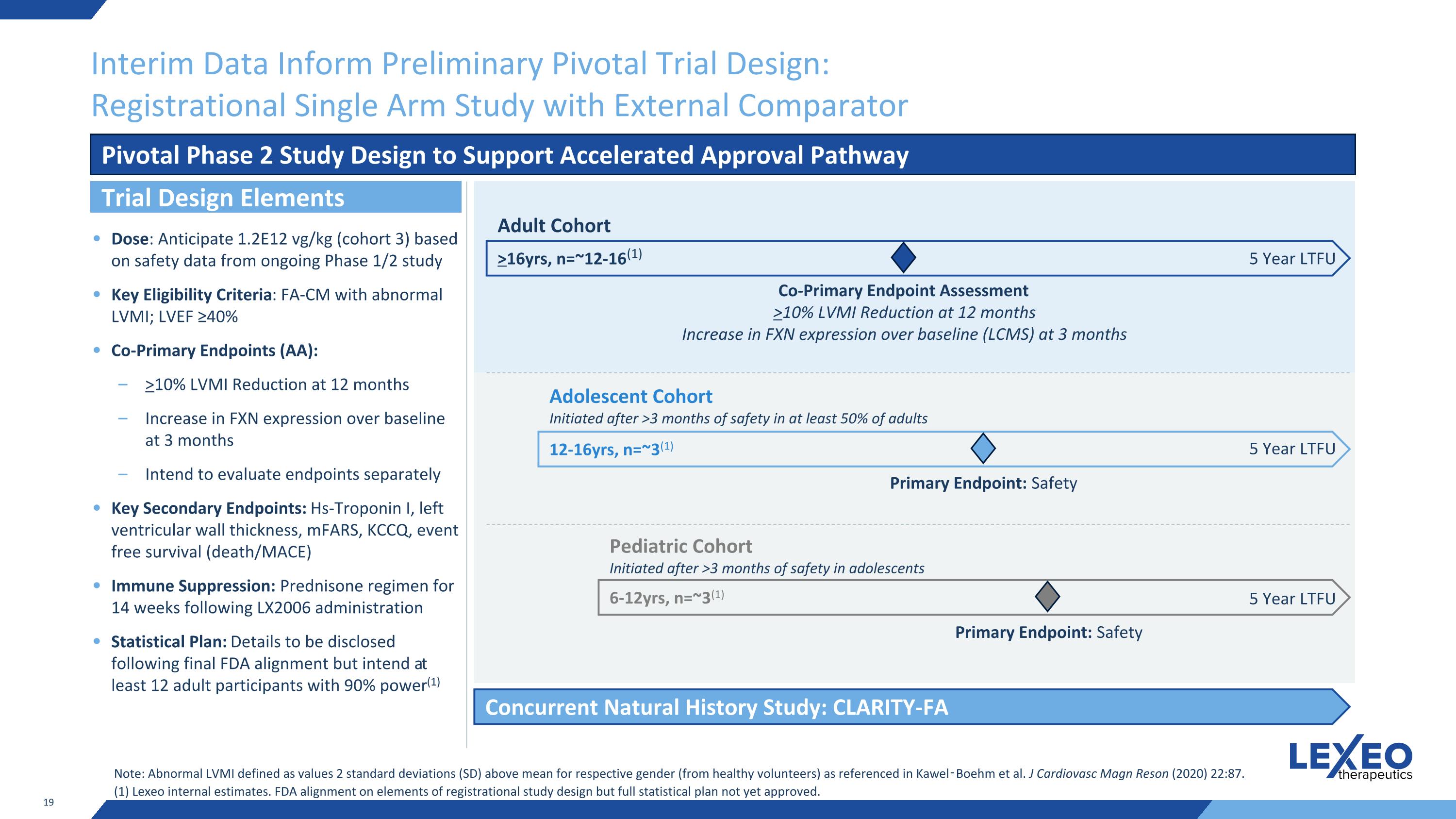
Interim Data Inform Preliminary Pivotal Trial Design: Registrational Single Arm Study with External Comparator Pivotal Phase 2 Study Design to Support Accelerated Approval Pathway Dose: Anticipate 1.2E12 vg/kg (cohort 3) based on safety data from ongoing Phase 1/2 study Key Eligibility Criteria: FA-CM with abnormal LVMI; LVEF ≥40% Co-Primary Endpoints (AA): >10% LVMI Reduction at 12 months Increase in FXN expression over baseline at 3 months Intend to evaluate endpoints separately Key Secondary Endpoints: Hs-Troponin I, left ventricular wall thickness, mFARS, KCCQ, event free survival (death/MACE) Immune Suppression: Prednisone regimen for 14 weeks following LX2006 administration Statistical Plan: Details to be disclosed following final FDA alignment but intend at least 12 adult participants with 90% power(1) >16yrs, n=~12-16(1) Co-Primary Endpoint Assessment >10% LVMI Reduction at 12 months Increase in FXN expression over baseline (LCMS) at 3 months 12-16yrs, n=~3(1) 6-12yrs, n=~3(1) Primary Endpoint: Safety 5 Year LTFU Pediatric Cohort Initiated after >3 months of safety in adolescents Adolescent Cohort Initiated after >3 months of safety in at least 50% of adults 5 Year LTFU 5 Year LTFU Adult Cohort Trial Design Elements Note: Abnormal LVMI defined as values 2 standard deviations (SD) above mean for respective gender (from healthy volunteers) as referenced in Kawel‑Boehm et al. J Cardiovasc Magn Reson (2020) 22:87. (1) Lexeo internal estimates. FDA alignment on elements of registrational study design but full statistical plan not yet approved. Primary Endpoint: Safety Concurrent Natural History Study: CLARITY-FA
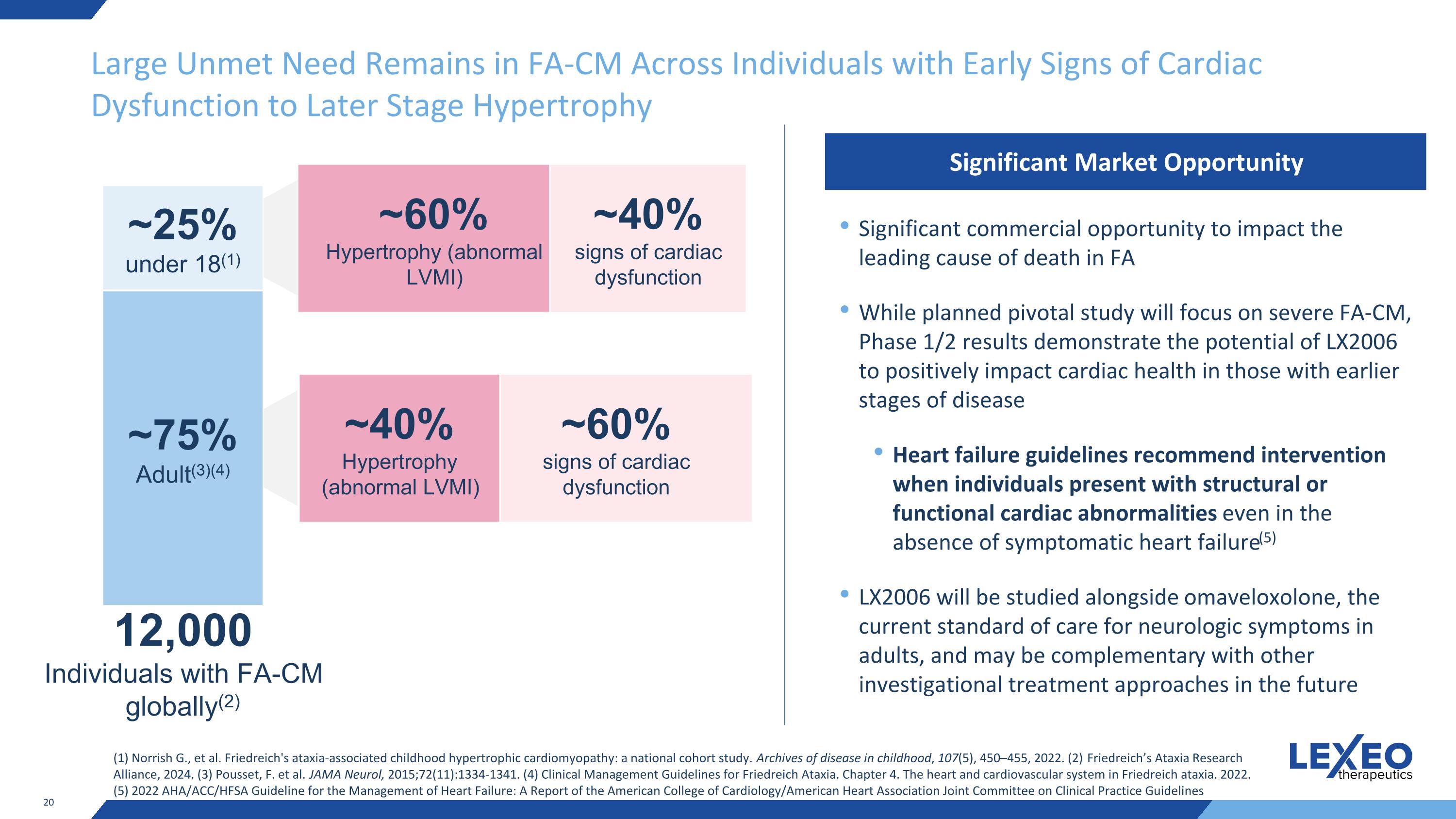
Large Unmet Need Remains in FA-CM Across Individuals with Early Signs of Cardiac Dysfunction to Later Stage Hypertrophy Significant Market Opportunity Significant commercial opportunity to impact the leading cause of death in FA While planned pivotal study will focus on severe FA-CM, Phase 1/2 results demonstrate the potential of LX2006 to positively impact cardiac health in those with earlier stages of disease Heart failure guidelines recommend intervention when individuals present with structural or functional cardiac abnormalities even in the absence of symptomatic heart failure(5) LX2006 will be studied alongside omaveloxolone, the current standard of care for neurologic symptoms in adults, and may be complementary with other investigational treatment approaches in the future ~25% under 18(1) ~75% Adult(3)(4) 12,000 Individuals with FA-CM globally(2) ~60% Hypertrophy (abnormal LVMI) ~40% signs of cardiac dysfunction ~60% signs of cardiac dysfunction ~40% Hypertrophy (abnormal LVMI) (1) Norrish G., et al. Friedreich's ataxia-associated childhood hypertrophic cardiomyopathy: a national cohort study. Archives of disease in childhood, 107(5), 450–455, 2022. (2) Friedreich’s Ataxia Research Alliance, 2024. (3) Pousset, F. et al. JAMA Neurol, 2015;72(11):1334-1341. (4) Clinical Management Guidelines for Friedreich Ataxia. Chapter 4. The heart and cardiovascular system in Friedreich ataxia. 2022. (5) 2022 AHA/ACC/HFSA Guideline for the Management of Heart Failure: A Report of the American College of Cardiology/American Heart Association Joint Committee on Clinical Practice Guidelines
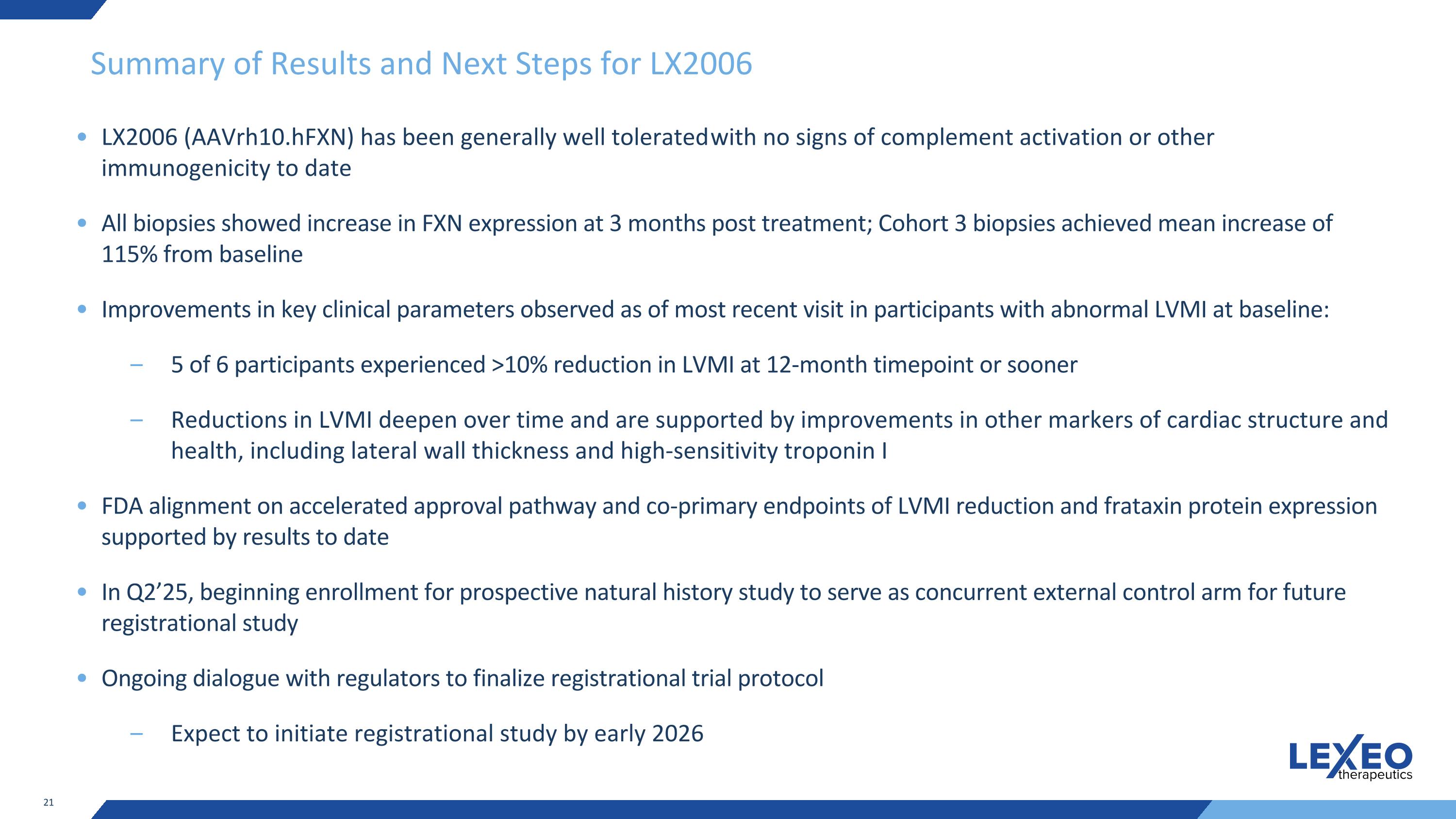
Summary of Results and Next Steps for LX2006 LX2006 (AAVrh10.hFXN) has been generally well tolerated with no signs of complement activation or other immunogenicity to date All biopsies showed increase in FXN expression at 3 months post treatment; Cohort 3 biopsies achieved mean increase of 115% from baseline Improvements in key clinical parameters observed as of most recent visit in participants with abnormal LVMI at baseline: 5 of 6 participants experienced >10% reduction in LVMI at 12-month timepoint or sooner Reductions in LVMI deepen over time and are supported by improvements in other markers of cardiac structure and health, including lateral wall thickness and high-sensitivity troponin I FDA alignment on accelerated approval pathway and co-primary endpoints of LVMI reduction and frataxin protein expression supported by results to date In Q2’25, beginning enrollment for prospective natural history study to serve as concurrent external control arm for future registrational study Ongoing dialogue with regulators to finalize registrational trial protocol Expect to initiate registrational study by early 2026

Thank you
Exhibit 99.2

Lexeo Therapeutics Announces Positive Interim Phase 1/2 Data for LX2006 in Friedreich Ataxia Cardiomyopathy Supporting Advancement to Registrational Study
Participants with abnormal left ventricular mass index (LVMI) at baseline achieved 25% mean reduction in LVMI by 12 months or sooner
Clinically meaningful improvements in majority of participants across cardiac biomarkers and functional measures
All SUNRISE-FA participants achieved meaningful increases in frataxin expression at 3-months post treatment; 115% average cardiac frataxin expression increase in high dose cohort, demonstrating dose response
Frataxin expression and LVMI improvement exceed co-primary target thresholds for planned registrational study
LX2006 generally well tolerated with no signs of complement activation or other immunogenicity to date
Company to host webcast today at 8:00 AM ET
NEW YORK – April 7, 2025 (GLOBE NEWSWIRE) – Lexeo Therapeutics, Inc. (Nasdaq: LXEO), a clinical stage genetic medicine company dedicated to pioneering novel treatments for cardiovascular diseases, today announced positive interim data across all dose cohorts of LX2006 for the treatment of Friedreich ataxia (FA) cardiomyopathy. In both the Lexeo-sponsored SUNRISE-FA Phase 1/2 clinical trial (NCT05445323) and the Weill Cornell Medicine investigator-initiated Phase 1A trial (NCT05302271), treatment with LX2006 was associated with clinically significant improvements in cardiac biomarkers and functional measures, and increased frataxin protein expression was observed in all participants with cardiac biopsies.
“These data provide strong evidence that LX2006 is acting as a beneficial disease-modifying treatment candidate, supporting its continued development as a potential first- and best-in-class therapy for FA cardiomyopathy,” said Dr. Eric Adler, Chief Medical Officer and Head of Research at Lexeo Therapeutics. “Cardiac dysfunction is the leading cause of death for people with FA, and the clinical and functional improvements we’ve observed across these studies could be transformational to the standard of care. Participants have experienced clinically meaningful improvements across multiple measures, as well as increased frataxin expression in the heart, all of which underscore the potential of LX2006 to positively impact outcomes for people with FA cardiomyopathy.”
“We believe these data show LX2006 exceeding the thresholds aligned with the U.S. Food and Drug Administration (FDA) to support accelerated approval in the planned registrational study,” said Dr. Sandi See Tai, Chief Development Officer at Lexeo. “We are eager to advance this promising candidate as quickly as possible to support adults and children living with the devastating and fatal impacts of FA cardiomyopathy, and we expect to initiate a registrational study by early 2026. I would like to thank the participants, caregivers, and investigators who have helped to advance this important research.”
Lexeo has obtained alignment with the FDA on key parameters related to the LX2006 planned registrational study, including co-primary endpoints of LVMI, with a target threshold of >10% improvement at 12 months, and frataxin expression, with a target of any increase from baseline at three months.
Trial Design
SUNRISE-FA and the Weill Cornell Medicine investigator-initiated trial are 52-week, ascending dose, open-label trials evaluating the safety and preliminary efficacy of LX2006 in participants with FA cardiomyopathy. LX2006 is administered as a one-time intravenous infusion. While the two studies share similar designs, myocardial biopsies were conducted only in the SUNRISE-FA Phase 1/2 trial. Evidence of cardiomyopathy is required for study inclusion but participants vary in the severity of baseline hypertrophy as measured by LVMI. As of the data cutoff on March 25, 2025, a total of 16 participants have been dosed across the two studies, six of whom had cardiac hypertrophy with abnormal LVMI (at least two standard deviations above the mean in healthy volunteers). SUNRISE-FA enrollment was completed in Q4 2024.
1
Interim Clinical Update (n=12 participants with > 6-months of follow-up)
Left ventricular mass index (LVMI):
Secondary cardiac biomarkers, functional measures and patient-reported outcomes:
Cardiac frataxin expression (assessed in SUNRISE-FA trial only; n=8):
Interim Safety Update (n=16 participants)
Registrational Study and Next Steps
Corporate Webcast Details
Lexeo Therapeutics will host a webcast at 8:00 AM ET today, April 7, 2025. Analysts and investors can participate by accessing the webcast live on the News & Events page in the Investors section of Lexeo’s website, www.lexeotx.com. The webcast will be archived on the company’s website following completion of the call.
About LX2006
LX2006 is an AAV-based gene therapy candidate for the treatment of FA cardiomyopathy, the leading cause of death in individuals with FA affecting approximately 5,000 people in the United States. LX2006 is designed to target the cardiac manifestations of FA by delivering a functional frataxin gene to promote the expression of the frataxin protein and restore mitochondrial function in myocardial cells. LX2006 has been granted Rare Pediatric Disease designation, Fast Track designation, Orphan Drug designation and Regenerative Medicine Advanced Therapy designation by the FDA for the treatment of FA cardiomyopathy, and orphan medicinal product designation by the European Commission.
About Lexeo Therapeutics
Lexeo Therapeutics is a New York City-based, clinical stage genetic medicine company dedicated to reshaping heart health by applying pioneering science to fundamentally change how cardiovascular diseases are treated. The Company is advancing a portfolio of therapeutic candidates that take aim at the underlying genetic causes of
2
conditions, including LX2006 for the treatment of Friedreich ataxia (FA) cardiomyopathy, LX2020 for the treatment of plakophilin-2 (PKP2) arrhythmogenic cardiomyopathy, and other devastating diseases with high unmet need.
Cautionary Note Regarding Forward-Looking Statements
Certain statements in this press release may constitute “forward-looking statements” within the meaning of the federal securities laws, including, but not limited to, Lexeo’s expectations and plans regarding its current product candidates and programs and the timing for receipt and announcement of data from its clinical trials, and the timing and likelihood of potential regulatory approval. Words such as “may,” “might,” “will,” “objective,” “intend,” “should,” “could,” “can,” “would,” “expect,” “believe,” “design,” “estimate,” “predict,” “potential,” “develop,” “plan” or the negative of these terms, and similar expressions, or statements regarding intent, belief, or current expectations, are forward-looking statements. While Lexeo believes these forward-looking statements are reasonable, undue reliance should not be placed on any such forward-looking statements. These forward-looking statements are based upon current information available to the company as well as certain estimates and assumptions and are subject to various risks and uncertainties (including, without limitation, those set forth in Lexeo’s filings with the U.S. Securities and Exchange Commission (SEC)), many of which are beyond the company’s control and subject to change. Actual results could be materially different from those indicated by such forward-looking statements as a result of many factors, including but not limited to: risks and uncertainties related to global macroeconomic conditions and related volatility; expectations regarding the initiation, progress, and expected results of Lexeo’s preclinical studies, clinical trials and research and development programs; the unpredictable relationship between preclinical study results and clinical study results; delays in submission of regulatory filings or failure to receive regulatory approval; liquidity and capital resources; and other risks and uncertainties identified in Lexeo’s Annual Report on Form 10-K for the annual period ended December 31, 2024, filed with the SEC on March 24, 2025 and subsequent future filings Lexeo may make with the SEC. New risks and uncertainties may emerge from time to time, and it is not possible to predict all risks and uncertainties. Lexeo claims the protection of the Safe Harbor contained in the Private Securities Litigation Reform Act of 1995 for forward-looking statements. Lexeo expressly disclaims any obligation to update or alter any statements whether as a result of new information, future events or otherwise, except as required by law.
Media Response:
Investor Response:
Carlo Tanzi, Ph.D.
3