MTVA 8-K
MetaVia Inc. (MTVA)
UNITED STATES
SECURITIES AND EXCHANGE COMMISSION
WASHINGTON, D.C. 20549
FORM
CURRENT REPORT
Pursuant to Section 13 or 15(d) of the Securities Exchange Act of 1934
Date of Report (Date of earliest event reported):

(Exact name of Registrant as Specified in Its Charter)
(State or other jurisdiction of incorporation) | (Commission File Number) | (IRS Employer Identification No.) |
(Address of principal executive offices) | (Zip Code) |
(
(Registrant’s telephone number, including area code)
Not applicable
(Former name or former address, if changed since last report)
Check the appropriate box below if the Form 8-K filing is intended to simultaneously satisfy the filing obligation of the registrant under any of the following provisions:
Written communications pursuant to Rule 425 under the Securities Act (17 CFR 230.425) | |
Soliciting material pursuant to Rule 14a-12 under the Exchange Act (17 CFR 240.14a-12) | |
Pre-commencement communications pursuant to Rule 14d-2(b) under the Exchange Act (17 CFR 240.14d-2(b)) | |
Pre-commencement communications pursuant to Rule 13e-4(c) under the Exchange Act (17 CFR 240.13e-4(c)) |
Securities registered pursuant to Section 12(b) of the Act:
Title of each class | | Trading Symbol(s) | | Name of each exchange on which registered |
|
|
Indicate by check mark whether the registrant is an emerging growth company as defined in Rule 405 of the Securities Act of 1933 (§ 230.405 of this chapter) or Rule 12b-2 of the Securities Exchange Act of 1934 (§ 240.12b-2 of this chapter).
Emerging growth company
If an emerging growth company, indicate by check mark if the registrant has elected not to use the extended transition period for complying with any new or revised financial accounting standards provided pursuant to Section 13(a) of the Exchange Act. ☐
Item 7.01.Regulation FD Disclosure.
On March 26, 2026, MetaVia Inc. (the “Company”) posted an updated corporate presentation to its website at https://ir.metaviatx.com/events-presentations/presentations, which the Company may use from time to time in connection with presentations, investor communications or conferences. A copy of the corporate presentation is attached as Exhibit 99.1 to this Current Report on Form 8-K (this “Report”) and is incorporated herein by reference.
Information contained on or accessible through any website reference in the corporate presentation is not part of, or incorporated by reference in, this Report, and the inclusion of such website addresses in this Report by incorporation by reference of the corporate presentation is as inactive textual references only.
The information in this Report, including Exhibit 99.1 hereto, is furnished pursuant to Item 7.01 and shall not be deemed "filed" for purposes of Section 18 of the Securities Exchange Act of 1934, as amended (the "Exchange Act"), or otherwise subject to the liabilities of that Section, nor shall it be deemed incorporated by reference in any filing under the Securities Act of 1933, as amended, or the Exchange Act, except as expressly set forth by specific reference in such filing. The Company’s submission of this Report shall not be deemed an admission as to the materiality of any information required to be disclosed solely to satisfy the requirements of Regulation FD.
Forward-Looking Statements
Exhibit 99.1 attached hereto contains forward-looking statements within the meaning of the federal securities laws. These forward-looking statements are based on current expectations and are not guarantees of future performance. Further, the forward-looking statements are subject to the limitations listed in Exhibit 99.1 and in the other reports of the Company filed with the Securities and Exchange Commission, including that actual events or results may differ materially from those in the forward-looking statements.
Item 9.01.Financial Statements and Exhibits.
(d) Exhibits
Exhibit | | Exhibit Description |
99.1 | ||
104 | Cover Page Interactive Data File (embedded within Inline XBRL document). |
Signatures
Pursuant to the requirements of the Securities Exchange Act of 1934, the registrant has duly caused this report to be signed on its behalf by the undersigned hereunto duly authorized.
| METAVIA INC. | ||
Date: March 26, 2026 | By: | /s/ Hyung Heon Kim | |
Hyung Heon Kim | |||
President and Chief Executive Officer | |||
| 1 MetaVia Inc. Transforming Cardiometabolic Diseases Investor Presentation March 2026 www.metaviatx.com Nasdaq: MTVA |
| 2 Forward-Looking Statements This presentation includes forward-looking statements within the meaning of the Private Securities Litigation Reform Act of 1995. Forward-looking statements include all statements that do not relate solely to historical or current facts and can be identified by the use of words such as “believes”, “expects”, “anticipates”, “may”, “will”, “should”, “seeks”, “approximately”, “intends”, “projects”, “plans”, “estimates” or the negative of these words or other comparable terminology (as well as other words or expressions referencing future events, conditions or circumstances). Forward-looking statements are predictions, projections and other statements about future events that are based on current expectations and assumptions and, as a result, are subject to risks and uncertainties. These forward-looking statements include, but are not limited to, statements regarding the market size and potential growth opportunities of our current product candidates; the safety, efficacy, tolerability and other potential benefits, such as weight loss, associated with our current product candidates; the competitive differentiators of our current product candidates; our planned clinical trial activities for our current product candidates; and the expected timeline for topline data release dates. Many factors could cause actual future events to differ materially from the forward-looking statements in this presentation, including, without limitation, those risks associated our history of net losses, the sufficiency of our existing cash on hand to fund operations and raising additional capital; adverse global economic conditions; our ability to execute on our commercial strategy; the timeline for regulatory submissions; the ability to obtain regulatory approval through the development steps of our current and future product candidates; the ability to realize the benefits of the license agreement with Dong-A ST Co. Ltd. (the "License Agreement"), including the impact on our future financial and operating results; the cooperation of our contract manufacturers, clinical study partners and others involved in the development of our current and future product candidates; potential negative interactions between our product candidates and any other products with which they are combined for treatment; our ability to initiate and complete clinical trials on a timely basis; our ability to recruit subjects for its clinical trials; whether we receive results from our clinical trials that are consistent with the results of pre-clinical and previous clinical trials; impact of costs related to the License Agreement, known and unknown, including costs of any litigation or regulatory actions relating to the License Agreement; the effects of changes in applicable laws, regulations or Nasdaq listing rules; and the effects of changes to our stock price. These forward-looking statements are based on information currently available to us and our current plans or expectations and are subject to a number of known and unknown uncertainties, risks and other important factors that may cause our actual results, performance or achievements expressed or implied by the forward-looking statements. These and other important factors are described in detail in the “Risk Factors” section of our Annual Report on Form 10-K for the year ended December 31, 2025, and our other filings with the Securities and Exchange Commission. While we may elect to update such forward-looking statements at some point in the future, except as required by law, we disclaim any obligation to do so, even if subsequent events cause our views to change. Although we believe the expectations reflected in such forward-looking statements are reasonable, we can give no assurance that such expectations will prove to be correct. These forward-looking statements should not be relied upon as representing our views as of any date subsequent to this presentation. This presentation also may contain estimates and other statistical data made by independent parties and by us relating to market size and other data about our industry. This data involves a number of assumptions and limitations, and you are cautioned not to give undue weight to such estimates. In addition, projections, assumptions and estimates of our future performance and the future performance of the markets in which we operate are necessarily subject to a high degree of uncertainty and risk. |
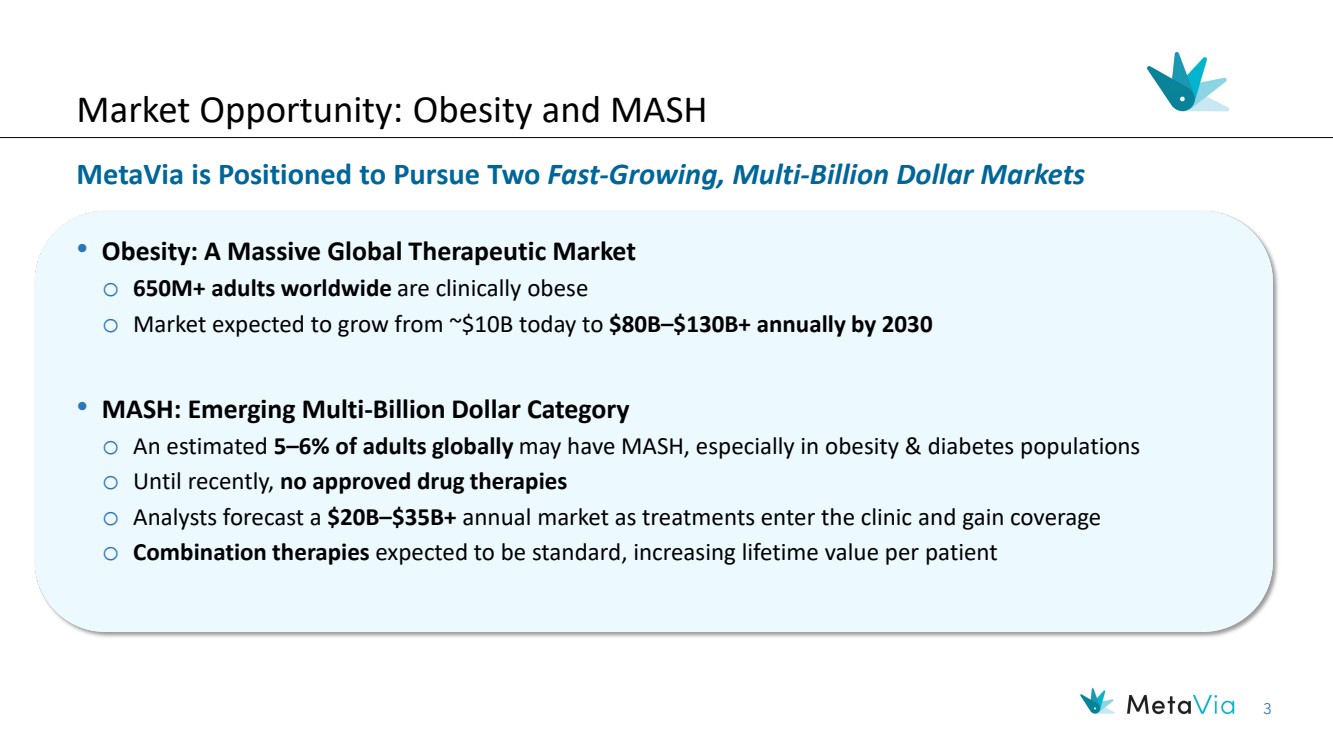
| 3 Market Opportunity: Obesity and MASH MetaVia is Positioned to Pursue Two Fast-Growing, Multi-Billion Dollar Markets • Obesity: A Massive Global Therapeutic Market o 650M+ adults worldwide are clinically obese o Market expected to grow from ~$10B today to $80B–$130B+ annually by 2030 • MASH: Emerging Multi-Billion Dollar Category o An estimated 5–6% of adults globally may have MASH, especially in obesity & diabetes populations o Until recently, no approved drug therapies o Analysts forecast a $20B–$35B+ annual market as treatments enter the clinic and gain coverage o Combination therapies expected to be standard, increasing lifetime value per patient |
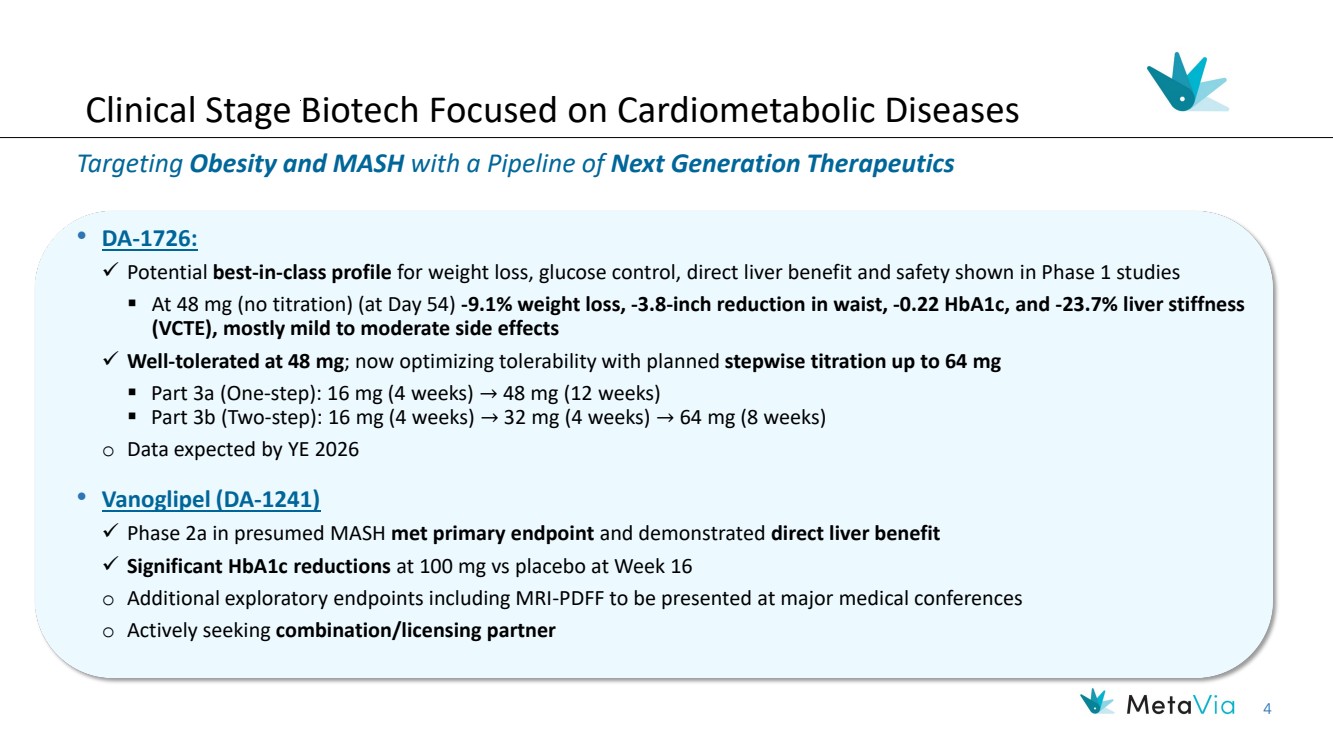
| 4 Clinical Stage Biotech Focused on Cardiometabolic Diseases Targeting Obesity and MASH with a Pipeline of Next Generation Therapeutics • DA-1726: Potential best-in-class profile for weight loss, glucose control, direct liver benefit and safety shown in Phase 1 studies At 48 mg (no titration) (at Day 54) -9.1% weight loss, -3.8-inch reduction in waist, -0.22 HbA1c, and -23.7% liver stiffness (VCTE), mostly mild to moderate side effects Well-tolerated at 48 mg; now optimizing tolerability with planned stepwise titration up to 64 mg Part 3a (One-step): 16 mg (4 weeks) → 48 mg (12 weeks) Part 3b (Two-step): 16 mg (4 weeks) → 32 mg (4 weeks) → 64 mg (8 weeks) o Data expected by YE 2026 • Vanoglipel (DA-1241) Phase 2a in presumed MASH met primary endpoint and demonstrated direct liver benefit Significant HbA1c reductions at 100 mg vs placebo at Week 16 o Additional exploratory endpoints including MRI-PDFF to be presented at major medical conferences o Actively seeking combination/licensing partner |
| 5 Strong Leadership Team Executive Management Hyung Heon Kim, Chief Executive Officer Robert Homolka, SVP Clinical Operations Marshall H. Woodworth, Chief Financial Officer Mi-Kyung Kim, Ph.D., RPh, Chief Scientific Officer 20+ years of experience in M&A, financing and corporate governance 10+ years of licensing, M&A and compliance with Dong-A Group Former General Counsel/SVP at Dong-A ST and Dong-A Socio Group BA Soonghsil University, JD Washington University School of Law 25+ years in drug discovery research at Dong-A ST Specialized in diabetes, obesity, MASH, immune-mediated diseases Ph.D., RPh, College of Pharmacy, Ewha Womans University 35+ years in pharmaceutical and biotech development Sr. director of clinical operations in Adiso Therapeutics Director of clinical operations at Shire/Takeda pharmaceuticals Director of experimental trial management at AstraZeneca 35+ years of financial experience 20+ years working with life science investors and analysts CFO of Nevakar Inc., Braeburn Pharmaceuticals Inc., Aerocrine AB and Furiex Pharmaceuticals Inc. BS University of Maryland, MBA Indiana University Chris Fang, MD, Advisor/Consulting Chief Medical Officer 20+ years of experience in clinical development, R&D and medical affairs Career focused on obesity, MASH, diabetes and other indications Held key roles at Eli Lilly, IQVIA, Acer Health and Johnson & Johnson BA UCLA, Master of Health Science John Hopkins, MD Cornell, MBA Wharton Non-Executive Management |

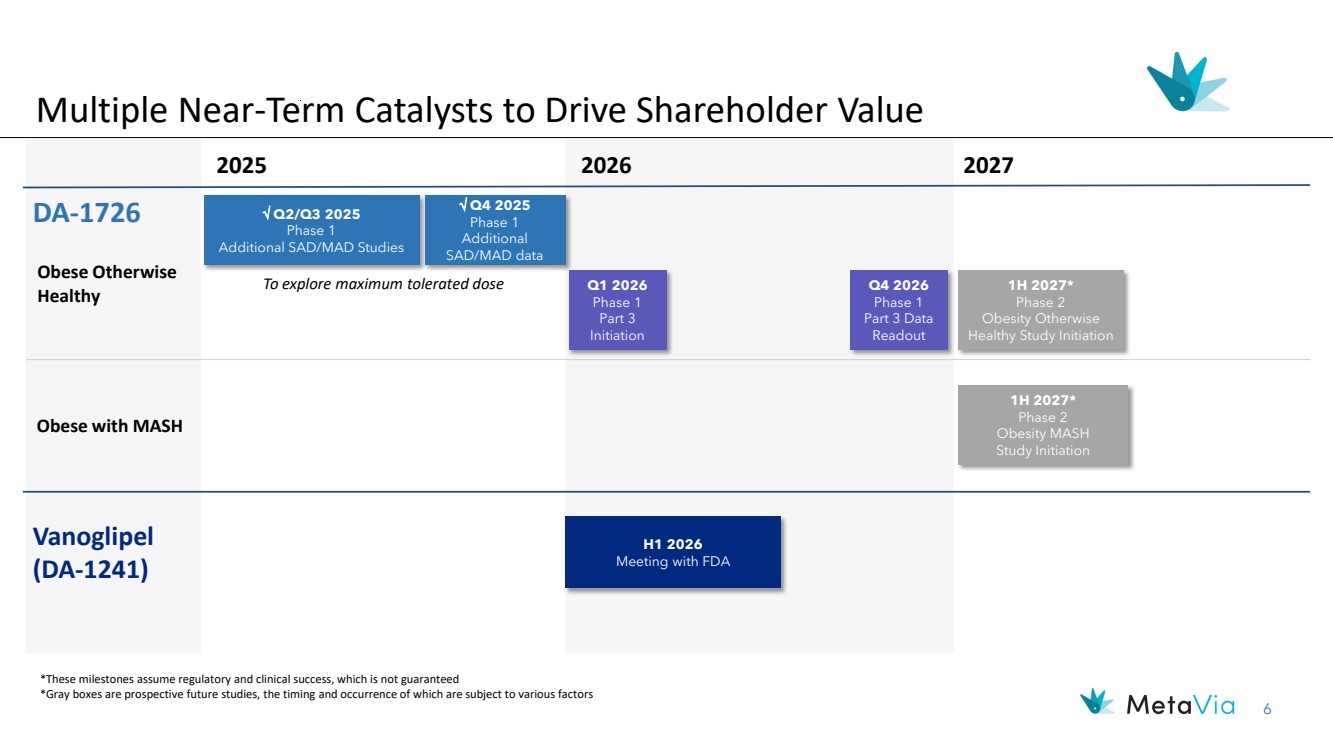
| 6 Multiple Near-Term Catalysts to Drive Shareholder Value 2026 Vanoglipel (DA-1241) H1 2026 Meeting with FDA DA-1726 *These milestones assume regulatory and clinical success, which is not guaranteed *Gray boxes are prospective future studies, the timing and occurrence of which are subject to various factors √ Q2/Q3 2025 Phase 1 Additional SAD/MAD Studies √ Q4 2025 Phase 1 Additional SAD/MAD data To explore maximum tolerated dose 2025 Obese Otherwise Healthy 2027 Obese with MASH 1H 2027* Phase 2 Obesity MASH Study Initiation Q1 2026 Phase 1 Part 3 Initiation 1H 2027* Phase 2 Obesity Otherwise Healthy Study Initiation Q4 2026 Phase 1 Part 3 Data Readout |
| DA-1726 A Novel GLP1R/GCGR Dual Agonist for the Treatment of Obesity |
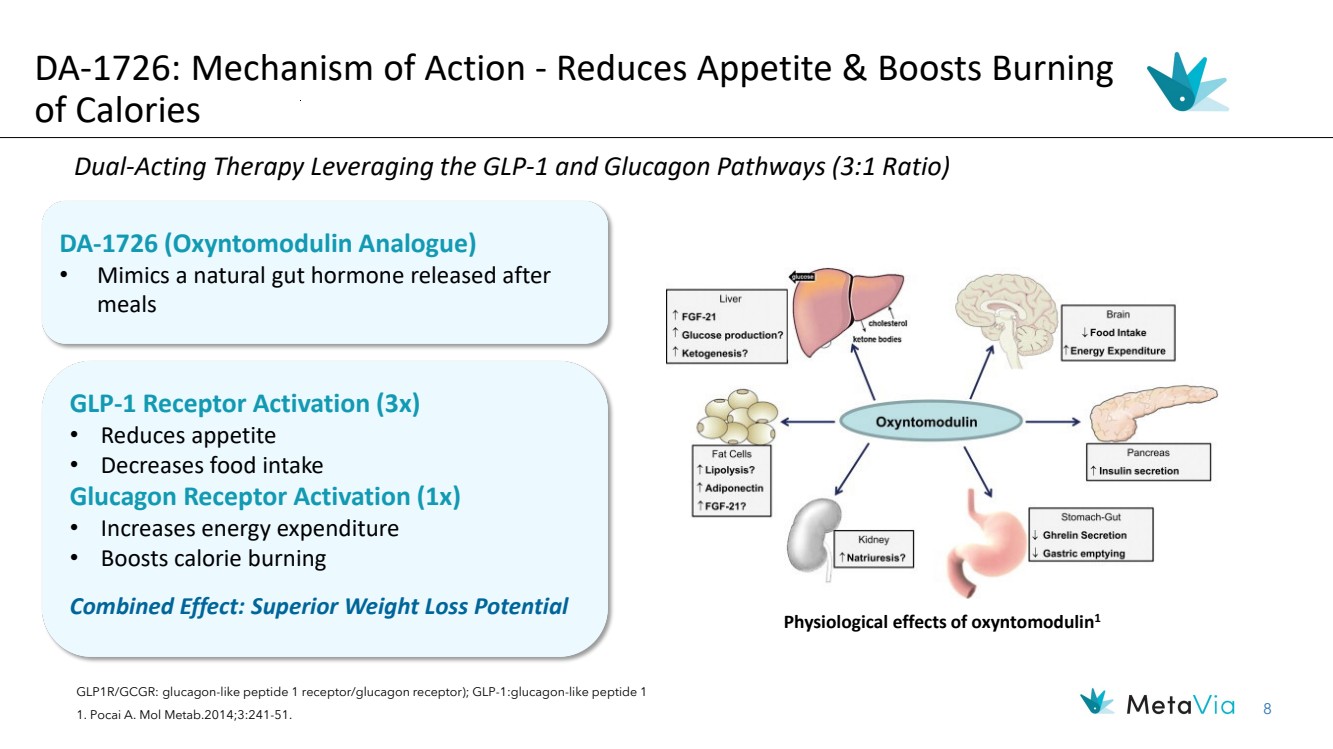
| 8 DA-1726 (Oxyntomodulin Analogue) • Mimics a natural gut hormone released after meals Dual-Acting Therapy Leveraging the GLP-1 and Glucagon Pathways (3:1 Ratio) GLP1R/GCGR: glucagon-like peptide 1 receptor/glucagon receptor); GLP-1:glucagon-like peptide 1 1. Pocai A. Mol Metab.2014;3:241-51. Physiological effects of oxyntomodulin1 DA-1726: Mechanism of Action - Reduces Appetite & Boosts Burning of Calories GLP-1 Receptor Activation (3x) • Reduces appetite • Decreases food intake Glucagon Receptor Activation (1x) • Increases energy expenditure • Boosts calorie burning Combined Effect: Superior Weight Loss Potential |
| 9 Competitive Landscape – Efficacy DA-1726 Pemvidutide1 Mazdutide2 Survodutide3 Retatrutide5 Developer MetaVia Altimmune Innovent/Lilly Boehringer Ingelheim/Zealand Lilly Status Phase 1 Phase 3 ready Phase 2 in US Phase 3 Phase 3 Action GLP-1R/GCGR (3:1) GLP-1R/GCGR (1:1) GLP-1R/GCGR (Unknown) GLP-1R/GCGR (8:1) GLP-1/GCGR/GIP (1.3:1:29.7) Administration Once weekly injection Once weekly injection Once weekly injection Once weekly injection Once weekly injection Current Titration No titration in Phase 1 No titration in Phase 1 5 Step (1.5, 3, 6, 9, 12, 16mg) 7 Step (0.3, 0.6, 0.9, 1.2, 1.8, 2.4, 3.3, 4.2, 4.8mg) 3 Step (2, 4, 8, 12mg) Body Weight Loss in Phase 1 MAD Phase 1 8 weeks (Day 54) (no titration) 9.1% (48 mg) Phase 1b 12 weeks (no titration) 10.3% (1.8mg) 9% (2.4mg) Phase 2 48 weeks -22.3% Week 8: less than 5% Week 16: between 9~10% Placebo adjusted Phase 2 46 weeks -16.7% Week 8: less than -6% Phase 2 48 weeks -24.2% (12mg) Week 8: between 9~10% Fasting Glucose (mg/dL) -12.3 mg/dL HbA1c @ 8 weeks (Day 54) (48 mg) -0.8 mg/dL @ 12 weeks (2.4mg) Phase 2 48 weeks (obese Healthy, 16mg) -12.3 mg/dL, HbA1c -0.6% Week 8 glucose: nominal change from baseline Phase 1 6 weeks did not show any treatment effect at any time point Max -8.7 mg/dL,@ day 107 (close to week 16) Phase 2 48 weeks (Obese Healthy, 12mg) -10.6 mg/dL HbA1c -0.4% Waist Circumference (cm) -9.8 cm @ 8 weeks (Day 54) (48 mg) -10.2cm @ 24 weeks (2.4mg) Phase 2 48 weeks -16.6cm (16mg) Week 8: Less than 5cm (16mg) Up to -16cm @ 46 weeks Phase 2 48 week 12mg -19.6cm Week 8: less than 9cm Data in the above table were gathered from publicly available company reports, scientific journals and posters. As each clinical study presented above vary in protocol design, study population, baseline characteristics, duration, titration scheme and dose levels, this table is not intended to provide direct comparison nor a result of head-to-head study. This is only to show potential trends not direct comparison. 1. Company presentations, including, Stephen A. Harrison et al., 2022 EASL Conference, Pemvidutide (ALT-801), a novel GLP-1/glucagon dual receptor agonist, achieves rapid and potent reductions in body weight and liver fat: Results of a placebo controlled, double blinded, first-in-human (FIH) clinical trial 2. Company presentation, Stanley H. Hsia et al., Obesity Week 2025, Mazdutide (LY3305677) in Participants With Obesity or Overweight: A Phase 2 Dose-Finding Study 3. Arvid Jungnik et al., 2022, Wiley, DOI: 10.1111/dom.14948, Matthias Blüher et al., 2023, Diabetologia DOI: 10.1007/s00125-023-06053-9, Carel W le Roux et al., Lancet Diabetes Endocrinol 2024; 12: 162-73 4. Tamer Coskun et al., 2018, Molecular Metabolism 18, DOI: 10.1016/j.molmet.2018.09.009, Juan Pablo Frias et al., 2020, Wiley, DOI: 10.1111/dom.13979 5. Shweta Urva et al., Lancet 2022; 400: 1869-81, Ania M. Jastreboff et al., N Engl J Med 2023; 389:514-26 |
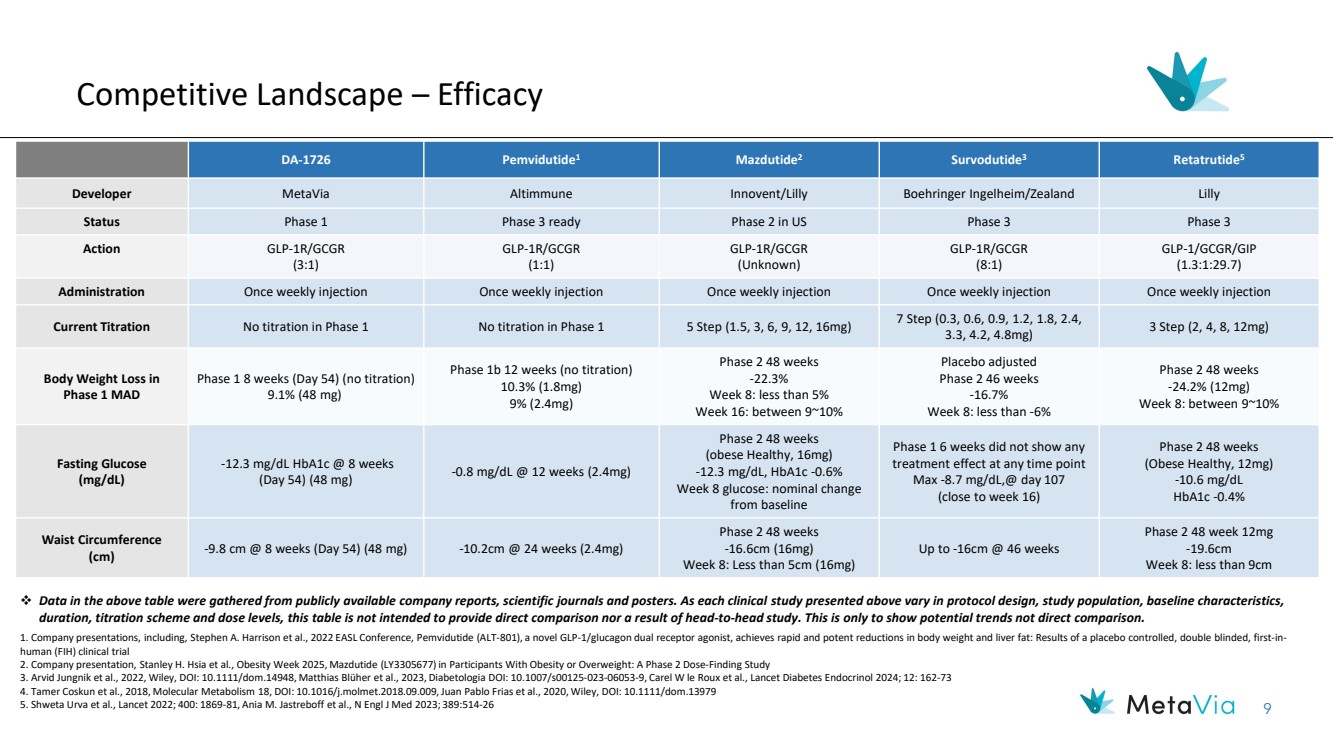
| 10 Competitive Landscape – Adverse Events DA-1726 Pemvidutide1 Mazdutide2 Survodutide3 Retatrutide5 Developer MetaVia Altimmune Innovent/Lilly Boehringer Ingelheim/Zealand Lilly Status Phase 1 Phase 3 ready Phase 2/3 Phase 3 Phase 3 Action GLP-1R/GCGR (3:1) GLP-1R/GCGR (1:1) GLP-1R/GCGR (Unknown) GLP-1R/GCGR (8:1) GLP-1R/GCGR/GIP (1.3:1:29.7) Administration Once weekly injection Once weekly injection Once weekly injection Once weekly injection Once weekly injection Current Titration No titration in Phase 1 No titration in Phase 1 5 Step (1.5, 3, 6, 9, 12, 16mg) 7 Step (0.3, 0.6, 0.9, 1.2, 1.8, 2.4, 3.3, 4.2, 4.8mg) 3 Step (2, 4, 8, 12mg) Adverse Events Phase 1 (48 mg) @ 8 weeks (Day 54) Phase 1 MAD (2.4mg) @ 12 weeks Phase 2 (16mg) @ 48 weeks 92.2% with at least 1 TEAE Phase 2 @ 46 weeks 91% TEAEs Phase 2 (12mg) @ 48 weeks 92% with any AEs 83.3% mild or moderate vomiting 72.8% mild or moderate vomiting 45.1% vomiting 24% vomiting 19% vomiting 50% mild or moderate nausea 91% mild or moderate nausea 60.8% nausea 59% nausea 45% nausea 0% constipation 18.2% constipation 35.3% Constipation 24% constipation 16% constipation 16.7% mild diarrhea 18.2% diarrhea 25.5% diarrhea 17% diarrhea 15% diarrhea Discontinuations Due to AEs Phase 1 @ 8 weeks (Day 54) , no discontinuations Phase 1 MAD @ 12 weeks, no discontinuations 19.6% @ 48 weeks 19.6% discontinuation 2 cases of SAEs Phase 1 @ 6 weeks 7.5% Phase 2 @ 46 weeks 24.6% Phase 2 (12mg) @ 48 weeks 16% 2 cases of SAEs AE of Special Interest Hypersensitivity 13% Antidrug antibody 18% Cardiac arrhythmia 11% Data in the above table were gathered from publicly available company reports, scientific journals and posters. As each clinical study presented above vary in protocol design, study population, baseline characteristics, duration, titration scheme and dose levels, this table is not intended to provide direct comparison nor a result of head-to-head study. This is only to show potential trends not direct comparison. 1. Company presentations, including, Stephen A. Harrison et al., 2022 EASL Conference, Pemvidutide (ALT-801), a novel GLP-1/glucagon dual receptor agonist, achieves rapid and potent reductions in body weight and liver fat: Results of a placebo controlled, double blinded, first-in-human (FIH) clinical trial 2. Company presentation, Stanley H. Hsia et al., Obesity Week 2025, Mazdutide (LY3305677) in Participants With Obesity or Overweight: A Phase 2 Dose-Finding Study 3. Arvid Jungnik et al., 2022, DOI: 10.1111/dom.14948, Matthias Blüher et al., 2023, Diabetologia DOI: 10.1007/s00125-023-06053-9, Carel W le Roux et al., Lancet Diabetes Endocrinol 2024; 12: 162-73 4. Tamer Coskun et al., 2018, Molecular Metabolism 18, DOI: 10.1016/j.molmet.2018.09.009 5. Shweta Urva et al., Lancet 2022; 400: 1869-81, Ania M. Jastreboff et al., N Engl J Med 2023; 389:514-26 |
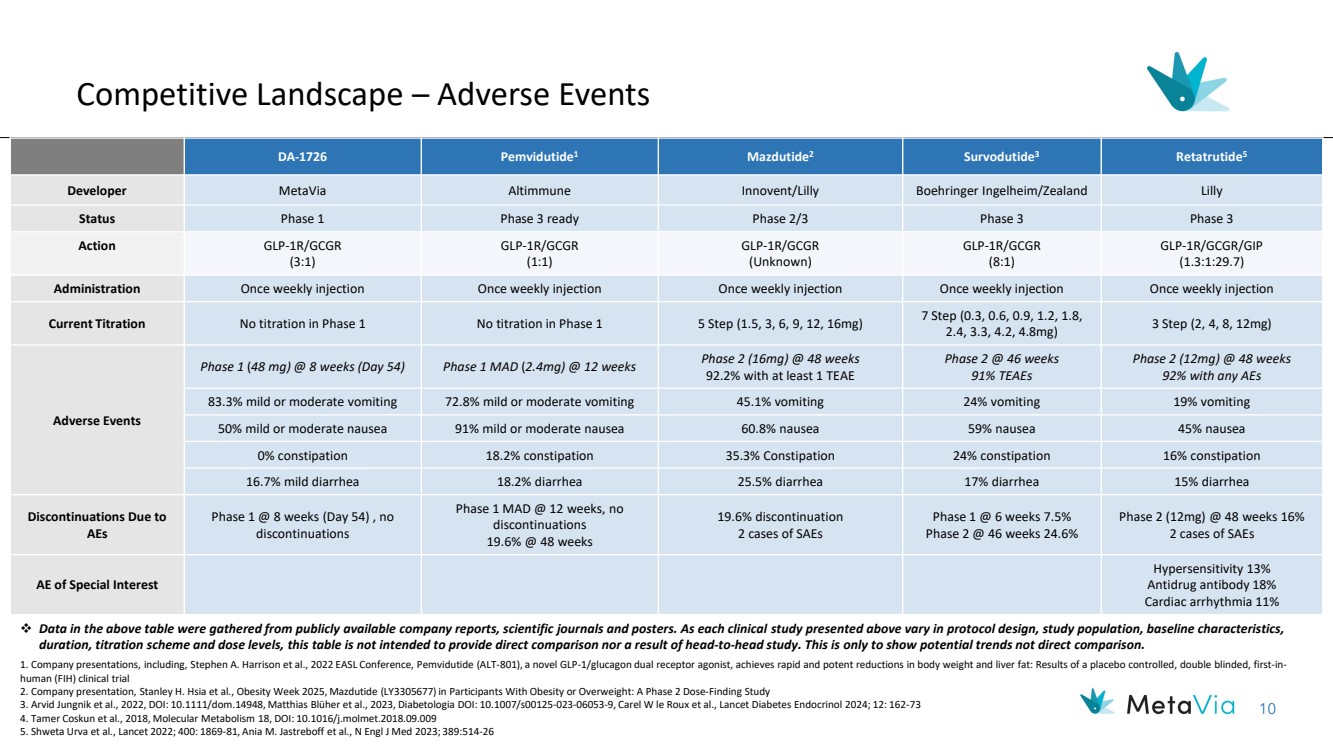
| 11 Recent Obesity Drug Transactions Companies Date Stage Description Drug Deal Structure Deal Terms Pfizer / Metsera November 2025 Phase 3 Ready (Lead asset) GLP-1, Amylin analog, Oral peptide GLP-1 MET-097i MET-233i MET-224o MET-097o M&A ~$7 billion Novo Nordisk / Septerna May 2025 Pre-IND Oral Small Molecules Directed to GPCR Targets, Including GLP-1, GIP and Glucagon UBT251 Exclusive Global Collaboration and License $200 million up front and near-term milestone payments, with up to $2.0 billion in milestone payments Novo Nordisk / United Biotechnology March 2025 Phase 1 Ready GLP-1, GIP and Glucagon UBT251 Global License, excluding Chinese mainland, Hong Kong, Macau, or Taiwan $200 million up front, with up to $1.8 billion in milestone payments AbbVie / Gubra March 2025 Phase 1 Long-acting amylin analog GUB01429 Global License $350 million up front, with potential milestone payments up to $1.875 billion Roche / Zealand Pharma March 2025 Phase 2 Amylin analogue, as stand-alone therapy & in combination with Roche’s incretin, CT-388 Petrelintide (ZP8396) Collaboration, Co-Development and Co-Commercialization $1.65 billion up front, with $1.2 billion in milestones linked to Phase 3 and sales-based milestones of $2.4 billion Carmot Therapeutics / Roche January 2024 Phase 1 GLP-1/GIP agonist GLP-1 GLP-1/GIP CT-388 CT-996 CT-868 M&A $2.7 billion Big Pharma has Committed Over $15 Billion in Obesity/MASH Licensing Deals in the Past 12 Months |
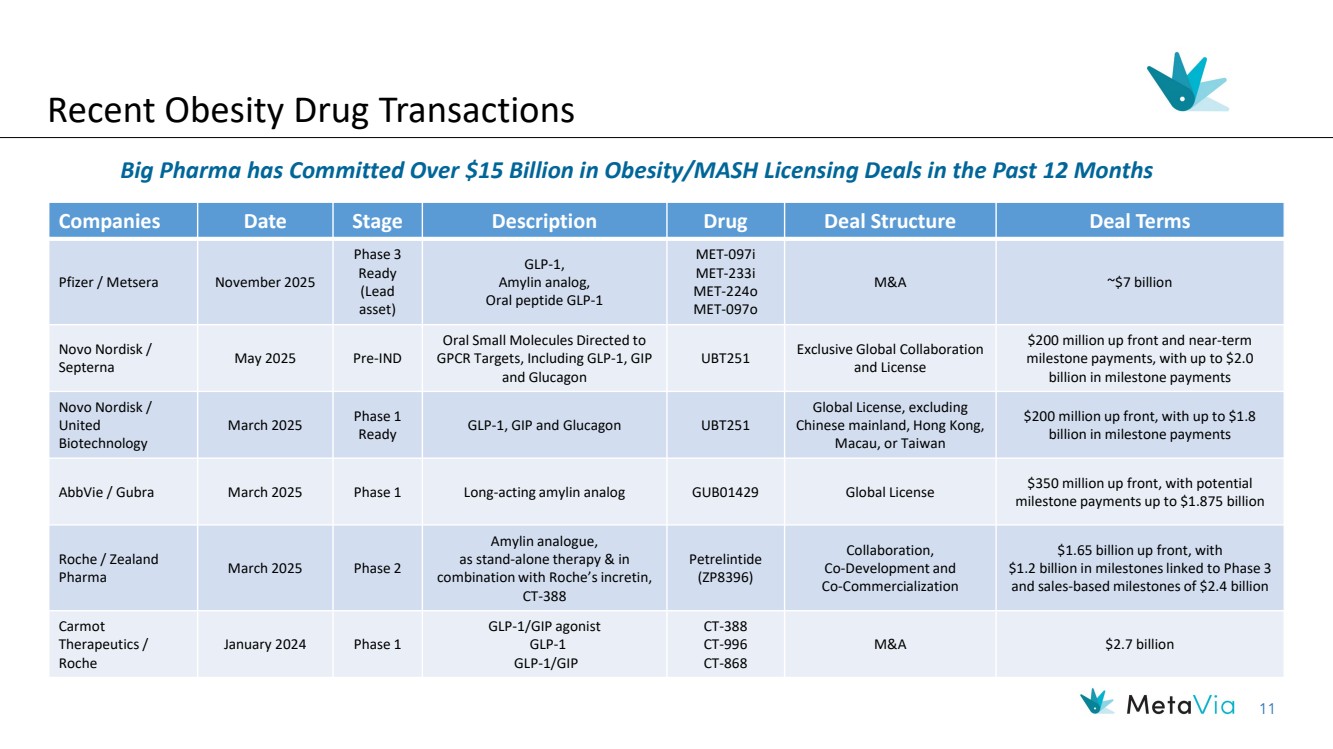
| 12 DA-1726: Program Summary & Path Forward DA-1726: Differentiated efficacy with best-in-class potential across weight loss, glucose control, liver health, and safety 48 mg Key Takeaways Potential best-in-class metabolic profile • Strong efficacy without titration: (at Day 54) o –9.1% body weight o –3.8 inches waist circumference o –0.22 HbA1c o –23.7% liver stiffness (VCTE) • Broad benefit profile: weight loss, glucose control, and direct liver impact • Well-tolerated at 48 mg, supporting further dose optimization Next Steps Advancing dose optimization • Tolerability optimization with stepwise titration up to 64 mg o Part 3a (One-step): 16 mg (4 wks) → 48 mg (12 wks) o Part 3b (Two-step): 16 mg (4 wks) → 32 mg (4 wks) → 64 mg (8 wks) • Data readout expected by YE 2026 • 16-week study in obese patients o First patient in targeted 1H 2026 |
| Vanoglipel (DA-1241) Orally Available, Potential First-in-Class GPR119 Agonist for the Treatment of Metabolic Dysfunction-Associated Steatohepatitis (MASH) |
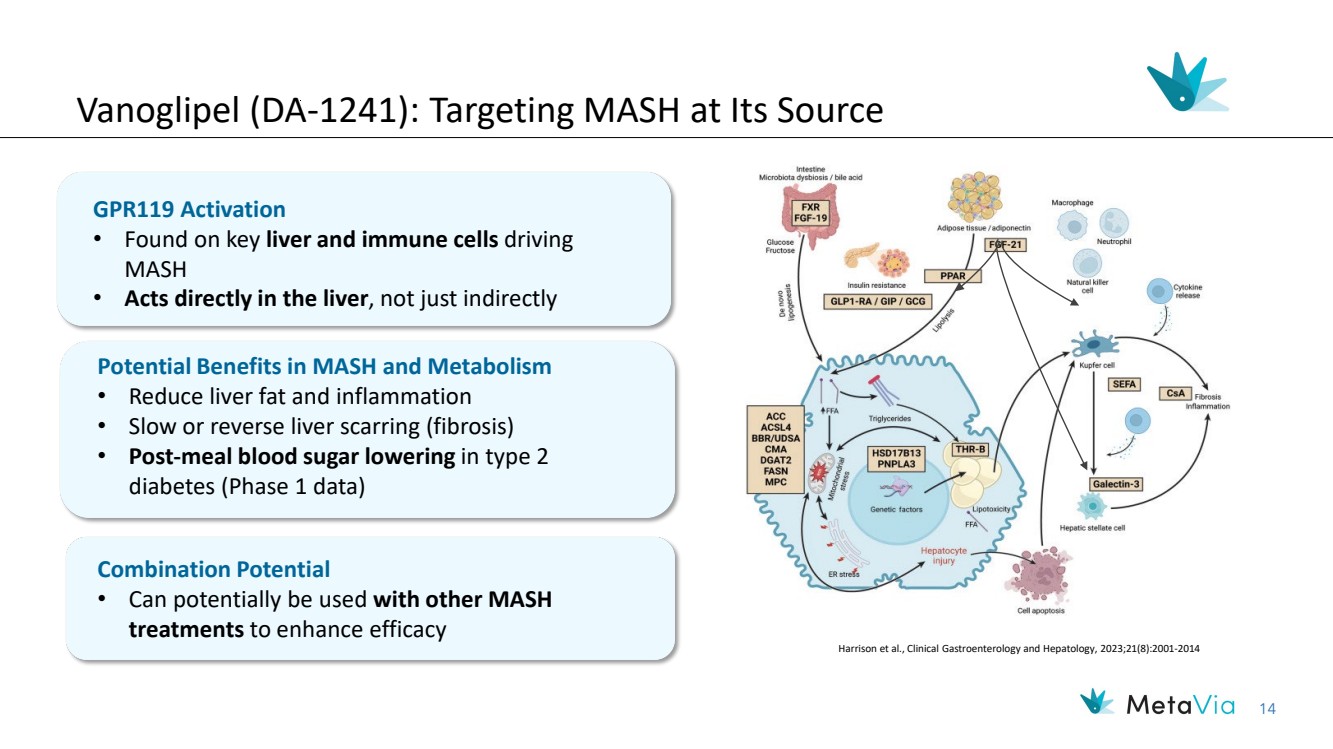
| 14 Vanoglipel (DA-1241): Targeting MASH at Its Source Harrison et al., Clinical Gastroenterology and Hepatology, 2023;21(8):2001-2014 GPR119 Activation • Found on key liver and immune cells driving MASH • Acts directly in the liver, not just indirectly Potential Benefits in MASH and Metabolism • Reduce liver fat and inflammation • Slow or reverse liver scarring (fibrosis) • Post-meal blood sugar lowering in type 2 diabetes (Phase 1 data) Combination Potential • Can potentially be used with other MASH treatments to enhance efficacy |
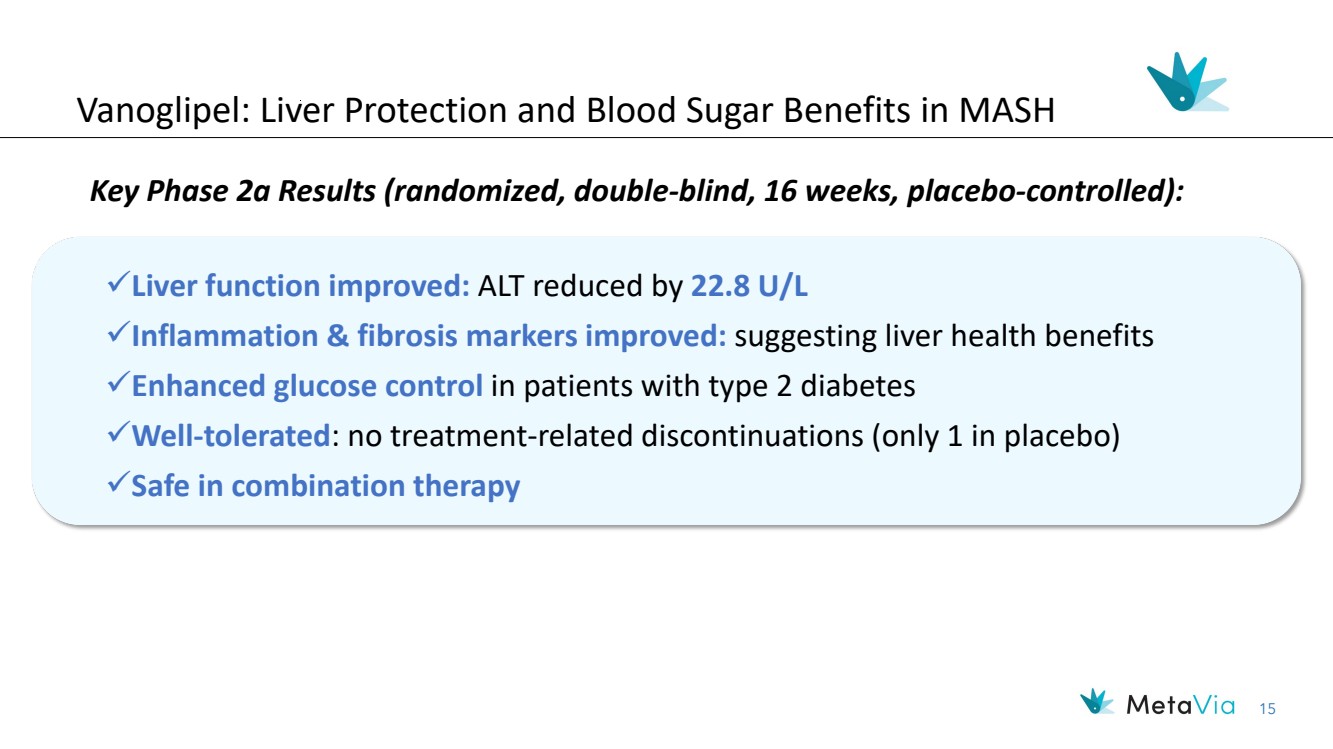
| 15 Vanoglipel: Liver Protection and Blood Sugar Benefits in MASH Key Phase 2a Results (randomized, double-blind, 16 weeks, placebo-controlled): Liver function improved: ALT reduced by 22.8 U/L Inflammation & fibrosis markers improved: suggesting liver health benefits Enhanced glucose control in patients with type 2 diabetes Well-tolerated: no treatment-related discontinuations (only 1 in placebo) Safe in combination therapy |
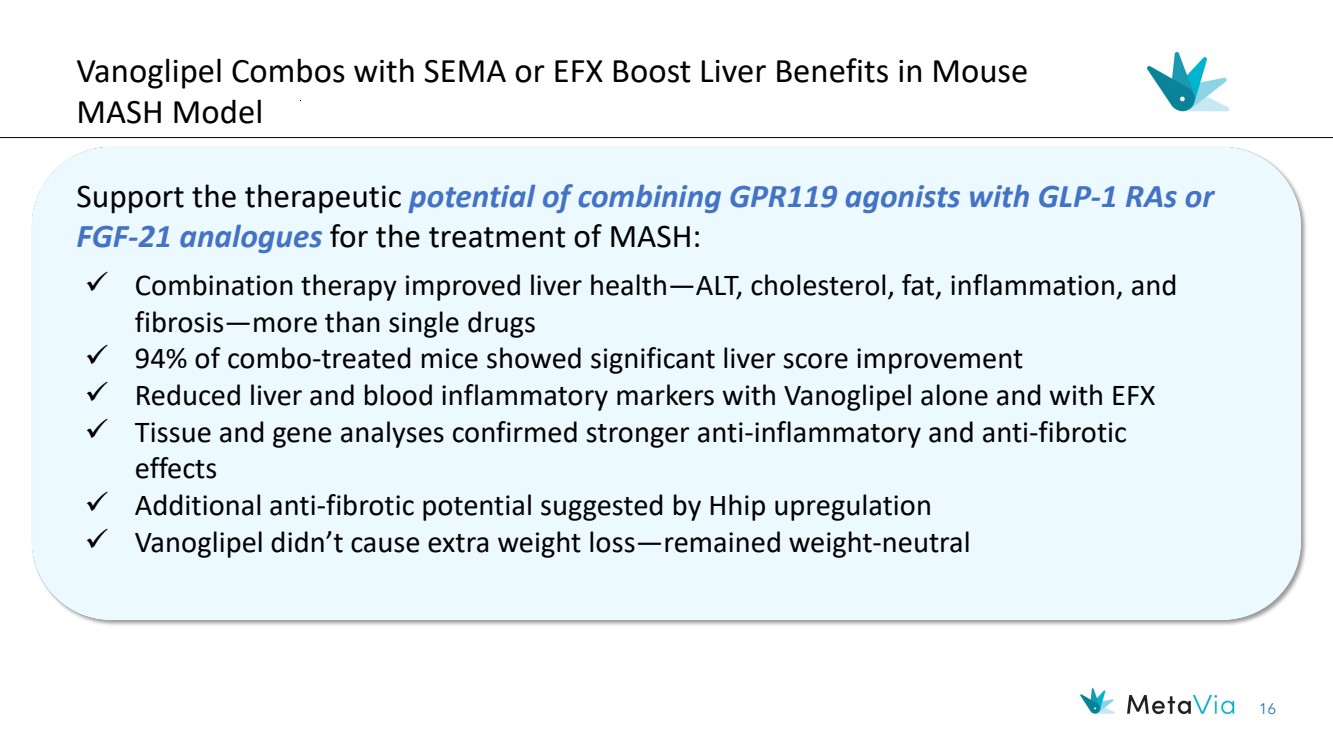
| 16 Vanoglipel Combos with SEMA or EFX Boost Liver Benefits in Mouse MASH Model Support the therapeutic potential of combining GPR119 agonists with GLP-1 RAs or FGF-21 analogues for the treatment of MASH: Combination therapy improved liver health—ALT, cholesterol, fat, inflammation, and fibrosis—more than single drugs 94% of combo-treated mice showed significant liver score improvement Reduced liver and blood inflammatory markers with Vanoglipel alone and with EFX Tissue and gene analyses confirmed stronger anti-inflammatory and anti-fibrotic effects Additional anti-fibrotic potential suggested by Hhip upregulation Vanoglipel didn’t cause extra weight loss—remained weight-neutral |
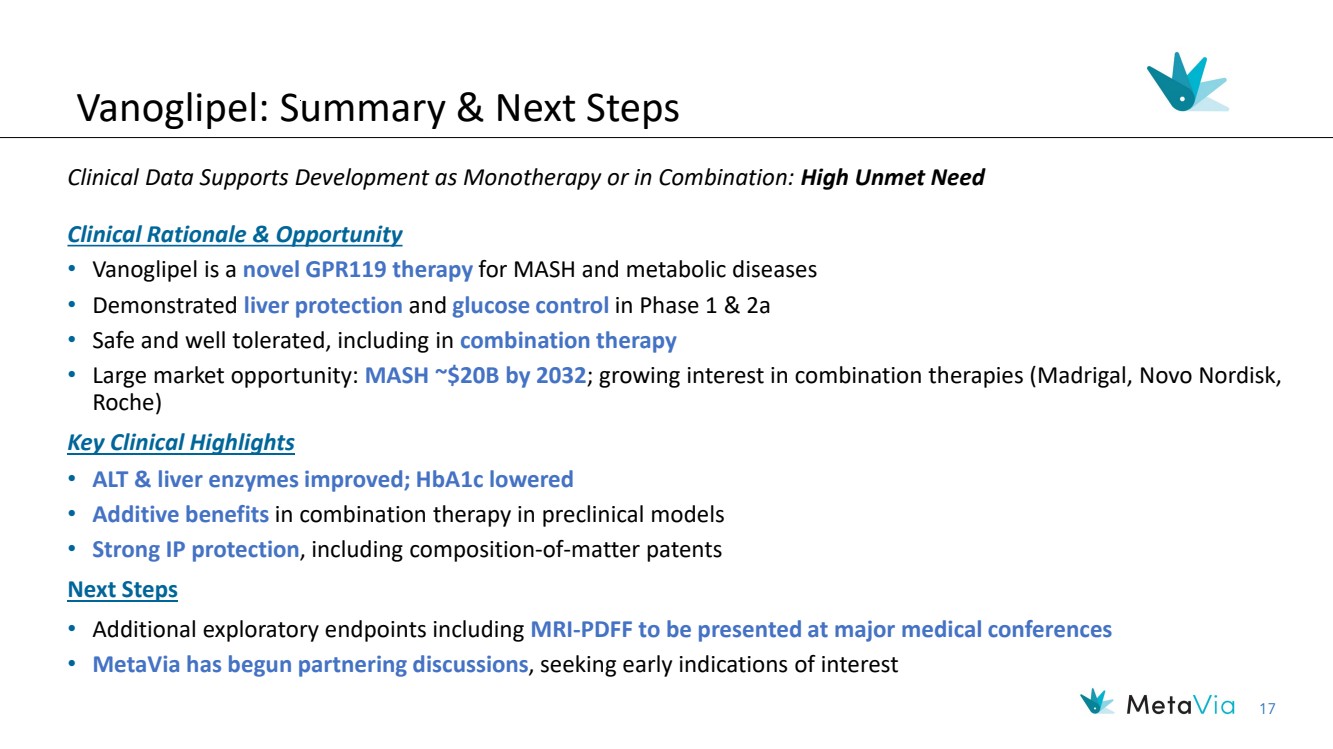
| 17 Vanoglipel: Summary & Next Steps Clinical Rationale & Opportunity • Vanoglipel is a novel GPR119 therapy for MASH and metabolic diseases • Demonstrated liver protection and glucose control in Phase 1 & 2a • Safe and well tolerated, including in combination therapy • Large market opportunity: MASH ~$20B by 2032; growing interest in combination therapies (Madrigal, Novo Nordisk, Roche) Key Clinical Highlights • ALT & liver enzymes improved; HbA1c lowered • Additive benefits in combination therapy in preclinical models • Strong IP protection, including composition-of-matter patents Next Steps • Additional exploratory endpoints including MRI-PDFF to be presented at major medical conferences • MetaVia has begun partnering discussions, seeking early indications of interest Clinical Data Supports Development as Monotherapy or in Combination: High Unmet Need |
| Financials and Capitalization |

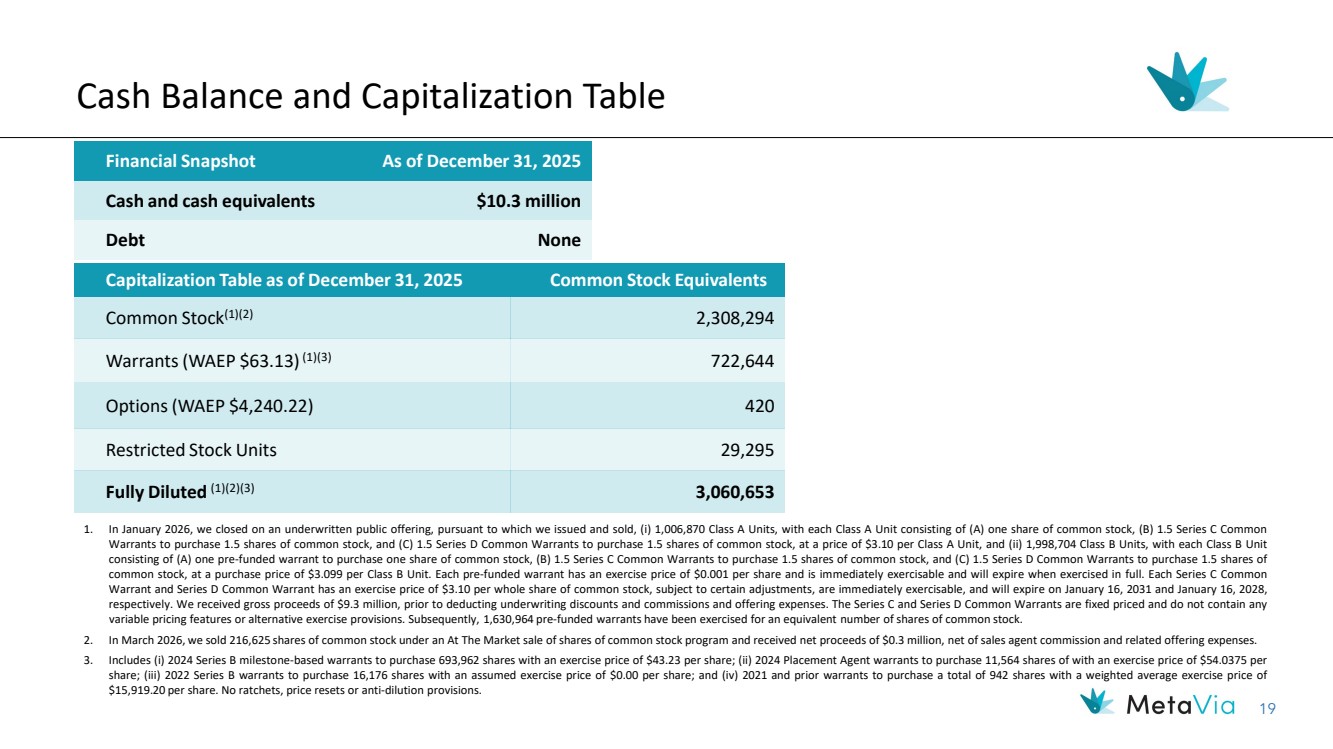
| 19 Cash Balance and Capitalization Table Financial Snapshot As of December 31, 2025 Cash and cash equivalents $10.3 million Debt None Capitalization Table as of December 31, 2025 Common Stock Equivalents Common Stock(1)(2) 2,308,294 Warrants (WAEP $63.13)(1)(3) 722,644 Options (WAEP $4,240.22) 420 Restricted Stock Units 29,295 Fully Diluted (1)(2)(3) 3,060,653 1. In January 2026, we closed on an underwritten public offering, pursuant to which we issued and sold, (i) 1,006,870 Class A Units, with each Class A Unit consisting of (A) one share of common stock, (B) 1.5 Series C Common Warrants to purchase 1.5 shares of common stock, and (C) 1.5 Series D Common Warrants to purchase 1.5 shares of common stock, at a price of $3.10 per Class A Unit, and (ii) 1,998,704 Class B Units, with each Class B Unit consisting of (A) one pre-funded warrant to purchase one share of common stock, (B) 1.5 Series C Common Warrants to purchase 1.5 shares of common stock, and (C) 1.5 Series D Common Warrants to purchase 1.5 shares of common stock, at a purchase price of $3.099 per Class B Unit. Each pre-funded warrant has an exercise price of $0.001 per share and is immediately exercisable and will expire when exercised in full. Each Series C Common Warrant and Series D Common Warrant has an exercise price of $3.10 per whole share of common stock, subject to certain adjustments, are immediately exercisable, and will expire on January 16, 2031 and January 16, 2028, respectively. We received gross proceeds of $9.3 million, prior to deducting underwriting discounts and commissions and offering expenses. The Series C and Series D Common Warrants are fixed priced and do not contain any variable pricing features or alternative exercise provisions. Subsequently, 1,630,964 pre-funded warrants have been exercised for an equivalent number of shares of common stock. 2. In March 2026, we sold 216,625 shares of common stock under an At The Market sale of shares of common stock program and received net proceeds of $0.3 million, net of sales agent commission and related offering expenses. 3. Includes (i) 2024 Series B milestone-based warrants to purchase 693,962 shares with an exercise price of $43.23 per share; (ii) 2024 Placement Agent warrants to purchase 11,564 shares of with an exercise price of $54.0375 per share; (iii) 2022 Series B warrants to purchase 16,176 shares with an assumed exercise price of $0.00 per share; and (iv) 2021 and prior warrants to purchase a total of 942 shares with a weighted average exercise price of $15,919.20 per share. No ratchets, price resets or anti-dilution provisions. |
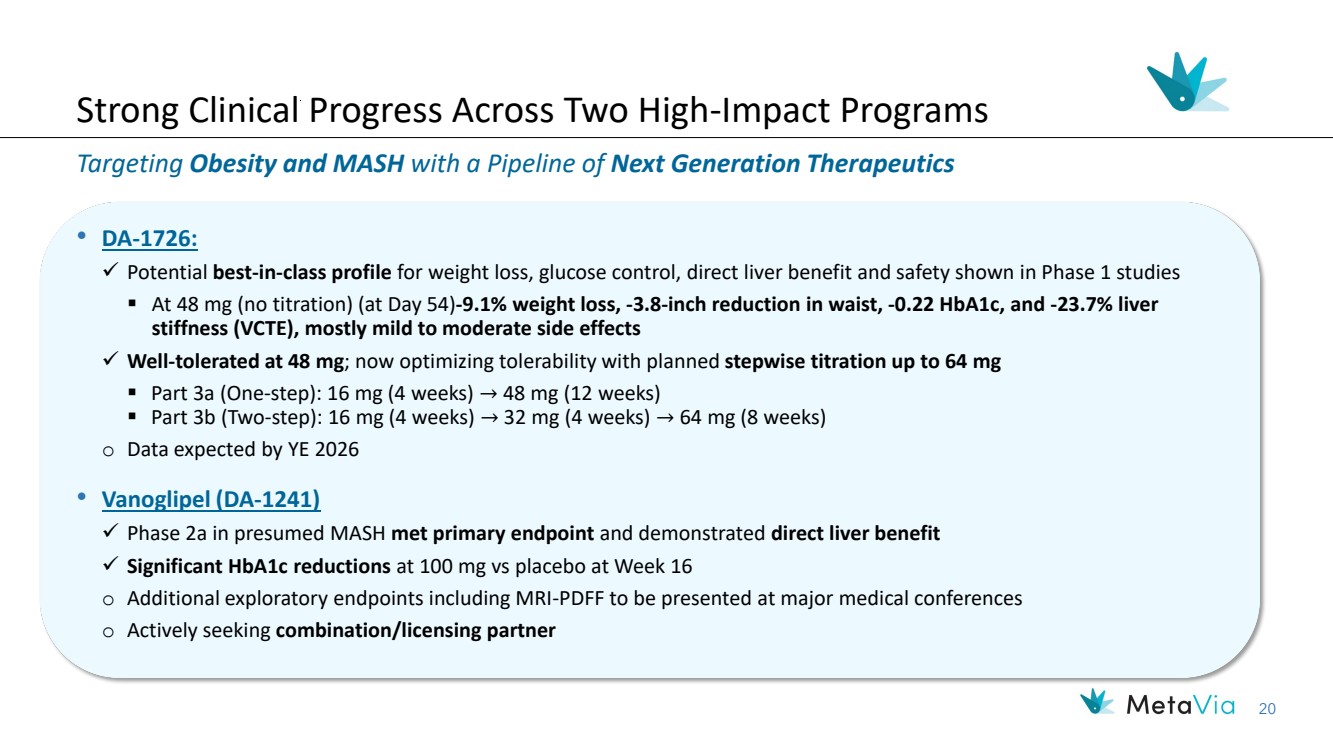
| 20 Strong Clinical Progress Across Two High-Impact Programs Targeting Obesity and MASH with a Pipeline of Next Generation Therapeutics • DA-1726: Potential best-in-class profile for weight loss, glucose control, direct liver benefit and safety shown in Phase 1 studies At 48 mg (no titration) (at Day 54)-9.1% weight loss, -3.8-inch reduction in waist, -0.22 HbA1c, and -23.7% liver stiffness (VCTE), mostly mild to moderate side effects Well-tolerated at 48 mg; now optimizing tolerability with planned stepwise titration up to 64 mg Part 3a (One-step): 16 mg (4 weeks) → 48 mg (12 weeks) Part 3b (Two-step): 16 mg (4 weeks) → 32 mg (4 weeks) → 64 mg (8 weeks) o Data expected by YE 2026 • Vanoglipel (DA-1241) Phase 2a in presumed MASH met primary endpoint and demonstrated direct liver benefit Significant HbA1c reductions at 100 mg vs placebo at Week 16 o Additional exploratory endpoints including MRI-PDFF to be presented at major medical conferences o Actively seeking combination/licensing partner |
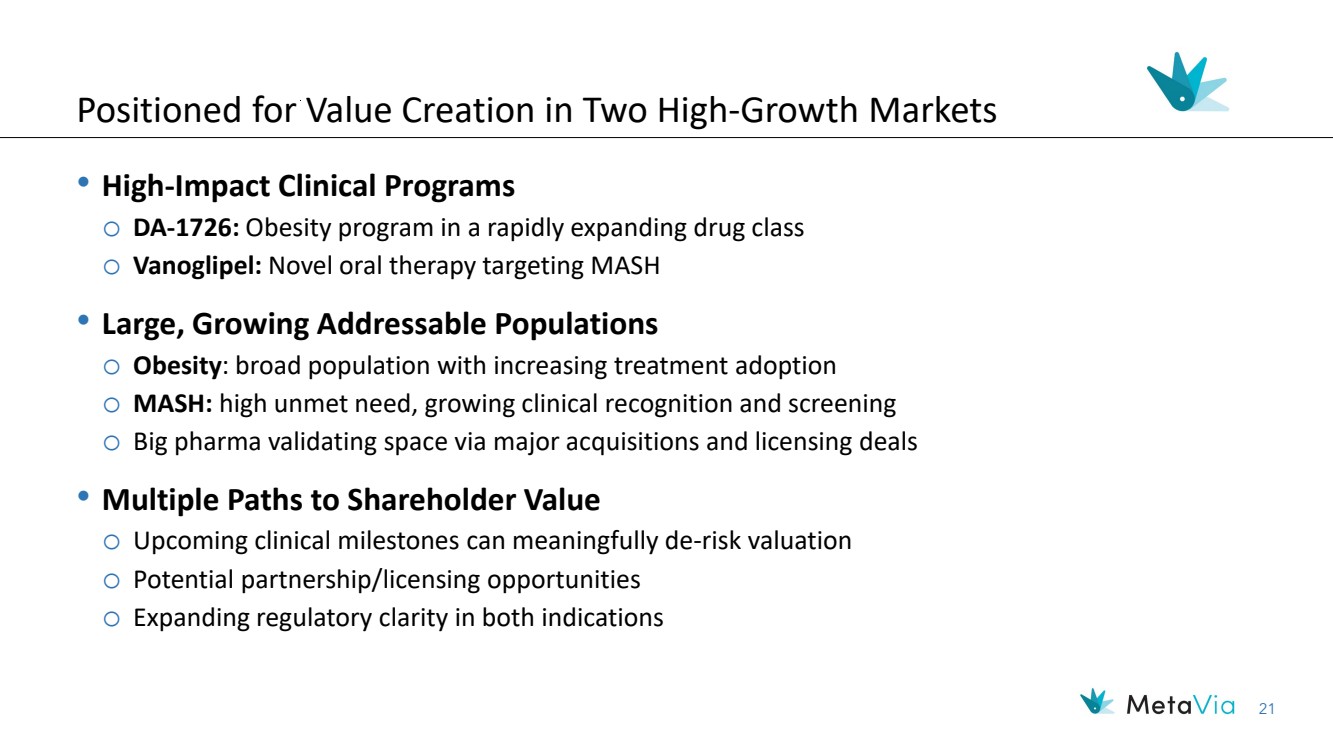
| 21 Positioned for Value Creation in Two High-Growth Markets • High-Impact Clinical Programs o DA-1726: Obesity program in a rapidly expanding drug class o Vanoglipel: Novel oral therapy targeting MASH • Large, Growing Addressable Populations o Obesity: broad population with increasing treatment adoption o MASH: high unmet need, growing clinical recognition and screening o Big pharma validating space via major acquisitions and licensing deals • Multiple Paths to Shareholder Value o Upcoming clinical milestones can meaningfully de-risk valuation o Potential partnership/licensing opportunities o Expanding regulatory clarity in both indications |
| Thank You! Investor Contacts: Rx Communications Group Michael Miller +1 917.633.6086 [email protected] MetaVia Marshall Woodworth +1 919.749.8748 [email protected] |

| Appendix |

| DA-1726 A Novel GLP1R/GCGR Dual Agonist for the Treatment of Obesity |
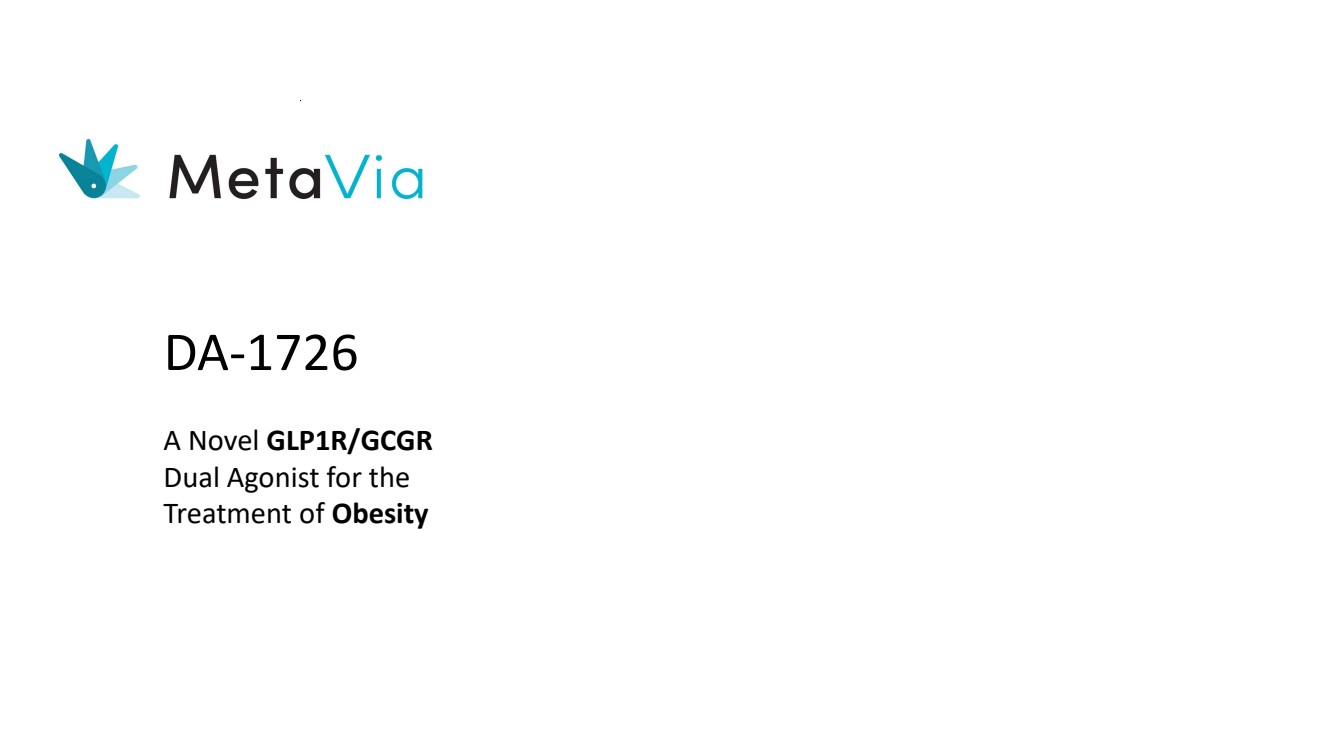
| 25 DA-1726: Phase 1 Clinical Program Carefully planned to evaluate safety and efficacy of DA-1726 and dosing strategy to inform Phase 2 design Main Optional Extension for 48mg Cohort Part 3 Titration Dosing Strategy (16-week Duration) 48 mg 48 mg Q1 2026 Initiation Additional 4 weeks 16 mg 4 mg 8 mg Single Ascending Dose (SAD) 32 mg 16 mg 1 mg 2 mg 4 mg 8 mg Completed 32 mg A total of 8-week treatment Part 2 Part 1 Part 3a: One step titration 16 mg x 4 wks → 48 mg x 12 wks Part 3b: Two step titration 16 mg x 4 wks → 32 mg x 4 wks → 64 mg x 8 wks |
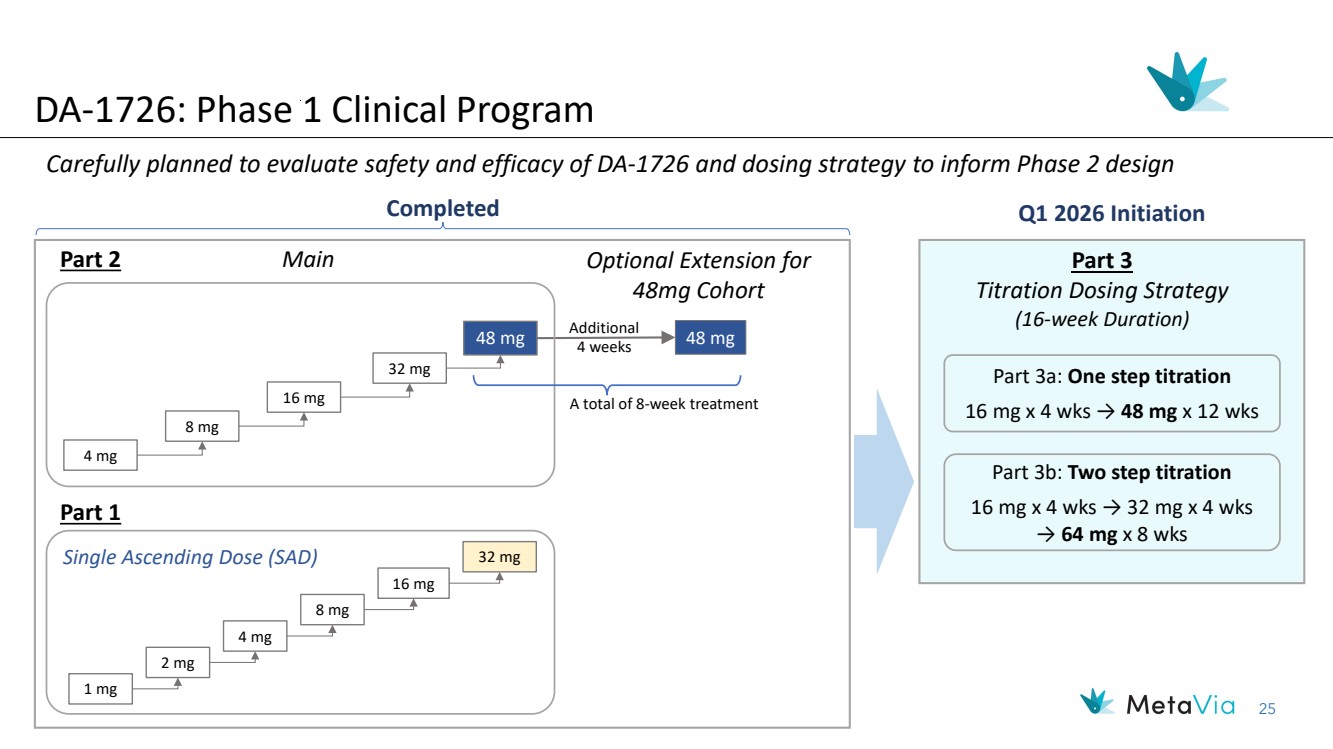
| 26 -0.9% -3.2% -1.7% -3.0% -4.3% -6.1% -7% -6% -5% -4% -3% -2% -1% 0% Change from Baseline (Day 26) Baseline body weight (kg) 96.7 84.4 89.3 96.0 90.4 110.4 Compelling, dose-dependent body weight loss seen in doses > 8 mg Pooled Placebo (n=14) 4 mg (n=6) 8 mg (n=5) 16 mg (n=6) 32 mg (n=6) 48 mg (n=6) DA-1726 * * ** ** DA-1726 Phase 1 MAD Study: Body Weight Loss on Day 26 *p<0.05 vs. placebo; **p<0.001 vs. placebo |
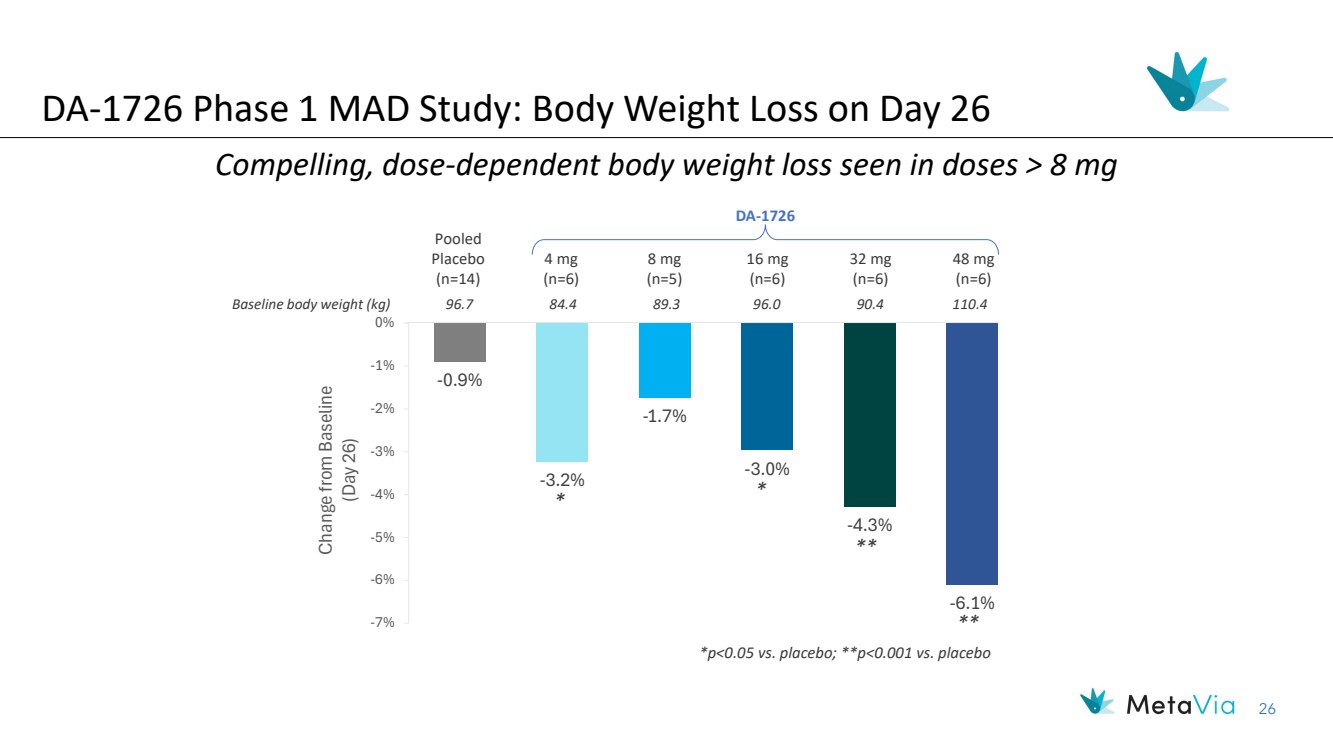
| 27 Mean Body Weight Mean Body Weight Change from Baseline Baseline Day 26 Day 54 DA-1726 48 mg 110.4 kg -6.1% (-6.6 kg) -9.1% (-9.6 kg) Placebo 109.0 kg -0.2% (-0.3 kg) -2.8% (-3.1 kg)* Placebo adjusted -5.9% -6.3% Placebo adjusted excluding outlier* -5.1% -7.7% *One placebo subject in the extension period reported implementing no carbohydrate diet while participating in the study which may have led to a substantial weight loss. Potentially best-in-class weight loss seen in 48 mg DA-1726 with no titration 64 mg DA-1726 with 2-step titration dosing to be evaluated in Part 3 DA-1726 Phase 1 MAD Study: Body Weight Loss in 48 mg Cohort -6.1% -9.1% -10% -8% -6% -4% -2% 0% Mean Body Weight Change (%) from Baseline in 48 mg DA-1726 †p<0.05 from Baseline; *p<0.05 vs. placebo †* † |
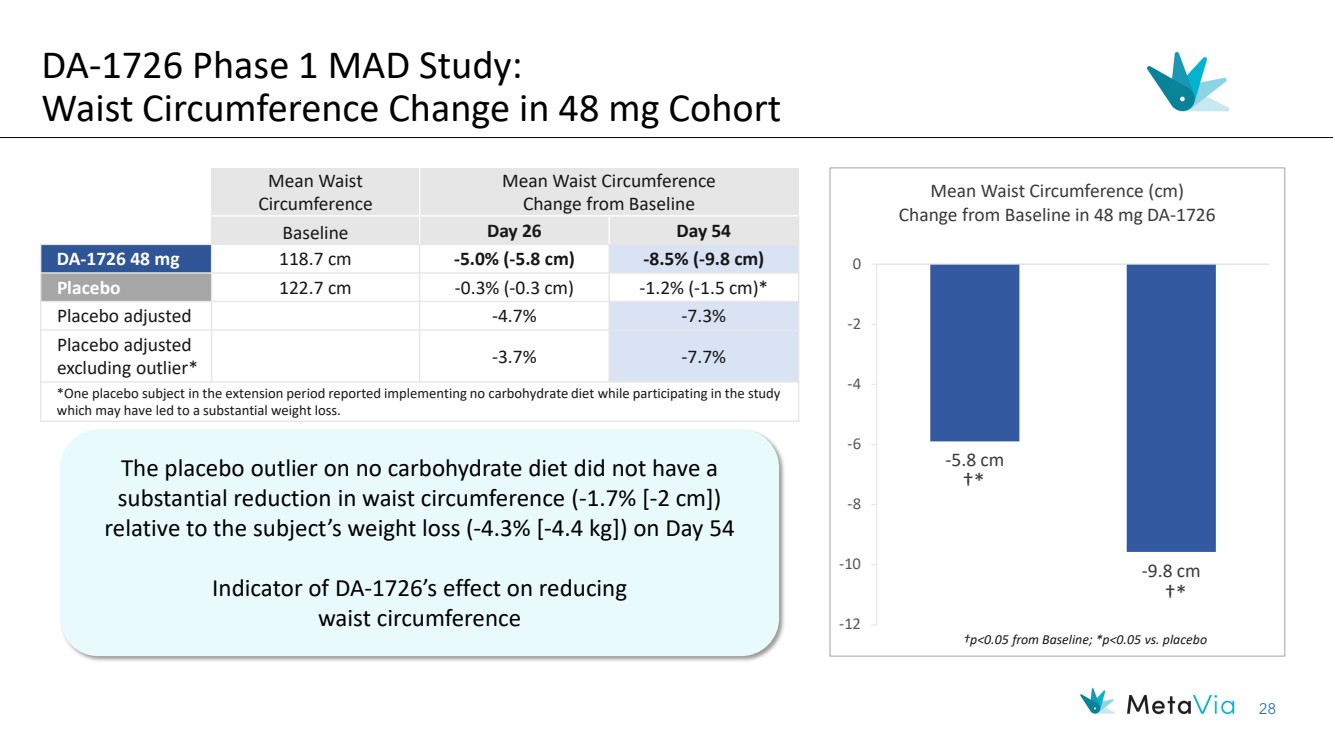
| 28 -5.8 cm -9.8 cm -12 -10 -8 -6 -4 -2 0 Mean Waist Circumference (cm) Change from Baseline in 48 mg DA-1726 †* †* †p<0.05 from Baseline; *p<0.05 vs. placebo Mean Waist Circumference Mean Waist Circumference Change from Baseline Baseline Day 26 Day 54 DA-1726 48 mg 118.7 cm -5.0% (-5.8 cm) -8.5% (-9.8 cm) Placebo 122.7 cm -0.3% (-0.3 cm) -1.2% (-1.5 cm)* Placebo adjusted -4.7% -7.3% Placebo adjusted excluding outlier* -3.7% -7.7% *One placebo subject in the extension period reported implementing no carbohydrate diet while participating in the study which may have led to a substantial weight loss. DA-1726 Phase 1 MAD Study: Waist Circumference Change in 48 mg Cohort The placebo outlier on no carbohydrate diet did not have a substantial reduction in waist circumference (-1.7% [-2 cm]) relative to the subject’s weight loss (-4.3% [-4.4 kg]) on Day 54 Indicator of DA-1726’s effect on reducing waist circumference |
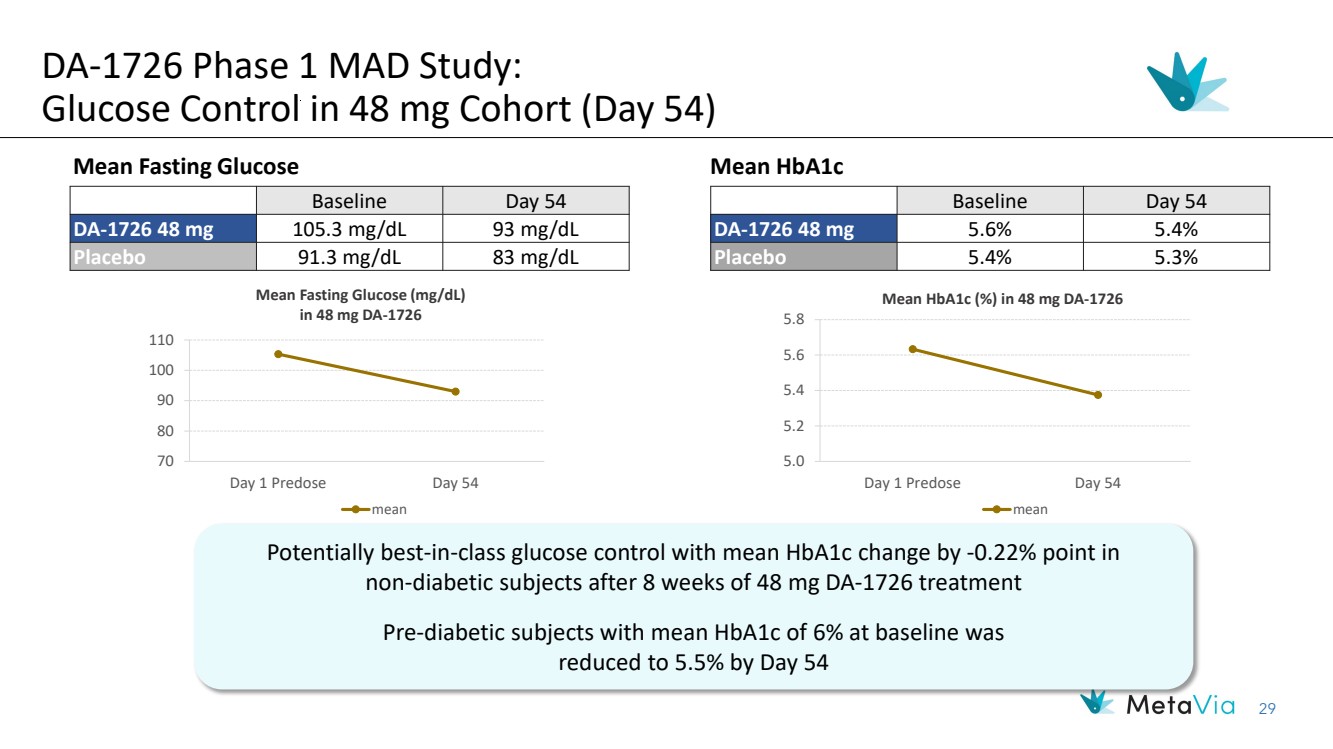
| 29 Baseline Day 54 DA-1726 48 mg 105.3 mg/dL 93 mg/dL Placebo 91.3 mg/dL 83 mg/dL 70 80 90 100 110 Day 1 Predose Day 54 Mean Fasting Glucose (mg/dL) in 48 mg DA-1726 mean Mean Fasting Glucose Baseline Day 54 DA-1726 48 mg 5.6% 5.4% Placebo 5.4% 5.3% Mean HbA1c 5.0 5.2 5.4 5.6 5.8 Day 1 Predose Day 54 Mean HbA1c (%) in 48 mg DA-1726 mean DA-1726 Phase 1 MAD Study: Glucose Control in 48 mg Cohort (Day 54) Potentially best-in-class glucose control with mean HbA1c change by -0.22% point in non-diabetic subjects after 8 weeks of 48 mg DA-1726 treatment Pre-diabetic subjects with mean HbA1c of 6% at baseline was reduced to 5.5% by Day 54 |
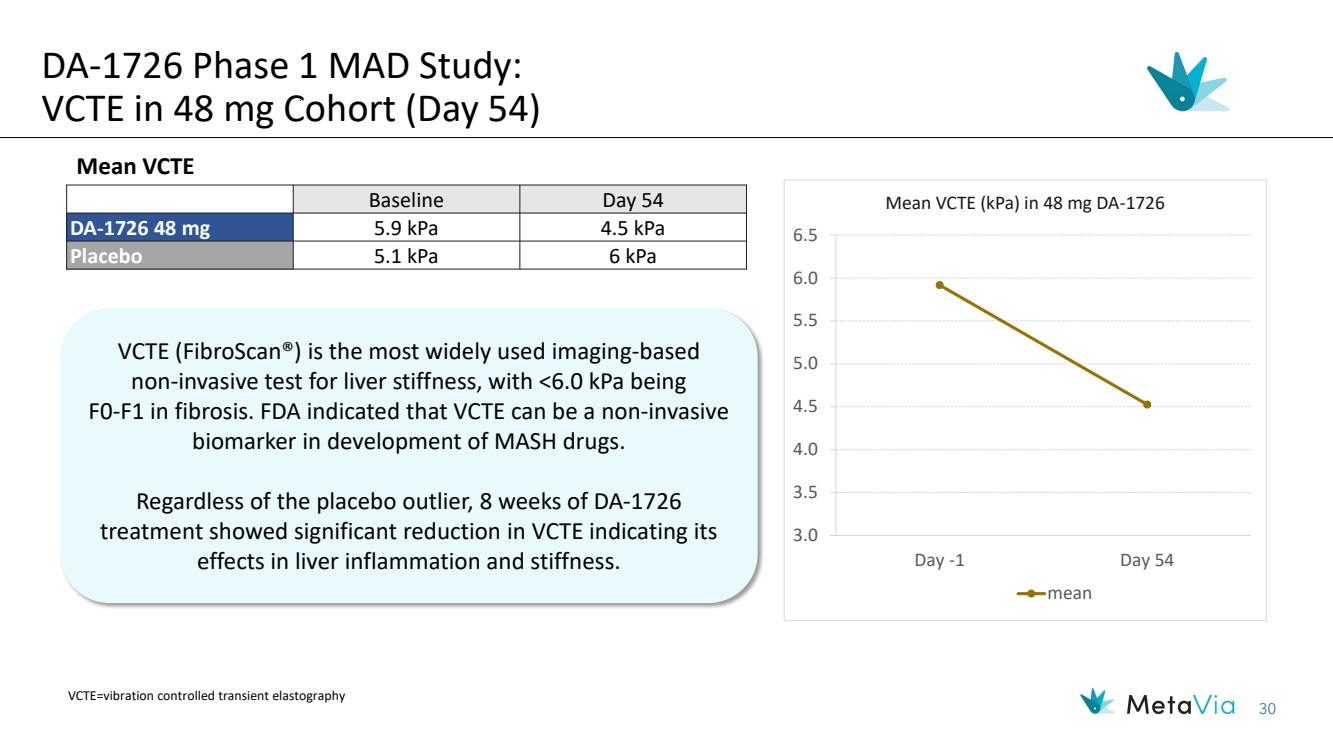
| 30 Baseline Day 54 DA-1726 48 mg 5.9 kPa 4.5 kPa Placebo 5.1 kPa 6 kPa 3.0 3.5 4.0 4.5 5.0 5.5 6.0 6.5 Day -1 Day 54 Mean VCTE (kPa) in 48 mg DA-1726 mean DA-1726 Phase 1 MAD Study: VCTE in 48 mg Cohort (Day 54) Mean VCTE VCTE=vibration controlled transient elastography VCTE (FibroScan®) is the most widely used imaging-based non-invasive test for liver stiffness, with <6.0 kPa being F0-F1 in fibrosis. FDA indicated that VCTE can be a non-invasive biomarker in development of MASH drugs. Regardless of the placebo outlier, 8 weeks of DA-1726 treatment showed significant reduction in VCTE indicating its effects in liver inflammation and stiffness. |
| Vanoglipel (DA-1241) Orally Available, Potential First-in-Class GPR119 Agonist for the Treatment of Metabolic Dysfunction-associated Steatohepatitis (MASH) |

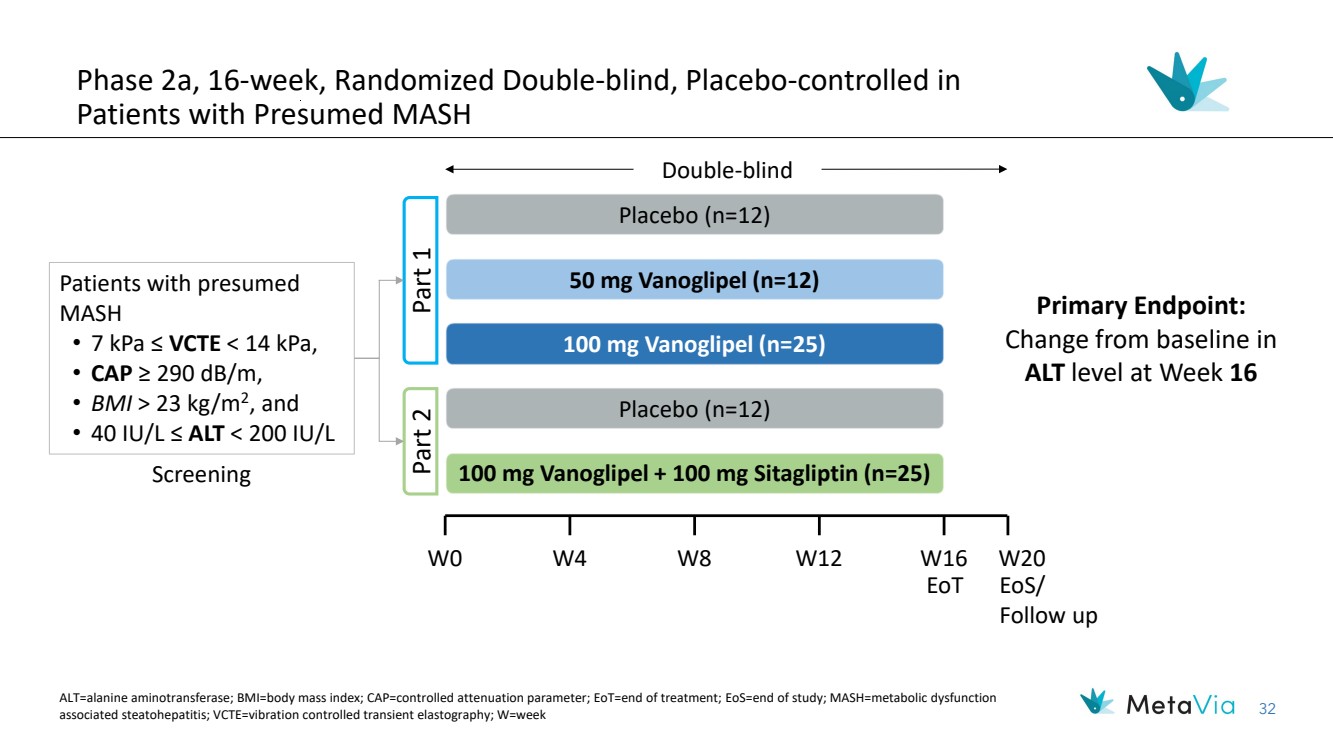
| 32 Phase 2a, 16-week, Randomized Double-blind, Placebo-controlled in Patients with Presumed MASH Primary Endpoint: Change from baseline in ALT level at Week 16 50 mg Vanoglipel (n=12) 100 mg Vanoglipel (n=25) Placebo (n=12) Part 1 Placebo (n=12) Part 2 100 mg Vanoglipel + 100 mg Sitagliptin (n=25) Patients with presumed MASH • 7 kPa ≤ VCTE < 14 kPa, • CAP ≥ 290 dB/m, • BMI > 23 kg/m2, and • 40 IU/L ≤ ALT < 200 IU/L Double-blind Screening W0 W4 W8 W12 W16 W20 EoT EoS/ Follow up ALT=alanine aminotransferase; BMI=body mass index; CAP=controlled attenuation parameter; EoT=end of treatment; EoS=end of study; MASH=metabolic dysfunction associated steatohepatitis; VCTE=vibration controlled transient elastography; W=week |
| 33 Vanoglipel Monotherapy vs. Placebo Vanoglipel Reduced CAP Indicating Liver Fat Reduction and Improved At-risk MASH Biomarkers Including FAST and NIS-4 Scores -1.4 -16.9 -23.0 Placebo DA-1241 50 mg DA-1241 100 mg LSM of CFB CAP (dB/m) at W16 † † -0.082 -0.216 -0.196 Placebo DA-1241 50 mg DA-1241 100 mg LSM of CFB FAST Score at W16 † † 0.04 -0.2 -0.14 Placebo DA-1241 50 mg DA-1241 100 mg LSM of CFB NIS-4 Score at W16 † ALT=alanine aminotransferase; AST=aspartate aminotransferase; CAP=controlled attenuation parameter; CFB=change from baseline; CI=confidence interval; FAST=Fibroscan-AST; NIS-4=; LSM=least square mean Loomba R, et al. EASL 2025. In subjects with 40 ≤ ALT < 200 U/L at baseline: Placebo (n=21); DA-1241 50 mg (n=9); DA-1241 100 mg (n=17) †95% CI not crossing 0 |
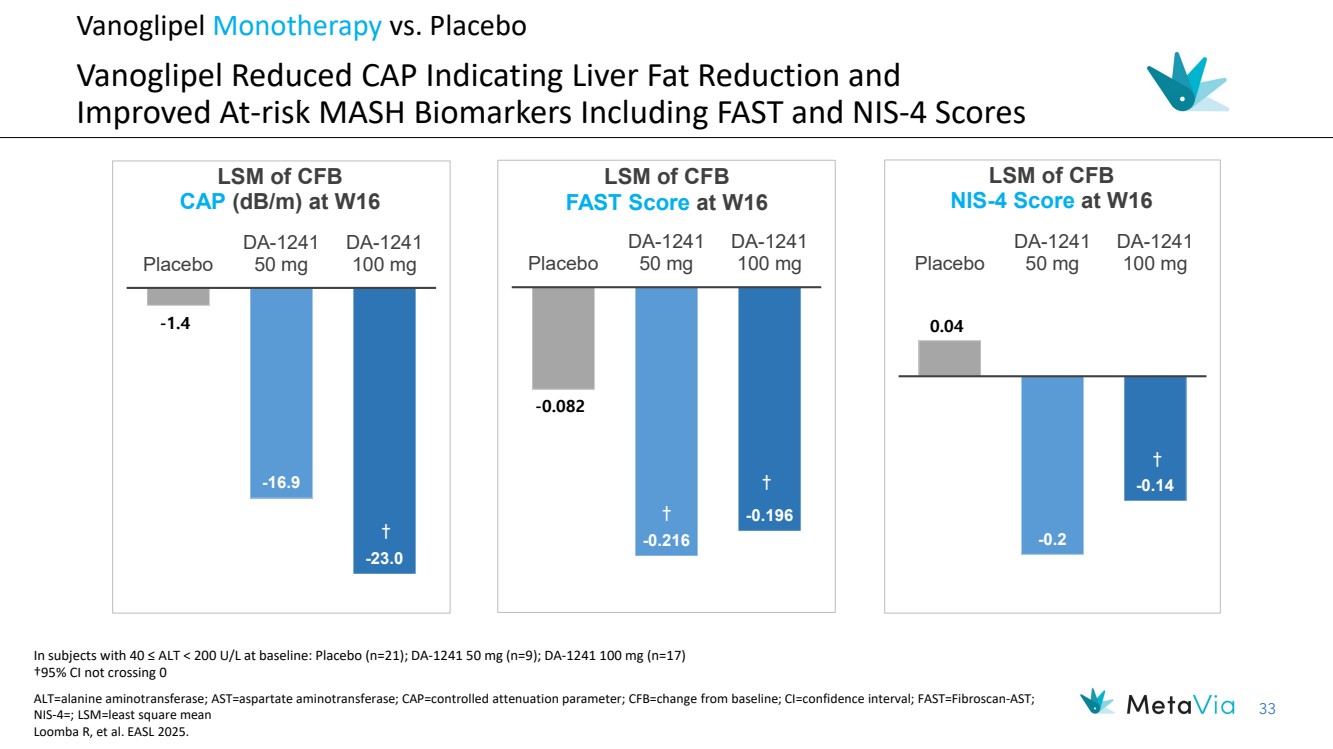
| 34 †* †* †* †* -0.6 -0.4 -0.2 0 0.2 W0 W4 W8 W16 LSM of CFB: HbA1c (%p) Over Time Placebo DA-1241 50 mg DA-1241 100 mg 0.1 -0.55 -0.54 Placebo DA-1241 50 mg DA-1241 100 mg LSM of CFB: HbA1c (%p) at W16 †* †* BL (%):6.74 6.36 6.99 Vanoglipel Monotherapy vs. Placebo Significant, Rapid Reduction in HbA1c was Observed With Vanoglipel Monotherapy Suggesting Favorable Improvement in Glucose Control Vanoglipel 100 mg significantly decreased HbA1c as early as Week 4 in presumed MASH patients Both doses of Vanoglipel significantly improved HbA1c at Week 16 In subjects with 40 ≤ ALT < 200 U/L at baseline: Placebo (n=21); DA-1241 50 mg (n=9); DA-1241 100 mg (n=17) †95% CI not crossing 0 ALT=alanine aminotransferase; BL=baseline; CFB=change from baseline; CI=confidence interval; LSM=least square mean; W=Week Loomba R, et al. EASL 2025. |
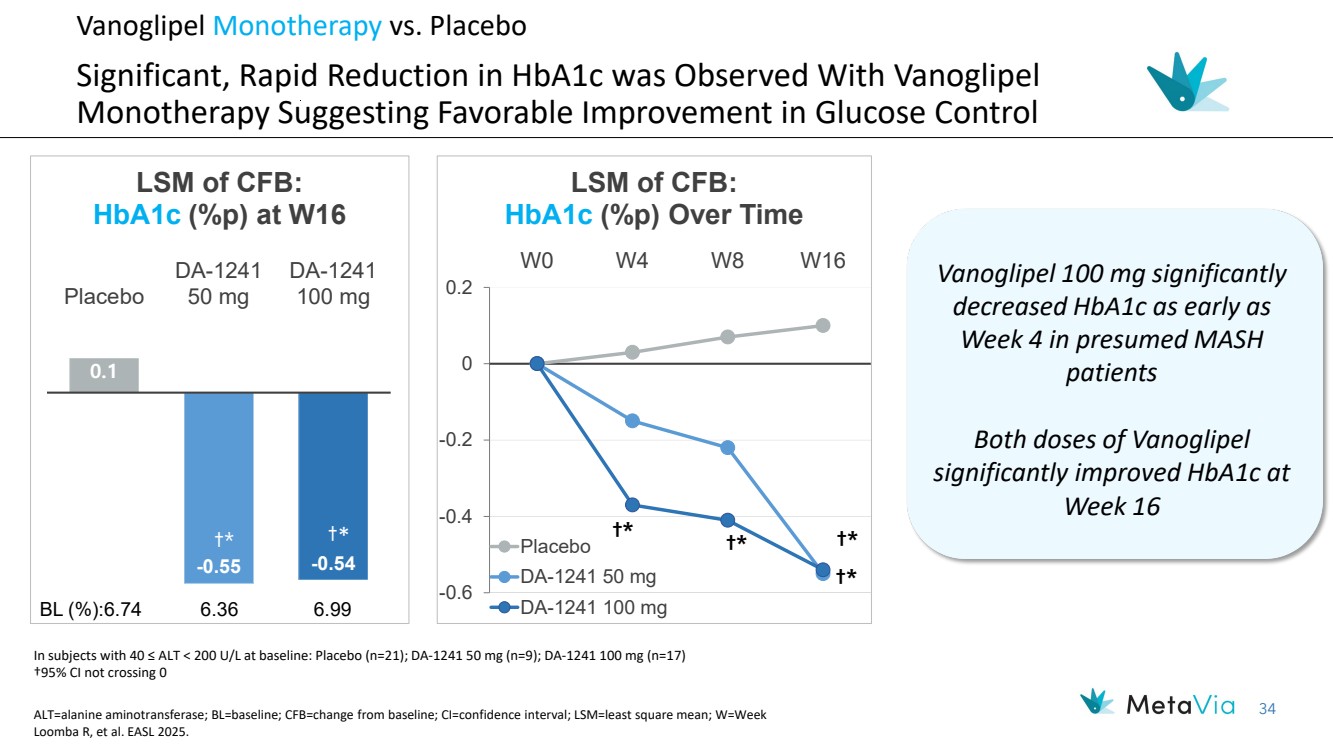
| 35 0.1 -0.55 -0.54 -0.66 Placebo DA-1241 50 mg DA-1241 100 mg Combo LSM of CFB: HbA1c (%p) at W16 †* †* BL (%): 6.74 6.36 6.99 6.61 Vanoglipel 100 mg + Sitagliptin 100 mg Combination vs. Placebo Enhanced Incretin Action With the Combination Therapy Augmented Glucose Control Leading to a Significant Reduction in HbA1c at Week 16 ALT=alanine aminotransferase; BL=baseline; CFB=change from baseline; CI=confidence interval; LSM=least square mean; W=Week Loomba R, et al. EASL 2025. In subjects with 40 ≤ ALT < 200 U/L at baseline: Placebo (n=21); DA-1241 50 mg (n=9); DA-1241 100 mg (n=17) †95% CI not crossing 0 †* †* †* †* -0.8 -0.6 -0.4 -0.2 0 0.2 W0 W4 W8 W16 LSM of CFB: HbA1c (%p) Over Time Placebo DA-1241 50 mg DA-1241 100 mg Combo †* †* HbA1c reduction was enhanced at Week 16 when Vanoglipel 100 mg was combined with sitagliptin 100 mg in patients with presumed MASH |
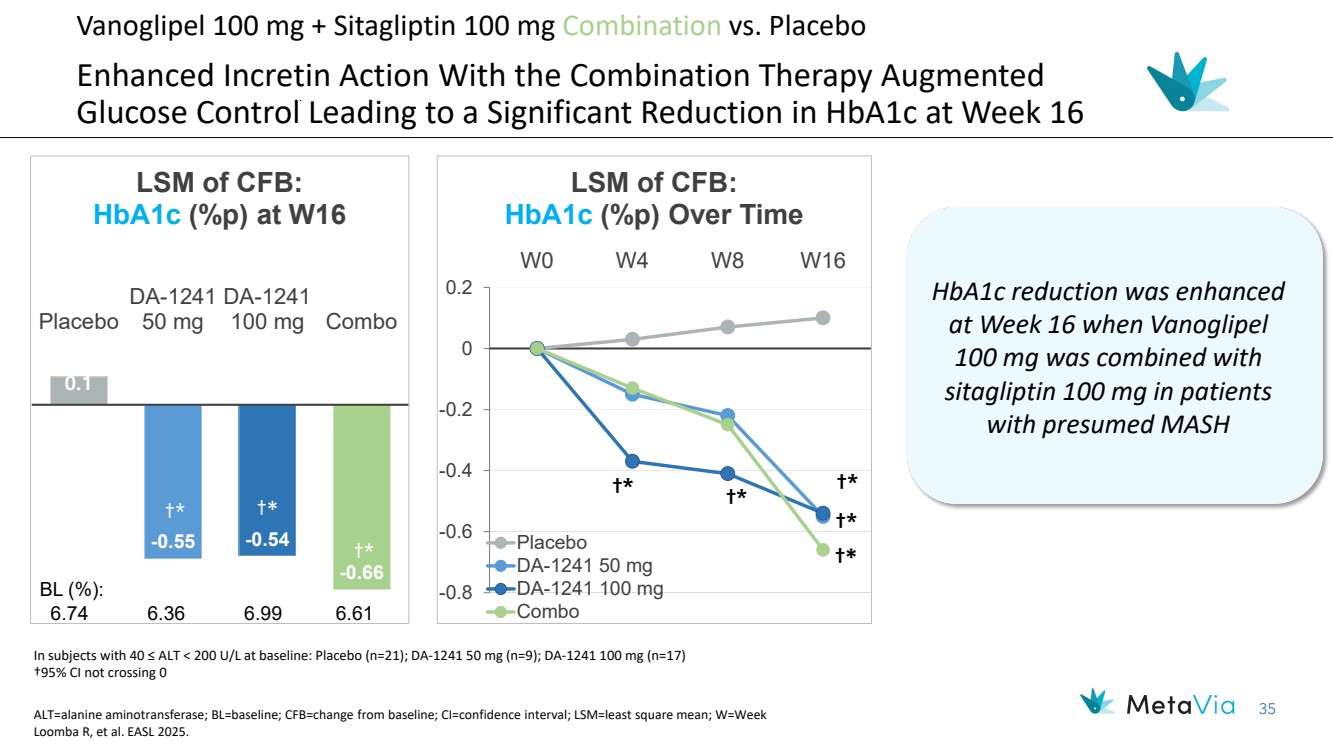
| 36 †* †* Vanoglipel 100 mg + Sitagliptin 100 mg Combination vs. Placebo Vanoglipel Efficiently Controlled Plasma Glucose in Diabetic Subjects With Presumed MASH CFB=change from baseline; LSM=least square mean Loomba R, et al. EASL 2025. †* Greater Improvement of Glucose Control was Observed in Patients with Type 2 Diabetes †* †* †* 0.12 0.24 -0.29 -0.18 -0.4 -0.99 -0.45 -0.66 -1.08 -0.18 -0.24 -1.08 -1.5 -1 -0.5 0 Week 4 Week 8 Week 16 LSM of CFB: HbA1c (%p) in Diabetic Patients (≥6.5%) Placebo (N=8) DA, 50mg (N=3) DA, 100mg (N=9) Combo (N=9) BL: 7.0~7.9% |
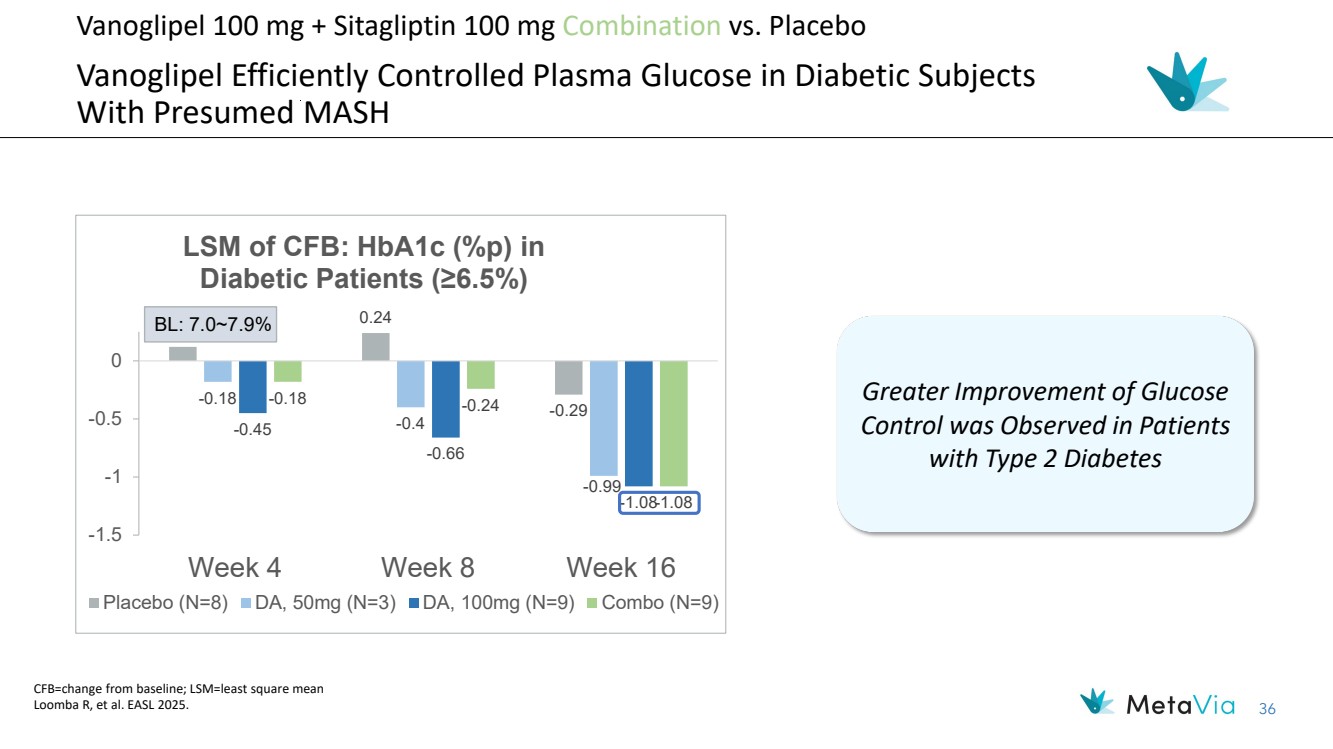
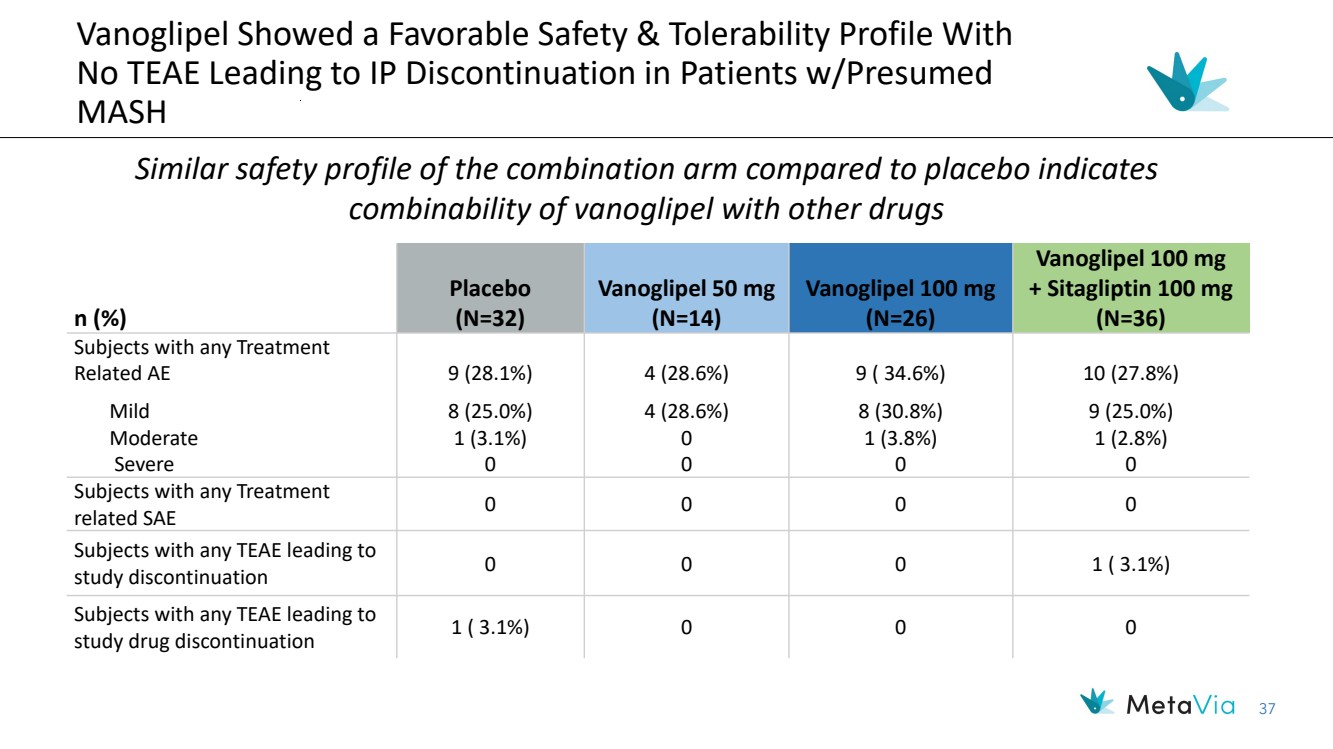
| 37 Vanoglipel Showed a Favorable Safety & Tolerability Profile With No TEAE Leading to IP Discontinuation in Patients w/Presumed MASH n (%) Placebo (N=32) Vanoglipel 50 mg (N=14) Vanoglipel 100 mg (N=26) Vanoglipel 100 mg + Sitagliptin 100 mg (N=36) Subjects with any Treatment Related AE Mild Moderate Severe 9 (28.1%) 8 (25.0%) 1 (3.1%) 0 4 (28.6%) 4 (28.6%) 0 0 9 ( 34.6%) 8 (30.8%) 1 (3.8%) 0 10 (27.8%) 9 (25.0%) 1 (2.8%) 0 Subjects with any Treatment related SAE 0 0 0 0 Subjects with any TEAE leading to study discontinuation 0 0 0 1 ( 3.1%) Subjects with any TEAE leading to study drug discontinuation 1 ( 3.1%) 0 0 0 Similar safety profile of the combination arm compared to placebo indicates combinability of vanoglipel with other drugs |