NextCure, Inc 8-K, filed Jan 23, 2026
NextCure, Inc. (NXTC)
About this 8-K
NextCure, Inc filed this 8-K on January 23, 2026.
Items reported
- Item 2.02: Financial results
- Item 7.01: Regulation FD disclosure
- Item 8.01: Other events
- Item 9.01: Financial statements and exhibits
UNITED STATES
SECURITIES AND EXCHANGE COMMISSION
Washington, D.C. 20549
FORM
CURRENT REPORT
Pursuant to Section 13 or 15(d) of the Securities Exchange Act of 1934
Date of Report (Date of earliest event reported):
(Exact name of registrant as specified in its charter)
|
|
|
|
|
| ||
(Address of principal |
| (Zip Code) |
executive offices) |
|
|
Registrant's telephone number, including area code: (
(Former name or former address, if changed since last report.)
Check the appropriate box below if the Form 8-K filing is intended to simultaneously satisfy the filing obligation of the registrant under any of the following provisions:
Securities registered pursuant to Section 12(b) of the Act:
|
|
|
Title of each class | Trading Symbol(s) | Name of each exchange on which registered |
Indicate by check mark whether the registrant is an emerging growth company as defined in Rule 405 of the Securities Act of 1933 (§230.405 of this chapter) or Rule 12b-2 of the Securities Exchange Act of 1934 (§240.12b-2 of this chapter). Emerging growth company
If an emerging growth company, indicate by check mark if the registrant has elected not to use the extended transition period for complying with any new or revised financial accounting standards provided pursuant to Section 13(a) of the Exchange Act. ☐
Item 2.02Results of Operations and Financial Condition
On January 23, 2026, NextCure, Inc. (the “Company”) issued a press release announcing preliminary results that as of December 31, 2025, it had approximately $41.8 million in cash, cash equivalents and marketable securities. The Company expects current financial resources to be sufficient to fund planned operating expenses and capital expenditures into the first half of 2027.
Because the Company’s consolidated financial statements for the year ended December 31, 2025 have not yet been finalized, the preliminary statement of the Company’s cash, cash equivalents and marketable securities as of December 31, 2025 in this Item 2.02 is unaudited and subject to adjustment.
Item 7.01Regulation FD Disclosure
A copy of the press release referenced in Item 2.02 hereof is filed as Exhibit 99.1 to this Current Report on Form 8-K and is hereby incorporated by reference into this Item 7.01.
Additionally, on January 23, 2026, the Company updated its corporate presentation. A copy of the corporate presentation is attached hereto as Exhibit 99.2 and is hereby incorporated by reference into this Item 7.01.
Except to the extent described in Item 8.01 hereof, the information contained in this Item 7.01, including Exhibits 99.1 and 99.2, shall not be deemed to be “filed” for purposes of Section 18 of the Securities Exchange Act of 1934, as amended (the “Exchange Act”), or otherwise subject to the liabilities of that section, and is not incorporated by reference into any filing under the Securities Act of 1933, as amended, or the Exchange Act, except as shall be expressly set forth by specific reference in such a filing.
Item 8.01Other Events
The information in Item 2.02 hereof is incorporated by reference into this Item 8.01. Additionally, the press release referenced in Items 2.02 and 7.01 hereof included the following program updates for the Company’s two antibody drug conjugate (ADC) programs:
| ● | Data from the SIM0505 Phase 1 open-label dose escalation study are anticipated to be presented in the second quarter of 2026, including results from patients in the U.S. and China. The SIM0505 study (NCT06792552) is evaluating patients with advanced solid tumors with a focus on gynecological cancers and an emphasis on platinum resistant ovarian cancer. The Company is adding clinical sites and increasing SIM0505 clinical drug supply in anticipation of initiating dose optimization in the first half of 2026. |
| ● | Dosing of patients has commenced in higher dose cohorts for the ongoing open-label Phase 1 dose escalation LNCB74 study (NCT06774963) following the November 2025 protocol amendment announcement. Higher dose cohorts will prioritize patients with high B7-H4 expression in breast and gynecological cancers, while now including adenoid cystic carcinoma type 1. Proof-of-concept data, previously anticipated in the first half of 2026, is delayed to accommodate enrollment; the Company now expects to provide a trial progress update in the second half of 2026. |
Some of the statements contained in this Item 8.01 are forward-looking statements within the meaning of the Private Securities Litigation Reform Act of 1995, including with respect to statements related to our cash runway and expectations for our business, operations and financial performance and condition, including the progress and results of clinical trials, development plans and upcoming milestones regarding our therapies. Any statements contained herein that are not statements of historical fact may be deemed to be forward-looking statements. In some cases, you can identify forward-looking statements by terminology such as “aim,” “anticipate,” “assume,” “believe,” “continue,” “could,” “should,” “due,” “estimate,” “expect,” “intend,” “hope,” “may,” “objective,” “plan,” “predict,” “potential,”
“positioned,” “seek,” “target,” “will,” “would” and other similar expressions that are predictions of or indicate future events and future trends, or the negative of these terms or similar language.
Forward-looking statements involve substantial risks and uncertainties that could cause actual results to differ materially from those projected in any forward-looking statement. Such risks and uncertainties include, among others: market and other conditions, positive results in preclinical studies may not be predictive of the results of clinical trials; the Company’s limited operating history and not having any products approved for commercial sale; the Company’s history of significant losses; the Company’s need and ability to obtain additional financing on acceptable terms or at all; risks related to clinical development, marketing approval and commercialization, including risks associated with reliance upon our collaborative partners and international vendors; the Company’s ability to maintain listing of its common stock on the Nasdaq Global Select Market; and the Company’s dependence on key personnel. More detailed information on these and additional factors that could affect the Company’s actual results are described under the heading “Risk Factors” in the Company’s most recent Annual Report on Form 10-K for the year ended December 31, 2024 and Quarterly Report on Form 10-Q for the quarter ended September 30, 2025, and in the Company’s other filings with the Securities and Exchange Commission. You should not place undue reliance on any forward-looking statements. Forward-looking statements speak only as of the date of this press release, and the Company assumes no obligation to update any forward-looking statements, even if expectations change.
Item 9.01Financial Statements and Exhibits
(d) Exhibits
Exhibit No. Description
99.1 Press Release issued by NextCure, Inc. January 23, 2026
99.2 NextCure, Inc. Presentation dated January 23, 2026
104 Cover Page Interactive Data File (formatted as inline XBRL).
SIGNATURE
Pursuant to the requirements of the Securities Exchange Act of 1934, the registrant has duly caused this report to be signed on its behalf by the undersigned hereunto duly authorized.
Dated: January 23, 2026 | NEXTCURE, INC. | |
|
|
|
| By: | /s/ Steven P. Cobourn |
| Name: | Steven P. Cobourn |
| Title: | Chief Financial Officer |

Exhibit 99.1
NextCure Provides Business Update
| – | SIM0505 (CDH6 ADC) Phase 1 dose escalation data update anticipated in Q2 2026 |
| – | LNCB74 (B7-H4 ADC) Phase 1 dose escalation expanded into higher dose cohorts |
BELTSVILLE, MD – January 23, 2026 (GLOBE NEWSWIRE) – NextCure, Inc. (Nasdaq: NXTC), a clinical-stage biopharmaceutical company committed to developing novel therapies to treat cancer, today provided updates for its two antibody drug conjugate (ADC) programs and reported a preliminary year-end 2025 cash position.
SIM0505 (CDH6 ADC): Phase 1 dose escalation data expected in Q2 2026
SIM0505 is a novel ADC directed to cadherin-6 (CDH6 ADC), which is overexpressed in several cancers with limited expression in healthy tissues. SIM0505 features a proprietary topoisomerase 1 inhibitor (TOPOi) payload, designed for broad anti-tumor activity, fast systemic clearance and an improved potential therapeutic window.
| ● | Data from the Phase 1 open-label dose escalation study are anticipated to be presented in the second quarter of 2026, including results from patients in the U.S. and China. |
| ● | The study (NCT06792552) is evaluating SIM0505 in patients with advanced solid tumors with a focus on gynecological cancers and an emphasis on platinum resistant ovarian cancer. |
| ● | The Company is adding clinical sites and increasing SIM0505 clinical drug supply in anticipation of initiating dose optimization in the first half of 2026. |
LNCB74 (B7-H4 ADC): Ongoing Phase 1 dose escalation
LNCB74 is a novel ADC directed to B7-H4, overexpressed in several cancers with limited expression in healthy tissues. LNCB74 features a proprietary tumor-selective cleavable linker and a tubulin inhibitor monomethyl auristatin E (MMAE) payload.
| ● | Dosing has commenced in higher dose cohorts for the ongoing open-label Phase 1 dose escalation study (NCT06774963) following the November 2025 protocol amendment announcement. Higher dose cohorts will prioritize patients with high B7-H4 expression in breast and gynecological cancers, while now including adenoid cystic carcinoma type 1. |
| ● | Proof-of-concept data, previously anticipated in the first half of 2026, is delayed to accommodate enrollment; NextCure now expects to provide a trial progress update in second half of 2026. |
Financial Position (unaudited) and Cash Runway
| ● | As of December 31, 2025, NextCure is reporting preliminary cash, cash equivalents and marketable securities of approximately $41.8 million. These preliminary selected financial results are unaudited and subject to adjustment. |
| ● | The Company expects current financial resources to be sufficient to fund planned operating expenses and capital expenditures into the first half of 2027. |
About SIM0505
SIM0505 is a novel antibody drug conjugate (ADC) directed to cadherin-6 (CDH6 ADC), featuring a proprietary topoisomerase 1 inhibitor (TOPOi) payload. The ADC is designed for broad anti-tumor activity, fast systemic clearance and an improved potential therapeutic window. SIM0505 is being evaluated in an open-label, Phase 1 study for the potential treatment of advanced solid tumors. NextCure has global rights for SIM0505, excluding China, Hong Kong, Macau, and Taiwan which are retained by Simcere Zaiming.
About LNCB74
LNCB74 is novel antibody drug conjugate (ADC) directed to B7-H4, featuring a proprietary tumor-selective cleavable linker and a tubulin inhibitor monomethyl auristatin E (MMAE) payload. LNCB74 is being evaluated in an open-label, Phase 1 study for the potential treatment of advanced solid tumors. NextCure shares global co-development rights with LigaChem Biosciences Inc through a 50-50 cost share arrangement.
About NextCure, Inc.
NextCure is a clinical-stage biopharmaceutical company that is focused on advancing innovative medicines that treat cancer patients who do not respond to, or have disease progression on, current therapies, through the use of targeted therapies including antibody-drug conjugates. We focus on advancing therapies that leverage our core strengths in understanding biological pathways and biomarkers, the interactions of cells within and beyond the tumor microenvironment, and the role each interaction plays in a biologic response.
Please visit "http://www.nextcure.com" for more information.
Forward-Looking Statements:
Some of the statements contained in this press release are forward-looking statements within the meaning of the Private Securities Litigation Reform Act of 1995, including with respect to statements related to our cash runway and expectations for our business, operations and financial performance and condition, including the progress and results of clinical trials, development plans and upcoming milestones regarding our therapies. Any statements contained herein that are not statements of historical fact may be deemed to be forward-looking statements. In some cases, you can identify forward-looking statements by terminology such as “aim,” “anticipate,” “assume,” “believe,” “continue,” “could,” “should,” “due,” “estimate,” “expect,” “intend,” “hope,” “may,” “objective,” “plan,” “predict,” “potential,” “positioned,” “seek,” “target,” “will,” “would” and other similar expressions that are predictions
4929-0877-1977
of or indicate future events and future trends, or the negative of these terms or similar language.
Forward-looking statements involve substantial risks and uncertainties that could cause actual results to differ materially from those projected in any forward-looking statement. Such risks and uncertainties include, among others: market and other conditions, positive results in preclinical studies may not be predictive of the results of clinical trials; NextCure’s limited operating history and not having any products approved for commercial sale; NextCure’s history of significant losses; NextCure’s need and ability to obtain additional financing on acceptable terms or at all; risks related to clinical development, marketing approval and commercialization, including risks associated with reliance upon our collaborative partners and international vendors; NextCure’s ability to maintain listing of its common stock on the Nasdaq Global Select Market; and NextCure’s dependence on key personnel. More detailed information on these and additional factors that could affect NextCure’s actual results are described under the heading “Risk Factors” in NextCure’s most recent Annual Report on Form 10-K for the year ended December 31, 2024 and Quarterly Report on Form 10-Q for the quarter ended September 30, 2025, and in NextCure’s other filings with the Securities and Exchange Commission. You should not place undue reliance on any forward-looking statements. Forward-looking statements speak only as of the date of this press release, and NextCure assumes no obligation to update any forward-looking statements, even if expectations change.
Investor Inquiries
Timothy Mayer, Ph.D.
NextCure, Inc.
Chief Operating Officer
(240) 762-6486
IR@nextcure.com
4929-0877-1977
| NASDAQ: NXTC SIM0505 LNCB74 J A N U A R Y 2 0 2 6 Corporate Presentation |
| Forward-Looking Statements 2 To the extent that statements contained in this presentation are not descriptions of historical facts, they may be deemed to be forward-looking statements under the Private Securities Litigation Reform Act of 1995. These statements are based on current expectations, forecasts, assumptions and other information available to NextCure as of the date hereof. Forward-looking statements include statements regarding NextCure’s expectations, beliefs, intentions or strategies regarding the future and can be identified by forward-looking words such as “may,” “will,” “potential,” “expects,” “believes,” “intends,” “hope,” “towards,” “forward,” “later” and similar expressions. Examples of forward-looking statements in this presentation include, among others, statements about our licensing agreement with Simcere Zaiming, statements about the development plans for our products, statements about the progress and evaluation and expected timing of results of NextCure’s ongoing or planned clinical trials, expectations regarding the potential benefits, activity, effectiveness and safety of our research stage, preclinical stage, and clinical stage therapeutic candidates, NextCure’s financial guidance, expected upcoming milestones, and NextCure’s plans, objectives and intentions with respect to the discovery and development of therapeutic products. Forward-looking statements involve substantial risks and uncertainties that could cause actual results to differ materially from those projected in any forward-looking statement. Such risks and uncertainties include, among others: positive results in preclinical studies may not be predictive of the results of clinical trials; NextCure’s limited operating history and no products approved for commercial sale; NextCure’s history of significant losses; NextCure’s need to obtain additional financing; risks related to clinical development, marketing approval and commercialization; the unproven approach to the discovery and development of product candidates based on NextCure’s discovery platform; and dependence on key personnel. More detailed information on these and additional factors that could affect NextCure’s actual results are described in NextCure’s filings with the Securities and Exchange Commission (the “SEC”), including in Item 1A of NextCure’s most recent Form 10-K, subsequent Forms 10-Q and elsewhere in the Company’s filings with the SEC. You should not place undue reliance on any forward-looking statements. Forward-looking statements speak only as of the date of this press release, and NextCure assumes no obligation to update any forward-looking statements, except as required by law, even if expectations change. |
| 3 In the Fight Against Cancer Harnessing the Power of Targeted Therapy 3 |

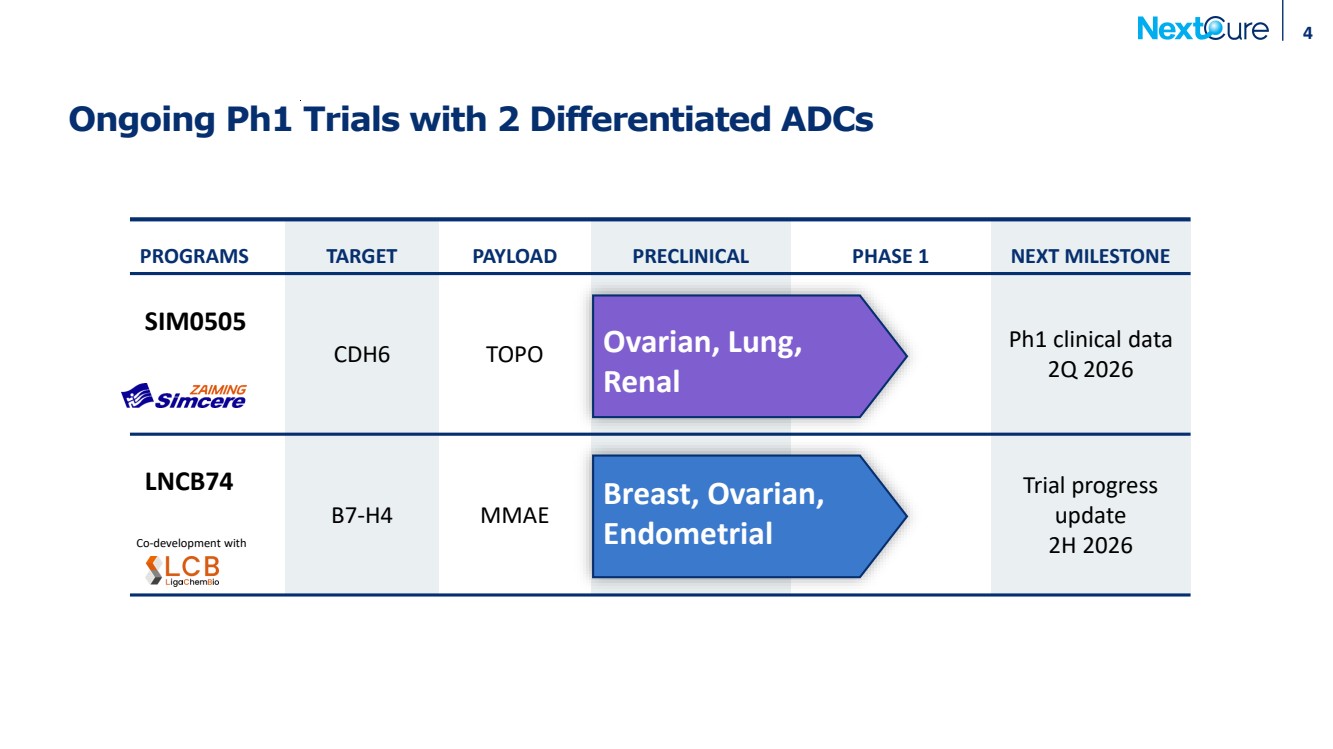
| Ongoing Ph1 Trials with 2 Differentiated ADCs 4 PROGRAMS TARGET PAYLOAD PRECLINICAL PHASE 1 NEXT MILESTONE SIM0505 CDH6 TOPO Ph1 clinical data 2Q 2026 LNCB74 B7-H4 MMAE Trial progress update 2H 2026 Co-development with Breast, Ovarian, Endometrial Ovarian, Lung, Renal |
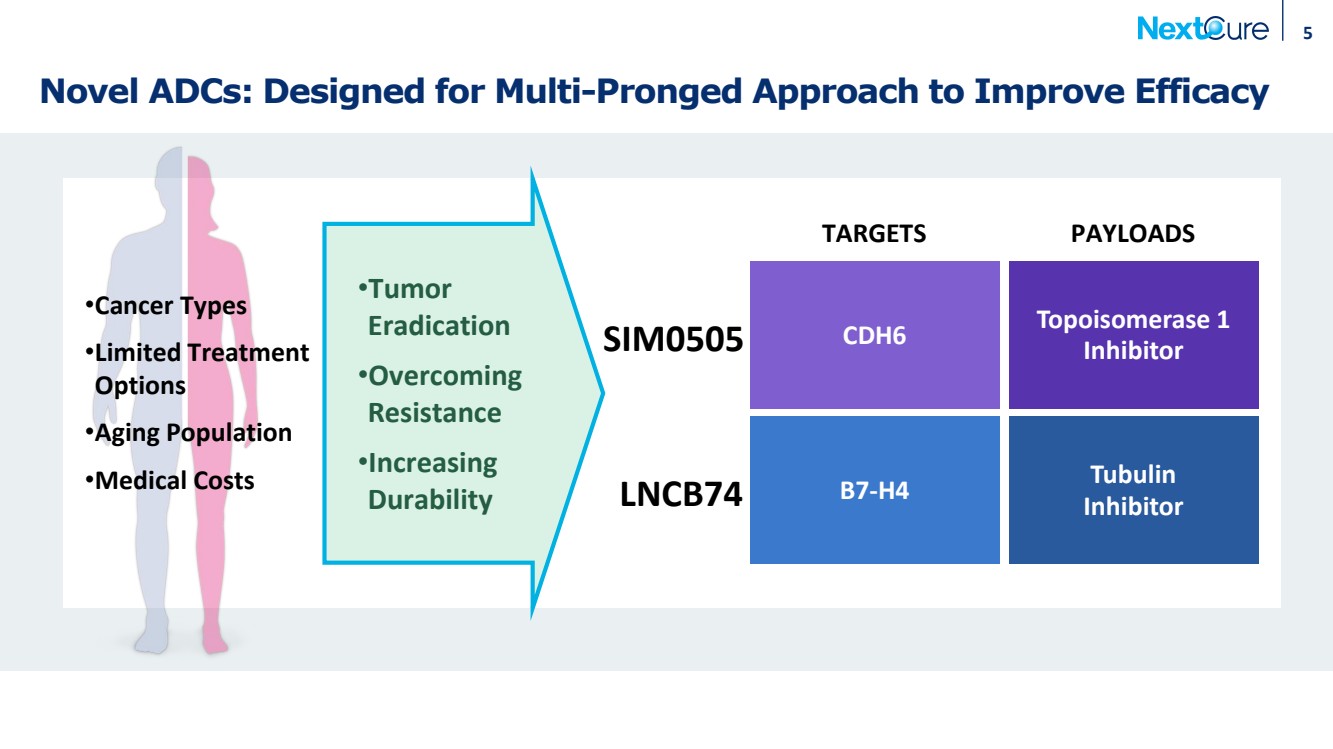
| Novel ADCs: Designed for Multi-Pronged Approach to Improve Efficacy 5 TARGETS PAYLOADS B7-H4 Tubulin Inhibitor LNCB74 CDH6 Topoisomerase 1 SIM0505 Inhibitor •Tumor Eradication •Overcoming Resistance •Increasing Durability •Cancer Types •Limited Treatment Options •Aging Population •Medical Costs |
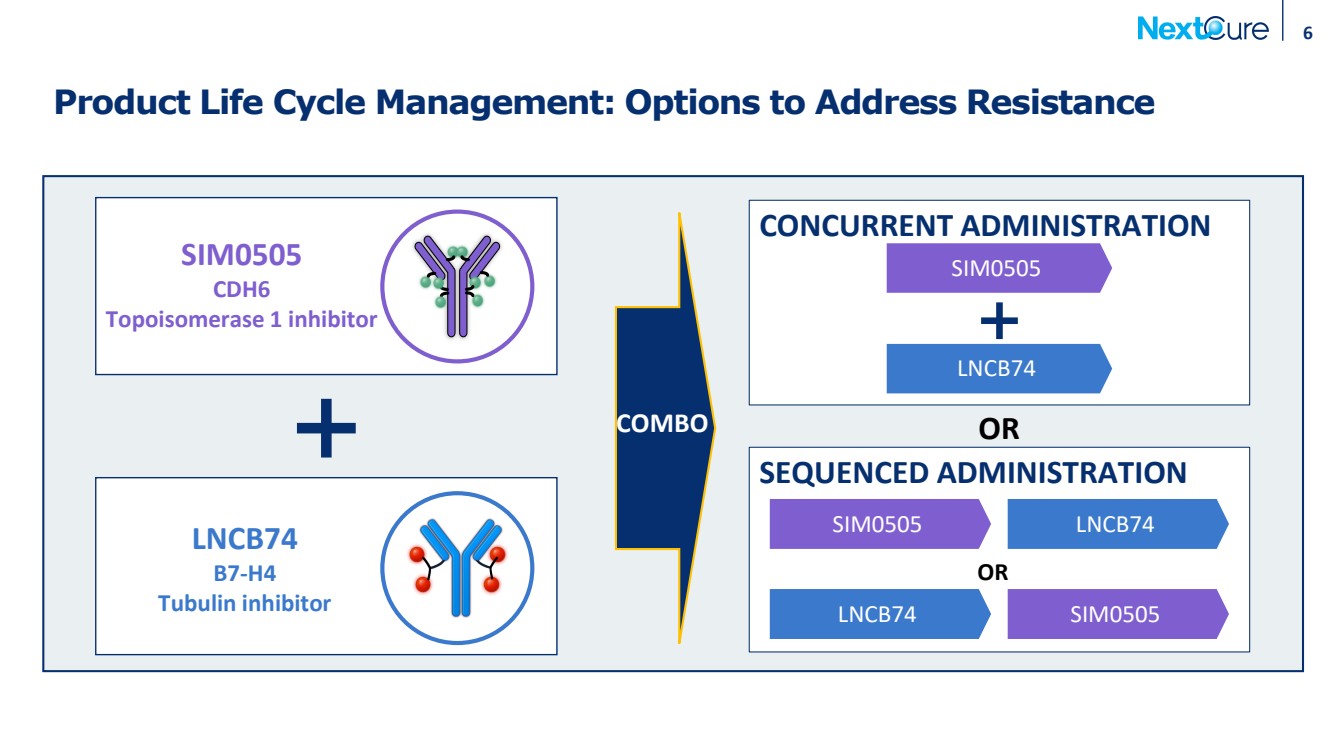
| 6 Product Life Cycle Management: Options to Address Resistance LNCB74 B7-H4 Tubulin inhibitor SIM0505 CDH6 Topoisomerase 1 inhibitor CONCURRENT ADMINISTRATION COMBO SEQUENCED ADMINISTRATION OR LNCB74 SIM0505 LNCB74 SIM0505 SIM0505 LNCB74 OR |
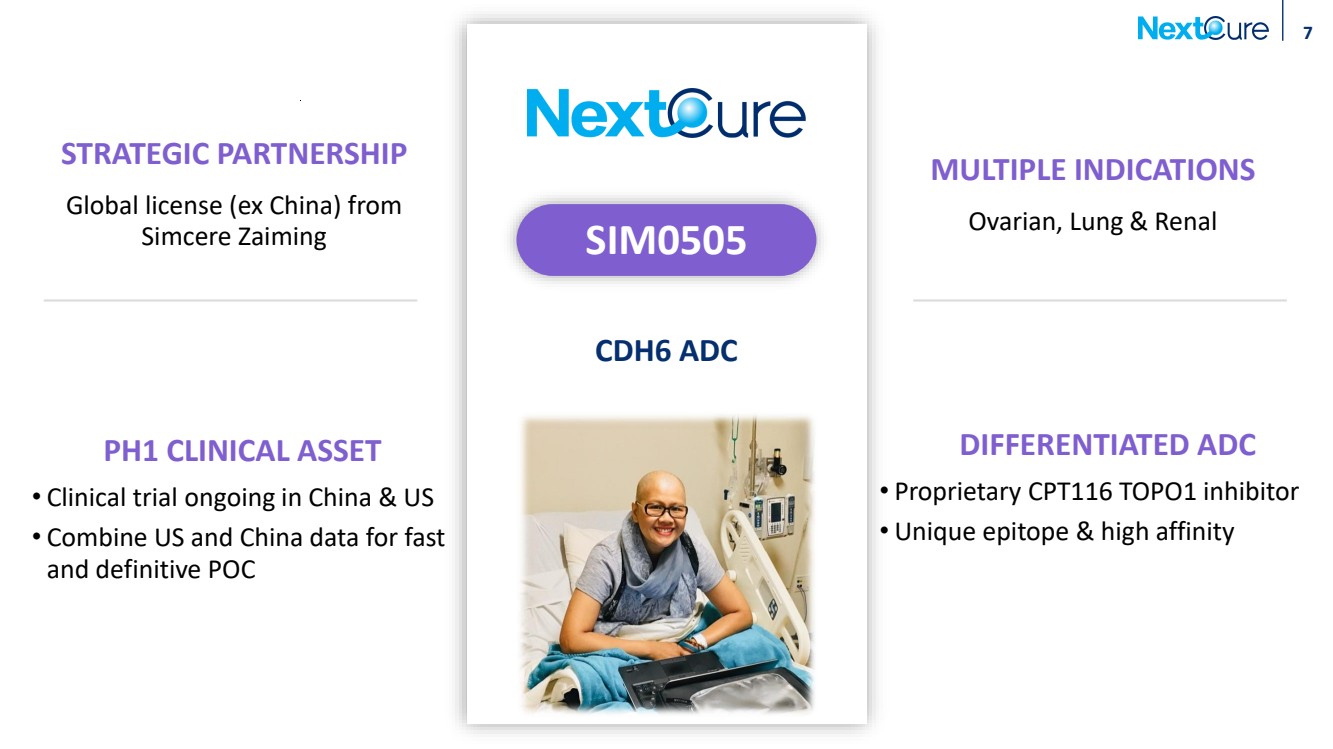
| 7 STRATEGIC PARTNERSHIP Global license (ex China) from Simcere Zaiming DIFFERENTIATED ADC • Proprietary CPT116 TOPO1 inhibitor • Unique epitope & high affinity PH1 CLINICAL ASSET • Clinical trial ongoing in China & US • Combine US and China data for fast and definitive POC MULTIPLE INDICATIONS Ovarian, Lung & Renal CDH6 ADC SIM0505 |
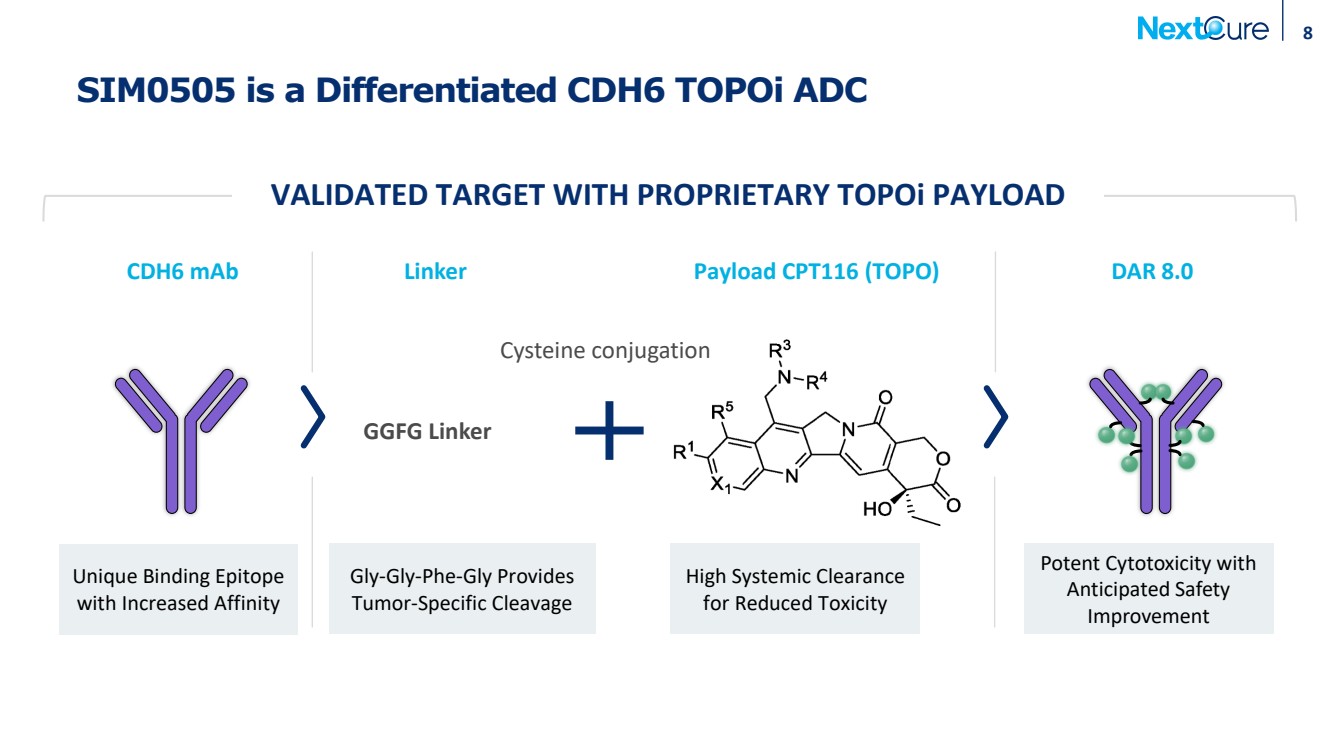
| SIM0505 is a Differentiated CDH6 TOPOi ADC 8 Payload CPT116 (TOPO) GGFG Linker CDH6 mAb DAR 8.0 Cysteine conjugation Gly-Gly-Phe-Gly Provides Tumor-Specific Cleavage Unique Binding Epitope with Increased Affinity High Systemic Clearance for Reduced Toxicity Linker Potent Cytotoxicity with Anticipated Safety Improvement VALIDATED TARGET WITH PROPRIETARY TOPOi PAYLOAD |
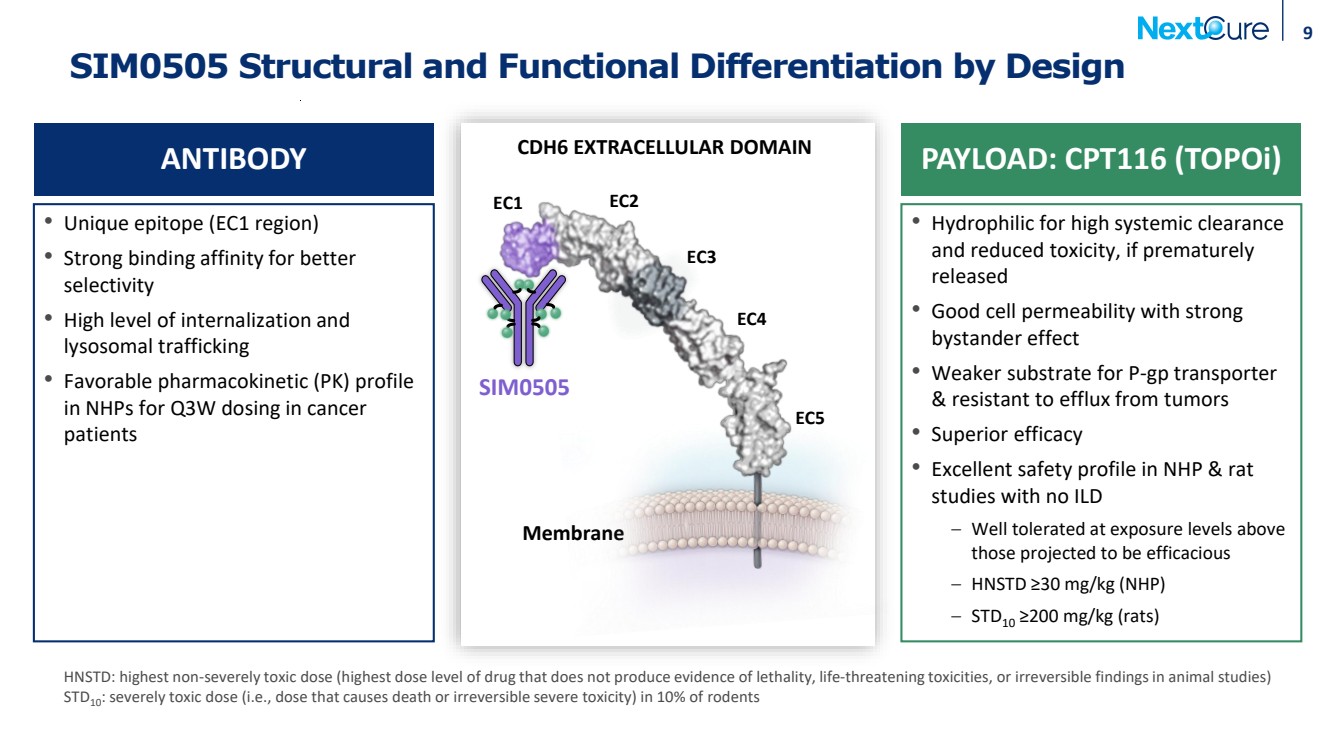
| SIM0505 Structural and Functional Differentiation by Design • Unique epitope (EC1 region) • Strong binding affinity for better selectivity • High level of internalization and lysosomal trafficking • Favorable pharmacokinetic (PK) profile in NHPs for Q3W dosing in cancer patients • Hydrophilic for high systemic clearance and reduced toxicity, if prematurely released • Good cell permeability with strong bystander effect • Weaker substrate for P-gp transporter & resistant to efflux from tumors • Superior efficacy • Excellent safety profile in NHP & rat studies with no ILD – Well tolerated at exposure levels above those projected to be efficacious – HNSTD ≥30 mg/kg (NHP) – STD10 ≥200 mg/kg (rats) 9 ANTIBODY PAYLOAD: CPT116 (TOPOi) HNSTD: highest non-severely toxic dose (highest dose level of drug that does not produce evidence of lethality, life-threatening toxicities, or irreversible findings in animal studies) STD10: severely toxic dose (i.e., dose that causes death or irreversible severe toxicity) in 10% of rodents Membrane EC1 EC2 EC3 EC4 EC5 CDH6 EXTRACELLULAR DOMAIN SIM0505 |
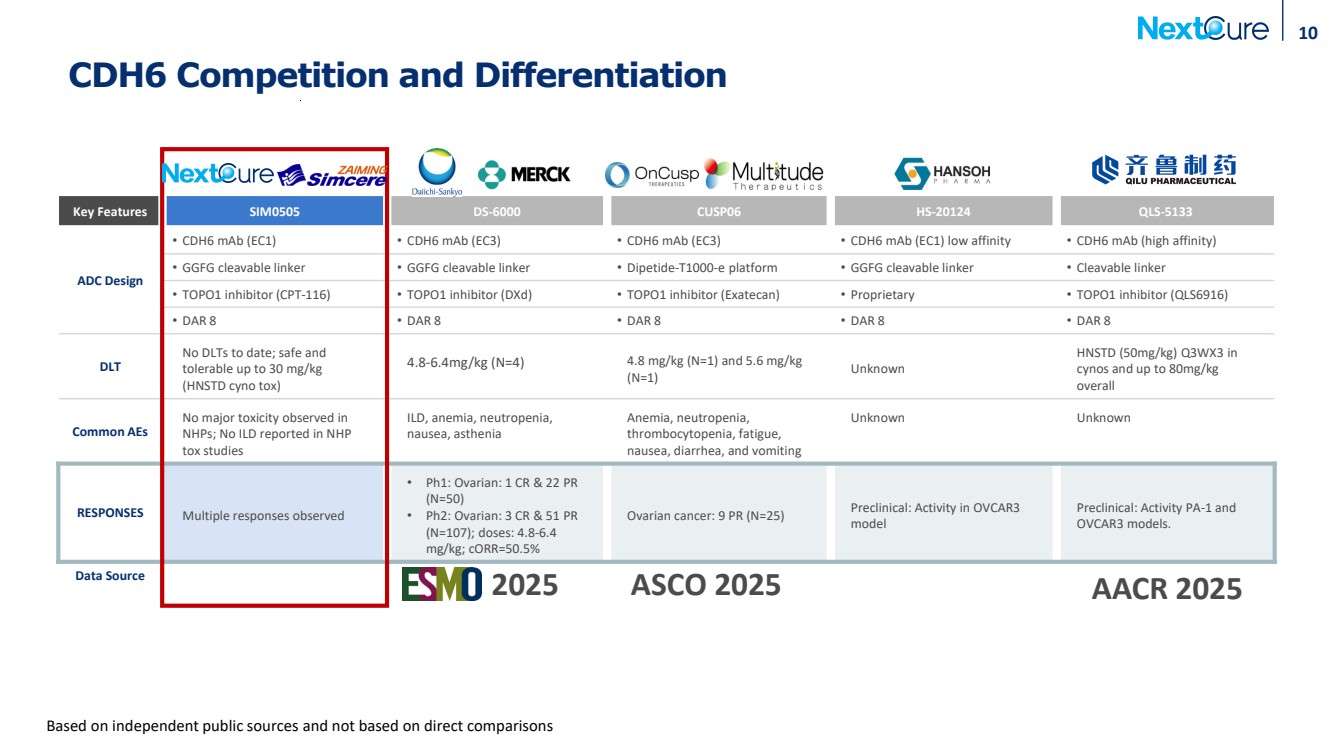
| CDH6 Competition and Differentiation Key Features SIM0505 DS-6000 CUSP06 HS-20124 QLS-5133 ADC Design • CDH6 mAb (EC1) • CDH6 mAb (EC3) • CDH6 mAb (EC3) • CDH6 mAb (EC1) low affinity • CDH6 mAb (high affinity) • GGFG cleavable linker • GGFG cleavable linker • Dipetide-T1000-e platform • GGFG cleavable linker • Cleavable linker • TOPO1 inhibitor (CPT-116) • TOPO1 inhibitor (DXd) • TOPO1 inhibitor (Exatecan) • Proprietary • TOPO1 inhibitor (QLS6916) • DAR 8 • DAR 8 • DAR 8 • DAR 8 • DAR 8 DLT No DLTs to date; safe and tolerable up to 30 mg/kg (HNSTD cyno tox) 4.8-6.4mg/kg (N=4) 4.8 mg/kg (N=1) and 5.6 mg/kg (N=1) Unknown HNSTD (50mg/kg) Q3WX3 in cynos and up to 80mg/kg overall Common AEs No major toxicity observed in NHPs; No ILD reported in NHP tox studies ILD, anemia, neutropenia, nausea, asthenia Anemia, neutropenia, thrombocytopenia, fatigue, nausea, diarrhea, and vomiting Unknown Unknown RESPONSES Multiple responses observed • Ph1: Ovarian: 1 CR & 22 PR (N=50) • Ph2: Ovarian: 3 CR & 51 PR (N=107); doses: 4.8-6.4 mg/kg; cORR=50.5% Ovarian cancer: 9 PR (N=25) Preclinical: Activity in OVCAR3 model Preclinical: Activity PA-1 and OVCAR3 models. Data Source 10 Based on independent public sources and not based on direct comparisons 2025 ASCO 2025 AACR 2025 |
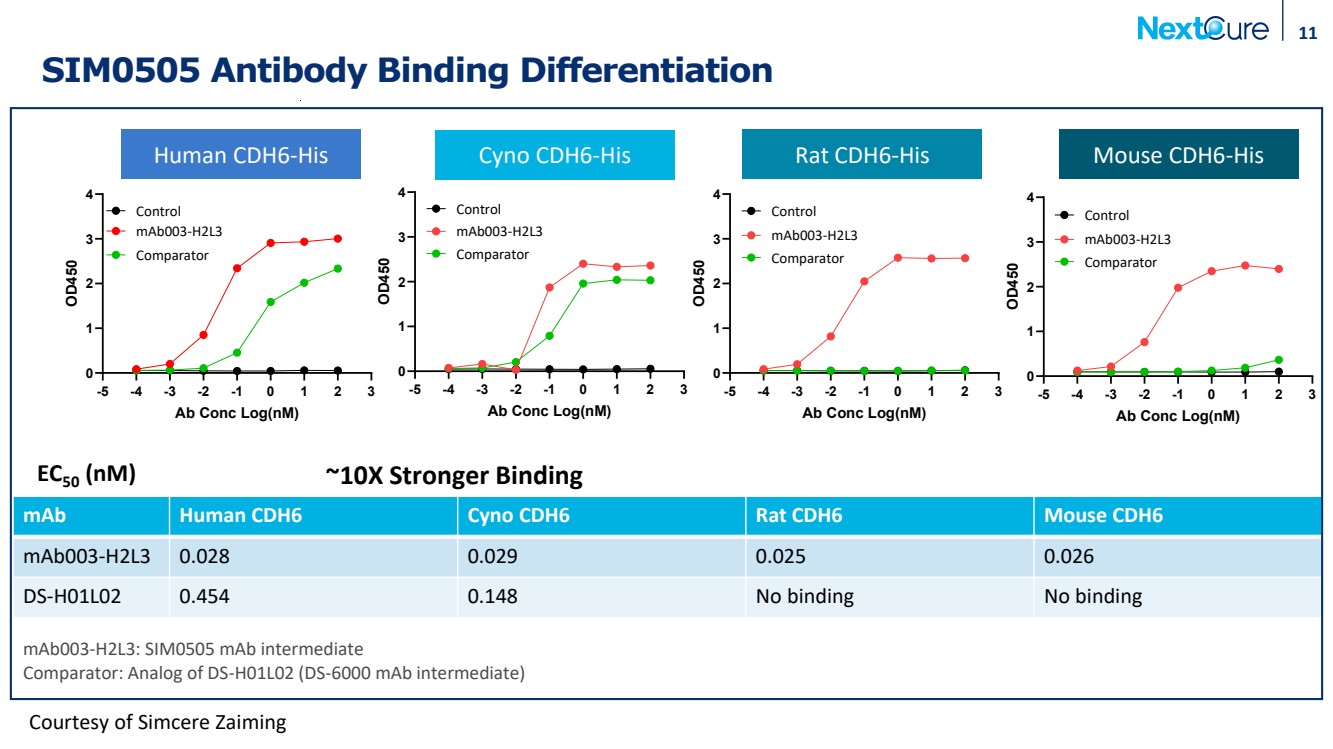
| SIM0505 Antibody Binding Differentiation 11 mAb Human CDH6 Cyno CDH6 Rat CDH6 Mouse CDH6 mAb003-H2L3 0.028 0.029 0.025 0.026 DS-H01L02 0.454 0.148 No binding No binding EC50 (nM) mAb003-H2L3: SIM0505 mAb intermediate Comparator: Analog of DS-H01L02 (DS-6000 mAb intermediate) -5 -4 -3 -2 -1 0 1 2 3 0 1 2 3 4 Human CDH6-His Ab Conc Log(nM) OD450 mAb003-H2L3 Comparator Control -5 -4 -3 -2 -1 0 1 2 3 0 1 2 3 4 Rat CDH6-His Ab Conc Log(nM) OD450 mAb003-H2L3 Comparator Control -5 -4 -3 -2 -1 0 1 2 3 0 1 2 3 4 Mouse CDH6-His Ab Conc Log(nM) OD450 mAb003-H2L3 Comparator Control -5 -4 -3 -2 -1 0 1 2 3 0 1 2 3 4 Cyno CDH6-His Ab Conc Log(nM) OD450 mAb003-H2L3 Comparator Control Courtesy of Simcere Zaiming Human CDH6-His Cyno CDH6-His Rat CDH6-His Mouse CDH6-His ~10X Stronger Binding |
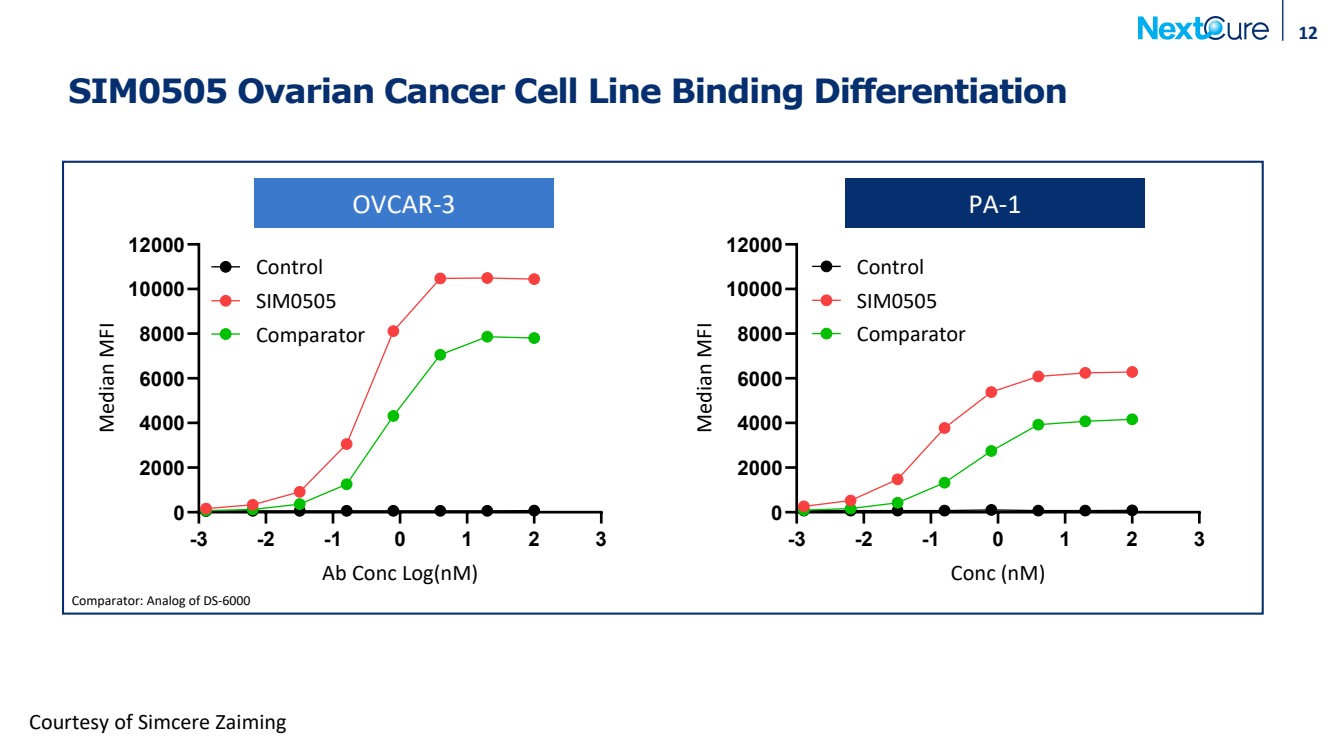
| SIM0505 Ovarian Cancer Cell Line Binding Differentiation 12 -3 -2 -1 0 1 2 3 0 2000 4000 6000 8000 10000 12000 OVCAR3 Ab Conc Log(nM) Median MFI SIM0505 Comparator Control -3 -2 -1 0 1 2 3 0 2000 4000 6000 8000 10000 12000 PA-1 Conc (nM) Median MFI SIM0505 Comparator Control Courtesy of Simcere Zaiming Comparator: Analog of DS-6000 OVCAR-3 PA-1 |
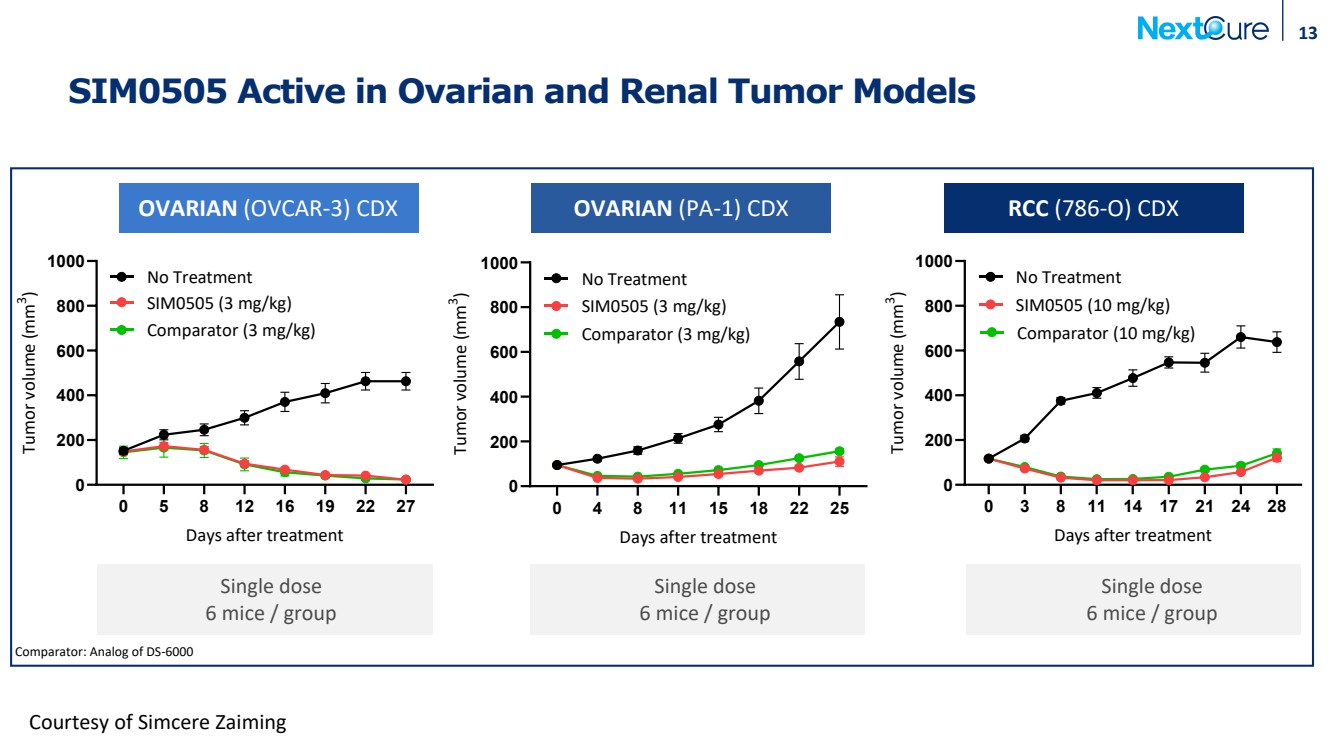
| SIM0505 Active in Ovarian and Renal Tumor Models 13 0 5 8 12 16 19 22 27 0 200 400 600 800 1000 OVCAR3 CDX Days after treatment Tumor volume (mm 3 ) No Treatment SIM0505 (3 mg/kg) Comparator (3 mg/kg) 0 4 8 11 15 18 22 25 0 200 400 600 800 1000 PA-1 CDX Days after treatment Tumor volume (mm 3 ) No Treatment SIM0505 (3 mg/kg) Comparator (3 mg/kg) 0 3 8 11 14 17 21 24 28 0 200 400 600 800 1000 786-O CDX Days after treatment Tumor volume m( m 3 ) No Treatment SIM0505 (10 mg/kg) Comparator (10 mg/kg) OVARIAN (OVCAR-3) CDX OVARIAN (PA-1) CDX RCC (786-O) CDX Courtesy of Simcere Zaiming Comparator: Analog of DS-6000 Single dose 6 mice / group Single dose 6 mice / group Single dose 6 mice / group |
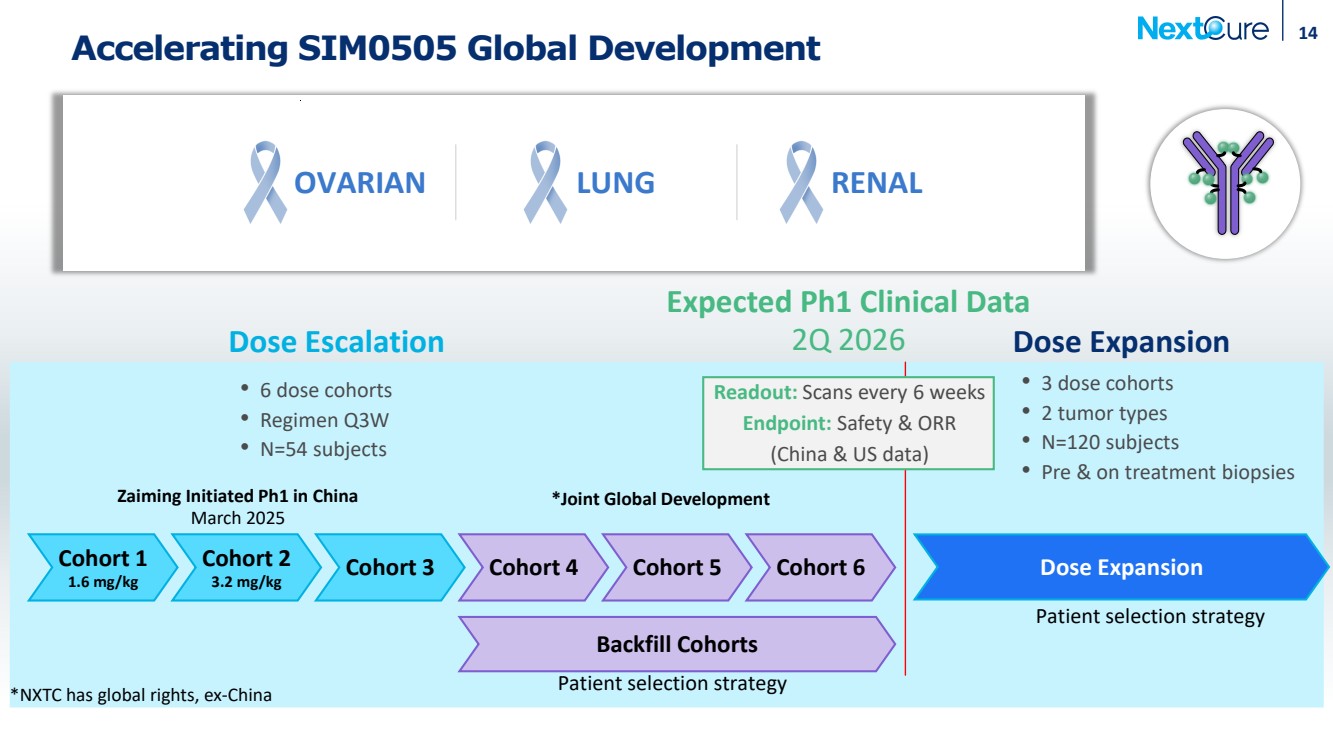
| Accelerating SIM0505 Global Development Expected Ph1 Clinical Data 2Q 2026 Cohort 1 1.6 mg/kg Cohort 2 3.2 mg/kg Cohort 3 Cohort 4 Backfill Cohorts 14 Dose Expansion • 6 dose cohorts • Regimen Q3W • N=54 subjects • 3 dose cohorts • 2 tumor types • N=120 subjects • Pre & on treatment biopsies Patient selection strategy Patient selection strategy Dose Escalation Dose Expansion OVARIAN LUNG RENAL Readout: Scans every 6 weeks Endpoint: Safety & ORR (China & US data) Cohort 5 Cohort 6 Zaiming Initiated Ph1 in China March 2025 *Joint Global Development *NXTC has global rights, ex-China |
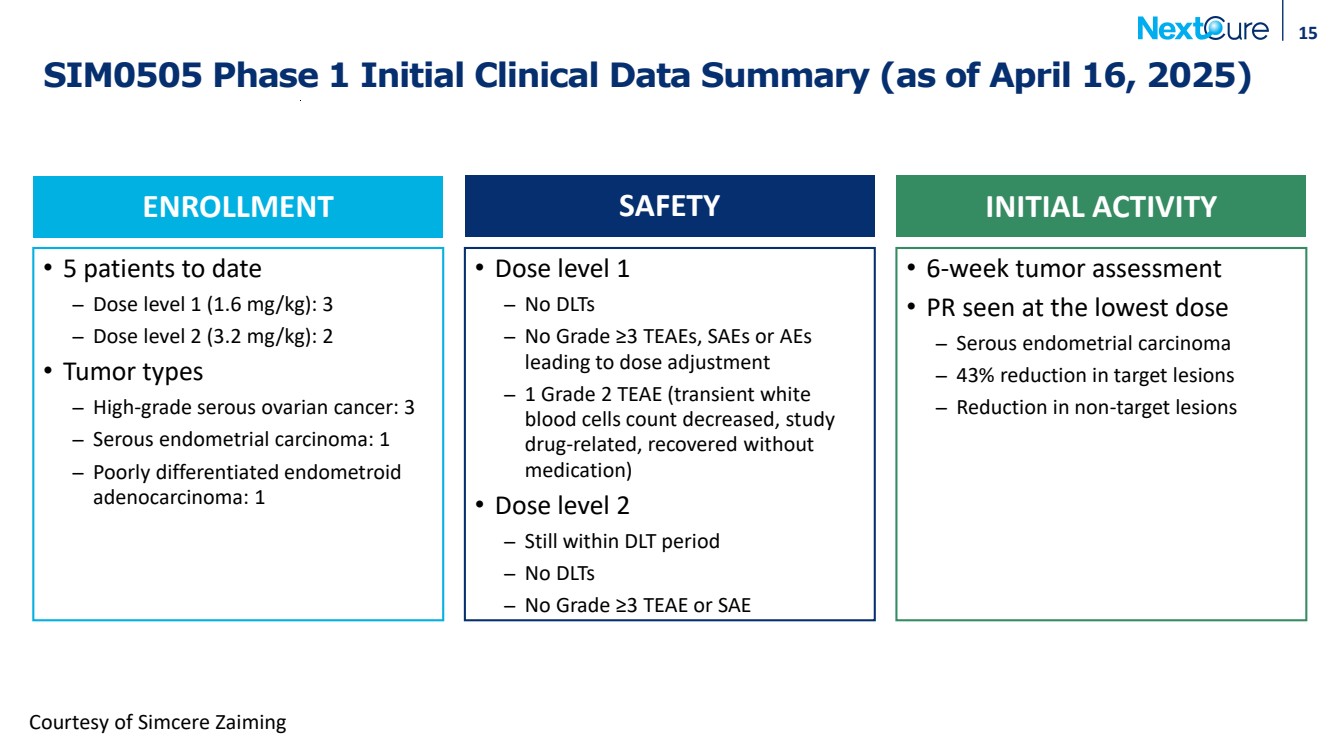
| SIM0505 Phase 1 Initial Clinical Data Summary (as of April 16, 2025) 15 • 5 patients to date ̶ Dose level 1 (1.6 mg/kg): 3 ̶ Dose level 2 (3.2 mg/kg): 2 • Tumor types ̶ High-grade serous ovarian cancer: 3 ̶ Serous endometrial carcinoma: 1 ̶ Poorly differentiated endometroid adenocarcinoma: 1 • Dose level 1 ̶ No DLTs ̶ No Grade ≥3 TEAEs, SAEs or AEs leading to dose adjustment ̶ 1 Grade 2 TEAE (transient white blood cells count decreased, study drug-related, recovered without medication) • Dose level 2 ̶ Still within DLT period ̶ No DLTs ̶ No Grade ≥3 TEAE or SAE • 6-week tumor assessment • PR seen at the lowest dose ̶ Serous endometrial carcinoma ̶ 43% reduction in target lesions ̶ Reduction in non-target lesions ENROLLMENT SAFETY INITIAL ACTIVITY Courtesy of Simcere Zaiming |
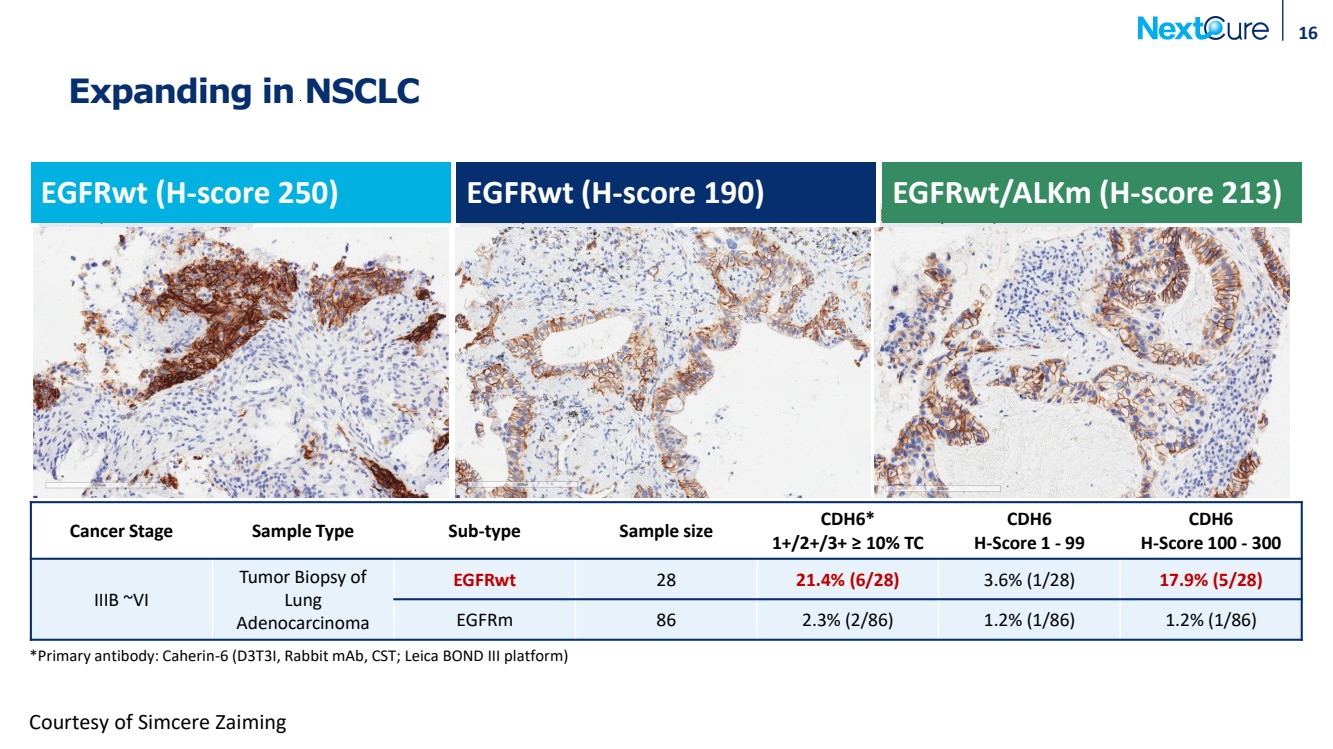
| EGFRwt, CDH6 H-score 250 EGFRwt, CDH6 H-score 190 EGFRwt/ALKm, CDH6 H-score 213 Expanding in NSCLC 16 Courtesy of Simcere Zaiming *Primary antibody: Caherin-6 (D3T3I, Rabbit mAb, CST; Leica BOND III platform) EGFRwt (H-score 250) EGFRwt (H-score 190) EGFRwt/ALKm (H-score 213) Cancer Stage Sample Type Sub-type Sample size CDH6* 1+/2+/3+ ≥ 10% TC CDH6 H-Score 1 - 99 CDH6 H-Score 100 - 300 IIIB ~VI Tumor Biopsy of Lung Adenocarcinoma EGFRwt 28 21.4% (6/28) 3.6% (1/28) 17.9% (5/28) EGFRm 86 2.3% (2/86) 1.2% (1/86) 1.2% (1/86) |
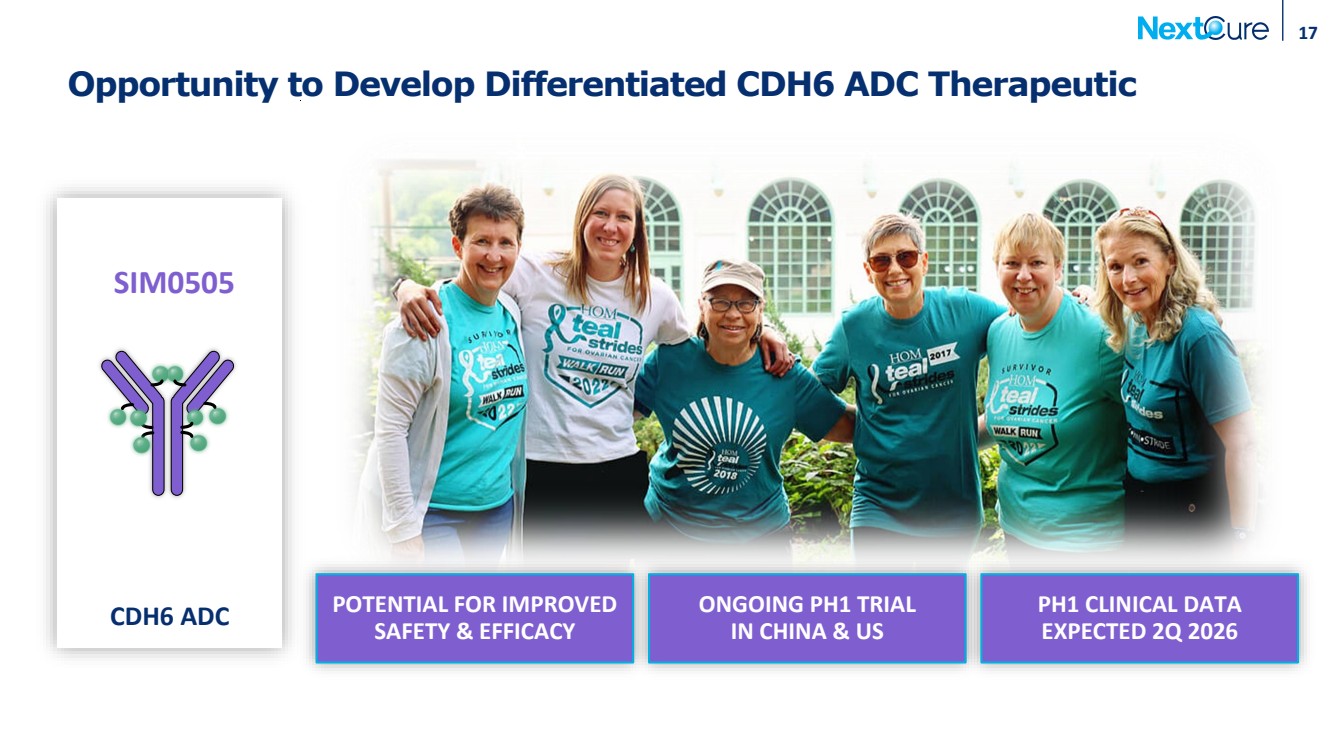
| POTENTIAL FOR IMPROVED SAFETY & EFFICACY Opportunity to Develop Differentiated CDH6 ADC Therapeutic 17 CDH6 ADC ONGOING PH1 TRIAL IN CHINA & US PH1 CLINICAL DATA EXPECTED 2Q 2026 SIM0505 |
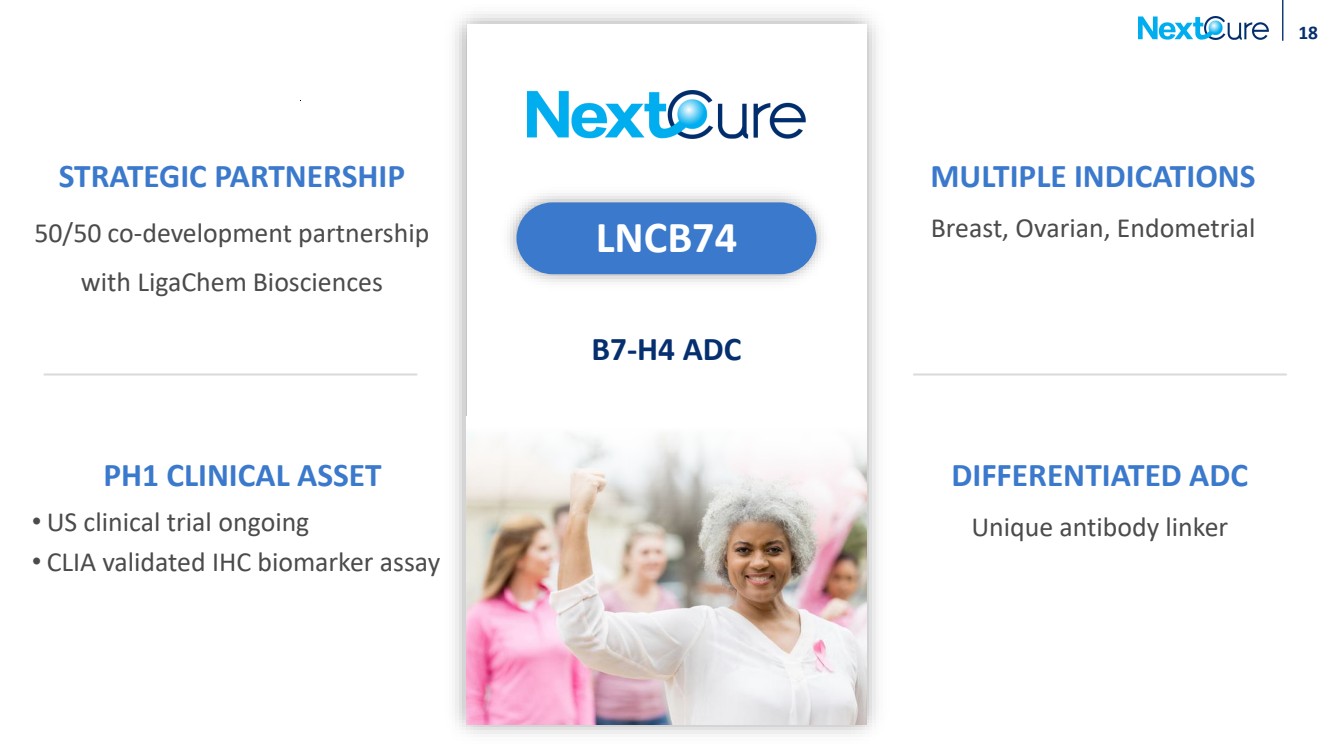
| 18 LNCB74 B7-H4 ADC DIFFERENTIATED ADC Unique antibody linker STRATEGIC PARTNERSHIP 50/50 co-development partnership with LigaChem Biosciences MULTIPLE INDICATIONS Breast, Ovarian, Endometrial PH1 CLINICAL ASSET • US clinical trial ongoing • CLIA validated IHC biomarker assay |
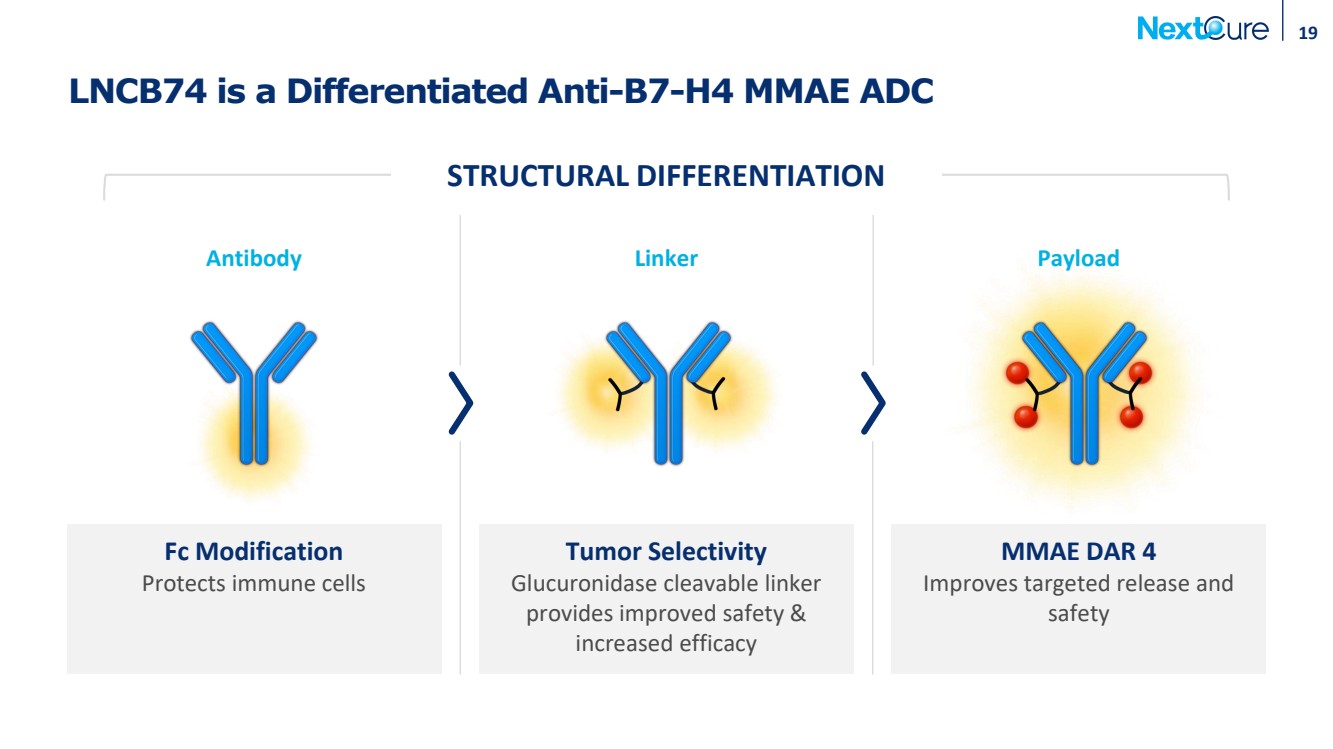
| LNCB74 is a Differentiated Anti-B7-H4 MMAE ADC Fc Modification Protects immune cells Tumor Selectivity Glucuronidase cleavable linker provides improved safety & increased efficacy 19 MMAE DAR 4 Improves targeted release and safety Antibody Linker Payload STRUCTURAL DIFFERENTIATION |
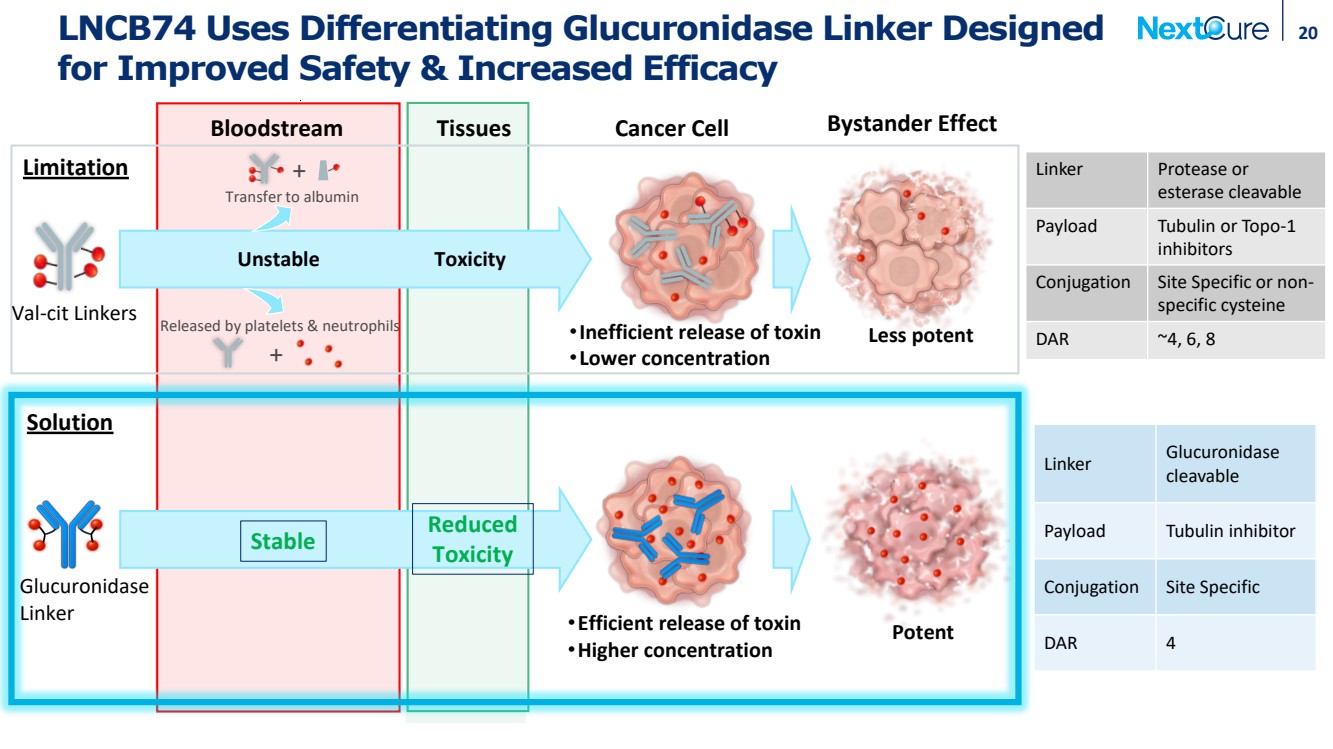
| LNCB74 Uses Differentiating Glucuronidase Linker Designed for Improved Safety & Increased Efficacy 20 Bloodstream Tissues Cancer Cell Bystander Effect Linker Glucuronidase cleavable Payload Tubulin inhibitor Conjugation Site Specific DAR 4 •Efficient release of toxin •Higher concentration Stable Potent Solution Reduced Toxicity + + Transfer to albumin Released by platelets & neutrophils Unstable Toxicity •Inefficient release of toxin •Lower concentration Less potent Limitation Linker Protease or esterase cleavable Payload Tubulin or Topo-1 inhibitors Conjugation Site Specific or non-specific cysteine DAR ~4, 6, 8 Val-cit Linkers Glucuronidase Linker |
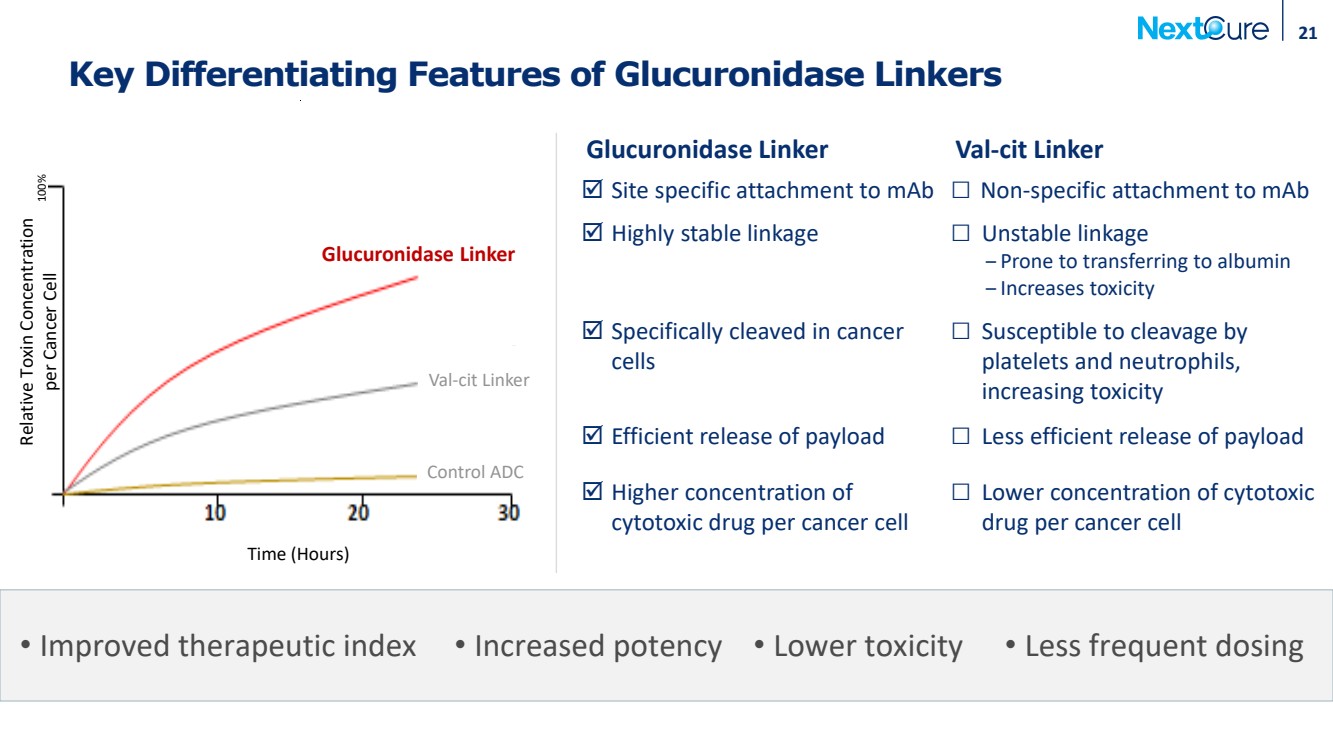
| Key Differentiating Features of Glucuronidase Linkers 21 Time (Hours) Relative Toxin Concentration per Cancer Cell 100% Val-cit Linker Glucuronidase Linker Control ADC Glucuronidase Linker Val-cit Linker Site specific attachment to mAb □ Non-specific attachment to mAb Highly stable linkage □ Unstable linkage ‒ Prone to transferring to albumin ‒ Increases toxicity Specifically cleaved in cancer cells □ Susceptible to cleavage by platelets and neutrophils, increasing toxicity Efficient release of payload □ Less efficient release of payload Higher concentration of cytotoxic drug per cancer cell □ Lower concentration of cytotoxic drug per cancer cell • Improved therapeutic index • Increased potency • Lower toxicity • Less frequent dosing |
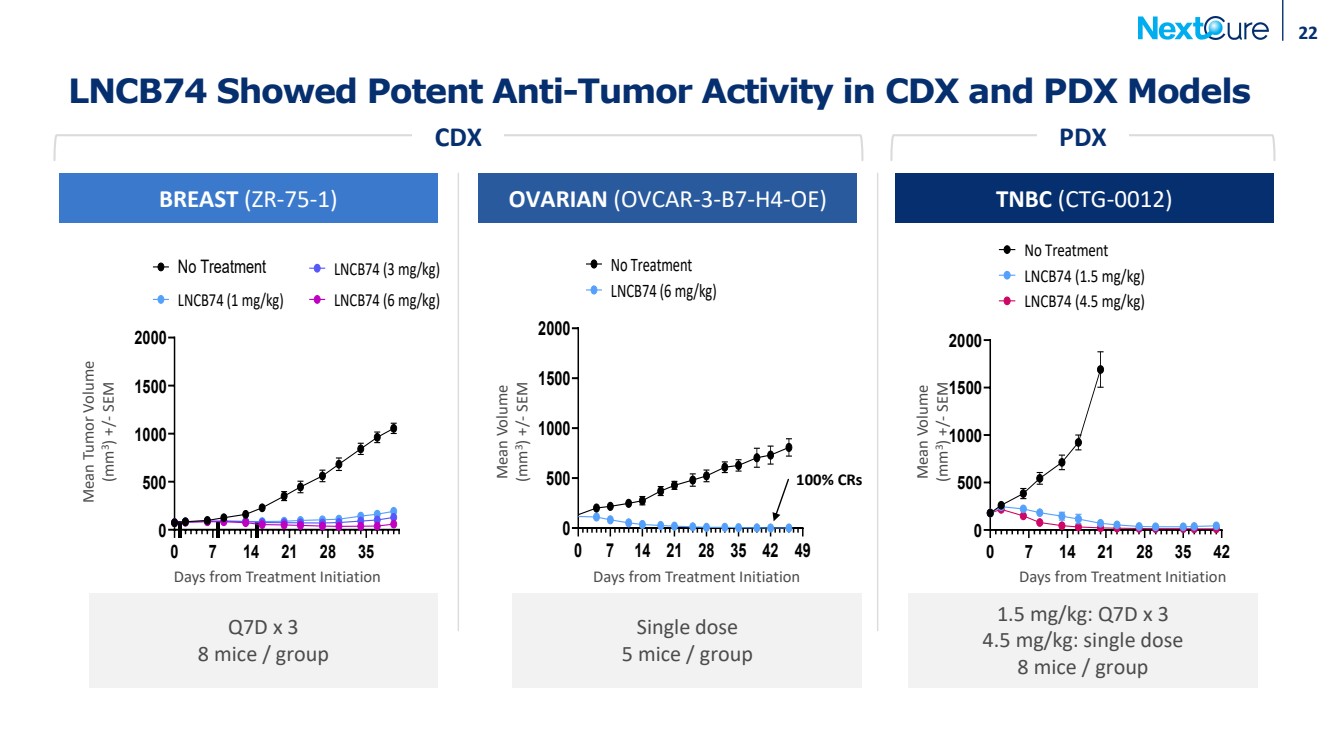
| 22 LNCB74 Showed Potent Anti-Tumor Activity in CDX and PDX Models OVARIAN (OVCAR-3-B7-H4-OE) Days from Treatment Initiation Mean Volume (mm3) +/- SEM TNBC (CTG-0012) Mean Volume (mm3) +/- SEM Days from Treatment Initiation BREAST (ZR-75-1) Days from Treatment Initiation Mean Tumor Volume (mm3) +/- SEM CDX PDX Q7D x 3 8 mice / group 1.5 mg/kg: Q7D x 3 4.5 mg/kg: single dose 8 mice / group Single dose 5 mice / group 0 7 14 21 28 35 0 500 1000 1500 2000 No Treatment LNCB74 (6 mg/kg) LNCB74 (3 mg/kg) LNCB74 (1 mg/kg) 0 7 14 21 28 35 42 49 0 500 1000 1500 2000 No Treatment LNCB74 (6 mg/kg) 100% CRs 0 7 14 21 28 35 42 0 500 1000 1500 2000 No Treatment LNCB74 (1.5 mg/kg) LNCB74 (4.5 mg/kg) |
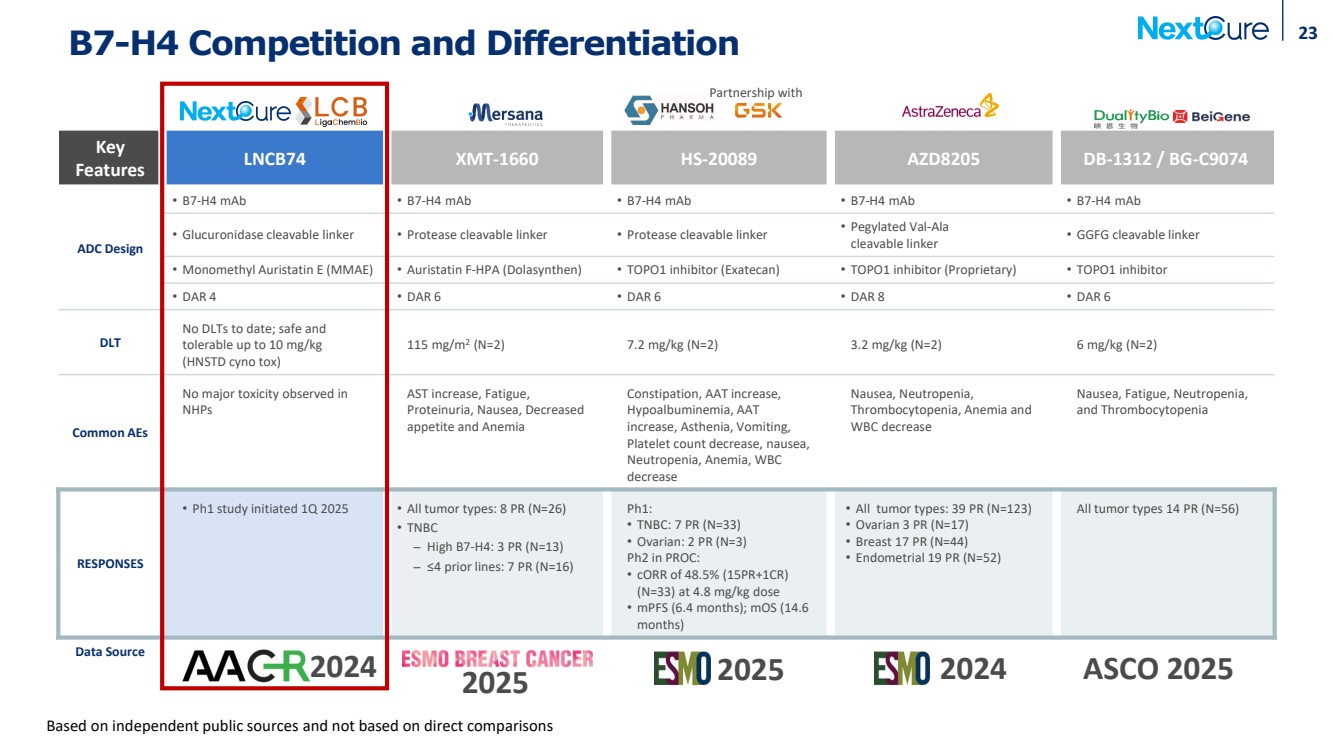
| B7-H4 Competition and Differentiation Key Features LNCB74 XMT-1660 HS-20089 AZD8205 DB-1312 / BG-C9074 ADC Design • B7-H4 mAb • B7-H4 mAb • B7-H4 mAb • B7-H4 mAb • B7-H4 mAb • Glucuronidase cleavable linker • Protease cleavable linker • Protease cleavable linker • Pegylated Val-Ala cleavable linker • GGFG cleavable linker • Monomethyl Auristatin E (MMAE) • Auristatin F-HPA (Dolasynthen) • TOPO1 inhibitor (Exatecan) • TOPO1 inhibitor (Proprietary) • TOPO1 inhibitor • DAR 4 • DAR 6 • DAR 6 • DAR 8 • DAR 6 DLT No DLTs to date; safe and tolerable up to 10 mg/kg (HNSTD cyno tox) 115 mg/m2 (N=2) 7.2 mg/kg (N=2) 3.2 mg/kg (N=2) 6 mg/kg (N=2) Common AEs No major toxicity observed in NHPs AST increase, Fatigue, Proteinuria, Nausea, Decreased appetite and Anemia Constipation, AAT increase, Hypoalbuminemia, AAT increase, Asthenia, Vomiting, Platelet count decrease, nausea, Neutropenia, Anemia, WBC decrease Nausea, Neutropenia, Thrombocytopenia, Anemia and WBC decrease Nausea, Fatigue, Neutropenia, and Thrombocytopenia RESPONSES • Ph1 study initiated 1Q 2025 • All tumor types: 8 PR (N=26) • TNBC ̶ High B7-H4: 3 PR (N=13) ̶ ≤4 prior lines: 7 PR (N=16) Ph1: • TNBC: 7 PR (N=33) • Ovarian: 2 PR (N=3) Ph2 in PROC: • cORR of 48.5% (15PR+1CR) (N=33) at 4.8 mg/kg dose • mPFS (6.4 months); mOS (14.6 months) • All tumor types: 39 PR (N=123) • Ovarian 3 PR (N=17) • Breast 17 PR (N=44) • Endometrial 19 PR (N=52) All tumor types 14 PR (N=56) Data Source 2024 2024 Partnership with 23 2025 Based on independent public sources and not based on direct comparisons 2025 ASCO 2025 |
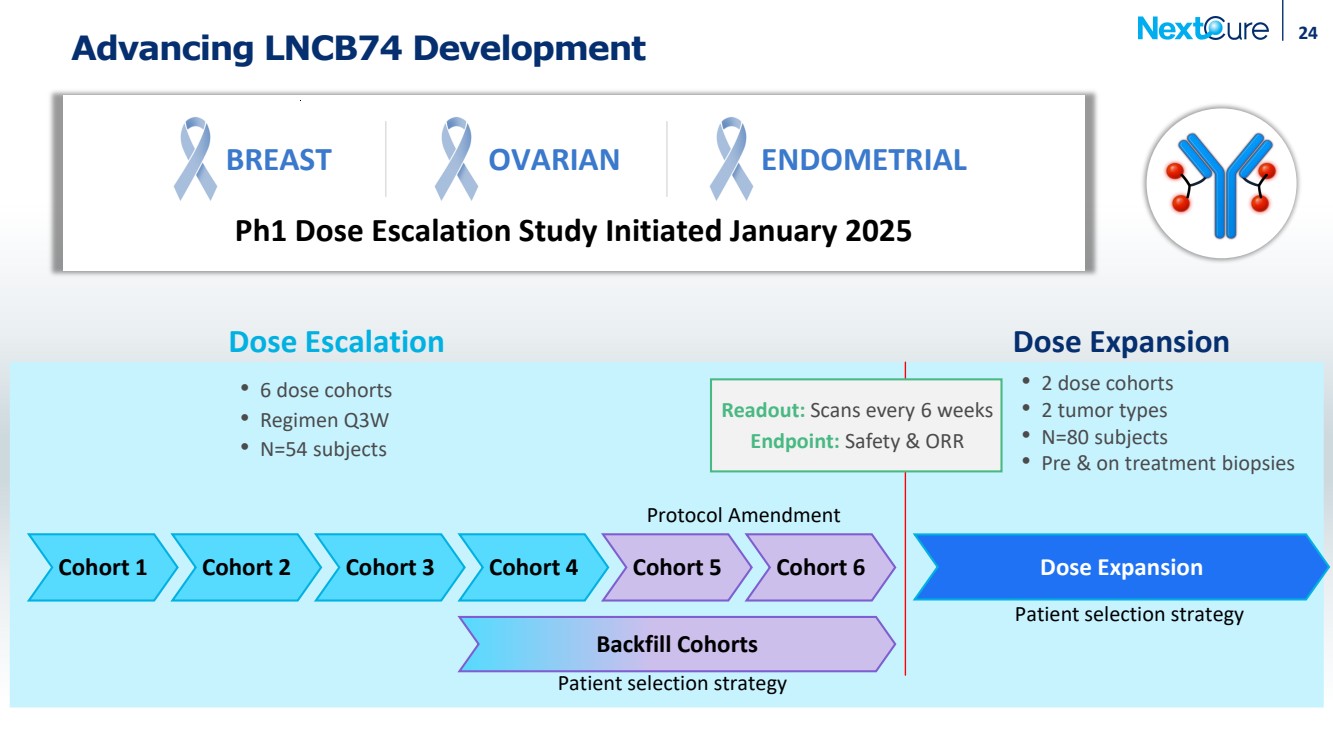
| Advancing LNCB74 Development Cohort 1 Cohort 2 Cohort 3 Cohort 4 Backfill Cohorts 24 Dose Expansion • 6 dose cohorts • Regimen Q3W • N=54 subjects • 2 dose cohorts • 2 tumor types • N=80 subjects • Pre & on treatment biopsies Patient selection strategy Patient selection strategy Dose Escalation Dose Expansion Cohort 5 Cohort 6 BREAST OVARIAN ENDOMETRIAL Ph1 Dose Escalation Study Initiated January 2025 Protocol Amendment Readout: Scans every 6 weeks Endpoint: Safety & ORR |
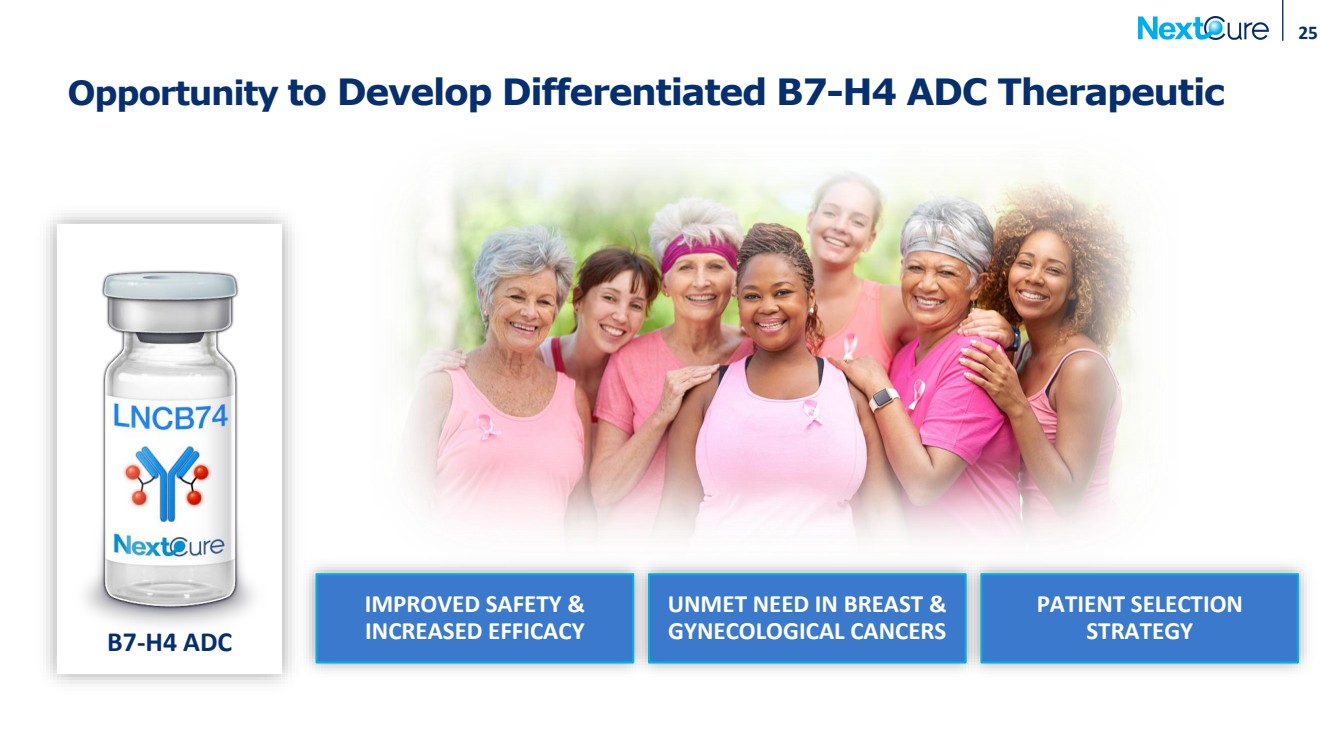
| IMPROVED SAFETY & INCREASED EFFICACY Opportunity to Develop Differentiated B7-H4 ADC Therapeutic 25 B7-H4 ADC UNMET NEED IN BREAST & GYNECOLOGICAL CANCERS PATIENT SELECTION STRATEGY |
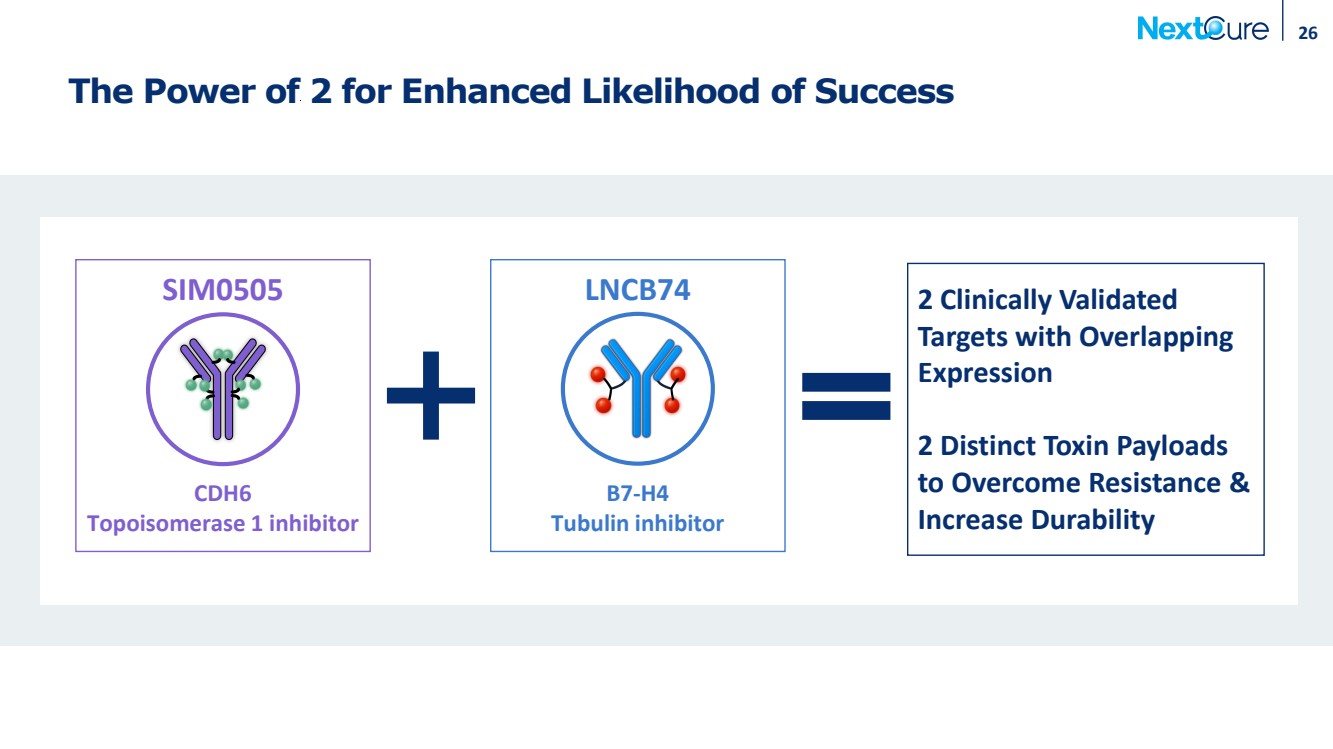
| 26 The Power of 2 for Enhanced Likelihood of Success SIM0505 LNCB74 CDH6 Topoisomerase 1 inhibitor B7-H4 Tubulin inhibitor 2 Clinically Validated Targets with Overlapping Expression 2 Distinct Toxin Payloads to Overcome Resistance & Increase Durability |
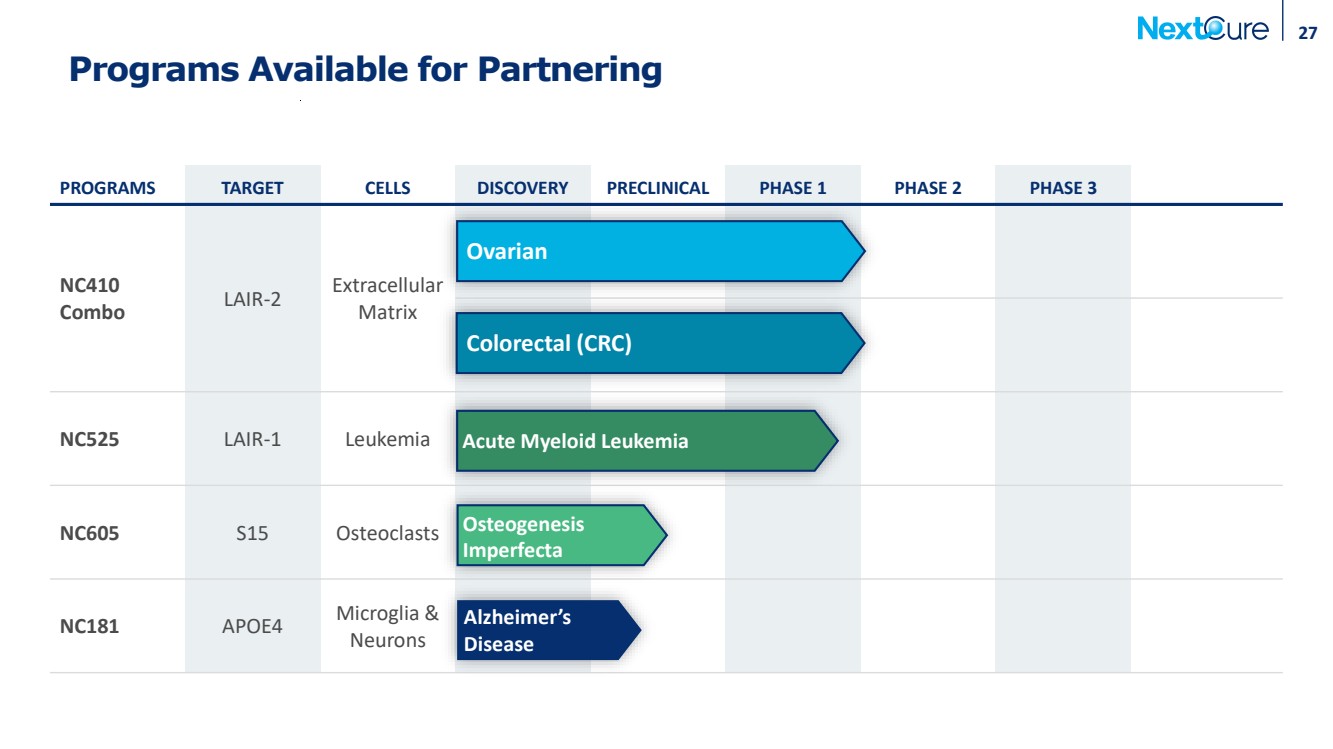
| Programs Available for Partnering 27 PROGRAMS TARGET CELLS DISCOVERY PRECLINICAL PHASE 1 PHASE 2 PHASE 3 NC410 Combo LAIR-2 Extracellular Matrix NC525 LAIR-1 Leukemia NC605 S15 Osteoclasts NC181 APOE4 Microglia & Neurons Alzheimer’s Disease Osteogenesis Imperfecta Acute Myeloid Leukemia Colorectal (CRC) Ovarian |
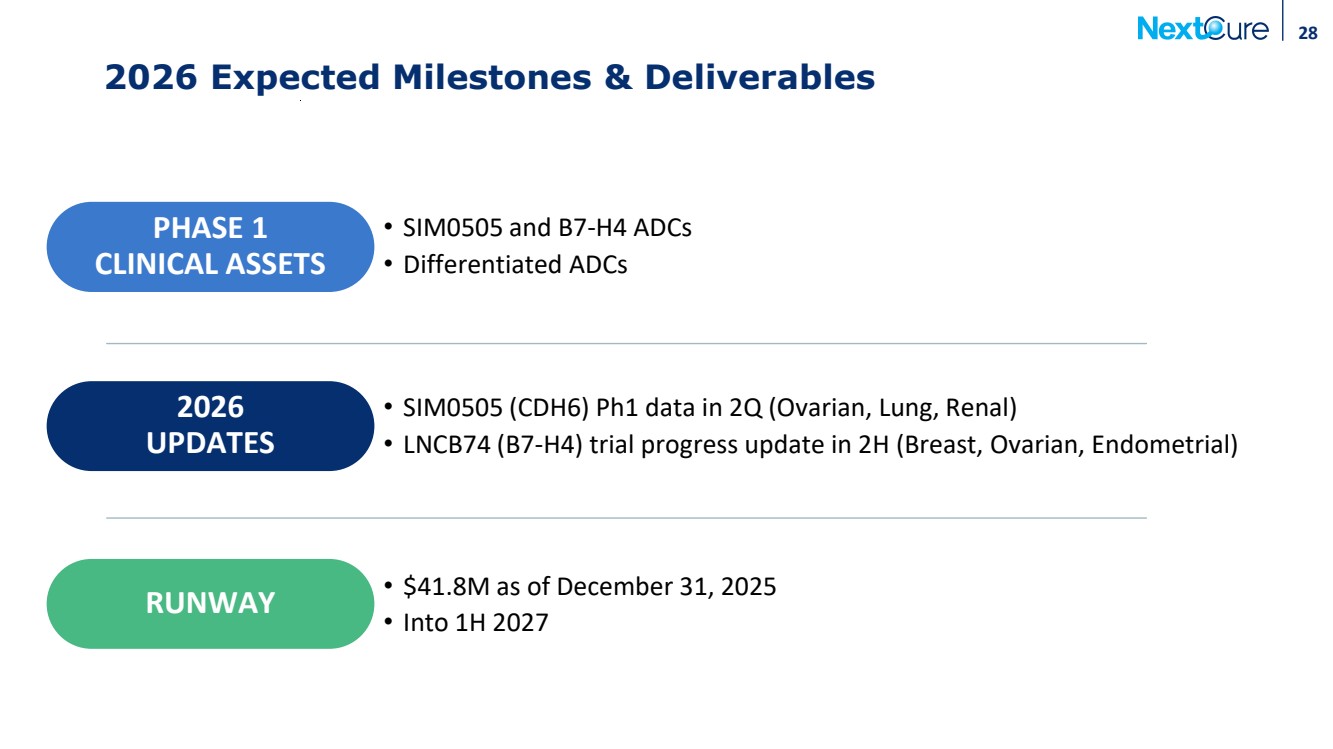
| 28 2026 Expected Milestones & Deliverables • SIM0505 (CDH6) Ph1 data in 2Q (Ovarian, Lung, Renal) • LNCB74 (B7-H4) trial progress update in 2H (Breast, Ovarian, Endometrial) 2026 UPDATES PHASE 1 CLINICAL ASSETS • SIM0505 and B7-H4 ADCs • Differentiated ADCs RUNWAY • $41.8M as of December 31, 2025 • Into 1H 2027 |