
Prelude Therapeutics Inc 8-K, filed Aug 14, 2025
Prelude Therapeutics Inc (PRLD)
About this 8-K
Prelude Therapeutics Inc filed this 8-K on August 14, 2025.
Items reported
- Item 2.02: Financial results
- Item 7.01: Regulation FD disclosure
- Item 9.01: Financial statements and exhibits
UNITED STATES
SECURITIES AND EXCHANGE COMMISSION
Washington, D.C. 20549
FORM
CURRENT REPORT
Pursuant to Section 13 or 15(d)
of The Securities Exchange Act of 1934
Date of Report (Date of earliest event reported):
(Exact Name of Registrant as Specified in its Charter)
|
|
|
|
|
||
|
|
|||||
(State or other jurisdiction of |
|
(Commission |
|
(I.R.S. Employer |
||
|
|
|
||||
|
||||||
(Address of principal executive offices) |
|
(Zip Code) |
||||
Registrant’s telephone number, including area code:
Not Applicable
(Former Name or Former Address, if Changed Since Last Report)
Check the appropriate box below if the Form 8-K filing is intended to simultaneously satisfy the filing obligation of the registrant under any of the following provisions:
Securities registered pursuant to Section 12(b) of the Act:
|
|
|
|
|
Title of each class |
|
Trading |
|
Name of each exchange on which registered |
|
|
Indicate by check mark whether the registrant is an emerging growth company as defined in Rule 405 of the Securities Act of 1933 (§230.405 of this chapter) or Rule 12b-2 of the Securities Exchange Act of 1934 (§240.12b-2 of this chapter).
Emerging growth company
If an emerging growth company, indicate by check mark if the registrant has elected not to use the extended transition period for complying with any new or revised financial accounting standards provided pursuant to Section 13(a) of the Exchange Act.
Item 2.02 Results of Operations and Financial Condition.
On August 14, 2025, Prelude Therapeutics Incorporated (the "Company") issued a press release announcing its financial results for the three months ended June 30, 2025. A copy of the press release is attached as Exhibit 99.1 to this Current Report on Form 8-K.
Item 7.01 Regulation FD Disclosure.
The Company has prepared investor presentation materials with information about the Company, which it intends to use as part of investor presentations. A copy of the investor presentation materials to be used by management for presentations is attached as Exhibit 99.2 to this Current Report on Form 8-K and is incorporated herein by reference.
The information in this Current Report on Form 8-K and in Exhibits 99.1 and 99.2 attached hereto is being furnished, but shall not be deemed “filed” for purposes of Section 18 of the Securities Exchange Act of 1934, as amended (“Exchange Act”), and is not incorporated by reference into any filing of the Company under the Securities Act of 1933, as amended, or the Exchange Act, whether made before or after the date hereof, regardless of any general incorporation language in such filing.
Item 9.01 Financial Statements and Exhibits.
(d) Exhibits
|
|
|
Exhibit |
|
Description |
99.1 |
|
|
99.2 |
|
|
104 |
|
Cover Page Interactive Data File (embedded within the Inline XBRL Document) |
SIGNATURE
Pursuant to the requirements of the Securities Exchange Act of 1934, the registrant has duly caused this report to be signed on its behalf by the undersigned hereunto duly authorized.
|
|
|
|
PRELUDE THERAPEUTICS INCORPORATED
|
|
|
|
|
Date: August 14, 2025 |
By: |
/s/ Bryant Lim |
|
|
Bryant Lim |
|
|
Chief Legal Officer, Corporate Secretary, and Chief Financial Officer |
Exhibit 99.1

Prelude Therapeutics Reports Second Quarter 2025 Financial Results and Provides Corporate Update
PRT7732, once daily oral SMARCA2 degrader, currently enrolling at the seventh dosing cohort (125 mg); Company to provide an update with preliminary clinical data, including PK/PD, safety and initial clinical activity by year end 2025
Phase 1 study of PRT3789, a once weekly IV SMARCA2 degrader, has been completed; Company to provide final data by year end 2025
Prelude is advancing a development candidate for its oral KAT6A degrader program and remains on track to file an IND in the first half of 2026
Current cash runway into the second quarter of 2026 with $77.3 million in cash, cash equivalents, restricted cash and marketable securities as of June 30, 2025
WILMINGTON, Del., Aug. 14, 2025 (GLOBE NEWSWIRE) – Prelude Therapeutics Incorporated (Nasdaq: PRLD), a clinical-stage precision oncology company, today reported its financial results for second quarter ended June 30, 2025, and provided an update on its clinical development pipeline and other corporate developments.
“From the discovery of first-in-class highly selective SMARCA2 degraders through Phase 1 studies in biomarker selected population of patients, Prelude demonstrated exemplary execution of our SMARCA2 program to deliver a potentially novel treatment option for patients with aggressive cancers harboring SMARCA4 deletion,” stated Kris Vaddi, Ph.D., Chief Executive Officer of Prelude. “This past quarter, we completed our Phase 1 dose escalation of PRT3789 (IV), both as monotherapy and in combination with docetaxel. With the knowledge and experience gained through PRT3789 clinical development, we were able to expeditiously advance our oral program, PRT7732, which began in the fourth quarter of 2024. I am pleased with the progress made to date with PRT7732, which is currently enrolling our seventh dose cohort of 125 mg.”
Vaddi continued, “We’ve decided to pause further development of PRT3789, and focus solely on PRT7732 as our go-forward strategy for our SMARCA2 Program. While PRT3789 demonstrated initial proof of concept for the mechanism, a number of considerations – including the potential need for higher target coverage throughout the dosing interval, and capital needs to continue to advance both agents – contributed to this decision. The clinical profile observed to date with PRT7732 including oral once daily dosing, safety and tolerability, oral exposures, and >90%
Exhibit 99.1
target degradation positions us well to explore the potential for this mechanism in SMARCA4 deleted cancers and determine the path forward for continued development by year end.”
Continued Vaddi, “We’ve made significant progress across our core research and development organization, while employing disciplined capital management through resource allocation and headcount management throughout the Company. Notably, we’ve continued to advance our KAT6A degrader program, on track for IND filing in the first half of 2026, presented preclinical data on mCALR-targeted ADCs and continued progress with our partner AbCellera related to precision ADCs.”
Clinical Program Updates and Upcoming Milestones
SMARCA2 Degrader Development Program
PRT3789 – A first-in-class, highly selective, intravenous SMARCA2 degrader
PRT3789 is designed to treat patients with a SMARCA4 mutation. Patients with SMARCA4-mutated cancer, a particularly aggressive form of the disease, have a very poor clinical prognosis. Approximately 10% of all non-small cell lung cancers and 5% of all cancers broadly, harbor a SMARCA4 mutation. In NSCLC, these patients tend to have poor response to standard of care chemoimmunotherapy and are largely ineligible for other targeted therapies. We believe that this represents an area of high unmet medical need.
PRT3789 has completed Phase 1 clinical development in patients with biomarker selected SMARCA4-mutated cancers. The Company anticipates providing updated data from the Phase 1 study by year-end 2025. Based on the totality of the data and available resources, the Company would only advance the program in the context of a partnership and will be focusing internal resources solely on PRT7732.
PRT7732 – A potent, highly selective and orally bioavailable SMARCA2 degrader
PRT7732 is a highly selective and orally bioavailable SMARCA2 degrader with a distinct chemical composition to PRT3789. In the fourth quarter of 2024, the Company initiated and enrolled the first patients in a phase 1 multi-dose escalation trial of PRT7732 (NCT06560645) in biomarker selected SMARCA4 mutated cancers. Enrollment continues to advance rapidly, and the Company is currently enrolling patients in the seventh dose escalation cohort (125 mg once daily). The Company expects to provide an initial first-in-human data update including PK/PD, safety and an initial look at clinical activity at biologically relevant doses by year end 2025.
Highly selective KAT6A oral degrader program
KAT6 is an emerging and recently validated target in the treatment of ER+ breast cancer and other malignancies. Prelude discovered and is developing the industry’s first – based on currently published patents and literature – highly potent, selective and orally bioavailable KAT6A selective degraders. The Company is now advancing a development candidate and remains on track to file an IND in the first half of 2026. Prelude believes that selectively degrading KAT6A has the potential for improved efficacy, tolerability and combinability with other agents relative to non-selective inhibitors of KAT6A/B. The Company recently presented preclinical data validating this hypothesis at the AACR Annual Meeting 2025. The presentation can be found at Publications - Prelude Therapeutics.
Exhibit 99.1
Precision ADCs with SMARCA2/4 dual degrader payload
Prelude is developing potent SMARCA2/4 dual degraders that robustly inhibit cancer cell growth and induce cell death across multiple cancer types as payloads for precision ADCs. The Company presented the first preclinical data from its precision ADC platform at the 36th EORTC-NCI-AACR Symposium in October. These data demonstrated that SMARCA2/4 degrader antibody conjugates have potential for significantly better in vivo efficacy and tolerability when compared to traditional cytotoxic ADCs when tested head-to-head in xenograft models. The presentation can be found at Publications - Prelude Therapeutics.
Mutated Calreticulin (mCALR)
Mutant CALR is a neoantigen presented on the cell surface of malignant myeloid cells but not normal cells and is found in approximately 25-35% of patients with myelofibrosis (MF) and essential thrombocythemia (ET). Recently, a mCALR-targeted monoclonal antibody demonstrated robust clinical activity in high-risk ET patients. Prelude is seeking to further optimize this modality by developing mCALR-targeted precision ADCs using the Company’s proprietary degrader payloads. The Company presented the first preclinical data from this discovery effort at the European Hematology Association 2025 Congress in June. The presentation can be found at Publications - Prelude Therapeutics.
Second Quarter 2025 Financial Results
Cash, Cash Equivalents, Restricted Cash and Marketable Securities:
Cash, cash equivalents, restricted cash and marketable securities as of June 30, 2025 were $77.3 million. The Company anticipates that its existing cash, cash equivalents, restricted cash and marketable securities will fund Prelude’s operations into the second quarter of 2026.
Research and Development (R&D) Expenses:
For the second quarter of 2025, R&D expense decreased to $25.8 million from $29.5 million for the prior year period. Included in the R&D expense for the three months ended June 30, 2025 was $2.2 million of non-cash expense related to stock-based compensation, including employee stock options, compared to $3.4 million for the three months ended June 30, 2024. Research and development expenses decreased primarily due to a decrease in expense related to our SMARCA2 clinical trials. Research and development expenses may fluctuate from period to period depending upon the stage of certain projects and the level of preclinical and clinical trial-related activities.
General and Administrative (G&A) Expenses:
For the second quarter of 2025, G&A expenses decreased to $6.4 million from $7.7 million for the prior year period. Included in general and administrative expenses for the three months ended June 30, 2025, was $1.6 million of non-cash expense related to stock-based compensation, including employee stock options, compared to $2.7 million for the three months ended June 30, 2024. The decrease in general and administrative expenses was primarily due to a decrease in stock-based compensation due to lower valuation on more recent grants due to the decrease in our stock price.
Net Loss:
Exhibit 99.1
For the three months ended June 30, 2025, net loss was $31.2 million, or $0.41 per share compared to $34.7 million, or $0.46 per share, for the prior year period. Included in the net loss for the three months ended June 30, 2025, was $3.8 million of non-cash expenses related to the impact of expensing share-based payments, including employee stock options, as compared to $6.1 million for the same period in 2024.
About Prelude Therapeutics
Prelude Therapeutics is a leading precision oncology company developing innovative medicines in areas of high unmet need for cancer patients. Our pipeline is comprised of several novel drug candidates including first-in-class, highly selective SMARCA2 and KAT6A degraders, and ongoing research into other precision oncology targets. We are also leveraging our expertise in targeted protein degradation to discover, develop and commercialize next generation degrader antibody conjugates (Precision ADCs) with partners. We are on a mission to extend the promise of precision medicine to every cancer patient in need. Our corporate presentation can be found at Events & Presentations - Prelude Therapeutics. For more information, visit preludetx.com.
Cautionary Note Regarding Forward-Looking Statements
This press release contains forward-looking statements within the meaning of the "safe harbor" provisions of the Private Securities Litigation Reform Act of 1995, including, but not limited to, anticipated discovery, preclinical and clinical development activities for Prelude’s product candidates, the potential safety, efficacy, benefits and addressable market for Prelude’s product candidates, the expected timeline for clinical trial results for Prelude’s product candidates, and the sufficiency of Prelude’s cash runway into the second quarter of 2026. All statements other than statements of historical fact are statements that could be deemed forward-looking statements. The words “believes,” “anticipates,” “estimates,” “plans,” “expects,” “intends,” “may,” “could,” “should,” “potential,” “likely,” “projects,” “continue,” “will,” “schedule,” and “would” and similar expressions are intended to identify forward-looking statements, although not all forward-looking statements contain these identifying words. These forward-looking statements are predictions based on the Company’s current expectations and projections about future events and various assumptions. Although Prelude believes that the expectations reflected in such forward-looking statements are reasonable, Prelude cannot guarantee future events, results, actions, levels of activity, performance or achievements, and the timing and results of biotechnology development and potential regulatory approval is inherently uncertain. Forward-looking statements are subject to risks and uncertainties that may cause Prelude's actual activities or results to differ significantly from those expressed in any forward-looking statement, including risks and uncertainties related to Prelude's ability to advance its product candidates, the receipt and timing of potential regulatory designations, approvals and commercialization of product candidates, clinical trial sites and our ability to enroll eligible patients, supply chain and manufacturing facilities, Prelude’s ability to maintain and recognize the benefits of certain designations received by product candidates, the timing and results of preclinical and clinical trials, Prelude's ability to fund development activities and achieve development goals, Prelude's ability to protect intellectual property, and other risks and uncertainties described under the heading "Risk Factors" in Prelude’s Annual Report on Form 10-K for the year ended December 31, 2023, its Quarterly Reports on Form 10-Q and other documents that Prelude files from time to time with the Securities and Exchange Commission. These forward-looking statements speak only as of the date of this press release, and Prelude undertakes no obligation to revise or update
Exhibit 99.1
any forward-looking statements to reflect events or circumstances after the date hereof, except as may be required by law.
Exhibit 99.1
PRELUDE THERAPEUTICS INCORPORATED
STATEMENTS OF OPERATIONS AND COMPREHENSIVE LOSS
(UNAUDITED)
|
|
Three Months Ended June 30, |
|
|||||
(in thousands, except share and per share data) |
|
2025 |
|
|
2024 |
|
||
Operating expenses |
|
|
|
|
|
|
||
Research and development |
|
|
25,784 |
|
|
|
29,509 |
|
General and administrative |
|
|
6,410 |
|
|
|
7,655 |
|
Total operating expenses |
|
|
32,194 |
|
|
|
37,164 |
|
Loss from operations |
|
|
(32,194 |
) |
|
|
(37,164 |
) |
Other income, net |
|
|
963 |
|
|
|
2,424 |
|
Net loss |
|
$ |
(31,231 |
) |
|
$ |
(34,740 |
) |
Per share information: |
|
|
|
|
|
|
||
Net loss per share of common stock, basic and diluted |
|
$ |
(0.41 |
) |
|
$ |
(0.46 |
) |
Weighted average common shares outstanding, basic |
|
|
75,993,941 |
|
|
|
75,762,152 |
|
Comprehensive loss: |
|
|
|
|
|
|
||
Net loss |
|
$ |
(31,231 |
) |
|
$ |
(34,740 |
) |
Unrealized loss on marketable securities, net of tax |
|
|
(13 |
) |
|
|
(55 |
) |
Comprehensive loss |
|
$ |
(31,244 |
) |
|
$ |
(34,795 |
) |
Exhibit 99.1
PRELUDE THERAPEUTICS INCORPORATED
BALANCE SHEETS
(in thousands, except share data) |
|
June 30, |
|
|
December 31, |
|
||
Assets |
|
(unaudited) |
|
|
|
|
||
Current assets: |
|
|
|
|
|
|
||
Cash and cash equivalents |
|
$ |
25,752 |
|
|
$ |
12,474 |
|
Marketable securities |
|
|
47,464 |
|
|
|
121,140 |
|
Prepaid expenses and other current assets |
|
|
3,660 |
|
|
|
2,281 |
|
Total current assets |
|
|
76,876 |
|
|
|
135,895 |
|
Restricted cash |
|
|
4,044 |
|
|
|
4,044 |
|
Property and equipment, net |
|
|
5,956 |
|
|
|
6,767 |
|
Operating lease right-of-use asset |
|
|
27,932 |
|
|
|
28,699 |
|
Other assets |
|
|
110 |
|
|
|
110 |
|
Total assets |
|
$ |
114,918 |
|
|
$ |
175,515 |
|
Liabilities and stockholders’ equity |
|
|
|
|
|
|
||
Current liabilities: |
|
|
|
|
|
|
||
Accounts payable |
|
$ |
4,962 |
|
|
$ |
7,732 |
|
Accrued expenses and other current liabilities |
|
|
13,235 |
|
|
|
15,209 |
|
Operating lease liability |
|
|
2,711 |
|
|
|
2,492 |
|
Finance lease liability |
|
|
— |
|
|
|
208 |
|
Total current liabilities |
|
|
20,908 |
|
|
|
25,641 |
|
Other liabilities |
|
|
2,966 |
|
|
|
3,090 |
|
Operating lease liability |
|
|
15,206 |
|
|
|
15,325 |
|
Total liabilities |
|
|
39,080 |
|
|
|
44,056 |
|
Commitments |
|
|
|
|
|
|
||
Stockholders’ equity: |
|
|
|
|
|
|
||
Voting common stock, $0.0001 par value: 487,149,741 shares authorized; 43,744,066 and 42,298,859 shares issued and outstanding at June 30, 2025 and December 31, 2024, respectively |
|
|
4 |
|
|
|
4 |
|
Non-voting common stock, $0.0001 par value: 112,850,259 and 12,850,259 shares authorized at June 30, 2025 and December 31, 2024, respectively; 12,850,259 shares issued and outstanding at both June 30, 2025 and December 31, 2024 |
|
|
1 |
|
|
|
1 |
|
Additional paid-in capital |
|
|
722,713 |
|
|
|
714,982 |
|
Accumulated other comprehensive (loss) income |
|
|
(1 |
) |
|
|
35 |
|
Accumulated deficit |
|
|
(646,879 |
) |
|
|
(583,563 |
) |
Total stockholders’ equity |
|
|
75,838 |
|
|
|
131,459 |
|
Total liabilities and stockholders’ equity |
|
$ |
114,918 |
|
|
$ |
175,515 |
|
Investor Contact:
Robert A. Doody, Jr.
Senior Vice President, Investor Relations
Prelude Therapeutics Incorporated
484.639.7235
rdoody@preludetx.com

Corporate Presentation August 2025 Exhibit 99.2
Forward Looking Statements This presentation contains “forward-looking” statements within the meaning of the “safe harbor” provisions of the Private Securities Litigation Reform Act of 1995, including, but not limited to, anticipated discovery, preclinical and clinical development activities for Prelude’s product candidates, the potential safety, efficacy, benefits and addressable market for Prelude’s product candidates, the expected timeline for clinical trial results for Prelude’s product candidates including its SMARCA2 degrader molecules. Any statements contained herein or provided orally that are not statements of historical fact may be deemed to be forward-looking statements. In some cases, you can identify forward-looking statements by such terminology as ‘‘believe,’’ ‘‘may,’’ ‘‘will,’’ ‘‘potentially,’’ ‘‘estimate,’’ ‘‘continue,’’ ‘‘anticipate,’’ ‘‘intend,’’ ‘‘could,’’ ‘‘would,’’ ‘‘project,’’ ‘‘plan,’’ ‘‘expect’’ and similar expressions that convey uncertainty of future events or outcomes, although not all forward-looking statements contain these words. Statements, including forward-looking statements, speak only to the date they are provided (unless an earlier date is indicated). This presentation shall not constitute an offer to sell or the solicitation of an offer to buy, nor shall there be any sale of these securities in any state or other jurisdiction in which such offer, solicitation or sale would be unlawful prior to registration or qualification under the securities laws of any such state or other jurisdiction. These forward-looking statements are based on the beliefs of our management as well as assumptions made by and information currently available to us. Although we believe the expectations reflected in such forward-looking statements are reasonable, we can give no assurance that such expectations will prove to be correct. If such assumptions do not fully materialize or prove incorrect, the events or circumstances referred to in the forward-looking statements may not occur. We undertake no obligation to update publicly any forward-looking statements for any reason after the date of this presentation to conform these statements to actual results or to changes in our expectations, except as required by law. Accordingly, readers are cautioned not to place undue reliance on these forward-looking statements. Additional risks and uncertainties that could affect our business are included under the caption “Risk Factors” in our filings with the Securities and Exchange Commission, including our Annual Report on Form 10-K for the year ended December 31, 2023.

We are on a mission to extend the promise of precision medicine to every cancer patient in need Select the best modality to precisely target oncogenic mechanisms Strive for first-in-class science focused on areas of highest patient unmet need Draw on decades of experience and proven leadership to drive innovation

Kris Vaddi, PhD Chief Executive Officer Jane Huang M.D. President and Chief Medical Officer Andrew Combs, PhD Chief Chemistry Officer Sean Brusky, MBA Chief Business Officer Peggy Scherle, PhD Chief Scientific Officer Bryant Lim, J.D. Chief Financial Officer, Chief Legal Officer, and Corporate Secretary Experienced Leadership Team With Proven Track Records in Precision Oncology
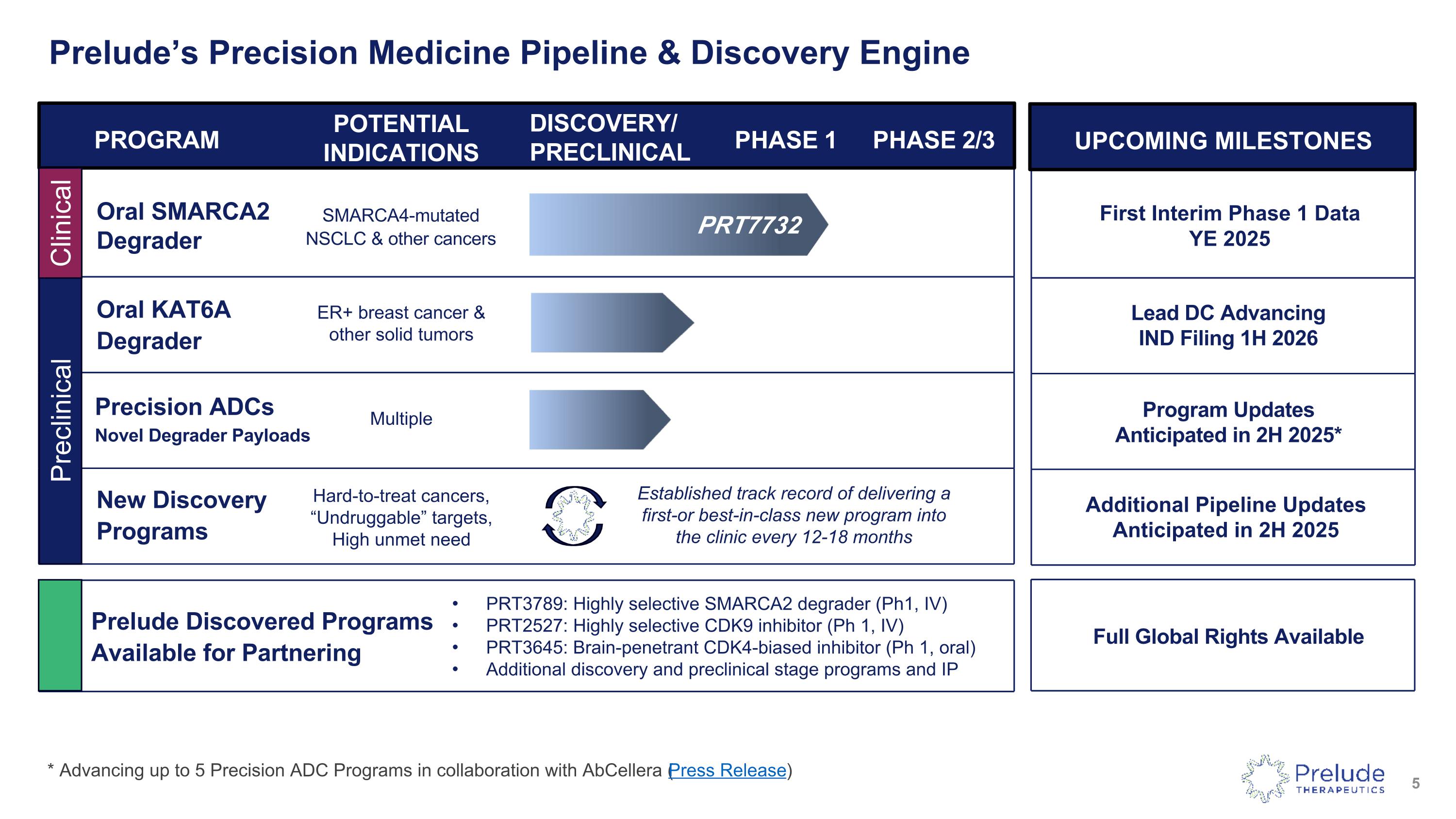
Prelude’s Precision Medicine Pipeline & Discovery Engine PROGRAM POTENTIAL INDICATIONS DISCOVERY/ PRECLINICAL PHASE 1 PHASE 2/3 Oral SMARCA2 Degrader SMARCA4-mutated NSCLC & other cancers Oral KAT6A Degrader UPCOMING MILESTONES Lead DC Advancing IND Filing 1H 2026 First Interim Phase 1 Data YE 2025 ER+ breast cancer & other solid tumors * Advancing up to 5 Precision ADC Programs in collaboration with AbCellera (Press Release) PRT7732 Full Global Rights Available Precision ADCs Novel Degrader Payloads Multiple Program Updates Anticipated in 2H 2025* Prelude Discovered Programs Available for Partnering PRT3789: Highly selective SMARCA2 degrader (Ph1, IV) PRT2527: Highly selective CDK9 inhibitor (Ph 1, IV) PRT3645: Brain-penetrant CDK4-biased inhibitor (Ph 1, oral) Additional discovery and preclinical stage programs and IP New Discovery Programs Additional Pipeline Updates Anticipated in 2H 2025 Hard-to-treat cancers, “Undruggable” targets, High unmet need Preclinical Established track record of delivering a first-or best-in-class new program into the clinic every 12-18 months Clinical
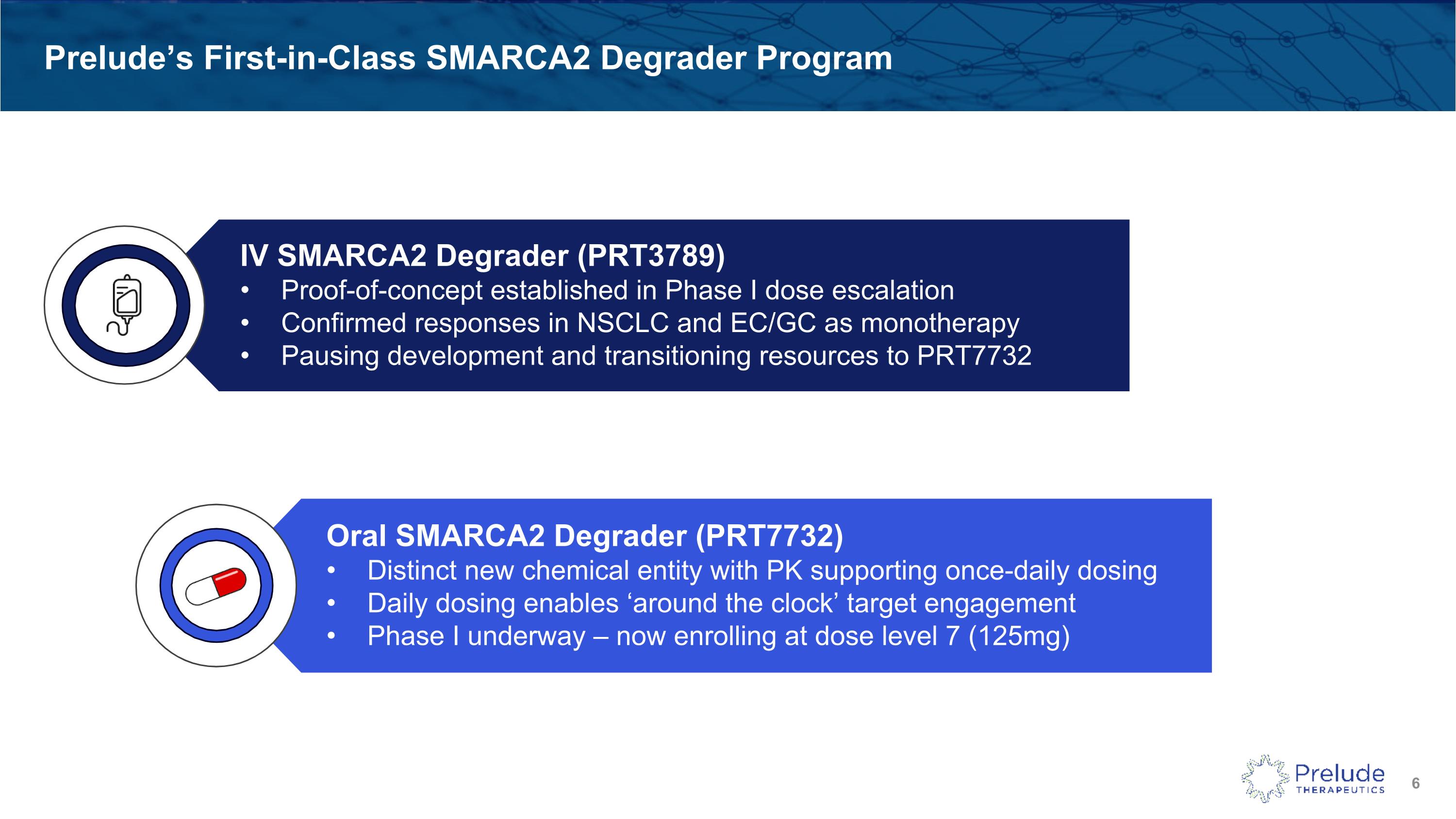
Prelude’s First-in-Class SMARCA2 Degrader Program Oral SMARCA2 Degrader (PRT7732) Distinct new chemical entity with PK supporting once-daily dosing Daily dosing enables ‘around the clock’ target engagement Phase I underway – now enrolling at dose level 7 (125mg) IV SMARCA2 Degrader (PRT3789) Proof-of-concept established in Phase I dose escalation Confirmed responses in NSCLC and EC/GC as monotherapy Pausing development and transitioning resources to PRT7732
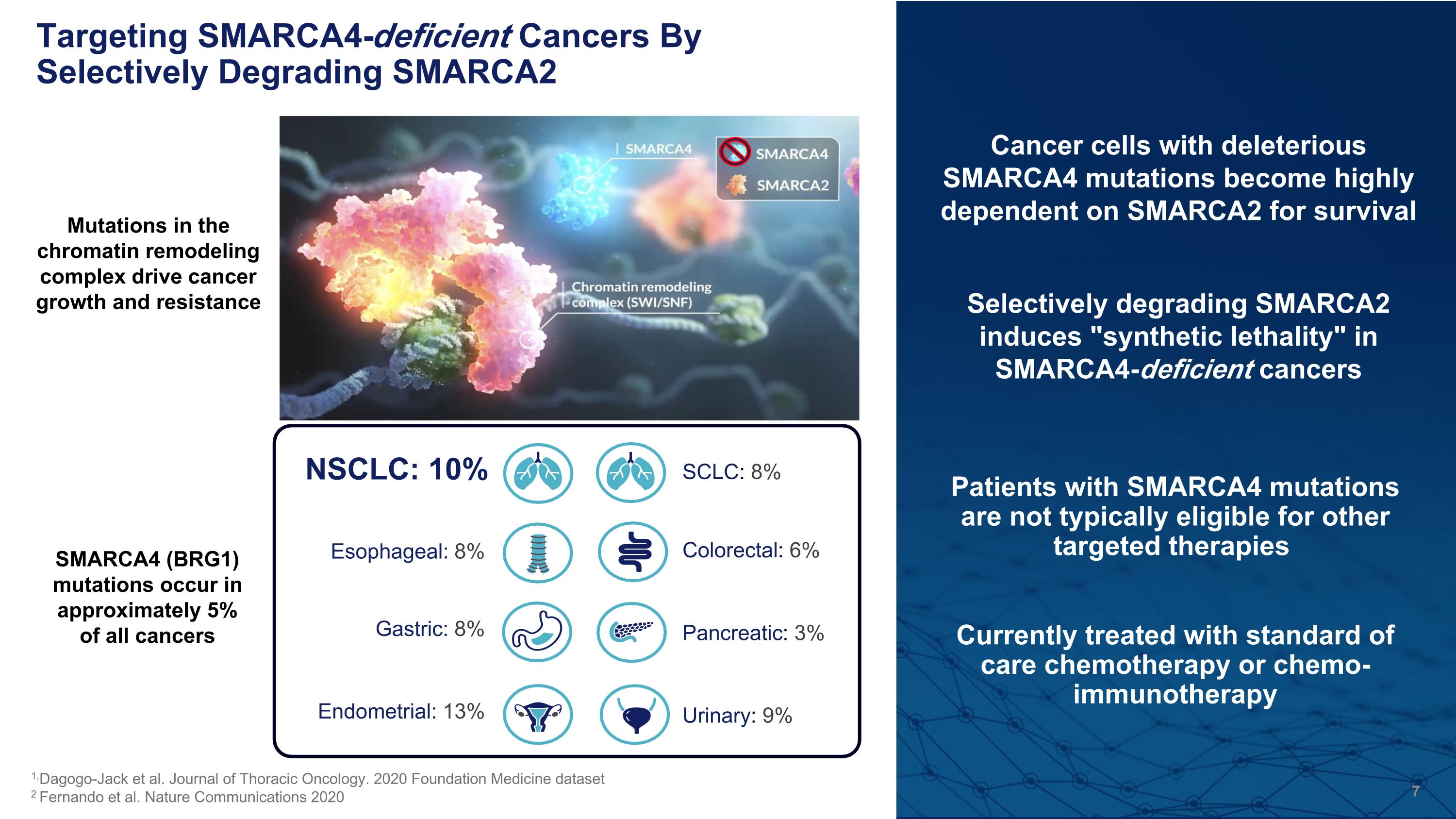
Patients with SMARCA4 mutations are not typically eligible for other targeted therapies Currently treated with standard of care chemotherapy or chemo-immunotherapy Targeting SMARCA4-deficient Cancers By Selectively Degrading SMARCA2 Pancreatic: 3% NSCLC: 10% Esophageal: 8% Gastric: 8% Endometrial: 13% SCLC: 8% Urinary: 9% Colorectal: 6% 1,Dagogo-Jack et al. Journal of Thoracic Oncology. 2020 Foundation Medicine dataset 2 Fernando et al. Nature Communications 2020 SMARCA4 (BRG1) mutations occur in approximately 5% of all cancers Mutations in the chromatin remodeling complex drive cancer growth and resistance Cancer cells with deleterious SMARCA4 mutations become highly dependent on SMARCA2 for survival Selectively degrading SMARCA2 induces "synthetic lethality" in SMARCA4-deficient cancers
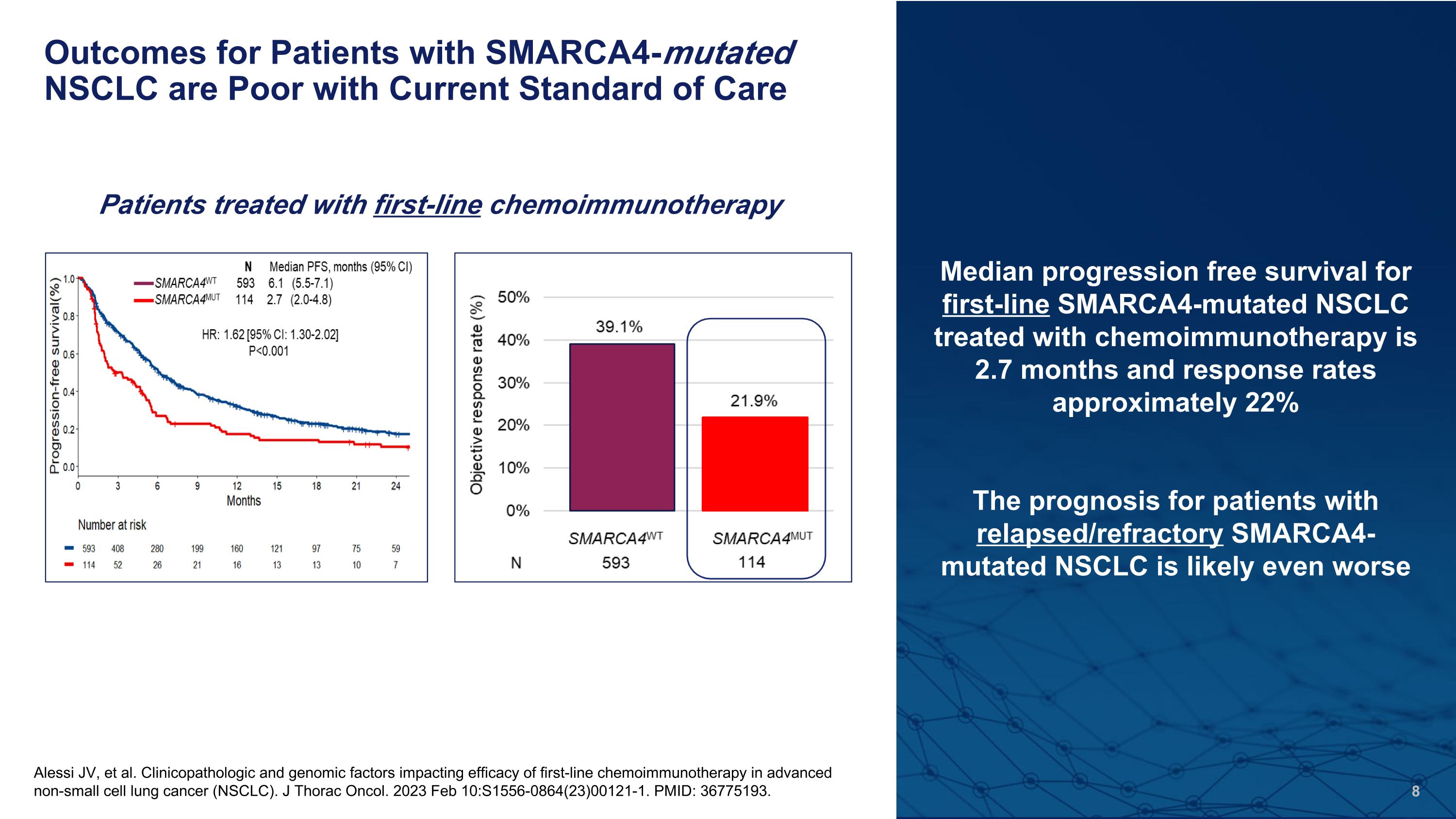
Outcomes for Patients with SMARCA4-mutated NSCLC are Poor with Current Standard of Care Alessi JV, et al. Clinicopathologic and genomic factors impacting efficacy of first-line chemoimmunotherapy in advanced non-small cell lung cancer (NSCLC). J Thorac Oncol. 2023 Feb 10:S1556-0864(23)00121-1. PMID: 36775193. Median progression free survival for first-line SMARCA4-mutated NSCLC treated with chemoimmunotherapy is 2.7 months and response rates approximately 22% The prognosis for patients with relapsed/refractory SMARCA4-mutated NSCLC is likely even worse Patients treated with first-line chemoimmunotherapy
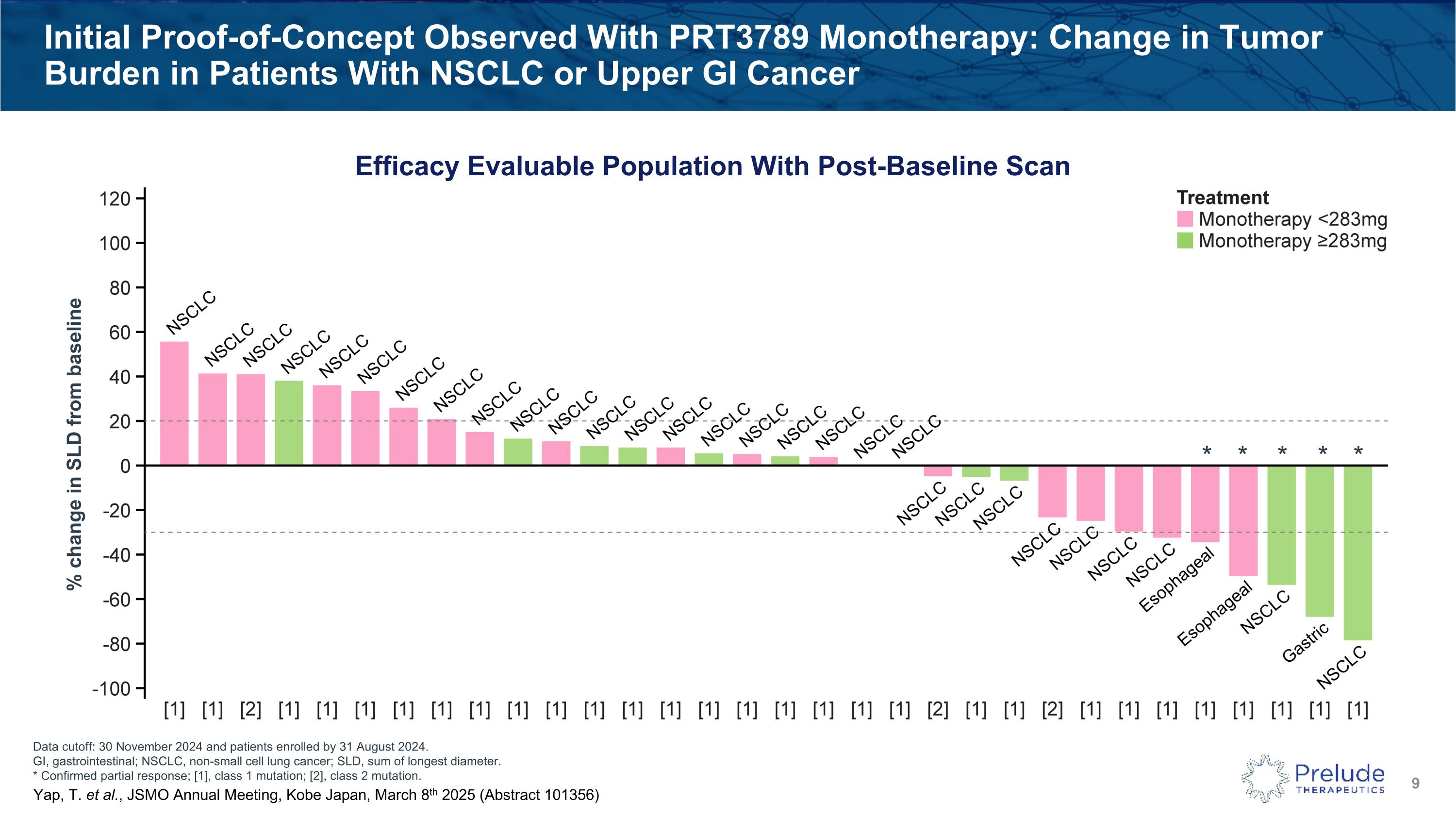
Data cutoff: 30 November 2024 and patients enrolled by 31 August 2024. GI, gastrointestinal; NSCLC, non-small cell lung cancer; SLD, sum of longest diameter. * Confirmed partial response; [1], class 1 mutation; [2], class 2 mutation. Initial Proof-of-Concept Observed With PRT3789 Monotherapy: Change in Tumor Burden in Patients With NSCLC or Upper GI Cancer Efficacy Evaluable Population With Post-Baseline Scan % change in SLD from baseline * * * * * Yap, T. et al., JSMO Annual Meeting, Kobe Japan, March 8th 2025 (Abstract 101356)
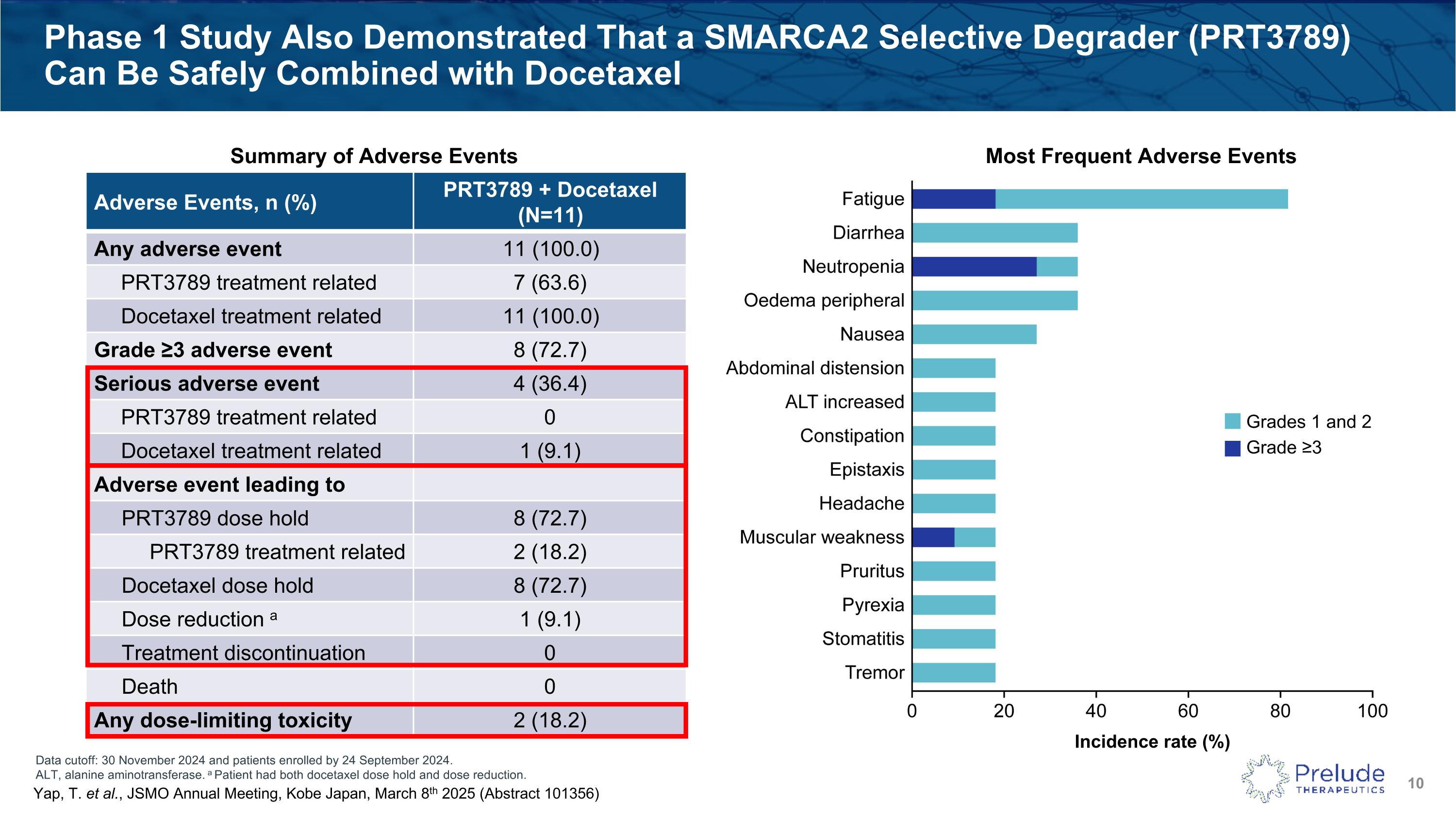
Data cutoff: 30 November 2024 and patients enrolled by 24 September 2024. ALT, alanine aminotransferase. a Patient had both docetaxel dose hold and dose reduction. Phase 1 Study Also Demonstrated That a SMARCA2 Selective Degrader (PRT3789) Can Be Safely Combined with Docetaxel Adverse Events, n (%) PRT3789 + Docetaxel (N=11) Any adverse event 11 (100.0) PRT3789 treatment related 7 (63.6) Docetaxel treatment related 11 (100.0) Grade ≥3 adverse event 8 (72.7) Serious adverse event 4 (36.4) PRT3789 treatment related 0 Docetaxel treatment related 1 (9.1) Adverse event leading to PRT3789 dose hold 8 (72.7) PRT3789 treatment related 2 (18.2) Docetaxel dose hold 8 (72.7) Dose reduction a 1 (9.1) Treatment discontinuation 0 Death 0 Any dose-limiting toxicity 2 (18.2) Summary of Adverse Events Most Frequent Adverse Events Incidence rate (%) Grades 1 and 2 Grade ≥3 Yap, T. et al., JSMO Annual Meeting, Kobe Japan, March 8th 2025 (Abstract 101356)
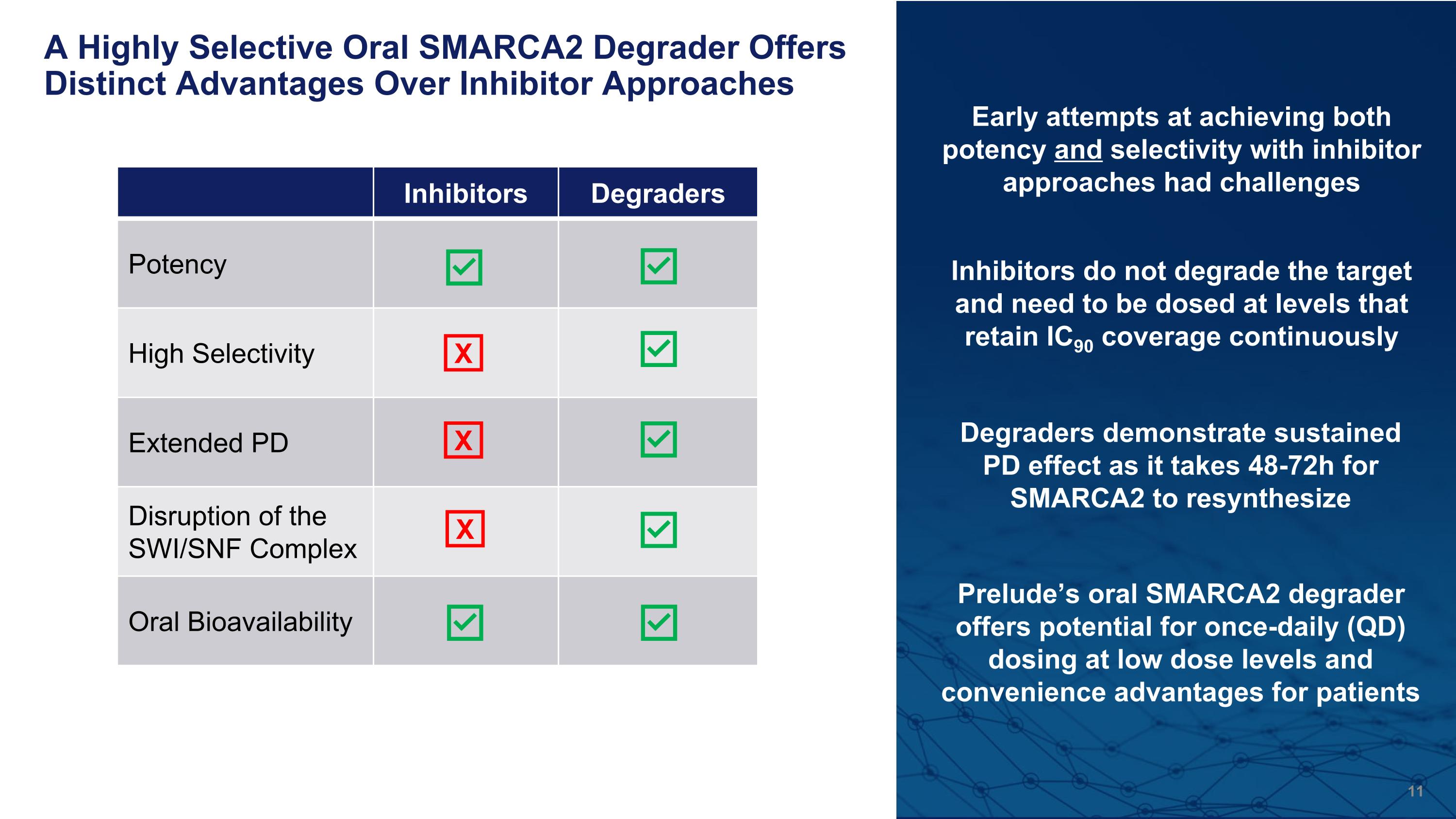
A Highly Selective Oral SMARCA2 Degrader Offers Distinct Advantages Over Inhibitor Approaches Inhibitors Degraders Potency High Selectivity Extended PD Disruption of the SWI/SNF Complex Oral Bioavailability X X Early attempts at achieving both potency and selectivity with inhibitor approaches had challenges Inhibitors do not degrade the target and need to be dosed at levels that retain IC90 coverage continuously Degraders demonstrate sustained PD effect as it takes 48-72h for SMARCA2 to resynthesize Prelude’s oral SMARCA2 degrader offers potential for once-daily (QD) dosing at low dose levels and convenience advantages for patients X
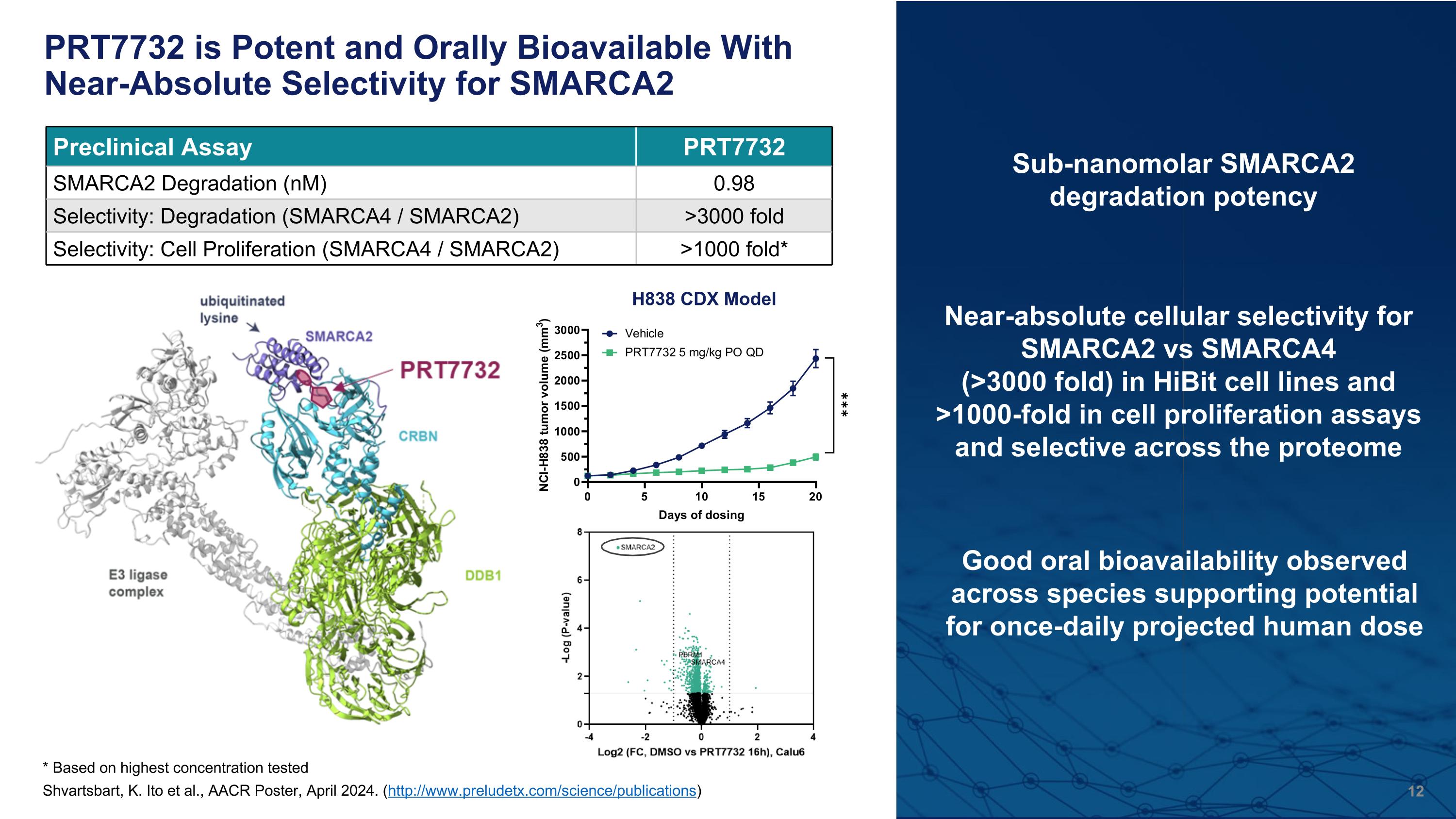
PRT7732 is Potent and Orally Bioavailable With Near-Absolute Selectivity for SMARCA2 Near-absolute cellular selectivity for SMARCA2 vs SMARCA4 (>3000 fold) in HiBit cell lines and >1000-fold in cell proliferation assays and selective across the proteome Sub-nanomolar SMARCA2 degradation potency * Based on highest concentration tested Good oral bioavailability observed across species supporting potential for once-daily projected human dose Preclinical Assay PRT7732 SMARCA2 Degradation (nM) 0.98 Selectivity: Degradation (SMARCA4 / SMARCA2) >3000 fold Selectivity: Cell Proliferation (SMARCA4 / SMARCA2) >1000 fold* Shvartsbart, K. Ito et al., AACR Poster, April 2024. (http://www.preludetx.com/science/publications) H838 CDX Model
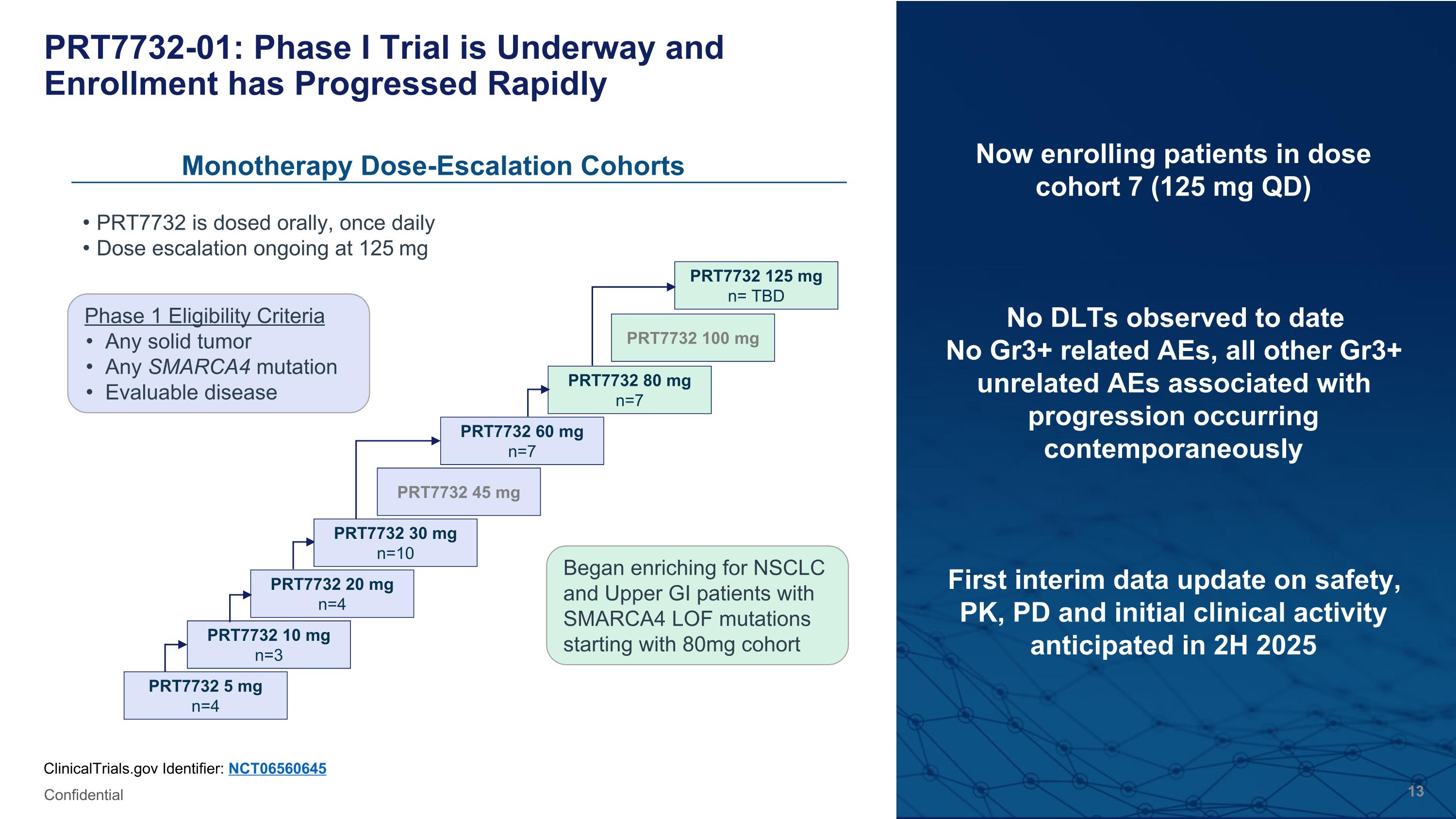
PRT7732-01: Phase I Trial is Underway and Enrollment has Progressed Rapidly Now enrolling patients in dose cohort 7 (125 mg QD) No DLTs observed to date No Gr3+ related AEs, all other Gr3+ unrelated AEs associated with progression occurring contemporaneously First interim data update on safety, PK, PD and initial clinical activity anticipated in 2H 2025 ClinicalTrials.gov Identifier: NCT06560645 Confidential Monotherapy Dose-Escalation Cohorts Phase 1 Eligibility Criteria Any solid tumor Any SMARCA4 mutation Evaluable disease PRT7732 is dosed orally, once daily Dose escalation ongoing at 125 mg PRT7732 5 mg n=4 PRT7732 10 mg n=3 PRT7732 20 mg n=4 PRT7732 45 mg PRT7732 60 mg n=7 PRT7732 80 mg n=7 PRT7732 100 mg PRT7732 125 mg n= TBD PRT7732 30 mg n=10 Began enriching for NSCLC and Upper GI patients with SMARCA4 LOF mutations starting with 80mg cohort
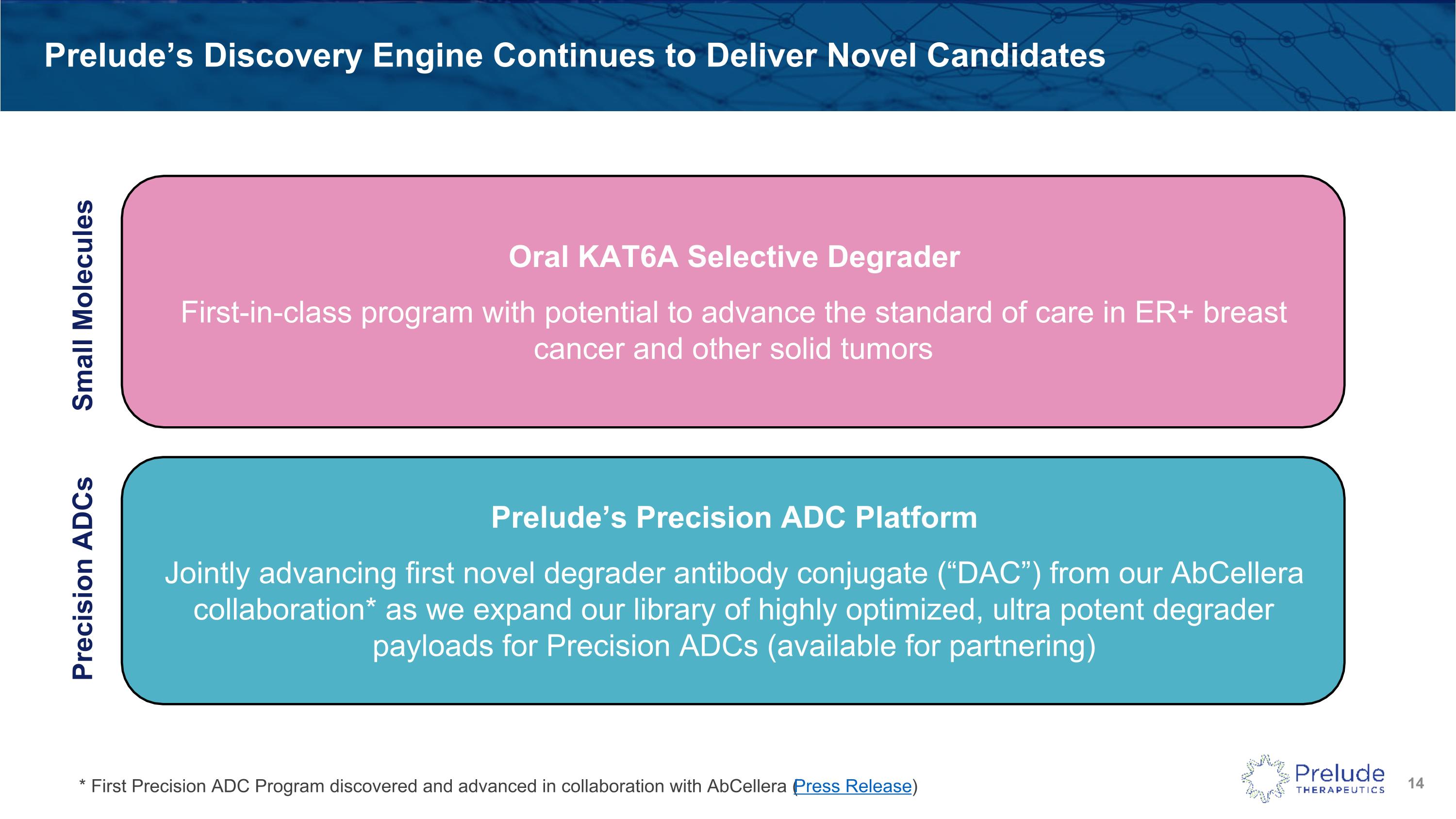
Prelude’s Discovery Engine Continues to Deliver Novel Candidates Oral KAT6A Selective Degrader First-in-class program with potential to advance the standard of care in ER+ breast cancer and other solid tumors Prelude’s Precision ADC Platform Jointly advancing first novel degrader antibody conjugate (“DAC”) from our AbCellera collaboration* as we expand our library of highly optimized, ultra potent degrader payloads for Precision ADCs (available for partnering) Small Molecules Precision ADCs * First Precision ADC Program discovered and advanced in collaboration with AbCellera (Press Release)
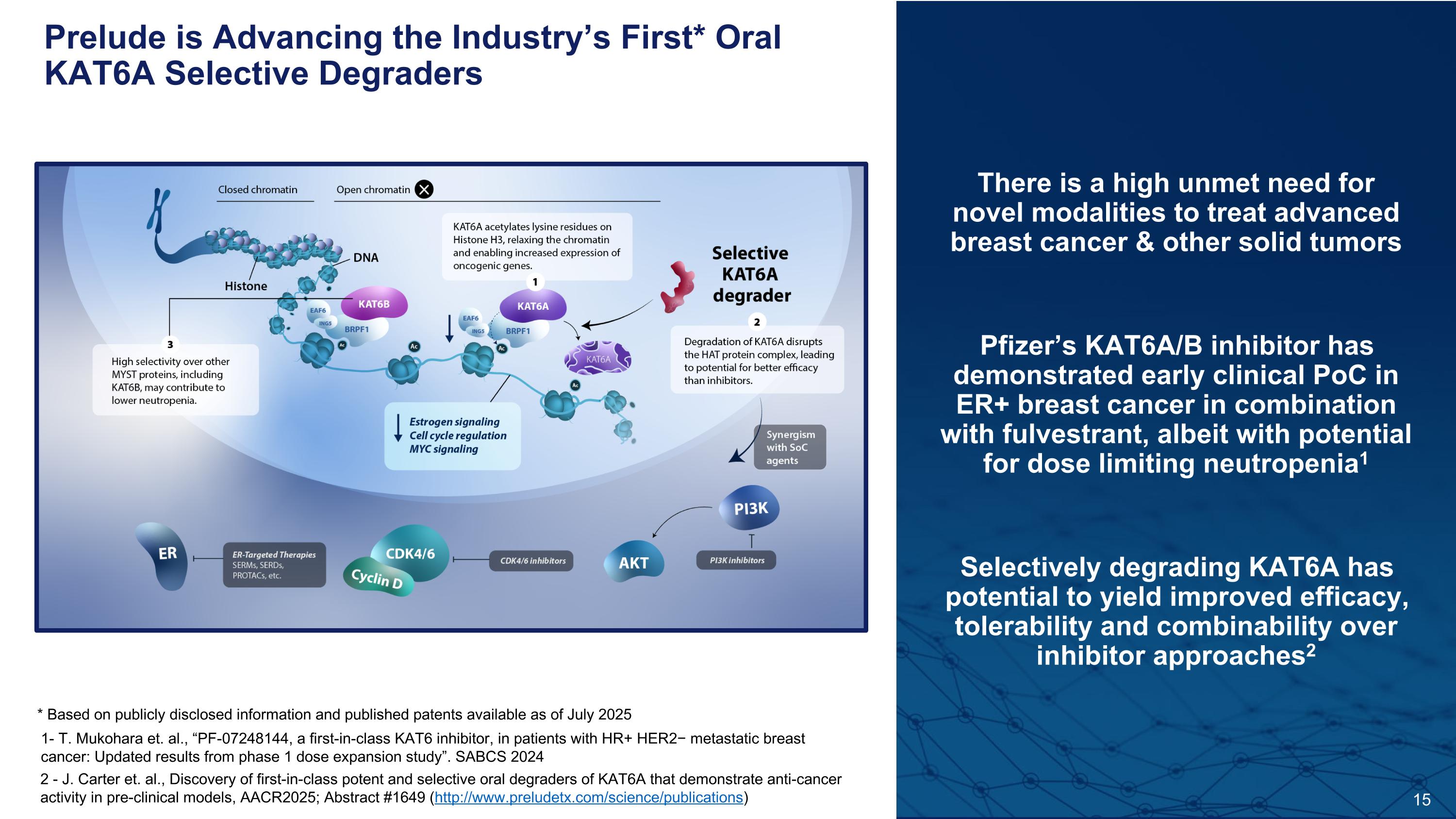
15 There is a high unmet need for novel modalities to treat advanced breast cancer & other solid tumors Pfizer’s KAT6A/B inhibitor has demonstrated early clinical PoC in ER+ breast cancer in combination with fulvestrant, albeit with potential for dose limiting neutropenia1 Selectively degrading KAT6A has potential to yield improved efficacy, tolerability and combinability over inhibitor approaches2 * Based on publicly disclosed information and published patents available as of July 2025 2 - J. Carter et. al., Discovery of first-in-class potent and selective oral degraders of KAT6A that demonstrate anti-cancer activity in pre-clinical models, AACR2025; Abstract #1649 (http://www.preludetx.com/science/publications) 1- T. Mukohara et. al., “PF-07248144, a first-in-class KAT6 inhibitor, in patients with HR+ HER2− metastatic breast cancer: Updated results from phase 1 dose expansion study”. SABCS 2024 Prelude is Advancing the Industry’s First* Oral KAT6A Selective Degraders
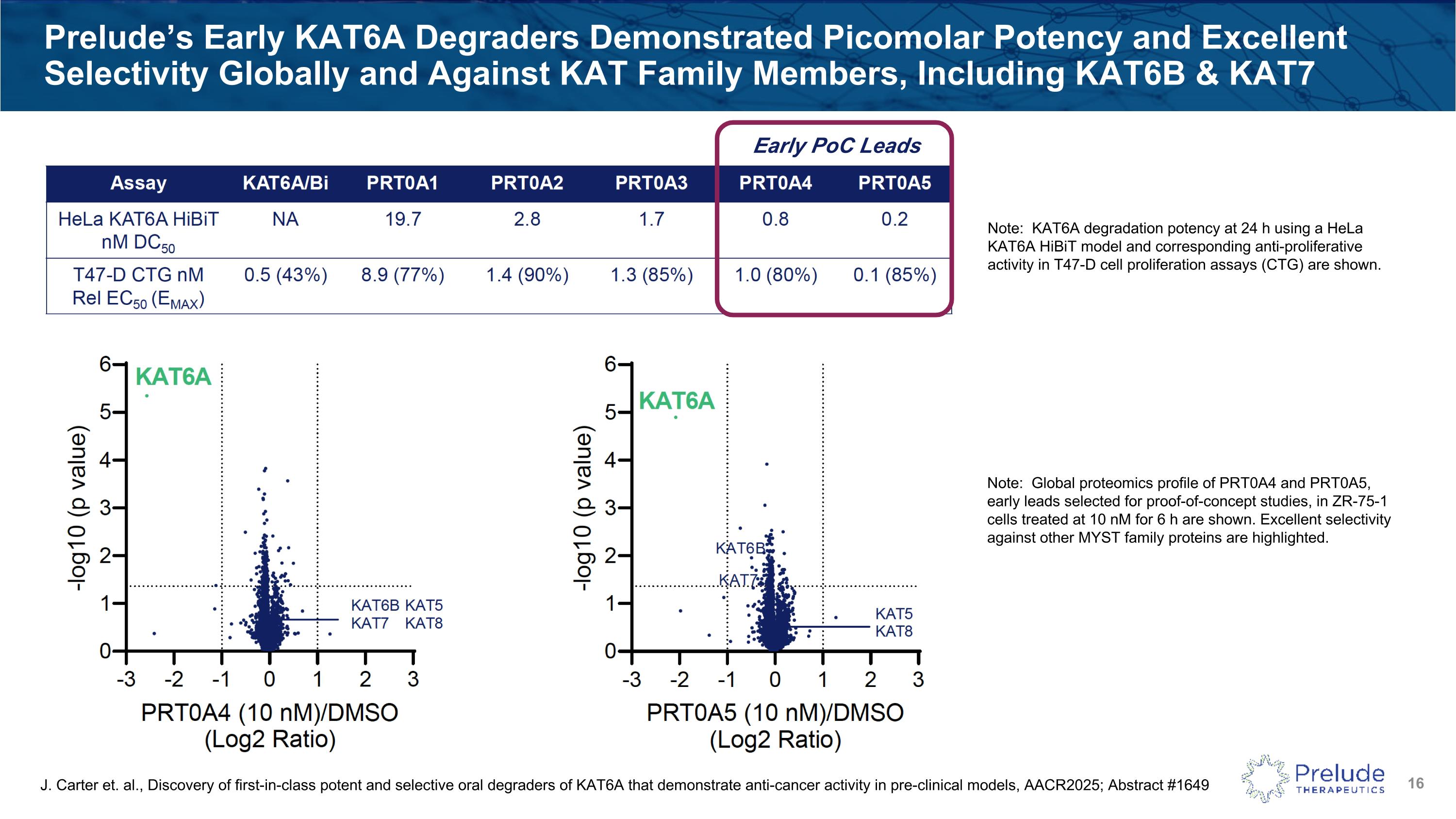
Prelude’s Early KAT6A Degraders Demonstrated Picomolar Potency and Excellent Selectivity Globally and Against KAT Family Members, Including KAT6B & KAT7 J. Carter et. al., Discovery of first-in-class potent and selective oral degraders of KAT6A that demonstrate anti-cancer activity in pre-clinical models, AACR2025; Abstract #1649 Note: KAT6A degradation potency at 24 h using a HeLa KAT6A HiBiT model and corresponding anti-proliferative activity in T47-D cell proliferation assays (CTG) are shown. Early PoC Leads Note: Global proteomics profile of PRT0A4 and PRT0A5, early leads selected for proof-of-concept studies, in ZR-75-1 cells treated at 10 nM for 6 h are shown. Excellent selectivity against other MYST family proteins are highlighted.
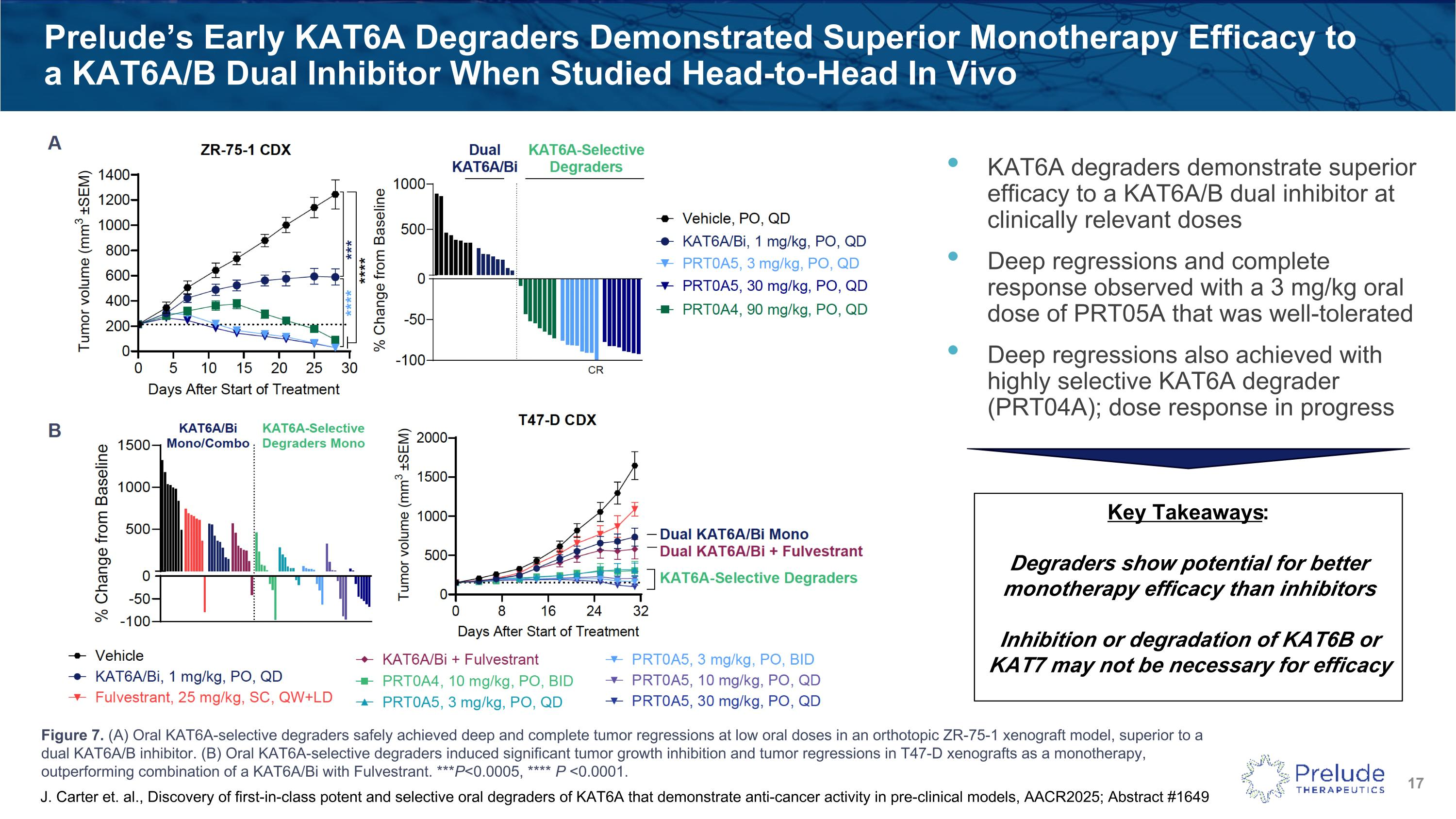
KAT6A degraders demonstrate superior efficacy to a KAT6A/B dual inhibitor at clinically relevant doses Deep regressions and complete response observed with a 3 mg/kg oral dose of PRT05A that was well-tolerated Deep regressions also achieved with highly selective KAT6A degrader (PRT04A); dose response in progress Prelude’s Early KAT6A Degraders Demonstrated Superior Monotherapy Efficacy to a KAT6A/B Dual Inhibitor When Studied Head-to-Head In Vivo Key Takeaways: Degraders show potential for better monotherapy efficacy than inhibitors Inhibition or degradation of KAT6B or KAT7 may not be necessary for efficacy J. Carter et. al., Discovery of first-in-class potent and selective oral degraders of KAT6A that demonstrate anti-cancer activity in pre-clinical models, AACR2025; Abstract #1649 Figure 7. (A) Oral KAT6A-selective degraders safely achieved deep and complete tumor regressions at low oral doses in an orthotopic ZR-75-1 xenograft model, superior to a dual KAT6A/B inhibitor. (B) Oral KAT6A-selective degraders induced significant tumor growth inhibition and tumor regressions in T47-D xenografts as a monotherapy, outperforming combination of a KAT6A/Bi with Fulvestrant. ***P<0.0005, **** P <0.0001.
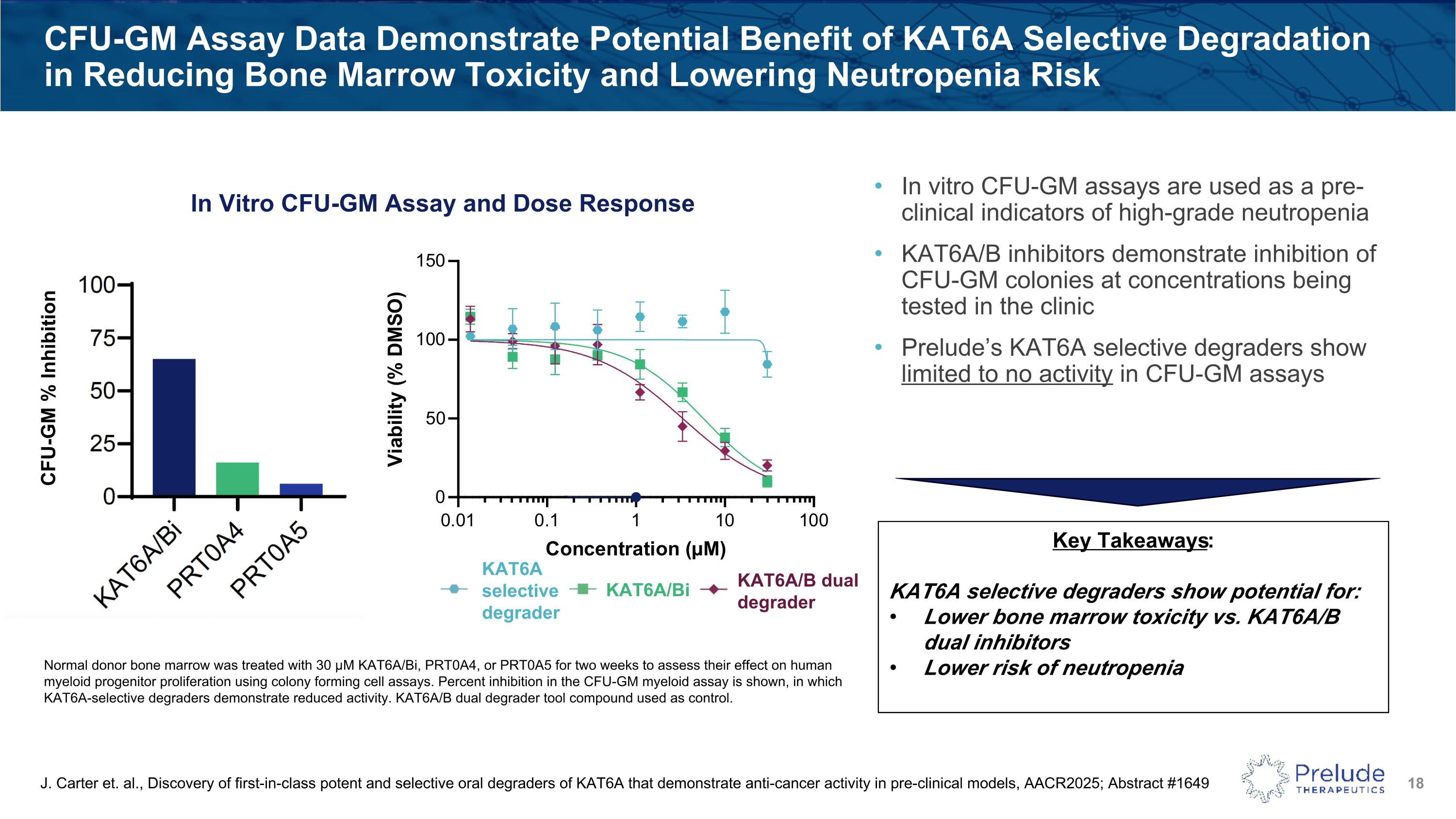
CFU-GM Assay Data Demonstrate Potential Benefit of KAT6A Selective Degradation in Reducing Bone Marrow Toxicity and Lowering Neutropenia Risk KAT6A selective degrader KAT6A/B dual degrader KAT6A/Bi Key Takeaways: KAT6A selective degraders show potential for: Lower bone marrow toxicity vs. KAT6A/B dual inhibitors Lower risk of neutropenia J. Carter et. al., Discovery of first-in-class potent and selective oral degraders of KAT6A that demonstrate anti-cancer activity in pre-clinical models, AACR2025; Abstract #1649 Normal donor bone marrow was treated with 30 μM KAT6A/Bi, PRT0A4, or PRT0A5 for two weeks to assess their effect on human myeloid progenitor proliferation using colony forming cell assays. Percent inhibition in the CFU-GM myeloid assay is shown, in which KAT6A-selective degraders demonstrate reduced activity. KAT6A/B dual degrader tool compound used as control. In vitro CFU-GM assays are used as a pre-clinical indicators of high-grade neutropenia KAT6A/B inhibitors demonstrate inhibition of CFU-GM colonies at concentrations being tested in the clinic Prelude’s KAT6A selective degraders show limited to no activity in CFU-GM assays In Vitro CFU-GM Assay and Dose Response CFU-GM % Inhibition
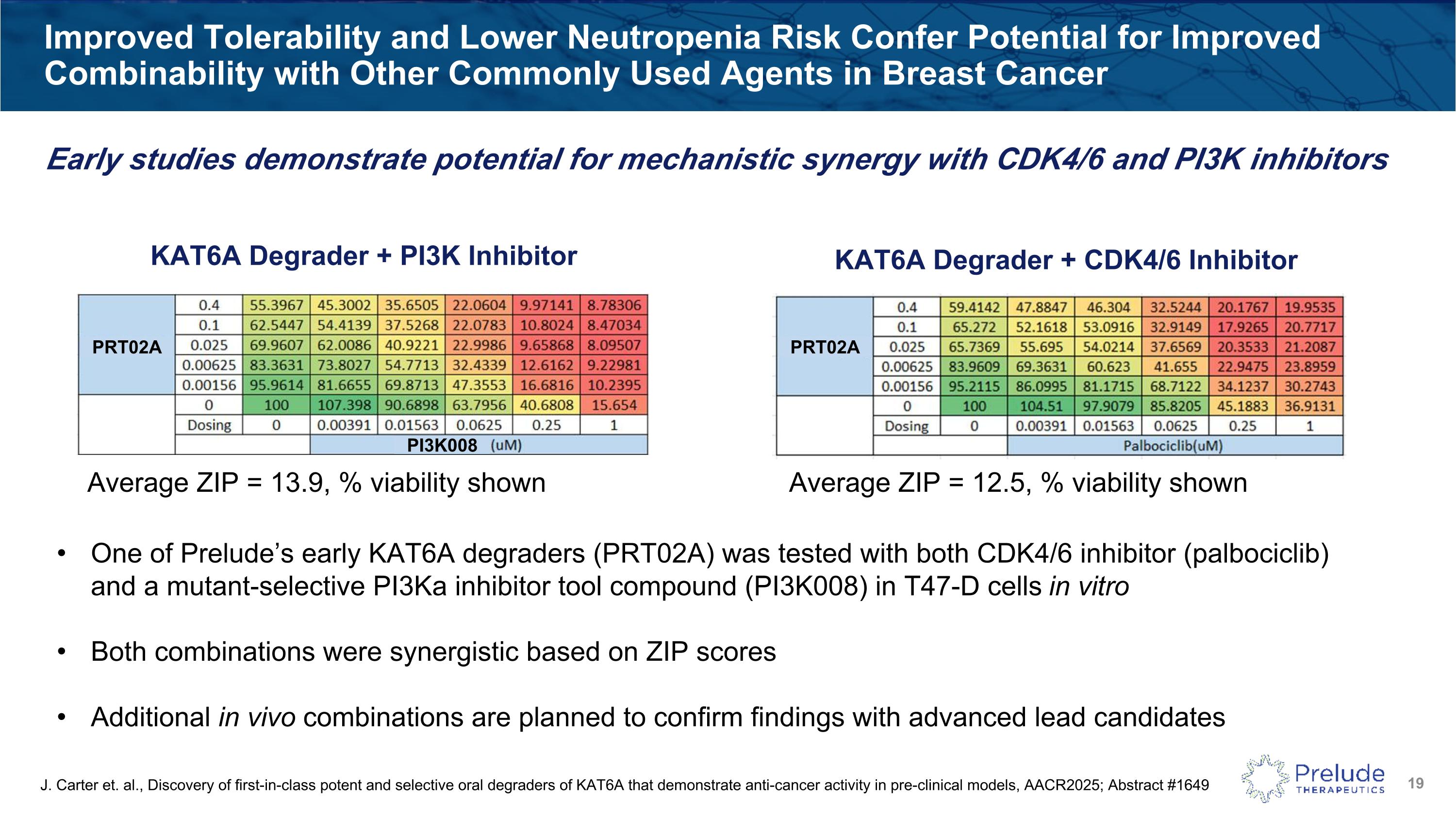
Improved Tolerability and Lower Neutropenia Risk Confer Potential for Improved Combinability with Other Commonly Used Agents in Breast Cancer Average ZIP = 13.9, % viability shown Average ZIP = 12.5, % viability shown KAT6A Degrader + PI3K Inhibitor KAT6A Degrader + CDK4/6 Inhibitor One of Prelude’s early KAT6A degraders (PRT02A) was tested with both CDK4/6 inhibitor (palbociclib) and a mutant-selective PI3Ka inhibitor tool compound (PI3K008) in T47-D cells in vitro Both combinations were synergistic based on ZIP scores Additional in vivo combinations are planned to confirm findings with advanced lead candidates PRT02A PRT02A PI3K008 J. Carter et. al., Discovery of first-in-class potent and selective oral degraders of KAT6A that demonstrate anti-cancer activity in pre-clinical models, AACR2025; Abstract #1649 Early studies demonstrate potential for mechanistic synergy with CDK4/6 and PI3K inhibitors
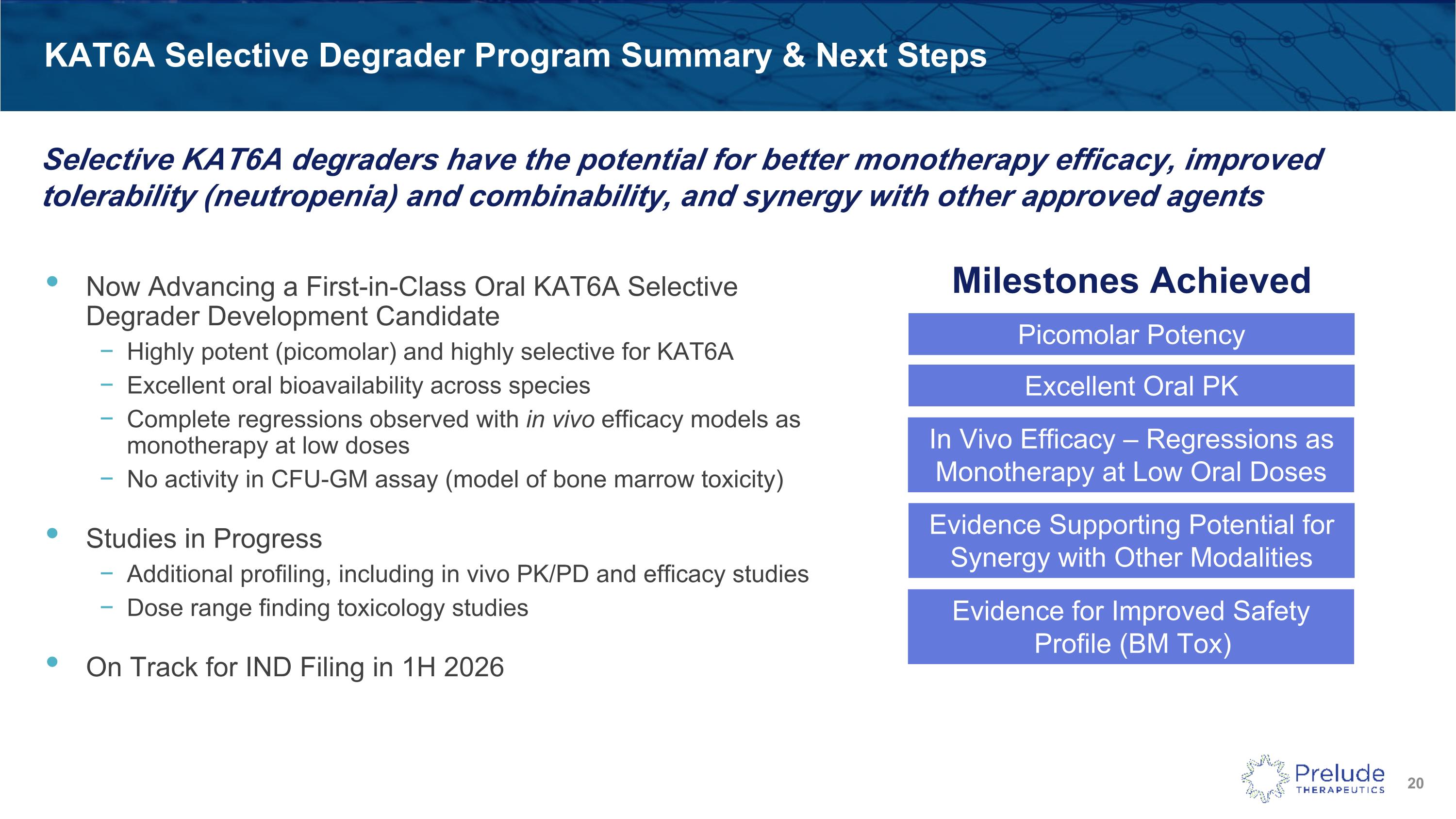
Now Advancing a First-in-Class Oral KAT6A Selective Degrader Development Candidate Highly potent (picomolar) and highly selective for KAT6A Excellent oral bioavailability across species Complete regressions observed with in vivo efficacy models as monotherapy at low doses No activity in CFU-GM assay (model of bone marrow toxicity) Studies in Progress Additional profiling, including in vivo PK/PD and efficacy studies Dose range finding toxicology studies On Track for IND Filing in 1H 2026 KAT6A Selective Degrader Program Summary & Next Steps Evidence for Improved Safety Profile (BM Tox) Excellent Oral PK Picomolar Potency Milestones Achieved Evidence Supporting Potential for Synergy with Other Modalities In Vivo Efficacy – Regressions as Monotherapy at Low Oral Doses Selective KAT6A degraders have the potential for better monotherapy efficacy, improved tolerability (neutropenia) and combinability, and synergy with other approved agents
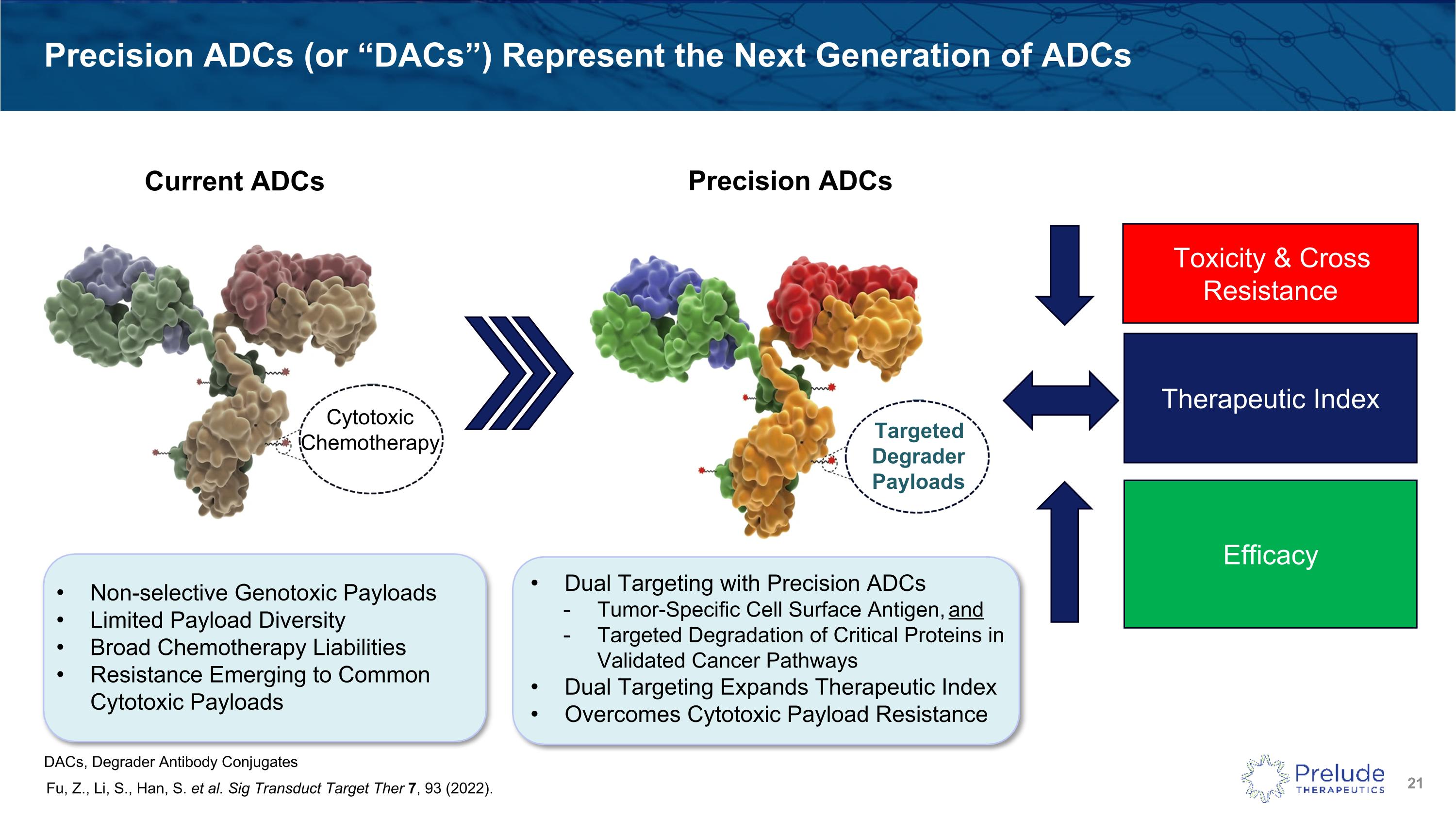
Precision ADCs (or “DACs”) Represent the Next Generation of ADCs Fu, Z., Li, S., Han, S. et al. Sig Transduct Target Ther 7, 93 (2022). Toxicity & Cross Resistance Efficacy Therapeutic Index Non-selective Genotoxic Payloads Limited Payload Diversity Broad Chemotherapy Liabilities Resistance Emerging to Common Cytotoxic Payloads Dual Targeting with Precision ADCs Tumor-Specific Cell Surface Antigen, and Targeted Degradation of Critical Proteins in Validated Cancer Pathways Dual Targeting Expands Therapeutic Index Overcomes Cytotoxic Payload Resistance Targeted Degrader Payloads Current ADCs Precision ADCs Cytotoxic Chemotherapy DACs, Degrader Antibody Conjugates
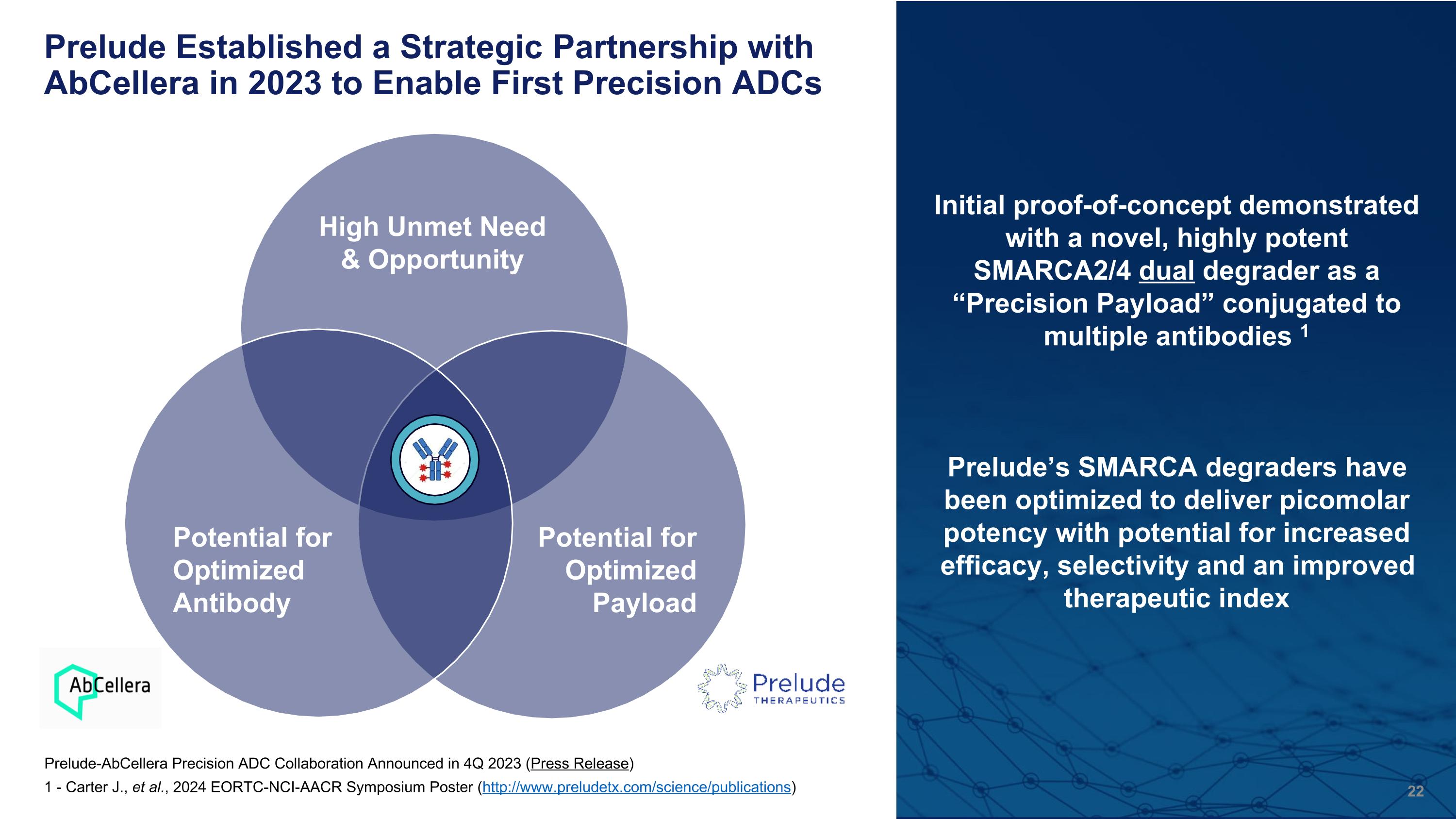
Prelude Established a Strategic Partnership with AbCellera in 2023 to Enable First Precision ADCs High Unmet Need & Opportunity Potential for Optimized Payload Potential for Optimized Antibody Initial proof-of-concept demonstrated with a novel, highly potent SMARCA2/4 dual degrader as a “Precision Payload” conjugated to multiple antibodies 1 Prelude’s SMARCA degraders have been optimized to deliver picomolar potency with potential for increased efficacy, selectivity and an improved therapeutic index Prelude-AbCellera Precision ADC Collaboration Announced in 4Q 2023 (Press Release) 1 - Carter J., et al., 2024 EORTC-NCI-AACR Symposium Poster (http://www.preludetx.com/science/publications)
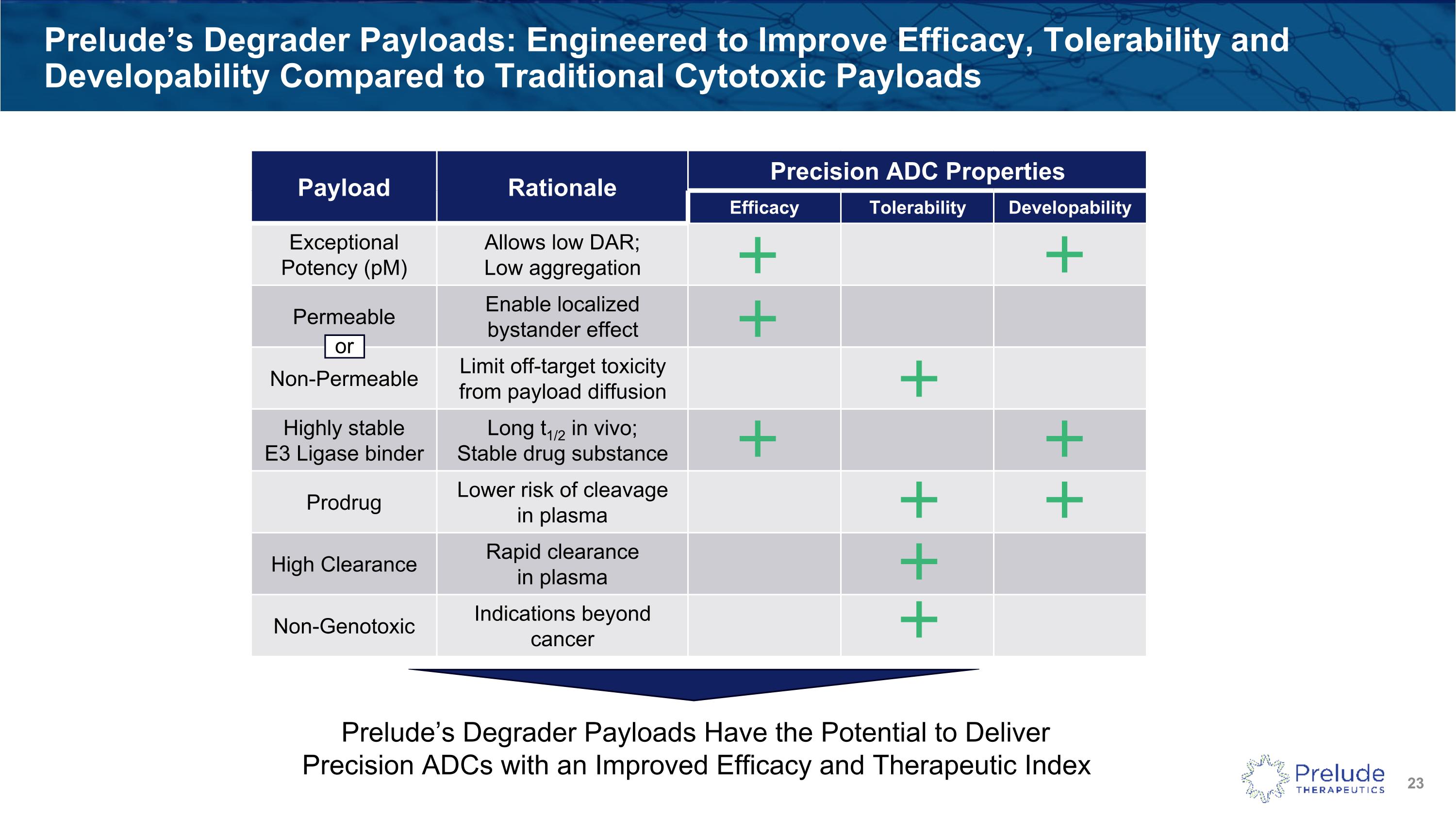
Prelude’s Degrader Payloads: Engineered to Improve Efficacy, Tolerability and Developability Compared to Traditional Cytotoxic Payloads Payload Rationale Precision ADC Properties Efficacy Tolerability Developability Exceptional Potency (pM) Allows low DAR; Low aggregation Permeable Enable localized bystander effect Non-Permeable Limit off-target toxicity from payload diffusion Highly stable E3 Ligase binder Long t1/2 in vivo; Stable drug substance Prodrug Lower risk of cleavage in plasma High Clearance Rapid clearance in plasma Non-Genotoxic Indications beyond cancer Prelude’s Degrader Payloads Have the Potential to Deliver Precision ADCs with an Improved Efficacy and Therapeutic Index or
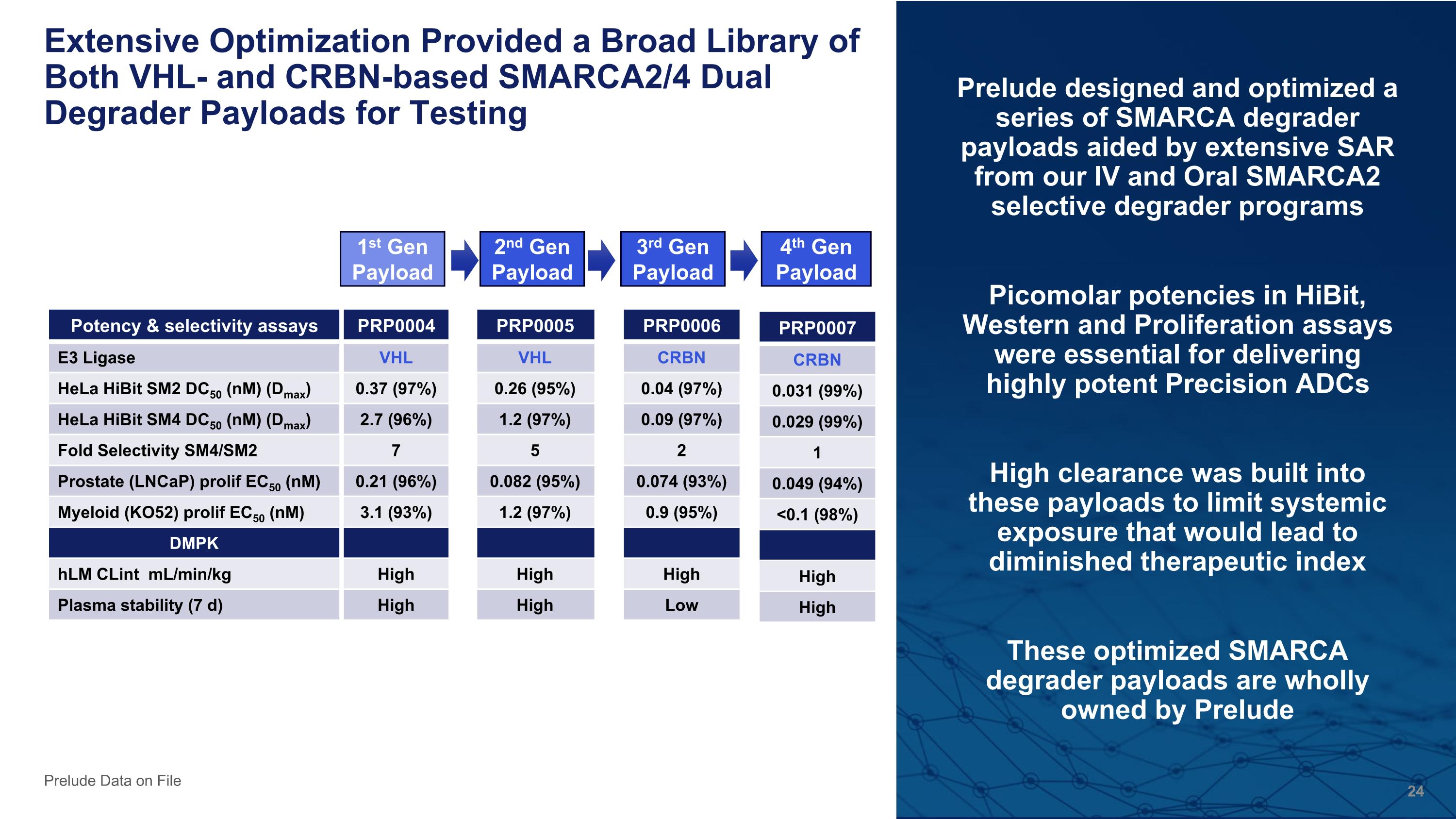
Extensive Optimization Provided a Broad Library of Both VHL- and CRBN-based SMARCA2/4 Dual Degrader Payloads for Testing Prelude designed and optimized a series of SMARCA degrader payloads aided by extensive SAR from our IV and Oral SMARCA2 selective degrader programs Picomolar potencies in HiBit, Western and Proliferation assays were essential for delivering highly potent Precision ADCs High clearance was built into these payloads to limit systemic exposure that would lead to diminished therapeutic index These optimized SMARCA degrader payloads are wholly owned by Prelude Prelude Data on File Potency & selectivity assays PRP0004 E3 Ligase VHL HeLa HiBit SM2 DC50 (nM) (Dmax) 0.37 (97%) HeLa HiBit SM4 DC50 (nM) (Dmax) 2.7 (96%) Fold Selectivity SM4/SM2 7 Prostate (LNCaP) prolif EC50 (nM) 0.21 (96%) Myeloid (KO52) prolif EC50 (nM) 3.1 (93%) DMPK hLM CLint mL/min/kg High Plasma stability (7 d) High PRP0006 CRBN 0.04 (97%) 0.09 (97%) 2 0.074 (93%) 0.9 (95%) High Low PRP0005 VHL 0.26 (95%) 1.2 (97%) 5 0.082 (95%) 1.2 (97%) High High 1st Gen Payload PRP0007 CRBN 0.031 (99%) 0.029 (99%) 1 0.049 (94%) <0.1 (98%) High High 2nd Gen Payload 3rd Gen Payload 4th Gen Payload
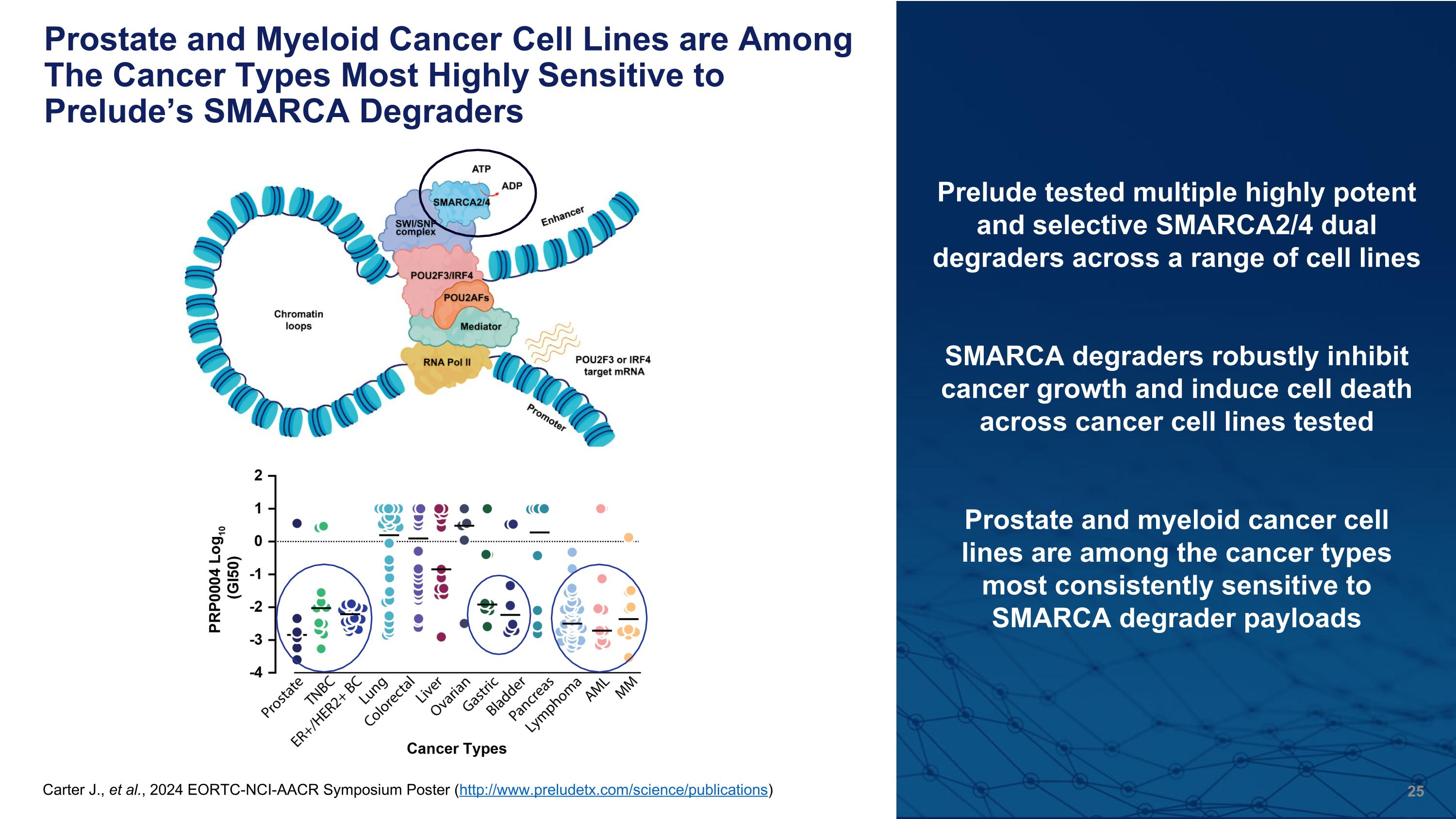
Prostate and Myeloid Cancer Cell Lines are Among The Cancer Types Most Highly Sensitive to Prelude’s SMARCA Degraders Carter J., et al., 2024 EORTC-NCI-AACR Symposium Poster (http://www.preludetx.com/science/publications) Prelude tested multiple highly potent and selective SMARCA2/4 dual degraders across a range of cell lines SMARCA degraders robustly inhibit cancer growth and induce cell death across cancer cell lines tested Prostate and myeloid cancer cell lines are among the cancer types most consistently sensitive to SMARCA degrader payloads
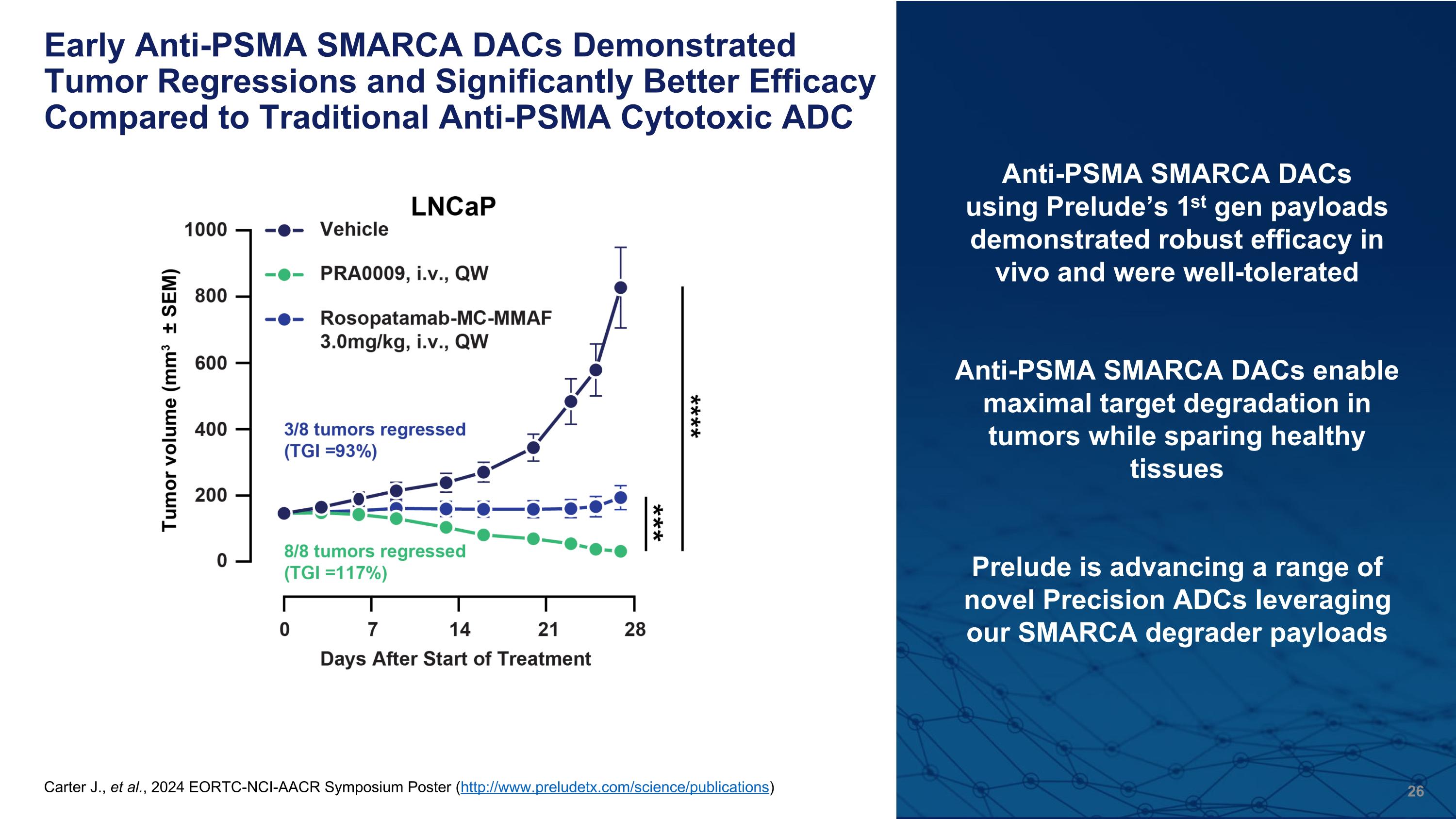
Early Anti-PSMA SMARCA DACs Demonstrated Tumor Regressions and Significantly Better Efficacy Compared to Traditional Anti-PSMA Cytotoxic ADC Anti-PSMA SMARCA DACs using Prelude’s 1st gen payloads demonstrated robust efficacy in vivo and were well-tolerated Anti-PSMA SMARCA DACs enable maximal target degradation in tumors while sparing healthy tissues Prelude is advancing a range of novel Precision ADCs leveraging our SMARCA degrader payloads (A) SMARCA2/4 protein expression was analyzed in DAC PRA0002 and payload PRP0004-treated LNCaP tumors at the indicated time points following a single dose. Graphs are quantitation of western blots. (B) Weekly i.v. administration of PRA0002 was well-tolerated and demonstrated significant tumor growth inhibition (89%) of PSMA+ LNCaP tumors. (C) Weekly i.v. administration of PRA0002 did not induce significant tumor growth inhibition in PSMA- PC3 tumors, in comparison to PRP0004 which was efficacious, but caused mouse body weight loss and death (D) Weekly i.v. administration of PRA0009 demonstrated tumor regression and significantly better efficacy compared to a PSMA cytotoxic ADC (Rosopatamab-MC-MMAF, DAR2) in LNCaP tumors. Carter J., et al., 2024 EORTC-NCI-AACR Symposium Poster (http://www.preludetx.com/science/publications)
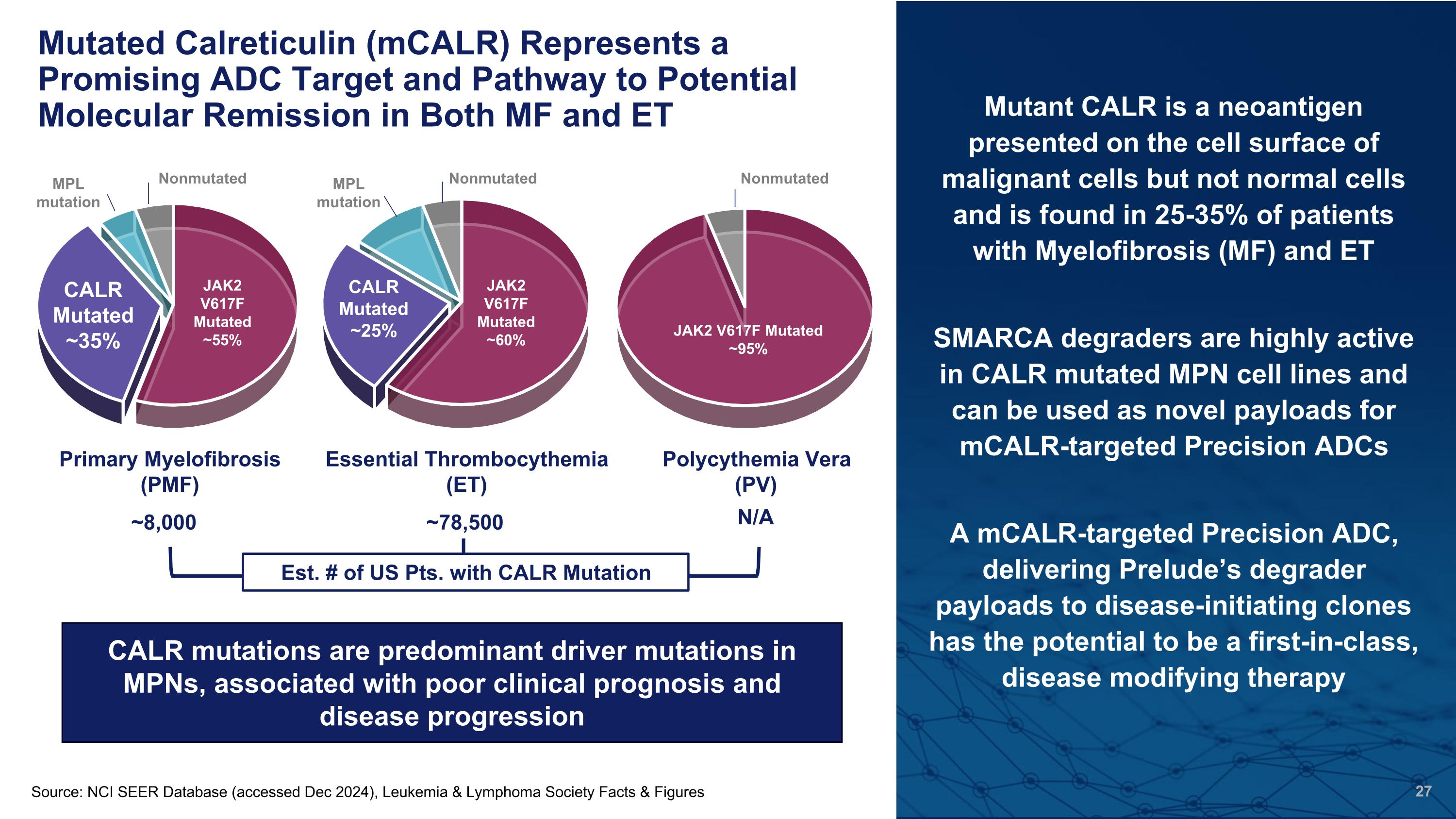
Mutated Calreticulin (mCALR) Represents a Promising ADC Target and Pathway to Potential Molecular Remission in Both MF and ET Mutant CALR is a neoantigen presented on the cell surface of malignant cells but not normal cells and is found in 25-35% of patients with Myelofibrosis (MF) and ET SMARCA degraders are highly active in CALR mutated MPN cell lines and can be used as novel payloads for mCALR-targeted Precision ADCs A mCALR-targeted Precision ADC, delivering Prelude’s degrader payloads to disease-initiating clones has the potential to be a first-in-class, disease modifying therapy Primary Myelofibrosis (PMF) Essential Thrombocythemia (ET) Polycythemia Vera (PV) JAK2 V617F Mutated ~95% MPL mutation MPL mutation Nonmutated Nonmutated CALR mutations are predominant driver mutations in MPNs, associated with poor clinical prognosis and disease progression Nonmutated ~8,000 ~78,500 N/A Est. # of US Pts. with CALR Mutation Source: NCI SEER Database (accessed Dec 2024), Leukemia & Lymphoma Society Facts & Figures JAK2 V617F Mutated ~95% JAK2 V617F Mutated ~60% JAK2 V617F Mutated ~55% CALR Mutated ~35% CALR Mutated ~25%
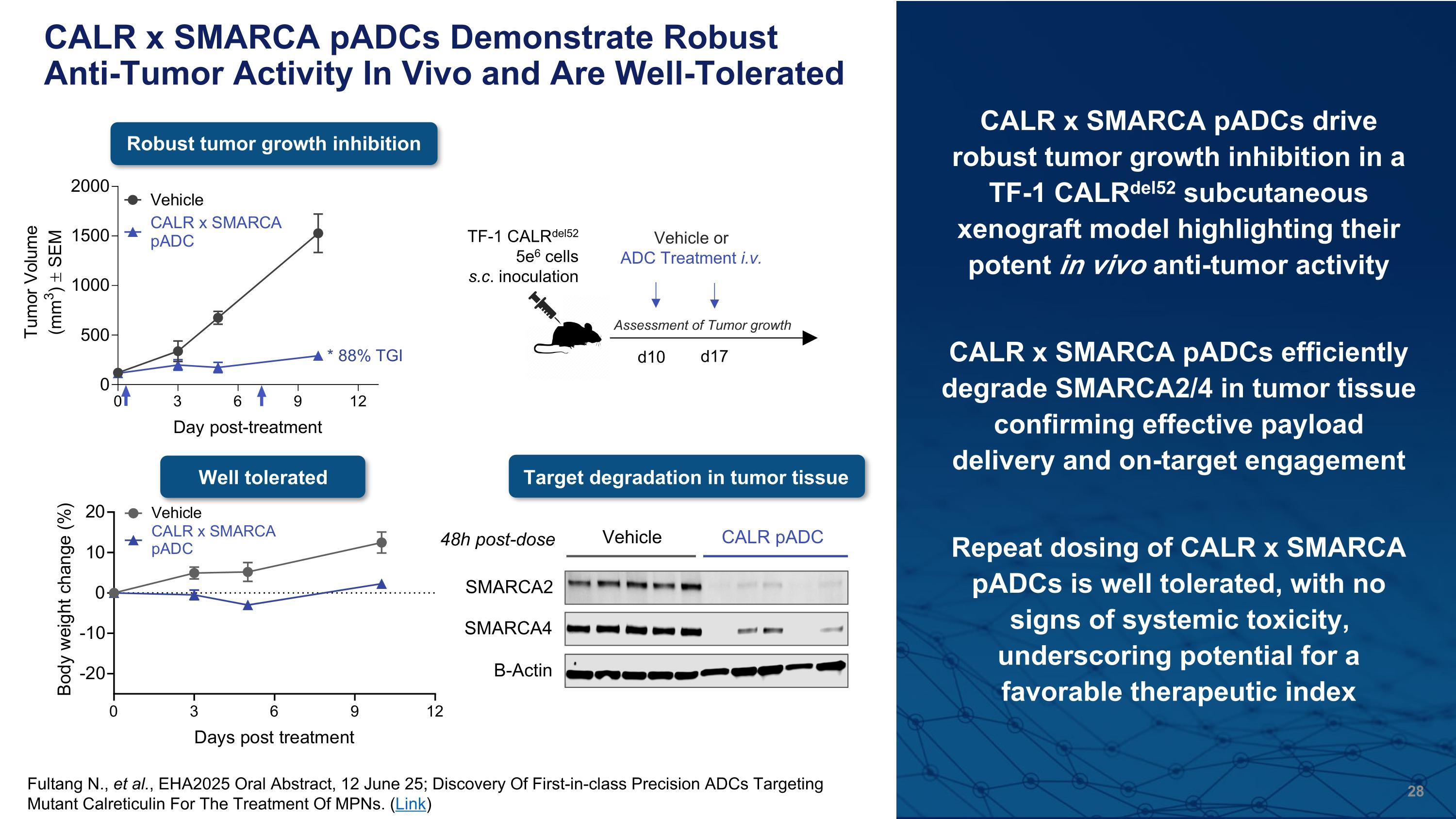
CALR x SMARCA pADCs Demonstrate Robust Anti-Tumor Activity In Vivo and Are Well-Tolerated CALR x SMARCA pADCs drive robust tumor growth inhibition in a TF-1 CALRdel52 subcutaneous xenograft model highlighting their potent in vivo anti-tumor activity CALR x SMARCA pADCs efficiently degrade SMARCA2/4 in tumor tissue confirming effective payload delivery and on-target engagement Repeat dosing of CALR x SMARCA pADCs is well tolerated, with no signs of systemic toxicity, underscoring potential for a favorable therapeutic index Robust tumor growth inhibition Well tolerated SMARCA2 SMARCA4 Β-Actin Vehicle CALR pADC 48h post-dose TF-1 CALRdel52 5e6 cells s.c. inoculation d10 Vehicle or ADC Treatment i.v. d17 Assessment of Tumor growth Target degradation in tumor tissue Fultang N., et al., EHA2025 Oral Abstract, 12 June 25; Discovery Of First-in-class Precision ADCs Targeting Mutant Calreticulin For The Treatment Of MPNs. (Link)
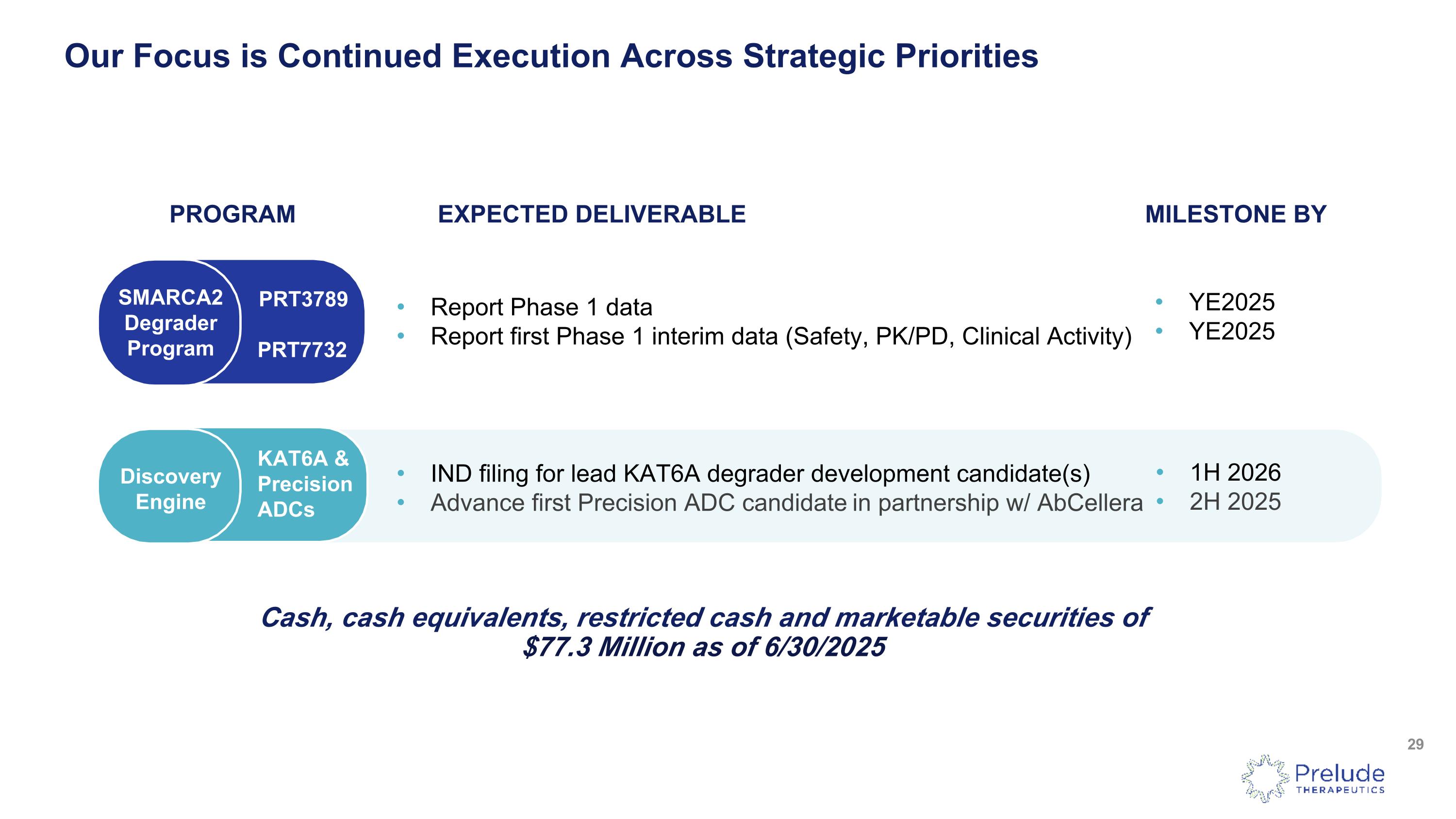
Our Focus is Continued Execution Across Strategic Priorities PRT2527 CDK9 PROGRAM Selective CDK Inhibitor PRT2527 PRT7732 SMARCA2 Degrader Program Discovery Engine KAT6A & Precision ADCs IND filing for lead KAT6A degrader development candidate(s) Advance first Precision ADC candidate in partnership w/ AbCellera EXPECTED DELIVERABLE MILESTONE BY 1H 2026 2H 2025 Cash, cash equivalents, restricted cash and marketable securities of $77.3 Million as of 6/30/2025 Report Phase 1 data Report first Phase 1 interim data (Safety, PK/PD, Clinical Activity) YE2025 YE2025 PRT3789

Thank You Contact Us: Robert Doody SVP, Investor Relations rdoody@preludetx.com