8-K
Quantum-Si Inc (QSI)
UNITED STATES
SECURITIES AND EXCHANGE COMMISSION
Washington, D.C. 20549
FORM 8-K
CURRENT REPORT
Pursuant to Section 13 or 15(d) of the
Securities Exchange Act of 1934
Date of Report (Date of earliest event reported): November 20, 2024
QUANTUM-SI INCORPORATED
(Exact name of registrant as specified in its charter)
| Delaware | 001-39486 | 85-1388175 |
|---|---|---|
| (State or other jurisdiction of incorporation) | (Commission File Number) | (IRS Employer Identification No.) |
| 29 Business Park Drive<br><br> <br>Branford, Connecticut<br><br> <br>(Address of principal executive offices) | 06405<br><br> <br>(Zip Code) | |
| --- | --- |
Registrant’s telephone number, including area code: (866) 688-7374
N/A
(Former name or former address, if changed since last report)
Check the appropriate box below if the Form 8-K filing is intended to simultaneously satisfy the filing obligation of the registrant under any of the following provisions:
| ☐ | Written communications pursuant to Rule 425 under the Securities Act (17 CFR 230.425) |
|---|---|
| ☐ | Soliciting material pursuant to Rule 14a-12 under the Exchange Act (17 CFR 240.14a-12) |
| --- | --- |
| ☐ | Pre-commencement communications pursuant to Rule 14d-2(b) under the Exchange Act (17 CFR 240.14d-2(b)) |
| --- | --- |
| ☐ | Pre-commencement communications pursuant to Rule 13e-4(c) under the Exchange Act (17 CFR 240.13e-4(c)) |
| --- | --- |
Securities registered pursuant to Section 12(b) of the Act:
| Title of each class | Trading Symbol(s) | Name of each exchange on which registered |
|---|---|---|
| Class A common stock, par value $0.0001 per share | QSI | The Nasdaq Stock Market LLC |
| Redeemable warrants, each whole warrant exercisable for one share of Class A common stock, each at an exercise price of $11.50 per share | QSIAW | The Nasdaq Stock Market LLC |
Indicate by check mark whether the registrant is an emerging growth company as defined in Rule 405 of the Securities Act of 1933 (§230.405 of this chapter) or Rule 12b-2 of the Securities Exchange Act of 1934 (§240.12b-2 of this chapter).
Emerging growth company ☐
If an emerging growth company, indicate by check mark if the registrant has elected not to use the extended transition period for complying with any new or revised financial accounting standards provided pursuant to Section 13(a) of the Exchange Act. ☐
| Item 7.01 | Regulation FD Disclosure. |
|---|
From time to time, Quantum-Si Incorporated (the “Company”) presents and/or distributes slides and presentations to the investment community to provide updates and summaries of its business. On November 20, 2024, the Company gave a presentation at its Investor & Analyst Day. The presentation slides and a replay of the webcast are available on the “Investors” section of the Company’s website at https://ir.quantum-si.com. This presentation is also furnished as Exhibit 99.1 to this Current Report on Form 8-K.
The information in this Item 7.01, including Exhibit 99.1, is
being furnished and shall not be deemed “filed” for purposes of Section 18 of the Securities Exchange Act of 1934, as amended \(the “Exchange Act”\), or otherwise subject to the liabilities of that Section, nor shall it be deemed incorporated by
reference into any registration statement or other filing under the Securities Act of 1933, as amended, or the Exchange Act, except as shall be expressly set forth by specific reference in such filing. The furnishing of the information in this Item 7.01 and Exhibit 99.1 is not intended to, and does not, constitute a determination or admission by the Company that the information in
this report is material or complete, or that investors should consider this information before making an investment decision with respect to any security of the Company or any of its affiliates.
| Item 9.01 | Financial Statements and Exhibits. |
|---|---|
| (d) | Exhibits. |
| --- | --- |
| Exhibit<br><br> <br>No. | Description |
| --- | --- |
| 99.1 | Corporate Presentation of Quantum-Si Incorporated dated November 20, 2024. |
| 104 | Cover Page Interactive Data File (embedded within the Inline XBRL document). |
SIGNATURES
Pursuant to the requirements of the Securities Exchange Act of 1934, the registrant has duly caused this report to be signed on its behalf by the undersigned hereunto duly authorized.
| QUANTUM-SI INCORPORATED | ||
|---|---|---|
| By: | /s/ Christian LaPointe, Ph.D. | |
| Name: | Christian LaPointe, Ph.D. | |
| Title: | General Counsel | |
| Date: November 20, 2024 |
Exhibit 99.1
Investor & Analyst Day November 20, 2024

Forward Looking Statements This presentation includes “forward-looking statements” within the meaning of the “safe harbor” provisions of the United States Private Securities Litigation Reform Act of 1995. The actual results of the Company may differ from its expectations, estimates, and projections and, consequently, you should not rely on these forward-looking statements as predictions of future events. Words such as “expect,” “estimate,” “project,” “budget,” “forecast,” “anticipate,” “intend,” “plan,” “may,” “will,” “could,” “should,” “believes,” “predicts,” “potential,” “continue,” and similar expressions (or the negative versions of such words or expressions) are intended to identify such forward-looking statements. These forward-looking statements include, without limitation, the Company’s expectations with respect to future performance and development and commercialization of products and services, its anticipated cash runway and its financial guidance for the full year 2024. These forward-looking statements involve significant risks and uncertainties that could cause the actual results to differ materially from those discussed in the forward-looking statements. Most of these factors are outside the Company’s control and are difficult to predict. Factors that may cause such differences include, but are not limited to: the inability to maintain the listing of the Company’s Class A common stock on The Nasdaq Stock Market; the ability of the Company to grow and manage growth profitably and retain its key employees; the Company’s ongoing leadership transitions; changes in applicable laws or regulations; the ability of the Company to raise financing in the future; the success, cost and timing of the Company’s product development and commercialization activities; the commercialization and adoption of the Company’s existing products and the success of any product the Company may offer in the future; the potential attributes and benefits of the Company’s commercialized Platinum® protein sequencing instrument and kits and the Company’s other products once commercialized; the Company’s ability to obtain and maintain regulatory approval for its products, and any related restrictions and limitations of any approved product; the Company’s ability to identify, in-license or acquire additional technology; the Company’s ability to maintain its existing lease, license, manufacture and supply agreements; the Company’s ability to compete with other companies currently marketing or engaged in the development or commercialization of products and services that serve customers engaged in proteomic analysis, many of which have greater financial and marketing resources than the Company; the size and growth potential of the markets for the Company’s products and services, and its ability to serve those markets once commercialized, either alone or in partnership with others; the Company’s estimates regarding future expenses, future revenue, capital requirements and needs for additional financing; the Company’s financial performance; and other risks and uncertainties described under “Risk Factors” in the Company’s most recent Annual Report on Form 10-K and Quarterly Reports on Form 10-Q and in the Company’s other filings with the SEC. The Company cautions that the foregoing list of factors is not exclusive. The Company cautions readers not to place undue reliance upon any forward-looking statements, which speak only as of the date made. The Company does not undertake or accept any obligation or undertaking to release publicly any updates or revisions to any forward-looking statements to reflect any change in its expectations or any change in events, conditions, or circumstances on which any such statement is based. Disclaimer and Other Information

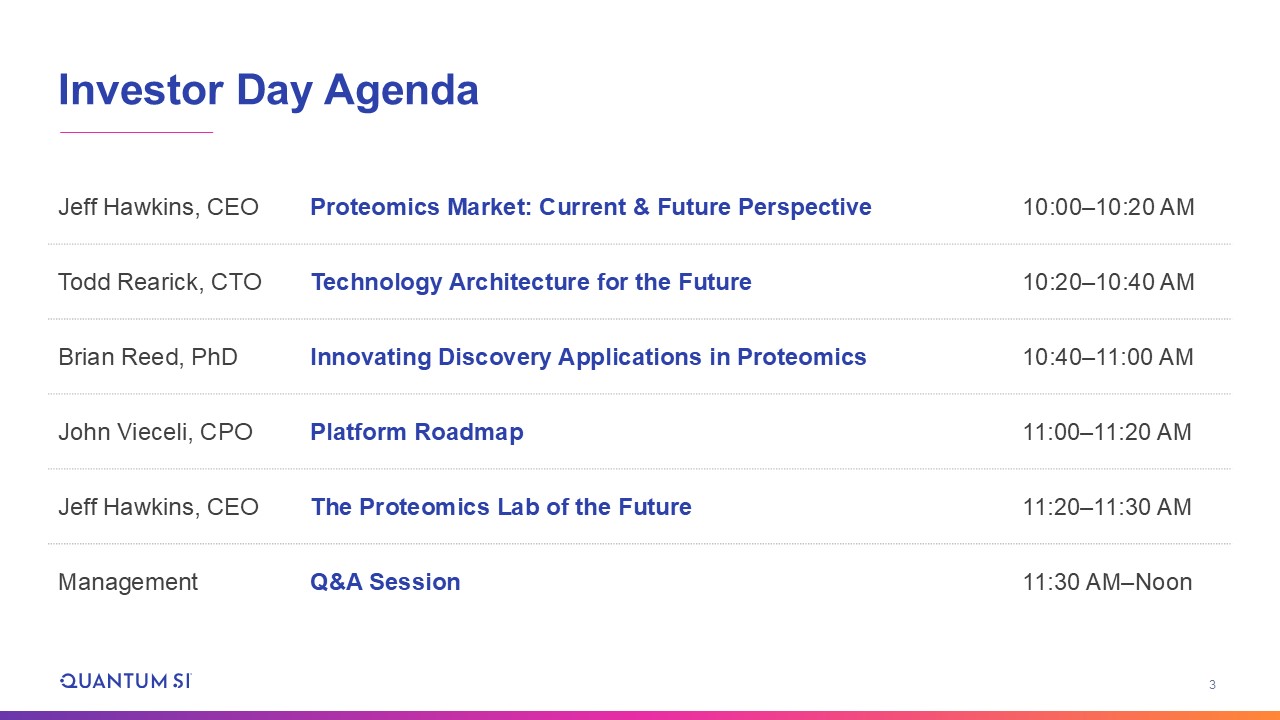
Investor Day Agenda Jeff Hawkins, CEO Proteomics Market: Current & Future Perspective 10:00–10:20 AM Todd Rearick, CTO Technology Architecture for the Future 10:20–10:40 AM Brian Reed, PhD Innovating Discovery Applications in Proteomics 10:40–11:00 AM John Vieceli, CPO Platform Roadmap 11:00–11:20 AM Jeff Hawkins, CEO The Proteomics Lab of the Future 11:20–11:30 AM Management Q&A Session 11:30 AM–Noon

Proteomics Market: Current & Future Perspective

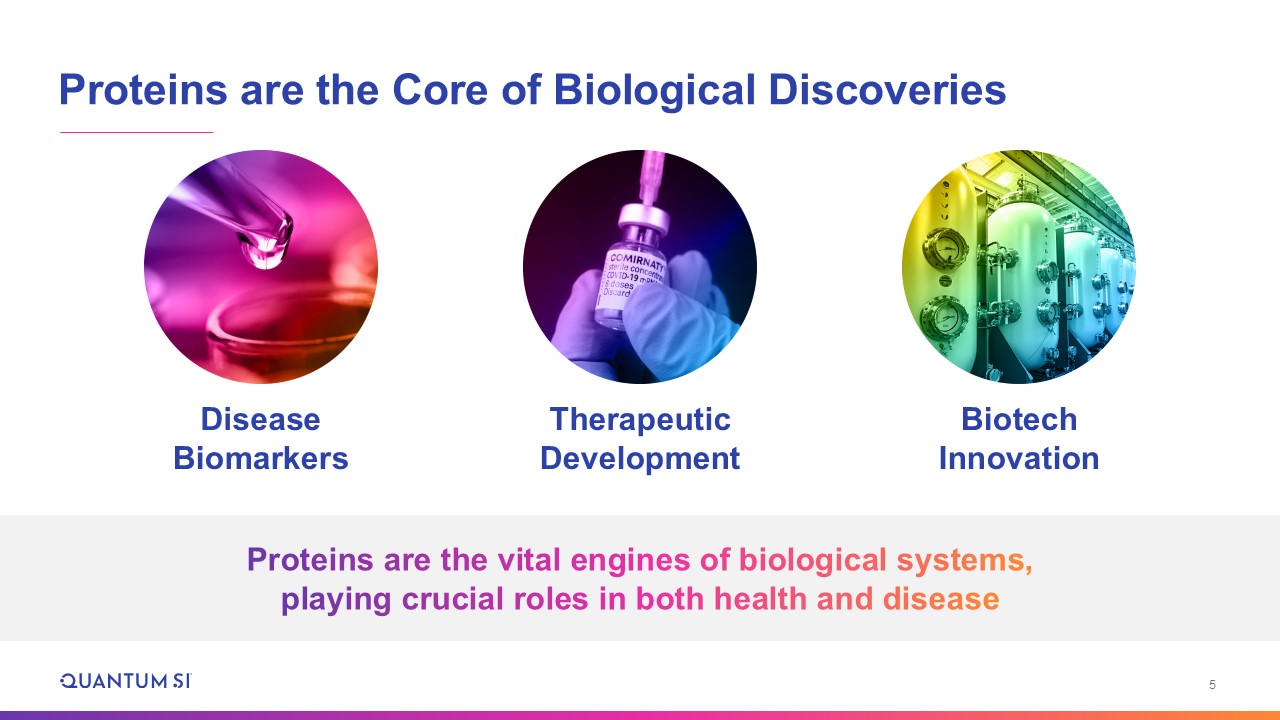
Proteins are the vital engines of biological systems, playing crucial roles in both health and disease Proteins are the Core of Biological Discoveries Therapeutic Development Biotech Innovation Disease Biomarkers

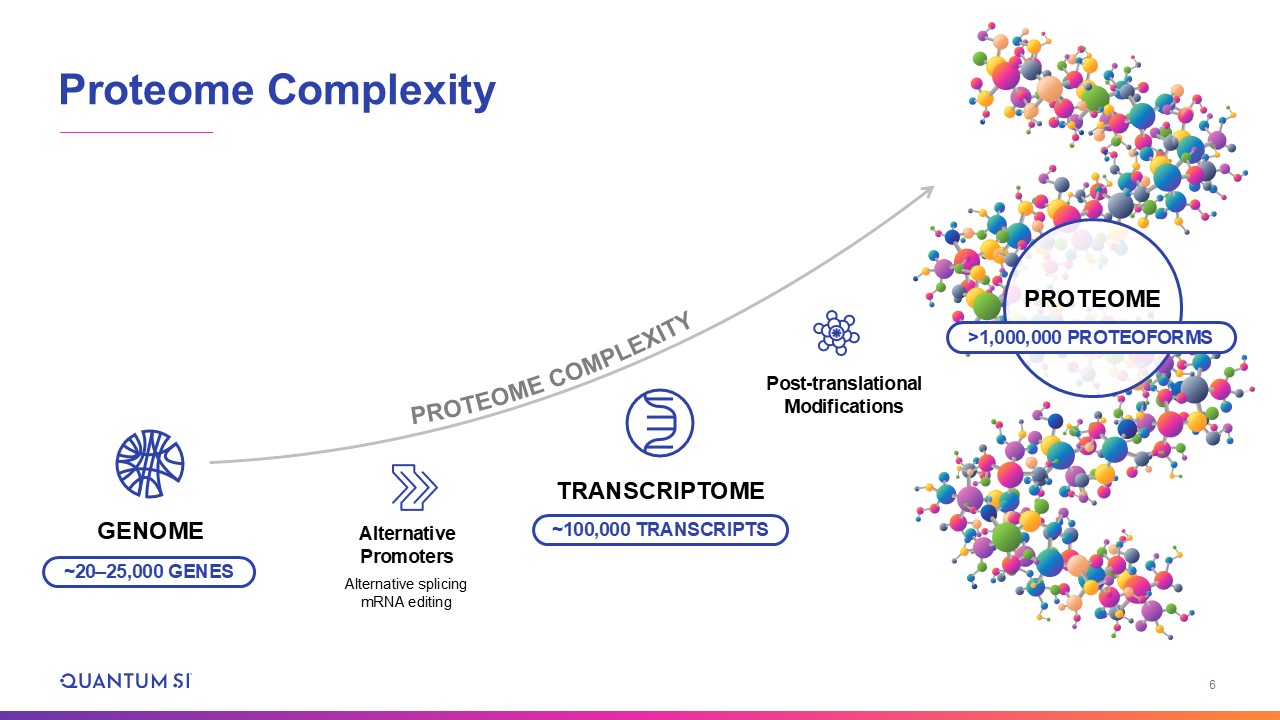
Proteome Complexity GENOME TRANSCRIPTOME AlternativePromoters Alternative splicingmRNA editing Post-translationalModifications PROTEOME COMPLEXITY ~20–25,000 GENES ~100,000 TRANSCRIPTS PROTEOME >1,000,000 PROTEOFORMS

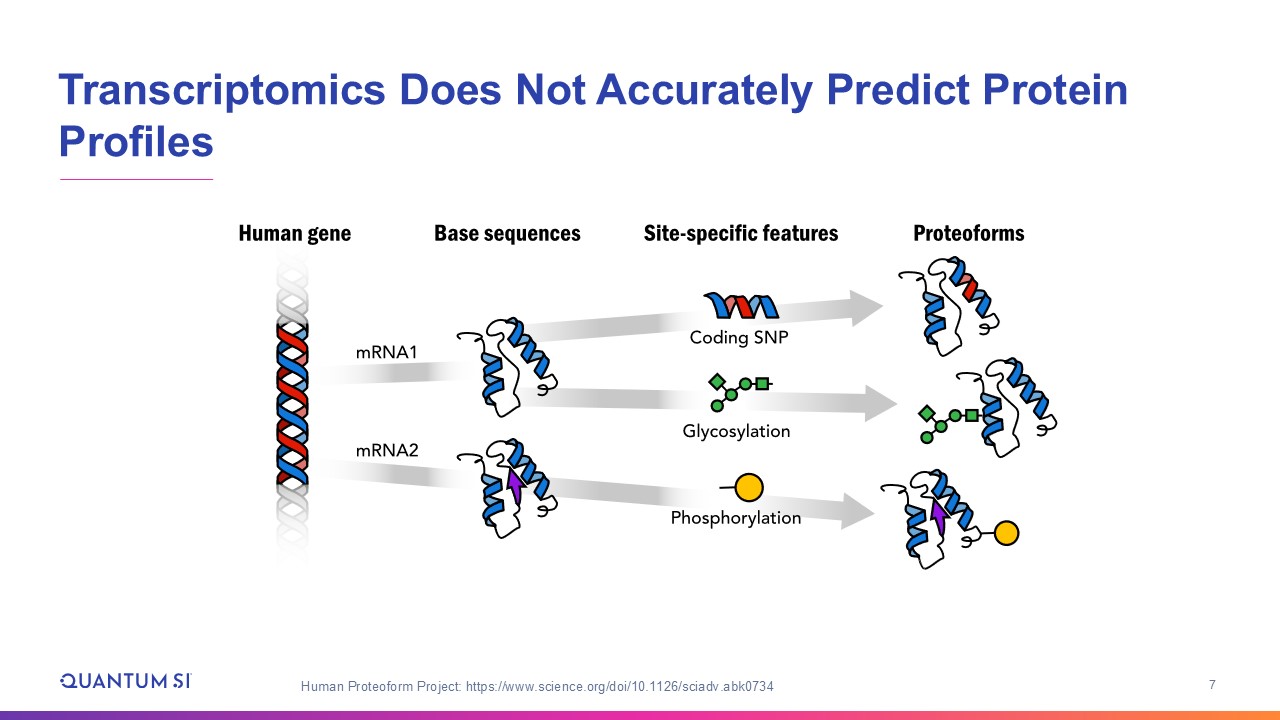
Transcriptomics Does Not Accurately Predict Protein Profiles Human Proteoform Project: https://www.science.org/doi/10.1126/sciadv.abk0734

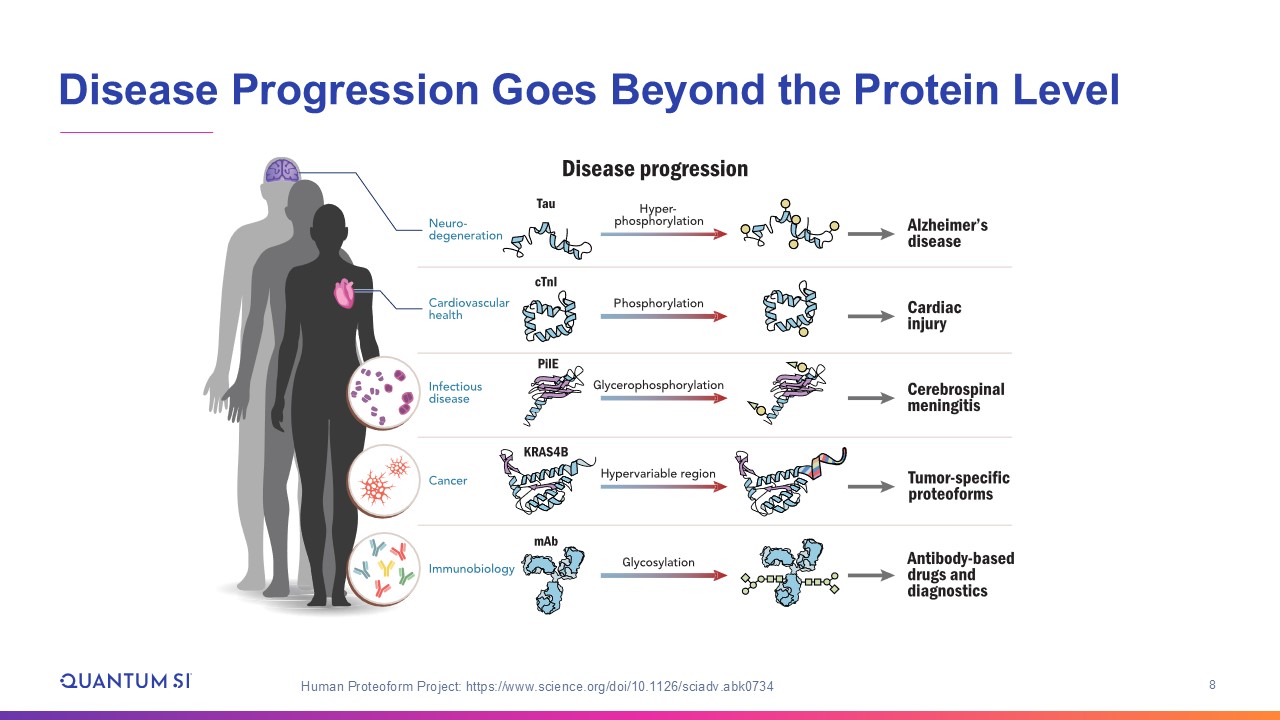
Disease Progression Goes Beyond the Protein Level Human Proteoform Project: https://www.science.org/doi/10.1126/sciadv.abk0734

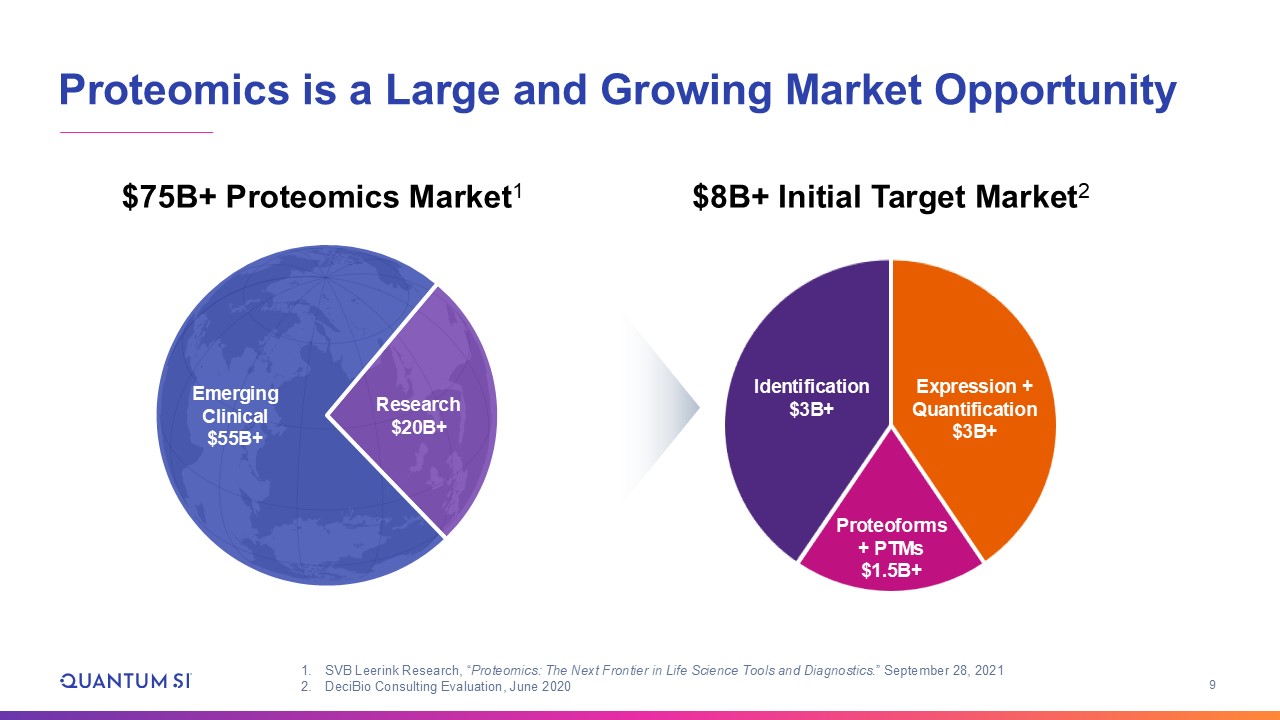
$75B+ Proteomics Market1 $8B+ Initial Target Market2 Proteomics is a Large and Growing Market Opportunity Identification $3B+ Expression + Quantification $3B+ Proteoforms + PTMs $1.5B+ SVB Leerink Research, “Proteomics: The Next Frontier in Life Science Tools and Diagnostics.” September 28, 2021 DeciBio Consulting Evaluation, June 2020 Research $20B+ EmergingClinical $55B+

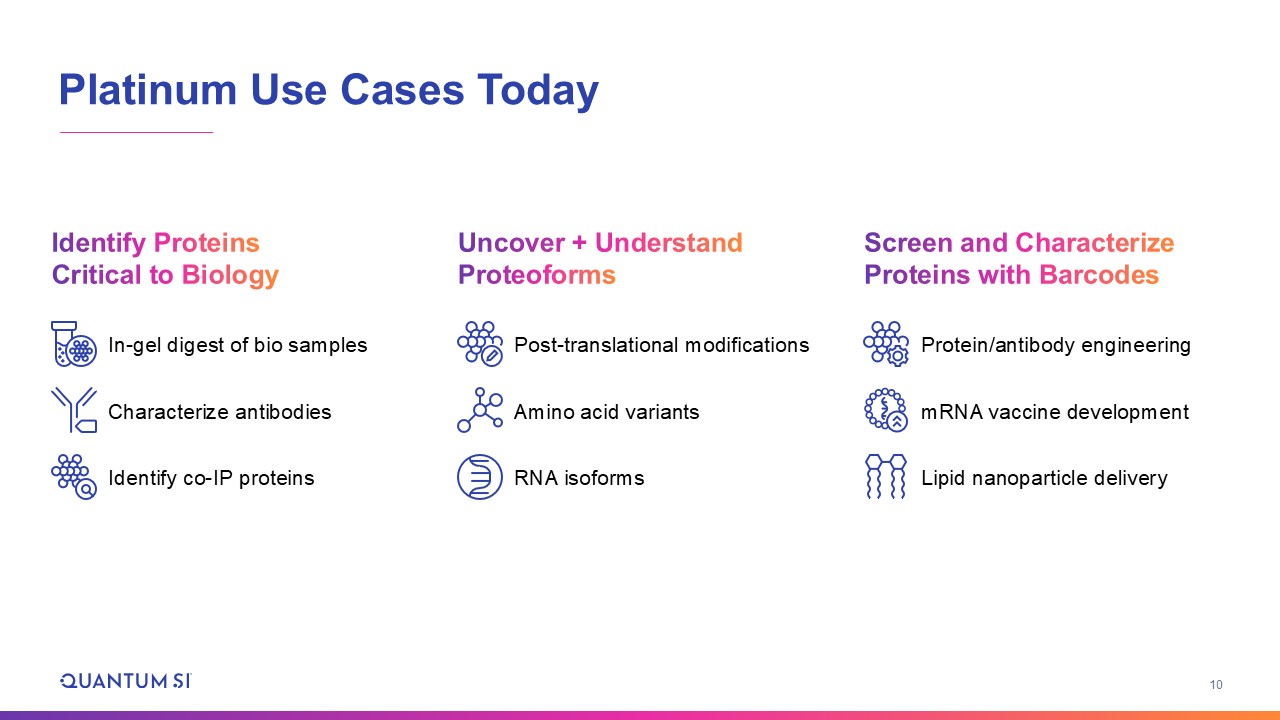
Post-translational modifications Amino acid variants RNA isoforms Platinum Use Cases Today Identify ProteinsCritical to Biology Screen and Characterize Proteins with Barcodes Uncover + Understand Proteoforms In-gel digest of bio samples Characterize antibodies Identify co-IP proteins Protein/antibody engineering mRNA vaccine development Lipid nanoparticle delivery

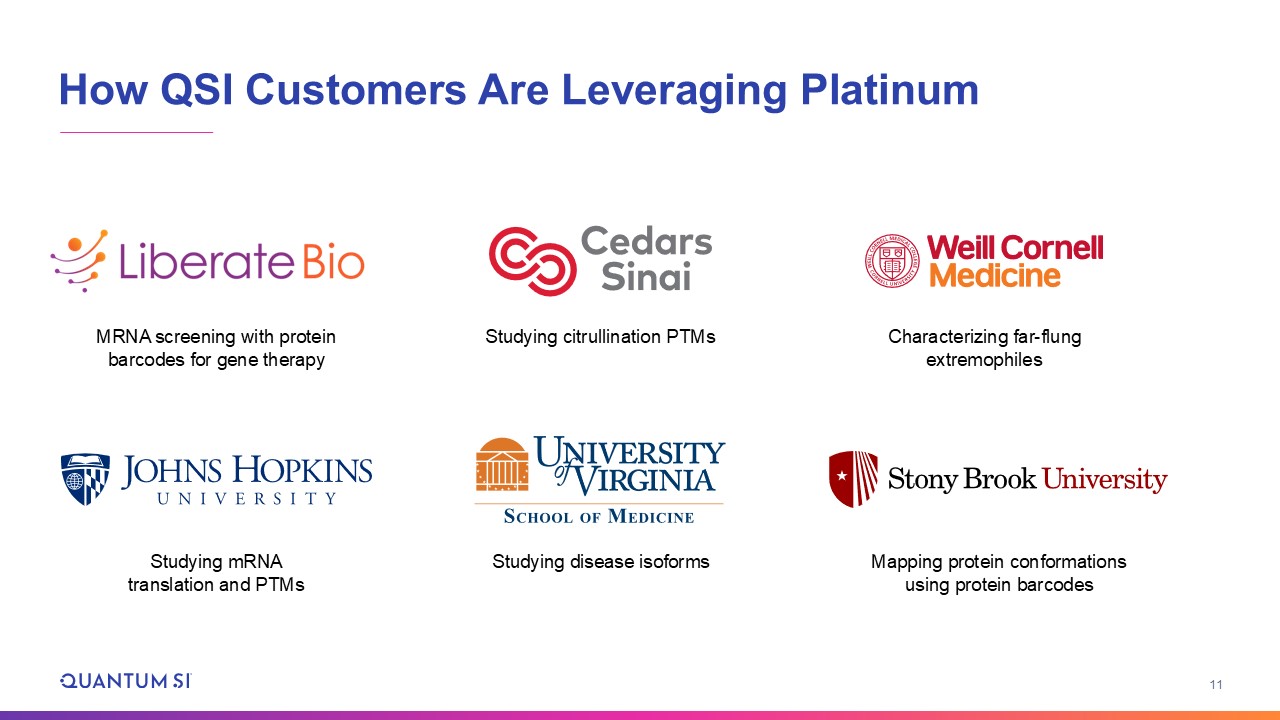
How QSI Customers Are Leveraging Platinum MRNA screening with protein barcodes for gene therapy Studying citrullination PTMs Characterizing far-flungextremophiles Studying mRNAtranslation and PTMs Studying disease isoforms Mapping protein conformationsusing protein barcodes

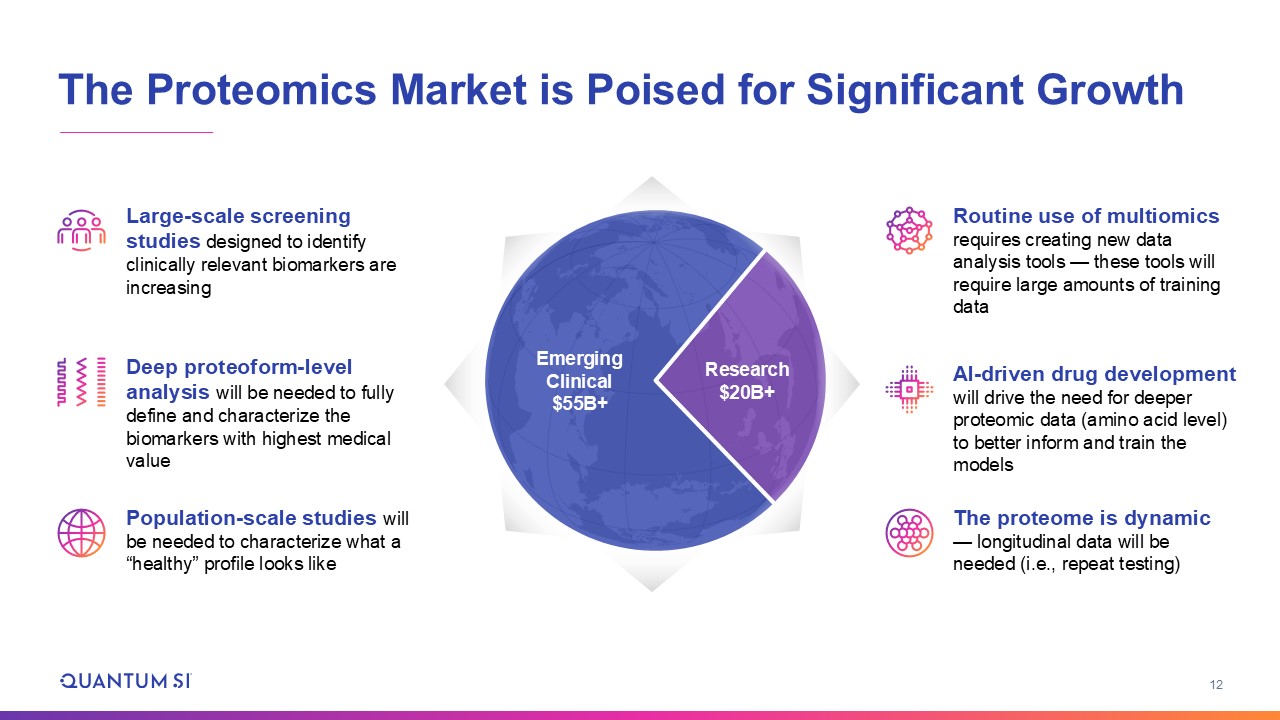
The Proteomics Market is Poised for Significant Growth The proteome is dynamic — longitudinal data will be needed (i.e., repeat testing) Routine use of multiomics requires creating new data analysis tools — these tools will require large amounts of training data Large-scale screening studies designed to identify clinically relevant biomarkers are increasing Deep proteoform-level analysis will be needed to fully define and characterize the biomarkers with highest medical value Population-scale studies will be needed to characterize what a “healthy” profile looks like Research $20B+ EmergingClinical $55B+ AI-driven drug development will drive the need for deeper proteomic data (amino acid level) to better inform and train the models

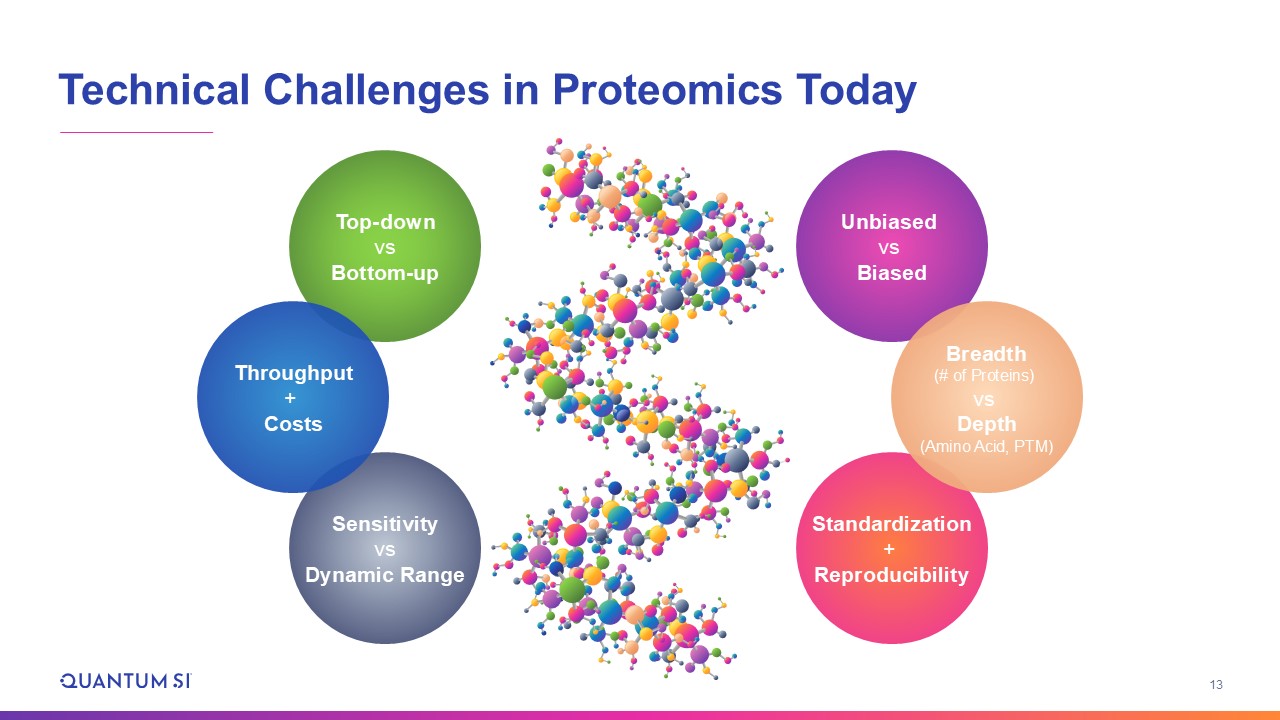
Technical Challenges in Proteomics Today Top-down vs Bottom-up Sensitivity vs Dynamic Range Unbiased vs Biased Standardization + Reproducibility Throughput + Costs Breadth(# of Proteins) vs Depth(Amino Acid, PTM)

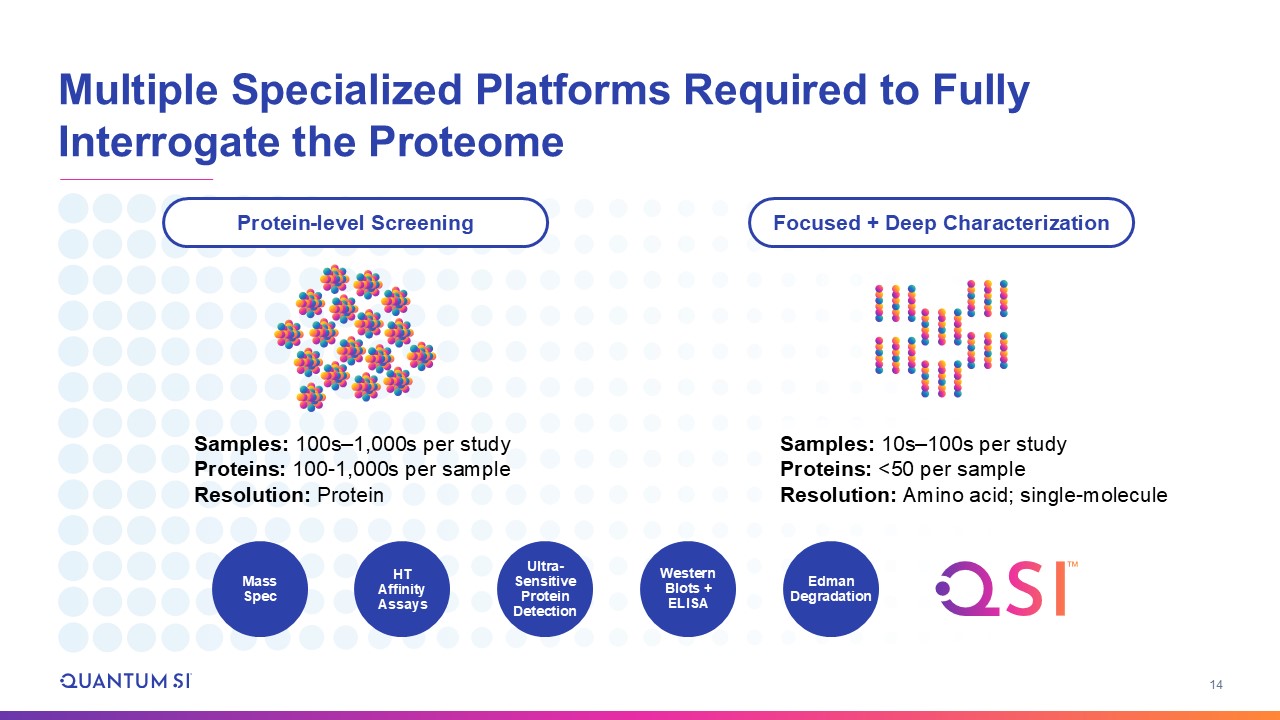
Multiple Specialized Platforms Required to Fully Interrogate the Proteome HT Affinity Assays Mass Spec EdmanDegradation Western Blots + ELISA Samples: 100s–1,000s per study Proteins: 100-1,000s per sample Resolution: Protein Samples: 10s–100s per study Proteins: <50 per sample Resolution: Amino acid; single-molecule Protein-level Screening Focused + Deep Characterization Ultra-Sensitive Protein Detection

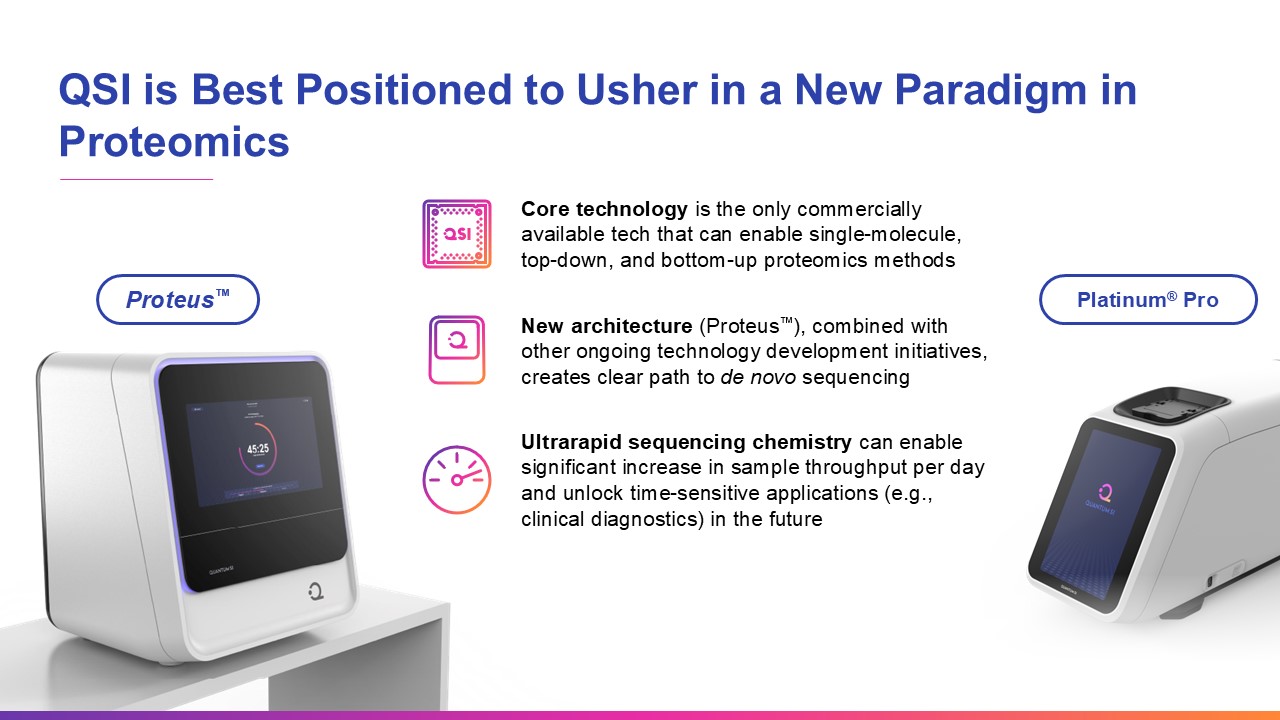
QSI is Best Positioned to Usher in a New Paradigm in Proteomics Proteus™ Platinum® Pro Core technology is the only commercially available tech that can enable single-molecule, top-down, and bottom-up proteomics methods New architecture (Proteus™), combined with other ongoing technology development initiatives, creates clear path to de novo sequencing Ultrarapid sequencing chemistry can enable significant increase in sample throughput per day and unlock time-sensitive applications (e.g., clinical diagnostics) in the future

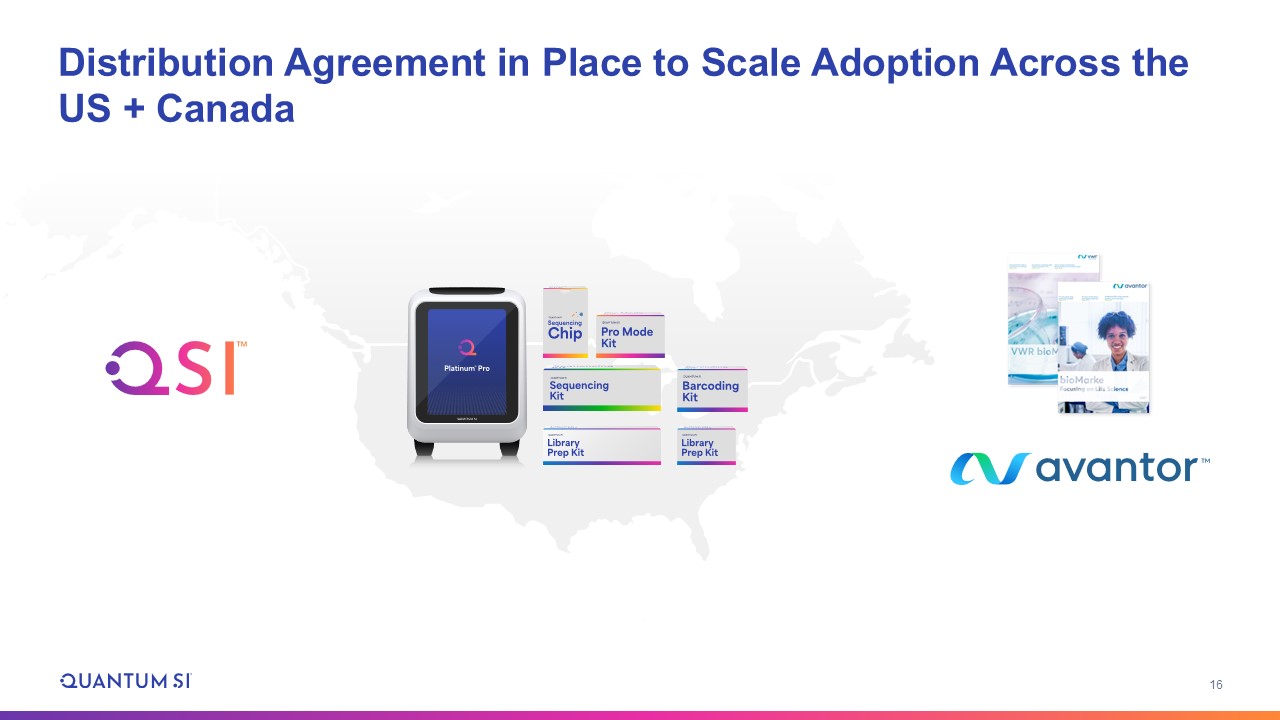
Distribution Agreement in Place to Scale Adoption Across the US + Canada

Technology Development Pipeline

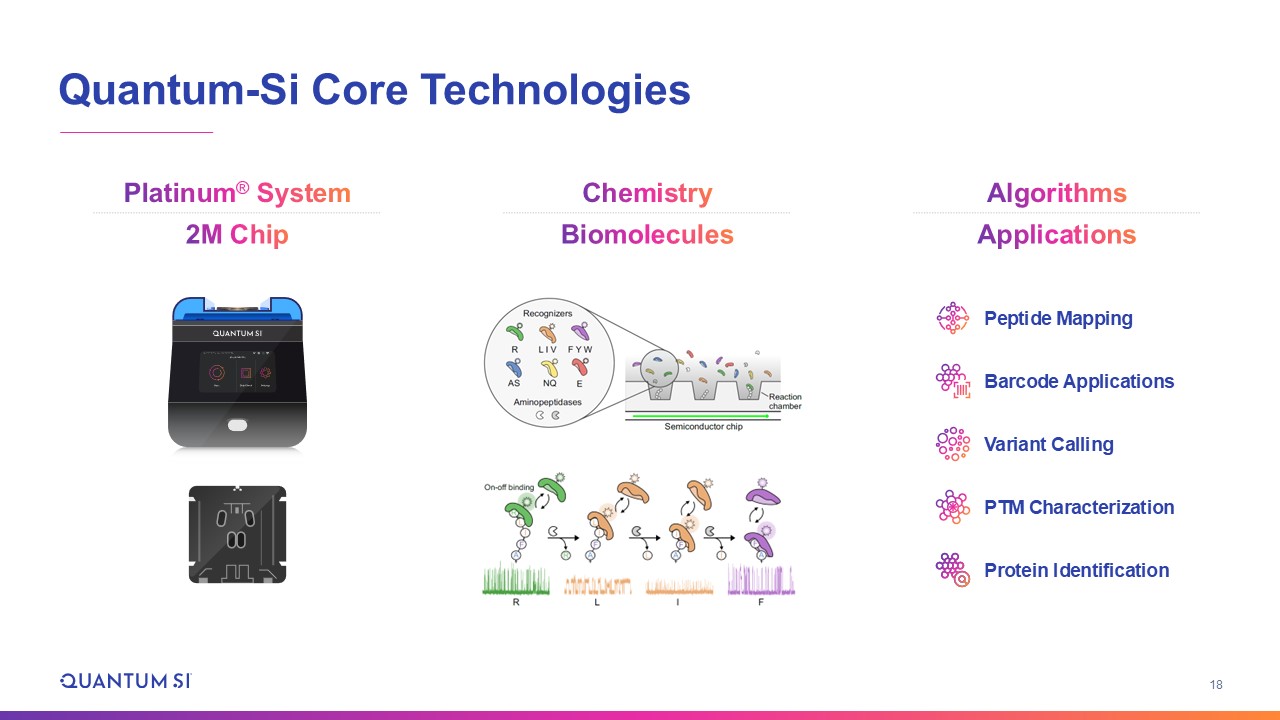
Quantum-Si Core Technologies Peptide Mapping Barcode Applications Variant Calling PTM Characterization Protein Identification Platinum® System 2M Chip Chemistry Biomolecules Algorithms Applications

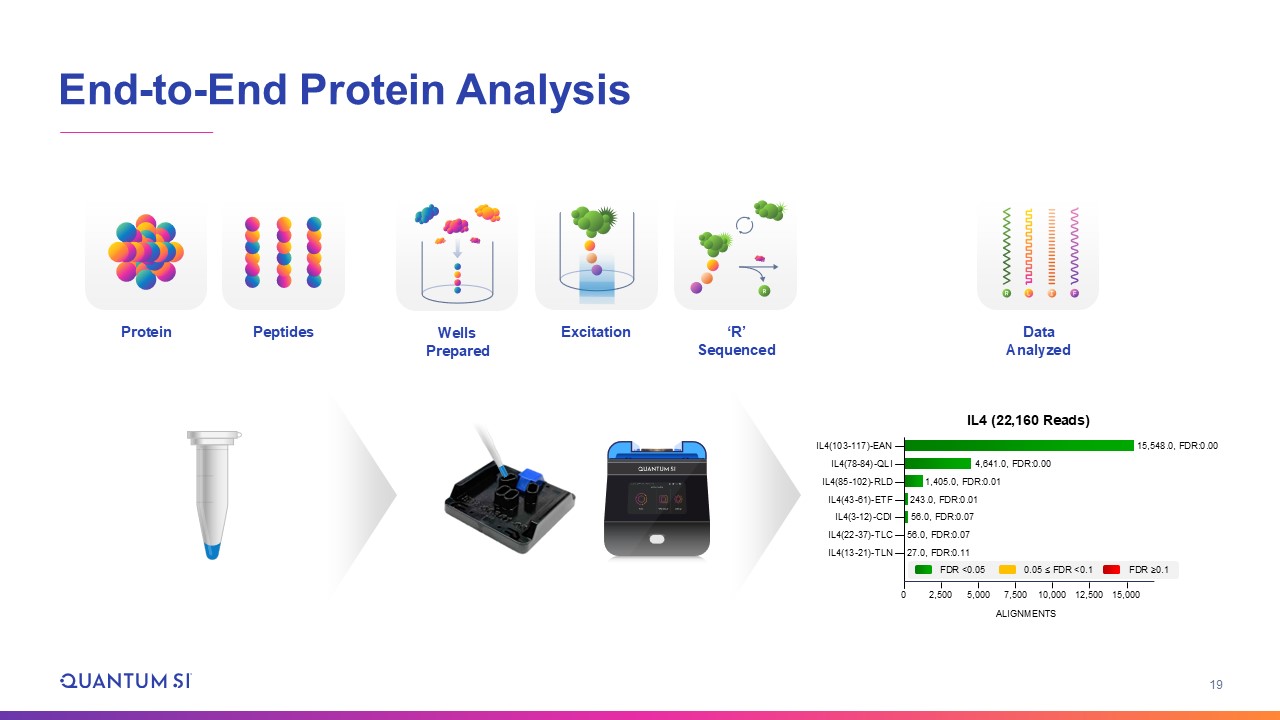
End-to-End Protein Analysis Protein Peptides Data Analyzed Excitation ‘R’ Sequenced Wells Prepared IL4(78-84)-QLI — IL4(85-102)-RLD — IL4(43-61)-ETF — IL4(22-37)-TLC — IL4(3-12)-CDI — IL4(13-21)-TLN — IL4(103-117)-EAN — 15,548.0, FDR:0.00 ALIGNMENTS IL4 (22,160 Reads) FDR <0.05 0.05 ≤ FDR <0.1 FDR ≥0.1 4,641.0, FDR:0.00 1,405.0, FDR:0.01 243.0, FDR:0.01 56.0, FDR:0.07 56.0, FDR:0.07 27.0, FDR:0.11 5,000 2,500 7,500 10,000 12,500 15,000 0
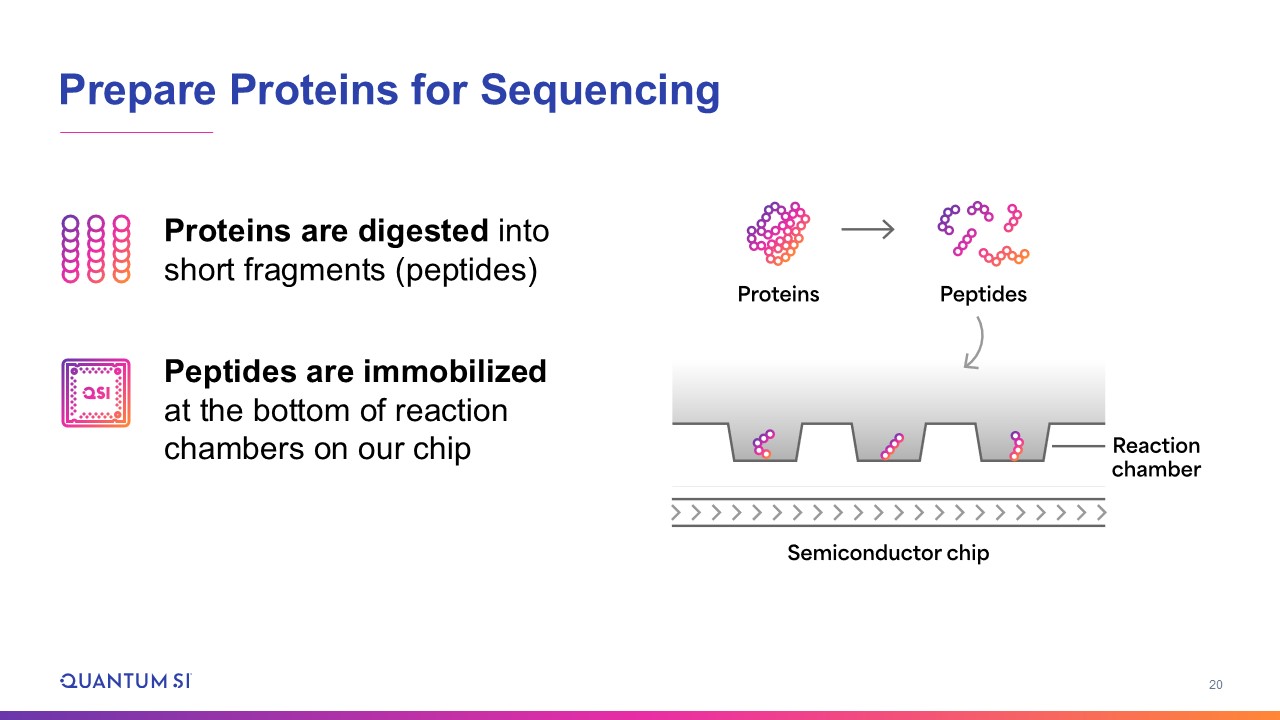
Prepare Proteins for Sequencing Proteins are digested into short fragments (peptides) Peptides are immobilized at the bottom of reaction chambers on our chip

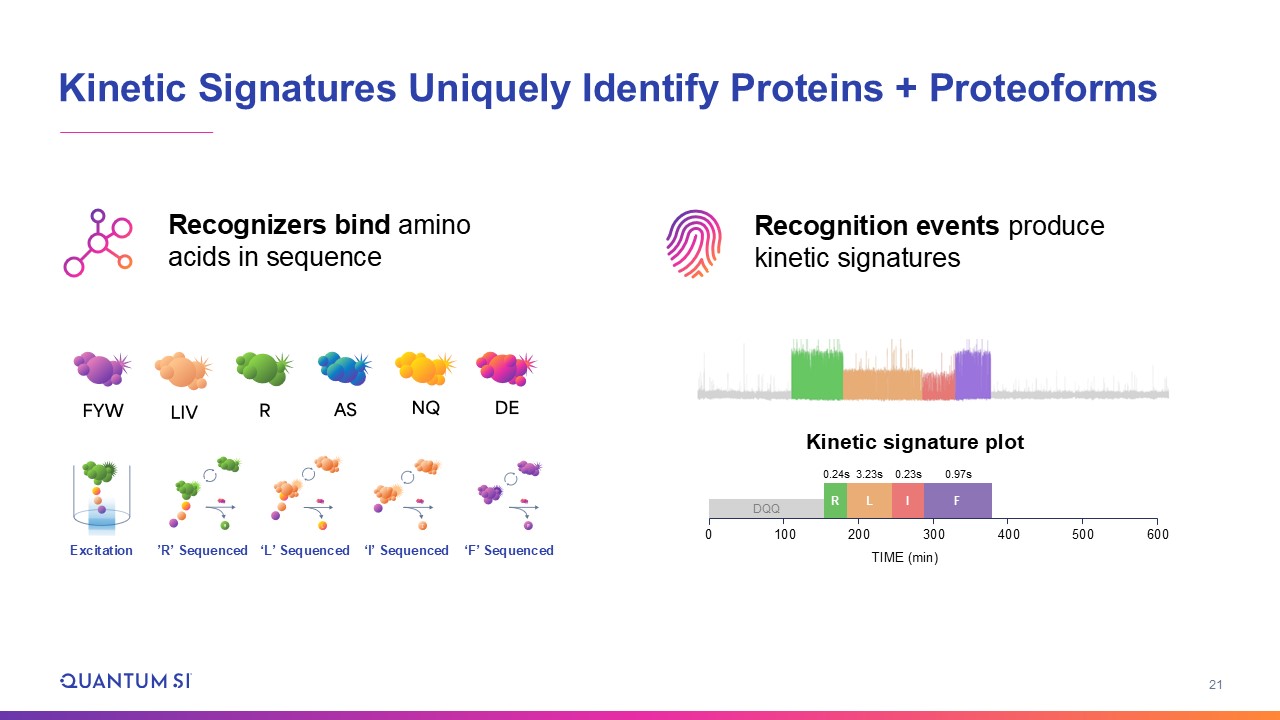
Kinetic Signatures Uniquely Identify Proteins + Proteoforms Recognizers bind amino acids in sequence Recognition events produce kinetic signatures R L I F DQQ 600 500 400 300 200 100 0 0.24s 3.23s 0.23s 0.97s TIME (min) Kinetic signature plot Excitation ’R’ Sequenced ‘L’ Sequenced ‘I’ Sequenced ‘F’ Sequenced

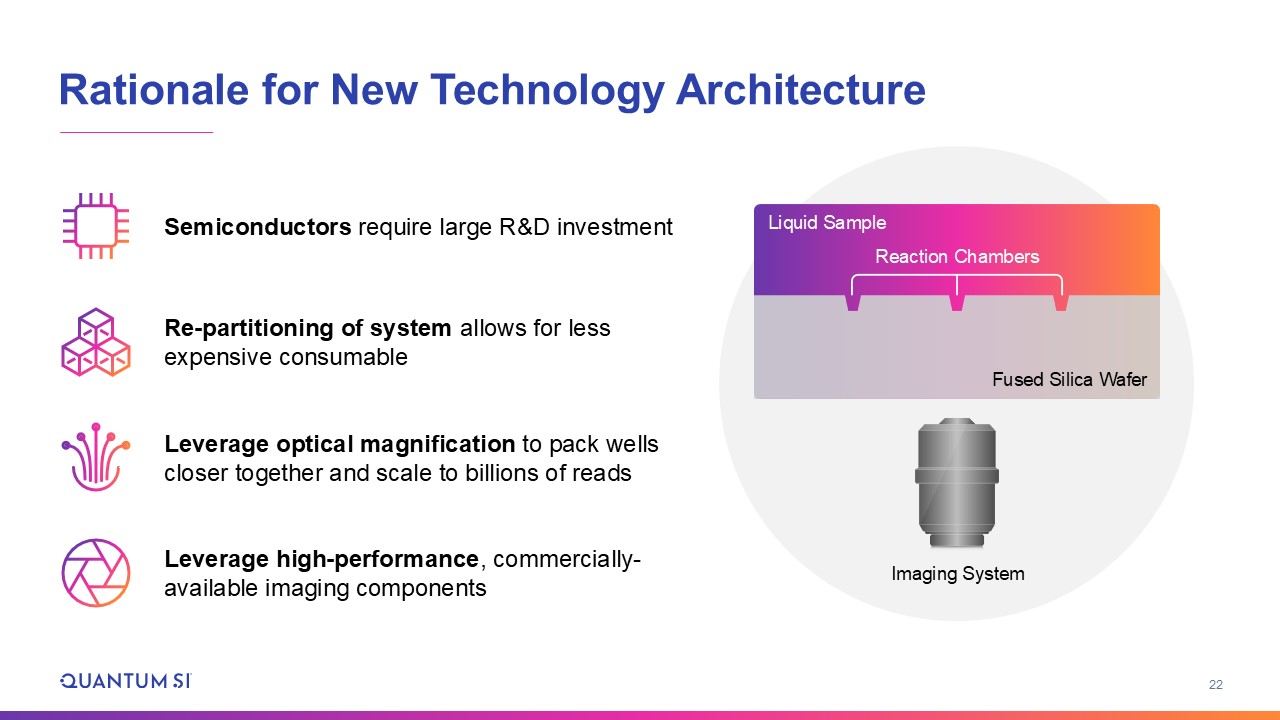
Rationale for New Technology Architecture Semiconductors require large R&D investment Re-partitioning of system allows for less expensive consumable Leverage optical magnification to pack wells closer together and scale to billions of reads Leverage high-performance, commercially-available imaging components Liquid Sample Reaction Chambers Fused Silica Wafer Imaging System

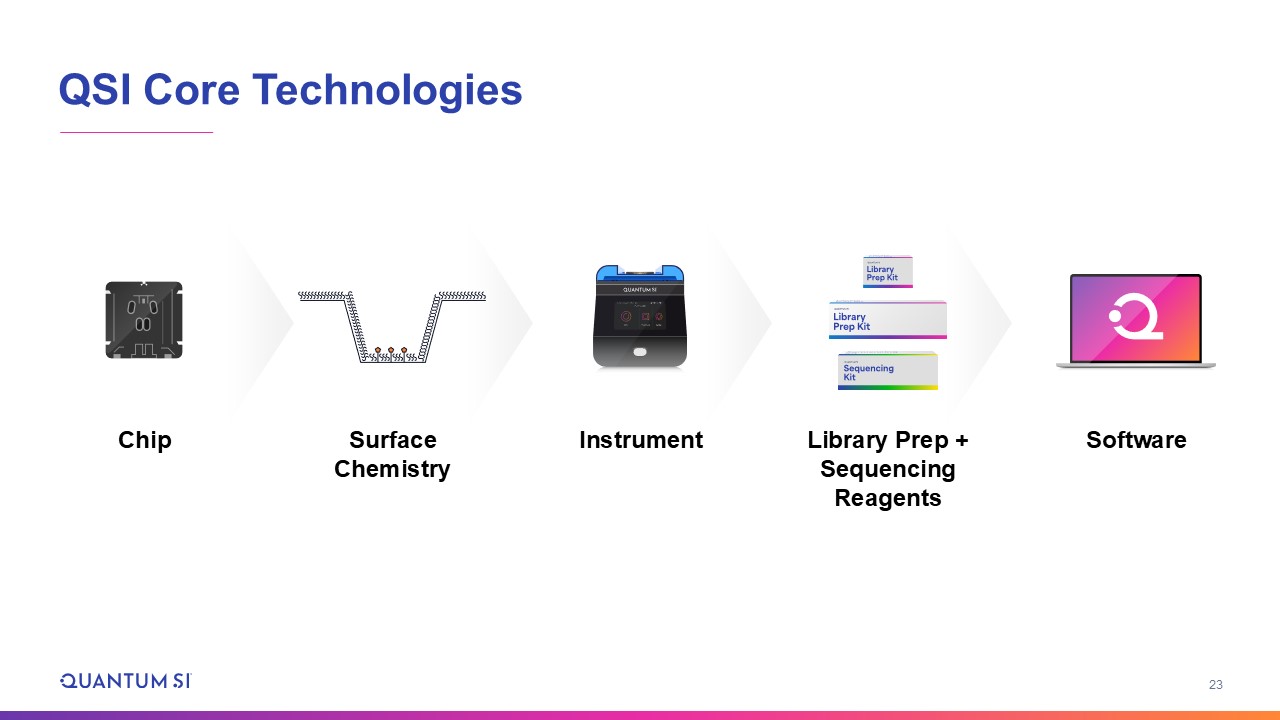
QSI Core Technologies Trying to show all components of core tech. Do not need “chip” box and SW image could be something else Chip Surface Chemistry Instrument Library Prep + Sequencing Reagents Software

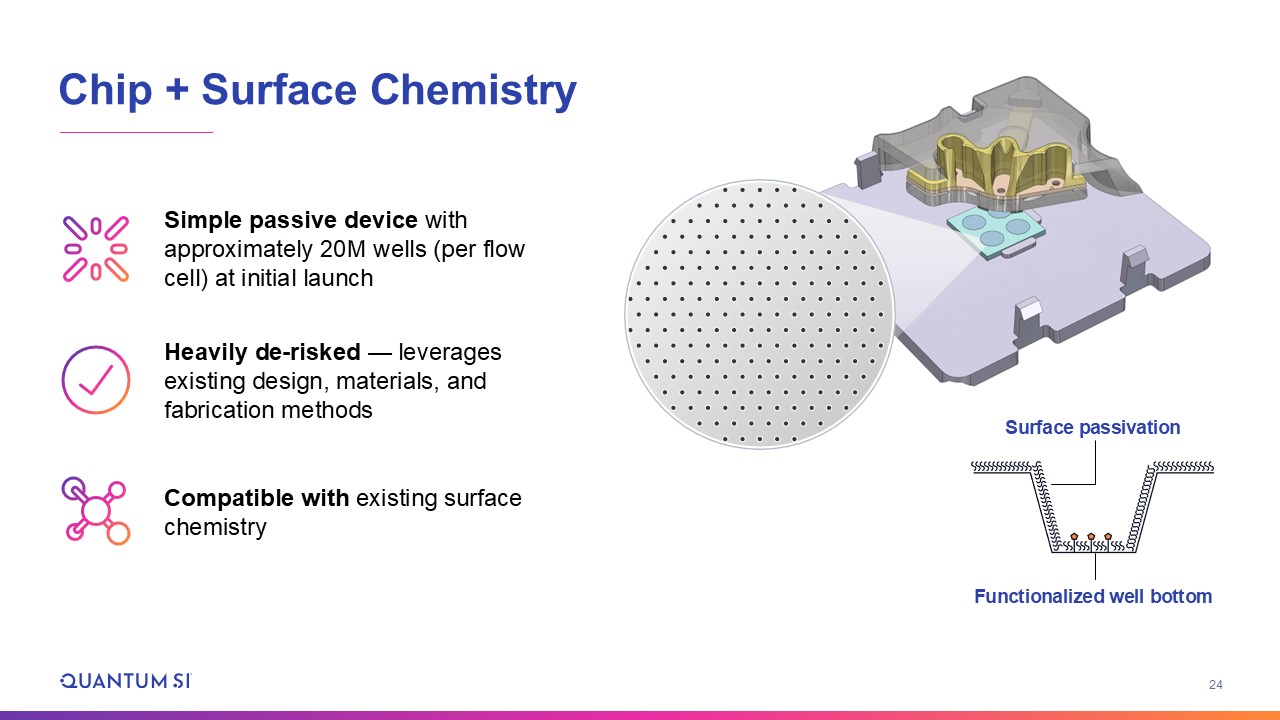
Chip + Surface Chemistry Simple passive device with approximately 20M wells (per flow cell) at initial launch Heavily de-risked — leverages existing design, materials, and fabrication methods Compatible with existing surface chemistry Surface passivation Functionalized well bottom

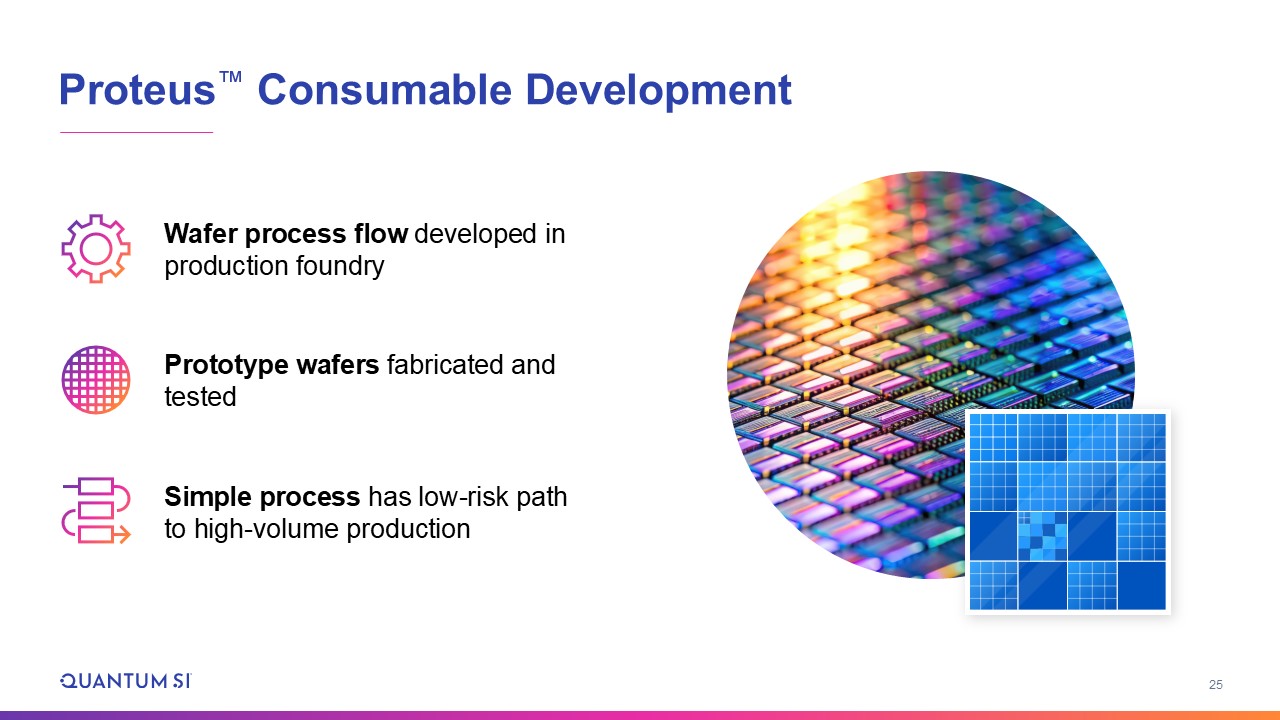
Proteus™ Consumable Development Wafer process flow developed in production foundry Prototype wafers fabricated and tested Simple process has low-risk path to high-volume production

Wafer Fabrication Process Development Foundry process modules work and produce the desired well structure Foundry partner for development and production is in place Fused Silica Wafer

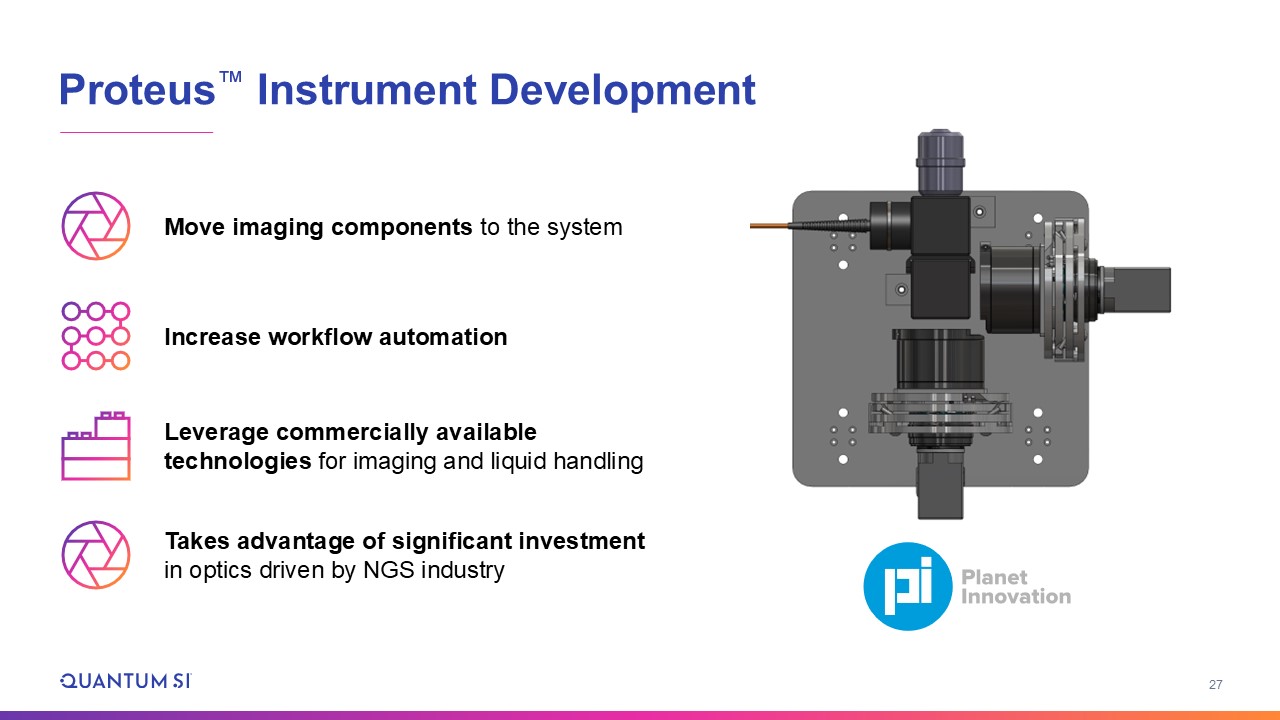
Proteus™ Instrument Development Move imaging components to the system Increase workflow automation Leverage commercially available technologies for imaging and liquid handling Takes advantage of significant investment in optics driven by NGS industry

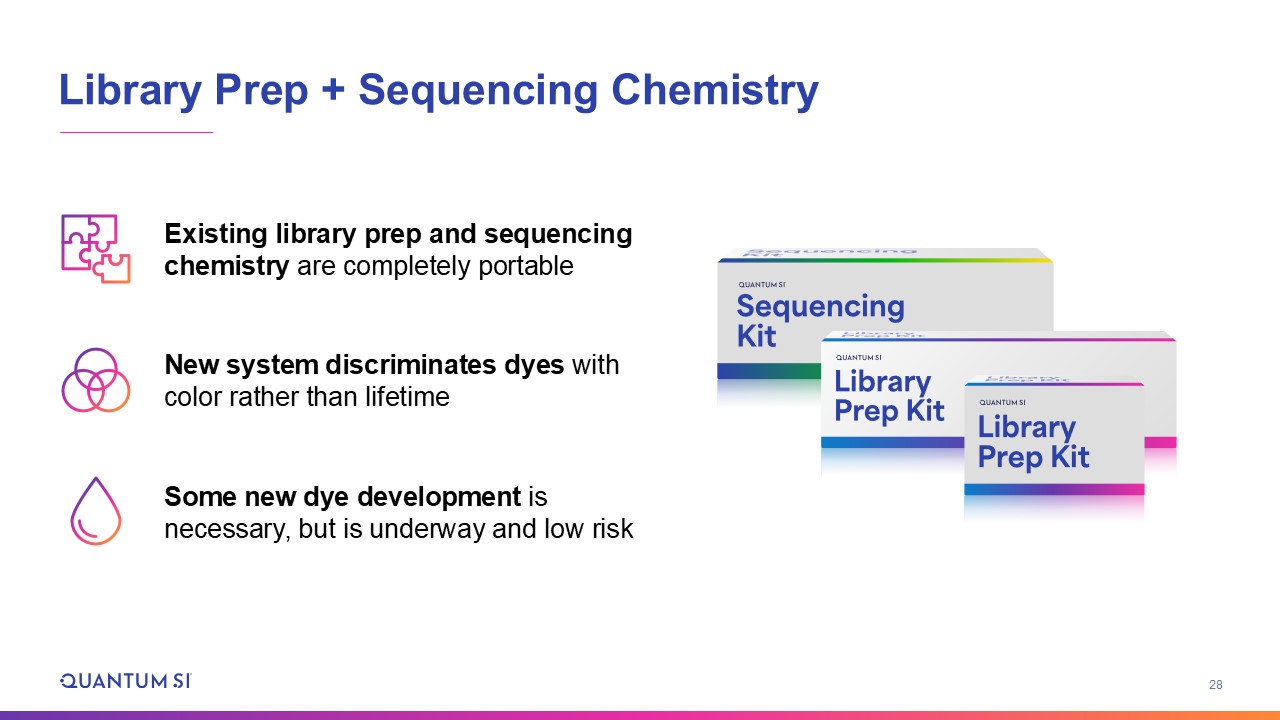
Library Prep + Sequencing Chemistry Existing library prep and sequencing chemistry are completely portable New system discriminates dyes with color rather than lifetime Some new dye development is necessary, but is underway and low risk

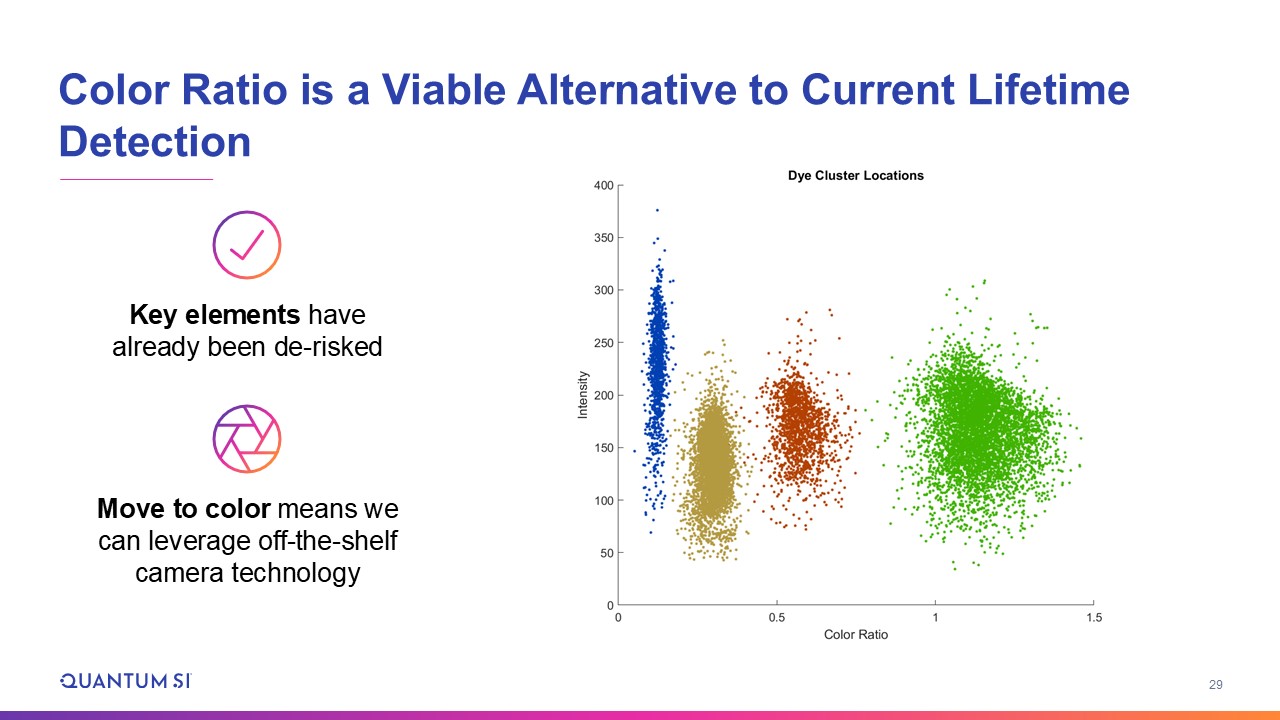
Color Ratio is a Viable Alternative to Current Lifetime Detection Key elements have already been de-risked Move to color means we can leverage off-the-shelf camera technology

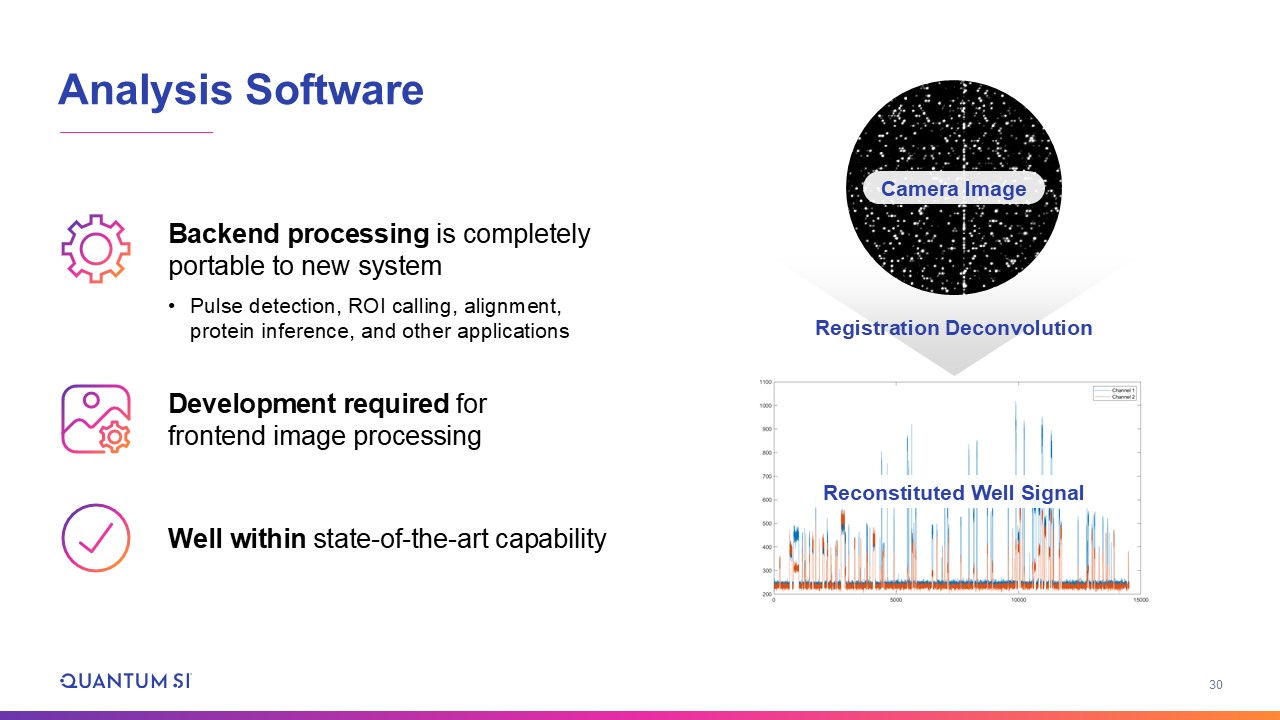
Registration Deconvolution Analysis Software Pulse detection, ROI calling, alignment, protein inference, and other applications Backend processing is completely portable to new system Development required for frontend image processing Well within state-of-the-art capability Camera Image Reconstituted Well Signal

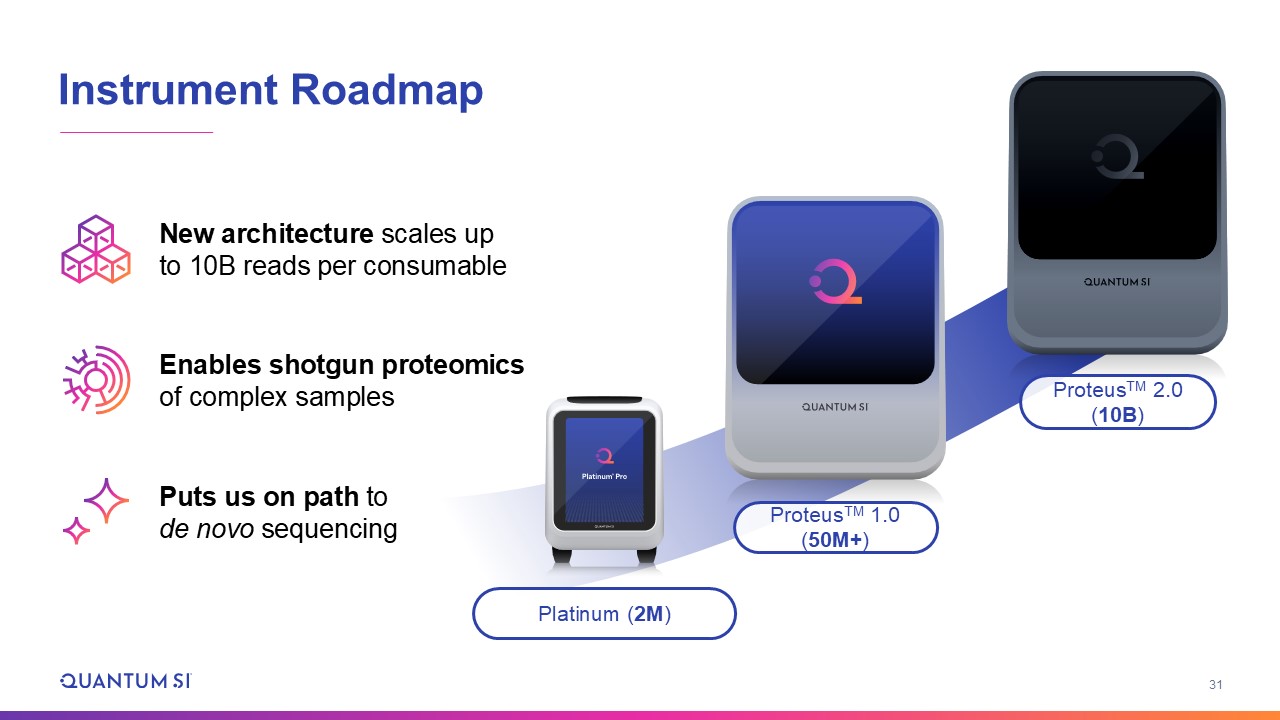
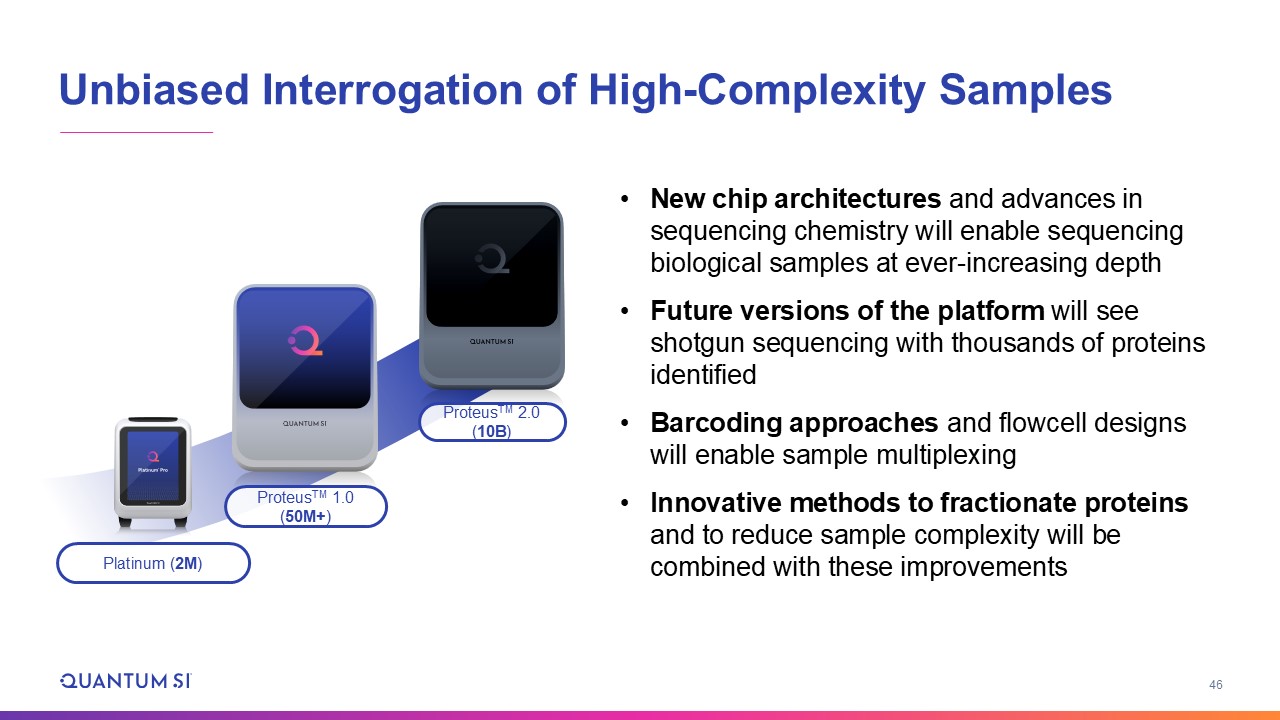
Instrument Roadmap New architecture scales upto 10B reads per consumable Enables shotgun proteomics of complex samples Puts us on path tode novo sequencing Platinum (2M) ProteusTM 1.0 (50M+) ProteusTM 2.0 (10B)

Brian Reed Innovation Toward the Most Advanced Set of Discovery Applications in Proteomics

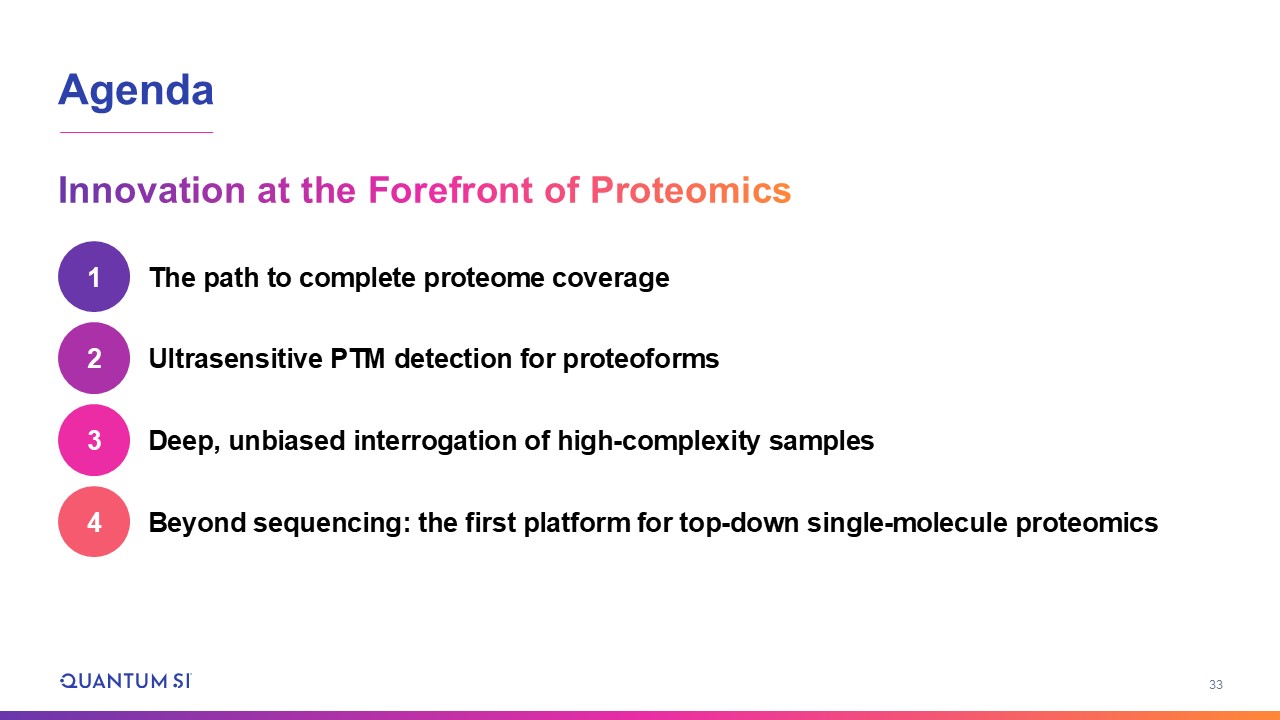
Agenda Innovation at the Forefront of Proteomics The path to complete proteome coverage 1 Deep, unbiased interrogation of high-complexity samples 3 Beyond sequencing: the first platform for top-down single-molecule proteomics 4 Ultrasensitive PTM detection for proteoforms 2

Acceleration on the Path to Complete Proteome Coverage

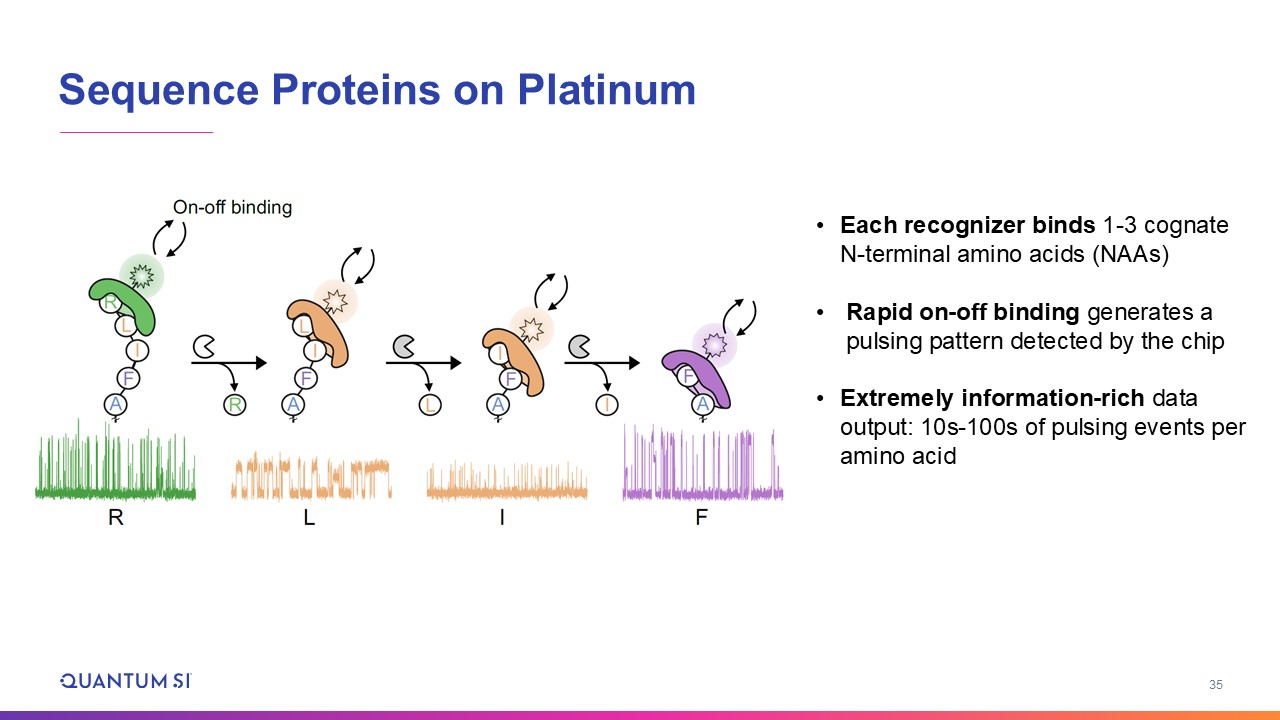
Sequence Proteins on Platinum Each recognizer binds 1-3 cognate N-terminal amino acids (NAAs) Rapid on-off binding generates a pulsing pattern detected by the chip Extremely information-rich data output: 10s-100s of pulsing events per amino acid

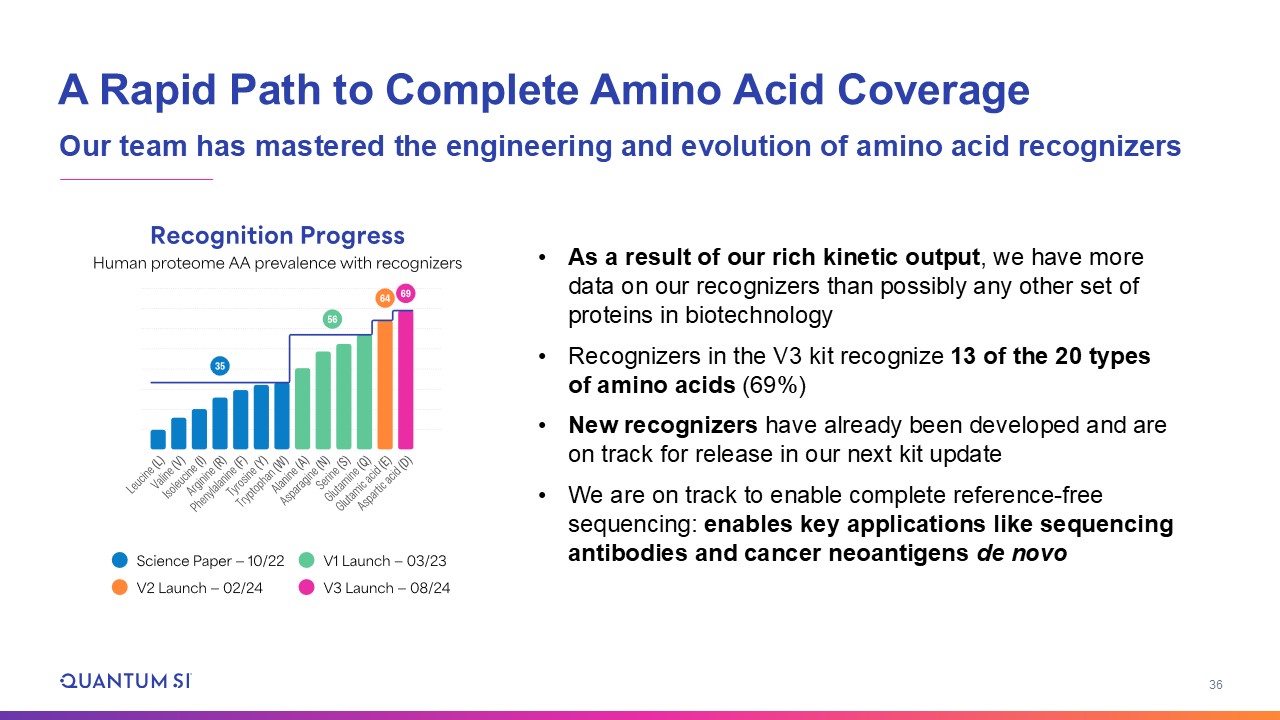
A Rapid Path to Complete Amino Acid Coverage Our team has mastered the engineering and evolution of amino acid recognizers As a result of our rich kinetic output, we have more data on our recognizers than possibly any other set of proteins in biotechnology Recognizers in the V3 kit recognize 13 of the 20 types of amino acids (69%) New recognizers have already been developed and are on track for release in our next kit update We are on track to enable complete reference-free sequencing: enables key applications like sequencing antibodies and cancer neoantigens de novo

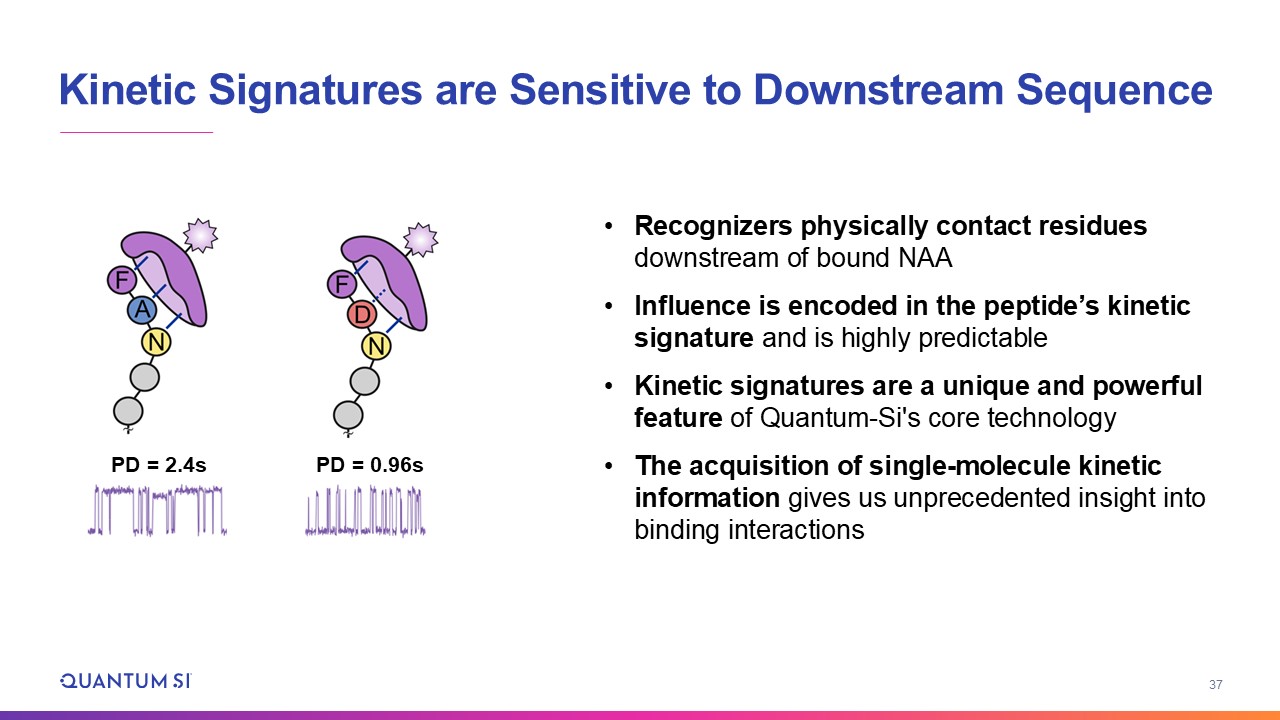
Kinetic Signatures are Sensitive to Downstream Sequence Recognizers physically contact residues downstream of bound NAA Influence is encoded in the peptide’s kinetic signature and is highly predictable Kinetic signatures are a unique and powerful feature of Quantum-Si's core technology The acquisition of single-molecule kinetic information gives us unprecedented insight into binding interactions PD = 2.4s PD = 0.96s

Ultrasensitive PTM Detection for Proteins and Proteoforms

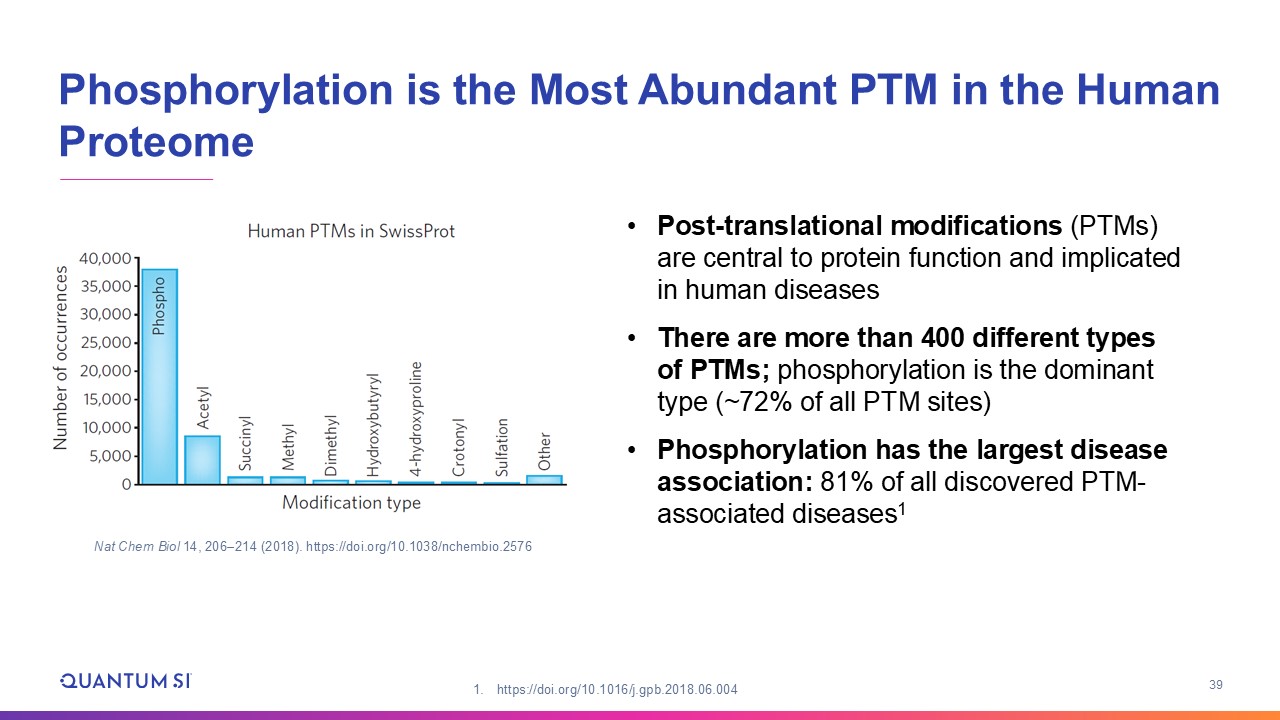
Phosphorylation is the Most Abundant PTM in the Human Proteome Post-translational modifications (PTMs) are central to protein function and implicated in human diseases There are more than 400 different types of PTMs; phosphorylation is the dominant type (~72% of all PTM sites) Phosphorylation has the largest disease association: 81% of all discovered PTM-associated diseases1 https://doi.org/10.1016/j.gpb.2018.06.004 Nat Chem Biol 14, 206–214 (2018). https://doi.org/10.1038/nchembio.2576

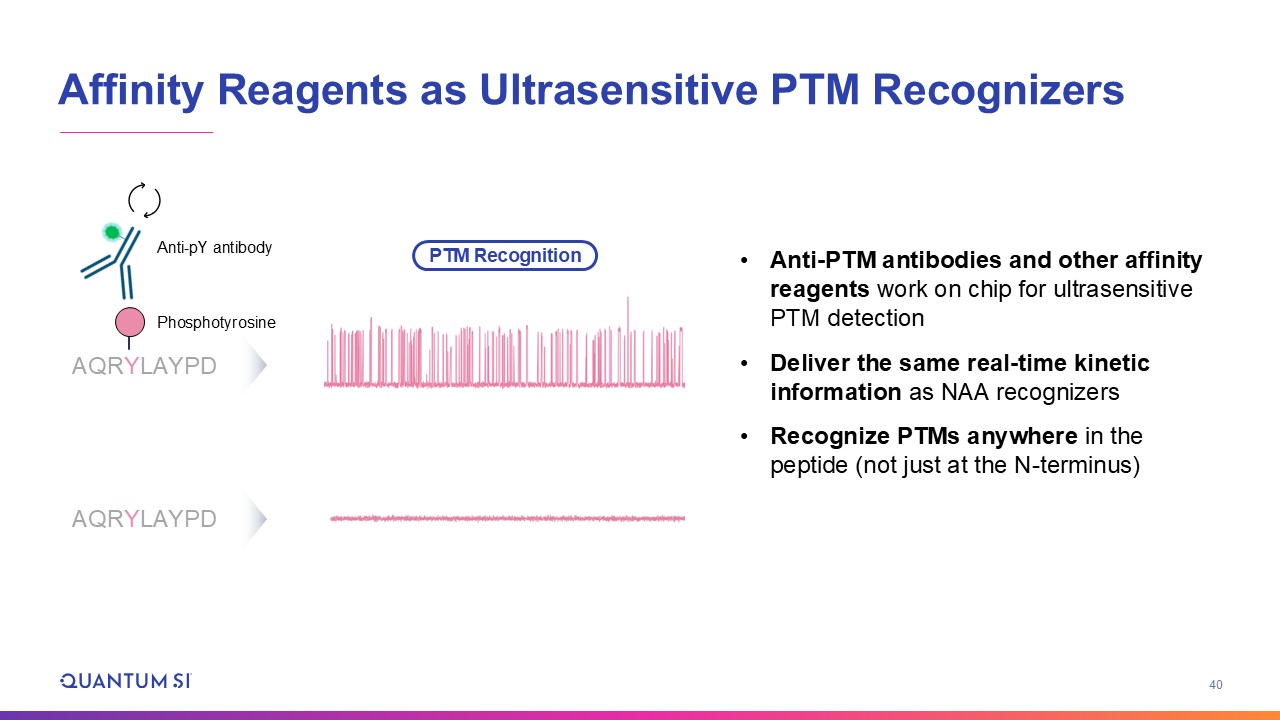
Affinity Reagents as Ultrasensitive PTM Recognizers Anti-PTM antibodies and other affinity reagents work on chip for ultrasensitive PTM detection Deliver the same real-time kinetic information as NAA recognizers Recognize PTMs anywhere in the peptide (not just at the N-terminus) PTM Recognition AQRYLAYPD AQRYLAYPD Anti-pY antibody Phosphotyrosine

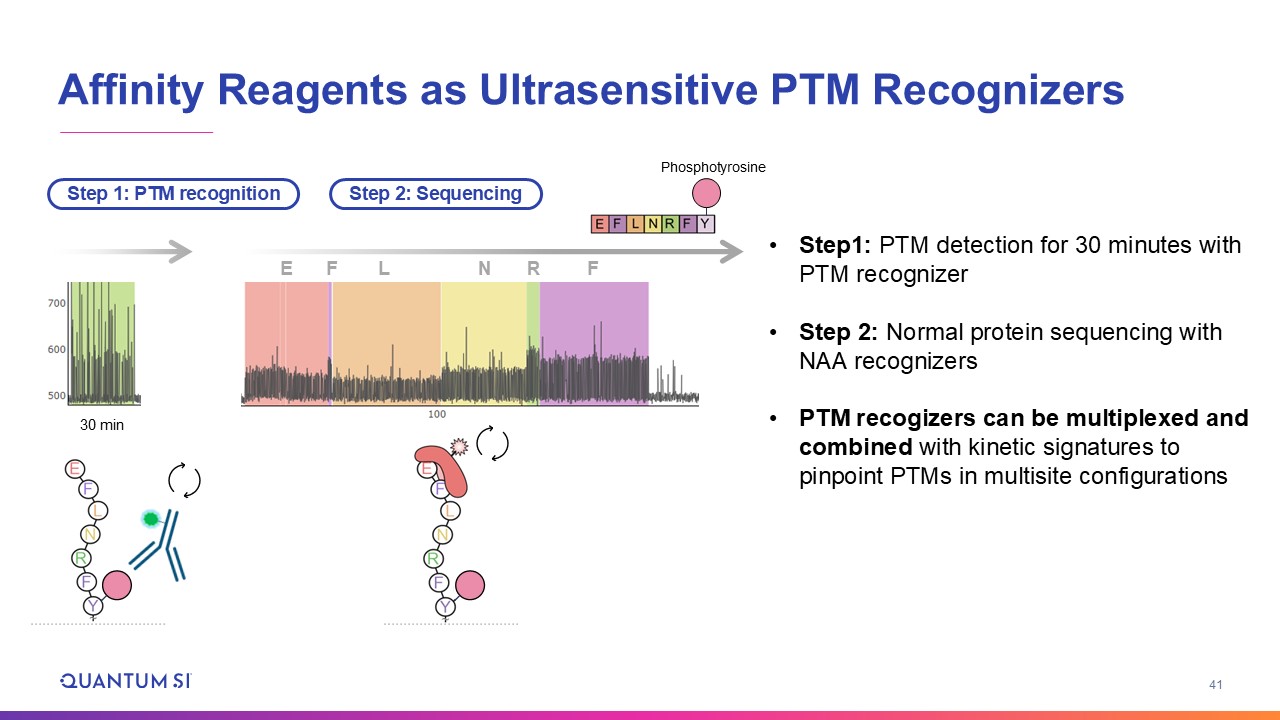
Phosphotyrosine Affinity Reagents as Ultrasensitive PTM Recognizers 30 min Step1: PTM detection for 30 minutes with PTM recognizer Step 2: Normal protein sequencing with NAA recognizers PTM recogizers can be multiplexed and combined with kinetic signatures to pinpoint PTMs in multisite configurations Step 1: PTM recognition Step 2: Sequencing E F L N R F

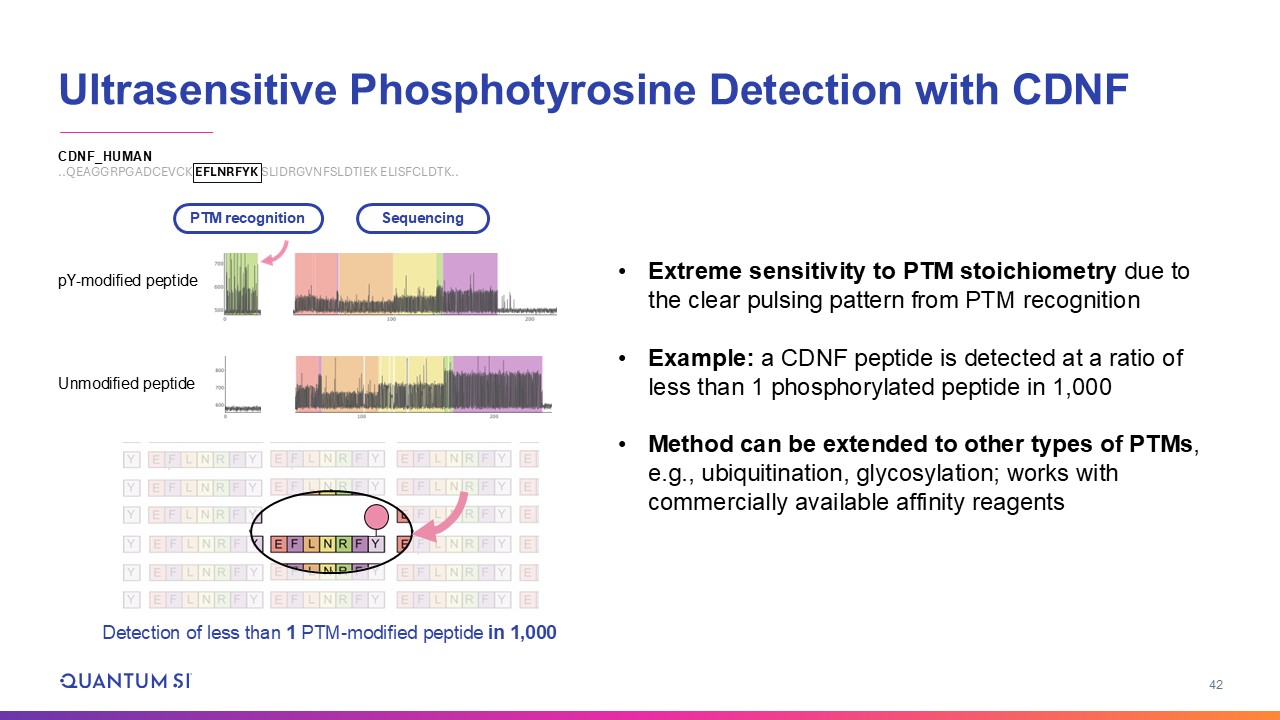
Ultrasensitive Phosphotyrosine Detection with CDNF Extreme sensitivity to PTM stoichiometry due to the clear pulsing pattern from PTM recognition Example: a CDNF peptide is detected at a ratio of less than 1 phosphorylated peptide in 1,000 Method can be extended to other types of PTMs, e.g., ubiquitination, glycosylation; works with commercially available affinity reagents CDNF_HUMAN ..QEAGGRPGADCEVCK EFLNRFYK SLIDRGVNFSLDTIEK ELISFCLDTK.. Detection of less than 1 PTM-modified peptide in 1,000 pY-modified peptide Unmodified peptide PTM recognition Sequencing

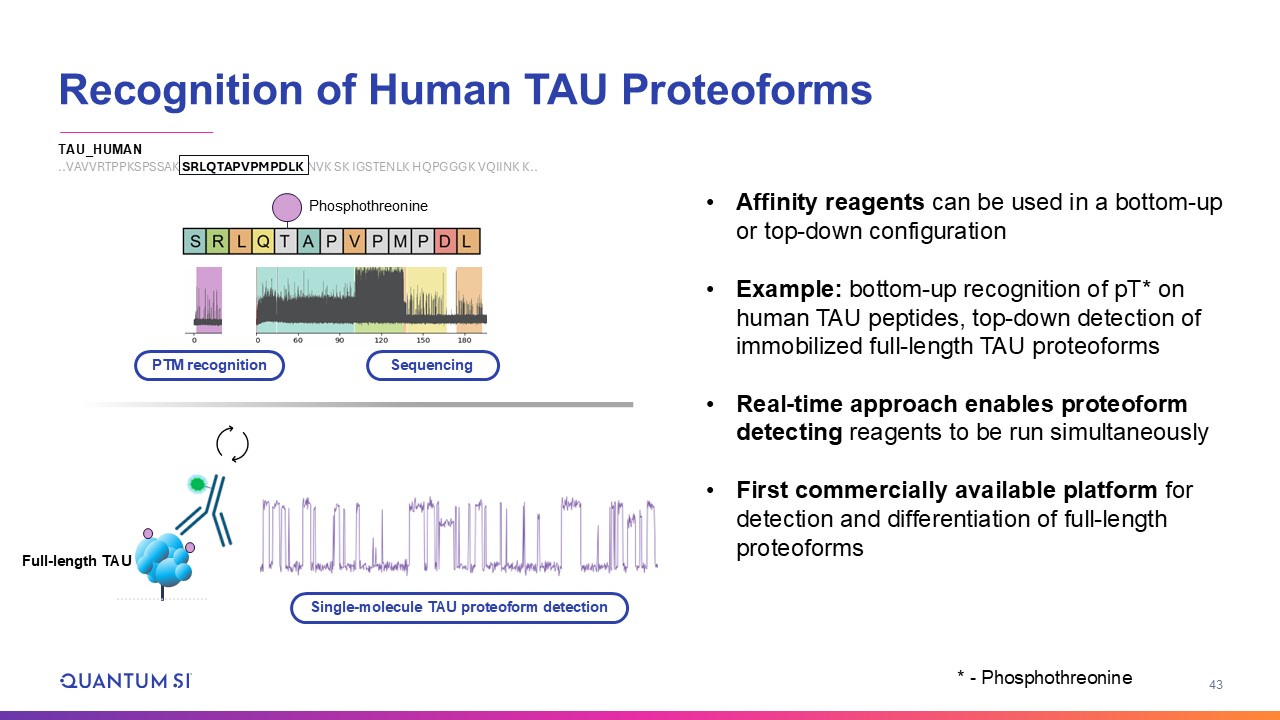
Recognition of Human TAU Proteoforms Affinity reagents can be used in a bottom-up or top-down configuration Example: bottom-up recognition of pT* on human TAU peptides, top-down detection of immobilized full-length TAU proteoforms Real-time approach enables proteoform detecting reagents to be run simultaneously First commercially available platform for detection and differentiation of full-length proteoforms Phosphothreonine TAU_HUMAN ..VAVVRTPPKSPSSAK SRLQTAPVPMPDLK NVK SK IGSTENLK HQPGGGK VQIINK K.. Full-length TAU PTM recognition Sequencing Single-molecule TAU proteoform detection * - Phosphothreonine

Unbiased Interrogation of High-Complexity Samples with Quantum-Si's Core Technology

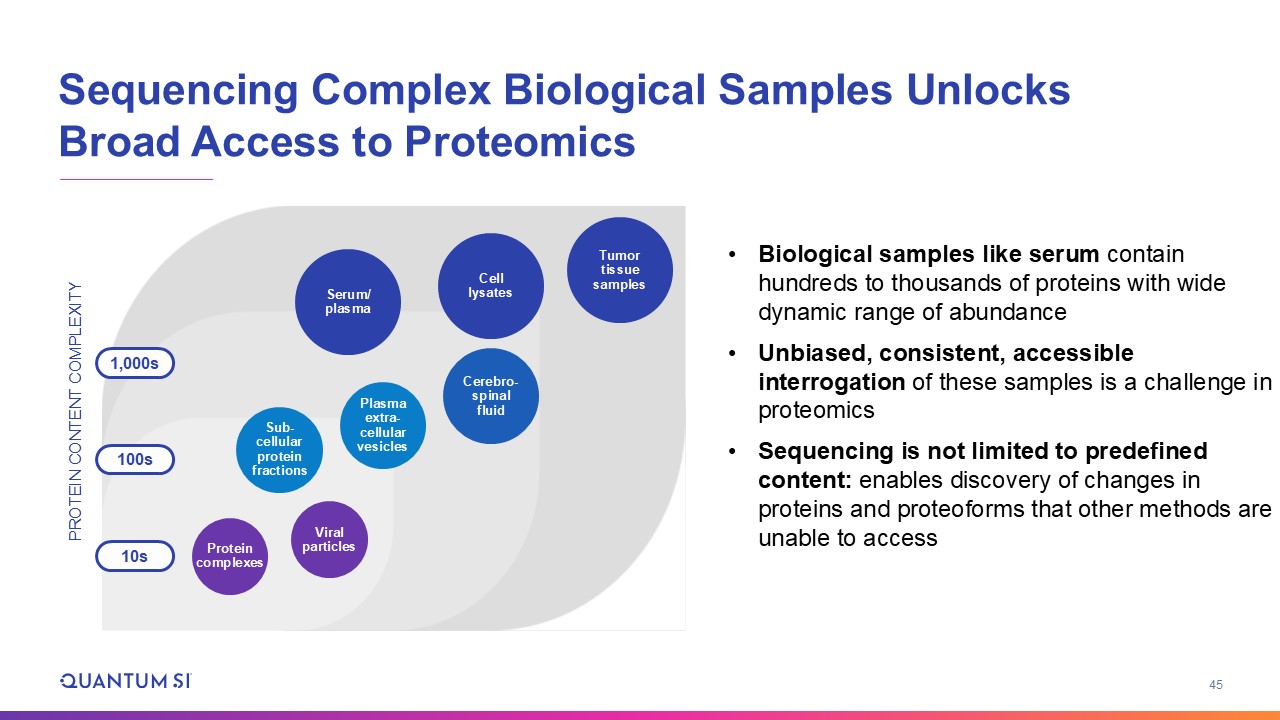
Sequencing Complex Biological Samples Unlocks Broad Access to Proteomics PROTEIN CONTENT COMPLEXITY Protein complexes Viral particles Sub- cellular protein fractions Plasma extra- cellular vesicles Serum/ plasma Cell lysates Tumor tissue samples Cerebro- spinal fluid 1,000s 100s 10s Biological samples like serum contain hundreds to thousands of proteins with wide dynamic range of abundance Unbiased, consistent, accessible interrogation of these samples is a challenge in proteomics Sequencing is not limited to predefined content: enables discovery of changes in proteins and proteoforms that other methods are unable to access

Unbiased Interrogation of High-Complexity Samples New chip architectures and advances in sequencing chemistry will enable sequencing biological samples at ever-increasing depth Future versions of the platform will see shotgun sequencing with thousands of proteins identified Barcoding approaches and flowcell designs will enable sample multiplexing Innovative methods to fractionate proteins and to reduce sample complexity will be combined with these improvements Platinum (2M) ProteusTM 1.0 (50M+) ProteusTM 2.0 (10B)

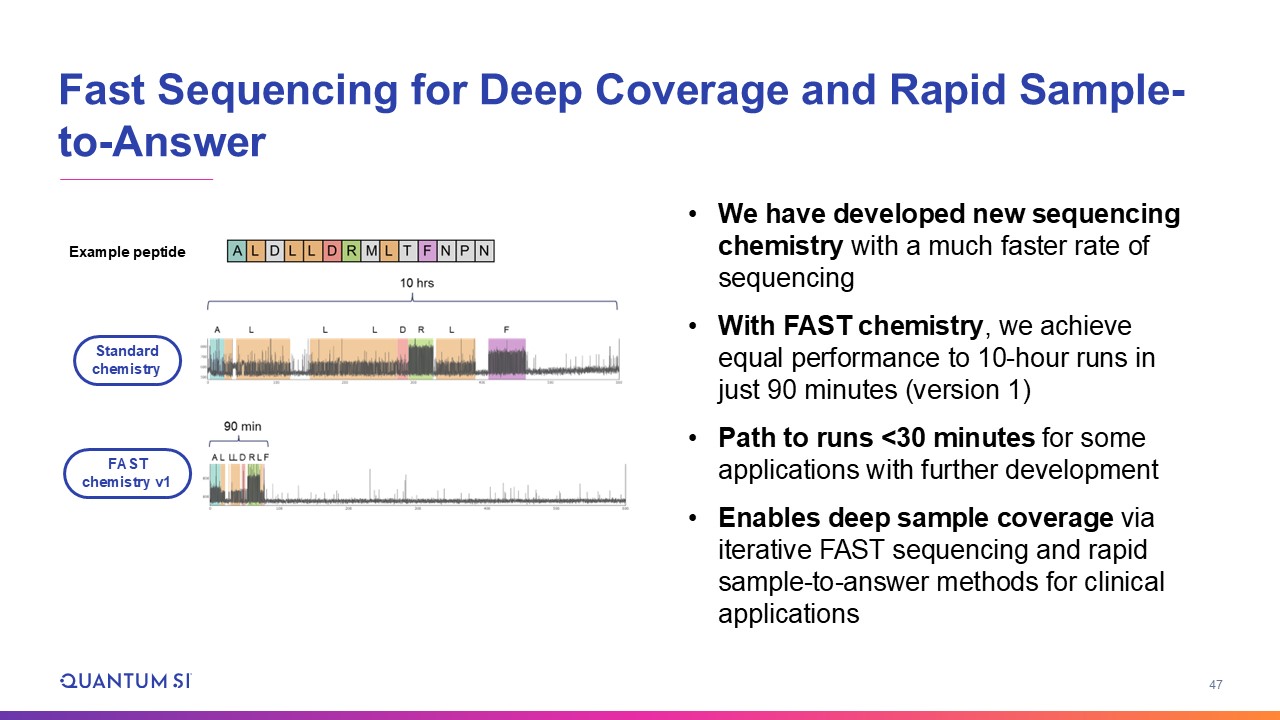
Fast Sequencing for Deep Coverage and Rapid Sample-to-Answer Standard chemistry FAST chemistry v1 Example peptide We have developed new sequencing chemistry with a much faster rate of sequencing With FAST chemistry, we achieve equal performance to 10-hour runs in just 90 minutes (version 1) Path to runs <30 minutes for some applications with further development Enables deep sample coverage via iterative FAST sequencing and rapid sample-to-answer methods for clinical applications

Beyond Sequencing: the First Commercially Available Platform for Top-Down Single-Molecule Proteomics

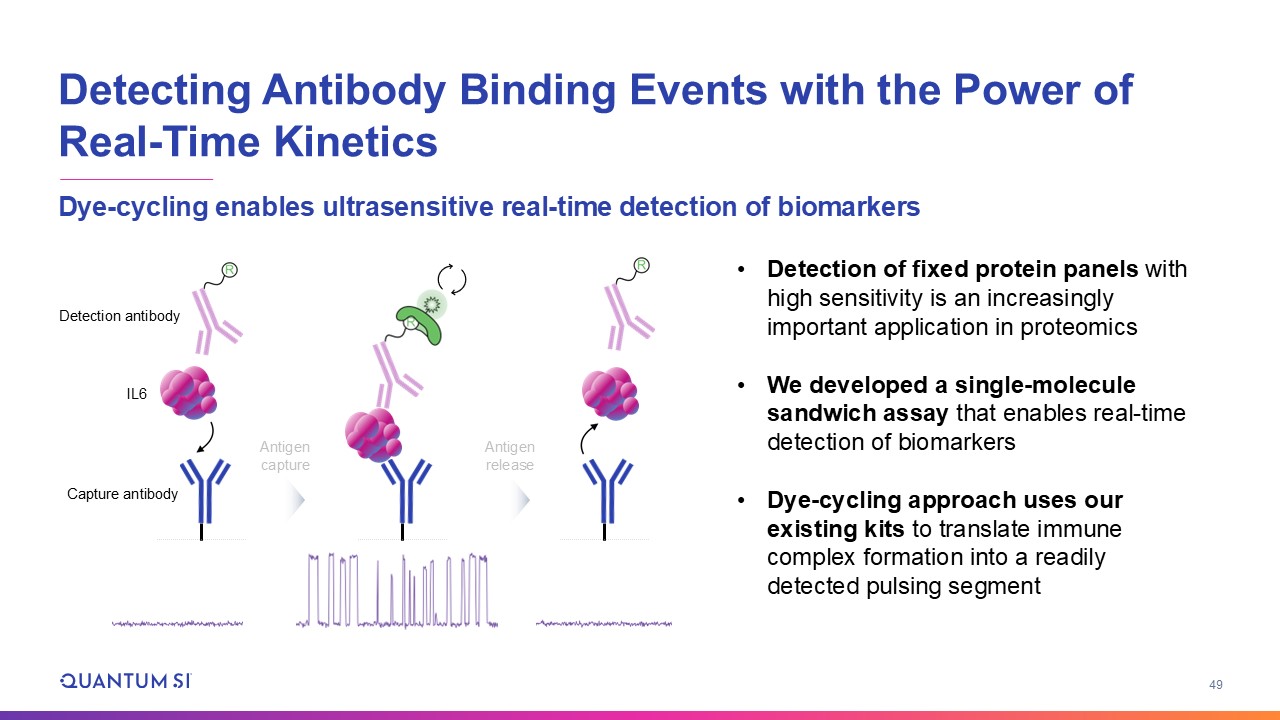
Dye-cycling enables ultrasensitive real-time detection of biomarkers Detecting Antibody Binding Events with the Power of Real-Time Kinetics IL6 Capture antibody Detection antibody Detection of fixed protein panels with high sensitivity is an increasingly important application in proteomics We developed a single-molecule sandwich assay that enables real-time detection of biomarkers Dye-cycling approach uses our existing kits to translate immune complex formation into a readily detected pulsing segment Antigen capture Antigen release

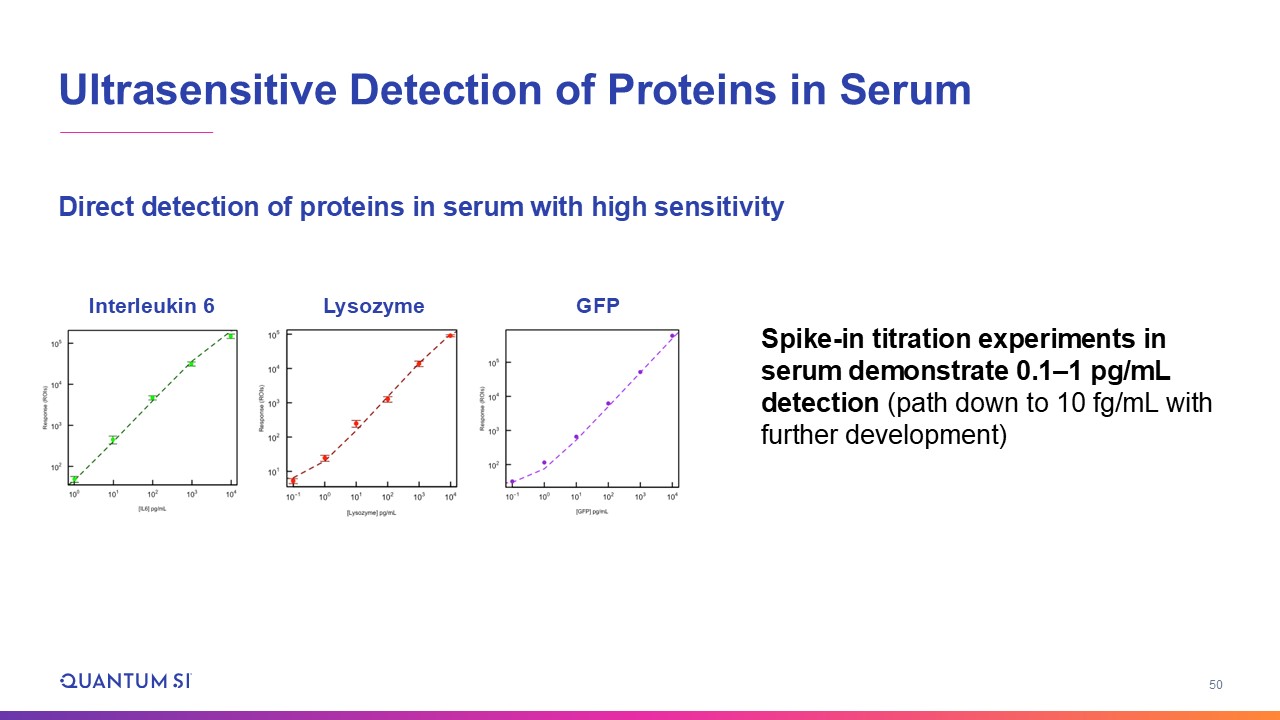
Ultrasensitive Detection of Proteins in Serum Interleukin 6 Lysozyme GFP Spike-in titration experiments in serum demonstrate 0.1–1 pg/mL detection (path down to 10 fg/mL with further development) Direct detection of proteins in serum with high sensitivity

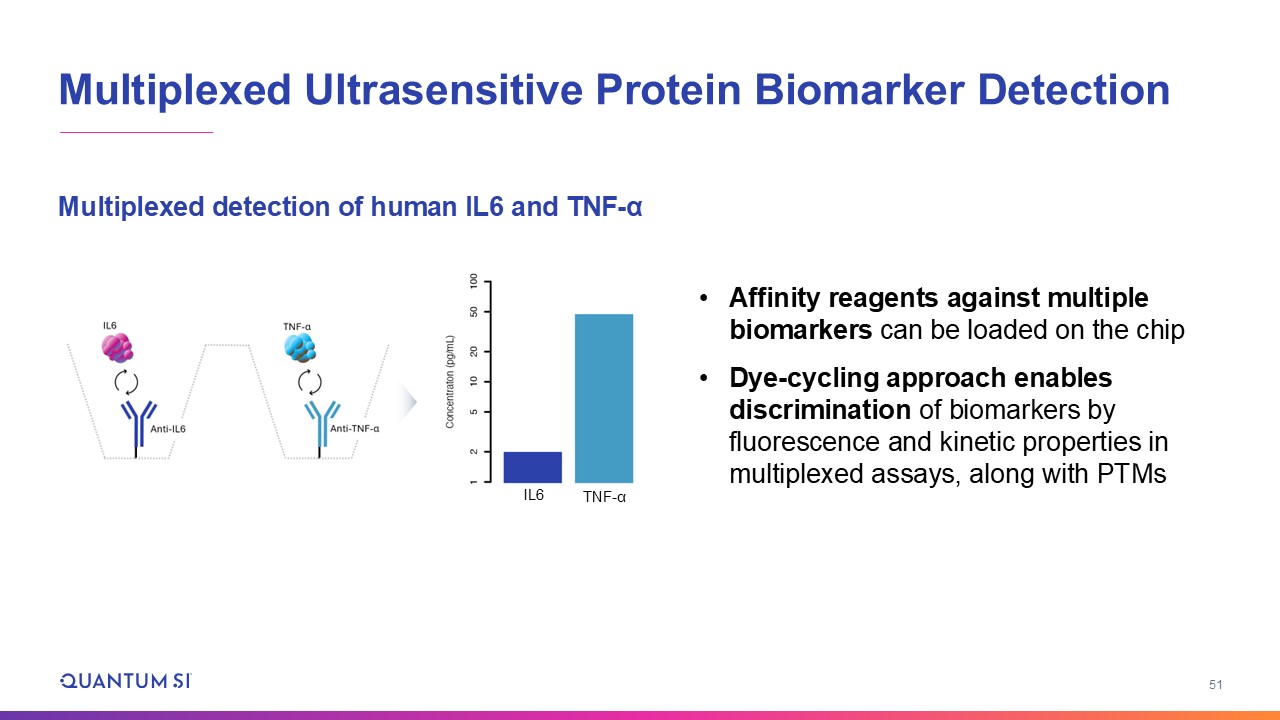
Multiplexed Ultrasensitive Protein Biomarker Detection Affinity reagents against multiple biomarkers can be loaded on the chip Dye-cycling approach enables discrimination of biomarkers by fluorescence and kinetic properties in multiplexed assays, along with PTMs IL6 TNF-α Multiplexed detection of human IL6 and TNF-α

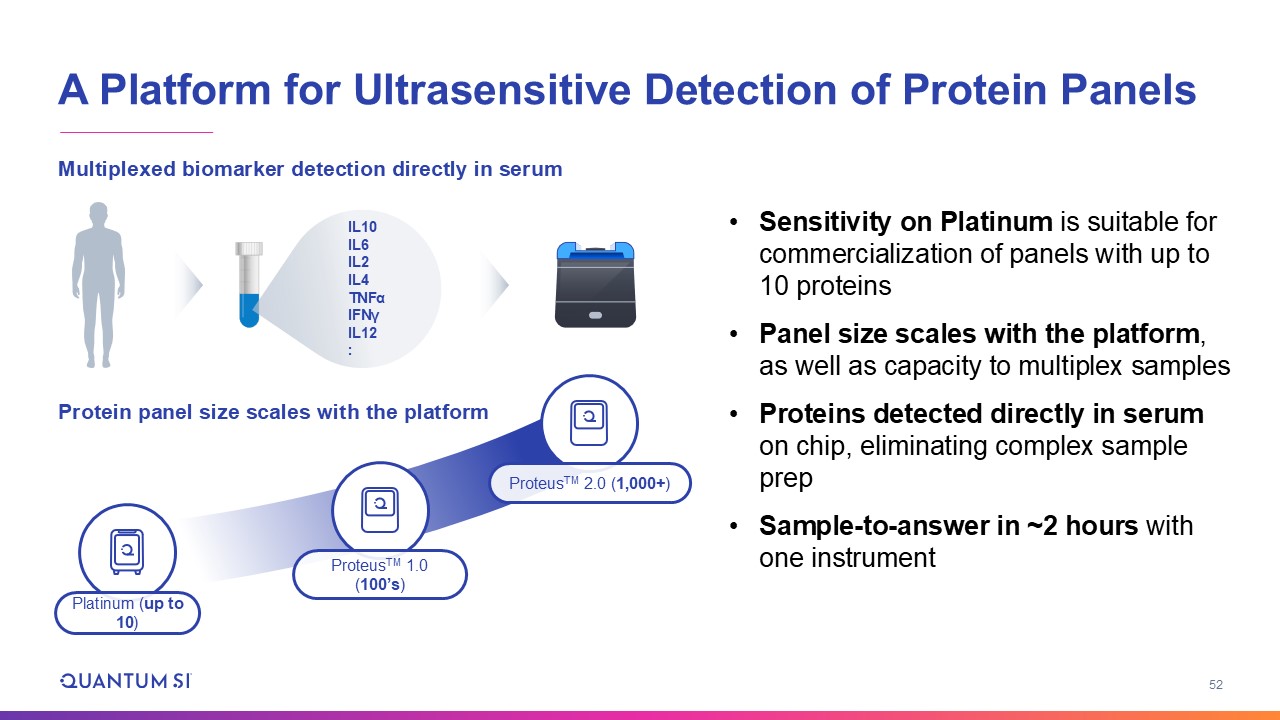
A Platform for Ultrasensitive Detection of Protein Panels Sensitivity on Platinum is suitable for commercialization of panels with up to 10 proteins Panel size scales with the platform, as well as capacity to multiplex samples Proteins detected directly in serum on chip, eliminating complex sample prep Sample-to-answer in ~2 hours with one instrument Protein panel size scales with the platform Multiplexed biomarker detection directly in serum IL10 IL6 IL2 IL4 TNFα IFNγ IL12 : ProteusTM 2.0 (1,000+) ProteusTM 1.0 (100’s) Platinum (up to 10)

Platform Roadmap Nov 20, 2024 John Vieceli

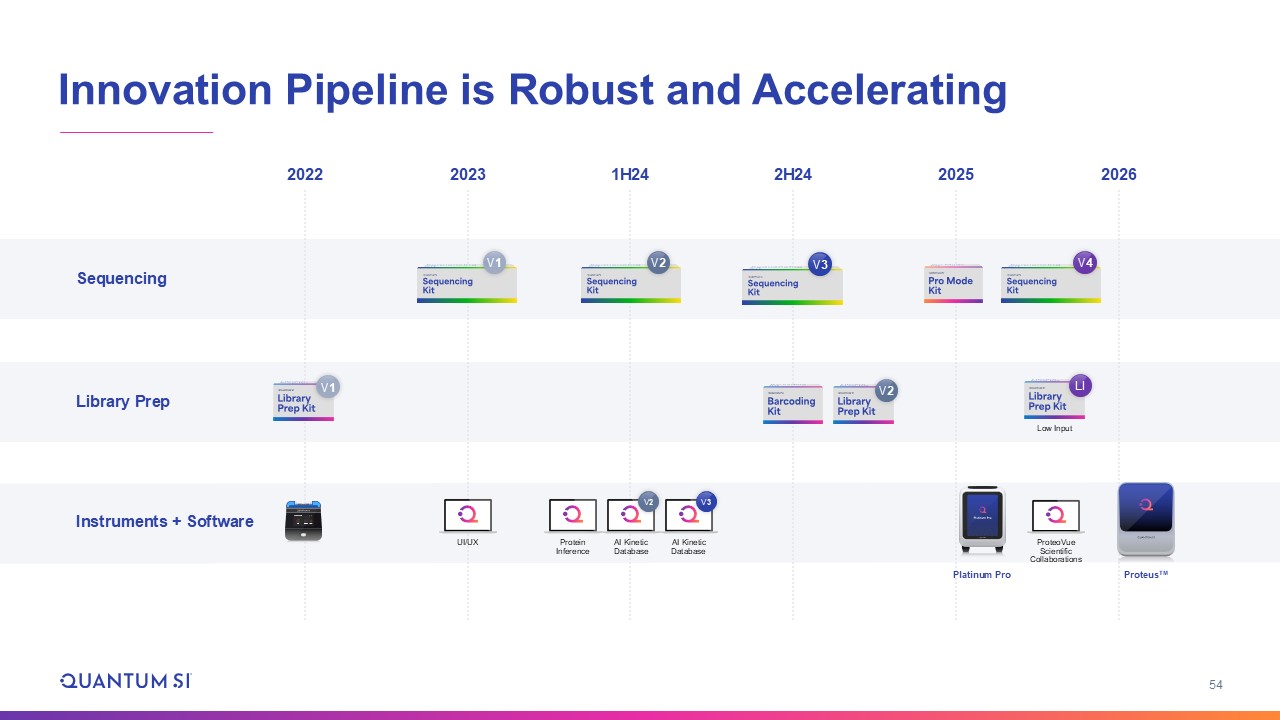
2025 2H24 2023 2026 2022 1H24 Innovation Pipeline is Robust and Accelerating Sequencing V1 Instruments + Software UI/UX ProteinInference AI KineticDatabase V2 AI KineticDatabase V3 Library Prep V1 Platinum Pro ProteoVue ScientificCollaborations V2 Low Input LI V2 V3 V4 ProteusTM

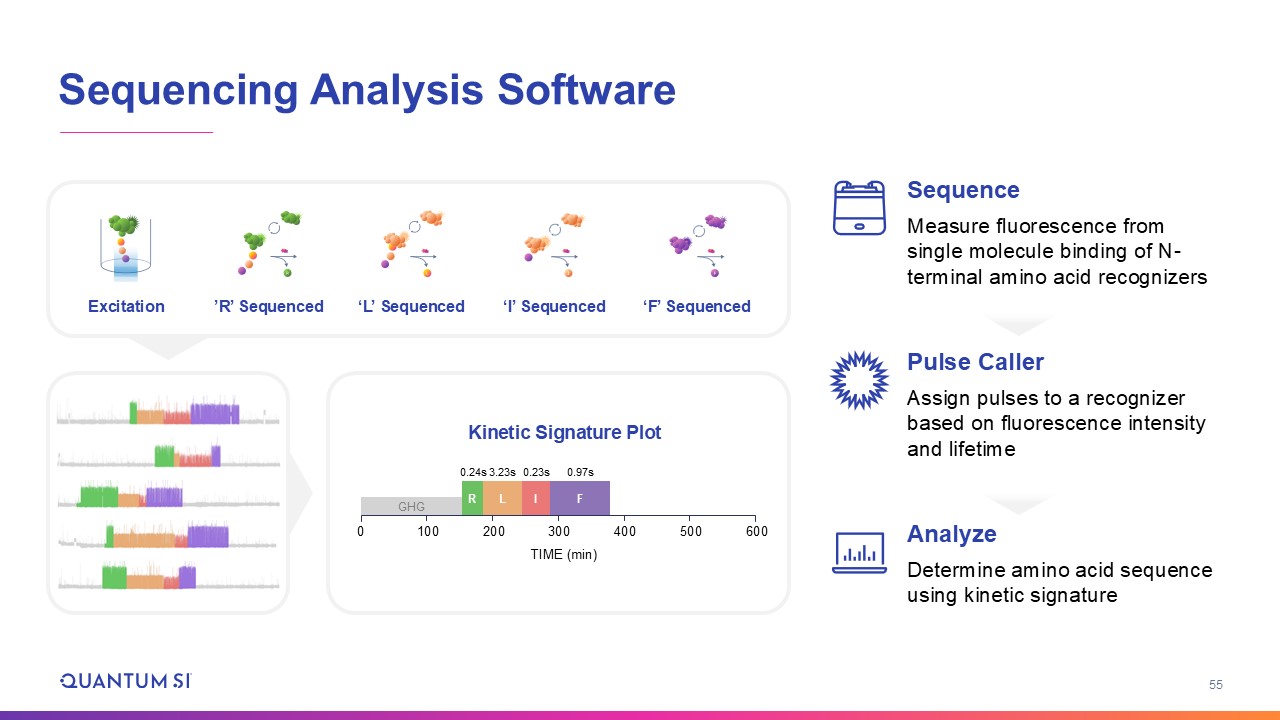
Sequencing Analysis Software Sequence Measure fluorescence from single molecule binding of N-terminal amino acid recognizers Pulse Caller Assign pulses to a recognizer based on fluorescence intensity and lifetime Analyze Determine amino acid sequence using kinetic signature Excitation ’R’ Sequenced ‘L’ Sequenced ‘I’ Sequenced ‘F’ Sequenced R L I F GHG 600 500 400 300 200 100 0 0.24s 3.23s 0.23s 0.97s TIME (min) Kinetic Signature Plot

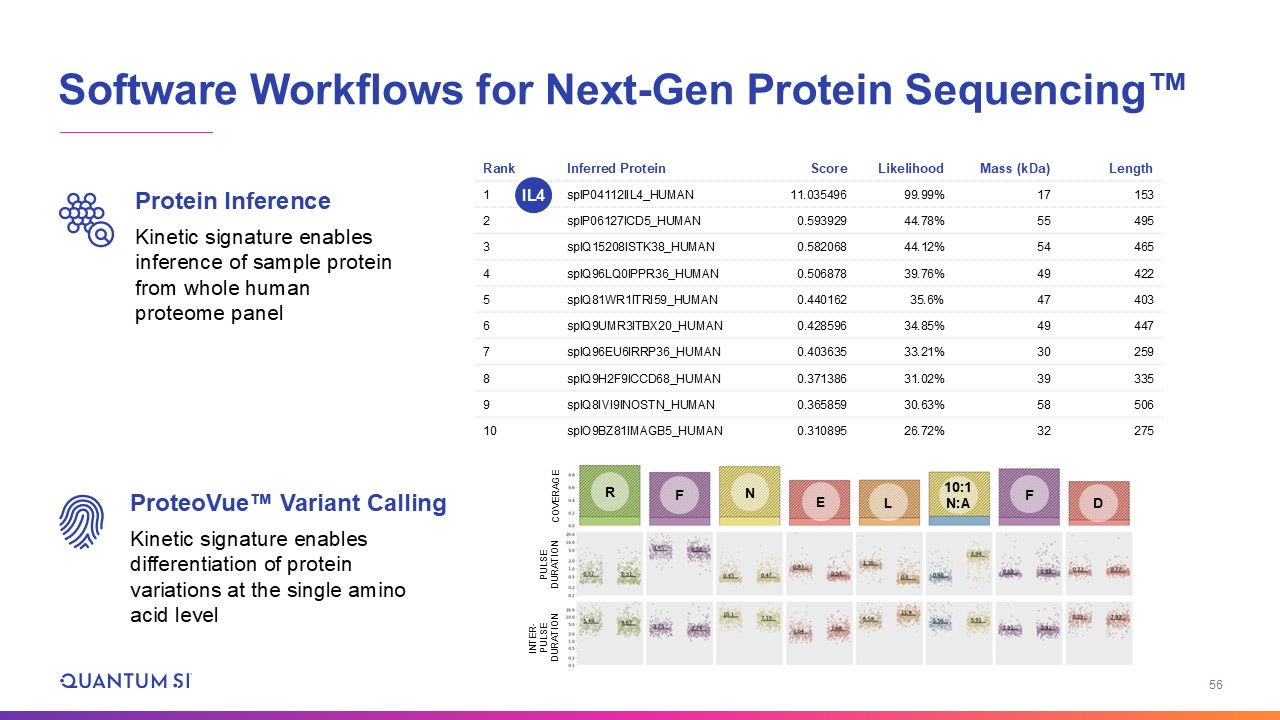
Software Workflows for Next-Gen Protein Sequencing™ Protein Inference Kinetic signature enables inference of sample protein from whole human proteome panel ProteoVue™ Variant Calling Kinetic signature enables differentiation of protein variations at the single amino acid level Rank Inferred Protein Score Likelihood Mass (kDa) Length 1 splP04112lIL4_HUMAN 11.035496 99.99% 17 153 2 splP06127lCD5_HUMAN 0.593929 44.78% 55 495 3 splQ15208lSTK38_HUMAN 0.582068 44.12% 54 465 4 splQ96LQ0lPPR36_HUMAN 0.506878 39.76% 49 422 5 splQ81WR1lTRI59_HUMAN 0.440162 35.6% 47 403 6 splQ9UMR3lTBX20_HUMAN 0.428596 34.85% 49 447 7 splQ96EU6lRRP36_HUMAN 0.403635 33.21% 30 259 8 splQ9H2F9lCCD68_HUMAN 0.371386 31.02% 39 335 9 splQ8IVI9lNOSTN_HUMAN 0.365859 30.63% 58 506 10 splO9BZ81lMAGB5_HUMAN 0.310895 26.72% 32 275 IL4 COVERAGE PULSE DURATION INTER-PULSE DURATION R F N E L 10:1N:A F D

Artificial Intelligence

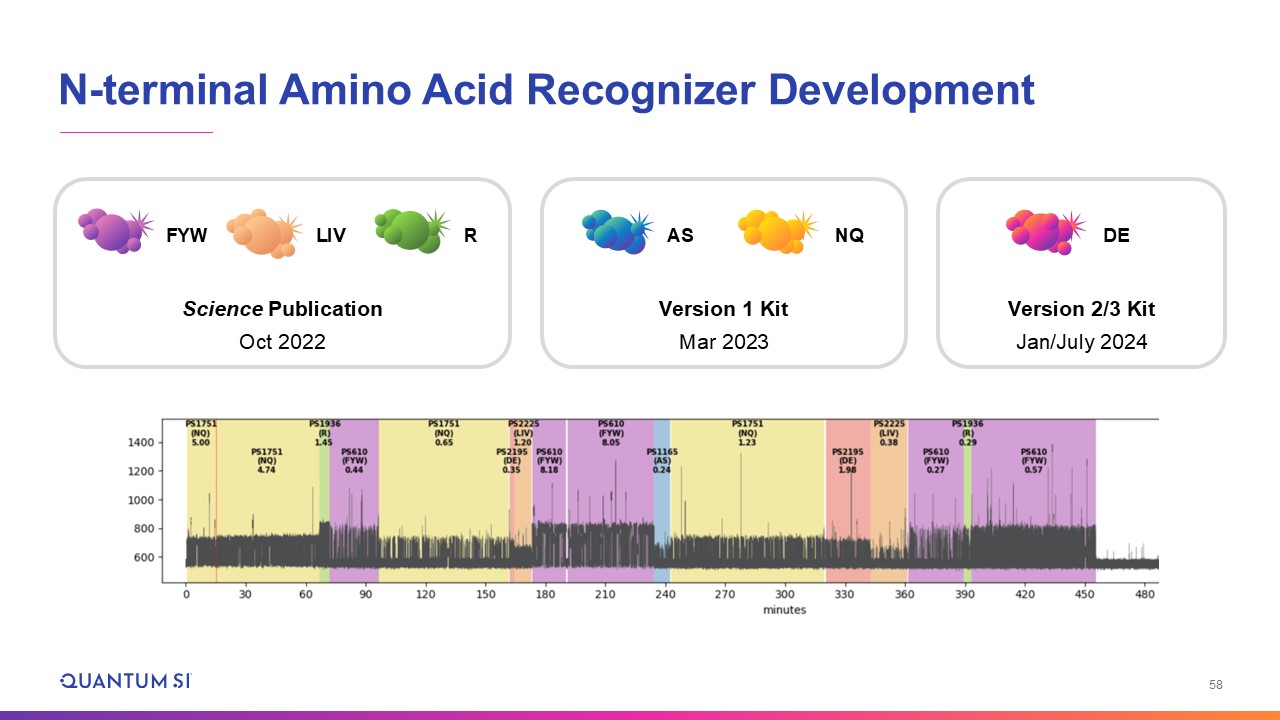
N-terminal Amino Acid Recognizer Development Science Publication Oct 2022 FYW LIV R Version 1 Kit Mar 2023 AS NQ Version 2/3 Kit Jan/July 2024 DE

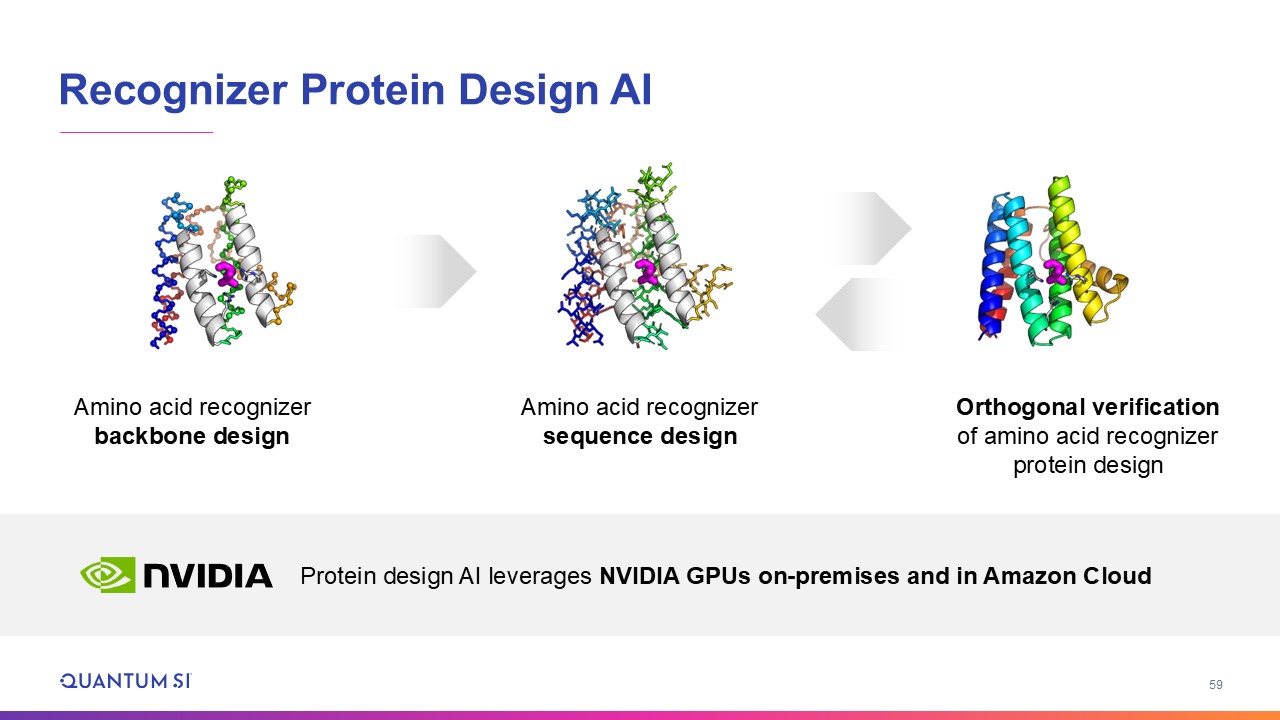
Recognizer Protein Design AI Orthogonal verification of amino acid recognizer protein design Amino acid recognizer backbone design Amino acid recognizer sequence design Protein design AI leverages NVIDIA GPUs on-premises and in Amazon Cloud

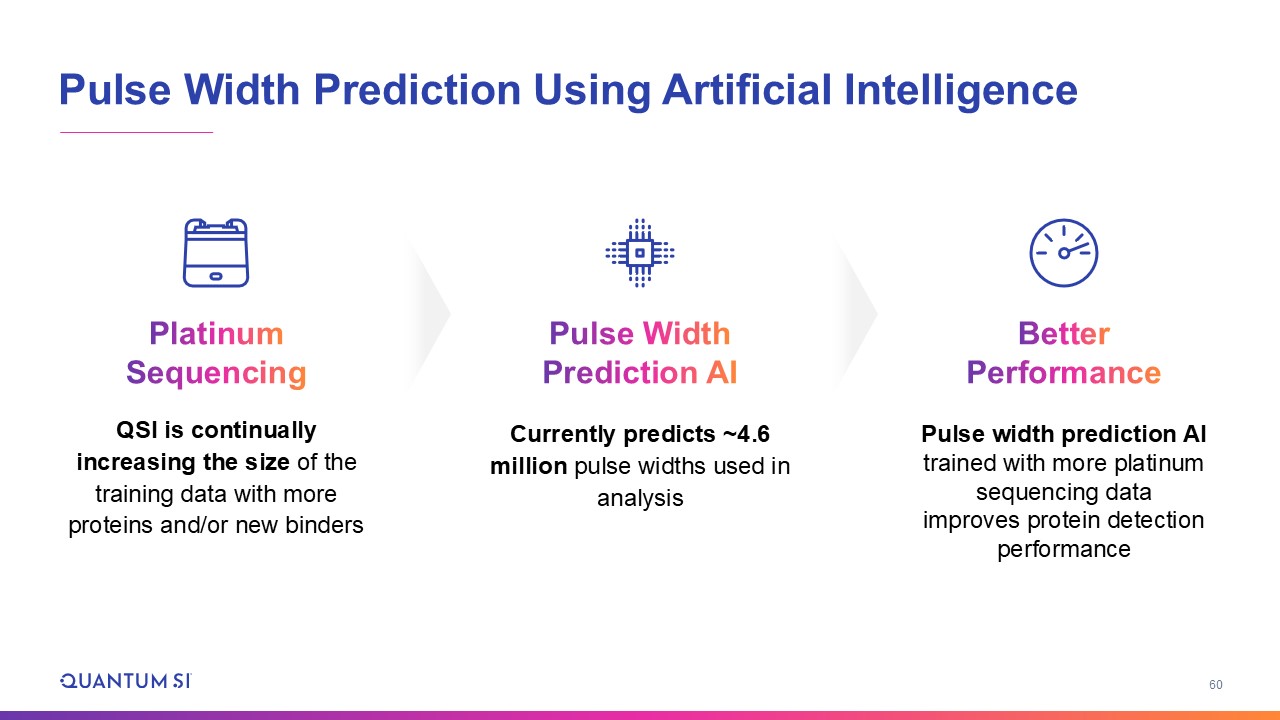
Pulse Width Prediction Using Artificial Intelligence Platinum Sequencing QSI is continually increasing the size of the training data with more proteins and/or new binders Pulse Width Prediction AI Currently predicts ~4.6 million pulse widths used in analysis Better Performance Pulse width prediction AI trained with more platinum sequencing data improves protein detection performance

Platinum® Pro

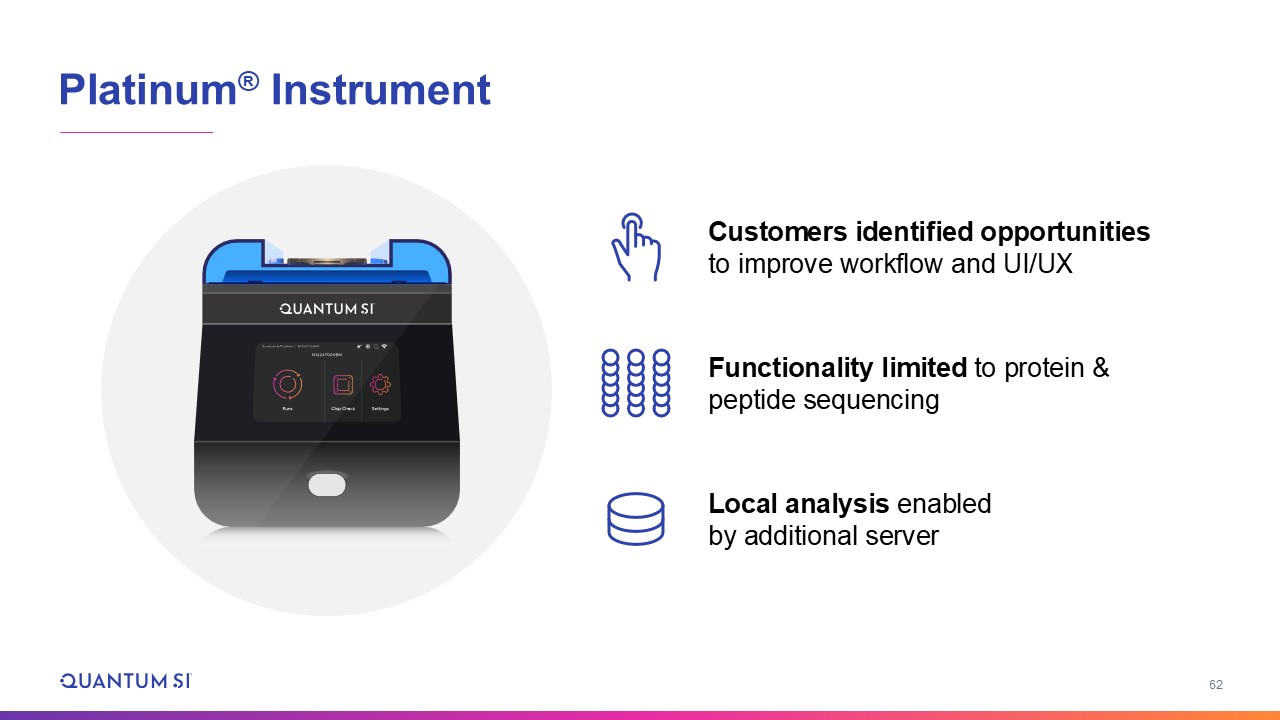
Platinum® Instrument Customers identified opportunities to improve workflow and UI/UX Functionality limited to protein & peptide sequencing Local analysis enabledby additional server

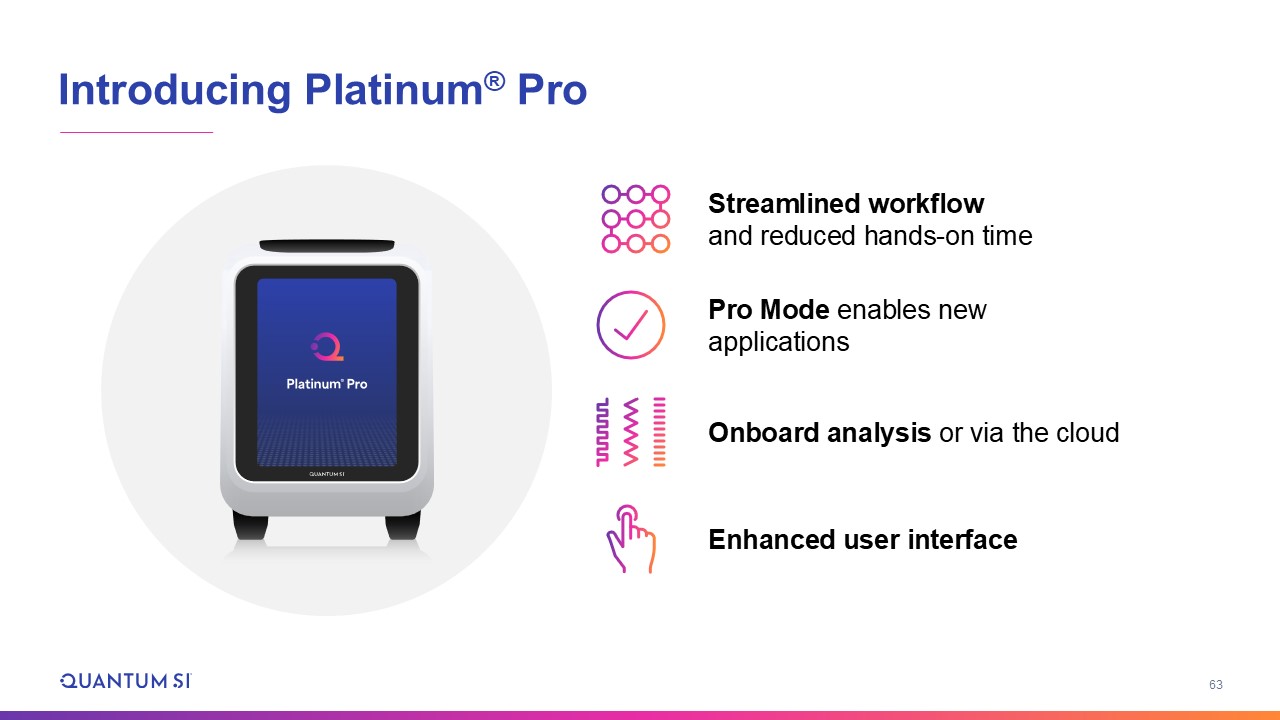
Introducing Platinum® Pro Streamlined workflowand reduced hands-on time Pro Mode enables new applications Onboard analysis or via the cloud Enhanced user interface

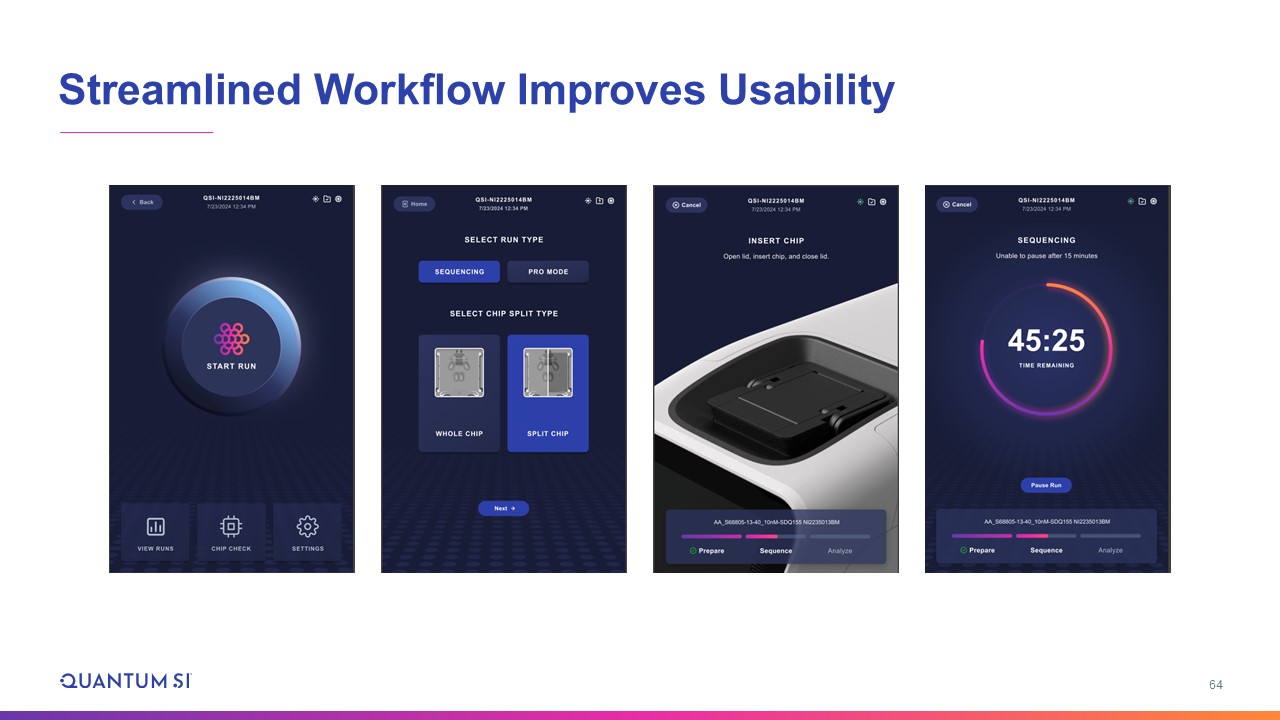
Streamlined Workflow Improves Usability

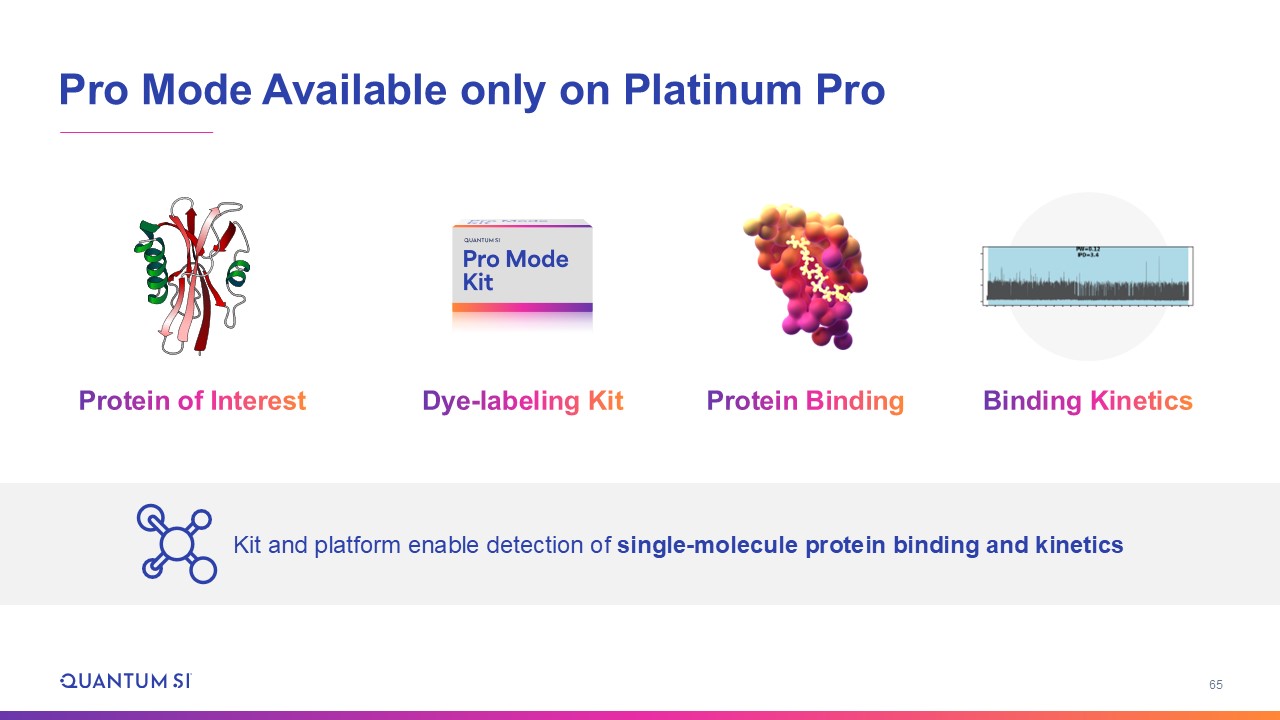
Pro Mode Available only on Platinum Pro Dye-labeling Kit Binding Kinetics Protein Binding Protein of Interest Kit and platform enable detection of single-molecule protein binding and kinetics

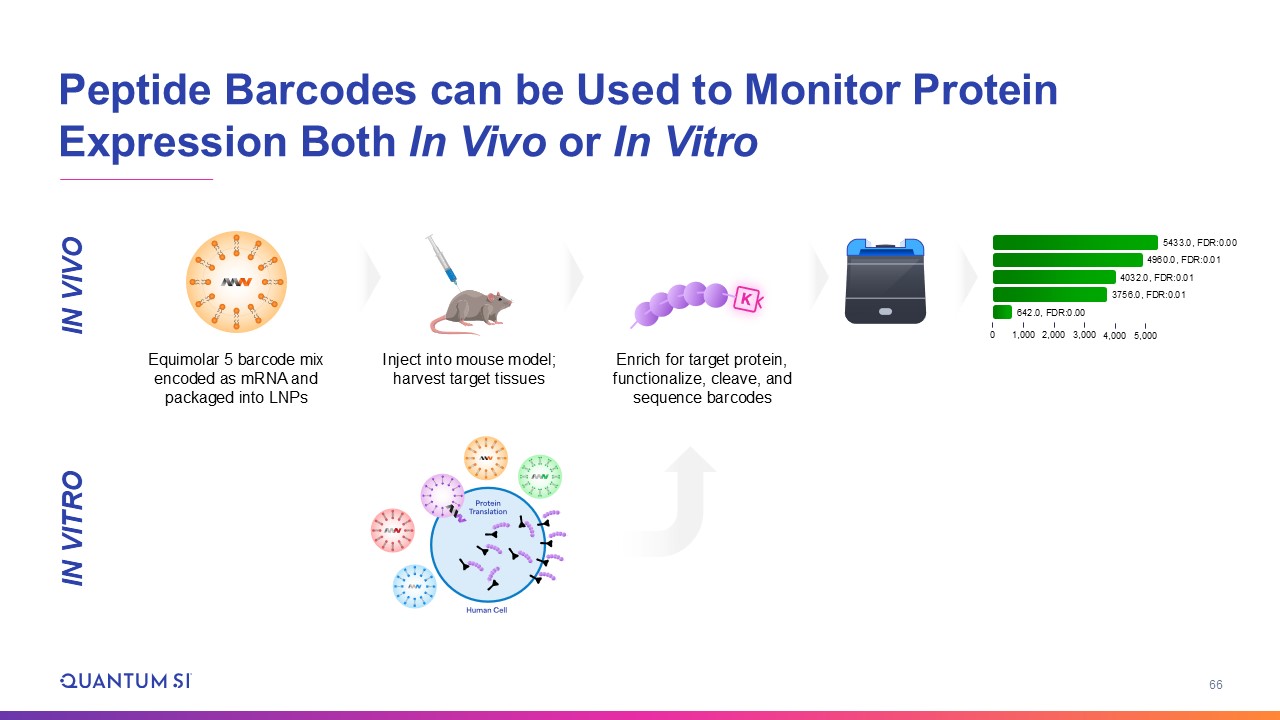
Peptide Barcodes can be Used to Monitor Protein Expression Both In Vivo or In Vitro IN VIVO IN VITRO Equimolar 5 barcode mix encoded as mRNA and packaged into LNPs Enrich for target protein, functionalize, cleave, and sequence barcodes Inject into mouse model; harvest target tissues 5433.0, FDR:0.00 4960.0, FDR:0.01 4032.0, FDR:0.01 3756.0, FDR:0.01 642.0, FDR:0.00 2,000 1,000 3,000 4,000 5,000 0

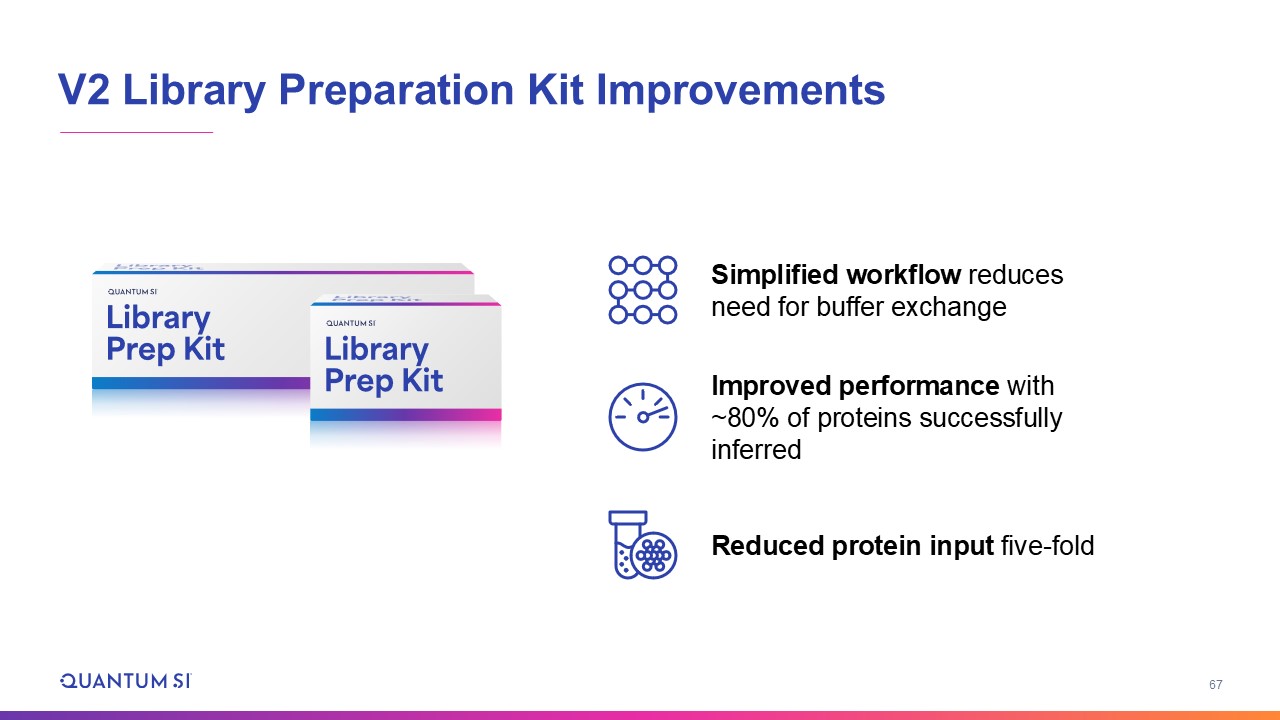
V2 Library Preparation Kit Improvements Simplified workflow reduces need for buffer exchange Improved performance with ~80% of proteins successfully inferred Reduced protein input five-fold

ProteusTM

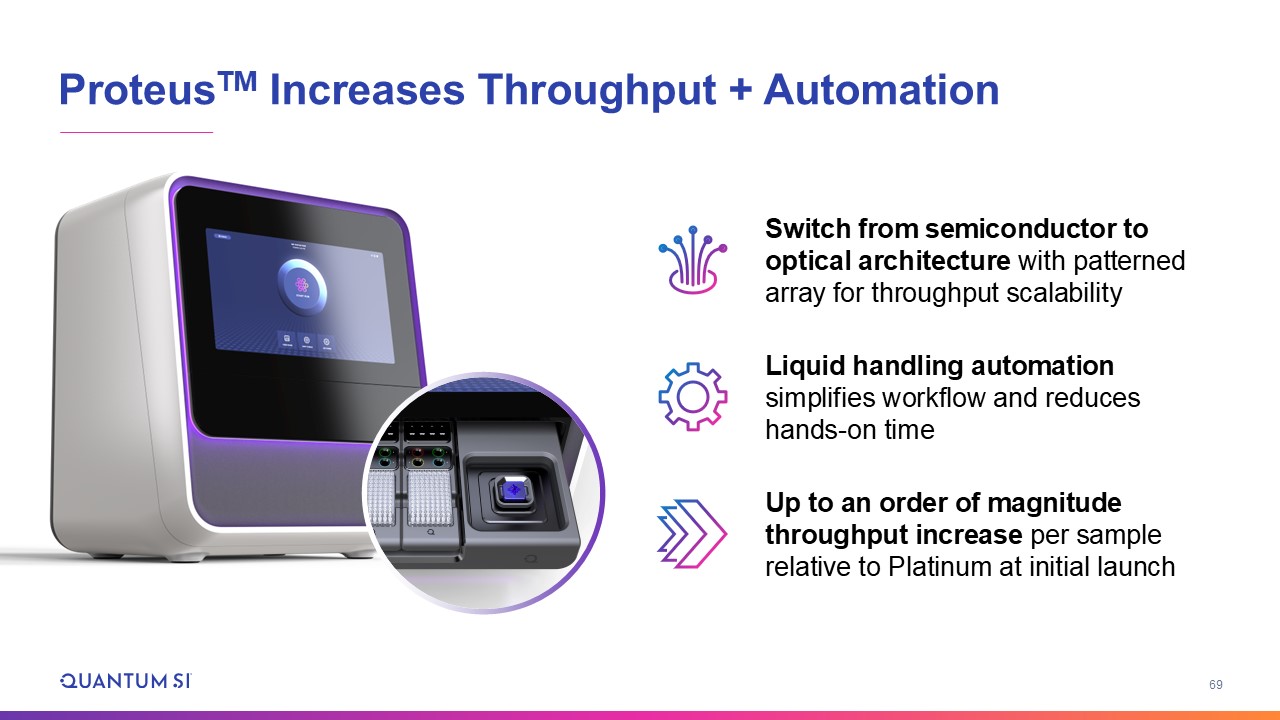
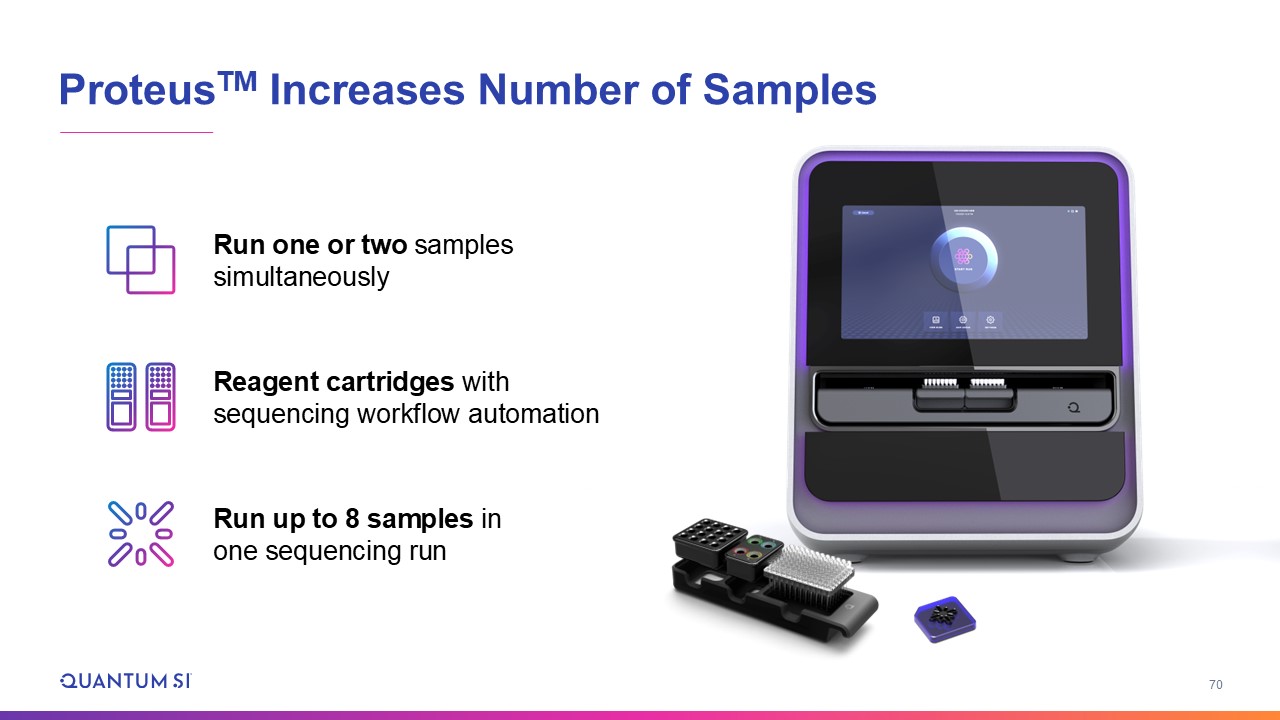
ProteusTM Increases Throughput + Automation Switch from semiconductor to optical architecture with patterned array for throughput scalability Liquid handling automation simplifies workflow and reduces hands-on time Up to an order of magnitude throughput increase per sample relative to Platinum at initial launch

ProteusTM Increases Number of Samples Reagent cartridges with sequencing workflow automation Run up to 8 samples inone sequencing run Run one or two samples simultaneously

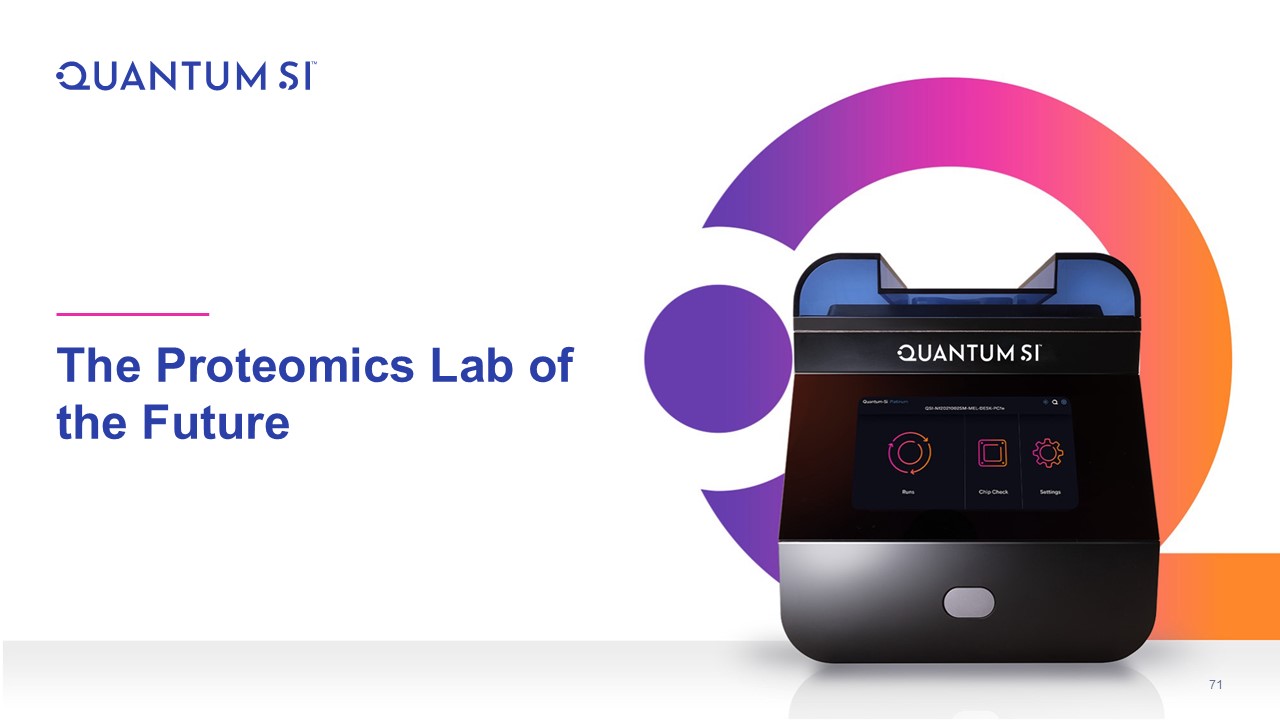
The Proteomics Lab of the Future

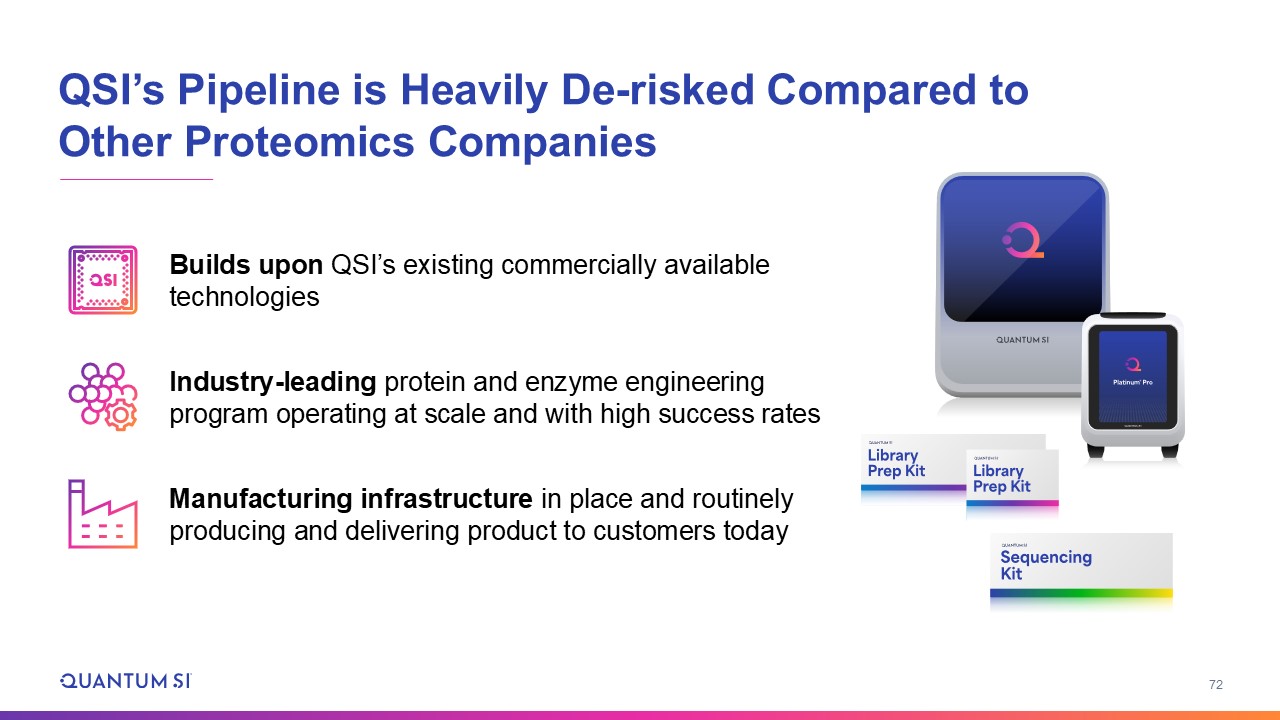
QSI’s Pipeline is Heavily De-risked Compared to Other Proteomics Companies Builds upon QSI’s existing commercially available technologies Industry-leading protein and enzyme engineering program operating at scale and with high success rates Manufacturing infrastructure in place and routinely producing and delivering product to customers today

Strategic Partnerships to Accelerate Commercial Adoption and Deliver on Innovation Roadmap

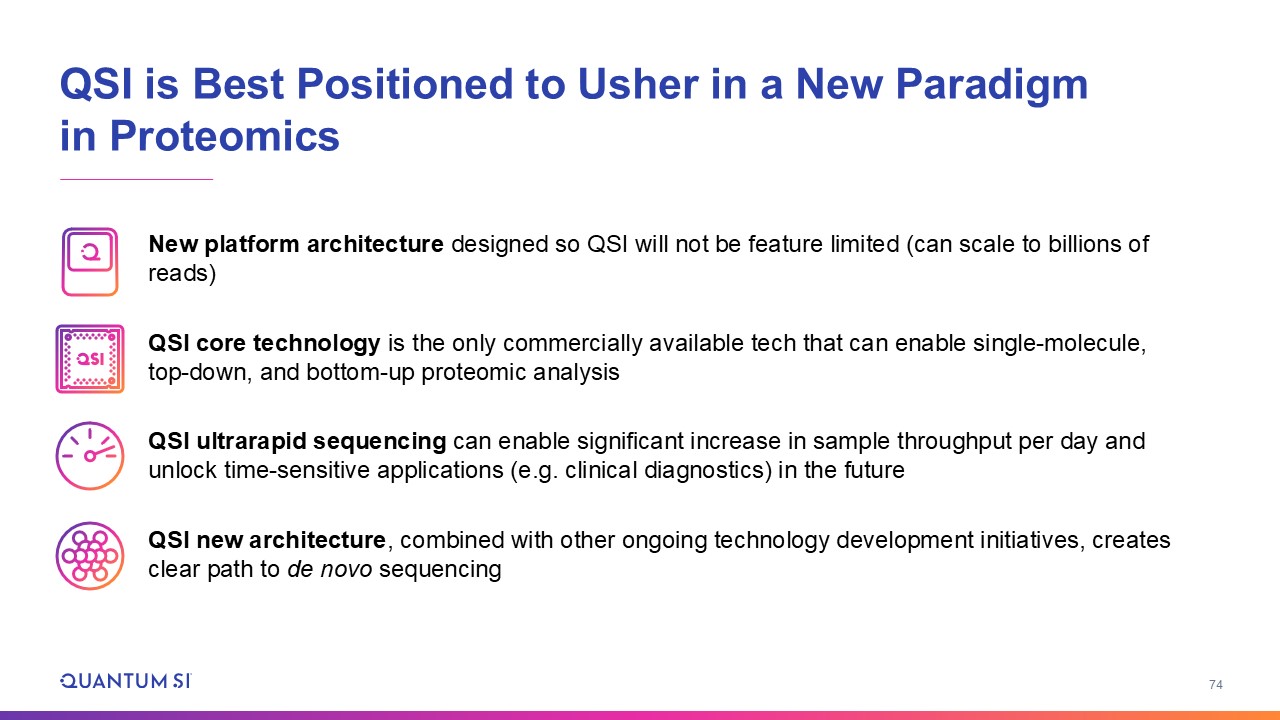
QSI is Best Positioned to Usher in a New Paradigmin Proteomics QSI core technology is the only commercially available tech that can enable single-molecule, top-down, and bottom-up proteomic analysis New platform architecture designed so QSI will not be feature limited (can scale to billions of reads) QSI ultrarapid sequencing can enable significant increase in sample throughput per day and unlock time-sensitive applications (e.g. clinical diagnostics) in the future QSI new architecture, combined with other ongoing technology development initiatives, creates clear path to de novo sequencing

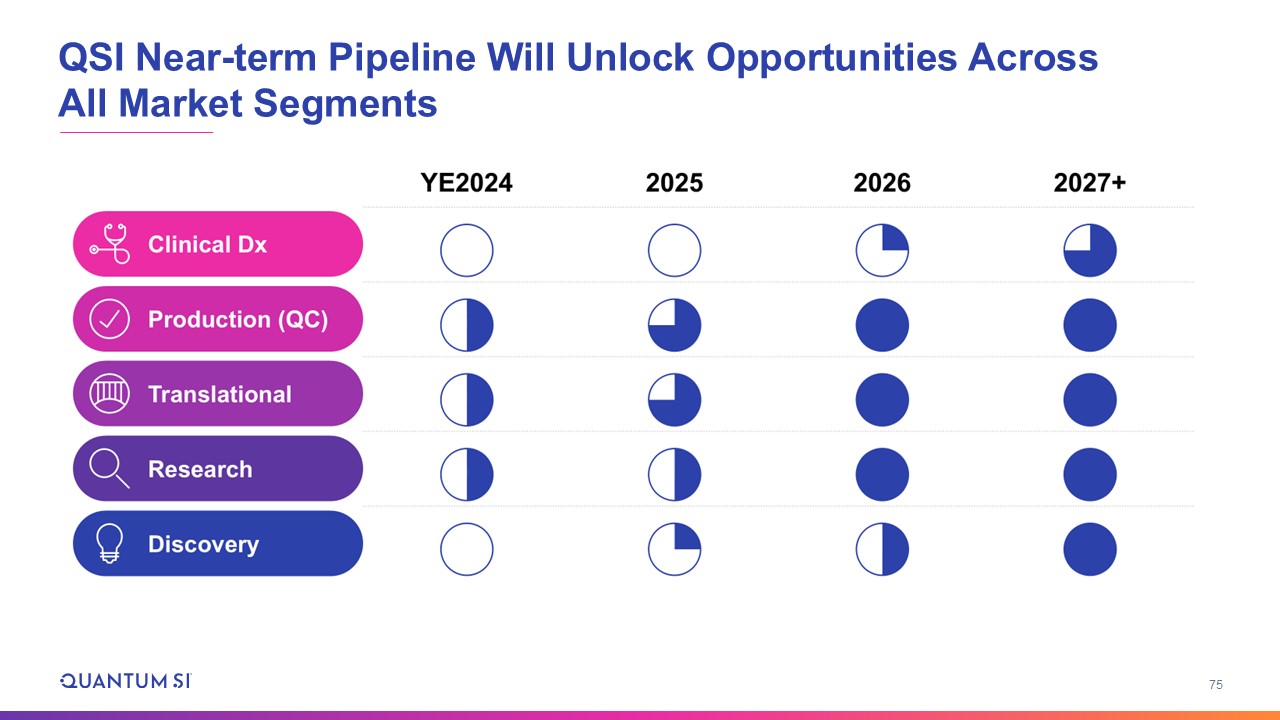
QSI Near-term Pipeline Will Unlock Opportunities Across All Market Segments

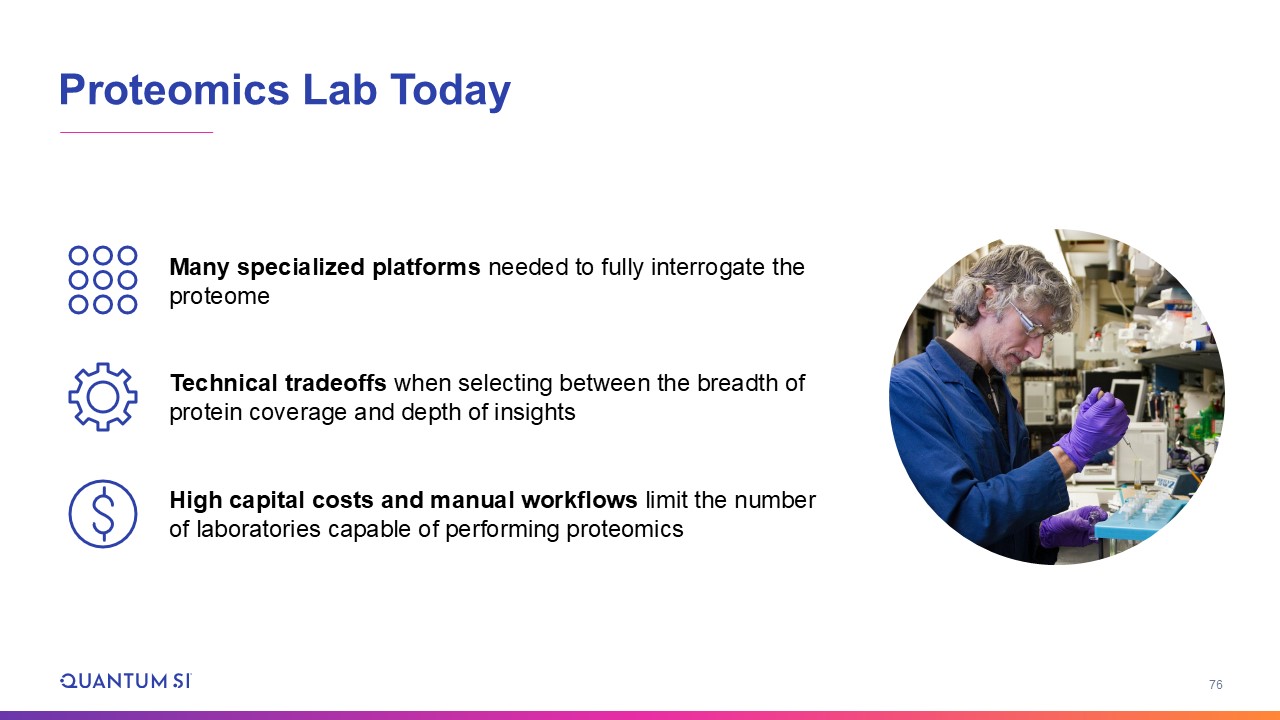
Proteomics Lab Today Many specialized platforms needed to fully interrogate the proteome Technical tradeoffs when selecting between the breadth of protein coverage and depth of insights High capital costs and manual workflows limit the number of laboratories capable of performing proteomics

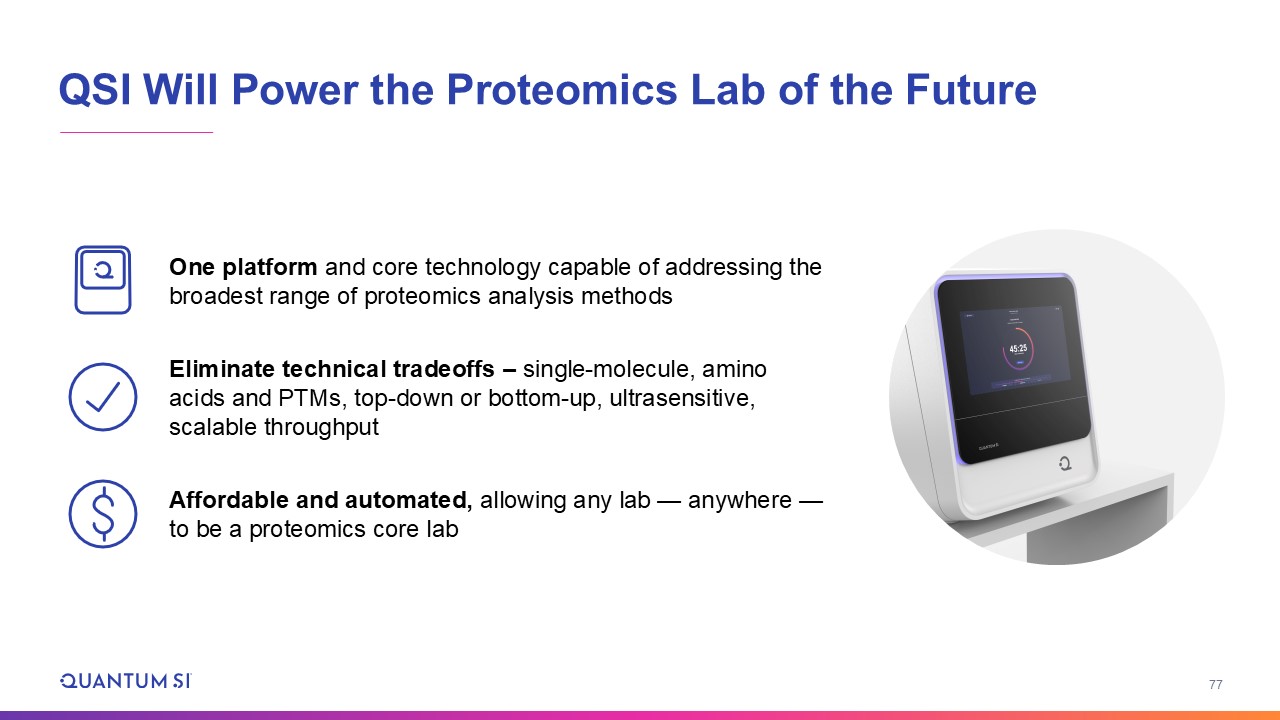
QSI Will Power the Proteomics Lab of the Future One platform and core technology capable of addressing the broadest range of proteomics analysis methods Eliminate technical tradeoffs – single-molecule, amino acids and PTMs, top-down or bottom-up, ultrasensitive, scalable throughput Affordable and automated, allowing any lab — anywhere — to be a proteomics core lab

Q&A