8-K
Roivant Sciences Ltd. (ROIV)
UNITED STATES
SECURITIES AND EXCHANGE COMMISSION
WASHINGTON, D.C. 20549
FORM 8-K
CURRENT REPORT
Pursuant to Section 13 or 15(d) of the
Securities Exchange Act of 1934
Date of report (Date of earliest event reported): September 3, 2025
Roivant Sciences Ltd.
(Exact name of registrant as specified in its charter)
| Bermuda | 001-40782 | 98-1173944 |
|---|---|---|
| (State or other jurisdiction of incorporation) | (Commission File Number) | (I.R.S. Employer Identification No.) |
7th Floor
50 Broadway
London SW1H 0DB
United Kingdom
(Address of principal executive offices, and Zip Code)
+44 207 400-3347
Registrant’s Telephone Number, Including Area Code
Not Applicable
(Former name or former address, if changed since last report)
Check the appropriate box below if the Form 8-K filing is intended to simultaneously satisfy the filing obligation of the registrant under any of the following provisions
\(see General Instruction A.2. below\):
| ☐ | Written communications pursuant to Rule 425 under the Securities Act (17 CFR 230.425) | |
|---|---|---|
| ☐ | Soliciting material pursuant to Rule 14a-12 under the Exchange Act (17 CFR 240.14a-12) | |
| --- | --- | |
| ☐ | Pre-commencement communications pursuant to Rule 14d-2(b) under the Exchange Act (17 CFR 240.14d-2(b)) | |
| --- | --- | |
| ☐ | Pre-commencement communications pursuant to Rule 13e-4(c) under the Exchange Act (17 CFR 240.13e-4(c)) Securities registered pursuant to Section 12(b) of the Act: | |
| --- | --- | |
| Title of each class | Trading Symbol(s) | Name of each exchange on which registered |
| --- | --- | --- |
| Common Shares, $0.0000000341740141 per share | ROIV | The Nasdaq Global Select Market |
Indicate by check mark whether the registrant is an emerging growth company as defined in Rule 405 of the Securities Act of 1933 (§230.405 of this chapter) or Rule 12b-2 of the Securities Exchange Act of 1934 (§240.12b-2 of this chapter).
Emerging growth company ☐
If an emerging growth company, indicate by check mark if the registrant has elected not to use the extended transition period for complying with any new or revised financial accounting standards provided pursuant to Section 13(a) of the Exchange Act. ☐
| Item 7.01. | Regulation FD Disclosure. |
|---|
On September 3, 2025, Roivant Sciences Ltd. (the “Company”) issued a press release providing an update on the Graves’ Disease (“GD”) development program at its subsidiary, Immunovant, Inc. (“Immunovant”). A copy of the press release is attached as Exhibit 99.1 to this Current Report on Form 8-K and is incorporated herein by reference.
The information furnished under this Item 7.01, including Exhibit 99.1, shall not be deemed “filed” for purposes of Section 18 of the Securities Exchange Act of 1934, or the Exchange Act, or subject to the liabilities of that section or Sections 11 and 12(a)(2) of the Securities Act of 1933, or the Securities Act. The information in this Item 7.01, including Exhibit 99.1, shall not be deemed incorporated by reference into any other filing with the U.S. Securities Exchange Commission, or the SEC, made by the Company, whether made before or after the date hereof, regardless of any general incorporation language in such filing.
| Item 8.01. | Other Events. |
|---|
On September 3, 2025, the Company posted a presentation regarding the update on Immunovant’s GD proof-of-concept study on the “Events & Presentations” page of its investor relations website at https://investor.roivant.com and will host a conference call and webcast to discuss the remission data from Immunovant’s GD trial at 4:30 p.m. E.D.T. A copy of the presentation to be used by the Company during the conference call is filed as Exhibit 99.2 to this Current Report on Form 8-K and is incorporated herein by reference. The contents of the Company’s website referenced in this Current Report on Form 8-K are not incorporated into this Current Report on Form 8-K.
| Item 9.01. | Financial Statements and Exhibits. |
|---|
(d) Exhibits.
| Exhibit No. | Description of Exhibit |
|---|---|
| 99.1 | Press Release, dated September 3, 2025. |
| 99.2 | Presentation, dated September 3, 2025. |
| 104 | Cover Page Interactive Data File (embedded with Inline XBRL document). |
SIGNATURES
Pursuant to the requirements of the Securities Exchange Act of 1934, the registrant has duly caused this report to be signed on its behalf by the undersigned hereunto duly authorized.
| ROIVANT SCIENCES LTD. | |
|---|---|
| By: | /s/ Keyur Parekh |
| Name: Keyur Parekh | |
| Title: Authorized Signatory | |
| Dated: September 3, 2025 |
Exhibit 99.1
Roivant Unveils Durability and Treatment-Free Six-month Remission Data with Potential to Change
Treatment Paradigm for Uncontrolled Graves' Disease Patients
| • | First-ever potentially disease-modifying therapy for uncontrolled Graves’ disease patients |
|---|---|
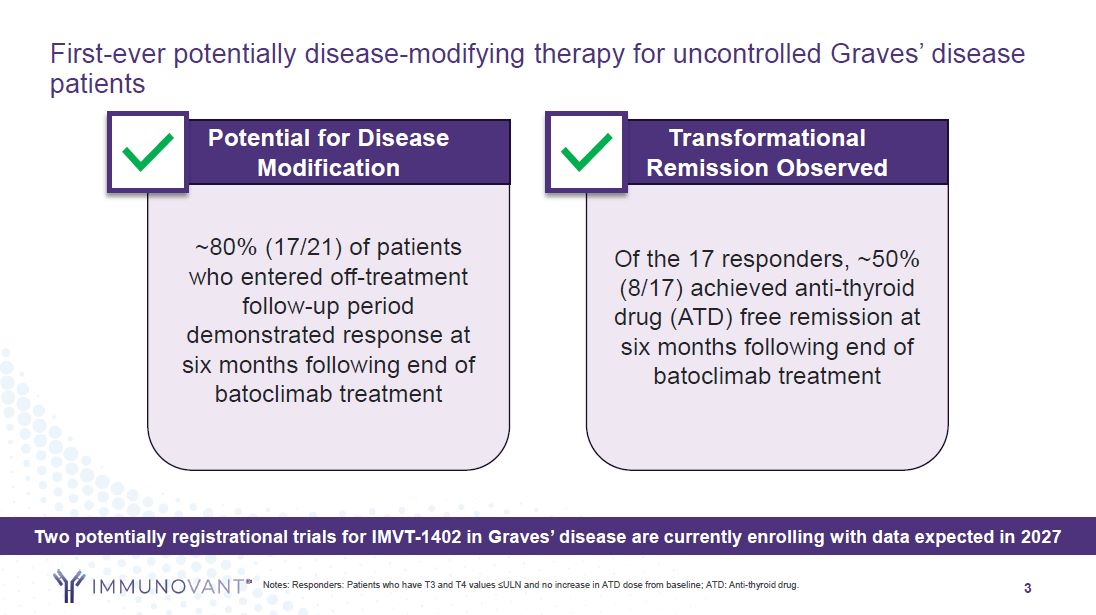
| • | Of 21 patients who entered the six-month off-treatment follow-up period, ~80% (17/21) demonstrated response, resulting in normal thyroid function (T3 and T4 less than the upper limit of normal)<br> at the end of the six-month follow-up period |
| --- | --- |
| • | Of the 17 responders to therapy, ~50% (8/17) achieved anti-thyroid drug (ATD) free remission at six months following end of batoclimab<br> treatment |
| --- | --- |
| • | Two potentially registrational trials for IMVT-1402 in Graves’ disease are currently enrolling with topline readouts expected in 2027 |
| --- | --- |
| • | Roivant to host investor call to discuss these updates today, September 3, 2025, at 4:30 p.m. EDT |
| --- | --- |
NEW YORK, September 03, 2025 – Immunovant, Inc. (Nasdaq: IMVT), a clinical-stage immunology company dedicated to enabling normal lives for people with autoimmune diseases, today shared an abstract with six-month off-treatment data in uncontrolled Graves’ disease (GD) patients treated with batoclimab for 24 weeks, to be presented at the 2025 Annual Meeting of the American Thyroid Association (ATA) on September 11, 2025.
“These novel and encouraging results support FcRn blockade as a potentially effective mechanism for the treatment of Graves’ disease, with the six-month remission data providing evidence of potential disease modification,” said George Kahaly, M.D., Ph.D., Lead Principal Investigator.
“We are incredibly excited to present these remission data demonstrating strong durability of response and ATD-free remission in previously uncontrolled patients off-treatment for six months,” said Eric Venker, M.D., Pharm.D., CEO of Immunovant. “We believe these data have the potential to be transformative for patients and practice-changing for physicians, if approved by FDA, by addressing a significant unmet need in Graves’ disease.”
Graves’ Disease Proof-of-Concept Study
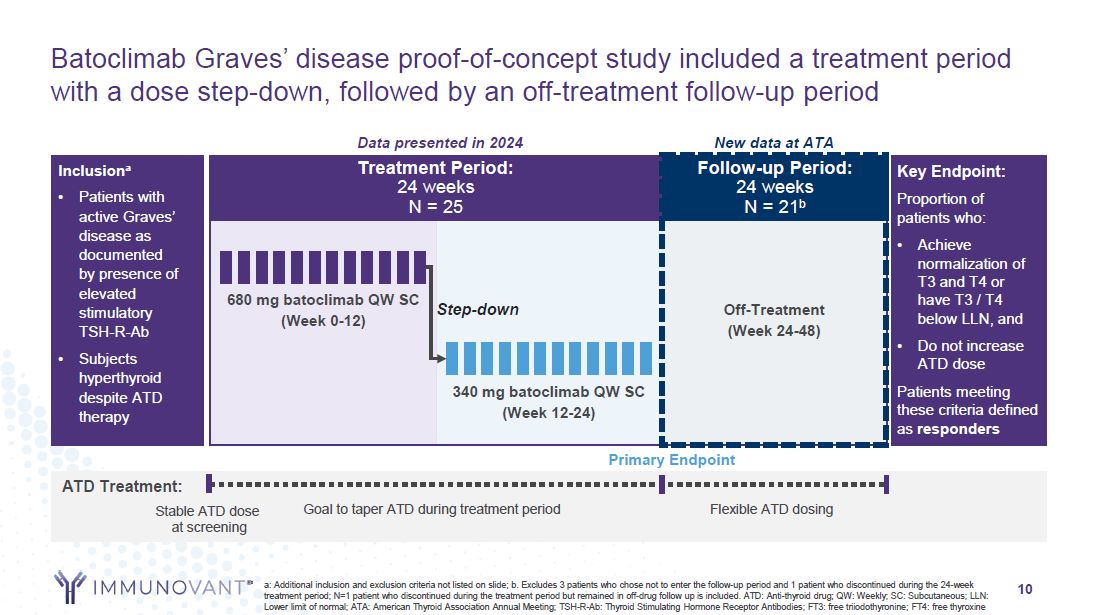
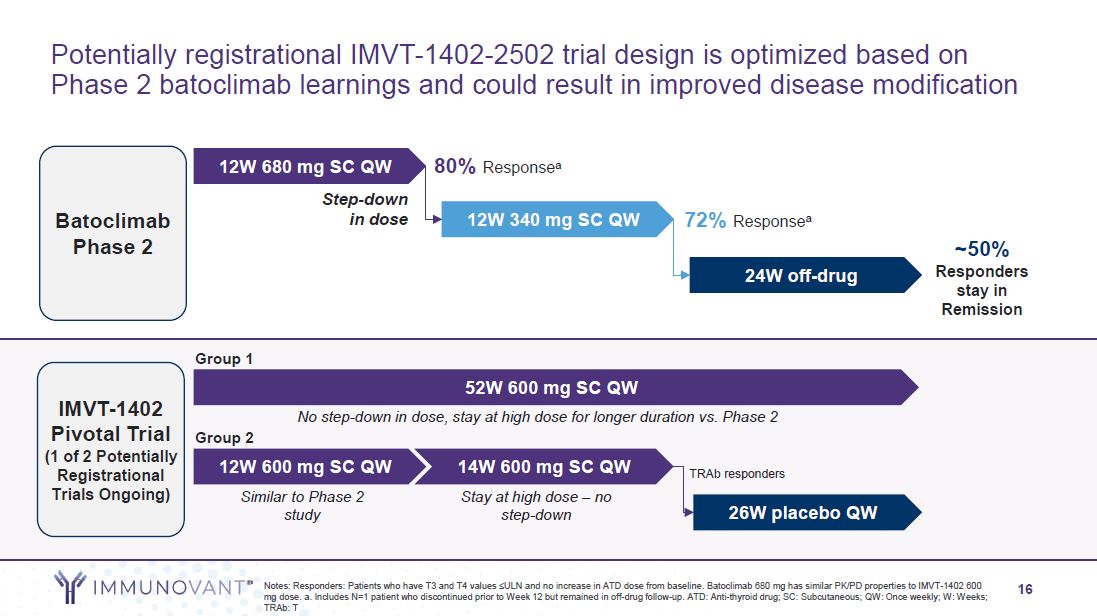
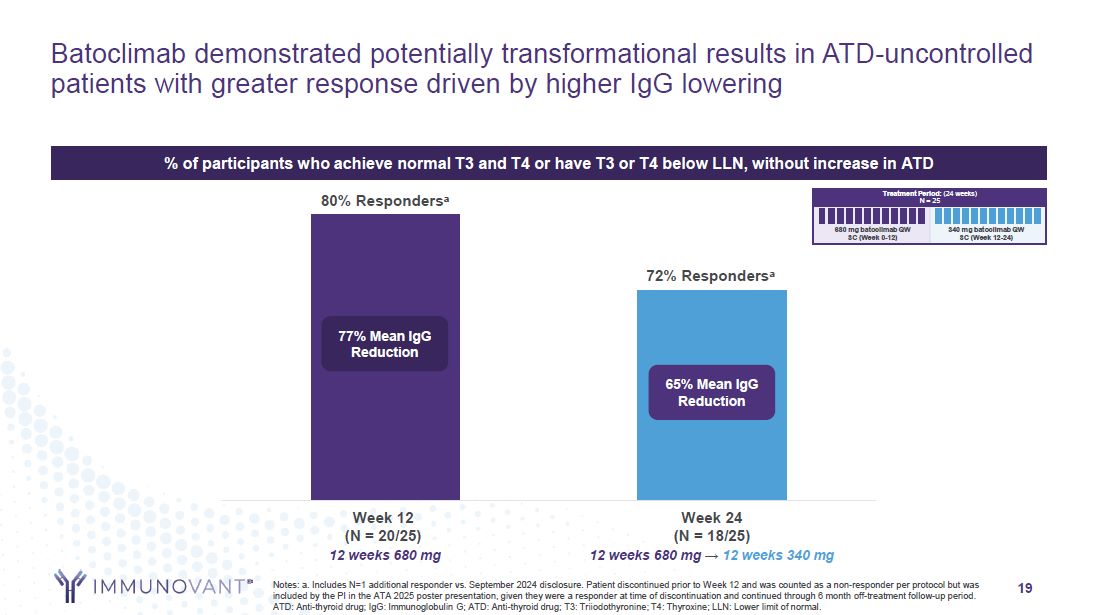
Six-month off-treatment data was generated from a proof-of-concept study of batoclimab in Graves’ disease. Batoclimab is Immunovant’s first generation fully human monoclonal antibody targeting FcRn. The study included a 24-week treatment period with a dose step-down (Weeks 0-12 at 680 mg weekly (QW) subcutaneously (SC) and Weeks 12-24 at 340 mg QW SC), followed by a 24-week off-treatment follow-up period. The study included patients with active Graves’ disease as documented by presence of elevated thyrotropin receptor autoantibodies (TRAb) and hyperthyroid despite ATD therapy. The key endpoint of the study is the proportion of participants who achieve normalization of free triiodothyronine (T3) and free thyroxine (T4) or have T3 / T4 below the lower limit of normal (LLN) at Week 24, without an increase in ATD dose from baseline.
Graves’ Disease Six-month Remission Data
25 patients were enrolled in the treatment period with 21 patients entering the off-treatment 24-week follow-up period to be assessed for remission:
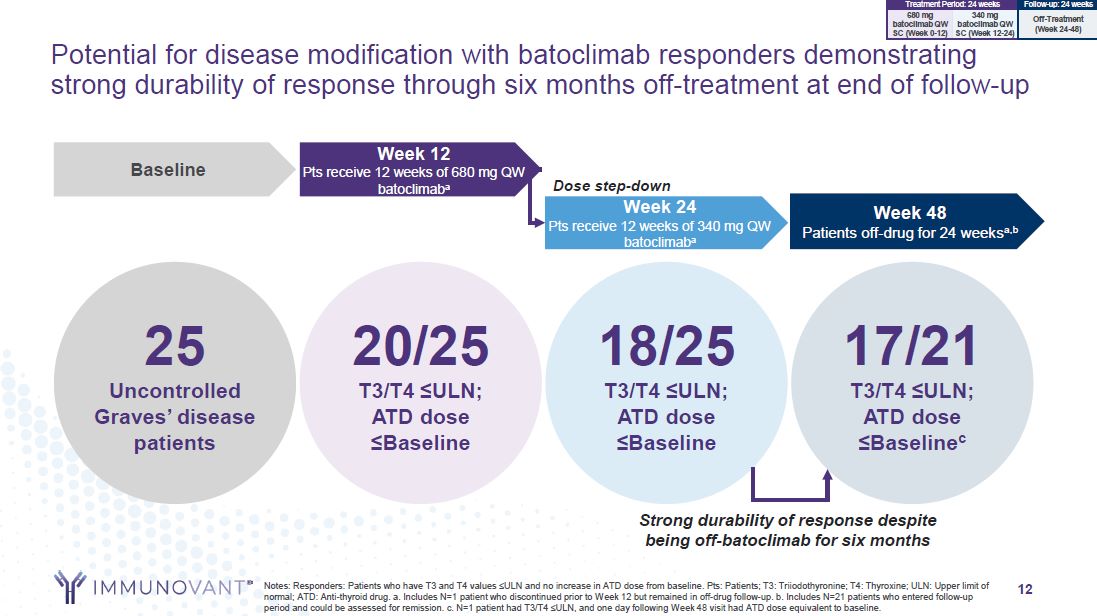
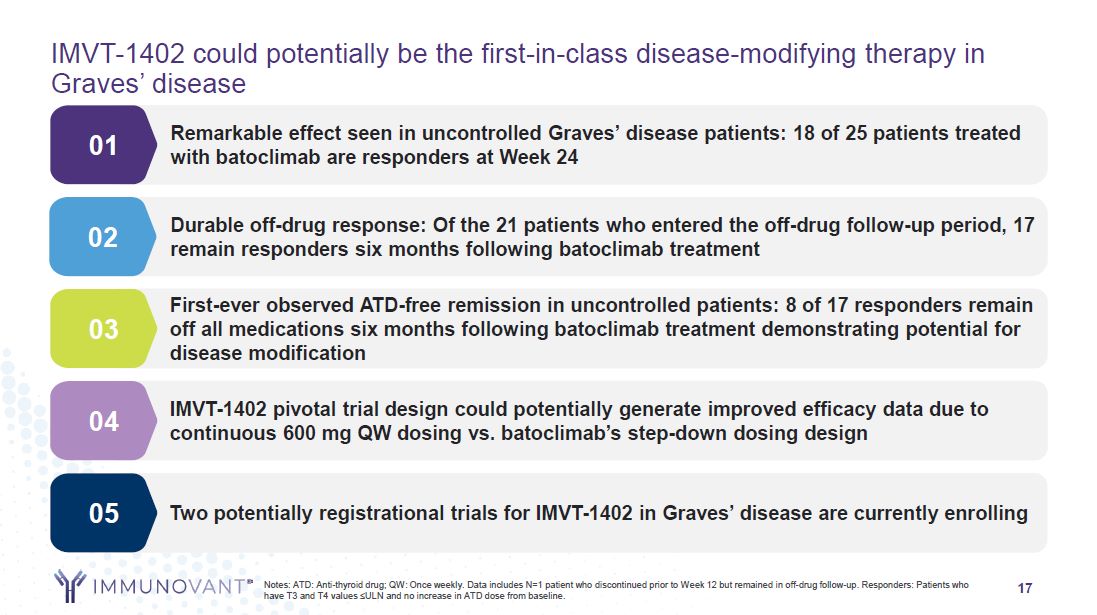
| • | At Week 48, or the end of the six-month follow-up period (patients off-treatment for 24 weeks), ~80% (17/21) patients maintained T3/T4 values ≤ upper limit of normal (ULN), indicating strong<br> durability of response through six months off treatment |
|---|---|
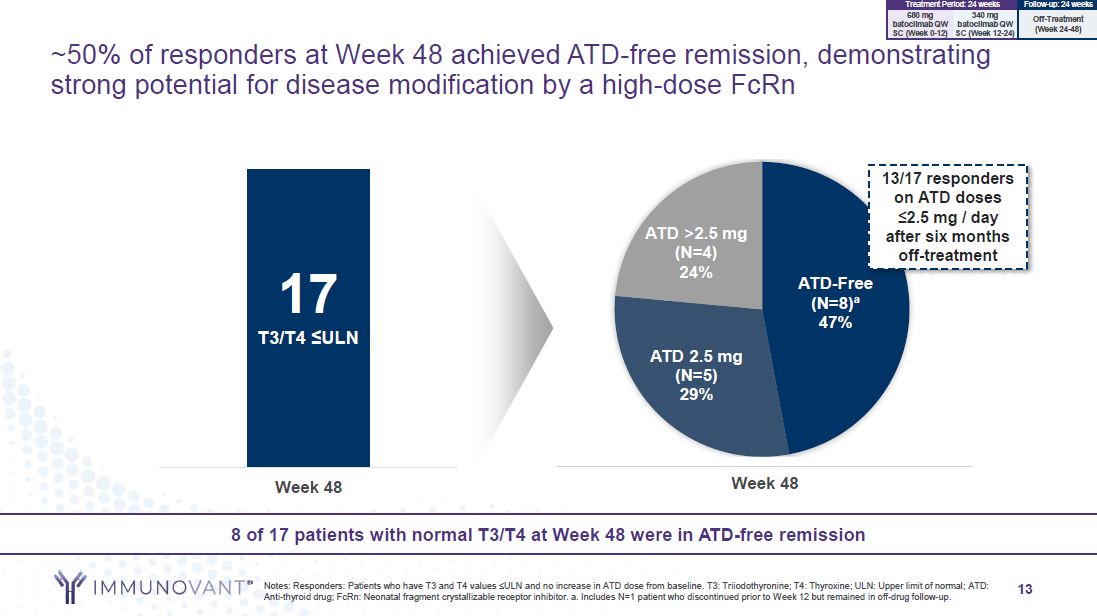
| • | Of these 17 patients, ~50% (8/17) were in ATD free-remission and an incremental ~30% (5/17) were on ATD doses of 2.5 mg/day following six months off treatment, even with batoclimab’s suboptimal<br> step-down dosing design during the treatment period |
| --- | --- |
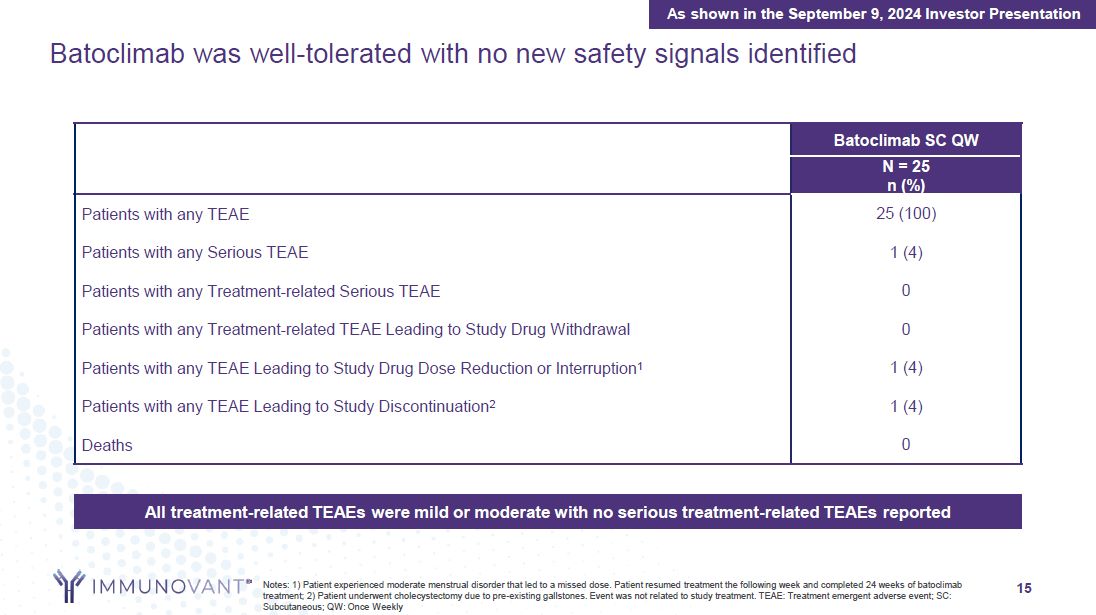
| • | Safety and tolerability were observed to be consistent with prior batoclimab studies |
| --- | --- |
IMVT-1402 Registrational Trial Design
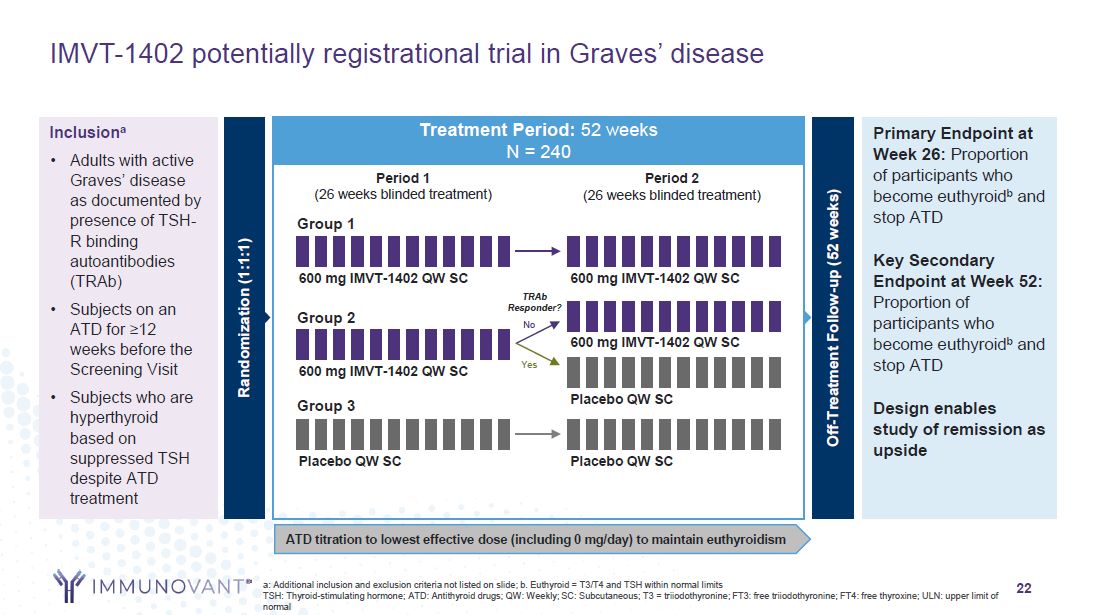
Two potentially registrational trials of Immunovant’s lead compound IMVT-1402 in Graves’ disease will evaluate 600 mg dose for up to 52 weeks without a step-down in dose.
The two potentially registrational global trials for IMVT-1402 in Graves’ disease are currently enrolling with topline readouts expected in 2027.
Investor Conference Call Information
Roivant will host a live conference call and webcast at 4:30 p.m. EDT on Wednesday, September 3, 2025, to discuss these Immunovant data. To access the conference call by phone, please register online using this registration link. The presentation and webcast details are available under “Events & Presentations” in the Investors section of the Roivant website at https://investor.roivant.com/news-events/events. The archived webcast will be available on Roivant’s website after the conference call.
About Immunovant, Inc.
Immunovant, Inc. is a clinical-stage immunology company dedicated to enabling normal lives for people with autoimmune diseases. As a trailblazer in anti-FcRn technology, the Company is developing innovative, targeted therapies to meet the complex and variable needs of people with autoimmune diseases. For additional information on the Company, please visit immunovant.com.
Forward-Looking Statements
This presentation contains forward-looking statements for the purposes of the safe harbor provisions under The Private Securities Litigation Reform Act of 1995 and other federal securities laws. The use of words such as "can," “may,” “might,” “will,” “would,” “should,” “expect,” “believe,” “estimate,” “design,” “plan,” "intend," "anticipate," and other similar expressions are intended to identify forward-looking statements. Such forward looking statements include Immunovant’s expectations regarding the clinical and therapeutic benefits of its product candidates, including durability of response, efficacy, tolerability and the potential for disease modification and first-in-class potential; patient enrollment, timing, design, progress, scope and results of its existing and planned clinical trials, including the potential registrational trials for IMVT-1402 in Graves’ disease and whether the trial designs will result in improved efficacy data; future development of IMVT-1402 and batoclimab, including the timing and likelihood of expansion into additional indications; the evolution of the treatment paradigm for Graves’ disease in North America; the size and growth of the potential markets for Immunovant's product candidates and indication selections, including any estimated market opportunities; expectations regarding the receipt of regulatory approval for its product candidates; and whether, if approved, IMVT-1402 or batcolimab will be successfully distributed, marketed or commercialized. All forward-looking statements are based on estimates and assumptions by Immunovant’s management that, although Immunovant believes to be reasonable, are inherently uncertain. All forward-looking statements are subject to risks and uncertainties that may cause actual results to differ materially from those that Immunovant expected. Such risks and uncertainties include, among others: initial results or other preliminary analyses or results of early clinical trials may not be predictive of final trial results or of the results of later clinical trials; results of animal studies may not be predictive of results in humans; the timing and availability of data from clinical trials; the timing of discussions with regulatory agencies, as well as regulatory submissions and potential approvals; the continued development of Immunovant’s product candidates, including the timing of the commencement of additional clinical trials; Immunovant’s scientific approach, clinical trial design, indication selection, and general development progress; future clinical trials may not confirm any safety, potency, or other product characteristics described or assumed in this presentation; any product candidate that Immunovant develops may not progress through clinical development or receive required regulatory approvals within expected timelines or at all; Immunovant’s product candidates may not be beneficial to patients, or even if approved by regulatory authorities, successfully commercialized; the effect of global factors such as geopolitical tensions and adverse macroeconomic conditions on Immunovant’s business operations and supply chains, including its clinical development plans and timelines; Immunovant’s business is heavily dependent on the successful development, regulatory approval and commercialization of batoclimab and IMVT-1402; Immunovant is in various stages of clinical development for IMVT-1402 and batoclimab; and Immunovant will require additional capital to fund its operations and advance IMVT-1402 and batoclimab through clinical development. These and other risks and uncertainties are more fully described in Immunovant’s periodic and other reports filed with the Securities and Exchange Commission (SEC), including in the section titled “Risk Factors” in Immunovant’s most recent Quarterly Report on Form 10-Q for the quarter ended June 30, 2025, filed with the SEC on August 11, 2025, and Immunovant’s subsequent filings with the SEC. Any forward-looking statement speaks only as of the date on which it was made. Immunovant undertakes no obligation to publicly update or revise any forward-looking statement, whether as a result of new information, future events or otherwise.
About Roivant
Roivant (Nasdaq: ROIV) is a biopharmaceutical company that aims to improve the lives of patients by accelerating the development and commercialization of medicines that matter. Roivant’s pipeline includes brepocitinib, a potent small molecule inhibitor of TYK2 and JAK1 in development for the treatment of dermatomyositis, non-infectious uveitis and cutaneous sarcoidosis; IMVT-1402 and batoclimab, fully human monoclonal antibodies targeting FcRn in development across several IgG-mediated autoimmune indications; and mosliciguat, an inhaled sGC activator in development for pulmonary hypertension associated with interstitial lung disease. We advance our pipeline by creating nimble subsidiaries or “Vants” to develop and commercialize our medicines and technologies. Beyond therapeutics, Roivant also incubates discovery-stage companies and health technology startups complementary to its biopharmaceutical business. For more information, visit https://roivant.com.
Roivant Forward-Looking Statements
This press release contains forward-looking statements. Statements in this press release may include statements that are not historical facts and are considered forward-looking within the meaning of Section 27A of the Securities Act of 1933, as amended (the “Securities Act”), and Section 21E of the Securities Exchange Act of 1934, as amended (the “Exchange Act”), which are usually identified by the use of words such as “anticipate,” “believe,” “continue,” “could,” “estimate,” “expect,” “intends,” “may,” “might,” “plan,” “possible,” “potential,” “predict,” “project,” “should,” “would” and variations of such words or similar expressions. The words may identify forward-looking statements, but the absence of these words does not mean that a statement is not forward-looking. We intend these forward-looking statements to be covered by the safe harbor provisions for forward-looking statements contained in Section 27A of the Securities Act and Section 21E of the Exchange Act.
Our forward-looking statements include, but are not limited to, statements regarding our or our management team’s expectations, hopes, beliefs, intentions or strategies regarding the future, and statements that are not historical facts, including statements about the clinical and therapeutic potential of our product candidates, the availability and success of topline results from our ongoing clinical trials and any commercial potential of our product candidates following applicable regulatory approvals. In addition, any statements that refer to projections, forecasts or other characterizations of future events, results or circumstances, including any underlying assumptions, are forward-looking statements. Actual results may differ materially from those contemplated in these statements due to a variety of risks, uncertainties and other factors.
Although we believe that our plans, intentions, expectations and strategies as reflected in or suggested by those forward-looking statements are reasonable, we can give no assurance that the plans, intentions, expectations or strategies will be attained or achieved. Furthermore, actual results may differ materially from those described in the forward-looking statements and will be affected by a number of risks, uncertainties and assumptions, including, but not limited to, those risks set forth in the Risk Factors section of our filings with the U.S. Securities and Exchange Commission. Moreover, we operate in a very competitive and rapidly changing environment in which new risks emerge from time to time. These forward-looking statements are based upon the current expectations and beliefs of our management as of the date of this press release, and are subject to certain risks and uncertainties that could cause actual results to differ materially from those described in the forward-looking statements. Except as required by applicable law, we assume no obligation to update publicly any forward-looking statements, whether as a result of new information, future events or otherwise.
Contacts:
Investors
Keyur Parekh
keyur.parekh@roivant.com
Media
Stephanie Lee
stephanie.lee@roivant.com
Exhibit 99.2

Targeted science, Tailored solutions for people with autoimmune disease Batoclimab Graves’ Disease Proof-of-Concept Study Remission Data September 2025

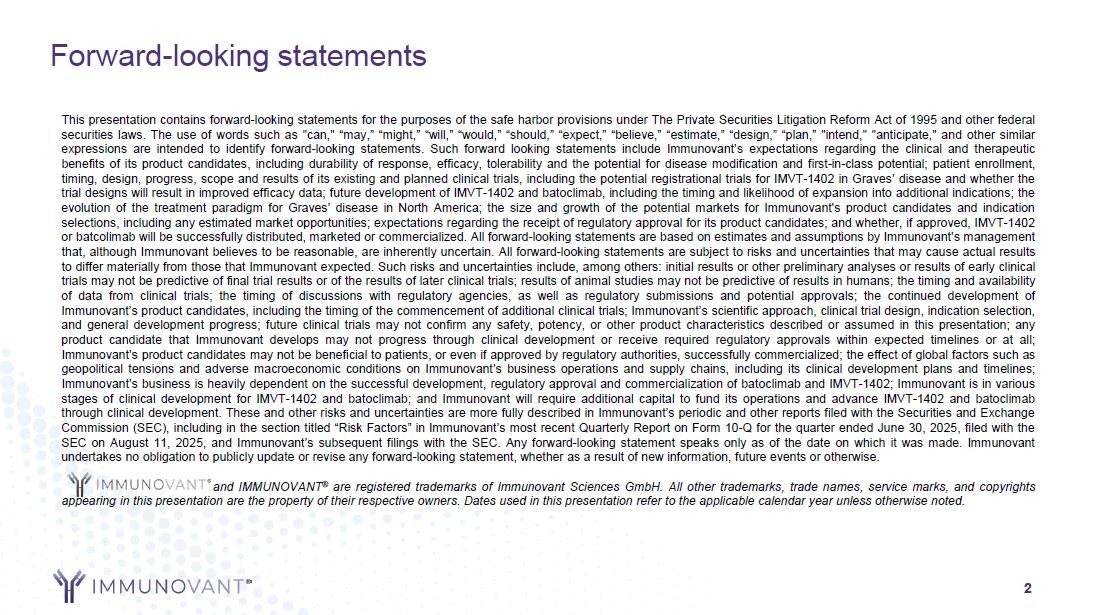
Forward-looking statements This presentation contains forward-looking statements for the purposes of the safe harbor provisions under The Private Securities Litigation Reform Act of 1995 and other federal securities laws. The use of words such as "can," “may,” “might,” “will,” “would,” “should,” “expect,” “believe,” “estimate,” “design,” “plan,” "intend," "anticipate," and other similar expressions are intended to identify forward-looking statements. Such forward looking statements include Immunovant’s expectations regarding the clinical and therapeutic benefits of its product candidates, including durability of response, efficacy, tolerability and the potential for disease modification and first-in-class potential; patient enrollment, timing, design, progress, scope and results of its existing and planned clinical trials, including the potential registrational trials for IMVT-1402 in Graves’ disease and whether the trial designs will result in improved efficacy data; future development of IMVT-1402 and batoclimab, including the timing and likelihood of expansion into additional indications; the evolution of the treatment paradigm for Graves’ disease in North America; the size and growth of the potential markets for Immunovant's product candidates and indication selections, including any estimated market opportunities; expectations regarding the receipt of regulatory approval for its product candidates; and whether, if approved, IMVT-1402 or batcolimab will be successfully distributed, marketed or commercialized. All forward-looking statements are based on estimates and assumptions by Immunovant’s management that, although Immunovant believes to be reasonable, are inherently uncertain. All forward-looking statements are subject to risks and uncertainties that may cause actual results to differ materially from those that Immunovant expected. Such risks and uncertainties include, among others: initial results or other preliminary analyses or results of early clinical trials may not be predictive of final trial results or of the results of later clinical trials; results of animal studies may not be predictive of results in humans; the timing and availability of data from clinical trials; the timing of discussions with regulatory agencies, as well as regulatory submissions and potential approvals; the continued development of Immunovant’s product candidates, including the timing of the commencement of additional clinical trials; Immunovant’s scientific approach, clinical trial design, indication selection, and general development progress; future clinical trials may not confirm any safety, potency, or other product characteristics described or assumed in this presentation; any product candidate that Immunovant develops may not progress through clinical development or receive required regulatory approvals within expected timelines or at all; Immunovant’s product candidates may not be beneficial to patients, or even if approved by regulatory authorities, successfully commercialized; the effect of global factors such as geopolitical tensions and adverse macroeconomic conditions on Immunovant’s business operations and supply chains, including its clinical development plans and timelines; Immunovant’s business is heavily dependent on the successful development, regulatory approval and commercialization of batoclimab and IMVT-1402; Immunovant is in various stages of clinical development for IMVT-1402 and batoclimab; and Immunovant will require additional capital to fund its operations and advance IMVT-1402 and batoclimab through clinical development. These and other risks and uncertainties are more fully described in Immunovant’s periodic and other reports filed with the Securities and Exchange Commission (SEC), including in the section titled “Risk Factors” in Immunovant’s most recent Quarterly Report on Form 10-Q for the quarter ended June 30, 2025, filed with the SEC on August 11, 2025, and Immunovant’s subsequent filings with the SEC. Any forward-looking statement speaks only as of the date on which it was made. Immunovant undertakes no obligation to publicly update or revise any forward-looking statement, whether as a result of new information, future events or otherwise. and IMMUNOVANT® are registered trademarks of Immunovant Sciences GmbH. All other trademarks, trade names, service marks, and copyrights appearing in this presentation are the property of their respective owners. Dates used in this presentation refer to the applicable calendar year unless otherwise noted. 2

3 First-ever potentially disease-modifying therapy for uncontrolled Graves’ disease patients Notes: Responders: Patients who have T3 and T4 values ≤ULN and no increase in ATD dose from baseline; ATD: Anti-thyroid drug. ~80% (17/21) of patients who entered off-treatment follow-up period demonstrated response at six months following end of batoclimab treatment Potential for Disease Modification Of the 17 responders, ~50% (8/17) achieved anti-thyroid drug (ATD) free remission at six months following end of batoclimab treatment Transformational Remission Observed Two potentially registrational trials for IMVT-1402 in Graves’ disease are currently enrolling with data expected in 2027

Background: Graves’ Disease 4

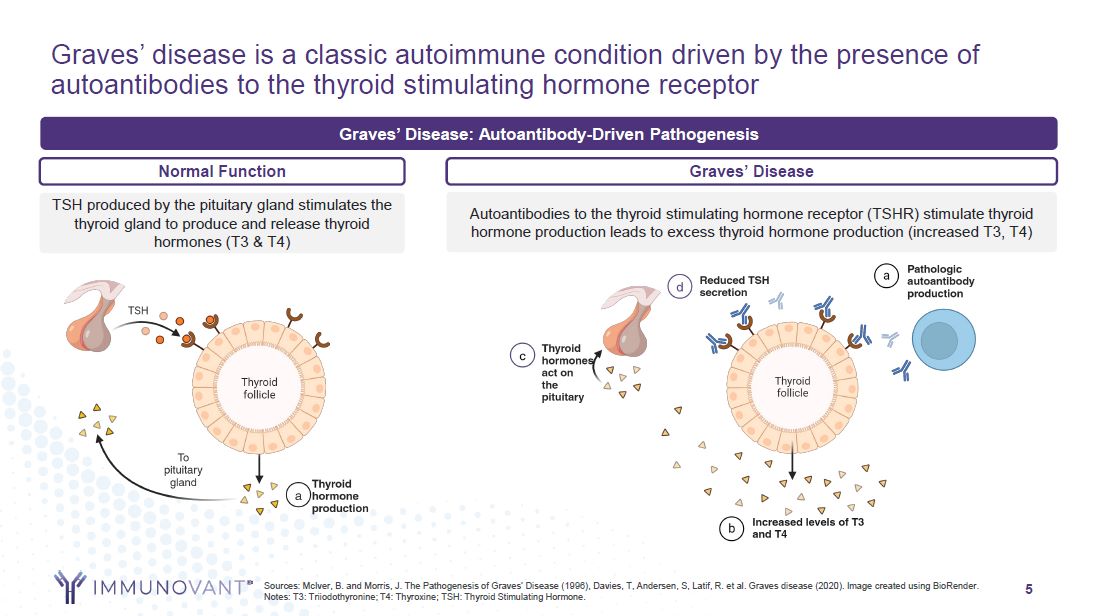
5 Graves’ disease is a classic autoimmune condition driven by the presence of autoantibodies to the thyroid stimulating hormone receptor Sources: McIver, B. and Morris, J. The Pathogenesis of Graves’ Disease (1996), Davies, T, Andersen, S, Latif, R. et al. Graves disease (2020). Image created using BioRender. Notes: T3: Triiodothyronine; T4: Thyroxine; TSH: Thyroid Stimulating Hormone. TSH produced by the pituitary gland stimulates the thyroid gland to produce and release thyroid hormones (T3 & T4) Autoantibodies to the thyroid stimulating hormone receptor (TSHR) stimulate thyroid hormone production leads to excess thyroid hormone production (increased T3, T4) Graves’ Disease: Autoantibody-Driven Pathogenesis Normal Function Graves’ Disease

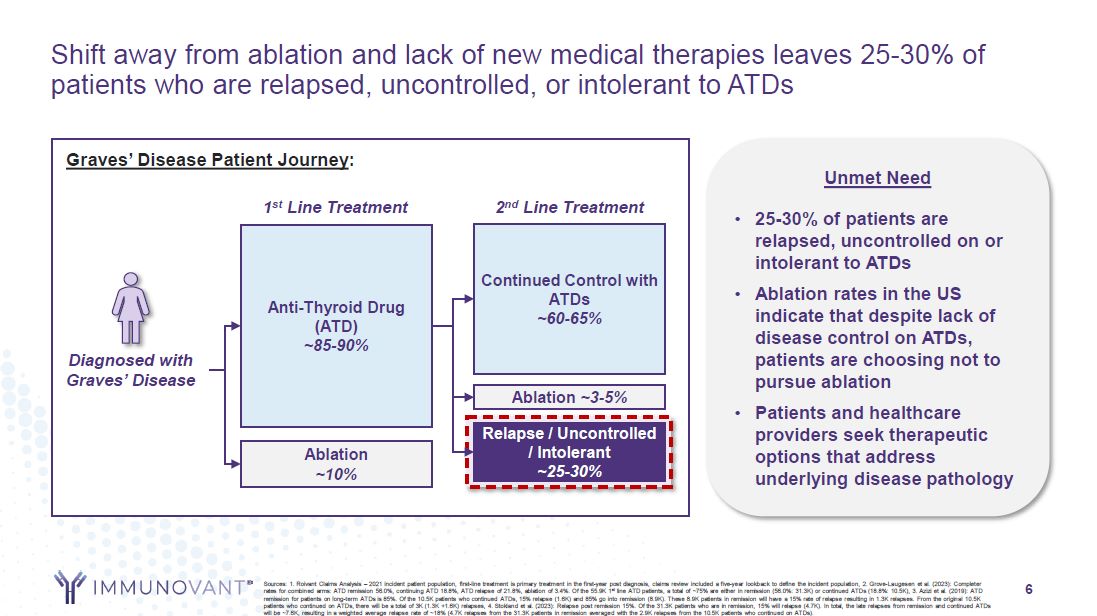
Shift away from ablation and lack of new medical therapies leaves 25-30% of patients who are relapsed, uncontrolled, or intolerant to ATDs Diagnosed with Graves’ Disease Anti-Thyroid Drug (ATD) ~85-90% Ablation ~10% Continued Control with ATDs ~60-65% Ablation ~3-5% Relapse / Uncontrolled / Intolerant ~25-30% 2nd Line Treatment Graves’ Disease Patient Journey: 1st Line Treatment Unmet Need 25-30% of patients are relapsed, uncontrolled on or intolerant to ATDs Ablation rates in the US indicate that despite lack of disease control on ATDs, patients are choosing not to pursue ablation Patients and healthcare providers seek therapeutic options that address underlying disease pathology 6 Sources: 1. Roivant Claims Analysis – 2021 incident patient population, first-line treatment is primary treatment in the first-year post diagnosis, claims review included a five-year lookback to define the incident population, 2. Grove-Laugesen et al. (2023): Completer rates for combined arms: ATD remission 56.0%, continuing ATD 18.8%, ATD relapse of 21.8%, ablation of 3.4%. Of the 55.9K 1st line ATD patients, a total of ~75% are either in remission (56.0%: 31.3K) or continued ATDs (18.8%: 10.5K), 3. Azizi et al. (2019): ATD remission for patients on long-term ATDs is 85%. Of the 10.5K patients who continued ATDs, 15% relapse (1.6K) and 85% go into remission (8.9K). These 8.9K patients in remission will have a 15% rate of relapse resulting in 1.3K relapses. From the original 10.5K patients who continued on ATDs, there will be a total of 3K (1.3K +1.6K) relapses, 4. Stokland et al. (2023): Relapse post remission 15%. Of the 31.3K patients who are in remission, 15% will relapse (4.7K). In total, the late relapses from remission and continued ATDs will be ~7.6K, resulting in a weighted average relapse rate of ~18% (4.7K relapses from the 31.3K patients in remission averaged with the 2.9K relapses from the 10.5K patients who continued on ATDs).

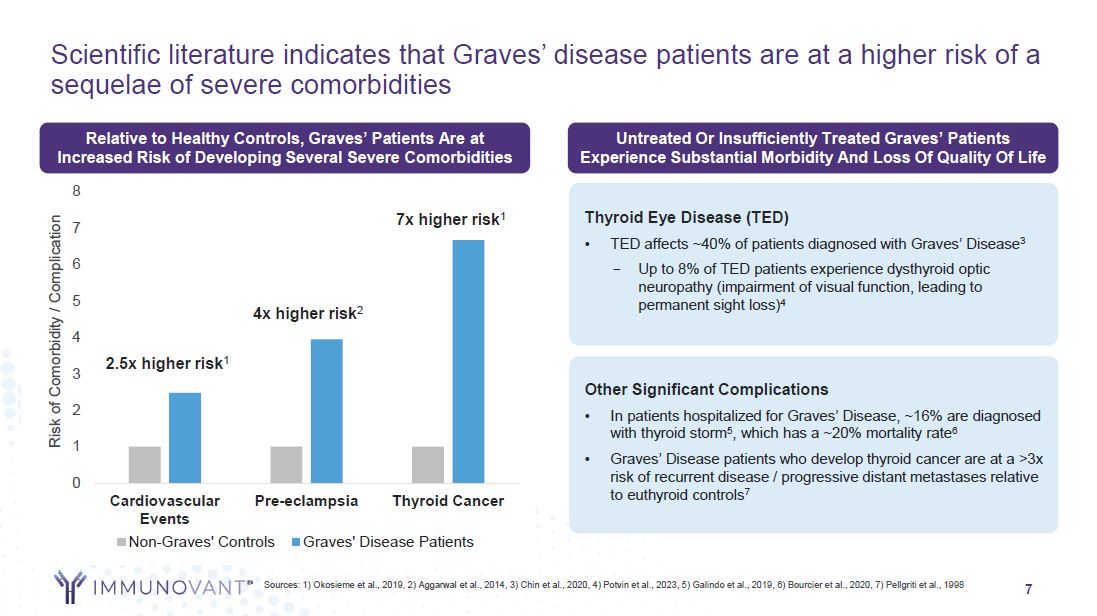
7 Scientific literature indicates that Graves’ disease patients are at a higher risk of a sequelae of severe comorbidities Sources: 1) Okosieme et al., 2019, 2) Aggarwal et al., 2014, 3) Chin et al., 2020, 4) Potvin et al., 2023, 5) Galindo et al., 2019, 6) Bourcier et al., 2020, 7) Pellgriti et al., 1998 0 1 2 3 4 5 6 7 Cardiovascular Events Pre-eclampsia Thyroid Cancer Risk of Comorbidity / Complication Non-Graves' Controls Graves' Disease Patients 7x higher risk1 4x higher risk2 2.5x higher risk1 Relative to Healthy Controls, Graves’ Patients Are at Increased Risk of Developing Several Severe Comorbidities 8 Untreated Or Insufficiently Treated Graves’ Patients Experience Substantial Morbidity And Loss Of Quality Of Life Thyroid Eye Disease (TED) TED affects ~40% of patients diagnosed with Graves’ Disease3 – Up to 8% of TED patients experience dysthyroid optic neuropathy (impairment of visual function, leading to permanent sight loss)4 Other Significant Complications In patients hospitalized for Graves’ Disease, ~16% are diagnosed with thyroid storm5, which has a ~20% mortality rate6 Graves’ Disease patients who develop thyroid cancer are at a >3x risk of recurrent disease / progressive distant metastases relative to euthyroid controls7

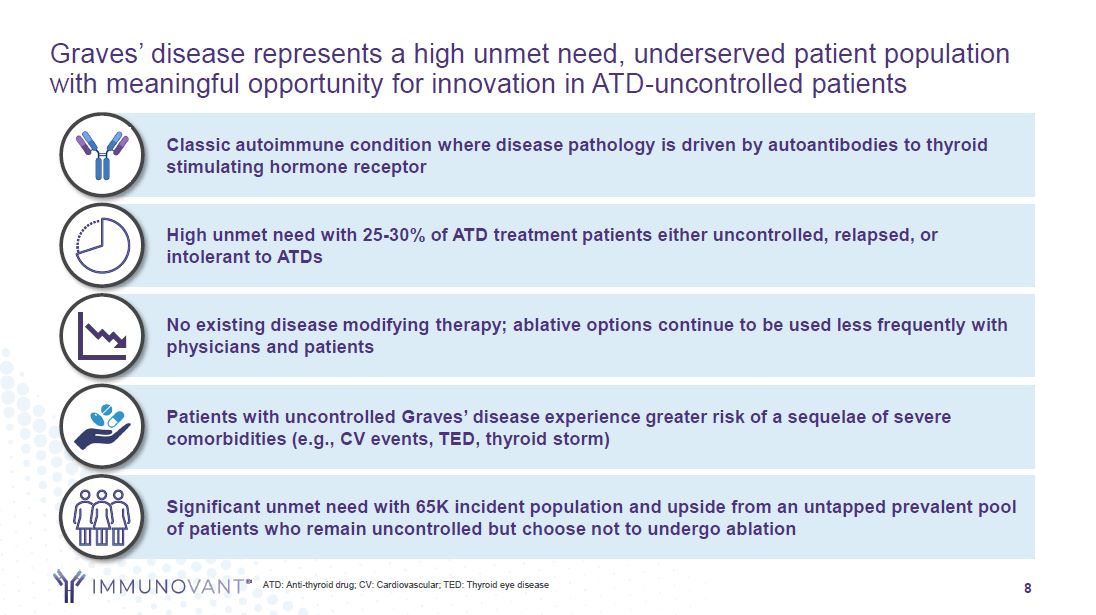
Classic autoimmune condition where disease pathology is driven by autoantibodies to thyroid stimulating hormone receptor High unmet need with 25-30% of ATD treatment patients either uncontrolled, relapsed, or intolerant to ATDs No existing disease modifying therapy; ablative options continue to be used less frequently with physicians and patients Patients with uncontrolled Graves’ disease experience greater risk of a sequelae of severe comorbidities (e.g., CV events, TED, thyroid storm) Significant unmet need with 65K incident population and upside from an untapped prevalent pool of patients who remain uncontrolled but choose not to undergo ablation 8 Graves’ disease represents a high unmet need, underserved patient population with meaningful opportunity for innovation in ATD-uncontrolled patients ATD: Anti-thyroid drug; CV: Cardiovascular; TED: Thyroid eye disease

Batoclimab Phase 2 Remission Data 9

10 Batoclimab Graves’ disease proof-of-concept study included a treatment period with a dose step-down, followed by an off-treatment follow-up period a: Additional inclusion and exclusion criteria not listed on slide; b. Excludes 3 patients who chose not to enter the follow-up period and 1 patient who discontinued during the 24-week treatment period; N=1 patient who discontinued during the treatment period but remained in off-drug follow up is included. ATD: Anti-thyroid drug; QW: Weekly; SC: Subcutaneous; LLN: Lower limit of normal; ATA: American Thyroid Association Annual Meeting; TSH-R-Ab: Thyroid Stimulating Hormone Receptor Antibodies; FT3: free triiodothyronine; FT4: free thyroxine Inclusiona Patients with active Graves’ disease as documented by presence of elevated stimulatory TSH-R-Ab Subjects hyperthyroid despite ATD therapy ATD Treatment: Stable ATD dose at screening Goal to taper ATD during treatment period Flexible ATD dosing Treatment Period: 24 weeks N = 25 Follow-up Period: 24 weeks N = 21b Key Endpoint: Proportion of patients who: Achieve normalization of T3 and T4 or have T3 / T4 below LLN, and Do not increase ATD dose Patients meeting these criteria defined as responders 680 mg batoclimab QW SC (Week 0-12) Step-down Off-Treatment (Week 24-48) 340 mg batoclimab QW SC (Week 12-24) Data presented in 2024 New data at ATA Primary Endpoint

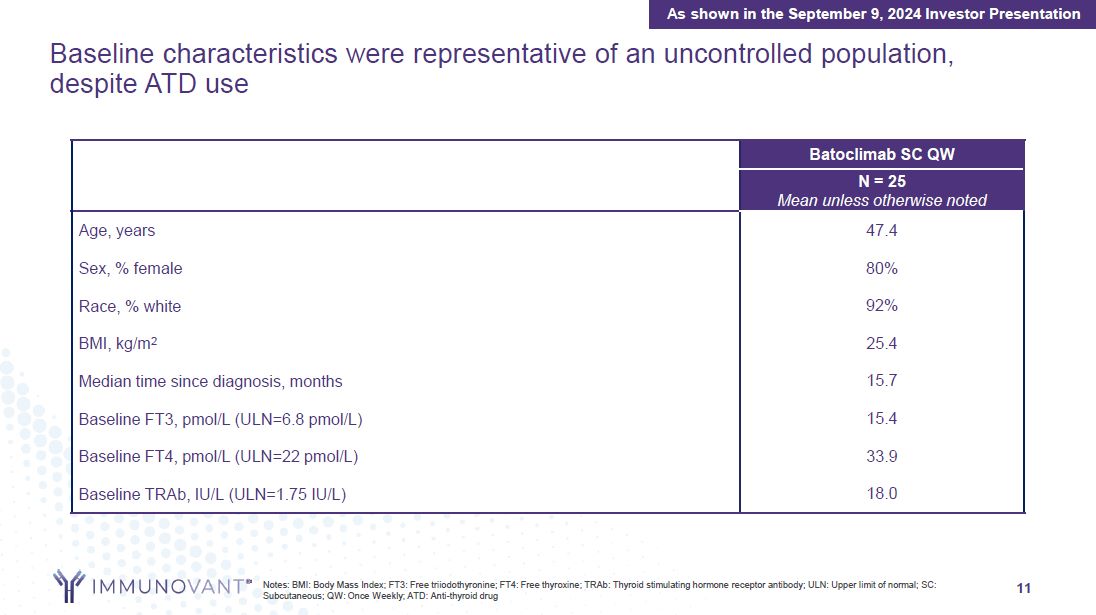
11 Baseline characteristics were representative of an uncontrolled population, despite ATD use Batoclimab SC QW N = 25 Mean unless otherwise noted Age, years 47.4 Sex, % female 80% Race, % white 92% BMI, kg/m2 25.4 Median time since diagnosis, months 15.7 Baseline FT3, pmol/L (ULN=6.8 pmol/L) 15.4 Baseline FT4, pmol/L (ULN=22 pmol/L) 33.9 Baseline TRAb, IU/L (ULN=1.75 IU/L) 18.0 As shown in the September 9, 2024 Investor Presentation Notes: BMI: Body Mass Index; FT3: Free triiodothyronine; FT4: Free thyroxine; TRAb: Thyroid stimulating hormone receptor antibody; ULN: Upper limit of normal; SC: Subcutaneous; QW: Once Weekly; ATD: Anti-thyroid drug

12 Potential for disease modification with batoclimab responders demonstrating strong durability of response through six months off-treatment at end of follow-up 25 Uncontrolled Graves’ disease patients Baseline Week 48 Patients off-drug for 24 weeksa,b Week 12 Pts receive 12 weeks of 680 mg QW batoclimaba Dose step-down Week 24 Pts receive 12 weeks of 340 mg QW batoclimaba 20/25 T3/T4 ≤ULN; ATD dose ≤Baseline 18/25 T3/T4 ≤ULN; ATD dose ≤Baseline 17/21 T3/T4 ≤ULN; ATD dose ≤Baselinec Notes: Responders: Patients who have T3 and T4 values ≤ULN and no increase in ATD dose from baseline. Pts: Patients; T3: Triiodothyronine; T4: Thyroxine; ULN: Upper limit of normal; ATD: Anti-thyroid drug. a. Includes N=1 patient who discontinued prior to Week 12 but remained in off-drug follow-up. b. Includes N=21 patients who entered follow-up period and could be assessed for remission. c. N=1 patient had T3/T4 ≤ULN, and one day following Week 48 visit had ATD dose equivalent to baseline. Strong durability of response despite being off-batoclimab for six months 340 mg batoclimab QW SC (Week 12-24) 680 mg batoclimab QW SC (Week 0-12) Treatment Period: 24 weeks Follow-up: 24 weeks Off-Treatment (Week 24-48)

13 ~50% of responders at Week 48 achieved ATD-free remission, demonstrating strong potential for disease modification by a high-dose FcRn 8 of 17 patients with normal T3/T4 at Week 48 were in ATD-free remission Notes: Responders: Patients who have T3 and T4 values ≤ULN and no increase in ATD dose from baseline. T3: Triiodothyronine; T4: Thyroxine; ULN: Upper limit of normal; ATD: Anti-thyroid drug; FcRn: Neonatal fragment crystallizable receptor inhibitor. a. Includes N=1 patient who discontinued prior to Week 12 but remained in off-drug follow-up. Week 48 17 T3/T4 ≤ULN ATD-Free (N=8)a 47% ATD 2.5 mg (N=5) 29% ATD >2.5 mg (N=4) 24% Week 48 13/17 responders on ATD doses ≤2.5 mg / day after six months off-treatment 680 mg 340 mg batoclimab QW batoclimab QW SC (Week 0-12) SC (Week 12-24) Treatment Period: 24 weeks Follow-up: 24 weeks Off-Treatment (Week 24-48)

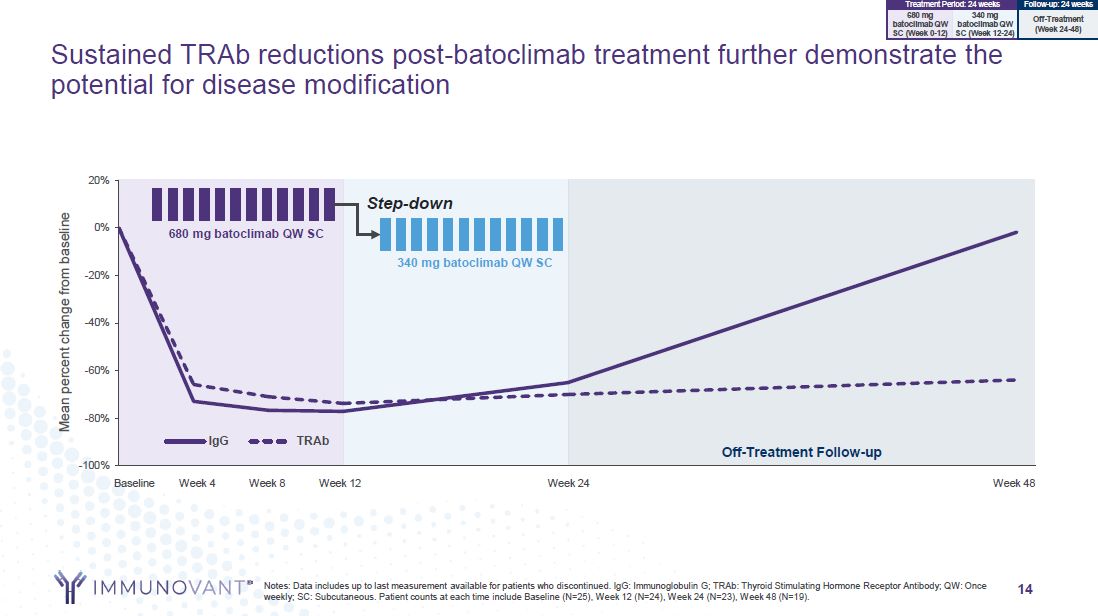
Off-Treatment Follow-up -100% -80% -60% -40% -20% 0% 20% IgG TRAb Mean percent change from baseline Baseline Week 4 Week 8 Week 12 Week 24 Week 48 340 mg batoclimab QW SC 680 mg batoclimab QW SC Step-down Sustained TRAb reductions post-batoclimab treatment further demonstrate the potential for disease modification 340 mg batoclimab QW SC (Week 12-24) 680 mg batoclimab QW SC (Week 0-12) Treatment Period: 24 weeks Follow-up: 24 weeks Off-Treatment (Week 24-48) Notes: Data includes up to last measurement available for patients who discontinued. IgG: Immunoglobulin G; TRAb: Thyroid Stimulating Hormone Receptor Antibody; QW: Once weekly; SC: Subcutaneous. Patient counts at each time include Baseline (N=25), Week 12 (N=24), Week 24 (N=23), Week 48 (N=19). 14

15 Batoclimab was well-tolerated with no new safety signals identified Batoclimab SC QW N = 25 n (%) Patients with any TEAE 25 (100) Patients with any Serious TEAE 1 (4) Patients with any Treatment-related Serious TEAE 0 Patients with any Treatment-related TEAE Leading to Study Drug Withdrawal 0 Patients with any TEAE Leading to Study Drug Dose Reduction or Interruption1 1 (4) Patients with any TEAE Leading to Study Discontinuation2 1 (4) Deaths 0 All treatment-related TEAEs were mild or moderate with no serious treatment-related TEAEs reported Notes: 1) Patient experienced moderate menstrual disorder that led to a missed dose. Patient resumed treatment the following week and completed 24 weeks of batoclimab treatment; 2) Patient underwent cholecystectomy due to pre-existing gallstones. Event was not related to study treatment. TEAE: Treatment emergent adverse event; SC: Subcutaneous; QW: Once Weekly As shown in the September 9, 2024 Investor Presentation

16 Potentially registrational IMVT-1402-2502 trial design is optimized based on Phase 2 batoclimab learnings and could result in improved disease modification Batoclimab Phase 2 IMVT-1402 Pivotal Trial (1 of 2 Potentially Registrational Trials Ongoing) 12W 340 mg SC QW 80% Responsea 72% Responsea 12W 680 mg SC QW Step-down in dose 24W off-drug ~50% Responders stay in Remission 26W placebo QW Notes: Responders: Patients who have T3 and T4 values ≤ULN and no increase in ATD dose from baseline. Batoclimab 680 mg has similar PK/PD properties to IMVT-1402 600 mg dose. a. Includes N=1 patient who discontinued prior to Week 12 but remained in off-drug follow-up. ATD: Anti-thyroid drug; SC: Subcutaneous; QW: Once weekly; W: Weeks; TRAb: T 14W 600 mg SC QW Stay at high dose – no step-down Group 2 12W 600 mg SC QW Similar to Phase 2 study Group 1 52W 600 mg SC QW No step-down in dose, stay at high dose for longer duration vs. Phase 2 TRAb responders

17 IMVT-1402 could potentially be the first-in-class disease-modifying therapy in Graves’ disease Remarkable effect seen in uncontrolled Graves’ disease patients: 18 of 25 patients treated with batoclimab are responders at Week 24 01 Durable off-drug response: Of the 21 patients who entered the off-drug follow-up period, 17 remain responders six months following batoclimab treatment 02 IMVT-1402 pivotal trial design could potentially generate improved efficacy data due to continuous 600 mg QW dosing vs. batoclimab’s step-down dosing design 04 Two potentially registrational trials for IMVT-1402 in Graves’ disease are currently enrolling 05 Notes: ATD: Anti-thyroid drug; QW: Once weekly. Data includes N=1 patient who discontinued prior to Week 12 but remained in off-drug follow-up. Responders: Patients who have T3 and T4 values ≤ULN and no increase in ATD dose from baseline. First-ever observed ATD-free remission in uncontrolled patients: 8 of 17 responders remain off all medications six months following batoclimab treatment demonstrating potential for disease modification 03

Appendix 18

19 Batoclimab demonstrated potentially transformational results in ATD-uncontrolled patients with greater response driven by higher IgG lowering Notes: a. Includes N=1 additional responder vs. September 2024 disclosure. Patient discontinued prior to Week 12 and was counted as a non-responder per protocol but was included by the PI in the ATA 2025 poster presentation, given they were a responder at time of discontinuation and continued through 6 month off-treatment follow-up period. ATD: Anti-thyroid drug; IgG: Immunoglobulin G; ATD: Anti-thyroid drug; T3: Triiodothyronine; T4: Thyroxine; LLN: Lower limit of normal. % of participants who achieve normal T3 and T4 or have T3 or T4 below LLN, without increase in ATD 80% Respondersa 72% Respondersa 77% Mean IgG Reduction 65% Mean IgG Reduction Week 24 (N = 18/25) 12 weeks 680 mg → 12 weeks 340 mg Week 12 (N = 20/25) 12 weeks 680 mg Treatment Period: (24 weeks) N = 25 680 mg batoclimab QW SC (Week 0-12) 340 mg batoclimab QW SC (Week 12-24)

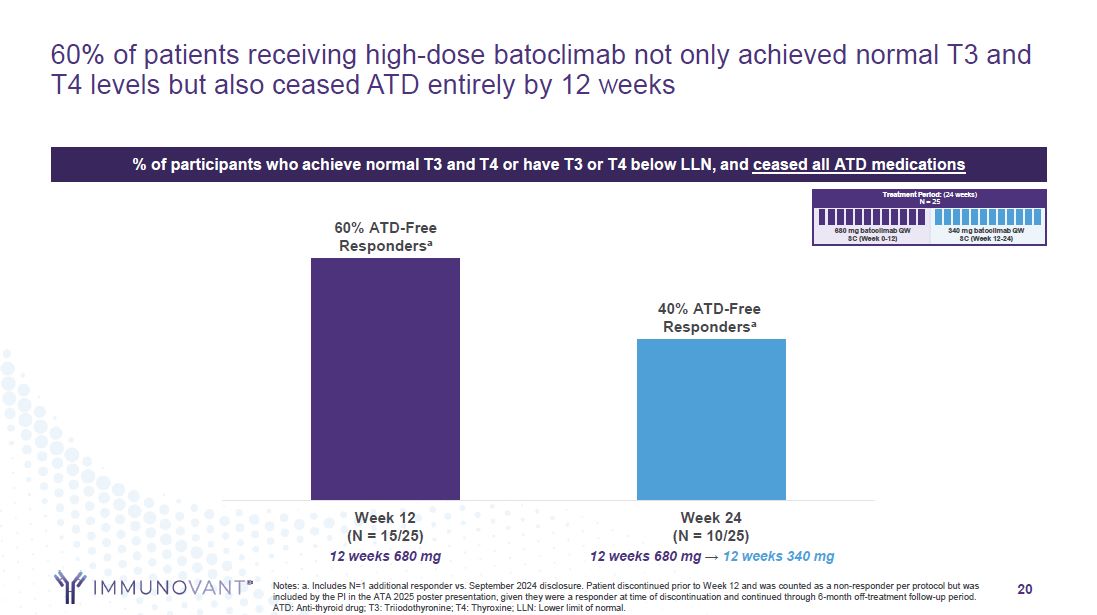
60% ATD-Free Respondersa 40% ATD-Free Respondersa 20 60% of patients receiving high-dose batoclimab not only achieved normal T3 and T4 levels but also ceased ATD entirely by 12 weeks Notes: a. Includes N=1 additional responder vs. September 2024 disclosure. Patient discontinued prior to Week 12 and was counted as a non-responder per protocol but was included by the PI in the ATA 2025 poster presentation, given they were a responder at time of discontinuation and continued through 6-month off-treatment follow-up period. ATD: Anti-thyroid drug; T3: Triiodothyronine; T4: Thyroxine; LLN: Lower limit of normal. Week 24 (N = 10/25) 12 weeks 680 mg → 12 weeks 340 mg Week 12 (N = 15/25) 12 weeks 680 mg Treatment Period: (24 weeks) N = 25 680 mg batoclimab QW SC (Week 0-12) 340 mg batoclimab QW SC (Week 12-24) % of participants who achieve normal T3 and T4 or have T3 or T4 below LLN, and ceased all ATD medications

21 Graves’ disease market opportunity includes annual incident opportunity and a significant untapped prevalent patient pool 5. 6. 8. 9. Roivant Claims Analysis – 2022 prevalent patient population based on a two-year lookback for diagnosis Of the 120K patients ablated, ~80K were ablated prior to 2021 and ~40K were ablated in 2021/2022 Azizi et al. (2019): Relapse rate was calculated as a weighted average considering relapse rate in patients on ATDs <18months is 53% compared to patients on ATDs >18months is 15%. Of the 570K patients treated with ATDs, ~470K are on ATDs <18months and ~100K are on ATDs for >18months. Rates have been applied proportionally. Bandai et al. (2019): Of the ~190K patients previously treated with ATDs and currently monitored off-therapy, ~40% experience relapse, which is 75K. Grove-Laugesen et al. (2023): 3.4% of ATD relapse patients will pursue ablation. 3.4% applied to the ~340K ATD treatment relapse patients is ~10K 1. Roivant Claims Analysis – 2021 incident patient population, first-line treatment is primary treatment in the first-year post diagnosis, claims review included a five-year lookback to define the incident population 2. Grove-Laugesen et al. (2023): Completer rates for combined arms: ATD remission 56.0%, continuing ATD 18.8%, ATD relapse of 21.8%, ablation of 3.4%. Of the 58K 1st line ATD patients, a total 7. 3. 4. of ~75% are either in remission (56.0%: 32.5K) or continued ATDs (18.8%: 10.9K) Azizi et al. (2019): ATD remission for patients on long-term ATDs is 85%. Of the 10.9K patients who continued ATDs, 15% relapse (1.6K) and 85% go into remission (9.3K). These 9.3K patients in remission will have a 15% rate of relapse resulting in 1.4K relapses. From the original 10.9K patients who continued on ATDs, there will be a total of 3K (1.4K +1.6K) relapses, Stokland et al. (2023): Relapse post remission 15%. Of the 42K patients who are in remission, 15% will relapse (6.3K). In total, the late relapses from remission and continued ATDs will be ~9.3K, resulting in a weighted average relapse rate of ~19% (6.3K relapses from the 32.5K patients in remission averaged with the 3K relapses from the 10.5K patients who continued on ATDs). Annual Market of 2nd Line Incident Uncontrolled Patients ~7K 1st Line Ablation ~34K Continued ATD Remission3,4 ~65K Annual Diagnosed & Treated U.S. Adult Population1 ~58K Receive 1st Line ATD1 ~20K ~2K Ablation2 Prevalent Pool of ATD Relapse Patients ~120K Ablation6 ~310K Continued ATD Remission ~880K Diagnosed U.S. Adult Population5 ~760K Treated with ATDs in 2021-2022 1st Line ATD ~330K ~10K Ablation9 Incident Graves’ Disease Patients Prevalent Graves’ Disease Patients

22 IMVT-1402 potentially registrational trial in Graves’ disease Treatment Period: 52 weeks N = 240 Randomization (1:1:1) Primary Endpoint at Week 26: Proportion of participants who become euthyroidb and stop ATD Key Secondary Endpoint at Week 52: Proportion of participants who become euthyroidb and stop ATD Design enables study of remission as upside Inclusiona Adults with active Graves’ disease as documented by presence of TSH- R binding autoantibodies (TRAb) Subjects on an ATD for ≥12 weeks before the Screening Visit Subjects who are hyperthyroid based on suppressed TSH despite ATD treatment Group 3 ATD titration to lowest effective dose (including 0 mg/day) to maintain euthyroidism Period 2 (26 weeks blinded treatment) Period 1 (26 weeks blinded treatment) Group 1 600 mg IMVT-1402 QW SC 600 mg IMVT-1402 QW SC Group 2 600 mg IMVT-1402 QW SC Placebo QW SC Placebo QW SC Placebo QW SC 600 mg IMVT-1402 QW SC Off-Treatment Follow-up (52 weeks) TRAb Responder? No Yes a: Additional inclusion and exclusion criteria not listed on slide; b. Euthyroid = T3/T4 and TSH within normal limits TSH: Thyroid-stimulating hormone; ATD: Antithyroid drugs; QW: Weekly; SC: Subcutaneous; T3 = triiodothyronine; FT3: free triiodothyronine; FT4: free thyroxine; ULN: upper limit of normal

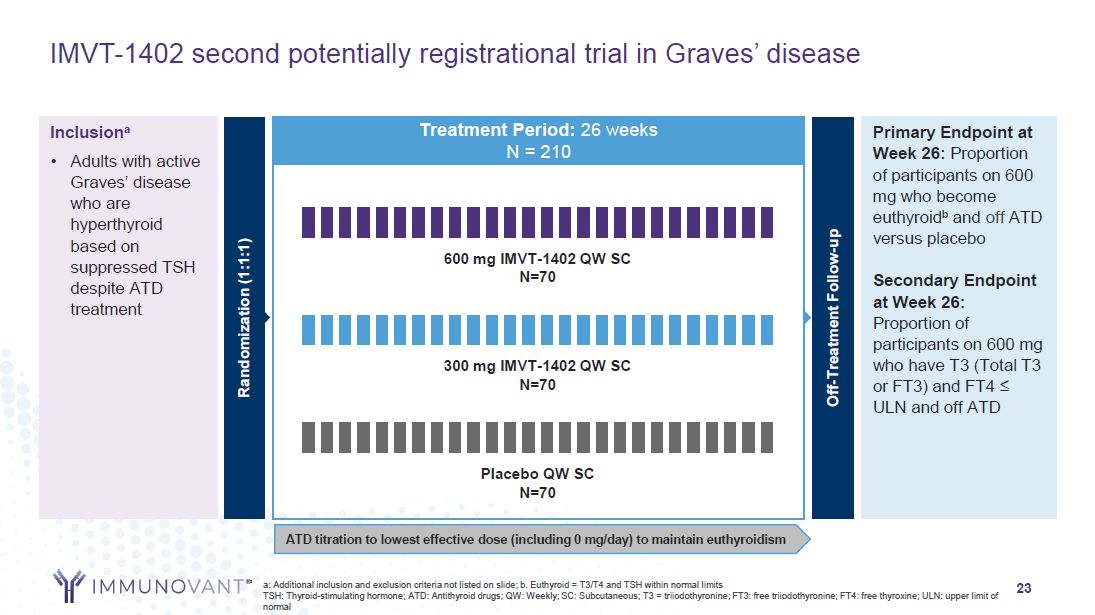
Primary Endpoint at Week 26: Proportion of participants on 600 mg who become euthyroidb and off ATD versus placebo Secondary Endpoint at Week 26: Proportion of participants on 600 mg who have T3 (Total T3 or FT3) and FT4 ≤ ULN and off ATD Inclusiona Adults with active Graves’ disease who are hyperthyroid based on suppressed TSH despite ATD treatment a: Additional inclusion and exclusion criteria not listed on slide; b. Euthyroid = T3/T4 and TSH within normal limits TSH: Thyroid-stimulating hormone; ATD: Antithyroid drugs; QW: Weekly; SC: Subcutaneous; T3 = triiodothyronine; FT3: free triiodothyronine; FT4: free thyroxine; ULN: upper limit of normal Placebo QW SC N=70 600 mg IMVT-1402 QW SC N=70 300 mg IMVT-1402 QW SC N=70 23 IMVT-1402 second potentially registrational trial in Graves’ disease Randomization (1:1:1) Treatment Period: 26 weeks N = 210 Off-Treatment Follow-up ATD titration to lowest effective dose (including 0 mg/day) to maintain euthyroidism