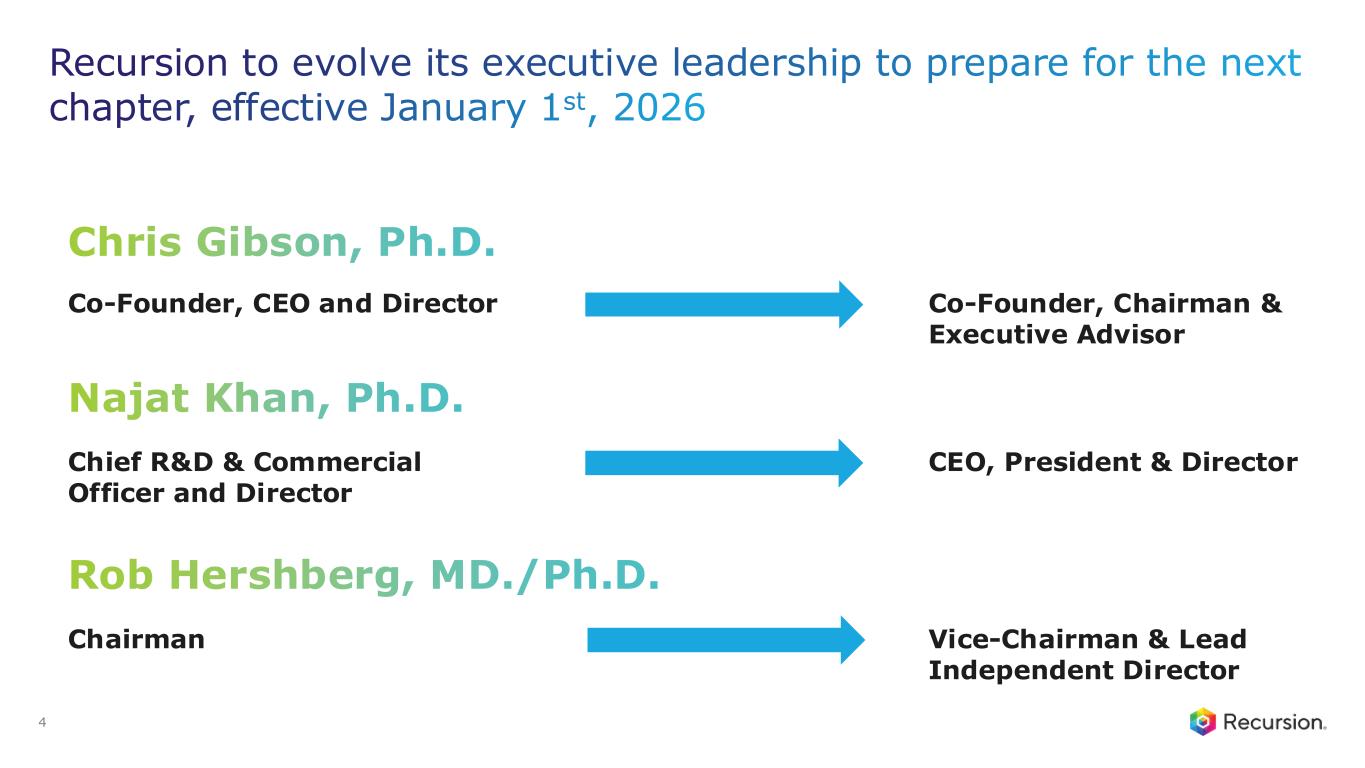
Hello, everybody, and welcome to Recursion's Third Quarter 2025 earnings Call. My name is Chris Gibson. I'm the Co-Founder and current CEO of Recursion, and I'm so delighted to have you all joining us today. I want to start off by talking about something that I'm really excited about, which is our executive leadership updates. And it's my pleasure to share with all of you that beginning January 1, the amazing Najat Khan is going to take over the role of CEO, President and Director of Recursion. I've been working with Najat for the past 18 months in an incredible partnership to build our platform to deliver on our pipeline and our partnerships. And everything that I have seen has convinced me that she is absolutely the right leader to take Recursion through its next chapter. And I'm so delighted that she has agreed to take on that role. I'm also incredibly excited that I'm going to continue bringing my passionate, unapologetic founder energy to Recursion as the Chairman of the Board and as an Executive Adviser. And finally, I want to say a huge thank you to our entire Board and especially to our Chairman, Rob Hershberg. He's been an amazing Chair and an incredible mentor to myself and Najat, and I am delighted that he's going to continue on with us, I hope, for a very long time as our Vice Chairman and Lead Independent Director. These are really exciting changes that I believe are going to position Recursion to affect our mission to lead the Tech-Bio space, and I am so, so thrilled to get to share them with you today. Najat?
Thank you, Chris. It is truly an honor to take on the role of CEO and President of Recursion. I want to express my gratitude to you, the Board, and our amazing team for their trust and support. Chris, I want to start by acknowledging your vision and the courage you have shown in growing Recursion from the ground up. Your contributions have not only been vital in building the company but also in creating an entirely new sector that merges technology and science to develop medicines and substantially improve patients' lives. There is still a lot to accomplish, and I am extremely thankful for your leadership and the friendship that I look forward to strengthening as we collaborate in your various roles. Since I joined Recursion 18 months ago, I have been inspired by our ambitious goals and the action we have taken to achieve them. This period has been marked by pivotal developments, including our partnership with Excientia to construct our end-to-end tech stack and generate critical high-quality proprietary data, which serves as a strong competitive advantage. Additionally, we have made significant strides in building our clinical technology platform and are currently in the clinic. This is an essential aspect of our work, and we are advancing several programs both internally and with our partners, which Chris will elaborate on, particularly regarding our updates with Roche. We approach these initiatives with the discipline and urgency necessary for the benefit of patients. This is a crucial moment for Recursion that requires a focused approach. While our boldness will remain, we must also navigate the complexities inherent in drug discovery and development. Having witnessed these challenges over many years, I understand the necessity of a relentless urgency and sound capital management to achieve our mission. My attention in the upcoming weeks will be on translating our platform insights into consistent clinical proof, whether through our proprietary programs or collaborations, while scaling our platform effectively, where we have a distinct advantage. The foundation we have built is robust, our vision is well-defined, and the opportunities ahead are phenomenal, and I couldn't be more enthusiastic. The tasks will be demanding, and I recognize that there will be challenges along the way, but the pursuit is worthwhile as we embark on unprecedented work that holds great significance for the patients we serve and the future we are creating together. I am thrilled for what lies ahead and proud of the next phase. I look forward to partnering with Chris and our exceptional team to shape the future direction of Recursion.
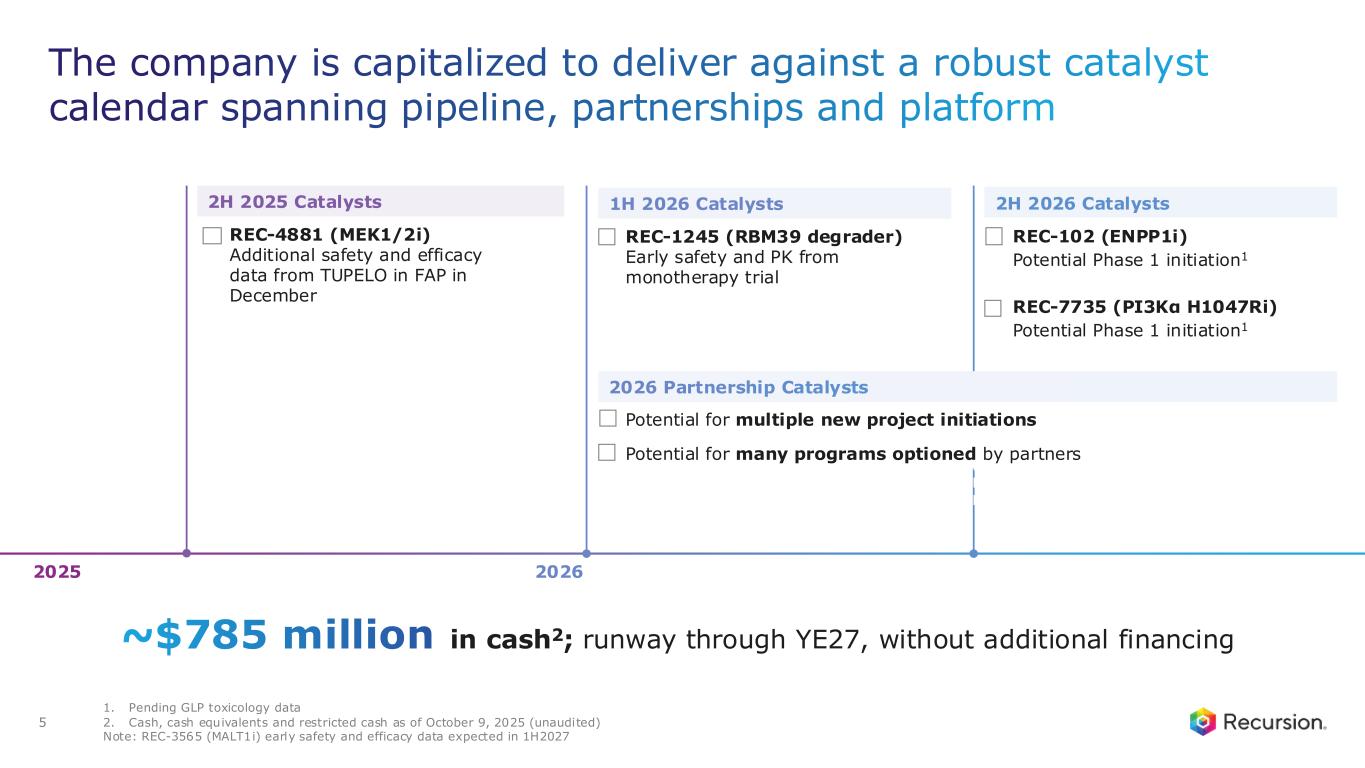
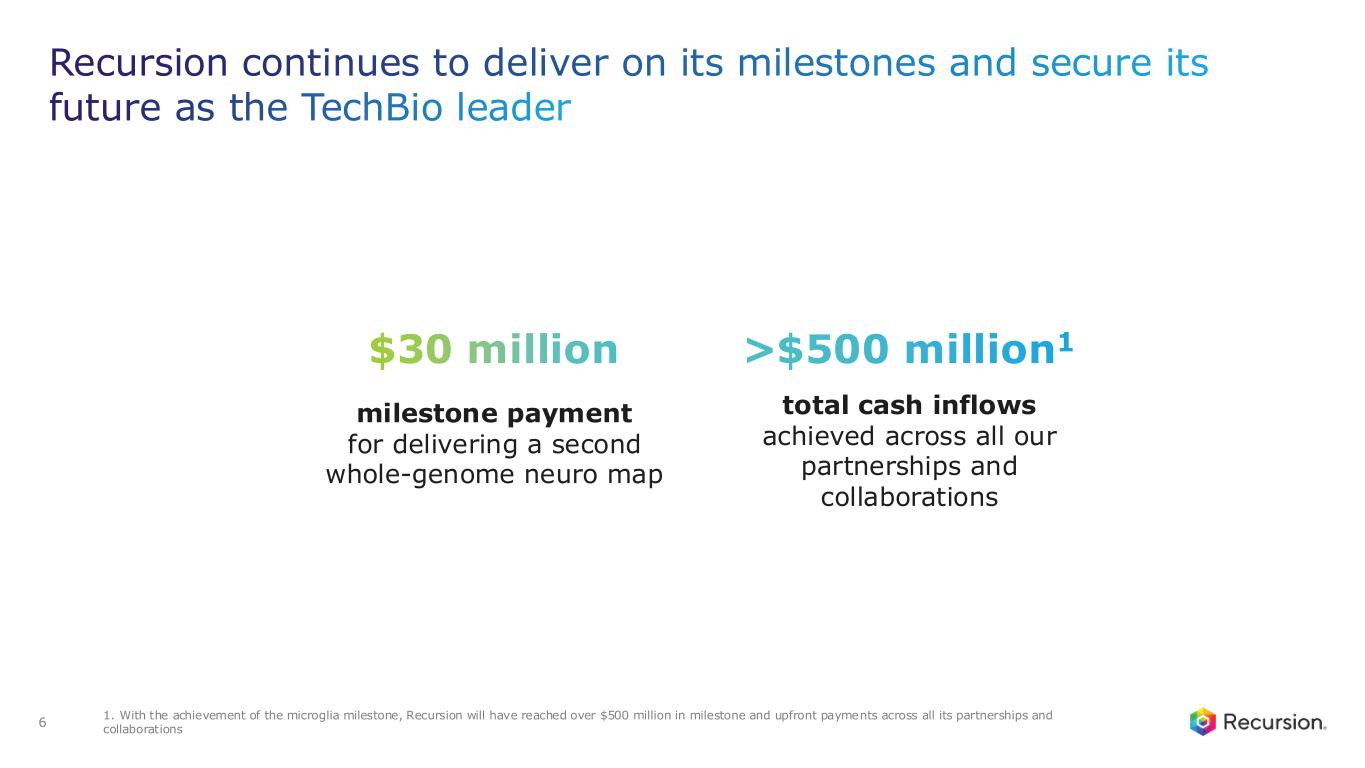
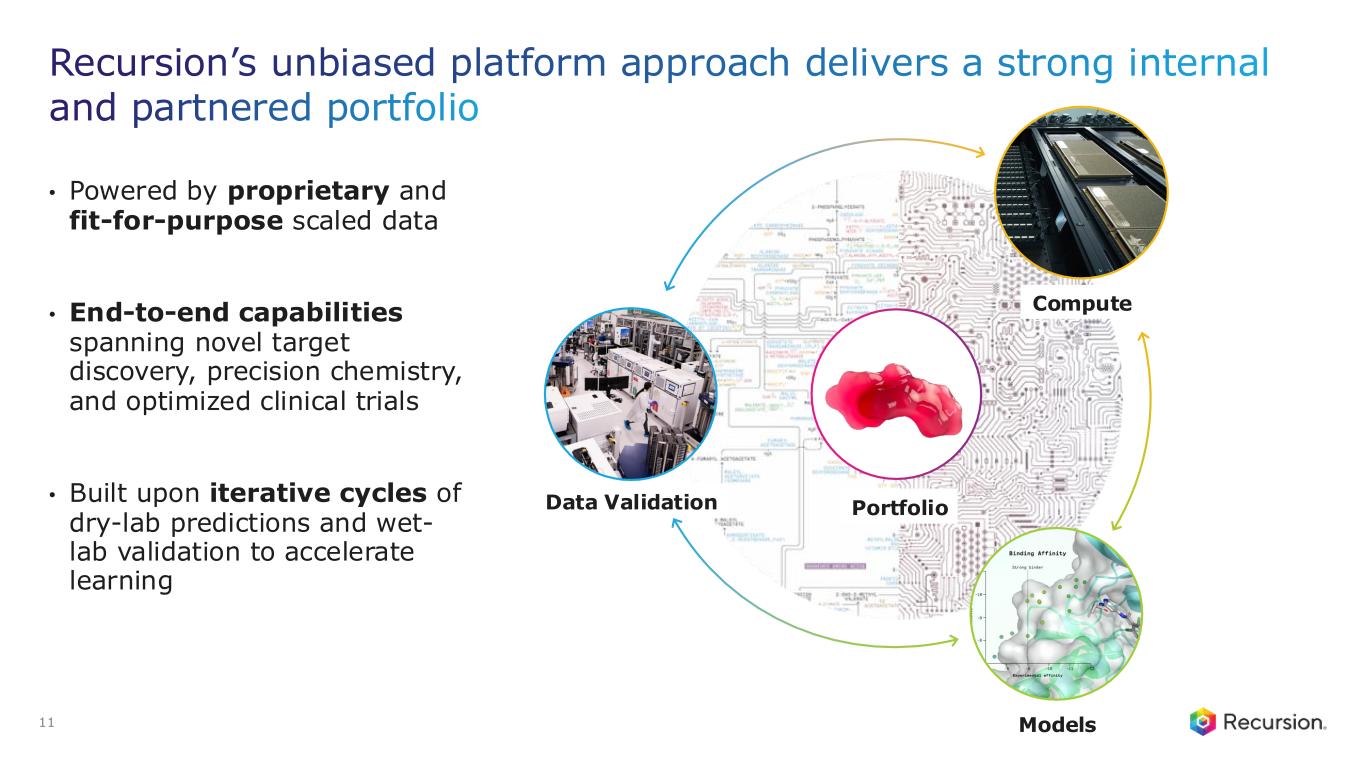
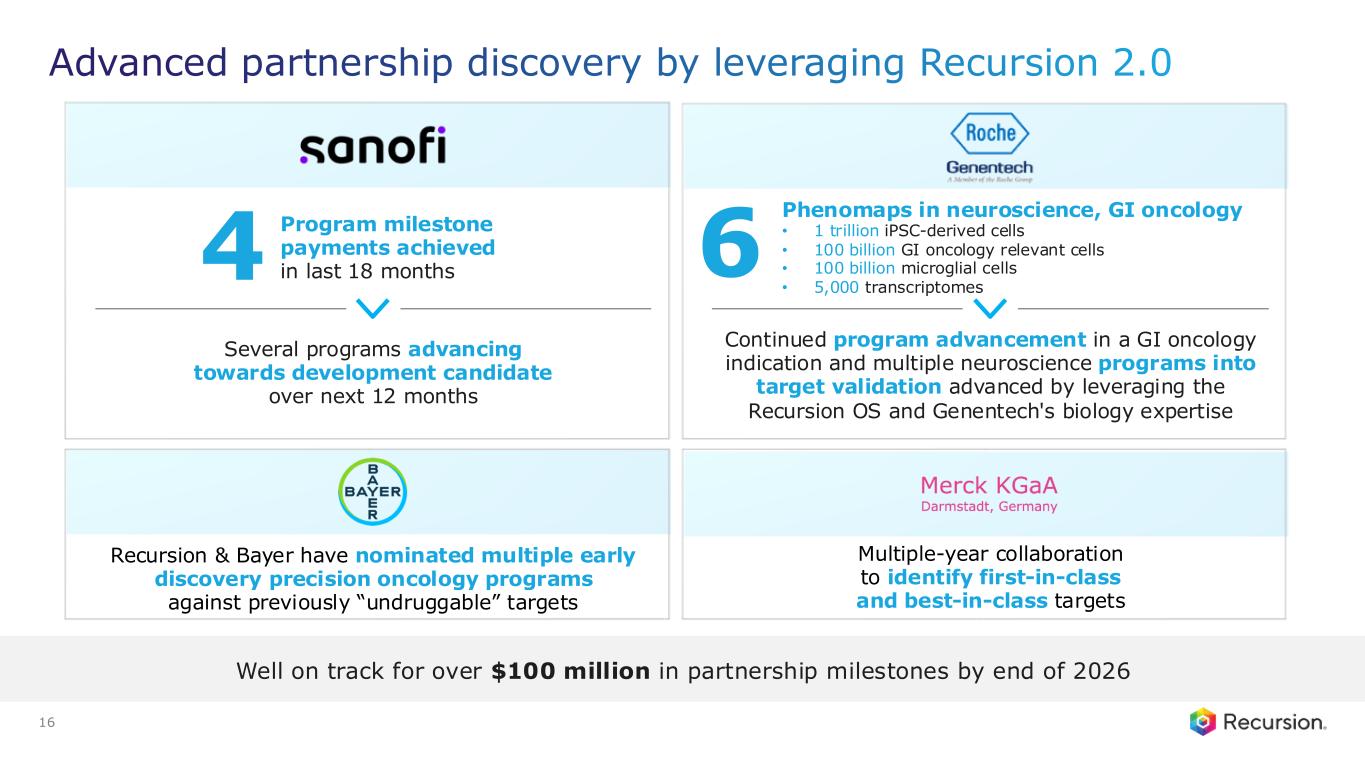
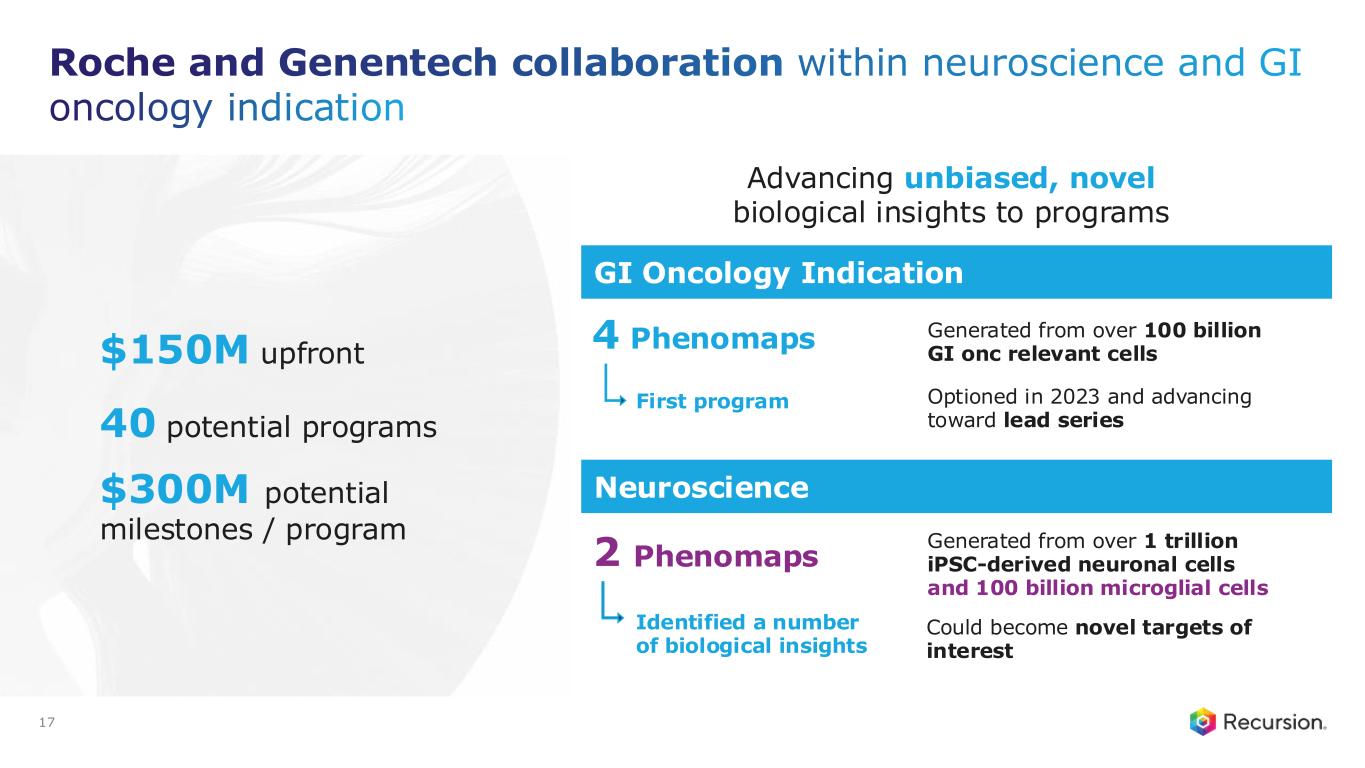
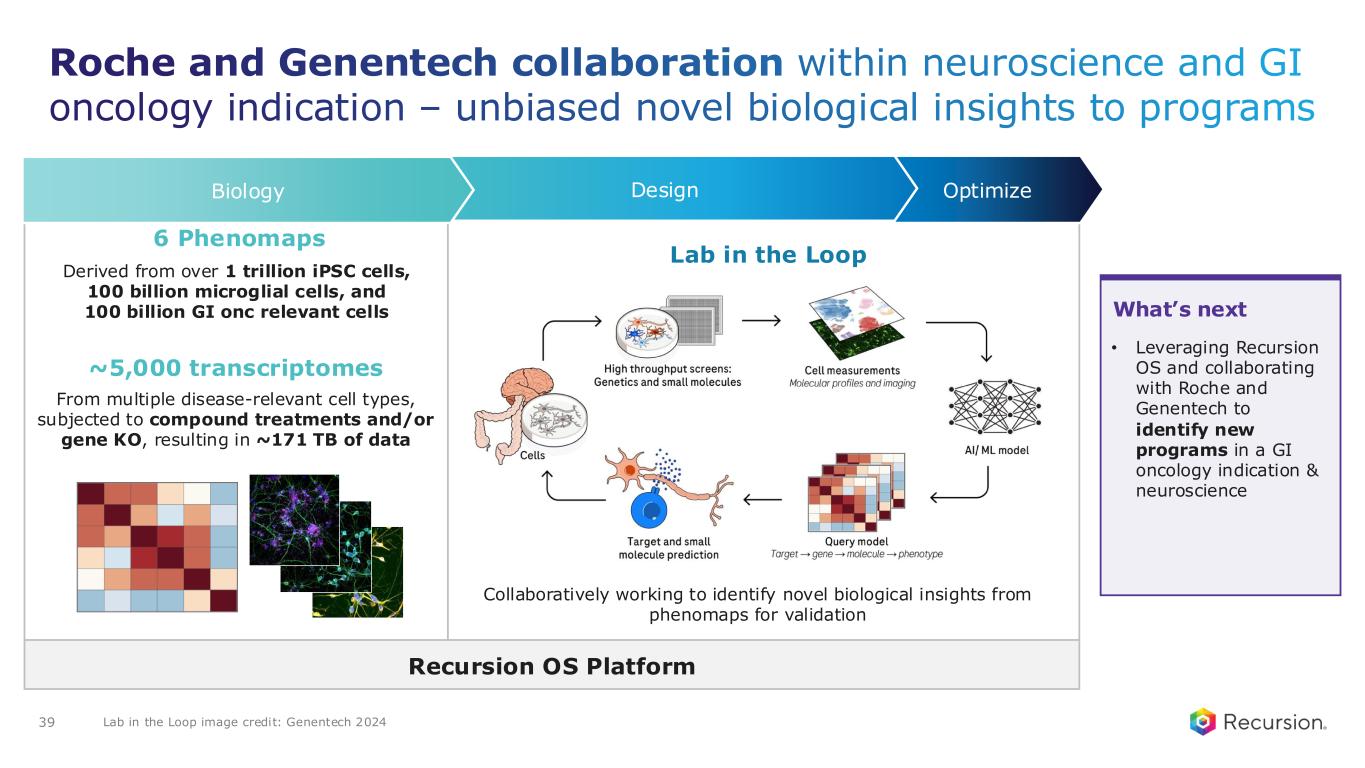
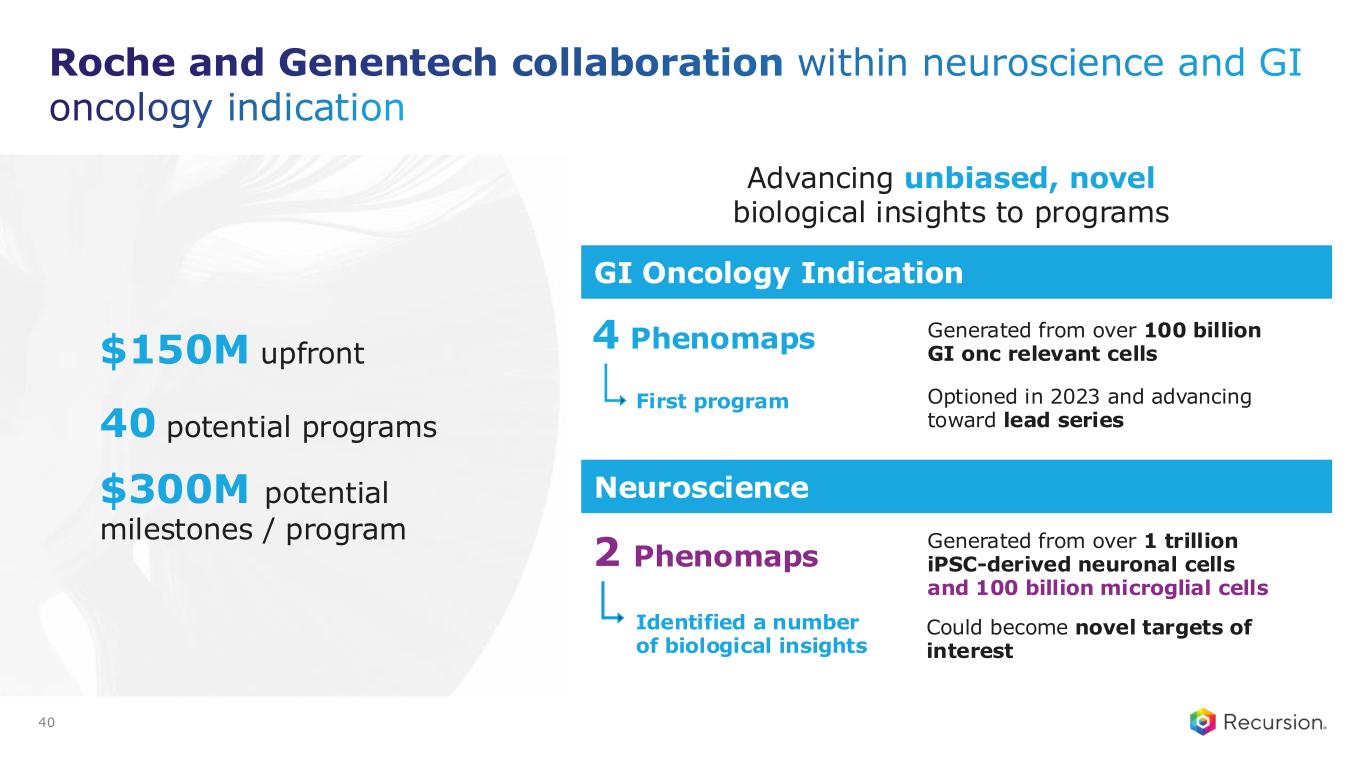
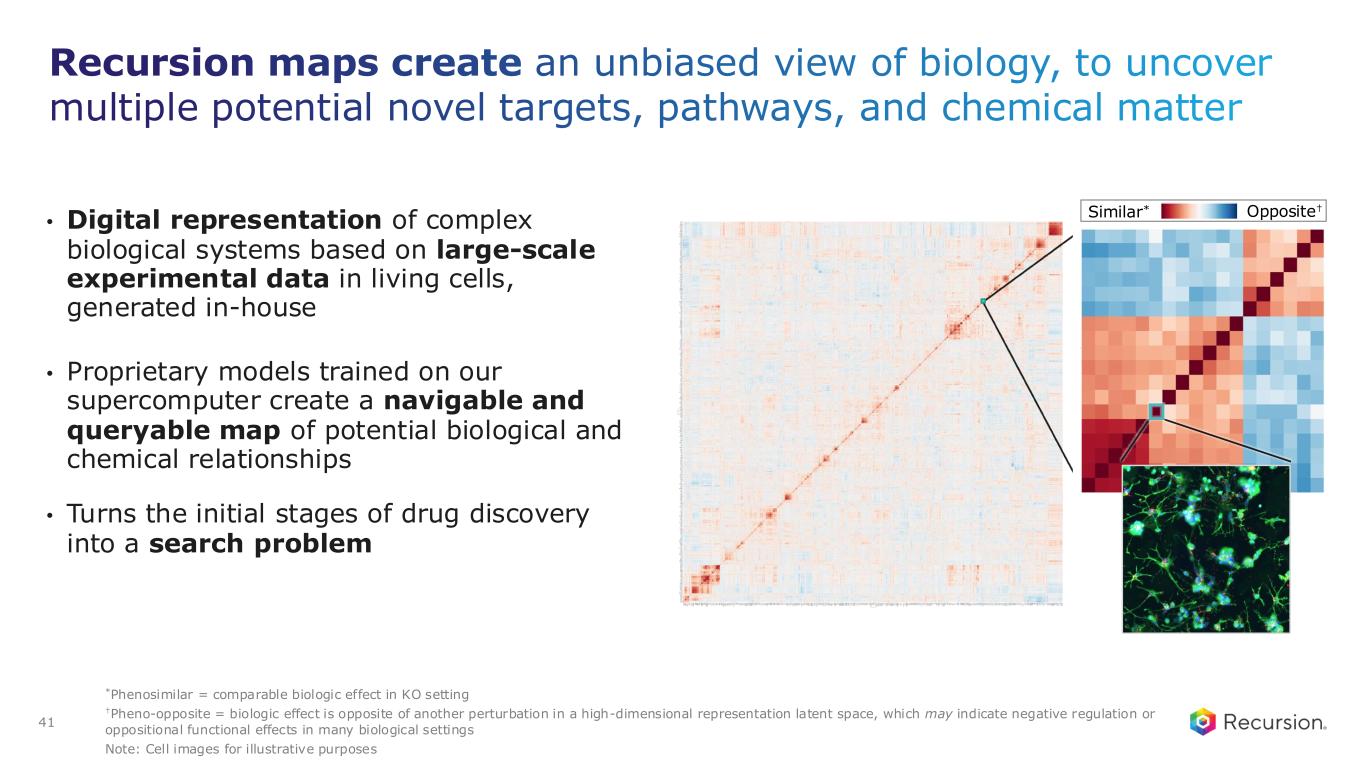
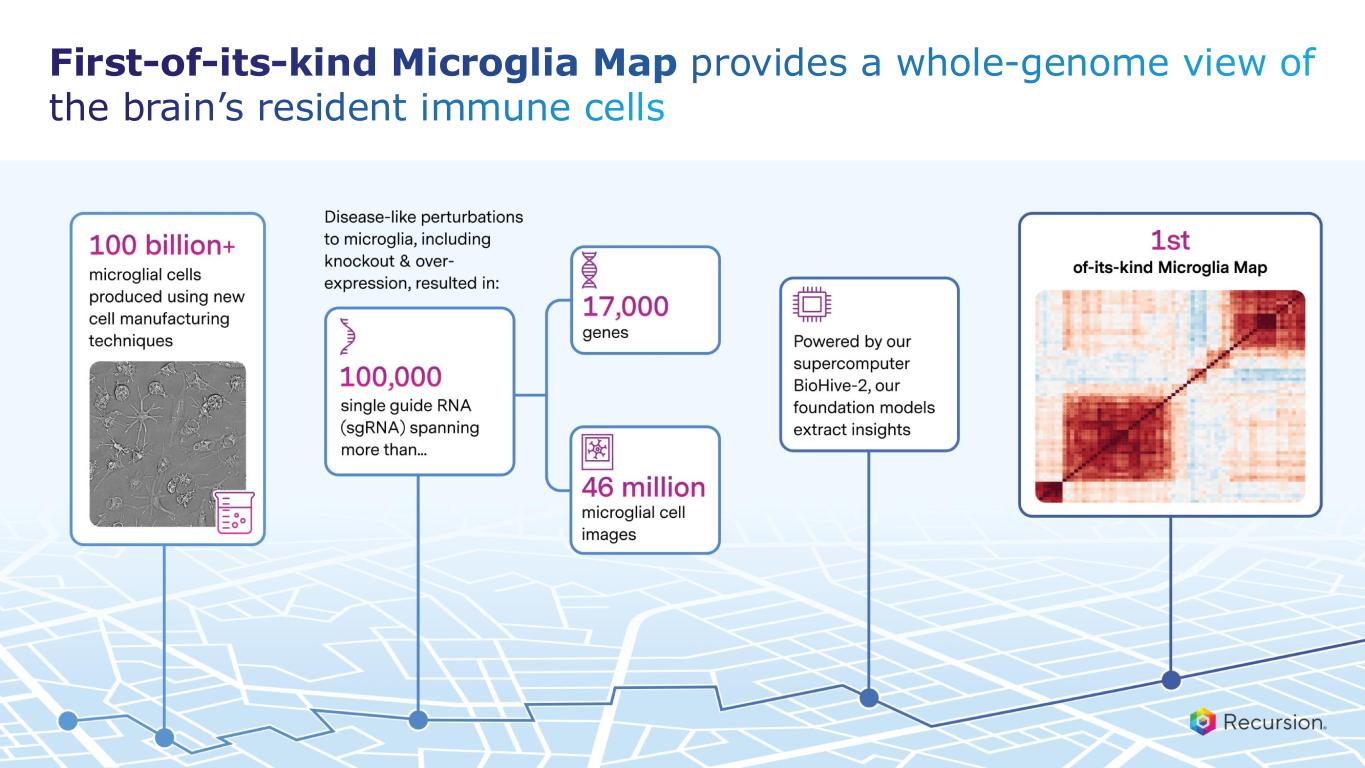
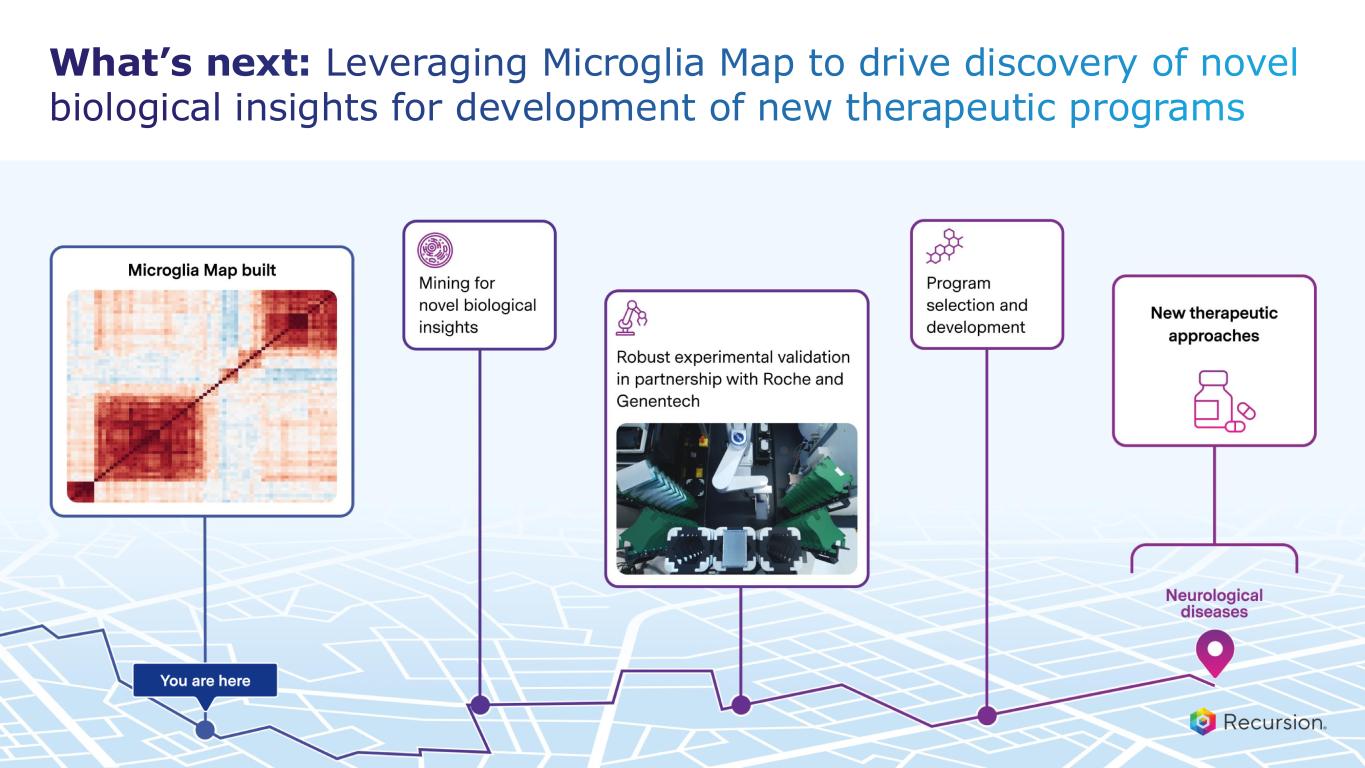
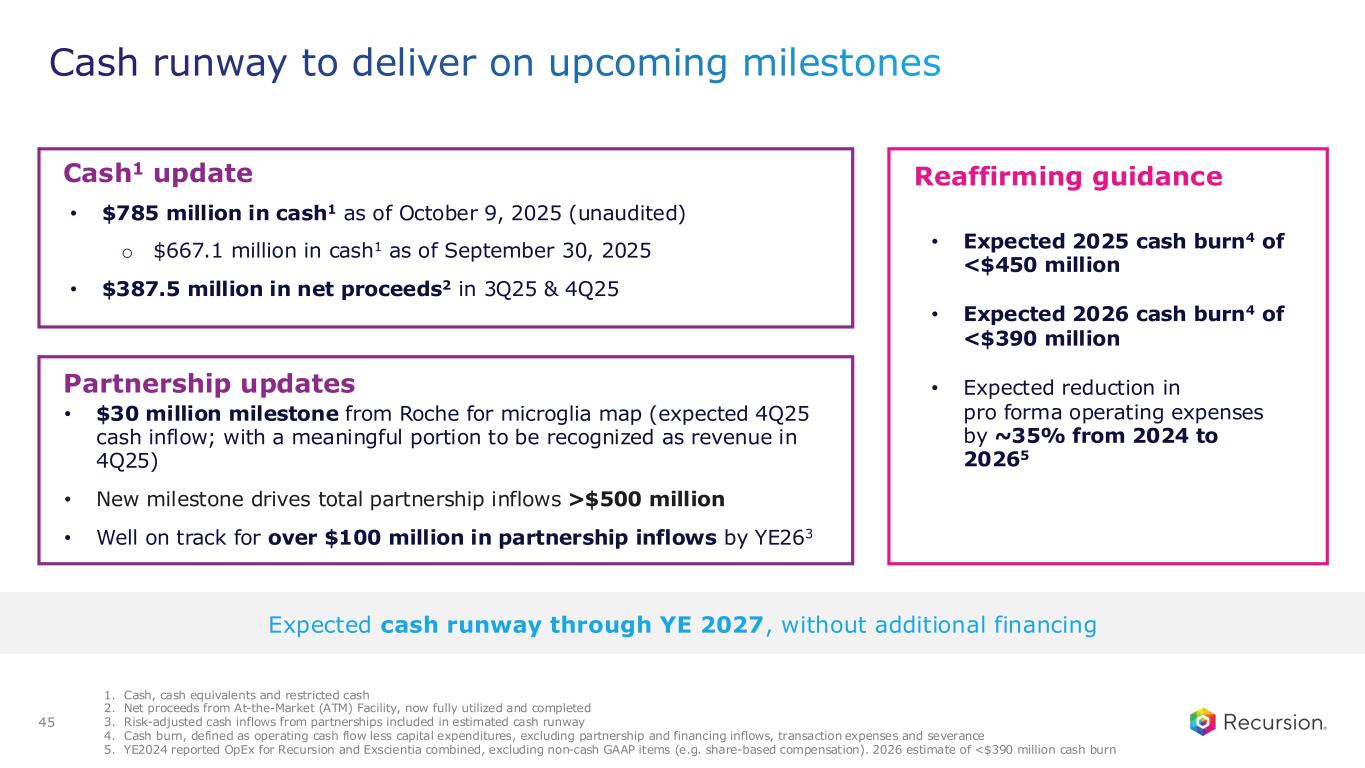
Thanks, Najat. And with that out of the way, I think we should get back to work. And one of the things that I'm extremely excited about is that Recursion has a tremendous amount of potential catalysts coming in the next 18 months. From our pipeline to our partnerships to advancements of our platform, we are going to continue to deliver exciting updates, I hope, on a really regular cadence to all of our shareholders, all of our stakeholders and ultimately, advancements and milestones that I think take us on a path towards really affecting patient lives. And we're going to do all of that with a pro forma cash balance of almost $800 million as of a few weeks ago. And what I'm excited about is that gives us runway through the end of 2027 without any additional financing. This means we're in an incredibly robust position from a balance sheet perspective to deliver across all of these catalysts. Now let me talk a little bit about something that was really exciting that we got to share last week, which is how our platform is fueling all of our partners, but in particular, our Roche and Genentech colleagues. We shared last week that we had earned a $30 million milestone payment. This is our second such milestone from Roche and Genentech for the delivery of a whole genome neuro map. And I want to point out that this brings our total cash inflows from partnerships to more than $0.5 billion. And I think that is a milestone that few pre-commercial biotech companies ever achieved and one that I think is a leading indicator of the kind of value that we are going to continue to deliver here at Recursion. So let's talk a little bit about the Roche and Genentech collaboration. This is a collaboration that's a decade-long focus in neuroscience and GI oncology. We've already been able to deliver 4 whole genome phenom maps in our GI oncology space, generating over 100 billion GI oncology relevant cells. And we already have a program that's been optioned out of that particular set of maps and heading toward lead series, and I hope many more in the future as well. But what we announced last week was that in addition to the whole genome arrayed CRISPR knockout map of iPSC-derived neurons that we delivered last year, where we became, we believe, one of, if not the world's largest producers of these iPSC-derived neuronal cells. We have now delivered a second whole genome map this time in the incredibly challenging microglial cells, the immune cells of our brain. And what we are excited about is the number of incredibly novel potential targets that we have identified in both of these pheno maps that we believe have real potential not only to lead to novel target options in the future with our colleagues at Roche and Genentech, but I hope really meaningful medicines for patients in the field of neuroscience where all of us agree, there's a lot, a lot of work to do. I want to discuss this work further and clarify what I mean by a map of biology. We have effectively knocked out nearly every gene in the genome within microglial cells and utilized machine learning and AI techniques to transform images of these cells into functional maps showing the relationships between every single gene. These digital maps enable us to transition from a traditional one-at-a-time approach to a more comprehensive search function. Now, our colleagues at Roche and Genentech can simply enter any gene into the microglial map or the iPSC-derived neuronal map and observe the connections across the entire genome. This provides us with significant insights and introduces new pathways and targets. It's particularly important for our teams to achieve this not only in neurons but also in the brain's immune cells. We are very excited about this progress, and I know our colleagues at Roche and Genentech share that excitement. To give you an idea of the journey we've taken to reach this point, many did not believe it would be feasible. Our team had to create over 100 billion microglial cells and develop a method to introduce more than 100,000 different sgRNAs into these cells to knock out over 17,000 genes, using multiple guides for each gene, ultimately generating nearly 50 million microglial cell images. We utilized our supercomputer, BioHive-2, which we still believe to be the fastest supercomputer fully owned by any biopharma company, at least for the next few weeks or months until Lilly may surpass us, to create this groundbreaking microglial map. From this map, we have already begun exploring novel biological insights, and we possess the team, equipment, and expertise to validate these insights and develop programs to share with our Roche and Genentech colleagues. Our hope is that this will lead to new therapeutic approaches. I am extremely proud of the team's efforts in producing this map, as it holds remarkable potential in neuroscience. Now, I will hand it over to Najat to discuss how our platform is supporting our pipeline.
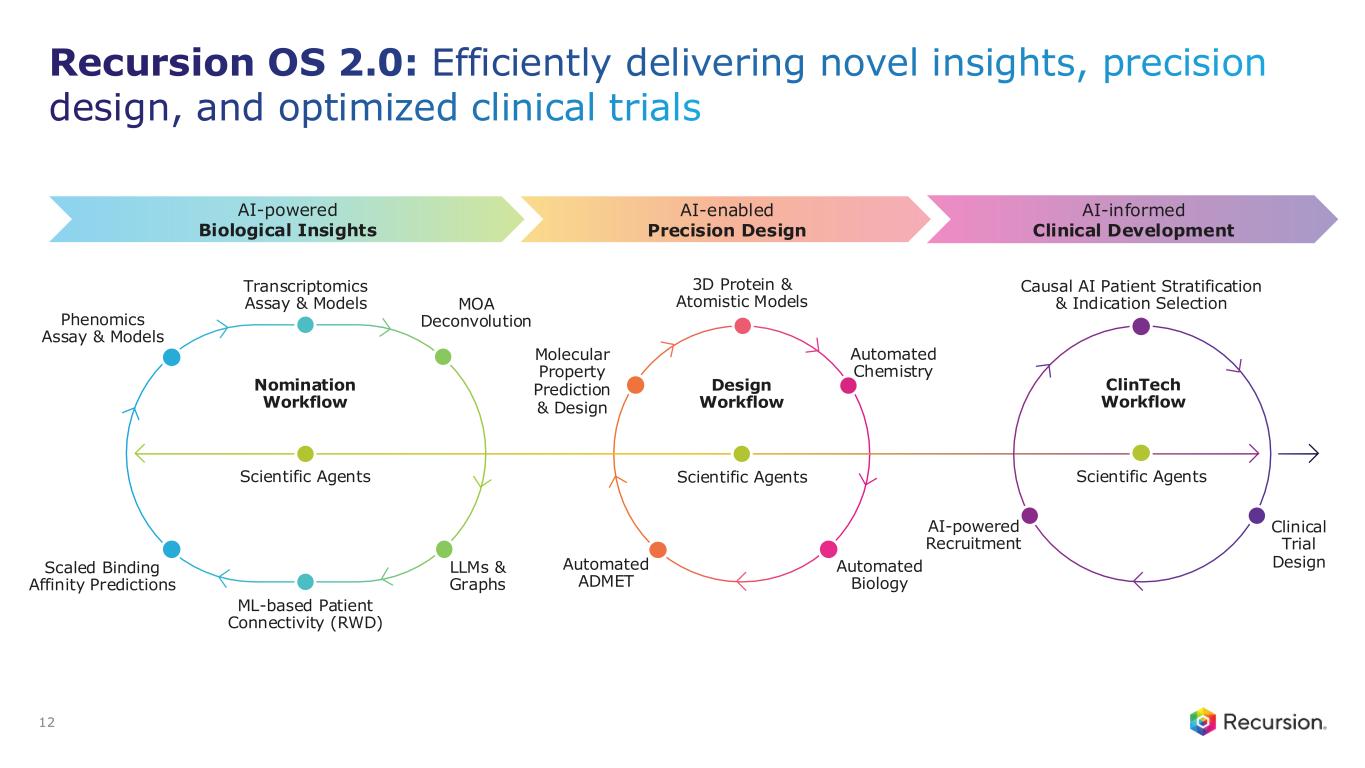
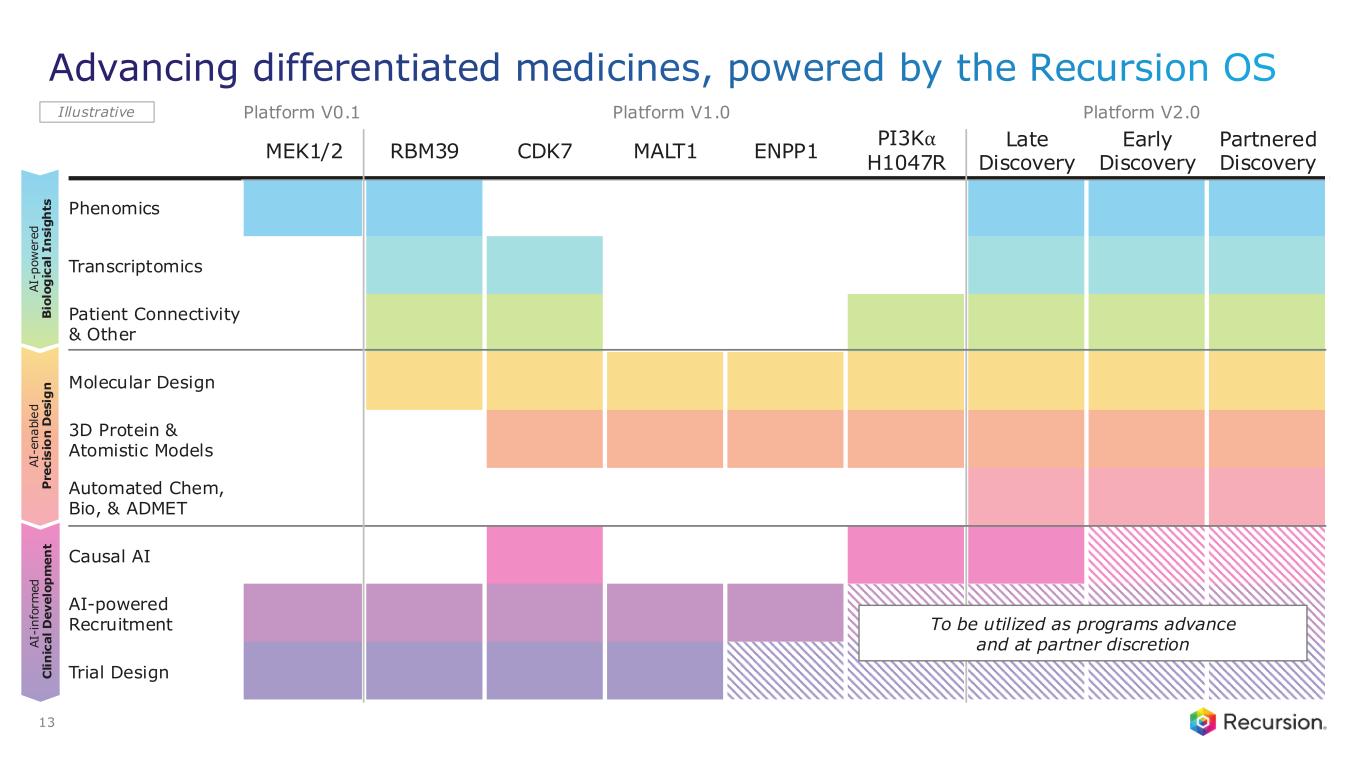
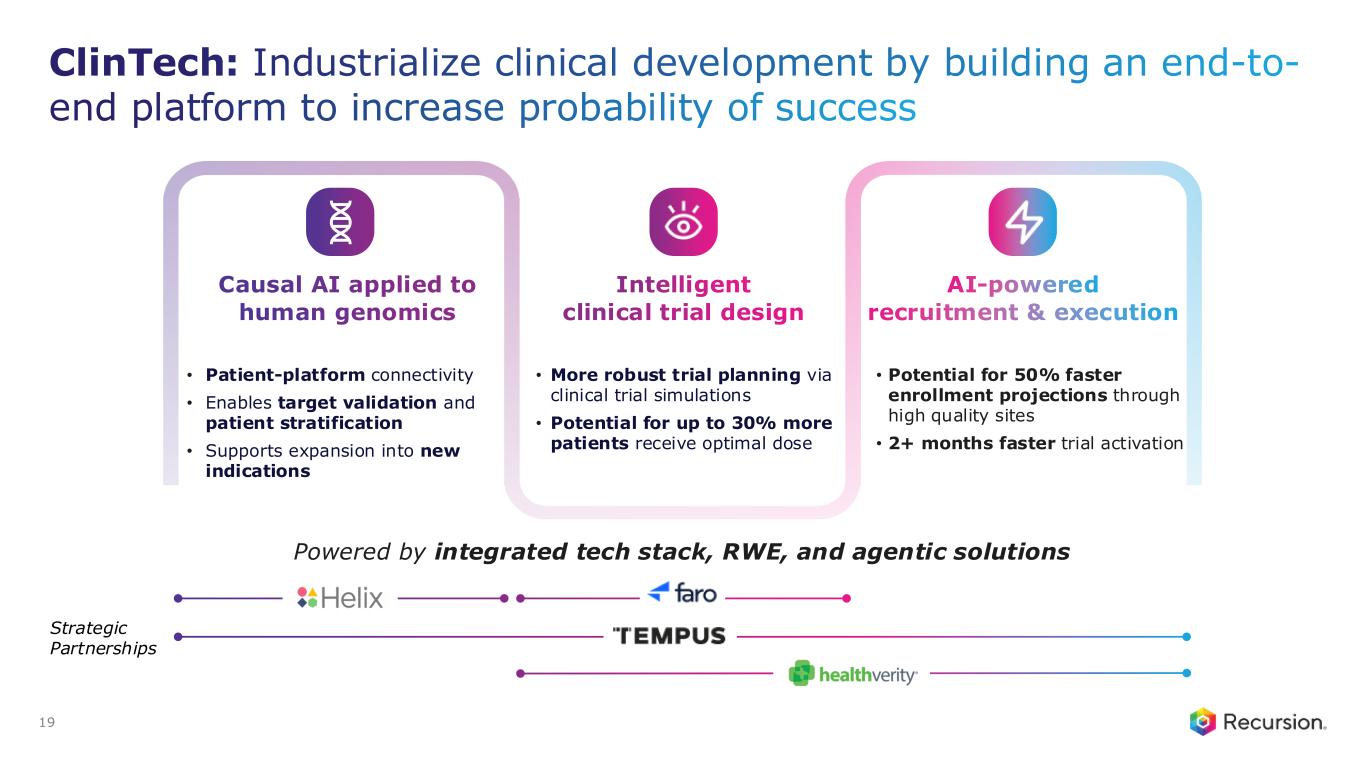
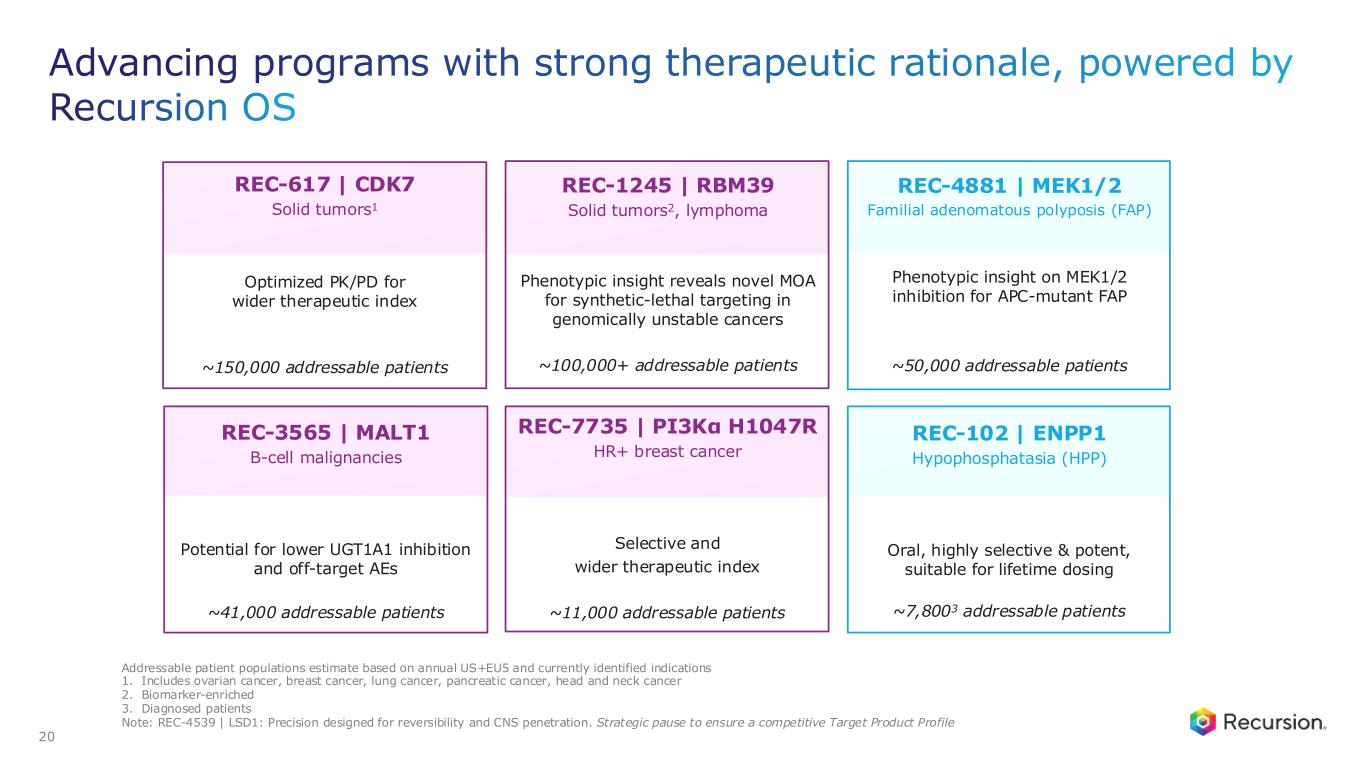
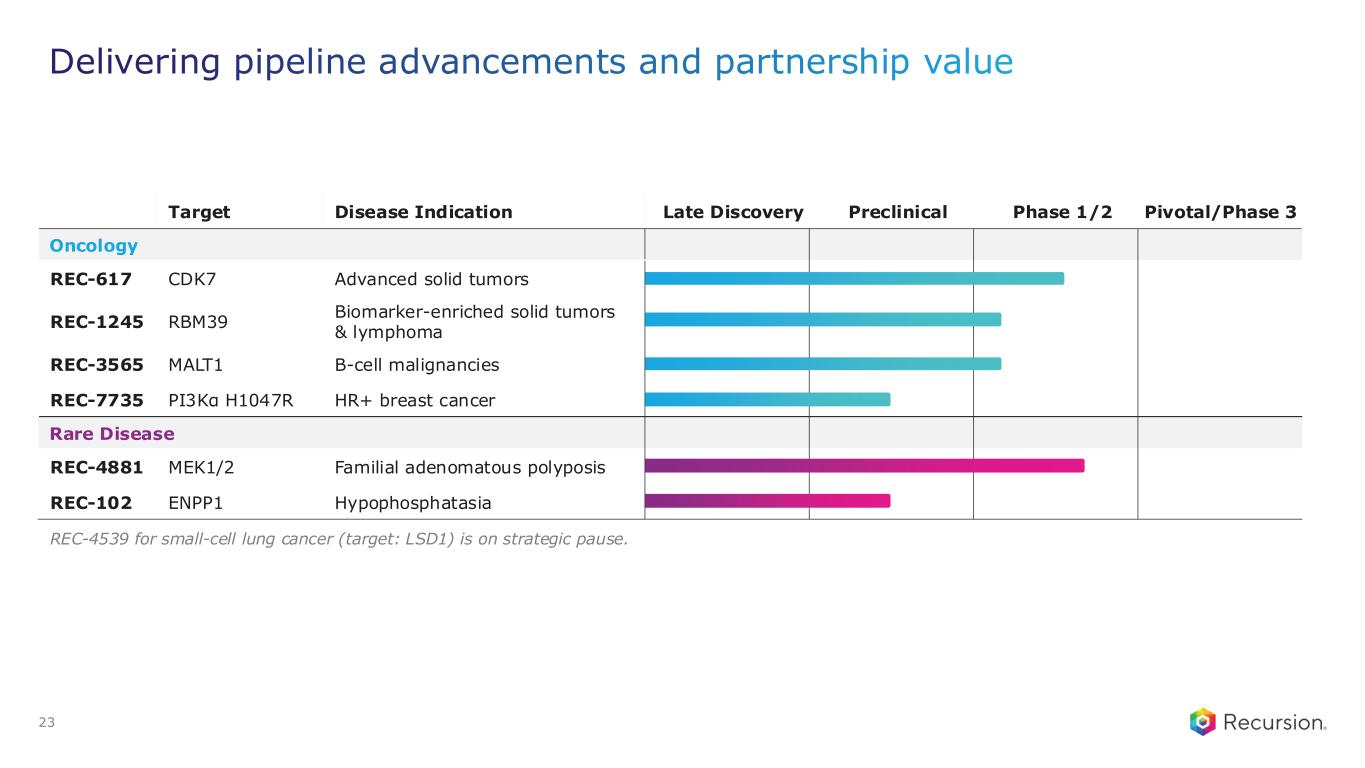
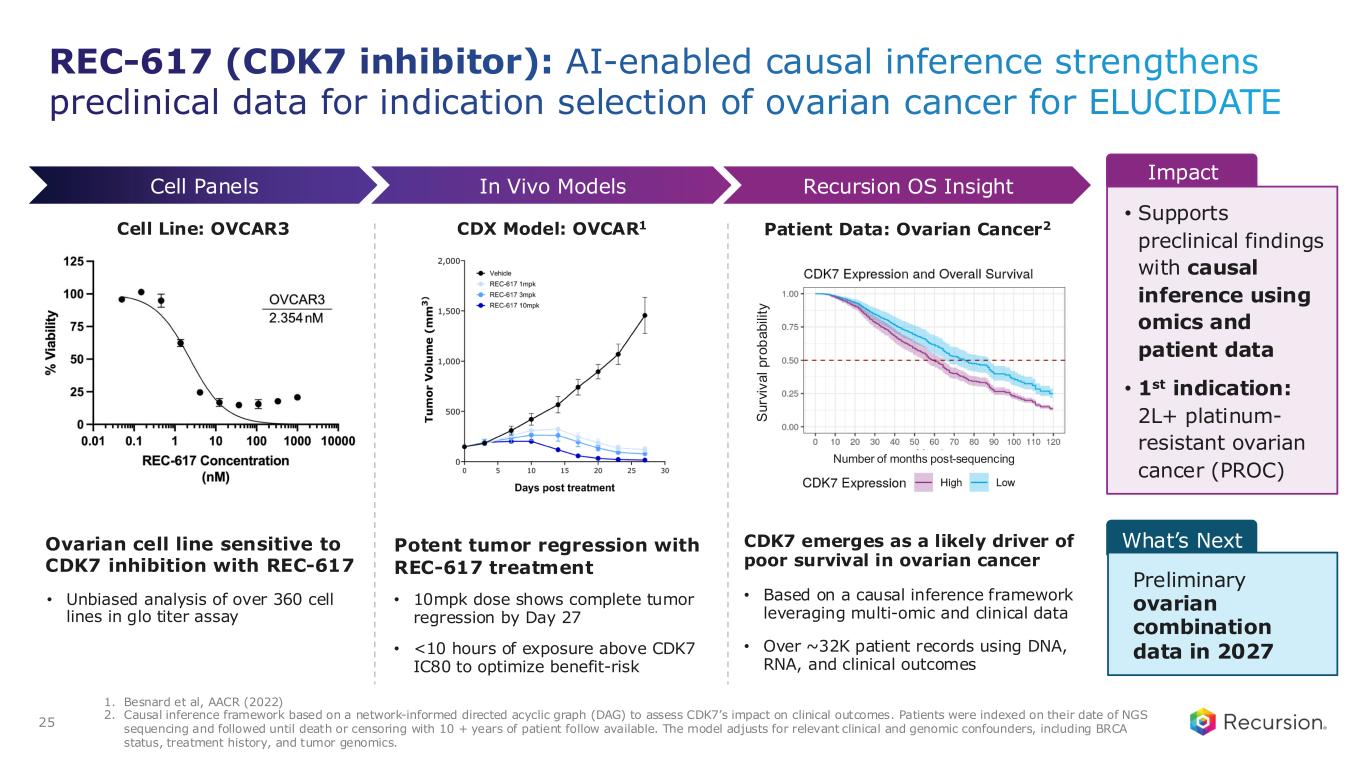
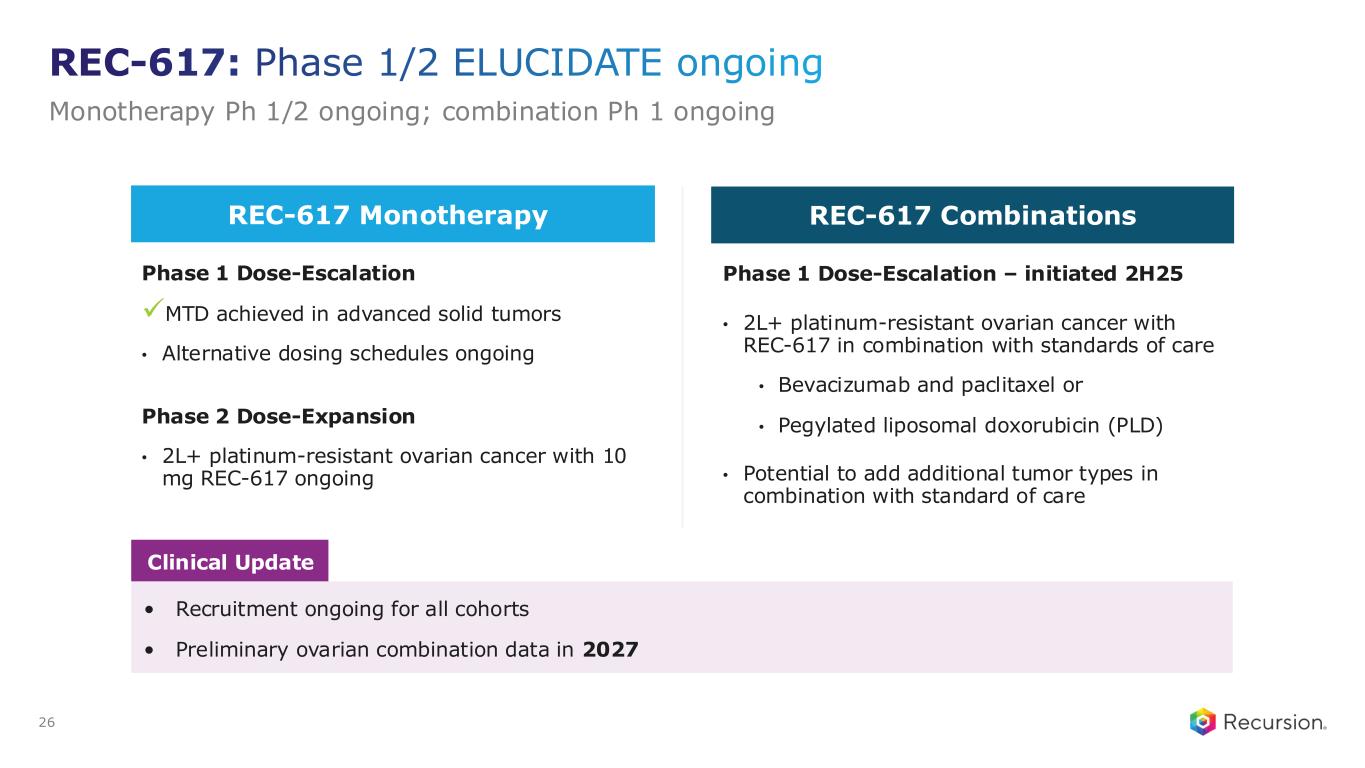
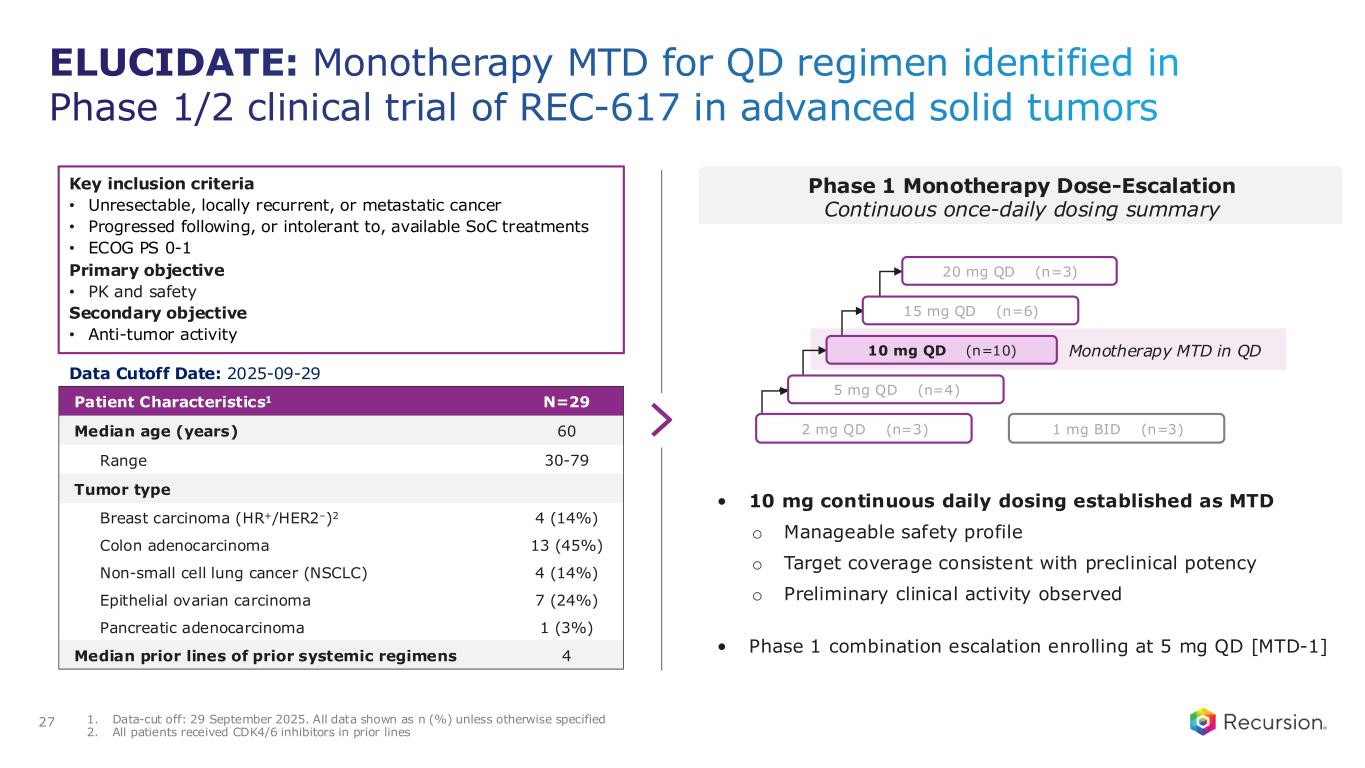
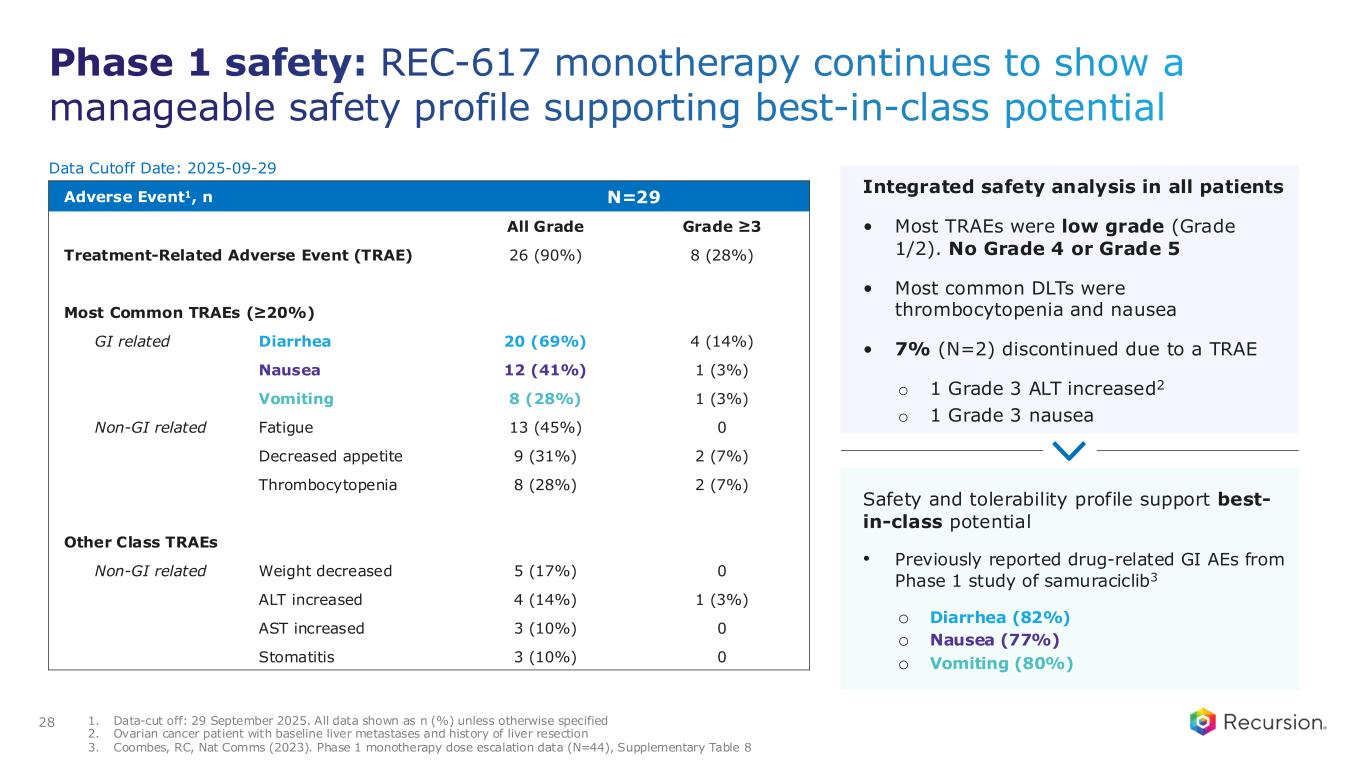
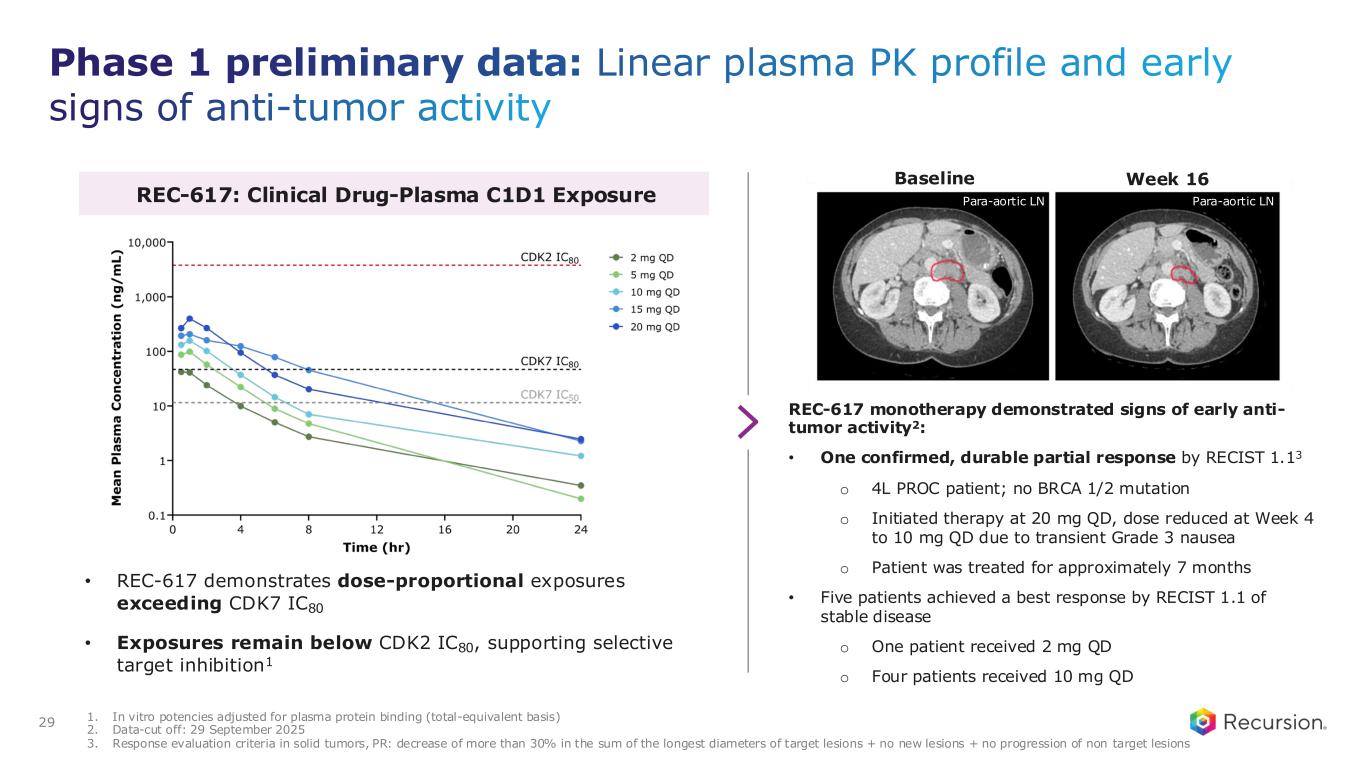
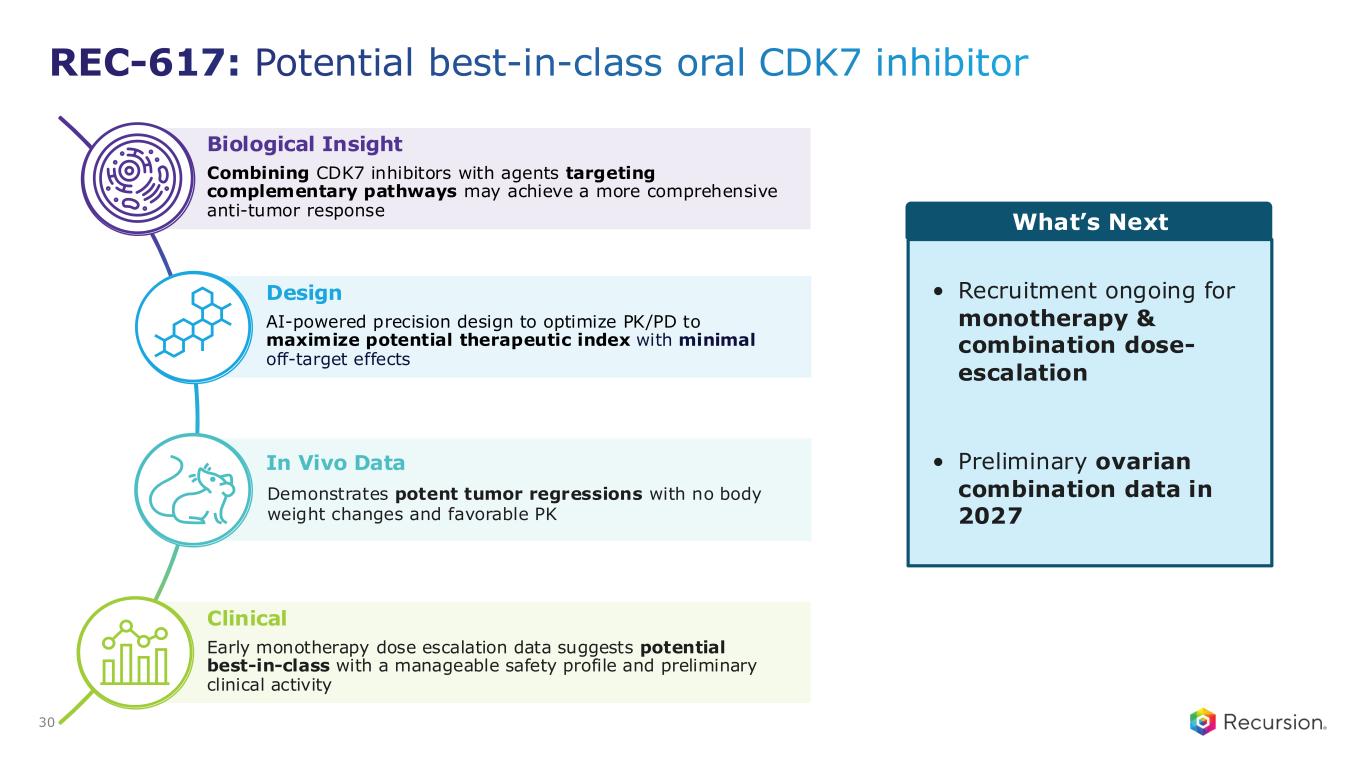
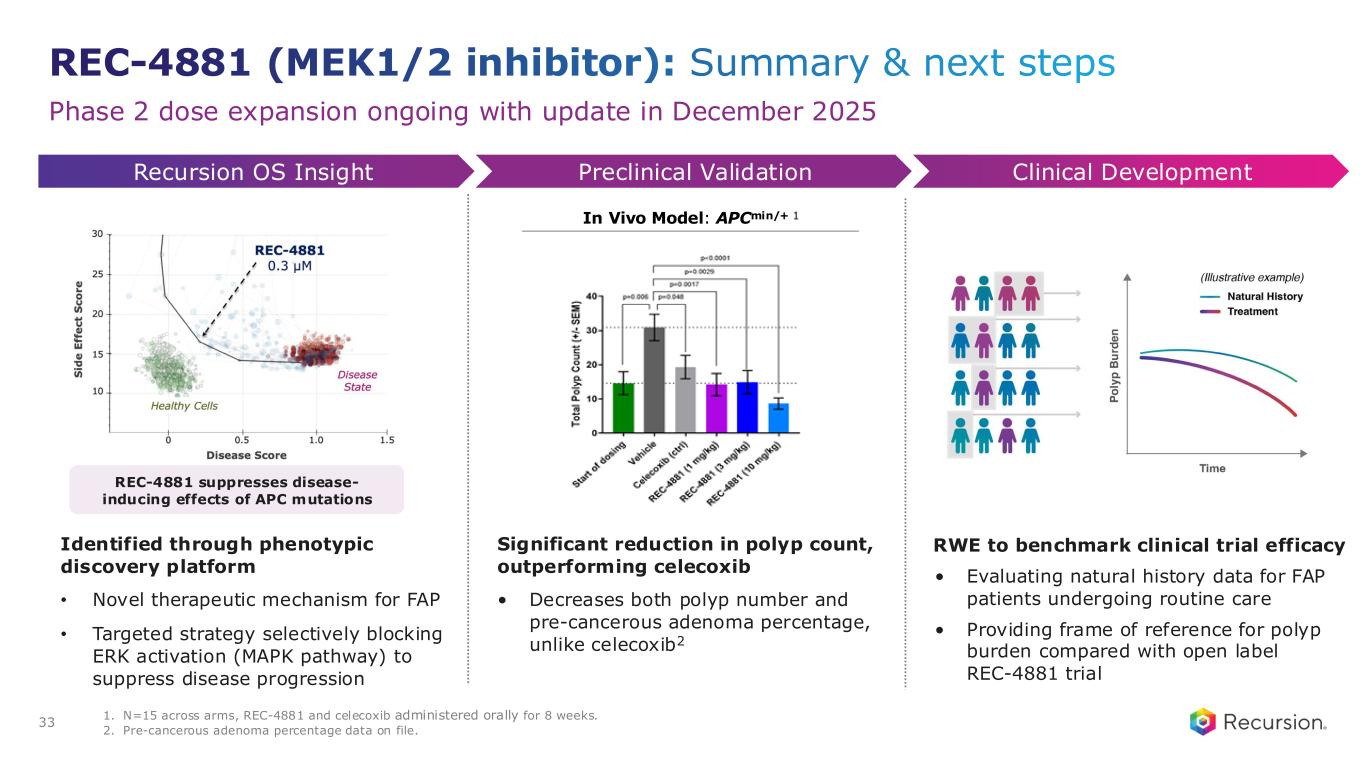
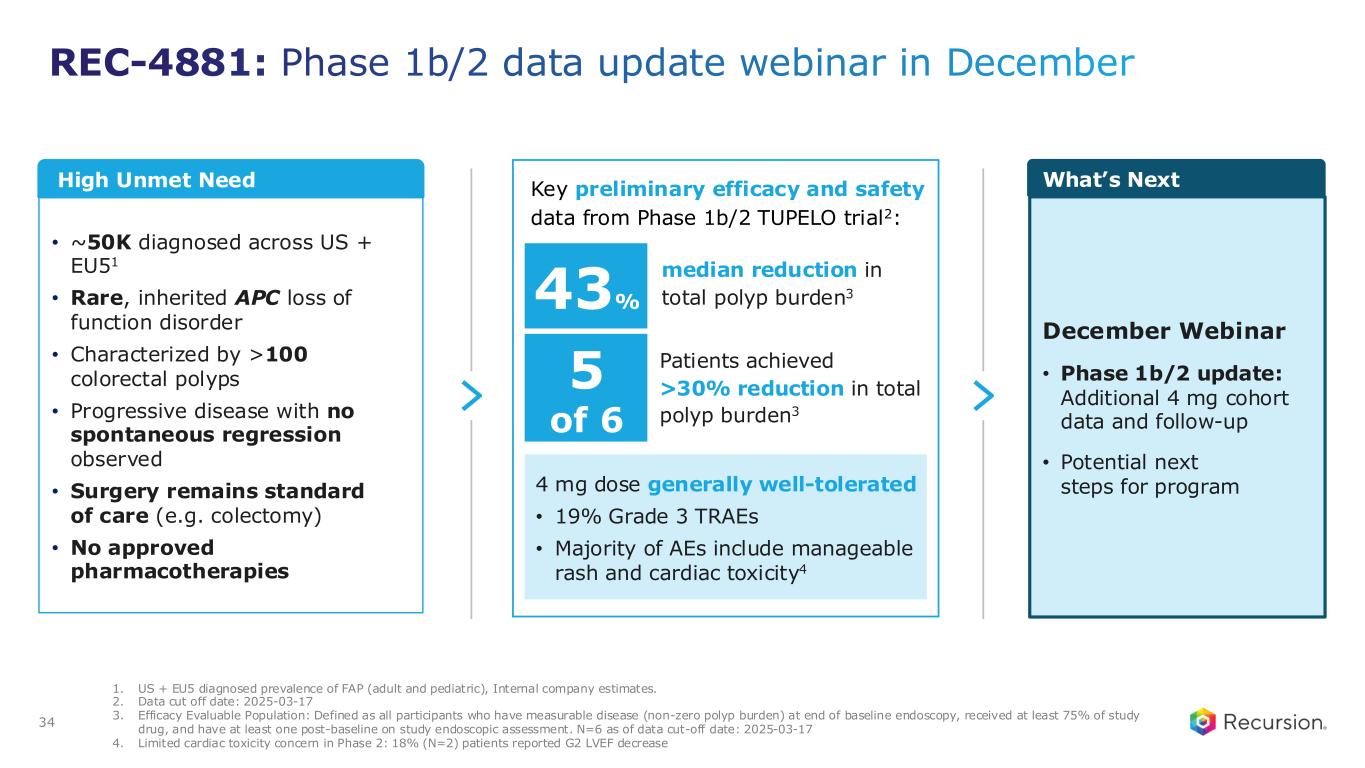
Thank you, Chris. The example of microglia you mentioned is an excellent illustration of how our platform, which combines both wet lab and dry lab approaches at Recursion, creates unique value. As we move to the next slide, I want to focus on this slide that we’ve shared before and elaborate on a couple of key areas. This slide represents the core of Recursion’s operations. You often hear about the Recursion OS, and I’d like to delve into its components. First, we are applying AI in ways that significantly improve quality, speed, or our decision-making impact. We have three specific modules: the first focuses on deep biological understanding connected to patient outcomes, the second involves leveraging AI to design improved drug-like molecules, and the third is a ClinTech approach that ensures the right patient selection and expedited recruitment for our trials. Now, turning to some areas of focus, let’s discuss scientific agents. We've talked a lot about agentic agents, which are a very exciting aspect of our OS. These are AI systems that actively engage throughout the scientific process. They help us in analyzing data, including genomics, transcriptomics, and real-world data from partners like Tempus, as well as utilizing public datasets like PubMed and JetMa. We have early proof-of-concept agents that not only analyze and interpret data in real time but also assist in selecting optimal tools, workflows, generating hypotheses, and designing new experiments. This will enhance the capabilities of our talented team. Additionally, I want to highlight that these agents capture the decision-making process, which is crucial. To make these agents effective, we need to understand the logic behind their recommendations and collaborate in real time with our scientists and clinicians. Our platform allows us to execute this in practice rather than just in theory. I often receive questions about how we achieve economies of scale. As a tech bio company, this will be a vital factor in maximizing the insights we generate. I wanted to emphasize this area of progress as it is essential for us in developing differentiated programs. The second area I want to highlight is automated ADMET. We have discussed Bolts 2 and other programs that enhance our understanding of binding affinity. A crucial element in designing these programs is ensuring they possess drug-like characteristics, making this area critical for us. We are utilizing an automated platform in Salt Lake City that combines high-throughput experimental automation with advanced machine learning. This is a fully automated closed-loop system that integrates ADMET property predictions into our AI-enabled precision design module. This approach yields several benefits. Firstly, we are generating proprietary data related to ADMET, encompassing not only published data but also our own successes and failures. Understanding failures is essential for improving our models. Secondly, comprehensiveness in ADMET properties, which currently exceeds 50, is merely a starting point and will continue to expand, ensuring our algorithms are generalizable. Lastly, models like Mole GPS and others continuously evolve, and our data feeds directly into these models, allowing them to be retrained in real-time. These examples of real-time iteration are vital for us, enabling us to maintain a platform that is not only effective but also adaptive, learning from both our successes and setbacks. So with that, I want to walk to the next part, which is how is the platform being leveraged to actually generate programs. And this actually slide came to my mind during the flight post popular demand from analyst questions and investor questions. Here's what you have. I'll just walk you through it. On rows, the three design components that I just mentioned, the biology, the chemistry, and the clinical development that you saw on the last slide, everything from phenomics, transcriptomes, et cetera. And as I do the build for the columns, these are the various iterations generations of our platform. So just to give you a clear view on which programs are using what component of our platform. So it's important to note, as you'll see, the earliest programs built on our first-generation platform, which I will call V0.1, and we've shared that before, the programs that are now in the clinic, tangible proof that we are generating programs and also learning fast, the flywheel with every turn of the crank, we're learning really, really fast as to how to improve on what we're doing well and what we need to do better. So the first one here, MEK1/2, more data coming in December. I'll share a little bit more of our plan there. This is a proof point around how we are leveraging genomics, an unbiased approach to drug discovery in order to really ascertain which compound, which mechanism, which we do not know going in, could actually help attenuate the hallmark of the disease, which is polyps, hundreds to thousands of polyps. More to come on that in a second. Now often, I get the question that if this is part of platform 0.1 is that it? The story never ends there. As you will see with ClinTech, if you go to the third row, we are actually leveraging recruitment solutions as well as patient selection and stratification. We are utilizing some of our recent components in ClinTech to enhance value creation in our early programs on the platform. In the second iteration of our platform, which I refer to as V1.0, we are starting to integrate genomics, biology, and chemistry design. This includes examples like RBM39 and CDK7, along with elements of the ClinTech platform. Additionally, there are programs currently in discovery that we anticipate discussing soon, as these are incorporating various components from discovery, biology, novel insights, chemistry, and ClinTech, applicable not only to our wholly owned programs but also to our partner programs. We will share more details on this later. In terms of our progress, as previously shown on this slide, I like to provide updates each time we meet. We have initiated CDK7 combination cohorts, and I will provide further insights soon regarding our analysis and data from the monotherapy dose escalation. We have nominated the development candidate for PI3K 1047R, which was one of our milestones for this year. We also plan to host a webinar in December to present additional data from our 4 milligram cohort for MEK1/2. As mentioned by Chris, we received a $30 million option milestone for the microglia map, in addition to the 6 phenomaps and other programs demonstrating strong progress and traction with our partnerships, including Sanofi. It's essential to recognize that both our internal and partner programs are crucial for delivering tangible proof and enabling us to learn quickly, allowing our platform to continue evolving. I will now discuss CDK7. To provide some context, we've previously mentioned that CDK7 is a vital master regulator and transcriptional kinase that has drawn considerable attention in oncology but has faced historical challenges. One of the primary reasons for these challenges is the narrow therapeutic window and molecular properties that limit tolerability and efficacy. So, what sets our approach apart? First, we are designing a molecule that specifically addresses the critical limitation of therapeutic index by optimizing permeability and efflux, which helps us reduce the variability of GI-related toxicity observed in others' work. Second, we are utilizing preclinical data and multimodal real-world data, including causal AI, to identify patients who are most likely to benefit, which aids in effective patient stratification. This focus on differentiation is essential. Additionally, our preclinical models have shown tumor regression in both ovarian and breast cancer, and we previously shared some early clinical data indicating a manageable safety profile along with some partial responses. What is our next focus? So in terms of our next focus, next slide. We have completed our Phase 1 dose escalation. So MTD has been achieved in advanced solid tumors. I'll get to that in a second. In addition to that, concurrently, the team is also looking into alternate dosing schedules just to figure out ways to even further optimize the therapeutic index, especially for long-term dosing. The other areas of near-term focus for us, which is already well underway, is a Phase 2 dose expansion in the cohort that we had mentioned, the platinum-resistant ovarian cancer as well as combination, which is going to be key in this space with a couple of combination standard of care that you can see on the slide. Recruitment ongoing across all of these cohorts. The other thing that's important to note is a lot of the trial design is focused on rapid and efficient go/no-go. And we'll share more in terms of the Phase 1 dose escalation data at a medical congress next year. And then in addition to that, we should have some of the ovarian combination data in 2027, safety, PK/PD, maybe early signs of efficacy, more to come next year as we see the recruitment shaping up in terms of details on when in 2027. So stay tuned. All right. So let's go into the monotherapy dose escalation. So a couple of things to note. As of September 29, which is the cutoff date, we have 29 heavily pretreated patients with advanced solid tumors that have received 617 across 6 dose levels. Just as context, these patients represent a rather challenging population, most with multiple prior lines of therapy and limited standard options. We have now established a 10-milligram once-daily MTD, maximum tolerated dose with a manageable safety profile, we'll talk about in a second and also preliminary antitumor activity that's consistent with what we shared in the 2024 update. The most common dose-limiting toxicities were nausea, which is to be expected, and some thrombocytopenia, which are both on-target effects for this target class. If you go into safety. Look, the safety data is consistent with what we saw last year. First of all, we have about 30% of patients that experienced Grade 3 treatment-related adverse events, and the majority were low grade 1 or 2. There were no grade 4 or 5 treatment-related events and only 2 patients, about 7%, discontinued due to an AE. One thing I want to note here, and again, this is early, we're learning more, of course, the GI-related toxicities that we have seen, diarrhea, nausea, vomiting were relatively manageable and in line with class expectations. And to just put that in context a little bit more. Okay. To put that in context a little bit more, in terms of diarrhea, we saw about 69%, nausea 41%, vomiting 28%. Of course, looking at some of our peers also in the space, the numbers for diarrhea are about 82%, 77% for nausea and vomiting for 80%. So it's trending in the right direction, but of course, much more work to be done, but trending to be slightly lower than what we have seen in other prior published data. In terms of efficacy, first, this highlights the PK profile, showing it to be a highly selective and potent inhibitor with flexibility in dosing due to its relatively short half-life of around 5 hours. Notably, the established maximum tolerated dose, which is 10 milligrams taken once daily, results in exposures that exceed the CDK7 IC80 while remaining below the CDK2 IC80, supporting the selective inhibition we aim for. In preclinical models, the 10-milligram equivalent given daily led to significant tumor regressions with about 2 to 4 hours of target coverage. Early pharmacodynamic data shows about 80% to 90% transient engagement of POLR 2A, a key pharmacodynamic marker we are monitoring, which aligns with our hypothesis. All the data thus far indicate that 10 milligrams daily is a pharmacologically active dose. Additionally, we are exploring alternative intermittent schedules, such as a second day on-off regimen, to increase dose intensity while ensuring tolerability for long-term treatment. On the clinical front, the 10-milligram dose appears stable, and we have a patient who experienced a partial response. In this patient group, we weren't expecting significant outcomes with monotherapy, which aligns with observations from other CDK inhibitors. Therefore, our combination approach will be crucial, and we will provide more updates on that soon. Speaking about the combination, we've mentioned before that ovarian cancer is our current area of focus, which differs from others that primarily target breast cancer or a broader range of solid tumors. We have gathered data from cell lines on ovarian cancer models, showing sensitivity to CDK inhibition. In vivo, at a 10-milligram dose, we observed complete tumor regression by day 27. Additionally, leveraging patient-level data from over 30,000 ovarian cancer samples, we integrated DNA, RNA, and clinical outcomes to demonstrate that CDK7 is likely a driver of poor survival, alongside our causal and AI research. However, we understand that proof comes from actual results. There is much work ahead, and we expect to present the complete data set I just mentioned for monotherapy dose escalation next year at a medical congress, along with combination data in 2027. We will provide more specific guidance as our recruitment progresses. I also want to touch on REC-4881, our other program that has an important readout coming next month. To provide some context, there is a high unmet need, with 50,000 patients diagnosed across the U.S. and EU5 for this rare inherited disorder related to APC loss of function. The standard of care poses challenges as surgery, such as colectomies, is the typical treatment, and there are currently no approved therapies. We have obtained orphan drug designation for this compound. In May, we shared earlier data from DDW showing a 43% median reduction in total poly burden, which is significant as the standard of care today typically sees off-label use of celecoxib resulting in about a 20% to 25% reduction. Our data range from 30% to nearly 83% in a small cohort we observed in May, with 6 patients. We anticipate this number to nearly double by the end of the year. We are looking to see if these trends continue and whether there will be a significant benefit over the 20% that has been observed so far. Regarding treatment-related adverse effects, we have seen 19% grade 3 events, predominantly rash, and our prophylactic approach has made management easier. Cardiac toxicity has mostly been grade 2 until now. In December, we will share more information about the Phase 1b/2 update, which will be crucial, and we will also outline the program's next steps. If the trends continue, one key next step will be discussions with regulators about a pivotal study. This represents an opportunity to utilize our platform to achieve burden reduction, both in vivo and in patients. However, the data set is small, and we look forward to the data release in December. Now, I will hand it over to Ben for our financial update.
Terrific. Thank you, Najat. Another thing that we are very excited about is going into that FAP data as well as the milestones in 2026 in a really strong financial position. So over the course of the year, you've seen us do a number of things. In May, we laid out a strategic plan that allowed us not only to hit on multiple high-value milestones, but also reduce our expense base by 35% from 2024. This was a really important step in us trying to put that discipline in place that Najat was talking about earlier. And then you started to see us hit those milestones. We've brought in almost $40 million from our partnership inflows over the course of this year so far, and we expect more of that to come in the future. So with today, our announcement of having $785 million of cash in the bank as of October 9 is a really strong step in creating that foundation so we can look forward into the future milestones and say, we don't have that financing need to be able to achieve our near-term milestones and really deliver a lot of value to shareholders. And so when we look forward we've looked at how we can bring that financing together in a way that was going to minimize our dilution to all of the shareholders as well as really continue to allow us to focus on the business and move it forward. We are also reaffirming our guidance for 2025 on an expense base of less than $450 million. That's excluding all of the partnership inflows. In 2026, we're also reaffirming less than $390 million over that time period. One note on that 35% expense reduction, that actually equates to over $200 million in expenses coming off of that 2024 base. And we've done that by really focusing in on what is going to be the aspects of the business that deliver the highest value and efficiently bringing that together. We will continue to review our expenses. We have finished all restructuring related to the transaction, but we will keep assessing our operations to find ways to improve efficiency and maximize the value of every dollar spent, particularly focusing on high-value partnerships and projects. The $30 million milestone from our microglia partnership with Roche and Genentech was not included in the reported $785 million in cash. While we don't provide revenue guidance, we know that many services track it. It’s important to note that the fluctuations in our revenue do not reflect our overall business health. However, the timing of our milestones can affect our revenue recognition. For instance, last year, we recognized a significant milestone related to the neuronal map, leading to a higher revenue figure in the third quarter. The Roche microglia milestone will be recognized partly in the fourth quarter, which should contribute to some revenue fluctuations then as well. Importantly, the nearly $40 million acknowledged from partnership inflows this year has brought our total partnership inflows to over $500 million. This highlights the significance of non-dilutive capital for our company. We are also reiterating our target of exceeding $100 million in partnership inflows by the end of 2026, as communicated earlier this year. We are making substantial progress and anticipate continued inflow in the next year. Now, I will hand it back to Najat for updates on upcoming milestones.
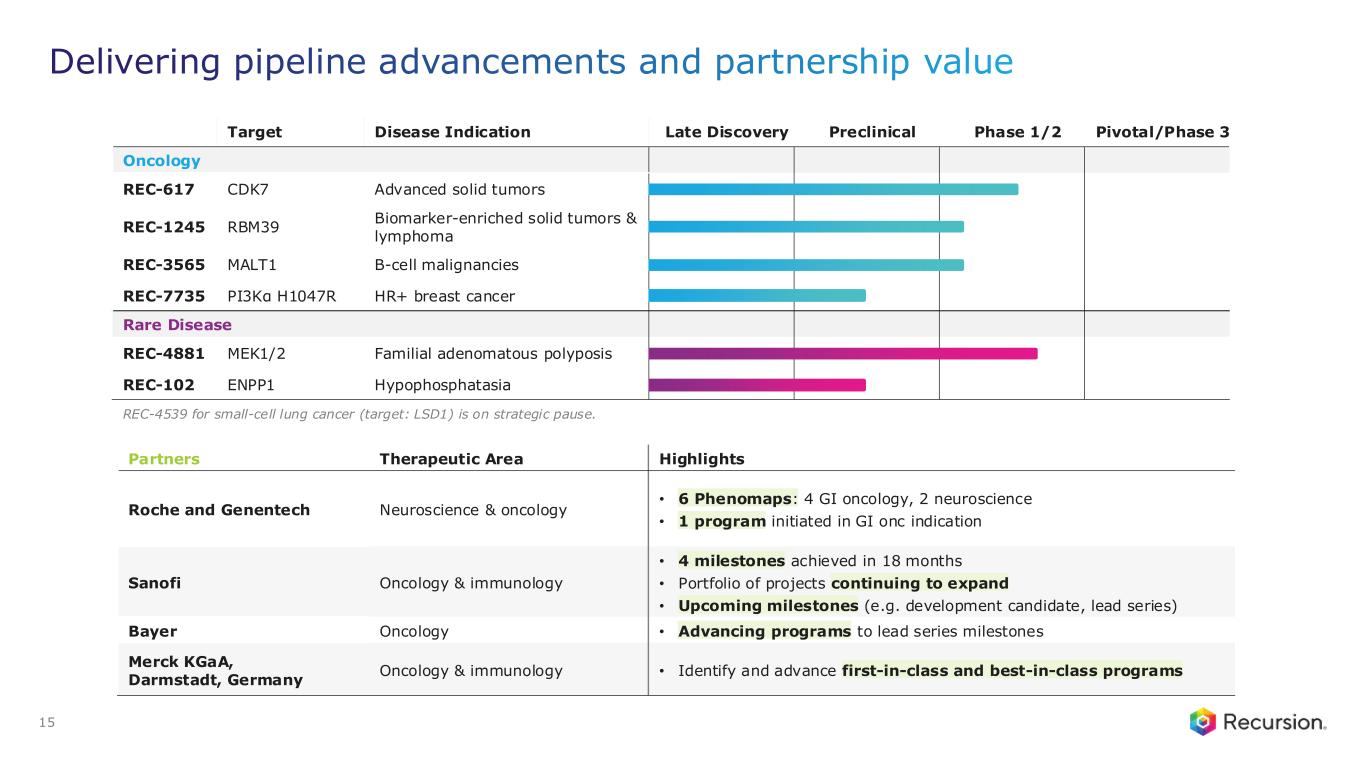
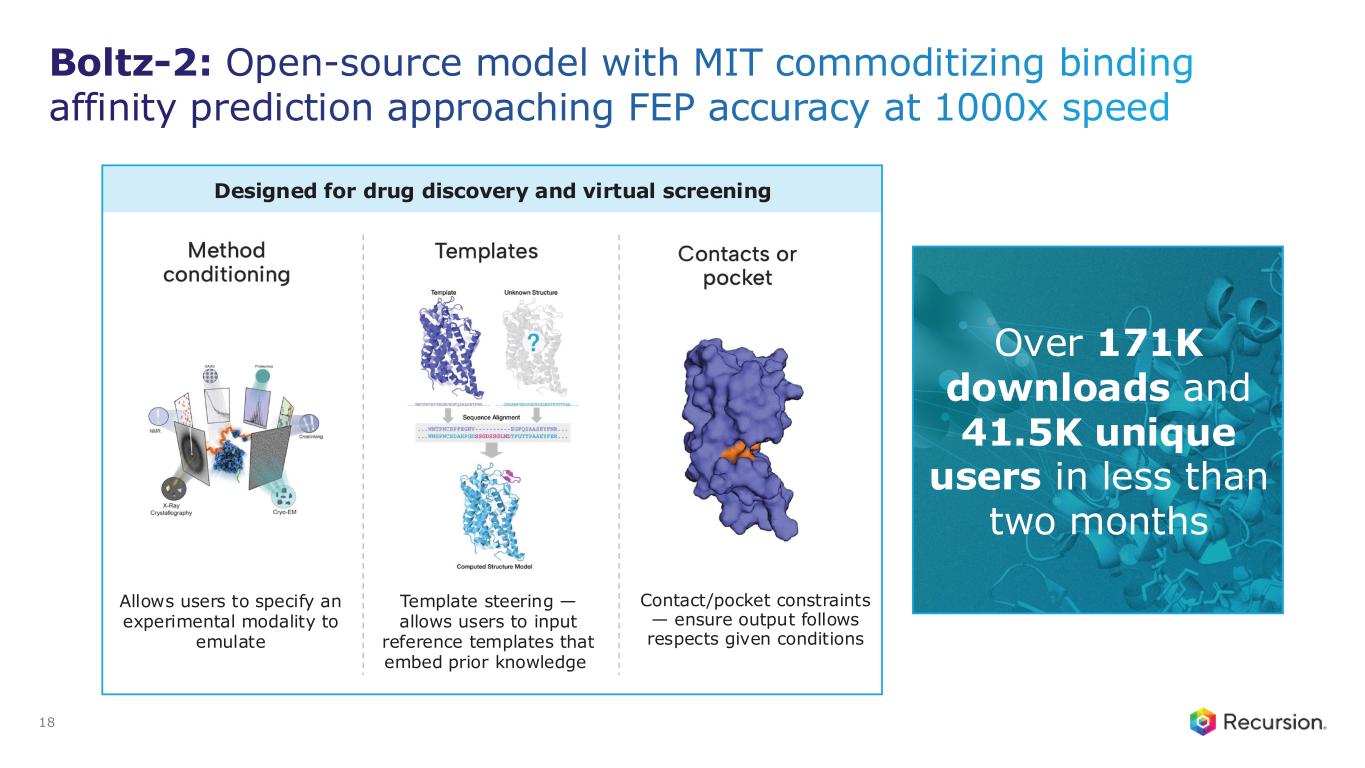
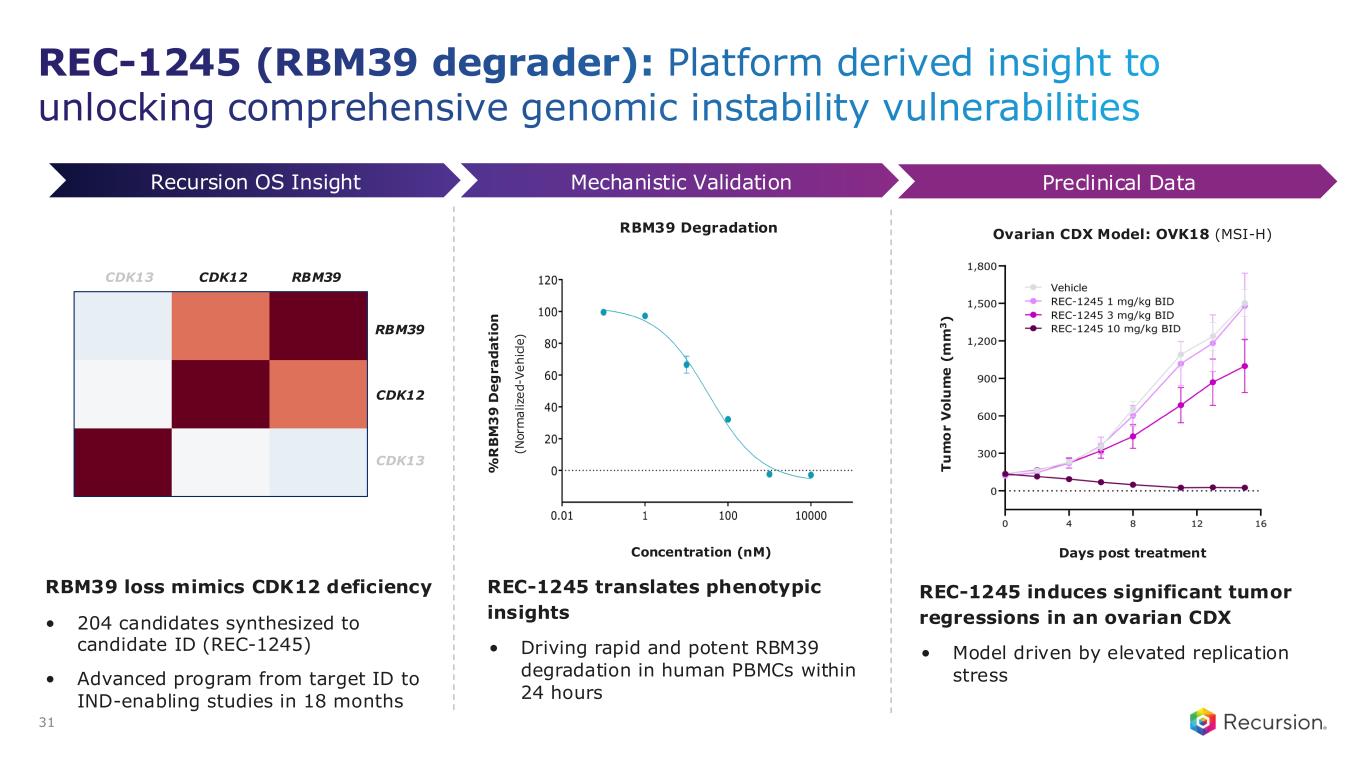
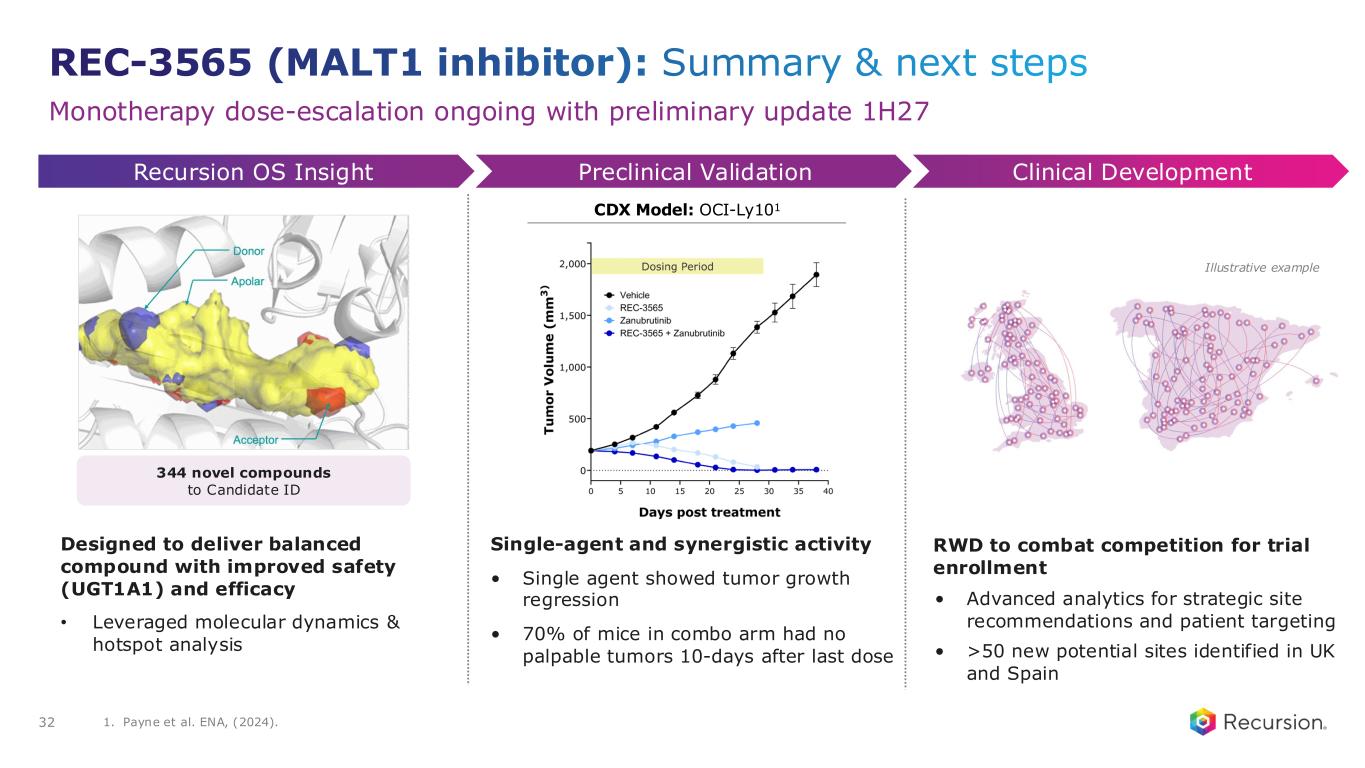
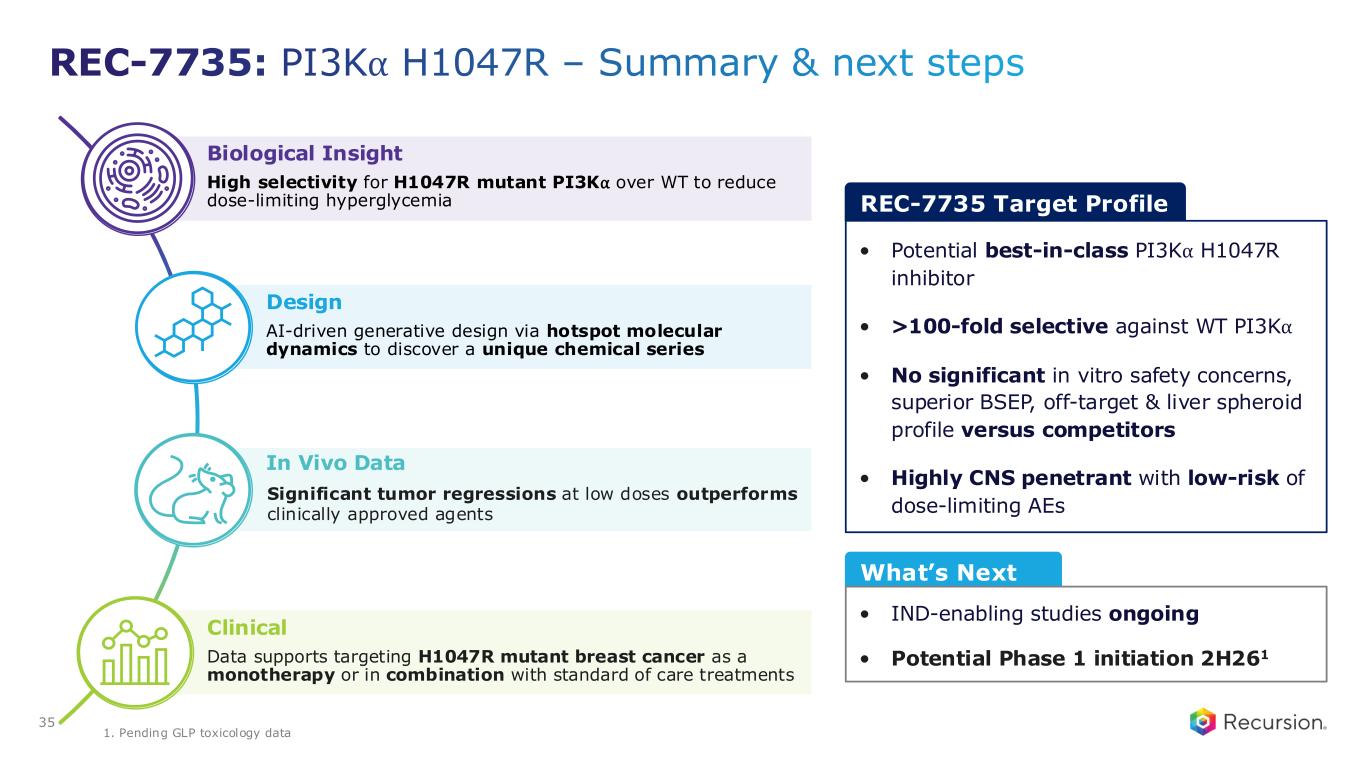
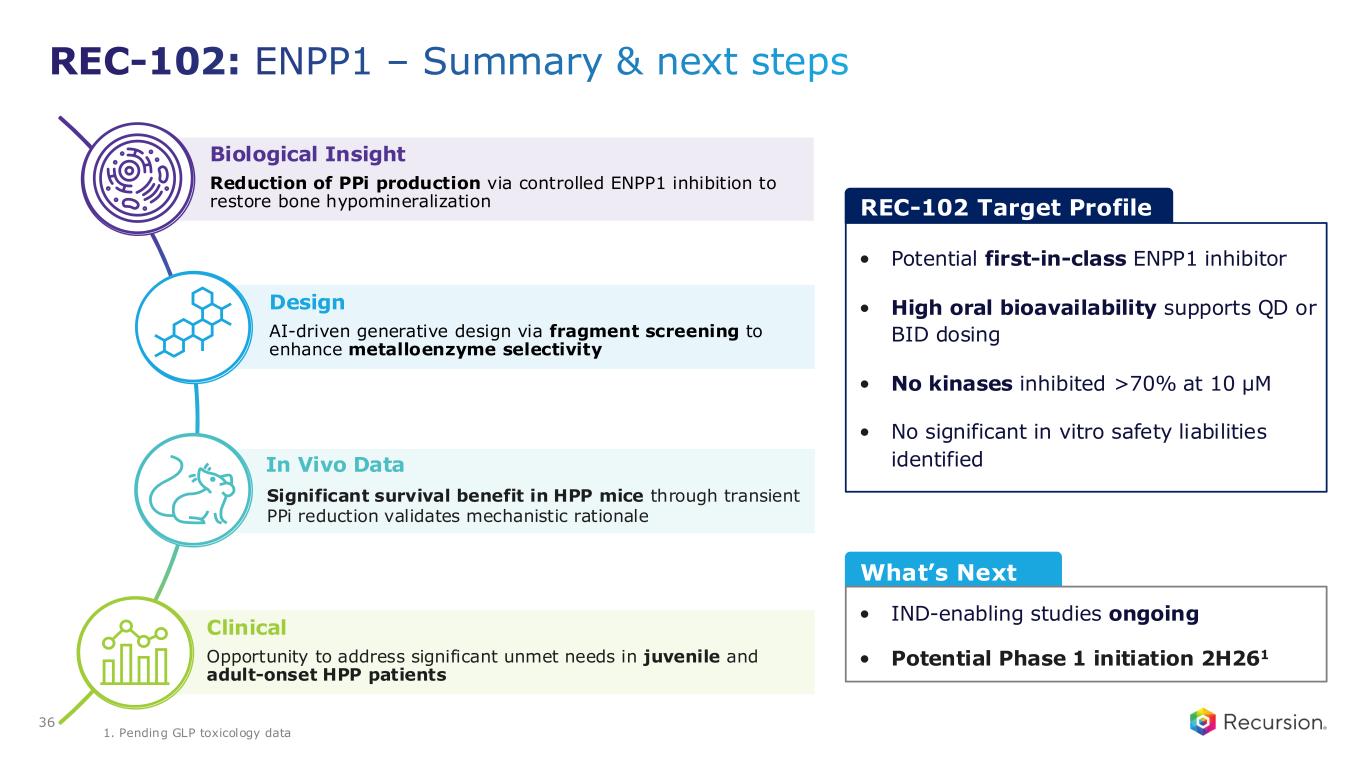
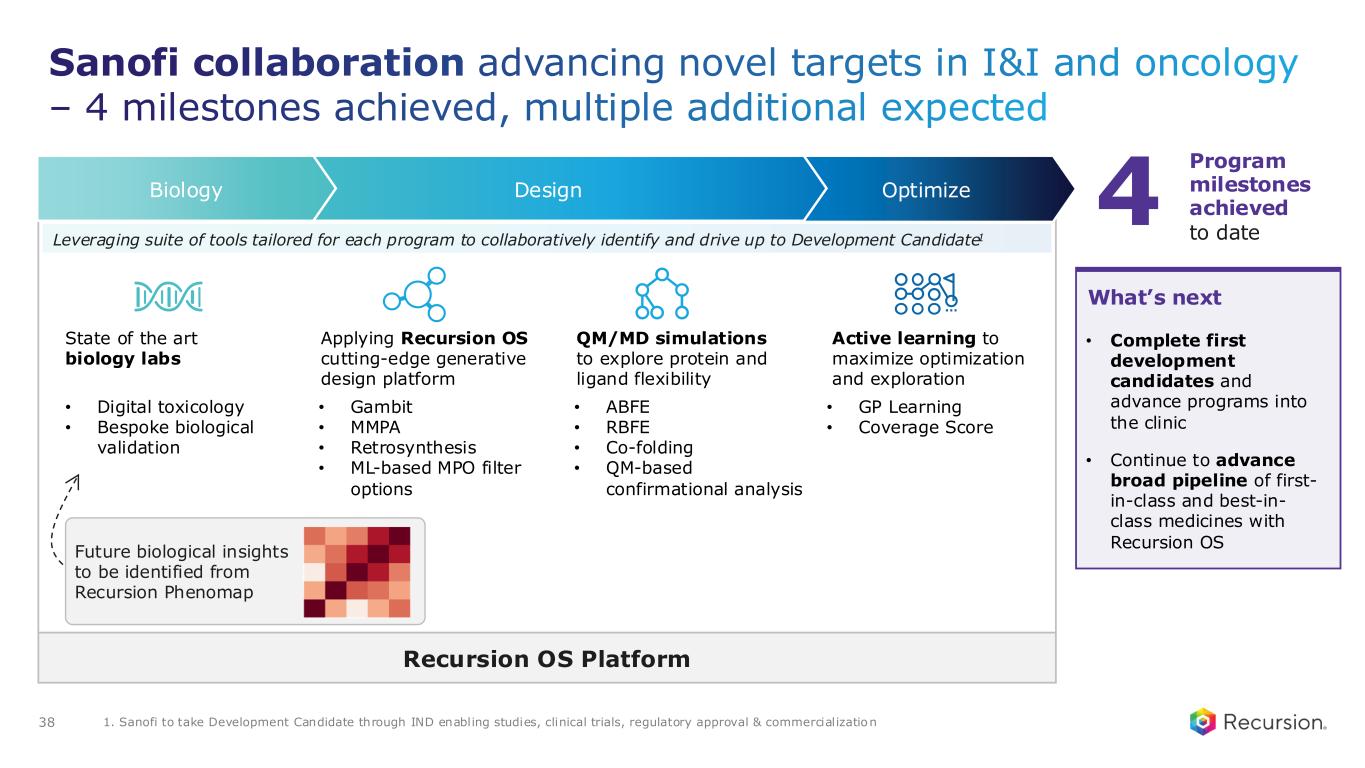
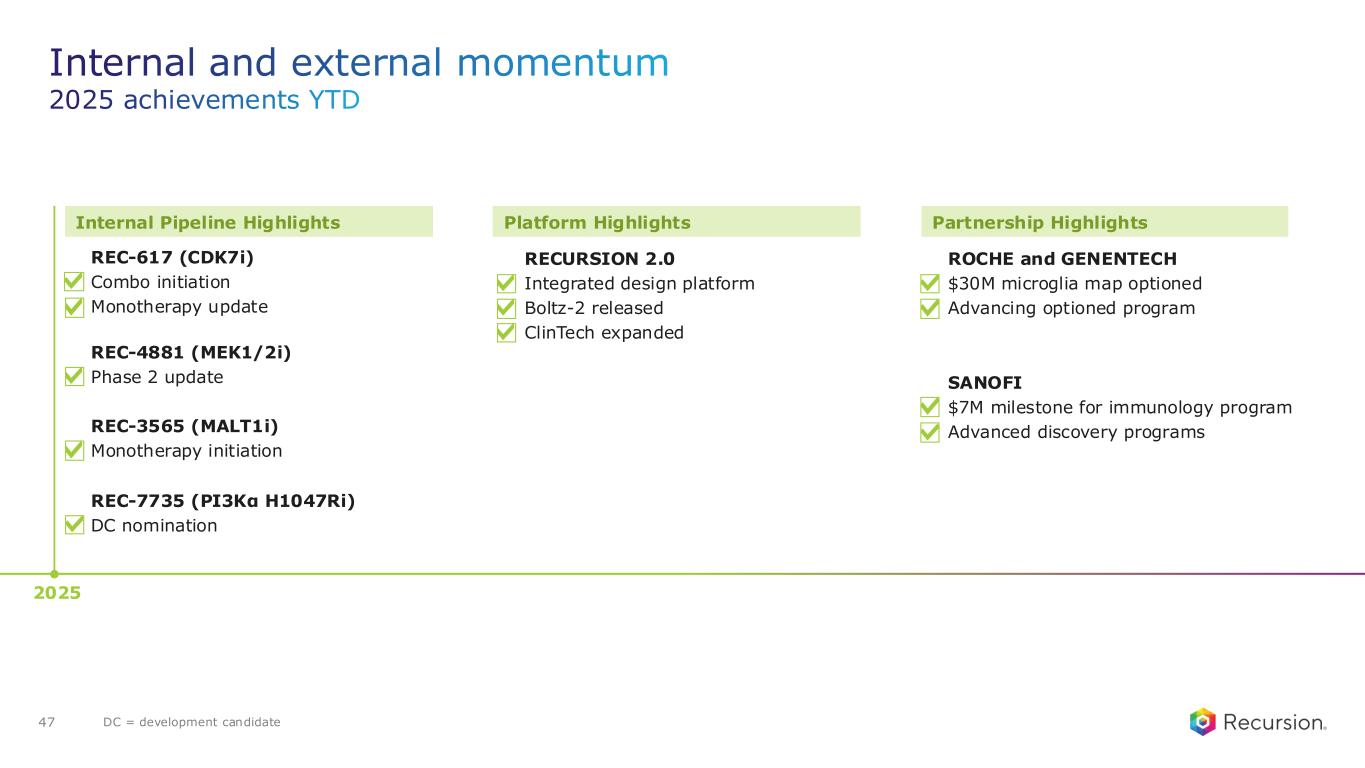
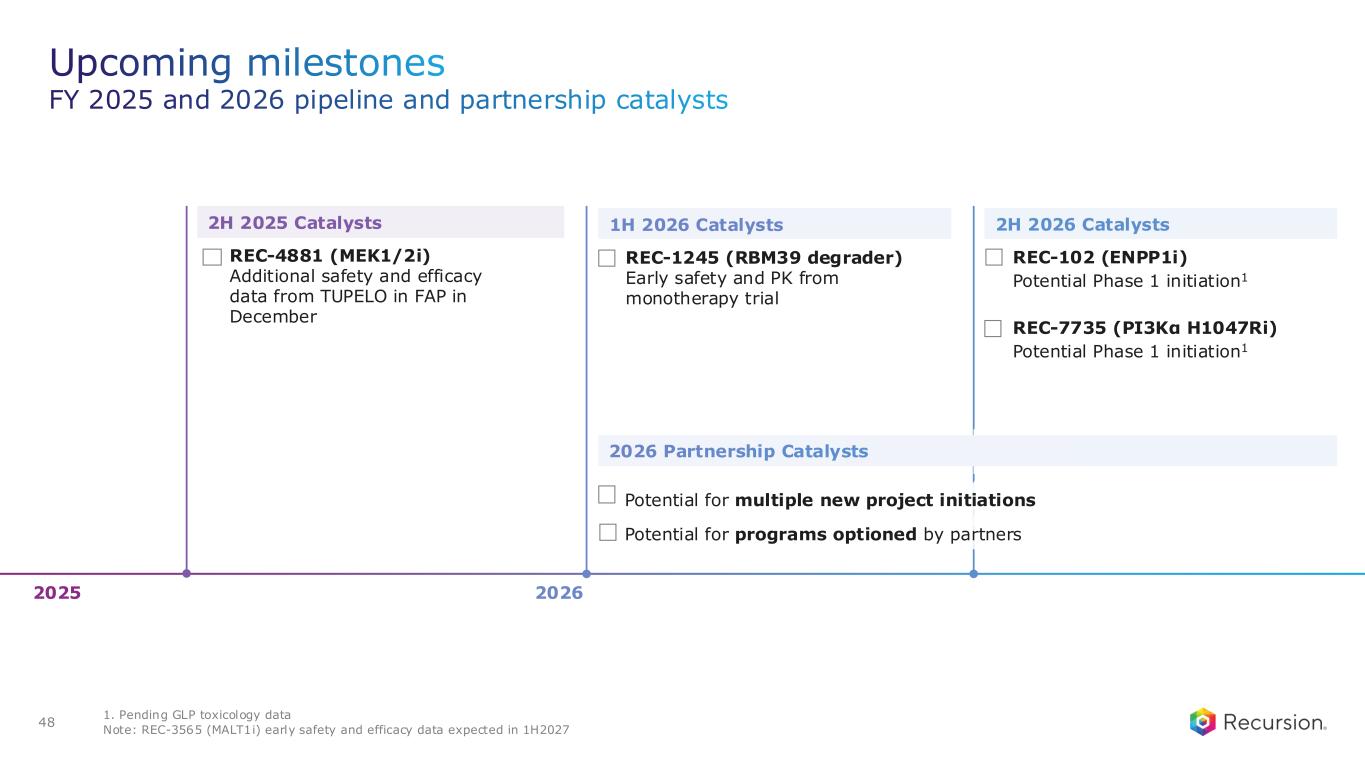
Great. Thank you so much, Ben. And we wanted to just capture both looking at this year as well as what's coming up next year. For this year, one big thing that as I look at the slide, which is missing is really the successful integration of the two companies coming together. It's been an incredible amount of work. And also the financial discipline that we've gone through internally to really extend our runway so that we can see through a lot of these catalysts. So look, on the internal pipeline highlights, CDK7, I just mentioned the monotherapy update and the combo that's initiated. REC-4881, the Phase 2 initial update, potential first POC for our platform, MALS-1 monotherapy initiation and the PI3KDC nomination. I will also talk a little bit about our platform and then go to our partnership. On the platform front, a ton of work, like three words on a slide, integrated design platform, but actually, I should say integrated our end-to-end platform, the amount of migration work, I have seen this across other companies before with the speed with which that was done and the utility, the fact that we had no slowdown in our productivity of our platform speaks to our fantastic engineering data science teams that exist. And then also the work with MIT and NVIDIA on both 2, but much more that's going on in-house, which I would be a pleasure to share next time, especially with our Frontier team, which is our 0 to 1 cutting-edge AI team, really, really proud of the work that they're doing, Valence, and Inception Labs. And then ClinTech, this has been a core focus for us in the last several months to really build out the tech stack end-to-end also into clinical development, crucial pillar as we execute on these programs. And on the partnership highlight, Chris and Ben mentioned, of course, the Roche $30 million from microglia, but the real work that we're doubling down on is both of the maps in neuroscience and the additional maps in GI oncology and really turning and Chris showed this really beautifully in his slides, turning those into insights with a deep functional validation with our partners to then become programs. That is the core focus for us translating that value. And of course, progress with Sanofi, 4 out of 4 milestones so far in immunology and oncology and much more work ongoing. We're so honored to be able to work with our partners, Roche and Genentech, Sanofi, Merck KGaA and Bayer. We learned so much from each and every one of them. So thank you for the partnership. And then looking ahead, stay tuned for the REC-4881. We'll share more data in terms of our Phase 2 in December. In addition to that, for next year, RBM39, this is our first-in-class compound from the phenomics platform. It's also leveraging, of course, a lot of our clin tech approaches today. We should have some early safety and PK data from our monotherapy trial. And then in addition to that, ENPP1i, PI3K, both in GLP tox right now and pending that data, Phase 1 initiation, the team is all set up, pending what the data looks like. And from a partnership perspective, as I mentioned, deep focus on turning Maps into insights into programs. That's a huge focus for us in addition to some of the programs that we're already working on and additional Maps as well. So lots to do. There's never a dull moment at Recursion. I assure you, loving the pace, and we'll keep you all posted. With that, thank you so much. I'm going to hand it back to Chris for our Q&A.
Thanks, Najat. All right. Let's go. We've got Sean from Morgan Stanley. Ben, this one goes to you. Can you review expectations for cash burn through 2026 and how this works with runway expectations through '27 without additional financing? I know you just hit that, but maybe break it down for everybody. And then also, do you plan to use any additional ATM financing?
Yes, of course. So I think there's a couple of things that we looked at over the course of the quarter. So one, the most important thing for a growth company is delivering on high-value milestones. And so our role as a management team is to make sure that we have the resources to be able to hit those milestones. So we looked at all of the things that we've talked about before. So how do we do the right expense control, how do we prioritize the right programs? And then how do we make sure that we've got the right cash balance in place to be able to reach those milestones and really focus on them. So what we decided to do was fully utilize the ATM over the course of the quarter, the remaining balance on the ATM. So that is now closed. We have not opened up a new ATM. And what that allows us to do is really go in and put in a cash balance that without any additional financing allows us to get to the year-end 2027 and achieve those milestones that Najat was just talking about as well as many others. Just because I know the financing has been a critical question for a lot of shareholders. We really looked at two different aspects for that ATM utilization. One was if we look at the biotech financing market, there's a couple of things that we saw very clearly. One, there is increasing volatility. There are fewer open windows. There's a much shorter period of hold that we've seen from a lot of the investor base. And also, the discounts have been increasing as well. And so we looked at the ATM as a very attractive cost of capital that would put us in a position to be able to execute on the plan going forward. The other part was just there was so much focus that was becoming a part of the financing and the cash balance. It was actually starting to overshadow some aspects of the story. And so with such important data like FAP and some of the other milestones that are upcoming, we wanted people to really be able to focus in on the fundamentals of those events rather than needing to worry about are those events just going to lead to another financing or other aspects like that. And so we hope that this allows investors to focus. It also gives us a lot of ability to really focus on delivering those milestones over the coming months.
Thanks, Ben. So financing overhang has been struck. Alec from B of A, one question on platform utilization. It looks like older programs use parts of Recursion's capabilities in their development with Platform 2.0 assets, leveraging the full stack. Najat, this one is coming to you. How do you see this feeding into the quality or uniqueness of the newer assets? And anything to be read into for the current pipeline like 481, where it only benefited from phenomics in the version 0.1 of the platform.
Thank you, Alec, for your feedback, which inspired the creation of that slide. Our 4881 phenomics platform, even as we enhance it to be multimodal, continues to rely heavily on genomics. We are very excited about the data we have seen so far and what is expected later this year. Each advancement we make, including our clinical stage programs, arises from the earlier stages of the platform and showcases the iterative nature of drug discovery and development. The enhancement of our compounds extends beyond initial discovery and into development as well. We are employing innovative approaches in development for FAP, CDK7, and others, looking at it all holistically. With each progression, the platform improves, and we are learning quickly. Our goal is to execute and iterate efficiently to bring these developments to the clinic as soon as possible.
Thanks, Najat. I'm going to bring this next one over to you as well. From Gil at Needham, Sean at MS and Manny from Leerink on the partnership side. Is Recursion looking to maintain current biopharma partnerships or expand to new partnerships in the near to midterm? And what are some of the milestones that we should be focused on?
Our partnerships are deep, highly collaborative, and transformative. We are very excited about them. I mentioned some important milestones related to our programs, particularly with our partnerships with Roche Genentech and Sanofi, where we are making significant progress in immunology and oncology. We are constantly exploring potential new partnerships and are very selective in choosing them. We aim for relationships that create mutual value, making it essential for both sides to benefit. So yes, we are open to new collaborations, but we focus on partners with whom we can deliver real value.
Thanks, Najat. Next one I'm going to take. This is from Guy and Alec. Would be interested to hear your thoughts on the evolving AI drug development landscape, especially with companies like Lilly throwing their hat in the ring and also partnering with NVIDIA. So look, I think this is extraordinarily exciting. This is a sign that when we said a couple of years ago, we look like what the future of biopharma will look like that we were right. Companies are starting to embrace massively scaled compute. They're starting to embrace AI. And so this tech bio sector is really, I think, just a harbinger of what the future of biopharma will become. And so this is super exciting to me. I'm so glad that Lilly is making this visionary investment. I'm so glad to see them partnered with NVIDIA. And I look forward to working alongside many companies in the future that come to the space. We want to move the entire field forward ultimately to bring medicines to patients. So really, really excited by that advance. And then the final question, I think, fittingly, over to Najat from Dennis at Jefferies. Congrats on the new role, I mean, effective January 1, we've still got a few weeks. Curious what philosophy you're bringing into the seat as CEO and if there are any near or medium-term priorities that are top of mind.
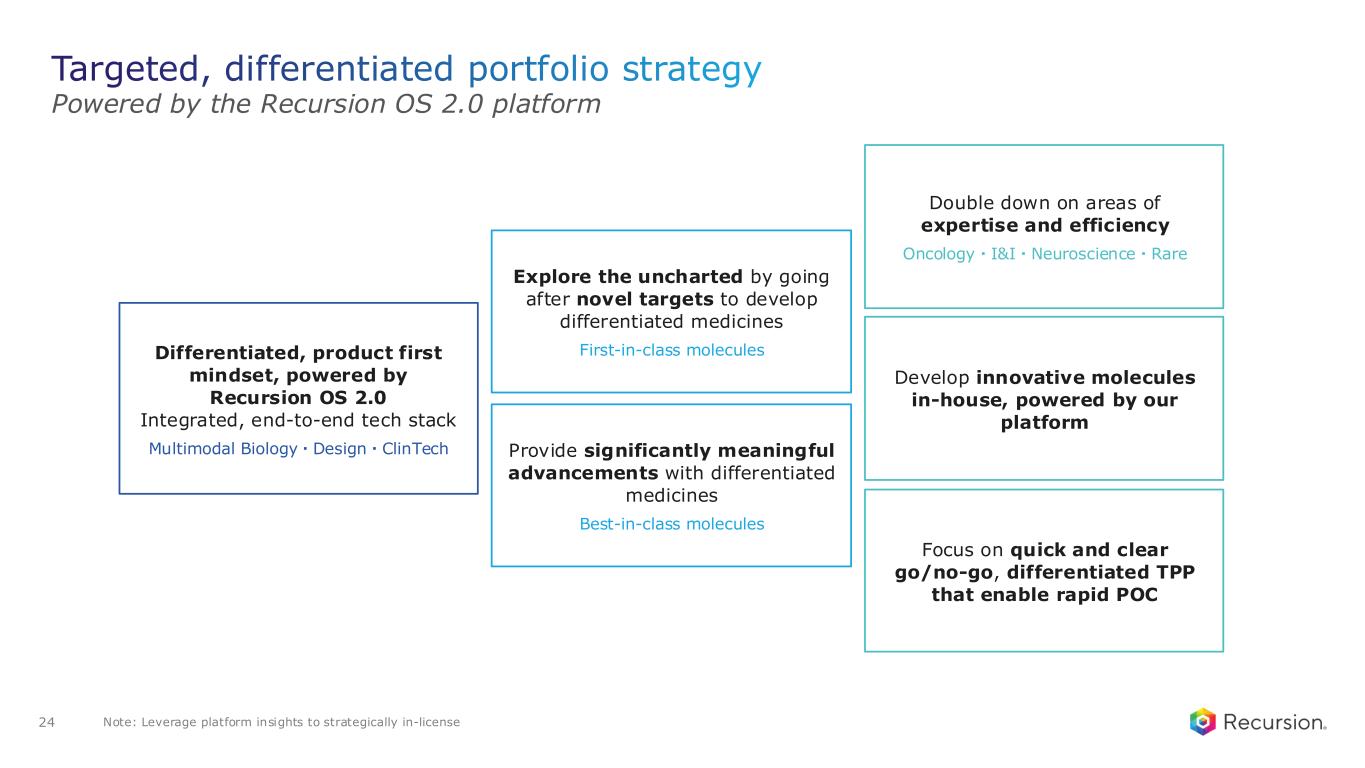
Thank you, Dennis. My main priority will be how we convert our data, computing capabilities, talented team, and platform into meaningful proof points that matter, whether in our own pipeline or in collaboration with our partners. This is the most crucial aspect for me. As Chris mentioned, I have experience in big pharma and now I'm in tech and biotech. Ultimately, it's about developing unique programs and, eventually, medicines for patients that truly matter. This focus is what drives me. I recognize that this is a difficult path with a 90% failure rate, and I am fully aware of the challenges faced throughout the industry. We're undertaking something unprecedented, which will be my primary focus moving forward. The second priority is to invest in areas where we have a distinctive competitive advantage. This involves our platform and programs, and I will make data-driven decisions on these initiatives. We are engaging in simultaneous, targeted, and efficient approaches to enable a swift go/no-go process, unlike many other companies that only advance a few programs from discovery to clinical stages. We need to be selective in our actions. Lastly, I will emphasize discipline, execution, and effective use of capital. Ben highlighted our appreciation for the capital we have, and I am committed to utilizing every dollar to genuinely create value for our shareholders and our patients. These are some of my key areas of focus, and I will likely reflect on them more during the holidays. With Chris's support, I’m truly excited to continue our collaboration, as it has been a rewarding journey with much more ahead.
Thanks, Najat. It's been an amazing first 12 years, and I'm looking forward to the next 12. Thank you, everybody, for joining us. I hope you have a great day.