
Recursion Pharmaceuticals, Inc 8-K, filed May 5, 2025
Recursion Pharmaceuticals, Inc. (RXRX)
8-K
2025-05-05
For: 2025-05-05
View Original
Added on
April 10, 2026
About this 8-K
Recursion Pharmaceuticals, Inc filed this 8-K on May 5, 2025.
Items reported
- Item 2.02: Financial results
- Item 7.01: Regulation FD disclosure
- Item 9.01: Financial statements and exhibits
UNITED STATES
SECURITIES AND EXCHANGE COMMISSION
Washington, D.C. 20549
FORM 8-K
CURRENT REPORT
Pursuant to Section 13 OR 15(d)
of The Securities Exchange Act of 1934
Date of Report (Date of earliest event reported): May 5, 2025
(Exact name of registrant as specified in its charter)
| (State or other jurisdiction of incorporation) | (Commission File Number) | (I.R.S. Employer Identification No.) | ||||||||||||
(Address of principal executive offices) (Zip code)
(385 ) 269 - 0203
(Registrant’s telephone number, including area code)
Not Applicable
(Former name or former address, if changed since last report.)
Check the appropriate box below if the Form 8-K filing is intended to simultaneously satisfy the filing obligation of the registrant under any of the following provisions:
Securities registered pursuant to Section 12(b) of the Act:
| Title of each class | Trading symbol(s) | Name of each exchange on which registered | ||||||
Indicate by check mark whether the registrant is an emerging growth company as defined in Rule 405 of the Securities Act of 1933 or (§230.405 of this chapter) or Rule 12b-2 of the Securities Exchange Act of 1934 (§240.12b-2 of this chapter).
Emerging growth company ☐
If an emerging growth company, indicate by check mark if the registrant has elected not to use the extended transition period for complying with any new or revised financial accounting standards provided pursuant to Section 13(a) of the Exchange Act. ☐
Item 2.02. Results of Operations and Financial Condition.
On May 5, 2025, the Company issued a press release announcing its results of operations and financial condition for the first quarter March 31, 2025. A copy of the press release is furnished as Exhibit 99.1 and is incorporated herein by reference.
Item 7.01. Regulation FD Disclosure.
On May 5, 2025, the Company released an updated corporate presentation to the investor section of the Company’s website. A copy of the presentation is attached hereto as Exhibit 99.2 to this Current Report on Form 8-K and incorporated into this Item 7.01 by reference.
The information furnished pursuant to Item 2.02 (including Exhibit 99.1) and 7.01 (including Exhibits 99.2 and 99.3) on this Form 8-K, shall not be deemed “filed” for purposes of Section 18 of the Securities Exchange Act of 1934, as amended (the “Exchange Act”), or otherwise subject to the liabilities of that section, nor shall it be deemed incorporated by reference into any other filing under the Securities Act of 1933, as amended, or the Exchange Act, except as expressly set forth by specific reference in such a filing.
Forward Looking Statements
The Company cautions you that statements contained in this report includes or is based upon “forward-looking statements” within the meaning of the Securities Litigation Reform Act of 1995, including, without limitation, those regarding all actions and anticipated performance under the Tempus Agreement and the Restated Agreement, and all other statements that are not historical facts. Forward-looking statements may or may not include identifying words such as “plan,” “will,” “expect,” “anticipate,” “intend,” “believe,” “potential,” “continue,” and similar terms. These statements are subject to known or unknown risks and uncertainties that could cause actual results to differ materially from those expressed or implied in such statements such as those described under the heading “Risk Factors” in the Company’s filings with the SEC, including the Company’s most recent Annual Report on Form 10-K and all subsequently filed Quarterly Reports on Form 10-Q. All forward-looking statements are based on management’s current estimates, projections, and assumptions, and the Company undertakes no obligation to correct or update any such statements, whether as a result of new information, future developments, or otherwise, except to the extent required by applicable law.
Item 9.01. Financial Statements and Exhibits.
(d) Exhibits.
| Exhibit Number | Description | ||||
| 99.1 | |||||
| 99.2 | |||||
| 104 | Cover Page Interactive Data File (embedded within the Inline XBRL document) | ||||
SIGNATURES
Pursuant to the requirements of the Securities Exchange Act of 1934, the registrant has duly caused this report to be signed on its behalf by the undersigned hereunto duly authorized on May 5, 2025.
| RECURSION PHARMACEUTICALS, INC. | ||||||||
| By: | /s/ Ben Taylor | |||||||
Ben Taylor | ||||||||
Chief Financial Officer | ||||||||
Exhibit 99.1
Recursion Reports First Quarter 2025 Financial Results and Provides Business Update
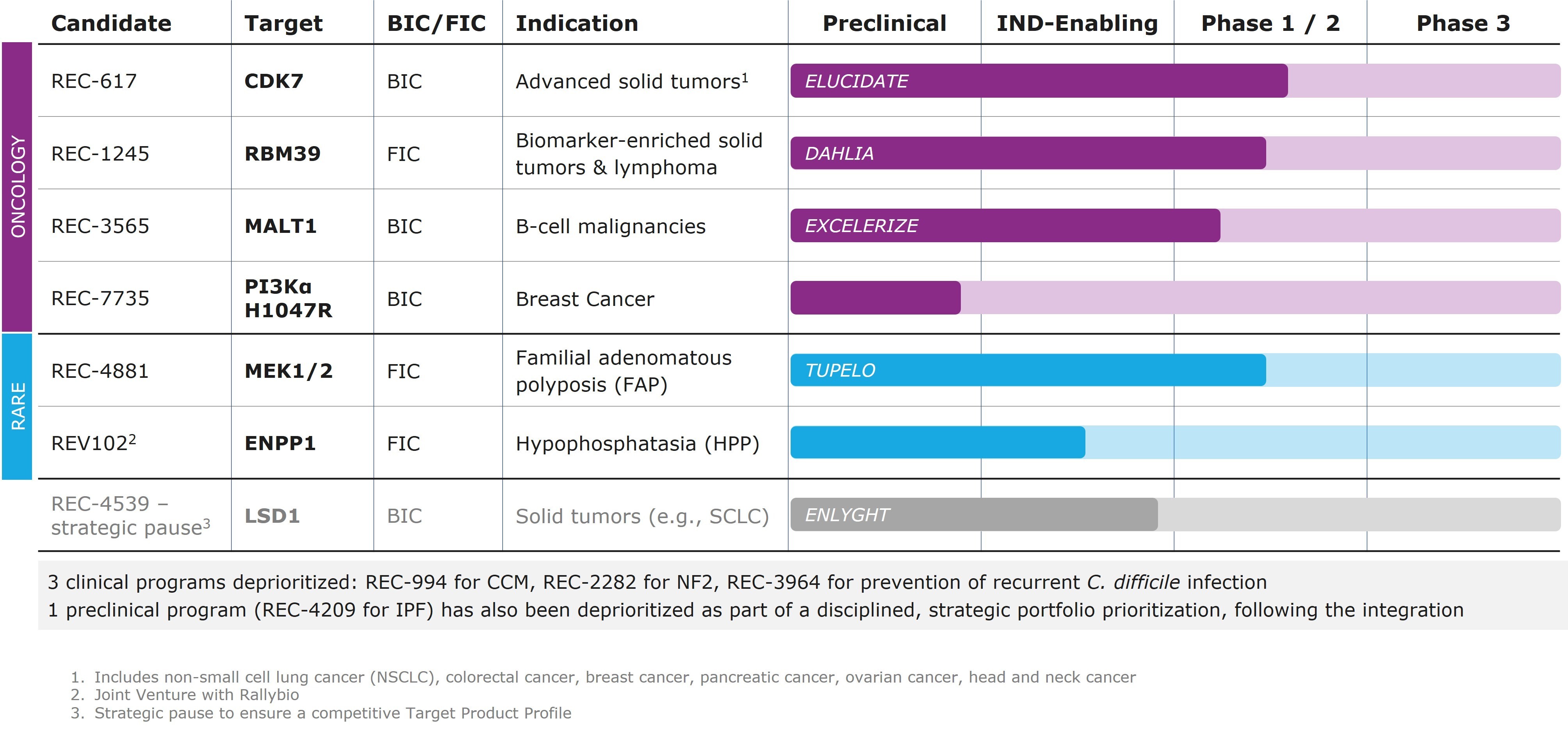
•Pipeline: Delivered on our commitment to a more focused R&D strategy by advancing a streamlined portfolio of 5+ clinical and preclinical programs in oncology and rare disease, while deprioritizing 3 clinical programs and 1 pre-clinical program following a strategic, data-driven review
•Partnerships: Achieved fourth milestone in Sanofi collaboration, generating $7 million for an orally active small-molecule lead with best-in-class potential in autoimmune diseases
•Platform and Operations: Implemented meaningful synergies and streamlined operations while maintaining capabilities, resulting in cash runway until mid 2027
SALT LAKE CITY, May 5, 2025 (GLOBE NEWSWIRE) — Recursion (Nasdaq: RXRX), a leading clinical stage TechBio company decoding biology to radically improve lives, today reported business updates financial results for its first quarter ending March 31, 2025.
Recursion will host a L(earnings) Call on May 5, 2025 at 8:00 am ET / 6:00 am MT / 1:00 pm BST from Recursion’s X (formerly Twitter), LinkedIn, and YouTube accounts giving analysts, investors, and the public the opportunity to ask questions of the company by submitting question here: https://forms.gle/ciFX2KbLfkAvh3Q87.
"Recursion's decade-long investment in AI is driving a decisive, data-led portfolio strategy," said Chris Gibson, Co-Founder and CEO of Recursion. "We are prioritizing high-potential programs to accelerate better treatments to patients, building on our platform's unique ability to learn and lead this transformative shift in drug discovery. Our deep appreciation goes to the patients and investigators whose participation is invaluable on this journey."
Summary of Business Highlights
Pipeline Updates
"Our portfolio evolution reflects Recursion’s commitment to advancing medicines in areas of high unmet need where we believe we can have the greatest impact," said Najat Khan, Chief R&D Officer and Chief Commercial Officer at Recursion. "As part of our business combination with Exscientia, we are proactively streamlining our portfolio, platform, and operations, making deliberate tradeoffs to focus resources on programs with the strongest scientific rationale and the highest potential for near- and long-term impact. Powered by the integrated Recursion OS platform, we are advancing a focused set of differentiated internal and partnered programs. Our approach is grounded in rigorous science and evidenced by the consistent delivery of key milestones with leading pharmaceutical and technology collaborators."
•Preliminary Program Data:
▪REC-4881 (MEK1/2): Preliminary data presented at DDW as a late-breaking oral presentation on May 4, 2025 from the ongoing Phase 1b/2 TUPELO study of REC-4881 in familial adenomatous polyposis (FAP):
•In the Phase 2 open-label study, REC-4881 (4 mg QD) led to a preliminary median 43% reduction (n=6 patients) in polyp burden at the week 13 assessment at time of data cutoff.
•Five of six patients (83%) experienced reductions in polyp burden ranging from 31% to 82%, however, one patient showed a substantial increase from baseline.
•At Week 13, 50% of patients (3 out of 6) achieved ≥1-point improvement in Spigelman stage, a measure of upper GI disease severity.
•The early safety profile of REC-4881 was generally consistent with that of prior MEK1/2 inhibitors; among 19 patients across Phase 1b and 2, most treatment-related adverse events were Grade 1 or 2, with Grade 3 events in 16% of patients and no Grade ≥4 TRAEs reported to date.
▪REC-7735 (PI3Kα H1047R): Candidate profiling ongoing targeting PI3Kα H1047R mutant breast cancer; DC nomination expected 2H25:
•Highly selective and structurally differentiated molecule to reduce dose-limiting hyperglycemia.
•REC-7735 showed dose-dependent tumor regression in PI3Kα H1047R CDX models, with no elevation in insulin levels or hyperglycemia markers in wild-type mice, unlike standard-of-care PI3K inhibitors.
•Demonstrated dose-dependent tumor regression in preclinical models, with low-dose REC-7735 outperforming high-dose capivasertib (AKT inhibitor) in efficacy and tolerability.
▪REV102 (ENPP1): IND-enabling studies ongoing for hypophosphatasia (HPP) in development with Rallybio; Phase 1 initiation expected 2H26:
•Highly selective and orally bioavailable molecule supports QD or BID dosing.
•In vivo data in early-onset HPP model shows improved survival while treatment in late-onset HPP model improves bone defects.
•Preliminary data supports first-in-class potential for adult-onset HPP.
◦Additional Strategic Pipeline Programs
▪Focus on highest value programs in core therapeutic areas (oncology and rare disease):
•REC-617 (CDK7): Phase 1/2 ELUCIDATE study ongoing in advanced solid tumors; molecule designed to maximize therapeutic index; best-in-class potential.
•REC-1245 (RBM39): Phase 1/2 DAHLIA study with dose-escalation ongoing for biomarker-selected solid tumors and R/R lymphomas; novel mechanism of action identified to modulate DDR; first-in-class potential.
•REC-3565 (MALT1): Phase 1 EXCELERIZE study recently initiated for B cell malignancies; designed to avoid UGT1A1 on-target toxicity; best-in-class potential.
•REC-4539 (LSD1): Precision designed for reversibility and CNS penetration in solid tumors (e.g.; SCLC); strategic pause to ensure a competitive Target Product Profile.
•Continued focus on advancing additional discovery programs that meet key criteria.
▪As part of this prioritization, the Company will discontinue development and/or pursue partnering opportunities for the following clinical programs:
•REC-2282 (NF2): Totality of data supports the discontinuation of the study
◦New findings: Phase 2 passed the futility threshold primarily driven by the 40mg cohort, however the 60mg and combined dose arms did not pass the futility criteria.
◦Limited overall tumor shrinkage and clinical activity across all arms.
•REC-994 (CCM): Totality of data supports the discontinuation of study
◦Early data suggested potential promising trends in exploratory efficacy endpoints at 400mg (mean volume reduction, mRS), negative trends in efficacy at 200mg (data were not statistically significant).
◦New findings: Long-term extension results showed no promising trends in MRI or functional outcomes in the placebo-to-400mg crossover, and the 400mg-to-400mg arm did not continue prior trends and was indistinguishable from natural history.
•REC-3964 (C. difficile): The company will consider out-licensing opportunities
◦Evolved treatment options result in low recurrence rates (~5%); thus limiting unmet need.
◦Strategic decision to focus on other areas with greater unmet need.
◦Upcoming milestones:
▪REC-617 (CDK7): On track to initiate CDK7 combination studies in 1H25, additional monotherapy data expected in 2H25.
▪REC-4881 (MEK1/2): Additional data in FAP from TUPELO expected in 2H25.
▪REC-7735 (PI3Kα H1047R): preclinical studies ongoing with development candidate expected in 2H25.
▪REC-1245 (RBM39): Early Phase 1 safety and PK monotherapy data expected in 1H26.
▪REC-3565 (MALT1): Early Phase 1 safety and PK monotherapy data expected in 2H26.
▪REV102 (ENPP1): Phase 1 initiation expected in 2H26.
Partnerships Updates
Recursion and Sanofi advanced their fourth partnered program through a significant discovery milestone. This milestone involved the Recursion OS identifying differentiated, orally active small molecule leads against a high-interest immune cell target. These leads exhibit potential best-in-class properties, addressing significant liabilities seen in other candidates. As a result of this milestone, Recursion has received a $7 million milestone payment with the potential for over $300 million in additional milestone payments for this program. In total, the partnership has generated $130 million of cash inflows (including an upfront payment) to Recursion to date.
Recursion’s collaboration within Neuroscience and a GI Oncology Indication for Roche and Genentech continues to bring unbiased novel biological insights to potential programs. To date, the collaboration has built five phenomaps derived from a vast dataset of over one trillion iPSC-derived cells, one hundred billion GI Oncology relevant cells, alongside around 5,000 transcriptomes representing approximately 171 TB of data. Our approach continues to integrate high-throughput screens of genetics and small molecules with detailed cell measurements, informing our AI/ML models. Looking ahead, we are actively building additional maps and are focused on leveraging the Recursion OS and collaborating with Roche and Genentech to identify new novel programs that will fuel program advancement in both a GI Oncology indication and within Neuroscience.
Platform Updates
◦The platform is continuing to expand its ClinTech focus including high-quality, linked data assets, to industrialize clinical development, reduce costs, and accelerate the development of novel therapeutics. Updates include:
▪Leveraging Tempus data across Recursion’s oncology programs to expand therapeutic areas, which the Company believes will enrich patient population subgroups, and help increase likelihood of response for oncology clinical programs.
▪Signing an agreement with HealthVerity to integrate de-identified data for over 340 million covered lives within the US into Recursion OS, allowing for deeper insights into patient populations, enhanced trial design and feasibility assessments, as well as clinical operations workflows.
◦The collaboration with Enamine, leveraging Recursion's massive data layer of predicted protein-small molecule interactions, resulted in the generation of enriched screening libraries to target 100 key and clinically relevant drug targets. The screening libraries are now available for purchase from Enamine.
Financial and Corporate Updates
“Recursion is stronger as a combined company, allowing us to not only deliver on operational goals more efficiently, but also be nimble in periods of uncertainty," stated Ben Taylor, CFO of
Recursion and President Recursion UK. "We have been able to significantly lower costs without cutting important platform capabilities by decreasing overall capacity. We maintain the ability to restore capacity in the future to respond to market needs. This aligns closely with our fundamental goal of using AI and automation to make drug discovery more flexible, efficient and effective.”
First Quarter 2025 Financial Results
•Cash Position: Cash and cash equivalents and restricted cash were $509 million as of March 31, 2025 compared to $603 million as of December 31, 2024.
•Revenue: Total revenue, consisting primarily of revenue from collaborative agreements, was $15 million for the first quarter of 2025, compared to $14 million for the first quarter of 2024 due to the timing of projects from the Company's Sanofi, Roche and Merck KGaA, Darmstadt, Germany collaborations.
•Research and Development Expenses: Research and development expenses were $130 million for the first quarter of 2025, compared to $68 million for the first quarter of 2024. The increase was primarily driven by the Company's agreement with Tempus as well as our business combination with Exscientia in November 2024. This includes $27 million in non-cash expenses for use of Tempus’ patient-centric multimodal oncology data for Recursion programs.
•General and Administrative Expenses: General and administrative expenses were $55 million for the first quarter of 2025, compared to $31 million for the first quarter of 2024. The increase compared to prior period was primarily due to the inclusion of G&A expenses from the business combination with Exscientia.
•Net Loss: Net loss was $202.5 million for the first quarter of 2025, compared to a net loss of $91.4 million for the first quarter of 2024.
•Net Cash: Net cash used in operating activities was $132 million for the first quarter of 2025, compared to net cash used in operating activities of $102 million for the first quarter of 2024. The difference was primarily driven by higher costs incurred for R&D and G&A due to the Company’s business combination with Exscientia, in addition to $16 million of one-time transaction related costs in the first quarter of 2025.
Integration update and guidance
•Operational teams have been functioning as consolidated groups since immediately after closing. Core integration plans are completed or on schedule across the company.
•Expected cash burn* excluding partnering or financing inflows for 2025 of equal to or less than $450 million, excluding the benefit of potential cash inflows from existing or new partnerships. In 2024, the combined cash burn excluding partnering or financing inflows was approximately $606 million, including $203 million of change in cash from Exscientia prior to the business combination and $403 million from Recursion, excluding $49 million of respective partnership inflows.
•1Q25 cash burn excluding partnering or financing inflows of approximately $118 million, excluding transaction related costs
•Projected cash runway into mid 2027 based on current business plan.
•Primary areas of combination synergies and operational savings beyond pipeline prioritization:
◦Duplicated corporate expenses
◦Reduction in capacity of drug discovery operations
◦Utilization of broader platform capabilities to reduce project costs
◦Increasing administrative efficiency
◦Rationalization of facilities and office locations
◦Greater purchasing power with vendors
◦Spin-out of Austrian operations
*Cash burn is a non-GAAP financial measure. See "Non-GAAP Financial Measures" below for additional information regarding cash burn and for a reconciliation of cash burn to net cash used in operating activities for historical periods, the most directly comparable GAAP financial measure. With respect to the expected cash burn for 2025, certain items that affect the calculation of the GAAP financial measure for net cash used by operating activities are not available on a forward-looking basis because such items cannot be reasonably calculated without unreasonable effort due to the unpredictability of the amounts and timing of events affecting the items we exclude from cash burn. Consequently, the Company is unable to provide a reconciliation of net cash used in operating activities to cash burn for the Company’s fiscal 2025 guidance.
Expanded Board:
•Namandjé Bumpus, Ph.D, and Elaine Sun have been appointed to Recursion’s Board of Directors, effective as of March 15th.
•Dr. Bumpus brings deep experience in scientific innovation and regulatory strategy, while Elaine Sun adds extensive leadership in life sciences finance and corporate strategy.
About Recursion
Recursion (NASDAQ: RXRX) is a clinical stage TechBio company leading the space by decoding biology to radically improve lives. Enabling its mission is the Recursion OS, a platform built across diverse technologies that continuously generate one of the world’s largest proprietary biological and chemical datasets. Recursion leverages sophisticated machine-learning algorithms to distill from its dataset a collection of trillions of searchable relationships across biology and chemistry unconstrained by human bias. By commanding massive experimental scale — up to millions of wet lab experiments weekly — and massive computational scale — owning and operating one of the most powerful supercomputers in the world, Recursion is uniting technology, biology and chemistry to advance the future of medicine.
Recursion is headquartered in Salt Lake City, where it is a founding member of BioHive, the Utah life sciences industry collective. Recursion also has offices in Toronto, Montréal, New York, London, Oxford area, and the San Francisco Bay area. Learn more at www.Recursion.com, or connect on X (formerly Twitter) and LinkedIn.
Media Contact
Media@Recursion.com
Investor Contact
Investor@Recursion.com
Recursion Pharmaceuticals, Inc.
Condensed Consolidated Statements of Operations (unaudited)
(in thousands, except share and per share amounts)
| Three months ended March 31, | ||||||||||||||||||||
| 2025 | 2024 | |||||||||||||||||||
| Revenue | ||||||||||||||||||||
| Operating revenue | $ | 14,818 | $ | 13,491 | ||||||||||||||||
| Grant revenue | (73) | 303 | ||||||||||||||||||
| Total revenue | 14,745 | 13,794 | ||||||||||||||||||
| Operating costs and expenses | ||||||||||||||||||||
| Cost of revenue | 21,829 | 11,166 | ||||||||||||||||||
| Research and development | 129,634 | 67,560 | ||||||||||||||||||
| General and administrative | 54,650 | 31,408 | ||||||||||||||||||
| Total operating costs and expenses | 206,113 | 110,134 | ||||||||||||||||||
| Loss from operations | (191,368) | (96,340) | ||||||||||||||||||
| Other income (loss), net | (11,277) | 4,188 | ||||||||||||||||||
| Loss before income tax benefit | (202,645) | (92,152) | ||||||||||||||||||
| Income tax benefit | 158 | 779 | ||||||||||||||||||
| Net loss | $ | (202,487) | $ | (91,373) | ||||||||||||||||
| Per share data | ||||||||||||||||||||
| Net loss per share of Class A, B and Exchangeable common stock, basic and diluted | $ | (0.50) | $ | (0.39) | ||||||||||||||||
| Weighted-average shares (Class A, B and Exchangeable) outstanding, basic and diluted | 402,771,972 | 236,019,349 | ||||||||||||||||||
Recursion Pharmaceuticals, Inc.
Condensed Consolidated Balance Sheets (unaudited)
(in thousands)
| March 31, | December 31, | |||||||
| 2025 | 2024 | |||||||
| Assets | ||||||||
| Current assets | ||||||||
| Cash and cash equivalents | $ | 500,453 | $ | 594,350 | ||||
| Restricted cash | 3,075 | 3,045 | ||||||
| Other receivables | 46,124 | 49,166 | ||||||
| Prepaid data assets | 2,470 | 29,601 | ||||||
| Other current assets | 32,023 | 38,107 | ||||||
| Total current assets | 584,145 | 714,269 | ||||||
| Restricted cash, non-current | 5,629 | 5,629 | ||||||
| Property and equipment, net | 126,834 | 141,063 | ||||||
| Operating lease right-of-use assets | 53,186 | 65,877 | ||||||
| Financing lease right-of-use assets | 24,757 | 26,273 | ||||||
| Intangible assets, net | 335,790 | 335,855 | ||||||
| Goodwill | 158,112 | 148,873 | ||||||
| Deferred tax assets | 2,003 | 1,934 | ||||||
| Other assets, non-current | 14,778 | 8,825 | ||||||
| Total assets | $ | 1,305,234 | $ | 1,448,598 | ||||
| Liabilities and stockholders’ equity | ||||||||
| Current liabilities | ||||||||
| Accounts payable | $ | 25,086 | $ | 21,613 | ||||
| Accrued expenses and other liabilities | 56,804 | 81,872 | ||||||
| Unearned revenue | 39,651 | 61,767 | ||||||
| Operating lease liabilities | 11,853 | 13,795 | ||||||
| Notes payable and financing lease liabilities | 8,587 | 8,425 | ||||||
| Total current liabilities | 141,981 | 187,472 | ||||||
| Unearned revenue, non-current | 129,609 | 118,765 | ||||||
| Operating lease liabilities, non-current | 56,024 | 67,250 | ||||||
| Notes payable and financing lease liabilities, non-current | 16,446 | 19,022 | ||||||
| Deferred tax liabilities | 22,437 | 16,575 | ||||||
| Other liabilities, non-current | 4,790 | 4,732 | ||||||
| Total liabilities | 371,287 | 413,816 | ||||||
| Commitments and contingencies | ||||||||
| Stockholders’ equity | ||||||||
Common stock (Class A, B and Exchangeable) | 4 | 4 | ||||||
| Additional paid-in capital | 2,553,492 | 2,473,698 | ||||||
| Accumulated deficit | (1,633,694) | (1,431,283) | ||||||
| Accumulated other comprehensive loss | 14,145 | (7,637) | ||||||
| Total stockholders’ equity | 933,947 | 1,034,782 | ||||||
| Total liabilities and stockholders’ equity | $ | 1,305,234 | $ | 1,448,598 | ||||
Non-GAAP Financial Measures
To supplement our financial statements prepared in accordance with U. S. GAAP, we monitor and consider cash burn, which is a non-GAAP financial measure. We define cash burn as the
net cash used in operating activities, excluding non-ordinary course transaction costs, plus partnership cash inflows and purchases of property and equipment. This non-GAAP financial measure is not based on any standardized methodology prescribed by U.S. GAAP and is not necessarily comparable to similarly-titled measures presented by other companies. We believe cash burn to be a liquidity measure that provides useful information to management and investors about the amount of cash consumed by the operations of the business, including our purchases of property and equipment. A limitation of using this non-U.S. GAAP measure is that cash burn does not represent the total change in cash and cash equivalents for the period because it excludes cash provided by or used for other investing and financing activities. We account for this limitation by providing information about our capital expenditures and other investing and financing activities in the statements of cash flows in our financial statements and by presenting cash flows from investing and financing activities in our reconciliation of cash burn. In addition, it is important to note that other companies, including companies in our industry, may not use cash burn, may calculate cash burn in a different manner than we do or may use other financial measures to evaluate their performance, all of which could reduce the usefulness of cash burn as a comparative measure. Because of these limitations, cash burn should not be considered in isolation from, or as a substitute for, financial information prepared in accordance with U.S. GAAP. The reconciliation of cash burn to net cash used in operating activities and cash and cash equivalents is provided in the tables below (in millions of dollars):
| Cash burn - 1Q 25 | (in millions) | |||||||
| Recursion net cash used in operating activities | 132 | * | ||||||
| Subtract: transaction costs | (16) | |||||||
| Add: purchases of property and equipment | 2 | * | ||||||
| Cash burn - 1Q 25 | 118 | |||||||
*: This is from Recursion inc Condensed Consolidated Statement of Cash Flows for the three months ended March 31, 2025
| Cash burn - 2024 | (in millions) | |||||||
| Exscientia change in cash, cash equivalents and bank deposits | $ | 184 | & | |||||
| Recursion net cash used in operating activities | 359 | * | ||||||
| Add: partnership cash inflows | 49 | |||||||
| Add: purchases of property and equipment | 14 | * | ||||||
| Cash burn - 2024 | $ | 606 | ||||||
&: See below table for the calculation of this amount
*: This is from Recursion inc Consolidated Statement of Cash Flows for the year ended December 31, 2024
| Cash, cash equivalents and bank deposits - Exscientia | |||||||||||
| (in millions) | November 20, 2024 | December 31, 2023 | Change | ||||||||
| Cash and cash equivalents | $ | 277 | £ | 259 | |||||||
| Short term bank deposits | — | 104 | |||||||||
| Total - GBP | N/A | £ | 363 | ||||||||
| GDP to USD rate | N/A | 1.27 | |||||||||
| Total USD | $ | 277 | $ | 461 | $ | (184) | |||||
Forward-Looking Statements
This document contains information that includes or is based upon “forward-looking statements” within the meaning of the Securities Litigation Reform Act of 1995, including, without limitation, those regarding Recursion’s cash position, cash burn and cash runway; the potential to deliver effective therapies to patients in high-need areas; Recursion’s ability to demonstrate the potential of technology-driven approaches to increase speed, quality and the scalability of drug discovery; the potential outlook for programs being prioritized and deprioritized; Recursion's future as a leader in TechBio and ability to deliver better treatments to patients faster; the completion of core integration plans and the results of the business combination with Exscientia; expectations relating to early and late stage discovery, preclinical, and clinical programs, including timelines for commencement of and enrollment in studies, data readouts, and progression toward IND-enabling studies; expectations and developments with respect to licenses and collaborations, including option exercises by partners and additional partnerships, the value of data generated for the Roche-Genentech partnership, the value of data from new partnerships, and the promising future of partnership programs, the acceleration of progress across multiple partnered programs; prospective products and their potential future indications and market opportunities; developments with Recursion OS and other technologies; business and financial plans and performance; and all other statements that are not historical facts. Forward-looking statements may or may not include identifying words such as “plan,” “will,” “expect,” “anticipate,” “intend,” “believe,” “potential,” “continue,” and similar terms. These statements are subject to known or unknown risks and uncertainties that could cause actual results to differ materially from those expressed or implied in such statements, including but not limited to: challenges inherent in pharmaceutical research and development, including the timing and results of preclinical and clinical programs, where the risk of failure is high and failure can occur at any stage prior to or after regulatory approval due to lack of sufficient efficacy, safety considerations, or other factors; our ability to leverage and enhance our drug discovery platform; our ability to obtain financing for development activities and other corporate purposes; the success of our collaboration activities; our ability to obtain regulatory approval of, and ultimately commercialize, drug candidates; our ability to obtain, maintain, and enforce intellectual property protections; cyberattacks or other disruptions to our technology systems; our ability to attract, motivate, and retain key employees and manage our growth; inflation and other macroeconomic issues; and other risks and uncertainties such as those described under the heading “Risk Factors” in our filings with the U.S. Securities and Exchange Commission, including our Annual Report on Form 10-K and Quarterly Reports on Form 10-Q. All forward-looking statements are based on management’s current estimates, projections, and assumptions, and Recursion undertakes no obligation to correct or update any such statements, whether as a result of new information, future developments, or otherwise, except to the extent required by applicable law.

1Q25 (L)earnings MAY 2025
This presentation of Recursion Pharmaceuticals, Inc. (“Recursion,” “we,” “us,” or “our”) and any accompanying discussion contain statements that are not historical facts may be considered forward-looking statements under federal securities laws and may be identified by words such as “anticipates,” “believes,” “estimates,” “expects,” “intends,” “plans,” “potential,” “predicts,” “projects,” “seeks,” “should,” “will,” or words of similar meaning and include, but are not limited to, statements regarding Recursion’s ability to demonstrate the potential of technology-driven approaches to increase speed, quality and the scalability of drug discovery; the potential outlook for programs being prioritized and deprioritized; Recursion's future as a leader in TechBio and ability to deliver better treatments to patients faster; Recursion’s OS industrializing first- and best-in-class drug discovery; the occurrence or realization of potential milestones; current and future preclinical and clinical studies, including timelines for enrollment in studies, data readouts, and progression toward IND-enabling and other potential studies; advancements of its pipeline, partnerships, and data strategies; the potential size of the market opportunity for our drug candidates; outcomes and benefits from licenses, partnerships and collaborations, including option exercises by partners and the amount and timing of potential milestone payments; the initiation, timing, progress, results, and cost of our research and development programs; advancements of our Recursion OS; the potential for additional partnerships; our ability to identify viable new drug candidates for clinical development and the accelerating rate at which we expect to identify such candidates including our ability to leverage the datasets acquired through the license agreement into increased machine learning capabilities and accelerate clinical trial enrollment; Recursion’s cash position and cash runway; the completion of core integration plans and the results of the business combination with Exscientia; and many others. Other important factors and information are contained in Recursion’s most recent Annual Report on Form 10-K, Quarterly Report on Form 10-Q, and the Company’s other filings with the U.S. Securities and Exchange Commission (the “SEC”), which can be accessed at https://ir.recursion.com, or www.sec.gov. All forward-looking statements are qualified by these cautionary statements and apply only as of the date they are made. Recursion does not undertake any obligation to update any forward-looking statement, whether as a result of new information, future events or otherwise. Certain information contained in this presentation relates to or is based on studies, publications, surveys and other data obtained from third-party sources and the company’s own internal estimates and research. While the company believes these third-party sources to be reliable as of the date of this presentation, it has not independently verified, and makes no representation as to the adequacy, fairness, accuracy or completeness of, any information obtained from third- party sources. In addition, all of the market data included in this presentation involves a number of assumptions and limitations, and there can be no guarantee as to the accuracy or reliability of such assumptions. Finally, while the company believes its own internal research is reliable, such research has not been verified by any independent source. Information contained in, or that can be accessed through our website is not a part of and is not incorporated into this presentation. Cross-trial or cross-candidate comparisons against other clinical trials and other drug candidates are not based on head-to-head studies and are presented for informational purposes; comparisons are based on publicly available information for other clinical trials and other drug candidates. Any non-Recursion logos or trademarks included herein are the property of the owners thereof and are used for reference purposes only. 3
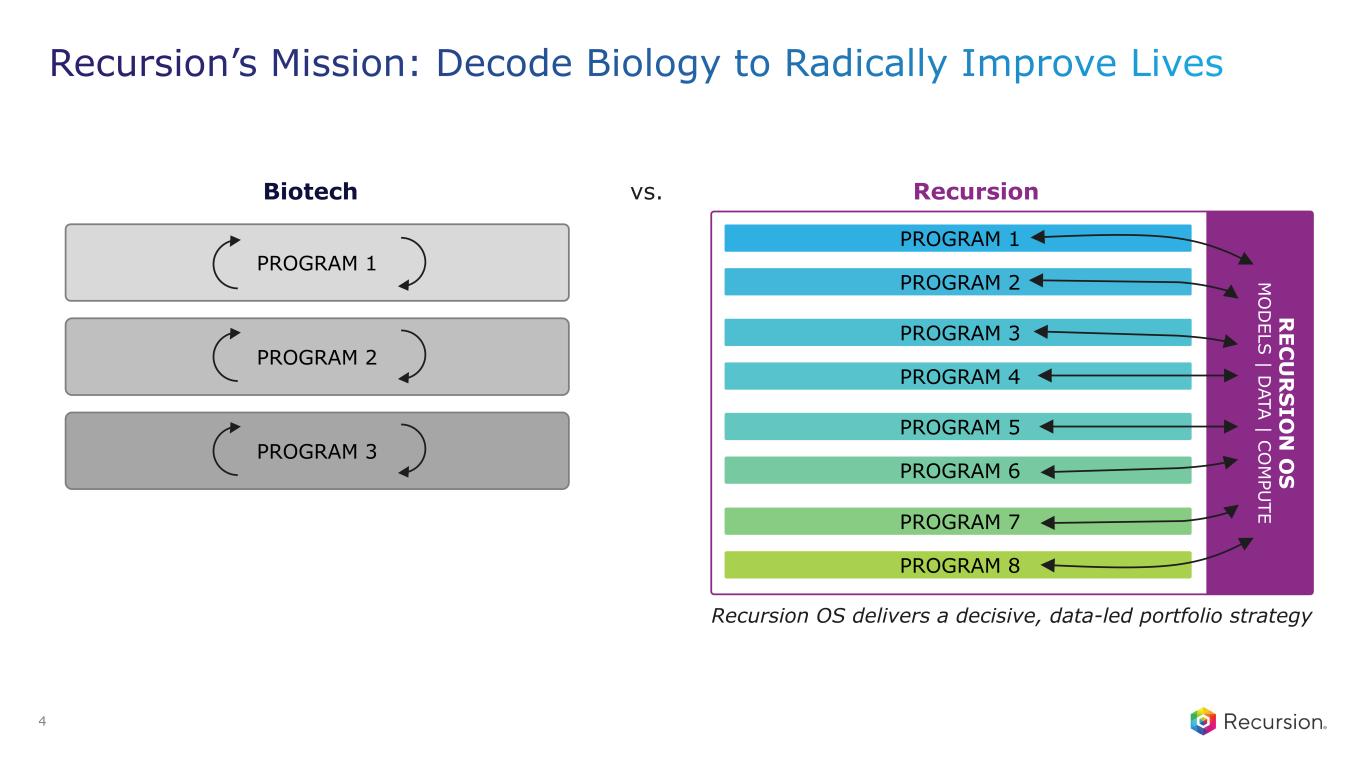
PROGRAM 1 PROGRAM 3 PROGRAM 5 PROGRAM 7 PROGRAM 2 PROGRAM 4 PROGRAM 6 PROGRAM 8 PROGRAM 1 Biotech vs. Recursion PROGRAM 2 PROGRAM 3 R EC U R S IO N O S M O D ELS | D ATA | C O M PU TE Recursion OS delivers a decisive, data-led portfolio strategy 4
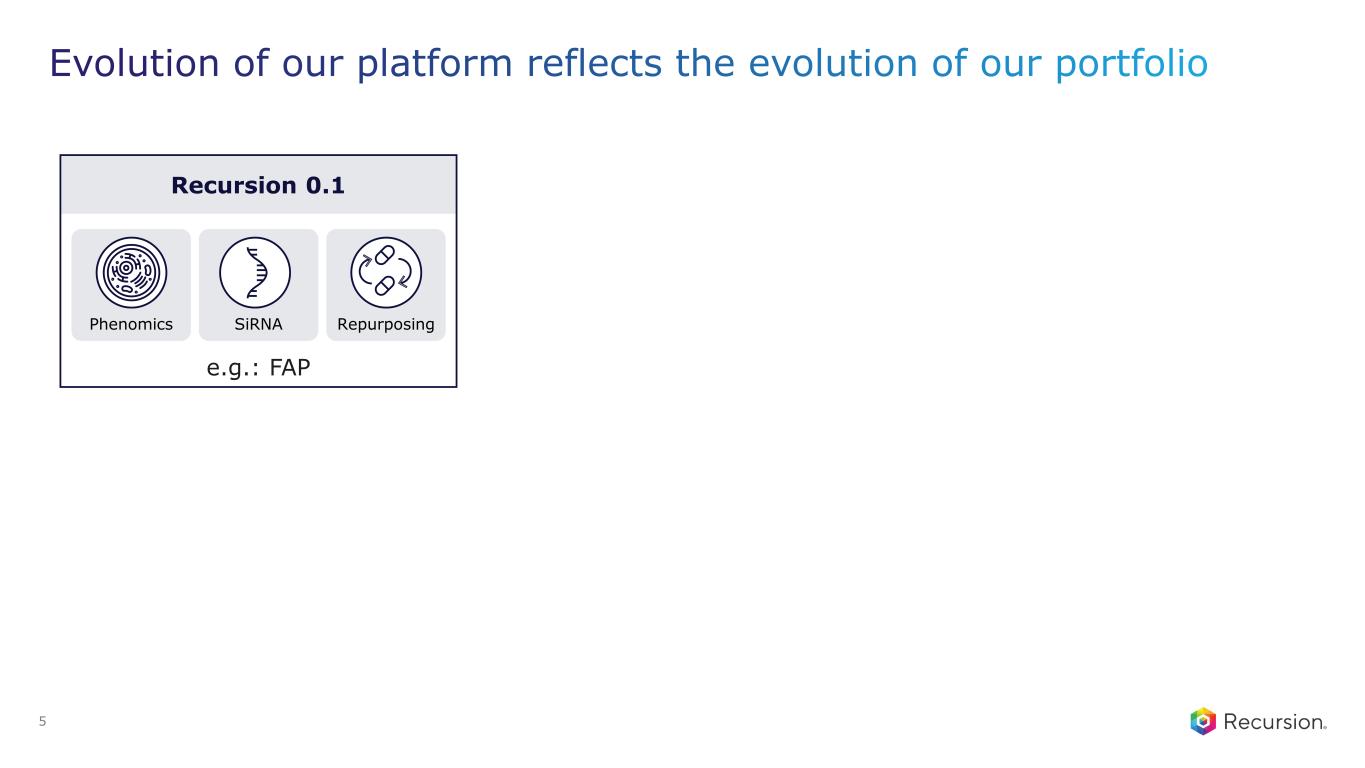
Recursion 0.1 e.g.: FAP Phenomics SiRNA Repurposing 5
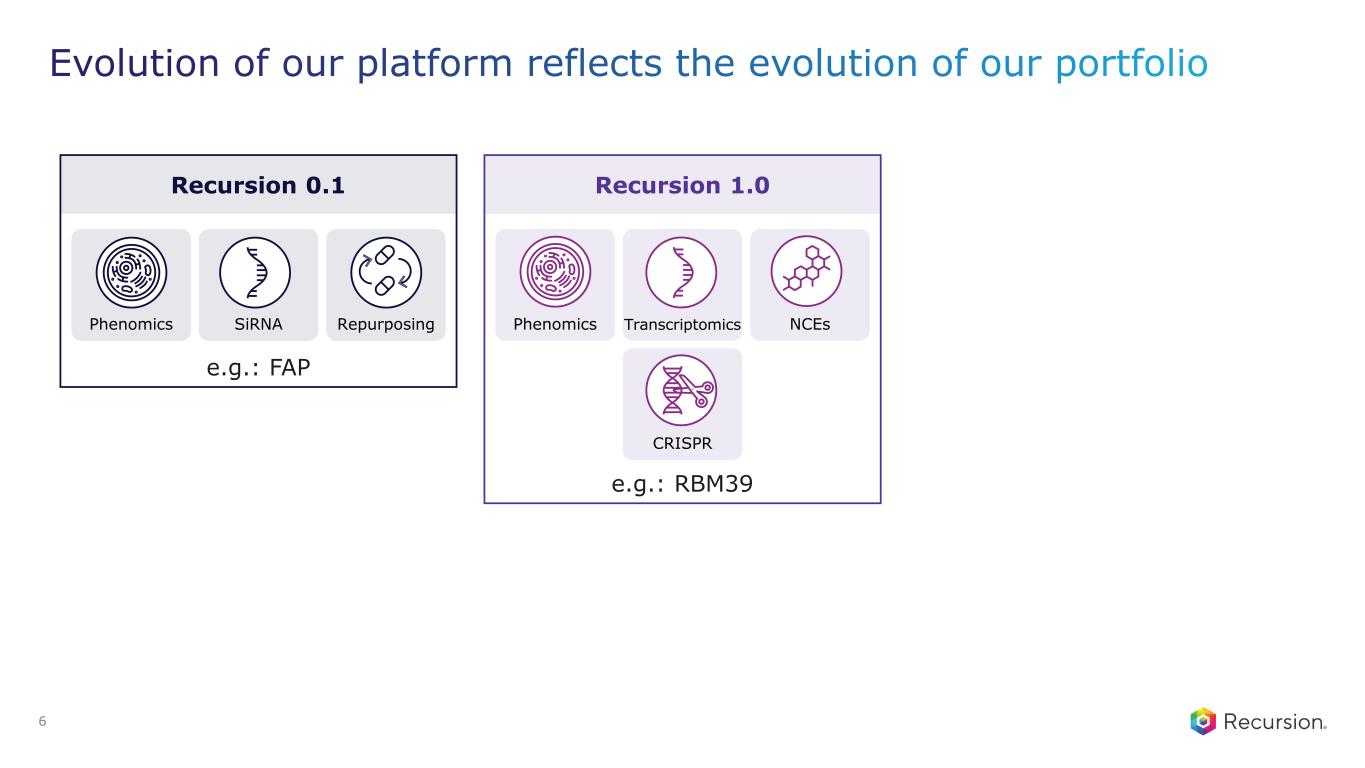
Recursion 0.1 e.g.: FAP Phenomics SiRNA Repurposing Recursion 1.0 e.g.: RBM39 Phenomics Transcriptomics NCEs CRISPR 6
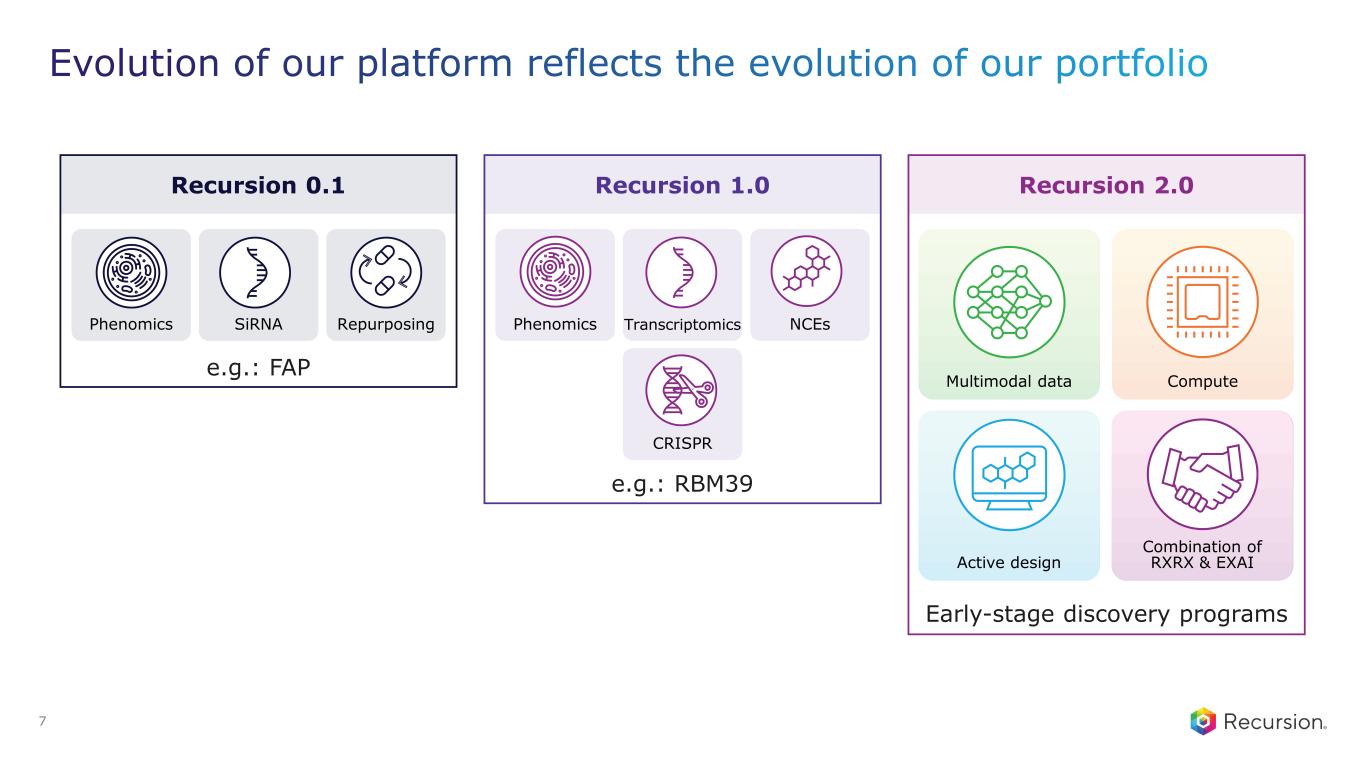
Recursion 0.1 e.g.: FAP Phenomics SiRNA Repurposing Recursion 1.0 e.g.: RBM39 Phenomics Transcriptomics NCEs CRISPR Multimodal data Compute Combination of RXRX & EXAIActive design Recursion 2.0 Early-stage discovery programs 7
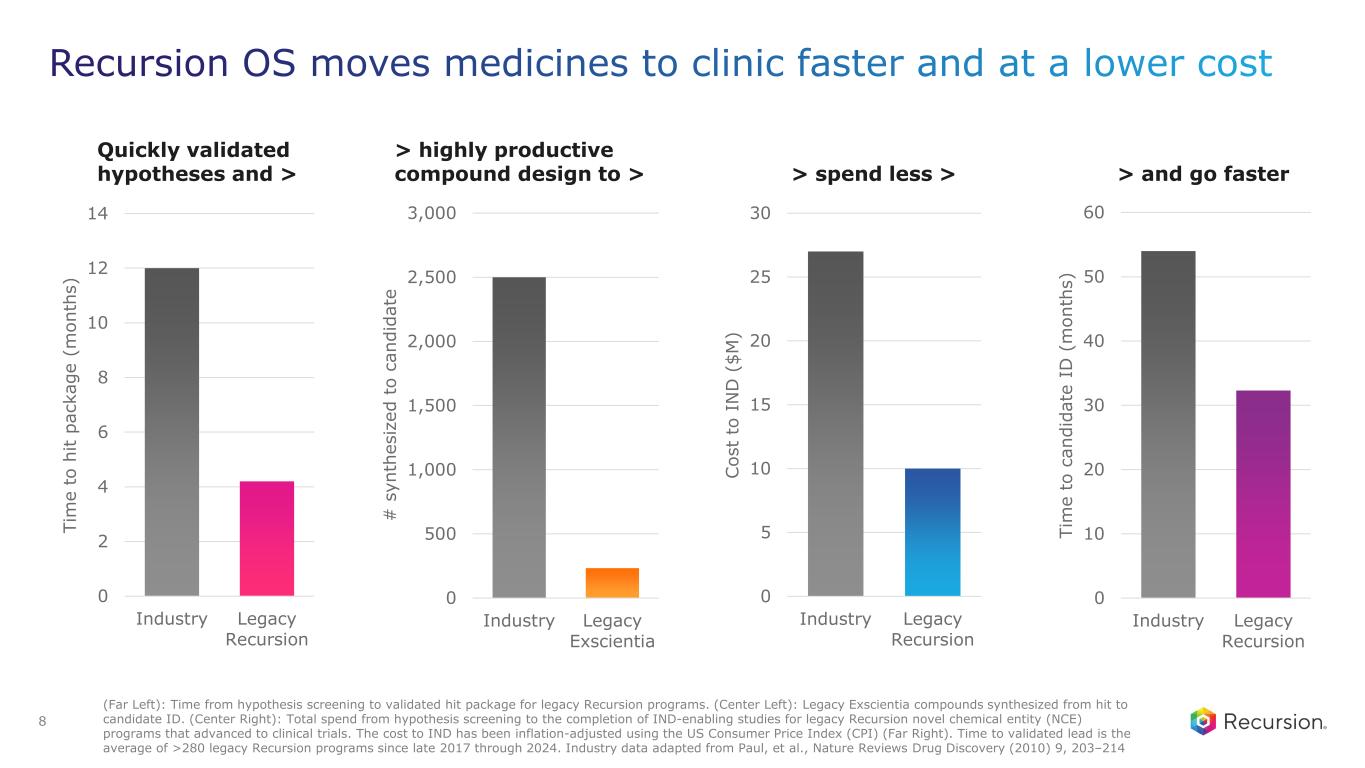
0 10 20 30 40 50 60 Industry Legacy Recursion Ti m e to c an di da te I D ( m on th s) > and go faster 0 5 10 15 20 25 30 Industry Legacy Recursion C os t to I N D ( $M ) > spend less > 0 500 1,000 1,500 2,000 2,500 3,000 Industry Legacy Exscientia > highly productive compound design to > # s yn th es iz ed t o ca nd id at e 0 2 4 6 8 10 12 14 Industry Legacy Recursion Ti m e to h it pa ck ag e (m on th s) Quickly validated hypotheses and > (Far Left): Time from hypothesis screening to validated hit package for legacy Recursion programs. (Center Left): Legacy Exscientia compounds synthesized from hit to candidate ID. (Center Right): Total spend from hypothesis screening to the completion of IND-enabling studies for legacy Recursion novel chemical entity (NCE) programs that advanced to clinical trials. The cost to IND has been inflation-adjusted using the US Consumer Price Index (CPI) (Far Right). Time to validated lead is the average of >280 legacy Recursion programs since late 2017 through 2024. Industry data adapted from Paul, et al., Nature Reviews Drug Discovery (2010) 9, 203–214 8
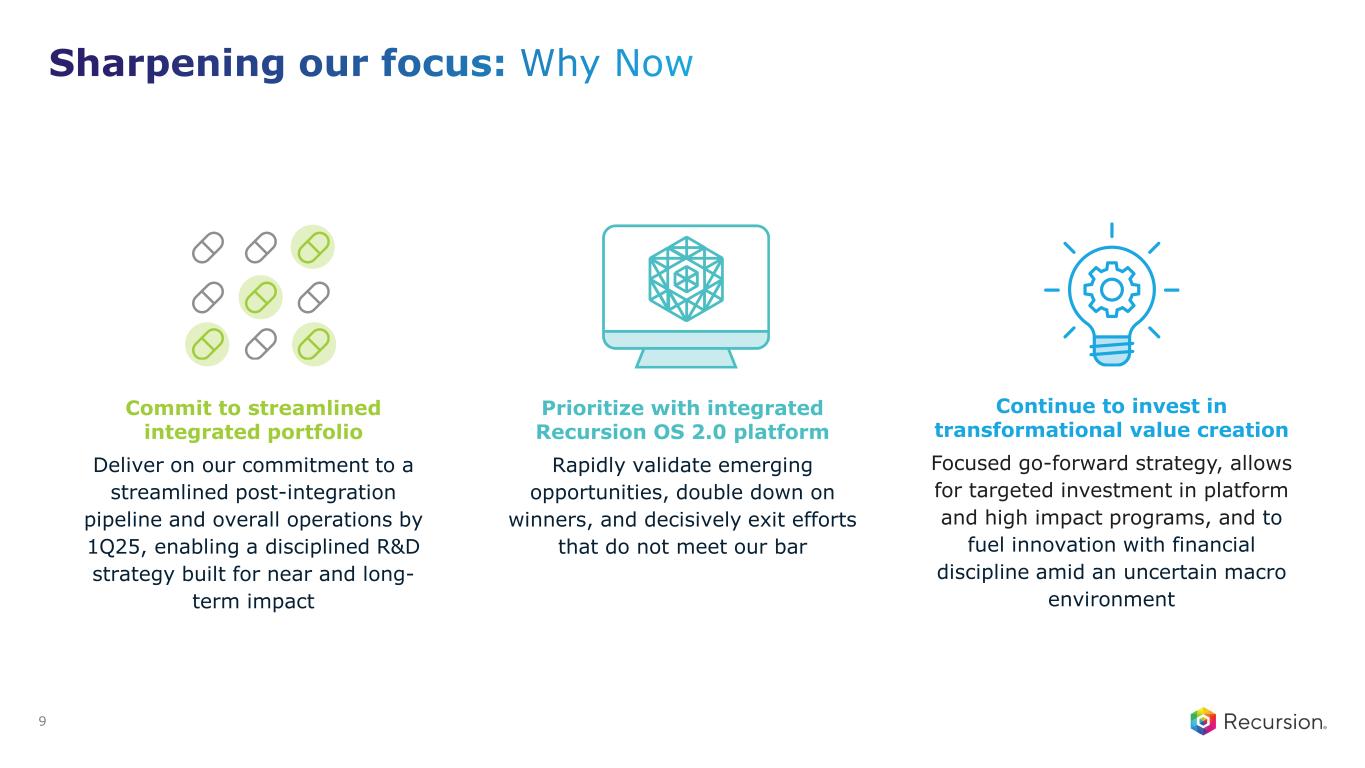
Commit to streamlined integrated portfolio Deliver on our commitment to a streamlined post-integration pipeline and overall operations by 1Q25, enabling a disciplined R&D strategy built for near and long- term impact Prioritize with integrated Recursion OS 2.0 platform Rapidly validate emerging opportunities, double down on winners, and decisively exit efforts that do not meet our bar Continue to invest in transformational value creation Focused go-forward strategy, allows for targeted investment in platform and high impact programs, and to fuel innovation with financial discipline amid an uncertain macro environment 9
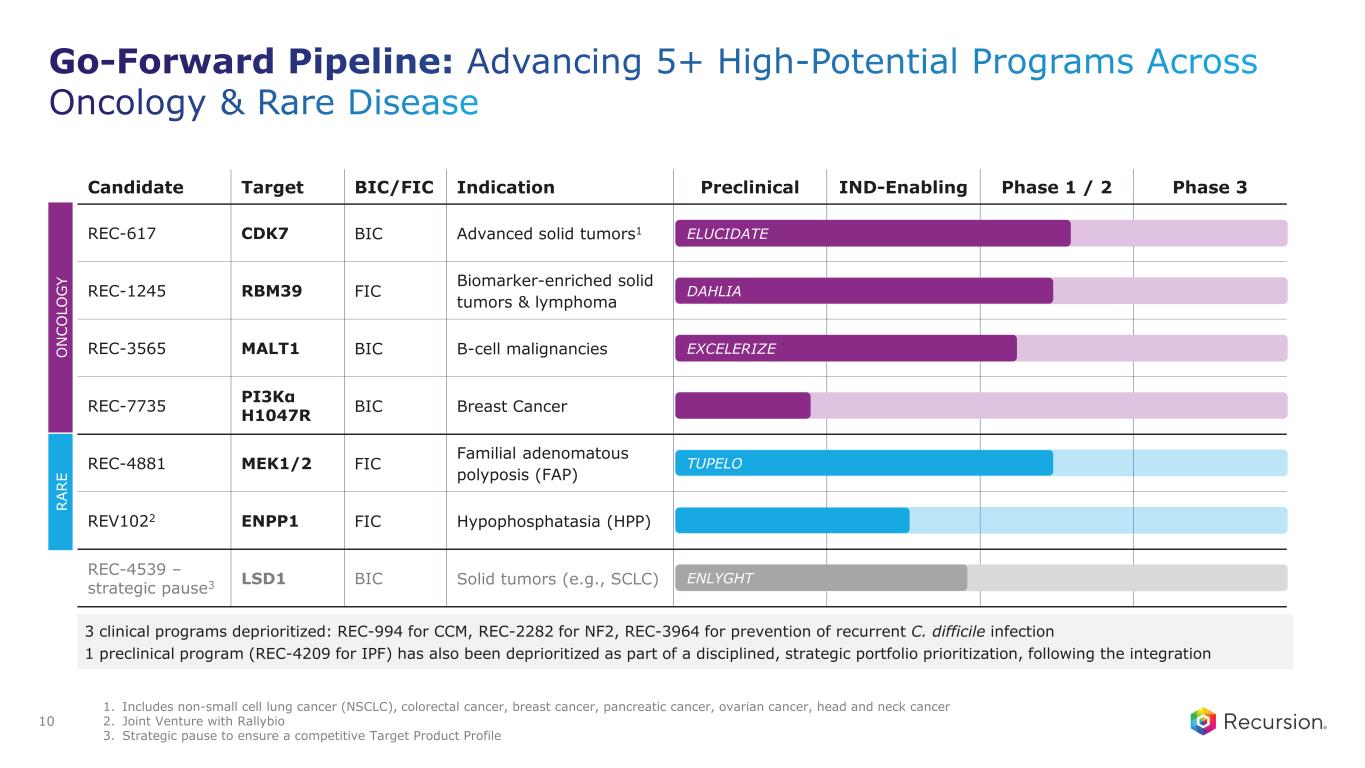
Candidate Target BIC/FIC Indication Preclinical IND-Enabling Phase 1 / 2 Phase 3 REC-617 CDK7 BIC Advanced solid tumors1 REC-1245 RBM39 FIC Biomarker-enriched solid tumors & lymphoma REC-3565 MALT1 BIC B-cell malignancies REC-7735 PI3Kα H1047R BIC Breast Cancer REC-4881 MEK1/2 FIC Familial adenomatous polyposis (FAP) REV1022 ENPP1 FIC Hypophosphatasia (HPP) REC-4539 – strategic pause3 LSD1 BIC Solid tumors (e.g., SCLC) ELUCIDATE TUPELO EXCELERIZE ENLYGHT DAHLIA R A R E O N C O LO G Y 3 clinical programs deprioritized: REC-994 for CCM, REC-2282 for NF2, REC-3964 for prevention of recurrent C. difficile infection 1 preclinical program (REC-4209 for IPF) has also been deprioritized as part of a disciplined, strategic portfolio prioritization, following the integration 1. Includes non-small cell lung cancer (NSCLC), colorectal cancer, breast cancer, pancreatic cancer, ovarian cancer, head and neck cancer 2. Joint Venture with Rallybio 3. Strategic pause to ensure a competitive Target Product Profile 10
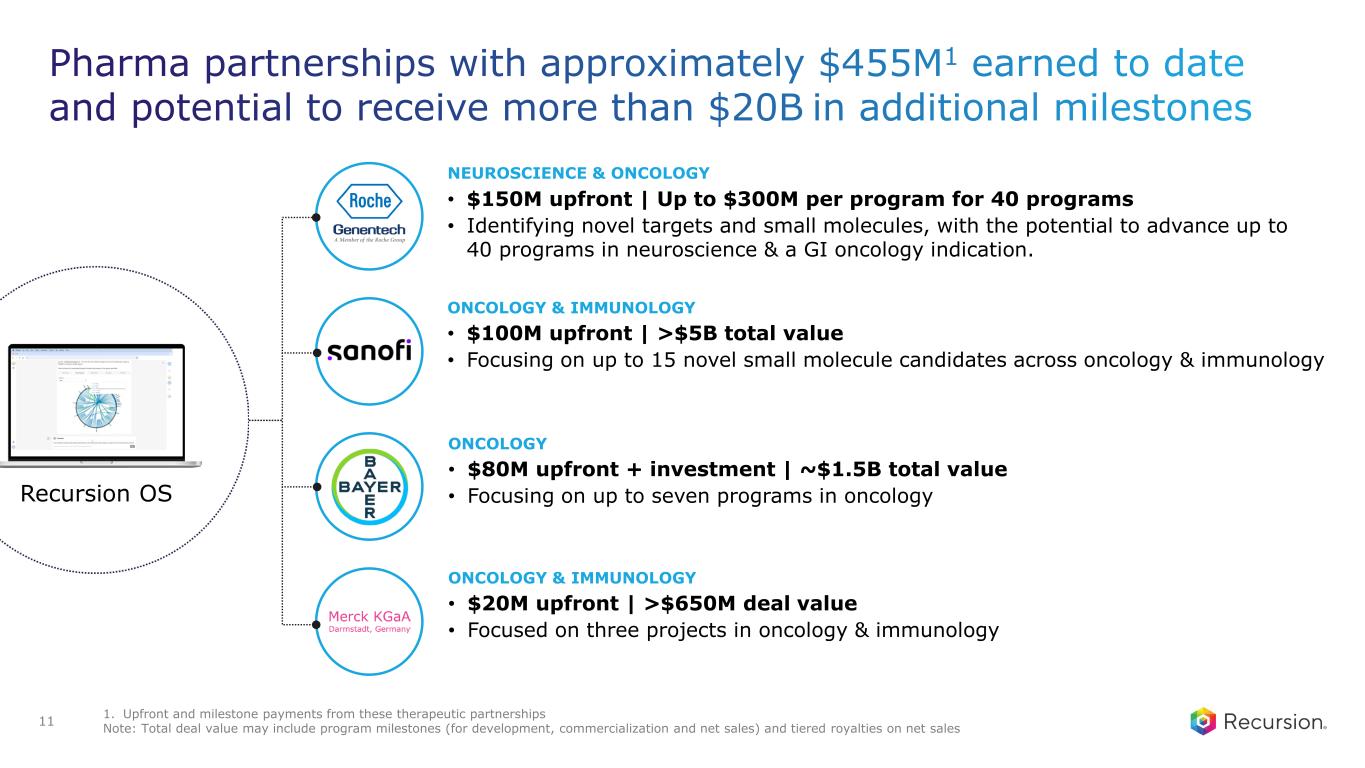
• $20M upfront | >$650M deal value • Focused on three projects in oncology & immunology ONCOLOGY & IMMUNOLOGY • $80M upfront + investment | ~$1.5B total value • Focusing on up to seven programs in oncology ONCOLOGY • $100M upfront | >$5B total value • Focusing on up to 15 novel small molecule candidates across oncology & immunology ONCOLOGY & IMMUNOLOGY • $150M upfront | Up to $300M per program for 40 programs • Identifying novel targets and small molecules, with the potential to advance up to 40 programs in neuroscience & a GI oncology indication. NEUROSCIENCE & ONCOLOGY Recursion OS 1. Upfront and milestone payments from these therapeutic partnerships Note: Total deal value may include program milestones (for development, commercialization and net sales) and tiered royalties on net sales11

Portfolio Update
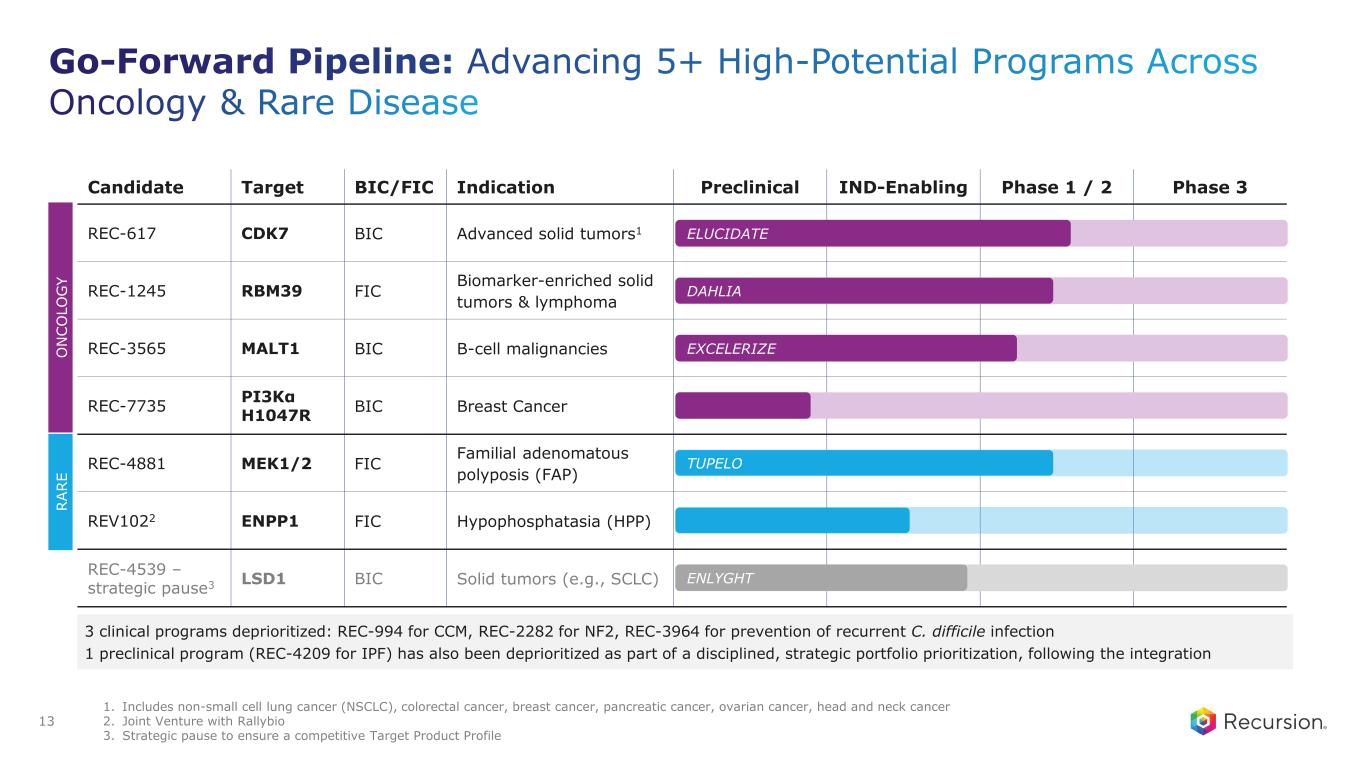
1. Includes non-small cell lung cancer (NSCLC), colorectal cancer, breast cancer, pancreatic cancer, ovarian cancer, head and neck cancer 2. Joint Venture with Rallybio 3. Strategic pause to ensure a competitive Target Product Profile 13 Candidate Target BIC/FIC Indication Preclinical IND-Enabling Phase 1 / 2 Phase 3 REC-617 CDK7 BIC Advanced solid tumors1 REC-1245 RBM39 FIC Biomarker-enriched solid tumors & lymphoma REC-3565 MALT1 BIC B-cell malignancies REC-7735 PI3Kα H1047R BIC Breast Cancer REC-4881 MEK1/2 FIC Familial adenomatous polyposis (FAP) REV1022 ENPP1 FIC Hypophosphatasia (HPP) REC-4539 – strategic pause3 LSD1 BIC Solid tumors (e.g., SCLC) ELUCIDATE TUPELO EXCELERIZE ENLYGHT DAHLIA R A R E O N C O LO G Y 3 clinical programs deprioritized: REC-994 for CCM, REC-2282 for NF2, REC-3964 for prevention of recurrent C. difficile infection 1 preclinical program (REC-4209 for IPF) has also been deprioritized as part of a disciplined, strategic portfolio prioritization, following the integration
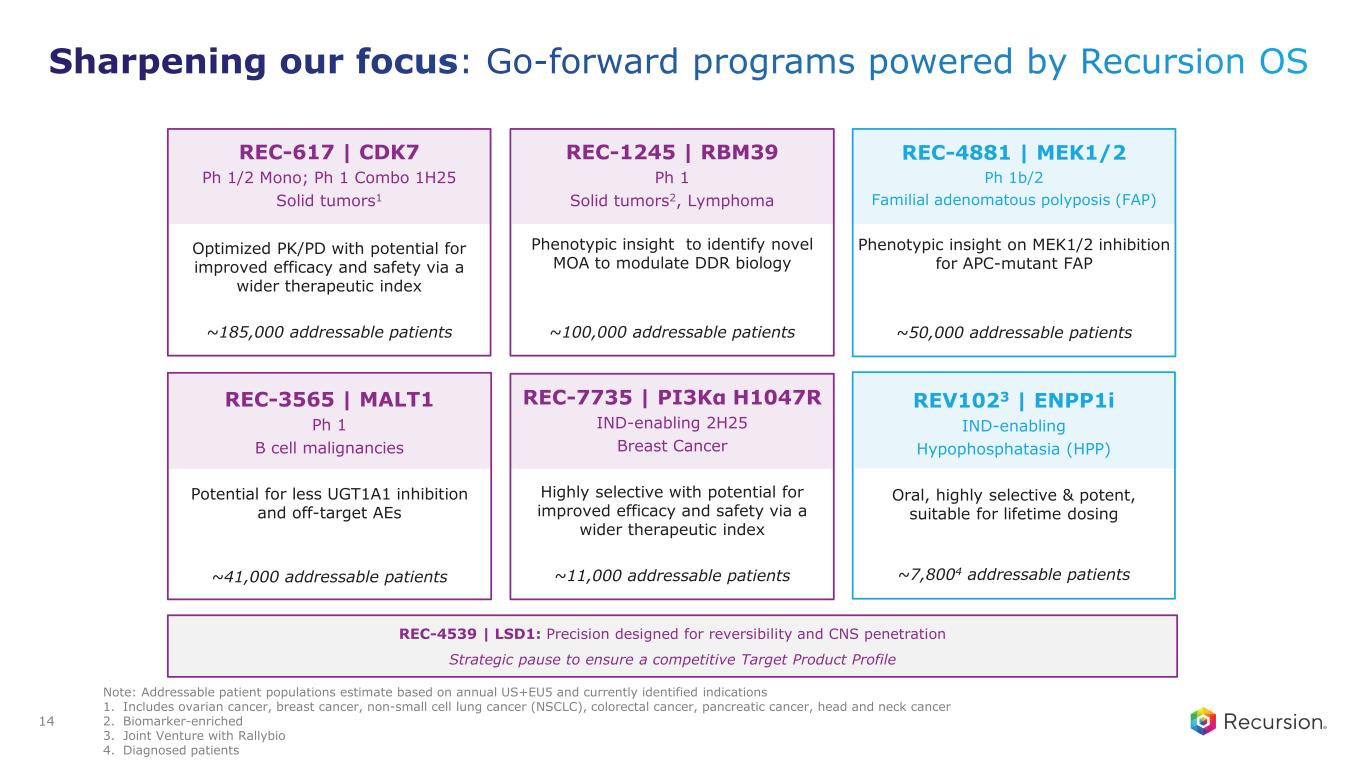
REC-617 | CDK7 Ph 1/2 Mono; Ph 1 Combo 1H25 Solid tumors1 Optimized PK/PD with potential for improved efficacy and safety via a wider therapeutic index ~185,000 addressable patients REC-1245 | RBM39 Ph 1 Solid tumors2, Lymphoma Phenotypic insight to identify novel MOA to modulate DDR biology ~100,000 addressable patients REC-3565 | MALT1 Ph 1 B cell malignancies Potential for less UGT1A1 inhibition and off-target AEs ~41,000 addressable patients REC-7735 | PI3Kα H1047R IND-enabling 2H25 Breast Cancer Highly selective with potential for improved efficacy and safety via a wider therapeutic index ~11,000 addressable patients REV1023 | ENPP1i IND-enabling Hypophosphatasia (HPP) Oral, highly selective & potent, suitable for lifetime dosing ~7,8004 addressable patients REC-4881 | MEK1/2 Ph 1b/2 Familial adenomatous polyposis (FAP) Phenotypic insight on MEK1/2 inhibition for APC-mutant FAP ~50,000 addressable patients REC-4539 | LSD1: Precision designed for reversibility and CNS penetration Strategic pause to ensure a competitive Target Product Profile Note: Addressable patient populations estimate based on annual US+EU5 and currently identified indications 1. Includes ovarian cancer, breast cancer, non-small cell lung cancer (NSCLC), colorectal cancer, pancreatic cancer, head and neck cancer 2. Biomarker-enriched 3. Joint Venture with Rallybio 4. Diagnosed patients 14
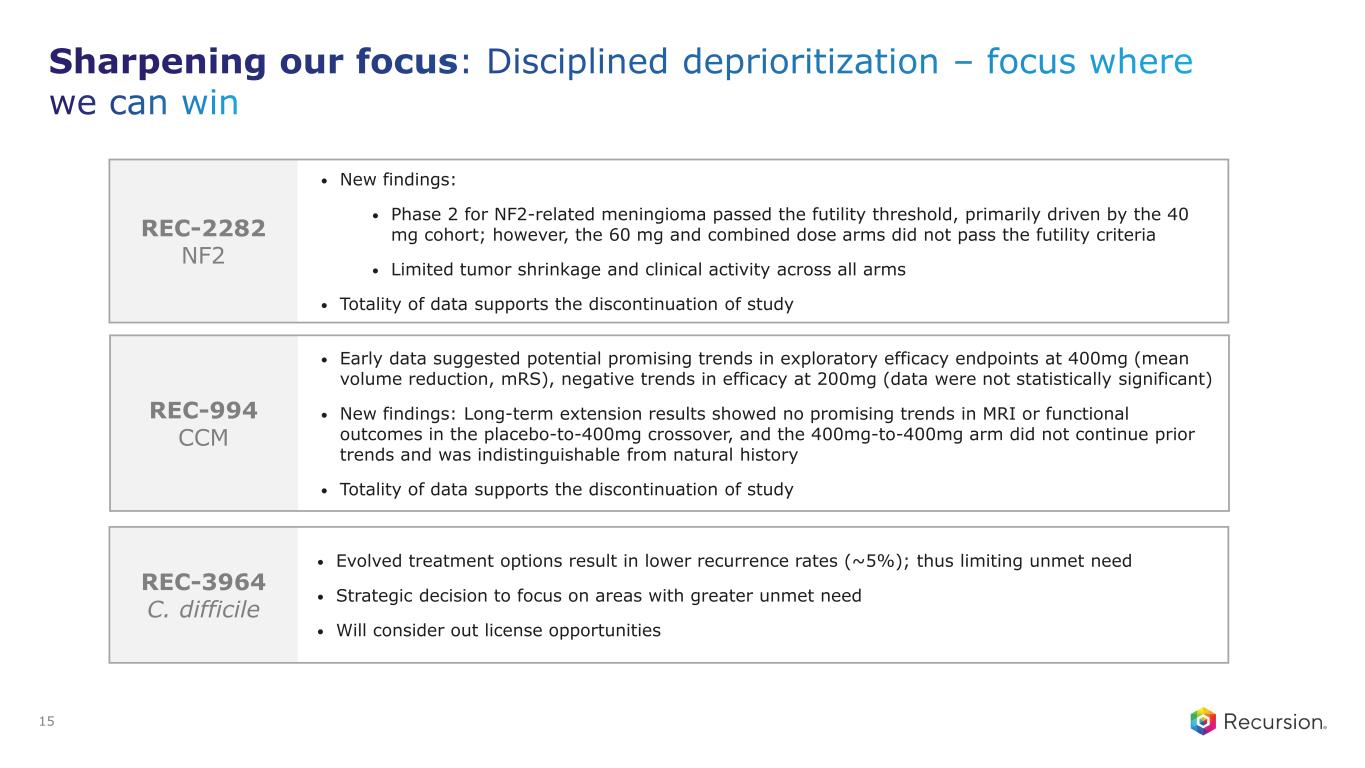
REC-2282 NF2 REC-994 CCM REC-3964 C. difficile • New findings: • Phase 2 for NF2-related meningioma passed the futility threshold, primarily driven by the 40 mg cohort; however, the 60 mg and combined dose arms did not pass the futility criteria • Limited tumor shrinkage and clinical activity across all arms • Totality of data supports the discontinuation of study • Evolved treatment options result in lower recurrence rates (~5%); thus limiting unmet need • Strategic decision to focus on areas with greater unmet need • Will consider out license opportunities • Early data suggested potential promising trends in exploratory efficacy endpoints at 400mg (mean volume reduction, mRS), negative trends in efficacy at 200mg (data were not statistically significant) • New findings: Long-term extension results showed no promising trends in MRI or functional outcomes in the placebo-to-400mg crossover, and the 400mg-to-400mg arm did not continue prior trends and was indistinguishable from natural history • Totality of data supports the discontinuation of study 15
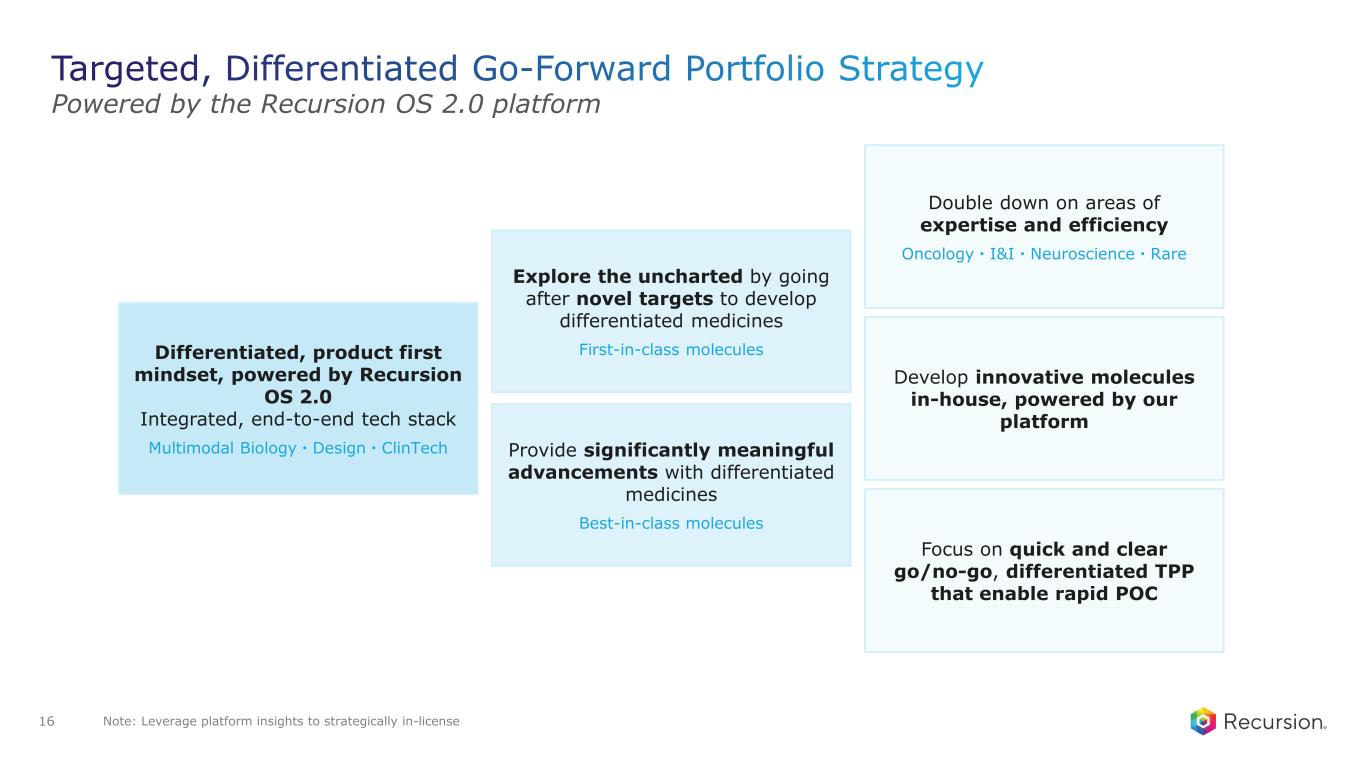
Powered by the Recursion OS 2.0 platform Explore the uncharted by going after novel targets to develop differentiated medicines First-in-class molecules Provide significantly meaningful advancements with differentiated medicines Best-in-class molecules Differentiated, product first mindset, powered by Recursion OS 2.0 Integrated, end-to-end tech stack Multimodal Biology・Design・ClinTech Focus on quick and clear go/no-go, differentiated TPP that enable rapid POC Double down on areas of expertise and efficiency Oncology・I&I・Neuroscience・Rare Develop innovative molecules in-house, powered by our platform Note: Leverage platform insights to strategically in-license16
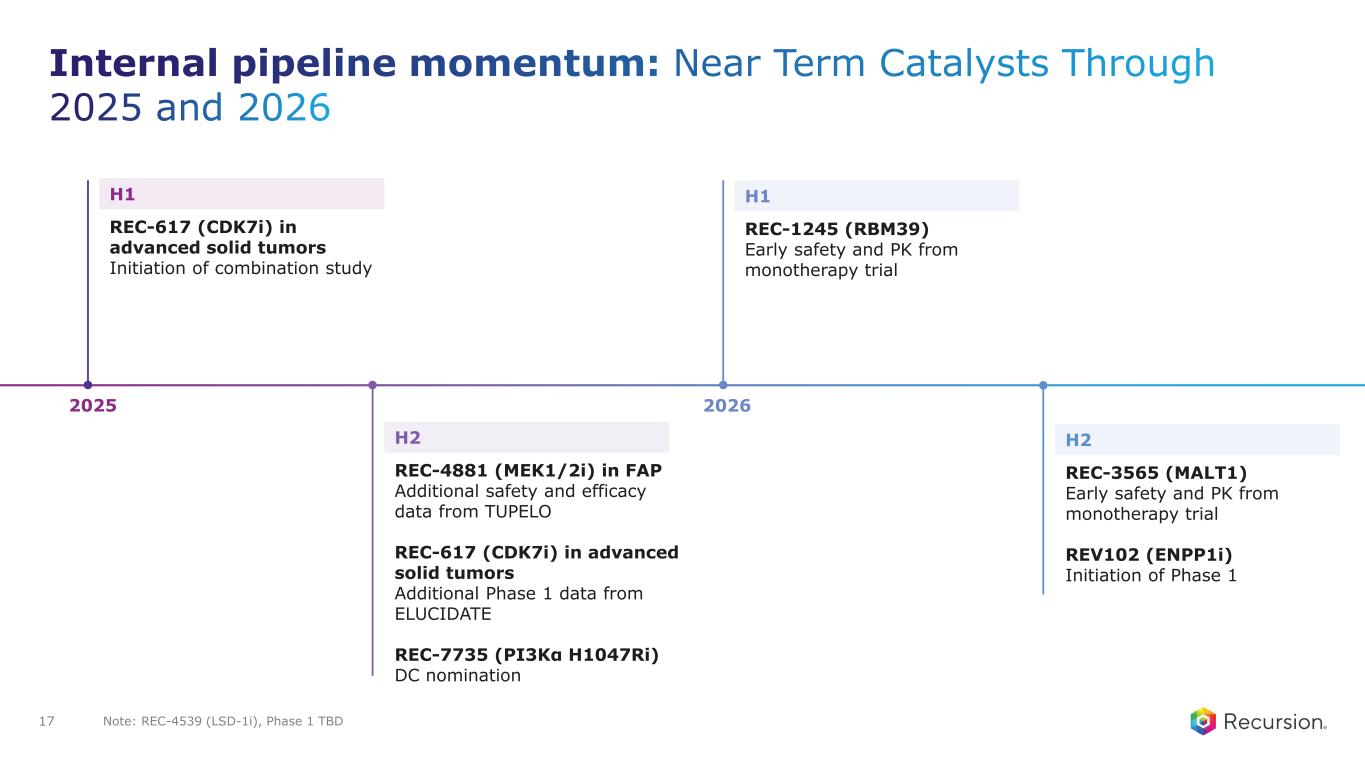
2025 2026 H1 REC-617 (CDK7i) in advanced solid tumors Initiation of combination study H2 REC-4881 (MEK1/2i) in FAP Additional safety and efficacy data from TUPELO REC-617 (CDK7i) in advanced solid tumors Additional Phase 1 data from ELUCIDATE REC-7735 (PI3Kα H1047Ri) DC nomination H1 REC-1245 (RBM39) Early safety and PK from monotherapy trial H2 REC-3565 (MALT1) Early safety and PK from monotherapy trial REV102 (ENPP1i) Initiation of Phase 1 Note: REC-4539 (LSD-1i), Phase 1 TBD17

MEK 1/2 Rare Disease
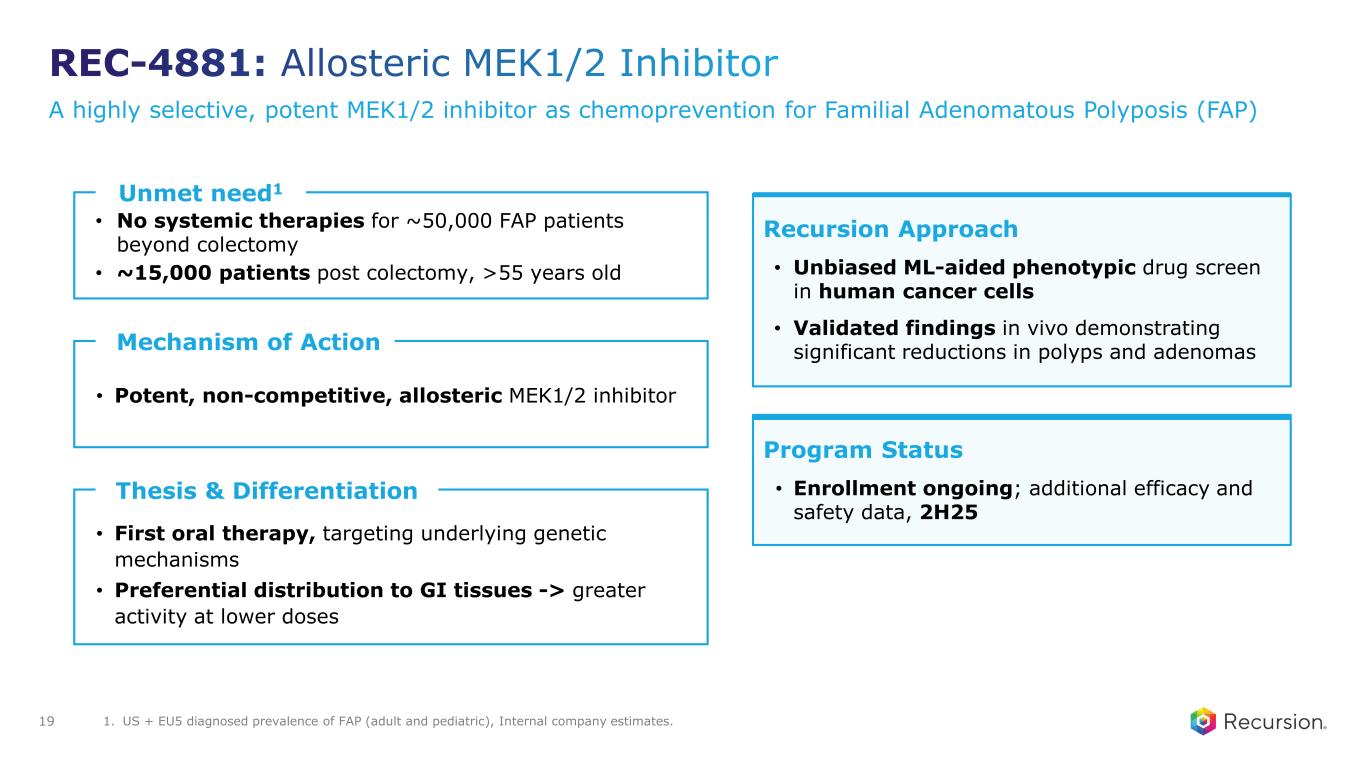
A highly selective, potent MEK1/2 inhibitor as chemoprevention for Familial Adenomatous Polyposis (FAP) Unmet need1 • No systemic therapies for ~50,000 FAP patients beyond colectomy • ~15,000 patients post colectomy, >55 years old Thesis & Differentiation • First oral therapy, targeting underlying genetic mechanisms • Preferential distribution to GI tissues -> greater activity at lower doses Recursion Approach • Unbiased ML-aided phenotypic drug screen in human cancer cells • Validated findings in vivo demonstrating significant reductions in polyps and adenomas Program Status • Enrollment ongoing; additional efficacy and safety data, 2H25 Mechanism of Action • Potent, non-competitive, allosteric MEK1/2 inhibitor 1. US + EU5 diagnosed prevalence of FAP (adult and pediatric), Internal company estimates.19
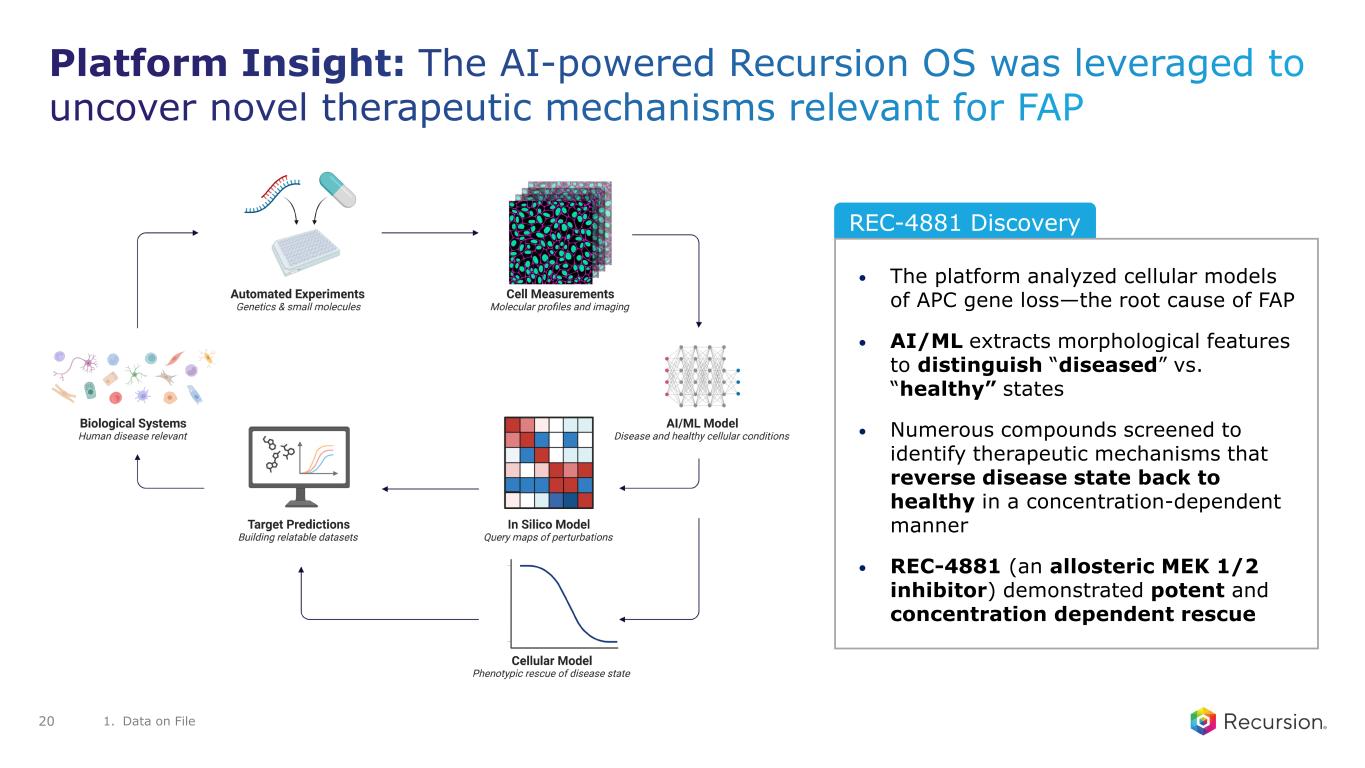
REC-4881 Discovery • The platform analyzed cellular models of APC gene loss—the root cause of FAP • AI/ML extracts morphological features to distinguish “diseased” vs. “healthy” states • Numerous compounds screened to identify therapeutic mechanisms that reverse disease state back to healthy in a concentration-dependent manner • REC-4881 (an allosteric MEK 1/2 inhibitor) demonstrated potent and concentration dependent rescue 1. Data on File 20
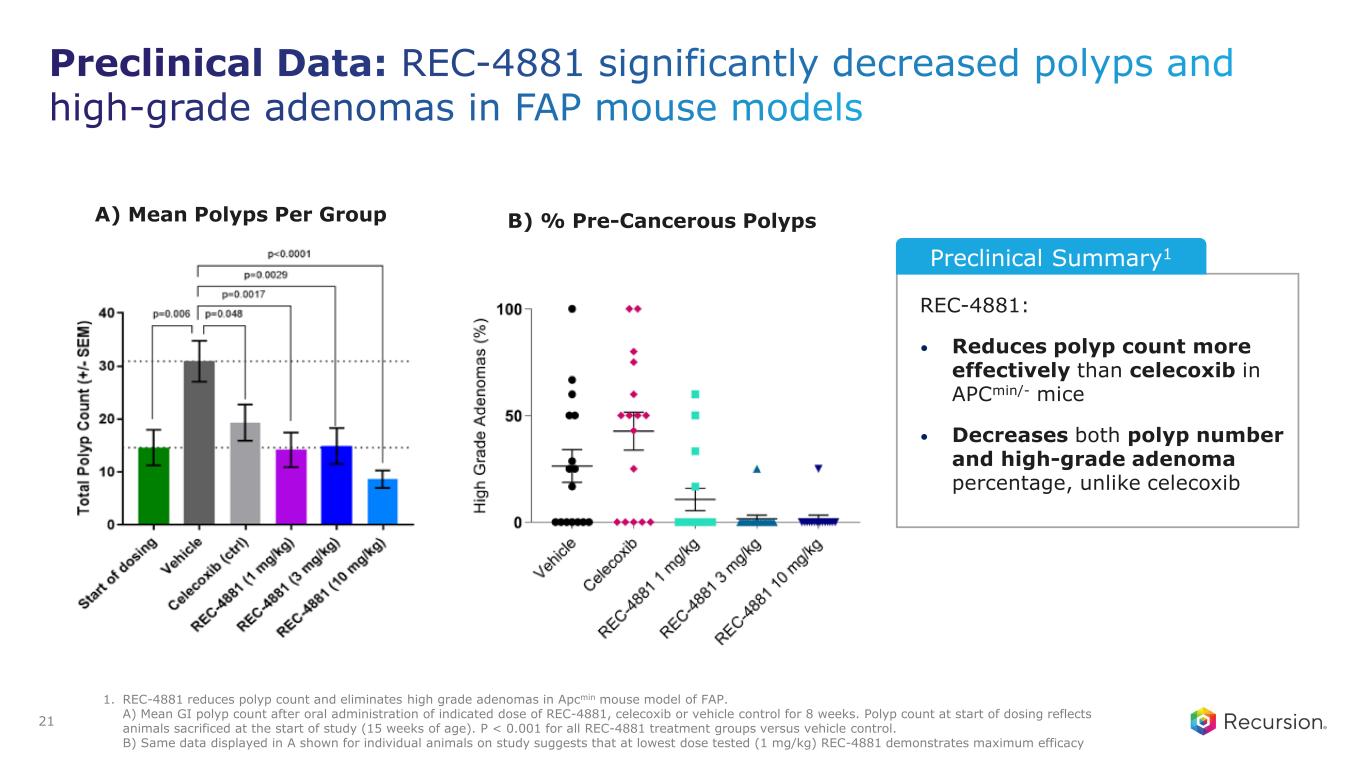
REC-4881: • Reduces polyp count more effectively than celecoxib in APCmin/- mice • Decreases both polyp number and high-grade adenoma percentage, unlike celecoxib A) Mean Polyps Per Group B) % Pre-Cancerous Polyps Preclinical Summary1 1. REC-4881 reduces polyp count and eliminates high grade adenomas in Apcmin mouse model of FAP. A) Mean GI polyp count after oral administration of indicated dose of REC-4881, celecoxib or vehicle control for 8 weeks. Polyp count at start of dosing reflects animals sacrificed at the start of study (15 weeks of age). P < 0.001 for all REC-4881 treatment groups versus vehicle control. B) Same data displayed in A shown for individual animals on study suggests that at lowest dose tested (1 mg/kg) REC-4881 demonstrates maximum efficacy 21
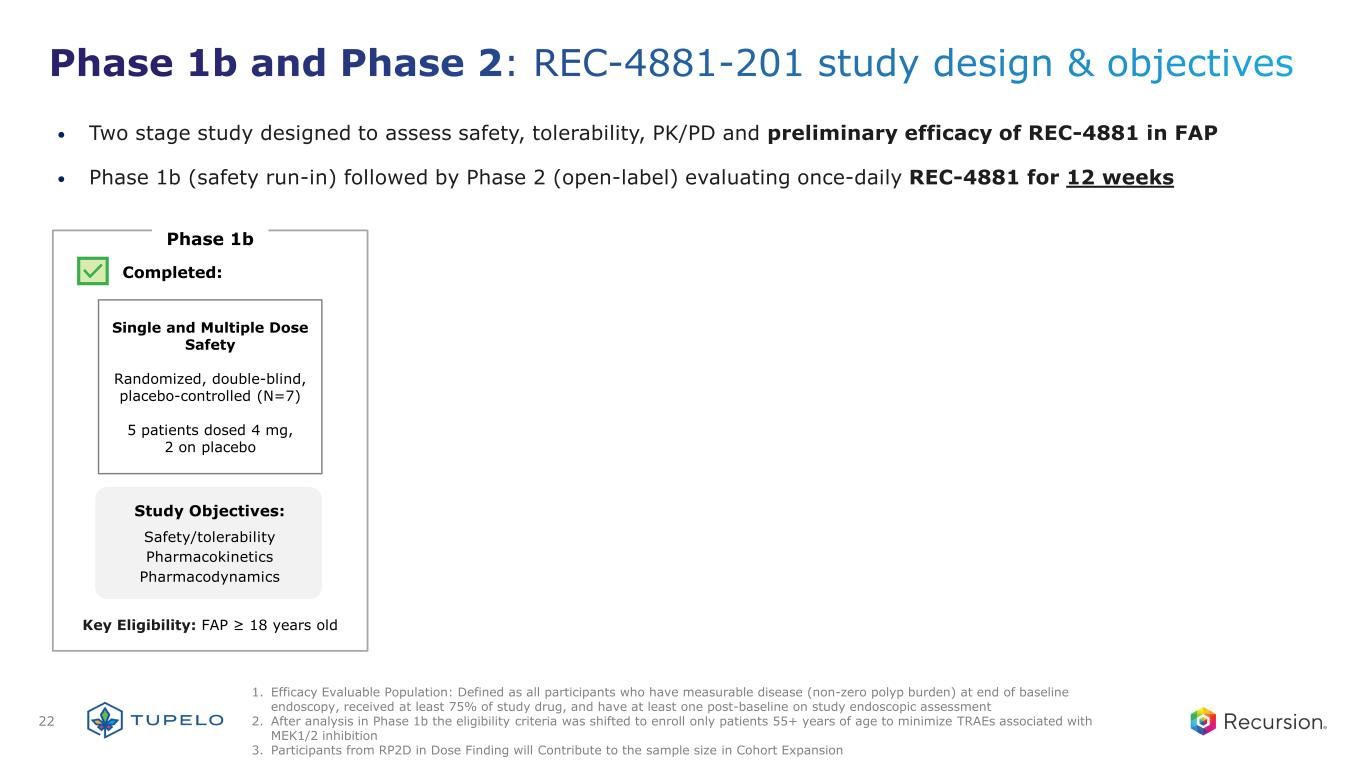
• Two stage study designed to assess safety, tolerability, PK/PD and preliminary efficacy of REC-4881 in FAP • Phase 1b (safety run-in) followed by Phase 2 (open-label) evaluating once-daily REC-4881 for 12 weeks Phase 1b Study Objectives: Safety/tolerability Pharmacokinetics Pharmacodynamics Single and Multiple Dose Safety Randomized, double-blind, placebo-controlled (N=7) 5 patients dosed 4 mg, 2 on placebo Completed: Key Eligibility: FAP ≥ 18 years old 1. Efficacy Evaluable Population: Defined as all participants who have measurable disease (non-zero polyp burden) at end of baseline endoscopy, received at least 75% of study drug, and have at least one post-baseline on study endoscopic assessment 2. After analysis in Phase 1b the eligibility criteria was shifted to enroll only patients 55+ years of age to minimize TRAEs associated with MEK1/2 inhibition 3. Participants from RP2D in Dose Finding will Contribute to the sample size in Cohort Expansion 22
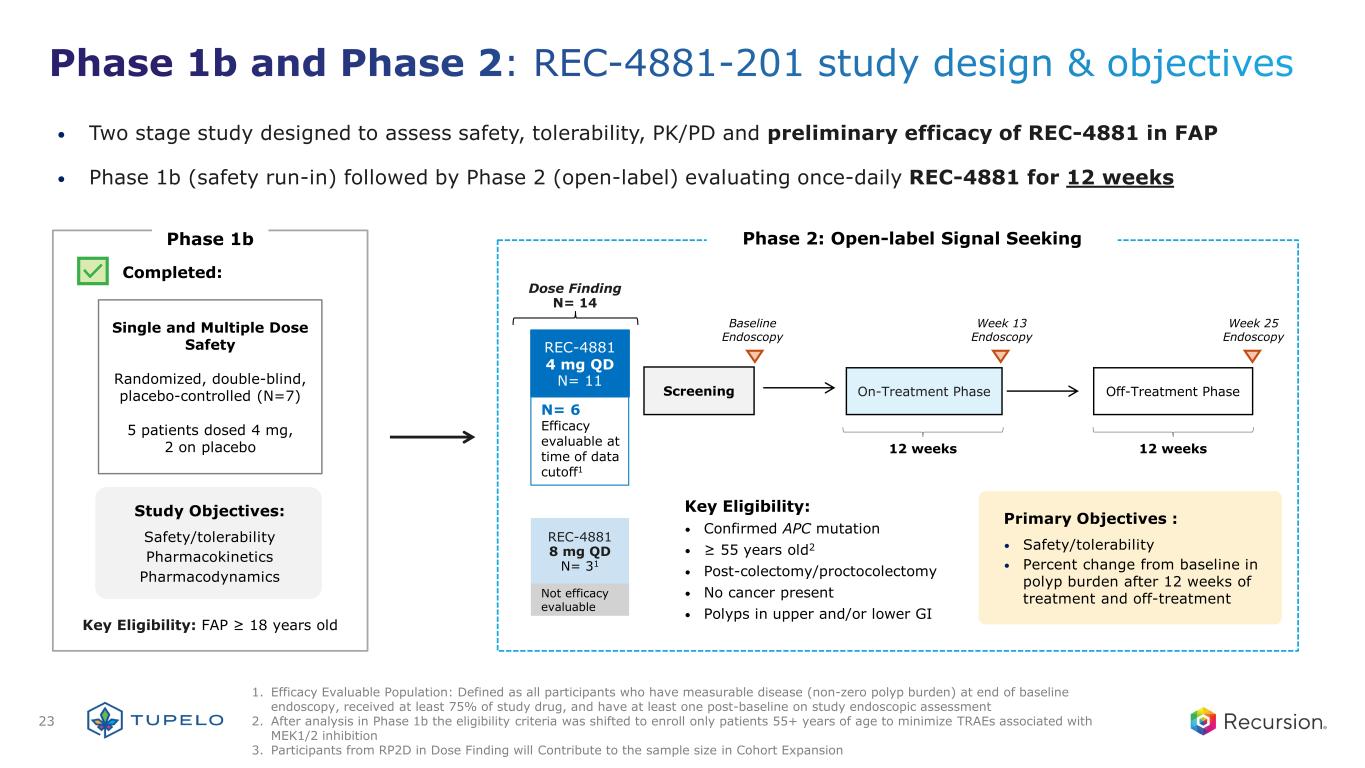
• Two stage study designed to assess safety, tolerability, PK/PD and preliminary efficacy of REC-4881 in FAP • Phase 1b (safety run-in) followed by Phase 2 (open-label) evaluating once-daily REC-4881 for 12 weeks Phase 1b Study Objectives: Safety/tolerability Pharmacokinetics Pharmacodynamics Single and Multiple Dose Safety Randomized, double-blind, placebo-controlled (N=7) 5 patients dosed 4 mg, 2 on placebo Completed: Key Eligibility: FAP ≥ 18 years old REC-4881 8 mg QD N= 31 REC-4881 4 mg QD N= 11 Dose Finding N= 14 N= 6 Efficacy evaluable at time of data cutoff1 Key Eligibility: • Confirmed APC mutation • ≥ 55 years old2 • Post-colectomy/proctocolectomy • No cancer present • Polyps in upper and/or lower GI Phase 2: Open-label Signal Seeking Not efficacy evaluable Screening On-Treatment Phase Off-Treatment Phase 12 weeks 12 weeks Baseline Endoscopy Week 13 Endoscopy Week 25 Endoscopy Primary Objectives : • Safety/tolerability • Percent change from baseline in polyp burden after 12 weeks of treatment and off-treatment 1. Efficacy Evaluable Population: Defined as all participants who have measurable disease (non-zero polyp burden) at end of baseline endoscopy, received at least 75% of study drug, and have at least one post-baseline on study endoscopic assessment 2. After analysis in Phase 1b the eligibility criteria was shifted to enroll only patients 55+ years of age to minimize TRAEs associated with MEK1/2 inhibition 3. Participants from RP2D in Dose Finding will Contribute to the sample size in Cohort Expansion 23
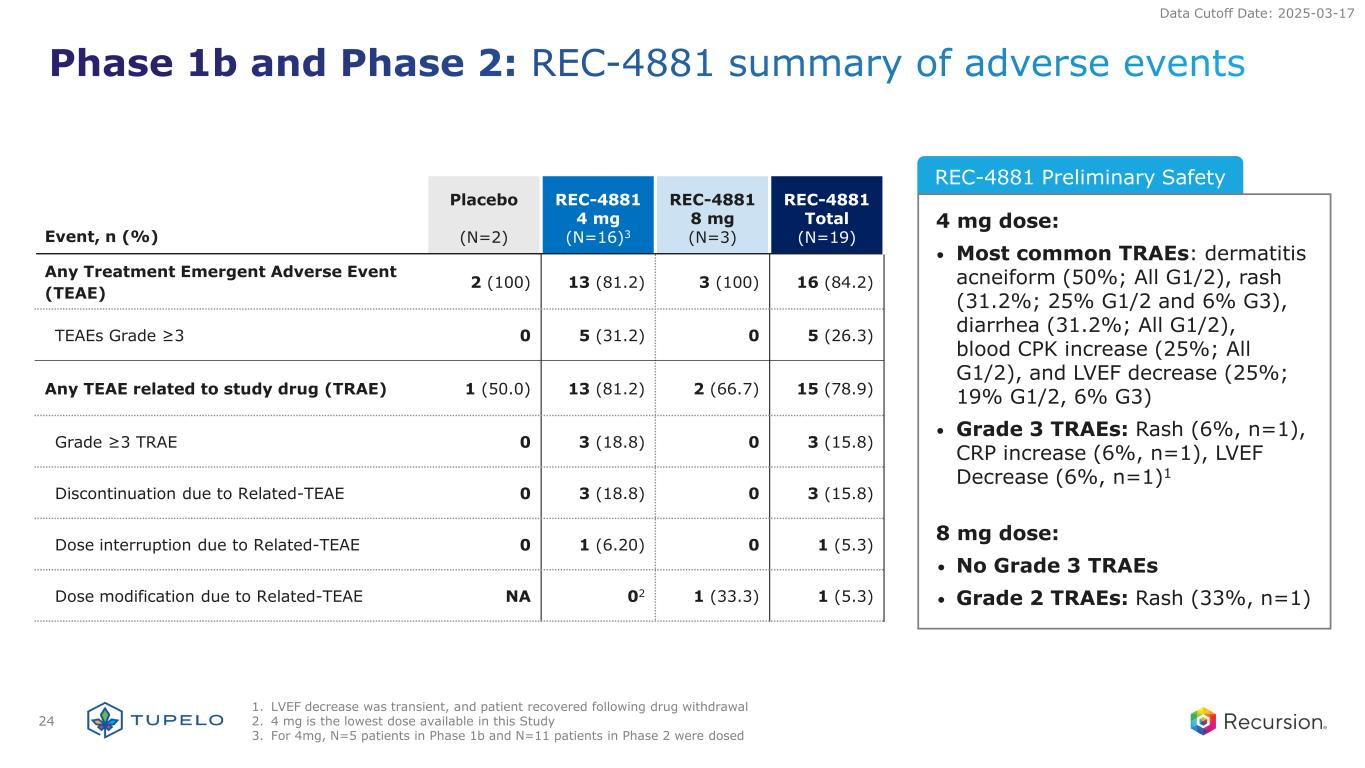
REC-4881 Preliminary Safety Event, n (%) Placebo (N=2) REC-4881 4 mg (N=16)3 REC-4881 8 mg (N=3) REC-4881 Total (N=19) Any Treatment Emergent Adverse Event (TEAE) 2 (100) 13 (81.2) 3 (100) 16 (84.2) TEAEs Grade ≥3 0 5 (31.2) 0 5 (26.3) Any TEAE related to study drug (TRAE) 1 (50.0) 13 (81.2) 2 (66.7) 15 (78.9) Grade ≥3 TRAE 0 3 (18.8) 0 3 (15.8) Discontinuation due to Related-TEAE 0 3 (18.8) 0 3 (15.8) Dose interruption due to Related-TEAE 0 1 (6.20) 0 1 (5.3) Dose modification due to Related-TEAE NA 02 1 (33.3) 1 (5.3) 4 mg dose: • Most common TRAEs: dermatitis acneiform (50%; All G1/2), rash (31.2%; 25% G1/2 and 6% G3), diarrhea (31.2%; All G1/2), blood CPK increase (25%; All G1/2), and LVEF decrease (25%; 19% G1/2, 6% G3) • Grade 3 TRAEs: Rash (6%, n=1), CRP increase (6%, n=1), LVEF Decrease (6%, n=1)1 8 mg dose: • No Grade 3 TRAEs • Grade 2 TRAEs: Rash (33%, n=1) Data Cutoff Date: 2025-03-17 24 1. LVEF decrease was transient, and patient recovered following drug withdrawal 2. 4 mg is the lowest dose available in this Study 3. For 4mg, N=5 patients in Phase 1b and N=11 patients in Phase 2 were dosed
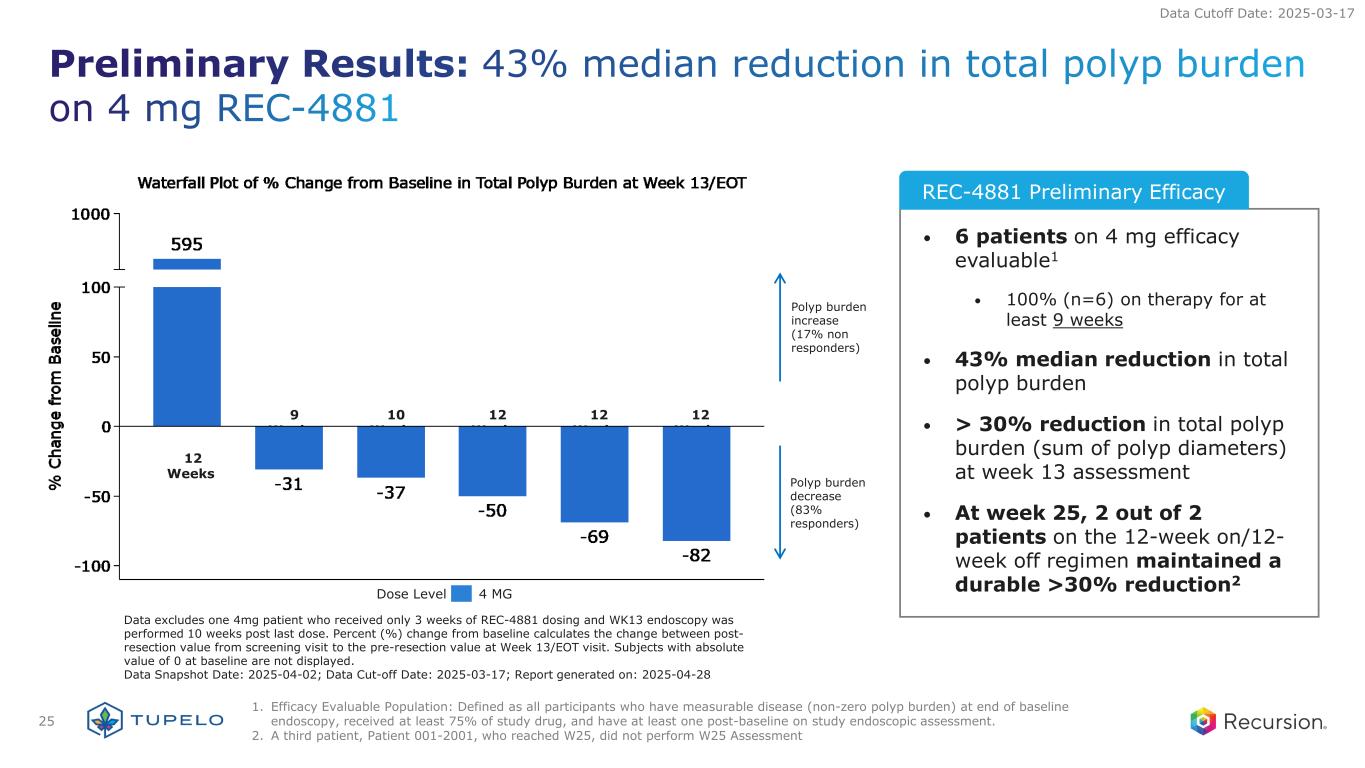
• 6 patients on 4 mg efficacy evaluable1 • 100% (n=6) on therapy for at least 9 weeks • 43% median reduction in total polyp burden • > 30% reduction in total polyp burden (sum of polyp diameters) at week 13 assessment • At week 25, 2 out of 2 patients on the 12-week on/12- week off regimen maintained a durable >30% reduction2 Data Cutoff Date: 2025-03-17 Polyp burden increase (17% non responders) Polyp burden decrease (83% responders) 12 Weeks 9 Weeks 10 Weeks 12 Weeks 12 Weeks 12 Weeks Data excludes one 4mg patient who received only 3 weeks of REC-4881 dosing and WK13 endoscopy was performed 10 weeks post last dose. Percent (%) change from baseline calculates the change between post- resection value from screening visit to the pre-resection value at Week 13/EOT visit. Subjects with absolute value of 0 at baseline are not displayed. Data Snapshot Date: 2025-04-02; Data Cut-off Date: 2025-03-17; Report generated on: 2025-04-28 Dose Level 4 MG REC-4881 Preliminary Efficacy 25 1. Efficacy Evaluable Population: Defined as all participants who have measurable disease (non-zero polyp burden) at end of baseline endoscopy, received at least 75% of study drug, and have at least one post-baseline on study endoscopic assessment. 2. A third patient, Patient 001-2001, who reached W25, did not perform W25 Assessment
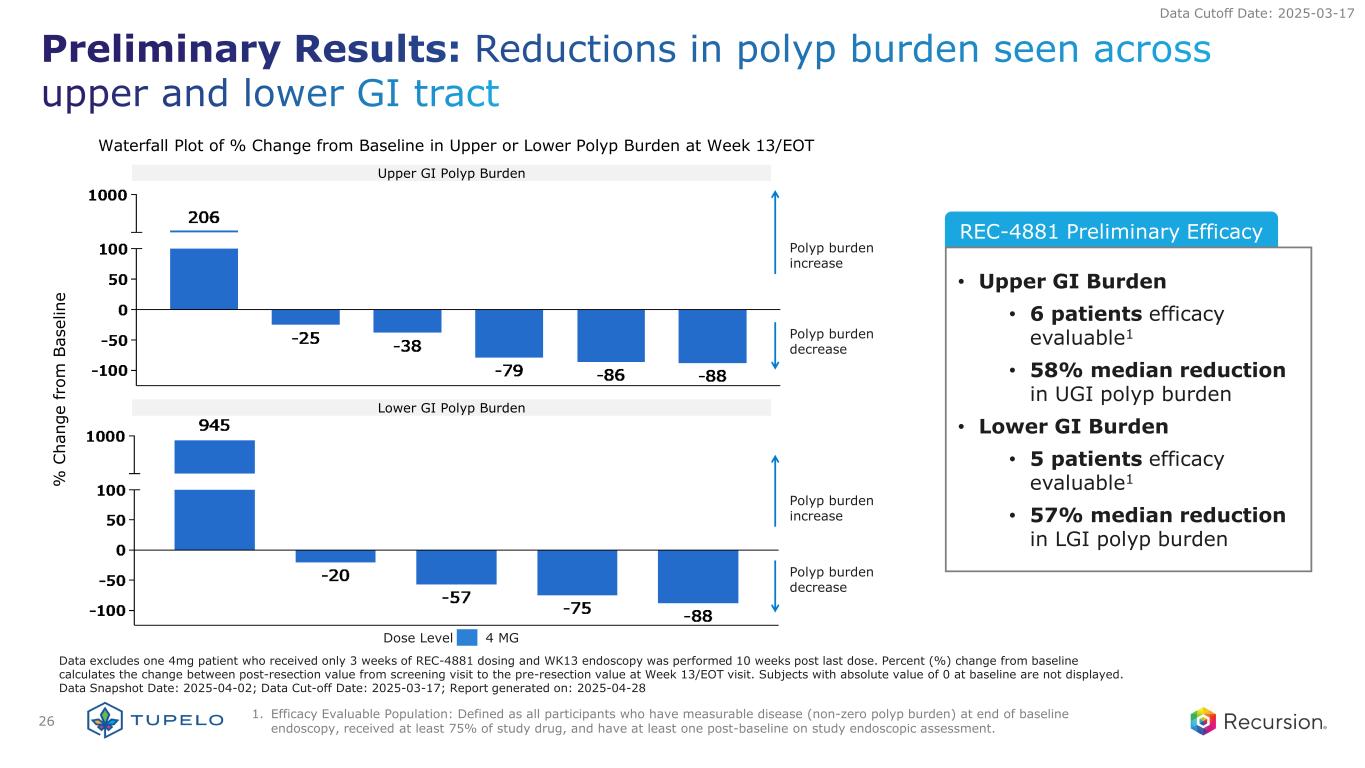
REC-4881 Preliminary Efficacy • Upper GI Burden • 6 patients efficacy evaluable1 • 58% median reduction in UGI polyp burden • Lower GI Burden • 5 patients efficacy evaluable1 • 57% median reduction in LGI polyp burden Data Cutoff Date: 2025-03-17 Upper GI Polyp Burden Lower GI Polyp Burden Waterfall Plot of % Change from Baseline in Upper or Lower Polyp Burden at Week 13/EOT Polyp burden increase Polyp burden decrease Polyp burden increase Polyp burden decrease % C ha ng e fr om B as el in e Data excludes one 4mg patient who received only 3 weeks of REC-4881 dosing and WK13 endoscopy was performed 10 weeks post last dose. Percent (%) change from baseline calculates the change between post-resection value from screening visit to the pre-resection value at Week 13/EOT visit. Subjects with absolute value of 0 at baseline are not displayed. Data Snapshot Date: 2025-04-02; Data Cut-off Date: 2025-03-17; Report generated on: 2025-04-28 Dose Level 4 MG 26 1. Efficacy Evaluable Population: Defined as all participants who have measurable disease (non-zero polyp burden) at end of baseline endoscopy, received at least 75% of study drug, and have at least one post-baseline on study endoscopic assessment.
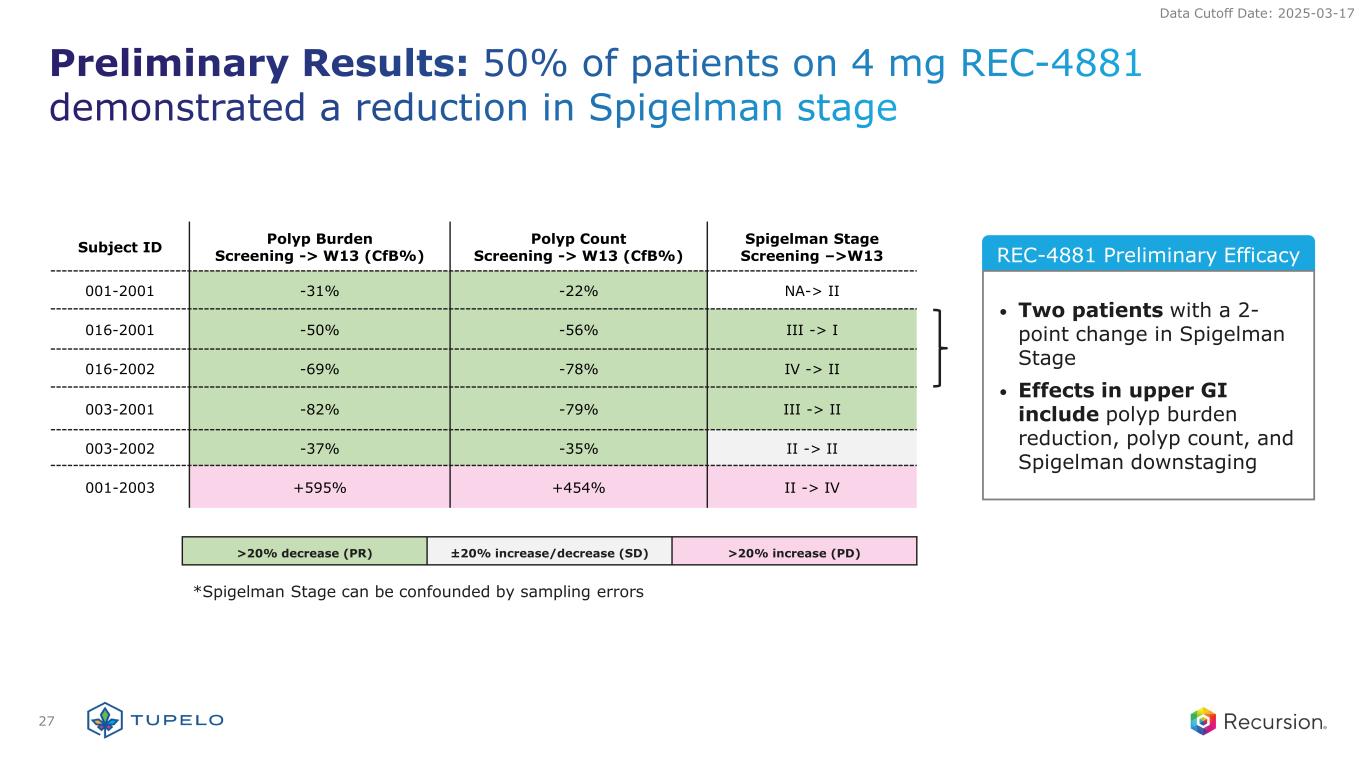
REC-4881 Preliminary EfficacySubject ID Polyp Burden Screening -> W13 (CfB%) Polyp Count Screening -> W13 (CfB%) Spigelman Stage Screening –>W13 001-2001 -31% -22% NA-> II 016-2001 -50% -56% III -> I 016-2002 -69% -78% IV -> II 003-2001 -82% -79% III -> II 003-2002 -37% -35% II -> II 001-2003 +595% +454% II -> IV >20% decrease (PR) ±20% increase/decrease (SD) >20% increase (PD) • Two patients with a 2- point change in Spigelman Stage • Effects in upper GI include polyp burden reduction, polyp count, and Spigelman downstaging Data Cutoff Date: 2025-03-17 *Spigelman Stage can be confounded by sampling errors 27
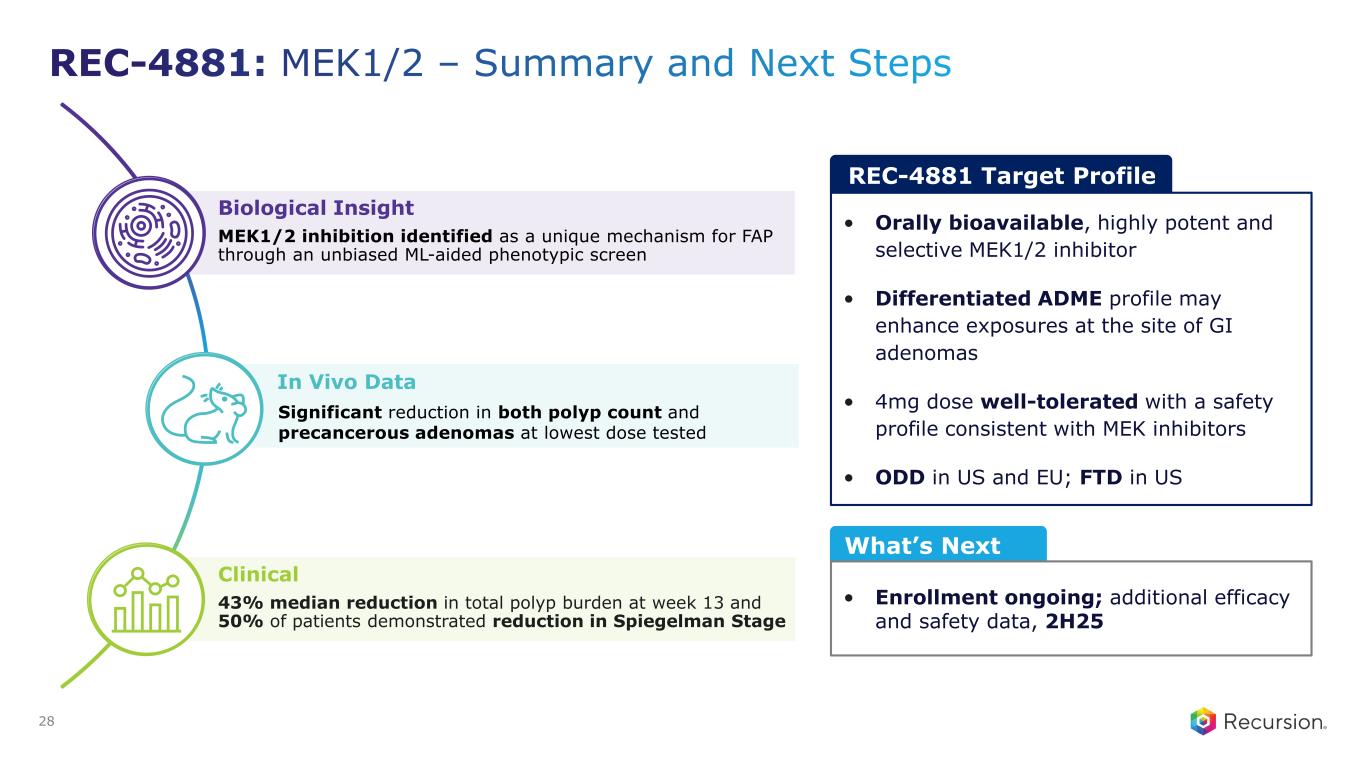
Biological Insight MEK1/2 inhibition identified as a unique mechanism for FAP through an unbiased ML-aided phenotypic screen In Vivo Data Significant reduction in both polyp count and precancerous adenomas at lowest dose tested Clinical 43% median reduction in total polyp burden at week 13 and 50% of patients demonstrated reduction in Spiegelman Stage What’s Next • Enrollment ongoing; additional efficacy and safety data, 2H25 REC-4881 Target Profile • Orally bioavailable, highly potent and selective MEK1/2 inhibitor • Differentiated ADME profile may enhance exposures at the site of GI adenomas • 4mg dose well-tolerated with a safety profile consistent with MEK inhibitors • ODD in US and EU; FTD in US 28

PI3K⍺ H1047R Oncology
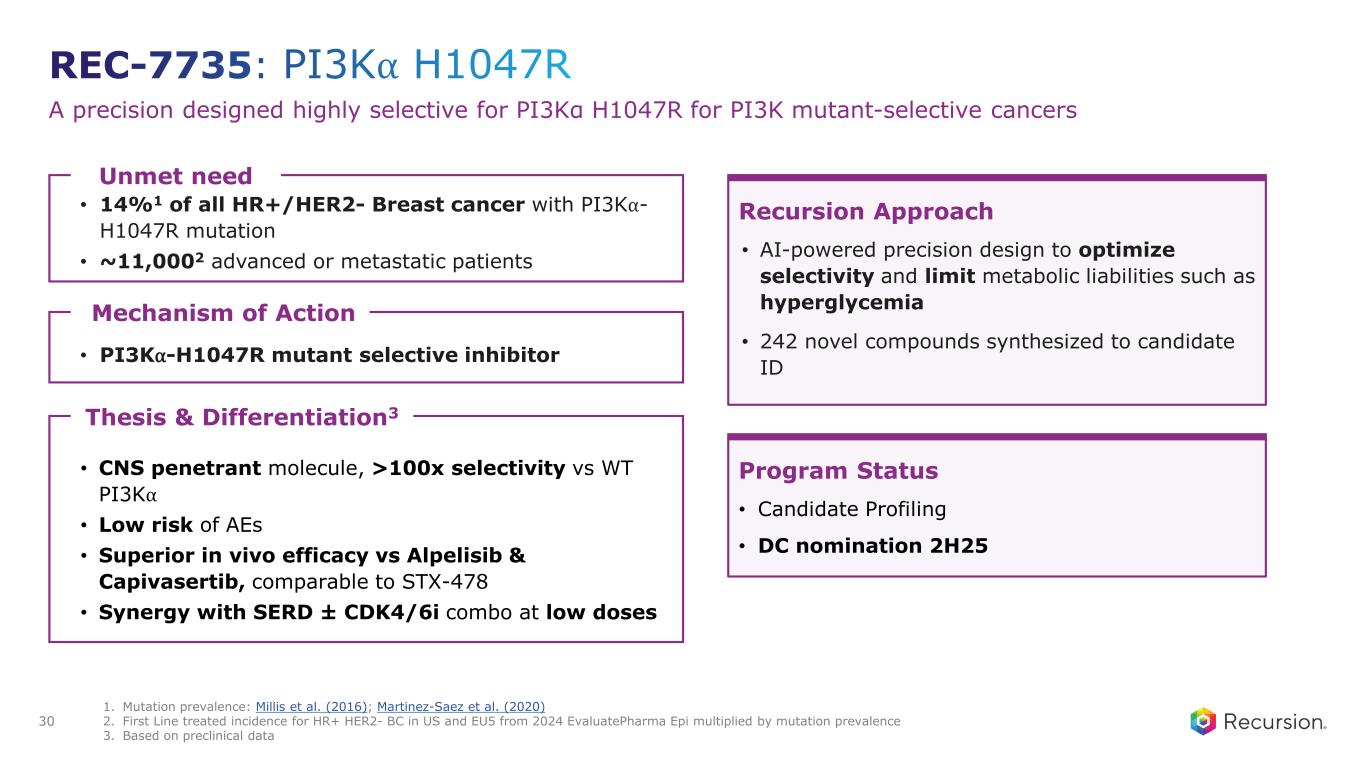
A precision designed highly selective for PI3Kα H1047R for PI3K mutant-selective cancers Unmet need • 14%1 of all HR+/HER2- Breast cancer with PI3K⍺- H1047R mutation • ~11,0002 advanced or metastatic patients Thesis & Differentiation3 • CNS penetrant molecule, >100x selectivity vs WT PI3K⍺ • Low risk of AEs • Superior in vivo efficacy vs Alpelisib & Capivasertib, comparable to STX-478 • Synergy with SERD ± CDK4/6i combo at low doses Recursion Approach • AI-powered precision design to optimize selectivity and limit metabolic liabilities such as hyperglycemia • 242 novel compounds synthesized to candidate ID Program Status • Candidate Profiling • DC nomination 2H25 Mechanism of Action • PI3K⍺-H1047R mutant selective inhibitor 1. Mutation prevalence: Millis et al. (2016); Martinez-Saez et al. (2020) 2. First Line treated incidence for HR+ HER2- BC in US and EU5 from 2024 EvaluatePharma Epi multiplied by mutation prevalence 3. Based on preclinical data 30
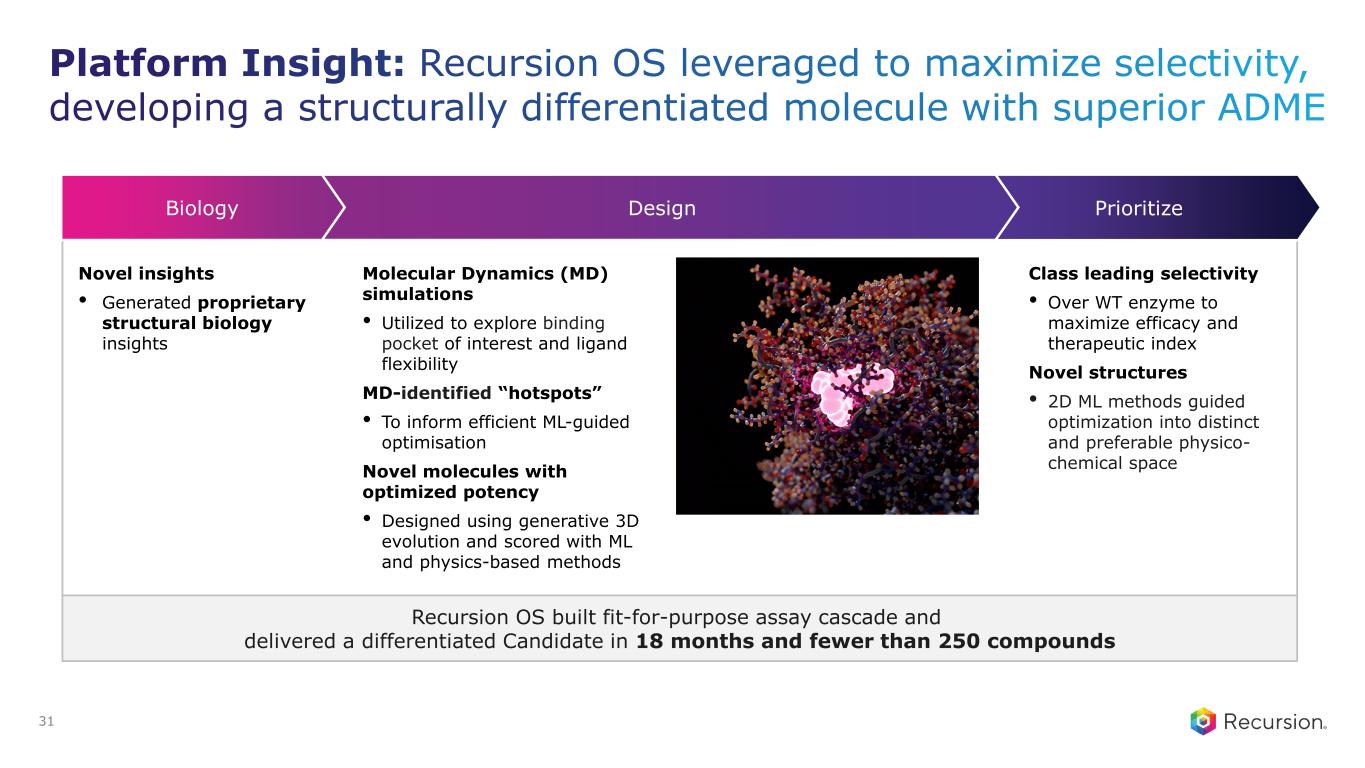
Recursion OS built fit-for-purpose assay cascade and delivered a differentiated Candidate in 18 months and fewer than 250 compounds PrioritizeDesignBiology Novel insights • Generated proprietary structural biology insights Molecular Dynamics (MD) simulations • Utilized to explore binding pocket of interest and ligand flexibility MD-identified “hotspots” • To inform efficient ML-guided optimisation Novel molecules with optimized potency • Designed using generative 3D evolution and scored with ML and physics-based methods Class leading selectivity • Over WT enzyme to maximize efficacy and therapeutic index Novel structures • 2D ML methods guided optimization into distinct and preferable physico- chemical space 31
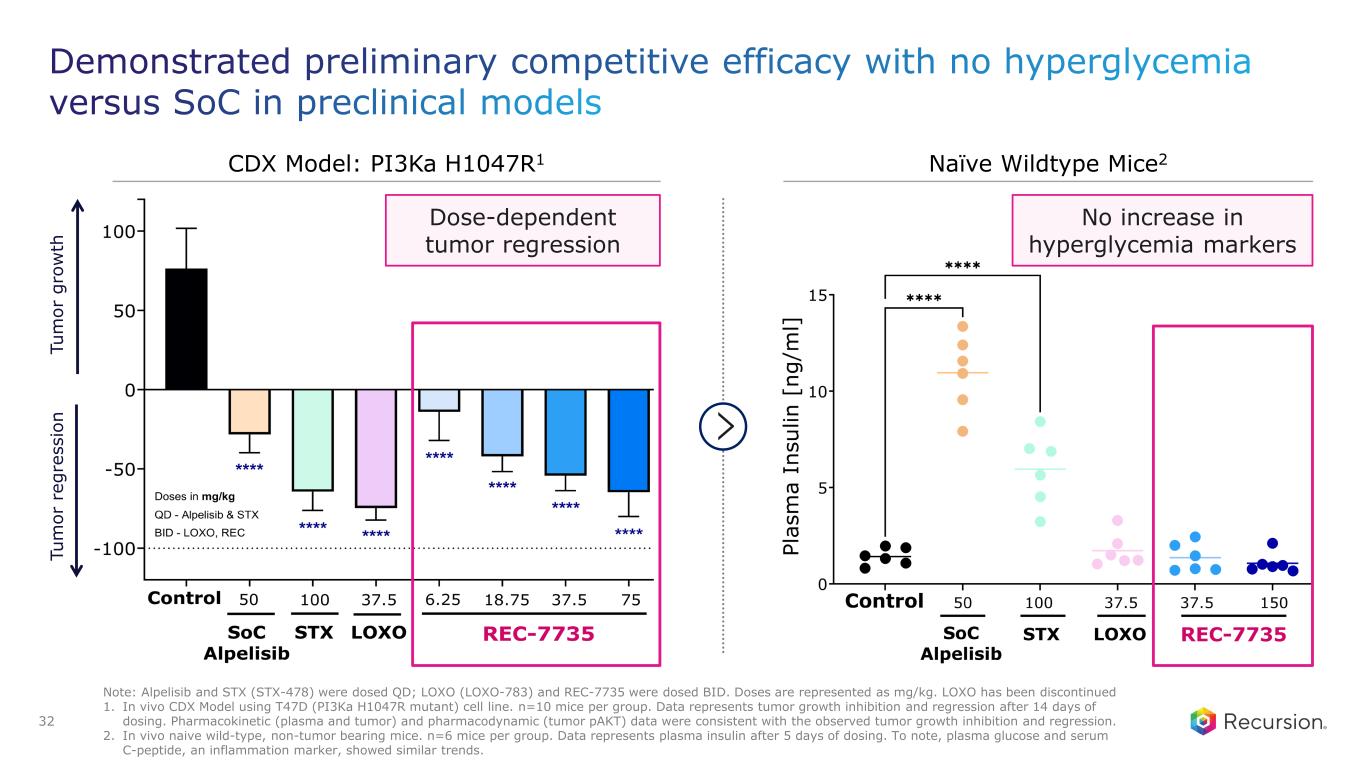
No increase in hyperglycemia markers Tu m or g ro w th Tu m or r eg re ss io n Dose-dependent tumor regression CDX Model: PI3Ka H1047R1 Naïve Wildtype Mice2 Note: Alpelisib and STX (STX-478) were dosed QD; LOXO (LOXO-783) and REC-7735 were dosed BID. Doses are represented as mg/kg. LOXO has been discontinued 1. In vivo CDX Model using T47D (PI3Ka H1047R mutant) cell line. n=10 mice per group. Data represents tumor growth inhibition and regression after 14 days of dosing. Pharmacokinetic (plasma and tumor) and pharmacodynamic (tumor pAKT) data were consistent with the observed tumor growth inhibition and regression. 2. In vivo naive wild-type, non-tumor bearing mice. n=6 mice per group. Data represents plasma insulin after 5 days of dosing. To note, plasma glucose and serum C-peptide, an inflammation marker, showed similar trends. 32
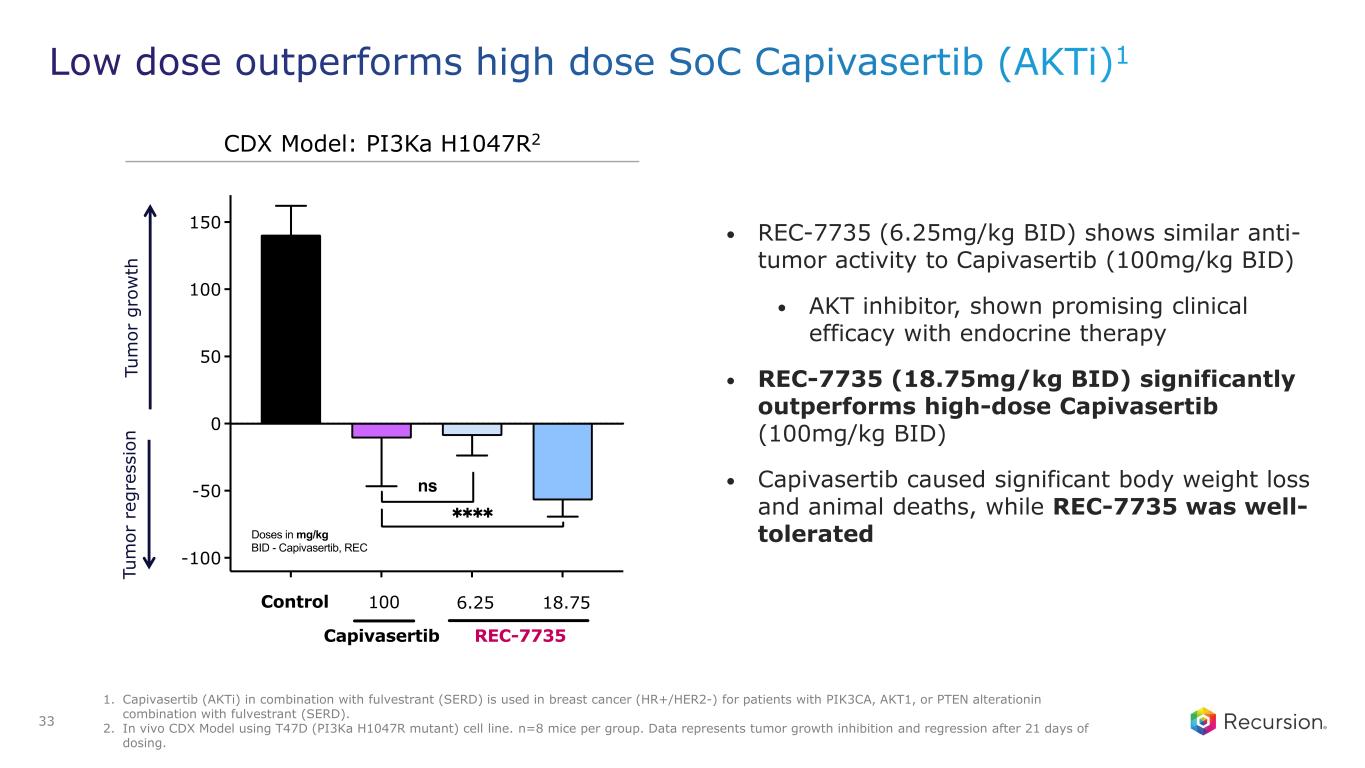
Tu m or g ro w th Tu m or r eg re ss io n • REC-7735 (6.25mg/kg BID) shows similar anti- tumor activity to Capivasertib (100mg/kg BID) • AKT inhibitor, shown promising clinical efficacy with endocrine therapy • REC-7735 (18.75mg/kg BID) significantly outperforms high-dose Capivasertib (100mg/kg BID) • Capivasertib caused significant body weight loss and animal deaths, while REC-7735 was well- tolerated CDX Model: PI3Ka H1047R2 1. Capivasertib (AKTi) in combination with fulvestrant (SERD) is used in breast cancer (HR+/HER2-) for patients with PIK3CA, AKT1, or PTEN alterationin combination with fulvestrant (SERD). 2. In vivo CDX Model using T47D (PI3Ka H1047R mutant) cell line. n=8 mice per group. Data represents tumor growth inhibition and regression after 21 days of dosing. 33
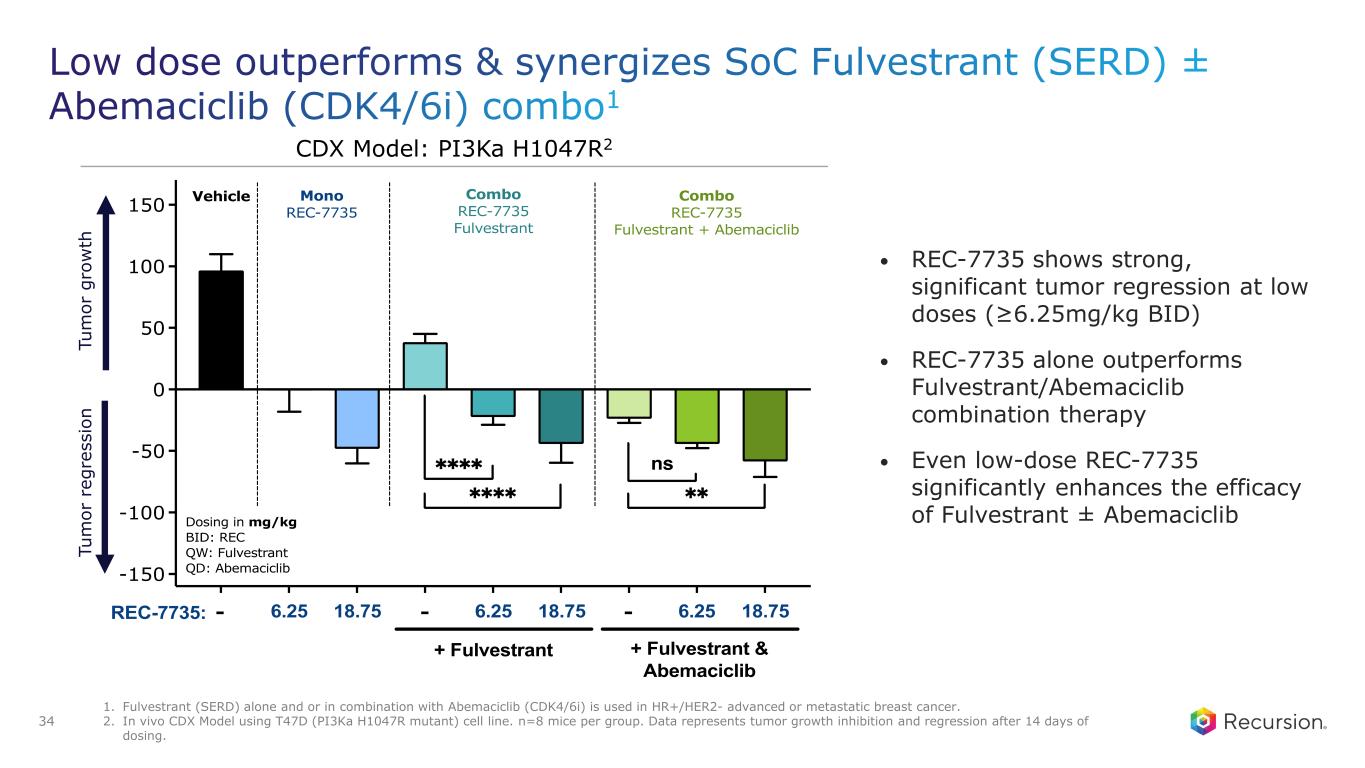
• REC-7735 shows strong, significant tumor regression at low doses (≥6.25mg/kg BID) • REC-7735 alone outperforms Fulvestrant/Abemaciclib combination therapy • Even low-dose REC-7735 significantly enhances the efficacy of Fulvestrant ± Abemaciclib CDX Model: PI3Ka H1047R2 Tu m or g ro w th Tu m or r eg re ss io n 1. Fulvestrant (SERD) alone and or in combination with Abemaciclib (CDK4/6i) is used in HR+/HER2- advanced or metastatic breast cancer. 2. In vivo CDX Model using T47D (PI3Ka H1047R mutant) cell line. n=8 mice per group. Data represents tumor growth inhibition and regression after 14 days of dosing. 34
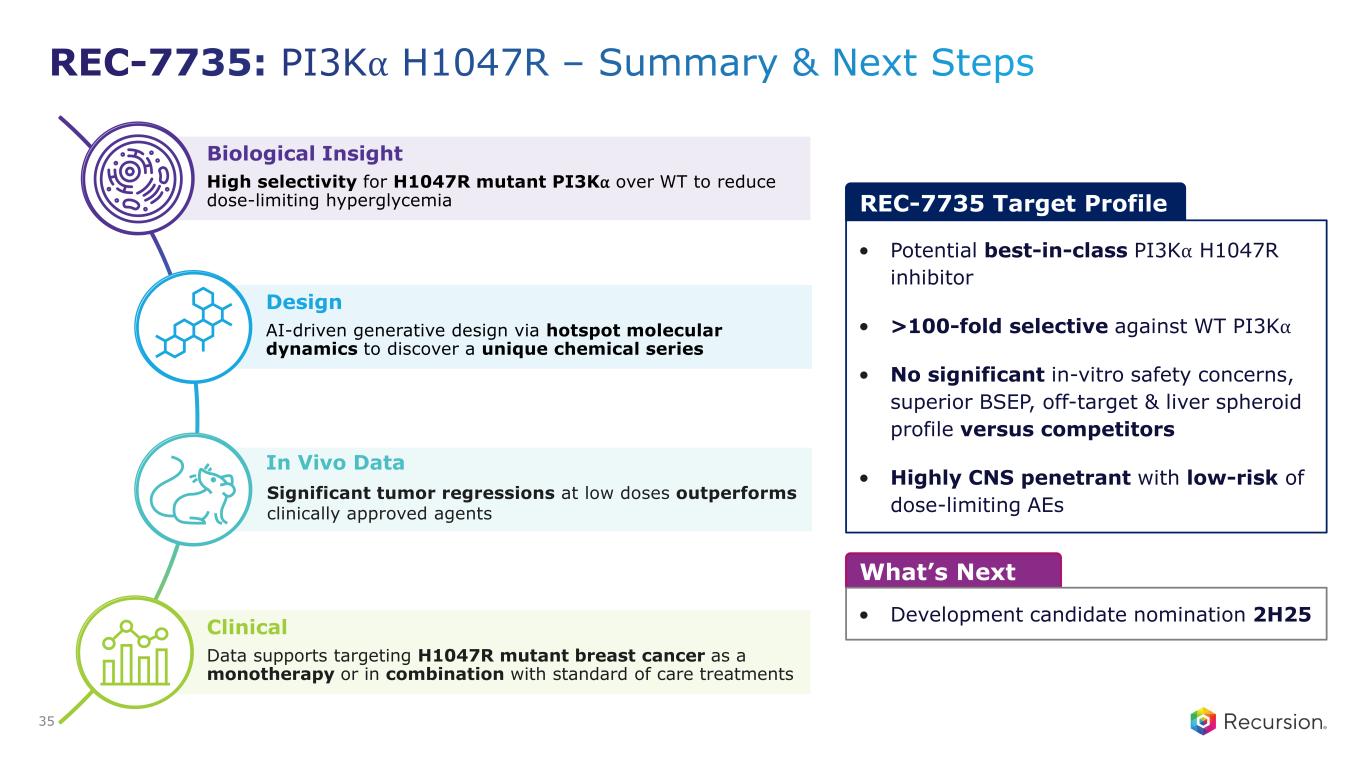
Biological Insight High selectivity for H1047R mutant PI3K⍺ over WT to reduce dose-limiting hyperglycemia Design AI-driven generative design via hotspot molecular dynamics to discover a unique chemical series In Vivo Data Significant tumor regressions at low doses outperforms clinically approved agents Clinical Data supports targeting H1047R mutant breast cancer as a monotherapy or in combination with standard of care treatments What’s Next • Development candidate nomination 2H25 REC-7735 Target Profile • Potential best-in-class PI3K⍺ H1047R inhibitor • >100-fold selective against WT PI3K⍺ • No significant in-vitro safety concerns, superior BSEP, off-target & liver spheroid profile versus competitors • Highly CNS penetrant with low-risk of dose-limiting AEs 35

ENPP1 Rare Disease
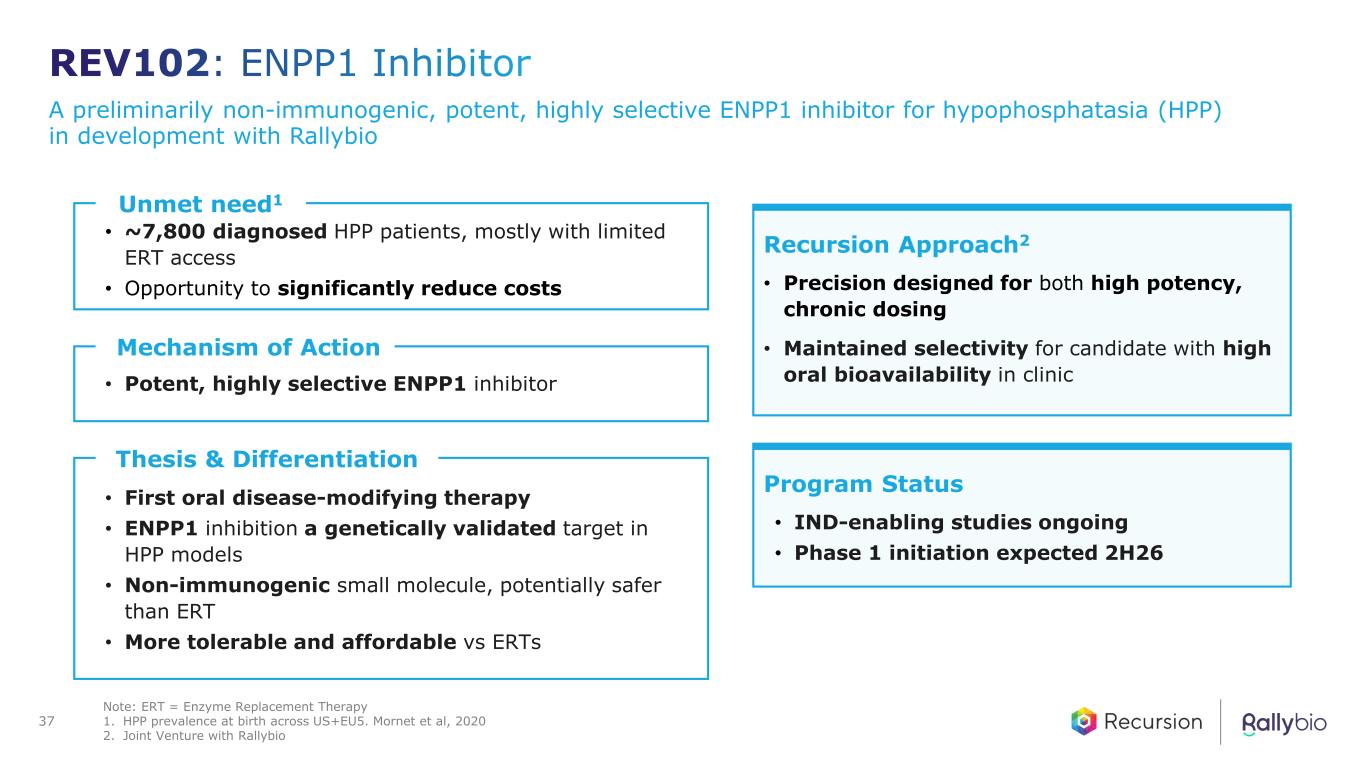
A preliminarily non-immunogenic, potent, highly selective ENPP1 inhibitor for hypophosphatasia (HPP) in development with Rallybio Unmet need1 • ~7,800 diagnosed HPP patients, mostly with limited ERT access • Opportunity to significantly reduce costs Thesis & Differentiation • First oral disease-modifying therapy • ENPP1 inhibition a genetically validated target in HPP models • Non-immunogenic small molecule, potentially safer than ERT • More tolerable and affordable vs ERTs Recursion Approach2 • Precision designed for both high potency, chronic dosing • Maintained selectivity for candidate with high oral bioavailability in clinic Program Status • IND-enabling studies ongoing • Phase 1 initiation expected 2H26 Mechanism of Action • Potent, highly selective ENPP1 inhibitor Note: ERT = Enzyme Replacement Therapy 1. HPP prevalence at birth across US+EU5. Mornet et al, 2020 2. Joint Venture with Rallybio 37
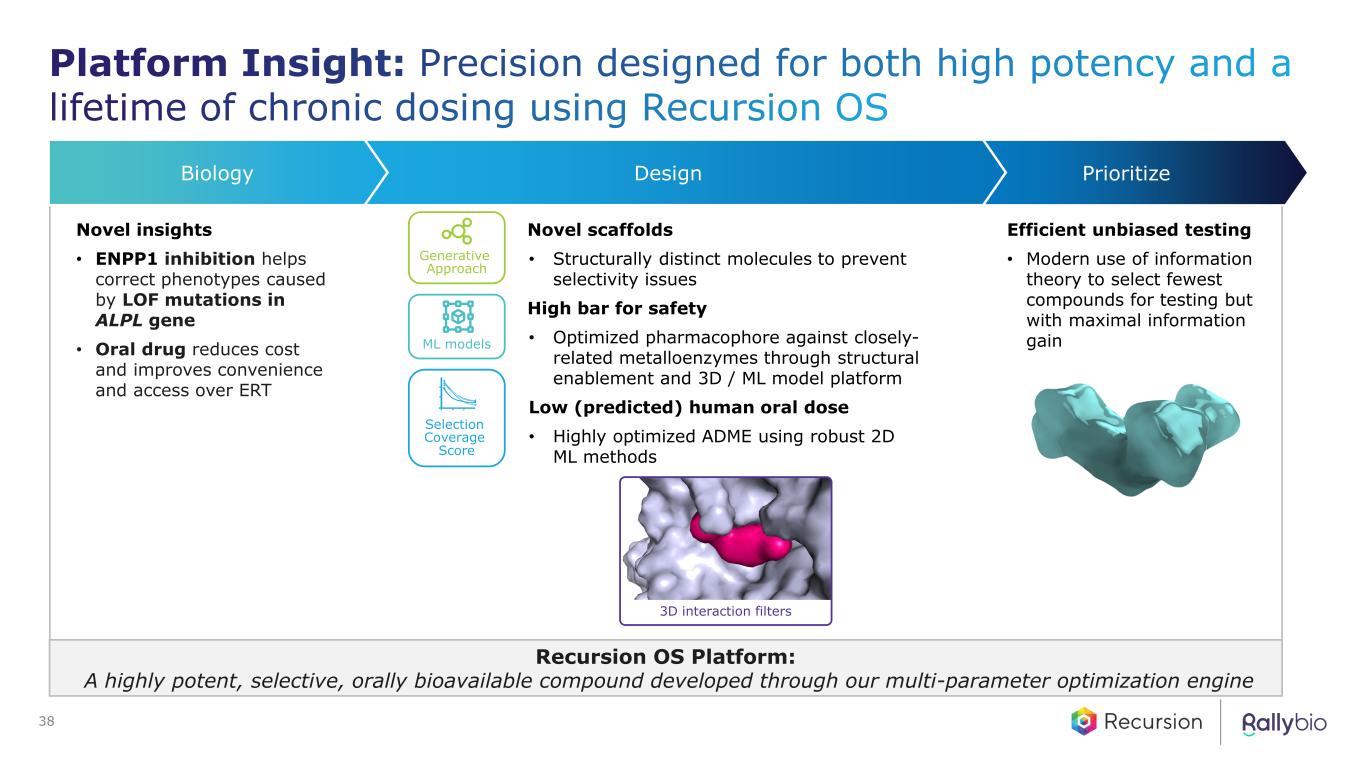
Novel insights • ENPP1 inhibition helps correct phenotypes caused by LOF mutations in ALPL gene • Oral drug reduces cost and improves convenience and access over ERT Novel scaffolds • Structurally distinct molecules to prevent selectivity issues High bar for safety • Optimized pharmacophore against closely- related metalloenzymes through structural enablement and 3D / ML model platform Low (predicted) human oral dose • Highly optimized ADME using robust 2D ML methods Efficient unbiased testing • Modern use of information theory to select fewest compounds for testing but with maximal information gain Recursion OS Platform: A highly potent, selective, orally bioavailable compound developed through our multi-parameter optimization engine PrioritizeDesignBiology Generative Approach ML models 3D interaction filters Selection Coverage Score 38
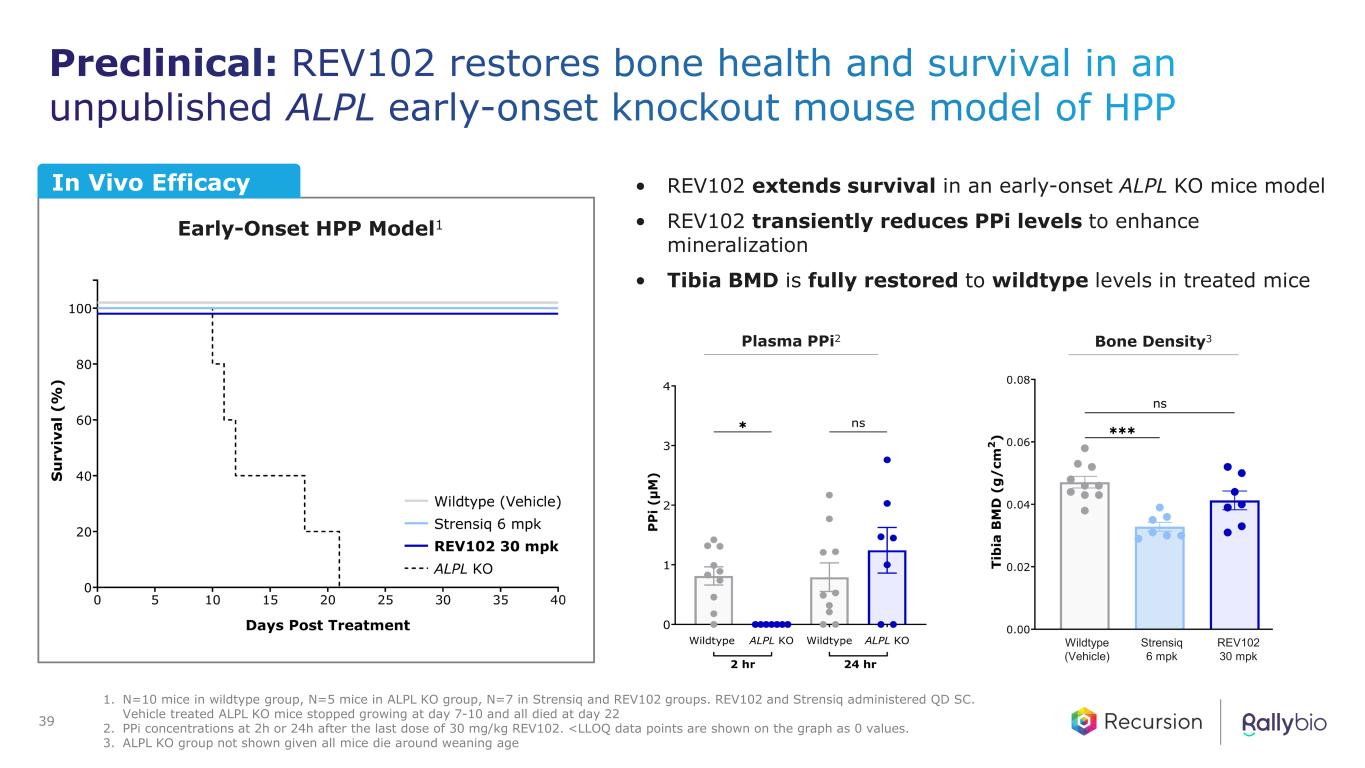
• REV102 extends survival in an early-onset ALPL KO mice model • REV102 transiently reduces PPi levels to enhance mineralization • Tibia BMD is fully restored to wildtype levels in treated mice In Vivo Efficacy Early-Onset HPP Model1 Plasma PPi2 Bone Density3 Wildtype (Vehicle) Strensiq 6 mpk REV102 30 mpk 1. N=10 mice in wildtype group, N=5 mice in ALPL KO group, N=7 in Strensiq and REV102 groups. REV102 and Strensiq administered QD SC. Vehicle treated ALPL KO mice stopped growing at day 7-10 and all died at day 22 2. PPi concentrations at 2h or 24h after the last dose of 30 mg/kg REV102. <LLOQ data points are shown on the graph as 0 values. 3. ALPL KO group not shown given all mice die around weaning age 39
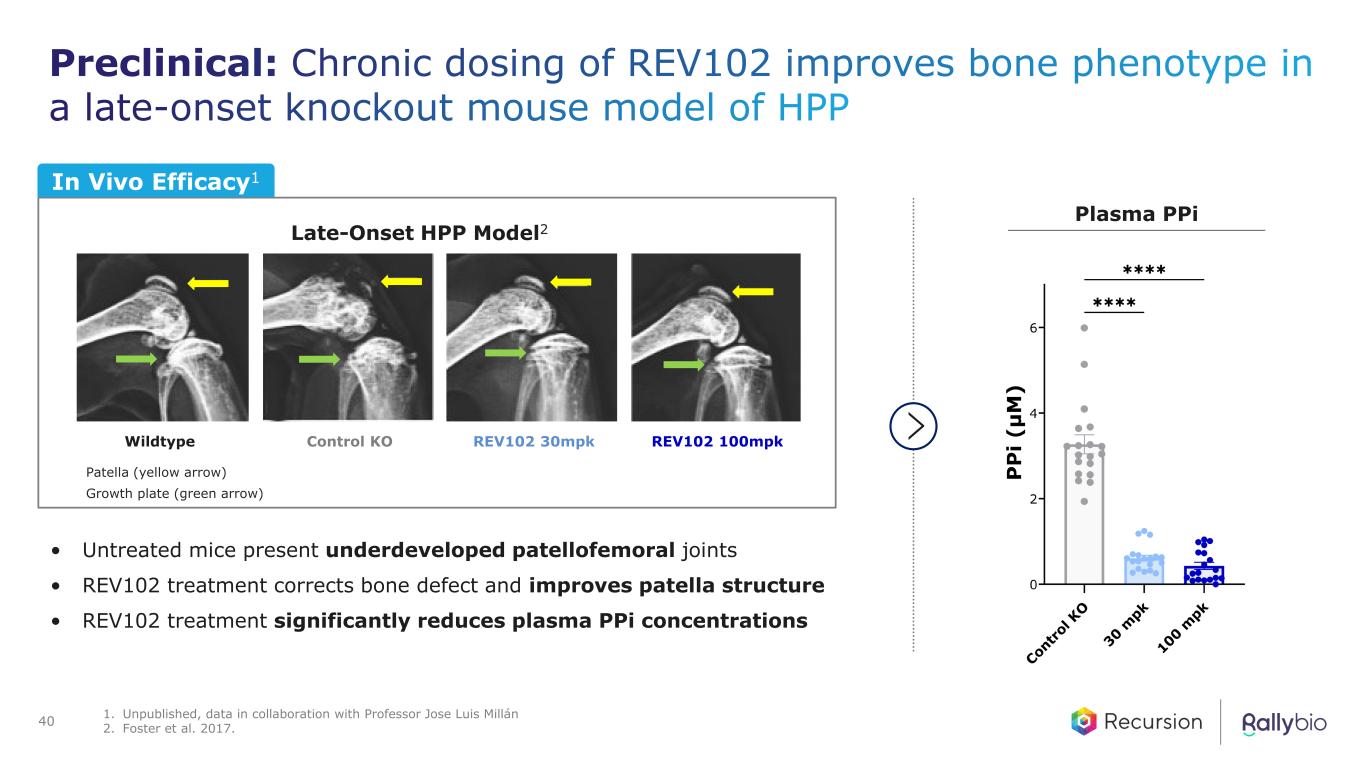
Patella (yellow arrow) Growth plate (green arrow) Plasma PPi Late-Onset HPP Model2 • Untreated mice present underdeveloped patellofemoral joints • REV102 treatment corrects bone defect and improves patella structure • REV102 treatment significantly reduces plasma PPi concentrations In Vivo Efficacy1 Wildtype Control KO REV102 30mpk REV102 100mpk 40 1. Unpublished, data in collaboration with Professor Jose Luis Millán 2. Foster et al. 2017.
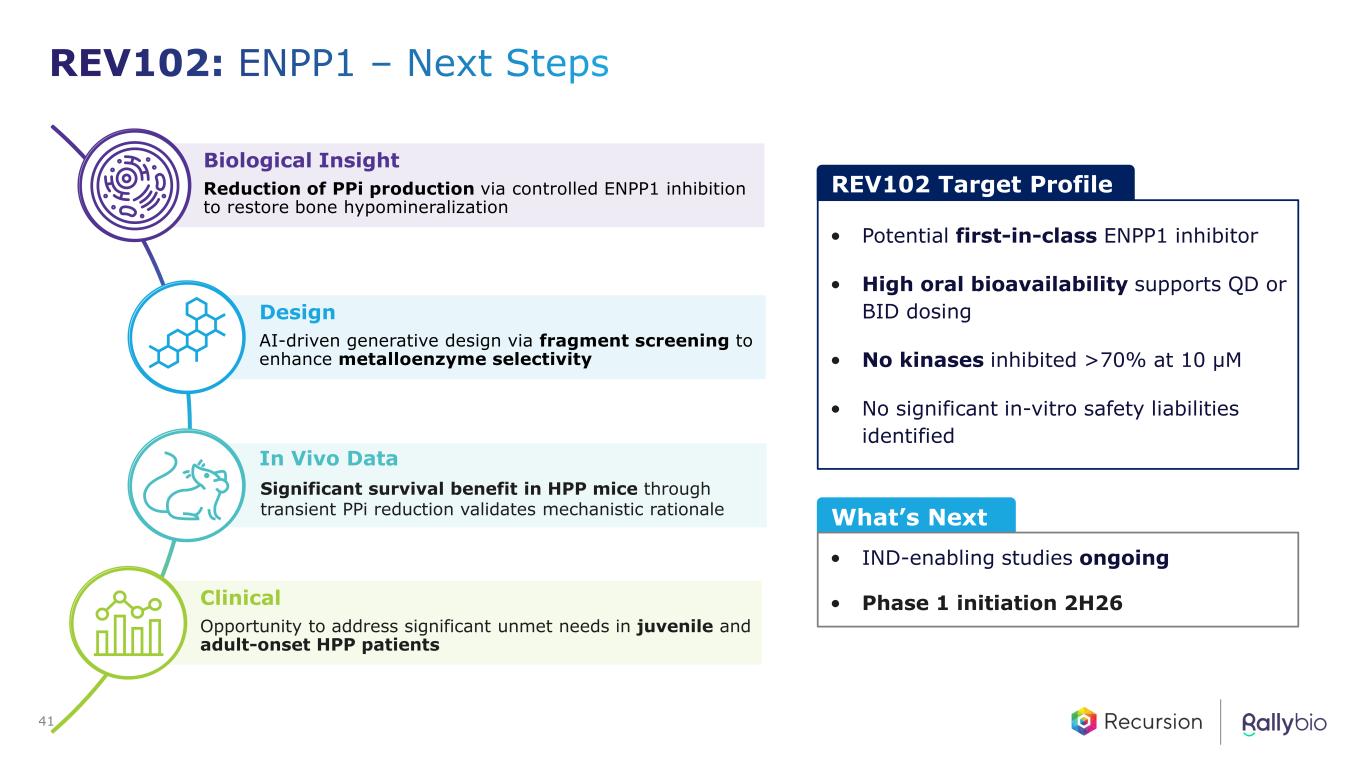
Biological Insight Reduction of PPi production via controlled ENPP1 inhibition to restore bone hypomineralization Design AI-driven generative design via fragment screening to enhance metalloenzyme selectivity In Vivo Data Significant survival benefit in HPP mice through transient PPi reduction validates mechanistic rationale Clinical Opportunity to address significant unmet needs in juvenile and adult-onset HPP patients REV102 Target Profile • Potential first-in-class ENPP1 inhibitor • High oral bioavailability supports QD or BID dosing • No kinases inhibited >70% at 10 µM • No significant in-vitro safety liabilities identified What’s Next • IND-enabling studies ongoing • Phase 1 initiation 2H26 41

Oncology RBM39・CDK7・MALT1 Clinical Portfolio
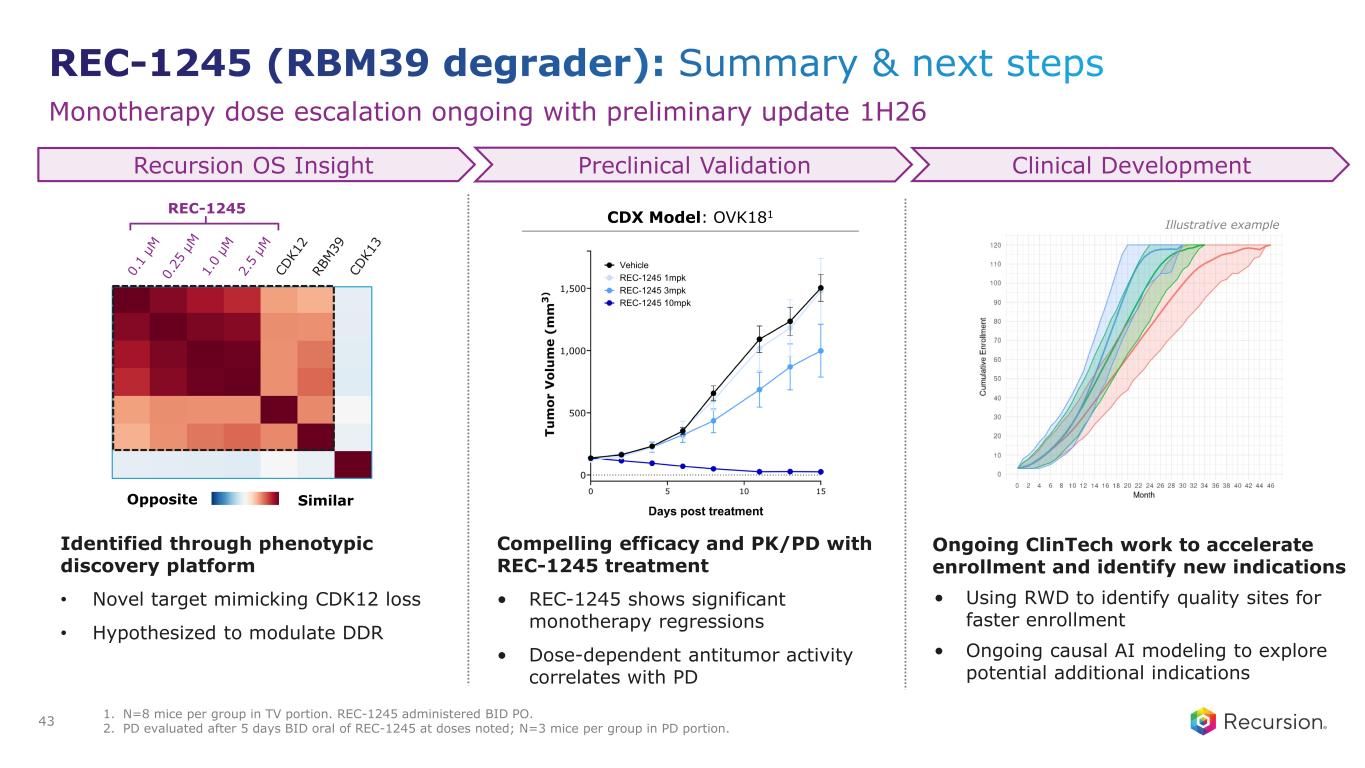
Monotherapy dose escalation ongoing with preliminary update 1H26 CDX Model: OVK181 SimilarOpposite REC-1245 Ongoing ClinTech work to accelerate enrollment and identify new indications • Using RWD to identify quality sites for faster enrollment • Ongoing causal AI modeling to explore potential additional indications Compelling efficacy and PK/PD with REC-1245 treatment • REC-1245 shows significant monotherapy regressions • Dose-dependent antitumor activity correlates with PD Identified through phenotypic discovery platform • Novel target mimicking CDK12 loss • Hypothesized to modulate DDR Clinical Development Recursion OS Insight Preclinical Validation Illustrative example 1. N=8 mice per group in TV portion. REC-1245 administered BID PO. 2. PD evaluated after 5 days BID oral of REC-1245 at doses noted; N=3 mice per group in PD portion.43
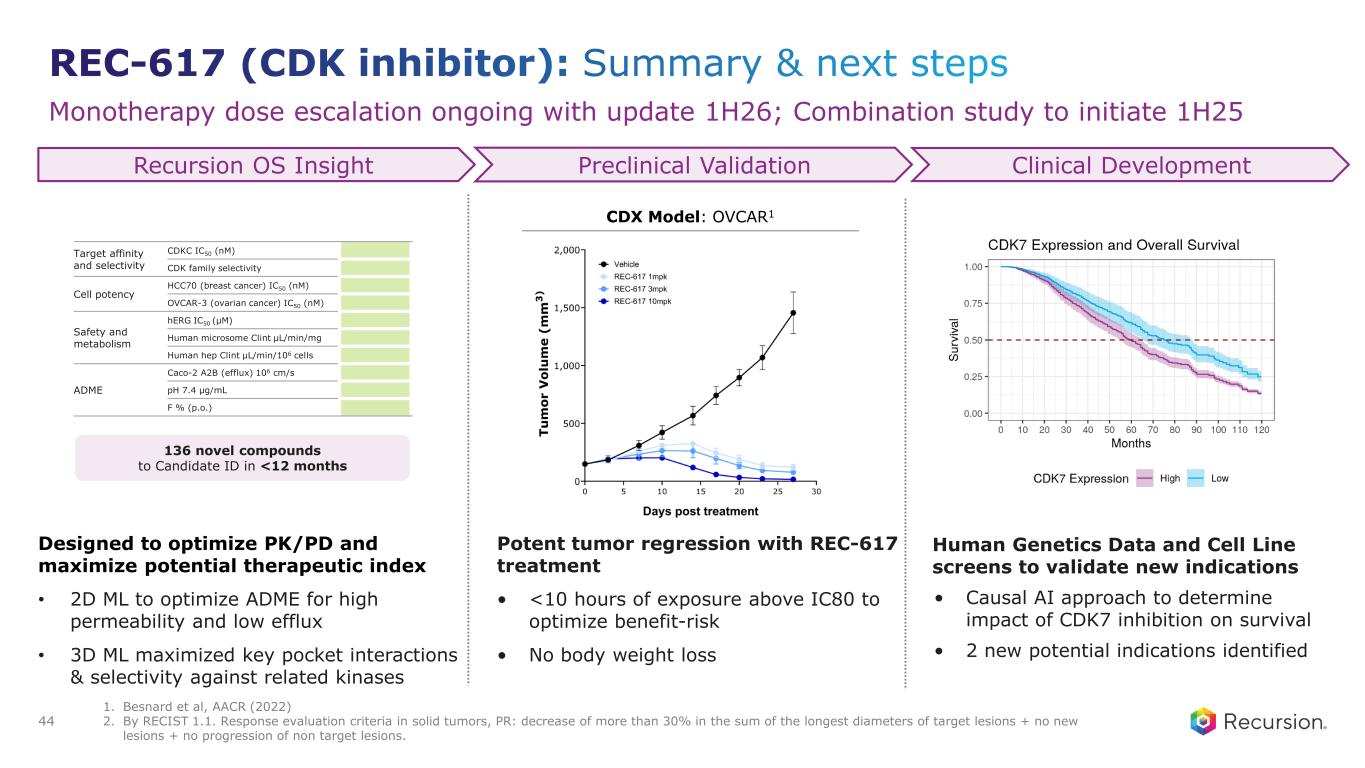
Monotherapy dose escalation ongoing with update 1H26; Combination study to initiate 1H25 Human Genetics Data and Cell Line screens to validate new indications • Causal AI approach to determine impact of CDK7 inhibition on survival • 2 new potential indications identified Potent tumor regression with REC-617 treatment • <10 hours of exposure above IC80 to optimize benefit-risk • No body weight loss Designed to optimize PK/PD and maximize potential therapeutic index • 2D ML to optimize ADME for high permeability and low efflux • 3D ML maximized key pocket interactions & selectivity against related kinases Clinical Development Recursion OS Insight Preclinical Validation CDX Model: OVCAR1 136 novel compounds to Candidate ID in <12 months Target affinity and selectivity CDKC IC50 (nM) CDK family selectivity Cell potency HCC70 (breast cancer) IC50 (nM) OVCAR-3 (ovarian cancer) IC50 (nM) Safety and metabolism hERG IC50 (μM) Human microsome Clint μL/min/mg Human hep Clint μL/min/106 cells ADME Caco-2 A2B (efflux) 106 cm/s pH 7.4 μg/mL F % (p.o.) 1. Besnard et al, AACR (2022) 2. By RECIST 1.1. Response evaluation criteria in solid tumors, PR: decrease of more than 30% in the sum of the longest diameters of target lesions + no new lesions + no progression of non target lesions. 44
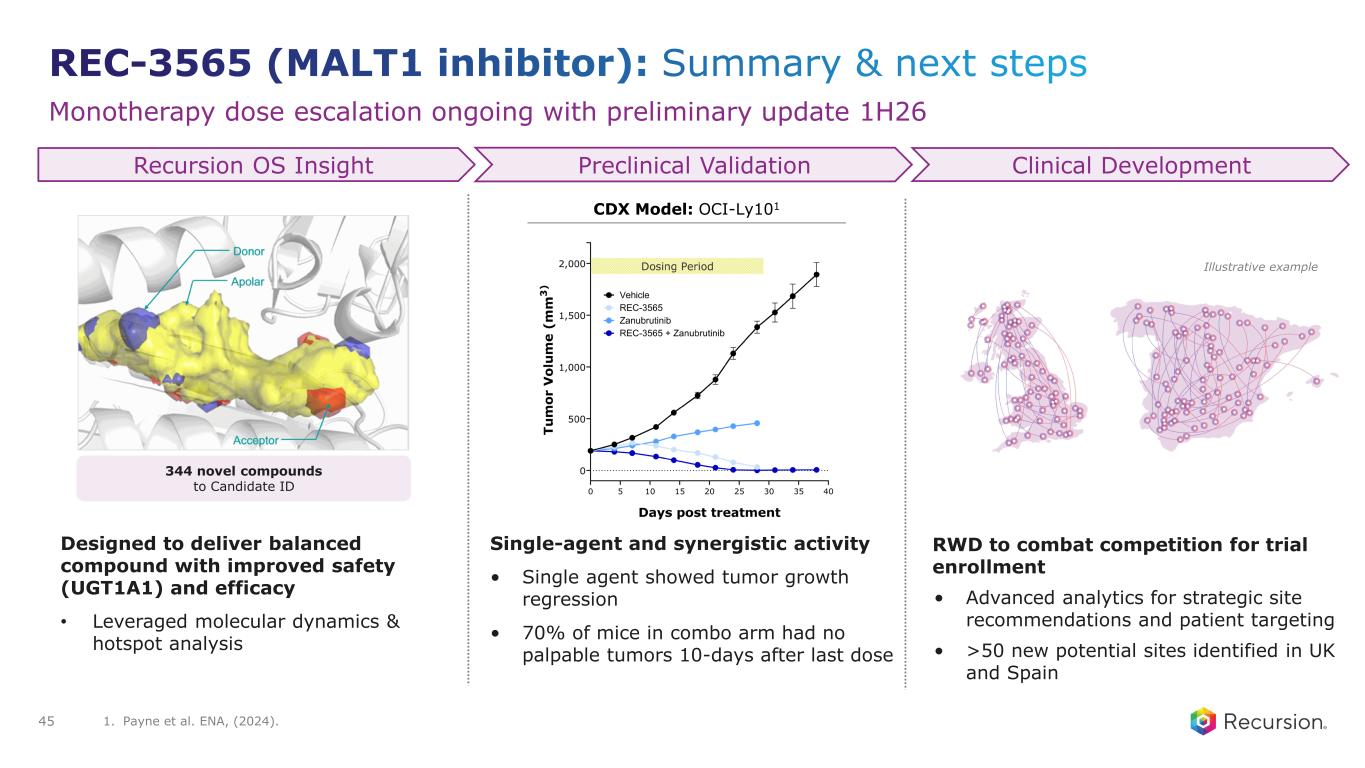
Monotherapy dose escalation ongoing with preliminary update 1H26 RWD to combat competition for trial enrollment • Advanced analytics for strategic site recommendations and patient targeting • >50 new potential sites identified in UK and Spain Single-agent and synergistic activity • Single agent showed tumor growth regression • 70% of mice in combo arm had no palpable tumors 10-days after last dose Designed to deliver balanced compound with improved safety (UGT1A1) and efficacy • Leveraged molecular dynamics & hotspot analysis Clinical Development Recursion OS Insight Preclinical Validation CDX Model: OCI-Ly101 Illustrative example 344 novel compounds to Candidate ID 45 1. Payne et al. ENA, (2024).

Partnered Programs Portfolio
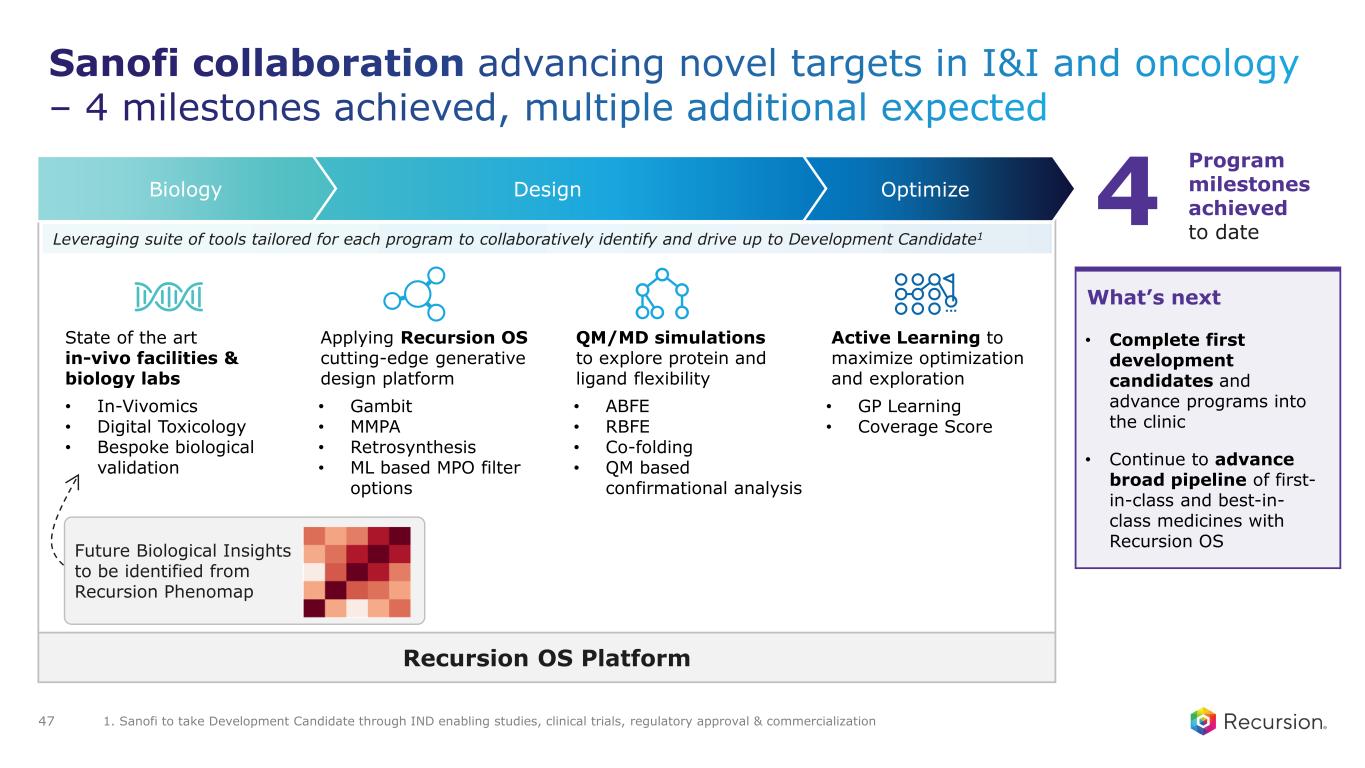
OptimizeDesignBiology QM/MD simulations to explore protein and ligand flexibility Applying Recursion OS cutting-edge generative design platform Active Learning to maximize optimization and exploration 4 Program milestones achieved to date • Complete first development candidates and advance programs into the clinic • Continue to advance broad pipeline of first- in-class and best-in- class medicines with Recursion OS What’s next Future Biological Insights to be identified from Recursion Phenomap • Gambit • MMPA • Retrosynthesis • ML based MPO filter options • ABFE • RBFE • Co-folding • QM based confirmational analysis • GP Learning • Coverage Score State of the art in-vivo facilities & biology labs • In-Vivomics • Digital Toxicology • Bespoke biological validation Leveraging suite of tools tailored for each program to collaboratively identify and drive up to Development Candidate1 Recursion OS Platform 1. Sanofi to take Development Candidate through IND enabling studies, clinical trials, regulatory approval & commercialization 47
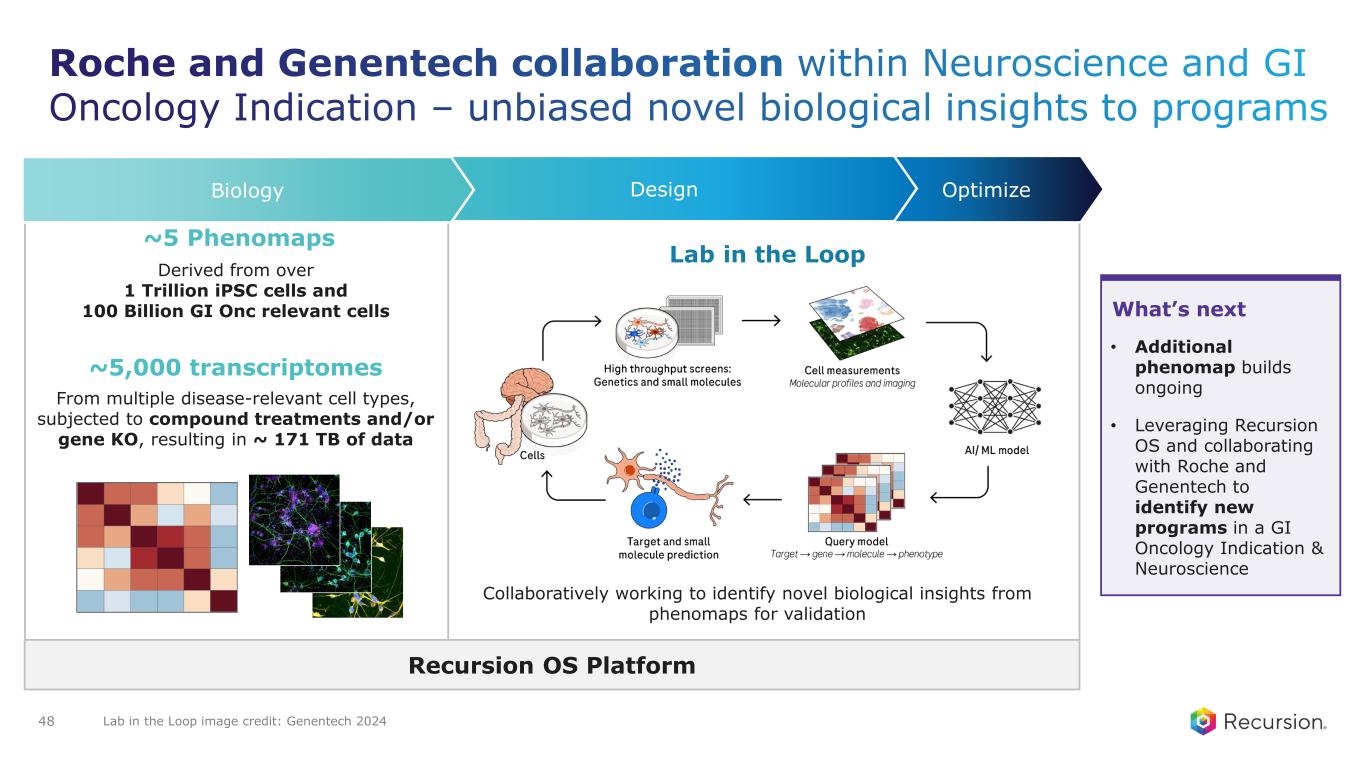
~5 Phenomaps • Additional phenomap builds ongoing • Leveraging Recursion OS and collaborating with Roche and Genentech to identify new programs in a GI Oncology Indication & Neuroscience What’s next Collaboratively working to identify novel biological insights from phenomaps for validation Lab in the Loop Derived from over 1 Trillion iPSC cells and 100 Billion GI Onc relevant cells ~5,000 transcriptomes Recursion OS Platform From multiple disease-relevant cell types, subjected to compound treatments and/or gene KO, resulting in ~ 171 TB of data OptimizeDesignBiology Lab in the Loop image credit: Genentech 202448
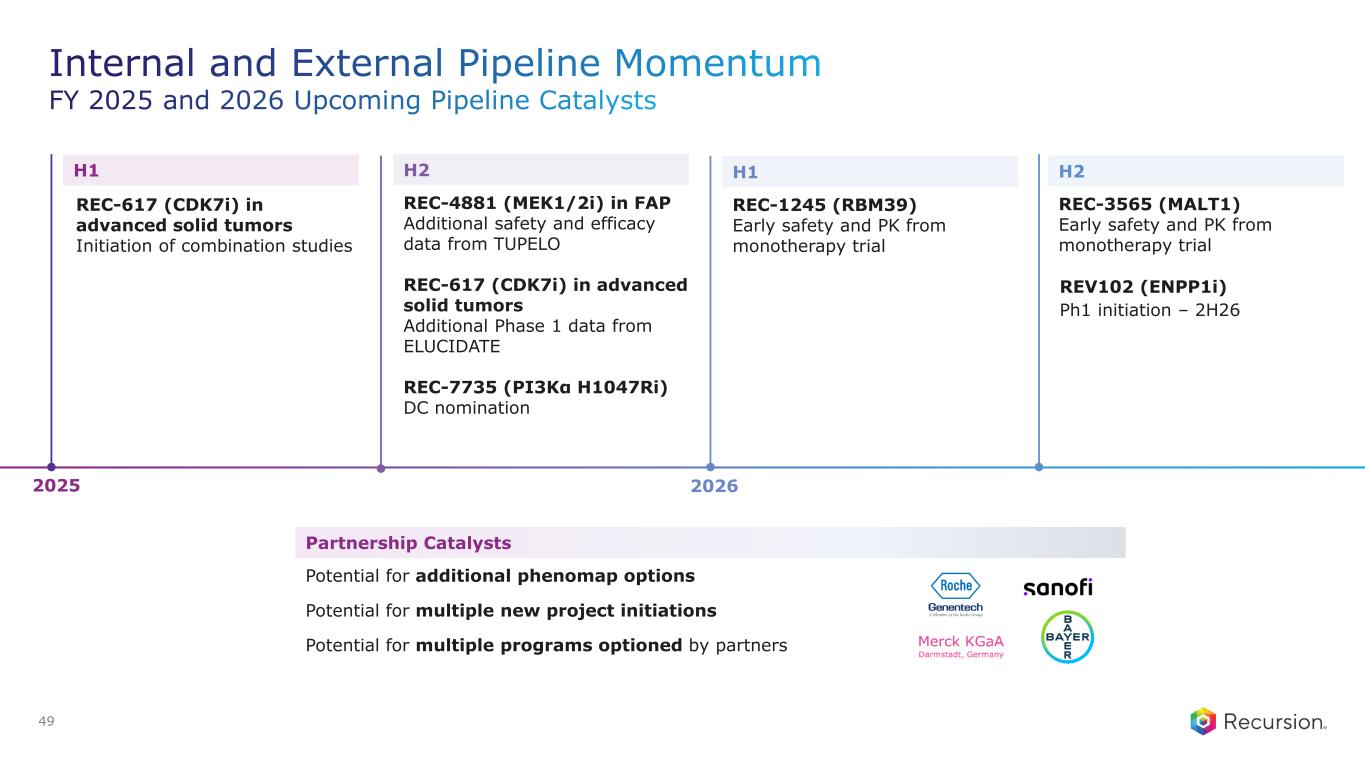
Partnership Catalysts Potential for additional phenomap options Potential for multiple new project initiations Potential for multiple programs optioned by partners 2025 2026 H1 REC-617 (CDK7i) in advanced solid tumors Initiation of combination studies H2 REC-4881 (MEK1/2i) in FAP Additional safety and efficacy data from TUPELO REC-617 (CDK7i) in advanced solid tumors Additional Phase 1 data from ELUCIDATE REC-7735 (PI3Kα H1047Ri) DC nomination H1 REC-1245 (RBM39) Early safety and PK from monotherapy trial H2 REC-3565 (MALT1) Early safety and PK from monotherapy trial REV102 (ENPP1i) Ph1 initiation – 2H26 49

Financial Update
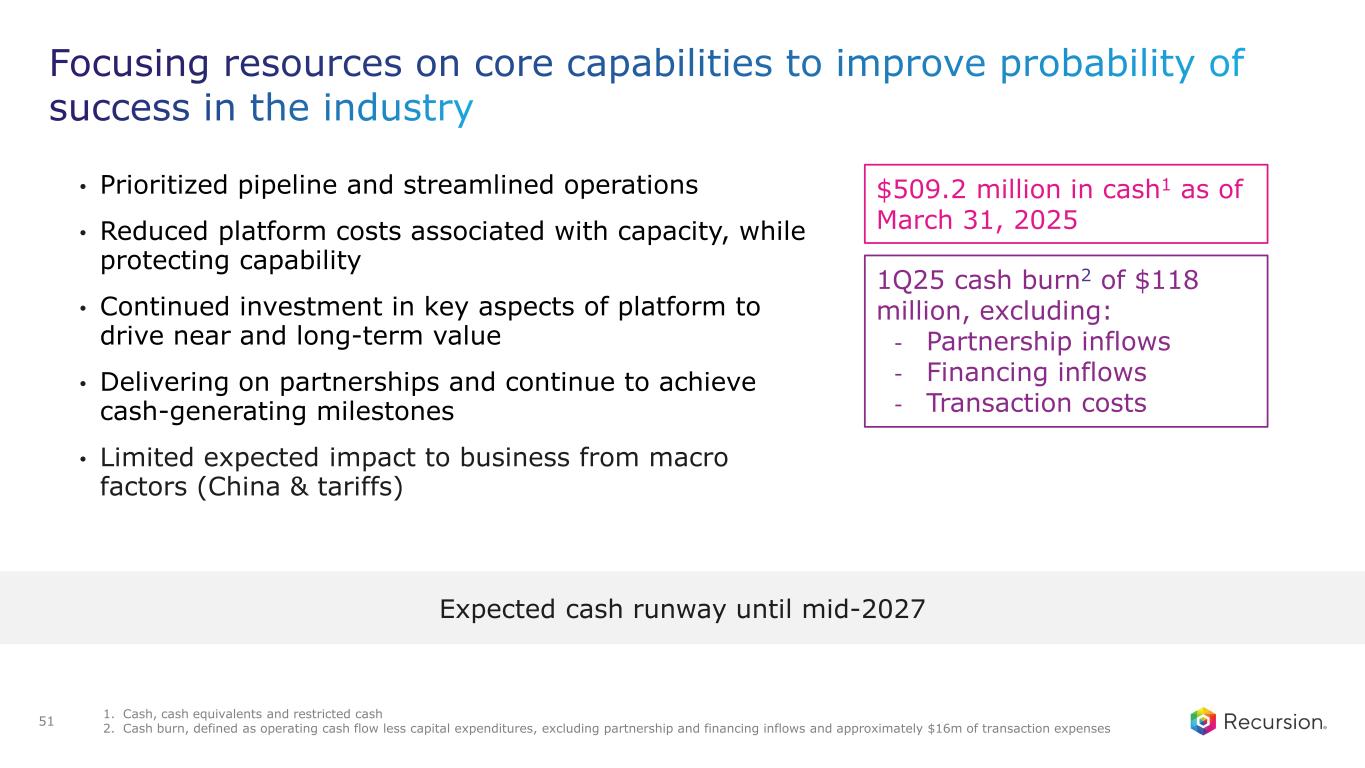
• Prioritized pipeline and streamlined operations • Reduced platform costs associated with capacity, while protecting capability • Continued investment in key aspects of platform to drive near and long-term value • Delivering on partnerships and continue to achieve cash-generating milestones • Limited expected impact to business from macro factors (China & tariffs) $509.2 million in cash1 as of March 31, 2025 1Q25 cash burn2 of $118 million, excluding: - Partnership inflows - Financing inflows - Transaction costs Expected cash runway until mid-2027 1. Cash, cash equivalents and restricted cash 2. Cash burn, defined as operating cash flow less capital expenditures, excluding partnership and financing inflows and approximately $16m of transaction expenses 51
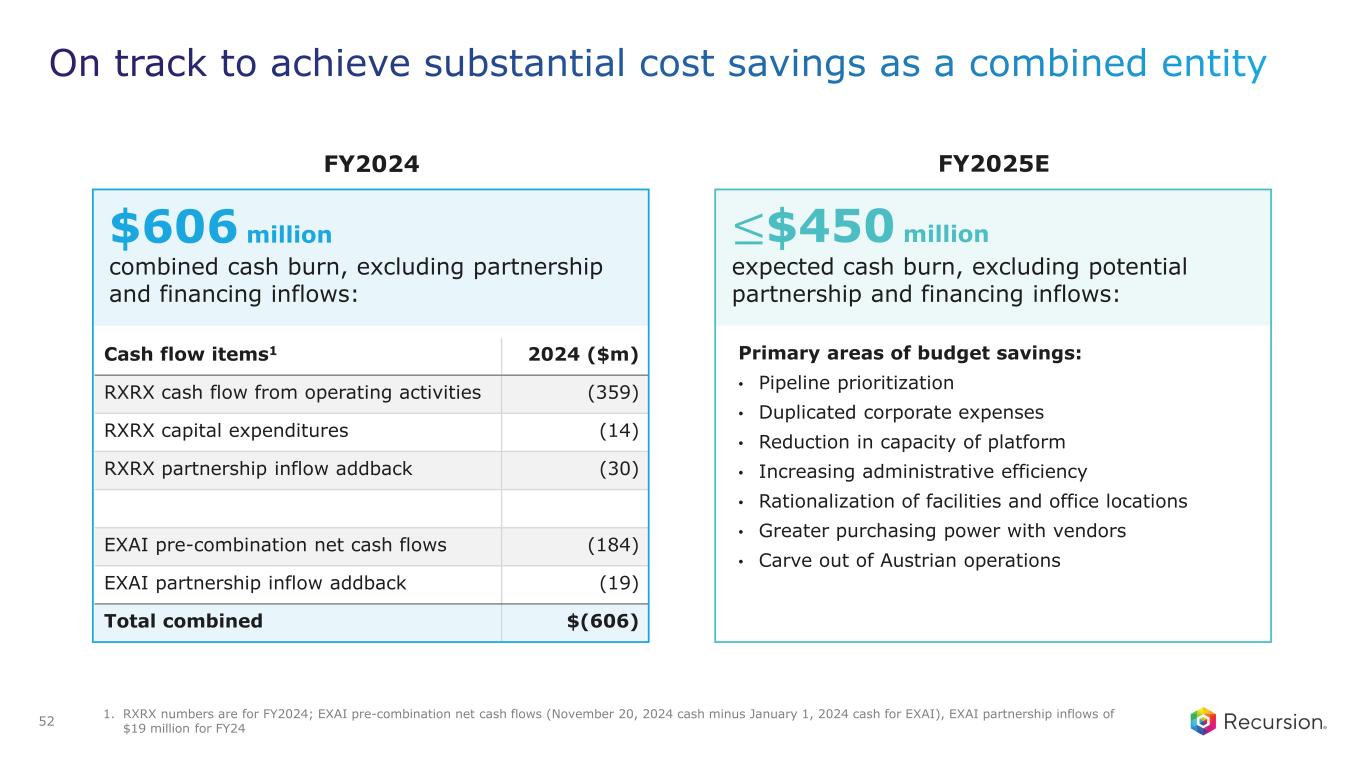
Cash flow items1 2024 ($m) RXRX cash flow from operating activities (359) RXRX capital expenditures (14) RXRX partnership inflow addback (30) EXAI pre-combination net cash flows (184) EXAI partnership inflow addback (19) Total combined $(606) Primary areas of budget savings: • Pipeline prioritization • Duplicated corporate expenses • Reduction in capacity of platform • Increasing administrative efficiency • Rationalization of facilities and office locations • Greater purchasing power with vendors • Carve out of Austrian operations $606 million combined cash burn, excluding partnership and financing inflows: ≤$450 million expected cash burn, excluding potential partnership and financing inflows: FY2024 FY2025E 1. RXRX numbers are for FY2024; EXAI pre-combination net cash flows (November 20, 2024 cash minus January 1, 2024 cash for EXAI), EXAI partnership inflows of $19 million for FY24 52

Recursion 2.0
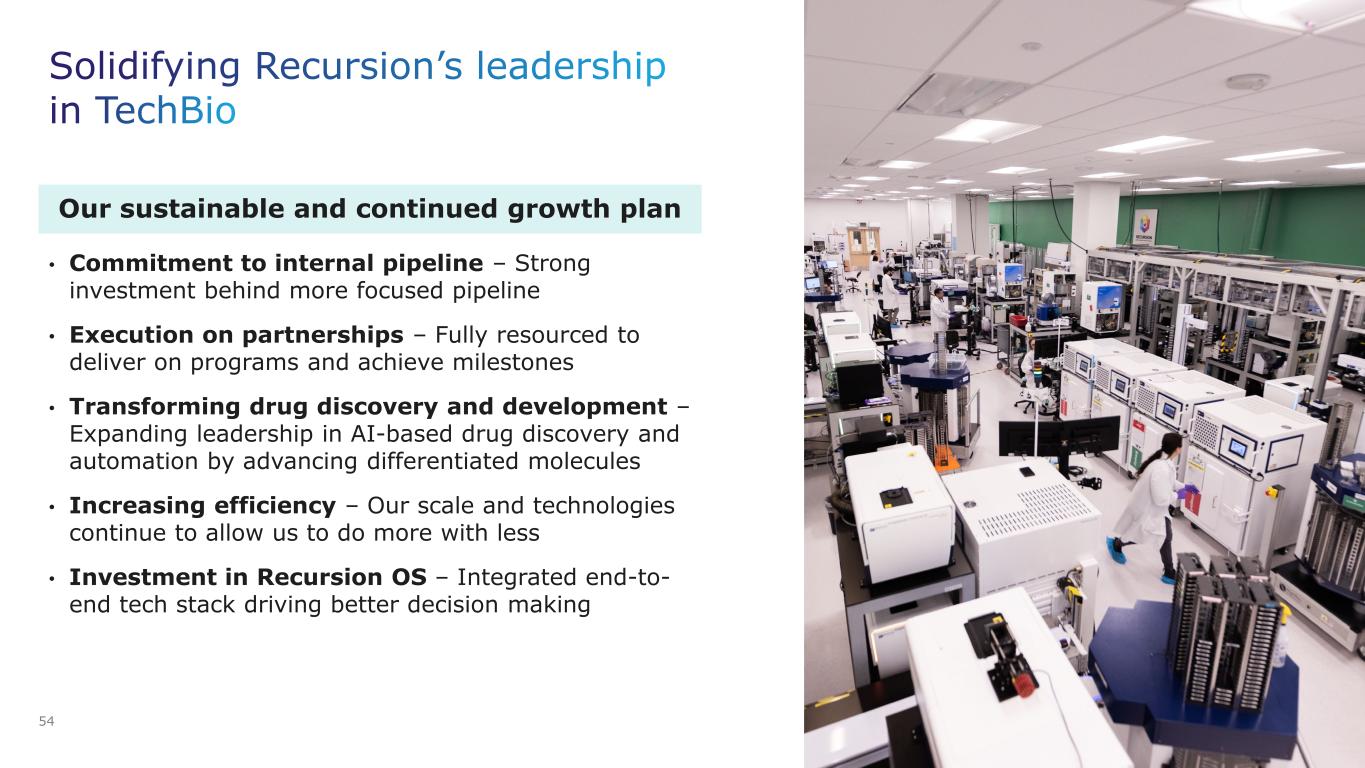
Our sustainable and continued growth plan • Commitment to internal pipeline – Strong investment behind more focused pipeline • Execution on partnerships – Fully resourced to deliver on programs and achieve milestones • Transforming drug discovery and development – Expanding leadership in AI-based drug discovery and automation by advancing differentiated molecules • Increasing efficiency – Our scale and technologies continue to allow us to do more with less • Investment in Recursion OS – Integrated end-to- end tech stack driving better decision making 54

Q&A