SRRK 8-K
Scholar Rock Holding Corp (SRRK)
UNITED STATES
SECURITIES AND EXCHANGE COMMISSION
Washington, D.C. 20549
FORM
CURRENT REPORT
Pursuant to Section 13 or 15(d) of the Securities Exchange Act of 1934
Date of Report (Date of earliest event Reported):
(Exact Name of Registrant as Specified in Charter)
|
| |||
(State or Other Jurisdiction of | (Commission File Number) | (I.R.S. Employer Identification Number) |
(Address of Principal Executive Offices) (Zip Code)
(
(Registrant’s telephone number, including area code)
(Former name or former address, if changed since last report)
Check the appropriate box below if the Form 8-K filing is intended to simultaneously satisfy the filing obligation of the registrant under any of the following provisions:
Written communications pursuant to Rule 425 under the Securities Act (17 CFR 230.425) | |
Soliciting material pursuant to Rule 14a-12 under the Exchange Act (17 CFR 240.14a-12) | |
Pre-commencement communications pursuant to Rule 14d-2(b) under the Exchange Act (17 CFR 240.14d-2(b)) | |
Pre-commencement communications pursuant to Rule 13e-4(c) under the Exchange Act (17 CFR 240.13e-4(c)) |
Securities registered pursuant to Section 12(b) of the Act:
Title of each class | Trading Symbol(s) | Name of each exchange on which registered |
Indicate by check mark whether the registrant is an emerging growth company as defined in Rule 405 of the Securities Act of 1933 (17 CFR §230.405) or Rule 12b-2 of the Securities Exchange Act of 1934 (17 CFR §240.12b-2). Emerging growth company
If an emerging growth company, indicate by check mark if the registrant has elected not to use the extended transition period for complying with any new or revised financial accounting standards provided pursuant to Section 13(a) of the Exchange Act. ☐
Item 8.01. Other Events.
Scholar Rock Holding Corporation (the “Company”) from time to time provides business updates to members of the investment community and other parties. A copy of the Company’s current corporate slide presentation is being filed herewith as Exhibit 99.1 to this Current Report on Form 8-K and is incorporated herein by reference. The Company undertakes no obligation to update, supplement or amend the materials attached hereto as Exhibit 99.1.
Item 9.01. Financial Statements and Exhibits.
(d) Exhibits
Exhibit No. |
| Description | ||
|
|
| ||
99.1 | Scholar Rock Holding Corporation Corporate Presentation dated January 13, 2025. | |||
104 |
| Cover Page Interactive Data File (embedded within the Inline XBRL document) | ||
SIGNATURE
Pursuant to the requirements of the Securities Exchange Act of 1934, the registrant has duly caused this report to be signed on its behalf by the undersigned hereunto duly authorized.
| Scholar Rock Holding Corporation | |
|
|
|
Date: January 13, 2025 | By: | /s/ Junlin Ho |
|
| Junlin Ho |
|
| General Counsel & Corporate Secretary |
| © 2025 Scholar Rock, Inc. All rights reserved. Deep Insights Advancing Impactful Medicines Company Overview | January 2025 Exhibit 99.1 |

| © 2024 Scholar Rock, Inc. All rights reserved. Forward-Looking Statements Various statements in this presentation concerning the future expectations, plans and prospects of Scholar Rock Holding Corporation and Scholar Rock, Inc. (collectively, “Scholar Rock”), including without limitation, Scholar Rock’s expectations regarding its strategy, its product candidate selection and development timing, including timing for the initiation of and reporting results from its preclinical studies and clinical trials for apitegromab, SRK-439, linavonkibart and other product candidates and indication selection and development timing, its cash runway, the ability of any product candidate to perform in humans in a manner consistent with earlier nonclinical, preclinical or clinical trial data, and the potential of its product candidates and proprietary platform. The use of words such as “may,” “could,” “might,” “will,” “should,” “expect,” “plan,” “anticipate,” “believe,” “estimate,” “project,” “intend,” “future,” “potential,” or “continue,” and other similar expressions are intended to identify such forward-looking statements for the purposes of the safe harbor provisions under The Private Securities Litigation Reform Act of 1995. All such forward-looking statements are based on management's current expectations of future events and are subject to a number of risks and uncertainties that could cause actual results to differ materially and adversely from those set forth in or implied by such forward-looking statements. These risks and uncertainties include, without limitation, that preclinical and clinical data, including the results from the Phase 3 trial of apitegromab or Part A or Part B of the Phase 1 trial of linavonkibart, are not predictive of, may be inconsistent with, or more favorable than, data generated from future or ongoing clinical trials of the same product candidate; Scholar Rock’s ability to provide the financial support, resources and expertise necessary to identify and develop product candidates on the expected timeline; the data generated from Scholar Rock’s nonclinical and preclinical studies and clinical trials, including from the EMBRAZE clinical trial; information provided or decisions made by regulatory authorities; competition from third parties that are developing products for similar uses; Scholar Rock’s ability to obtain, maintain and protect its intellectual property; the success of Scholar Rock’s current and potential future collaborations; Scholar Rock’s dependence on third parties for development and manufacture of product candidates including, without limitation, to supply any clinical trials; Scholar Rock’s ability to manage expenses and to obtain additional funding when needed to support its business activities; its ability to establish or maintain strategic business alliances; its ability to receive priority or expedited regulatory review or to obtain regulatory approval of apitegromab; its ability to expand globally and the anticipated commercial launch in the United States of apitegromab in the fourth quarter of 2025; as well as those risks more fully discussed in the section entitled "Risk Factors" in Scholar Rock’s Form 10-K for the year ended December 31, 2023, and Quarterly Report on Form 10-Q for the quarter ended September 30, 2024, as well as discussions of potential risks, uncertainties, and other important factors in Scholar Rock’s subsequent filings with the Securities and Exchange Commission. Any forward-looking statements represent Scholar Rock’s views only as of today and should not be relied upon as representing its views as of any subsequent date. All information in this press release is as of the date of the release, and Scholar Rock undertakes no duty to update this information unless required by law. This presentation may also contain estimates and other statistical data made by independent parties and by us relating to market size and growth and other data about our industry. This data involves a number of assumptions and limitations, and you are cautioned not to give undue weight to such estimates. In addition, projections, assumptions, and estimates of our future performance and the future performance of the markets in which we compete are necessarily subject to a high degree of uncertainty and risk. Apitegromab and SRK-181 are investigational drug candidates under evaluation. Apitegromab, linavonkibart, SRK-256, SRK-373, and SRK-439 have not been approved for any use by the FDA or any other regulatory agency and the safety and efficacy of apitegromab, linavonkibart, SRK-256, SRK-373, and SRK-439 have not been established. |
| © 2024 Scholar Rock, Inc. All rights reserved. 3 OUR MISSION To discover, develop, and deliver life-changing therapies by harnessing cutting-edge science to create new possibilities for people living with serious diseases Industry-leading technology, life-changing potential |

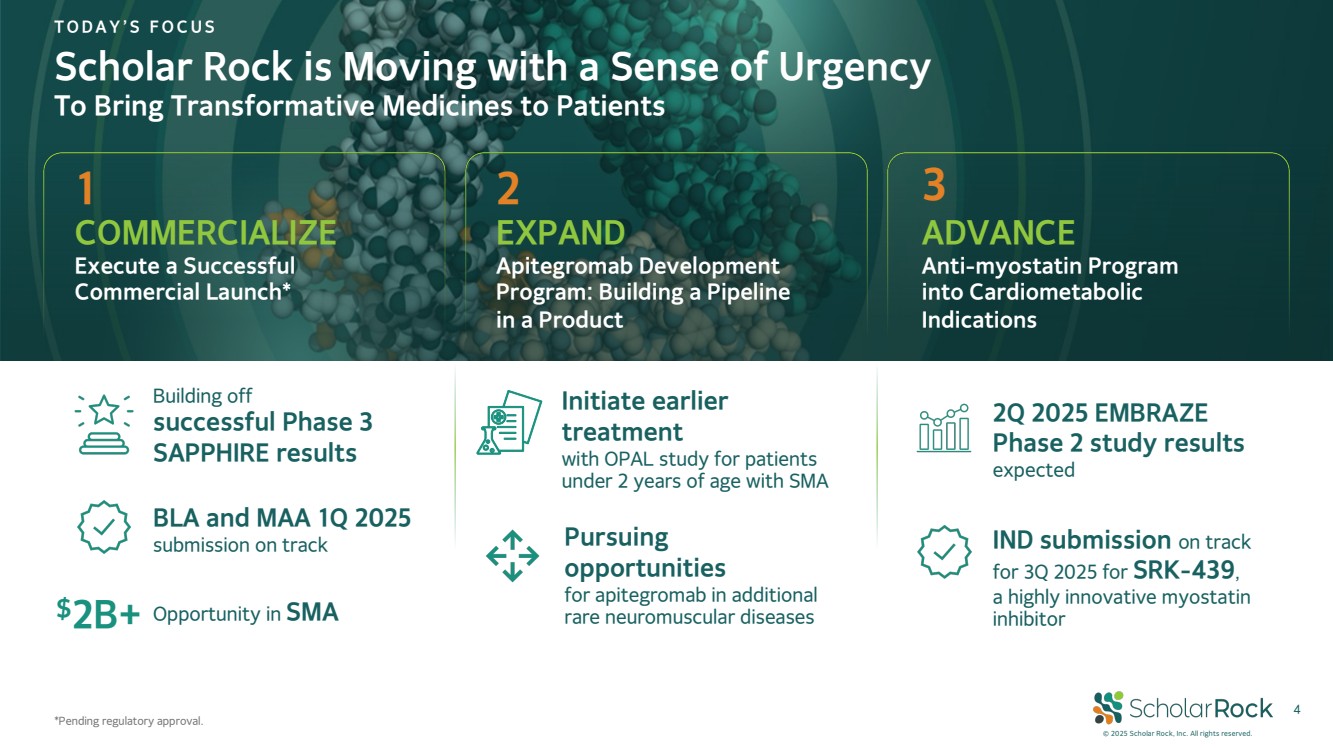
| © 2025 Scholar Rock, Inc. All rights reserved. TODAY’S FOCUS Scholar Rock is Moving with a Sense of Urgency To Bring Transformative Medicines to Patients 4 *Pending regulatory approval. EXPAND Apitegromab Development Program: Building a Pipeline in a Product COMMERCIALIZE Execute a Successful Commercial Launch* ADVANCE Anti-myostatin Program into Cardiometabolic Indications 1 2 3 Building off successful Phase 3 SAPPHIRE results $2B+ Opportunity in SMA BLA and MAA 1Q 2025 submission on track Pursuing opportunities for apitegromab in additional rare neuromuscular diseases 2Q 2025 EMBRAZE Phase 2 study results expected IND submission on track for 3Q 2025 for SRK-439, a highly innovative myostatin inhibitor Initiate earlier treatment with OPAL study for patients under 2 years of age with SMA |
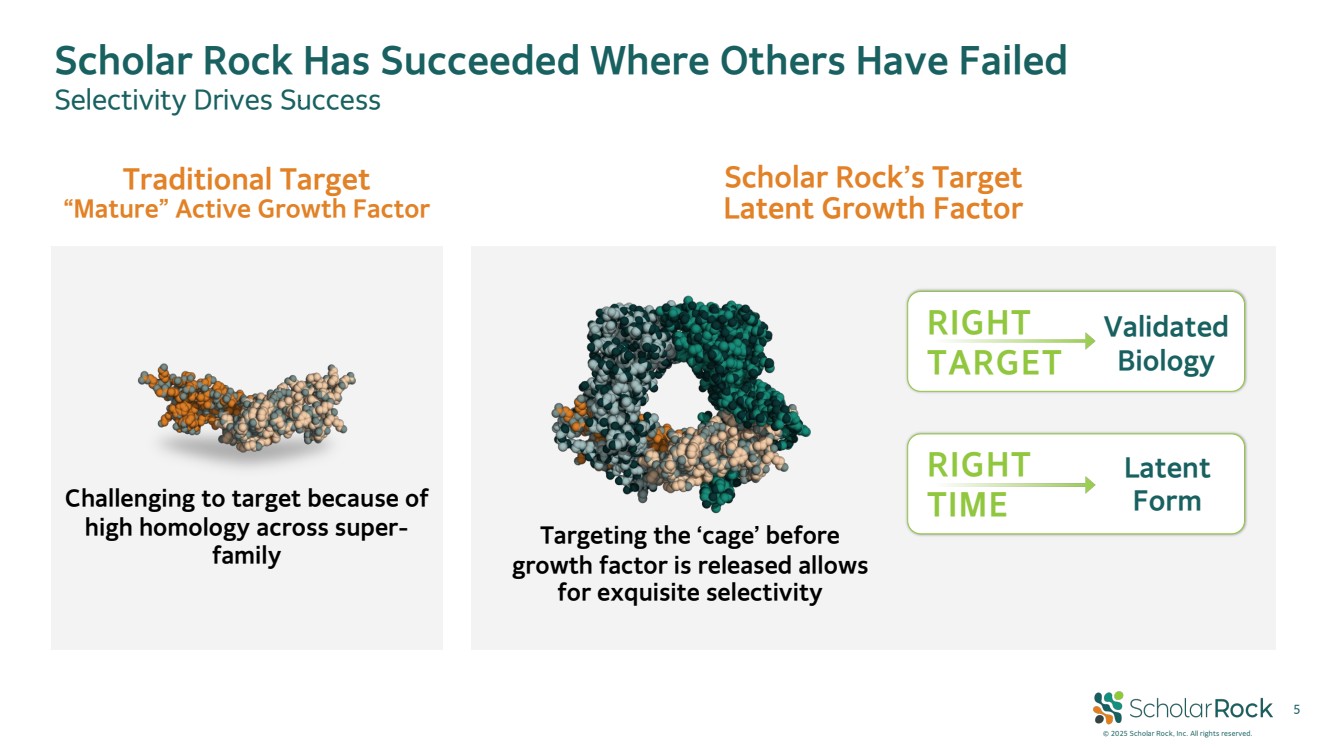
| © 2025 Scholar Rock, Inc. All rights reserved. Scholar Rock’s Target Latent Growth Factor Traditional Target “Mature” Active Growth Factor 5 Scholar Rock Has Succeeded Where Others Have Failed Selectivity Drives Success Targeting the ‘cage’ before growth factor is released allows for exquisite selectivity Challenging to target because of high homology across super-family RIGHT TIME Latent Form RIGHT TARGET Validated Biology |
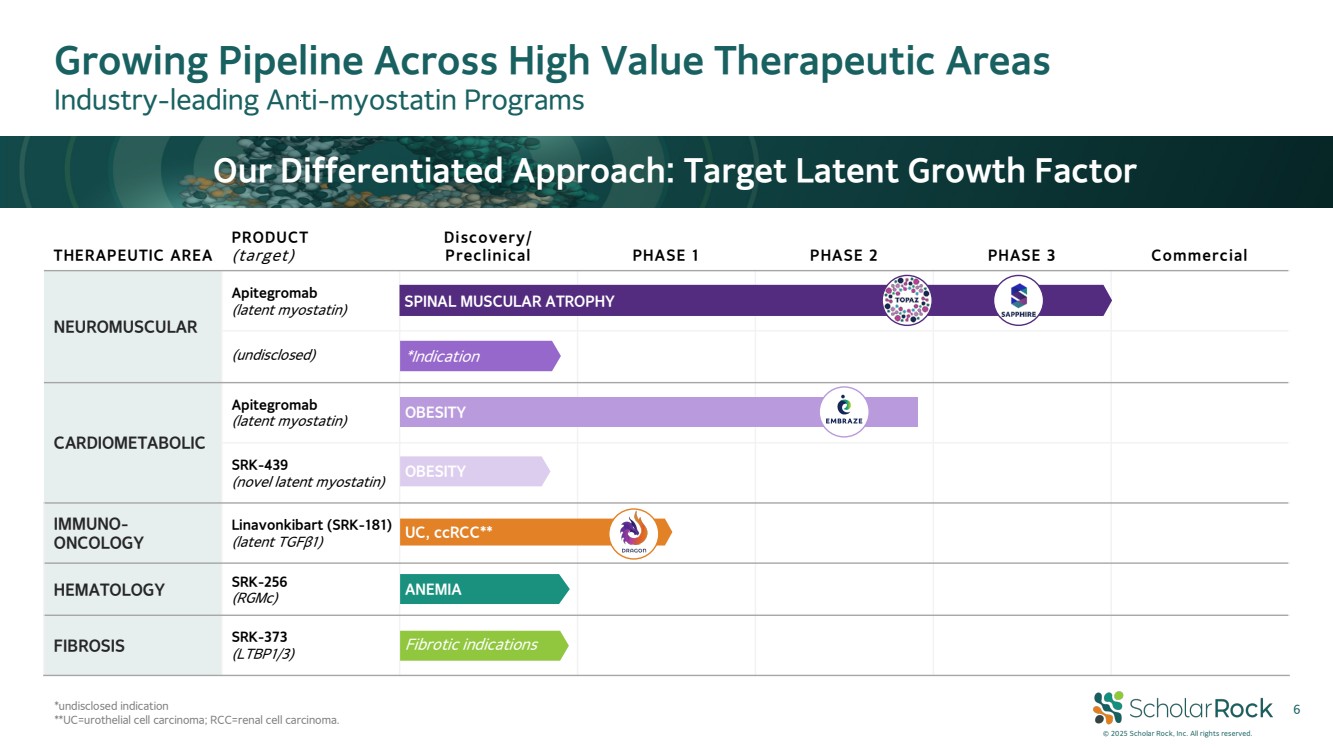
| © 2025 Scholar Rock, Inc. All rights reserved. 6 Growing Pipeline Across High Value Therapeutic Areas Industry-leading Anti-myostatin Programs *undisclosed indication **UC=urothelial cell carcinoma; RCC=renal cell carcinoma. THERAPEUTIC AREA PRODUCT (target) Discovery/ Preclinical PHASE 1 PHASE 2 PHASE 3 Commercial NEUROMUSCULAR Apitegromab (latent myostatin) (undisclosed) CARDIOMETABOLIC Apitegromab (latent myostatin) SRK-439 (novel latent myostatin) IMMUNO-ONCOLOGY Linavonkibart (SRK-181) (latent TGFβ1) HEMATOLOGY SRK-256 (RGMc) FIBROSIS SRK-373 (LTBP1/3) Our Differentiated Approach: Target Latent Growth Factor *Indication OBESITY ANEMIA Fibrotic indications UC, ccRCC** OBESITY SPINAL MUSCULAR ATROPHY |
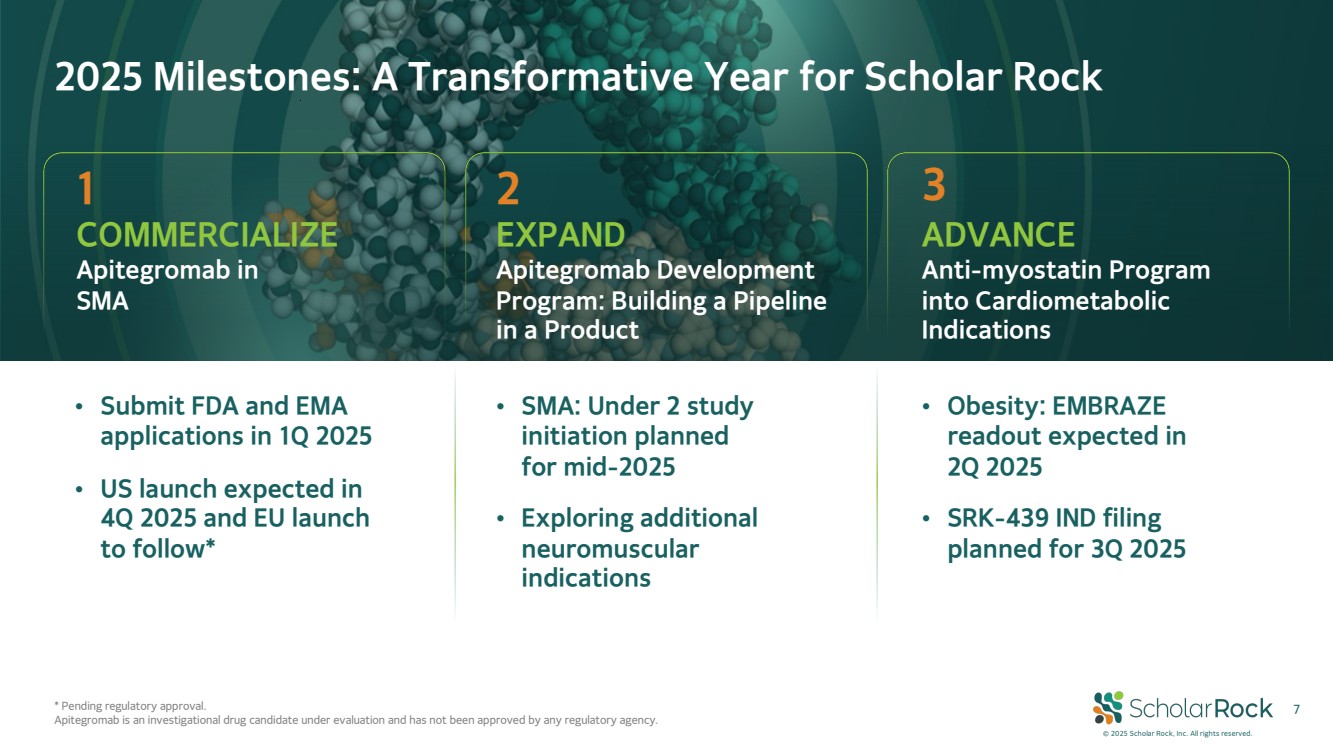
| © 2025 Scholar Rock, Inc. All rights reserved. 2025 Milestones: A Transformative Year for Scholar Rock 7 * Pending regulatory approval. Apitegromab is an investigational drug candidate under evaluation and has not been approved by any regulatory agency. • Submit FDA and EMA applications in 1Q 2025 • US launch expected in 4Q 2025 and EU launch to follow* • SMA: Under 2 study initiation planned for mid-2025 • Exploring additional neuromuscular indications • Obesity: EMBRAZE readout expected in 2Q 2025 • SRK-439 IND filing planned for 3Q 2025 EXPAND Apitegromab Development Program: Building a Pipeline in a Product COMMERCIALIZE Apitegromab in SMA ADVANCE Anti-myostatin Program into Cardiometabolic Indications 1 2 3 |
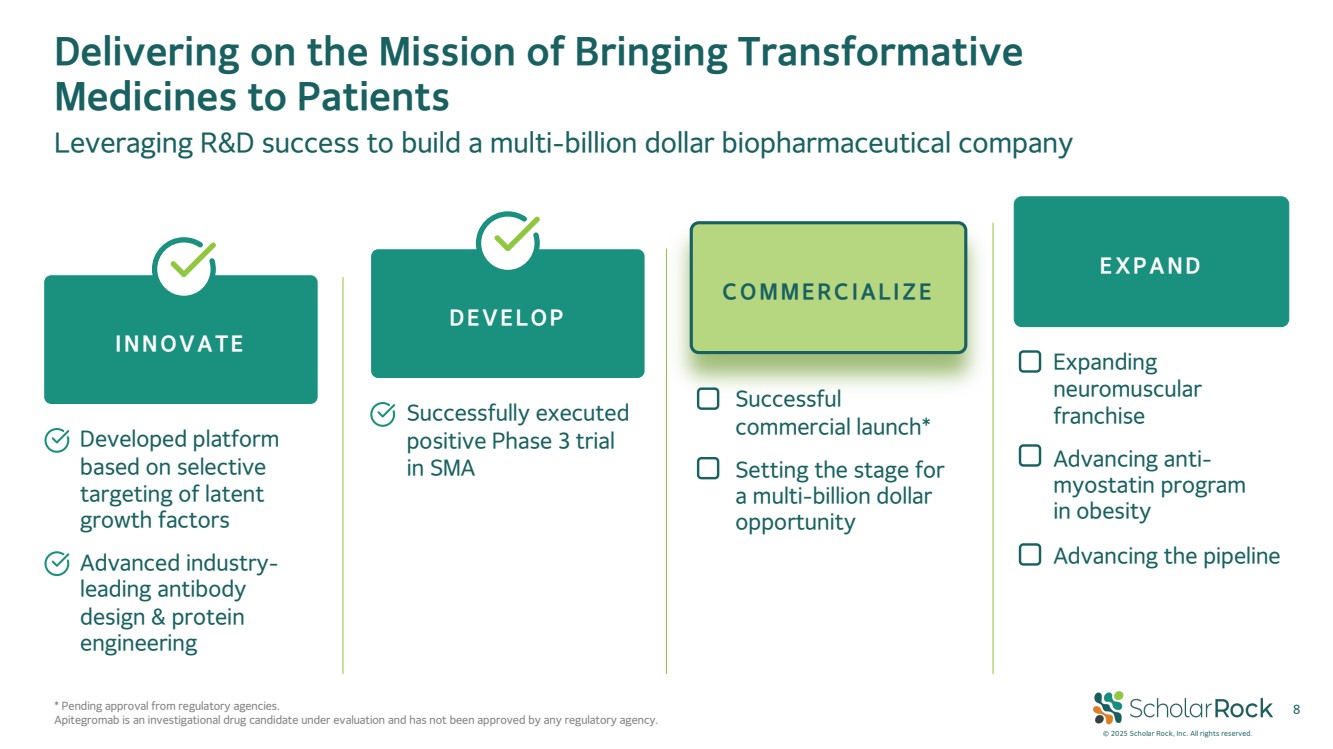
| © 2025 Scholar Rock, Inc. All rights reserved. 8 Delivering on the Mission of Bringing Transformative Medicines to Patients * Pending approval from regulatory agencies. Apitegromab is an investigational drug candidate under evaluation and has not been approved by any regulatory agency. Leveraging R&D success to build a multi-billion dollar biopharmaceutical company COMMERCIALIZE Successful commercial launch* Setting the stage for a multi-billion dollar opportunity EXPAND Expanding neuromuscular franchise Advancing anti-myostatin program in obesity Advancing the pipeline INNOVATE Developed platform based on selective targeting of latent growth factors Advanced industry-leading antibody design & protein engineering DEVELOP Successfully executed positive Phase 3 trial in SMA |
| © 2024 Scholar Rock, Inc. All rights reserved. Transforming the Treatment of Spinal Muscular Atrophy with Muscle-Targeted Therapy Apitegromab |

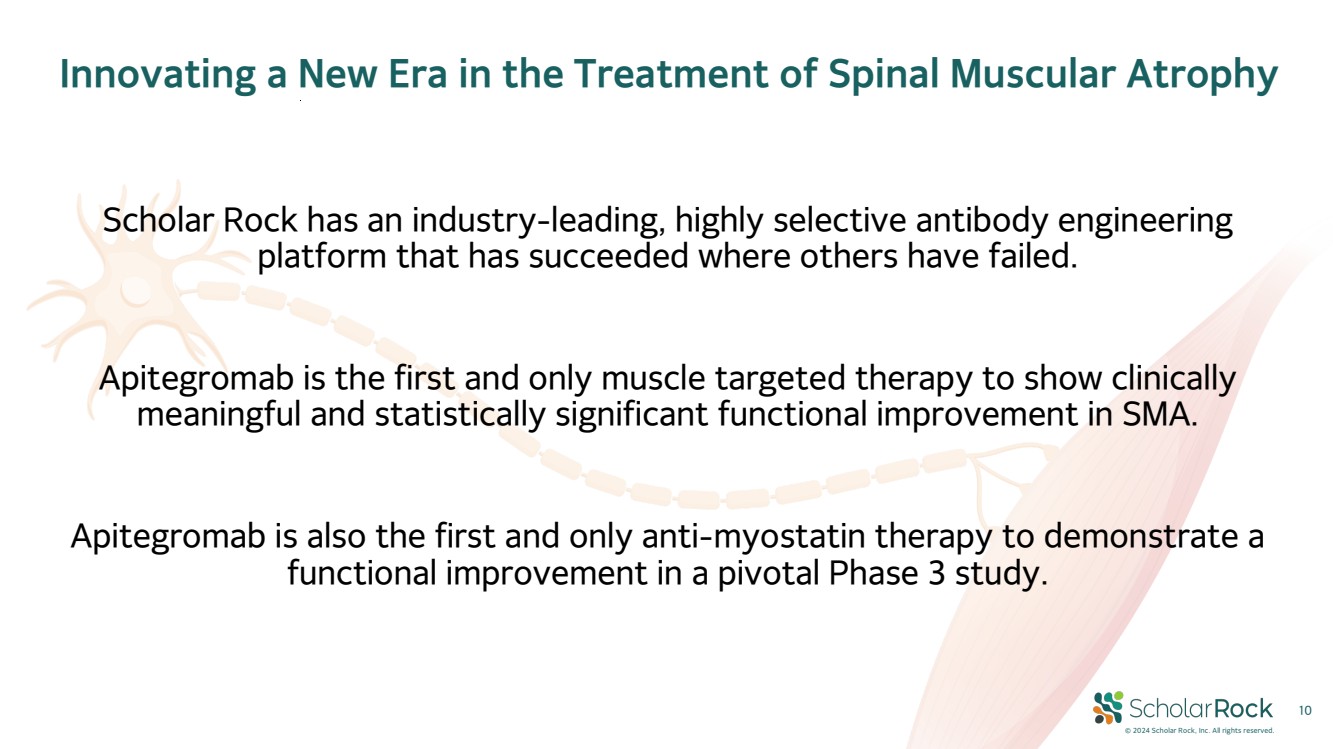
| © 2024 Scholar Rock, Inc. All rights reserved. Scholar Rock has an industry-leading, highly selective antibody engineering platform that has succeeded where others have failed. Apitegromab is the first and only muscle targeted therapy to show clinically meaningful and statistically significant functional improvement in SMA. Apitegromab is also the first and only anti-myostatin therapy to demonstrate a functional improvement in a pivotal Phase 3 study. 10 Innovating a New Era in the Treatment of Spinal Muscular Atrophy |
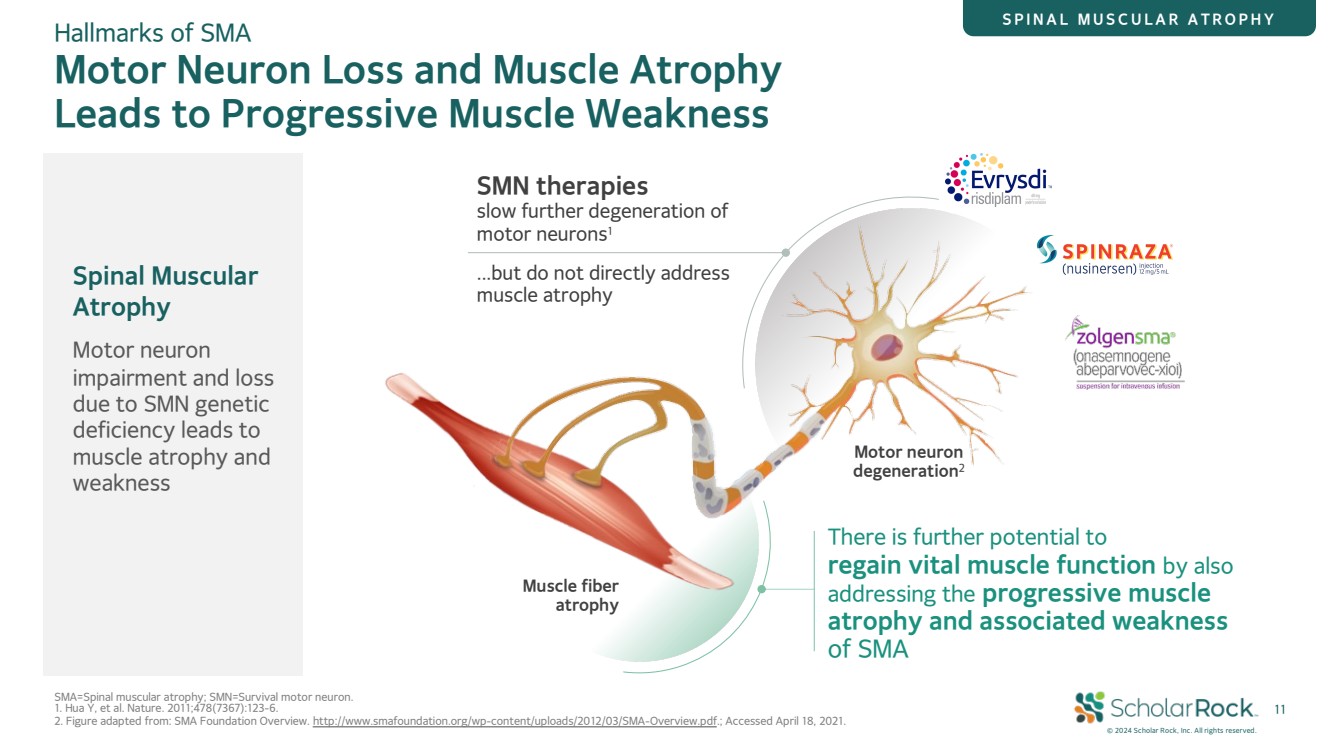
| © 2024 Scholar Rock, Inc. All rights reserved. 11 Hallmarks of SMA Motor Neuron Loss and Muscle Atrophy Leads to Progressive Muscle Weakness SMA=Spinal muscular atrophy; SMN=Survival motor neuron. 1. Hua Y, et al. Nature. 2011;478(7367):123-6. 2. Figure adapted from: SMA Foundation Overview. http://www.smafoundation.org/wp-content/uploads/2012/03/SMA-Overview.pdf.; Accessed April 18, 2021. SPINAL MUSCULAR ATROPHY ...but do not directly address muscle atrophy SMN therapies slow further degeneration of motor neurons1 Motor neuron degeneration2 Muscle fiber atrophy Spinal Muscular Atrophy Motor neuron impairment and loss due to SMN genetic deficiency leads to muscle atrophy and weakness There is further potential to regain vital muscle function by also addressing the progressive muscle atrophy and associated weakness of SMA |
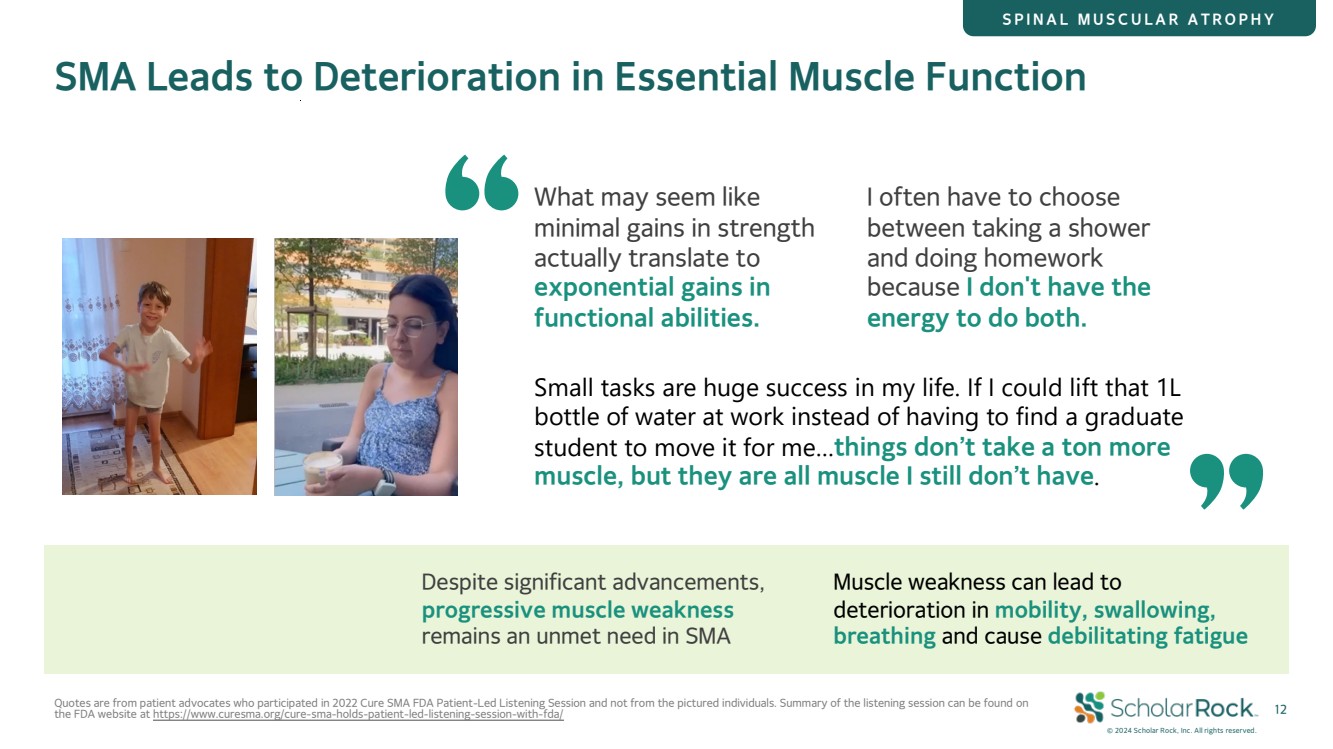
| © 2024 Scholar Rock, Inc. All rights reserved. SMA Leads to Deterioration in Essential Muscle Function Quotes are from patient advocates who participated in 2022 Cure SMA FDA Patient-Led Listening Session and not from the pictured individuals. Summary of the listening session can be found on the FDA website at https://www.curesma.org/cure-sma-holds-patient-led-listening-session-with-fda/ 12 SPINAL MUSCULAR ATROPHY Despite significant advancements, progressive muscle weakness remains an unmet need in SMA Small tasks are huge success in my life. If I could lift that 1L bottle of water at work instead of having to find a graduate student to move it for me…things don’t take a ton more muscle, but they are all muscle I still don’t have. What may seem like minimal gains in strength actually translate to exponential gains in functional abilities. I often have to choose between taking a shower and doing homework because I don't have the energy to do both. Muscle weakness can lead to deterioration in mobility, swallowing, breathing and cause debilitating fatigue |
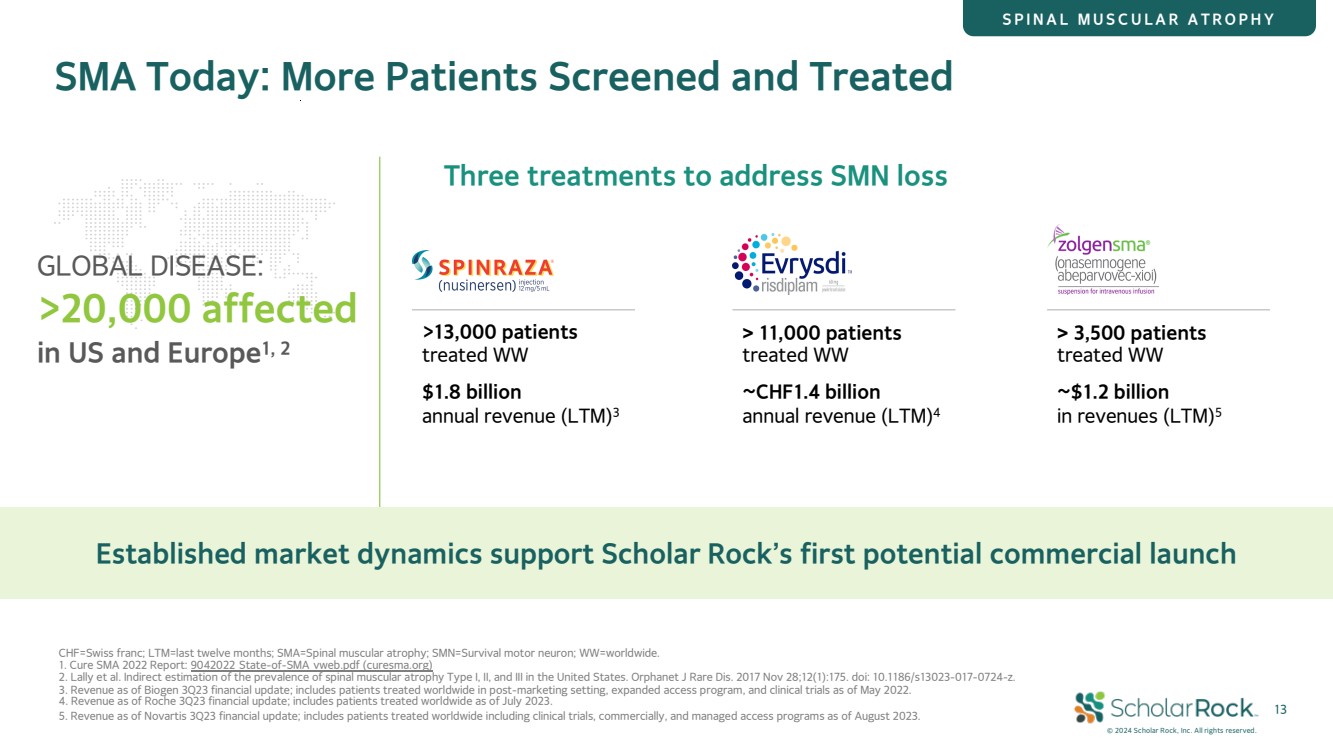
| © 2024 Scholar Rock, Inc. All rights reserved. 13 SMA Today: More Patients Screened and Treated CHF=Swiss franc; LTM=last twelve months; SMA=Spinal muscular atrophy; SMN=Survival motor neuron; WW=worldwide. 1. Cure SMA 2022 Report: 9042022_State-of-SMA_vweb.pdf (curesma.org) 2. Lally et al. Indirect estimation of the prevalence of spinal muscular atrophy Type I, II, and III in the United States. Orphanet J Rare Dis. 2017 Nov 28;12(1):175. doi: 10.1186/s13023-017-0724-z. 3. Revenue as of Biogen 3Q23 financial update; includes patients treated worldwide in post-marketing setting, expanded access program, and clinical trials as of May 2022. 4. Revenue as of Roche 3Q23 financial update; includes patients treated worldwide as of July 2023. 5. Revenue as of Novartis 3Q23 financial update; includes patients treated worldwide including clinical trials, commercially, and managed access programs as of August 2023. SPINAL MUSCULAR ATROPHY GLOBAL DISEASE: >20,000 affected in US and Europe1, 2 Three treatments to address SMN loss >13,000 patients treated WW $1.8 billion annual revenue (LTM)3 > 11,000 patients treated WW ~CHF1.4 billion annual revenue (LTM)4 > 3,500 patients treated WW ~$1.2 billion in revenues (LTM)5 Established market dynamics support Scholar Rock’s first potential commercial launch |
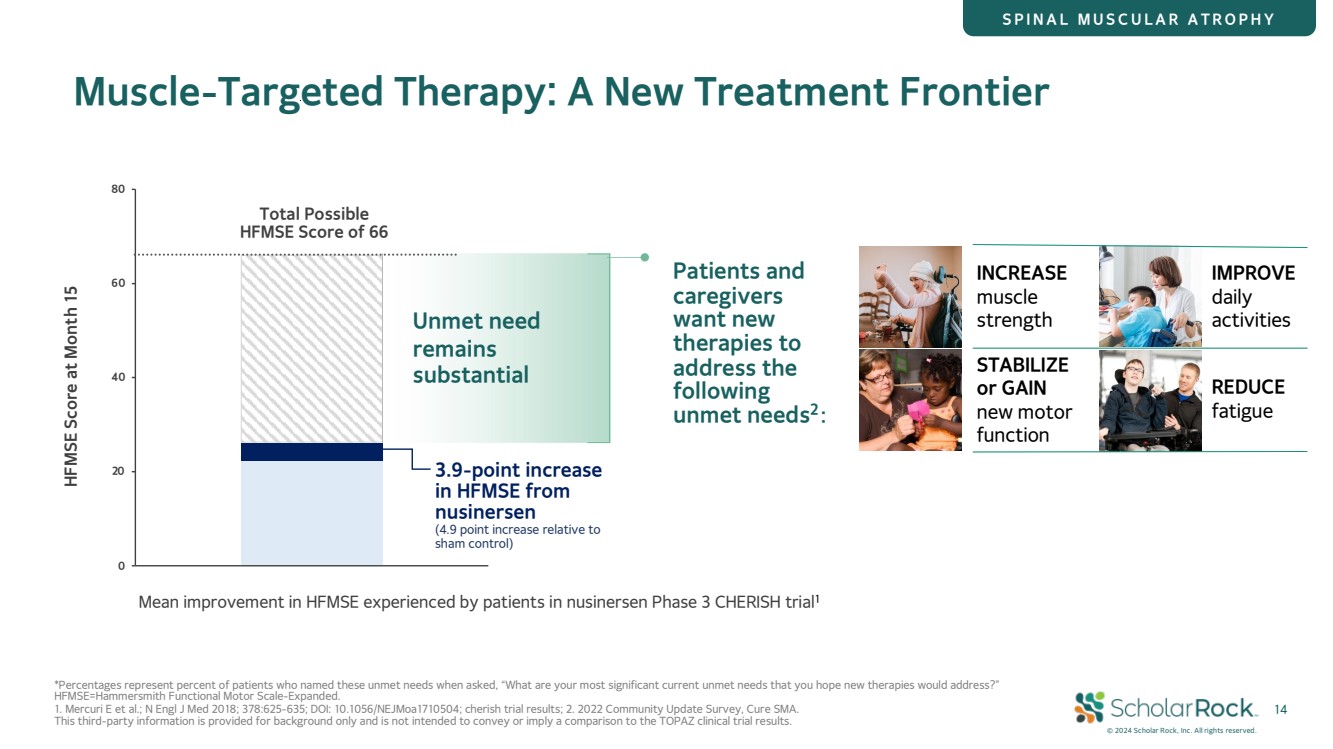
| © 2024 Scholar Rock, Inc. All rights reserved. 14 Muscle-Targeted Therapy: A New Treatment Frontier *Percentages represent percent of patients who named these unmet needs when asked, “What are your most significant current unmet needs that you hope new therapies would address?” HFMSE=Hammersmith Functional Motor Scale-Expanded. 1. Mercuri E et al.; N Engl J Med 2018; 378:625-635; DOI: 10.1056/NEJMoa1710504; cherish trial results; 2. 2022 Community Update Survey, Cure SMA. This third-party information is provided for background only and is not intended to convey or imply a comparison to the TOPAZ clinical trial results. SPINAL MUSCULAR ATROPHY 0 20 40 60 80 Mean improvement in HFMSE experienced by patients in nusinersen Phase 3 CHERISH trial1 3.9-point increase in HFMSE from nusinersen (4.9 point increase relative to sham control) HFMSE Score at Month 15 Total Possible HFMSE Score of 66 Unmet need remains substantial Patients and caregivers want new therapies to address the following unmet needs2 : INCREASE muscle strength IMPROVE daily activities STABILIZE or GAIN new motor function REDUCE fatigue |
| © 2024 Scholar Rock, Inc. All rights reserved. -2 -1 0 1 2 3 4 Motor Function With SMN Therapies as Assessed by HFMSE HFMSE appears to Plateau After Initial Gains 15 1. Mercuri E, et al. Presented at: World Muscle Society Congress 2020, P. 257 2. Oskoui M, et al. Presented at: 2021 Muscular Dystrophy Association Clinical & Scientific Conference; March 15-18, 2021. Poster 80. HFMSE, Hammersmith Functional Motor Scale–Expanded; SE, standard error. *MFM was primary efficacy endpoint of SUNFISH. HFMSE was a secondary endpoint. This third-party information is provided for background only and is not intended to convey or imply a comparison to the TOPAZ clinical trial results. Overall population age 2-25 Change in HFMSE* Over Four Years with Risdiplam2 Risdiplam n= 120 120 119 117 109 106 89 99 101 97 Placebo n= 60 60 58 58 Risdiplam Placebo (months 0-12) Mean (+/-SE) Change in HFMSE Total Score From Baseline* 0 6 12 18 24 30 36 42 48 Visit, months Change in HFMSE Over Four Years with Nusinersen1 Overall population age 2-12 Mean (+SE) Change in HFMSE Total Score From Baseline Analysis Visit, days Initial Treatment CHERISH Chronic Maintenance Phase SHINE -4 -2 0 2 4 6 8 1 92 169253 350 450 690 930 1170 1410 1650 Nusinersen n= 84 82 84 84 83 76 83 83 79 61 20 Placebo n= 42 41 41 42 42 39 Nusinersen in CHERISH and SHINE Sham control in CHERISH SPINAL MUSCULAR ATROPHY |
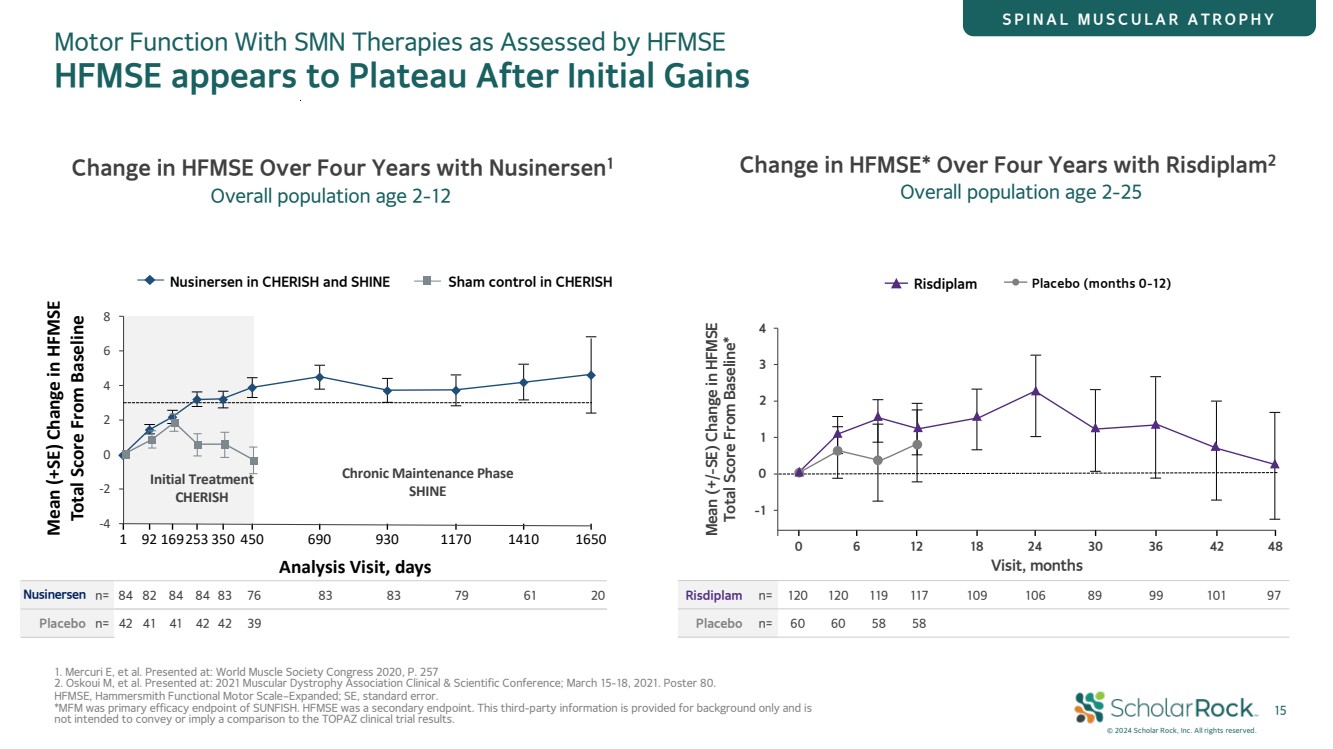
| © 2025 Scholar Rock, Inc. All rights reserved. Apitegromab: Potential to Transform the Standard of Care in SMA Finkel RS et al. “Final Safety and Efficacy Data From the SHINE Study in Participants With Infantile-Onset and Later-Onset SMA.” Presented at Cure SMA Annual Conference, July 2024 *Patient age based on those received active treatment (mean or median) 1. This information from third-party studies is provided for background purposes only and is not intended to convey or imply a comparison to the SAPPHIRE clinical trial results. CI=Confidence Interval; EXP=Exploration Subpopulation; HFMSE=Hammersmith Functional Motor Scale Expanded; LS=Least Squares; MEP=Main Efficacy Population; SOC=standard of care. • Despite effective SMN-targeted therapy, long-term trajectory of SMA patients remains that of progressive decline in motor function • Treatment with apitegromab has improved motor function vs. placebo KEY TAKEAWAYS Motor Function Over Time of Patients Treated with Nusinersen Placebo + SOC n= 50 50 50 48 50 49 48 Apitegromab + SOC n= 106 105 105 101 102 102 102 Motor Function Over Time of Patients in SAPPHIRE 16 SPINAL MUSCULAR ATROPHY |
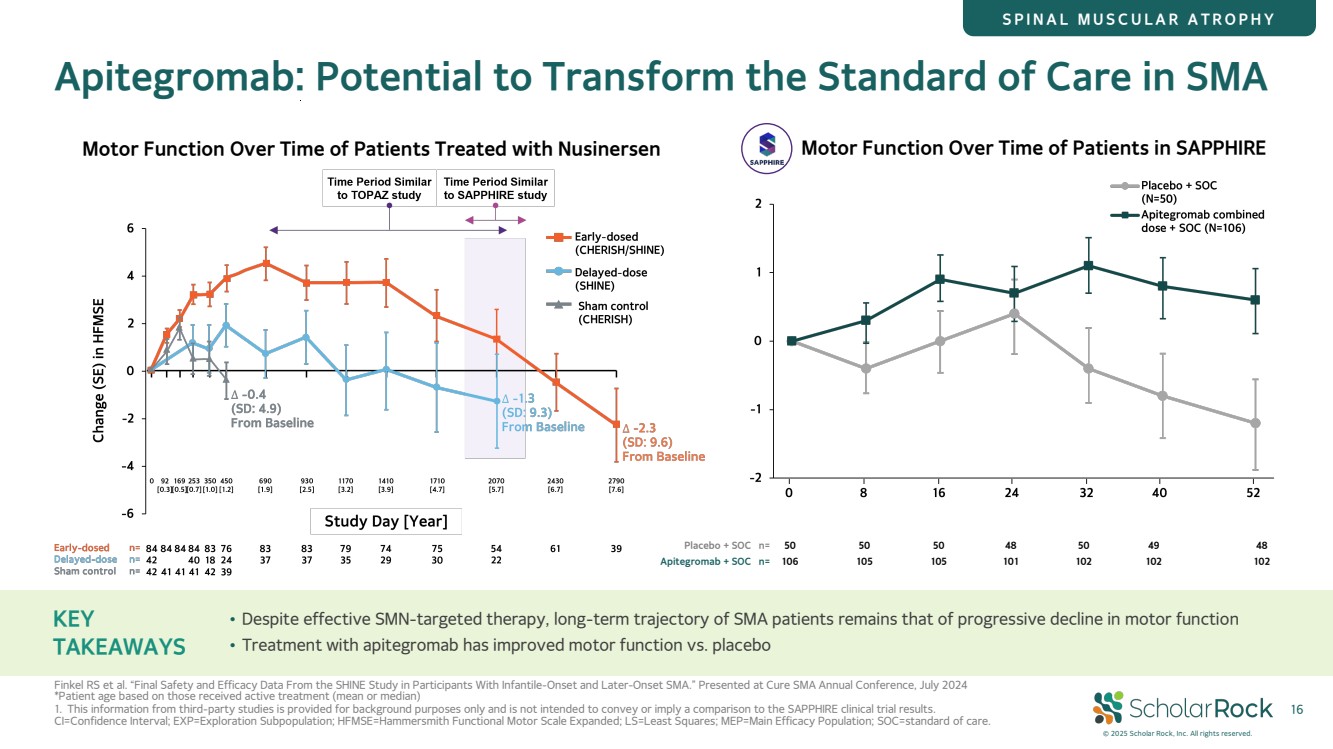
| © 2024 Scholar Rock, Inc. All rights reserved. 17 Apitegromab Offers Significant Potential to Address Unmet Needs * Based on Animal Model Data; 1. Long KK, et al. Hum Mol Genet. 2019;28(7):1077-1088; 2. Pirruccello-Straub M, et al. Sci Reports. 2018;8(1):2292. doi:10.1038/s41598-018-20524-9 3. Figure adapted from: SMA Foundation Overview. http://www.smafoundation.org/wp-content/uploads/2012/03/SMA-Overview.pdf.; Accessed April 18, 2021. For illustrative purposes only. SPINAL MUSCULAR ATROPHY Apitegromab is a selective MUSCLE-TARGETED APPROACH designed to improve motor function*1,2 Myostatin is a negative modulator of muscle growth Strong clinical and preclinical evidence indicates upstream targeting of structurally differentiated pro- and latent myostatin avoids undesirable off-target effects Apitegromab Muscle fiber atrophy Apitegromab specifically and only inhibits myostatin and has the potential to build muscle and strength to improve patient outcomes Motor neuron degeneration3 |
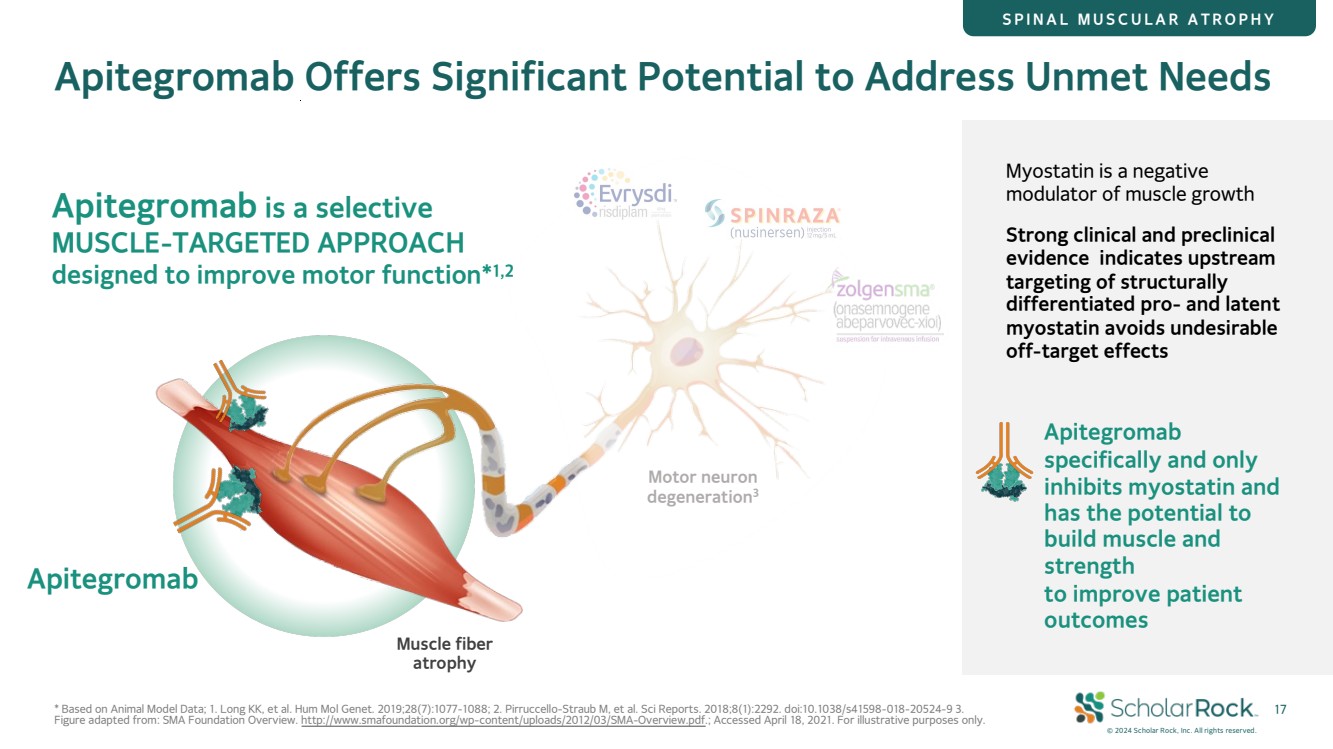
| © 2025 Scholar Rock, Inc. All rights reserved. $2B+ Global Opportunity for Apitegromab in SMA ~$4.5B1 Global revenue for three SMN-targeted therapies Apitegromab global revenue potential >$2.0B2 Apitegromab global revenue potential $2B+2 1st And only muscle-targeted treatment to show clinical benefit in SMA SMA patients are diagnosed, treated, and still need more to continue to improve their lives 18 1 Revenue as of Biogen 4Q23 financial update, Roche 4Q23 financial update, and Novartis 4Q23 financial update. 2 Scholar Rock internal estimates as of December 2024. SMA=Spinal muscular atrophy; SMN=Survival motor neuron. SPINAL MUSCULAR ATROPHY |
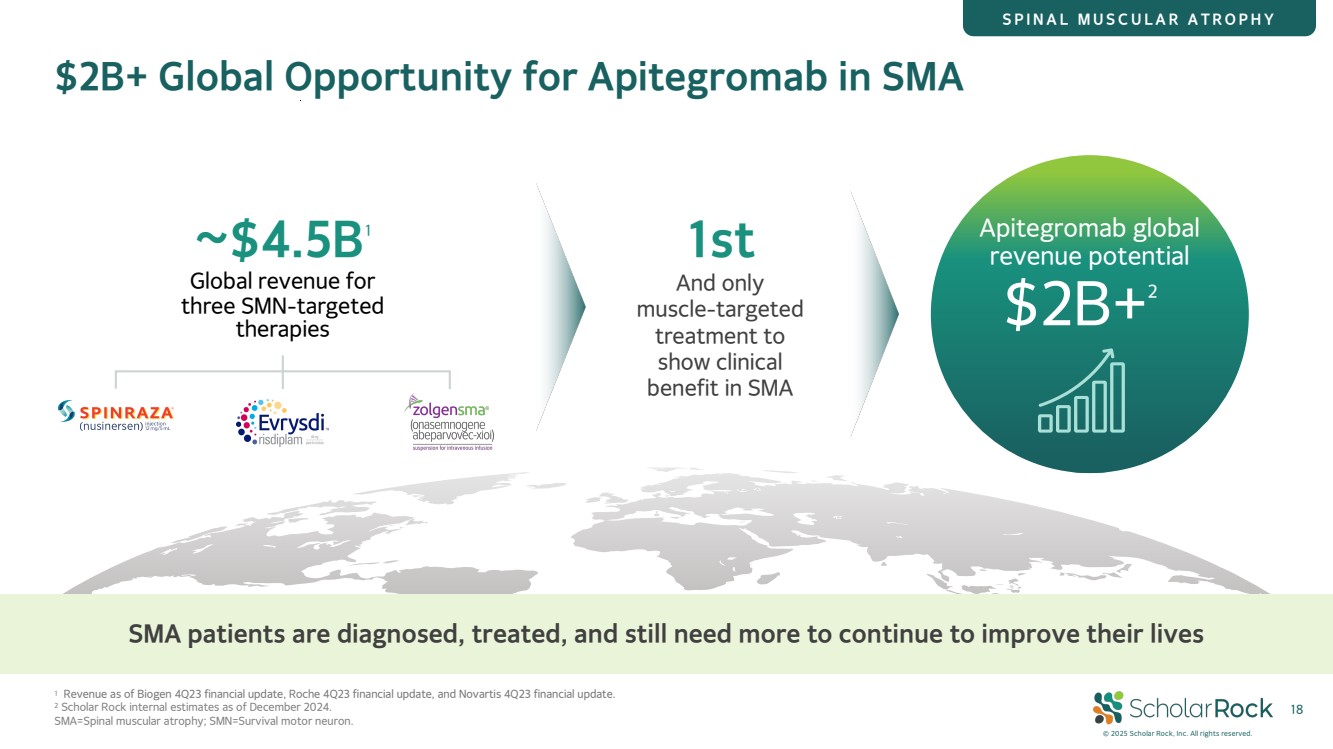
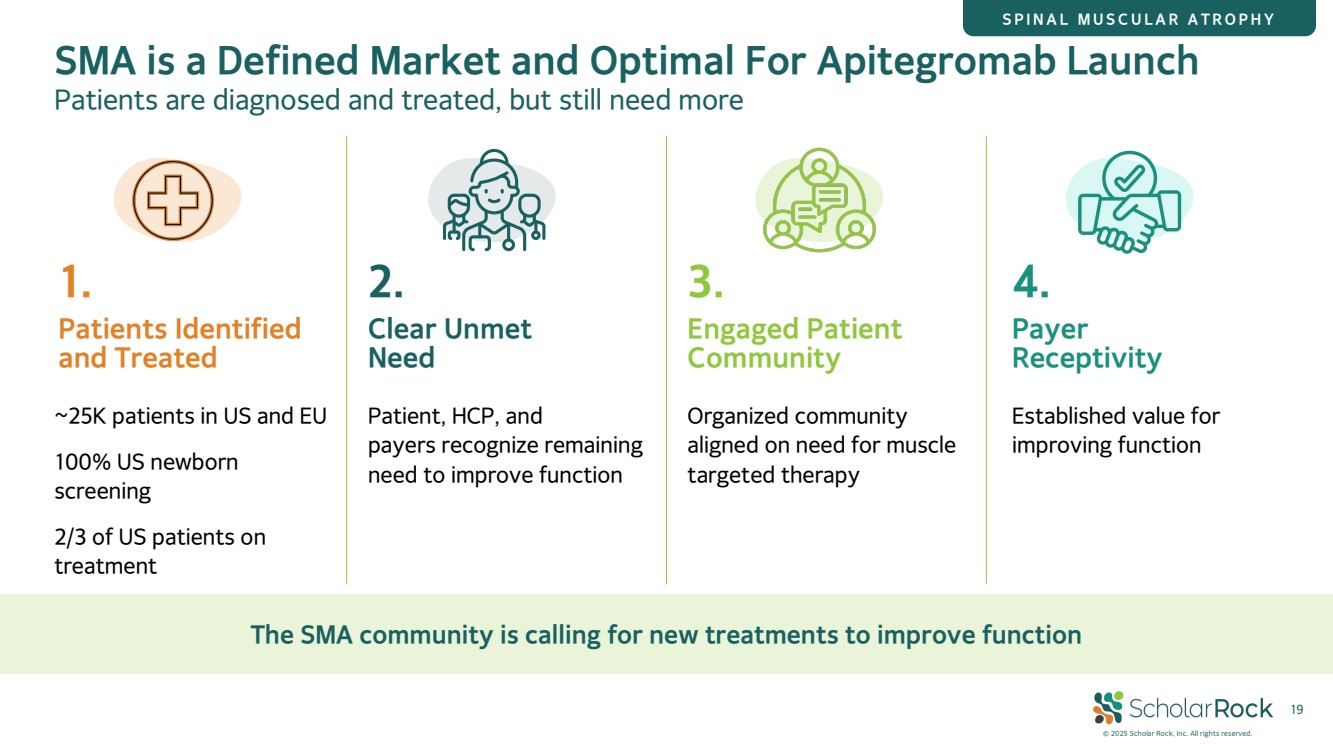
| © 2025 Scholar Rock, Inc. All rights reserved. SMA is a Defined Market and Optimal For Apitegromab Launch Patients are diagnosed and treated, but still need more Patients Identified and Treated ~25K patients in US and EU 100% US newborn screening 2/3 of US patients on treatment Patient, HCP, and payers recognize remaining need to improve function 1. Clear Unmet Need 2. Organized community aligned on need for muscle targeted therapy Engaged Patient Community 3. Established value for improving function Payer Receptivity 4. The SMA community is calling for new treatments to improve function 19 SPINAL MUSCULAR ATROPHY |
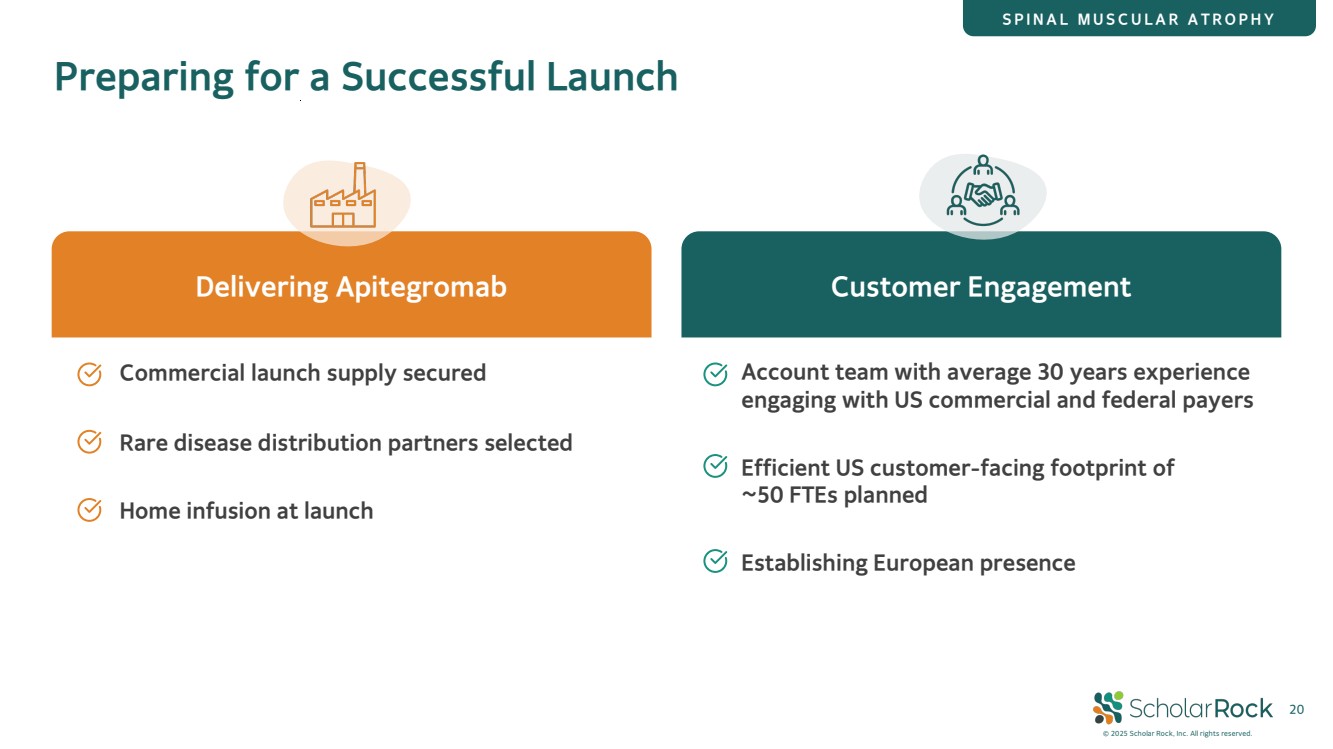
| © 2025 Scholar Rock, Inc. All rights reserved. Preparing for a Successful Launch Delivering Apitegromab Customer Engagement Commercial launch supply secured Rare disease distribution partners selected Home infusion at launch Account team with average 30 years experience engaging with US commercial and federal payers Efficient US customer-facing footprint of ~50 FTEs planned Establishing European presence 20 SPINAL MUSCULAR ATROPHY |
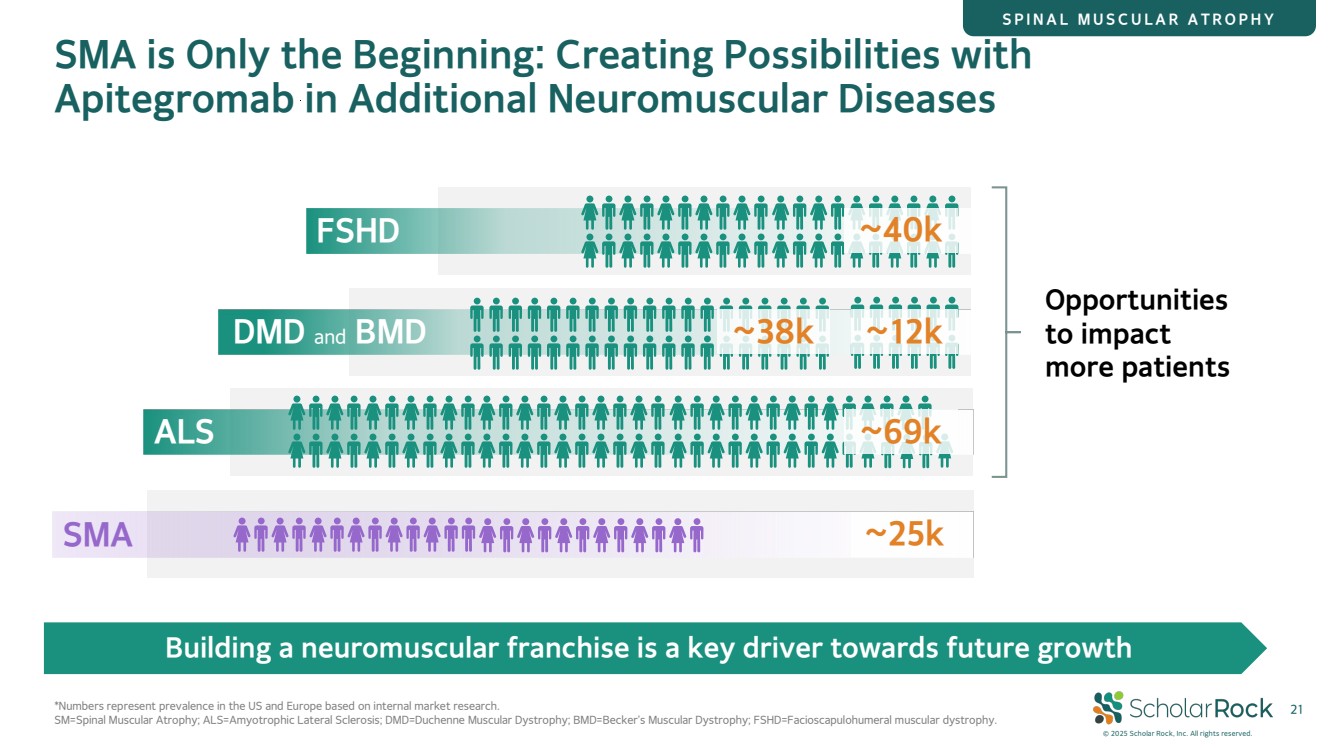
| © 2025 Scholar Rock, Inc. All rights reserved. SMA is Only the Beginning: Creating Possibilities with Apitegromab in Additional Neuromuscular Diseases *Numbers represent prevalence in the US and Europe based on internal market research. SM=Spinal Muscular Atrophy; ALS=Amyotrophic Lateral Sclerosis; DMD=Duchenne Muscular Dystrophy; BMD=Becker’s Muscular Dystrophy; FSHD=Facioscapulohumeral muscular dystrophy. Building a neuromuscular franchise is a key driver towards future growth 21 Opportunities to impact more patients SMA ~25k DMD and BMD ~38k ~12k FSHD ~40k ALS ~69k SPINAL MUSCULAR ATROPHY |
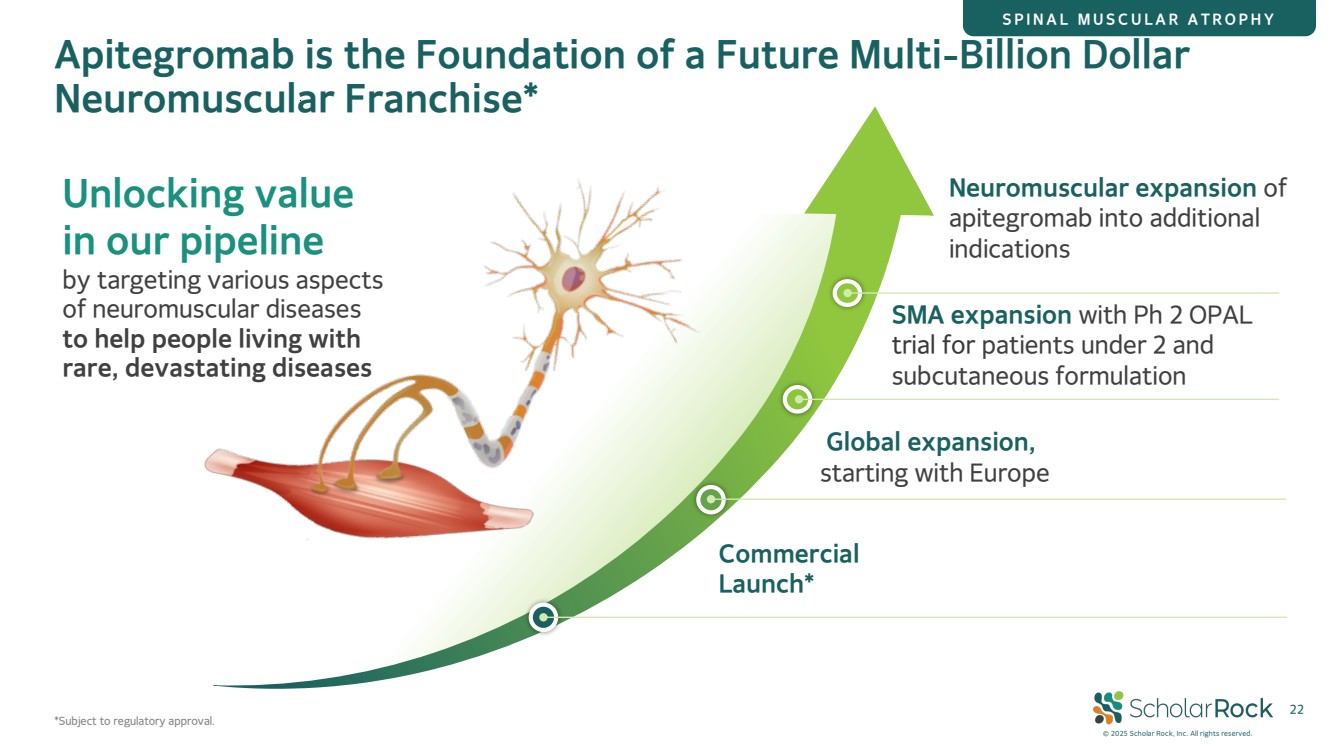
| © 2025 Scholar Rock, Inc. All rights reserved. Apitegromab is the Foundation of a Future Multi-Billion Dollar Neuromuscular Franchise* *Subject to regulatory approval. Commercial Launch* Global expansion, starting with Europe SMA expansion with Ph 2 OPAL trial for patients under 2 and subcutaneous formulation Neuromuscular expansion of apitegromab into additional indications Unlocking value in our pipeline by targeting various aspects of neuromuscular diseases to help people living with rare, devastating diseases 22 SPINAL MUSCULAR ATROPHY |
| © 2025 Scholar Rock, Inc. All rights reserved. Positive Topline Results from Pivotal Phase 3 SAPPHIRE Trial of Apitegromab SMA |

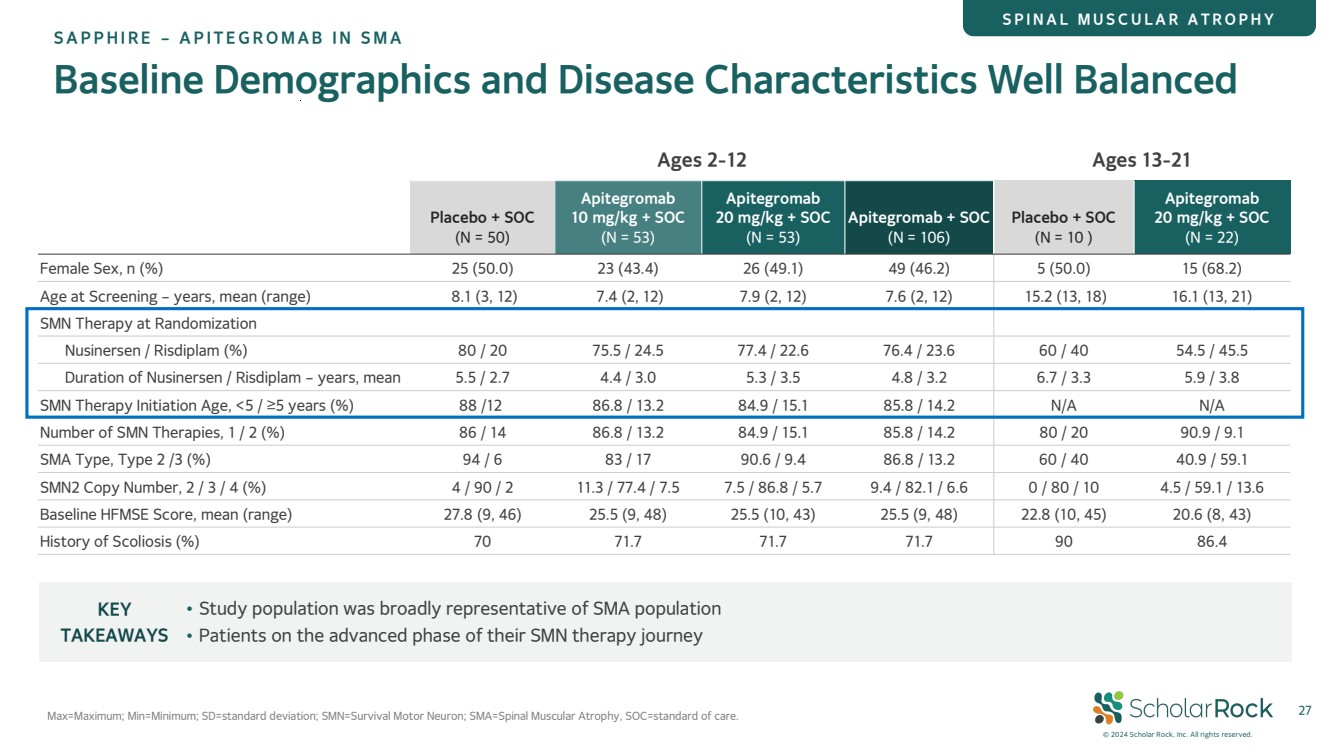
| © 2025 Scholar Rock, Inc. All rights reserved. SELECTIVITY DRIVES SUCCESS The Only Muscle-Targeted Therapy with Clinical Success in SMA 24 * Based on apitegromab combined dose (10 mg/kg and 20 mg/kg) + SOC versus placebo + SOC (Hochberg multiplicity adjustment). † 12.5% of patients on placebo + SOC achieved a ≥3-point improvement in HFMSE SOC=Standard of care (i.e., nusinersen or risdiplam); HFMSE=Hammersmith Functional Motor Scale–Expanded. CONSISTENT clinically meaningful benefit observed across all age groups (2-21) FAVORABLE SAFETY profile consistent with >48 months experience in Phase 2 TOPAZ trial 30% of apitegromab patients ACHIEVED ≥3 POINT IMPROVEMENT IN HFMSE† 1.8 POINT IMPROVEMENT (p=0.0192) in HFMSE* vs. placebo Positive Phase 3 Trial Using Gold Standard SMA Scale SUCCESSFUL PIVOTAL TRIAL On Track to Submit BLA and MAA in 1Q 2025 SPINAL MUSCULAR ATROPHY |
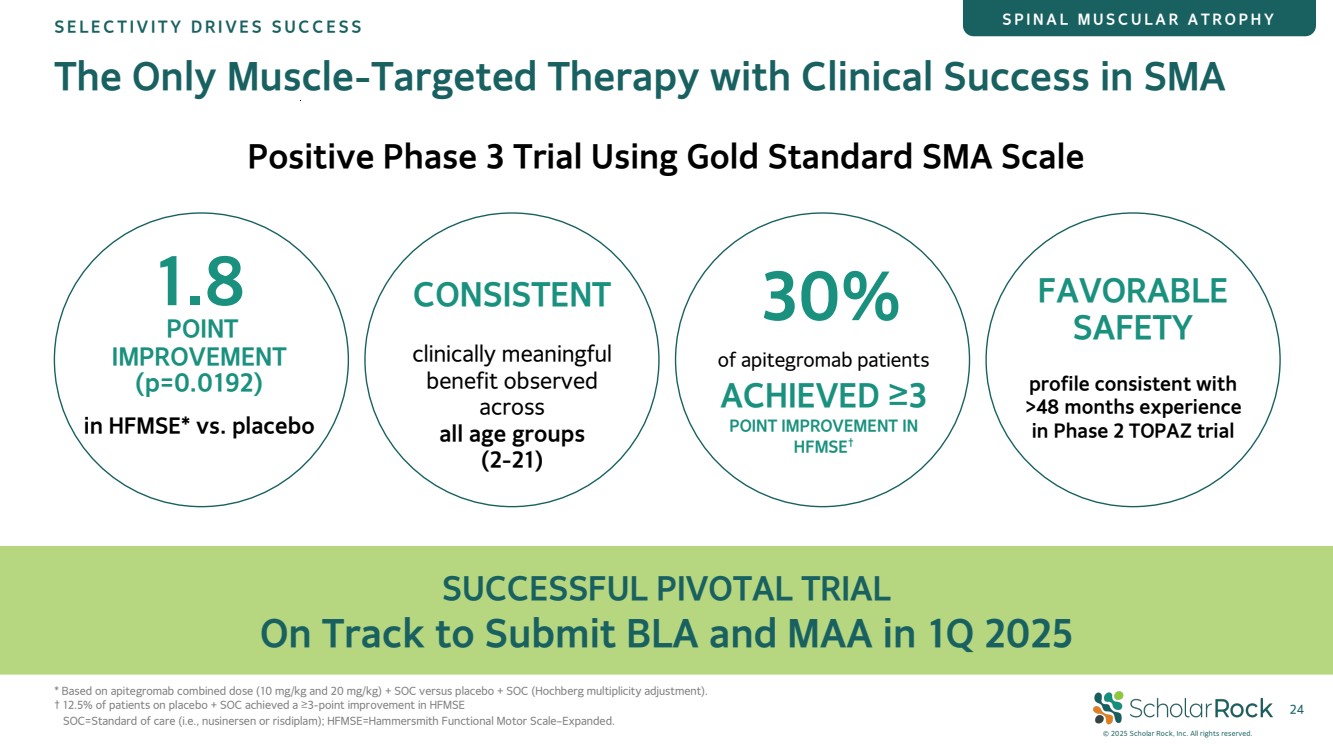
| © 2024 Scholar Rock, Inc. All rights reserved. SAPPHIRE Trial Designed for Clinical Success 25 Randomized, double-blind, placebo-controlled, parallel arm design (n=204) Enrolling patients who are on SMN-directed therapy (nusinersen or risdiplam) Completed enrollment in Q3 2023 TREATMENT (52 weeks) Apitegromab (20 mg/kg IV q4w) + SMN-directed therapy Apitegromab (10 mg/kg IV q4w) + SMN-directed therapy Placebo (IV q4w) + SMN-directed therapy SCREENING MAIN POPULATION (n=156) Ages 2-12 With nonambulatory Types 2 and 3 SMA N=52 N=52 N=52 Stratified to ensure balanced allocation R across the three arms: 1. Age at SMN therapy initiation (age < 5 vs. age ≥ 5) 2. SMN therapy (nusinersen vs. risdiplam) ENDPOINTS Primary Efficacy: Mean HFMSE change from baseline at 12 months Additional Efficacy Measures: RULM, WHO, other outcome measures Safety, PK/PD, ADA Additional Data Opportunities Exploratory population (age 13-21), in patients using SMN therapy Focused upon safety & exploratory efficacy (n=48; 2:1 randomization between apitegromab 20 mg/kg vs placebo) Separate open-label extension study (after patients complete 12-month treatment period) Focused upon safety & exploratory long-term efficacy ClinicalTrials.gov Identifier: NCT05156320 HFMSE=Hammersmith Functional Motor Scale Expanded; RULM=Revised Upper Limb Module; R=randomization; SMA=spinal muscular atrophy; SMN=survival motor neuron. SPINAL MUSCULAR ATROPHY |
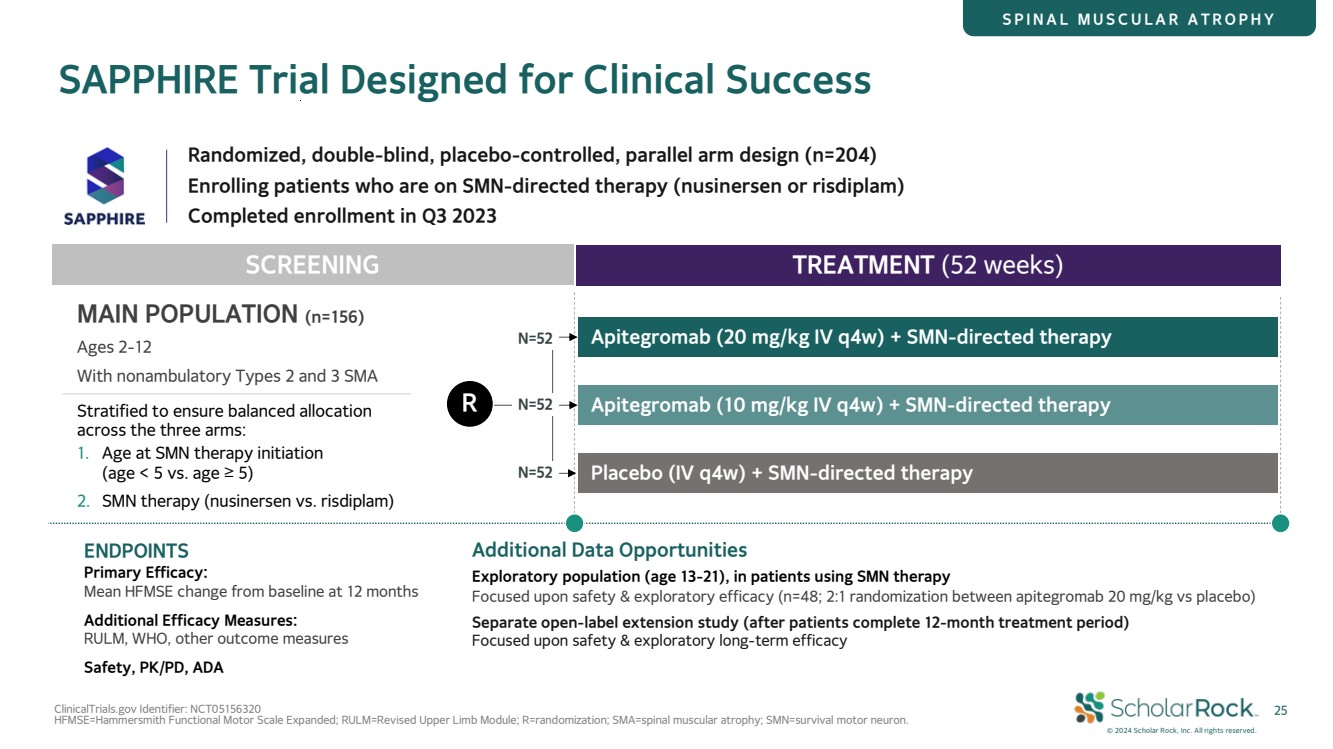
| © 2024 Scholar Rock, Inc. All rights reserved. 26 *1 patient from 2-12 age group opted not to enroll in the ONYX study. † 1 subject (1%) in the 20 mg/kg apitegromab arm in the 2-12 age group withdrew consent. 1 subject (3%) in the 20 mg/kg apitegromab arm in the 13-21 age group withdrew consent. Neither withdrew consent due to an adverse event. SOC=standard of care. 188 Patients Underwent Randomization Ages 2-12 156 Completed SAPPHIRE Treatment Period 155 † (99%) Apitegromab 20 mg/kg + SOC 53 Apitegromab 10 mg/kg + SOC 53 Placebo + SOC Group 50 Ages 13-21 32 Completed SAPPHIRE Treatment Period 31 † (97%) Apitegromab 20 mg/kg + SOC 22 Placebo + SOC Group 10 SAPPHIRE – APITEGROMAB IN SMA 98% of Patients Continue on Long-Term Extension ONYX Long-Term Extension Trial (Ongoing) 185* (98%) SPINAL MUSCULAR ATROPHY |
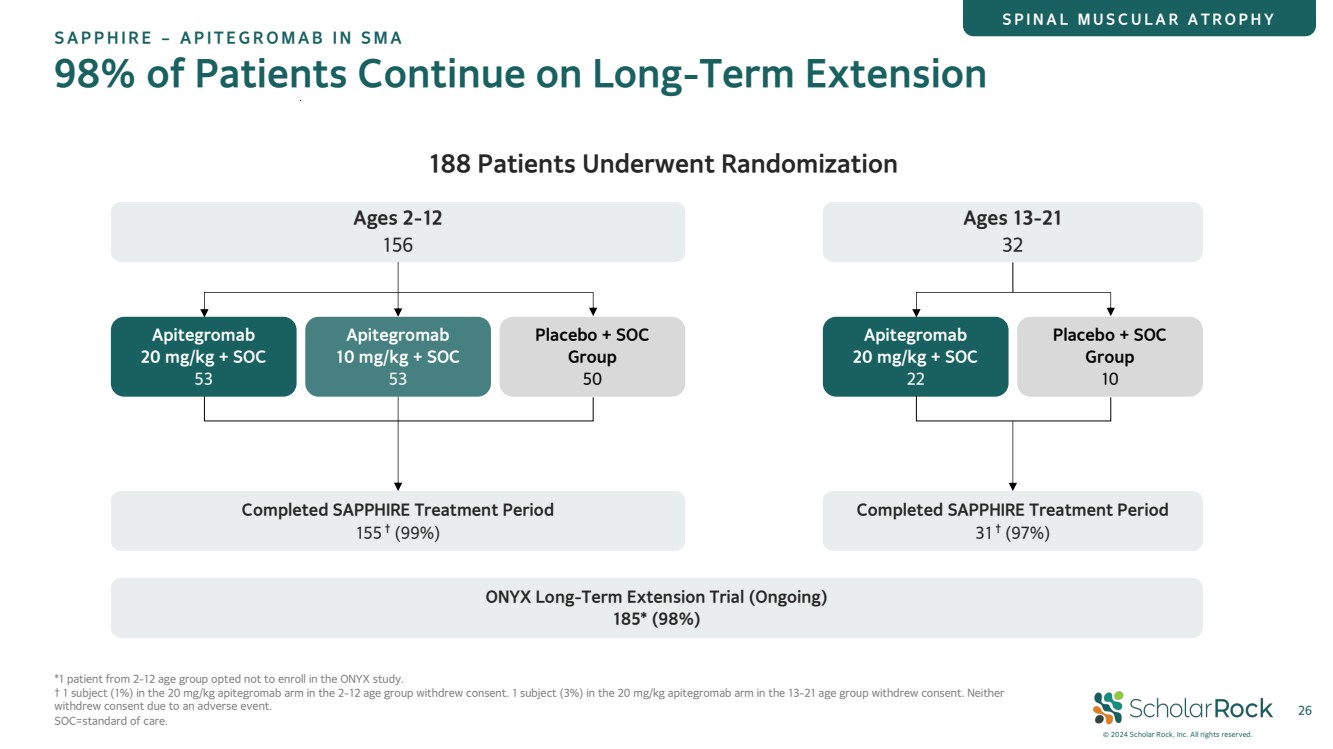
| © 2024 Scholar Rock, Inc. All rights reserved. 27 Baseline Demographics and Disease Characteristics Well Balanced Max=Maximum; Min=Minimum; SD=standard deviation; SMN=Survival Motor Neuron; SMA=Spinal Muscular Atrophy, SOC=standard of care. SAPPHIRE – APITEGROMAB IN SMA Ages 2-12 Ages 13-21 Placebo + SOC (N = 50) Apitegromab 10 mg/kg + SOC (N = 53) Apitegromab 20 mg/kg + SOC (N = 53) Apitegromab + SOC (N = 106) Placebo + SOC (N = 10 ) Apitegromab 20 mg/kg + SOC (N = 22) Female Sex, n (%) 25 (50.0) 23 (43.4) 26 (49.1) 49 (46.2) 5 (50.0) 15 (68.2) Age at Screening – years, mean (range) 8.1 (3, 12) 7.4 (2, 12) 7.9 (2, 12) 7.6 (2, 12) 15.2 (13, 18) 16.1 (13, 21) SMN Therapy at Randomization Nusinersen / Risdiplam (%) 80 / 20 75.5 / 24.5 77.4 / 22.6 76.4 / 23.6 60 / 40 54.5 / 45.5 Duration of Nusinersen / Risdiplam – years, mean 5.5 / 2.7 4.4 / 3.0 5.3 / 3.5 4.8 / 3.2 6.7 / 3.3 5.9 / 3.8 SMN Therapy Initiation Age, <5 / ≥5 years (%) 88 /12 86.8 / 13.2 84.9 / 15.1 85.8 / 14.2 N/A N/A Number of SMN Therapies, 1 / 2 (%) 86 / 14 86.8 / 13.2 84.9 / 15.1 85.8 / 14.2 80 / 20 90.9 / 9.1 SMA Type, Type 2 /3 (%) 94 / 6 83 / 17 90.6 / 9.4 86.8 / 13.2 60 / 40 40.9 / 59.1 SMN2 Copy Number, 2 / 3 / 4 (%) 4 / 90 / 2 11.3 / 77.4 / 7.5 7.5 / 86.8 / 5.7 9.4 / 82.1 / 6.6 0 / 80 / 10 4.5 / 59.1 / 13.6 Baseline HFMSE Score, mean (range) 27.8 (9, 46) 25.5 (9, 48) 25.5 (10, 43) 25.5 (9, 48) 22.8 (10, 45) 20.6 (8, 43) History of Scoliosis (%) 70 71.7 71.7 71.7 90 86.4 • Study population was broadly representative of SMA population • Patients on the advanced phase of their SMN therapy journey KEY TAKEAWAYS SPINAL MUSCULAR ATROPHY |
| © 2024 Scholar Rock, Inc. All rights reserved. 28 Prespecified Statistical Analysis Plan SAPPHIRE – APITEGROMAB IN SMA Apitegromab (20 mg/kg) + SOC Apitegromab (10 mg/kg) + SOC Placebo + SOC R 1:1:1 • Prespecified analyses to assess dose: combined apitegromab doses (10 mg/kg + 20 mg/kg), 20 mg/kg, and 10 mg/kg; 10 mg/kg and 20 mg/kg expected to be similar based on insights from TOPAZ • Primary confirmatory test evaluates HFMSE for combined dose and 20 mg/kg concurrently by Hochberg, followed by RULM, HFMSE ≥ 3 proportion, WHO for 20 mg/kg, then HFMSE, RULM, HFMSE ≥ 3, WHO for 10 mg/kg dose in a hierarchical order Primary Objective To assess the efficacy of apitegromab compared with placebo using HFMSE in patients 2 through 12 years old Prespecified Analyses The Hochberg procedure (Hochberg 1988) was used to test: 1) apitegromab combined dose (10 mg/kg and 20 mg/kg) vs placebo and 2) apitegromab 20 mg/kg dose vs placebo concurrently for the primary endpoint as the primary confirmatory test. The hierarchical testing procedure was applied to account for multiple confirmatory tests for the primary endpoint and key secondary endpoints. The testing procedure first evaluated the primary confirmatory test, followed by analyses of key secondary endpoints for apitegromab 20 mg/kg, and then the analyses of primary endpoint and key secondary endpoints for apitegromab 10 mg/kg. SOC=standard of care Boundary To Win Primary Confirmatory Test Apitegromab combined dose (10 mg/kg and 20 mg/kg) + SOC vs. Placebo + SOC Apitegromab 20 mg/kg + SOC vs. Placebo + SOC One p-value ≤ 0.025 Other p-value > 0.05 OR Both p-value ≤ 0.05 SPINAL MUSCULAR ATROPHY |
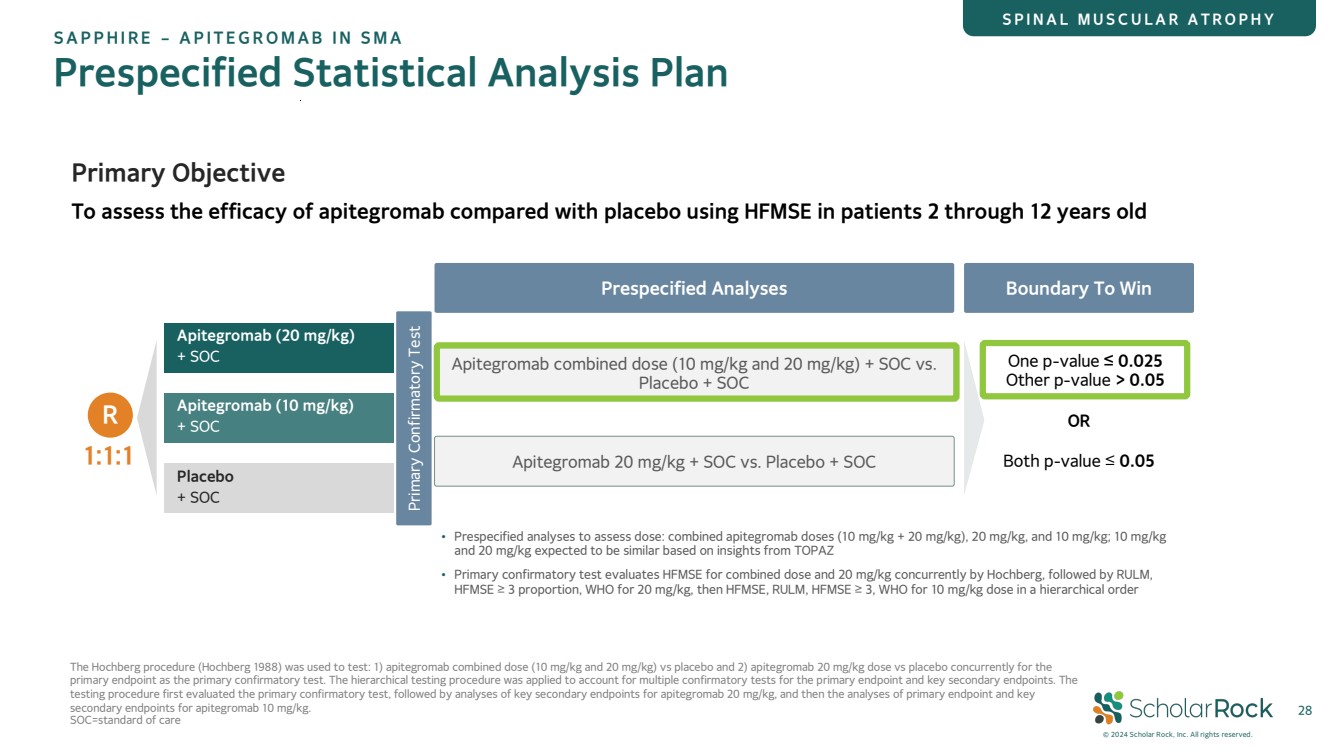
| © 2024 Scholar Rock, Inc. All rights reserved. 29 *Hochberg method prespecified for multiplicity adjustment; **nominal p value HFMSE=Hammersmith Functional Motor Scale Expanded. Analysis n Results (vs Placebo, n=50) Unadjusted P-value Apitegromab 10+20 mg/kg combined 106 1.8 0.0192* Apitegromab 20 mg/kg 53 1.4 0.1149* Apitegromab 10 mg/kg 53 2.2 0.0121** Change from Baseline in HFMSE Total Score Primary Endpoint Met Clinically Meaningful and Statistically Significant Improvement in HFMSE SAPPHIRE – APITEGROMAB IN SMA Achieved Statistical Significance Primary Analysis SPINAL MUSCULAR ATROPHY |
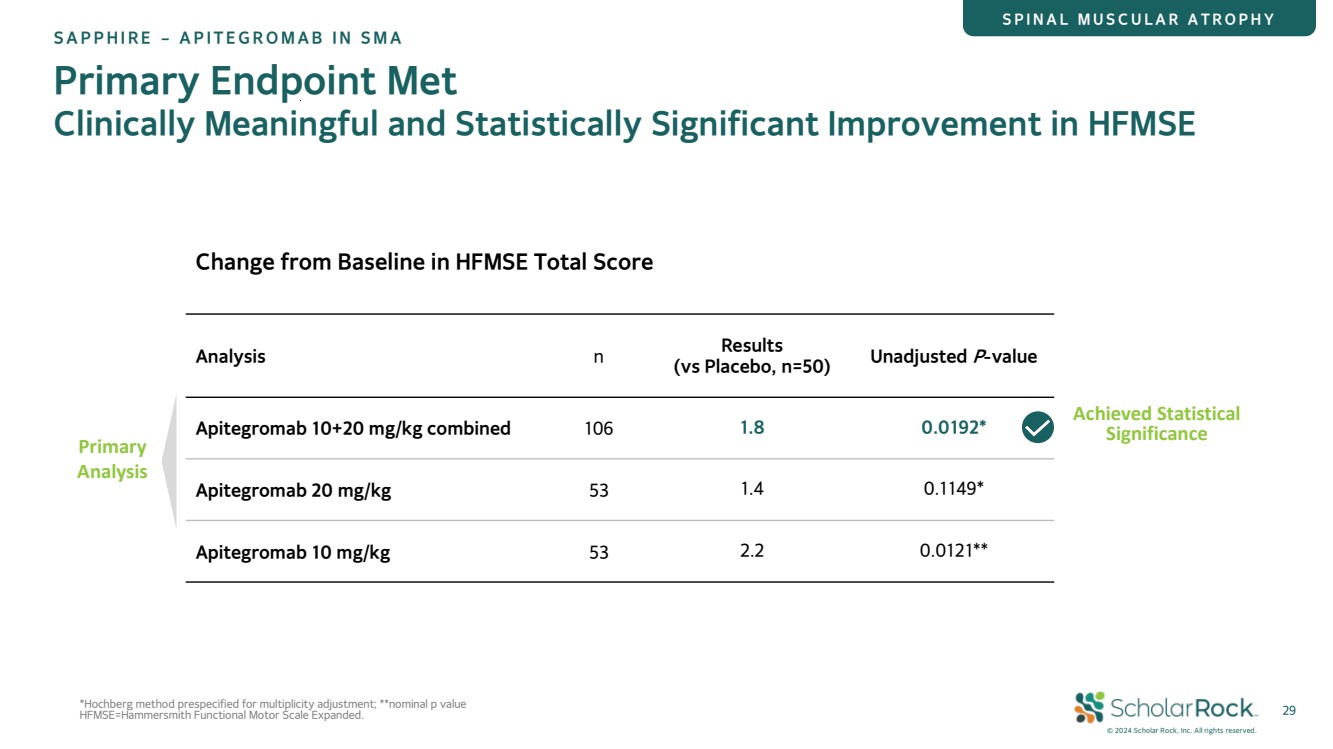
| © 2024 Scholar Rock, Inc. All rights reserved. -5 -4 -3 -2 -1 0 1 2 3 4 5 30 Improvement in HFMSE Consistent Across Doses and Age Groups SAPPHIRE – APITEGROMAB IN SMA LS Mean Difference (95% CI) [Active-Placebo] 2-12 years apitegromab combined dose (10 & 20 mg/kg; n=106) vs. placebo (n=50) 1.8 (0.30, 3.32) 2-12 years apitegromab 20 mg/kg dose (n=53) vs. placebo (n=50) 1.4 (-0.34, 3.13) 2-12 years apitegromab 10 mg/kg dose (n=53) vs. placebo (n=50) 2.2 (0.49, 3.95) 13-21 years apitegromab 20 mg/kg dose (n=22) vs. placebo (n=10) 1.8 (-1.06, 4.57) Pooled 2-21 years apitegromab (n=128) vs. placebo (n=60) 1.8 (0.46, 3.16) Favor Placebo Favor Apitegromab Change from Baseline in HFMSE Total Score at 12 Months* CI=Confidence Interval; EXP=Exploration Subpopulation; HFMSE=Hammersmith Functional Motor Scale Expanded; SOC=standard of care. *n values at 12-month endpoint SPINAL MUSCULAR ATROPHY |
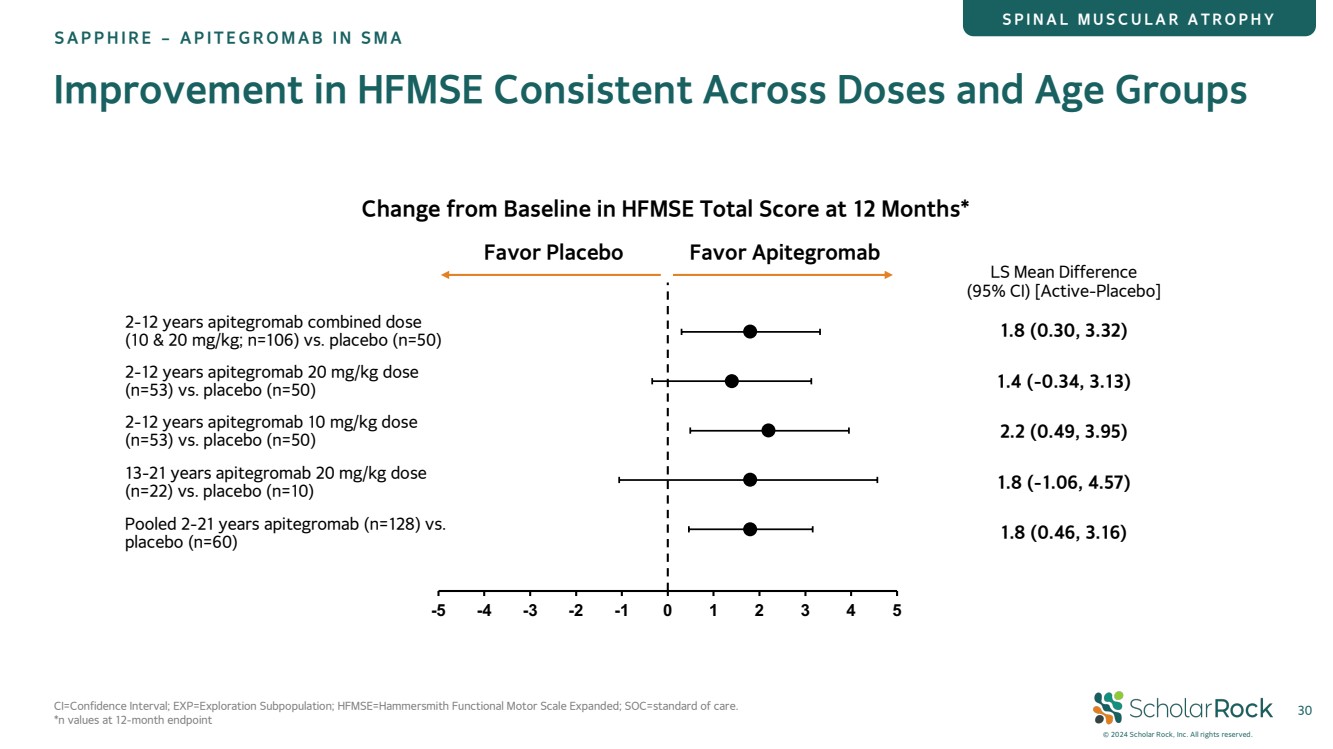
| © 2024 Scholar Rock, Inc. All rights reserved. 31 CI=Confidence Interval; EXP=Exploration Subpopulation; HFMSE=Hammersmith Functional Motor Scale Expanded; LS=Least Squares; MEP=Main Efficacy Population; SOC=standard of care. SAPPHIRE – APITEGROMAB IN SMA Early and Increasing HFMSE Improvement vs. Placebo Least Squares Mean (+/- SE) Change from Baseline in HFMSE Total Score by Visit (MITT Set) Apitegromab-treated patients improved on HFMSE, while placebo patients declined on HFMSE over 12 months -2 -1 0 1 2 Placebo + SOC (N=50) Apitegromab combined dose + SOC (N=106) 0 8 16 24 32 40 Time (weeks) 52 LS Mean Change from Baseline in HFMSE Placebo + SOC 50 50 50 48 50 49 48 Apitegromab + SOC 106 105 105 101 102 102 102 SPINAL MUSCULAR ATROPHY |
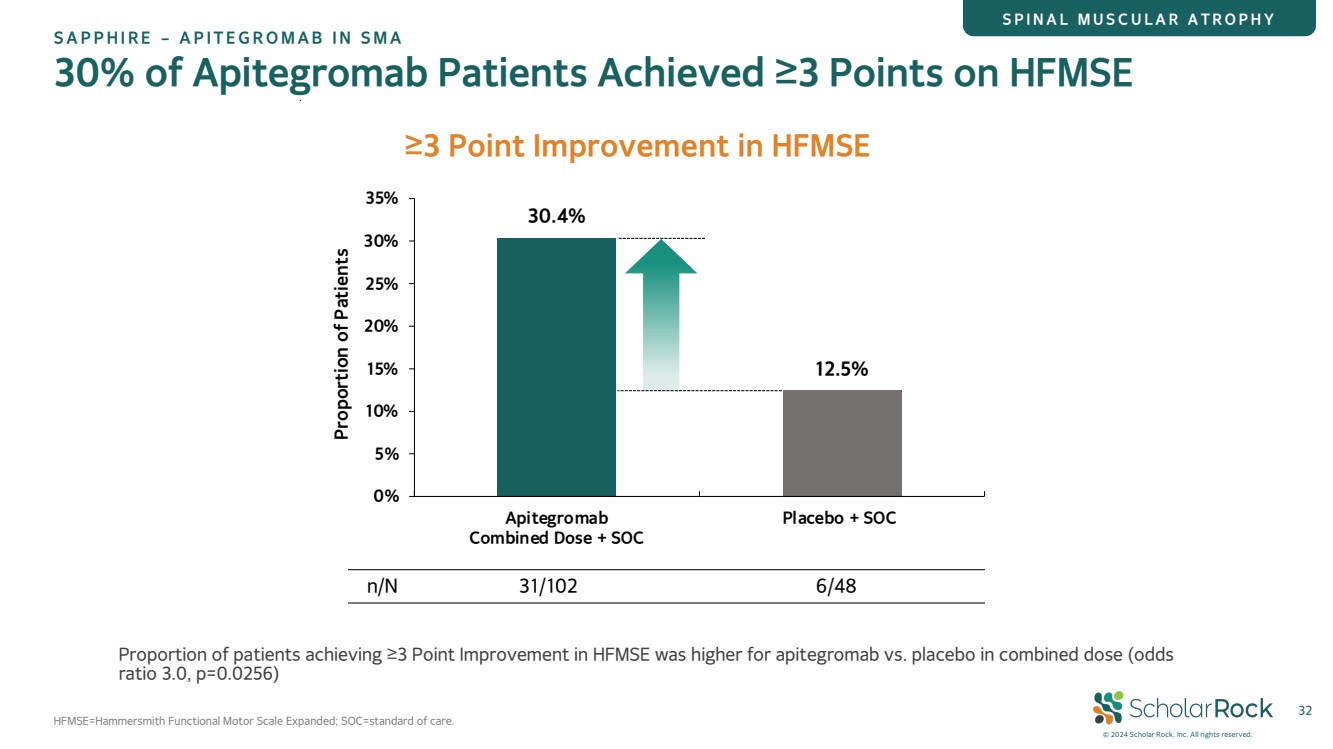
| © 2024 Scholar Rock, Inc. All rights reserved. 32 30% of Apitegromab Patients Achieved ≥3 Points on HFMSE HFMSE=Hammersmith Functional Motor Scale Expanded; SOC=standard of care. SAPPHIRE – APITEGROMAB IN SMA ≥3 Point Improvement in HFMSE 30.4% 12.5% 0% 5% 10% 15% 20% 25% 30% 35% Apitegromab Combined Dose + SOC Placebo + SOC Proportion of Patients n/N 31/102 6/48 Proportion of patients achieving ≥3 Point Improvement in HFMSE was higher for apitegromab vs. placebo in combined dose (odds ratio 3.0, p=0.0256) SPINAL MUSCULAR ATROPHY |
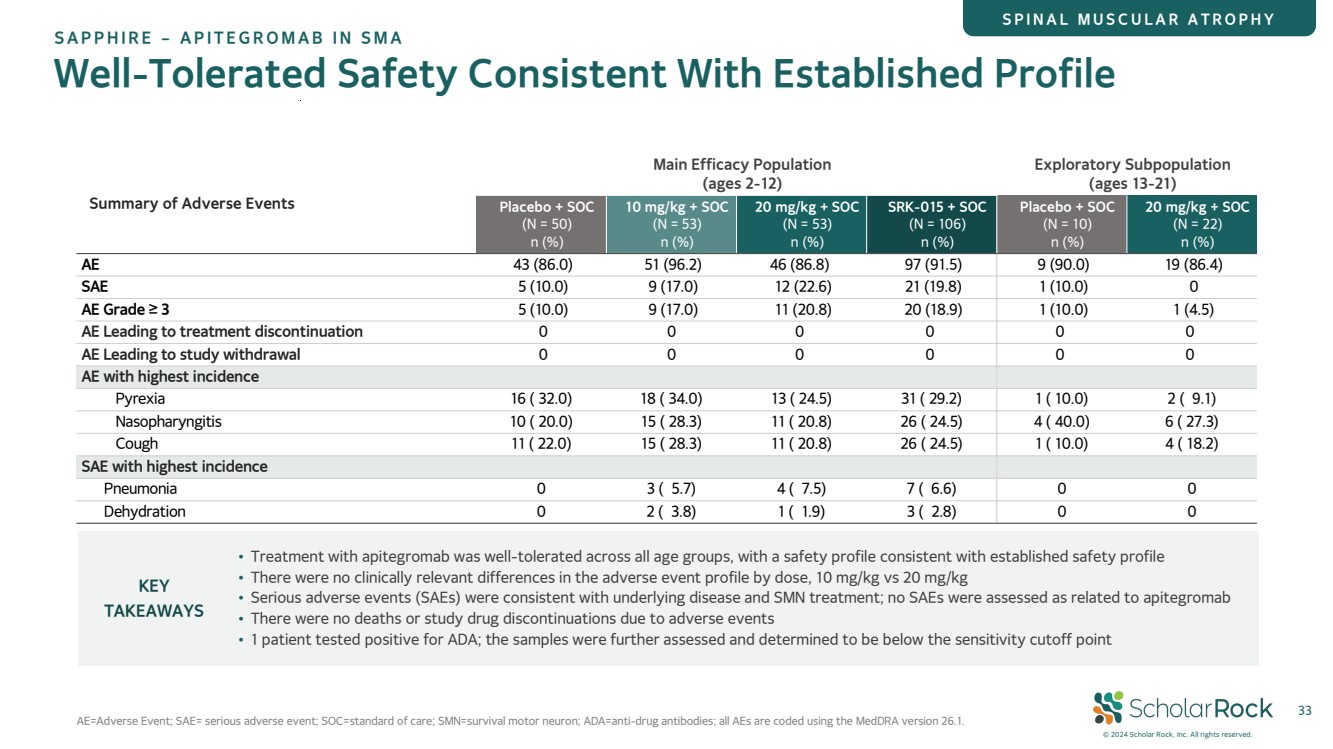
| © 2024 Scholar Rock, Inc. All rights reserved. 33 Well-Tolerated Safety Consistent With Established Profile AE=Adverse Event; SAE= serious adverse event; SOC=standard of care; SMN=survival motor neuron; ADA=anti-drug antibodies; all AEs are coded using the MedDRA version 26.1. Summary of Adverse Events Main Efficacy Population (ages 2-12) Exploratory Subpopulation (ages 13-21) Placebo + SOC (N = 50) n (%) 10 mg/kg + SOC (N = 53) n (%) 20 mg/kg + SOC (N = 53) n (%) SRK-015 + SOC (N = 106) n (%) Placebo + SOC (N = 10) n (%) 20 mg/kg + SOC (N = 22) n (%) AE 43 (86.0) 51 (96.2) 46 (86.8) 97 (91.5) 9 (90.0) 19 (86.4) SAE 5 (10.0) 9 (17.0) 12 (22.6) 21 (19.8) 1 (10.0) 0 AE Grade ≥ 3 5 (10.0) 9 (17.0) 11 (20.8) 20 (18.9) 1 (10.0) 1 (4.5) AE Leading to treatment discontinuation 0 0 0 0 0 0 AE Leading to study withdrawal 0 0 0 0 0 0 AE with highest incidence Pyrexia 16 ( 32.0) 18 ( 34.0) 13 ( 24.5) 31 ( 29.2) 1 ( 10.0) 2 ( 9.1) Nasopharyngitis 10 ( 20.0) 15 ( 28.3) 11 ( 20.8) 26 ( 24.5) 4 ( 40.0) 6 ( 27.3) Cough 11 ( 22.0) 15 ( 28.3) 11 ( 20.8) 26 ( 24.5) 1 ( 10.0) 4 ( 18.2) SAE with highest incidence Pneumonia 0 3 ( 5.7) 4 ( 7.5) 7 ( 6.6) 0 0 Dehydration 0 2 ( 3.8) 1 ( 1.9) 3 ( 2.8) 0 0 • Treatment with apitegromab was well-tolerated across all age groups, with a safety profile consistent with established safety profile • There were no clinically relevant differences in the adverse event profile by dose, 10 mg/kg vs 20 mg/kg • Serious adverse events (SAEs) were consistent with underlying disease and SMN treatment; no SAEs were assessed as related to apitegromab • There were no deaths or study drug discontinuations due to adverse events • 1 patient tested positive for ADA; the samples were further assessed and determined to be below the sensitivity cutoff point KEY TAKEAWAYS SAPPHIRE – APITEGROMAB IN SMA SPINAL MUSCULAR ATROPHY |
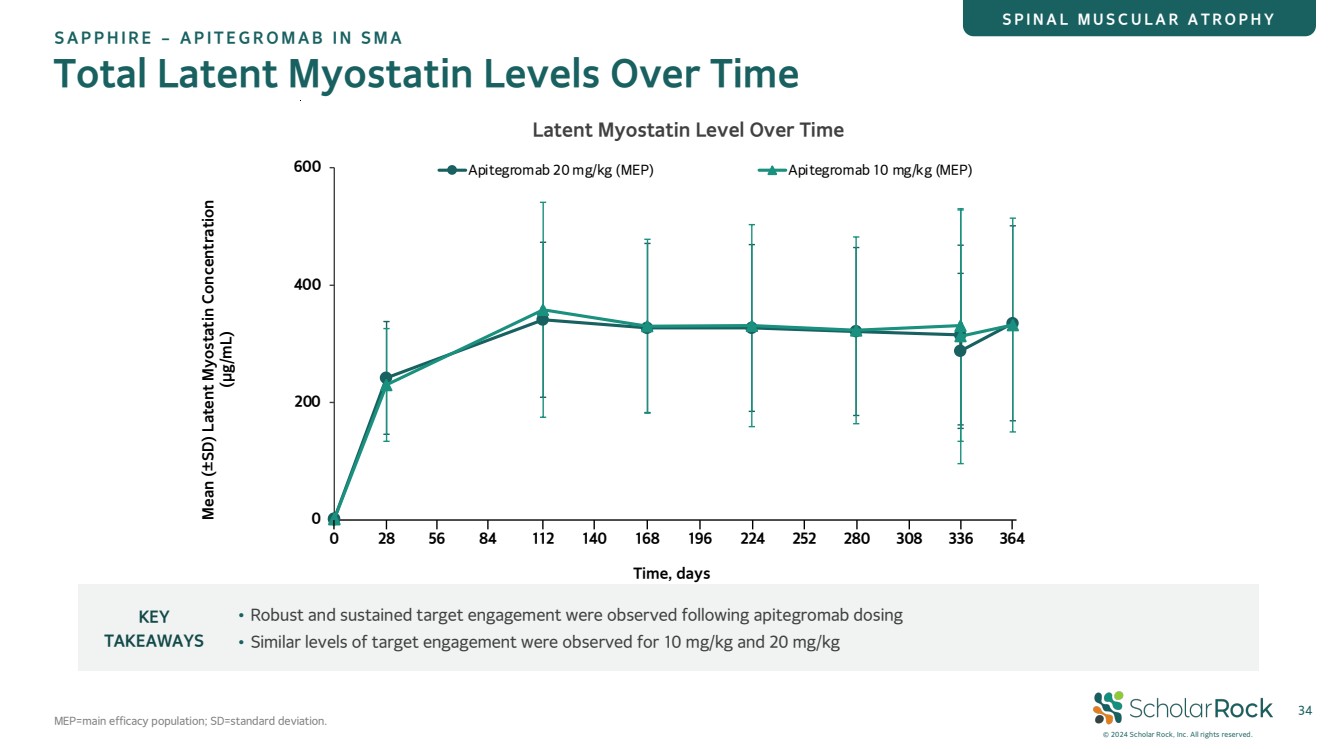
| © 2024 Scholar Rock, Inc. All rights reserved. 34 Total Latent Myostatin Levels Over Time MEP=main efficacy population; SD=standard deviation. • Robust and sustained target engagement were observed following apitegromab dosing • Similar levels of target engagement were observed for 10 mg/kg and 20 mg/kg KEY TAKEAWAYS Latent Myostatin Level Over Time 0 200 400 600 Apitegromab 20 mg/kg (MEP) Apitegromab 10 mg/kg (MEP) Mean ( ±SD) Latent Myostatin Concentration (µg/mL) Time, days 0 28 56 84 112 140 168 196 224 252 280 308 336 364 SAPPHIRE – APITEGROMAB IN SMA SPINAL MUSCULAR ATROPHY |
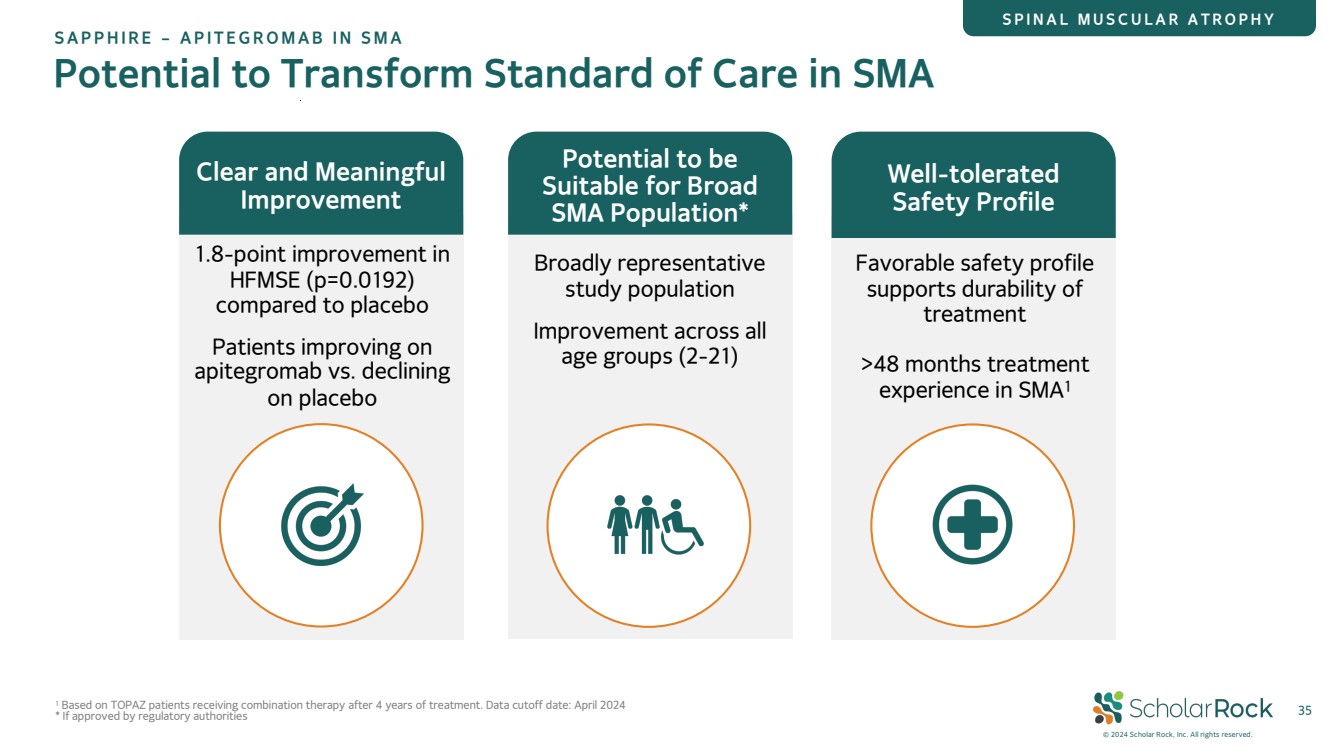
| © 2024 Scholar Rock, Inc. All rights reserved. 35 Potential to Transform Standard of Care in SMA 1.8-point improvement in HFMSE (p=0.0192) compared to placebo Patients improving on apitegromab vs. declining on placebo Favorable safety profile supports durability of treatment >48 months treatment experience in SMA1 Clear and Meaningful Improvement Well-tolerated Safety Profile Broadly representative study population Improvement across all age groups (2-21) Potential to be Suitable for Broad SMA Population* 1 Based on TOPAZ patients receiving combination therapy after 4 years of treatment. Data cutoff date: April 2024 * If approved by regulatory authorities SAPPHIRE – APITEGROMAB IN SMA SPINAL MUSCULAR ATROPHY |
| © 2025 Scholar Rock, Inc. All rights reserved. 36 Expanding our Impact: Initiating Phase 2 OPAL Trial in mid-2025 Studying apitegromab in patients under 2 years old Potential to alter the course of SMA in a broad population CHANGING More Lives Reaching patients earlier in their treatment journey TIME Is Muscle Including patients who received gene therapy EXPANDING Our Impact SPINAL MUSCULAR ATROPHY |
| © 2025 Scholar Rock, Inc. All rights reserved. Next Horizon in Antimyostatin Therapies: Cardiometabolic Disorders |

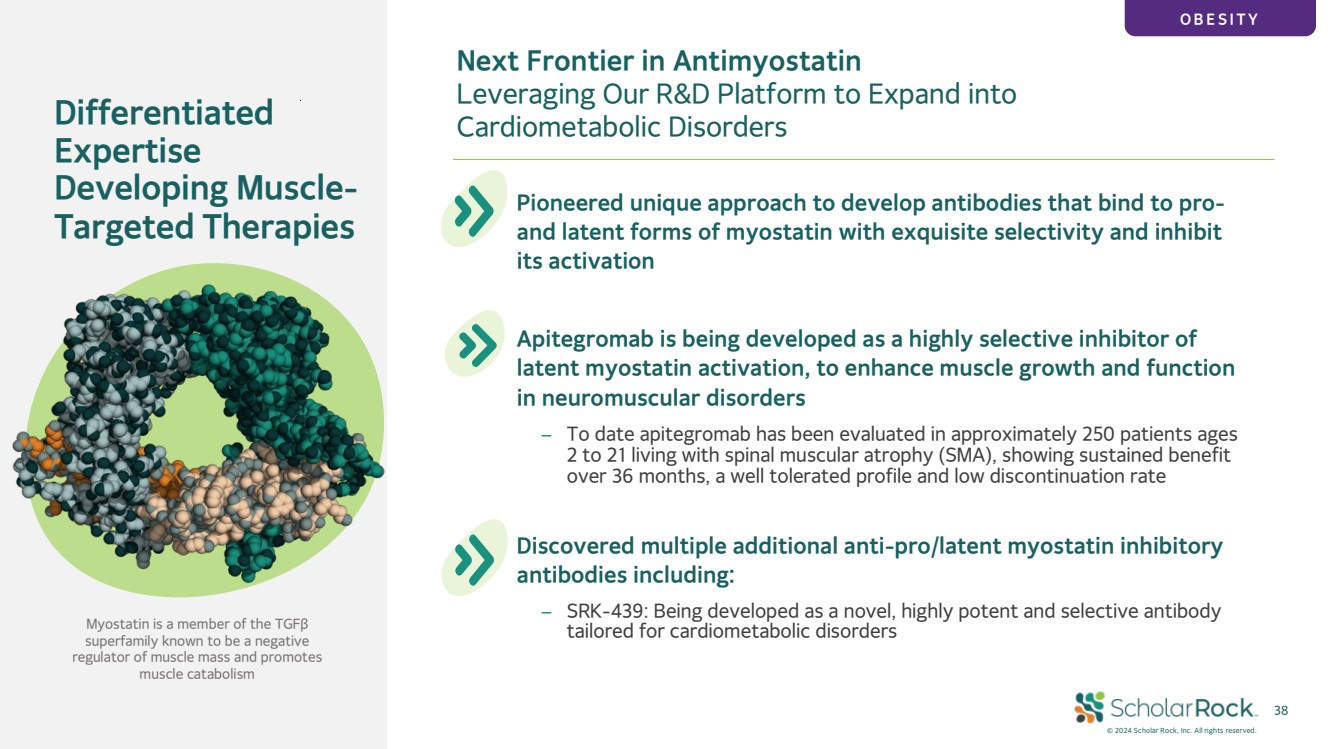
| © 2024 Scholar Rock, Inc. All rights reserved. Differentiated Expertise Developing Muscle-Targeted Therapies 38 Next Frontier in Antimyostatin Leveraging Our R&D Platform to Expand into Cardiometabolic Disorders Pioneered unique approach to develop antibodies that bind to pro-and latent forms of myostatin with exquisite selectivity and inhibit its activation Apitegromab is being developed as a highly selective inhibitor of latent myostatin activation, to enhance muscle growth and function in neuromuscular disorders – To date apitegromab has been evaluated in approximately 250 patients ages 2 to 21 living with spinal muscular atrophy (SMA), showing sustained benefit over 36 months, a well tolerated profile and low discontinuation rate Discovered multiple additional anti-pro/latent myostatin inhibitory antibodies including: – SRK-439: Being developed as a novel, highly potent and selective antibody tailored for cardiometabolic disorders Myostatin is a member of the TGFβ superfamily known to be a negative regulator of muscle mass and promotes muscle catabolism OBESITY |
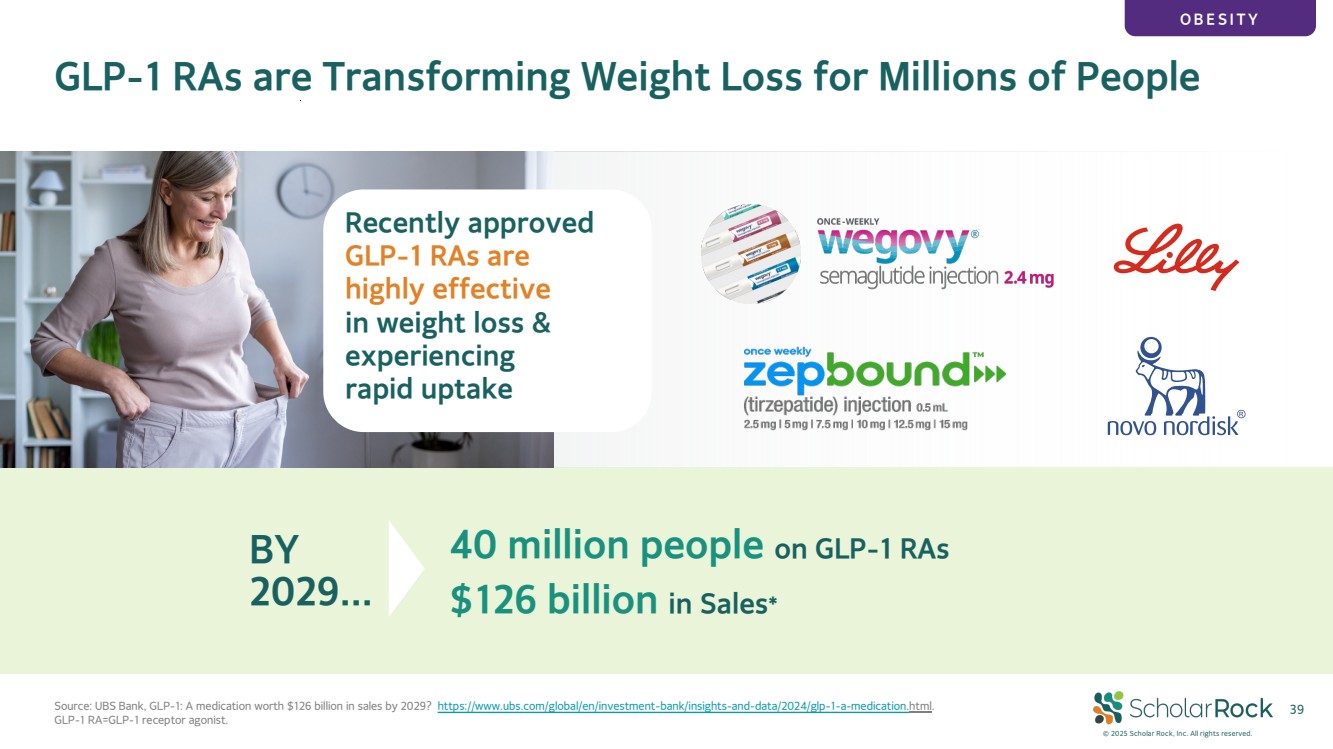
| © 2025 Scholar Rock, Inc. All rights reserved. GLP-1 RAs are Transforming Weight Loss for Millions of People Source: UBS Bank, GLP-1: A medication worth $126 billion in sales by 2029? https://www.ubs.com/global/en/investment-bank/insights-and-data/2024/glp-1-a-medication.html. GLP-1 RA=GLP-1 receptor agonist. Recently approved GLP-1 RAs are highly effective in weight loss & experiencing rapid uptake BY 2029... 40 million people on GLP-1 RAs $126 billion in Sales* 39 OBESITY |
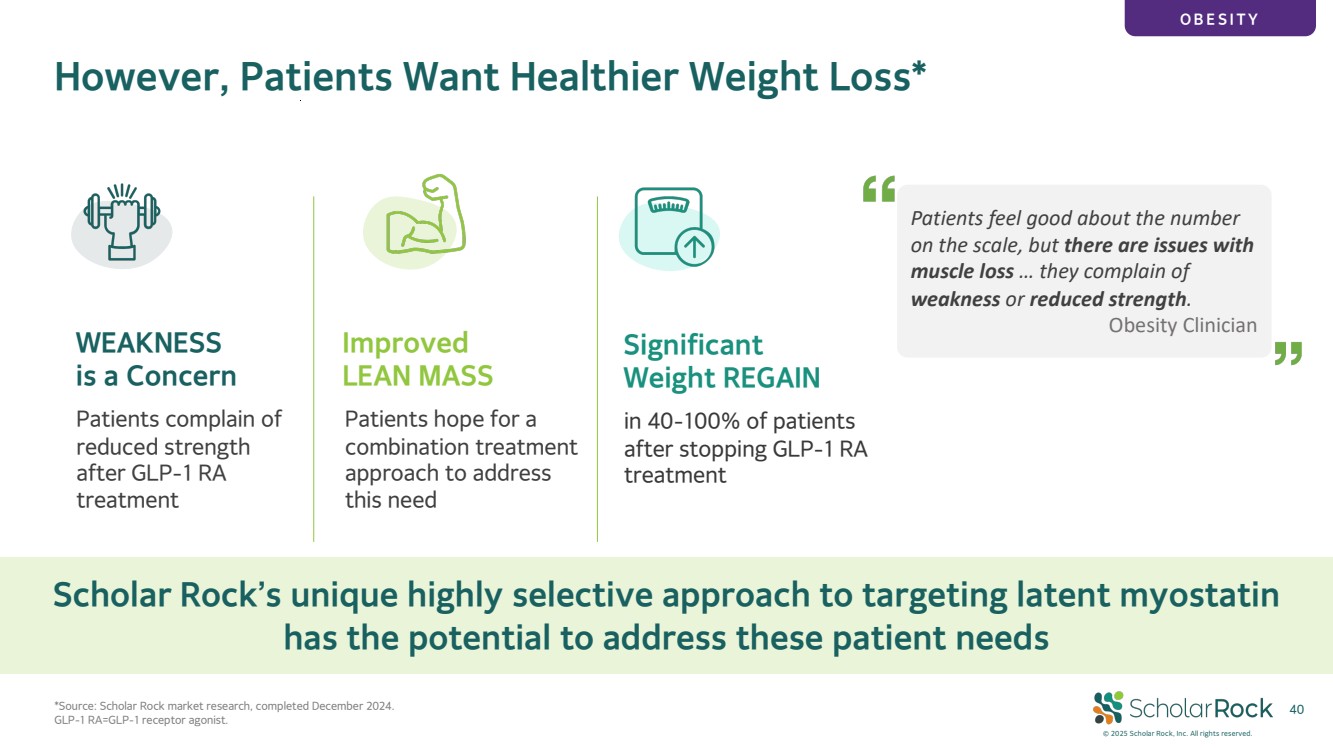
| © 2025 Scholar Rock, Inc. All rights reserved. However, Patients Want Healthier Weight Loss* *Source: Scholar Rock market research, completed December 2024. GLP-1 RA=GLP-1 receptor agonist. WEAKNESS is a Concern Patients complain of reduced strength after GLP-1 RA treatment Patients hope for a combination treatment approach to address this need Improved LEAN MASS Significant Weight REGAIN in 40-100% of patients after stopping GLP-1 RA treatment Scholar Rock’s unique highly selective approach to targeting latent myostatin has the potential to address these patient needs Patients feel good about the number on the scale, but there are issues with muscle loss … they complain of weakness or reduced strength. Obesity Clinician 40 OBESITY |
| © 2024 Scholar Rock, Inc. All rights reserved. 41 Maintaining Muscle is Important for Healthy Weight Loss GLP-1 RA=Glucagon-like peptide-1 receptor agonist. 1. Aristizabal JC, Freidenreich DJ, Volk BM, et al. Effect of resistance training on resting metabolic rate and its estimation by a dual-energy X-ray absorptiometry metabolic map. Eur J Clin Nutr.2015; 69, 831–836. https://doi.org/10.1038/ejcn.2014.216; 2. Lindegaard B, Hansen T, Hvid T, et al. The effect of strength and endurance training on insulin sensitivity and fat distribution in human immunodeficiency virus-infected patients with lipodystrophy. J Clin Endocrinol Metab. 2008; 93:3860–9; 3. Srikanthan P, Karlamangla AS. Relative muscle mass is inversely associated with insulin resistance and prediabetes. Findings from the third National Health and Nutrition Examination Survey. J Clin Endocrinol Metab. 2011; 96:2898–903. doi: 10.1210/jc.2011-0435; 4. Wewege MA, Desai I, Honey C, et al. The effect of resistance training in healthy adults on Body fat percentage, fat mass and visceral fat: A systematic review and meta-analysis. Sports Med. 2022(Feb);52(2):287-300. doi: 10.1007/s40279-021-01562-2; 5. Zurlo, F., Larson, K., Bogardus, C., et al. Skeletal muscle metabolism is a major determinant of resting energy expenditure. J Clin Invest. 1990;86(5), 1423-1427; 6. Fukushima Y, Kurose S, Shinno H, et al. Importance of lean muscle maintenance to improve insulin resistance by body weight reduction in female patients with obesity. Diabetes Metab J. 2016;40: 147-153; 7. Roh E, Choi KM. Health consequences of sarcopenic obesity: a narrative review. Front. Endocrinol. 2020;11: 332; 8. Volpi E, Nazemi R, Fujita S. Muscle tissue changes with aging. Curr Opin Clin Nutr Metab Care. 2004;7(4): 405-410. • Improved strength • Improved insulin sensitivity • Increased basal metabolic rate • Improved metabolic profile • Reduced total body fat The preservation of lean mass has many benefits for overall health: OBESITY Better insulin sensitivity and lower risk of prediabetes3 Reduced visceral fat4 Increased bone density, strength, function, and longevity and decreased risk of injury, and disability6-8 Increased caloric expenditure post-exercise5 Enhanced glucose homeostasis2 Increased basal metabolic rate (BMR)1 |
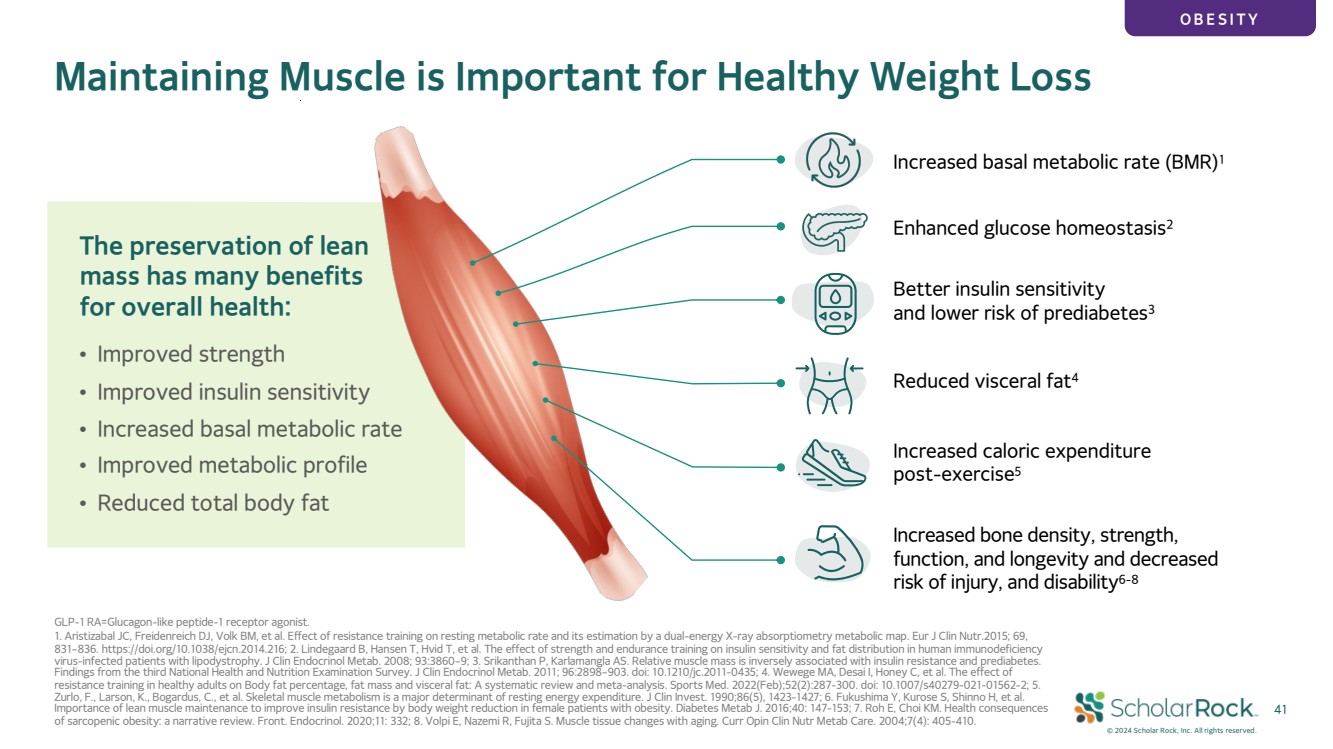
| © 2025 Scholar Rock, Inc. All rights reserved. Signaling receptor shared by Myostatin, GDF-11 & Activin A 42 Potential to Optimize Benefit-Risk with Myostatin Selectivity Promyostatin Pro-GDF-11 Proactivin GDF-11 Activin A ActRIIA/B Apitegromab SRK-439 Other Approaches • GI problems, e.g., diarrhea, pancreatitis3-6 • Nose bleeds (epistaxis), low platelet count, telangiectasias7-10 • Reduction in reproductive hormones in males and females3, 7, 11, 12 • Acne, rash, skin abscesses5, 13, 14 • Madarosis (loss of eyebrows or eyelashes)14 Favorable safety profile 1,2 Health Risks Observed with Non-Selective Inhibition of ActRII Pathway: Myostatin 1. Barrett et al. Adv Therapy. 2021; 2. Crawford T et al. Neurology. 2024; 3. Garito T et al. Clin Endocrinol (Oxf). 2018; 4. Amato AA et al. Neurology. 2021; 5. Heymsfield SB et al. JAMA. 2021; 6. Vanhoutte F et al. J Clin Pharmacol. 2020; 7. Attie KM et al. Muscle Nerve. 2013; 8. Attie KM et al. Am J Hematol. 2014; 9. Campbell C et al. Muscle Nerve. 2017; 10. Hoeper MM et al. N Engl J Med. 2023; 11. Ruckle J et al. J Bone Miner Res. 2009; 12. Sherman ML et al. J Clin Pharmacol. 2013; 13. Muntoni F et al. Neurol Ther. 2024. 14. Di Rocco M et al. Nat Med. 2023. OBESITY |
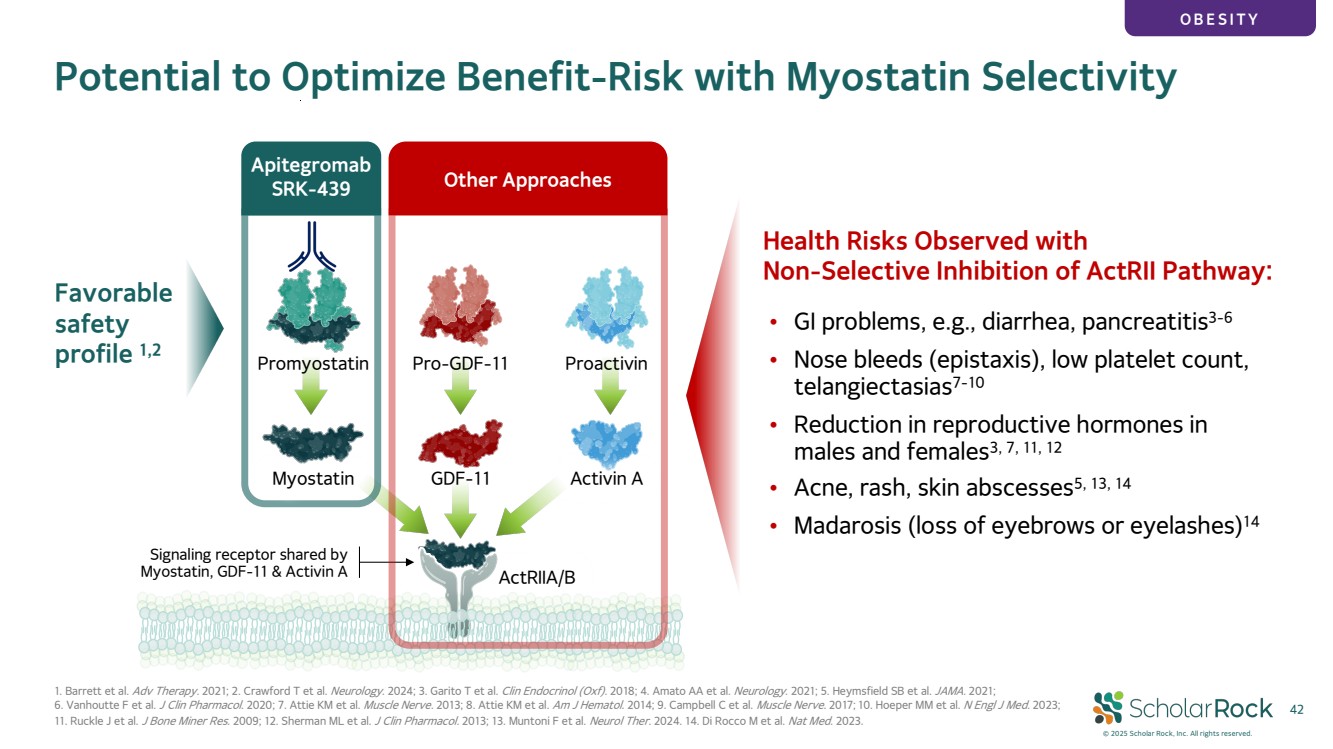
| © 2024 Scholar Rock, Inc. All rights reserved. Why We Are Confident in SRK-439 43 • A new anti-myostatin specifically suited for obesity • Targets pro and latent forms of myostatin designed to minimize undesirable off-target effects • Preclinical data demonstrated favorable muscle mass preservation and metabolic effects Scholar Rock’s Unique Approach Exquisite Selectivity Strong Scientific Validation OBESITY |
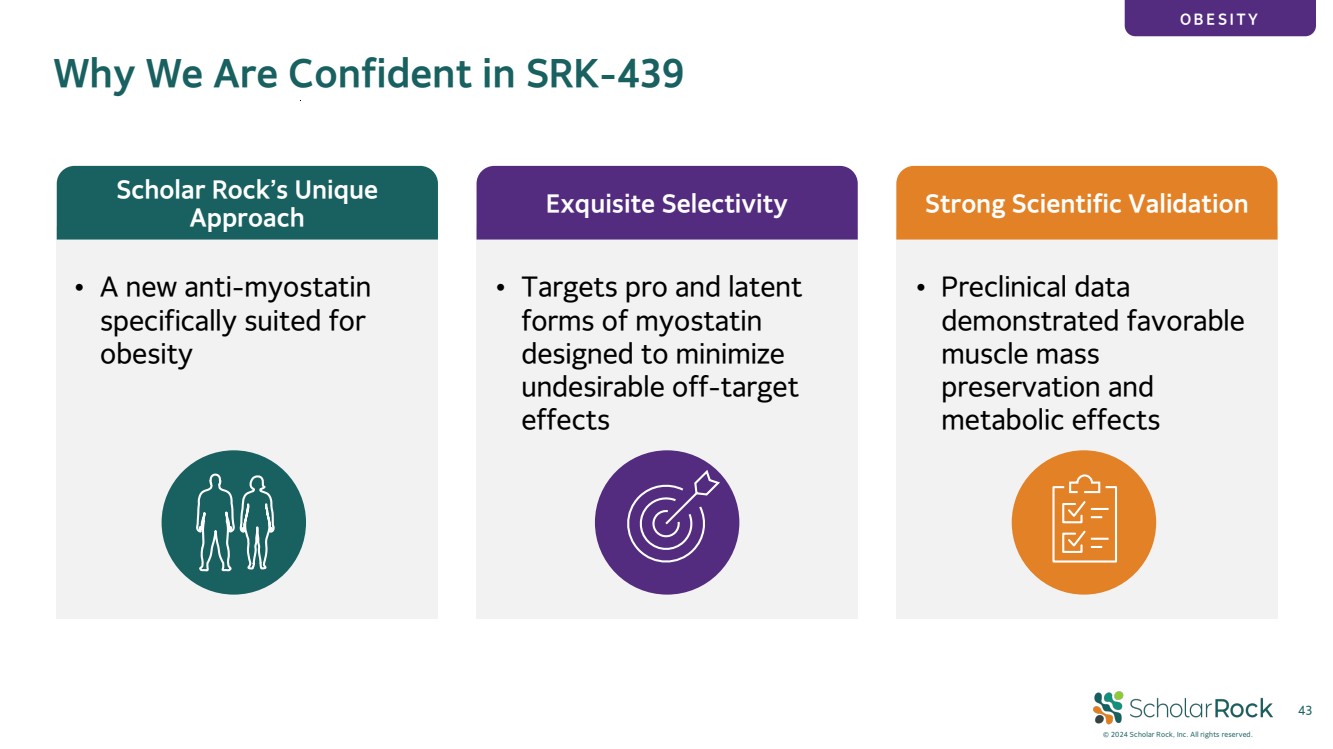
| © 2024 Scholar Rock, Inc. All rights reserved. SRK-439 Selectively Binds Latent Myostatin Scholar Rock’s Target: Latent Myostatin SRK-439: Exquisite Selectivity for Myostatin 44 • Increasing SRK-439 concentrations lead to increased signal of binding to myostatin with no signal observed for GDF-11 or Activin A “mature” myostatin Latent myostatin Human Latent Myostatin Human Latent GDF-11 Human Latent Activin A 0.001 0.01 0.1 1 10 100 1000 0.0 0.5 1.0 1.5 2.0 2.5 SRK-439 (nM) Binding Intensity (OD450) OBESITY |
| © 2025 Scholar Rock, Inc. All rights reserved. 45 GLP-1 RA: GLP-1 receptor agonist. Preclinical data to date show strong potential to support healthier weight loss in combination with GLP-1 RAs: Preservation of lean mass Improvement in metabolic parameters Increase in lean mass and attenuation of fat mass regain following GLP-1 RA withdrawal Greater potency compared to an anti-ACTRII antibody Works across the class of GLP-1 RAs Potential Best in Class Strong Scientific Validation and Promising Preclinical Evidence OBESITY |
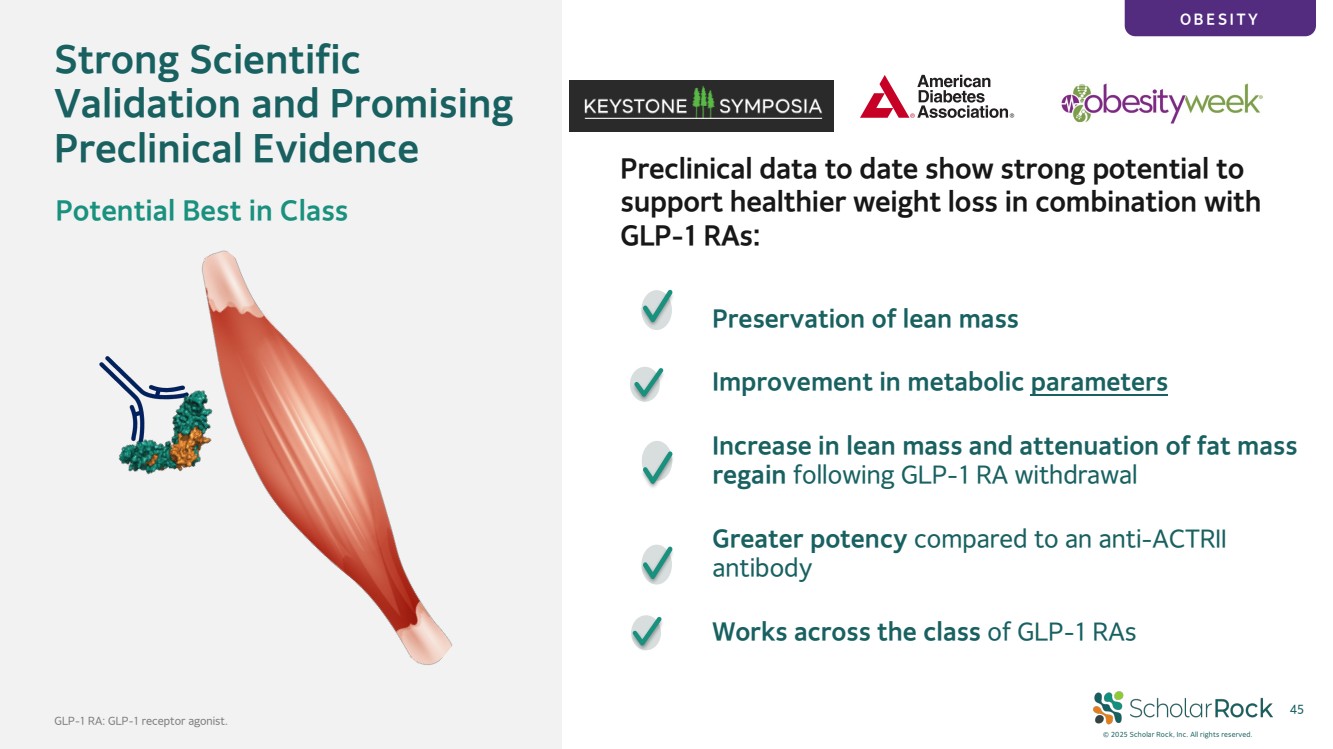
| © 2024 Scholar Rock, Inc. All rights reserved. SRK-439: Potential for Healthier Weight Loss Management in Combination with GLP-1 RA 46 • Considerable lean mass loss with semaglutide treatment • Combination with SRK-439 led to dose-dependent lean mass preservation ‒ Effects seen with doses as low as 0.3 mg/kg • Dose dependent enhancement of fat mass loss also observed, improving overall body composition Key Observations !"# !"$ !# $ # "$ "# BC'!()* ,-KLM-KL1 2P-L ,-11 4 P R S P L M T 8 - L 9 P 2 P - L , - 1 1 : R ; < = - 1 P>KL P $?" $?) " ) T;LMR;> @ BP<- T;LMR;> BC'!()* ARP-M<PLM ! !!!! SRK-439 (mg/kg) + Semaglutide (0.04mg/kg) p < 0.05 p < 0.0001 SRK-439 Maintained Lean Mass in Semaglutide Treated Animals Study conducted in Diet Induced Obesity (DIO) mouse model utilizing a murine chimera of SRK-439 GLP-1 RA: GLP1 receptor agonist OBESITY |
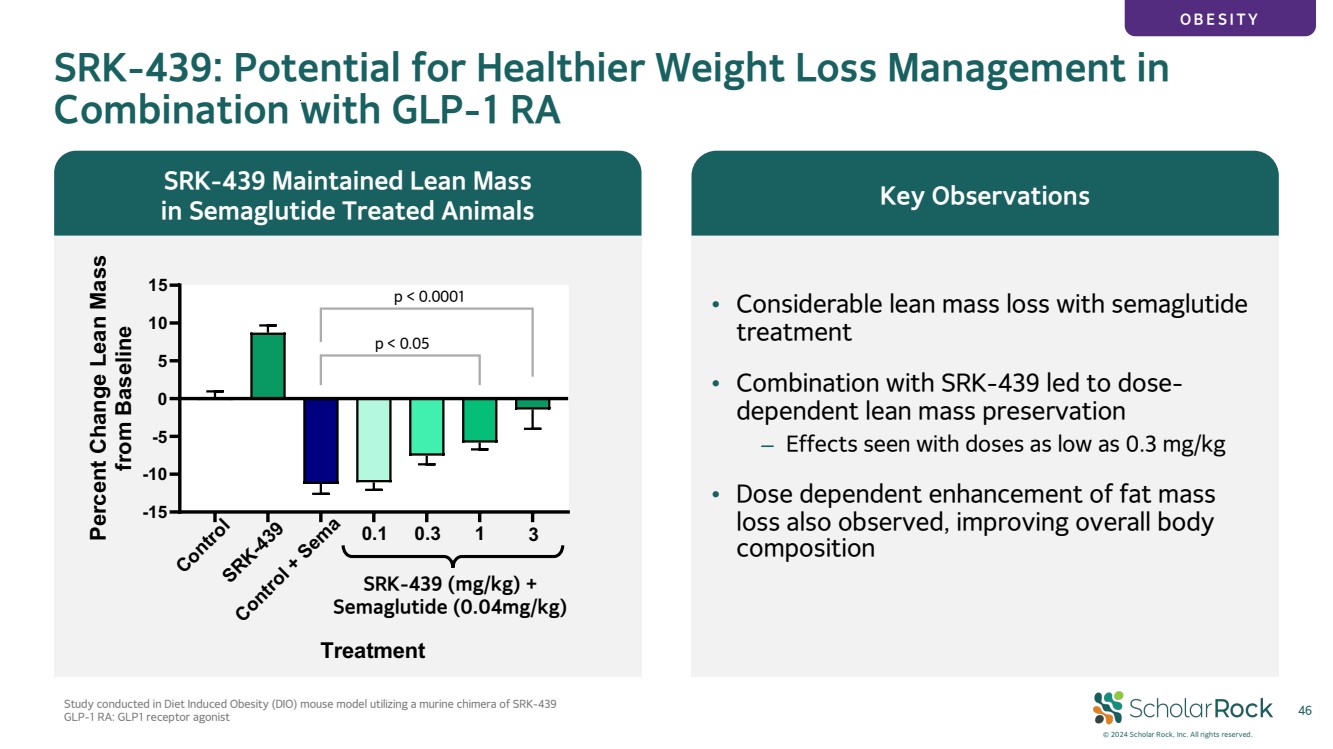
| © 2024 Scholar Rock, Inc. All rights reserved. 47 SRK-439 Increased Lean Mass and Attenuated Regain of Fat Mass After GLP-1 RA Withdrawal in Obesity Mouse Model Study conducted in Diet Induced Obesity (DIO) mouse model utilizing a murine chimera of SRK-439 GLP-1 RA: GLP1 receptor agonist. Day 7 is start of semaglutide and SRK-439 treatment. Day 35 is discontinuation of semaglutide treatment. • Considerable lean mass loss seen with semaglutide treatment as expected • Treatment with SRK-439 led to: • Preservation of lean mass during semaglutide treatment • Significant increase in lean mass upon semaglutide discontinuation • Attenuation of fat mass regain upon semaglutide discontinuation Key Observations SRK-439 Increased Absolute Lean Mass and Attenuated Regain of Absolute Fat Mass OBESITY ! " #A %# %C D( A% AF (G GD %! %( D! HI-.LM12 425S 75-- 859- :S -1M;9 425S 75-- <=> [email protected] B C=a bF8 B C=a bF8 B C=a Bd2e5 bF8 B ADF B d2e5 IG ! " #A %# %C D( A% AF (G GD ! ( #! #( %! HI-./M12 451 S5-- 758- 9: -1M;8 451 S5-- <=> [email protected] B C=a b47 B C=a b47 B C=a BF2d5 b47 B ADF B F2d5 eG |
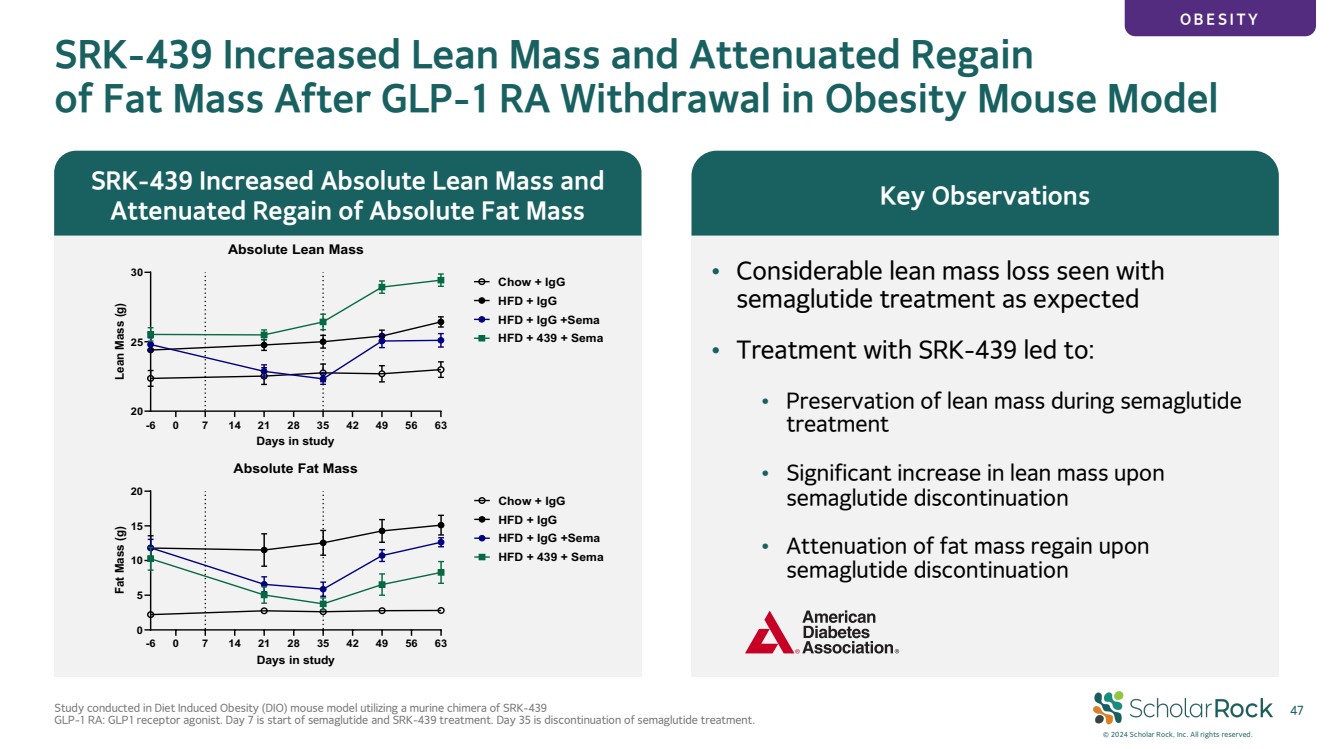
| © 2024 Scholar Rock, Inc. All rights reserved. 48 SRK-439 Improved Body Composition After GLP 1-RA Withdrawal Study conducted in Diet Induced Obesity (DIO) mouse model utilizing a murine chimera of SRK-439 GLP-1 RA: GLP1 receptor agonist. HFD: High Fat Diet • SRK-439 attenuates regain of fat mass after withdrawal of semaglutide compared to IgG control • SRK-439 leads to higher lean mass proportion after withdrawal of semaglutide compared to IgG control Key Observations SRK-439 Improved Proportion of Lean and Fat Mass to Total Body Weight OBESITY !"#$ BCD (FG BCD (FG BCD HI-. (FG LM1 HI-. 2 32 L2 42 R2 SI7.89WI <I.= >.?? G.@ 4M < I . = > . ? ?AB C aEF ! # $%$$$& ! # $%$$$& ! ' $%$$$( !"#$ BCD (FG BCD (FG BCD HI-. (FG /M1 HI-. 2 32 42 M2 /2 RIS.789I F.7 ;.<< G.= >M F .7 ; . < <?@ A BCa ! # $%$$$& ! ' $%$$() ! ' $%$$$* ! ' $%$$*) |
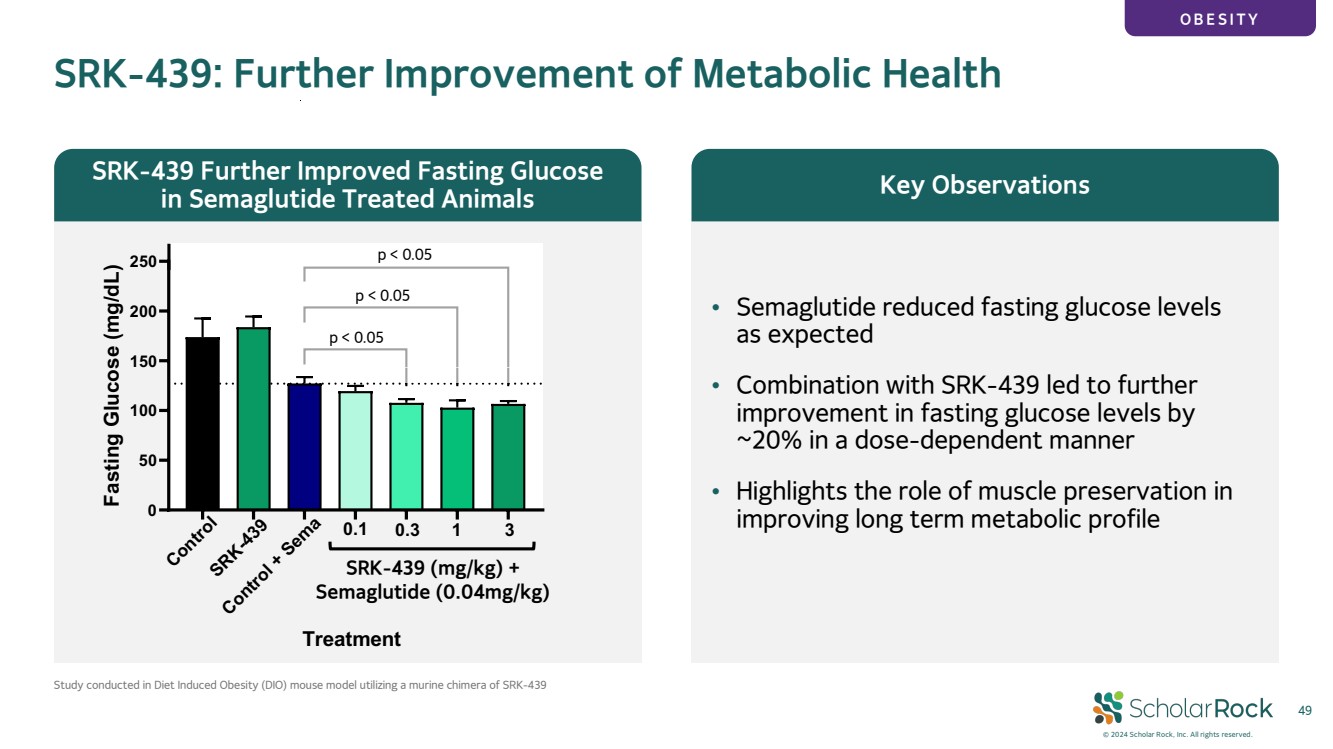
| © 2024 Scholar Rock, Inc. All rights reserved. ! "! #!! #"! A!! A"! %C'(FG+ -KL012L 34RLST24280 98 -:;098< =>K?S;2 98 %24:<>K09@2AL2:02@ B894:>; - : ; 098 < =>K ? S ; 2 C4 <a@ Ec !d# !dG # G eS80LS> I %24: eS80LS> %C'(FG+ AL2:04280 ! ! ! SRK-439: Further Improvement of Metabolic Health 49 Key Observations SRK-439 Further Improved Fasting Glucose in Semaglutide Treated Animals • Semaglutide reduced fasting glucose levels as expected • Combination with SRK-439 led to further improvement in fasting glucose levels by ~20% in a dose-dependent manner • Highlights the role of muscle preservation in improving long term metabolic profile SRK-439 (mg/kg) + Semaglutide (0.04mg/kg) p < 0.05 p < 0.05 p < 0.05 Study conducted in Diet Induced Obesity (DIO) mouse model utilizing a murine chimera of SRK-439 OBESITY |
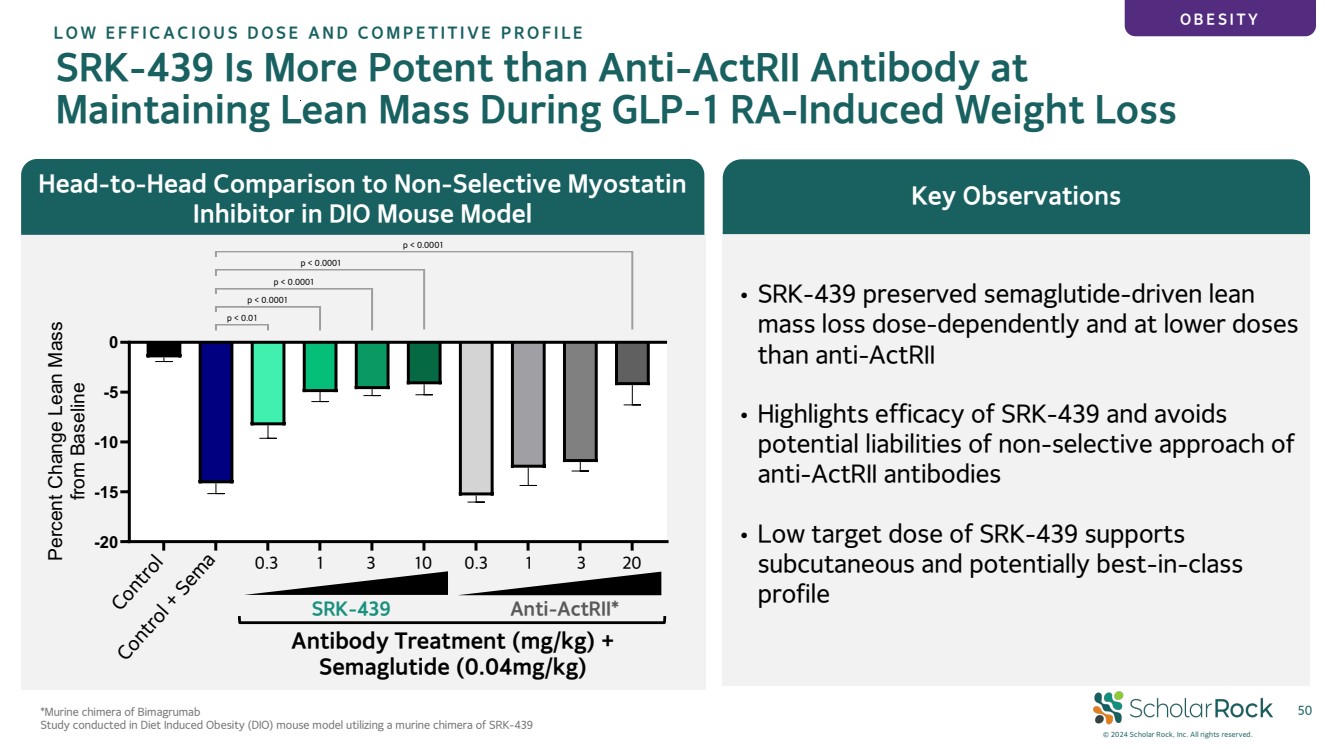
| © 2024 Scholar Rock, Inc. All rights reserved. SRK-439 Is More Potent than Anti-ActRII Antibody at Maintaining Lean Mass During GLP-1 RA-Induced Weight Loss 50 LOW EFFICACIOUS DOSE AND COMPETITIVE PROFILE Head-to-Head Comparison to Non-Selective Myostatin Inhibitor in DIO Mouse Model !"# !$% !$# !% # ! "#$ " BC ( ) * B + " , " * B - * . . L#M 1 2 * . "P4B " !! !!!! !!!! !!!! !!!! Control Control + Sema 0.3 1 3 10 0.3 1 3 20 Antibody Treatment (mg/kg) + Semaglutide (0.04mg/kg) SRK-439 Anti-ActRII* p < 0.01 p < 0.0001 p < 0.0001 p < 0.0001 p < 0.0001 •SRK-439 preserved semaglutide-driven lean mass loss dose-dependently and at lower doses than anti-ActRII •Highlights efficacy of SRK-439 and avoids potential liabilities of non-selective approach of anti-ActRII antibodies •Low target dose of SRK-439 supports subcutaneous and potentially best-in-class profile Key Observations *Murine chimera of Bimagrumab Study conducted in Diet Induced Obesity (DIO) mouse model utilizing a murine chimera of SRK-439 OBESITY |
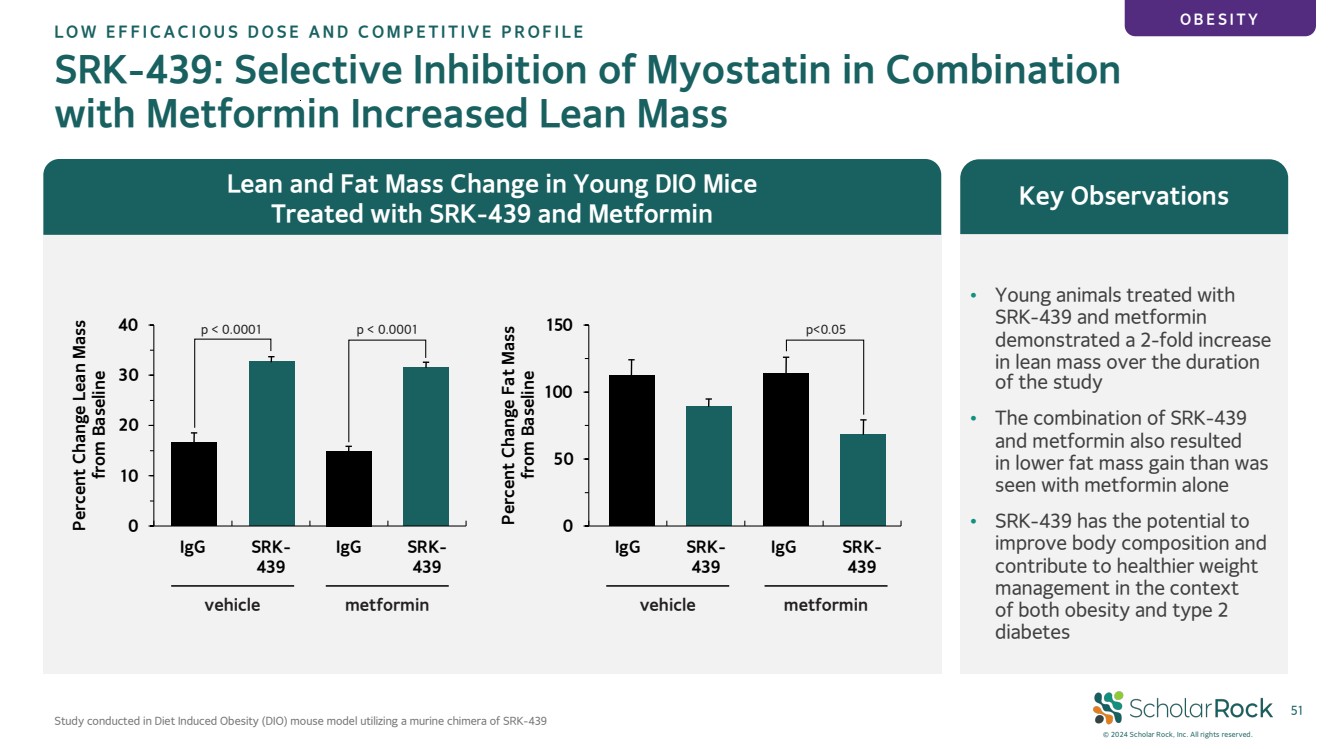
| © 2024 Scholar Rock, Inc. All rights reserved. LOW EFFICACIOUS DOSE AND COMPETITIVE PROFILE SRK-439: Selective Inhibition of Myostatin in Combination with Metformin Increased Lean Mass 51 Study conducted in Diet Induced Obesity (DIO) mouse model utilizing a murine chimera of SRK-439 OBESITY Lean and Fat Mass Change in Young DIO Mice Treated with SRK-439 and Metformin • Young animals treated with SRK-439 and metformin demonstrated a 2-fold increase in lean mass over the duration of the study • The combination of SRK-439 and metformin also resulted in lower fat mass gain than was seen with metformin alone • SRK-439 has the potential to improve body composition and contribute to healthier weight management in the context of both obesity and type 2 diabetes Key Observations Percent Change Fat Mass from Baseline vehicle metformin p<0.05 0 50 100 150 IgG SRK-439 IgG SRK-439 Percent Change Lean Mass from Baseline p < 0.0001 p < 0.0001 vehicle metformin 0 10 20 30 40 IgG SRK-439 IgG SRK-439 |
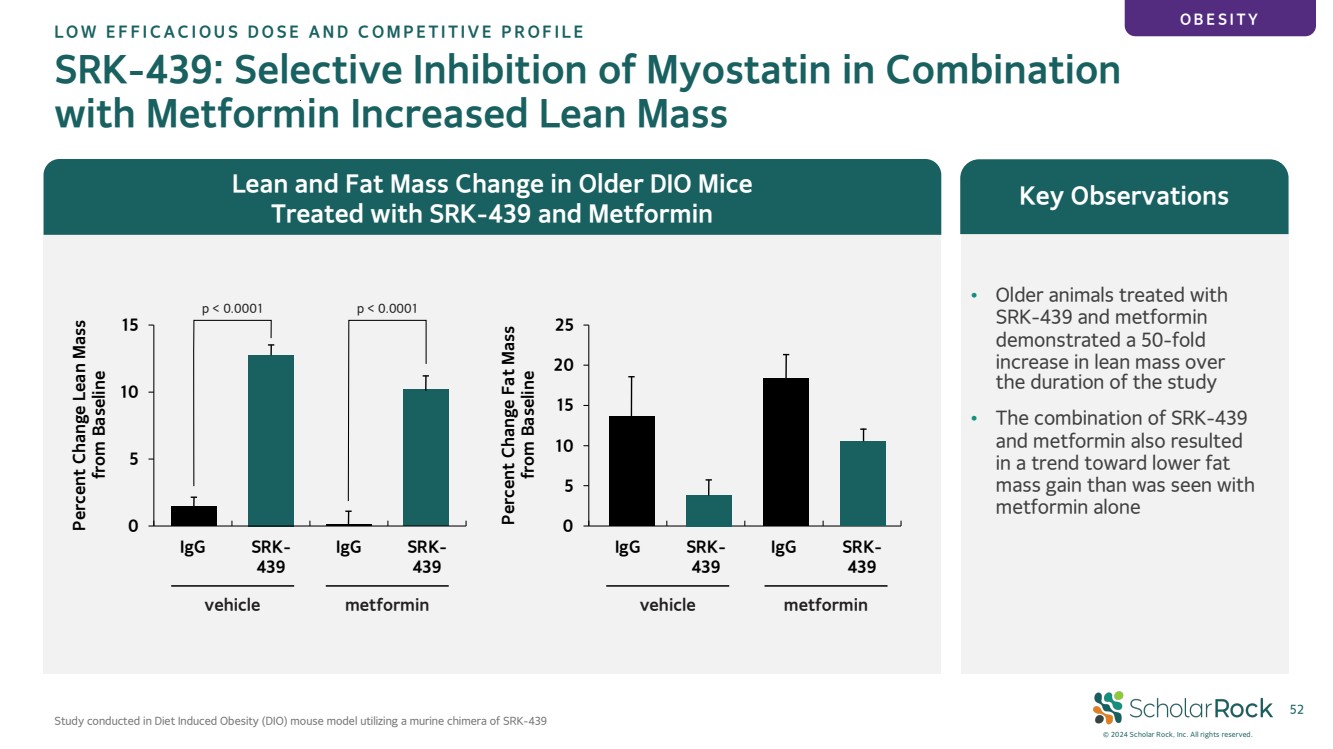
| © 2024 Scholar Rock, Inc. All rights reserved. LOW EFFICACIOUS DOSE AND COMPETITIVE PROFILE SRK-439: Selective Inhibition of Myostatin in Combination with Metformin Increased Lean Mass Study conducted in Diet Induced Obesity (DIO) mouse model utilizing a murine chimera of SRK-439 OBESITY 52 • Older animals treated with SRK-439 and metformin demonstrated a 50-fold increase in lean mass over the duration of the study • The combination of SRK-439 and metformin also resulted in a trend toward lower fat mass gain than was seen with metformin alone Key Observations Lean and Fat Mass Change in Older DIO Mice Treated with SRK-439 and Metformin Percent Change Lean Mass from Baseline vehicle metformin p < 0.0001 p < 0.0001 0 5 10 15 IgG SRK-439 IgG SRK-439 Percent Change Fat Mass from Baseline 0 5 10 15 20 25 IgG SRK-439 IgG SRK-439 vehicle metformin |
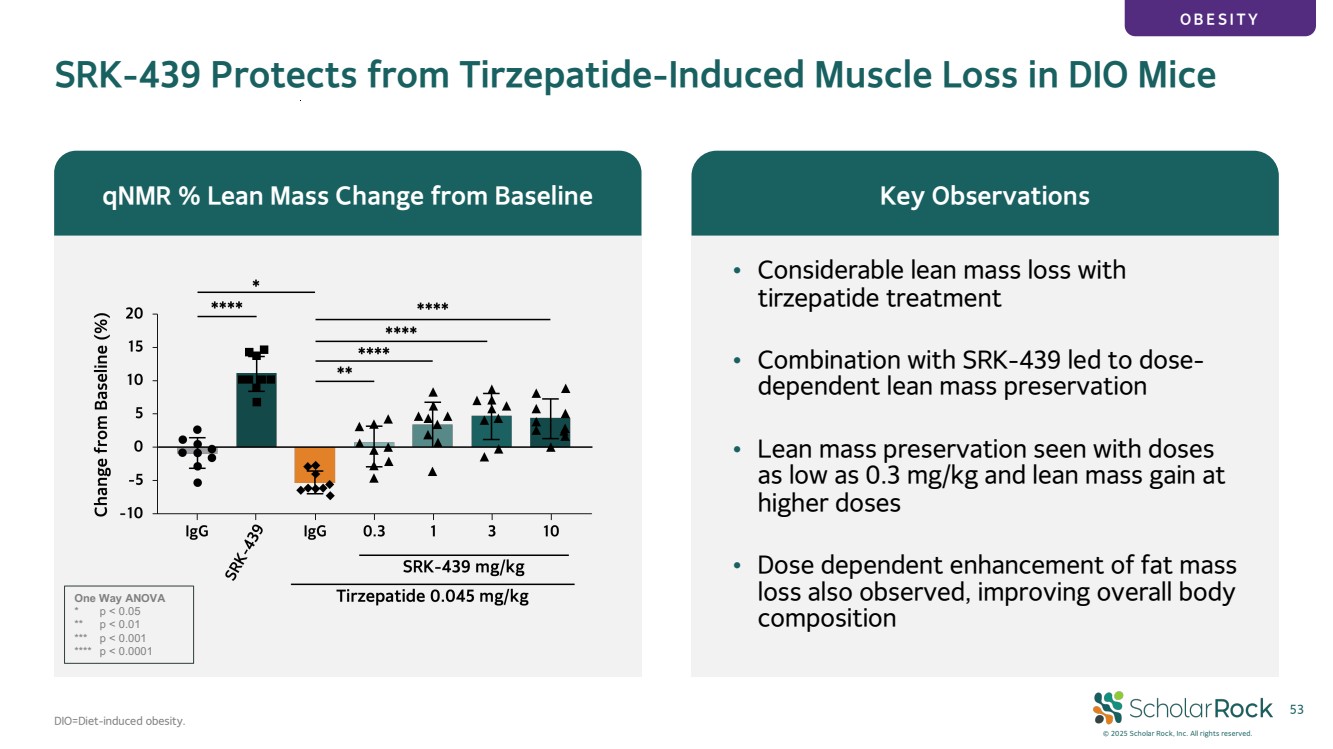
| © 2025 Scholar Rock, Inc. All rights reserved. SRK-439 Protects from Tirzepatide-Induced Muscle Loss in DIO Mice qNMR % Lean Mass Change from Baseline Key Observations • Considerable lean mass loss with tirzepatide treatment • Combination with SRK-439 led to dose-dependent lean mass preservation • Lean mass preservation seen with doses as low as 0.3 mg/kg and lean mass gain at higher doses • Dose dependent enhancement of fat mass loss also observed, improving overall body composition DIO=Diet-induced obesity. 53 One Way ANOVA * p < 0.05 ** p < 0.01 *** p < 0.001 **** p < 0.0001 OBESITY |
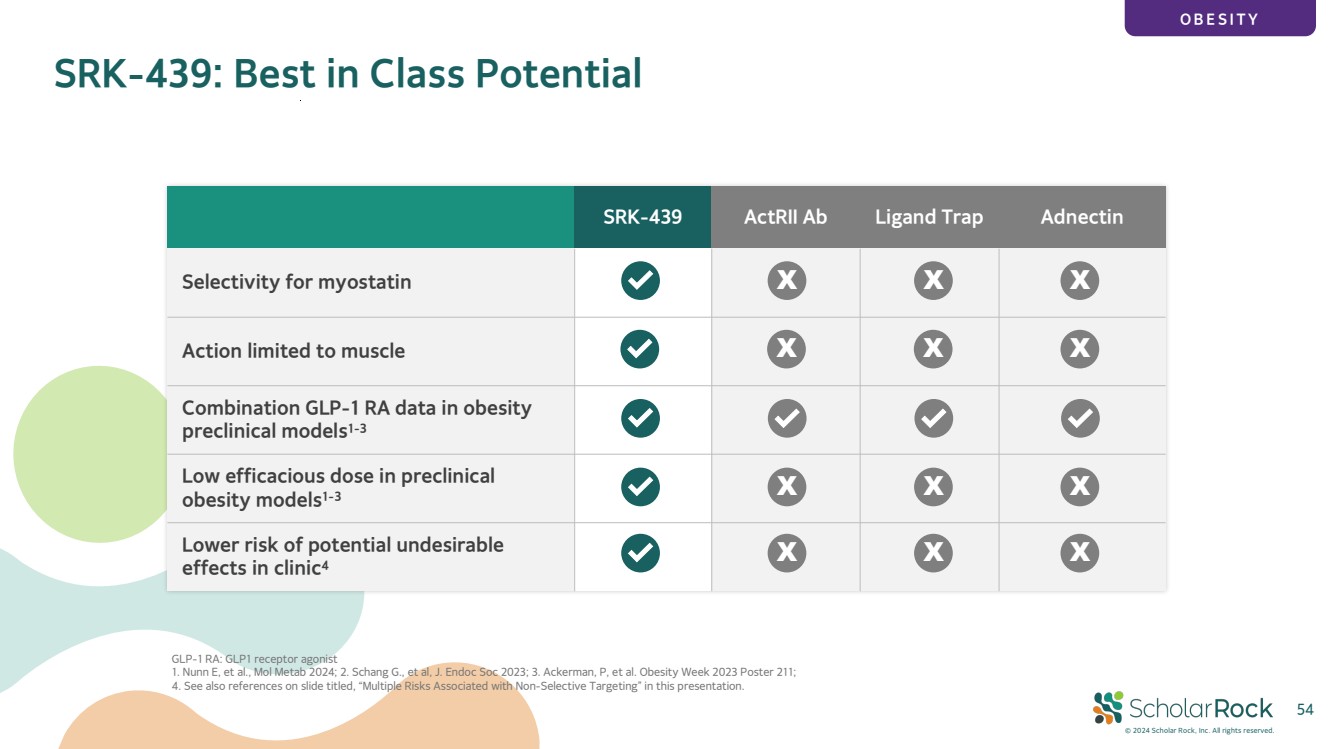
| © 2024 Scholar Rock, Inc. All rights reserved. SRK-439: Best in Class Potential 54 SRK-439 ActRII Ab Ligand Trap Adnectin Selectivity for myostatin Action limited to muscle Combination GLP-1 RA data in obesity preclinical models1-3 Low efficacious dose in preclinical obesity models1-3 Lower risk of potential undesirable effects in clinic4 X X X X X X X X X X X X GLP-1 RA: GLP1 receptor agonist 1. Nunn E, et al., Mol Metab 2024; 2. Schang G., et al, J. Endoc Soc 2023; 3. Ackerman, P, et al. Obesity Week 2023 Poster 211; 4. See also references on slide titled, “Multiple Risks Associated with Non-Selective Targeting” in this presentation. OBESITY |
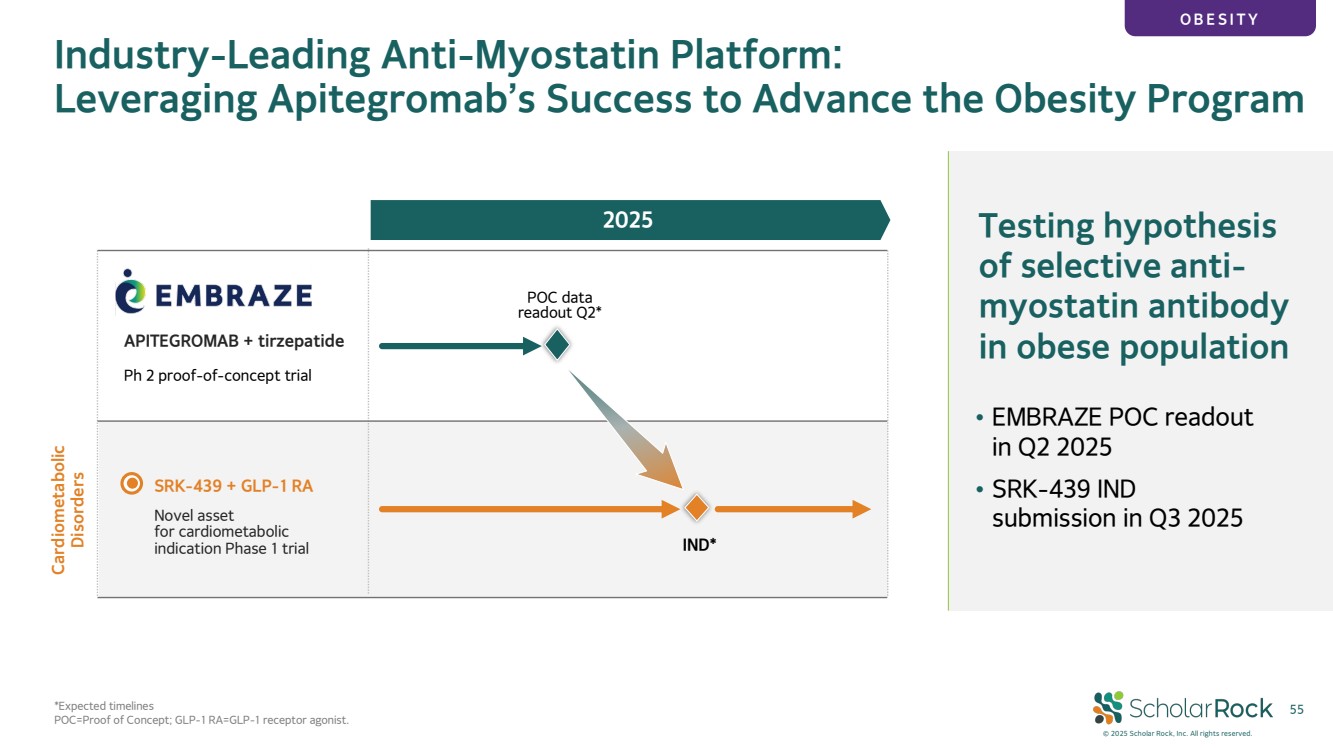
| © 2025 Scholar Rock, Inc. All rights reserved. 55 Industry-Leading Anti-Myostatin Platform: Leveraging Apitegromab’s Success to Advance the Obesity Program *Expected timelines POC=Proof of Concept; GLP-1 RA=GLP-1 receptor agonist. POC data readout Q2* Ph 2 proof-of-concept trial APITEGROMAB + tirzepatide 2025 IND* SRK-439 + GLP-1 RA Novel asset for cardiometabolic indication Phase 1 trial Cardiometabolic Disorders • EMBRAZE POC readout in Q2 2025 • SRK-439 IND submission in Q3 2025 Testing hypothesis of selective anti-myostatin antibody in obese population OBESITY |
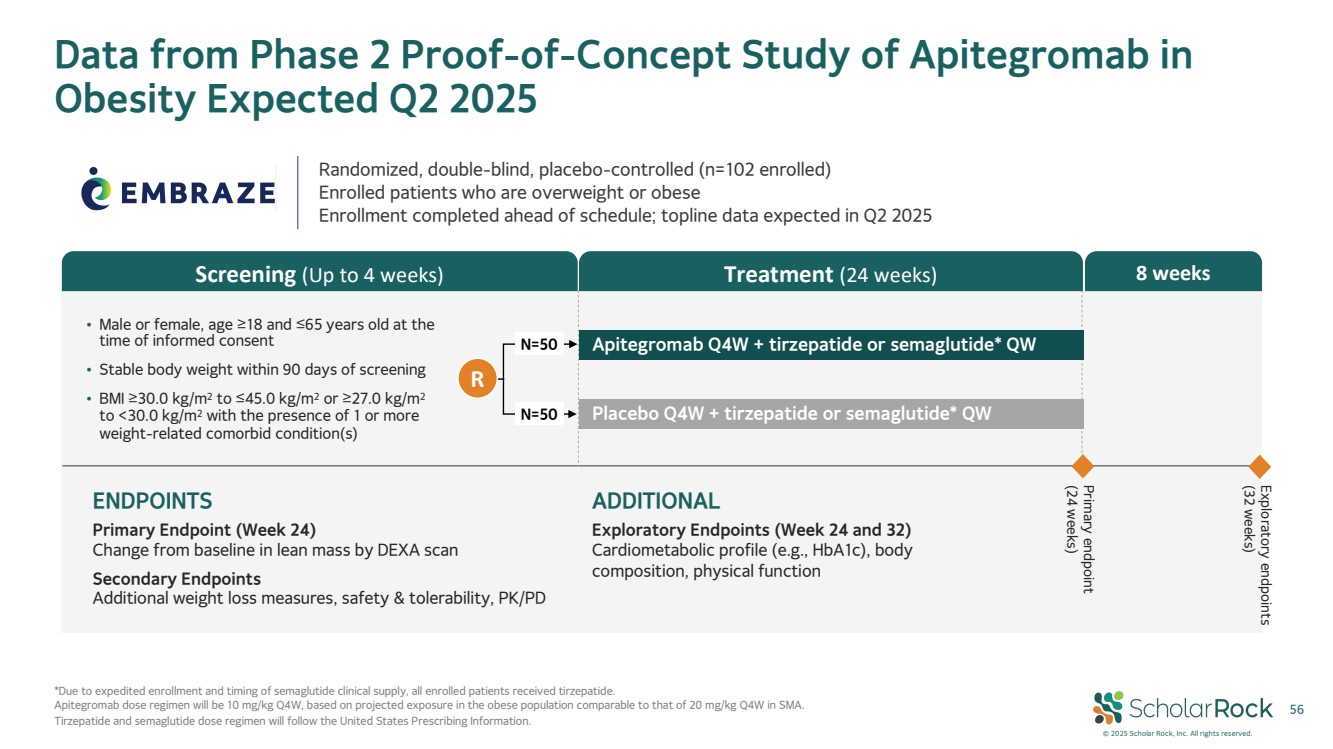
| © 2025 Scholar Rock, Inc. All rights reserved. 56 Data from Phase 2 Proof-of-Concept Study of Apitegromab in Obesity Expected Q2 2025 *Due to expedited enrollment and timing of semaglutide clinical supply, all enrolled patients received tirzepatide. Apitegromab dose regimen will be 10 mg/kg Q4W, based on projected exposure in the obese population comparable to that of 20 mg/kg Q4W in SMA. Tirzepatide and semaglutide dose regimen will follow the United States Prescribing Information. Randomized, double-blind, placebo-controlled (n=102 enrolled) Enrolled patients who are overweight or obese Enrollment completed ahead of schedule; topline data expected in Q2 2025 Screening (Up to 4 weeks) • Male or female, age ≥18 and ≤65 years old at the time of informed consent • Stable body weight within 90 days of screening • BMI ≥30.0 kg/m2 to ≤45.0 kg/m2 or ≥27.0 kg/m2 to <30.0 kg/m2 with the presence of 1 or more weight-related comorbid condition(s) ENDPOINTS Primary Endpoint (Week 24) Change from baseline in lean mass by DEXA scan Secondary Endpoints Additional weight loss measures, safety & tolerability, PK/PD Treatment (24 weeks) Apitegromab Q4W + tirzepatide or semaglutide* QW Placebo Q4W + tirzepatide or semaglutide* QW ADDITIONAL Exploratory Endpoints (Week 24 and 32) Cardiometabolic profile (e.g., HbA1c), body composition, physical function R N=50 N=50 8 weeks (24 weeks) Primary endpoint (32 weeks) Exploratory endpoints |
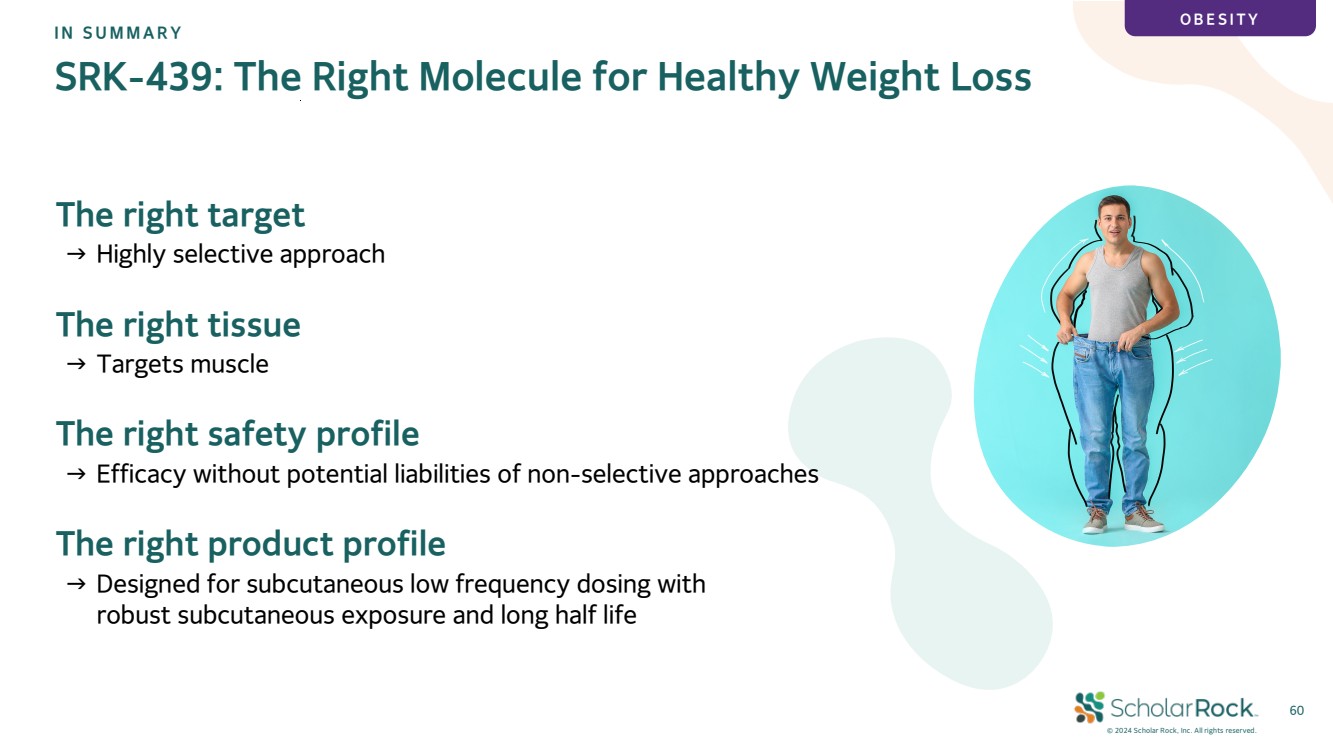
| © 2025 Scholar Rock, Inc. All rights reserved. Goals of the EMBRAZE Proof-of-Concept Study Initiated trial in May 2024, ahead of target timeline Enrollment completed in September 2024 Topline data expected in Q2 2025 57 INSIGHTS GAINED FROM EMBRAZE STUDY to inform SRK-439 development Study Aims to Demonstrate Preservation of lean mass in obese or overweight patients Safety and tolerability Potential to improve metabolic profile and physical function OBESITY |
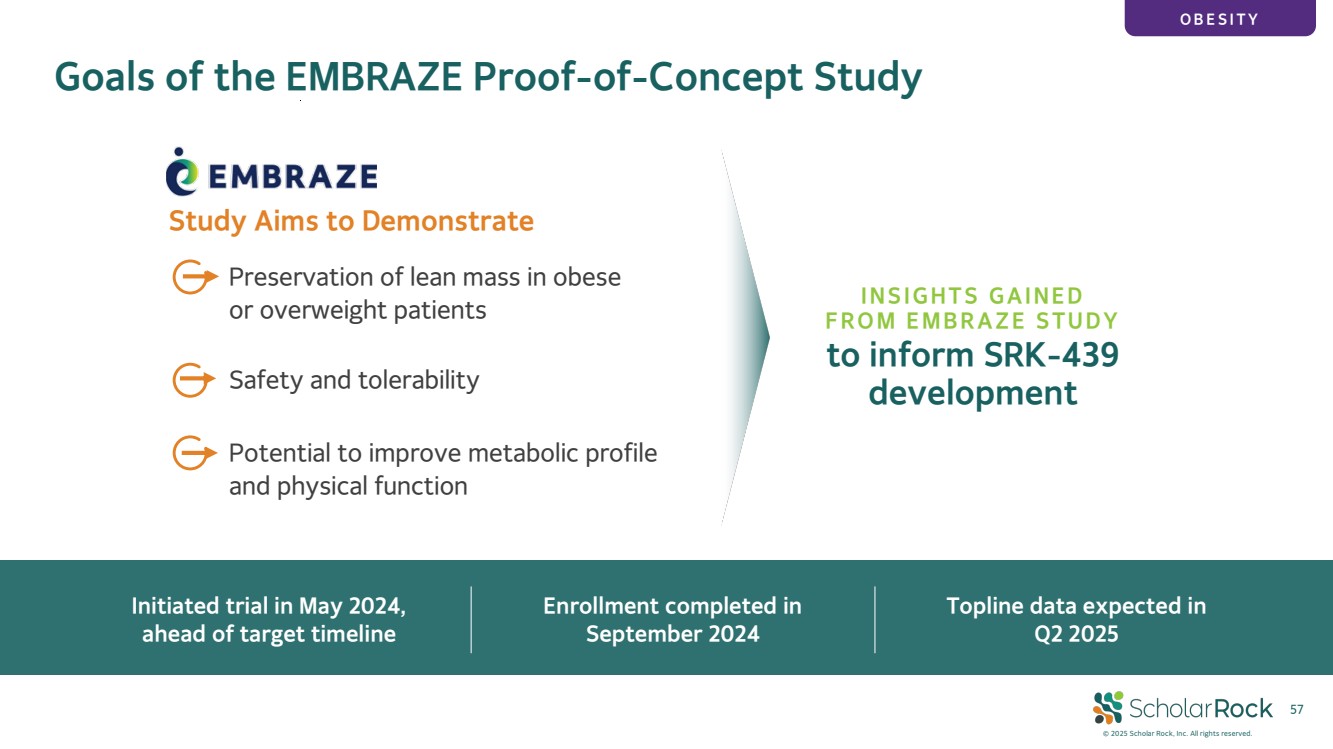
| © 2025 Scholar Rock, Inc. All rights reserved. Tirzepatide-Induced Weight Loss Accompanies Significant Muscle Loss Figure from Jastreboff, A.M. et al. N Engl J Med. 2022;387(3):205-216. * Data from Phase 3 clinical trial of tirzepatide in adults with obesity. Tirzepatide DECREASE in lean mass of 10.9% accompanies DECREASE in body weight Percent Change in Body Weight -24 -20 -16 -12 -8 -4 0 -3.1 -15.0 -19.5 -20.9 0 4 8 12 16 20 24 36 48 60 72 TRE Weeks Since Randomization -2.4 -16.0 -21.4 -22.5 Tirzepatide, 5 mg Tirzepatide, 10 mg Tirzepatide, 15 mg Placebo Percent Change in Body Weight by Week (efficacy estimand) Time period of EMBRAZE Overall mean baseline weight = 104.8 kg 58 OBESITY |
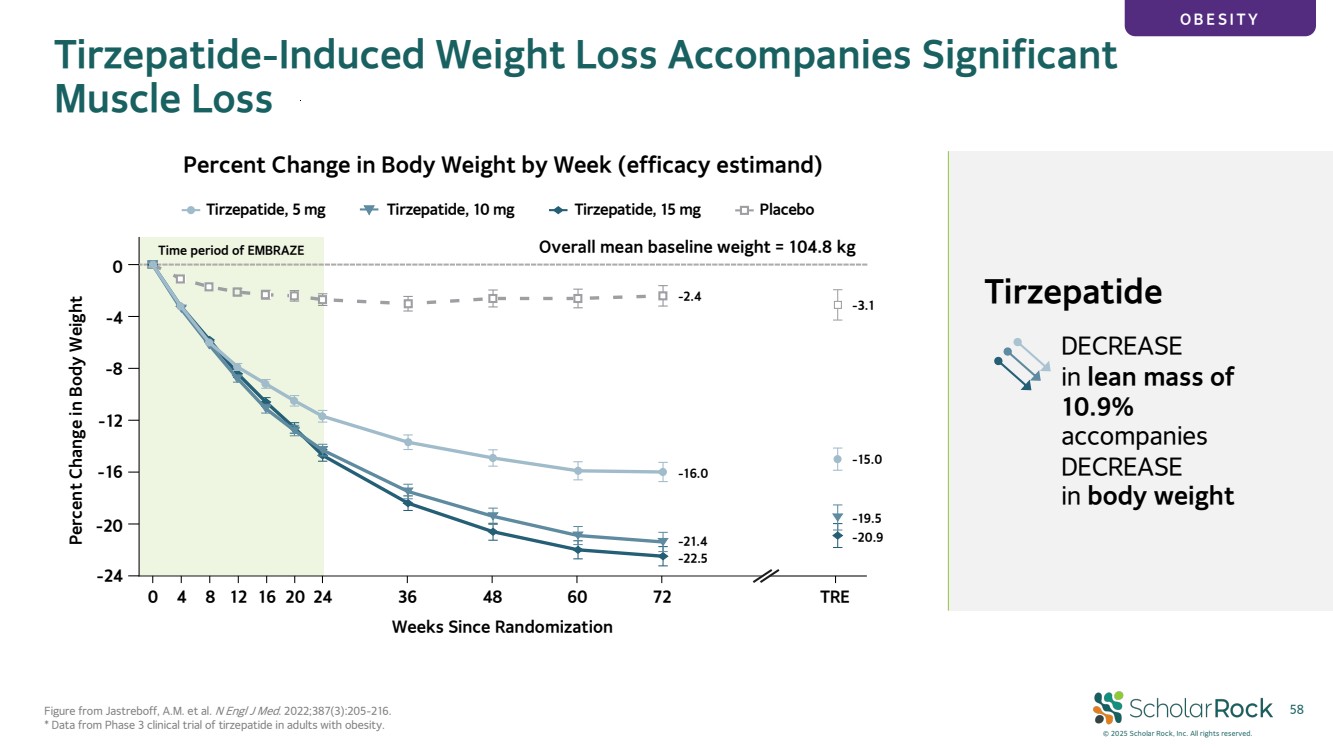
| © 2024 Scholar Rock, Inc. All rights reserved. FDA Guidelines Added Clinical Benefit 59 Regulatory Pathway CARDIOMETABOLIC DEVELOPMENT PROGRAM *Clinical Outcome Assessment: Frequently Asked Questions: https://www.fda.gov/about-fda/clinical-outcome-assessment-coa-frequently-asked-questions#Consideration1 A clinical outcome assessment is a measure that describes or reflects how a patient feels, functions, or survives.* Incremental Clinical Benefit Incremental Weight Loss • Current weight management drugs approved based on total body weight loss • Incremental weight loss as primary endpoint – preservation of lean mass may lead to additional weight loss incremental to that mediated by GLP-1 agonist • Increased muscle mass has the potential to improve metabolic profile (e.g., HbA1c) • Preserving lean body mass is expected to improve physical function • FDA guidance supports combination strategy • Need to demonstrate the added clinical benefit of the combination OBESITY |
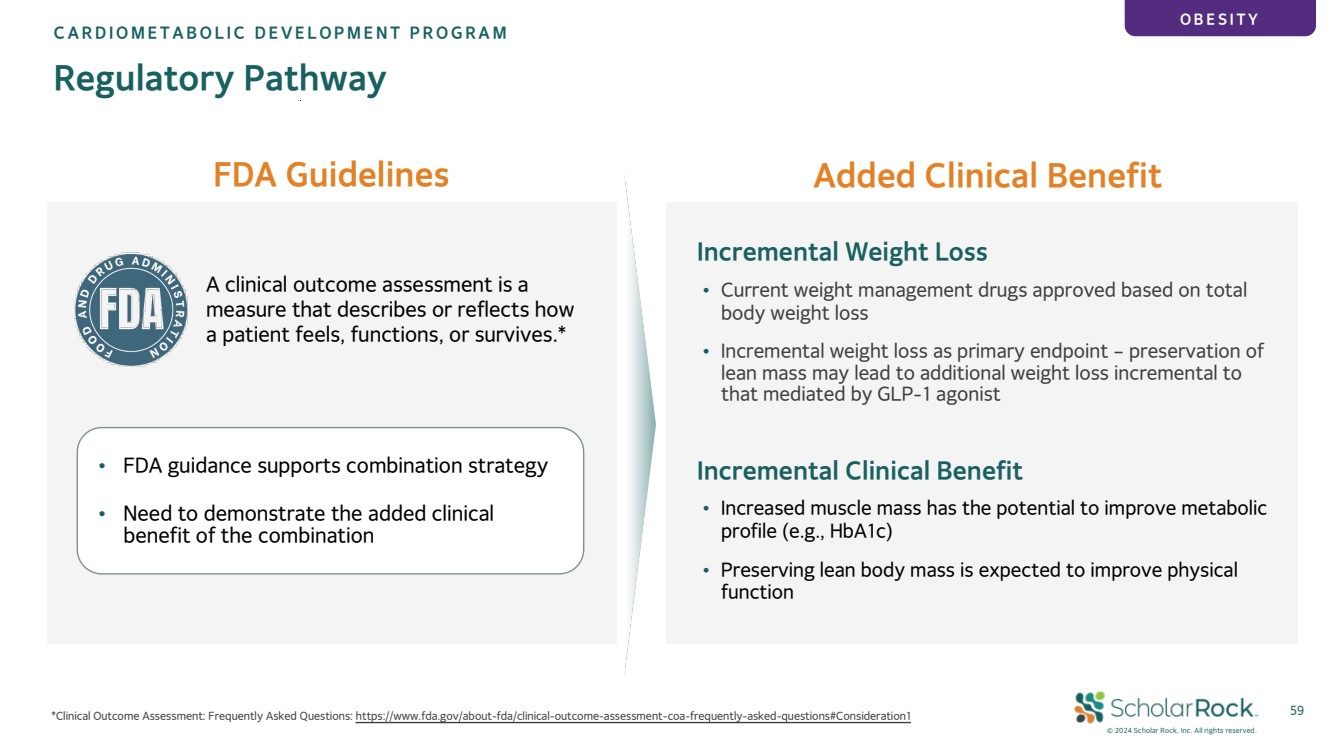
| © 2024 Scholar Rock, Inc. All rights reserved. SRK-439: The Right Molecule for Healthy Weight Loss 60 IN SUMMARY g Highly selective approach g Targets muscle g Efficacy without potential liabilities of non-selective approaches g Designed for subcutaneous low frequency dosing with robust subcutaneous exposure and long half life The right target The right tissue The right safety profile The right product profile OBESITY |
| © 2025 Scholar Rock, Inc. All rights reserved. Fibrosis |

| © 2024 Scholar Rock, Inc. All rights reserved. TGFβ is Established as Key Driver of Fibrosis Across Multiple Diseases 62 Nature Reviews , April 25, 2016 NATURE REVIEWS | NEPHROLOGY TGF-β: the master regulator of fibrosis Xiao-ming Meng1, David J. Nikolic-Paterson2 and Hui Yao Lan3 Nature Reviews. August 19, 2014 NATURE REVIEWS | RHEUMATOLOGY Transforming growth factor β—at the centre of systemic sclerosis Robert Lafyatis Int. J. Mol. Sci. August 27, 2018 Targeting TGF-β Signaling in Kidney Fibrosis Yoshitaka Isaka J. Am. Soc. Nephrol. December 3, 2017 Targeting Anti-TGF-β Therapy to Fibrotic Kidneys with a Dual Specificity Antibody Approach Steve McGaraughty,* Rachel A. Davis-Taber,† Chang Z. Zhu,* Todd B. Cole,* Arthur L. Nikkel,* Meha Chhaya,† Kelly J. Doyle,* Lauren M. Olson,* Gregory M. Preston,† Chrisine M. Grinnell,† Katherine M. Salte,* Anthony M. Giamis,* Yanping Luo,* Victor Sun,† Andrew D. Goodearl, † Murali Gopalakrishnan,* and Susan E. Lacy† J Pathol, July 25, 2021 TGF-β as a driver of fibrosis: physiological roles and therapeutic opportunities Erine H Budi1, Johanna R Schaub1, Martin Decaris1, Scott Turner1, Rik Derynck2 J Receptors Sign Trans, Feb 13, 2020 Inevitable role of TGF-β in progression of nonalcoholic fatty liver disease Bhagyalakshmi Nair and Lekshmi R. Nath PNAS, February 24, 1986 Transforming growth factor type β: Rapid induction of fibrosis and angiogenesis in vivo and stimulation of collagen formation in vitro ANITA B. ROBERTS* MICHAEL B. SPORN*, RICHARD K. ASSOIAN*, JOSEPH M. SMITH*, NANETTE S. ROCHE*, LALAGE M. WAKEFIELD*, URSULA I. HEINE*, LANCE A. LIOTTA*, VINCENT FALANGA†, JOHN H. KEHRL‡, AND ANTHONY S. FAUCI‡ Proc Am Thorac Soc, July 3, 2006 Transforming Growth Factor β A Central Modulator of Pulmonary and Airway Inflammation and Fibrosis Dean Sheppard FIBROSIS |
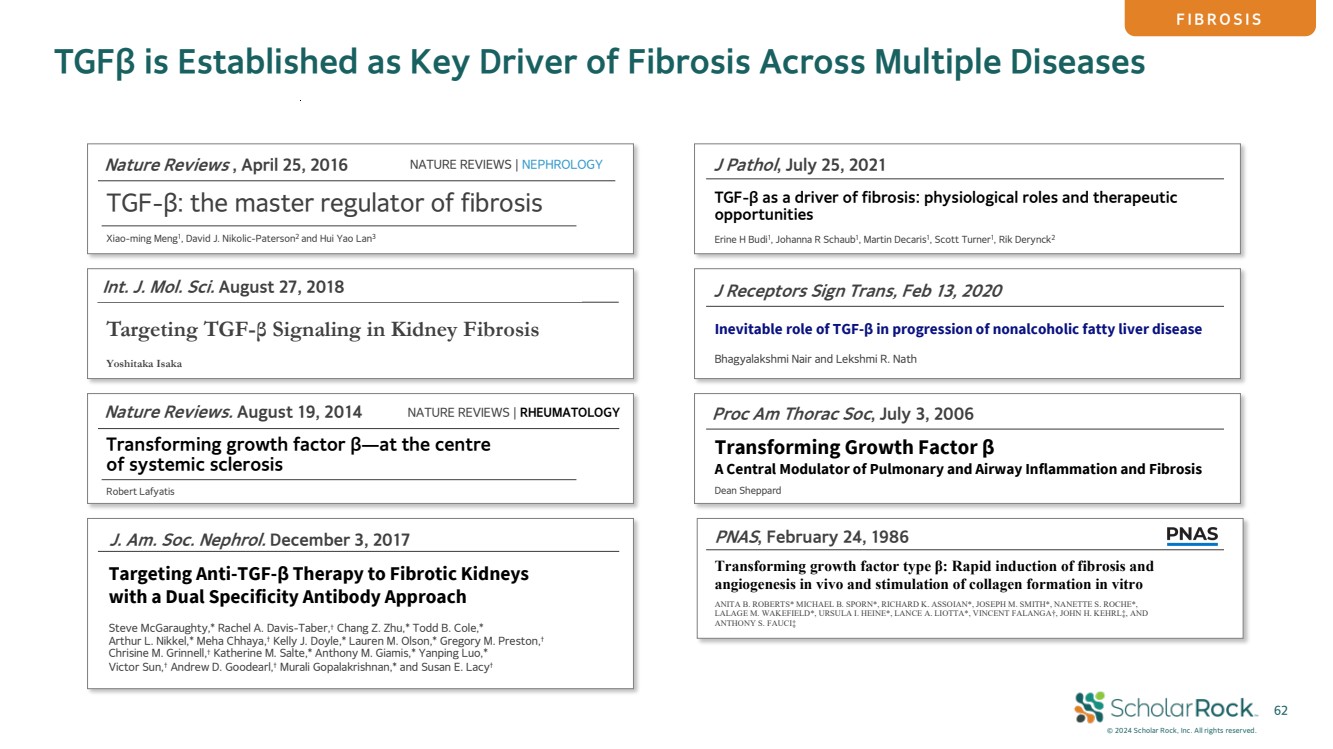
| © 2024 Scholar Rock, Inc. All rights reserved. GARP Presents TGFβ on Tregs LRRC33 Presents TGFβ on Macrophages LTBP1 & 3 Present TGFβ in Connective Tissue Targeting Presenting Molecule/TGFβ-1 Complexes Provides Context Specificity Targeting Latent TGFβ-1 Complexes Creates Multiple “Handles” For Selectivity 63 Latent TGF-β GARP Treg Integrin expressing cell avb8 Integrin Latent TGF-β LRRC33 Macrophage Integrin expressing cell avb8 Integrin Latent TGF-β binding protein (LTBP) Extracellular matrix Fibrillin Latent TGF-β Epithelial Cell avb6 Integrin Latent TGFβ-1 FIBROSIS |
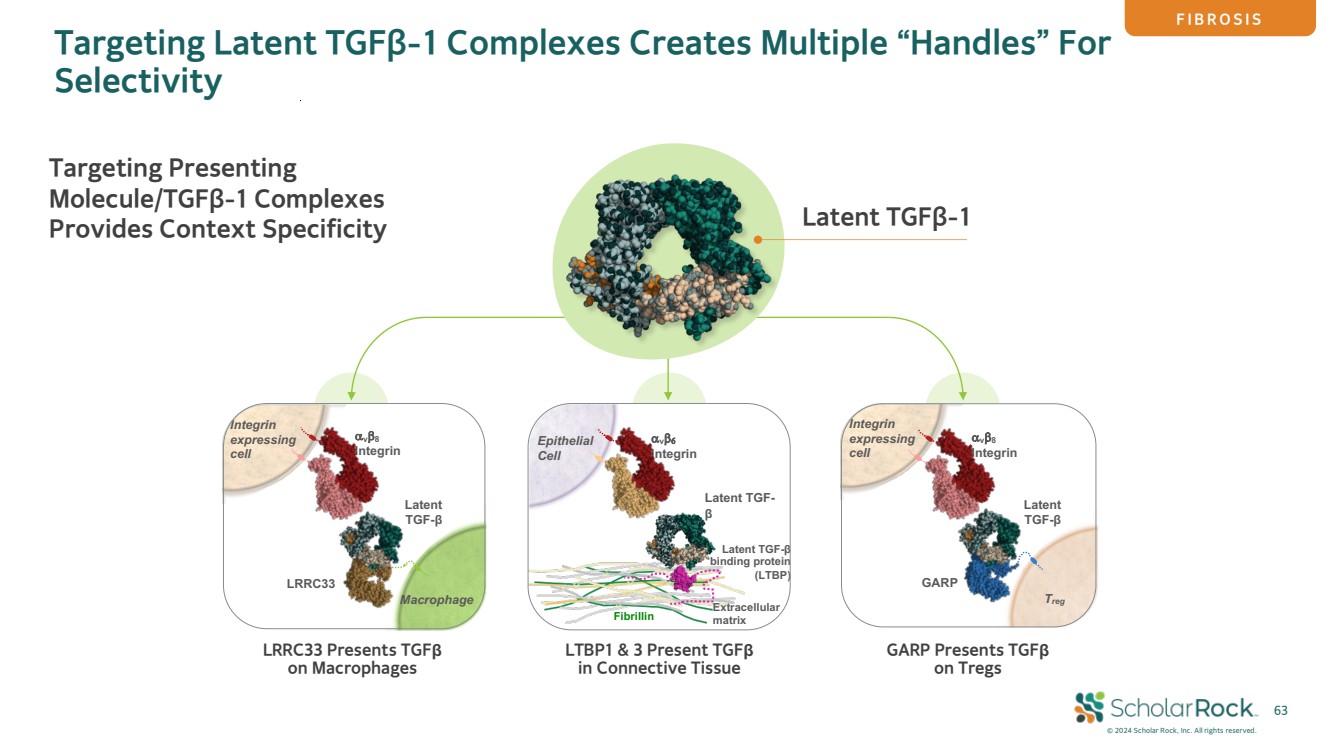
| © 2024 Scholar Rock, Inc. All rights reserved. LTBP-49247 Reduced TGFβ Signaling and Fibrosis in Preclinical Models of Kidney Fibrosis 64 !" !" !" " # $ ! % & ' ! # $ % & ' ( ) * +,-./ !"# $%&G() +H 5678 -.I01G23G4 ()*+) !! LTBP-49247 reduced a TGFβ PD biomarker in kidneys of Col4a3 KO mice (Alport Syndrome model) LTBP-49247 reduced fibrosis in kidneys of Alport model !" !" !" "#" "#$ %#" %#$ & ' ( *H,-,./ 0 1 -,2P45 !"# $%&G() +H 5678 -.I01G23G4 67897 !! ** p < 0.01 One way ANOVA vs. IgG HYP=hydroxyproline • Efficacy also seen in rat model of kidney fibrosis • No observed toxicity in mouse 13-week non-GLP repeat dose study • Favorable PK in cynomolgus monkeys (t1/2 ~28 days) suggests LTBP-49247 is amenable to clinical subcutaneous dosing with promising developability profile FIBROSIS |
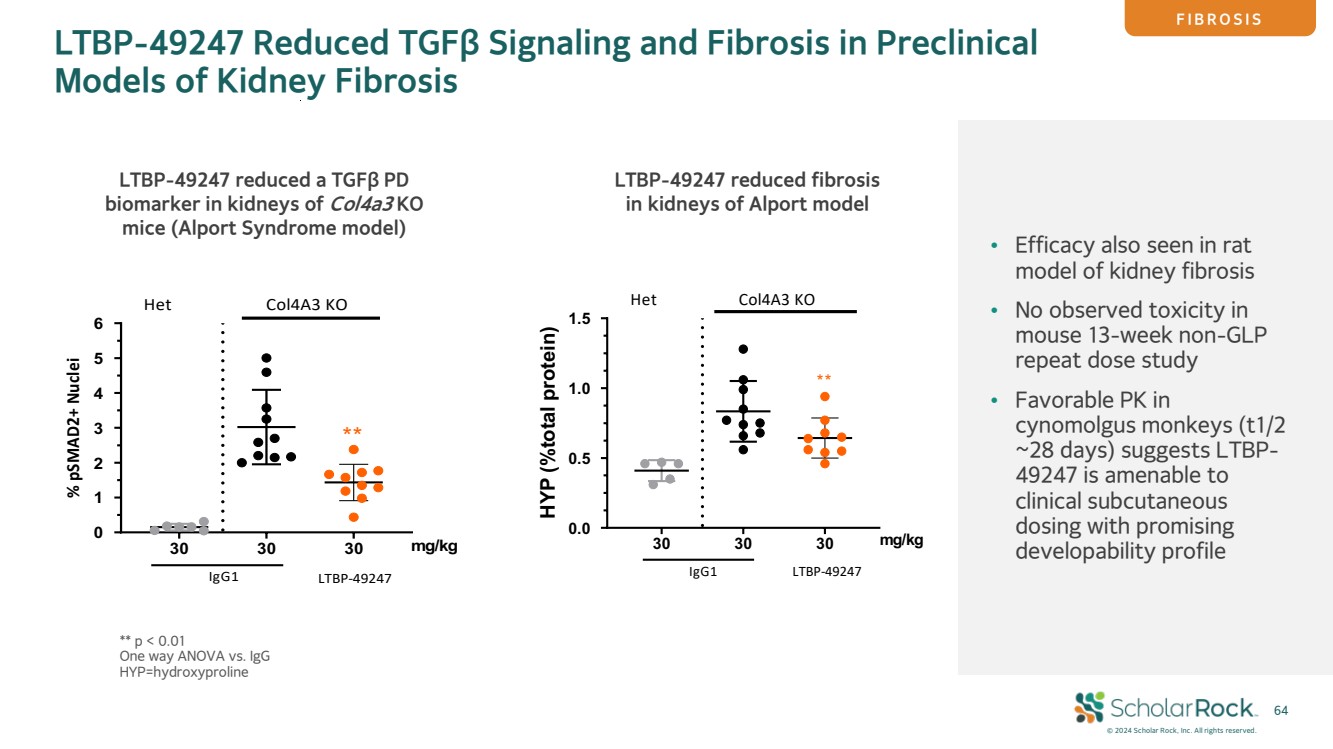
| © 2024 Scholar Rock, Inc. All rights reserved. Significant Opportunities to Address High Unmet Need Across Multiple Fibrotic Indications 65 Alport Syndrome (AS) Focal Segmental Glomerulosclerosis (FSGS) IgA Nephropathy (IgAN) Primary Sclerosing Cholangitis (PSC) Diffuse Cutaneous Systemic Sclerosis (dcSSc) Idiopathic Pulmonary Fibrosis (IPF) Collectively, significant commercial potential given large patient population with clear high unmet need given poor outcomes and lack of effective therapeutics • Significant impact to delay or stop progression to end-stage disease and organ transplant • Expansion opportunities via other indications given shared etiologies FIBROSIS |
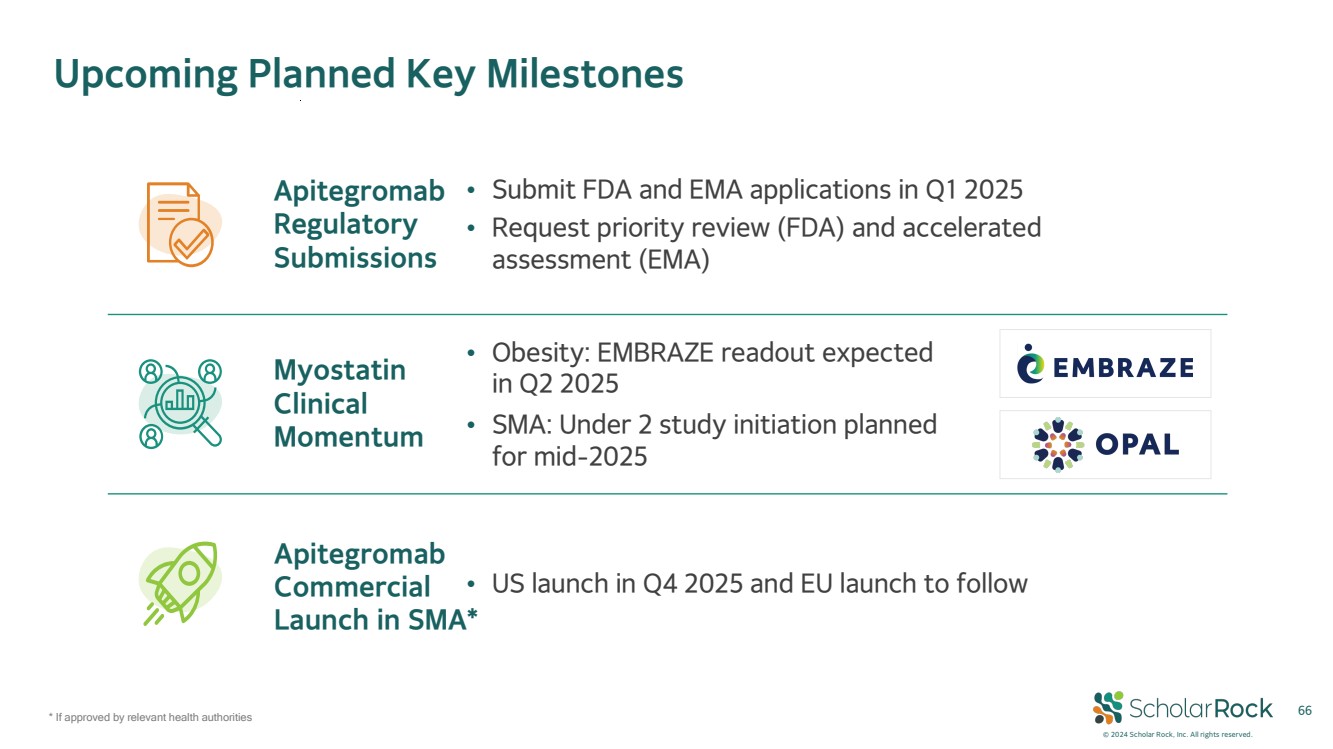
| © 2024 Scholar Rock, Inc. All rights reserved. 66 Upcoming Planned Key Milestones * If approved by relevant health authorities • Submit FDA and EMA applications in Q1 2025 • Request priority review (FDA) and accelerated assessment (EMA) Apitegromab Regulatory Submissions • US launch in Q4 2025 and EU launch to follow Apitegromab Commercial Launch in SMA* • Obesity: EMBRAZE readout expected in Q2 2025 • SMA: Under 2 study initiation planned for mid-2025 Myostatin Clinical Momentum |
| Appendix |

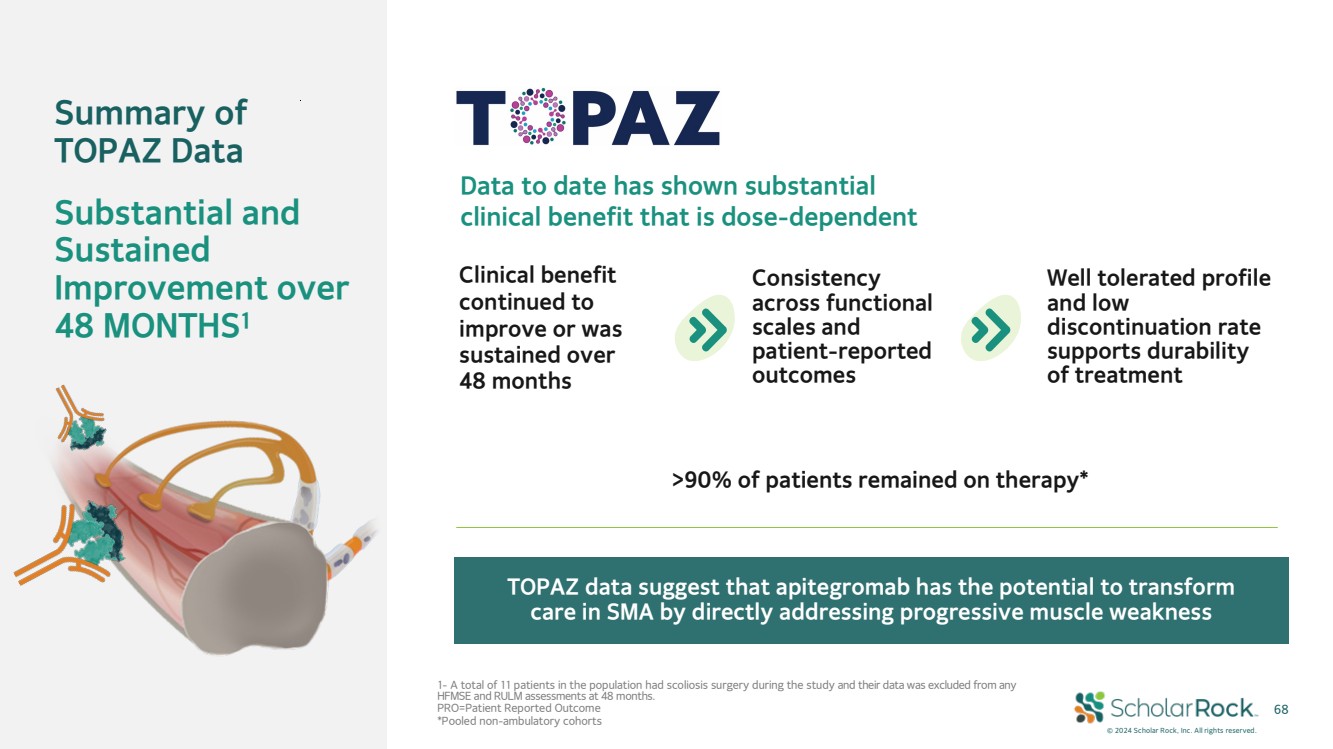
| © 2024 Scholar Rock, Inc. All rights reserved. Substantial and Sustained Improvement over 48 MONTHS1 1- A total of 11 patients in the population had scoliosis surgery during the study and their data was excluded from any HFMSE and RULM assessments at 48 months. PRO=Patient Reported Outcome *Pooled non-ambulatory cohorts Data to date has shown substantial clinical benefit that is dose-dependent TOPAZ data suggest that apitegromab has the potential to transform care in SMA by directly addressing progressive muscle weakness Clinical benefit continued to improve or was sustained over 48 months Consistency across functional scales and patient-reported outcomes Well tolerated profile and low discontinuation rate supports durability of treatment >90% of patients remained on therapy* Summary of TOPAZ Data 68 |
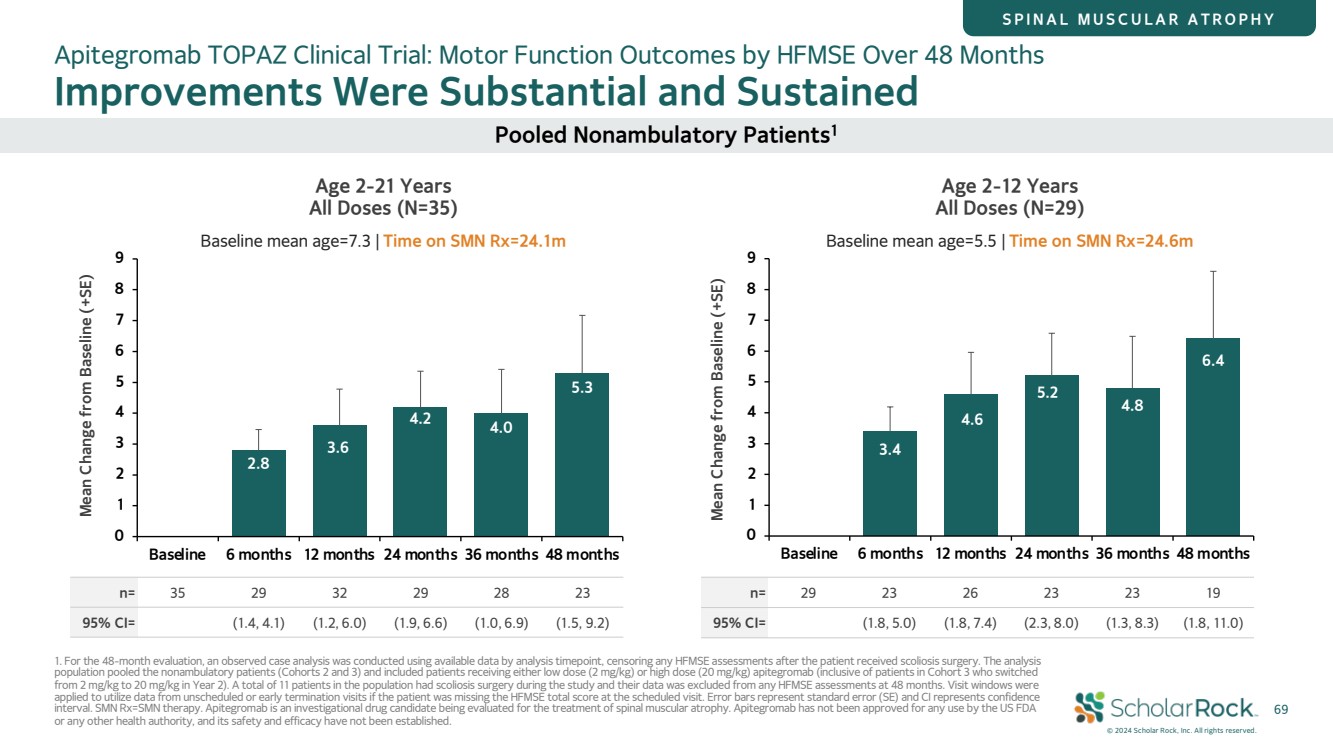
| © 2024 Scholar Rock, Inc. All rights reserved. 3.4 4.6 5.2 4.8 6.4 0 1 2 3 4 5 6 7 8 9 Baseline 6 months 12 months 24 months 36 months 48 months Apitegromab TOPAZ Clinical Trial: Motor Function Outcomes by HFMSE Over 48 Months Improvements Were Substantial and Sustained 1. For the 48-month evaluation, an observed case analysis was conducted using available data by analysis timepoint, censoring any HFMSE assessments after the patient received scoliosis surgery. The analysis population pooled the nonambulatory patients (Cohorts 2 and 3) and included patients receiving either low dose (2 mg/kg) or high dose (20 mg/kg) apitegromab (inclusive of patients in Cohort 3 who switched from 2 mg/kg to 20 mg/kg in Year 2). A total of 11 patients in the population had scoliosis surgery during the study and their data was excluded from any HFMSE assessments at 48 months. Visit windows were applied to utilize data from unscheduled or early termination visits if the patient was missing the HFMSE total score at the scheduled visit. Error bars represent standard error (SE) and CI represents confidence interval. SMN Rx=SMN therapy. Apitegromab is an investigational drug candidate being evaluated for the treatment of spinal muscular atrophy. Apitegromab has not been approved for any use by the US FDA or any other health authority, and its safety and efficacy have not been established. Pooled Nonambulatory Patients1 Mean Change from Baseline (+SE) Mean Change from Baseline (+SE) SPINAL MUSCULAR ATROPHY 2.8 3.6 4.2 4.0 5.3 0 1 2 3 4 5 6 7 8 9 Baseline 6 months 12 months 24 months 36 months 48 months n= 35 29 32 29 28 23 95% CI= (1.4, 4.1) (1.2, 6.0) (1.9, 6.6) (1.0, 6.9) (1.5, 9.2) n= 29 23 26 23 23 19 95% CI= (1.8, 5.0) (1.8, 7.4) (2.3, 8.0) (1.3, 8.3) (1.8, 11.0) Baseline mean age=7.3 | Time on SMN Rx=24.1m Baseline mean age=5.5 | Time on SMN Rx=24.6m Age 2-21 Years All Doses (N=35) Age 2-12 Years All Doses (N=29) 69 |
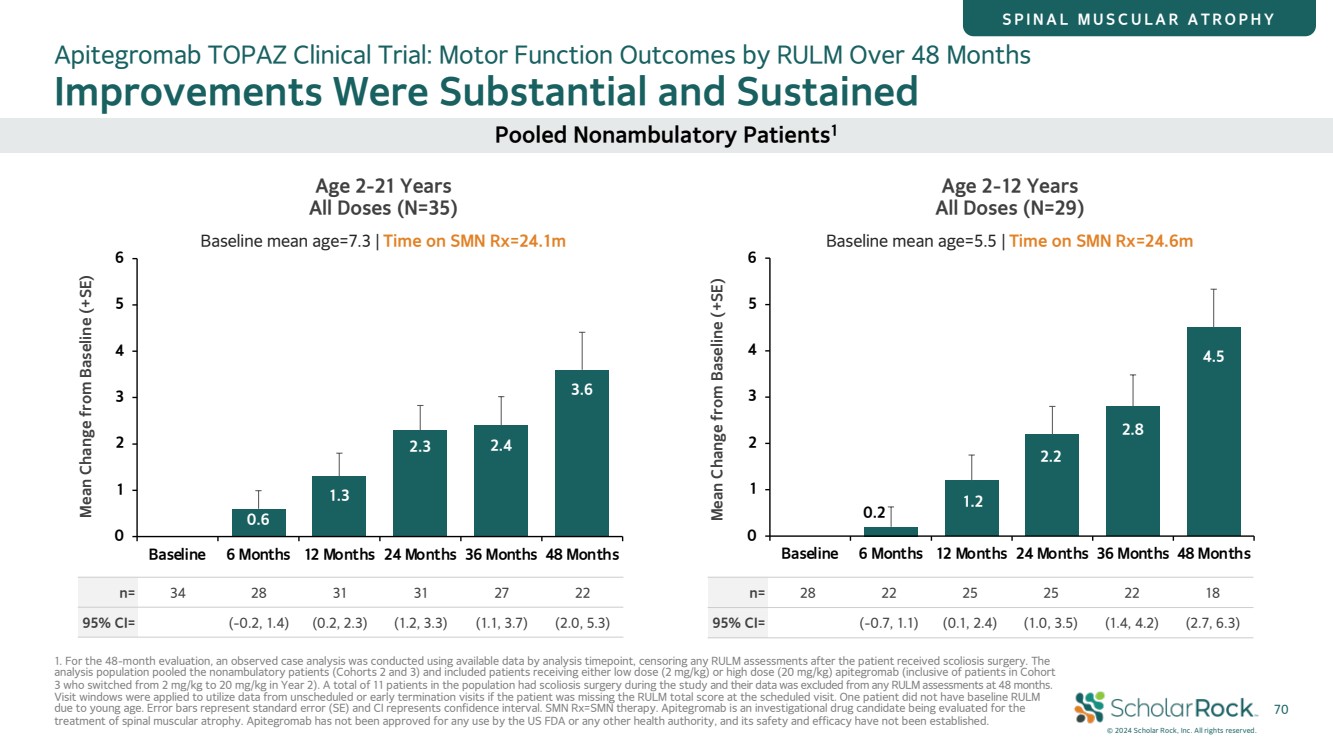
| © 2024 Scholar Rock, Inc. All rights reserved. 0.2 1.2 2.2 2.8 4.5 0 1 2 3 4 5 6 Baseline 6 Months 12 Months 24 Months 36 Months 48 Months 0.6 1.3 2.3 2.4 3.6 0 1 2 3 4 5 6 Baseline 6 Months 12 Months 24 Months 36 Months 48 Months Apitegromab TOPAZ Clinical Trial: Motor Function Outcomes by RULM Over 48 Months Improvements Were Substantial and Sustained 1. For the 48-month evaluation, an observed case analysis was conducted using available data by analysis timepoint, censoring any RULM assessments after the patient received scoliosis surgery. The analysis population pooled the nonambulatory patients (Cohorts 2 and 3) and included patients receiving either low dose (2 mg/kg) or high dose (20 mg/kg) apitegromab (inclusive of patients in Cohort 3 who switched from 2 mg/kg to 20 mg/kg in Year 2). A total of 11 patients in the population had scoliosis surgery during the study and their data was excluded from any RULM assessments at 48 months. Visit windows were applied to utilize data from unscheduled or early termination visits if the patient was missing the RULM total score at the scheduled visit. One patient did not have baseline RULM due to young age. Error bars represent standard error (SE) and CI represents confidence interval. SMN Rx=SMN therapy. Apitegromab is an investigational drug candidate being evaluated for the treatment of spinal muscular atrophy. Apitegromab has not been approved for any use by the US FDA or any other health authority, and its safety and efficacy have not been established. Pooled Nonambulatory Patients1 Mean Change from Baseline (+SE) n= 34 28 31 31 27 22 95% CI= (-0.2, 1.4) (0.2, 2.3) (1.2, 3.3) (1.1, 3.7) (2.0, 5.3) n= 28 22 25 25 22 18 95% CI= (-0.7, 1.1) (0.1, 2.4) (1.0, 3.5) (1.4, 4.2) (2.7, 6.3) SPINAL MUSCULAR ATROPHY Baseline mean age=7.3 | Time on SMN Rx=24.1m Baseline mean age=5.5 | Time on SMN Rx=24.6m Age 2-21 Years All Doses (N=35) Age 2-12 Years All Doses (N=29) 70 Mean Change from Baseline (+SE) |
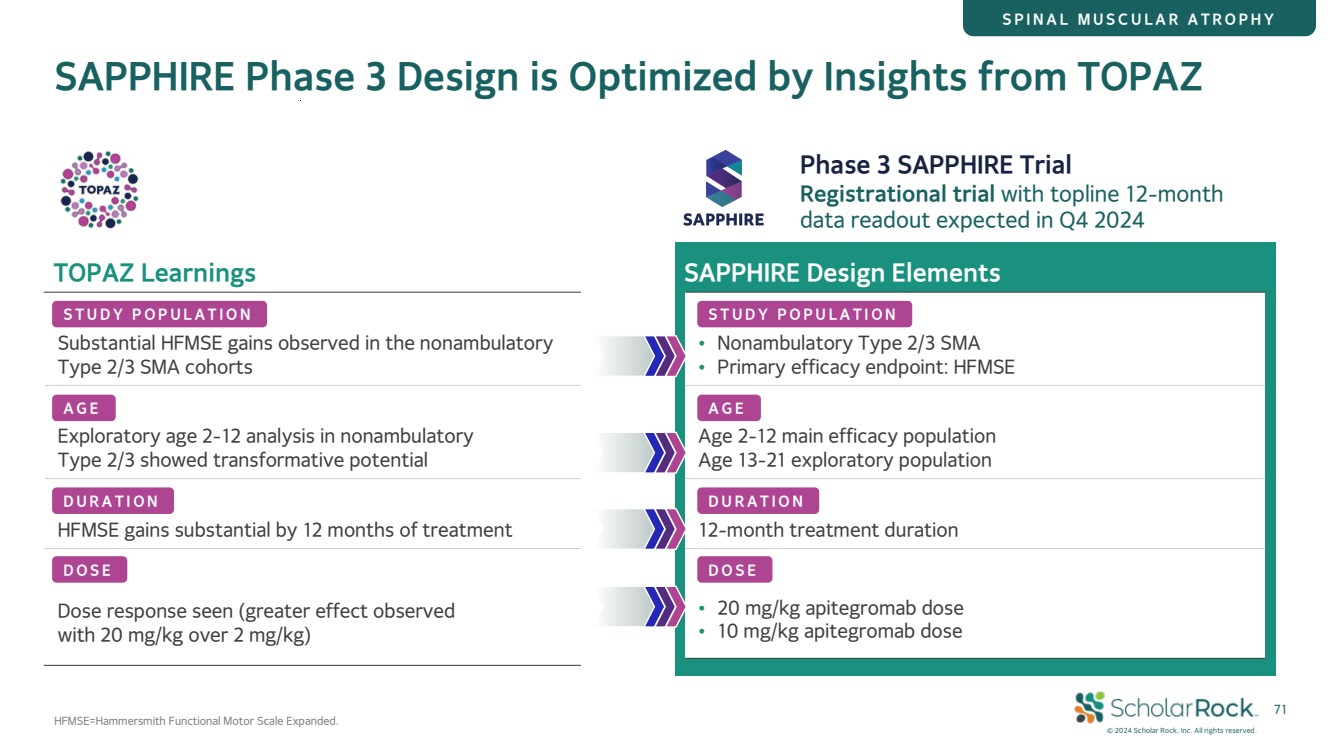
| © 2024 Scholar Rock, Inc. All rights reserved. 71 SAPPHIRE Phase 3 Design is Optimized by Insights from TOPAZ HFMSE=Hammersmith Functional Motor Scale Expanded. Substantial HFMSE gains observed in the nonambulatory Type 2/3 SMA cohorts Exploratory age 2-12 analysis in nonambulatory Type 2/3 showed transformative potential HFMSE gains substantial by 12 months of treatment Dose response seen (greater effect observed with 20 mg/kg over 2 mg/kg) • Nonambulatory Type 2/3 SMA • Primary efficacy endpoint: HFMSE Age 2-12 main efficacy population Age 13-21 exploratory population 12-month treatment duration • 20 mg/kg apitegromab dose • 10 mg/kg apitegromab dose TOPAZ Learnings SAPPHIRE Design Elements Phase 3 SAPPHIRE Trial Registrational trial with topline 12-month data readout expected in Q4 2024 DOSE DURATION AGE STUDY POPULATION DOSE DURATION AGE STUDY POPULATION SPINAL MUSCULAR ATROPHY |
| © 2025 Scholar Rock, Inc. All rights reserved. SRK-181: Potential Transformative Backbone for a New Era of Cancer Immunotherapy |

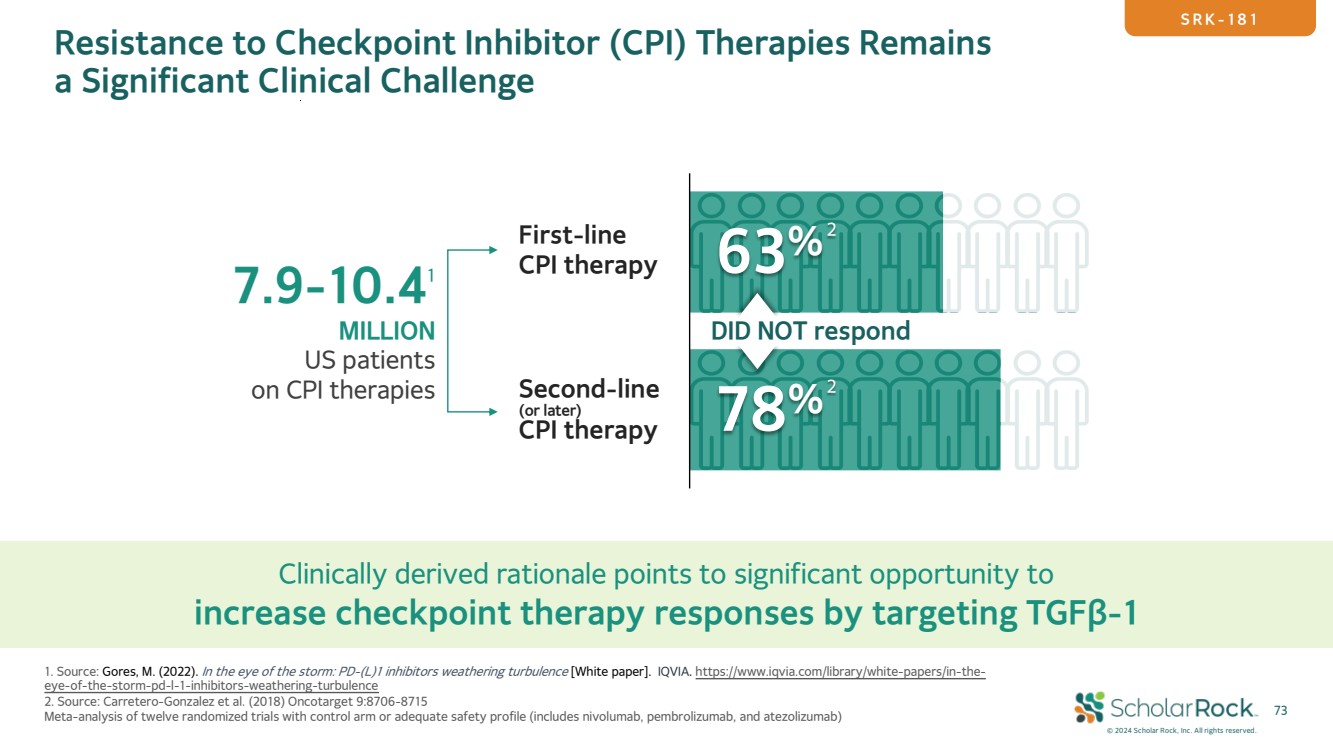
| © 2024 Scholar Rock, Inc. All rights reserved. Resistance to Checkpoint Inhibitor (CPI) Therapies Remains a Significant Clinical Challenge 73 1. Source: Gores, M. (2022). In the eye of the storm: PD-(L)1 inhibitors weathering turbulence [White paper]. IQVIA. https://www.iqvia.com/library/white-papers/in-the-eye-of-the-storm-pd-l-1-inhibitors-weathering-turbulence 2. Source: Carretero-Gonzalez et al. (2018) Oncotarget 9:8706-8715 Meta-analysis of twelve randomized trials with control arm or adequate safety profile (includes nivolumab, pembrolizumab, and atezolizumab) Clinically derived rationale points to significant opportunity to increase checkpoint therapy responses by targeting TGFβ-1 7.9-10.41 MILLION US patients on CPI therapies First-line CPI therapy Second-line (or later) CPI therapy DID NOT respond 63%2 78%2 SRK - 181 |
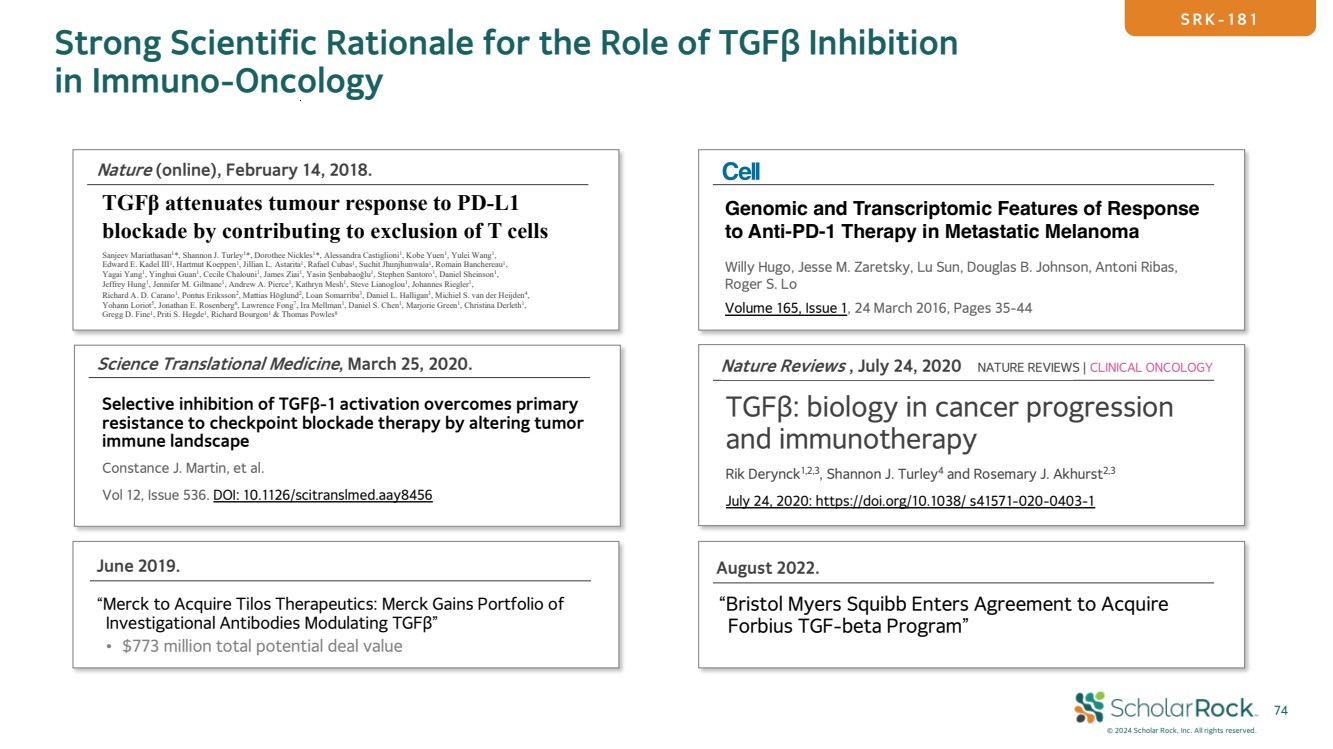
| © 2024 Scholar Rock, Inc. All rights reserved. Strong Scientific Rationale for the Role of TGFβ Inhibition in Immuno-Oncology 74 “Bristol Myers Squibb Enters Agreement to Acquire Forbius TGF-beta Program” August 2022. “Merck to Acquire Tilos Therapeutics: Merck Gains Portfolio of Investigational Antibodies Modulating TGFβ” • $773 million total potential deal value June 2019. Selective inhibition of TGFβ-1 activation overcomes primary resistance to checkpoint blockade therapy by altering tumor immune landscape Science Translational Medicine, March 25, 2020. Constance J. Martin, et al. Vol 12, Issue 536. DOI: 10.1126/scitranslmed.aay8456 Nature (online), February 14, 2018. TGFβ attenuates tumour response to PD-L1 blockade by contributing to exclusion of T cells Sanjeev Mariathasan1 *, Shannon J. Turley1 *, Dorothee Nickles1 *, Alessandra Castiglioni1 , Kobe Yuen1 , Yulei Wang1 , Edward E. Kadel III1, Hartmut Koeppen1, Jillian L. Astarita1, Rafael Cubas1, Suchit Jhunjhunwala1, Romain Banchereau1, Yagai Yang1, Yinghui Guan1, Cecile Chalouni1, James Ziai1, Yasin Şenbabaoğlu1, Stephen Santoro1, Daniel Sheinson1, Jeffrey Hung1, Jennifer M. Giltnane1, Andrew A. Pierce1, Kathryn Mesh1, Steve Lianoglou1, Johannes Riegler1, Richard A. D. Carano1 , Pontus Eriksson2 , Mattias Höglund2 , Loan Somarriba3 , Daniel L. Halligan3 , Michiel S. van der Heijden4 , Yohann Loriot5 , Jonathan E. Rosenberg6 , Lawrence Fong7 , Ira Mellman1 , Daniel S. Chen1 , Marjorie Green1 , Christina Derleth1 , Gregg D. Fine1, Priti S. Hegde1, Richard Bourgon1 & Thomas Powles8 Willy Hugo, Jesse M. Zaretsky, Lu Sun, Douglas B. Johnson, Antoni Ribas, Roger S. Lo Volume 165, Issue 1, 24 March 2016, Pages 35-44 Genomic and Transcriptomic Features of Response to Anti-PD-1 Therapy in Metastatic Melanoma July 24, 2020: https://doi.org/10.1038/ s41571-020-0403-1 Nature Reviews , July 24, 2020 NATURE REVIEWS | CLINICAL ONCOLOGY TGFβ: biology in cancer progression and immunotherapy Rik Derynck1,2,3, Shannon J. Turley4 and Rosemary J. Akhurst2,3 SRK - 181 |
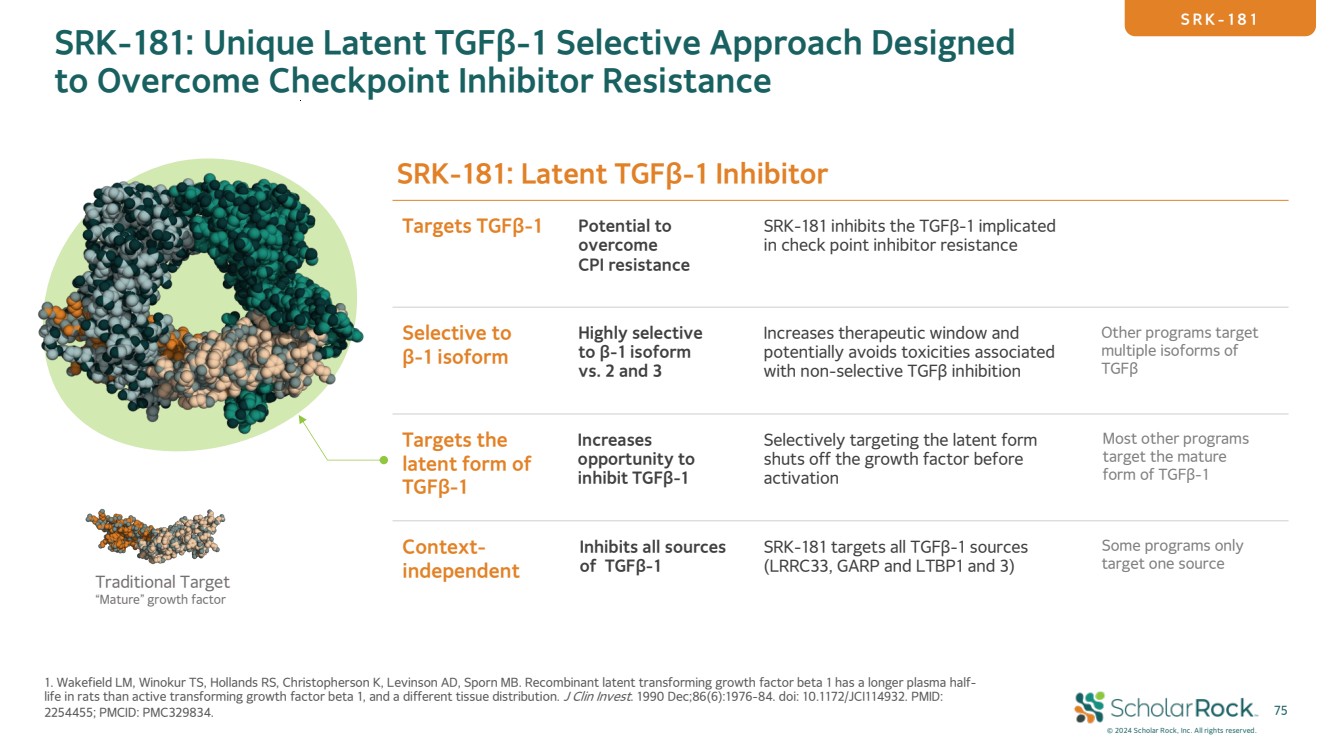
| © 2024 Scholar Rock, Inc. All rights reserved. SRK-181: Unique Latent TGFβ-1 Selective Approach Designed to Overcome Checkpoint Inhibitor Resistance 75 Traditional Target “Mature” growth factor 1. Wakefield LM, Winokur TS, Hollands RS, Christopherson K, Levinson AD, Sporn MB. Recombinant latent transforming growth factor beta 1 has a longer plasma half-life in rats than active transforming growth factor beta 1, and a different tissue distribution. J Clin Invest. 1990 Dec;86(6):1976-84. doi: 10.1172/JCI114932. PMID: 2254455; PMCID: PMC329834. SRK-181: Latent TGFβ-1 Inhibitor Targets TGFβ-1 Potential to overcome CPI resistance SRK-181 inhibits the TGFβ-1 implicated in check point inhibitor resistance Selective to β-1 isoform Highly selective to β-1 isoform vs. 2 and 3 Increases therapeutic window and potentially avoids toxicities associated with non-selective TGFβ inhibition Other programs target multiple isoforms of TGFβ Context-independent Inhibits all sources of TGFβ-1 SRK-181 targets all TGFβ-1 sources (LRRC33, GARP and LTBP1 and 3) Some programs only target one source Targets the latent form of TGFβ-1 Selectively targeting the latent form shuts off the growth factor before activation Increases opportunity to inhibit TGFβ-1 Most other programs target the mature form of TGFβ-1 SRK - 181 |
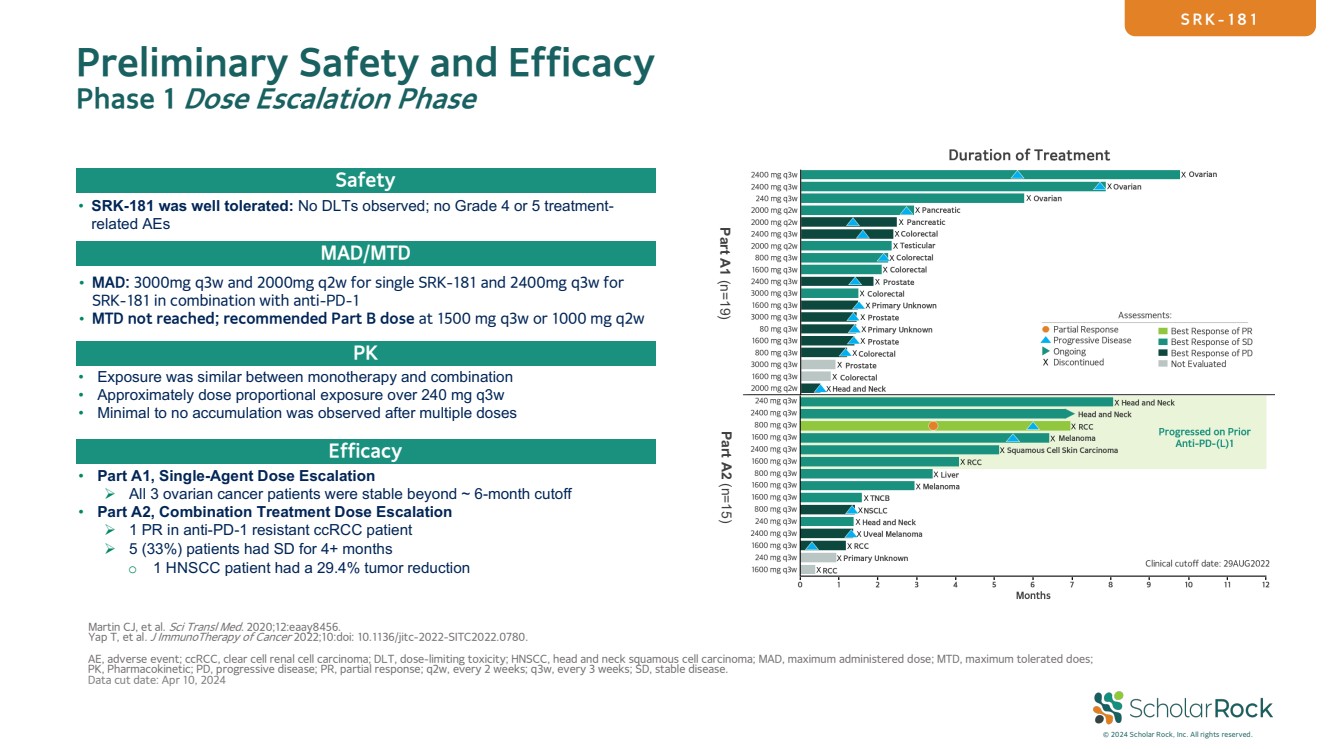
| © 2024 Scholar Rock, Inc. All rights reserved. SRK-181-mIgG1 + Anti-PD1 Overcomes Immune Exclusion 76 Anti-PD1 Anti-PD1/ SRK-181-mIgG1 Overcoming immune exclusion Tumor micro-environment Preclinical data published in Science Translational Medicine. Martin CJ, et al. Sci Transl Med. 2020 Mar 25;12(536):eaay8456. https://scholarrock.com/platform/publications. Data from MBT-2 syngeneic tumor model. Dose 10mg/kg QW for 4 weeks. Overcome Exclusion SRK-181-mIgG1 combination therapy led to influx and amplification of cytotoxic CD8+ cells in preclinical bladder tumor model Immune Exclusion SRK - 181 |
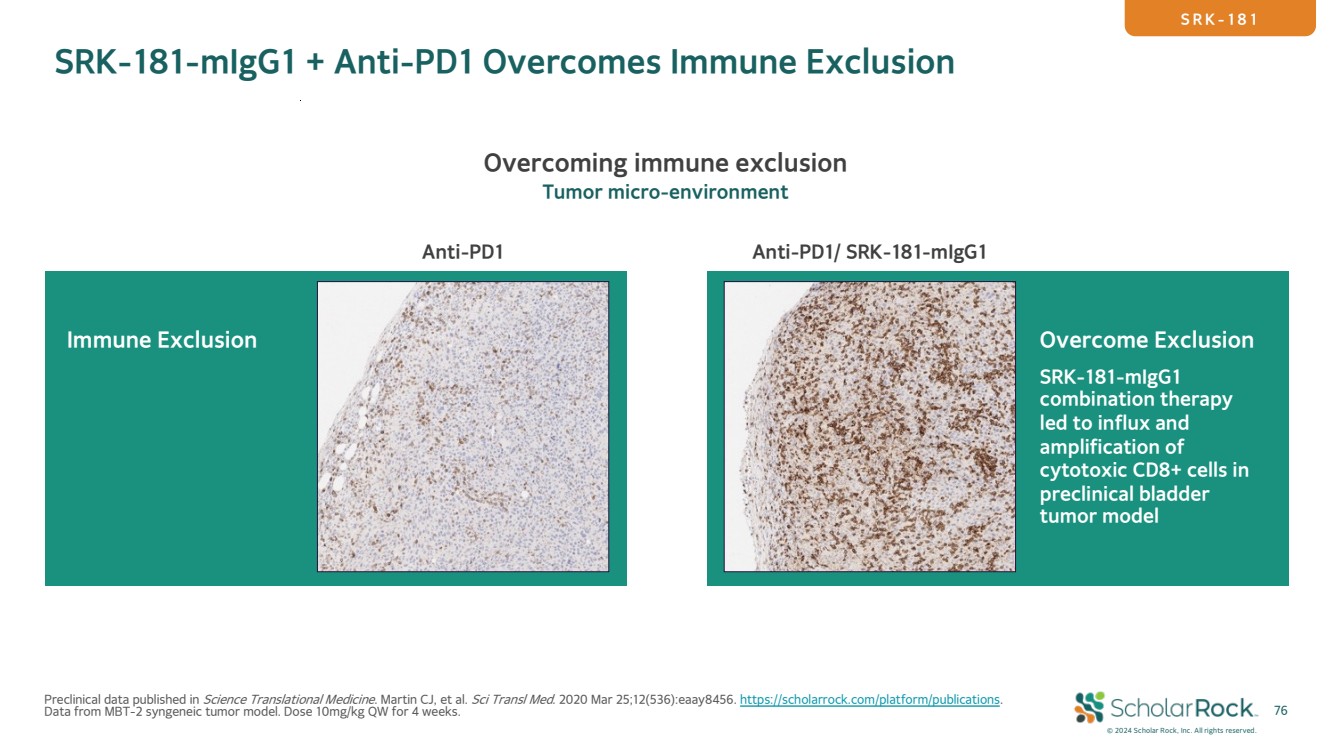
| © 2024 Scholar Rock, Inc. All rights reserved. Phase 1 Clinical Trial Overview *Cohort Any Other was terminated early and HNSCC was added. ADA, anti drug antibody; BOR, best overall response; ccRCC, clear cell renal cell carcinoma; DCR, disease control rate; DoR, duration of response; ECOG, eastern cooperative oncology group; HNSCC, head and neck squamous cell carcinoma; MEL, melanoma; NSCLC, non-small cell lung cancer; ORR, objective response rate; OS, overall survival; PD, progressive disease; PD-1, programmed cell death protein 1; PD-L1, programmed cell death ligand 1; PD-(L)1, PD-1/PD-L1; PFS, progression-free survival; PK, Pharmacokinetic; q2w, every 2 weeks; q3w, every 3 weeks; RECIST, response evaluation criteria in solid tumors; UC, urothelial carcinoma. Part A1: SRK-181 Single Agent (80-3000 mg q3w/2000 mg q2w) All advanced solid tumor n=19 Part A2: SRK-181 + anti-PD-(L)1 (SRK-181: 240-2400mg q3w) Advanced solid tumor non-responders to prior anti-PD-(L)1 n= 15 Dose Escalation (3+3) Study Endpoints Primary: • Safety and tolerability Secondary: • Anti-tumor activity (BOR, ORR, DoR, and DCR) • PK and ADA Exploratory: • Biomarker • PFS, OS, etc. Part B: SRK-181 (1500mg q3w) + Pembrolizumab n=up to 40/cohort Dose Expansion Cohort HNSCC Cohort MEL Cohort UC Cohort NSCLC Cohort Any Other* Cohort ccRCC Key Eligibility Criteria • ≥18-year-old and ECOG 0-1 • Measurable disease per RECIST v1.1 • At least 1 prior line of anti-PD-1 antibody • Part B Cohort ccRCC and HNSCC: § Must have had PD on the most recent prior anti-PD-1 • Part B Cohorts NSCLC, UC and MEL: § Non-responders to all prior anti-PD-1 SRK - 181 |
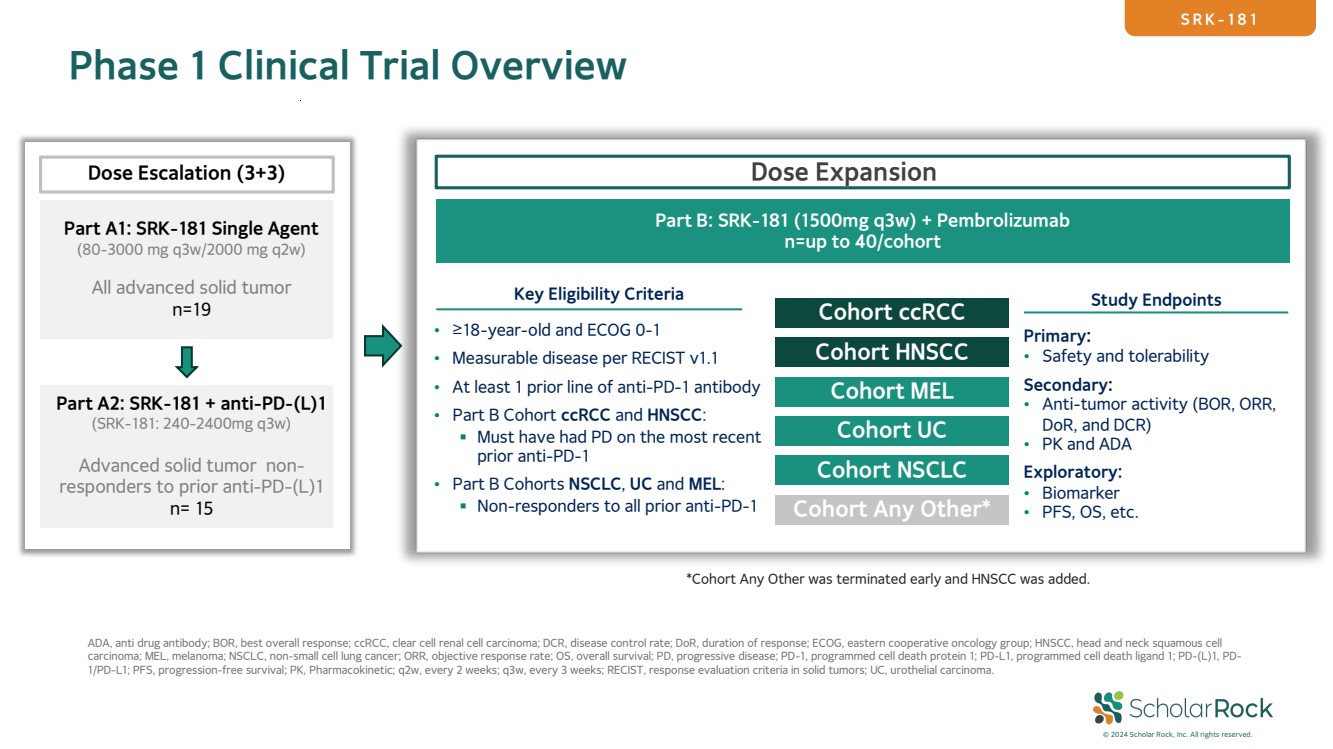
| © 2024 Scholar Rock, Inc. All rights reserved. SRK-181 in Combination with Anti-PD1 Increases Infiltration of CD8+ T Cells in Melanoma 78 • Paired biopsies from 2 melanoma patients were analyzed for CD8 content. • An increase in CD8+ T cell infiltration was observed in both biopsy pairs, overcoming an initially excluded or desert phenotype and resulting in more infiltrated tumor nests. • Shown here is the representative quantification and images from one melanoma patient. Tumor Nest Analysis CD8 Stain – Melanoma, Pre and Post Treatment Primary Compartmental Analysis % CD8+ T cells per compartment ! " #! #" ! #!!! $!!! %!!! C!!! D() +(),-.)/- 0 12P D456-6T) +8. 4( /) 5- 569) :; )<< ; 48/-= !"#$%&D& ED)D*+ I-./$+*0+D& ! "! #! $! %! ! "!!! #!!! $!!! CD() +,-.)/-0) 1 2P4 CD(5)56- +T/ D, 0-() (58- 9:-;; :DT0)< !"#$%&'& E)*+$I-.I'& 0% 10% 20% 30% Whole Tissue Margin Stroma Tumor Pre Post Cutoff Post-Treatment Pre-Treatment SRK - 181 |
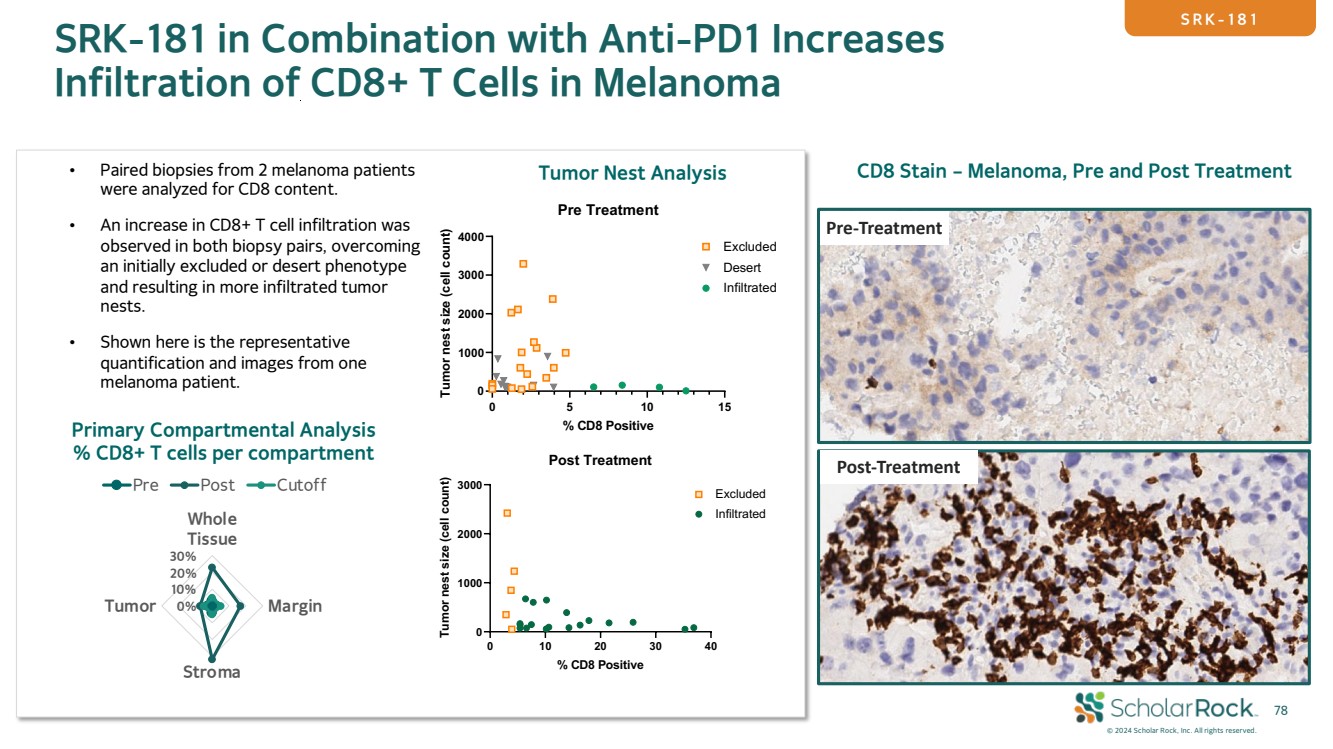
| © 2024 Scholar Rock, Inc. All rights reserved. Preliminary Safety and Efficacy Phase 1 Dose Escalation Phase 79 Part A1 (n=19) Part A2 (n=15) • SRK-181 was well tolerated: No DLTs observed; no Grade 4 or 5 treatment-related AEs Safety Efficacy • Part A1, Single-Agent Dose Escalation Ø All 3 ovarian cancer patients were stable beyond ~ 6-month cutoff • Part A2, Combination Treatment Dose Escalation Ø 1 PR in anti-PD-1 resistant ccRCC patient Ø 5 (33%) patients had SD for 4+ months o 1 HNSCC patient had a 29.4% tumor reduction PK • Exposure was similar between monotherapy and combination • Approximately dose proportional exposure over 240 mg q3w • Minimal to no accumulation was observed after multiple doses MAD/MTD • MAD: 3000mg q3w and 2000mg q2w for single SRK-181 and 2400mg q3w for SRK-181 in combination with anti-PD-1 • MTD not reached; recommended Part B dose at 1500 mg q3w or 1000 mg q2w Martin CJ, et al. Sci Transl Med. 2020;12:eaay8456. Yap T, et al. J ImmunoTherapy of Cancer 2022;10:doi: 10.1136/jitc-2022-SITC2022.0780. AE, adverse event; ccRCC, clear cell renal cell carcinoma; DLT, dose-limiting toxicity; HNSCC, head and neck squamous cell carcinoma; MAD, maximum administered dose; MTD, maximum tolerated does; PK, Pharmacokinetic; PD, progressive disease; PR, partial response; q2w, every 2 weeks; q3w, every 3 weeks; SD, stable disease. Data cut date: Apr 10, 2024 SRK - 181 |
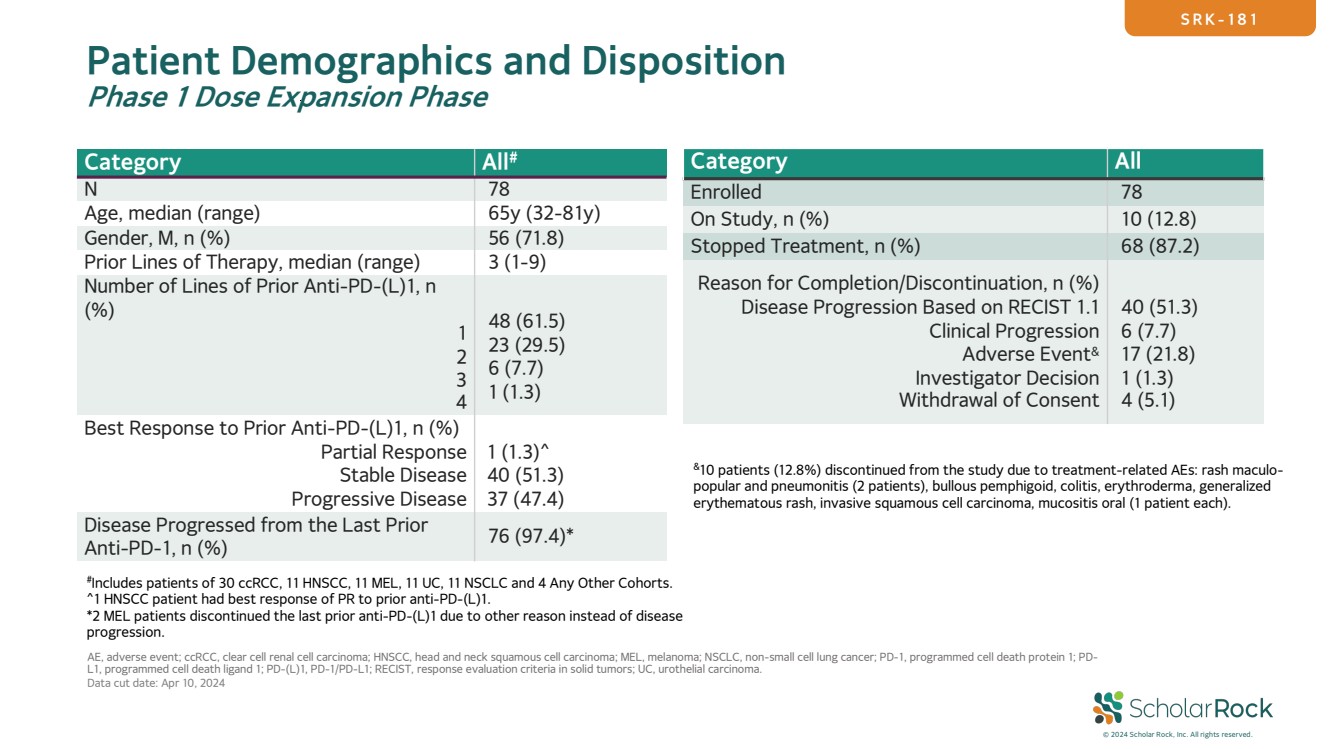
| © 2024 Scholar Rock, Inc. All rights reserved. Patient Demographics and Disposition Phase 1 Dose Expansion Phase 80 Category All# N 78 Age, median (range) 65y (32-81y) Gender, M, n (%) 56 (71.8) Prior Lines of Therapy, median (range) 3 (1-9) Number of Lines of Prior Anti-PD-(L)1, n (%) 1 2 3 4 48 (61.5) 23 (29.5) 6 (7.7) 1 (1.3) Best Response to Prior Anti-PD-(L)1, n (%) Partial Response Stable Disease Progressive Disease 1 (1.3) 40 (51.3) 37 (47.4) Disease Progressed from the Last Prior Anti-PD-1, n (%) 76 (97.4)* Category All Enrolled 78 On Study, n (%) 10 (12.8) Stopped Treatment, n (%) 68 (87.2) Reason for Completion/Discontinuation, n (%) Disease Progression Based on RECIST 1.1 Clinical Progression Adverse Event& Investigator Decision Withdrawal of Consent 40 (51.3) 6 (7.7) 17 (21.8) 1 (1.3) 4 (5.1) #Includes patients of 30 ccRCC, 11 HNSCC, 11 MEL, 11 UC, 11 NSCLC and 4 Any Other Cohorts. 1 HNSCC patient had best response of PR to prior anti-PD-(L)1. *2 MEL patients discontinued the last prior anti-PD-(L)1 due to other reason instead of disease progression. &10 patients (12.8%) discontinued from the study due to treatment-related AEs: rash maculo-popular and pneumonitis (2 patients), bullous pemphigoid, colitis, erythroderma, generalized erythematous rash, invasive squamous cell carcinoma, mucositis oral (1 patient each). AE, adverse event; ccRCC, clear cell renal cell carcinoma; HNSCC, head and neck squamous cell carcinoma; MEL, melanoma; NSCLC, non-small cell lung cancer; PD-1, programmed cell death protein 1; PD-L1, programmed cell death ligand 1; PD-(L)1, PD-1/PD-L1; RECIST, response evaluation criteria in solid tumors; UC, urothelial carcinoma. Data cut date: Apr 10, 2024 SRK - 181 |
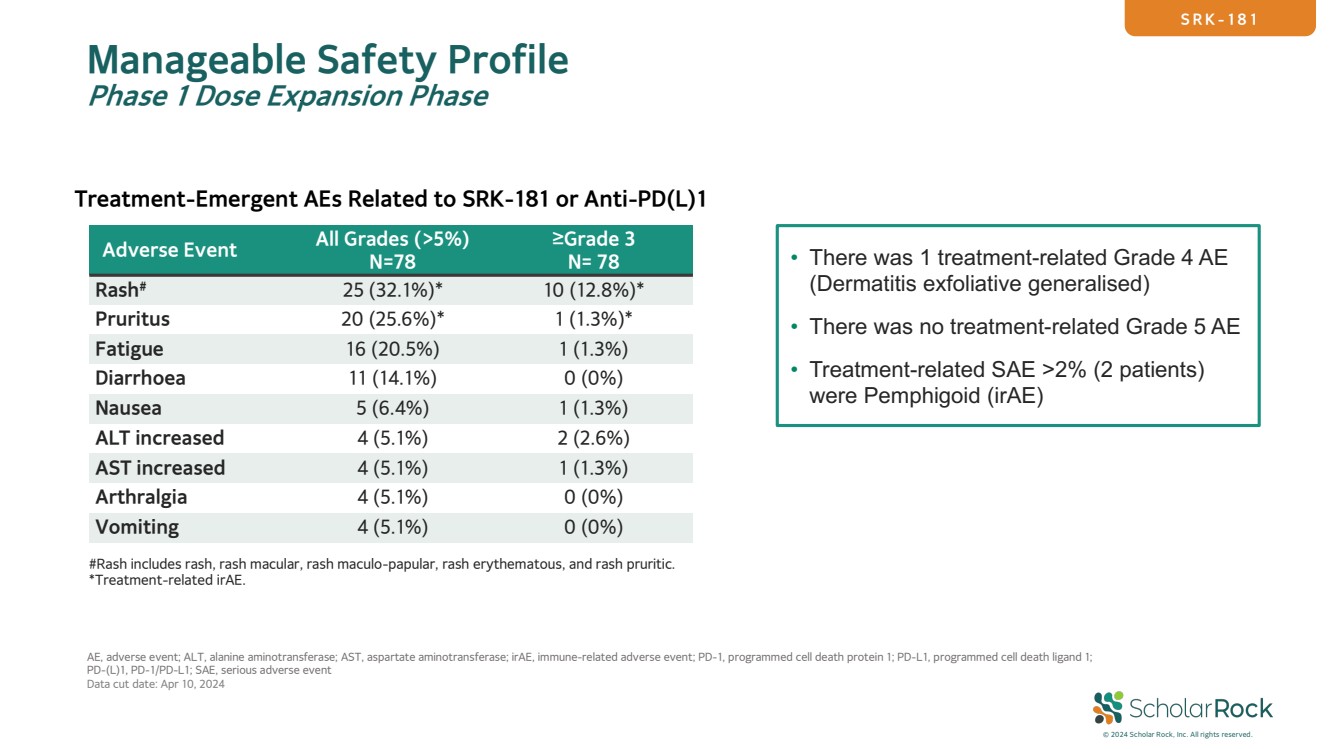
| © 2024 Scholar Rock, Inc. All rights reserved. Manageable Safety Profile Phase 1 Dose Expansion Phase 81 Treatment-Emergent AEs Related to SRK-181 or Anti-PD(L)1 Adverse Event All Grades (>5%) N=78 ≥Grade 3 N= 78 Rash# 25 (32.1%)* 10 (12.8%)* Pruritus 20 (25.6%)* 1 (1.3%)* Fatigue 16 (20.5%) 1 (1.3%) Diarrhoea 11 (14.1%) 0 (0%) Nausea 5 (6.4%) 1 (1.3%) ALT increased 4 (5.1%) 2 (2.6%) AST increased 4 (5.1%) 1 (1.3%) Arthralgia 4 (5.1%) 0 (0%) Vomiting 4 (5.1%) 0 (0%) • There was 1 treatment-related Grade 4 AE (Dermatitis exfoliative generalised) • There was no treatment-related Grade 5 AE • Treatment-related SAE >2% (2 patients) were Pemphigoid (irAE) #Rash includes rash, rash macular, rash maculo-papular, rash erythematous, and rash pruritic. *Treatment-related irAE. AE, adverse event; ALT, alanine aminotransferase; AST, aspartate aminotransferase; irAE, immune-related adverse event; PD-1, programmed cell death protein 1; PD-L1, programmed cell death ligand 1; PD-(L)1, PD-1/PD-L1; SAE, serious adverse event Data cut date: Apr 10, 2024 SRK - 181 |
| © 2024 Scholar Rock, Inc. All rights reserved. Efficacy in Cohort ccRCC Clinical Responses in Heavily Pre-treated and Anti-PD-1 Resistant Patients Efficacy Intent To Treat N=30 ORR 7 (23.3%) Confirmed PR 6 (20%) mDoR (Months) 7.7+ (2.5+, 20.9+) DCR 17 (56.7%) • IMDC score: intermediate 67%; poor 30% • Median lines of prior cancer therapy: 2 (range 1 – 9) Ø 29 (97%) received at least 1 prior anti-PD-1 and TKI Ø All had SD or PD as BOR to the last prior anti-PD-1 Ø All had PD from the last prior anti-PD-1 Pt#1 Pt#1: Screening Lymph node 21.5 mm Pt#1: C8 Lymph node 5 mm BOR, best overall response; DCR, disease control rate; IMDC, International Metastatic Renal Cell Carcinoma Database Consortium; mDoR, median duration of response; ORR, objective response rate; PD, progressive disease; PD-1, programmed cell death protein 1; PR, partial response; SD, stable disease; TKI, tyrosine kinase inhibitor. Data cut date: Apr 10, 2024 Pt#1 SRK - 181 |
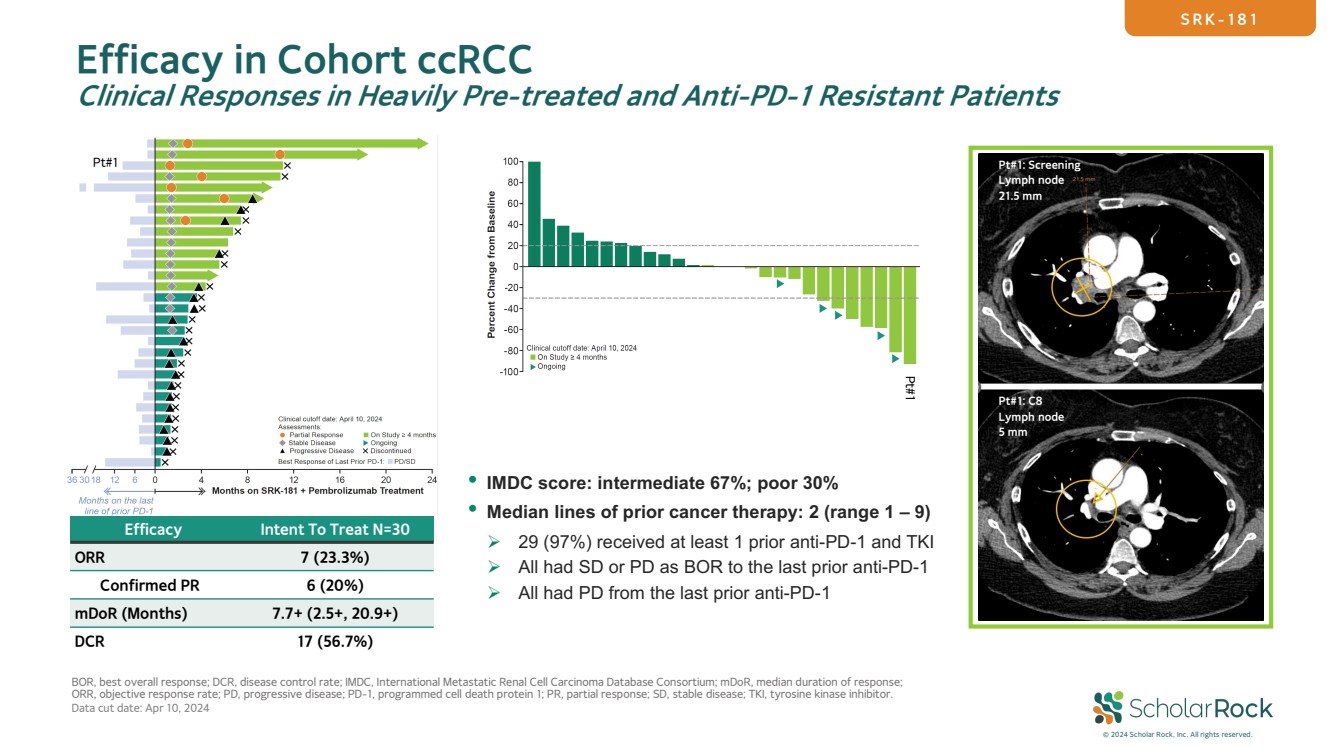
| © 2024 Scholar Rock, Inc. All rights reserved. Proof of Mechanism SRK-181 and Pembrolizumab Treatment Creates a Proinflammatory Microenvironment 83 • SRK-181 and pembrolizumab increase CD8+ T-cells infiltration into tumors across multiple tumor types • CD8+ T-cell were activated (CD8+GrmB+) in responding patients across multiple cohorts • The number of CD8+GrmB+ cells correlates with tumor shrinkage !"! !"# !"$ !"B C#!! CD! ! D! ()G+,-.L0,1OPO45 0 S TO 9 4.: SO ; S T<P = > ? G @ S.A S =O ) B 4 = : S SRK-181 and Pembrolizumab Increased CD8+ Infiltration CD8+ Cytotoxic T-cells were Activated in Responding Patients Line indicates cutoff that defines infiltrated status. Data generated from available paired biopsies that were evaluated using a chromogenic assay. Data generated from available paired biopsies that were evaluated using a multiplex fluorescent assay. Data generated from available post treatment biopsies that were evaluated using a multiplex fluorescent assay. ccRCC, clear cell renal cell carcinoma; CD, cluster of differentiation; GrmB, Granzyme B; HNSCC, head and neck squamous cell carcinoma; NSCLC, non-small cell lung cancer; PD, progressive disease; PR, partial response; SD, stable disease; UC, urothelial carcinoma. Data cut date: Apr 10, 2024 SRK - 181 |
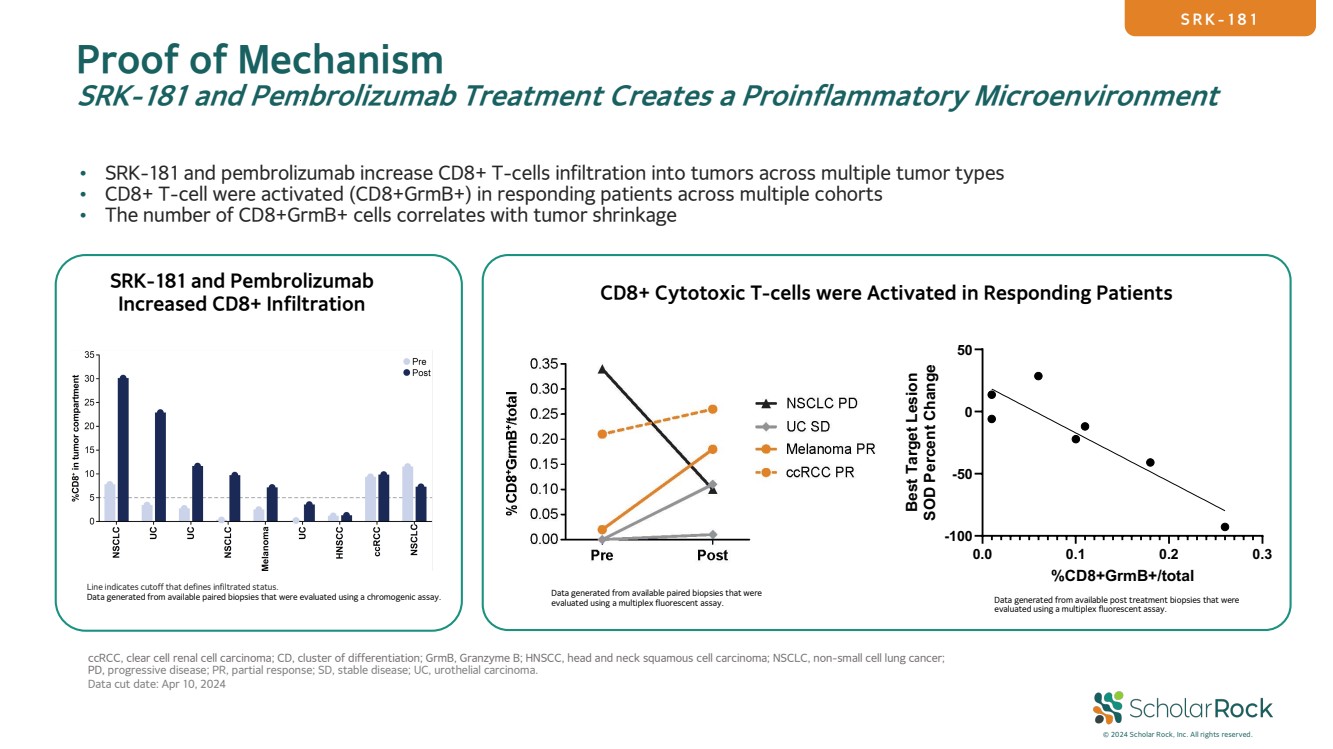
| © 2024 Scholar Rock, Inc. All rights reserved. Biomarker Data May Inform Patient Selection Strategy Baseline CD8+ T-cell Infiltration Status and Baseline Treg Levels Suggest a Higher Chance of Clinical Response 84 • Baseline data was available from 14 patients and 10 were infiltrated • If enrollment had been limited to patients who were infiltrated at baseline: Ø ORR is increased from 23.3% (7/30) to 40% (4/10) Ø mDoR is improved from 7.7 months to 9.3 months ccRCC, clear cell renal cell carcinoma; CD, cluster of differentiation; mDoR, median duration of response; Foxp3, forkhead box p3; ORR, objective response rate; TGFβ1, transforming growth factor beta-1; Treg, T regulatory cells Data cut date: Apr 10, 2024 • Baseline data was available from 11 patients and 6 had elevated Treg levels • If enrollment had been limited to patients with elevated Treg at baseline Ø ORR is increased from 23.3% (7/30) to 50% (3/6) Ø mDoR is improved from 7.7 months to 9.8 months Baseline CD8+ Infiltration Status Suggest a Higher Chance of Response in ccRCC Patients Elevated Baseline Treg (CD4+Foxp3+) Levels within Tumor Compartment Suggest a Higher Chance of Response in ccRCC Patients *1 patient progressed prior to 1st scan, so not represented on spider plot. SRK - 181 |
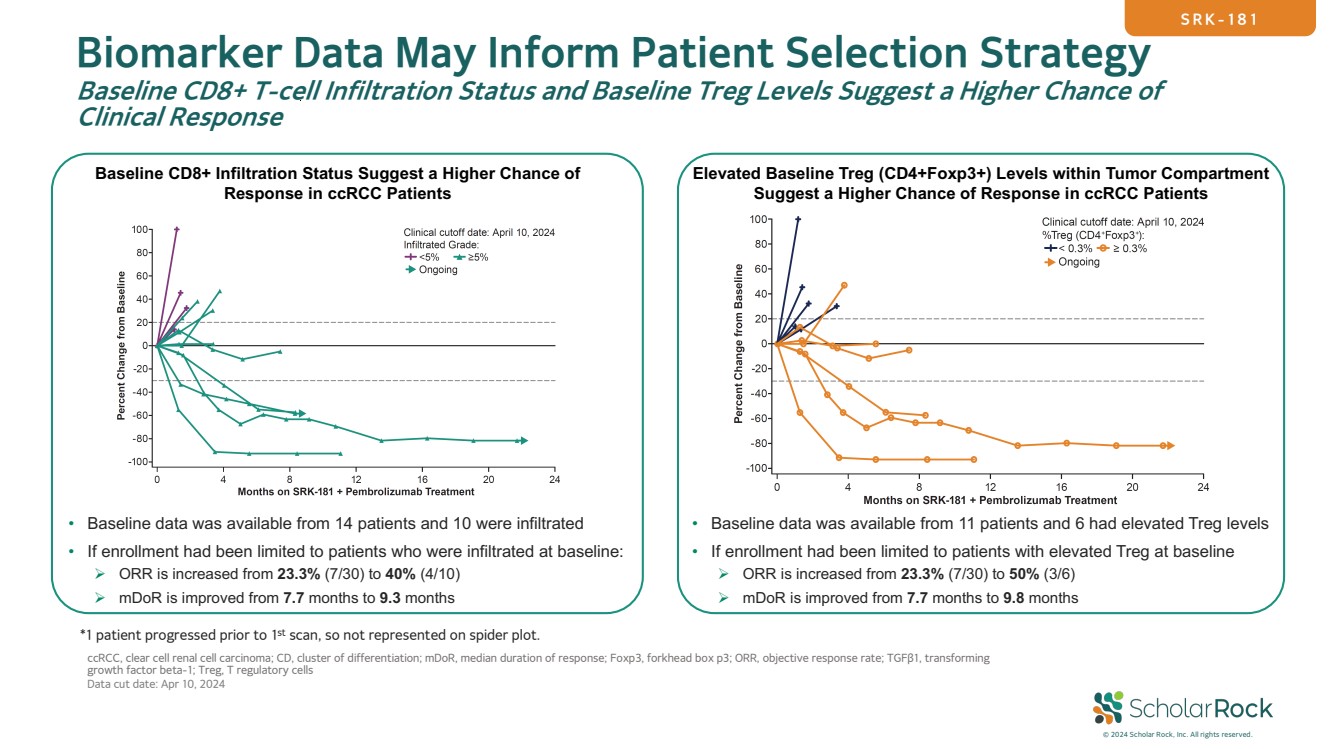
| © 2024 Scholar Rock, Inc. All rights reserved. SRK-181 Summary PD-1=Programmed cell death ligand 1; TGFβ=Transforming growth factor-beta; ccRCC=Clear cell renal cell carcinoma. 1.Sumanta Kumar Pal et al. Atezolizumab plus cabozantinib versus cabozantinib monotherapy for patients with renal cell carcinoma after progression with previous immune checkpoint inhibitor treatment (CONTACT-03): a multicentre, randomised, open-label, phase 3 trial. The Lancet, Volume 402, Issue 10397, 2023, Pages 185-195, https://doi.org/10.1016/S0140-6736(23)00922-4 PD-1/PD-L1) SRK - 181 Enrollment completed December 2023 NEXT STEPS Present ongoing emerging data at future medical meetings Conduct an end of Phase 1 meeting with regulatory authorities to inform next steps • Monoclonal antibody selectively targeting latent and context-independent binding to TGFβ1 • Novel and highly selective inhibition of TGFβ-1 targeting latent form • Offers potential to avoid toxicity and dose-limiting challenges of non-selective TGFβ inhibition approaches Differentiation Ph1 DRAGON Demonstrated Proof-of-Concept in multiple tumor types • Showed objective, durable clinical responses above what is expected from continuing PD-1 alone1 • Biomarker data supports proof-of-mechanism in multiple tumor types 85 |
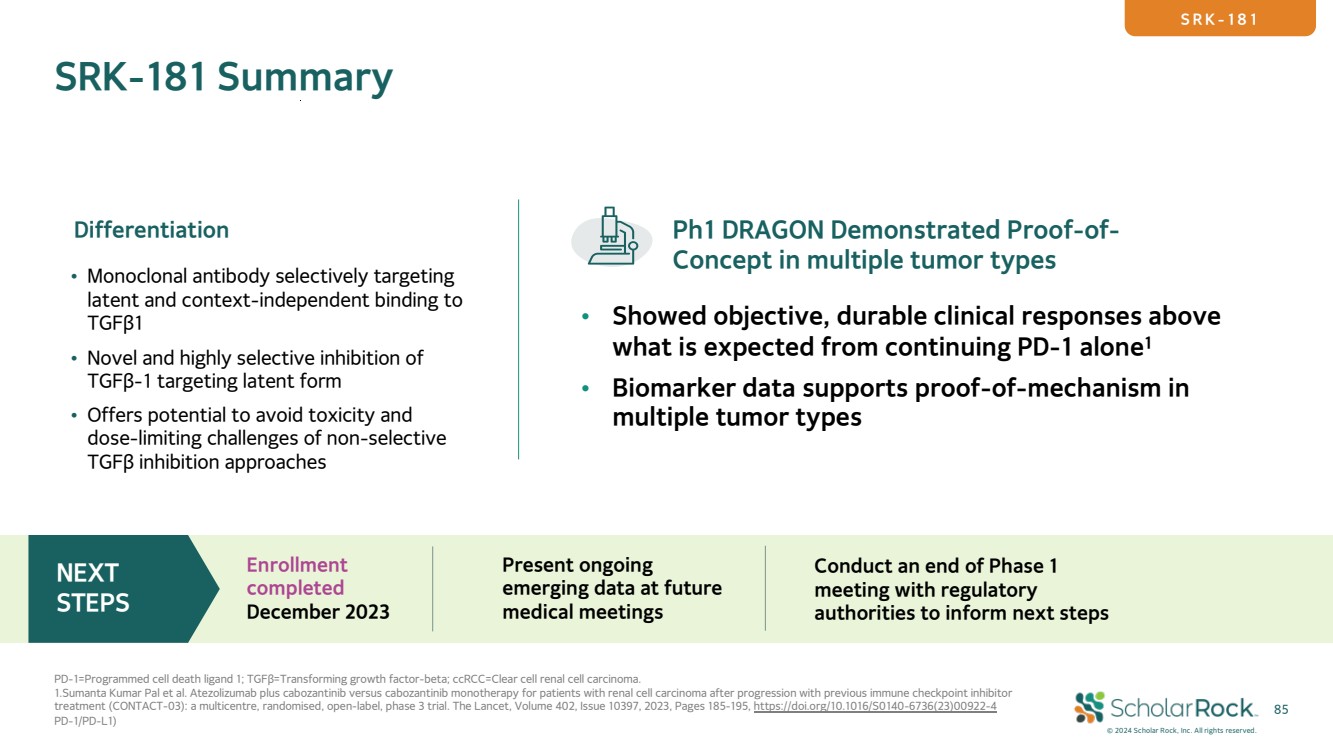
| © 2024 Scholar Rock, Inc. All rights reserved. DRAGON Phase 1 POC Trial to Evaluate SRK-181’s Ability to Overcome Primary Resistance to Checkpoint Inhibitors 86 * A cohort of 2000 mg Q2W (n=3) was also evaluated. **The clear cell RCC and HNSCC cohorts will also explore the effects of SRK-181 in patients with relapsed response after anti-PD-1 treatment. 1. NCT04291079 on www.clinicaltrials.gov. PART B SRK-181 + pembrolizumab; non-responders to prior anti-PD-1 Non-small cell lung cancer SRK-181 + pembrolizumab Urothelial carcinoma SRK-181 + pembrolizumab Cutaneous melanoma SRK-181 + pembrolizumab Clear cell renal cell carcinoma** SRK-181 + pembrolizumab SRK-181 + pembrolizumab Head and neck squamous cell** carcinoma COHORT TREATMENT PART A SRK-181 80 mg (n=1) SRK-181 240 mg (n=1) SRK-181 800 mg (n=3) SRK-181 1600 mg (n=3) SRK-181 2400 mg (n=3) SRK-181 3000 mg (n=3)* SRK-181 all-comers A1 A2 SRK-181+anti-PD-(L)1; non-responders to prior anti-PD-(L)1 SRK-181 240 mg (n=3) SRK-181 800 mg (n=3) SRK-181 1600 mg (n=3) SRK-181 2400 mg (n=3) SRK - 181 |
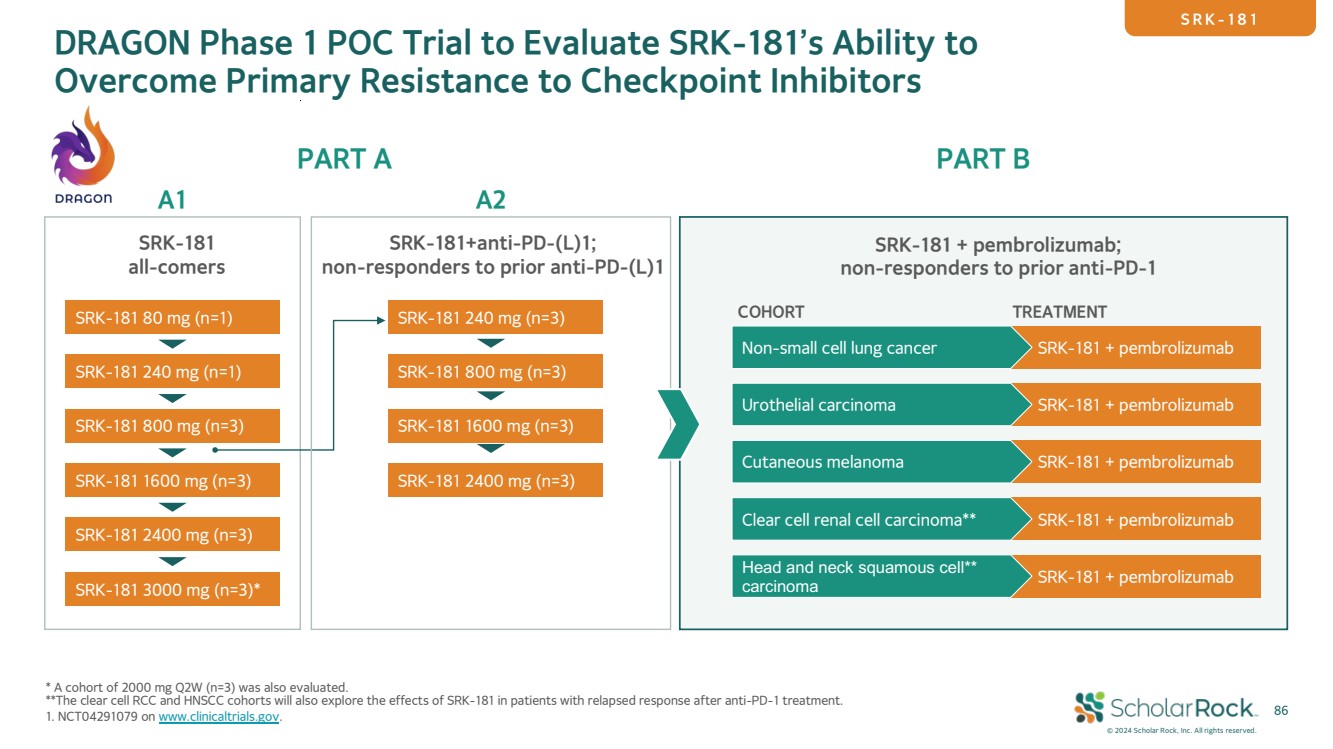
| © 2024 Scholar Rock, Inc. All rights reserved. DRAGON Part A: Safety PART A1 Monotherapy Treatment-Emergent AEs Related to SRK-181, All Grades >10% PART A2 Combination Treatment Treatment-Emergent AEs Related to SRK-181 or Anti-PD(L)1, All Grades >10% Dose (MG) 80 N=1 240 N=1 800 N=3 1600 N=4 2400 N=3 3000 N=3 2000 N=4 All N=19 Fatigue 0 1 0 0 1 0 1 3 (15.8%) Decreased Appetite 1 0 1 0 0 0 0 2 (10.5%) Nausea 1 0 0 0 0 0 1 2 (10.5%) Dose (MG) 240 N=3 800 N=3 1600 N=6 2400 N=3 All N=15 Rash maculo-papular 1 1 1 2 5 (33.3%) Pruritus 1 1 1 1 4 (26.7%) Rash 0 1 0 2 3 (20.0%) Diarrhea 0 0 2 0 2 (13.3%) Pemphigoid 0 0 0 2 2 (13.3%) All dose levels were administered q3w except 2000 mg, which was administered q2w. Treatment-related Grade 3 AEs: • Alanine aminotransferase increased (1 patient) Treatment-related SAEs: • None No DLTs were observed up to 3000 mg q3w and 2000 mg q2w No Grade 4 or 5 treatment-related AEs occurred Treatment-related Grade 3 AEs: • Pruritus (2 patients), blister, immune-mediated lung disease, pemphigoid, rash, rash maculo-popular and rash vesicular (1 patient each) Treatment-related SAEs: • Blister, pruritus, and rash (all in 1 patient) and immune-mediated lung disease (1 patient) No DLTs were observed up to 2400 mg q3w No Grade 4 or 5 treatment-related AEs occurred Yap T et al. Safety and Efficacy Results of SRK-181, a latent TGFβ1 inhibitor, from a Phase 1 trial (DRAGON Trial); Presented at ESMO-TAT; March 7, 2023. *Clinical cutoff date: December 2, 2022. Response is assessed using RECIST v1.1 by PI; the scan is performed during screening, 6 weeks after first dose, every 9 weeks for the next 6 months of treatment, and every 12 weeks thereafter. SRK-181 is an investigational drug candidate that is being evaluated for the treatment of cancer. SRK-181 has not been approved by the US FDA or any other health authority, and its safety and efficacy have not been established. • 87 SRK - 181 |
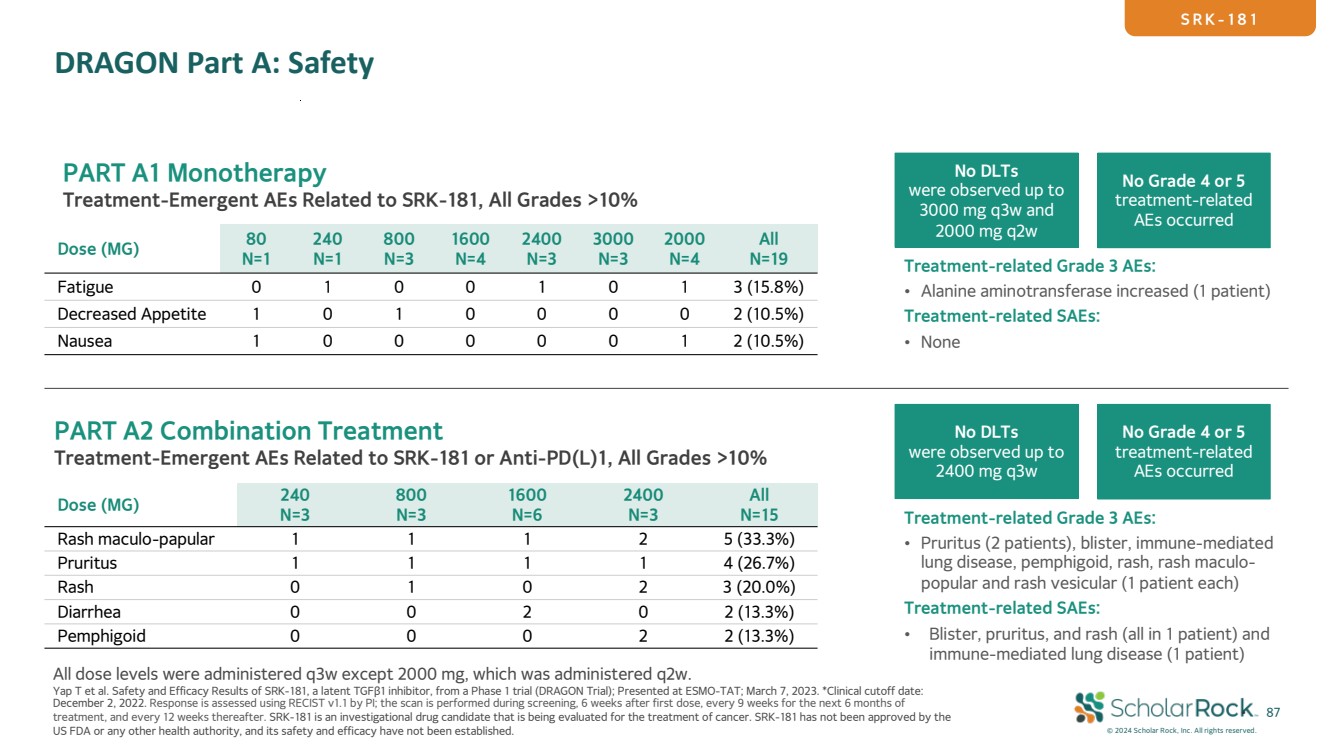
| © 2024 Scholar Rock, Inc. All rights reserved. Duration of Treatment DRAGON Part A: Preliminary Efficacy Data* 88 Part A1 (n=19) Part A2 (n=15) 8 patients had a best response of stable disease (SD) All 3 patients with ovarian cancer were stable for 6-10 months Yap T et al. Safety and Efficacy Results of SRK-181, a latent TGFβ1 inhibitor, from a Phase 1 trial (DRAGON Trial); Presented at ESMO-TAT; March 7, 2023. *Clinical cutoff date: December 2, 2022. Response is assessed using RECIST v1.1 by PI; the scan is performed during screening, 6 weeks after first dose, every 9 weeks for the next 6 months of treatment, and every 12 weeks thereafter. SRK-181 is an investigational drug candidate that is being evaluated for the treatment of cancer. SRK-181 has not been approved by the US FDA or any other health authority, and its safety and efficacy have not been established. • At 800 mg q3w, 1 partial response (PR) was observed in patient with anti-PD-1-resistant clear cell renal cell carcinoma (ccRCC) • 9 patients had best response of SD • 6 patients (green highlight) were stable beyond the 16-week cutoff - 1 ongoing patient with head and neck cancer had a 29.4% tumor reduction SRK - 181 |
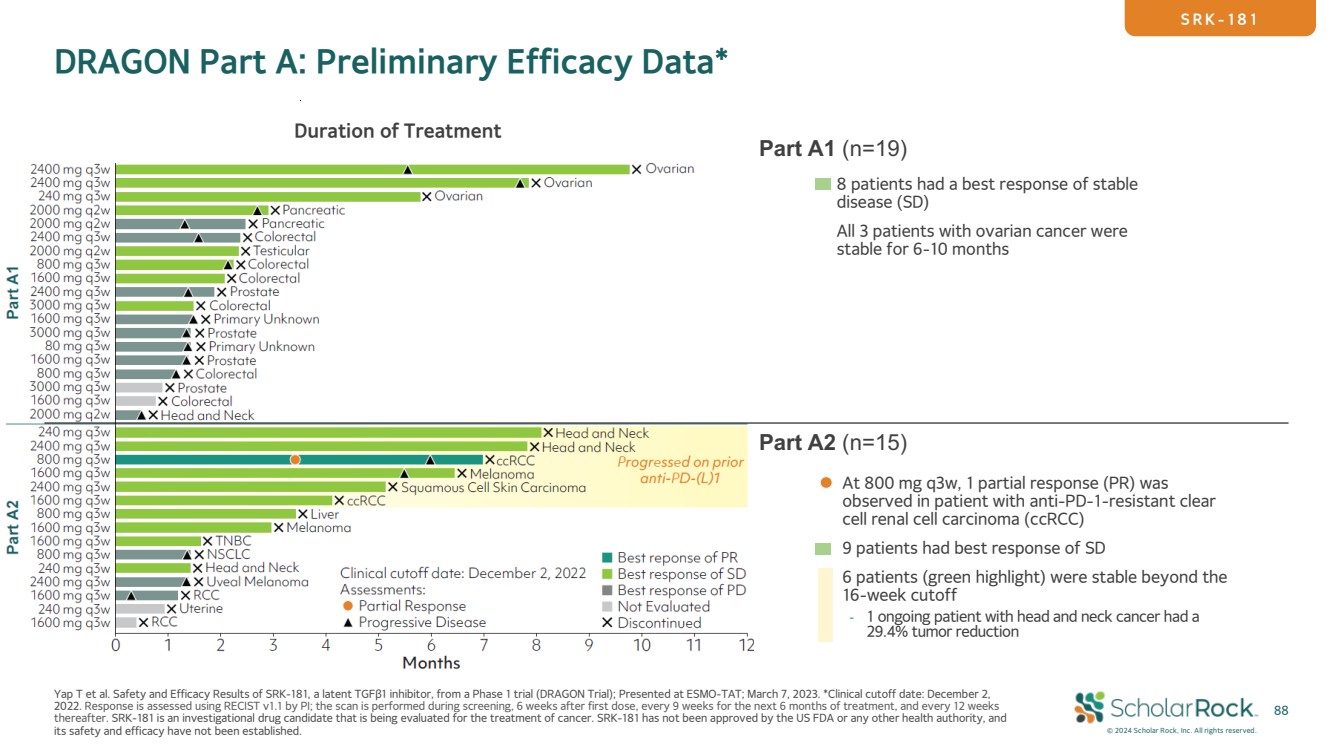
| © 2024 Scholar Rock, Inc. All rights reserved. Mechanism of Action SRK-181, a Selective Anti-TGFβ1 Antibody, Overcomes CPIs Resistance 1.Batlle E, et al. Immunity. 2019; 50(4):924-940. CPI, checkpoint inhibitor; GLP, good laboratory practice; MDSC, myeloid derived suppressor cells; TGFβ1, transforming growth factor beta-1. 89 SRK - 181 |
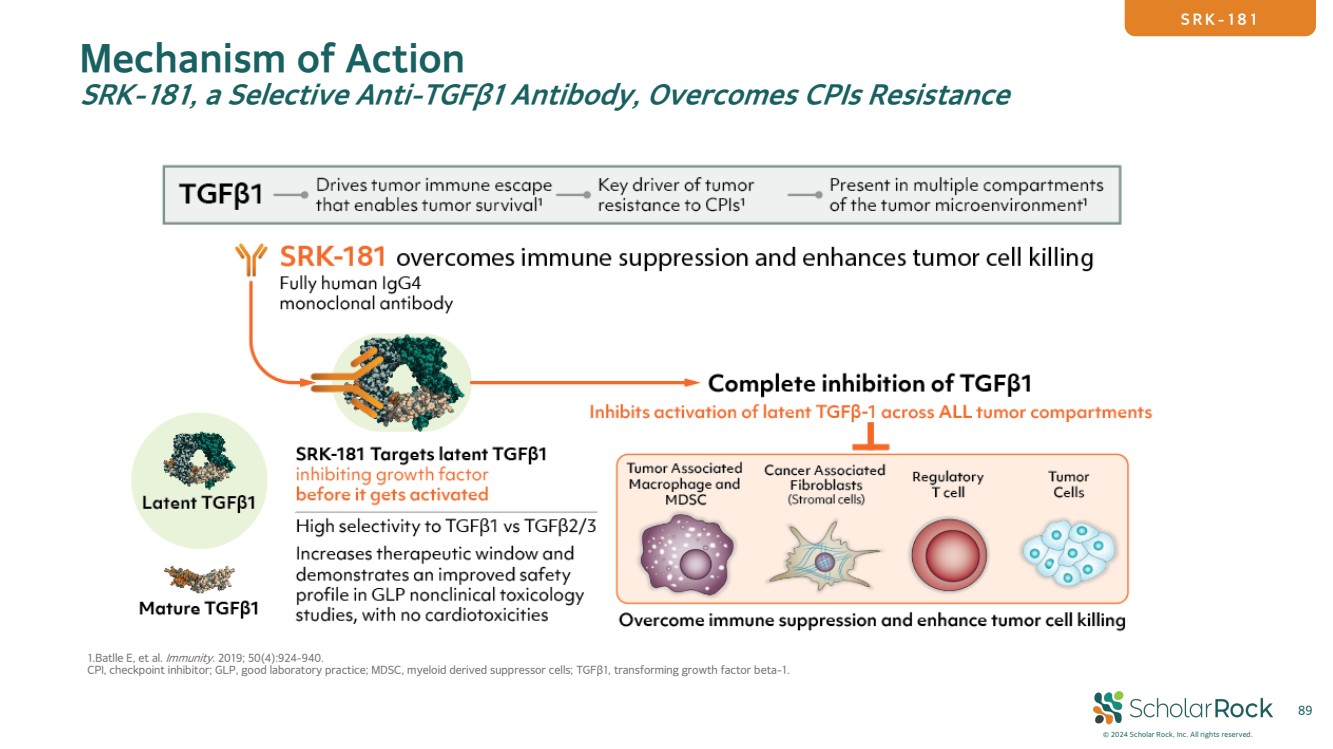
| © 2024 Scholar Rock, Inc. All rights reserved. Efficacy in Cohort MEL Clinical Responses in Anti-PD-1 Non-responders 90 Efficacy Intent To Treat N=11 ORR 3 (27.3%) Confirmed CR 1 (9.1%) Confirmed PR 1 (9.1%) mDoR (Months) 4.9 (1.8, 7.1) DCR 8 (72.7%) • Median lines of prior cancer therapy: 3 (range 1 – 7) Ø All have SD or PD as BOR to the last prior anti-PD-1 Ø 9 (82%) had PD from the last prior anti-PD-1 BOR, best overall response; CR, complete response; DCR, disease control rate; mDoR, median duration of response; MEL, melanoma; ORR, objective response rate; PD, progressive disease; PD-1, programmed cell death protein 1; PR, partial response. Data cut date: Apr 10, 2024 Pt#1 Pt#1: Screening Axillary lymph node 17.5 mm Pt#1: C3 Axillary lymph node 10.1 mm Pt#1 SRK - 181 |
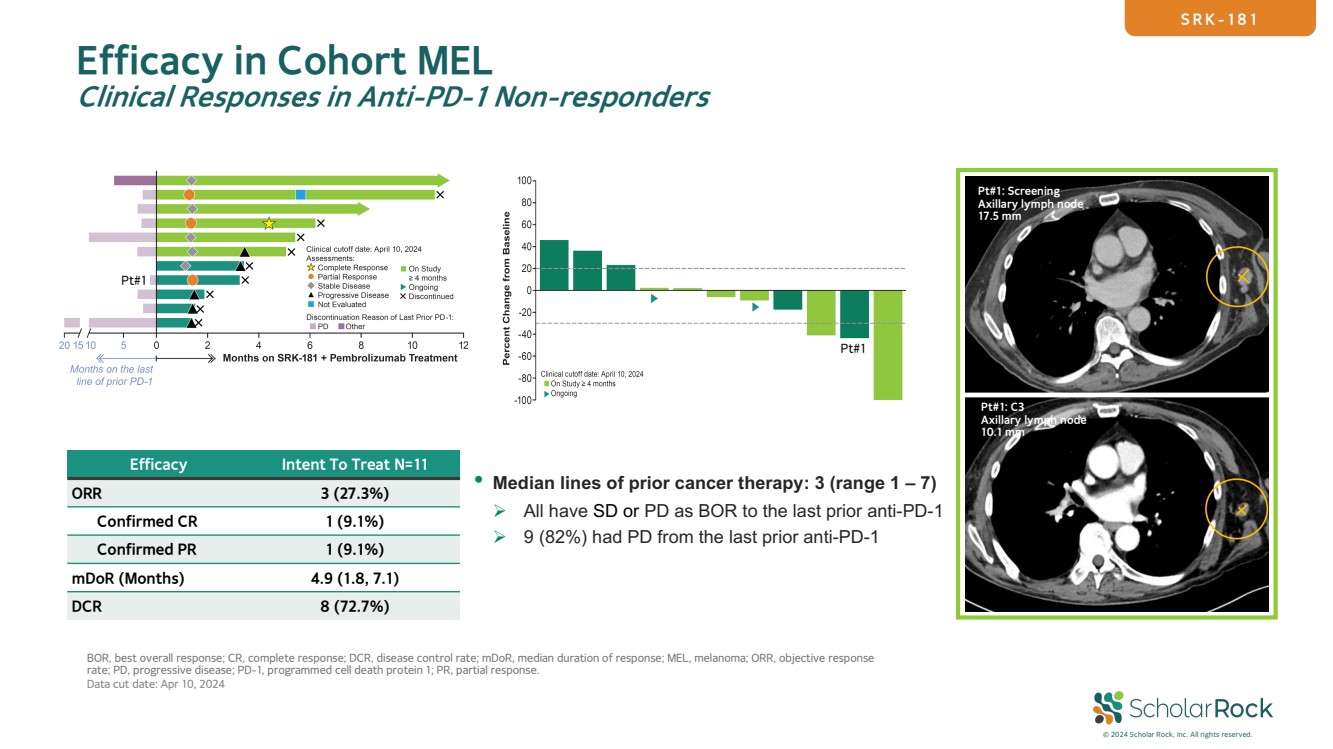
| © 2024 Scholar Rock, Inc. All rights reserved. Efficacy in Cohort UC Clinical Responses in Anti-PD-1 Non-responders 91 91 Efficacy Intent To Treat N=11 ORR 1 (9.1%) Confirmed PR 1 (9.1%) mDoR (Months) 12.9 (12.9, 12.9) DCR 5 (45.5%) • Median lines of prior cancer therapy: 4 (range 2 – 5) Ø All have SD or PD as BOR to the last prior anti-PD-1 Ø All had PD from the last prior anti-PD-1 Pt#1 BOR, best overall response; DCR, disease control rate; mDoR, median duration of response; ORR, objective response rate; PD, progressive disease; PD-1, programmed cell death protein 1; PR, partial response; SD, stable disease; UC, urothelial carcinoma. Data cut date: Apr 10, 2024 Pt#1: Screening Lung nodule 59 mm Pt#1: C26 Lung nodule 41.1 mm Pt#1 SRK - 181 |
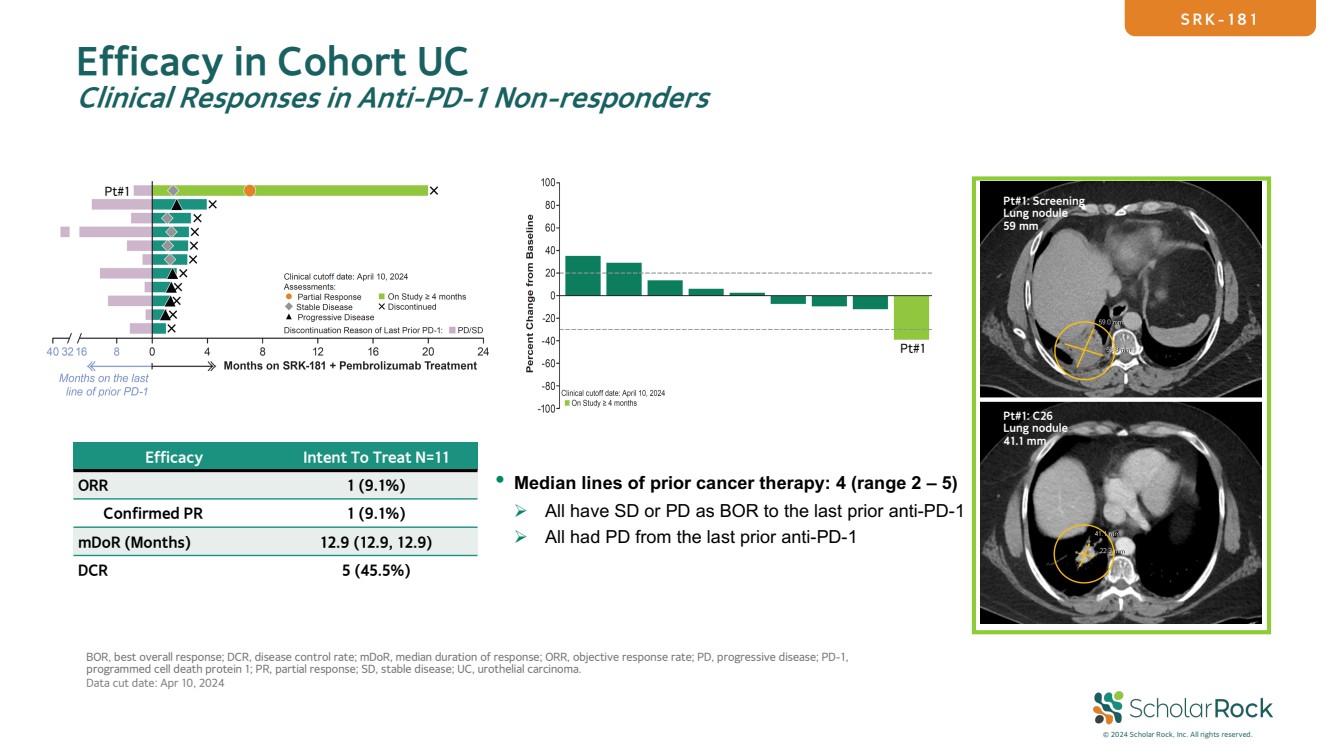
| © 2024 Scholar Rock, Inc. All rights reserved. Efficacy in Cohort HNSCC Clinical Responses in Heavily Pre-treated and Anti-PD-1 Resistant Patients 92 Efficacy Intent To Treat N=11 ORR 2 (18.2%) Confirmed PR 1 (9.1%) mDoR (Months) 2.2+ (0.1, 4.3+) DCR 4 (36.4%) Pt#1: Screening Lung nodule 16 mm Pt#1: C3 Lung nodule 0 mm BOR, best overall response; DCR, disease control rate; HNSCC, head and neck squamous cell carcinoma; mDoR, median duration of response; ORR, objective response rate; PD, progressive disease; PD-1, programmed cell death protein 1; PR, partial response; SD, stable disease. Data cut date: Apr 10, 2024 Pt#1 Pt#1 • Median lines of prior cancer therapy: 3 (range 1 – 7) Ø 10 (91%) have SD or PD as BOR to the last prior anti-PD-1 Ø All had PD from the last prior anti-PD-1 SRK - 181 |
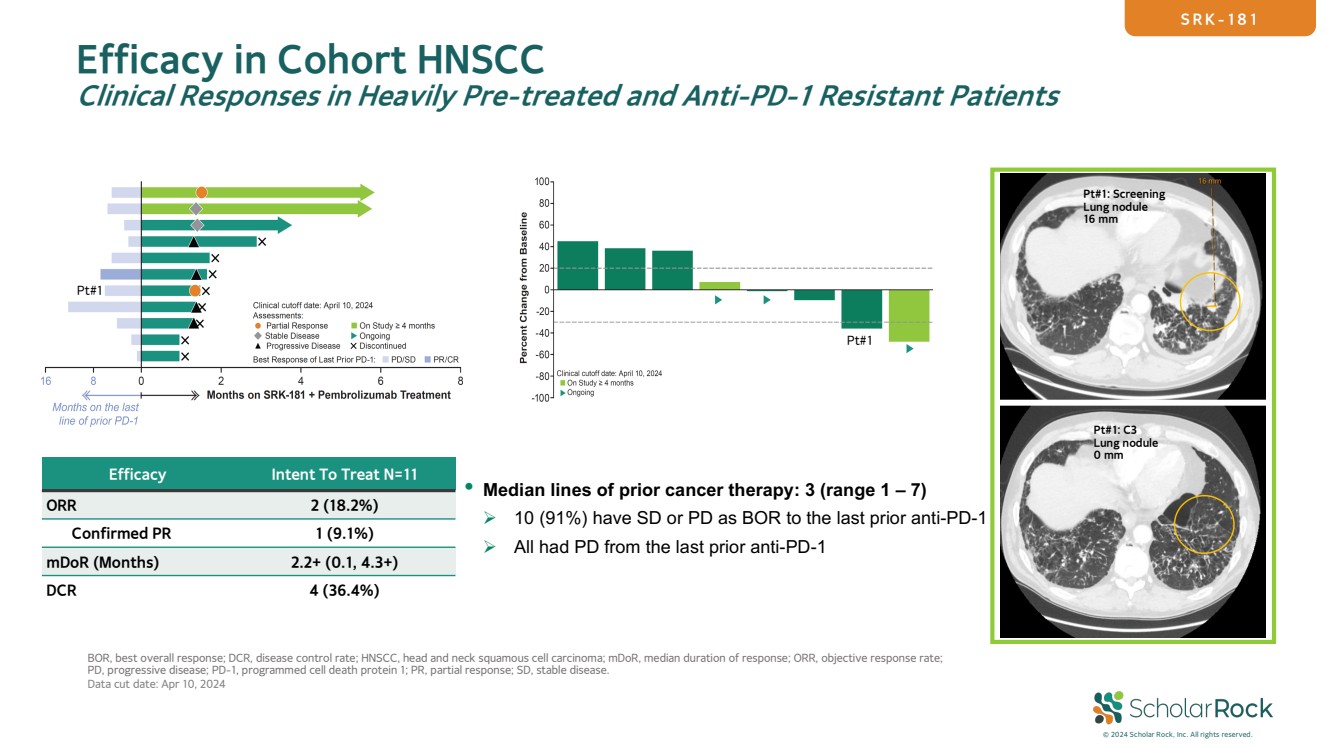
| © 2024 Scholar Rock, Inc. All rights reserved. SRK-181: Transformative Potential as the Backbone For Next Era of Cancer Therapy 93 CPI Combination (solid tumors) Other Combinations (solid tumors) & Hematologic Other immunotherapies Chemotherapy XRT Other applications Myelofibrosis Liquid tumors 1st line immunotherapy First in class monoclonal antibody targeting latent and context-independent binding to TGFB-1 CURRENT FOCUS Primary and Acquired CPI resistance Investigation in primary (pre-existing) CPI resistance offers path to early clinical POC for SRK-181 SRK - 181 |
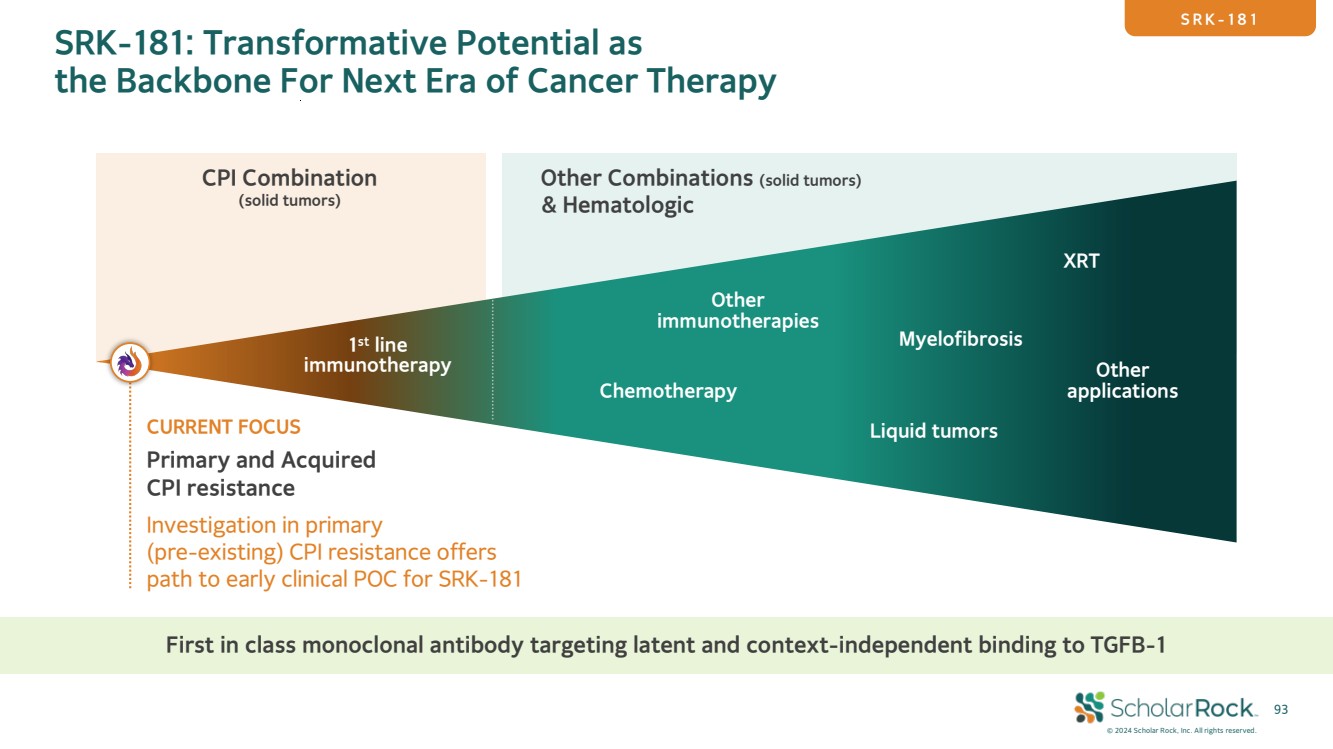
| © 2024 Scholar Rock, Inc. All rights reserved. SRK-181 Therapeutic Hypothesis: Potential Advantages of Latent TGFβ-1 Inhibitor 94 SRK-181* Bifunctional TGFβ/CPI ALK5 Inhibitor Nonselective TGFβ antibody Selectivity for TGFβ-1: potential for wider therapeutic window and improved safety Ability to combine with any anti-PD-(L)1 Ability to optimize dosing of each component of combination therapy Activity spatially distinct from anti-PD-(L)1 in tissue Inhibits all sources of TGFβ-1 contributing to CPI resistance (Context independent) Target latent form (Blocks TGFβ-1 activation) *SRK-181 is an investigational product candidate currently being evaluated in DRAGON phase 1 clinical trial. The efficacy and safety of SRK-181 have not been established. X X X X X X X X X X SRK - 181 |
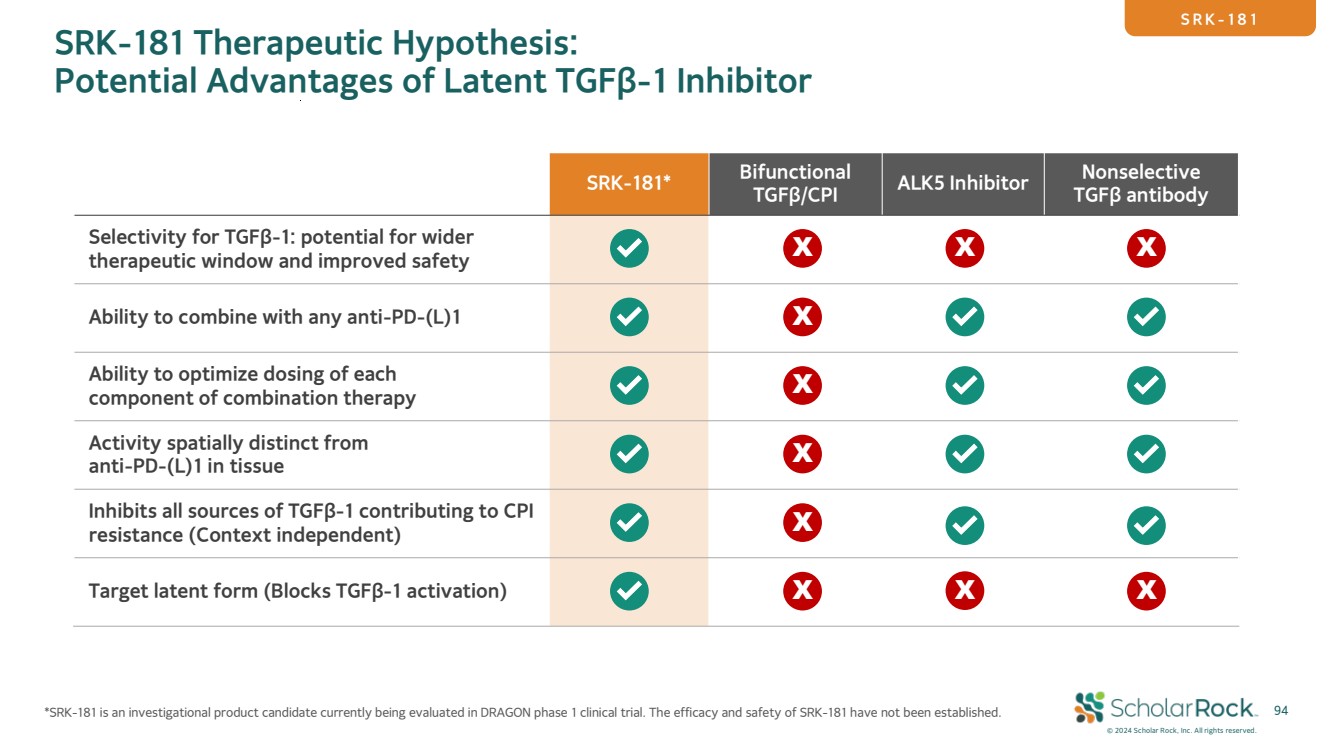
| © 2024 Scholar Rock, Inc. All rights reserved. TGFβ-1 Blockade with SRK-181-mIgG1 Rendered Preclinical Tumor Models Susceptible to Anti-PD1 Therapy 95 Days after treatment initiation Tumor volume (mm3) Anti-PD1/ SRK-181-mIgG1 (3 mg/kg QW) 4/14 Anti-PD1/ SRK-181-mIgG1 (10 mg/kg QW) 8/14 Preclinical data published in Science Translational Medicine. Martin CJ, et al. Sci Transl Med. 2020 Mar 25;12(536):eaay8456. https://scholarrock.com/platform/publications/. *SRK-181-mIgG1 is the murine version of SRK-181; responder defined as tumor size <25% endpoint volume at study end. Bladder Cancer Breast Cancer (TGFβ-1/3 co-expressing) 0/13 Anti-PD1 (10 mg/kg BIW) 0/10 SRK-181-mIgG1* (10 mg/kg QW) Anti-PD1/ SRK-181-mIgG1 (10 mg/kg QW) 5/10 Responders 0/9 Control 0/9 Anti-PD1 (10 mg/kg BIW) SRK-181-mIgG1* (10 mg/kg QW) Responders 0/12 MBT-2 and EMT6 Models SRK - 181 |
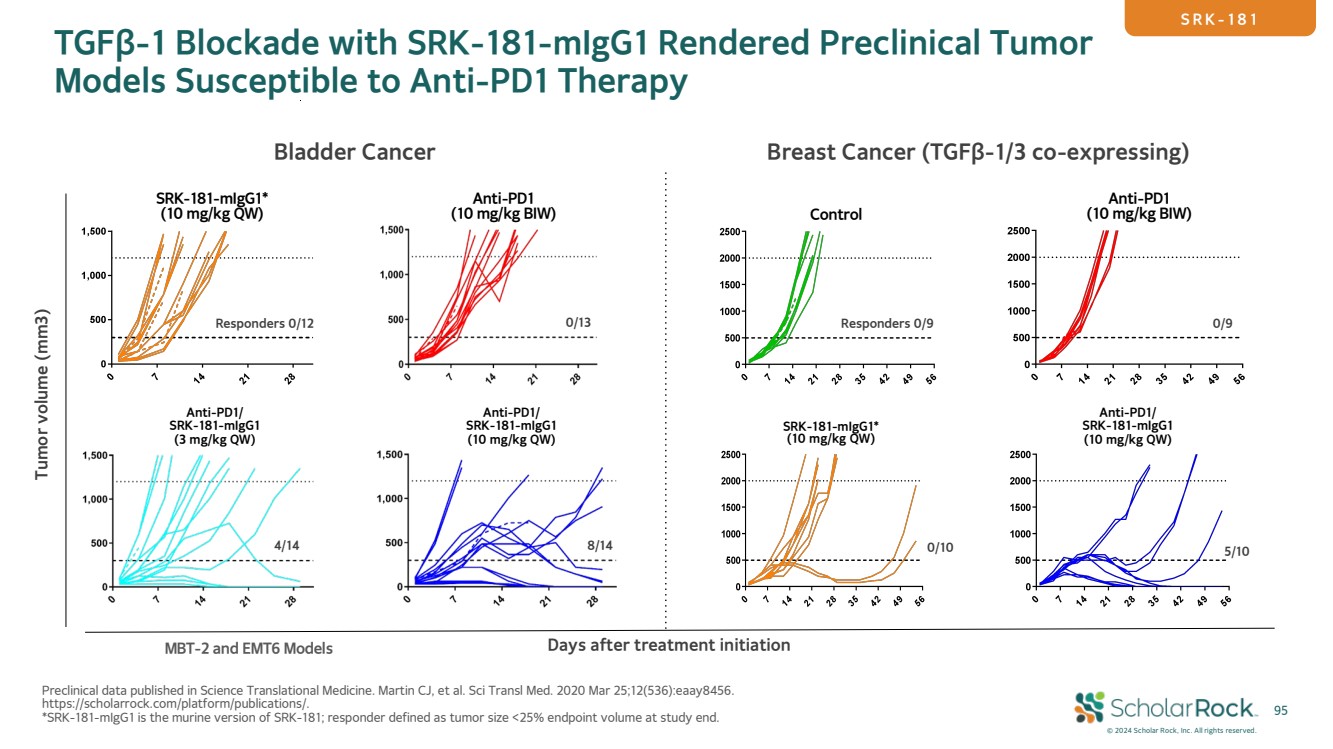
| © 2024 Scholar Rock, Inc. All rights reserved. SRK-181-mIgG1 Combination Treatment Led to Melanoma Tumor Regression and Survival Benefit 96 *P<0.01. † P<0.05 Log-rank (Mantel-Cox test) vs anti-PD1. * * † Days after treatment initiation Tumor Regression Survival Benefit Anti-PD1 + SRK-181-mlgG1 (30 mg/Kg/wk) Anti-PD1 + SRK-181-mlgG1 (3 mg/Kg/wk) Anti-PD1 + SRK-181-mlgG1 (10 mg/Kg/wk) Anti-PD1 (10 mg/Kg/2xwk) SRK-181-mlgG1 (30 mg/Kg/wk) Control Melanoma (Cloudman S91) model Preclinical data published in Science Translational Medicine. Martin CJ, et al. Sci Transl Med. 2020 Mar 25;12(536):eaay8456. https://scholarrock.com/platform/publications. Days after treatment initiation Monotherapy 3/12 Anti-PD1 (10 mg/kg BIW) Tumor volume (mm3) SRK-181-mIgG1 (30 mg/kg QW) Responders 0/12 Combination Therapy Led to tumor regression and survival benefit Anti-PD1/SRK-181-mIgG1 (30 mg/kg QW) 8/11 Days after treatment initiation Anti-PD1/SRK-181-mIgG1 (10 mg/kg QW) Tumor volume (mm3) 4/9 SRK - 181 |
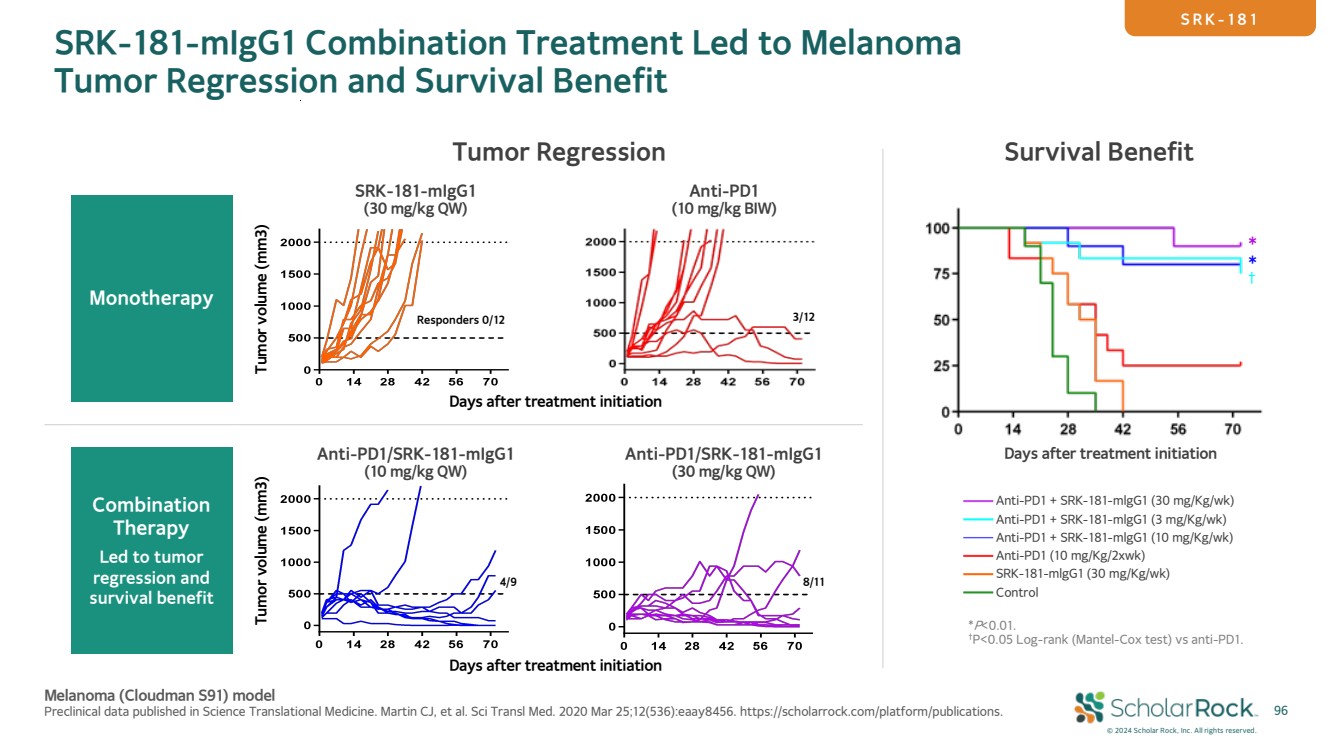
| © 2024 Scholar Rock, Inc. All rights reserved. Selectivity of SRK-181 Offers Potential to Overcome Toxicity and Dose-limiting Challenges of Non-selective TGFβ Pathway Approaches 97 Preclinical data published in Science Translational Medicine. Martin CJ, et al. Sci Transl Med 2020 Mar 25;12(536): eaay8456. *Source: Anderton MJ, et al. Induction of heart valve lesions by small-molecule ALK5 inhibitors. Toxicol Pathol. 2011;39: 916-924.; and Stauber AJ, et al. Nonclinical safety evaluation of a transforming growth factor β Receptor I kinase inhibitor in Fischer 344 rats and beagle dogs. J Clin Pract. 2014: 4:3. Microscopic Observations in Heart Valvulopathy Atrium—Mixed cell infiltrate Myocardium—Degeneration/necrosis Myocardium—Hemorrhage Myocardium—Mixed cell infiltrate, base Coronary artery—Necrosis with inflammation Cardiomyocyte—Necrosis/inflammatory cell infiltrate CONTROL Vehicle iv, qwk x 4 LY2109761 300 mg/kg po, qd x 8 PanTGFβAb 30 mg/kg Iv, 1 dose 10 mg/kg iv, qwk x 4 30 mg/kg iv, qwk x 4 100 mg/kg iv, qwk x 4 SRK-181 Selective TGFβ-1 Toxicity: Minimal Non-selective TGFβ Toxicity: Minimal, slight and moderate Unremarkable Minimal Slight Moderate Toxicology: Repeat Dose Pilot Toxicology Study Adult female Sprague Dawley rats Cardiac findings were exhibited in animals dosed with pan-TGFβ antibody or LY2109761 (inhibitor of ALK5, common TGFβ receptor kinase) as expected based on published data† NO CARDIOTOXICITIES (valvulopathy) were noted with SRK-181 NOAEL for SRK-181: 100 mg/kg QW (highest dose evaluated) 4-week GLP toxicology studies RATS NOAEL for SRK-181: 200 mg/kg QW (highest dose evaluated) NON-HUMAN PRIMATES NOAEL for SRK-181: 300 mg/kg (highest dose evaluated) Not test article related SRK - 181 |
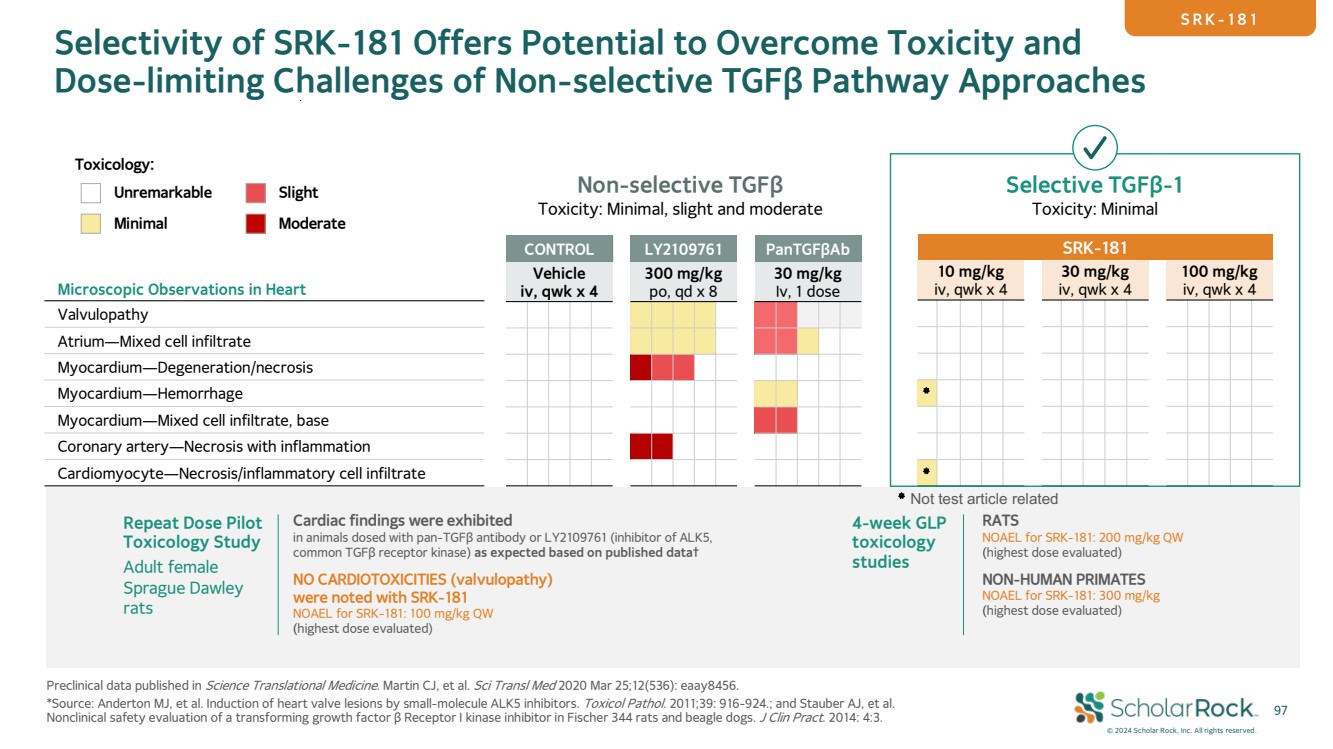
| © 2024 Scholar Rock, Inc. All rights reserved. Bladder urothelial carcinoma Had & neck squamous carcinoma Kidney clear cell carcinoma Kidney papillary cell carcinoma Liver hepatocellular carcinoma Lung adenocarcinoma Skin cutaneous melanoma Stomach adenocarcinoma Acute myeloid leukemia Adrenocortical cancer Brain lower grade glioma Breast invasive carcinoma Cervical & endocervical cancer Cholangiocarcinoma Colon adenocarcinoma Diffuse large B-cell carcinoma Esophageal carcinoma Glioblastoma multiforme Kidney chromophobe Lung squamous cell carcinoma Mesothelioma Ovarian serous cystadenocarcinoma Pancreatic adenocarcinoma Pheochromocytoma & paraganglioma Prostate adenocarcinoma Emerging Evidence Implicates TGFβ-1 as Driving Primary Resistance to Checkpoint Inhibitors 98 Human Tumor Analyses Reveal TGFβ-1 as Most Likely Driver of TGFβ Signaling Pathway in Cancers † Priti H, et al. Top 10 challenges in cancer immunotherapy. Immunity. 2020 Jan 14:52(1):17-35. https://doi.org/10.1016/j.immuni.2019.12.011. *Source: National Cancer Institute - Cancer Genome Atlas Program. NSCLC TMB Low High Substantial % of Solid Tumors Exhibit Immune Exclusion Immune Phenotype Inflamed Immune Excluded Immune Desert Tumor Type Melanoma RCC UBC TNBC Gastric CRC MSS Pancreatic SCLC HR+BC Prostate Inflamed Immune Excluded Immune Desert Cancer Genome Atlas RNAseq Analysis of >10,000 Samples Spanning 33 Tumor Types* TGFB1 TGFB2 TGFB3 Scale % of patient samples (+) for TGF-β isoform 100 80 60 40 20 0 SRK - 181 |
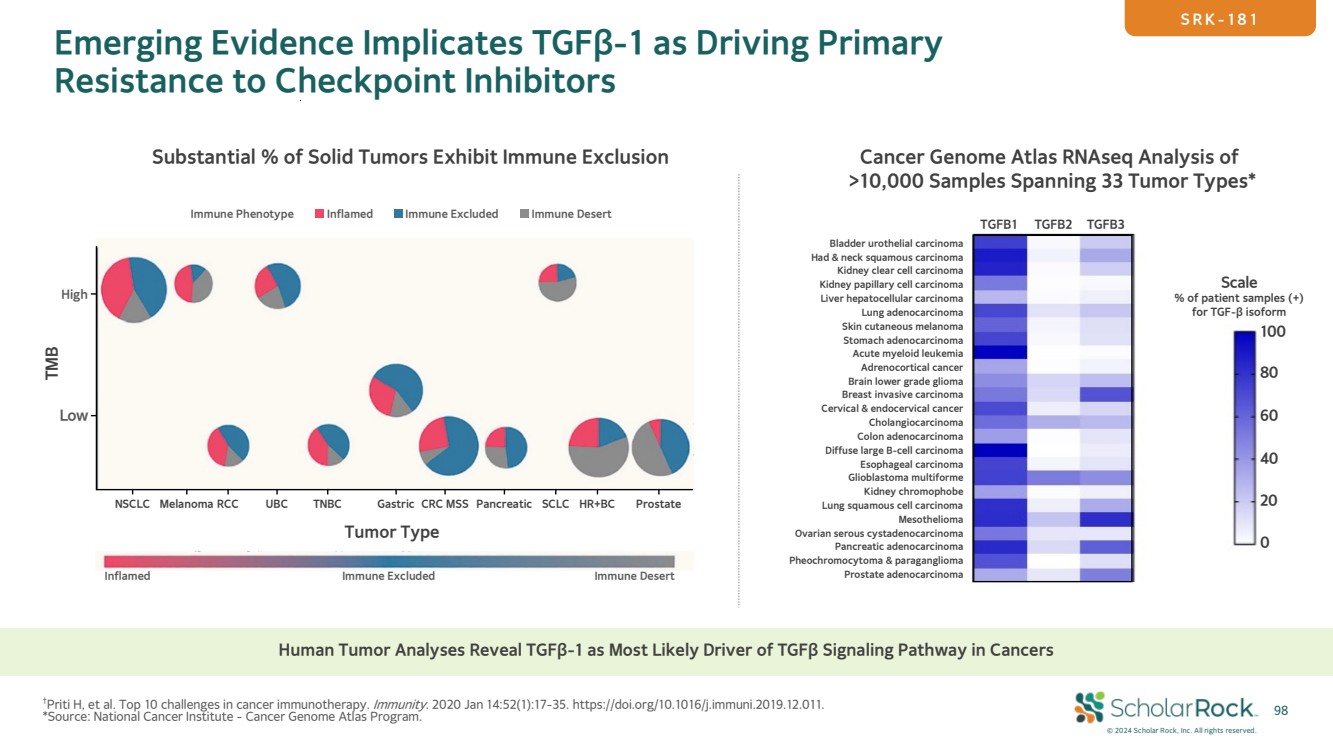
| © 2024 Scholar Rock, Inc. All rights reserved. Biomarker Strategies Employed in DRAGON Trial 99 Multiple tissue-based and circulating biomarker analyses to be evaluated in DRAGON study • Higher resolution histochemical characterization of tumor immune contexture (e.g. CD8+) ⎼ Classification of inflamed, excluded or immune desert tumors and tumor nests ⎼ Ability of SRK-181 to overcome tumor immune exclusion • Analysis of immune response markers (e.g. PD-L1) • Changes to intra-tumoral and/or circulating immune cell contexture (MDSC) • Show evidence of the SRK-181 target engagement ⎼ e.g. circulating TGFβ-1 levels • TGFβ pathway modulation: ⎼ e.g. Histochemical analysis of pSMAD ⎼ e.g. RNA-based TGFβ gene signatures and pathway analyses • Paired biopsies from the head and neck cohort allow for a potential to accelerate the development path Immunophenotyping Assessment of immune landscape TGFβ-1 pathway evaluation Assessment of signaling pathway SRK - 181 |
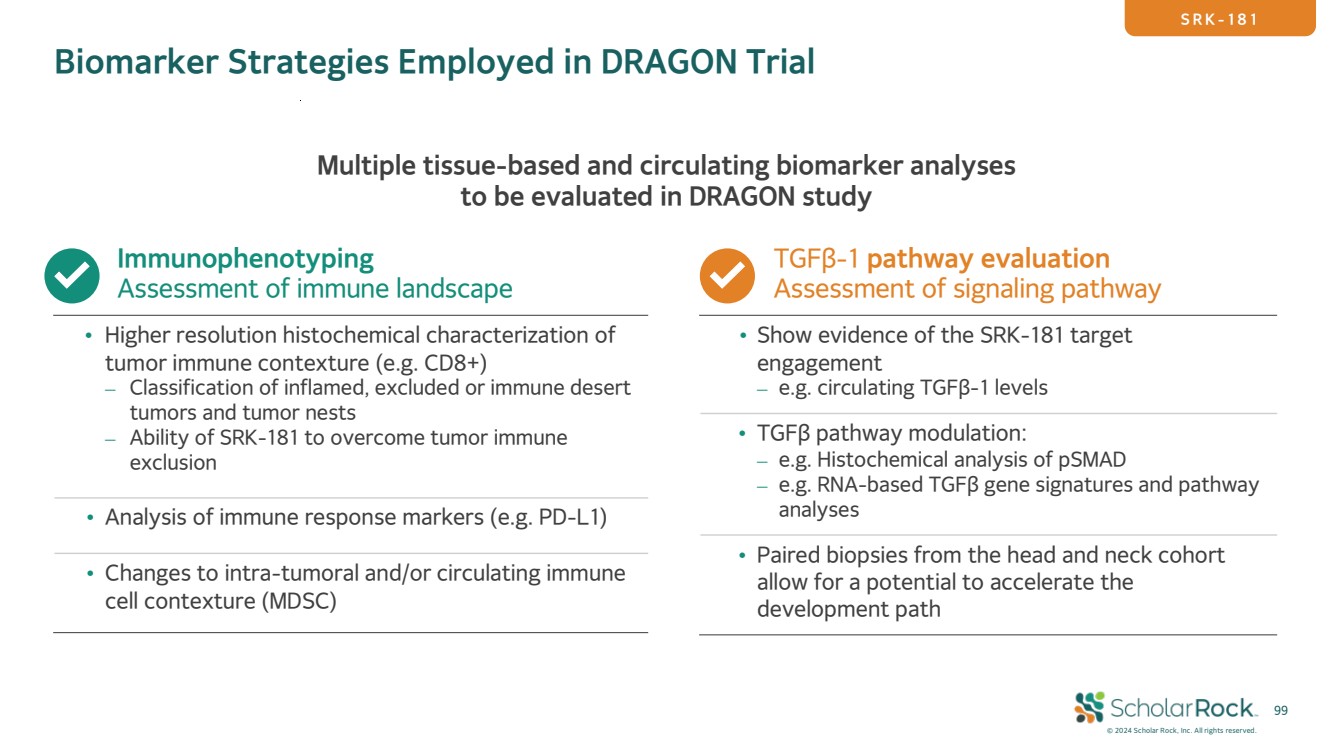
| © 2024 Scholar Rock, Inc. All rights reserved. Clear Evidence of Target Engagement Pharmacodynamic Biomarker Results for Part A: Circulatory TGFβ-1 100 Yap T et al. SRK-181, a latent TGFβ1 inhibitor: safety, efficacy, and biomarker results from the dose escalation portion of a phase I trial (DRAGON trial) in patients with advanced solid tumors (Poster 780); Presented at SITC; Nov. 10-11, 2022. Circulatory TGFβ-1 and PF4 levels were quantitated by using validated ELISA kits from R&D System.12 Because platelet activation during sample processing can lead to elevated TGFβ-1 levels, samples with elevated PF4, a platelet activation biomarker, were excluded from the analysis based on a preliminary cutoff value. Pre-infusion. SRK-181 is an investigational drug candidate that is being evaluated for the treatment of cancer. SRK-181 has not been approved by the US FDA or any other health authority, and its safety and efficacy have not been established. Binding to latent TGFβ-1 delays maturity state allowing TGFβ-1 to accumulate in system Combination treatment with pembrolizumab did not appear to impact circulatory TGFβ-1 levels C1D2 C1D8 C1D15 C2D1* C3D1* C3D2 C3D8 C3D15 C4D1* C5D1* Baseline Circulatory TGF β-1 (Fold-Change from Baseline) 2 3 4 6 5 Median Circulatory TGFβ-1 Increased Post-treatment with SRK-181 (Q3W, All Patients) SRK - 181 |
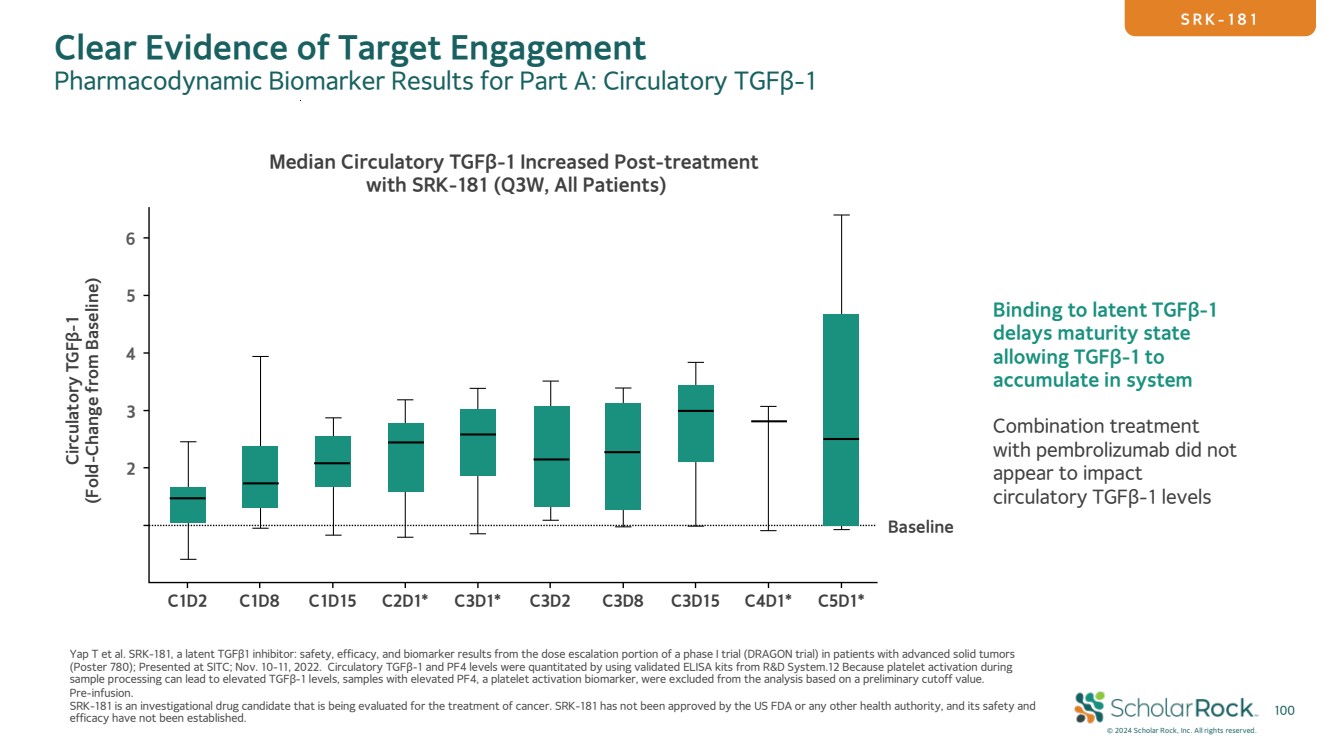
| © 2024 Scholar Rock, Inc. All rights reserved. Preclinical Data Provide Scientific Rationale to Evaluate Peripheral Samples for Evidence of SRK-181 Activity 101 MBT-2 bladder tumor model IgG, anti-PD-1 and SRK-181-mIgG1 dosed d1, d7 Analysis on day 10 ! "!! #!!! ! $! %! C! D! ()*+, .+/)*M 1**23 45,S )/T85V : : ; < = 4 1> 4 < % "3 Circulating MDSC Levels Correlate with Tumor Volume Both tumoral and circulatory MDSC are being evaluated in the DRAGON study Immunophenotyping Assessment of immune landscape Measurement of MDSCs in circulation may provide indirect evidence of drug action on the tumor • Myeloid-derived suppressor cells (MDSCs) have immune suppressive functions • SRK-181 plus anti-PD1 combination drive MDSC levels down significantly in the tumor microenvironment • Reductions in circulating MDSC levels correlate with reduced tumor volume following SRK-181 and anti-PD1 treatment in MBT-2 tumor model Anti-PD-1+ SRK-181 1 mpk 3 mpk 10 mpk IgG Ctrl SRK-181 Anti-PD-1 SRK - 181 |
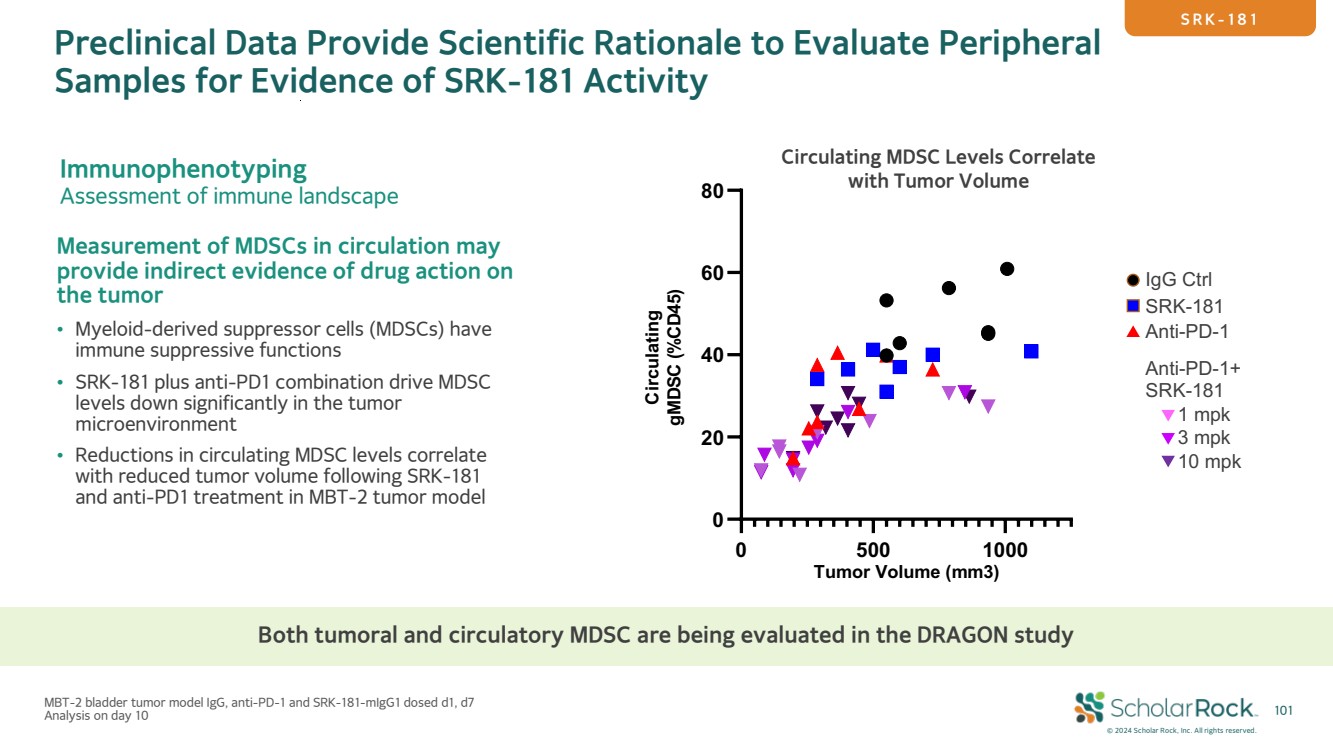
| © 2024 Scholar Rock, Inc. All rights reserved. Iron-Restricted Anemia |

| © 2024 Scholar Rock, Inc. All rights reserved. BMP6/RGMc Pathway is a Well Validated Regulator of Systemic Iron Homeostasis 103 Fig: Muckenthaler, M.U., Rivella, S., Hentze, M.W. and Galy, B. (2017) A Red Carpet for Iron Metaboism. Cell, 168(3): 344-361 1: Kuns-Hashimoto R, et al. (2008) Selective binding of RGMc/hemojuvelin, a key protein in systemic iron metabolism, to BMP-2 and neogenin. Am J Physiol Cell Physiol 294(4):C994-C1003 2: Constante M, et al.. (2007) Repression of repulsive guidance molecule C during inflammation is independent of Hfe and involves tumor necrosis factor-alpha. Am J Pathol 170(2):497-504 3: Core A.B., et al. (2014) Hemojuvelin and bone morphogenetic protein (BMP) signaling in iron homeostasis. Front Pharmacol. 5:104. 4. Wang CY and Babitt JL. (2016) Hepcidin Regulation in the Anemia of Inflammation. Curr Opin Hematol 23(3): 189-197. • Elevation of proinflammatory cytokines drives increased hepcidin expression and results in anemia due to functional iron deficiency4 Anemia of Inflammation/ Chronic Disease Hepcidin Serum iron Untreated Hepcidin Serum iron Ab treated • Human mutations in HJV/RGMc establish it as a central player in hepcidin regulation1 • Knockout phenotypes and tissue-specific expression pattern demonstrate that its predominant role is in iron homeostasis2 • Member of repulsive guidance molecule (RGM) family (RGMa, RGMb, RGMc/HJV) that act as BMP co-receptors to modulate BMP signaling3 HJV/RGMc is a key player in the regulation of hepcidin expression ANEMIA |
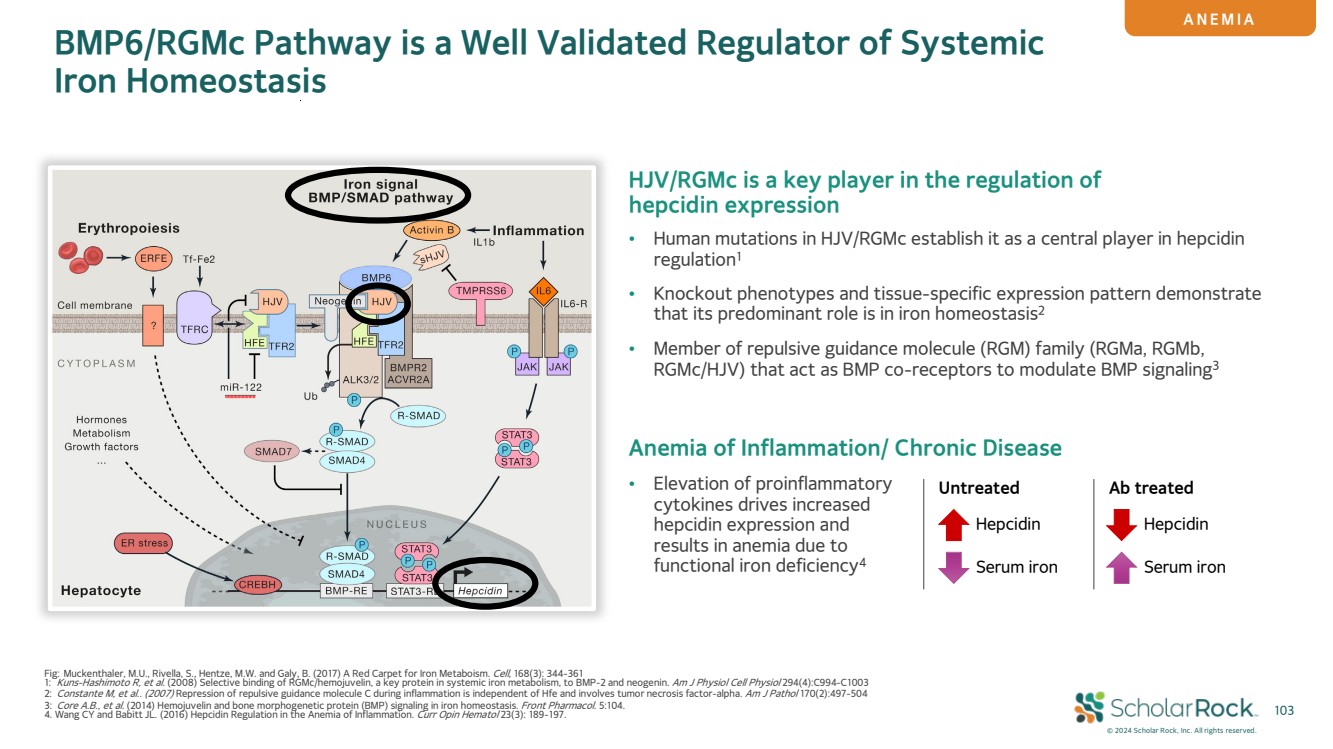
| © 2024 Scholar Rock, Inc. All rights reserved. HJV-35202: An Investigational High-Affinity Antibody Demonstrating Selective Inhibition of HJV/RGMc and Robust PK/PD in Cynos 104 !"# !"A !# A #A "AA #%A% '() *+, -.L Potent in vitro binding affinity (KD=3.9E-11) Highly specific to RGMc/HJV with well understood mechanism Sustained PD effect in single dose Cyno study Specific to RGMc over other RGM family members 1. Nicholls S.B., et al. Poster: RGMc-selective antibodies modulate iron homeostasis in vivo, 12th International BMP Conference, Tokyo, October 2018 2. Scholar Rock, Data on File • High-affinity antibody • Specific to RGMc, with mechanism of specificity understood • Cross-reactive to human, mouse, rat and cyno • Sustained PD observed in healthy rats and cynos, with clear PK/PD relationship • Highly manufacturable framework with no sequence liabilities • Formulatable into a subcutaneous format (150 mg/mL) ! " #$ B# BC D( $B $) (* *D "! !H!# !H# # #! #!! #!!! ! (! #!! #(! B!! B(! D!! D(! $!! IJ.L 12345S T U V:D ( B ! B 1µ;<. =S > L?@ . A?B C 3 C a EAF d 1µ;<a =S !"# BCD(# )*HIJK/0/ 120P45S47 CHU !V# )*HIJK/0/ 120P45S47 CHU !"# :;<=P C<>?# )*HIJK/0/ 120P45S47 CHU HJV-35202 (mg/mL) Serum Iron and UIBC (mg/dL) ! " #$ B# BC D( $B $) (* *D "! !H!# !H# # #! #!! #!!! ! (! #!! #(! B!! B(! D!! D(! $!! IJ.L 12345S TUV:D(B!B 1µ;<. =S >L?@. A?BC 3Ca EAF d 1µ;<a =S !"# BCD(# )*HIJK/0/ 120P45S47 CHU !V# )*HIJK/0/ 120P45S47 CHU !"# :;<=P C<>?# )*HIJK/0/ 120P45S47 CHU PK: HJV-35202 (10mg/kg, IV) PD: UIBC: HJV-35202 (10mg/kg, IV) PDF: Serum Iron: HJV-35202 (10mg/kg, IV) ! " #$ B# BC D( $B $) (* *D "! !H!# !H# # #! #!! #!!! ! (! #!! #(! B!! B(! D!! D(! $!! IJ.L 12345S TUV:D(B!B 1µ;<. =S >L?@. A?BC 3Ca EAF d 1µ;<a =S !"# BCD(# )*HIJK/0/ 120P45S47 CHU !V# )*HIJK/0/ 120P45S47 CHU !"# :;<=P C<>?# )*HIJK/0/ 120P45S47 CHU ! " #$ B# BC D( $B $) (* *D "! !H!# !H# # #! #!! #!!! ! (! #!! #(! B!! B(! D!! D(! $!! IJ.L 12345S TUV:D(B!B 1µ;<. =S >L?@. A?BC 3Ca EAF d 1µ;<a =S !"# BCD(# )*HIJK/0/ 120P45S47 CHU !V# )*HIJK/0/ 120P45S47 CHU !"# :;<=P C<>?# )*HIJK/0/ 120P45S47 CHU ! " # $ ! " # % ! " # & ' ( ) G H , H H , J H , . H , / H , M H , 1 ( ) G O / 1 . H . % 4 R 6 4 R 7 U V : V ; < % ; = ! " # > $ ? 4 ; @ A B V U = 4 R : C & U = U ! = : A V R : = a R 4 U : ! " # $ ! " # % ! " # & ' ( ) G Octet Response Units RGMa RGMb RGMc/ HJV RGMa RGMb RGMc/HJV Key Attributes of HJV-35202:1,2 ANEMIA |
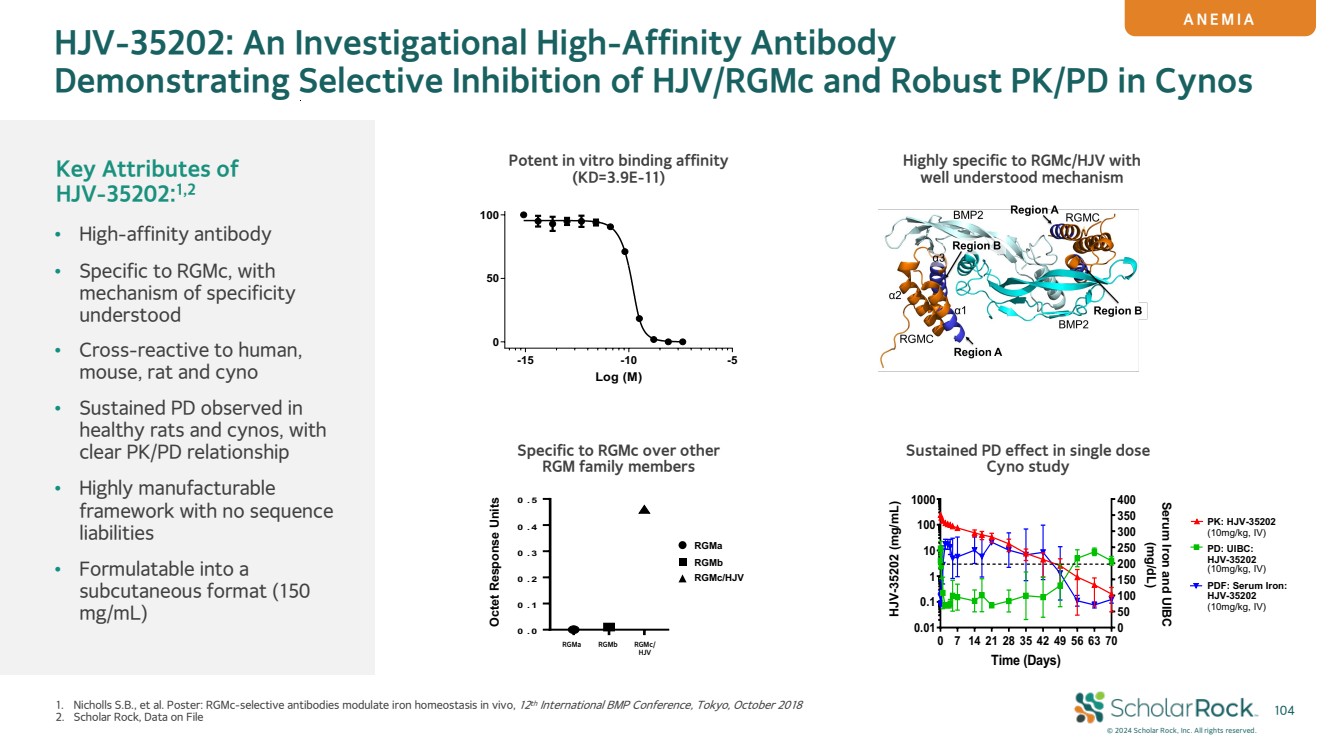
| © 2024 Scholar Rock, Inc. All rights reserved. Significant Opportunities to Target Iron-Restricted Anemias Across Multiple Indications 105 Chronic Kidney Disease (CKD) Anemia of Chronic Inflammation (AI) Myelofibrosis (MF) Targeting RGMc/HJV for anemia is well validated and relatively de-risked • High levels of hepcidin, the main regulator of systemic iron metabolism, are associated with anemia across various diseases Safe and convenient RGMc inhibitor has promise of improving patient outcomes across multiple indications as stand alone or in combination with SoC • Significant and clear unmet need given lack of approved treatments or severe limitations of current treatments • Well defined patient population Collectively, sizeable commercial opportunity given relatively large population • Potential for rapid POC with clear regulatory path • Opportunity to build an anemia franchise with initial POC and indication expansion in the future ANEMIA |