Operator
Greetings and welcome to the TECAGen Q1-2026 conference call. At this time, all participants are in a listen-only mode. A question-and-answer session will follow the formal presentation. If anyone should require operator assistance, please press star zero on your telephone keypad. As a reminder, this conference is being recorded. It is now my pleasure to introduce your host, Jack Whiting, General Counsel and Secretary. Thank you. You may begin.
Good morning. This is Jack Whiting, General Counsel and Secretary of Tekagen. This call is being recorded and will be archived on our website at Tekagen.com. The press release regarding our first quarter 2026 earnings and the presentation provided this morning are available in the investors section of our website. I direct your attention to our safe harbor statement included in our earnings press release and presentation. Various remarks that we may make about the company's expectation, plans, and prospects constitute forward-looking statements for purposes of the safe harbor provisions under the private securities litigation reform act of 1995. Action results may differ materially from those indicated by forward-looking statements and the result of various factors including those discussed in the company's most recent annual reporting reports on forms 10-K and 10-Q under the caption misfactors filed with the Securities and Exchange Commission and also available in the investor section of our website under the heading SEC files. While we may elect to update forward-looking statements, we specifically disclaim any obligation to do so, so you should not rewind any forward-looking statements as represented by views as of any future date. During this call, we will refer to certain financial measures not prepared in accordance with generally accepted accounting principles or GAAP. A reconciliation of non-GAAP financial measures to the most directly comparable gap measures provided in the press release regarding our Q1 2026 earnings and on our website. I'll now turn the call over to Avnan Rangesh, TKGEN CEO, who will provide an overview of TKGEN's first quarter activity and results, and Roger Duchenne, TKGEN CFO, who will provide additional information regarding Q1 financial results. Avnan?
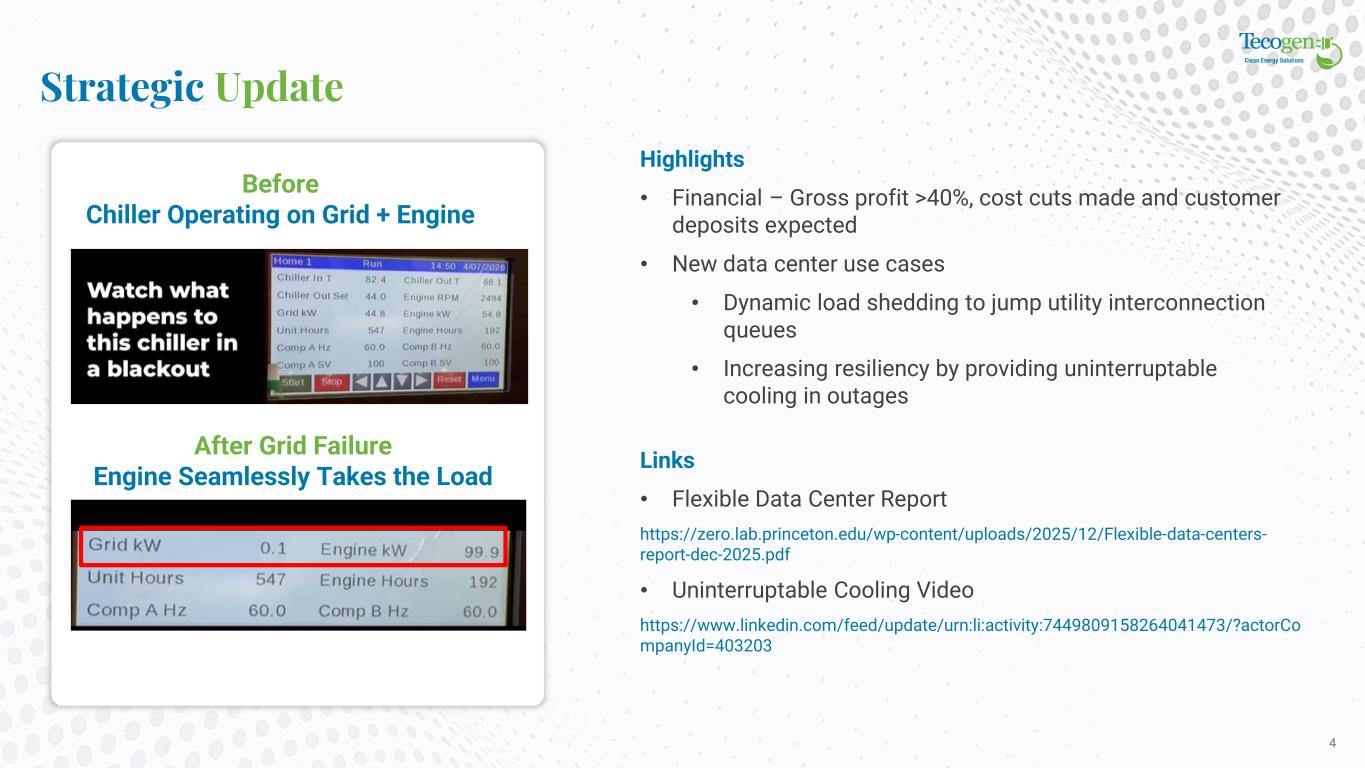
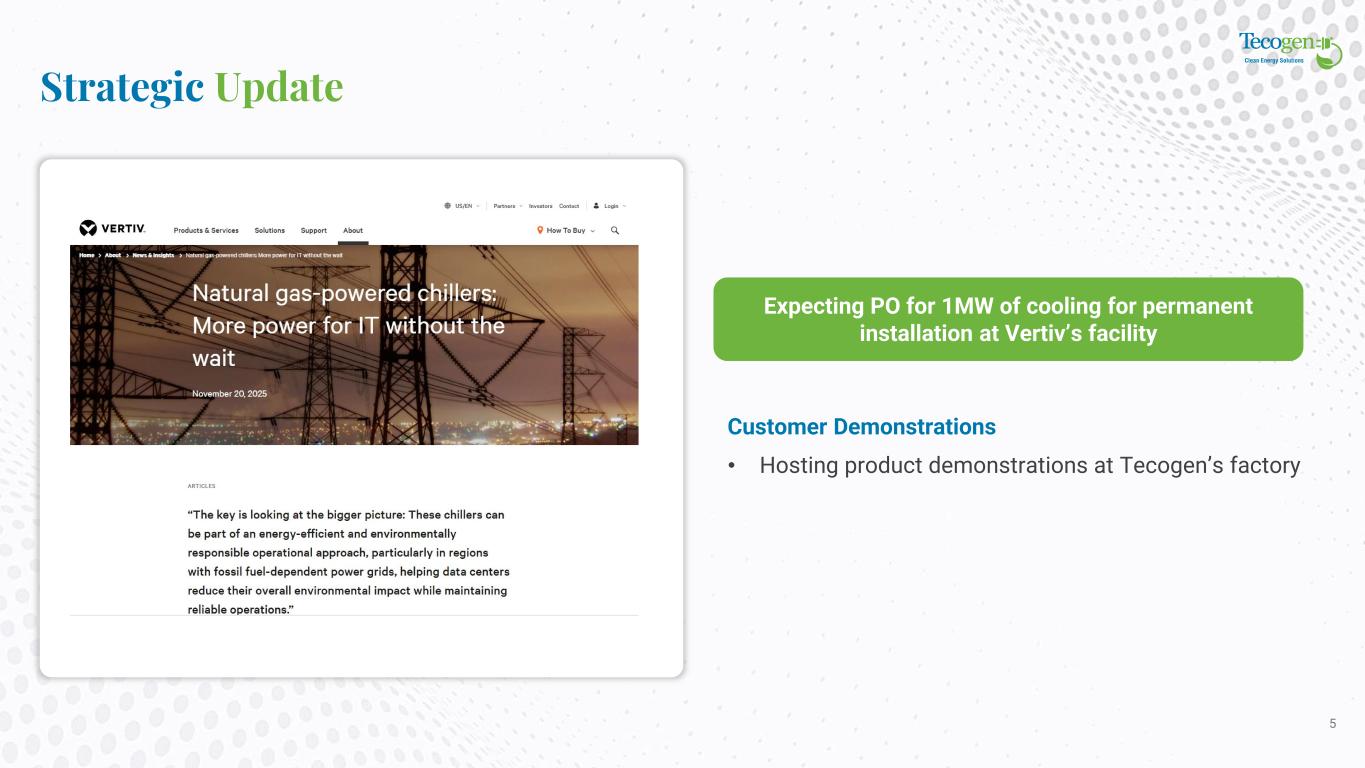
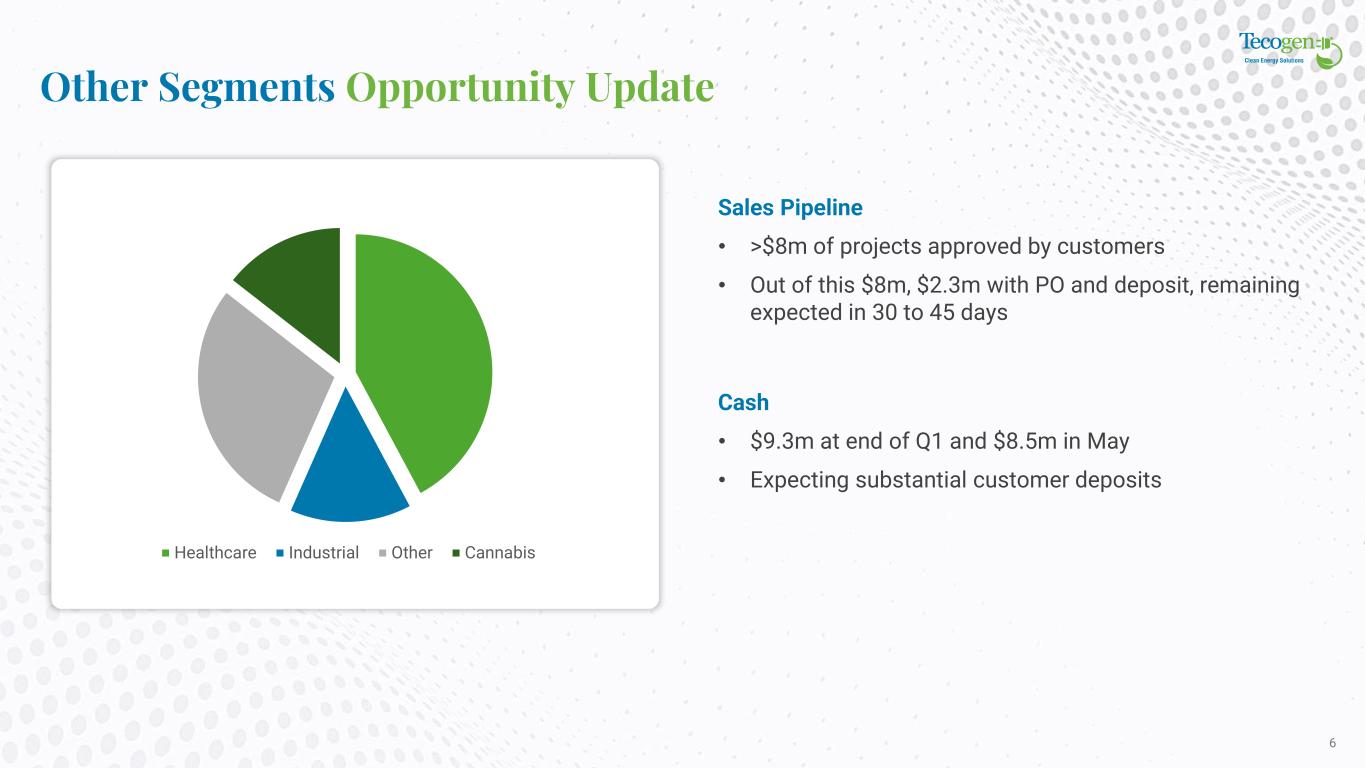
Thank you, Jack. Welcome to ECOGEN's Q1-2026 call. On today's call, I will update shareholders on the eminent PO from Vertiv, the recent surge in demand for our shillers from non-data center customers, and the upcoming demonstrations we're hosting for some well-known data centers. First, I would like to comment on the financials. Towards the third and fourth quarter of last year, our gross profit margin had dipped below our target of 40%. A lower gross profit margin, of course, means a higher break-even point for profitability. Therefore, I am pleased to see that our gross profit for Q1 2026 is now greater than 40%. Although operating expenses are higher in Q1 2026, this is because of essential investments in R&D and marketing to succeed in the data center market. There is also additional manufacturing headcount that is presently shown in the operating expense. As product volume increases, this cost will transition into direct production costs. We have also made cost reductions in some of the service territories to increase margins. We expect to see the full impact of these cost reductions to likely hit in Q3 of this year. Importantly, as several upcoming projects close, we expect to receive substantial customer deposits, which should strengthen our cash position. Before I update shareholders on projects, I'd like to address a question I have received multiple times. Many companies claim that they can provide power to data centers quickly. If that is the case, why should a data center choose TevaJet's Chillers? Recently, I was speaking to a senior executive at one of the largest data center companies. I asked him where he saw a market fit for our chillers, given the alternatives for securing power. He called our chiller a game changer for two reasons. First, he explained that electric utilities are now desperate for data centers to cut load from the grid during peak time. If a data center can do this, in many cases, they can jump the queue for grid power. Research funded by Google showed that a 500-megawatt data center, if a 500-megawatt data center commits to removing load from the utility for as little as 70 hours of the year, they could cut three to five years in grid connection wait time. I'm including the link to the research here. This problem affects both new and existing data centers. Many existing data centers are being asked by tenants to expand capacity and they don't have any further power available. In most parts of the country, the peak time for the electrical grid is summer time, precisely when cooling loads are the highest. A data center could add more power or use our chiller solution instead. The second reason is uninterrupted cooling in a blackout. As you would expect, data centers invest massive amounts of capital on complete redundancy. Backup generators, thermal storage, redundant cooling systems, and other infrastructure to prevent downtime. To fully appreciate the benefit our chiller offers, I encourage investors to watch the video of our chiller handling a power outage. I've included the link on this slide. In this video, you'll see our chiller operating at full load. Half the power is coming from the electric grid and the rest from the natural gas engine. Then we cut the electric power. The natural gas engine instantly takes the full load. No change in cooling output, no interruption. A conventional electric chiller would have shut down. Diesel generators would have to start, then the electric chillers would have to restart and come to full load. A power outage represents a significant risk to a data center. With our chiller, there's an extra layer of redundancy built right into the chiller. As you can see, the use cases go far beyond just access to more power. During the last call, I mentioned the demonstration project of Vertiv. This has now expanded substantially. I'm pleased to announce that Vertiv has approved purchasing one megawatt of Kool-Aid, and the PO is in process and expected imminently. Now, after going to the environmental chamber, VERTIV has found a permanent home for the chillers at one of their facilities. This facility has a shortage of power and our chillers solve the power constraint. The chillers will be connected to other ancillary equipment of this facility so it can be showcased as a complete system to prospective customers. This imminent PO from VERTIV is significant because it not only shows a financial commitment, but the willingness to find ways to showcase our chillers. Design, marketing activities, and negotiations of the master partnership agreement are in process concurrently and are not affected by timing of this chiller installation. Over the upcoming month, we're also hosting some well-known prospective data center customers at our headquarters for in-depth product demonstration. Some of these are in addition to the opportunity pipeline I've already disclosed last quarter. As we have become better known in the data center industry, many more larger data centers are now interested in using our technology. In my experience, when senior managers and executives take time out of their busy schedules for in-person site visits, the probability of converting discussions into purchase orders increases substantially. In the last two months, we have seen a surge in projects for non-data center customers. Many of these projects have been slow moving until now, but as the reality of power constraints started to sink in, customers began accelerating approvals. We have seen more than $8 million in projects approved by customers. We've already received the purchase orders for $2.3 of this $8 million in hand and expect to receive the remaining POs and deposits within the next 30 to 45 days. We ended the quarter with approximately $9.3 million in cash and presently have approximately $8.5 million. As these deposits are received, we expect our cash position to improve.
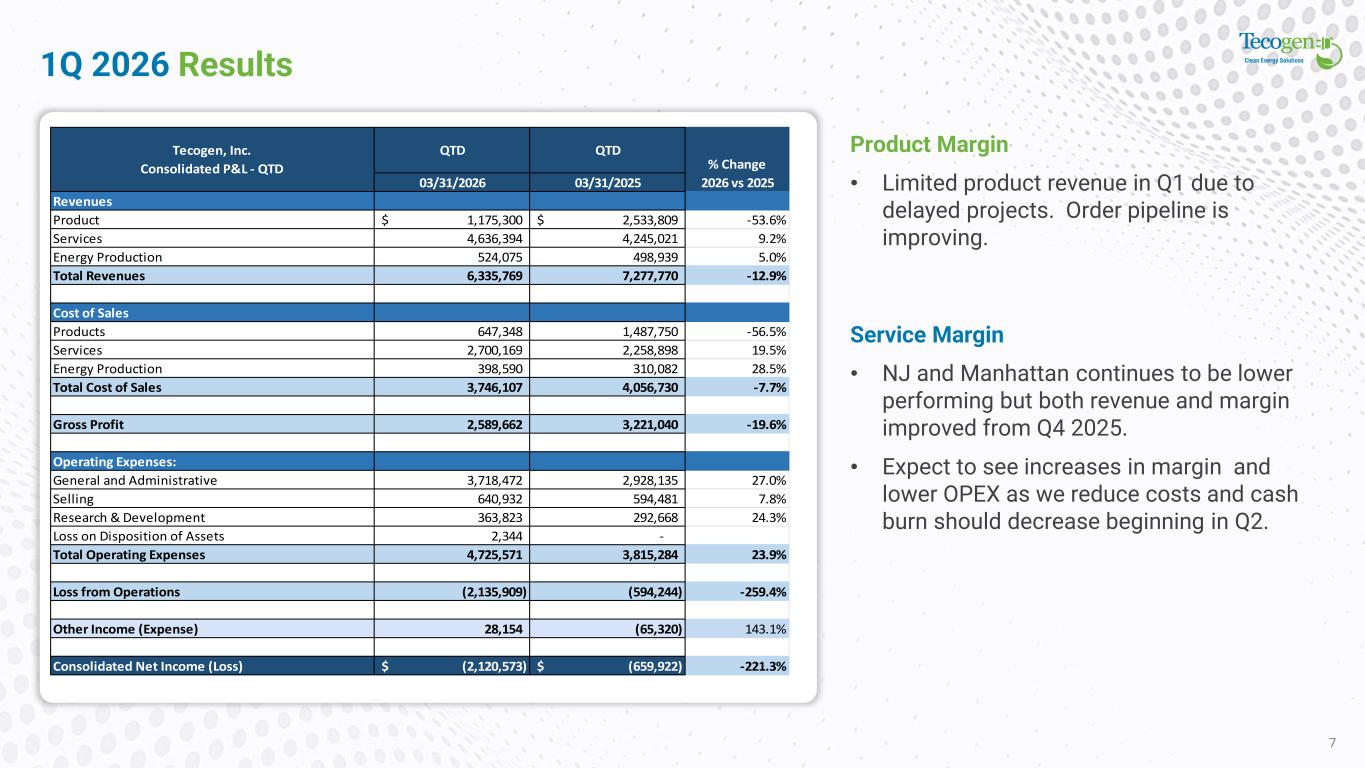
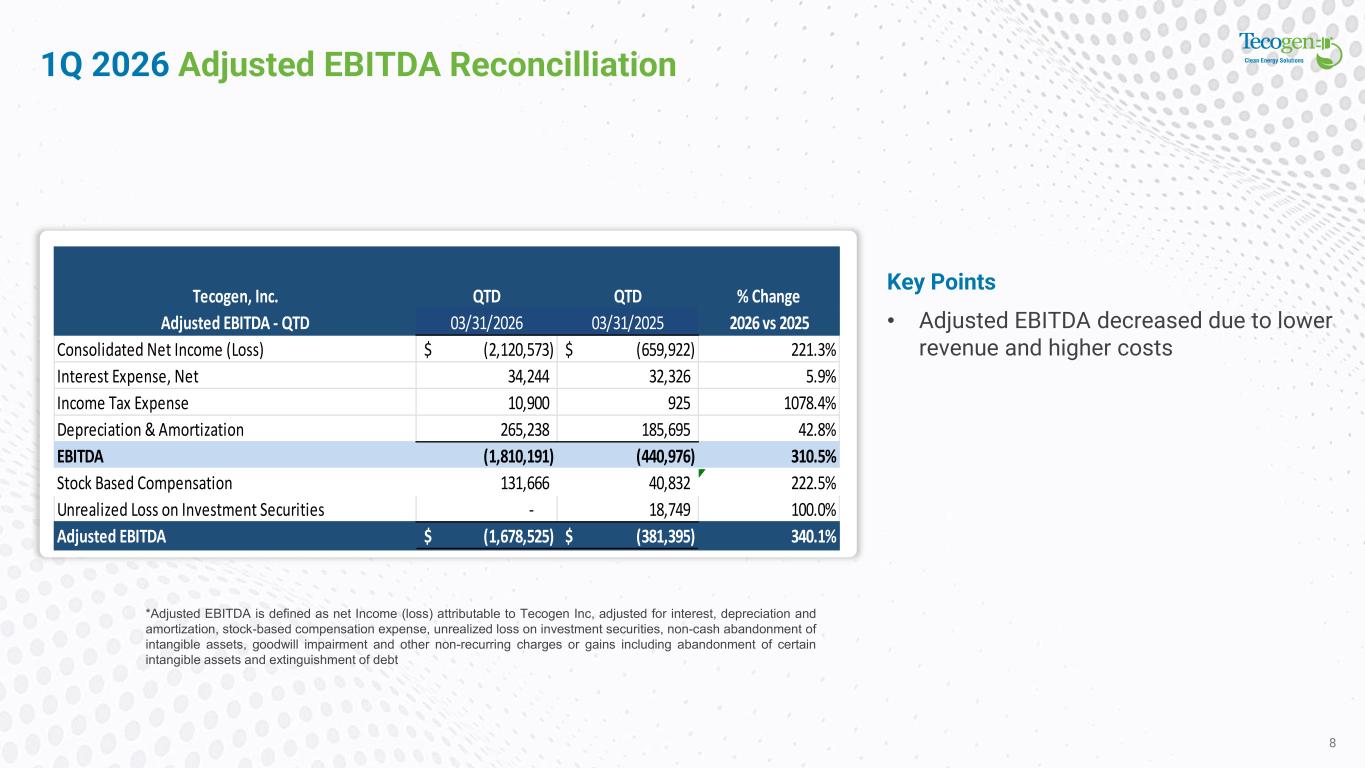
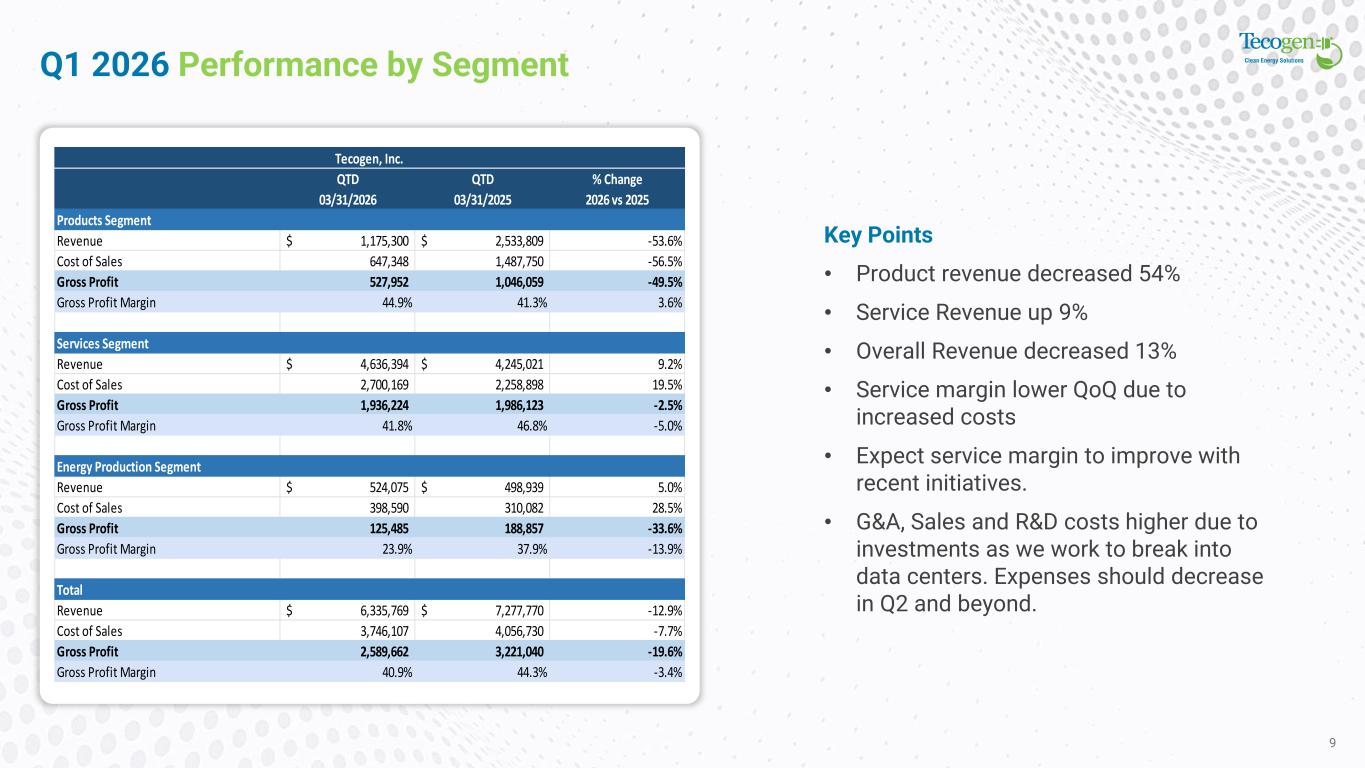
I'll hand over to Roger to discuss the financials. Thank you, Evan. Good morning, everybody. I'll begin by reviewing the first quarter results. Total revenues for the quarter decreased by $900,000, or 12.9 percent in the first quarter to $6.4 million, which compares to $7.3 million in the preceding year quarter. This is due to a reduction in our product's revenue. Our gross profit decreased just under 20% to $2.6 million in the first quarter, compared to $3.2 million in the first quarter of 2025. This is due to lower products revenue and also to an increase in our services and energy production costs. Our gross margin decreased 3.4% to 40.9% in the first quarter of 2026 from 44.3% in 2025, and this is due to increased services and energy production costs. operating expenses increased just under 24% in the first quarter of 2026 to $4.7 million from the $3.8 million in the comparable period in 2025. And this is due to increased operating costs in our services segment and an increased cost in our production segment, research and development, and a general increase in operating costs incurred for the manufacturing expansion we're undertaking to realign the factory to increase capacity and efficiency and to further fund the continued development and refinement of our dual source chiller. Both efforts focused on our entry into the data center market. As Evan and I suggested, we have recently taken steps to reduce our services op-ex and our overall op-ex, and we expect costs to decrease beginning in the second quarter and to further be reduced beginning in the third quarter of this year. A net loss for the quarter increased to $2.2 million from $700,000 in 2025. And this is due to lower product sales and an overall reduction in gross margin and an increase in operating expenses. Moving over to the adjusted EBITDA for the quarter, the adjusted EBITDA loss for first quarter was 1.7 million dollars which is higher when compared to the comparable loss in 2025 of just about four hundred thousand dollars and this is due to lower sales and the lower gross margin and the increase in operating costs moving over to performance by segment products revenues decreased 54% to $1.2 million in the first quarter of 2026 from $2.5 million in the first quarter of 2025 as we continue to experience a delay in a couple of projects, which is not suggested. We are expected now to see these close in the next few months. The first quarter 2025 products revenue benefited from the shipment of co-generation systems that shipped during the quarter to customers seeking to take advantage of the tax credits from the Inflation Reduction Act of 2022. As we have discussed in the past, product revenue has significant variability quarter to quarter. The product's gross margin increased 3.6% to 44.9% in the first quarter of 2026, from 41.3% in the quarter of 2025. This is due to price increases and the allocation of manufacturing labor to the realignment of the factory floor, again, with the intent to increase capacity and efficiency. Our services revenue decreased 9% quarter by quarter in 2026 to $4.6 million, compared to $4.2 million in Q1-2025. This is due to higher billable activity and higher operating hours of the equipment from our existing service contracts. The services gross margin decreased 5% to 41.8% in the first quarter of 2026. from 46.8% in the comparable quarter in 2025. And this is due to increased labor and material costs, specifically in the greater New York City area. While our service margin continues to underperform, recent cost reduction initiatives should improve profitability going forward. Our energy production revenue increased 5% in the first quarter to $520,000, compared to approximately $500,000 in the first quarter of 2025. This is due to increased uptime at certain energy production sites. The energy production gross margins decreased to 23.9% in 2026 from 37.9% in 2025, and this is due to the higher natural gas costs we've incurred during the period. I'll turn the call back over to Abhinav for closing remarks. Thank you, Roger.
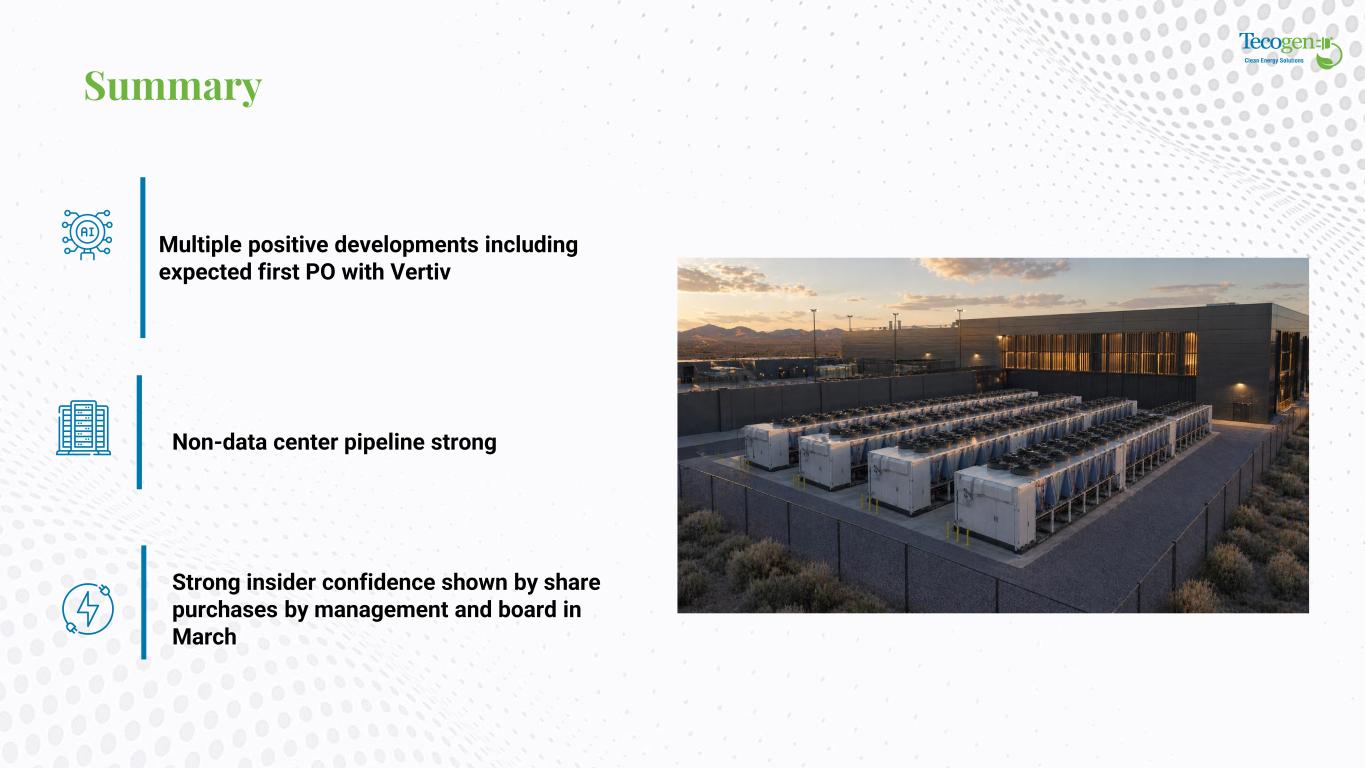
I'll leave you with the following concluding thoughts. Why would VARTA choose to buy chillers when they could easily ask us to provide demonstration units for a performance test? And why now? Why would senior personnel from well-known data centers fly in to see product demonstrations? The existing solutions are sufficient. I've already shown you our Opportunity Pipeline is in the hundreds of killers. This continues to progress forward. As we have just seen with the non-data center pipeline, slow-moving projects can rapidly get approved when alternatives get scarce. Management and directors of TECOGEN bought shares after we reported last quarter. We've seen some high-profile data centers have outages due to failures in their cooling and redundancy systems in recent times. I'd encourage you to watch the video of our chiller providing uninterrupted cooling when the power goes out, and you decide if we have something game-changing or not. I'll now open the floor for questions.
Operator
Thank you. We will now be conducting a question-and-answer session. If you would like to ask a question, please press star 1 on your telephone keypad. A confirmation tone will indicate your line is in the question queue. You may press star 2 to remove yourself from the queue. For participants using speaker equipment, it may be necessary to pick up the handset before pressing these star keys. One moment, please, while we pull for questions. Our first question comes from the line of Eric Stein with Craig Hallam. Please proceed with your question.
Hi, Abinand. Hi, Roger. Good morning.
Good morning, Eric. Good morning.
Hey, so, I mean, I know the video that you're asking people to watch, I saw that in person and would concur. Quite impressive. I'm just curious. I know you're hosting a number of people to witness this. Do you feel like people appreciate what your hybrid system can do now, or do you believe that that in-person viewing is what is needed for the market to really understand the ability to seamlessly make this transition from the grid to the natural gas engine?
So, that's a great question. So, some of the people that we're hosting right now are, as I've mentioned briefly, are new, you know, bigger name data centers that we have spoken to a few times, but we believe that they could be a massive advantage to the company who can land some of those. But they have seen the video. And as soon as they saw the video, they wanted to see the real chiller. What we're going to be demonstrating in person is the performance of the chiller, showing them it running on both grids, basically capping the amount of power that the chiller can draw from the grid, and then pulling the rest from the natural gas engine, showing them the uninterrupted cooling and generally we found in the past that when we've taken potential customers on site tours and so on one just the commitment of them undertaking that shows the level of seriousness on both sides and number two you get uninterrupted time with those customers so you can progress discussions to the point where you might be able to get the purchase orders much faster doing that. So it's a combination of factors. When you get somebody in one room for a significant amount of time plus a demonstration, we've always found that goes well in terms of securing orders.
Yep. Okay. Thank you for that. Maybe just on the Vertiv project, so imminent, I mean, I guess that kind of starts the process, but do you have any thoughts maybe it's too early but any thoughts about you know well I guess it's a permanent deployment right so it's not necessarily something where it's set to run for a period of time I mean it's permanent I mean am I thinking about that right or are there any things we should think about in terms of timing next milestones etc so as I mentioned you know the continuing marketing and Vertiv actually generating projects and so on, that's happening
concurrently. This essentially is a purchase order for a permanent installation. It has been approved by Vertiv management, it is just, it's, you know, we're waiting on the physical paperwork to be provided in hand. I was so like it by Vertiv that I can mention that they've essentially approved the project. So, it is going to one of their facilities, and it's going to be installed permanently there.
There are other pieces of equipment that you would find in a data center in this building, and the chiller is essentially there so they can show it to potential customers as well as use it for their own purposes within the building, where it's actually providing cooling for various systems in the building got it okay and so this is permanent yeah no this is permanent but also can be used for demos as well obviously because it does apply exactly okay um well maybe last one for me then i'll turn it over i mean i get this question quite a bit um you know i i know it's it's always hardest to get that first order in a new application i mean in your mind you've just shared a lot of things that are happening on that side. In your mind, is there something that kind of makes the dam break in terms of orders? I mean, or is it kind of more just blocking and tackling, getting through, showing the product, demonstrating the product, and then that's what kind of opens things up?
So right now, as I mentioned in the last quarter, right, we have this list of opportunities that are there, and I've kind of ranked them based on, at the time, what I felt my, which had the highest probability. Those things, those projects are still moving along. Right now, it is just a matter of, at this stage, usually it's just the customer trying to get their pieces lined up. I still continue to have pretty high confidence on at least a few of those projects coming through. I just don't want to comment on timing and so on because that's always difficult to predict. At this point, it's still many of those projects need to be operational early part of next year. So typically, we start seeing purchase orders, you know, six months, nine months ahead of that. But sometimes, you know, there are delays on customer size and then they suddenly move very quickly. So there's nothing in that batch of projects that I find, you know, like there's no big red flags or anything like that. In addition to that, what we're starting to see right now is many of the bigger names are finding that there are reasons, as I mentioned, in terms of freeing up utility power or maybe doing a couple of swaps on existing data centers where they're starting a look at okay how do we do pilot projects with this pickup and maybe even larger potential installation so that is kind of what we're hosting right now here in addition to you know we're likely to see more hosting happening as bird of starts to ramp up their design side their pipeline as well so it's it's not either or it's both happening okay thank you very much thank you
Operator
Our next question comes from the line of Bobby Brooks with Northland. Please proceed with your question.
Hi, this is Keaton Shoki on for Bobby. Could you provide some additional color around the $8 million pipeline of approved orders, including maybe verticals that those opportunities are tied to the size of the project and maybe the timing on when you expect to see revenue?
Yeah, so great question, Keaton. And so the, as I mentioned, you know, about 2.3 of that, we already have purchase orders in hand, and then the remaining, they fall under the category where the customer has approved it. Right now, we're just, again, waiting on the physical paperwork. In many of these cases, it's just a matter of getting set up on their vendor systems and so on, so we can collect the deposits. A large chunk of that is actually in the healthcare sector, like hospitals and so on, and there's some commercial buildings in there. Many of these are summertime cooling floats, so they typically are going to want equipment either late fall or the wintertime. We can usually ship equipment whenever we have them ready. At this point, it's likely that a lot of that equipment will ship towards the end of the year, primarily because we're trying to keep some capacity on hand for some of these, especially some of the smaller potential data center projects, because we believe that from a shareholder standpoint, we have to prioritize that. So we will plan some of these bigger, like the non-data center projects on, but because they're wintertime, like late fall wintertime type delivery requirements, it's likely that some of that will go towards the end of the year. And then, you know, the near term, we're going to keep some capacity available so that we can land and have aggressive delivery timescales for these potential data center projects.
Operator
Thank you for that additional color.
And then maybe could you expand a bit more on your current data center opportunity pipeline? I know you referenced your one cue from last quarter, you putting out the pipeline, but maybe how that has transitioned. and then maybe more specifically about how many customers you plan to host and kind of what the mix is on those customers from new versus what was already disclosed last quarter.
So in terms of the customers that we're hosting, I'd say there's a few of the ones that are in that opportunity pipeline. And I'd say two or so from that Opportunity Pipeline. And then we're expecting at least other three new bigger name data centers coming to our factory. We're still trying to lock down exact dates and so on. But we have, you know, that's kind of the range that we're looking at right now.
Okay. Thank you for that. And I'll return to the queue.
Operator
Thank you. Our next question comes from the line of Chip Moore with Roth MKM. Please proceed with your question.
Hey, good morning. Hey, everybody. Maybe just a follow-up up there on the customers coming to do a site visit. You sort of alluded to this, Abedon, but can you give us maybe a sense of scale of these new potential customers? I mean, should we be thinking about, you know, hyperscale or neocloud type of clients or any help there?
Yes. I mean, a couple of them are well-established. People will know who they are. I can't comment on anything further than that at this point. and again since some of these schedules are still up in the air until people confirm exactly who's coming because we're trying to get as many of the senior level people as possible and being as flexible as possible there so they're definitely a significant size that we're we're hosting and they're not you know we may get a couple of the neoclouds but they're definitely some established developers as well as part of the group.
Understood. And maybe for my follow-up, you know, you talked about this a little bit, but, you know, capacity-wise, they're obviously going to see, you know, your capacity when they come to visit. You talked about keeping some capacity on hand, but, you know, some non-data center business picking up. Just maybe update us on, you know, behind the scenes, how you're thinking about capacity and, you know, sort of that. chicken and egg problem, you know, some of those larger orders come through? Thanks.
Yeah. So one of the advantages with the much larger data centers is they've been, at least from our discussions, they've been pretty open to finding potential ways to pilot it, but also looking further ahead. With many of these data centers, we've been pretty open in terms of, look, this is our capacity, this is how we plan to address it, and this is kind of the ramp-up time required to do it. And the way we, as I mentioned before, is we've got our contract manufacturers already qualified, and we treat it as such that the current location that we have is really the final integration of components coming from the contract manufacturers so we can increase our capacity out of here so it is something that we we address openly with them and the goal really is to figure out a way to scale with them so they can provide us a ramp up then we can put the resources and ramp up on our side to be able to actually address those those larger opportunities it's less because we have something quite unique it's less a matter of how you see it in some of the traditional collector chiller sales where a data center would have a design for a certain size chiller and just say you know have three different companies bid on it in our case both the the delays associated with projects because they design it in also acts as an advantage in these kind of cases because you can build in a ramp up as part of that overall package understood thanks very
much thank you our next question comes on the line of Alexander Blanton with Clear Harbor Asset Management please proceed with your question Good morning Good morning Alex Yes On this demonstration Installation that you described In your press release In your earnings release And I've talked about here It's going to be located at Your plant Is that correct? Are you referring to the The one that – the imminent contract was vertiged.
No, that one is – after we demonstrate to the various visitors, you know, these – like, this is actually going to one of vertig's facilities. So, at this point, I can't tell you exactly where in the country it's going, but it's actually going to go to one of vertig's locations, and it's going to be installed there permanently.
So that's going to be a demonstration project also?
So you're going to have one at your plant and one at a version? Yes, so we – correct. Okay. Because I was going to ask, who's going to own the one in your flat? That would be you. And what is the timing on that? When is your first demonstration going to be scheduled?
Over the next, so what we've told most of these visitors is starting next week onwards to about mid-June is when we're hosting them. If there are some bigger names that want to come, we'll of course host them whenever they would like to visit. But we've tried to concentrate the number of visitors into a finite length of time so that we can provide internal resources such as our engineering staff and our sales team focused on basically providing that demonstration. The plan is still at this point for the units that are going to Vertiv to ship before the end of Q2 and then when they install it kind of It depends on their installation timeline, but the original expectation was that that would happen pretty quickly once the units shipped.
Okay, so that would mean that perhaps sometimes in the third quarter, they would be set up with a similar demonstration to show whoever they want to show it to.
Have you disclosed the value of that contract, Ms. Virtue?
I have not. It is within the overall $8 million. I'm sorry. What did you just say? No, we have not disclosed it as a separate item in there, again, partially because we try not to provide specific unit pricing. um oh so it is it is within that eight million that i mentioned in terms of approved projects but i have not disclosed it as a separate uh item okay so the the imminent order from virtus that you mentioned in the press release is it is one of the eight million correct is that is that correct Yes, correct.
Okay. Even though the 8 million was supposed to be non-data center projects.
You're totally correct there, Alex. It is – so let me clarify that a little bit, because we have – we actually have at least 8 million of non-data center projects, and then we have the verdict on top. But because we only have $2.3 million in hand, we're likely to see if everything in this package of non-data center projects closes, we're likely to actually see at least $8 million of non-data center plus divertive on top of that.
Okay, got it. All right. I'd just like to talk about the supply chain for a minute and your contractors. What is the delivery time that they have promised you? And what are the specific things that they're going to supply?
So in terms of the dual power source chiller, the contract manufacturer that we have qualified, is providing the sheet metal assemblies and essentially that shell that goes for the air cool chiller. This is something that adds a lot of... I mean, we can do it in-house, but it requires us to have significantly more labor force on hand to be able to do that, and it slows down the production on our floor. The other piece that we're having in terms of a sub-assembly is also the electronic, some of the inverter components that are pre-assembled into a cabinet. So, when it comes to our facility, we have essentially the shell, the electronic cabinet, and then we add in the engine generator, connect all of those pieces together, test it, and ship it.
Okay, and what is the deliberate time they promise? In other words, If you get an order from a data center and you need these things that you mentioned, how soon can they deliver those? What have they promised you?
So I can give you some high-level specifics on what they currently already do. So the reason we chose some of these manufacturers is they're already building similar scale type of products for overflow capacity for other chiller manufacturers. They build hundreds of units a year. So at this point, what I had disclosed, I think, to shareholders was that we could build with all the vendors spun up. We could build up to 100 chillers a year. out of this particular facility. If our order capacity or if our order starts to exceed that, then there are other alternatives that we are looking at, including, as I mentioned last time, providing just a power assembly for the air-cooled chiller and integrating with some of Verda's own chiller capacity. So there are multiple ways to scale up after that point. I think at this juncture, right, my focus is on getting those first few projects and then figuring out, okay, how do we get – if we start getting a backlog that exceeds 100 chillers, then we use some of these other methods to basically scale up.
Okay, right. That was not an answer to my question, but that's a good thing to know, that you have alternatives to go beyond that 100-unit capacity. But my question was, suppose that you want to order components for a data center to fill their order. Can your contractors apply that quickly? What are their delivery times? What are their backlogs?
So some of that varies with time, right? And that is, it's something that at this point, we're not in a position to be able to disclose. And that's, I typically tell data centers that, you know we need a three to six month ramp rate to be able to hit the full 100 per month i'm sorry for like to hit the run rate of 100 per per year so that's typically what we're targeting that seems to be well within you know acceptable numbers from what we've we've been told but again there's a lot of moving pieces here and we can't both sides we have to have those orders in place before we can get bigger commitments than that. So I cannot disclose anything further than that at this point, Alex.
Yeah, well, I was just wondering whether you could order something, get it in a week or a month or six months or much.
So it very much depends on volume. So it very much depends on volume, right? We try to keep some inventory on hand at all times to be able to handle, you know the ones twos threes in terms of killers as you start to get to 10 15 20 units then you need to start building in additional um planning with regards to that and that's very much a matter of balancing cash quarters and all the other commitments in the you know to to make sure that we can we can succeed in this in this space okay oh thank you very much thank you alex thank you our next question comes from the line of bill church with tgra capital
please proceed with your question uh good morning thanks for taking my call uh the residents of denver in the last few weeks have received uh notices that they must reduce their water use just as consumers, below their winter intake, which is obviously causing some annoyance. Would your chillers be useful for corporations and utilities and so forth that are using a lot of water from an industrial standpoint, which are then penalizing the consumers who are all very upset? Thank you.
So with the chiller, the dual power source chiller, it's what's called an air-cooled chiller. So you have a closed water loop inside the building. And one of the reasons actually data centers preferred that in comparison to our DTX chiller, which was what you find in a lot of hospitals and other types of environments is that it doesn't require a, what they call a cooling tower, which usually sits outside the building and it's used to provide, like the heat rejection has an open loop in terms of water. So there is this water consumption in the building. Many data centers in particular were early on were using much of this significant amounts of water, whereas they moved towards this kind of air-cooled solution. So if there's a cooling need in any location and they are trying to reduce their water usage, definitely something like our dual power source chiller would reduce overall water consumption since it's got a closed loop.
Okay, so you'd have products that would be useful for companies or anywhere where there's a drought issue and where there's both a PR going to consumers and then you've got the industrial companies using the water.
Correct. It really depends on how they're integrating and what the equipment they have on site. But one of the reasons that we developed a larger version of our air-cooled chiller was that we were getting questions from potential customers on how do they avoid having to use any kind of open-loop water systems that would have constant consumption of water. So that's why this product was designed.
Operator
Thank you. And we have reached the end of the question and answer session. I'd like to turn the floor back over to Abinah and Aranjess for close remarks.
Thank you very much for attending the first quarter 2026 call. I will provide shareholders an update once all these projects have closed, as well as once the product demonstrations are complete. I look forward to updating shareholders, and thank you for your time.
Operator
Thank you. This concludes today's conference and you may disconnect your lines at this time. Thank you for your participation.