
TNXP 8-K
Tonix Pharmaceuticals Holding Corp. (TNXP)
UNITED STATES
SECURITIES AND EXCHANGE COMMISSION
Washington, D.C. 20549
FORM
CURRENT REPORT
Pursuant to Section 13 or 15(d) of the Securities Exchange Act of 1934
Date of report (date of earliest event reported):
(Exact name of registrant as specified in its charter)
| (State or Other Jurisdiction of Incorporation) |
(Commission File Number) |
(IRS Employer Identification No.) |
(Address of principal executive offices) (Zip Code)
Registrant’s telephone number, including
area code:
Check the appropriate box below if the Form 8-K filing is intended to simultaneously satisfy the filing obligation of the registrant under any of the following provisions (see General Instruction A.2. below):
Securities registered pursuant to Section 12(b) of the Act:
| Title of each class | Trading Symbol(s) | Name of each exchange on which registered |
| The |
Indicate by check mark whether the registrant is an emerging growth company as defined in Rule 405 of the Securities Act of 1933 (§ 230.405 of this chapter) or Rule 12b-2 of the Securities Exchange Act of 1934 (§ 240.12b-2 of this chapter).
Emerging growth company
If an emerging growth company, indicate by check mark if the registrant has elected not to use the extended transition period for complying with any new or revised financial accounting standards provided pursuant to Section 13(a) of the Exchange Act. ☐
| Item 7.01 | Regulation FD Disclosure. |
On July 9, 2025, Tonix Pharmaceuticals Holding Corp. (the “Company”) announced that full results from its confirmatory Phase 3 RESILIENT trial of its TNX-102 SL (cyclobenzaprine HCl sublingual tablets) product candidate for the management of fibromyalgia have been published online in the peer reviewed Pain Medicine, the official journal of the American Academy of Pain Medicine. A copy of the press release which discusses this matter is furnished hereto as Exhibit 99.01, and incorporated herein by reference. A copy of the article is furnished hereto as Exhibit 99.02, and incorporated herein by reference.
The information in this Item 7.01 of this Current Report on Form 8-K, including Exhibits 99.01 and 99.02 attached hereto, shall not be deemed “filed” for purposes of Section 18 of the United States Securities Exchange Act of 1934 (the “Exchange Act”) or otherwise subject to the liabilities of that section, nor shall they be deemed incorporated by reference in any filing under the United States Securities Act of 1933 or the Exchange Act, except as shall be expressly set forth by specific reference in such a filing.
| Item 8.01. | Other Events. |
On July 9, 2025, the Company announced that full results from its confirmatory Phase 3 RESILIENT trial of TNX-102 SL have been published online in Pain Medicine in an article titled “Pain Relief by Targeting Nonrestorative Sleep in Fibromyalgia: A Phase 3 Randomized Trial of Bedtime Sublingual Cyclobenzaprine.”
Forward- Looking Statements
This Current Report on Form 8-K contains certain forward-looking statements within the meaning of Section 27A of the Securities Act of 1933 and Section 21E of the Securities Exchange Act of 1934 and Private Securities Litigation Reform Act, as amended, including those relating to the Company’s product development, clinical trials, clinical and regulatory timelines, market opportunity, competitive position, possible or assumed future results of operations, business strategies, potential growth opportunities and other statement that are predictive in nature. These forward-looking statements are based on current expectations, estimates, forecasts and projections about the industry and markets in which we operate and management’s current beliefs and assumptions.
These statements may be identified by the use of forward-looking expressions, including, but not limited to, “expect,” “anticipate,” “intend,” “plan,” “believe,” “estimate,” “potential,” “predict,” “project,” “should,” “would” and similar expressions and the negatives of those terms. These statements relate to future events or our financial performance and involve known and unknown risks, uncertainties, and other factors which may cause actual results, performance or achievements to be materially different from any future results, performance or achievements expressed or implied by the forward-looking statements. Such factors include those set forth in the Company’s filings with the SEC. Prospective investors are cautioned not to place undue reliance on such forward-looking statements, which speak only as of the date of this press release. The Company undertakes no obligation to publicly update any forward-looking statement, whether as a result of new information, future events or otherwise.
| Item 9.01 | Financial Statements and Exhibits. |
| (d) |
Exhibit No. |
Description. | ||
| 99.01 | Press Release of the Company, dated July 9, 2025 | |||
| 99.02 | Pain Relief by Targeting Nonrestorative Sleep in Fibromyalgia: A Phase 3 Randomized Trial of Bedtime Sublingual Cyclobenzaprine | |||
| 104 | Cover Page Interactive Data File (embedded within the Inline XBRL document) |
SIGNATURE
Pursuant to the requirement of the Securities Exchange Act of 1934, the registrant has duly caused this report to be signed on its behalf by the undersigned thereunto duly authorized.
| TONIX PHARMACEUTICALS HOLDING CORP. | |||
| Date: July 9, 2025 | By: | /s/ Bradley Saenger | |
| Bradley Saenger | |||
| Chief Financial Officer | |||
Tonix Pharmaceuticals Holding Corp. 8-K
Exhibit 99.01

Tonix Pharmaceuticals Announces On-line Publication of Phase 3 RESILIENT Trial Results of TNX-102 SL for Fibromyalgia in the Peer Reviewed Journal, Pain Medicine
The previously disclosed and now published RESILIENT data show that once-nightly TNX-102 SL achieved statistically significant improvement in the primary endpoint of reducing fibromyalgia pain versus placebo, and was generally well tolerated
These results confirm findings from the previously published RELIEF phase 3 trial, which also demonstrated a statistically significant reduction in fibromyalgia pain
FDA target PDUFA date for TNX-102 SL is August 15, 2025 and, if approved, would be the first new drug for treating fibromyalgia in more than 15 years
CHATHAM, N.J., July 9, 2025 (GLOBE NEWSWIRE) — Tonix Pharmaceuticals Holding Corp. (Nasdaq: TNXP), a clinical-stage biopharmaceutical company, today announced that full results from its confirmatory Phase 3 RESILIENT trial of TNX-102 SL (cyclobenzaprine HCl sublingual tablets) for the management of fibromyalgia have been published online in the peer reviewed Pain Medicine, the official journal of the American Academy of Pain Medicine. The publication is titled, “Pain Relief by Targeting Nonrestorative Sleep in Fibromyalgia: A Phase 3 Randomized Trial of Bedtime Sublingual Cyclobenzaprine” and is available here.
“The RESILIENT data that are now published on-line in Pain Medicine underscores the therapeutic promise of TNX-102 SL, our non-opioid, centrally-acting analgesic in development for reducing fibromyalgia pain,” said Seth Lederman, M.D., Chief Executive Officer of Tonix Pharmaceuticals. “RESILIENT confirms the pain improvement data previously reported from our RELIEF study. Based on these two statistically significant Phase 3 studies, we submitted a New Drug Application (NDA) which has been granted a Prescription Drug User Fee Act (PDUFA) target date of August 15 for a decision on marketing authorization.”
RESILIENT was a randomized, double-blind, placebo-controlled trial that enrolled 457 adults with fibromyalgia across 33 United States sites. Participants received TNX-102 SL 2.8 mg for two weeks followed by 5.6 mg for twelve weeks, or matching placebo, with efficacy assessed over fourteen weeks. Treatment with TNX-102 SL produced a least-squares mean reduction of 1.8 points on the eleven-point daily pain numeric rating scale compared with a 1.2-point reduction for placebo, achieving the primary endpoint with high statistical significance. Statistically significant improvements were also observed across all six prespecified key secondary endpoints, including Patient Global Impression of Change responder analysis, Fibromyalgia Impact Questionnaire – Revised (FIQR) Symptoms and Function domains, and the PROMIS Sleep Disturbance and Fatigue instruments.
TNX-102 SL was generally well tolerated. The most common treatment-emergent adverse events were oral tingling/numbness and bitter or noticeable aftertaste, which were typically mild, transient lasting less than an hour, and self-limiting. No drug-related serious adverse events or deaths were reported. These safety and efficacy findings underscore TNX-102 SL’s favorable risk-benefit profile and its potential to address the unmet needs of people living with fibromyalgia
About Fibromyalgia
Fibromyalgia is a chronic pain disorder that is understood to result from amplified sensory and pain signaling within the central nervous system. Fibromyalgia afflicts an estimated 6-12 million adults in the U.S., approximately 90% of whom are women. Symptoms of fibromyalgia include chronic widespread pain, nonrestorative sleep, fatigue, and morning stiffness. Other associated symptoms include cognitive dysfunction and mood disturbances, including anxiety and depression. Individuals suffering from fibromyalgia struggle with their daily activities, have impaired quality of life, and frequently are disabled. Physicians and patients report common dissatisfaction with currently marketed products.
About TNX-102 SL
TNX-102 SL is a patented sublingual tablet formulation of cyclobenzaprine hydrochloride which provides rapid transmucosal absorption and reduced production of a long half-life active metabolite, norcyclobenzaprine, due to bypass of first-pass hepatic metabolism. As a multifunctional agent with potent binding and antagonist activities at the 5-HT2Aserotonergic, α1-adrenergic, H1-histaminergic, and M1-muscarinic receptors, TNX-102 SL is in development as a daily bedtime treatment for fibromyalgia, acute stress reaction (ASR)/acute stress disorder (ASD), Long COVID (formally known as post-acute sequelae of COVID-19 [PASC]), alcohol use disorder (AUD) and agitation in Alzheimer’s disease (AAD). The United States Patent and Trademark Office (USPTO) issued United States Patent No. 9636408 in May 2017, Patent No. 9956188 in May 2018, Patent No. 10117936 in November 2018, Patent No. 10,357,465 in July 2019, and Patent No.10736859 in August 2020. The Protectic™ protective eutectic and Angstro-Technology™ formulation claimed in the patent are important elements of Tonix’s proprietary TNX-102 SL composition. These patents are expected to provide TNX-102 SL, upon NDA approval, with U.S. market exclusivity until 2034/2035.
About the Phase 3 RESILIENT Study
The RESILIENT study is a double-blind, randomized, placebo-controlled trial designed to
evaluate the efficacy and safety of TNX-102 SL (cyclobenzaprine HCl sublingual tablets) in
the management of fibromyalgia. The two-arm trial enrolled 457 adults with fibromyalgia across 33 United States sites. The first two weeks of treatment consist of a run-in period in which participants start on TNX-102 SL 2.8 mg (1 tablet) or placebo. Thereafter, all participants increase their dose to TNX-102 SL 5.6 mg (2 x 2.8 mg tablets) or two placebo tablets for the remaining 12 weeks. The primary endpoint is the daily diary pain severity score change (TNX-102 SL 5.6 mg vs. placebo) from baseline to Week 14 (using the weekly averages of the daily numerical rating scale scores), analyzed by mixed model repeated measures with multiple imputation. For more information, see ClinicalTrials.gov Identifier: NCT05273749.
Tonix Pharmaceuticals Holding Corp.*
Tonix is a fully-integrated biotech company focused on transforming therapies for pain management and vaccines for public health challenges. Tonix’s development portfolio is focused on central nervous system (CNS) disorders. Tonix’s priority is to advance TNX-102 SL, a product candidate for the management of fibromyalgia, for which an NDA was submitted based on two statistically significant Phase 3 studies for the management of fibromyalgia and for which a PDUFA (Prescription Drug User Fee act) goal date of August 15, 2025 has been assigned for a decision on marketing authorization. The FDA has also granted Fast Track designation to TNX-102 SL for the management of fibromyalgia. TNX-102 SL is also being developed to treat ASR and ASR, Long COVID, AUD and AAD. A phase 2 study of ASR/ASD is ongoing under a Physician-Initiated IND at the University of North Carolina in the OASIS study funded by the U.S. Department of Defense (DoD). Tonix’s immunology development portfolio consists of biologics to address organ transplant rejection, autoimmunity and cancer, including TNX-1500, which is an Fc-modified humanized monoclonal antibody targeting CD40-ligand (CD40L or CD154) being developed for the prevention of allograft rejection and for the treatment of autoimmune diseases. Tonix’s infectious disease portfolio includes TNX-801, a vaccine in development for mpox and smallpox, as well as TNX-4200 for which Tonix has a contract with the U.S. DoD’s Defense Threat Reduction Agency (DTRA) for up to $34 million over five years. TNX-4200 is a small molecule broad-spectrum antiviral agent targeting CD45 for the prevention or treatment of infections to improve the medical readiness of military personnel in biological threat environments. Tonix owns and operates a state-of-the art infectious disease research facility in Frederick, Md. Tonix Medicines, our commercial subsidiary, markets Zembrace® SymTouch® (sumatriptan injection) 3 mg and Tosymra® (sumatriptan nasal spray) 10 mg for the treatment of acute migraine with or without aura in adults.
* Tonix’s product development candidates are investigational new drugs or biologics; their efficacy and safety have not been established and have not been approved for any indication.
Zembrace SymTouch and Tosymra are registered trademarks of Tonix Medicines. All other marks are property of their respective owners.
This press release and further information about Tonix can be found at www.tonixpharma.com.
Forward Looking Statements
Certain statements in this press release are forward-looking within the meaning of the Private Securities Litigation Reform Act of 1995. These statements may be identified by the use of forward-looking words such as “anticipate,” “believe,” “forecast,” “estimate,” “expect,” and “intend,” among others. These forward-looking statements are based on Tonix's current expectations and actual results could differ materially. There are a number of factors that could cause actual events to differ materially from those indicated by such forward-looking statements. These factors include, but are not limited to, risks related to the failure to obtain FDA clearances or approvals and noncompliance with FDA regulations; risks related to the failure to successfully market any of our products; risks related to the timing and progress of clinical development of our product candidates; our need for additional financing; uncertainties of patent protection and litigation; uncertainties of government or third party payor reimbursement; limited research and development efforts and dependence upon third parties; and substantial competition. As with any pharmaceutical under development, there are significant risks in the development, regulatory approval and commercialization of new products. Tonix does not undertake an obligation to update or revise any forward-looking statement. Investors should read the risk factors set forth in the Annual Report on Form 10-K for the year ended December 31, 2024, as filed with the Securities and Exchange Commission (the “SEC”) on March 18, 2025, and periodic reports filed with the SEC on or after the date thereof. All of Tonix's forward-looking statements are expressly qualified by all such risk factors and other cautionary statements. The information set forth herein speaks only as of the date thereof.
Investor Contact
Jessica Morris
Tonix Pharmaceuticals
[email protected]
(862) 799-8599
Brian Korb
astr partners
(917) 653-5122
Media Contact
Ray Jordan
Putnam Insights
[email protected]
Indication and Usage
Zembrace® SymTouch® (sumatriptan succinate) injection (Zembrace) and Tosymra® (sumatriptan) nasal spray are prescription medicines used to treat acute migraine headaches with or without aura in adults who have been diagnosed with migraine.
Zembrace and Tosymra are not used to prevent migraines. It is not known if Zembrace or Tosymra are safe and effective in children under 18 years of age.
Important Safety Information
Zembrace and Tosymra can cause serious side effects, including heart attack and other heart problems, which may lead to death. Stop use and get emergency help if you have any signs of a heart attack:
| · | discomfort in the center of your chest that lasts for more than a few minutes or goes away and comes back |
| · | severe tightness, pain, pressure, or heaviness in your chest, throat, neck, or jaw |
| · | pain or discomfort in your arms, back, neck, jaw or stomach |
| · | shortness of breath with or without chest discomfort |
| · | breaking out in a cold sweat |
| · | nausea or vomiting |
| · | feeling lightheaded |
Zembrace and Tosymra are not for people with risk factors for heart disease (high blood pressure or cholesterol, smoking, overweight, diabetes, family history of heart disease) unless a heart exam shows no problem
Do not use Zembrace or Tosymra if you have:
| · | history of heart problems |
| · | narrowing of blood vessels to your legs, arms, stomach, or kidney (peripheral vascular disease) |
| · | uncontrolled high blood pressure |
| · | hemiplegic or basilar migraines. If you are not sure if you have these, ask your provider. |
| · | had a stroke, transient ischemic attacks (TIAs), or problems with blood circulation |
| · | severe liver problems |
| · | taken any of the following medicines in the last 24 hours: almotriptan, eletriptan, frovatriptan, naratriptan, rizatriptan, ergotamines, or dihydroergotamine. Ask your provider for a list of these medicines if you are not sure. |
| · | are taking certain antidepressants, known as monoamine oxidase (MAO)-A inhibitors or it has been 2 weeks or less since you stopped taking a MAO-A inhibitor. Ask your provider for a list of these medicines if you are not sure. |
| · | an allergy to sumatriptan or any of the components of Zembrace or Tosymra |
Tell your provider about all of your medical conditions and medicines you take, including vitamins and supplements.
Zembrace and Tosymra can cause dizziness, weakness, or drowsiness. If so, do not drive a car, use machinery, or do anything where you need to be alert.
Zembrace and Tosymra may cause serious side effects including:
| · | changes in color or sensation in your fingers and toes |
| · | sudden or severe stomach pain, stomach pain after meals, weight loss, nausea or vomiting, constipation or diarrhea, bloody diarrhea, fever |
| · | cramping and pain in your legs or hips; feeling of heaviness or tightness in your leg muscles; burning or aching pain in your feet or toes while resting; numbness, tingling, or weakness in your legs; cold feeling or color changes in one or both legs or feet |
| · | increased blood pressure including a sudden severe increase even if you have no history of high blood pressure |
| · | medication overuse headaches from using migraine medicine for 10 or more days each month. If your headaches get worse, call your provider. |
| · | serotonin syndrome, a rare but serious problem that can happen in people using Zembrace or Tosymra, especially when used with anti-depressant medicines called SSRIs or SNRIs. Call your provider right away if you have: mental changes such as seeing things that are not there (hallucinations), agitation, or coma; fast heartbeat; changes in blood pressure; high body temperature; tight muscles; or trouble walking. |
| · | hives (itchy bumps); swelling of your tongue, mouth, or throat |
| · | seizures even in people who have never had seizures before |
The most common side effects of Zembrace and Tosymra include: pain and redness at injection site (Zembrace only); tingling or numbness in your fingers or toes; dizziness; warm, hot, burning feeling to your face (flushing); discomfort or stiffness in your neck; feeling weak, drowsy, or tired; application site (nasal) reactions (Tosymra only) and throat irritation (Tosymra only).
Tell your provider if you have any side effect that bothers you or does not go away. These are not all the possible side effects of Zembrace and Tosymra. For more information, ask your provider.
This is the most important information to know about Zembrace and Tosymra but is not comprehensive. For more information, talk to your provider and read the Patient Information and Instructions for Use. You can also visit https://www.tonixpharma.com or call 1-888-869-7633.
You are encouraged to report adverse effects of prescription drugs to the FDA. Visit www.fda.gov/medwatch, or call 1-800-FDA-1088.
Tonix Pharmaceuticals Holding Corp. 8-K
Exhibit 99.02
Pain Relief by Targeting Nonrestorative Sleep
in Fibromyalgia: A Phase 3 Randomized
Trial of Bedtime Sublingual Cyclobenzaprine
Seth Lederman, MD1; Lesley M. Arnold, MD2; Ben Vaughn, MS3*; Jean M. Engels, MS1; Mary Kelley, MPH1; Gregory M. Sullivan, MD1
1Tonix Pharmaceuticals, Inc., Chatham, NJ, USA; 2University of Cincinnati College of Medicine, Cincinnati, OH, USA; 3Rho Inc, Chapel Hill, NC, USA
*At the time the study was conducted.
| 1 |
Supplementary Materials
Table of Contents
| Supplementary Methods | 3 |
| Supplementary Figure S1. Sensitivity analyses | 5 |
| Supplementary Figure S2. Continuous responder analysis of reduction in daily pain | 6 |
| Supplementary Figure S3. Change from baseline in FIQR Function domain score | 7 |
| Supplementary Figure S4. Change from baseline in diary-reported sleep quality | 8 |
| Supplementary Table S1. Subgroup analysis change from baseline in daily pain | 9 |
| Supplementary Table S2. Change from baseline in FIQR individual items | 10 |
| Supplementary Figure S5. Post hoc analysis | 11 |
| References | 12 |
| 2 |
Supplementary Methods
Assessments
The Patient Global Impression of Change (PGIC) scale evaluated the patient’s assessment of overall change in their fibromyalgia condition (1). A score of 1 on the PGIC indicated very much improved, 4 indicated no change, and 7 indicated very much worse. The Fibromyalgia Impact Questionnaire (Revised; FIQR) is a validated 21-item questionnaire that assessed the domains of Function (9 questions), Symptoms (10 questions), and Overall Impact (2 questions). Patient-Reported Outcomes Measurement Information System (PROMIS) Sleep Disturbance (version 8A) assessed perceptions of sleep quality, depth, and restoration; perceived difficulty in getting or staying asleep; and the adequacy and satisfaction with sleep (2). PROMIS Fatigue (version 8A) assessed the experience of fatigue and impact of fatigue on physical, mental, and social activities (2). Standardized electronic learning modules for placebo-response reduction and accurate pain reporting were administered to all participants at every in-clinic study visit prior to any patient-reported outcomes.
Statistical Analysis
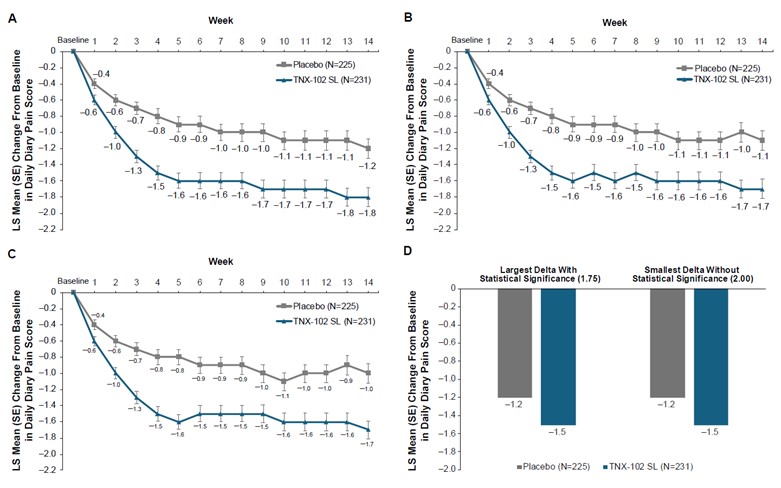
A total of 4 prespecified sensitivity analyses were performed, modifying the specific elements of the primary endpoint analysis:
| (1) | Pain scores were censored on the days in which opioid pain medications were used. Before the weekly averaging, pain scores on impacted days were replaced by the score obtained on the day immediately before the first day of opioid use (and until the opioid was no longer used). |
| 3 |
| (2) | Patients that discontinued owing to withdrawal of consent or investigator decision were grouped with the lack of efficacy (LOE) and adverse event (AE) dropouts when performing the multiple imputation procedure. |
| (3) | All patients that discontinued were grouped with the LOE and AE dropouts when performing the multiple imputation procedure. |
| (4) | A tipping point analysis was performed on the values for the primary analysis. A shift parameter was applied to the TNX-102 SL arm starting at 0.25 and increasing in increments of 0.25 through either 5 or when the outcome was no longer significant. |
Effect sizes for the primary and secondary endpoints, except for PGIC, were calculated as:

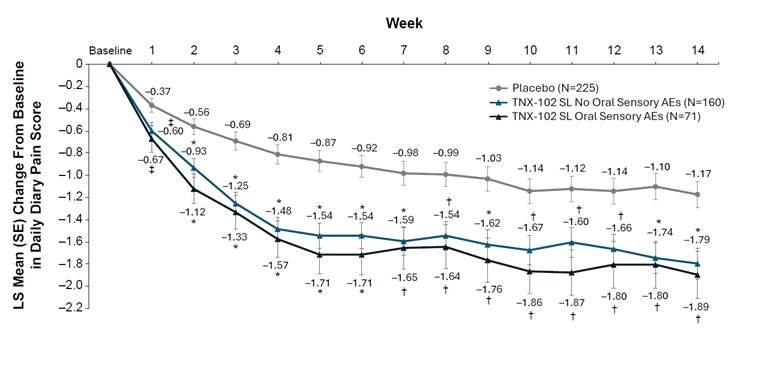
A post hoc analysis was conducted to assess the potential for unblinding among patients in the TNX-102 SL group who experienced any of the 3 common oral-sensory-related AEs that were not associated with mucosal tissue changes. The oral AEs in the preferred terms were hypoaesthesia oral (oral numbness), paraesthesia oral (oral tingling), and product taste abnormal (bitter aftertaste). In a 3-group mixed model for repeated measures approach with multiple imputation analysis, comparisons of reduction in daily pain intensity ratings were conducted comparing the entire placebo group with those who experienced any of the oral-sensory-related AEs (TNX-102 SL/oral-sensory AE subgroup) and those who did not experience any of these AEs (TNX-102 SL/no-oral-sensory AE subgroup). Additionally, the 2 TNX-102 SL subgroups, based on the presence or absence of oral sensory AEs, were compared to each other.
| 4 |
Supplementary Figure 1. Sensitivity analyses for change from baseline in weekly average of daily pain NRS intensity scores: (A) days with opioid use censored, (B) discontinuation due to withdrawal of consent and investigator decision considered missing not at random, (C) all discontinuations considered missing not at random, and (D) tipping point analysis at week 14. LS, least-squares; NRS, numeric rating scale; SL, sublingual.
| 5 |
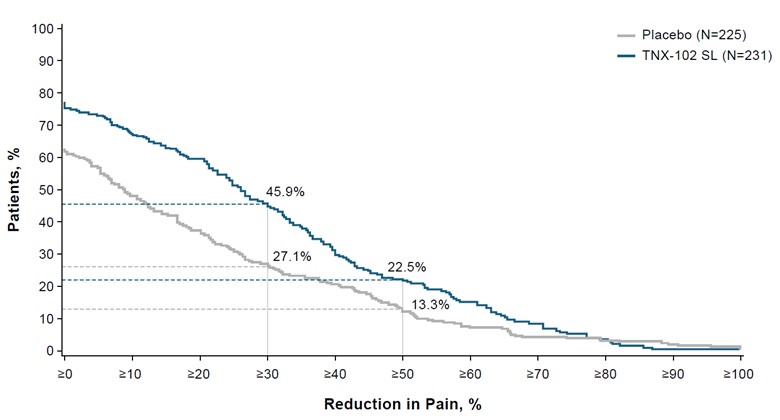
Supplementary Figure 2. Continuous responder analysis of daily pain reduction from baseline at week 14. SL, sublingual.
| 6 |
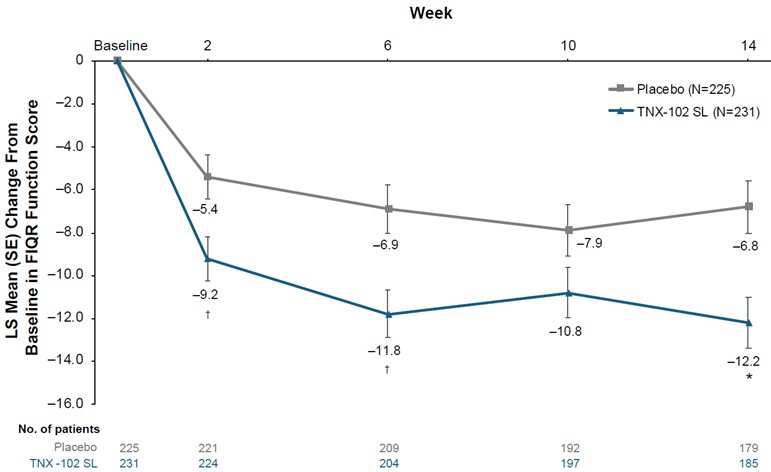
Supplementary Figure 3. LS mean (SE) change from baseline in FIQR Function domain score. No. of patients indicates patients with available data at each time point; multiple imputation was used to account for missing data. FIQR, Fibromyalgia Impact Questionnaire (Revised); LS, least-squares; SL, sublingual. *P=0.001; †P<0.01 (uncorrected).
| 7 |
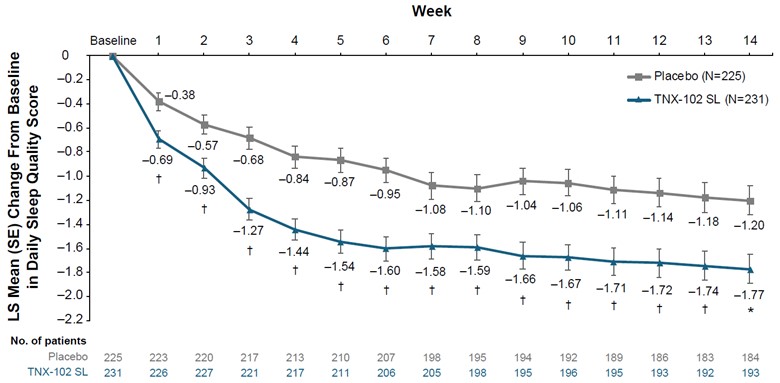
Supplementary Figure 4. Change from baseline weekly average of diary-reported sleep quality. No. of patients indicates patients with available data at each time point; multiple imputation was used to account for missing data. LS, least-squares; SL, sublingual. *P<0.001; †P<0.01 (uncorrected).
| 8 |
Supplementary Table 1. Subgroup Analysis of Mean Change From Baseline at Week 14 in Weekly Average of Daily Pain NRS Intensity Scores
| Subgroup |
TNX-102 SL |
Placebo |
LSMD (95% CI) | P value | ||
| n | LS mean (SE) change | n | LS mean (SE) change | |||
| Ethnicity | ||||||
| Hispanic/ Latino |
36 | –2.07 (0.31) | 35 | –0.92 (0.32) | –1.15 (–2.02 to –0.27) |
0.010 |
| Not Hispanic/ Latino |
195 | –1.74 (0.12) | 189 | –1.15 (0.12) | –0.59 (–0.92 to –0.26) | <0.001 |
| Sex | ||||||
| Female | 224 | –1.79 (0.12) | 211 | –1.16 (0.12) | –0.63 (–0.95 to –0.31) | <0.001 |
| Male* | 7 | –1.57 (1.07) | 8 | -0.85 (2.29) | –0.7 (NA) | |
| Race | ||||||
| White | 194 | –1.73 (0.12) | 192 | –1.04 (0.13) | –0.69 (–1.02 to –0.35) | <0.001 |
| Nonwhite | 37 | –2.12 (0.30) | 33 | –1.66 (0.31) | –0.46 (–1.31 to 0.39) | 0.289 |
LS, least-squares; LSMD, LS mean difference; NA, not available; NRS, numeric rating scale; SL, sublingual.
*Reported as observed mean (SD) change from baseline and observed mean difference between treatment groups.
| 9 |
Supplementary Table 2. Mean Change From Baseline at Week 14 in FIQR Individual Items for Symptoms and Overall Impact
| Item* |
TNX-102 SL N=185 |
Placebo N=179 |
LSMD | LSMD 95% CI |
| Rate your… (last 7 days) | ||||
| Level of pain | −2.2 (0.15) | −1.2 (0.15) | –1.0 | −1.4 to –0.6 |
| Level of energy | −1.6 (0.16) | −0.9 (0.17) | –0.8 | −1.2 to –0.3 |
| Level of stiffness | −2.0 (0.17) | −1.2 (0.17) | –0.8 | −1.3 to –0.3 |
| Quality of sleep | −2.9 (0.19) | −1.5 (0.19) | –1.4 | −2.0 to –0.9 |
| Level of depression | −0.9 (0.15) | −0.2 (0.15) | –0.8 | −1.2 to –0.4 |
| Level of memory problems | −1.3 (0.16) | −0.6 (0.17) | –0.8 | −1.2 to –0.3 |
| Level of anxiety | −1.2 (0.17) | −0.4 (0.17) | –0.8 | −1.2 to –0.3 |
| Level of tenderness to touch | −2.1 (0.18) | −1.3 (0.18) | –0.8 | −1.3 to –0.3 |
| Level of balance problems | −1.1 (0.15) | −0.6 (0.15) | –0.5 | −0.9 to –0.1 |
| Level of sensory sensitivity† | −1.8 (0.18) | −1.3 (0.18) | –0.6 | −1.0 to –0.1 |
| Over the last 7 days, fibromyalgia… | ||||
| Prevented accomplishing goals | −2.4 (0.18) | −1.6 (0.18) | –0.8 | −1.3 to –0.3 |
| Completely overwhelmed me | −2.1 (0.18) | −1.4 (0.18) | –0.7 | −1.2 to –0.2 |
FIQR, Fibromyalgia Impact Questionnaire (Revised); LS, least-squares; LSMD, LS mean difference; SL, sublingual.
*Reported as LS mean (SE) change from baseline.
†To loud noises, bright lights, odors, and cold.
| 10 |
Supplementary Figure 5. Post hoc analysis for the change from baseline in weekly average of daily pain NRS intensity score in patients with or without oral sensory AEs. *P<0.001; †P<0.01; ‡P<0.05 vs placebo. AE, adverse events; LS, least-squares; NRS, numeric rating scale; SL, sublingual.
| 11 |
Supplementary Materials References
| 1. | Rampakakis E, Ste-Marie PA, Sampalis JS, et al. Real-life assessment of the validity of Patient Global Impression of Change in fibromyalgia. RMD Open 2015;1:e000146. |
| 2. | Cella D, Riley W, Stone A, et al. The Patient-Reported Outcomes Measurement Information System (PROMIS) developed and tested its first wave of adult self-reported health outcome item banks: 2005-2008. J Clin Epidemiol 2010;63:1179-94. |
| 12 |