
TNXP 8-K
Tonix Pharmaceuticals Holding Corp. (TNXP)
UNITED STATES
SECURITIES AND EXCHANGE COMMISSION
Washington, D.C. 20549
FORM
CURRENT REPORT
Pursuant to Section 13 or 15(d) of the Securities Exchange Act of 1934
Date of report (date of earliest event reported):
(Exact name of registrant as specified in its charter)
|
(State or Other Jurisdiction of Incorporation) |
(Commission File Number) |
(IRS Employer Identification No.) |
(Address of principal executive offices) (Zip Code)
Registrant’s telephone number, including area
code:
Check the appropriate box below if the Form 8-K filing is intended to simultaneously satisfy the filing obligation of the registrant under any of the following provisions (see General Instruction A.2. below):
Securities registered pursuant to Section 12(b) of the Act:
| Title of each class | Trading Symbol(s) | Name of each exchange on which registered |
| The |
Indicate by check mark whether the registrant is an emerging growth company as defined in Rule 405 of the Securities Act of 1933 (§ 230.405 of this chapter) or Rule 12b-2 of the Securities Exchange Act of 1934 (§ 240.12b-2 of this chapter).
Emerging growth company
If an emerging growth company, indicate by check mark if the registrant has elected not to use the extended transition period for complying with any new or revised financial accounting standards provided pursuant to Section 13(a) of the Exchange Act. ☐
| Item 7.01 | Regulation FD Disclosure. |
On September 29, 2025, Tonix Pharmaceuticals Holding Corp. (the “Company”) announced plans to progress its TNX-2900 product candidate program for the treatment of Prader-Willi syndrome (“PWS”) into a Phase 2 clinical trial. A copy of the press release which discusses this matter is furnished hereto as Exhibit 99.01, and incorporated herein by reference.
The Company updated its TNX-2900 product candidate presentation, which it intends to place on its website and which may contain nonpublic information. A copy of the presentation is filed as Exhibit 99.02 hereto and incorporated herein by reference.
The information in this Item 7.01 of this Current Report on Form 8-K, including Exhibits 99.01 and 99.02 attached hereto, shall not be deemed “filed” for purposes of Section 18 of the United States Securities Exchange Act of 1934 (the “Exchange Act”) or otherwise subject to the liabilities of that section, nor shall they be deemed incorporated by reference in any filing under the United States Securities Act of 1933 or the Exchange Act, except as shall be expressly set forth by specific reference in such a filing.
| Item 8.01. | Other Events. |
On September 29, 2025, the Company announced plans to conduct a Phase 2 randomized, double-blind, placebo-controlled, parallel-design study to evaluate the safety, tolerability, and efficacy of TNX-2900 in male and female participants with PWS, ages 8 to 17.5 years, with an anticipated start date in 2026. Eligible participants will be randomized to receive 12-weeks of treatment with TNX-2900 at one of three dose levels, or placebo, in a 1:1:1:1 ratio. The primary efficacy endpoint will be the change from baseline in the validated Hyperphagia Questionnaire for Clinical Trials. Secondary objectives will include assessments of behavior, caregiver burden, quality of life measures, and safety and tolerability outcomes.
Forward- Looking Statements
This Current Report on Form 8-K contains certain forward-looking statements within the meaning of Section 27A of the Securities Act of 1933 and Section 21E of the Securities Exchange Act of 1934 and Private Securities Litigation Reform Act, as amended, including those relating to the Company’s product development, clinical trials, clinical and regulatory timelines, market opportunity, competitive position, possible or assumed future results of operations, business strategies, potential growth opportunities and other statement that are predictive in nature. These forward-looking statements are based on current expectations, estimates, forecasts and projections about the industry and markets in which we operate and management’s current beliefs and assumptions.
These statements may be identified by the use of forward-looking expressions, including, but not limited to, “expect,” “anticipate,” “intend,” “plan,” “believe,” “estimate,” “potential,” “predict,” “project,” “should,” “would” and similar expressions and the negatives of those terms. These statements relate to future events or our financial performance and involve known and unknown risks, uncertainties, and other factors which may cause actual results, performance or achievements to be materially different from any future results, performance or achievements expressed or implied by the forward-looking statements. Such factors include those set forth in the Company’s filings with the SEC. Prospective investors are cautioned not to place undue reliance on such forward-looking statements, which speak only as of the date of this press release. The Company undertakes no obligation to publicly update any forward-looking statement, whether as a result of new information, future events or otherwise.
| Item 9.01 | Financial Statements and Exhibits. |
| (d) |
Exhibit No. |
Description. | ||
| 99.01 | Press Release of the Company, September 29, 2025 | |||
| 99.02 | TNX-2900 Product Presentation | |||
| 104 | Cover Page Interactive Data File (embedded within the Inline XBRL document) |
SIGNATURE
Pursuant to the requirement of the Securities Exchange Act of 1934, the registrant has duly caused this report to be signed on its behalf by the undersigned thereunto duly authorized.
| TONIX PHARMACEUTICALS HOLDING CORP. | |||
| Date: September 29, 2025 | By: | /s/ Bradley Saenger | |
| Bradley Saenger | |||
| Chief Financial Officer | |||
TONIX PHARMACEUTICALS HOLDING CORP. 8-K
Exhibit 99.01

Tonix Pharmaceuticals Plans to Initiate Prader-Willi Syndrome Phase 2 Trial of TNX-2900 (Intranasal Potentiated Oxytocin) in 2026
Phase 2 randomized, double-blind, placebo-controlled trial planned to evaluate TNX-2900 in children and adolescents (ages 8 to 17.5 years) with Prader-Willi Syndrome under a cleared IND
TNX-2900 granted Orphan Drug and Rare Pediatric Disease Designations by the FDA, providing the potential for a Priority Review Voucher upon approval
Magnesium-potentiated intranasal oxytocin formulation designed to reduce dose-related inconsistencies in receptor activity
CHATHAM, N.J., September 29, 2025 — Tonix Pharmaceuticals Holding Corp. (Nasdaq: TNXP), a fully-integrated commercial-stage biotechnology company with innovative marketed products and a pipeline of development candidates, today announced plans to progress its TNX-2900 program for the treatment of Prader-Willi syndrome (PWS) into a Phase 2 clinical trial. TNX-2900 is a proprietary magnesium-potentiated intranasal oxytocin formulation designed to improve receptor binding and decrease dose-related inconsistencies in receptor activity. The program has received both Orphan Drug and Rare Pediatric Disease designations from the U.S. Food and Drug Administration (FDA), which would make Tonix eligible for a transferable Priority Review Voucher, upon approval. The FDA has cleared the Investigational New Drug (IND) application for TNX-2900 to progress into Phase 2 development.
“We are pleased to advance TNX-2900 into a Phase 2 trial for PWS, a condition with unmet needs for new medicines with activity and tolerability,” said Seth Lederman, M.D., Chief Executive Officer of Tonix Pharmaceuticals. “Families caring for children with PWS face significant challenges and burdens. Among them is hyperphagia which drives persistent food-seeking behaviors that require constant supervision and often result in obesity and serious medical complications. With an average life expectancy of less than 30 years, treatment of PWS remains an urgent and unmet need. By addressing limitations of traditional oxytocin delivery, we believe TNX-2900 has the potential to become an FDA-approved therapy targeting the oxytocin receptor in PWS and provide meaningful benefit for patients and families living with this rare disorder.”
Tonix plans to conduct a Phase 2 randomized, double-blind, placebo-controlled, parallel-design study to evaluate the safety, tolerability, and efficacy of TNX-2900 in male and female participants with PWS, ages 8 to 17.5 years. Eligible participants will be randomized to receive 12-weeks of treatment with TNX-2900 at one of three dose levels, or placebo, in a 1:1:1:1 ratio. The primary efficacy endpoint will be the change from baseline in the validated Hyperphagia Questionnaire for Clinical Trials (HQ-CT), a widely used measure of hyperphagia severity in PWS. Secondary objectives will include assessments of behavior, caregiver burden, and quality of life measures, as well as safety and tolerability outcomes.
| |
Prader-Willi syndrome (PWS) is a rare genetic disorder and the leading cause of life-threatening childhood obesity, affecting about 1 in 10,000 to 1 in 30,000 births. Infants often present with poor muscle tone and feeding difficulties, while children and adolescents develop hyperphagia, behavioral challenges, and severe obesity and metabolic disease. Current interventions are difficult to sustain and often inadequate.
Research suggests PWS is associated with a functional deficiency of oxytocin, a neuropeptide that regulates satiety and feeding behaviors through the oxytocin receptor. Oxytocin treatment addresses several key features of PWS expressed in the MAGEL2 (MAGE-like 2) knock-out mouse.1 Intranasal oxytocin therapy has shown benefits in infants with PWS.2 Carbetocin has a different spectrum of activity on oxytocin and vasopressin receptors than oxytocin and carbetocin has not been tested to our knowledge in the MAGEL2 knock-out mouse.3 Oxytocin has dose-related inconsistencies in receptor activity that have been described as “high-dose suppression” or an “inverted “U” dose response.4 TNX-2900 is formulated with magnesium to further enhance oxytocin receptor binding and signaling, with the goal of providing more consistent and selective receptor activation while minimizing off-target vasopressin effects. In vitro and in vivo in animals Mg++- containing formulations reduce these inconsistencies.4
About Prader-Willi Syndrome (PWS)
PWS is recognized as the most common genetic cause of life-threatening childhood obesity and affects males and females with equal frequency and all races and ethnicities. PWS results from the absence of expression of a group of genes, specifically related to the MAGE (melanoma antigen) gene family on the Prader–Willi critical region (15q11–q13) on the paternally acquired chromosome. The hallmarks of PWS are lack of suckling in newborns and, in children and adolescents, severe hyperphagia – an overriding physiological drive to eat, leading to severe obesity and other complications associated with significant mortality. A systematic review of the morbidity and mortality as a consequence of hyperphagia in PWS found that the average age of death in PWS was 22.1 years.5 Given the serious or life-threatening manifestations of these conditions, there is a critical need for effective treatments to decrease morbidity and mortality, improve quality of life, and increase life expectancy in people with PWS. Oxytocin has potent effects in correcting behavioral characteristics of the MAGEL2 knock-out mouse model for PWS and autism.1,6,7 Six clinical trials have investigated intranasal oxytocin as a treatment in pediatric patients with PWS. Four clinical studies showed evidence for improvement in PWS-related behaviors/symptoms/2,810 Three of these clinical studies reported evidence for improvement in hyperphagia8-10 and one showed an improvement in sucking in infants.2
| 1. | Schaller F, et al. Hum Mol Genet. 2010. 19:4895-4905. |
| 2. | Tauber M, et al. Pediatrics. 2017. 139(2):e20162976. |
| 3. | Meyerowitz JG, et al. Nat Struct Mol Biol. 2022 29(3):274-281. |
| 4. | Bharadwaj VN, et al. Pharmaceutics. 2022 14(5):1105. |
| 5. | Bellis SA, et al. Eur J Med Genet. 2022. 65(1):104379. |
| 6. | Bertoni A, et al. Mol Psychiatry. 2021. 26(12):7582-7595. |
| 7. | Meziane H, et al. Biol Psychiatry. 2015. 78: 85-94. |
| 8. | Kuppens RJ, et al. Clin Endocrinol. 2016. 85:979-987. |
| 9. | Miller JL et al. Am J Med Genet A. 2017. 173:1243-1250. |
| 10. | Damen L, et al. Clin Endocrinol. 2020. 94:774-785. |
| |
About TNX-2900 and Tonix’s Potentiated Oxytocin Platform
TNX-2900 is based on Tonix’s patented intranasal Mg2+-potentiated oxytocin formulation intended for use by children and adolescents. This formulation is believed to enhance the potency of oxytocin as well as increase specificity for oxytocin receptors relative to vasopressin receptors, potentially reducing unwanted side effects from activating vasopressin receptors. In collaboration with academic investigators, Tonix is also testing a different intranasal formulation, designated TNX-1900 for adolescent obesity, binge eating disorder, bone health in autism, and social anxiety disorder. Oxytocin is a naturally occurring human hormone that acts as a neurotransmitter in the brain. Oxytocin is believed to be more than 600 million years old and is present in vertebrates including mammals, birds, reptiles, amphibians, and fish. It was initially approved by the U.S. Food and Drug Administration as Pitocin®, an intravenous infusion or intramuscular injection drug, for use in pregnant women to induce labor and control postpartum bleeding or hemorrhage. An intranasal formulation of oxytocin is marketed in some European countries to assist in breast milk production as Syntocinon® (oxytocin nasal 40 international units/ml).
Tonix Pharmaceuticals Holding Corp.*
Tonix Pharmaceuticals is a commercial-stage, fully-integrated biotechnology company with marketed products and a pipeline of development candidates. Tonix recently received FDA approval for TonmyaTM, a first-in-class, non-opioid analgesic medicine for the treatment of fibromyalgia, a chronic pain condition that affects millions of adults. This marks the first approval for a new prescription medicine for fibromyalgia in more than 15 years. Tonix also markets two treatments for acute migraine in adults. Tonix’s development portfolio is focused on central nervous system (CNS) disorders, immunology, immuno-oncology and infectious diseases. TNX-102 SL is being developed to treat acute stress reaction and acute stress disorder under a Physician-Initiated IND at the University of North Carolina in the OASIS study funded by the U.S. Department of Defense (DoD). Tonix’s immunology development portfolio consists of biologics to address organ transplant rejection, autoimmunity and cancer, including TNX-1500, which is an Fc-modified humanized monoclonal antibody targeting CD40-ligand (CD40L or CD154) being developed for the prevention of allograft rejection and for the treatment of autoimmune diseases. Tonix’s infectious disease portfolio includes TNX-801, a vaccine in development for mpox and smallpox, as well as TNX-4200 for which Tonix has a contract with the U.S. DoD’s Defense Threat Reduction Agency (DTRA) for up to $34 million over five years. TNX-4200 is a small molecule broad-spectrum antiviral agent targeting CD45 for the prevention or treatment of infections to improve the medical readiness of military personnel in biological threat environments. Tonix owns and operates a state-of-the art infectious disease research facility in Frederick, Md.
| |
* Tonix’s product development candidates are investigational new drugs or biologics; their efficacy and safety have not been established and have not been approved for any indication.
This press release and further information about Tonix can be found atwww.tonixpharma.com.
Forward Looking Statements
Certain statements in this press release are forward-looking within the meaning of the Private Securities Litigation Reform Act of 1995. These statements may be identified by the use of forward-looking words such as “anticipate,” “believe,” “forecast,” “estimate,” “expect,” and “intend,” among others. These forward-looking statements are based on Tonix's current expectations and actual results could differ materially. There are a number of factors that could cause actual events to differ materially from those indicated by such forward-looking statements. These factors include, but are not limited to, risks related to the failure to successfully launch and commercialize Tonmya and any of our approved products; risks related to the failure to obtain FDA clearances or approvals and noncompliance with FDA regulations; risks related to the timing and progress of clinical development of our product candidates; our need for additional financing; uncertainties of patent protection and litigation; uncertainties of government or third party payor reimbursement; limited research and development efforts and dependence upon third parties; and substantial competition. As with any pharmaceutical under development, there are significant risks in the development, regulatory approval and commercialization of new products. Tonix does not undertake an obligation to update or revise any forward-looking statement. Investors should read the risk factors set forth in the Annual Report on Form 10-K for the year ended December 31, 2024, as filed with the Securities and Exchange Commission (the “SEC”) on March 18, 2025, and periodic reports filed with the SEC on or after the date thereof. All of Tonix's forward-looking statements are expressly qualified by all such risk factors and other cautionary statements. The information set forth herein speaks only as of the date thereof.
Investor Contacts
Jessica Morris
Tonix Pharmaceuticals
[email protected]
(862) 799-8599
Brian Korb
astr partners
(917) 653-5122
Media Contact
Ray Jordan
Putnam Insights
[email protected]
| |
INDICATION
TONMYA is indicated for the treatment of fibromyalgia in adults.
CONTRAINDICATIONS
TONMYA is contraindicated:
In patients with hypersensitivity to cyclobenzaprine or any inactive ingredient in TONMYA. Hypersensitivity reactions may manifest as an anaphylactic reaction, urticaria, facial and/or tongue swelling, or pruritus. Discontinue TONMYA if a hypersensitivity reaction is suspected.
With concomitant use of monoamine oxidase (MAO) inhibitors or within 14 days after discontinuation of an MAO inhibitor. Hyperpyretic crisis seizures and deaths have occurred in patients who received cyclobenzaprine (or structurally similar tricyclic antidepressants) concomitantly with MAO inhibitors drugs.
During the acute recovery phase of myocardial infarction, and in patients with arrhythmias, heart block or conduction disturbances, or congestive heart failure.
In patients with hyperthyroidism.
| |
WARNINGS AND PRECAUTIONS
Embryofetal toxicity: Based on animal data, TONMYA may cause neural tube defects when used two weeks prior to conception and during the first trimester of pregnancy. Advise females of reproductive potential of the potential risk and to use effective contraception during treatment and for two weeks after the final dose. Perform a pregnancy test prior to initiation of treatment with TONMYA to exclude use of TONMYA during the first trimester of pregnancy.
Serotonin syndrome: Concomitant use of TONMYA with selective serotonin reuptake inhibitors (SSRIs), serotonin norepinephrine reuptake inhibitors (SNRIs), tricyclic antidepressants, tramadol, bupropion, meperidine, verapamil, or MAO inhibitors increases the risk of serotonin syndrome, a potentially life-threatening condition. Serotonin syndrome symptoms may include mental status changes, autonomic instability, neuromuscular abnormalities, and/or gastrointestinal symptoms. Treatment with TONMYA and any concomitant serotonergic agent should be discontinued immediately if serotonin syndrome symptoms occur and supportive symptomatic treatment should be initiated. If concomitant treatment with TONMYA and other serotonergic drugs is clinically warranted, careful observation is advised, particularly during treatment initiation or dosage increases.
Tricyclic antidepressant-like adverse reactions: Cyclobenzaprine is structurally related to TCAs. TCAs have been reported to produce arrhythmias, sinus tachycardia, prolongation of the conduction time leading to myocardial infarction and stroke. If clinically significant central nervous system (CNS) symptoms develop, consider discontinuation of TONMYA. Caution should be used when TCAs are given to patients with a history of seizure disorder, because TCAs may lower the seizure threshold. Patients with a history of seizures should be monitored during TCA use to identify recurrence of seizures or an increase in the frequency of seizures.
Atropine-like effects: Use with caution in patients with a history of urinary retention, angle-closure glaucoma, increased intraocular pressure, and in patients taking anticholinergic drugs.
CNS depression and risk of operating a motor vehicle or hazardous machinery: TONMYA monotherapy may cause CNS depression. Concomitant use of TONMYA with alcohol, barbiturates, or other CNS depressants may increase the risk of CNS depression. Advise patients not to operate a motor vehicle or dangerous machinery until they are reasonably certain that TONMYA therapy will not adversely affect their ability to engage in such activities.
Oral mucosal adverse reactions: In clinical studies with TONMYA, oral mucosal adverse reactions occurred more frequently in patients treated with TONMYA compared to placebo. Advise patients to moisten the mouth with sips of water before administration of TONMYA to reduce the risk of oral sensory changes (hypoesthesia). Consider discontinuation of TONMYA if severe reactions occur.
| |
ADVERSE REACTIONS
The most common adverse reactions (incidence ≥2% and at a higher incidence in TONMYA-treated patients compared to placebo-treated patients) were oral hypoesthesia, oral discomfort, abnormal product taste, somnolence, oral paresthesia, oral pain, fatigue, dry mouth, and aphthous ulcer.
DRUG INTERACTIONS
MAO inhibitors: Life-threatening interactions may occur.
Other serotonergic drugs: Serotonin syndrome has been reported.
CNS depressants: CNS depressant effects of alcohol, barbiturates, and other CNS depressants may be enhanced.
Tramadol: Seizure risk may be enhanced.
Guanethidine or other similar acting drugs: The antihypertensive action of these drugs may be blocked.
USE IN SPECIFIC POPULATIONS
Pregnancy: Based on animal data, TONMYA may cause fetal harm when administered to a pregnant woman. The limited amount of available observational data on oral cyclobenzaprine use in pregnancy is of insufficient quality to inform a TONMYA-associated risk of major birth defects, miscarriage, or adverse maternal or fetal outcomes. Advise pregnant women about the potential risk to the fetus with maternal exposure to TONMYA and to avoid use of TONMYA two weeks prior to conception and through the first trimester of pregnancy. Report pregnancies to the Tonix Medicines, Inc., adverse-event reporting line at 1-888-869-7633 (1-888-TNXPMED).
Lactation: A small number of published cases report the transfer of cyclobenzaprine into human milk in low amounts, but these data cannot be confirmed. There are no data on the effects of cyclobenzaprine on a breastfed infant, or the effects on milk production. The developmental and health benefits of breastfeeding should be considered along with the mother’s clinical need for TONMYA and any potential adverse effects on the breastfed child from TONMYA or from the underlying maternal condition.
Pediatric use: The safety and effectiveness of TONMYA have not been established.
Geriatric patients: Of the total number of TONMYA-treated patients in the clinical trials in adult patients with fibromyalgia, none were 65 years of age and older. Clinical trials of TONMYA did not include sufficient numbers of patients 65 years of age and older to determine whether they respond differently from younger adult patients.
Hepatic impairment: The recommended dosage of TONMYA in patients with mild hepatic impairment (HI) (Child Pugh A) is 2.8 mg once daily at bedtime, lower than the recommended dosage in patients with normal hepatic function. The use of TONMYA is not recommended in patients with moderate HI (Child Pugh B) or severe HI (Child Pugh C). Cyclobenzaprine exposure (AUC) was increased in patients with mild HI and moderate HI compared to subjects with normal hepatic function, which may increase the risk of TONMYA-associated adverse reactions.
Please see additional safety information in the full Prescribing Information.
To report suspected adverse reactions, contact Tonix Medicines, Inc. at 1-888-869-7633, or the FDA at 1-800-FDA-1088 or www.fda.gov/medwatch.
TONIX PHARMACEUTICALS HOLDING CORP. 8-K
Exhibit 99.02

© 2025 Tonix Pharmaceuticals Holding Corp. Version P0545 September 29, 2025 TNX - 2900 Prader - Willi Syndrome NASDAQ: TNXPJH1
2 © 2025 Tonix Pharmaceuticals Holding Corp. RARE DISEASE PORTFOLIO Cautionary Note on Forward - Looking Statements Certain statements in this presentation regarding strategic plans, expectations and objectives for future operations or results are “forward - looking statements” as defined by the Private Securities Litigation Reform Act of 1995. These statements may be identified by the use of forward - looking words such as “anticipate,” “believe,” “forecast,” “estimate” and “intend,” among others. These forward - looking statements are based on Tonix’s current expectations and actual results could differ materially. There are a number of factors that could cause actual events to differ materially from those indicated by such forward - looking statements. These factors include, but are not limited to, the risks related to failure to obtain FDA clearances or approvals and noncompliance with FDA regulations; risks related to the failure to successfully market any of our products; risks related to the timing and progress of clinical development of our product candidates; risks related to the failure to successfully launch and commercialize Tonmya and any of our approved products; our need for additional financing; uncertainties of patent protection and litigation; uncertainties of government or third party payor reimbursement; limited research and development efforts and dependence upon third parties; and substantial competition. As with any pharmaceutical under development, there are significant risks in the development, regulatory approval and commercialization of new products. The forward - looking statements in this presentation are made as of the date of this presentation, even if subsequently made available by Tonix on its website or otherwise. Tonix does not undertake an obligation to update or revise any forward - looking statement, except as required by law. Investors should read the risk factors set forth in the Annual Report on Form 10 - K for the year ended December 31, 2024, as filed with the Securities and Exchange Commission (the “SEC”) on March 18, 2025, and periodic reports and current reports filed with the SEC on or after the date thereof. All of Tonix's forward - looking statements are expressly qualified by all such risk factors and other cautionary statements.
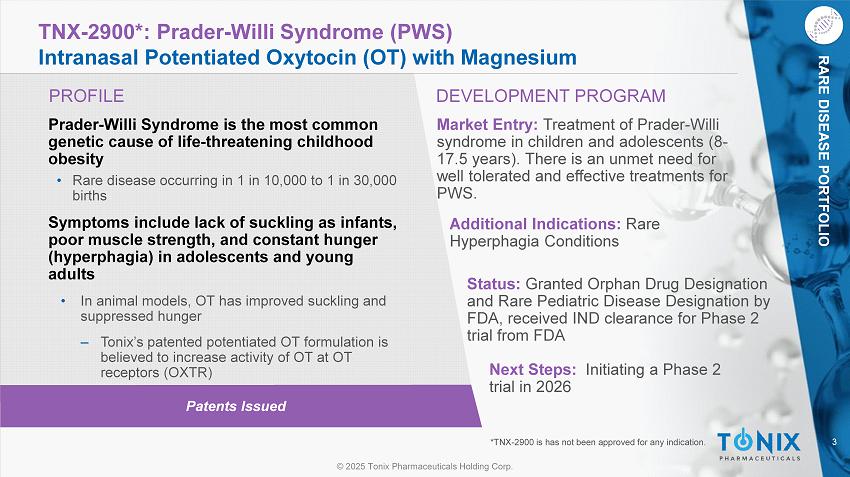
3 © 2025 Tonix Pharmaceuticals Holding Corp. RARE DISEASE PORTFOLIO Patents Issued PROFILE DEVELOPMENT PROGRAM TNX - 2900*: Prader - Willi Syndrome (PWS) Intranasal Potentiated Oxytocin (OT) with Magnesium Prader - Willi Syndrome is the most common genetic cause of life - threatening childhood obesity • Rare disease occurring in 1 in 10,000 to 1 in 30,000 births Symptoms include lack of suckling as infants, poor muscle strength, and constant hunger (hyperphagia) in adolescents and young adults • In animal models, OT has improved suckling and suppressed hunger ‒ Tonix’s patented potentiated OT formulation is believed to increase activity of OT at OT receptors (OXTR) Market Entry: Treatment of hyperphagia in adolescents and young adults with Prader - Willi Syndrome . There is a high unmet need for safe and effective treatments for hyperphagia in PWS. Additional Indications: Rare Hyperphagia Conditions Status: Granted O rphan D rug D esignation and Rare P ediatric D isease D esignation by FDA, received IND clearance for Phase 2 trial from FDA Next Steps: Initiating a Phase 2 trial in 2026 *TNX - 2900 is has not been approved for any indication.
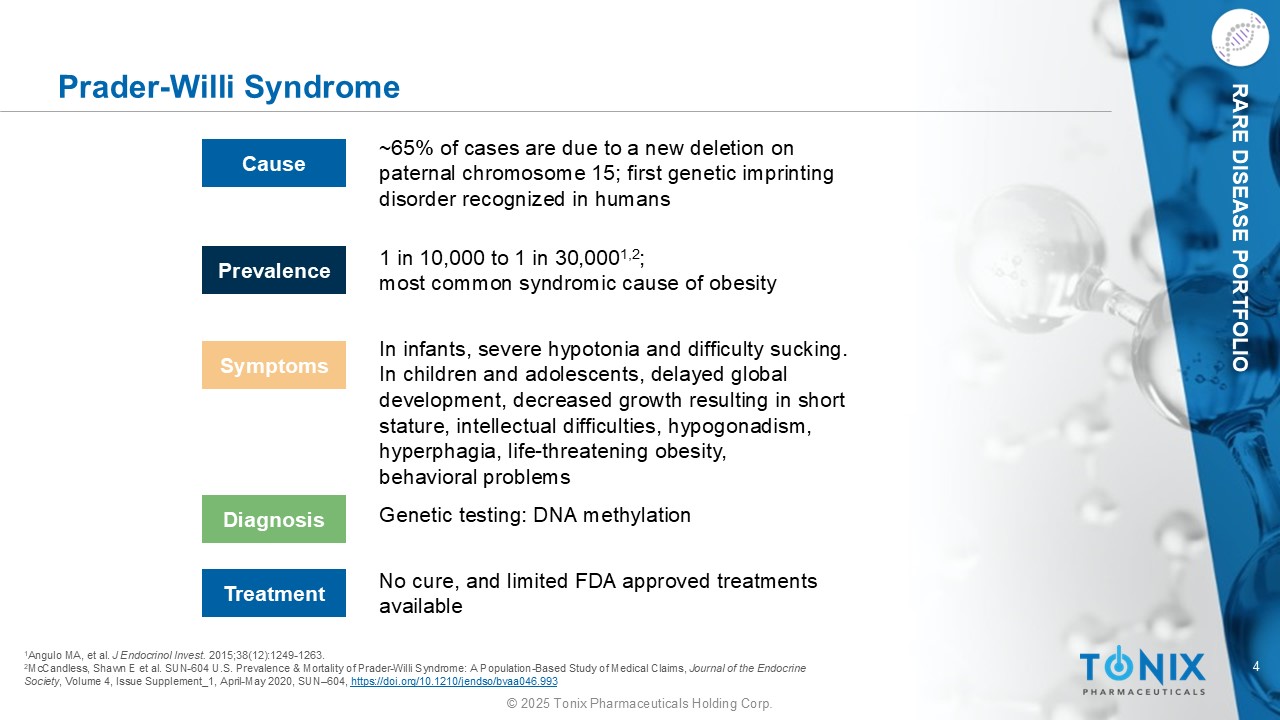
4 © 2025 Tonix Pharmaceuticals Holding Corp. RARE DISEASE PORTFOLIO Prader - Willi Syndrome Cause Prevalence Symptoms a 65% of cases are due to a new deletion on paternal chromosome 15; first genetic imprinting disorder recognized in humans Diagnosis 1 in 10,000 to 1 in 30,000 1,2 ; most common syndromic cause of obesity In infants, severe hypotonia and difficulty sucking. In children and adolescents, delayed global development, decreased growth resulting in short stature, intellectual difficulties, hypogonadism, hyperphagia, life - threatening obesity, behavioral problems Genetic testing: DNA methylation 1 Angulo MA, et al. J Endocrinol Invest. 2015;38(12):1249 - 1263. 2 McCandless, Shawn E et al. SUN - 604 U.S. Prevalence & Mortality of Prader - Willi Syndrome: A Population - Based Study of Medical Cla ims, Journal of the Endocrine Society , Volume 4, Issue Supplement_1, April - May 2020, SUN – 604, https://doi.org/10.1210/jendso/bvaa046.993 Treatment No cure, and limited FDA approved treatments available

5 © 2025 Tonix Pharmaceuticals Holding Corp. RARE DISEASE PORTFOLIO Progression of Prader - Willi Syndrome 1 0 yrs 0 to 9 months 9 to 25 months 2 to 4.5 years 4.5 to 8 years 8 years to adulthood Adulthood Average age at death: 22.1 years 2 Phase 0 Low birth weight Phase 1a Failure to thrive, feeding difficulties, hypotonia, increased infant mortality Phase 1b Normal growth Phase 2a Weight increase without appetite increase Phase 2b Weight and appetite increase; obesity occurs if allowed to eat what they want Phase 3 Hyperphagia Phase 4 Return to normal appetite; this phase is not often reached 1. Angulo MA, et al. J Endocrinol Invest. 2015;38(12):1249 - 1263. 2. Bellis SA, et al. Eur J Med Genet 2022;65(1)104379.
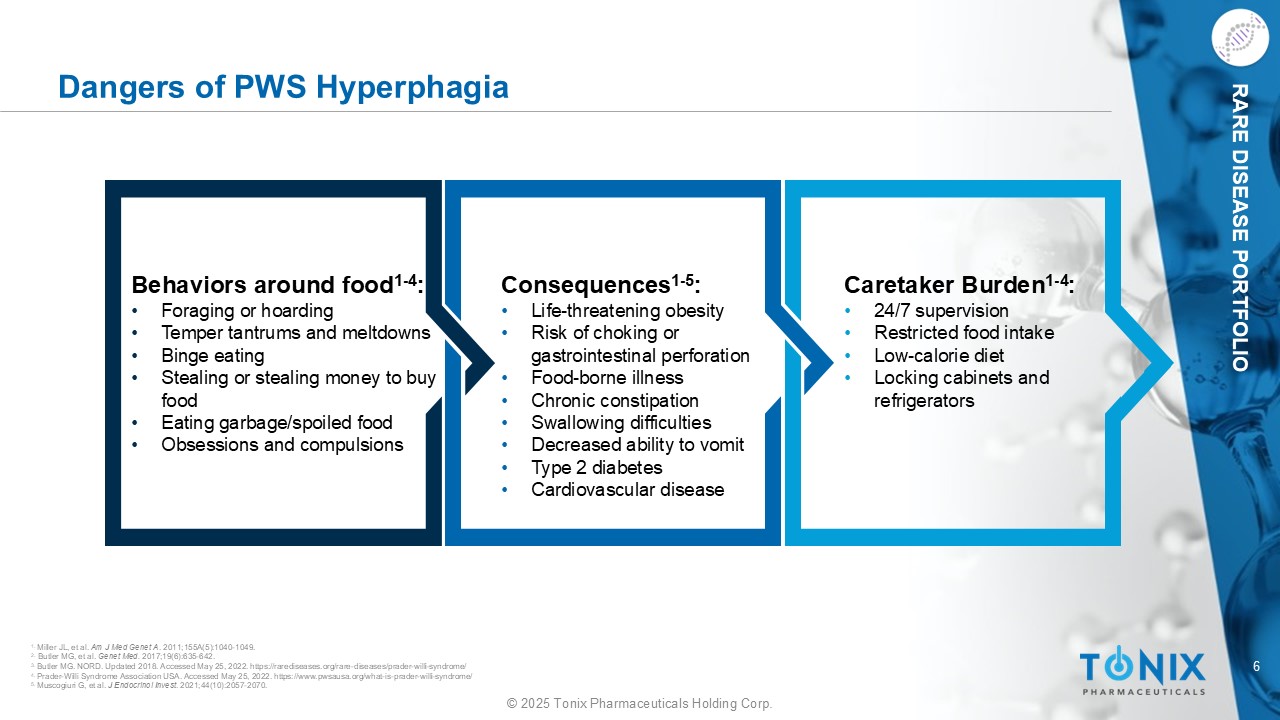
6 © 2025 Tonix Pharmaceuticals Holding Corp. RARE DISEASE PORTFOLIO Dangers of PWS Hyperphagia Caretaker Burden 1 - 4 : • 24/7 supervision • Restricted food intake • Low - calorie diet • Locking cabinets and refrigerators Behaviors around food 1 - 4 : • Foraging or hoarding • Temper tantrums and meltdowns • Binge eating • Stealing or stealing money to buy food • Eating garbage/spoiled food • Obsessions and compulsions Consequences 1 - 5 : • Life - threatening obesity • Risk of choking or gastrointestinal perforation • Food - borne illness • Chronic constipation • Swallowing difficulties • Decreased ability to vomit • Type 2 diabetes • Cardiovascular disease 1. Miller JL, et al. Am J Med Genet A . 2011;155A(5):1040 - 1049. 2. Butler MG, et al. Genet Med. 2017;19(6):635 - 642. 3. Butler MG. NORD. Updated 2018. Accessed May 25, 2022. https://rarediseases.org/rare - diseases/prader - willi - syndrome/ 4. Prader - Willi Syndrome Association USA. Accessed May 25, 2022. https://www.pwsausa.org/what - is - prader - willi - syndrome/ 5. Muscogiuri G, et al. J Endocrinol Invest . 2021;44(10):2057 - 2070.
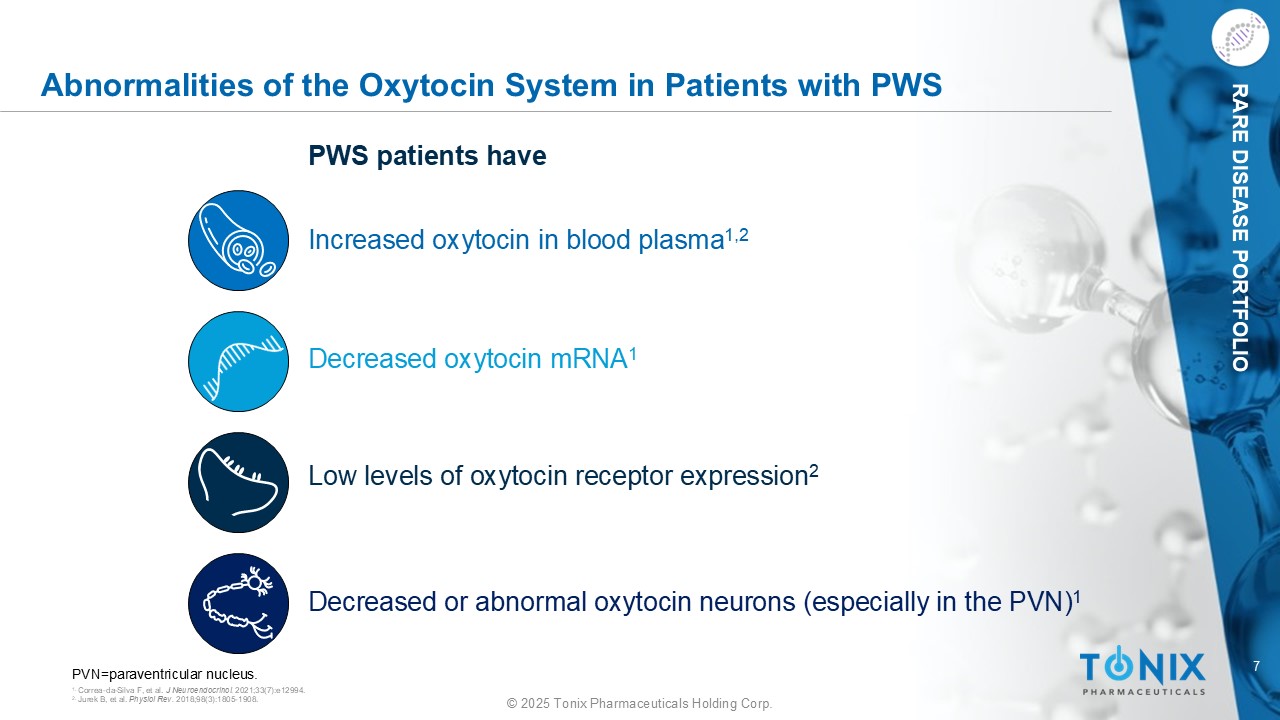
7 © 2025 Tonix Pharmaceuticals Holding Corp. RARE DISEASE PORTFOLIO Abnormalities of the Oxytocin System in Patients with PWS 1. Correa - da - Silva F, et al. J Neuroendocrinol . 2021;33(7):e12994. 2. Jurek B, et al. Physiol Rev . 2018;98(3):1805 - 1908. PWS patients have PVN=paraventricular nucleus. Increased oxytocin in blood plasma 1,2 Decreased or abnormal oxytocin neurons (especially in the PVN) 1 Decreased oxytocin mRNA 1 Low levels of oxytocin receptor expression 2
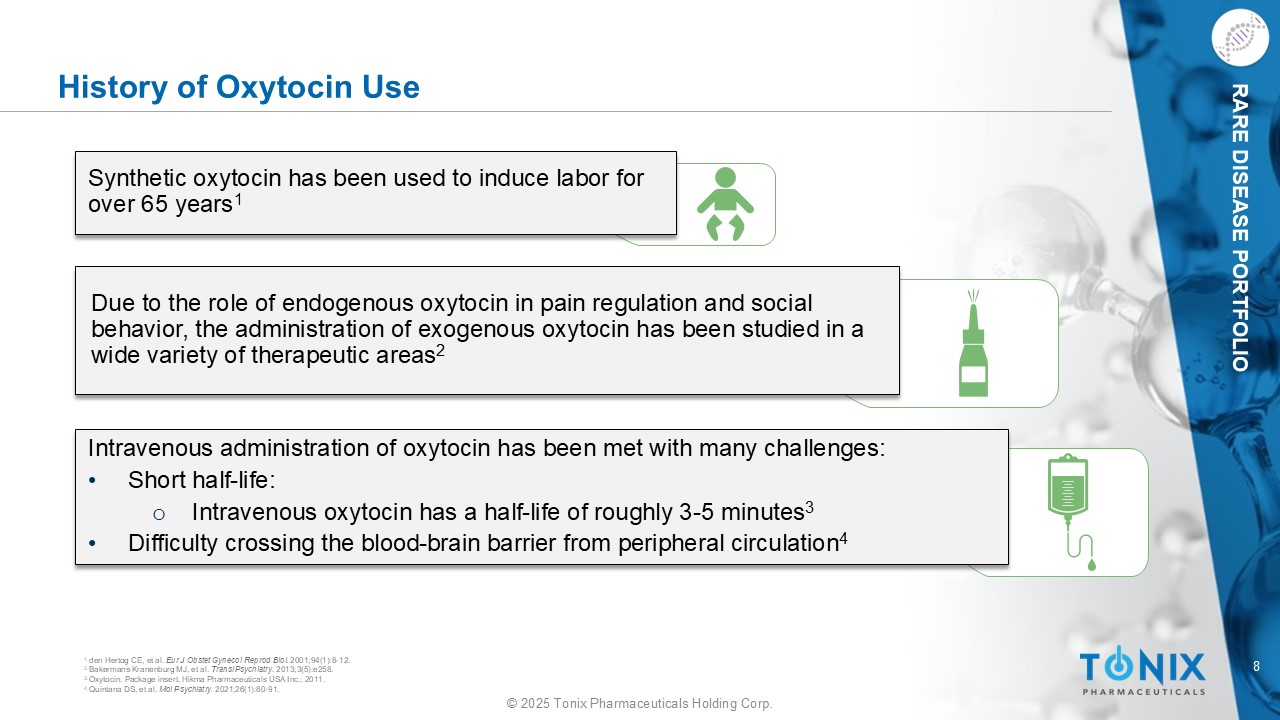
8 © 2025 Tonix Pharmaceuticals Holding Corp. RARE DISEASE PORTFOLIO History of Oxytocin Use 1. den Hertog CE, et al. Eur J Obstet Gynecol Reprod Biol . 2001;94(1):8 - 12. 2. Bakermans - Kranenburg MJ, et al. Transl Psychiatry . 2013;3(5):e258. 3. Oxytocin. Package insert. Hikma Pharmaceuticals USA Inc.; 2011. 4. Quintana DS, et al. Mol Psychiatry. 2021;26(1):80 - 91. Due to the role of endogenous oxytocin in pain regulation and social behavior, the administration of exogenous oxytocin has been studied in a wide variety of therapeutic areas 2 Intravenous administration of oxytocin has been met with many challenges: • Short half - life: o Intravenous oxytocin has a half - life of roughly 3 - 5 minutes 3 • Difficulty crossing the blood - brain barrier from peripheral circulation 4 Synthetic oxytocin has been used to induce labor for over 65 years 1
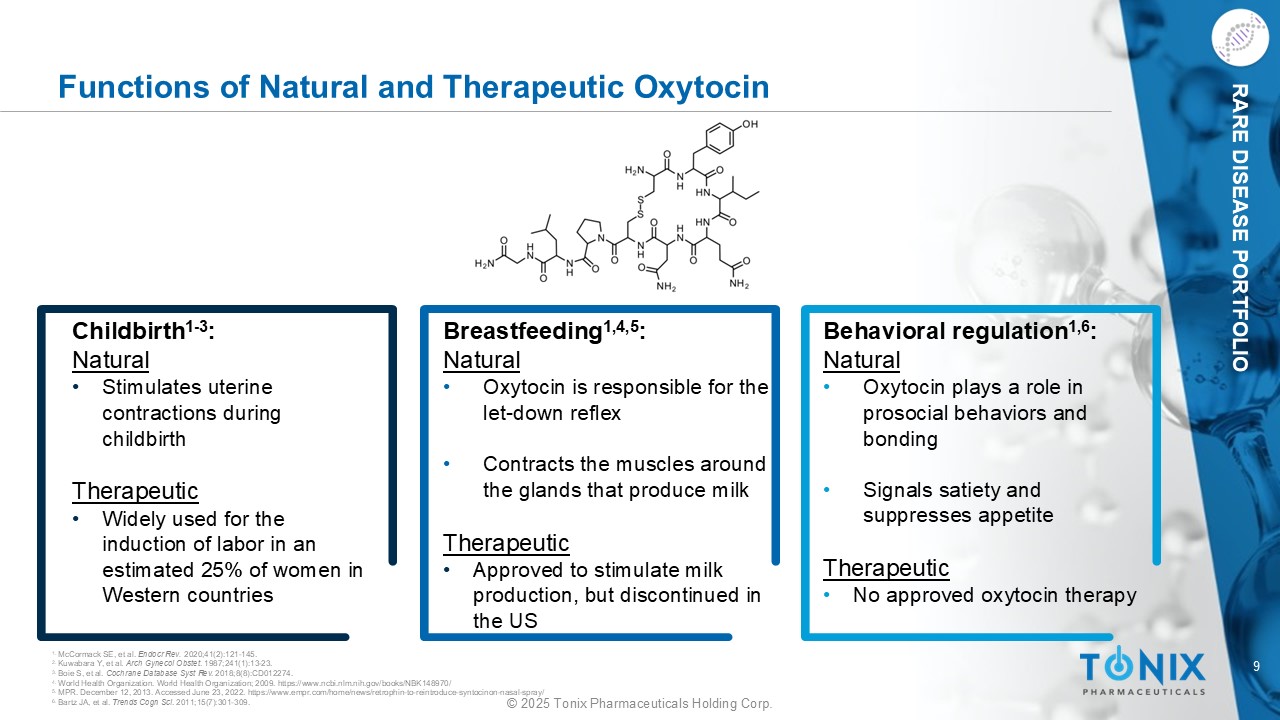
9 © 2025 Tonix Pharmaceuticals Holding Corp. RARE DISEASE PORTFOLIO Functions of Natural and Therapeutic Oxytocin 1. McCormack SE , et al. Endocr Rev. 2020;41(2):121 - 145. 2. Kuwabara Y, et al. Arch Gynecol Obstet . 1987;241(1):13 - 23. 3. Boie S, et al. Cochrane Database Syst Rev . 2018;8(8):CD012274. 4. World Health Organization. World Health Organization; 2009. https://www.ncbi.nlm.nih.gov/books/NBK148970/ 5. MPR. December 12, 2013. Accessed June 23, 2022. https://www.empr.com/home/news/retrophin - to - reintroduce - syntocinon - nasal - spray/ 6. Bartz JA, et al. Trends Cogn Sci . 2011;15(7):301 - 309. Childbirth 1 - 3 : Natural • Stimulates uterine contractions during childbirth Therapeutic • Widely used for the induction of labor in an estimated 25% of women in Western countries Breastfeeding 1,4,5 : Natural • Oxytocin is responsible for the let - down reflex • Contracts the muscles around the glands that produce milk Therapeutic • Approved to stimulate milk production, but discontinued in the US Behavioral regulation 1,6 : Natural • Oxytocin plays a role in prosocial behaviors and bonding • Signals satiety and suppresses appetite Therapeutic • No approved oxytocin therapy
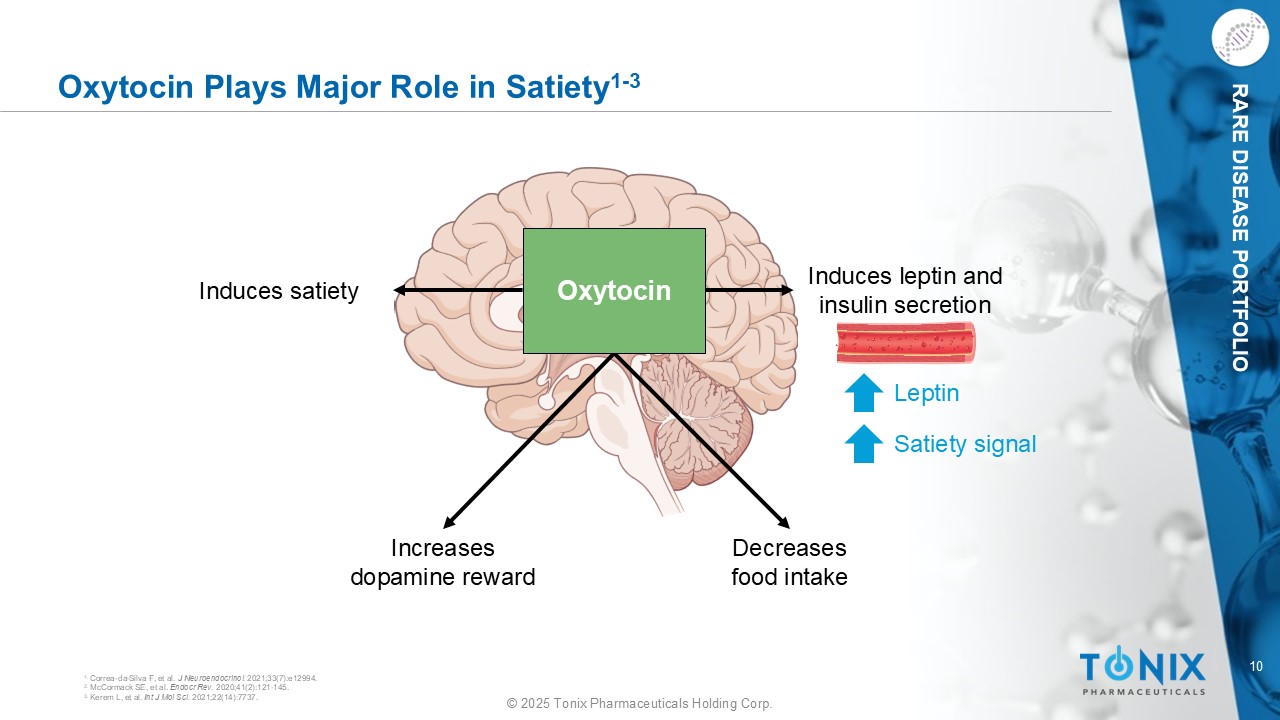
10 © 2025 Tonix Pharmaceuticals Holding Corp. RARE DISEASE PORTFOLIO Oxytocin Plays Major Role in Satiety 1 - 3 1. Correa - da - Silva F, et al. J Neuroendocrinol . 2021;33(7):e12994. 2. McCormack SE , et al. Endocr Rev. 2020;41(2):121 - 145. 3. Kerem L, et al. Int J Mol Sci. 2021;22(14):7737 . Oxytocin Increases dopamine reward Decreases food intake Induces leptin and insulin secretion Leptin Satiety signal Induces satiety
11 © 2025 Tonix Pharmaceuticals Holding Corp. RARE DISEASE PORTFOLIO Intranasal Use of Oxytocin • Intranasal oxytocin was introduced as a lactation aid in the early 1960s 1 • Numerous studies have investigated chronic and acute intranasal oxytocin for the treatment of neuropsychiatric disorders and pain 2 o Intranasal oxytocin has been studied in anxiety disorders, 3 autism, 4 PTSD, 5 schizophrenia, 6 and pain 7 • Chronically administered intranasal oxytocin is generally very well tolerated 8 - 11 • Intranasal oxytocin has been found to be generally safe and well tolerated in a variety of healthy populations ranging from infancy to old age 12,13 1. Skarsten KW. Tidsskr Nor Laegeforen . 1962;82:8 - 10. 2. Quintana DS, et al. Mol Psychiatry . 2021;26(1):80 - 91. 3. Jones C, et al. Dialogues Clin Neurosci . 2017;19(2):193 - 201. 4. Guastella AJ, et al. Biol Psychiatry. 2010;67(7):692 - 694. 5. Pitman RK, et al. Psychiatry Res. 1993;48(2):107 - 117. 6. Feifel D, et al. Biol Psychiatry . 2016;79(3):222 - 233. 7. Boll S, et al. Neuroscience . 2018;387:149 - 161. 8. Rung, JM, et al. Psychopharmacology (Berl). 2021;1 - 14. 9. Horta M, et al. Neurosci Biobehav Rev. 2020;108:1 - 23. 10. Finger E, et al. Neurology. 2015;84(2):174 - 181. 11. Barraza JA, et al. Exp Clin Psychopharmacol . 2013;21(2):85 - 92. 12. DeMayo MM, et al. Drugs . 2017;19(5):391 - 410. 13. Verhees MWFT, et al. Psychopharmacology (Berl). 2018;235(8):2471 - 2477.
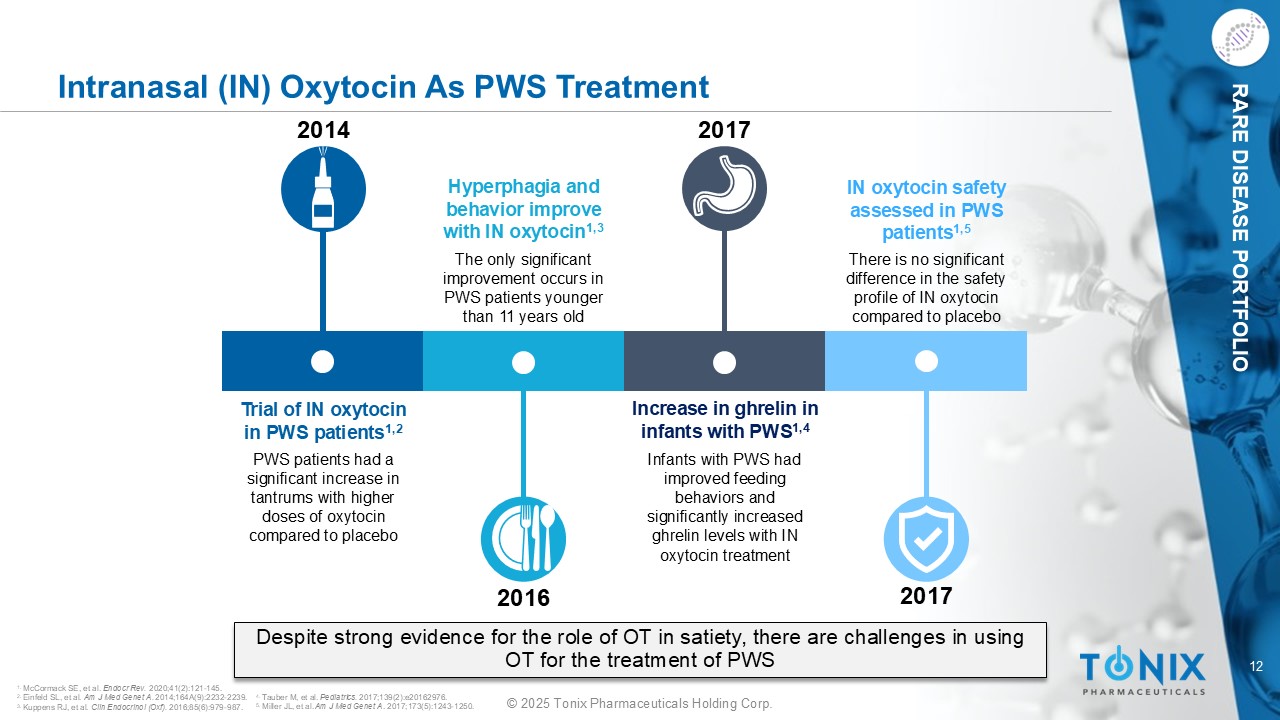
12 © 2025 Tonix Pharmaceuticals Holding Corp. RARE DISEASE PORTFOLIO Intranasal (IN) Oxytocin As PWS Treatment 1. McCormack SE , et al. Endocr Rev. 2020;41(2):121 - 145. 2. Einfeld SL, et al. Am J Med Genet A. 2014;164A(9):2232 - 2239. 3. Kuppens RJ, et al. Clin Endocrinol ( Oxf ). 2016;85(6):979 - 987. Despite strong evidence for the role of OT in satiety, there are challenges in using OT for the treatment of PWS 2014 Trial of IN oxytocin in PWS patients 1,2 PWS patients had a significant increase in tantrums with higher doses of oxytocin compared to placebo Hyperphagia and behavior improve with IN oxytocin 1,3 2016 The only significant improvement occurs in PWS patients younger than 11 years old Increase in ghrelin in infants with PWS 1,4 2017 Infants with PWS had improved feeding behaviors and significantly increased ghrelin levels with IN oxytocin treatment IN oxytocin safety assessed in PWS patients 1,5 2017 There is no significant difference in the safety profile of IN oxytocin compared to placebo 4. Tauber M, et al. Pediatrics. 2017;139(2):e20162976. 5. Miller JL, et al. Am J Med Genet A . 2017;173(5):1243 - 1250.
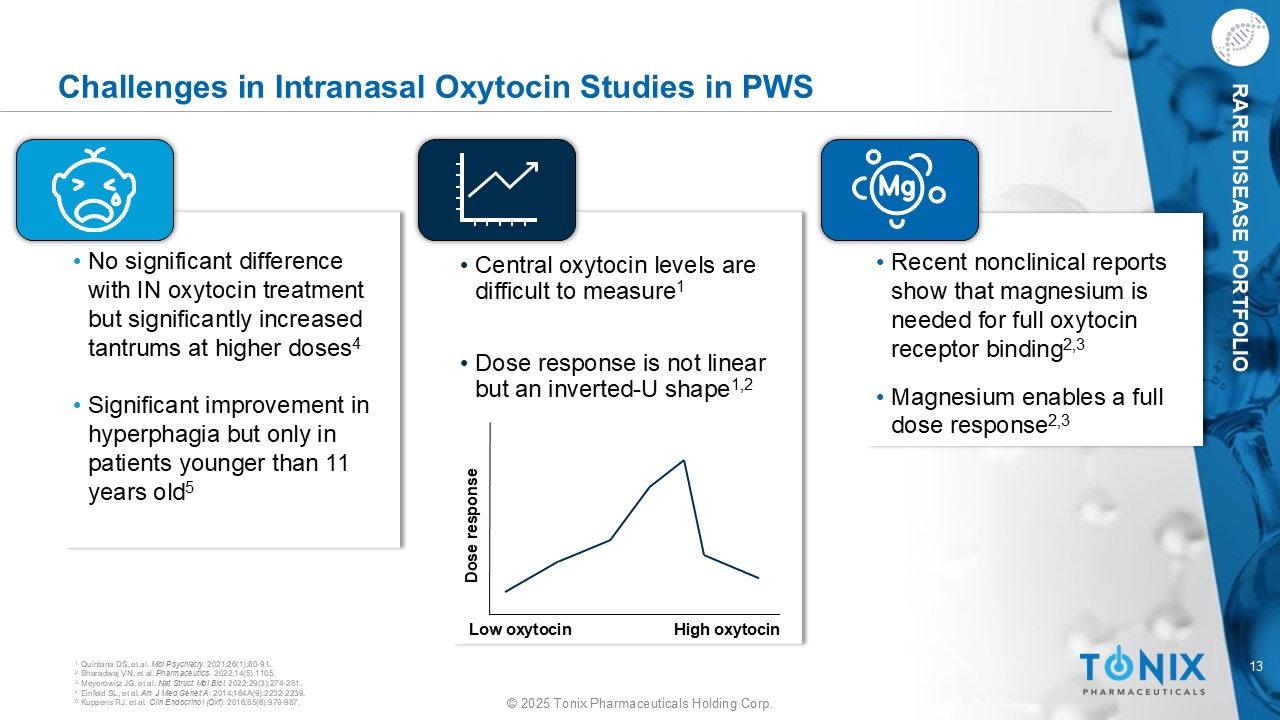
13 © 2025 Tonix Pharmaceuticals Holding Corp. RARE DISEASE PORTFOLIO Challenges in Intranasal Oxytocin Studies in PWS 1. Quintana DS, et al. Mol Psychiatry. 2021;26(1):80 - 91. 2. Bharadwaj VN, et al. Pharmaceutics. 2022;14(5):1105. 3. Meyerowitz JG, et al. Nat Struct Mol Biol . 2022;29(3):274 - 281. 4. Einfeld SL, et al. Am J Med Genet A. 2014;164A(9):2232 - 2239. 5. Kuppens RJ, et al. Clin Endocrinol ( Oxf ). 2016;85(6):979 - 987. • No significant difference with IN oxytocin treatment but significantly increased tantrums at higher doses 4 • Significant improvement in hyperphagia but only in patients younger than 11 years old 5 • Recent nonclinical reports show that magnesium is needed for full oxytocin receptor binding 2,3 • Magnesium enables a full dose response 2,3 • Central oxytocin levels are difficult to measure 1 • Dose response is not linear but an inverted - U shape 1,2 Dose response Low oxytocin High oxytocin
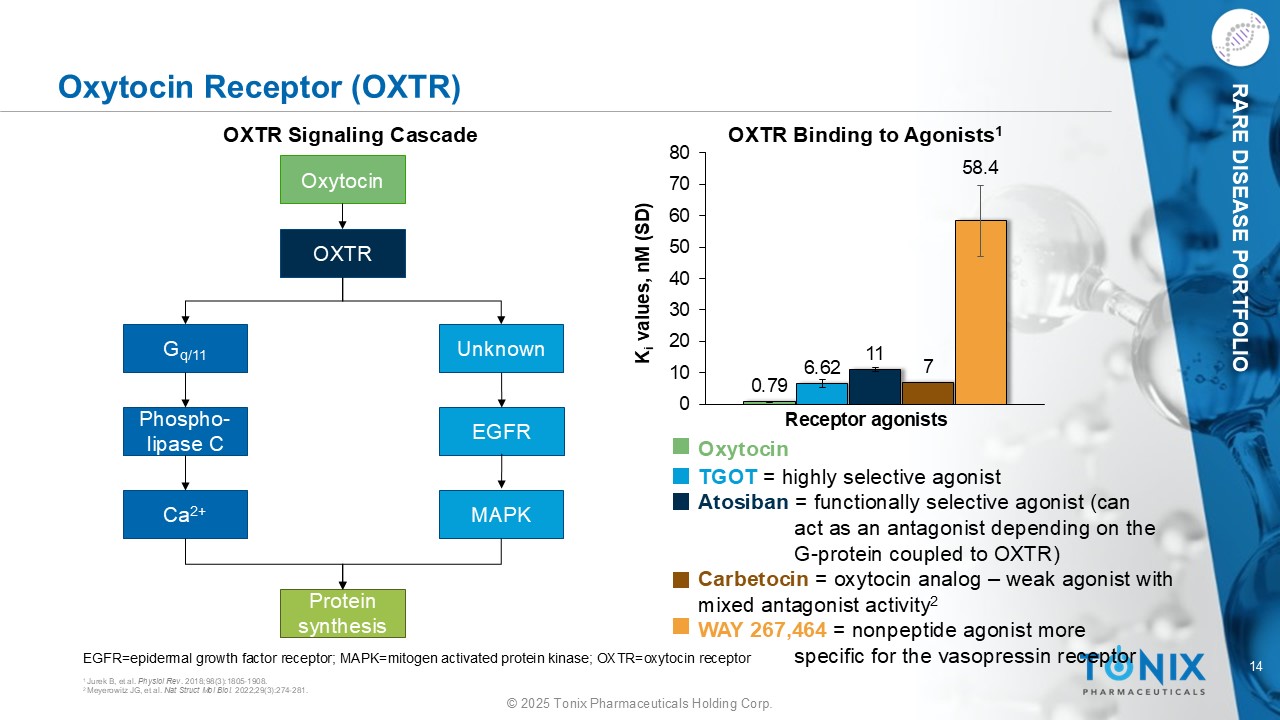
14 © 2025 Tonix Pharmaceuticals Holding Corp. RARE DISEASE PORTFOLIO Oxytocin Receptor (OXTR) 1 Jurek B, et al. Physiol Rev . 2018;98(3):1805 - 1908. 2 Meyerowitz JG, et al. Nat Struct Mol Biol. 2022;29(3):274 - 281. OXTR Signaling Cascade OXTR G q /11 Phospho - lipase C Ca 2+ Protein synthesis Unknown EGFR MAPK Oxytocin EGFR=epidermal growth factor receptor; MAPK=mitogen activated protein kinase; OXTR=oxytocin receptor 0.79 6.62 11 7 58.4 0 10 20 30 40 50 60 70 80 OXTR Binding to Agonists 1 K i values, nM (SD) Receptor agonists Oxytocin TGOT = highly selective agonist Atosiban = functionally selective agonist (can act as an antagonist depending on the G - protein coupled to OXTR) Carbetocin = oxytocin analog – weak agonist with mixed antagonist activity 2 WAY 267,464 = nonpeptide agonist more specific for the vasopressin receptor
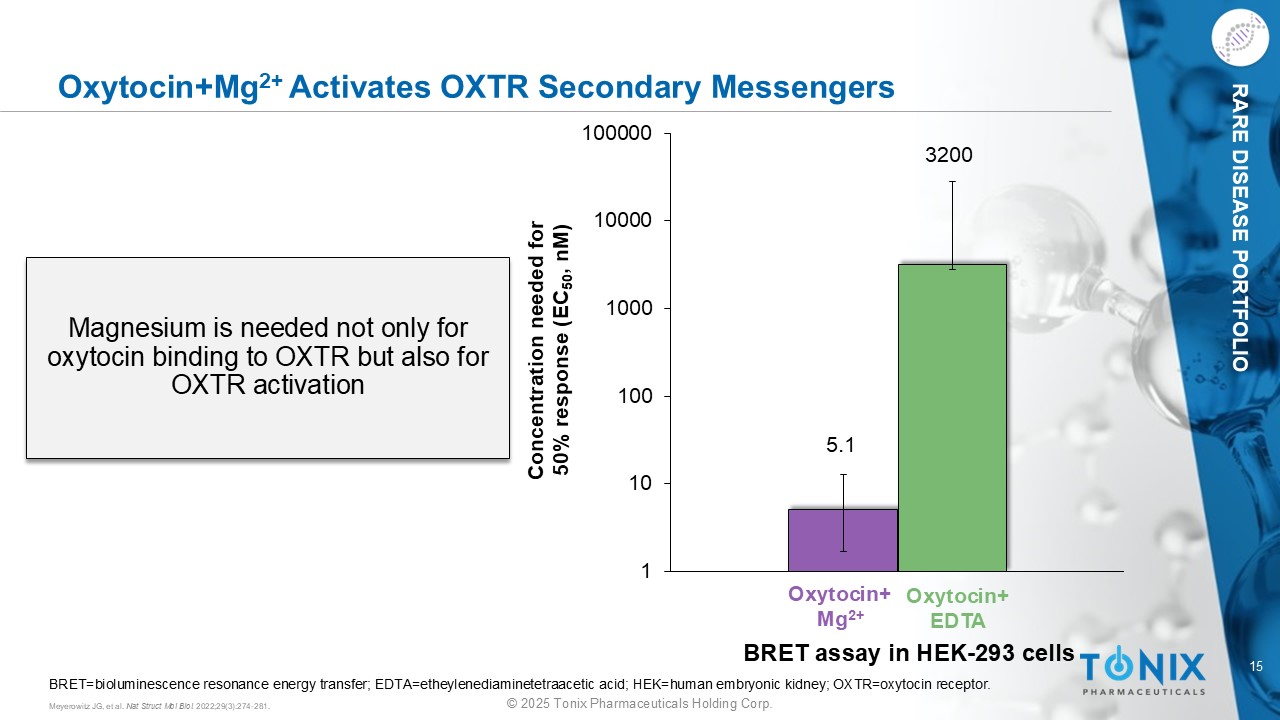
15 © 2025 Tonix Pharmaceuticals Holding Corp. RARE DISEASE PORTFOLIO Oxytocin+Mg 2+ Activates OXTR Secondary Messengers Magnesium is needed not only for oxytocin binding to OXTR but also for OXTR activation BRET=bioluminescence resonance energy transfer; EDTA= etheylenediaminetetraacetic acid; HEK=human embryonic kidney; OXTR=oxytocin receptor. Meyerowitz JG, et al. Nat Struct Mol Biol. 2022;29(3):274 - 281. 5.1 3200 1 10 100 1000 10000 100000 Oxytocin+ Mg 2+ Oxytocin+ EDTA BRET assay in HEK - 293 cells Concentration needed for 50% response (EC 50 , nM )
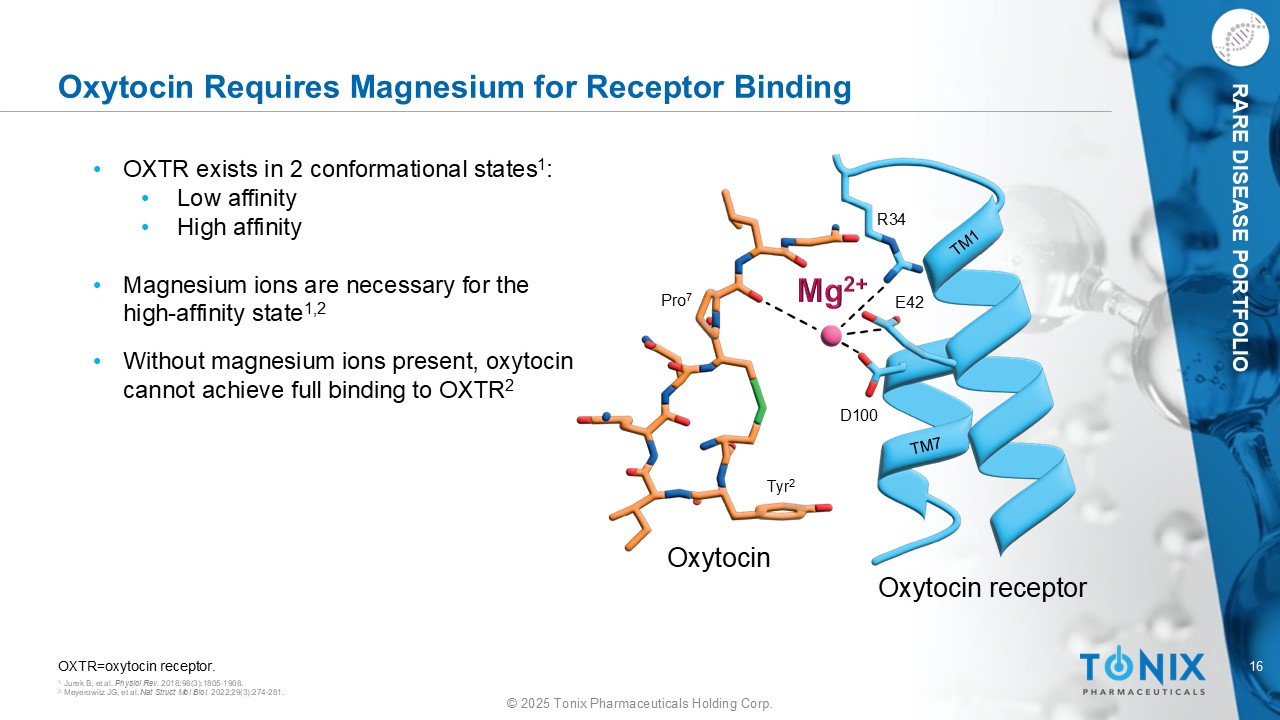
16 © 2025 Tonix Pharmaceuticals Holding Corp. RARE DISEASE PORTFOLIO Oxytocin Requires Magnesium for Receptor Binding • OXTR exists in 2 conformational states 1 : • Low affinity • High affinity • Magnesium ions are necessary for the high - affinity state 1,2 • Without magnesium ions present, oxytocin cannot achieve full binding to OXTR 2 1. Jurek B, et al. Physiol Rev . 2018;98(3):1805 - 1908. 2. Meyerowitz JG, et al. Nat Struct Mol Biol. 2022;29(3):274 - 281. R34 E42 D100 Tyr 2 Pro 7 Oxytocin receptor Oxytocin OXTR=oxytocin receptor.
17 © 2025 Tonix Pharmaceuticals Holding Corp. RARE DISEASE PORTFOLIO Phase 2 study to investigate TNX - 2900 for the treatment of hyperphagia in PWS • FDA has cleared the IND for a Phase 2 randomized, double - blind, placebo - controlled, parallel design study to evaluate the safety, tolerability, and efficacy of TNX - 2900 in PWS • Key elements of study design: • Male and female participants with PWS, ages 8 to 17.5 years. • Eligible participants will be randomized to receive TNX - 2900 at 1 of 3 dose levels, or placebo, with a ratio of 1:1:1:1. • Treatment duration of 12 weeks. • The primary efficacy endpoint will be the change in score in the validated Hyperphagia Questionnaire for Clinical Trials ( HQ - CT). • Anticipated start date of 2026
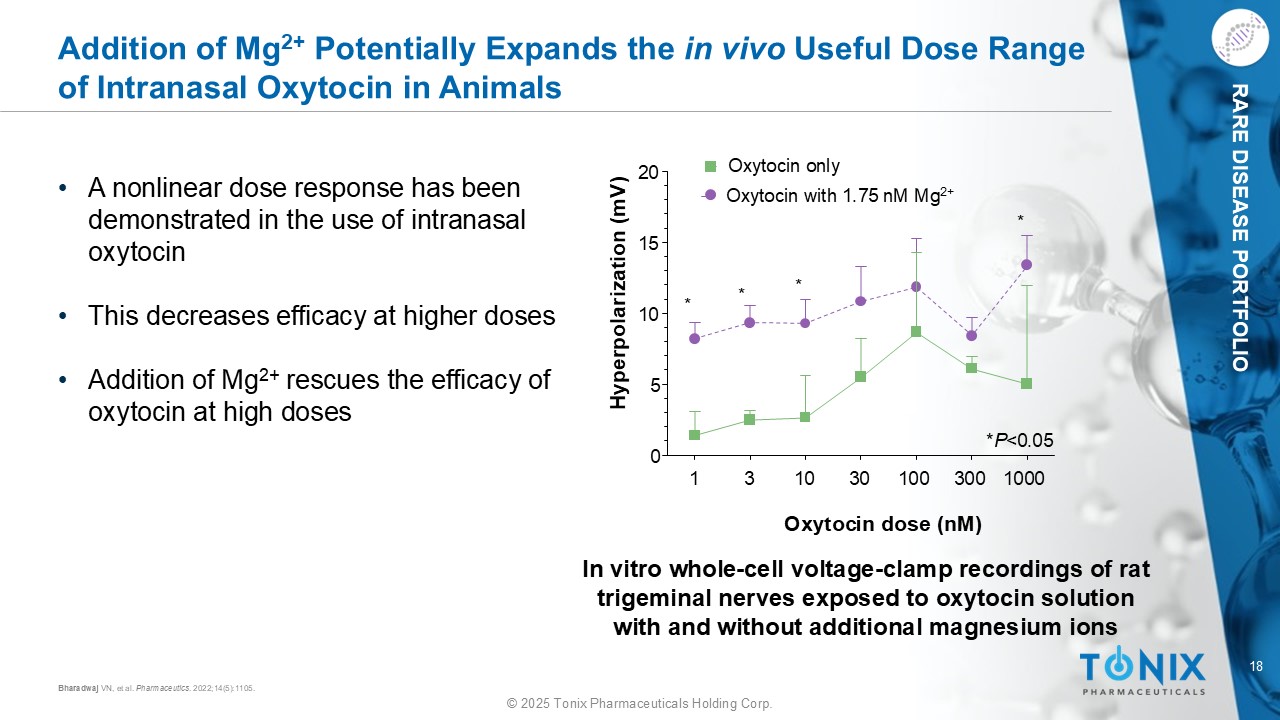
18 © 2025 Tonix Pharmaceuticals Holding Corp. RARE DISEASE PORTFOLIO Addition of Mg 2+ Potentially Expands the in vivo Useful Dose Range of Intranasal Oxytocin in Animals Bharadwaj VN, et al. Pharmaceutics . 2022;14(5):1105. • A nonlinear dose response has been demonstrated in the use of intranasal oxytocin • This decreases efficacy at higher doses • Addition of Mg 2+ rescues the efficacy of oxytocin at high doses 1 3 10 30 100 300 1000 0 5 10 15 20 Oxytocin only Oxytocin with 1.75 nM Mg 2+ * * * * Oxytocin dose ( nM ) Hyperpolarization (mV) In vitro whole - cell voltage - clamp recordings of rat trigeminal nerves exposed to oxytocin solution with and without additional magnesium ions * P <0.05
19 © 2025 Tonix Pharmaceuticals Holding Corp. RARE DISEASE PORTFOLIO Highlights • Hyperphagia in Prader - Willi syndrome (PWS) is severe and life - threatening. • There is a high unmet need for safe and effective treatments for hyperphagia in PWS. • Oxytocin is one of the hormones responsible for signaling satiety. • The oxytocin receptor requires magnesium ions for the high - affinity conformation for signaling satiety. • TNX - 2900* combines oxytocin with magnesium for improved receptor binding and potentially improved therapeutic action. • An Investigational New Drug (IND) application has been cleared for a Phase 2 study to test the efficacy and safety of TNX - 2900 in the treatment of hyperphagia in PWS. • Tonix is initiating a Phase 2 trial for TNX - 2900 in PWS in 2026. *TNX - 2900 is an investigational drug and has not been approved for any indication

© 2025 Tonix Pharmaceuticals Holding Corp. THANK YOU