
TSHA 8-K
Taysha Gene Therapies, Inc. (TSHA)
UNITED STATES
SECURITIES AND EXCHANGE COMMISSION
Washington, D.C. 20549
FORM
CURRENT REPORT
Pursuant to Section 13 or 15(d)
of The Securities Exchange Act of 1934
Date of Report (Date of earliest event reported):
(Exact name of registrant as specified in its charter)
| (State or other jurisdiction of incorporation) |
(Commission File Number) |
(IRS Employer Identification No.) |
| |
||
| (Address of Principal Executive Offices) | (Zip Code) |
(Registrant’s telephone number, including area code)
N/A
(Former name or former address, if changed since last report)
Check the appropriate box below if the Form 8-K filing is intended to simultaneously satisfy the filing obligation of the registrant under any of the following provisions:
| Written communications pursuant to Rule 425 under the Securities Act (17 CFR 230.425) |
| Soliciting material pursuant to Rule 14a-12 under the Exchange Act (17 CFR 240.14a-12) |
| Pre-commencement communications pursuant to Rule 14d-2(b) under the Exchange Act (17 CFR 240.14d-2(b)) |
| Pre-commencement communications pursuant to Rule 13e-4(c) under the Exchange Act (17 CFR 240.13e-4(c)) |
Securities registered pursuant to Section 12(b) of the Act:
| Title of each class |
Trading |
Name of each exchange on which registered | ||
Indicate by check mark whether the registrant is an emerging growth company as defined in Rule 405 of the Securities Act of 1933 (§230.405 of this chapter) or Rule 12b-2 of the Securities Exchange Act of 1934 (§240.12b-2 of this chapter).
Emerging growth company
If an emerging growth company, indicate by check mark if the registrant has elected not to use the extended transition period for complying with any new or revised financial accounting standards provided pursuant to Section 13(a) of the Exchange Act.
| Item 7.01 | Regulation FD Disclosure. |
On May 28, 2025, Taysha Gene Therapies, Inc. (the “Company”) issued a press release entitled “Taysha Gene Therapies Announces Pivotal Part B Trial Design Details for TSHA-102 in Rett Syndrome Enabled by IRSF Natural History Data and Positive Clinical Data from Part A of the REVEAL Adult/Adolescent and Pediatric Trials Evaluating TSHA-102”. The press release provides certain clinical and regulatory updates on TSHA-102. The full text of the press release is attached as Exhibit 99.1 to this Current Report on Form 8-K and incorporated herein by reference.
The information in this Item 7.01 of this Current Report on Form 8-K (including Exhibit 99.1) is being furnished and shall not be deemed “filed” for purposes of Section 18 of the Securities Exchange Act of 1934, as amended (the “Exchange Act”), or otherwise subject to the liabilities of that Section, nor shall it be deemed incorporated by reference in any filing under the Securities Act of 1933, as amended, or the Exchange Act, except as expressly set forth by specific reference in such a filing.
| Item 8.01 | Other Events. |
Clinical and Regulatory Update Presentation
On May 28, 2025, the Company also made available a presentation to be used to discuss the clinical and regulatory updates on TSHA-102. A copy of the presentation is attached as Exhibit 99.2 to this Current Report on Form 8-K.
ATM Prospectus
On May 28, 2025, the Company notified the Agents (as defined below) that it was suspending and terminating the prospectus (the “ATM Prospectus”) related to up to $100,000,000 of the Company’s common stock, $0.00001 par value per share, issuable pursuant to the terms of the Sales Agreement (the “Sales Agreement”), dated October 5, 2021, as amended by that certain Amendment No. 1, dated March 30, 2022, with Goldman Sachs & Co. LLC, Wells Fargo Securities, LLC and Leerink Partners LLC, as sales agents (collectively, the “Agents”). The Company will not make any sales of its securities pursuant to the Sales Agreement unless and until a new prospectus, prospectus supplement or a new registration statement is filed. Other than the termination of the ATM Prospectus, the Sales Agreement remains in full force and effect.
A copy of the Sales Agreement was filed as Exhibit 1.2 to the Company’s Registration Statement on Form S-3 (File No. 333-260069), filed with the Securities and Exchange Commission on October 5, 2021).
The disclosures on this Current Report on Form 8-K shall not constitute an offer to sell or the solicitation of an offer to buy these securities, nor shall there be any sale of these securities in any state or jurisdiction in which such an offer, solicitation or sale would be unlawful prior to registration or qualification under the securities laws of any such state or jurisdiction.
| Item 9.01 | Financial Statements and Exhibits. |
(d) Exhibits
| Exhibit Number |
Exhibit Description | |
| 99.1 | Press Release, dated May 28, 2025. | |
| 99.2 | Corporate presentation, dated May 28, 2025. | |
| 104 | Cover Page Interactive Data File (the cover page XBRL tags are embedded within the inline XBRL document). | |
SIGNATURES
Pursuant to the requirements of the Securities Exchange Act of 1934, the registrant has duly caused this report to be signed on its behalf by the undersigned hereunto duly authorized.
| Taysha Gene Therapies, Inc. | ||||||
| By: | /s/ Kamran Alam | |||||
| Date: May 28, 2025 | Kamran Alam | |||||
| Chief Financial Officer | ||||||
Exhibit 99.1
Taysha Gene Therapies Announces Pivotal Part B Trial Design Details for TSHA-102 in Rett Syndrome Enabled by IRSF Natural History Data and Positive Clinical Data from Part A of the REVEAL Adult/Adolescent and Pediatric Trials Evaluating TSHA-102
Natural history data analysis established patients ≥ six years of age are in developmental plateau, with a ~0% likelihood of gaining/regaining developmental milestones across the core functional domains of Rett syndrome
Written alignment from FDA supports single-arm, open label pivotal trial with primary endpoint of developmental milestone gain/regain in the developmental plateau population (≥ 6 years, intend N=15) with each patient serving as their own control
100% of patients in REVEAL Part A (N=10, 6-21 years) gained/regained ≥ one developmental milestone post-TSHA-102 with concordant improvements across multiple outcome measures; high dose consistently outperformed low dose, with dose-dependent effects deepening over time
No treatment-related SAEs or DLTs following low dose and high dose of TSHA-102
FDA advised the Company to submit pivotal Part B trial protocol and SAP as an amendment to the IND application, which is expected to occur in the current quarter; pivotal trial initiation activities anticipated in Q3 2025
Dallas – May 28, 2025 – Taysha Gene Therapies, Inc. (Nasdaq: TSHA) (Taysha or the Company), a clinical-stage biotechnology company focused on advancing adeno-associated virus (AAV)-based gene therapies for severe monogenic diseases of the central nervous system (CNS), today announced details of its planned pivotal Part B trial design for TSHA-102 following written alignment from the U.S. Food and Drug Administration (FDA). Additionally, the Company announced positive clinical data from Part A of the REVEAL Phase 1/2 adolescent/adult and pediatric trials evaluating TSHA-102 in Rett syndrome. The alignment reached with the FDA was supported by the Company’s analysis of the International Rett Syndrome Foundation’s (IRSF) longitudinal Rett syndrome natural history study data, as well as clinical data from the ongoing REVEAL Phase 1/2 trials.
“Our rigorous analysis of the robust natural history study dataset demonstrated that after six years of age, the likelihood of achieving defined developmental milestones across the core functional domains of Rett syndrome is highly improbable. Therefore, it is quite striking that we observed a 100% responder rate following treatment with TSHA-102, with all pediatric, adolescent and adult patients across varying disease severity gaining or regaining one or more developmental milestone that represents activities of daily living that are important to caregivers and clinicians. We believe this objective and clinically meaningful primary endpoint has the potential to redefine treatment expectations and expand the possibilities of gene therapy for patients with Rett syndrome,” said Sean P. Nolan, Chairman and Chief Executive Officer of Taysha. “We believe aligning with the FDA on key elements of our proposed pivotal trial design validates these important findings that underpin our pivotal trial design and strengthen our conviction in the transformative potential of TSHA-102. Importantly, this progress sets us on an efficient and expeditious path to potentially deliver TSHA-102 to patients and families suffering from this devastating disease with high unmet need. We plan to submit the pivotal trial protocol and SAP as an amendment to the IND application this quarter and anticipate initiating this pivotal program in the third quarter of 2025.”
Dr. Jeffrey Neul, M.D., Ph.D., Rett Specialist who served as Administrative Head of the Rett Syndrome Natural History Study added, “This innovative analysis and cumulative incidence models of the Rett syndrome natural history dataset help shape our understanding of the disease trajectory by establishing that the likelihood of gain and regain of developmental milestones is predictable after six years of age. Importantly, these data allow us to objectively measure how transformative therapies impact functional aspects of the disease that are essential to activities of daily living. I believe these insights uncovered via the collaboration of academic researchers and a patient advocacy group with industry partner, Taysha, will be instrumental in shaping the future of therapeutic development for Rett syndrome.”
Laura Hameed, Chief Executive Officer of the International Rett Syndrome Foundation (IRSF), added, “On behalf of IRSF, I want to thank the families, clinicians, and researchers whose dedication made the Rett syndrome Natural History Study possible. Their participation provided a deeper understanding of how Rett progresses over time, insights that are now helping shape meaningful clinical outcome measures and could someday lead to new treatments. We’re pleased to support Taysha’s efforts to build on this foundation and are hopeful about the progress it represents for families living with Rett syndrome.”
Analysis of IRSF’s Longitudinal Rett Syndrome Natural History Study Data Supported Taysha’s Pivotal Trial Design for TSHA-102
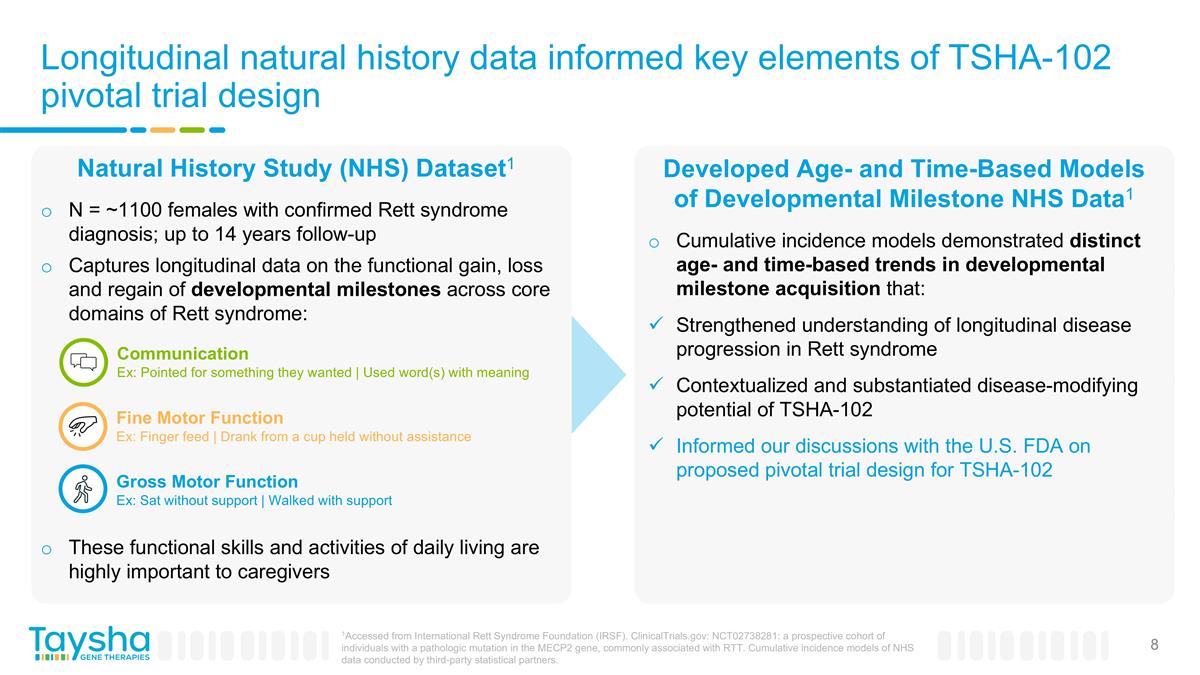
| • | N = ~1100 females with confirmed Rett syndrome diagnosis, with up to 14 years follow-up, representing the largest available Rett syndrome natural history study dataset |
| • | Developed age- and time-based cumulative incidence models of longitudinal natural history data across 28 developmental milestones in the core functional domains of fine motor, gross motor and communication |
| • | Findings demonstrated patients ≥ six years of age have reached a developmental plateau, with an exceedingly low (0% to <6.7%) likelihood of gaining new or regaining developmental milestones that were lost after a defined number of years |
Obtained Written Alignment with the FDA on Key Elements of TSHA-102 Pivotal Part B Trial Design Following Discussions Under the Regenerative Medicine Advanced Therapy (RMAT) Pathway
| • | Single-arm, open-label trial with patients serving as their own control (intend N=15) |
| • | Enrollment of females in the developmental plateau population of Rett syndrome (≥ 6 years) |
| • | Primary endpoint will assess developmental milestone gain or regain |
| ○ | During advanced discussions with the FDA, reached alignment on the definition of a responder: “gain/regain of ≥ one defined developmental milestone.” The FDA provided guidance on an additional analysis to further support the responder definition, which the Company has completed and intends to submit, alongside the final protocol and statistical analysis plan (SAP), as part of the Investigational New Drug (IND) amendment. |
| ○ | Video-based determination of milestone gain/regain will be performed by independent, blinded central raters according to predefined definitions of achievement for each developmental milestone |
| • | Safety of TSHA-102 will be evaluated in females in the pre-developmental plateau population of Rett syndrome (2-6 years), with efficacy data extrapolated from the developmental plateau population |
| • | 12-month primary analysis, and intend to perform a 6-month interim analysis |
| • | The FDA advised the Company to submit the pivotal Part B trial protocol and the associated SAP as an amendment to its IND application, eliminating the need for formal end-of-phase meeting |
Clinical Data from Part A of Ongoing REVEAL Phase 1/2 Adolescent/Adult and Pediatric Trials
Efficacy data based on May 19, 2025, data cutoff, included 10 females with Rett syndrome aged 6-21 years (high dose, N=6; low dose, N=4) treated with the high dose (1x10¹⁵ total vg) or low dose (5.7x10¹⁴ total vg) of TSHA-102
| • | 100% of pediatric, adolescent and adult patients gained ≥ one defined developmental milestone across the core functional domains of fine motor, gross motor and communication post-TSHA-102, with a ~0%* likelihood of being achieved without treatment based on natural history data |
| ○ | A total of 22 developmental milestones were achieved across the 10 patients, as determined by multiple independent central raters based on video-evidenced evaluation according to predefined definitions of achievement for each developmental milestone |
| ○ | Developmental milestones were achieved early post-TSHA-102, with new gains/regains demonstrated over time (i.e., spoke in phrases with meaning, finger fed, walked with support) |
| ○ | High dose cohort achieved 100% responder rate 25% faster than the low dose cohort, supporting the accelerated functional benefit observed with the high dose |
| • | Improvements observed across multiple clinician-assessed outcome measures, including Revised Motor Behavior Assessment (R-MBA) and Clinician Global Impression – Improvement (CGI-I), corroborated the developmental milestone gains/regains demonstrated post-TSHA-102 |
| • | High dose cohort outperformed low dose cohort across multiple outcome measures six months post-treatment, with dose-dependent effects deepening over time ≥ nine months post-treatment |
Safety data based on May 20, 2025, data cutoff, included 12 females with Rett syndrome aged 6-21 years treated with TSHA-102 (high dose, N=8; low dose, N=4)
| • | High dose and low dose of TSHA-102 have been generally well tolerated with no treatment-related serious adverse events (SAEs) or dose limiting toxicities (DLTs) |
| • | All treatment-emergent AEs related to TSHA-102 were mild to moderate in severity |
Presentation with additional details and accompanying figures are available on a Current Report on Form 8-K being filed concurrently with this press release and available on the SEC’s website at www.sec.gov.
Anticipated Milestones
| • | Expect to submit pivotal Part B trial protocol and associated SAP as an amendment to the IND application in the current quarter |
| • | Taysha will host three oral presentations related to TSHA-102 at the upcoming 2025 IRSF Rett Syndrome Scientific Meeting taking place in Boston from June 9-11, 2025 |
| • | Pivotal Part B trial site activation and trial initiation activities anticipated in the third quarter of 2025 |
About TSHA-102
TSHA-102 is a self-complementary intrathecally delivered AAV9 investigational gene transfer therapy in clinical evaluation for Rett syndrome. Designed as a one-time treatment, TSHA-102 aims to address the genetic root cause of the disease by delivering a functional form of MECP2 to cells in the CNS. TSHA-102 utilizes a novel miRNA-Responsive Auto-Regulatory Element (miRARE) technology designed to mediate levels of MECP2 in the CNS on a cell-by-cell basis without risk of overexpression. TSHA-102 has received Regenerative Medicine Advanced Therapy, Fast Track and Orphan Drug and Rare Pediatric Disease designations from the FDA, Orphan Drug designation from the European Commission and Innovative Licensing and Access Pathway designation from the Medicines and Healthcare products Regulatory Agency.
About Rett Syndrome
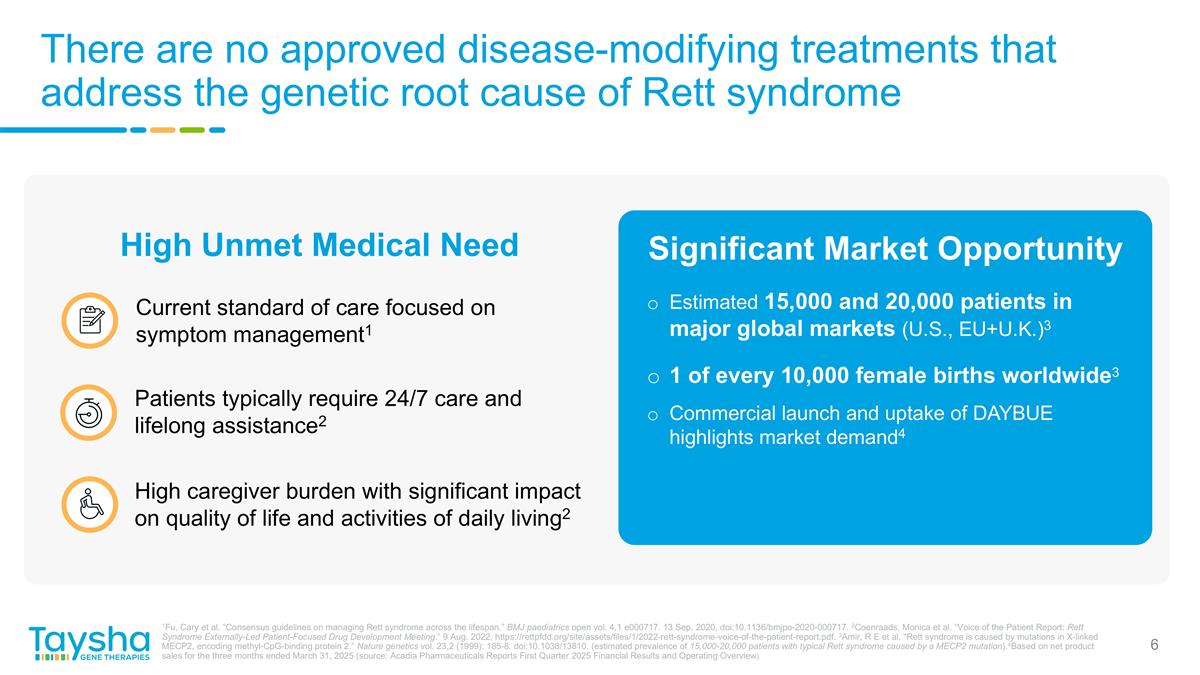
Rett syndrome is a rare neurodevelopmental disorder caused by mutations in the X-linked MECP2 gene encoding methyl CpG-binding protein 2 (MeCP2), which is essential for regulating neuronal and synaptic function in the brain. The disorder is characterized by loss of communication and hand function, slowing and/or regression of development, motor and respiratory impairment, seizures, intellectual disabilities and shortened life expectancy. Rett syndrome progression is divided into four key stages, beginning with early onset stagnation at 6 to 18 months of age followed by rapid regression, plateau and late motor deterioration. Rett syndrome primarily occurs in females and is one of the most common genetic causes of severe intellectual disability. Currently, there are no approved disease-modifying therapies that treat the genetic root cause of the disease. Rett syndrome caused by a pathogenic/likely pathogenic MECP2 mutation is estimated to affect between 15,000 and 20,000 patients in the U.S., EU, and U.K.
About Taysha Gene Therapies
Taysha Gene Therapies (Nasdaq: TSHA) is a clinical-stage biotechnology company focused on advancing adeno-associated virus (AAV)-based gene therapies for severe monogenic diseases of the central nervous system. Its lead clinical program TSHA-102 is in development for Rett syndrome, a rare neurodevelopmental disorder with no approved disease-modifying therapies that address the genetic root cause of the disease. With a singular focus on developing transformative medicines, Taysha aims to address severe unmet medical needs and dramatically improve the lives of patients and their caregivers. The Company’s management team has proven experience in gene therapy development and commercialization. Taysha leverages this experience, its manufacturing process and a clinically and commercially proven AAV9 capsid in an effort to rapidly translate treatments from bench to bedside. For more information, please visit www.tayshagtx.com.
Forward-Looking Statements
This press release contains forward-looking statements within the meaning of the Private Securities Litigation Reform Act of 1995. Words such as “anticipates,” “believes,” “expects,” “intends,” “projects,” “plans,” and “future” or similar expressions are intended to identify forward-looking statements. Forward-looking statements include statements concerning the potential of TSHA-102, including the
reproducibility and durability of any favorable results initially seen in patients dosed to date in clinical trials, including with respect to functional milestones, and our other product candidates to positively impact quality of life and alter the course of disease in the patients we seek to treat, our research, development and regulatory plans for our product candidates, including the timing of initiating additional trials, reporting data from our clinical trials and making regulatory submissions, communications from the FDA on the regulatory pathway for TSHA-102, the potential for these product candidates to receive regulatory approval from the FDA or equivalent foreign regulatory agencies, and our current cash resources supporting our planned operating expenses and capital requirements into the fourth quarter of 2026. Forward-looking statements are based on management’s current expectations and are subject to various risks and uncertainties that could cause actual results to differ materially and adversely from those expressed or implied by such forward-looking statements. Accordingly, these forward-looking statements do not constitute guarantees of future performance, and you are cautioned not to place undue reliance on these forward-looking statements. Risks regarding our business are described in detail in our Securities and Exchange Commission (SEC) filings, including in our Annual Report on Form 10-K for the full-year ended December 31, 2024, and our Quarterly Report on Form 10-Q for the quarter ended March 31, 2025, which are available on the SEC’s website at www.sec.gov. Additional information will be made available in other filings that we make from time to time with the SEC. These forward-looking statements speak only as of the date hereof, and we disclaim any obligation to update these statements except as may be required by law.
Company Contact:
Hayleigh Collins
Senior Director, Corporate Communications and Investor Relations
Taysha Gene Therapies, Inc.
Media Contact:
Carolyn Hawley
Inizio Evoke
| * | Cumulative incidence models of natural history data demonstrate the likelihood of developmental milestone gain/regain ranged from 0% to <6.7% in this population |
TSHA-102 Rett Syndrome Program Update May 2025 Exhibit 99.2
This presentation is intended to be viewed by investors in the U.S. only Legal disclosure FORWARD LOOKING STATEMENTS This presentation contains forward-looking statements that involve substantial risks and uncertainties. All statements, other than statements of historical facts, contained in this presentation, including statements regarding the potential of TSHA-102, the durability and reproducibility of the clinical data from the REVEAL trials, the anticipated Part B trial design, our research, development and regulatory plans, and our strategy, future operations, future financial position, future revenues, projected costs, prospects, plans and objectives of management, are forward-looking statements. The words “anticipate,” “believe,” “estimate,” “expect,” “intend,” “may,” “might,” “plan,” “predict,” “project,” “target,” “potential,” “will,” “would,” “could,” “should,” “continue,” and similar expressions are intended to identify forward-looking statements, although not all forward-looking statements contain these identifying words. These forward-looking statements are subject to a number of risks, uncertainties and assumptions. Risks regarding our business are described in detail in our Securities and Exchange Commission filings, including in our Annual Report on Form 10-K for the year ended December 31, 2024, our Quarterly Report on Form 10-Q for the quarter ended March 31, 2025, and our other filings with the SEC, which are available on the SEC’s website at www.sec.gov. We may not actually achieve the plans, intentions or expectations disclosed in our forward-looking statements, and you should not place undue reliance on our forward-looking statements. Actual results or events could differ materially from the plans, intentions and expectations disclosed in the forward-looking statements we make. The forward-looking statements contained in this presentation reflect our current views with respect to future events, and we assume no obligation to update any forward-looking statements except as required by applicable law. This presentation includes statistical and other industry and market data that we obtained from industry publications and research, surveys and studies conducted by third parties as well as our own estimates of potential market opportunities. All of the market data used in this presentation involves a number of assumptions and limitations, and you are cautioned not to give undue weight to such data. Industry publications and third-party research, surveys and studies generally indicate that their information has been obtained from sources believed to be reliable, although they do not guarantee the accuracy or completeness of such information. Our estimates of the potential market opportunities for our product candidates include several key assumptions based on our industry knowledge, industry publications, third-party research and other surveys, which may be based on a small sample size and may fail to accurately reflect market opportunities. While we believe that our internal assumptions are reasonable, no independent source has verified such assumptions. This presentation shall not constitute an offer to sell or the solicitation of an offer to buy these securities, nor shall there be any sale of these securities in any state or jurisdiction in which such offer, solicitation, or sale would be unlawful prior to registration or qualification under the securities laws of any such state or jurisdiction.
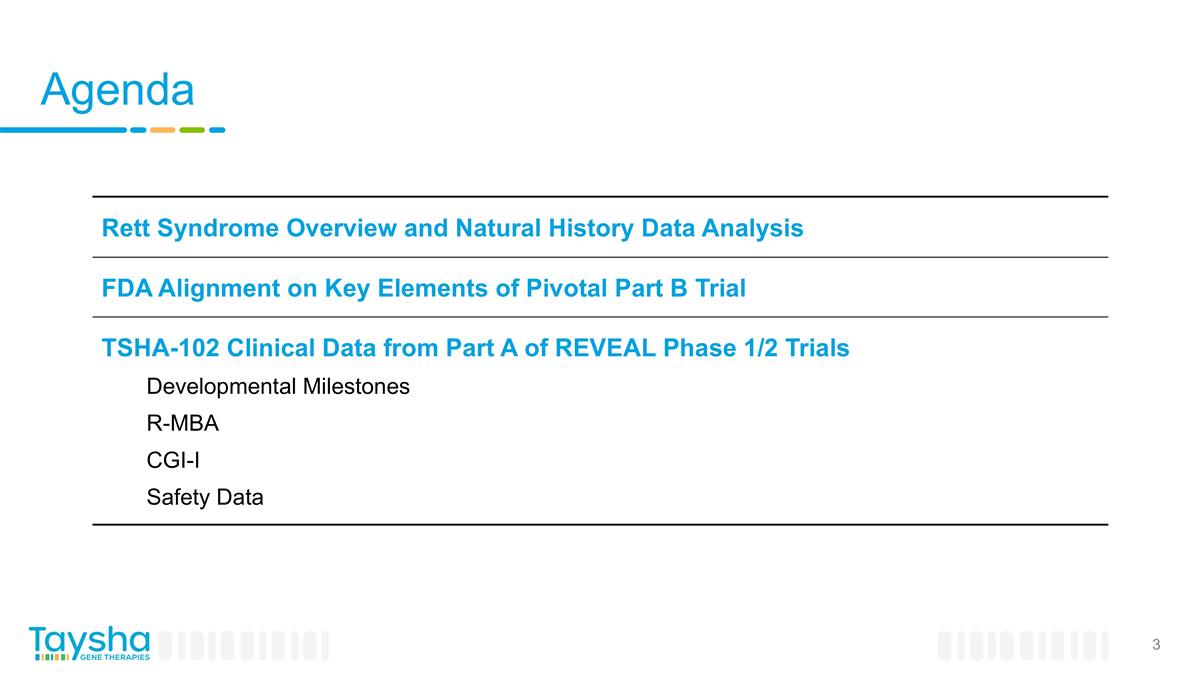
Agenda Rett Syndrome Overview and Natural History Data Analysis FDA Alignment on Key Elements of Pivotal Part B Trial TSHA-102 Clinical Data from Part A of REVEAL Phase 1/2 Trials Developmental Milestones R-MBA CGI-I Safety Data
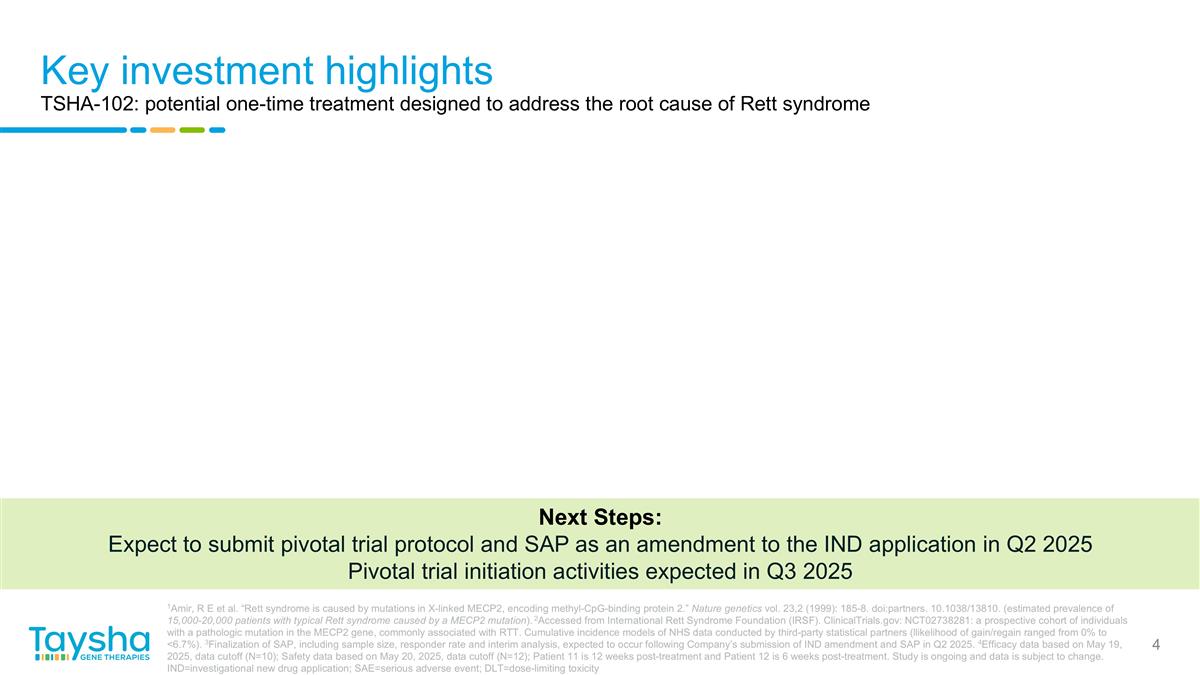
Key investment highlights TSHA-102: potential one-time treatment designed to address the root cause of Rett syndrome 1Amir, R E et al. “Rett syndrome is caused by mutations in X-linked MECP2, encoding methyl-CpG-binding protein 2.” Nature genetics vol. 23,2 (1999): 185-8. doi:partners. 10.1038/13810. (estimated prevalence of 15,000-20,000 patients with typical Rett syndrome caused by a MECP2 mutation). 2Accessed from International Rett Syndrome Foundation (IRSF). ClinicalTrials.gov: NCT02738281: a prospective cohort of individuals with a pathologic mutation in the MECP2 gene, commonly associated with RTT. Cumulative incidence models of NHS data conducted by third-party statistical partners (llikelihood of gain/regain ranged from 0% to <6.7%). 3Finalization of SAP, including sample size, responder rate and interim analysis, expected to occur following Company’s submission of IND amendment and SAP in Q2 2025. 4Efficacy data based on May 19, 2025, data cutoff (N=10); Safety data based on May 20, 2025, data cutoff (N=12); Patient 11 is 12 weeks post-treatment and Patient 12 is 6 weeks post-treatment. Study is ongoing and data is subject to change. IND=investigational new drug application; SAE=serious adverse event; DLT=dose-limiting toxicity Next Steps: Expect to submit pivotal trial protocol and SAP as an amendment to the IND application in Q2 2025 Pivotal trial initiation activities expected in Q3 2025
Rett Syndrome Overview and Natural History Data Analysis Natural History Data accessed from the International Rett Syndrome Foundation (IRSF). We thank IRSF and the governance committee for their partnership.
High caregiver burden with significant impact on quality of life and activities of daily living2 Current standard of care focused on symptom management1 There are no approved disease-modifying treatments that address the genetic root cause of Rett syndrome High Unmet Medical Need Significant Market Opportunity Estimated 15,000 and 20,000 patients in major global markets (U.S., EU+U.K.)3 1 of every 10,000 female births worldwide3 Commercial launch and uptake of DAYBUE highlights market demand4 1Fu, Cary et al. “Consensus guidelines on managing Rett syndrome across the lifespan.” BMJ paediatrics open vol. 4,1 e000717. 13 Sep. 2020, doi:10.1136/bmjpo-2020-000717. 2Coenraads, Monica et al. “Voice of the Patient Report: Rett Syndrome Externally-Led Patient-Focused Drug Development Meeting.” 9 Aug. 2022, https://rettpfdd.org/site/assets/files/1/2022-rett-syndrome-voice-of-the-patient-report.pdf. 3Amir, R E et al. “Rett syndrome is caused by mutations in X-linked MECP2, encoding methyl-CpG-binding protein 2.” Nature genetics vol. 23,2 (1999): 185-8. doi:10.1038/13810. (estimated prevalence of 15,000-20,000 patients with typical Rett syndrome caused by a MECP2 mutation).4Based on net product sales for the three months ended March 31, 2025 (source: Acadia Pharmaceuticals Reports First Quarter 2025 Financial Results and Operating Overview). Patients typically require 24/7 care and lifelong assistance2
Rett syndrome caregiver research indicates improved function or achievement of developmental milestones would significantly improve quality of life Communication Fine Motor Function Gained or improved communication of basic needs—through eye gaze, gestures, or words—would enable self-advocacy and strengthen social connections Ex: follow a command without a gesture, pointed for something they wanted, use word(s) with meaning, identify body parts (pointed with eyes or fingers) Gross Motor Function Gained or improved hand function would restore a sense of control and purpose, and enable play and social engagement Ex: finger feed, use fork or spoon to eat without assistance, reached for a toy, drank from a cup held without assistance Gained or improved gross motor function would foster independence and reduce the physical burden of caregiving Ex: walked independently or with support, stood while holding on, sat without support, climbed up stairs without help “If she can actually tell me what she wants, or make a choice between two things, even if it's just looking at something purposefully…because now I don’t know what's going on.” – Caregiver of 20-year-old “Feeding herself, entertaining herself…being able to flip pages or purposefully hold a book, change the channel on a remote...would be a game changer for us.” – Caregiver of 8-year-old “If we got a safe and secure sitting position from her, that would be a win. We would be able to have her sitting and not have to be right next to her. We could have her at the dining table with us.” – Caregiver of 5-year-old Results from caregiver research conducted in October 2024 by independent third-party research firm with 22-U.S.-based caregivers of females with RTT (aged 5-39). These findings have identified key developmental milestones that may provide an important foundation for selection of endpoints in future Rett syndrome gene therapy trials.
Longitudinal natural history data informed key elements of TSHA-102 pivotal trial design 1Accessed from International Rett Syndrome Foundation (IRSF). ClinicalTrials.gov: NCT02738281: a prospective cohort of individuals with a pathologic mutation in the MECP2 gene, commonly associated with RTT. Cumulative incidence models of NHS data conducted by third-party statistical partners. Natural History Study (NHS) Dataset1 N = ~1100 females with confirmed Rett syndrome diagnosis; up to 14 years follow-up Captures longitudinal data on the functional gain, loss and regain of developmental milestones across core domains of Rett syndrome: These functional skills and activities of daily living are highly important to caregivers Developed Age- and Time-Based Models of Developmental Milestone NHS Data1 Cumulative incidence models demonstrated distinct age- and time-based trends in developmental milestone acquisition that: Strengthened understanding of longitudinal disease progression in Rett syndrome Contextualized and substantiated disease-modifying potential of TSHA-102 Informed our discussions with the U.S. FDA on proposed pivotal trial design for TSHA-102 Communication Ex: Pointed for something they wanted | Used word(s) with meaning Fine Motor Function Ex: Finger feed | Drank from a cup held without assistance Gross Motor Function Ex: Sat without support | Walked with support
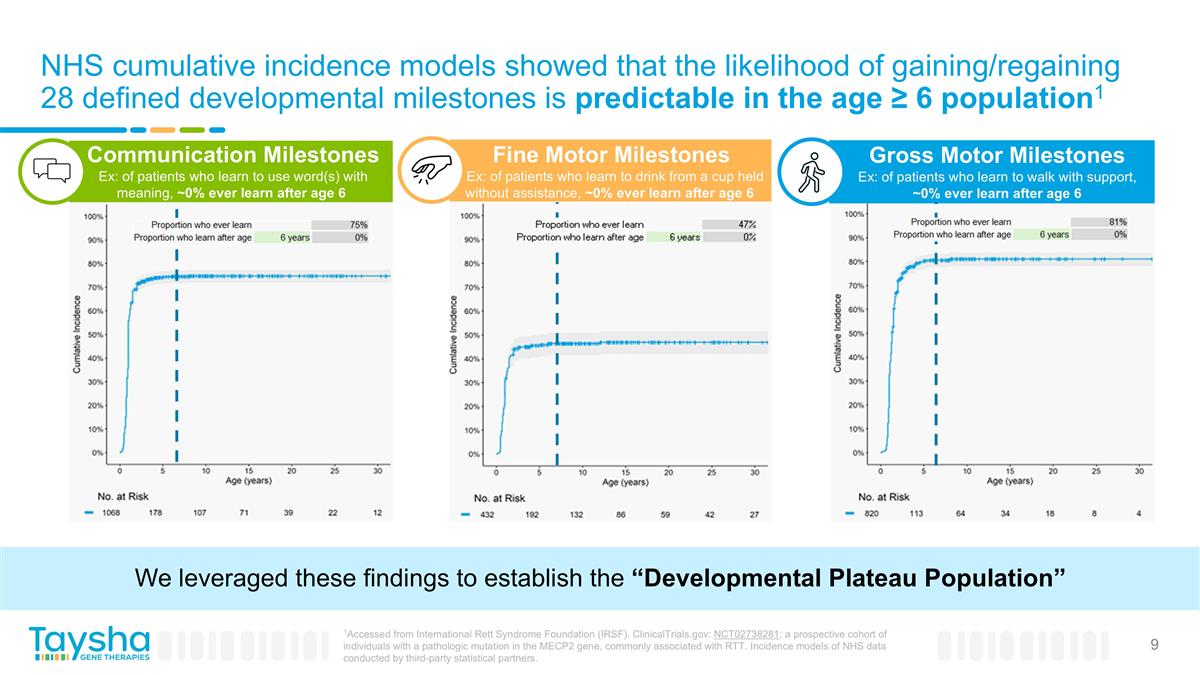
NHS cumulative incidence models showed that the likelihood of gaining/regaining 28 defined developmental milestones is predictable in the age ≥ 6 population1 1Accessed from International Rett Syndrome Foundation (IRSF). ClinicalTrials.gov: NCT02738281: a prospective cohort of individuals with a pathologic mutation in the MECP2 gene, commonly associated with RTT. Incidence models of NHS data conducted by third-party statistical partners. Fine Motor Milestones Ex: of patients who learn to drink from a cup held without assistance, ~0% ever learn after age 6 Gross Motor Milestones Ex: of patients who learn to walk with support, ~0% ever learn after age 6 Communication Milestones Ex: of patients who learn to use word(s) with meaning, ~0% ever learn after age 6 We leveraged these findings to establish the “Developmental Plateau Population”
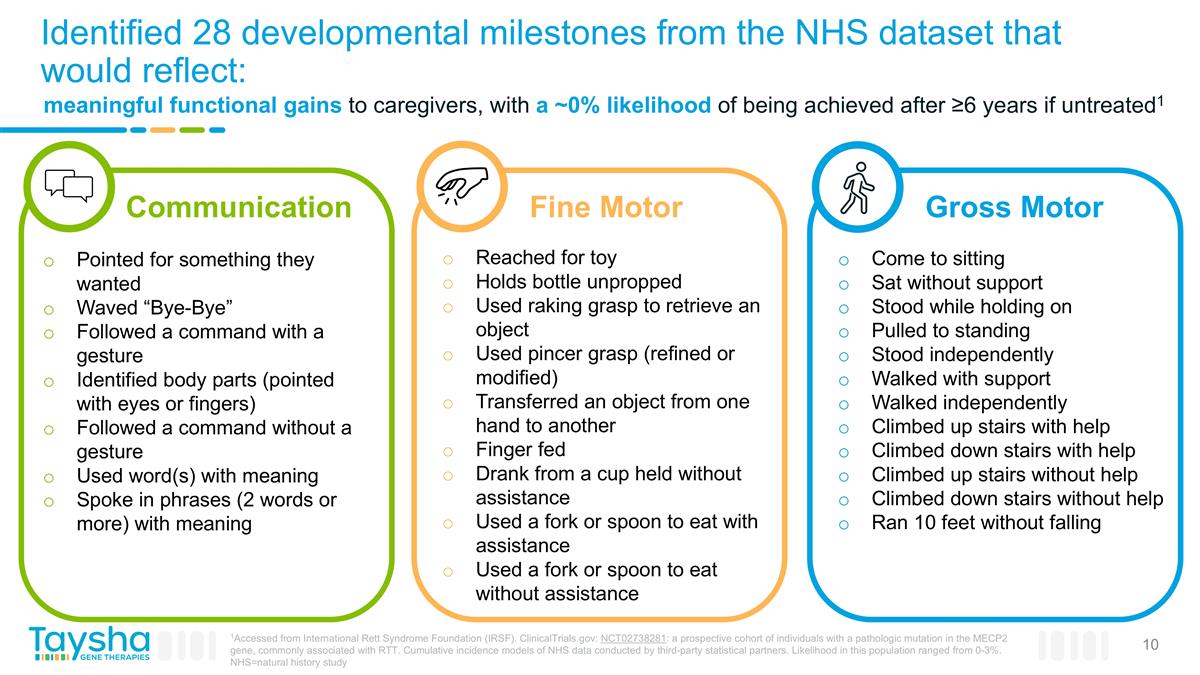
Identified 28 developmental milestones from the NHS dataset that would reflect: 1Accessed from International Rett Syndrome Foundation (IRSF). ClinicalTrials.gov: NCT02738281: a prospective cohort of individuals with a pathologic mutation in the MECP2 gene, commonly associated with RTT. Cumulative incidence models of NHS data conducted by third-party statistical partners. Likelihood in this population ranged from 0-3%. NHS=natural history study meaningful functional gains to caregivers, with a ~0% likelihood of being achieved after ≥6 years if untreated1 Come to sitting Sat without support Stood while holding on Pulled to standing Stood independently Walked with support Walked independently Climbed up stairs with help Climbed down stairs with help Climbed up stairs without help Climbed down stairs without help Ran 10 feet without falling Gross Motor Fine Motor Reached for toy Holds bottle unpropped Used raking grasp to retrieve an object Used pincer grasp (refined or modified) Transferred an object from one hand to another Finger fed Drank from a cup held without assistance Used a fork or spoon to eat with assistance Used a fork or spoon to eat without assistance Communication Pointed for something they wanted Waved “Bye-Bye” Followed a command with a gesture Identified body parts (pointed with eyes or fingers) Followed a command without a gesture Used word(s) with meaning Spoke in phrases (2 words or more) with meaning
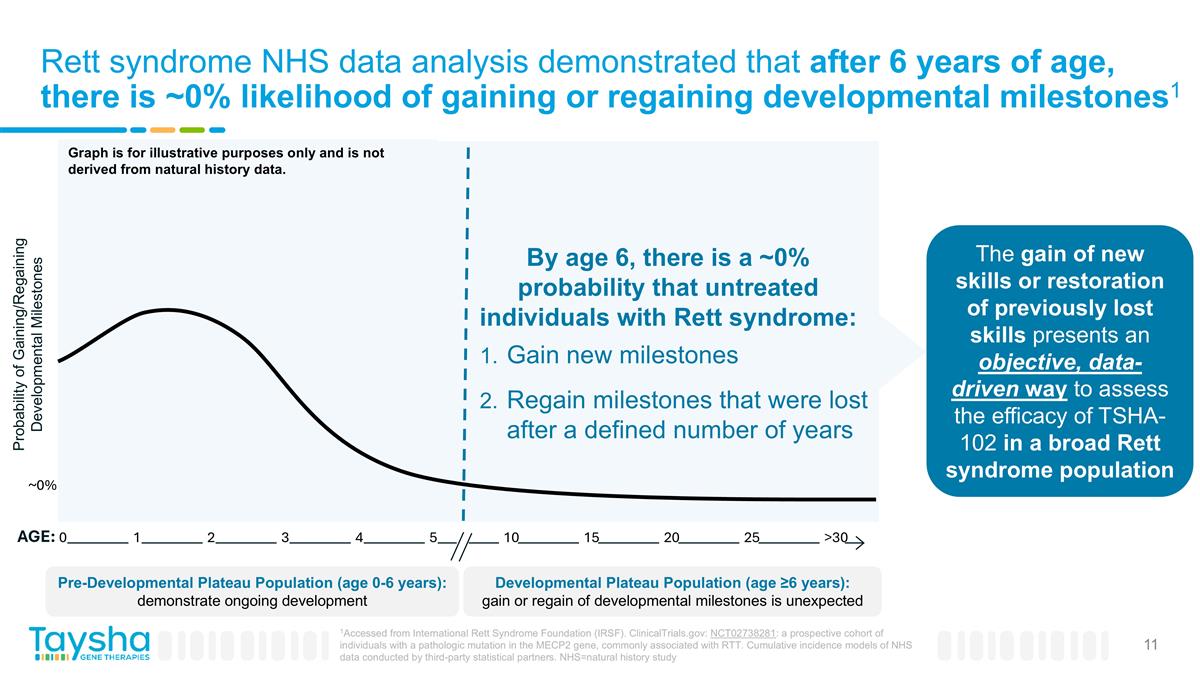
~0% AGE: 0 1 2 3 4 5 10 15 20 25 >30 By age 6, there is a ~0% probability that untreated individuals with Rett syndrome: Gain new milestones Regain milestones that were lost after a defined number of years Probability of Gaining/Regaining Developmental Milestones The gain of new skills or restoration of previously lost skills presents an objective, data-driven way to assess the efficacy of TSHA-102 in a broad Rett syndrome population Developmental Plateau Population (age ≥6 years): gain or regain of developmental milestones is unexpected Pre-Developmental Plateau Population (age 0-6 years): demonstrate ongoing development Rett syndrome NHS data analysis demonstrated that after 6 years of age, there is ~0% likelihood of gaining or regaining developmental milestones1 Graph is for illustrative purposes only and is not derived from natural history data. 1Accessed from International Rett Syndrome Foundation (IRSF). ClinicalTrials.gov: NCT02738281: a prospective cohort of individuals with a pathologic mutation in the MECP2 gene, commonly associated with RTT. Cumulative incidence models of NHS data conducted by third-party statistical partners. NHS=natural history study
Pivotal Part B Trial Design for TSHA-102: data-driven assessment of functional gains in a broad Rett syndrome population
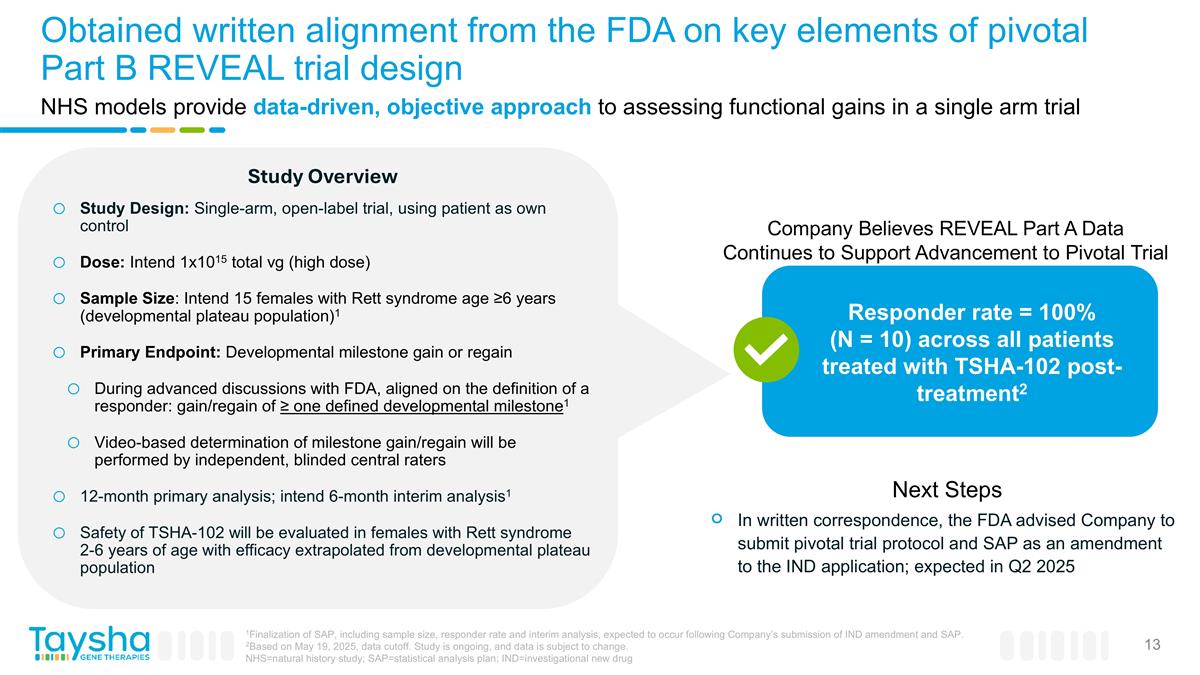
Obtained written alignment from the FDA on key elements of pivotal Part B REVEAL trial design Study Overview Study Design: Single-arm, open-label trial, using patient as own control Dose: Intend 1x10¹⁵ total vg (high dose) Sample Size: Intend 15 females with Rett syndrome age ≥6 years (developmental plateau population)1 Primary Endpoint: Developmental milestone gain or regain During advanced discussions with FDA, aligned on the definition of a responder: gain/regain of ≥ one defined developmental milestone1 Video-based determination of milestone gain/regain will be performed by independent, blinded central raters 12-month primary analysis; intend 6-month interim analysis1 Safety of TSHA-102 will be evaluated in females with Rett syndrome 2-6 years of age with efficacy extrapolated from developmental plateau population NHS models provide data-driven, objective approach to assessing functional gains in a single arm trial Company Believes REVEAL Part A Data Continues to Support Advancement to Pivotal Trial Responder rate = 100% (N = 10) across all patients treated with TSHA-102 post-treatment2 In written correspondence, the FDA advised Company to submit pivotal trial protocol and SAP as an amendment to the IND application; expected in Q2 2025 Next Steps 1Finalization of SAP, including sample size, responder rate and interim analysis, expected to occur following Company’s submission of IND amendment and SAP. 2Based on May 19, 2025, data cutoff. Study is ongoing, and data is subject to change. NHS=natural history study; SAP=statistical analysis plan; IND=investigational new drug
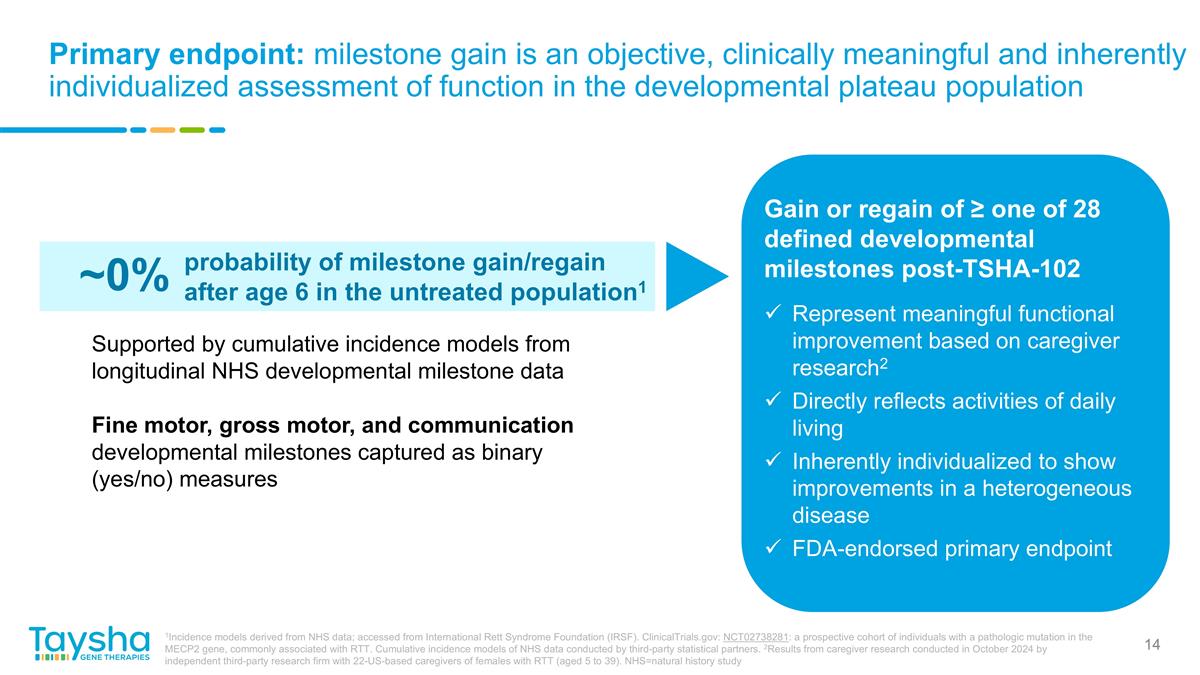
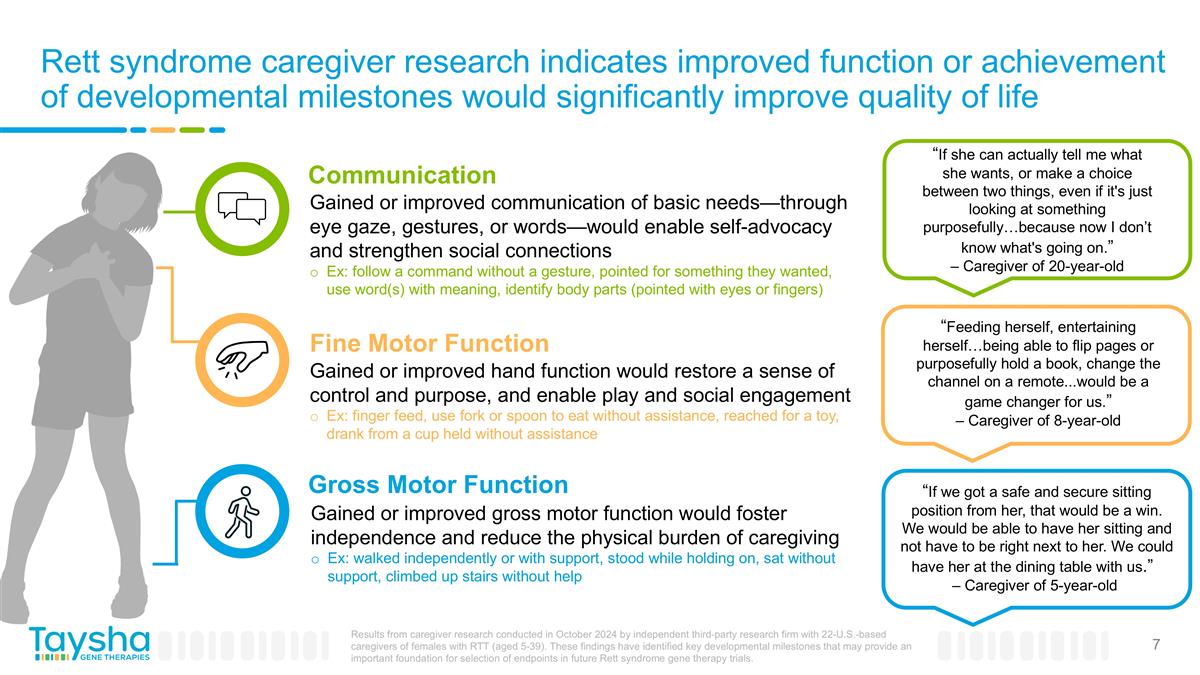
Primary endpoint: milestone gain is an objective, clinically meaningful and inherently individualized assessment of function in the developmental plateau population Supported by cumulative incidence models from longitudinal NHS developmental milestone data Fine motor, gross motor, and communication developmental milestones captured as binary (yes/no) measures ~0% probability of milestone gain/regain after age 6 in the untreated population1 Gain or regain of ≥ one of 28 defined developmental milestones post-TSHA-102 Represent meaningful functional improvement based on caregiver research2 Directly reflects activities of daily living Inherently individualized to show improvements in a heterogeneous disease FDA-endorsed primary endpoint 1Incidence models derived from NHS data; accessed from International Rett Syndrome Foundation (IRSF). ClinicalTrials.gov: NCT02738281: a prospective cohort of individuals with a pathologic mutation in the MECP2 gene, commonly associated with RTT. Cumulative incidence models of NHS data conducted by third-party statistical partners. 2Results from caregiver research conducted in October 2024 by independent third-party research firm with 22-US-based caregivers of females with RTT (aged 5 to 39). NHS=natural history study
TSHA-102 Clinical Data from Part A of REVEAL Phase 1/2 Trials
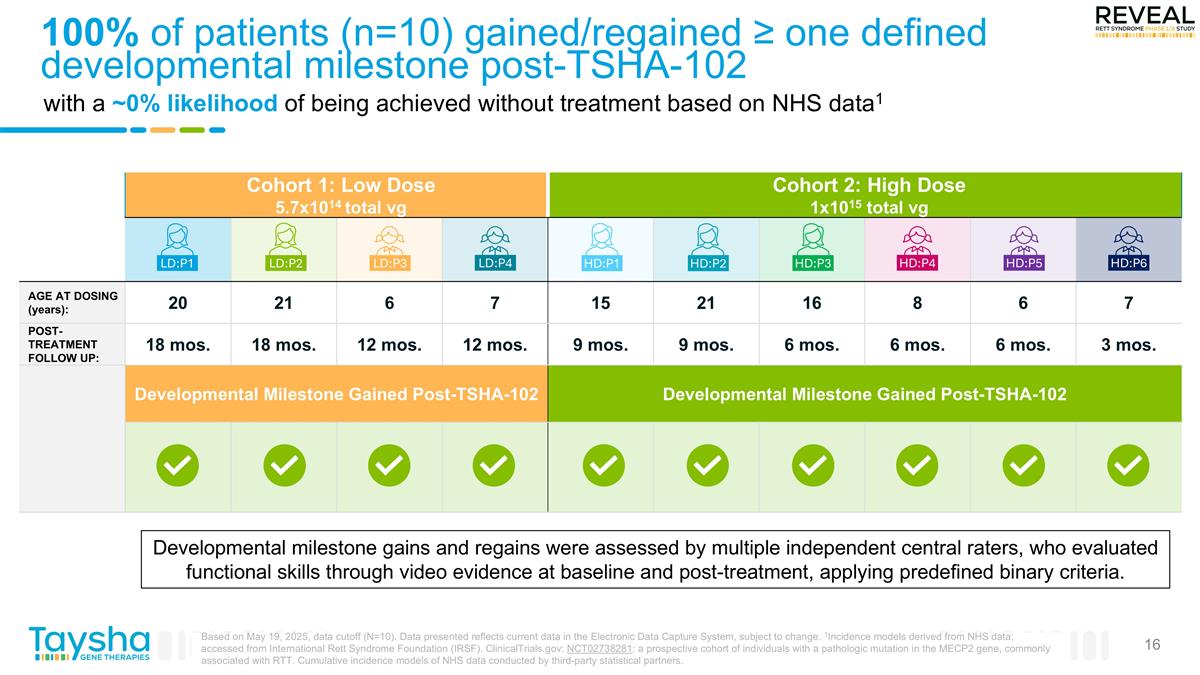
Based on May 19, 2025, data cutoff (N=10). Data presented reflects current data in the Electronic Data Capture System, subject to change. 1Incidence models derived from NHS data; accessed from International Rett Syndrome Foundation (IRSF). ClinicalTrials.gov: NCT02738281: a prospective cohort of individuals with a pathologic mutation in the MECP2 gene, commonly associated with RTT. Cumulative incidence models of NHS data conducted by third-party statistical partners. 6 Cohort 1: Low Dose 5.7x10¹⁴ total vg Cohort 2: High Dose 1x10¹⁵ total vg AGE AT DOSING (years): 20 21 6 7 15 21 16 8 6 7 POST-TREATMENT FOLLOW UP: 18 mos. 18 mos. 12 mos. 12 mos. 9 mos. 9 mos. 6 mos. 6 mos. 6 mos. 3 mos. Developmental Milestone Gained Post-TSHA-102 Developmental Milestone Gained Post-TSHA-102 LD:P1 LD:P2 LD:P3 LD:P4 HD:P1 HD:P2 HD:P3 HD:P4 HD:P5 HD:P6 Developmental milestone gains and regains were assessed by multiple independent central raters, who evaluated functional skills through video evidence at baseline and post-treatment, applying predefined binary criteria. 100% of patients (n=10) gained/regained ≥ one defined developmental milestone post-TSHA-102 with a ~0% likelihood of being achieved without treatment based on NHS data1
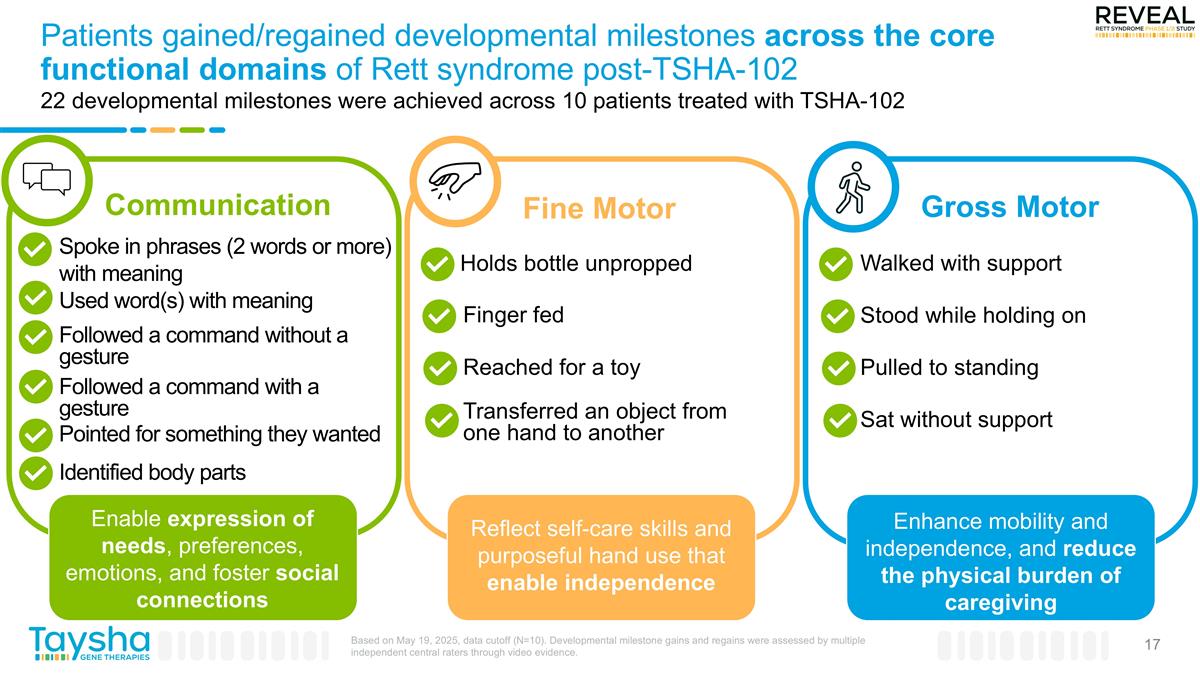
Patients gained/regained developmental milestones across the core functional domains of Rett syndrome post-TSHA-102 Based on May 19, 2025, data cutoff (N=10). Developmental milestone gains and regains were assessed by multiple independent central raters through video evidence. 22 developmental milestones were achieved across 10 patients treated with TSHA-102 Gross Motor Enhance mobility and independence, and reduce the physical burden of caregiving Sat without support Stood while holding on Pulled to standing Walked with support Communication Pointed for something they wanted Identified body parts Followed a command without a gesture Used word(s) with meaning Fine Motor Holds bottle unpropped Enable expression of needs, preferences, emotions, and foster social connections Reflect self-care skills and purposeful hand use that enable independence Transferred an object from one hand to another Followed a command with a gesture Spoke in phrases (2 words or more) with meaning Reached for a toy Finger fed
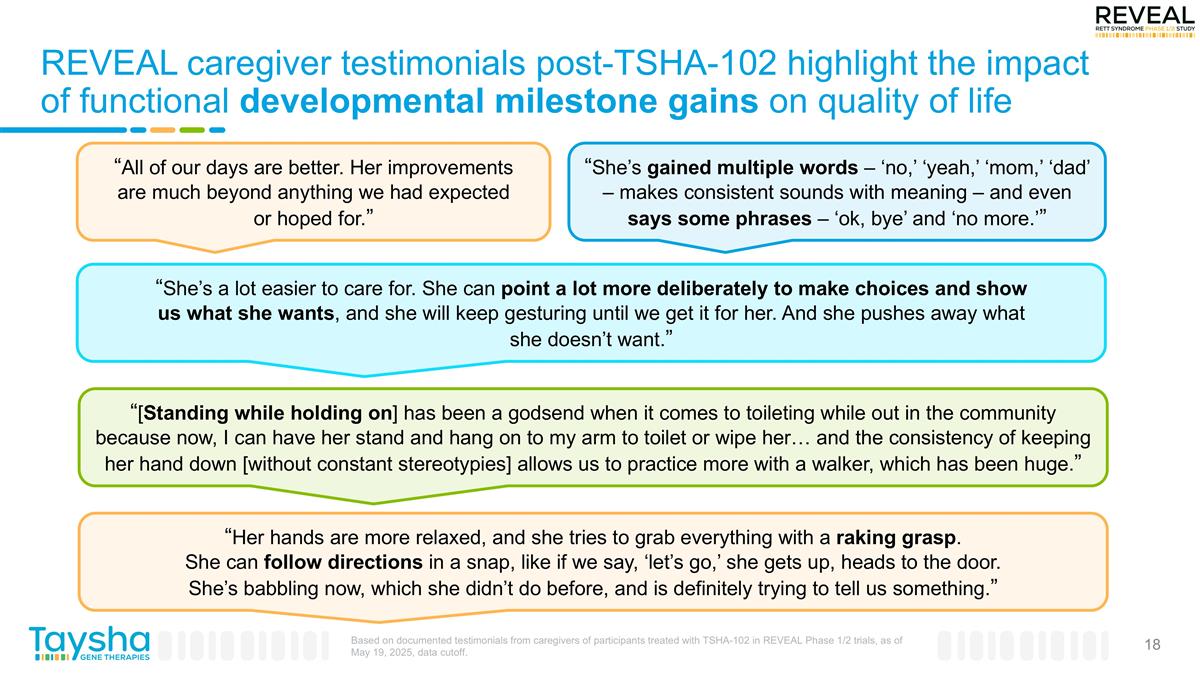
REVEAL caregiver testimonials post-TSHA-102 highlight the impact of functional developmental milestone gains on quality of life Based on documented testimonials from caregivers of participants treated with TSHA-102 in REVEAL Phase 1/2 trials, as of May 19, 2025, data cutoff. “[Standing while holding on] has been a godsend when it comes to toileting while out in the community because now, I can have her stand and hang on to my arm to toilet or wipe her… and the consistency of keeping her hand down [without constant stereotypies] allows us to practice more with a walker, which has been huge.” “All of our days are better. Her improvements are much beyond anything we had expected or hoped for.” “She’s gained multiple words – ‘no,’ ‘yeah,’ ‘mom,’ ‘dad’ – makes consistent sounds with meaning – and even says some phrases – ‘ok, bye’ and ‘no more.’” “Her hands are more relaxed, and she tries to grab everything with a raking grasp. She can follow directions in a snap, like if we say, ‘let’s go,’ she gets up, heads to the door. She’s babbling now, which she didn’t do before, and is definitely trying to tell us something.” “She’s a lot easier to care for. She can point a lot more deliberately to make choices and show us what she wants, and she will keep gesturing until we get it for her. And she pushes away what she doesn’t want.”
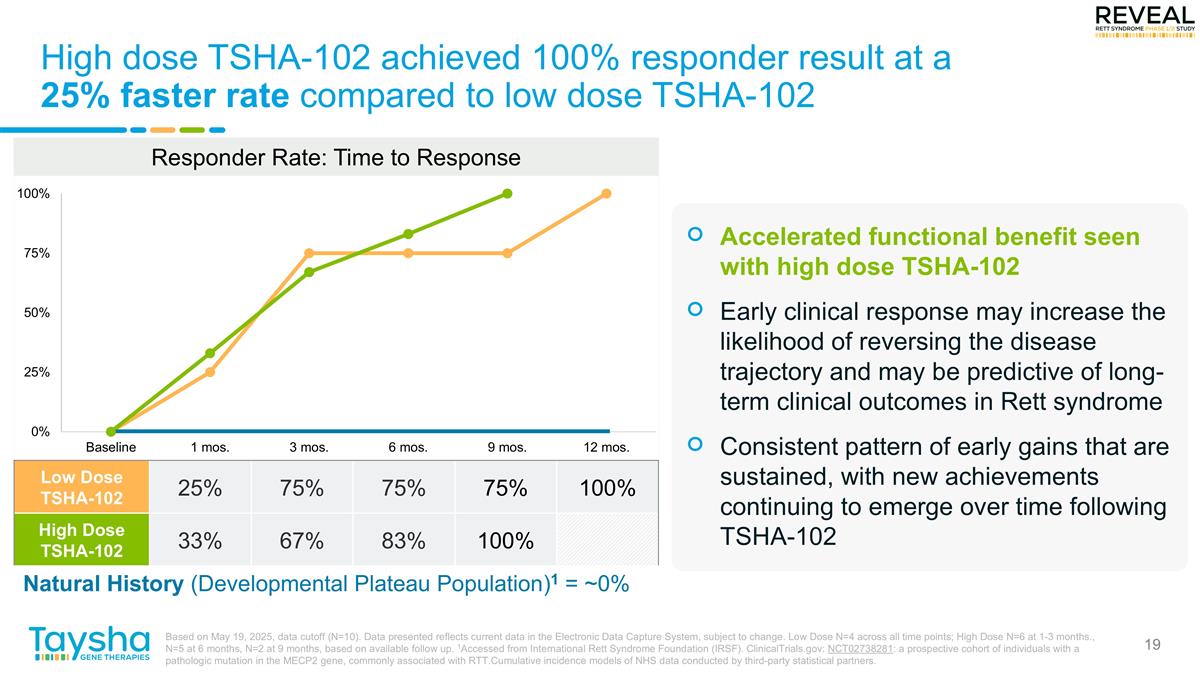
High dose TSHA-102 achieved 100% responder result at a 25% faster rate compared to low dose TSHA-102 Based on May 19, 2025, data cutoff (N=10). Data presented reflects current data in the Electronic Data Capture System, subject to change. Low Dose N=4 across all time points; High Dose N=6 at 1-3 months., N=5 at 6 months, N=2 at 9 months, based on available follow up. 1Accessed from International Rett Syndrome Foundation (IRSF). ClinicalTrials.gov: NCT02738281: a prospective cohort of individuals with a pathologic mutation in the MECP2 gene, commonly associated with RTT.Cumulative incidence models of NHS data conducted by third-party statistical partners. Accelerated functional benefit seen with high dose TSHA-102 Early clinical response may increase the likelihood of reversing the disease trajectory and may be predictive of long-term clinical outcomes in Rett syndrome Consistent pattern of early gains that are sustained, with new achievements continuing to emerge over time following TSHA-102 Low Dose TSHA-102 25% 75% 75% 75% 100% High Dose TSHA-102 33% 67% 83% 100% Natural History (Developmental Plateau Population)1 = ~0% Responder Rate: Time to Response
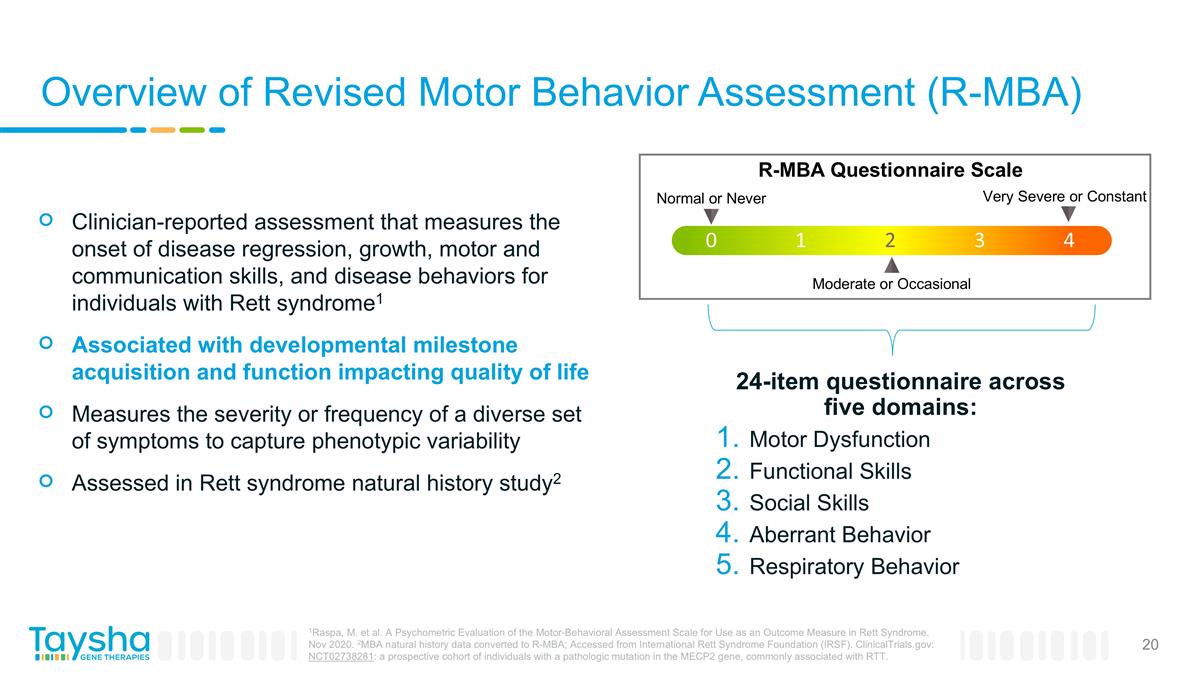
Overview of Revised Motor Behavior Assessment (R-MBA) Clinician-reported assessment that measures the onset of disease regression, growth, motor and communication skills, and disease behaviors for individuals with Rett syndrome1 Associated with developmental milestone acquisition and function impacting quality of life Measures the severity or frequency of a diverse set of symptoms to capture phenotypic variability Assessed in Rett syndrome natural history study2 24-item questionnaire across five domains: Motor Dysfunction Functional Skills Social Skills Aberrant Behavior Respiratory Behavior R-MBA Questionnaire Scale 0 1 2 3 4 Normal or Never Very Severe or Constant Moderate or Occasional 1Raspa, M. et al. A Psychometric Evaluation of the Motor-Behavioral Assessment Scale for Use as an Outcome Measure in Rett Syndrome. Nov 2020. 2MBA natural history data converted to R-MBA; Accessed from International Rett Syndrome Foundation (IRSF). ClinicalTrials.gov: NCT02738281: a prospective cohort of individuals with a pathologic mutation in the MECP2 gene, commonly associated with RTT.
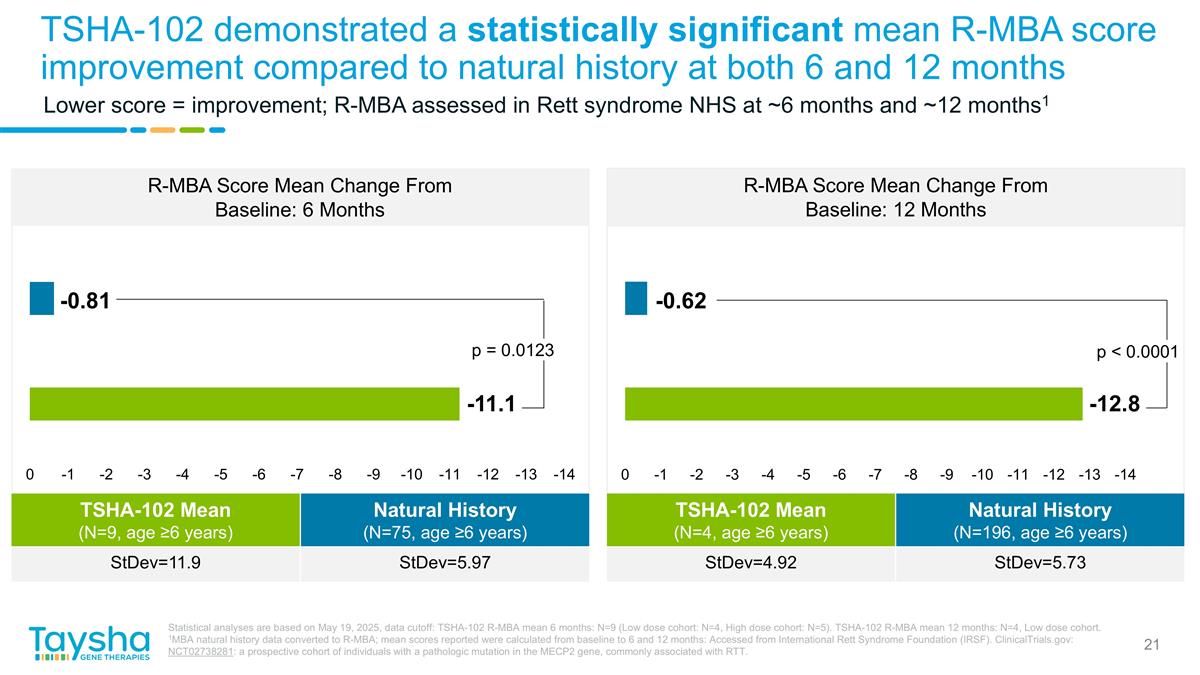
Statistical analyses are based on May 19, 2025, data cutoff: TSHA-102 R-MBA mean 6 months: N=9 (Low dose cohort: N=4, High dose cohort: N=5). TSHA-102 R-MBA mean 12 months: N=4, Low dose cohort. 1MBA natural history data converted to R-MBA; mean scores reported were calculated from baseline to 6 and 12 months: Accessed from International Rett Syndrome Foundation (IRSF). ClinicalTrials.gov: NCT02738281: a prospective cohort of individuals with a pathologic mutation in the MECP2 gene, commonly associated with RTT. 1 TSHA-102 Mean (N=9, age ≥6 years) Natural History (N=75, age ≥6 years) StDev=11.9 StDev=5.97 -0.81 -11.1 TSHA-102 Mean (N=4, age ≥6 years) Natural History (N=196, age ≥6 years) StDev=4.92 StDev=5.73 -0.62 -12.8 p < 0.0001 R-MBA Score Mean Change From Baseline: 6 Months p = 0.0123 R-MBA Score Mean Change From Baseline: 12 Months TSHA-102 demonstrated a statistically significant mean R-MBA score improvement compared to natural history at both 6 and 12 months Lower score = improvement; R-MBA assessed in Rett syndrome NHS at ~6 months and ~12 months1
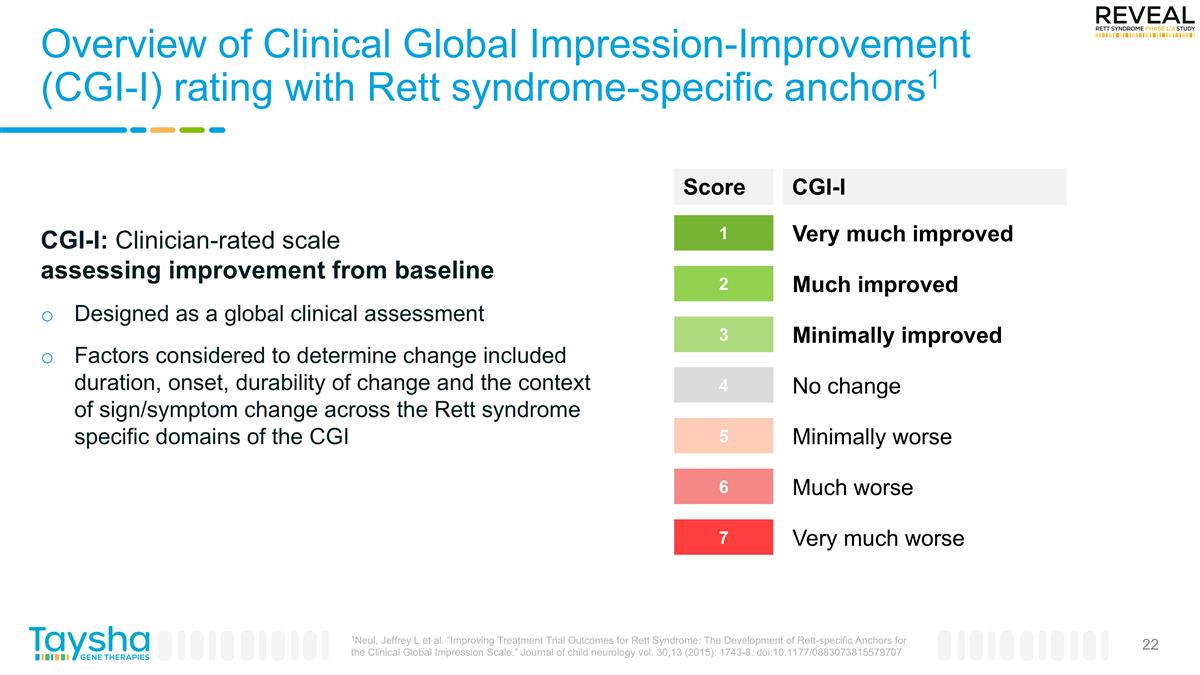
Overview of Clinical Global Impression-Improvement (CGI-I) rating with Rett syndrome-specific anchors1 CGI-I: Clinician-rated scale assessing improvement from baseline Designed as a global clinical assessment Factors considered to determine change included duration, onset, durability of change and the context of sign/symptom change across the Rett syndrome specific domains of the CGI 7 6 5 4 3 2 1 Very much improved Very much worse Much worse Minimally worse No change Much improved Minimally improved Score CGI-I 1Neul, Jeffrey L et al. “Improving Treatment Trial Outcomes for Rett Syndrome: The Development of Rett-specific Anchors for the Clinical Global Impression Scale.” Journal of child neurology vol. 30,13 (2015): 1743-8. doi:10.1177/0883073815579707
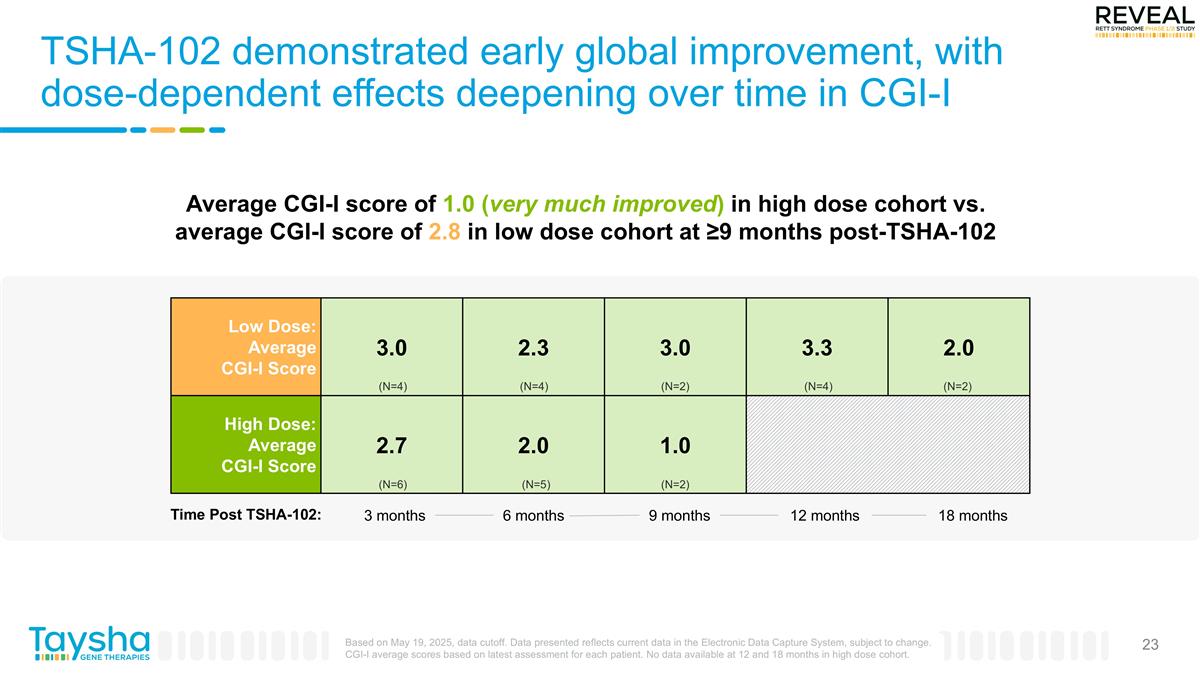
TSHA-102 demonstrated early global improvement, with dose-dependent effects deepening over time in CGI-I Based on May 19, 2025, data cutoff. Data presented reflects current data in the Electronic Data Capture System, subject to change. CGI-I average scores based on latest assessment for each patient. No data available at 12 and 18 months in high dose cohort. Low Dose: Average CGI-I Score 3.0 2.3 3.0 3.3 2.0 High Dose: Average CGI-I Score 2.7 2.0 1.0 (N=6) (N=5) (N=2) (N=4) (N=4) (N=2) (N=4) (N=2) Average CGI-I score of 1.0 (very much improved) in high dose cohort vs. average CGI-I score of 2.8 in low dose cohort at ≥9 months post-TSHA-102 3 months 6 months 9 months 12 months 18 months Time Post TSHA-102:
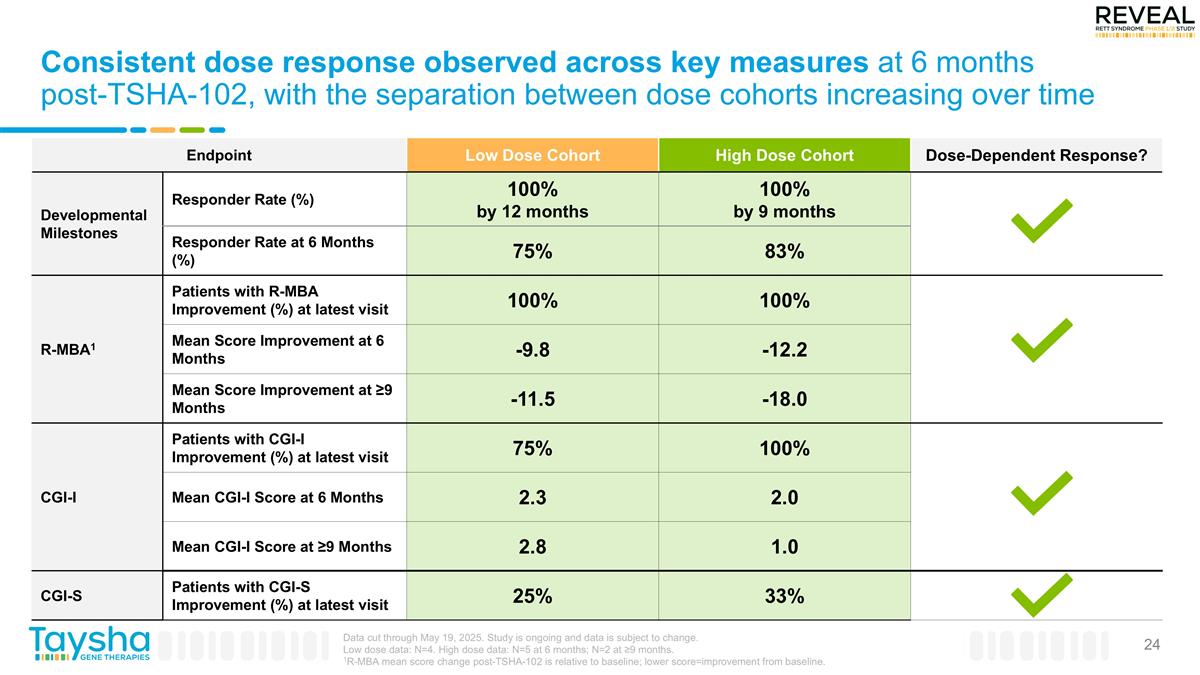
Consistent dose response observed across key measures at 6 months post-TSHA-102, with the separation between dose cohorts increasing over time Endpoint Low Dose Cohort High Dose Cohort Dose-Dependent Response? Developmental Milestones Responder Rate (%) 100% by 12 months 100% by 9 months Responder Rate at 6 Months (%) 75% 83% R-MBA1 Patients with R-MBA Improvement (%) at latest visit 100% 100% Mean Score Improvement at 6 Months -9.8 -12.2 Mean Score Improvement at ≥9 Months -11.5 -18.0 CGI-I Patients with CGI-I Improvement (%) at latest visit 75% 100% Mean CGI-I Score at 6 Months 2.3 2.0 Mean CGI-I Score at ≥9 Months 2.8 1.0 CGI-S Patients with CGI-S Improvement (%) at latest visit 25% 33% Data cut through May 19, 2025. Study is ongoing and data is subject to change. Low dose data: N=4. High dose data: N=5 at 6 months; N=2 at ≥9 months. 1R-MBA mean score change post-TSHA-102 is relative to baseline; lower score=improvement from baseline.
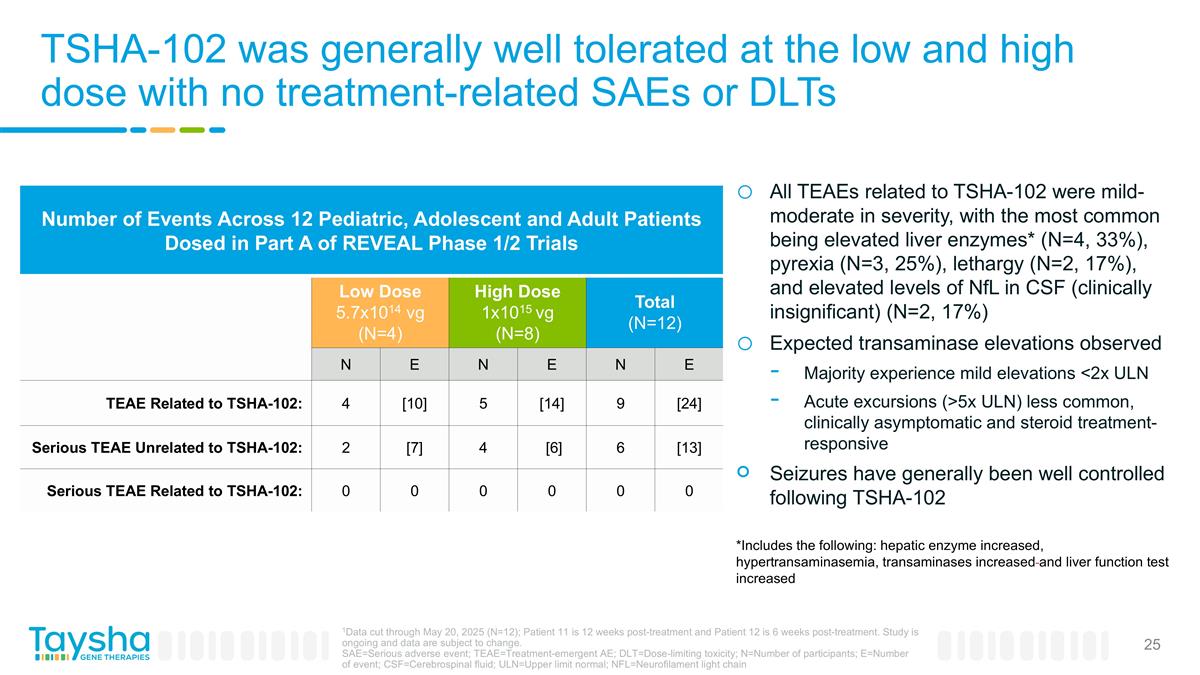
TSHA-102 was generally well tolerated at the low and high dose with no treatment-related SAEs or DLTs Number of Events Across 12 Pediatric, Adolescent and Adult Patients Dosed in Part A of REVEAL Phase 1/2 Trials Low Dose 5.7x10¹⁴ vg (N=4) High Dose 1x10¹⁵ vg (N=8) Total (N=12) N E N E N E TEAE Related to TSHA-102: 4 [10] 5 [14] 9 [24] Serious TEAE Unrelated to TSHA-102: 2 [7] 4 [6] 6 [13] Serious TEAE Related to TSHA-102: 0 0 0 0 0 0 All TEAEs related to TSHA-102 were mild-moderate in severity, with the most common being elevated liver enzymes* (N=4, 33%), pyrexia (N=3, 25%), lethargy (N=2, 17%), and elevated levels of NfL in CSF (clinically insignificant) (N=2, 17%) Expected transaminase elevations observed Majority experience mild elevations <2x ULN Acute excursions (>5x ULN) less common, clinically asymptomatic and steroid treatment-responsive Seizures have generally been well controlled following TSHA-102 1Data cut through May 20, 2025 (N=12); Patient 11 is 12 weeks post-treatment and Patient 12 is 6 weeks post-treatment. Study is ongoing and data are subject to change. SAE=Serious adverse event; TEAE=Treatment-emergent AE; DLT=Dose-limiting toxicity; N=Number of participants; E=Number of event; CSF=Cerebrospinal fluid; ULN=Upper limit normal; NFL=Neurofilament light chain *Includes the following: hepatic enzyme increased, hypertransaminasemia, transaminases increased and liver function test increased
Thank you May 2025
Appendix May 2025
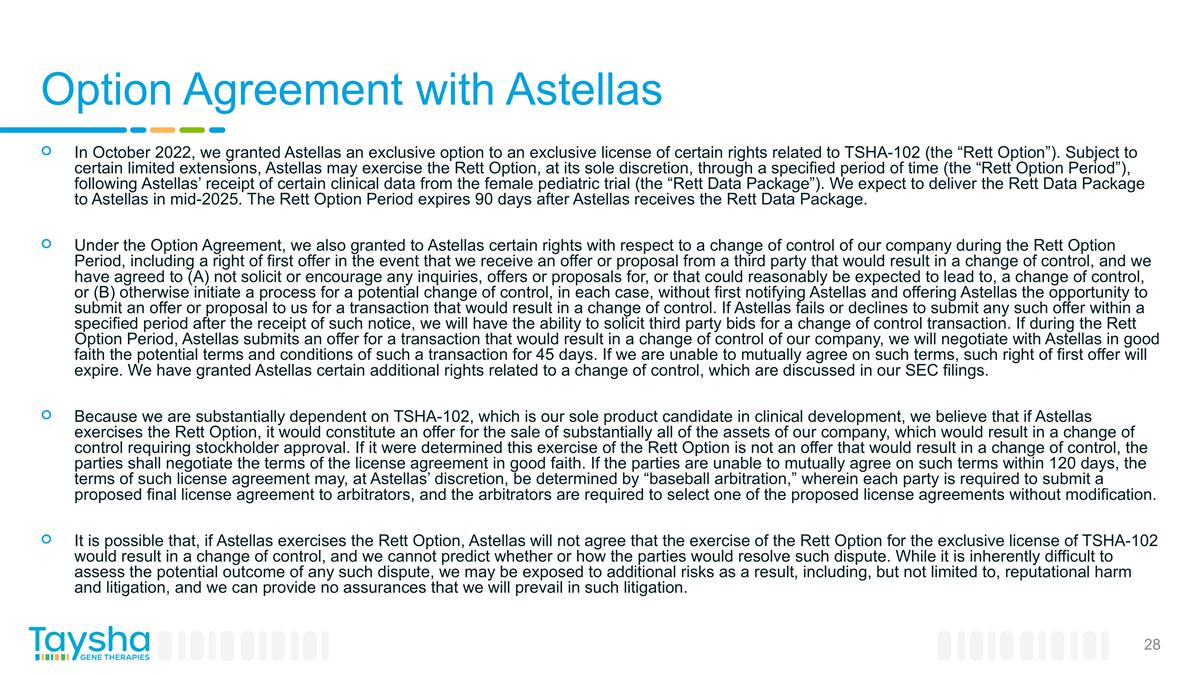
Option Agreement with Astellas In October 2022, we granted Astellas an exclusive option to an exclusive license of certain rights related to TSHA-102 (the “Rett Option”). Subject to certain limited extensions, Astellas may exercise the Rett Option, at its sole discretion, through a specified period of time (the “Rett Option Period”), following Astellas’ receipt of certain clinical data from the female pediatric trial (the “Rett Data Package”). We expect to deliver the Rett Data Package to Astellas in mid-2025. The Rett Option Period expires 90 days after Astellas receives the Rett Data Package. Under the Option Agreement, we also granted to Astellas certain rights with respect to a change of control of our company during the Rett Option Period, including a right of first offer in the event that we receive an offer or proposal from a third party that would result in a change of control, and we have agreed to (A) not solicit or encourage any inquiries, offers or proposals for, or that could reasonably be expected to lead to, a change of control, or (B) otherwise initiate a process for a potential change of control, in each case, without first notifying Astellas and offering Astellas the opportunity to submit an offer or proposal to us for a transaction that would result in a change of control. If Astellas fails or declines to submit any such offer within a specified period after the receipt of such notice, we will have the ability to solicit third party bids for a change of control transaction. If during the Rett Option Period, Astellas submits an offer for a transaction that would result in a change of control of our company, we will negotiate with Astellas in good faith the potential terms and conditions of such a transaction for 45 days. If we are unable to mutually agree on such terms, such right of first offer will expire. We have granted Astellas certain additional rights related to a change of control, which are discussed in our SEC filings. Because we are substantially dependent on TSHA-102, which is our sole product candidate in clinical development, we believe that if Astellas exercises the Rett Option, it would constitute an offer for the sale of substantially all of the assets of our company, which would result in a change of control requiring stockholder approval. If it were determined this exercise of the Rett Option is not an offer that would result in a change of control, the parties shall negotiate the terms of the license agreement in good faith. If the parties are unable to mutually agree on such terms within 120 days, the terms of such license agreement may, at Astellas’ discretion, be determined by “baseball arbitration,” wherein each party is required to submit a proposed final license agreement to arbitrators, and the arbitrators are required to select one of the proposed license agreements without modification. It is possible that, if Astellas exercises the Rett Option, Astellas will not agree that the exercise of the Rett Option for the exclusive license of TSHA-102 would result in a change of control, and we cannot predict whether or how the parties would resolve such dispute. While it is inherently difficult to assess the potential outcome of any such dispute, we may be exposed to additional risks as a result, including, but not limited to, reputational harm and litigation, and we can provide no assurances that we will prevail in such litigation.