
KRYS 8-K
Krystal Biotech, Inc. (KRYS)
8-K
2026-01-08
For: 2026-01-08
View Original
Added on
April 08, 2026
UNITED STATES
SECURITIES AND EXCHANGE COMMISSION
Washington, D.C. 20549
FORM 8-K
CURRENT REPORT
Pursuant to Section 13 or 15(d)
of the Securities Exchange Act of 1934
Date of Report (Date of earliest event reported): January 8, 2026
(Exact name of registrant as specified in its charter)
| (State or other jurisdiction of incorporation) | (Commission File Number) | (IRS Employer Identification Number) | ||||||||||||
(Address of principal executive offices, including Zip Code)
Registrant’s telephone number, including area code: (412 ) 586-5830
Check the appropriate box below if the Form 8-K filing is intended to simultaneously satisfy the filing obligation of the registrant under any of the following provisions:
| Written communications pursuant to Rule 425 under the Securities Act (17 CFR 230.425) | |||||
| Soliciting material pursuant to Rule 14a-12 under the Exchange Act (17 CFR 240.14a-12) | |||||
| Pre-commencement communications pursuant to Rule 14d-2(b) under the Exchange Act (17 CFR 240.14d-2(b)) | |||||
| Pre-commencement communications pursuant to Rule 13e-4(c) under the Exchange Act (17 CFR 240.13e-4(c)) | |||||
Securities registered pursuant to Section 12(b) of the Act:
| Title of each class | Trading Symbol(s) | Name of each exchange on which registered | ||||||||||||
| Common Stock | KRYS | Nasdaq Global Select Market | ||||||||||||
Indicate by check mark whether the registrant is an emerging growth company as defined in Rule 405 of the Securities Act of 1933 (§230.405 of this chapter) or Rule 12b-2 of the Securities Exchange Act of 1934 (§240.12b-2 of this chapter).
Emerging growth company ☐
If an emerging growth company, indicate by check mark if the registrant has elected not to use the extended transition period for complying with any new or revised financial accounting standards provided pursuant to Section 13(a) of the Exchange Act. ☐
Item 7.01 Regulation FD Disclosure
On January 8, 2026, Krystal Biotech, Inc. (the “Company”) issued a press release announcing a positive interim clinical update from its KB407 Phase 1 CORAL-1 Study with confirmation of wild-type CFTR delivery to the lungs of patients with cystic fibrosis. In addition, the press release indicated that the Company would host a conference call and webcast at 4:30 p.m. ET on January 8, 2026, to discuss the interim clinical data and its KB407 clinical development program. For purposes of the call and webcast, the Company provided a slide presentation, which is available on the “Investors” section of the Company’s website at www.krystalbio.com. Copies of the press release and the slide presentation are attached hereto as Exhibit 99.1 and Exhibit 99.2, respectively, and are incorporated by reference herein.
The information in this Item 7.01 of this Current Report on Form 8-K and in Exhibits 99.1 and 99.2 attached hereto shall not be (i) deemed to be “filed” for purposes of Section 18 of the Securities Exchange Act of 1934, as amended, or otherwise subject to the liabilities of that section, or (ii) incorporated into any registration statement or other document filed with the Securities and Exchange Commission by the Company, whether made before or after the date hereof, regardless of any general incorporation language in such filing, except as shall be expressly set forth by specific reference in such filing.
Item 9.01 Financial Statements and Exhibits.
(d) Exhibits.
| Exhibit No. | Description | |||||||
| 99.1 | ||||||||
| 99.2 | ||||||||
| 104 | Cover Page Interactive Data file (embedded within the Inline XBRL document) | |||||||
SIGNATURES
Pursuant to the requirements of the Securities Exchange Act of 1934, as amended, the registrant has duly caused this report to be signed on its behalf by the undersigned hereunto duly authorized.
Date: | KRYSTAL BIOTECH, INC. | |||||||||||||||||||
| By: | /s/ Krish S. Krishnan | |||||||||||||||||||
| Name: | Krish S. Krishnan | |||||||||||||||||||
| Title: | Chairman and Chief Executive Officer | |||||||||||||||||||
Exhibit 99.1
Krystal Biotech Announces Positive Interim Clinical Update from KB407 Phase 1 CORAL-1 Study with Confirmation of Wild-Type CFTR Delivery to the Lungs of Patients with Cystic Fibrosis
Confirmed wild-type CFTR delivery and expression in conducting airway cells of patients with class I mutations
KB407 transduction confirmed in all six patients with successful bronchoscopies irrespective of modulator-status; percentage of conducting airway cells transduced in each patient ranged from 29.4% to 42.1%
Registrational repeat dosing CORAL-3 study design submitted to FDA in late December; anticipating enrollment in study to start in 1H 2026 following alignment with the FDA
Investor call to be held January 8 at 4:30 pm ET to discuss data update and timelines for KB407 repeat dosing study start
PITTSBURGH, January 8, 2026 (GLOBE NEWSWIRE) – Krystal Biotech, Inc. (the “Company”) (NASDAQ: KRYS) today announced a positive interim clinical update from the highest dose cohort of CORAL-1, the Company’s multi-center, dose escalation Phase 1 study evaluating KB407 in patients with cystic fibrosis (CF), confirming the successful lung delivery and expression of wild-type cystic fibrosis transmembrane conductance regulator (CFTR) protein following inhaled administration of KB407.
“Molecular confirmation of delivery and expression of unmodified, wild-type CFTR protein in clinically relevant ciliated and secretory cells of the lungs of patients with CF is a tremendous breakthrough and a first for our field,” said Jorge Lascano, MD, Professor of Medicine, Associate Director of the Adult Cystic Fibrosis Program, and Director of the Cystic Fibrosis Therapeutics Development Center at the University of Florida. “High rates of KB407 transduction and broad distribution across patient airways irrespective of underlying lung disease, genetic background, or modulator status – combined with the redosability of KB407 and demonstrated functionality of its full-length CFTR payload – underscore the transformative potential of KB407 as a mutation-agnostic therapy for the many patients either ineligible for or underserved by currently availably modulators.”
The Company will host an investor conference call and webcast today, Thursday, January 8, 2026, at 4:30 pm ET, to discuss the clinical data updates. Investors and the general public can access the live webcast at: https://www.webcaster5.com/Webcast/Page/3018/53466. For those unable to listen to the live webcast, an archived version will also be available on the Investors section of the Company’s website for at least 30 days.
CORAL-1 Highest Dose Cohort Interim Results
KB407 is being evaluated in the Company’s CORAL-1 study, an open label, multi-center Phase 1 study in patients with CF that includes three dose escalation cohorts evaluating either one, two, or four daily administrations of 109 PFU of KB407 via inhalation. Additional details of the CORAL-1 study can be found at www.clinicaltrials.gov under NCT identifier NCT05504837.
Positive interim safety results from the first two dose escalation cohorts, referred to as Cohorts 1 and 2, were reported in 4Q 2024. Today’s update is focused on safety and molecular findings from patients dosed in the highest dose cohort of CORAL-1, Cohort 3.
As of the January 6, 2026 data cut-off, a total of seven (7) patients have been dosed with KB407 in the highest dose Cohort 3 of CORAL-1. Four of the seven patients were ineligible for modulator therapy. All patients received four daily administrations of 109 PFU of KB407 via inhalation, followed by a bronchoscopy 24-96 hours after receiving their last dose of KB407. Bronchoscopies for six of the seven patients were successful and yielded biopsies suitable for molecular analysis. At least 28 days of safety follow up data was available for all seven patients dosed with KB407 as of data cut-off.
KB407 transduction was confirmed in all Cohort 3 patients with successful bronchoscopies irrespective of modulator-status and genetic background, with broad airway distribution and transduction as assessed by CFTR or viral marker immunofluorescence, ranging from 29.4% to 42.1% across these six patients. Key molecular findings are summarized below:
Modulator Ineligible Patients (n = 4)
Patient Number | 1 | 2 | 3 | 4 | ||||||||||
CFTR Variants | 2184delA/W1282X Class I Patient | R553X/M1V Class I Patient | C1210-12T/1408A>G | R334W/R1162X | ||||||||||
Baseline ppFEV1 | 64 | 45 | 45 | 69 | ||||||||||
Total Number of Biopsies Suitable for Analysis | 7 | 5 | 5 | 6 | ||||||||||
Protein Marker Assessed* | CFTR | CFTR | Viral Marker | Viral Marker | ||||||||||
Percentage of Conducting Airway Cells Positive for CFTR or Viral Marker** | Overall: 42.1% Range: 33.1%-62.0% | Overall: 29.4% Range: 24.6%-32.3% | Overall: 36.5% Range: 29.1%-44.8% | Overall: 33.8% Range: 29.0%-36.3% | ||||||||||
* Positive cell counts for patients 3 and 4 based on viral marker expression given potential for background endogenous CFTR
** Overall values are based on the combined cell counts across all analyzable biopsies from a given patient while range values reflect cell counts from individual biopsies; conducting airway cells defined as airway-exposed epithelial cells lining the bronchi of the lung
All biopsies suitable for analysis from the four modulator ineligible patients (combined n = 23 biopsies) were positive for CFTR or viral marker expression, indicative of widespread dissemination of KB407 throughout the conducting airways of the lung.
Modulator Eligible Patients (n = 2)
Patient Number | 5 | 6 | ||||||
CFTR Variants | F508del/F508del | F508del/F508del | ||||||
Baseline ppFEV1 | 54 | 59 | ||||||
Total Number of Biopsies Suitable for Analysis | 4 | 4 | ||||||
Percentage of Conducting Airway Cells Positive for Viral Marker* | Overall: 36.8% Range: 28.3%-46.4% | Overall: 31.4% Range: 27.3%-38.0% | ||||||
* Overall values are based on the combined cell counts across all analyzable biopsies from a given patient while range values reflect cell counts from individual biopsies; conducting airway cells defined as airway-exposed epithelial cells lining the bronchi of the lung
All biopsies suitable for analysis from the two modulator eligible patients (combined n = 8 biopsies) were positive for viral marker expression.
Consistent with the safety profile previously reported from Cohorts 1 and 2, inhaled KB407 continued to be well tolerated by patients treated with the highest dose in Cohort 3. All but one KB407-related adverse event were mild to moderate in severity and transient in nature. One serious adverse event (SAE) of asthma exacerbation was reported 24 hours after completion of the bronchoscopy. The SAE was deemed procedure related, and not related to KB407, by the independent data monitoring committee. The SAE resolved in 5 days.
“Today’s update has profound implications for Krystal and for the many CF patients unable to benefit from modulator therapy ,” said Suma Krishnan, President, Research & Development, Krystal Biotech, Inc. “With clear evidence of CFTR protein expression in patients with class I mutations and reproducible KB407 transduction across a diverse CF population, we are moving forward with conviction into our repeat dosing study with registrational intent, CORAL-3. We are excited to be working with the Cystic Fibrosis Foundation to accelerate clinical development and potential registrational timelines.”
The Company submitted the CORAL-3 study design to the United States Food and Drug Administration (FDA) in late December. CORAL-3 is designed to evaluate the safety and efficacy of repeat KB407 administration, including regular assessments of lung function by spirometry, and support potential registration. The Company expects to align on the CORAL-3 study design with the FDA in 1Q 2026 and start enrollment in CORAL-3 in 2Q 2026. Additional details on the study design will be provided by the time of study initiation.
About CF
CF is an inherited disease caused by genetic mutations that result in dysfunctional or absent CFTR protein. Lack of functional CFTR causes dehydrated mucus buildup in the lungs, pancreas, and other organs. This mucus buildup in the lungs leads to loss of lung function, and eventually, respiratory failure. According to the US Cystic Fibrosis Foundation, close to 40,000 children and adults are living with CF in the United States, and an estimated 105,000 are diagnosed with CF across 94 countries. Although CFTR modulators are effective in patients with certain CFTR mutations, patients may still experience pulmonary symptoms requiring treatment. Further, a meaningful proportion of CF patients harbor genetic mutations that are not expected to be responsive to modulators and currently have no available disease-modifying treatment options, representing a significant unmet need.
About KB407
KB407 is a redosable gene therapy designed to deliver two copies of the full-length CFTR transgene to the lung via inhalation for the treatment of CF. By enabling expression of full-length, wild-type CFTR protein in the lung, treatment with KB407 has potential to restore CFTR-mediated ion transport, mucus clearance, and lung function in patients with CF regardless of their underlying genetic mutation. KB407 has been shown to successfully transduce patient-derived epithelial cells and deliver functional CFTR in 2D and 3D in vitro organotypic systems and, as demonstrated in the CORAL-1 Phase 1 study, is amendable to inhaled administration via nebulization, with successful lung delivery and broad airway distribution confirmed in multiple patients with cystic fibrosis.
About Krystal Biotech, Inc.
Krystal Biotech, Inc. (NASDAQ: KRYS) is a fully integrated, commercial-stage, global biotechnology company focused on the discovery, development and commercialization of genetic medicines to treat diseases with high unmet medical needs. VYJUVEK®, the Company’s first commercial product, is the first-ever redosable gene therapy and the first genetic medicine approved in the United States, Europe, and Japan for the treatment of dystrophic epidermolysis bullosa. The Company is rapidly advancing a robust preclinical and clinical pipeline of investigational genetic medicines in respiratory, oncology, dermatology, ophthalmology, and aesthetics. Krystal Biotech is headquartered in Pittsburgh, Pennsylvania. For more information, please visit http://www.krystalbio.com, and follow @KrystalBiotech on LinkedIn and X (formerly Twitter).
Forward-Looking Statements
This press release contains “forward looking” statements within the meaning of the Private Securities Litigation Reform Act of 1995 based on the Company’s current expectations and beliefs regarding its product candidate, KB407 for the treatment of patients with cystic fibrosis. These forward-looking statements include, without limitation, statements relating to the potentially transformative potential of KB407 as a mutation-agnostic therapy; and the Company’s planned study, CORAL-3, that is designed to evaluate the safety and efficacy of repeat KB407 administration, including expected alignment on the CORAL-3 study design with the FDA in 1Q 2026 and initiation of enrollment in CORAL-3 in 2Q 2026. All statements other than historical facts are or may be deemed to be forward‑looking statements and involve known and unknown risks, uncertainties, and assumptions that could cause actual results to differ materially from those indicated by such forward-looking statements as a result of various important factors, including uncertainties inherent in the initiation and conduct of clinical trials, regulatory review of clinical trials, and applications for marketing approvals; whether results of early clinical trials will be indicative of the results of later-stage studies; and such other important factors as are set forth under the caption “Risk Factors” in the Company’s annual and quarterly reports on file with the U.S. Securities and Exchange Commission. The Company provides this information as of the date of this press release and assumes no obligation to update any forward-looking statements.
CONTACT
Investors and Media:
Stéphane Paquette
Krystal Biotech

© Copyright 2026 Krystal Biotech, Inc. All rights reserved. KB407 for Cystic Fibrosis CORAL-1 Clinical Data Update January 2026 Exhibit 99.2
Krystal | 2 Forward Looking Statements and Disclosures This presentation and our discussion contain forward-looking statements that involve substantial risks and uncertainties. Any statements about future expectations, plans, and prospects for Krystal Biotech, Inc. (the “Company”), including but not limited to statements about the Company’s investigational product candidate, KB407, and the CORAL-1 clinical trial evaluating KB407 for the treatment of cystic fibrosis (CF); the potential transformational implications from the positive interim clinical update from the highest dose cohort (Cohort 3) of CORAL-1, including a leadership opportunity in the treatment of CF, further validation of the Company’s lung platform, derisking of KB408 and KB707, support for pipeline expansion, and potential blockbuster opportunities; the Company’s planned CORAL-3 study designed to evaluate the safety and efficacy of repeat KB407 administration, including the timing of expected alignment on the CORAL-3 study design with the FDA and initiation of the study, and the potential for CORAL-3 to support registration of KB407; and other statements, constitute forward-looking statements within the meaning of The Private Securities Litigation Reform Act of 1995. Actual results may differ materially from those indicated by such forward-looking statements as a result of various important factors, including: uncertainties associated with regulatory reviews and the content and timing of regulatory authorities’ decisions; uncertainties in the initiation and conduct of clinical trials and availability and timing of data from clinical trials; whether results of early clinical trials will be indicative of the results of later-stage studies; the availability or commercial potential of product candidates; and such other important factors as are set forth in the Company’s filings with the SEC. The forward-looking statements represent the Company’s views as of the date of this presentation and should not be relied upon as representing the Company’s views as of any subsequent date. The Company specifically disclaims any obligation to update forward-looking statements. The presentation and discussion may contain estimates and statistical data. Estimates involve assumptions and limitations, and investors are cautioned not to give undue weight to estimates. Neither the Company nor any other person makes any representation as to the accuracy or completeness of such estimates or data or undertakes any obligation to update such estimates or data. Today’s discussions and presentation are intended for the investor community only; they are not intended to promote the products or product candidates referenced herein or otherwise influence healthcare prescribing decisions. The Company is using the Aerogen Solo® Nebulizer System and Aerogen® Ultra in its clinical trials evaluating KB407, KB408, and inhaled KB707
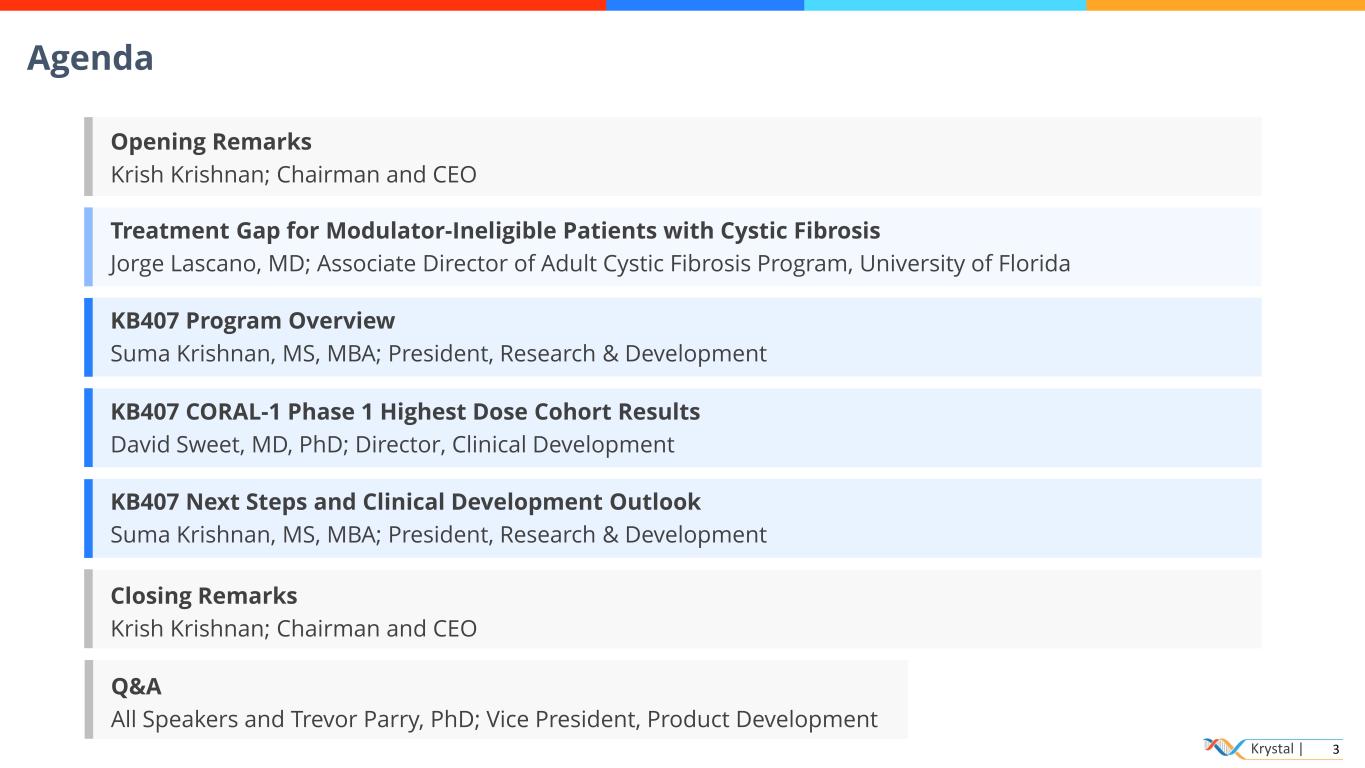
Krystal | 3 Agenda Opening Remarks Krish Krishnan; Chairman and CEO Treatment Gap for Modulator-Ineligible Patients with Cystic Fibrosis Jorge Lascano, MD; Associate Director of Adult Cystic Fibrosis Program, University of Florida KB407 Program Overview Suma Krishnan, MS, MBA; President, Research & Development Closing Remarks Krish Krishnan; Chairman and CEO KB407 CORAL-1 Phase 1 Highest Dose Cohort Results David Sweet, MD, PhD; Director, Clinical Development KB407 Next Steps and Clinical Development Outlook Suma Krishnan, MS, MBA; President, Research & Development Q&A All Speakers and Trevor Parry, PhD; Vice President, Product Development
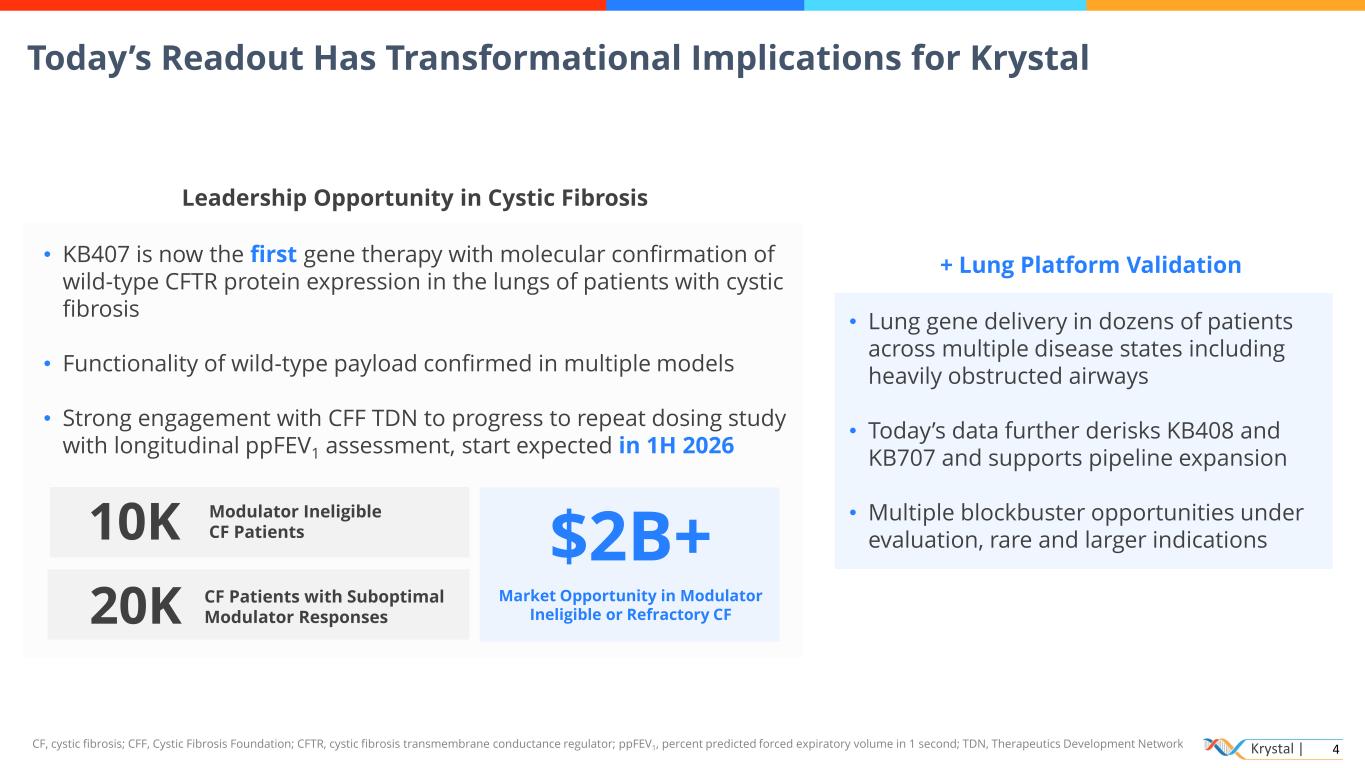
Krystal | 4 Today’s Readout Has Transformational Implications for Krystal + Lung Platform Validation • Lung gene delivery in dozens of patients across multiple disease states including heavily obstructed airways • Today’s data further derisks KB408 and KB707 and supports pipeline expansion • Multiple blockbuster opportunities under evaluation, rare and larger indications Leadership Opportunity in Cystic Fibrosis • KB407 is now the first gene therapy with molecular confirmation of wild-type CFTR protein expression in the lungs of patients with cystic fibrosis • Functionality of wild-type payload confirmed in multiple models • Strong engagement with CFF TDN to progress to repeat dosing study with longitudinal ppFEV1 assessment, start expected in 1H 2026 10K CF Patients with Suboptimal Modulator Responses $2B+ Market Opportunity in Modulator Ineligible or Refractory CF Modulator Ineligible CF Patients 20K CF, cystic fibrosis; CFF, Cystic Fibrosis Foundation; CFTR, cystic fibrosis transmembrane conductance regulator; ppFEV1, percent predicted forced expiratory volume in 1 second; TDN, Therapeutics Development Network
Cystic Fibrosis Beyond Modulators: Persistent Unmet Need Jorge Lascano, MD Professor of Medicine Associate Director of the Adult Cystic Fibrosis Program Director of the Cystic Fibrosis Therapeutics Development Center University of Florida CORAL-1 Investigator
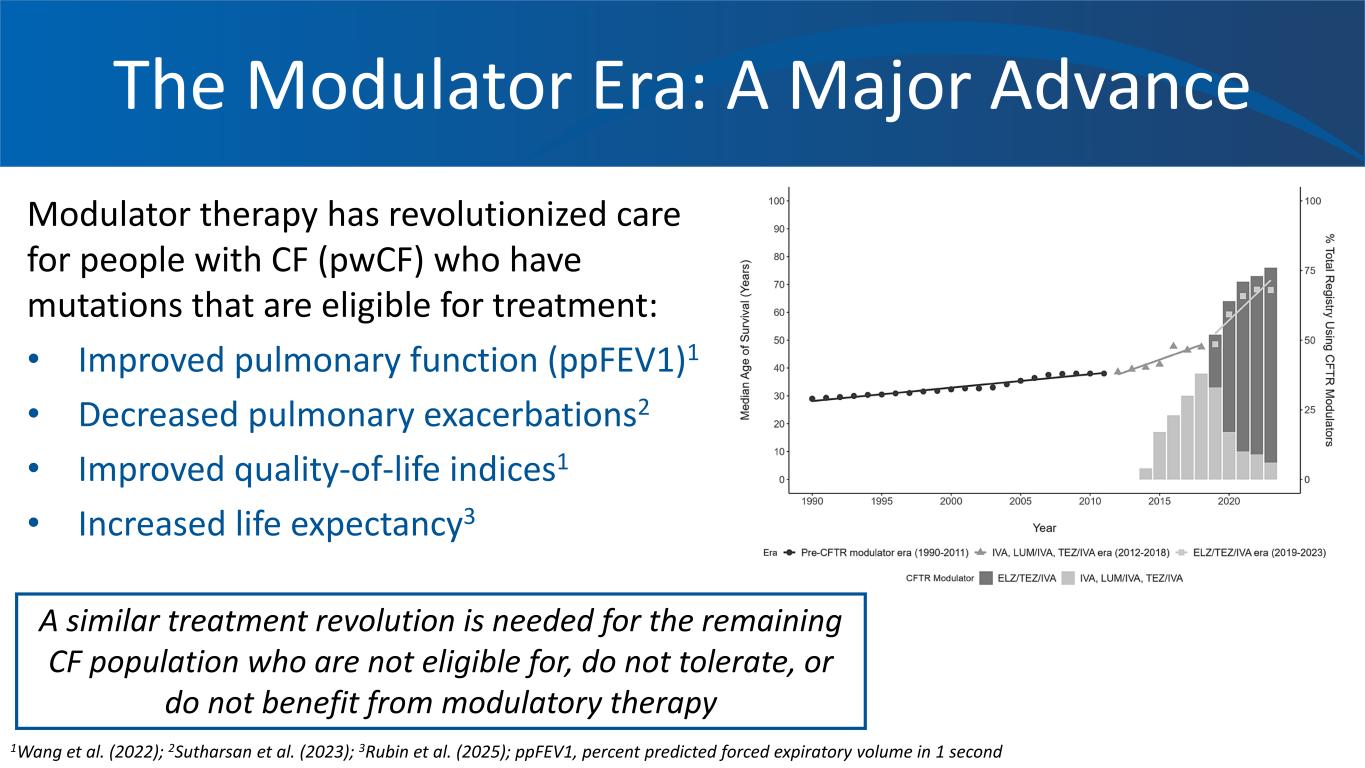
The Modulator Era: A Major Advance Modulator therapy has revolutionized care for people with CF (pwCF) who have mutations that are eligible for treatment: • Improved pulmonary function (ppFEV1)1 • Decreased pulmonary exacerbations2 • Improved quality-of-life indices1 • Increased life expectancy3 1Wang et al. (2022); 2Sutharsan et al. (2023); 3Rubin et al. (2025); ppFEV1, percent predicted forced expiratory volume in 1 second A similar treatment revolution is needed for the remaining CF population who are not eligible for, do not tolerate, or do not benefit from modulatory therapy
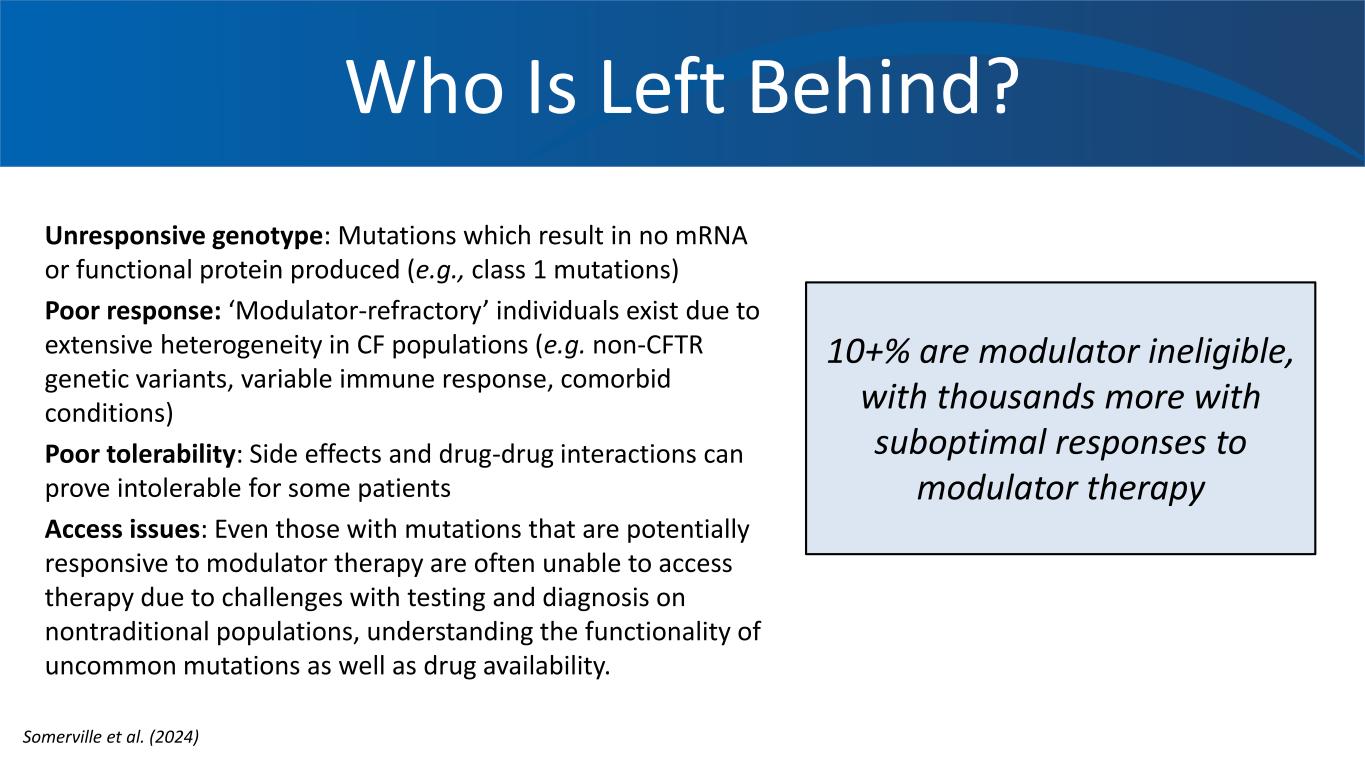
Who Is Left Behind? Unresponsive genotype: Mutations which result in no mRNA or functional protein produced (e.g., class 1 mutations) Poor response: ‘Modulator-refractory’ individuals exist due to extensive heterogeneity in CF populations (e.g. non-CFTR genetic variants, variable immune response, comorbid conditions) Poor tolerability: Side effects and drug-drug interactions can prove intolerable for some patients Access issues: Even those with mutations that are potentially responsive to modulator therapy are often unable to access therapy due to challenges with testing and diagnosis on nontraditional populations, understanding the functionality of uncommon mutations as well as drug availability. 10+% are modulator ineligible, with thousands more with suboptimal responses to modulator therapy Somerville et al. (2024)
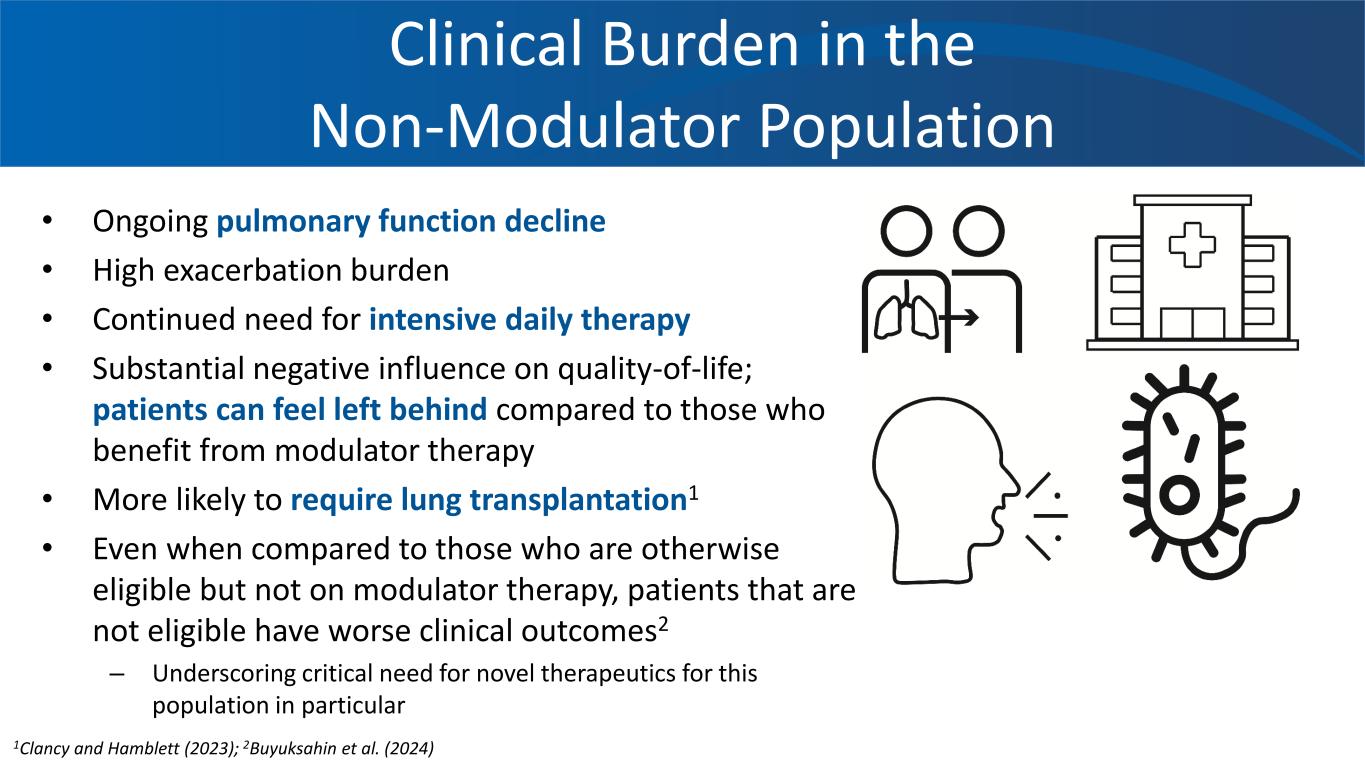
Clinical Burden in the Non-Modulator Population • Ongoing pulmonary function decline • High exacerbation burden • Continued need for intensive daily therapy • Substantial negative influence on quality-of-life; patients can feel left behind compared to those who benefit from modulator therapy • More likely to require lung transplantation1 • Even when compared to those who are otherwise eligible but not on modulator therapy, patients that are not eligible have worse clinical outcomes2 – Underscoring critical need for novel therapeutics for this population in particular 1Clancy and Hamblett (2023); 2Buyuksahin et al. (2024)
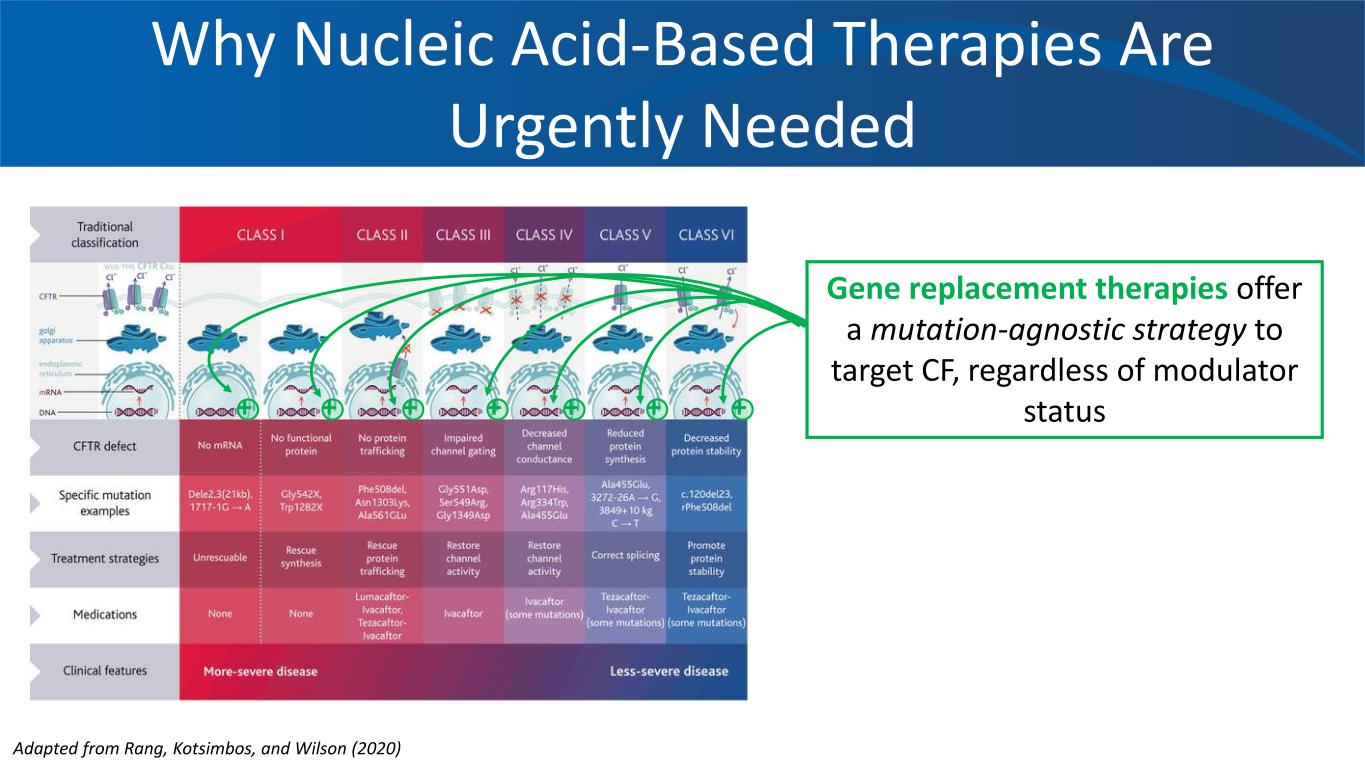
Why Nucleic Acid-Based Therapies Are Urgently Needed Gene replacement therapies offer a mutation-agnostic strategy to target CF, regardless of modulator status+ + + + + + + Adapted from Rang, Kotsimbos, and Wilson (2020)
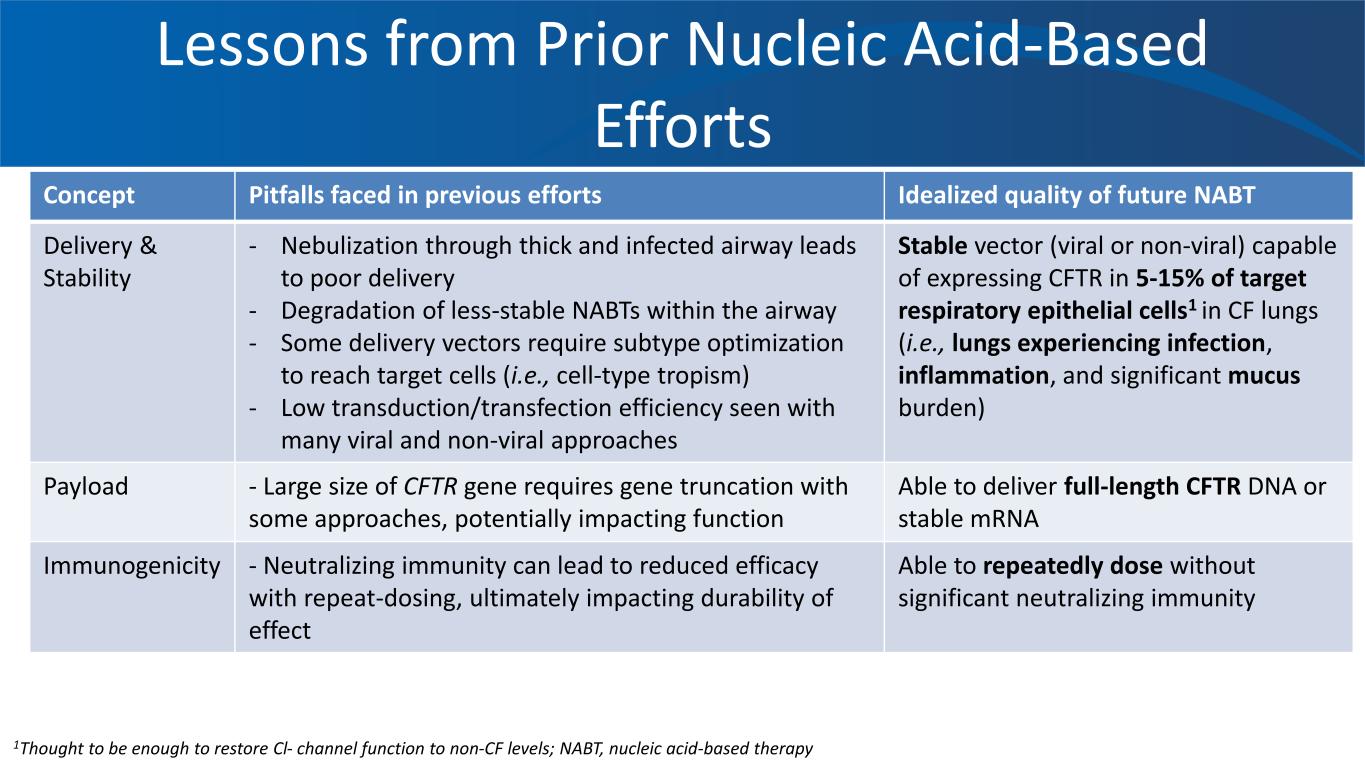
Lessons from Prior Nucleic Acid-Based Efforts Concept Pitfalls faced in previous efforts Idealized quality of future NABT Delivery & Stability - Nebulization through thick and infected airway leads to poor delivery - Degradation of less-stable NABTs within the airway - Some delivery vectors require subtype optimization to reach target cells (i.e., cell-type tropism) - Low transduction/transfection efficiency seen with many viral and non-viral approaches Stable vector (viral or non-viral) capable of expressing CFTR in 5-15% of target respiratory epithelial cells1 in CF lungs (i.e., lungs experiencing infection, inflammation, and significant mucus burden) Payload - Large size of CFTR gene requires gene truncation with some approaches, potentially impacting function Able to deliver full-length CFTR DNA or stable mRNA Immunogenicity - Neutralizing immunity can lead to reduced efficacy with repeat-dosing, ultimately impacting durability of effect Able to repeatedly dose without significant neutralizing immunity 1Thought to be enough to restore Cl- channel function to non-CF levels; NABT, nucleic acid-based therapy
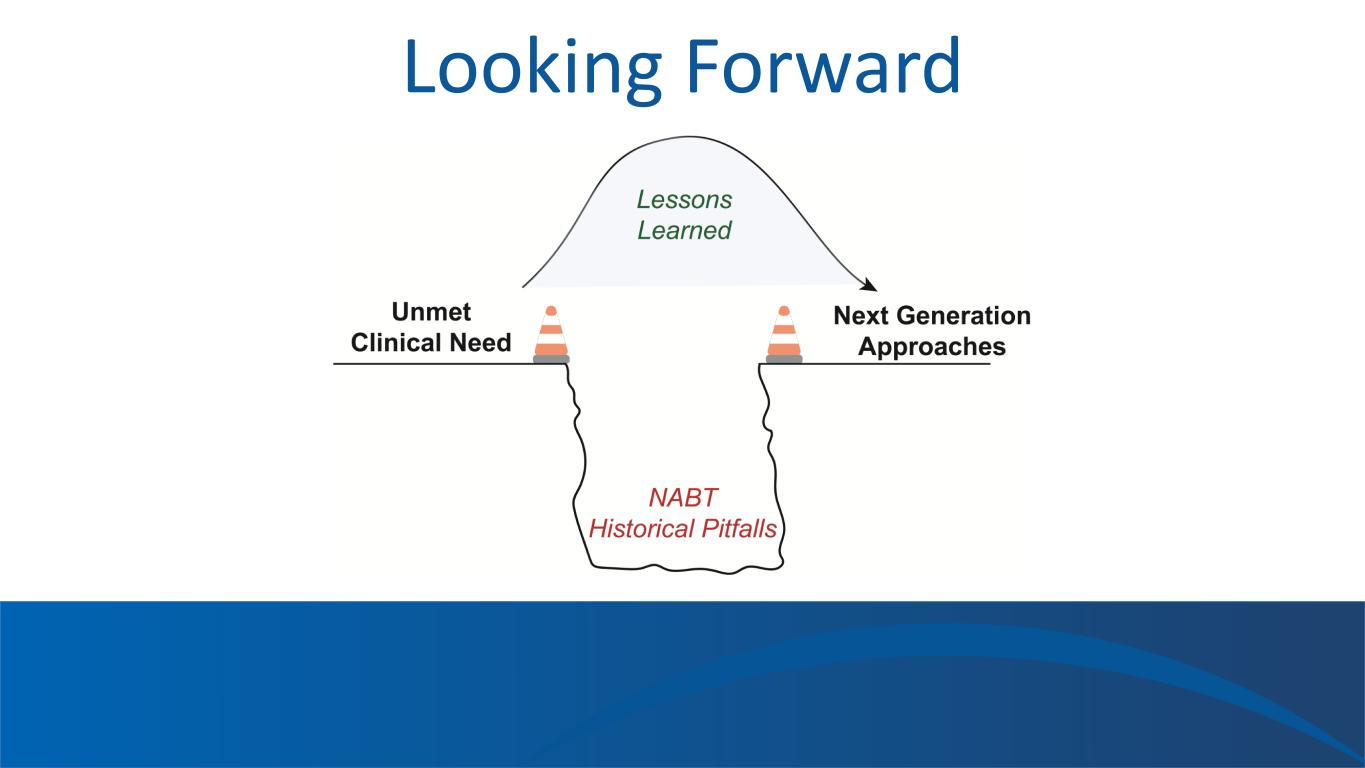
Looking Forward
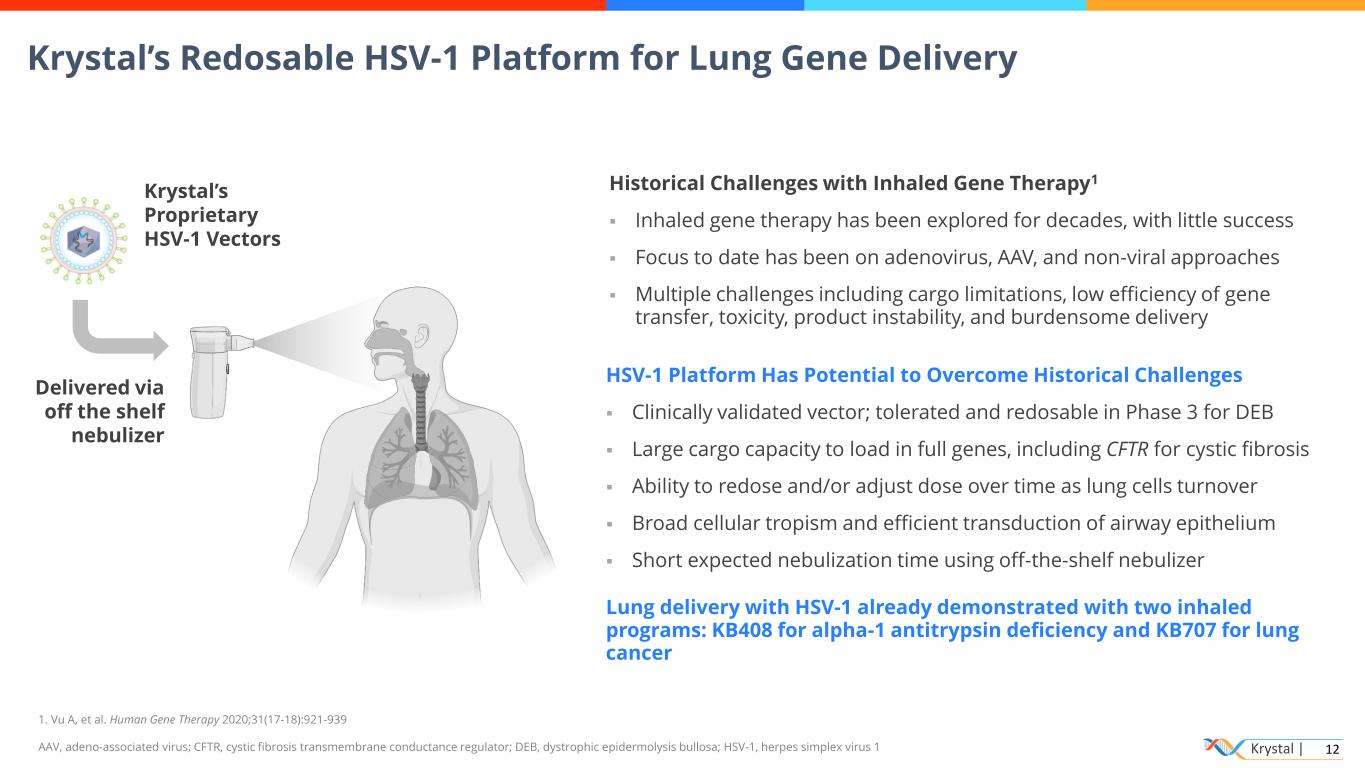
Krystal | 12 Historical Challenges with Inhaled Gene Therapy1 ▪ Inhaled gene therapy has been explored for decades, with little success ▪ Focus to date has been on adenovirus, AAV, and non-viral approaches ▪ Multiple challenges including cargo limitations, low efficiency of gene transfer, toxicity, product instability, and burdensome delivery HSV-1 Platform Has Potential to Overcome Historical Challenges ▪ Clinically validated vector; tolerated and redosable in Phase 3 for DEB ▪ Large cargo capacity to load in full genes, including CFTR for cystic fibrosis ▪ Ability to redose and/or adjust dose over time as lung cells turnover ▪ Broad cellular tropism and efficient transduction of airway epithelium ▪ Short expected nebulization time using off-the-shelf nebulizer Lung delivery with HSV-1 already demonstrated with two inhaled programs: KB408 for alpha-1 antitrypsin deficiency and KB707 for lung cancer 1. Vu A, et al. Human Gene Therapy 2020;31(17-18):921-939 AAV, adeno-associated virus; CFTR, cystic fibrosis transmembrane conductance regulator; DEB, dystrophic epidermolysis bullosa; HSV-1, herpes simplex virus 1 Krystal’s Redosable HSV-1 Platform for Lung Gene Delivery Delivered via off the shelf nebulizer Krystal’s Proprietary HSV-1 Vectors
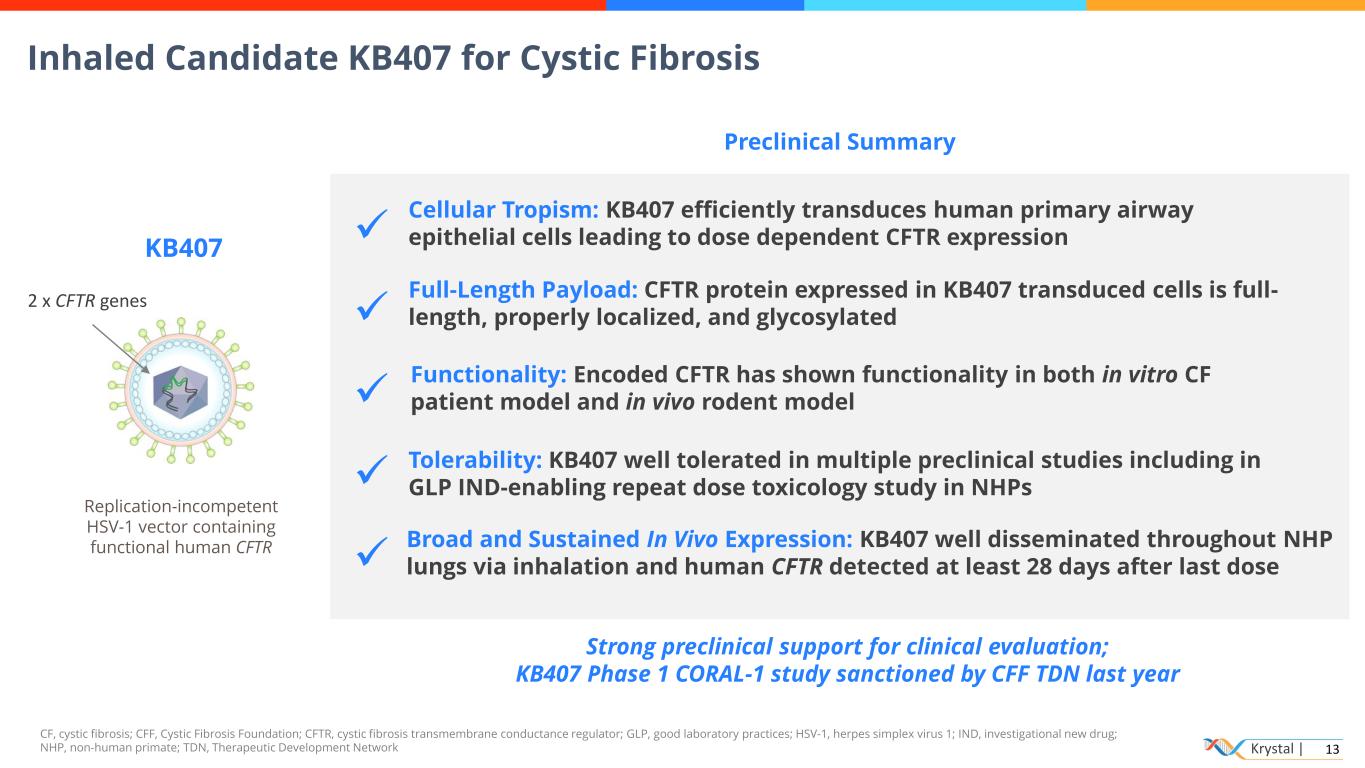
Krystal | 13 CF, cystic fibrosis; CFF, Cystic Fibrosis Foundation; CFTR, cystic fibrosis transmembrane conductance regulator; GLP, good laboratory practices; HSV-1, herpes simplex virus 1; IND, investigational new drug; NHP, non-human primate; TDN, Therapeutic Development Network KB407 Replication-incompetent HSV-1 vector containing functional human CFTR 2 x CFTR genes ✓ ✓ ✓ ✓ ✓ Functionality: Encoded CFTR has shown functionality in both in vitro CF patient model and in vivo rodent model Broad and Sustained In Vivo Expression: KB407 well disseminated throughout NHP lungs via inhalation and human CFTR detected at least 28 days after last dose Strong preclinical support for clinical evaluation; KB407 Phase 1 CORAL-1 study sanctioned by CFF TDN last year Tolerability: KB407 well tolerated in multiple preclinical studies including in GLP IND-enabling repeat dose toxicology study in NHPs Preclinical Summary Cellular Tropism: KB407 efficiently transduces human primary airway epithelial cells leading to dose dependent CFTR expression Full-Length Payload: CFTR protein expressed in KB407 transduced cells is full- length, properly localized, and glycosylated Inhaled Candidate KB407 for Cystic Fibrosis
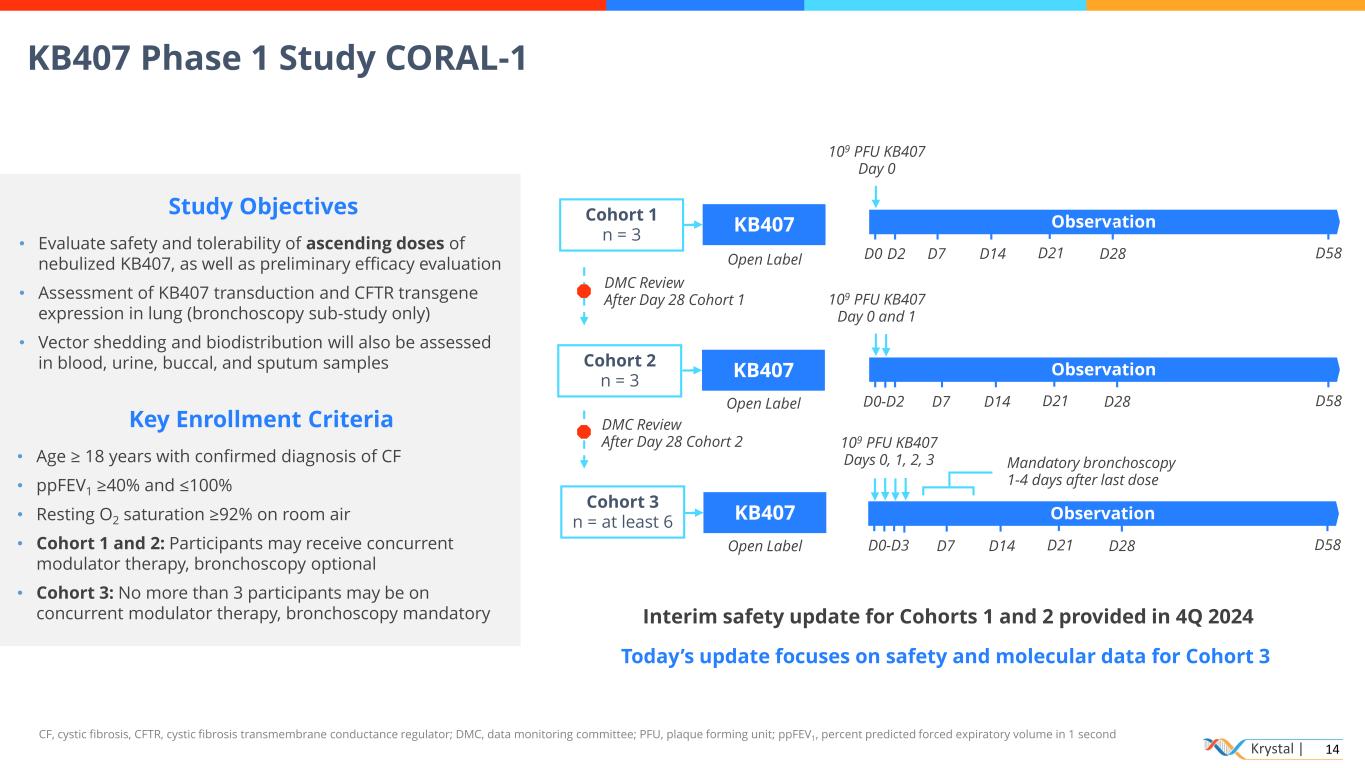
Krystal | 14 Observation Cohort 3 n = at least 6 Cohort 2 n = 3 KB407 Cohort 1 n = 3 KB407 Study Objectives • Evaluate safety and tolerability of ascending doses of nebulized KB407, as well as preliminary efficacy evaluation • Assessment of KB407 transduction and CFTR transgene expression in lung (bronchoscopy sub-study only) • Vector shedding and biodistribution will also be assessed in blood, urine, buccal, and sputum samples Key Enrollment Criteria • Age ≥ 18 years with confirmed diagnosis of CF • ppFEV1 ≥40% and ≤100% • Resting O2 saturation ≥92% on room air • Cohort 1 and 2: Participants may receive concurrent modulator therapy, bronchoscopy optional • Cohort 3: No more than 3 participants may be on concurrent modulator therapy, bronchoscopy mandatory CF, cystic fibrosis, CFTR, cystic fibrosis transmembrane conductance regulator; DMC, data monitoring committee; PFU, plaque forming unit; ppFEV1, percent predicted forced expiratory volume in 1 second Open Label Open Label 109 PFU KB407 Days 0, 1, 2, 3 DMC Review After Day 28 Cohort 1 DMC Review After Day 28 Cohort 2 109 PFU KB407 Day 0 D28D0 D2 D7 D14 D58D21 Observation 109 PFU KB407 Day 0 and 1 D0-D2 D58 Observation Mandatory bronchoscopy 1-4 days after last dose D0-D3 D58 D28D7 D14 D21 D28D7 D14 D21 KB407 Open Label Interim safety update for Cohorts 1 and 2 provided in 4Q 2024 KB407 Phase 1 Study CORAL-1 Today’s update focuses on safety and molecular data for Cohort 3
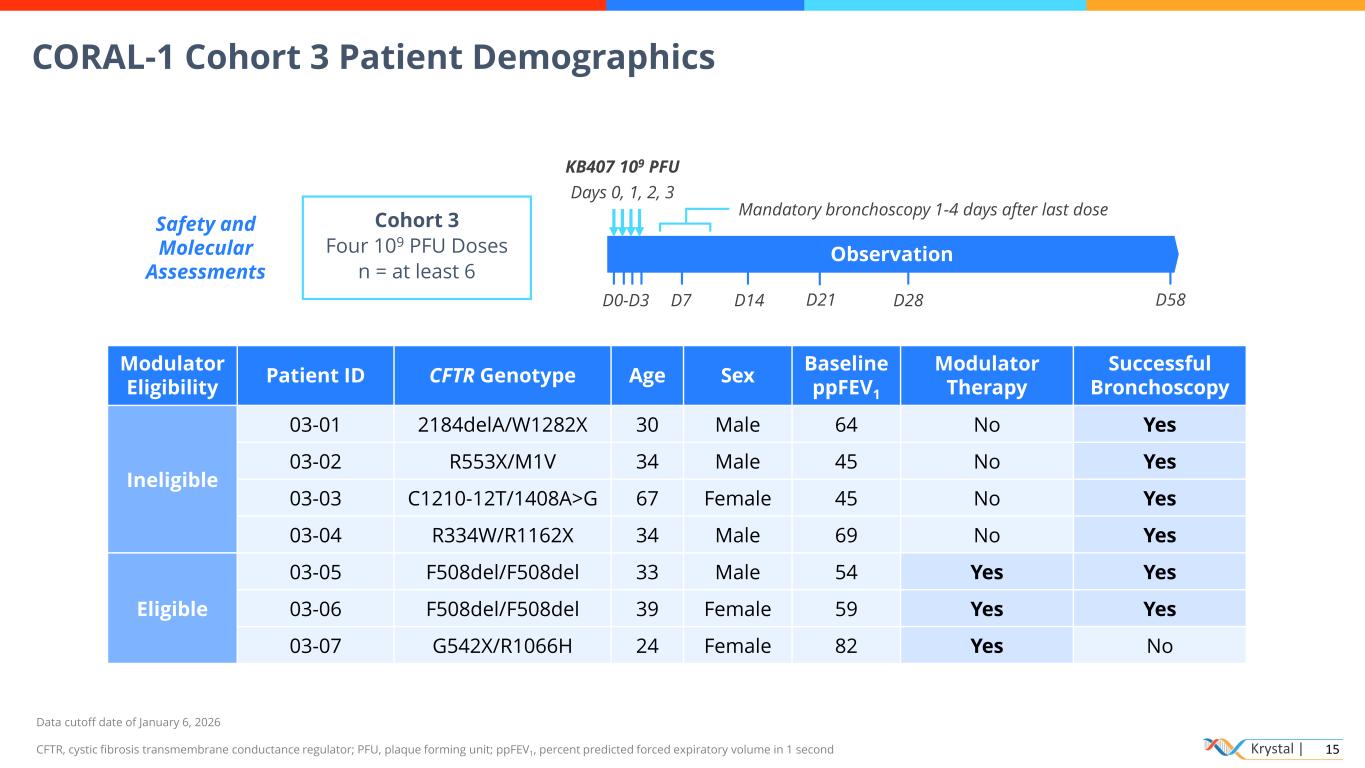
Krystal | 15 CORAL-1 Cohort 3 Patient Demographics Data cutoff date of January 6, 2026 CFTR, cystic fibrosis transmembrane conductance regulator; PFU, plaque forming unit; ppFEV1, percent predicted forced expiratory volume in 1 second Cohort 3 Four 109 PFU Doses n = at least 6 Observation KB407 109 PFU Days 0, 1, 2, 3 D28D0-D3 D7 D14 D58D21 Safety and Molecular Assessments Modulator Eligibility Patient ID CFTR Genotype Age Sex Baseline ppFEV1 Modulator Therapy Successful Bronchoscopy Ineligible 03-01 2184delA/W1282X 30 Male 64 No Yes 03-02 R553X/M1V 34 Male 45 No Yes 03-03 C1210-12T/1408A>G 67 Female 45 No Yes 03-04 R334W/R1162X 34 Male 69 No Yes Eligible 03-05 F508del/F508del 33 Male 54 Yes Yes 03-06 F508del/F508del 39 Female 59 Yes Yes 03-07 G542X/R1066H 24 Female 82 Yes No Mandatory bronchoscopy 1-4 days after last dose
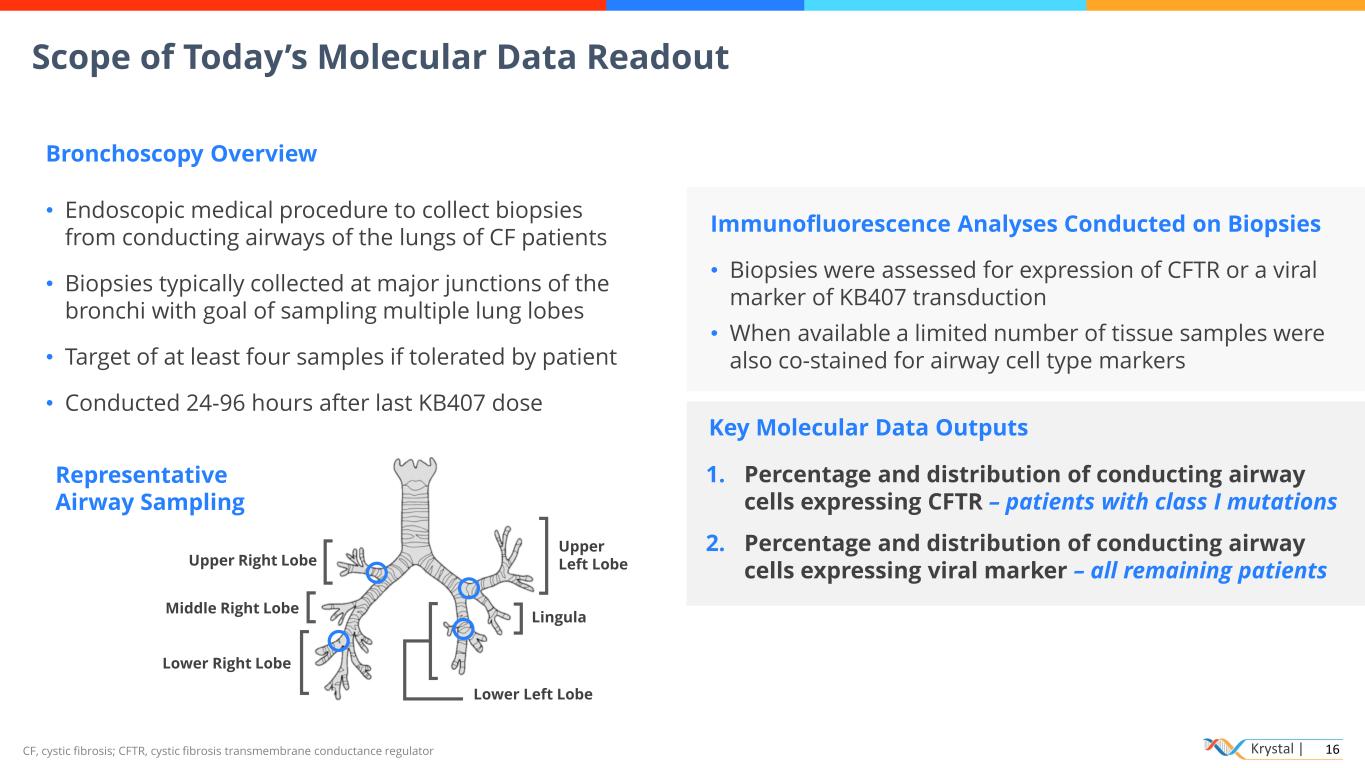
Krystal | 16 Representative Airway Sampling Key Molecular Data Outputs CF, cystic fibrosis; CFTR, cystic fibrosis transmembrane conductance regulator Scope of Today’s Molecular Data Readout Bronchoscopy Overview • Endoscopic medical procedure to collect biopsies from conducting airways of the lungs of CF patients • Biopsies typically collected at major junctions of the bronchi with goal of sampling multiple lung lobes • Target of at least four samples if tolerated by patient • Conducted 24-96 hours after last KB407 dose Immunofluorescence Analyses Conducted on Biopsies • Biopsies were assessed for expression of CFTR or a viral marker of KB407 transduction • When available a limited number of tissue samples were also co-stained for airway cell type markers 1. Percentage and distribution of conducting airway cells expressing CFTR – patients with class I mutations 2. Percentage and distribution of conducting airway cells expressing viral marker – all remaining patients Upper Right Lobe Middle Right Lobe Lower Right Lobe Upper Left Lobe Lingula Lower Left Lobe
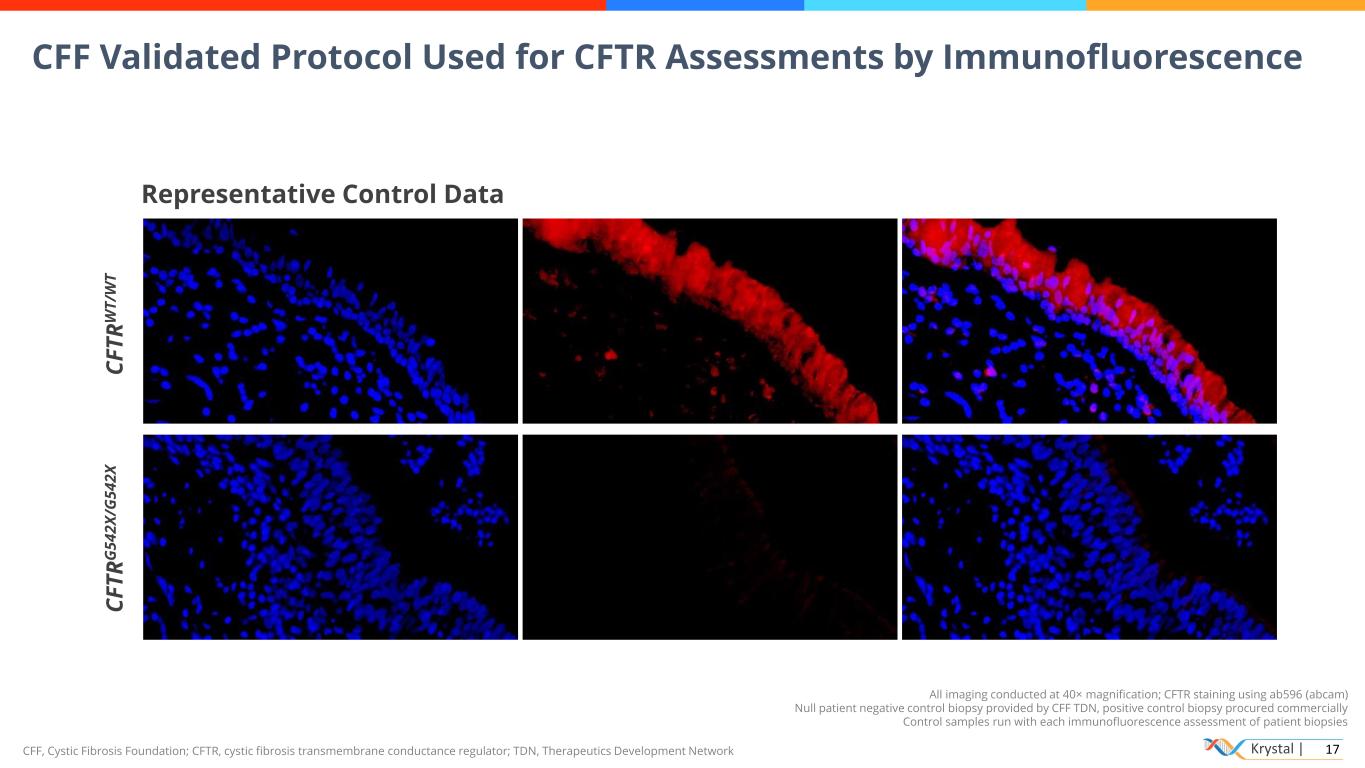
Krystal | 17CFF, Cystic Fibrosis Foundation; CFTR, cystic fibrosis transmembrane conductance regulator; TDN, Therapeutics Development Network CFF Validated Protocol Used for CFTR Assessments by Immunofluorescence Representative Control Data C F T R W T /W T C F T R G 5 4 2 X /G 5 4 2 X All imaging conducted at 40× magnification; CFTR staining using ab596 (abcam) Null patient negative control biopsy provided by CFF TDN, positive control biopsy procured commercially Control samples run with each immunofluorescence assessment of patient biopsies
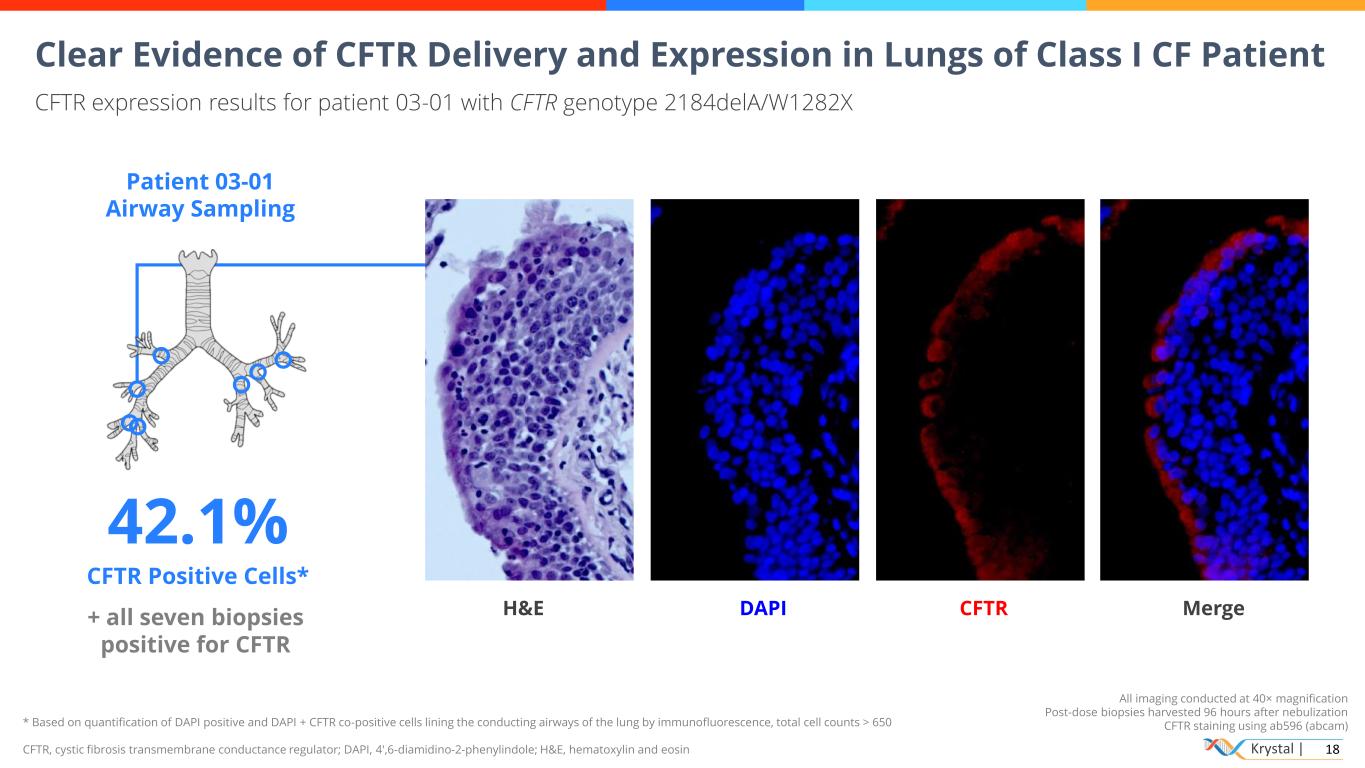
Krystal | 18 All imaging conducted at 40× magnification Post-dose biopsies harvested 96 hours after nebulization CFTR staining using ab596 (abcam) Clear Evidence of CFTR Delivery and Expression in Lungs of Class I CF Patient CFTR expression results for patient 03-01 with CFTR genotype 2184delA/W1282X Patient 03-01 Airway Sampling 42.1% CFTR Positive Cells* + all seven biopsies positive for CFTR H&E DAPI CFTR Merge * Based on quantification of DAPI positive and DAPI + CFTR co-positive cells lining the conducting airways of the lung by immunofluorescence, total cell counts > 650 CFTR, cystic fibrosis transmembrane conductance regulator; DAPI, 4′,6-diamidino-2-phenylindole; H&E, hematoxylin and eosin
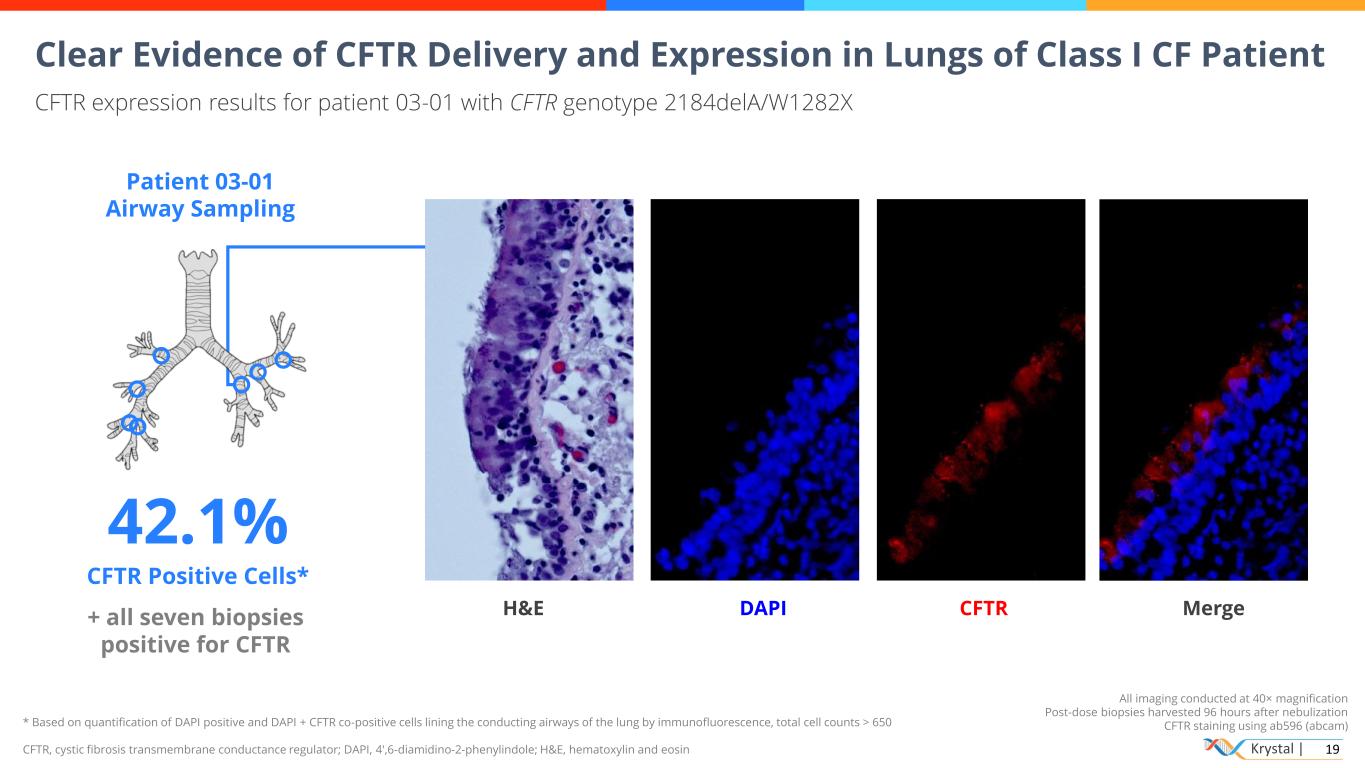
Krystal | 19 All imaging conducted at 40× magnification Post-dose biopsies harvested 96 hours after nebulization CFTR staining using ab596 (abcam) CFTR expression results for patient 03-01 with CFTR genotype 2184delA/W1282X Patient 03-01 Airway Sampling 42.1% CFTR Positive Cells* + all seven biopsies positive for CFTR H&E DAPI CFTR Merge Clear Evidence of CFTR Delivery and Expression in Lungs of Class I CF Patient * Based on quantification of DAPI positive and DAPI + CFTR co-positive cells lining the conducting airways of the lung by immunofluorescence, total cell counts > 650 CFTR, cystic fibrosis transmembrane conductance regulator; DAPI, 4′,6-diamidino-2-phenylindole; H&E, hematoxylin and eosin
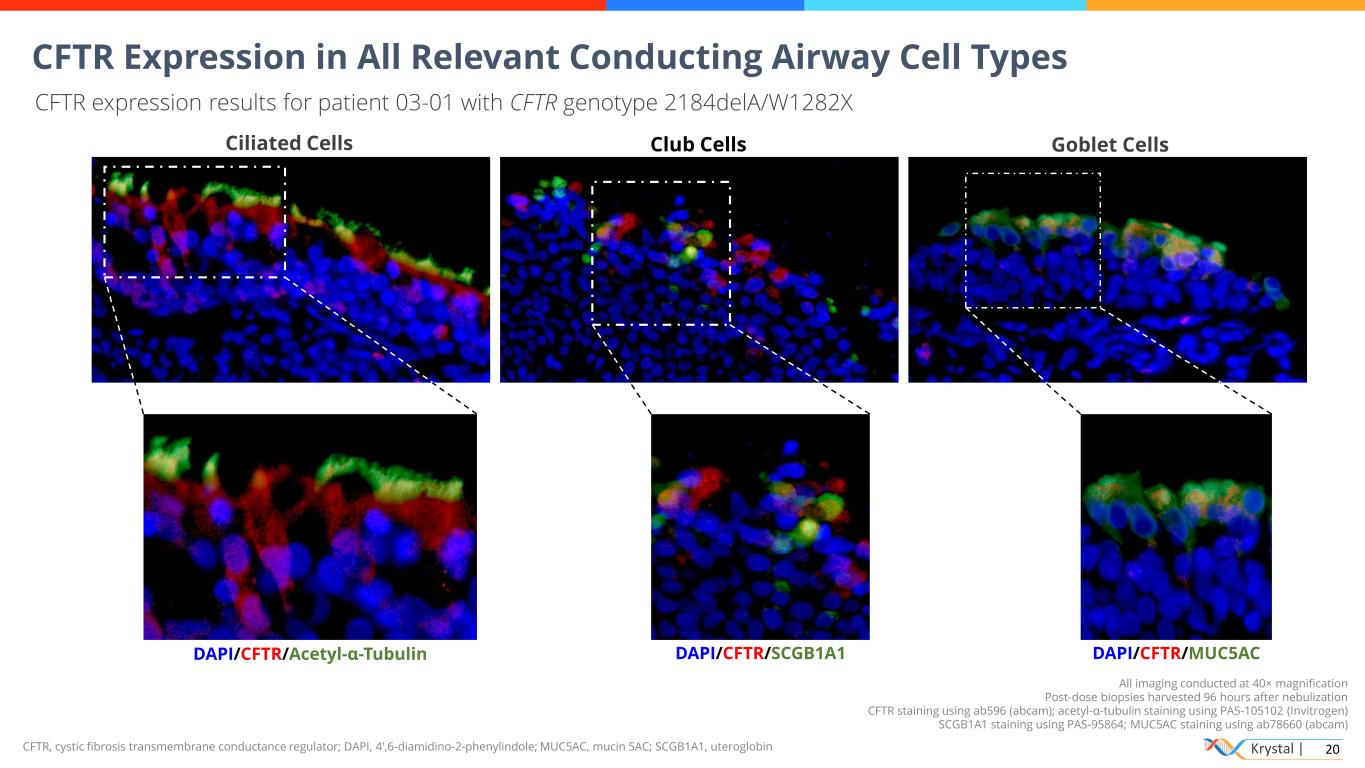
Krystal | 20CFTR, cystic fibrosis transmembrane conductance regulator; DAPI, 4′,6-diamidino-2-phenylindole; MUC5AC, mucin 5AC; SCGB1A1, uteroglobin All imaging conducted at 40× magnification Post-dose biopsies harvested 96 hours after nebulization CFTR staining using ab596 (abcam); acetyl-α-tubulin staining using PA5-105102 (Invitrogen) SCGB1A1 staining using PAS-95864; MUC5AC staining using ab78660 (abcam) CFTR Expression in All Relevant Conducting Airway Cell Types CFTR expression results for patient 03-01 with CFTR genotype 2184delA/W1282X DAPI/CFTR/Acetyl-α-Tubulin Ciliated Cells DAPI/CFTR/SCGB1A1 Club Cells DAPI/CFTR/MUC5AC Goblet Cells
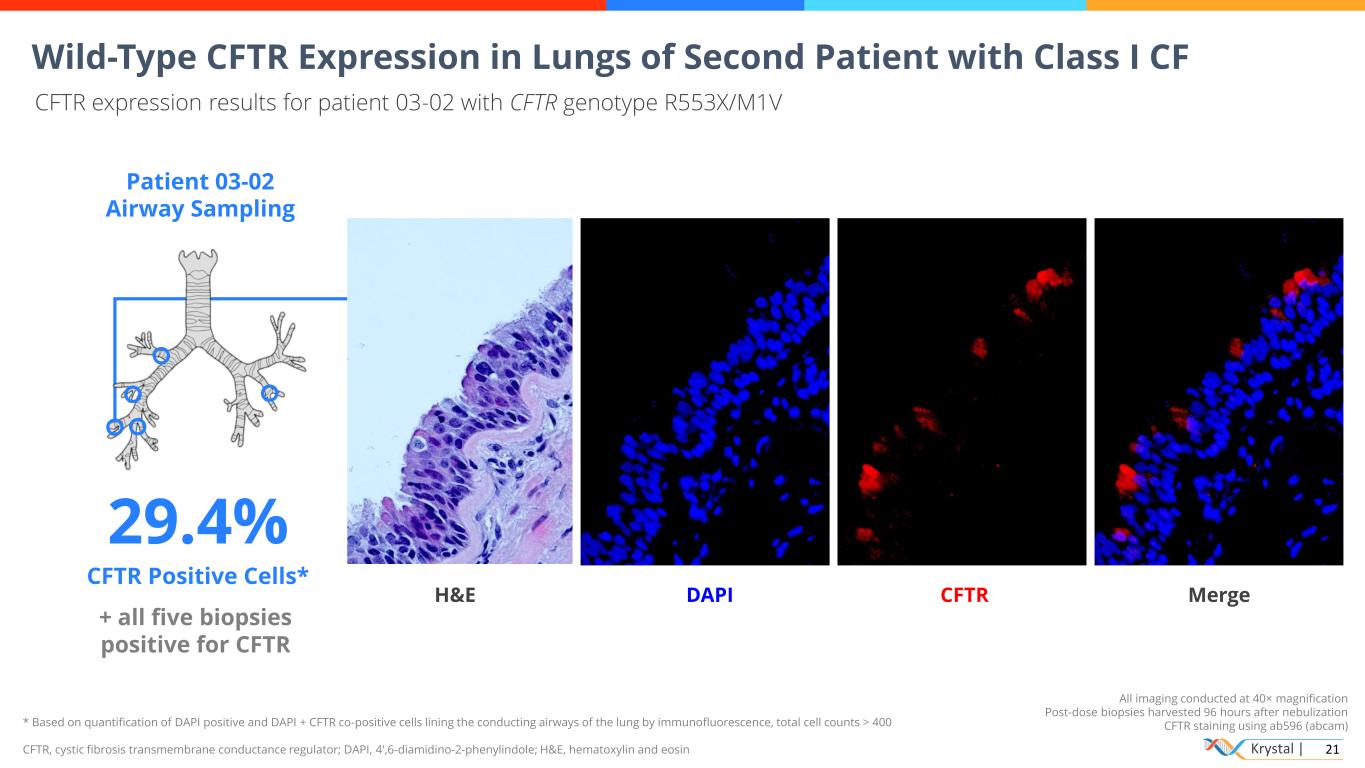
Krystal | 21 * Based on quantification of DAPI positive and DAPI + CFTR co-positive cells lining the conducting airways of the lung by immunofluorescence, total cell counts > 400 CFTR, cystic fibrosis transmembrane conductance regulator; DAPI, 4′,6-diamidino-2-phenylindole; H&E, hematoxylin and eosin All imaging conducted at 40× magnification Post-dose biopsies harvested 96 hours after nebulization CFTR staining using ab596 (abcam) Wild-Type CFTR Expression in Lungs of Second Patient with Class I CF CFTR expression results for patient 03-02 with CFTR genotype R553X/M1V Patient 03-02 Airway Sampling 29.4% CFTR Positive Cells* + all five biopsies positive for CFTR H&E DAPI CFTR Merge
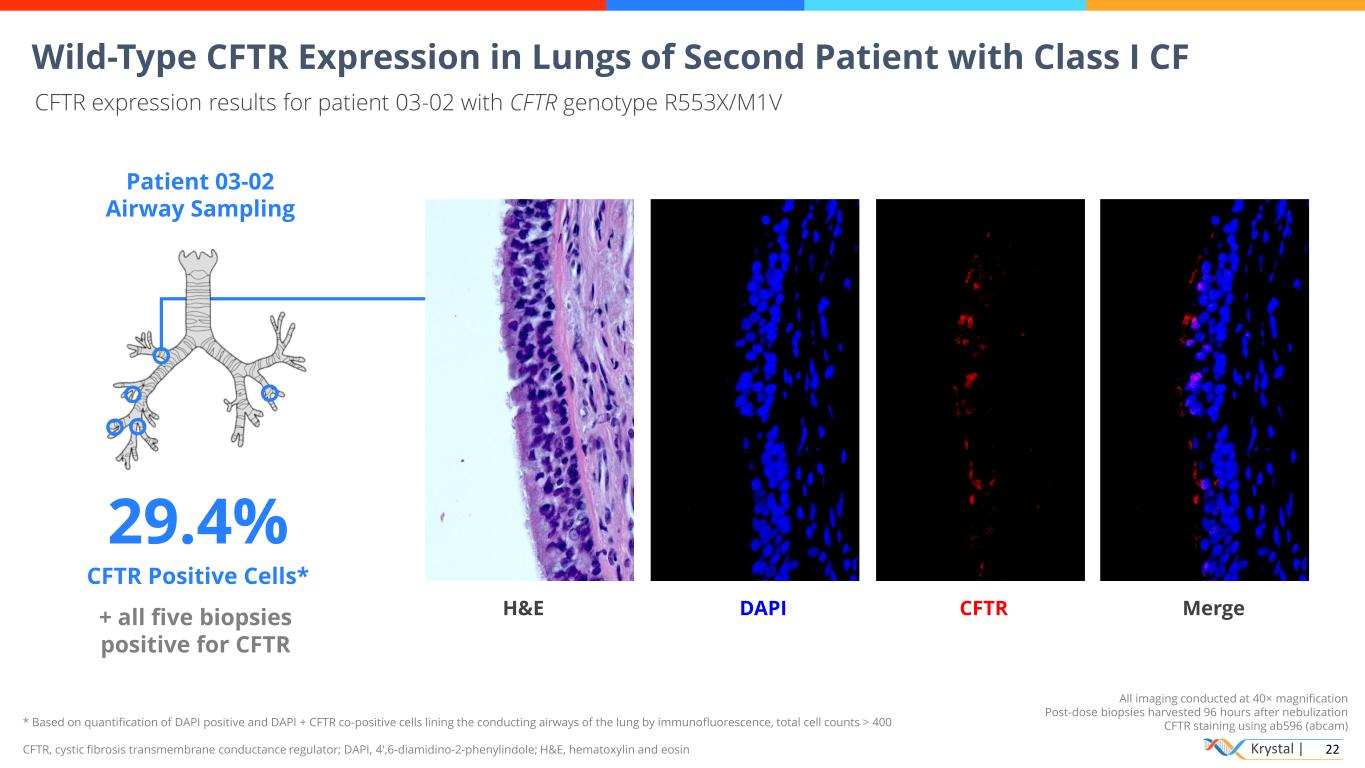
Krystal | 22 All imaging conducted at 40× magnification Post-dose biopsies harvested 96 hours after nebulization CFTR staining using ab596 (abcam) Wild-Type CFTR Expression in Lungs of Second Patient with Class I CF CFTR expression results for patient 03-02 with CFTR genotype R553X/M1V Patient 03-02 Airway Sampling 29.4% CFTR Positive Cells* + all five biopsies positive for CFTR H&E DAPI CFTR Merge * Based on quantification of DAPI positive and DAPI + CFTR co-positive cells lining the conducting airways of the lung by immunofluorescence, total cell counts > 400 CFTR, cystic fibrosis transmembrane conductance regulator; DAPI, 4′,6-diamidino-2-phenylindole; H&E, hematoxylin and eosin
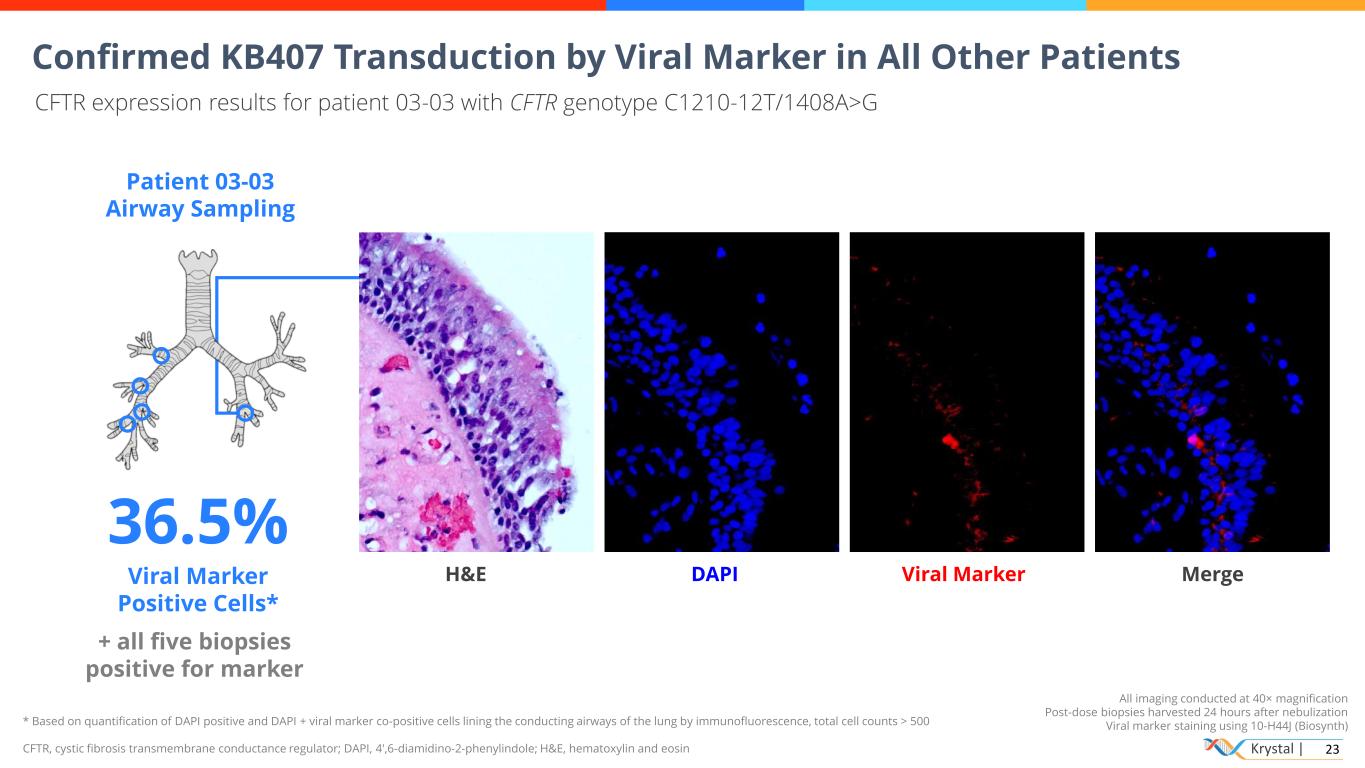
Krystal | 23 * Based on quantification of DAPI positive and DAPI + viral marker co-positive cells lining the conducting airways of the lung by immunofluorescence, total cell counts > 500 CFTR, cystic fibrosis transmembrane conductance regulator; DAPI, 4′,6-diamidino-2-phenylindole; H&E, hematoxylin and eosin All imaging conducted at 40× magnification Post-dose biopsies harvested 24 hours after nebulization Viral marker staining using 10-H44J (Biosynth) Confirmed KB407 Transduction by Viral Marker in All Other Patients CFTR expression results for patient 03-03 with CFTR genotype C1210-12T/1408A>G Patient 03-03 Airway Sampling 36.5% Viral Marker Positive Cells* + all five biopsies positive for marker H&E DAPI Viral Marker Merge
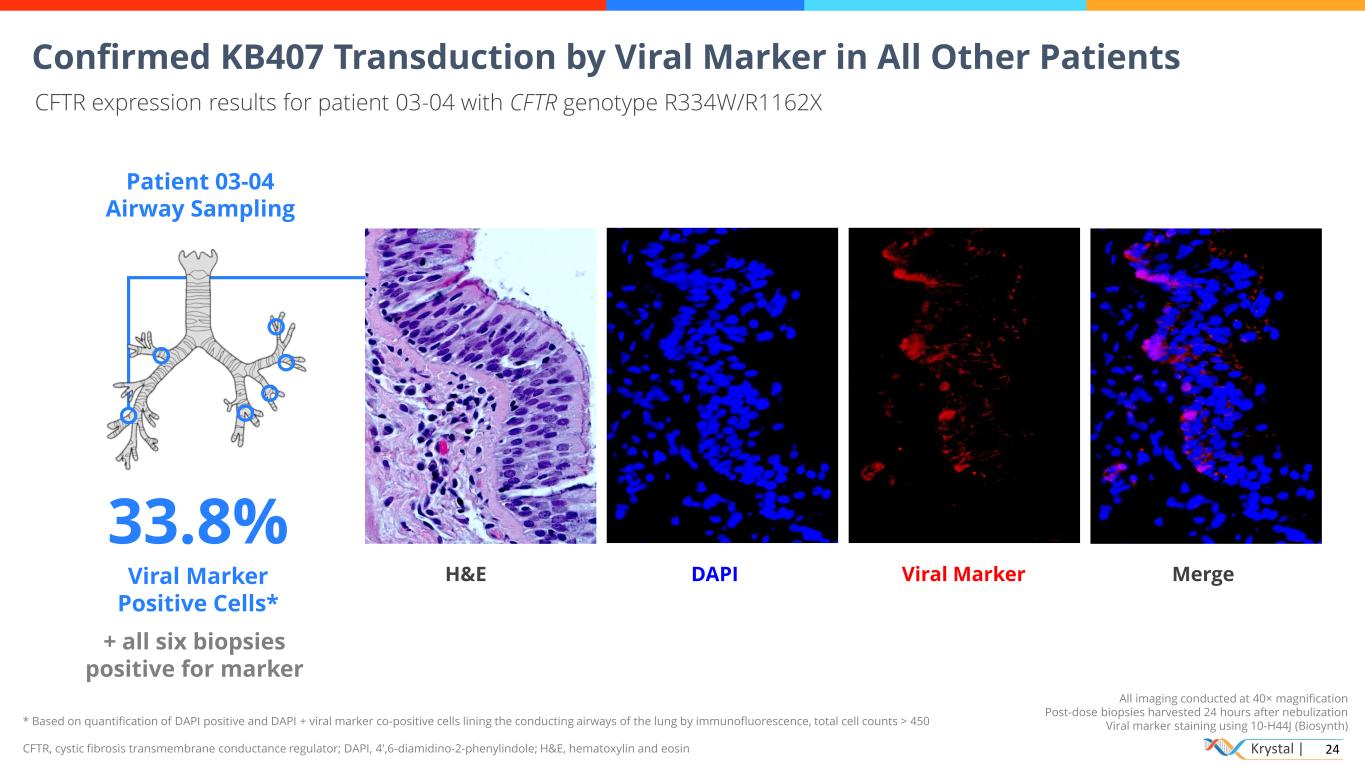
Krystal | 24 * Based on quantification of DAPI positive and DAPI + viral marker co-positive cells lining the conducting airways of the lung by immunofluorescence, total cell counts > 450 CFTR, cystic fibrosis transmembrane conductance regulator; DAPI, 4′,6-diamidino-2-phenylindole; H&E, hematoxylin and eosin All imaging conducted at 40× magnification Post-dose biopsies harvested 24 hours after nebulization Viral marker staining using 10-H44J (Biosynth) Confirmed KB407 Transduction by Viral Marker in All Other Patients CFTR expression results for patient 03-04 with CFTR genotype R334W/R1162X Patient 03-04 Airway Sampling 33.8% Viral Marker Positive Cells* + all six biopsies positive for marker H&E DAPI Viral Marker Merge
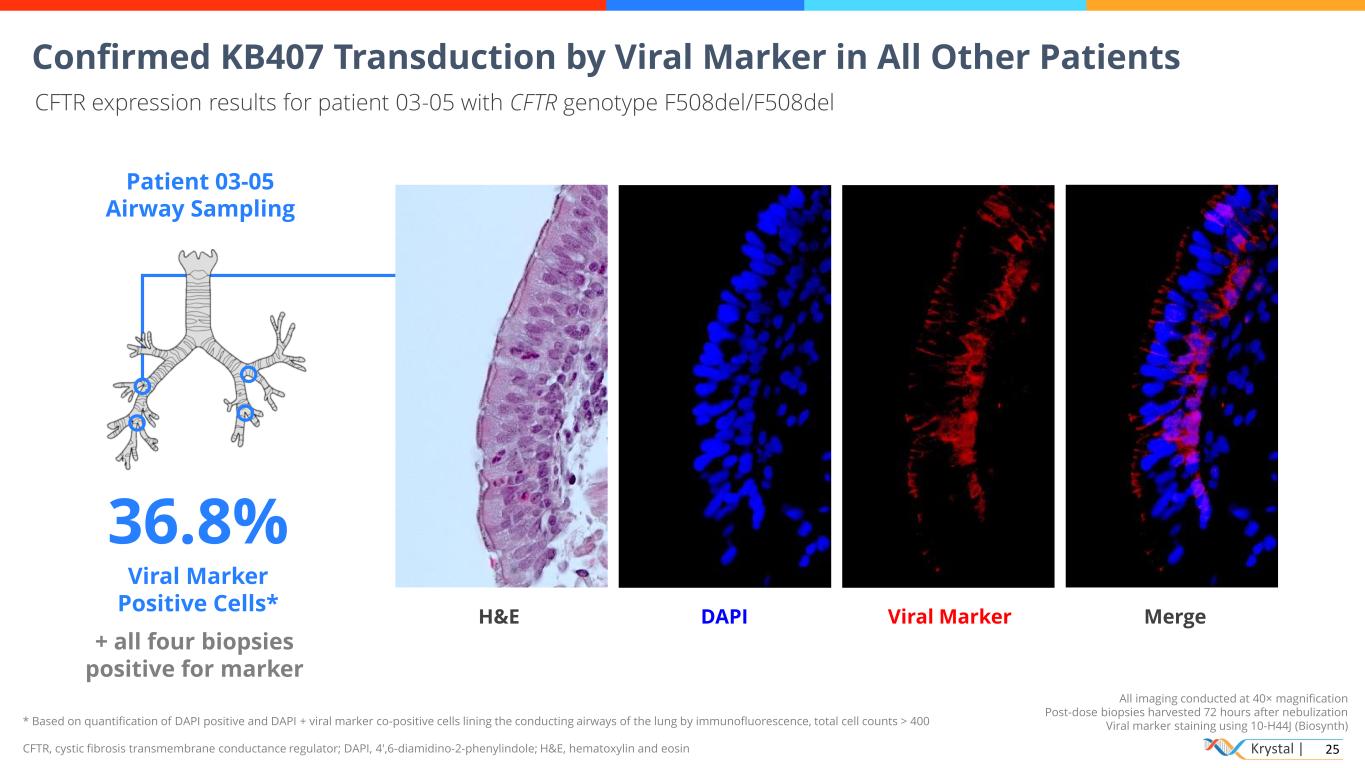
Krystal | 25 * Based on quantification of DAPI positive and DAPI + viral marker co-positive cells lining the conducting airways of the lung by immunofluorescence, total cell counts > 400 CFTR, cystic fibrosis transmembrane conductance regulator; DAPI, 4′,6-diamidino-2-phenylindole; H&E, hematoxylin and eosin All imaging conducted at 40× magnification Post-dose biopsies harvested 72 hours after nebulization Viral marker staining using 10-H44J (Biosynth) Confirmed KB407 Transduction by Viral Marker in All Other Patients CFTR expression results for patient 03-05 with CFTR genotype F508del/F508del Patient 03-05 Airway Sampling 36.8% Viral Marker Positive Cells* + all four biopsies positive for marker H&E DAPI Viral Marker Merge
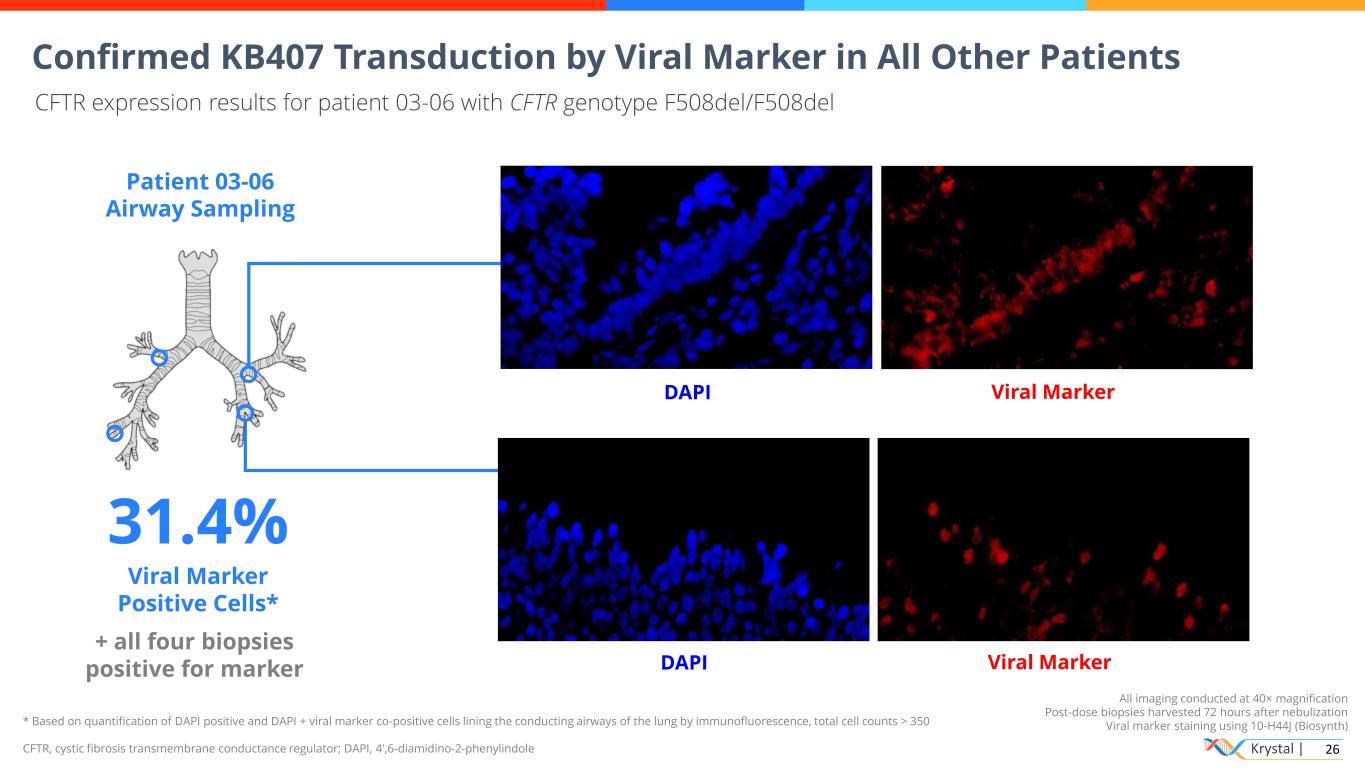
Krystal | 26 * Based on quantification of DAPI positive and DAPI + viral marker co-positive cells lining the conducting airways of the lung by immunofluorescence, total cell counts > 350 CFTR, cystic fibrosis transmembrane conductance regulator; DAPI, 4′,6-diamidino-2-phenylindole All imaging conducted at 40× magnification Post-dose biopsies harvested 72 hours after nebulization Viral marker staining using 10-H44J (Biosynth) Confirmed KB407 Transduction by Viral Marker in All Other Patients CFTR expression results for patient 03-06 with CFTR genotype F508del/F508del Patient 03-06 Airway Sampling 31.4% Viral Marker Positive Cells* + all four biopsies positive for marker DAPI Viral Marker DAPI Viral Marker
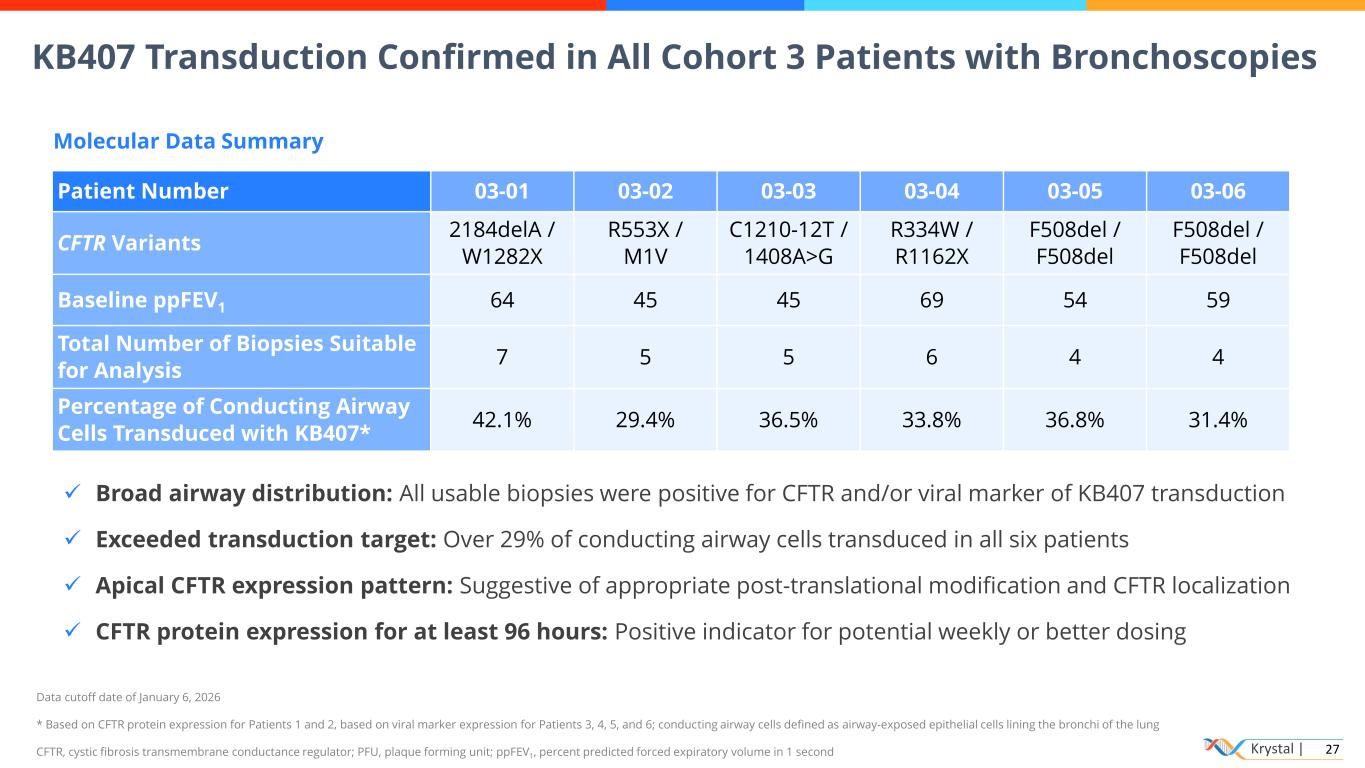
Krystal | 27 KB407 Transduction Confirmed in All Cohort 3 Patients with Bronchoscopies Data cutoff date of January 6, 2026 * Based on CFTR protein expression for Patients 1 and 2, based on viral marker expression for Patients 3, 4, 5, and 6; conducting airway cells defined as airway-exposed epithelial cells lining the bronchi of the lung CFTR, cystic fibrosis transmembrane conductance regulator; PFU, plaque forming unit; ppFEV1, percent predicted forced expiratory volume in 1 second Patient Number 03-01 03-02 03-03 03-04 03-05 03-06 CFTR Variants 2184delA / W1282X R553X / M1V C1210-12T / 1408A>G R334W / R1162X F508del / F508del F508del / F508del Baseline ppFEV1 64 45 45 69 54 59 Total Number of Biopsies Suitable for Analysis 7 5 5 6 4 4 Percentage of Conducting Airway Cells Transduced with KB407* 42.1% 29.4% 36.5% 33.8% 36.8% 31.4% Molecular Data Summary ✓ Broad airway distribution: All usable biopsies were positive for CFTR and/or viral marker of KB407 transduction ✓ Exceeded transduction target: Over 29% of conducting airway cells transduced in all six patients ✓ Apical CFTR expression pattern: Suggestive of appropriate post-translational modification and CFTR localization ✓ CFTR protein expression for at least 96 hours: Positive indicator for potential weekly or better dosing
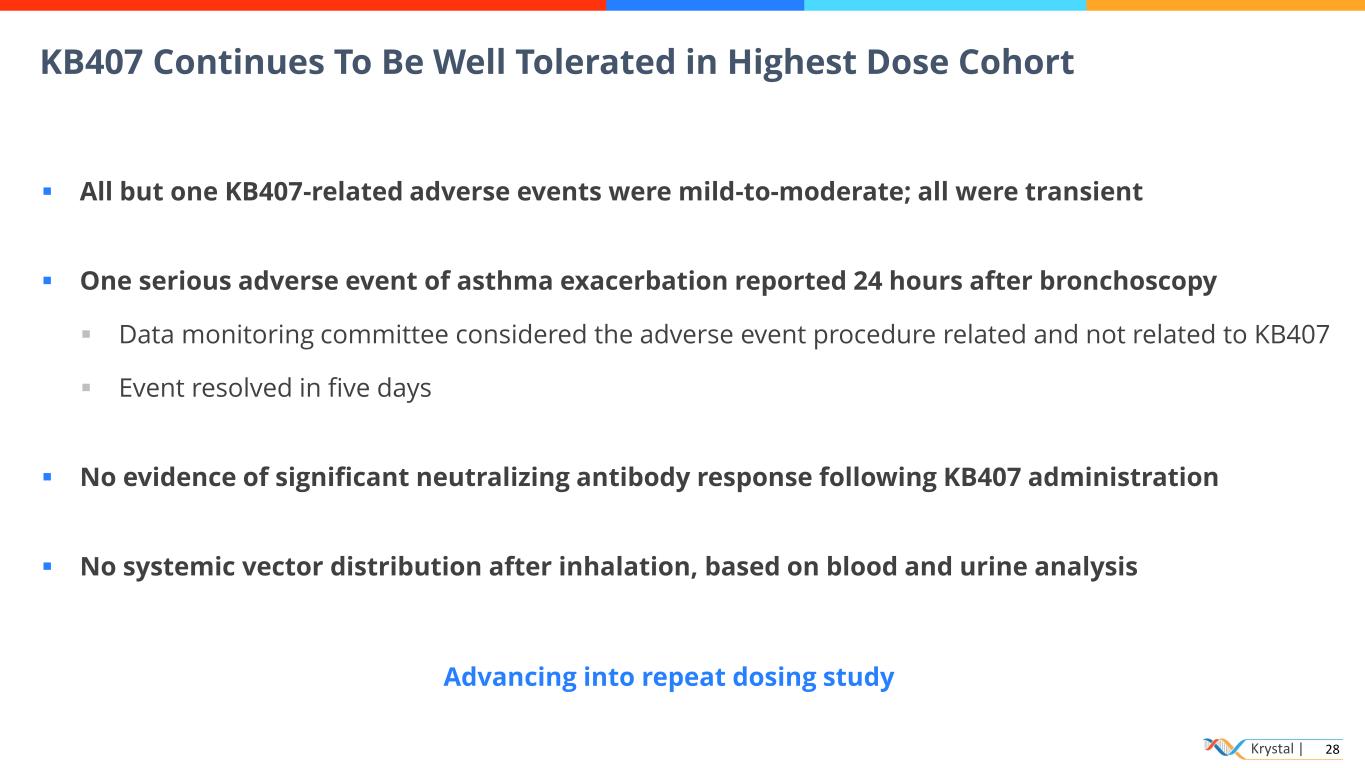
Krystal | 28 KB407 Continues To Be Well Tolerated in Highest Dose Cohort ▪ All but one KB407-related adverse events were mild-to-moderate; all were transient ▪ One serious adverse event of asthma exacerbation reported 24 hours after bronchoscopy ▪ Data monitoring committee considered the adverse event procedure related and not related to KB407 ▪ Event resolved in five days ▪ No evidence of significant neutralizing antibody response following KB407 administration ▪ No systemic vector distribution after inhalation, based on blood and urine analysis Advancing into repeat dosing study
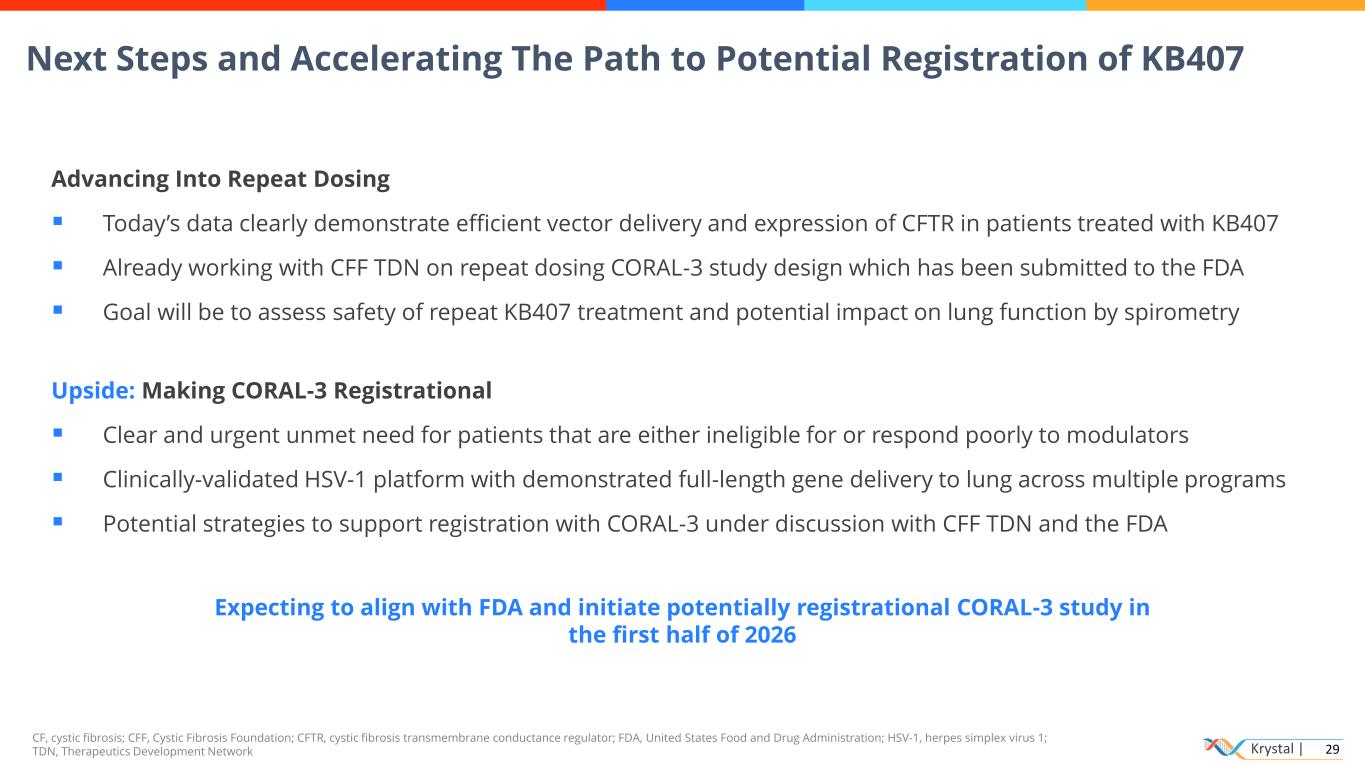
Krystal | 29 Next Steps and Accelerating The Path to Potential Registration of KB407 Advancing Into Repeat Dosing ▪ Today’s data clearly demonstrate efficient vector delivery and expression of CFTR in patients treated with KB407 ▪ Already working with CFF TDN on repeat dosing CORAL-3 study design which has been submitted to the FDA ▪ Goal will be to assess safety of repeat KB407 treatment and potential impact on lung function by spirometry Upside: Making CORAL-3 Registrational ▪ Clear and urgent unmet need for patients that are either ineligible for or respond poorly to modulators ▪ Clinically-validated HSV-1 platform with demonstrated full-length gene delivery to lung across multiple programs ▪ Potential strategies to support registration with CORAL-3 under discussion with CFF TDN and the FDA Expecting to align with FDA and initiate potentially registrational CORAL-3 study in the first half of 2026 CF, cystic fibrosis; CFF, Cystic Fibrosis Foundation; CFTR, cystic fibrosis transmembrane conductance regulator; FDA, United States Food and Drug Administration; HSV-1, herpes simplex virus 1; TDN, Therapeutics Development Network
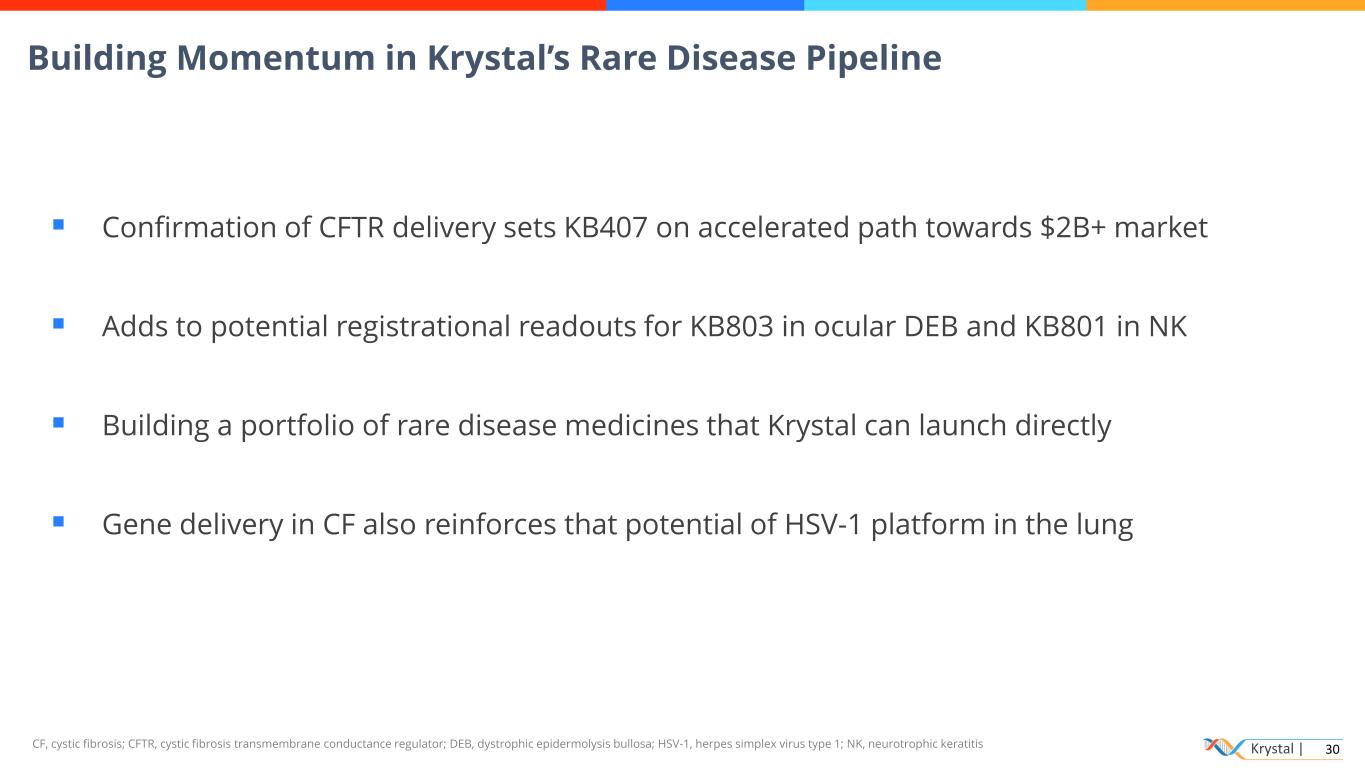
Krystal | 30 Building Momentum in Krystal’s Rare Disease Pipeline CF, cystic fibrosis; CFTR, cystic fibrosis transmembrane conductance regulator; DEB, dystrophic epidermolysis bullosa; HSV-1, herpes simplex virus type 1; NK, neurotrophic keratitis ▪ Confirmation of CFTR delivery sets KB407 on accelerated path towards $2B+ market ▪ Adds to potential registrational readouts for KB803 in ocular DEB and KB801 in NK ▪ Building a portfolio of rare disease medicines that Krystal can launch directly ▪ Gene delivery in CF also reinforces that potential of HSV-1 platform in the lung
Developing Genetic Medicines to Treat Diseases with High Unmet Medical Needs © Copyright 2026 Krystal Biotech, Inc. All rights reserved.