
Pyxis Oncology, Inc 8-K, filed Dec 18, 2025
Pyxis Oncology, Inc. (PYXS)
About this 8-K
Pyxis Oncology, Inc filed this 8-K on December 18, 2025.
Items reported
- Item 7.01: Regulation FD disclosure
- Item 8.01: Other events
UNITED STATES
SECURITIES AND EXCHANGE COMMISSION
WASHINGTON, D.C. 20549
FORM 8-K
CURRENT REPORT
Pursuant to Section 13 or 15(d) of the Securities Exchange Act of 1934
Date of Report (Date of earliest event reported): |
(Exact name of Registrant as Specified in Its Charter)
(State or Other Jurisdiction |
(Commission File Number) |
(IRS Employer |
||
|
|
|
|
|
|
||||
|
||||
(Address of Principal Executive Offices) |
|
(Zip Code) |
||
Registrant’s Telephone Number, Including Area Code: |
(Former Name or Former Address, if Changed Since Last Report)
Check the appropriate box below if the Form 8-K filing is intended to simultaneously satisfy the filing obligation of the registrant under any of the following provisions:
Securities registered pursuant to Section 12(b) of the Act:
|
|
Trading |
|
|
|
|
Indicate by check mark whether the registrant is an emerging growth company as defined in Rule 405 of the Securities Act of 1933 (§ 230.405 of this chapter) or Rule 12b-2 of the Securities Exchange Act of 1934 (§ 240.12b-2 of this chapter).
Emerging growth company
If an emerging growth company, indicate by check mark if the registrant has elected not to use the extended transition period for complying with any new or revised financial accounting standards provided pursuant to Section 13(a) of the Exchange Act.
Item 7.01 Regulation FD Disclosure
On December 18, 2025, Pyxis Oncology, Inc. (the “Company”) provided a corporate update and issued a press release announcing positive preliminary Phase 1 data for Micvotabart Pelidotin (MICVO) in recurrent / metastatic head and neck squamous cell carcinoma. A copy of the press release is attached as Exhibit 99.1 and the corporate presentation is attached as Exhibit 99.2 to this Current Report on Form 8-K.
The information furnished under Item 7.01, including Exhibit 99.1 and Exhibit 99.2, shall not be deemed “filed” for purposes of Section 18 of the Securities Exchange Act of 1934, as amended (the “Exchange Act”), or otherwise subject to the liabilities of that section, nor shall it be deemed incorporated by reference in any filing under the Securities Act of 1933, as amended, or the Exchange Act, except as expressly set forth by specific reference in such a filing.
Item 8.01 Other Events.
The Company today announced positive preliminary data from its ongoing Phase 1 clinical studies evaluating micvotabart pelidotin (MICVO), a first-in-concept antibody-drug conjugate (ADC) targeting extradomain-B of fibronectin (EDB+FN), a non-cellular structural component of the tumor extracellular matrix (ECM), in patients with recurrent/metastatic head and neck squamous cell carcinoma (R/M HNSCC). The cutoff for all data reported below is as of November 3, 2025.
Monotherapy
The ongoing MICVO Phase 1 monotherapy study is a two-part study. Part 1 was a dose escalation study across multiple doses and tumor types, with initial data shared in November 2024. Part 2, a dose expansion cohort at 5.4 mg/kg in 2L+ R/M HNSCC, is currently ongoing. The data below incorporate all R/M HNSCC patients dosed at 5.4 mg/kg in the MICVO Phase 1 monotherapy study.
1 One patient confirmed response after November 3, 2025 data cutoff.
Combination Therapy
The ongoing MICVO Phase 1/2 study evaluating MICVO in combination with KEYTRUDA® is part of a Clinical Trial Collaboration Agreement with Merck (known as MSD outside the US and Canada) and is currently in dose escalation across multiple doses and tumor types, including 1L/2L+ R/M HNSCC. The data below incorporate all R/M HNSCC patients dosed in the MICVO Phase 1/2 combination study at 3.6 mg/kg and 4.4 mg/kg.
2 One patient confirmed response after November 3, 2025 data cutoff.
Company Update. The Company completed sale of its rights to royalties from the commercialization of Enzeshu® (Suvemcitug for Injection) for a one-time cash payment of $11 million. This non-dilutive funding will support the development of MICVO. As part of Pyxis Oncology's acquisition of Apexigen, Inc. in August 2023, the Company acquired rights to royalties on Enzeshu and another asset discovered using APXiMAB, Apexigen's proprietary antibody discovery platform. The Company’s current cash runway is expected to fund operations through data milestones and into the fourth quarter of 2026.
This Form 8-K contains forward-looking statements for the purposes of the safe harbor provisions under The Private Securities Litigation Reform Act of 1995 and other federal securities laws. All statements other than statements of historical facts contained in this Form 8-K, including without limitation statements regarding the Company’s plans to develop, manufacture and commercialize its product candidate, including micvotabart pelidotin (‘MICVO’); preliminary data, timing and progress of the Company’s ongoing clinical trials; the Company’s cash runway; and the future results of operations and financial position of the Company are forward-looking statements. These statements are neither promises nor guarantees, but are statements that involve known and unknown risks, uncertainties and other important factors that are in some cases beyond the Company’s control that may cause actual results, performance or achievements to be materially different from any future results, performance or achievements expressed or implied by the forward-looking statements. Accordingly, investors should not rely upon forward-looking statements as predictions of future events. Except as required by applicable law, the Company undertakes no obligation to update publicly or revise any forward-looking statements contained herein.
Item 9.01 Financial Statements and Exhibits.
(d) Exhibits |
||
Exhibit No. |
|
Description |
99.1 |
|
|
99.2 |
|
|
104 |
|
Cover Page Interactive Data File (embedded within the Inline XBRL document) |
SIGNATURES
Pursuant to the requirements of the Securities Exchange Act of 1934, the registrant has duly caused this report to be signed on its behalf by the undersigned thereunto duly authorized.
|
|
|
Pyxis Oncology, Inc. |
|
|
|
|
Date: |
December 18, 2025 |
By: |
/s/ Jitendra Wadhane |
|
|
|
Jitendra Wadhane |

Exhibit 99.1
Pyxis Oncology Announces Positive Preliminary Phase 1 Data for Micvotabart Pelidotin (MICVO) in Recurrent/Metastatic Head and Neck Squamous Cell Carcinoma
BOSTON, December 18, 2025 (GLOBE NEWSWIRE) – Pyxis Oncology, Inc. (Nasdaq: PYXS), a clinical-stage company developing next-generation therapeutics for difficult-to-treat cancers, today announced positive preliminary data from its ongoing Phase 1 clinical studies evaluating micvotabart pelidotin (MICVO), a first-in-concept antibody-drug conjugate (ADC) targeting extradomain-B of fibronectin (EDB+FN), a non-cellular structural component of the tumor extracellular matrix (ECM), in patients with recurrent/metastatic head and neck squamous cell carcinoma (R/M HNSCC). The update includes preliminary data from both the Phase 1 monotherapy study in 2L+ R/M HNSCC and the Phase 1/2 study evaluating MICVO in combination with Merck’s (known as MSD outside of the US and Canada) anti-PD-1 therapy, pembrolizumab, in 1L/2L+ R/M HNSCC.
“The preliminary data for MICVO as monotherapy and in combination with pembrolizumab add to the growing body of evidence supporting MICVO’s therapeutic potential and highlight its agility as a novel potential treatment option across the recurrent/metastatic head and neck squamous cell carcinoma landscape,” said Lara S. Sullivan, M.D., President, Chief Executive Officer and Chief Medical Officer of Pyxis Oncology. “The emerging response rates and disease control observed across these studies are highly encouraging, and the lack of early disease progression supports confidence in the durability profile as we advance MICVO in clinical development. We look forward to sharing mature data from the ongoing trials next year.”
“The current paradigm for treatment of recurrent/metastatic head and neck squamous cell carcinoma offers limited options and therapeutic mechanisms for our patients, so we are particularly pleased to observe a novel mechanism providing emerging evidence of such compelling benefit-risk profile,” said Glenn J. Hanna, M.D., Director, Center for Cancer Therapeutic Innovation and Center for Salivary and Rare Head and Neck Cancers at Dana-Farber Cancer Institute, and Associate Professor of Medicine, Harvard Medical School. “As we look ahead to where the treatment landscape may include next-generation EGFR combination therapies as first-line options for select patients, many will still lack effective treatments, particularly in later lines – which remains a significant unmet clinical need. MICVO monotherapy presents an intriguing potential option for these later-line patients, while the initial data in combination with pembrolizumab also shows promising potential synergies in first-line patients.”
The cutoff for all data reported below is as of November 3, 2025. Key findings are as follows:
Monotherapy
The ongoing MICVO Phase 1 monotherapy study is a two-part study. Part 1 was a dose escalation study across multiple doses and tumor types, with initial data shared in November 2024. Part 2, a dose expansion cohort at 5.4 mg/kg in 2L+ R/M HNSCC, is currently ongoing. The data below incorporate all R/M HNSCC patients dosed at 5.4 mg/kg in the MICVO Phase 1 monotherapy study.
Combination Therapy
The ongoing MICVO Phase 1/2 study evaluating MICVO in combination with KEYTRUDA® is part of a Clinical Trial Collaboration Agreement with Merck (known as MSD outside the US and Canada) and is currently in dose escalation across multiple doses and tumor types, including 1L/2L+ R/M HNSCC. The data below incorporate all R/M HNSCC patients dosed in the MICVO Phase 1/2 combination study at 3.6 mg/kg and 4.4 mg/kg.
MICVO Next Steps
In mid-2026, Pyxis Oncology plans to present updated data from the ongoing Phase 1 monotherapy study in 2L+ R/M HNSCC, which is expected to include additional patients and initial durability data. In the second half of 2026, the company also plans to present updated data from the ongoing Phase 1/2 study evaluating MICVO in combination with pembrolizumab, including in 1L/2L+ R/M HNSCC and other tumor types.
Pyxis Oncology has received FDA alignment on the clinical trial design for a planned pivotal monotherapy study in 2L + R/M HNSCC. The Company is currently evaluating the path forward to pivotal studies for MICVO as monotherapy and in combination with pembrolizumab, respectively, and expects to provide additional detail in 2026.
Company Update
Pyxis Oncology completed sale of its rights to royalties from the commercialization of Enzeshu® (Suvemcitug for Injection) for a one-time cash payment of $11 million. This non-dilutive funding will support the development of MICVO. As part of Pyxis Oncology's acquisition of Apexigen, Inc. in August 2023, the Company acquired rights to royalties on Enzeshu and another asset discovered using APXiMAB, Apexigen's proprietary antibody discovery platform. The Company’s current cash runway is expected to fund operations through data milestones and into the fourth quarter of 2026.
Conference Call Information
Pyxis Oncology will host a live conference call and webcast at 8:30 a.m. ET today to review the preliminary Phase 1 clinical trial data. Participants may register for the conference call here. A webcast of the call will also be available under "Events and Presentations" in the Investors section of the Pyxis Oncology website at https://ir.pyxisoncology.com/. The archived webcast will be available on Pyxis Oncology’s website approximately two hours after the conference call and will be available for 30 days following the call.
About Pyxis Oncology, Inc.
Pyxis Oncology, Inc. is a clinical-stage biopharmaceutical company developing therapeutics for difficult-to-treat cancers. The Company’s lead candidate, micvotabart pelidotin (MICVO), is a first-in-concept antibody-drug conjugate (ADC) that targets extradomain-B of fibronectin (EDB+FN), a non-cellular structural component of the tumor extracellular matrix (ECM). EDB+FN is selectively overexpressed in the tumor microenvironment of a wide range of solid tumors and largely absent from normal adult tissues. MICVO is designed to treat solid tumors through a three-pronged mechanism of action: direct tumor cell killing, bystander effect and immunogenic cell death. MICVO is currently being evaluated in Phase 1 clinical studies in patients with recurrent/metastatic head and neck squamous cell carcinoma (R/M HNSCC) and other solid tumors, both as monotherapy and in combination with Merck’s anti-PD-1 therapy, KEYTRUDA® (pembrolizumab). Pyxis Oncology is focused on advancing MICVO, with the goal of improving outcomes for patients living with R/M HNSCC and contributing to meaningful progress in cancer treatment.
To learn more, visit www.pyxisoncology.com and follow us on LinkedIn.
About Micvotabart Pelidotin (MICVO)
Micvotabart pelidotin (MICVO, formerly PYX-201), is an antibody-drug conjugate (ADC) that uniquely targets extradomain-B of fibronectin (EDB+FN), a non-cellular structural component of the tumor extracellular matrix. MICVO is designed to generate a multi-pronged attack on difficult-to-treat cancers by directly killing cancer cells, reducing extra-cellular matrix density, inhibiting tumor angiogenesis and mobilizing an anti-tumor immune response.
MICVO received Fast Track Designation from the U.S. Food and Drug Administration for the treatment of adult patients with R/M HNSCC whose disease has progressed following treatment with platinum-based chemotherapy and an anti-PD(L)-1 therapy.
KEYTRUDA® is a registered trademark of Merck Sharp & Dohme LLC, a subsidiary of Merck & Co., Inc., Rahway, NJ, USA.
Dr. Hanna receives institutional research support and funding from, and has served in a consulting or advisory role for, Pyxis Oncology.
Forward-Looking Statements
This press release contains forward-looking statements for the purposes of the safe harbor provisions under The Private Securities Litigation Reform Act of 1995 and other federal securities laws. All statements other than statements of historical facts contained in this presentation, including without limitation statements regarding the Company’s plans to develop, manufacture and commercialize its product candidate, including micvotabart pelidotin (‘MICVO’); preliminary data, timing and progress of the Company’s ongoing clinical trials; the expected results of the Company’s clinical trials; the ability of preliminary, initial and topline clinical data to de-risk MICVO and be confirmed with clinical trial progression, including the safety, tolerability, and potential efficacy of MICVO; the potential differentiation, advantage or effectiveness of MICVO compared to other approved products or products in development; the dosage and treatment potential of MICVO; the size and future of the market; the plans and objectives of management, and the future results of operations and financial position of the Company, are forward-looking statements. These statements are neither promises nor guarantees, but are statements that involve known and unknown risks, uncertainties and other important factors that are in some cases beyond the Company’s control that may cause actual results, performance or achievements to be materially different from any future results, performance or achievements expressed or implied by the forward-looking statements, including, but not limited to, the following: the risks inherent in drug research and development, the Company’s projected cash runway and potential needs for additional funding; the lengthy, expensive, and uncertain process of clinical drug development, including potential delays in or failure to obtain regulatory approvals; the Company’s reliance on third parties and collaborators to conduct clinical trials, manufacture their product candidates, and develop and commercialize their product candidate; and the Company’s ability to compete successfully against other drug candidate. Accordingly, investors should not rely upon forward-looking statements as predictions of future events. Except as required by applicable law, the Company undertakes no obligation to update publicly or revise any forward-looking statements contained herein, whether as a result of any new information, future events, changed circumstances or otherwise. Additionally, investors should read risk factors in the section titled “Risk Factors” set forth in Part II, Item 1A. of the Company’s Quarterly Report on Form 10-Q filed on November 3, 2025, and our other filings, each of which is on file with the Securities and Exchange Commission.
Pyxis Oncology Contact
Alex Kane
IR@pyxisoncology.com
Media
Cailyn McCutcheon
Real Chemistry
cmccutcheon@realchemistry.com
[i] One patient for monotherapy and one patient for combination therapy confirmed response after November 3, 2025 data cutoff
Pyxis Oncology MICVO R/M HNSCC Clinical Update December 2025 Exhibit 99.2
Forward Looking Statement This presentation contains forward-looking statements for the purposes of the safe harbor provisions under The Private Securities Litigation Reform Act of 1995 and other federal securities laws. All statements other than statements of historical facts contained in this presentation, including without limitation statements regarding the Company’s plans to develop, manufacture and commercialize its product candidate, including micvotabart pelidotin (‘MICVO’); preliminary data, timing and progress of the Company’s ongoing clinical trials; the expected results of the Company’s clinical trials; the ability of preliminary, initial and topline clinical data to de-risk MICVO and be confirmed with clinical trial progression, including the safety, tolerability, and potential efficacy of MICVO; the potential differentiation, advantage or effectiveness of MICVO compared to other approved products or products in development; the dosage and treatment potential of MICVO; the size and future of the market; the plans and objectives of management, and the future results of operations and financial position of the Company, are forward-looking statements. These statements are neither promises nor guarantees, but are statements that involve known and unknown risks, uncertainties and other important factors that are in some cases beyond the Company’s control that may cause actual results, performance or achievements to be materially different from any future results, performance or achievements expressed or implied by the forward-looking statements, including, but not limited to, the following: the risks inherent in drug research and development, the Company’s projected cash runway and potential needs for additional funding; the lengthy, expensive, and uncertain process of clinical drug development, including potential delays in or failure to obtain regulatory approvals; the Company’s reliance on third parties and collaborators to conduct clinical trials, manufacture their product candidate, and develop and commercialize their product candidate; and the Company’s ability to compete successfully against other drug candidate. Accordingly, investors should not rely upon forward-looking statements as predictions of future events. Except as required by applicable law, the Company undertakes no obligation to update publicly or revise any forward-looking statements contained herein, whether as a result of any new information, future events, changed circumstances or otherwise. Additionally, investors should read risk factors in the section titled “Risk Factors” set forth in Part II, Item 1A. of the Company’s Quarterly Report on Form 10-Q filed on November 3, 2025, and our other filings, each of which is on file with the Securities and Exchange Commission.
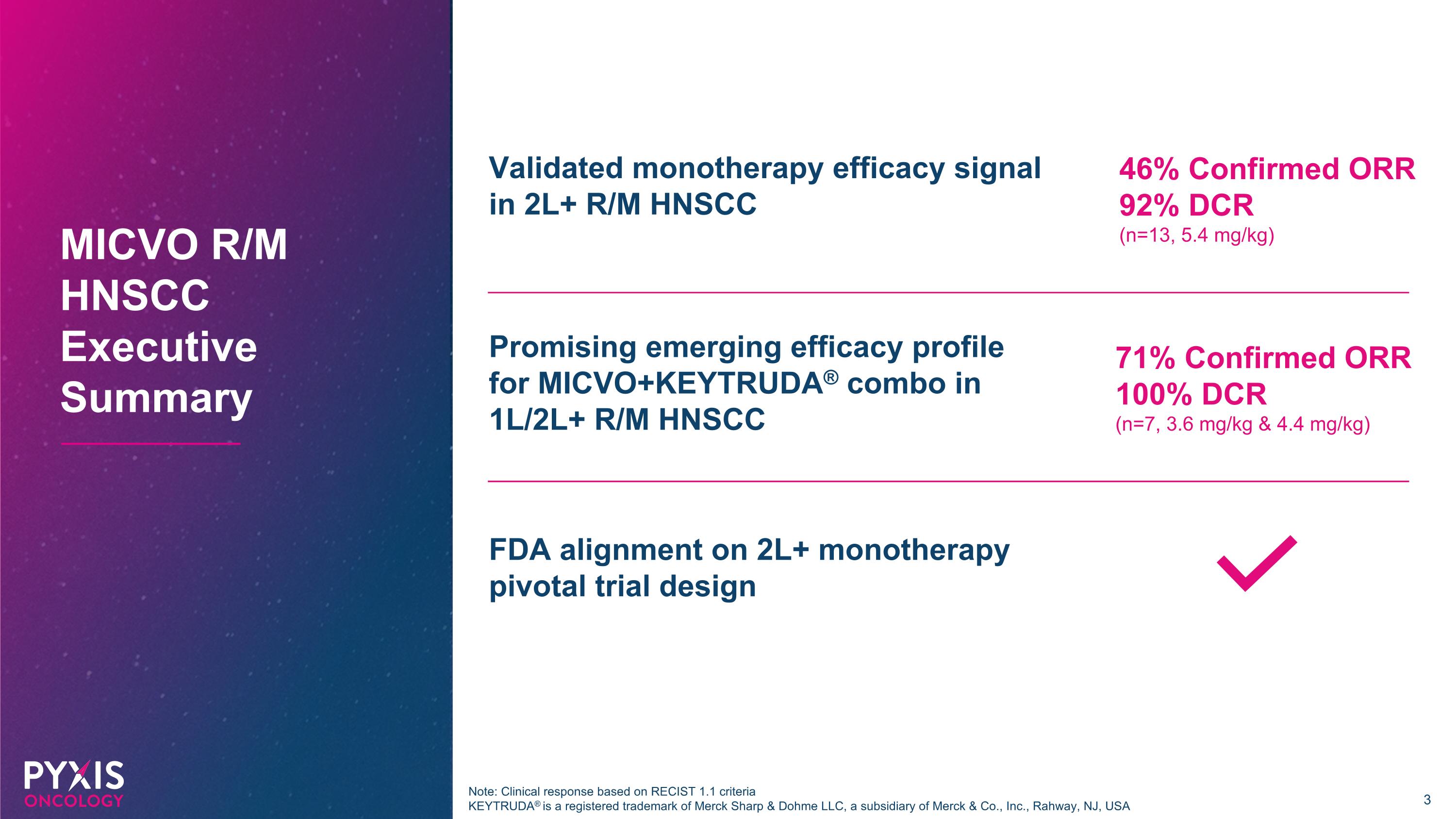
Promising emerging efficacy profile for MICVO+KEYTRUDA® combo in 1L/2L+ R/M HNSCC FDA alignment on 2L+ monotherapy pivotal trial design MICVO R/M HNSCC Executive Summary 46% Confirmed ORR 92% DCR (n=13, 5.4 mg/kg) 71% Confirmed ORR 100% DCR (n=7, 3.6 mg/kg & 4.4 mg/kg) Validated monotherapy efficacy signal in 2L+ R/M HNSCC Note: Clinical response based on RECIST 1.1 criteria KEYTRUDA® is a registered trademark of Merck Sharp & Dohme LLC, a subsidiary of Merck & Co., Inc., Rahway, NJ, USA
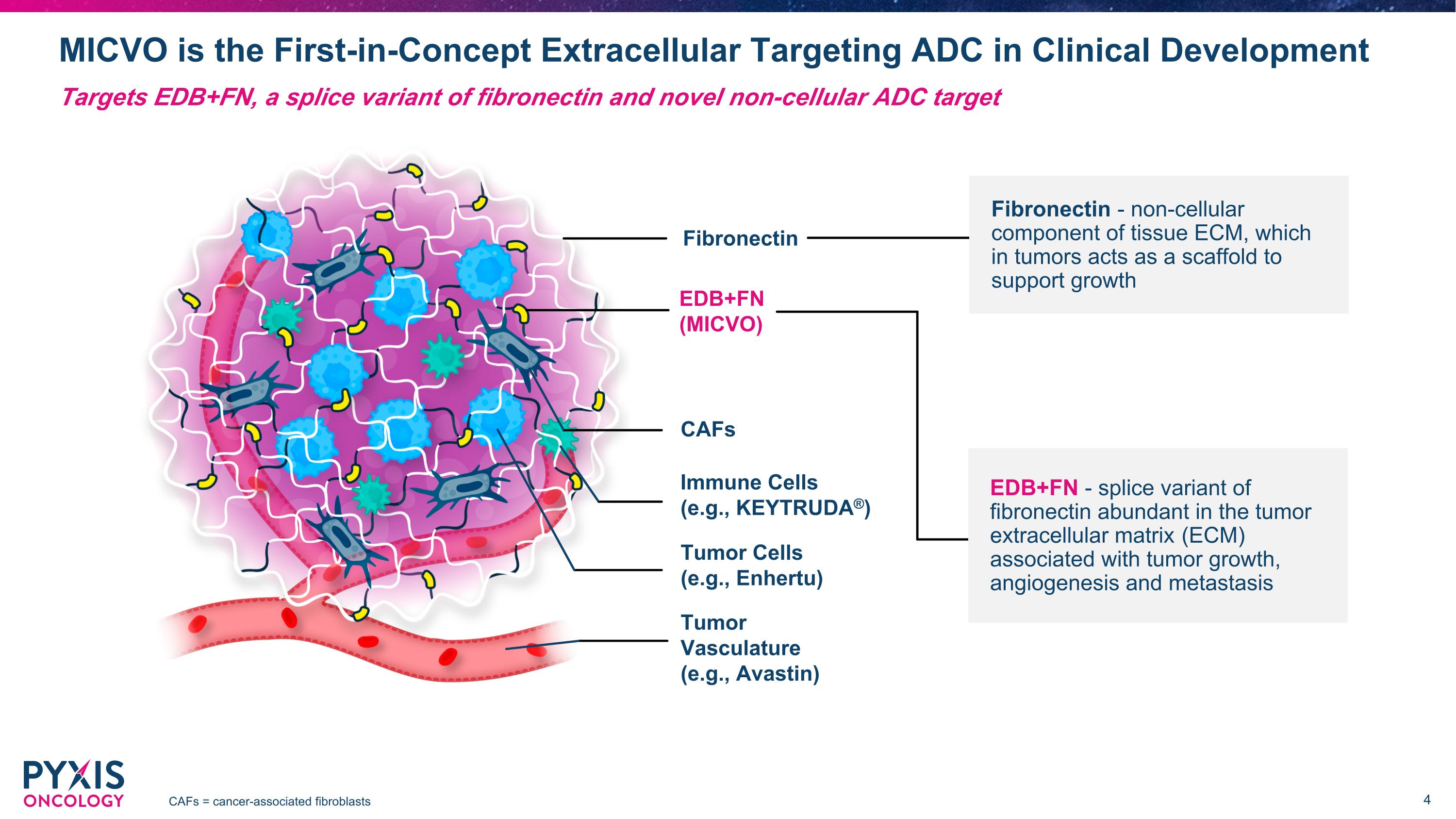
MICVO is the First-in-Concept Extracellular Targeting ADC in Clinical Development CAFs = cancer-associated fibroblasts Tumor Vasculature (e.g., Avastin) Fibronectin CAFs EDB+FN (MICVO) Immune Cells (e.g., KEYTRUDA®) Tumor Cells (e.g., Enhertu) EDB+FN - splice variant of fibronectin abundant in the tumor extracellular matrix (ECM) associated with tumor growth, angiogenesis and metastasis Targets EDB+FN, a splice variant of fibronectin and novel non-cellular ADC target Fibronectin - non-cellular component of tissue ECM, which in tumors acts as a scaffold to support growth
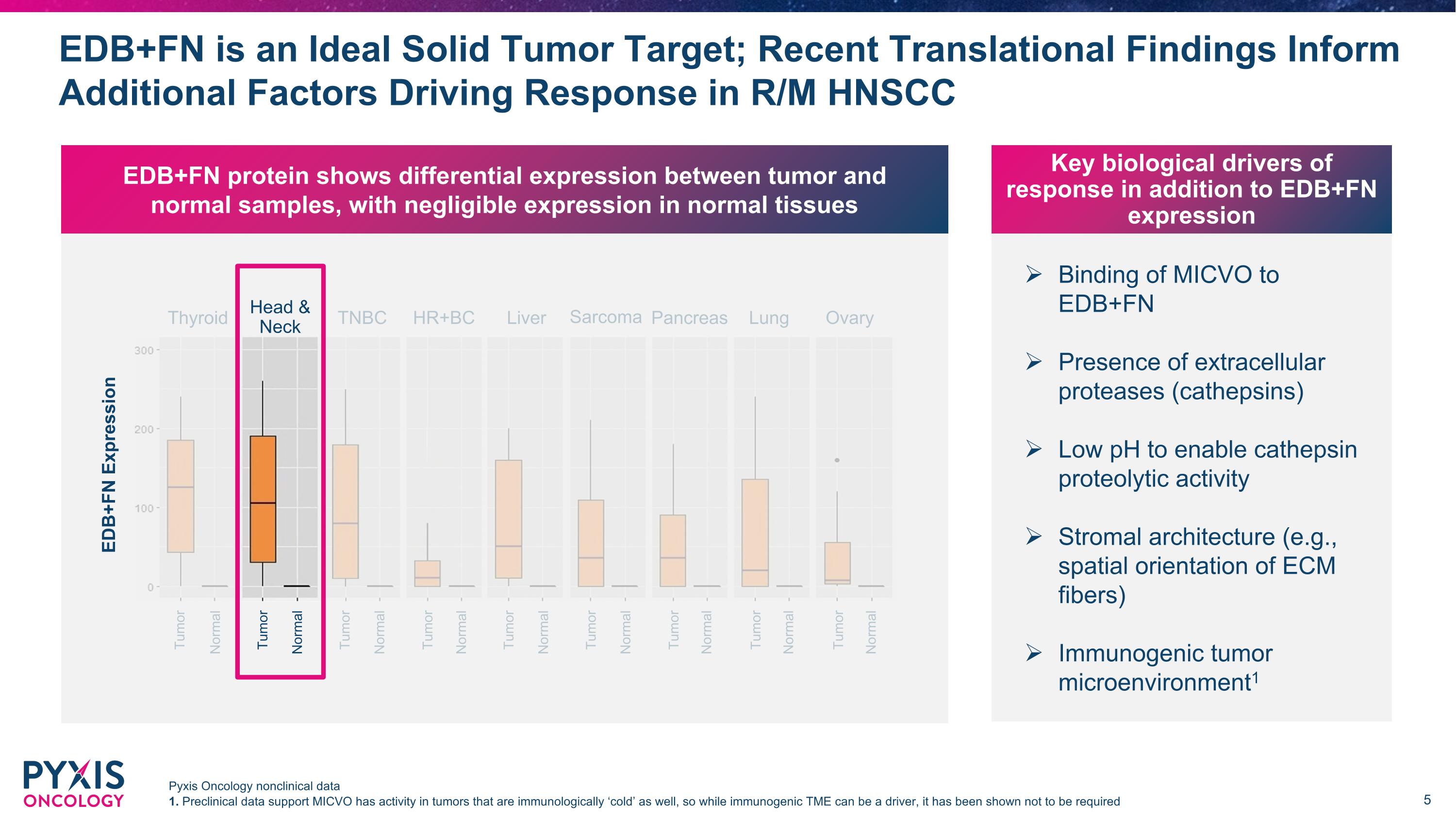
Binding of MICVO to EDB+FN Presence of extracellular proteases (cathepsins) Low pH to enable cathepsin proteolytic activity Stromal architecture (e.g., spatial orientation of ECM fibers) Immunogenic tumor microenvironment1 Key biological drivers of response in addition to EDB+FN expression EDB+FN is an Ideal Solid Tumor Target; Recent Translational Findings Inform Additional Factors Driving Response in R/M HNSCC Pyxis Oncology nonclinical data 1. Preclinical data support MICVO has activity in tumors that are immunologically ‘cold’ as well, so while immunogenic TME can be a driver, it has been shown not to be required EDB+FN protein shows differential expression between tumor and normal samples, with negligible expression in normal tissues EDB+FN Expression Head & Neck Thyroid TNBC Liver Sarcoma Lung Ovary Pancreas HR+BC Tumor Normal Tumor Normal Tumor Normal Tumor Normal Tumor Normal Tumor Normal Tumor Normal Tumor Normal Tumor Normal
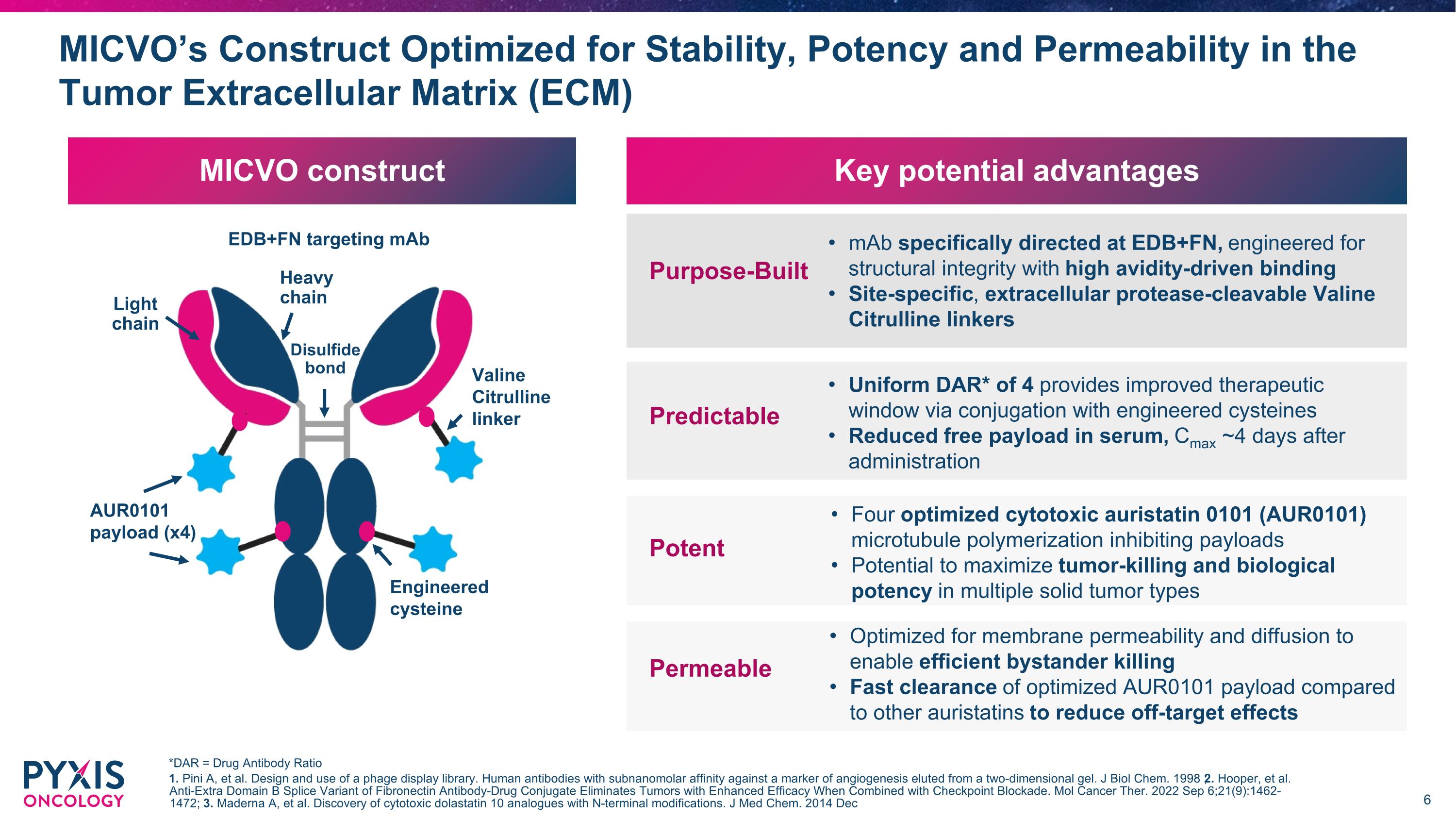
MICVO construct MICVO’s Construct Optimized for Stability, Potency and Permeability in the Tumor Extracellular Matrix (ECM) EDB+FN targeting mAb AUR0101 payload (x4) Valine Citrulline linker Light chain Heavy chain Engineered cysteine Disulfide bond Key potential advantages mAb specifically directed at EDB+FN, engineered for structural integrity with high avidity-driven binding Site-specific, extracellular protease-cleavable Valine Citrulline linkers Uniform DAR* of 4 provides improved therapeutic window via conjugation with engineered cysteines Reduced free payload in serum, Cmax ~4 days after administration Four optimized cytotoxic auristatin 0101 (AUR0101) microtubule polymerization inhibiting payloads Potential to maximize tumor-killing and biological potency in multiple solid tumor types *DAR = Drug Antibody Ratio 1. Pini A, et al. Design and use of a phage display library. Human antibodies with subnanomolar affinity against a marker of angiogenesis eluted from a two-dimensional gel. J Biol Chem. 1998 ; 2. Hooper, et al. Anti-Extra Domain B Splice Variant of Fibronectin Antibody-Drug Conjugate Eliminates Tumors with Enhanced Efficacy When Combined with Checkpoint Blockade. Mol Cancer Ther. 2022 Sep 6;21(9):1462-1472; 3. Maderna A, et al. Discovery of cytotoxic dolastatin 10 analogues with N-terminal modifications. J Med Chem. 2014 Dec Purpose-Built Predictable Optimized for membrane permeability and diffusion to enable efficient bystander killing Fast clearance of optimized AUR0101 payload compared to other auristatins to reduce off-target effects Potent Permeable
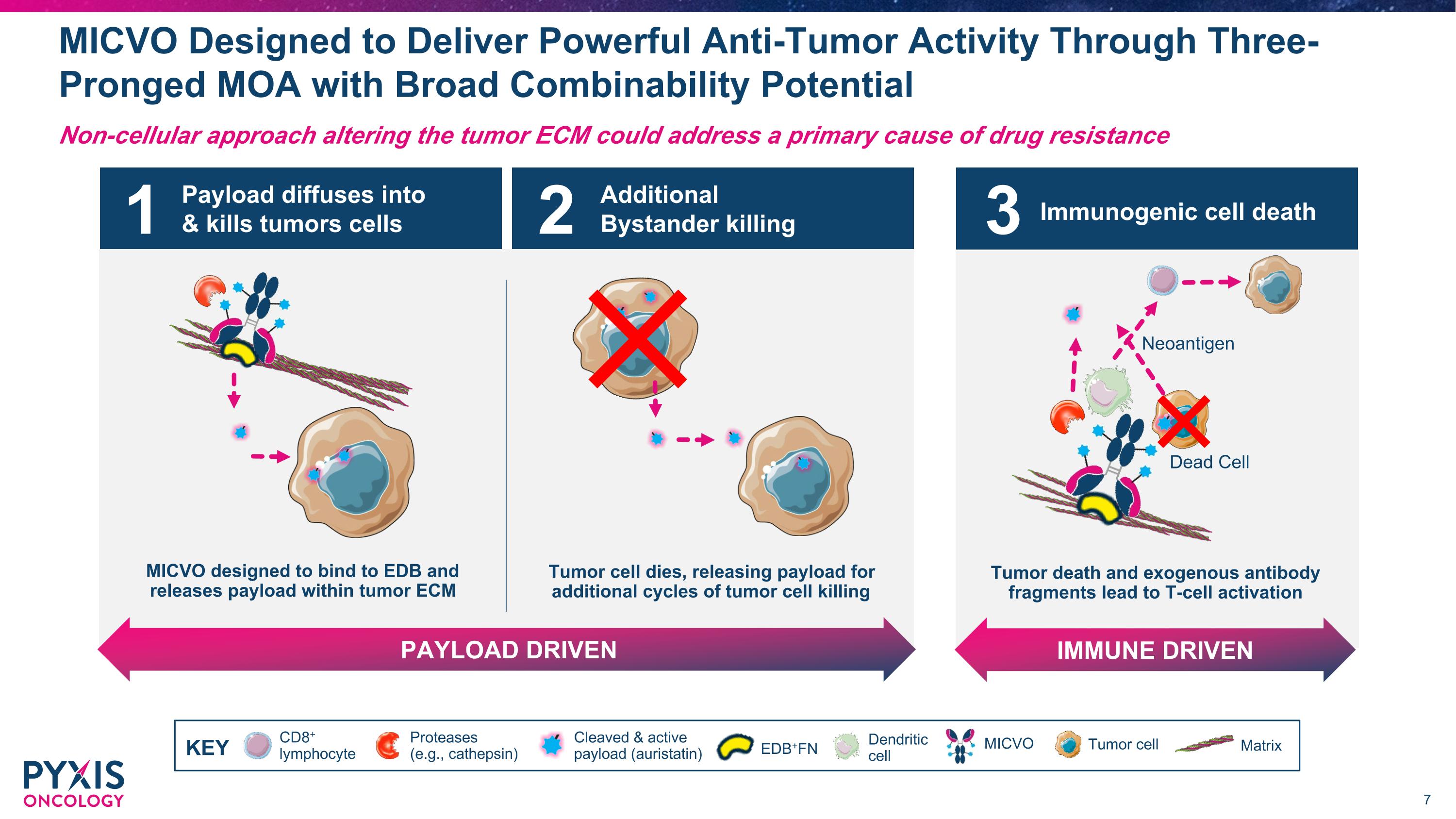
Payload diffuses into & kills tumors cells MICVO designed to bind to EDB and releases payload within tumor ECM Additional Bystander killing PAYLOAD DRIVEN Tumor cell dies, releasing payload for additional cycles of tumor cell killing 1 2 MICVO Designed to Deliver Powerful Anti-Tumor Activity Through Three-Pronged MOA with Broad Combinability Potential Non-cellular approach altering the tumor ECM could address a primary cause of drug resistance CD8+ lymphocyte Dendritic cell MICVO Cleaved & active payload (auristatin) Tumor cell Matrix Proteases (e.g., cathepsin) KEY EDB+FN Immunogenic cell death IMMUNE DRIVEN Tumor death and exogenous antibody fragments lead to T-cell activation Dead Cell Neoantigen 3
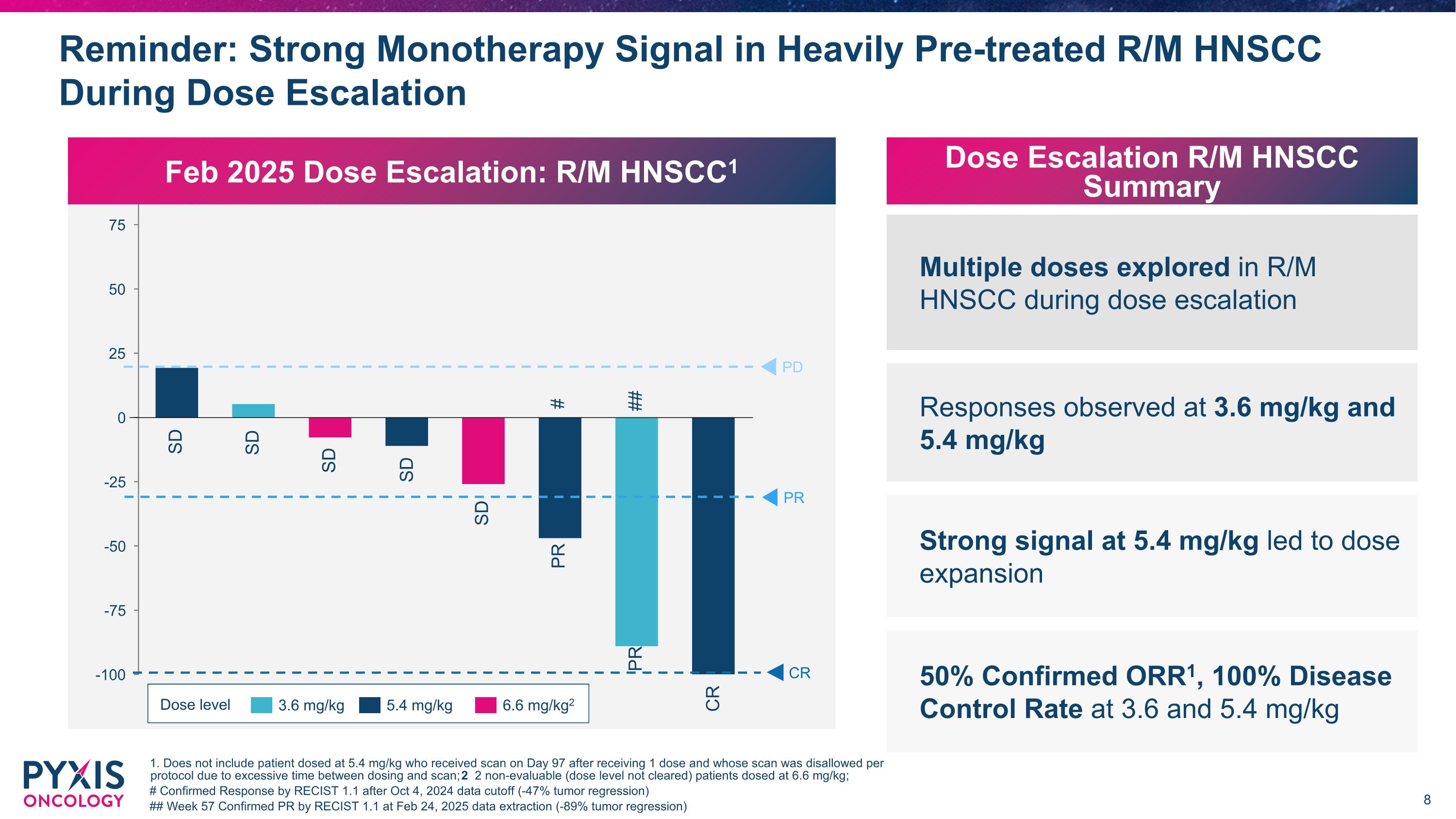
Reminder: Strong Monotherapy Signal in Heavily Pre-treated R/M HNSCC During Dose Escalation 1. Does not include patient dosed at 5.4 mg/kg who received scan on Day 97 after receiving 1 dose and whose scan was disallowed per protocol due to excessive time between dosing and scan; 2 2 non-evaluable (dose level not cleared) patients dosed at 6.6 mg/kg; # Confirmed Response by RECIST 1.1 after Oct 4, 2024 data cutoff (-47% tumor regression) ## Week 57 Confirmed PR by RECIST 1.1 at Feb 24, 2025 data extraction (-89% tumor regression) Dose level 3.6 mg/kg 5.4 mg/kg Feb 2025 Dose Escalation: R/M HNSCC1 PD SD SD SD PR CR SD PR CR SD PR Multiple doses explored in R/M HNSCC during dose escalation Responses observed at 3.6 mg/kg and 5.4 mg/kg Strong signal at 5.4 mg/kg led to dose expansion Dose Escalation R/M HNSCC Summary 50% Confirmed ORR1, 100% Disease Control Rate at 3.6 and 5.4 mg/kg # ## 6.6 mg/kg2
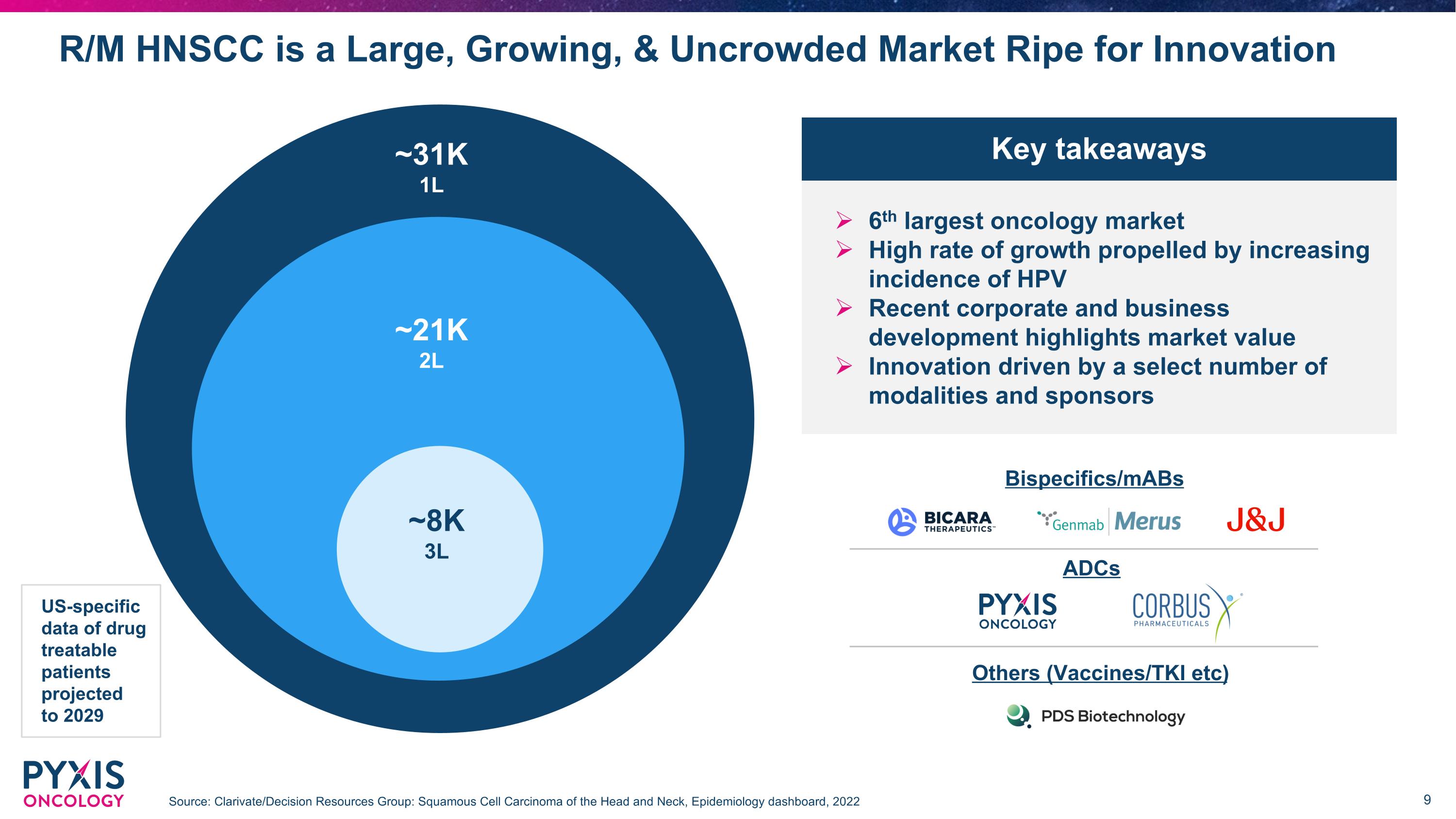
R/M HNSCC is a Large, Growing, & Uncrowded Market Ripe for Innovation Source: Clarivate/Decision Resources Group: Squamous Cell Carcinoma of the Head and Neck, Epidemiology dashboard, 2022 ~31K 1L ~21K 2L ~8K 3L US-specific data of drug treatable patients projected to 2029 6th largest oncology market High rate of growth propelled by increasing incidence of HPV Recent corporate and business development highlights market value Innovation driven by a select number of modalities and sponsors Key takeaways Bispecifics/mABs ADCs Others (Vaccines/TKI etc)
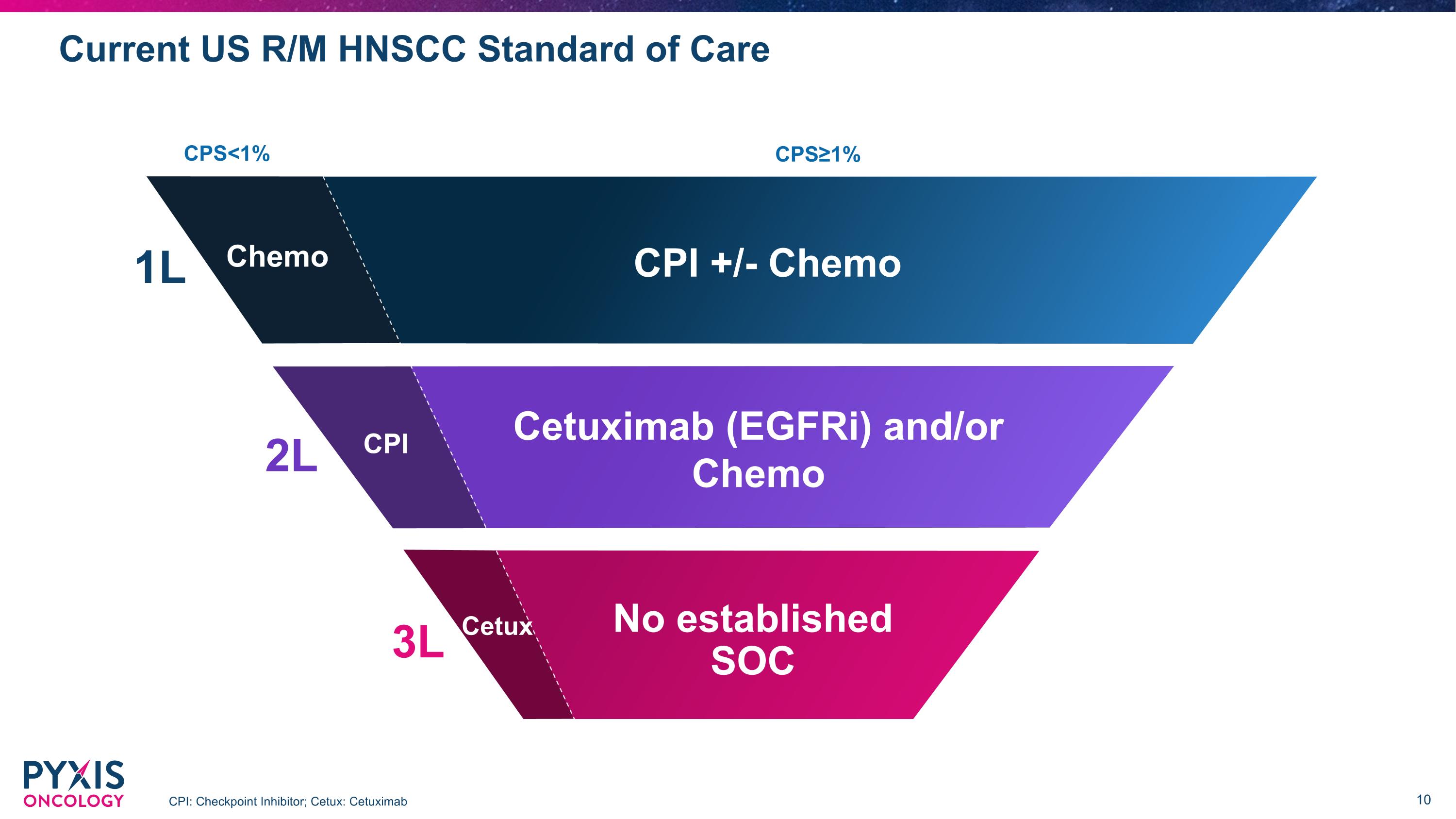
Current US R/M HNSCC Standard of Care CPI: Checkpoint Inhibitor; Cetux: Cetuximab CPI 3.0K 1L CPS<1% CPS≥1% CPI +/- Chemo Chemo 2L Cetuximab (EGFRi) and/or Chemo CPI 3L Cetux No established SOC
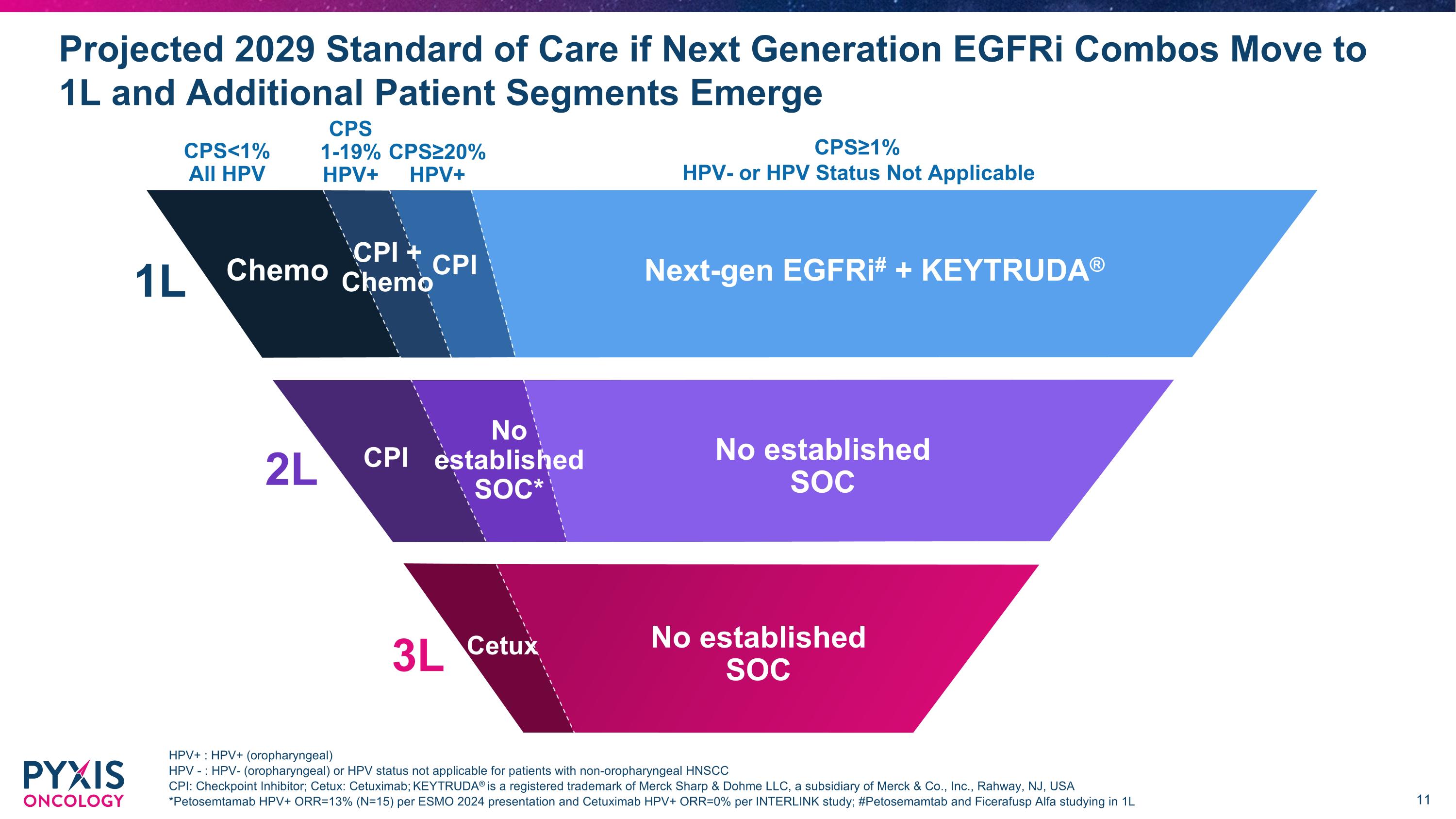
Projected 2029 Standard of Care if Next Generation EGFRi Combos Move to 1L and Additional Patient Segments Emerge CPI 3.0K 1L CPS<1% All HPV CPS≥20% HPV+ CPS 1-19% HPV+ CPS≥1% HPV- or HPV Status Not Applicable Next-gen EGFRi# + KEYTRUDA® Chemo CPI CPI + Chemo 2L No established SOC* No established SOC CPI 3L No established SOC HPV+ : HPV+ (oropharyngeal) HPV - : HPV- (oropharyngeal) or HPV status not applicable for patients with non-oropharyngeal HNSCC CPI: Checkpoint Inhibitor; Cetux: Cetuximab; KEYTRUDA® is a registered trademark of Merck Sharp & Dohme LLC, a subsidiary of Merck & Co., Inc., Rahway, NJ, USA *Petosemtamab HPV+ ORR=13% (N=15) per ESMO 2024 presentation and Cetuximab HPV+ ORR=0% per INTERLINK study; #Petosemamtab and Ficerafusp Alfa studying in 1L Cetux
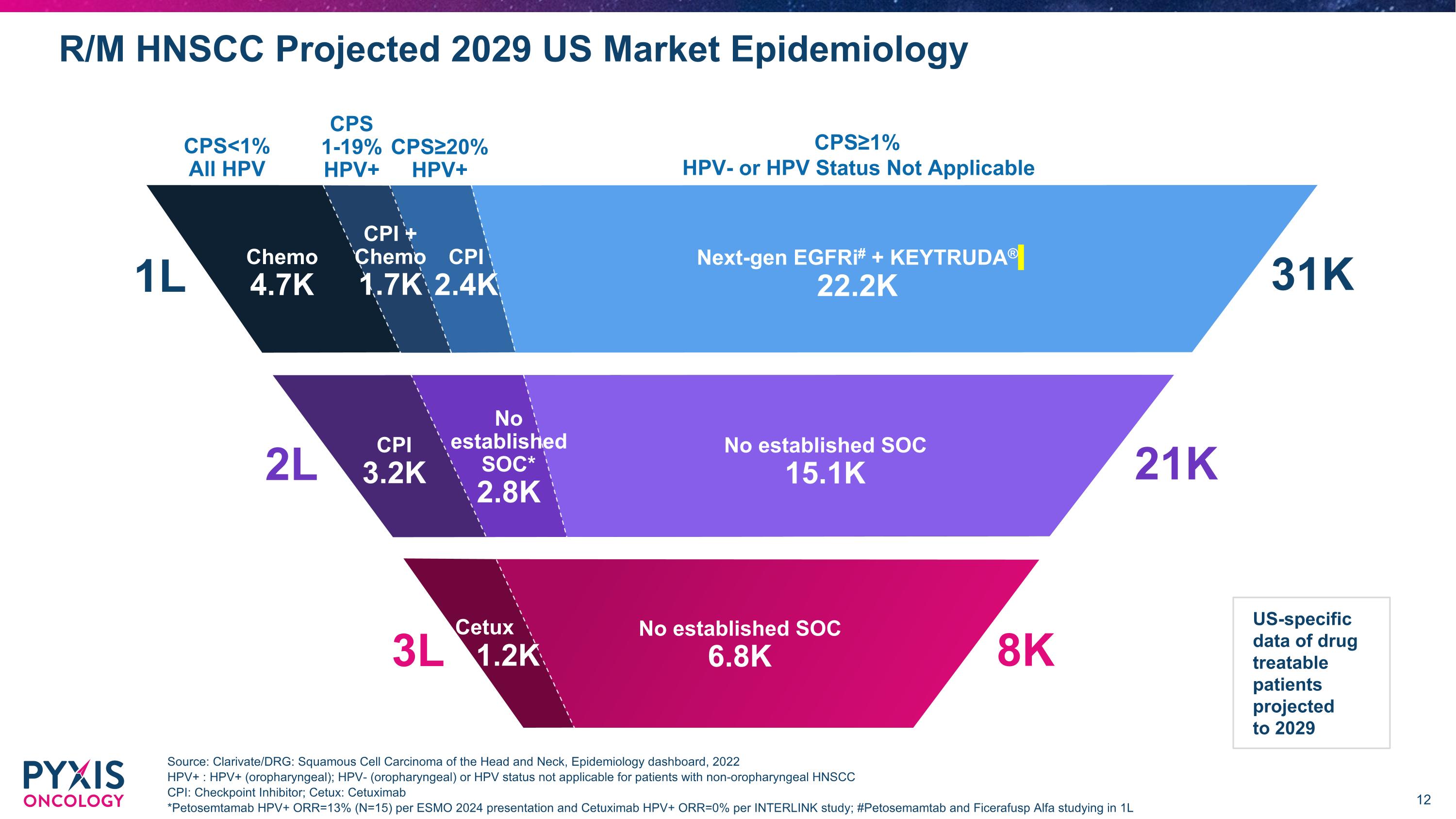
R/M HNSCC Projected 2029 US Market Epidemiology Source: Clarivate/DRG: Squamous Cell Carcinoma of the Head and Neck, Epidemiology dashboard, 2022 HPV+ : HPV+ (oropharyngeal); HPV- (oropharyngeal) or HPV status not applicable for patients with non-oropharyngeal HNSCC CPI: Checkpoint Inhibitor; Cetux: Cetuximab *Petosemtamab HPV+ ORR=13% (N=15) per ESMO 2024 presentation and Cetuximab HPV+ ORR=0% per INTERLINK study; #Petosemamtab and Ficerafusp Alfa studying in 1L US-specific data of drug treatable patients projected to 2029 CPI 3.0K 1L CPS<1% All HPV CPS≥20% HPV+ CPS 1-19% HPV+ CPS≥1% HPV- or HPV Status Not Applicable Next-gen EGFRi# + KEYTRUDA® 22.2K Chemo 4.7K CPI 2.4K CPI + Chemo 1.7K 31K 2L No established SOC* 2.8K No established SOC 15.1K 21K CPI 3.2K 8K 3L Cetux 1.2K No established SOC 6.8K
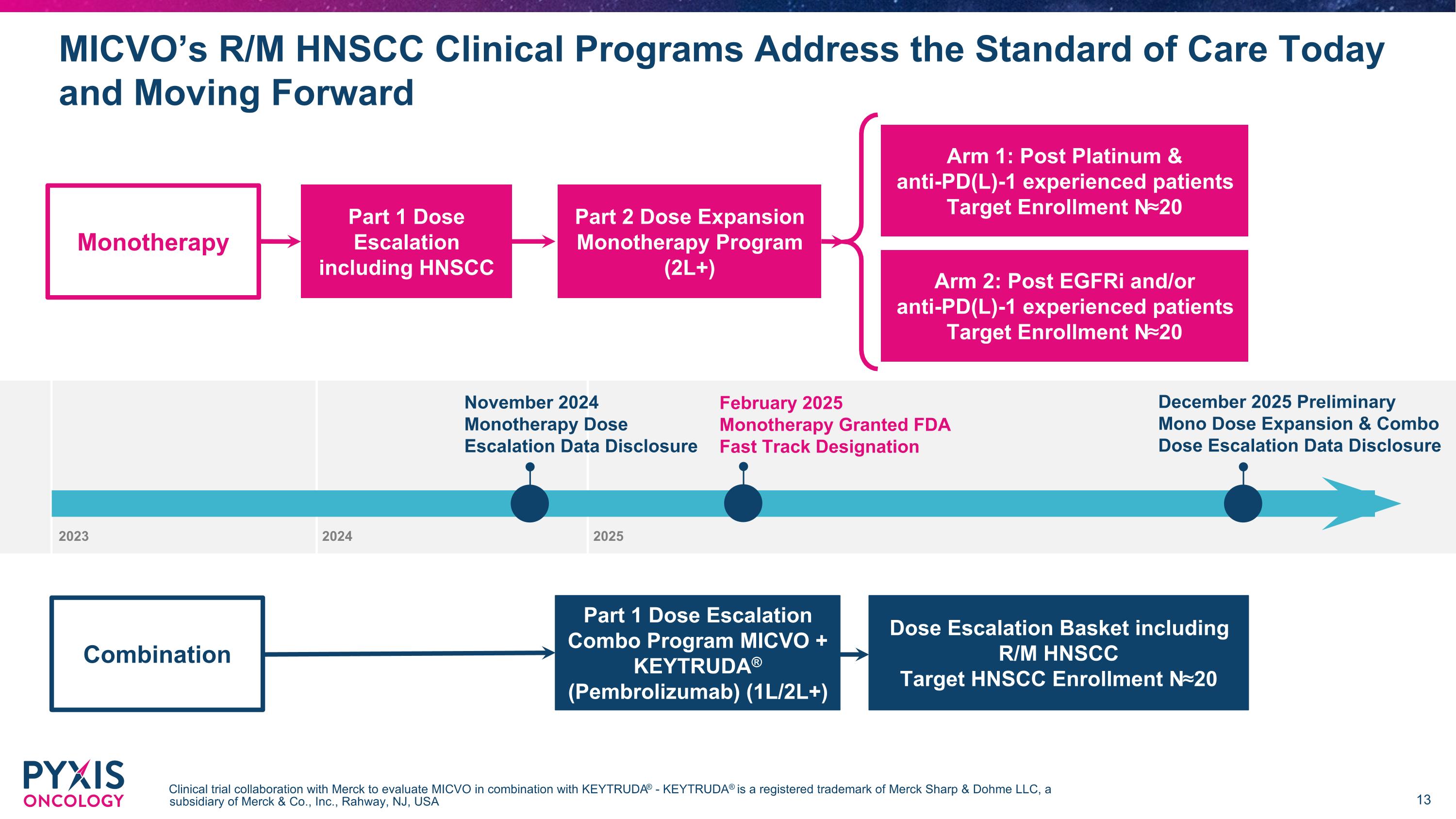
November 2024 Monotherapy Dose Escalation Data Disclosure December 2025 Preliminary Mono Dose Expansion & Combo Dose Escalation Data Disclosure MICVO’s R/M HNSCC Clinical Programs Address the Standard of Care Today and Moving Forward Clinical trial collaboration with Merck to evaluate MICVO in combination with KEYTRUDA® - KEYTRUDA® is a registered trademark of Merck Sharp & Dohme LLC, a subsidiary of Merck & Co., Inc., Rahway, NJ, USA Arm 1: Post Platinum & anti-PD(L)-1 experienced patients Target Enrollment N≈20 Part 2 Dose Expansion Monotherapy Program (2L+) Part 1 Dose Escalation Combo Program MICVO + KEYTRUDA® (Pembrolizumab) (1L/2L+) Part 1 Dose Escalation including HNSCC Dose Escalation Basket including R/M HNSCC Target HNSCC Enrollment N≈20 Monotherapy Combination Arm 2: Post EGFRi and/or anti-PD(L)-1 experienced patients Target Enrollment N≈20 2023 2024 2025 February 2025 Monotherapy Granted FDA Fast Track Designation
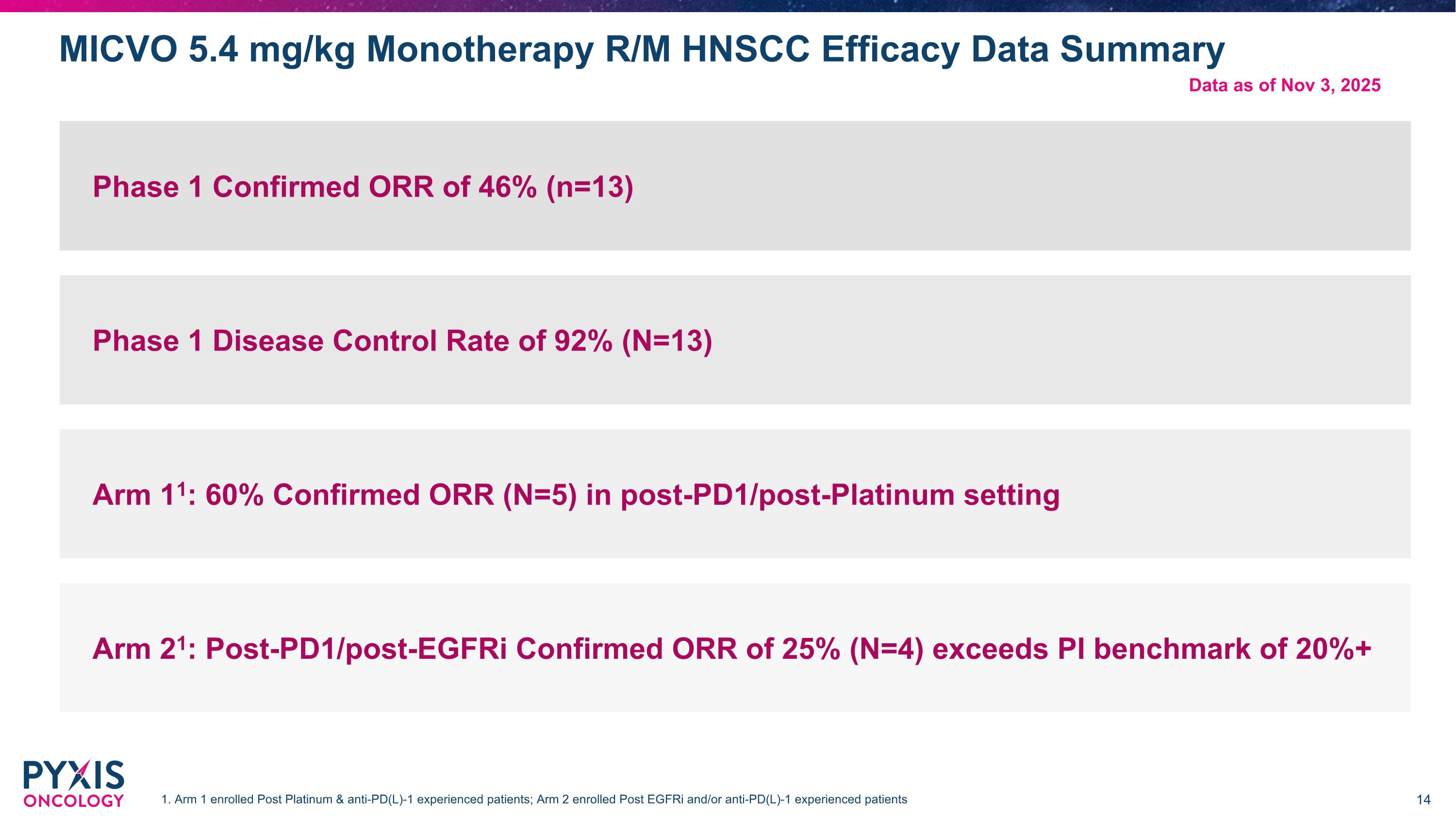
MICVO 5.4 mg/kg Monotherapy R/M HNSCC Efficacy Data Summary Phase 1 Confirmed ORR of 46% (n=13) Phase 1 Disease Control Rate of 92% (N=13) Arm 11: 60% Confirmed ORR (N=5) in post-PD1/post-Platinum setting Arm 21: Post-PD1/post-EGFRi Confirmed ORR of 25% (N=4) exceeds PI benchmark of 20%+ 1. Arm 1 enrolled Post Platinum & anti-PD(L)-1 experienced patients; Arm 2 enrolled Post EGFRi and/or anti-PD(L)-1 experienced patients Data as of Nov 3, 2025
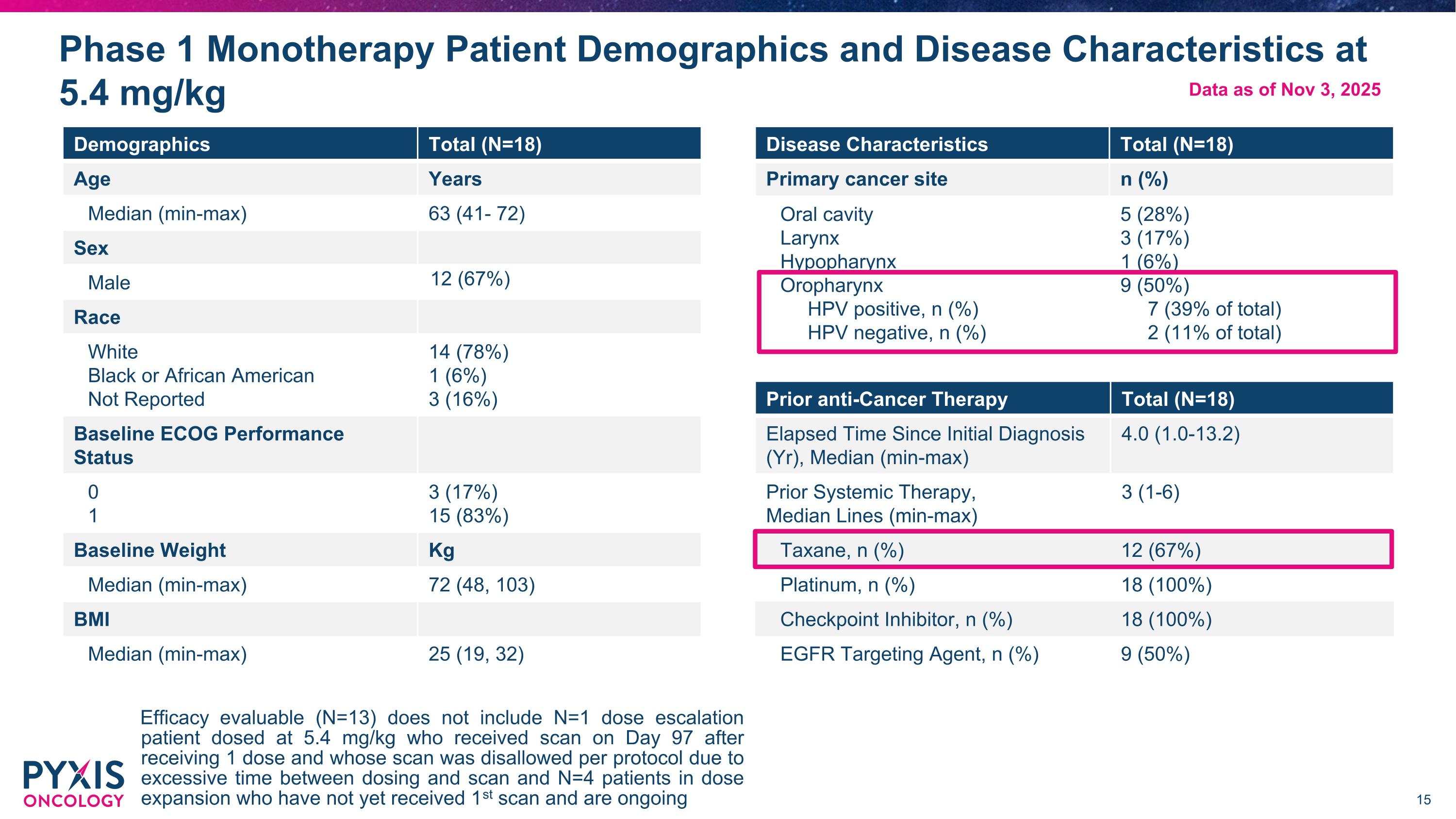
Phase 1 Monotherapy Patient Demographics and Disease Characteristics at 5.4 mg/kg Efficacy evaluable (N=13) does not include N=1 dose escalation patient dosed at 5.4 mg/kg who received scan on Day 97 after receiving 1 dose and whose scan was disallowed per protocol due to excessive time between dosing and scan and N=4 patients in dose expansion who have not yet received 1st scan and are ongoing Demographics Total (N=18) Age Years Median (min-max) 63 (41- 72) Sex Male 12 (67%) Race White Black or African American Not Reported 14 (78%) 1 (6%) 3 (16%) Baseline ECOG Performance Status 0 1 3 (17%) 15 (83%) Baseline Weight Kg Median (min-max) 72 (48, 103) BMI Median (min-max) 25 (19, 32) Prior anti-Cancer Therapy Total (N=18) Elapsed Time Since Initial Diagnosis (Yr), Median (min-max) 4.0 (1.0-13.2) Prior Systemic Therapy, Median Lines (min-max) 3 (1-6) Taxane, n (%) 12 (67%) Platinum, n (%) 18 (100%) Checkpoint Inhibitor, n (%) 18 (100%) EGFR Targeting Agent, n (%) 9 (50%) Disease Characteristics Total (N=18) Primary cancer site n (%) Oral cavity Larynx Hypopharynx Oropharynx HPV positive, n (%) HPV negative, n (%) 5 (28%) 3 (17%) 1 (6%) 9 (50%) 7 (39% of total) 2 (11% of total) Data as of Nov 3, 2025
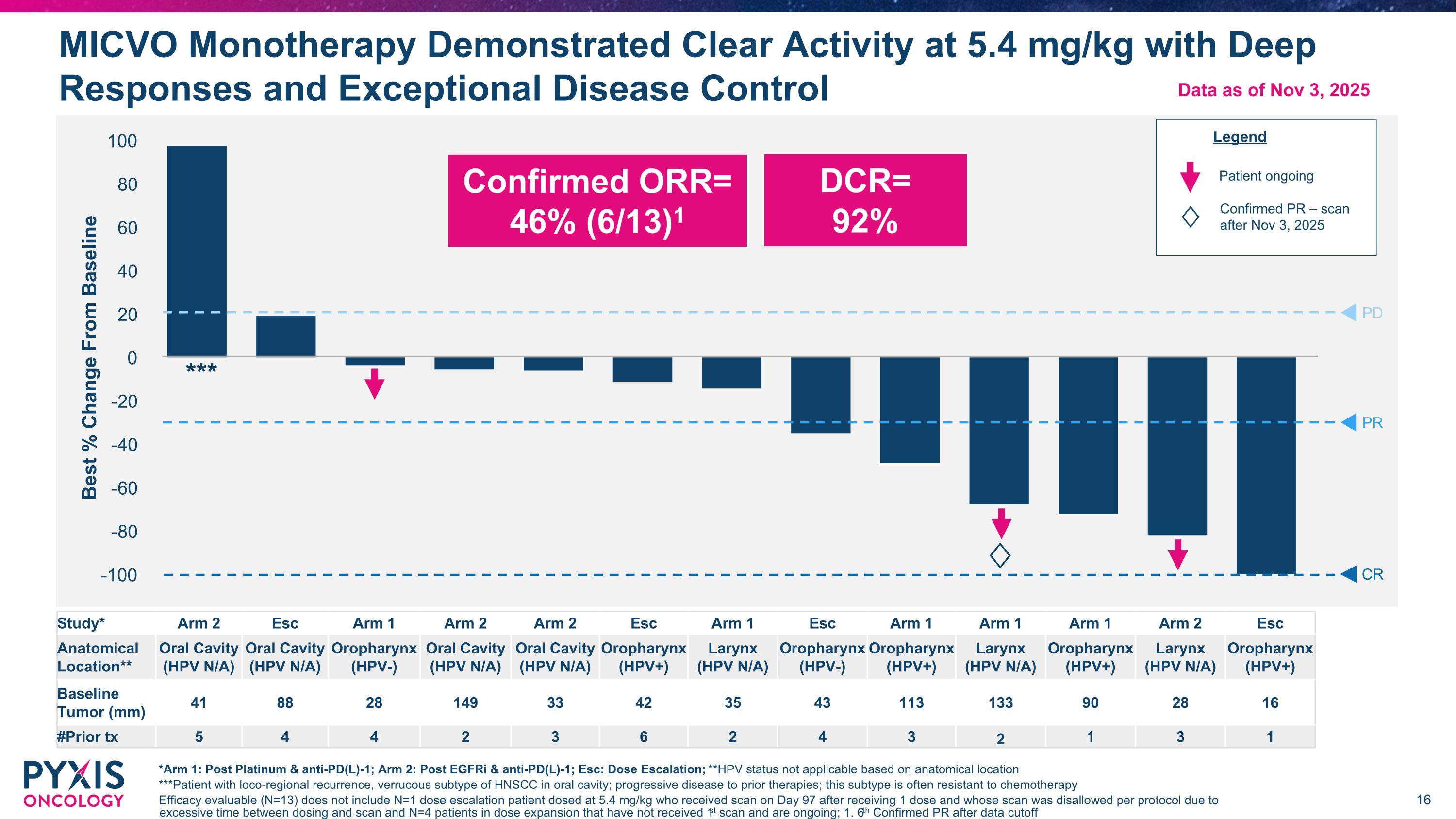
MICVO Monotherapy Demonstrated Clear Activity at 5.4 mg/kg with Deep Responses and Exceptional Disease Control *Arm 1: Post Platinum & anti-PD(L)-1; Arm 2: Post EGFRi & anti-PD(L)-1; Esc: Dose Escalation; **HPV status not applicable based on anatomical location ***Patient with loco-regional recurrence, verrucous subtype of HNSCC in oral cavity; progressive disease to prior therapies; this subtype is often resistant to chemotherapy Efficacy evaluable (N=13) does not include N=1 dose escalation patient dosed at 5.4 mg/kg who received scan on Day 97 after receiving 1 dose and whose scan was disallowed per protocol due to excessive time between dosing and scan and N=4 patients in dose expansion that have not received 1st scan and are ongoing; 1. 6th Confirmed PR after data cutoff PD PR CR ♢ Study* Arm 2 Esc Arm 1 Arm 2 Arm 2 Esc Arm 1 Esc Arm 1 Arm 1 Arm 1 Arm 2 Esc Anatomical Location** Oral Cavity (HPV N/A) Oral Cavity (HPV N/A) Oropharynx (HPV-) Oral Cavity (HPV N/A) Oral Cavity (HPV N/A) Oropharynx (HPV+) Larynx (HPV N/A) Oropharynx (HPV-) Oropharynx (HPV+) Larynx (HPV N/A) Oropharynx (HPV+) Larynx (HPV N/A) Oropharynx (HPV+) Baseline Tumor (mm) 41 88 28 149 33 42 35 43 113 133 90 28 16 #Prior tx 5 4 4 2 3 6 2 4 3 2 1 3 1 Legend Patient ongoing Confirmed ORR= 46% (6/13)1 DCR= 92% Data as of Nov 3, 2025 Confirmed PR – scan after Nov 3, 2025 ♢ ***
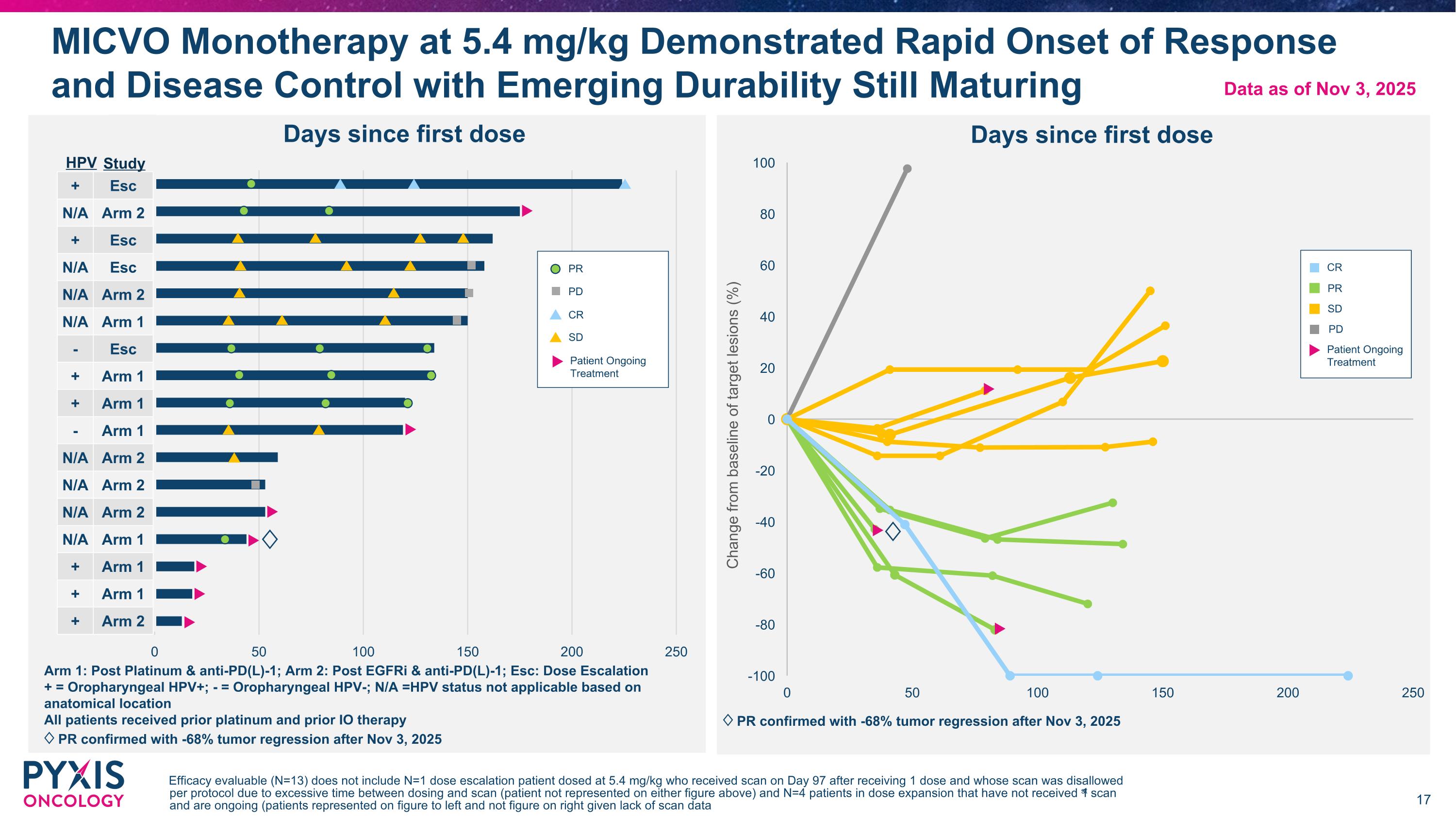
MICVO Monotherapy at 5.4 mg/kg Demonstrated Rapid Onset of Response and Disease Control with Emerging Durability Still Maturing Efficacy evaluable (N=13) does not include N=1 dose escalation patient dosed at 5.4 mg/kg who received scan on Day 97 after receiving 1 dose and whose scan was disallowed per protocol due to excessive time between dosing and scan (patient not represented on either figure above) and N=4 patients in dose expansion that have not received 1st scan and are ongoing (patients represented on figure to left and not figure on right given lack of scan data Arm 1: Post Platinum & anti-PD(L)-1; Arm 2: Post EGFRi & anti-PD(L)-1; Esc: Dose Escalation + = Oropharyngeal HPV+; - = Oropharyngeal HPV-; N/A =HPV status not applicable based on anatomical location All patients received prior platinum and prior IO therapy ♢ PR confirmed with -68% tumor regression after Nov 3, 2025 HPV + Esc N/A Arm 2 + Esc N/A Esc N/A Arm 2 N/A Arm 1 - Esc + Arm 1 + Arm 1 - Arm 1 N/A Arm 2 N/A Arm 2 N/A Arm 2 N/A Arm 1 + Arm 1 + Arm 1 + Arm 2 PR PD CR SD Patient Ongoing Treatment PR PD SD CR Patient Ongoing Treatment Study Data as of Nov 3, 2025 ♢ ♢ ♢ PR confirmed with -68% tumor regression after Nov 3, 2025
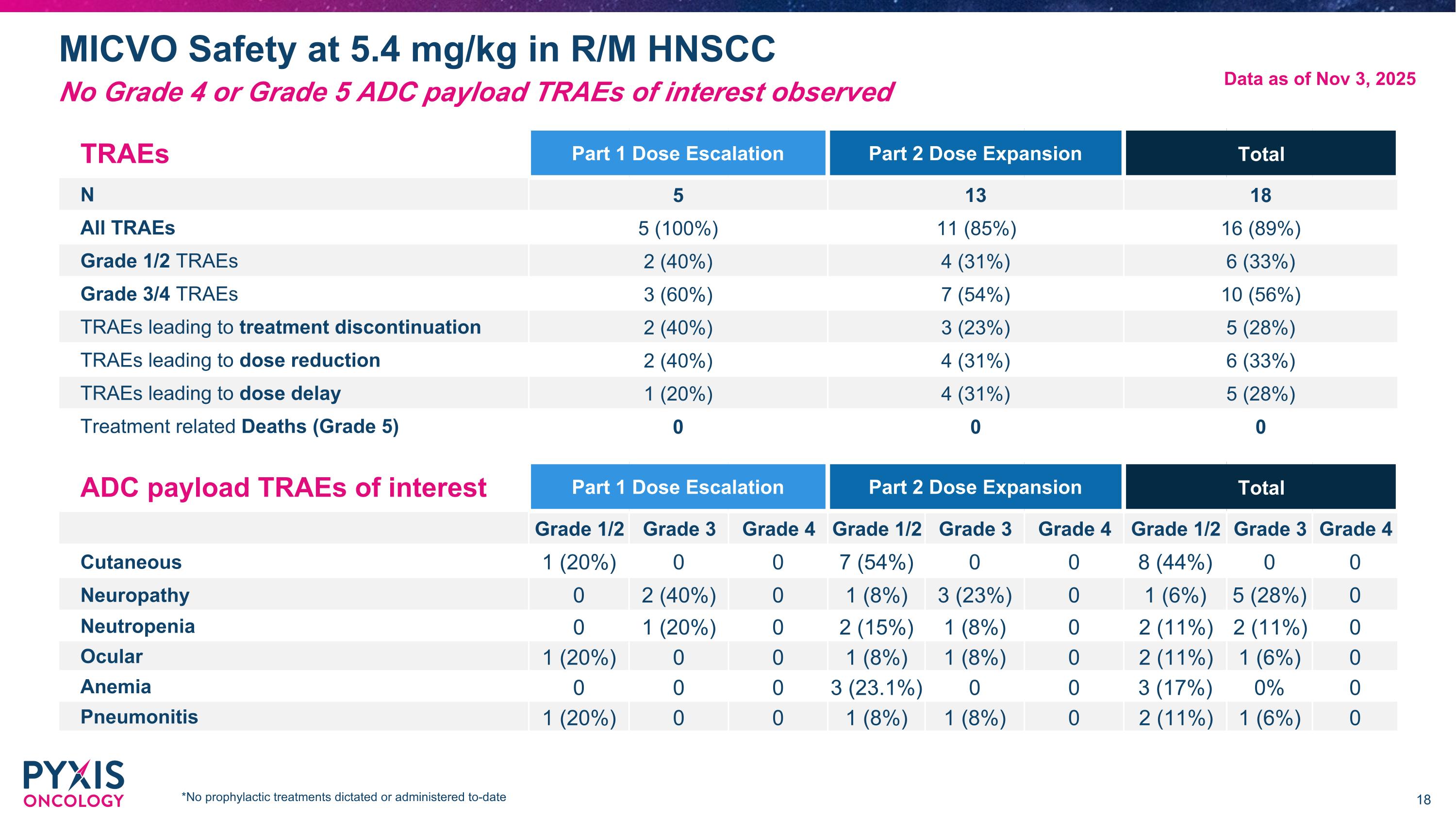
MICVO Safety at 5.4 mg/kg in R/M HNSCC TRAEs Part 1 Dose Escalation Part 2 Dose Expansion Total N 5 13 18 All TRAEs 5 (100%) 11 (85%) 16 (89%) Grade 1/2 TRAEs 2 (40%) 4 (31%) 6 (33%) Grade 3/4 TRAEs 3 (60%) 7 (54%) 10 (56%) TRAEs leading to treatment discontinuation 2 (40%) 3 (23%) 5 (28%) TRAEs leading to dose reduction 2 (40%) 4 (31%) 6 (33%) TRAEs leading to dose delay 1 (20%) 4 (31%) 5 (28%) Treatment related Deaths (Grade 5) 0 0 0 ADC payload TRAEs of interest Part 1 Dose Escalation Part 2 Dose Expansion Total Grade 1/2 Grade 3 Grade 4 Grade 1/2 Grade 3 Grade 4 Grade 1/2 Grade 3 Grade 4 Cutaneous 1 (20%) 0 0 7 (54%) 0 0 8 (44%) 0 0 Neuropathy 0 2 (40%) 0 1 (8%) 3 (23%) 0 1 (6%) 5 (28%) 0 Neutropenia 0 1 (20%) 0 2 (15%) 1 (8%) 0 2 (11%) 2 (11%) 0 Ocular 1 (20%) 0 0 1 (8%) 1 (8%) 0 2 (11%) 1 (6%) 0 Anemia 0 0 0 3 (23.1%) 0 0 3 (17%) 0% 0 Pneumonitis 1 (20%) 0 0 1 (8%) 1 (8%) 0 2 (11%) 1 (6%) 0 Data as of Nov 3, 2025 No Grade 4 or Grade 5 ADC payload TRAEs of interest observed *No prophylactic treatments dictated or administered to-date
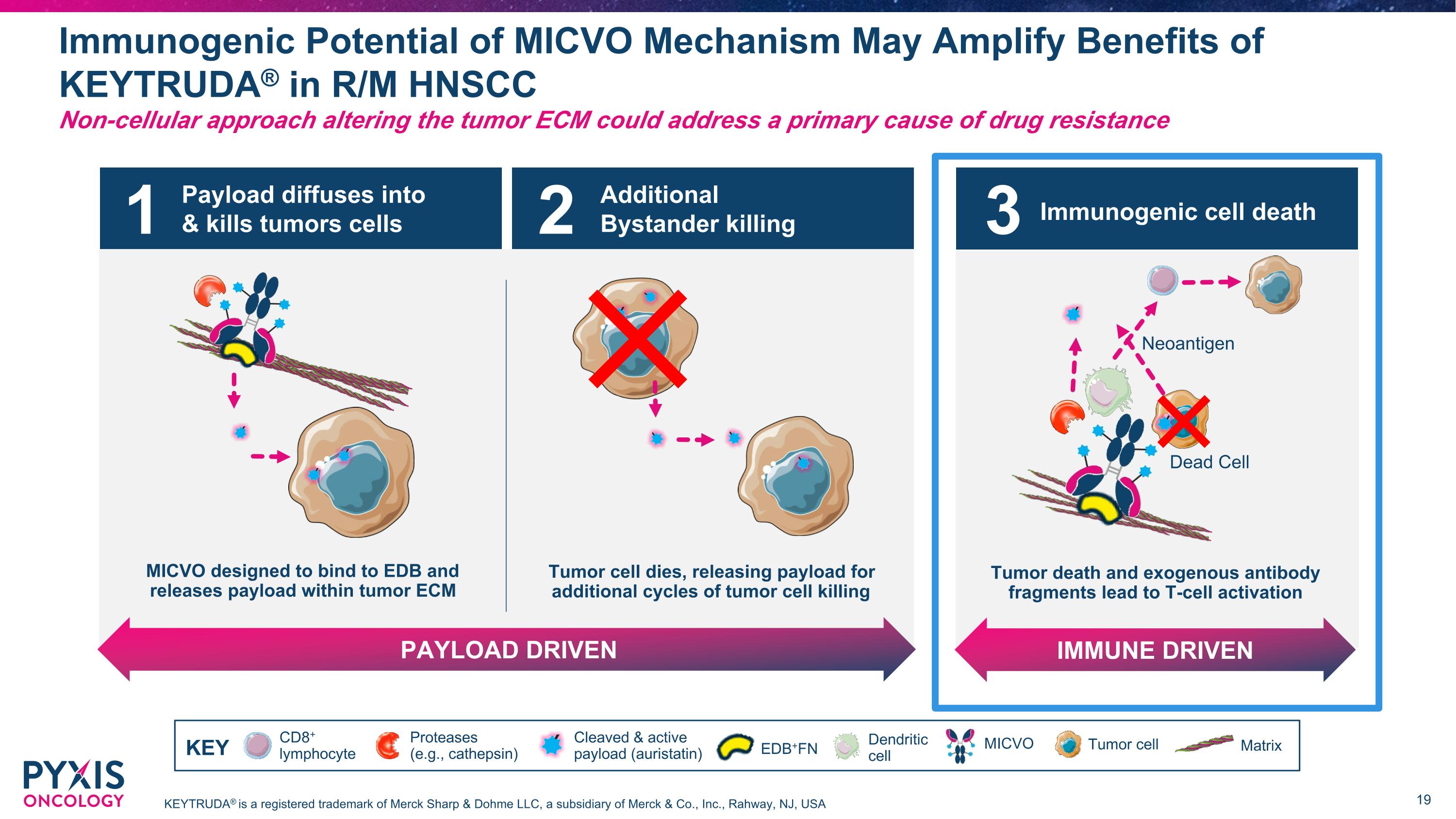
Payload diffuses into & kills tumors cells MICVO designed to bind to EDB and releases payload within tumor ECM Additional Bystander killing PAYLOAD DRIVEN Tumor cell dies, releasing payload for additional cycles of tumor cell killing 1 2 Immunogenic Potential of MICVO Mechanism May Amplify Benefits of KEYTRUDA® in R/M HNSCC Non-cellular approach altering the tumor ECM could address a primary cause of drug resistance CD8+ lymphocyte Dendritic cell MICVO Cleaved & active payload (auristatin) Tumor cell Matrix Proteases (e.g., cathepsin) KEY EDB+FN Immunogenic cell death IMMUNE DRIVEN Tumor death and exogenous antibody fragments lead to T-cell activation Dead Cell Neoantigen 3 KEYTRUDA® is a registered trademark of Merck Sharp & Dohme LLC, a subsidiary of Merck & Co., Inc., Rahway, NJ, USA
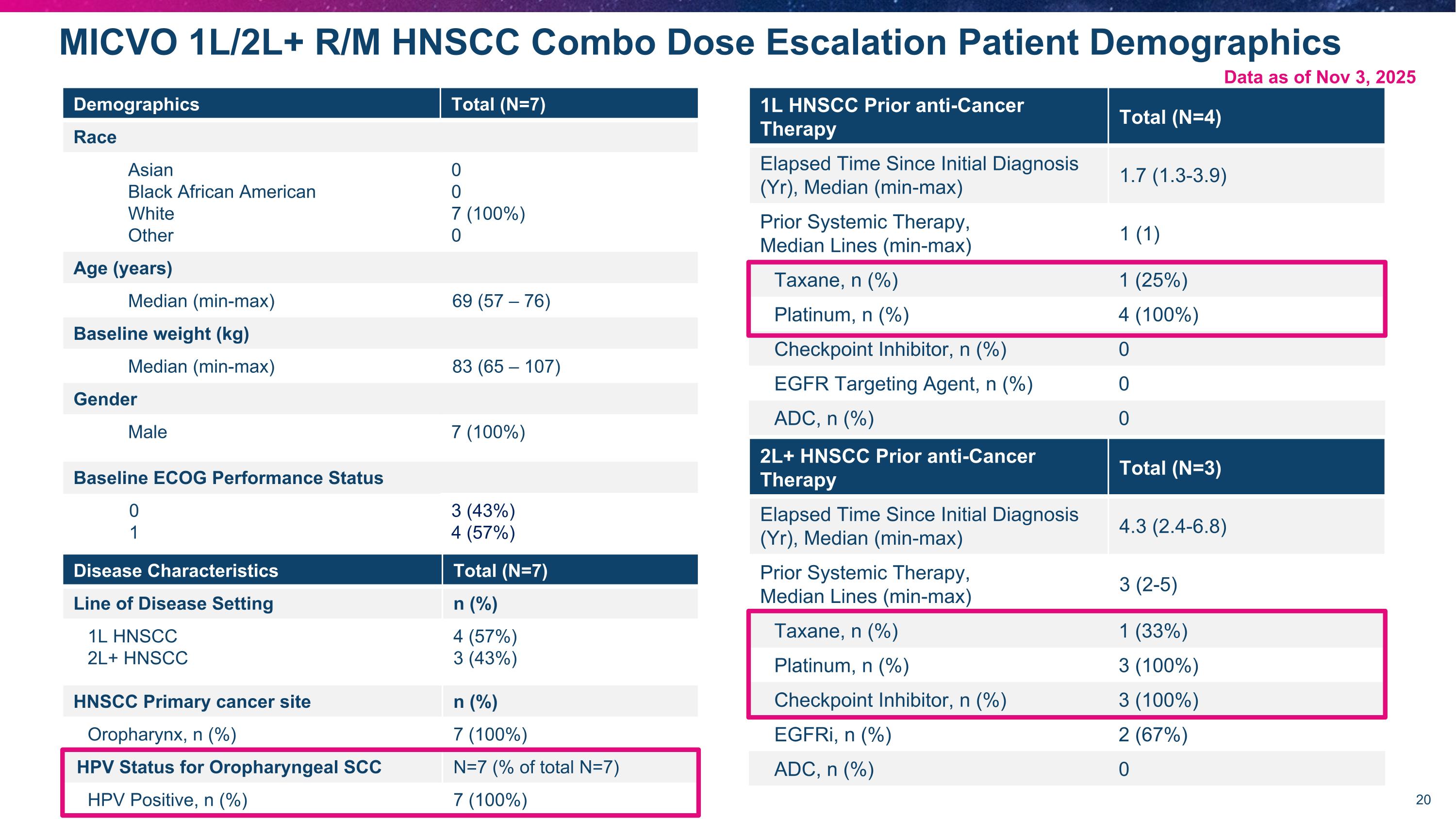
Demographics Total (N=7) Race Asian Black African American White Other 0 0 7 (100%) 0 Age (years) Median (min-max) 69 (57 – 76) Baseline weight (kg) Median (min-max) 83 (65 – 107) Gender Male 7 (100%) Baseline ECOG Performance Status 0 1 3 (43%) 4 (57%) MICVO 1L/2L+ R/M HNSCC Combo Dose Escalation Patient Demographics Data as of Nov 3, 2025 Disease Characteristics Total (N=7) Line of Disease Setting n (%) 1L HNSCC 2L+ HNSCC 4 (57%) 3 (43%) HNSCC Primary cancer site n (%) Oropharynx, n (%) 7 (100%) HPV Status for Oropharyngeal SCC N=7 (% of total N=7) HPV Positive, n (%) 7 (100%) 2L+ HNSCC Prior anti-Cancer Therapy Total (N=3) Elapsed Time Since Initial Diagnosis (Yr), Median (min-max) 4.3 (2.4-6.8) Prior Systemic Therapy, Median Lines (min-max) 3 (2-5) Taxane, n (%) 1 (33%) Platinum, n (%) 3 (100%) Checkpoint Inhibitor, n (%) 3 (100%) EGFRi, n (%) 2 (67%) ADC, n (%) 0 1L HNSCC Prior anti-Cancer Therapy Total (N=4) Elapsed Time Since Initial Diagnosis (Yr), Median (min-max) 1.7 (1.3-3.9) Prior Systemic Therapy, Median Lines (min-max) 1 (1) Taxane, n (%) 1 (25%) Platinum, n (%) 4 (100%) Checkpoint Inhibitor, n (%) 0 EGFR Targeting Agent, n (%) 0 ADC, n (%) 0 Data as of Nov 3, 2025
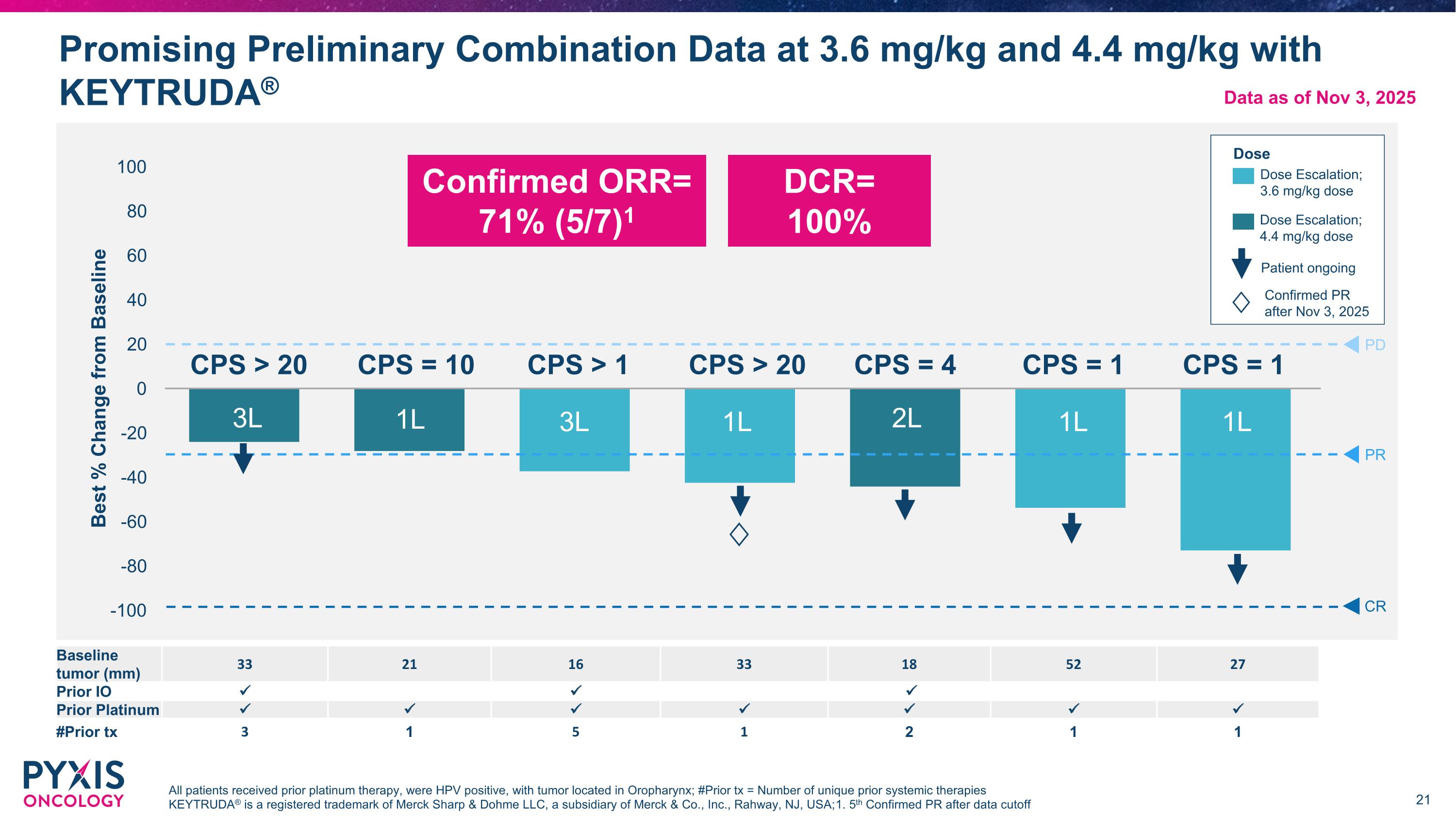
Promising Preliminary Combination Data at 3.6 mg/kg and 4.4 mg/kg with KEYTRUDA® All patients received prior platinum therapy, were HPV positive, with tumor located in Oropharynx; #Prior tx = Number of unique prior systemic therapies KEYTRUDA® is a registered trademark of Merck Sharp & Dohme LLC, a subsidiary of Merck & Co., Inc., Rahway, NJ, USA; 1. 5th Confirmed PR after data cutoff PD PR CR CPS = 1 CPS = 1 CPS = 10 3L 1L 3L 1L 2L 1L 1L Baseline tumor (mm) 33 21 16 33 18 52 27 Prior IO Prior Platinum #Prior tx 3 1 5 1 2 1 1 Dose Dose Escalation; 3.6 mg/kg dose Dose Escalation; 4.4 mg/kg dose DCR= 100% CPS > 20 CPS > 1 CPS > 20 CPS = 4 Data as of Nov 3, 2025 Confirmed ORR= 71% (5/7)1 Patient ongoing Confirmed PR after Nov 3, 2025 ♢ ♢
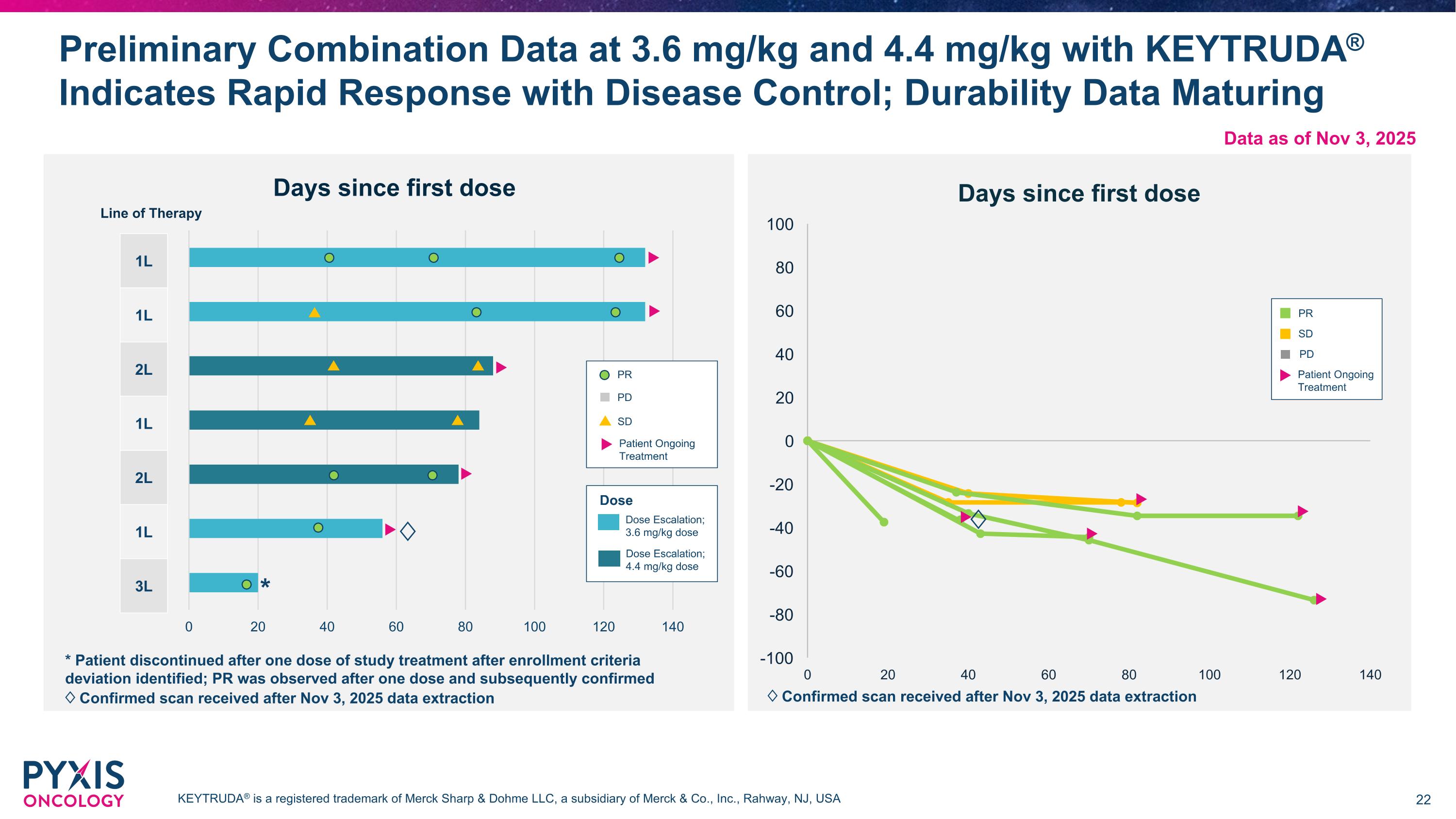
Preliminary Combination Data at 3.6 mg/kg and 4.4 mg/kg with KEYTRUDA® Indicates Rapid Response with Disease Control; Durability Data Maturing * Patient discontinued after one dose of study treatment after enrollment criteria deviation identified; PR was observed after one dose and subsequently confirmed ♢ Confirmed scan received after Nov 3, 2025 data extraction Dose Dose Escalation; 3.6 mg/kg dose Dose Escalation; 4.4 mg/kg dose 1L 1L 2L 1L 2L 1L 3L PR PD SD Patient Ongoing Treatment Line of Therapy PR PD SD Patient Ongoing Treatment KEYTRUDA® is a registered trademark of Merck Sharp & Dohme LLC, a subsidiary of Merck & Co., Inc., Rahway, NJ, USA * Data as of Nov 3, 2025 ♢ ♢ ♢ Confirmed scan received after Nov 3, 2025 data extraction
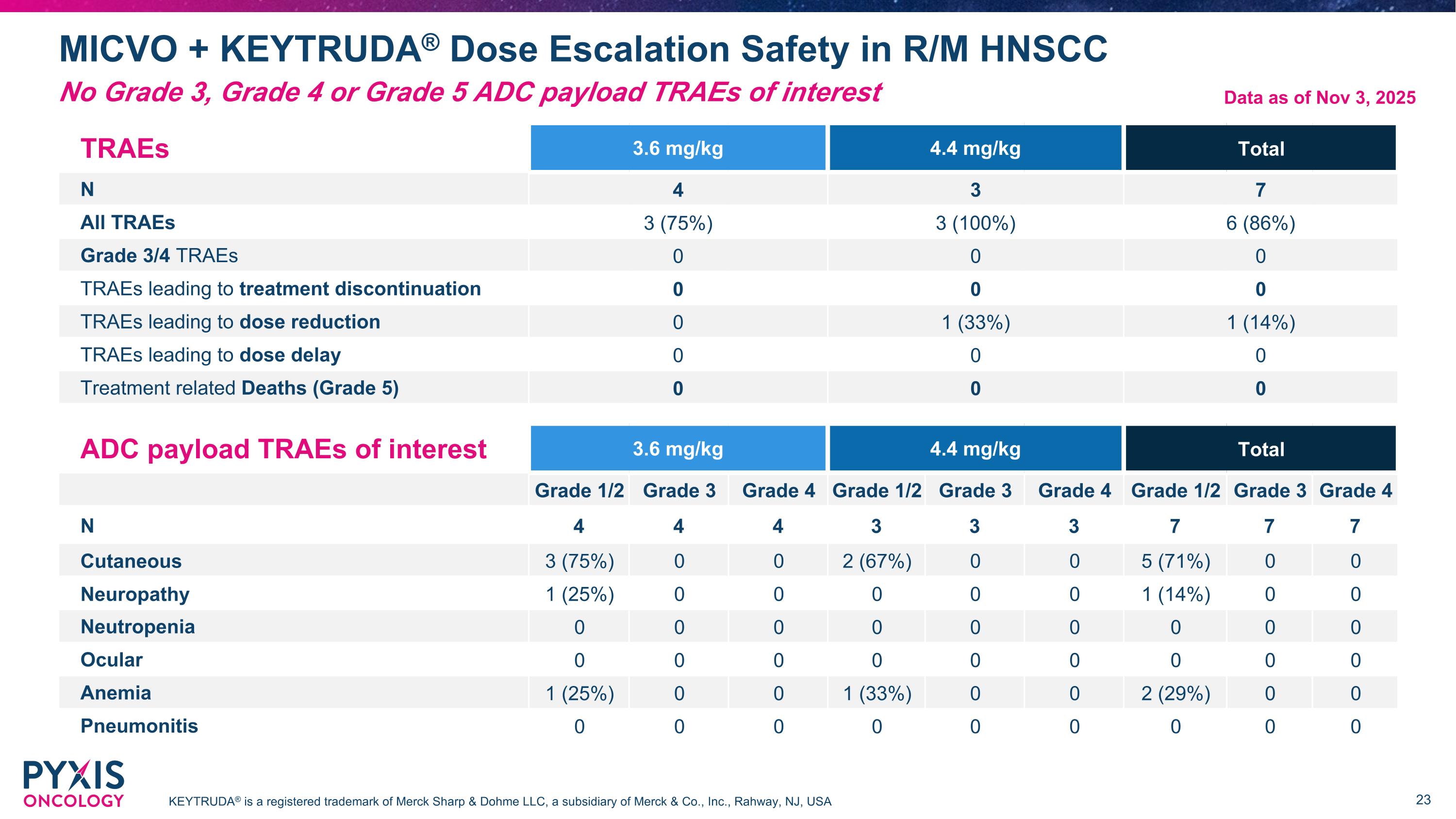
MICVO + KEYTRUDA® Dose Escalation Safety in R/M HNSCC KEYTRUDA® is a registered trademark of Merck Sharp & Dohme LLC, a subsidiary of Merck & Co., Inc., Rahway, NJ, USA TRAEs 3.6 mg/kg 4.4 mg/kg Total N 4 3 7 All TRAEs 3 (75%) 3 (100%) 6 (86%) Grade 3/4 TRAEs 0 0 0 TRAEs leading to treatment discontinuation 0 0 0 TRAEs leading to dose reduction 0 1 (33%) 1 (14%) TRAEs leading to dose delay 0 0 0 Treatment related Deaths (Grade 5) 0 0 0 ADC payload TRAEs of interest 3.6 mg/kg 4.4 mg/kg Total Grade 1/2 Grade 3 Grade 4 Grade 1/2 Grade 3 Grade 4 Grade 1/2 Grade 3 Grade 4 N 4 4 4 3 3 3 7 7 7 Cutaneous 3 (75%) 0 0 2 (67%) 0 0 5 (71%) 0 0 Neuropathy 1 (25%) 0 0 0 0 0 1 (14%) 0 0 Neutropenia 0 0 0 0 0 0 0 0 0 Ocular 0 0 0 0 0 0 0 0 0 Anemia 1 (25%) 0 0 1 (33%) 0 0 2 (29%) 0 0 Pneumonitis 0 0 0 0 0 0 0 0 0 Data as of Nov 3, 2025 No Grade 3, Grade 4 or Grade 5 ADC payload TRAEs of interest
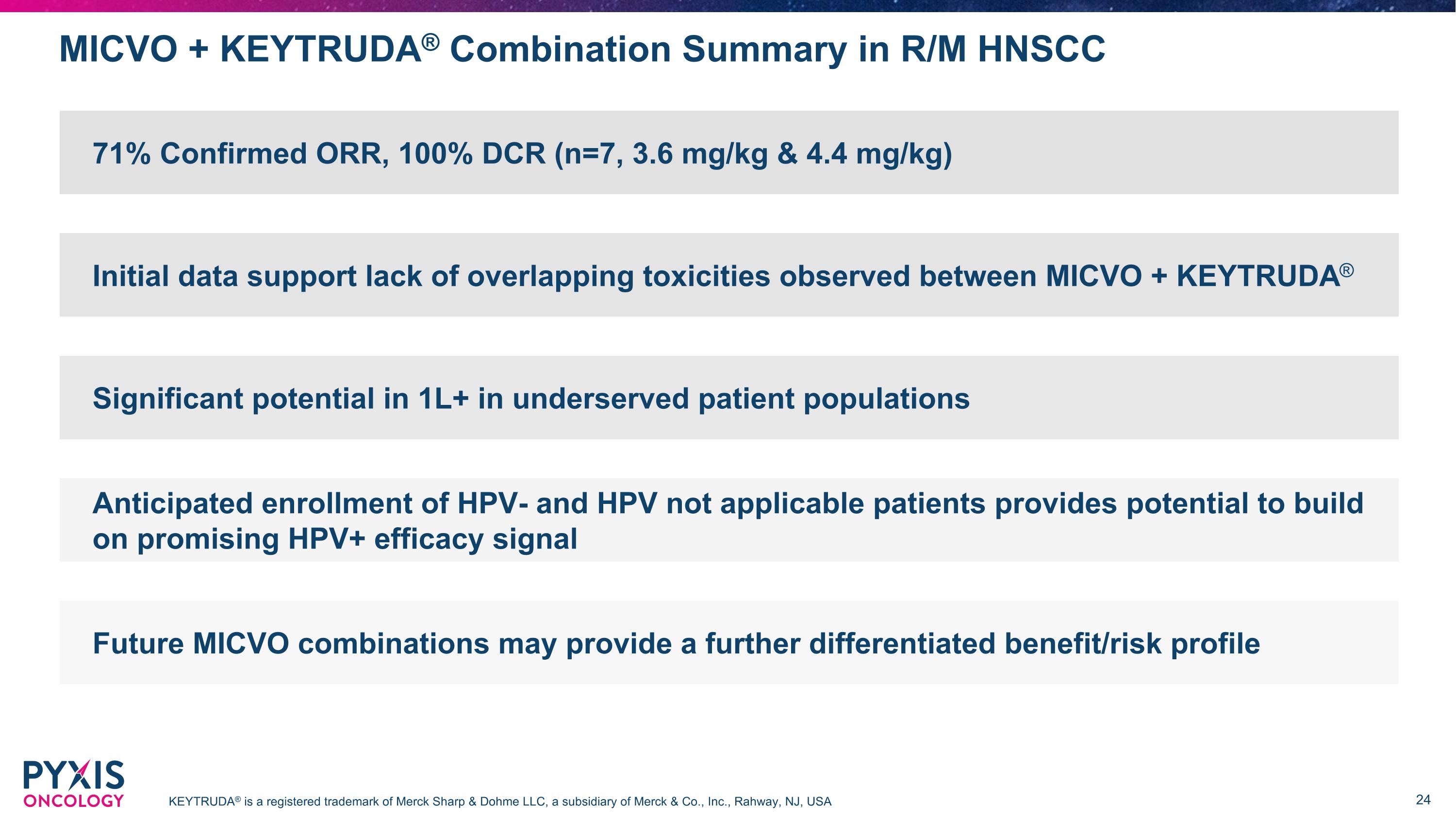
MICVO + KEYTRUDA® Combination Summary in R/M HNSCC KEYTRUDA® is a registered trademark of Merck Sharp & Dohme LLC, a subsidiary of Merck & Co., Inc., Rahway, NJ, USA 71% Confirmed ORR, 100% DCR (n=7, 3.6 mg/kg & 4.4 mg/kg) Initial data support lack of overlapping toxicities observed between MICVO + KEYTRUDA® Significant potential in 1L+ in underserved patient populations Anticipated enrollment of HPV- and HPV not applicable patients provides potential to build on promising HPV+ efficacy signal Future MICVO combinations may provide a further differentiated benefit/risk profile
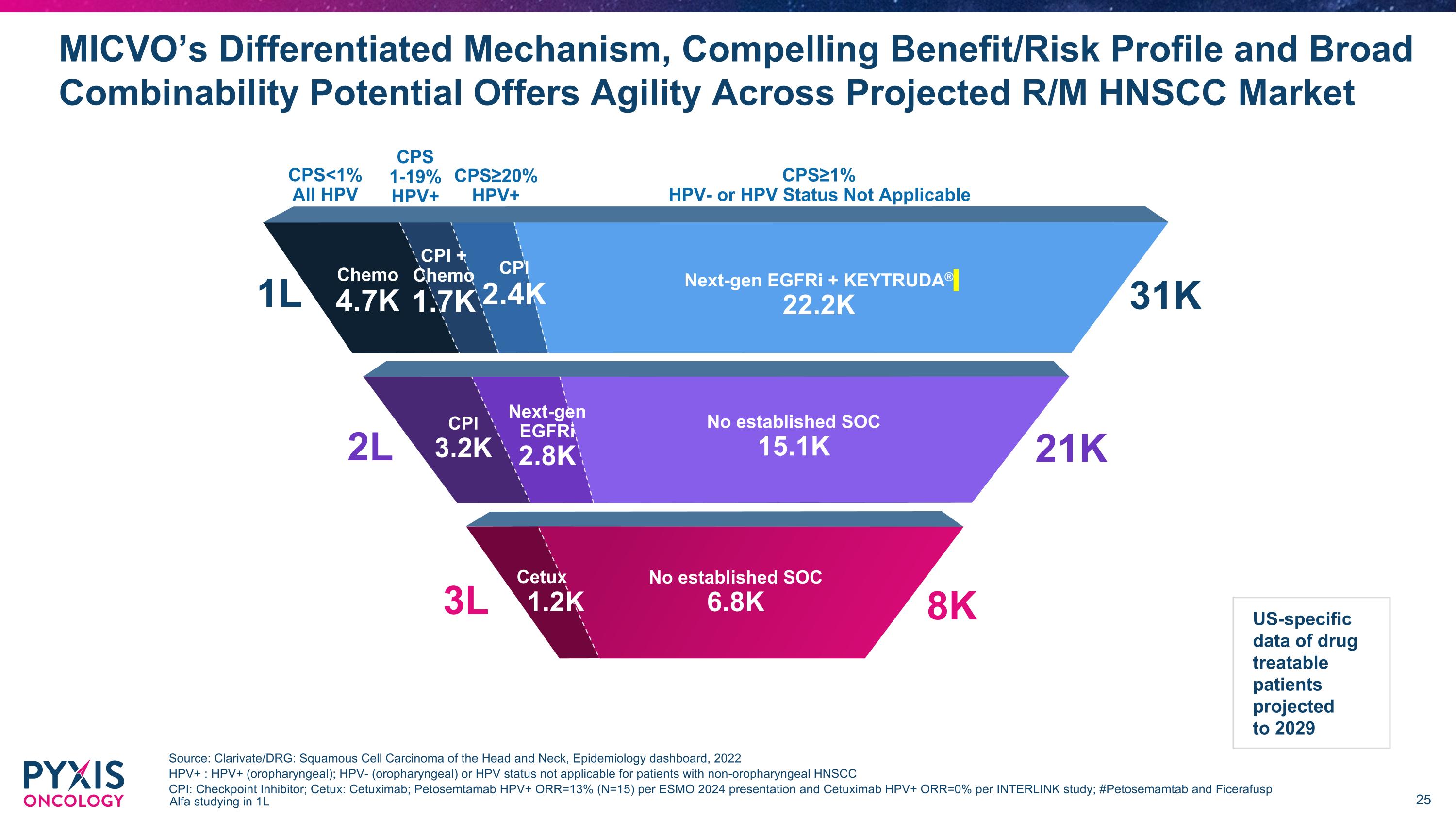
MICVO’s Differentiated Mechanism, Compelling Benefit/Risk Profile and Broad Combinability Potential Offers Agility Across Projected R/M HNSCC Market Source: Clarivate/DRG: Squamous Cell Carcinoma of the Head and Neck, Epidemiology dashboard, 2022 HPV+ : HPV+ (oropharyngeal); HPV- (oropharyngeal) or HPV status not applicable for patients with non-oropharyngeal HNSCC CPI: Checkpoint Inhibitor; Cetux: Cetuximab; Petosemtamab HPV+ ORR=13% (N=15) per ESMO 2024 presentation and Cetuximab HPV+ ORR=0% per INTERLINK study; #Petosemamtab and Ficerafusp Alfa studying in 1L CPI 3.0K 1L CPS<1% All HPV CPS≥20% HPV+ CPS 1-19% HPV+ CPS≥1% HPV- or HPV Status Not Applicable Next-gen EGFRi + KEYTRUDA® 22.2K Chemo 4.7K CPI 2.4K CPI + Chemo 1.7K 31K 2L Next-gen EGFRi 2.8K No established SOC 15.1K 21K CPI 3.2K 8K 3L Cetux 1.2K No established SOC 6.8K US-specific data of drug treatable patients projected to 2029
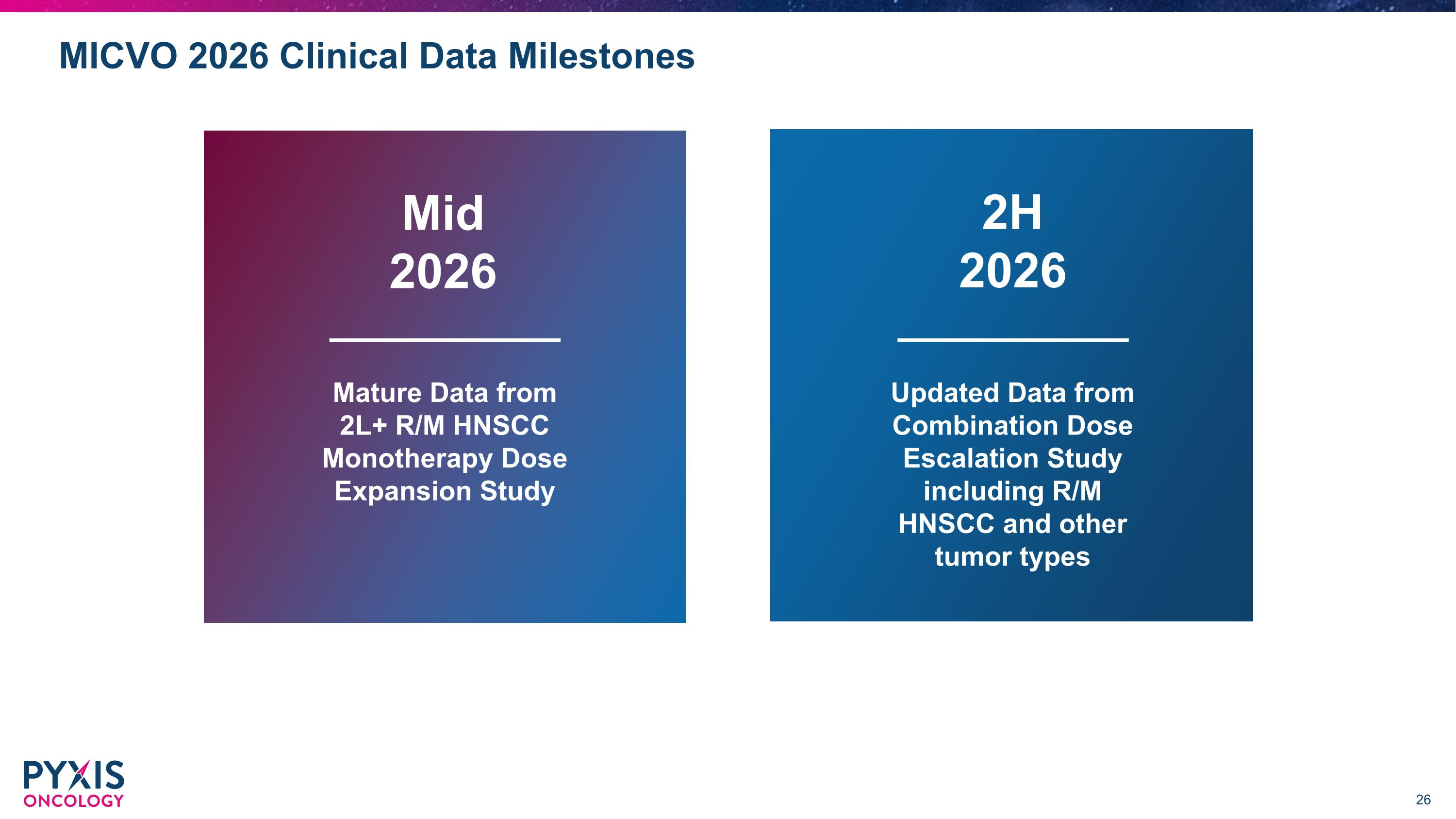
MICVO 2026 Clinical Data Milestones Mature Data from 2L+ R/M HNSCC Monotherapy Dose Expansion Study 2H 2026 Updated Data from Combination Dose Escalation Study including R/M HNSCC and other tumor types Mid 2026

Appendix
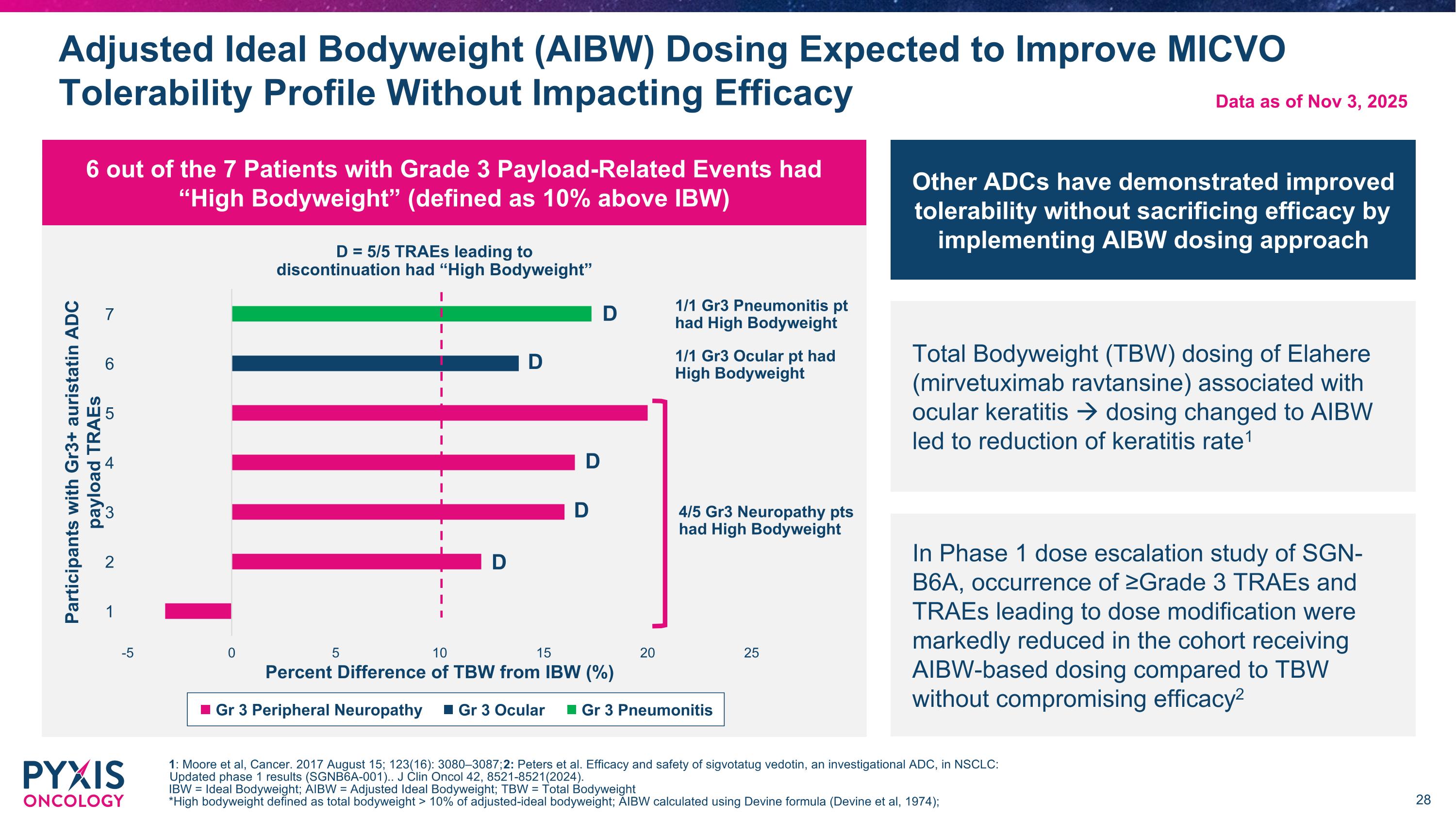
Adjusted Ideal Bodyweight (AIBW) Dosing Expected to Improve MICVO Tolerability Profile Without Impacting Efficacy 1: Moore et al, Cancer. 2017 August 15; 123(16): 3080–3087; 2: Peters et al. Efficacy and safety of sigvotatug vedotin, an investigational ADC, in NSCLC: Updated phase 1 results (SGNB6A-001).. J Clin Oncol 42, 8521-8521(2024). IBW = Ideal Bodyweight; AIBW = Adjusted Ideal Bodyweight; TBW = Total Bodyweight *High bodyweight defined as total bodyweight > 10% of adjusted-ideal bodyweight; AIBW calculated using Devine formula (Devine et al, 1974); Gr 3 Ocular Gr 3 Pneumonitis Gr 3 Peripheral Neuropathy Data as of Nov 3, 2025 Other ADCs have demonstrated improved tolerability without sacrificing efficacy by implementing AIBW dosing approach Total Bodyweight (TBW) dosing of Elahere (mirvetuximab ravtansine) associated with ocular keratitis dosing changed to AIBW led to reduction of keratitis rate1 In Phase 1 dose escalation study of SGN-B6A, occurrence of ≥Grade 3 TRAEs and TRAEs leading to dose modification were markedly reduced in the cohort receiving AIBW-based dosing compared to TBW without compromising efficacy2 1/1 Gr3 Pneumonitis pt had High Bodyweight 1/1 Gr3 Ocular pt had High Bodyweight 4/5 Gr3 Neuropathy pts had High Bodyweight D D D D D D = 5/5 TRAEs leading to discontinuation had “High Bodyweight” 6 out of the 7 Patients with Grade 3 Payload-Related Events had “High Bodyweight” (defined as 10% above IBW)
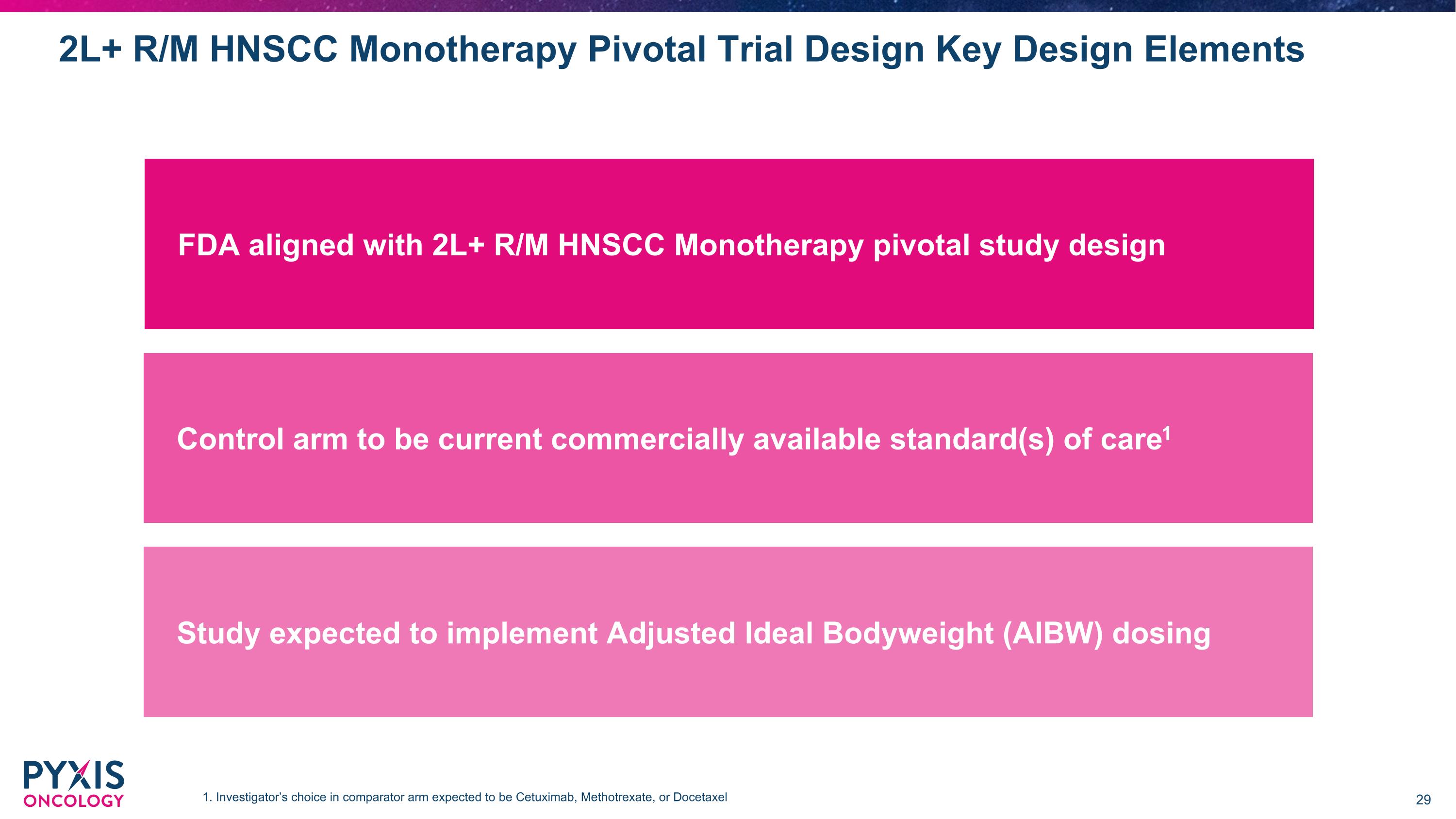
2L+ R/M HNSCC Monotherapy Pivotal Trial Design Key Design Elements FDA aligned with 2L+ R/M HNSCC Monotherapy pivotal study design Control arm to be current commercially available standard(s) of care1 Study expected to implement Adjusted Ideal Bodyweight (AIBW) dosing 1. Investigator’s choice in comparator arm expected to be Cetuximab, Methotrexate, or Docetaxel