
SoFi Technologies, Inc 8-K, filed Jul 29, 2025
SoFi Technologies, Inc. (SOFI)
8-K
2025-07-29
For: 2025-07-29
View Original
Added on
April 12, 2026
About this 8-K
SoFi Technologies, Inc filed this 8-K on July 29, 2025.
Items reported
- Item 2.02: Financial results
- Item 9.01: Financial statements and exhibits
UNITED STATES
SECURITIES AND EXCHANGE COMMISSION
Washington, D.C. 20549
__________________________________
FORM 8-K
__________________________________
CURRENT REPORT
PURSUANT TO SECTION 13 OR 15(D)
OF THE SECURITIES EXCHANGE ACT OF 1934
Date of Report (Date of earliest event reported): July 29, 2025
(Exact name of registrant as specified in its charter)
(State or other jurisdiction of incorporation) | (Commission File Number) | (I.R.S. Employer Identification No.) | ||||||
| (Address of principal executive offices) | (Zip Code) | |||||||
(855 ) 456-7634
(Registrant’s telephone number, including area code)
Check the appropriate box below if the Form 8-K is intended to simultaneously satisfy the filing obligation of the registrant under any of the following provisions:
| Written communications pursuant to Rule 425 under the Securities Act (17 CFR 230.425) | ||||||||
| Soliciting material pursuant to Rule 14a-12 under the Exchange Act (17 CFR 240.14a-12) | ||||||||
| Pre-commencement communications pursuant to Rule 14d-2(b) under the Exchange Act (17 CFR 240.14d-2(b)) | ||||||||
| Pre-commencement communications pursuant to Rule 13e-4(c) under the Exchange Act (17 CFR 240.13e-4(c)) | ||||||||
Securities registered pursuant to Section 12(b) of the Act:
| Title of each class | Trading Symbol(s) | Name of each exchange on which registered | ||||||||||||
Indicate by check mark whether the registrant is an emerging growth company as defined in Rule 405 of the Securities Act of 1933 (§230.405 of this chapter) or Rule 12b-2 of the Securities Exchange Act of 1934 (§240.12b-2 of this chapter).
Emerging growth company ☐
If an emerging growth company, indicate by check mark if the registrant has elected not to use the extended transition period for complying with any new or revised financial accounting standards provided pursuant to Section 13(a) of the Exchange Act. ☐
Item 2.02 Results of Operations and Financial Condition.
On July 29, 2025, SoFi Technologies, Inc. issued a press release reporting its financial results for the three and six months ended June 30, 2025. A copy of the press release is attached as Exhibit 99.1 and is incorporated herein by reference.
The information in this Item 2.02 is furnished and shall not be deemed “filed” for purposes of Section 18 of the Securities Exchange Act of 1934, as amended (the “Exchange Act”), or otherwise subject to liabilities under that section, and shall not be deemed to be incorporated by reference into the filings of the Company under the Securities Act of 1933, as amended, or the Exchange Act, regardless of any general incorporation language in such filings.
Item 9.01 Financial Statements and Exhibits.
(d) Exhibits
| Exhibit No. | Description | |||||||
| 104 | Cover Page Interactive Data File (embedded within the inline XBRL document) | |||||||
1
SIGNATURE
Pursuant to the requirements of the Securities Exchange Act of 1934, as amended, the registrant has duly caused this report to be signed on its behalf by the undersigned hereunto duly authorized.
| SoFi Technologies, Inc. | ||||||||
Date: July 29, 2025 | By: | /s/ Christopher Lapointe | ||||||
| Name: | Christopher Lapointe | |||||||
| Title: | Chief Financial Officer | |||||||
SoFi Reports Second Quarter 2025, Accelerates Net Revenue Growth to Record $855 Million, Record Member and Product Growth, and Net Income of $97 Million
Adjusted Net Revenue up 44% to a record $858 million
Adjusted EBITDA up 81% to a record $249 million
Fee-based Revenue up 72% to a record $378 million
Member growth up 34% to a record 11.7 million members
Product growth up 34% to a record 17.1 million products
Management Raises 2025 Guidance
SAN FRANCISCO, Calif. – (BUSINESS WIRE) – July 29, 2025 – SoFi Technologies, Inc. (NASDAQ: SOFI), a member-centric, one-stop shop for digital financial services that helps members borrow, save, spend, invest and protect their money, reported financial results today for its second quarter ended June 30, 2025.
“We had an exceptional second quarter, driving durable growth and strong returns through our relentless focus on product innovation and brand building,” said Anthony Noto, CEO of SoFi.
“We accelerated adjusted net revenue growth to 44% year-over-year, the highest level in over two years, driven by record high new members, as well as new products, and an increase in fee-based revenue. This consistent, disciplined investment across our platform, combined with unmatched products and services, uniquely positions us to capture the massive and expanding opportunities ahead. Looking forward, we are focusing on innovating faster than ever before to serve more of our members' needs and increasing our financial guidance for 2025.”
Consolidated Results Summary
| Three Months Ended June 30, | % Change | Six Months Ended June 30, | % Change | |||||||||||||||||||||||||||||||||||
($ in thousands, except per share amounts) | 2025 | 2024 | 2025 | 2024 | ||||||||||||||||||||||||||||||||||
Consolidated – GAAP | ||||||||||||||||||||||||||||||||||||||
| Total net revenue | $ | 854,944 | $ | 598,618 | 43 | % | $ | 1,626,703 | $ | 1,243,613 | 31 | % | ||||||||||||||||||||||||||
| Net income | 97,263 | 17,404 | 459 | % | 168,379 | 105,447 | 60 | % | ||||||||||||||||||||||||||||||
Net income attributable to common stockholders – diluted | 97,614 | 7,954 | n/m | 169,069 | 30,089 | 462 | % | |||||||||||||||||||||||||||||||
| Earnings per share attributable to common stockholders – diluted | $ | 0.08 | $ | 0.01 | 700 | % | $ | 0.14 | $ | 0.03 | 367 | % | ||||||||||||||||||||||||||
Consolidated – Non-GAAP(1) | ||||||||||||||||||||||||||||||||||||||
| Adjusted net revenue | $ | 858,230 | $ | 596,965 | 44 | % | $ | 1,628,950 | $ | 1,177,613 | 38 | % | ||||||||||||||||||||||||||
| Adjusted EBITDA | 249,083 | 137,901 | 81 | % | 459,420 | 282,286 | 63 | % | ||||||||||||||||||||||||||||||
| Adjusted net income | 97,263 | 17,404 | 459 | % | 168,379 | 105,447 | 60 | % | ||||||||||||||||||||||||||||||
Adjusted net income attributable to common stockholders – diluted | 97,614 | 7,954 | n/m | 169,069 | 30,089 | 462 | % | |||||||||||||||||||||||||||||||
Adjusted earnings per share – diluted | $ | 0.08 | $ | 0.01 | 700 | % | $ | 0.15 | $ | 0.03 | 400 | % | ||||||||||||||||||||||||||
___________________
(1)For more information and reconciliations of these non-GAAP measures to the most comparable GAAP measures, see “Non-GAAP Financial Measures” and Table 2 to the “Financial Tables” herein.
Product Highlights
•Set New Records in Members and Products. A record 850,000 new members joined SoFi in the quarter, up 34% from the prior year to 11.7 million. The company added a record 1.26 million new products, up 34% from the prior year to 17.1 million products.
•Delivering Results by Serving Members’ Full Financial Needs. SoFi's integrated one-stop shop financial services model drove consistent member acquisition and product adoption, with 35% of new products
1
opened by existing members. This strategy boosted Financial Services revenue per product by over 50% year-over-year in the second quarter. Products like SoFi Relay, which provides members with fully integrated financial insights; SoFi Money, which offers industry-leading 3.8% APY; and SoFi Invest, which provides expansion of alternative investment opportunities, deliver tangible value and competitive benefits that are seamlessly integrated on SoFi’s one-stop shop financial services platform.
•Demonstrating Successful Diversification and Durable Growth with Record Fee‑Based Revenue. Total fee-based revenue reached a record of $377.5 million, up 72% from the prior year period, driven by strong performance from SoFi’s Loan Platform Business (LPB), origination fees, referral fees, interchange revenue and brokerage fee revenue. LPB originated $2.4 billion in loans on behalf of third parties in the second quarter, an increase of 57% from the first quarter, and is now running at an annualized pace of over $9.5 billion in originations and half a billion dollars in high-margin, high-return fee-based revenue, and moved closer to the goal of becoming a billion-dollar revenue business for SoFi.
•Loan Originations Reach Record-Highs with Expanded Product Innovation. SoFi originated a record $8.8 billion in loans during the quarter, including LPB originations. With enhanced technology and improved fulfillment capabilities, SoFi launched a new personal loan product for prime credit card customers. Personal loan originations were up 66% year-over-year. Student loan originations were up 35% from a year ago with a new flexible student loan refinancing option. With stronger technology, improved fulfillment capabilities, and a recent home equity offering, SoFi home loan originations increased by 92% year-over-year.
•Transforming the Future of Finance with Crypto and AI Technology. SoFi announced plans to launch blockchain-enabled international money transfers and a return to crypto investing. Also, strategic investments and innovations in AI, with upcoming features like "Cash Coach", will give even more members tools to optimize their finances.
•Strengthened Brand Awareness to Attract More Members to SoFi’s Ecosystem. With continued investment to build SoFi into a trusted household name, unaided brand awareness accelerated to an all-time high of 8.5%.
•Further Improved Credit Performance. SoFi’s annualized charge-off rate decreased from 3.31% to 2.83% for personal loans compared to the first quarter. The on-balance sheet 90-day delinquency rate for personal loans decreased for the fifth consecutive quarter to 0.42%.
Consolidated Results
SoFi reported a number of key financial achievements. For the second quarter of 2025, GAAP net revenue of $854.9 million increased 43% relative to the prior-year period's $598.6 million. Record adjusted net revenue of $858.2 million grew 44% from the corresponding prior-year period of $597.0 million.
For the second quarter of 2025, total fee-based revenue reached a record of $377.5 million, a year-over-year increase of 72%. This was driven by strong performance from our Loan Platform Business, as well as origination fee revenue, referral fee revenue, interchange fee revenue and brokerage fee revenue. Together, the Financial Services and Technology Platform segments generated $472.4 million of net revenue, an increase of 74% from the prior year period.
SoFi reported its seventh consecutive quarter of GAAP profitability. For the second quarter of 2025, GAAP net income reached $97.3 million and diluted earnings per share reached $0.08.
Second quarter record adjusted EBITDA of $249.1 million increased 81% from the prior year period's $137.9 million. This represents an adjusted EBITDA margin of 29%. All three segments delivered strong contribution profit, at attractive margins.
2
Equity grew by $182.1 million during the quarter, ending at $6.9 billion and $6.16 of book value per share. Tangible book value grew by $193.8 million during the quarter, ending the period at $5.3 billion. Tangible book value per share was $4.72 at quarter-end, up from $3.94 per share in the prior year period.
Net interest income of $517.8 million for the second quarter was up 26% year-over-year. This was driven by a 24% increase in average interest-earning assets and a 77 basis point decrease in cost of funds, partially offset by a 56 basis point decrease in average asset yields year-over-year. For the second quarter, net interest margin of 5.86% increased 3 basis points year-over-year from 5.83%.
The average rate on deposits in the second quarter was 187 basis points lower than that of warehouse facilities, which translates to approximately $551.9 million of annualized interest expense savings due to the successful remixing of our funding base.
Member and Product Growth
Continued growth in both total members and products in the second quarter is the result of our continued investments in innovation and brand building and reflects the benefits of our broad product suite and unique Financial Services Productivity Loop (FSPL) strategy.
Added a record 850,000 members in the second quarter of 2025, bringing total members over 11.7 million, up 34% from 8.8 million at the end of the same prior year period.
Record product additions of 1.26 million in the second quarter of 2025, bringing total products to over 17.1 million, up 34% from 12.8 million at the end of the same prior year period.
| Members | Products | ||||
| In Thousands | In Thousands | ||||
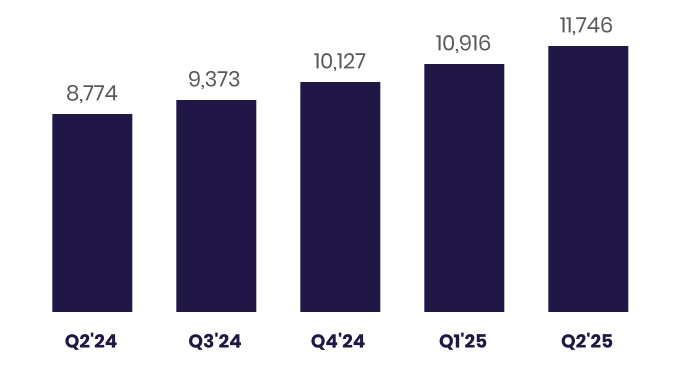
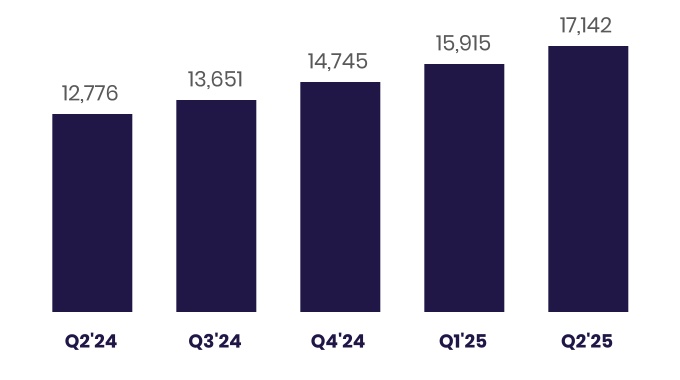
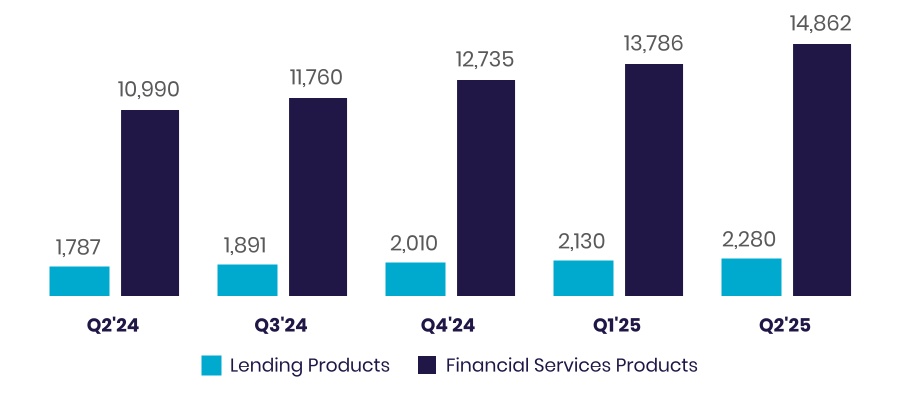
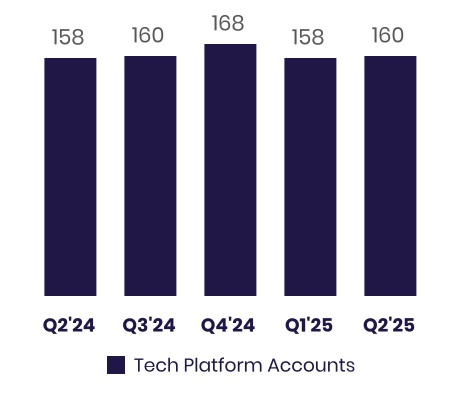
| Products By Segment | Technology Platform Accounts (1) | ||||
| In Thousands | In Millions | ||||
3
Note: For additional information on our company metrics, including the definitions of "Members", "Total Products" and "Technology Platform Total Accounts", see Table 6 in the “Financial Tables” herein. New member and new product addition metrics for the relevant period reflect actual growth or declines in members and products that occurred in that period whereas the total number of members and products reflects not only the growth or decline of each metric in the current period but also additions or deletions due to prior period factors, if any.
(1)The company includes SoFi accounts on the Galileo platform-as-a-service in its total Technology Platform accounts metric to better align with the presentation of Technology Platform segment revenue.
Financial Services products increased by 35% year-over-year to 14.9 million, primarily driven by continued demand for our SoFi Money, Relay and Invest products, and drove 89% of our total product growth. SoFi Money and SoFi Relay grew to 5.9 million and 5.5 million products, respectively, both representing nearly 40% year-over-year growth.
Lending products increased by 28% year-over-year to 2.3 million products, driven primarily by continued demand for personal, student and home loan products.
Technology Platform enabled accounts increased 1% year-over-year to 160 million.
Financial Services Segment Results
For the second quarter of 2025, Financial Services segment net revenue of $362.5 million more than doubled from the prior year period. Net interest income of $193.3 million increased 39% year-over-year, primarily driven by growth in consumer deposits. Noninterest income of $169.2 million more than quadrupled year-over-year, and now represents nearly $680 million in annualized revenue.
In the second quarter, SoFi's Loan Platform Business added $130.6 million to our consolidated adjusted net revenue. Of this, $127.4 million was driven by $2.4 billion of personal loans originated on behalf of third parties as well as referrals to third parties.
In addition to our Loan Platform Business, SoFi continued to see healthy growth in interchange fee revenue in the second quarter, up 83% year-over-year, as a result of nearly $18 billion in total annualized spend in the quarter across Money and Credit Card.
Contribution profit for the second quarter of 2025 reached $188.2 million, a $133.0 million improvement from the prior year period, while contribution margin grew 21 percentage points year-over-year to 52%. This is a reflection of the strong operating leverage generated in the segment, with directly attributable expenses increasing only 50%.
Financial Services – Segment Results of Operations | ||||||||||||||||||||||||||||||||||||||
| Three Months Ended June 30, | Six Months Ended June 30, | |||||||||||||||||||||||||||||||||||||
($ in thousands) | 2025 | 2024 | % Change | 2025 | 2024 | % Change | ||||||||||||||||||||||||||||||||
| Net interest income | $ | 193,322 | $ | 139,229 | 39 | % | $ | 366,521 | $ | 258,942 | 42 | % | ||||||||||||||||||||||||||
| Noninterest income | 169,211 | 36,903 | 359 | % | 299,131 | 67,741 | 342 | % | ||||||||||||||||||||||||||||||
| Total net revenue – Financial Services | 362,533 | 176,132 | 106 | % | 665,652 | 326,683 | 104 | % | ||||||||||||||||||||||||||||||
| Provision for credit losses | (10,031) | (11,634) | (14) | % | (15,670) | (18,799) | (17) | % | ||||||||||||||||||||||||||||||
| Directly attributable expenses | (164,270) | (109,278) | 50 | % | (313,418) | (215,490) | 45 | % | ||||||||||||||||||||||||||||||
Contribution profit – Financial Services | $ | 188,232 | $ | 55,220 | 241 | % | $ | 336,564 | $ | 92,394 | 264 | % | ||||||||||||||||||||||||||
Contribution margin – Financial Services(1) | 52 | % | 31 | % | 51 | % | 28 | % | ||||||||||||||||||||||||||||||
___________________
(1)Contribution margin is defined for each of our reportable segments as contribution profit divided by net revenue.
By continuously innovating with new and relevant offerings, features and rewards for members, SoFi grew total Financial Services products by 3.9 million, or 35%, year-over-year, bringing the total to 14.9 million at quarter-end. SoFi Money reached 5.9 million products, Relay reached 5.5 million products and SoFi Invest reached 2.9 million products by the end of the second quarter.
4
Monetization continues to improve with annualized revenue per product of $98 during the second quarter, up 52% year-over-year.
In the second quarter of 2025, total deposits grew to $29.5 billion, with nearly 90% of SoFi Money deposits (inclusive of Checking and Savings and cash management accounts) coming from direct deposit members.
Financial Services – Products | June 30, | |||||||||||||||||||
| 2025 | 2024 | % Change | ||||||||||||||||||
Money(1) | 5,887,669 | 4,298,642 | 37 | % | ||||||||||||||||
| Invest | 2,853,416 | 2,332,045 | 22 | % | ||||||||||||||||
| Credit Card | 344,469 | 260,585 | 32 | % | ||||||||||||||||
Referred loans(2) | 122,580 | 65,308 | 88 | % | ||||||||||||||||
| Relay | 5,526,315 | 3,933,706 | 40 | % | ||||||||||||||||
| At Work | 127,224 | 99,564 | 28 | % | ||||||||||||||||
Total financial services products | 14,861,673 | 10,989,850 | 35 | % | ||||||||||||||||
___________________
(1)Includes checking and savings accounts held at SoFi Bank, and cash management accounts.
(2)Limited to loans wherein we provide third party fulfillment services as part of our Loan Platform Business.
Technology Platform Segment Results
Technology Platform segment net revenue of $109.8 million for the second quarter of 2025 increased 15% year-over-year. Contribution profit of $33.2 million reflected a contribution margin of 30%.
SoFi continues to diversify its Technology Platform client base. Banco Nación, one of Argentina’s largest financial institutions, selected our Cyberbank Digital platform to modernize their digital banking infrastructure.
Technology Platform – Segment Results of Operations | ||||||||||||||||||||||||||||||||||||||
| Three Months Ended June 30, | Six Months Ended June 30, | |||||||||||||||||||||||||||||||||||||
($ in thousands) | 2025 | 2024 | % Change | 2025 | 2024 | % Change | ||||||||||||||||||||||||||||||||
| Net interest income | $ | 266 | $ | 555 | (52) | % | $ | 679 | $ | 1,056 | (36) | % | ||||||||||||||||||||||||||
| Noninterest income | 109,567 | 94,883 | 15 | % | 212,581 | 188,748 | 13 | % | ||||||||||||||||||||||||||||||
| Total net revenue – Technology Platform | 109,833 | 95,438 | 15 | % | 213,260 | 189,804 | 12 | % | ||||||||||||||||||||||||||||||
| Directly attributable expenses | (76,638) | (64,287) | 19 | % | (149,152) | (127,911) | 17 | % | ||||||||||||||||||||||||||||||
Contribution profit | $ | 33,195 | $ | 31,151 | 7 | % | $ | 64,108 | $ | 61,893 | 4 | % | ||||||||||||||||||||||||||
Contribution margin – Technology Platform(1) | 30 | % | 33 | % | 30 | % | 33 | % | ||||||||||||||||||||||||||||||
___________________
(1)Contribution margin is defined for each of our reportable segments as contribution profit divided by net revenue.
Technology Platform total enabled client accounts increased 1% year-over-year, to 160.0 million up from 158.5 million in the prior-year period.
Technology Platform | June 30, | |||||||||||||||||||
| 2025 | 2024 | % Change | ||||||||||||||||||
| Total accounts | 160,046,369 | 158,485,125 | 1 | % | ||||||||||||||||
Lending Segment Results
For the second quarter of 2025, Lending segment GAAP net revenue of $443.5 million increased 30% from the prior year period, while adjusted net revenue for the segment of $446.8 million increased 32% from the prior year period.
Lending segment performance in the second quarter was driven by net interest income, which rose 33% year-over-year, primarily driven by growth in average loan balances of 27%.
5
Lending segment second quarter contribution profit of $244.7 million was up 24% from $197.9 million in the corresponding prior-year period. Lending segment adjusted contribution margin was strong at 55%. This strong performance reflects our ability to capitalize on continued strong demand for our lending products.
| Lending – Segment Results of Operations | ||||||||||||||||||||||||||||||||||||||
| Three Months Ended June 30, | Six Months Ended June 30, | |||||||||||||||||||||||||||||||||||||
($ in thousands) | 2025 | 2024 | % Change | 2025 | 2024 | % Change | ||||||||||||||||||||||||||||||||
| Net interest income | $ | 372,675 | $ | 279,212 | 33 | % | $ | 733,296 | $ | 545,748 | 34 | % | ||||||||||||||||||||||||||
| Noninterest income | 70,837 | 61,493 | 15 | % | 123,589 | 125,433 | (1) | % | ||||||||||||||||||||||||||||||
| Total net revenue – Lending | 443,512 | 340,705 | 30 | % | 856,885 | 671,181 | 28 | % | ||||||||||||||||||||||||||||||
| Servicing rights – change in valuation inputs or assumptions | 3,274 | (1,654) | (298) | % | 2,200 | (6,880) | (132) | % | ||||||||||||||||||||||||||||||
| Residual interests classified as debt – change in valuation inputs or assumptions | 12 | 1 | n/m | 47 | 74 | (36) | % | |||||||||||||||||||||||||||||||
| Directly attributable expenses | (202,088) | (141,114) | 43 | % | (375,487) | (258,718) | 45 | % | ||||||||||||||||||||||||||||||
| Contribution profit – Lending | $ | 244,710 | $ | 197,938 | 24 | % | $ | 483,645 | $ | 405,657 | 19 | % | ||||||||||||||||||||||||||
Contribution margin – Lending(1) | 55 | % | 58 | % | 56 | % | 60 | % | ||||||||||||||||||||||||||||||
Adjusted net revenue – Lending (non-GAAP)(2) | $ | 446,798 | $ | 339,052 | 32 | % | $ | 859,132 | $ | 664,375 | 29 | % | ||||||||||||||||||||||||||
Adjusted contribution margin – Lending (non-GAAP)(2) | 55 | % | 58 | % | 56 | % | 61 | % | ||||||||||||||||||||||||||||||
___________________
(1)Contribution margin is defined for each of our reportable segments as contribution profit divided by net revenue.
(2)For more information and a reconciliation of these non-GAAP financial measures to the most comparable GAAP measure, see “Non-GAAP Financial Measures” and Table 2 to the “Financial Tables” herein.
Lending – Loans At Fair Value | |||||||||||||||||||||||
($ in thousands) | Personal Loans | Student Loans | Home Loans | Total | |||||||||||||||||||
| June 30, 2025 | |||||||||||||||||||||||
Unpaid principal | $ | 18,416,674 | $ | 10,099,685 | $ | 359,360 | $ | 28,875,719 | |||||||||||||||
Accumulated interest | 132,100 | 57,581 | 895 | 190,576 | |||||||||||||||||||
Cumulative fair value adjustments(1) | 1,055,163 | 584,375 | 17,137 | 1,656,675 | |||||||||||||||||||
Total fair value of loans(2)(3) | $ | 19,603,937 | $ | 10,741,641 | $ | 377,392 | $ | 30,722,970 | |||||||||||||||
| March 31, 2025 | |||||||||||||||||||||||
Unpaid principal | $ | 16,825,564 | $ | 9,053,359 | $ | 344,246 | $ | 26,223,169 | |||||||||||||||
Accumulated interest | 126,203 | 49,501 | 1,069 | 176,773 | |||||||||||||||||||
Cumulative fair value adjustments(1) | 917,463 | 468,597 | 11,518 | 1,397,578 | |||||||||||||||||||
Total fair value of loans(2)(3) | $ | 17,869,230 | $ | 9,571,457 | $ | 356,833 | $ | 27,797,520 | |||||||||||||||
___________________
(1) During the three months ended June 30, 2025, the cumulative fair value adjustments for personal loans were impacted by a higher unpaid principal balance, a lower weighted average discount rate and a lower weighted average annual default rate, and a lower weighted average conditional prepayment rate, partially offset by a lower weighted average coupon. The lower discount rate was driven by a 25 basis points decrease in benchmark rates offset by 5 basis points of spread widening. The cumulative fair value adjustments for student loans were impacted by a higher unpaid principal balance and a lower weighted average discount rate partially offset by lower weighted average coupon and higher weighted average conditional prepayment rate. The lower discount rate was driven by a 27 basis points decrease in benchmark rates partially offset by 2 basis points of spread widening.
(2) Each component of the fair value of loans is impacted by charge-offs during the period. Our fair value assumption for annual default rate incorporates fair value markdowns on loans beginning when they are 10 days or more delinquent, with additional markdowns at 30, 60 and 90 days past due.
(3) Student loans are classified as loans held for investment, and personal loans and home loans are classified as loans held for sale.
6
The following table summarizes the significant inputs to the fair value model for personal and student loans:
| Personal Loans | Student Loans | ||||||||||||||||||||||
| June 30, 2025 | March 31, 2025 | June 30, 2025 | March 31, 2025 | ||||||||||||||||||||
Weighted average coupon rate(1) | 13.17 | % | 13.30 | % | 5.98 | % | 6.01 | % | |||||||||||||||
| Weighted average annual default rate | 4.28 | % | 4.37 | % | 0.67 | % | 0.67 | % | |||||||||||||||
| Weighted average conditional prepayment rate | 26.45 | % | 26.53 | % | 11.28 | % | 10.93 | % | |||||||||||||||
| Weighted average discount rate | 4.67 | % | 4.87 | % | 3.97 | % | 4.22 | % | |||||||||||||||
Benchmark rate(2) | 3.49 | % | 3.74 | % | 3.39 | % | 3.66 | % | |||||||||||||||
(1)Represents the average coupon rate on loans held on balance sheet, weighted by unpaid principal balance outstanding at the balance sheet date.
(2)Corresponds with two-year SOFR for personal loans, and four-year SOFR for student loans.
For the second quarter of 2025, record origination volume of $8.8 billion increased 64% year-over-year. This was a result of continued strong member demand for personal loans, student loans and home loans as well as strong demand from capital markets partners.
Record personal loan originations of $7.0 billion in the second quarter of 2025 were up 66% year-over-year, inclusive of $2.4 billion originated on behalf of third parties through our Loan Platform Business. Second quarter student loan volume of $1.0 billion was up 35% year-over-year. Home equity loan originations were a record during the second quarter, accounting for nearly one-third of total home loan volume. In total, home loan volume was $799 million, an increase of 92% year-over-year.
Capital markets activity in the second quarter of 2025 was very strong. Overall, SoFi sold, or transferred through our Loan Platform Business, more than $3.4 billion in total of personal loans and home loans. In terms of personal loans, we closed $200.0 million of sales in whole loan form at a blended execution of 105.8%. In terms of home loan sales, we closed $777 million at a blended execution of 102.2%.
In addition to our personal and home loan sales, SoFi executed a $690 million co-contributor securitization of loans previously originated through our Loan Platform Business. This was the second securitization of new collateral in our SoFi Consumer Loan Program (SCLP) since 2021 using collateral originated in the Loan Platform Business. Importantly, this channel provides our partners with meaningful liquidity to support their ongoing investment in the Loan Platform Business. The transaction priced at industry-leading cost-of-funds levels, with a weighted average spread of 101 basis points.
Credit performance further strengthened in the second quarter. The on-balance sheet 90 day delinquency rate for personal loans decreased from 46 basis points to 42 basis points, while the on-balance sheet 90 day delinquency rate for student loans was 13 basis points, in line with the prior quarter.
Personal loan annualized charge-off rate decreased to 2.83% from 3.31% in the prior quarter, including the impact of asset sales, new originations and the delinquency sales in the quarter. Had SoFi not sold these late stage delinquent loans, it is estimated that, including recoveries, they would have had an all-in annualized net charge-off rate for personal loans of approximately 4.5% vs. 4.8% in the prior quarter.
The data continues to support a 7–8% maximum life of loan loss assumption for personal loans, in line with SoFi's underwriting tolerance.
Recent vintages, originated from the fourth quarter of 2022 to the third quarter of 2024 have net cumulative losses of 4.23%, with 41% unpaid principal balance remaining. This is well below the 5.75% observed at the same point in time for the 2017 vintage which is the last vintage that approached our 7-8% tolerance. The gap between the newer cohort curve and the 2017 cohort curve improved by 19 basis points, after improving 16 basis points last quarter, demonstrating continued improvement.
Additionally, of the first quarter of 2020 through the first quarter of 2025 originations, 60% of principal has already been paid down, with 6.7% in net cumulative losses. Therefore, for life-of-loan losses on this entire cohort of loans
7
to reach 8%, the charge-off rate on the remaining 40% of unpaid principal would need to be approximately 10%. This would be well above past levels, providing further confidence in achieving loss rates below our 8% tolerance.
Lending – Originations and Average Balances | ||||||||||||||||||||||||||||||||||||||
| Three Months Ended June 30, | % Change | Six Months Ended June 30, | % Change | |||||||||||||||||||||||||||||||||||
| 2025 | 2024 | 2025 | 2024 | |||||||||||||||||||||||||||||||||||
| Origination volume ($ in thousands, during period) | ||||||||||||||||||||||||||||||||||||||
Personal loans(1) | $ | 6,968,746 | $ | 4,192,114 | 66 | % | $ | 12,505,587 | $ | 7,470,996 | 67 | % | ||||||||||||||||||||||||||
| Student loans | 993,326 | 736,518 | 35 | % | 2,184,789 | 1,488,198 | 47 | % | ||||||||||||||||||||||||||||||
| Home loans | 798,881 | 416,936 | 92 | % | 1,316,639 | 753,084 | 75 | % | ||||||||||||||||||||||||||||||
| Total | $ | 8,760,953 | $ | 5,345,568 | 64 | % | $ | 16,007,015 | $ | 9,712,278 | 65 | % | ||||||||||||||||||||||||||
Average loan balance ($, as of period end)(2) | ||||||||||||||||||||||||||||||||||||||
| Personal loans | $ | 25,758 | $ | 24,649 | 4 | % | ||||||||||||||||||||||||||||||||
| Student loans | 43,209 | 44,165 | (2) | % | ||||||||||||||||||||||||||||||||||
| Home loans | 270,540 | 283,726 | (5) | % | ||||||||||||||||||||||||||||||||||
_________________
(1)Inclusive of origination volume related to our Loan Platform Business.
(2)Within each loan product category, average loan balance is defined as the total unpaid principal balance of the loans divided by the number of loans that have a balance greater than zero dollars as of the reporting date. Average loan balance includes loans on our balance sheet, as well as transferred loans and referred loans with which SoFi has continuing involvement through our servicing agreements.
Lending – Products | June 30, | |||||||||||||||||||
| 2025 | 2024 | % Change | ||||||||||||||||||
Personal loans(1) | 1,641,340 | 1,222,230 | 34 | % | ||||||||||||||||
| Student loans | 596,351 | 532,279 | 12 | % | ||||||||||||||||
| Home loans | 42,677 | 32,071 | 33 | % | ||||||||||||||||
Total lending products | 2,280,368 | 1,786,580 | 28 | % | ||||||||||||||||
_________________
(1)Includes loans which we originate as part of our Loan Platform Business.
Guidance and Outlook
Given the strong first half of the year, management is increasing its 2025 guidance.
For the full year 2025, management now expects to deliver adjusted net revenue of approximately $3.375 billion, which is $65 million higher than the top end of the prior guidance range of $3.235 to $3.310 billion. This implies approximately 30% annual growth versus 24% to 27% in our prior guidance. Management expects adjusted EBITDA of approximately $960 million, above prior guidance of $875 to $895 million. This represents an EBITDA margin of 28%. SoFi expects GAAP net income of approximately $370 million, above prior guidance of $320 to $330 million. Lastly, SoFi expects GAAP EPS of approximately $0.31 cents per share, above prior guidance of $0.27 to $0.28 cents per share. This guidance assumes a tax rate of 26% for the remainder of the year.
Management expects growth in tangible book value of approximately $640 million.
Management expects to add at least 3.0 million new members in 2025, which represents approximately 30% growth from 2024 levels.
Management will further address full-year guidance on the quarterly earnings conference call. Management has not reconciled forward-looking non-GAAP measures to their most directly comparable GAAP measures. This is because the company cannot predict with reasonable certainty and without unreasonable efforts the ultimate outcome of certain GAAP components of such reconciliations due to market-related assumptions that are not within our control as well as certain legal or advisory costs, tax costs or other costs that may arise. For these reasons, management is unable to assess the probable significance of the unavailable information, which could materially impact the amount of the future directly comparable GAAP measures.
8
Earnings Webcast
SoFi’s executive management team will host a live audio webcast beginning at 8:00 a.m. Eastern Time (5:00 a.m. Pacific Time) today to discuss the quarter’s financial results and business highlights. All interested parties are invited to listen to the live webcast at https://investors.sofi.com. A replay of the webcast will be available on the SoFi Investor Relations website for 30 days. Investor information, including supplemental financial information, is available on SoFi’s Investor Relations website at https://investors.sofi.com.
Cautionary Statement Regarding Forward-Looking Statements
Certain of the statements above are forward-looking and as such are not historical facts. This includes, without limitation, statements regarding our expectations for third quarter of 2025 and full year 2025 adjusted net revenue, annual growth rate, adjusted EBITDA, adjusted EBITDA margin, GAAP net income, GAAP net income incremental margin, GAAP EPS, tangible book value, and new members, our expectations regarding our ability to continue to grow our business, build our brand and launch new business lines and products, including our plans to launch blockchain and crypto related services and increase our investments and innovations in AI, our ability to continue to attract and execute deals, our ability to continue to improve our financials and increase our member, product and total accounts count, our ability to achieve diversified and more durable growth, including our ability to continue to grow our Loan Platform Business including the goal of the LPB to become a billion-dollar revenue business, our ability to continue the momentum seen in prior financial periods, our ability to have loss rates below 8%, our ability to navigate the macroeconomic, geopolitical and regulatory environment, any changes in demand for our products, and the financial position, business strategy and plans and objectives of management for our future operations. These forward-looking statements are not guarantees of performance. Such statements can be identified by the fact that they do not relate strictly to historical or current facts. Words such as “achieve”, “believe”, “continue”, “expect”, “capable” “future”, “growth”, “may”, “opportunity”, “plan”, “potential”, “strategy”, “will be”, “will continue”, and similar expressions may identify forward-looking statements, but the absence of these words does not mean that a statement is not forward-looking. Factors that could cause actual results to differ materially from those contemplated by these forward-looking statements include: (i) the effect of and our ability to respond and adapt to changing market and economic conditions, including economic downturns, fluctuating inflation and interest rates, and volatility from macroeconomic, global, and political events, including announced or planned tariffs; (ii) our ability to maintain net income profitability, continue to increase fee-based revenue streams, continue to grow across our segments in the future, as well as our ability to meet our guidance; (iii) the impact on our business of the regulatory environment, changes in governmental policies, changes in personnel and resources of the governmental agencies that regulate us, and complexities with compliance related to such environment; (iv) our ability to realize the benefits of being a bank holding company and operating SoFi Bank, including continuing to grow high quality deposits and our rewards program for members; (v) our ability to continue to drive brand awareness and realize the benefits of our marketing and advertising campaigns; (vi) our ability to vertically integrate our businesses and accelerate the pace of innovation of our financial products; (vii) our ability to manage our growth effectively and our expectations regarding the development and expansion of our business; (viii) our ability to access sources of capital on acceptable terms or at all; (ix) the success of our continued investments in our business; (x) our ability to expand our member base and increase our product adds; (xi) our ability to maintain our leadership position in certain categories of our business and to grow market share in existing markets or any new markets we may enter; (xii) our ability to cater to a broad range of clients and continue to execute deals with current or future business partners; (xiii) our ability to develop new products, features and functionality that are competitive and meet market needs; (xiv) our ability to realize the benefits of our strategy, including what we refer to as our FSPL; (xv) our ability to make accurate credit and pricing decisions or effectively forecast our loss rates; (xvi) our ability to establish and maintain an effective system of internal controls over financial reporting; (xvii) our ability to maintain the security and reliability of our products; and (xviii) the outcome of any legal or governmental proceedings instituted against us. The foregoing list of factors is not exhaustive. You should carefully consider the foregoing factors and the other risks and uncertainties set forth in the section titled “Risk Factors” in our last annual report on Form 10-K, as filed with the Securities and Exchange Commission, and those that are included in any of our future filings with the Securities and Exchange Commission. These forward-looking statements are based on information available as of the date hereof and current expectations, forecasts and assumptions, and involve a number of judgments, risks and uncertainties. Accordingly, forward-looking statements should not be relied upon as
9
representing our views as of any subsequent date, and we do not undertake any obligation to update forward-looking statements to reflect events or circumstances after the date they were made, whether as a result of new information, future events or otherwise, except as may be required under applicable securities laws.
As a result of a number of known and unknown risks and uncertainties, our actual results or performance may be materially different from those expressed or implied by these forward-looking statements. You should not place undue reliance on these forward-looking statements.
Non-GAAP Financial Measures
This press release presents information about certain non-GAAP financial measures provided as supplements to the results provided in accordance with accounting principles generally accepted in the United States (GAAP). Our management and Board of Directors uses these non-GAAP measures to evaluate our operating performance, formulate business plans, help better assess our overall liquidity position, and make strategic decisions, including those relating to operating expenses and the allocation of internal resources. Accordingly, we believe that these non-GAAP measures provide useful information to investors and others in understanding and evaluating our operating results in the same manner as our management and Board of Directors. These non-GAAP measures have limitations as analytical tools, and should not be considered in isolation from, or as a substitute for, the analysis of other GAAP financial measures. Other companies may not use these non-GAAP measures or may use similar measures that are defined in a different manner. Therefore, SoFi's non-GAAP measures may not be directly comparable to similarly titled measures of other companies.
Reconciliations of these non-GAAP measures to the most directly comparable GAAP financial measures are provided in Table 2 to the “Financial Tables” herein.
About SoFi
SoFi Technologies (NASDAQ: SOFI) is a one-stop shop for digital financial services on a mission to help people achieve financial independence to realize their ambitions. Over 11.7 million members trust SoFi to borrow, save, spend, invest, and protect their money – all in one app – and get access to financial planners, exclusive experiences, and a thriving community. Fintechs, financial institutions, and brands use SoFi’s technology platform Galileo to build and manage innovative financial solutions across 160.0 million global accounts. For more information, visit www.sofi.com or download our iOS and Android apps.
Availability of Other Information About SoFi
Investors and others should note that we communicate with our investors and the public using our website (https://www.sofi.com), the investor relations website (https://investors.sofi.com), and on social media (X and LinkedIn), including but not limited to investor presentations and investor fact sheets, Securities and Exchange Commission filings, press releases, public conference calls and webcasts. The information that SoFi posts on these channels and websites could be deemed to be material information. As a result, SoFi encourages investors, the media, and others interested in SoFi to review the information that is posted on these channels, including the investor relations website, on a regular basis. This list of channels may be updated from time to time on SoFi’s investor relations website and may include additional social media channels. The contents of SoFi’s website or these channels, or any other website that may be accessed from its website or these channels, shall not be deemed incorporated by reference in any filing under the Securities Act of 1933, as amended.
Contact
Investors:
SoFi Investor Relations
IR@sofi.com
10
Media:
SoFi Media Relations
PR@sofi.com
SOFI-F
11
FINANCIAL TABLES
(Unaudited)
1. Condensed Consolidated Statements of Operations and Comprehensive Income
2. Reconciliation of GAAP to Non-GAAP Financial Measures
3. Condensed Consolidated Balance Sheets
4. Average Balances and Net Interest Earnings Analysis
5. Company Metrics
6. Segment Financials
7. Fee-Based Revenue
8. Analysis of Charge-Offs
9. Regulatory Capital
12
Table 1
SoFi Technologies, Inc.
Condensed Consolidated Statements of Operations and Comprehensive Income
(Unaudited)
(In Thousands, Except for Per Share Data)
| Three Months Ended June 30, | Six Months Ended June 30, | ||||||||||||||||||||||
| 2025 | 2024 | 2025 | 2024 | ||||||||||||||||||||
| Interest income | |||||||||||||||||||||||
| Loans and securitizations | $ | 738,862 | $ | 621,061 | $ | 1,451,738 | $ | 1,241,289 | |||||||||||||||
| Other | 53,543 | 53,534 | 104,479 | 99,217 | |||||||||||||||||||
| Total interest income | 792,405 | 674,595 | 1,556,217 | 1,340,506 | |||||||||||||||||||
| Interest expense | |||||||||||||||||||||||
| Securitizations and warehouses | 29,650 | 17,362 | 57,794 | 58,283 | |||||||||||||||||||
| Deposits | 233,232 | 231,815 | 458,631 | 443,266 | |||||||||||||||||||
| Corporate borrowings | 11,504 | 12,725 | 22,932 | 23,436 | |||||||||||||||||||
| Other | 182 | 109 | 297 | 219 | |||||||||||||||||||
| Total interest expense | 274,568 | 262,011 | 539,654 | 525,204 | |||||||||||||||||||
| Net interest income | 517,837 | 412,584 | 1,016,563 | 815,302 | |||||||||||||||||||
| Noninterest income | |||||||||||||||||||||||
Loan origination, sales, securitizations and servicing | 70,855 | 61,531 | 123,660 | 125,505 | |||||||||||||||||||
| Technology products and solutions | 90,796 | 85,866 | 177,233 | 171,538 | |||||||||||||||||||
| Loan platform fees | 127,405 | 12,018 | 220,155 | 22,732 | |||||||||||||||||||
| Other | 48,051 | 26,619 | 89,092 | 108,536 | |||||||||||||||||||
| Total noninterest income | 337,107 | 186,034 | 610,140 | 428,311 | |||||||||||||||||||
| Total net revenue | 854,944 | 598,618 | 1,626,703 | 1,243,613 | |||||||||||||||||||
Provision for credit losses | 10,035 | 11,640 | 15,713 | 18,822 | |||||||||||||||||||
| Noninterest expense | |||||||||||||||||||||||
| Technology and product development | 152,146 | 132,167 | 308,352 | 263,087 | |||||||||||||||||||
| Sales and marketing | 264,744 | 184,762 | 502,920 | 352,128 | |||||||||||||||||||
| Cost of operations | 150,437 | 109,703 | 285,957 | 209,764 | |||||||||||||||||||
| General and administrative | 165,390 | 145,006 | 321,787 | 290,246 | |||||||||||||||||||
Total noninterest expense | 732,717 | 571,638 | 1,419,016 | 1,115,225 | |||||||||||||||||||
| Income before income taxes | 112,192 | 15,340 | 191,974 | 109,566 | |||||||||||||||||||
| Income tax (expense) benefit | (14,929) | 2,064 | (23,595) | (4,119) | |||||||||||||||||||
| Net income | $ | 97,263 | $ | 17,404 | $ | 168,379 | $ | 105,447 | |||||||||||||||
Earnings per share | |||||||||||||||||||||||
| Earnings per share – basic | $ | 0.09 | $ | 0.01 | $ | 0.15 | $ | 0.08 | |||||||||||||||
| Earnings per share – diluted | $ | 0.08 | $ | 0.01 | $ | 0.14 | $ | 0.03 | |||||||||||||||
| Weighted average common stock outstanding – basic | 1,107,006 | 1,058,592 | 1,102,525 | 1,020,605 | |||||||||||||||||||
| Weighted average common stock outstanding – diluted | 1,182,877 | 1,065,171 | 1,184,197 | 1,042,403 | |||||||||||||||||||
13
Table 2
Non-GAAP Financial Measures
(Unaudited)
Adjusted Net Revenue
Adjusted net revenue is a non-GAAP measure. Adjusted net revenue is defined as total net revenue, adjusted to exclude the fair value changes in servicing rights and residual interests classified as debt due to valuation inputs and assumptions changes, which relate only to our Lending segment, as well as gains and losses on extinguishment of debt. We adjust total net revenue to exclude these items, as they are non-cash charges that are not realized during the period or not indicative of our core operating performance, and therefore positive or negative changes do not impact the cash available to fund our operations. Management believes this measure is useful because it enables management and investors to assess our underlying operating performance and cash available to fund our operations. In addition, management uses this measure to better decide on the proper expenses to authorize for each of our operating segments, to ultimately help achieve target contribution profit margins.
The following table reconciles adjusted net revenue to total net revenue, the most directly comparable GAAP measure:
| Three Months Ended June 30, | Six Months Ended June 30, | |||||||||||||||||||||||||
($ in thousands) | 2025 | 2024 | 2025 | 2024 | ||||||||||||||||||||||
Total net revenue (GAAP) | $ | 854,944 | $ | 598,618 | $ | 1,626,703 | $ | 1,243,613 | ||||||||||||||||||
Servicing rights – change in valuation inputs or assumptions(1) | 3,274 | (1,654) | 2,200 | (6,880) | ||||||||||||||||||||||
Residual interests classified as debt – change in valuation inputs or assumptions(2) | 12 | 1 | 47 | 74 | ||||||||||||||||||||||
Gain on extinguishment of debt(3) | — | — | — | (59,194) | ||||||||||||||||||||||
Adjusted net revenue (non-GAAP) | $ | 858,230 | $ | 596,965 | $ | 1,628,950 | $ | 1,177,613 | ||||||||||||||||||
___________________
(1)Reflects changes in fair value inputs and assumptions on servicing rights, including conditional prepayment, default rates and discount rates. These assumptions are highly sensitive to market interest rate changes and are not indicative of our performance or results of operations. Moreover, these non-cash charges are unrealized during the period and, therefore, have no impact on our cash flows from operations.
(2)Reflects changes in fair value inputs and assumptions on residual interests classified as debt, including conditional prepayment, default rates and discount rates. When third parties finance our consolidated securitization VIEs by purchasing residual interests, we receive proceeds at the time of the closing of the securitization and, thereafter, pass along contractual cash flows to the residual interest owner. These residual debt obligations are measured at fair value on a recurring basis, but they have no impact on our initial financing proceeds, our future obligations to the residual interest owner (because future residual interest claims are limited to contractual securitization collateral cash flows), or the general operations of our business.
(3)Reflects gain on extinguishment of debt. Gains and losses are recognized during the period of extinguishment for the difference between the net carrying amount of debt extinguished and the fair value of equity securities issued.
The following table reconciles adjusted net revenue for the Lending segment to total net revenue, the most directly comparable GAAP measure for the Lending segment:
| Three Months Ended June 30, | Six Months Ended June 30, | |||||||||||||||||||||||||
($ in thousands) | 2025 | 2024 | 2025 | 2024 | ||||||||||||||||||||||
| Lending | ||||||||||||||||||||||||||
Total net revenue – Lending (GAAP) | $ | 443,512 | $ | 340,705 | $ | 856,885 | $ | 671,181 | ||||||||||||||||||
Servicing rights – change in valuation inputs or assumptions(1) | 3,274 | (1,654) | 2,200 | (6,880) | ||||||||||||||||||||||
Residual interests classified as debt – change in valuation inputs or assumptions(2) | 12 | 1 | 47 | 74 | ||||||||||||||||||||||
Adjusted net revenue – Lending (non-GAAP) | $ | 446,798 | $ | 339,052 | $ | 859,132 | $ | 664,375 | ||||||||||||||||||
___________________
(1)See footnote (1) to the table above.
(2)See footnote (2) to the table above.
Adjusted Noninterest Income
Adjusted noninterest income is a non-GAAP measure. Adjusted noninterest income is defined as noninterest income, adjusted to exclude the fair value changes in servicing rights and residual interests classified as debt due to valuation inputs and assumptions changes, which relate only to our Lending segment, as well as gains and losses on extinguishment of debt. We adjust noninterest income to exclude these items, as they are non-cash charges that are not realized during the period or not indicative of our core operating performance, and therefore positive or negative changes do not impact the cash available to fund our operations.
14
Management believes this measure is useful because it enables management and investors to assess our underlying operating performance and cash available to fund our operations.
The following table reconciles adjusted noninterest income to noninterest income, the most directly comparable GAAP measure:
| Three Months Ended June 30, | Six Months Ended June 30, | |||||||||||||||||||||||||
($ in thousands) | 2025 | 2024 | 2025 | 2024 | ||||||||||||||||||||||
Noninterest income (GAAP) | $ | 337,107 | $ | 186,034 | $ | 610,140 | $ | 428,311 | ||||||||||||||||||
Servicing rights – change in valuation inputs or assumptions(1) | 3,274 | (1,654) | 2,200 | (6,880) | ||||||||||||||||||||||
Residual interests classified as debt – change in valuation inputs or assumptions(2) | 12 | 1 | 47 | 74 | ||||||||||||||||||||||
Gain on extinguishment of debt(3) | — | — | — | (59,194) | ||||||||||||||||||||||
| Adjusted noninterest income (non-GAAP) | $ | 340,393 | $ | 184,381 | $ | 612,387 | $ | 362,311 | ||||||||||||||||||
___________________
(1)Reflects changes in fair value inputs and assumptions on servicing rights, including conditional prepayment, default rates and discount rates. These assumptions are highly sensitive to market interest rate changes and are not indicative of our performance or results of operations. Moreover, these non-cash charges are unrealized during the period and, therefore, have no impact on our cash flows from operations.
(2)Reflects changes in fair value inputs and assumptions on residual interests classified as debt, including conditional prepayment, default rates and discount rates. When third parties finance our consolidated securitization VIEs by purchasing residual interests, we receive proceeds at the time of the closing of the securitization and, thereafter, pass along contractual cash flows to the residual interest owner. These residual debt obligations are measured at fair value on a recurring basis, but they have no impact on our initial financing proceeds, our future obligations to the residual interest owner (because future residual interest claims are limited to contractual securitization collateral cash flows), or the general operations of our business.
(3)Reflects gain on extinguishment of debt. Gains and losses are recognized during the period of extinguishment for the difference between the net carrying amount of debt extinguished and the fair value of equity securities issued.
The following table reconciles adjusted noninterest income for the Lending segment to noninterest income, the most directly comparable GAAP measure for the Lending segment:
| Three Months Ended June 30, | Six Months Ended June 30, | |||||||||||||||||||||||||
($ in thousands) | 2025 | 2024 | 2025 | 2024 | ||||||||||||||||||||||
| Lending | ||||||||||||||||||||||||||
Noninterest income – Lending (GAAP) | $ | 70,837 | $ | 61,493 | $ | 123,589 | $ | 125,433 | ||||||||||||||||||
Servicing rights – change in valuation inputs or assumptions(1) | 3,274 | (1,654) | 2,200 | (6,880) | ||||||||||||||||||||||
Residual interests classified as debt – change in valuation inputs or assumptions(2) | 12 | 1 | 47 | 74 | ||||||||||||||||||||||
| Adjusted noninterest income – Lending (non-GAAP) | $ | 74,123 | $ | 59,840 | $ | 125,836 | $ | 118,627 | ||||||||||||||||||
___________________
(1)See footnote (1) to the table above.
(2)See footnote (2) to the table above.
Adjusted Contribution Margin and Incremental Adjusted Contribution Margin — Lending
Adjusted contribution margin and incremental adjusted contribution margin are non-GAAP measures and relate only to our Lending segment. Adjusted contribution margin is defined as segment contribution profit for the Lending segment, divided by adjusted net revenue for the Lending segment, a non-GAAP measure. Incremental adjusted contribution margin is defined as the change in segment contribution profit for our Lending segment, divided by change in adjusted net revenue for the Lending segment. See ‘Adjusted Net Revenue’ above for a reconciliation of Lending segment adjusted net revenue.
Management believes adjusted contribution margin metrics are useful because they enable management and investors to assess the underlying operating performance of our Lending segment, by removing the impact of changes in volume over periods to present a comparable view of segment contribution profit, which is a measure of the direct profitability of each of our reportable segments, as a percentage of segment adjusted net revenue for the Lending segment during each period.
15
The following table presents a reconciliation of adjusted contribution margin and incremental adjusted contribution margin for our reportable Lending segment:
| Three Months Ended June 30, | 2025 vs 2024 | Six Months Ended June 30, | 2025 vs 2024 | |||||||||||||||||||||||||||||||||||
| ($ in thousands) | 2025 | 2024 | $ Change | 2025 | 2024 | $ Change | ||||||||||||||||||||||||||||||||
| Lending | ||||||||||||||||||||||||||||||||||||||
Contribution profit – Lending (GAAP) | $ | 244,710 | $ | 197,938 | $ | 46,772 | $ | 483,645 | $ | 405,657 | $ | 77,988 | ||||||||||||||||||||||||||
Net revenue – Lending (GAAP) | 443,512 | 340,705 | 102,807 | 856,885 | 671,181 | 185,704 | ||||||||||||||||||||||||||||||||
Contribution margin – Lending (GAAP)(1) | 55 | % | 58 | % | 56 | % | 60 | % | ||||||||||||||||||||||||||||||
Incremental contribution margin – Lending (GAAP)(1) | 45 | % | 42 | % | ||||||||||||||||||||||||||||||||||
Adjusted net revenue – Lending (non-GAAP)(2) | $ | 446,798 | $ | 339,052 | $ | 107,746 | $ | 859,132 | $ | 664,375 | $ | 194,757 | ||||||||||||||||||||||||||
| Adjusted contribution margin – Lending (non-GAAP) | 55 | % | 58 | % | 56 | % | 61 | % | ||||||||||||||||||||||||||||||
| Incremental adjusted contribution margin – Lending (non-GAAP) | 43 | % | 40 | % | ||||||||||||||||||||||||||||||||||
___________________
(1)Contribution margin is defined for each of our reportable segments as contribution profit divided by net revenue. Incremental contribution margin for each of our reportable segments is defined as the change in segment contribution profit divided by change in net revenue.
(2)Refer to ‘Adjusted Net Revenue’ above for reconciliation of this non-GAAP measure.
Adjusted EBITDA, Adjusted EBITDA Margin and Incremental Adjusted EBITDA Margin
Adjusted EBITDA, adjusted EBITDA margin and incremental adjusted EBITDA margin are non-GAAP measures. Adjusted EBITDA is defined as net income, adjusted to exclude, as applicable: (i) corporate borrowing-based interest expense (our adjusted EBITDA measure is not adjusted for warehouse or securitization-based interest expense, nor deposit interest expense and finance lease liability interest expense, as these are direct operating expenses), (ii) income tax expense (benefit), (iii) depreciation and amortization, (iv) share-based expense (inclusive of equity-based payments to non-employees), (v) restructuring charges, (vi) impairment expense (inclusive of goodwill impairments and property, equipment and software abandonments), (vii) transaction-related expenses, (viii) foreign currency impacts related to operations in highly inflationary countries, (ix) fair value changes in each of servicing rights and residual interests classified as debt due to valuation assumptions, (x) gain on extinguishment of debt, and (xi) other charges, as appropriate, that are not expected to recur and are not indicative of our core operating performance.
Adjusted EBITDA margin is computed as adjusted EBITDA divided by adjusted net revenue. Incremental adjusted EBITDA margin is defined as the change in adjusted EBITDA, divided by change in adjusted net revenue. See ‘Adjusted Net Revenue’ above for a reconciliation of this non-GAAP measure.
Management believes adjusted EBITDA, adjusted EBITDA margin and incremental adjusted EBITDA margin are useful measures for period-over-period comparisons of our business. These measures enable management and investors to assess our core operating performance or results of operations by removing the effects of certain non-cash items and charges, as well as the impact of changes in volume over periods as applicable. In addition, management uses these measures to help evaluate cash flows generated from operations and the extent of additional capital, if any, required to invest in strategic initiatives.
16
The following table reconciles adjusted EBITDA to net income, the most directly comparable GAAP measure, and presents the computations of adjusted EBITDA margin and incremental adjusted EBITDA margin:
| Three Months Ended June 30, | 2025 vs 2024 | Six Months Ended June 30, | 2025 vs 2024 | |||||||||||||||||||||||||||||||||||
($ in thousands) | 2025 | 2024 | $ Change | 2025 | 2024 | $ Change | ||||||||||||||||||||||||||||||||
| Net income (GAAP) | $ | 97,263 | $ | 17,404 | $ | 79,859 | $ | 168,379 | $ | 105,447 | $ | 62,932 | ||||||||||||||||||||||||||
| Non-GAAP adjustments: | ||||||||||||||||||||||||||||||||||||||
Interest expense – corporate borrowings(1) | 11,504 | 12,725 | (1,221) | 22,932 | 23,436 | (504) | ||||||||||||||||||||||||||||||||
Income tax expense(2) | 14,929 | (2,064) | 16,993 | 23,595 | 4,119 | 19,476 | ||||||||||||||||||||||||||||||||
Depreciation and amortization | 56,743 | 49,623 | 7,120 | 112,026 | 98,162 | 13,864 | ||||||||||||||||||||||||||||||||
| Share-based expense | 63,256 | 61,057 | 2,199 | 127,012 | 116,139 | 10,873 | ||||||||||||||||||||||||||||||||
Restructuring charges(3) | 36 | — | 36 | 887 | — | 887 | ||||||||||||||||||||||||||||||||
Foreign currency impact of highly inflationary subsidiaries(4) | 2,066 | 194 | 1,872 | 2,342 | 368 | 1,974 | ||||||||||||||||||||||||||||||||
Transaction-related expense(5) | — | 615 | (615) | — | 615 | (615) | ||||||||||||||||||||||||||||||||
Servicing rights – change in valuation inputs or assumptions(6) | 3,274 | (1,654) | 4,928 | 2,200 | (6,880) | 9,080 | ||||||||||||||||||||||||||||||||
Residual interests classified as debt – change in valuation inputs or assumptions(7) | 12 | 1 | 11 | 47 | 74 | (27) | ||||||||||||||||||||||||||||||||
Gain on extinguishment of debt(8) | — | — | — | — | (59,194) | 59,194 | ||||||||||||||||||||||||||||||||
| Total adjustments | 151,820 | 120,497 | 31,323 | 291,041 | 176,839 | 114,202 | ||||||||||||||||||||||||||||||||
| Adjusted EBITDA (non-GAAP) | $ | 249,083 | $ | 137,901 | $ | 111,182 | $ | 459,420 | $ | 282,286 | $ | 177,134 | ||||||||||||||||||||||||||
| Net income (GAAP) | $ | 97,263 | $ | 17,404 | $ | 79,859 | $ | 168,379 | $ | 105,447 | $ | 62,932 | ||||||||||||||||||||||||||
| Total net revenue (GAAP) | 854,944 | 598,618 | 256,326 | 1,626,703 | 1,243,613 | 383,090 | ||||||||||||||||||||||||||||||||
| Net income margin (GAAP) | 11 | % | 3 | % | 10 | % | 8 | % | ||||||||||||||||||||||||||||||
| Incremental net income margin (GAAP) | 31 | % | 16 | % | ||||||||||||||||||||||||||||||||||
Adjusted net revenue (non-GAAP)(9) | $ | 858,230 | $ | 596,965 | $ | 261,265 | $ | 1,628,950 | $ | 1,177,613 | $ | 451,337 | ||||||||||||||||||||||||||
| Adjusted EBITDA margin (non-GAAP) | 29 | % | 23 | % | 28 | % | 24 | % | ||||||||||||||||||||||||||||||
| Incremental adjusted EBITDA margin (non-GAAP) | 43 | % | 39 | % | ||||||||||||||||||||||||||||||||||
___________________
(1)Our adjusted EBITDA measure adjusts for corporate borrowing-based interest expense, as these expenses are a function of our capital structure. Corporate borrowing-based interest expense includes interest on our revolving credit facility, as well as interest expense and the amortization of debt discount and debt issuance costs on our convertible notes.
(2)The income tax expense recognized in 2025 is primarily attributable to the Company’s profitability and discrete tax benefits for stock compensation recorded in each quarter.
(3)Restructuring charges in the three and six months ended June 30, 2025 relate to legal entity restructuring.
(4)Foreign currency charges reflect the impacts of highly inflationary accounting for our operations in Argentina, which are related to our Technology Platform segment and commenced in the first quarter of 2022 with the Technisys Merger.
(5)Transaction-related expense in the 2024 periods included financial advisory and professional services costs associated with our acquisition of Wyndham.
(6)Reflects changes in fair value inputs and assumptions, including market servicing costs, conditional prepayment, default rates and discount rates. This non-cash change is unrealized during the period and, therefore, has no impact on our cash flows from operations. As such, these positive and negative changes in fair value attributable to assumption changes are adjusted out of net income to provide management and financial users with better visibility into the earnings available to finance our operations.
(7)Reflects changes in fair value inputs and assumptions, including conditional prepayment, default rates and discount rates. When third parties finance our consolidated VIEs through purchasing residual interests, we receive proceeds at the time of the securitization close and, thereafter, pass along contractual cash flows to the residual interest owner. These obligations are measured at fair value on a recurring basis, which has no impact on our initial financing proceeds, our future obligations to the residual interest owner (because future residual interest claims are limited to contractual securitization collateral cash flows), or the general operations of our business. As such, these positive and negative non-cash changes in fair value attributable to assumption changes are adjusted out of net income to provide management and financial users with better visibility into the earnings available to finance our operations.
(8)Reflects gain on extinguishment of debt. Gains and losses are recognized during the period of extinguishment for the difference between the net carrying amount of debt extinguished and the fair value of equity securities issued.
(9)Refer to 'Adjusted Net Revenue' above for reconciliation of this non-GAAP measure.
17
Tangible Book Value and Tangible Book Value per Common Share
Beginning in the fourth quarter of 2024, the Company modified the presentation of its tangible book value and tangible book value per share, which are non-GAAP measures. Tangible book value is defined as permanent equity, adjusted to exclude goodwill and intangible assets, net of related deferred tax liabilities. Tangible book value per common share represents tangible book value at period-end divided by common stock outstanding at period-end. Prior periods were revised to conform with this presentation.
These measures are utilized by management in assessing our use of equity and capital adequacy. We believe that tangible book value presents a meaningful measure of net asset value, and tangible book value per share provides additional useful information to investors to assess capital adequacy.
The following table reconciles tangible book value to permanent equity, the most directly comparable GAAP measure, and presents the computation of permanent equity per common share and tangible book value per common share for the periods presented:
($ and shares in thousands, except per share amounts) | June 30, 2025 | June 30, 2024 | ||||||||||||
Permanent equity (GAAP) | $ | 6,860,580 | $ | 5,901,494 | ||||||||||
| Non-GAAP adjustments: | ||||||||||||||
| Goodwill | (1,393,505) | (1,393,505) | ||||||||||||
| Intangible assets | (263,522) | (331,446) | ||||||||||||
Related deferred tax liabilities | 51,322 | 24,023 | ||||||||||||
Tangible book value (as of period end) (non-GAAP) | $ | 5,254,875 | $ | 4,200,566 | ||||||||||
Common stock outstanding (as of period end) | 1,113,443 | 1,065,112 | ||||||||||||
Book value per common share (GAAP) | $ | 6.16 | $ | 5.54 | ||||||||||
Tangible book value per common share (non-GAAP) | $ | 4.72 | $ | 3.94 | ||||||||||
Adjusted Net Income, Adjusted Net Income Margin, Incremental Adjusted Net Income Margin and Adjusted EPS
Adjusted net income, adjusted net income margin, incremental adjusted net income margin and adjusted diluted earnings per share are non-GAAP measures. Adjusted net income is defined as net income, adjusted to exclude, as applicable, goodwill impairment expense and certain income tax benefits that are not expected to recur and are not indicative of our core operating performance.
Adjusted diluted earnings per share (“adjusted EPS”) is a non-GAAP financial measure that adjusts GAAP diluted earnings per share. Adjusted EPS is computed by dividing net income attributable to common stockholders, adjusted to exclude, as applicable, goodwill impairment expense and certain income tax benefits that are not expected to recur and are not indicative of our core operating performance, by the diluted weighted average number of shares of common stock outstanding during the period, excluding the dilutive impact of the 2029 convertible notes under the if-converted method for which the 2029 capped call transactions would deliver shares to offset dilution.
Adjusted net income margin is computed as adjusted net income divided by adjusted net revenue. Incremental adjusted net income margin is defined as the change in adjusted net income, divided by change in adjusted net revenue. See ‘Adjusted Net Revenue’ above for a reconciliation of this non-GAAP measure.
Management believes adjusted net income, adjusted net income margin, incremental adjusted net income margin and adjusted EPS are useful because they enable management and investors to assess our core operating performance or results of operations, by removing the effects of certain non cash items and charges to present a comparable view for period over period comparisons of our business.
18
The following table: (i) reconciles adjusted net income to net income, the most directly comparable GAAP measure, (ii) reconciles adjusted EPS to diluted earnings per share, the most directly comparable GAAP measure, and (iii) presents the computations of adjusted net income margin and incremental adjusted net income margin.
| Three Months Ended June 30, | 2025 vs 2024 | Six Months Ended June 30, | 2025 vs 2024 | |||||||||||||||||||||||||||||||||||
($ and shares in thousands, except per share amounts)(1) | 2025 | 2024 | $ Change | 2025 | 2024 | $ Change | ||||||||||||||||||||||||||||||||
Net income (GAAP) | $ | 97,263 | $ | 17,404 | $ | 79,859 | $ | 168,379 | $ | 105,447 | $ | 62,932 | ||||||||||||||||||||||||||
Adjusted net income (non-GAAP) | $ | 97,263 | $ | 17,404 | $ | 79,859 | $ | 168,379 | $ | 105,447 | $ | 62,932 | ||||||||||||||||||||||||||
| Numerator: | ||||||||||||||||||||||||||||||||||||||
Net income attributable to common stockholders – diluted (GAAP)(2) | $ | 97,614 | $ | 7,954 | $ | 169,069 | $ | 30,089 | ||||||||||||||||||||||||||||||
Adjusted net income attributable to common stockholders – diluted (non-GAAP) | $ | 97,614 | $ | 7,954 | $ | 169,069 | $ | 30,089 | ||||||||||||||||||||||||||||||
| Denominator: | ||||||||||||||||||||||||||||||||||||||
| Weighted average common stock outstanding – diluted | 1,182,877 | 1,065,171 | 1,184,197 | 1,042,403 | ||||||||||||||||||||||||||||||||||
| Non-GAAP adjustments: | ||||||||||||||||||||||||||||||||||||||
Dilutive impact of 2029 convertible notes(3) | (25,857) | — | (28,635) | — | ||||||||||||||||||||||||||||||||||
| Adjusted weighted average common stock outstanding — diluted (non-GAAP) | 1,157,020 | 1,065,171 | 1,155,562 | 1,042,403 | ||||||||||||||||||||||||||||||||||
Earnings per share – diluted (GAAP)(2) | $ | 0.08 | $ | 0.01 | $ | 0.14 | $ | 0.03 | ||||||||||||||||||||||||||||||
Impact of adjustments per share | — | — | 0.01 | — | ||||||||||||||||||||||||||||||||||
Adjusted earnings per share – diluted (non-GAAP)(2) | $ | 0.08 | $ | 0.01 | $ | 0.15 | $ | 0.03 | ||||||||||||||||||||||||||||||
Net income margin (GAAP) | 11 | % | 3 | % | 10 | % | 8 | % | ||||||||||||||||||||||||||||||
Adjusted net revenue (non-GAAP)(4) | $ | 858,230 | $ | 596,965 | $ | 1,628,950 | $ | 1,177,613 | ||||||||||||||||||||||||||||||
Adjusted net income margin (non-GAAP) | 11 | % | 3 | % | 10 | % | 9 | % | ||||||||||||||||||||||||||||||
| Incremental adjusted net income margin (non-GAAP) | 31 | % | 14 | % | ||||||||||||||||||||||||||||||||||
____________________
(1)Certain amounts may not recalculate exactly using the rounded amounts provided. Earnings per share is calculated based on unrounded numbers.
(2)Diluted earnings per share and diluted net income attributable to common stockholders exclude gain on extinguishment of debt, net of tax, as well as interest expense incurred, net of tax, associated with convertible note activity during the period as evaluated under the if-converted method.
(3)This non-GAAP adjustment excludes the dilutive impact of the 2029 convertible notes at stock prices below $14.54, as the 2029 capped call transactions in place will deliver shares to offset dilution. At stock prices in excess of $14.54, the Company would have an obligation to deliver cash or additional shares in excess of the dilution protection provided by the 2029 capped call transactions.
(4)Refer to 'Adjusted Net Revenue' above for reconciliation of this non-GAAP measure.
19
Table 3
SoFi Technologies, Inc.
Condensed Consolidated Balance Sheets
(Unaudited)
(In Thousands, Except for Share Data)
| June 30, 2025 | December 31, 2024 | ||||||||||
| Assets | |||||||||||
| Cash and cash equivalents | $ | 2,122,502 | $ | 2,538,293 | |||||||
| Restricted cash and restricted cash equivalents | 592,101 | 171,067 | |||||||||
Investment securities (includes available-for-sale securities of $2,266,588 and $1,804,043 at fair value with associated amortized cost of $2,255,505 and $1,807,686, as of June 30, 2025 and December 31, 2024, respectively) | 2,374,810 | 1,895,689 | |||||||||
| Loans held for sale (includes $20.0 billion and $17.7 billion at fair value, as of June 30, 2025 and December 31, 2024, respectively) | 20,063,089 | 17,684,892 | |||||||||
| Loans held for investment, at fair value | 10,741,641 | 8,597,368 | |||||||||
Loans held for investment, at amortized cost (less allowance for credit losses of $47,838 and $46,684, as of June 30, 2025 and December 31, 2024, respectively) | 1,413,385 | 1,246,458 | |||||||||
| Servicing rights | 375,006 | 342,128 | |||||||||
| Property, equipment and software | 354,755 | 287,869 | |||||||||
| Goodwill | 1,393,505 | 1,393,505 | |||||||||
| Intangible assets | 263,522 | 297,794 | |||||||||
| Operating lease right-of-use assets | 77,213 | 81,219 | |||||||||
Other assets (less allowance for credit losses of $3,178 and $2,444, as of June 30, 2025 and December 31, 2024, respectively) | 1,340,642 | 1,714,669 | |||||||||
| Total assets | $ | 41,112,171 | $ | 36,250,951 | |||||||
| Liabilities and permanent equity | |||||||||||
| Liabilities: | |||||||||||
| Deposits: | |||||||||||
| Interest-bearing deposits | $ | 29,411,104 | $ | 25,861,400 | |||||||
| Noninterest-bearing deposits | 129,570 | 116,804 | |||||||||
| Total deposits | 29,540,674 | 25,978,204 | |||||||||
| Accounts payable, accruals and other liabilities | 676,293 | 556,923 | |||||||||
| Operating lease liabilities | 91,434 | 97,389 | |||||||||
| Debt | 3,942,636 | 3,092,692 | |||||||||
| Residual interests classified as debt | 554 | 609 | |||||||||
| Total liabilities | 34,251,591 | 29,725,817 | |||||||||
| Commitments, guarantees, concentrations and contingencies | |||||||||||
| Permanent equity: | |||||||||||
Common stock, $0.00 par value: 3,100,000,000 and 3,100,000,000 shares authorized; 1,113,442,968 and 1,095,357,781 shares issued and outstanding as of June 30, 2025 and December 31, 2024, respectively | 111 | 109 | |||||||||
| Additional paid-in capital | 7,994,095 | 7,838,988 | |||||||||
| Accumulated other comprehensive income (loss) | 3,593 | (8,365) | |||||||||
| Accumulated deficit | (1,137,219) | (1,305,598) | |||||||||
| Total permanent equity | 6,860,580 | 6,525,134 | |||||||||
| Total liabilities and permanent equity | $ | 41,112,171 | $ | 36,250,951 | |||||||
20
Table 4
SoFi Technologies, Inc.
Average Balances and Net Interest Earnings Analysis
(Unaudited)
| Three Months Ended June 30, 2025 | Three Months Ended June 30, 2024 | |||||||||||||||||||||||||||||||||||||||||||||||||||||||||||||||||||||||||
| ($ in thousands) | Average Balances | Interest Income/Expense | Average Yield/Rate | Average Balances | Interest Income/Expense | Average Yield/Rate | ||||||||||||||||||||||||||||||||||||||||||||||||||||||||||||||||||||
| Assets | ||||||||||||||||||||||||||||||||||||||||||||||||||||||||||||||||||||||||||
| Interest-earning assets: | ||||||||||||||||||||||||||||||||||||||||||||||||||||||||||||||||||||||||||
| Interest-bearing deposits with banks | $ | 2,811,423 | $ | 25,086 | 3.58 | % | $ | 2,809,405 | $ | 34,995 | 5.01 | % | ||||||||||||||||||||||||||||||||||||||||||||||||||||||||||||||
| Investment securities | 2,277,616 | 29,878 | 5.26 | 1,485,455 | 20,665 | 5.60 | ||||||||||||||||||||||||||||||||||||||||||||||||||||||||||||||||||||
| Loans | 30,331,237 | 737,441 | 9.75 | 24,189,904 | 618,935 | 10.29 | ||||||||||||||||||||||||||||||||||||||||||||||||||||||||||||||||||||
| Total interest-earning assets | 35,420,276 | 792,405 | 8.97 | 28,484,764 | 674,595 | 9.53 | ||||||||||||||||||||||||||||||||||||||||||||||||||||||||||||||||||||
| Total noninterest-earning assets | 3,944,524 | 3,091,473 | ||||||||||||||||||||||||||||||||||||||||||||||||||||||||||||||||||||||||
| Total assets | $ | 39,364,800 | $ | 31,576,237 | ||||||||||||||||||||||||||||||||||||||||||||||||||||||||||||||||||||||
| Liabilities, Temporary Equity and Permanent Equity | ||||||||||||||||||||||||||||||||||||||||||||||||||||||||||||||||||||||||||
| Interest-bearing liabilities: | ||||||||||||||||||||||||||||||||||||||||||||||||||||||||||||||||||||||||||
| Demand deposits | $ | 2,063,657 | $ | 2,696 | 0.52 | % | $ | 2,227,602 | $ | 12,619 | 2.28 | % | ||||||||||||||||||||||||||||||||||||||||||||||||||||||||||||||
| Savings deposits | 25,264,749 | 226,394 | 3.59 | 17,515,485 | 191,033 | 4.39 | ||||||||||||||||||||||||||||||||||||||||||||||||||||||||||||||||||||
| Time deposits | 487,916 | 4,142 | 3.40 | 2,248,868 | 28,163 | 5.04 | ||||||||||||||||||||||||||||||||||||||||||||||||||||||||||||||||||||
| Total interest-bearing deposits | 27,816,322 | 233,232 | 3.36 | 21,991,955 | 231,815 | 4.24 | ||||||||||||||||||||||||||||||||||||||||||||||||||||||||||||||||||||
| Warehouse facilities | 2,137,160 | 27,874 | 5.23 | 827,113 | 13,098 | 6.37 | ||||||||||||||||||||||||||||||||||||||||||||||||||||||||||||||||||||
| Securitization debt | 62,432 | 554 | 3.56 | 219,327 | 1,828 | 3.35 | ||||||||||||||||||||||||||||||||||||||||||||||||||||||||||||||||||||
| Other debt | 1,757,224 | 12,908 | 2.95 | 1,824,742 | 15,270 | 3.37 | ||||||||||||||||||||||||||||||||||||||||||||||||||||||||||||||||||||
| Total debt | 3,956,816 | 41,336 | 4.19 | 2,871,182 | 30,196 | 4.23 | ||||||||||||||||||||||||||||||||||||||||||||||||||||||||||||||||||||
| Residual interests classified as debt | 561 | — | — | 3,169 | — | — | ||||||||||||||||||||||||||||||||||||||||||||||||||||||||||||||||||||
| Total interest-bearing liabilities | 31,773,699 | 274,568 | 3.47 | 24,866,306 | 262,011 | 4.24 | ||||||||||||||||||||||||||||||||||||||||||||||||||||||||||||||||||||
| Total noninterest-bearing liabilities | 919,349 | 707,439 | ||||||||||||||||||||||||||||||||||||||||||||||||||||||||||||||||||||||||
| Total liabilities | 32,693,048 | 25,573,745 | ||||||||||||||||||||||||||||||||||||||||||||||||||||||||||||||||||||||||
| Total temporary equity | — | 160,187 | ||||||||||||||||||||||||||||||||||||||||||||||||||||||||||||||||||||||||
| Total permanent equity | 6,671,752 | 5,842,305 | ||||||||||||||||||||||||||||||||||||||||||||||||||||||||||||||||||||||||
| Total liabilities, temporary equity and permanent equity | $ | 39,364,800 | $ | 31,576,237 | ||||||||||||||||||||||||||||||||||||||||||||||||||||||||||||||||||||||
| Net interest income | $ | 517,837 | $ | 412,584 | ||||||||||||||||||||||||||||||||||||||||||||||||||||||||||||||||||||||
| Net interest margin | 5.86 | % | 5.83 | % | ||||||||||||||||||||||||||||||||||||||||||||||||||||||||||||||||||||||
21
| Six Months Ended June 30, 2025 | Six Months Ended June 30, 2024 | |||||||||||||||||||||||||||||||||||||||||||||||||||||||||||||||||||||||||
| ($ in thousands) | Average Balances | Interest Income/Expense | Average Yield/Rate | Average Balances | Interest Income/Expense | Average Yield/Rate | ||||||||||||||||||||||||||||||||||||||||||||||||||||||||||||||||||||
| Assets | ||||||||||||||||||||||||||||||||||||||||||||||||||||||||||||||||||||||||||
| Interest-earning assets: | ||||||||||||||||||||||||||||||||||||||||||||||||||||||||||||||||||||||||||
| Interest-bearing deposits with banks | $ | 2,751,678 | $ | 51,073 | 3.74 | % | $ | 2,955,354 | $ | 72,263 | 4.92 | % | ||||||||||||||||||||||||||||||||||||||||||||||||||||||||||||||
| Investment securities | 2,153,794 | 56,222 | 5.26 | 1,123,775 | 30,867 | 5.52 | ||||||||||||||||||||||||||||||||||||||||||||||||||||||||||||||||||||
| Loans | 29,608,981 | 1,448,922 | 9.87 | 23,870,538 | 1,237,376 | 10.42 | ||||||||||||||||||||||||||||||||||||||||||||||||||||||||||||||||||||
| Total interest-earning assets | 34,514,453 | 1,556,217 | 9.09 | 27,949,667 | 1,340,506 | 9.64 | ||||||||||||||||||||||||||||||||||||||||||||||||||||||||||||||||||||
| Total noninterest-earning assets | 3,902,786 | 3,046,070 | ||||||||||||||||||||||||||||||||||||||||||||||||||||||||||||||||||||||||
| Total assets | $ | 38,417,239 | $ | 30,995,737 | ||||||||||||||||||||||||||||||||||||||||||||||||||||||||||||||||||||||
| Liabilities, Temporary Equity and Permanent Equity | ||||||||||||||||||||||||||||||||||||||||||||||||||||||||||||||||||||||||||
| Interest-bearing liabilities: | ||||||||||||||||||||||||||||||||||||||||||||||||||||||||||||||||||||||||||
| Demand deposits | $ | 1,964,252 | $ | 5,067 | 0.52 | % | $ | 2,160,572 | $ | 25,439 | 2.37 | % | ||||||||||||||||||||||||||||||||||||||||||||||||||||||||||||||
| Savings deposits | 24,484,120 | 443,065 | 3.65 | 16,130,130 | 352,056 | 4.39 | ||||||||||||||||||||||||||||||||||||||||||||||||||||||||||||||||||||
| Time deposits | 557,151 | 10,499 | 3.80 | 2,611,862 | 65,771 | 5.06 | ||||||||||||||||||||||||||||||||||||||||||||||||||||||||||||||||||||
| Total interest-bearing deposits | 27,005,523 | 458,631 | 3.42 | 20,902,564 | 443,266 | 4.26 | ||||||||||||||||||||||||||||||||||||||||||||||||||||||||||||||||||||
| Warehouse facilities | 2,063,312 | 54,264 | 5.30 | 1,484,357 | 47,958 | 6.50 | ||||||||||||||||||||||||||||||||||||||||||||||||||||||||||||||||||||
| Securitization debt | 68,034 | 1,135 | 3.36 | 276,576 | 5,486 | 3.99 | ||||||||||||||||||||||||||||||||||||||||||||||||||||||||||||||||||||
| Other debt | 1,756,459 | 25,624 | 2.94 | 1,789,076 | 28,494 | 3.20 | ||||||||||||||||||||||||||||||||||||||||||||||||||||||||||||||||||||
| Total debt | 3,887,805 | 81,023 | 4.20 | 3,550,009 | 81,938 | 4.64 | ||||||||||||||||||||||||||||||||||||||||||||||||||||||||||||||||||||
| Residual interests classified as debt | 568 | — | — | 4,080 | — | — | ||||||||||||||||||||||||||||||||||||||||||||||||||||||||||||||||||||
| Total interest-bearing liabilities | 30,893,896 | 539,654 | 3.52 | 24,456,653 | 525,204 | 4.32 | ||||||||||||||||||||||||||||||||||||||||||||||||||||||||||||||||||||
| Total noninterest-bearing liabilities | 885,613 | 712,981 | ||||||||||||||||||||||||||||||||||||||||||||||||||||||||||||||||||||||||
| Total liabilities | 31,779,509 | 25,169,634 | ||||||||||||||||||||||||||||||||||||||||||||||||||||||||||||||||||||||||
| Total temporary equity | — | 228,838 | ||||||||||||||||||||||||||||||||||||||||||||||||||||||||||||||||||||||||
| Total permanent equity | 6,637,730 | 5,597,265 | ||||||||||||||||||||||||||||||||||||||||||||||||||||||||||||||||||||||||
| Total liabilities, temporary equity and permanent equity | $ | 38,417,239 | $ | 30,995,737 | ||||||||||||||||||||||||||||||||||||||||||||||||||||||||||||||||||||||
| Net interest income | $ | 1,016,563 | $ | 815,302 | ||||||||||||||||||||||||||||||||||||||||||||||||||||||||||||||||||||||
| Net interest margin | 5.94 | % | 5.87 | % | ||||||||||||||||||||||||||||||||||||||||||||||||||||||||||||||||||||||
22
Table 5
Company Metrics
| June 30, 2025 | March 31, 2025 | December 31, 2024 | September 30, 2024 | June 30, 2024 | March 31, 2024 | December 31, 2023 | September 30, 2023 | June 30, 2023 | |||||||||||||||||||||||||||||||||||||||||||||||||||||||||||||||||||||||||||||||||||||||||||||||||||||||||||||||
| Members | 11,745,572 | 10,915,811 | 10,127,323 | 9,372,615 | 8,774,236 | 8,131,720 | 7,541,860 | 6,957,187 | 6,240,091 | ||||||||||||||||||||||||||||||||||||||||||||||||||||||||||||||||||||||||||||||||||||||||||||||||||||||||||||||
| Total Products | 17,142,041 | 15,915,425 | 14,745,435 | 13,650,730 | 12,776,430 | 11,830,128 | 11,142,476 | 10,447,806 | 9,401,025 | ||||||||||||||||||||||||||||||||||||||||||||||||||||||||||||||||||||||||||||||||||||||||||||||||||||||||||||||
| Total Products — Lending segment | 2,280,368 | 2,129,833 | 2,010,354 | 1,890,761 | 1,786,580 | 1,705,155 | 1,663,006 | 1,593,906 | 1,503,892 | ||||||||||||||||||||||||||||||||||||||||||||||||||||||||||||||||||||||||||||||||||||||||||||||||||||||||||||||
| Total Products — Financial Services segment | 14,861,673 | 13,785,592 | 12,735,081 | 11,759,969 | 10,989,850 | 10,124,973 | 9,479,470 | 8,853,900 | 7,897,133 | ||||||||||||||||||||||||||||||||||||||||||||||||||||||||||||||||||||||||||||||||||||||||||||||||||||||||||||||
| Total Accounts — Technology Platform segment | 160,046,369 | 158,432,347 | 167,713,818 | 160,179,299 | 158,485,125 | 151,049,375 | 145,425,391 | 136,739,131 | 129,356,203 | ||||||||||||||||||||||||||||||||||||||||||||||||||||||||||||||||||||||||||||||||||||||||||||||||||||||||||||||
Total Products, excluding digital assets(1) | 17,142,041 | 15,915,425 | 14,745,435 | 13,650,730 | 12,776,430 | 11,830,128 | 10,876,881 | 9,984,685 | 8,965,949 | ||||||||||||||||||||||||||||||||||||||||||||||||||||||||||||||||||||||||||||||||||||||||||||||||||||||||||||||
Total Products, excluding digital assets — Financial Services segment(1) | 14,861,673 | 13,785,592 | 12,735,081 | 11,759,969 | 10,989,850 | 10,124,973 | 9,213,875 | 8,390,779 | 7,462,057 | ||||||||||||||||||||||||||||||||||||||||||||||||||||||||||||||||||||||||||||||||||||||||||||||||||||||||||||||
SoFi Invest, excluding digital assets(1) | 2,853,416 | 2,684,658 | 2,525,059 | 2,394,367 | 2,332,045 | 2,224,705 | 2,115,046 | 2,001,951 | 1,880,701 | ||||||||||||||||||||||||||||||||||||||||||||||||||||||||||||||||||||||||||||||||||||||||||||||||||||||||||||||
___________________
(1)In the fourth quarter of 2023, we transferred the crypto services provided by SoFi Digital Assets, LLC, and began closing existing digital assets accounts and removing the account from Invest products. This process was completed in the first quarter of 2024.
Members
We refer to our customers as “members”. We define a member as someone who has a lending relationship with us through origination and/or ongoing servicing, opened a financial services account, linked an external account to our platform, or signed up for our credit score monitoring service. Our members have access to our CFPs, our member events, our content, educational material, news, and our tools and calculators, which are provided at no cost to the member. We view members as an indication not only of the size and a measurement of growth of our business, but also as a measure of the significant value of the data we have collected over time.
Once someone becomes a member, they are always considered a member unless they are removed in accordance with our terms of service, in which case, we adjust our total number of members. This could occur for a variety of reasons—including fraud or pursuant to certain legal processes—and, as our terms of service evolve together with our business practices, product offerings and applicable regulations, our grounds for removing members from our total member count could change. The determination that a member should be removed in accordance with our terms of service is subject to an evaluation process, following the completion, and based on the results, of which, relevant members and their associated products are removed from our total member count in the period in which such evaluation process concludes. However, depending on the length of the evaluation process, that removal may not take place in the same period in which the member was added to our member count or the same period in which the circumstances leading to their removal occurred. For this reason, our total member count may not yet reflect adjustments that may be made once ongoing evaluation processes, if any, conclude. Beginning in the first quarter of 2024, we aligned our methodology for calculating member and product metrics with our member and product definitions to include co-borrowers, co-signers, and joint- and co-account holders, as applicable. Quarterly amounts for prior periods were determined to be immaterial and were not recast.
Total Products
Total products refers to the aggregate number of lending and financial services products that our members have selected on our platform since our inception through the reporting date, whether or not the members are still registered for such products. Total products is a primary indicator of the size and reach of our Lending and Financial Services segments. Management relies on total products metrics to understand the effectiveness of our member acquisition efforts and to gauge the propensity for members to use more than one product.
In our Lending segment, total products refers to the number of personal loans, student loans and home loans that have been originated through our platform through the reporting date, inclusive of loans which we originate as part of our Loan Platform Business, whether or not such loans have been paid off. If a member has multiple loan
23
products of the same loan product type, such as two personal loans, that is counted as a single product. However, if a member has multiple loan products across loan product types, such as one personal loan and one home loan, that is counted as two products. The account of a co-borrower or co-signer is not considered a separate lending product.
In our Financial Services segment, total products refers to the number of SoFi Money accounts (inclusive of checking and savings accounts held at SoFi Bank and cash management accounts), SoFi Invest accounts, SoFi Credit Card accounts (including accounts with a zero dollar balance at the reporting date), referred loans (which are originated by a third-party partner to which we provide pre-qualified borrower referrals), SoFi At Work accounts and SoFi Relay accounts (with either credit score monitoring enabled or external linked accounts) that have been opened through our platform through the reporting date. Checking and savings accounts are considered one account within our total products metric. Our SoFi Invest service is composed of two products: active investing accounts and robo-advisory accounts. Our members can select any one or combination of the types of SoFi Invest products. If a member has multiple SoFi Invest products of the same account type, such as two active investing accounts, that is counted as a single product. However, if a member has multiple SoFi Invest products across account types, such as one active investing account and one robo-advisory account, those separate account types are considered separate products. The account of a joint- or co-account holder is considered a separate financial services product. In the event a member is removed in accordance with our terms of service, as discussed under “Members” above, the member’s associated products are also removed.
Technology Platform Total Accounts
In our Technology Platform segment, total accounts refers to the number of open accounts at Galileo as of the reporting date. We include intercompany accounts on the Galileo platform as a service in our total accounts metric to better align with the Technology Platform segment revenue which includes intercompany revenue. Intercompany revenue is eliminated in consolidation. Total accounts is a primary indicator of the accounts dependent upon our technology platform to use virtual card products, virtual wallets, make peer-to-peer and bank-to-bank transfers, receive early paychecks, separate savings from spending balances, make debit transactions and rely upon real-time authorizations, all of which result in revenues for the Technology Platform segment. We do not measure total accounts for the Technisys products and solutions, as the revenue model is not primarily dependent upon being a fully integrated, stand-ready service.
24
Table 6
Segment Financials
(Unaudited)
| Quarter Ended | ||||||||||||||||||||||||||||||||||||||||||||||||||||||||||||||||||||||||||||||||||||||||||||||||||||||||||||||||||||||||||
($ and shares in thousands) | June 30, 2025 | March 31, 2025 | December 31, 2024 | September 30, 2024 | June 30, 2024 | March 31, 2024 | December 31, 2023 | September 30, 2023 | June 30, 2023 | |||||||||||||||||||||||||||||||||||||||||||||||||||||||||||||||||||||||||||||||||||||||||||||||||||||||||||||||||
Lending | ||||||||||||||||||||||||||||||||||||||||||||||||||||||||||||||||||||||||||||||||||||||||||||||||||||||||||||||||||||||||||
| Net interest income | $ | 372,675 | $ | 360,621 | $ | 345,210 | $ | 316,268 | $ | 279,212 | $ | 266,536 | $ | 262,626 | $ | 265,215 | $ | 231,885 | ||||||||||||||||||||||||||||||||||||||||||||||||||||||||||||||||||||||||||||||||||||||||||||||||||||||||
| Total noninterest income | 70,837 | 52,752 | 72,586 | 79,977 | 61,493 | 63,940 | 90,500 | 83,758 | 99,556 | |||||||||||||||||||||||||||||||||||||||||||||||||||||||||||||||||||||||||||||||||||||||||||||||||||||||||||||||||
| Total net revenue | 443,512 | 413,373 | 417,796 | 396,245 | 340,705 | 330,476 | 353,126 | 348,973 | 331,441 | |||||||||||||||||||||||||||||||||||||||||||||||||||||||||||||||||||||||||||||||||||||||||||||||||||||||||||||||||
Adjusted net revenue – Lending(1) | 446,798 | 412,334 | 422,783 | 391,892 | 339,052 | 325,323 | 346,541 | 342,481 | 322,238 | |||||||||||||||||||||||||||||||||||||||||||||||||||||||||||||||||||||||||||||||||||||||||||||||||||||||||||||||||
Contribution profit – Lending(2) | 244,710 | 238,935 | 245,958 | 238,928 | 197,938 | 207,719 | 226,110 | 203,956 | 183,309 | |||||||||||||||||||||||||||||||||||||||||||||||||||||||||||||||||||||||||||||||||||||||||||||||||||||||||||||||||
| Technology Platform | ||||||||||||||||||||||||||||||||||||||||||||||||||||||||||||||||||||||||||||||||||||||||||||||||||||||||||||||||||||||||||
| Net interest income | $ | 266 | $ | 413 | $ | 473 | $ | 629 | $ | 555 | $ | 501 | $ | 941 | $ | 573 | $ | — | ||||||||||||||||||||||||||||||||||||||||||||||||||||||||||||||||||||||||||||||||||||||||||||||||||||||||
| Total noninterest income | 109,567 | 103,014 | 102,362 | 101,910 | 94,883 | 93,865 | 95,966 | 89,350 | 87,623 | |||||||||||||||||||||||||||||||||||||||||||||||||||||||||||||||||||||||||||||||||||||||||||||||||||||||||||||||||
Total net revenue(2) | 109,833 | 103,427 | 102,835 | 102,539 | 95,438 | 94,366 | 96,907 | 89,923 | 87,623 | |||||||||||||||||||||||||||||||||||||||||||||||||||||||||||||||||||||||||||||||||||||||||||||||||||||||||||||||||
Contribution profit – Technology Platform | 33,195 | 30,913 | 32,107 | 32,955 | 31,151 | 30,742 | 30,584 | 32,191 | 17,154 | |||||||||||||||||||||||||||||||||||||||||||||||||||||||||||||||||||||||||||||||||||||||||||||||||||||||||||||||||
Financial Services | ||||||||||||||||||||||||||||||||||||||||||||||||||||||||||||||||||||||||||||||||||||||||||||||||||||||||||||||||||||||||||
| Net interest income | $ | 193,322 | $ | 173,199 | $ | 160,337 | $ | 154,143 | $ | 139,229 | $ | 119,713 | $ | 109,072 | $ | 93,101 | $ | 74,637 | ||||||||||||||||||||||||||||||||||||||||||||||||||||||||||||||||||||||||||||||||||||||||||||||||||||||||
| Total noninterest income | 169,211 | 129,920 | 96,183 | 84,165 | 36,903 | 30,838 | 30,043 | 25,146 | 23,415 | |||||||||||||||||||||||||||||||||||||||||||||||||||||||||||||||||||||||||||||||||||||||||||||||||||||||||||||||||
| Total net revenue | 362,533 | 303,119 | 256,520 | 238,308 | 176,132 | 150,551 | 139,115 | 118,247 | 98,052 | |||||||||||||||||||||||||||||||||||||||||||||||||||||||||||||||||||||||||||||||||||||||||||||||||||||||||||||||||
Contribution profit (loss) – Financial Services(2) | 188,232 | 148,332 | 114,855 | 99,758 | 55,220 | 37,174 | 25,060 | 3,260 | (4,347) | |||||||||||||||||||||||||||||||||||||||||||||||||||||||||||||||||||||||||||||||||||||||||||||||||||||||||||||||||
| Corporate/Other | ||||||||||||||||||||||||||||||||||||||||||||||||||||||||||||||||||||||||||||||||||||||||||||||||||||||||||||||||||||||||||
| Net interest income (expense) | $ | (48,426) | $ | (35,507) | $ | (35,851) | $ | (40,030) | $ | (6,412) | $ | 15,968 | $ | 17,002 | $ | (13,926) | $ | (15,396) | ||||||||||||||||||||||||||||||||||||||||||||||||||||||||||||||||||||||||||||||||||||||||||||||||||||||||
| Total noninterest income (loss) | (12,508) | (12,653) | (7,175) | 59 | (7,245) | 53,634 | 9,254 | (6,008) | (3,702) | |||||||||||||||||||||||||||||||||||||||||||||||||||||||||||||||||||||||||||||||||||||||||||||||||||||||||||||||||
Total net revenue (loss)(2) | (60,934) | (48,160) | (43,026) | (39,971) | (13,657) | 69,602 | 26,256 | (19,934) | (19,098) | |||||||||||||||||||||||||||||||||||||||||||||||||||||||||||||||||||||||||||||||||||||||||||||||||||||||||||||||||
| Consolidated | ||||||||||||||||||||||||||||||||||||||||||||||||||||||||||||||||||||||||||||||||||||||||||||||||||||||||||||||||||||||||||
| Net interest income | $ | 517,837 | $ | 498,726 | $ | 470,169 | $ | 431,010 | $ | 412,584 | $ | 402,718 | $ | 389,641 | $ | 344,963 | $ | 291,126 | ||||||||||||||||||||||||||||||||||||||||||||||||||||||||||||||||||||||||||||||||||||||||||||||||||||||||
| Total noninterest income | 337,107 | 273,033 | 263,956 | 266,111 | 186,034 | 242,277 | 225,763 | 192,246 | 206,892 | |||||||||||||||||||||||||||||||||||||||||||||||||||||||||||||||||||||||||||||||||||||||||||||||||||||||||||||||||
| Total net revenue | 854,944 | 771,759 | 734,125 | 697,121 | 598,618 | 644,995 | 615,404 | 537,209 | 498,018 | |||||||||||||||||||||||||||||||||||||||||||||||||||||||||||||||||||||||||||||||||||||||||||||||||||||||||||||||||
Adjusted net revenue(1) | 858,230 | 770,720 | 739,112 | 689,445 | 596,965 | 580,648 | 594,245 | 530,717 | 488,815 | |||||||||||||||||||||||||||||||||||||||||||||||||||||||||||||||||||||||||||||||||||||||||||||||||||||||||||||||||
| Net income (loss) | 97,263 | 71,116 | 332,473 | 60,745 | 17,404 | 88,043 | 47,913 | (266,684) | (47,549) | |||||||||||||||||||||||||||||||||||||||||||||||||||||||||||||||||||||||||||||||||||||||||||||||||||||||||||||||||
Adjusted EBITDA(1) | 249,083 | 210,337 | 197,957 | 186,237 | 137,901 | 144,385 | 181,204 | 98,025 | 76,819 | |||||||||||||||||||||||||||||||||||||||||||||||||||||||||||||||||||||||||||||||||||||||||||||||||||||||||||||||||
___________________
(1)Adjusted net revenue and adjusted EBITDA are non-GAAP financial measures. For additional information on these measures and reconciliations to the most directly comparable GAAP measures, see “Non-GAAP Financial Measures” and Table 2 to the “Financial Tables” herein.
(2)Technology Platform segment total net revenue includes intercompany fees. The equal and offsetting intercompany expenses are reflected within all three segments’ directly attributable expenses, as well as within expenses not allocated to segments. The intercompany revenues and expenses are eliminated in consolidation. The revenues are eliminated within Corporate/Other and the expenses represent a reconciling item of segment contribution profit (loss) to consolidated income (loss) before income taxes.
25
Table 7.
Fee-Based Revenue
(Unaudited)
| Three Months Ended June 30, | Six Months Ended June 30, | |||||||||||||||||||||||||
($ in thousands) | 2025 | 2024 | 2025 | 2024 | ||||||||||||||||||||||
Loan platform fees | $ | 104,857 | $ | 138 | $ | 177,907 | $ | 150 | ||||||||||||||||||
Referrals, loan platform business | 22,548 | 11,880 | 42,248 | 22,582 | ||||||||||||||||||||||
Total Loan platform fees | 127,405 | 12,018 | 220,155 | 22,732 | ||||||||||||||||||||||
Referrals, other | 2,588 | 1,738 | 5,118 | 3,772 | ||||||||||||||||||||||
Interchange | 26,502 | 14,457 | 49,314 | 26,459 | ||||||||||||||||||||||
Brokerage | 7,542 | 5,960 | 14,527 | 9,994 | ||||||||||||||||||||||
Loan origination fees | 120,758 | 98,043 | 222,756 | 171,785 | ||||||||||||||||||||||
Technology services | 89,574 | 85,469 | 175,562 | 170,119 | ||||||||||||||||||||||
Other | 3,136 | 1,278 | 5,503 | 3,465 | ||||||||||||||||||||||
| Total fee-based revenue | $ | 377,505 | $ | 218,963 | $ | 692,935 | $ | 408,326 | ||||||||||||||||||
26
Table 8
Analysis of Charge-Offs
(Unaudited)
| Three Months Ended June 30, 2025 | Three Months Ended June 30, 2024 | |||||||||||||||||||||||||||||||||||||
| ($ in thousands) | Average Loans | Net Charge-offs | Ratio | Average Loans | Net Charge-offs | Ratio | ||||||||||||||||||||||||||||||||
| Personal loans | $ | 18,414,581 | $ | 129,970 | 2.83 | % | $ | 15,919,442 | $ | 151,834 | 3.84 | % | ||||||||||||||||||||||||||
| Student loans | 10,107,155 | 23,747 | 0.94 | % | 6,944,152 | 11,004 | 0.64 | % | ||||||||||||||||||||||||||||||
| Home loans | 540,994 | — | — | % | 68,461 | — | — | % | ||||||||||||||||||||||||||||||
| Secured loans | 770,154 | — | — | % | 839,159 | — | — | % | ||||||||||||||||||||||||||||||
| Credit card | 342,051 | 6,565 | 7.70 | % | 275,943 | 11,034 | 16.08 | % | ||||||||||||||||||||||||||||||
| Commercial and consumer banking | 156,302 | 1 | — | % | 142,747 | 11 | 0.03 | % | ||||||||||||||||||||||||||||||
| Total loans | $ | 30,331,237 | $ | 160,283 | 2.12 | % | $ | 24,189,904 | $ | 173,883 | 2.89 | % | ||||||||||||||||||||||||||
| Six Months Ended June 30, 2025 | Six Months Ended June 30, 2024 | |||||||||||||||||||||||||||||||||||||
| ($ in thousands) | Average Loans | Net Charge-offs | Ratio | Average Loans | Net Charge-offs | Ratio | ||||||||||||||||||||||||||||||||
Personal loans | $ | 18,345,733 | $ | 280,044 | 3.08 | % | $ | 15,799,621 | $ | 286,221 | 3.64 | % | ||||||||||||||||||||||||||
Student loans | 9,579,563 | 34,344 | 0.72 | % | 6,961,939 | 21,421 | 0.62 | % | ||||||||||||||||||||||||||||||
Home loans | 447,541 | — | — | % | 59,021 | — | — | % | ||||||||||||||||||||||||||||||
| Secured loans | 762,819 | — | — | % | 645,173 | — | — | % | ||||||||||||||||||||||||||||||
| Credit card | 318,436 | 14,555 | 9.22 | % | 272,638 | 21,580 | 15.92 | % | ||||||||||||||||||||||||||||||
| Commercial and consumer banking | 154,889 | 4 | 0.01 | % | 132,146 | 29 | 0.04 | % | ||||||||||||||||||||||||||||||
| Total loans | $ | 29,608,981 | $ | 328,947 | 2.24 | % | $ | 23,870,538 | $ | 329,251 | 2.77 | % | ||||||||||||||||||||||||||
27
Table 9
Regulatory Capital
(Unaudited)
| June 30, 2025 | June 30, 2024 | |||||||||||||||||||||||||||||||||||||
($ in thousands) | Amount(1) | Ratio(1) | Amount | Ratio | Required Minimum(2) | |||||||||||||||||||||||||||||||||
| SoFi Technologies | ||||||||||||||||||||||||||||||||||||||
| CET1 risk-based capital | $ | 4,804,043 | 14.3 | % | $ | 4,045,783 | 16.6 | % | 7.0 | % | ||||||||||||||||||||||||||||
| Tier 1 risk-based capital | 4,804,043 | 14.3 | % | 4,045,783 | 16.6 | % | 8.5 | % | ||||||||||||||||||||||||||||||
| Total risk-based capital | 4,851,605 | 14.4 | % | 4,097,392 | 16.8 | % | 10.5 | % | ||||||||||||||||||||||||||||||
| Tier 1 leverage | 4,804,043 | 12.9 | % | 4,045,783 | 13.6 | % | 4.0 | % | ||||||||||||||||||||||||||||||
| Risk-weighted assets | 33,579,875 | 24,423,088 | ||||||||||||||||||||||||||||||||||||
| Quarterly adjusted average assets | 37,311,693 | 29,719,043 | ||||||||||||||||||||||||||||||||||||
(1)Estimated.
(2)Required minimums presented for risk-based capital ratios include the required capital conservation buffer.
28